A mini-lesson on RL.3 distinguishing between character traits (patterns) and feelings (moments), condensed and designed beautifully with a cute lavender and mint pastel theme.
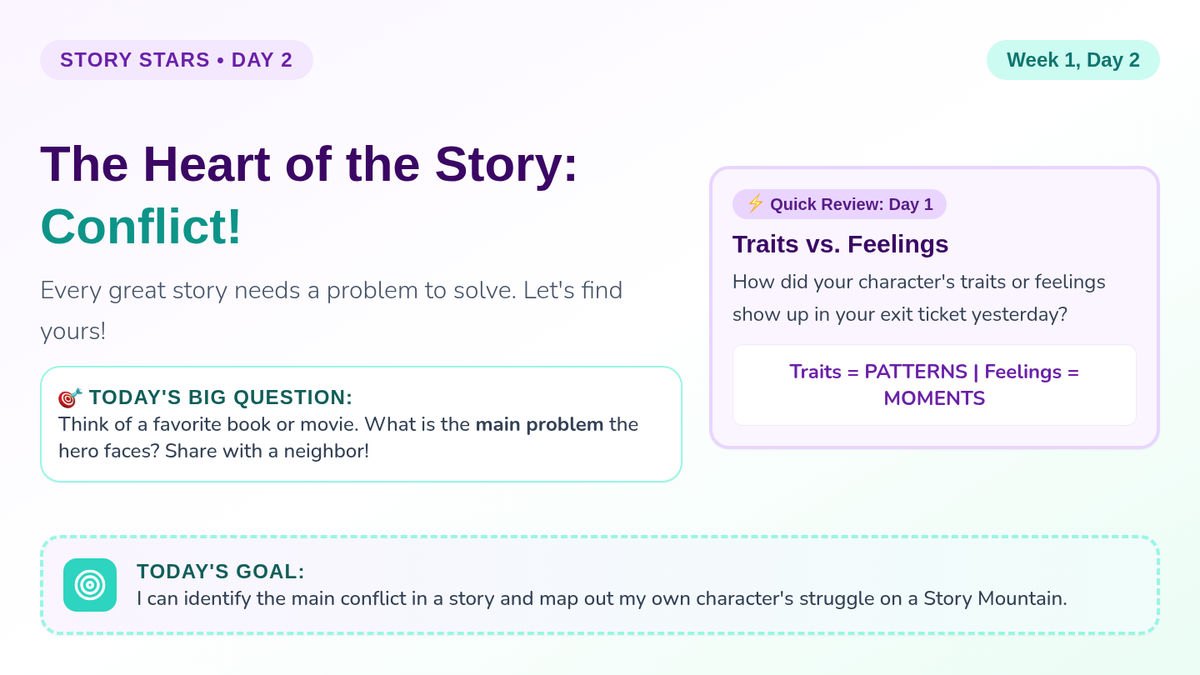
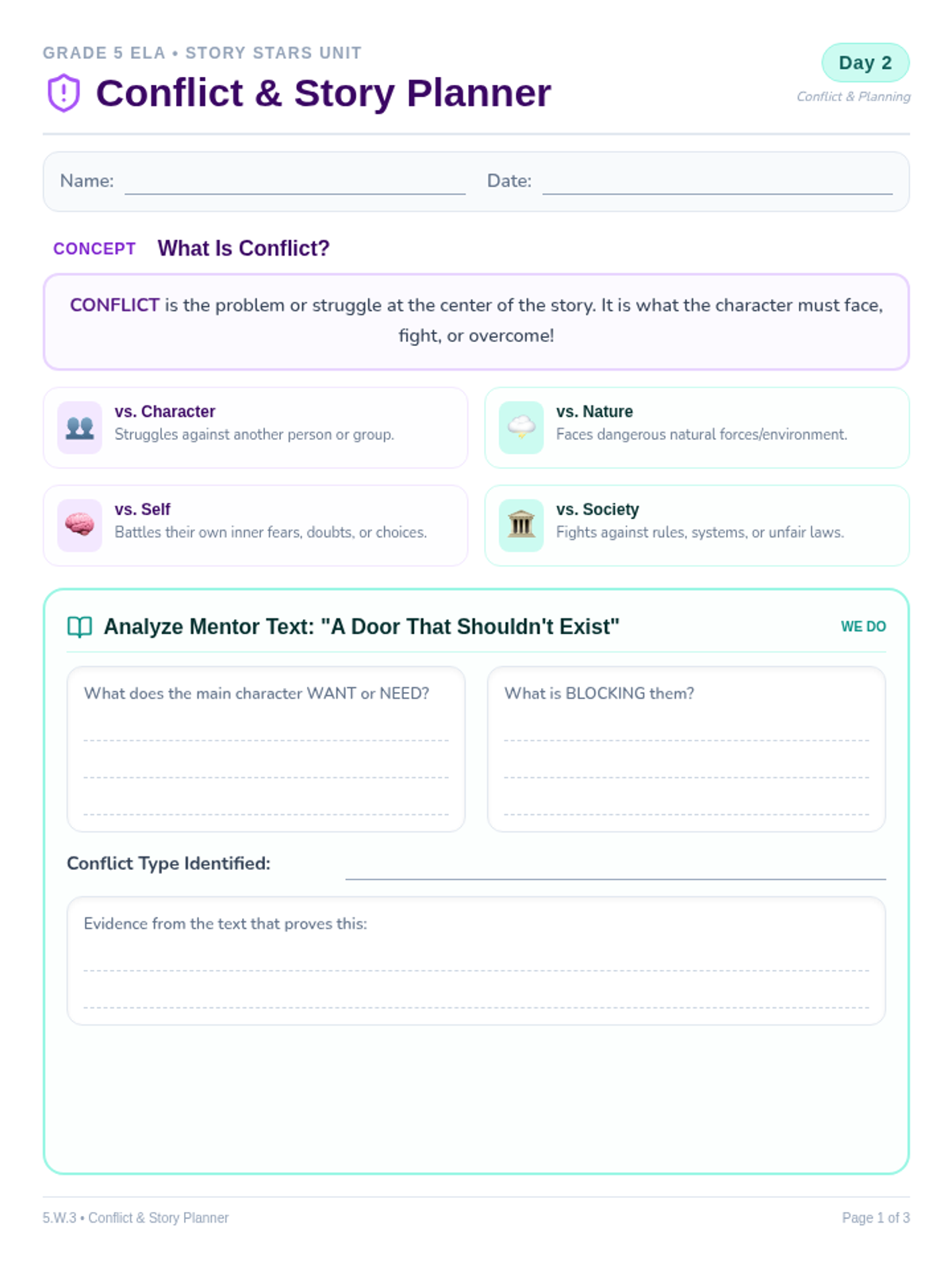
Students identify different conflict types in mentor texts and map out their own narrative using a Story Mountain (plot planner) in this Day 2 lesson.
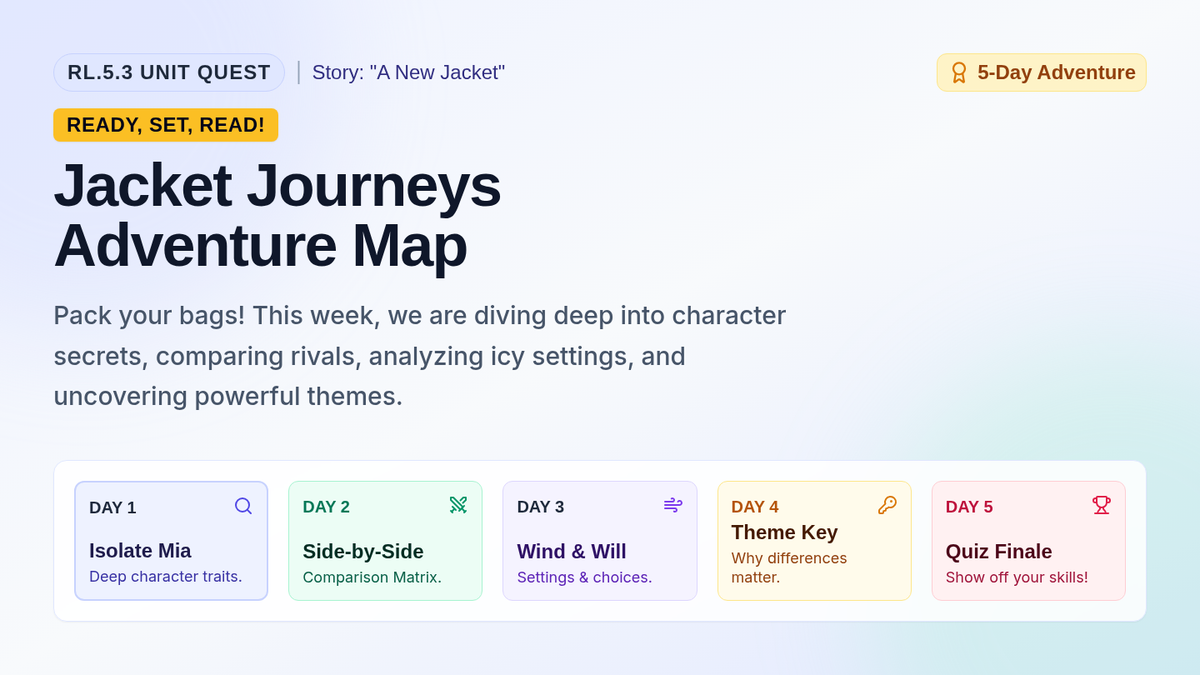
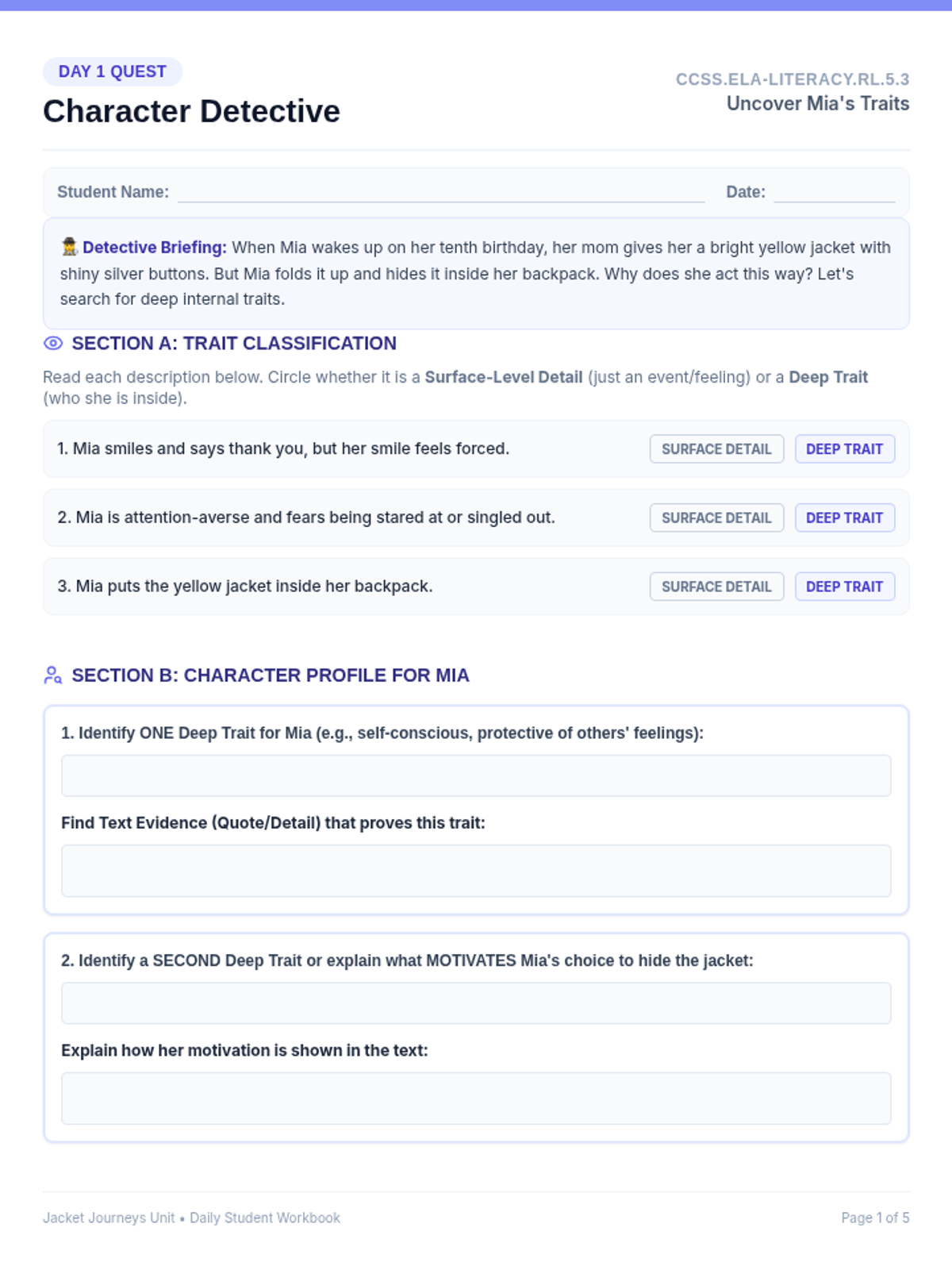
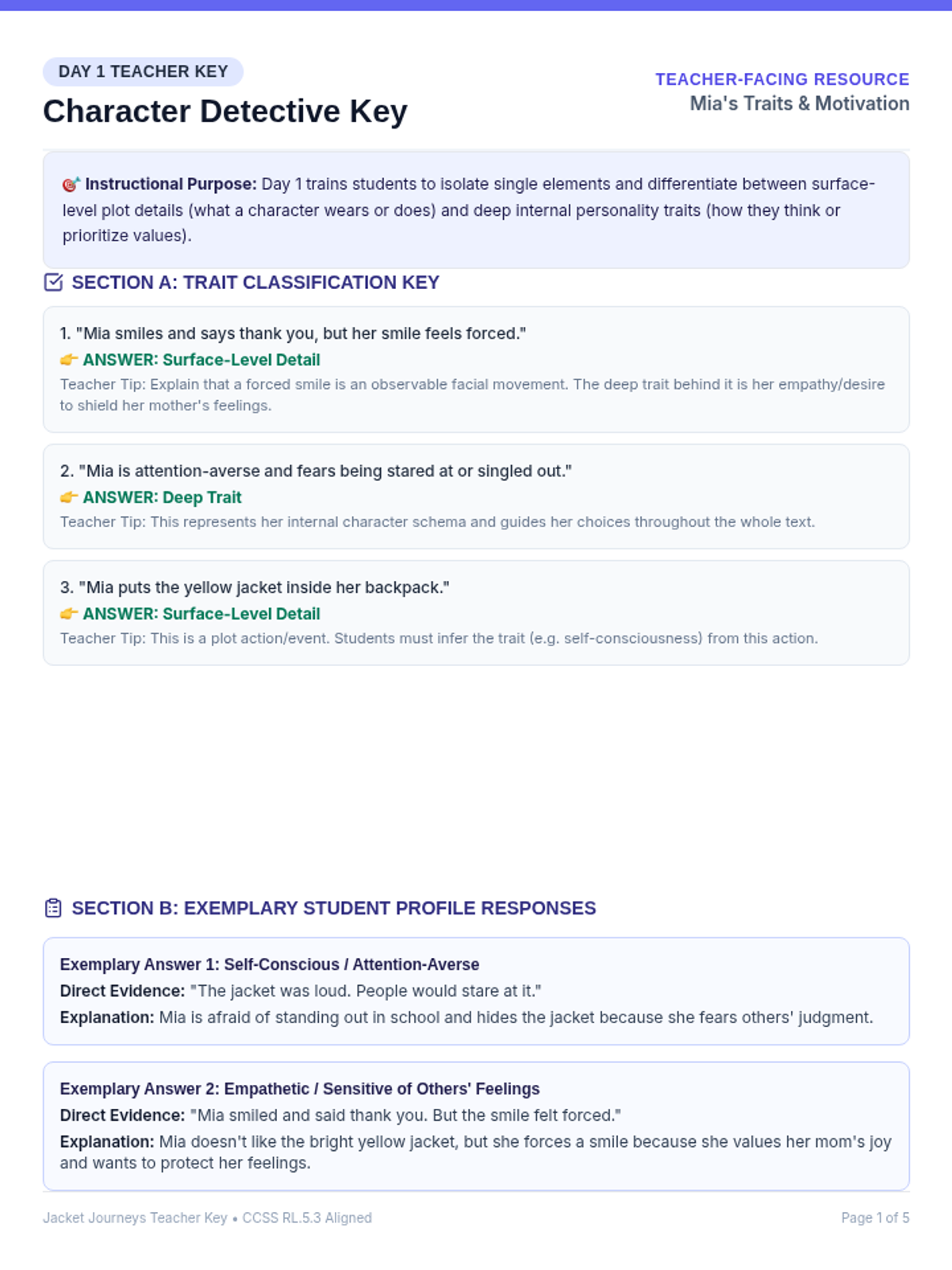
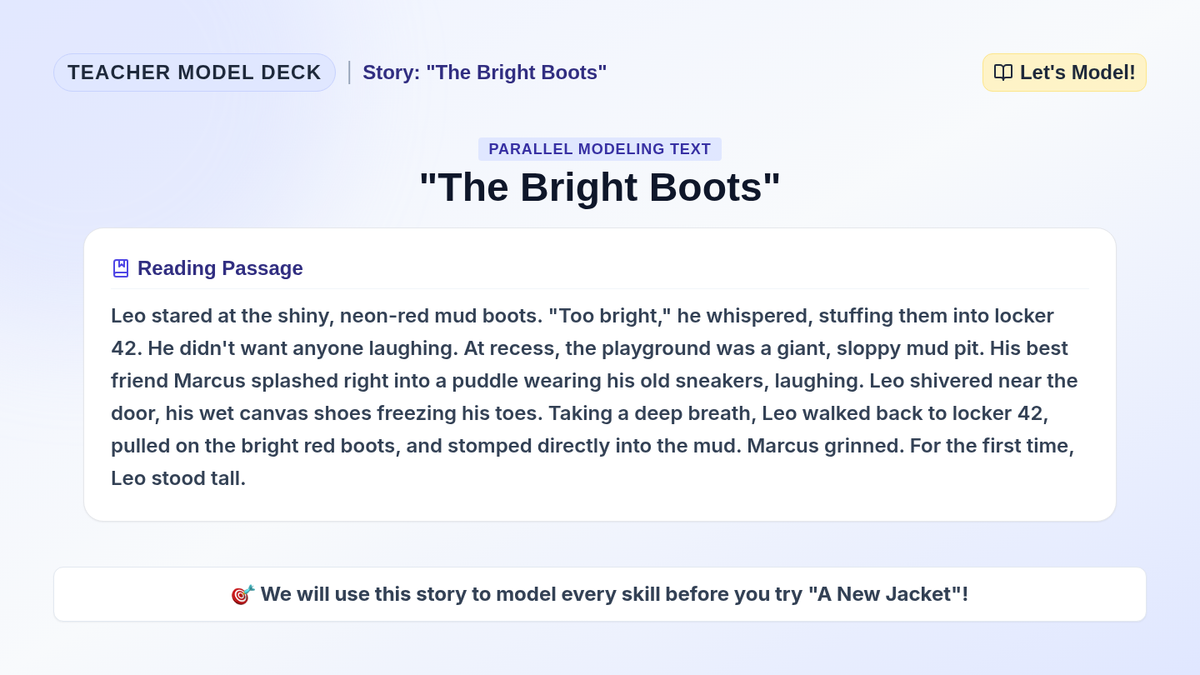
Students analyze character traits, build aligned comparison matrices, examine settings as active forces, connect contrasts to theme, and complete a collaborative weekly review for 'A New Jacket'.
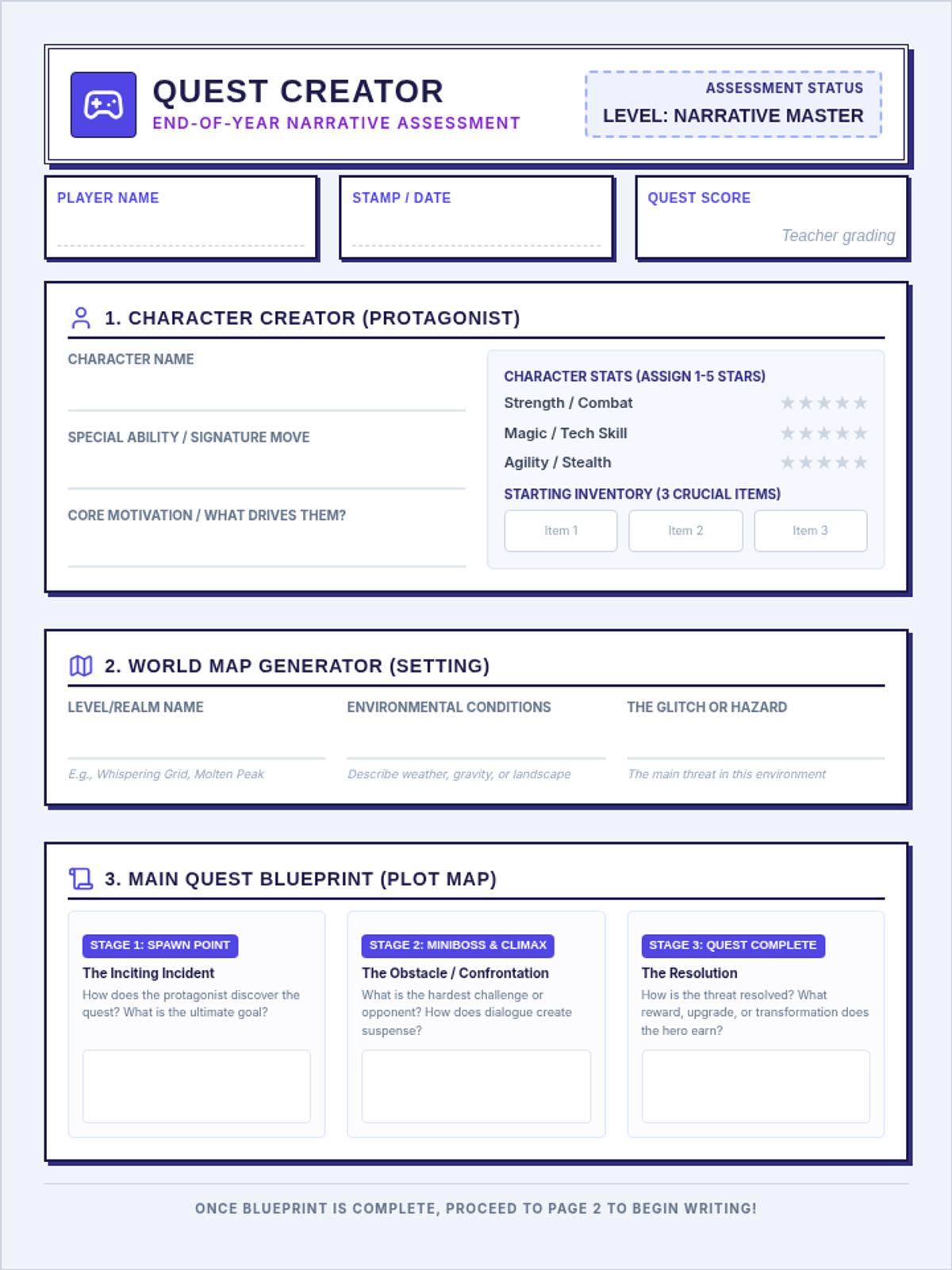
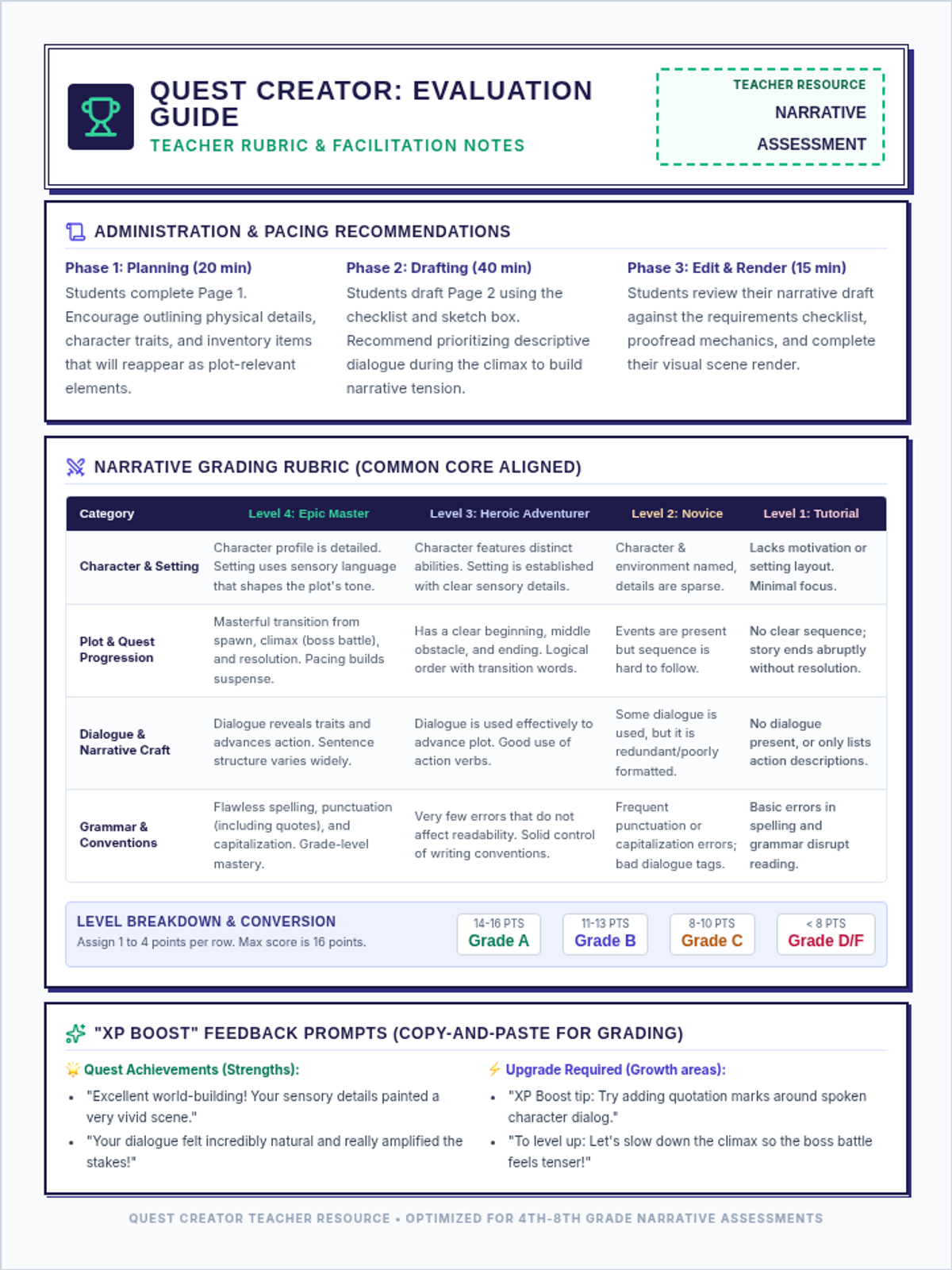
An end-of-year narrative writing assessment where students design their own video game character, setting, and quest, then write an engaging adventure story based on their creation.
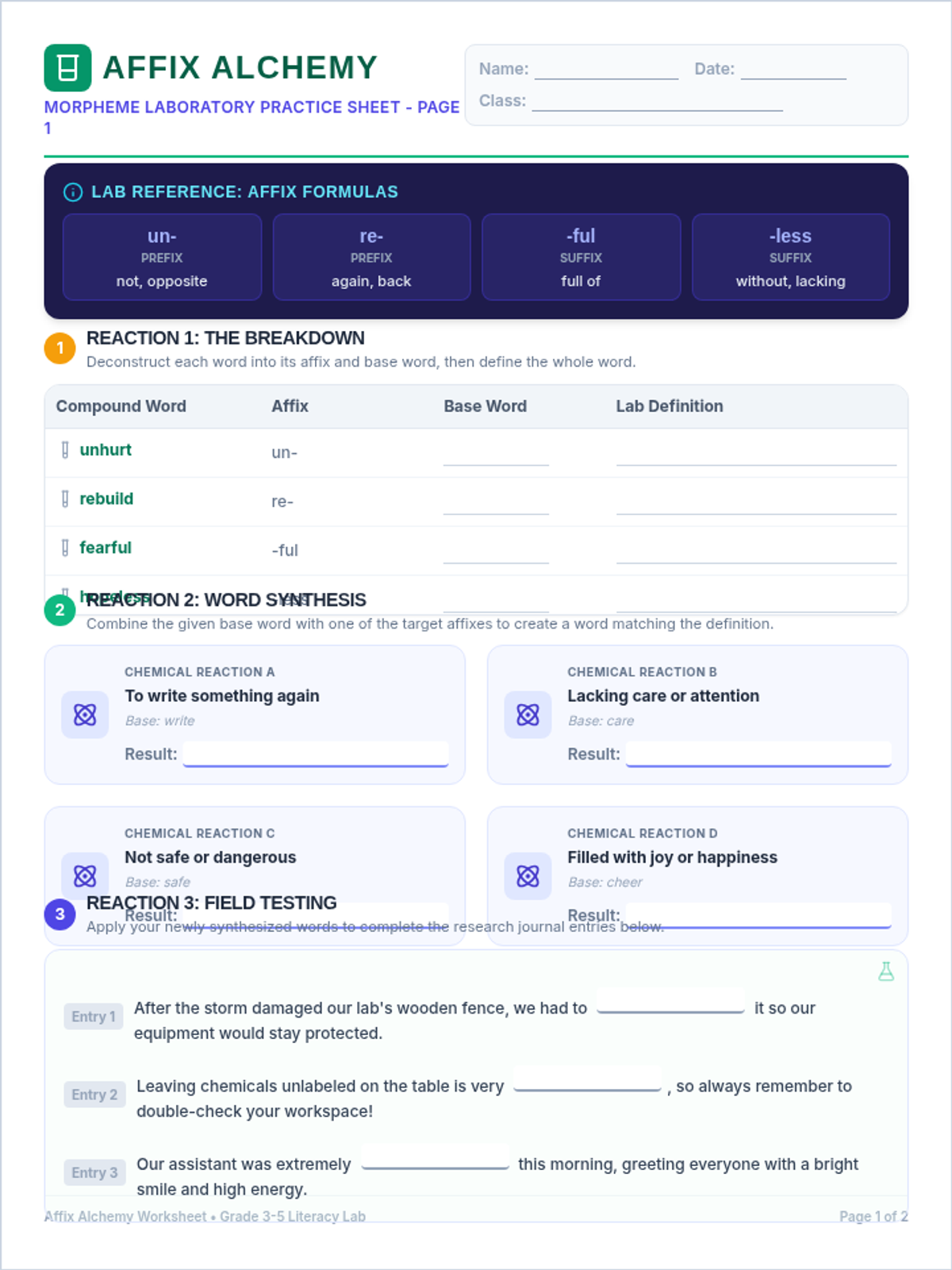
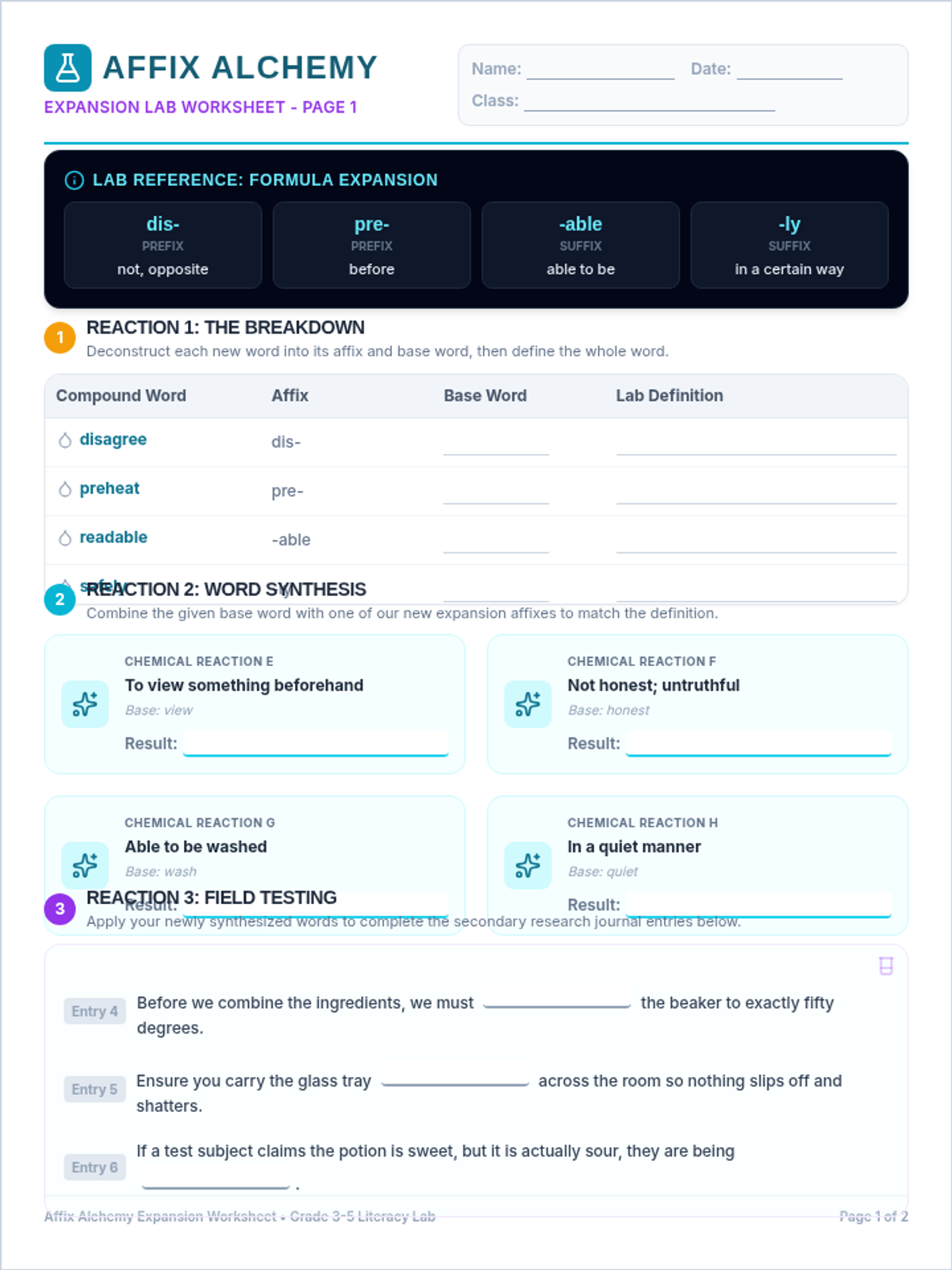
A comprehensive lesson on high-frequency prefixes and suffixes (un-, re-, -ful, -less) designed as a Word Chemistry Lab, helping students master morpheme breakdown, synthesis, and contextual application.
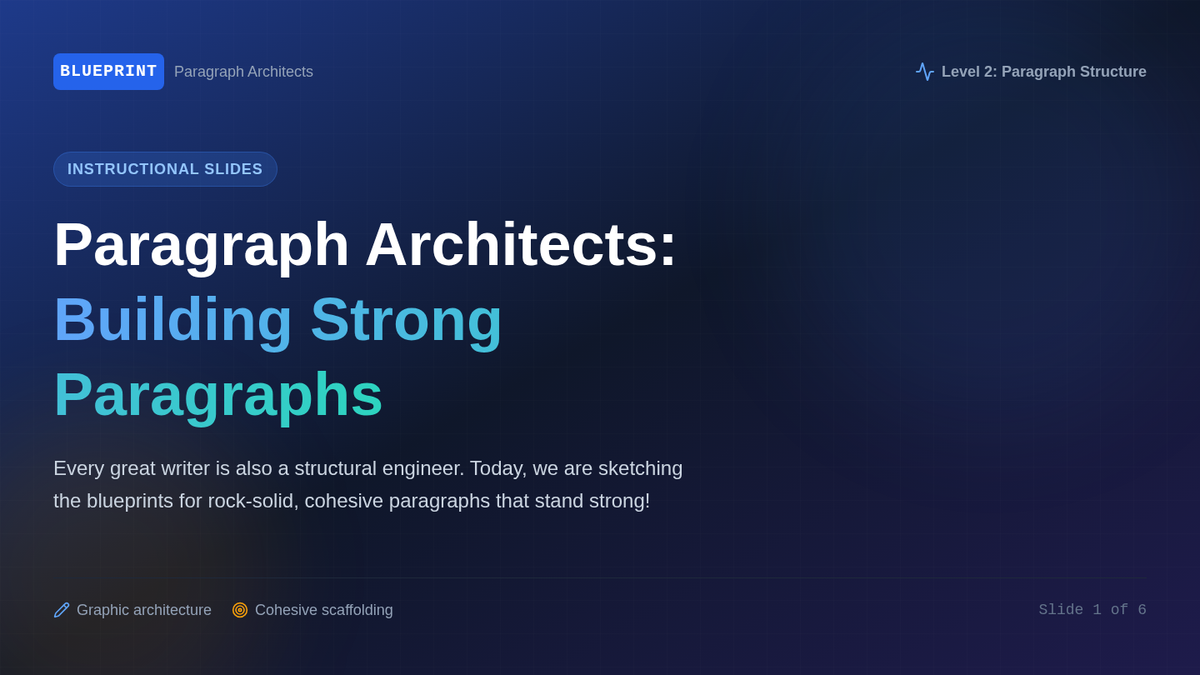
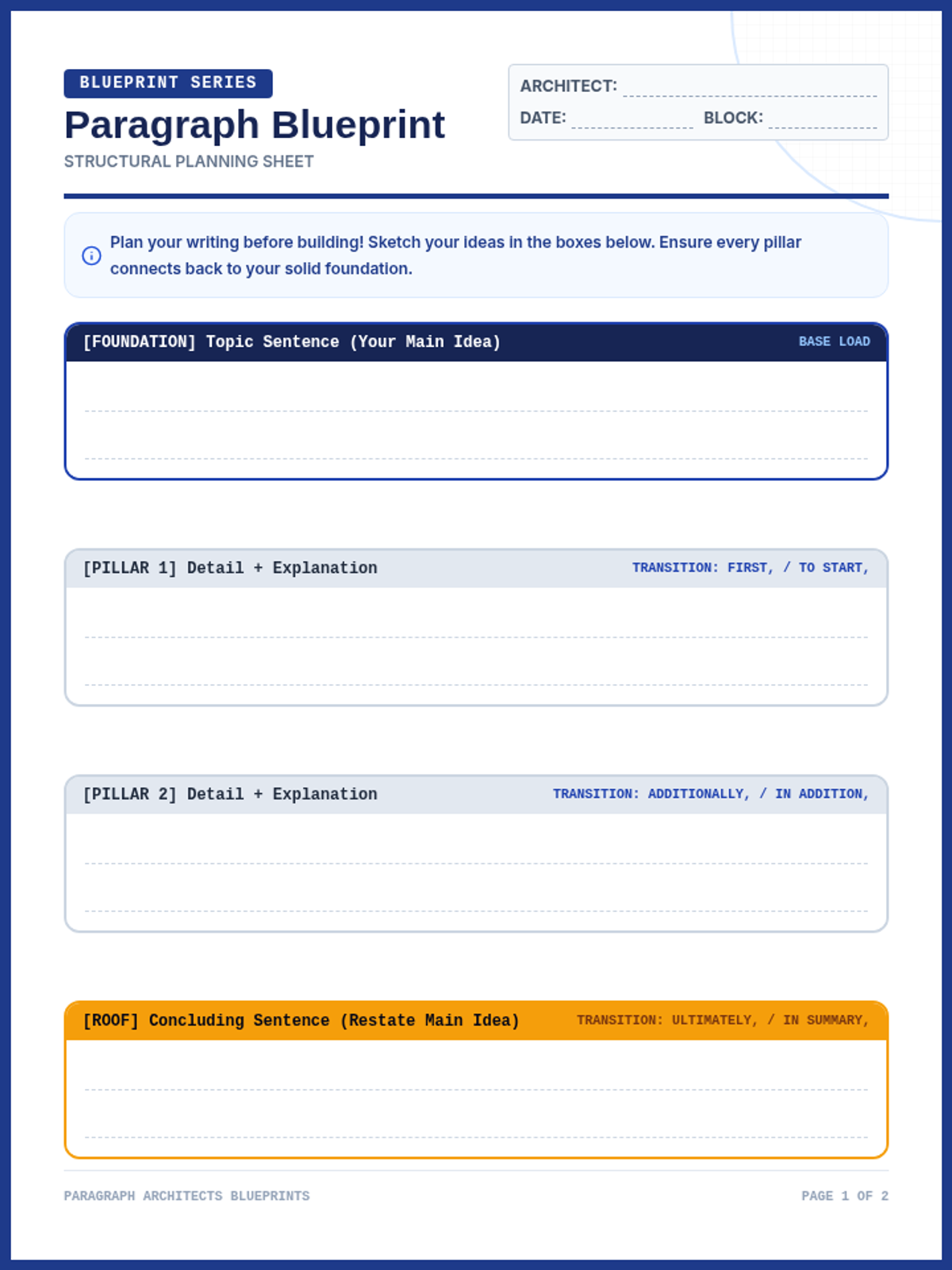
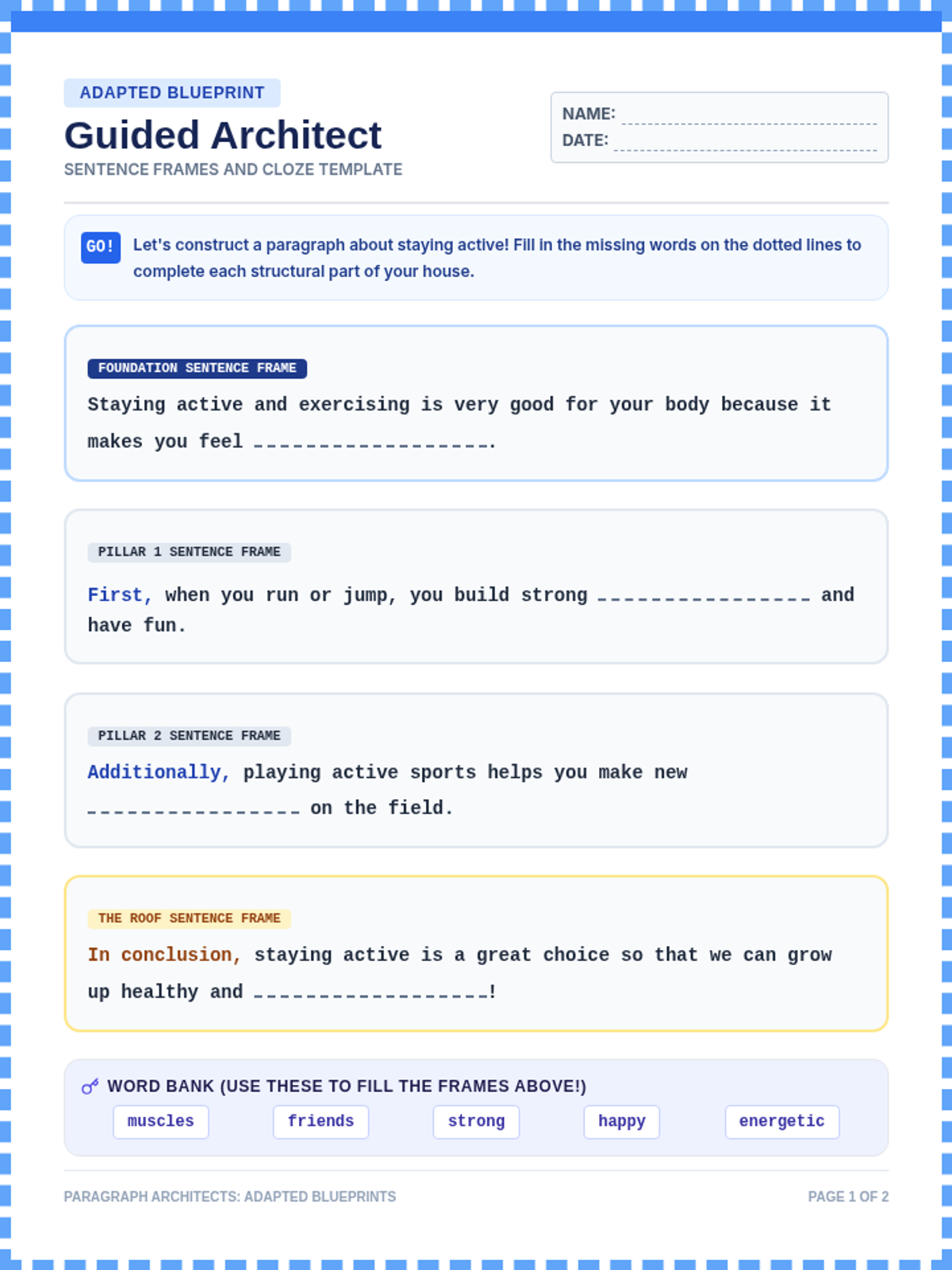
A structural writing lesson guiding students to build organized, cohesive paragraphs with topic sentences, concrete evidence, and transitions.
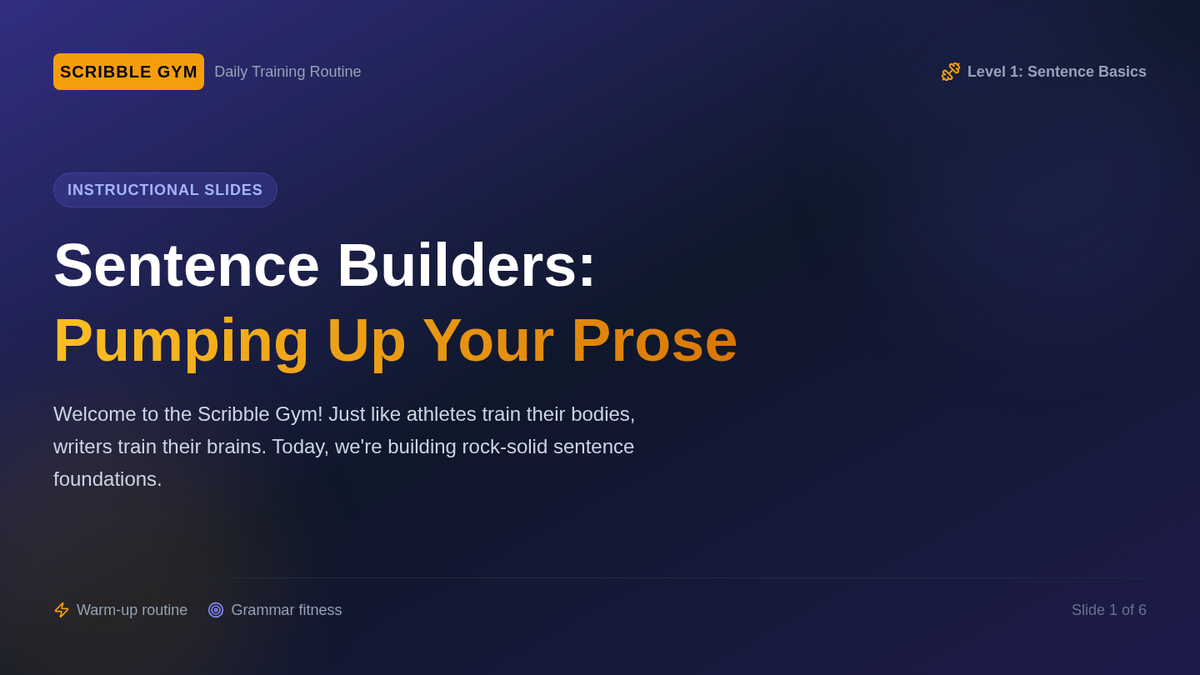
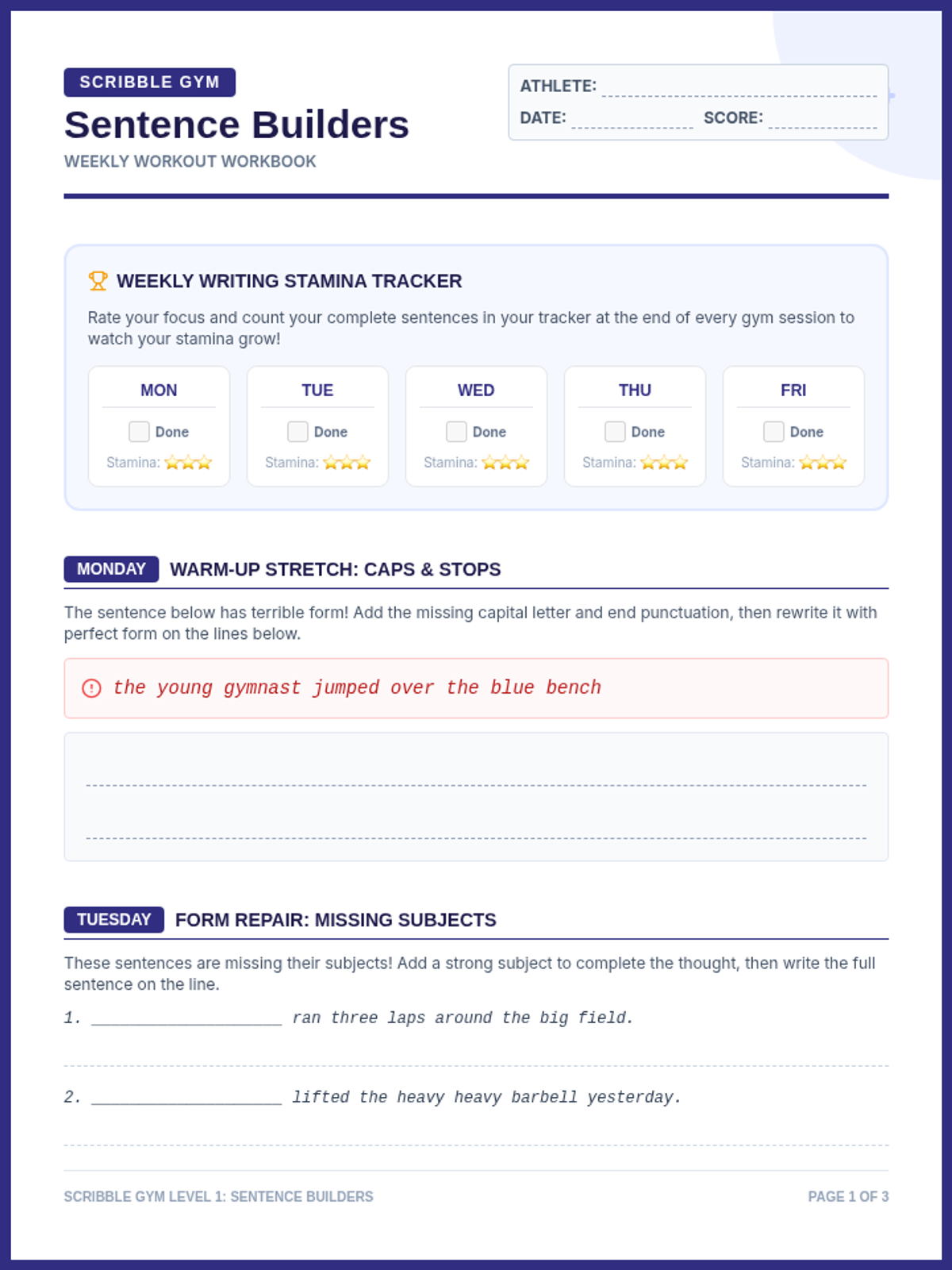
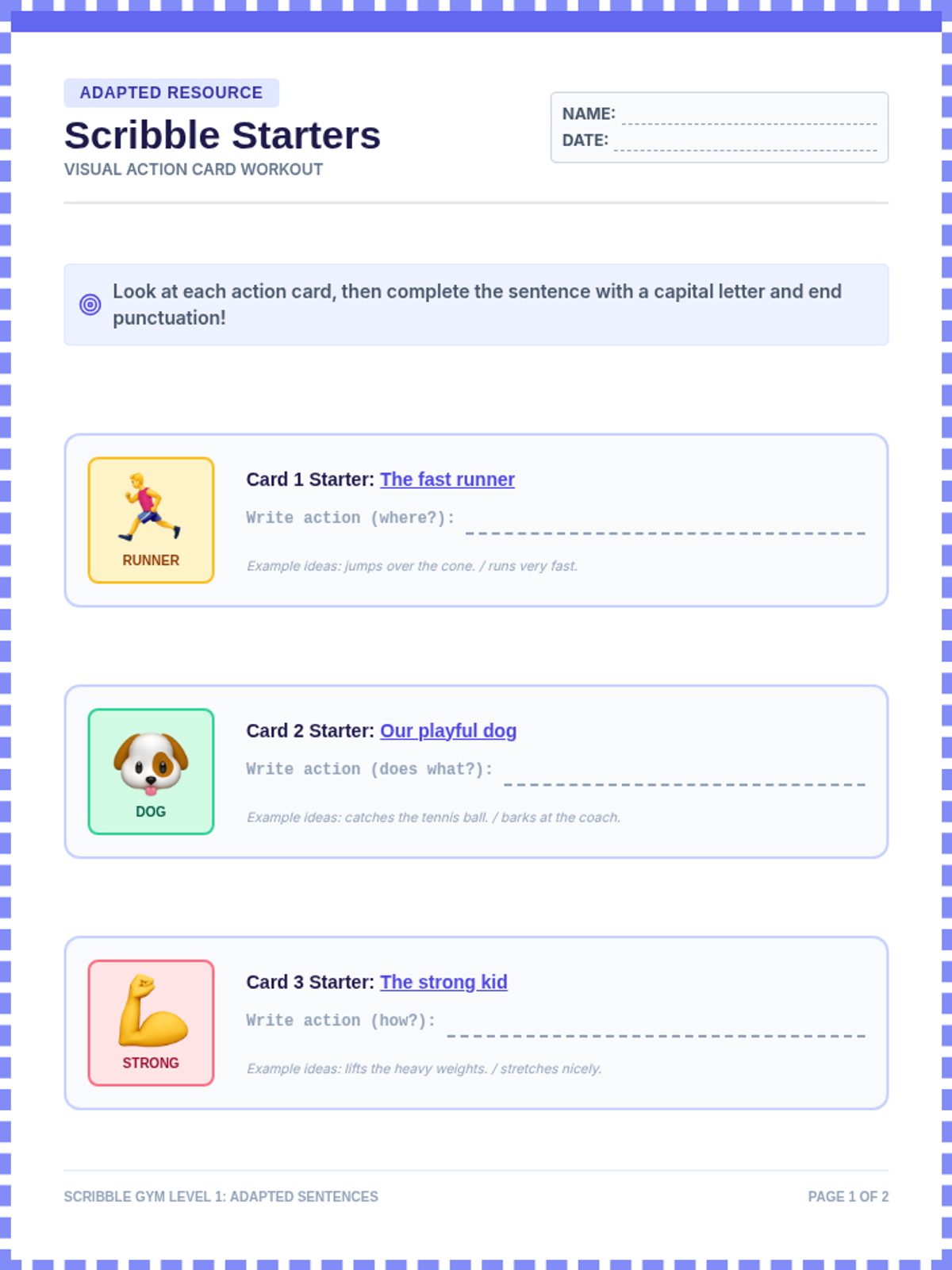
A foundational lesson focused on mastering capitalization, punctuation, and constructing complete simple and compound sentences.
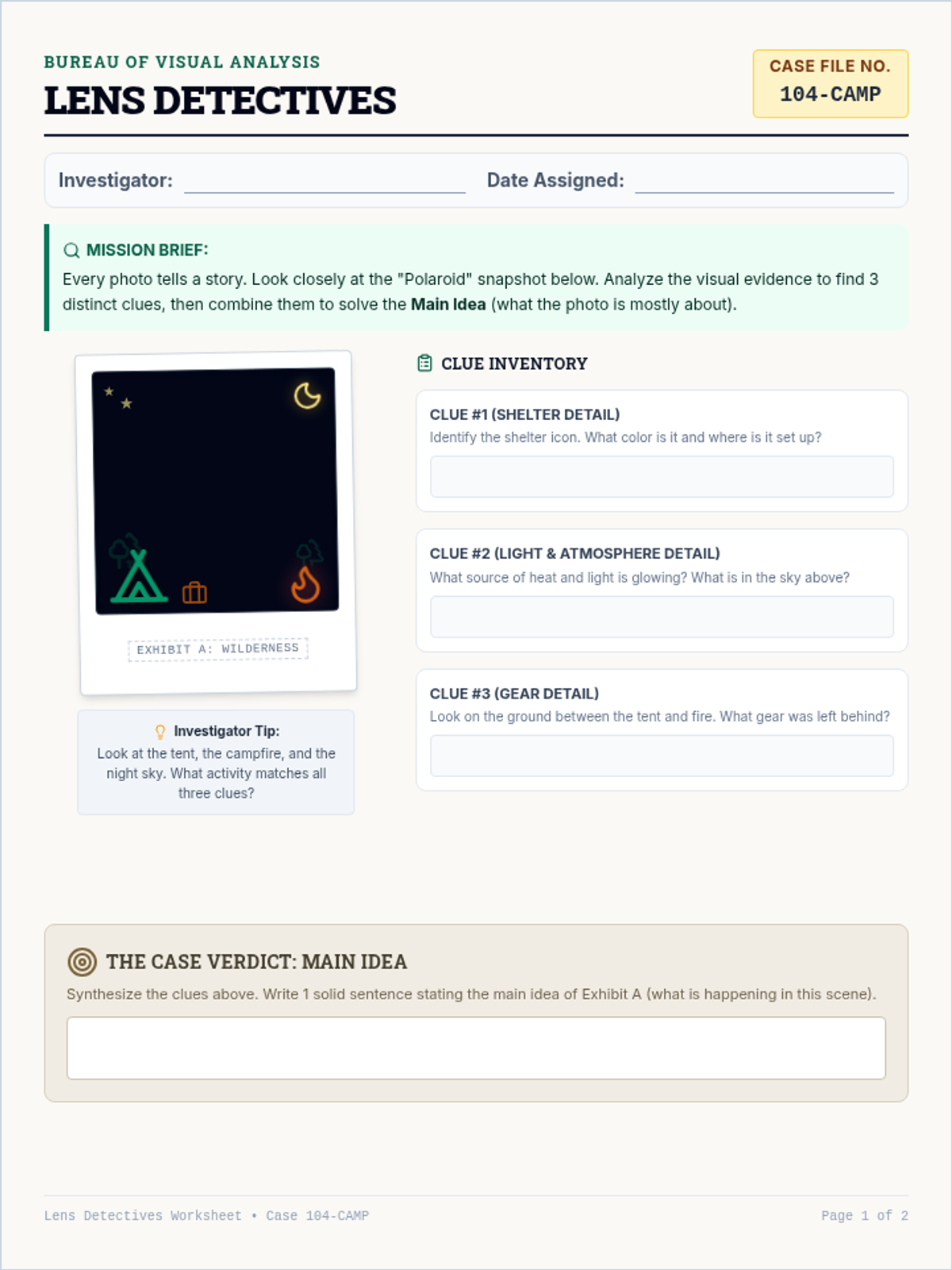
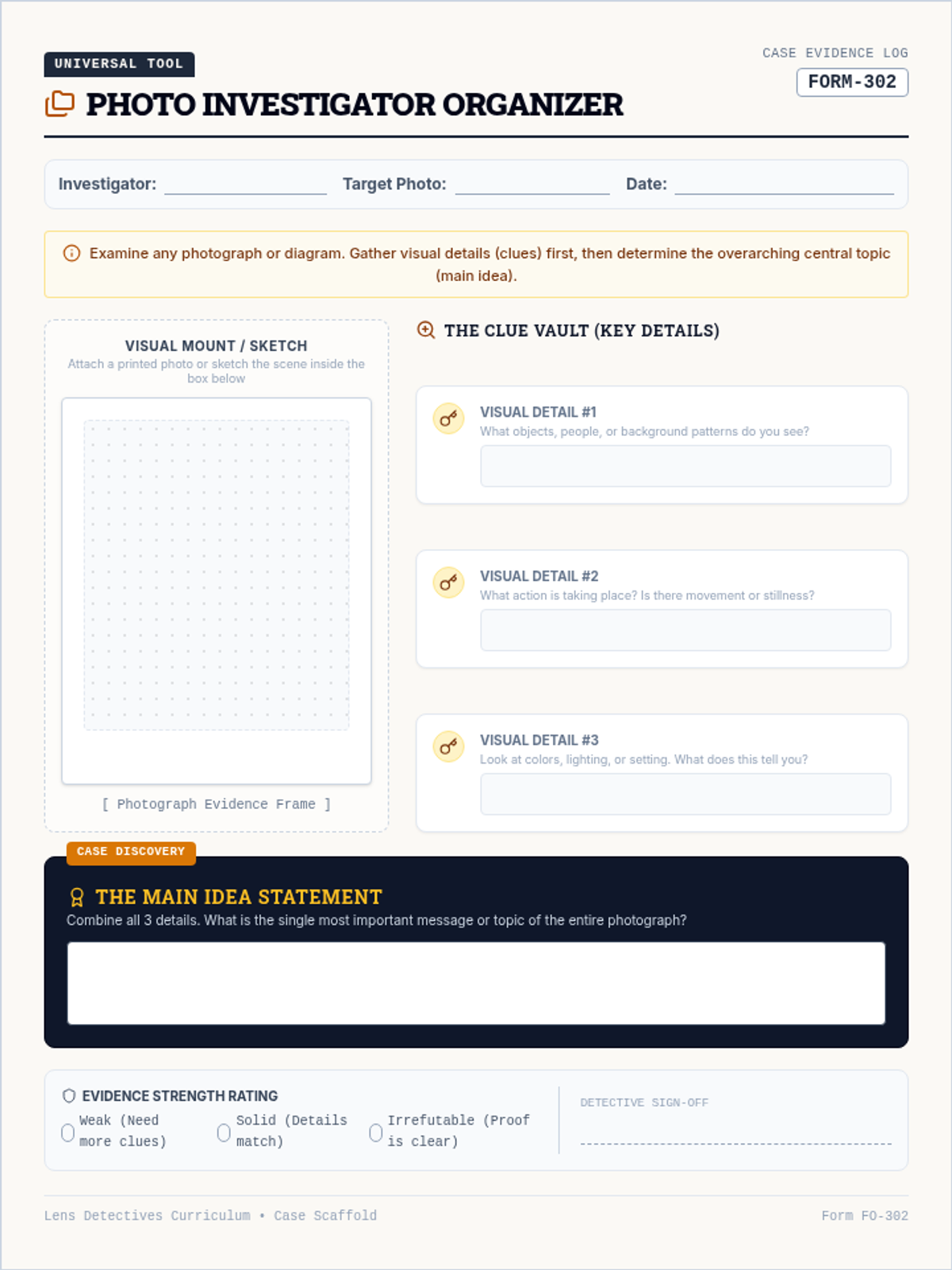
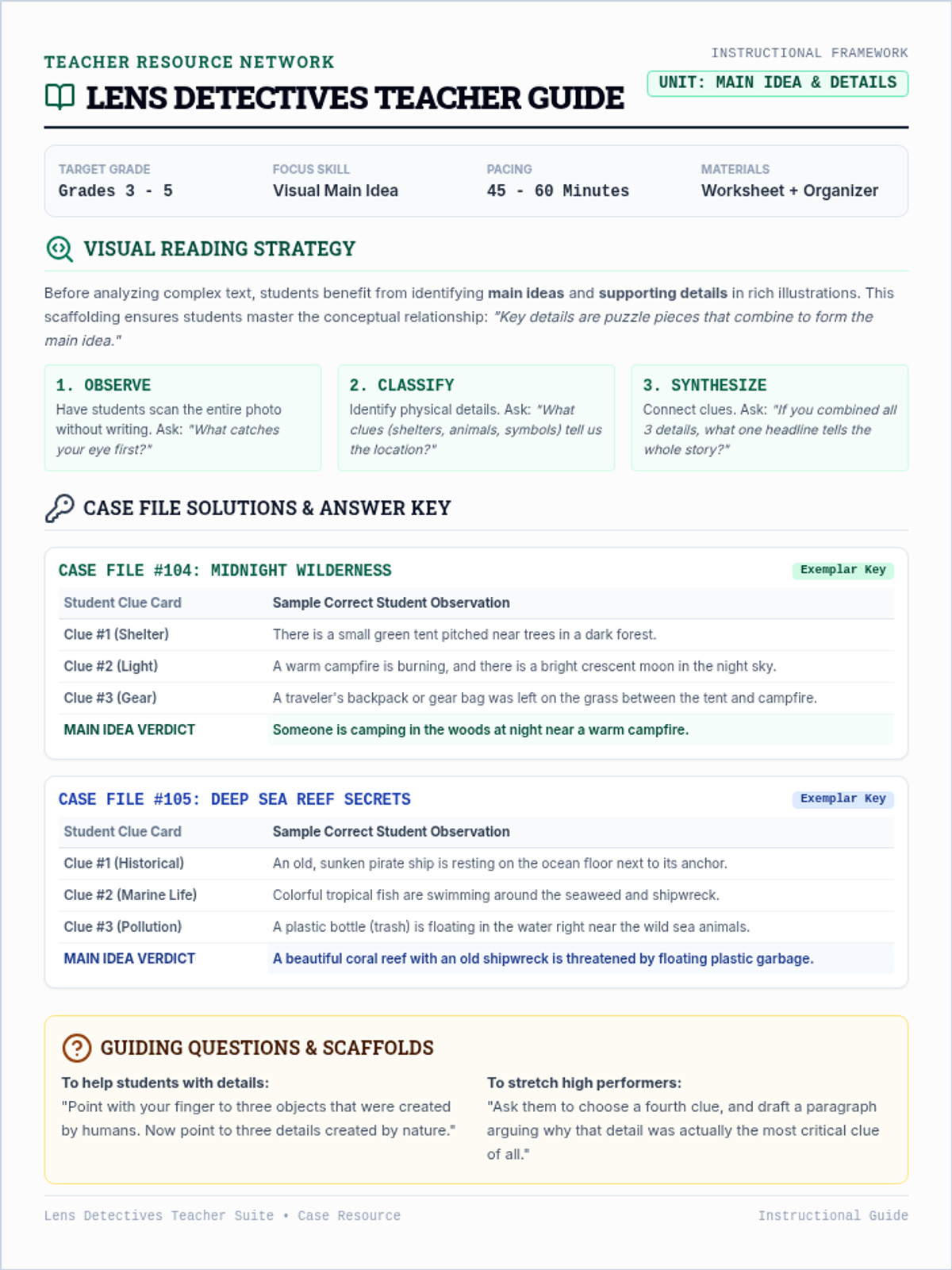
A structured resource pack focusing on Main Idea and Key Details. Students become 'Lens Detectives', analyzing highly detailed visual scenes (styled as polaroid photos) to gather clues, identify the central topic, and draft structured paragraphs using deductive writing scaffolds.
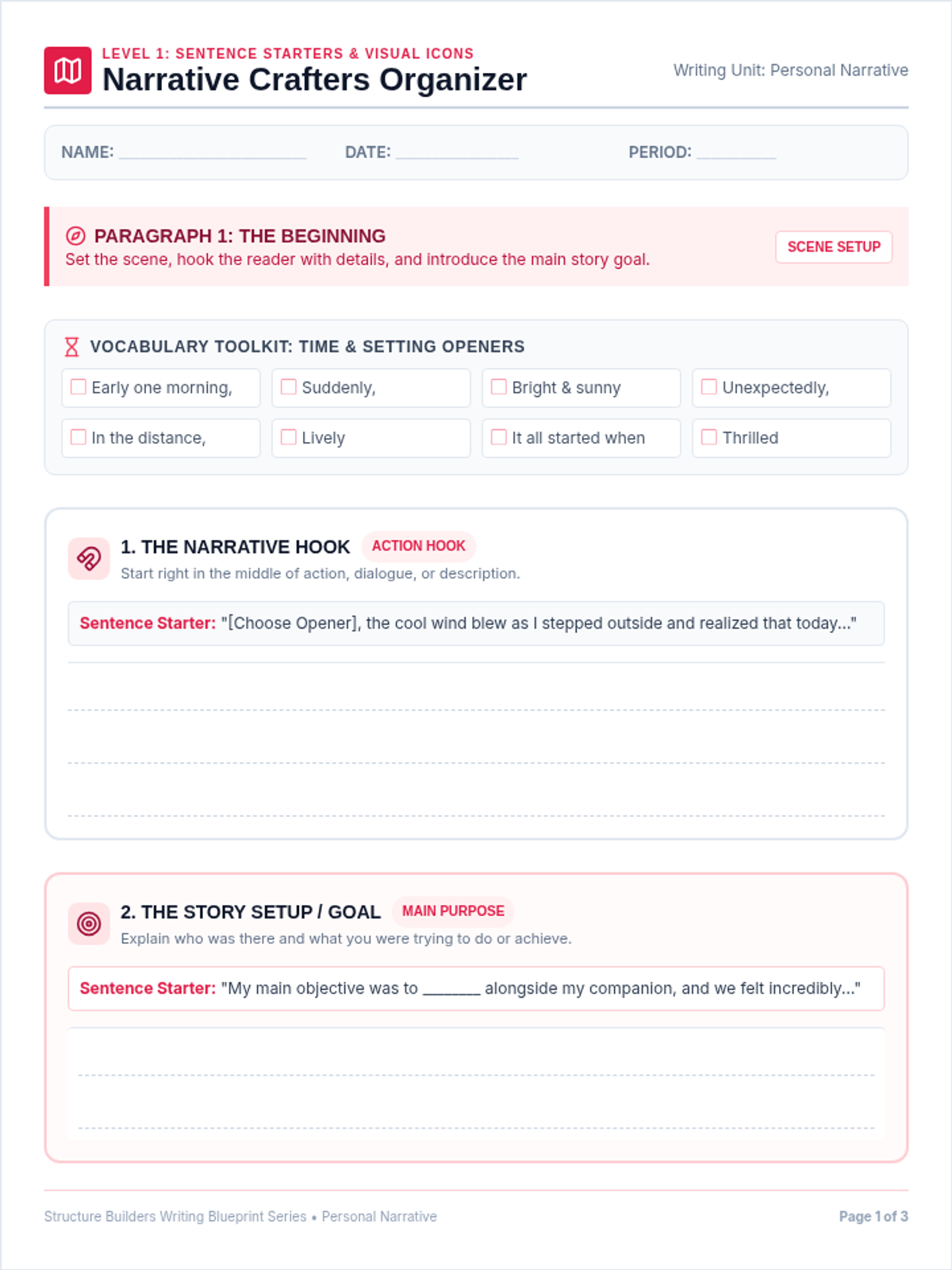
A structured approach to writing a three-paragraph personal narrative. Students develop a clear beginning, middle, and end, using sensory details, transition words, and self-assessment checklists.
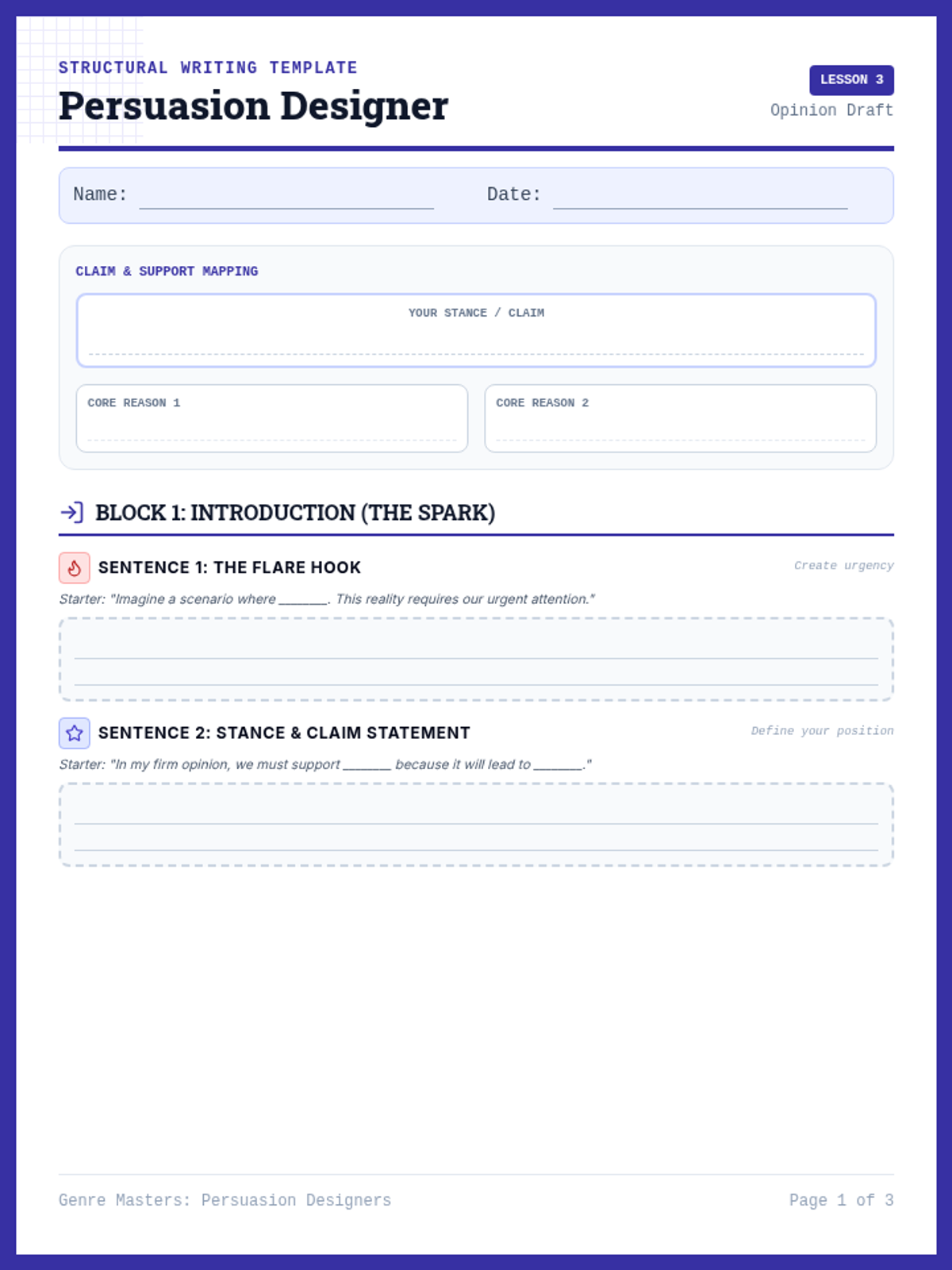
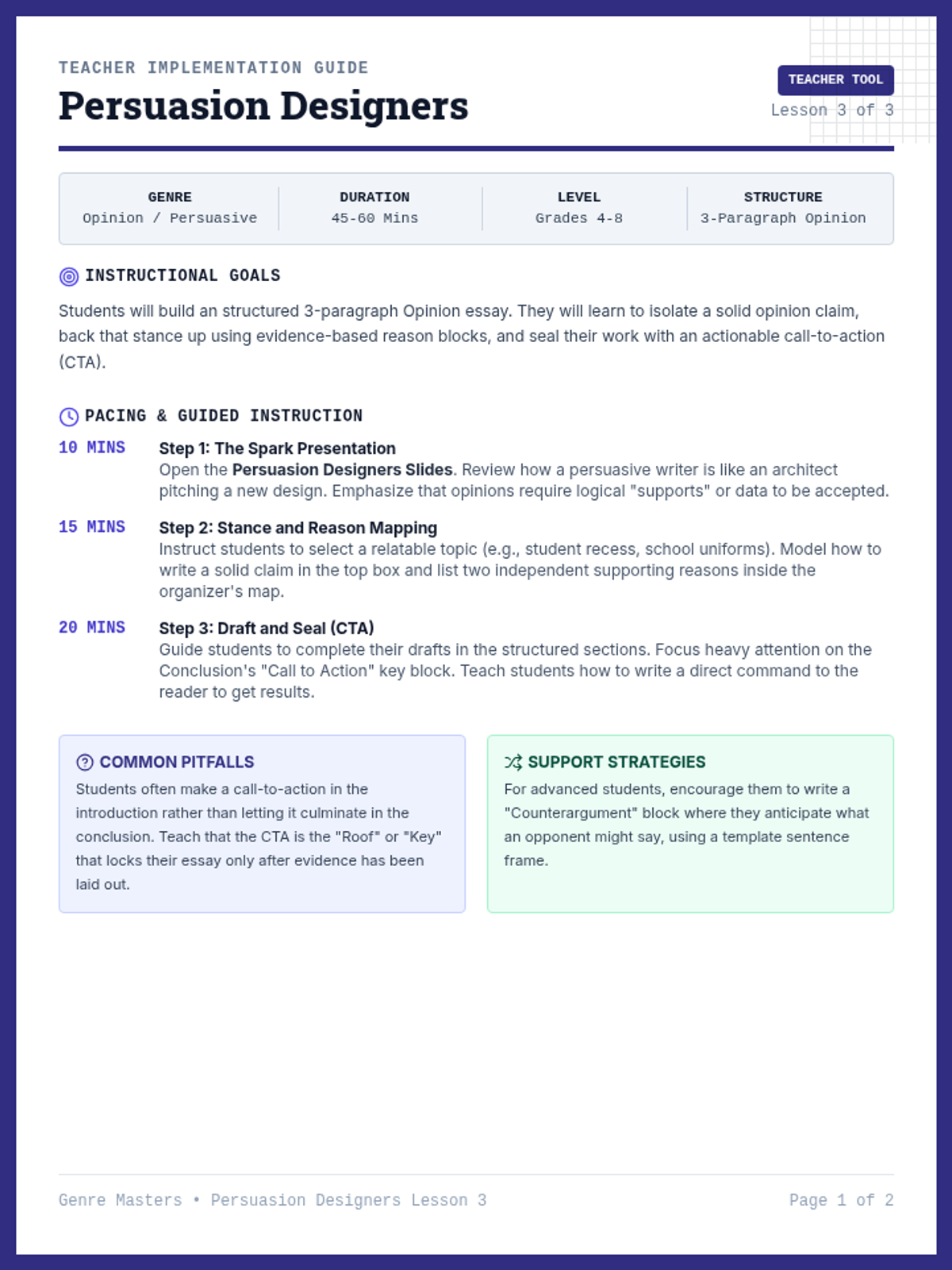
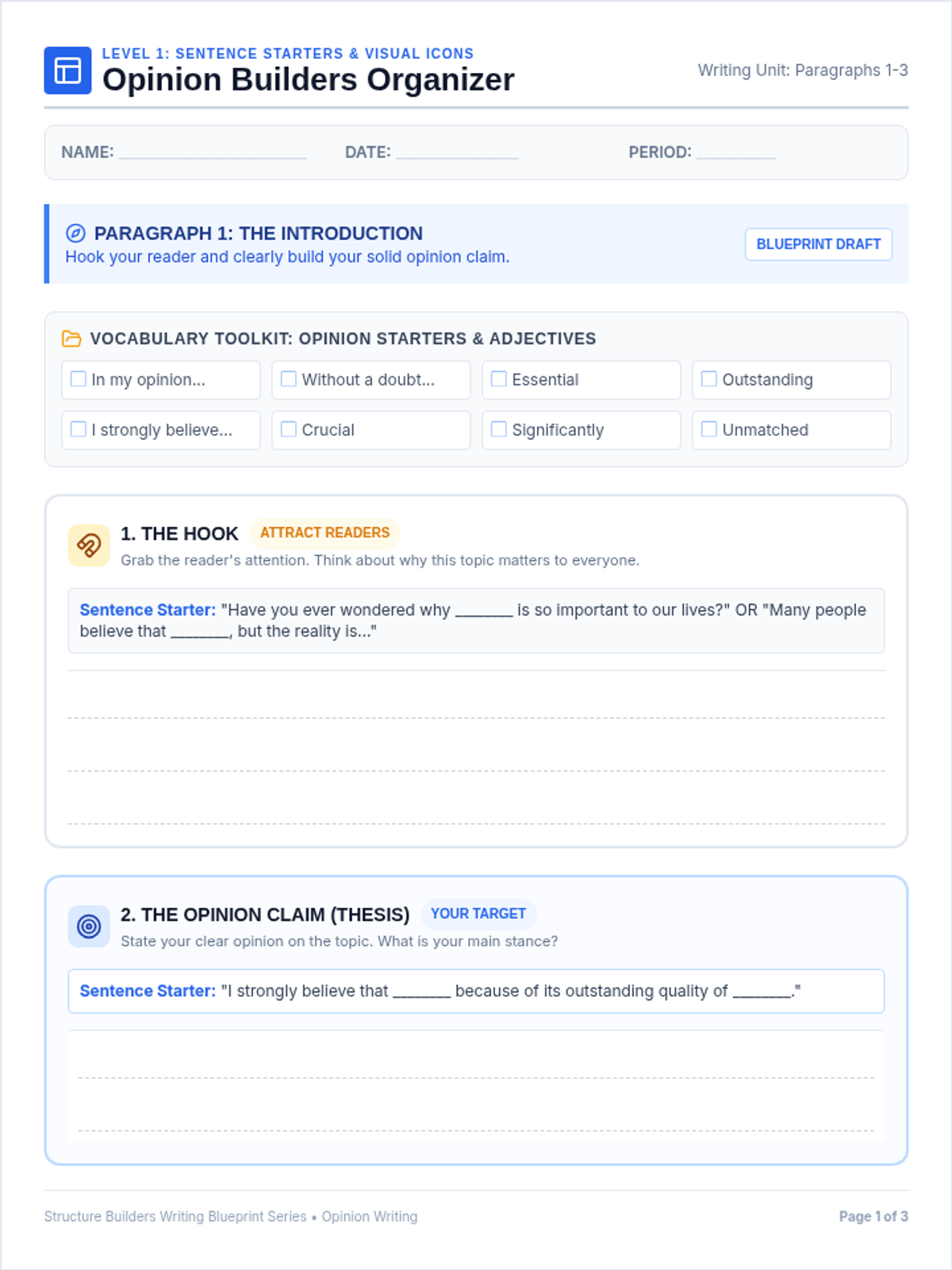
Students structure powerful opinions using a 3-paragraph template. They leverage strong emotional hooks, evidence-based reason body blocks, and persuasive call-to-action conclusions.
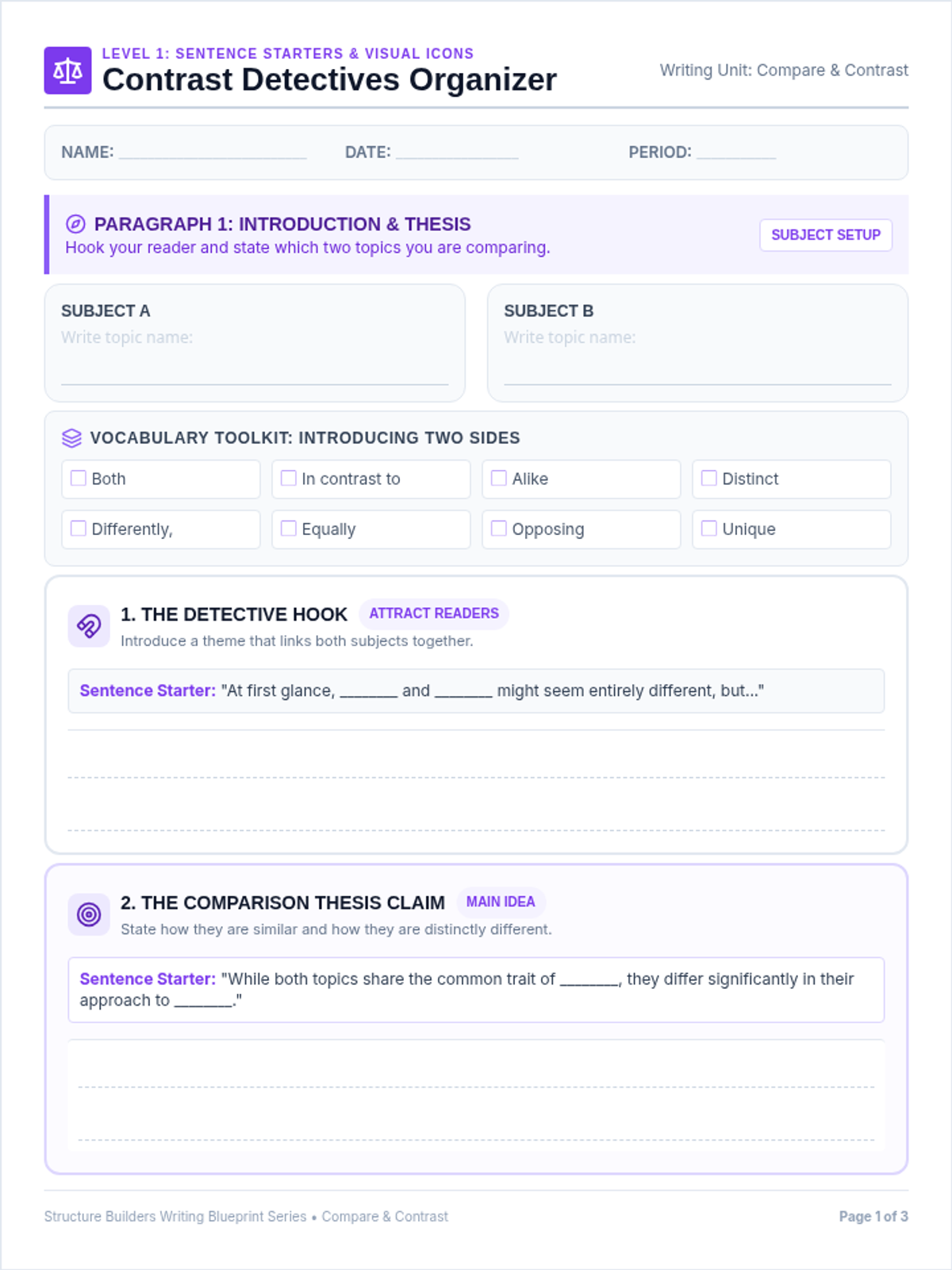
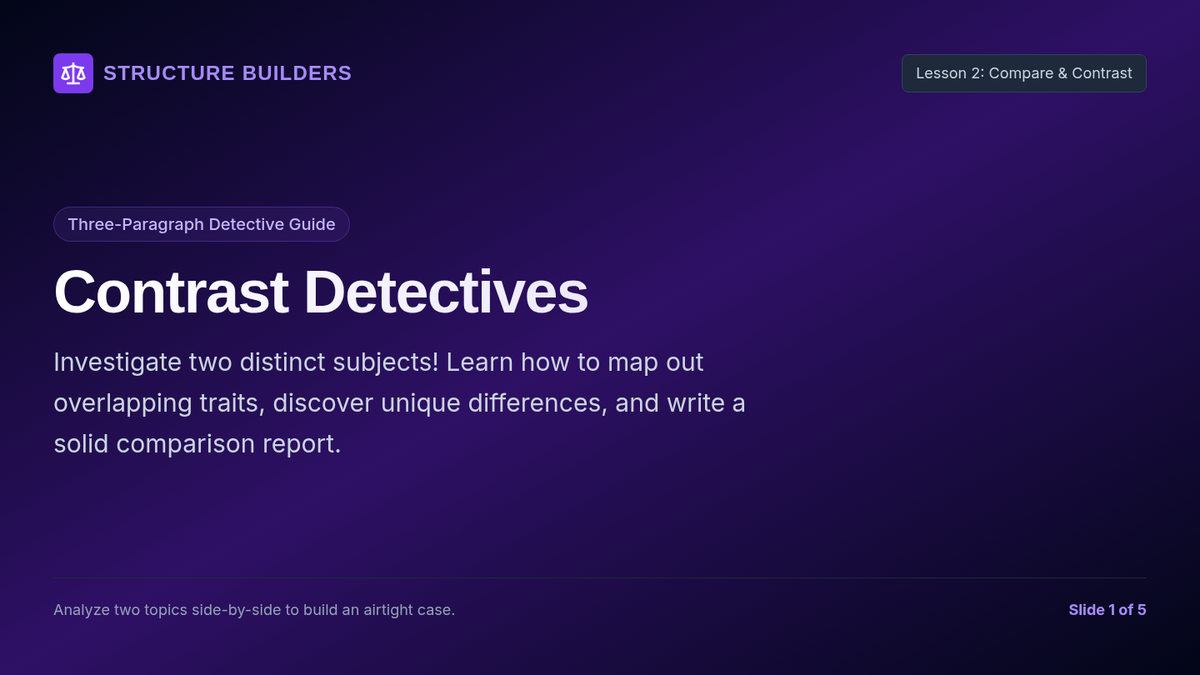
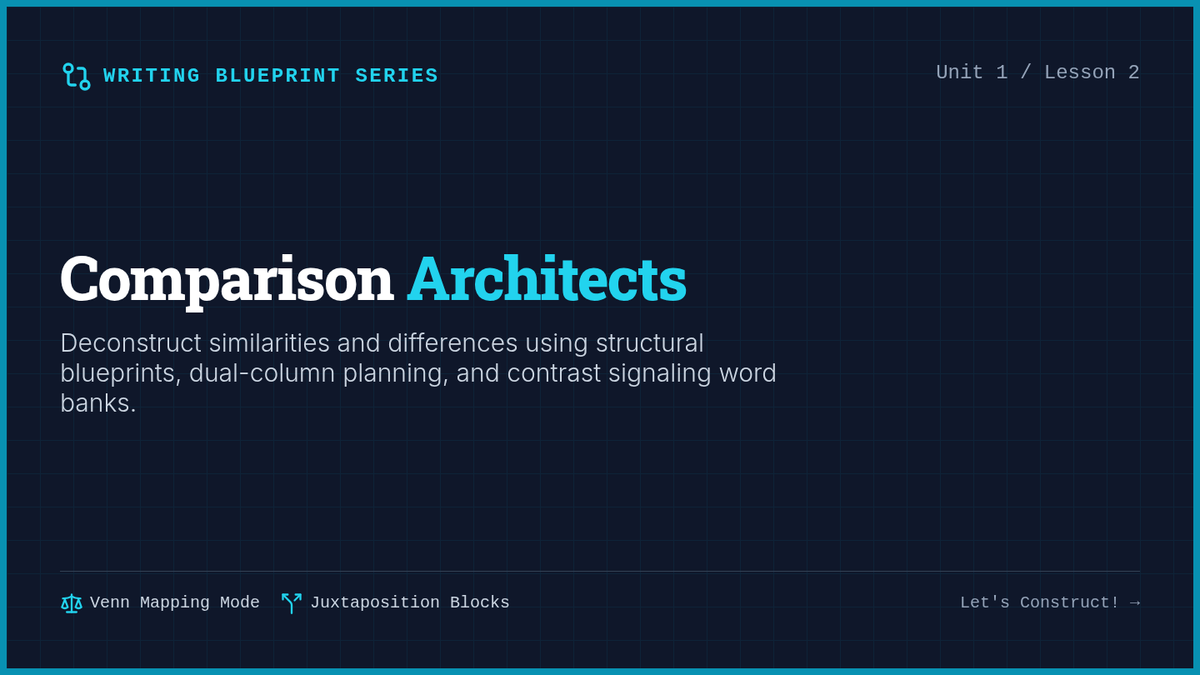
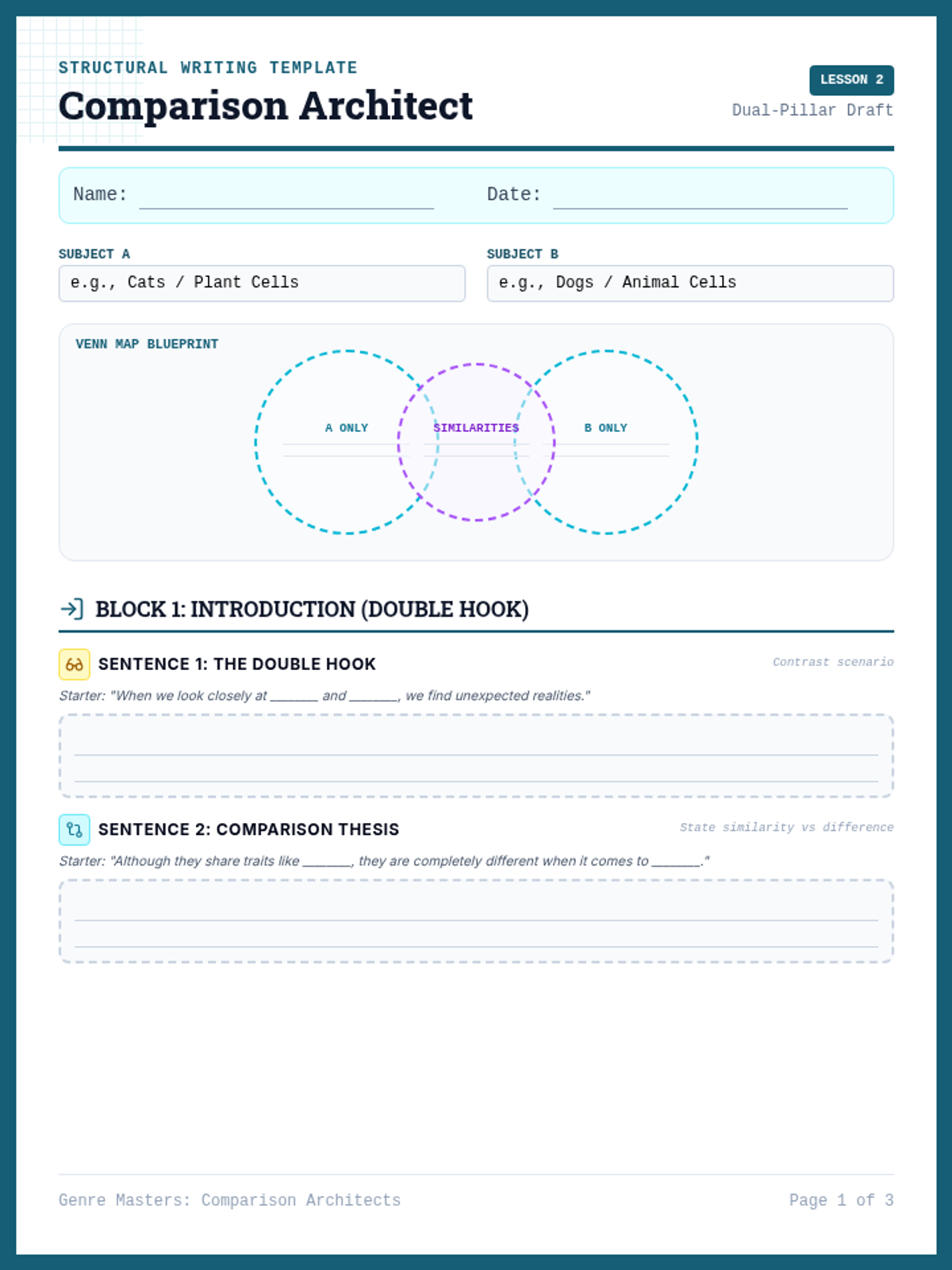
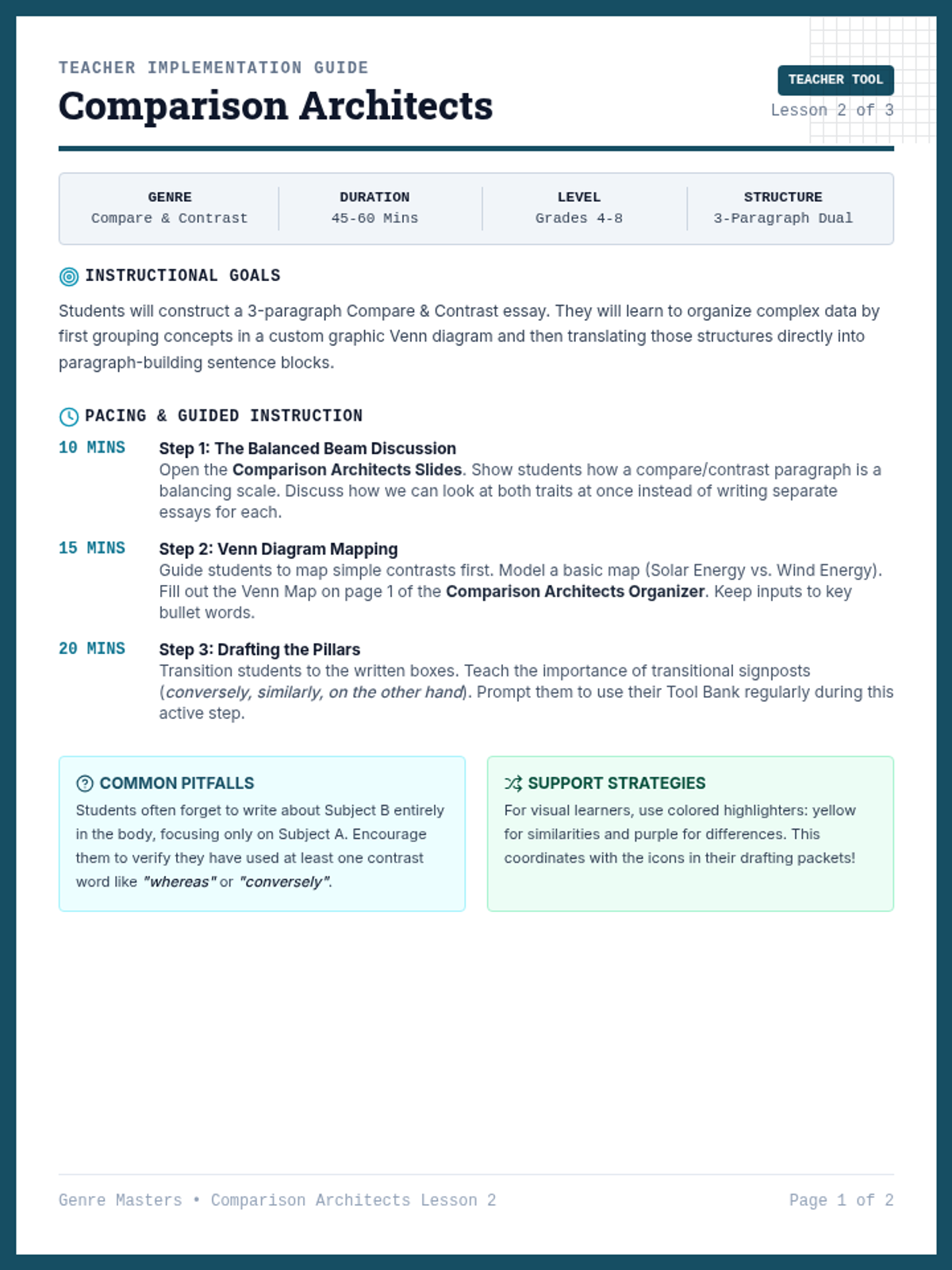
A step-by-step lesson for comparing and contrasting two topics in a three-paragraph format. Students utilize customized sentence frames, comparative word banks, and structured organizers with visual prompts.
Students learn to contrast and compare two topics using a structured 3-paragraph format. A dual-column layout, custom Venn diagrams, and comparison word banks guide them through similarities and differences.
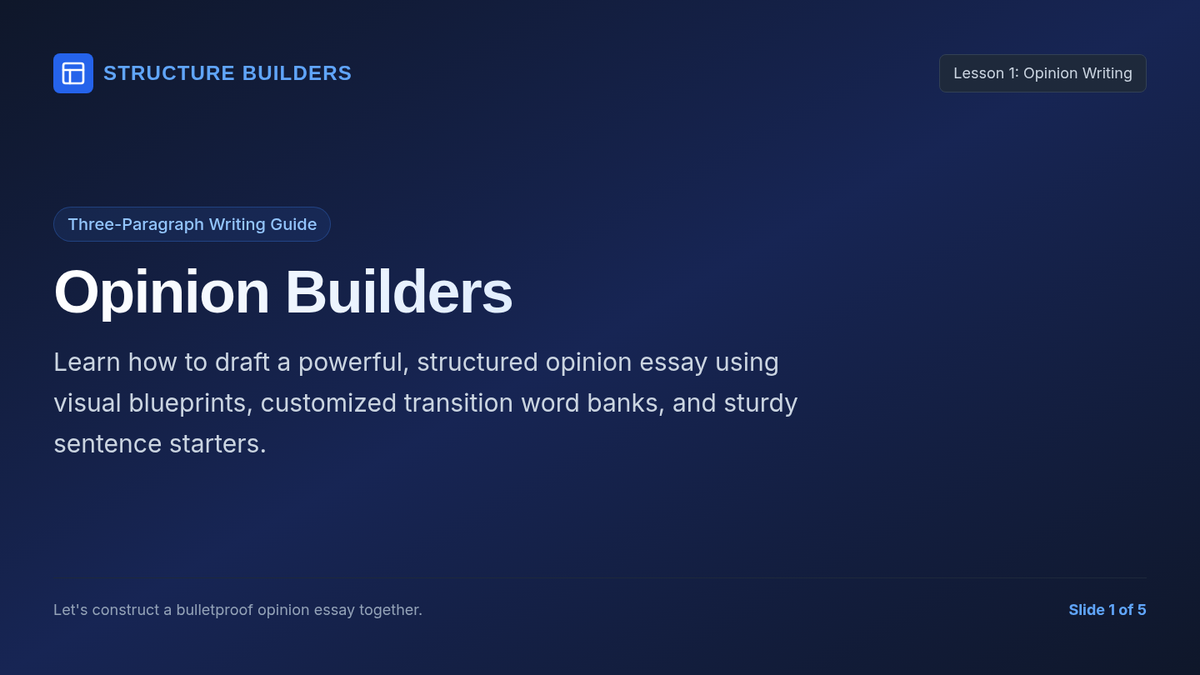
A guided lesson focusing on drafting a three-paragraph opinion essay. Students learn to express a clear claim, back it up with evidence, and write a strong concluding summary using custom sentence frames, interactive word banks, and visual icon prompts.