Day 2 transitions to guided practice with fading scaffolds. Students collaborate to highlight and unpack paragraphs, learning to distinguish between critical supporting details and interesting but non-essential information.
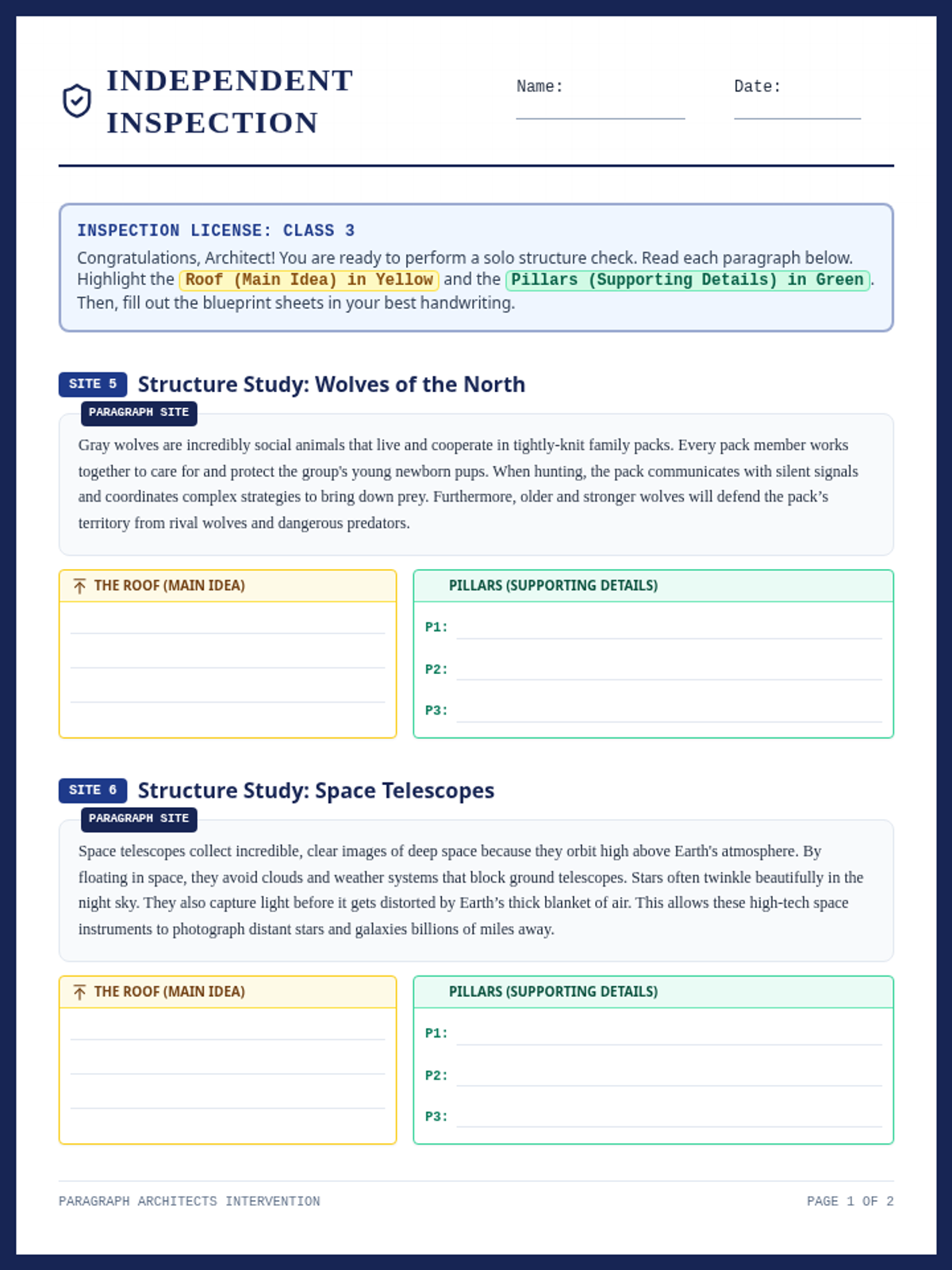
Day 3 focuses on independent execution and performance monitoring. Students independently read, highlight, and analyze paragraph structures to demonstrate mastery, followed by a collaborative review.
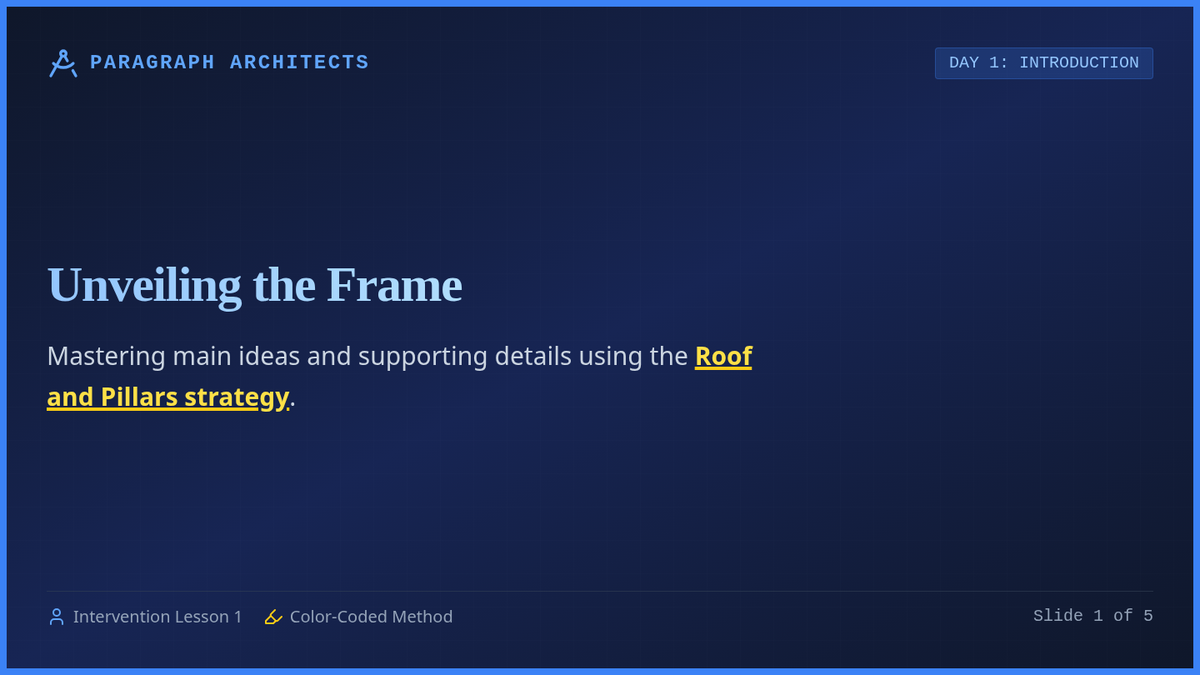
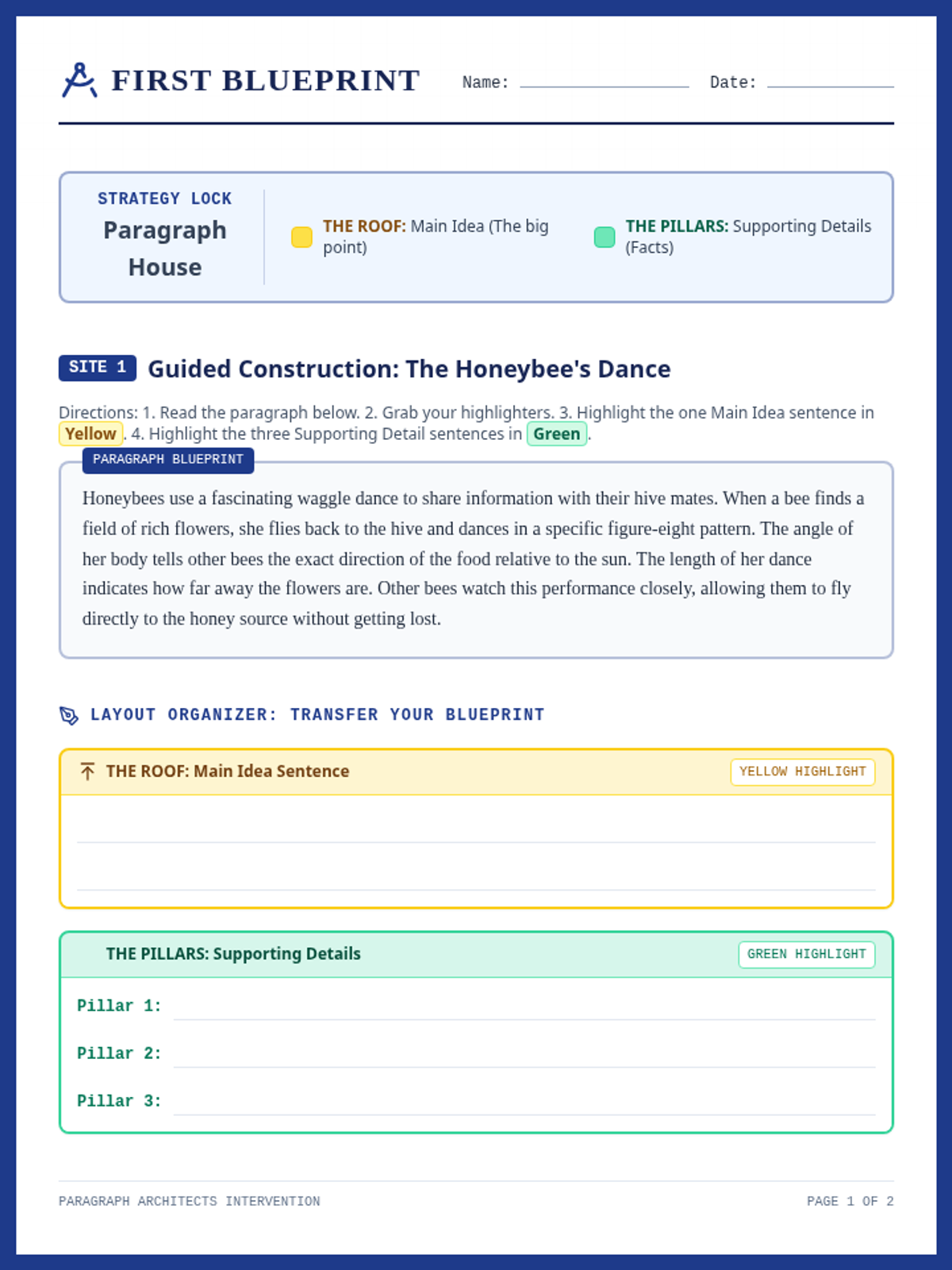
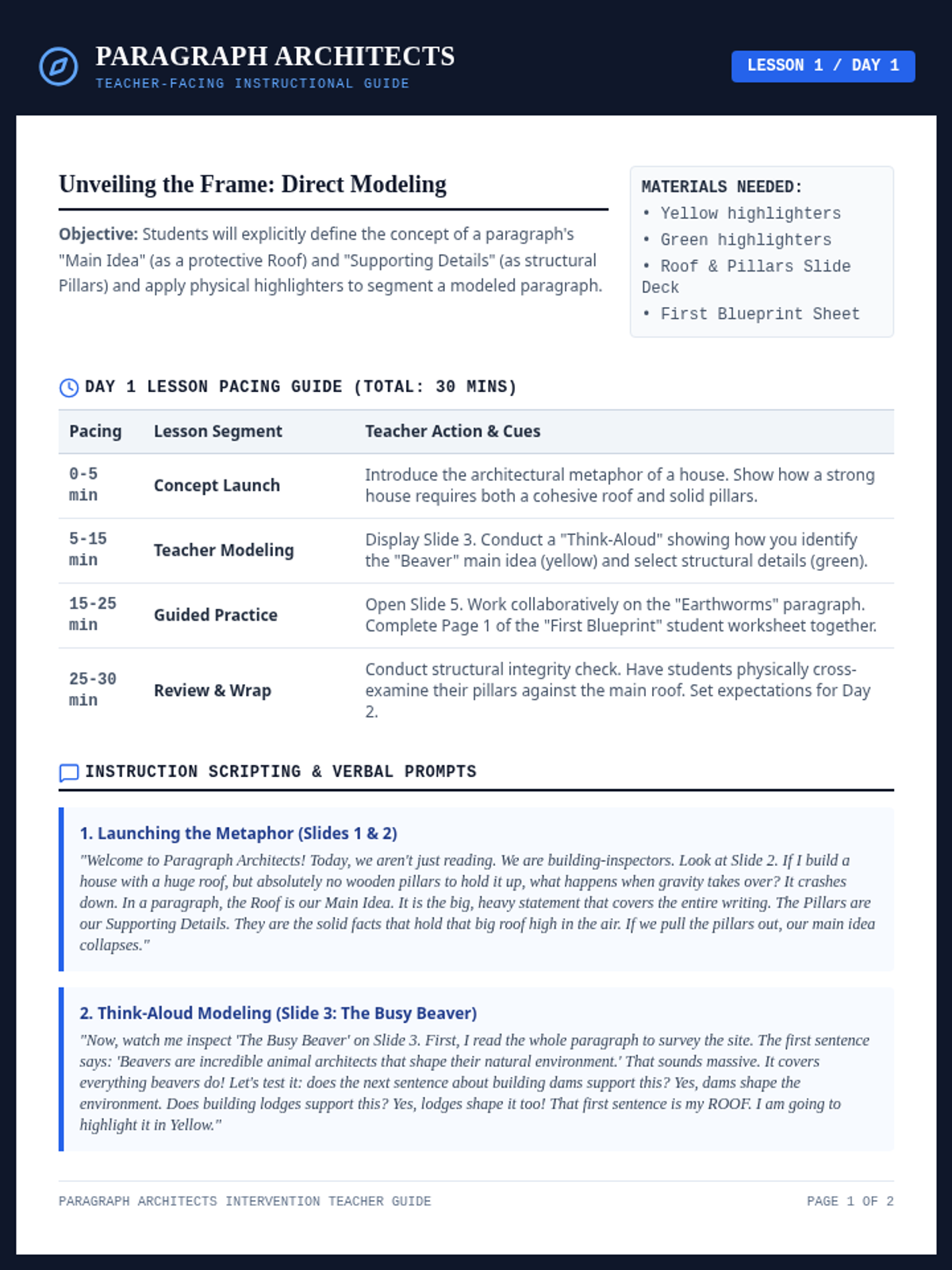
Day 1 of the intervention focuses on explicit teacher modeling of the 'Roof' (Main Idea) and 'Pillars' (Supporting Details) concept. Students learn how a paragraph is built, watch a live highlighting demonstration, and participate in highly guided practice using physical highlighters.
Comprehensive student-facing reading booklet containing the graded passages, systematic phonics warm-ups, progress monitoring tracking sheets, and cognitive-building DOK questions.
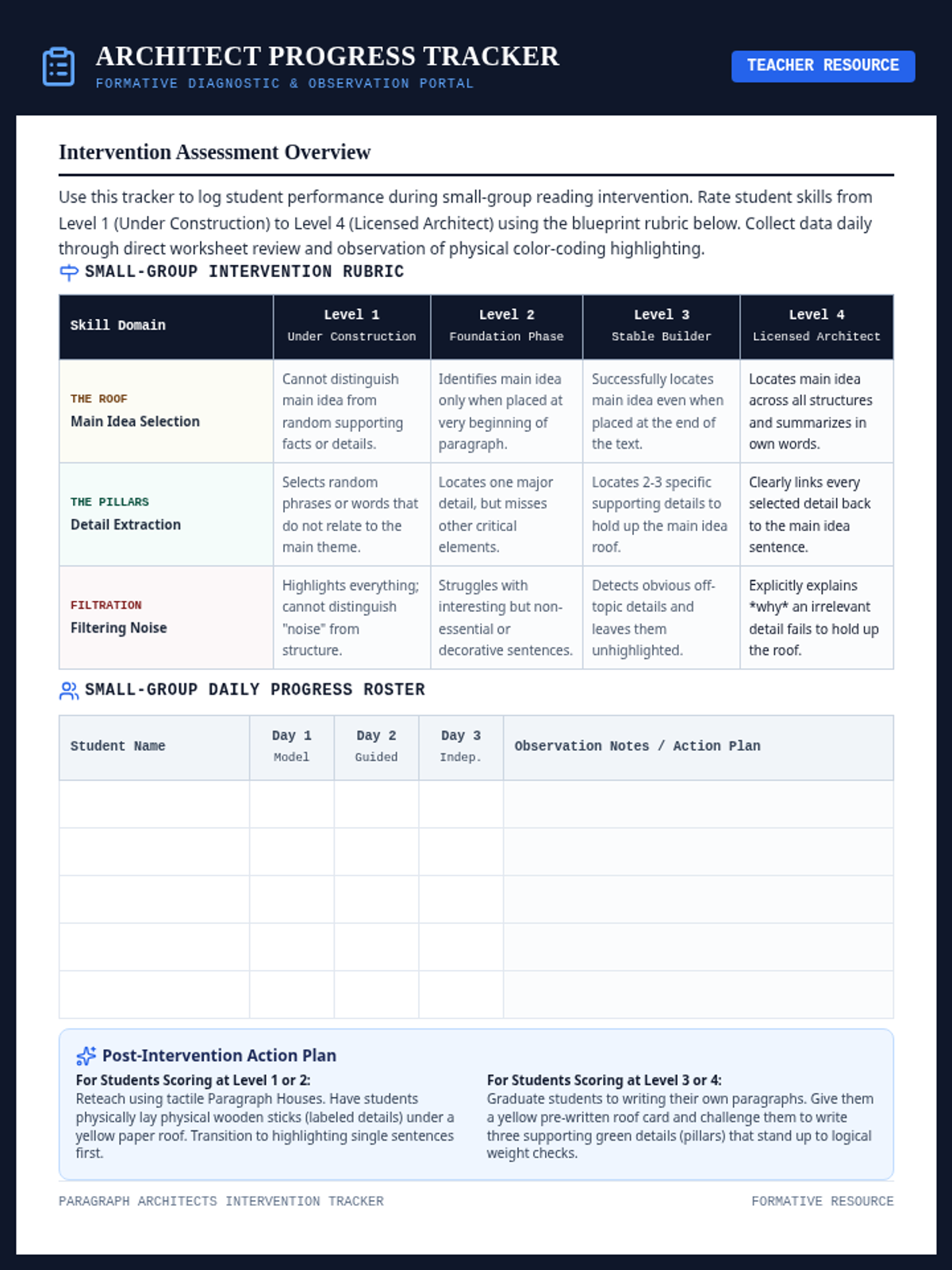
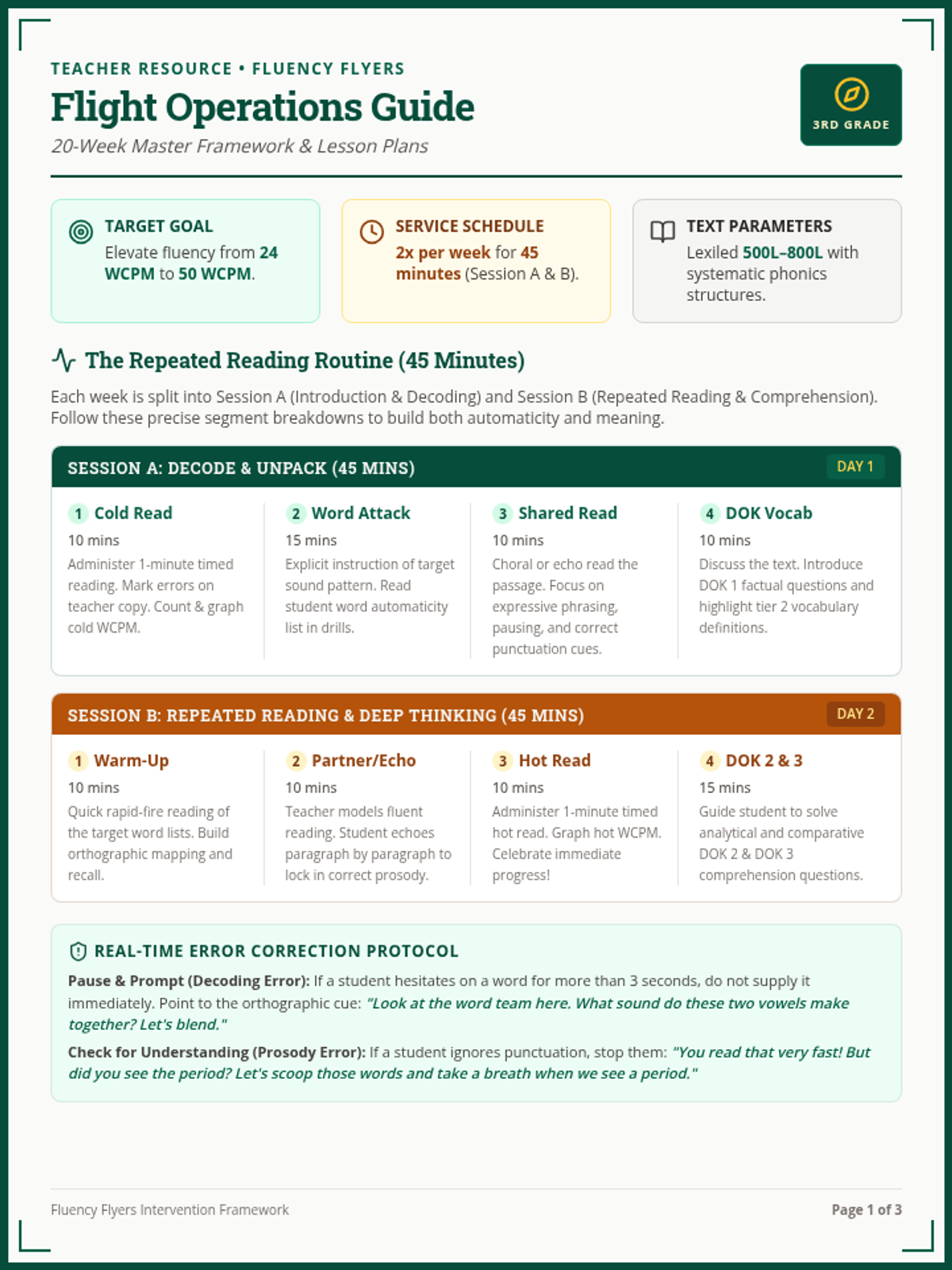
Master instructional framework and weekly lesson plan bundle for the 20-week intervention. Outlines the 45-minute twice-weekly session routines, cold/hot reading protocols, phonics skill schedules, and administrative guidelines for progress monitoring.
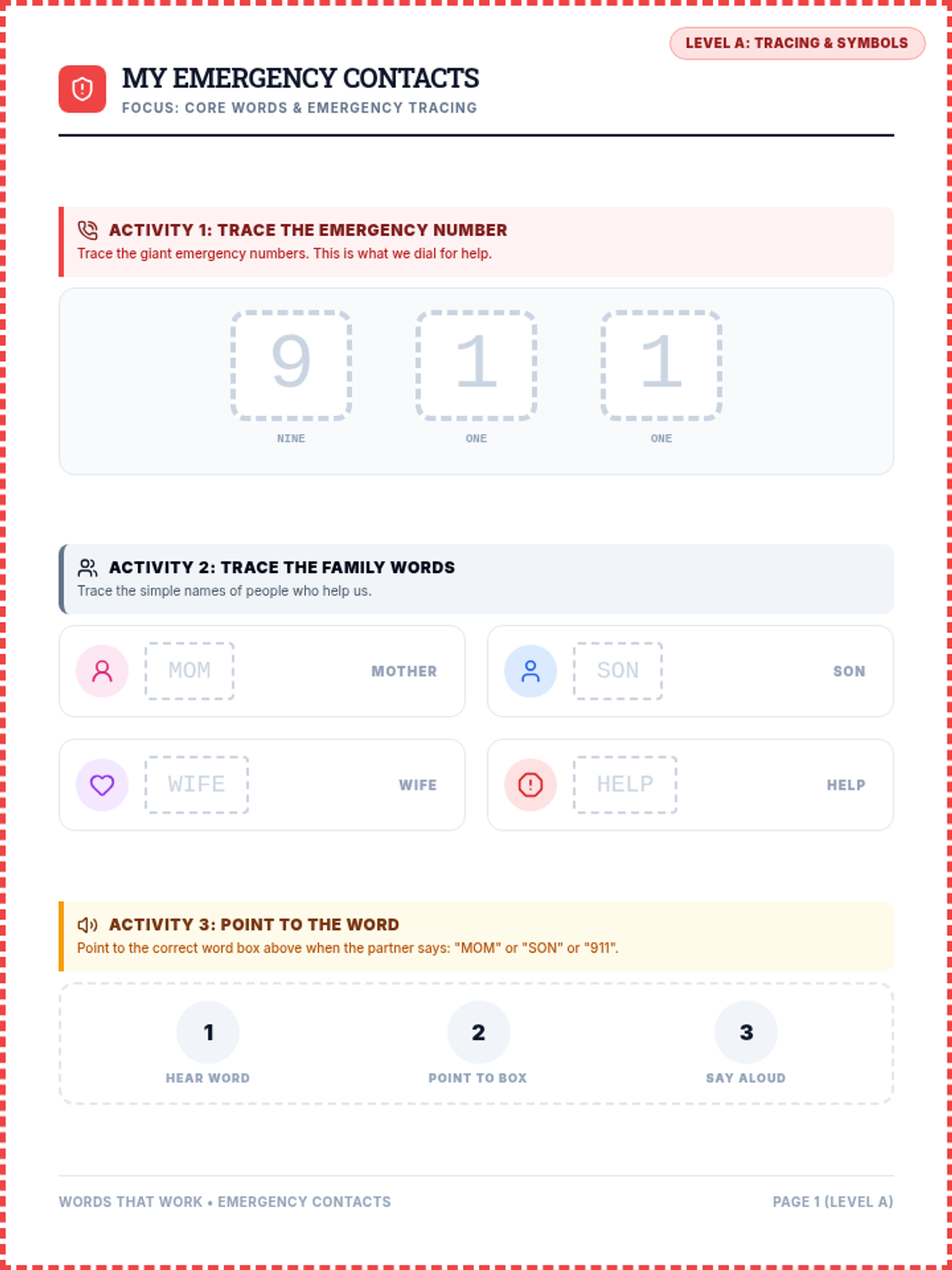
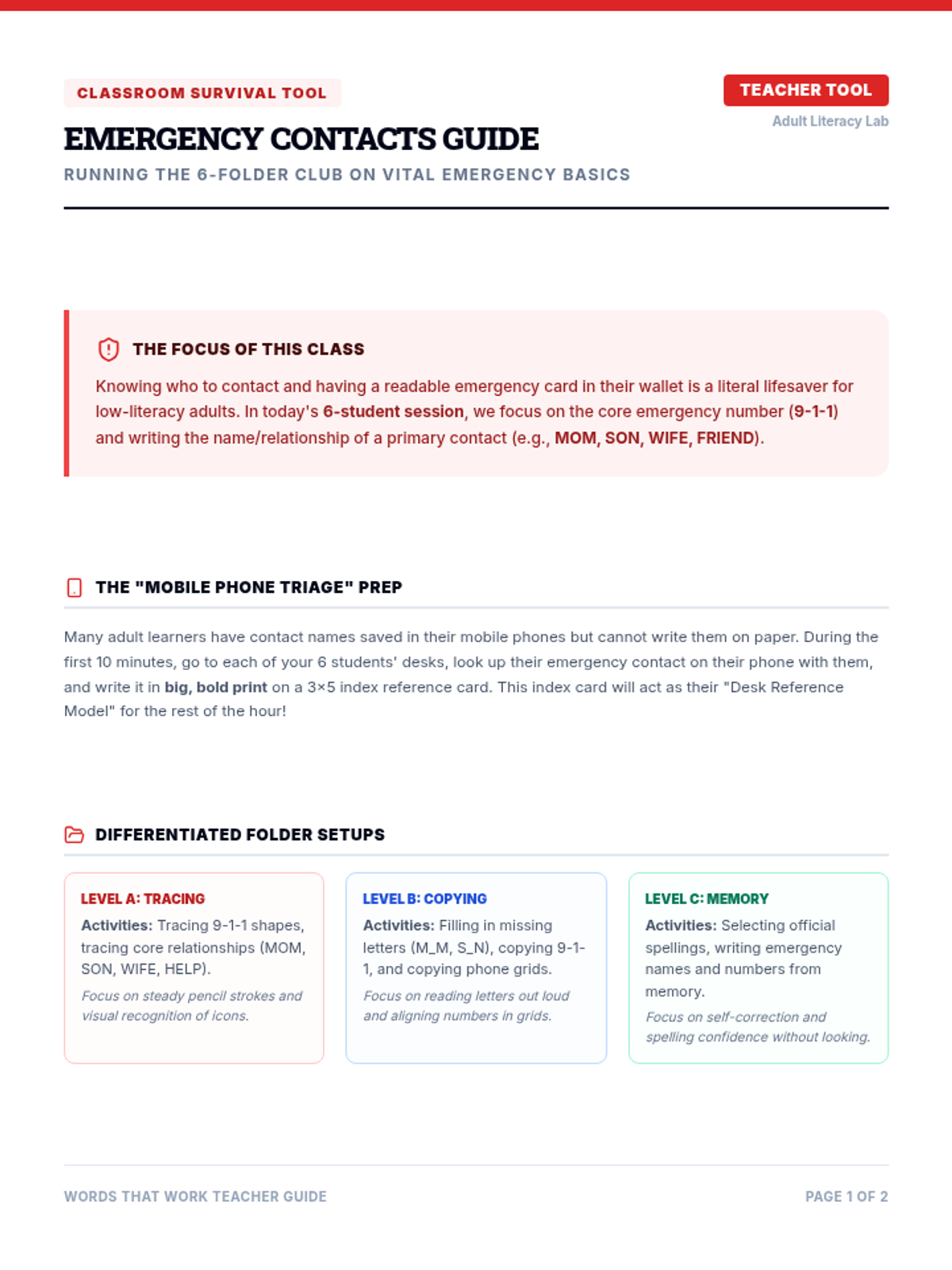
A highly practical lesson focused on writing down an emergency contact name, relationship (Mom, Son, Wife, Friend), and phone number, customized for 3 levels of adult literacy.
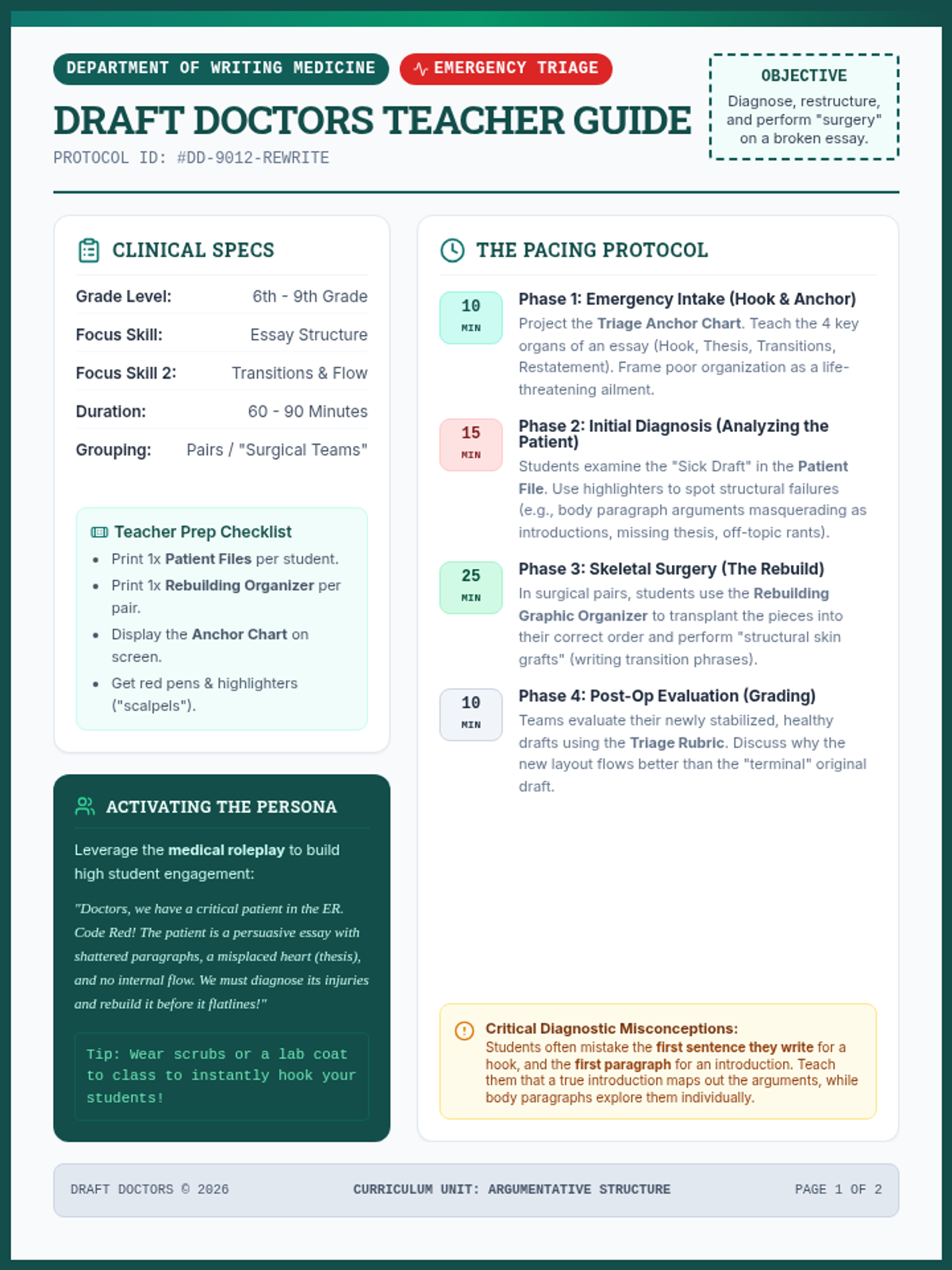
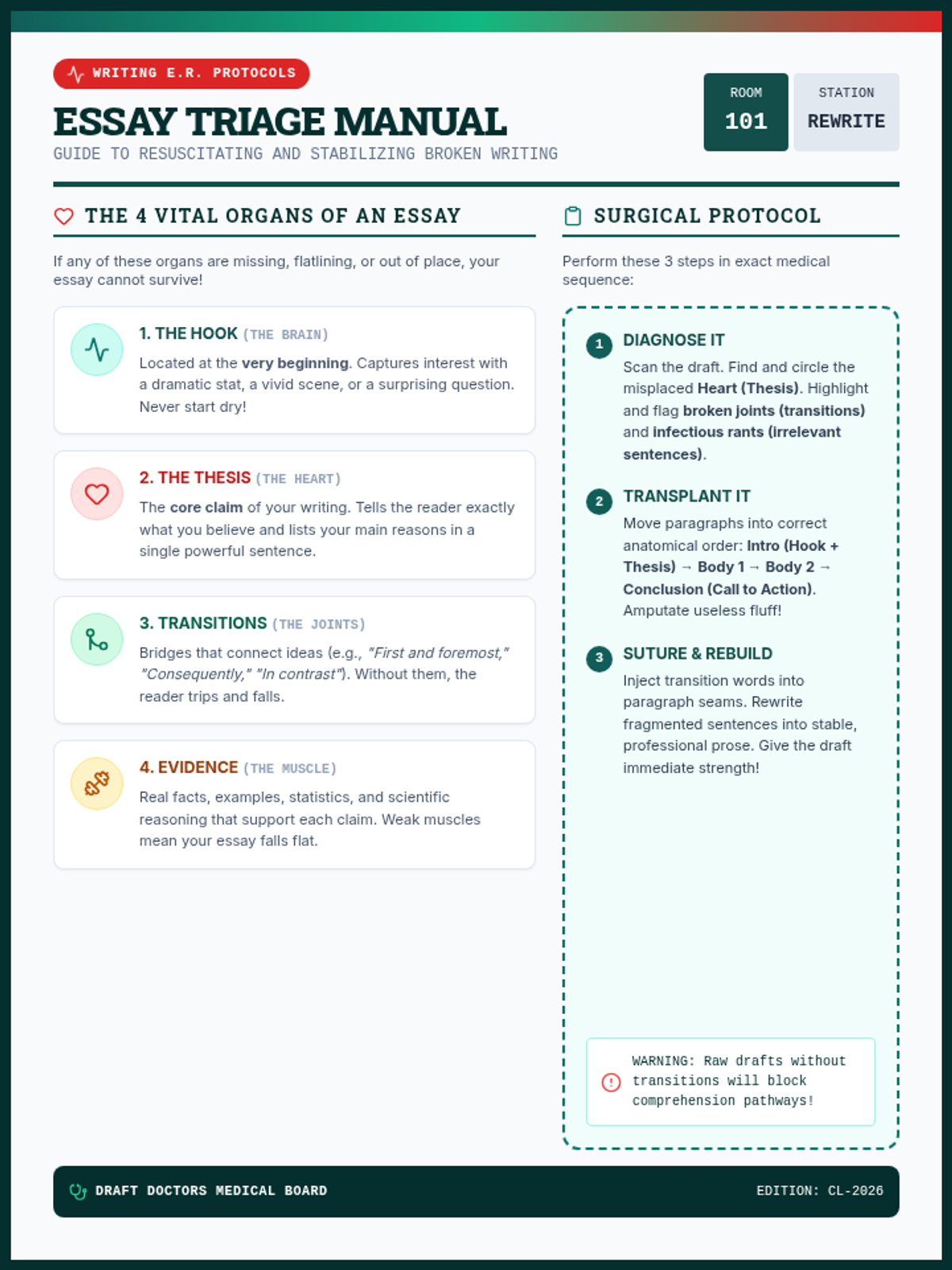
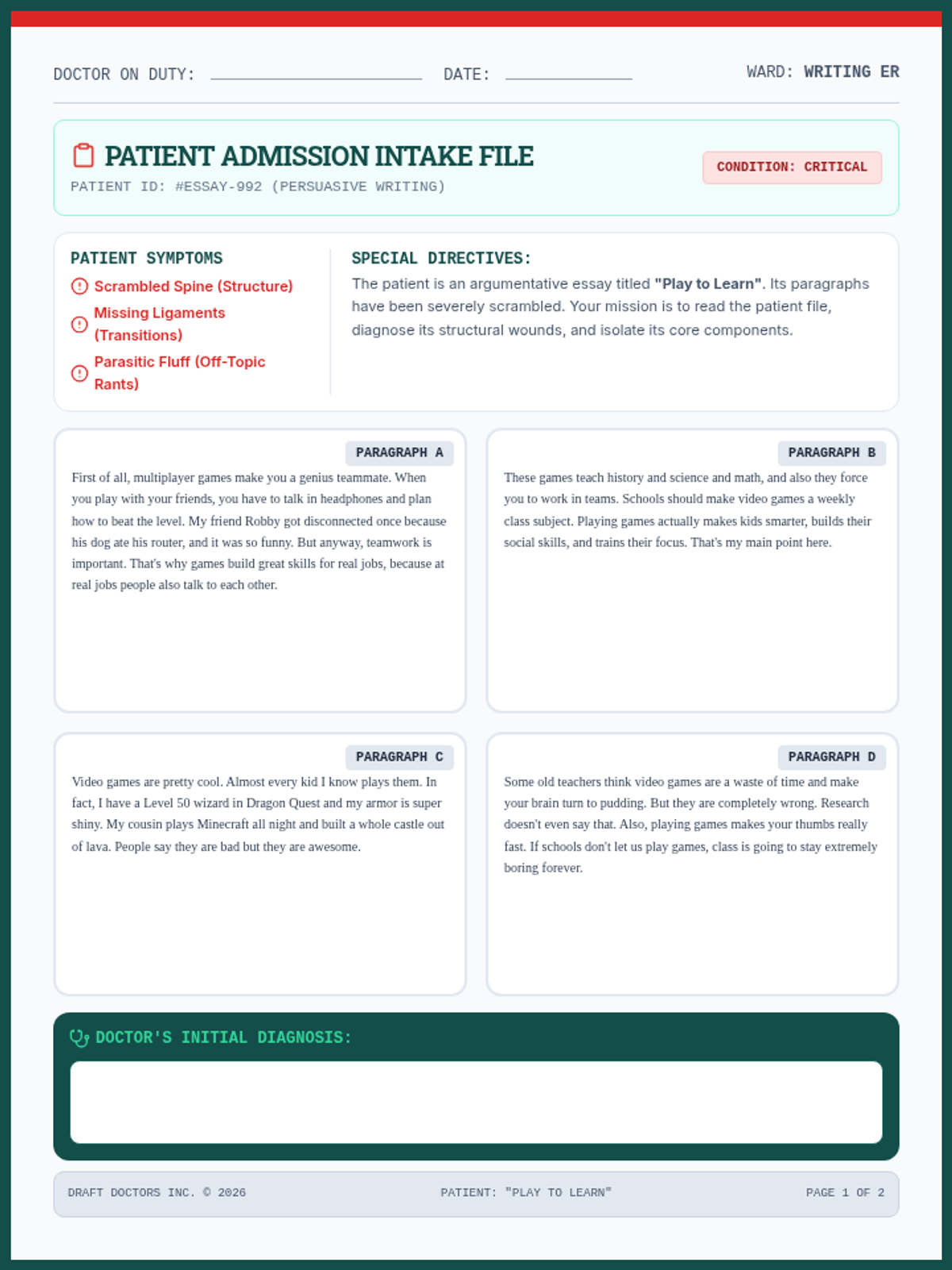
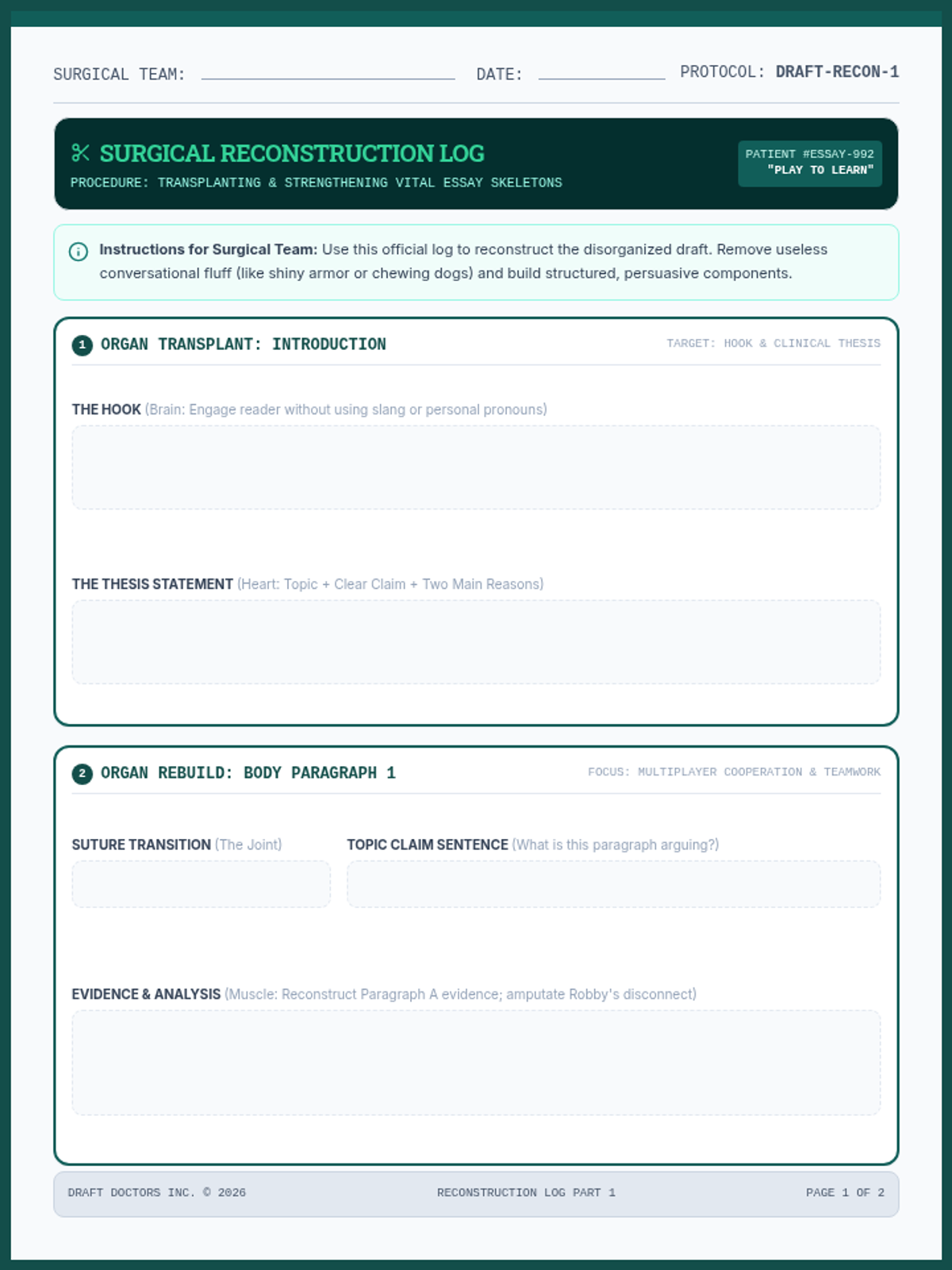
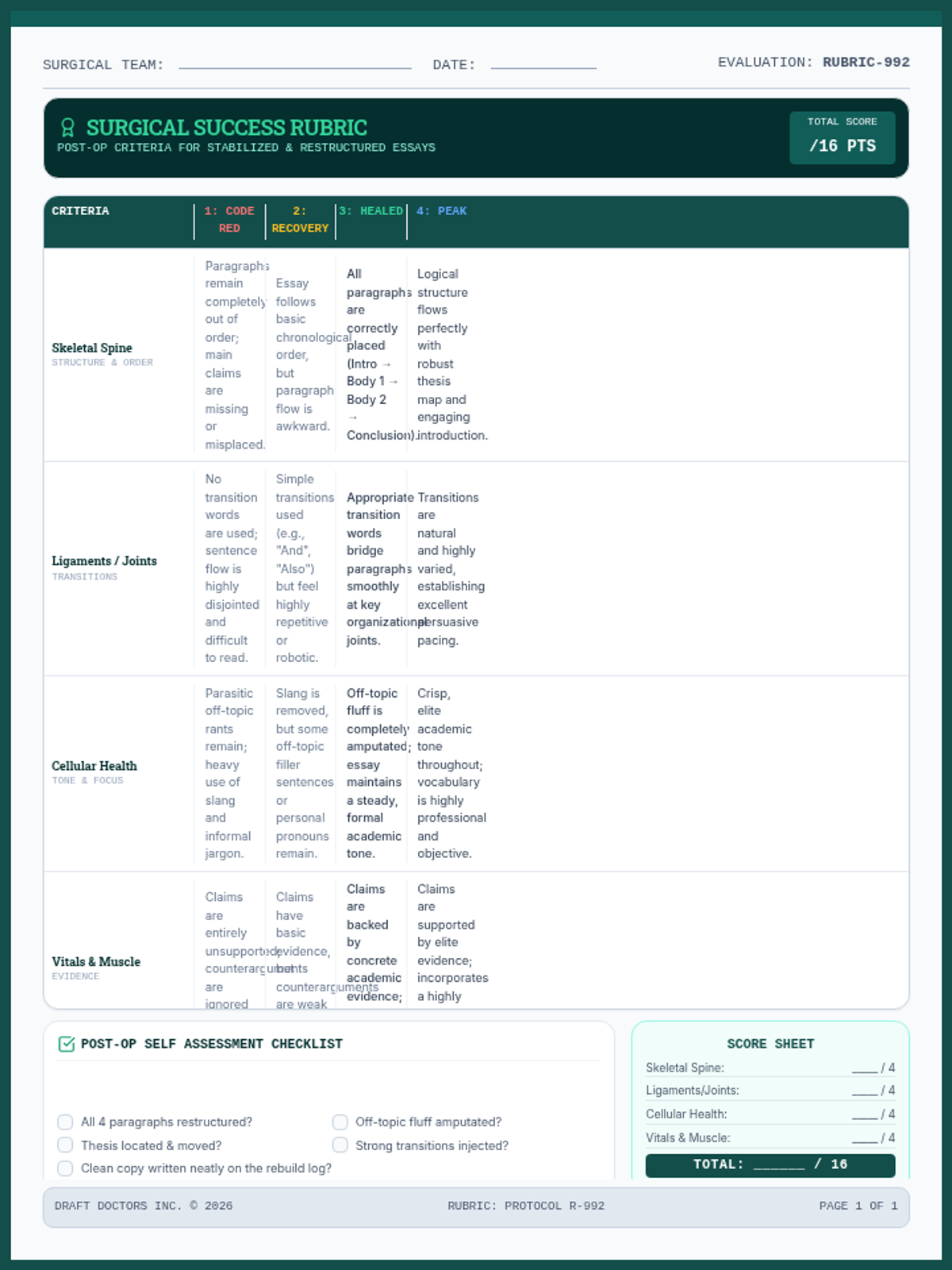
An immersive, medical-themed lesson where students act as 'Draft Doctors' to diagnose, triage, and perform surgery on a poorly organized, weak persuasive essay. Students learn paragraph structure, logical flow, and transition-building through a structured, clinical approach.
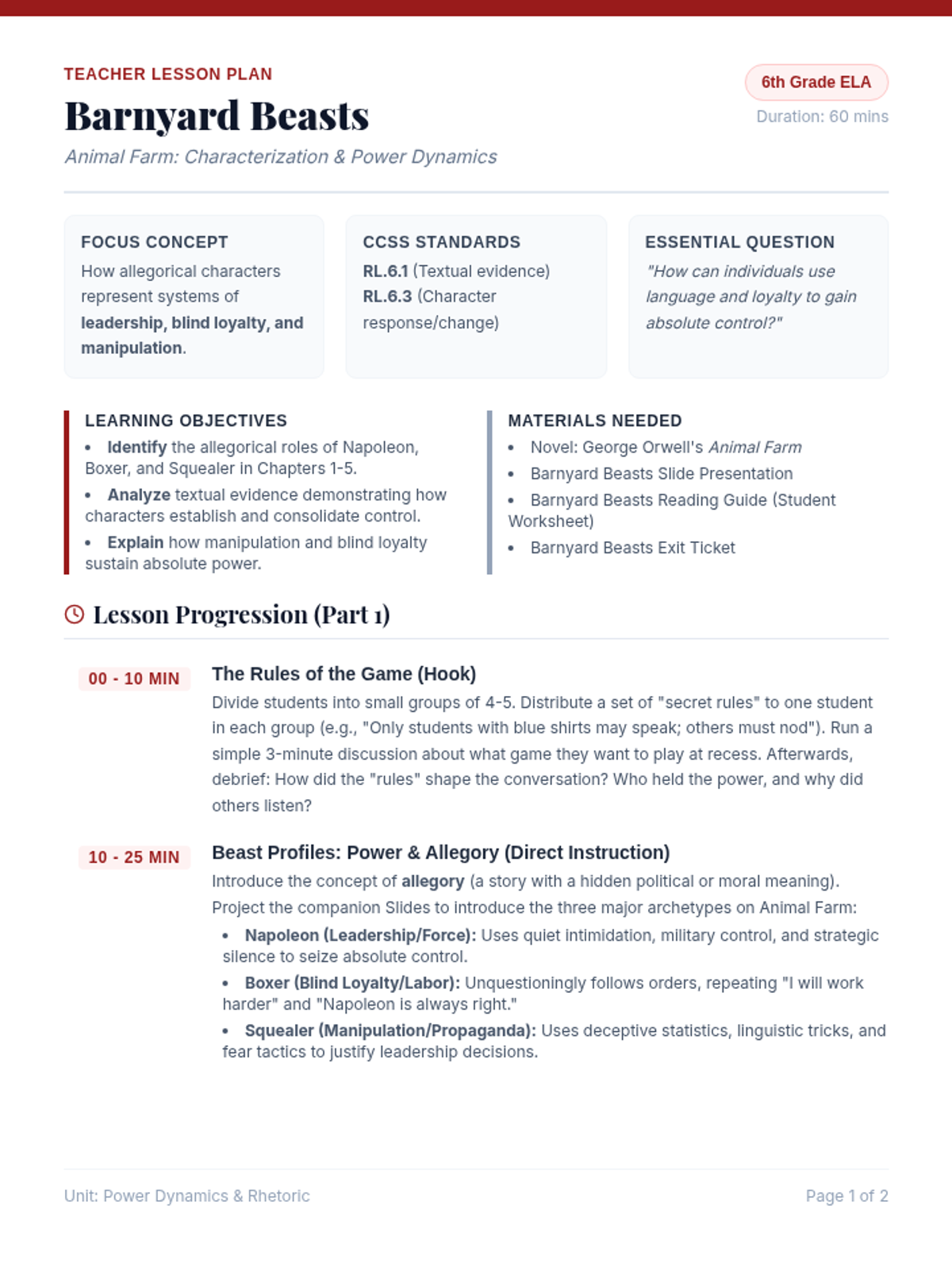
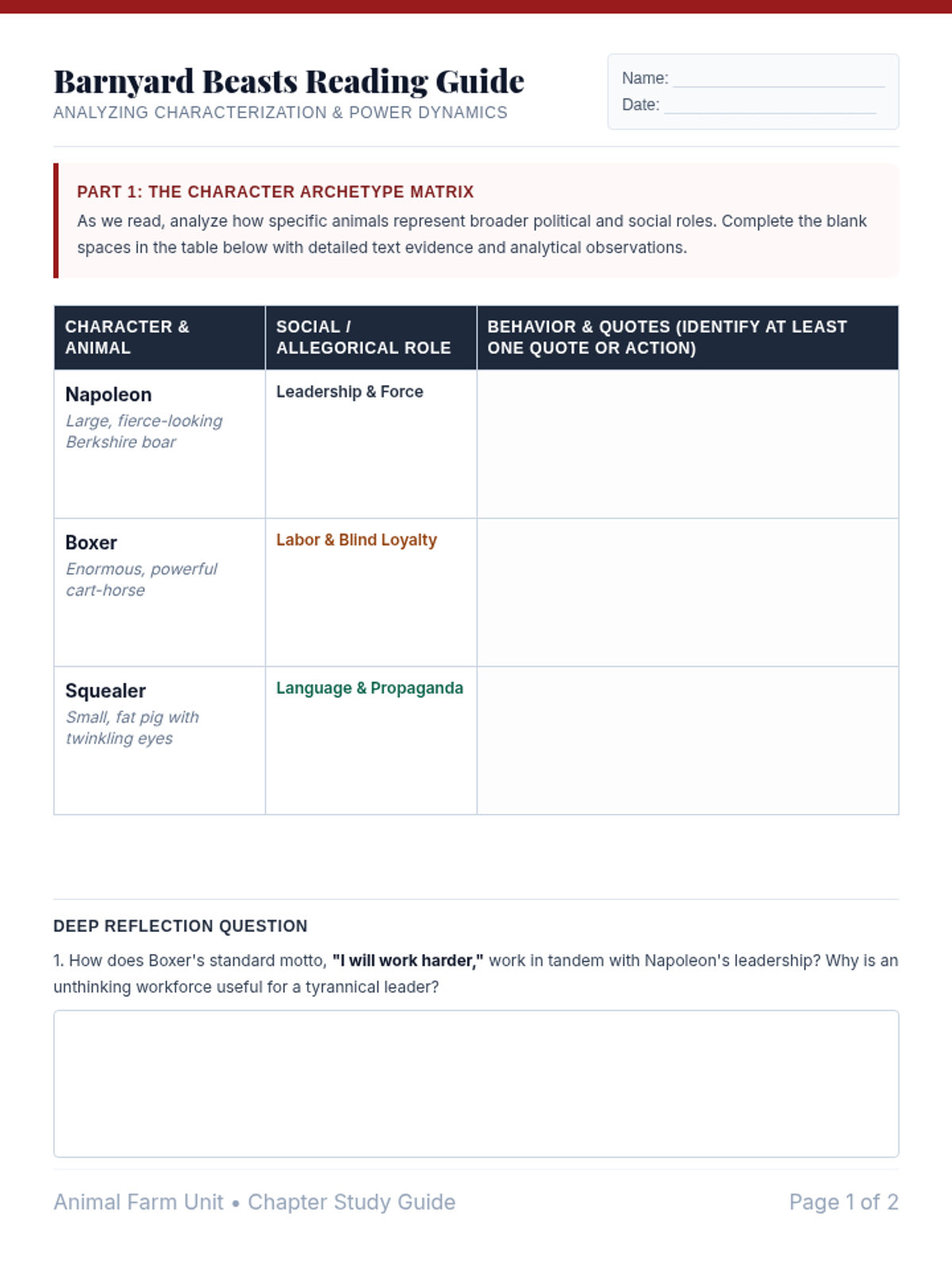
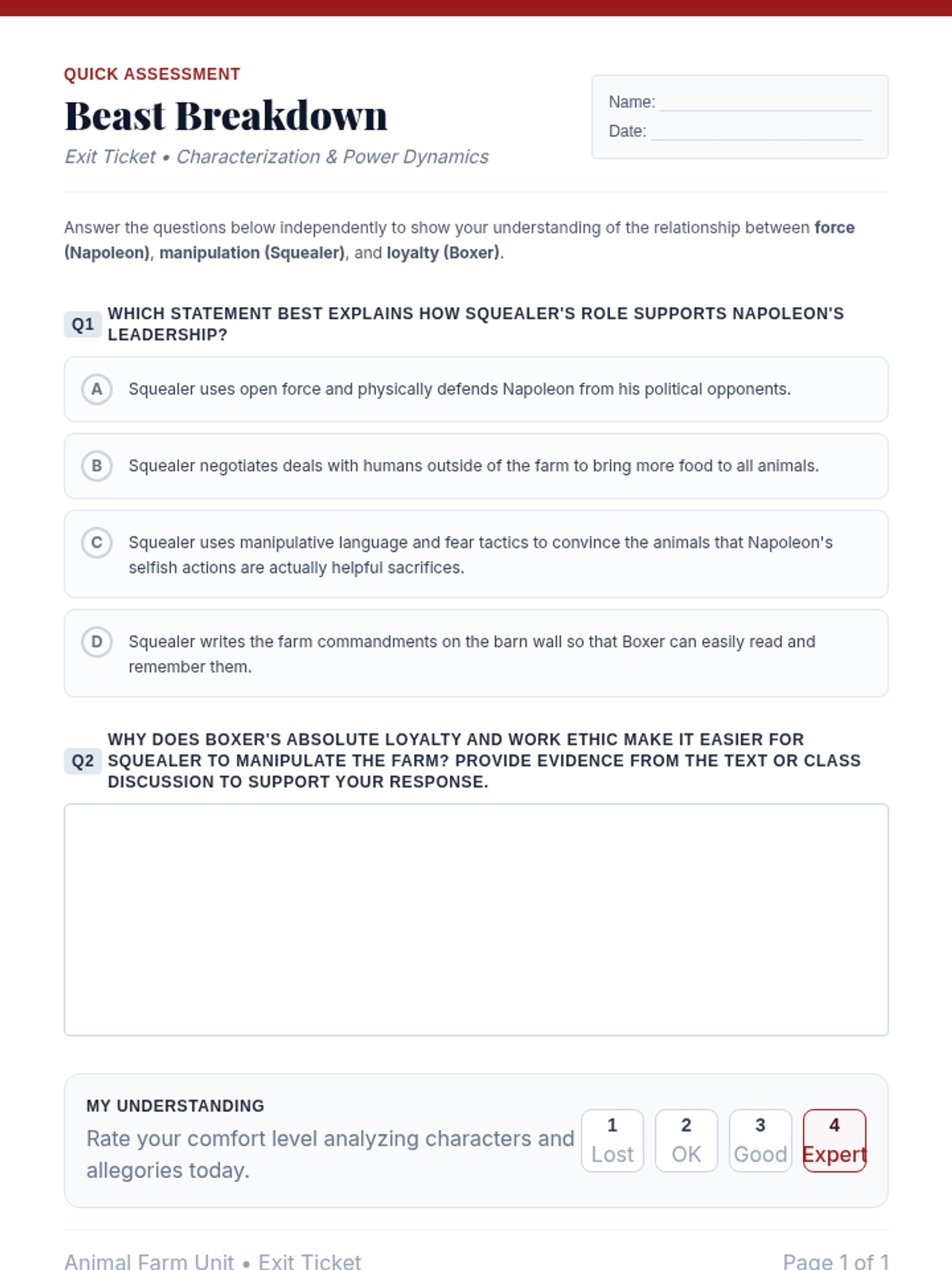
A comprehensive 6th-grade ELA lesson analyzing characterization and power dynamics in George Orwell's Animal Farm. Students investigate how specific characters represent leadership, blind loyalty, and manipulation, and how these roles shape the power structure of the farm.
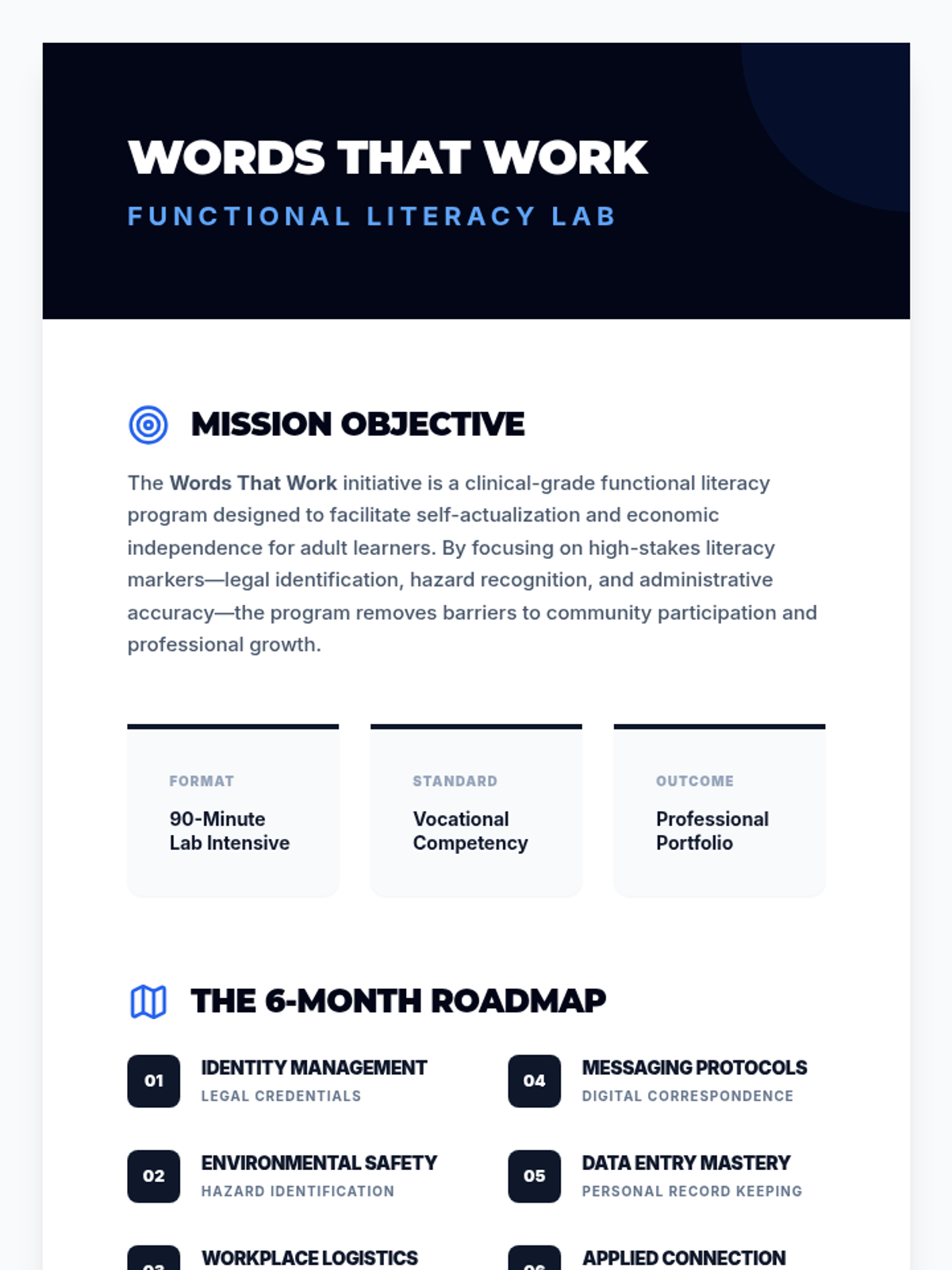
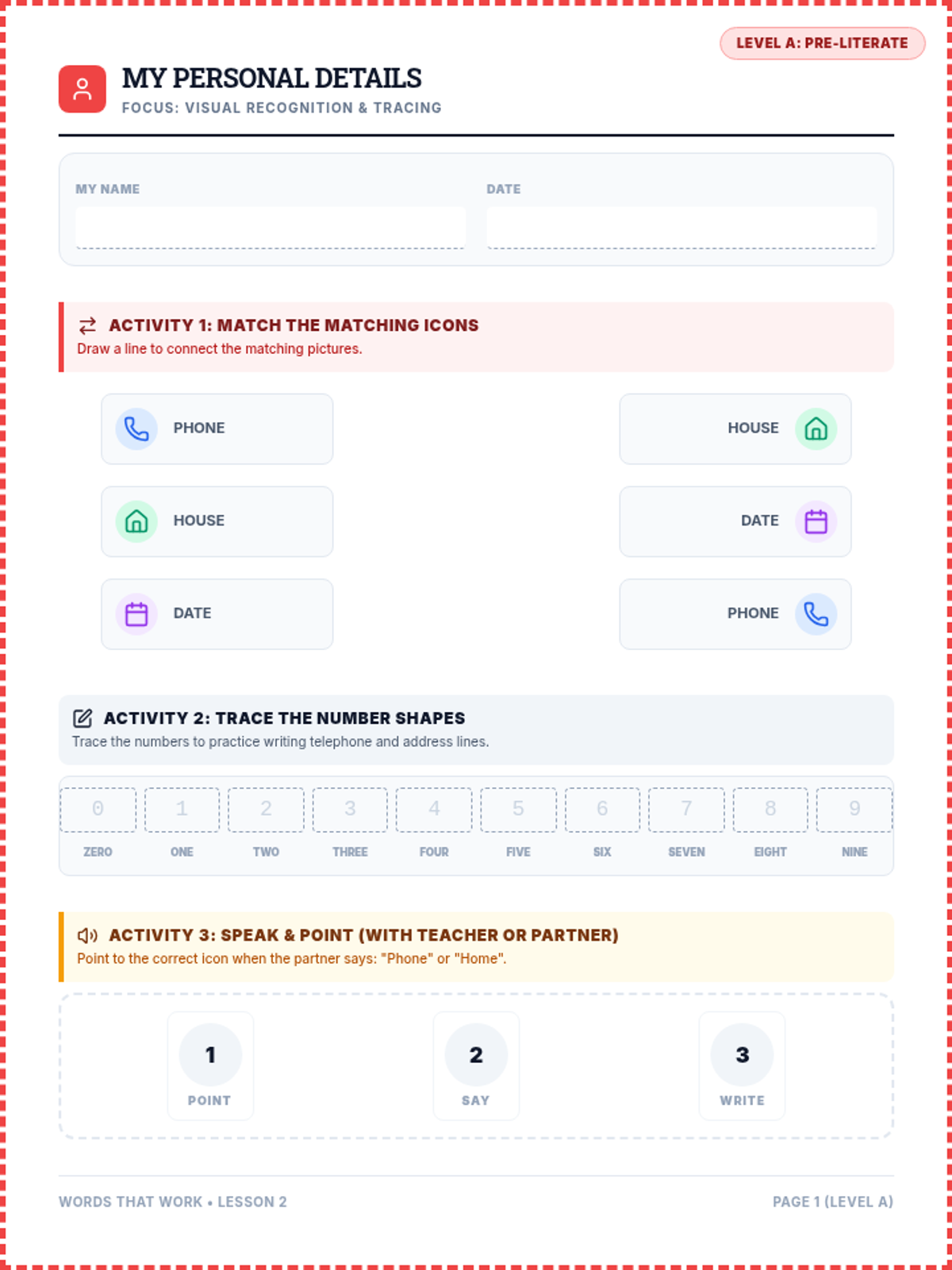
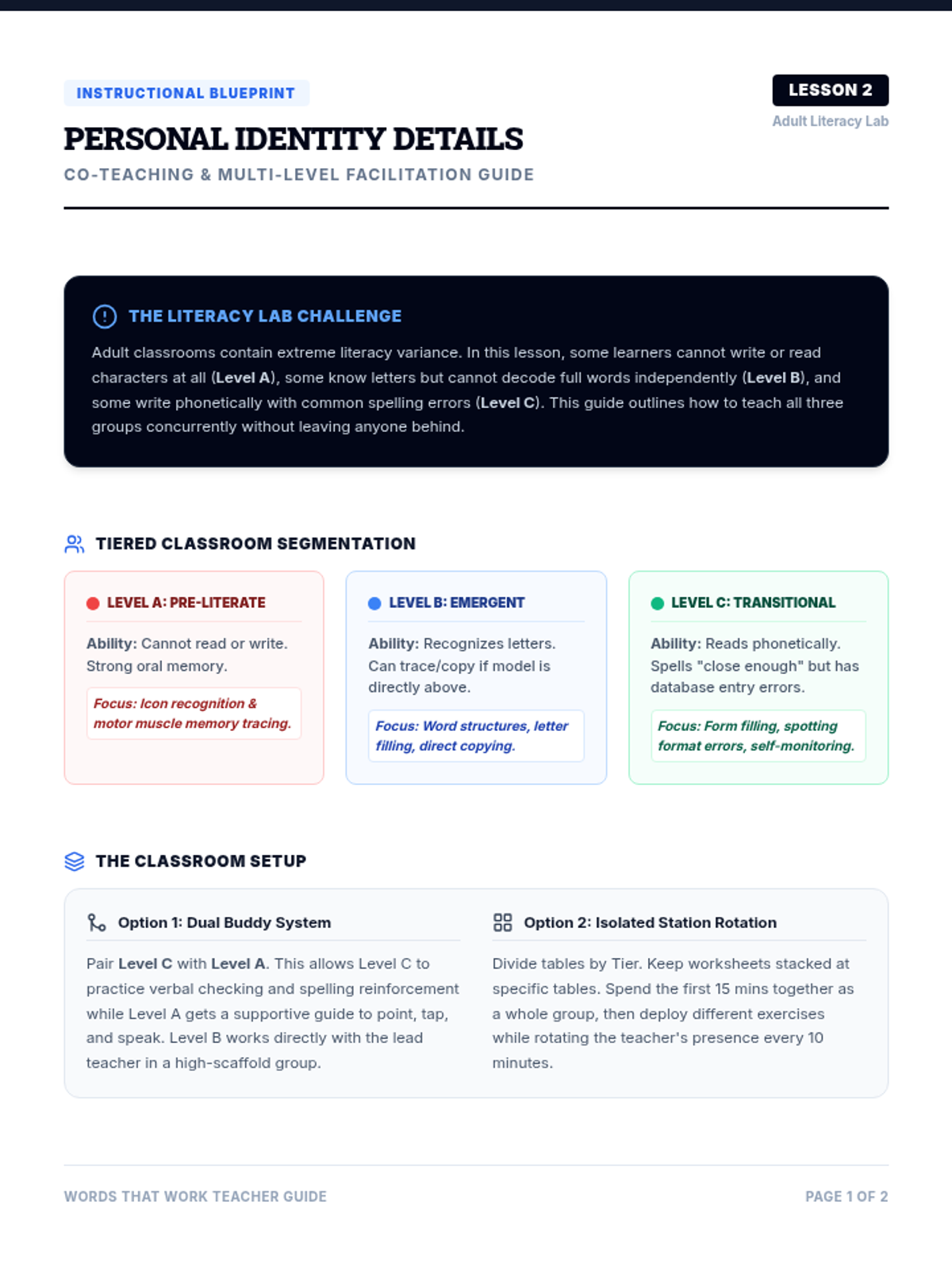
This lesson focuses on personal identification details like address, phone number, and birthdate, designed for multi-level adult literacy learners ranging from pre-literate to transitional writers.
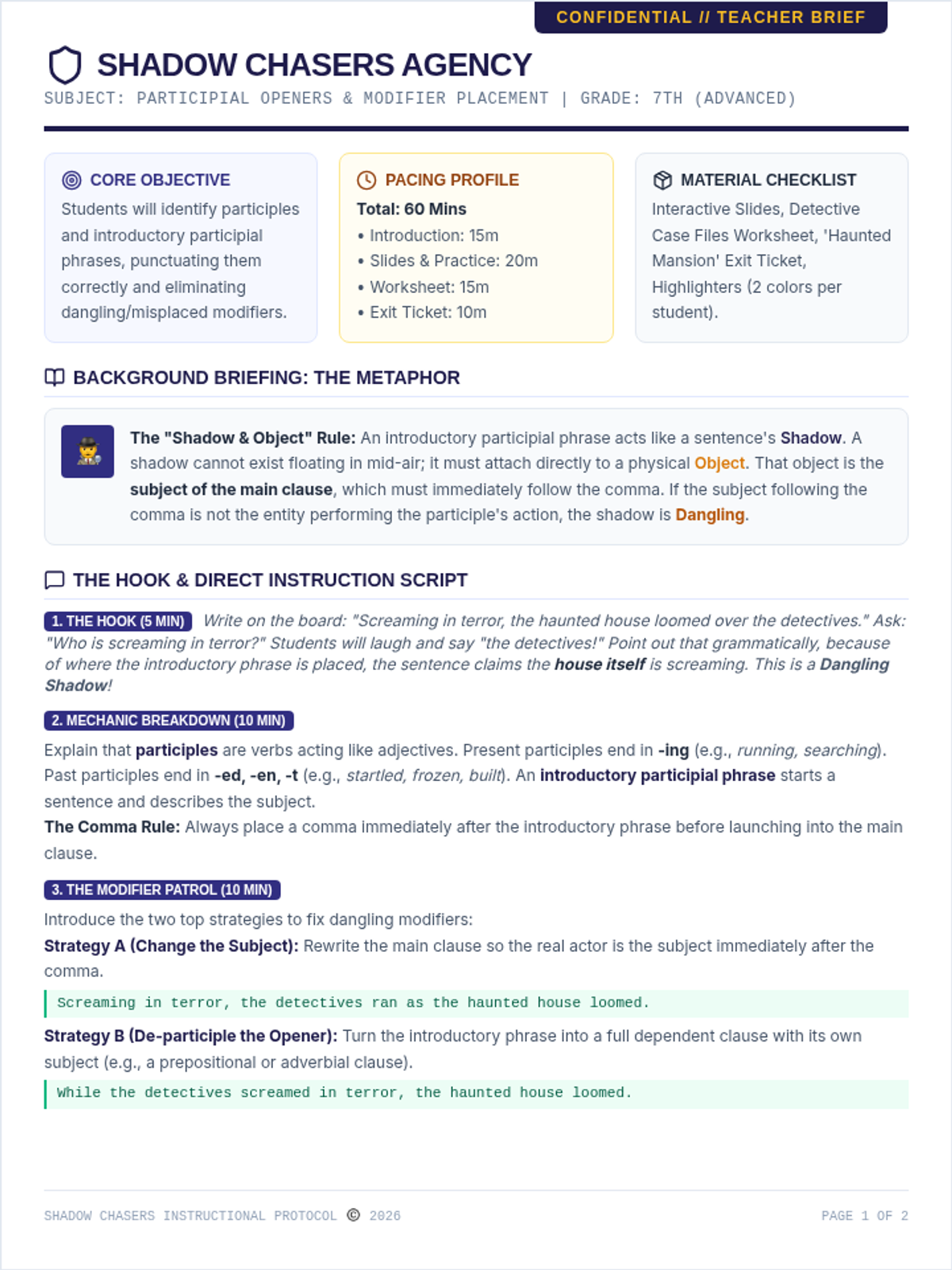
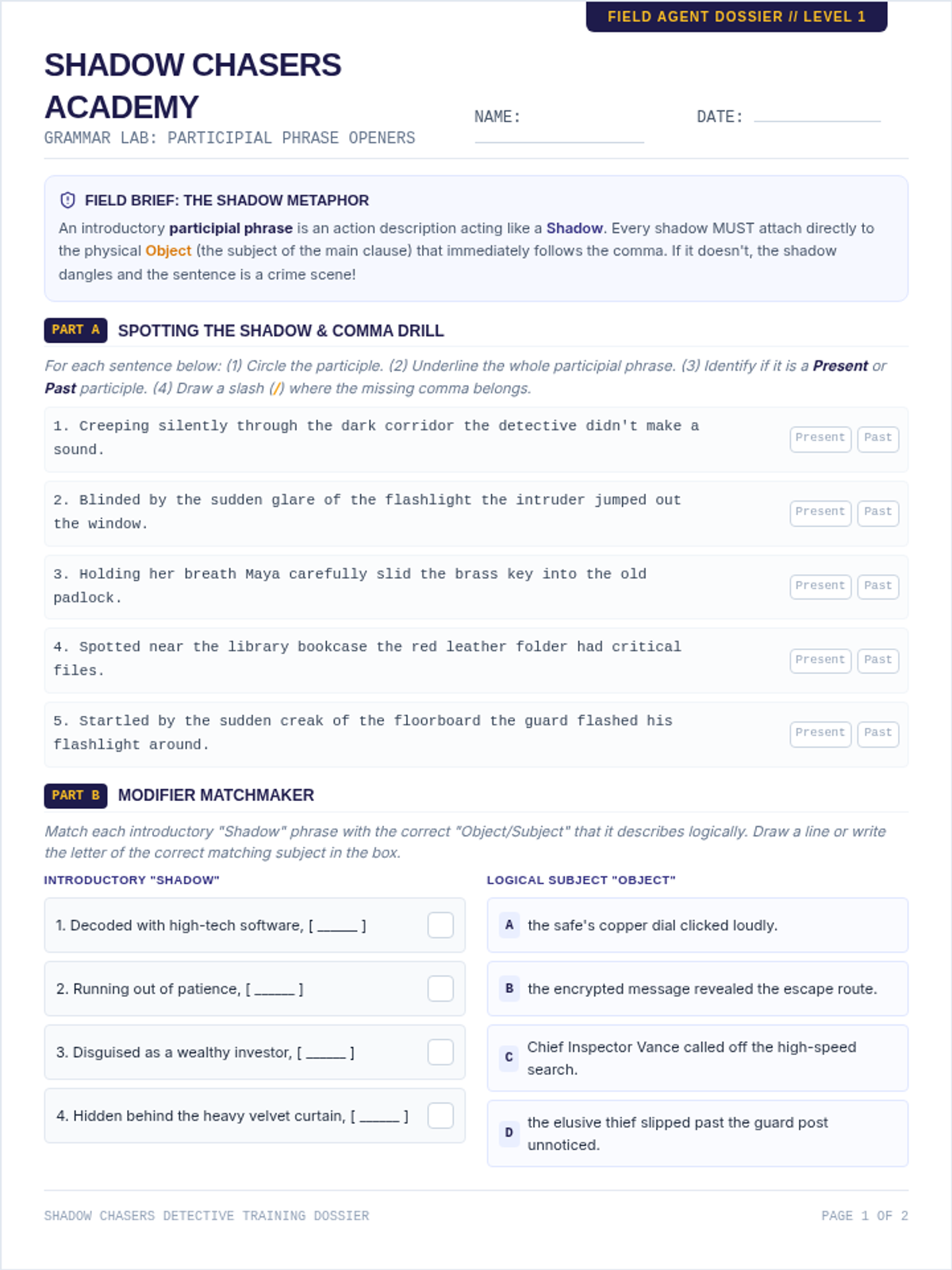
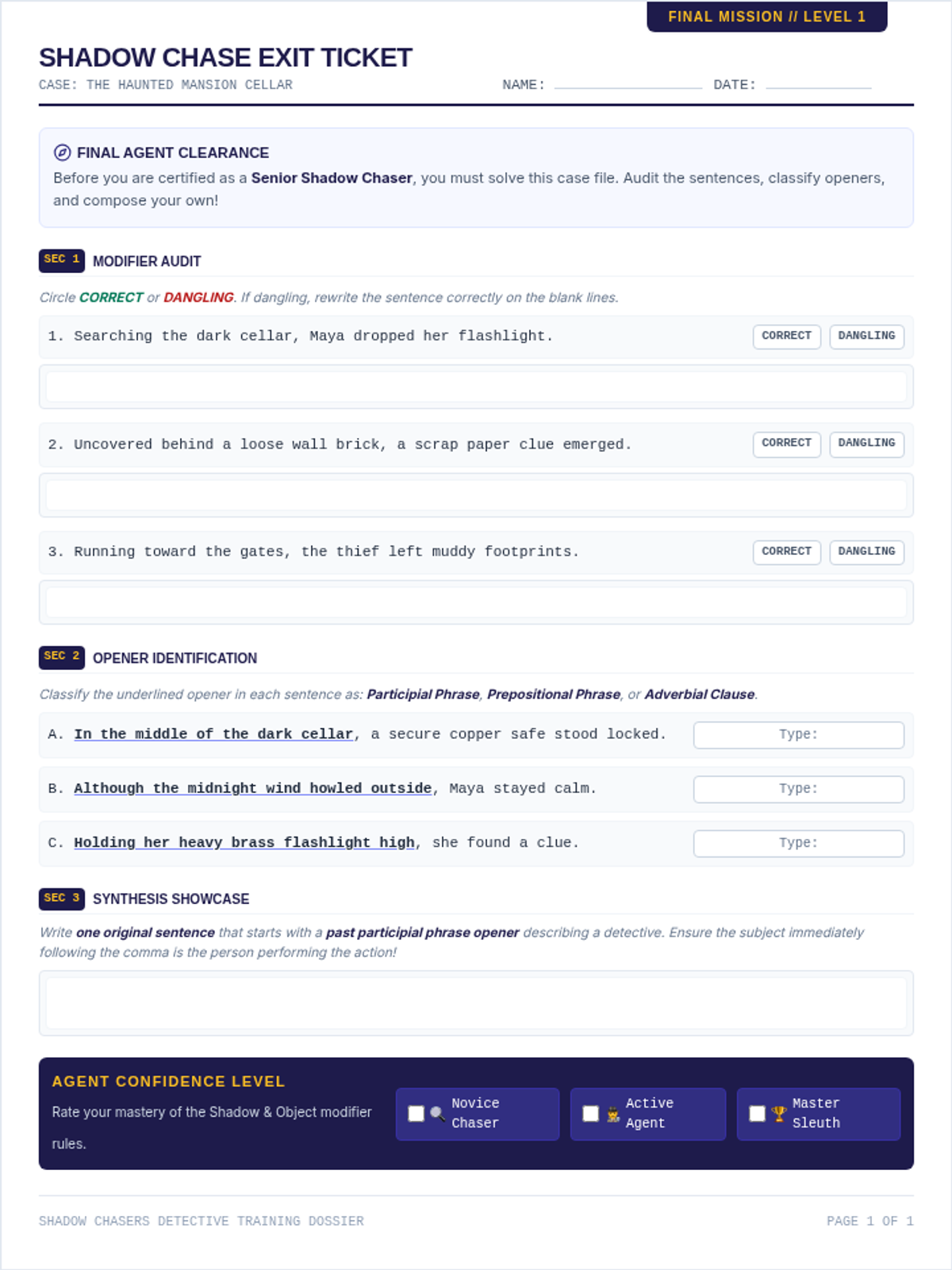
A comprehensive grammar lesson for advanced 7th graders that uses a 'Shadow Chasers' detective theme to master participial phrase openers and eliminate dangling modifiers. Students learn to match introductory participle modifiers (shadows) with their correct subjects (objects).
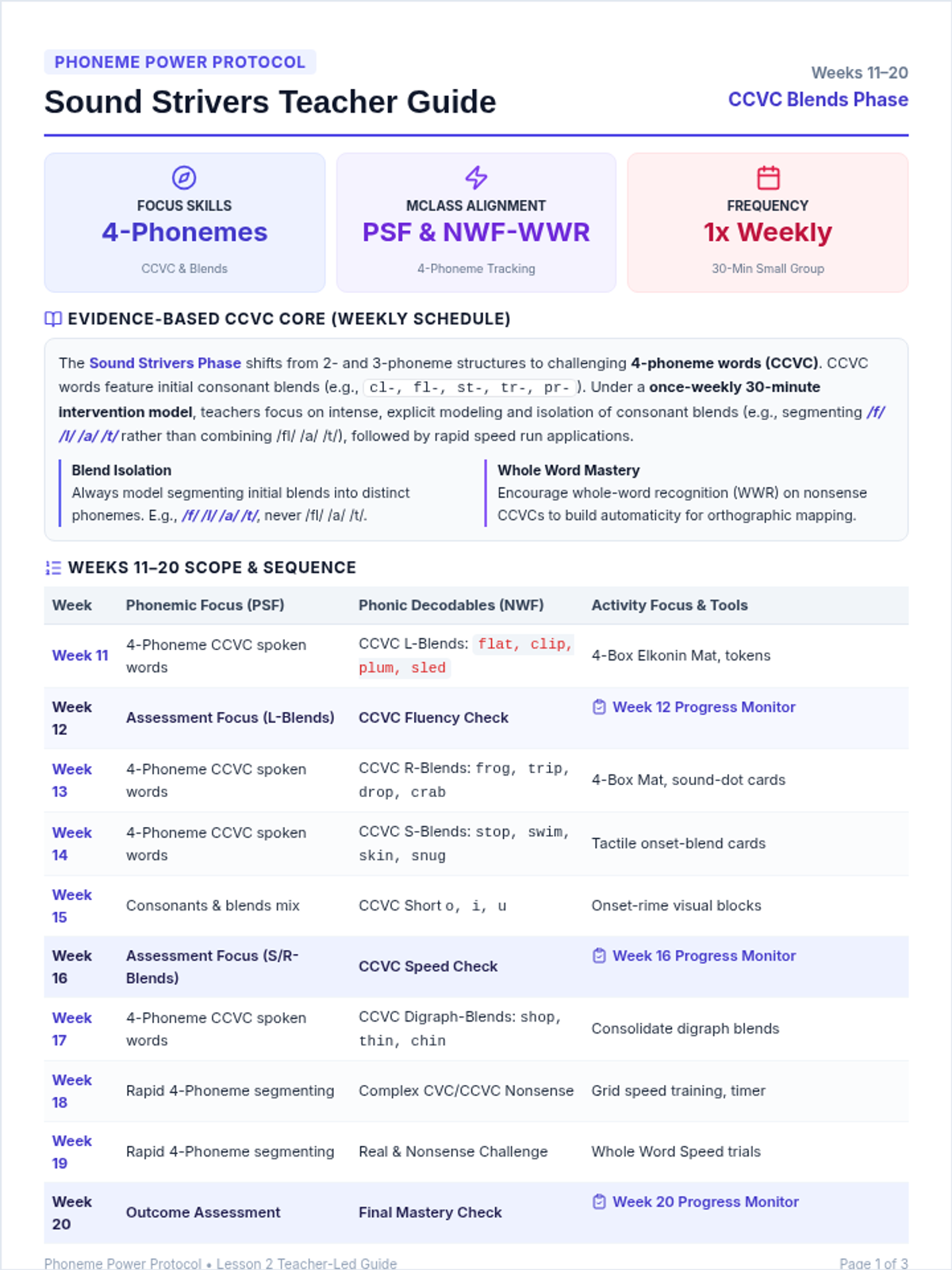
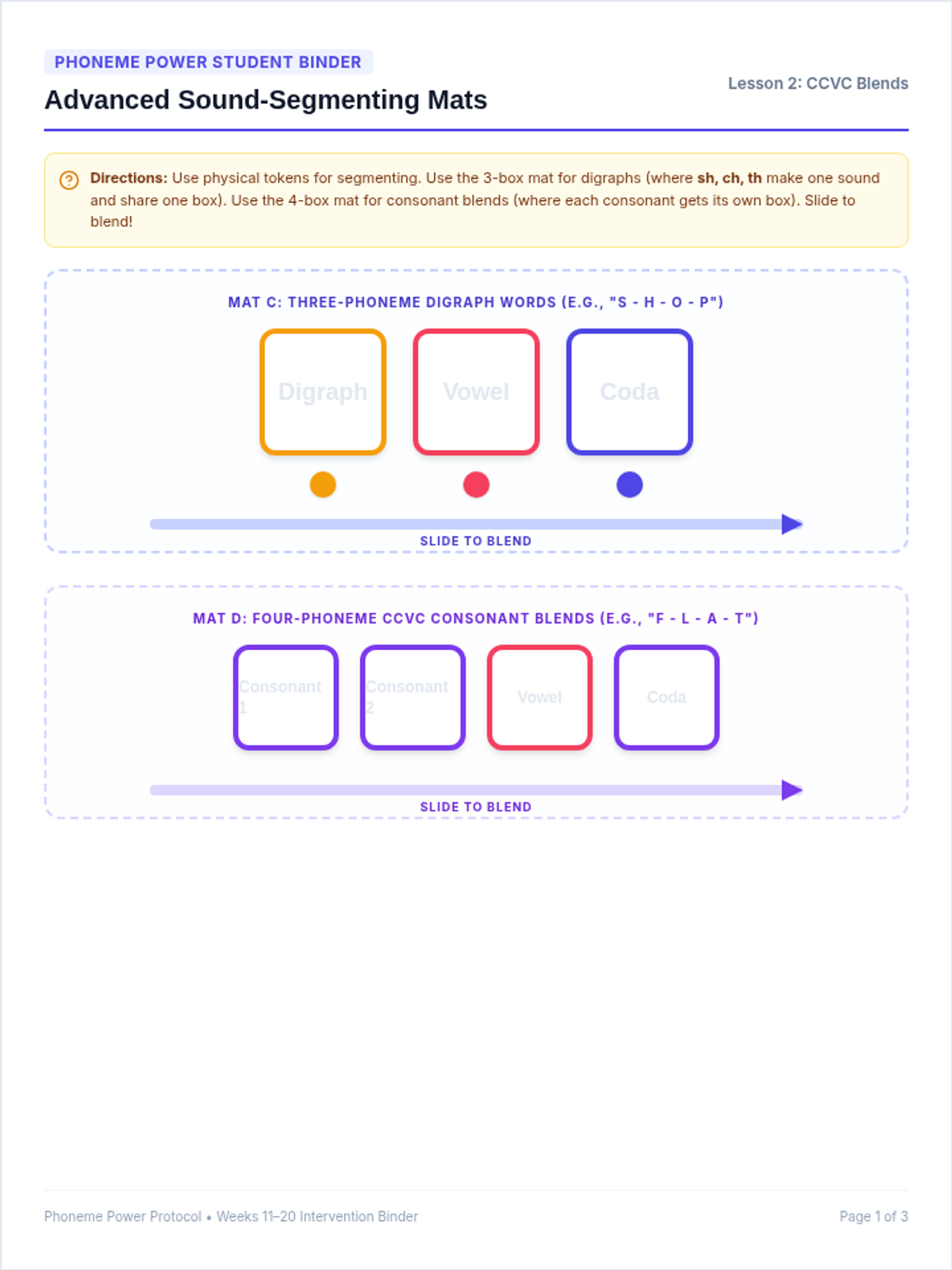
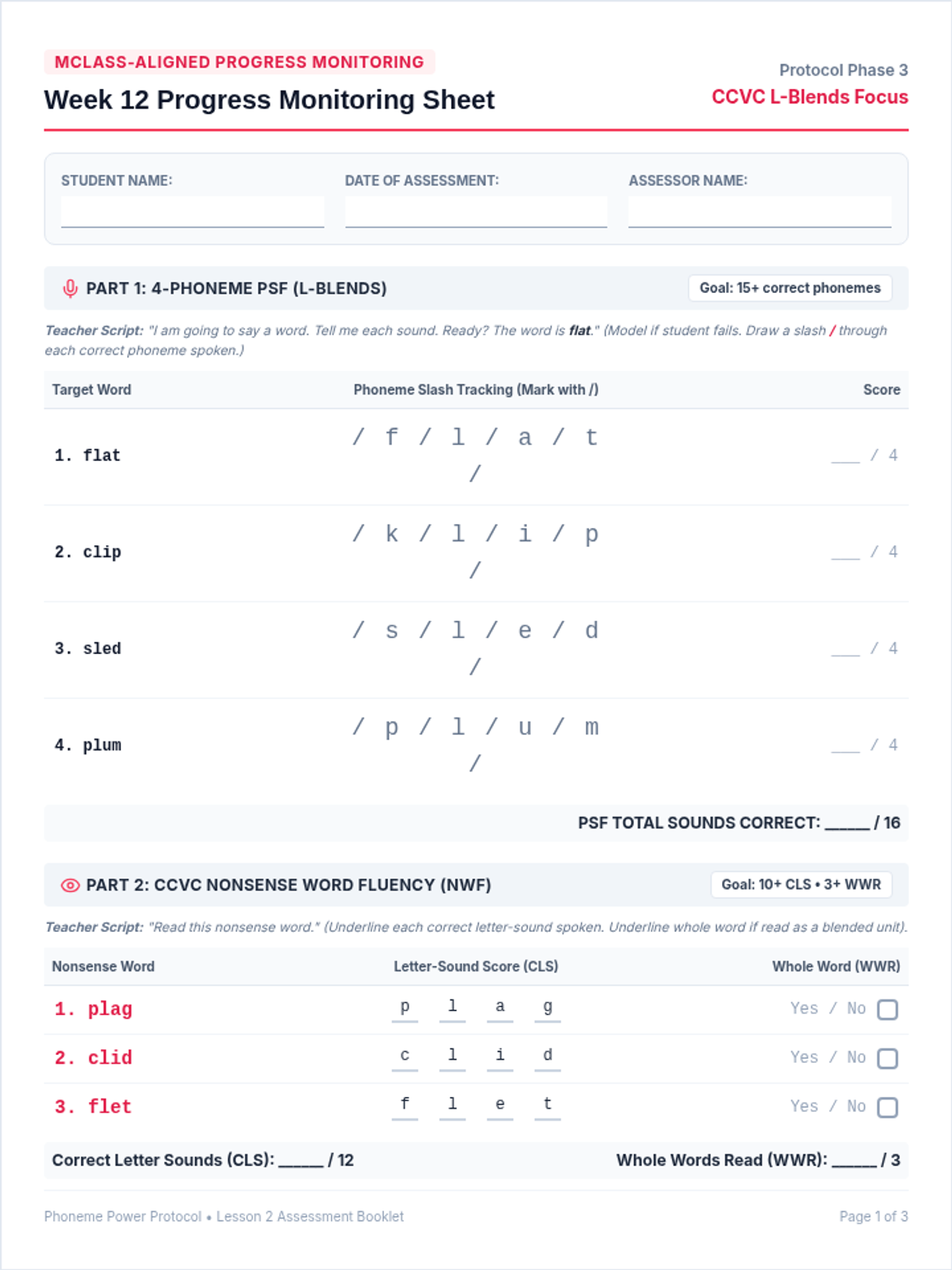
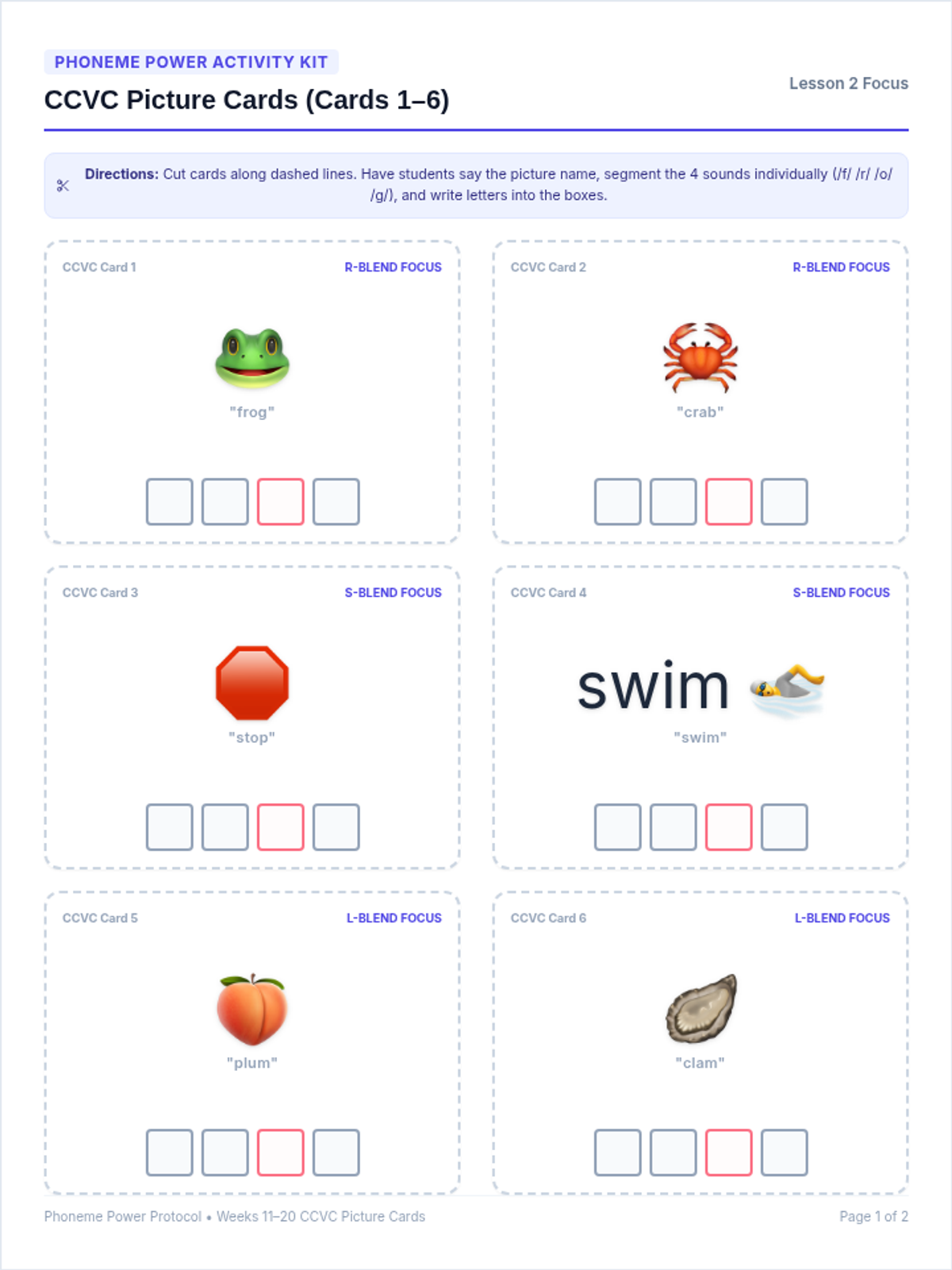
Weeks 11-20 of the Phoneme Power Protocol intervention, focusing on CCVC (consonant blends) and complex CVC words. Includes systematic small-group routines for 4-phoneme words, visual 4-box Elkonin mats, tactile onset-rime blending cards, and progress monitoring scoring sheets for Weeks 12, 16, and 20.
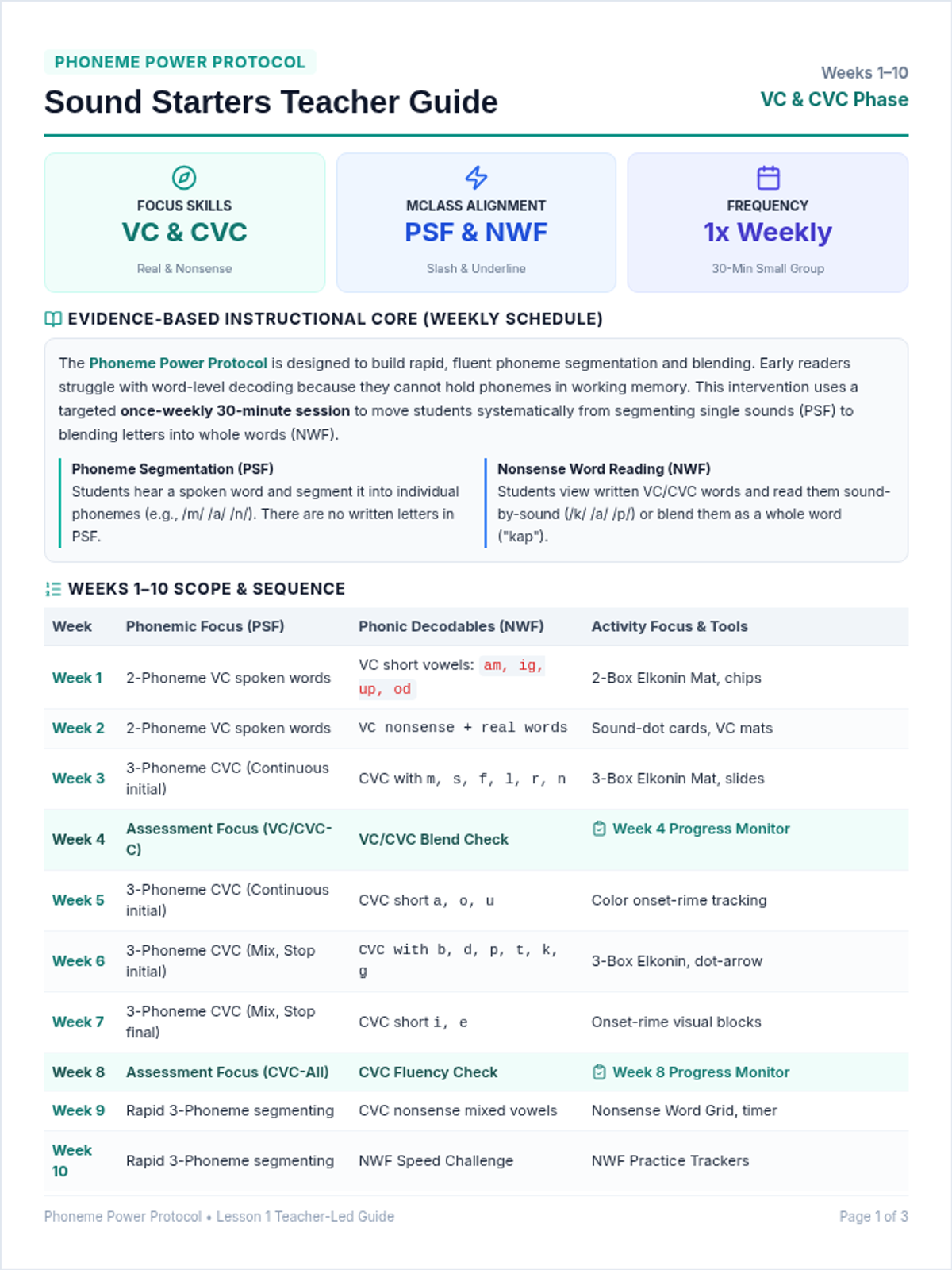
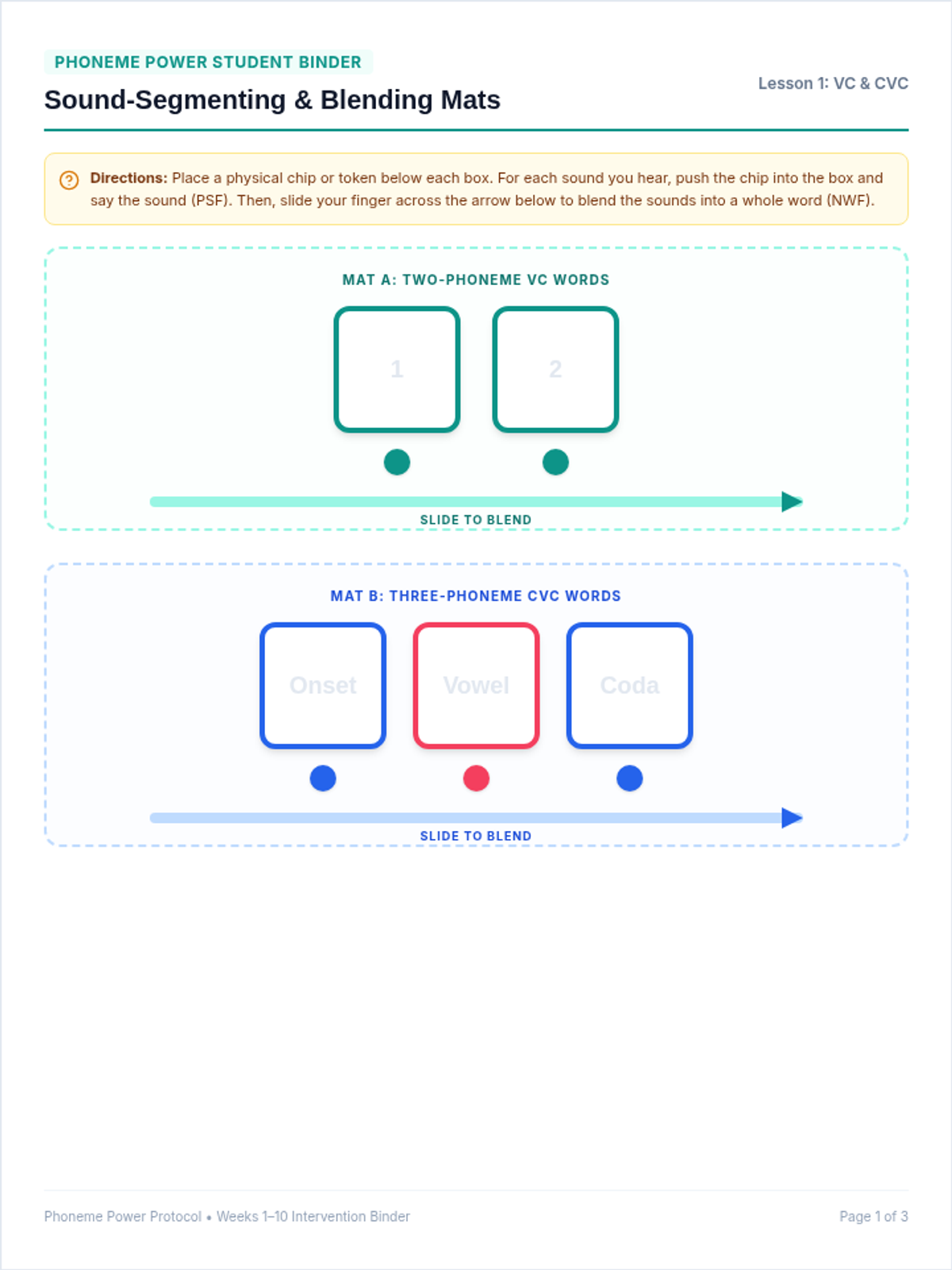
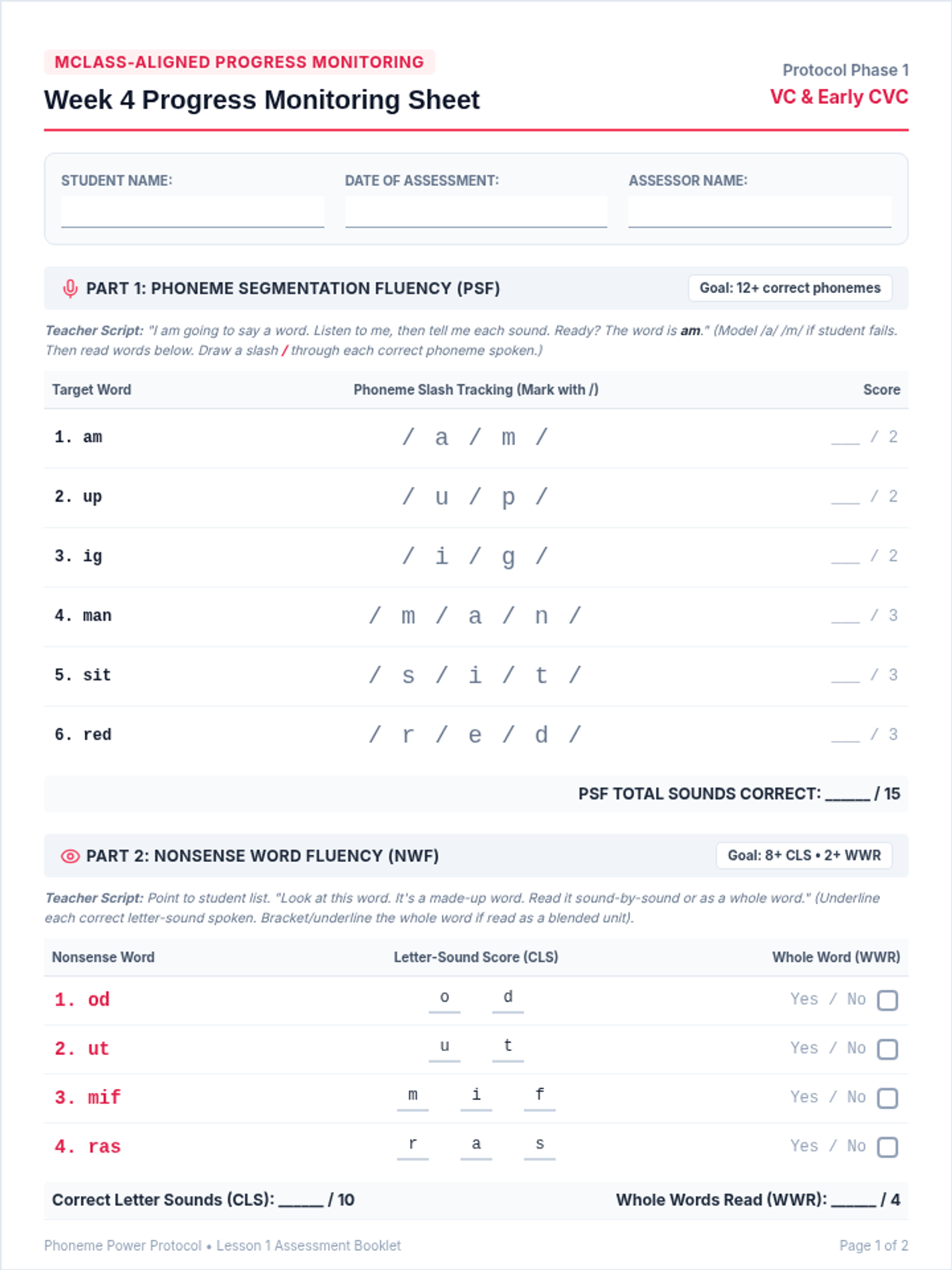
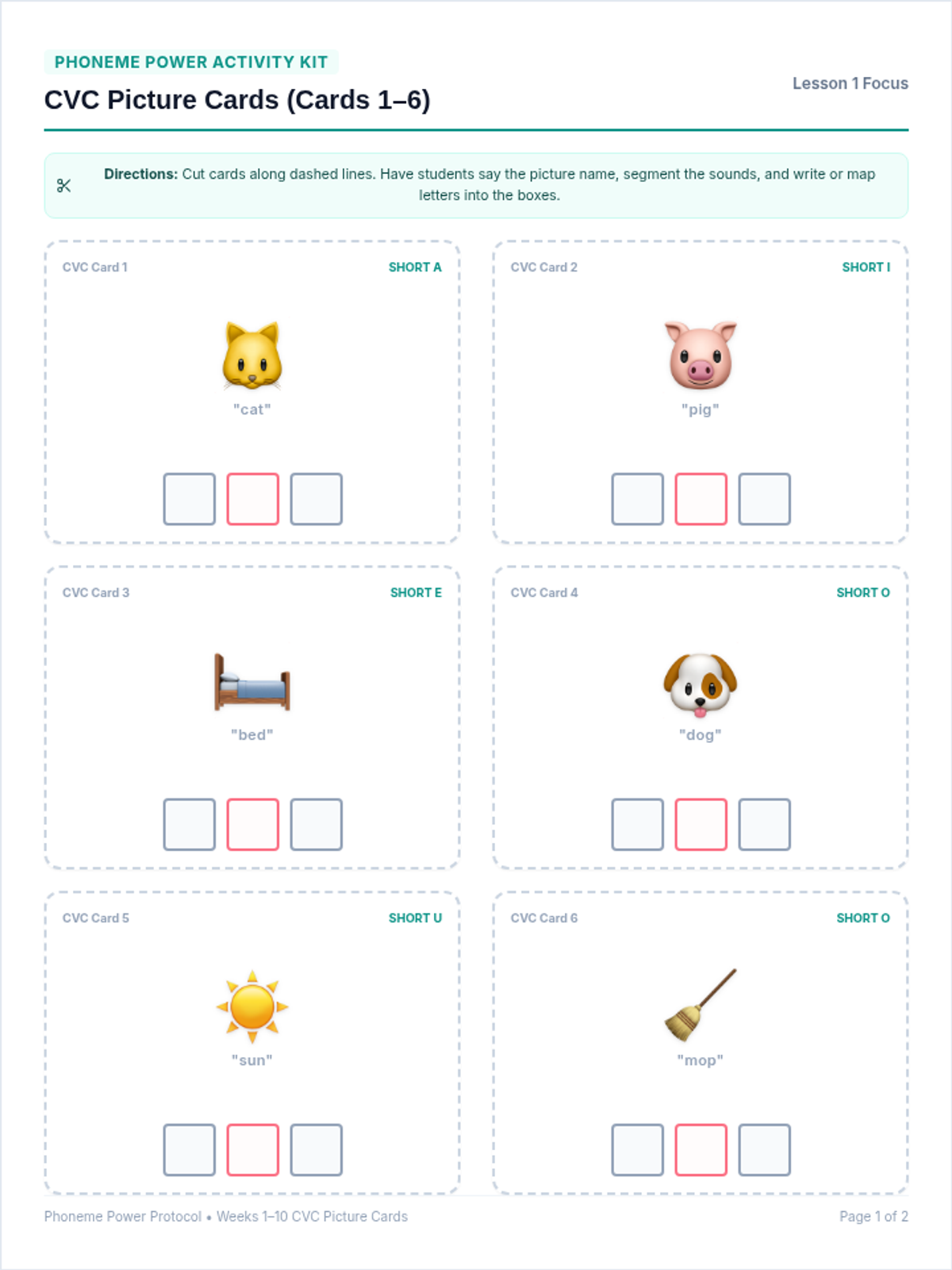
Weeks 1-10 of the Phoneme Power Protocol intervention, focusing on VC and CVC words. Includes systematic routines for segmenting individual sounds (PSF) and blending phonemes into nonsense and real words (NWF) using 2-box and 3-box Elkonin mats, color-coded word cards, and progress monitoring at Weeks 4 and 8.
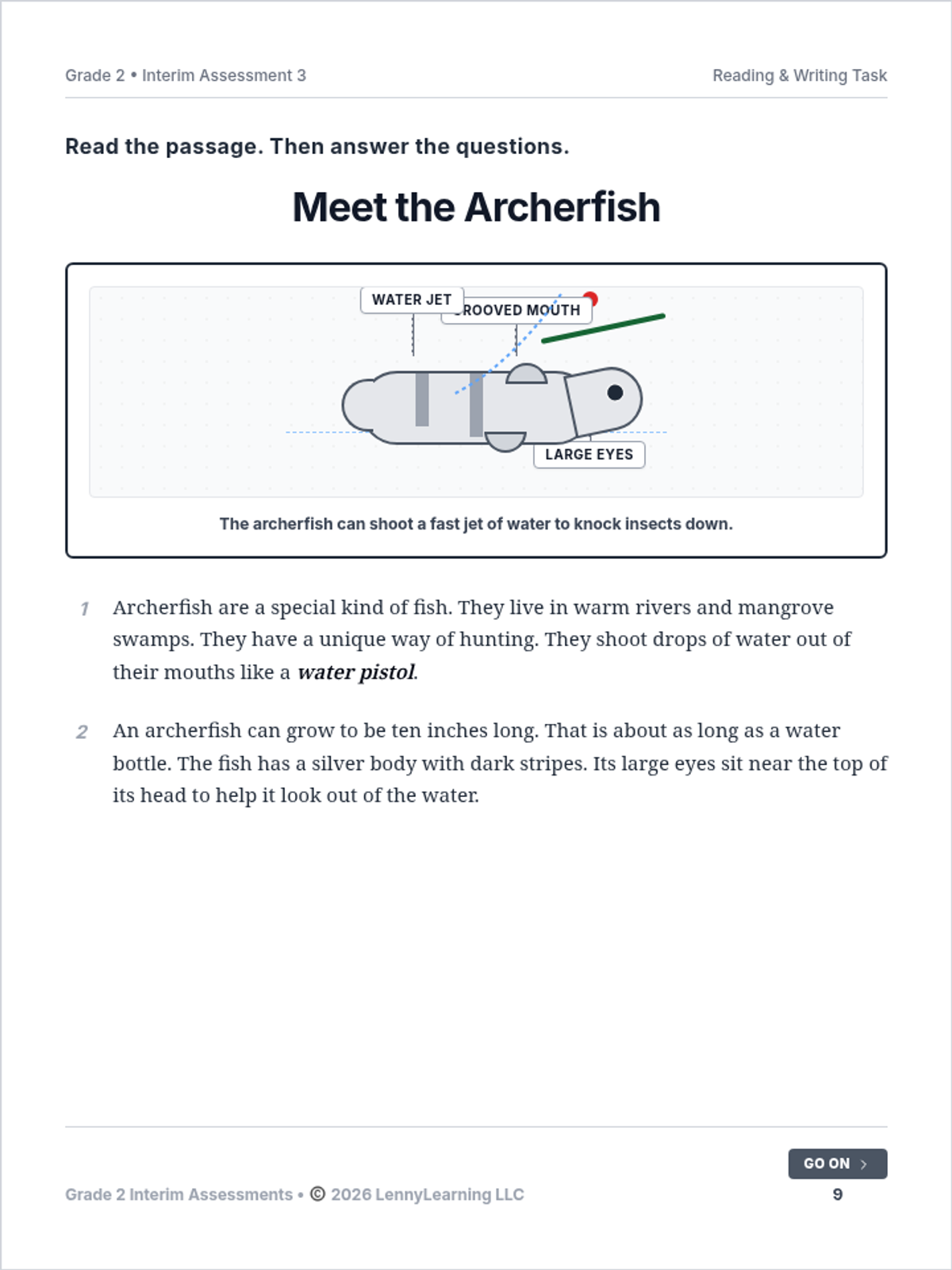
Investigates the coastal mangrove biome, highlighting the archerfish and its physical adaptations for spitting water to hunt insects.
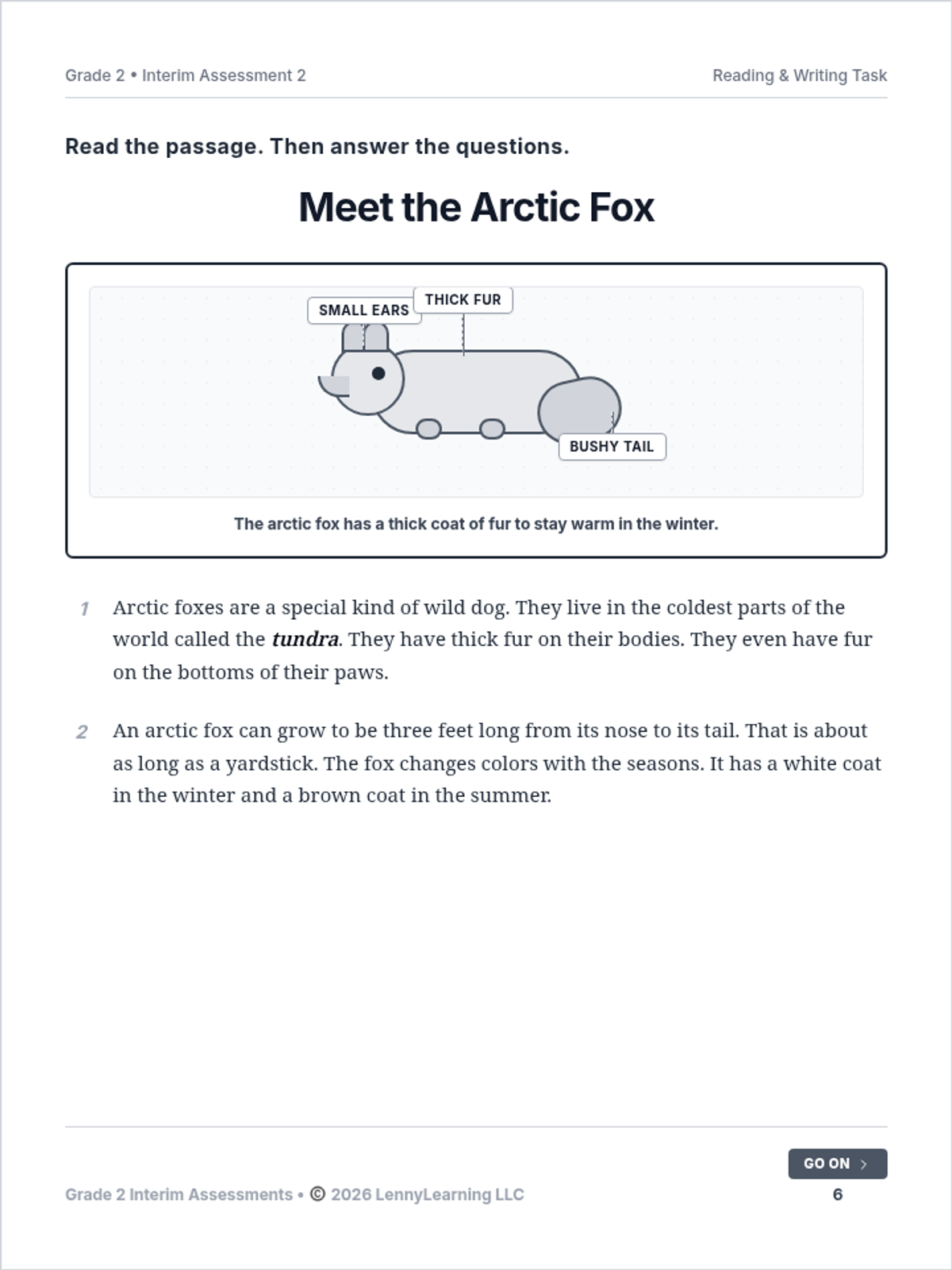
Explores the freezing arctic tundra biome, showcasing the arctic fox and how its coat color and small ears help it survive.
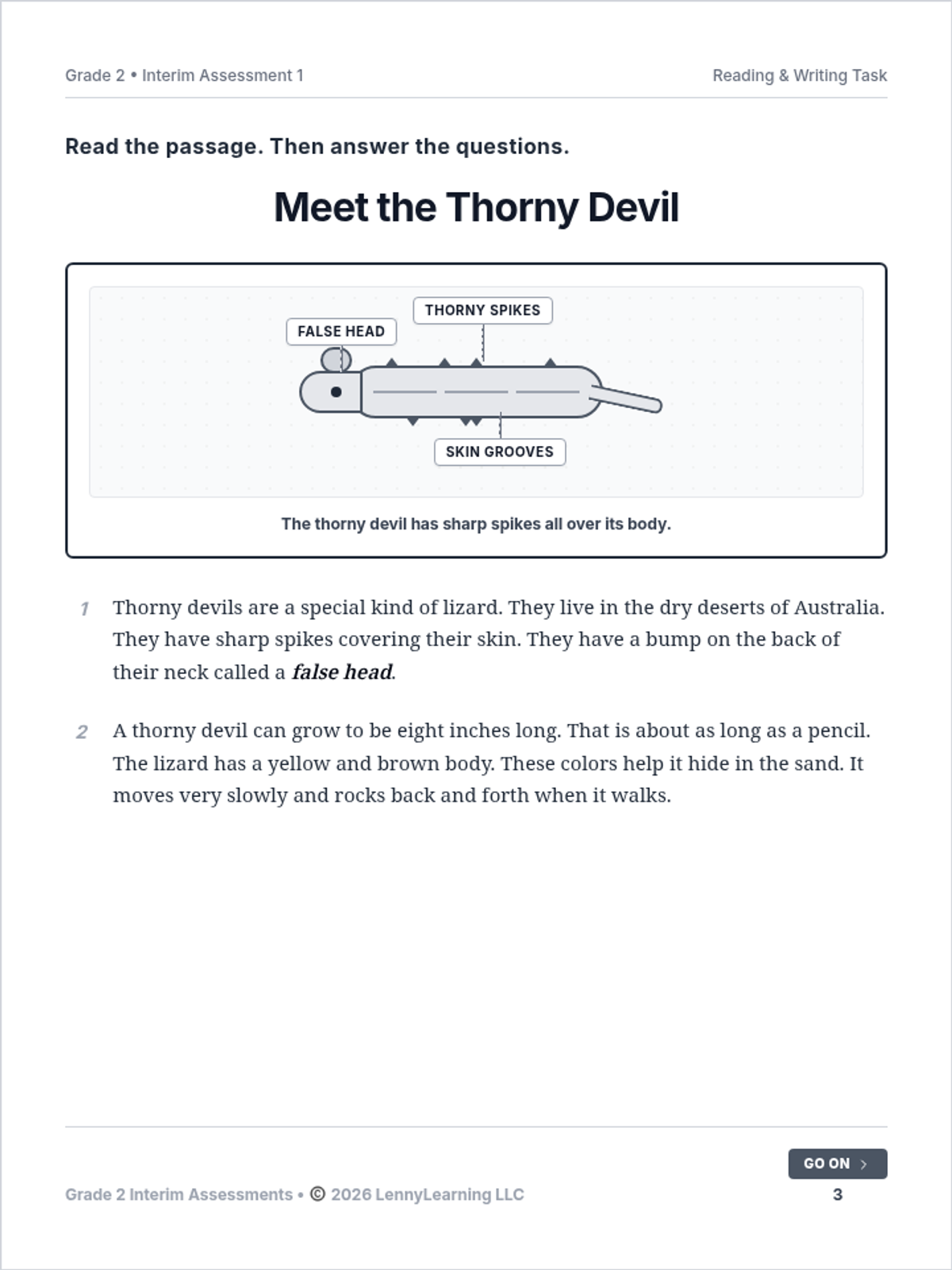
Focuses on the arid desert biome, featuring the thorny devil and its unique adaptations for hydration and defense.
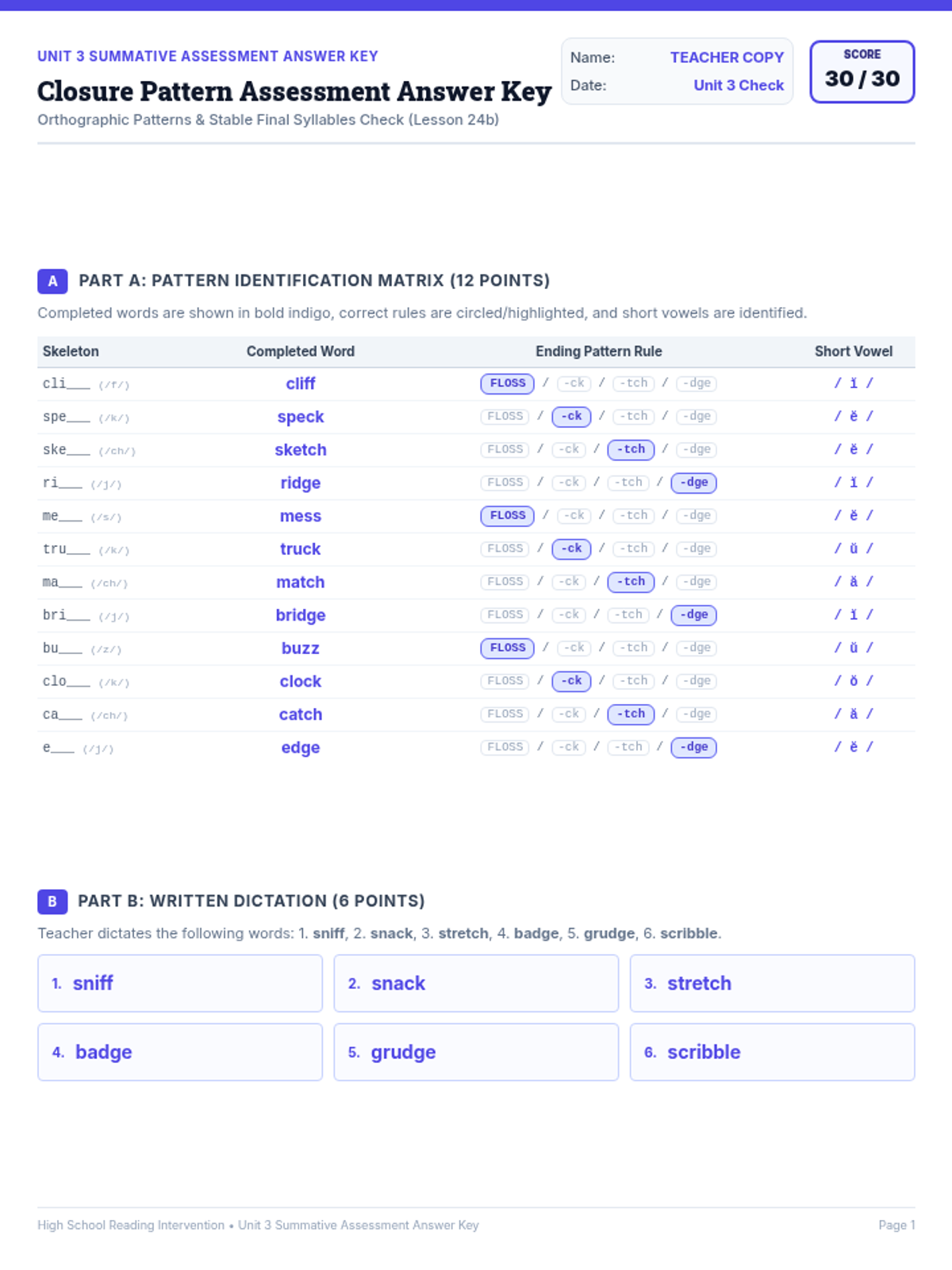
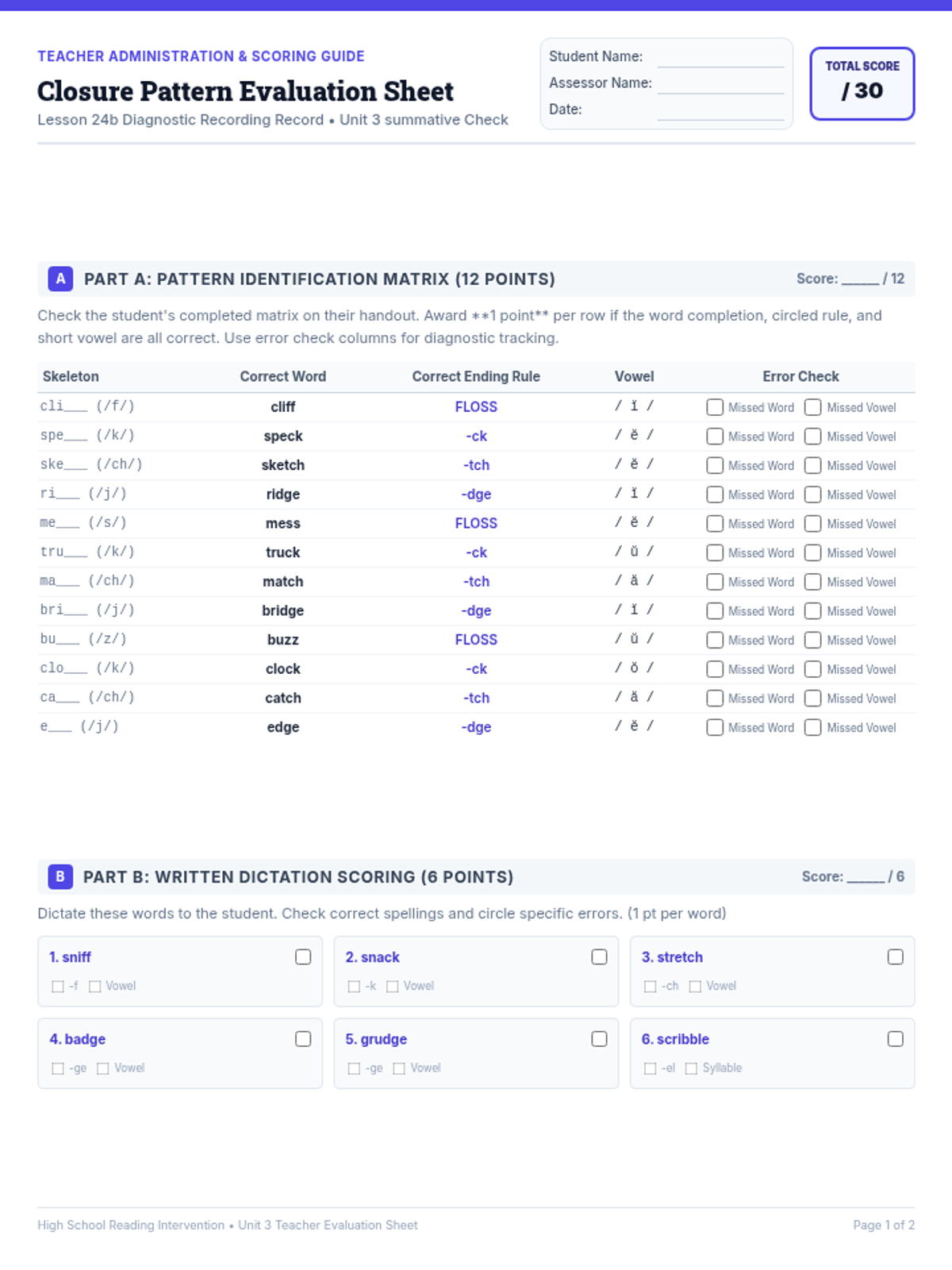
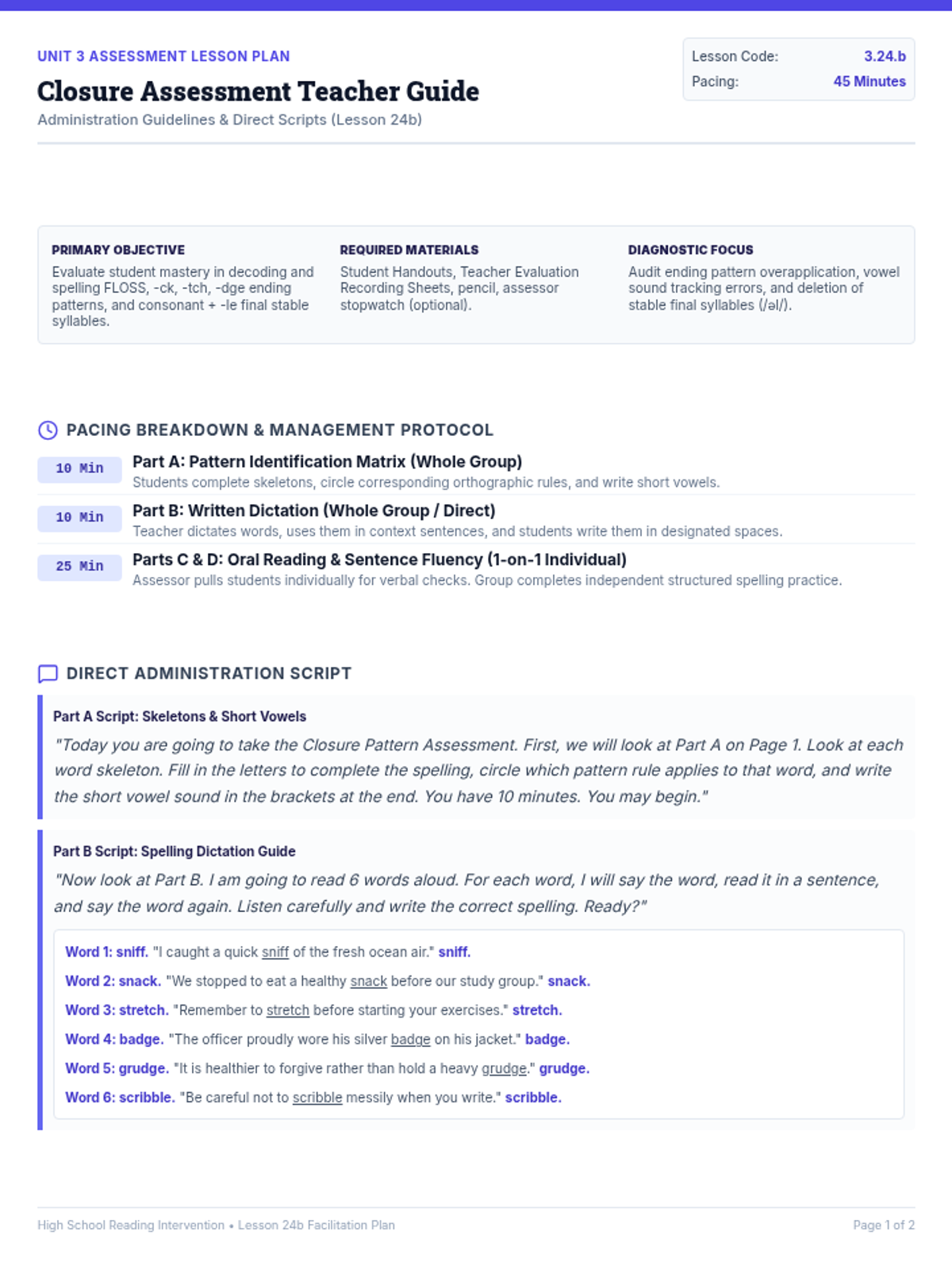
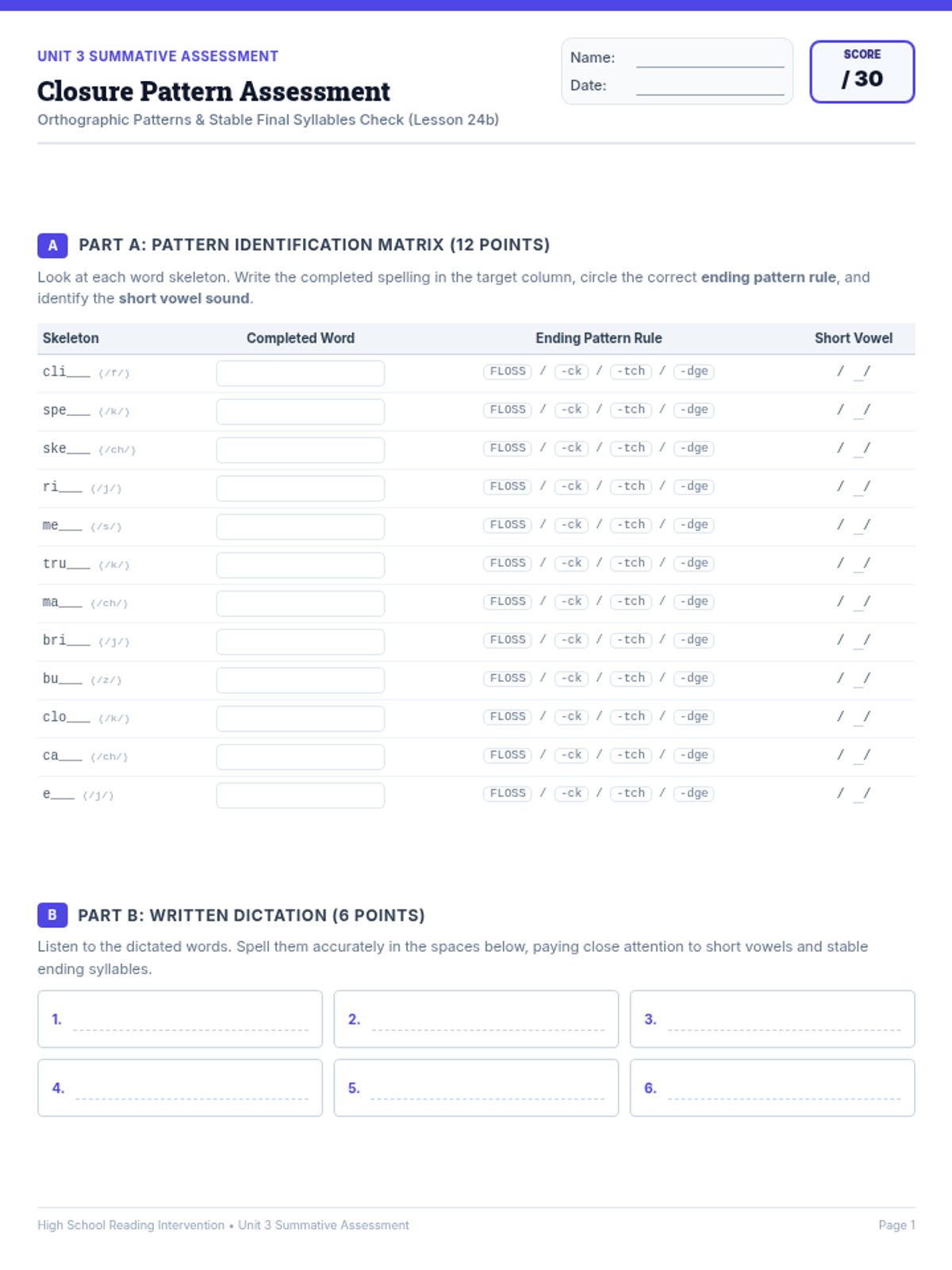
An intensive summative assessment lesson designed to check student mastery of FLOSS, -ck, -tch, -dge, and -le decoding and spelling patterns.
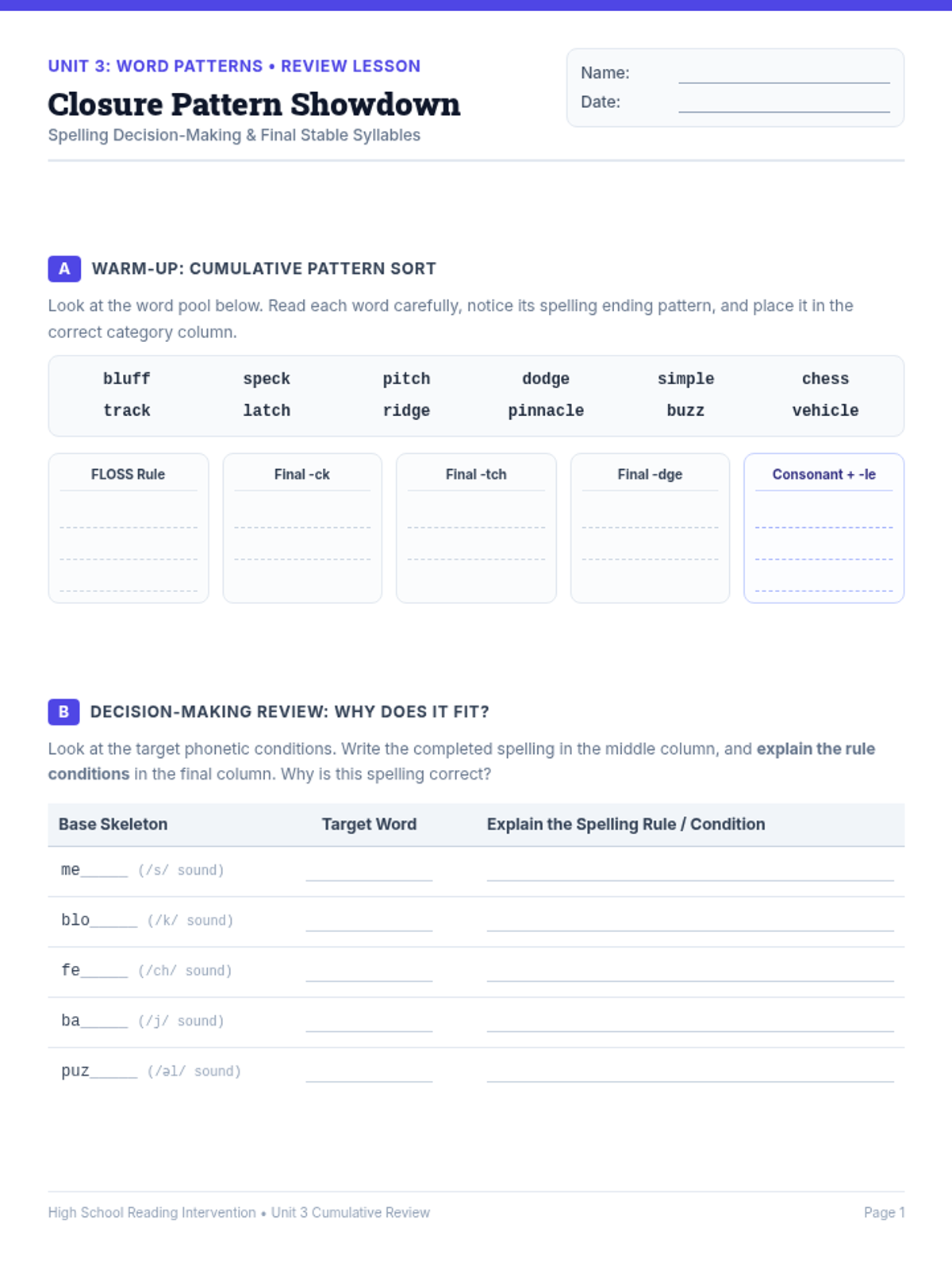
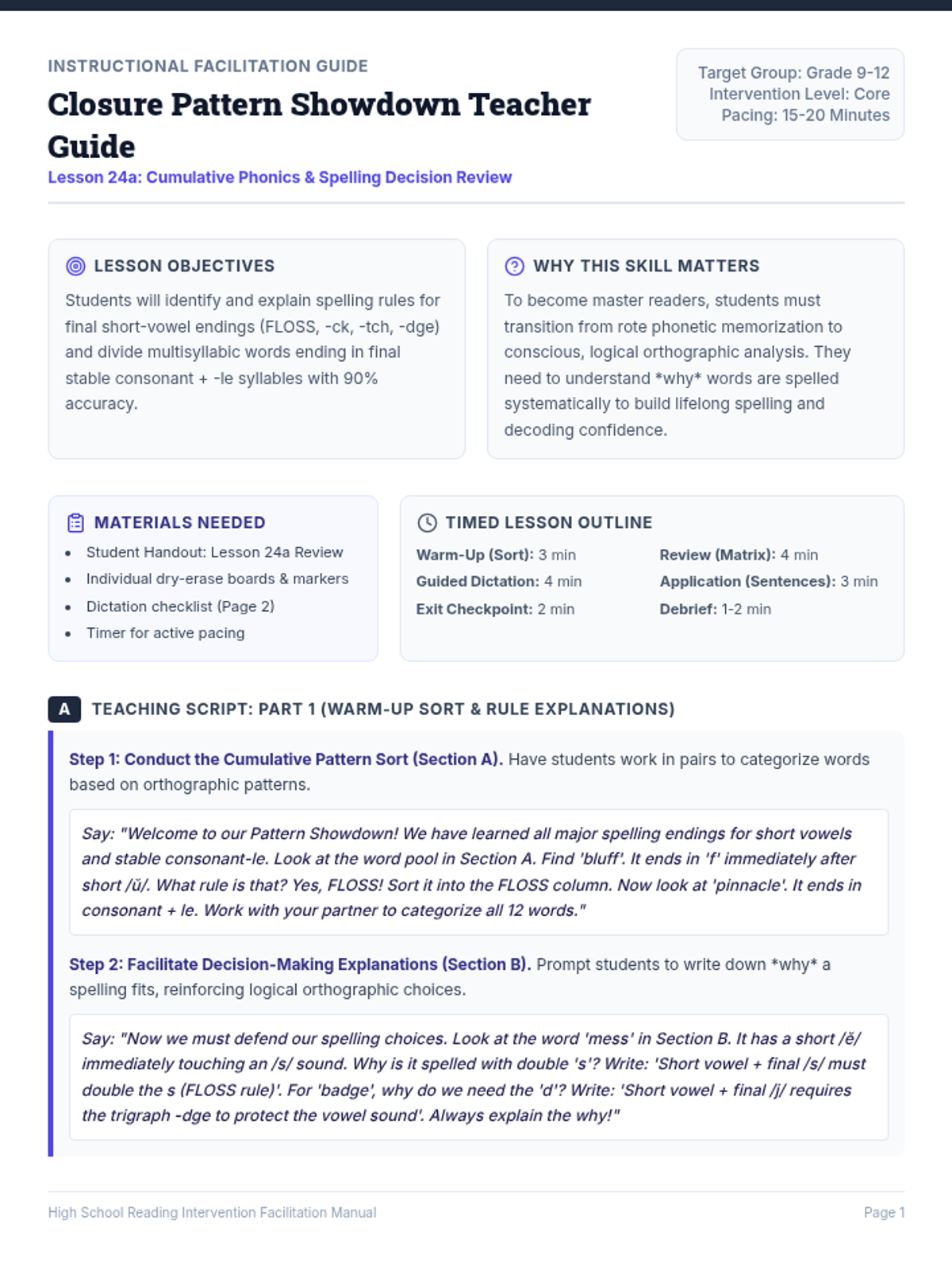
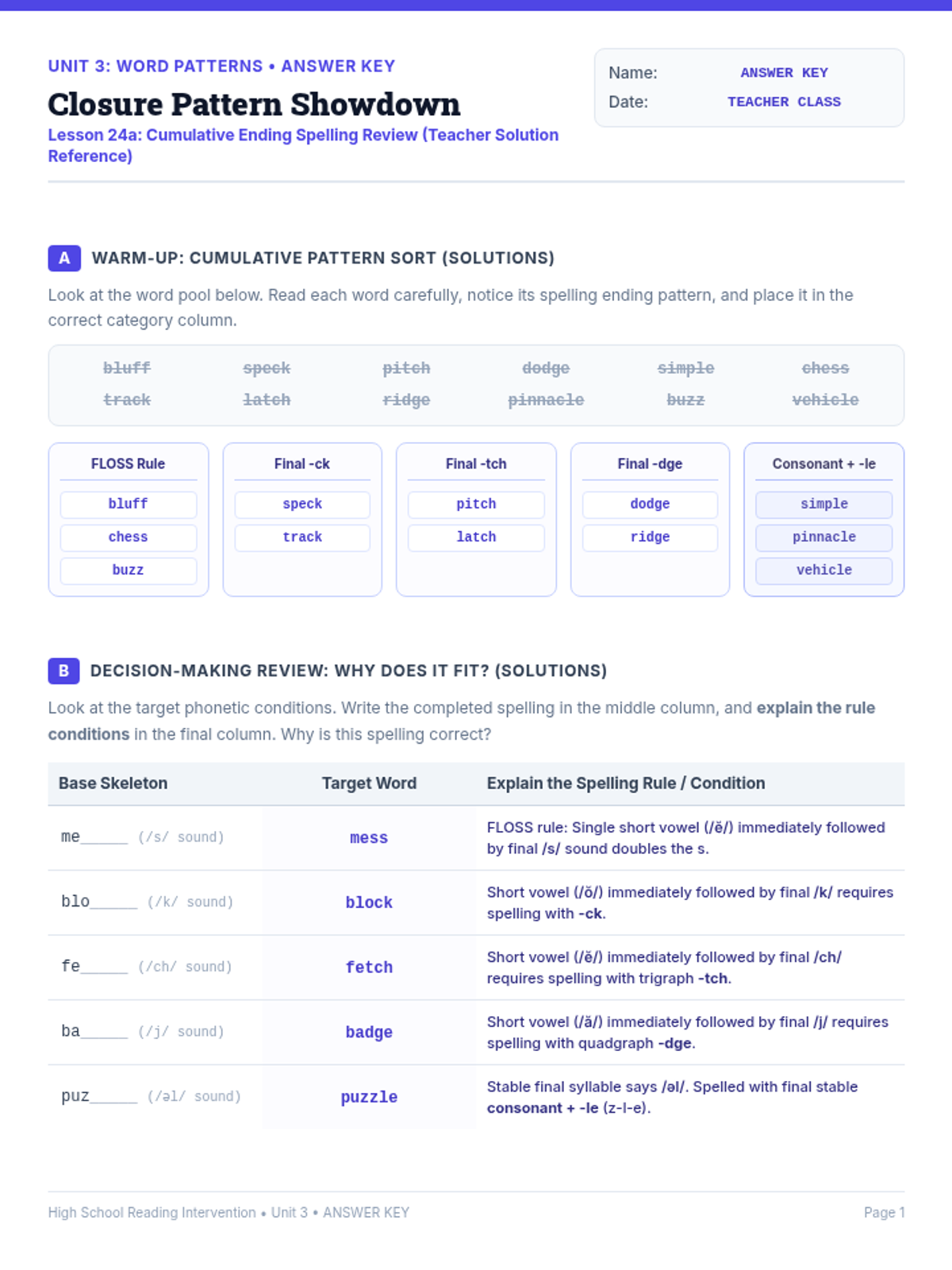
A cumulative review and decision-making lesson consolidating all short-vowel ending rules (FLOSS, -ck, -tch, -dge) and stable final syllables (consonant + -le) to cement orthographic reasoning and decoding precision.
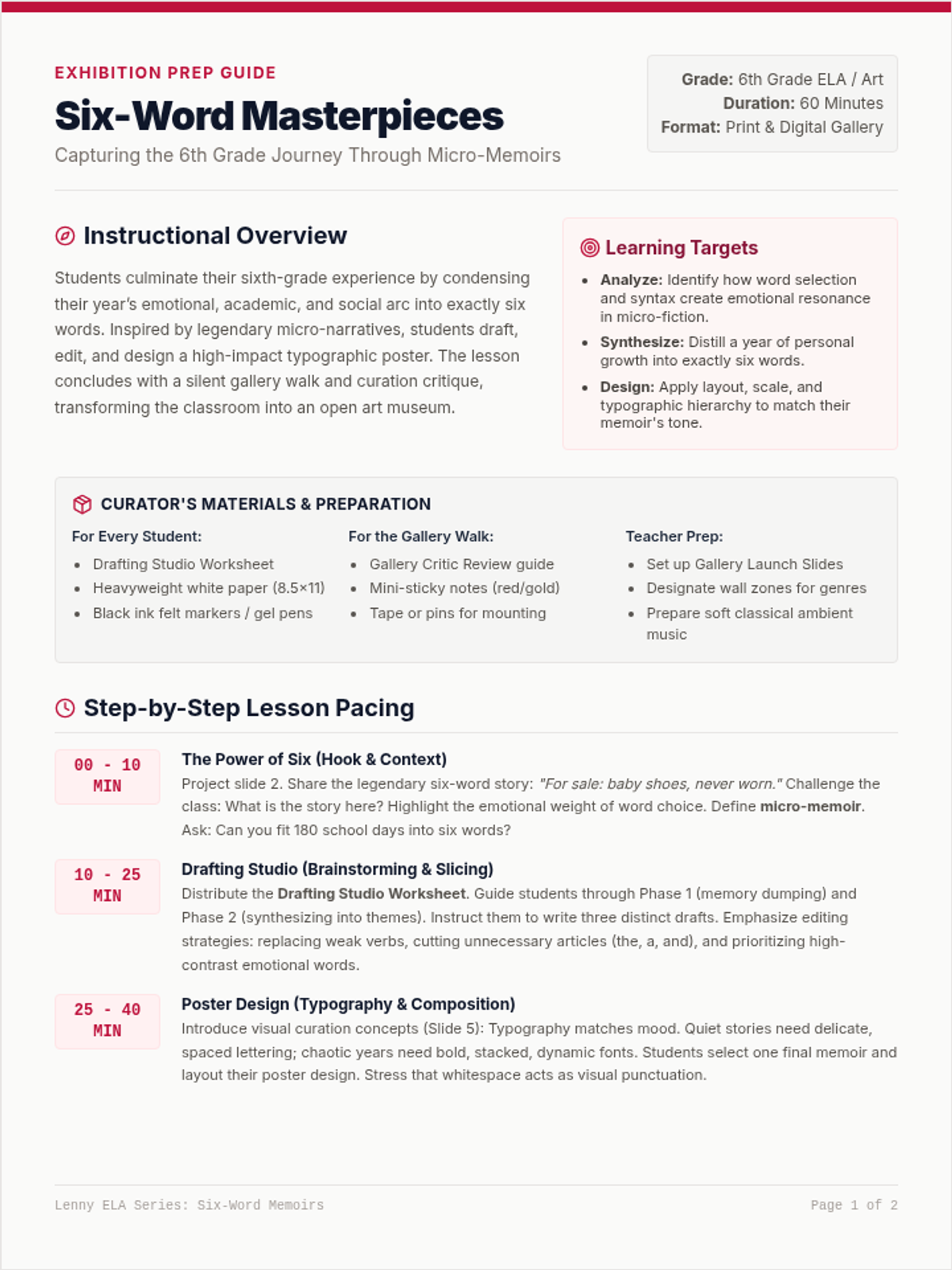
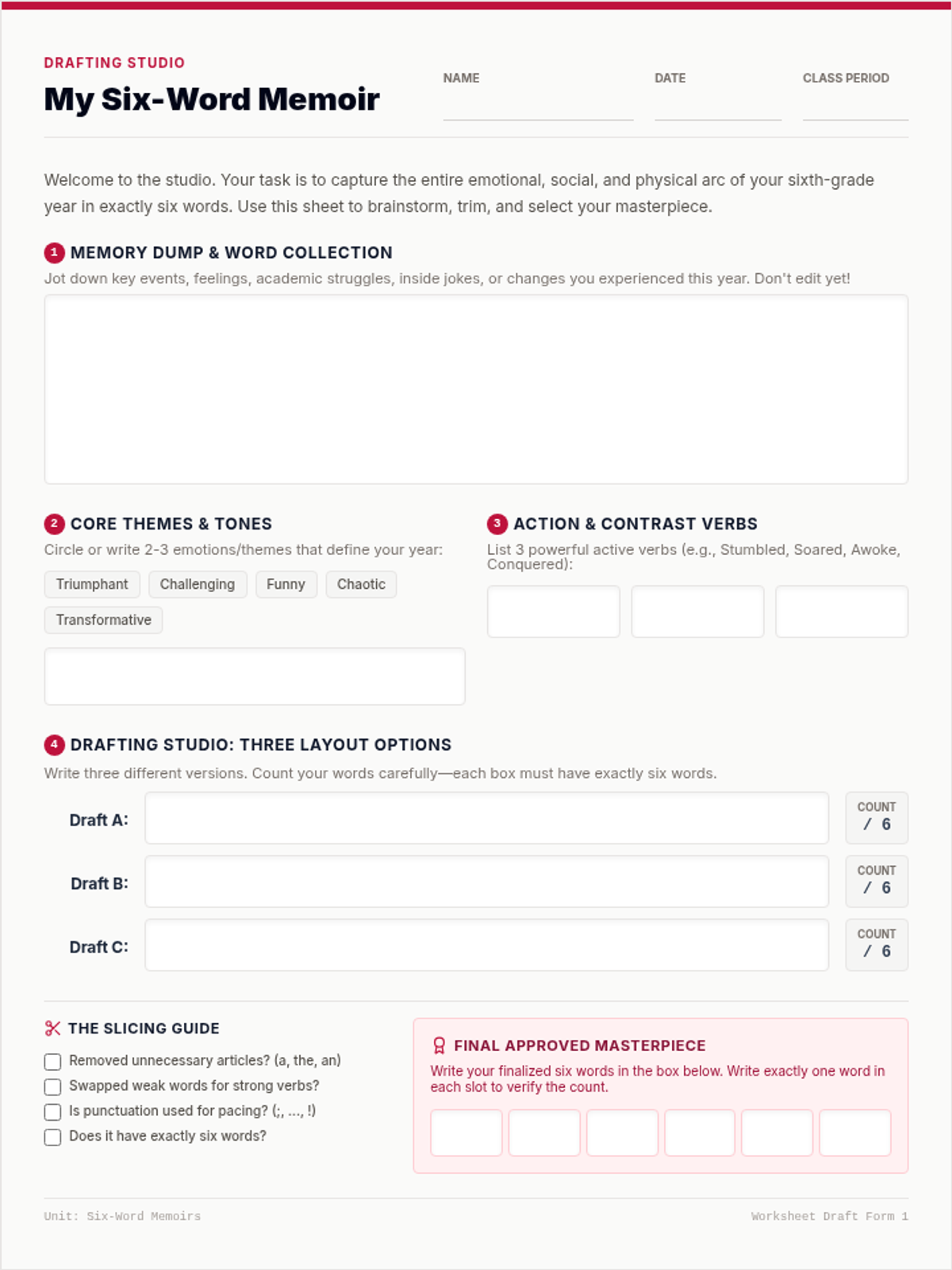
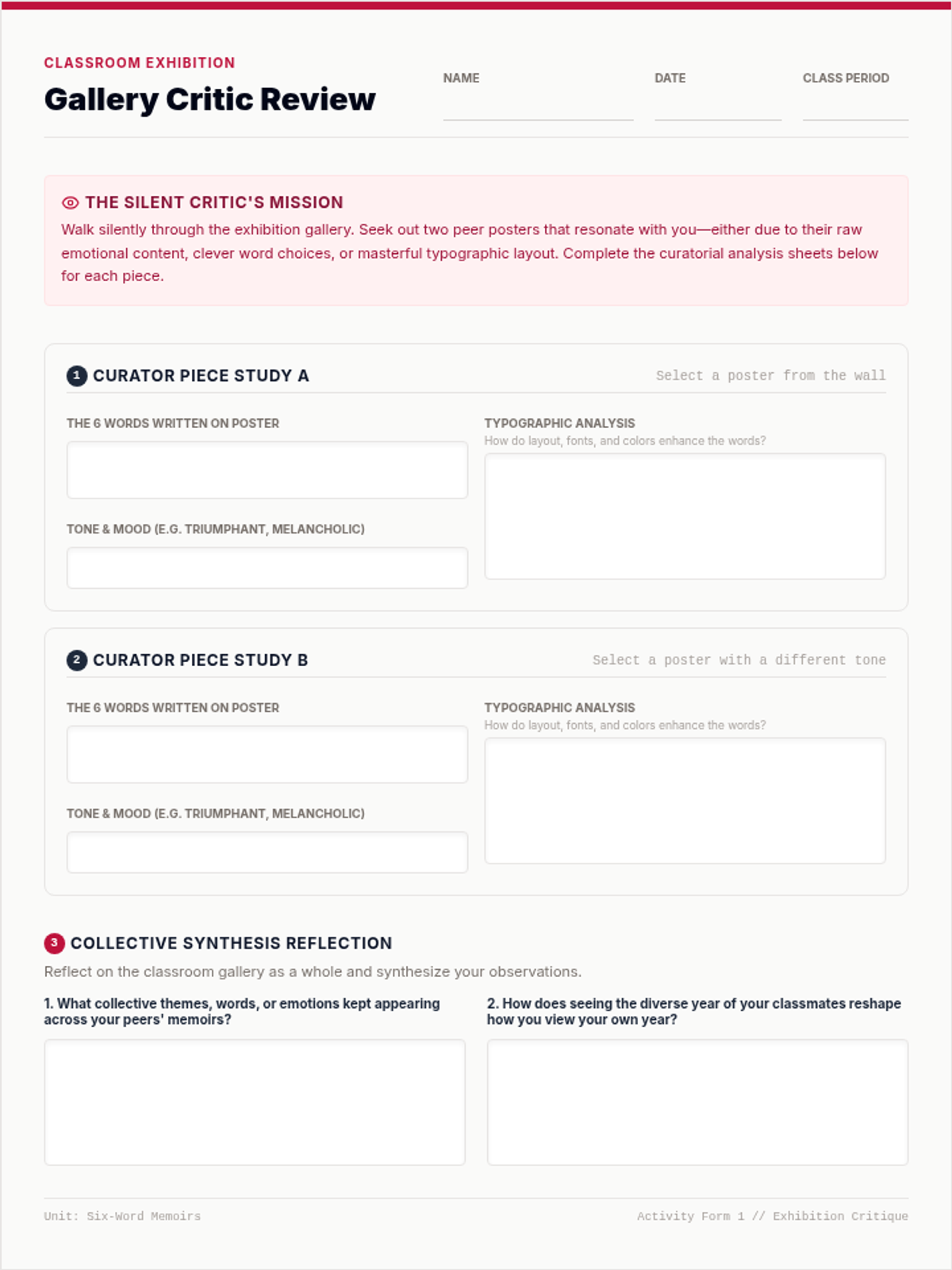
Students distill their entire sixth-grade experience into exactly six words, designing a gallery-worthy memoir poster and participating in a reflective classroom exhibition.
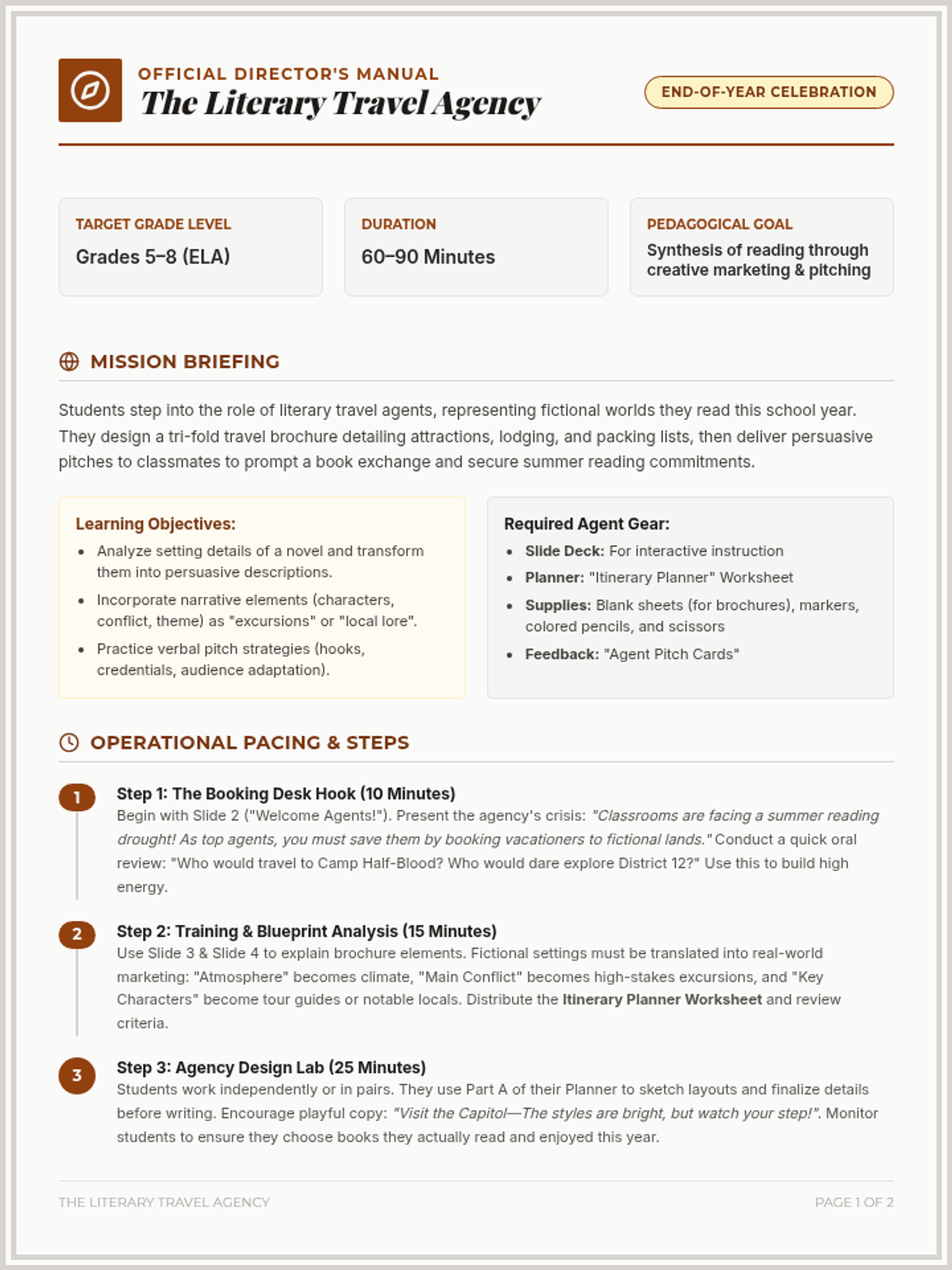
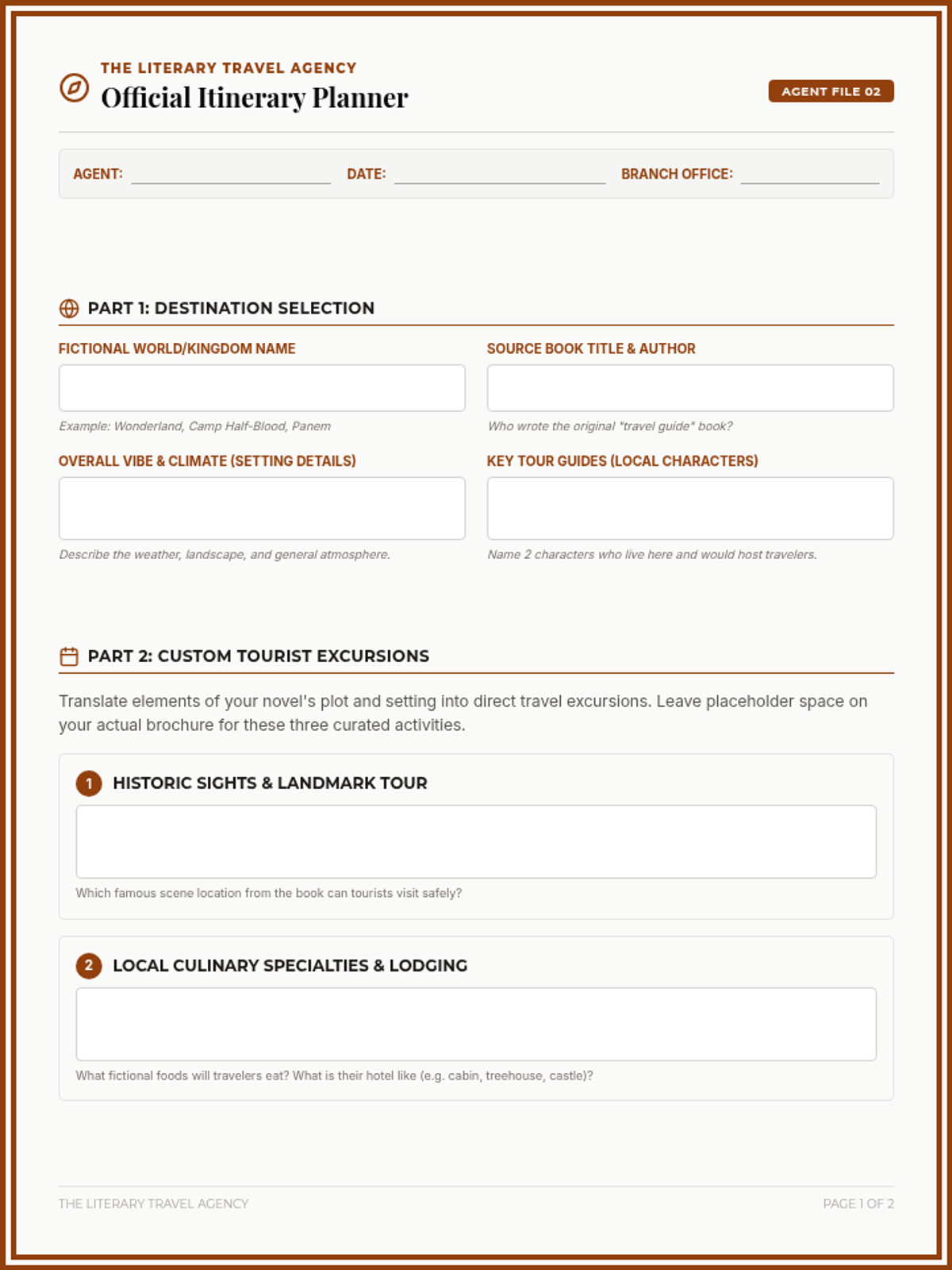
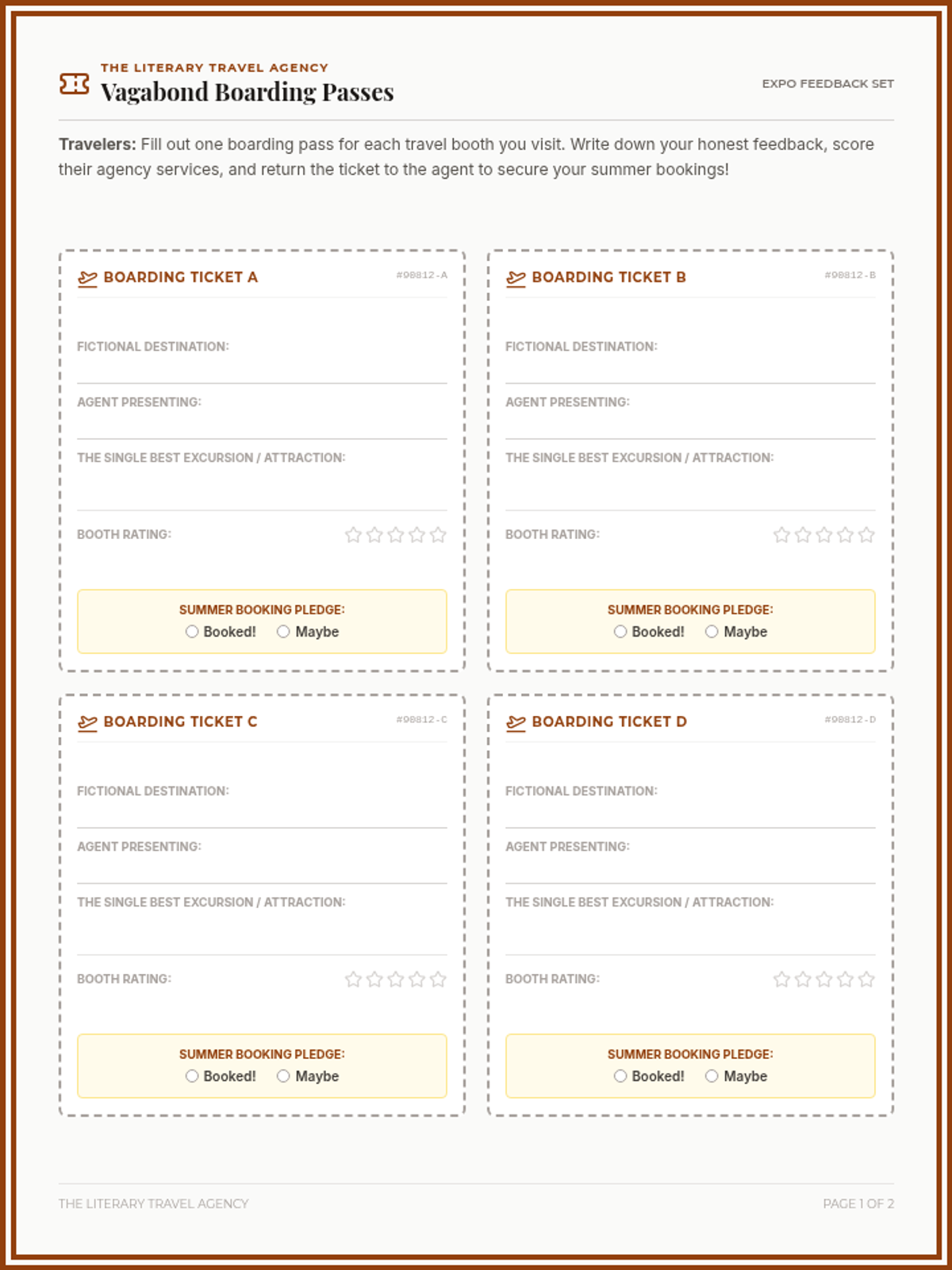
A celebratory end-of-year English Language Arts lesson where students step into the role of literary travel agents, designing promotional brochures and pitching fictional book worlds to classmates to boost summer reading.
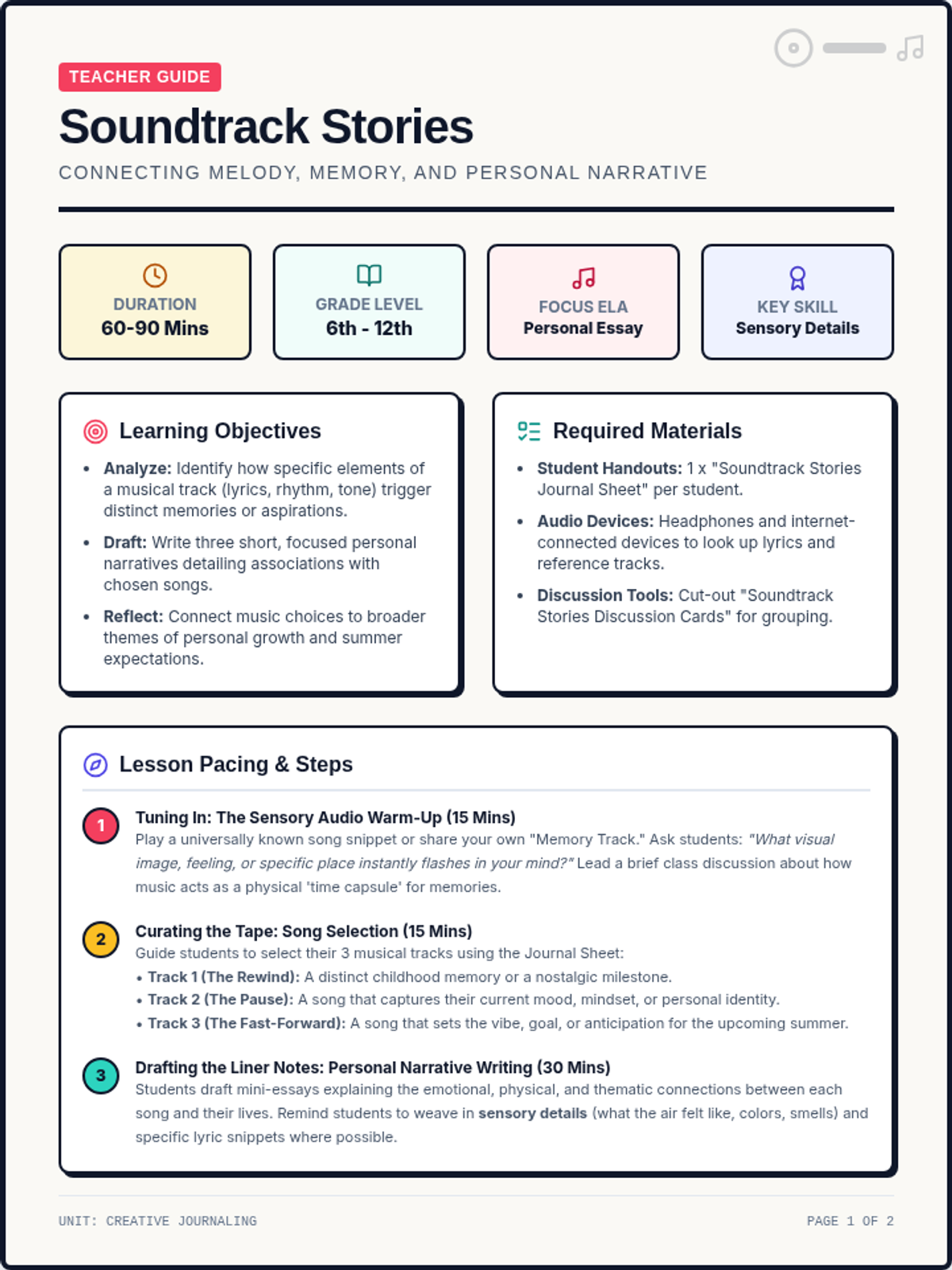
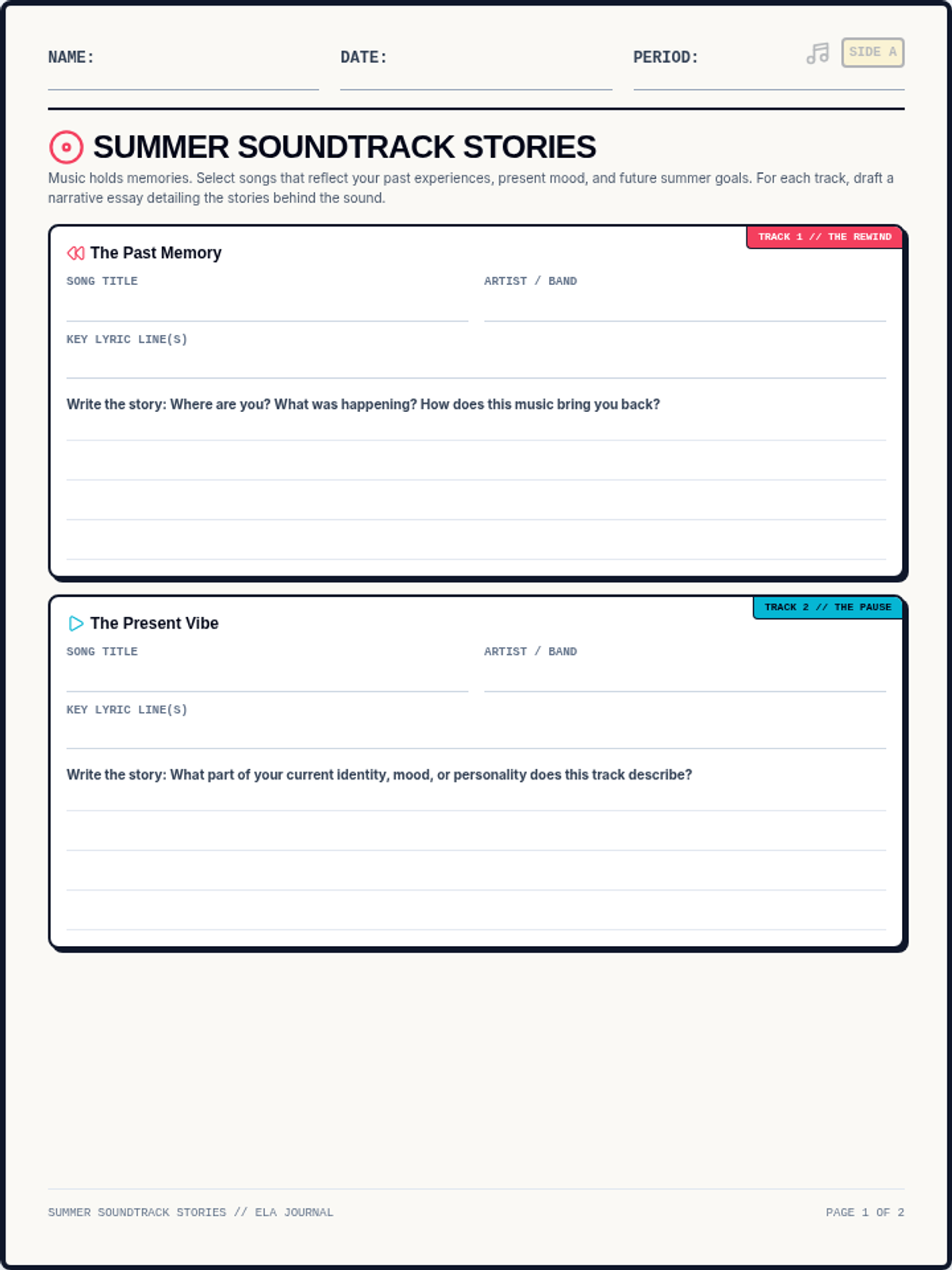
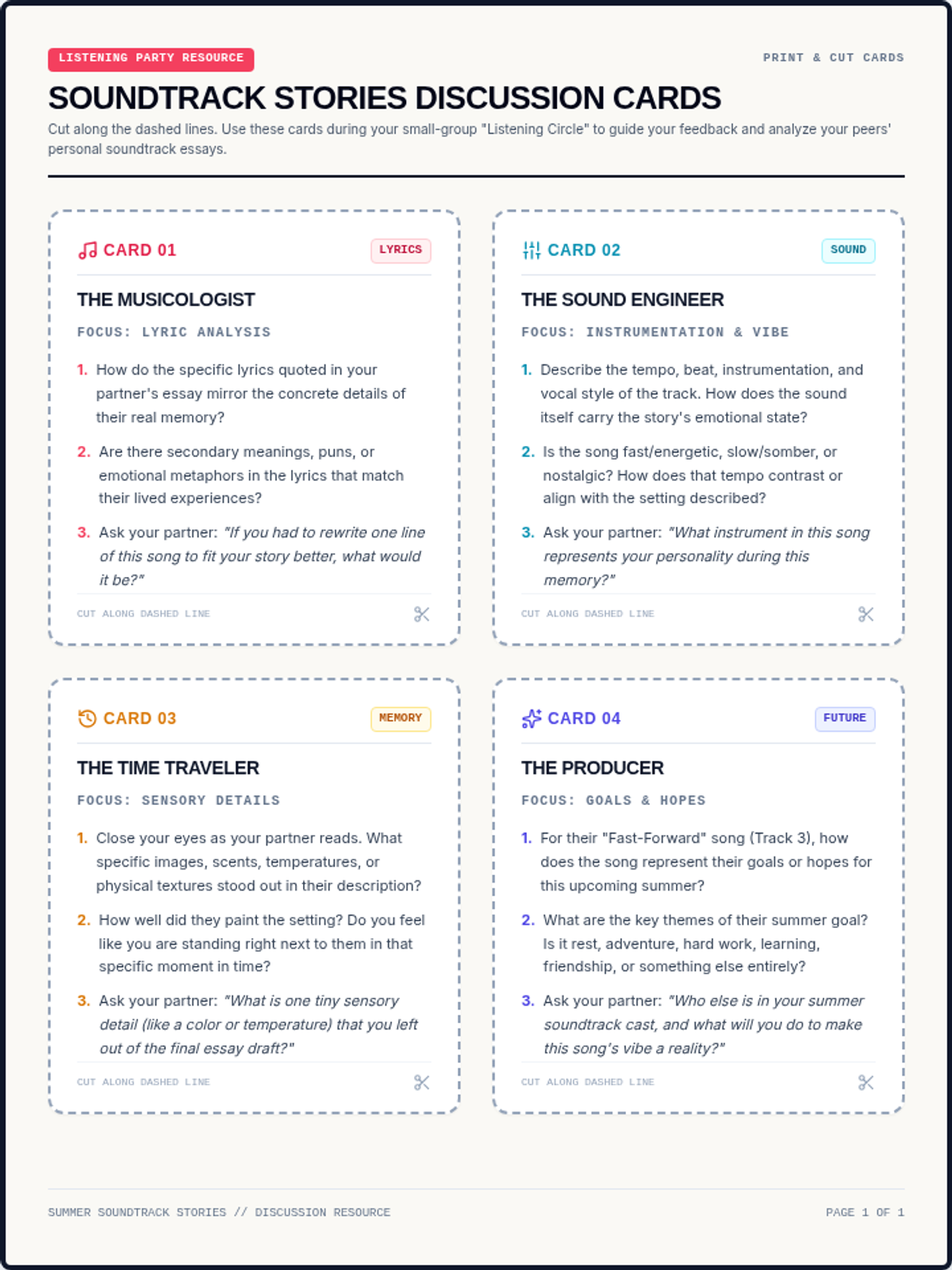
A creative writing lesson where students select three personal songs representing past memories or future summer goals and draft short personal essays connecting music to their lives.
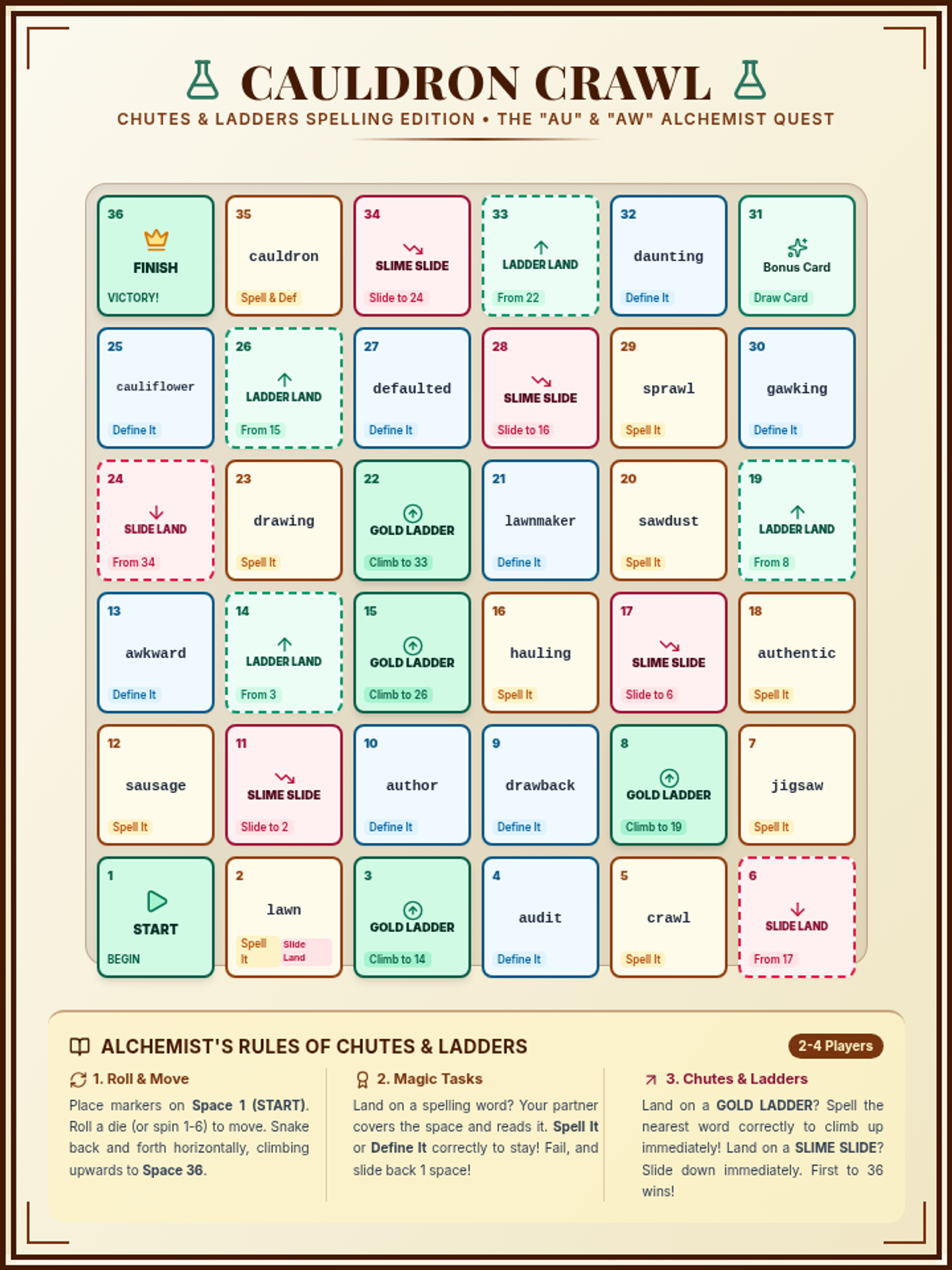
A high-stakes spelling adventure game focusing on "au" and "aw" diphthong words. Students navigate a perilous track to reach the Alchemist's Cauldron by spelling and defining challenging vocabulary.
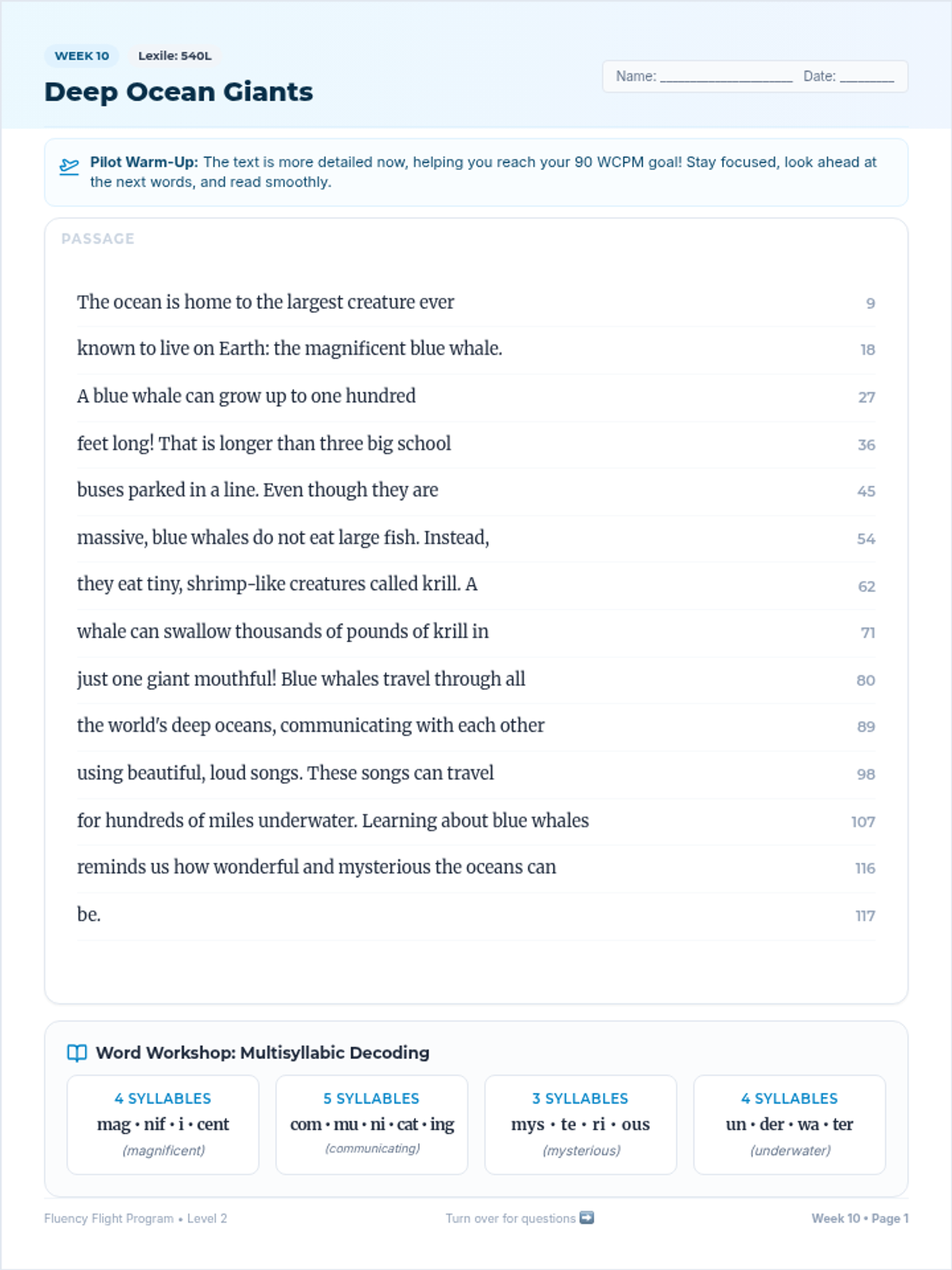
Weeks 10-13 prepare students for end-of-year goals, reaching Lexile 600. Features deep-ocean giants, clubhouses, solar energy, and camping adventures.
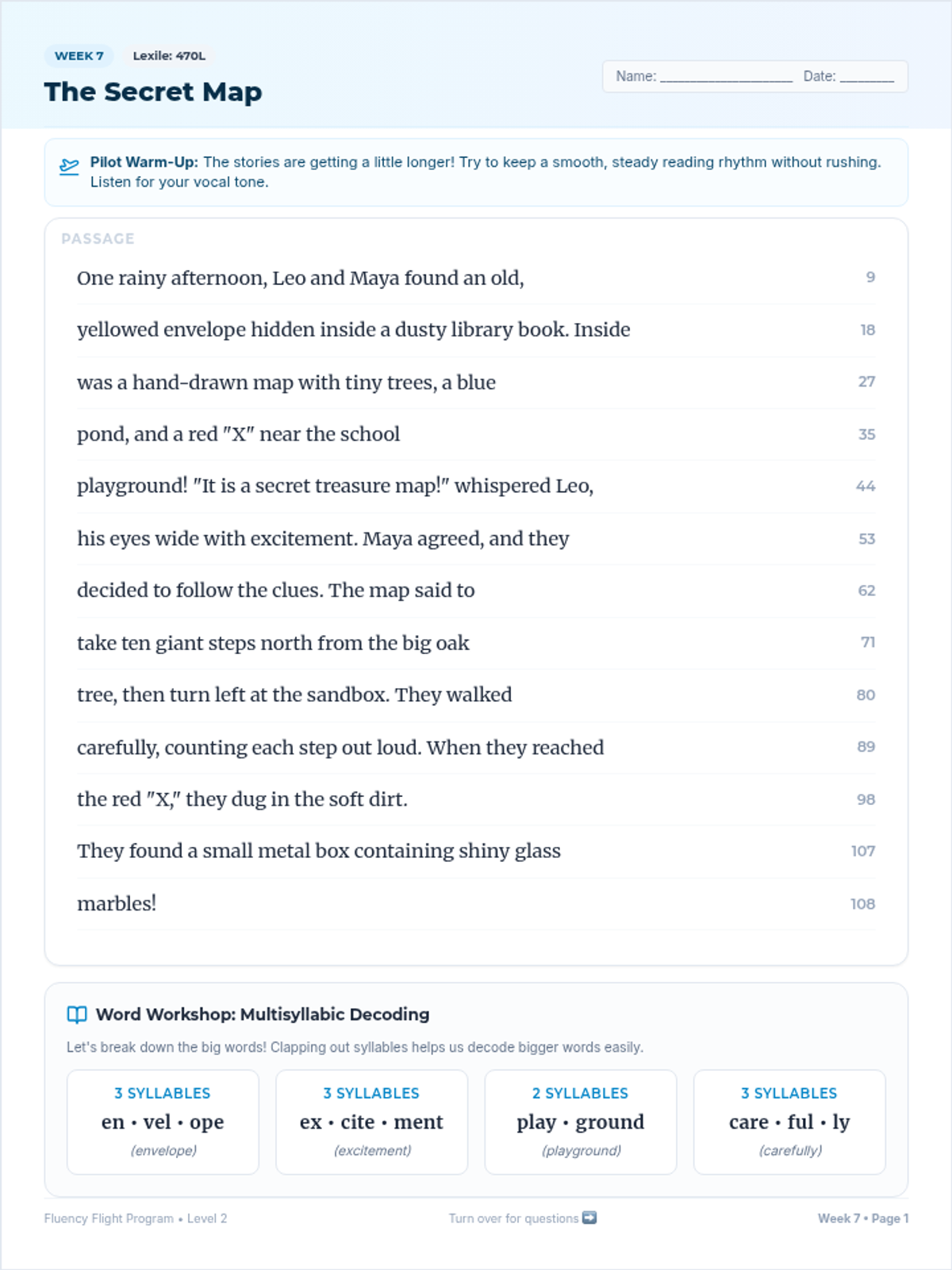
Weeks 7-9 advance students into higher-complexity structures (Lexile 470 to 520), featuring adventure maps, earth science, and baking challenges.
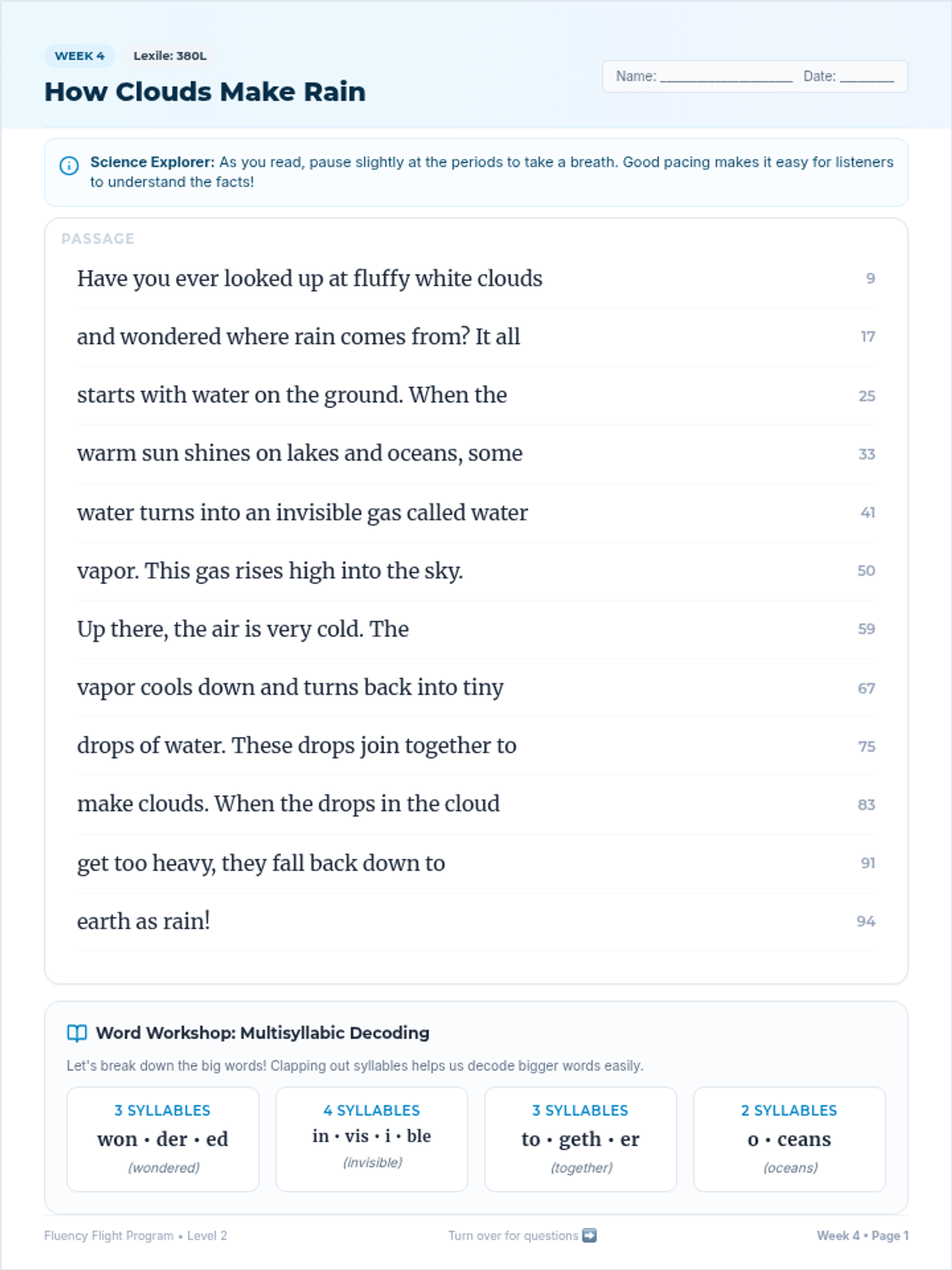
Weeks 4-6 bridge students toward mid-year complexity, moving from Lexile 380 to 440. Content focuses on cloud science, friendship, and animal sleep habits.
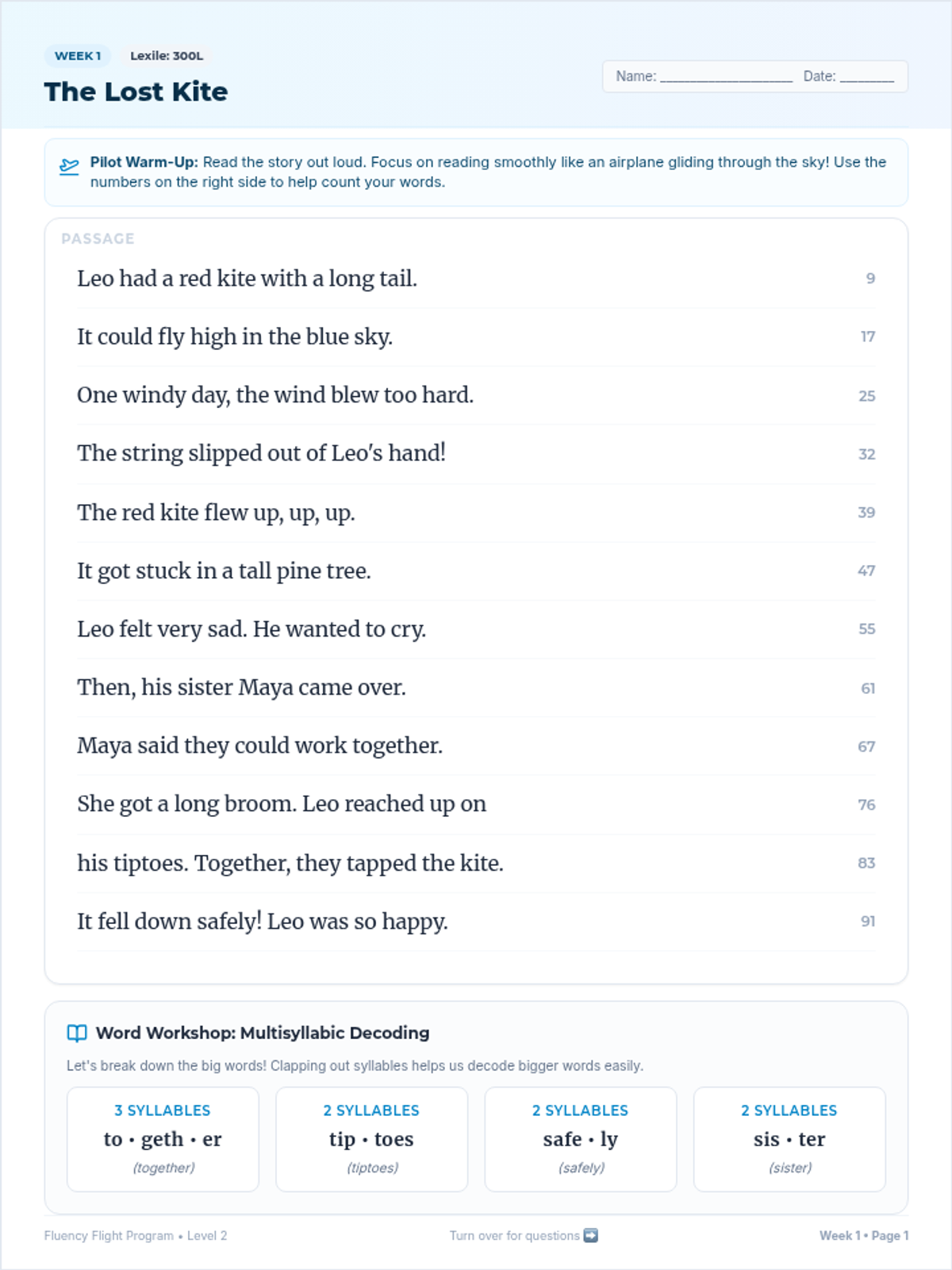
Weeks 1-3 focus on foundational second-grade fluency, transitioning from Lexile 300 to 350. Includes stories on courage, helpful bees, and team work.
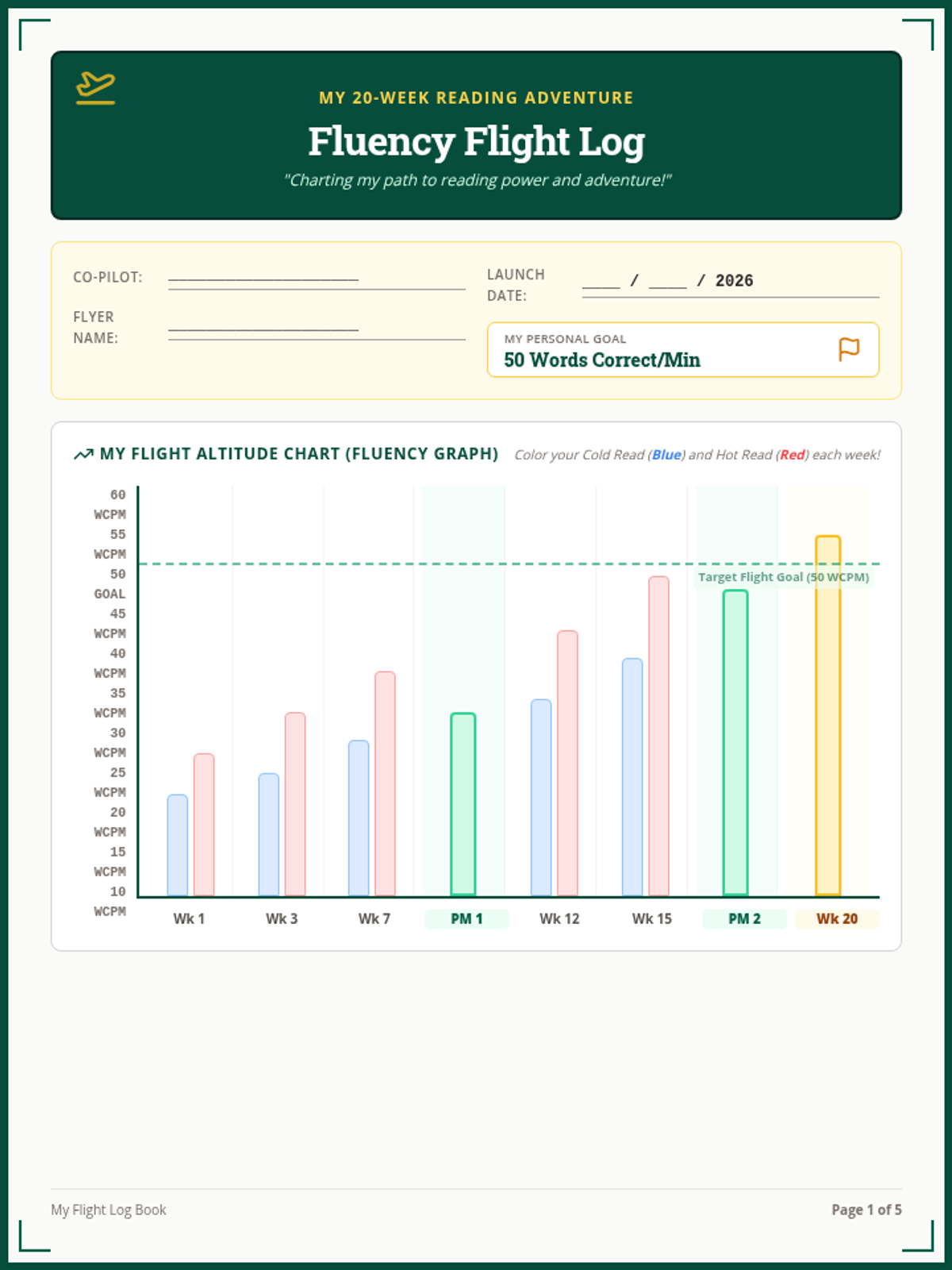
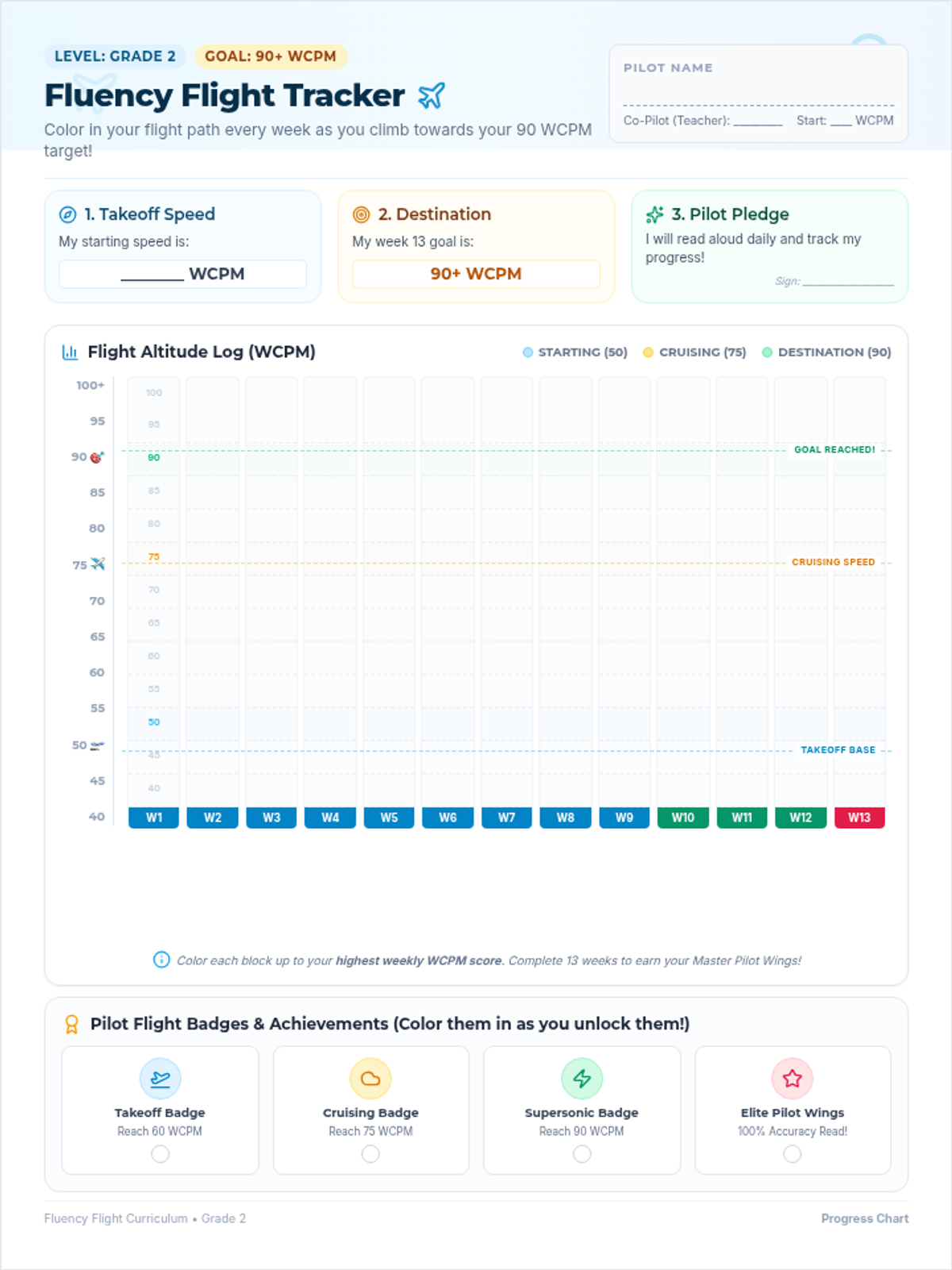
The introductory phase of the Fluency Flight program, featuring the master progress tracking graph and goal-setting activities.
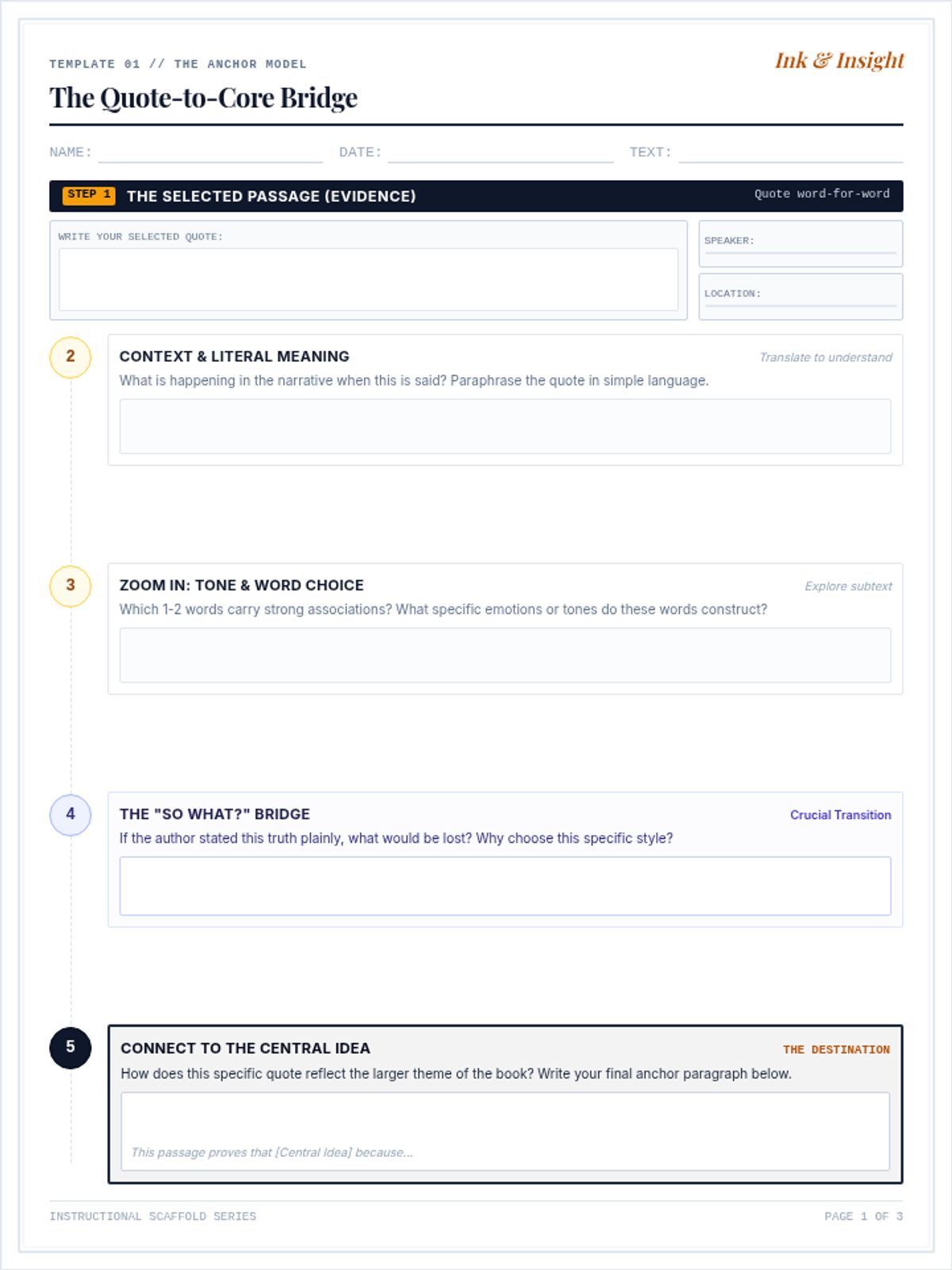
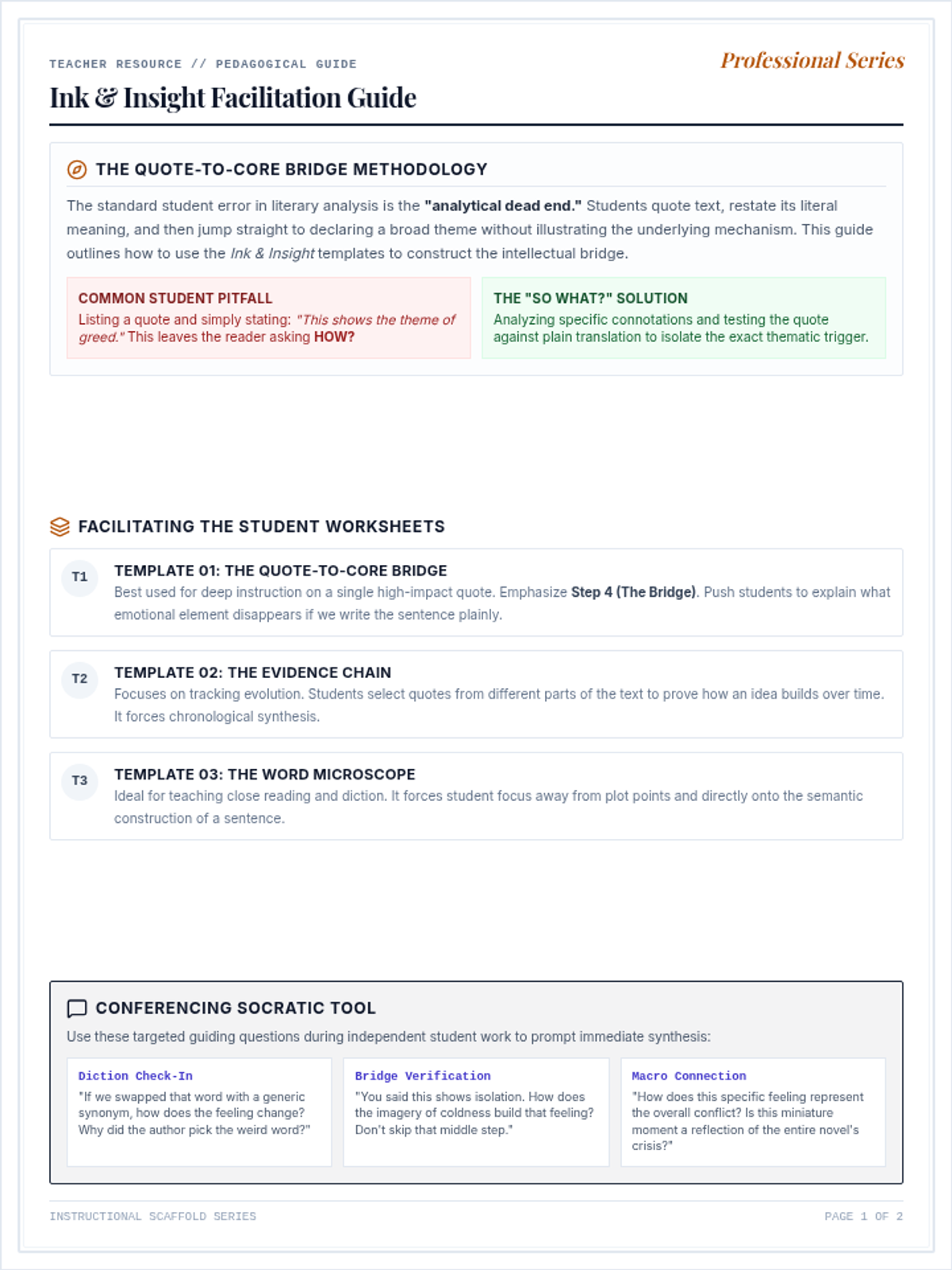
A comprehensive literary analysis lesson focusing on connecting textual evidence directly back to a central idea. This lesson equips students with structured templates and a teacher guide to bridge the gap between quote dissection and thematic analysis.
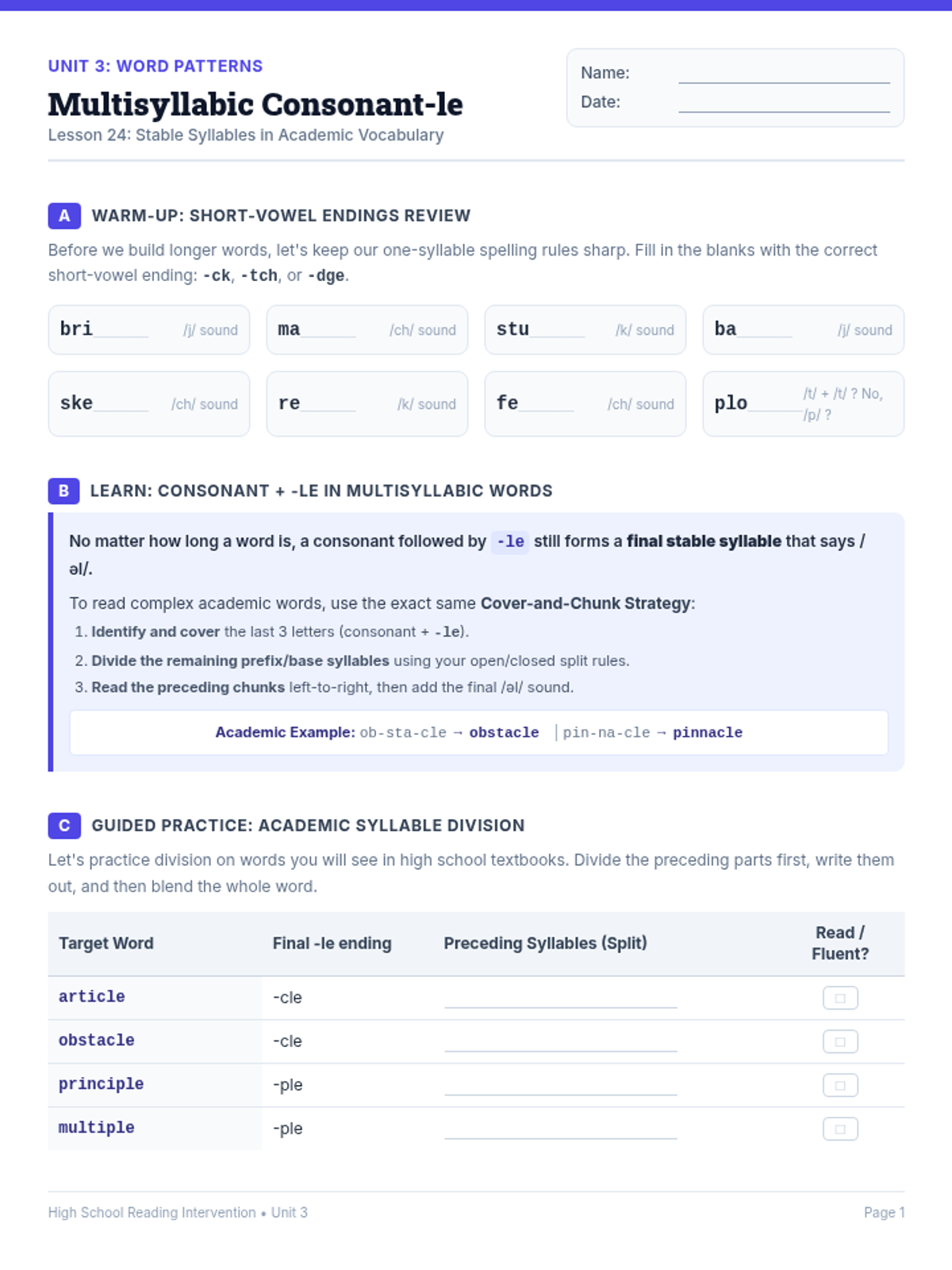
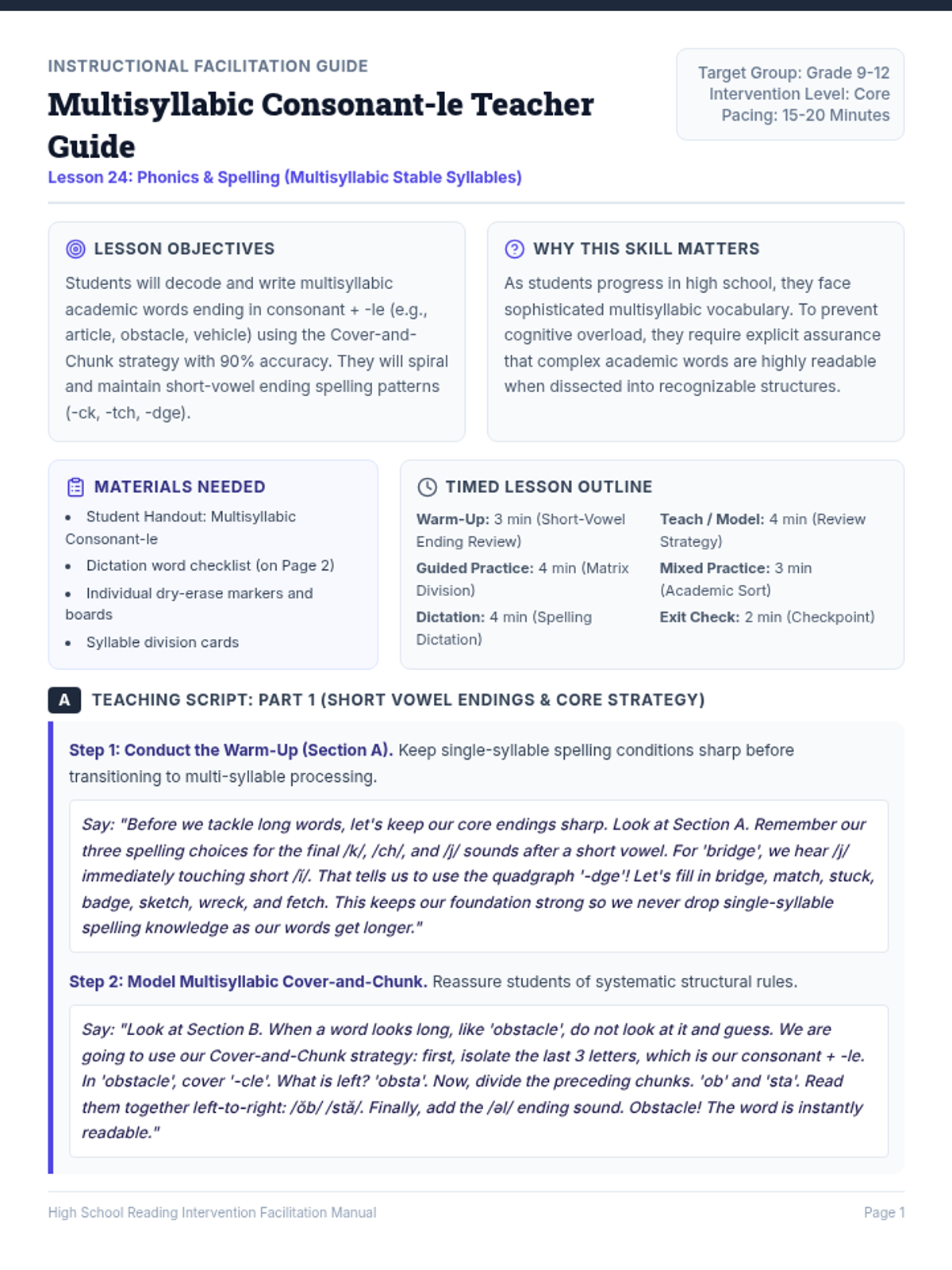
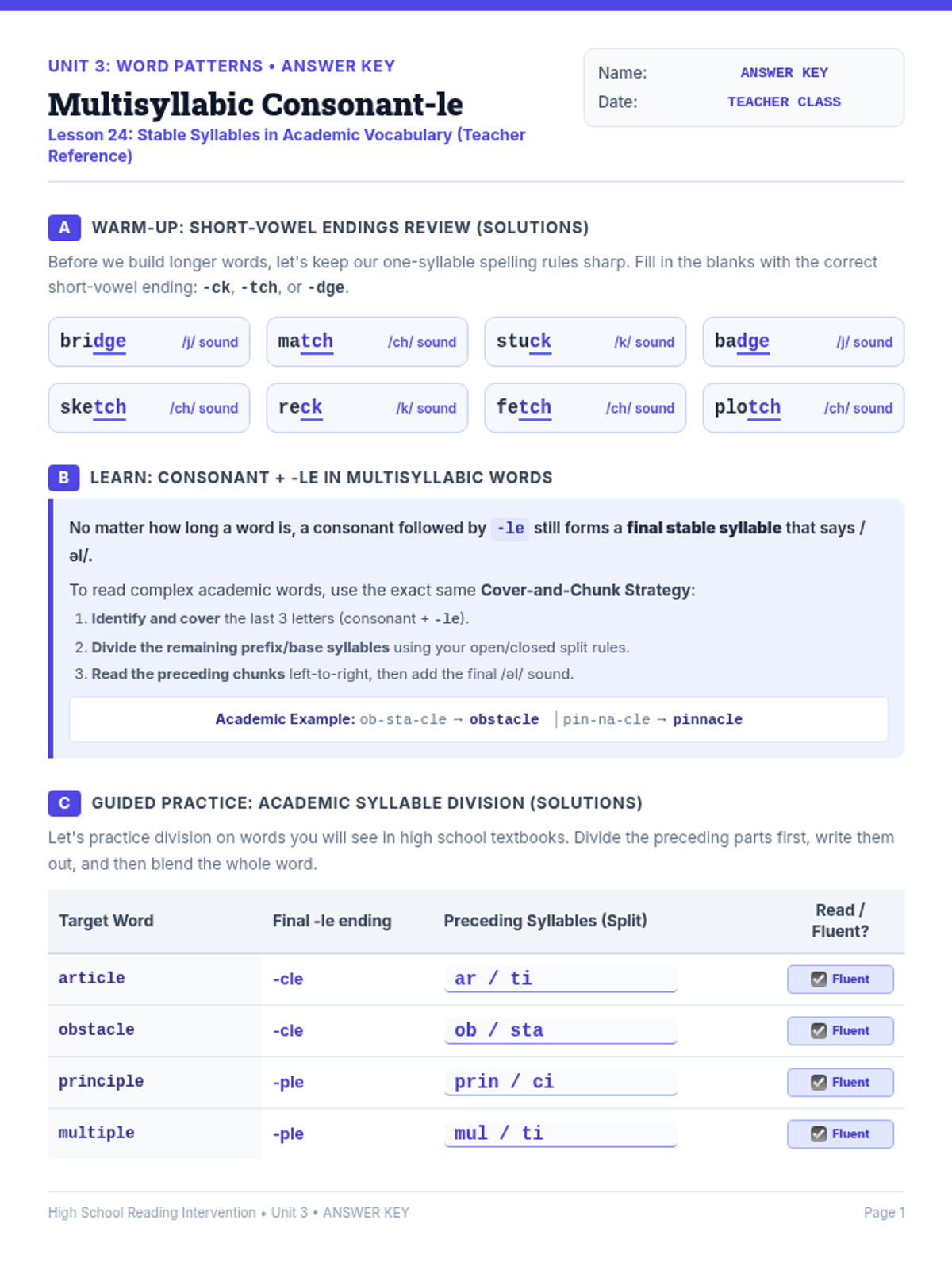
Focuses on decoding and spelling longer, academic multisyllabic words ending in consonant + -le, while spiraling previously learned short-vowel spelling patterns (-ck, -tch, -dge) during warm-ups and comparative activities.
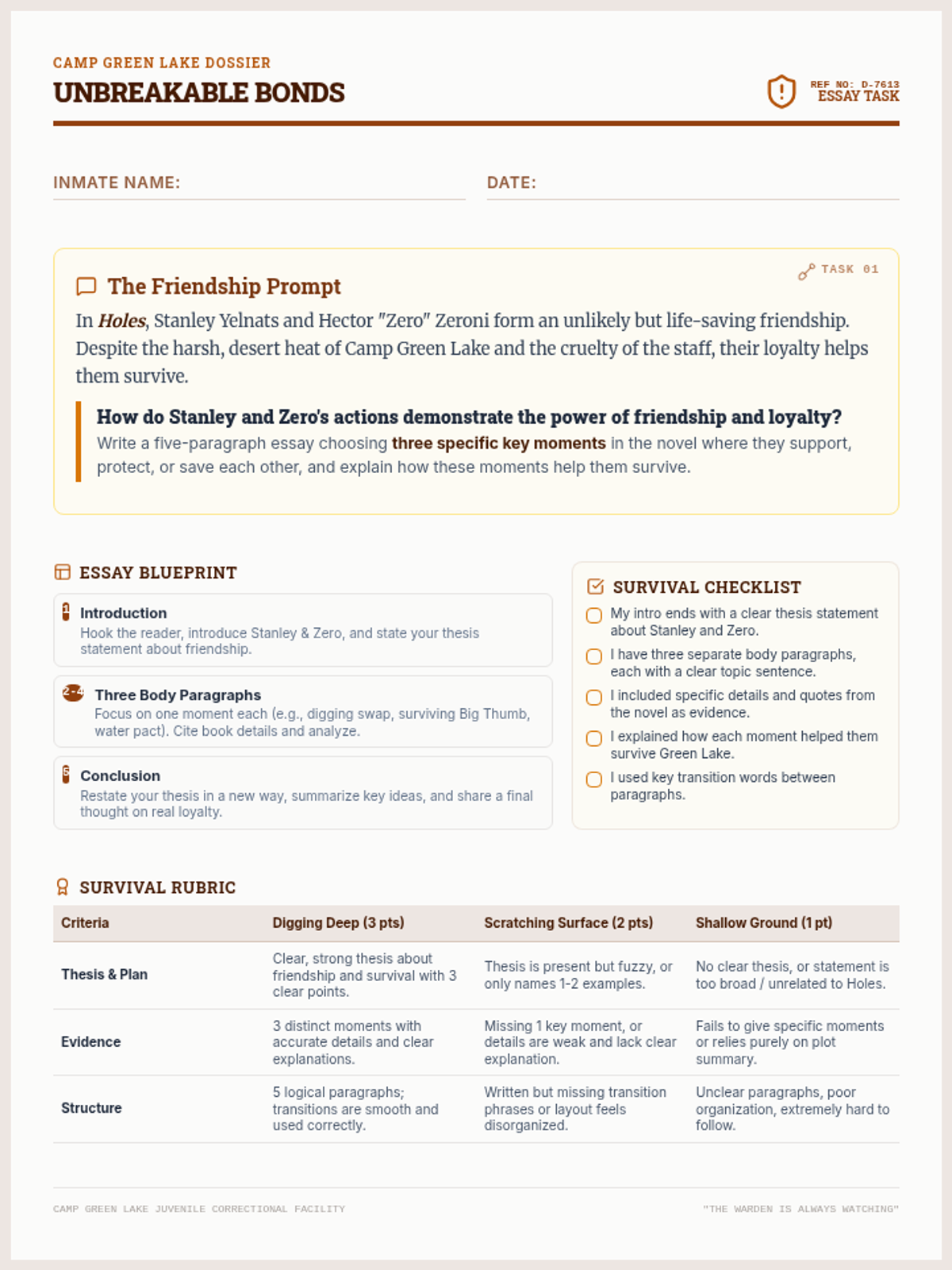
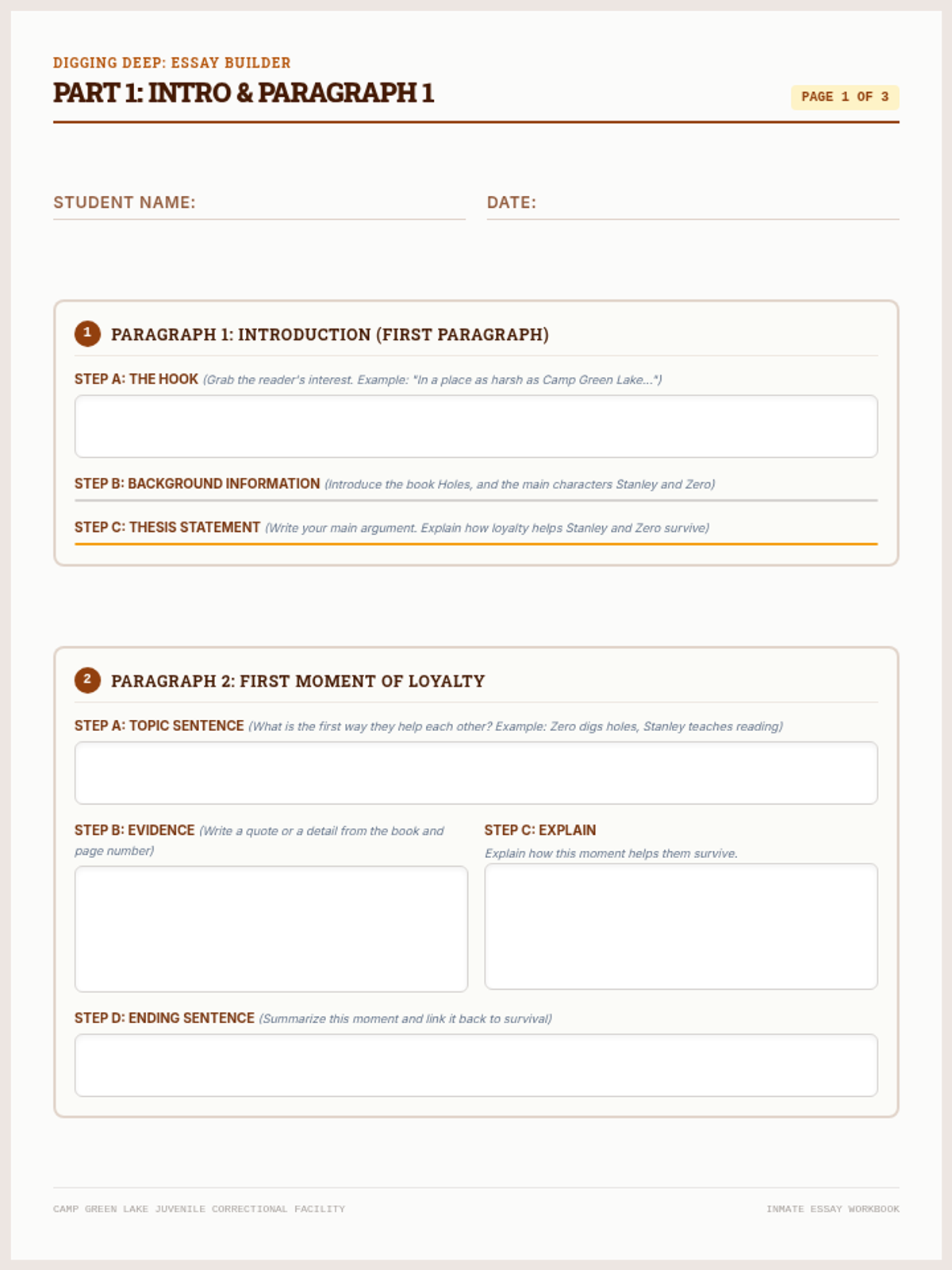
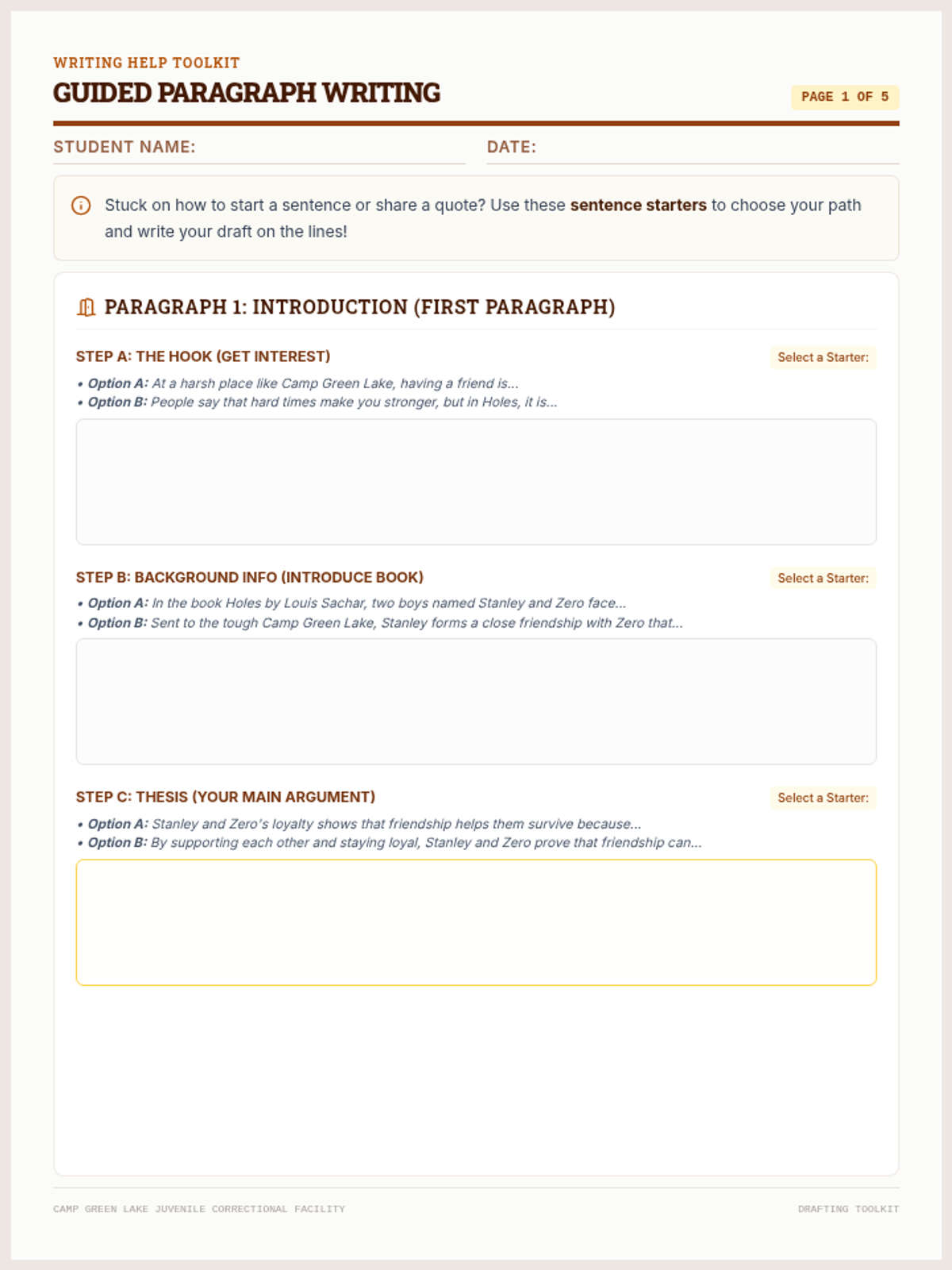
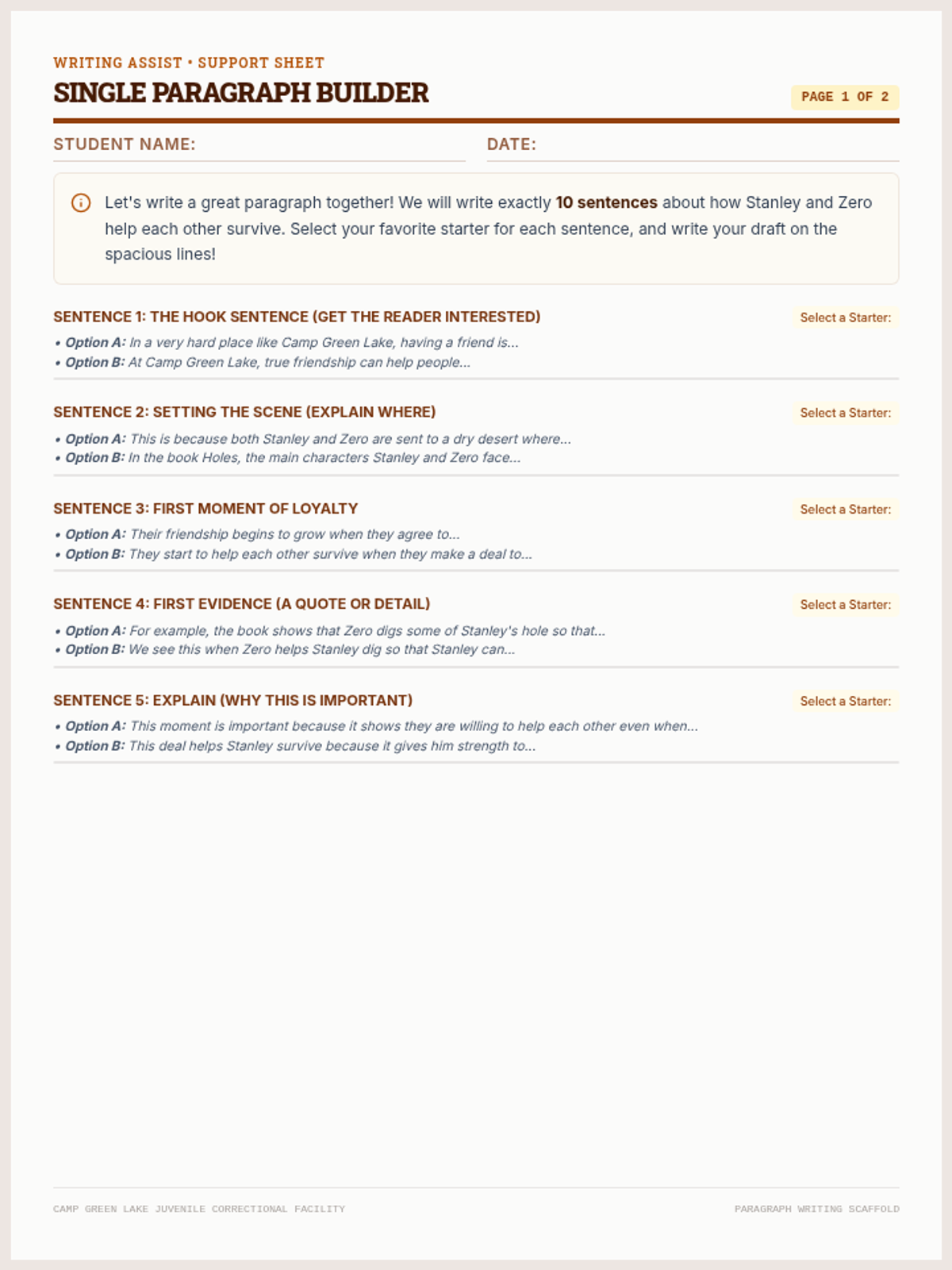
A structured writing unit for Holes by Louis Sachar focusing on the theme of friendship and loyalty. Students analyze Stanley and Zero's relationship and compose a five-paragraph essay using scaffolds, graphic organizers, and sentence frames.
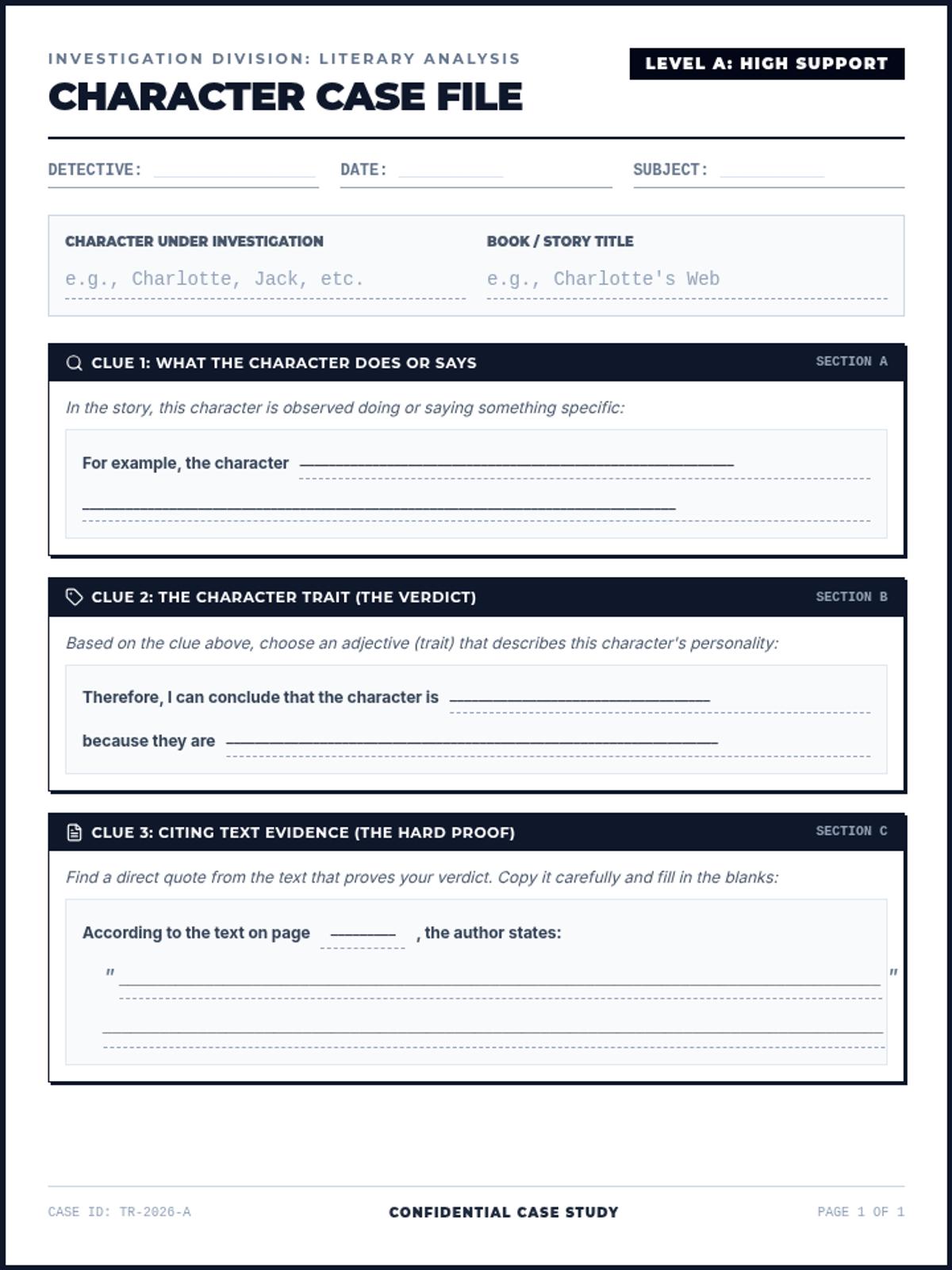
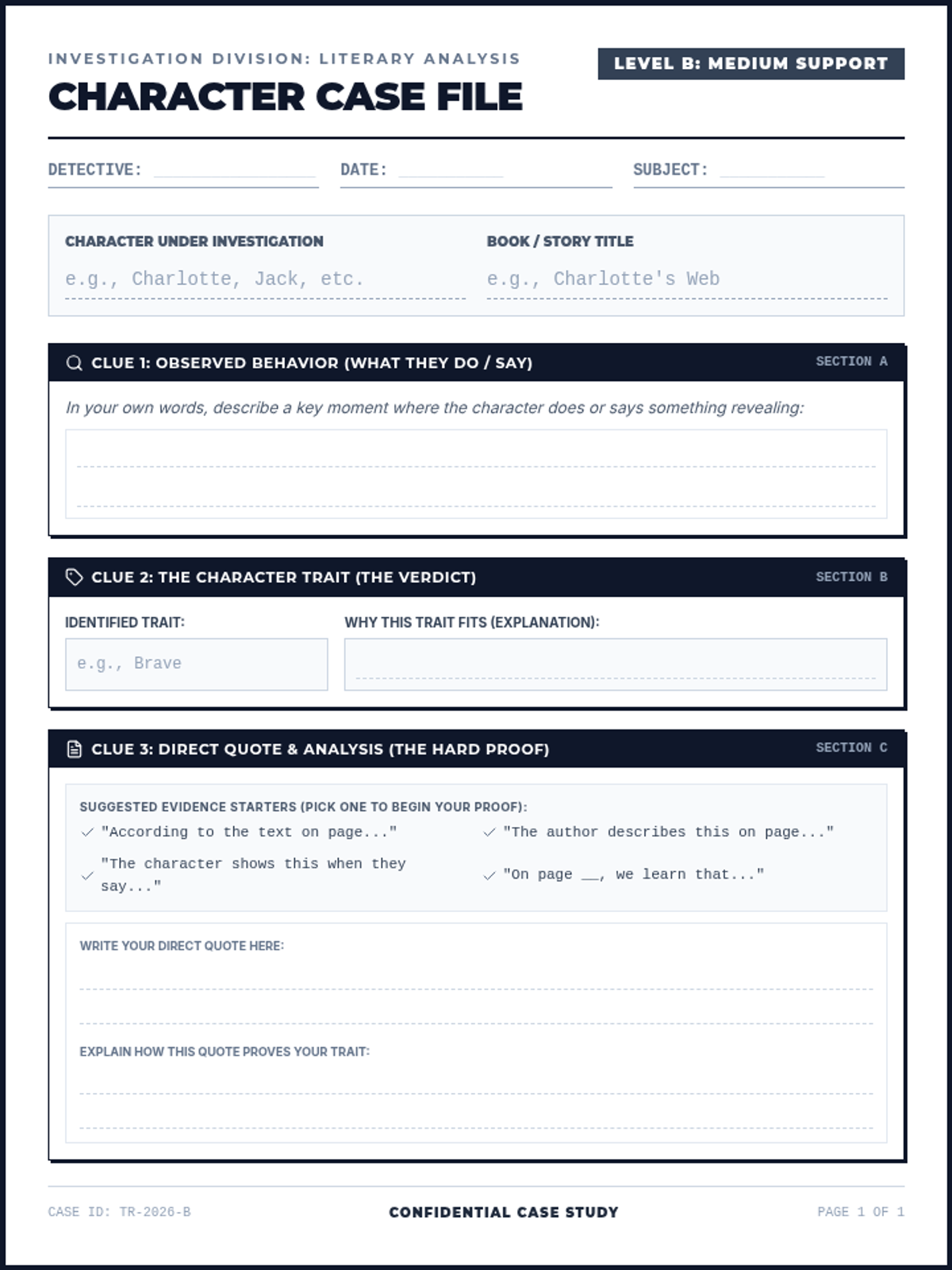
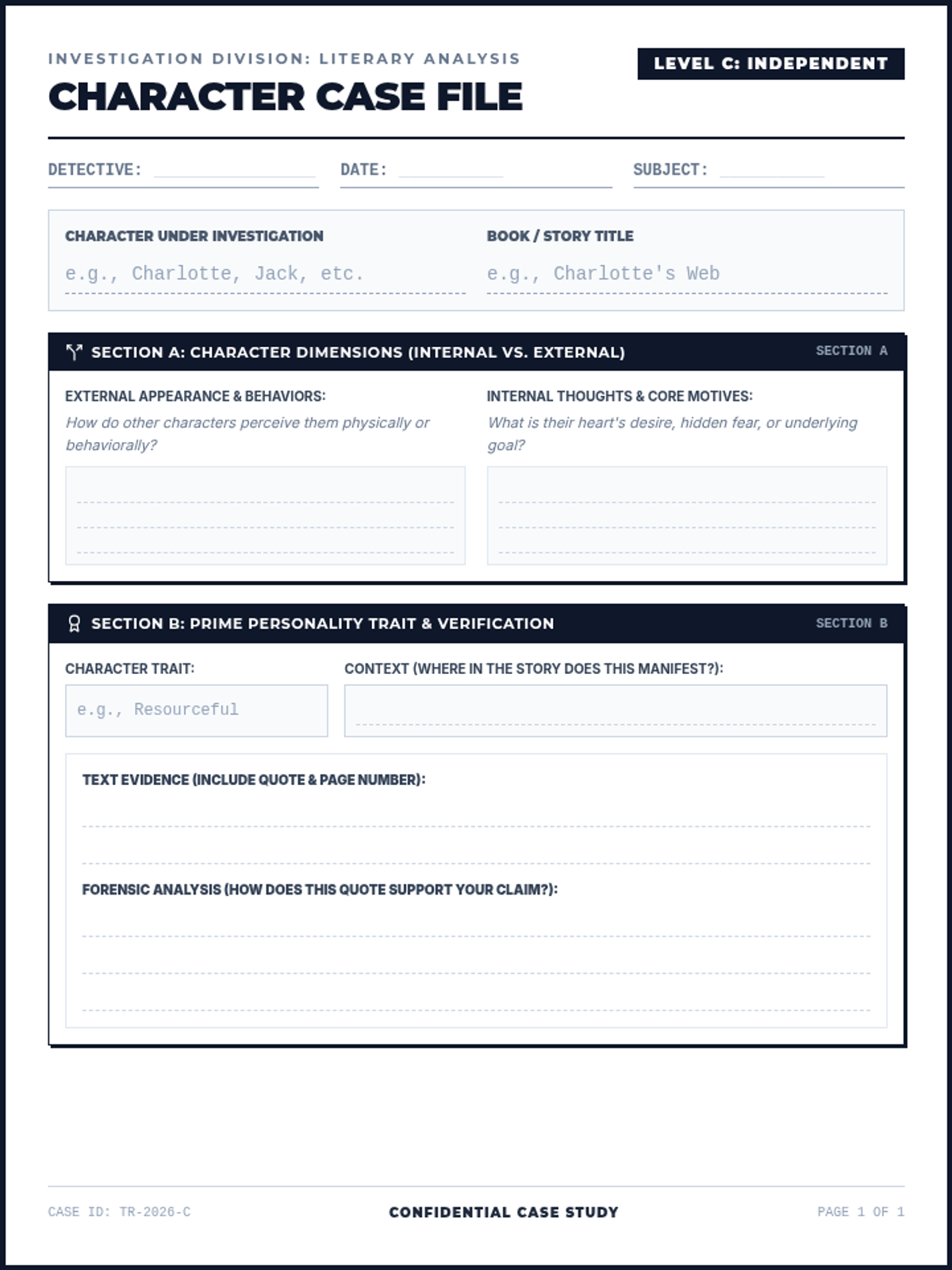
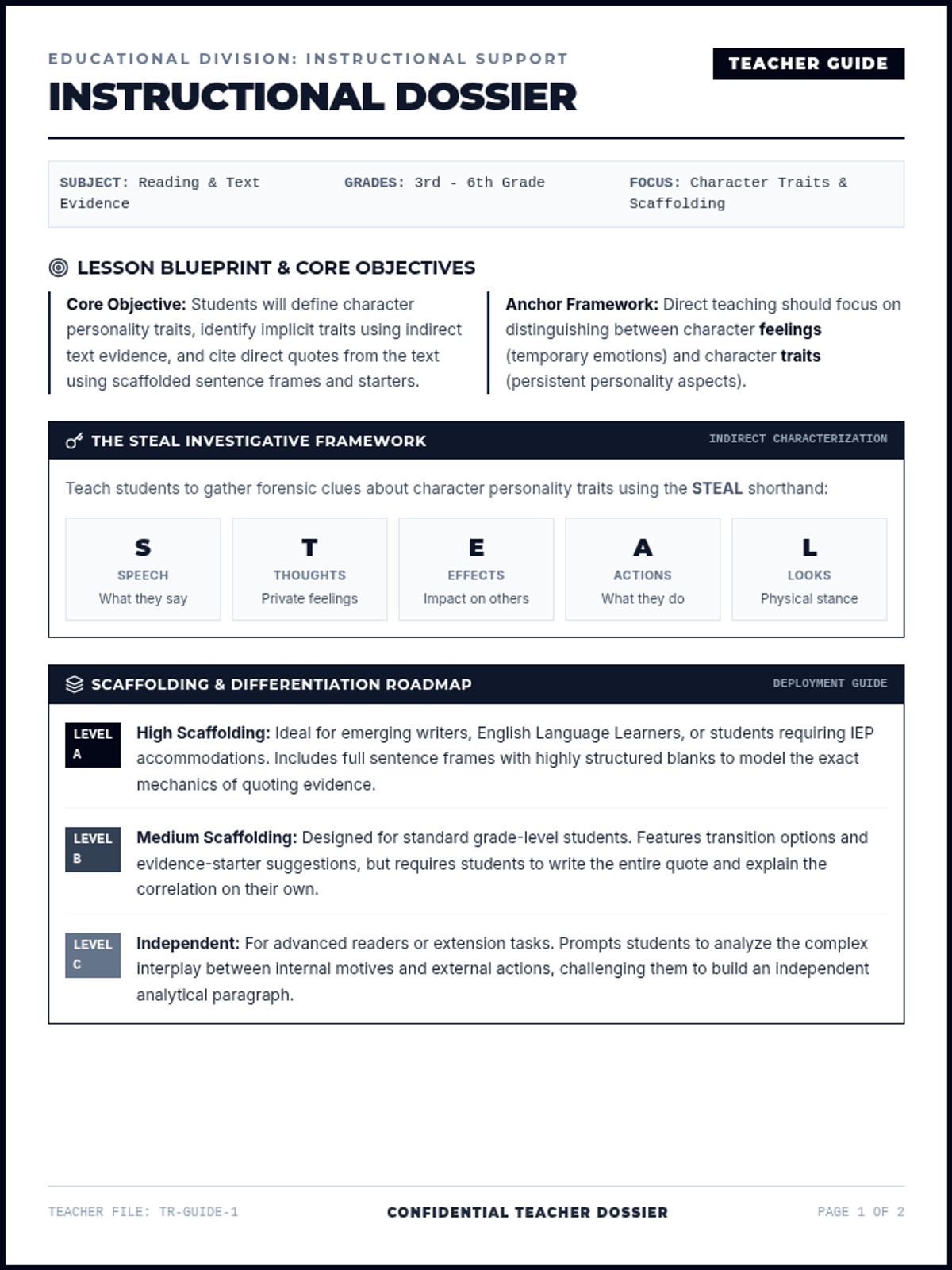
A comprehensive lesson and set of scaffolded graphic organizers designed to help students analyze character traits and master citing text evidence. Includes high, medium, and low levels of scaffolding to differentiate instruction.