A creative writing lesson where students select three personal songs representing past memories or future summer goals and draft short personal essays connecting music to their lives.
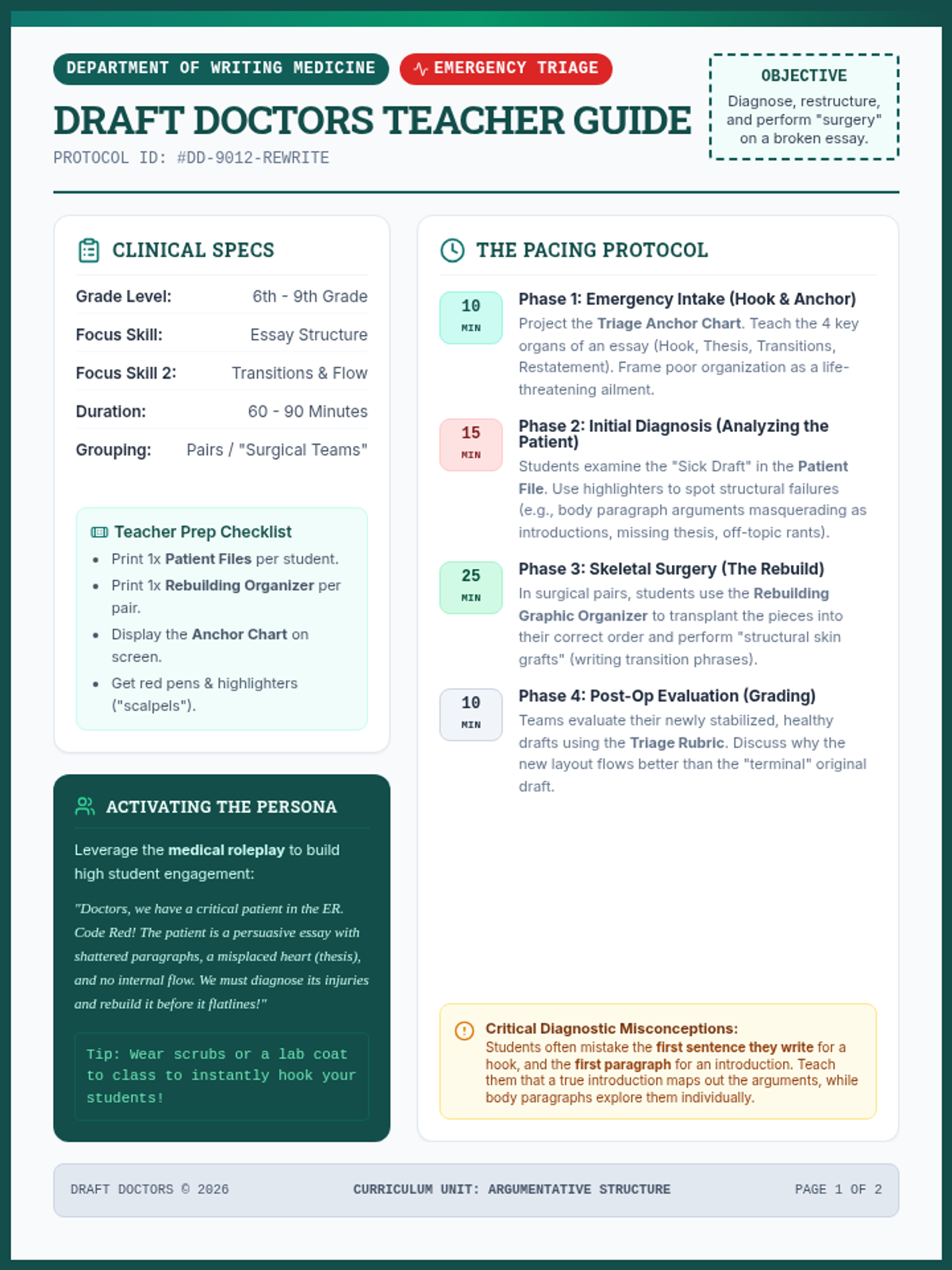
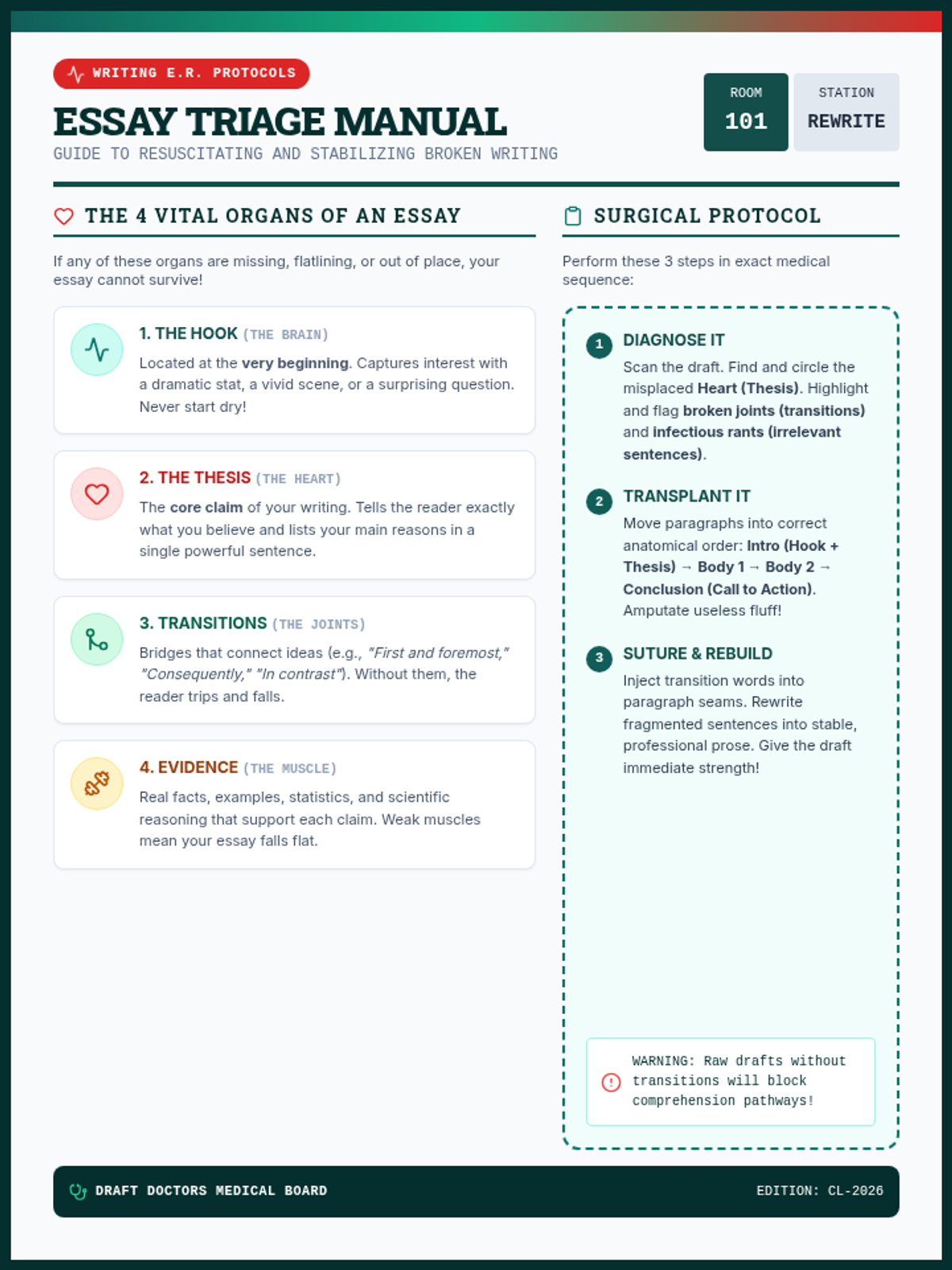
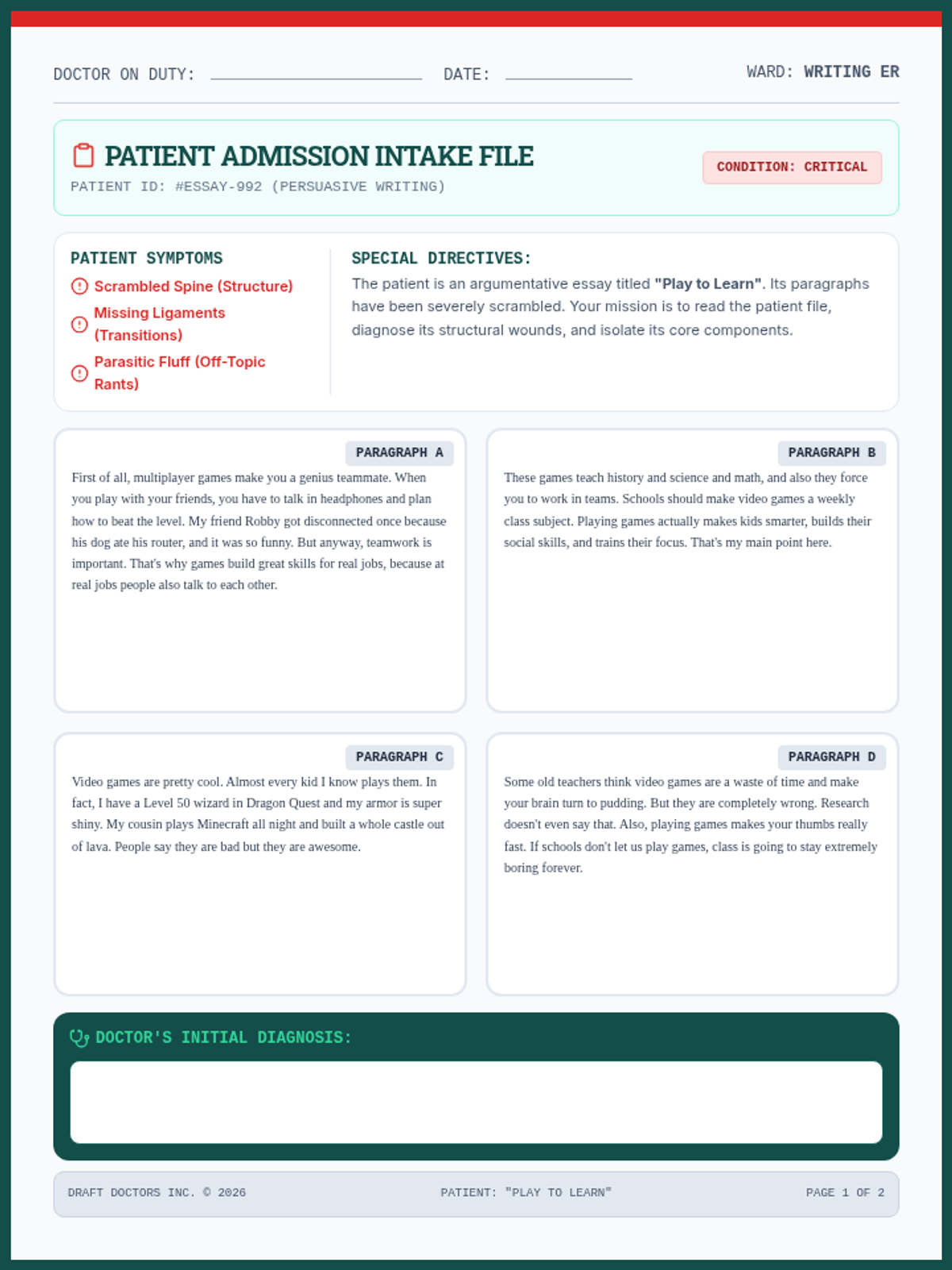
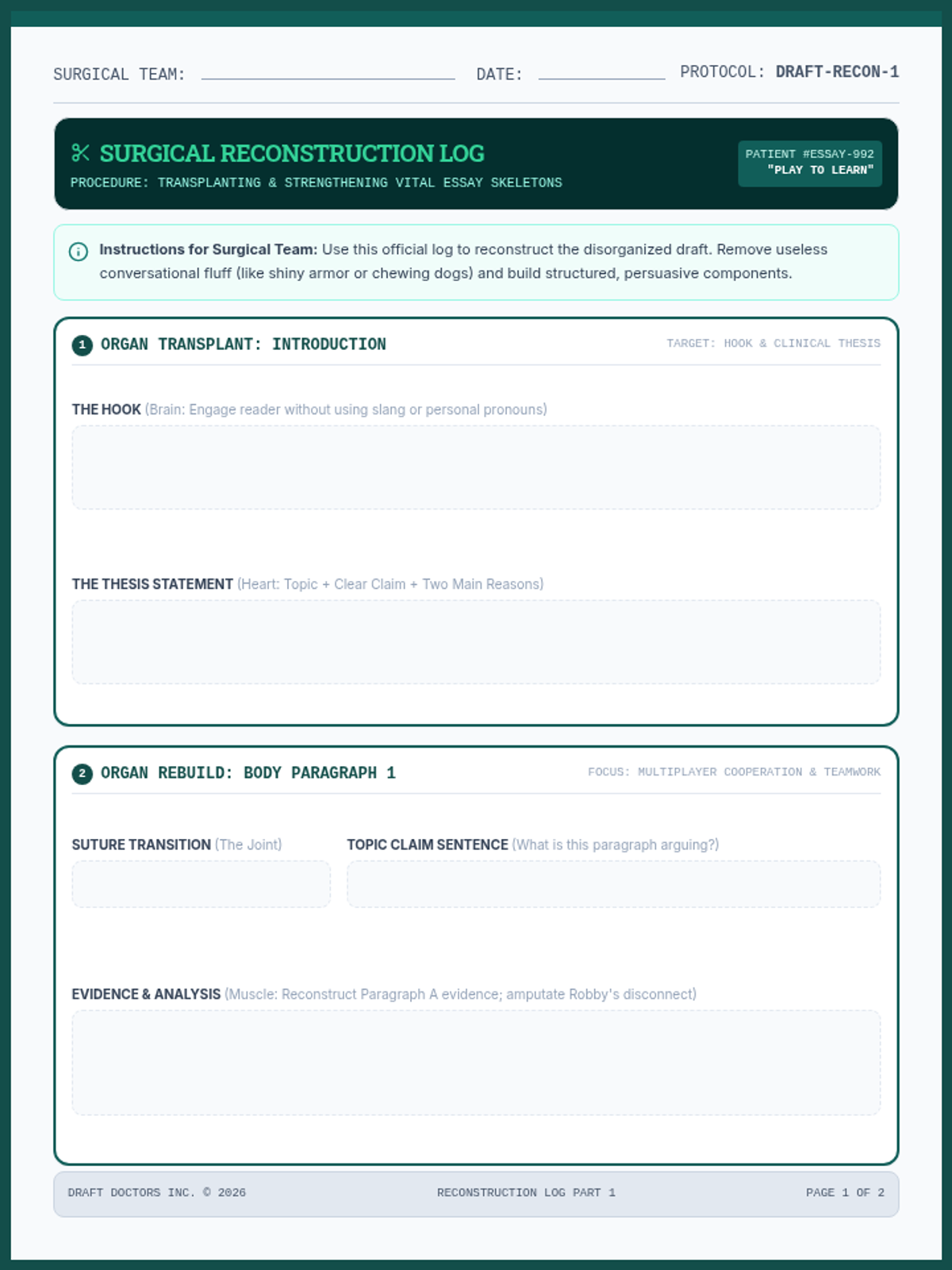
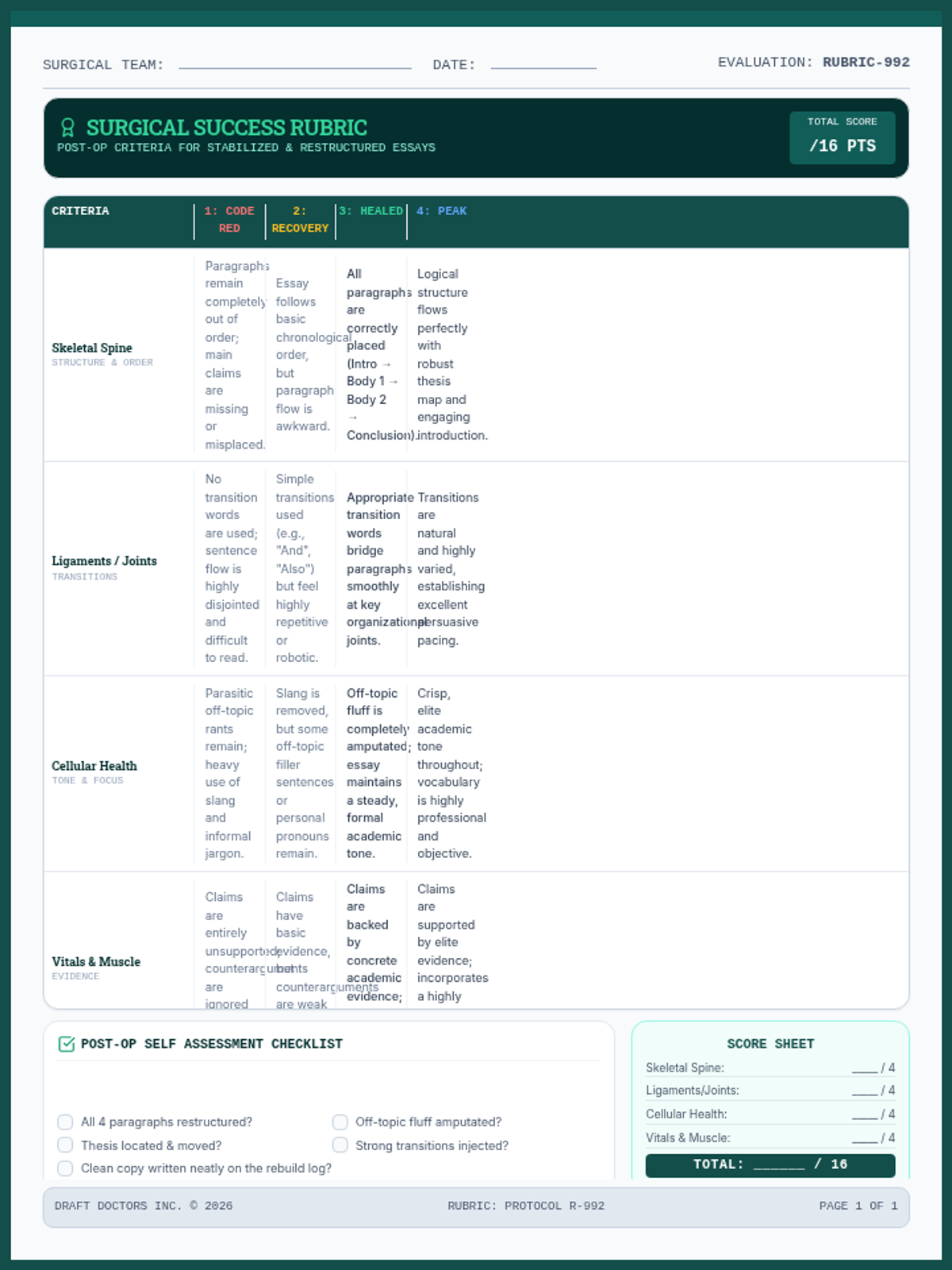
An immersive, medical-themed lesson where students act as 'Draft Doctors' to diagnose, triage, and perform surgery on a poorly organized, weak persuasive essay. Students learn paragraph structure, logical flow, and transition-building through a structured, clinical approach.
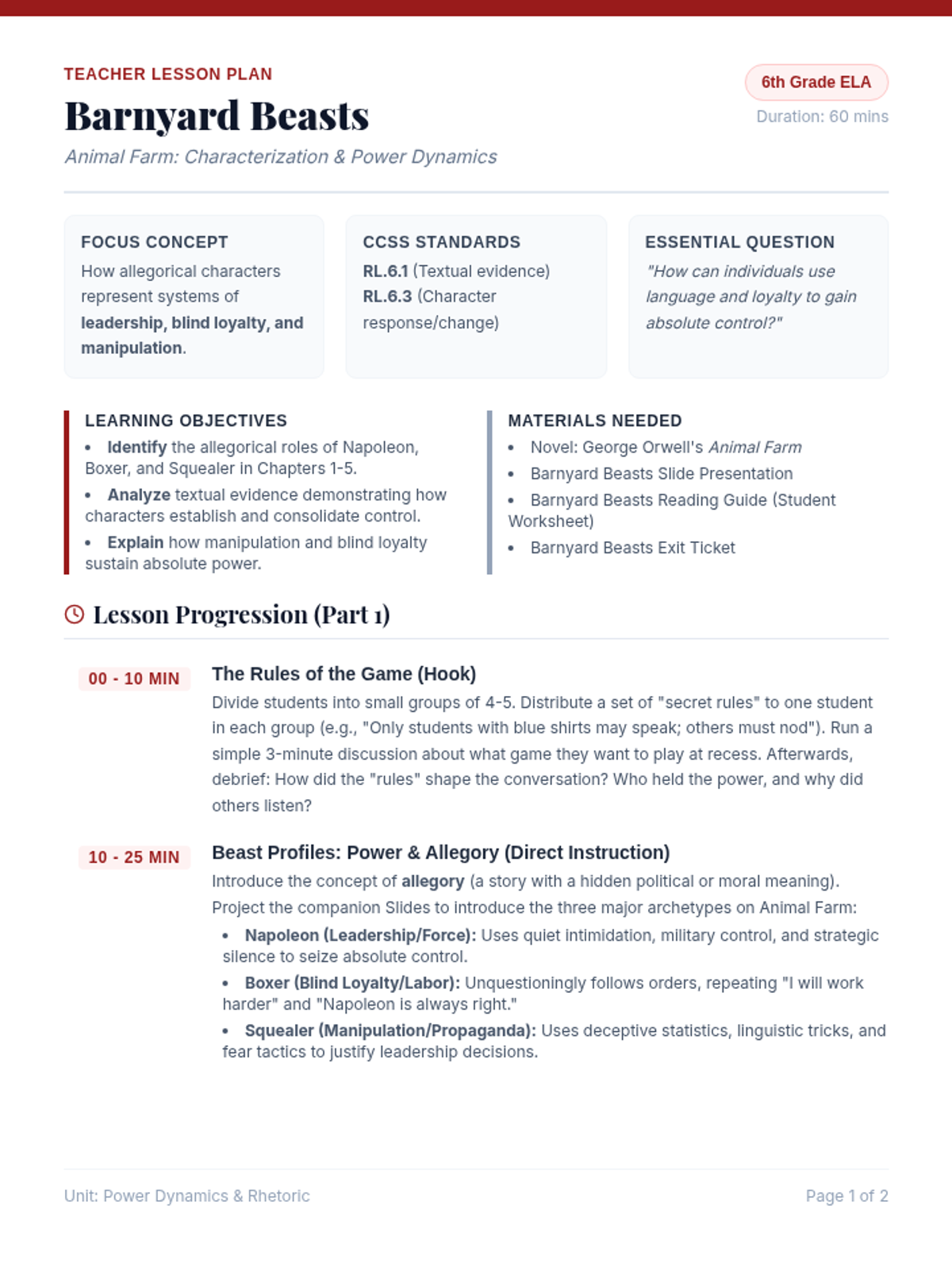
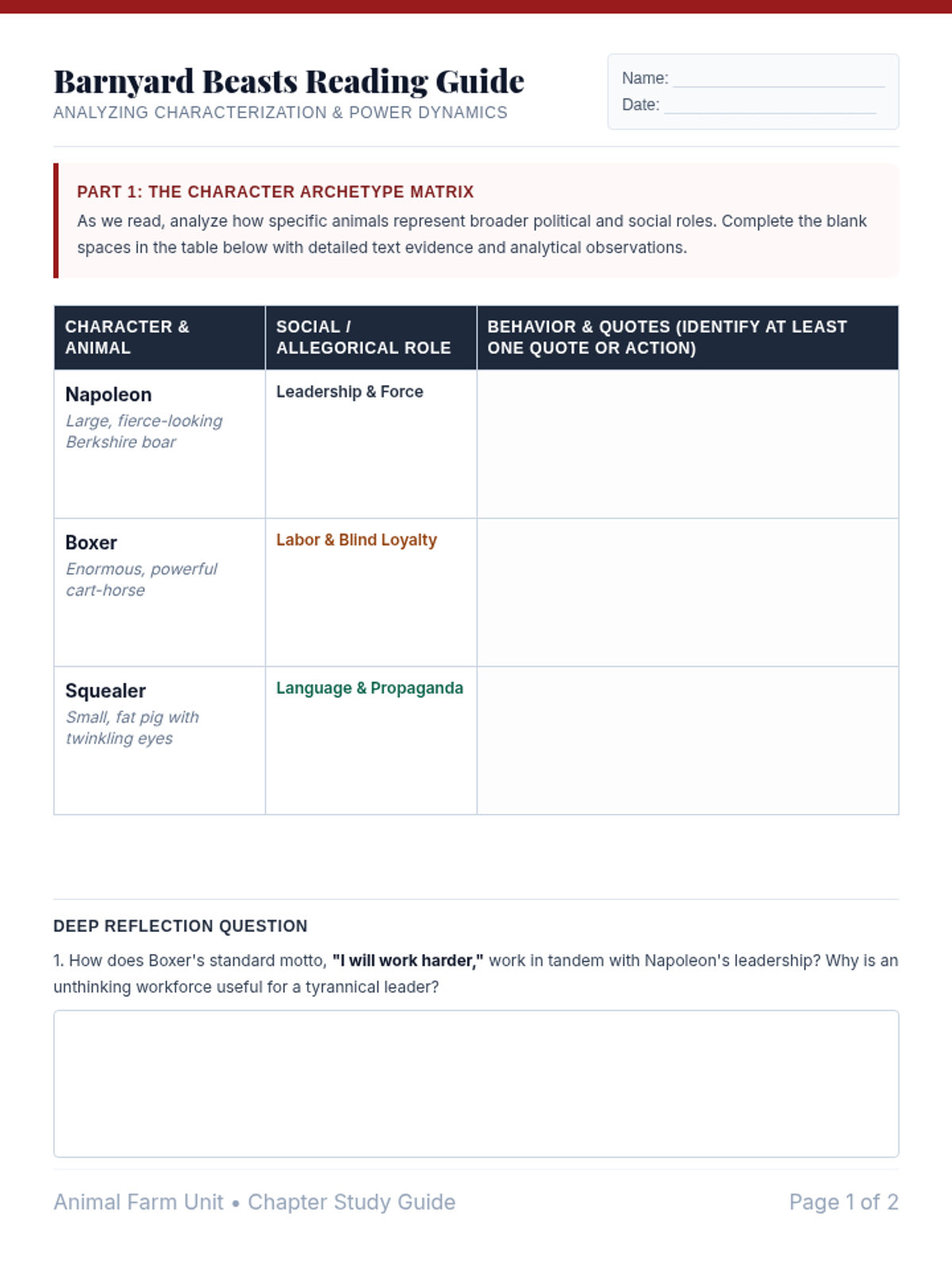
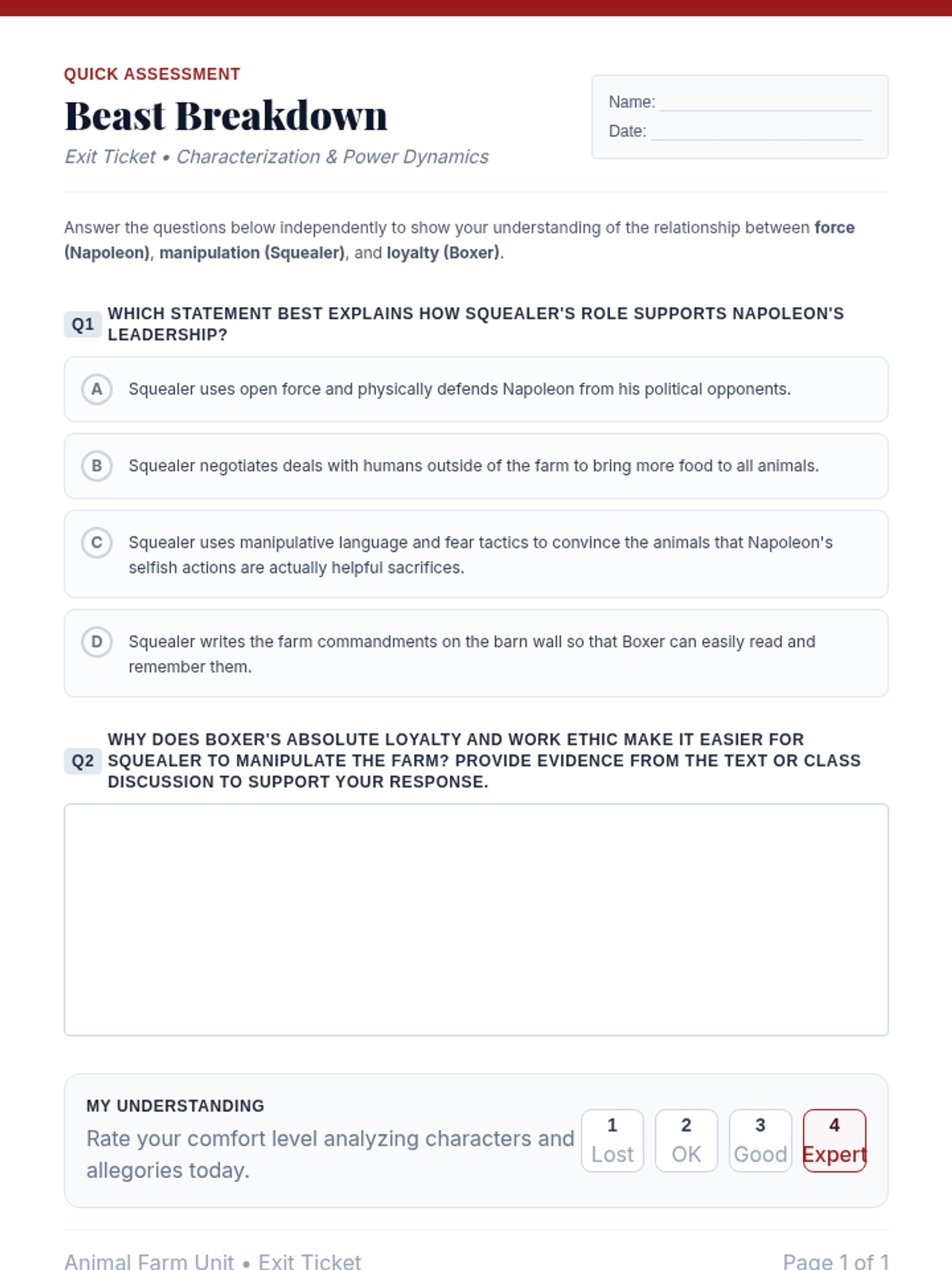
A comprehensive 6th-grade ELA lesson analyzing characterization and power dynamics in George Orwell's Animal Farm. Students investigate how specific characters represent leadership, blind loyalty, and manipulation, and how these roles shape the power structure of the farm.
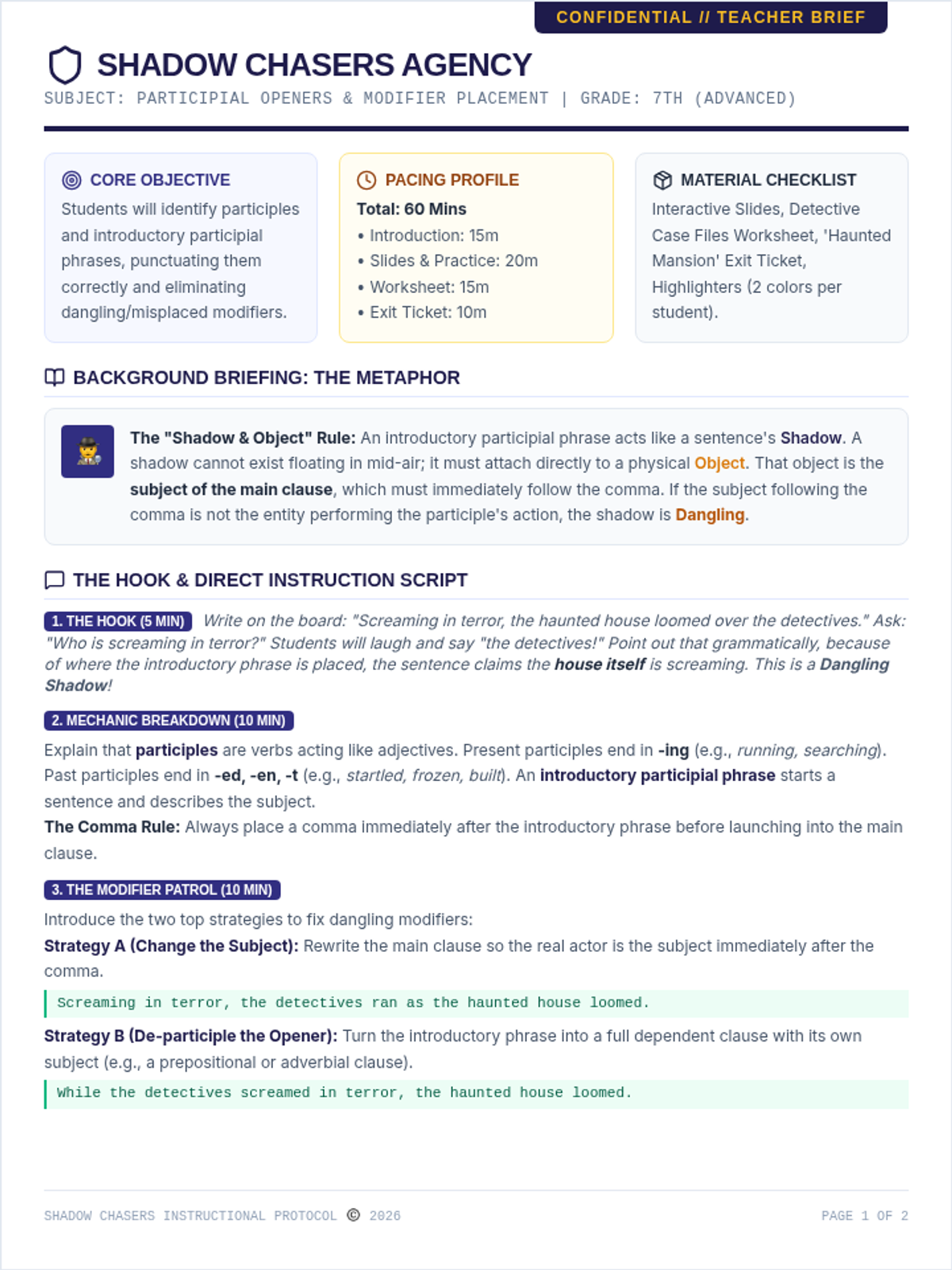
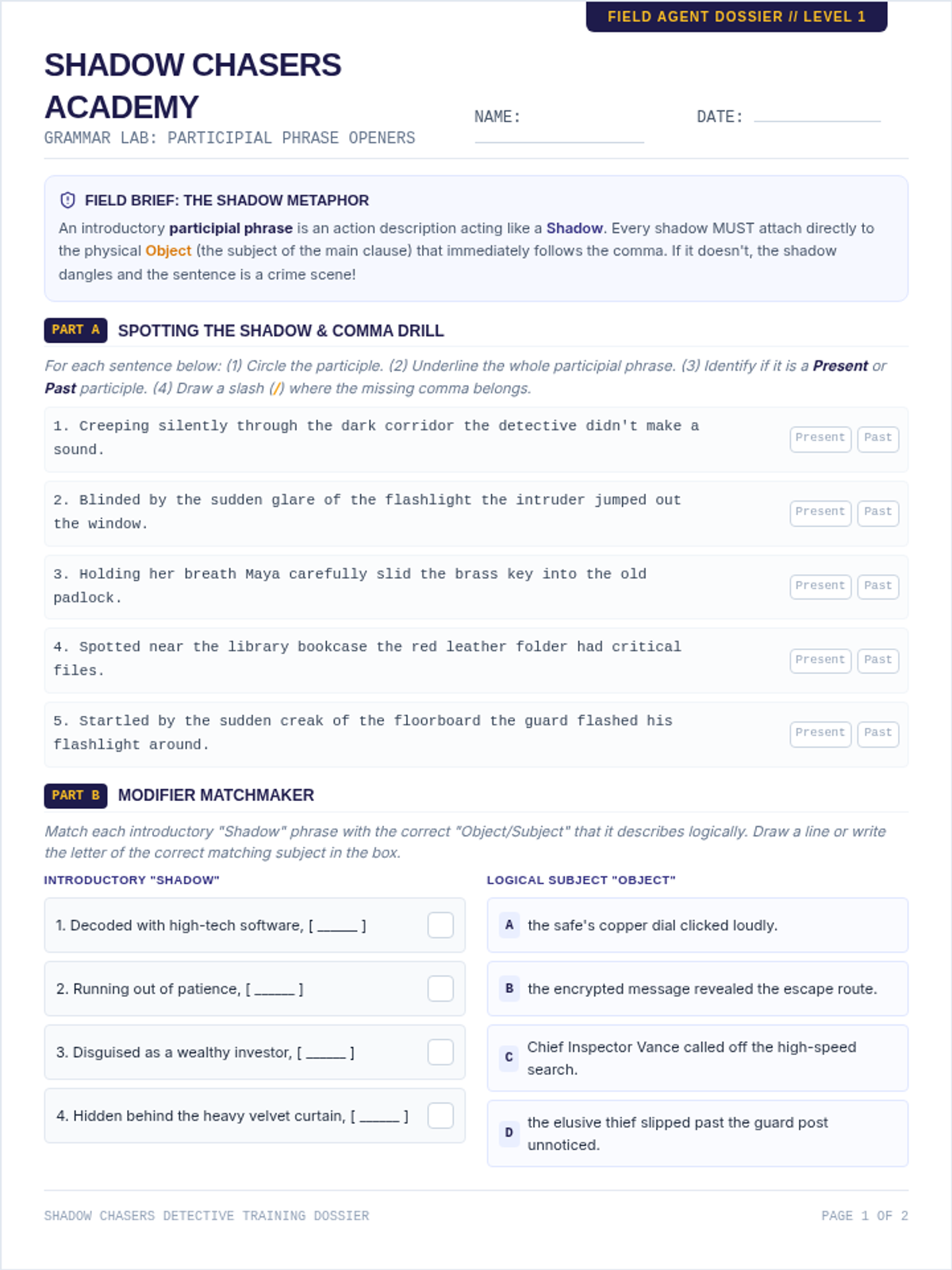
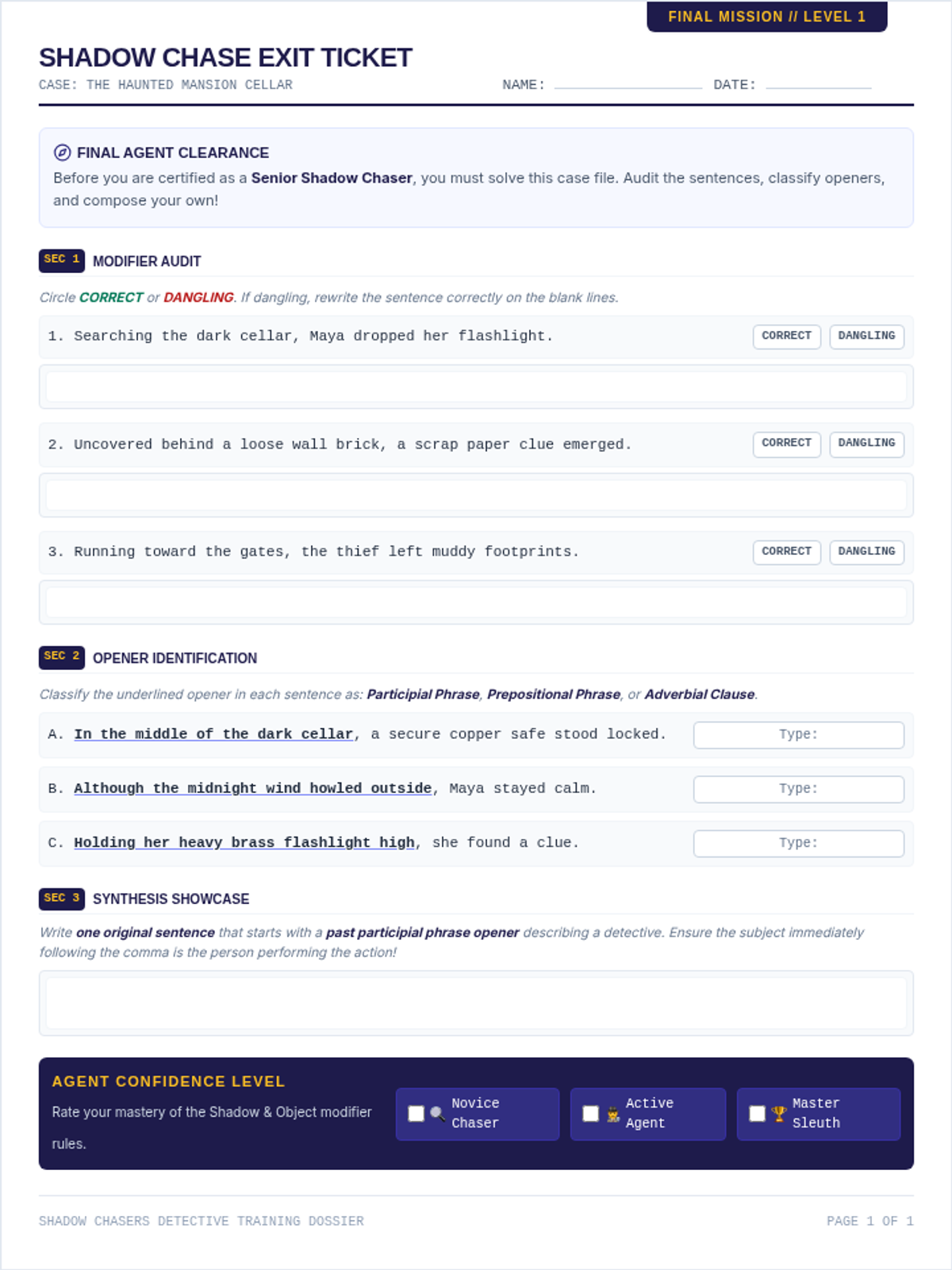
A comprehensive grammar lesson for advanced 7th graders that uses a 'Shadow Chasers' detective theme to master participial phrase openers and eliminate dangling modifiers. Students learn to match introductory participle modifiers (shadows) with their correct subjects (objects).
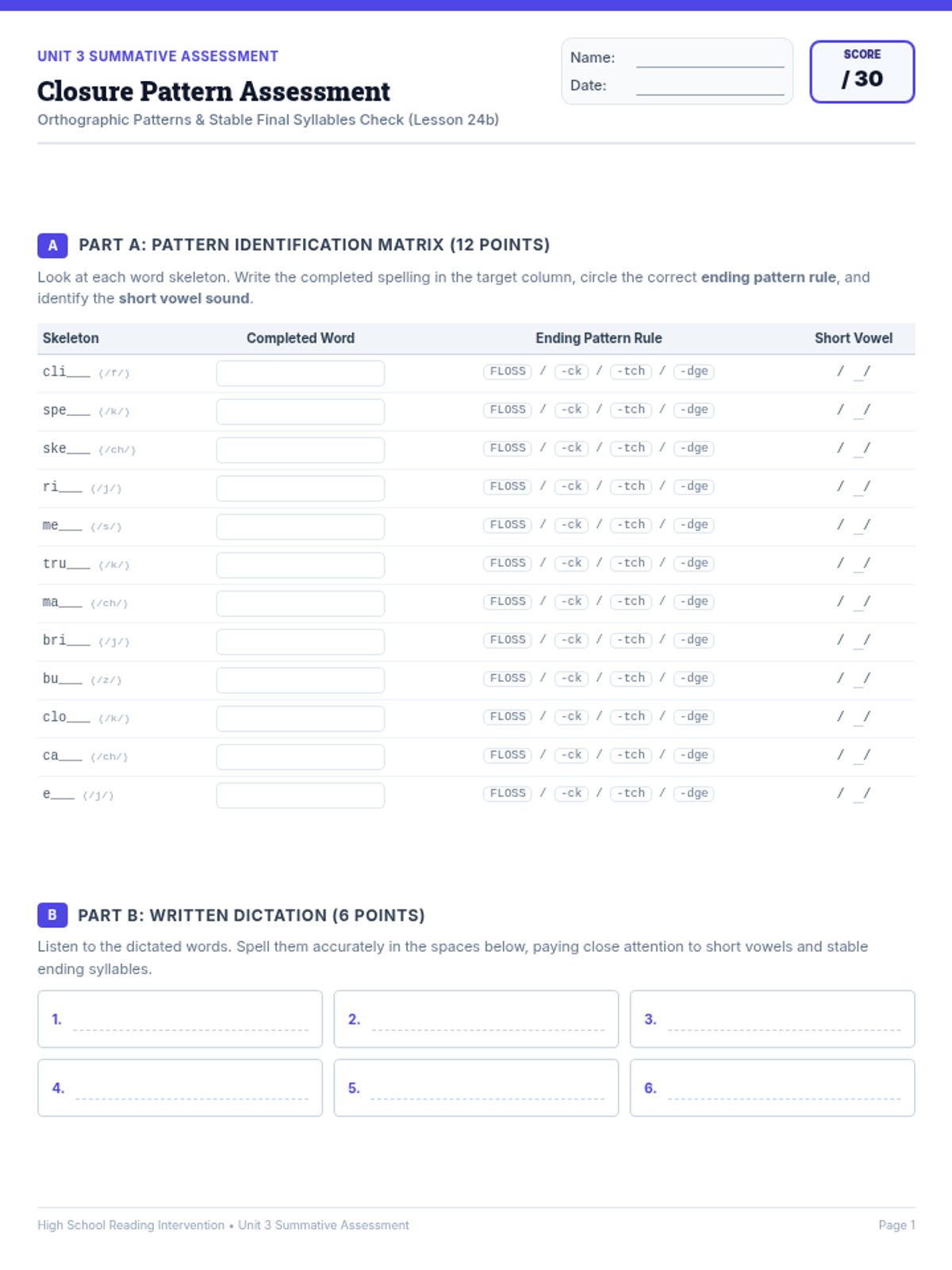
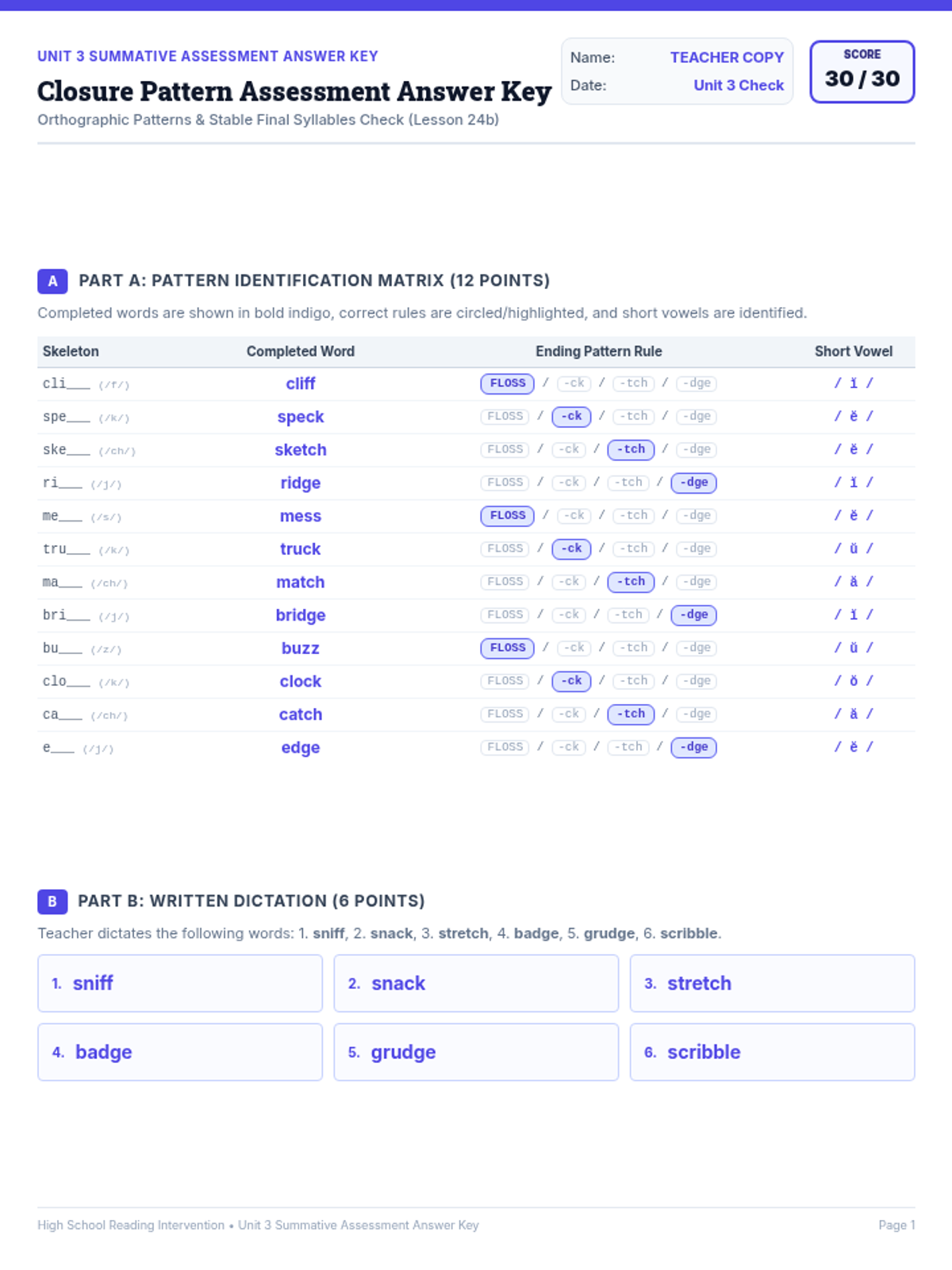
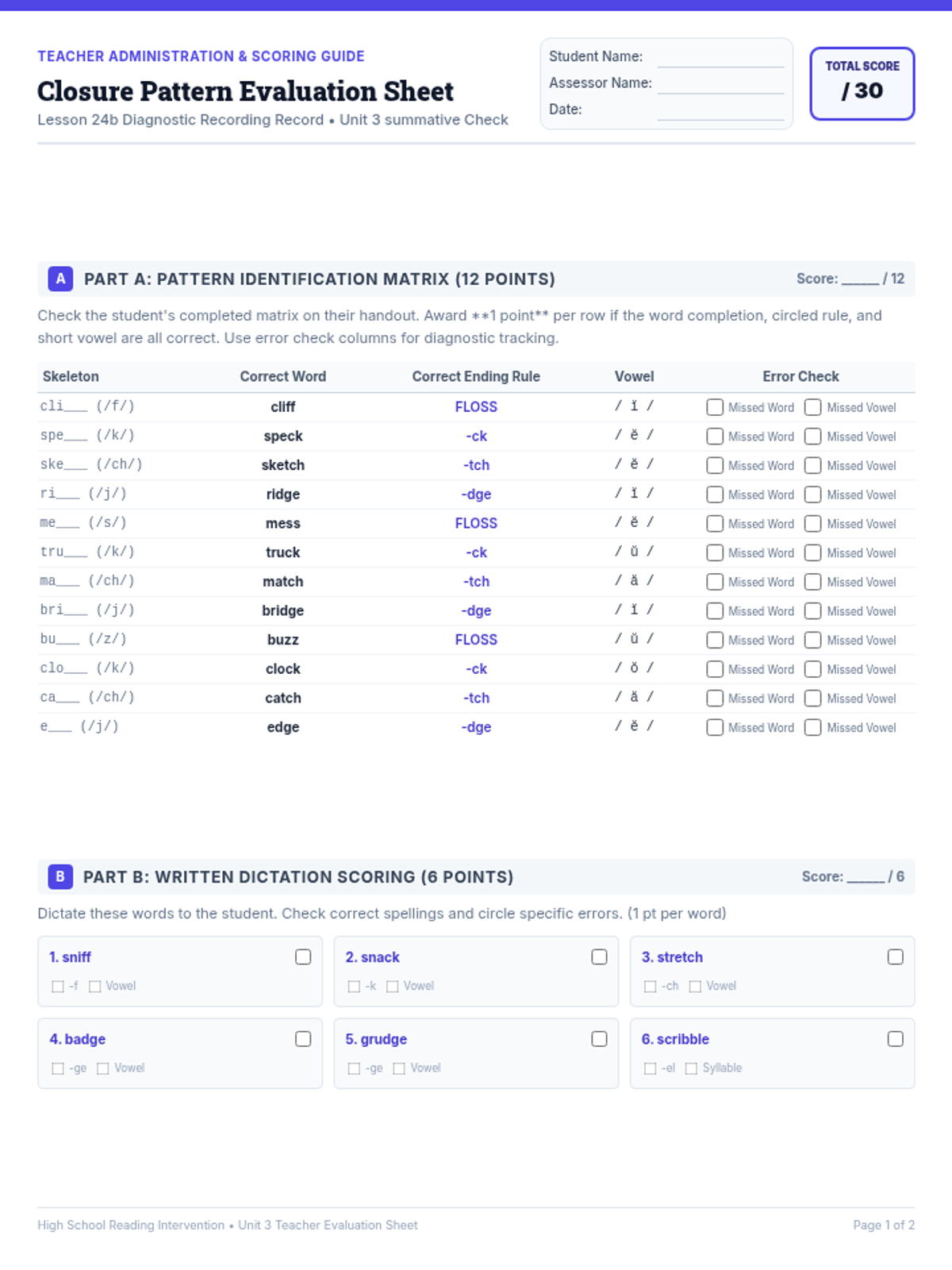
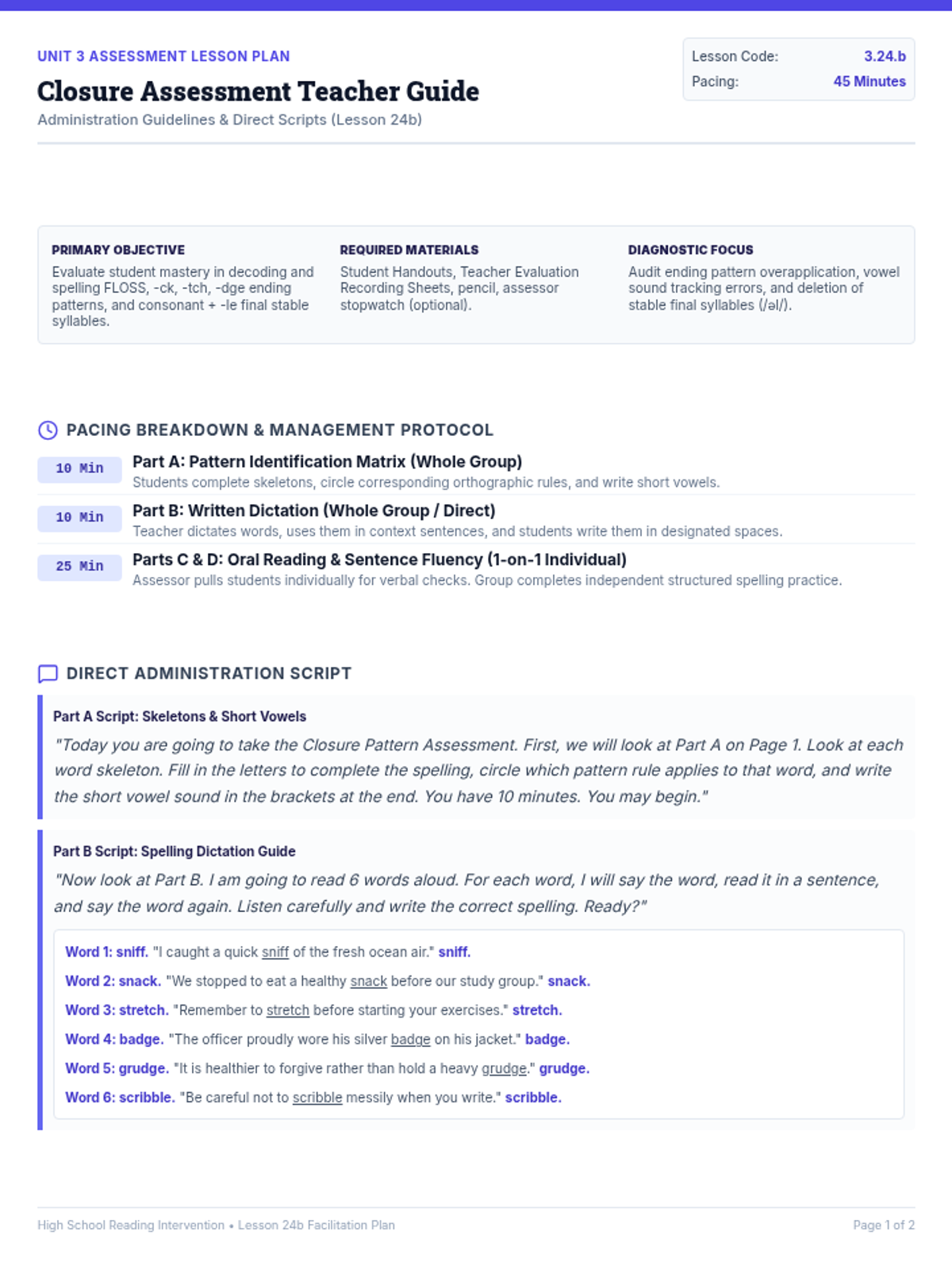
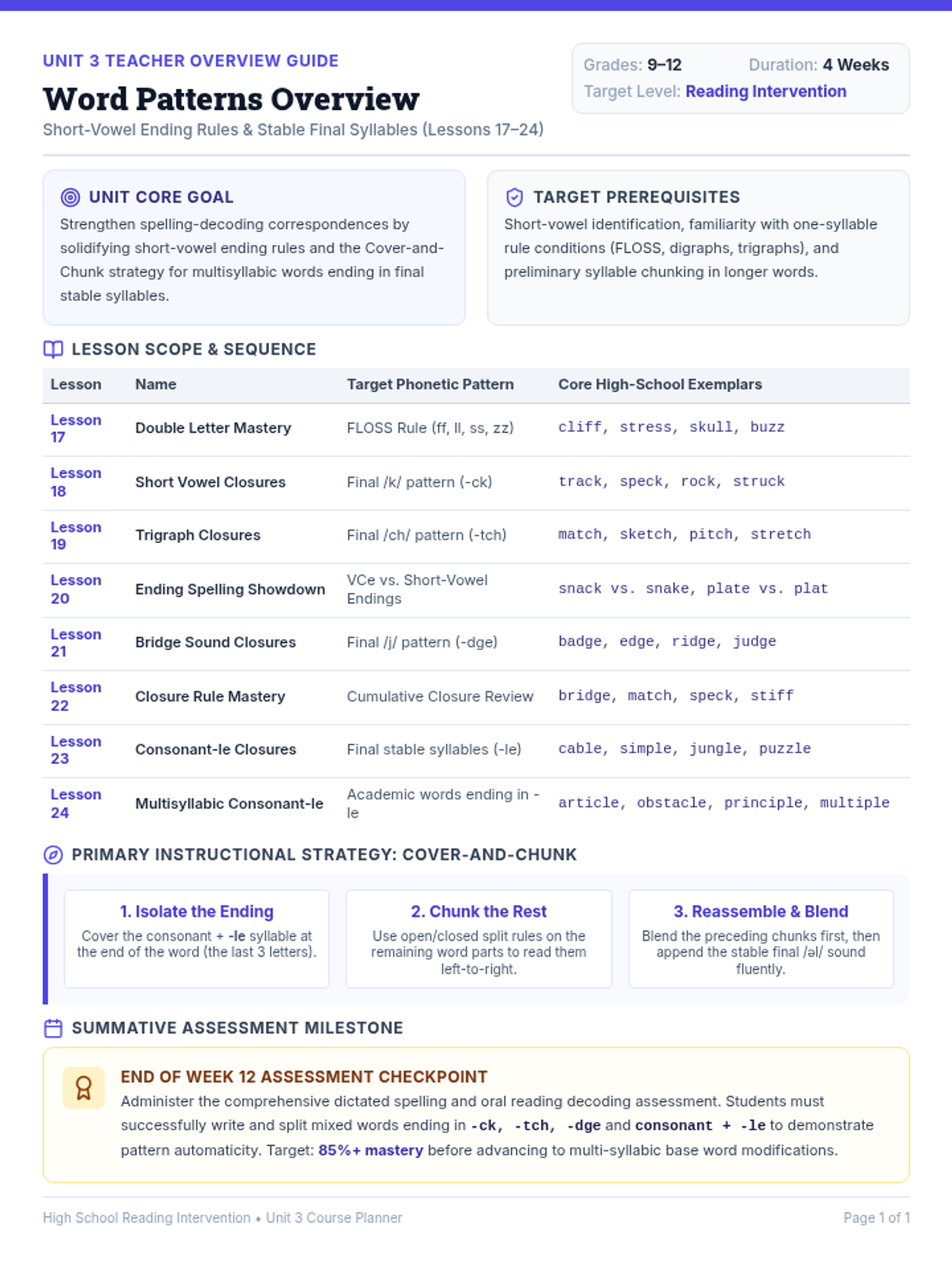
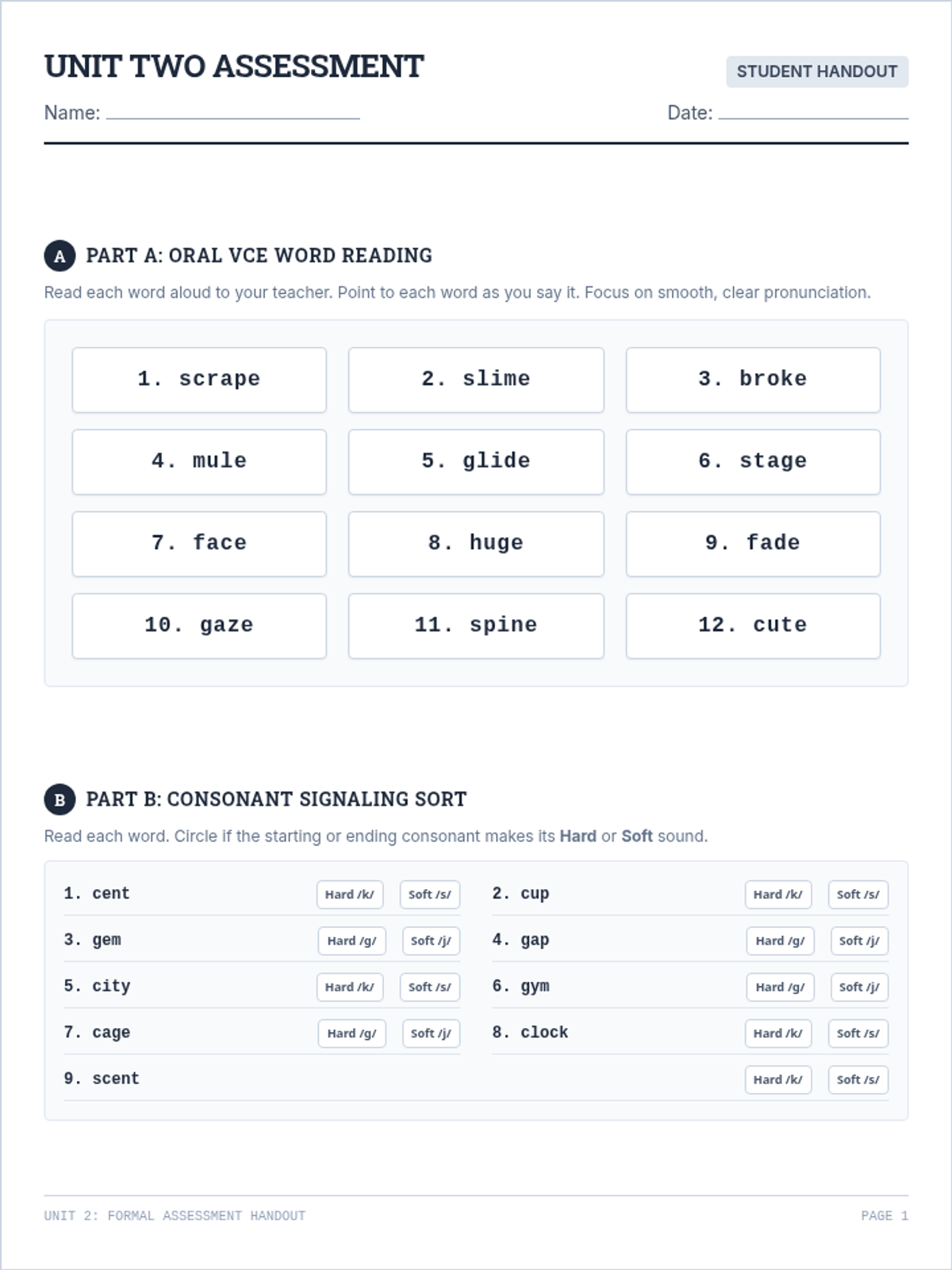
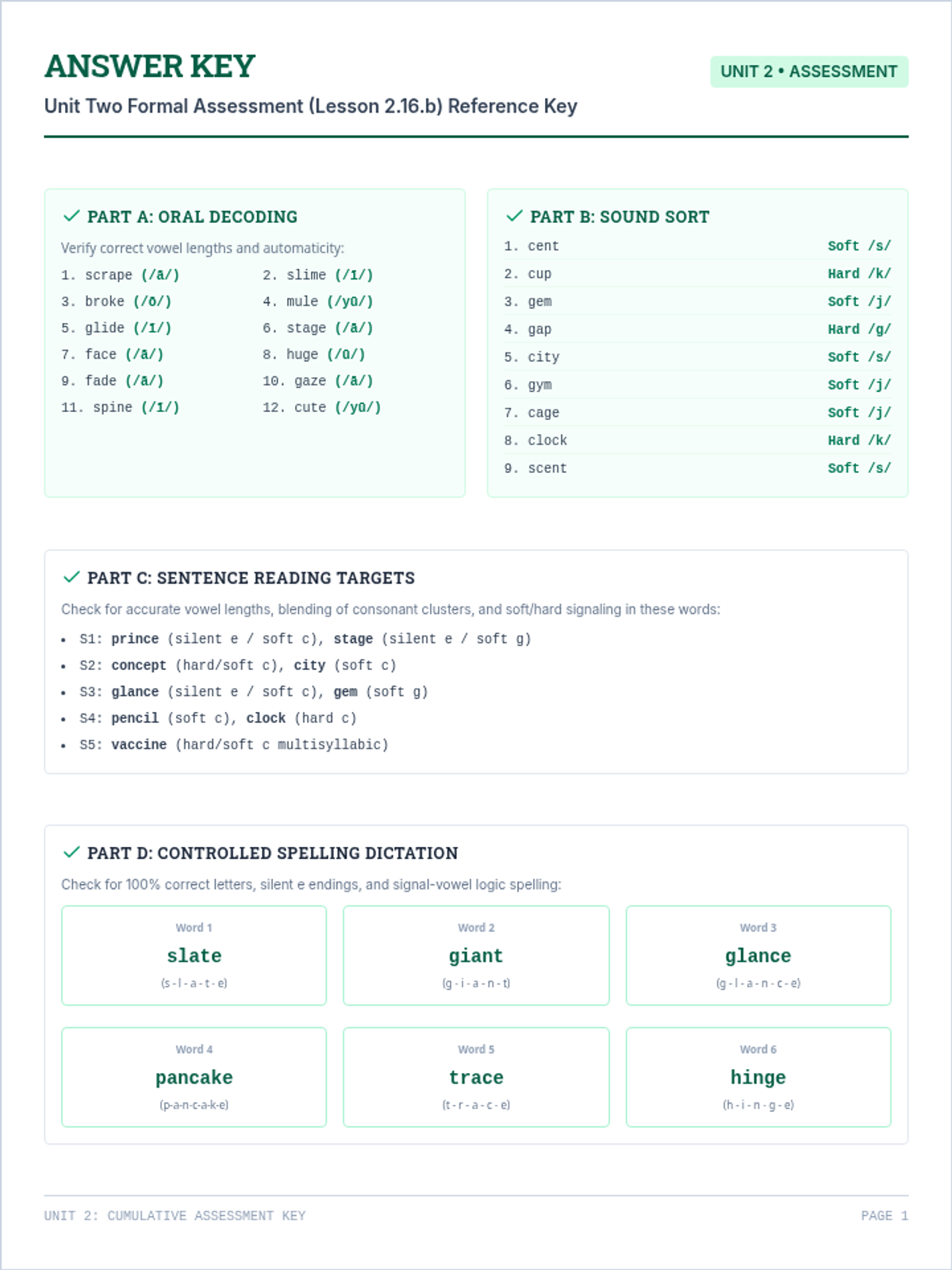
An intensive summative assessment lesson designed to check student mastery of FLOSS, -ck, -tch, -dge, and -le decoding and spelling patterns.
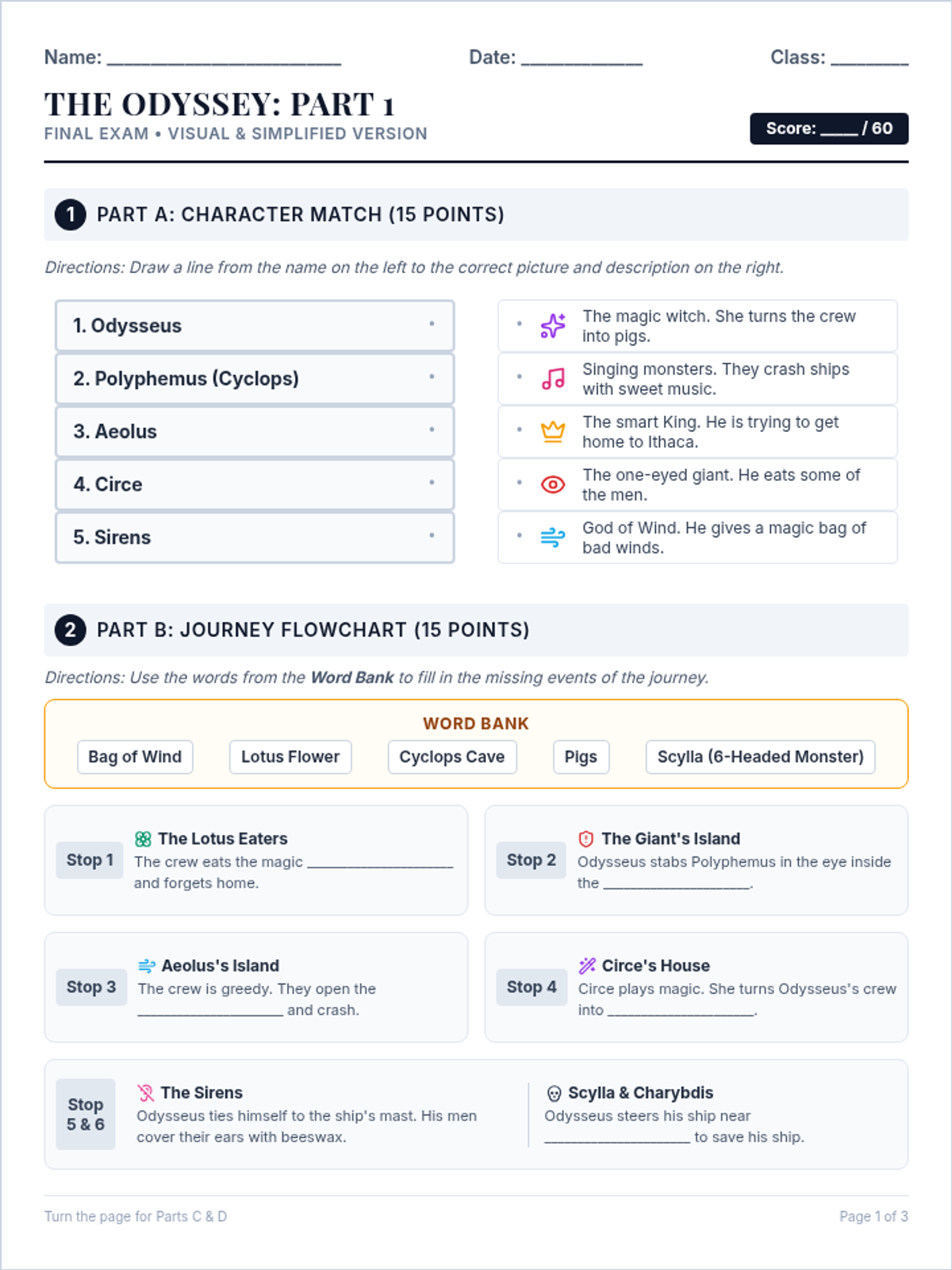
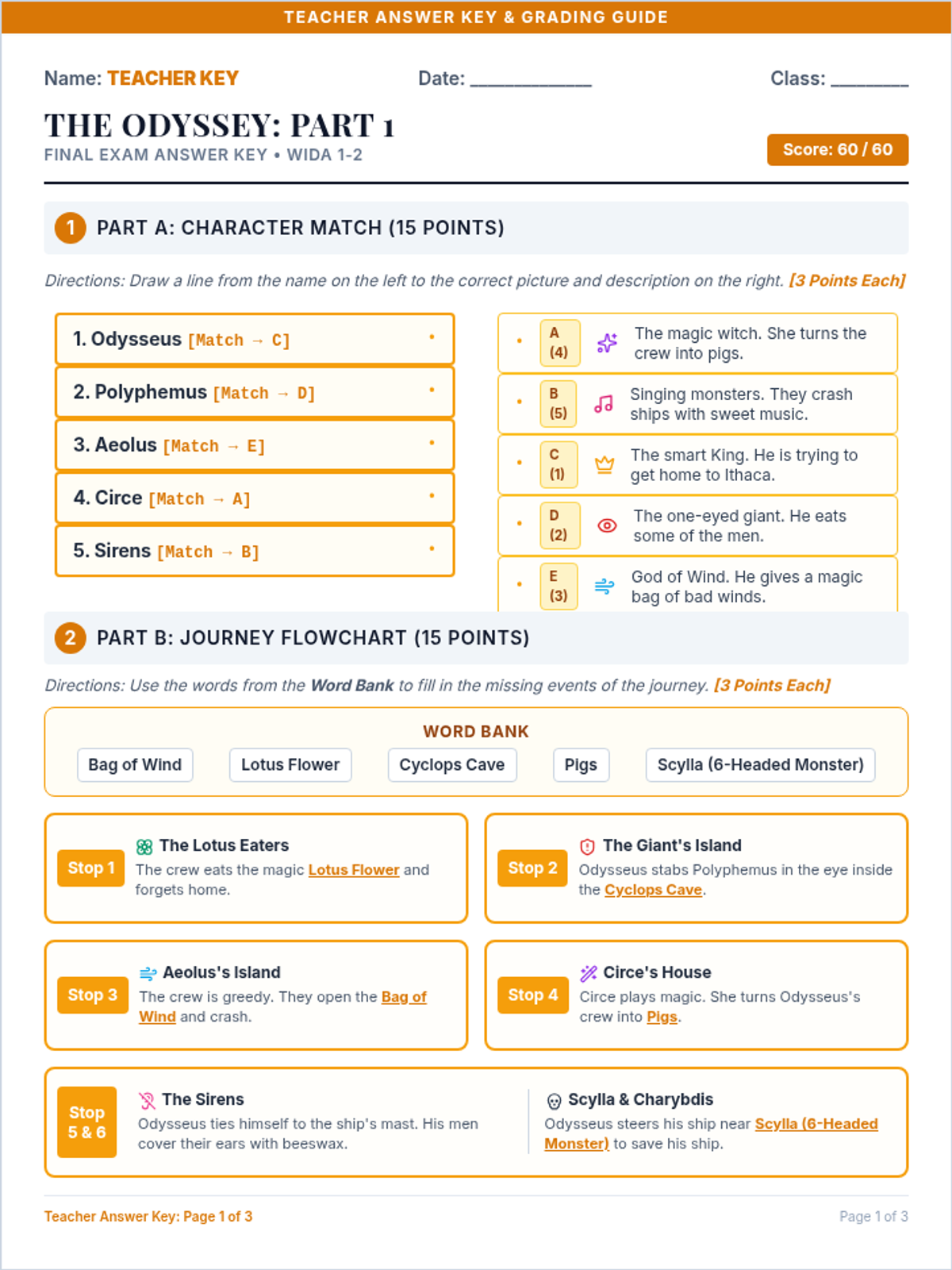
A highly simplified, visually supported final exam on Part 1 of The Odyssey, designed specifically for Grade 9 English Language Learners at WIDA levels 1-2. It features visual matching, multiple-choice questions with clear icon support, a sequential flowchart, and structured sentence starters to support reading comprehension and analysis of key decisions.
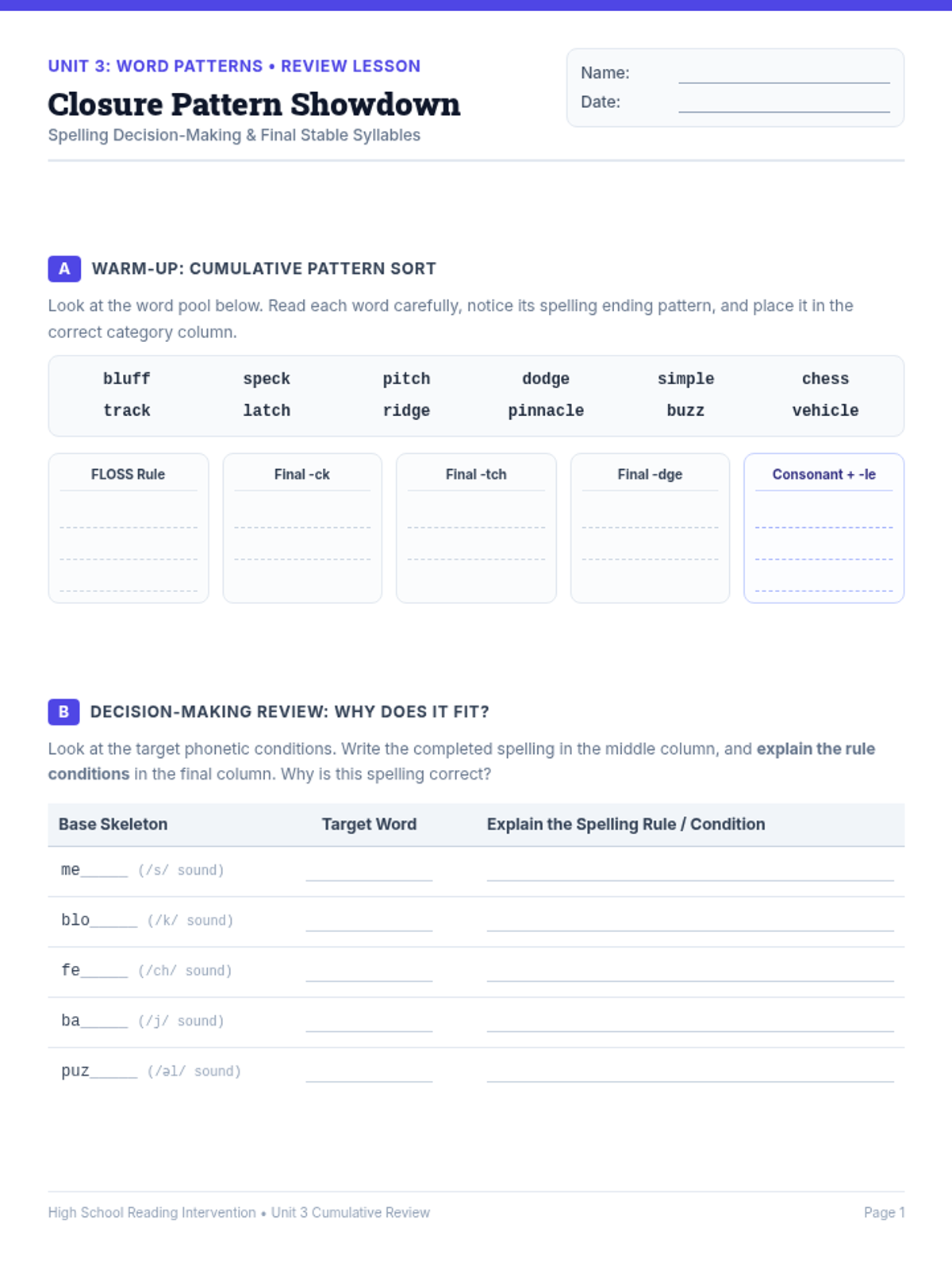
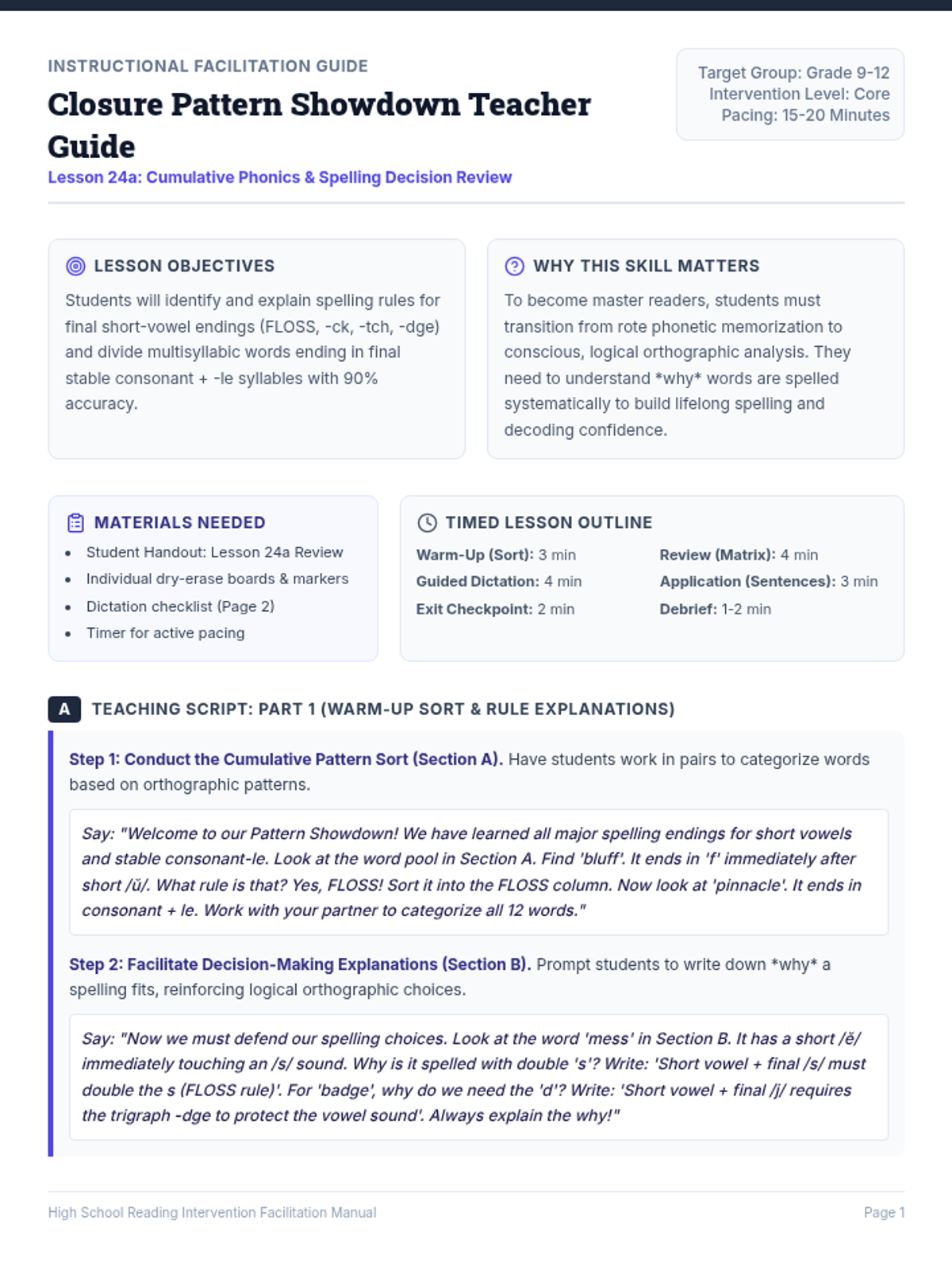
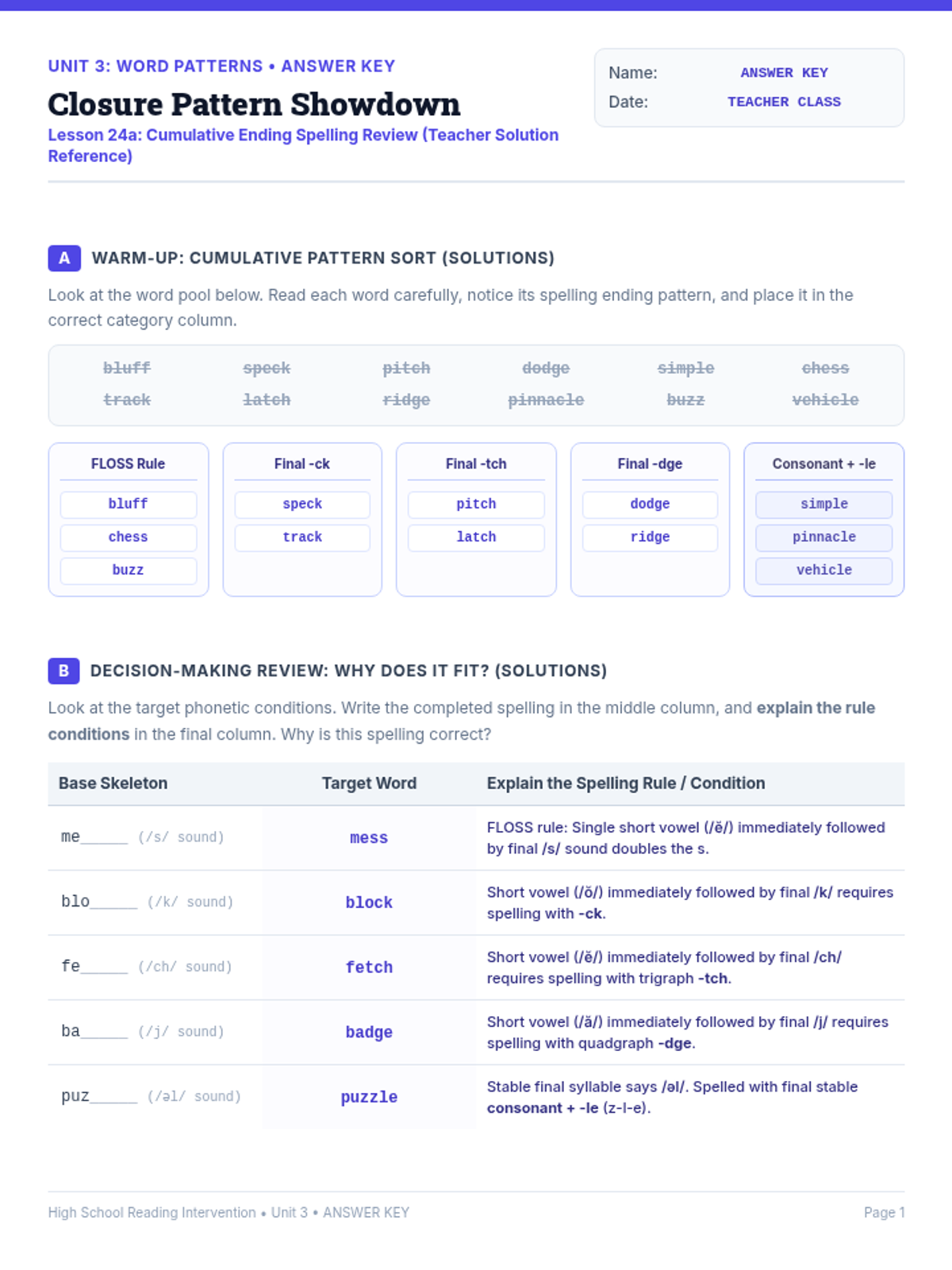
A cumulative review and decision-making lesson consolidating all short-vowel ending rules (FLOSS, -ck, -tch, -dge) and stable final syllables (consonant + -le) to cement orthographic reasoning and decoding precision.
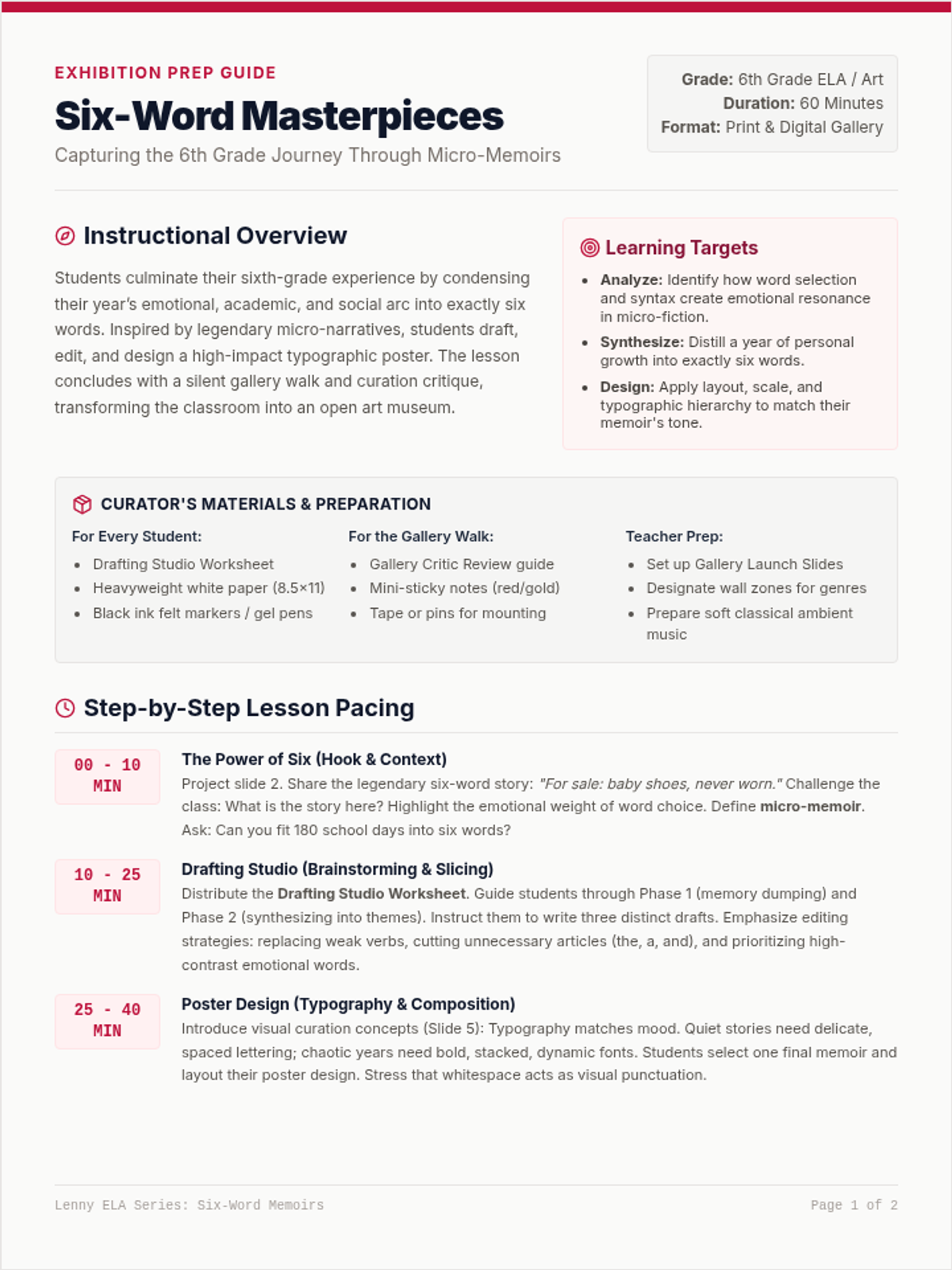
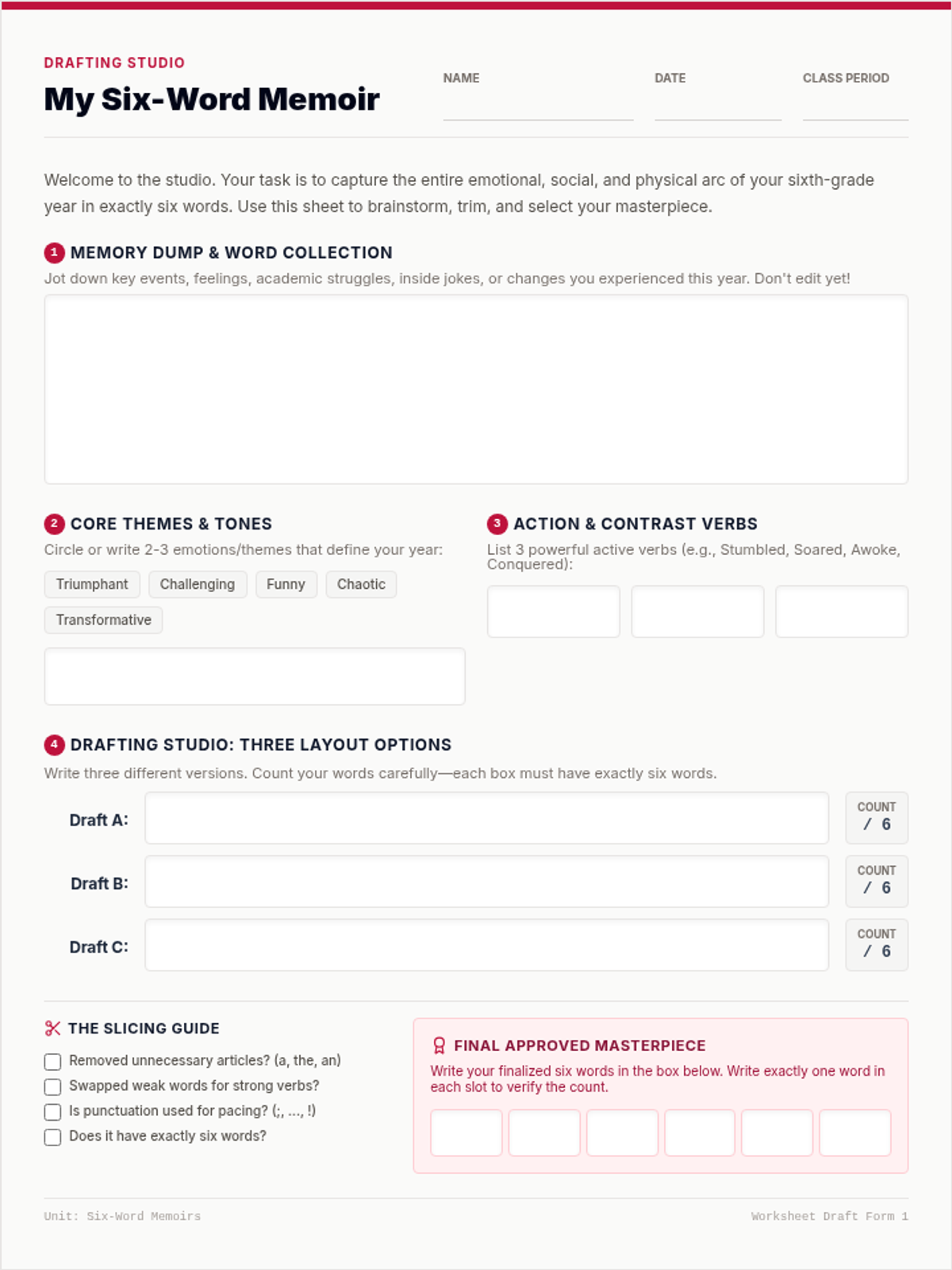
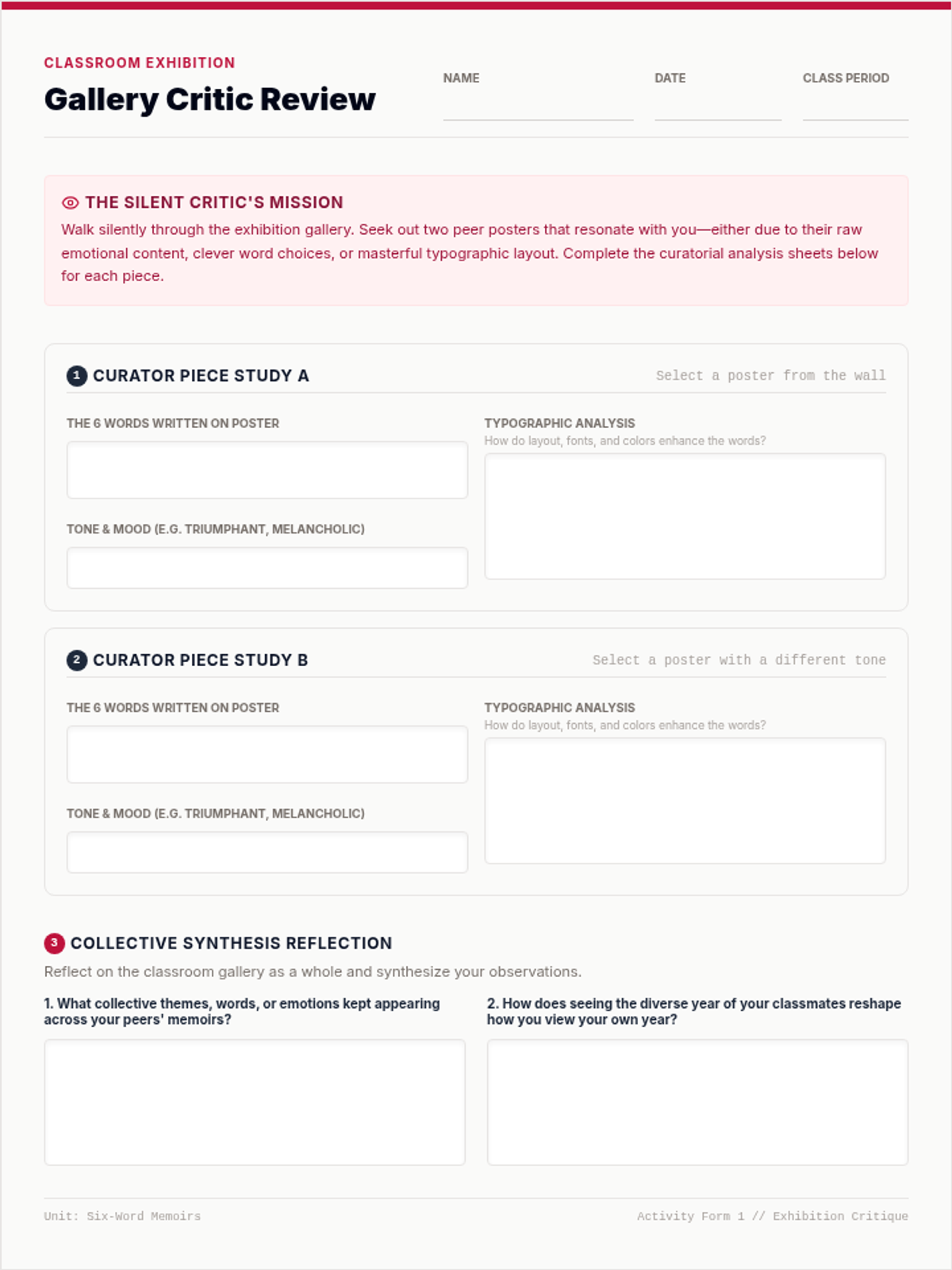
Students distill their entire sixth-grade experience into exactly six words, designing a gallery-worthy memoir poster and participating in a reflective classroom exhibition.
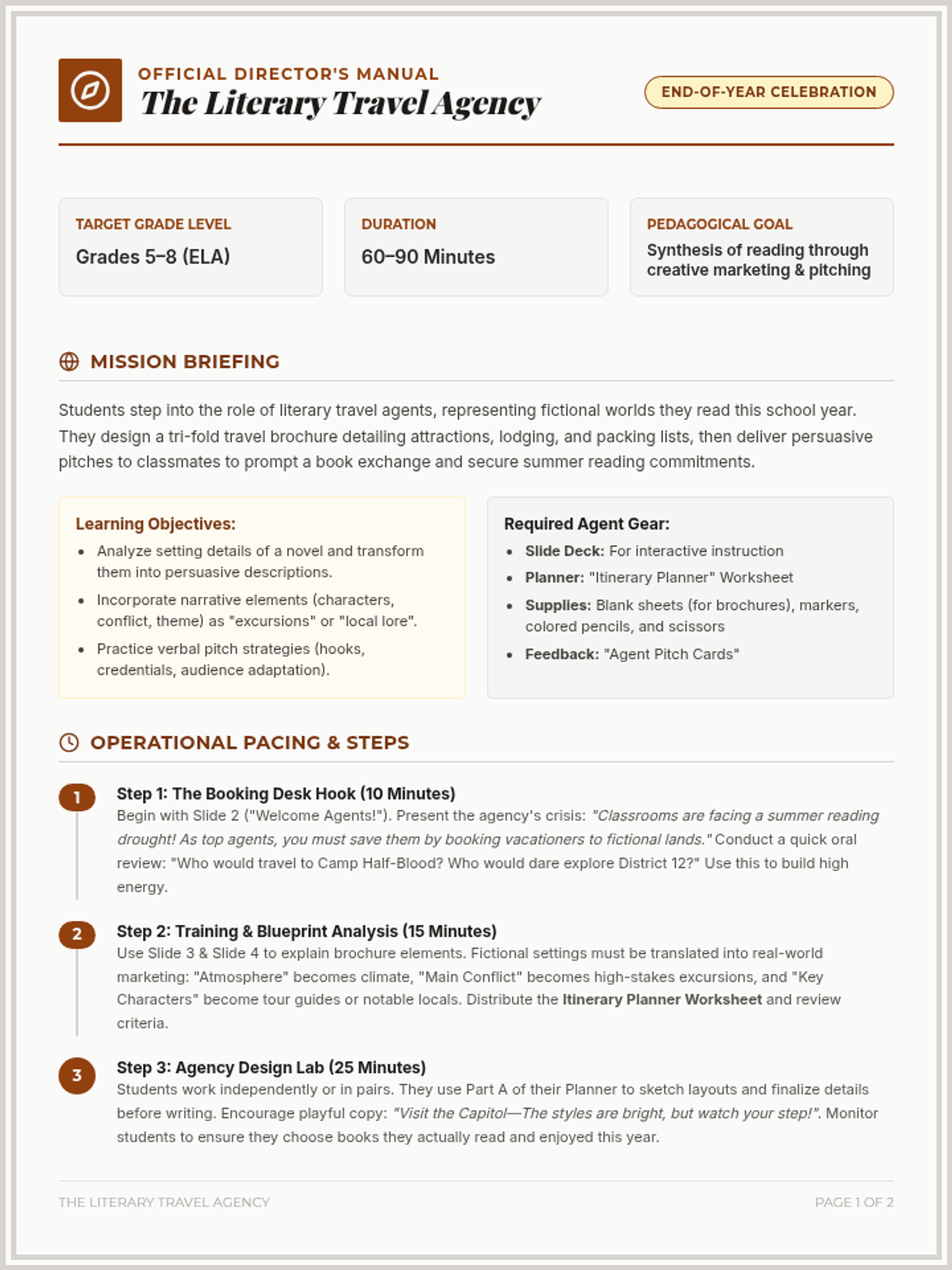
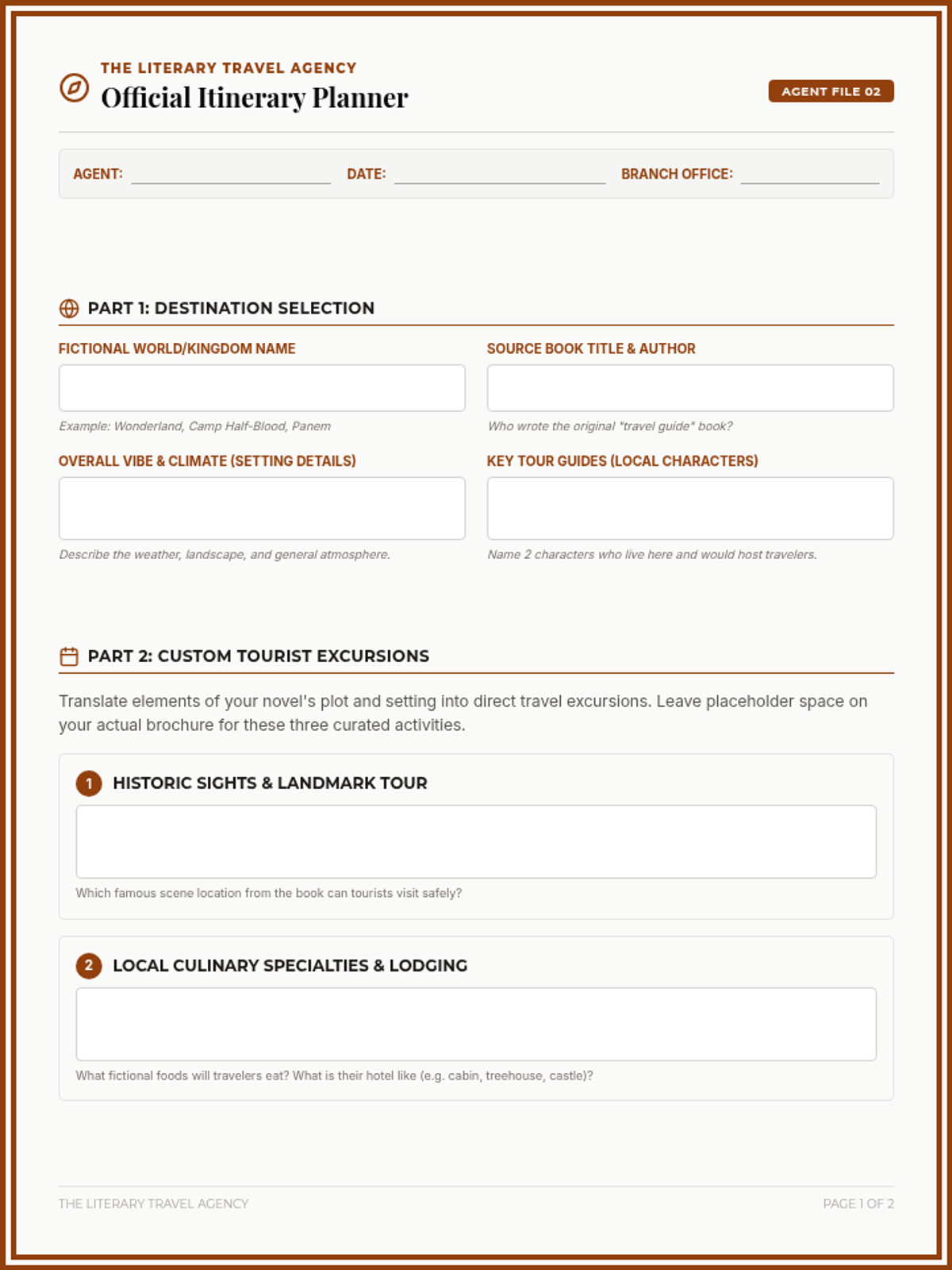
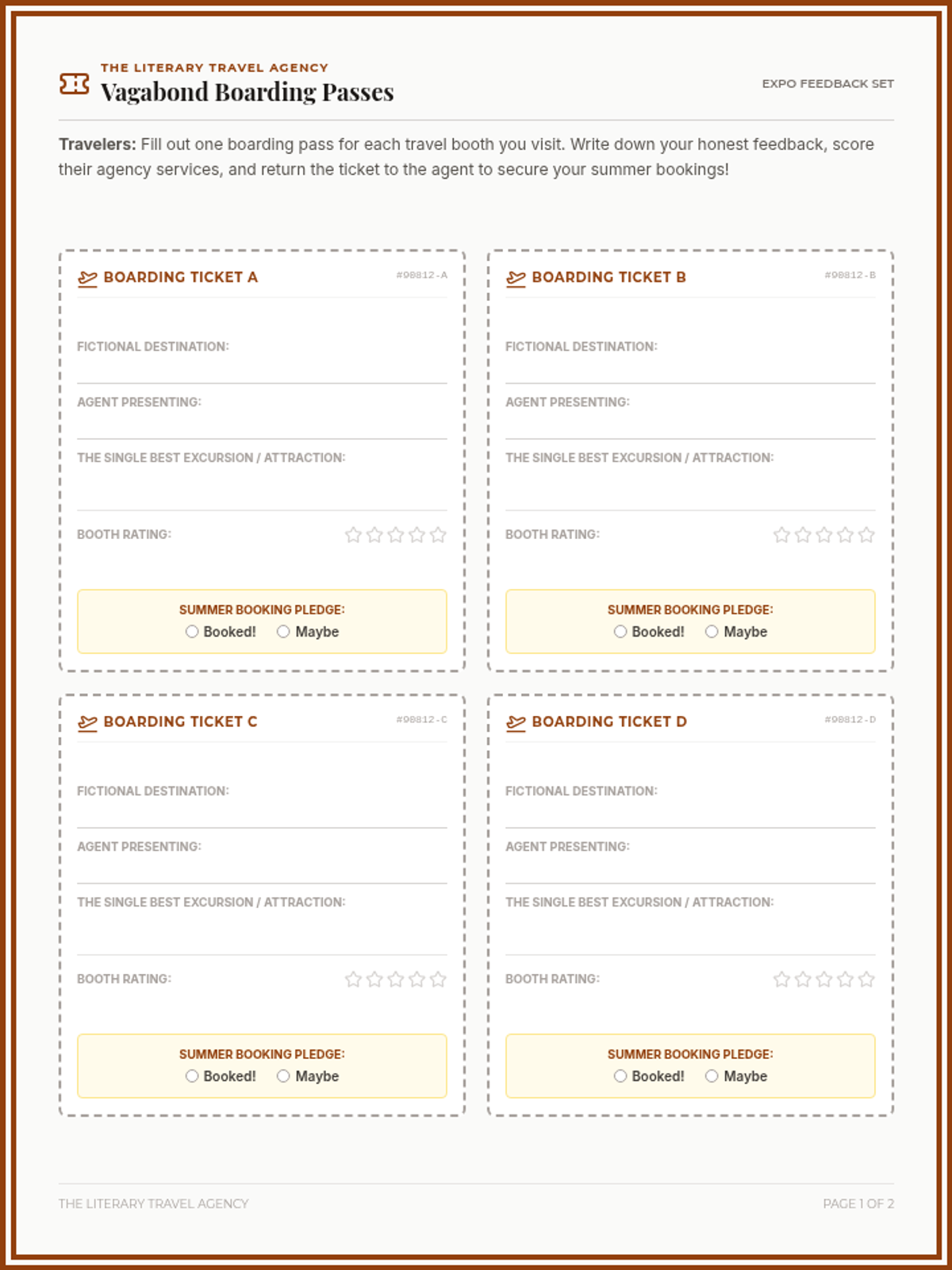
A celebratory end-of-year English Language Arts lesson where students step into the role of literary travel agents, designing promotional brochures and pitching fictional book worlds to classmates to boost summer reading.
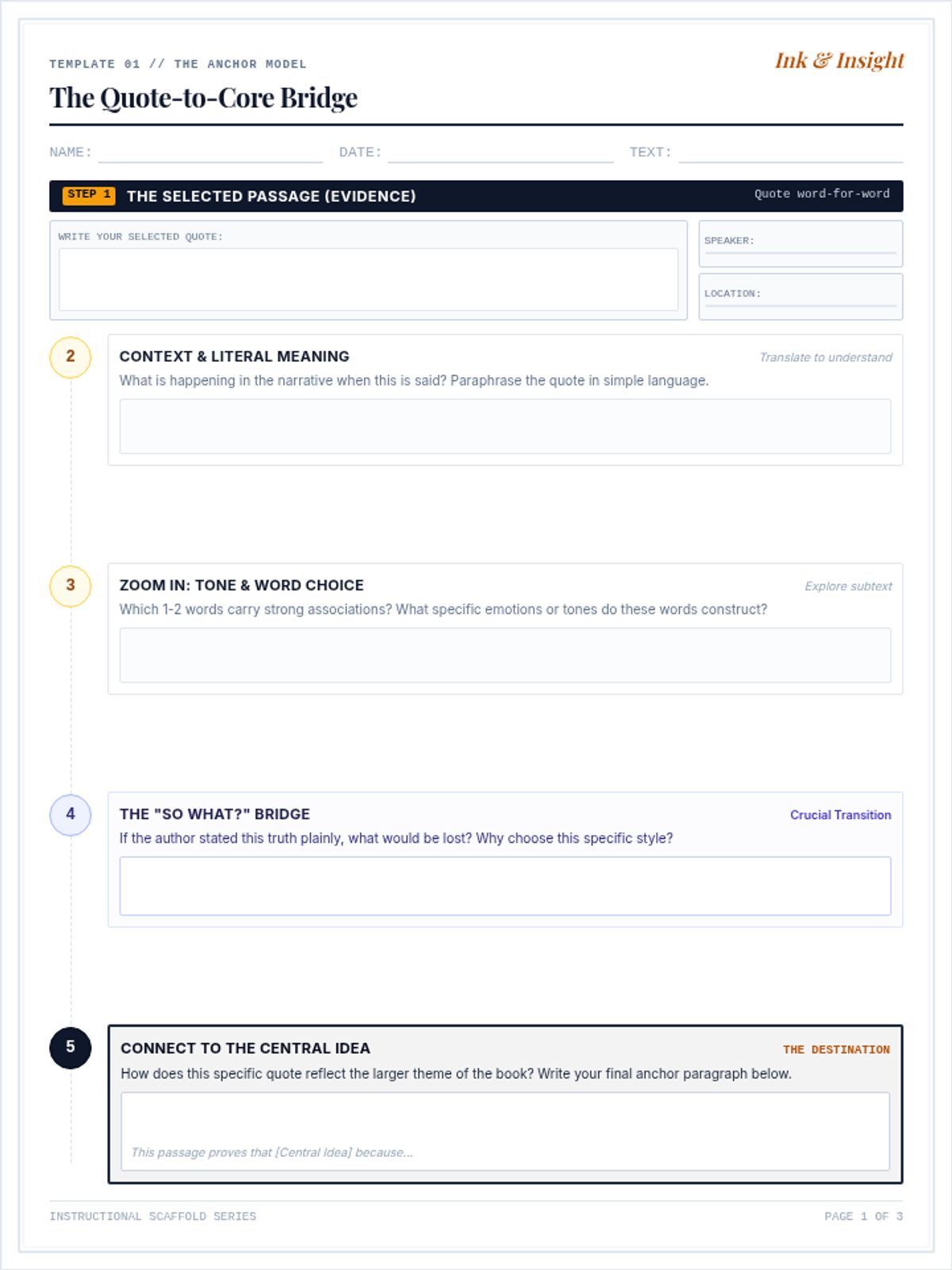
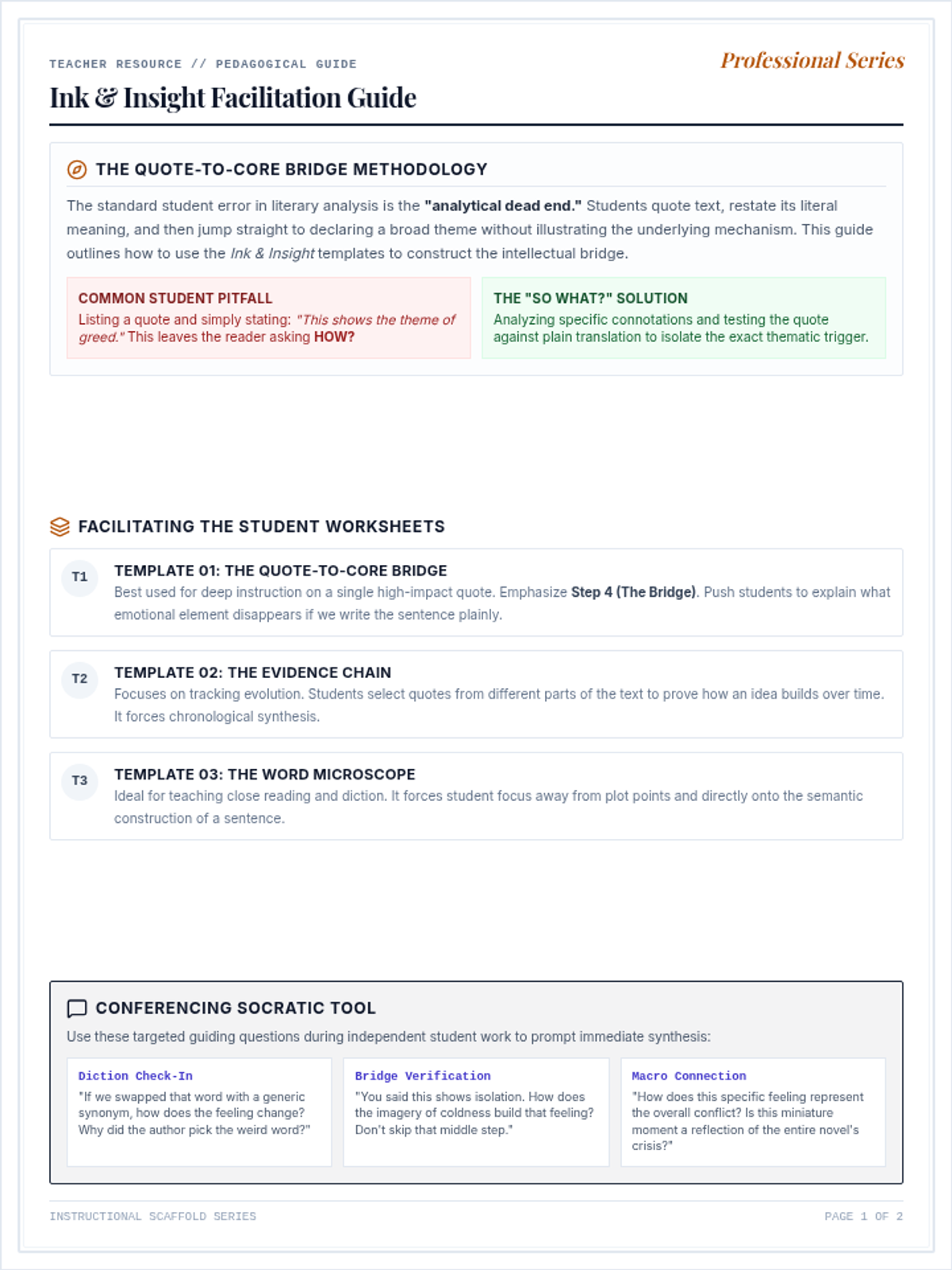
A comprehensive literary analysis lesson focusing on connecting textual evidence directly back to a central idea. This lesson equips students with structured templates and a teacher guide to bridge the gap between quote dissection and thematic analysis.
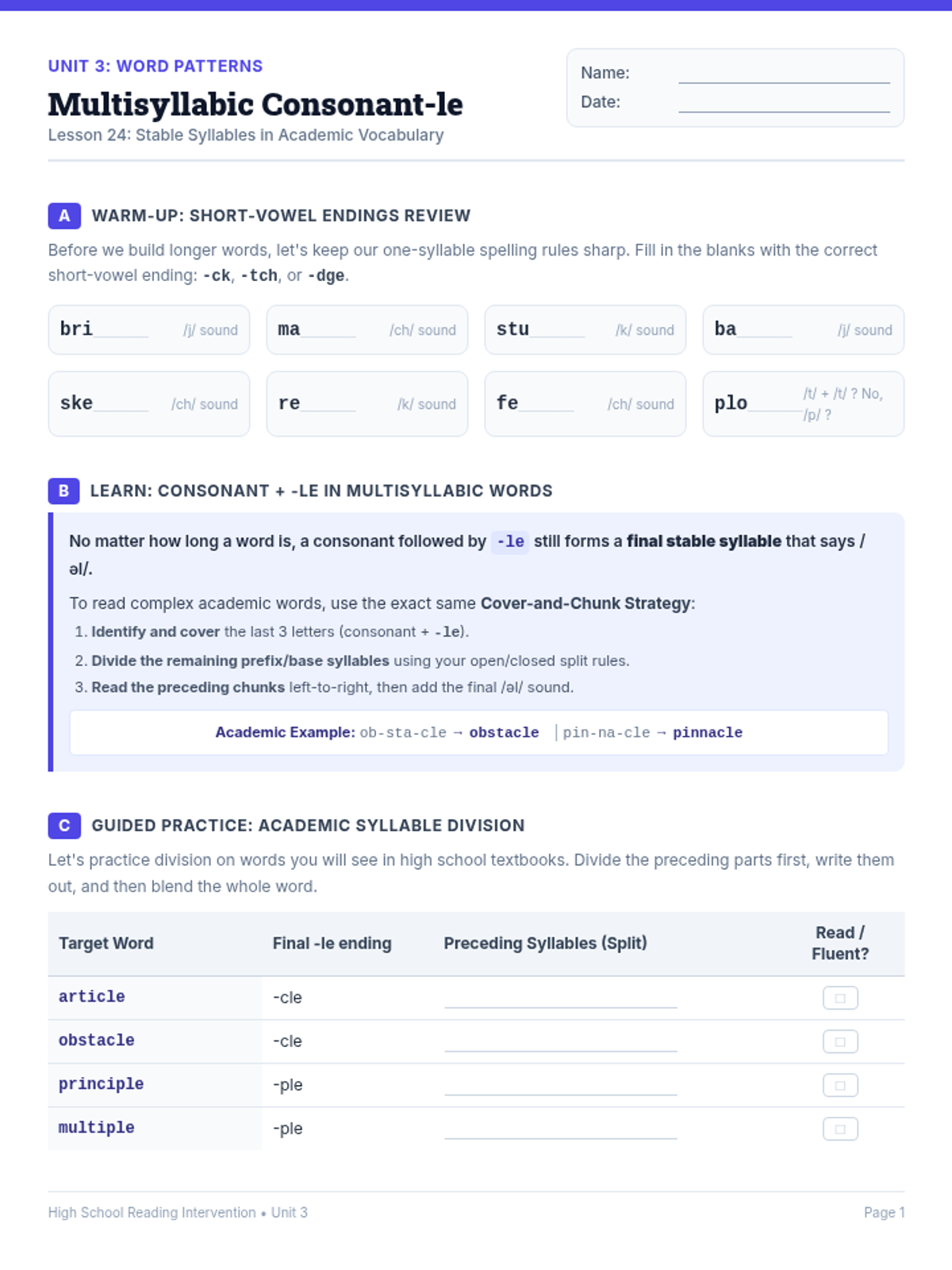
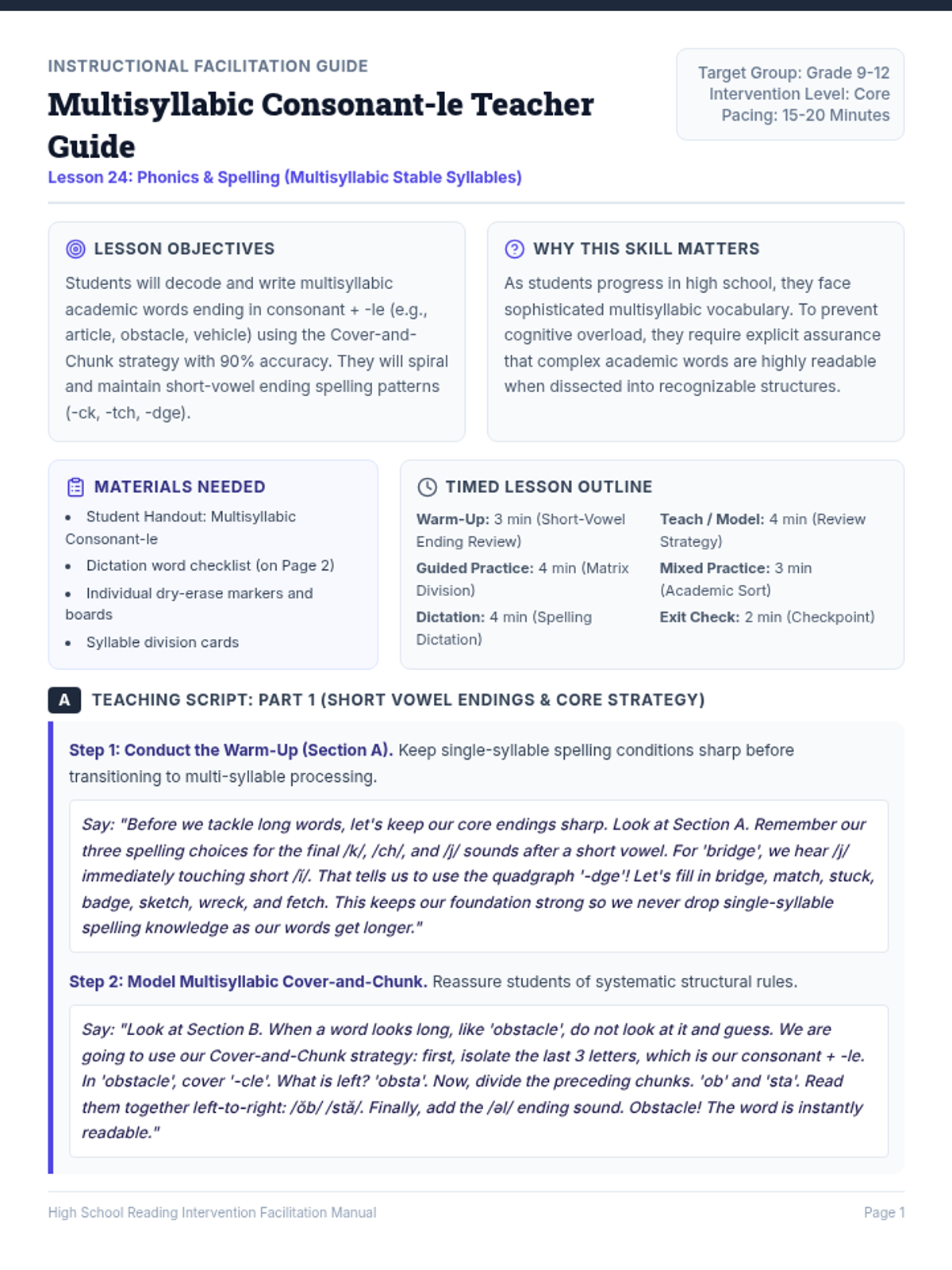
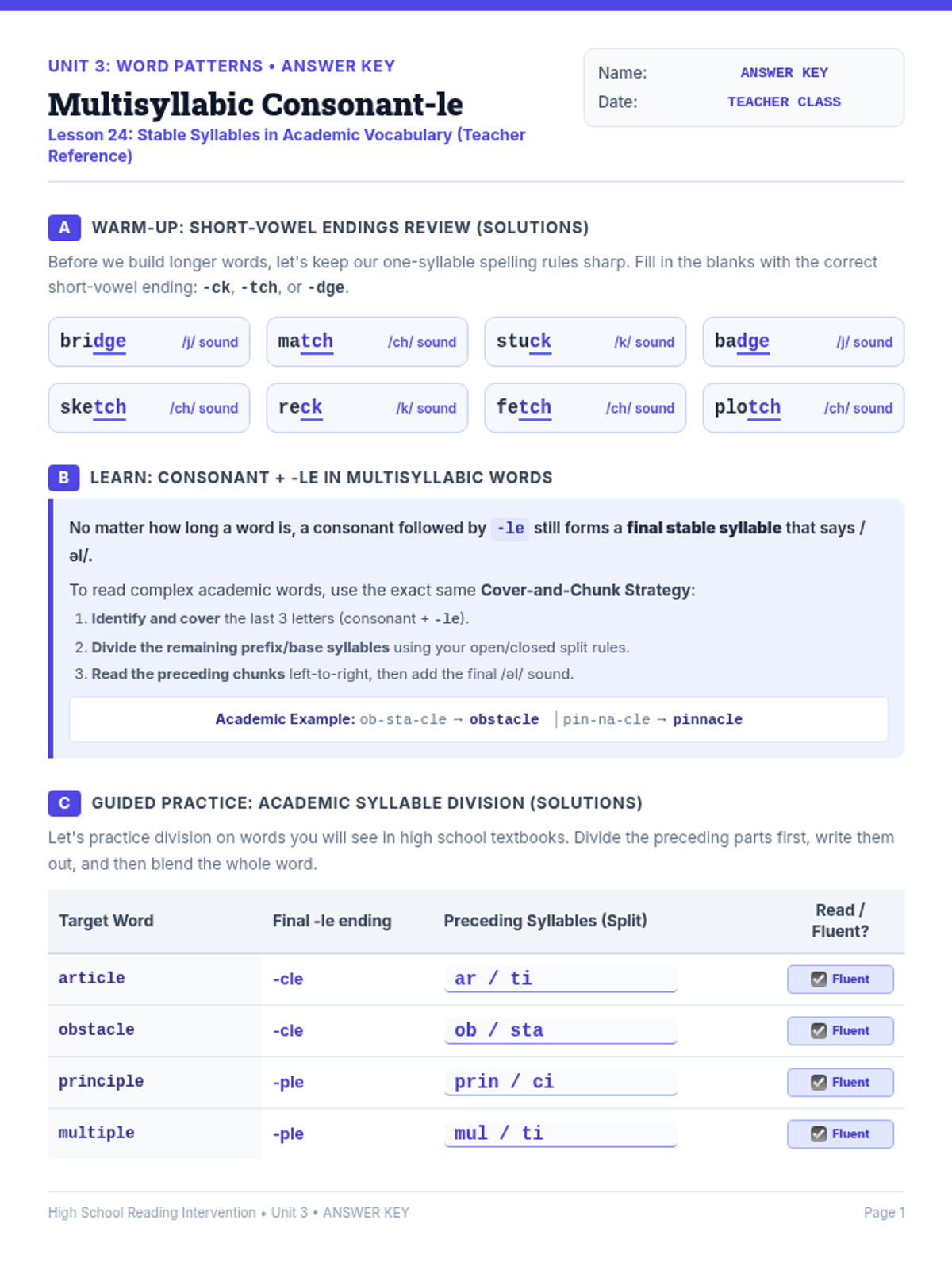
Focuses on decoding and spelling longer, academic multisyllabic words ending in consonant + -le, while spiraling previously learned short-vowel spelling patterns (-ck, -tch, -dge) during warm-ups and comparative activities.
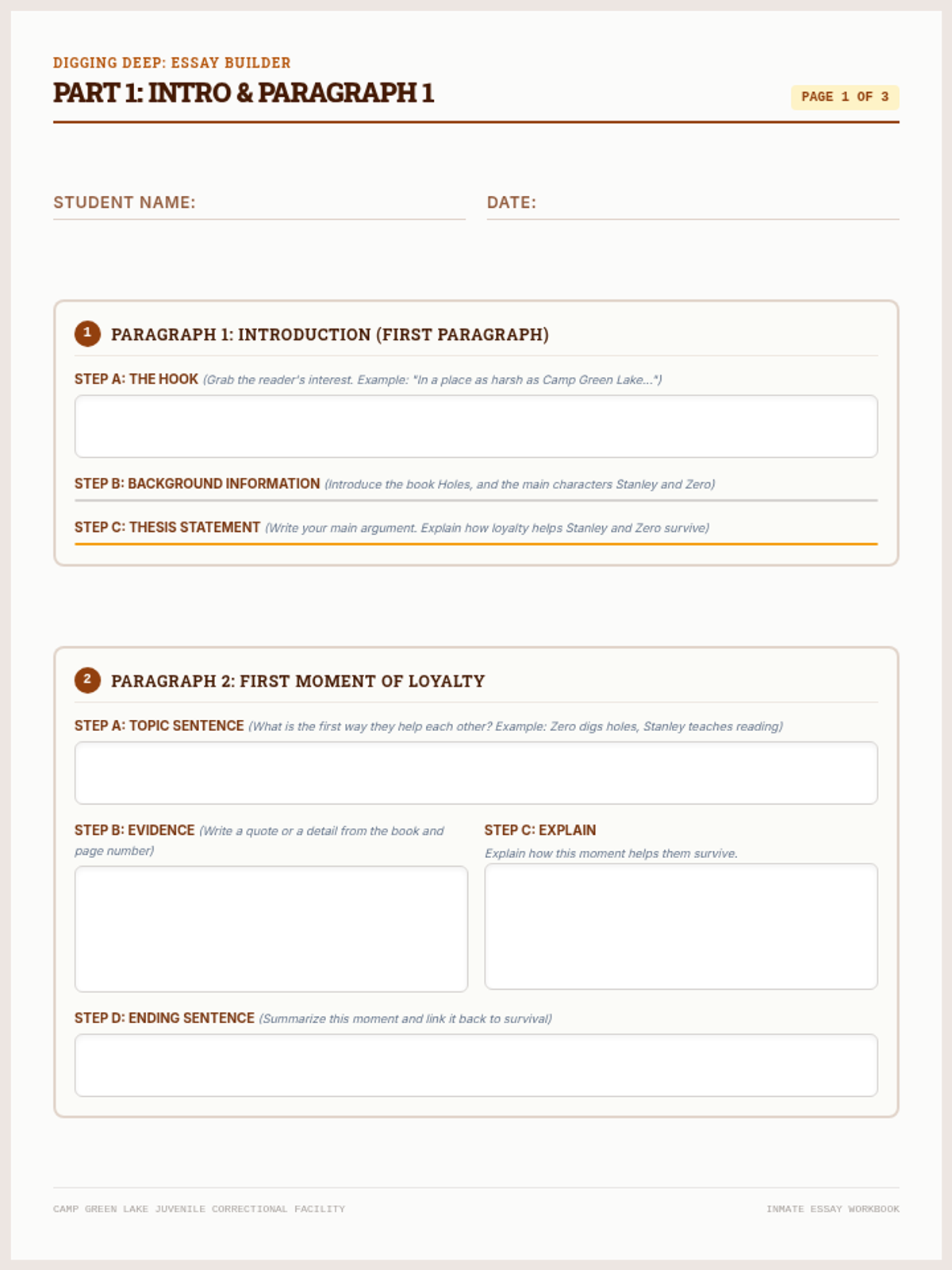
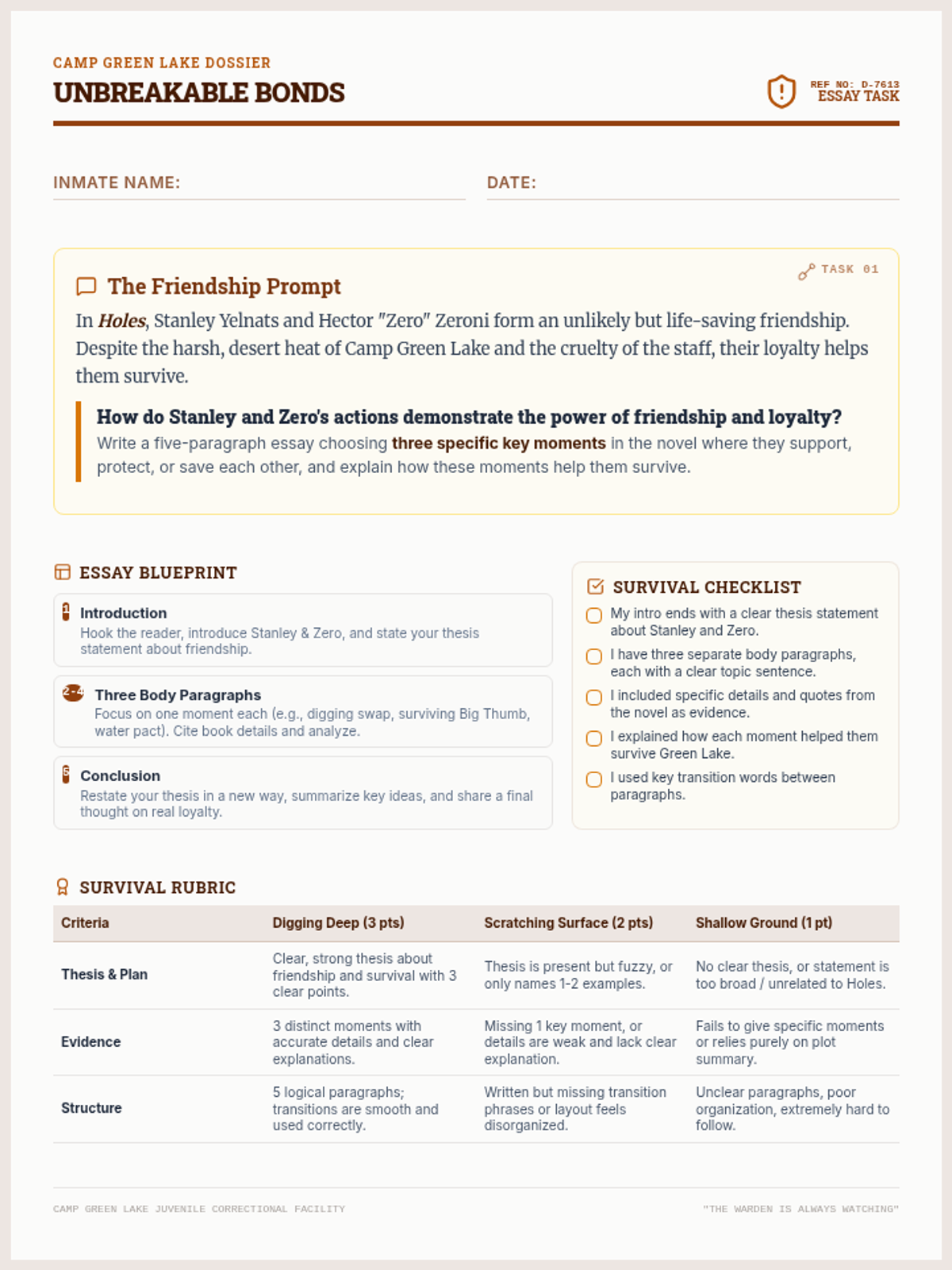
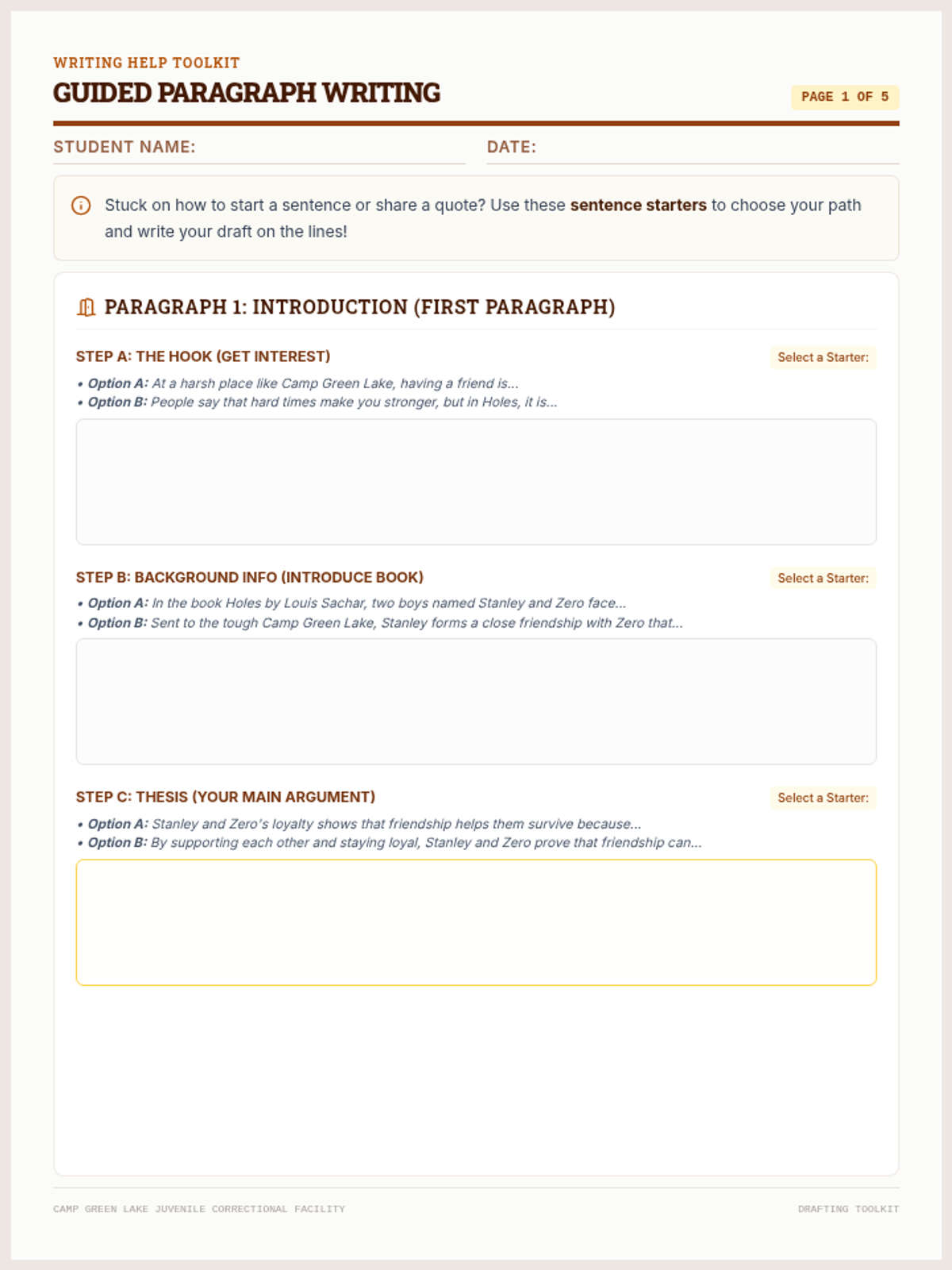
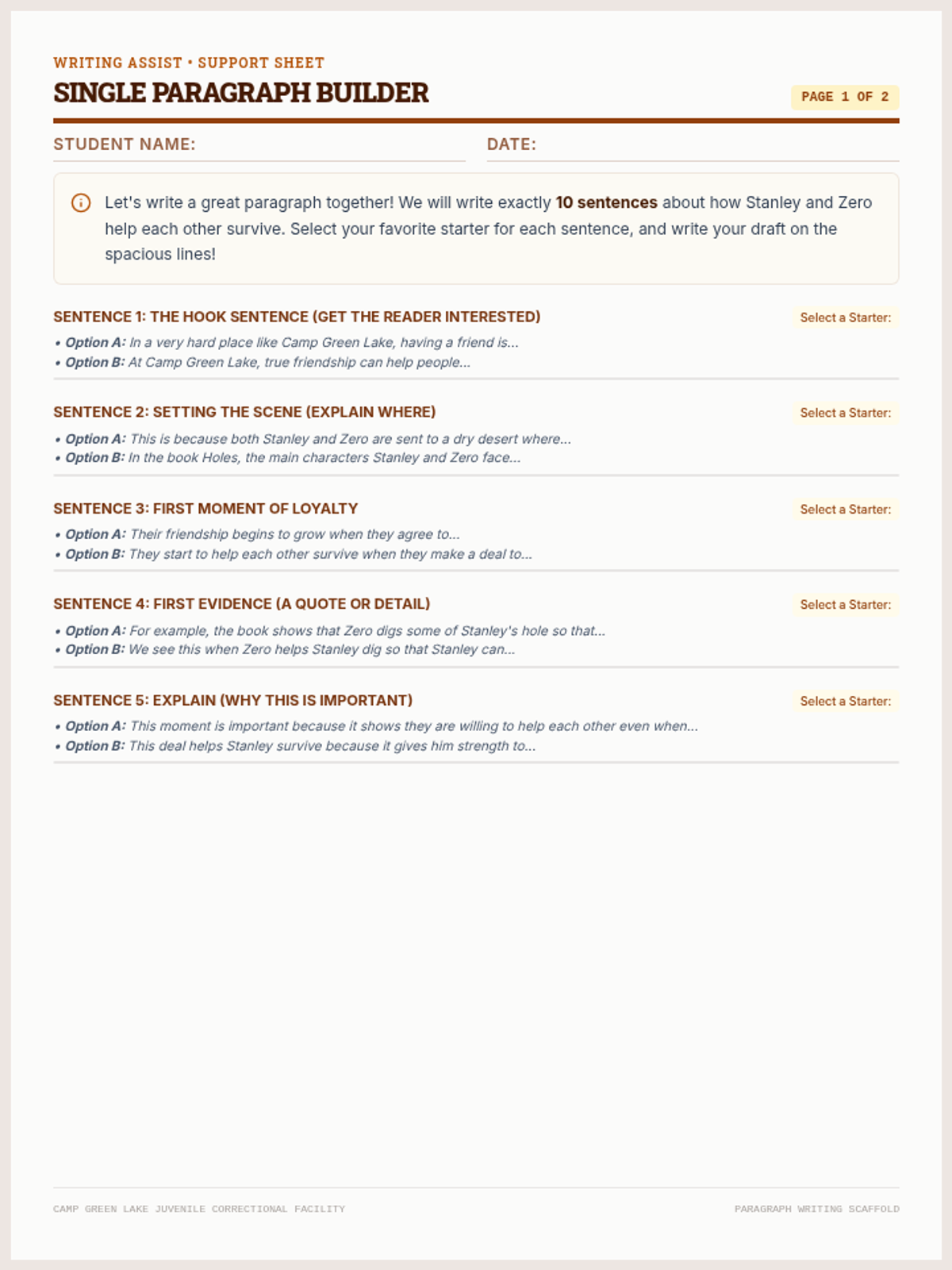
A structured writing unit for Holes by Louis Sachar focusing on the theme of friendship and loyalty. Students analyze Stanley and Zero's relationship and compose a five-paragraph essay using scaffolds, graphic organizers, and sentence frames.
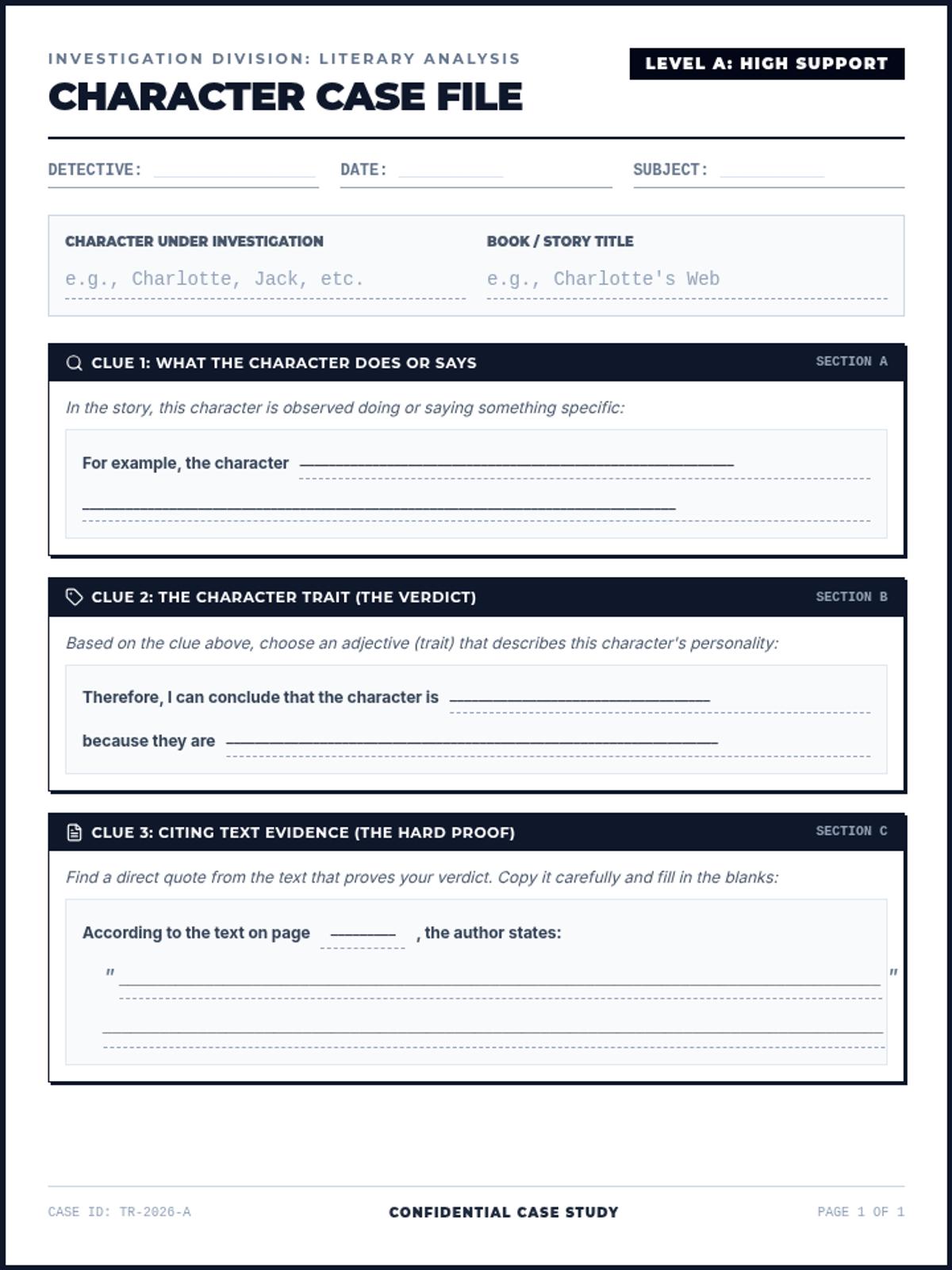
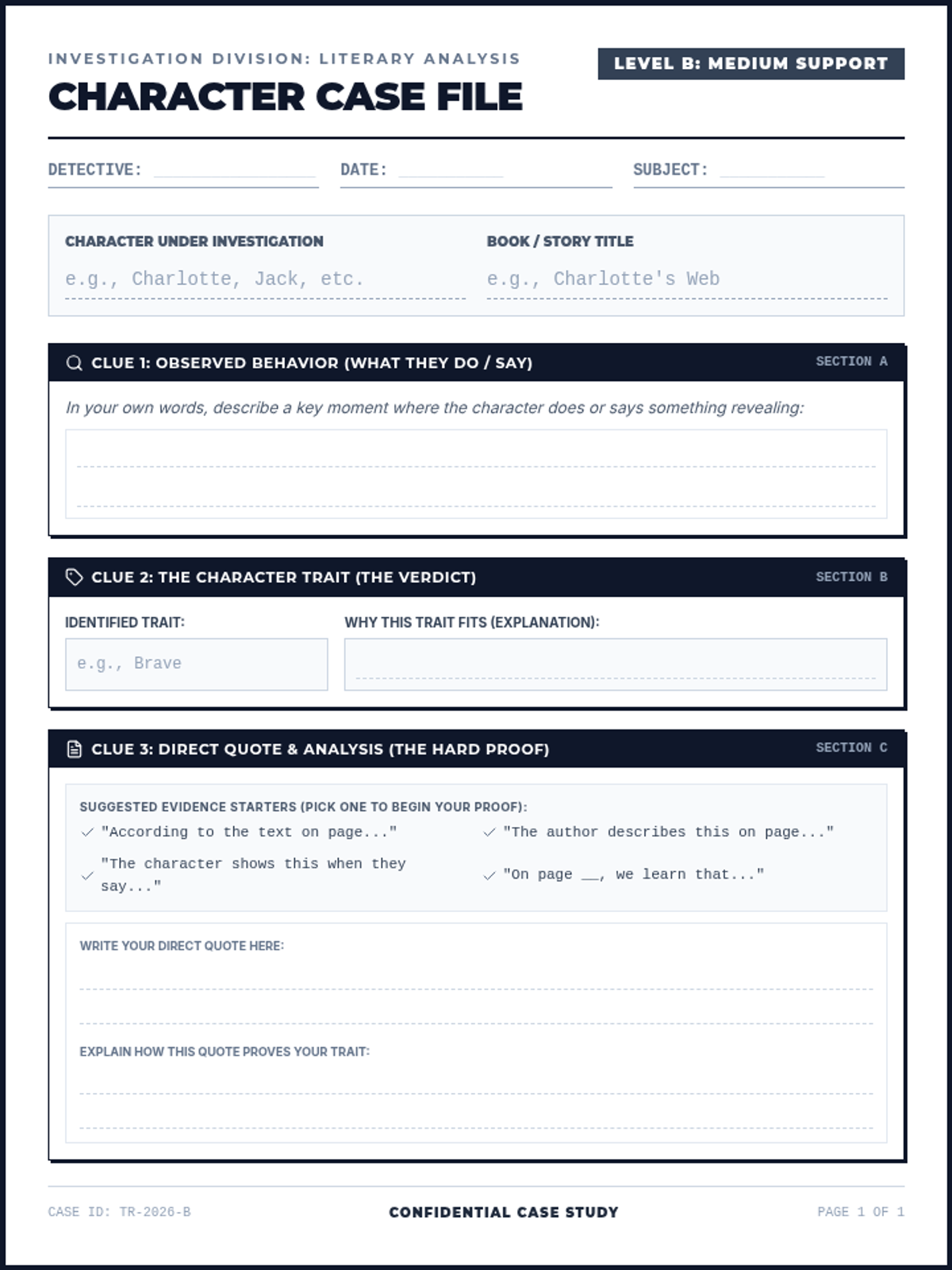
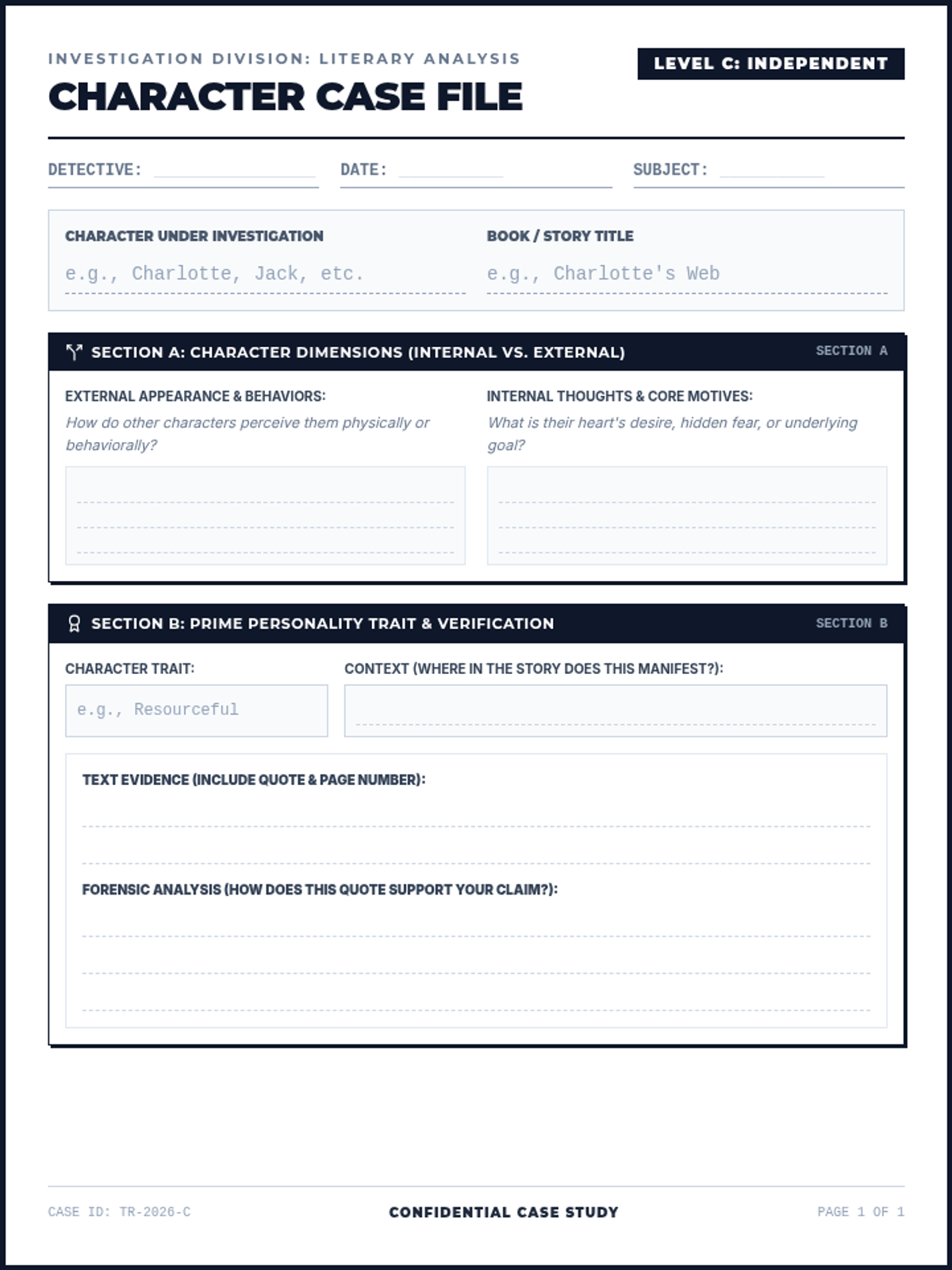
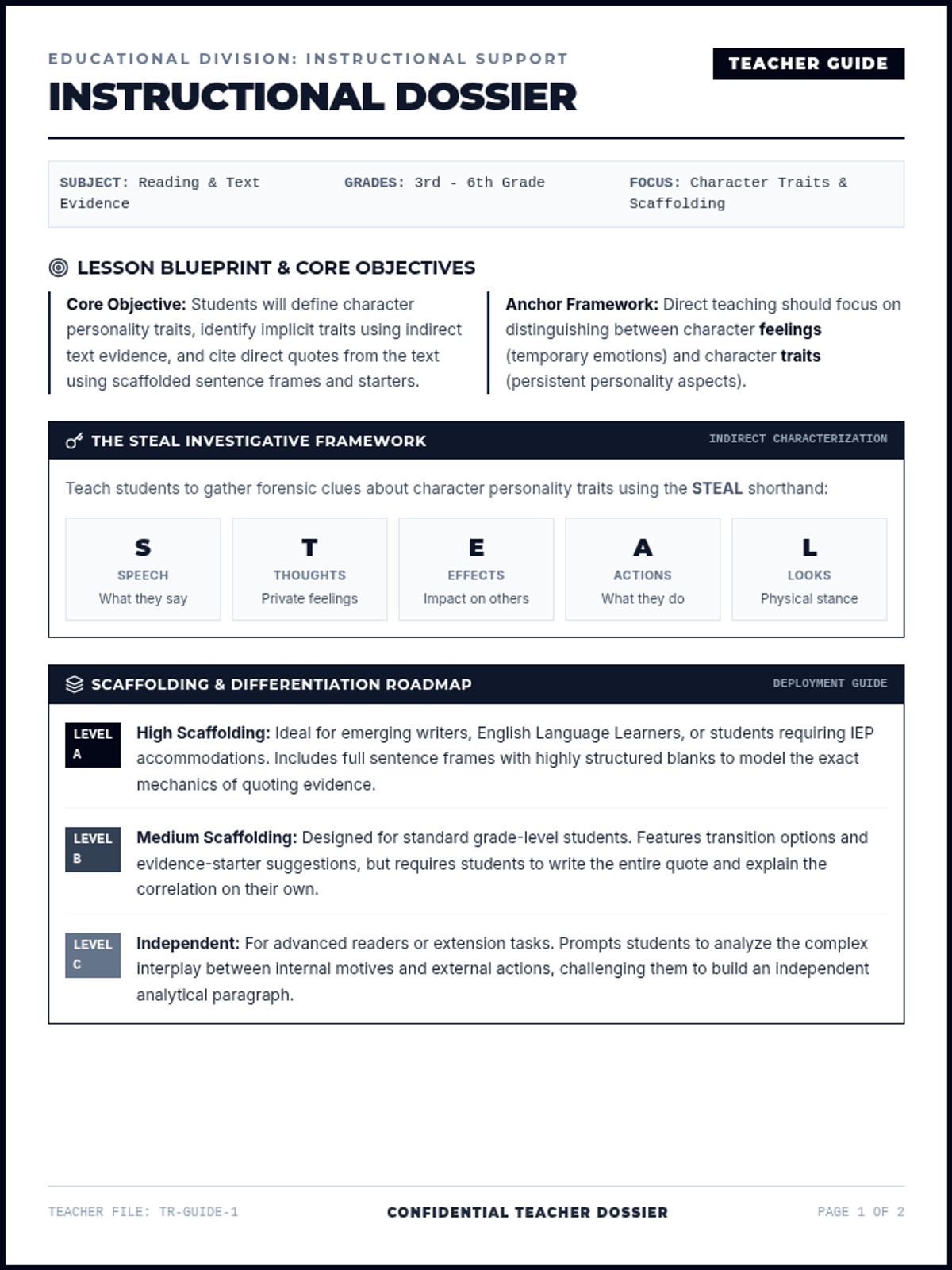
A comprehensive lesson and set of scaffolded graphic organizers designed to help students analyze character traits and master citing text evidence. Includes high, medium, and low levels of scaffolding to differentiate instruction.
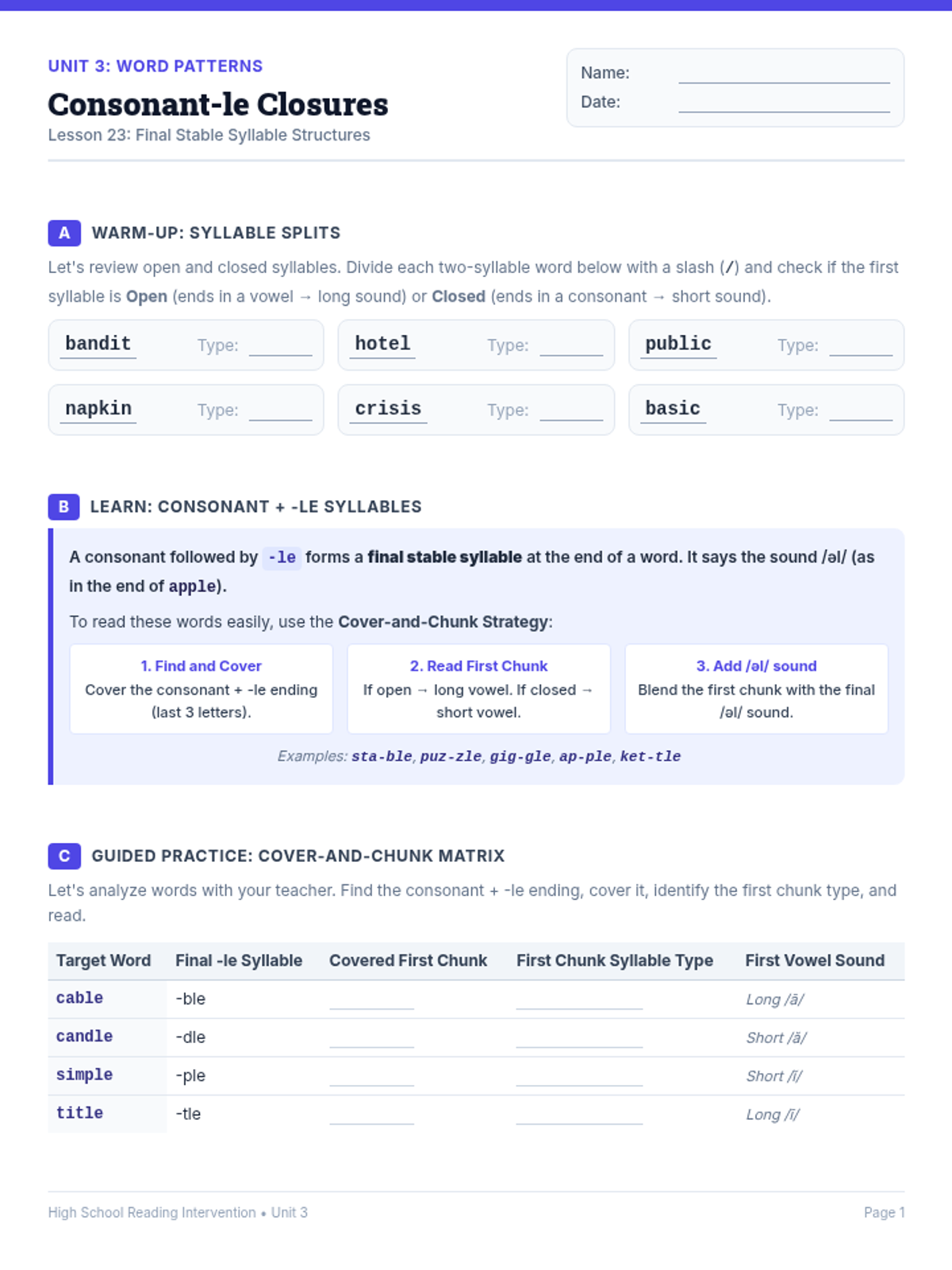
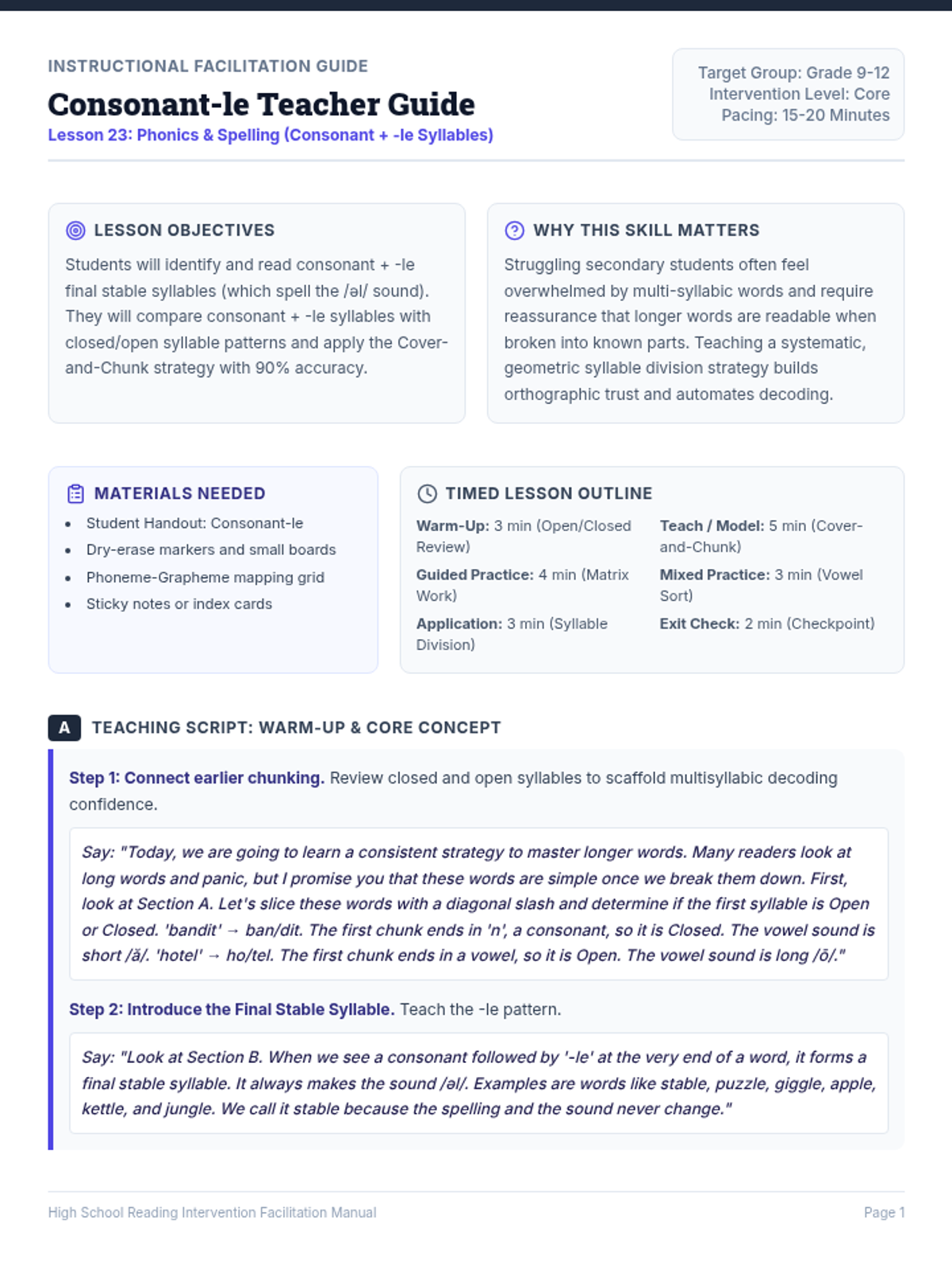
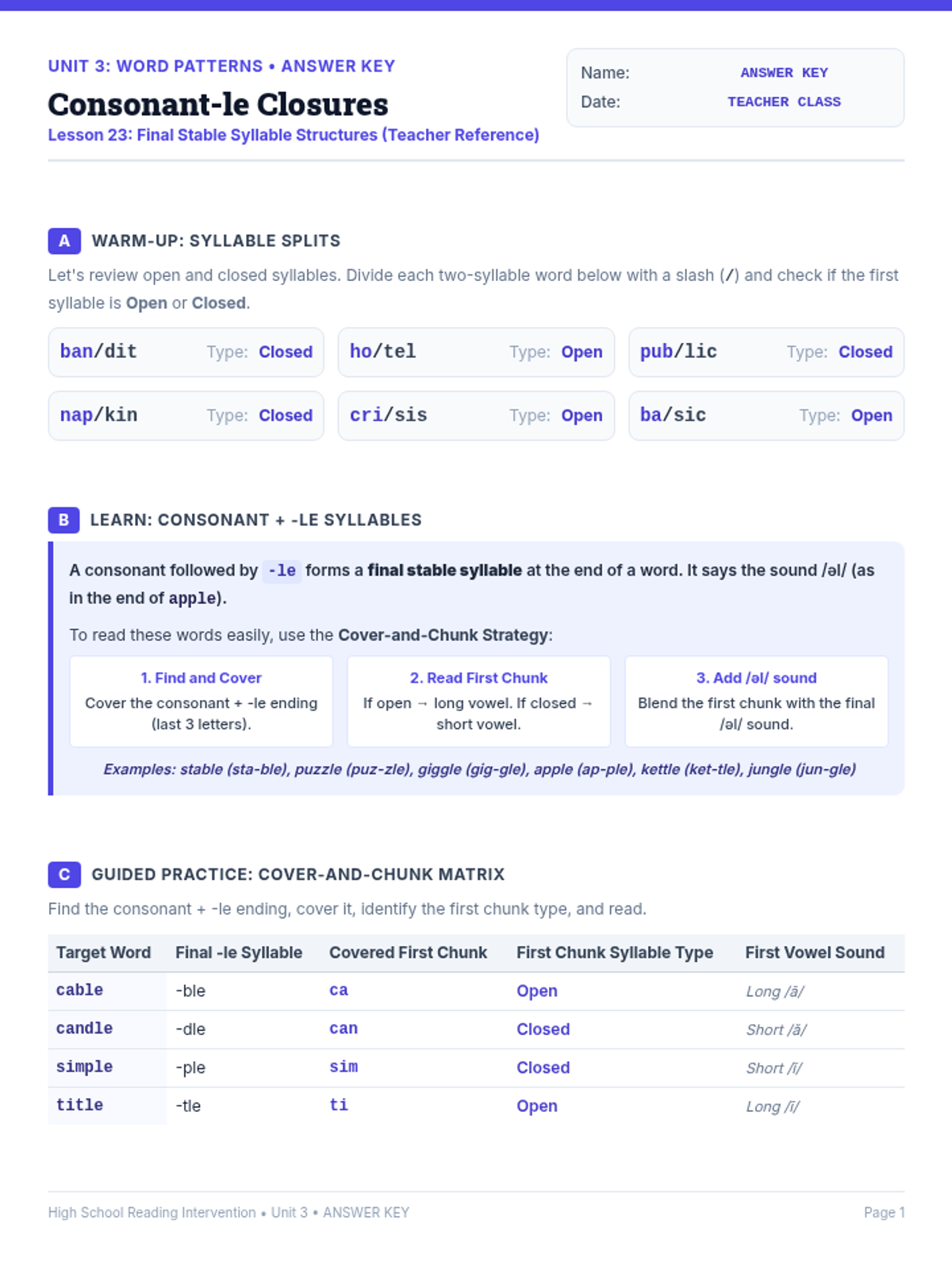
Introduces the final stable syllable consonant + -le, teaching a consistent cover-and-chunk strategy while spiraling open and closed syllable prerequisites.
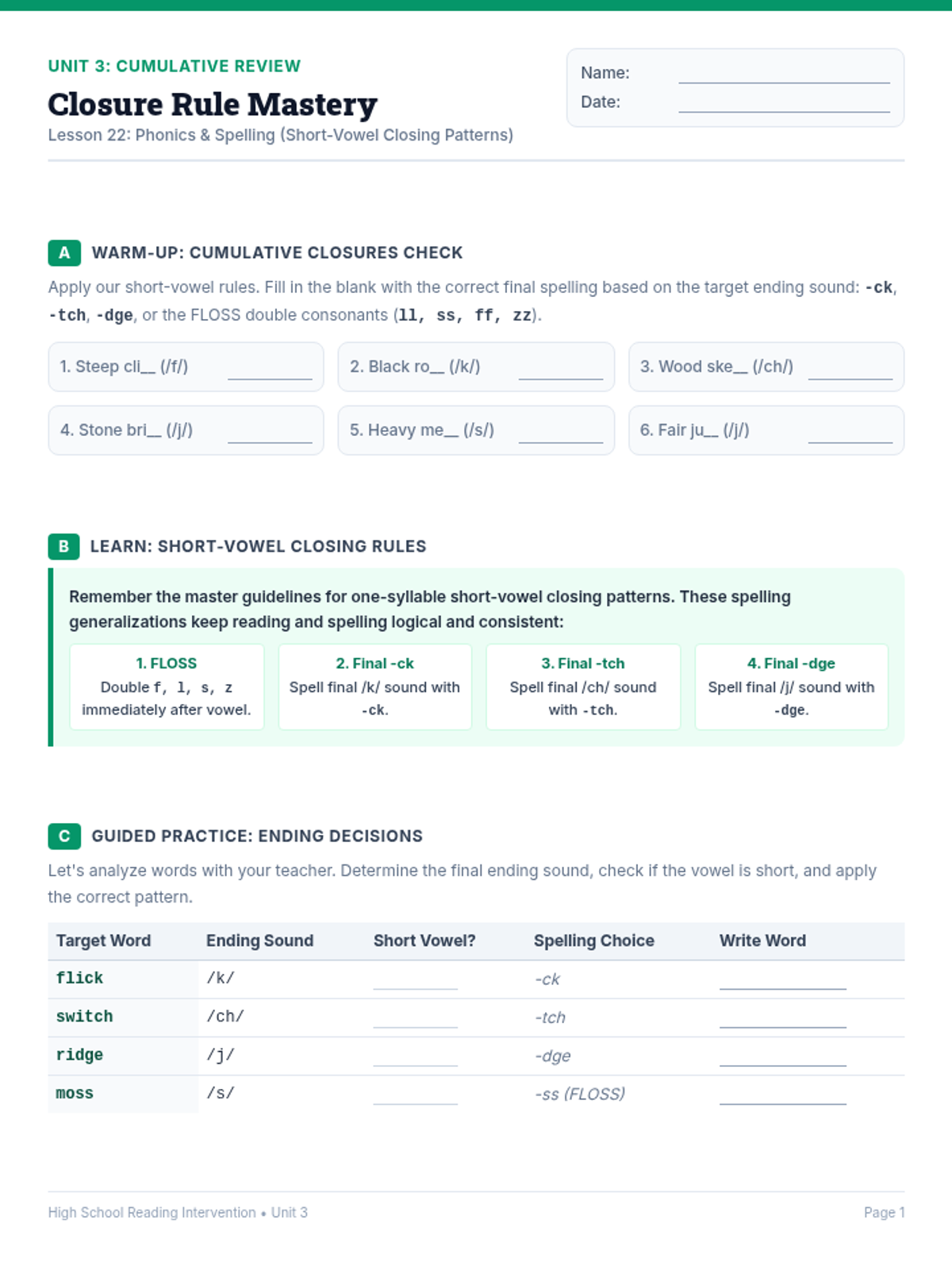
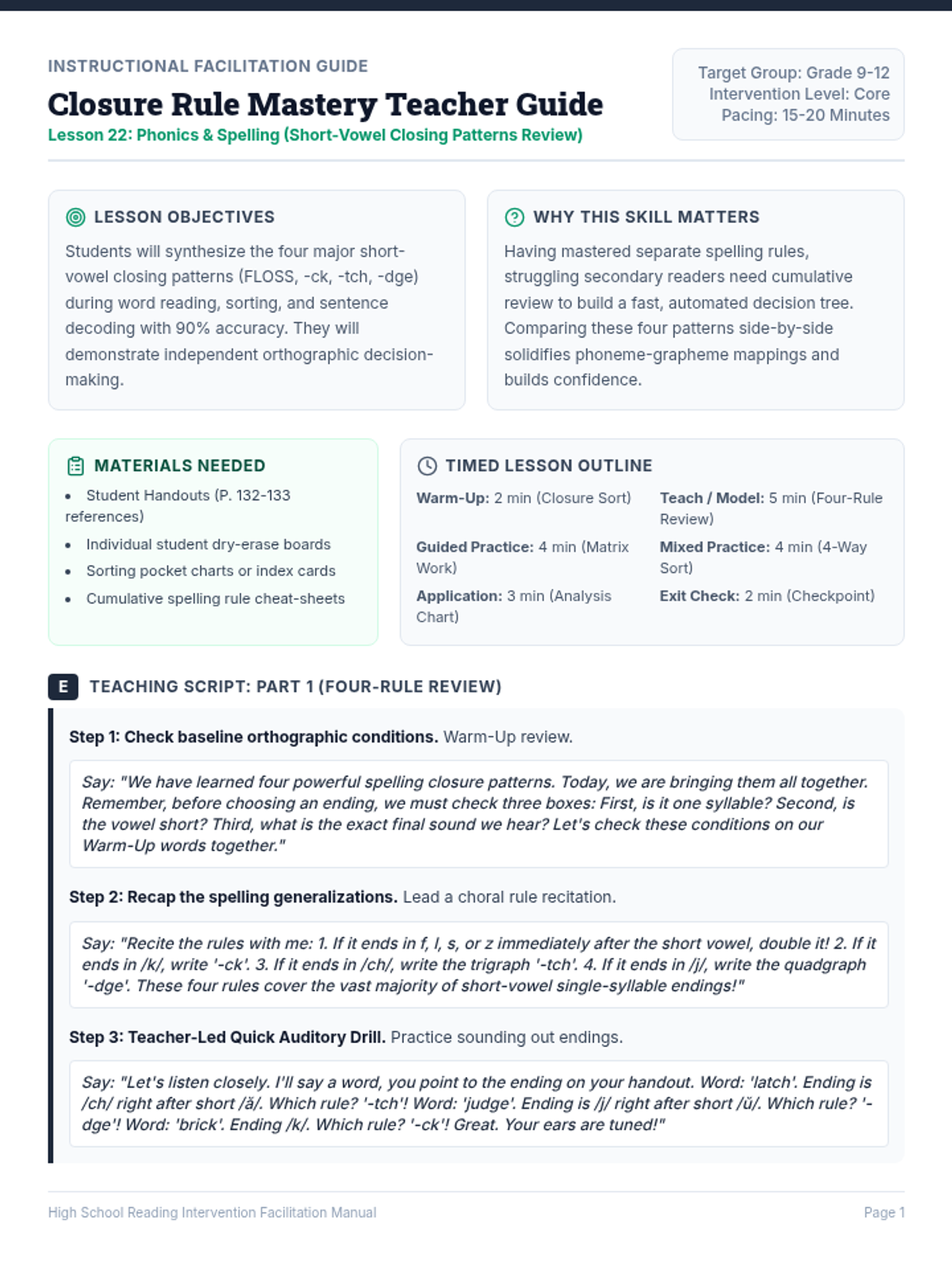
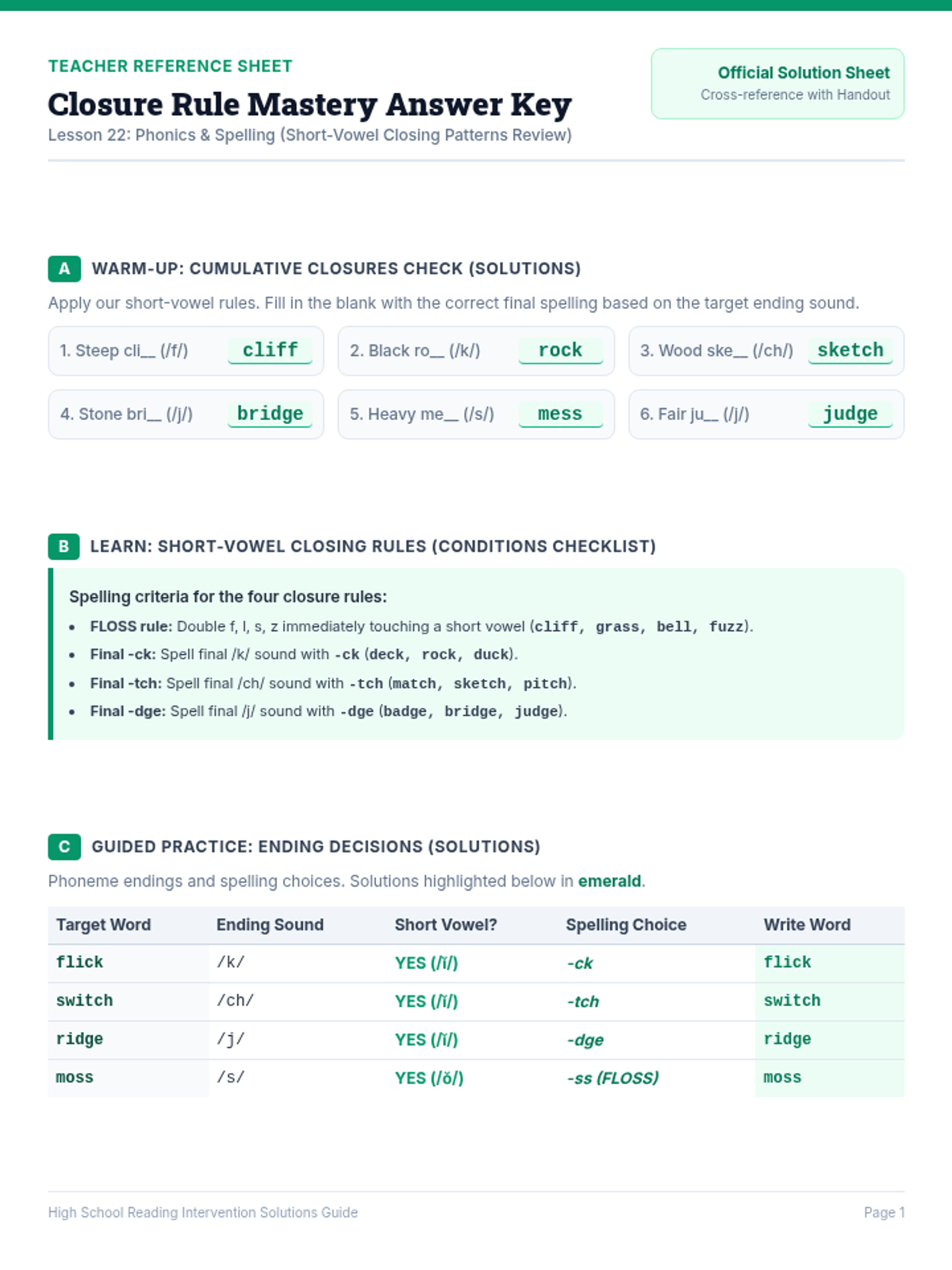
An intensive review and comparative lesson integrating all four major short-vowel closing patterns (FLOSS, -ck, -tch, -dge) to cement master-level orthographic decoding and spelling logic.
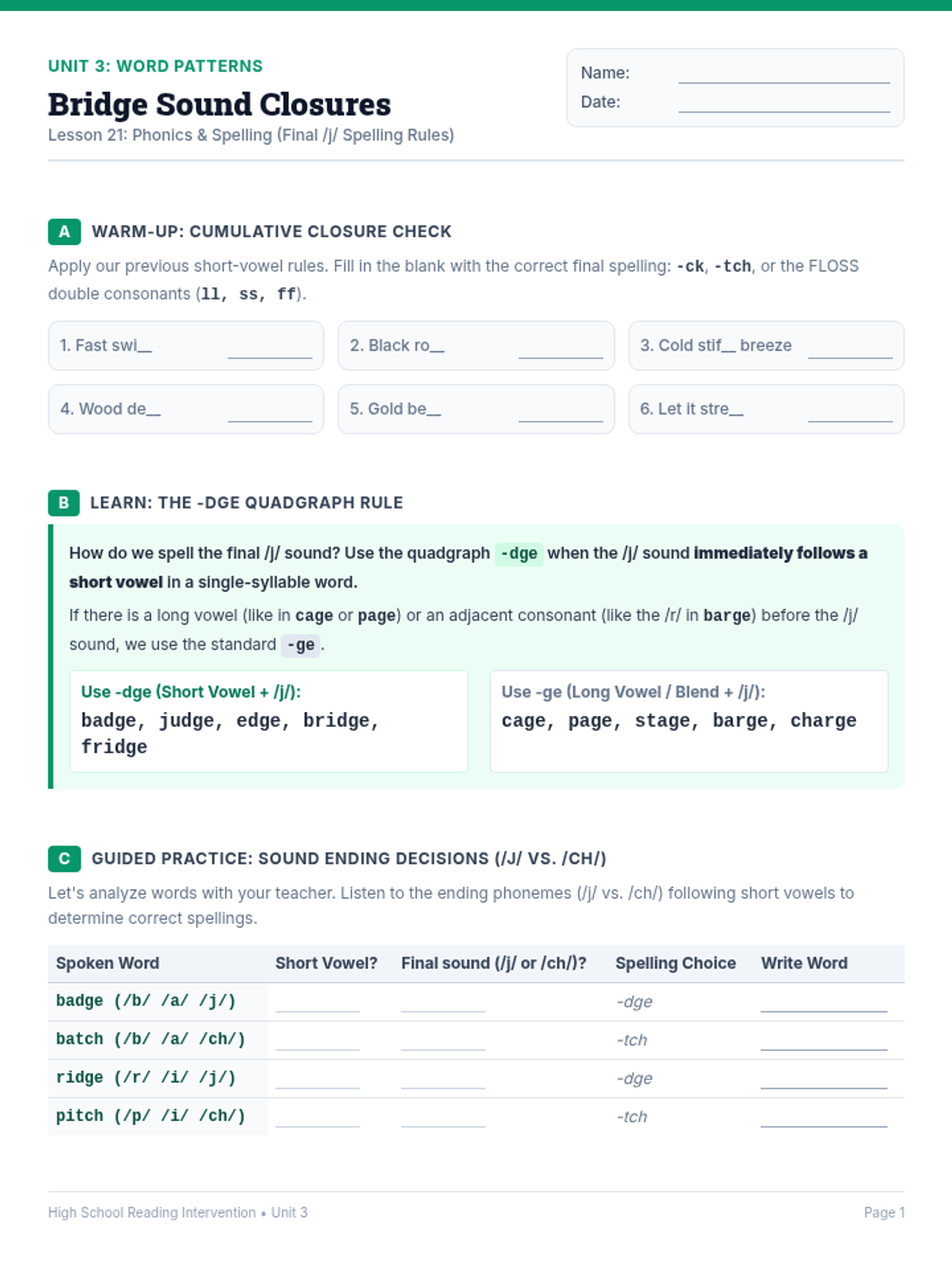
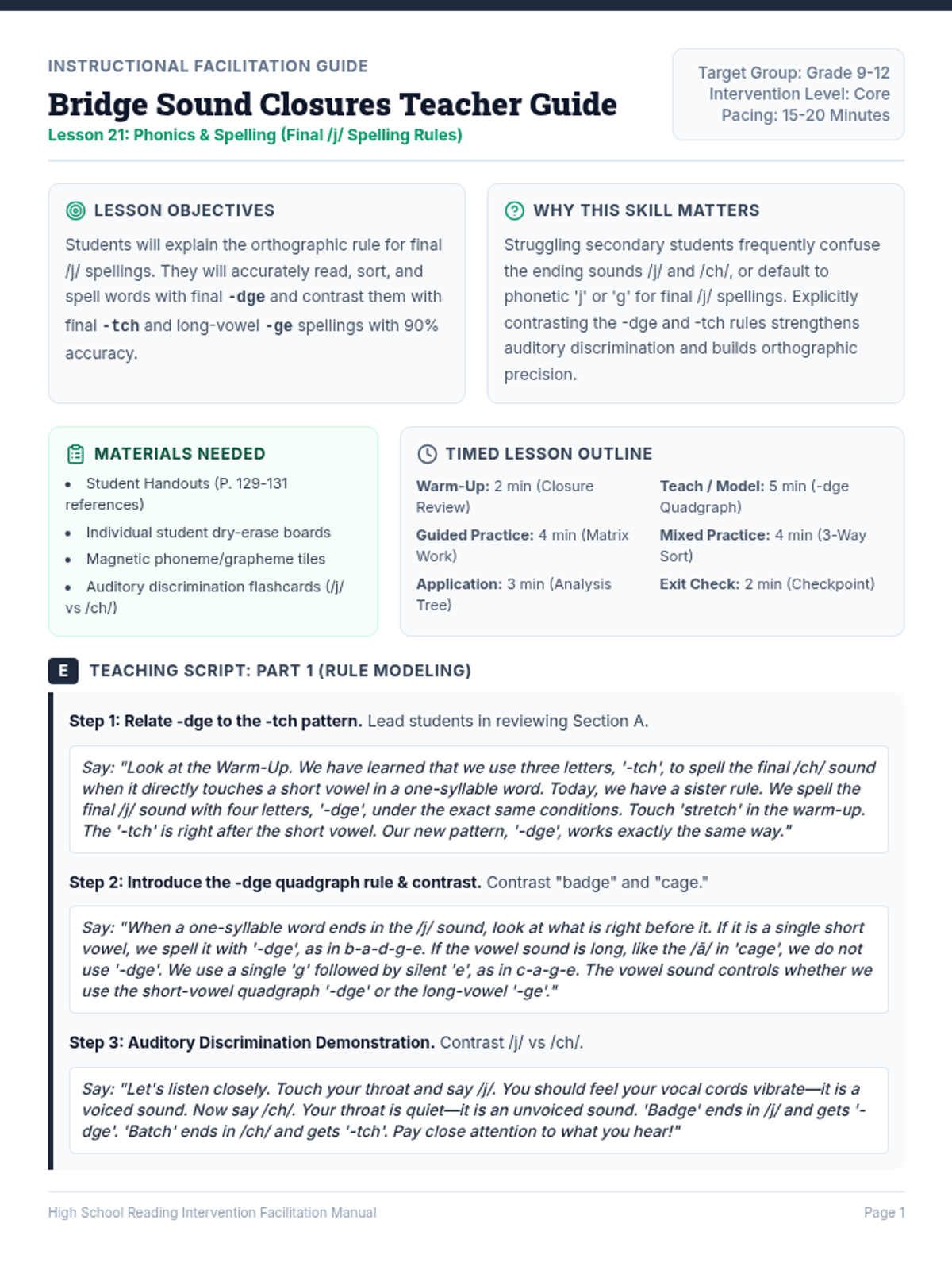
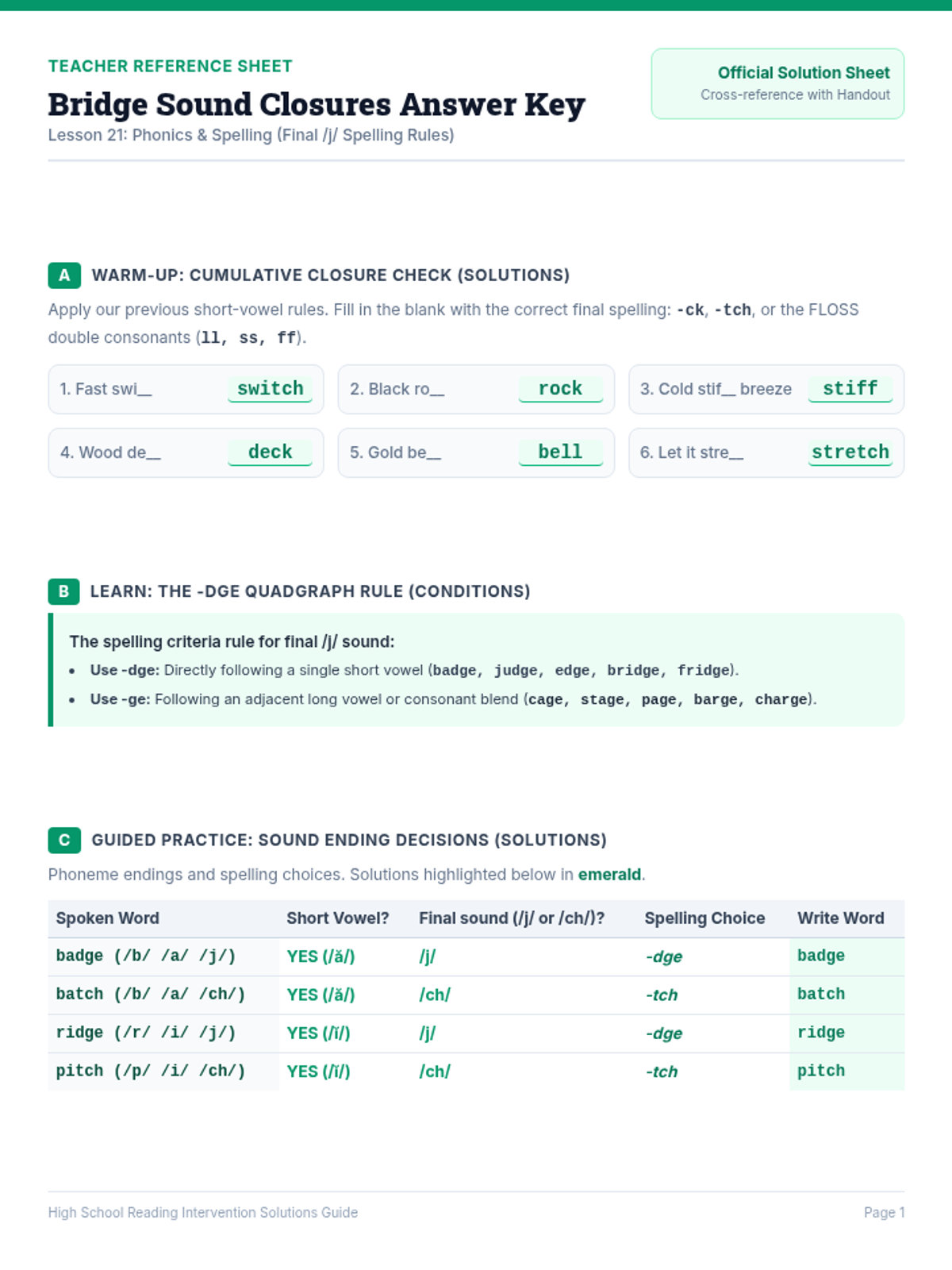
Introduces the spelling pattern -dge for the final /j/ sound following short vowels, contrasting it with the -tch trigraph to strengthen phoneme-level auditory discrimination.
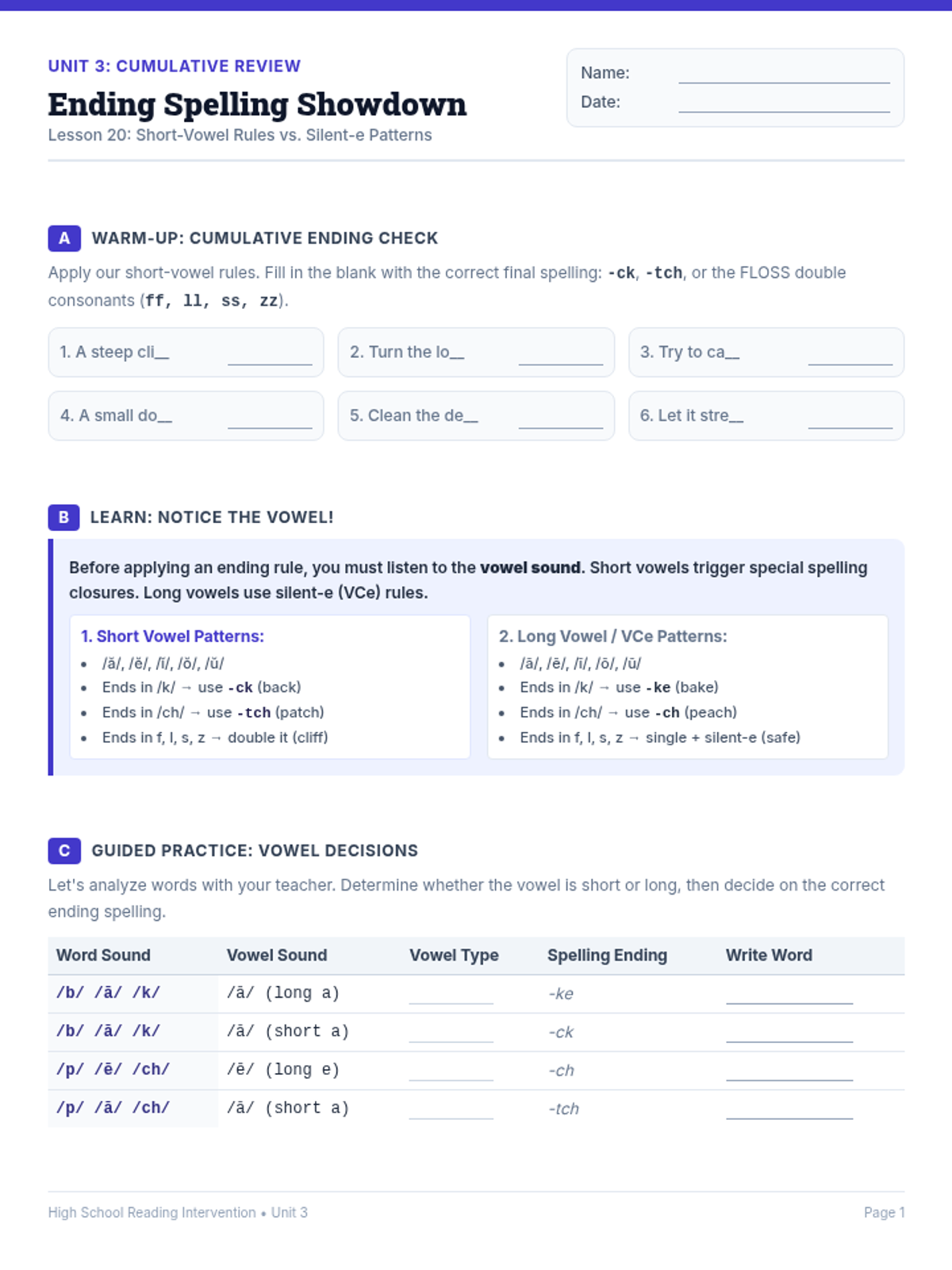
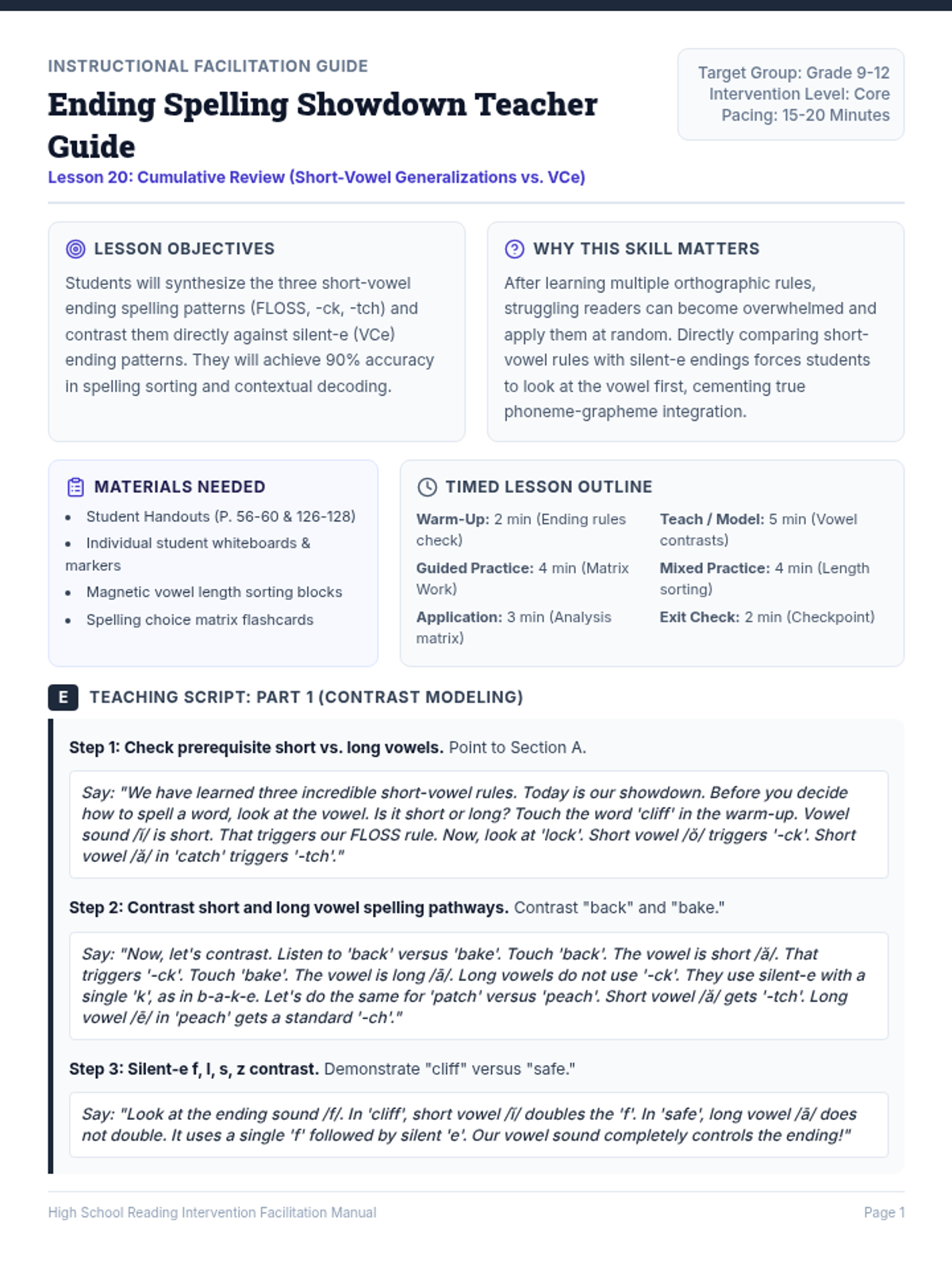
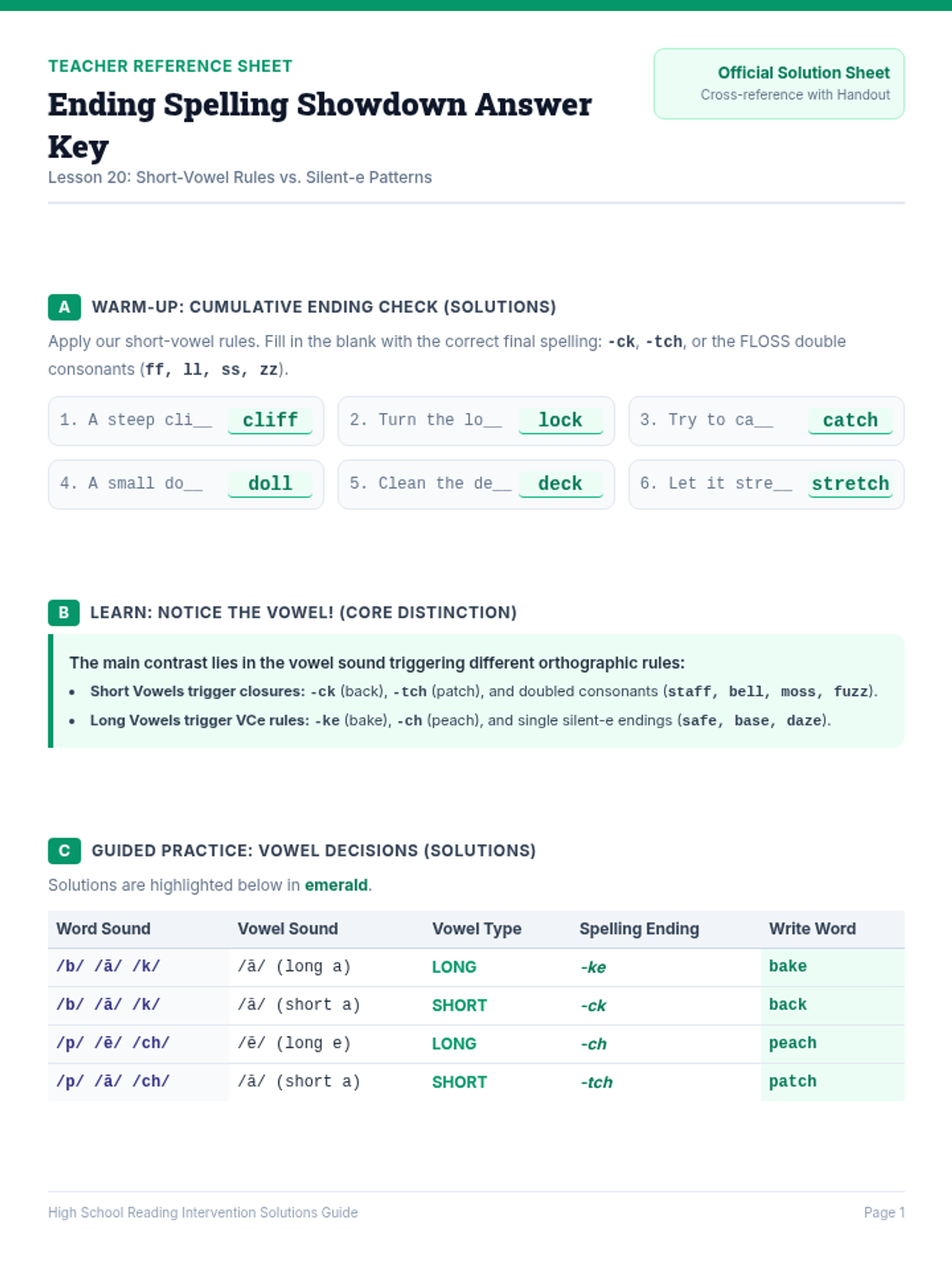
A cumulative practice and review lesson contrasting the short-vowel spelling rules (FLOSS, -ck, -tch) with VCe silent-e patterns to build master-level orthographic decoding and vowel recognition.
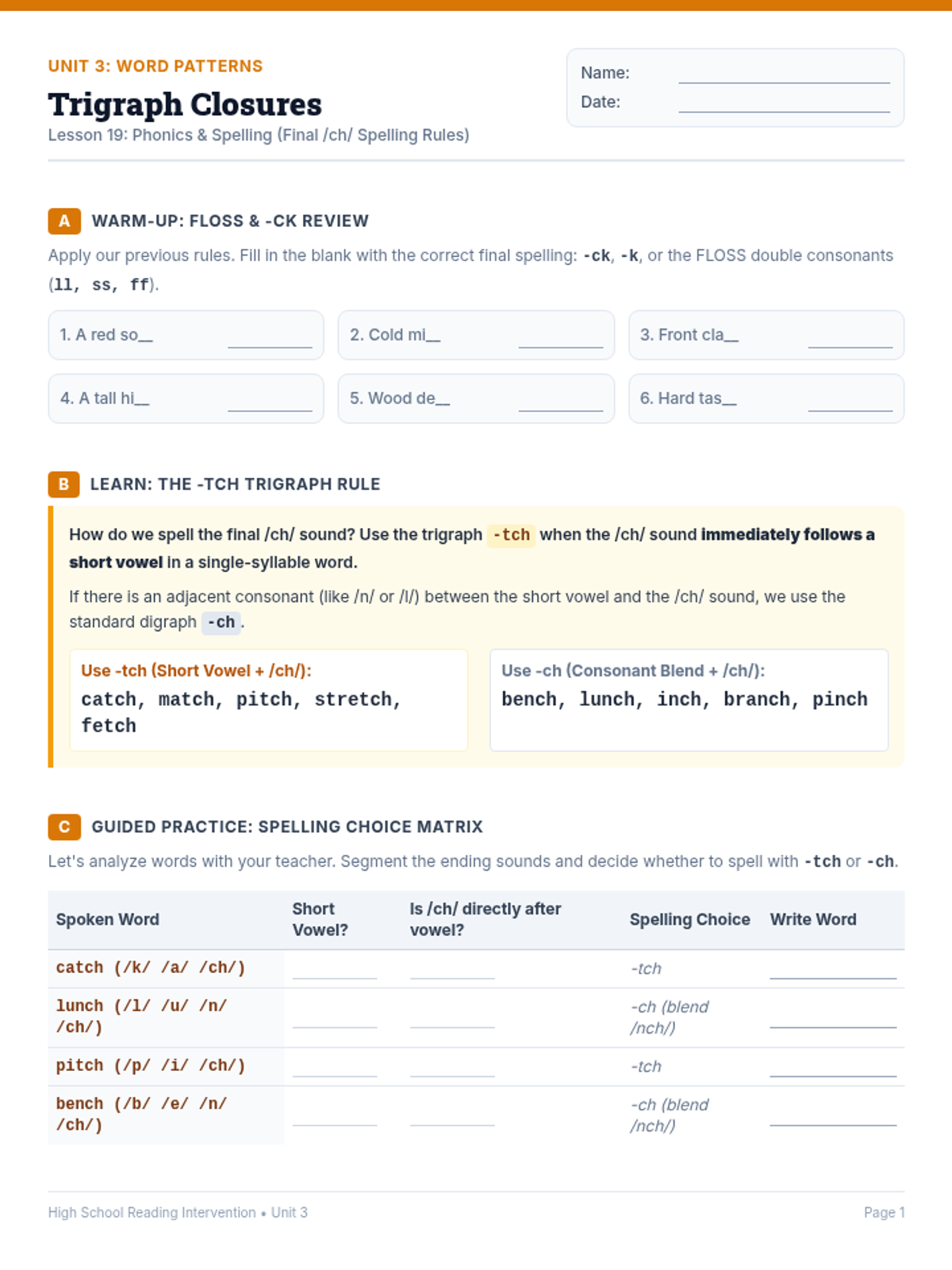
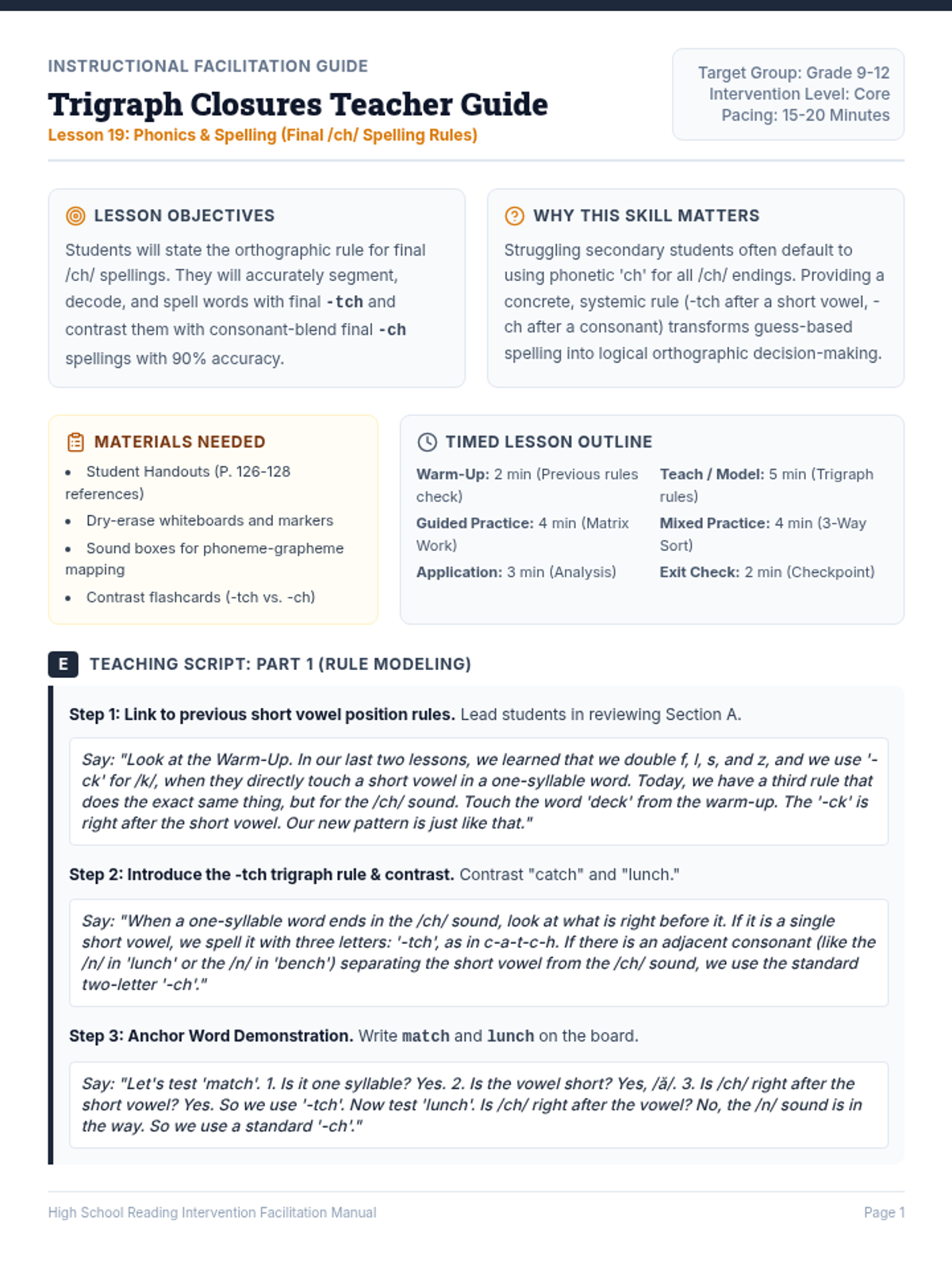
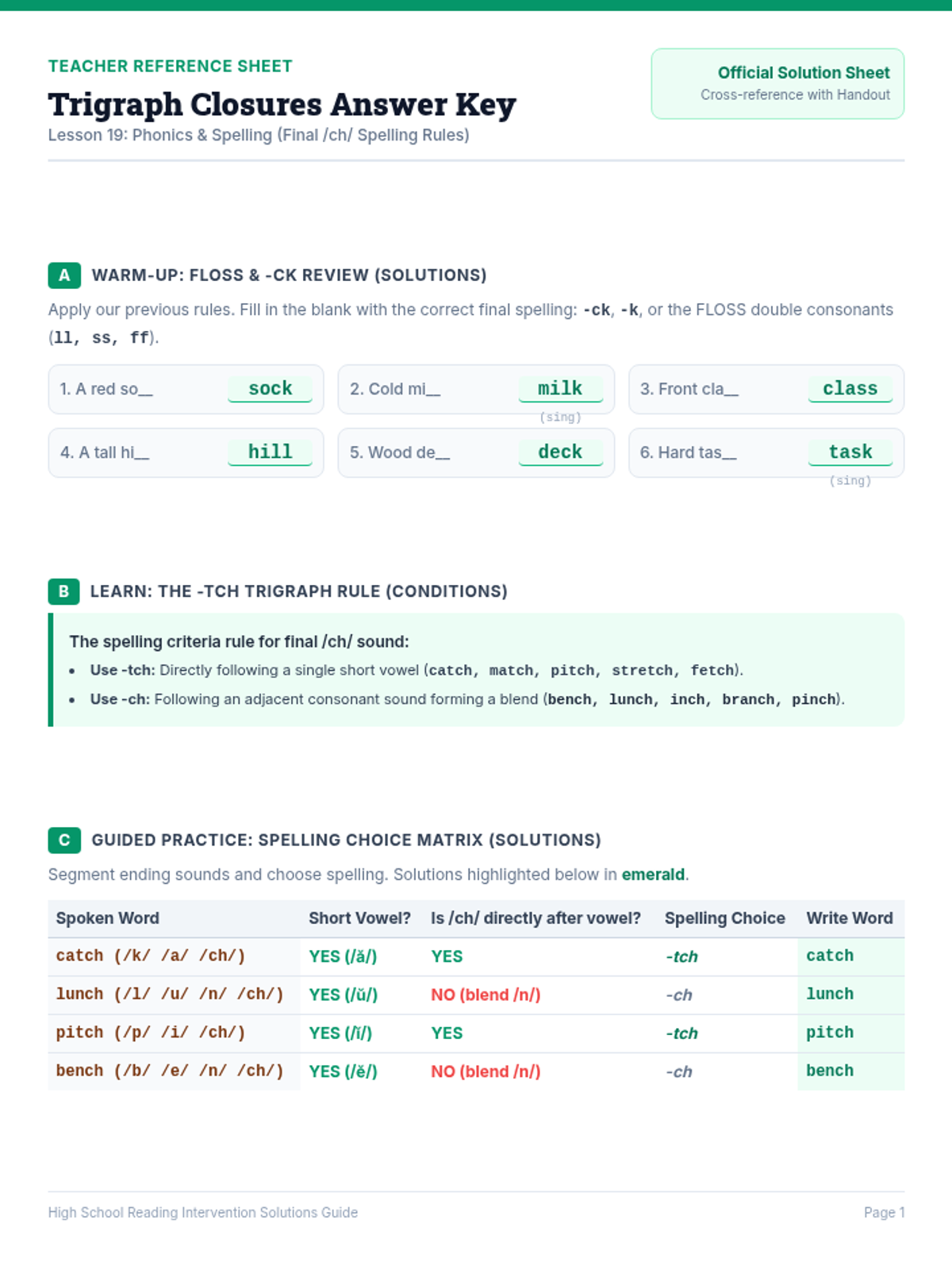
Introduces the spelling pattern -tch for the final /ch/ sound following short vowels, comparing and contrasting it with the -ck spelling rule for final /k/ sounds to build orthographic precision.
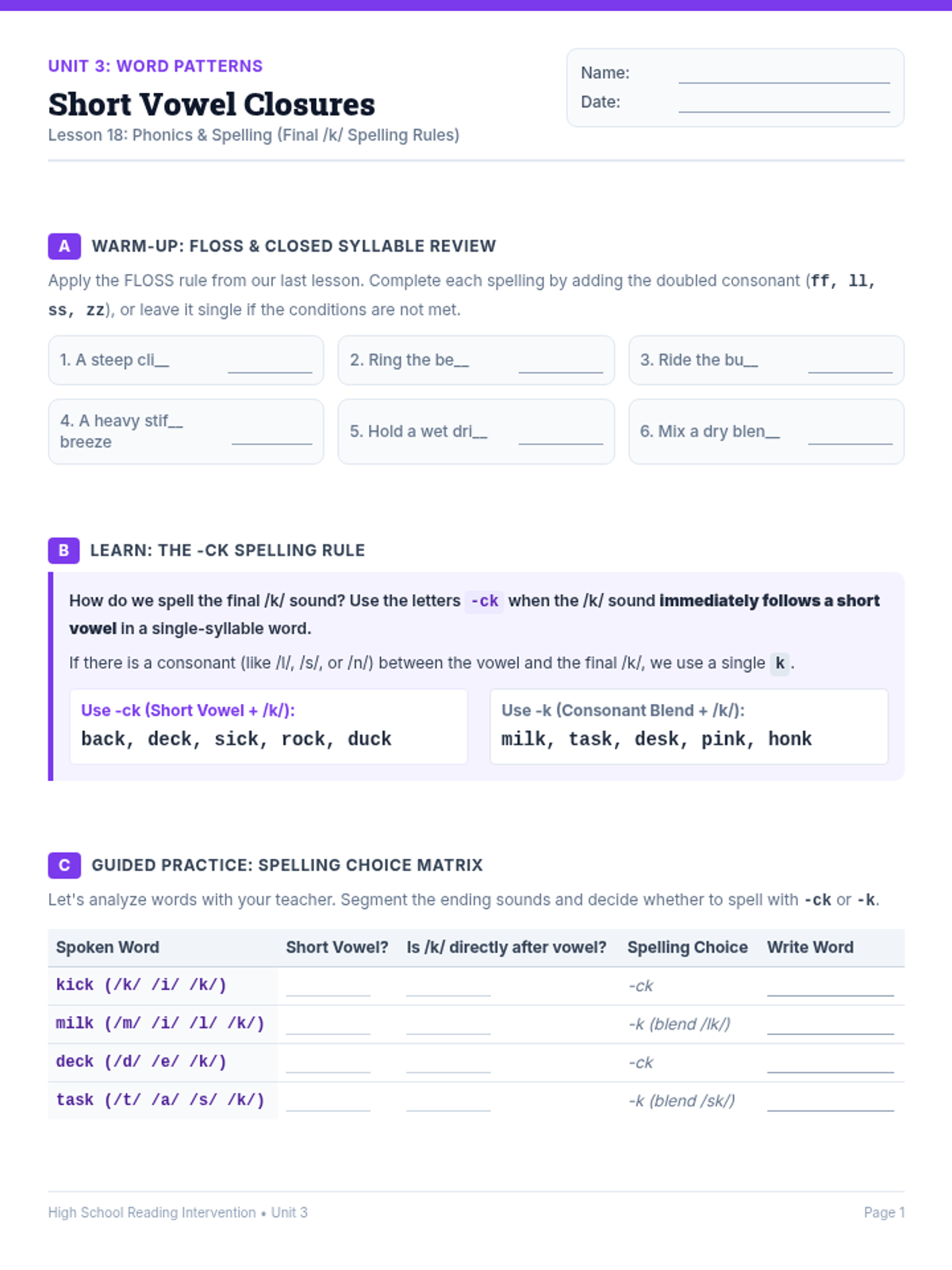
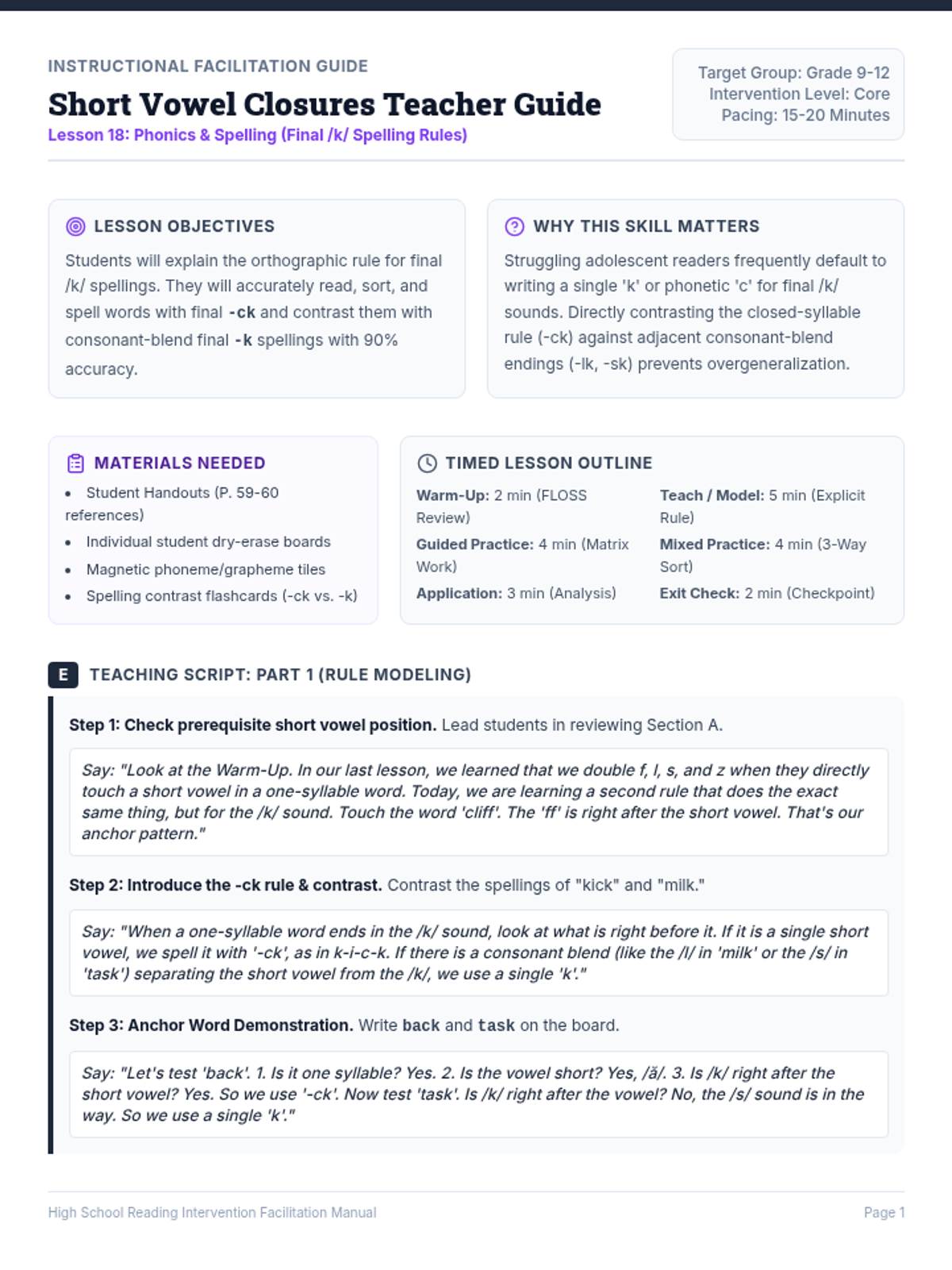
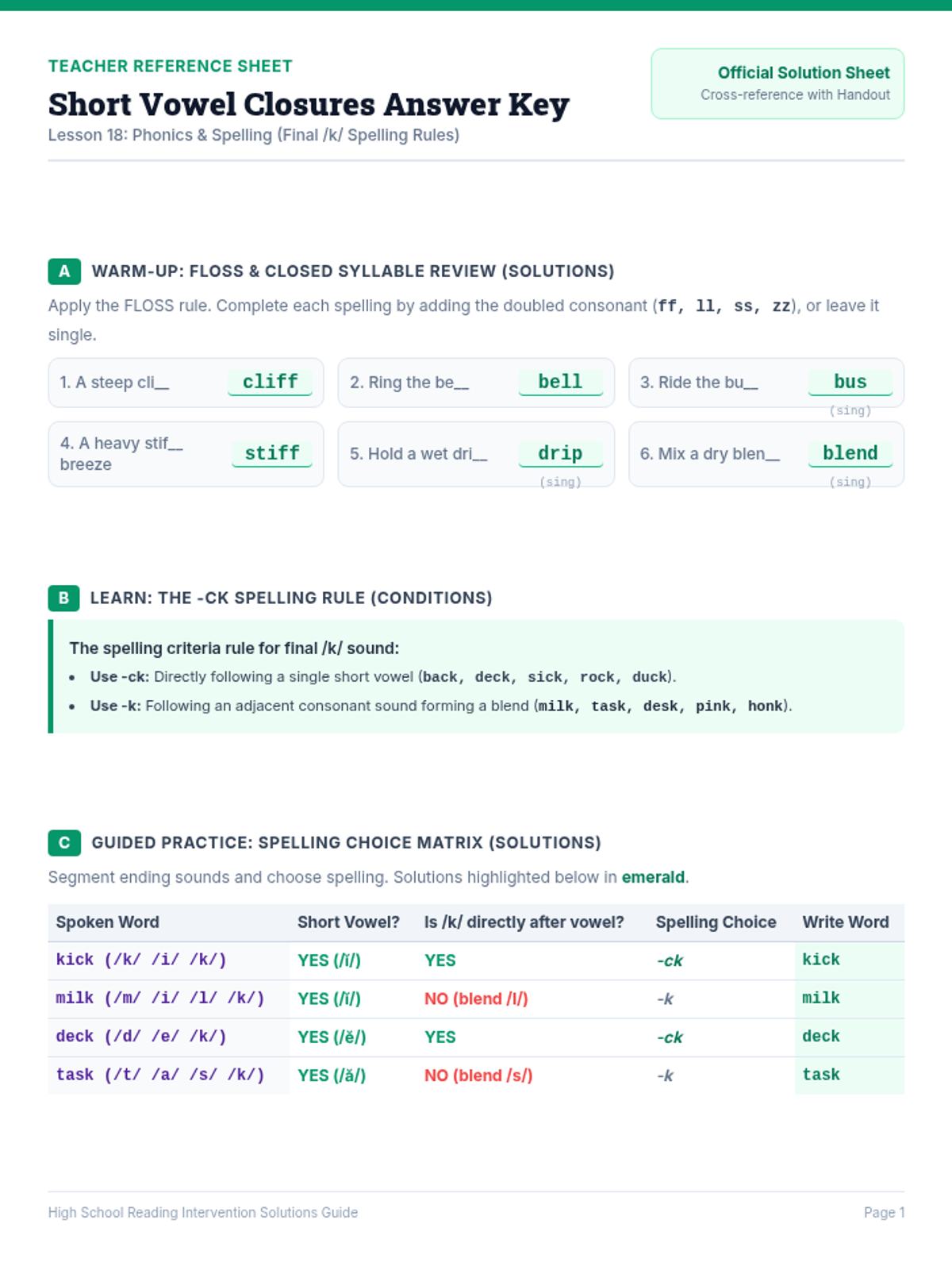
Introduces the spelling pattern -ck for the final /k/ sound following short vowels, contrasting it with the FLOSS rule to build systematic orthographic decision-making.
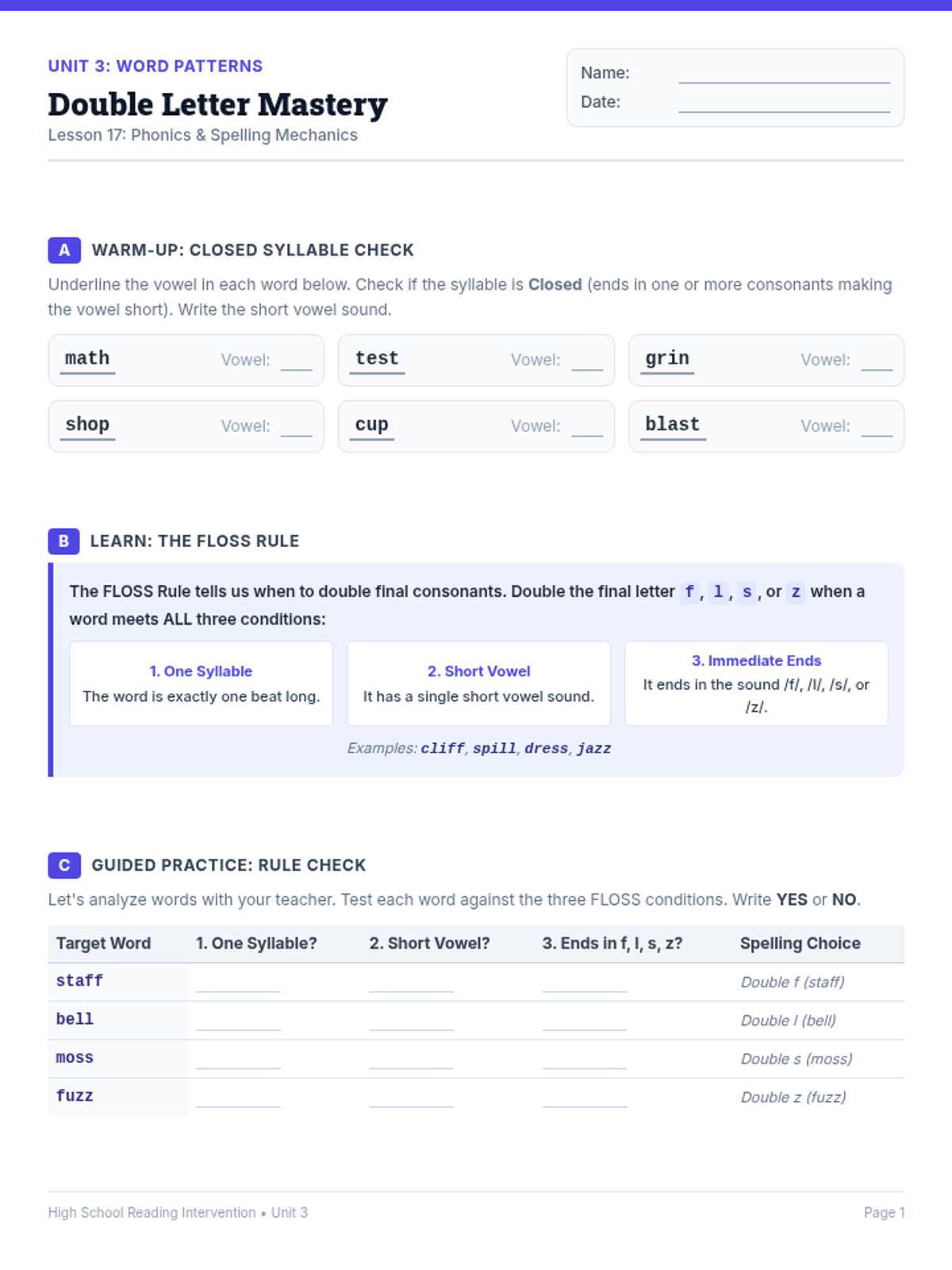
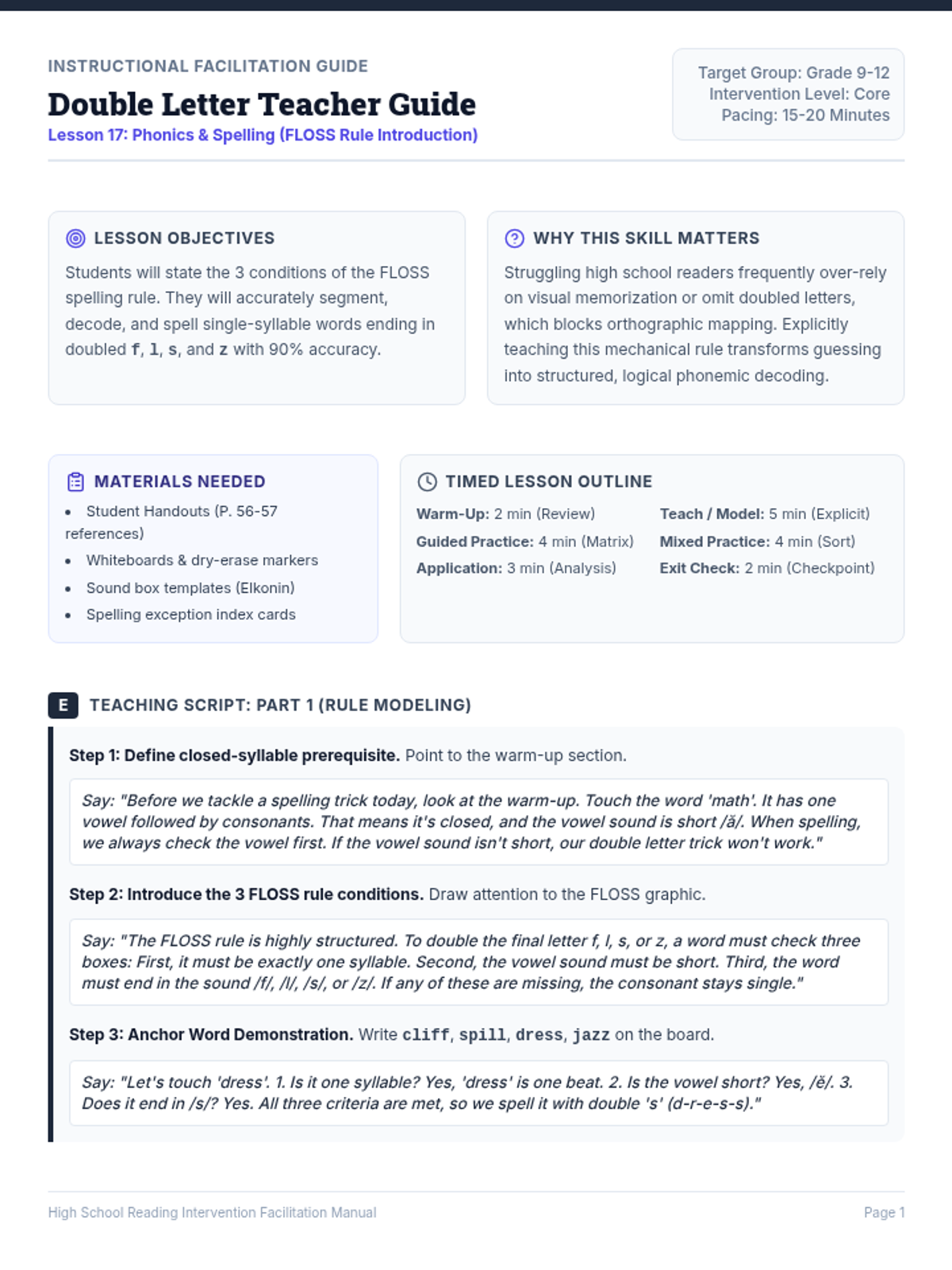
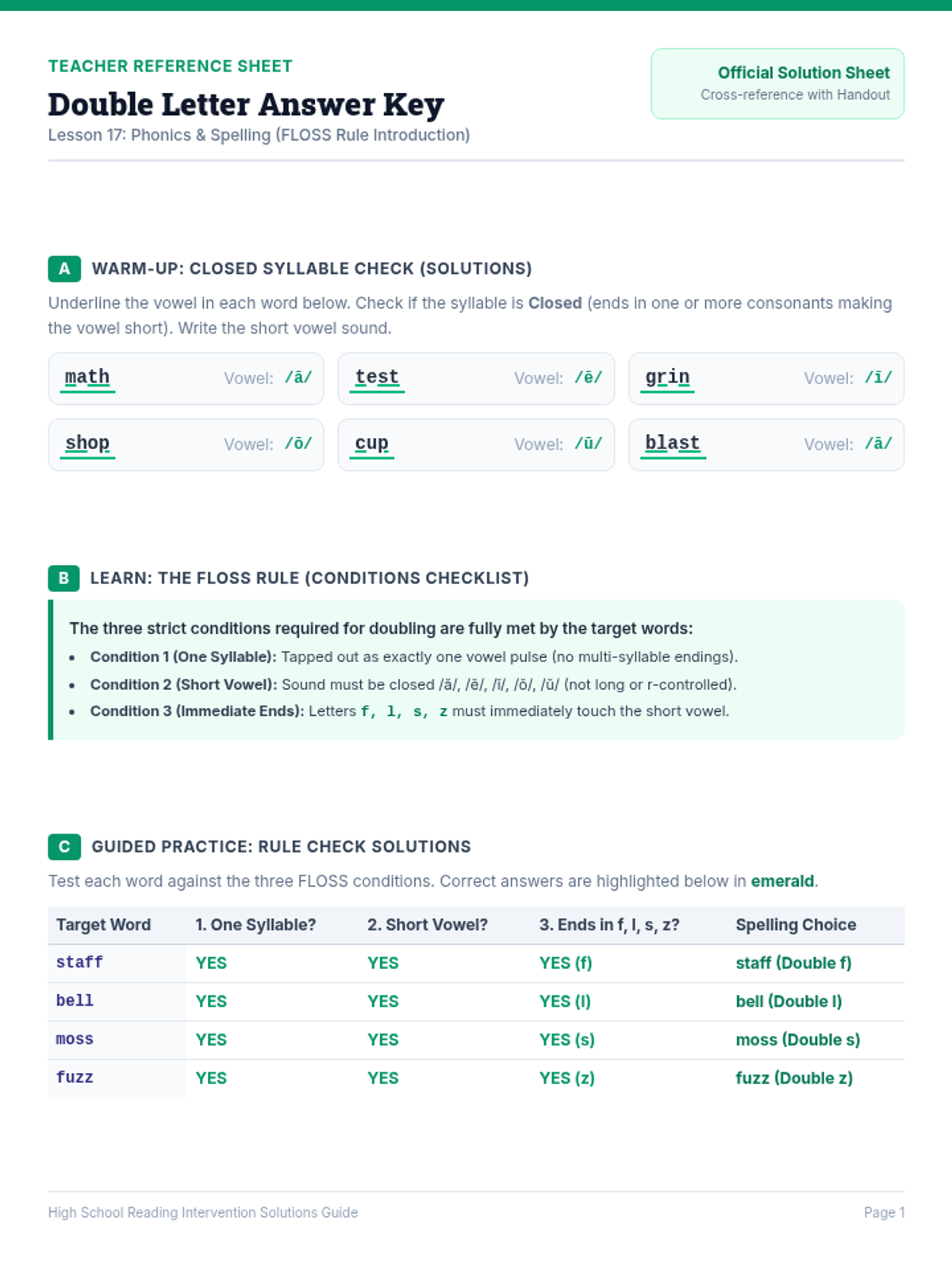
Introduces the FLOSS rule for single-syllable words containing short vowels, emphasizing the conditions under which final f, l, s, and z are doubled, while spiraling closed-syllable patterns.
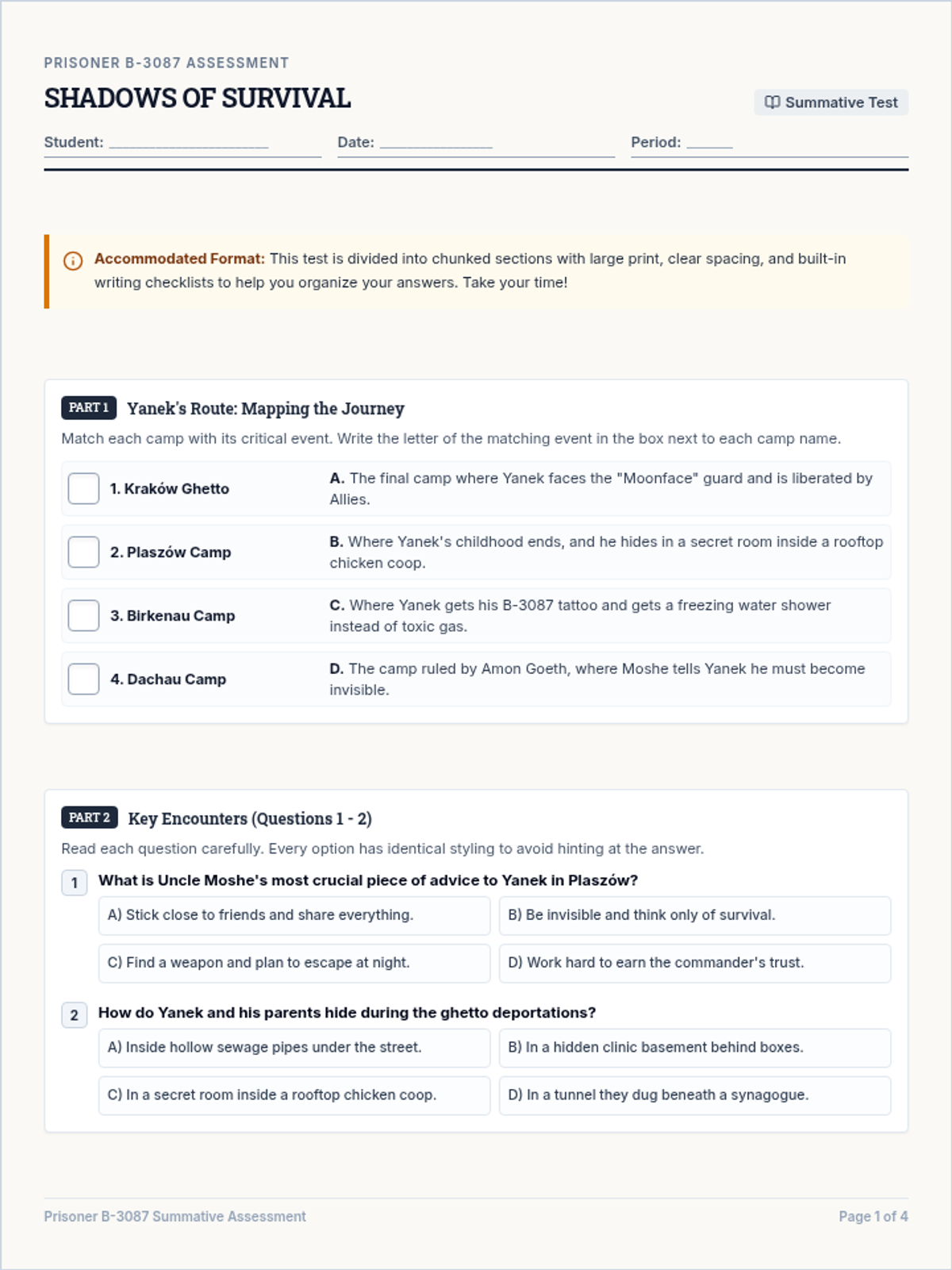
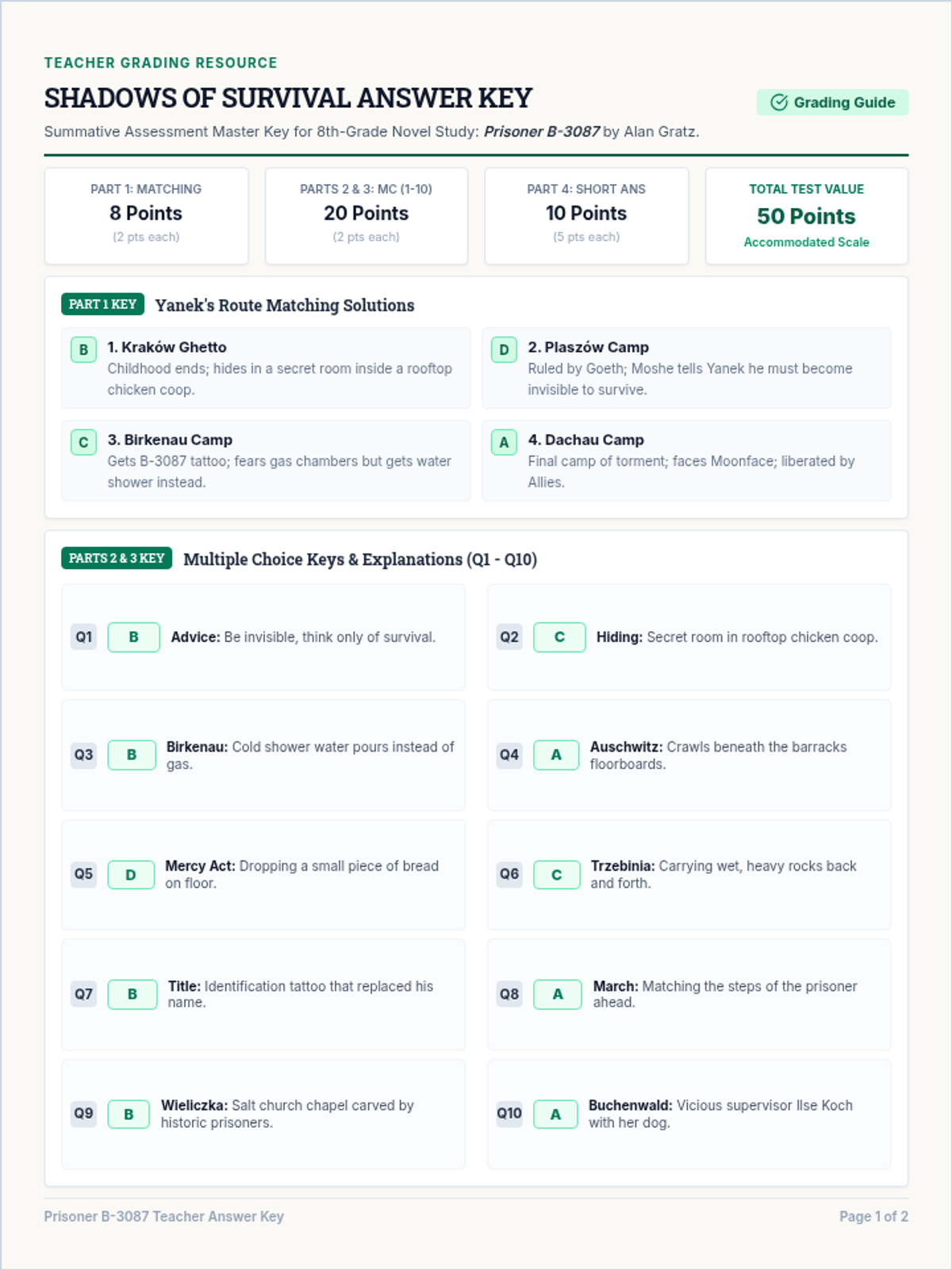
A comprehensive 8th-grade summative assessment pack for Alan Gratz's historical novel 'Prisoner B-3087'. Features a student-facing test engineered with standard Special Education accommodations—including chunked sections, generous layout spacing, and structured graphic organizers—alongside a detailed teacher answer key and grading guide.
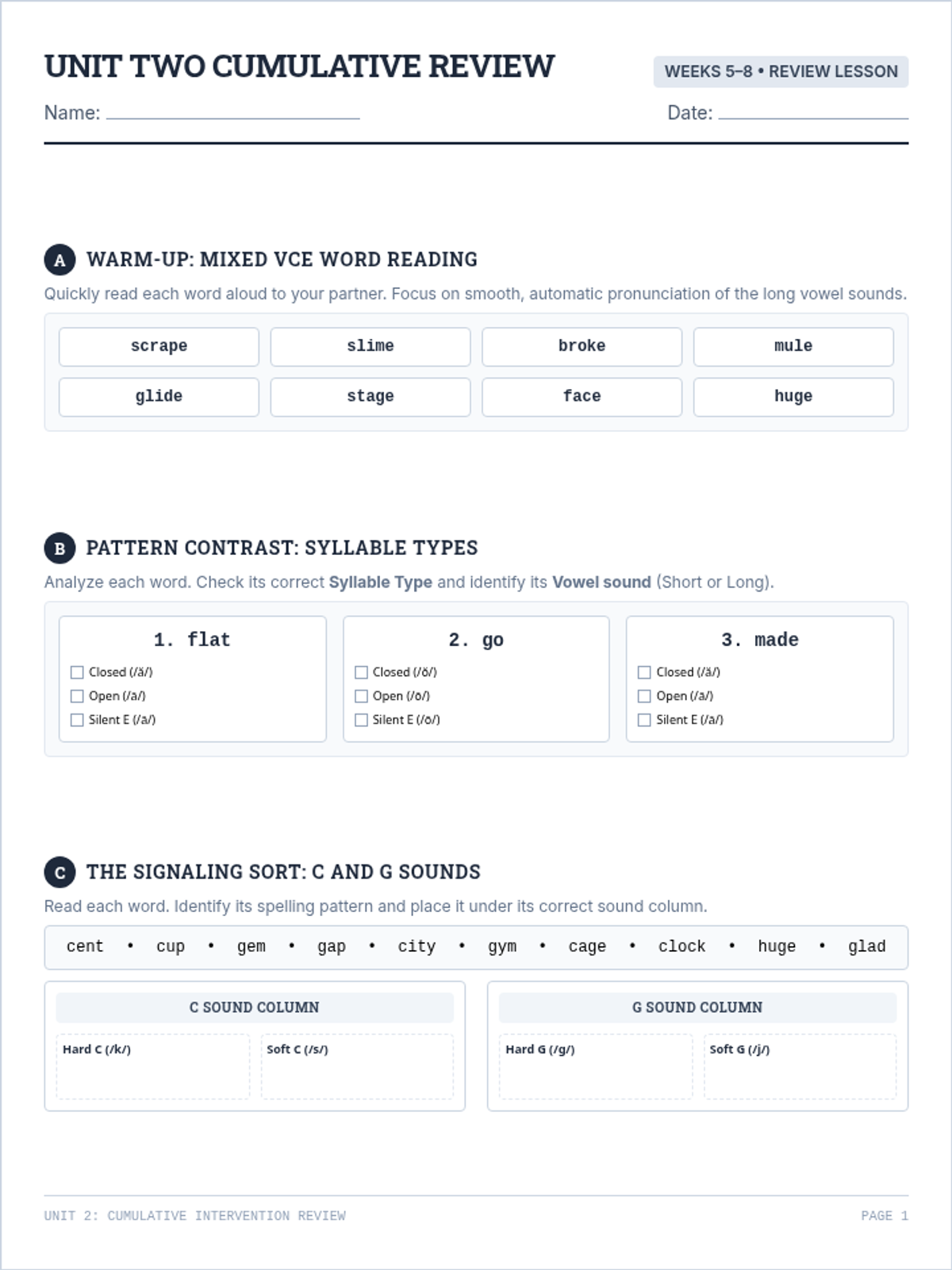
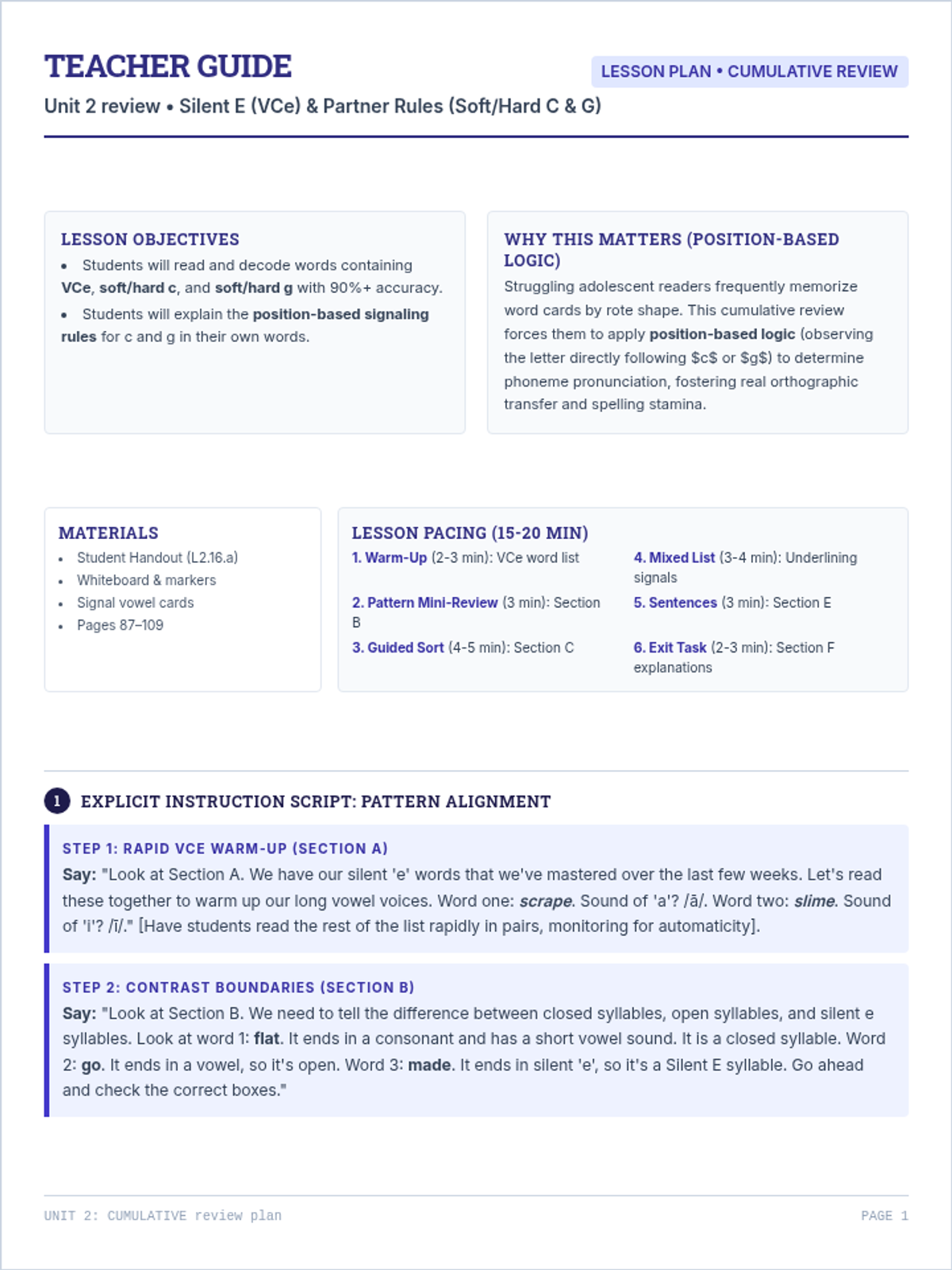
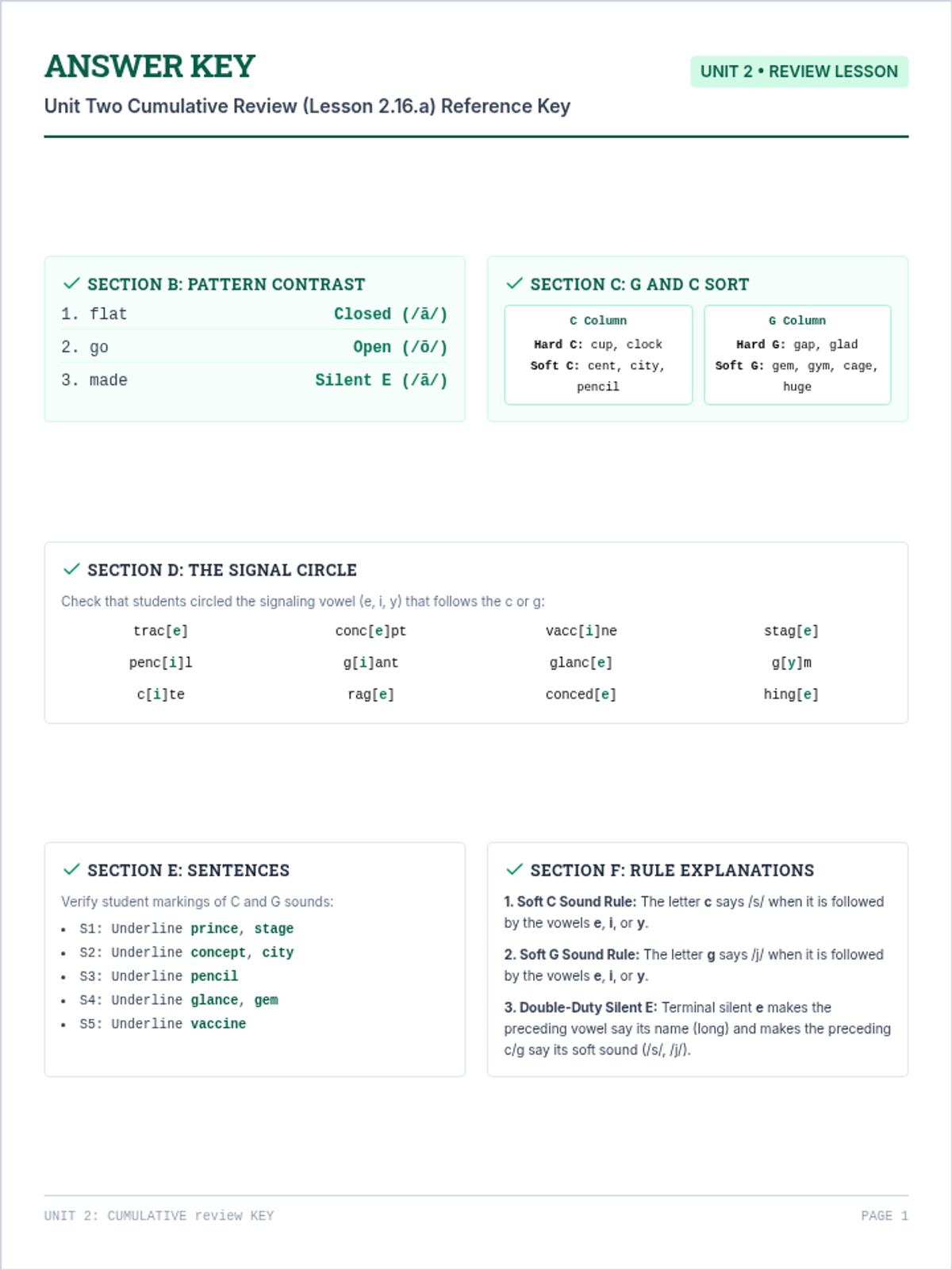
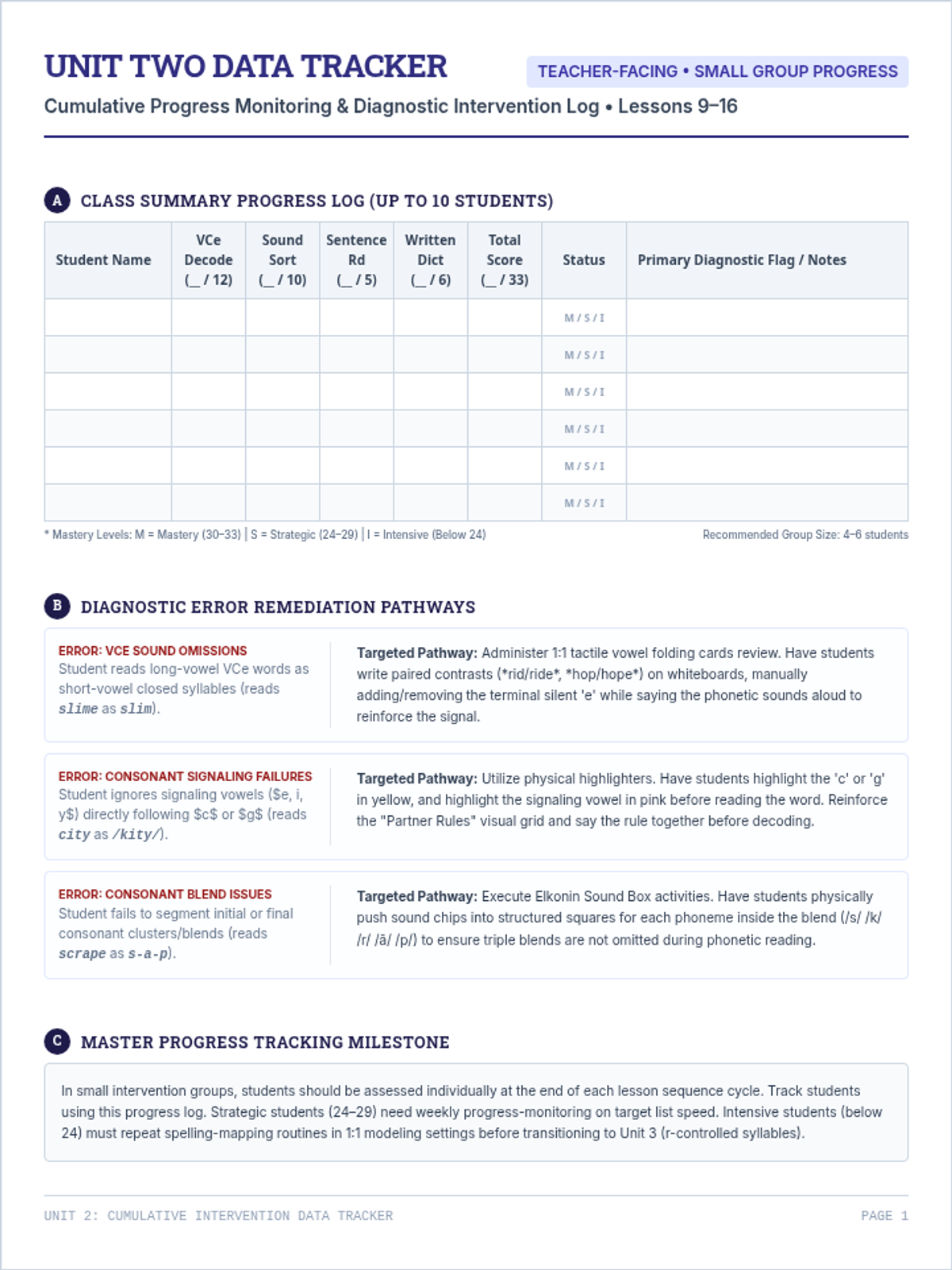
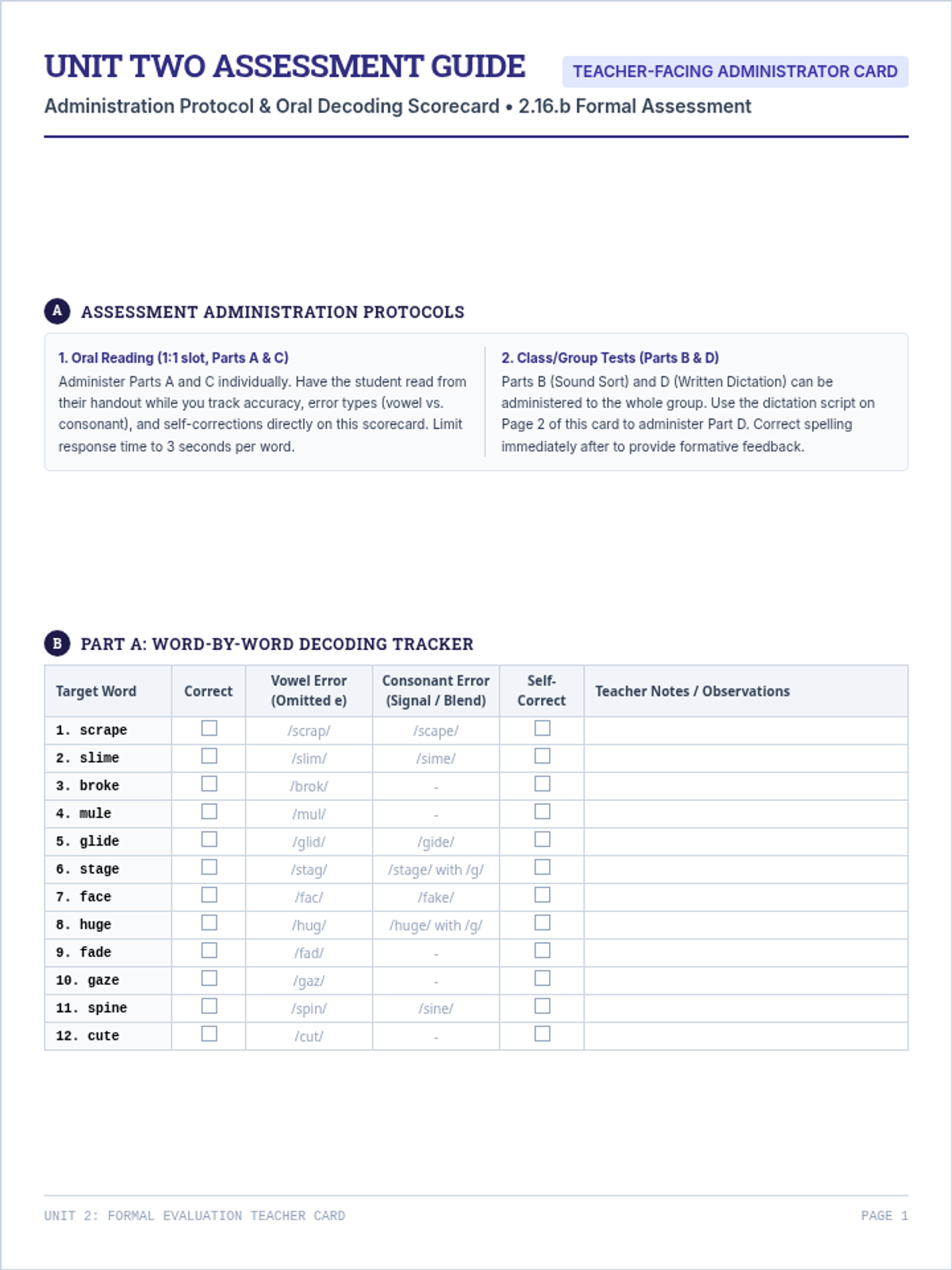
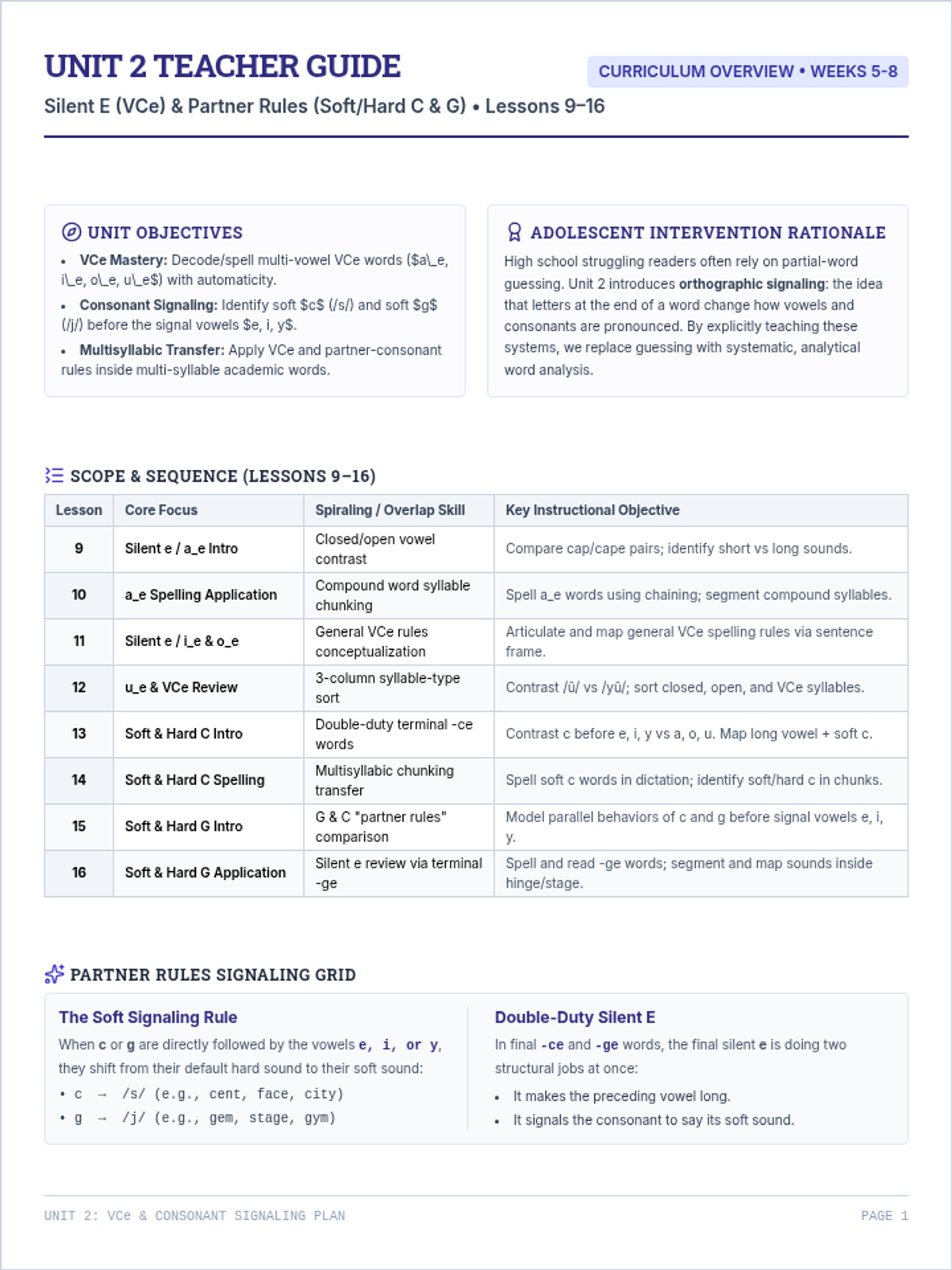
A cumulative review lesson covering Unit 2 (Lessons 9-16). Students practice reading and spelling silent e/VCe words, soft/hard c, and soft/hard g patterns, and explain the position-based sound logic. Designed for high school students.
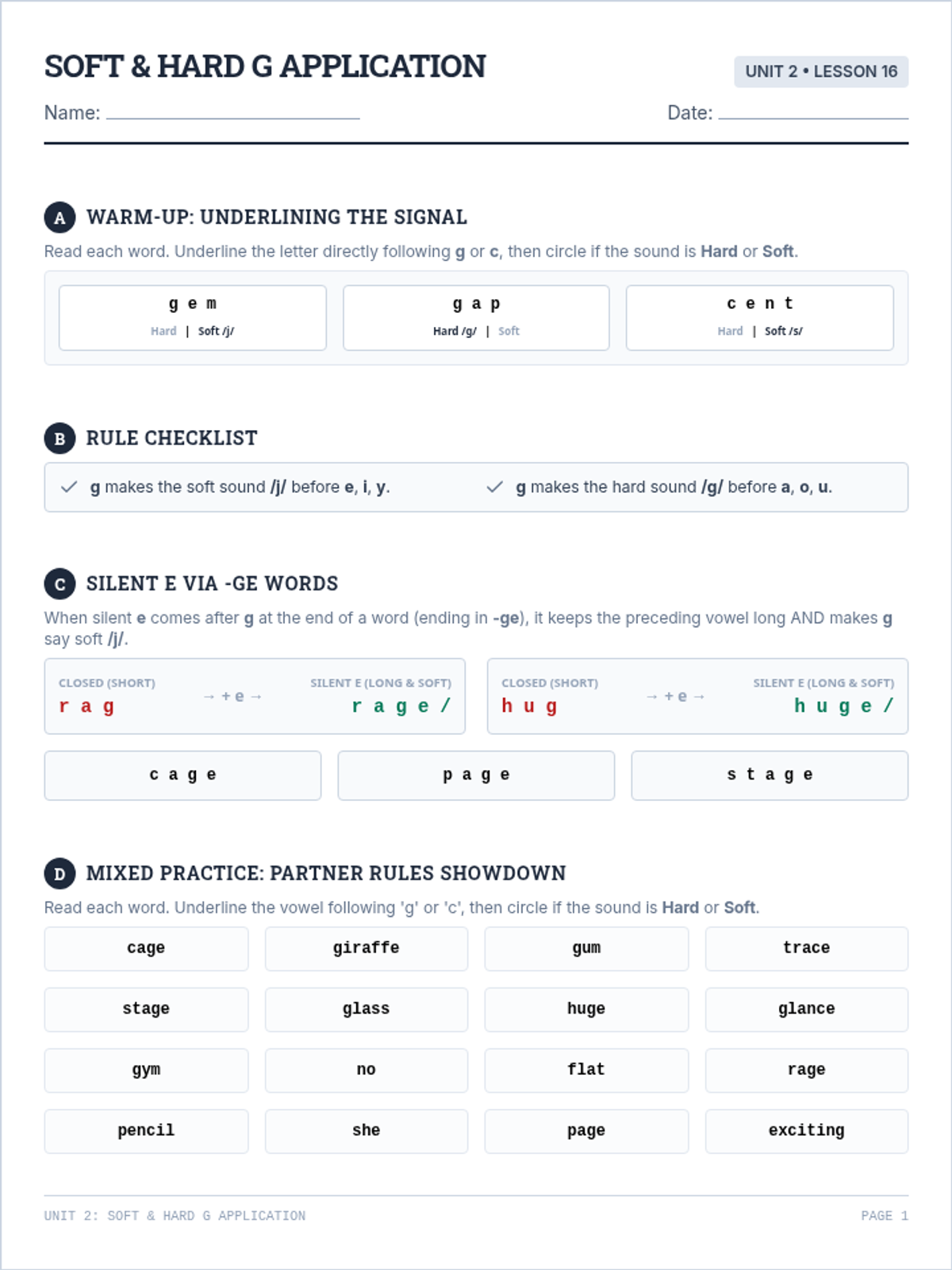
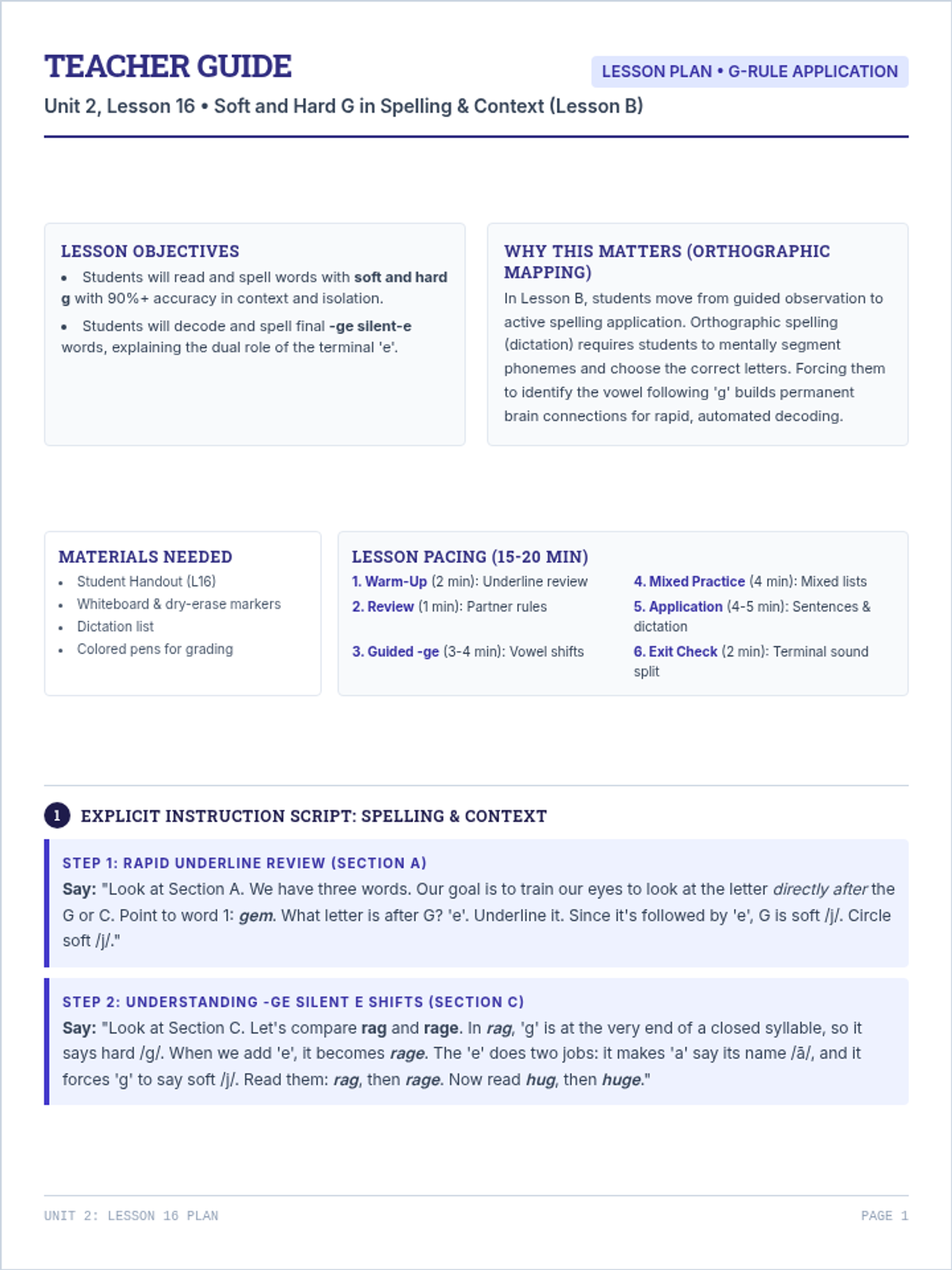
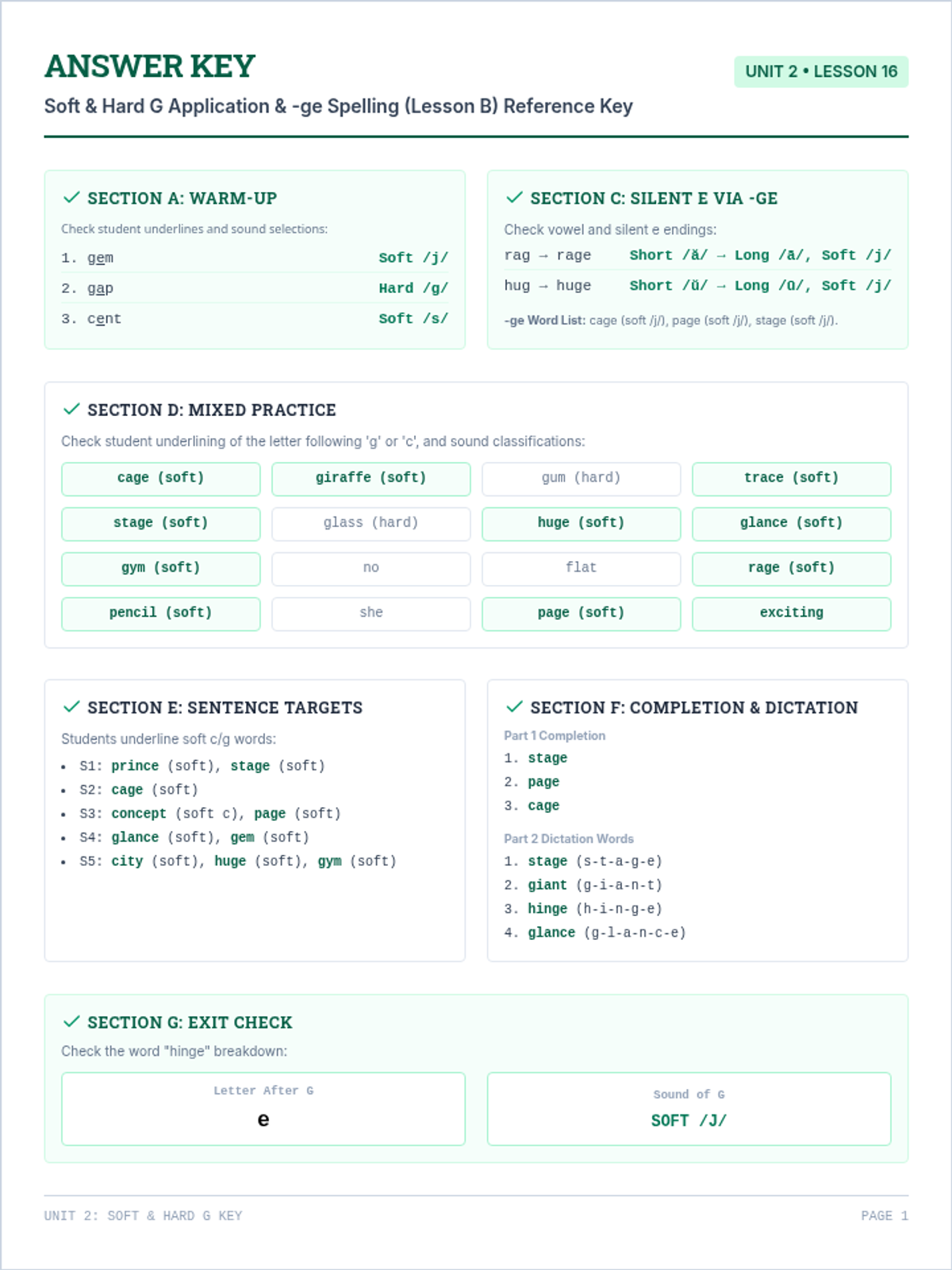
Lesson 16 of the sequence. Focuses on the application of soft/hard g and c rules in spelling, dictation, and -ge silent-e words using structured vowel-signaling strategies. Designed for high school students.
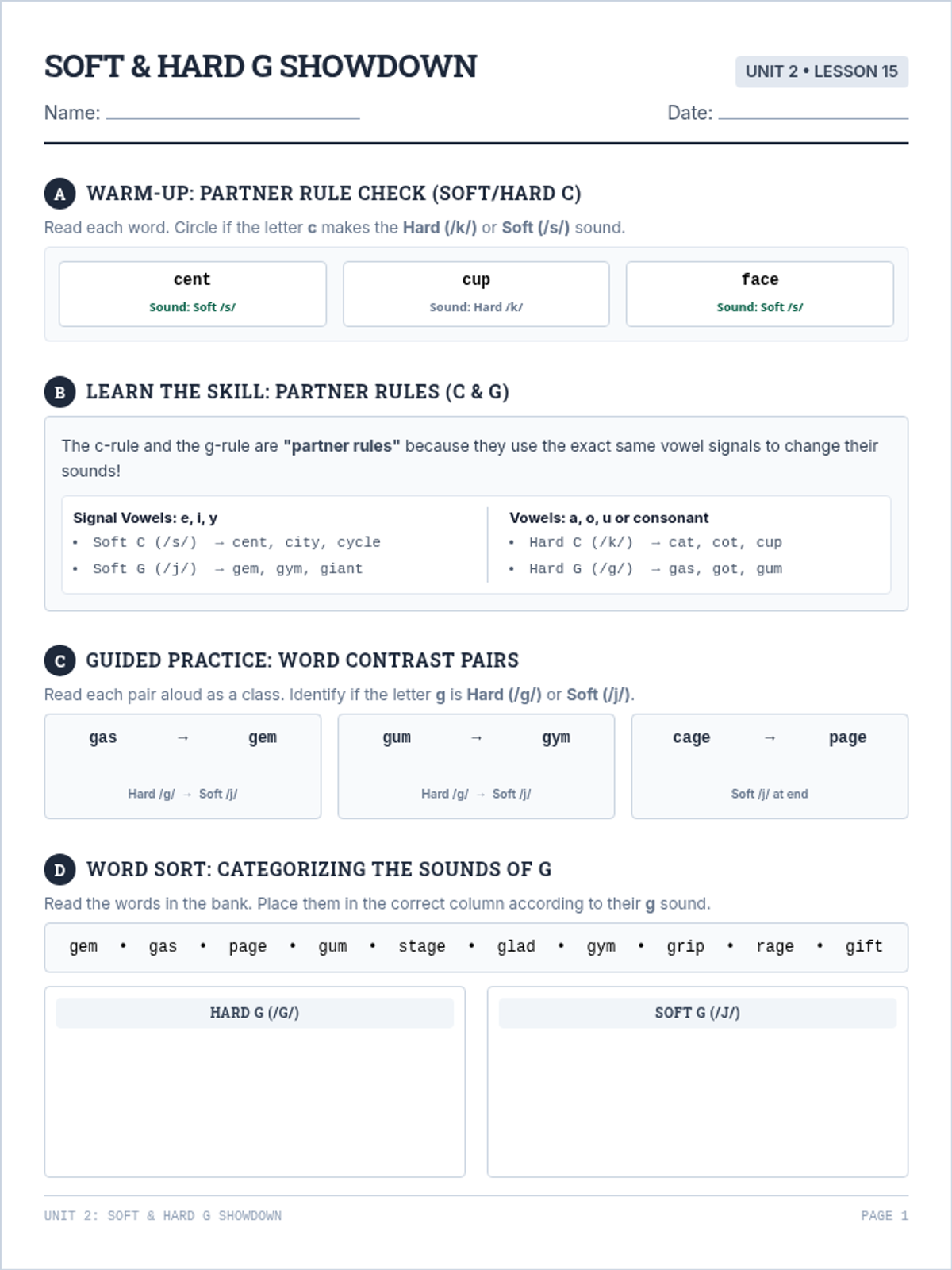
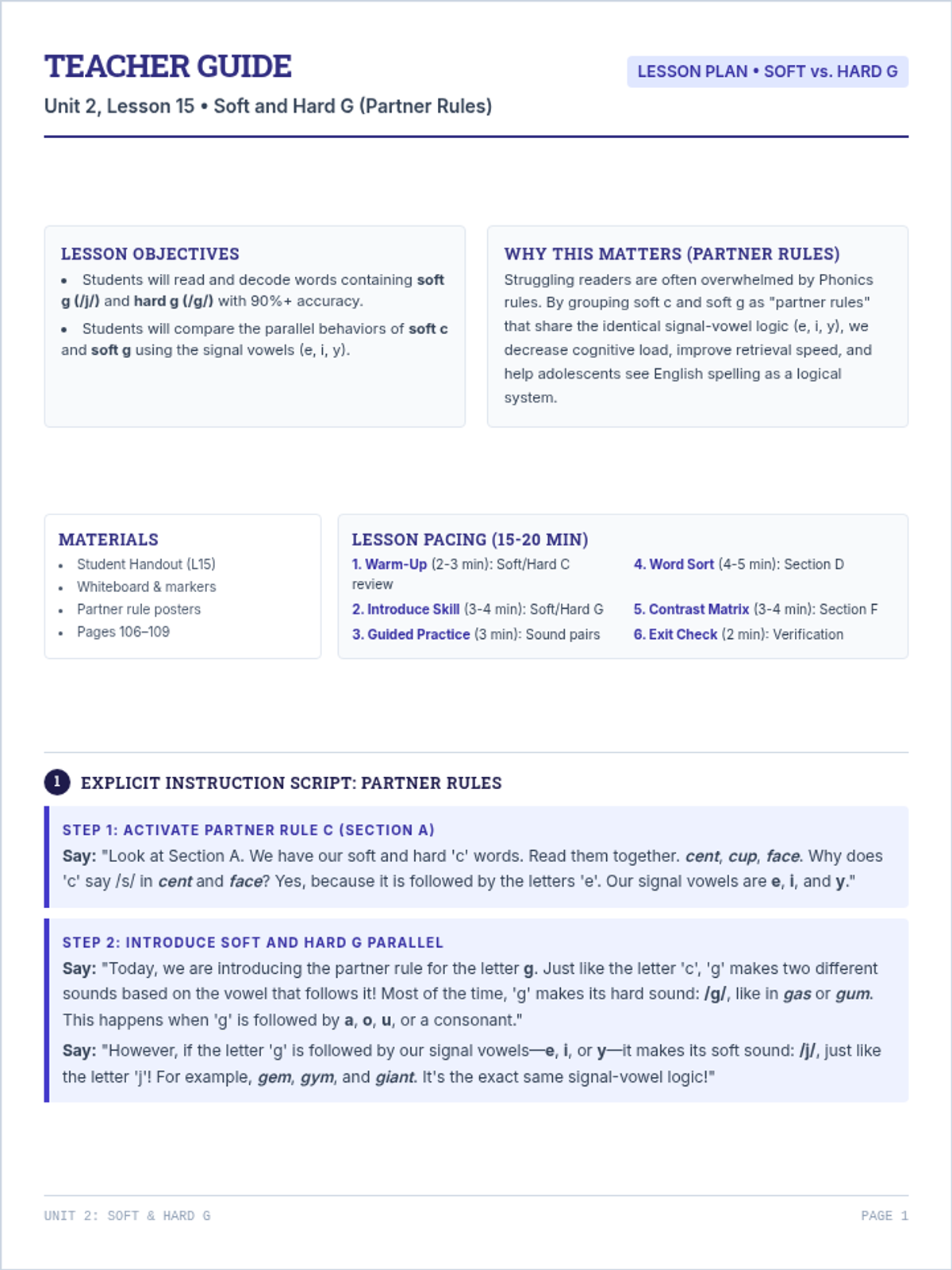
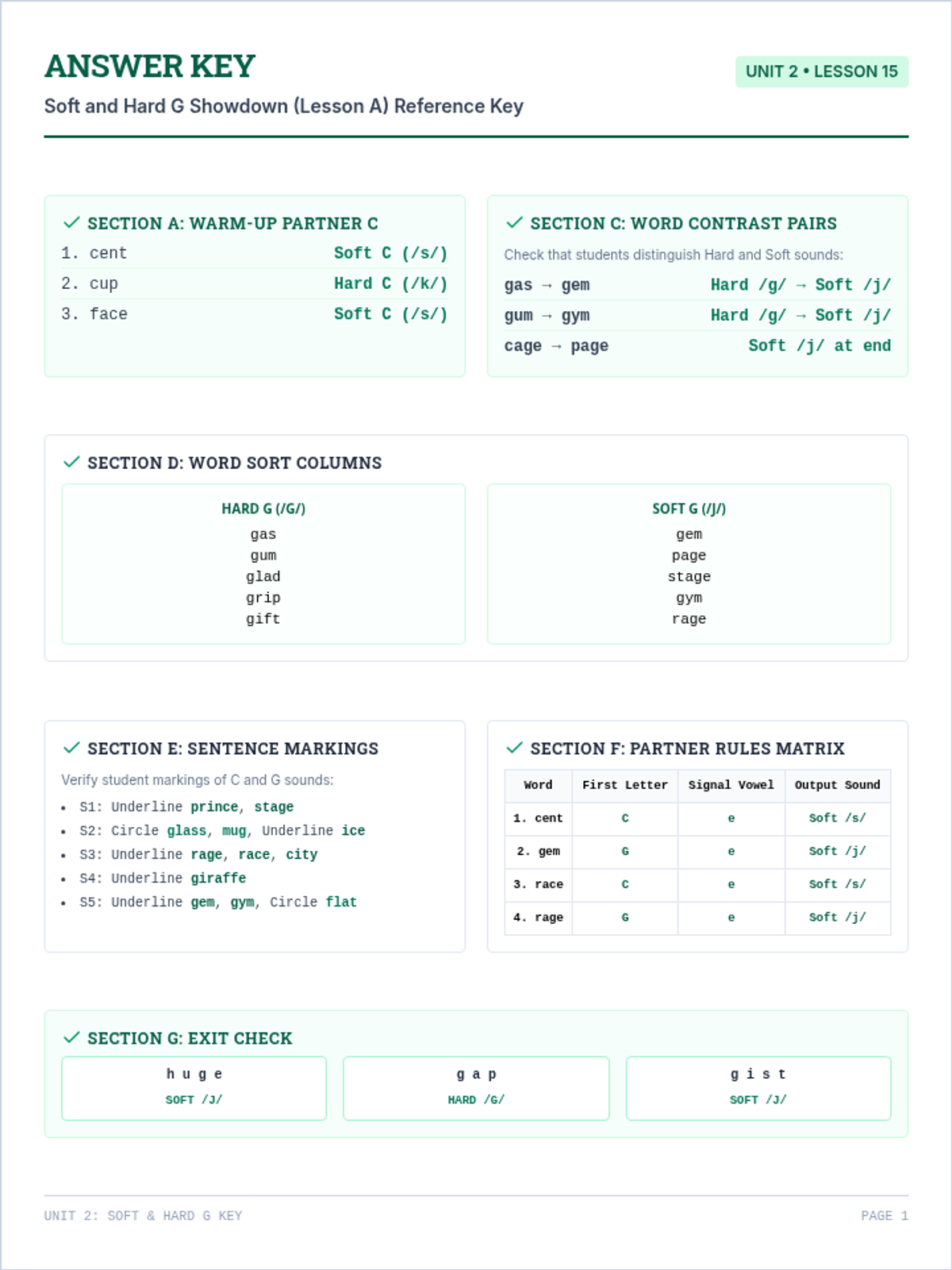
Lesson 15 of the sequence. Introduces soft g (/j/) and hard g (/g/), drawing explicit parallels to the hard/soft c rules as "partner rules" and reviews vowel signaling. Designed for high school students.
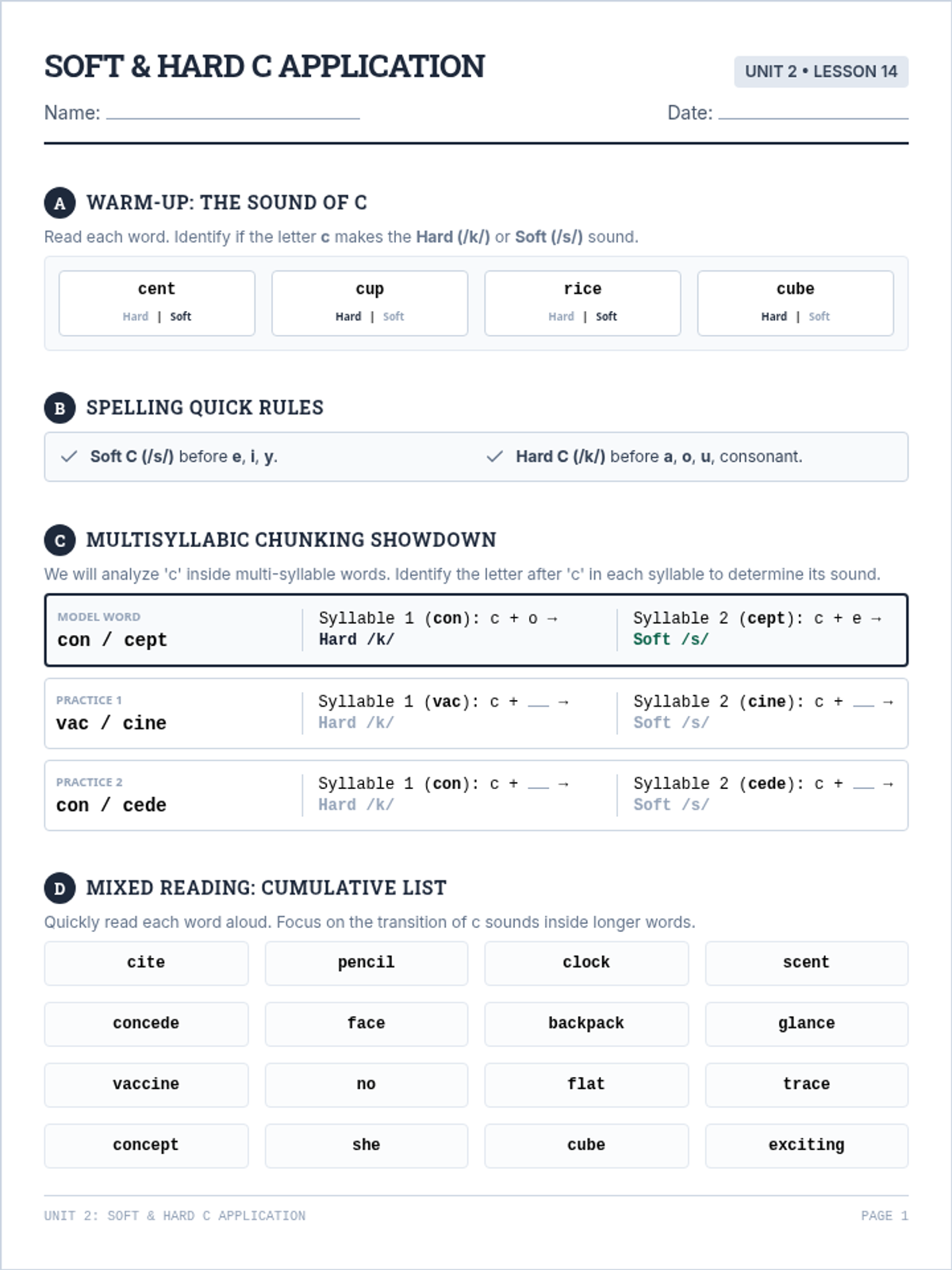
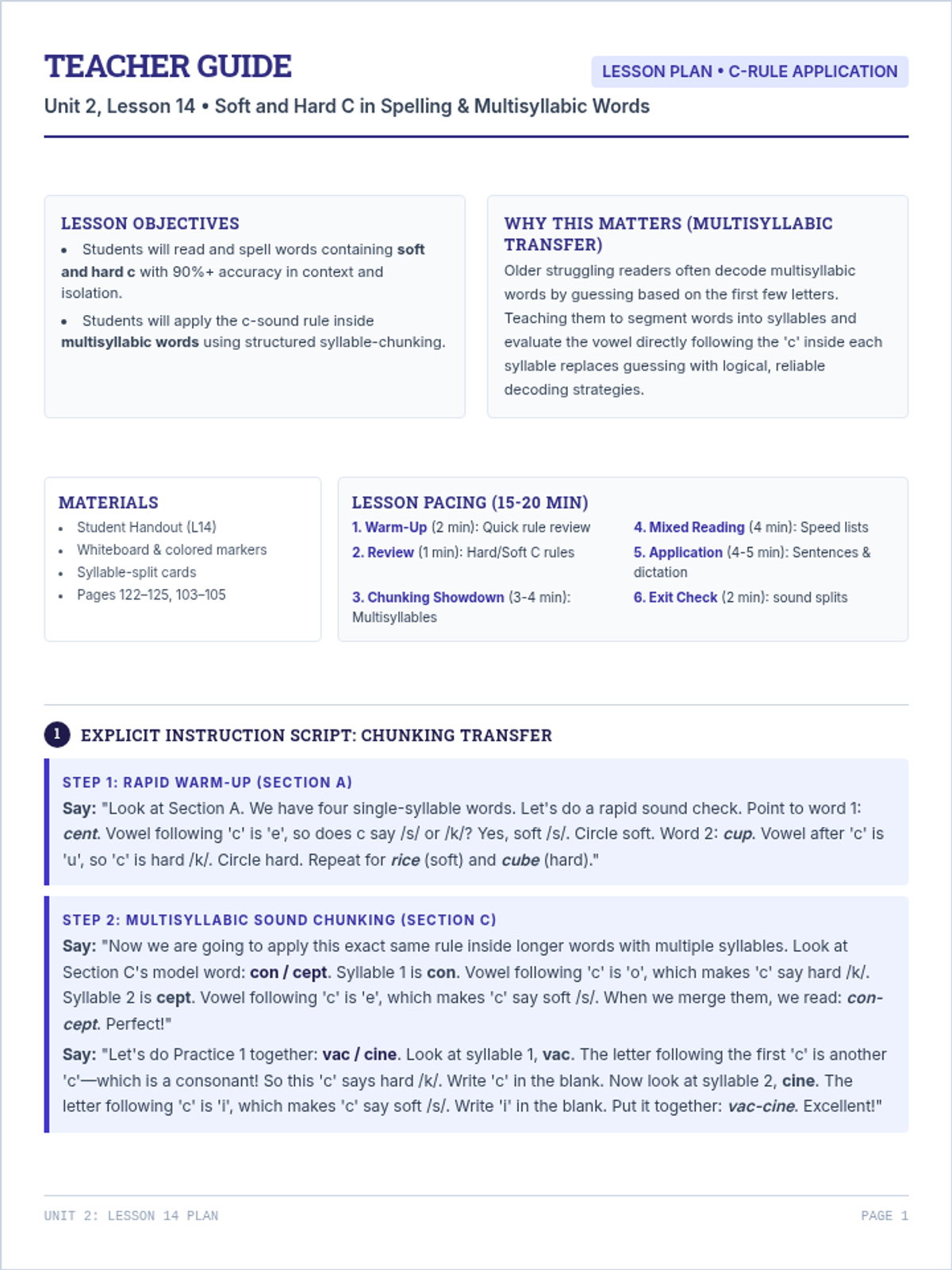
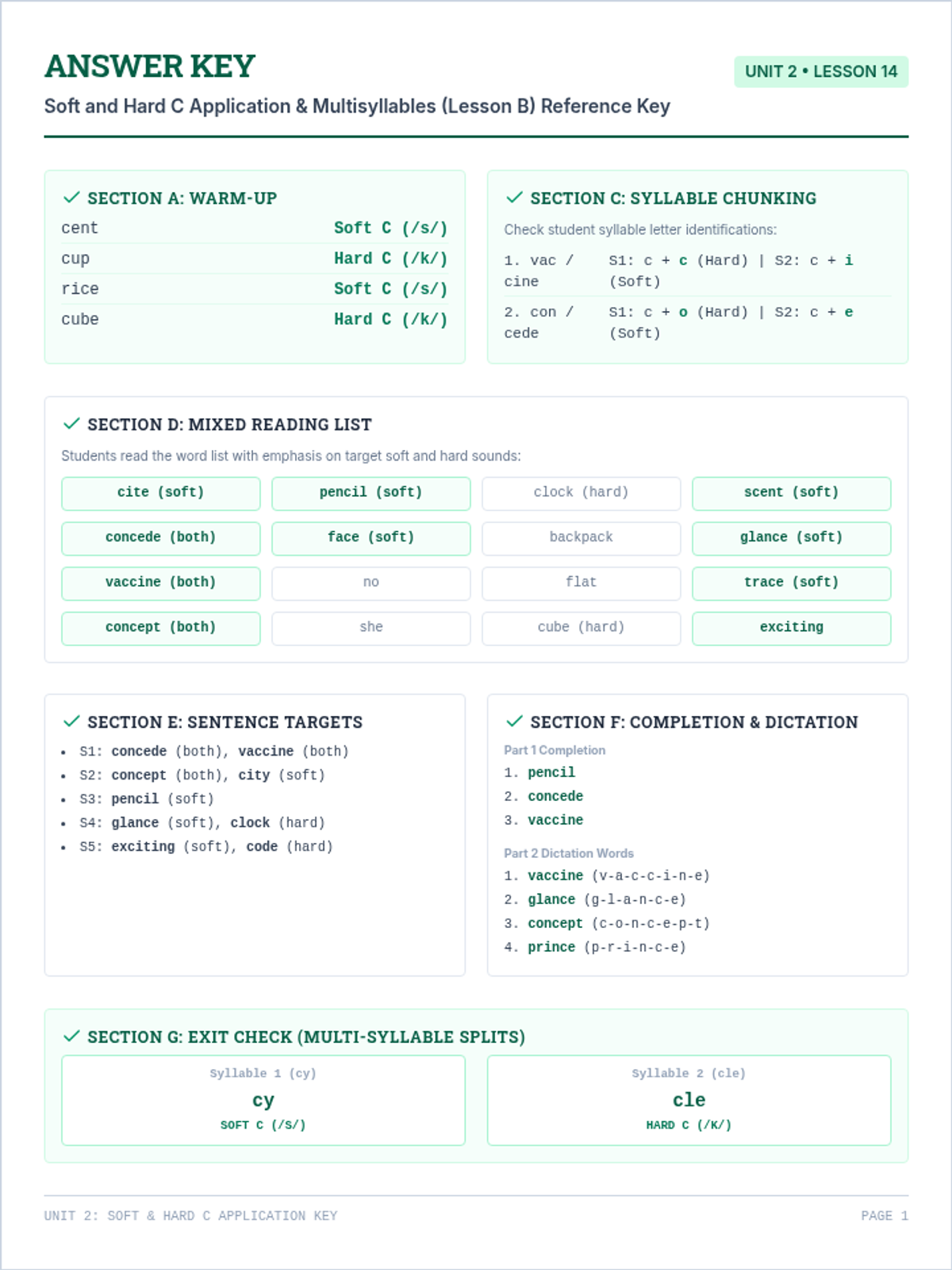
Lesson 14 of the sequence. Focuses on the application of soft and hard c rules in spelling, dictation, and multisyllabic words using structured chunking strategies. Designed for high school students.
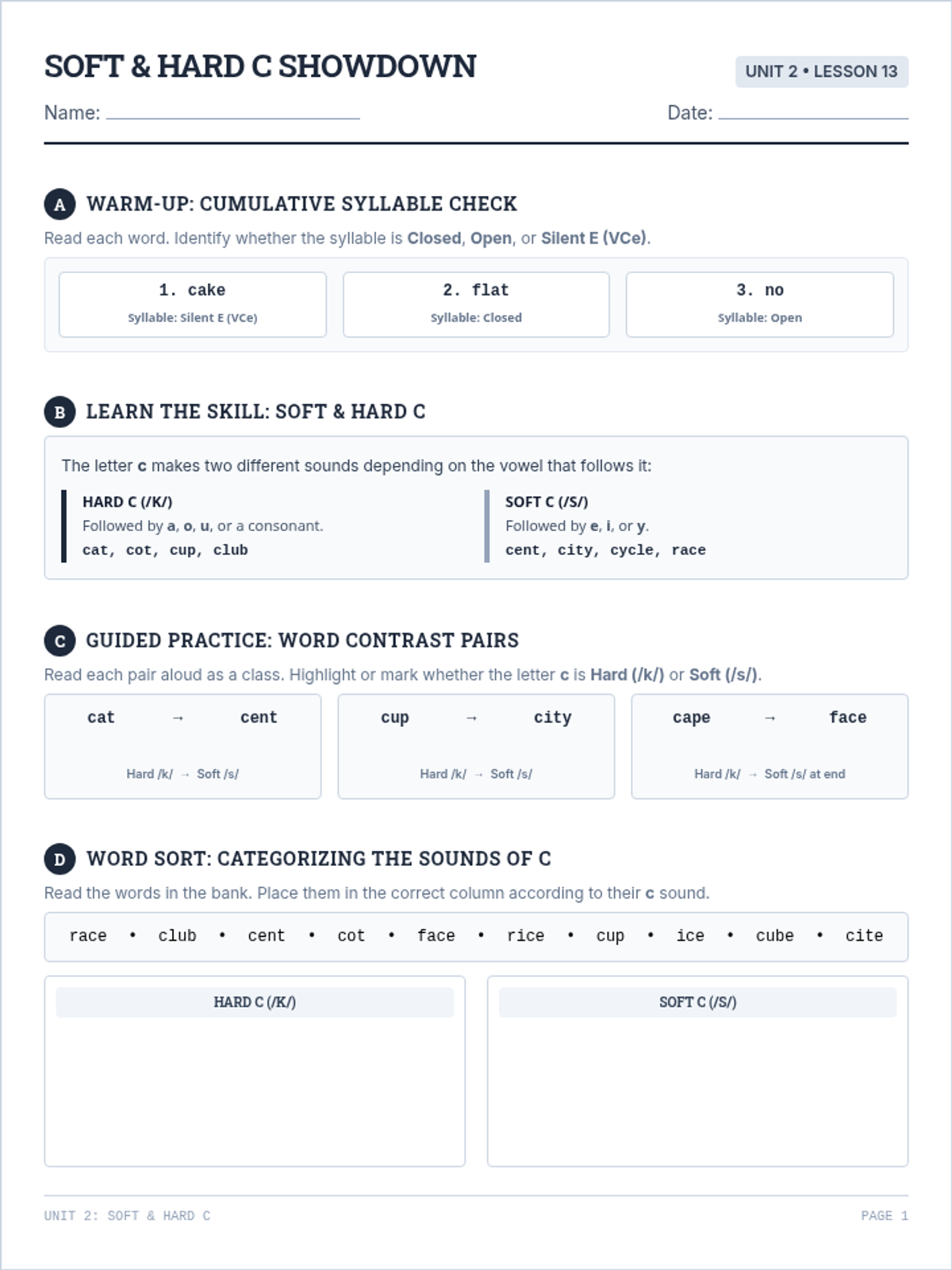
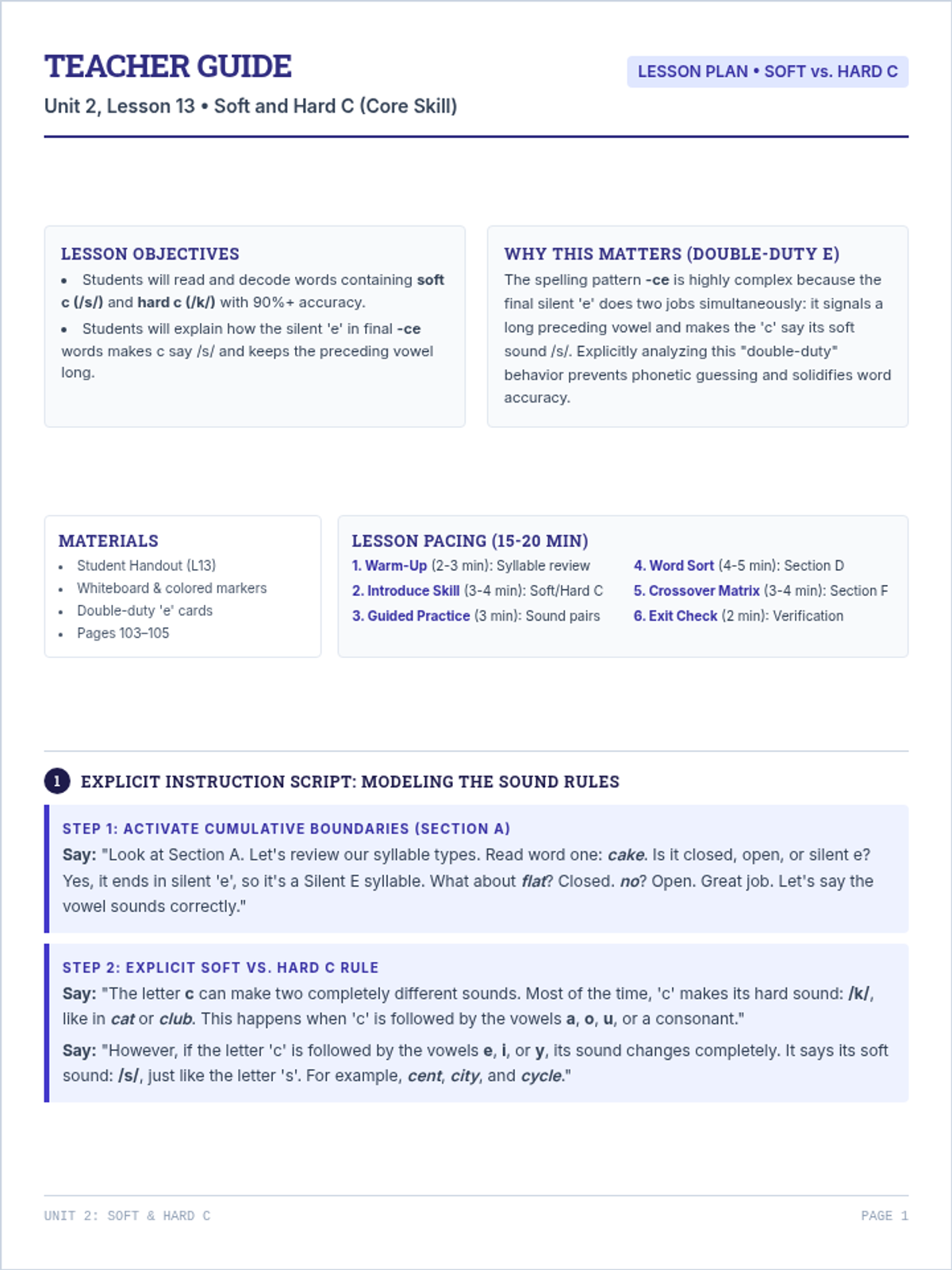
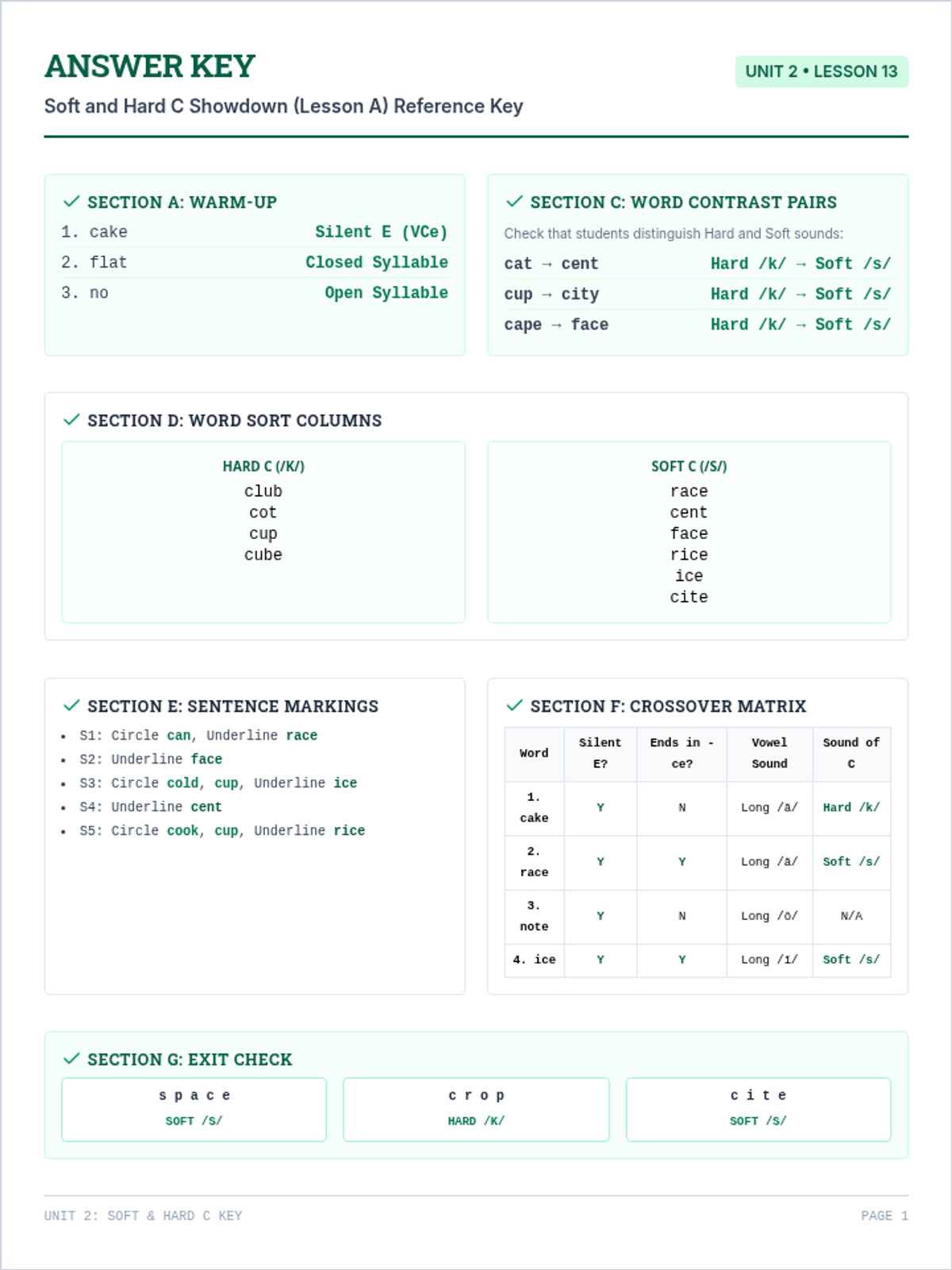
Lesson 13 of the sequence. Introduces soft c (/s/) and hard c (/k/), explicitly contrasting them, and reviews VCe syllables through words ending in -ce. Designed for high school students.
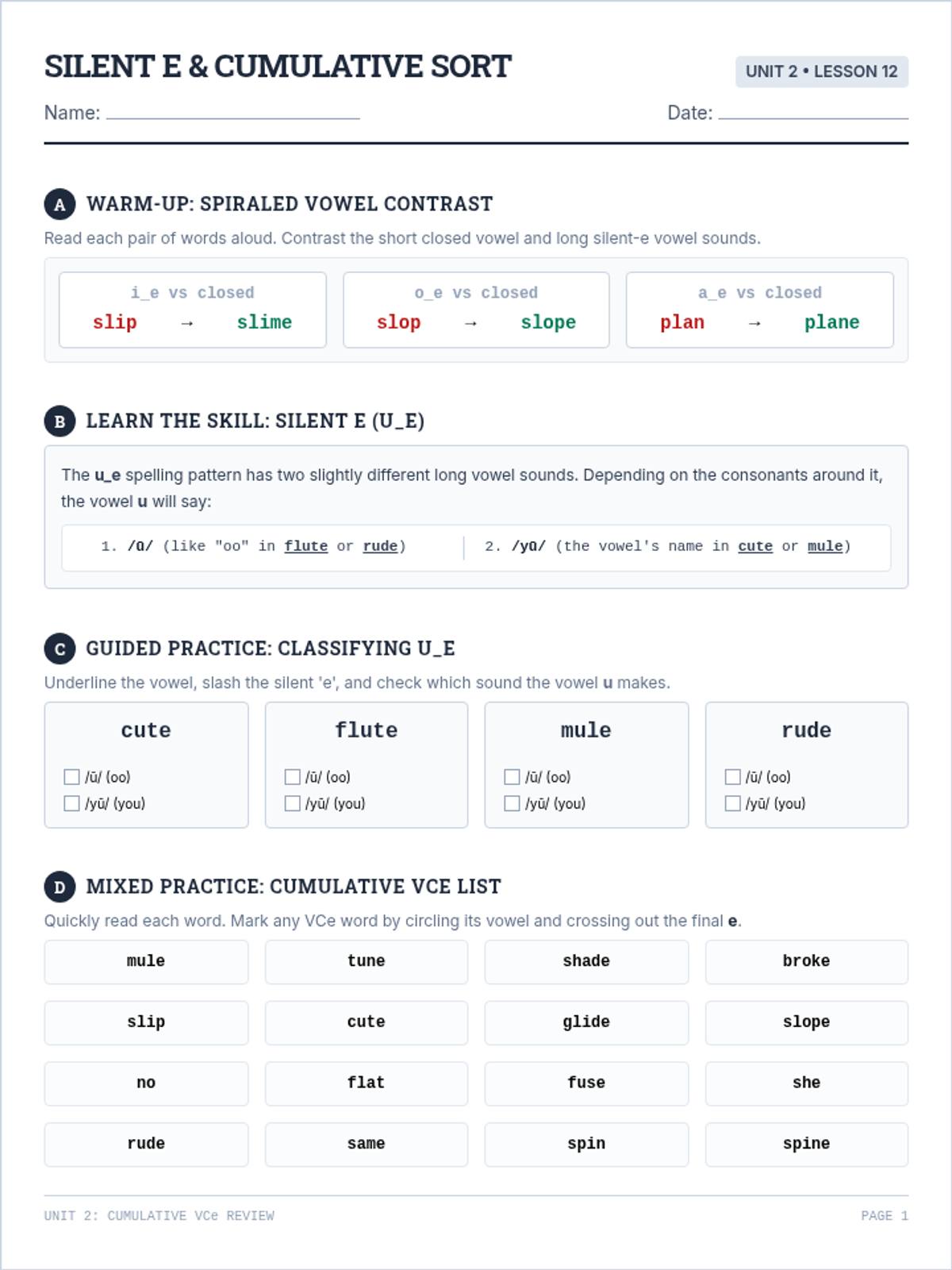
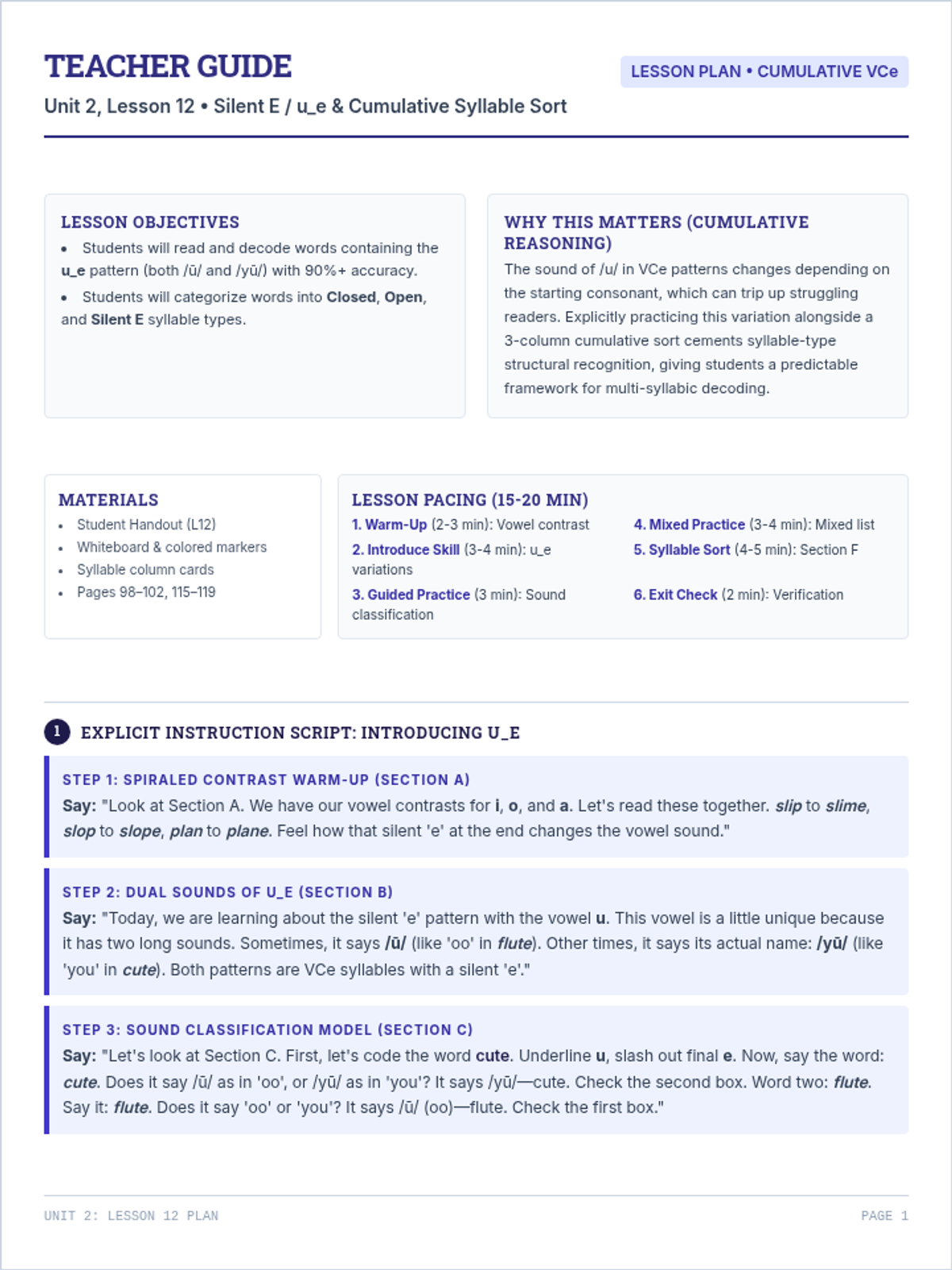
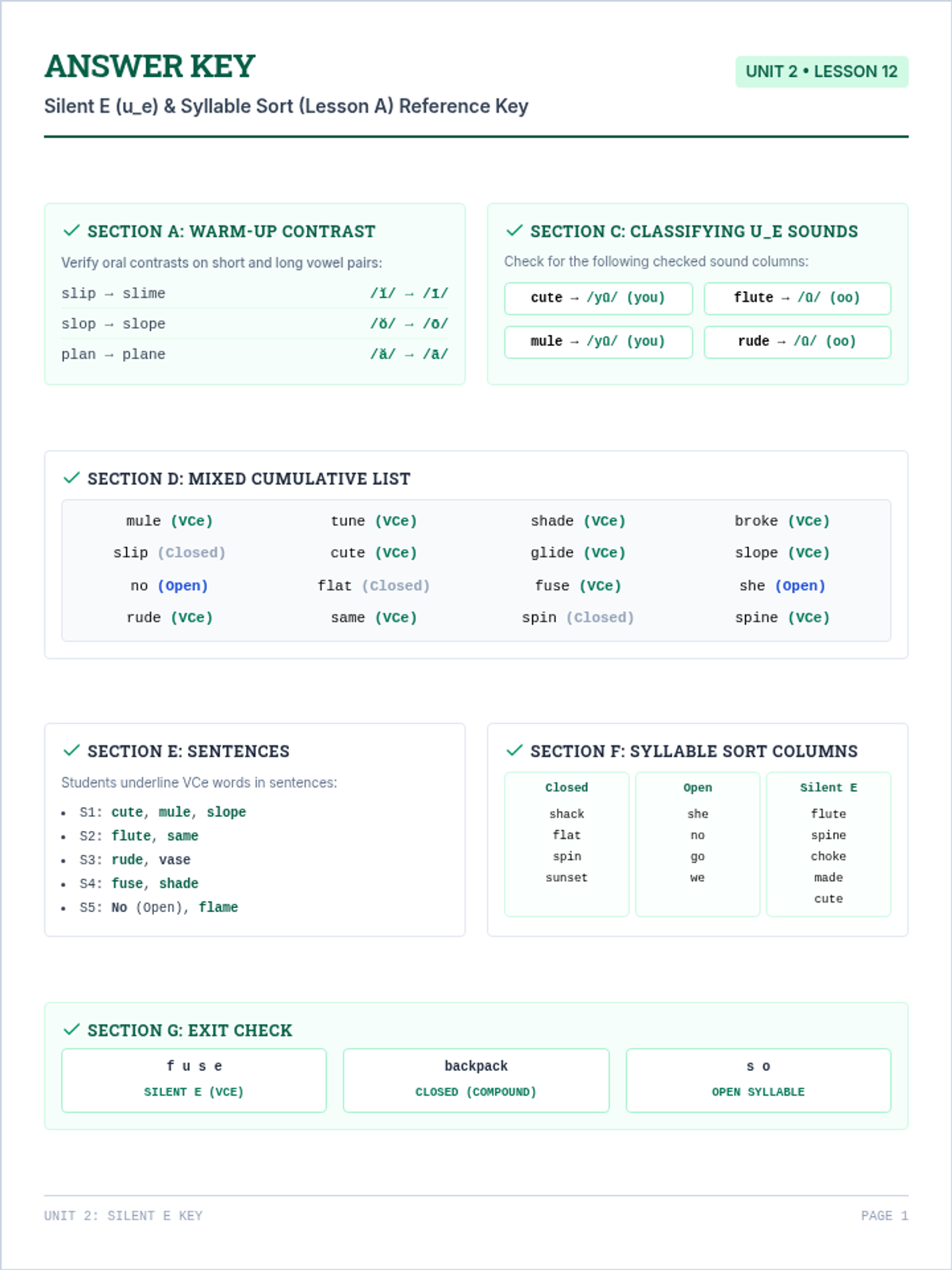
Lesson 12 of the silent e sequence. Introduces the u_e silent e pattern (including /ū/ vs /yū/ variations), reviews a_e, i_e, and o_e patterns, and finishes with a 3-column syllable-type sort. Designed for high school students.
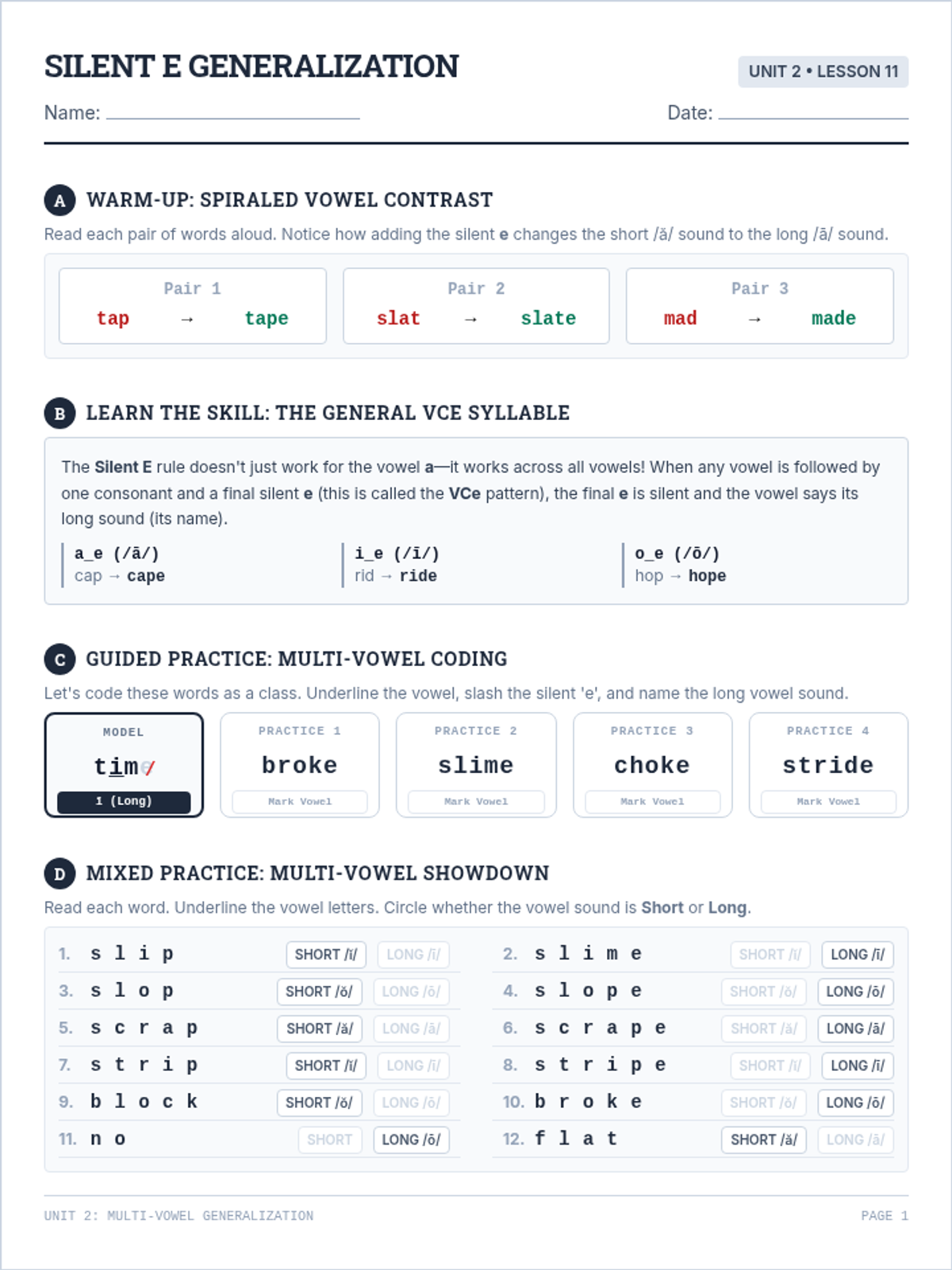
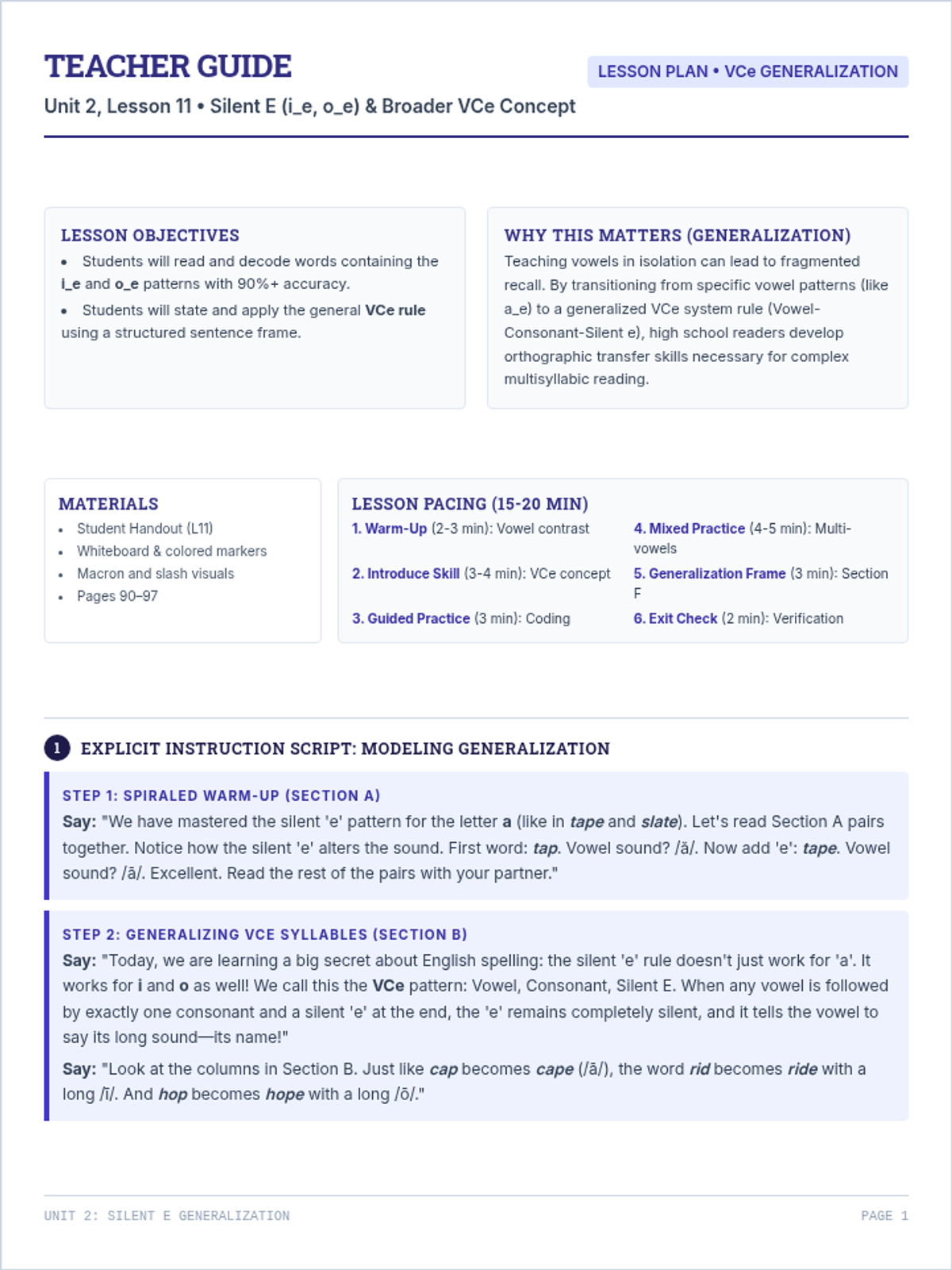
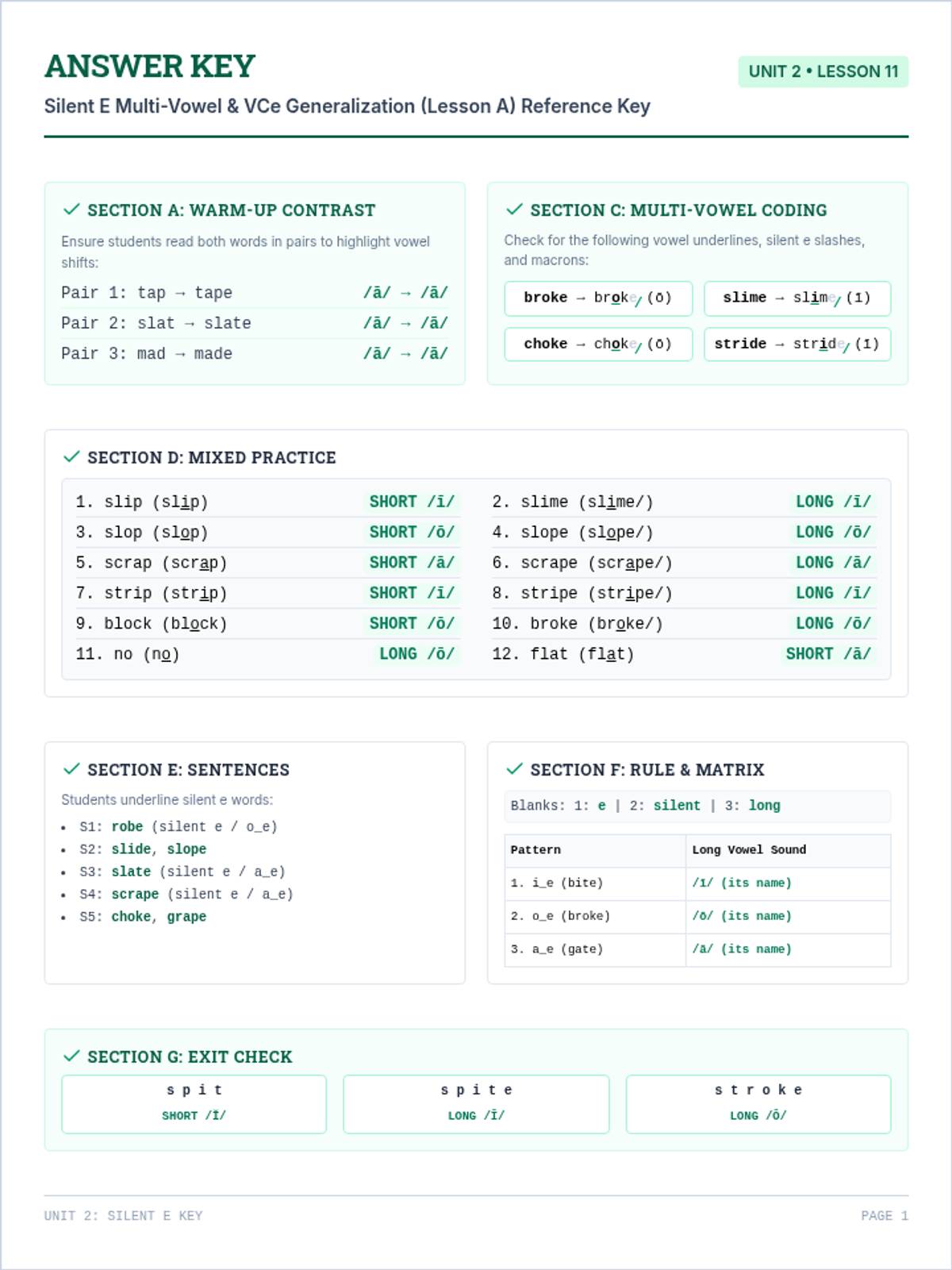
Lesson 11 of the silent e sequence. Introduces the i_e and o_e patterns, spirals a_e, and guides students to articulate the general VCe syllable rule using a structured sentence frame. Designed for high school students reading below grade level.