Comprehensive student-facing reading booklet containing the graded passages, systematic phonics warm-ups, progress monitoring tracking sheets, and cognitive-building DOK questions.
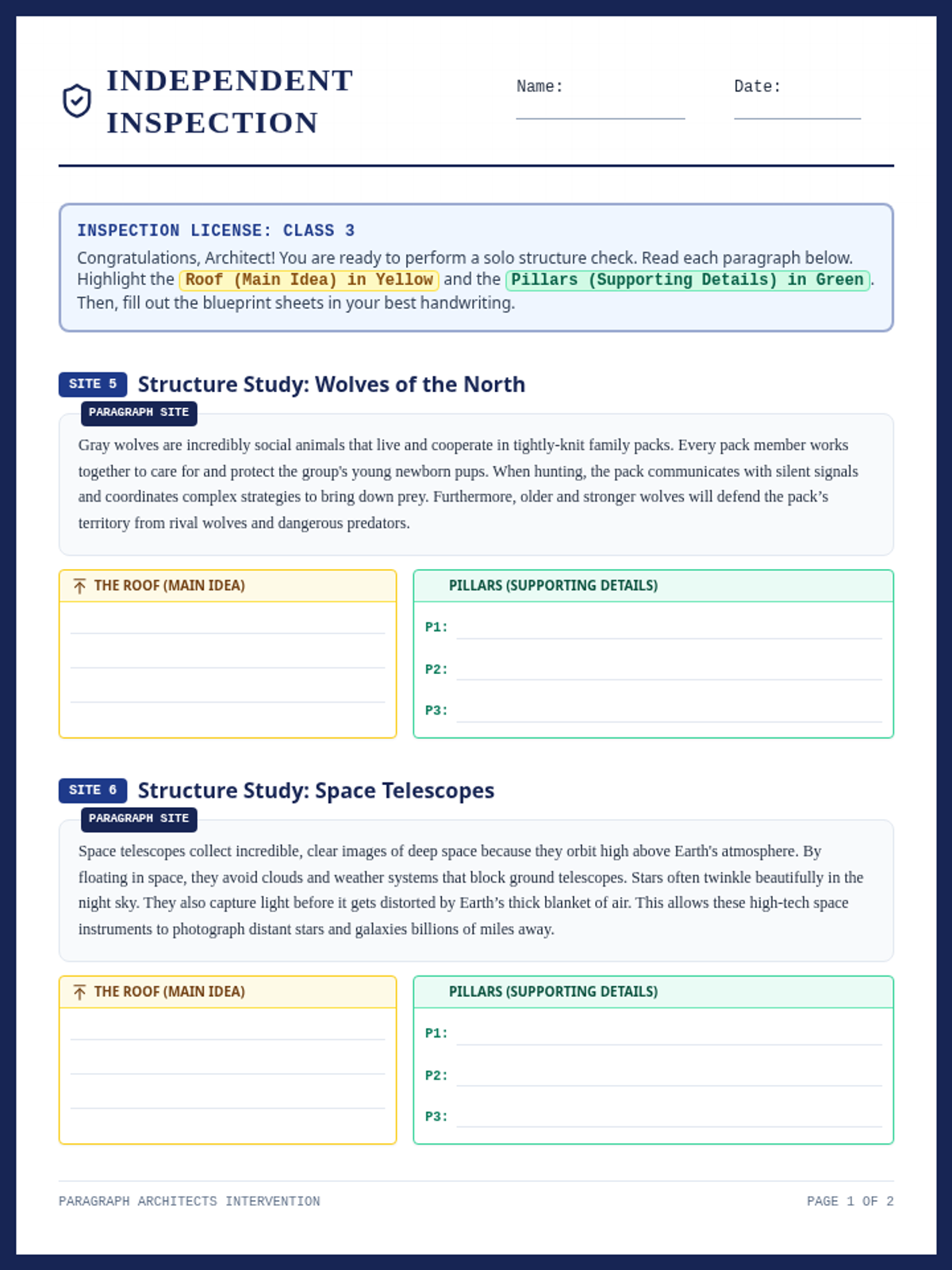
Day 3 focuses on independent execution and performance monitoring. Students independently read, highlight, and analyze paragraph structures to demonstrate mastery, followed by a collaborative review.
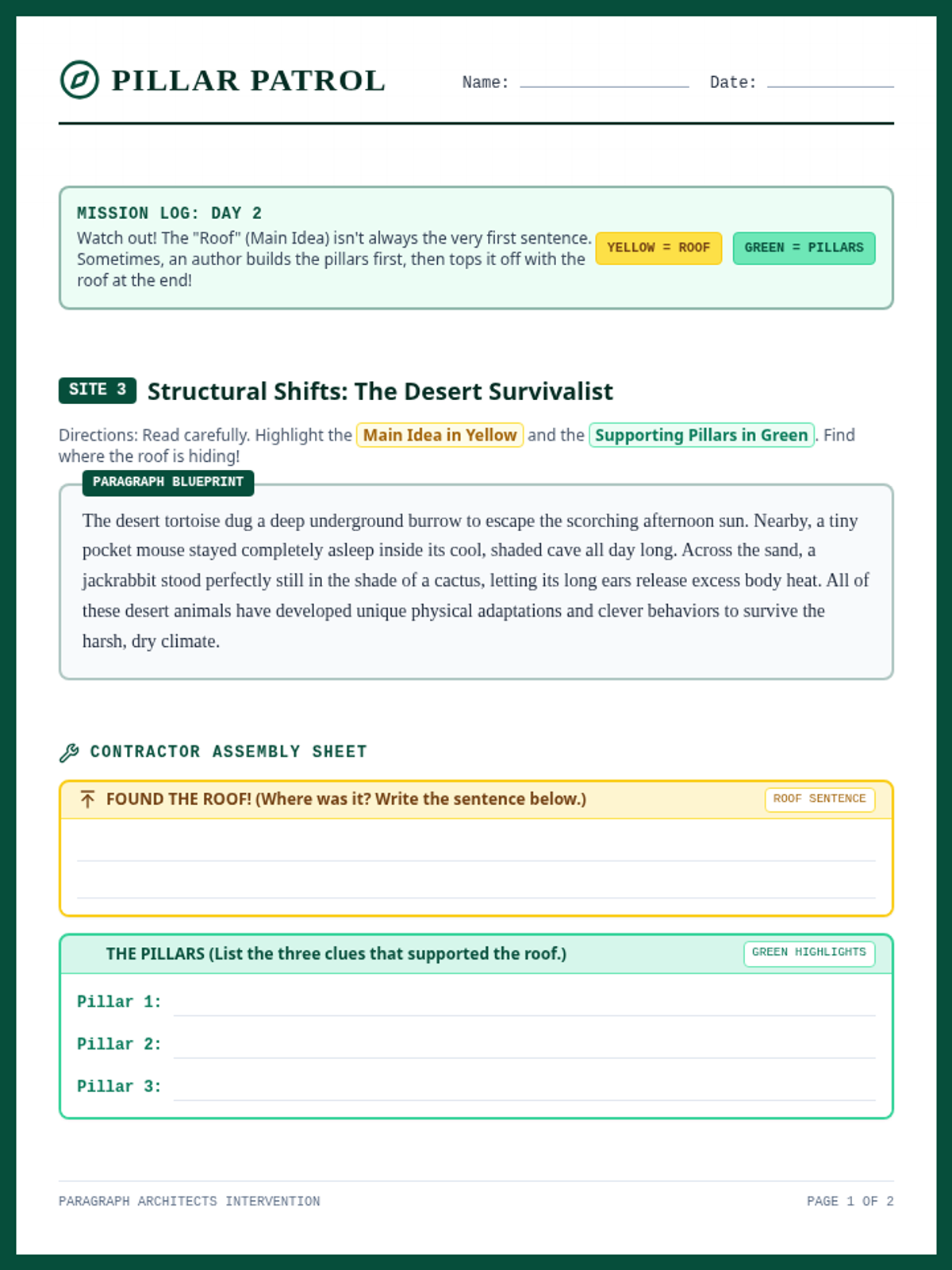
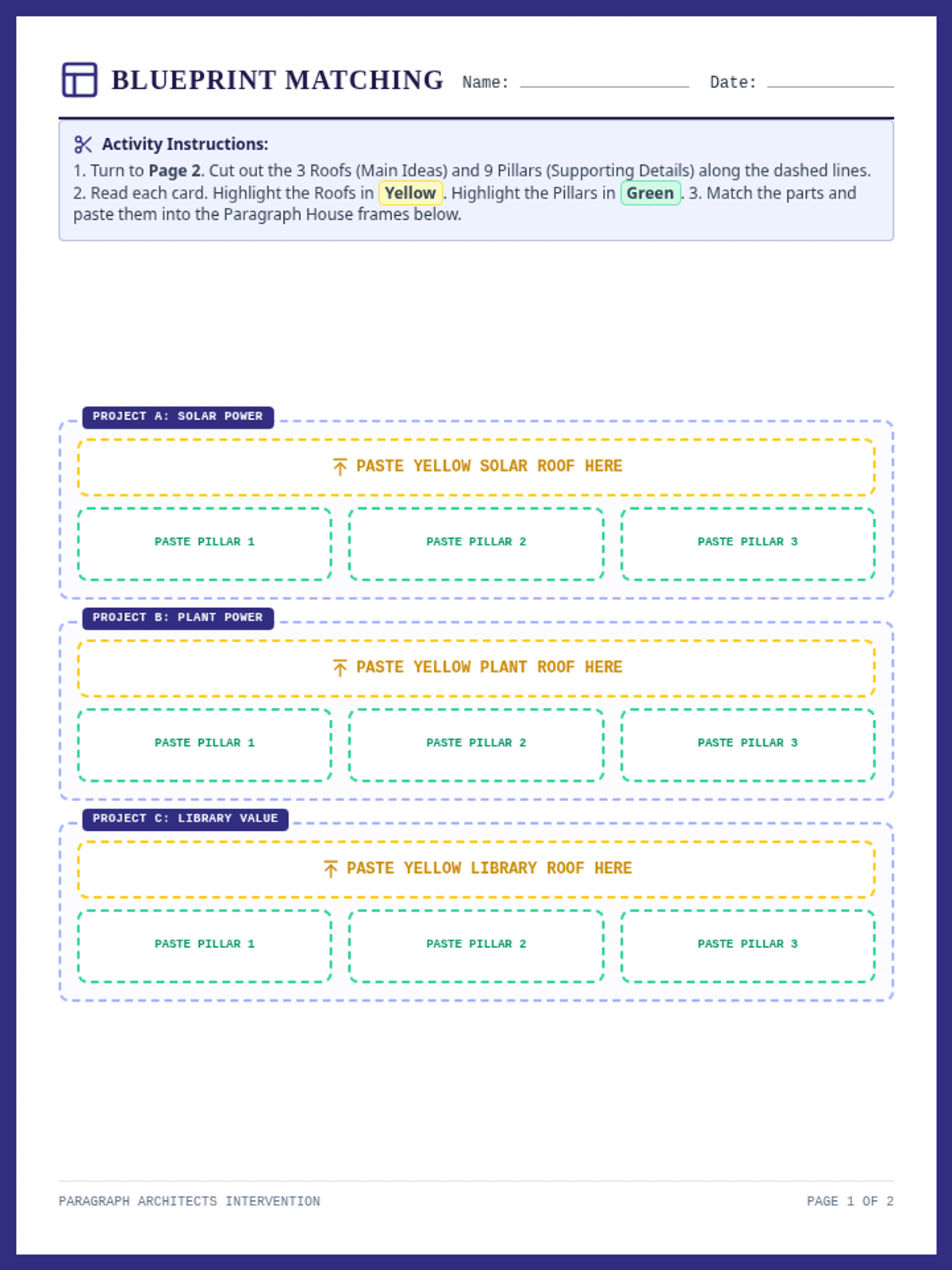
Day 2 transitions to guided practice with fading scaffolds. Students collaborate to highlight and unpack paragraphs, learning to distinguish between critical supporting details and interesting but non-essential information.
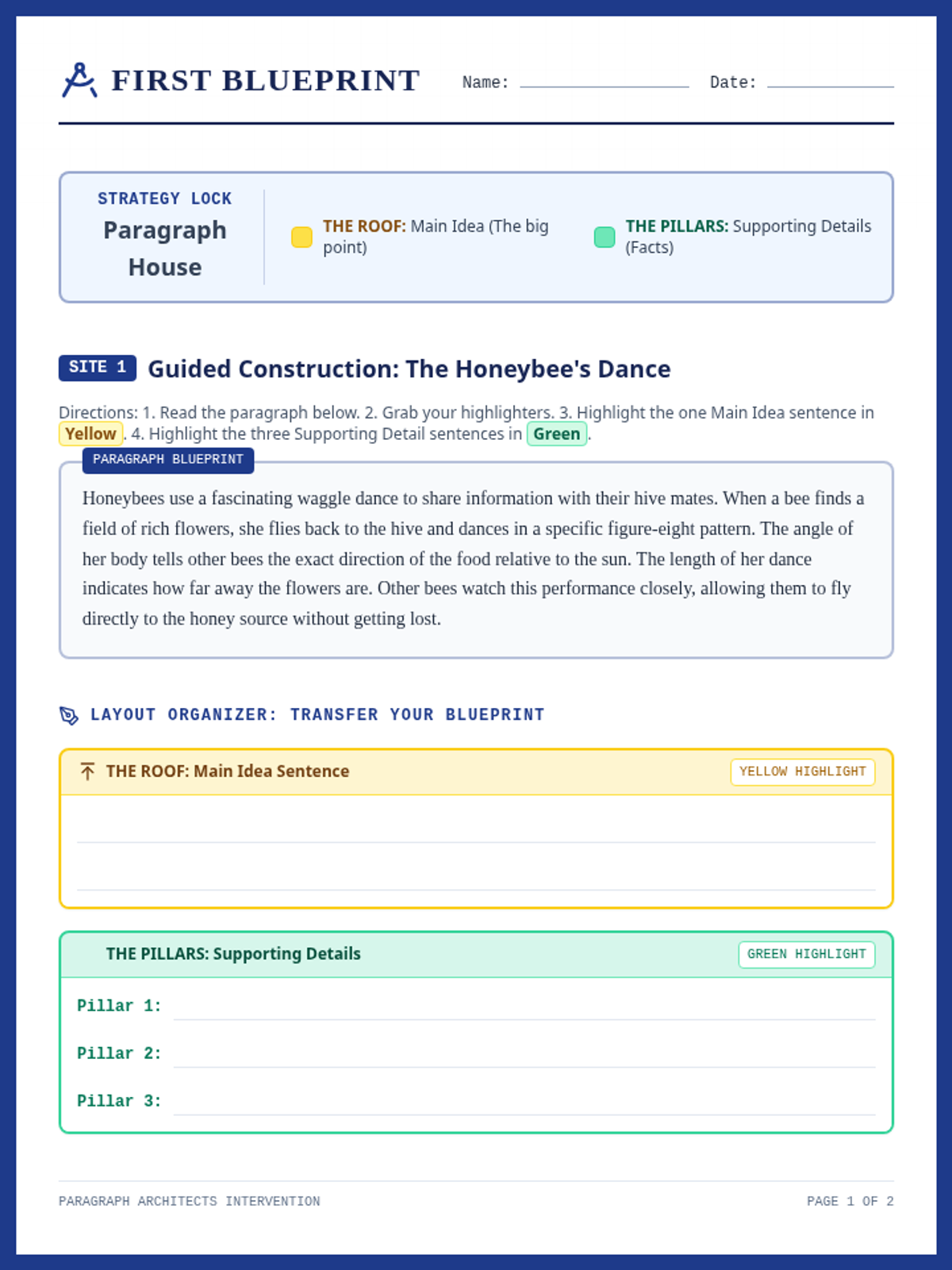
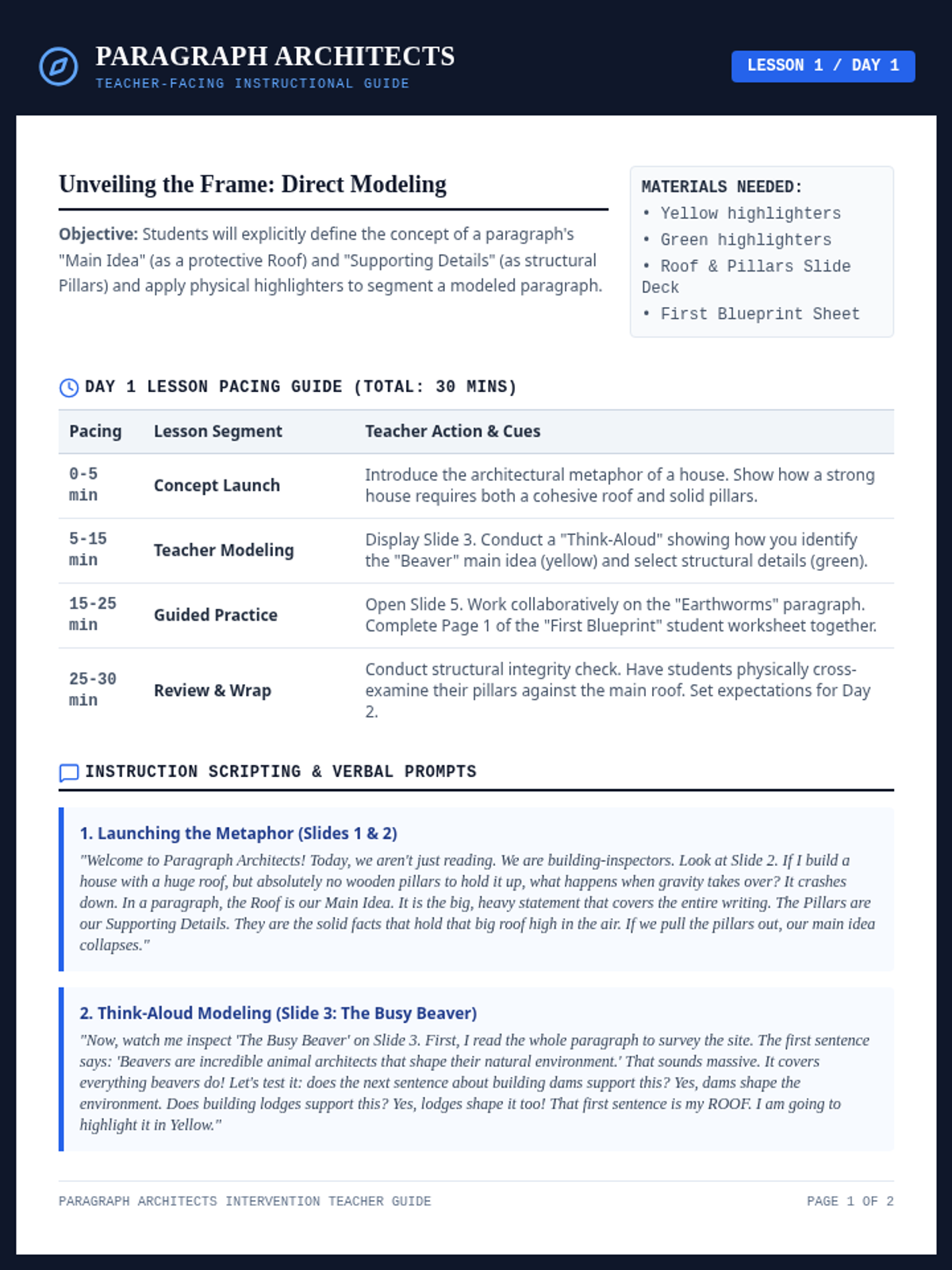
Day 1 of the intervention focuses on explicit teacher modeling of the 'Roof' (Main Idea) and 'Pillars' (Supporting Details) concept. Students learn how a paragraph is built, watch a live highlighting demonstration, and participate in highly guided practice using physical highlighters.
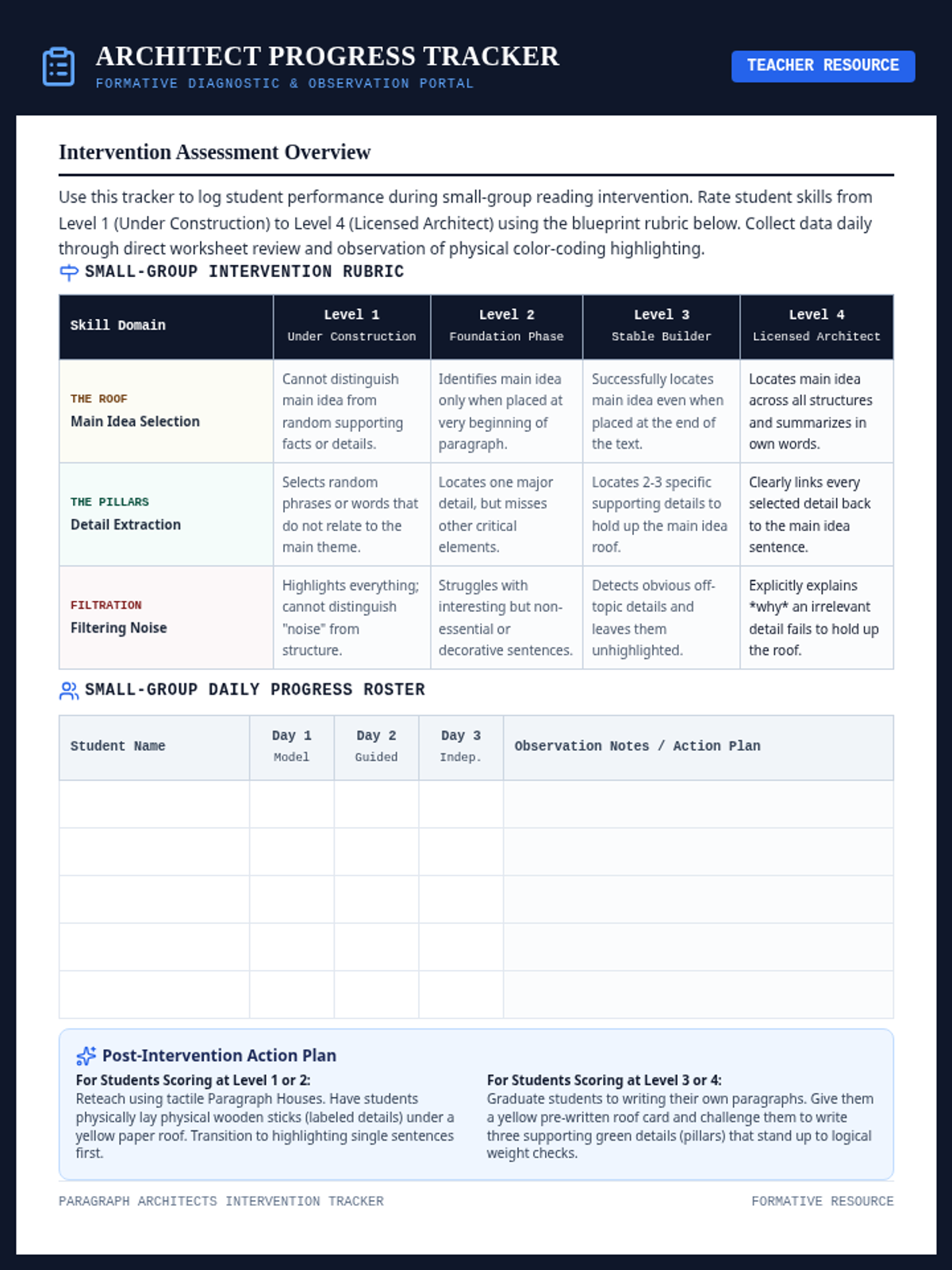
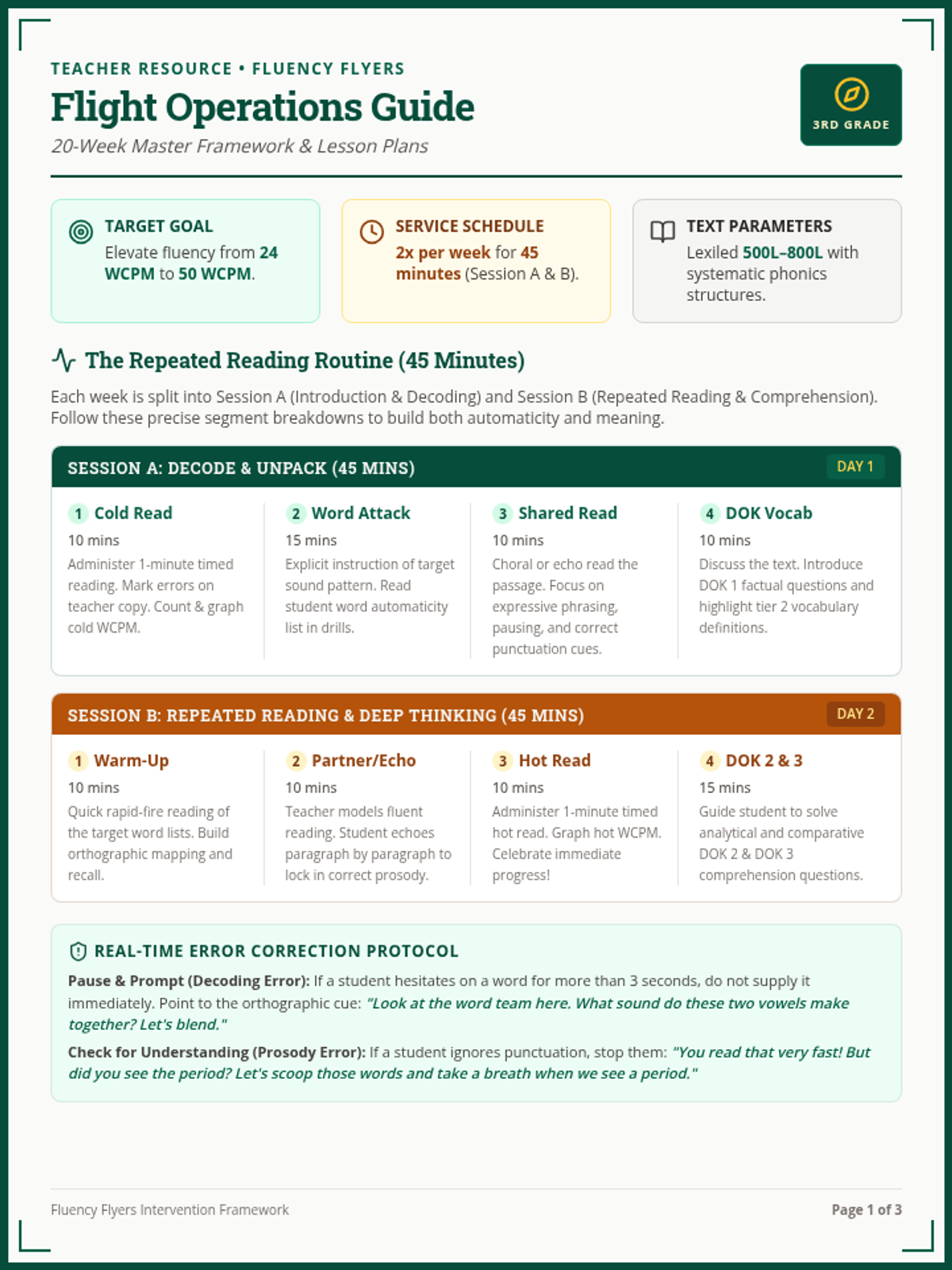
Master instructional framework and weekly lesson plan bundle for the 20-week intervention. Outlines the 45-minute twice-weekly session routines, cold/hot reading protocols, phonics skill schedules, and administrative guidelines for progress monitoring.
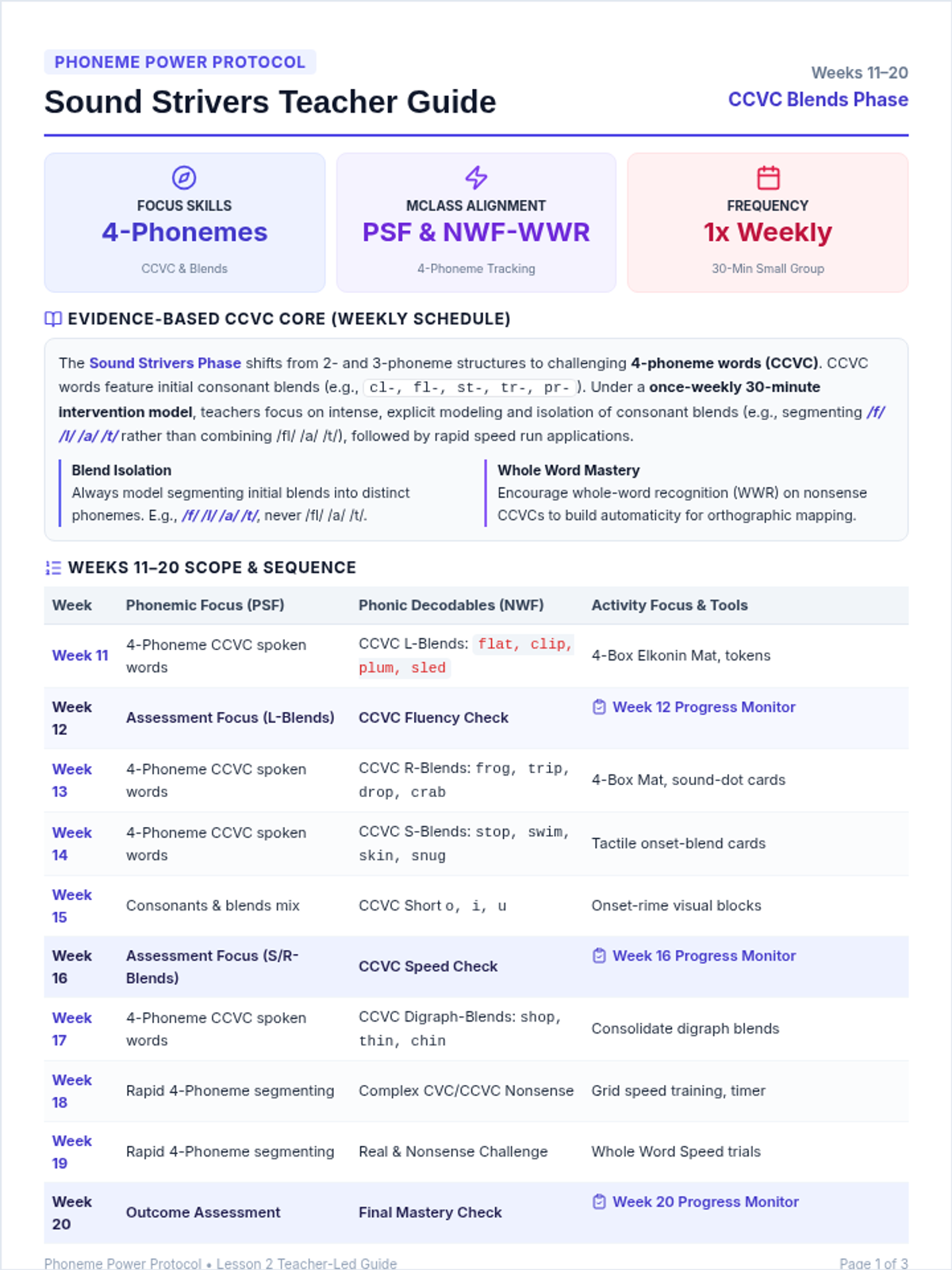
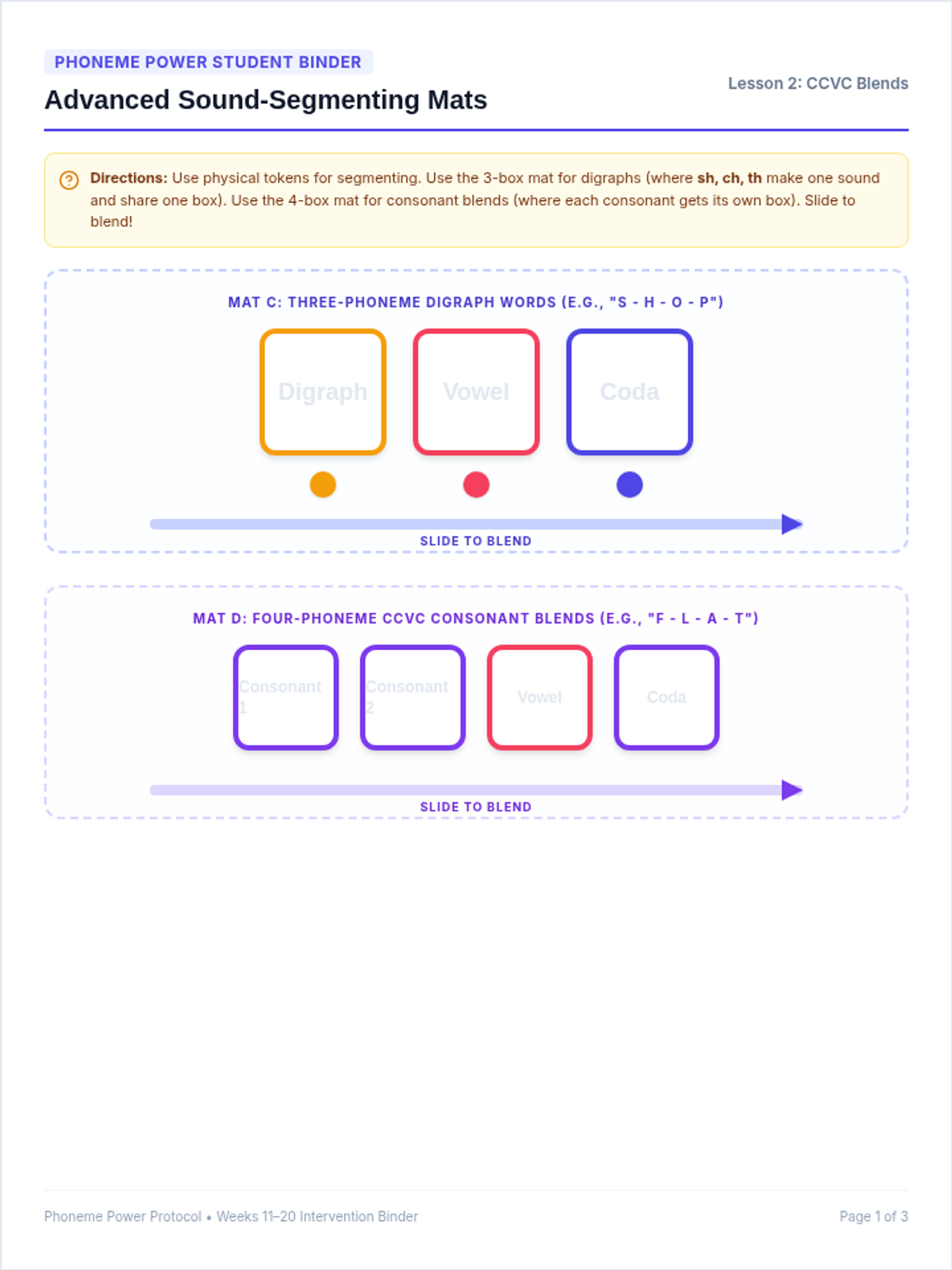
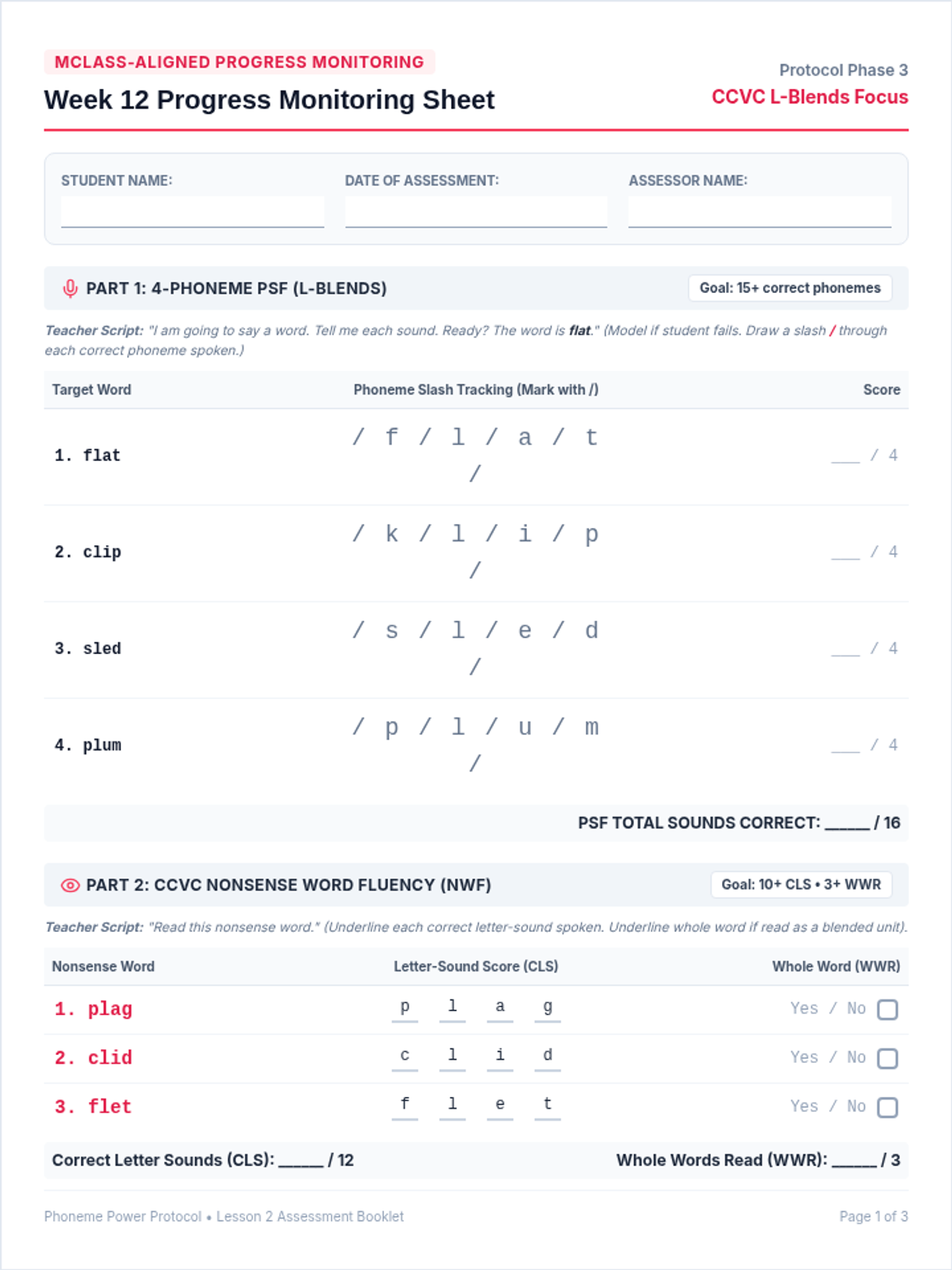
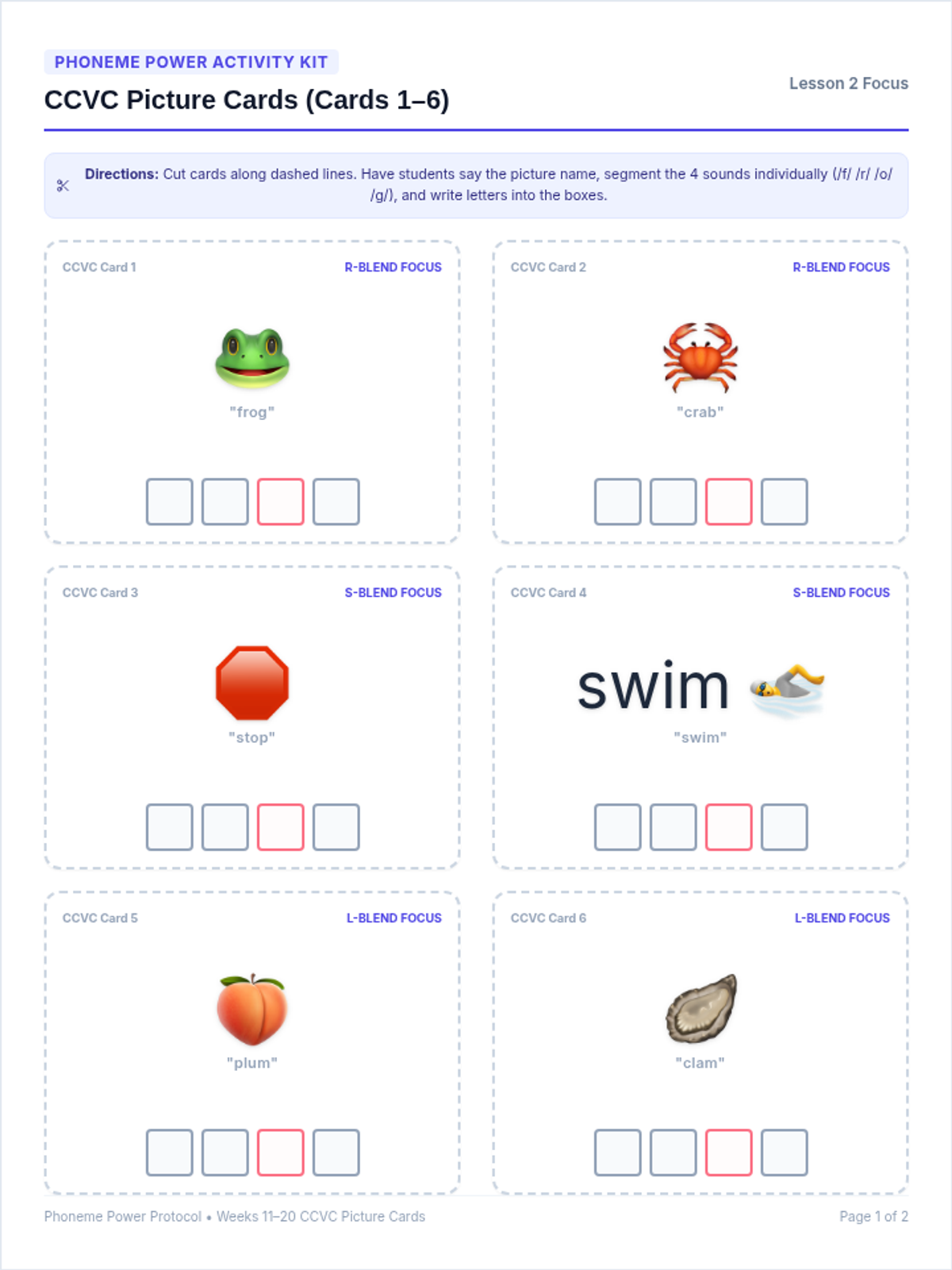
Weeks 11-20 of the Phoneme Power Protocol intervention, focusing on CCVC (consonant blends) and complex CVC words. Includes systematic small-group routines for 4-phoneme words, visual 4-box Elkonin mats, tactile onset-rime blending cards, and progress monitoring scoring sheets for Weeks 12, 16, and 20.
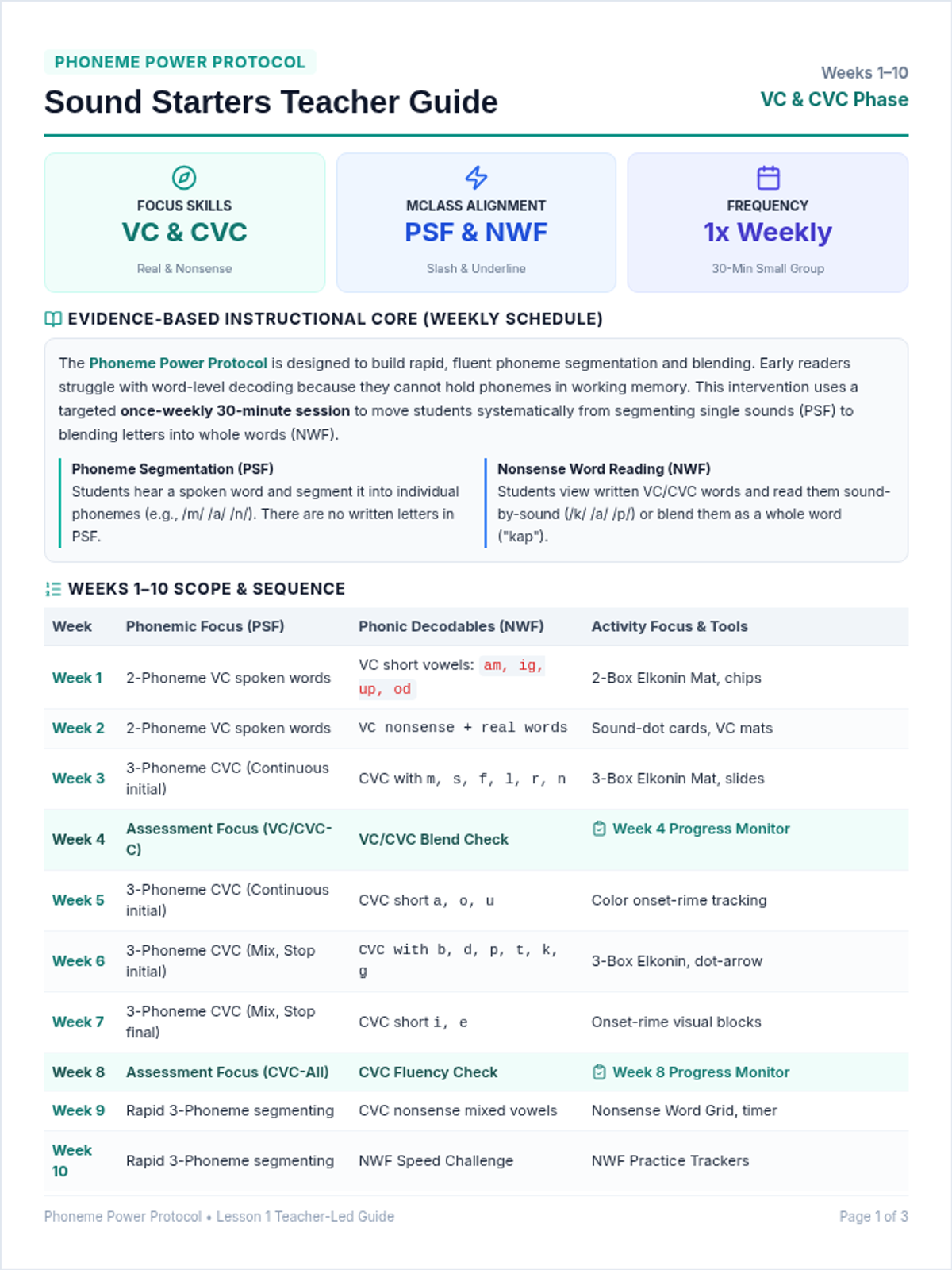
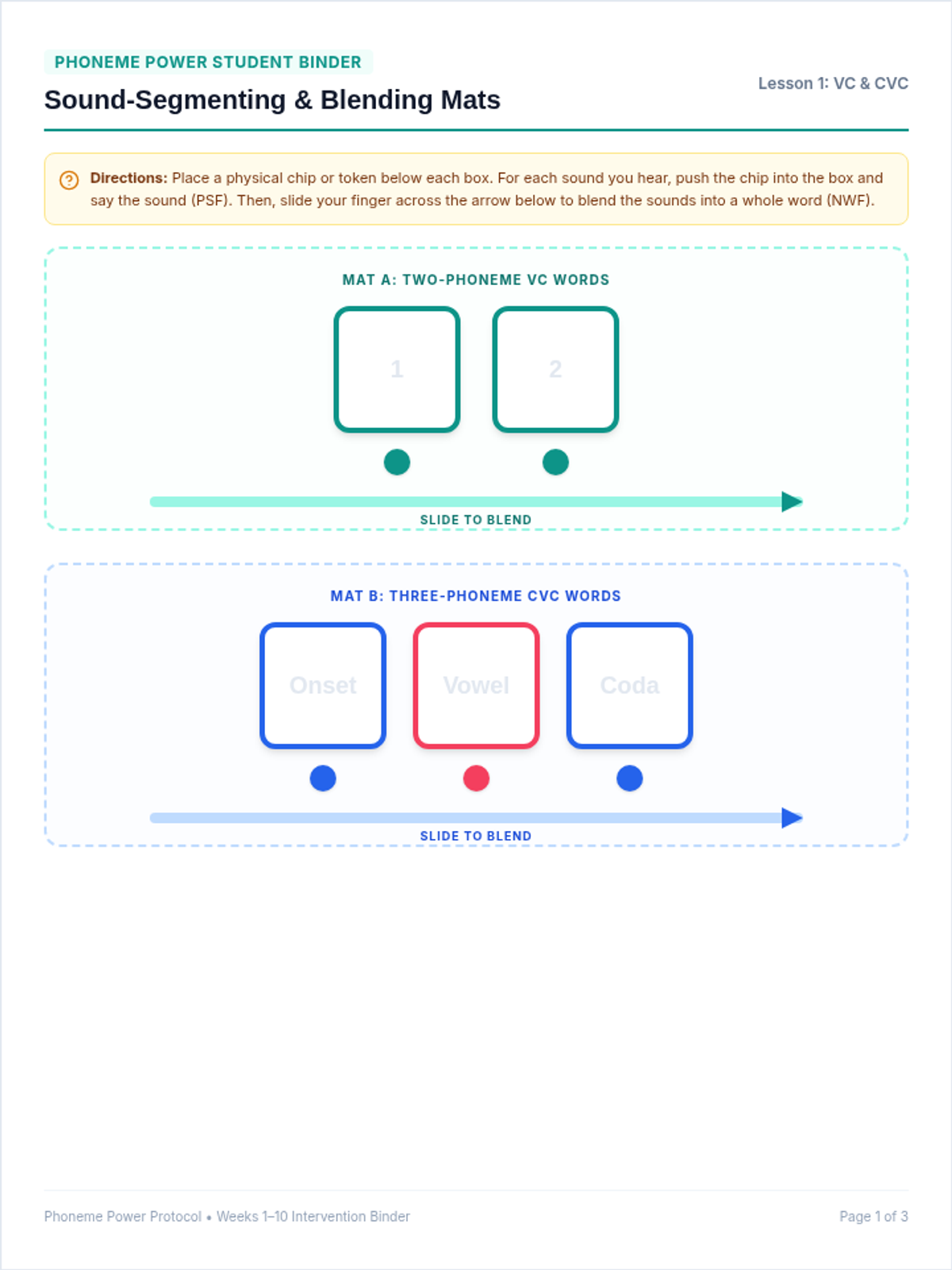
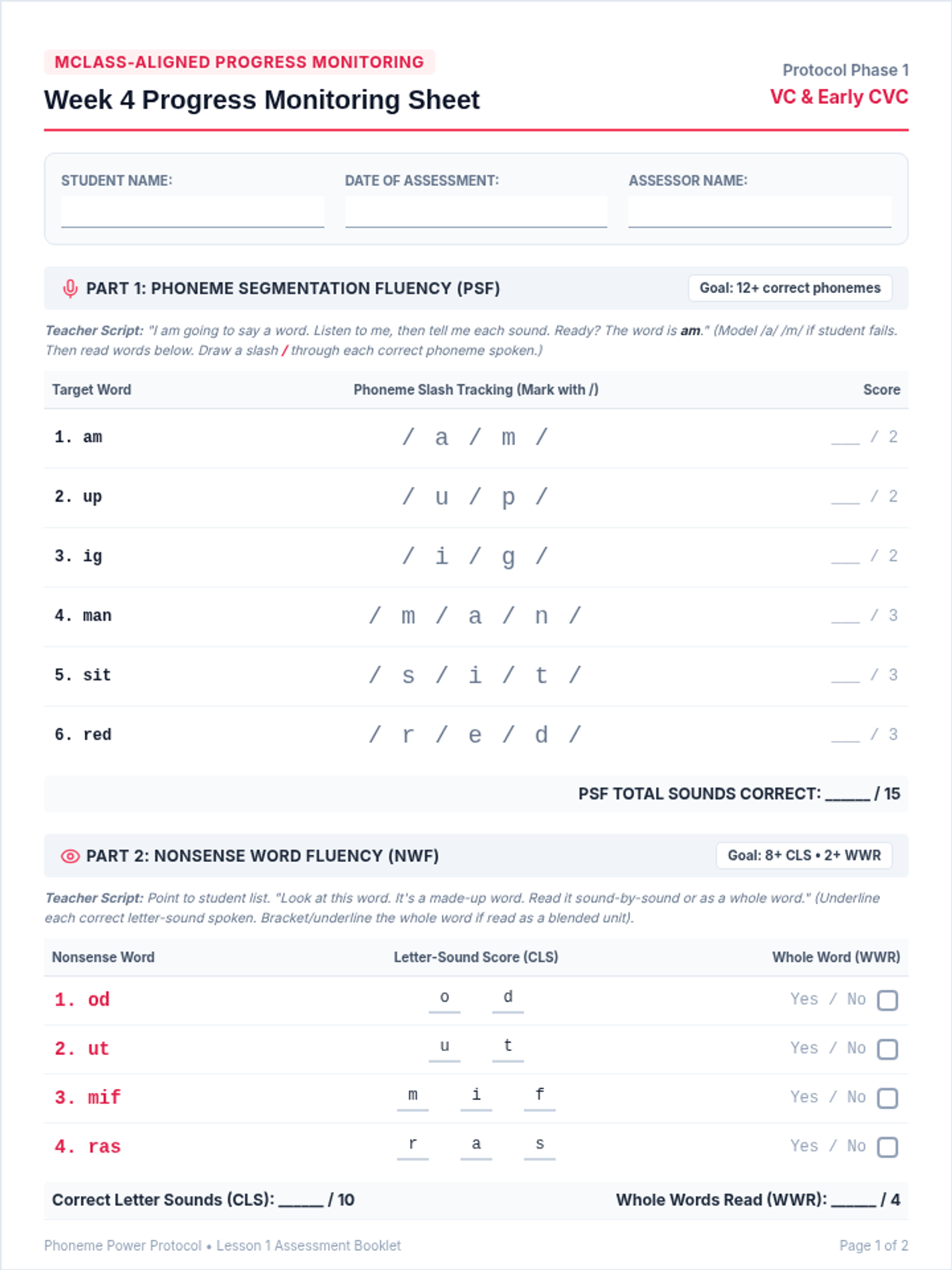
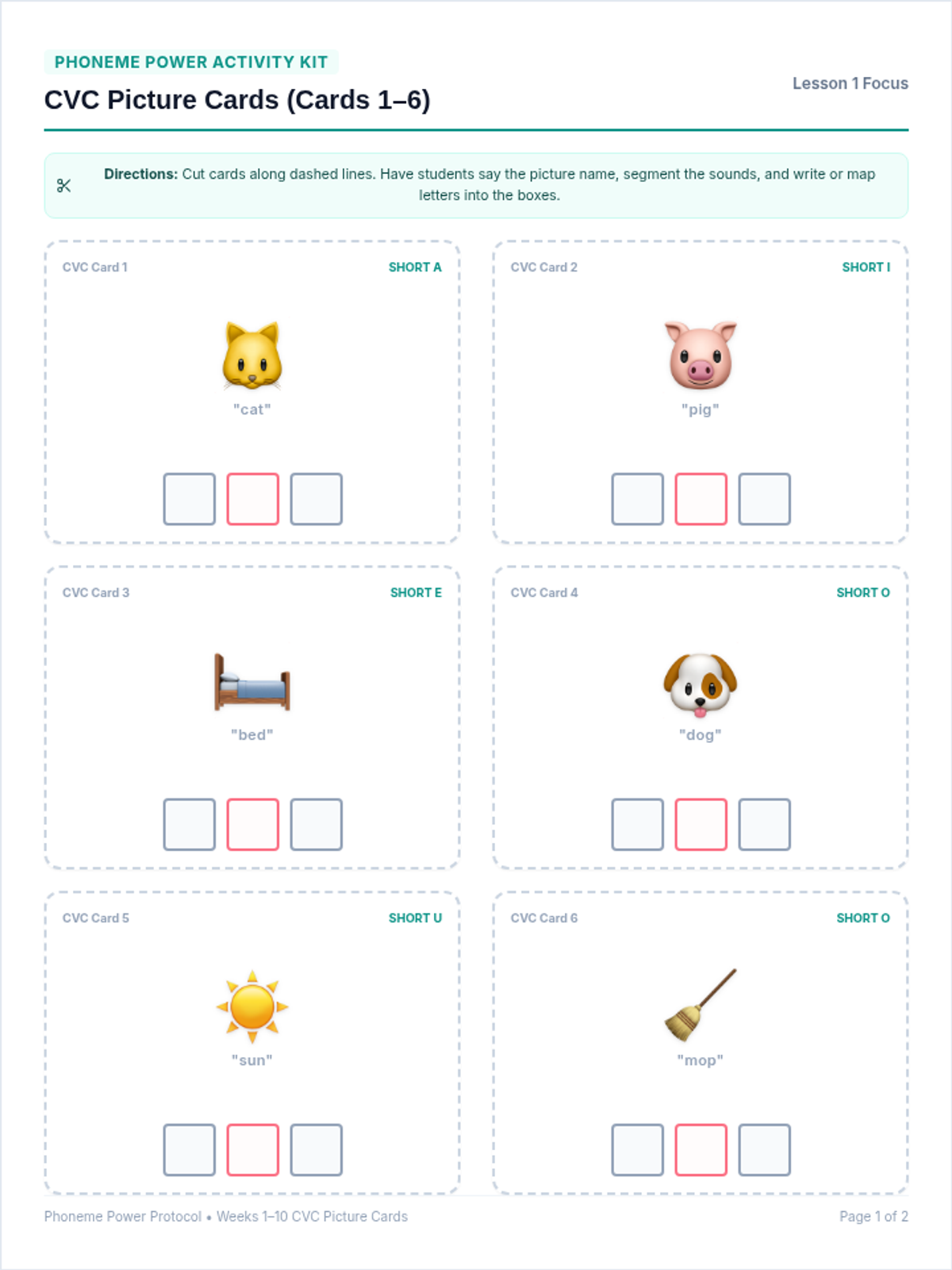
Weeks 1-10 of the Phoneme Power Protocol intervention, focusing on VC and CVC words. Includes systematic routines for segmenting individual sounds (PSF) and blending phonemes into nonsense and real words (NWF) using 2-box and 3-box Elkonin mats, color-coded word cards, and progress monitoring at Weeks 4 and 8.
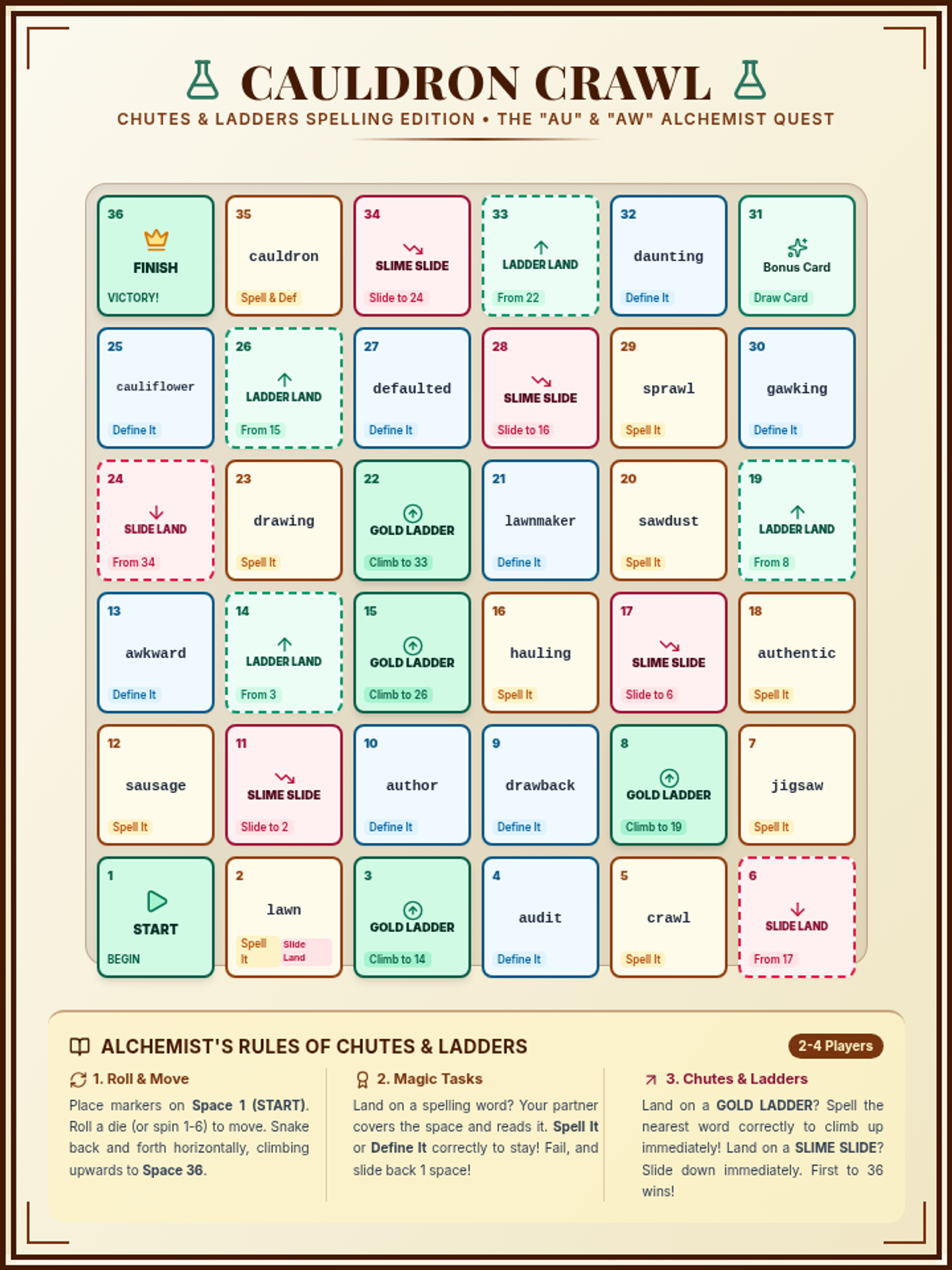
A high-stakes spelling adventure game focusing on "au" and "aw" diphthong words. Students navigate a perilous track to reach the Alchemist's Cauldron by spelling and defining challenging vocabulary.
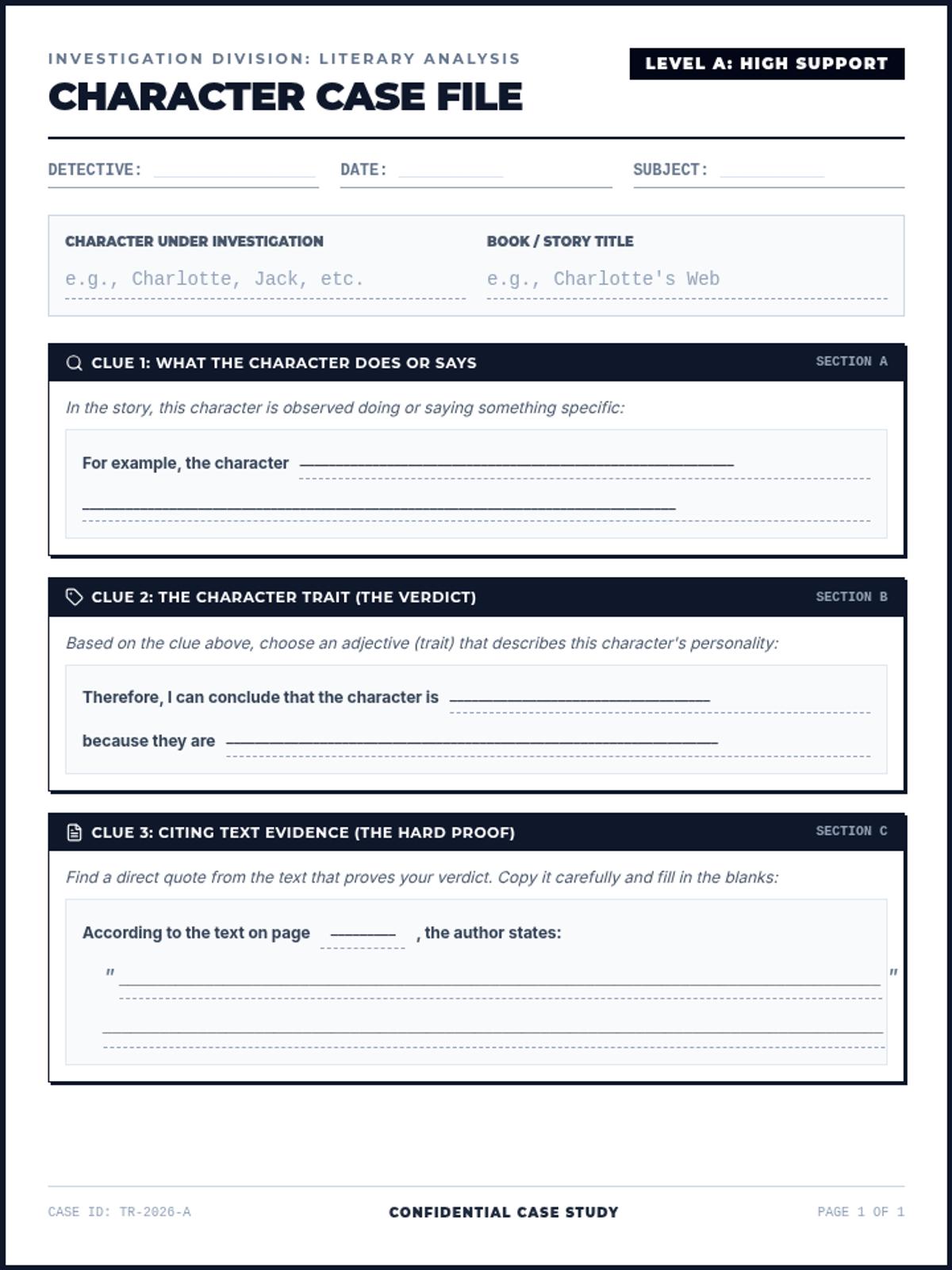
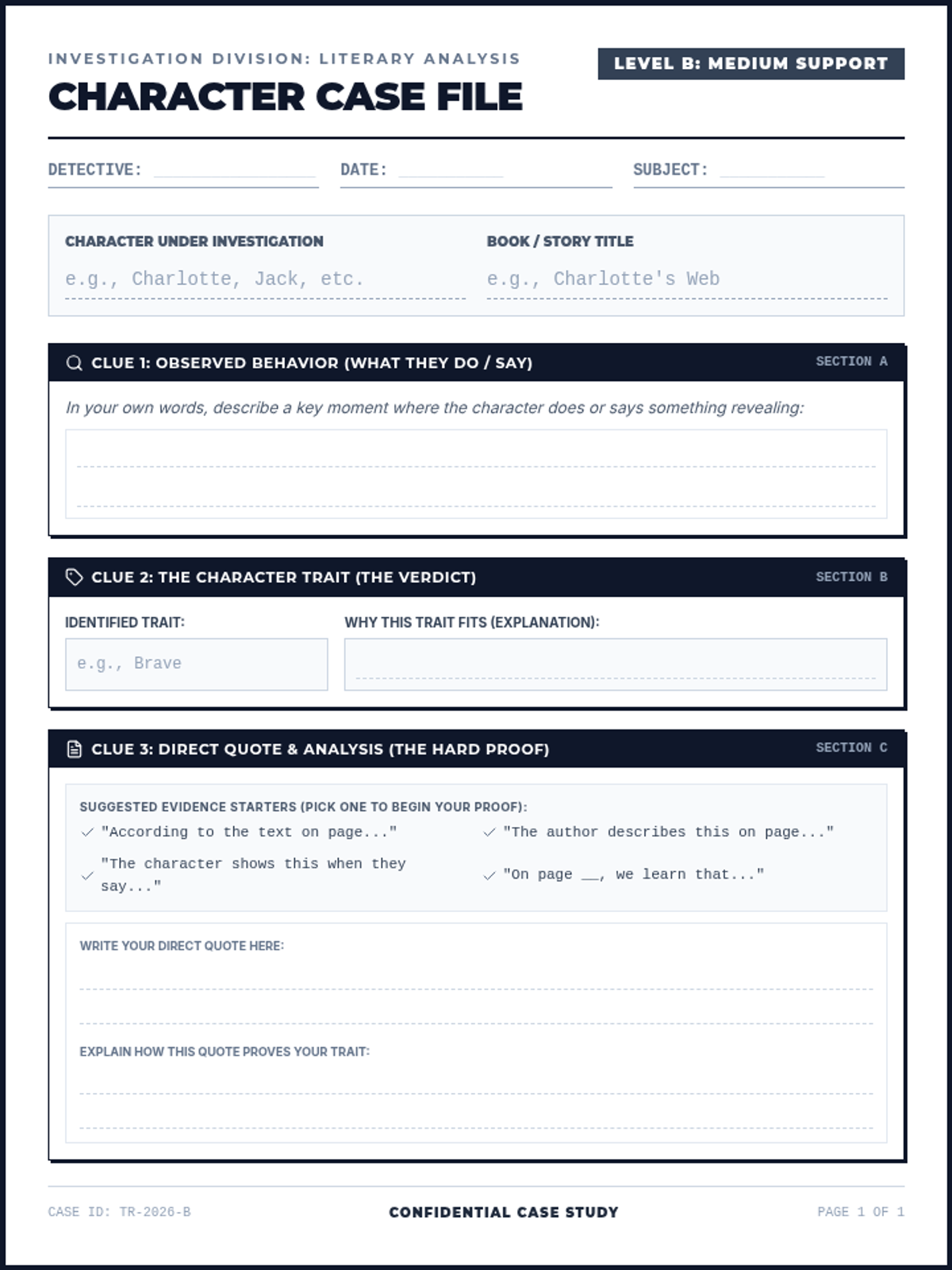
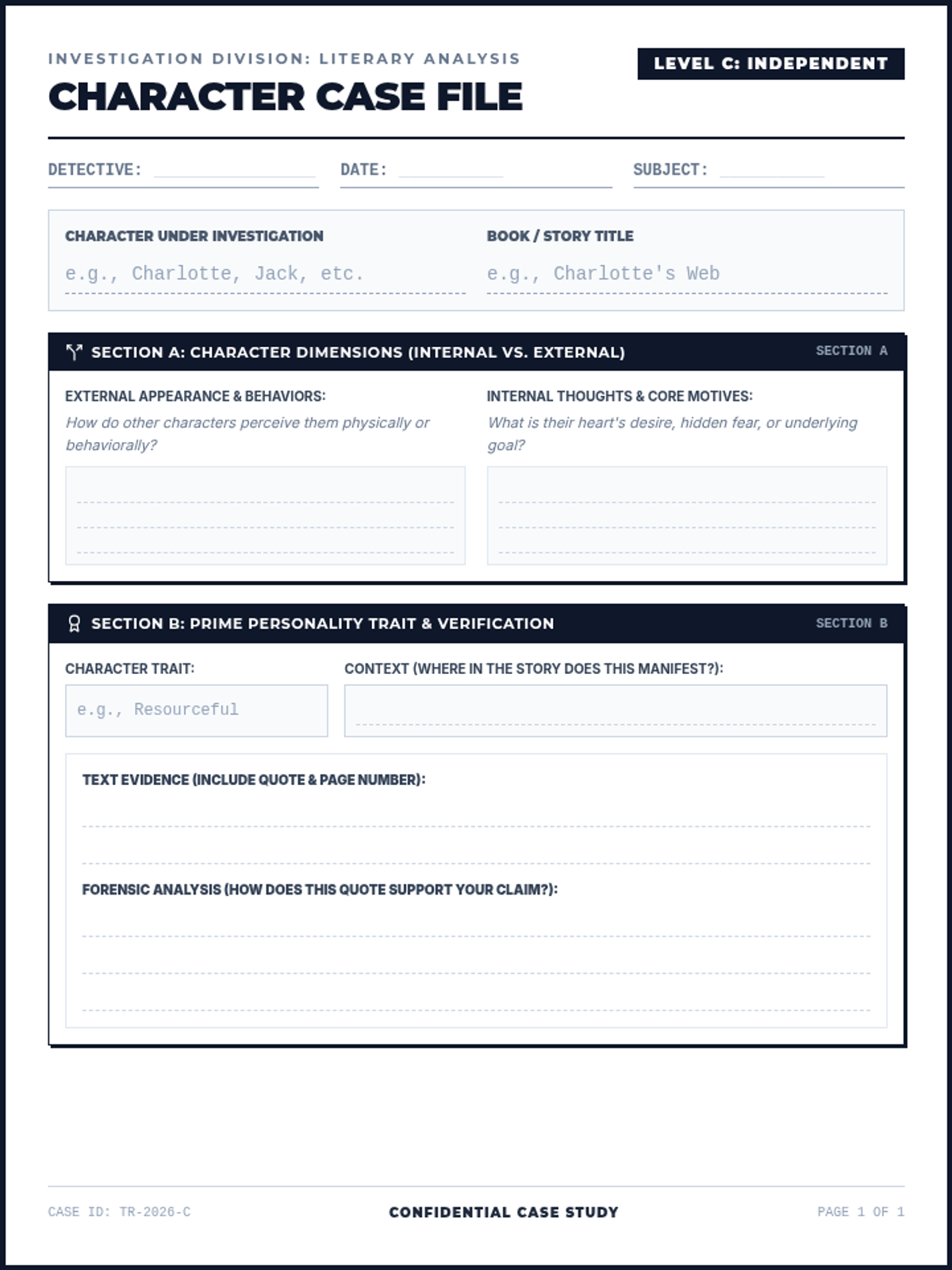
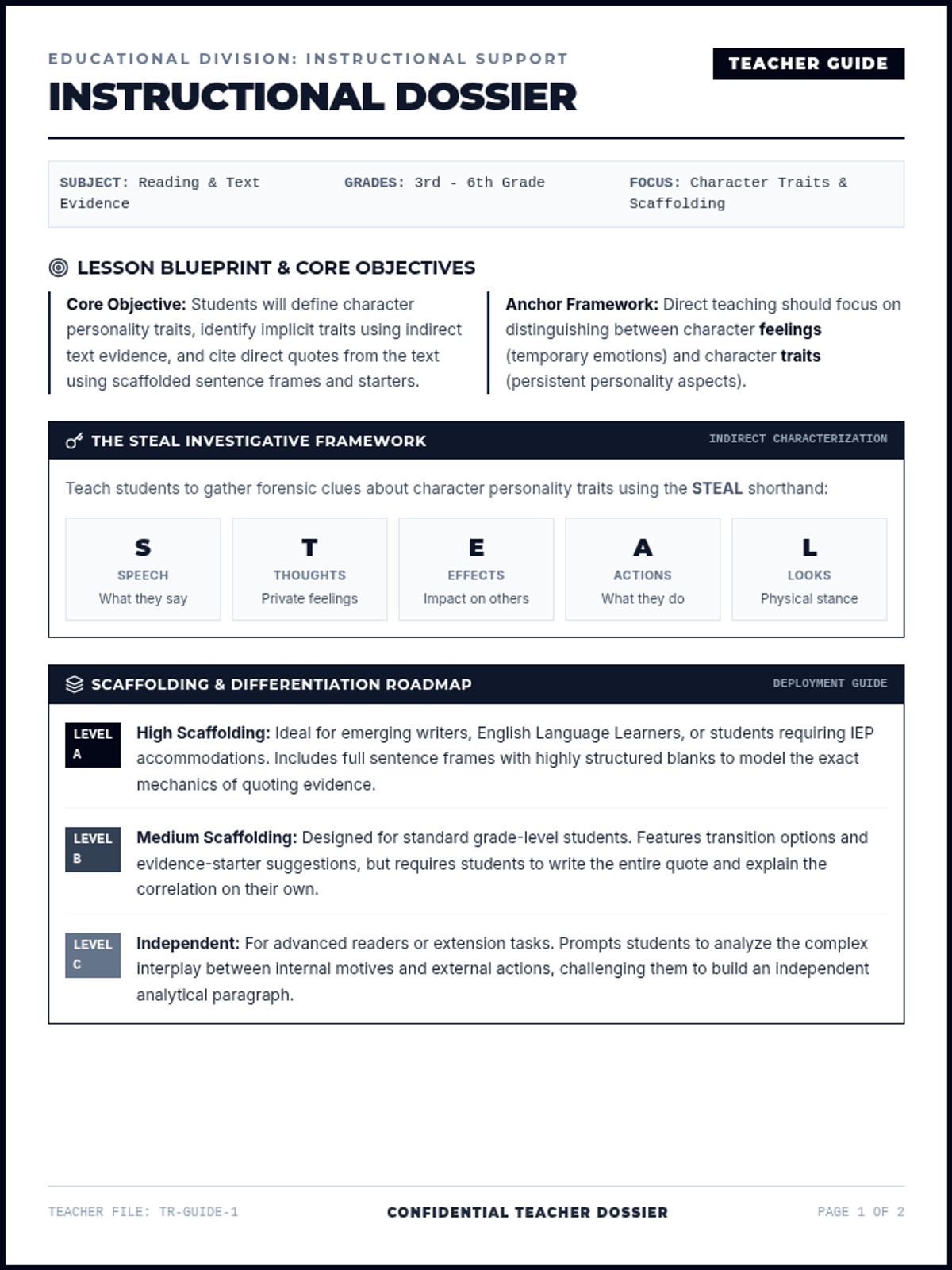
A comprehensive lesson and set of scaffolded graphic organizers designed to help students analyze character traits and master citing text evidence. Includes high, medium, and low levels of scaffolding to differentiate instruction.
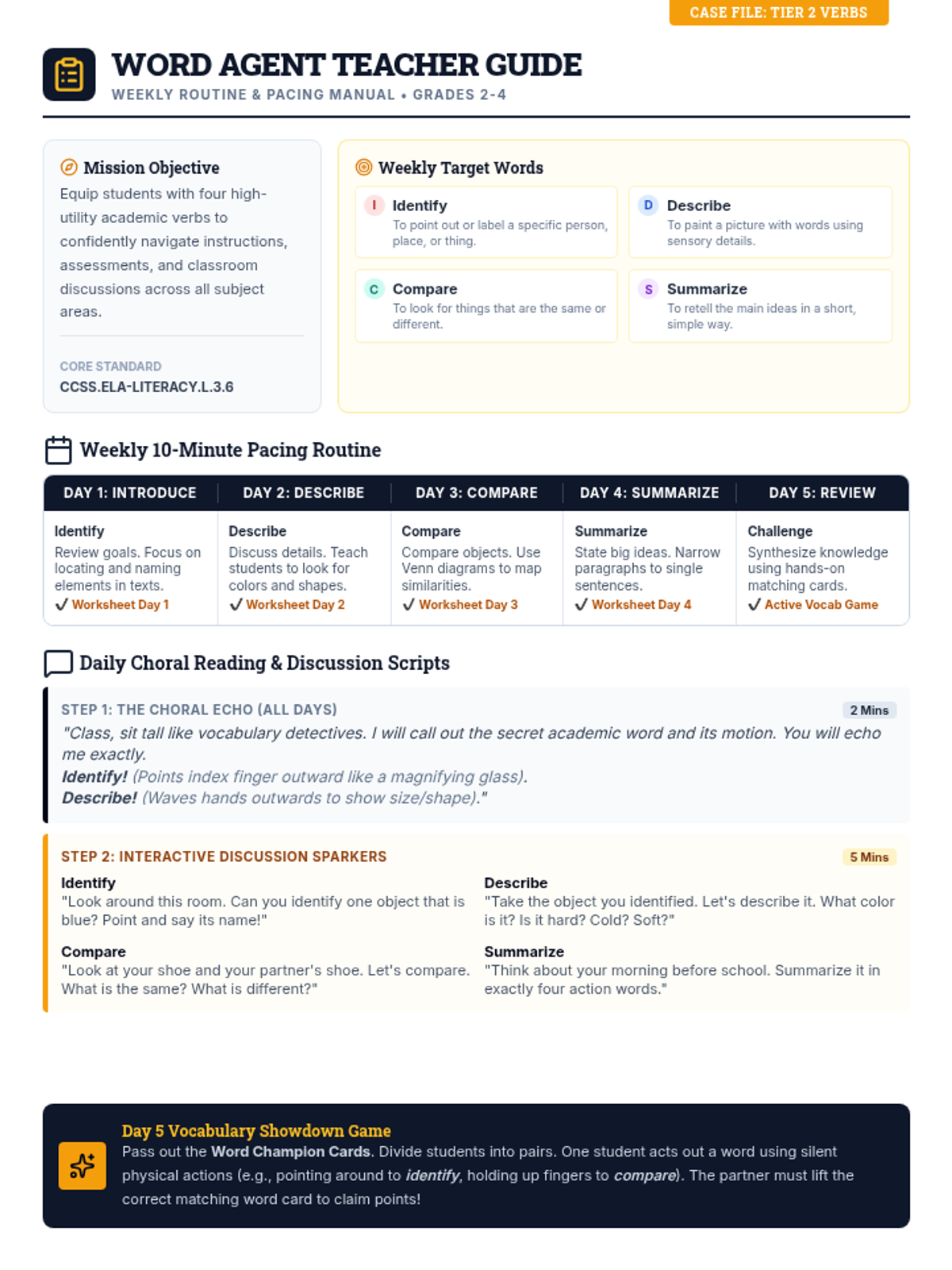
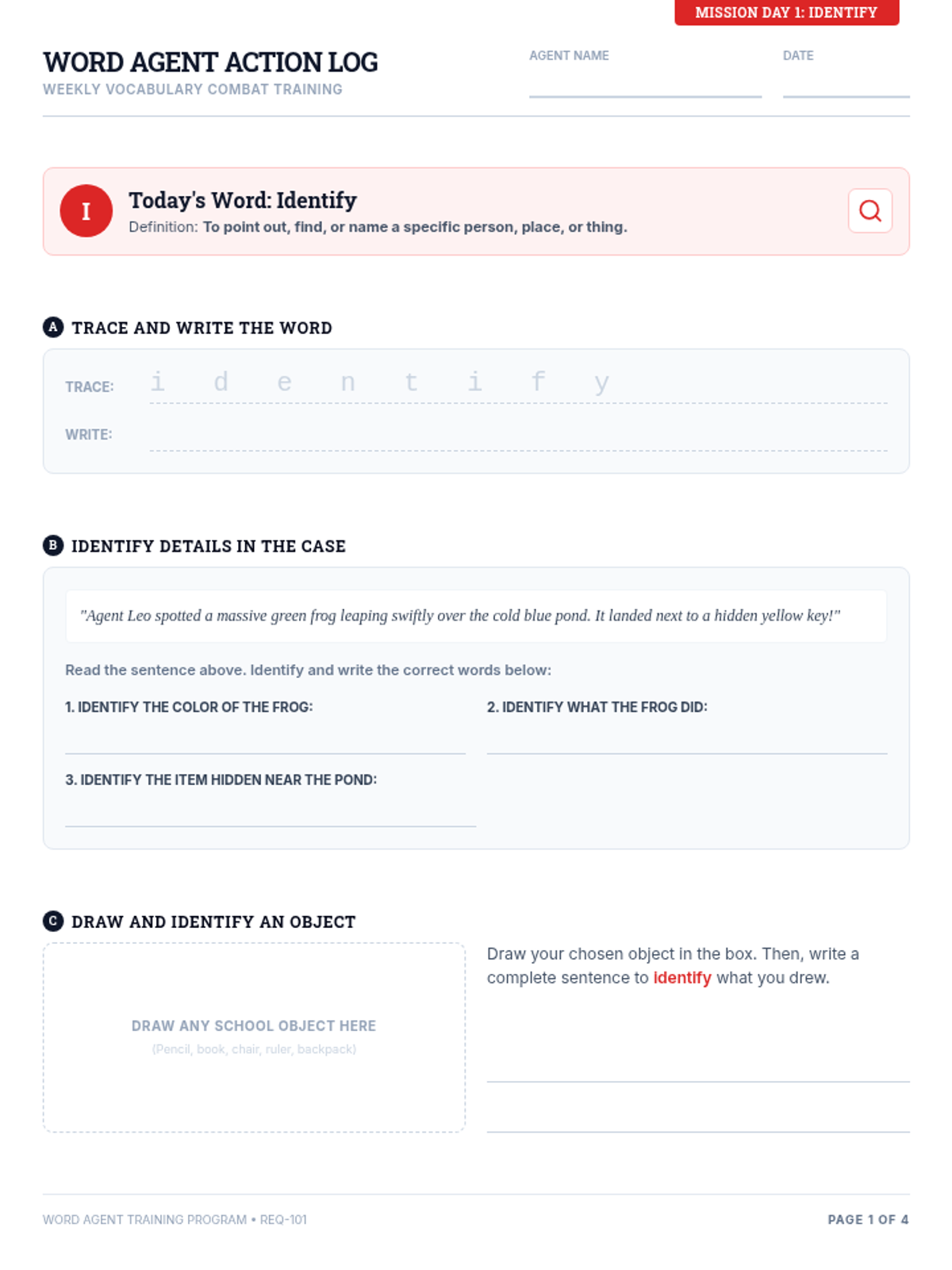
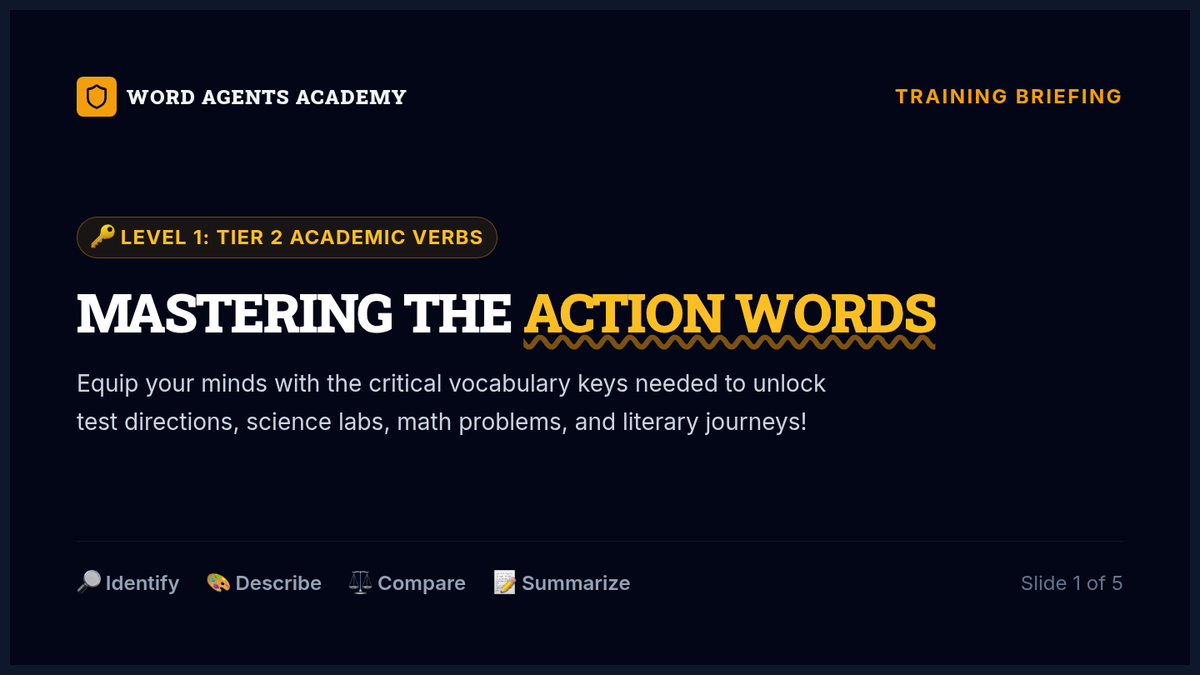
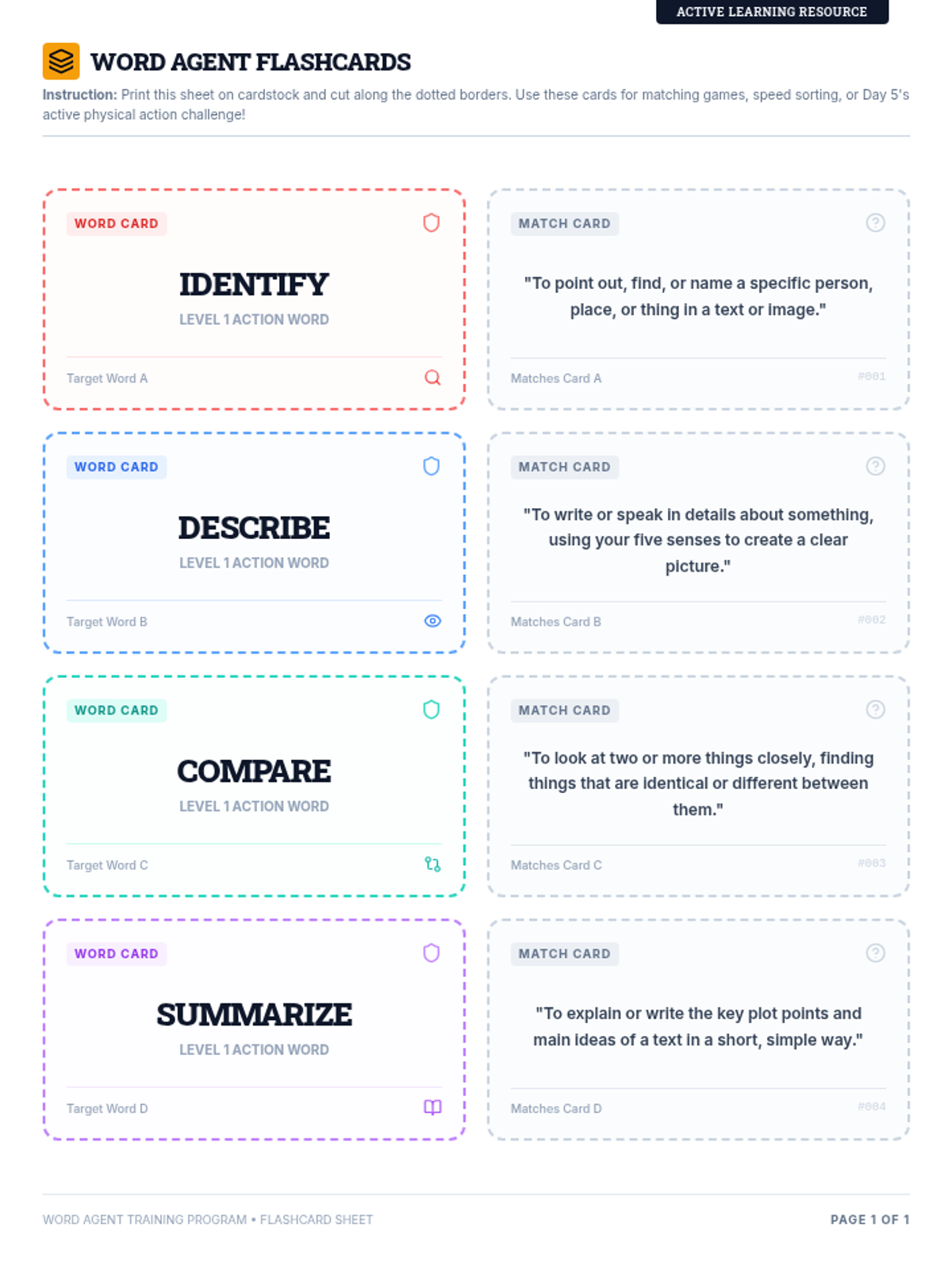
A complete weekly vocabulary unit focusing on four critical Tier 2 academic verbs: Identify, Describe, Compare, and Summarize. This lesson includes an instructional slide deck, printable daily worksheets, hands-on vocabulary cards, and a teacher facilitation guide.
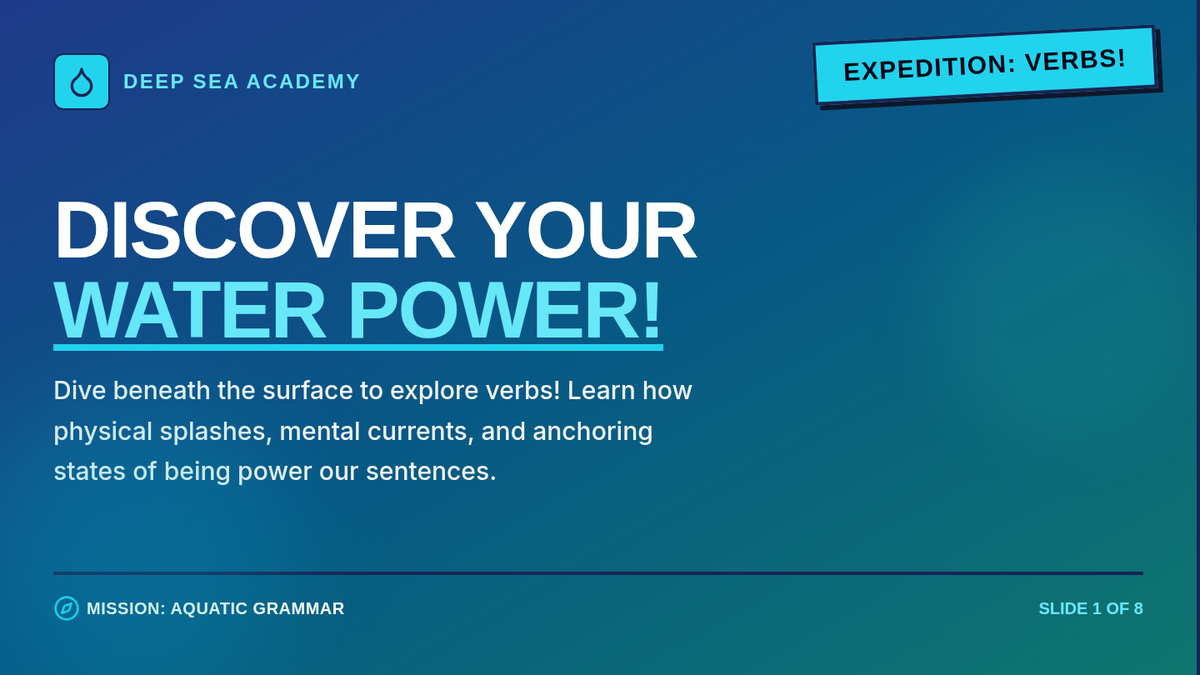
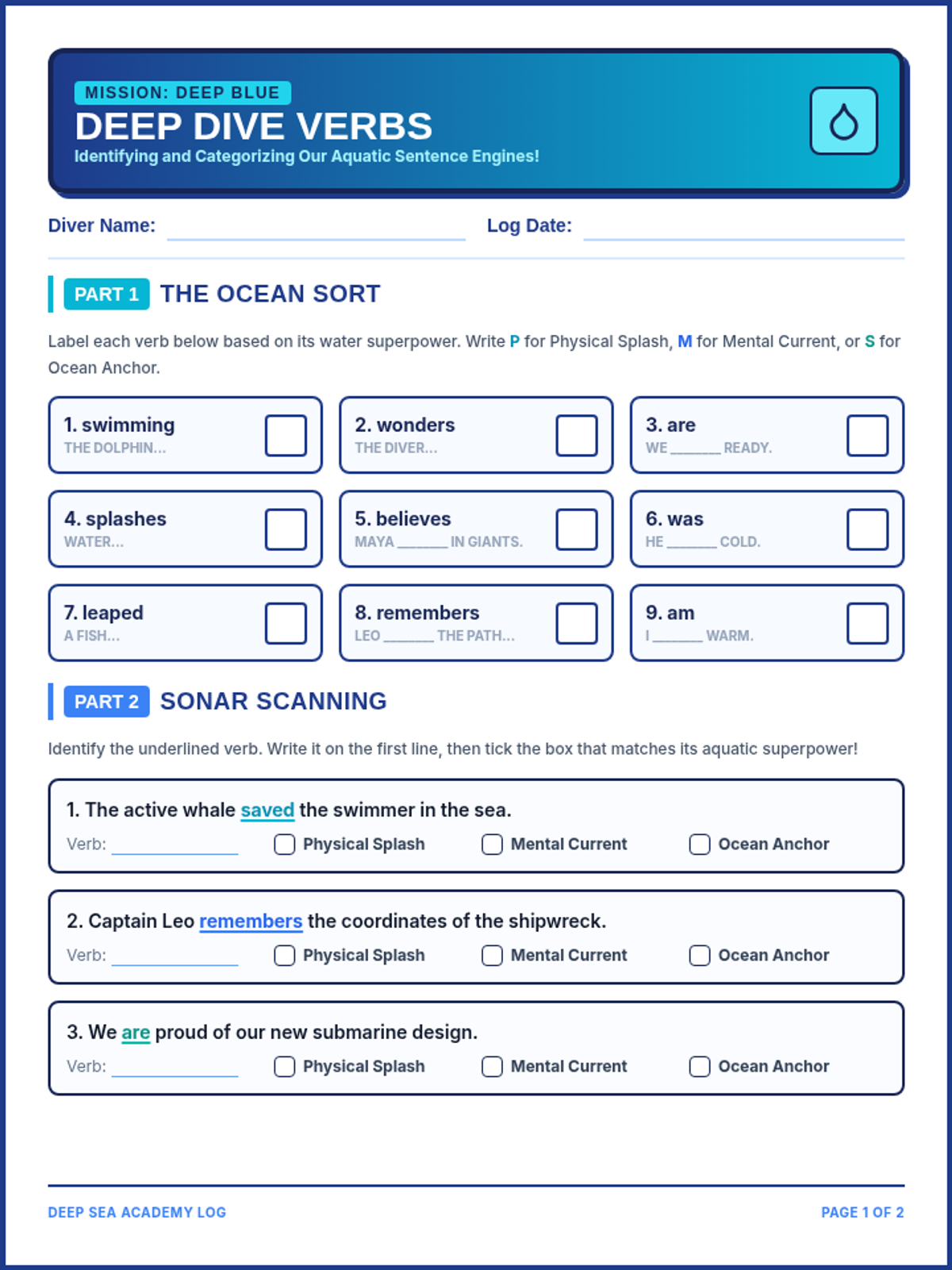
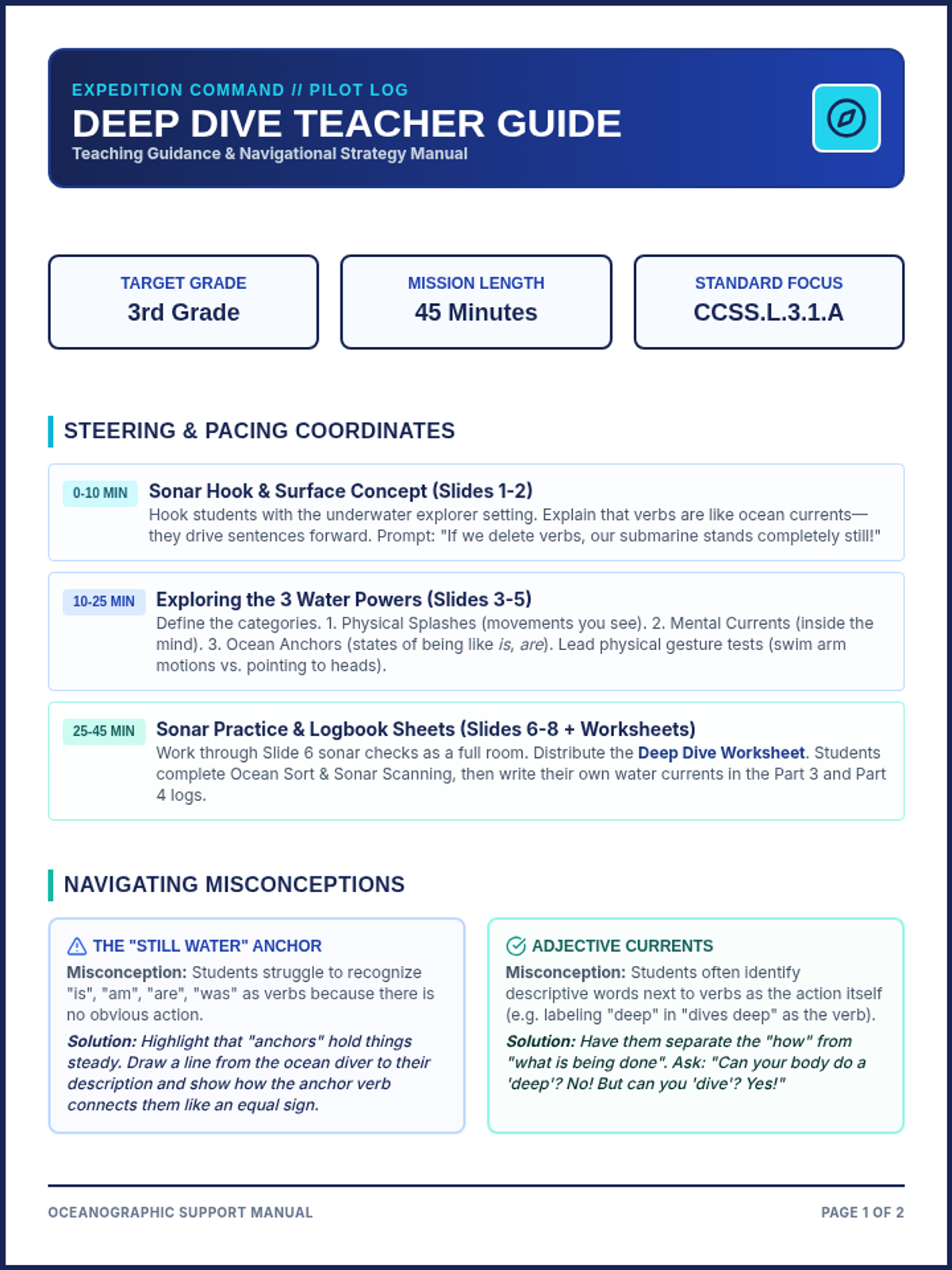
An engaging introduction to verbs for third graders. It covers physical actions, mental actions, and state-of-being verbs through guided slides, a hands-on student practice sheet, and an expert teacher facilitation guide.
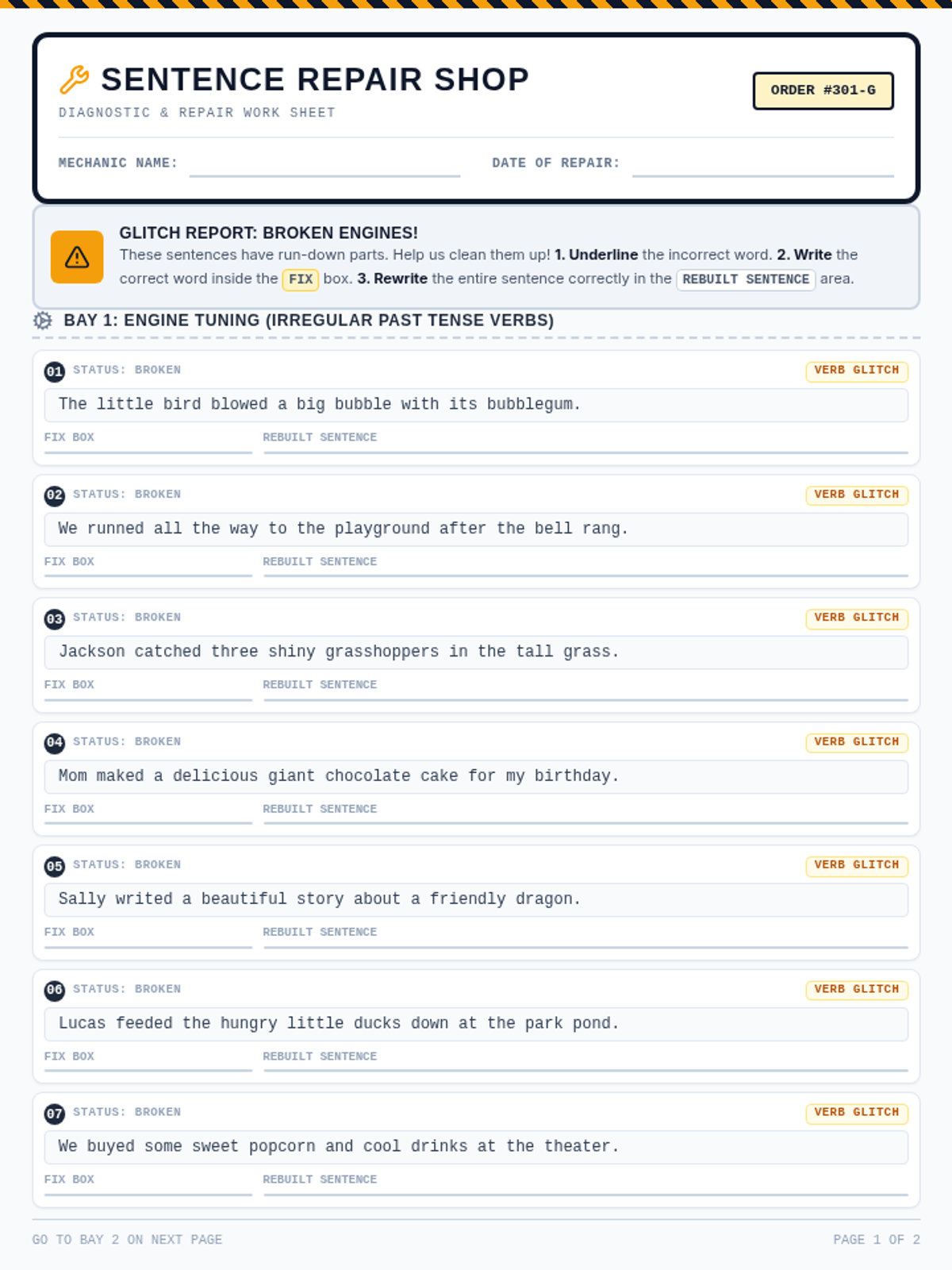
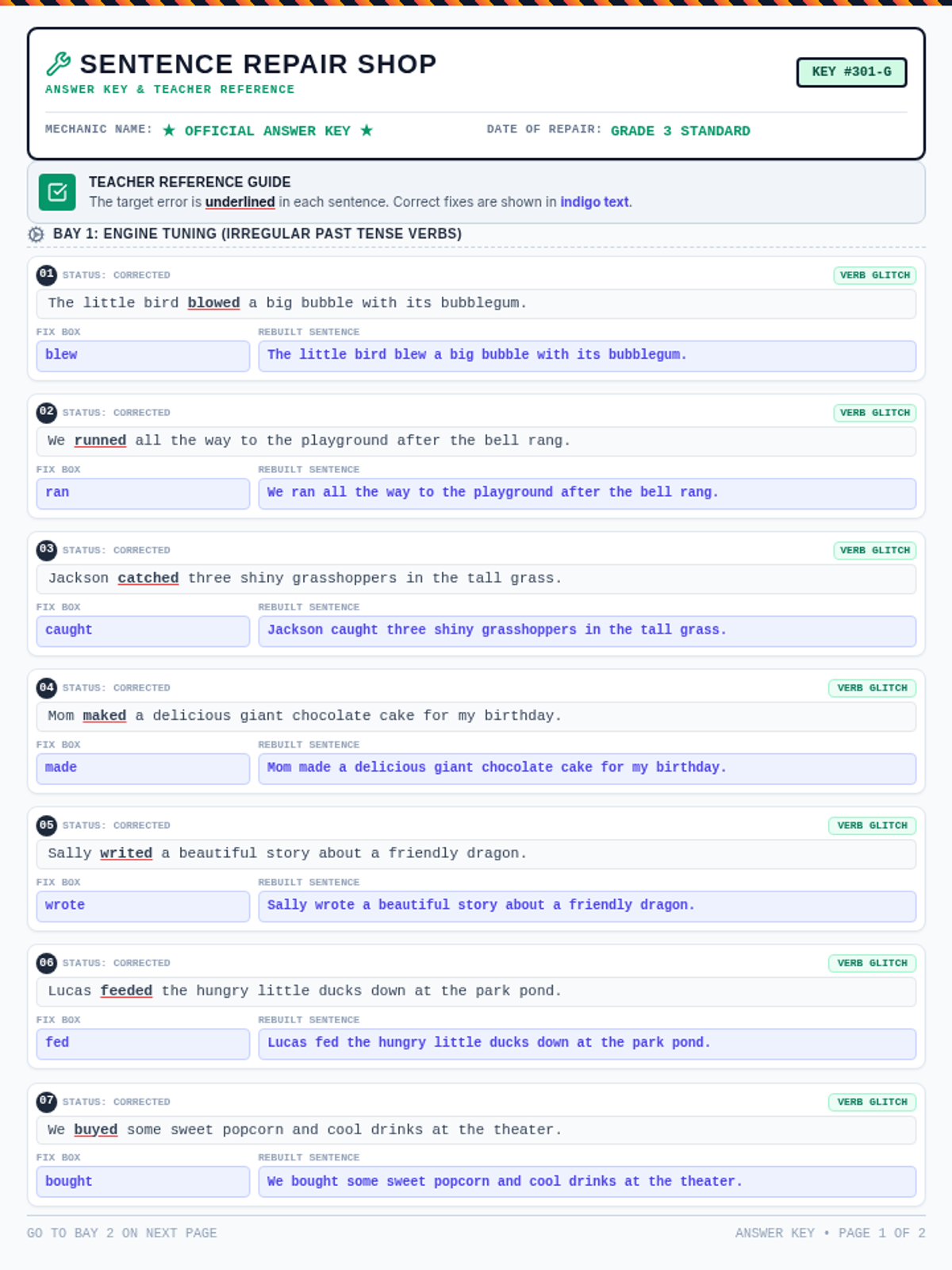
A lesson focused on identifying and correcting irregular past tense verbs and irregular plural nouns. Students act as 'sentence mechanics' to diagnose and repair grammatical glitches in 15 common-error sentences.

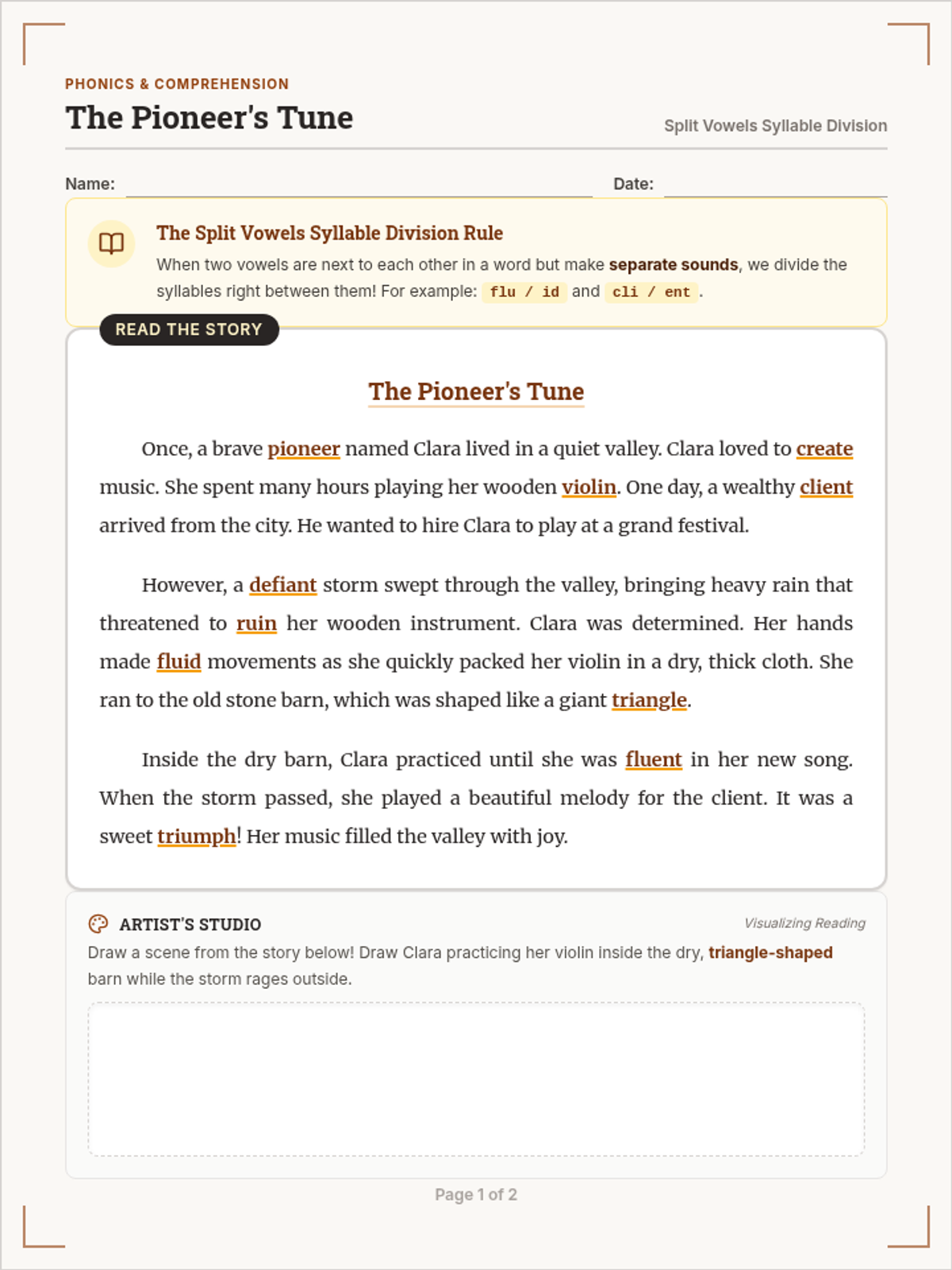
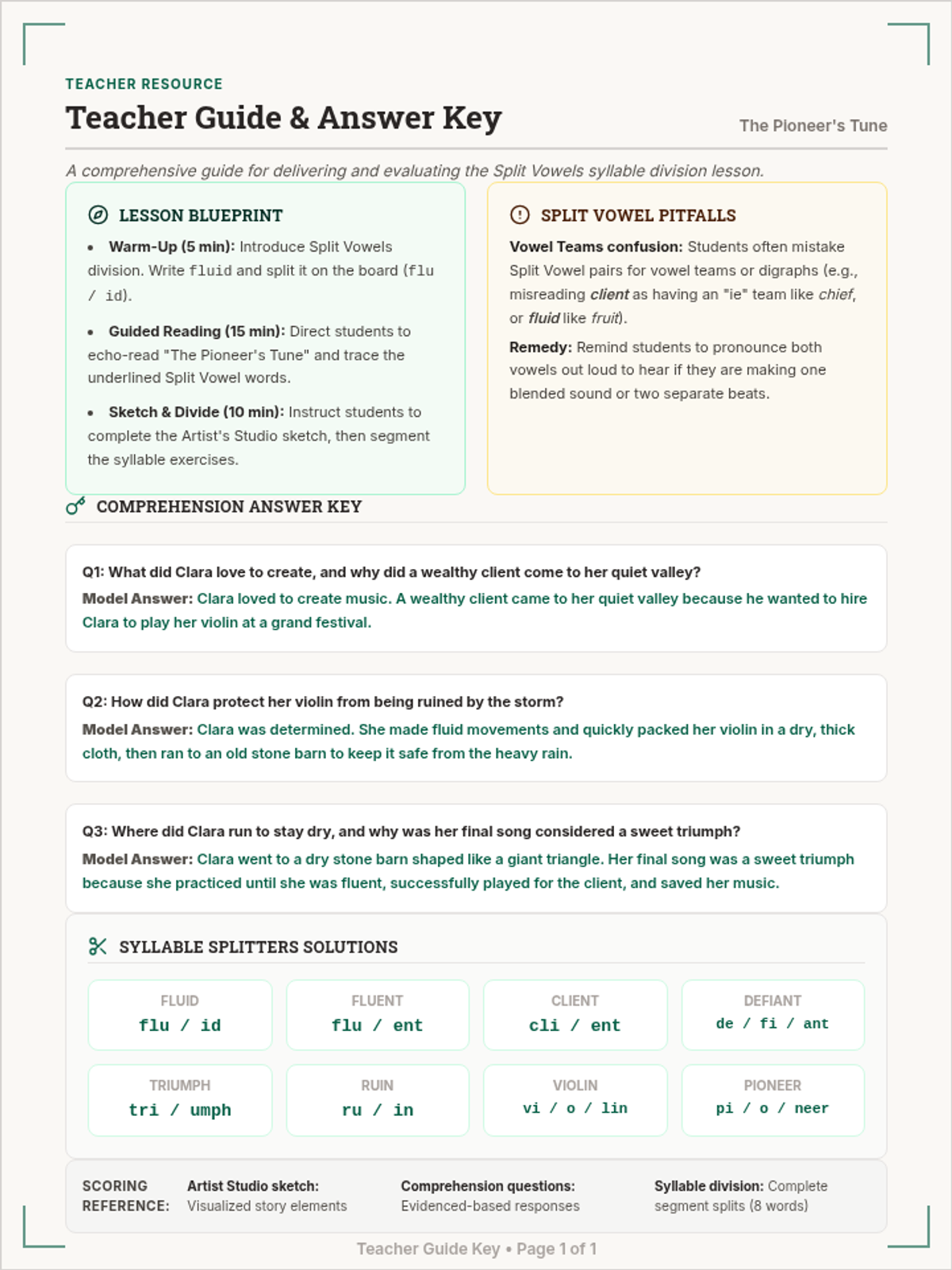
A lesson focused on dividing two-syllable words with adjacent vowels making separate sounds (V/V patterns), featuring a decodable reading passage and comprehension exercises.
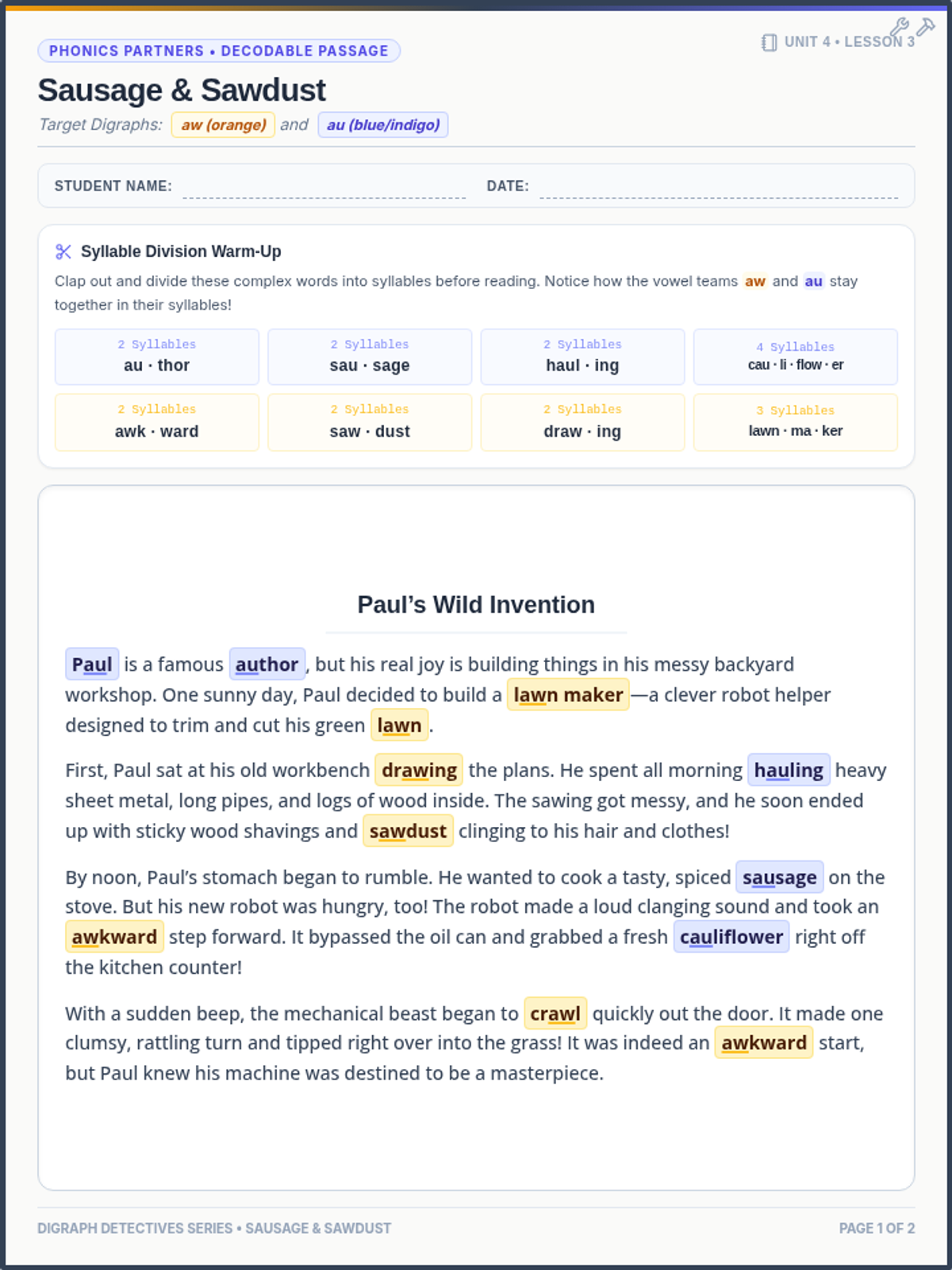
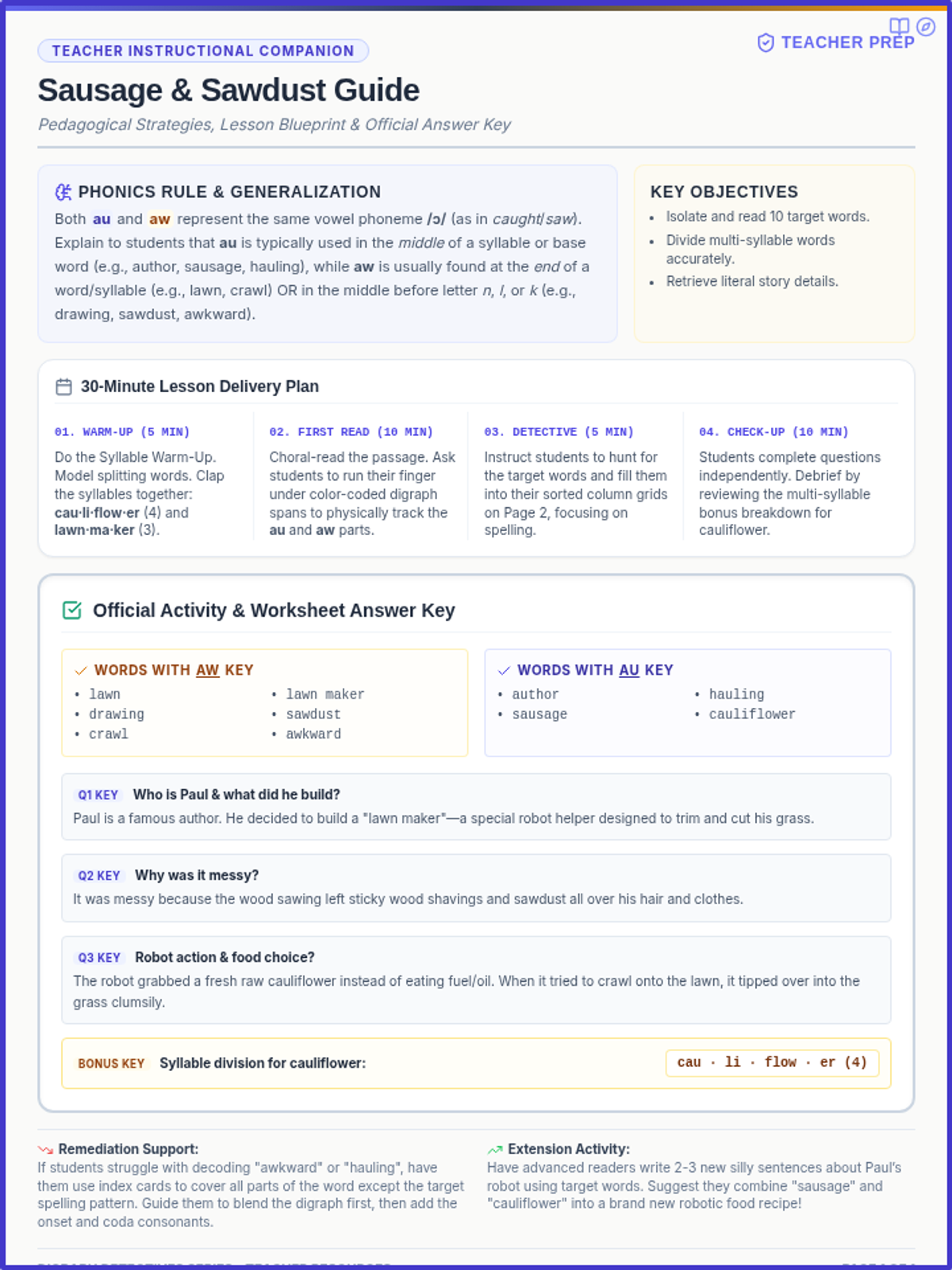
A decodable phonics lesson focused on the 'aw' and 'au' digraphs. Students read a custom passage about a creative inventor, practice syllable division for multi-syllable words, and complete comprehension checks.
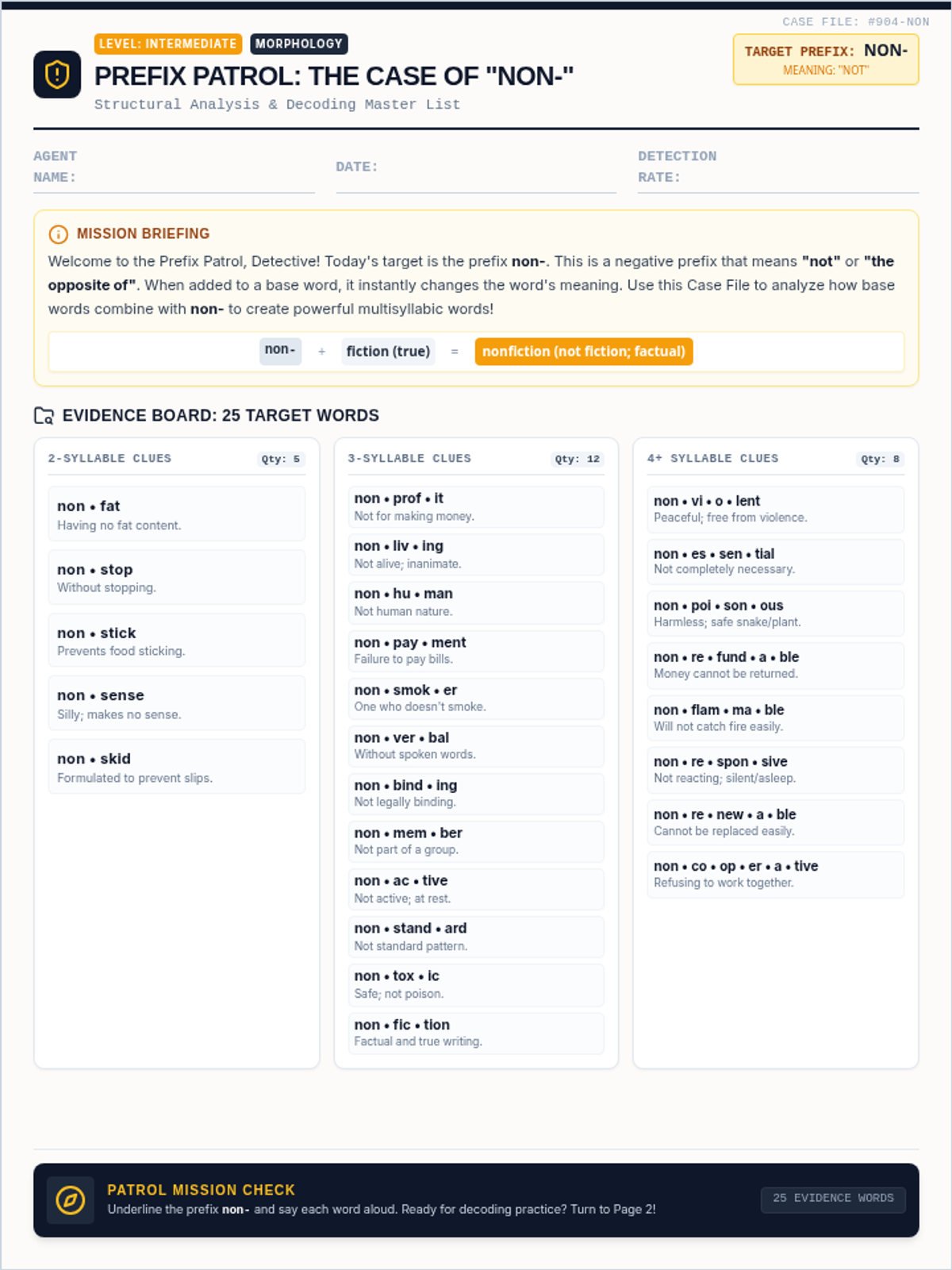
An intermediate phonics and structural analysis lesson exploring the prefix 'non-' through morphological breakdown, sentence decoding, and fill-in-the-blank practice.
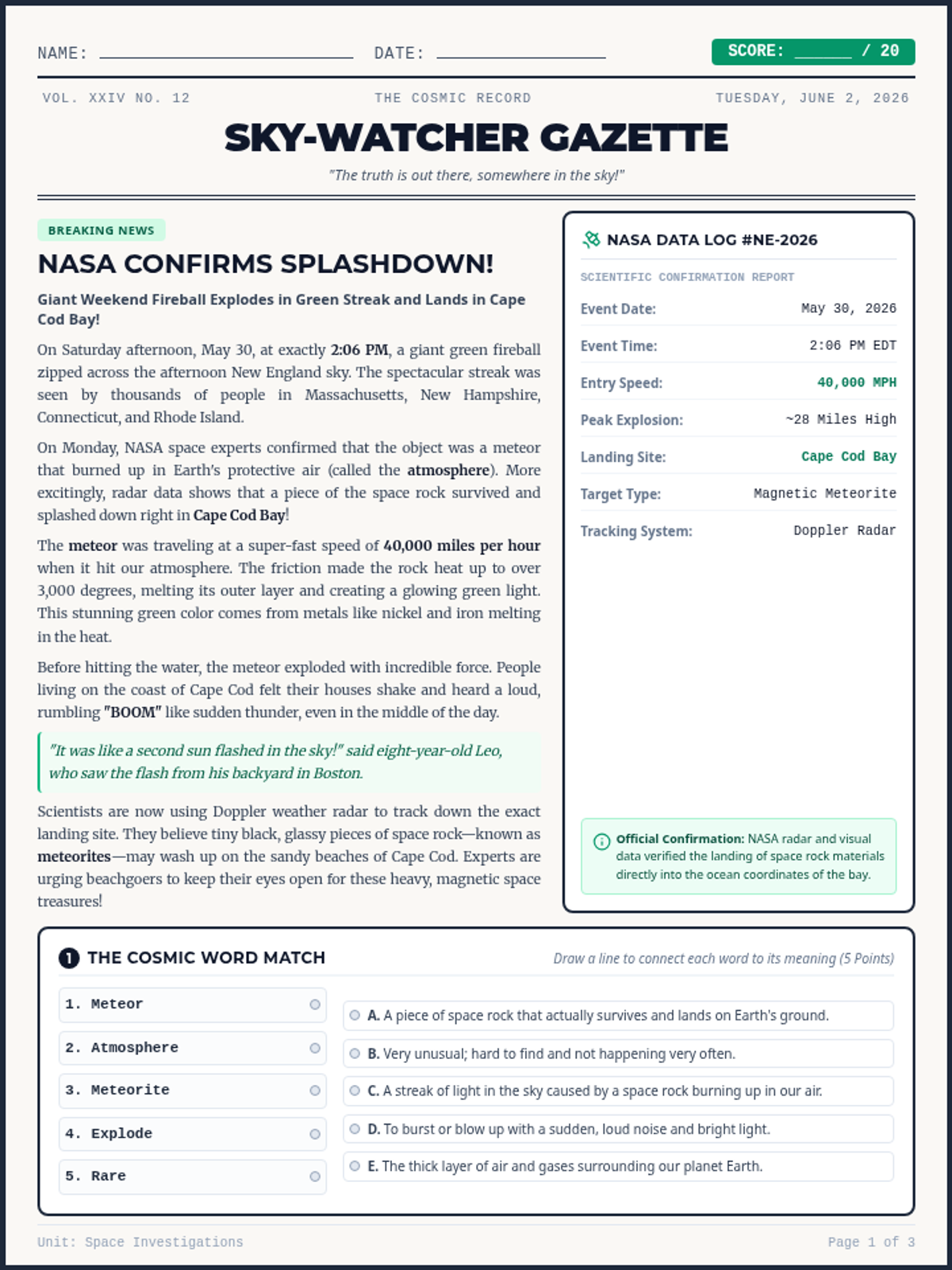
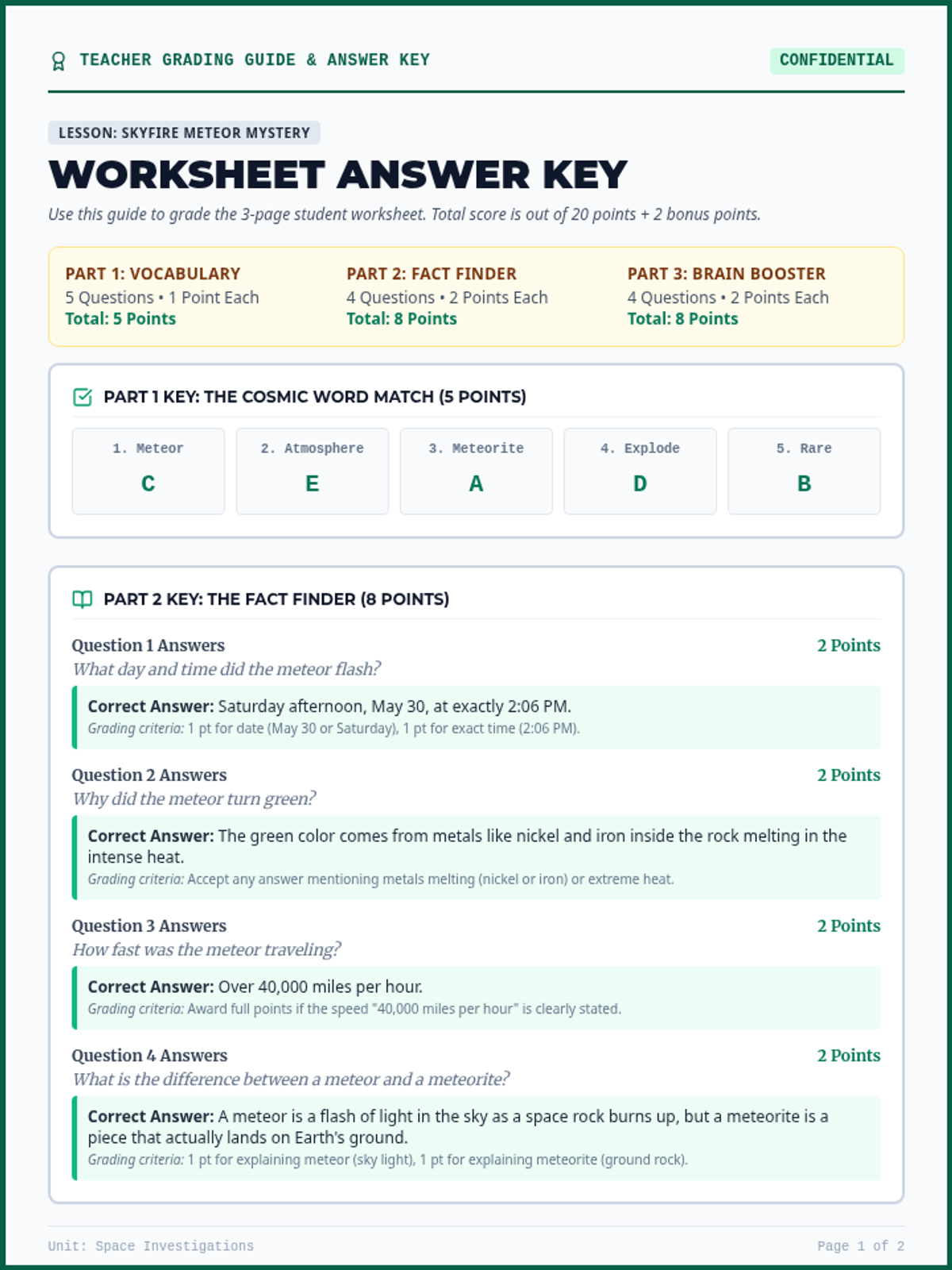
A reading comprehension lesson for 2nd and 3rd-grade students based on the spectacular meteor explosion over New England. Features engaging news-style reading, vocabulary challenges, comprehension questions, and a creative activity.
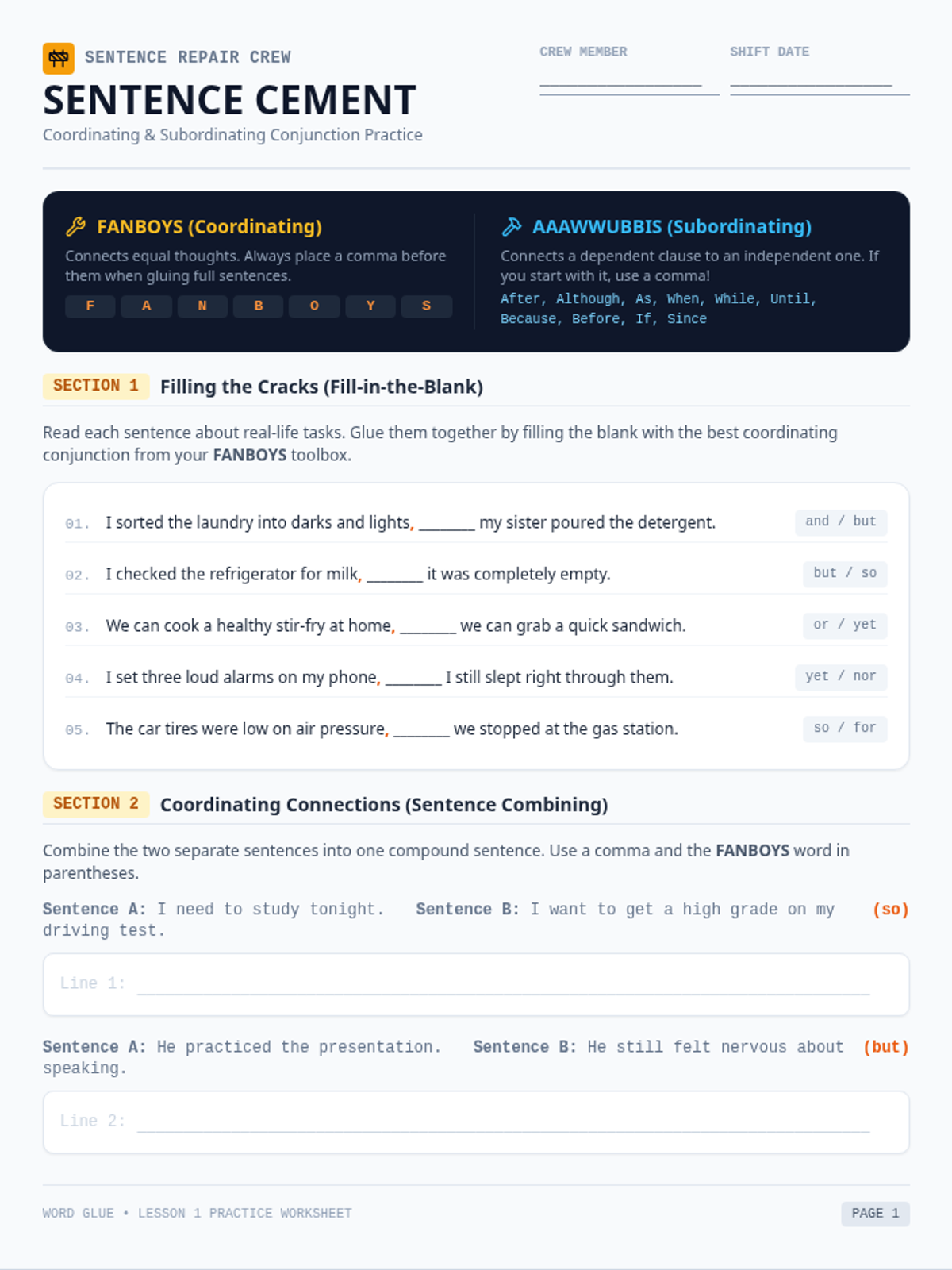
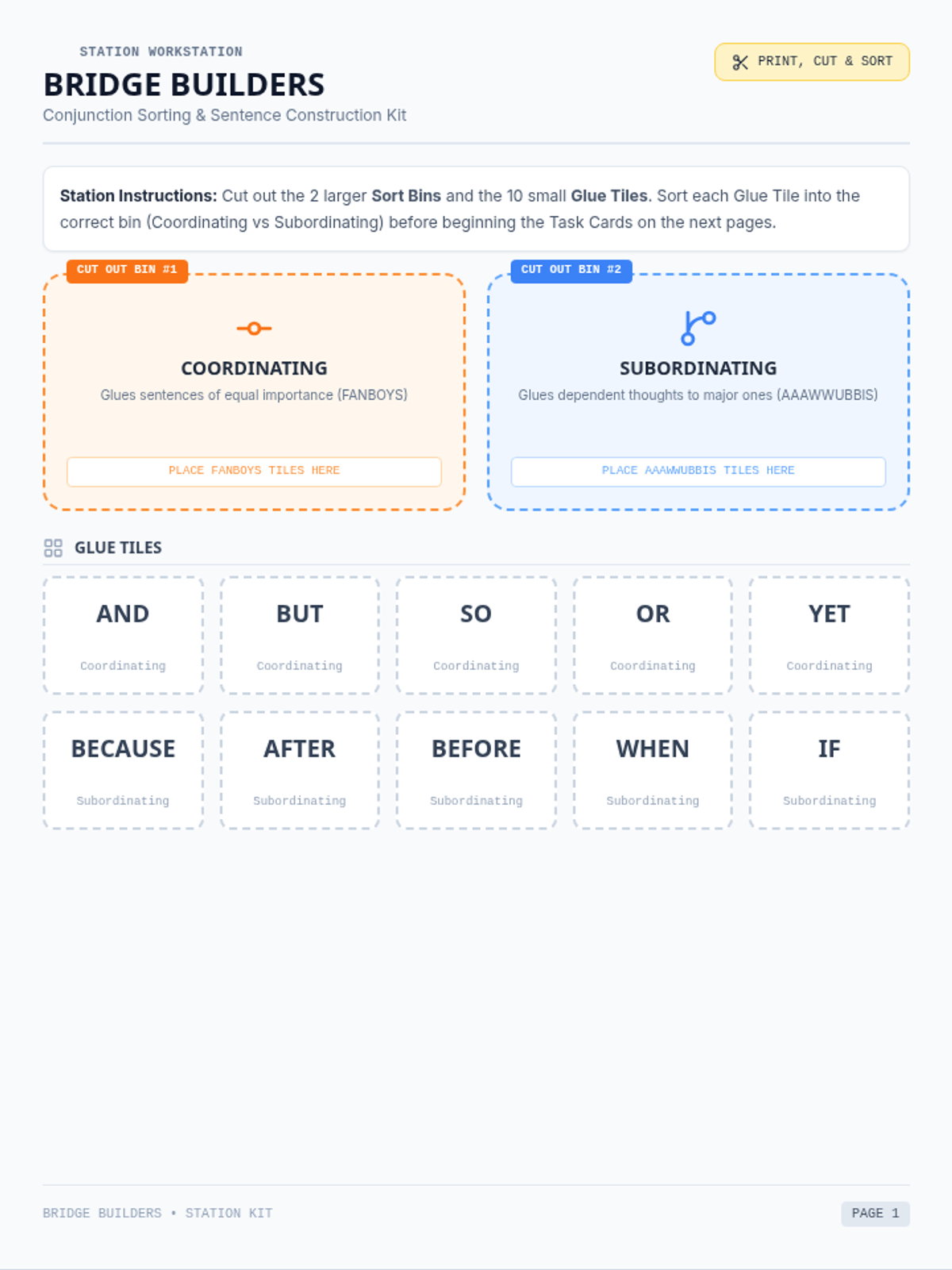
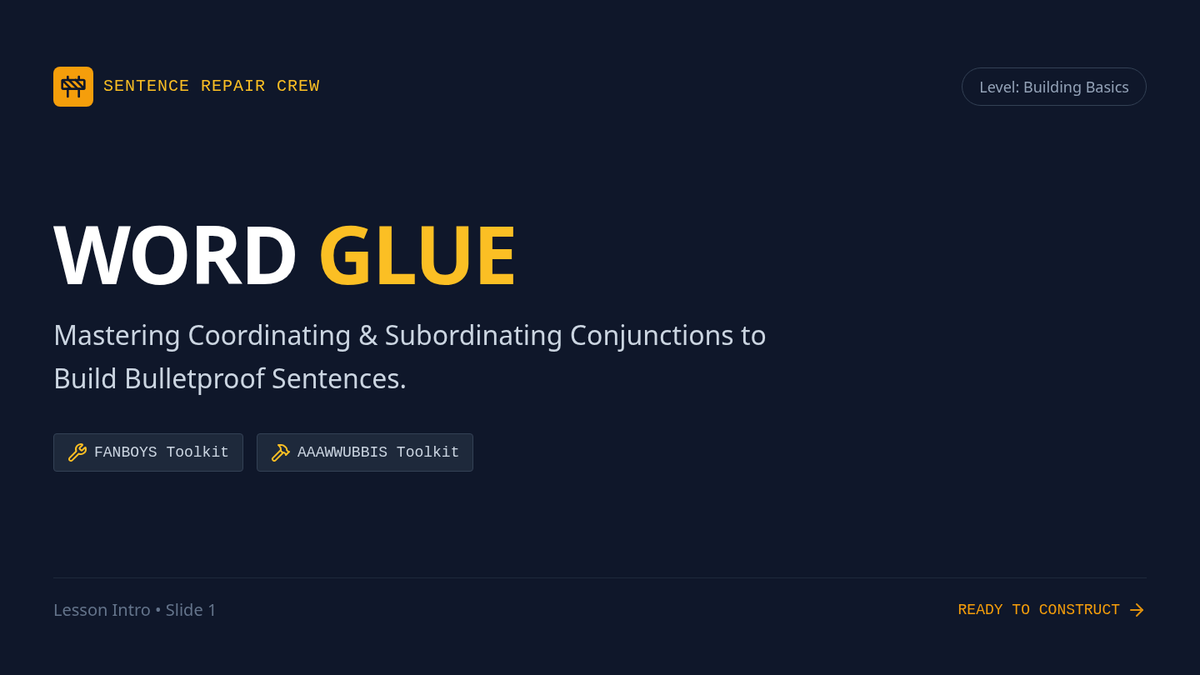
A construction-themed lesson designed to master coordinating and subordinating conjunctions using visual cues, hands-on activities, and real-world daily life contexts.
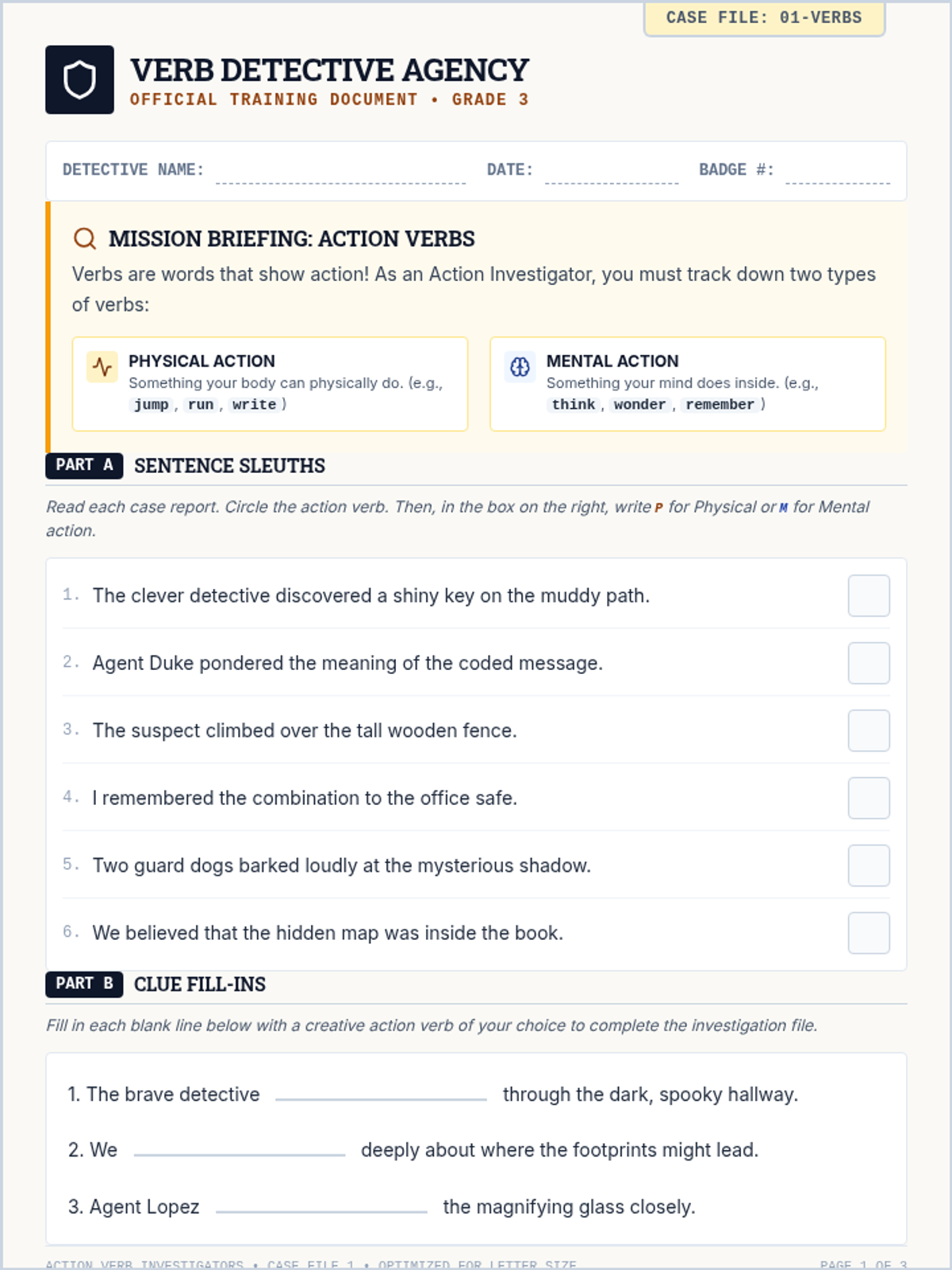
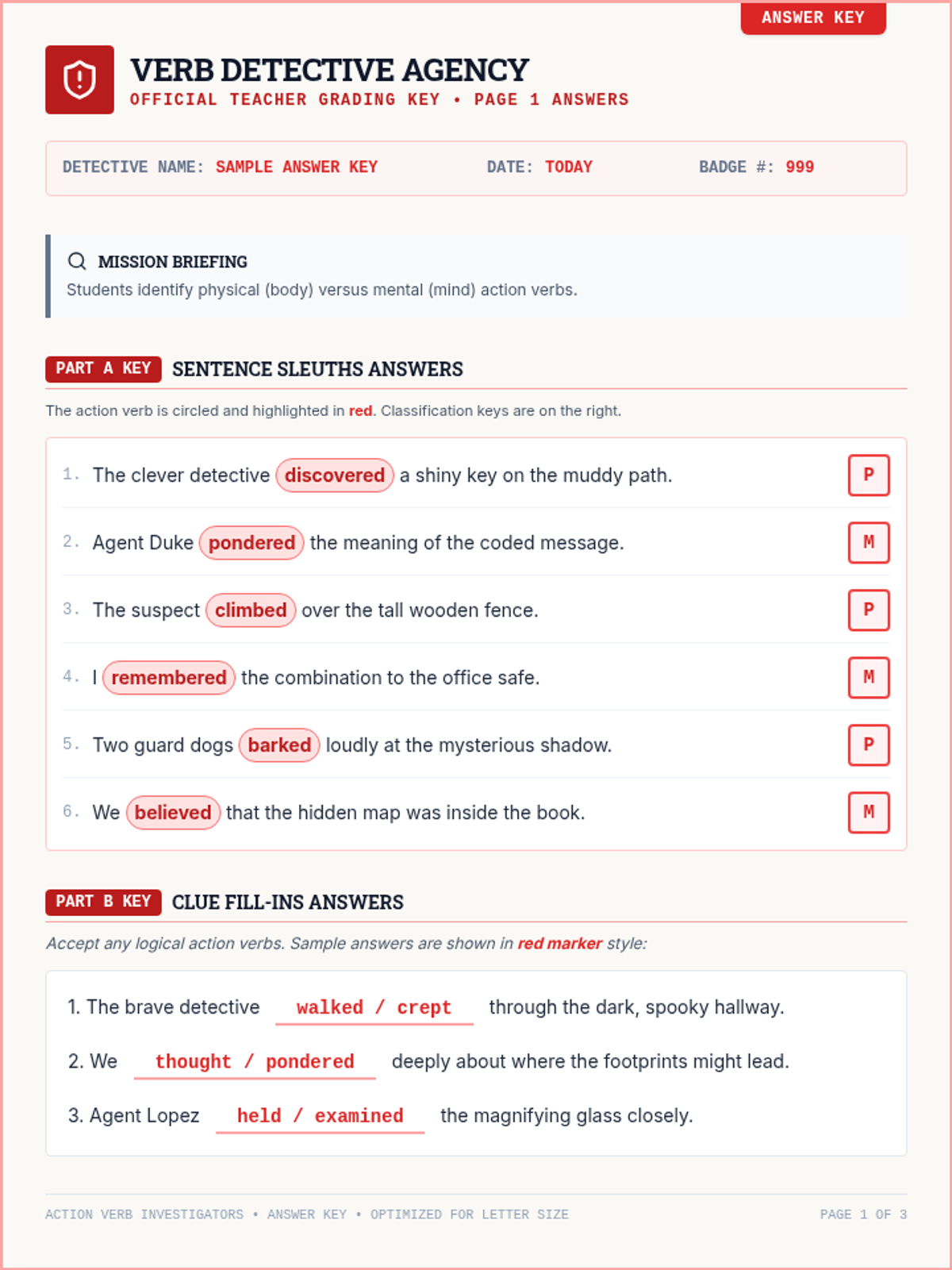
A third-grade lesson focused on action verbs. Students become 'Verb Detectives' to identify physical and mental actions through guided practice, a text-based hunt, and a mini-assessment.
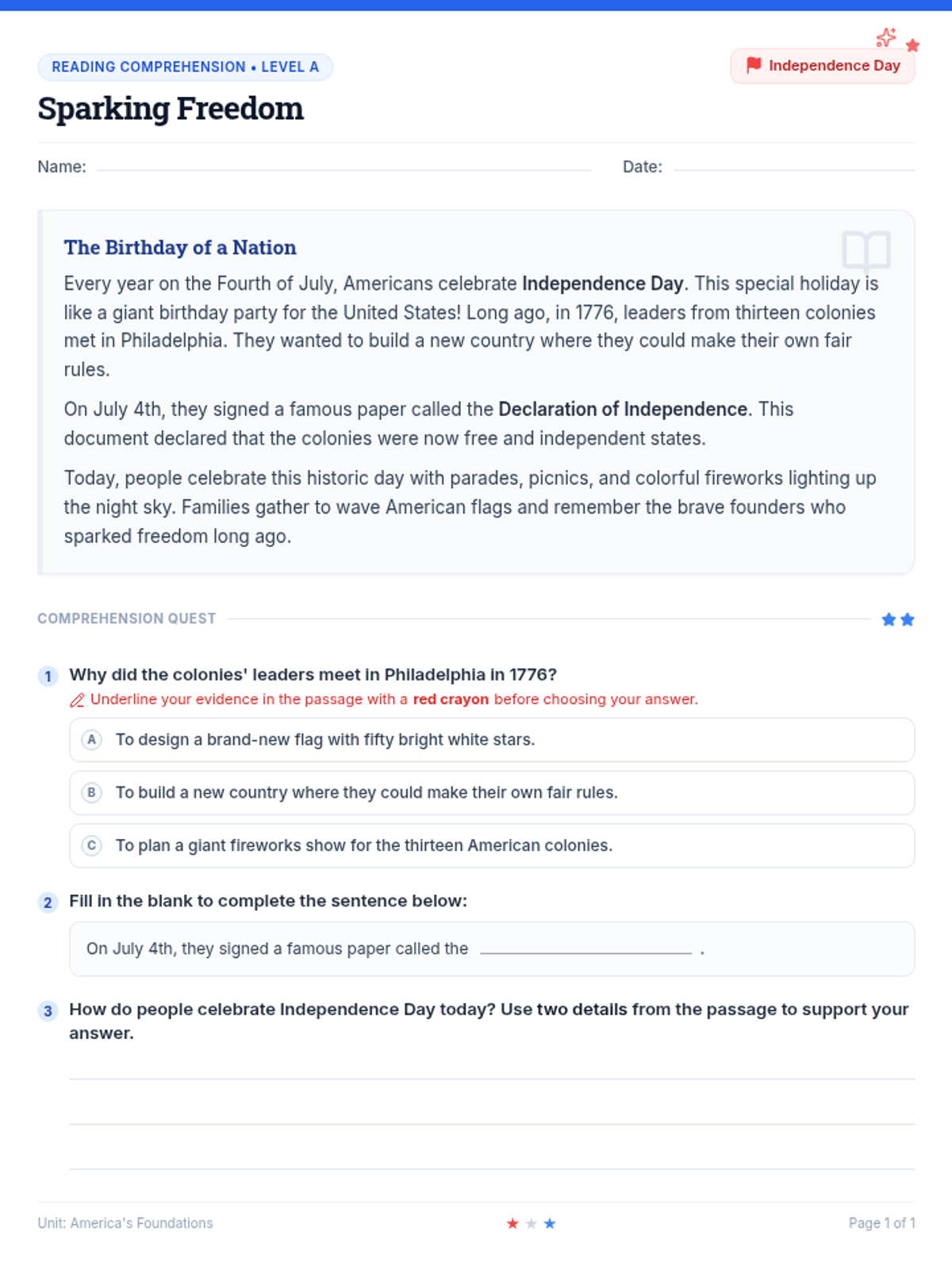
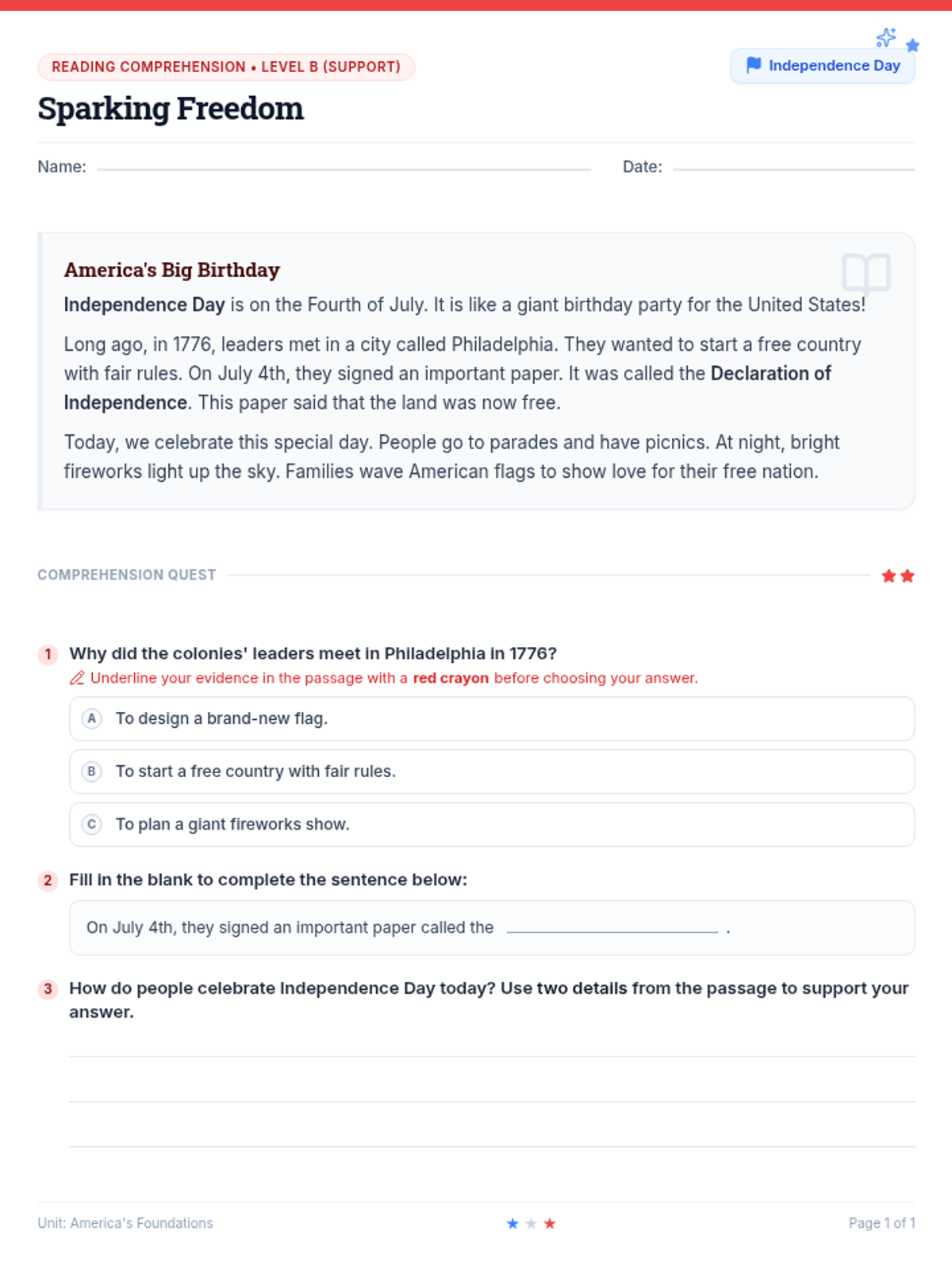
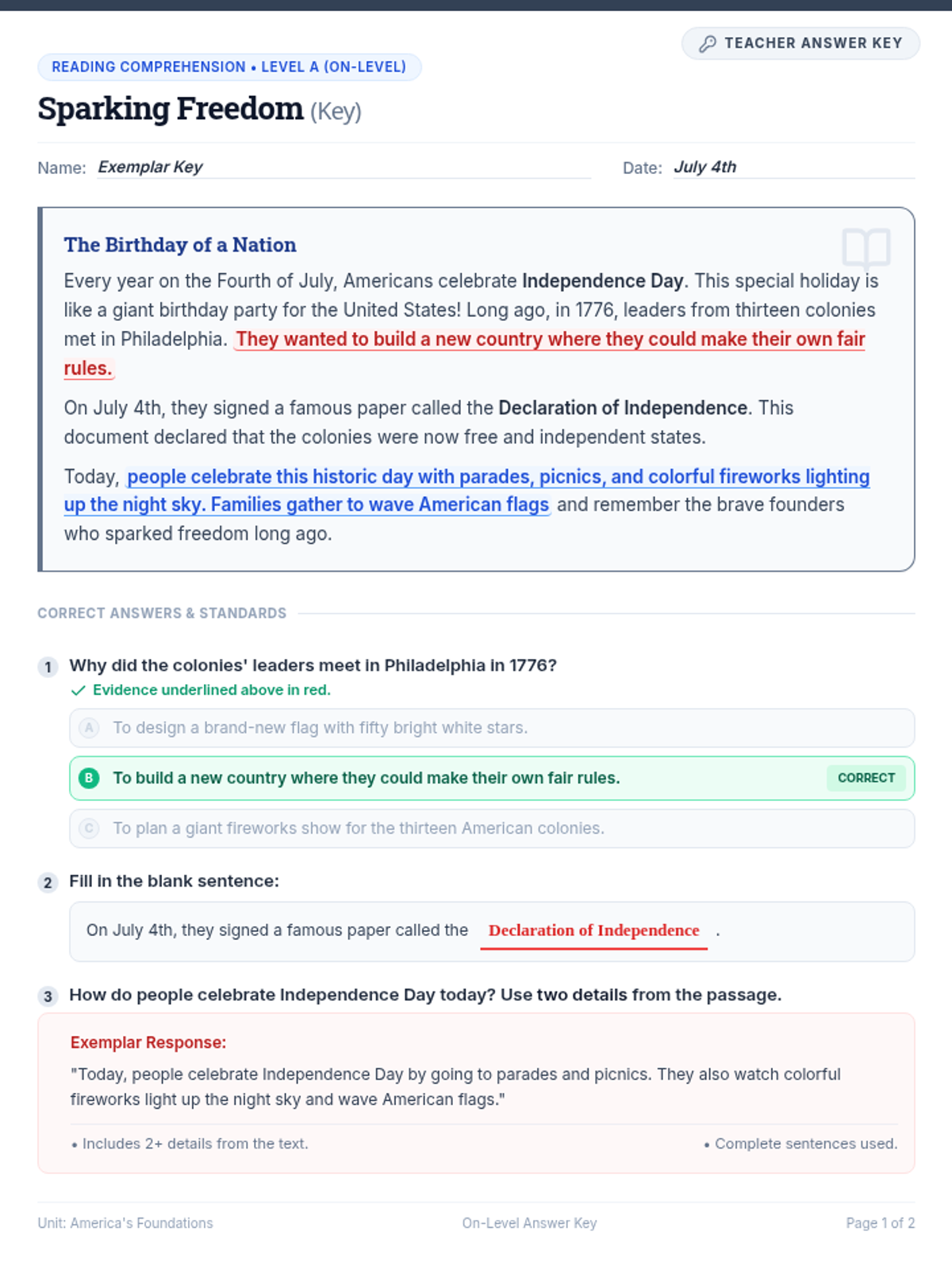
A 3rd-grade reading comprehension lesson focused on Independence Day. It features a differentiated passage set (On-Level and Support) and a Teacher Answer Key. Students practice finding text evidence, answering multiple-choice and fill-in-the-blank questions, and writing a short response.