A highly practical lesson focused on writing down an emergency contact name, relationship (Mom, Son, Wife, Friend), and phone number, customized for 3 levels of adult literacy.
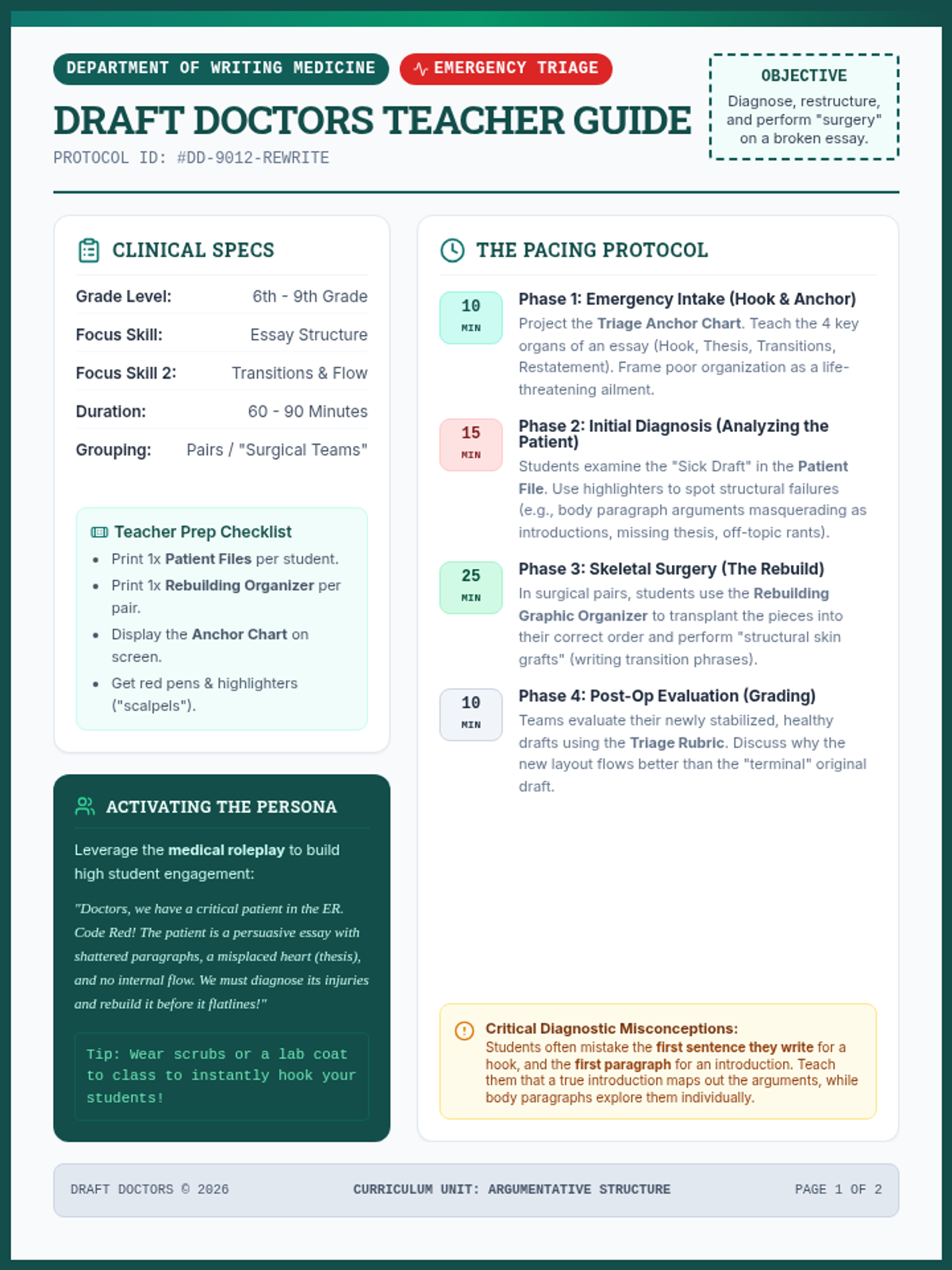
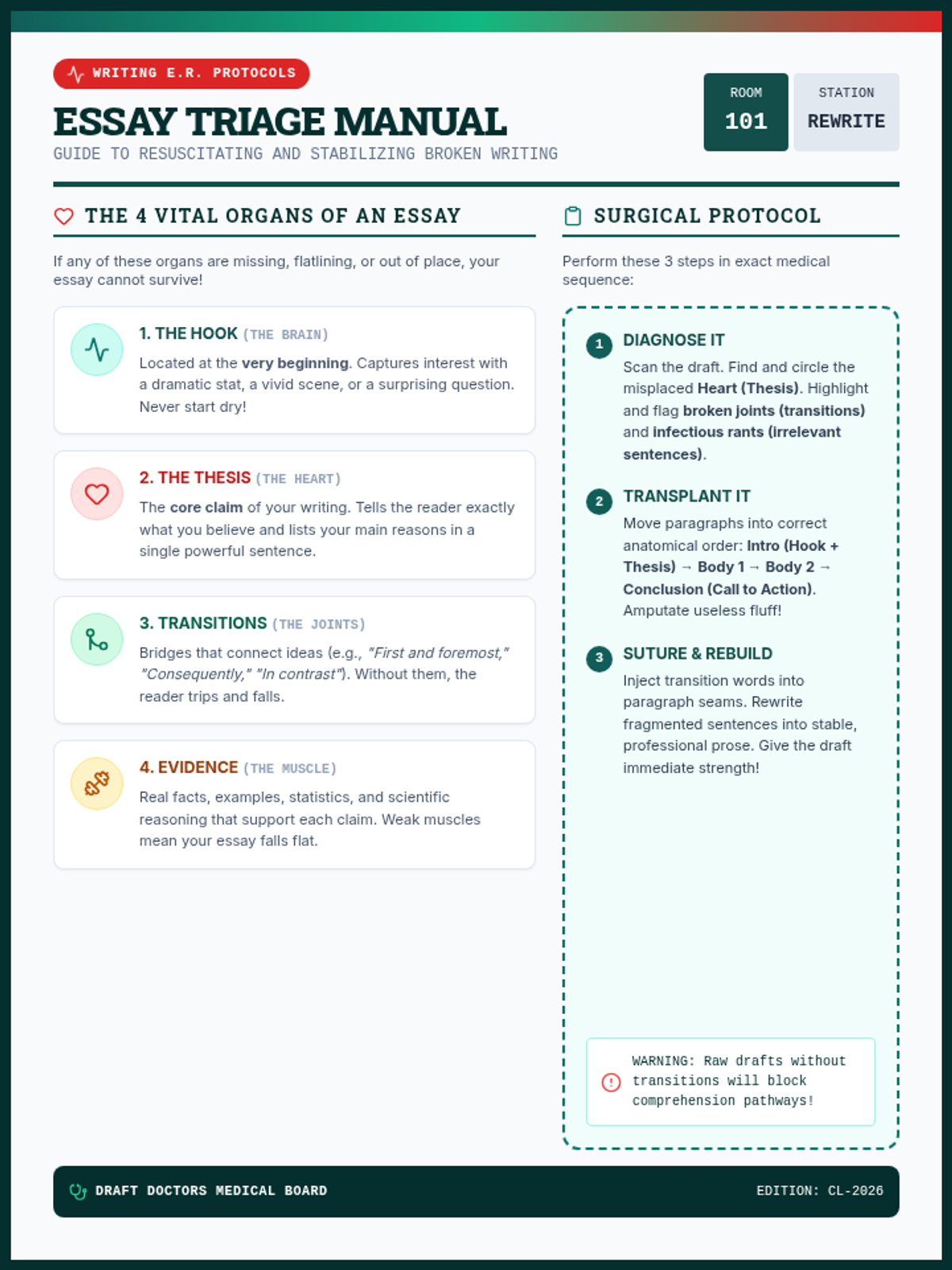
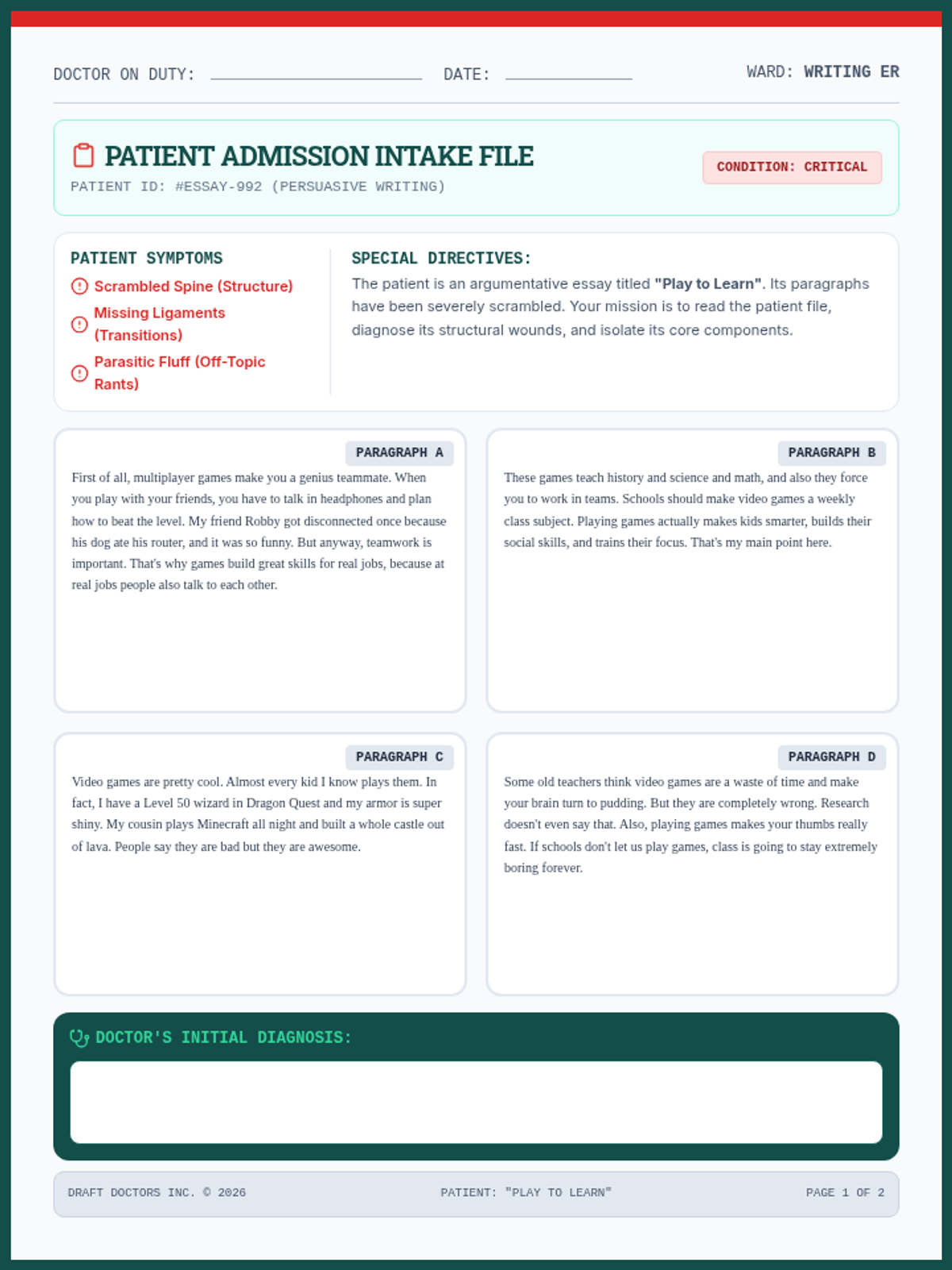
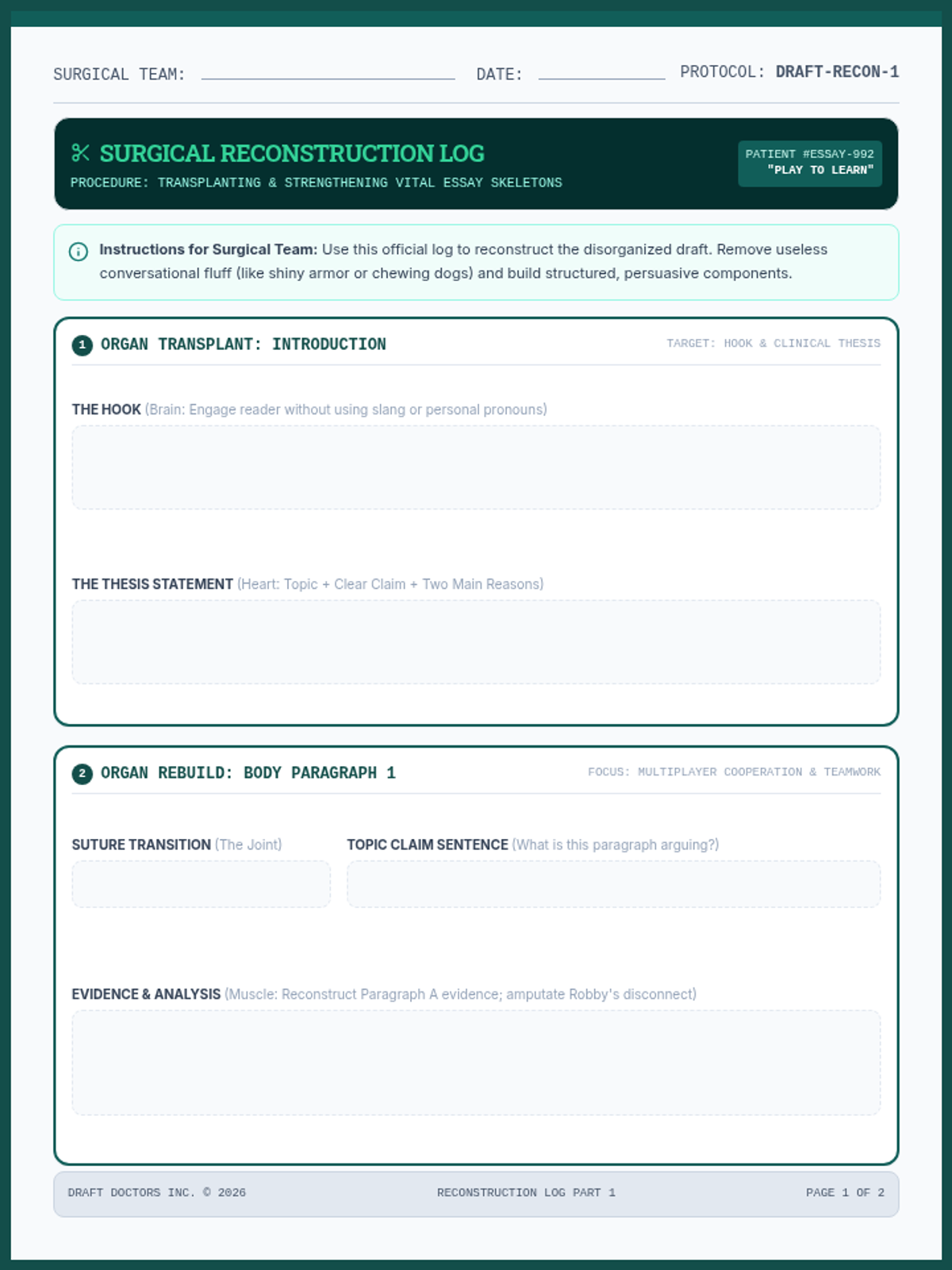
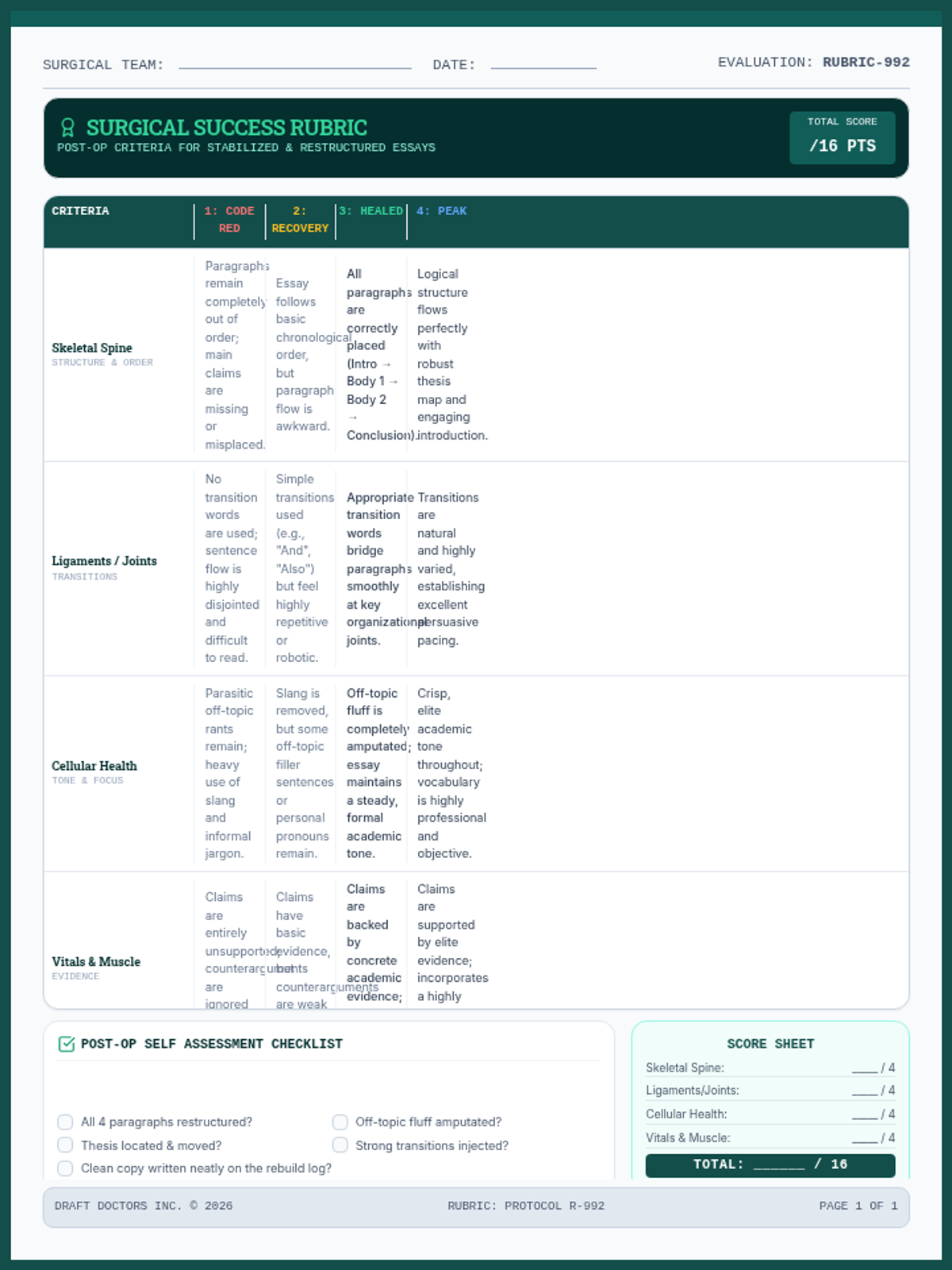
An immersive, medical-themed lesson where students act as 'Draft Doctors' to diagnose, triage, and perform surgery on a poorly organized, weak persuasive essay. Students learn paragraph structure, logical flow, and transition-building through a structured, clinical approach.
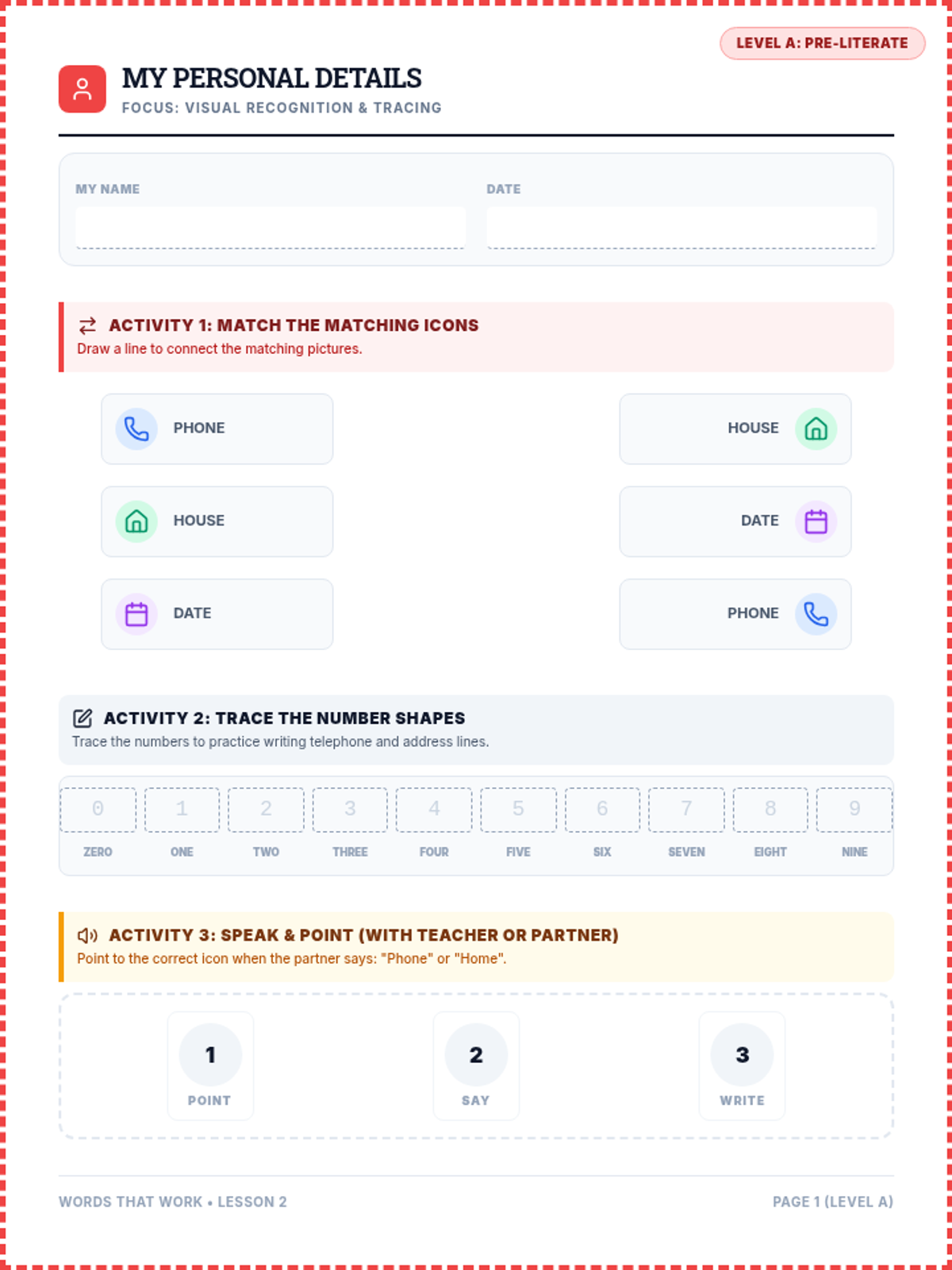
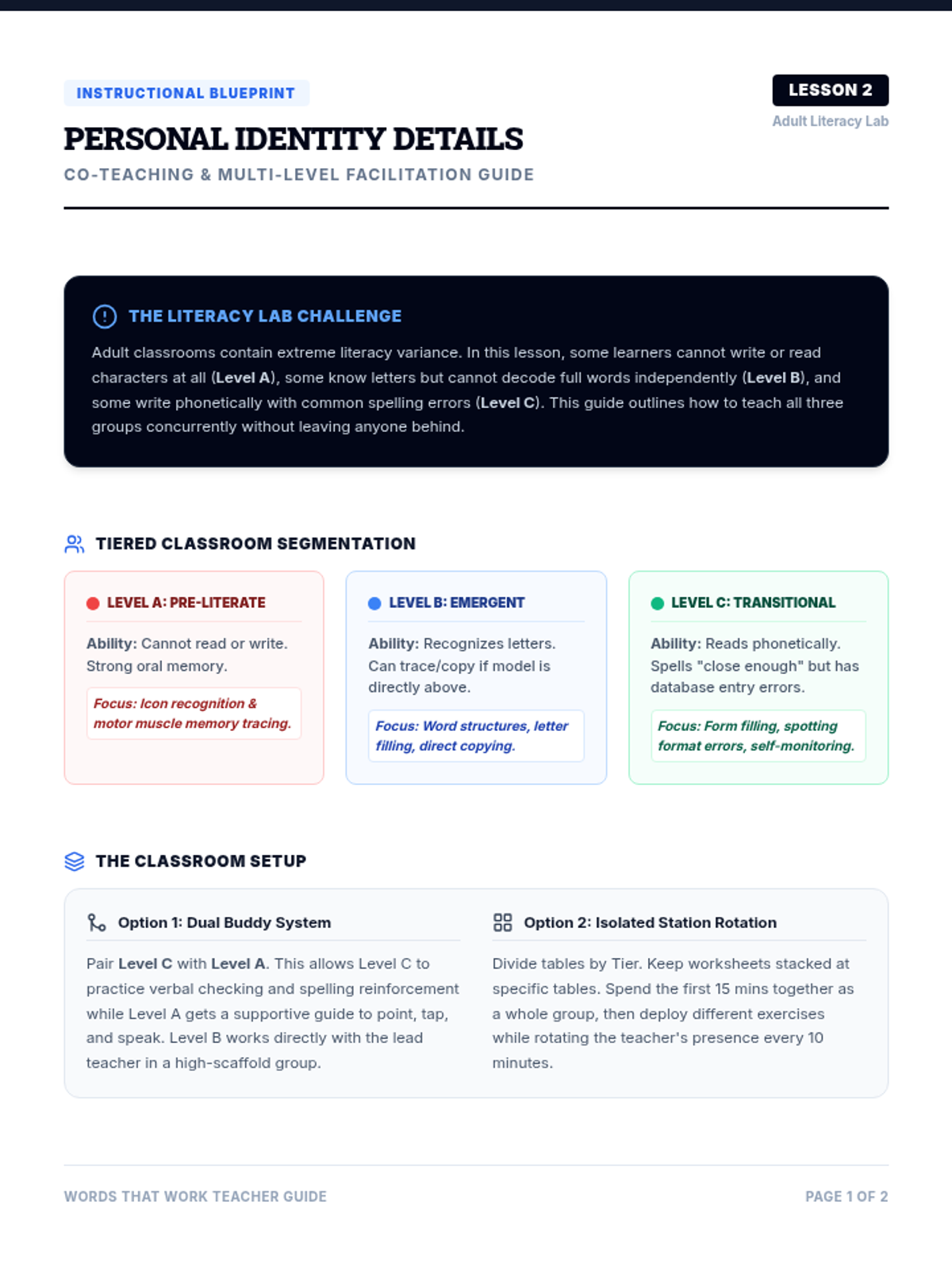
This lesson focuses on personal identification details like address, phone number, and birthdate, designed for multi-level adult literacy learners ranging from pre-literate to transitional writers.
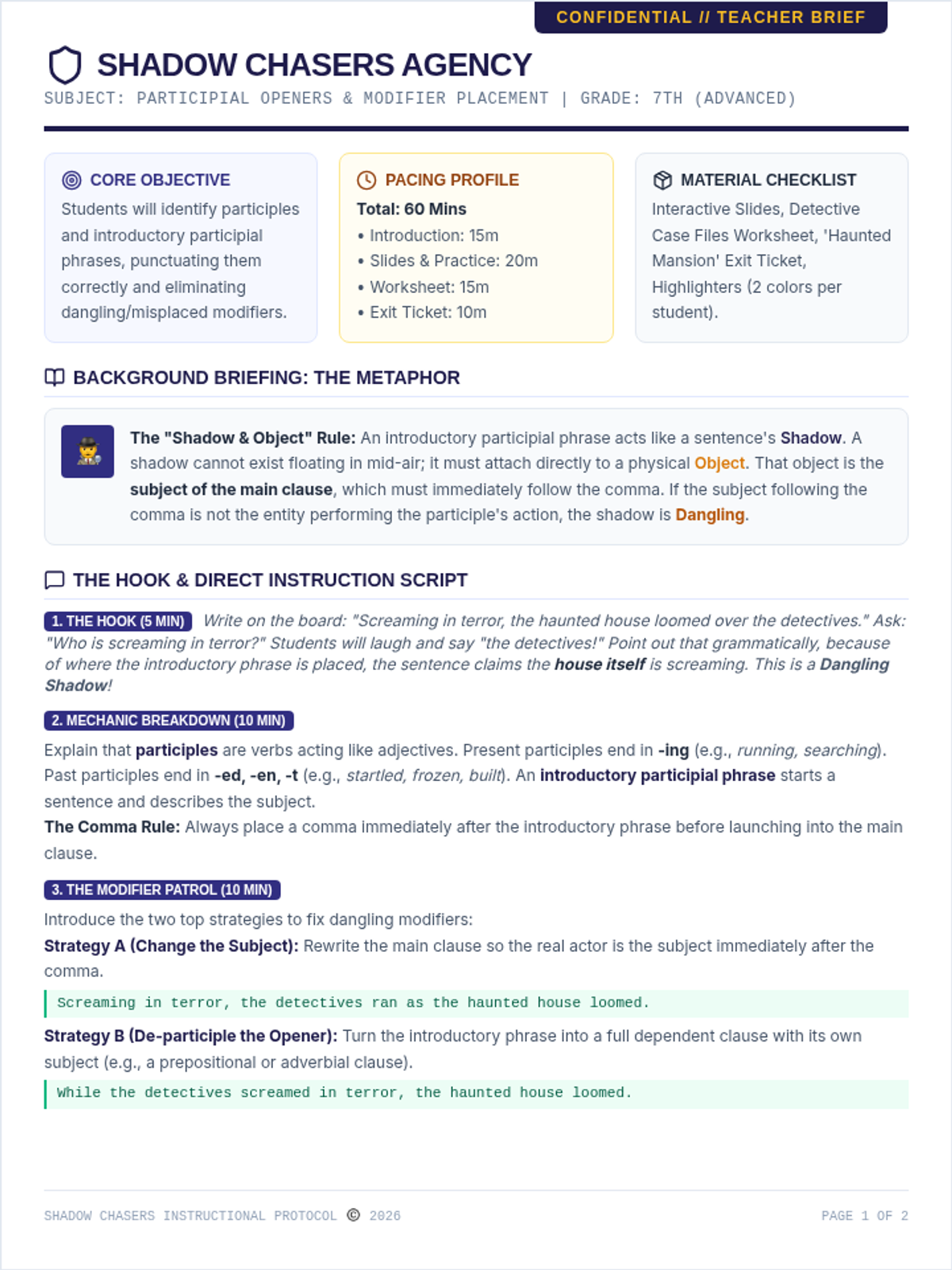
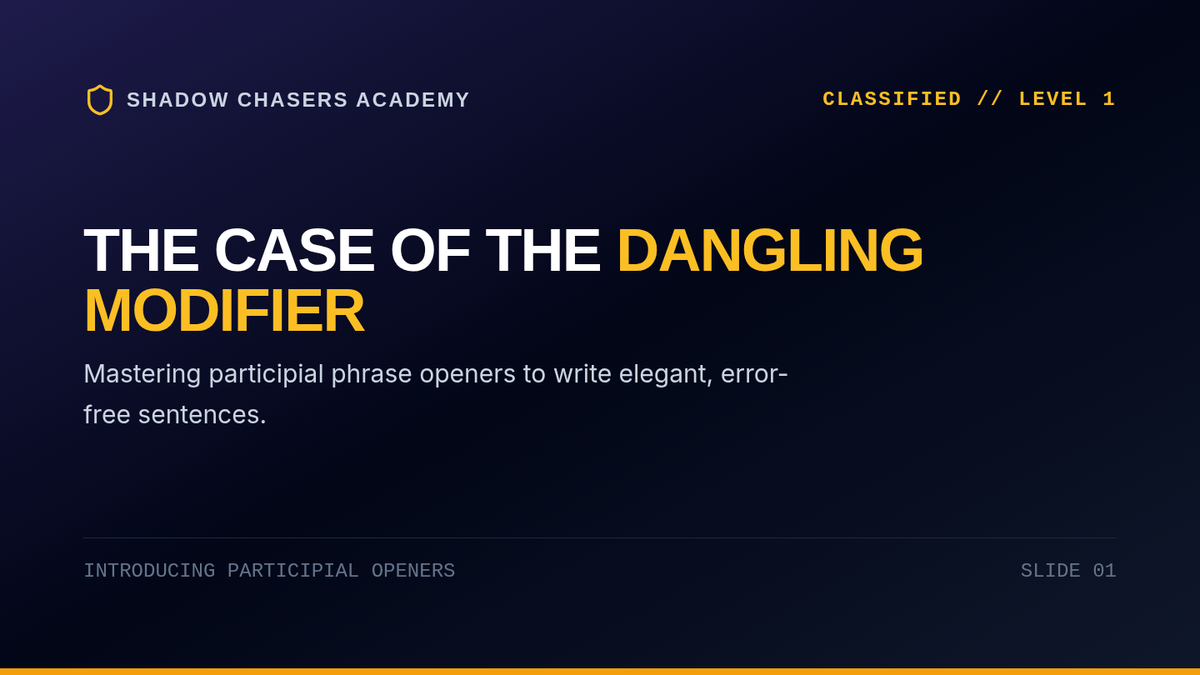
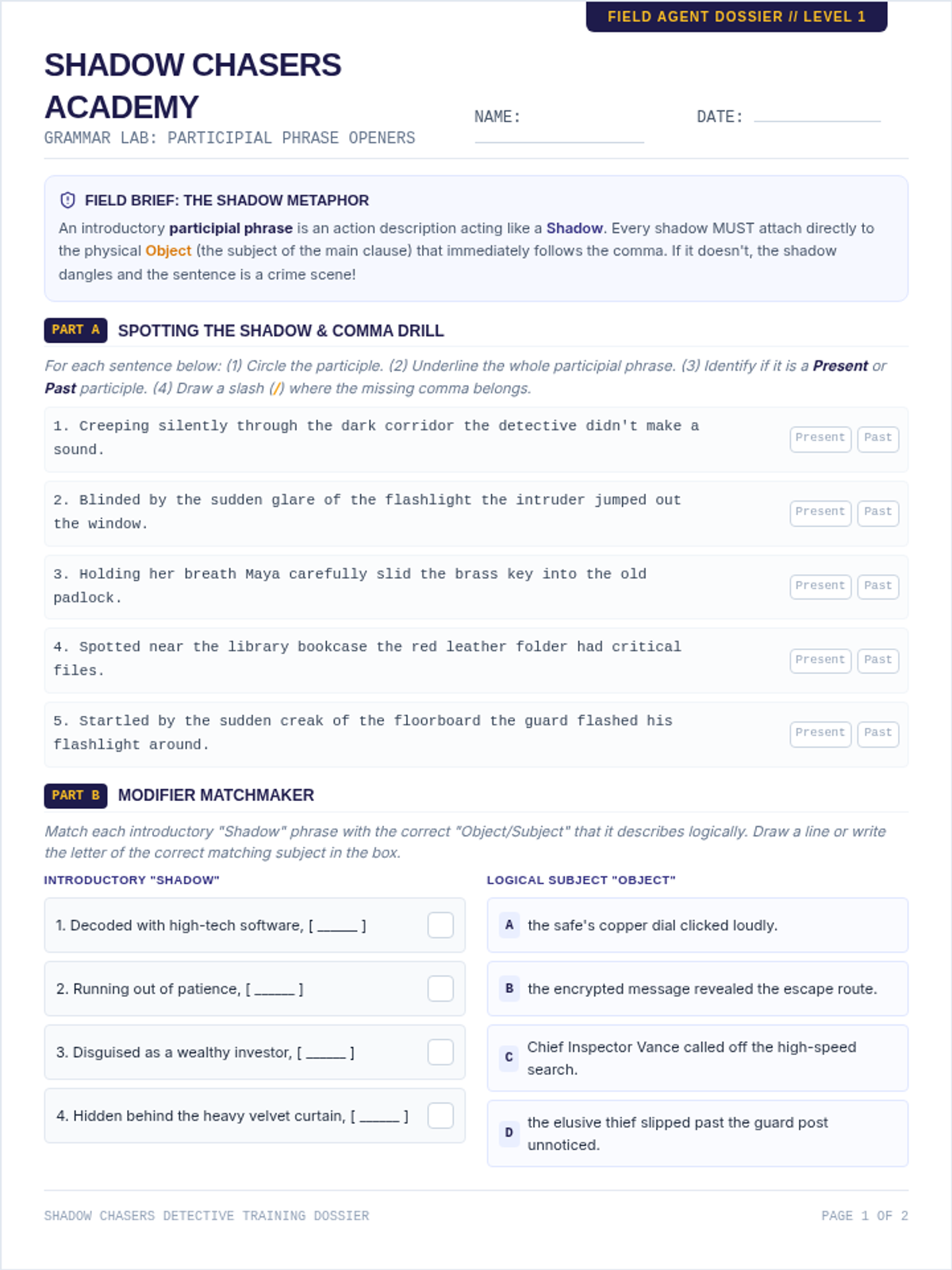
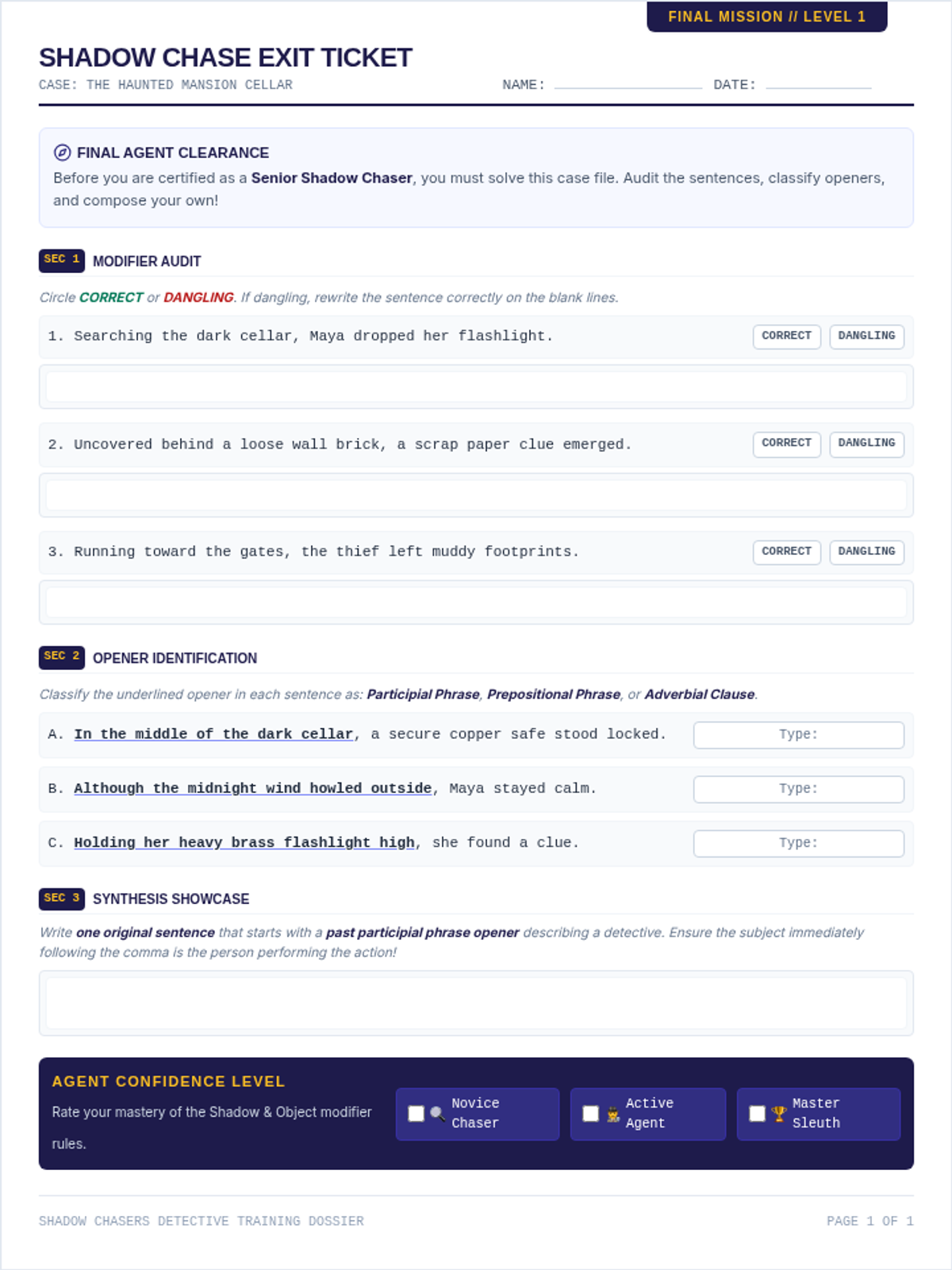
A comprehensive grammar lesson for advanced 7th graders that uses a 'Shadow Chasers' detective theme to master participial phrase openers and eliminate dangling modifiers. Students learn to match introductory participle modifiers (shadows) with their correct subjects (objects).
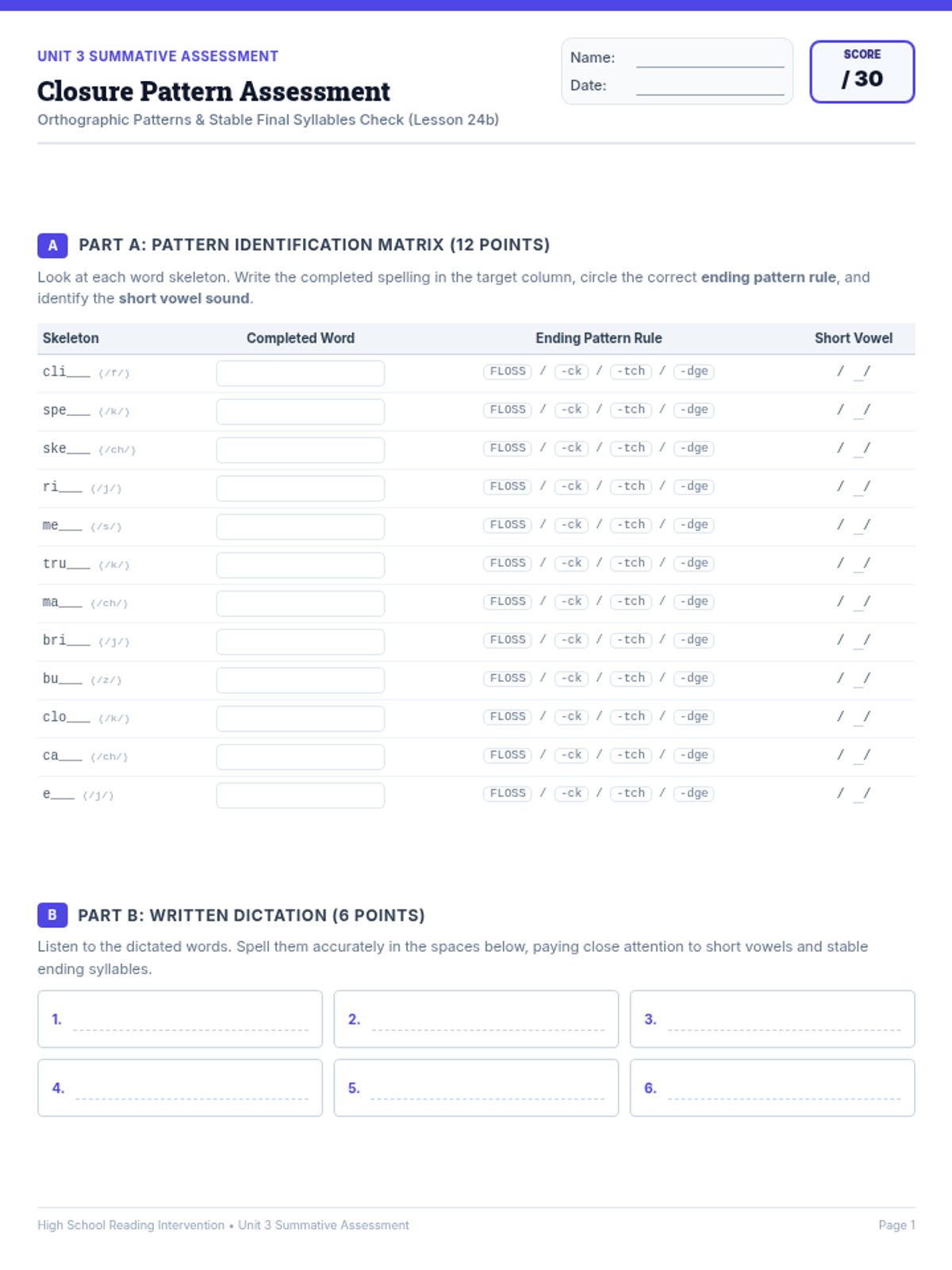
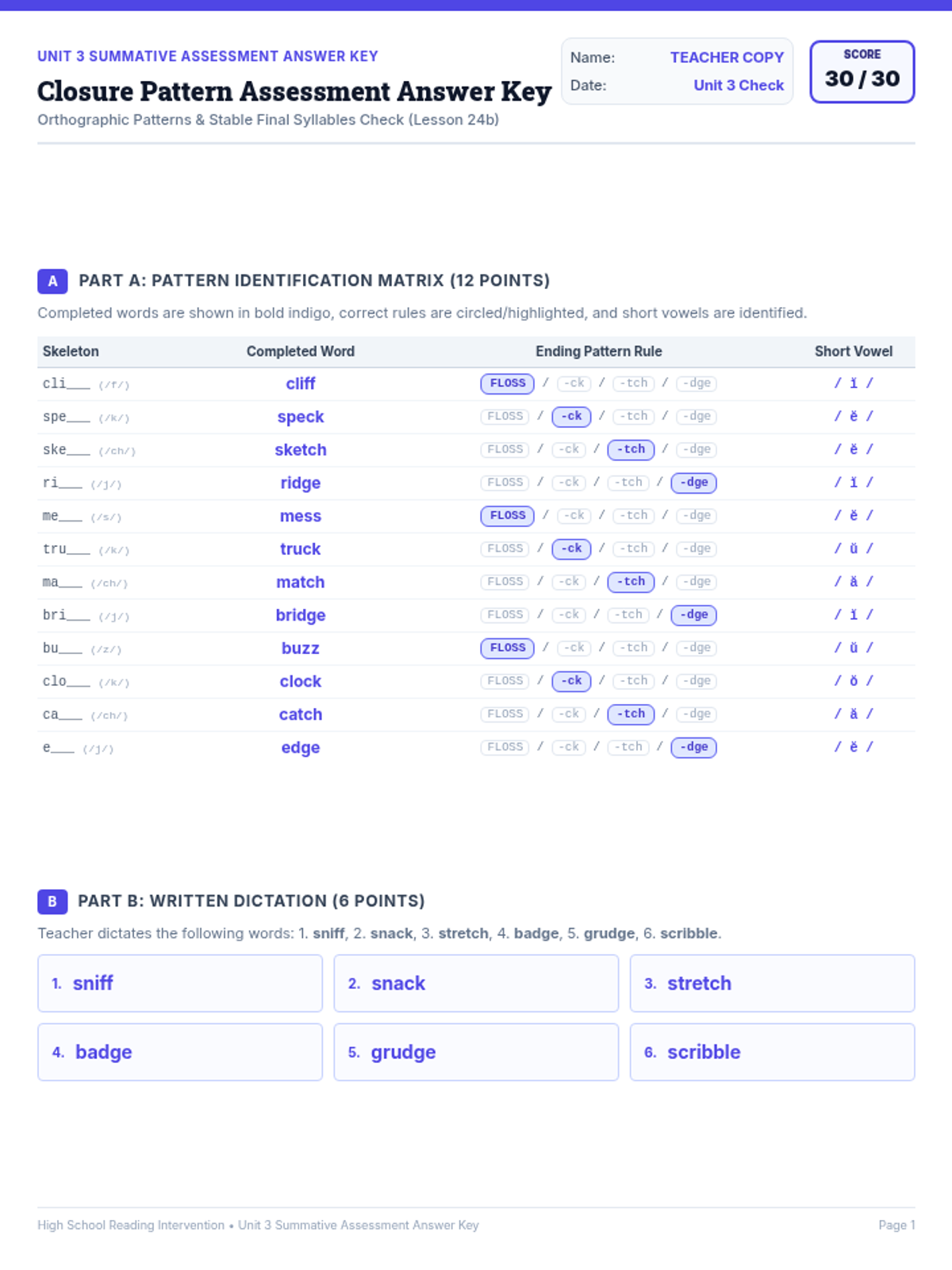
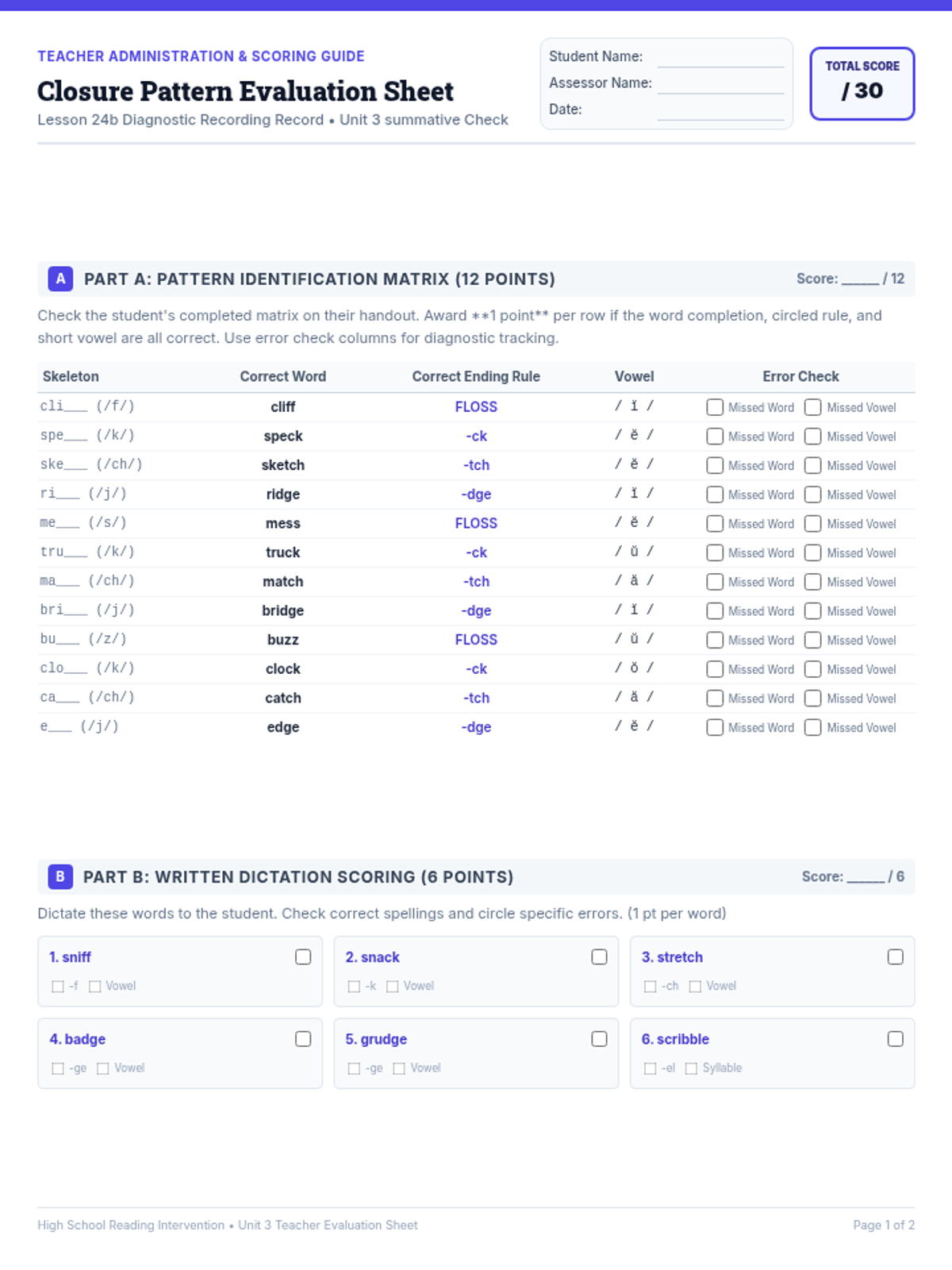
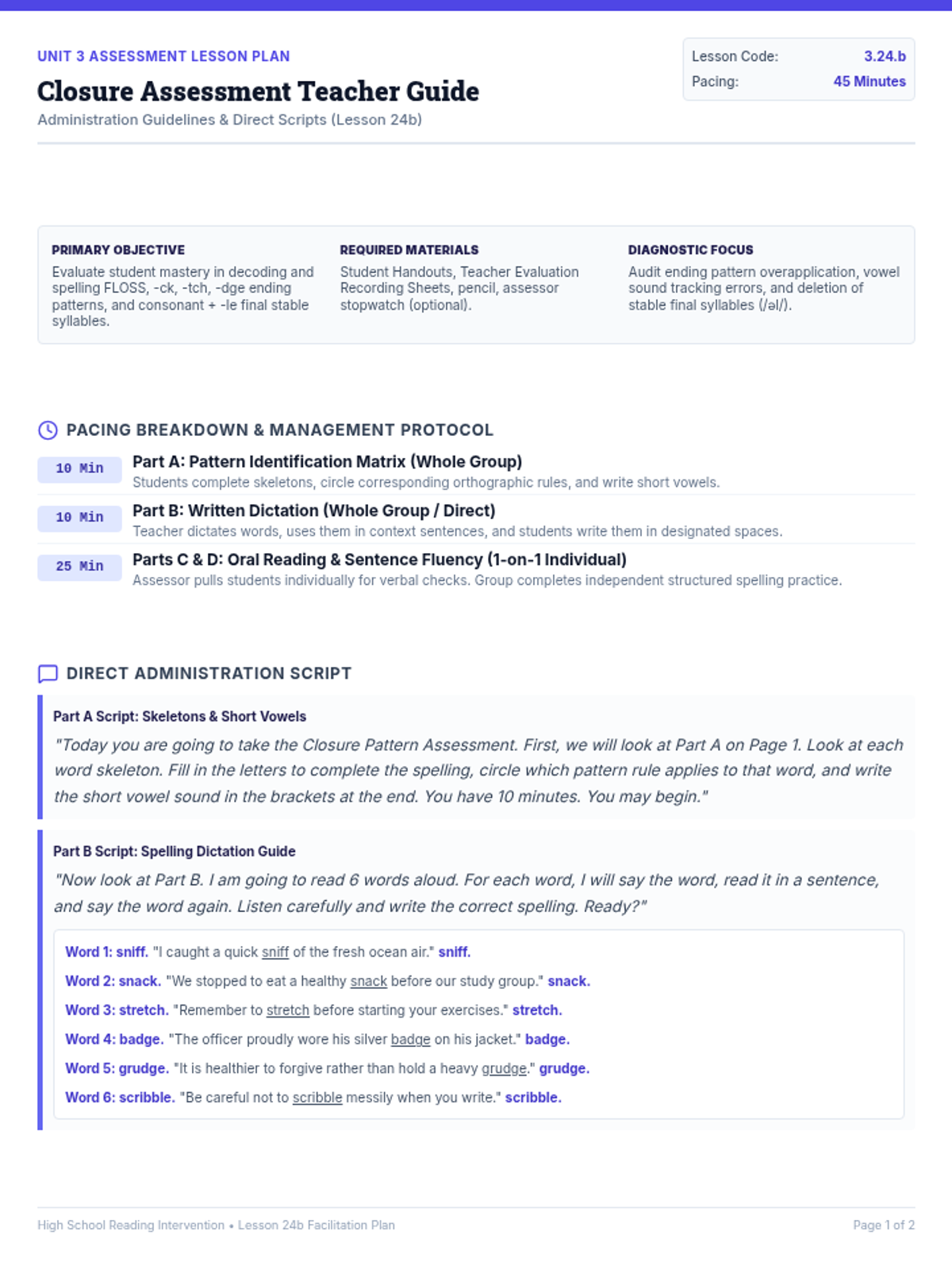
An intensive summative assessment lesson designed to check student mastery of FLOSS, -ck, -tch, -dge, and -le decoding and spelling patterns.
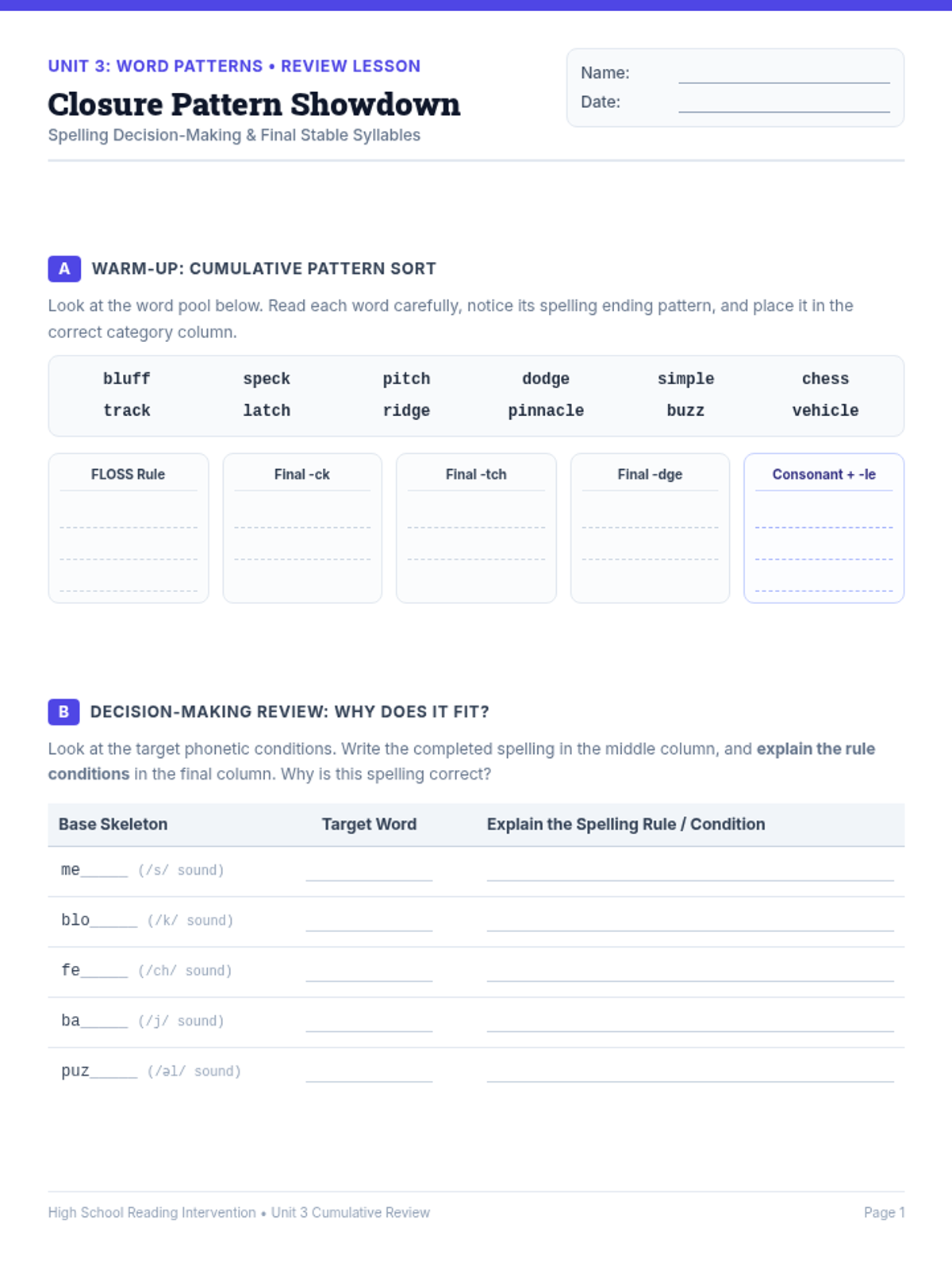
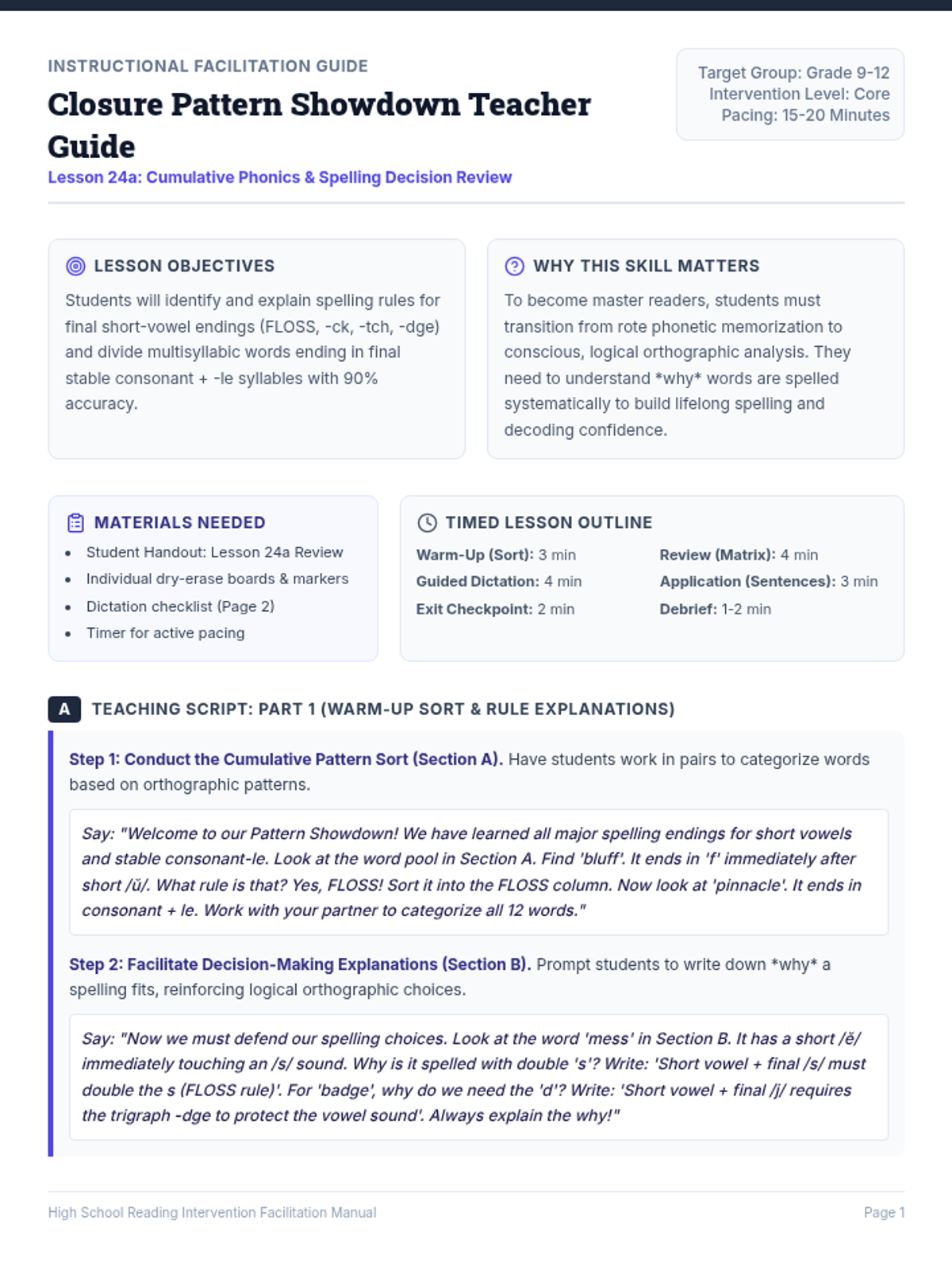
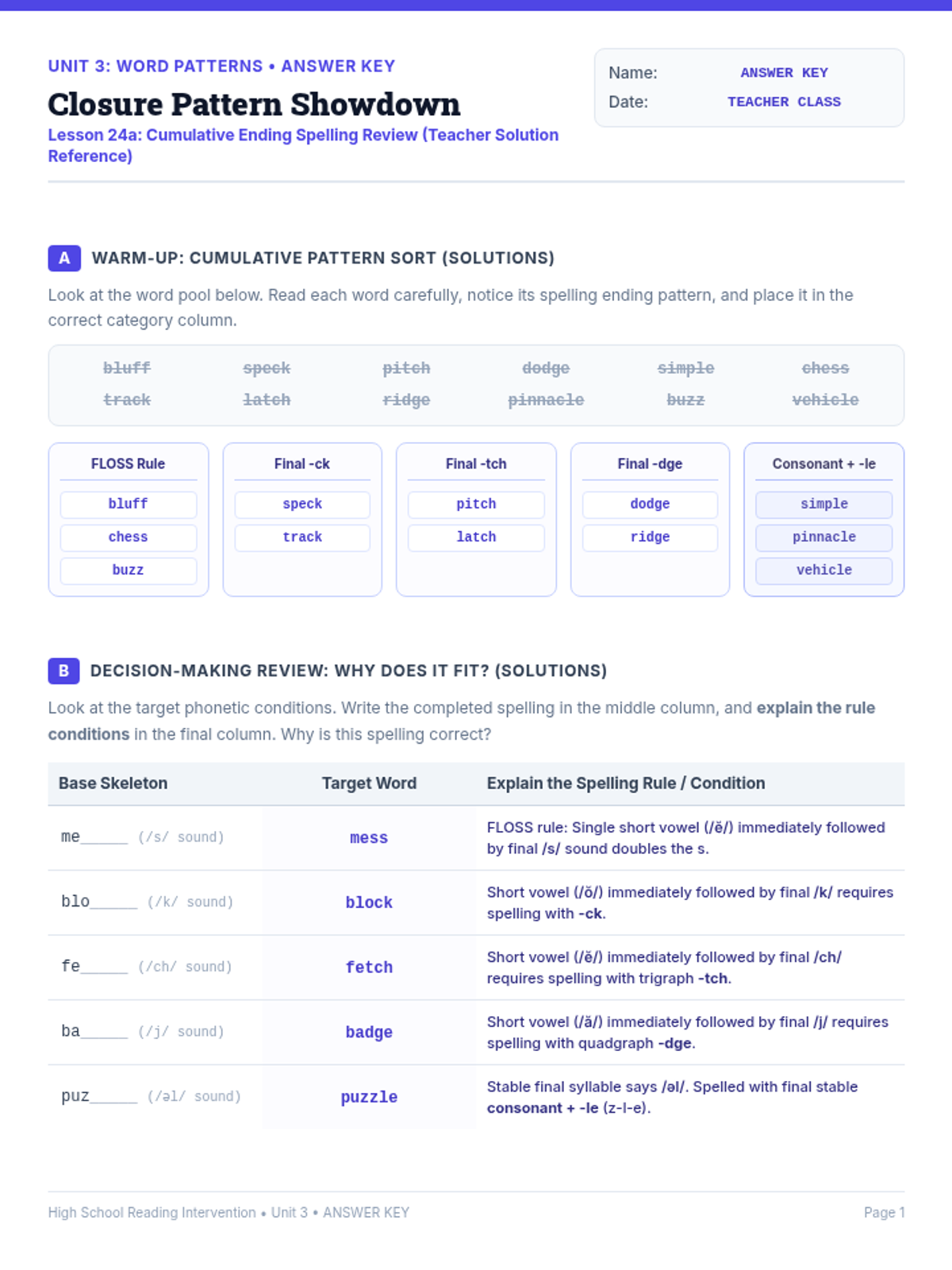
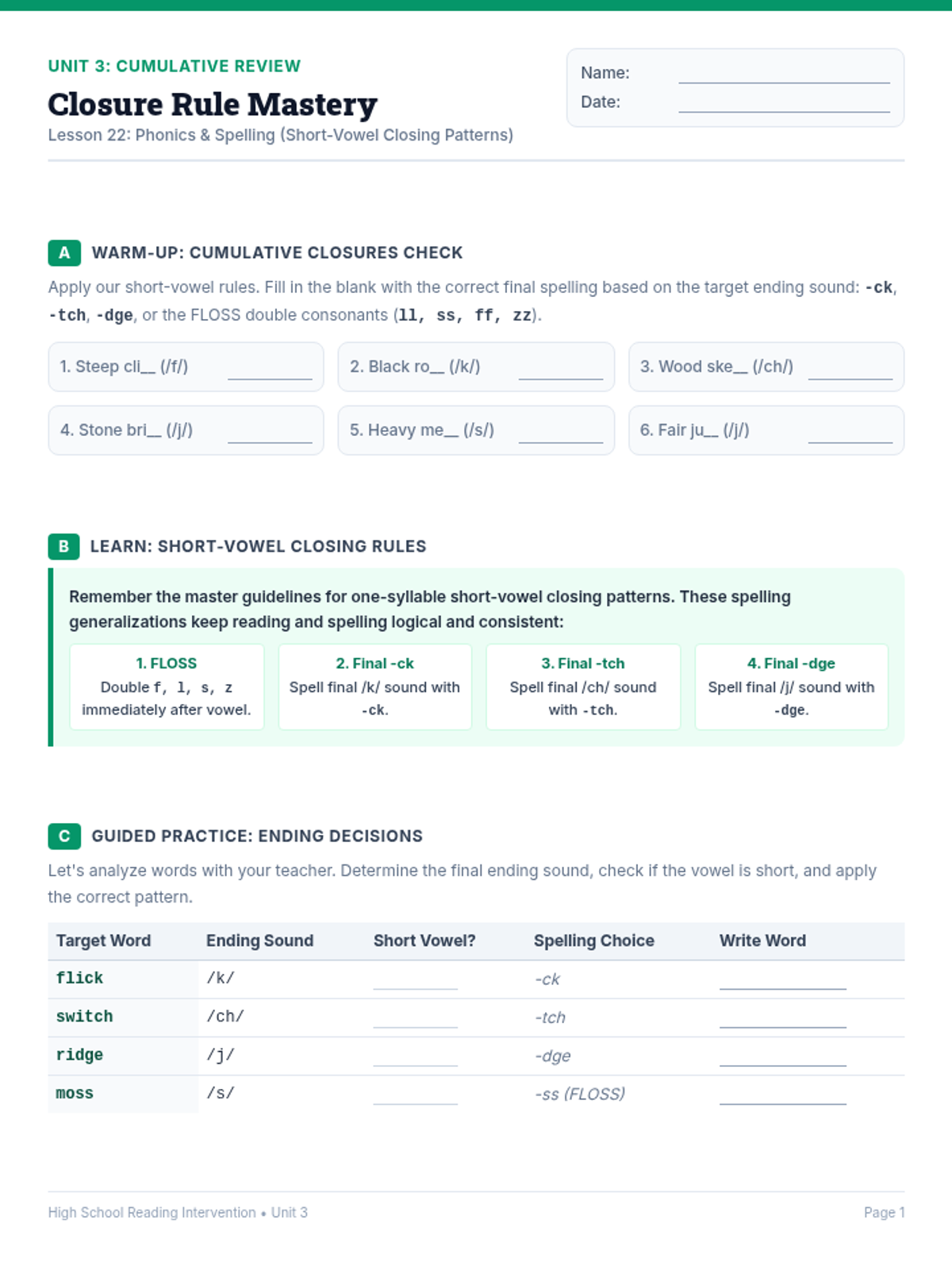
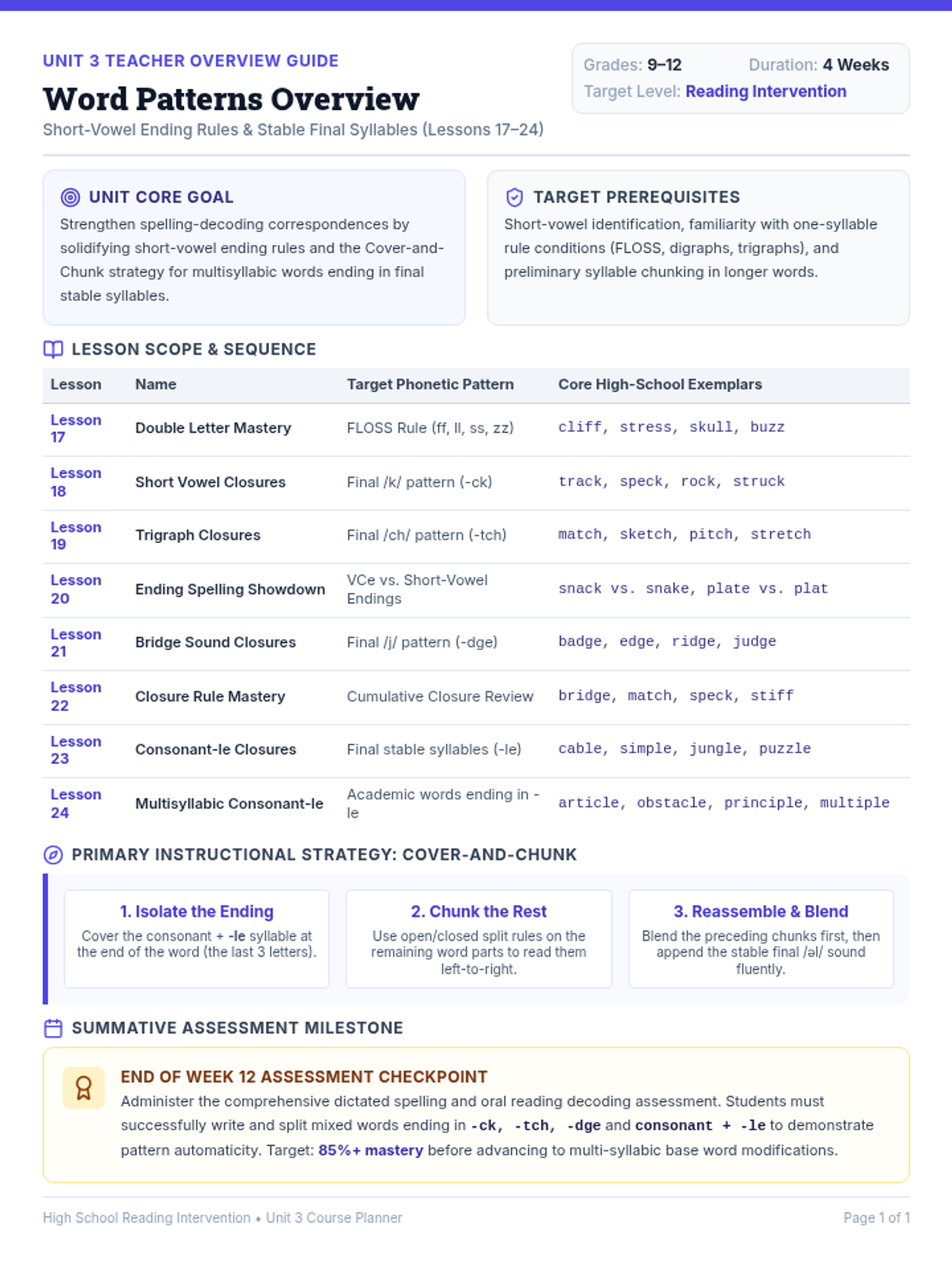
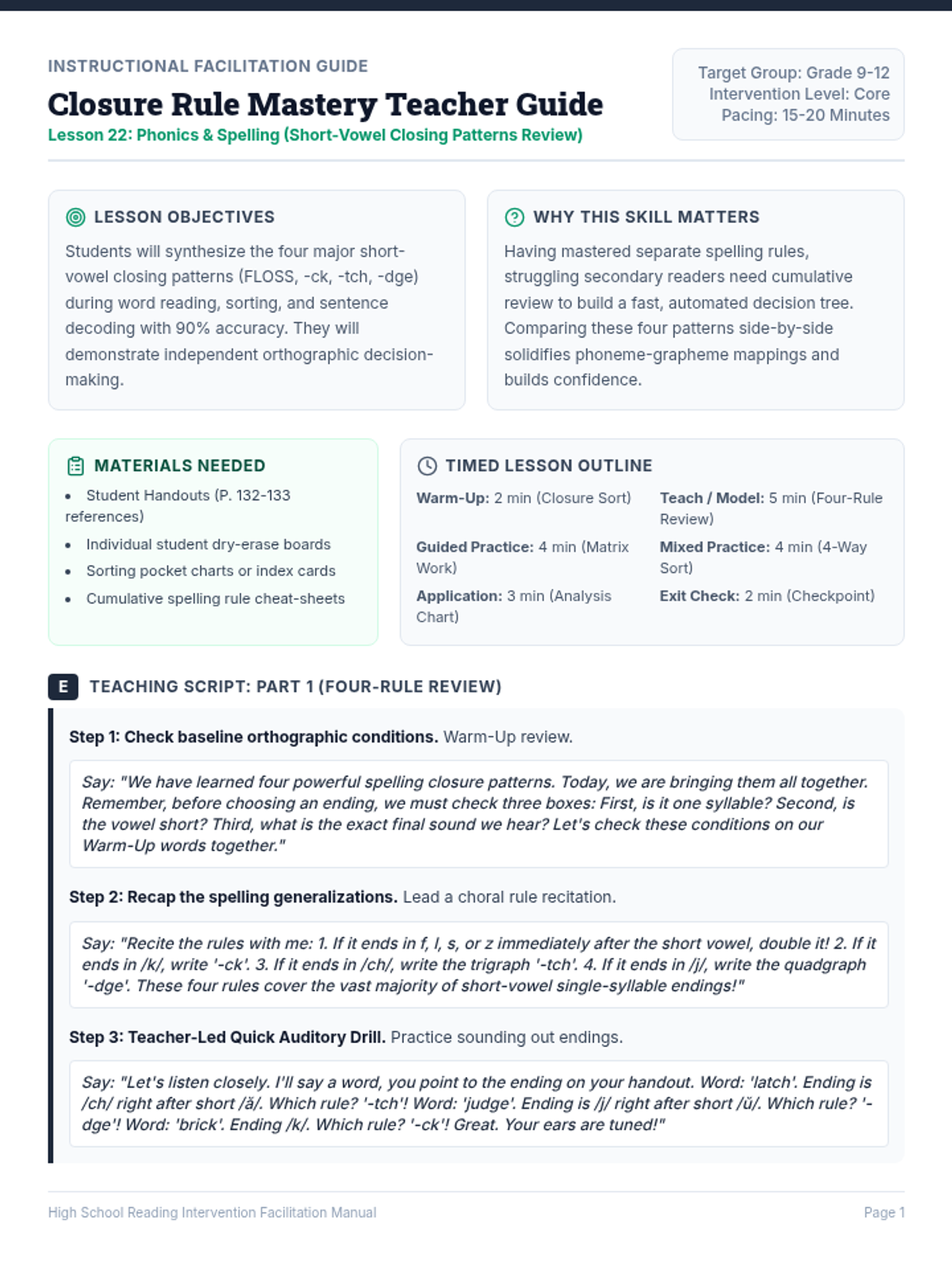
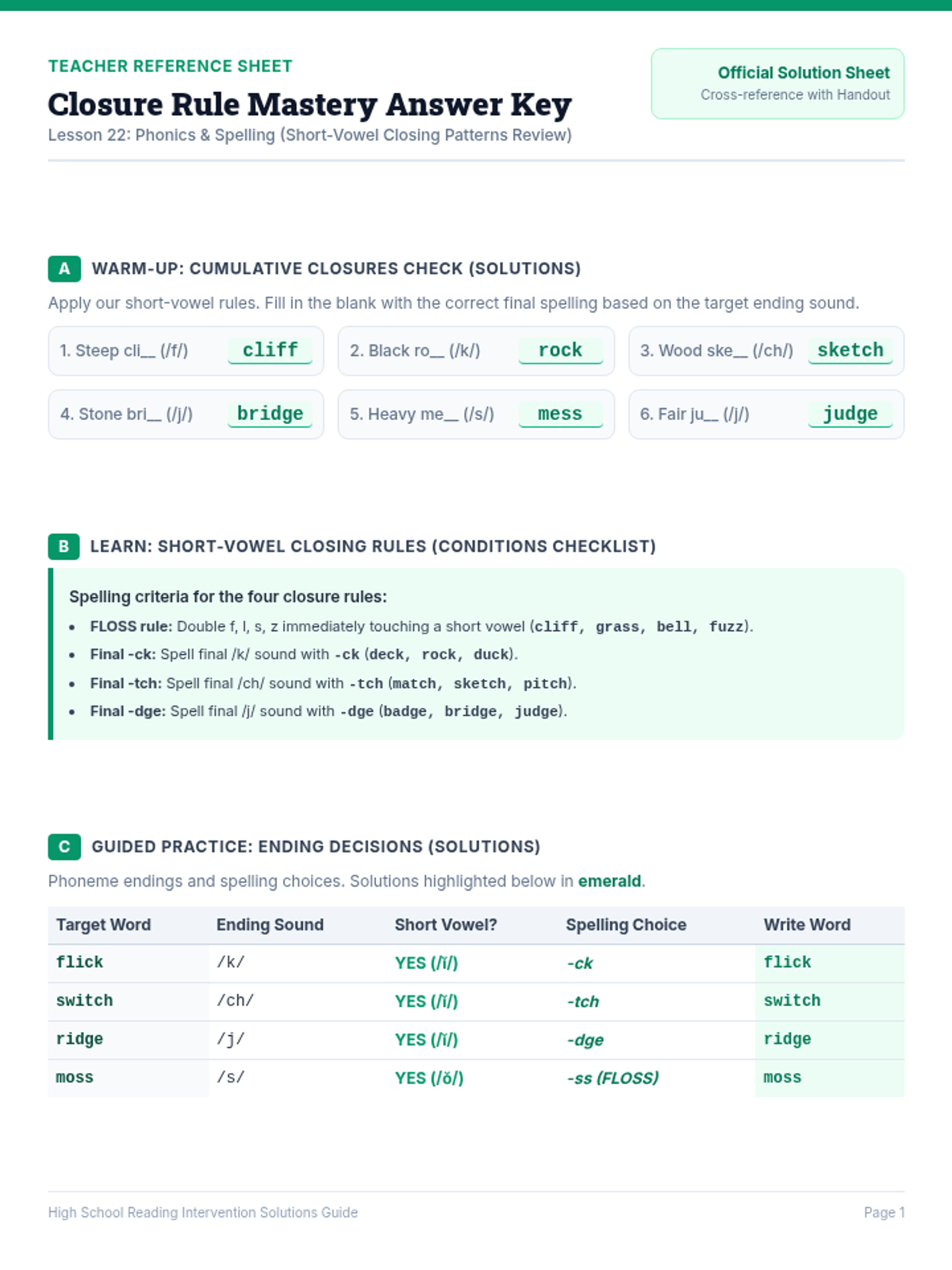
A cumulative review and decision-making lesson consolidating all short-vowel ending rules (FLOSS, -ck, -tch, -dge) and stable final syllables (consonant + -le) to cement orthographic reasoning and decoding precision.
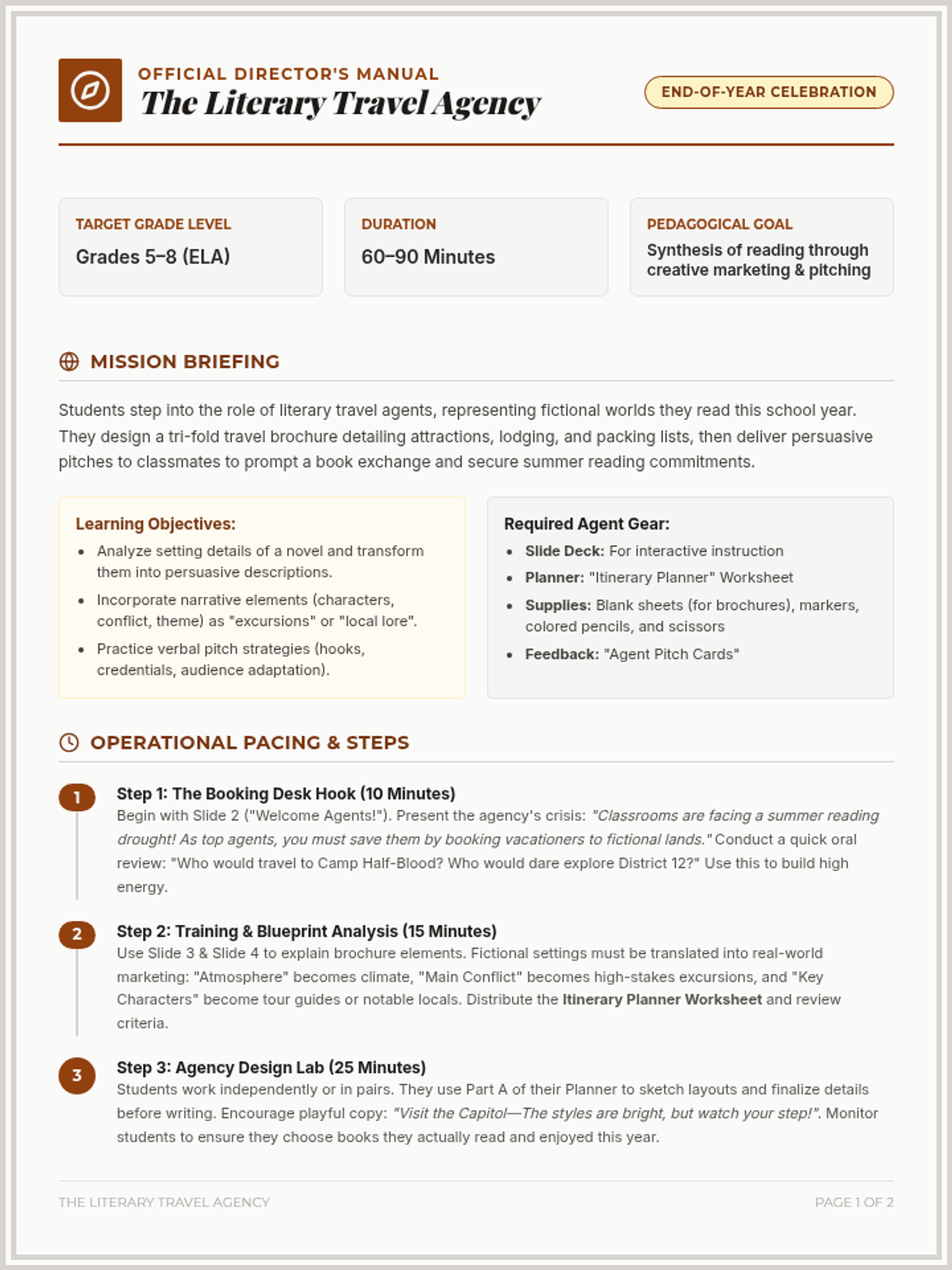
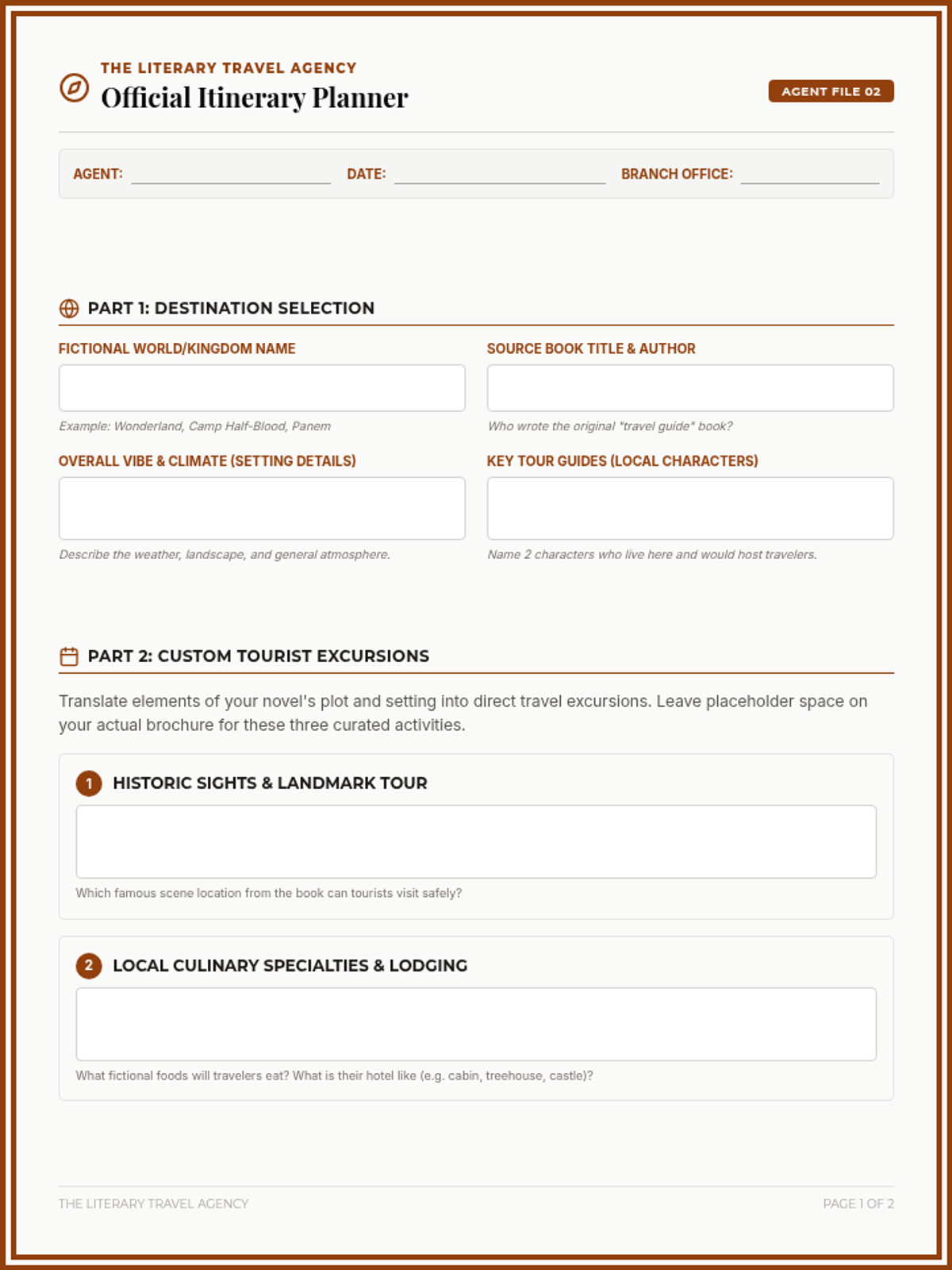
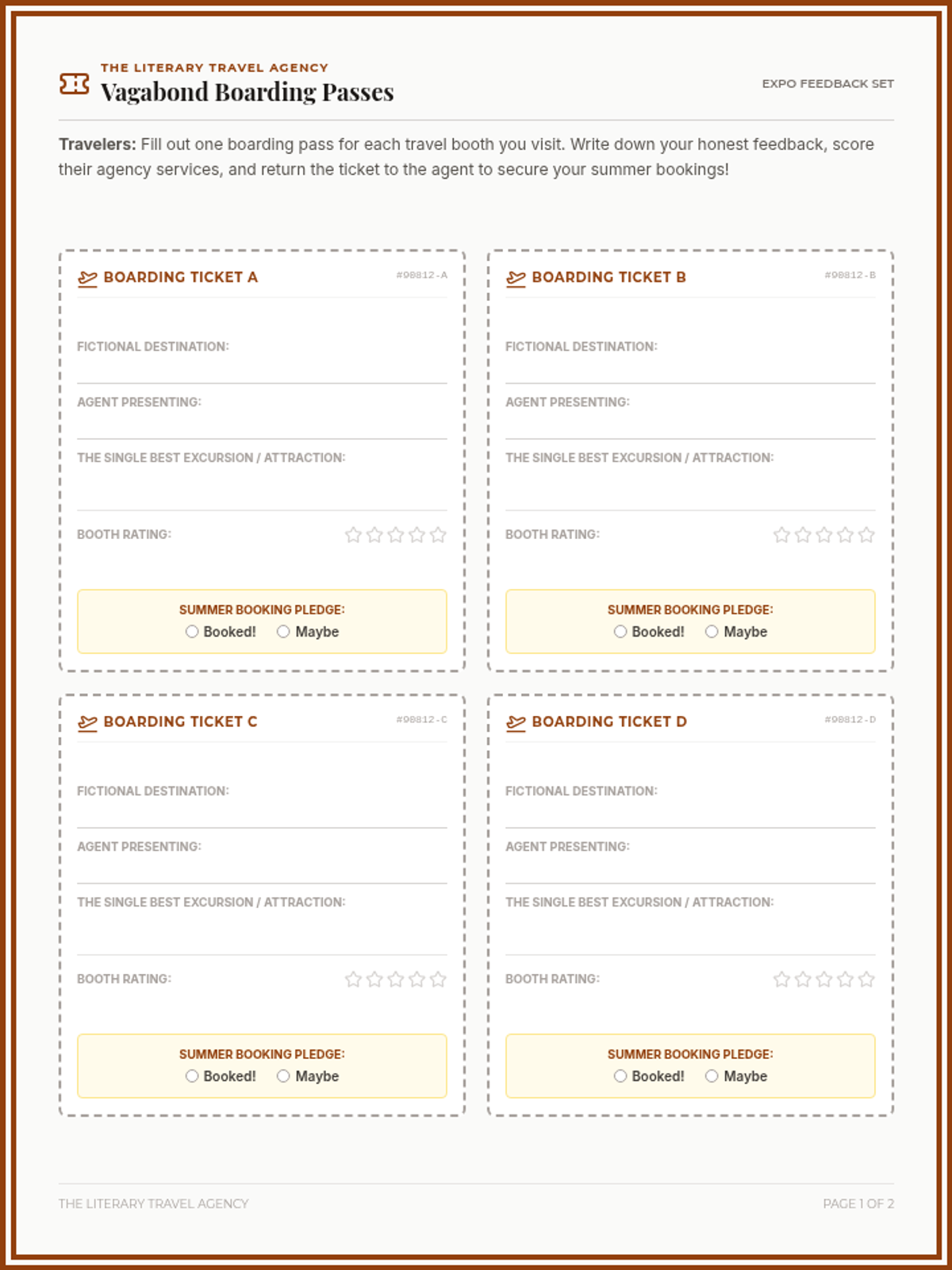
A celebratory end-of-year English Language Arts lesson where students step into the role of literary travel agents, designing promotional brochures and pitching fictional book worlds to classmates to boost summer reading.
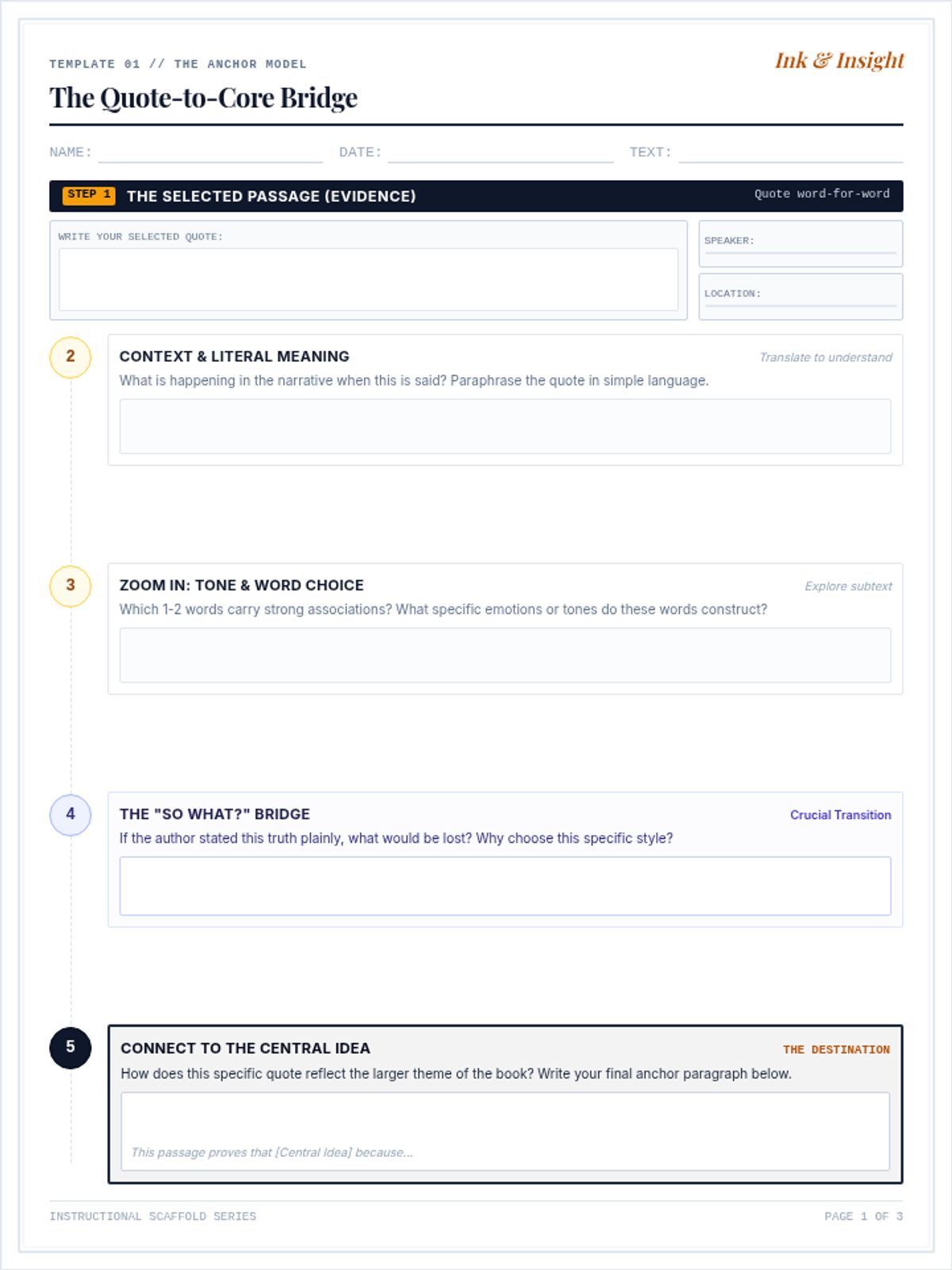
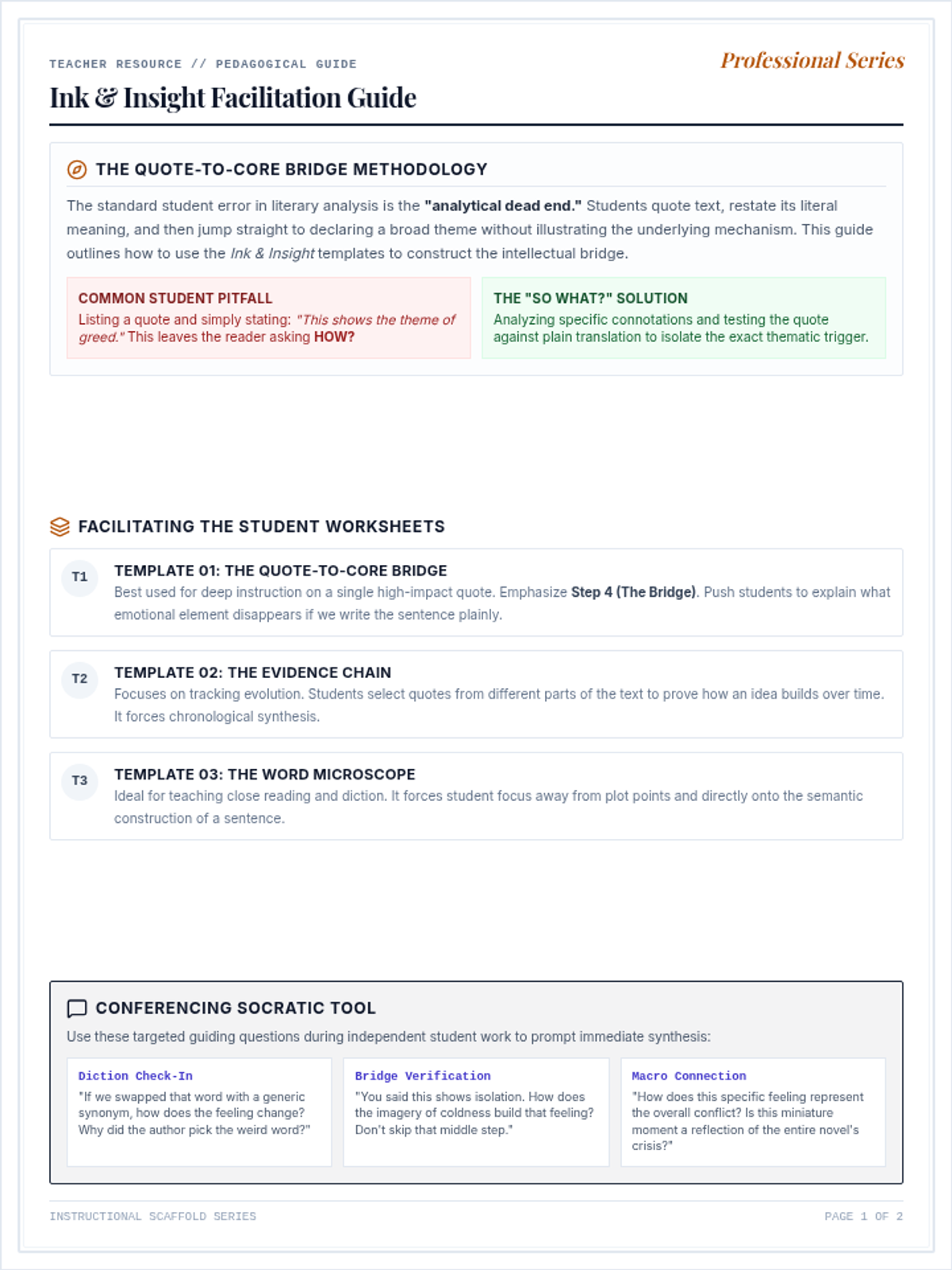
A comprehensive literary analysis lesson focusing on connecting textual evidence directly back to a central idea. This lesson equips students with structured templates and a teacher guide to bridge the gap between quote dissection and thematic analysis.
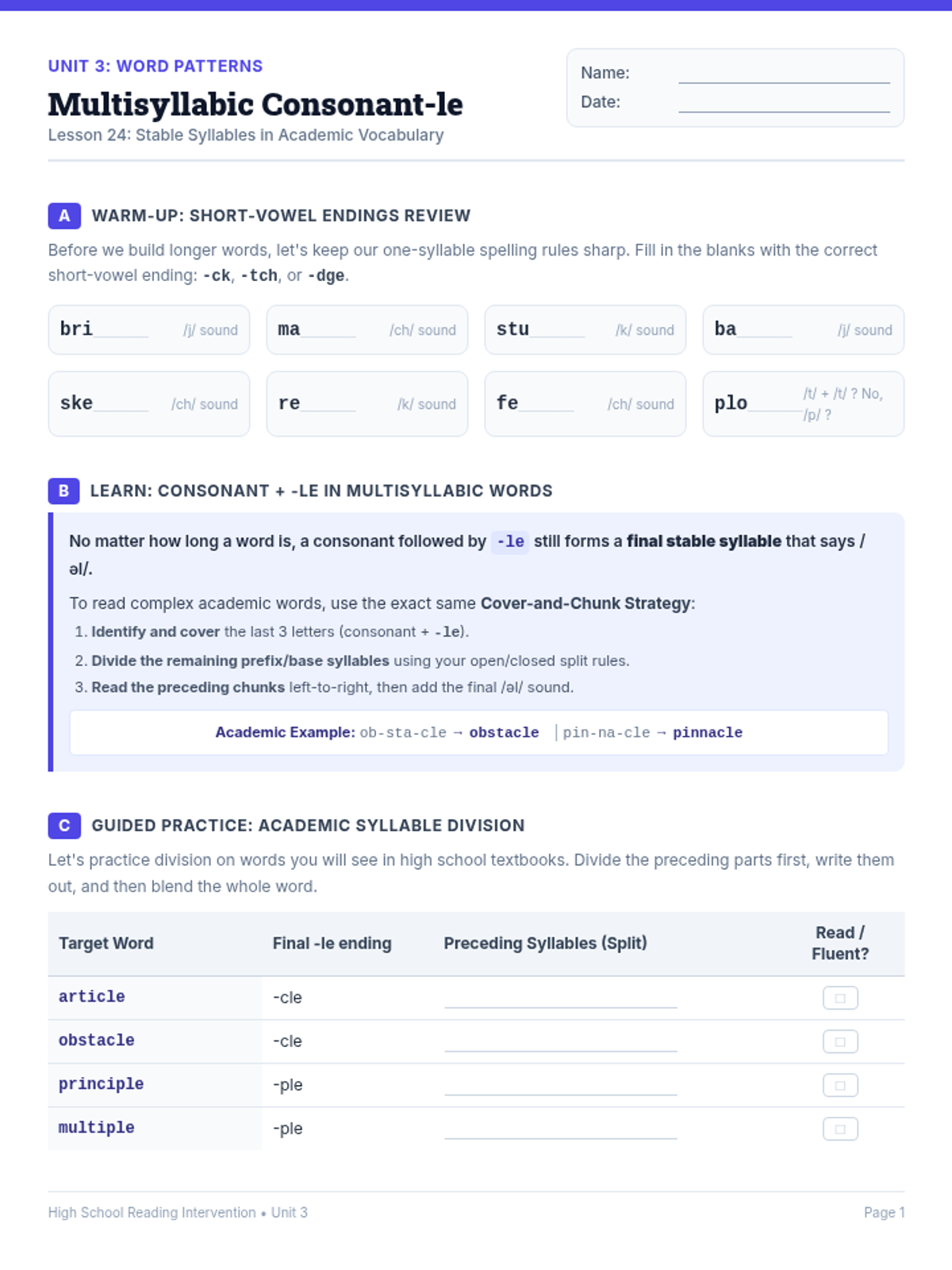
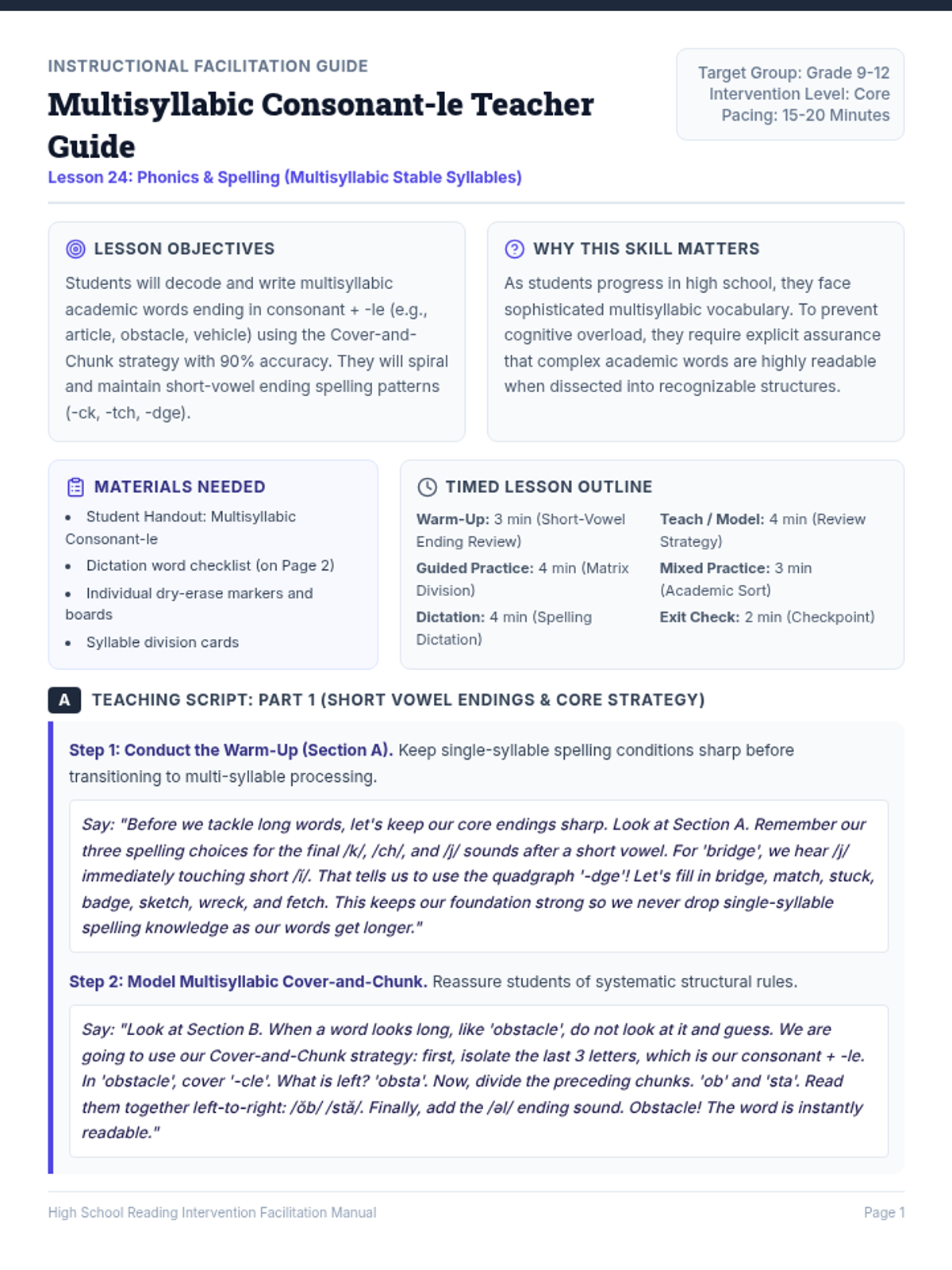
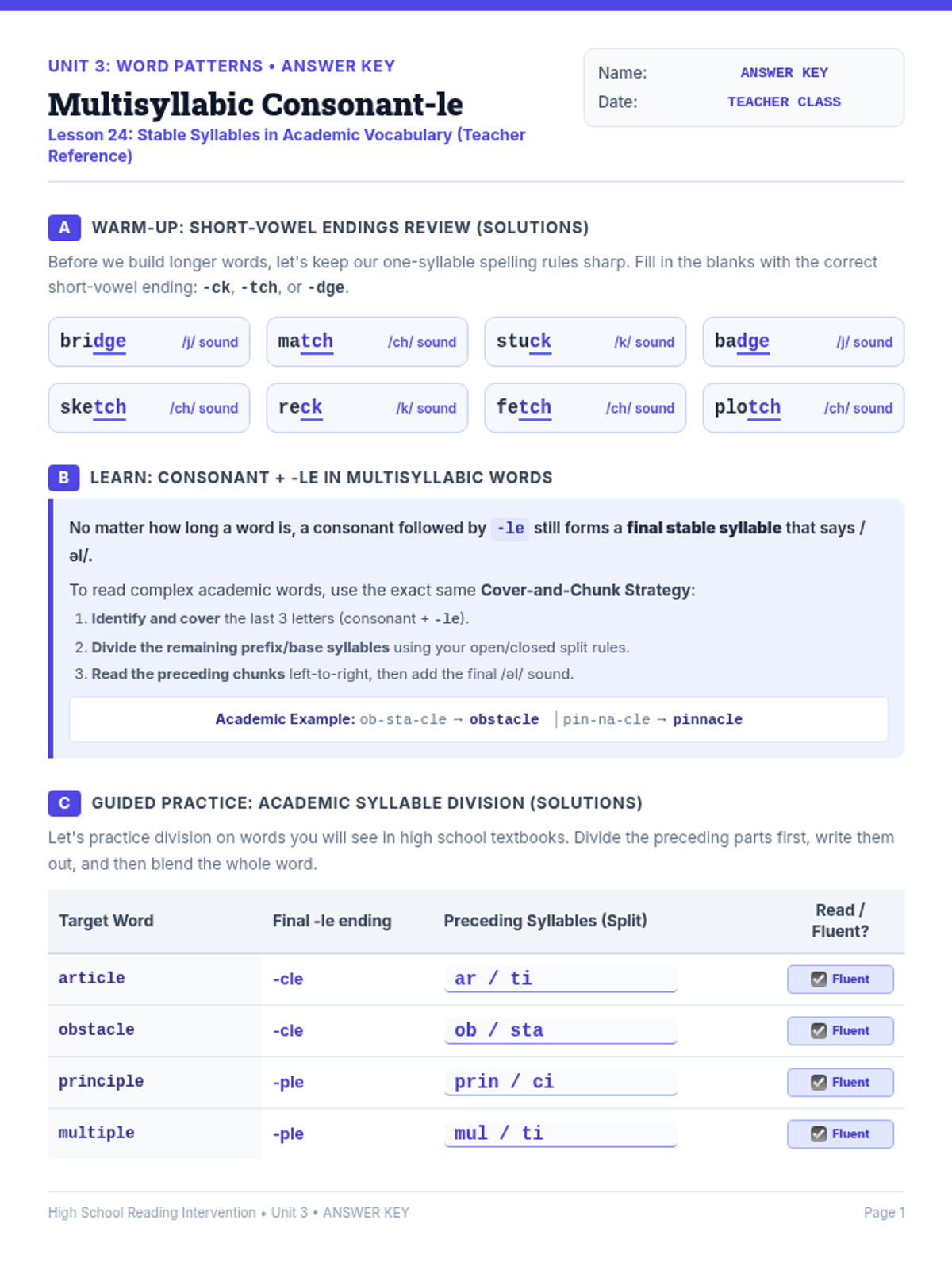
Focuses on decoding and spelling longer, academic multisyllabic words ending in consonant + -le, while spiraling previously learned short-vowel spelling patterns (-ck, -tch, -dge) during warm-ups and comparative activities.
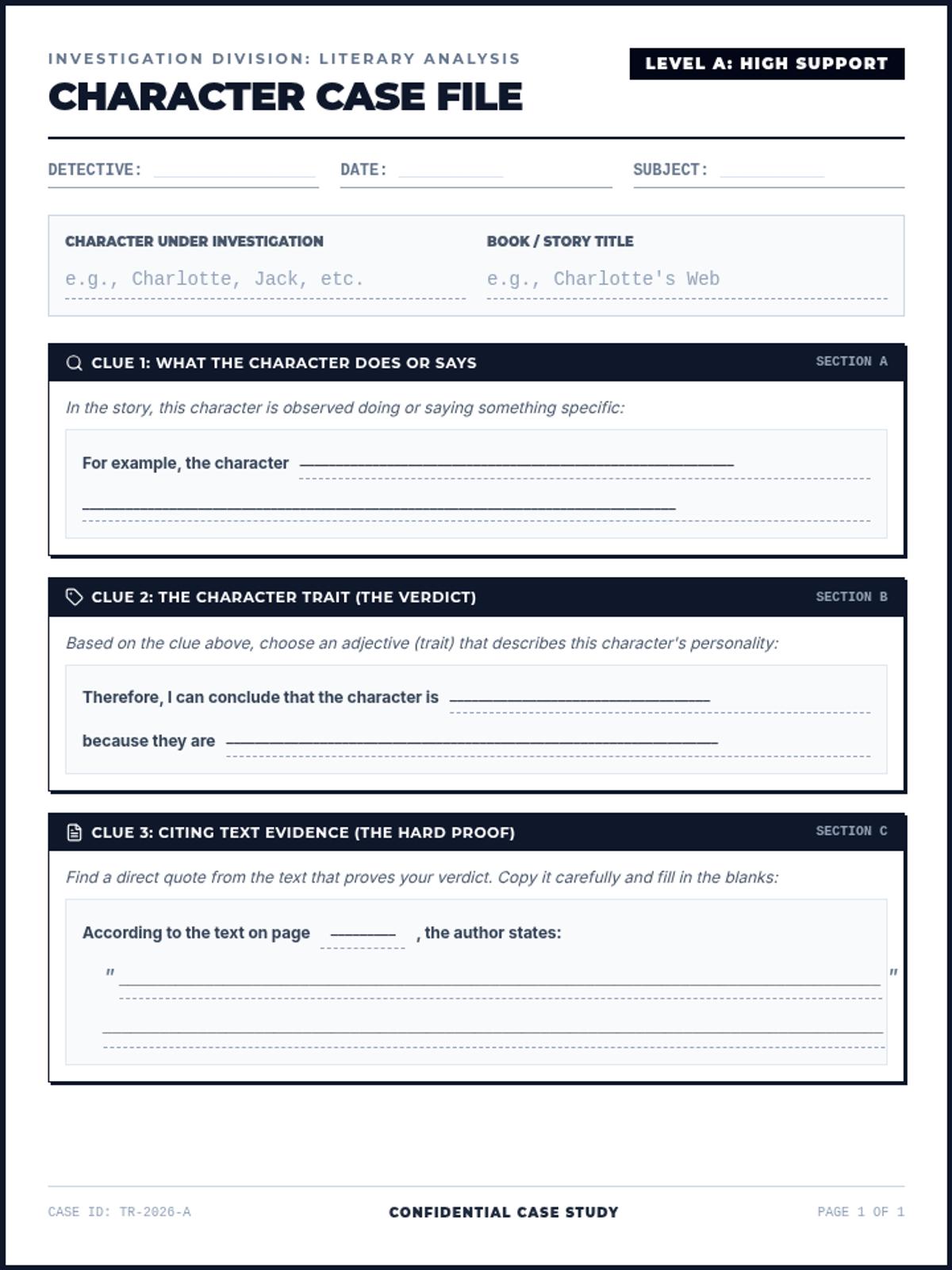
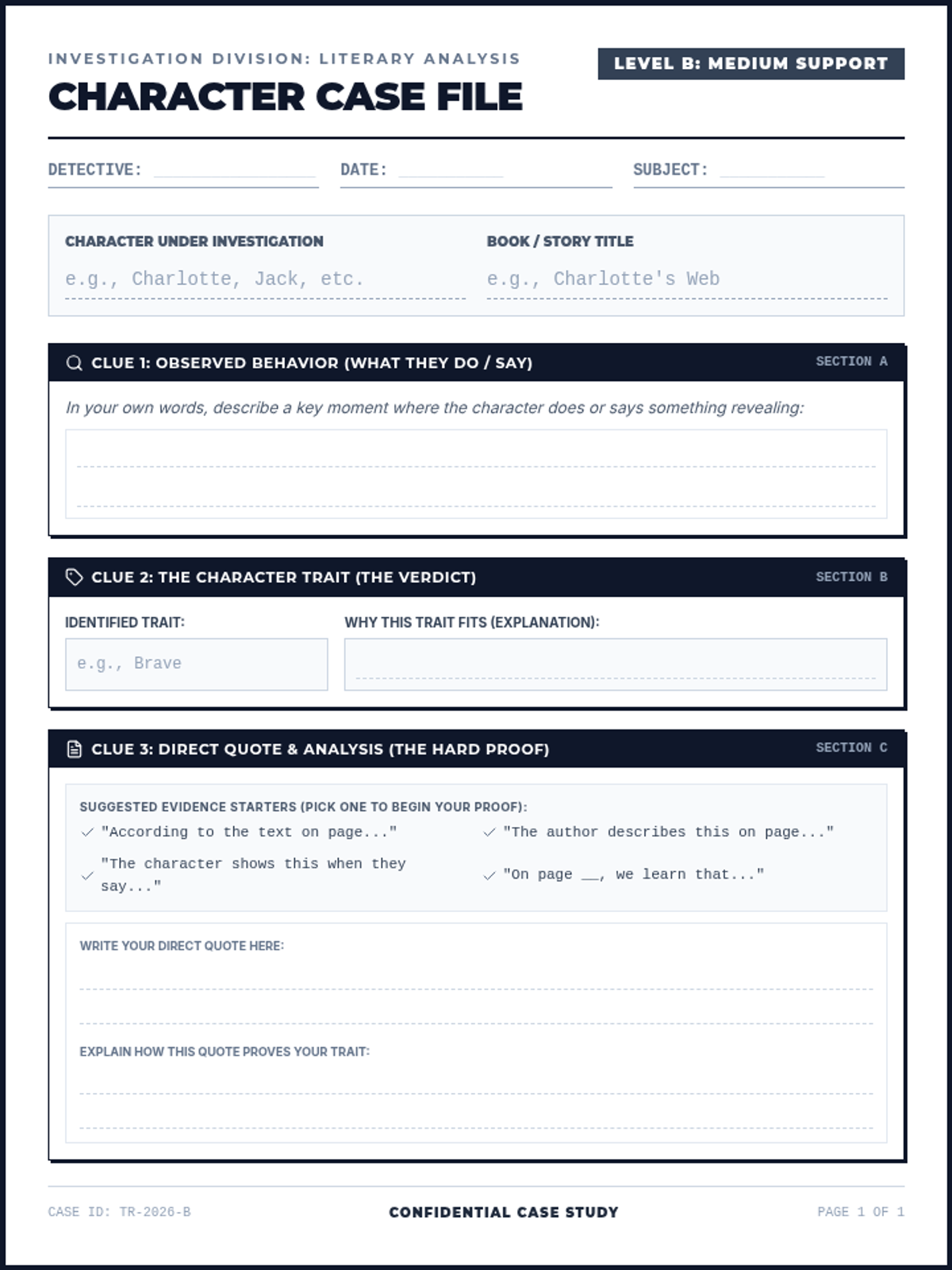
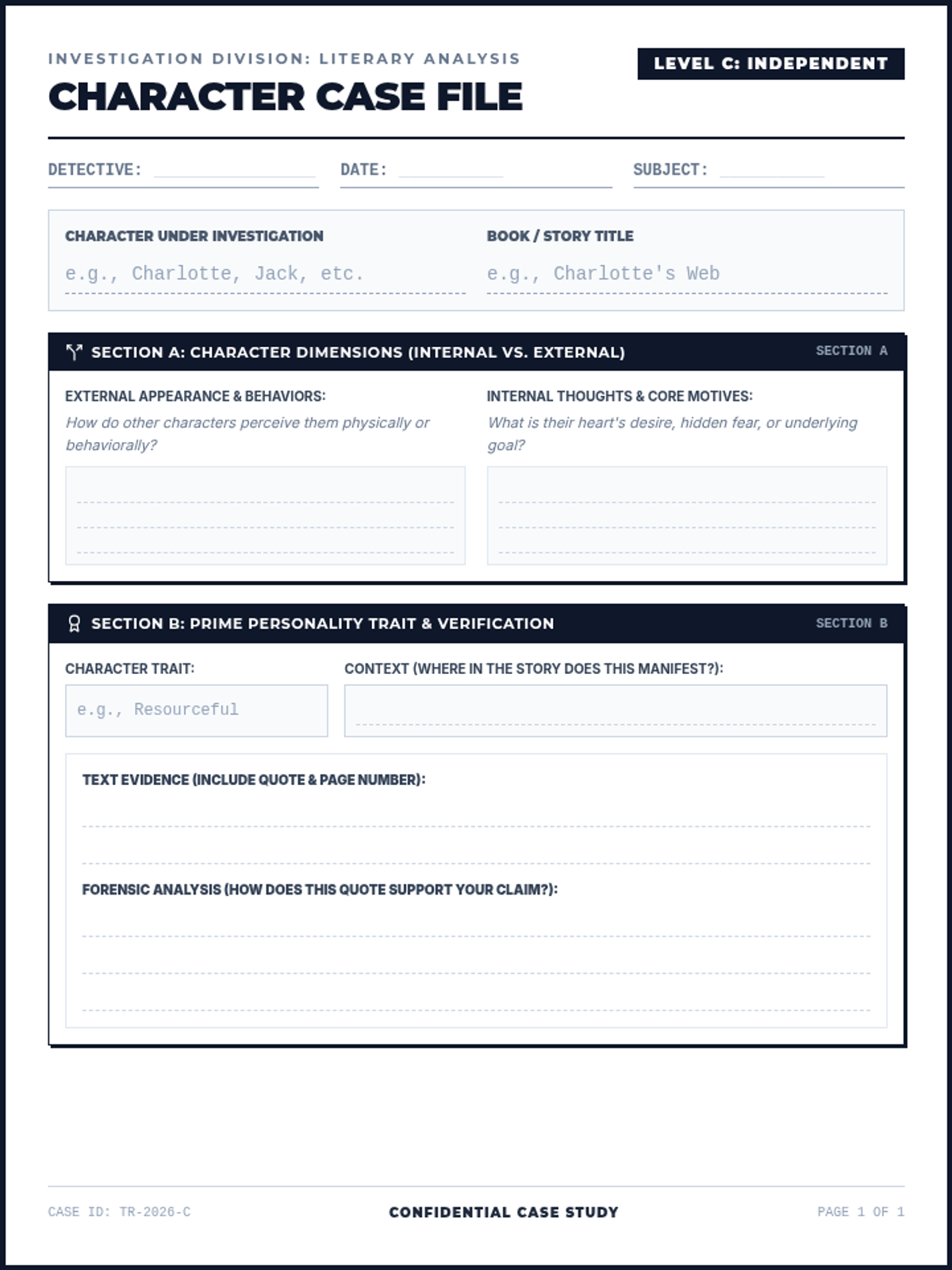
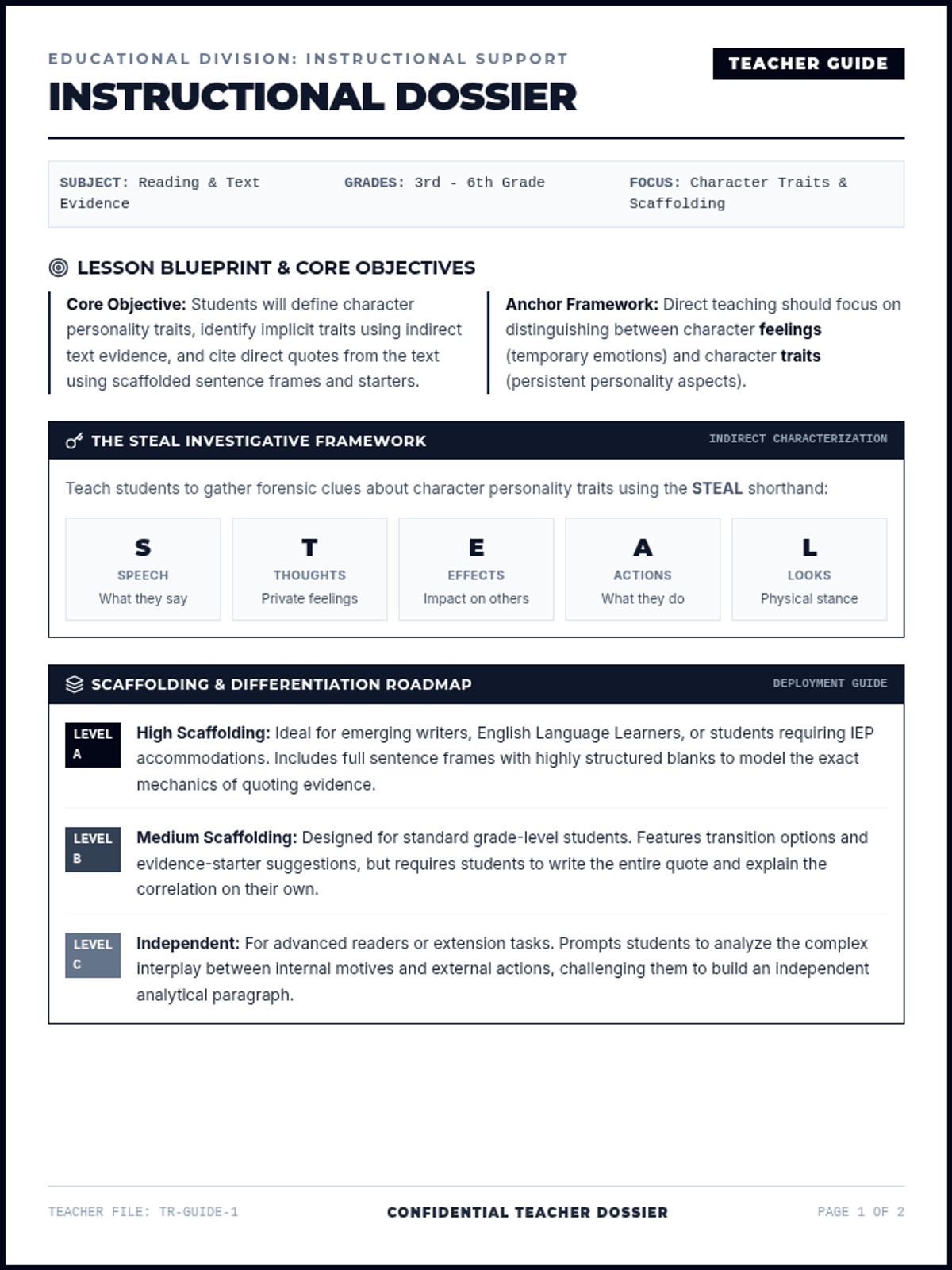
A comprehensive lesson and set of scaffolded graphic organizers designed to help students analyze character traits and master citing text evidence. Includes high, medium, and low levels of scaffolding to differentiate instruction.
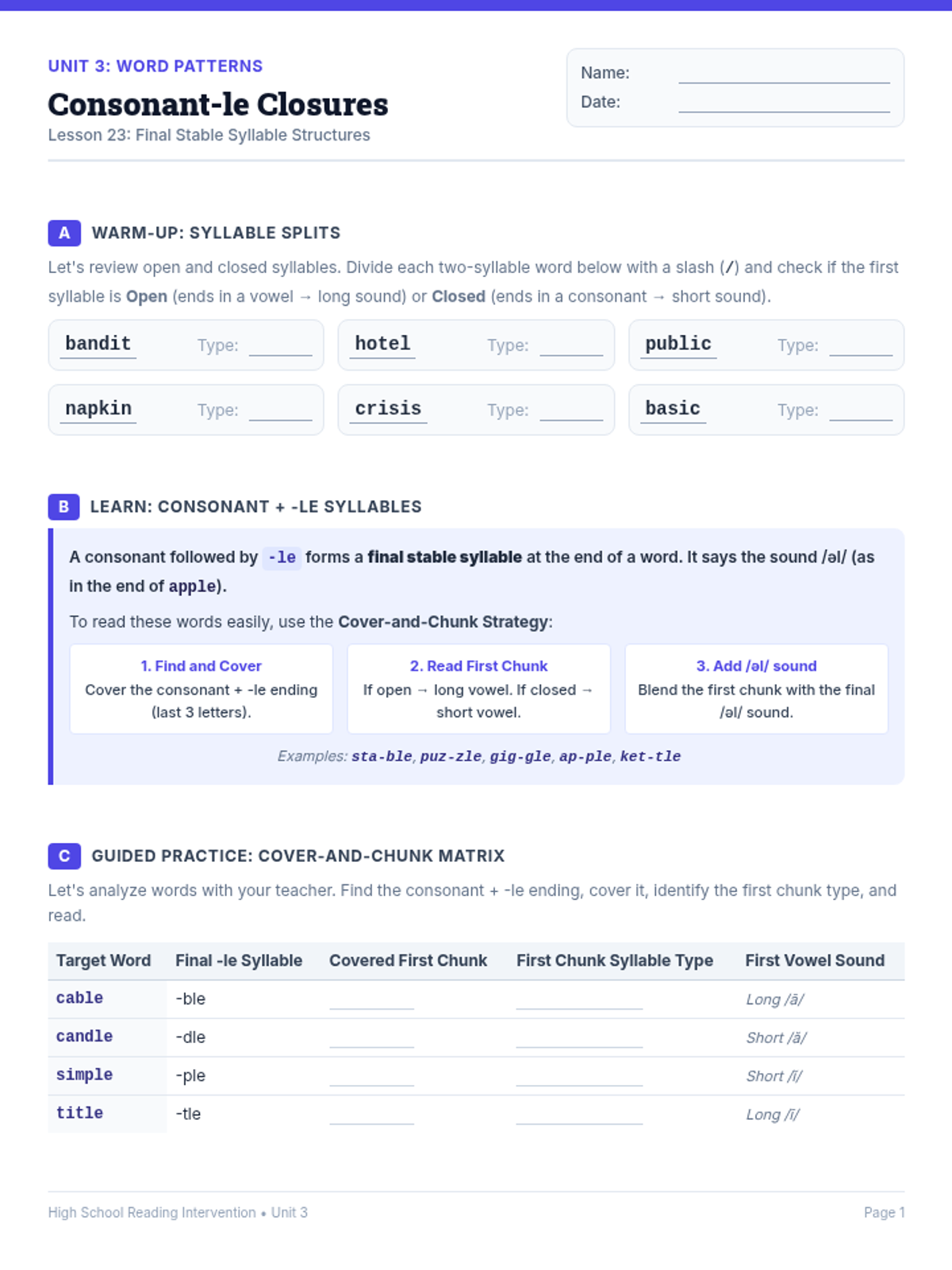
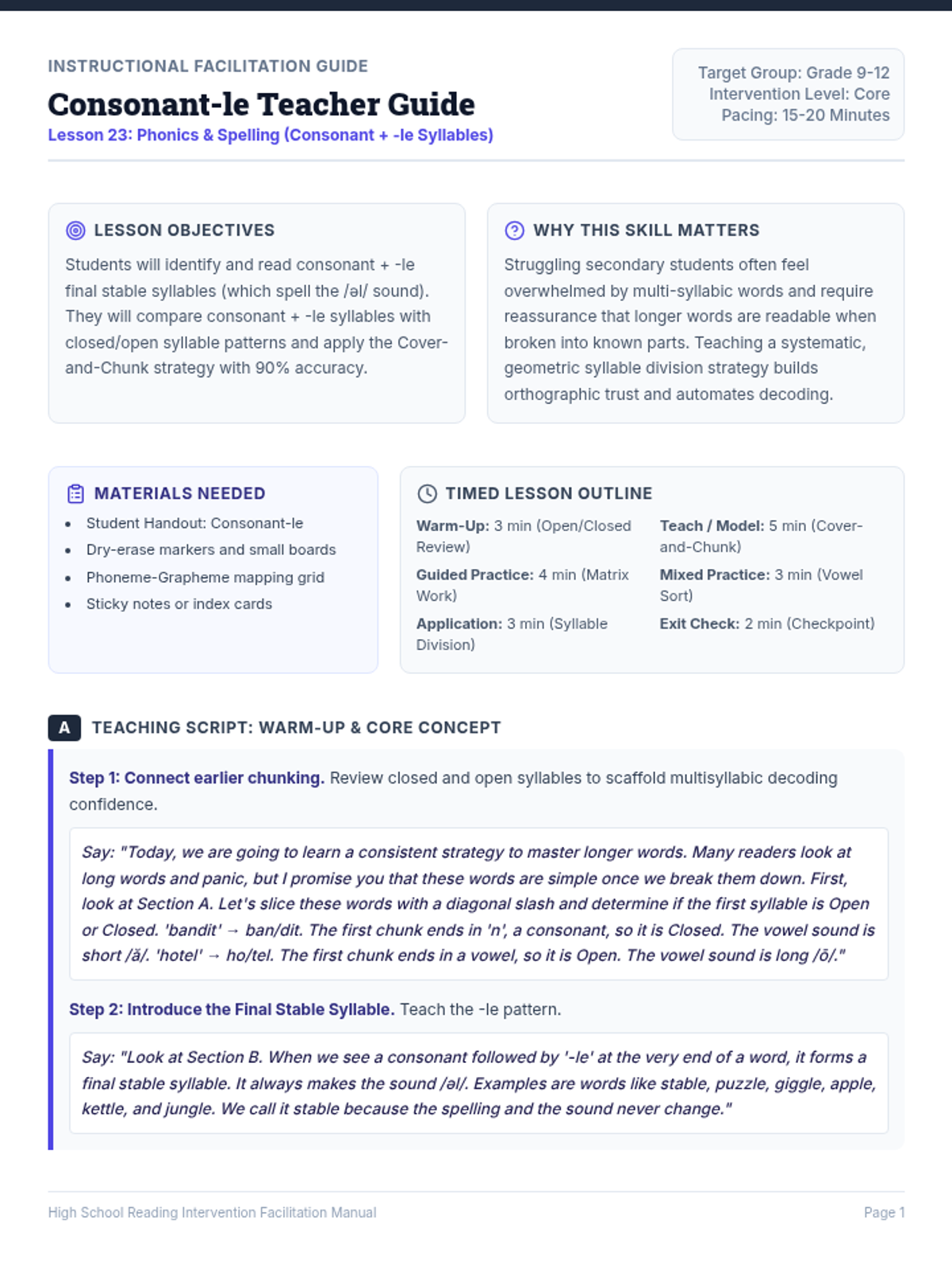
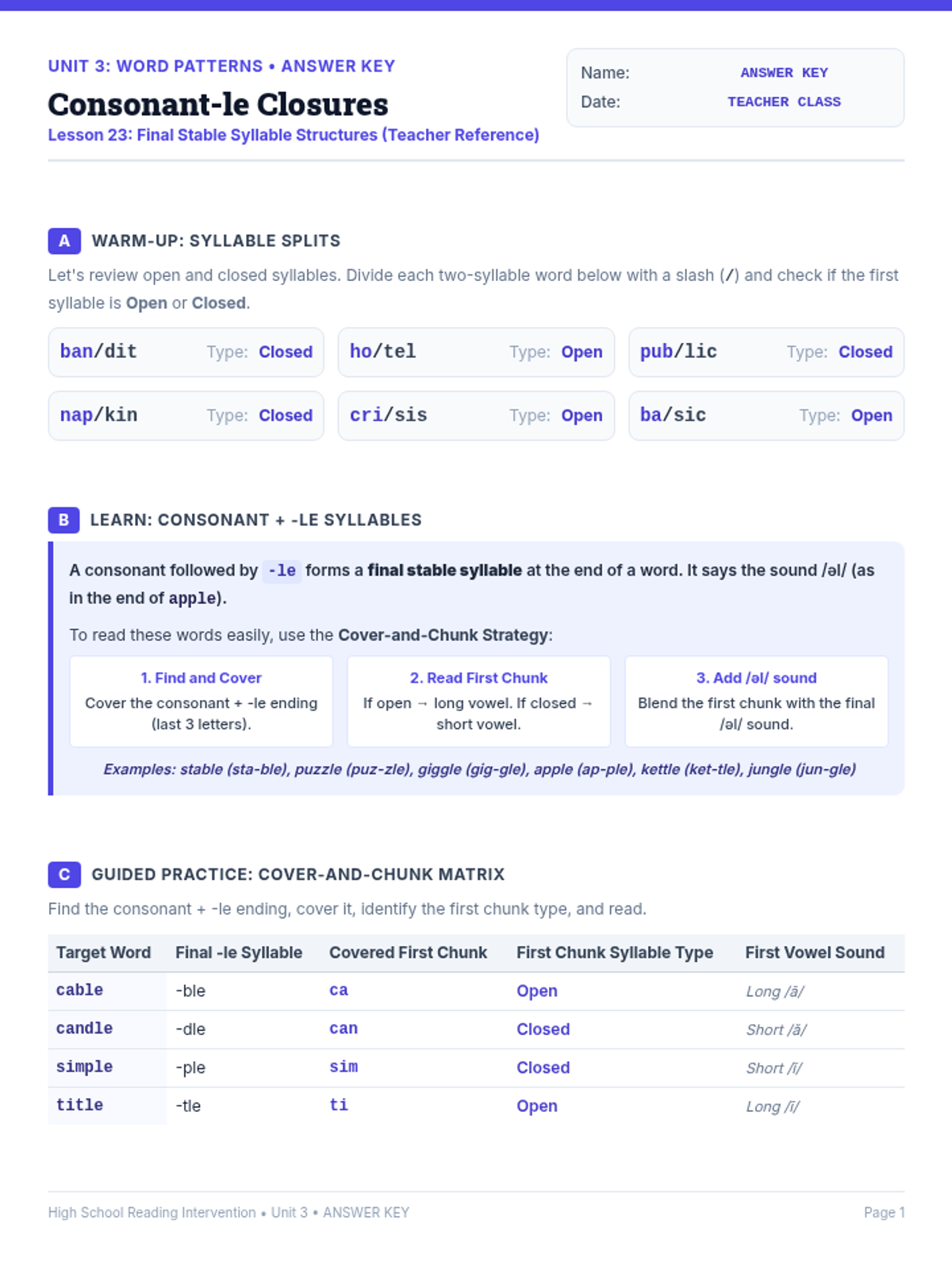
Introduces the final stable syllable consonant + -le, teaching a consistent cover-and-chunk strategy while spiraling open and closed syllable prerequisites.
An intensive review and comparative lesson integrating all four major short-vowel closing patterns (FLOSS, -ck, -tch, -dge) to cement master-level orthographic decoding and spelling logic.
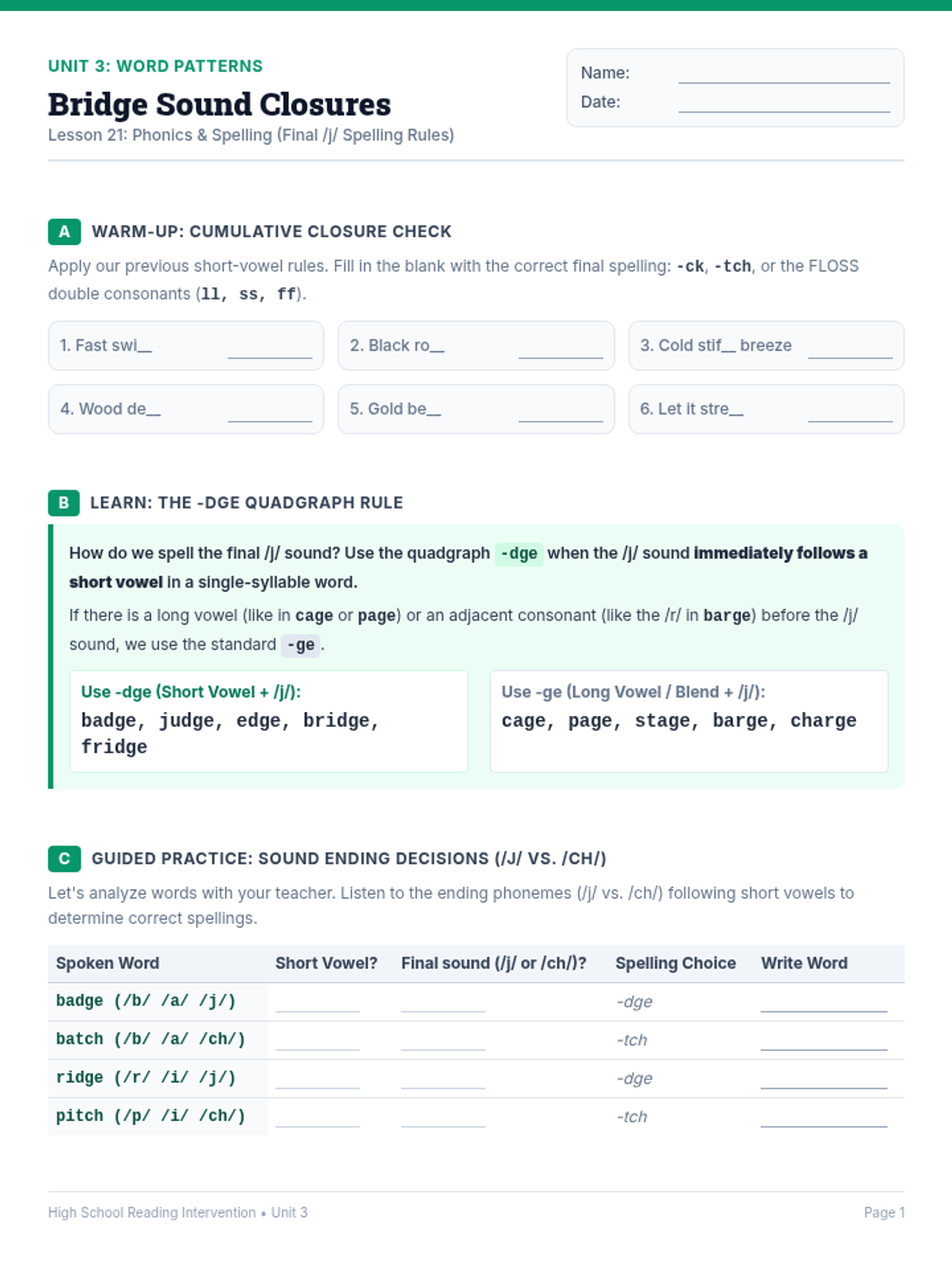
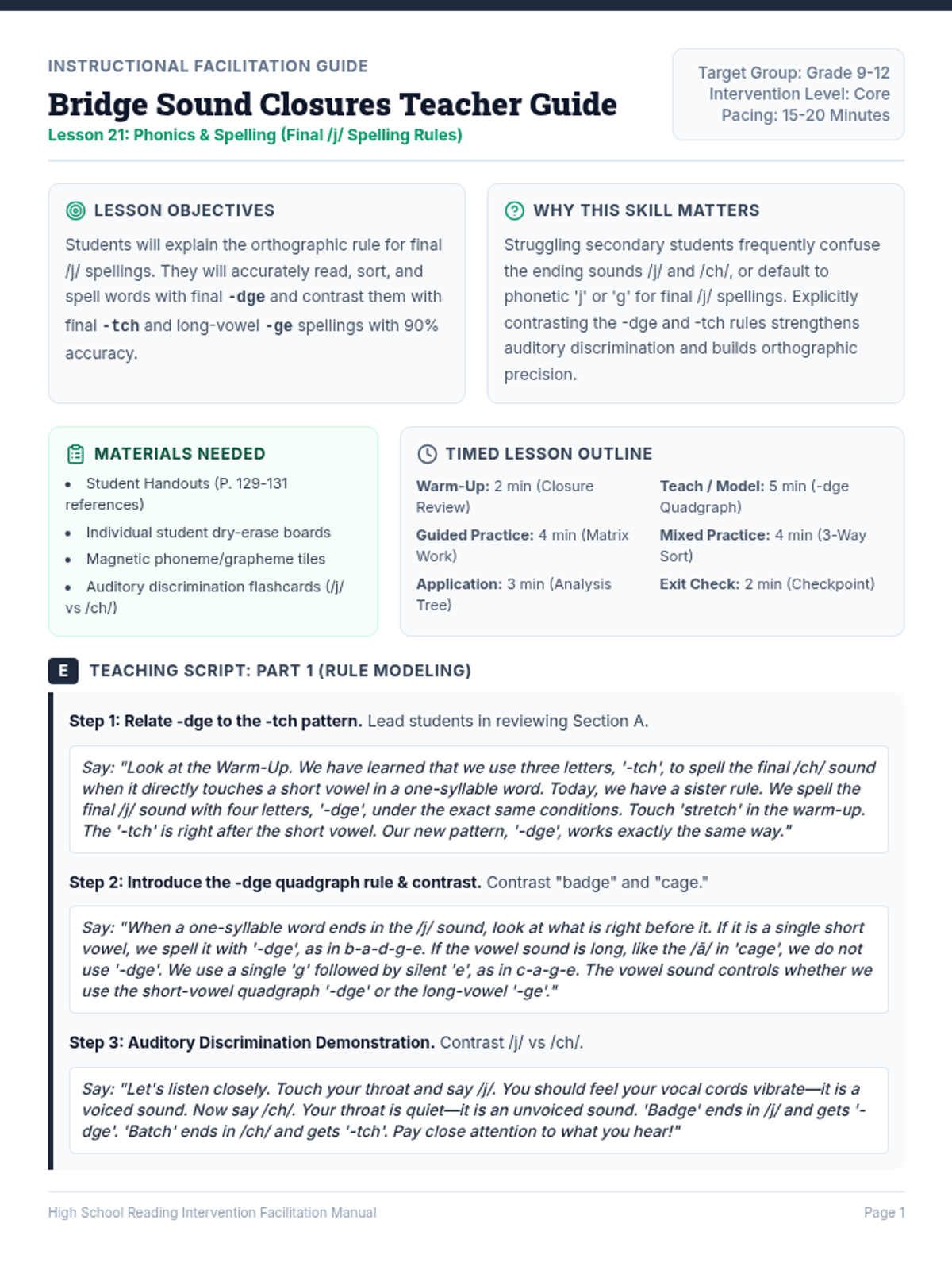
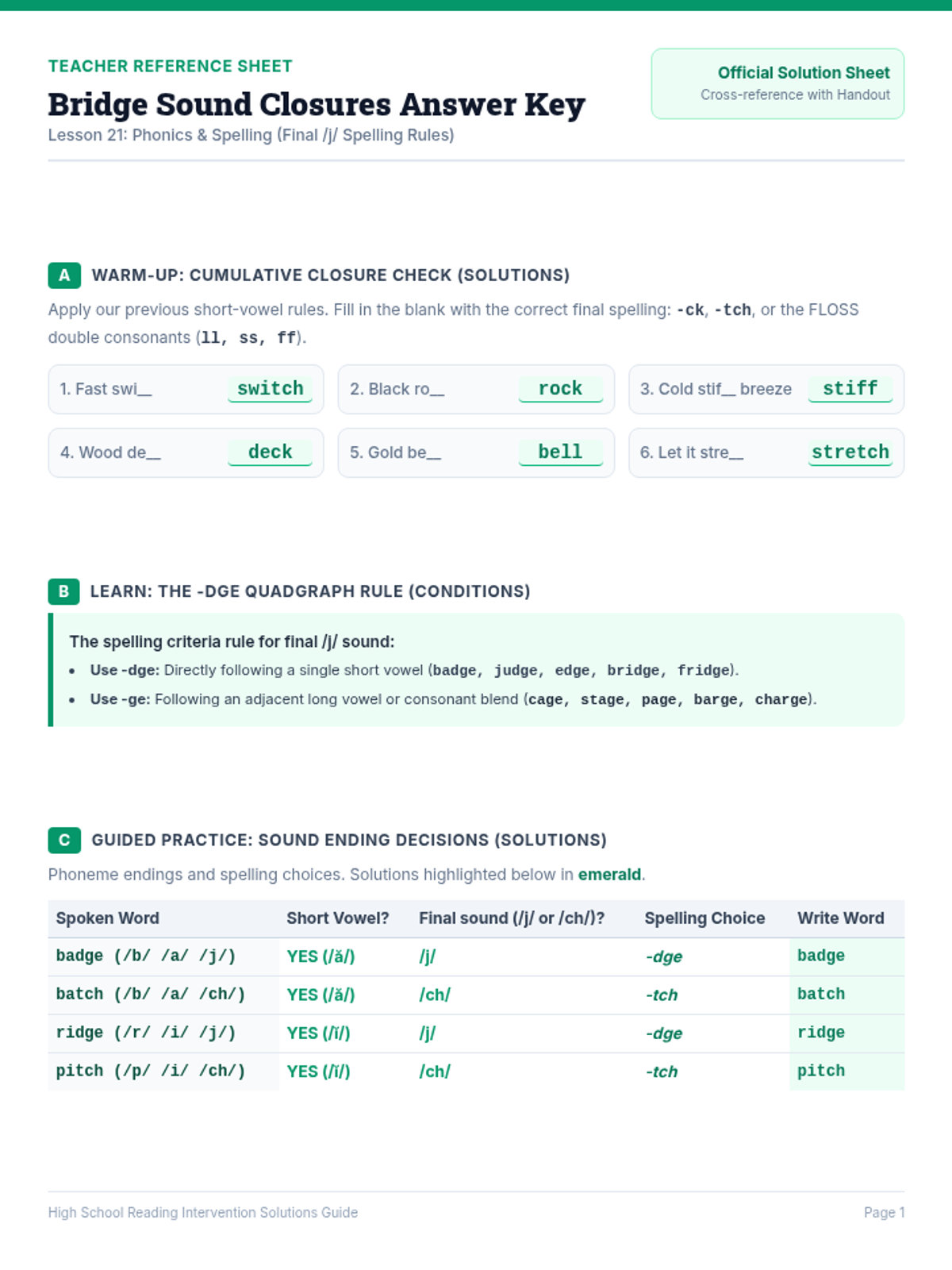
Introduces the spelling pattern -dge for the final /j/ sound following short vowels, contrasting it with the -tch trigraph to strengthen phoneme-level auditory discrimination.
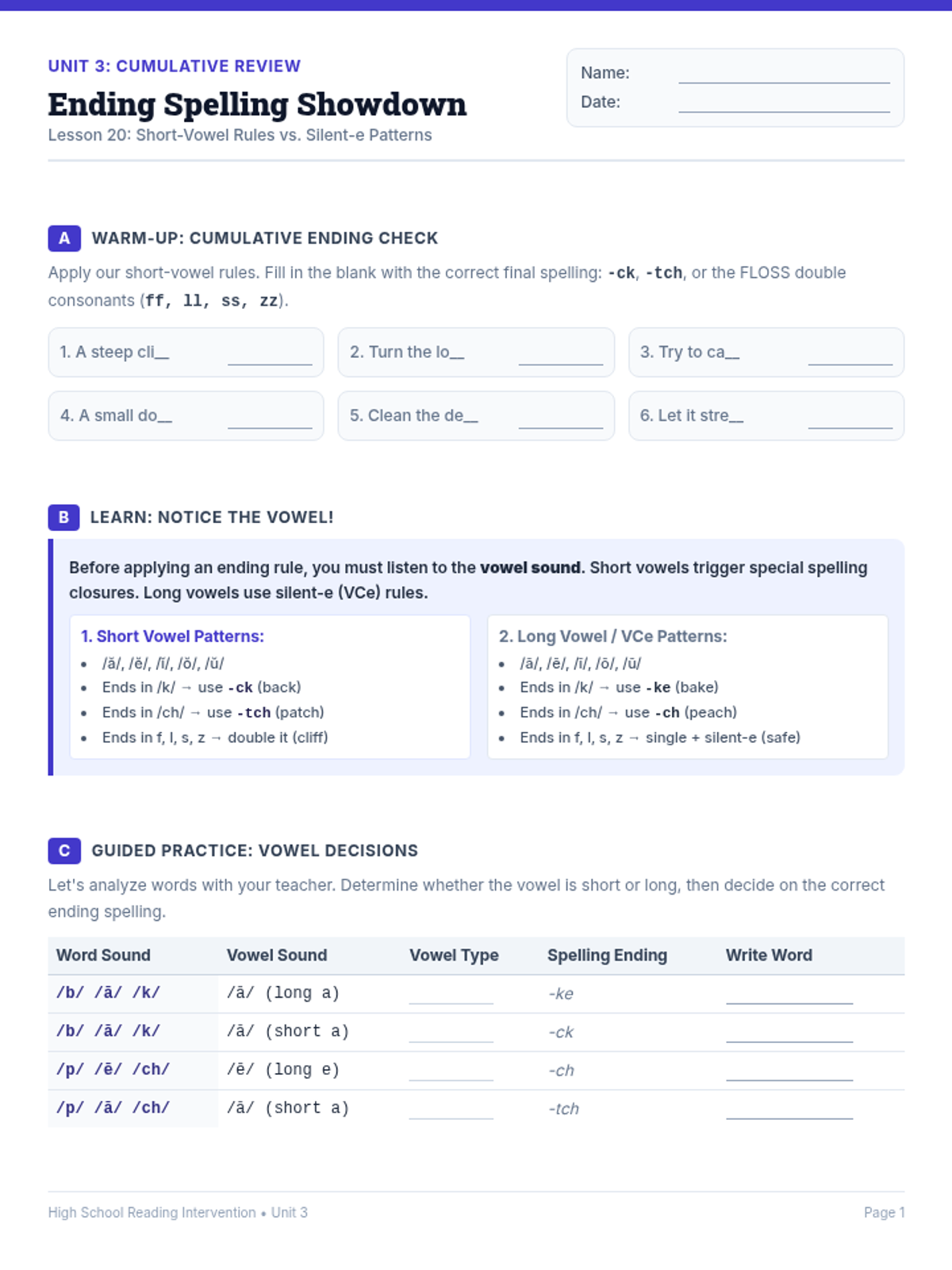
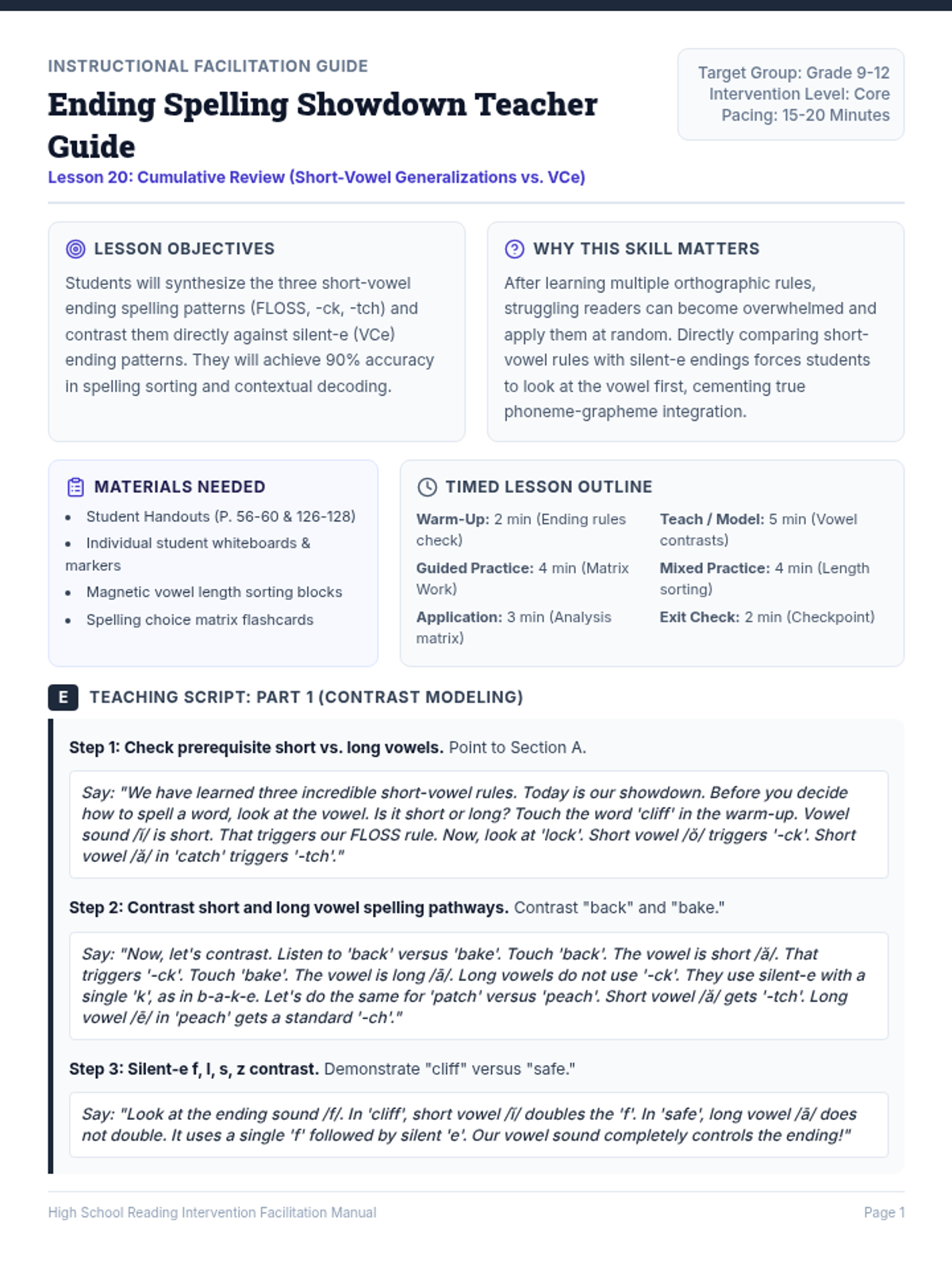
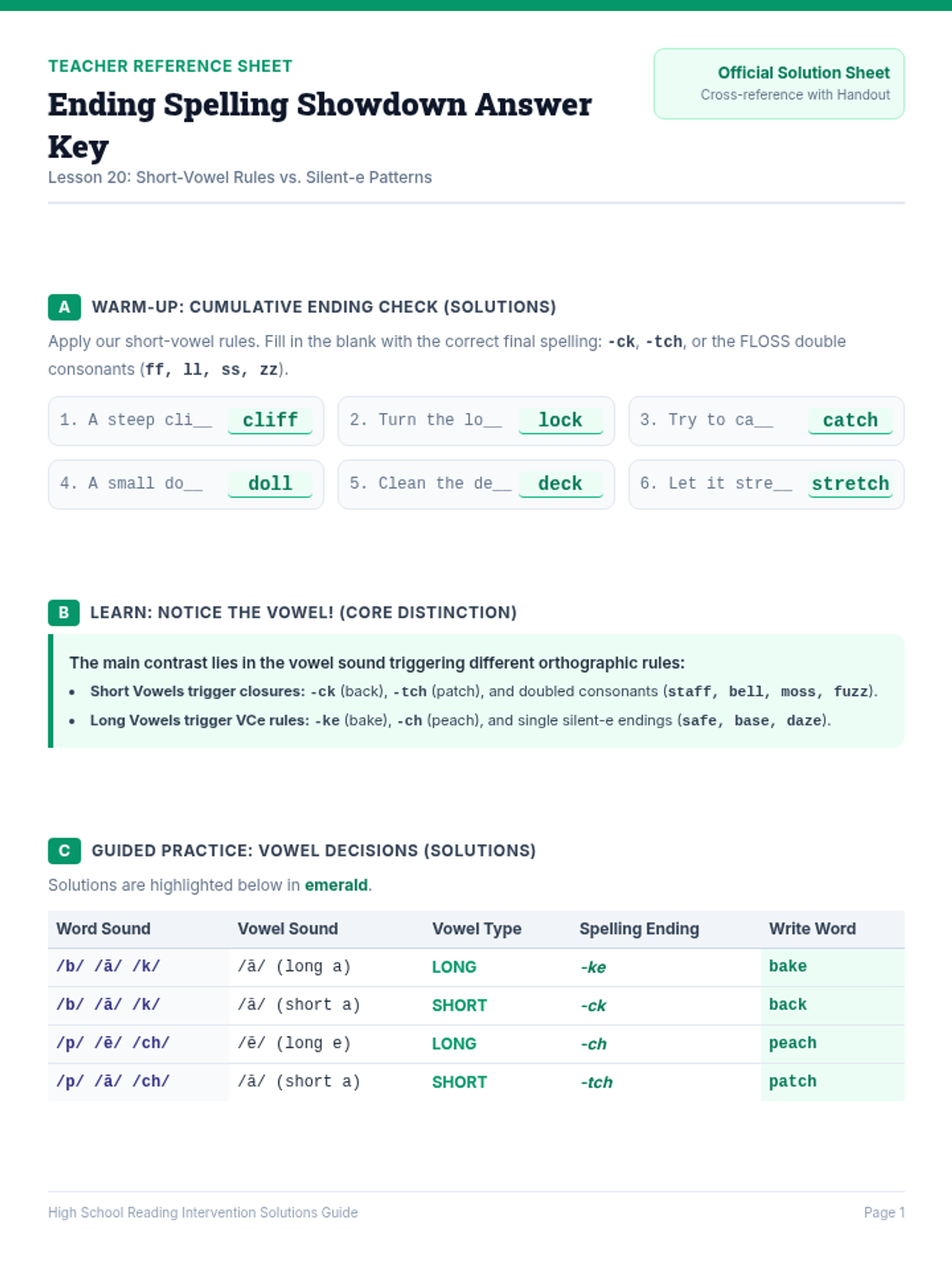
A cumulative practice and review lesson contrasting the short-vowel spelling rules (FLOSS, -ck, -tch) with VCe silent-e patterns to build master-level orthographic decoding and vowel recognition.
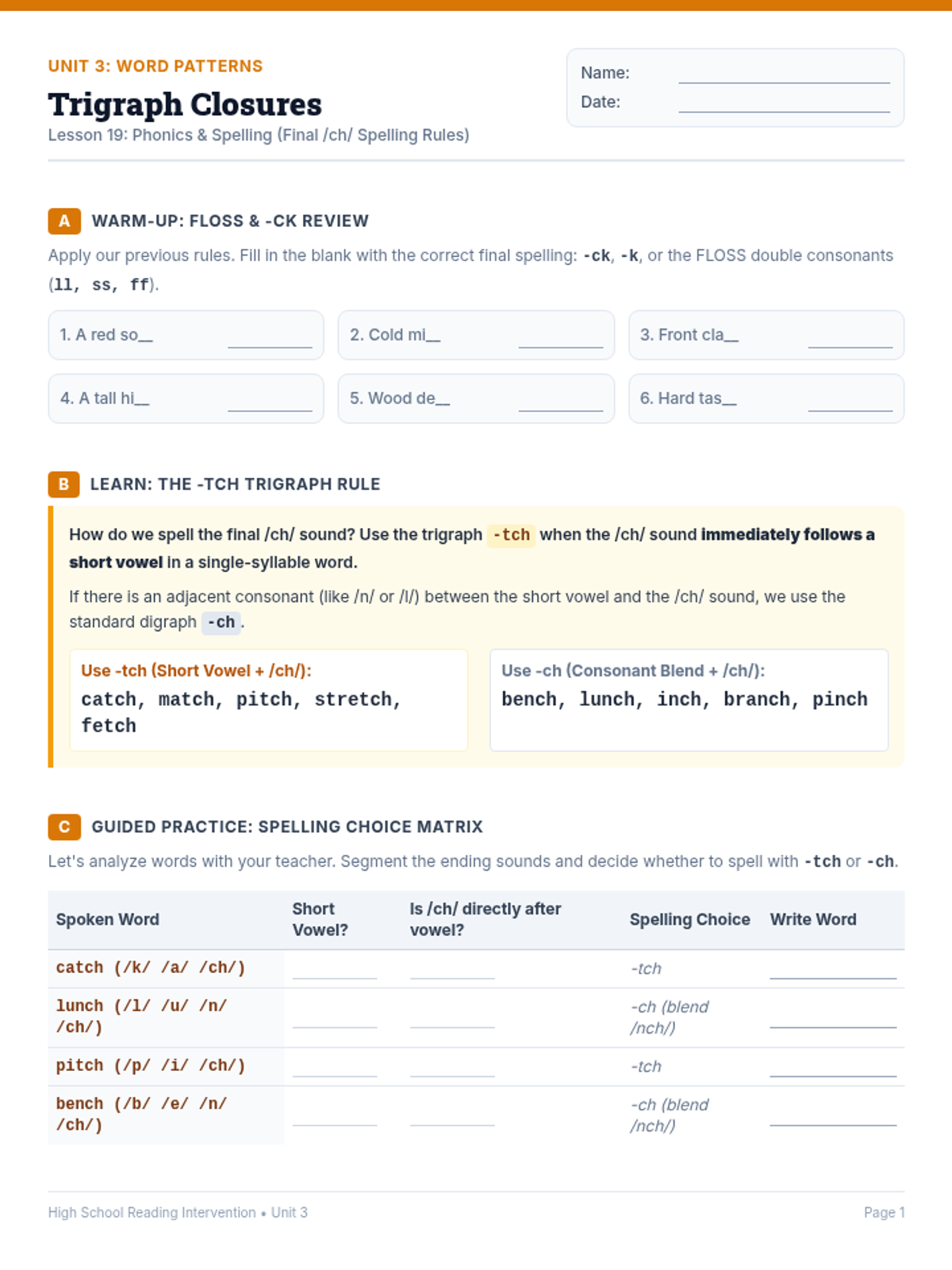
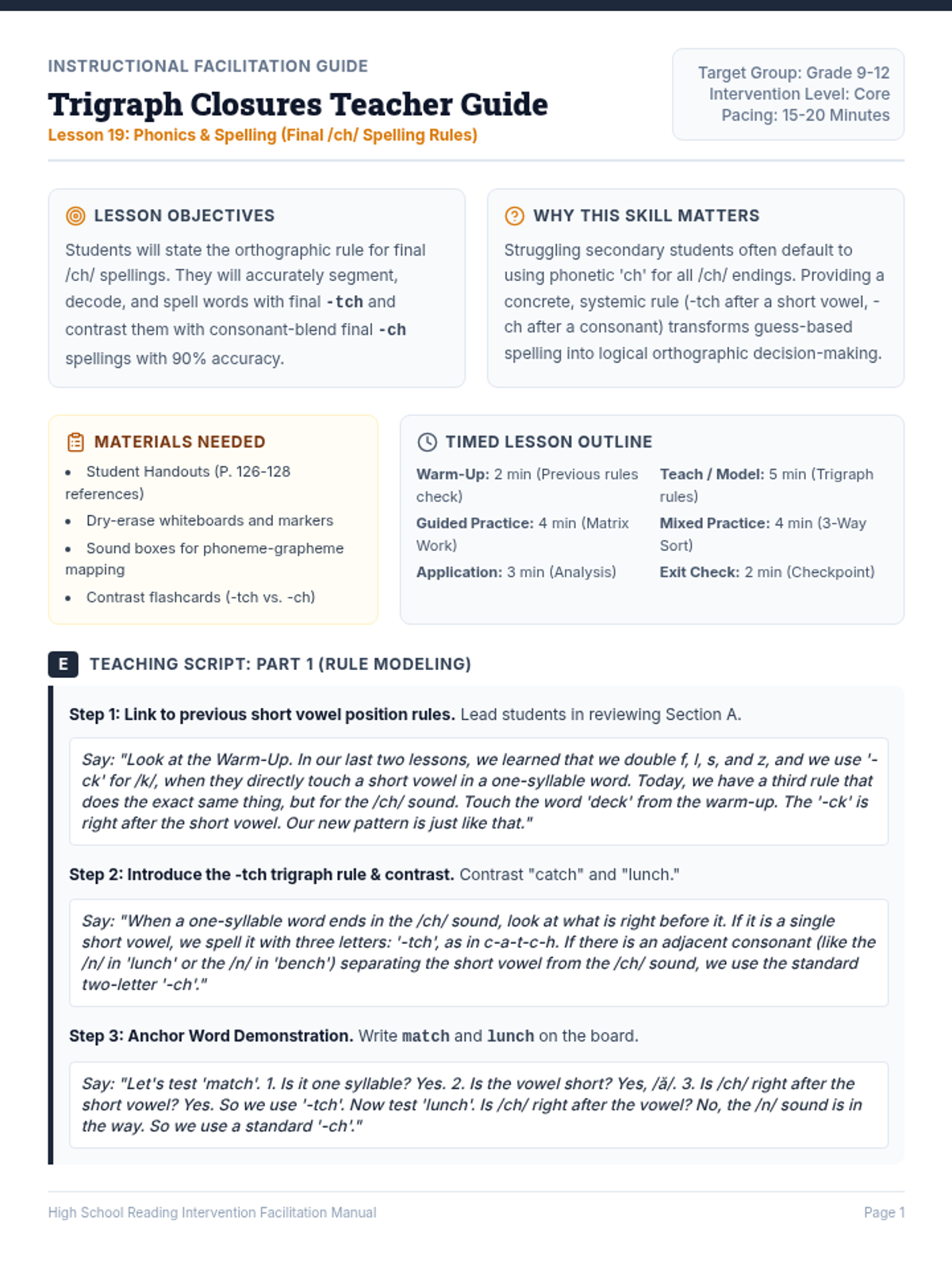
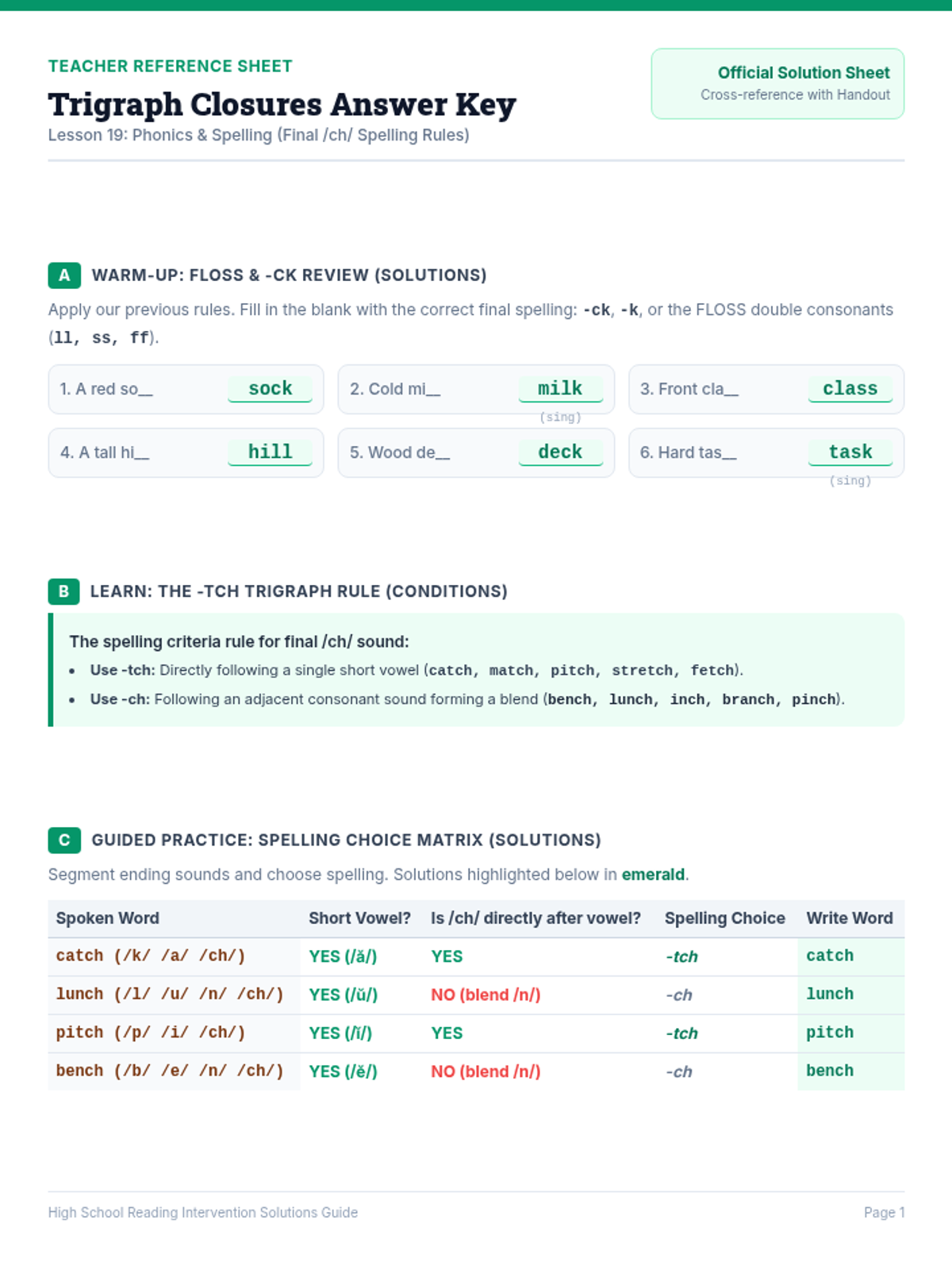
Introduces the spelling pattern -tch for the final /ch/ sound following short vowels, comparing and contrasting it with the -ck spelling rule for final /k/ sounds to build orthographic precision.
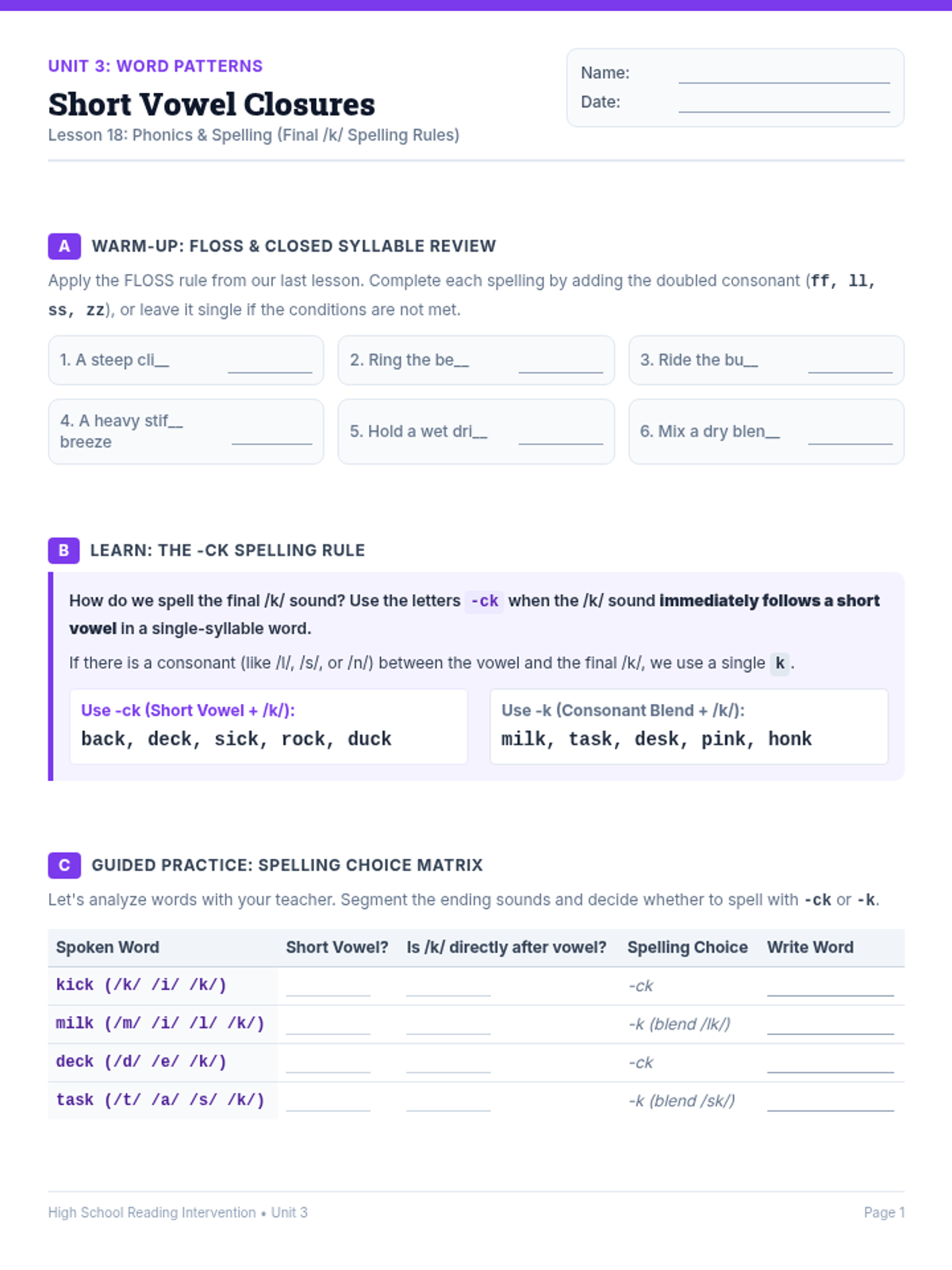
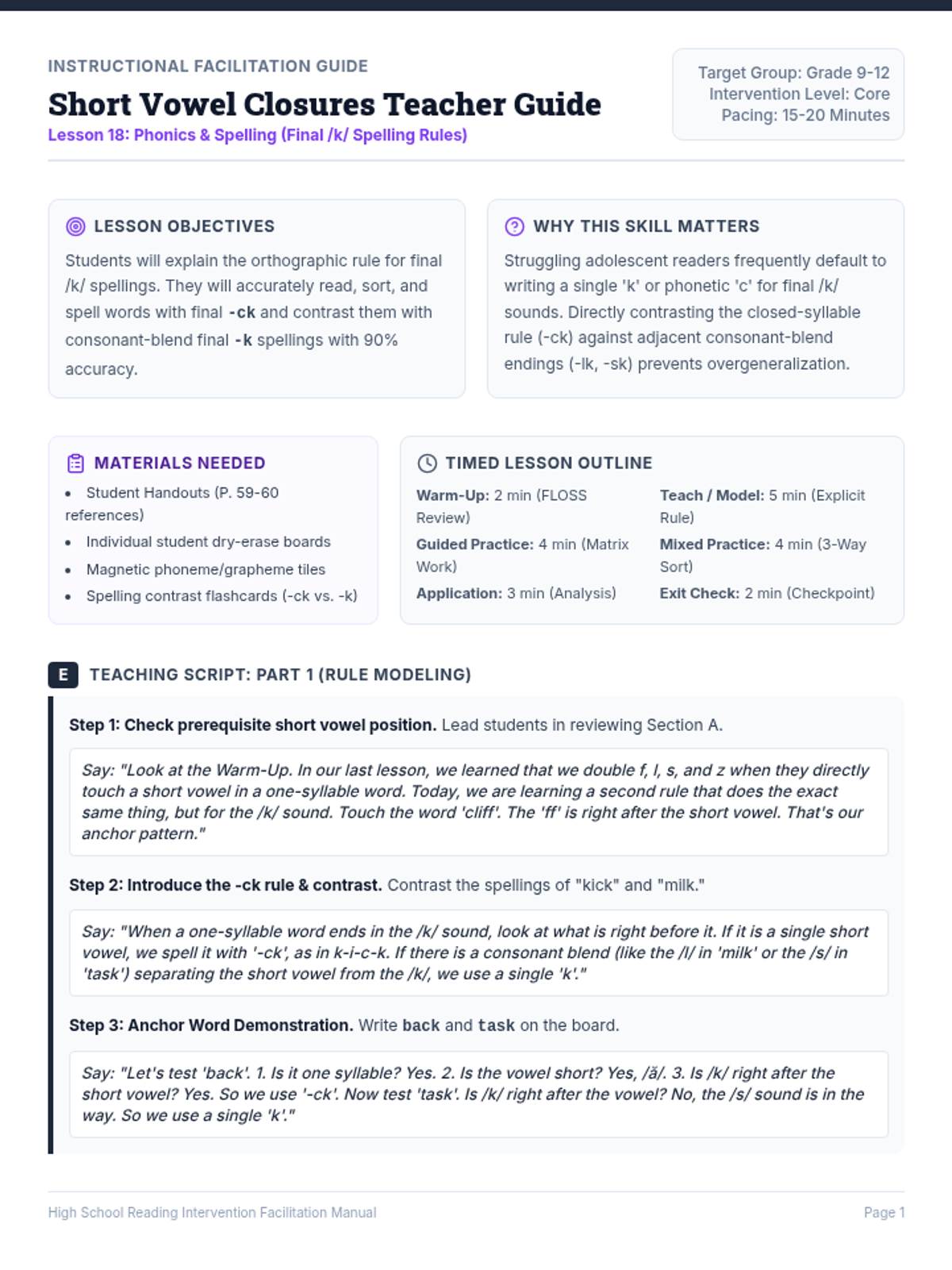
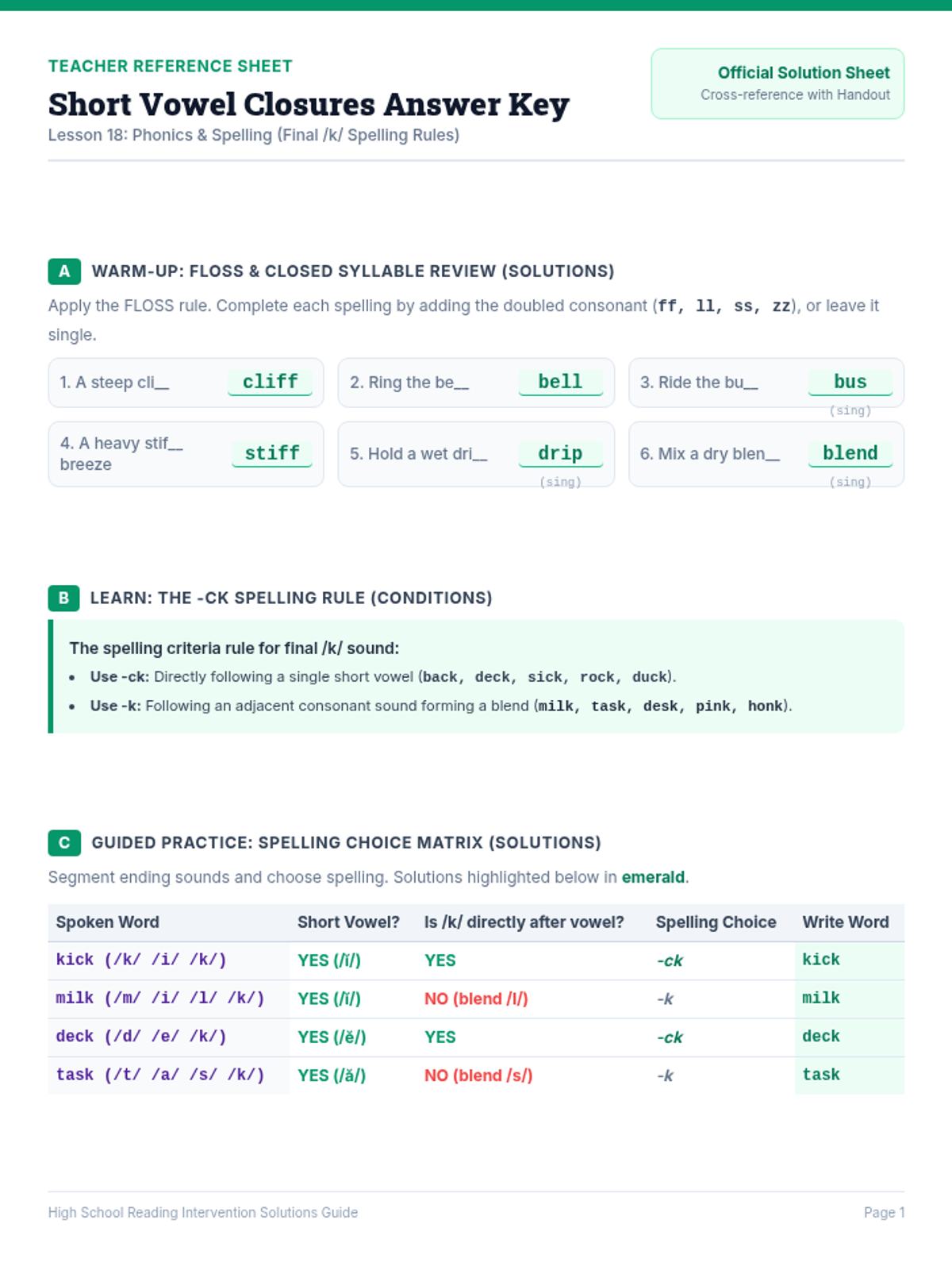
Introduces the spelling pattern -ck for the final /k/ sound following short vowels, contrasting it with the FLOSS rule to build systematic orthographic decision-making.
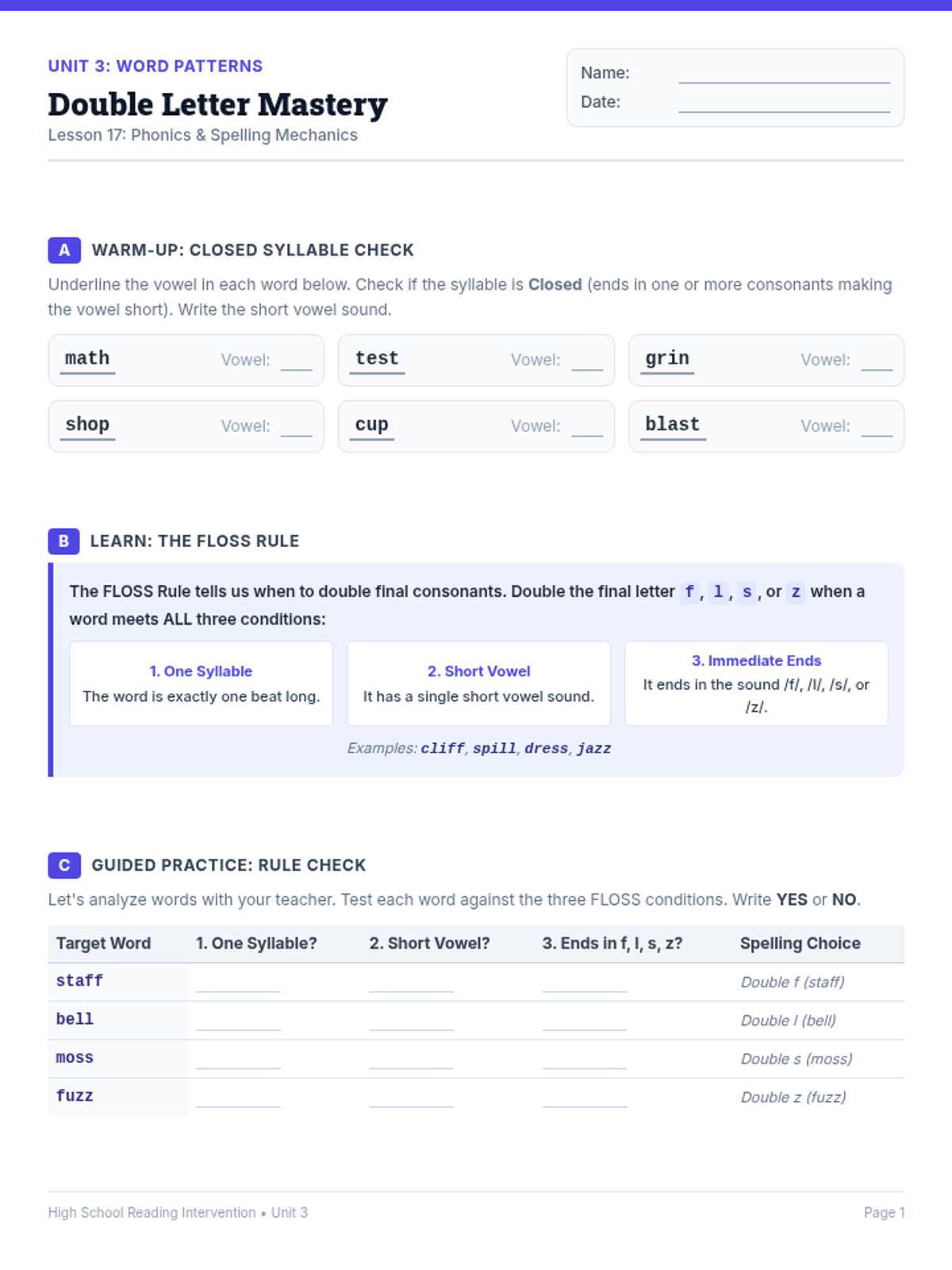
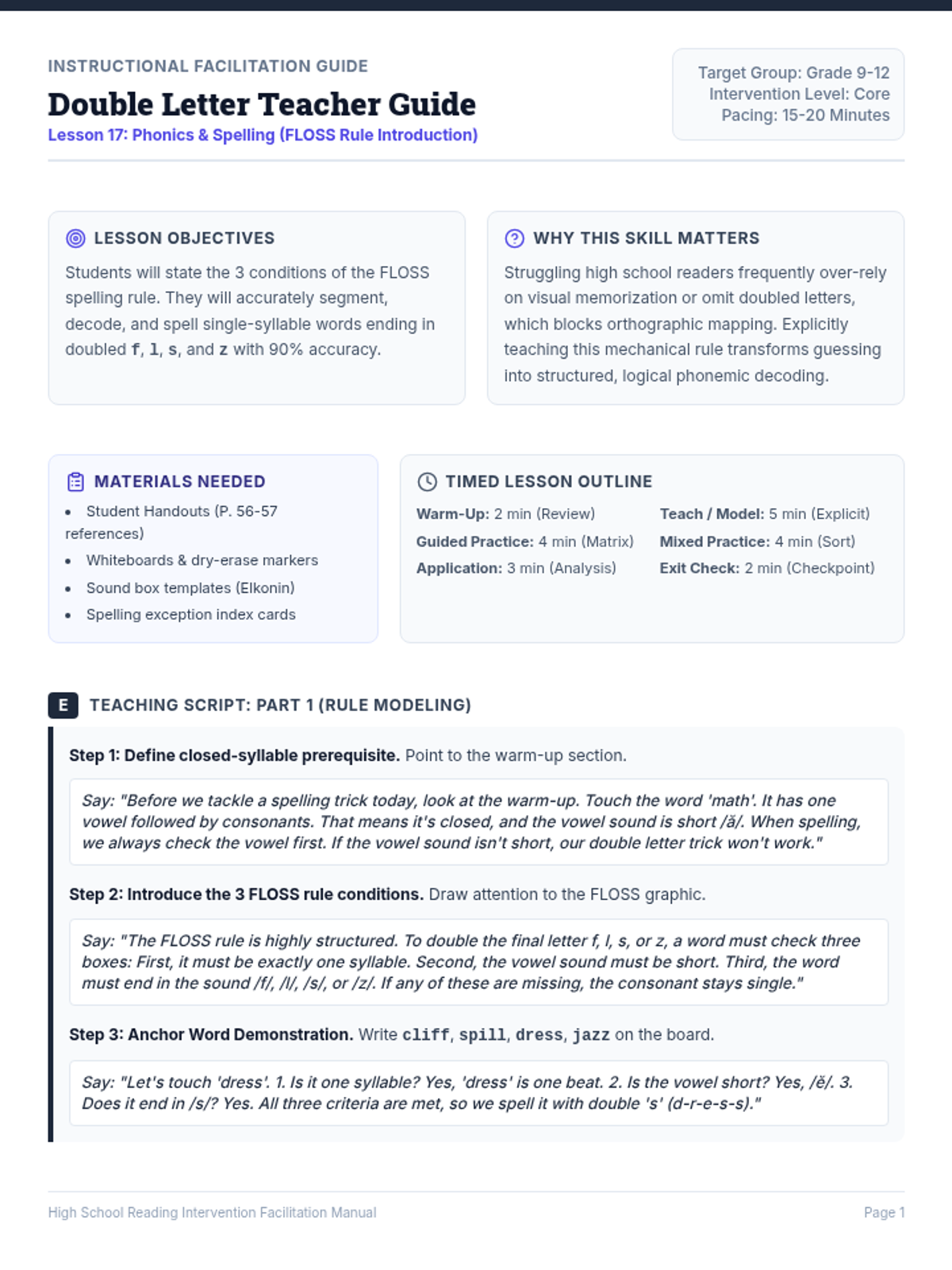
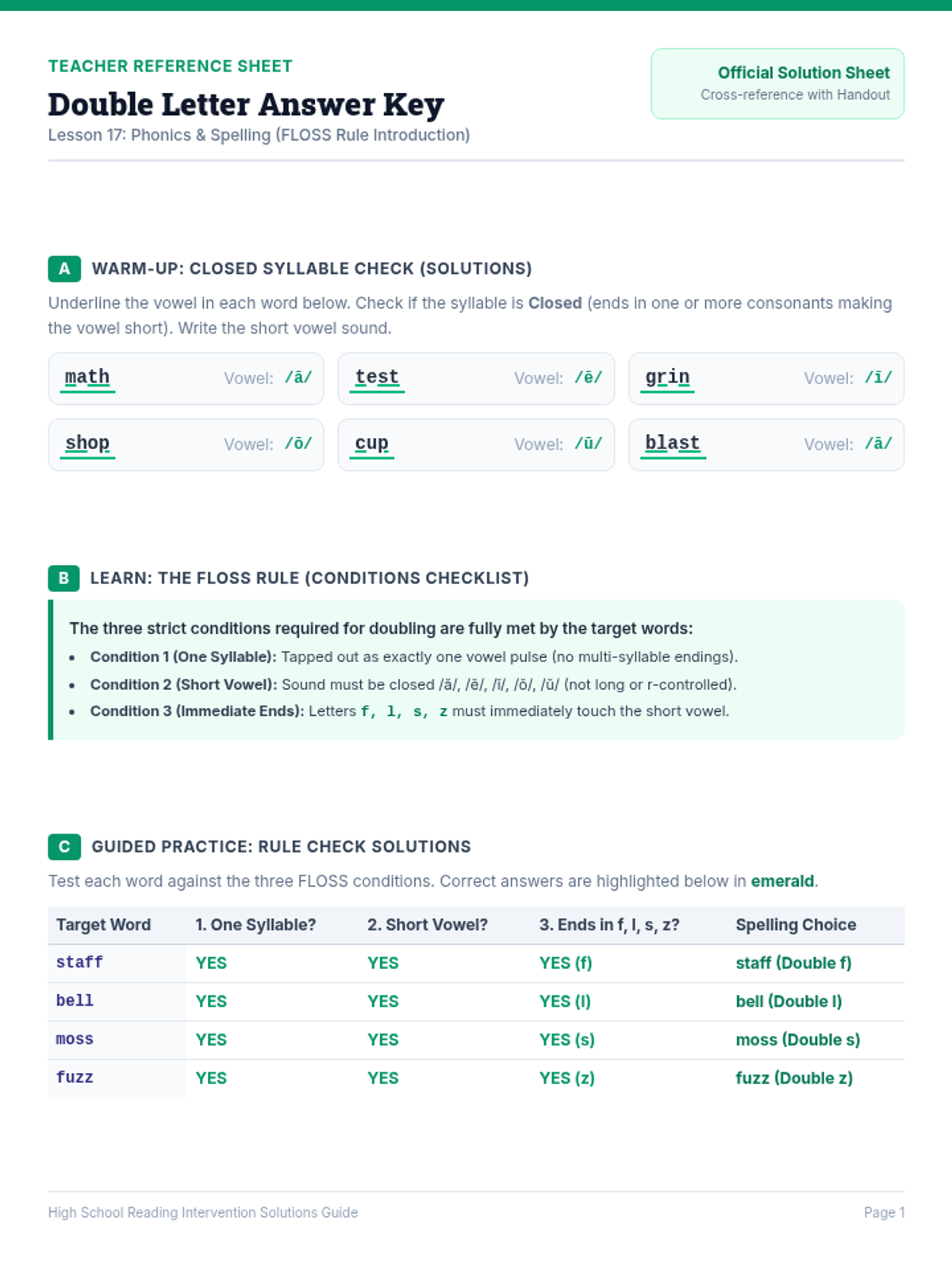
Introduces the FLOSS rule for single-syllable words containing short vowels, emphasizing the conditions under which final f, l, s, and z are doubled, while spiraling closed-syllable patterns.
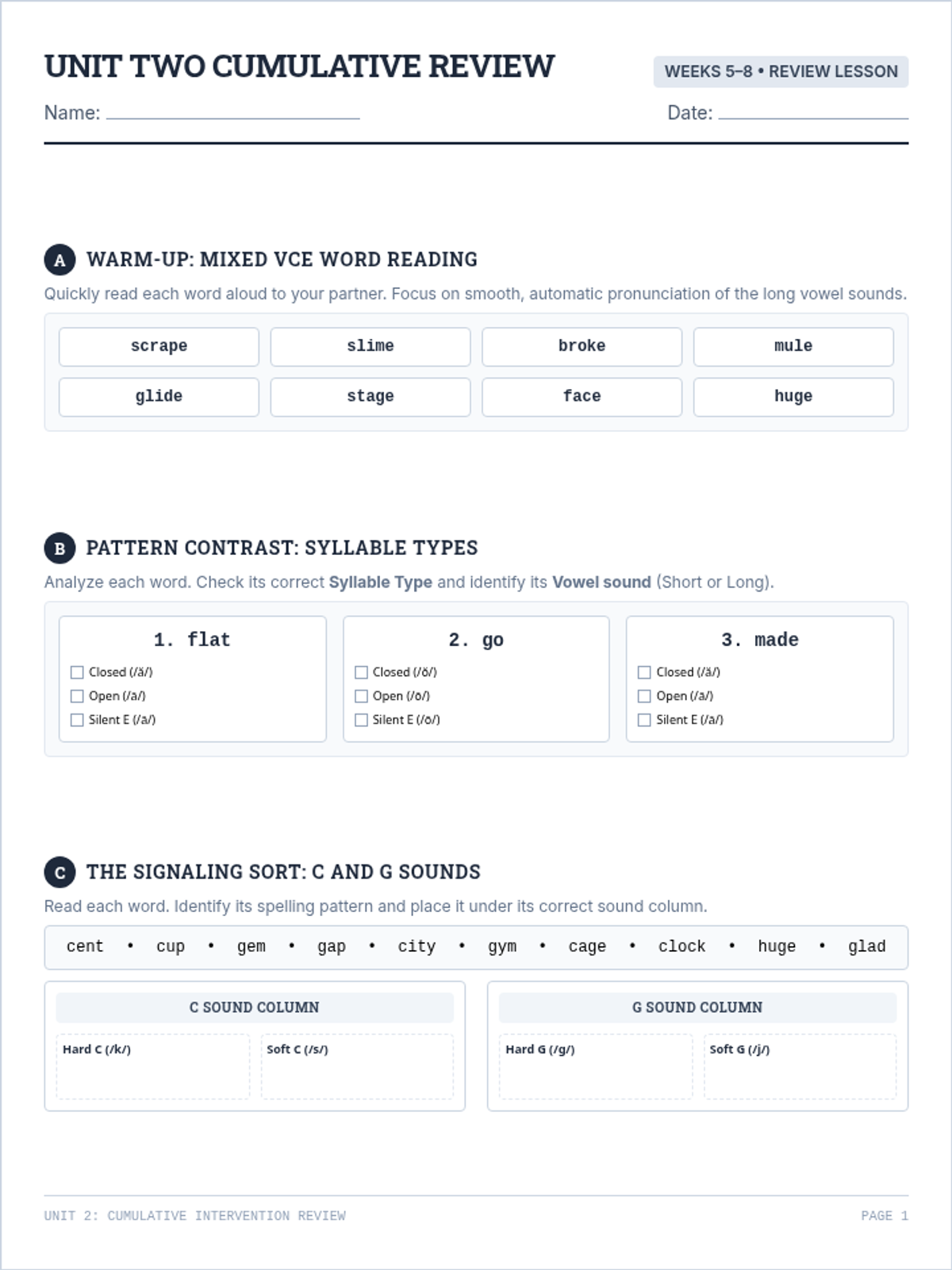
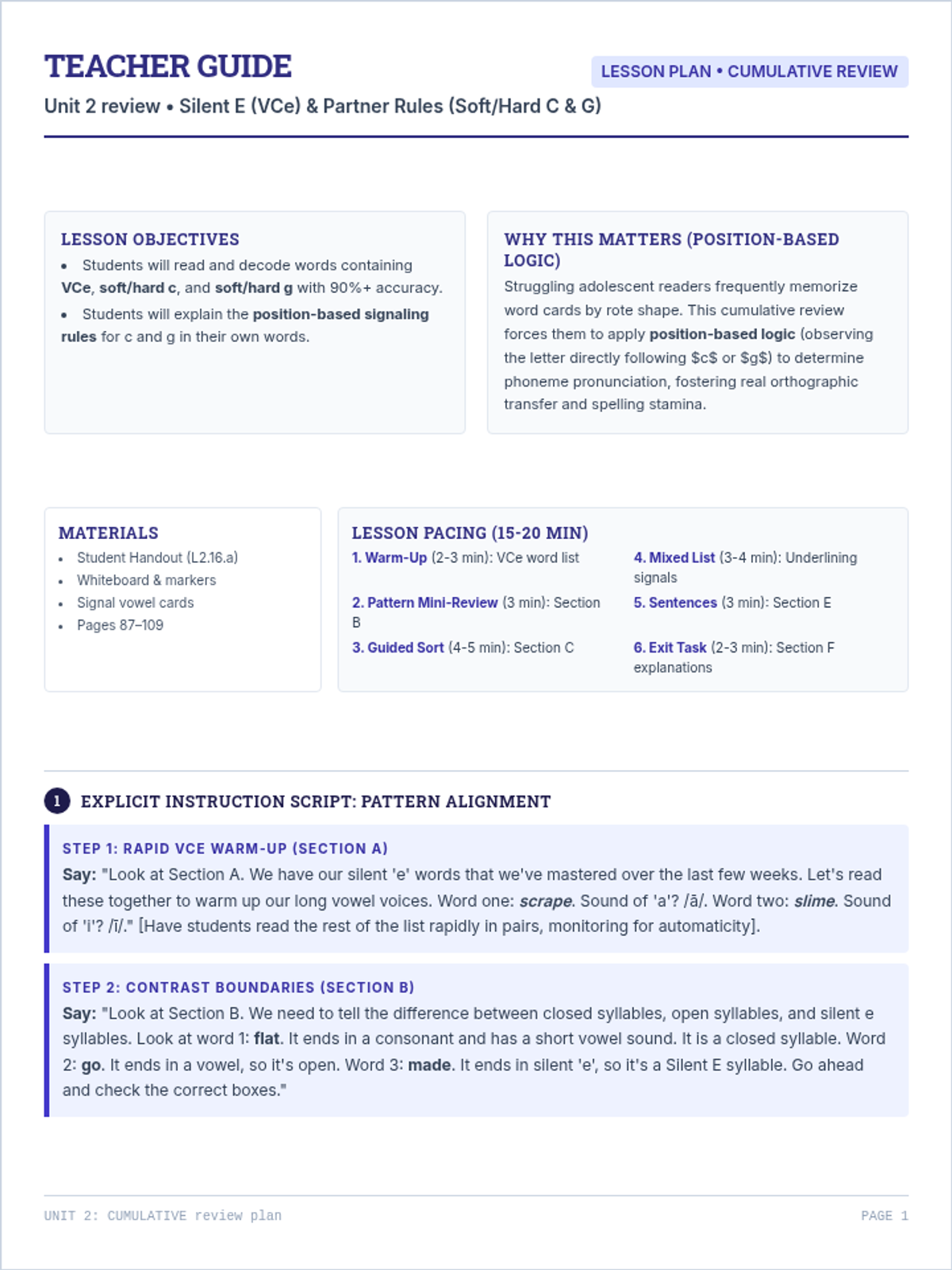
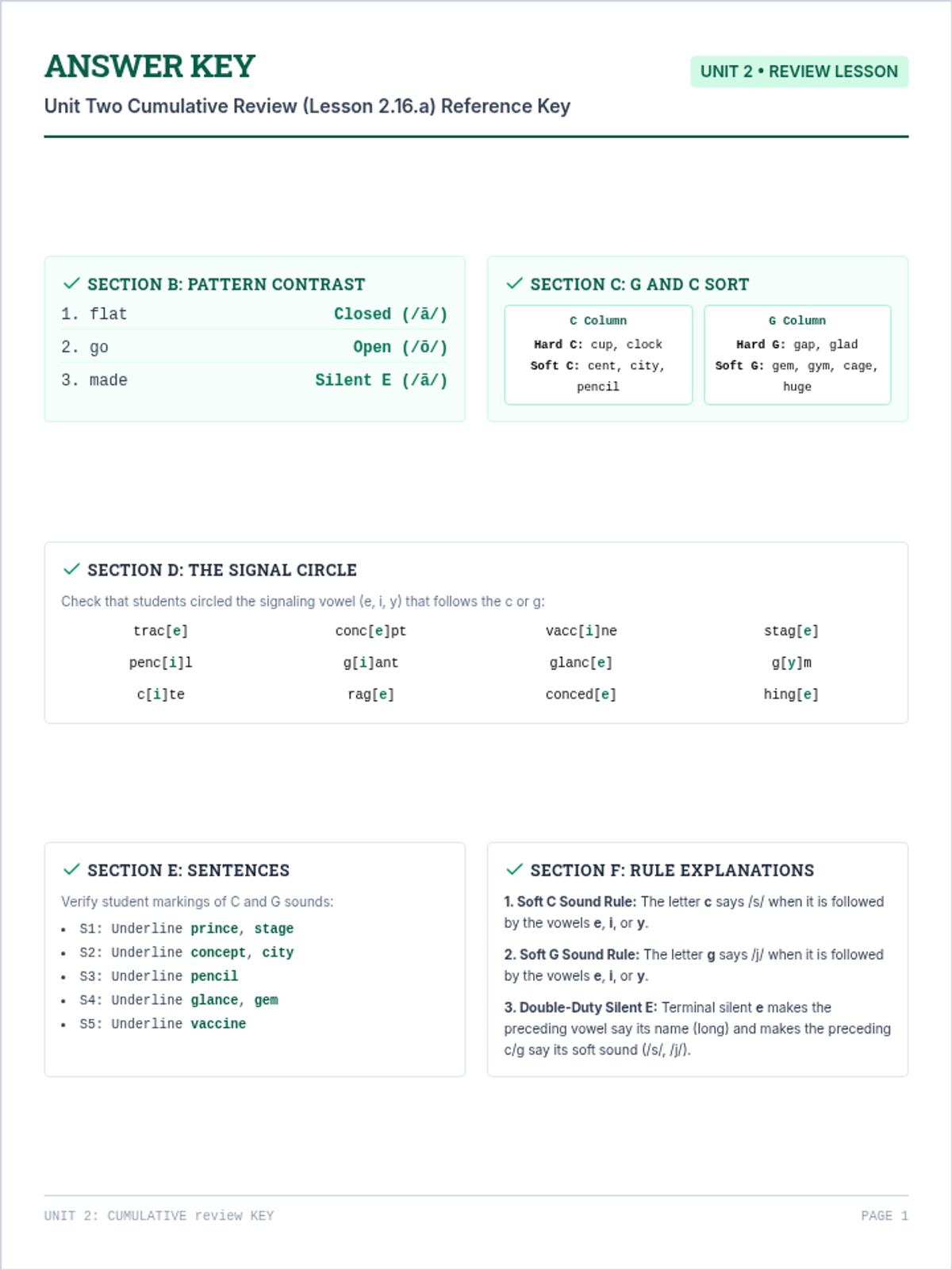
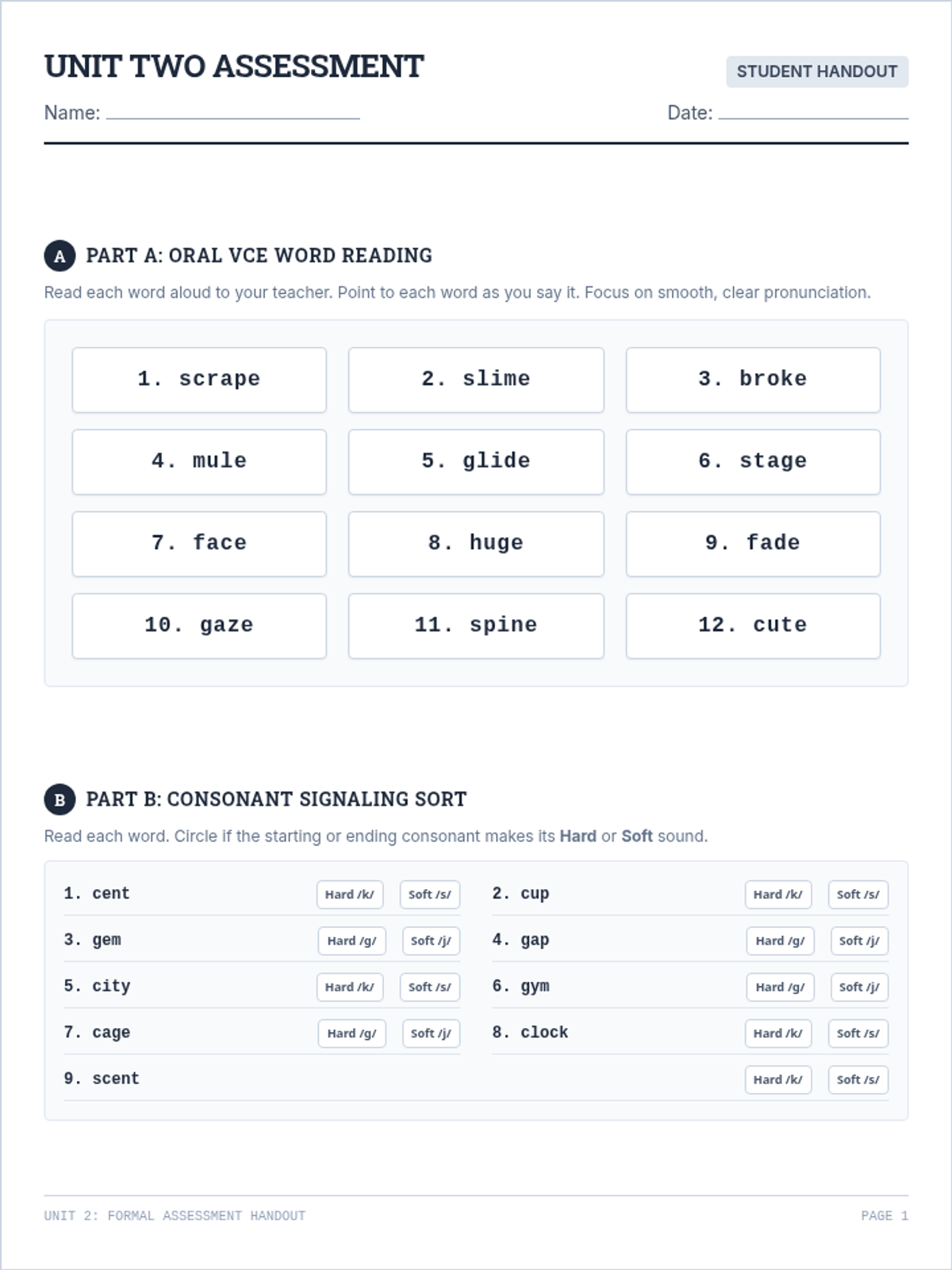
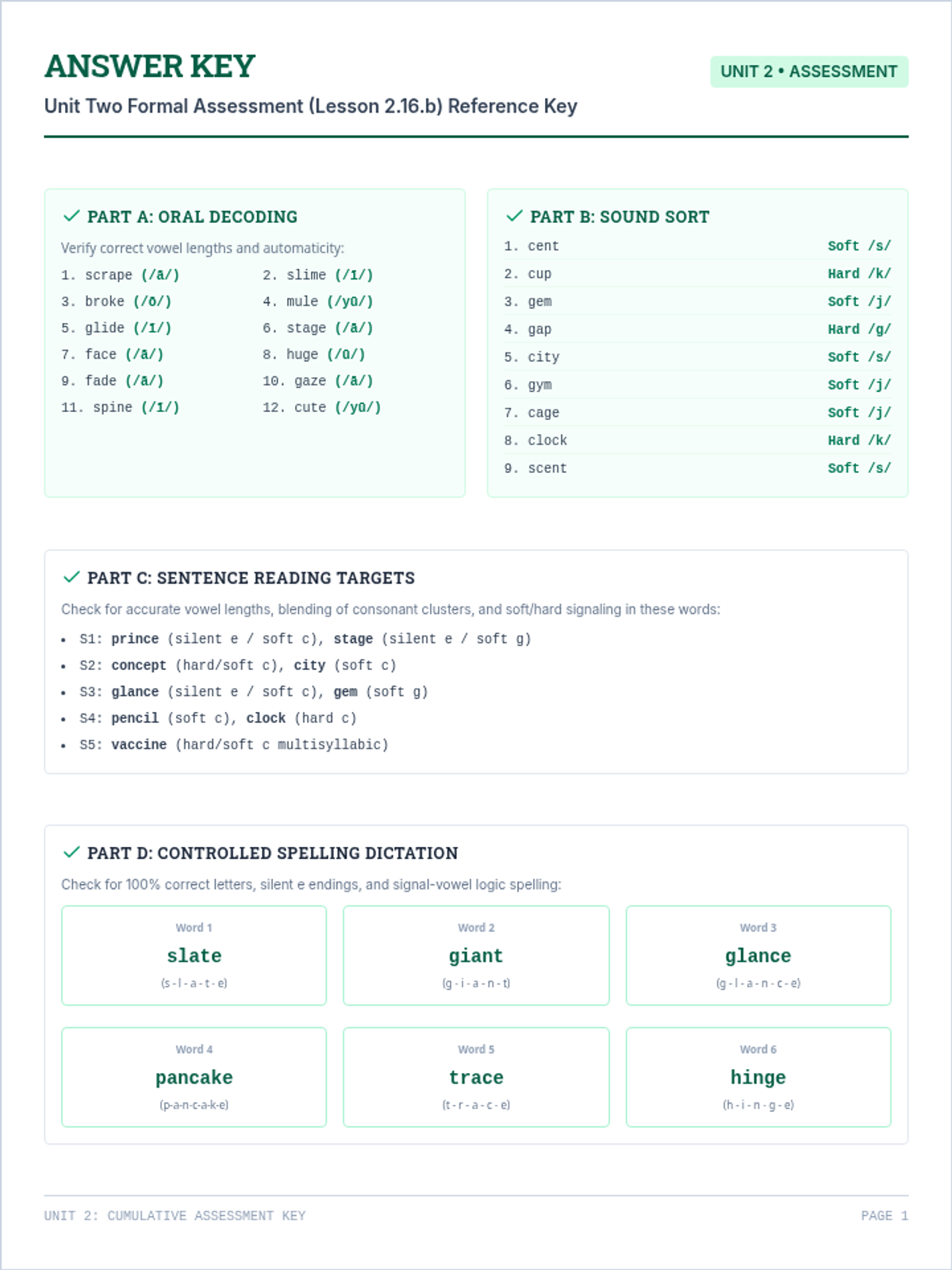
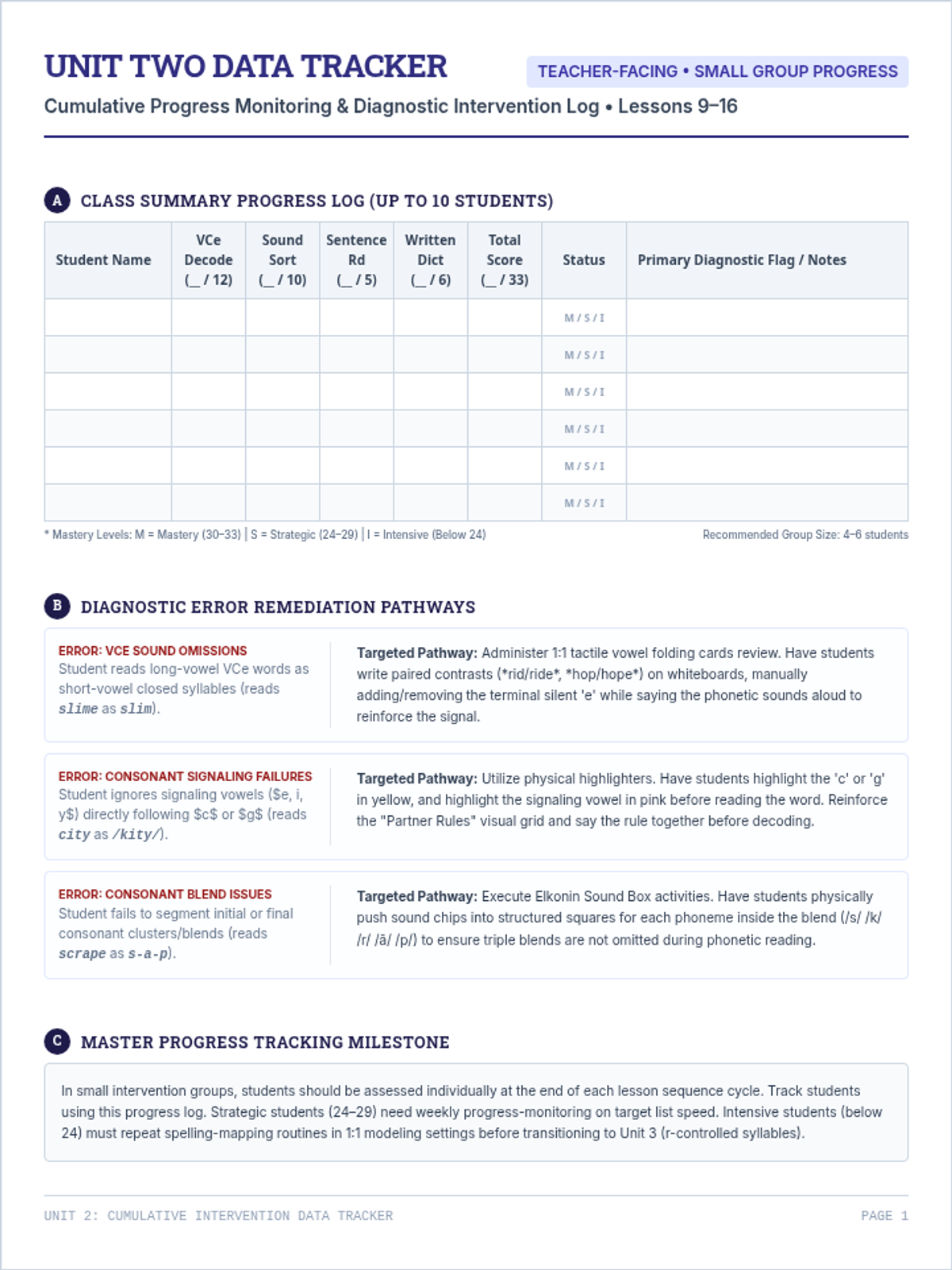
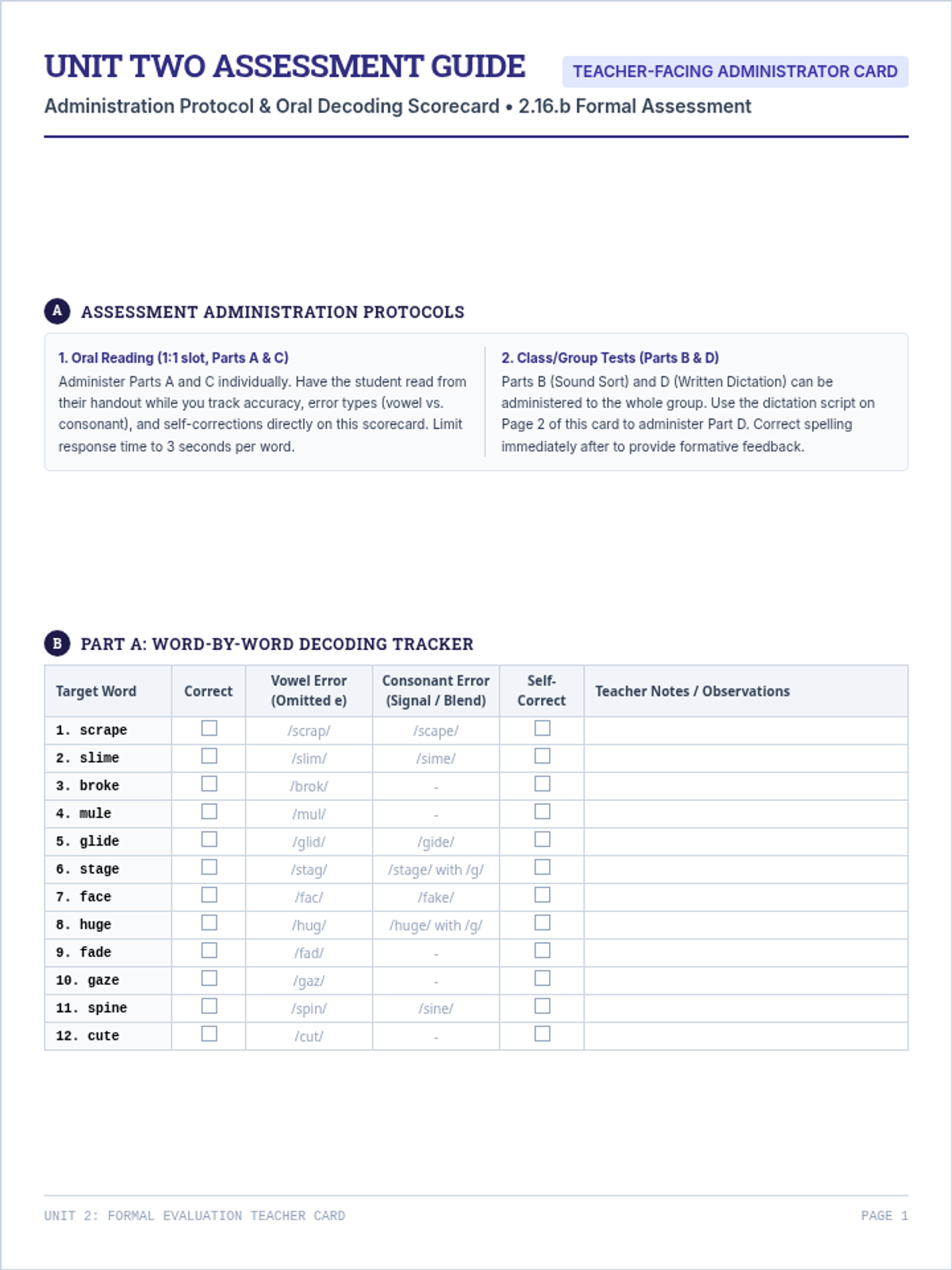
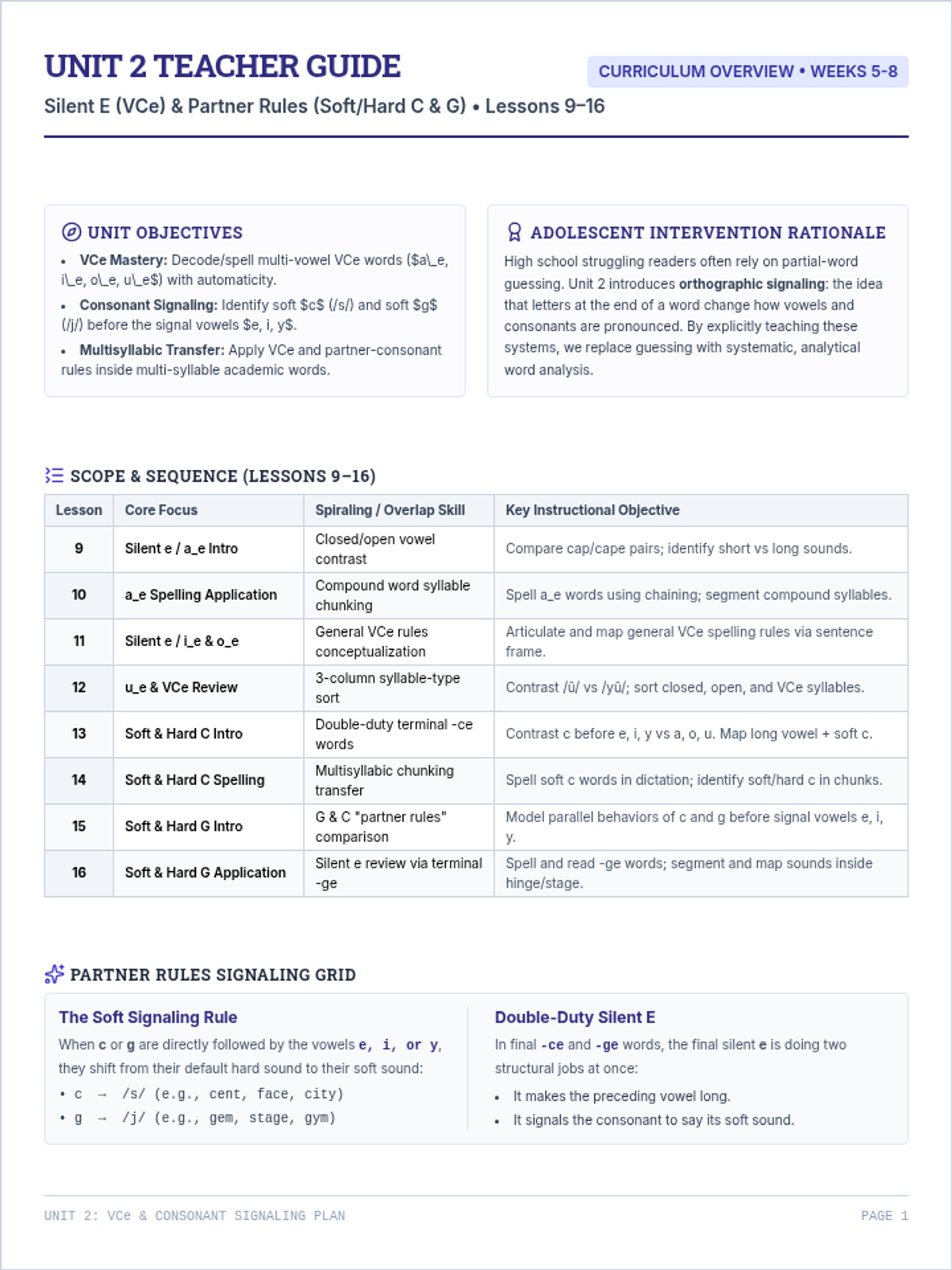
A cumulative review lesson covering Unit 2 (Lessons 9-16). Students practice reading and spelling silent e/VCe words, soft/hard c, and soft/hard g patterns, and explain the position-based sound logic. Designed for high school students.
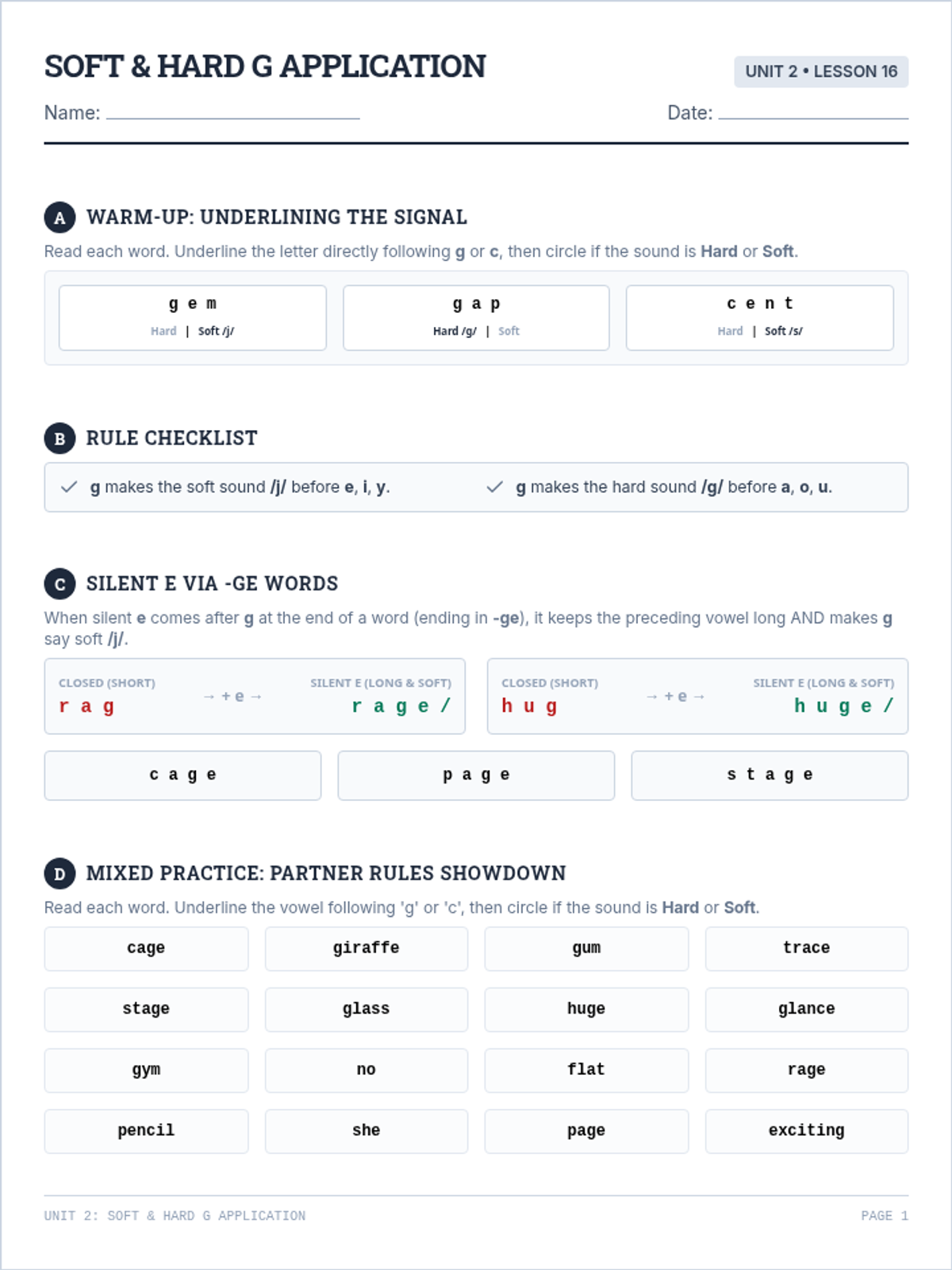
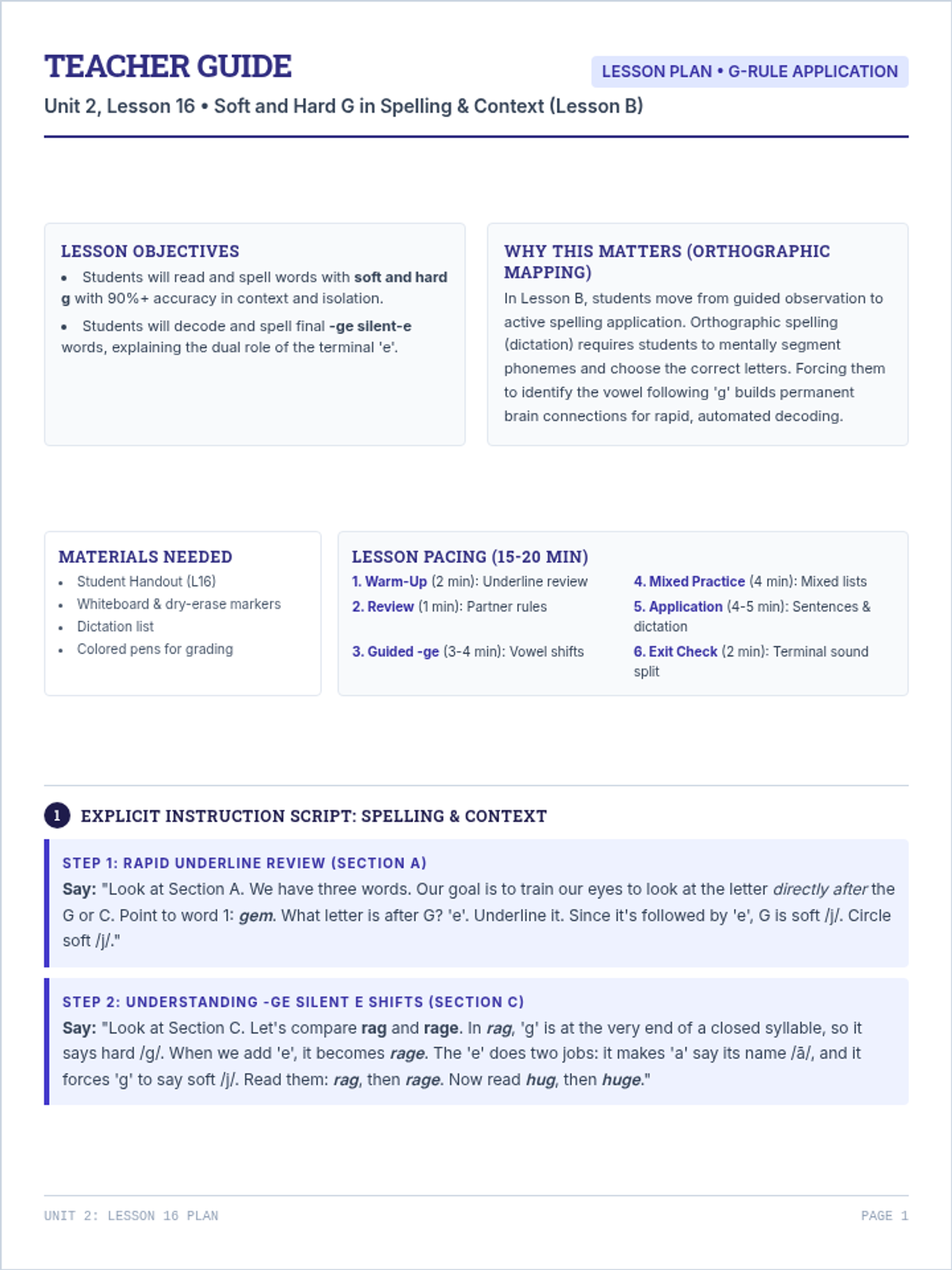
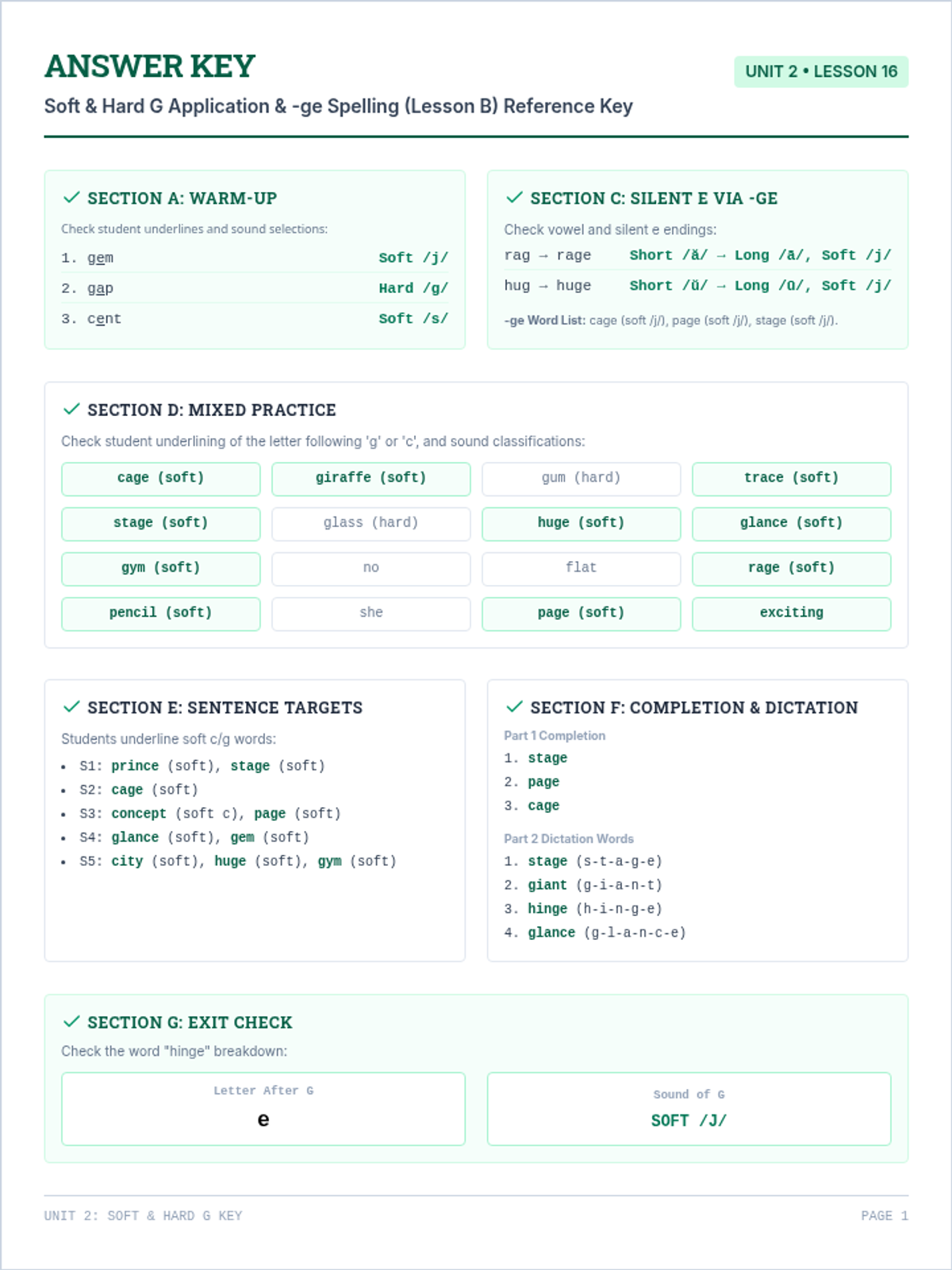
Lesson 16 of the sequence. Focuses on the application of soft/hard g and c rules in spelling, dictation, and -ge silent-e words using structured vowel-signaling strategies. Designed for high school students.
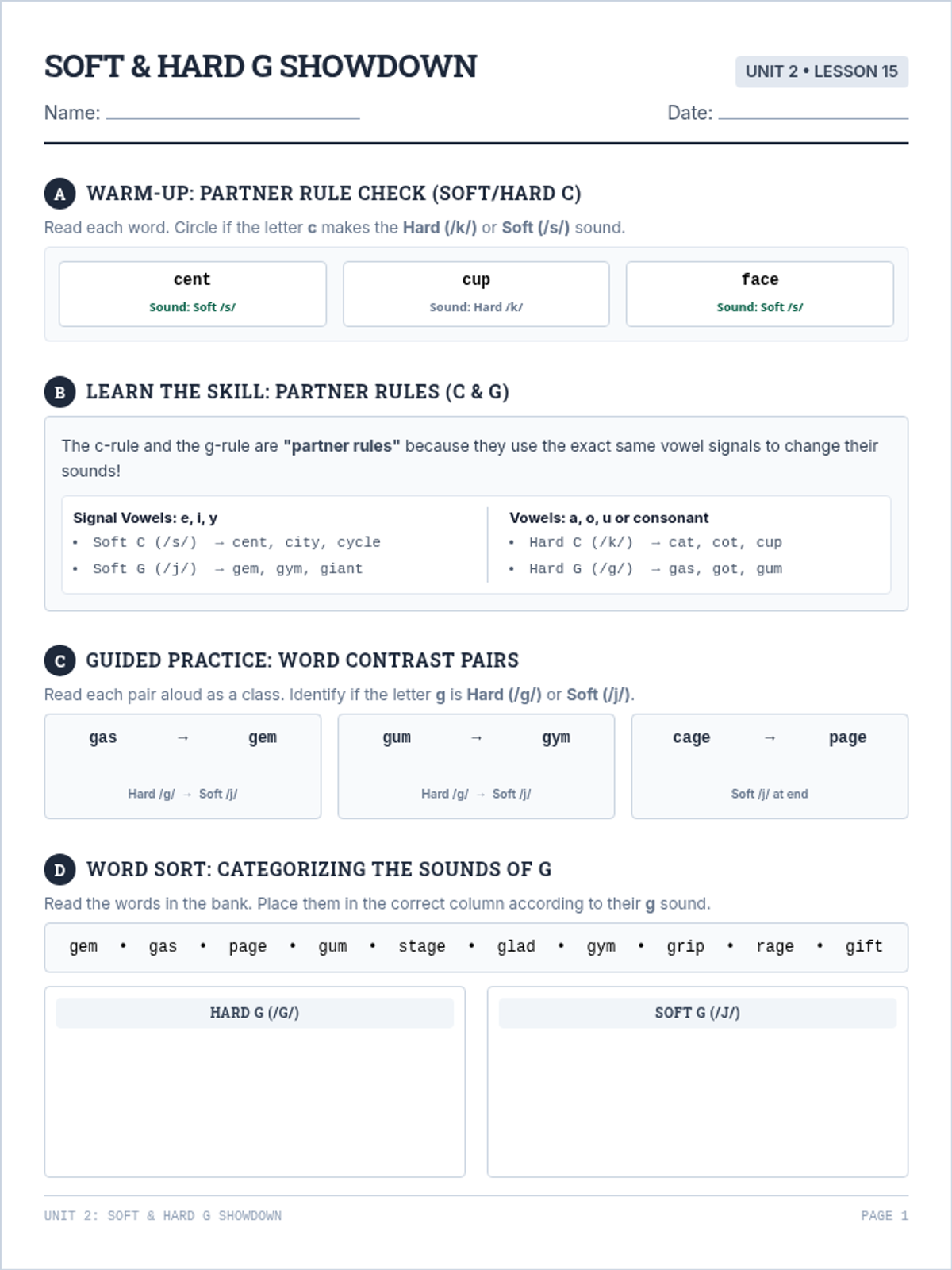
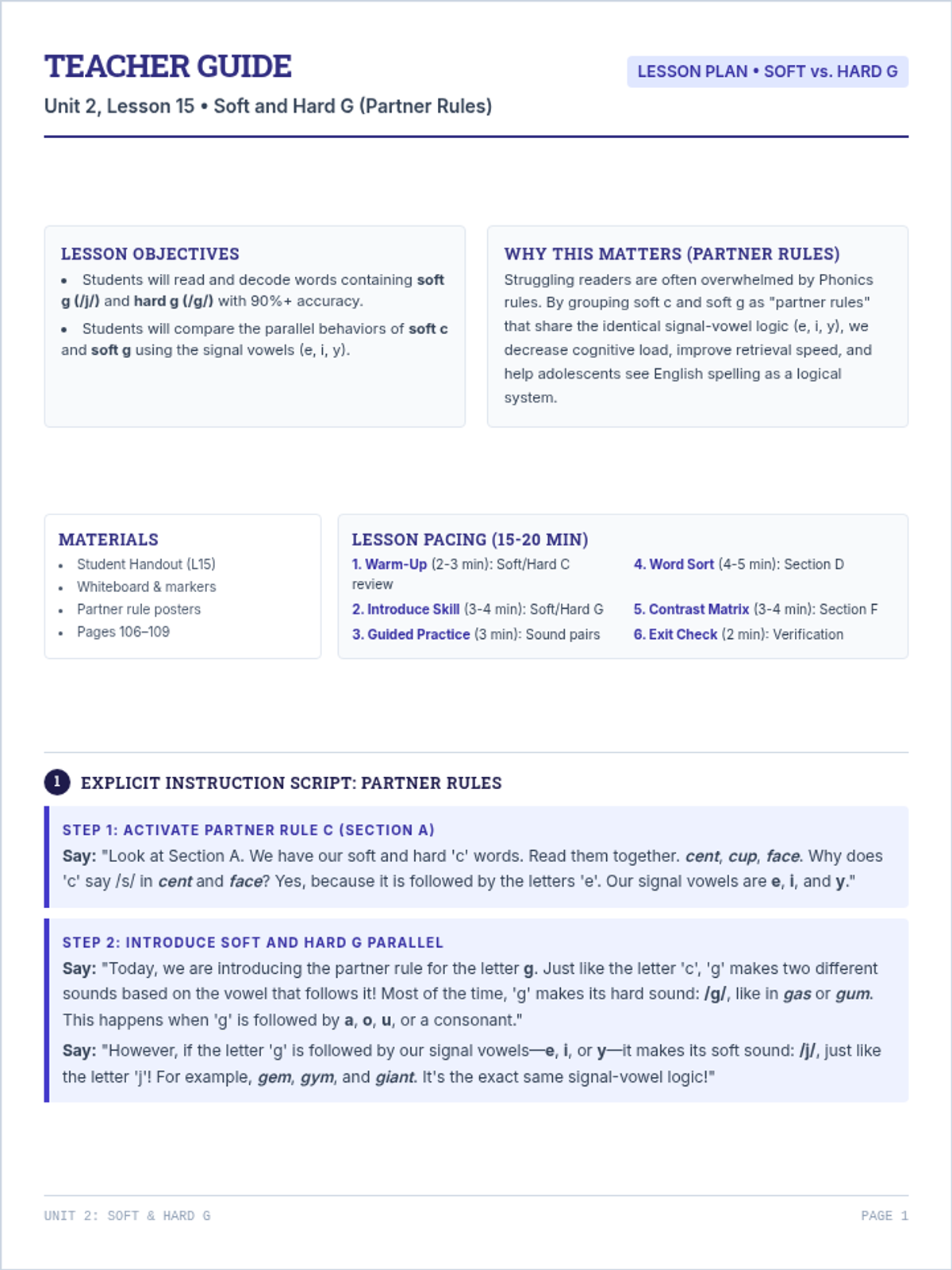
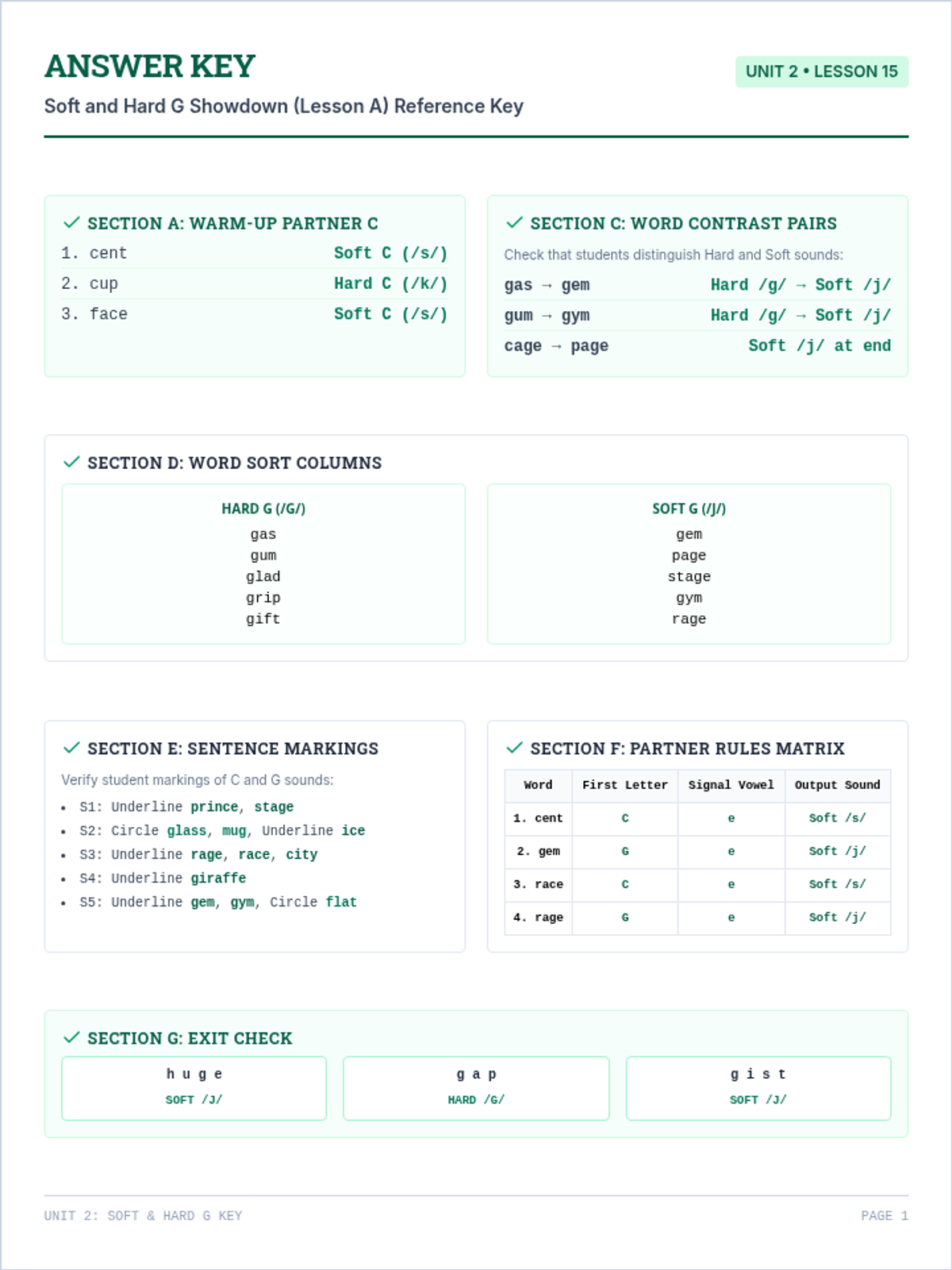
Lesson 15 of the sequence. Introduces soft g (/j/) and hard g (/g/), drawing explicit parallels to the hard/soft c rules as "partner rules" and reviews vowel signaling. Designed for high school students.
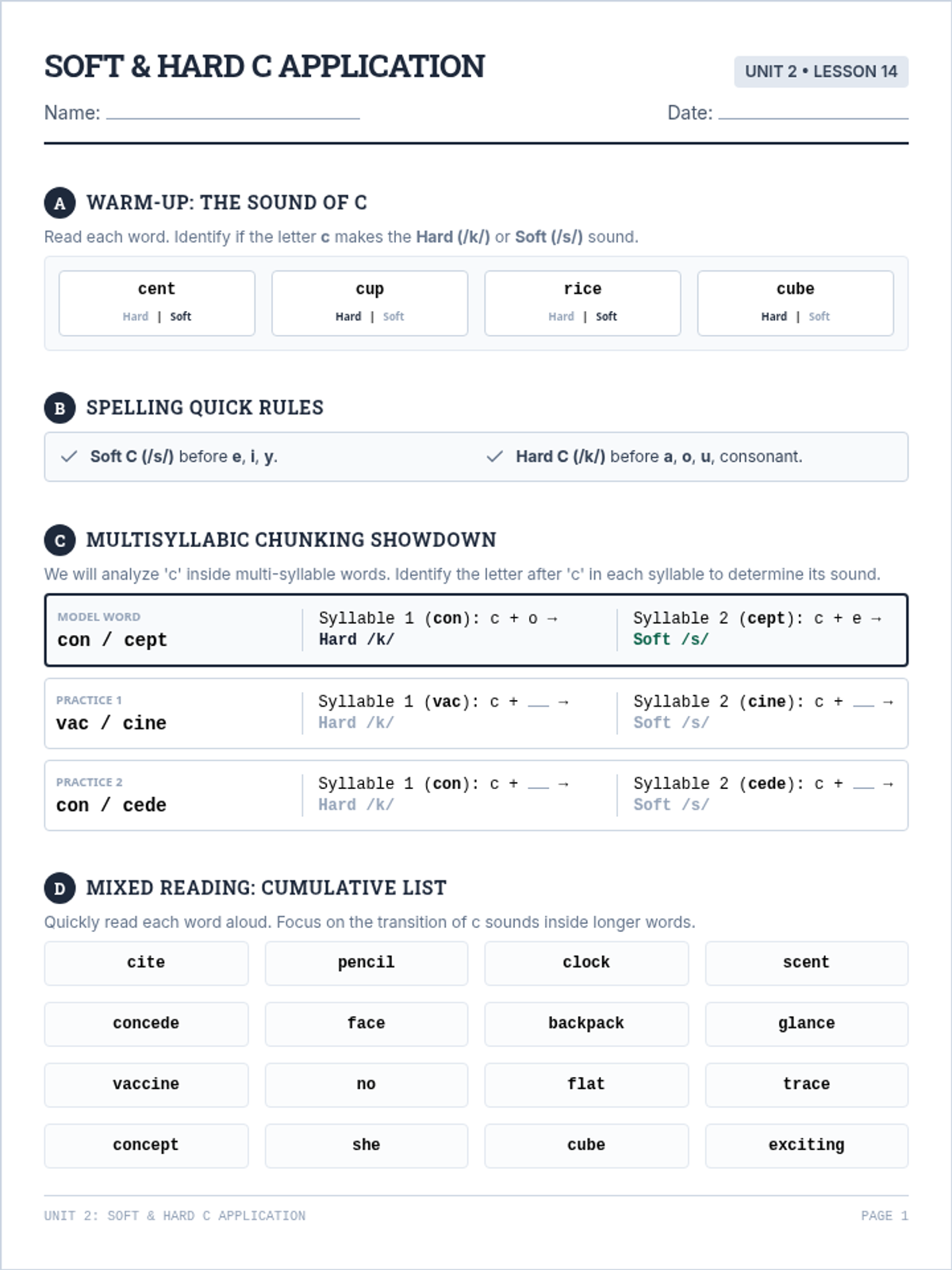
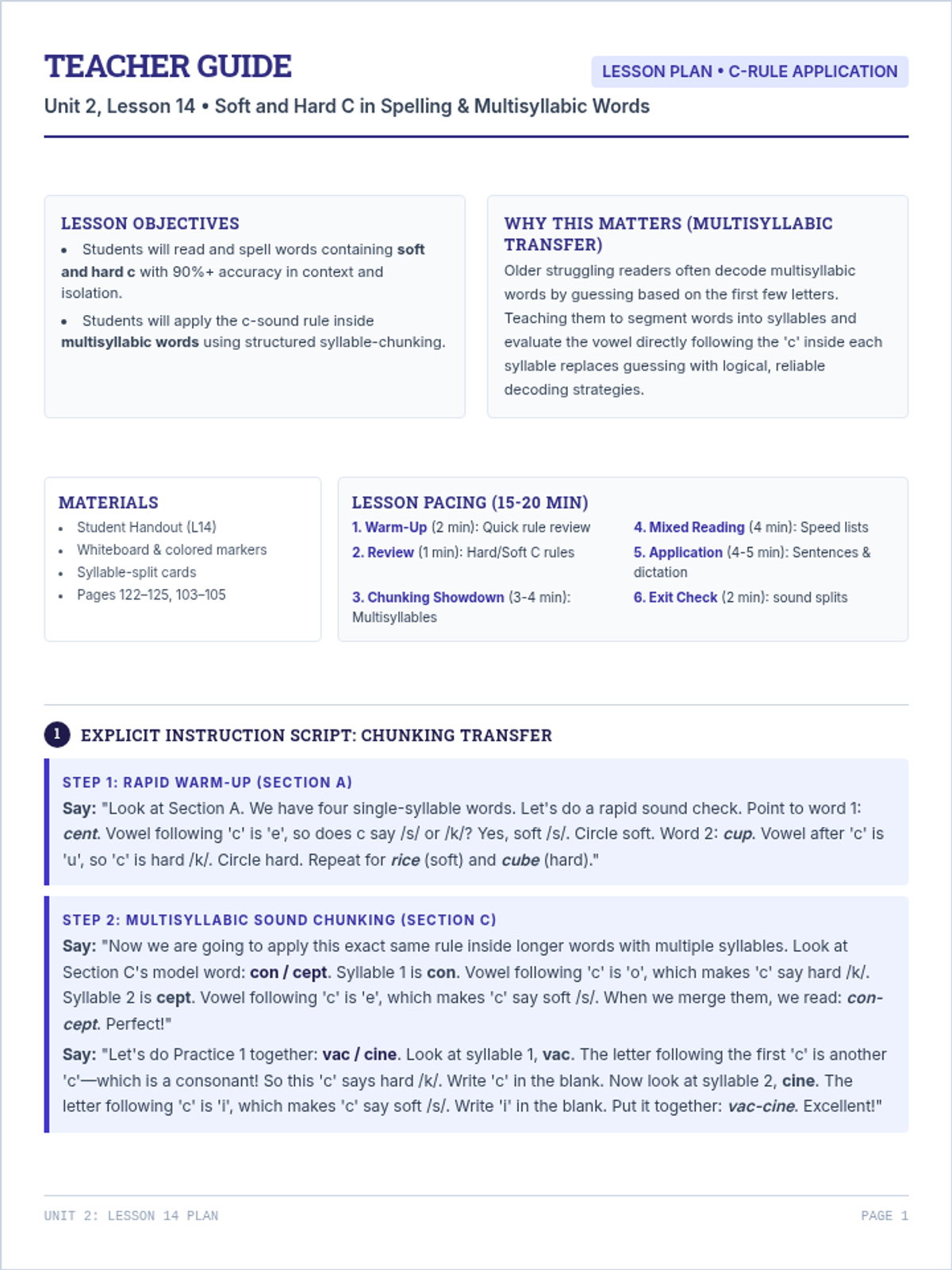
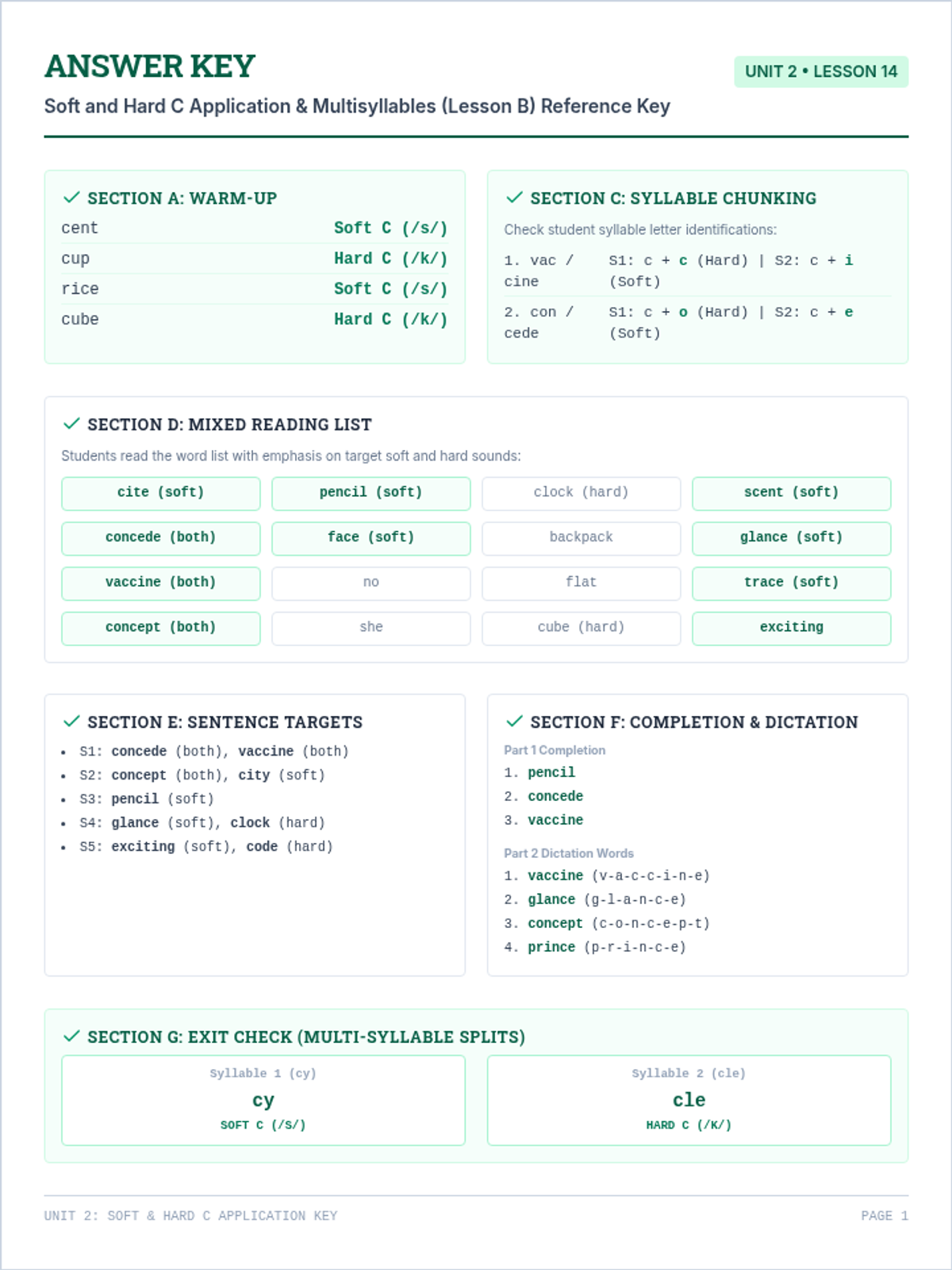
Lesson 14 of the sequence. Focuses on the application of soft and hard c rules in spelling, dictation, and multisyllabic words using structured chunking strategies. Designed for high school students.
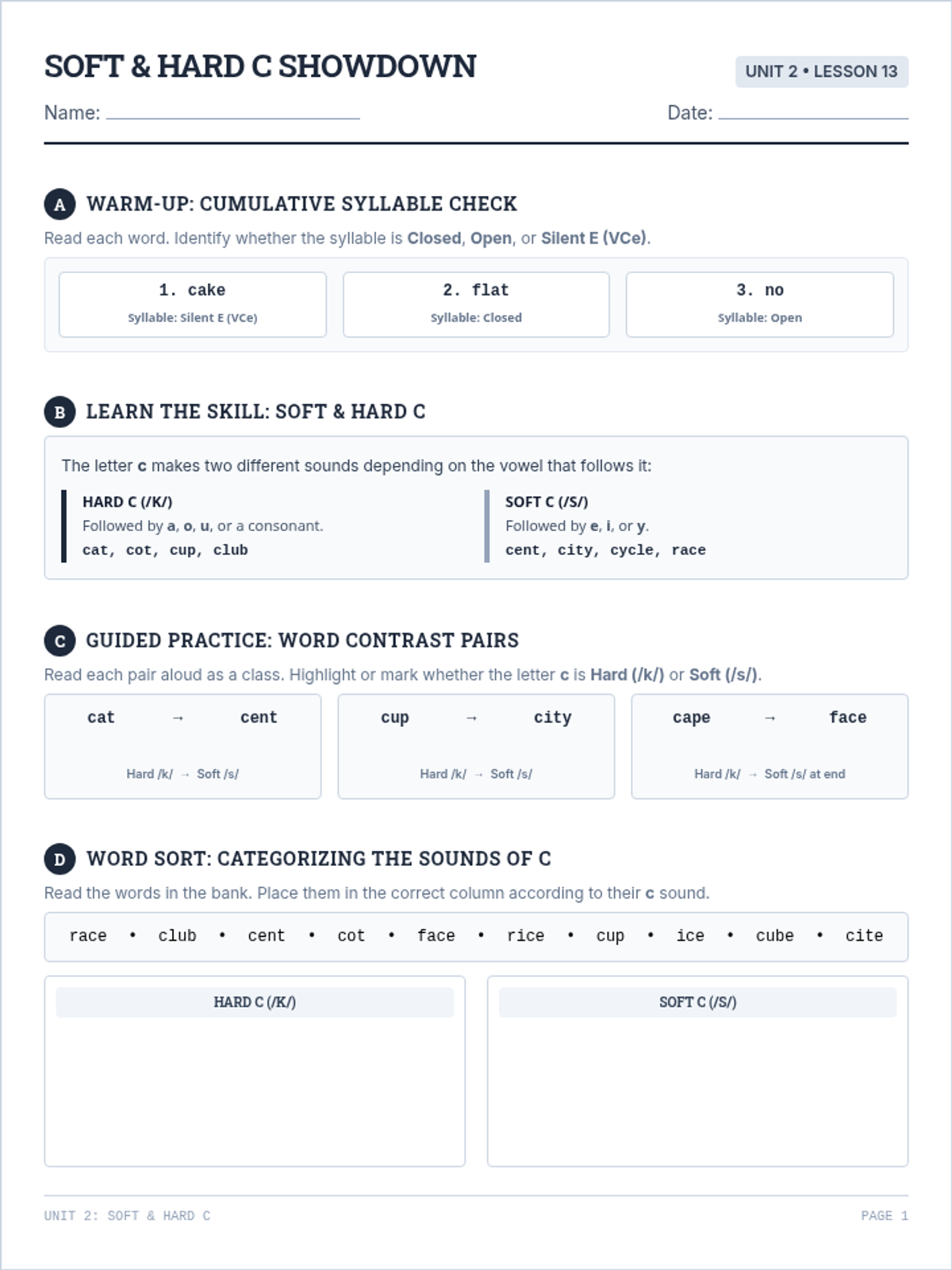
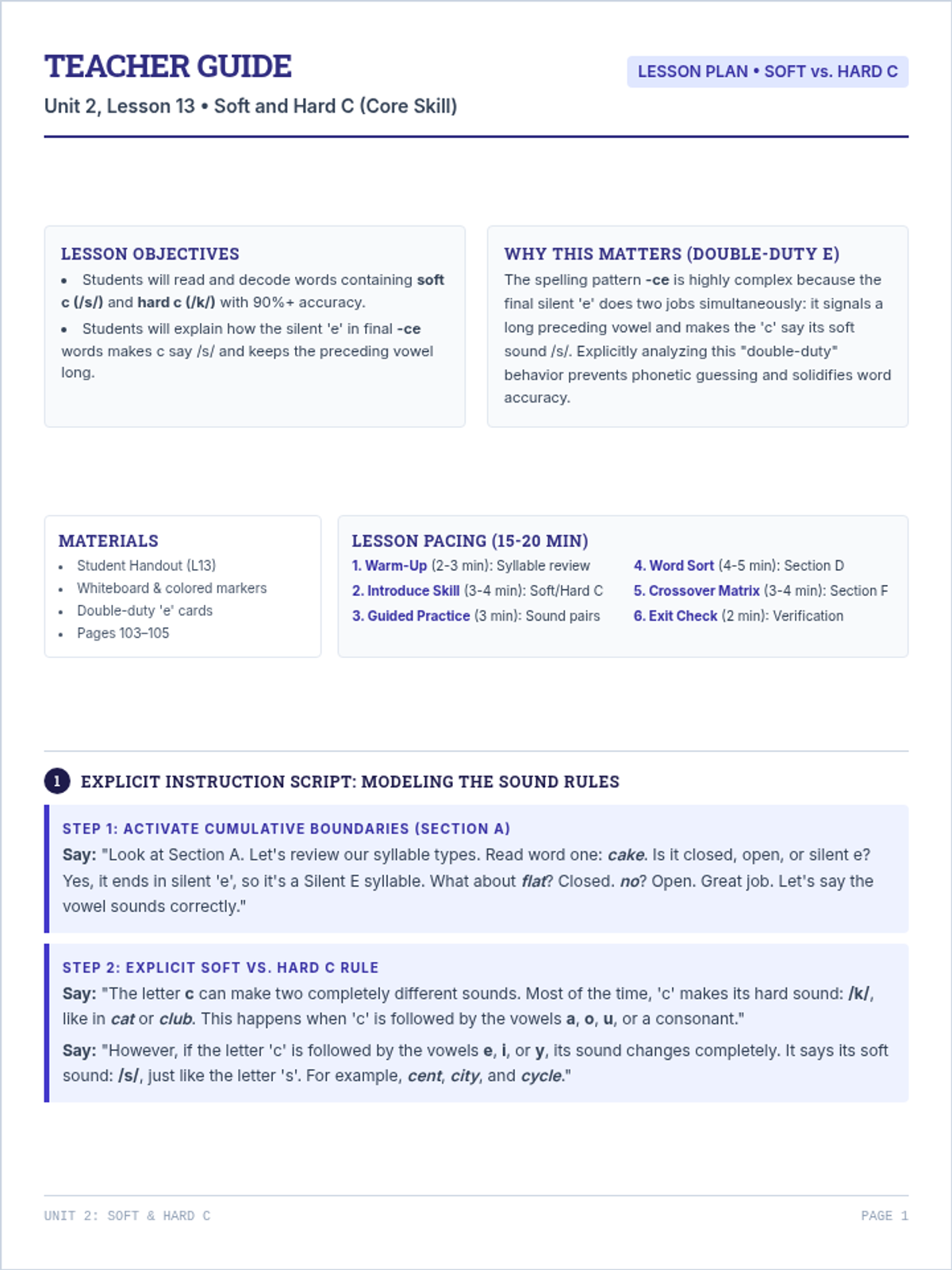
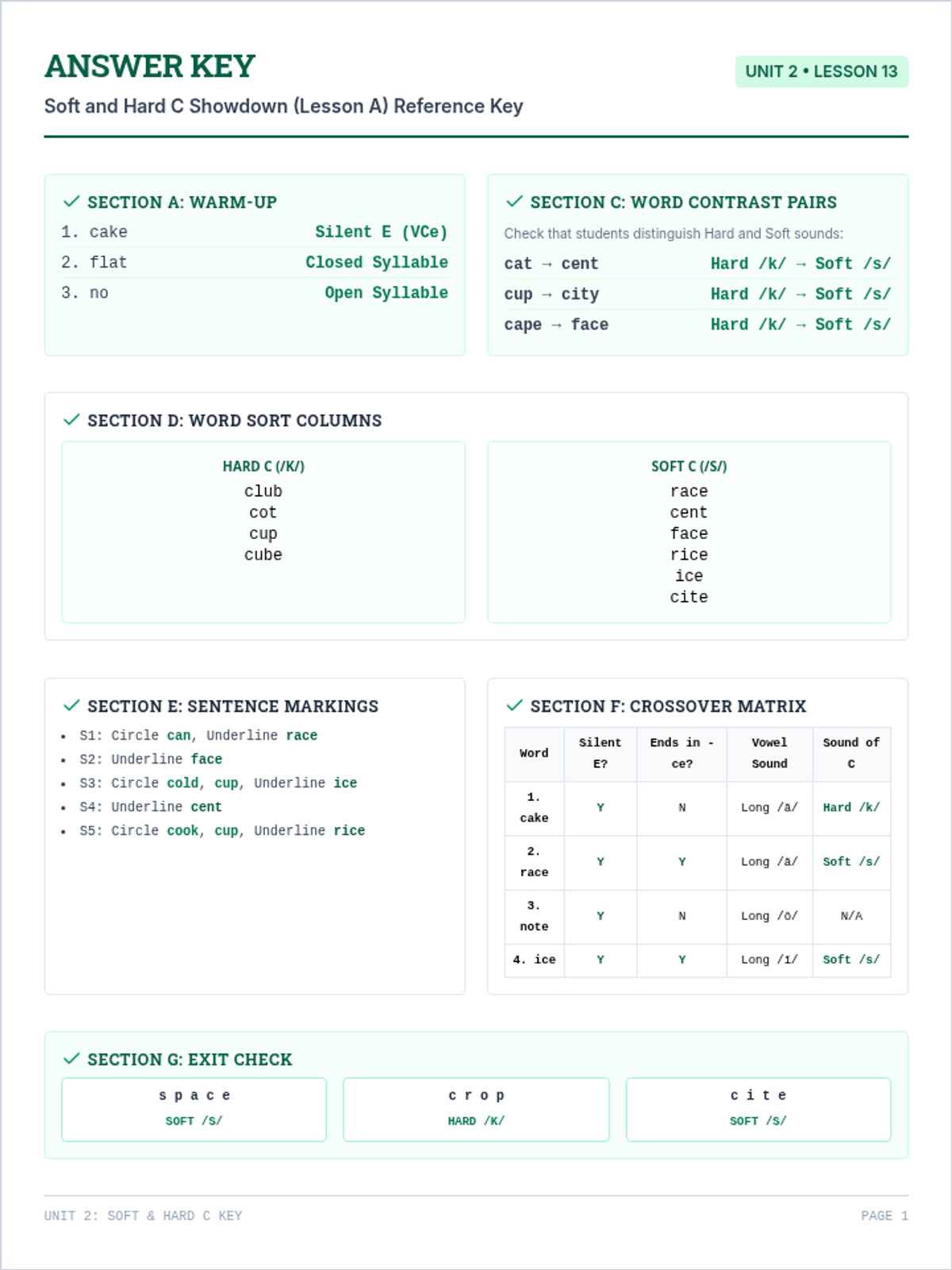
Lesson 13 of the sequence. Introduces soft c (/s/) and hard c (/k/), explicitly contrasting them, and reviews VCe syllables through words ending in -ce. Designed for high school students.
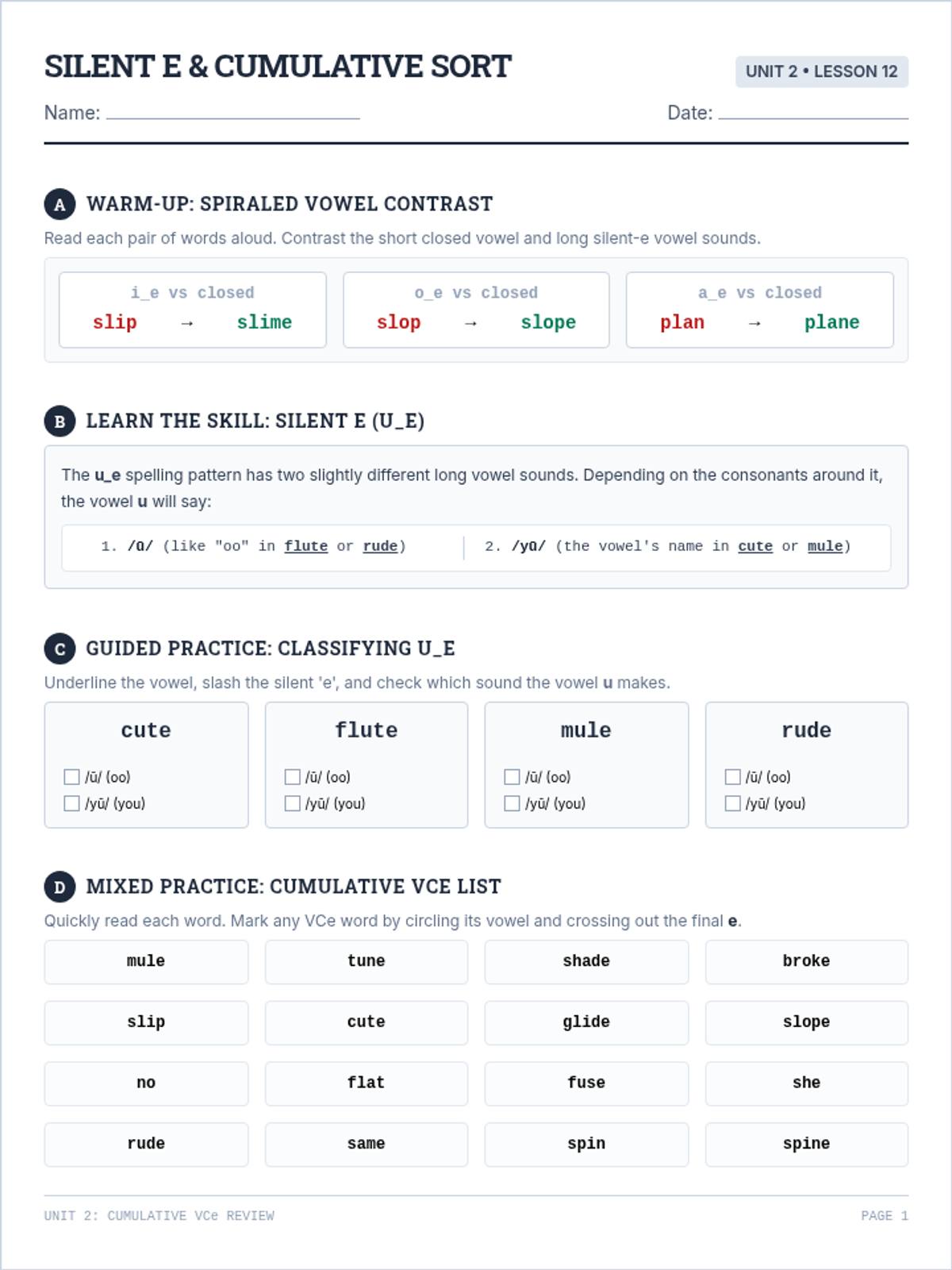
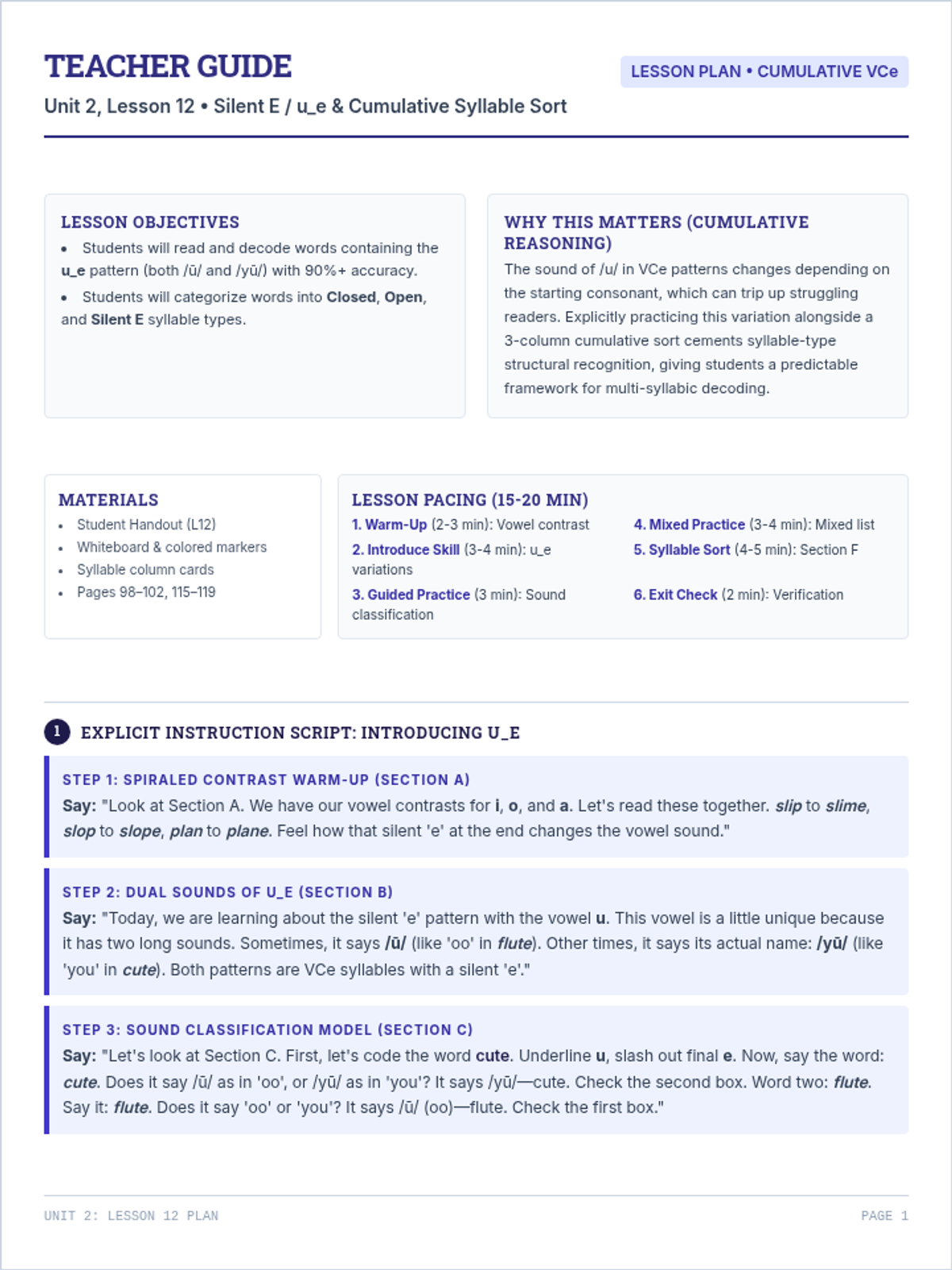
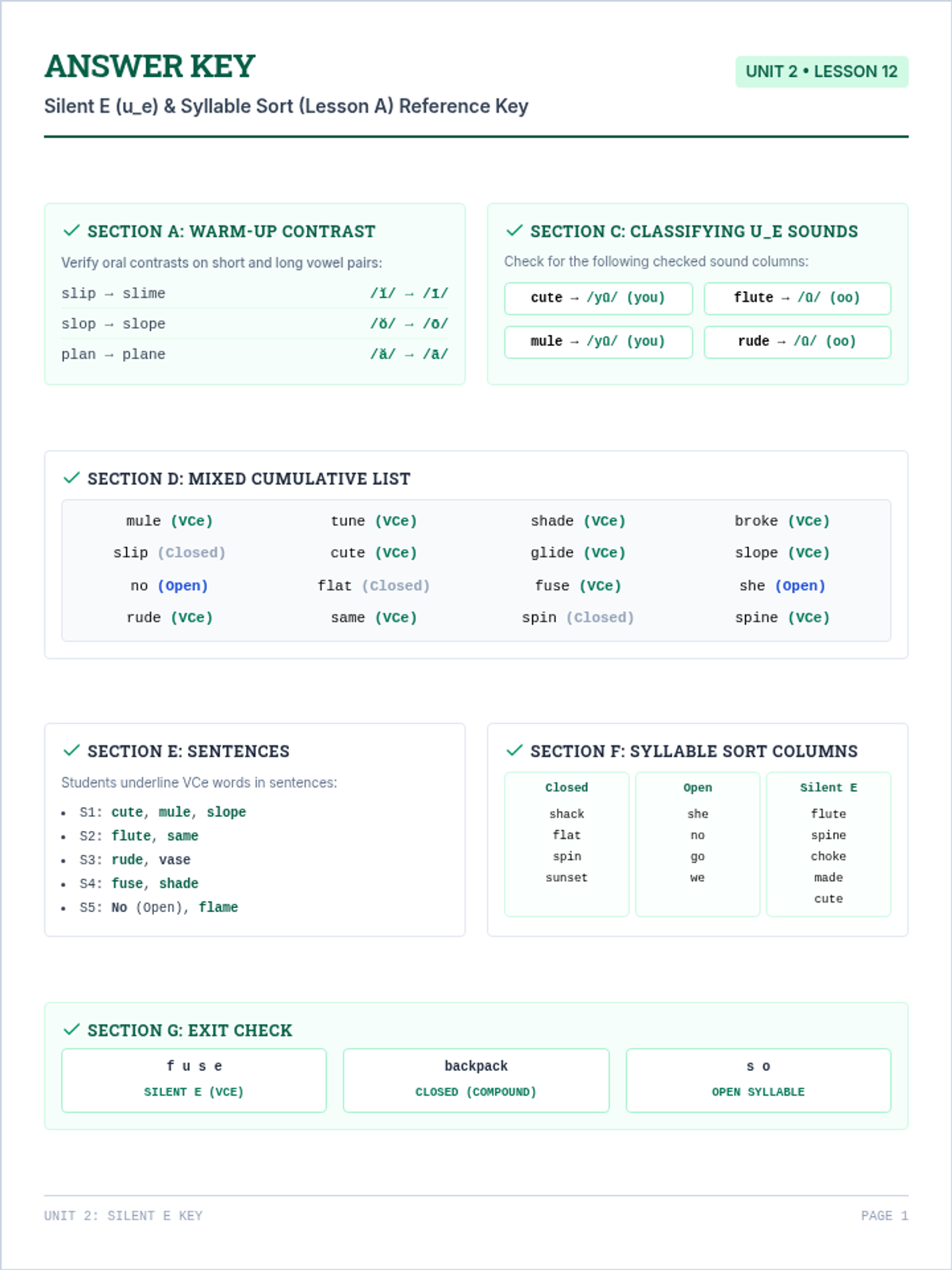
Lesson 12 of the silent e sequence. Introduces the u_e silent e pattern (including /ū/ vs /yū/ variations), reviews a_e, i_e, and o_e patterns, and finishes with a 3-column syllable-type sort. Designed for high school students.
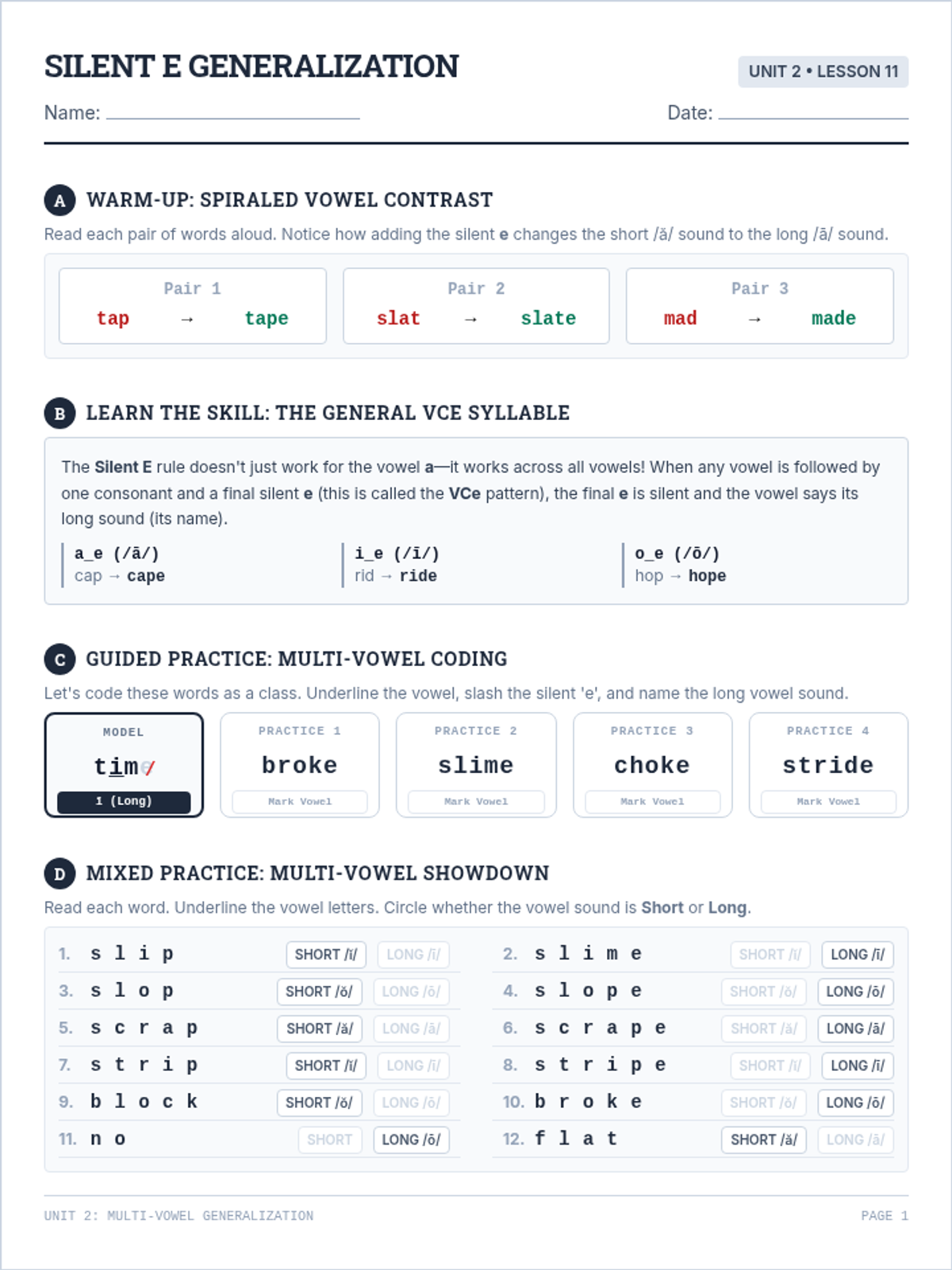
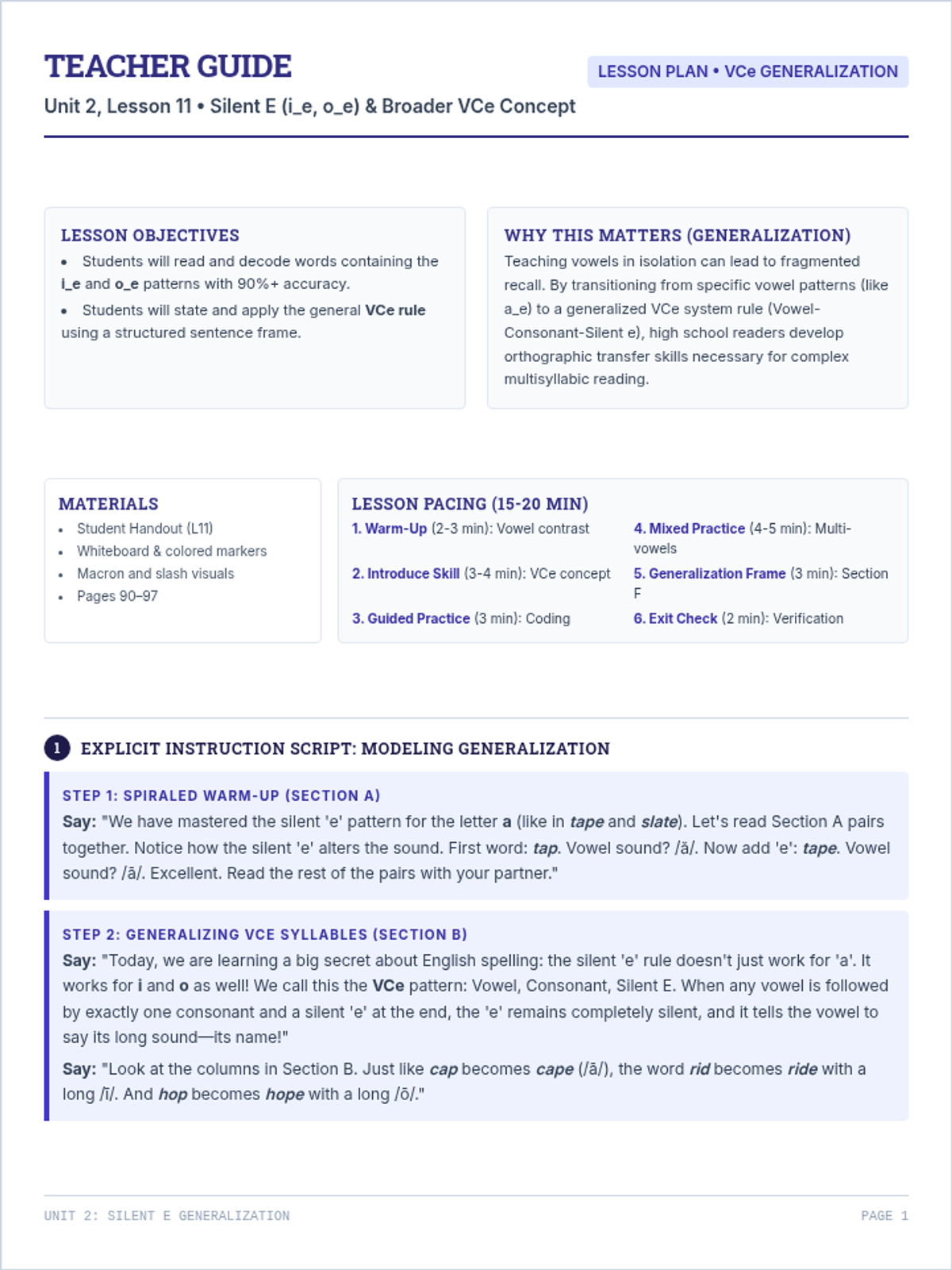
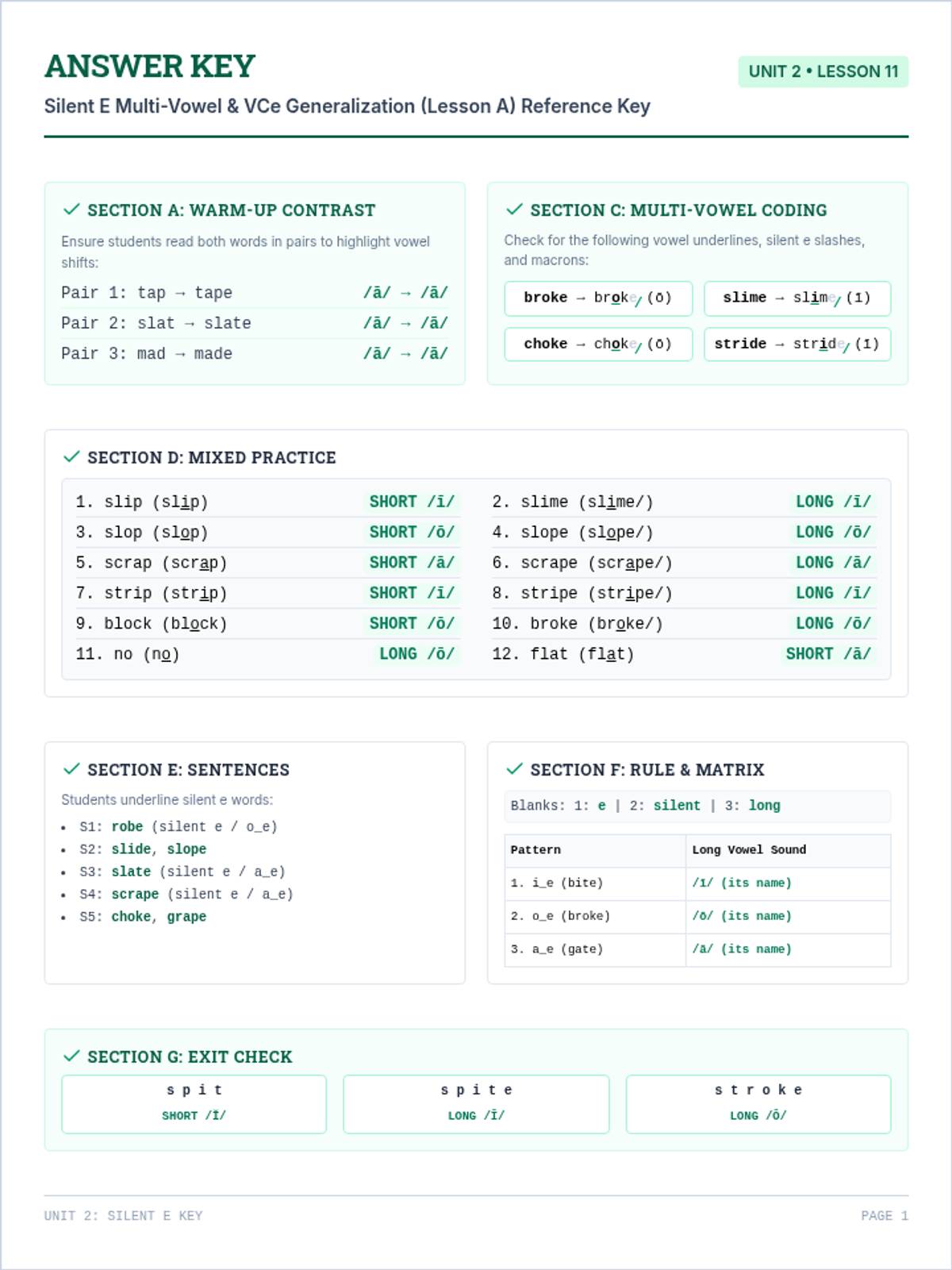
Lesson 11 of the silent e sequence. Introduces the i_e and o_e patterns, spirals a_e, and guides students to articulate the general VCe syllable rule using a structured sentence frame. Designed for high school students reading below grade level.
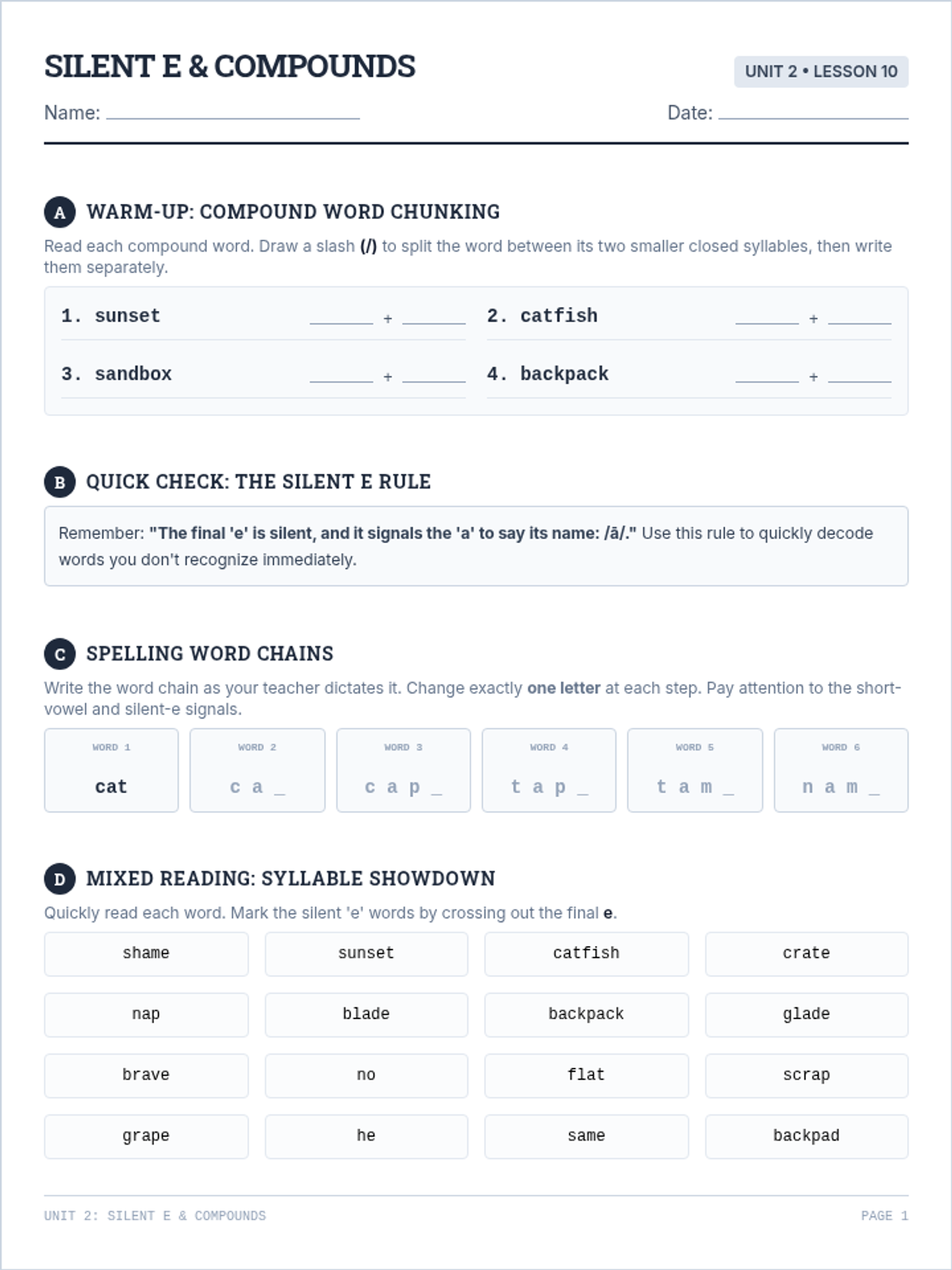
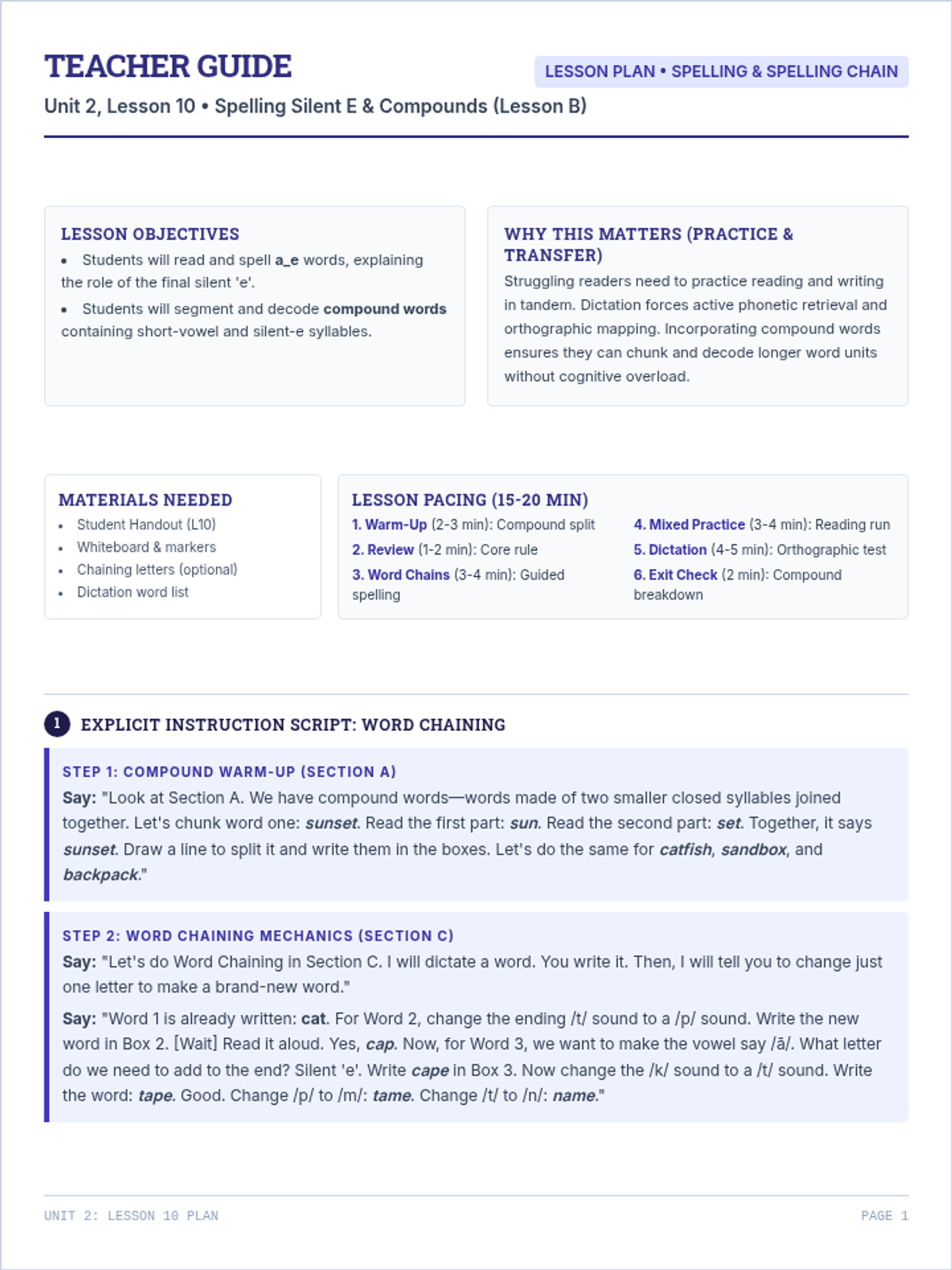
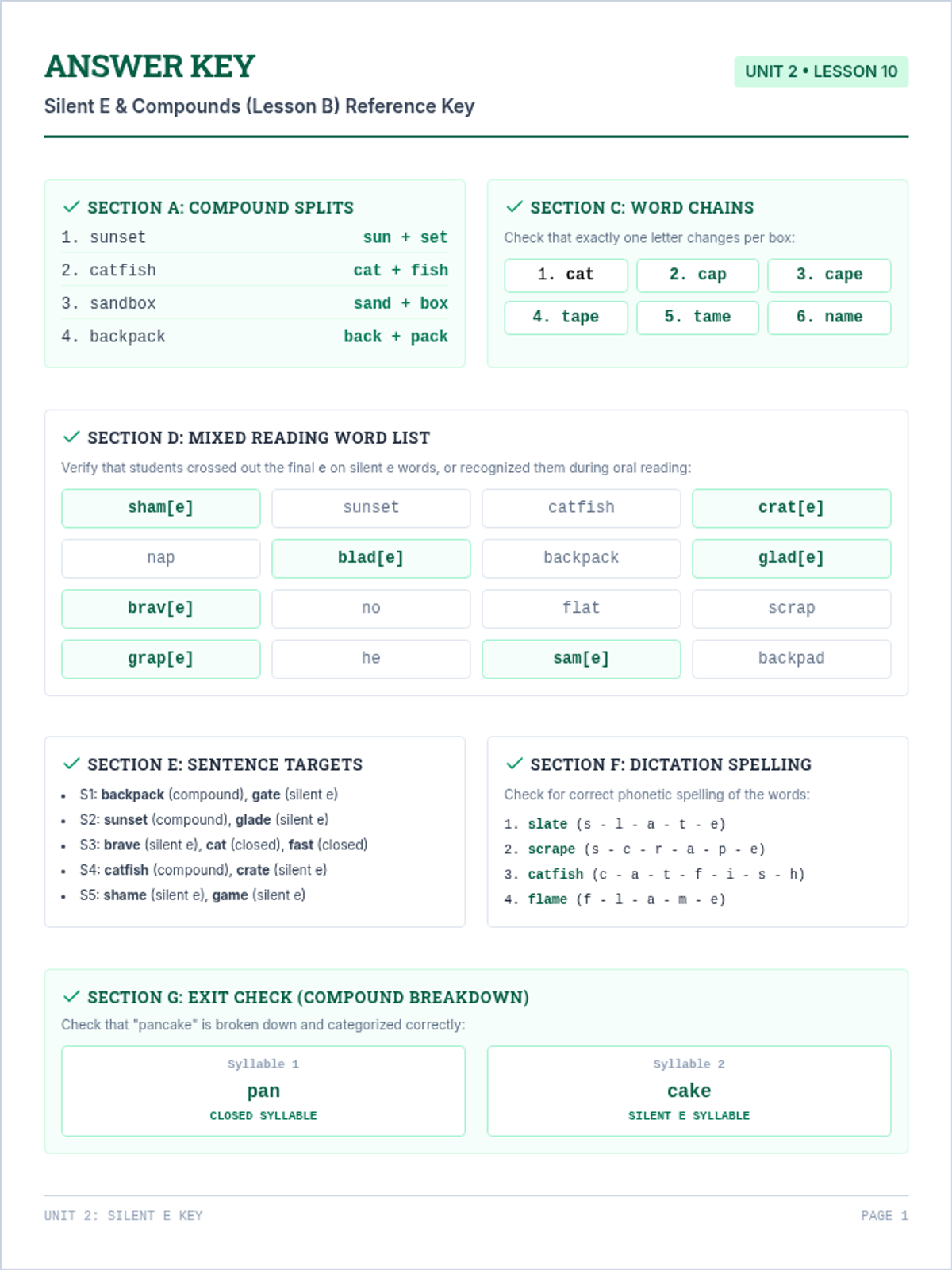
Lesson B of the silent e sequence. Students practice reading and spelling a_e words with less direct explanation, featuring compound word chunking in the warm-up, oral spelling chains, and a dictation assessment.
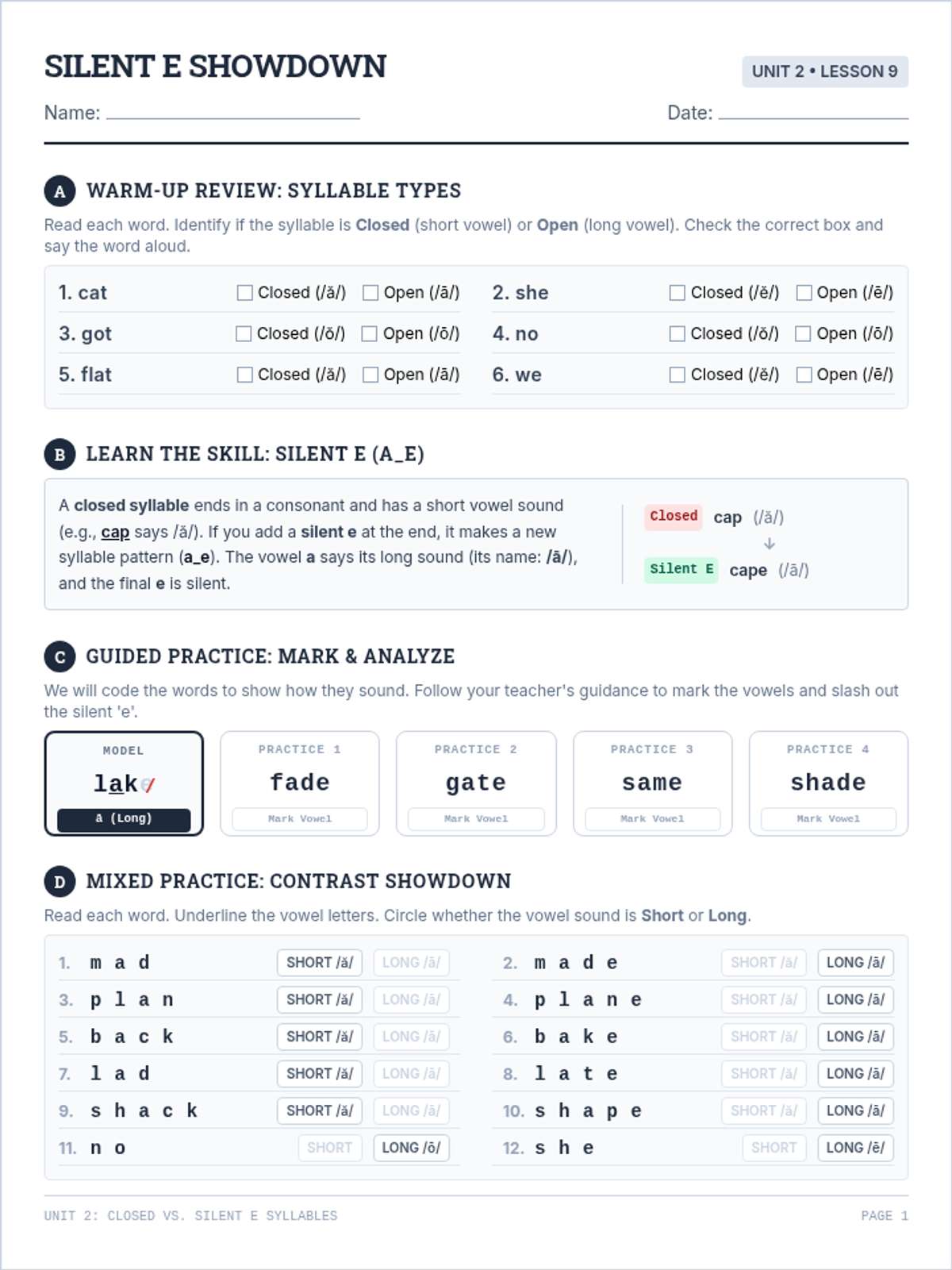
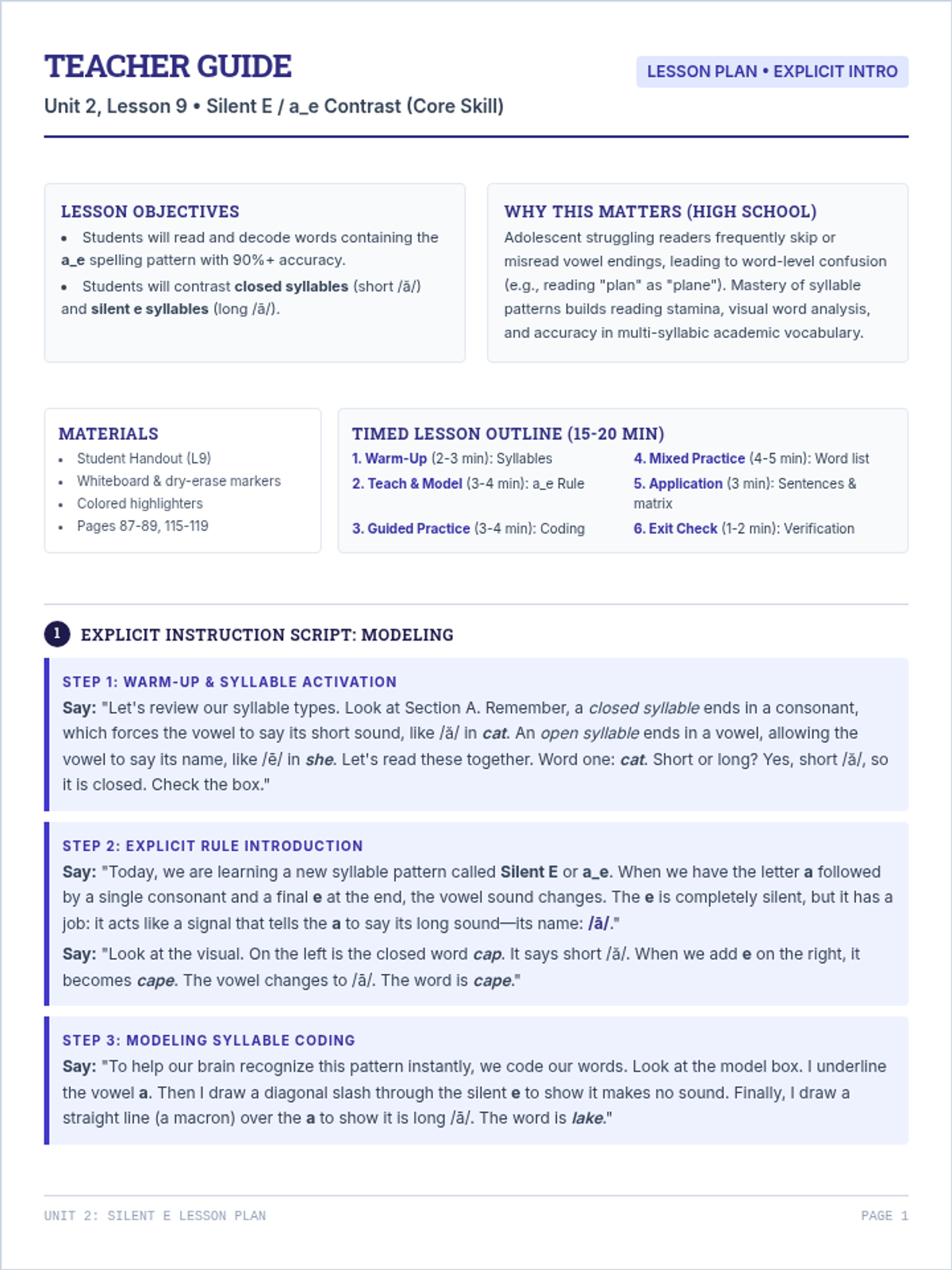
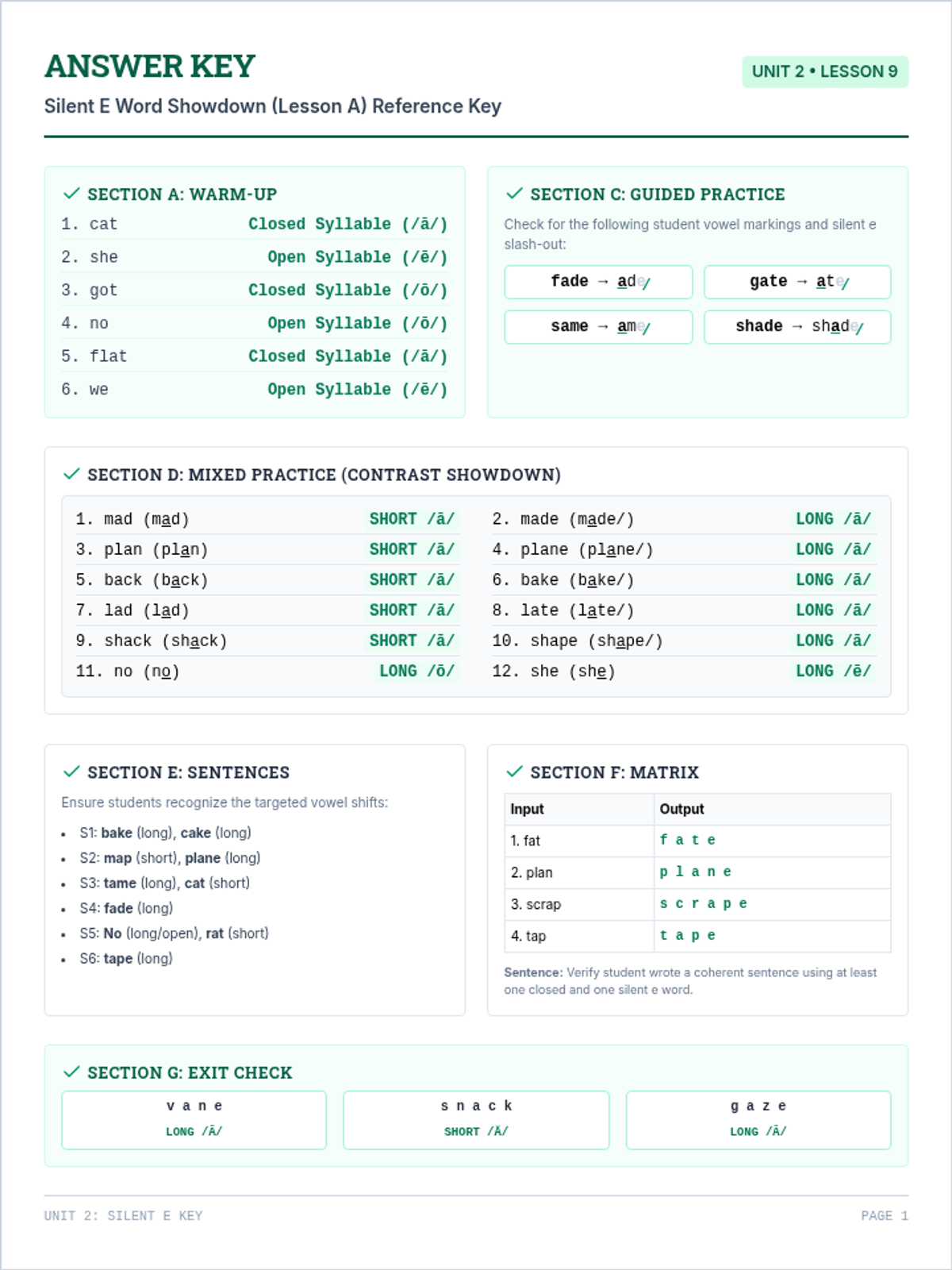
A structured reading intervention lesson introducing the silent e (a_e) spelling pattern and contrasting it with short-vowel closed syllables. Designed with explicit instruction and highly scaffolded practice for high school students reading below grade level.
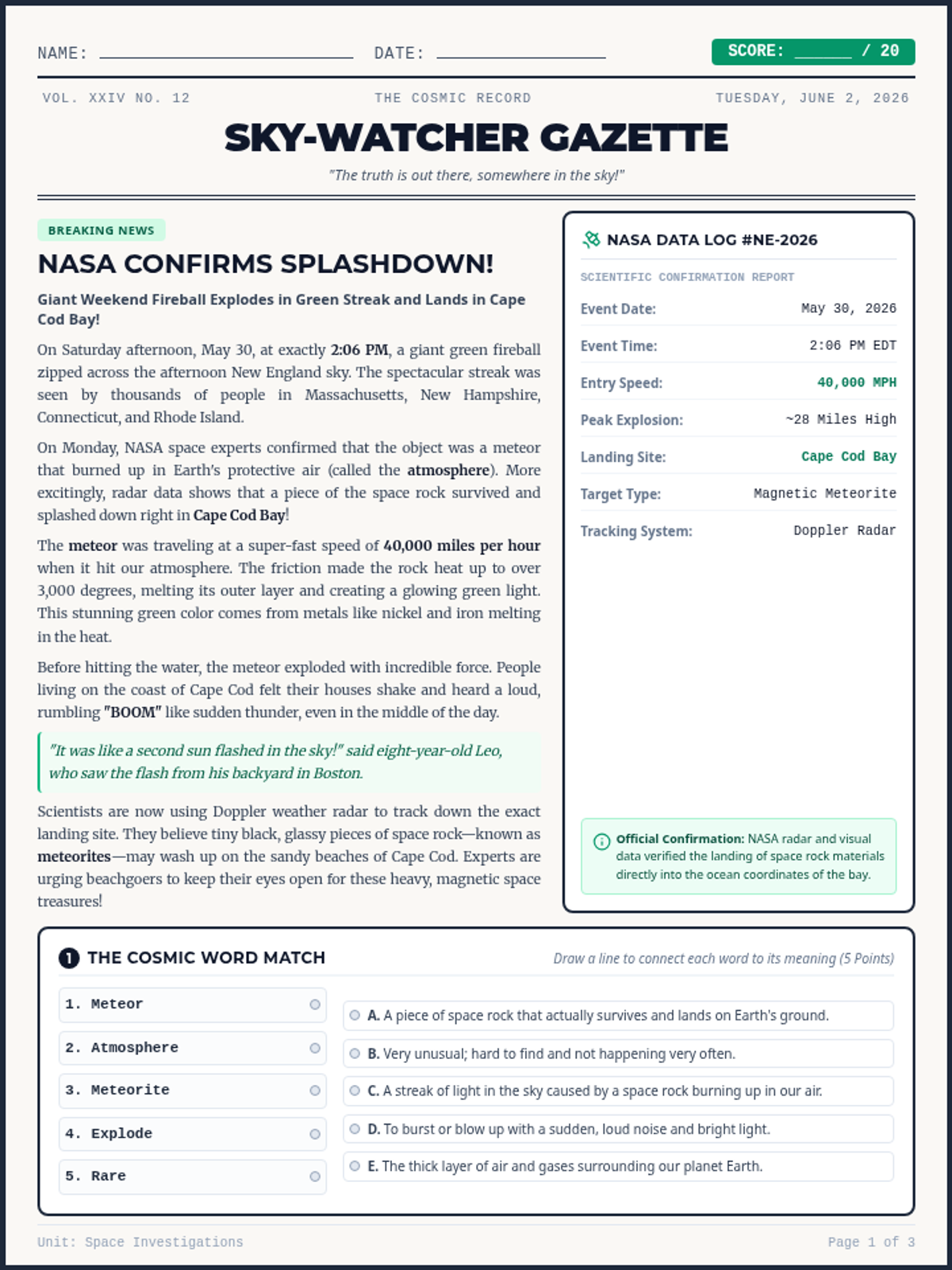
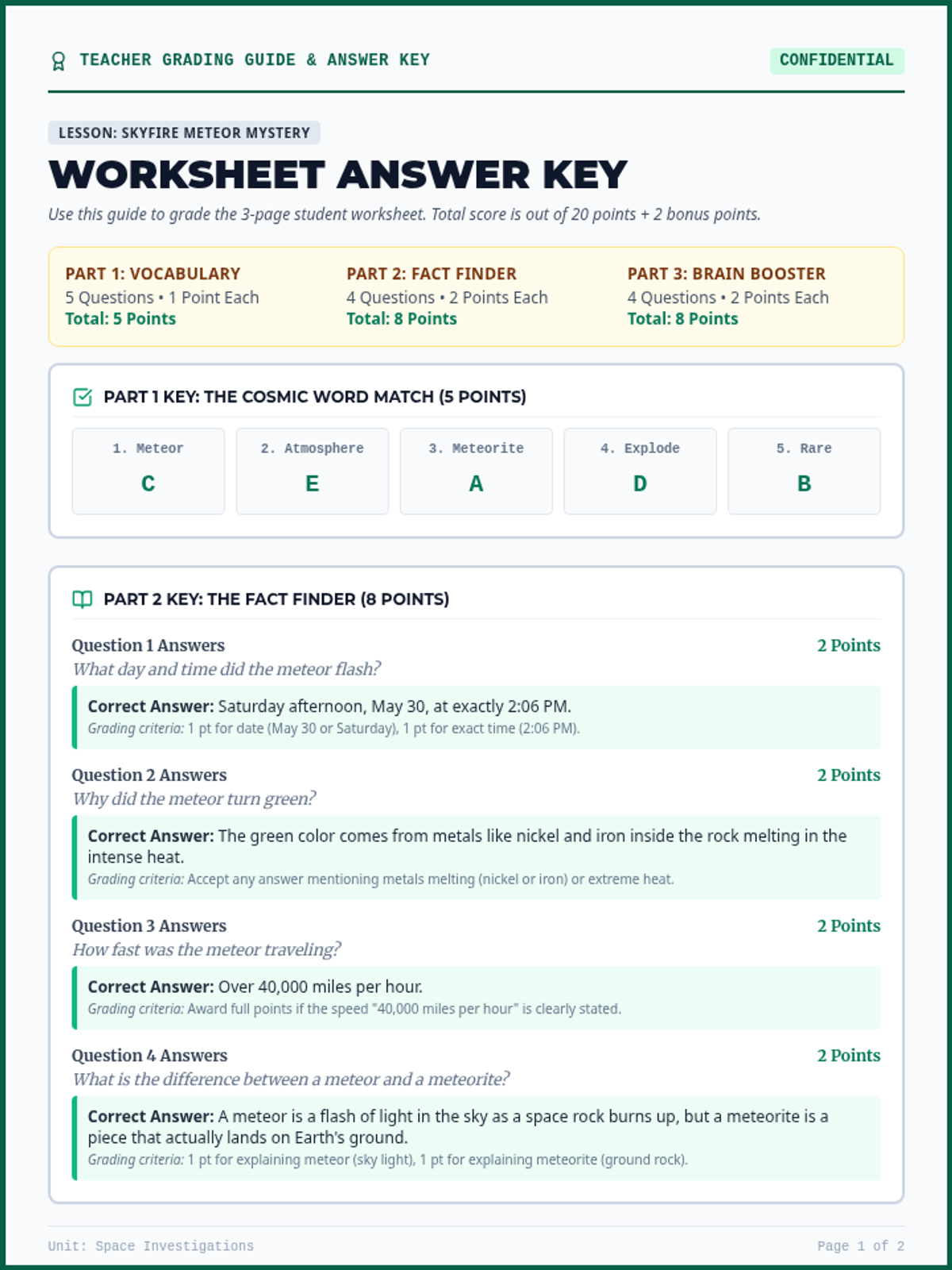
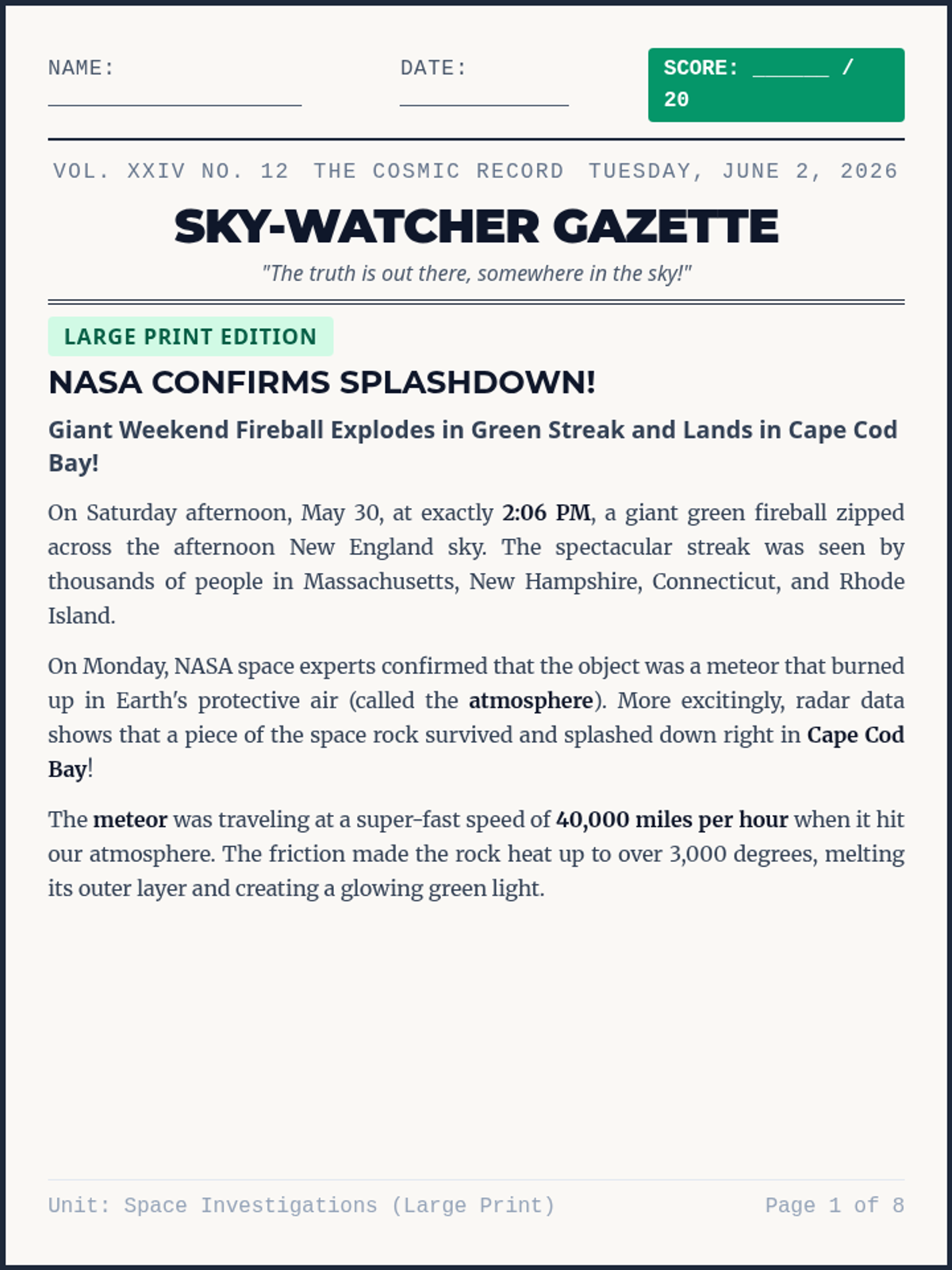
A reading comprehension lesson for 2nd and 3rd-grade students based on the spectacular meteor explosion over New England. Features engaging news-style reading, vocabulary challenges, comprehension questions, and a creative activity.
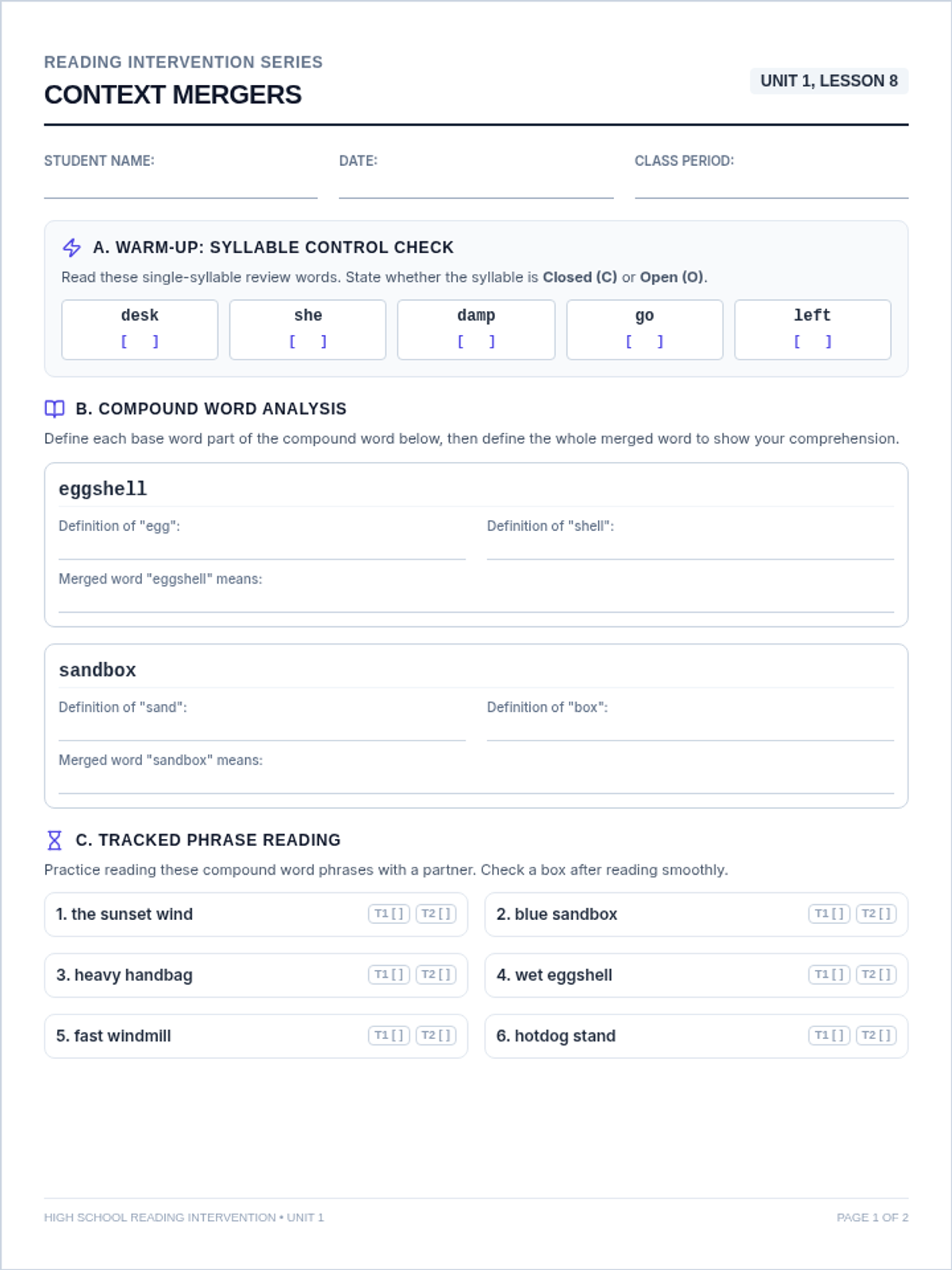
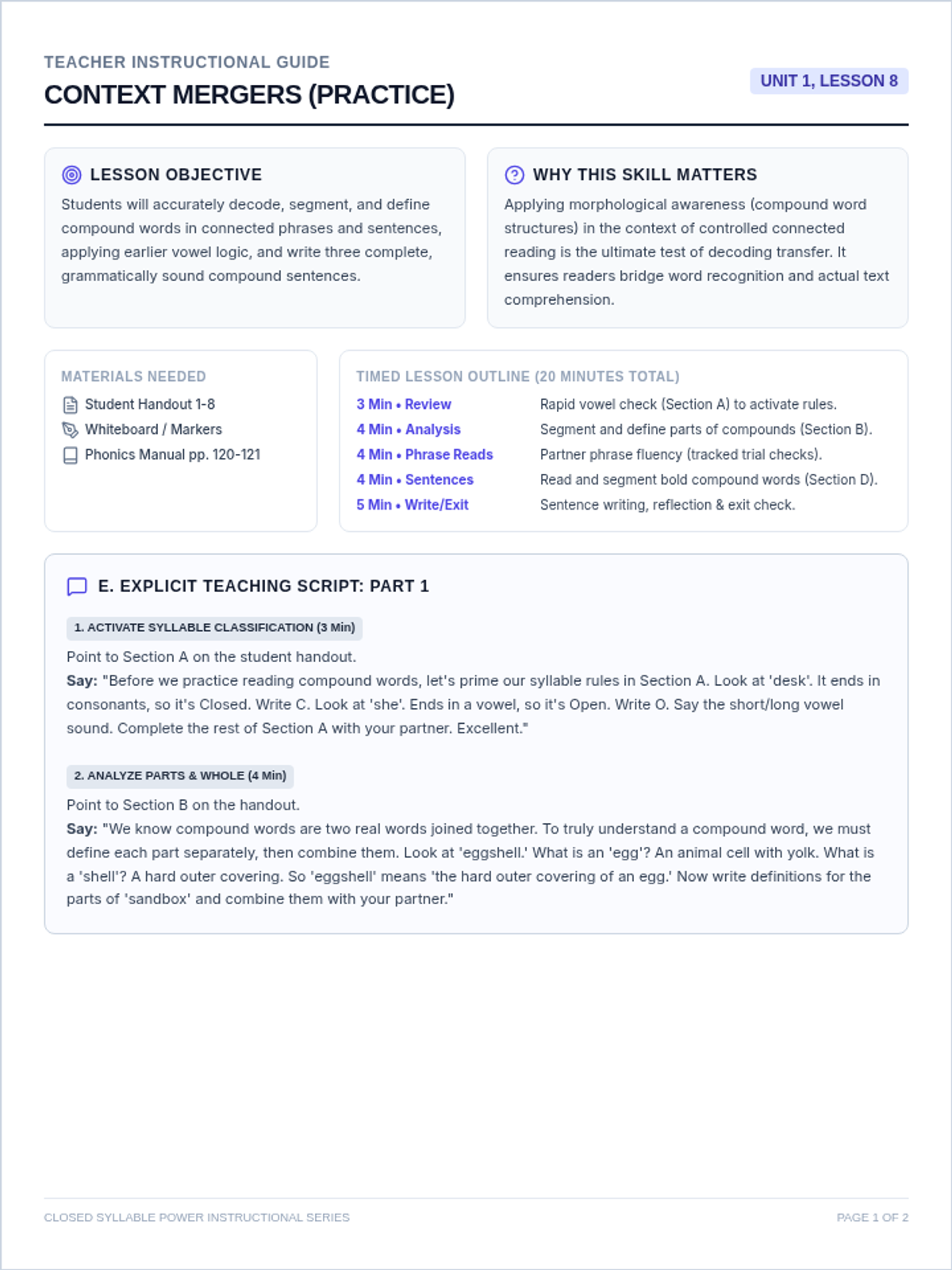
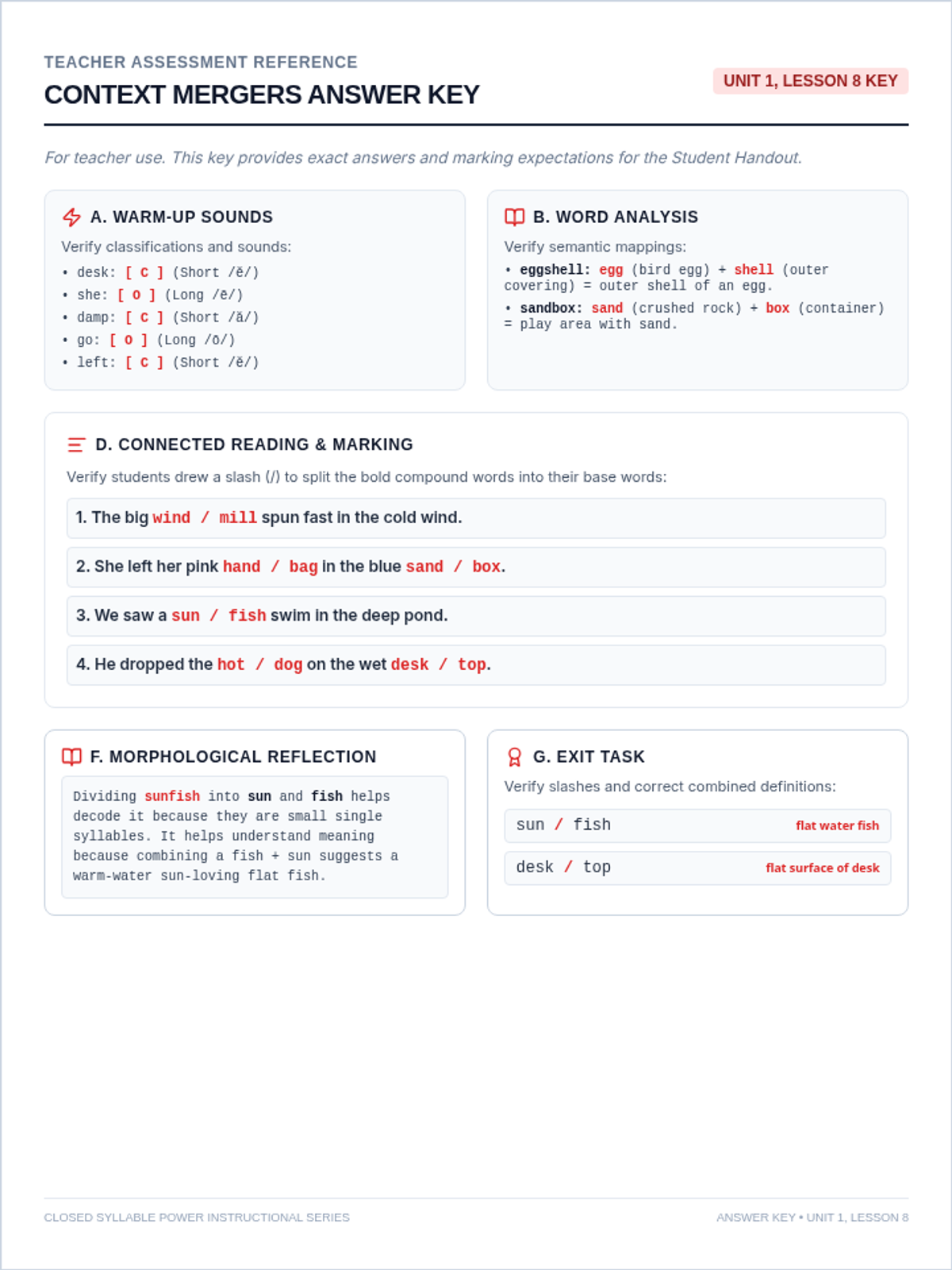
A practice and application lesson focused on reading compound words in context. Students read sentences, analyze base word meanings, and identify open and closed syllable structures within compound parts.