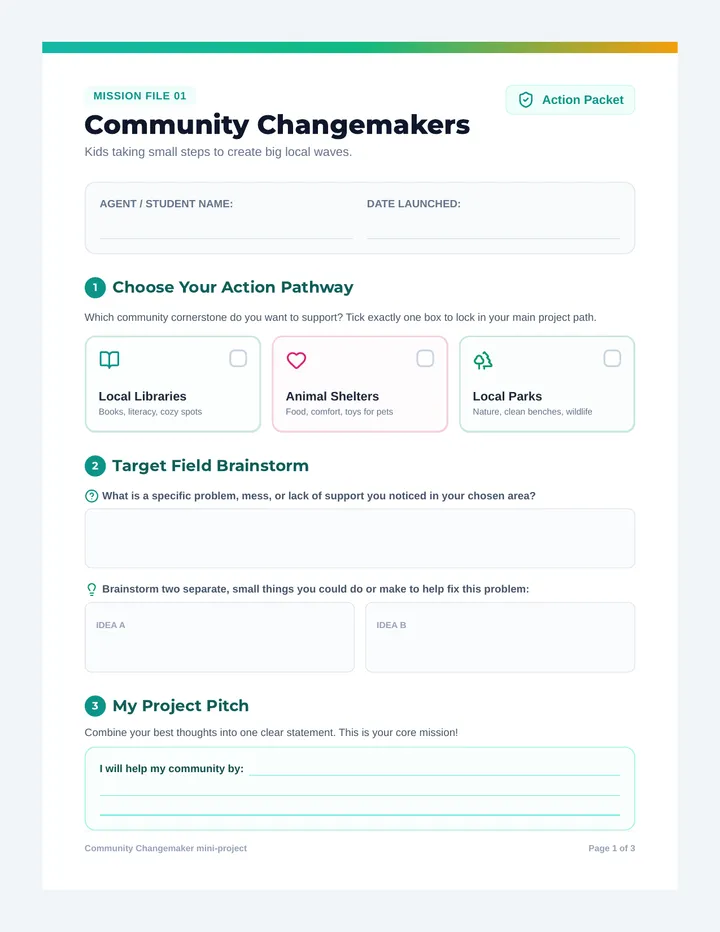
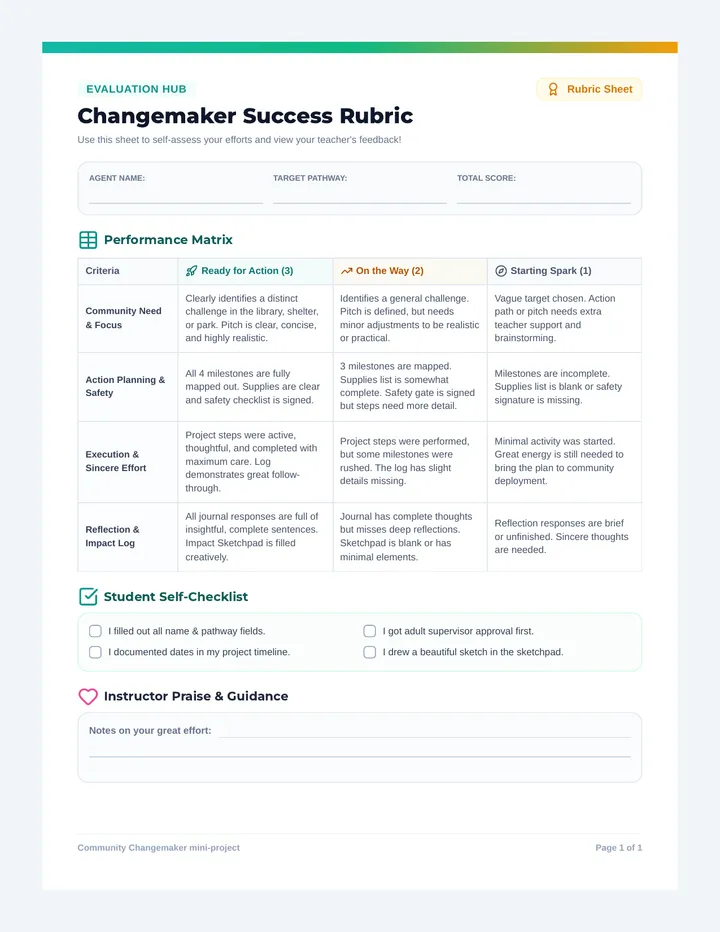
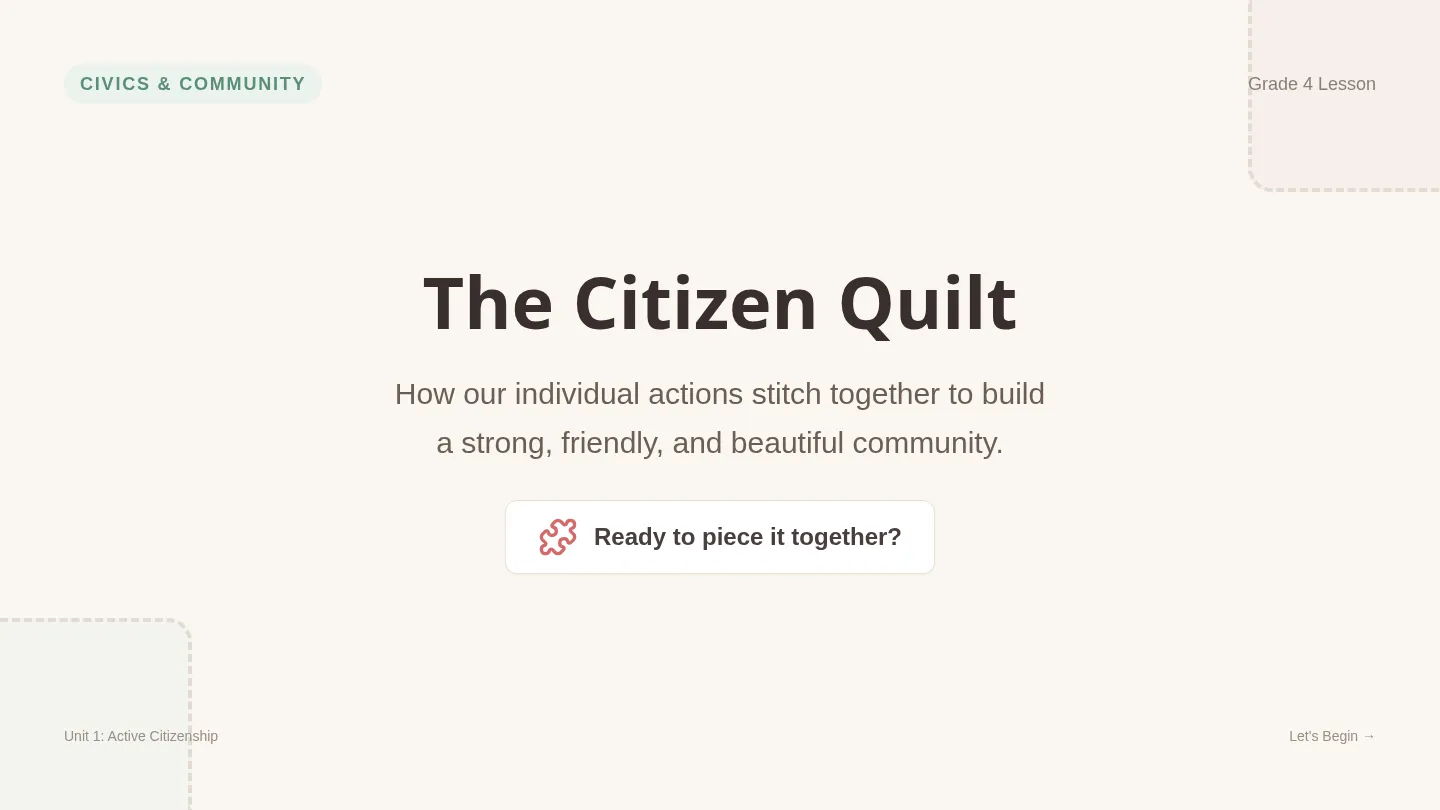
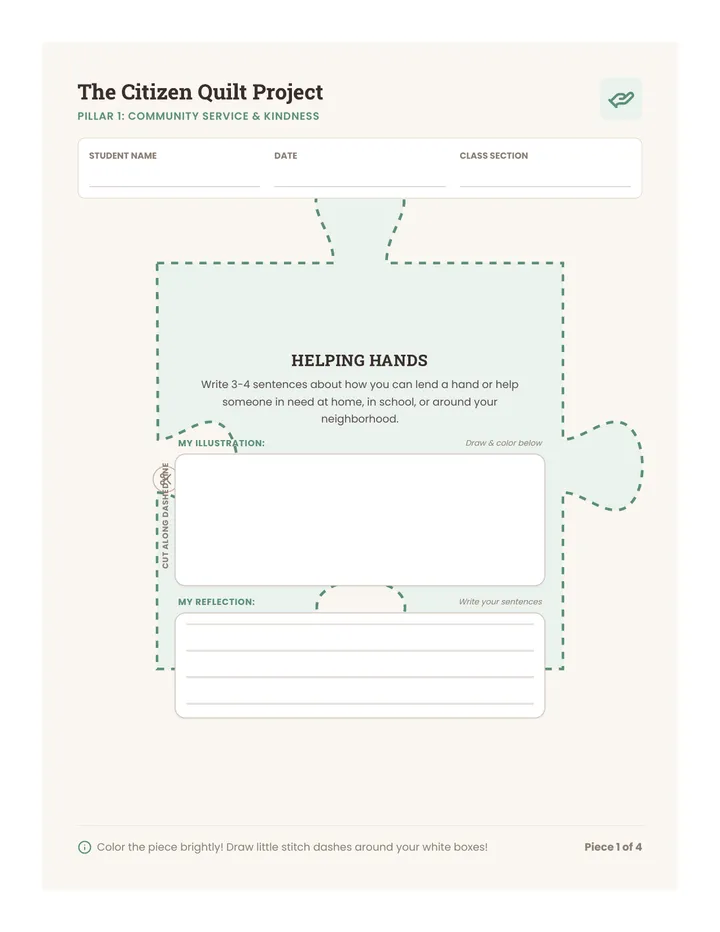
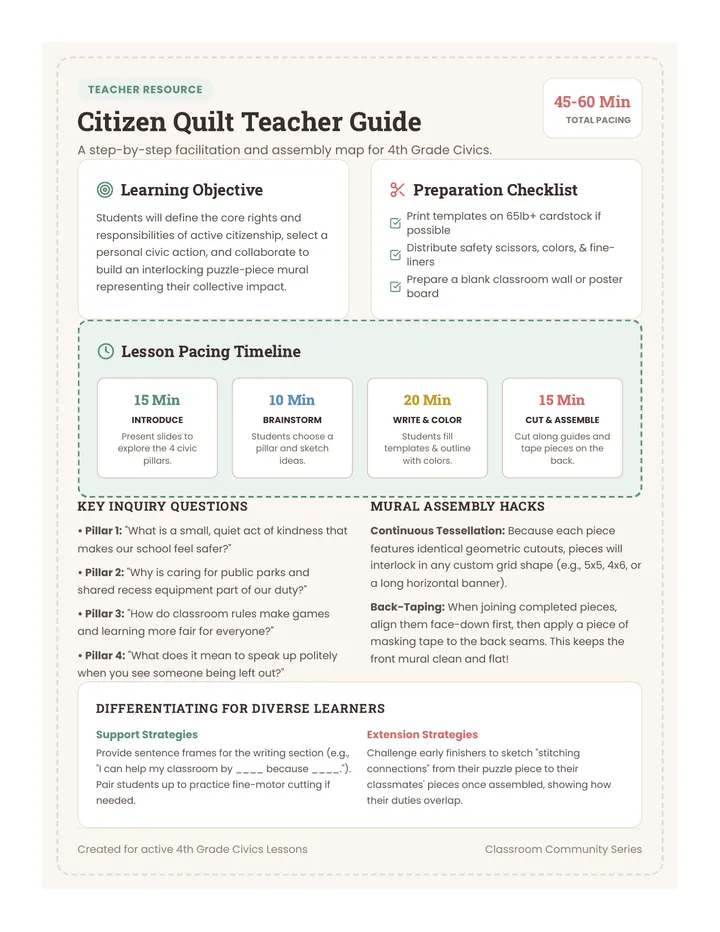
A comprehensive lesson on civic responsibility and community roles, helping students identify ways to contribute positively to their local environment.
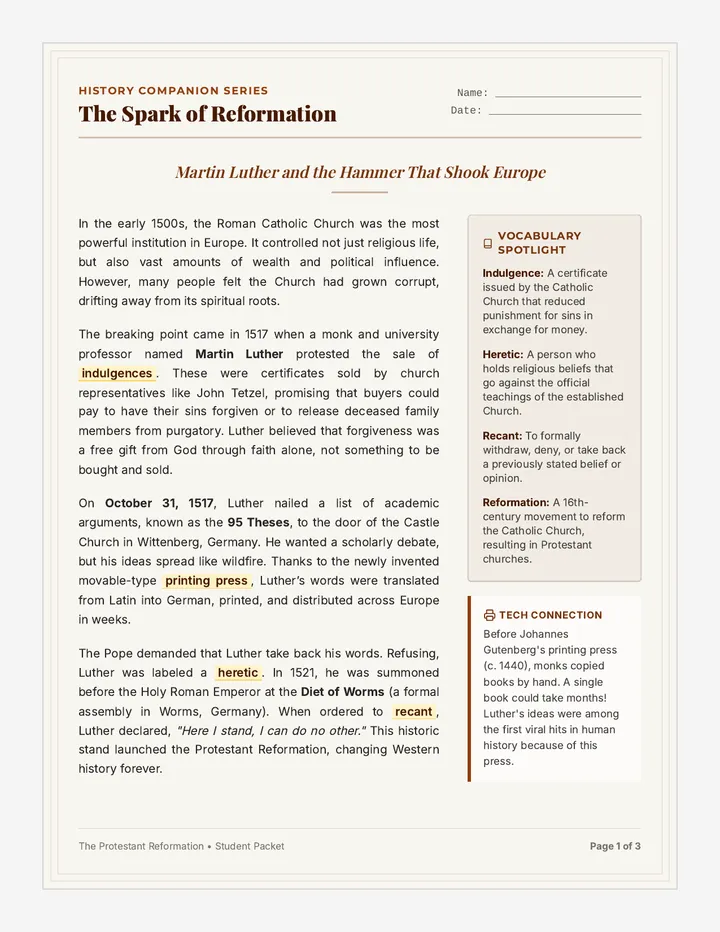
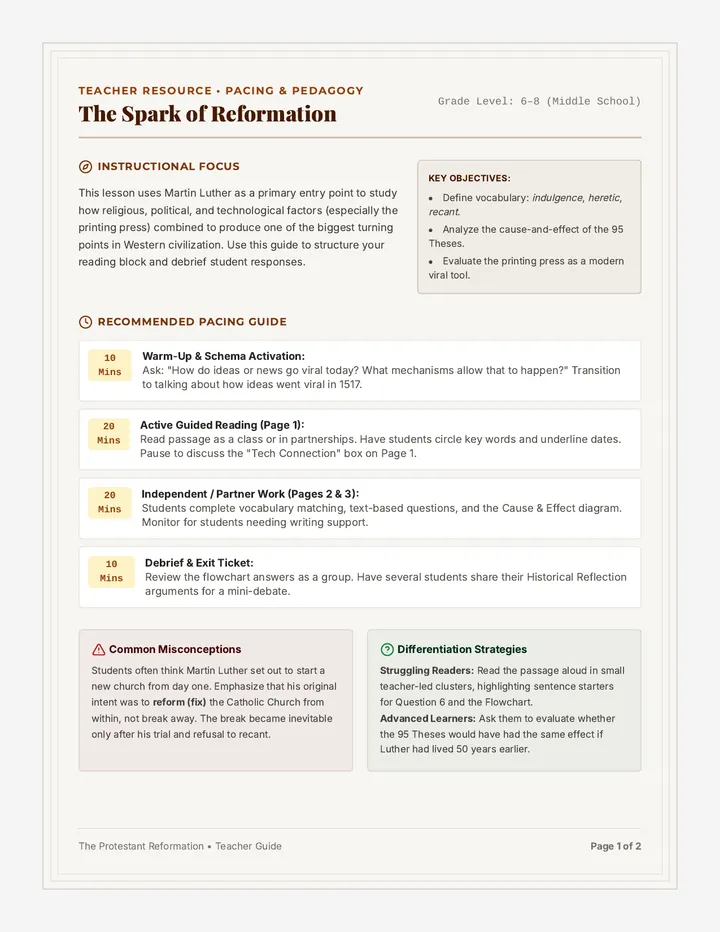
Students investigate the profound social, religious, and political impacts of centralized power, examining how the rise of nation-states led to both stability and systemic conflict across Europe.
Students rotate through stations, analyzing maps, treaties, and accounts to understand how monarchs consolidated power and defined the borders of modern Europe.
A 45-minute lesson for 6th graders to develop media literacy skills by learning how to identify AI-generated images and discussing the ethical implications of digital manipulation. Students will become 'Pixel Detectives,' learning specific visual cues to distinguish between reality and synthesis.
In this media literacy lesson, 6th-grade students become 'Digital Detectives' to uncover the hidden tactics of clickbait. They will analyze sensational headlines, identify emotional triggers, and practice transforming misleading viral content into factual reporting.
A comprehensive 45-minute lesson for 6th graders to navigate the complex digital landscape by categorizing information into six distinct 'InfoZones' based on their primary purpose. Students will learn to distinguish between news, opinion, advertising, and more.
Students explore the foundations of professional journalism ethics to collaboratively build a code of conduct for their classroom newsroom, focusing on truth, fairness, and accountability.
A 45-minute civics lesson exploring the First Amendment through the lens of the landmark Supreme Court case Tinker v. Des Moines, empowering students to understand their rights and responsibilities.
Students explore the vital role of a free press as the 'Fourth Estate' in a democracy, examining historical impact and current relevance through inquiry and analysis.
This lesson introduces 6th-grade students to the fundamental differences between accountability journalism and opinion pieces, focusing on the concept of 'watchdog' journalism and the role of information gatekeepers.
A 45-minute ESL lesson for Grade 5 (Emerging/Developing) focused on sequencing historical events and summarizing oral information using the California Gold Rush as a central theme.
A lesson exploring the struggle for school equality in the United States, focusing on key legal cases and the brave students who led the way for integration.
A comparative look at Hawaiian culture and Southern US culture, focusing on language, housing, economics, and deep-rooted family values.
A comprehensive exploration of the United States presidential election process, from primary campaigns and national conventions to the Electoral College and Inauguration Day.
An exploration of the three branches of the United States government—Legislative, Executive, and Judicial—and the system of checks and balances that ensures no single branch becomes too powerful.
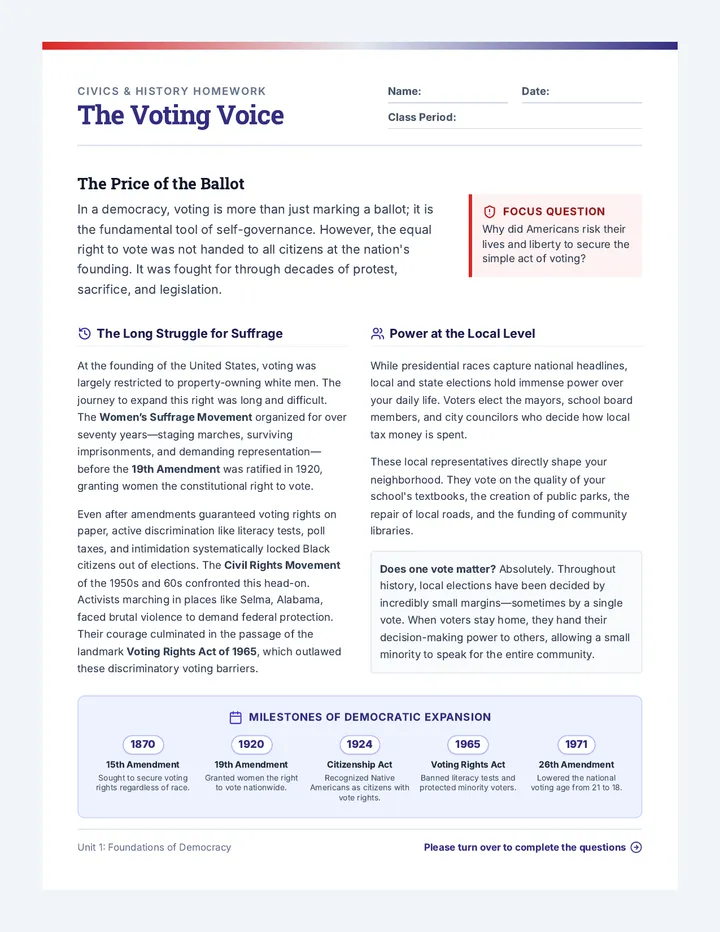
An exploration of voting rights in the United States, tracing the expansion of the franchise through constitutional amendments and the Civil Rights Movement.
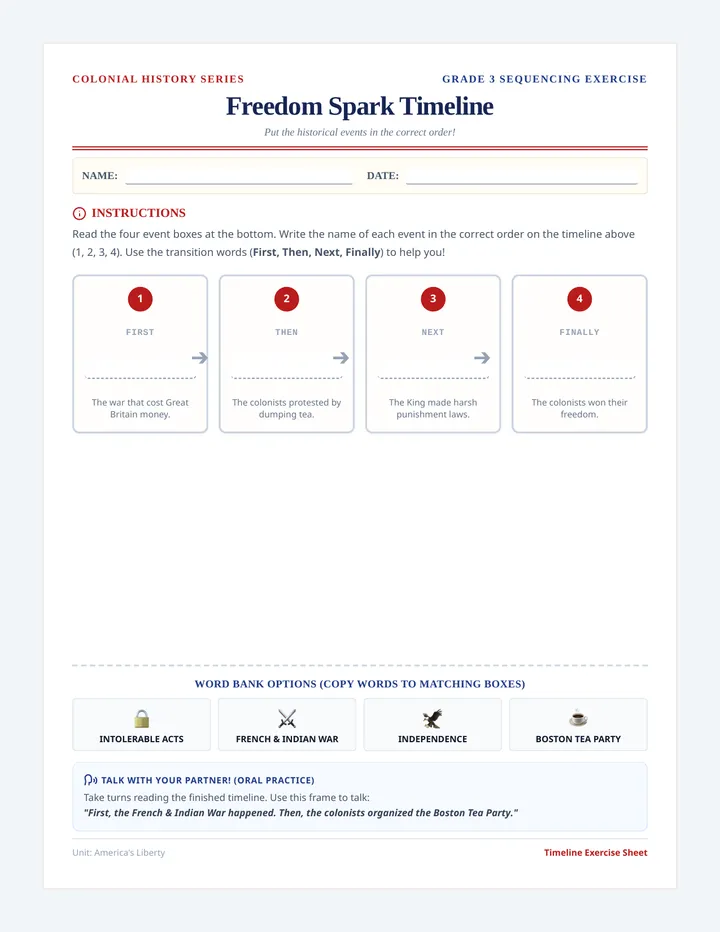
An exploration of the Declaration of Independence, its historical context, key grievances against King George III, and the fundamental principles of American democracy.
A lesson focused on the key European explorers who reached North America, their motivations, and their discoveries.
A lesson exploring the cultural and environmental adaptations of Native American tribes across four key regions: Arctic, Northeast, Southeast, and Plateau.
Master the essential terminology of Ancient Rome through visual and descriptive flashcards.
Solve complex multiplication word problems using multiple strategies including arrays and area models.
Track and reflect on daily reading progress with differentiated logs for various ability levels.
Analyze the key figures, events, and documents of the American Civil Rights Movement.
Explore how plants transform sunlight into energy through the process of photosynthesis.