A beginner-friendly introduction to the physical parts of a Chromebook and basic digital literacy for kindergarten students.
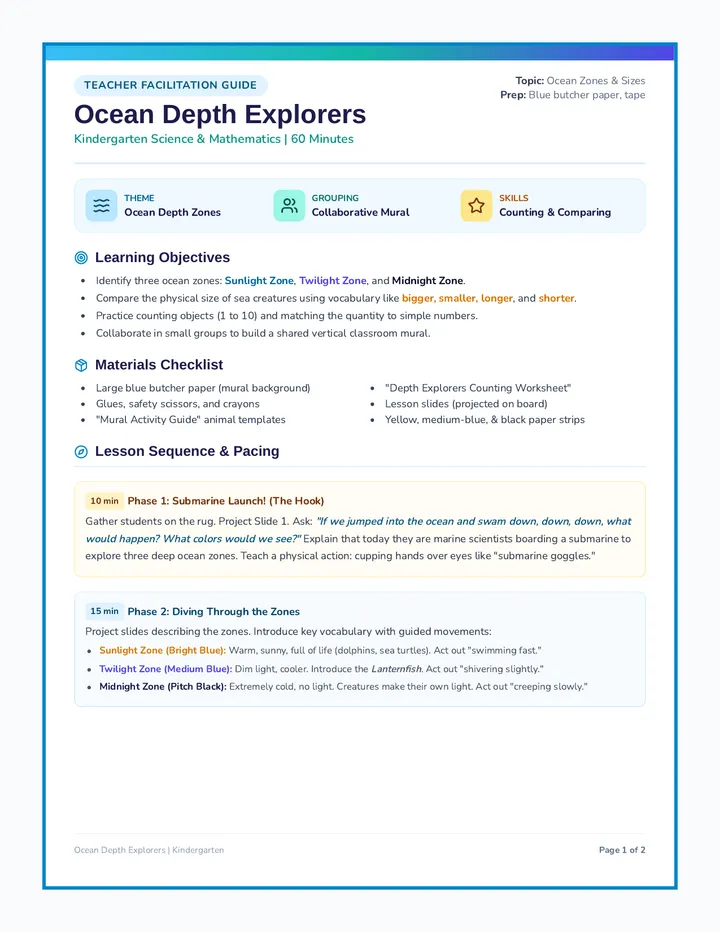
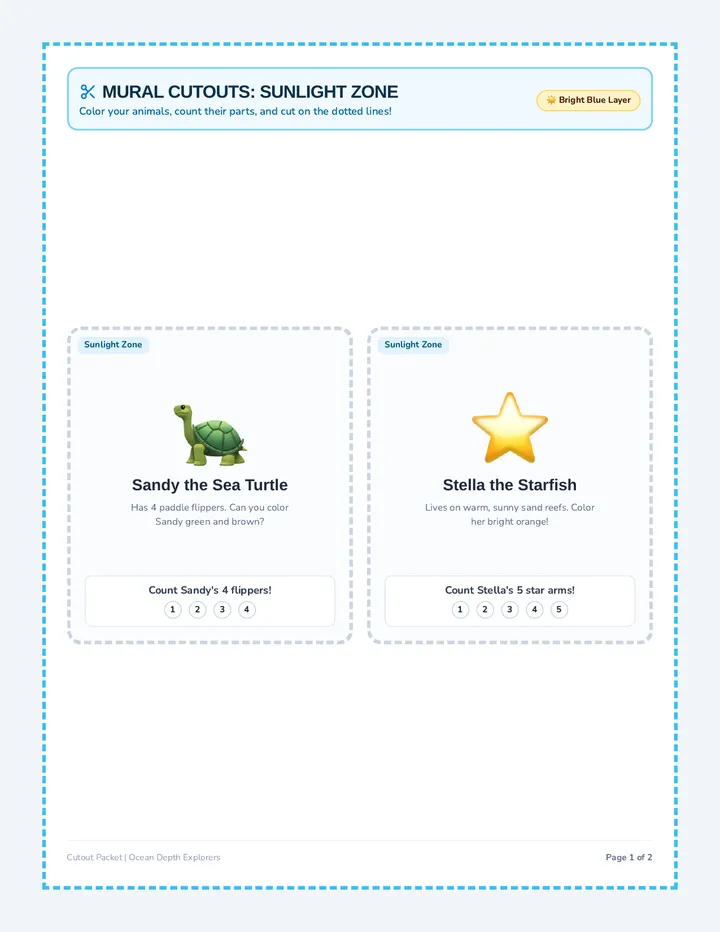
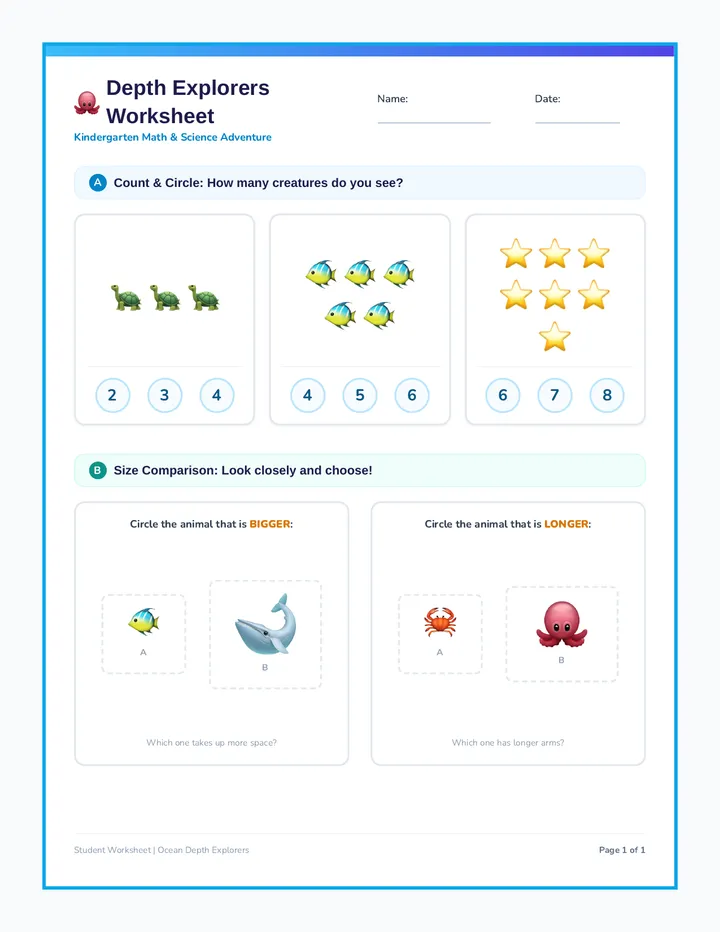
An introductory lesson for kindergarten students exploring basic ocean facts and marine life through visual aids and hands-on activities.
In this hands-on lesson, students explore the science of runoff and drainage by observing melting snow. They'll learn why drains are essential for preventing floods and how to keep water flowing safely through their environment.
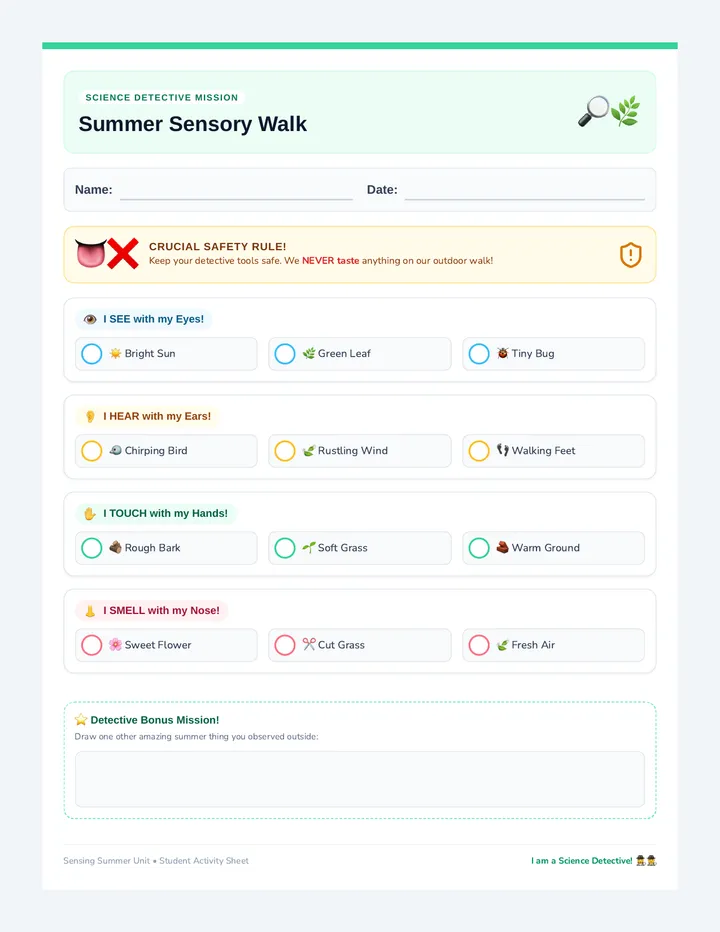
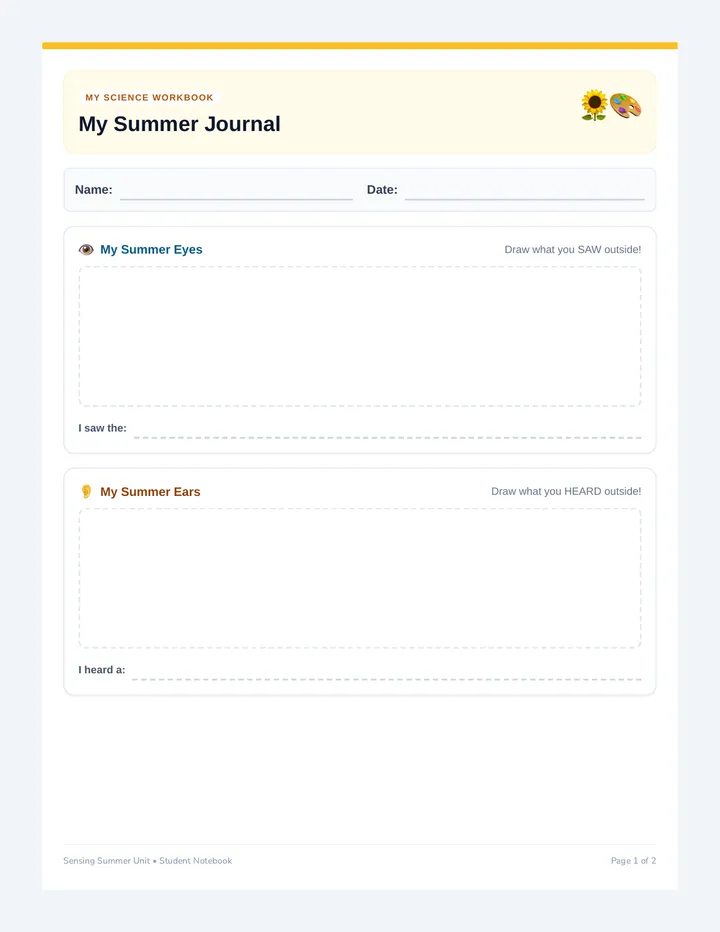
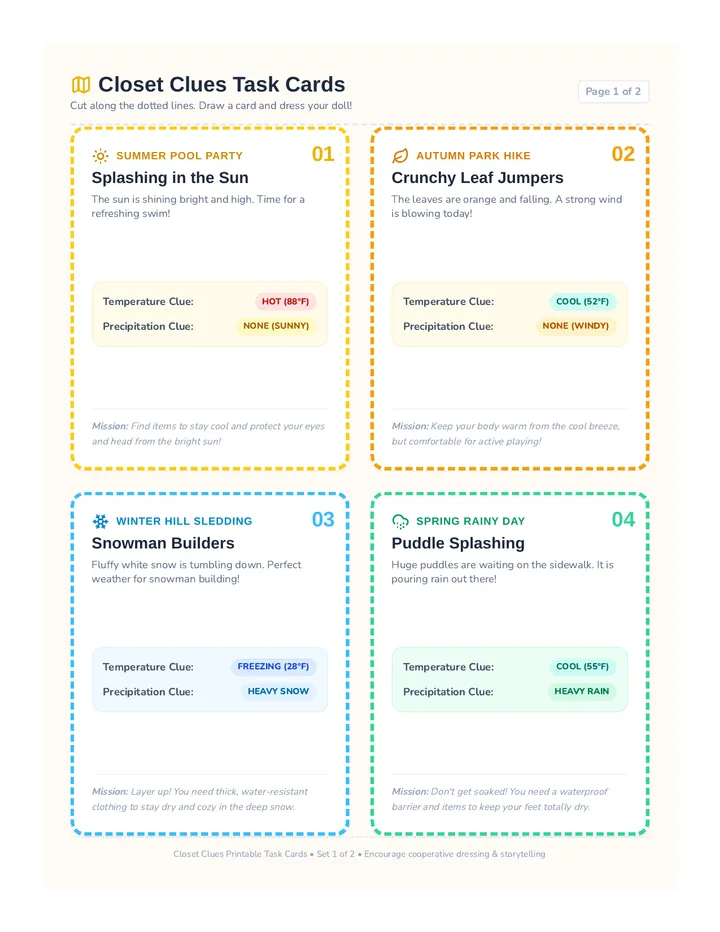
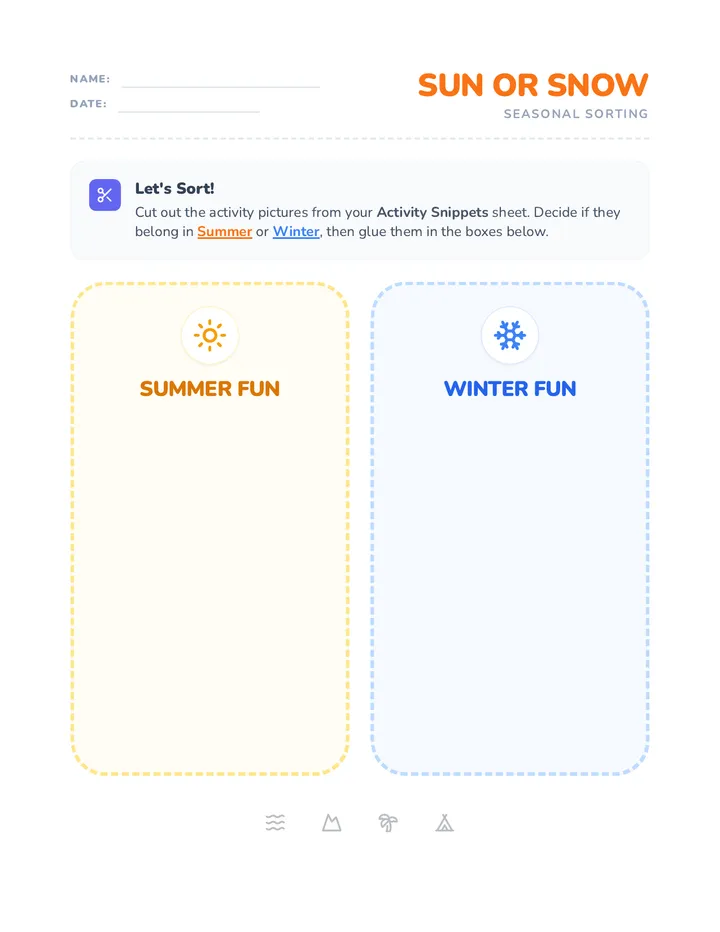
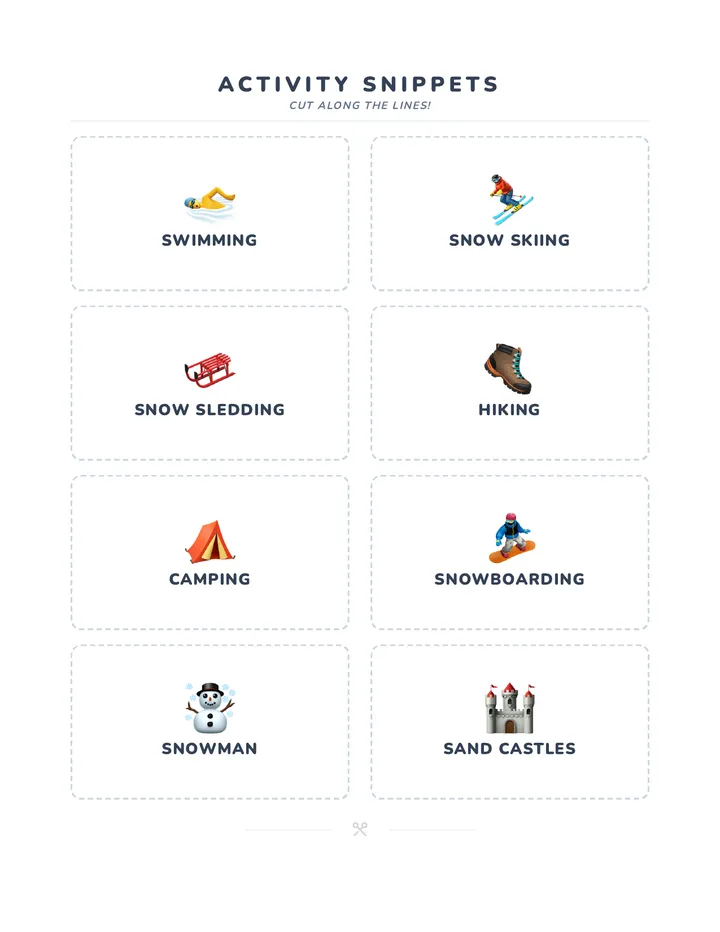
A kindergarten lesson exploring the four seasons, focusing on their unique weather patterns, corresponding clothing, and the sequence of the year.
A foundational lesson for kindergarteners to identify weather types, understand cause-and-effect relationships with weather, and practice early literacy skills through a weather-themed story.
Students design and build a STEM leprechaun trap inspired by 'How to Catch a Leprechaun', focusing on multi-step directions and problem-solving through the engineering design process.
An introductory science lesson comparing a live goldfish to a goldfish cracker to help students identify the characteristics of living and non-living things.
Students learn to distinguish between light sources and reflections and understand the basic path light takes from a source to the eye.
A foundational lesson on cybersecurity for elementary students, focusing on identifying personal information and learning the 'Ask First' rule for online sharing.
A gentle introduction to the respiratory system for young learners, focusing on the path air takes through our bodies using the metaphor of 'Air Explorers'. Students will learn about the nose, mouth, windpipe, and lungs through simple diagrams and interactive activities.
A nature-themed exploration of the letter N, focusing on lowercase and uppercase identification, the /n/ sound, and nature-based vocabulary like nests, nuts, and newts.
An interactive science lesson for K-3 students exploring the symbiotic relationship between bees and flowering plants through a hands-on pollination simulation.
A whimsical introduction to computer science loops through the magic of storytelling and nursery rhymes. Kindergarten and 1st-grade students learn to spot repeating patterns in their favorite songs and 'code' them using loop symbols, bridging the gap between literacy and computational thinking.
Students learn how to care for a corn plant and finish the unit by planting their own seeds to take home.
An exploration of how heat transforms corn into popcorn, followed by a classroom popping session.
Students explore the different colors and types of corn seeds and create vibrant mosaic art using dried kernels.
Students discover the history of corn (Maize) and its life cycle before creating traditional hand sweepers from corn husks.
An introductory lesson for early elementary students exploring how we breathe, the journey of air through our bodies, and the main parts of the respiratory system.
Fifth-grade maestros perform advanced testing on conductivity, solubility, and mass to restore power to a science lab. Comprehensive STAAR review and engineering design.
Fourth-grade detectives classify matter using temperature, magnetism, and relative density to solve a water filtration mystery. Includes STAAR-aligned assessment questions.
Third-grade pilots test mass, magnetism, and buoyancy to recover sunken treasure. Explores the properties of solids, liquids, and gases including shape and volume.
Second-grade engineers investigate texture, flexibility, and physical states of matter to design components for an astronaut's spacesuit. Distinguishes between solids and liquids.
First-grade agents classify objects by size, weight, and multiple observable attributes to help a superhero organize their gadget bag. Focuses on heavier vs. lighter and larger vs. smaller.
Kindergarten students explore physical properties like shape, color, texture, and material to help a broken toy factory sort its inventory. Includes hands-on sorting and sensory exploration.
A deep dive into the lives of jungle and safari animals, comparing their environments, diets, and amazing natural behaviors.
A collection of unit-wide resources for the Force Field Academy, including a master shopping list and student achievement certificates.
Upper elementary students design and conduct experimental investigations to test the effects of friction, gravity, and force on systems like cars and rockets. Alignment: TEKS 4.7(A), 5.7(B).
Students demonstrate forces in contact and at a distance, exploring gravity and magnetism through engineering challenges that require precise control of invisible forces. Alignment: TEKS 3.7(A).
Students explore how magnets interact with various materials and use magnetism to push and pull objects through fun, hands-on challenges. Alignment: TEKS K.7(A).
Fifth graders demonstrate Earth's 24-hour rotation and its effect on day/night cycles and shadow movements through architectural engineering challenges. Includes TEKS 5.9(A) alignment and STAAR preparation.
Fourth graders analyze data to predict seasonal daylight patterns and model the observable changes in the Moon's appearance. Includes TEKS 4.9(A) and 4.9(B) alignment.
Third graders construct models of the Sun, Earth, and Moon orbits and identify the order of planets in our solar system. Includes TEKS 3.9(A) and 3.9(B) alignment.
Second graders investigate the Sun as a star and the Moon's reflective properties, including the engineering of sky-viewing tools. Includes TEKS 2.9(A) and 2.9(B) alignment.
Students explore the four seasons by engineering protective shelters and modeling the seasonal cycle to predict changes in nature. Includes TEKS 1.9(A) alignment for first grade.
A foundational lesson for early learners to identify and name common fruits using visual aids and matching activities.
A set of printable note cards for students to research and illustrate different animals, focusing on habitat, diet, size, and interesting facts.
Advanced reading on photosynthesis and plant biology for 4th grade students.
A more detailed exploration of plant parts and their functions for 2nd grade students.
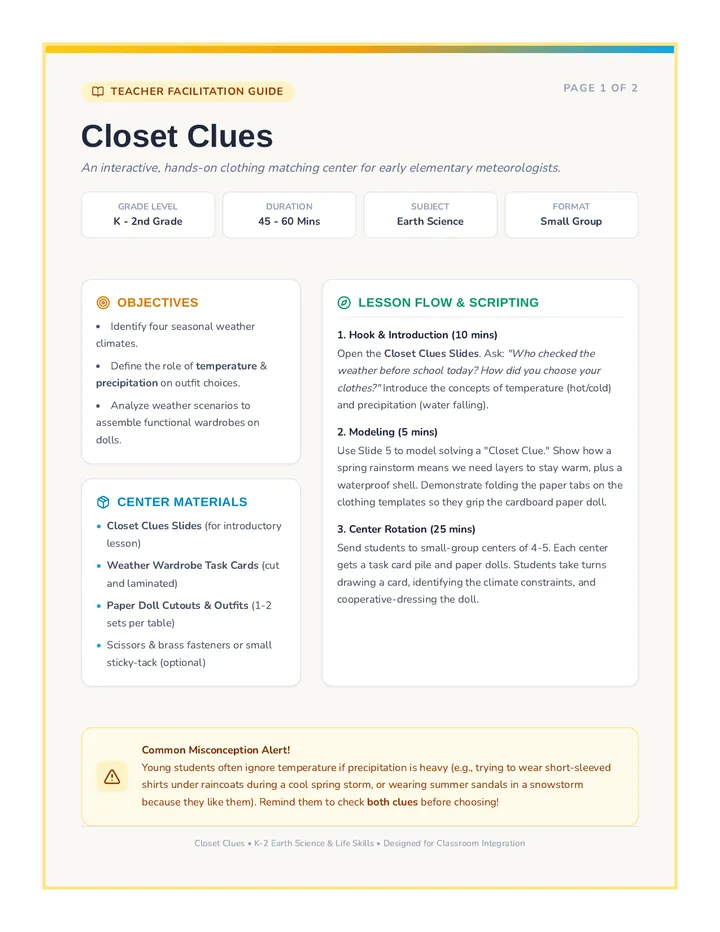
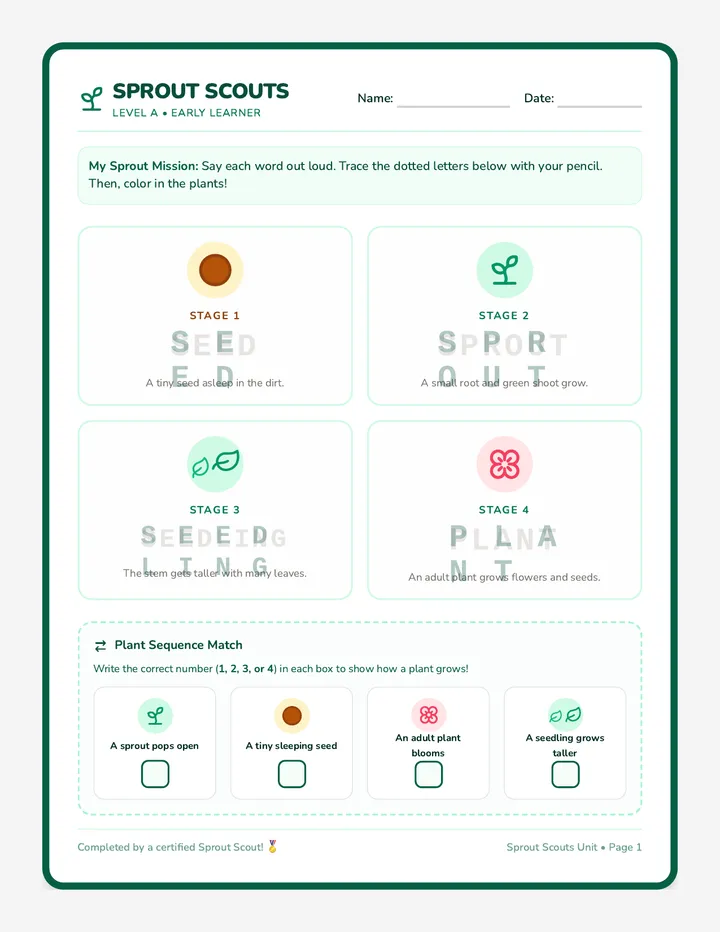
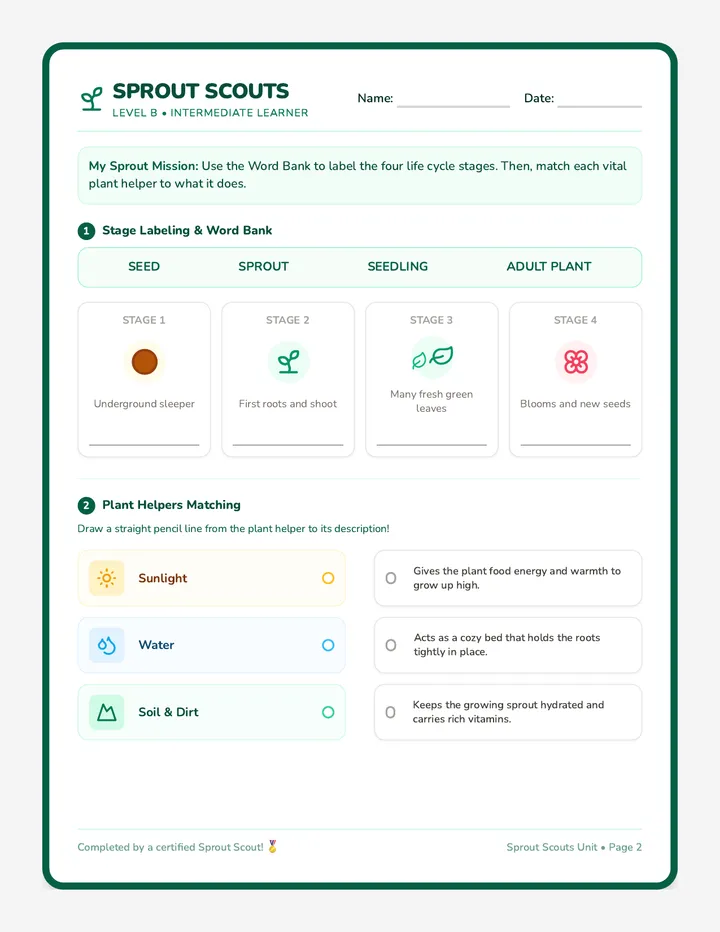
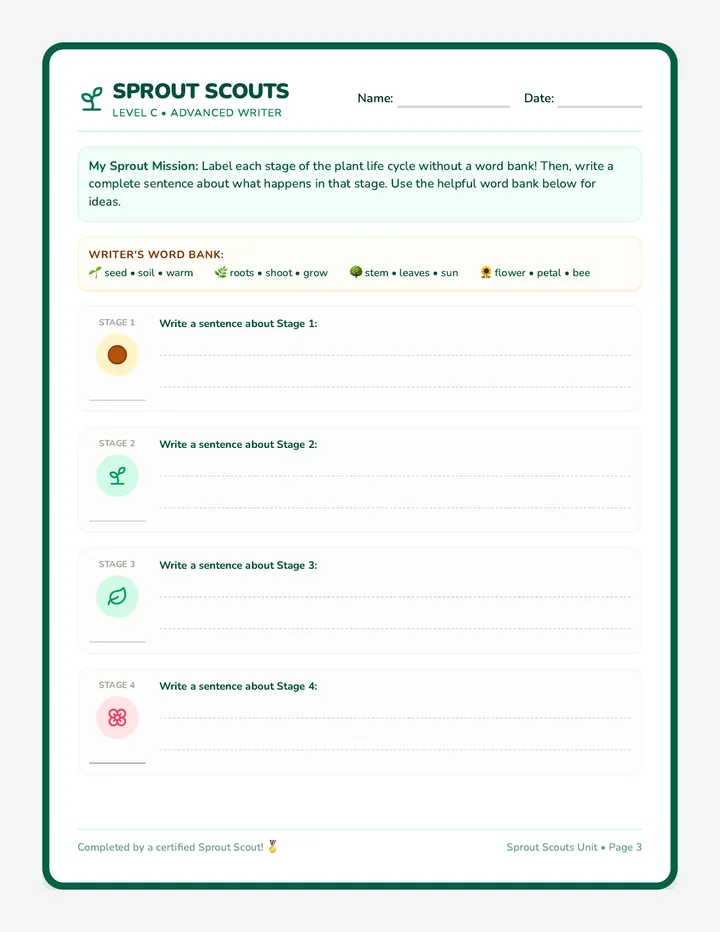
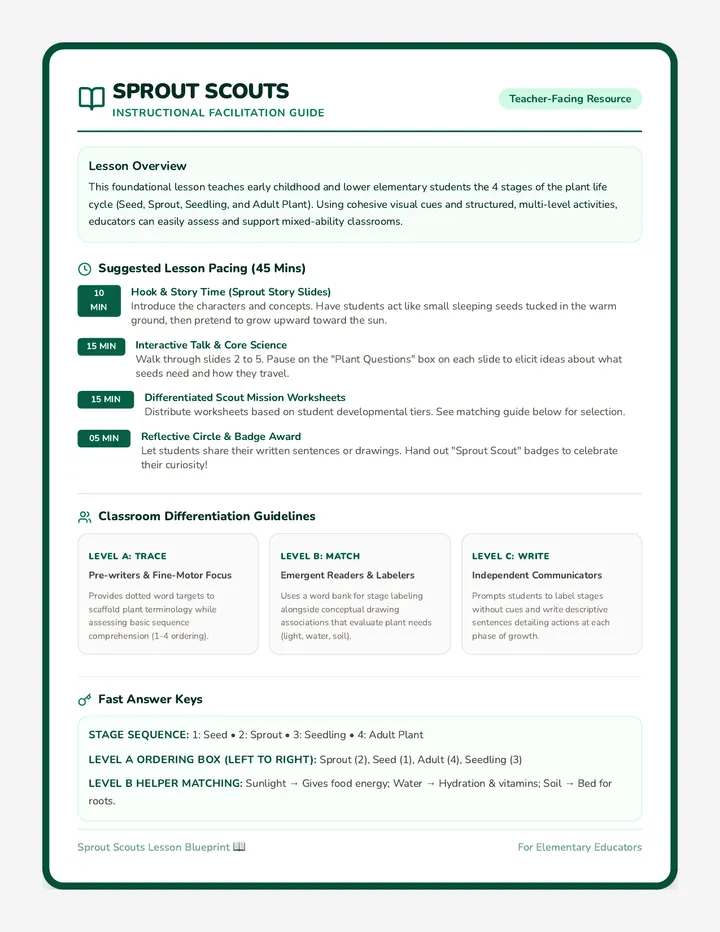
Foundational reading and activities about how a seed grows into a plant, designed for Kindergarten learners.
A four-day series of 30-minute activities exploring spring weather and nature through two outdoor adventures and two indoor crafts.
A hands-on exploration of plant anatomy, featuring a board game and matching activities to identify roots, stems, leaves, and flowers.
A collection of resources to help students process and reflect on a traveling zoo visit right in their own school. Students will document their observations, learn about animal habitats, and share their favorite moments.
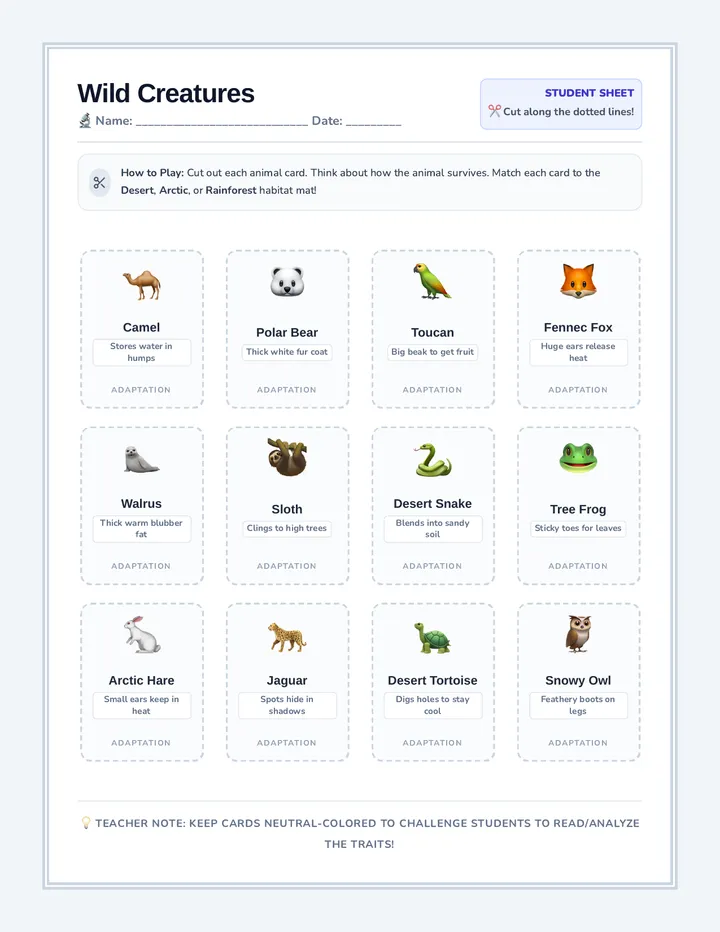
A foundational science lesson for Kindergarten students to identify and demonstrate the forces of pushing and pulling through visual aids and hands-on movement.
A foundational 30-minute lesson for K-1 students exploring the heart as a powerful pump that moves blood throughout the body.
An introductory lesson for early elementary students to learn about NASA, its mission, and the tools they use to explore space.
An introductory lesson for first graders to practice reading comprehension through the lens of basic space concepts like the sun, moon, and stars.
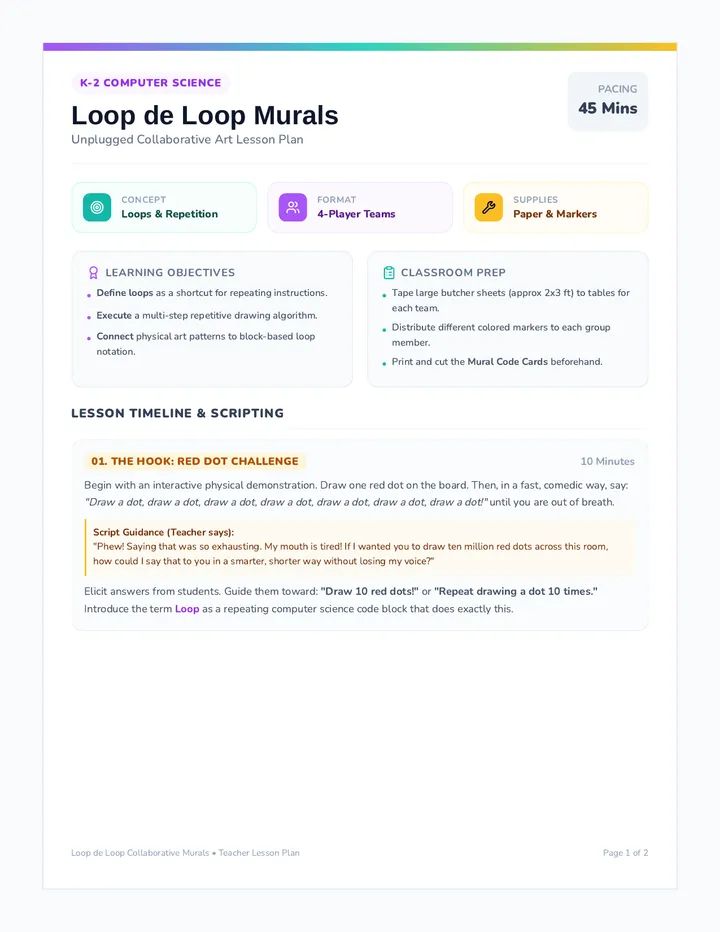
In this lesson, students become design detectives to identify everyday problems in their surroundings and use design thinking to brainstorm and prototype innovative solutions. Students will develop empathy, observation skills, and creative problem-solving through a structured investigative process.
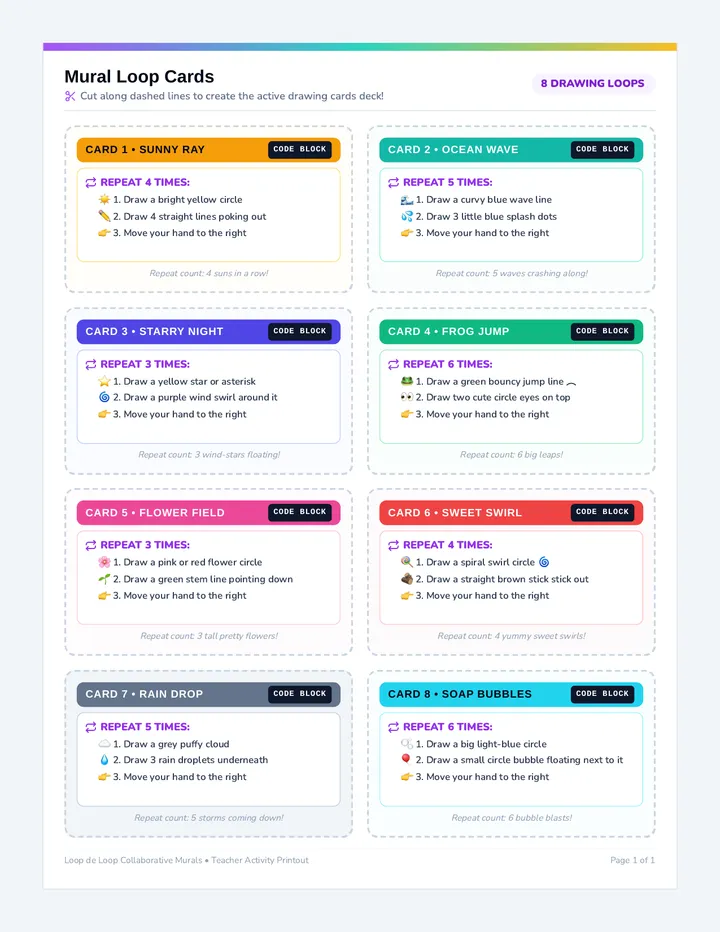
Students explore the fascinating world of plant life cycles and basic botany through a hands-on gardening project, observing stages from seed to fruit.
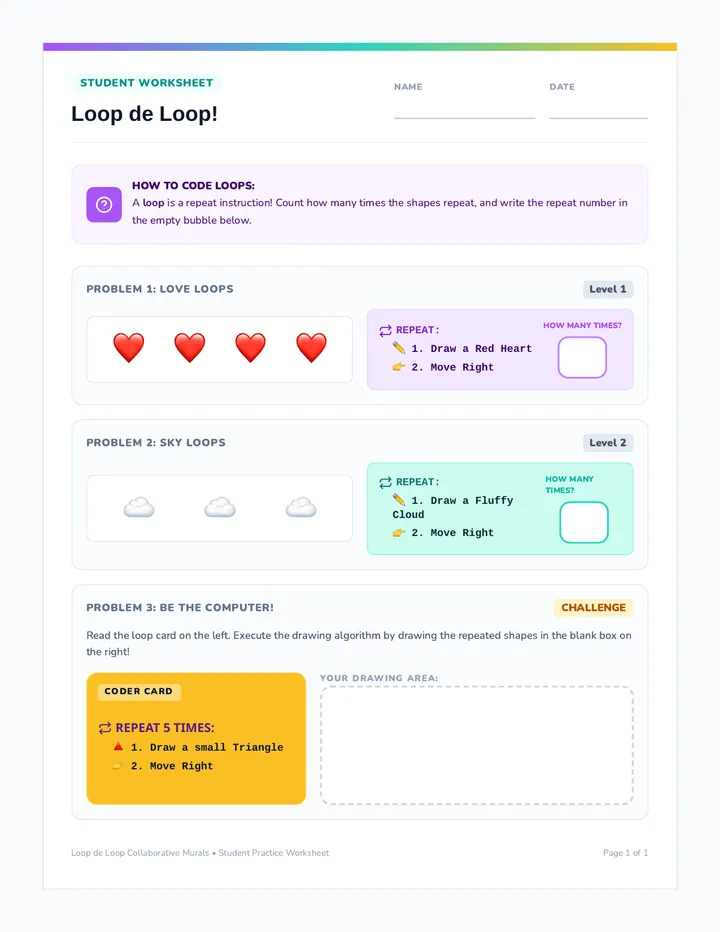
A foundational introduction to computer science for K-1 students, teaching algorithms and loops through visual and movement-based patterns. Students learn to see patterns as repeating sets of instructions, building the mental model for coding loops.