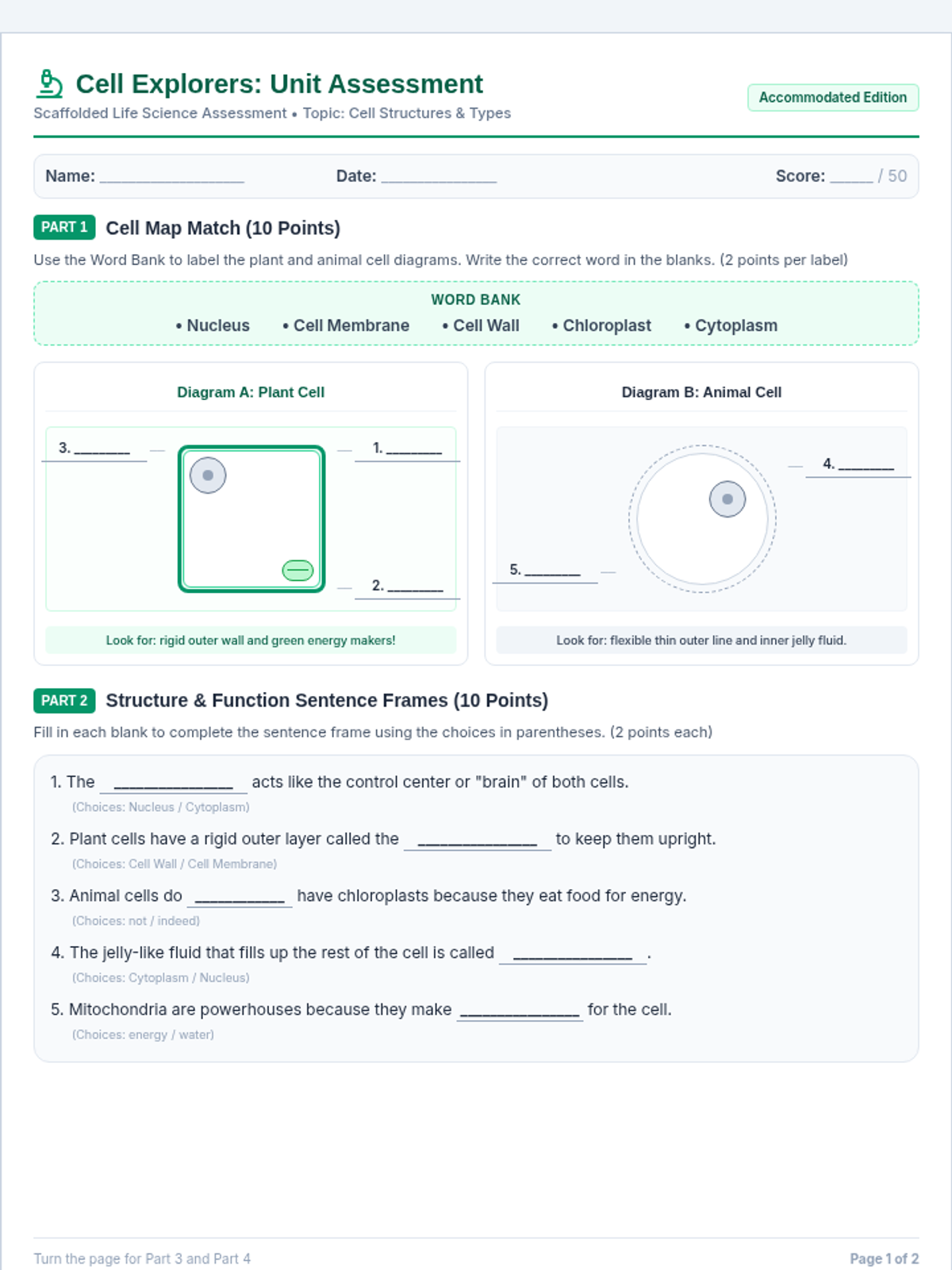
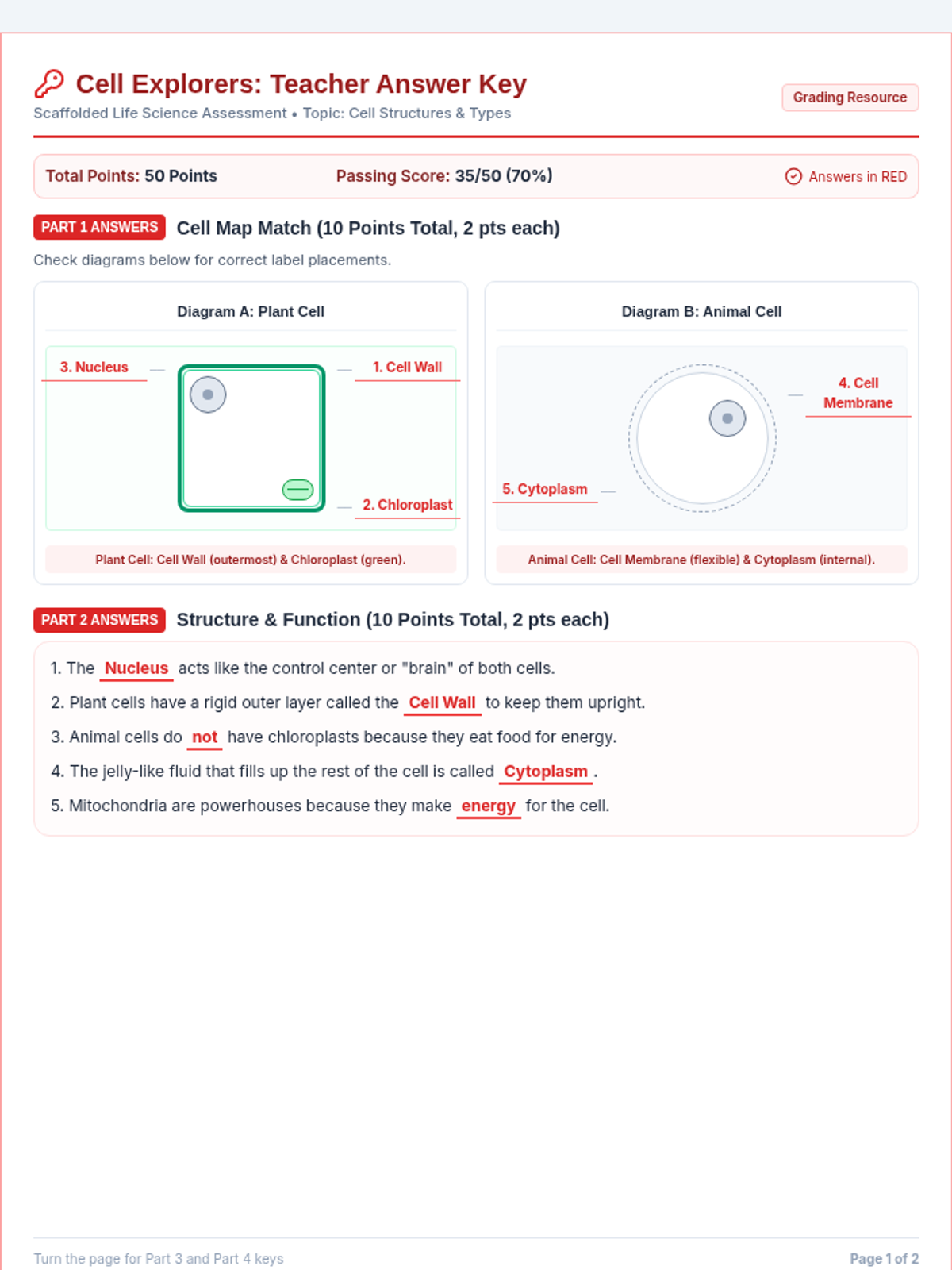
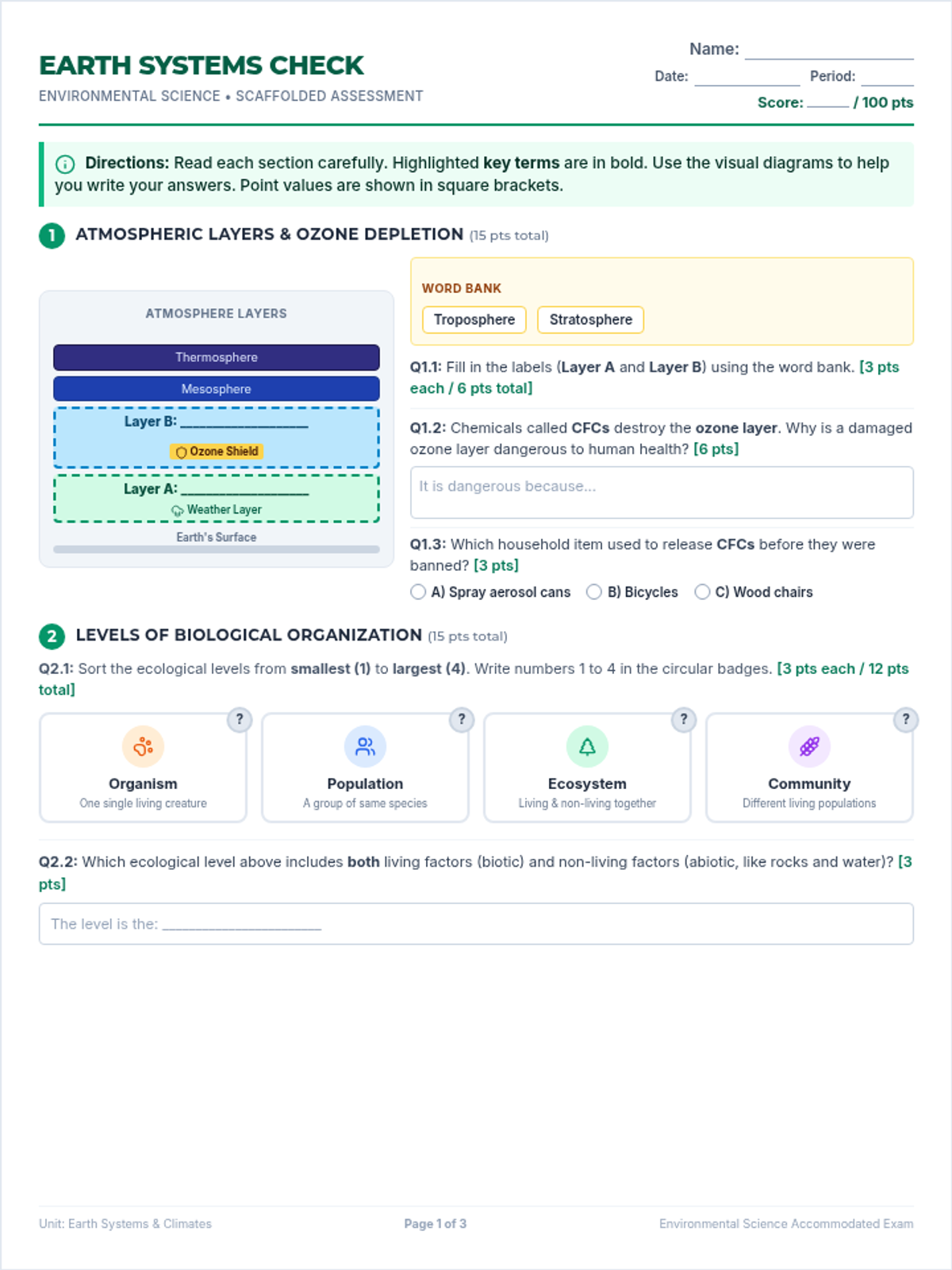
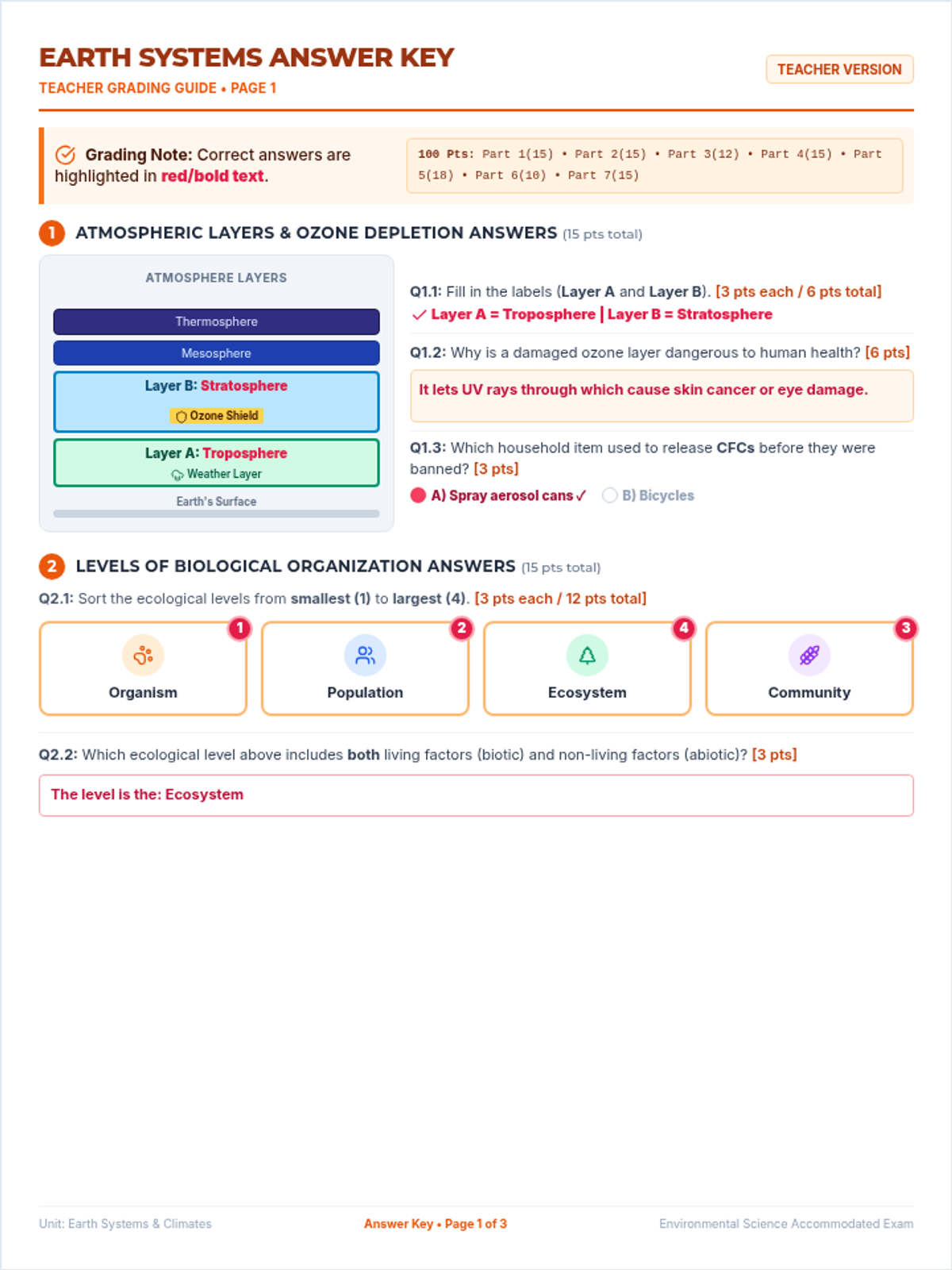
A set of accessible worksheets about the NASA Artemis II mission, specifically designed for middle schoolers reading at a primary level. Includes visual vocabulary, comprehension questions, and a sequencing activity.
This lesson explores the physical principles of buoyant force, focusing on Archimedes' Principle and the specific factors that determine the magnitude of upward force in a fluid. Students will distinguish between variables that affect buoyancy and those that do not, such as depth and object density.
An in-depth look at the anatomical structures of the primary sensory organs, providing hands-on labeling and coloring activities to reinforce terminology.
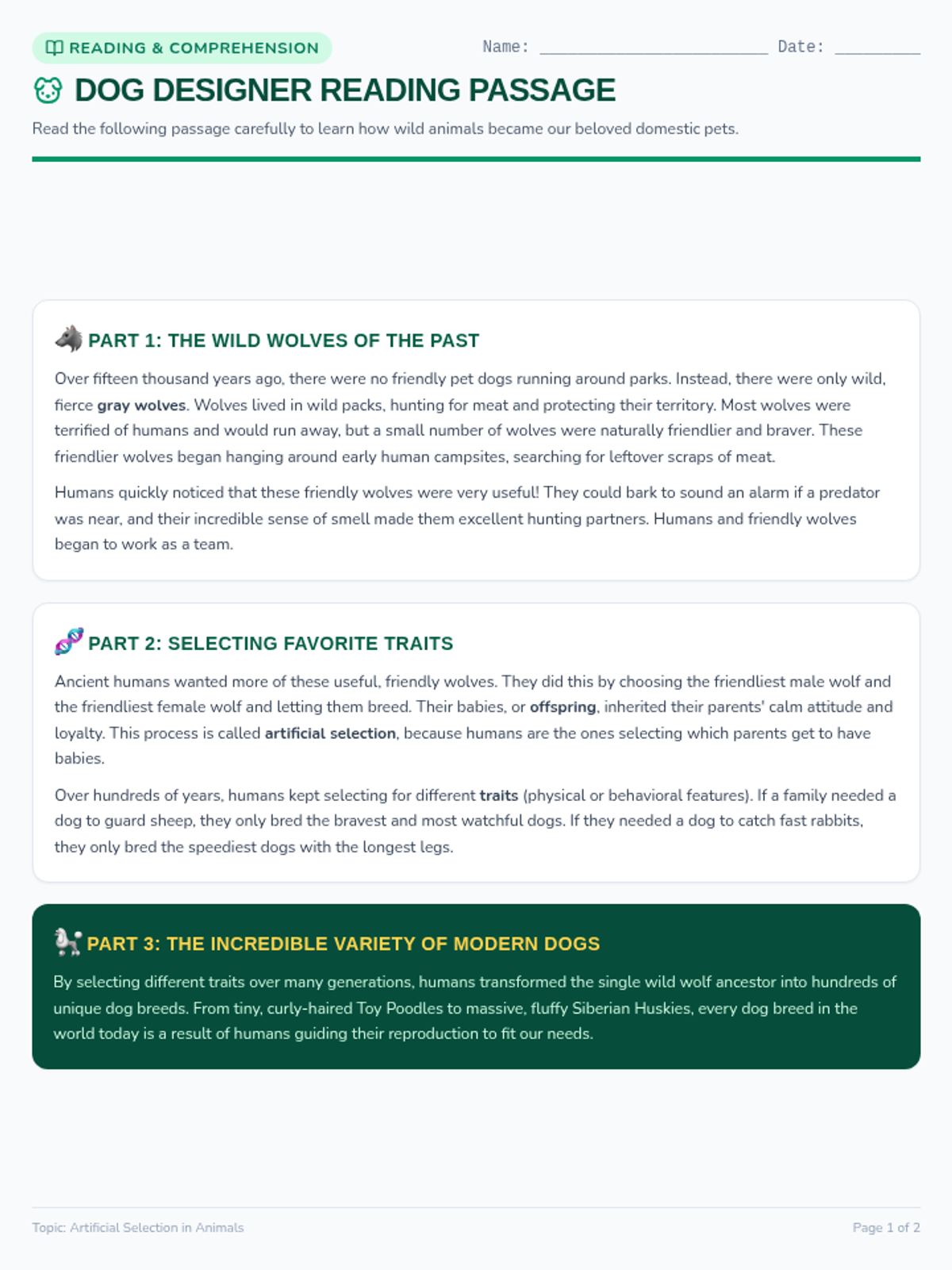
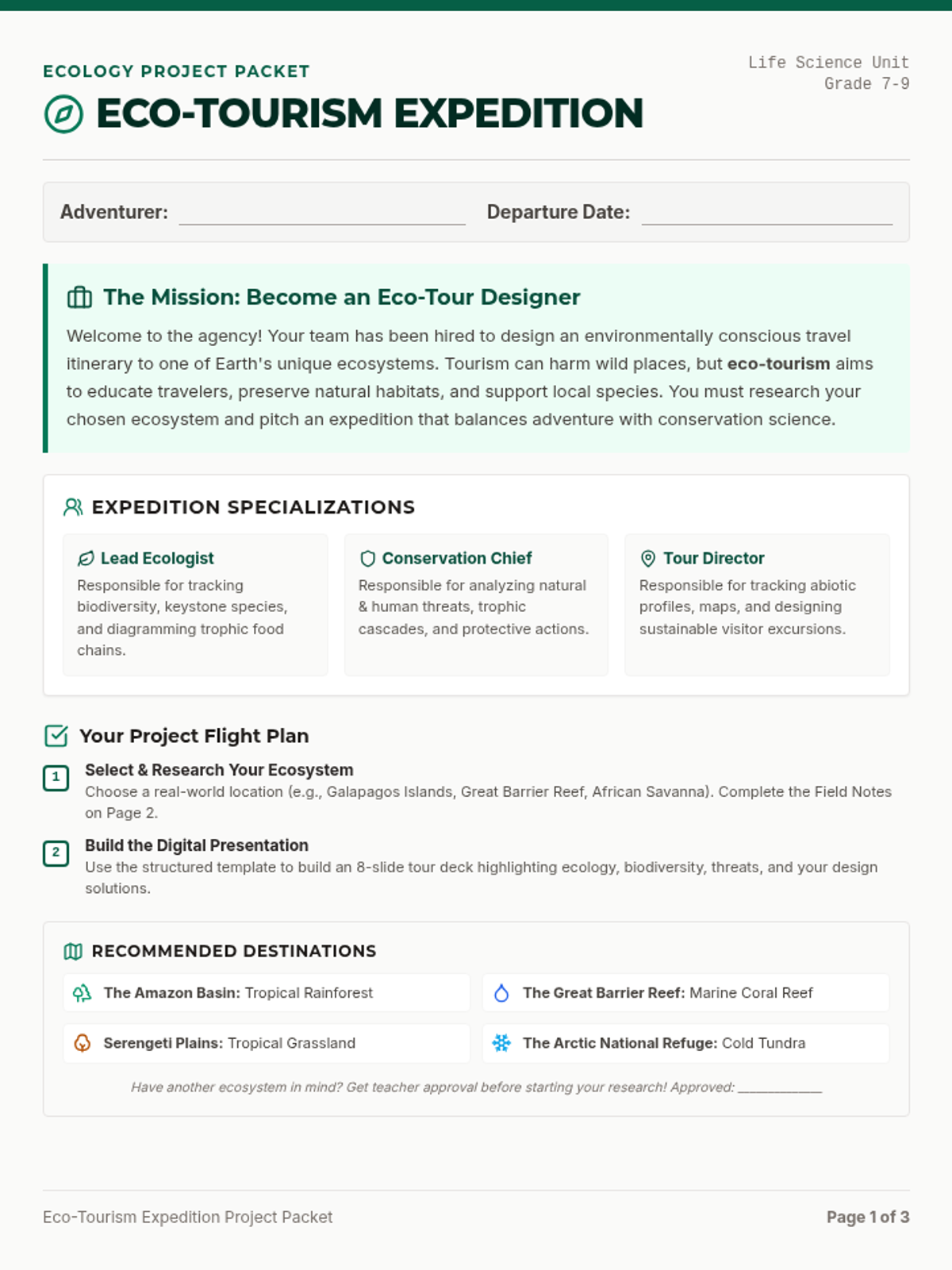
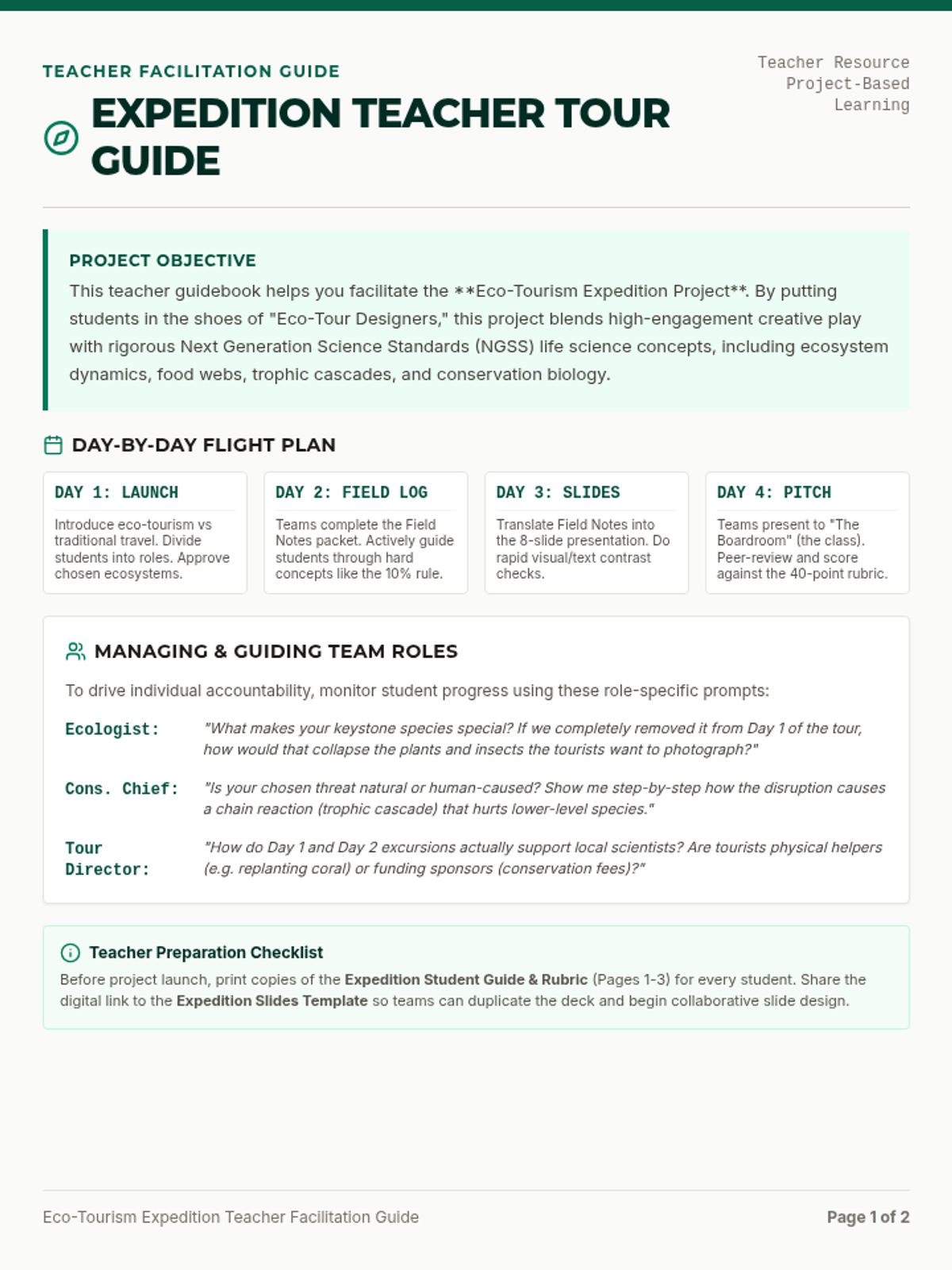
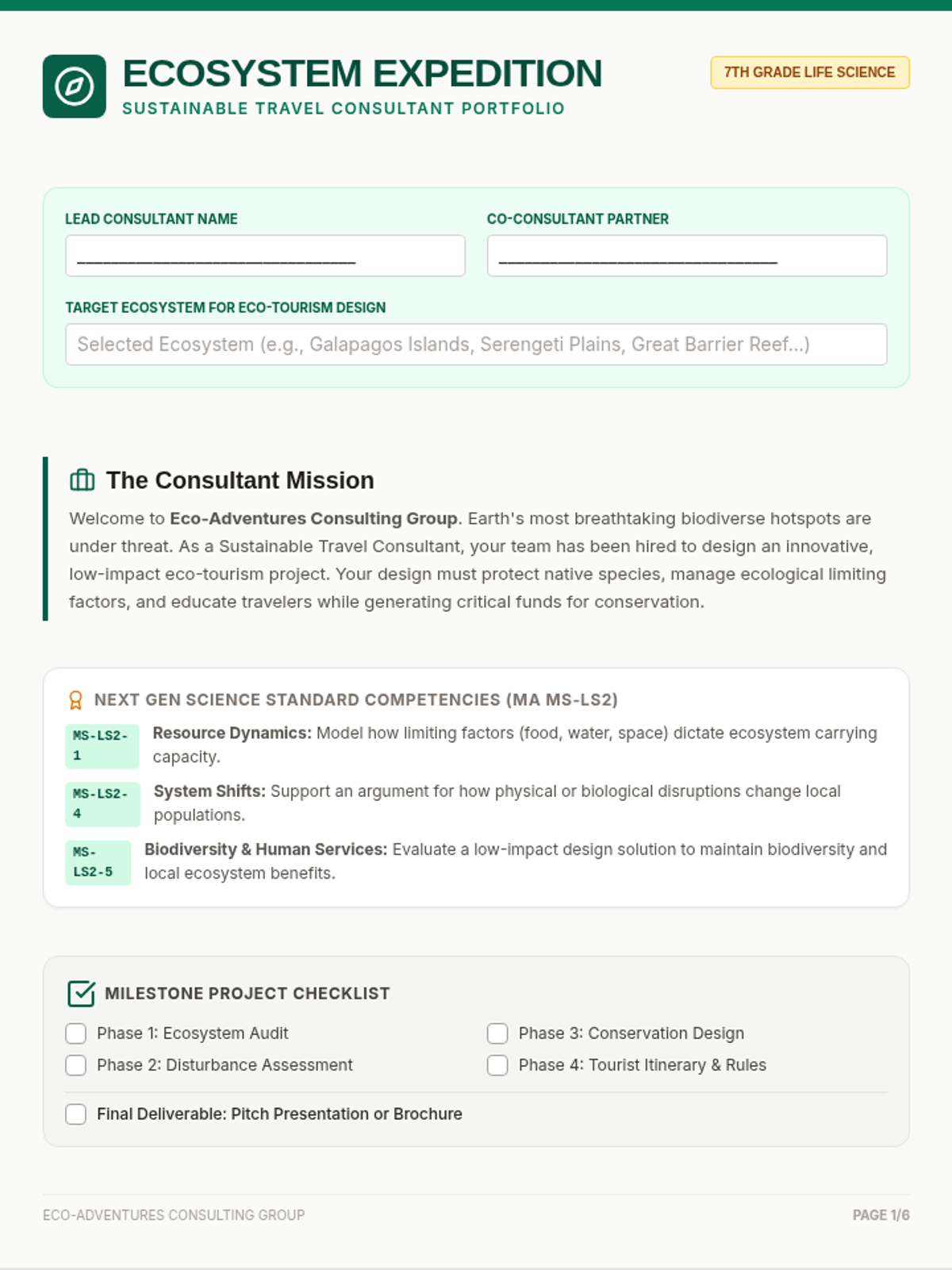
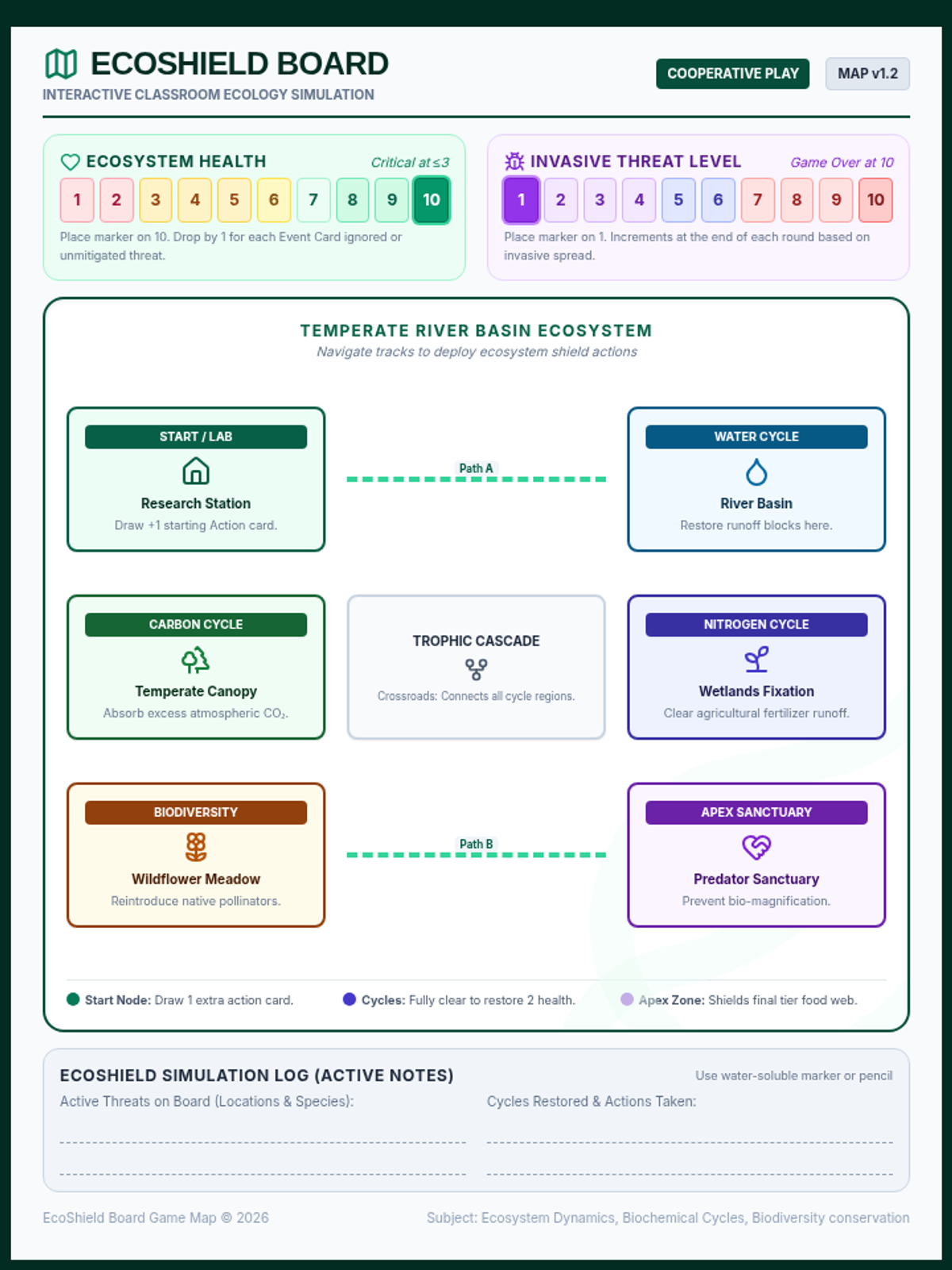
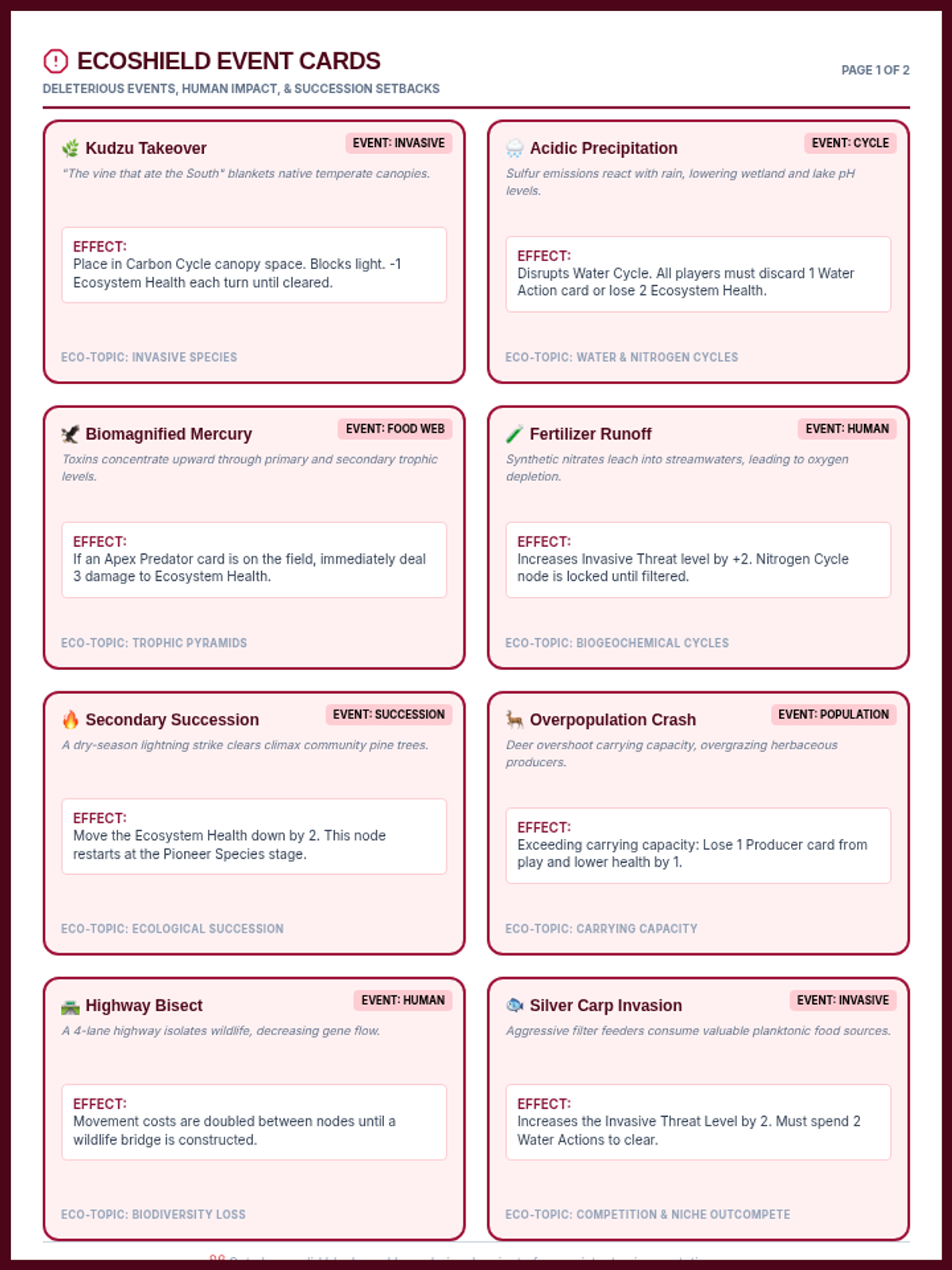
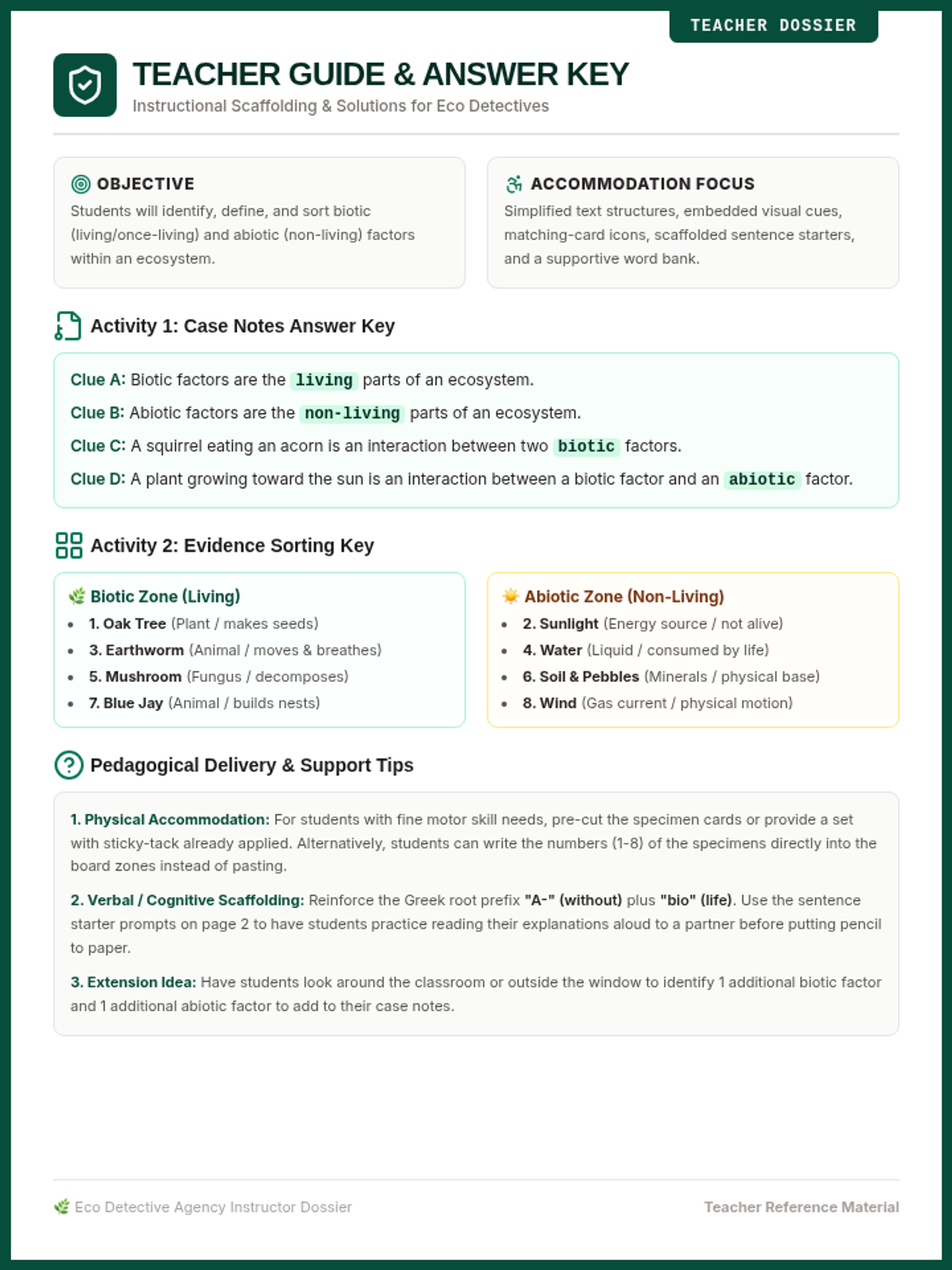
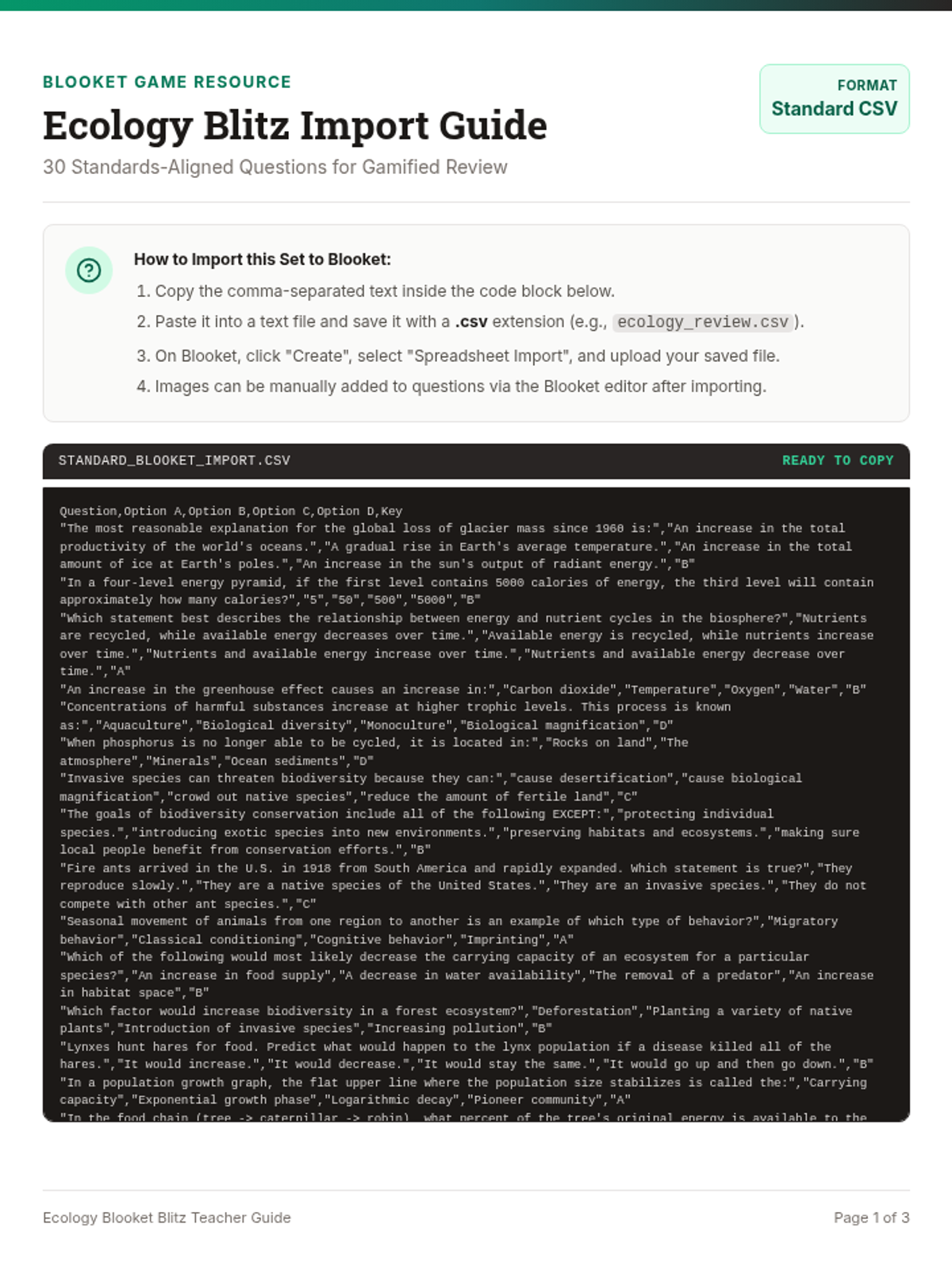
A comprehensive review lesson covering the essential biogeochemical cycles and the flow of energy through ecosystems, designed to prepare students for assessments through varied question types and difficulty levels.
A creative project where students design an Instagram-style feed for the Carbon, Nitrogen, Water, and Phosphorus cycles to demonstrate their understanding of biogeochemical processes.
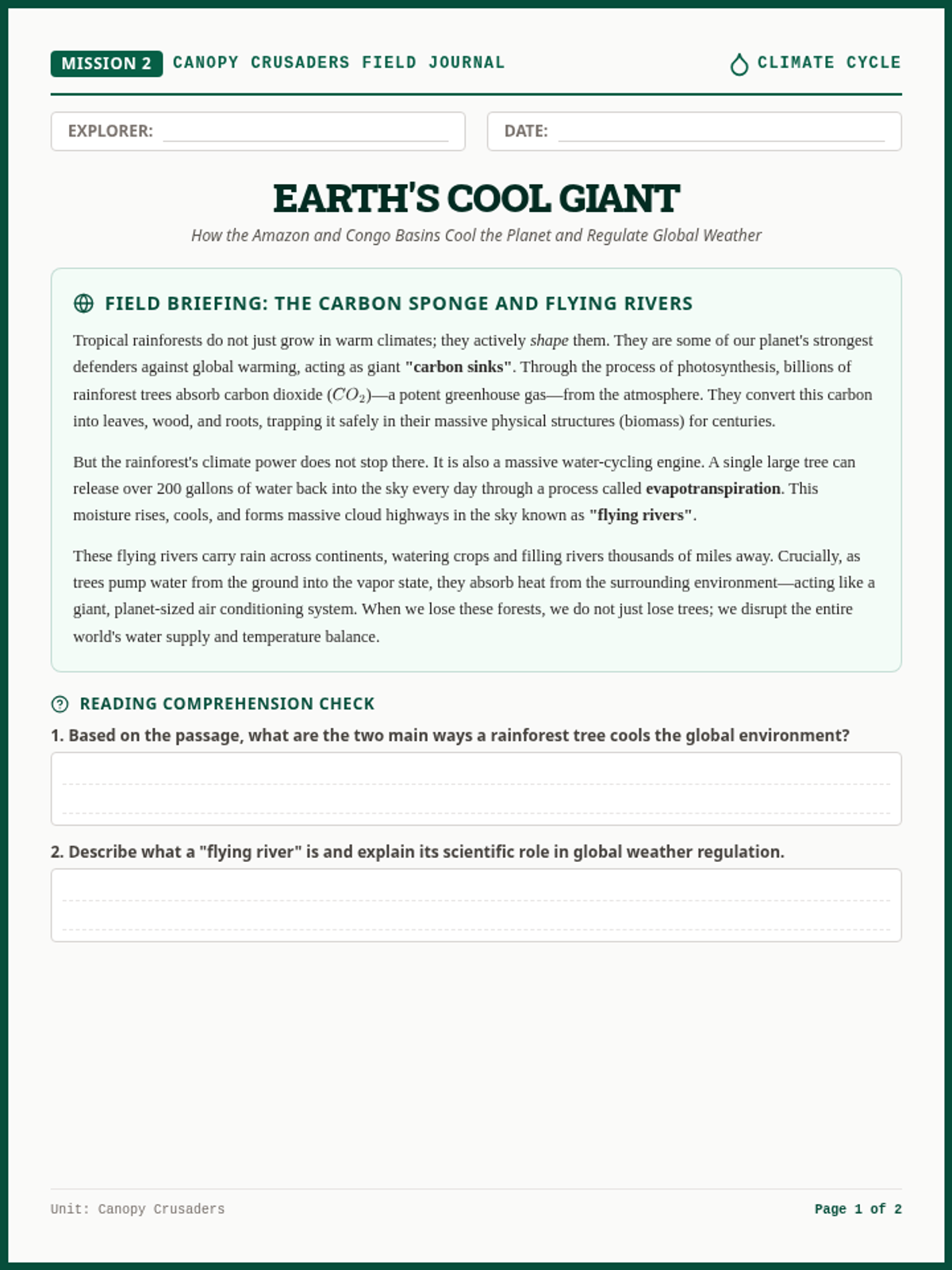
A comprehensive lesson on the four major biogeochemical cycles: Water, Carbon, Nitrogen, and Phosphorus. Students explore how matter moves through Earth's systems using a field-journal-inspired reading passage and differentiated diagram activities.
A culminating engineering challenge where students design, build, and test a solar-powered device.
A critical look at the advantages and challenges of solar energy compared to non-renewable resources.
Investigates solar thermal energy and how we can use the Sun's heat for cooking and heating water.
Explores the science of photovoltaic cells and how sunlight is converted directly into electricity.
An introduction to the Sun as our primary energy source, exploring light energy and how different materials absorb solar radiation.
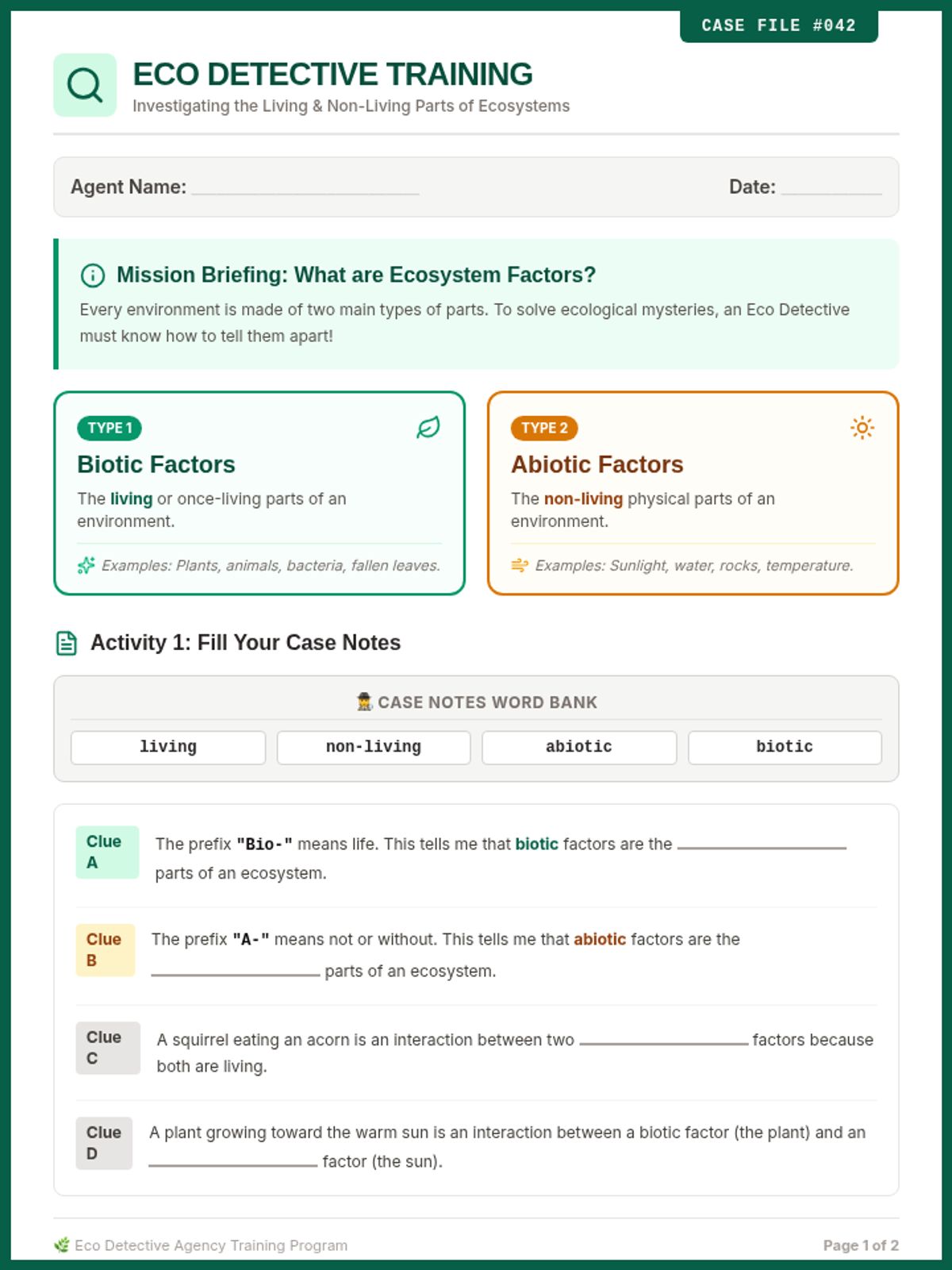
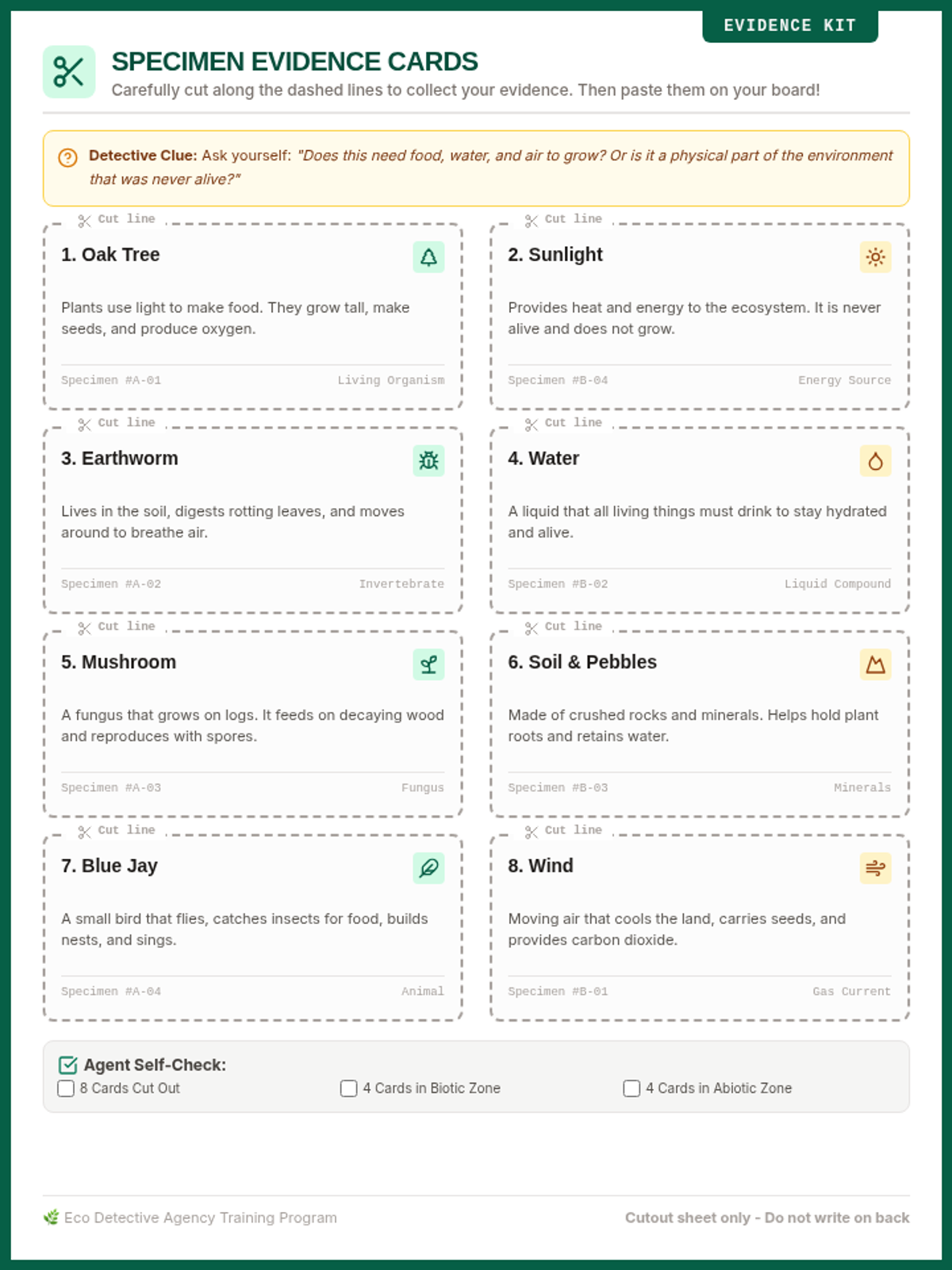
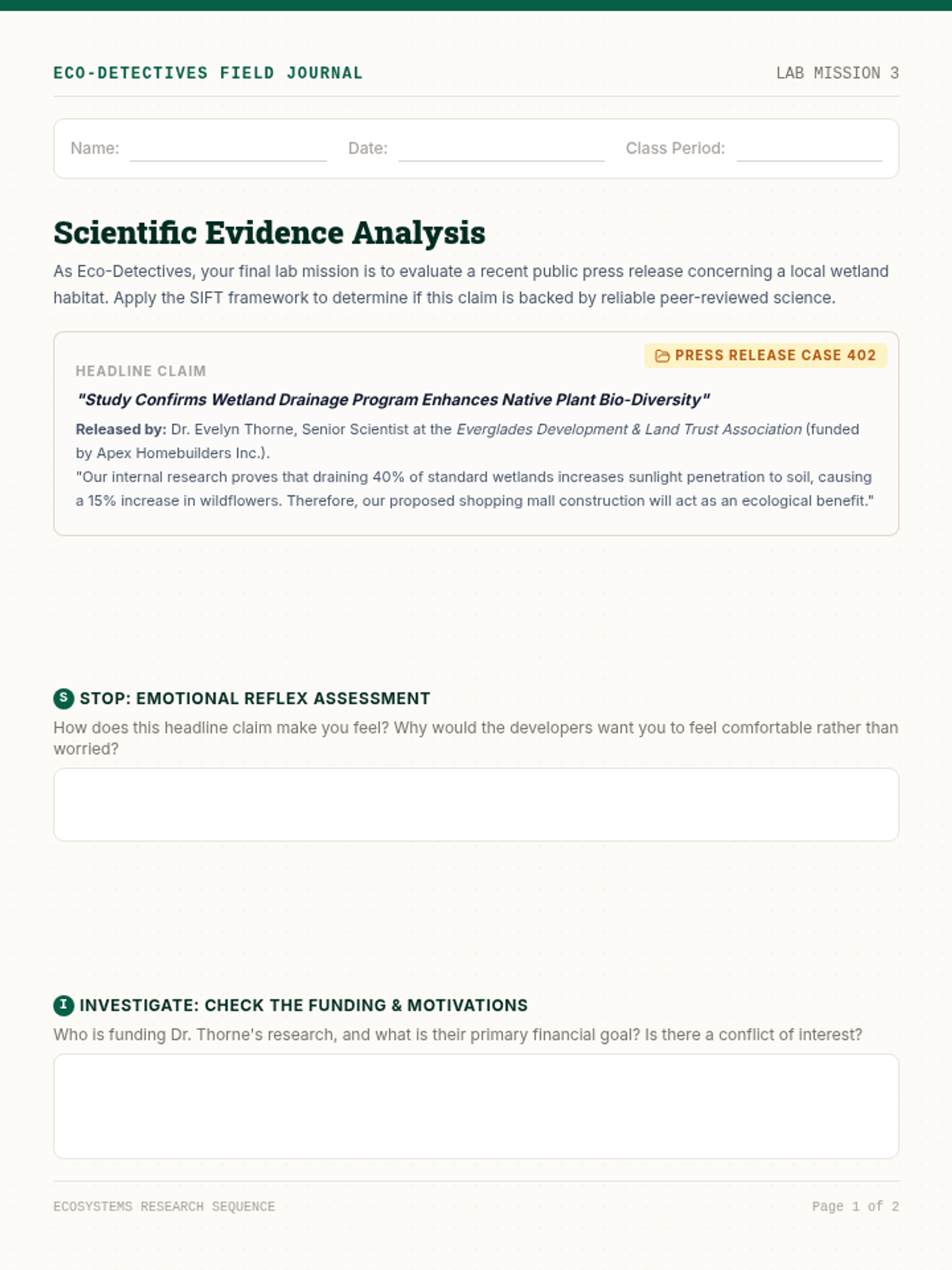
A friendly, middle-school introduction to the four major cycles of nature, focusing on how living things and the Earth work together as a 'recycle team'.
An honors-level exploration of the four major biogeochemical cycles, focusing on molecular transformations, human impact, and reservoir residence times.
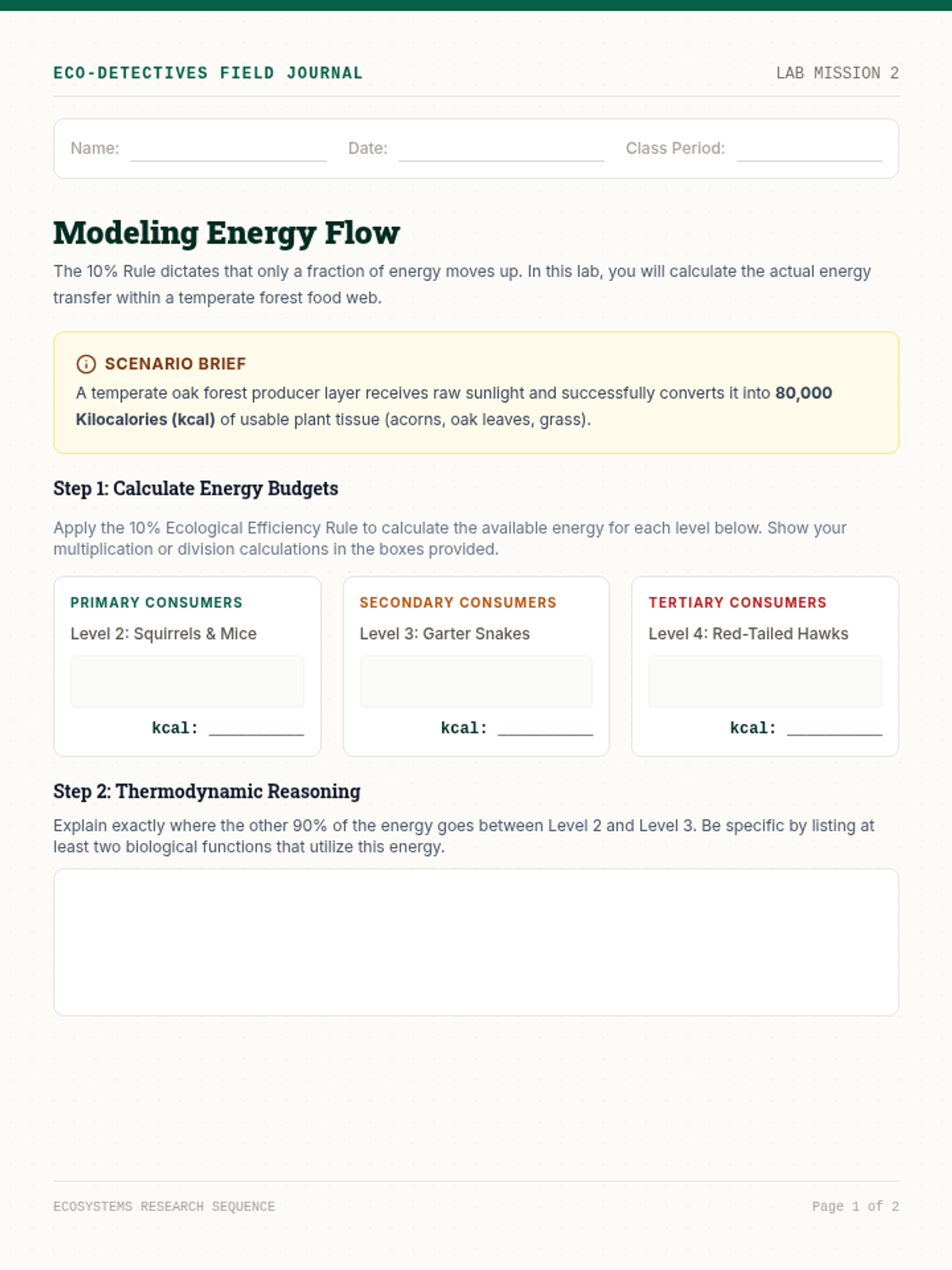
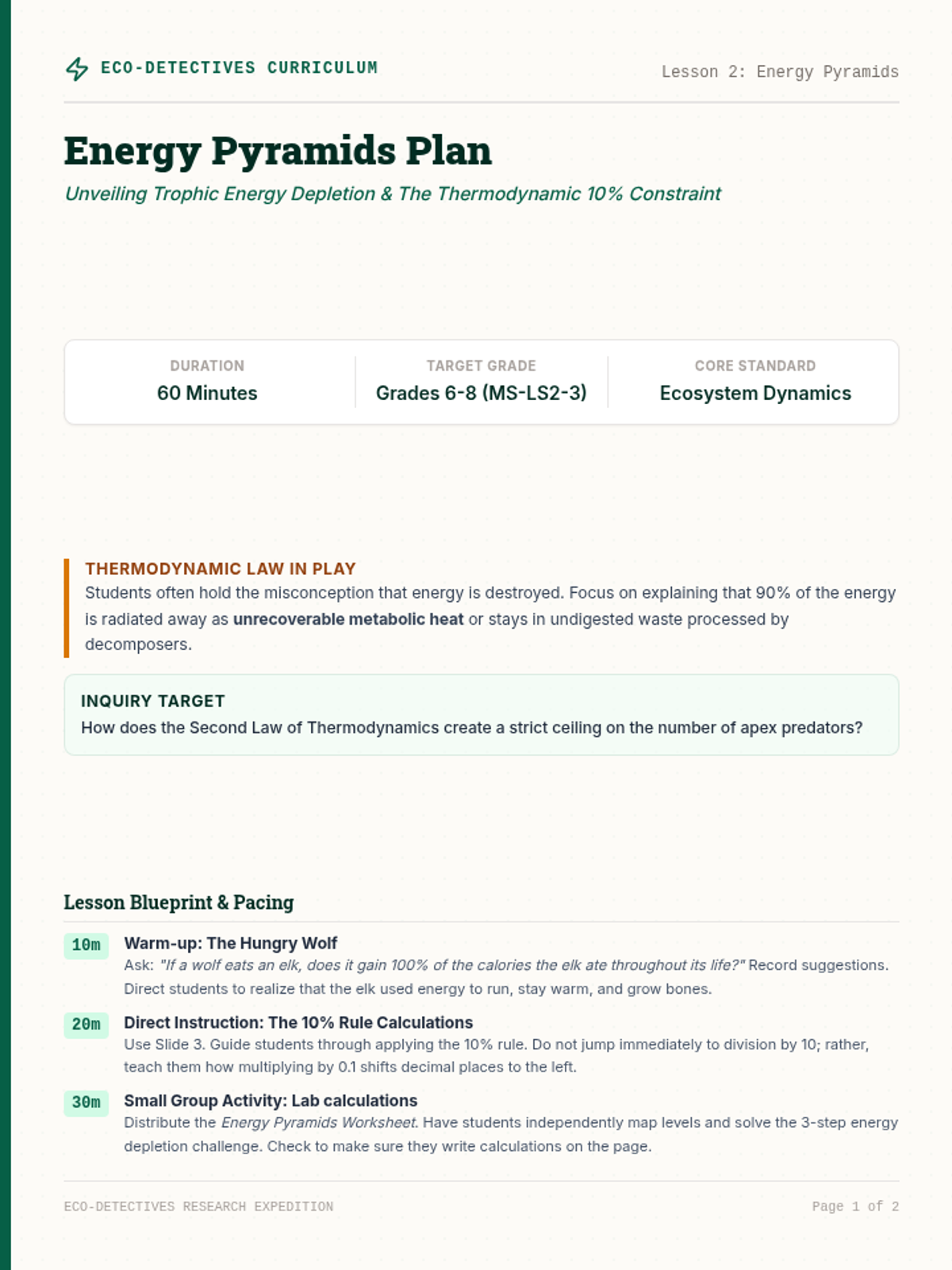
A practice-focused lesson on ecological pyramids, covering energy transfer, biomass, and population numbers using the 10% rule.
A lesson about the Artemis II moon mission, designed for 8th-grade students working at a 3rd-grade reading level. Includes a visual presentation, a mission log worksheet with sequencing and word scrambles, and a space-themed word search.
A comprehensive study guide and worksheet set covering states of matter, phase changes, energy transfer, and molecular attraction based on the Titan lake unit.
Students explore the fundamental building blocks of matter through a blueprint-style exploration of atomic structure. They learn about subatomic particles and the forces that hold them together.
Students explore the teamwork and engineering behind the Apollo 11 moon landing through a simplified reading of Catherine Thimmesh's Team Moon.
Explores the Moon's role as a testing ground for Mars exploration and a unique platform for deep space astronomy, focusing on the Gateway station and long-duration missions.
A fast-paced 6th-grade STEM lesson where students apply engineering design principles to create a mechanical retrieval tool to save a 'Kyber Crystal'. This lesson covers mechanical advantage, levers, and iterative design within a Star Wars-themed narrative.