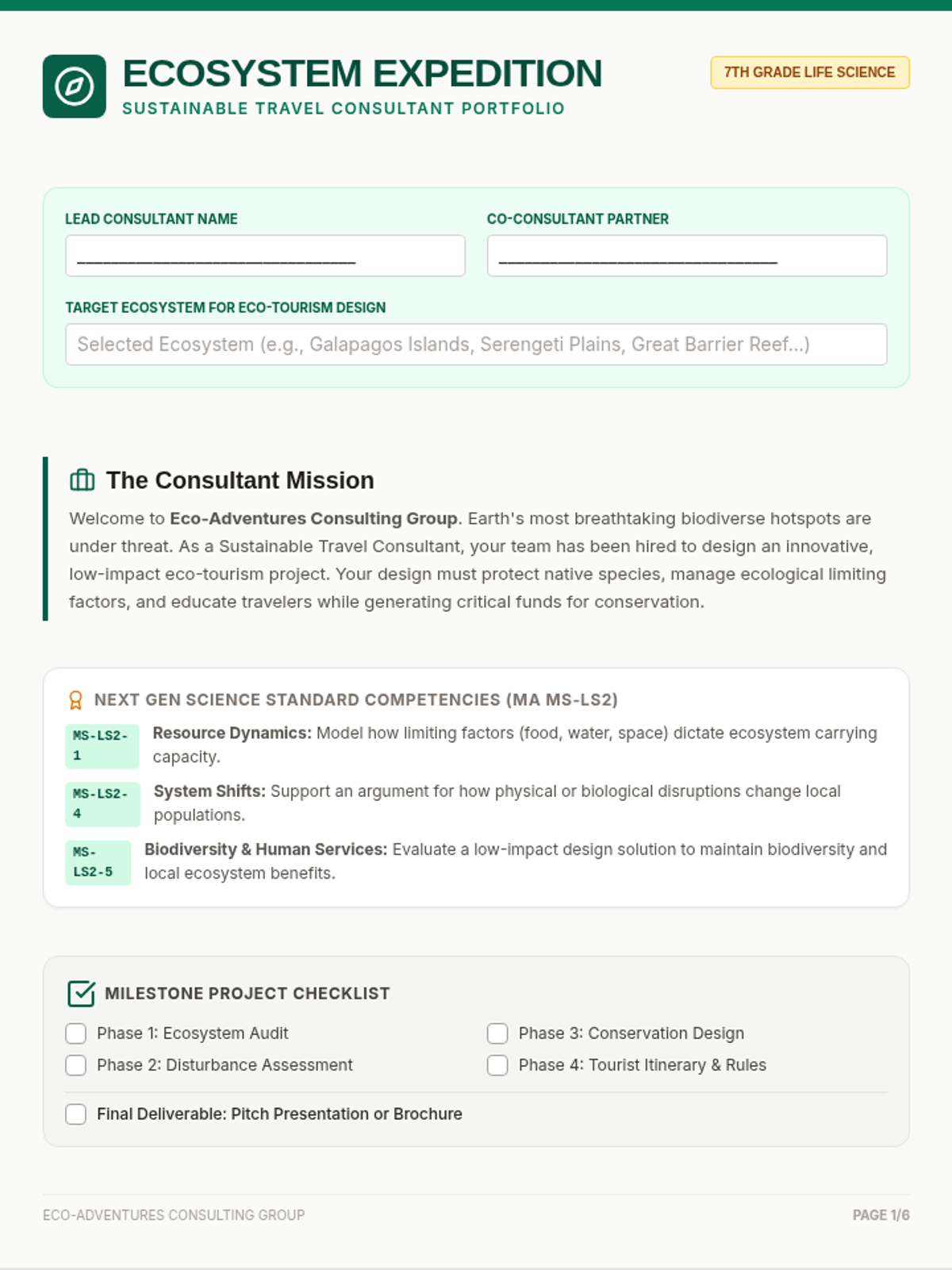
A creative science project lesson where students design a travel brochure or guided tour for a real-world ecosystem, integrating ecology concepts like biodiversity, disruptions, and conservation.
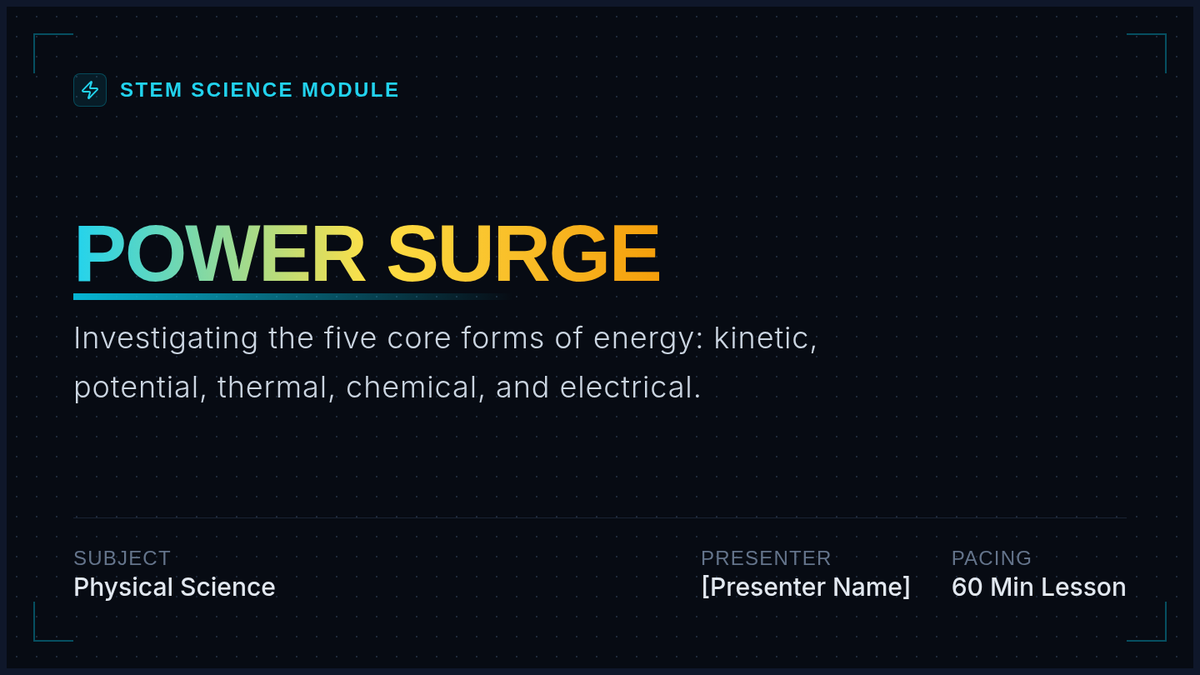
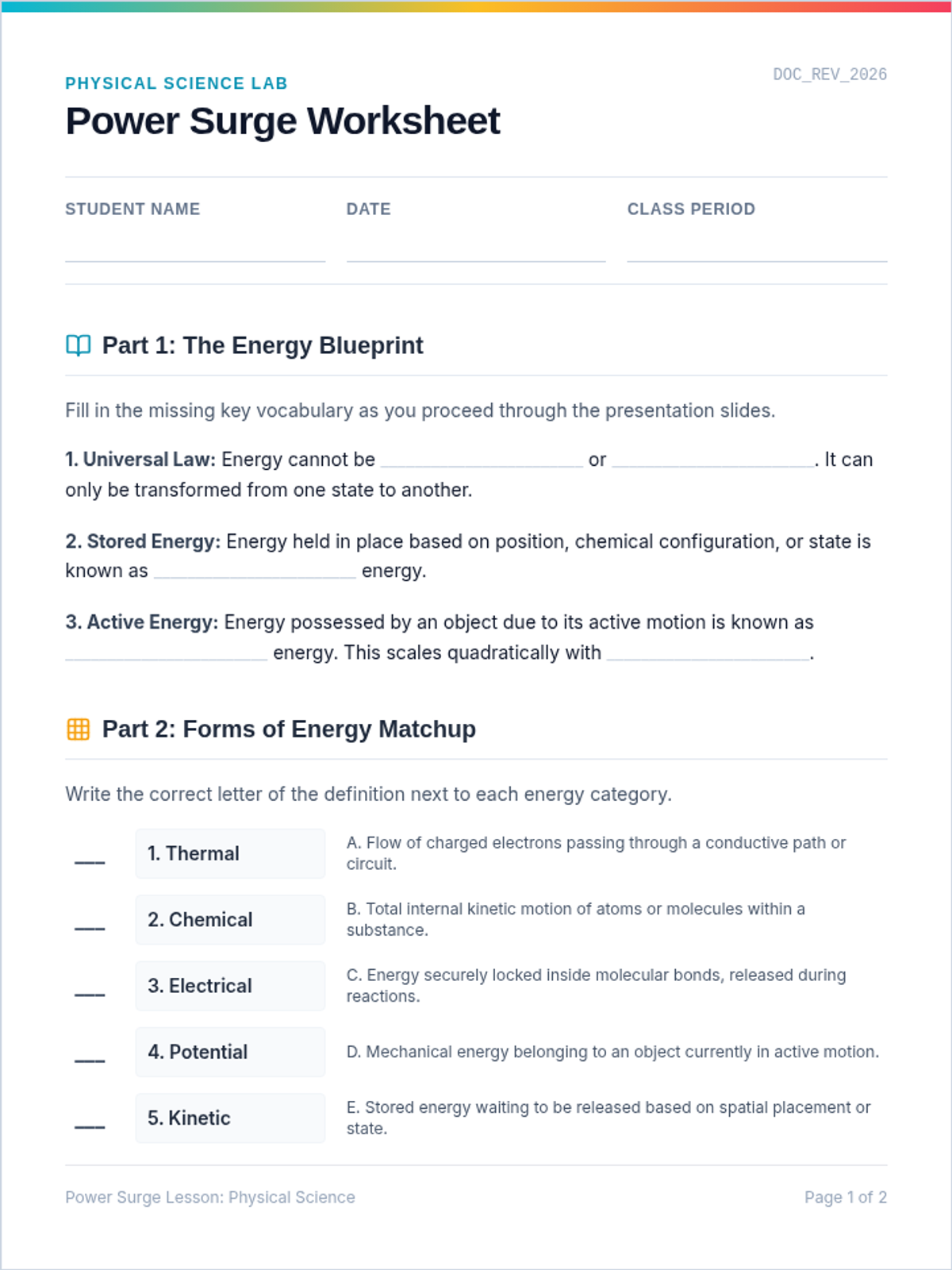
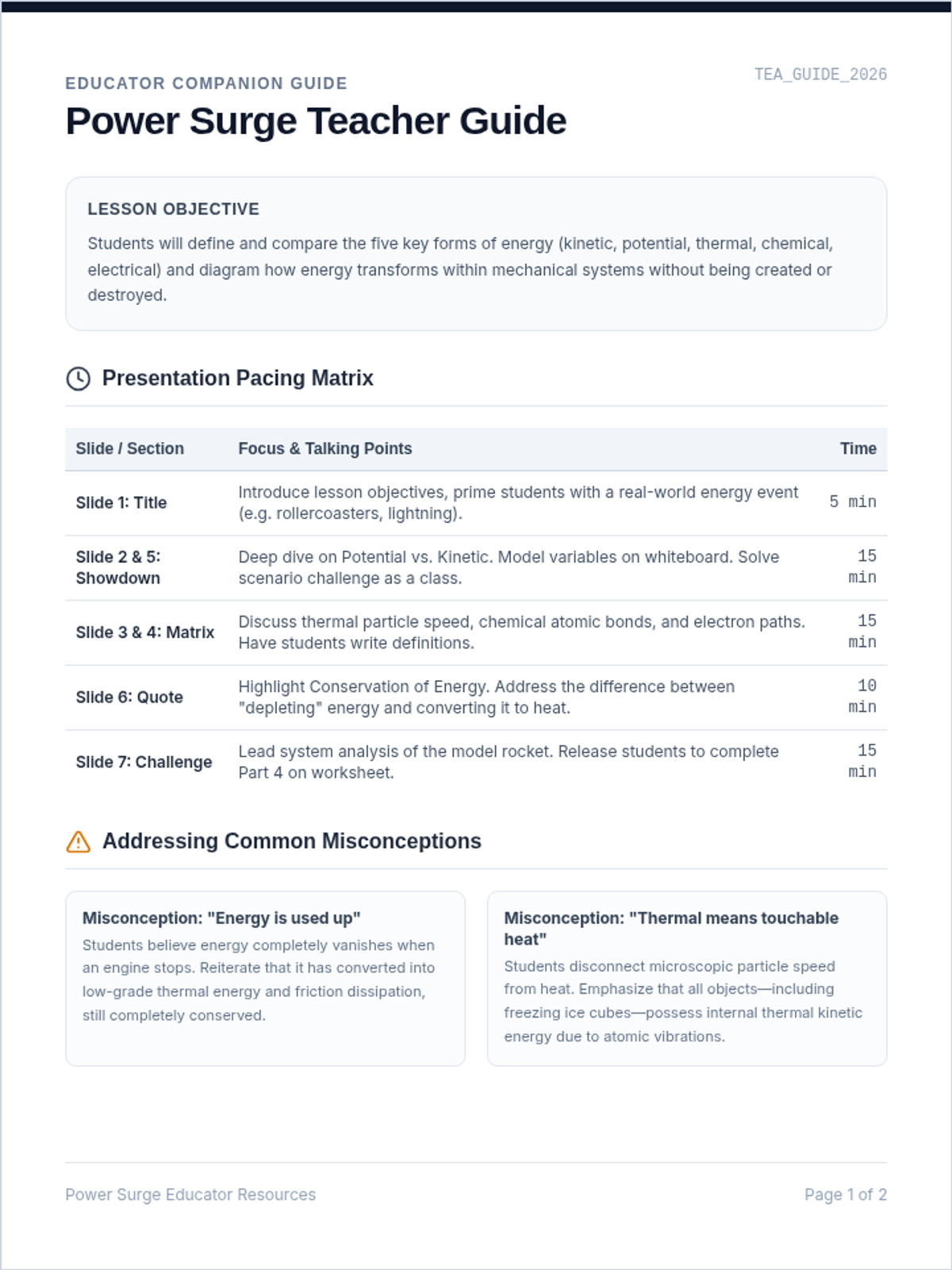
A dynamic lesson introducing the five core forms of energy: kinetic, potential, thermal, chemical, and electrical. This lesson utilizes highly engaging visual slides and structured templates to help students compare, contrast, and identify energy transformations.
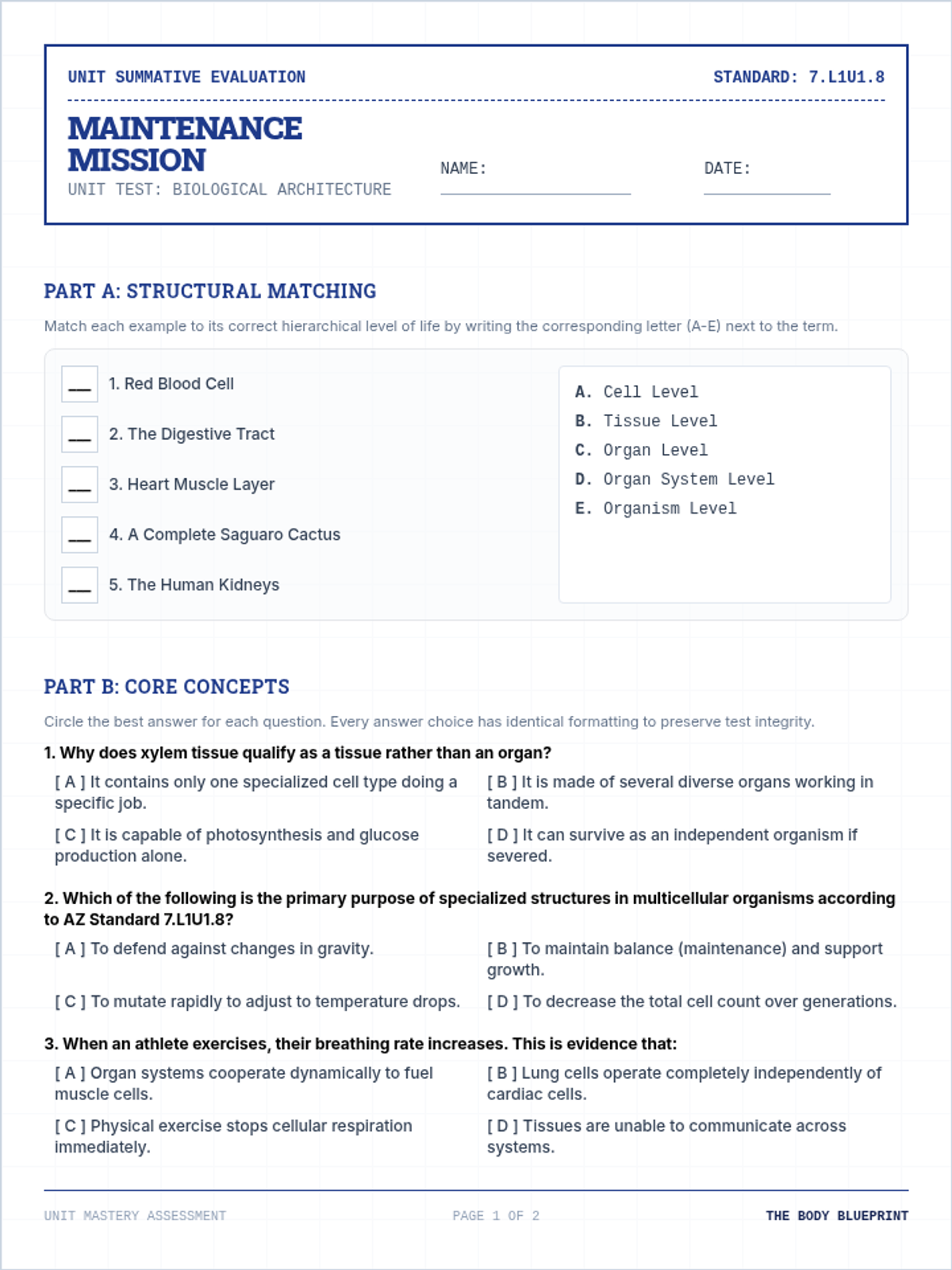
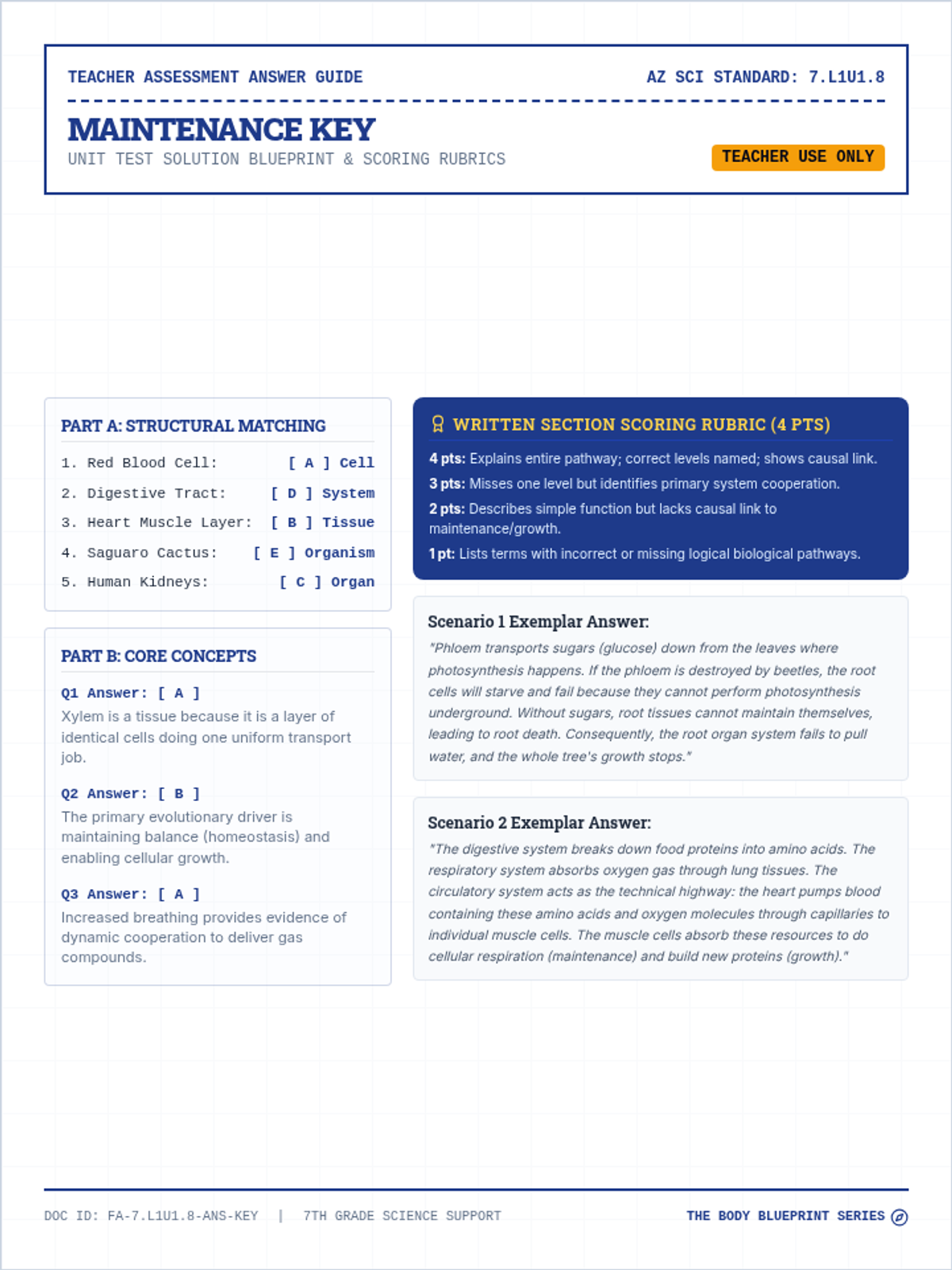
Synthesize understanding of physical structures and their maintenance functions through a comprehensive unit assessment and system-interdependence challenge.
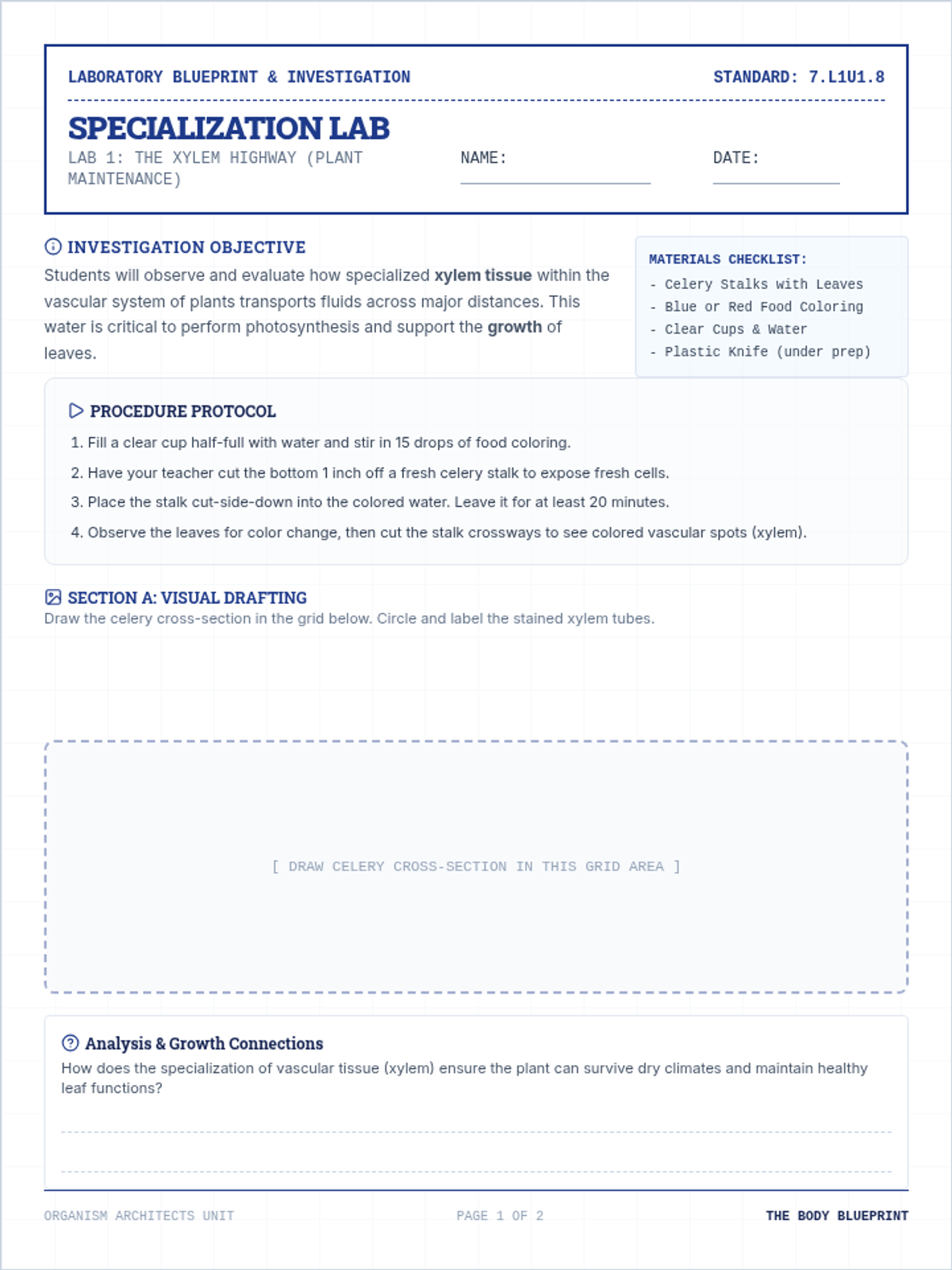
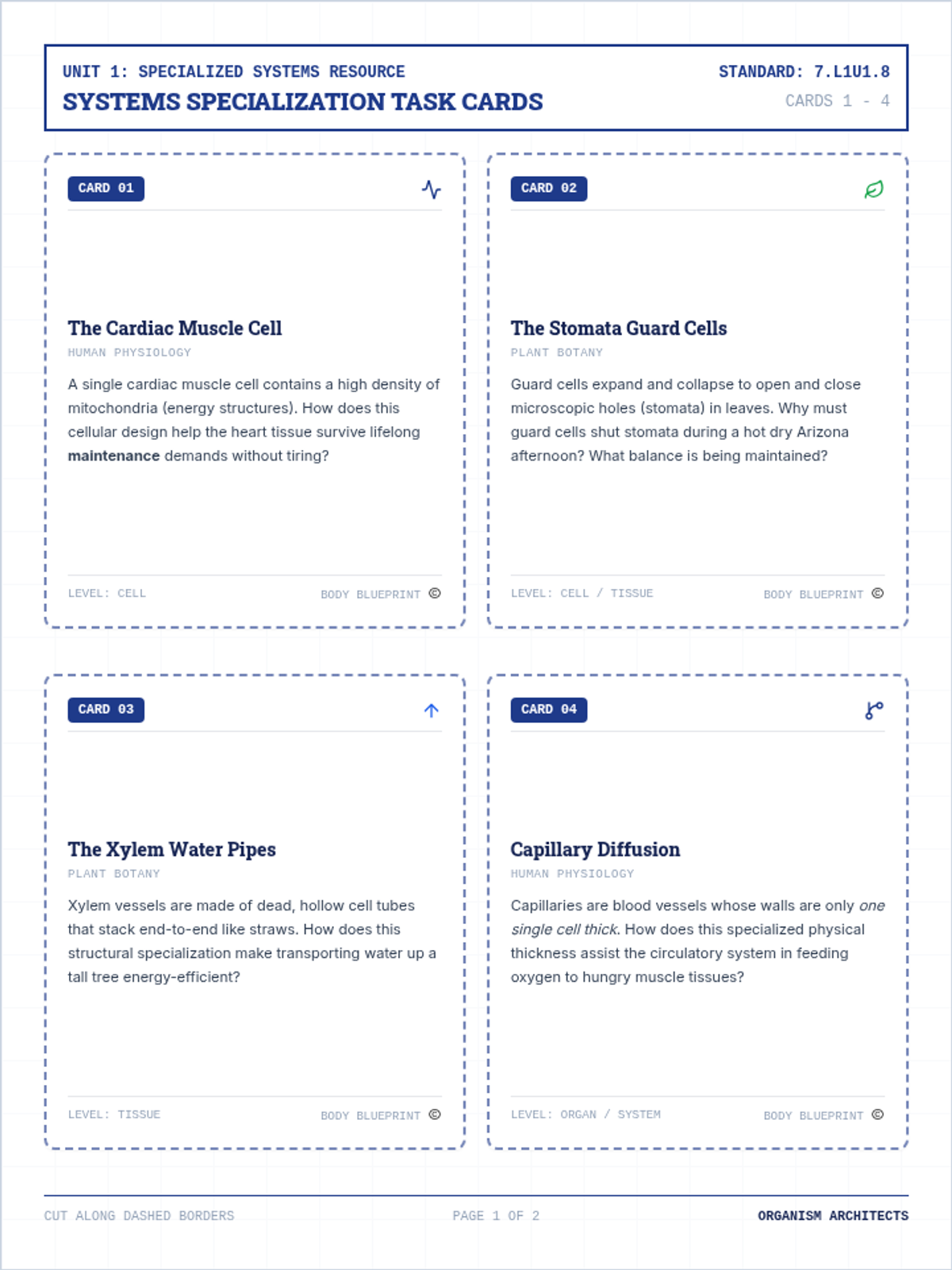
An in-depth comparative exploration of how specialized human and plant structures—such as the circulatory/digestive systems and vascular tissues—work to maintain homeostasis and promote growth.
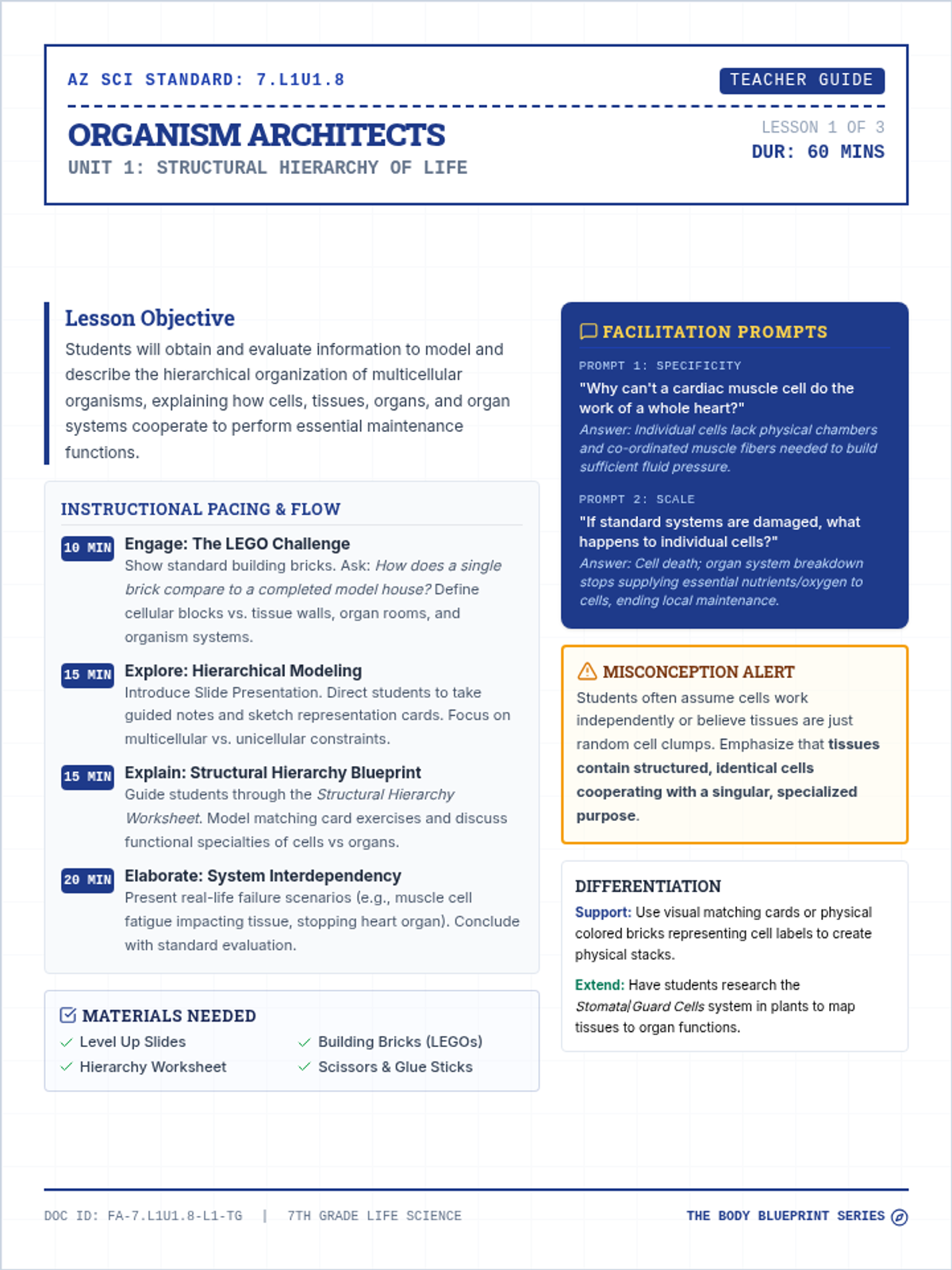
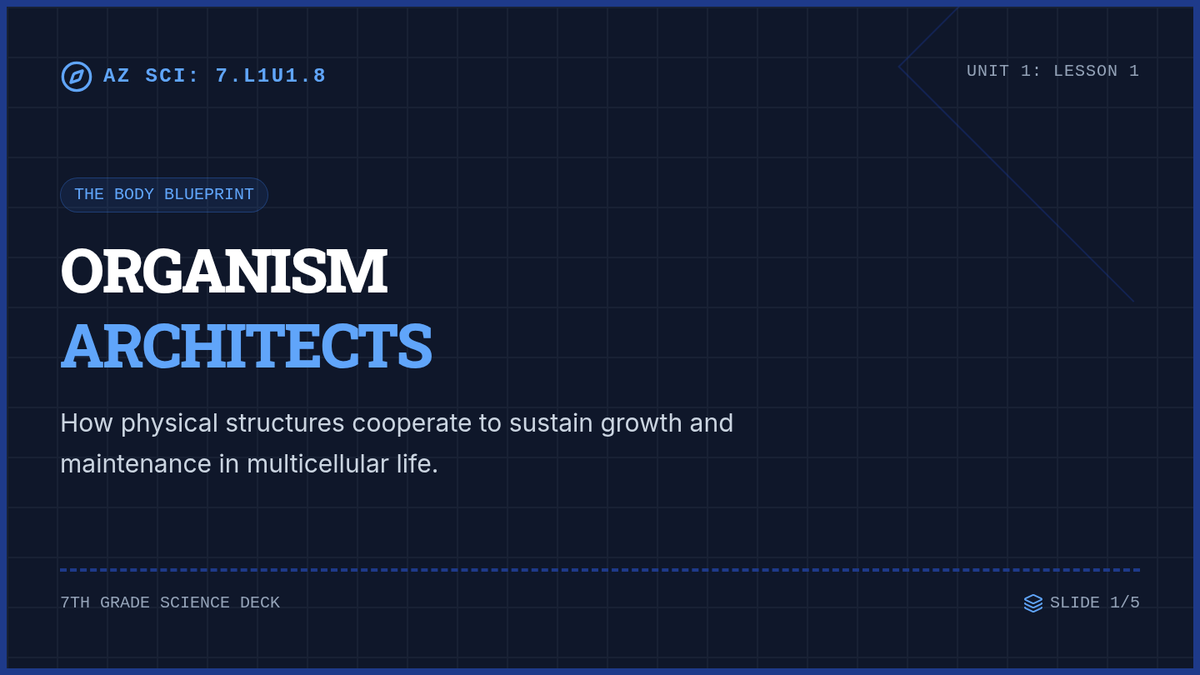
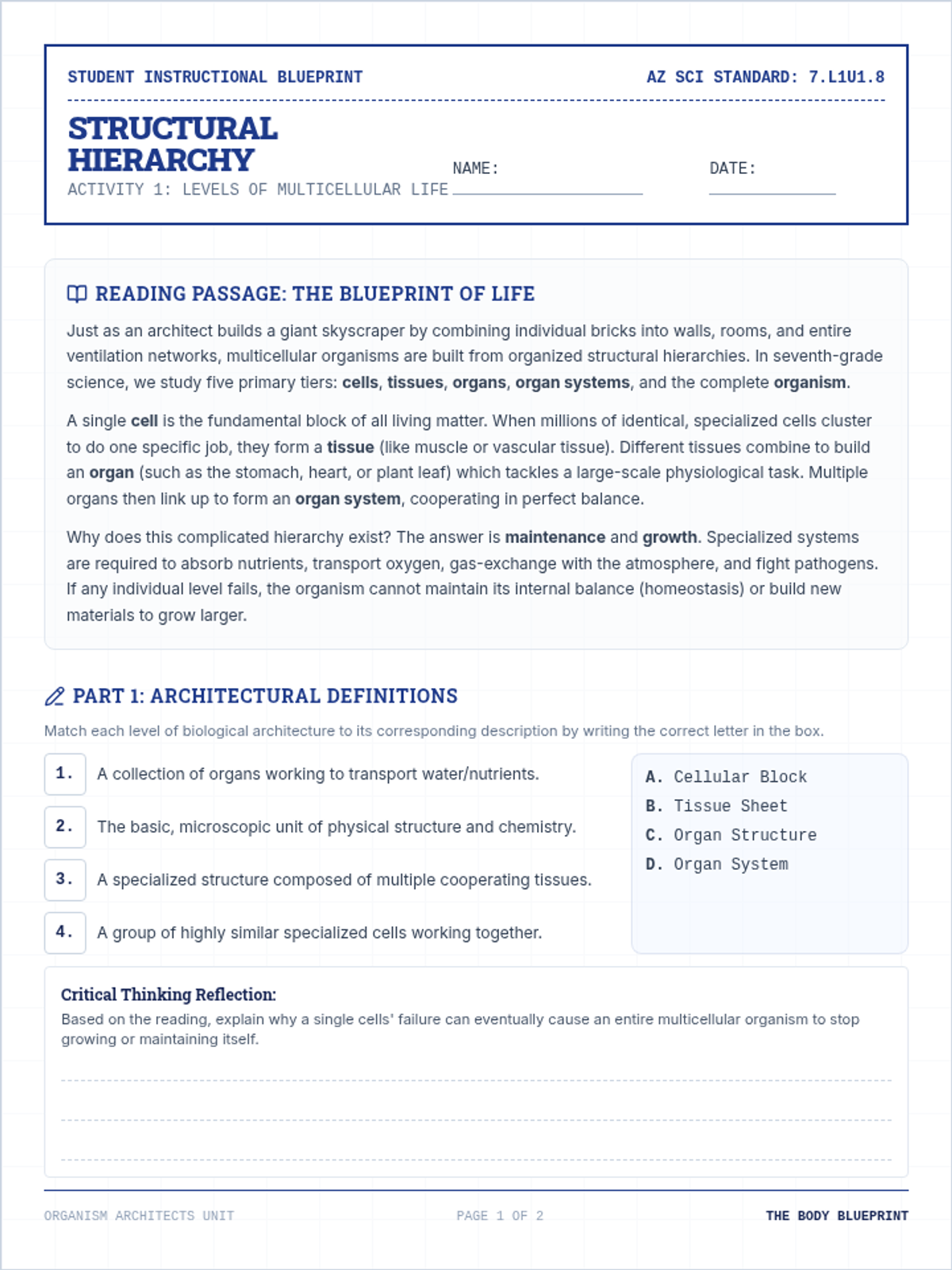
Students discover how cells, tissues, organs, and organ systems form a hierarchical structural design in multicellular organisms, behaving like individual building blocks that combine into functional structures.
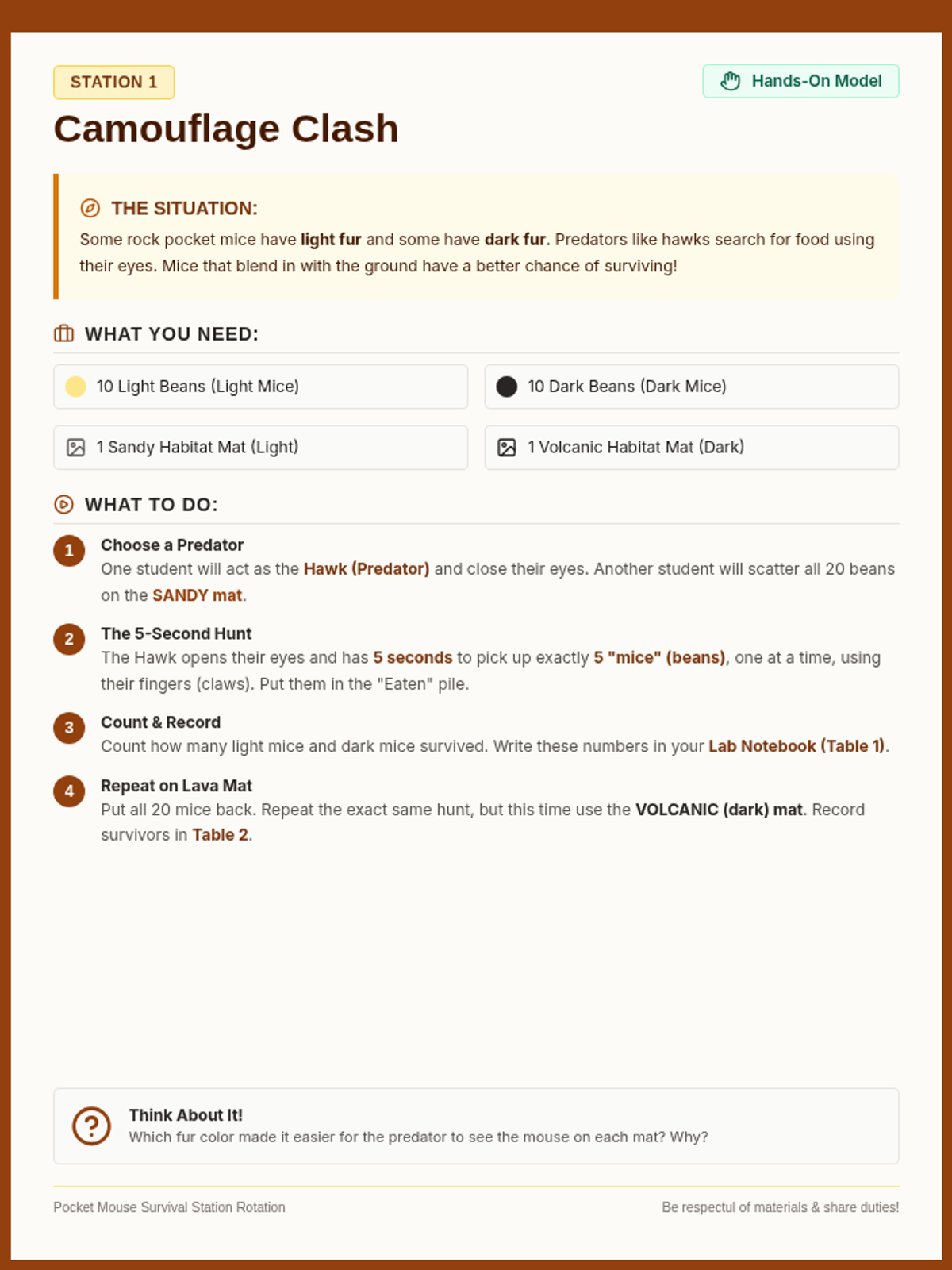
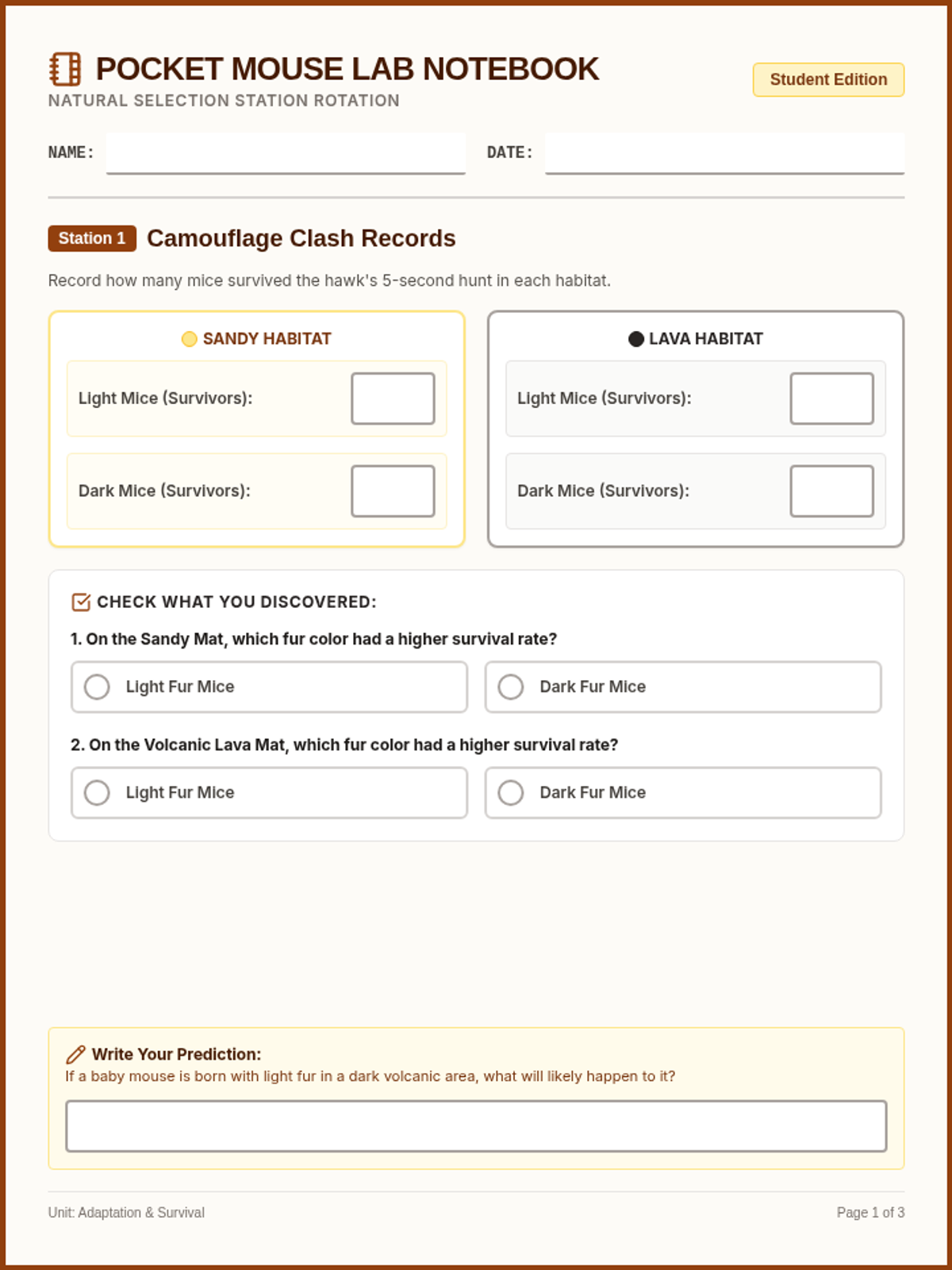
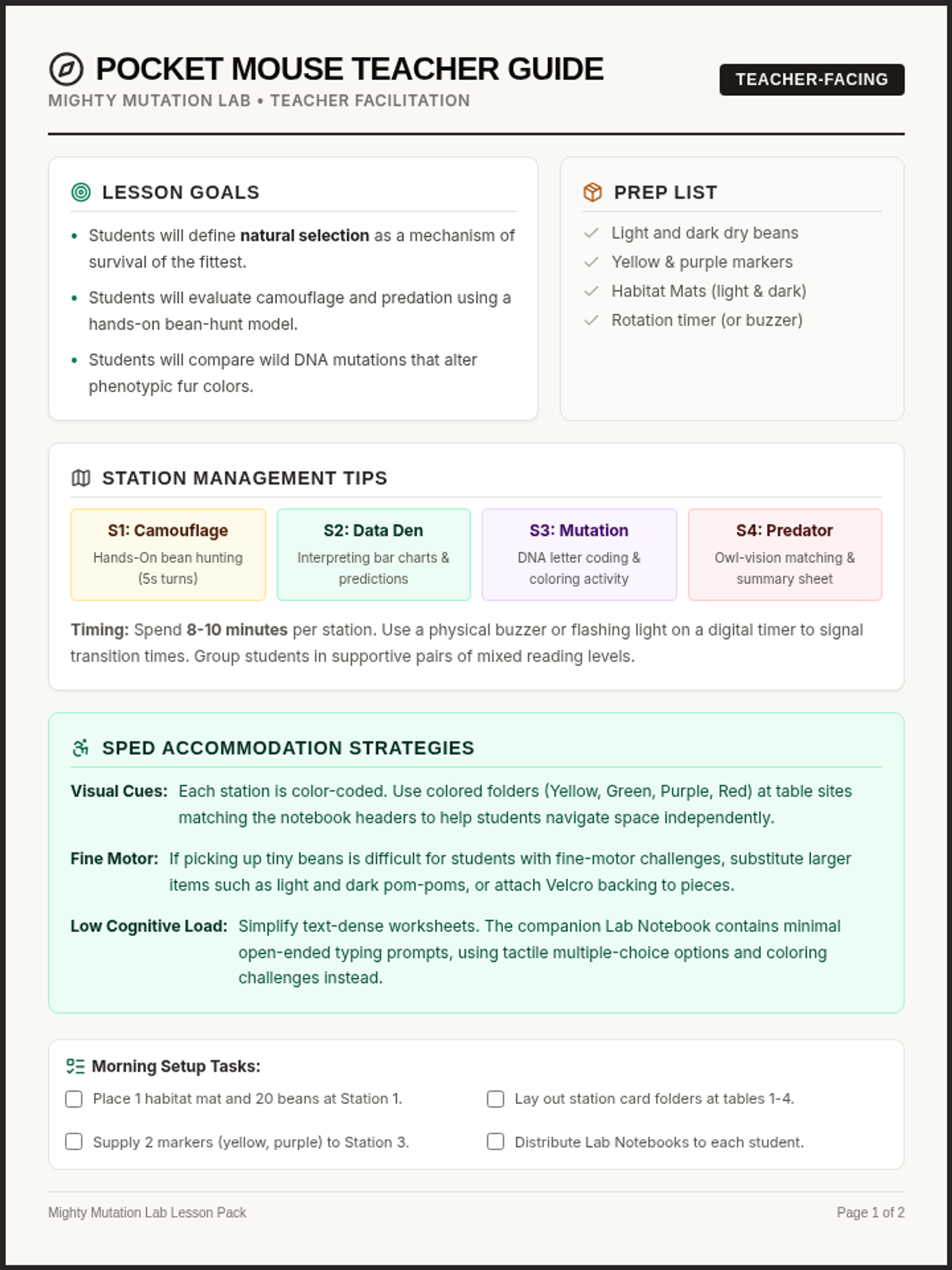
A Station Rotation Lab lesson focusing on natural selection and survival of the fittest using the real-world Rock Pocket Mouse scenario, designed to be high school special education friendly.
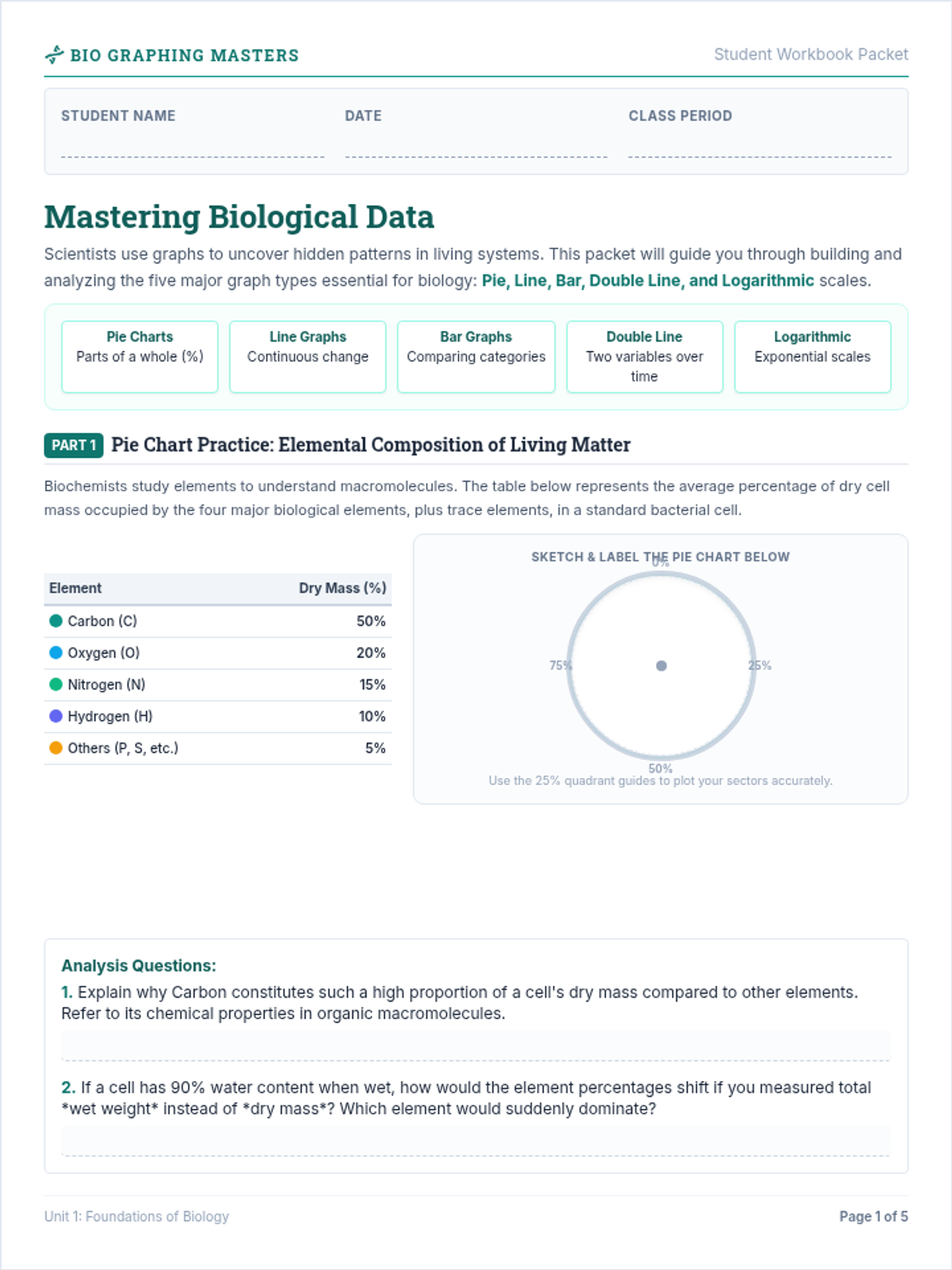
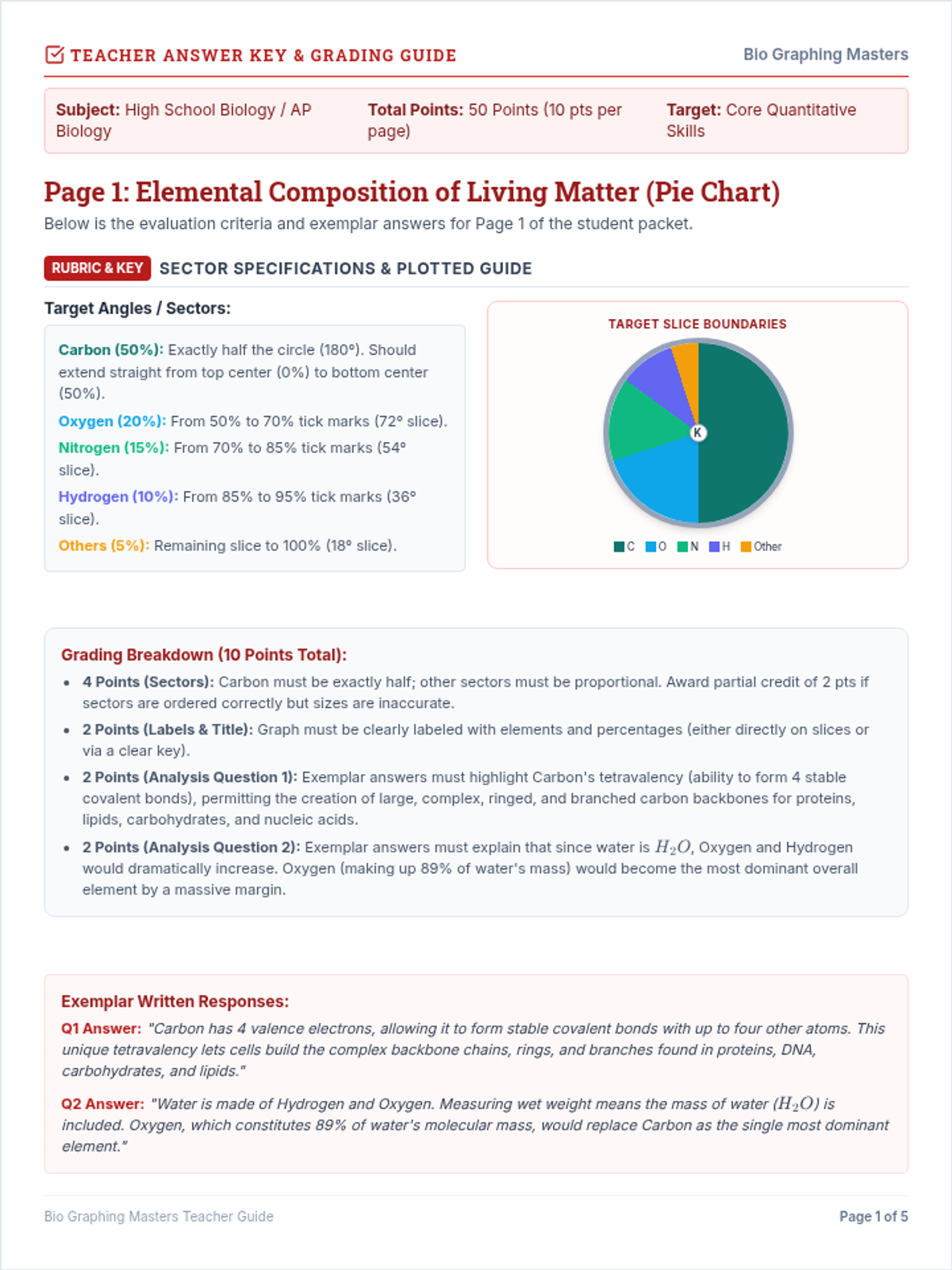
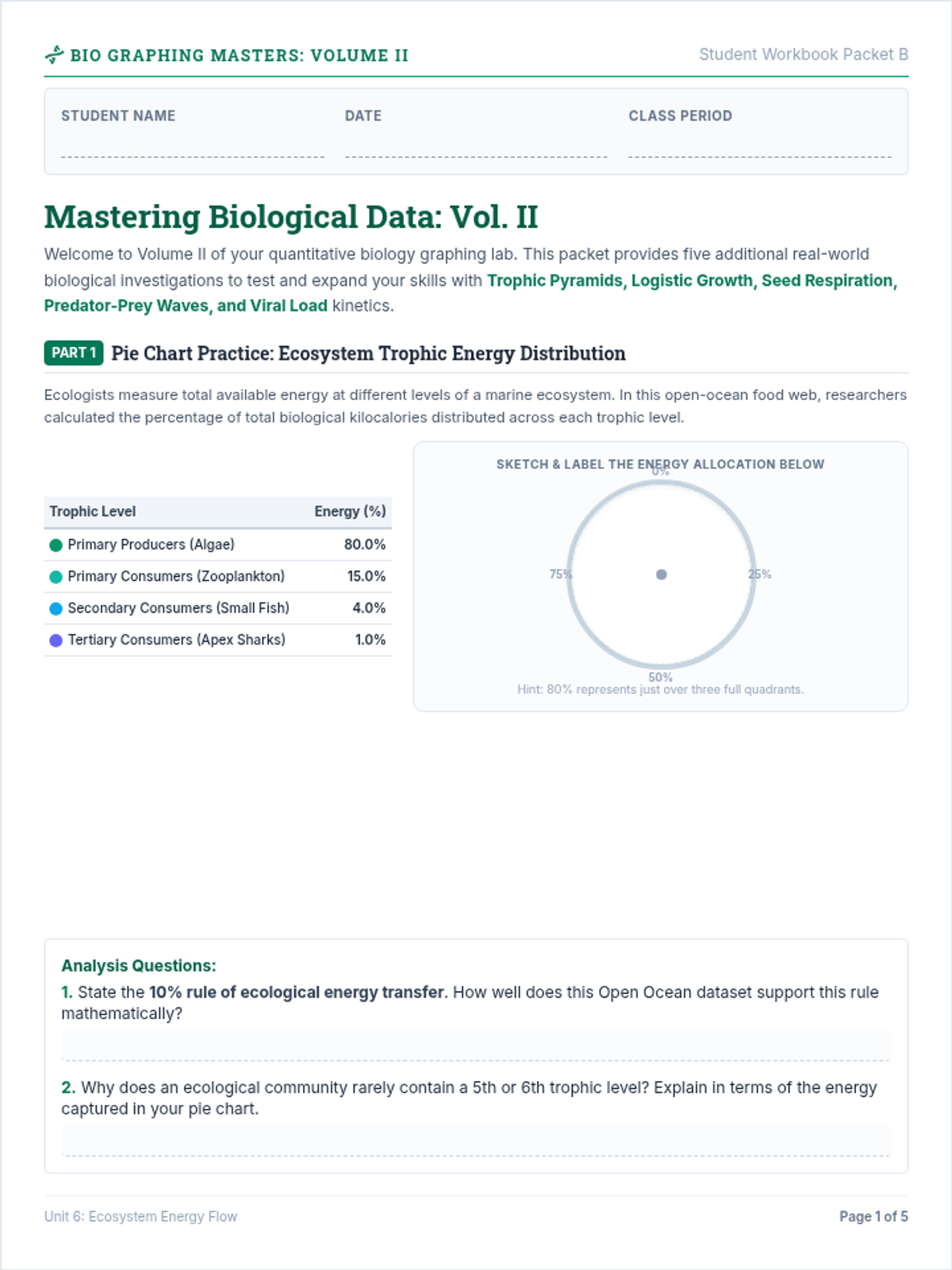
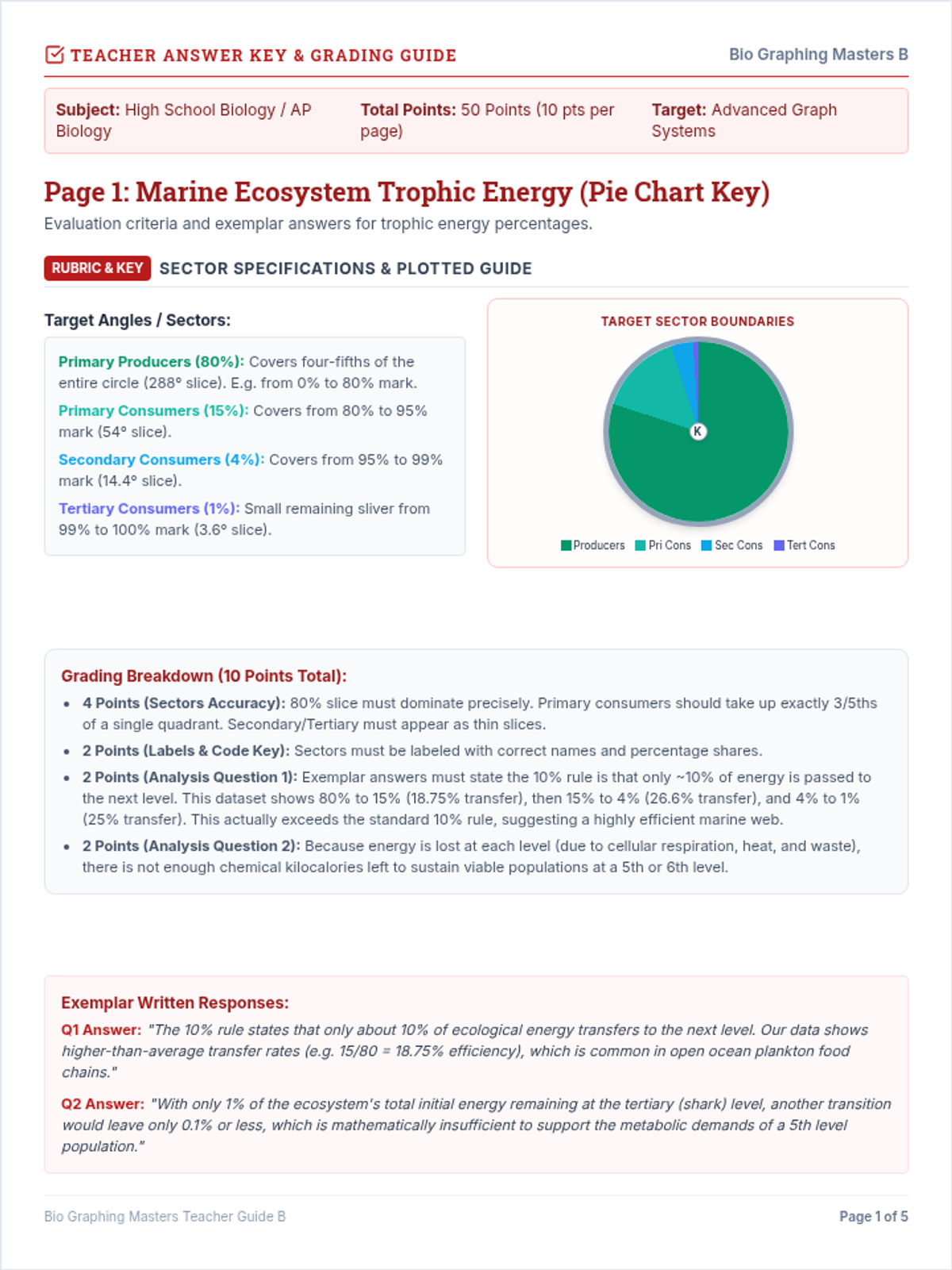
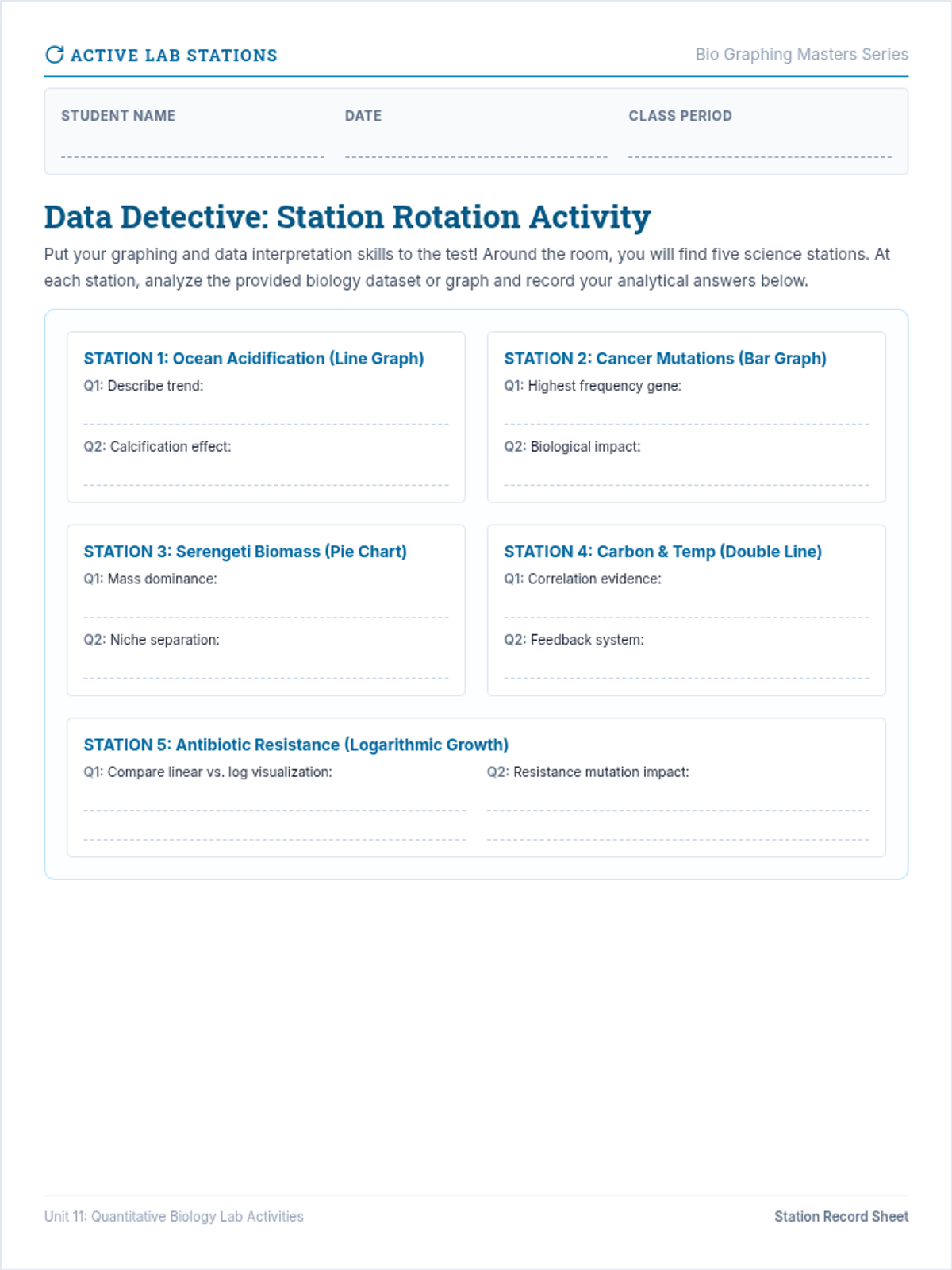
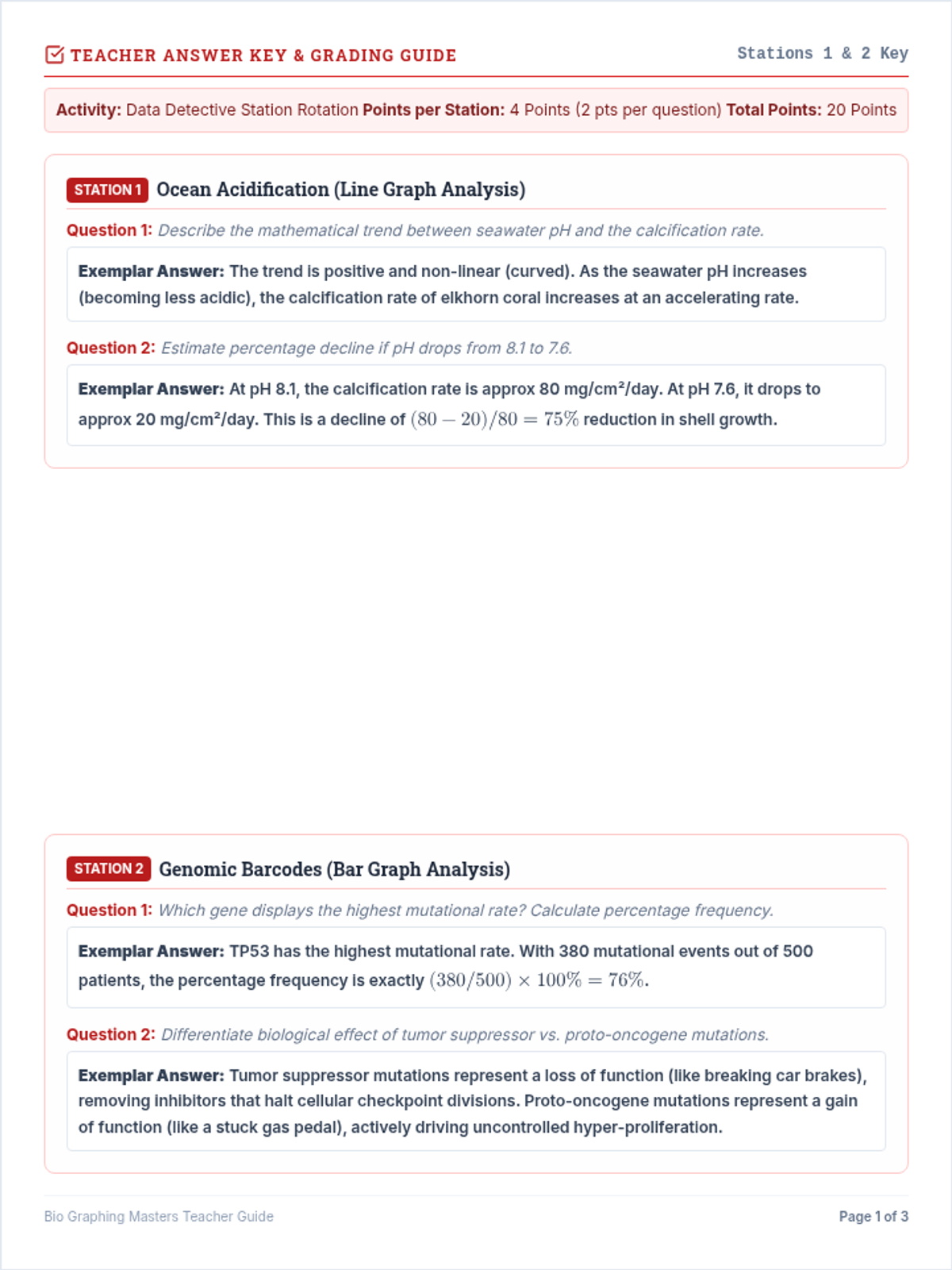
A comprehensive graphing skills lesson in biology. Students will learn how to parse, select, and construct five key graph types (pie, line, bar, double line, and logarithmic graphs) using authentic biological datasets.
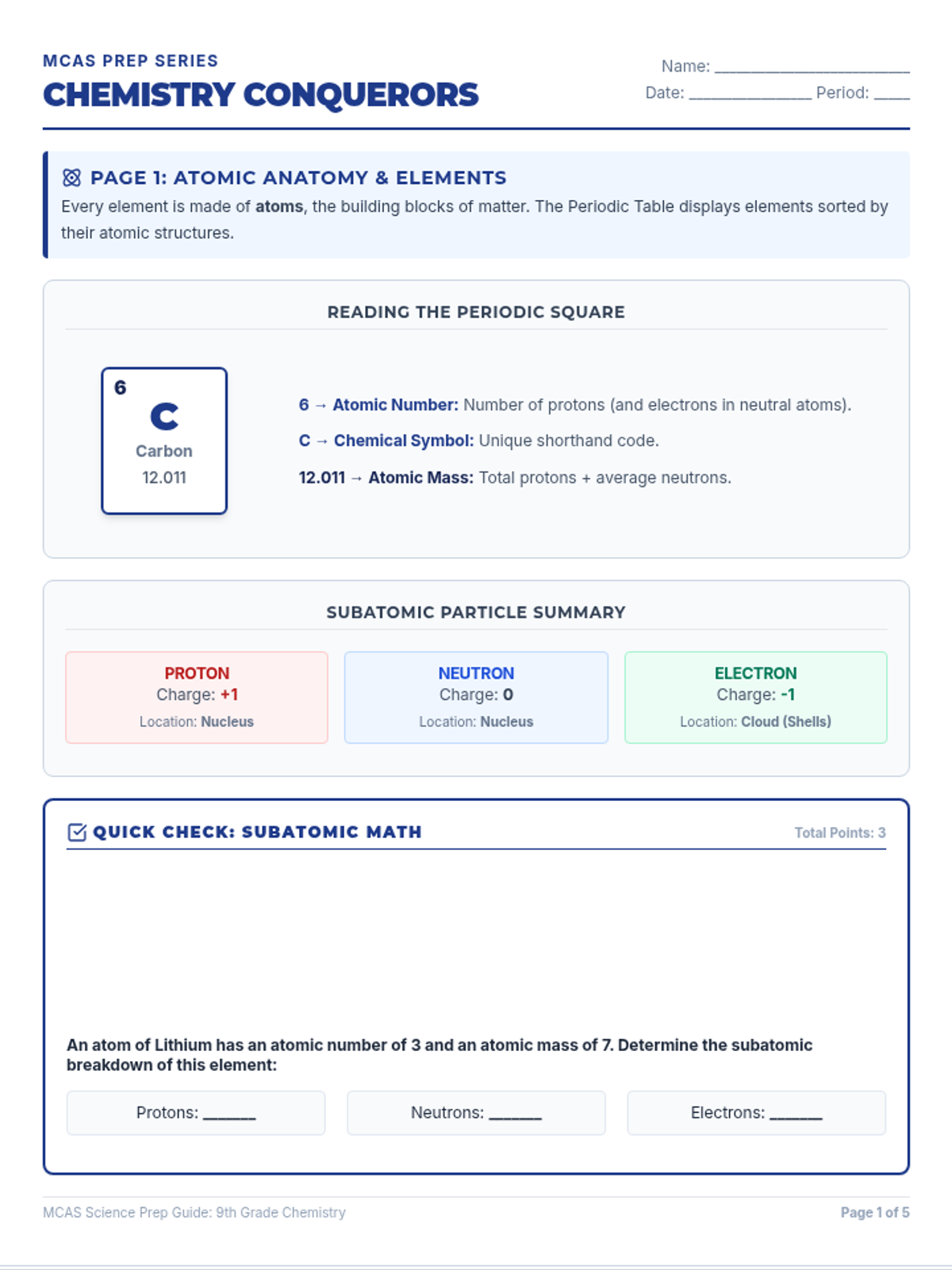
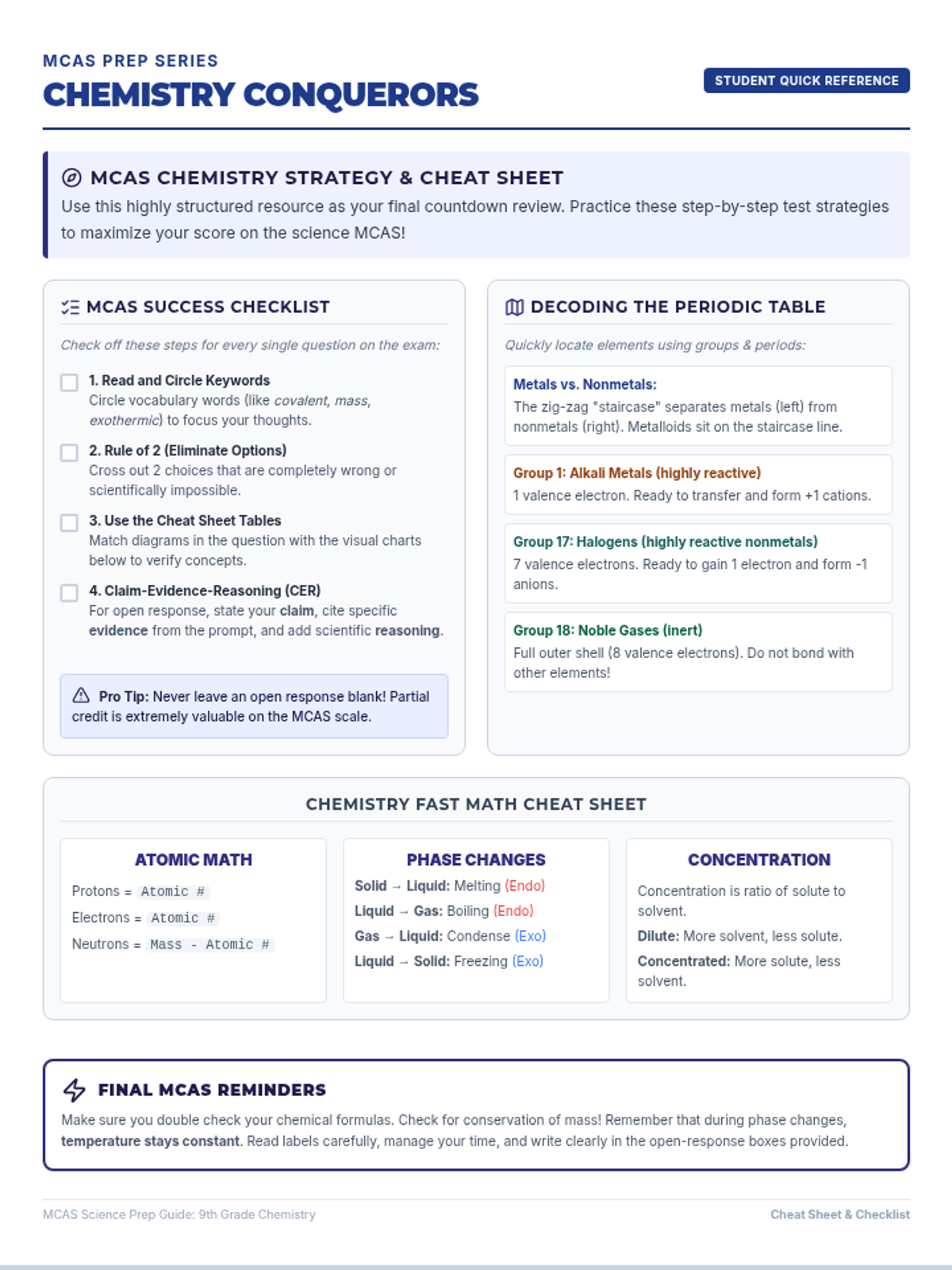
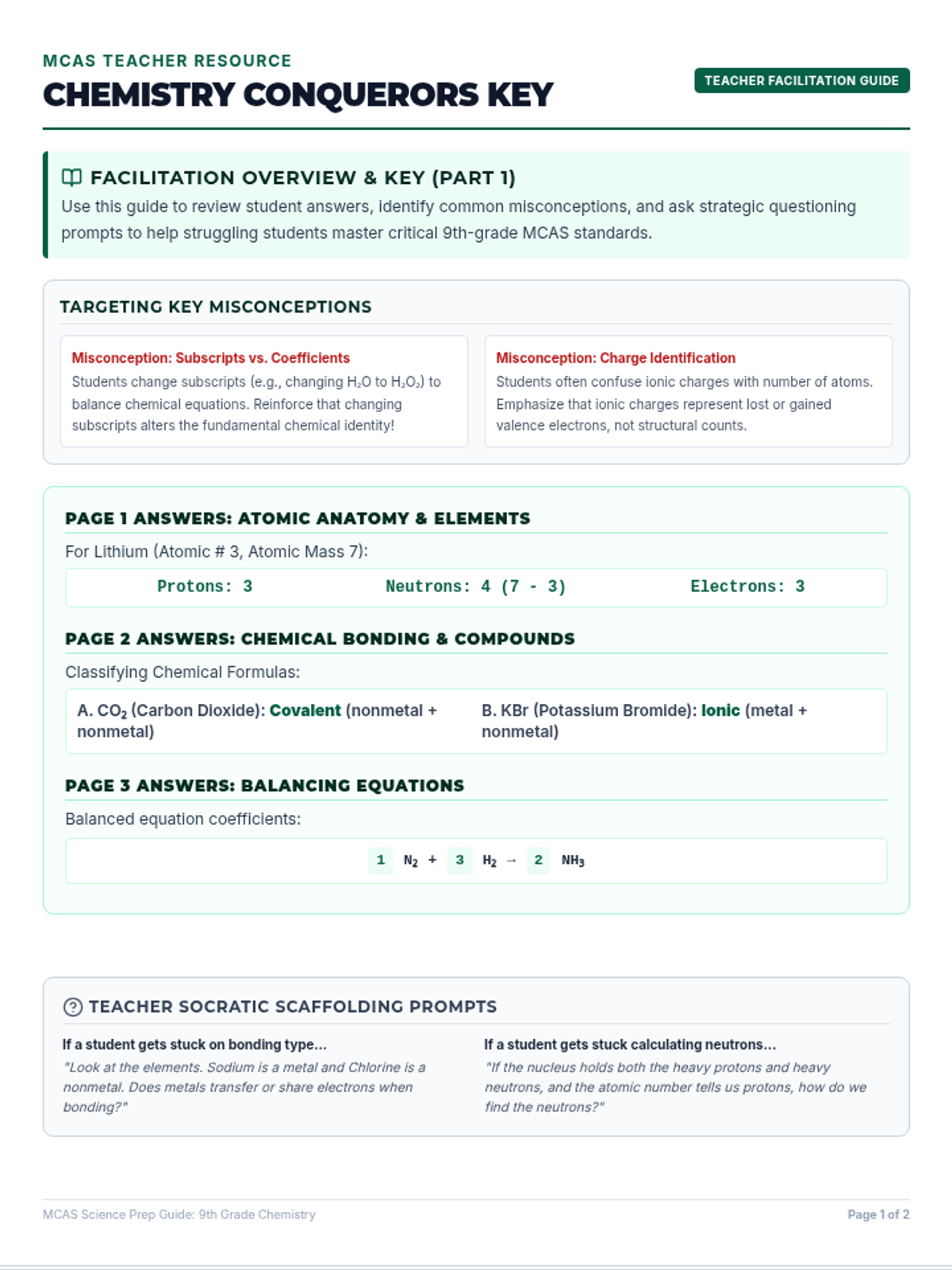
A comprehensive MCAS Chemistry preparation module containing a visual-heavy study guide, a high-structure test-taking checklist/reference sheet, and a detailed teacher answer guide.
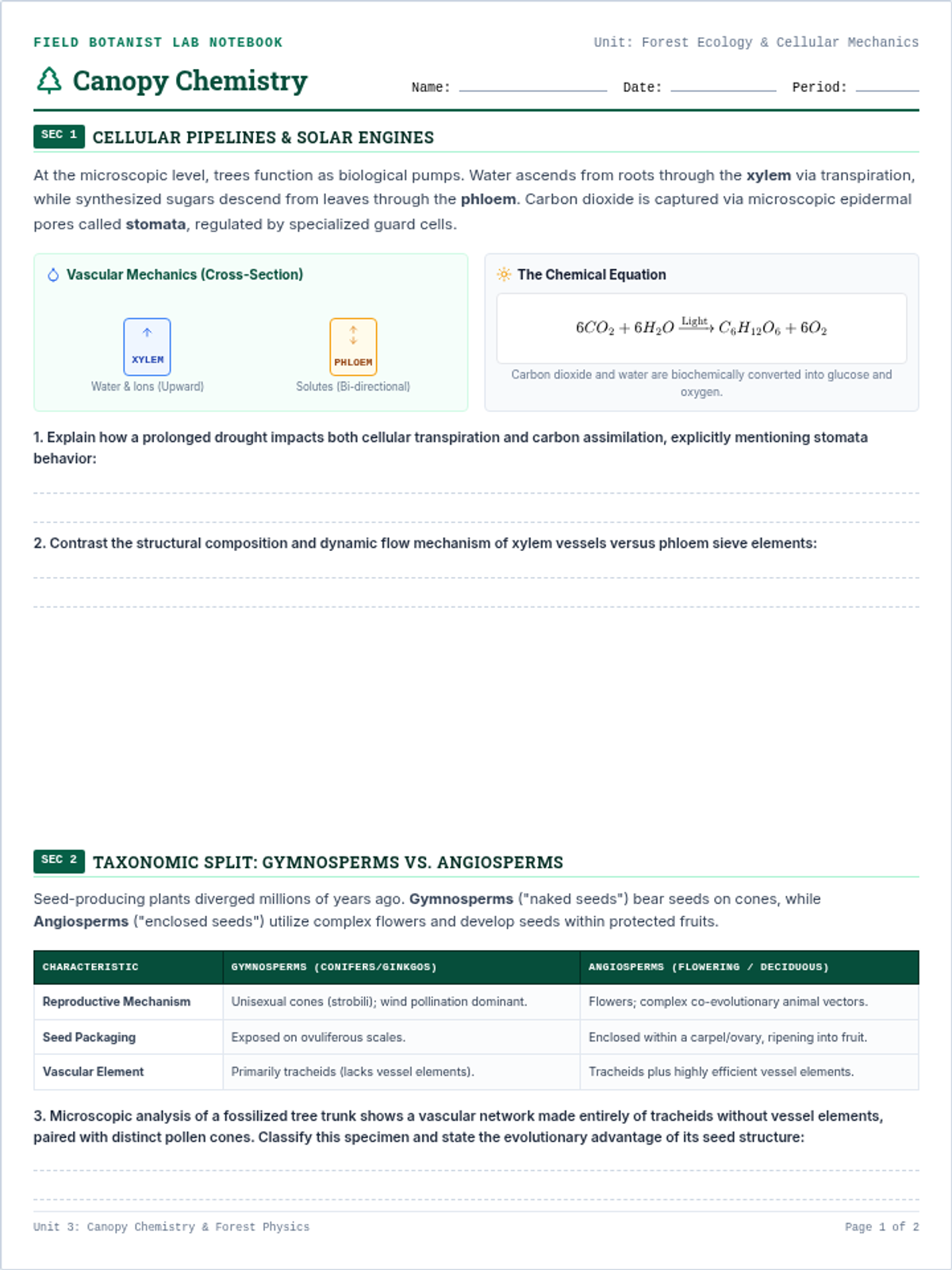
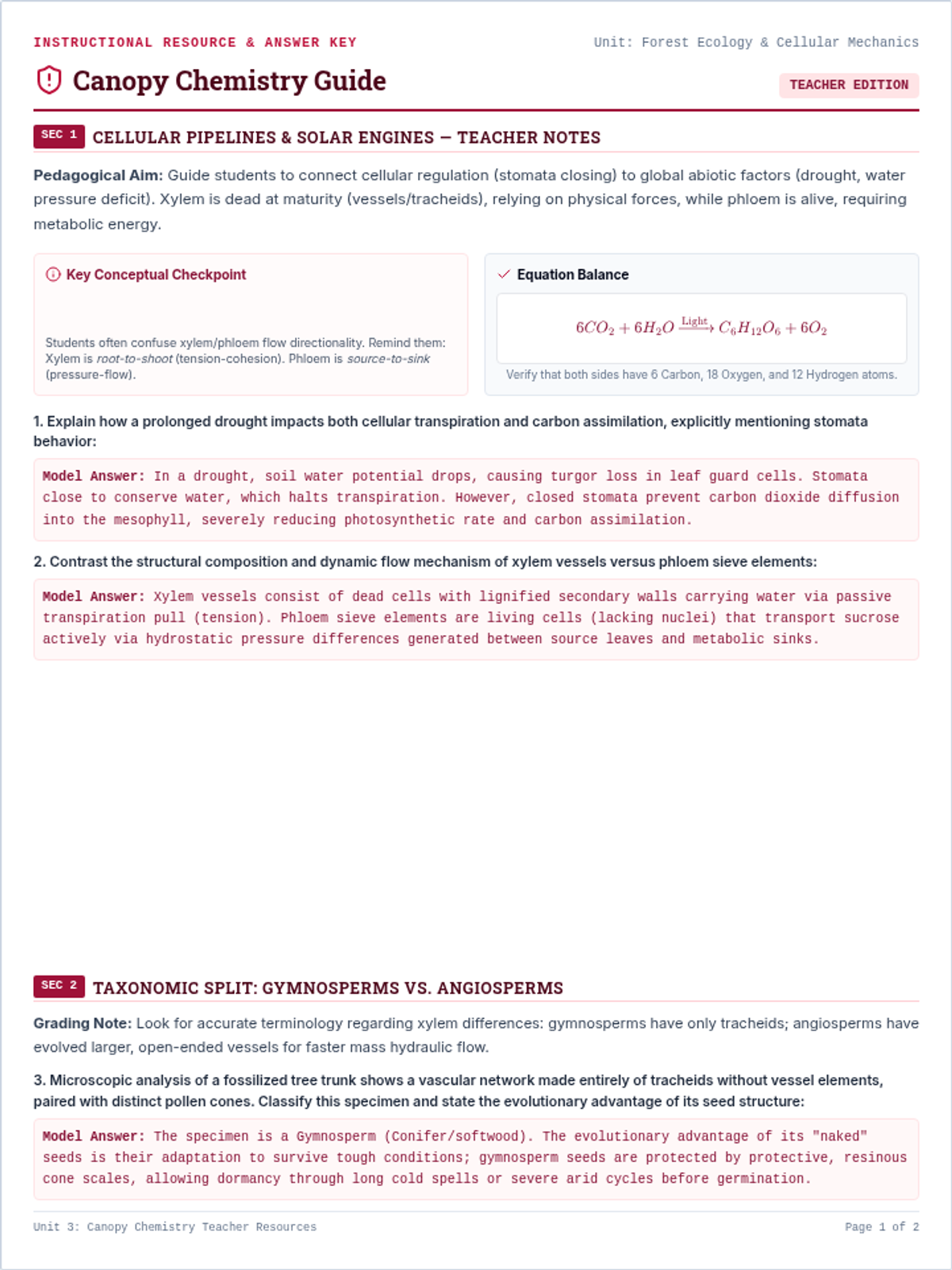
An in-depth investigation into the ecological, cellular, and evolutionary mechanics of trees. Students analyze carbon sequestration, vascular transport, angiosperm vs. gymnosperm taxonomy, and design conservation strategies.
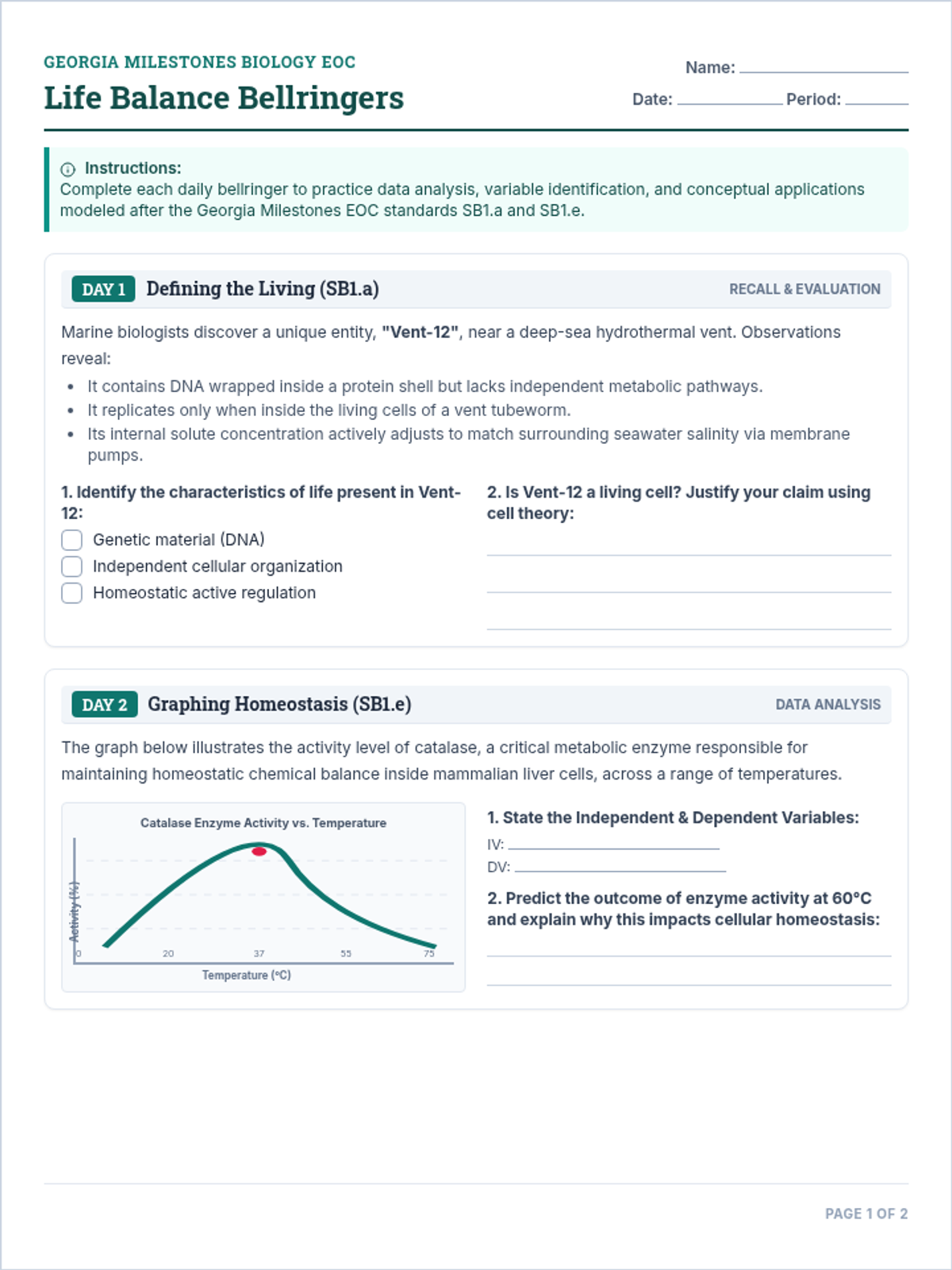
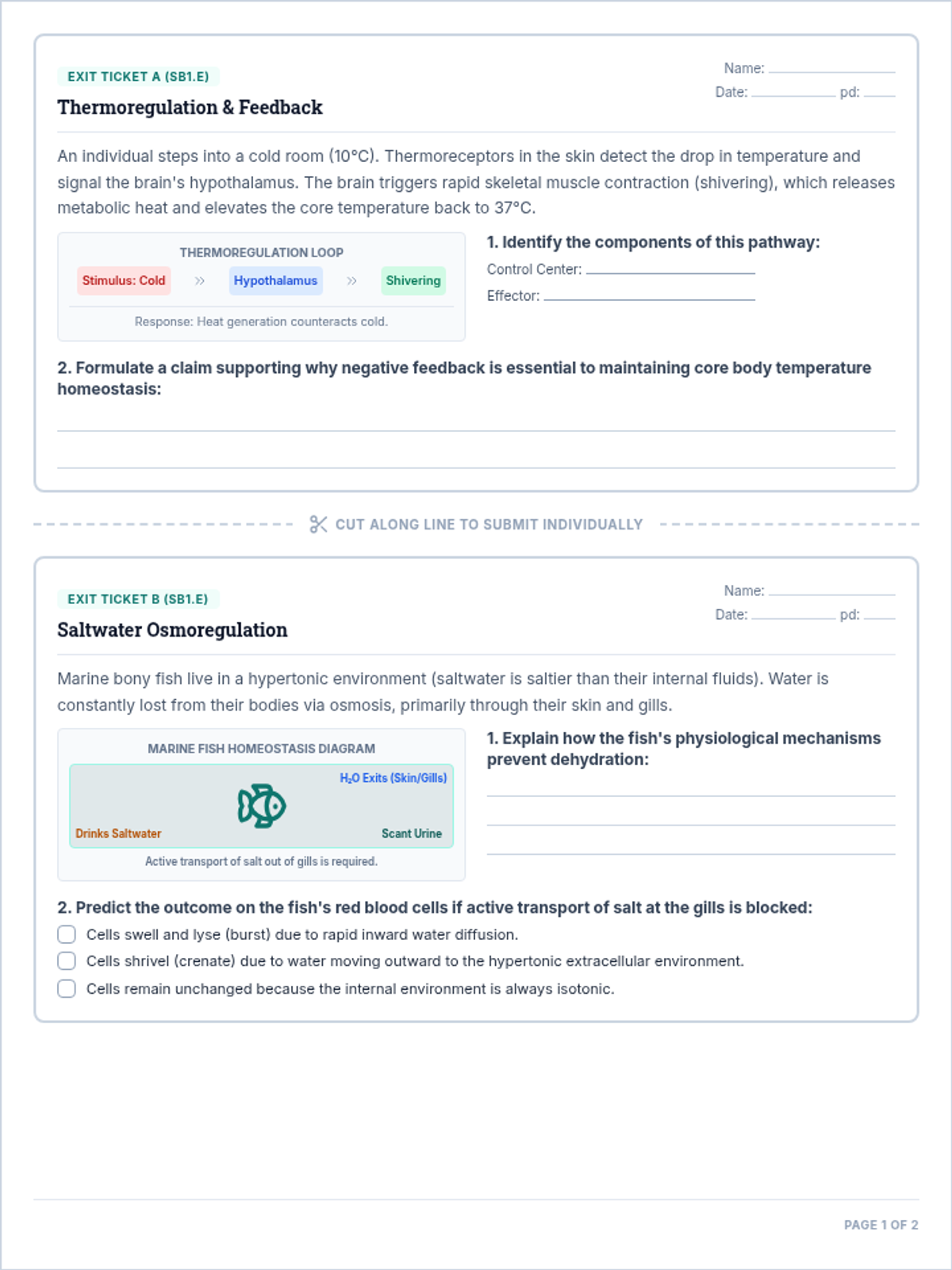
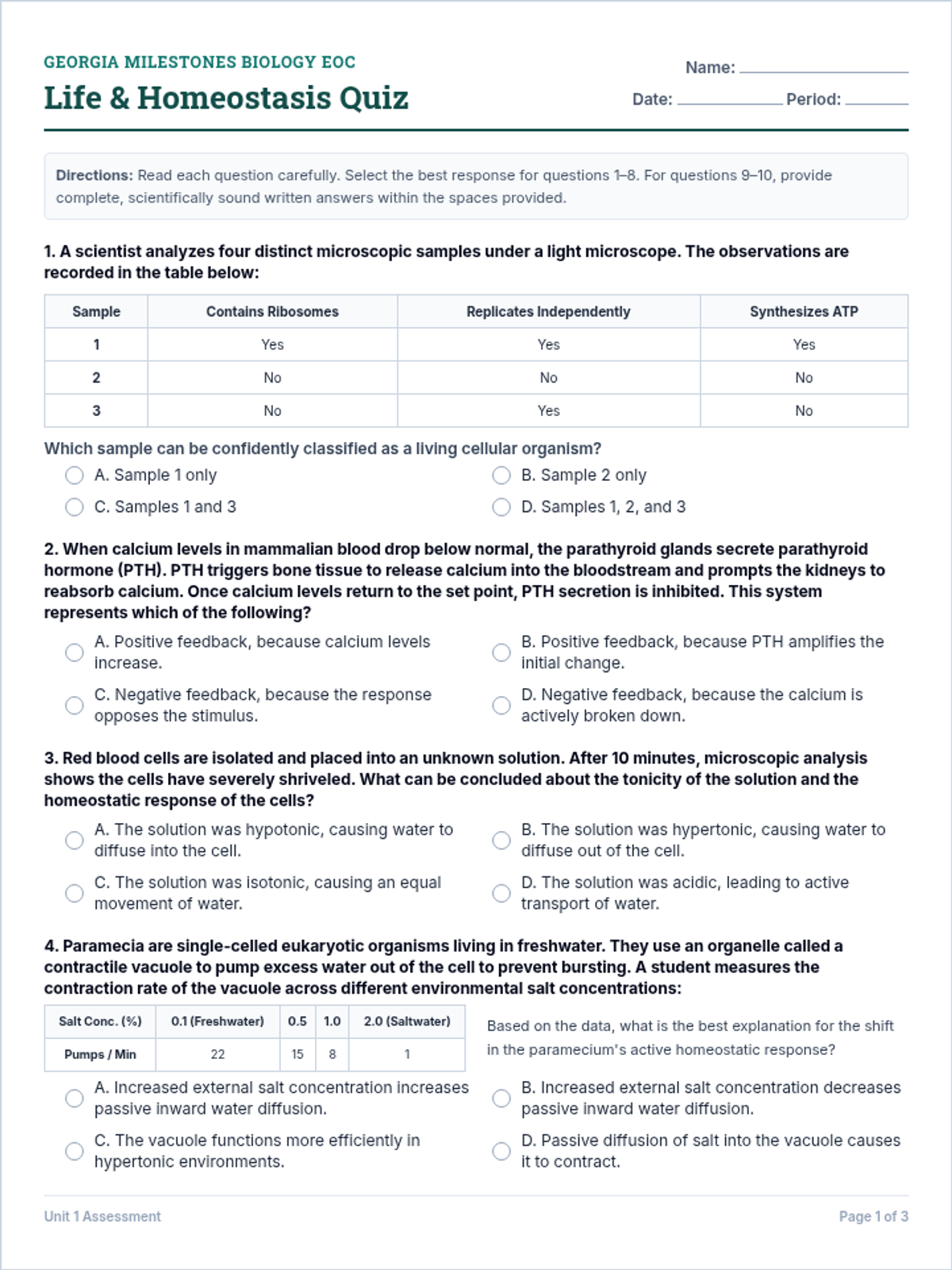
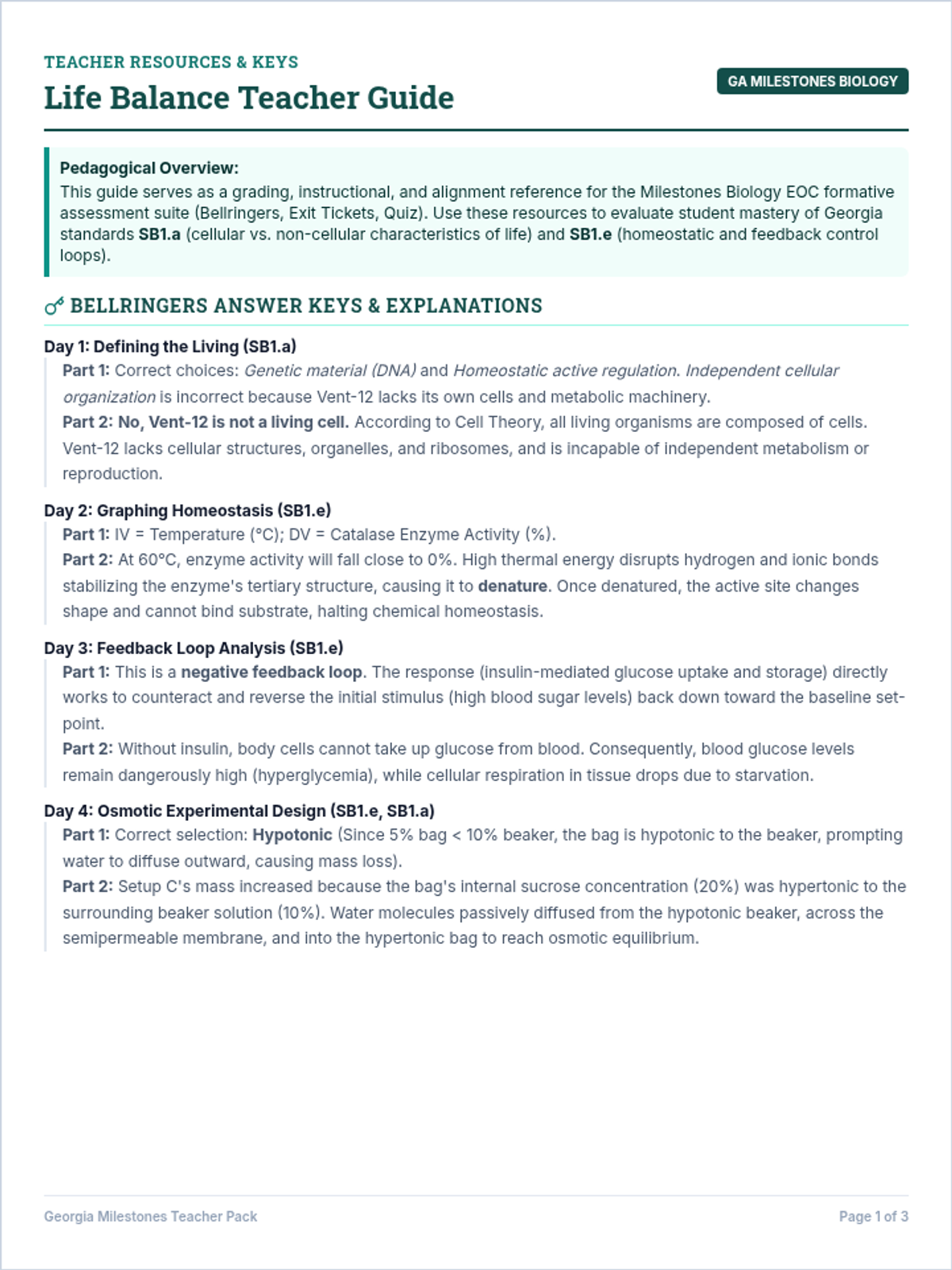
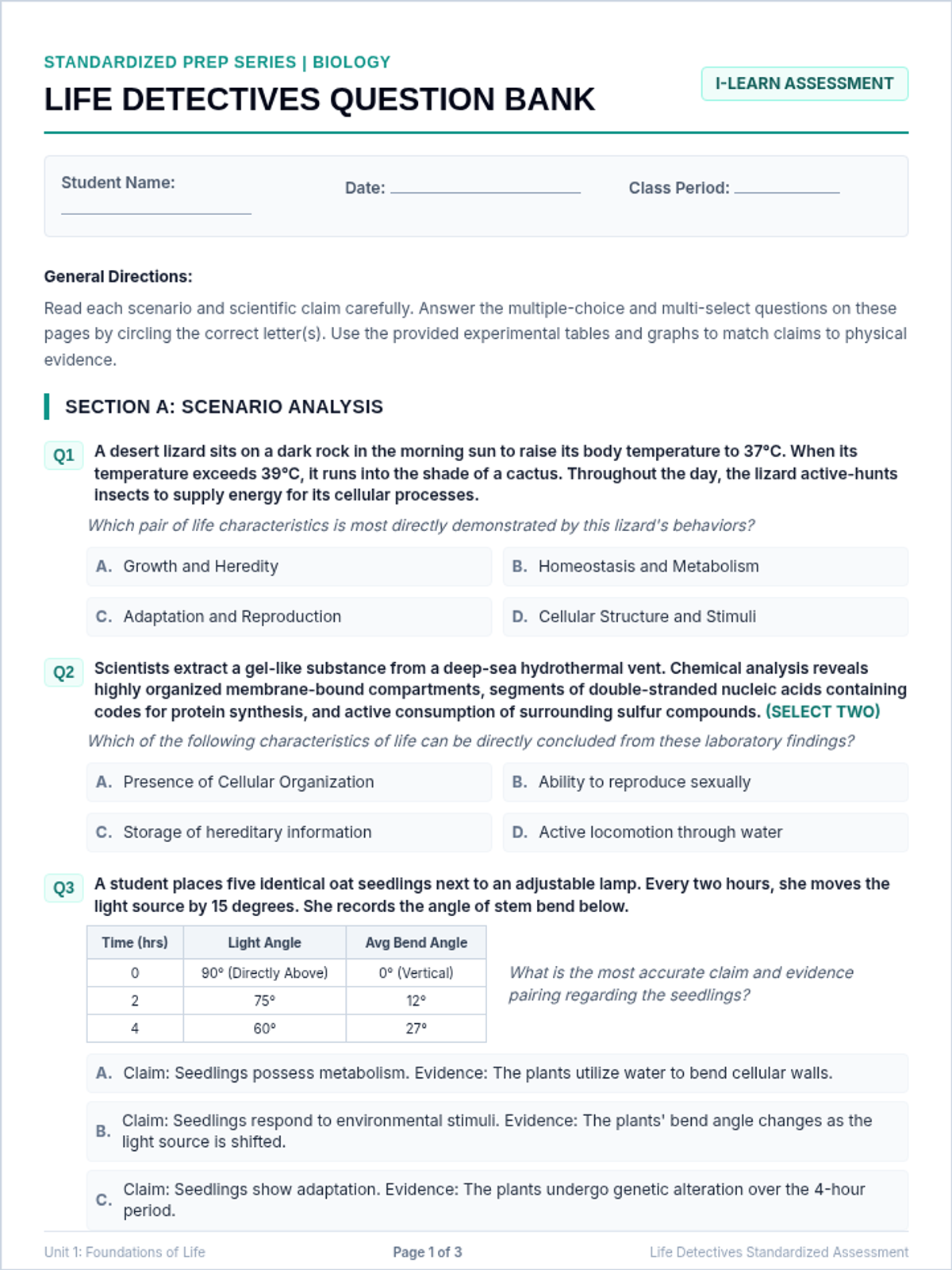
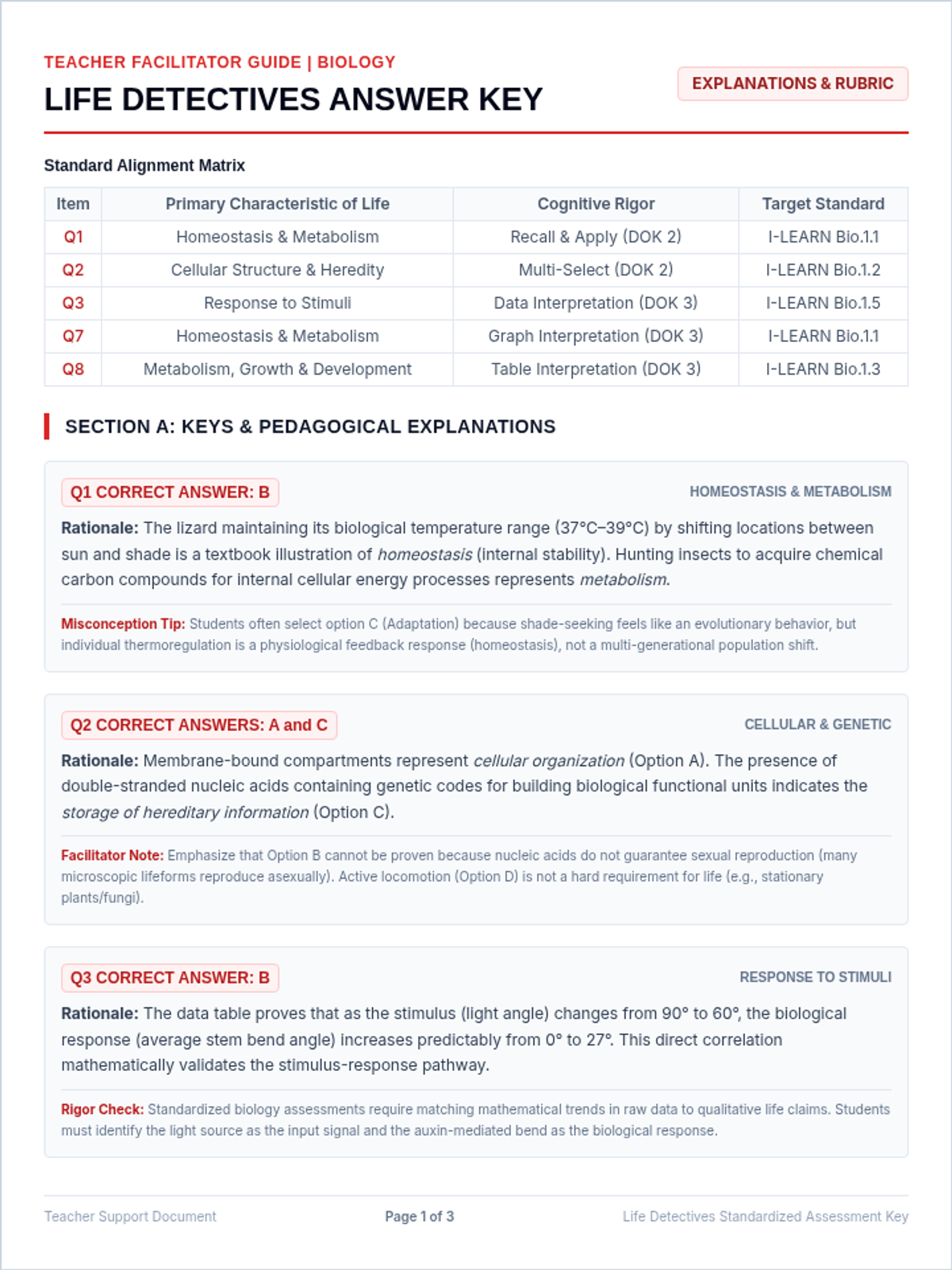
A rigorous, Georgia Milestones Biology EOC-aligned formative assessment pack focusing on the characteristics of life and homeostasis. This lesson contains highly structured bellringers, daily exit tickets, a diagnostic-style quiz, and a comprehensive teacher answer key and guide emphasizing graph, variable, and experimental data analysis.
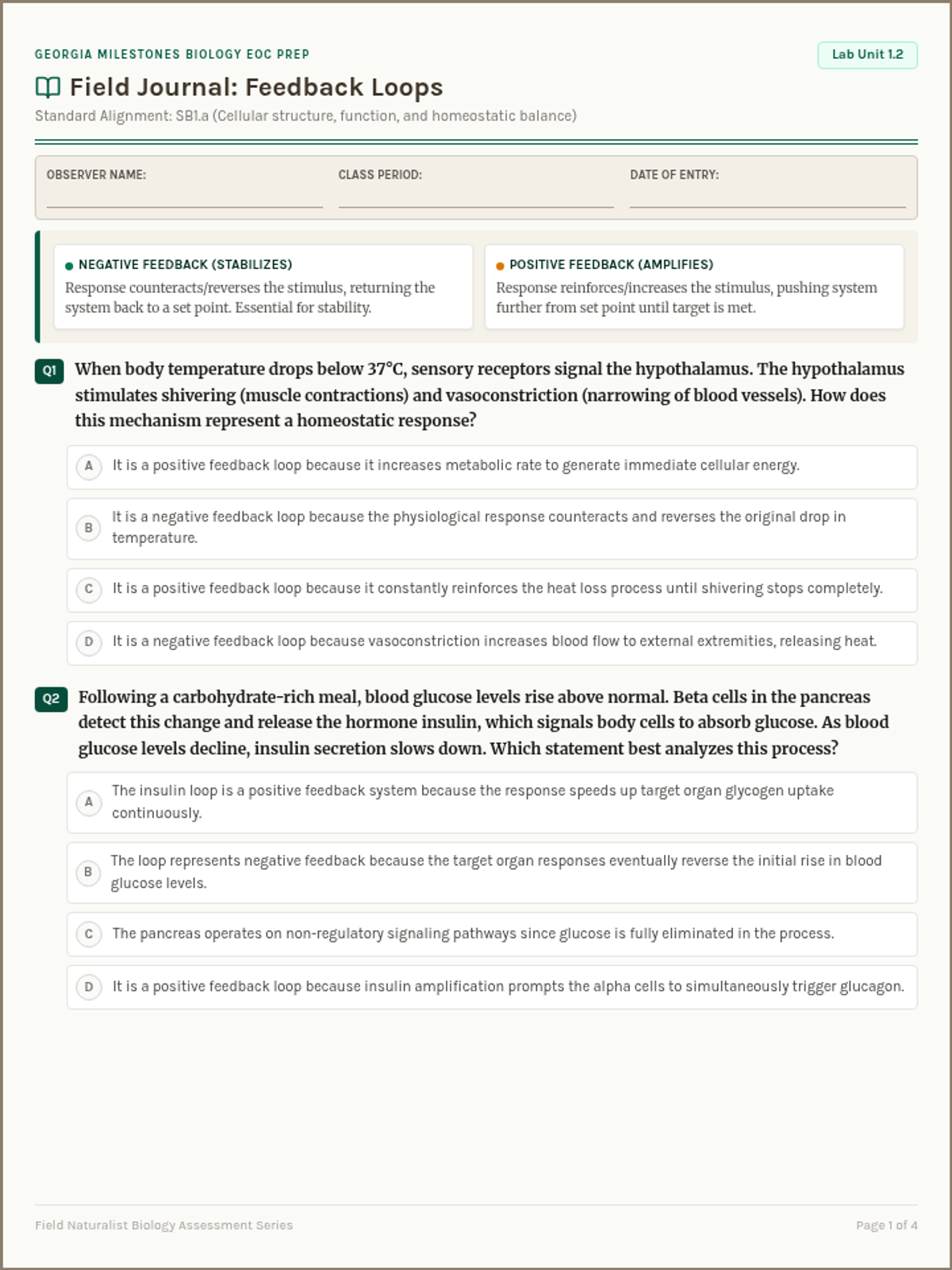
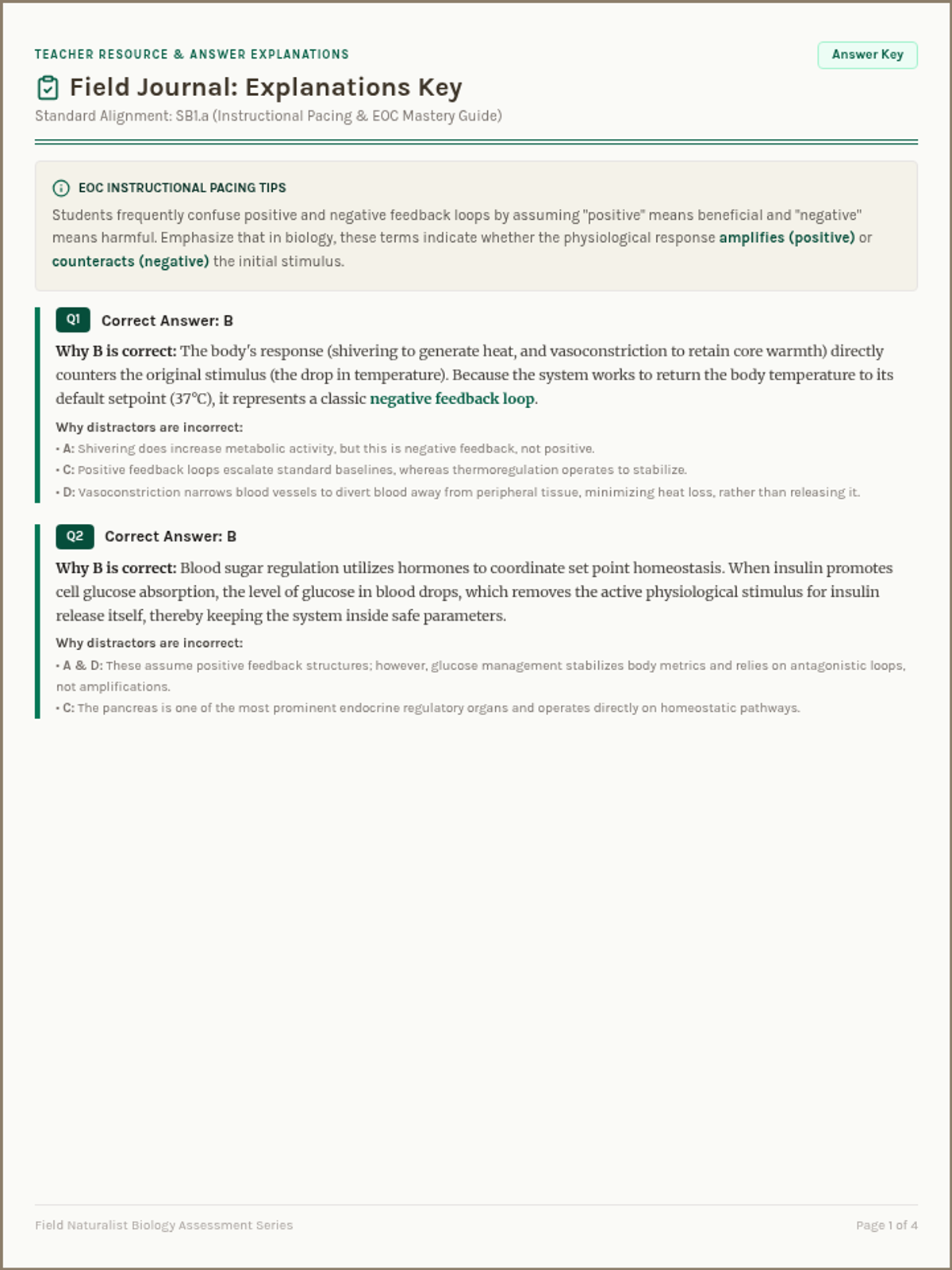
A targeted prep lesson designed to master positive and negative feedback loops for the Georgia Milestones Biology EOC assessment. Includes rigorous, standards-aligned practice questions and a detailed teacher explanation guide.
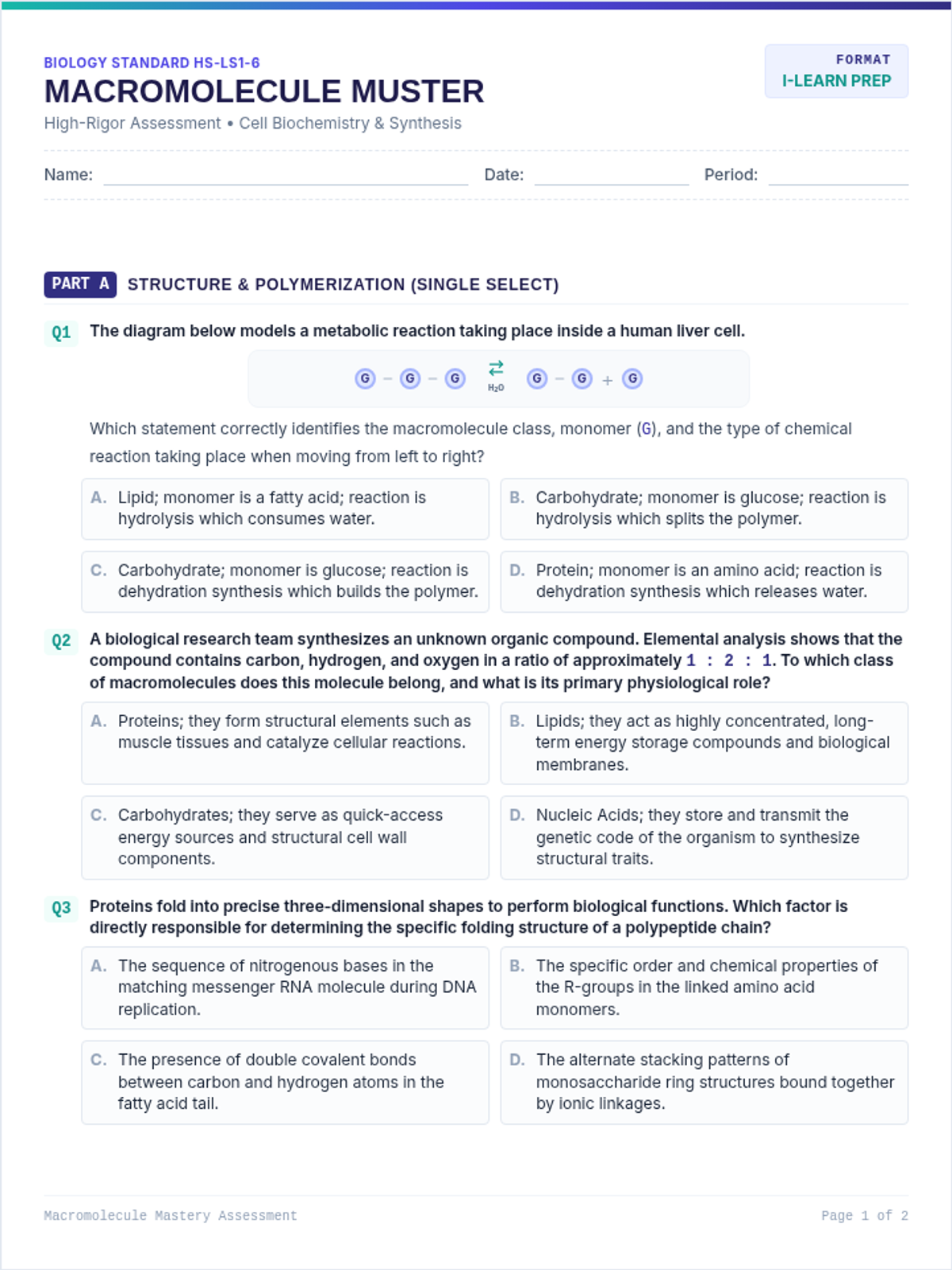
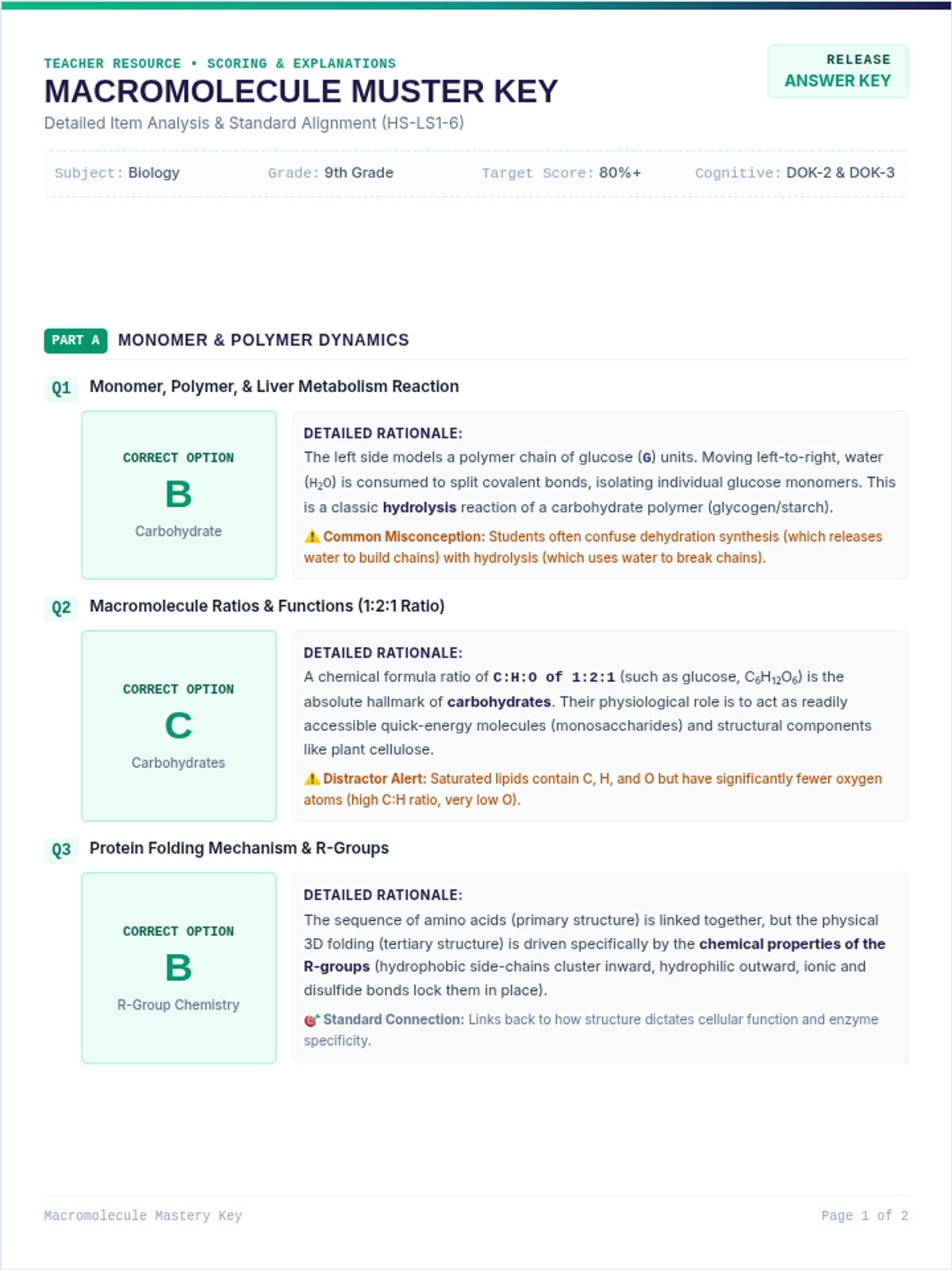
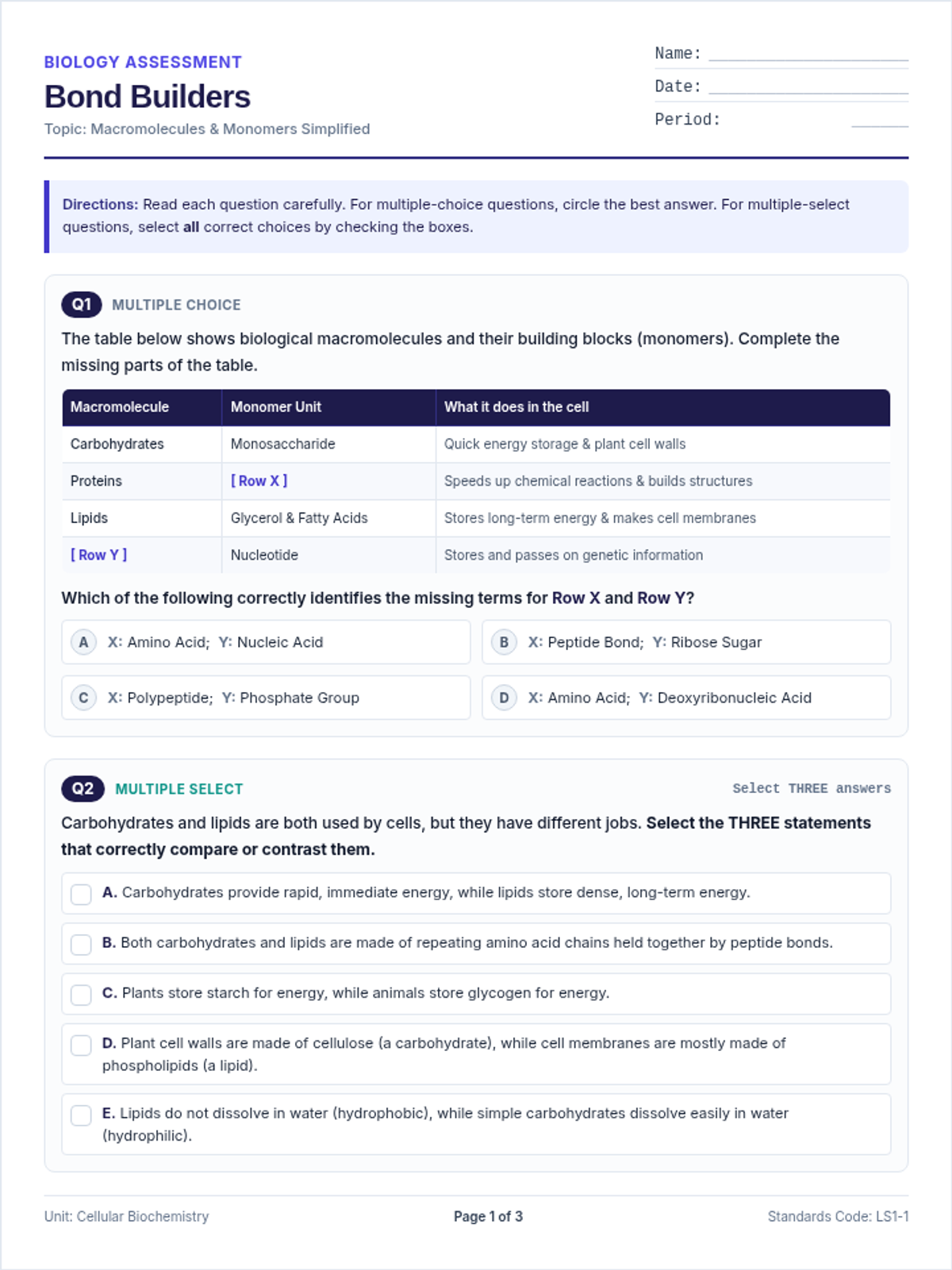
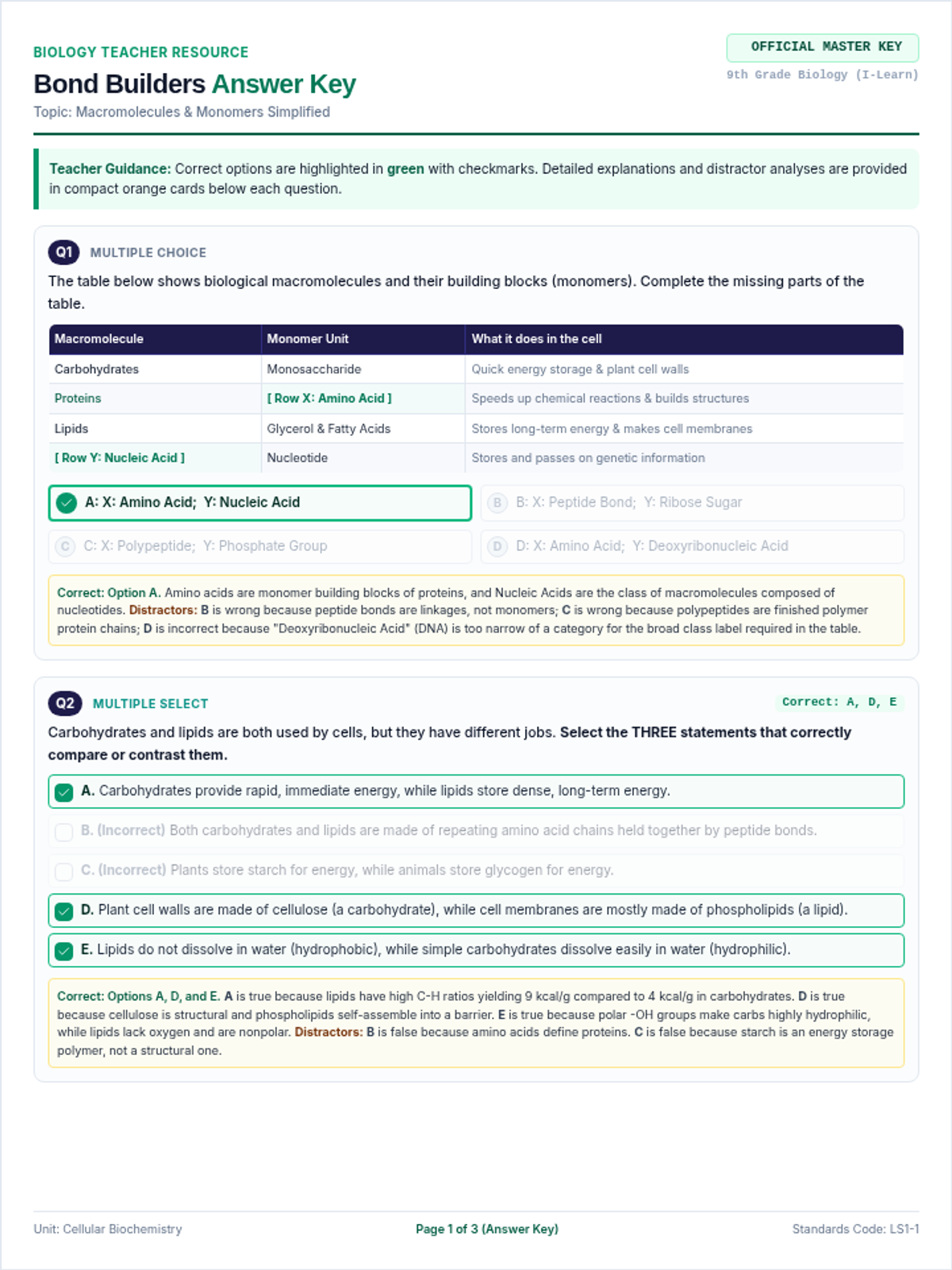
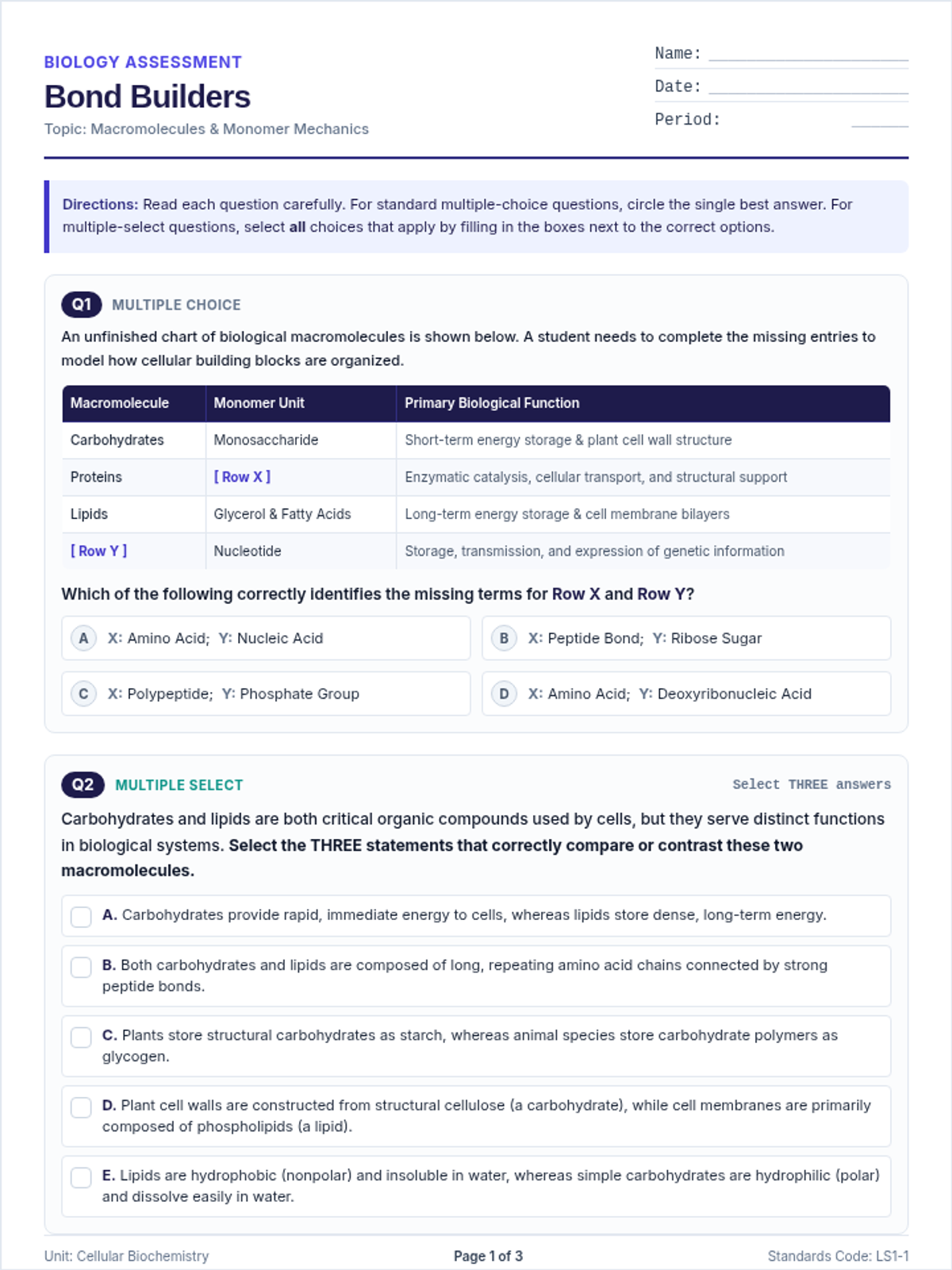
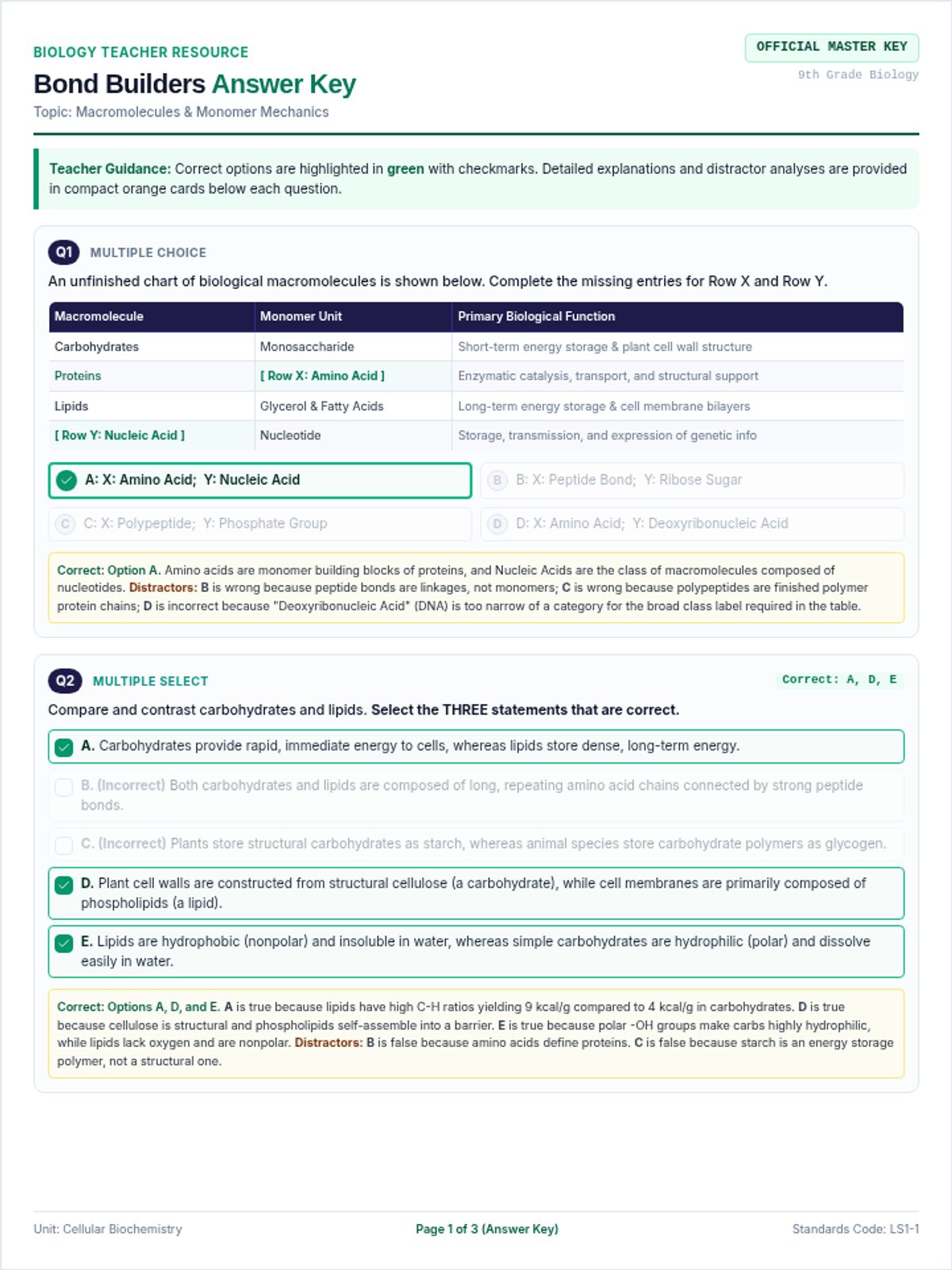
An assessment-focused lesson designed to test 9th-grade students on the structure and function of the four major biological macromolecules: carbohydrates, lipids, proteins, and nucleic acids.
A 9th-grade biology lesson focused on the structure, monomers, and functions of the four major biological macromolecules (carbohydrates, lipids, proteins, and nucleic acids). Students will explore how these molecules build life and demonstrate mastery through a rigorous, I-Learn styled quiz.
A rigorous assessment and practice suite designed to prepare students for standardized science exams. It focuses on the characteristics of life through scenario-based multiple-choice questions and evidence-based experimental data analysis.
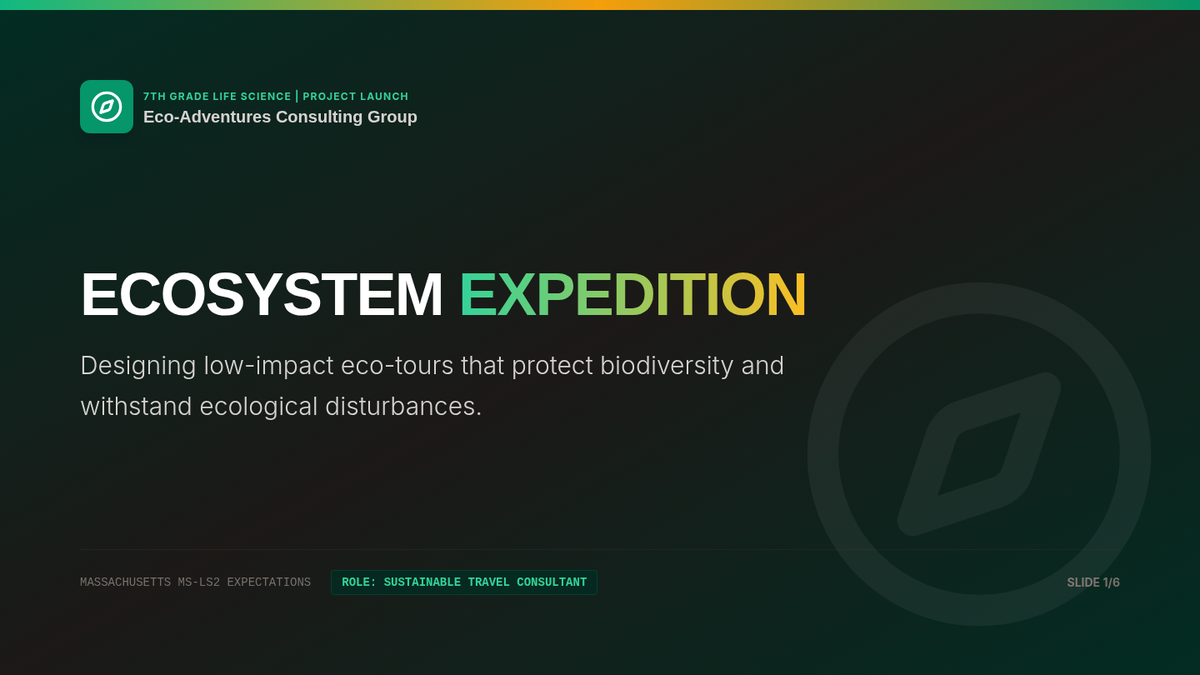
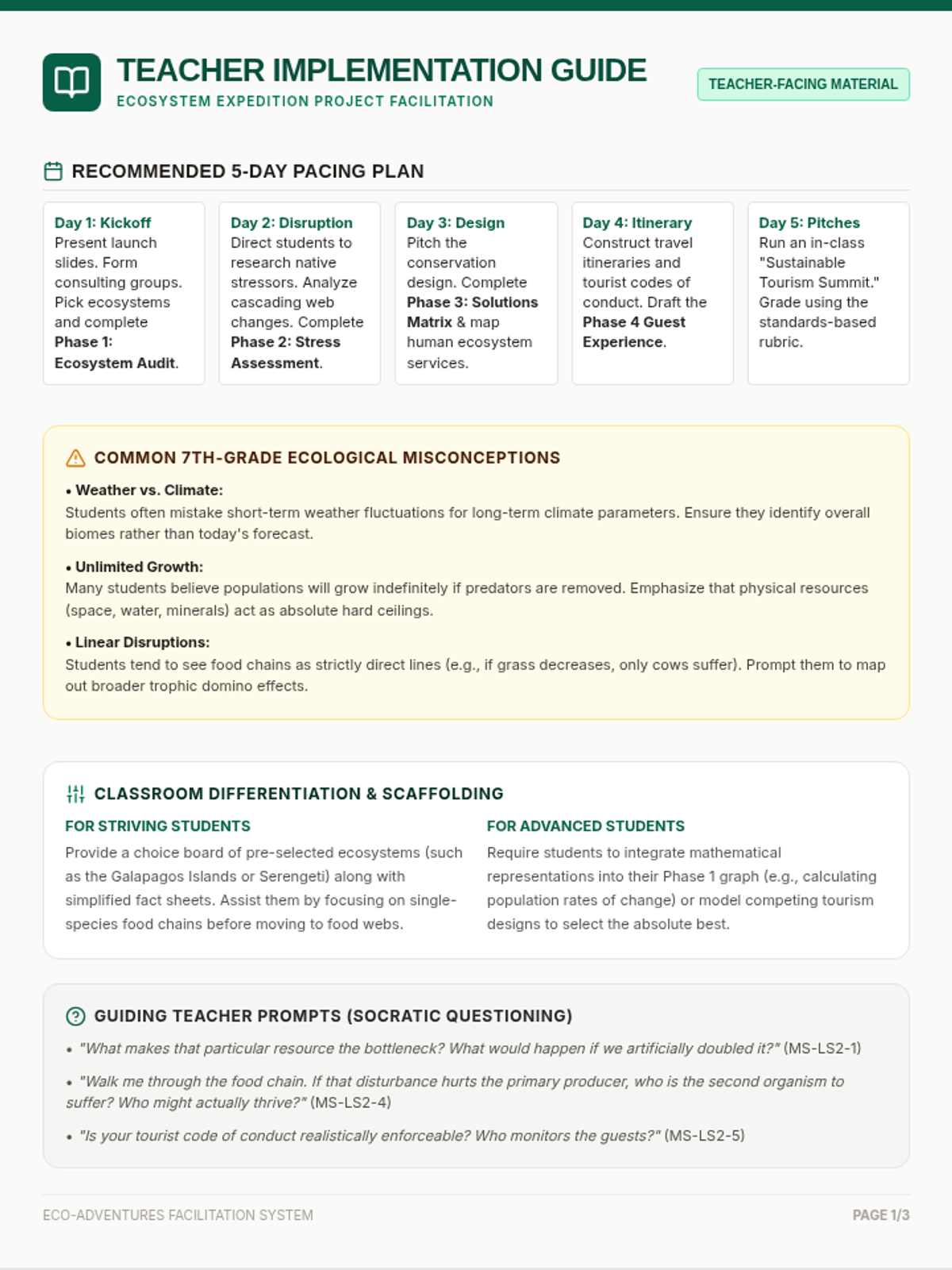
A project-based unit where 7th-grade life science students act as Sustainable Travel Consultants, researching an ecosystem, analyzing limiting resources and ecological disruptions, and designing a low-impact eco-tourism project aligned with Massachusetts standards.
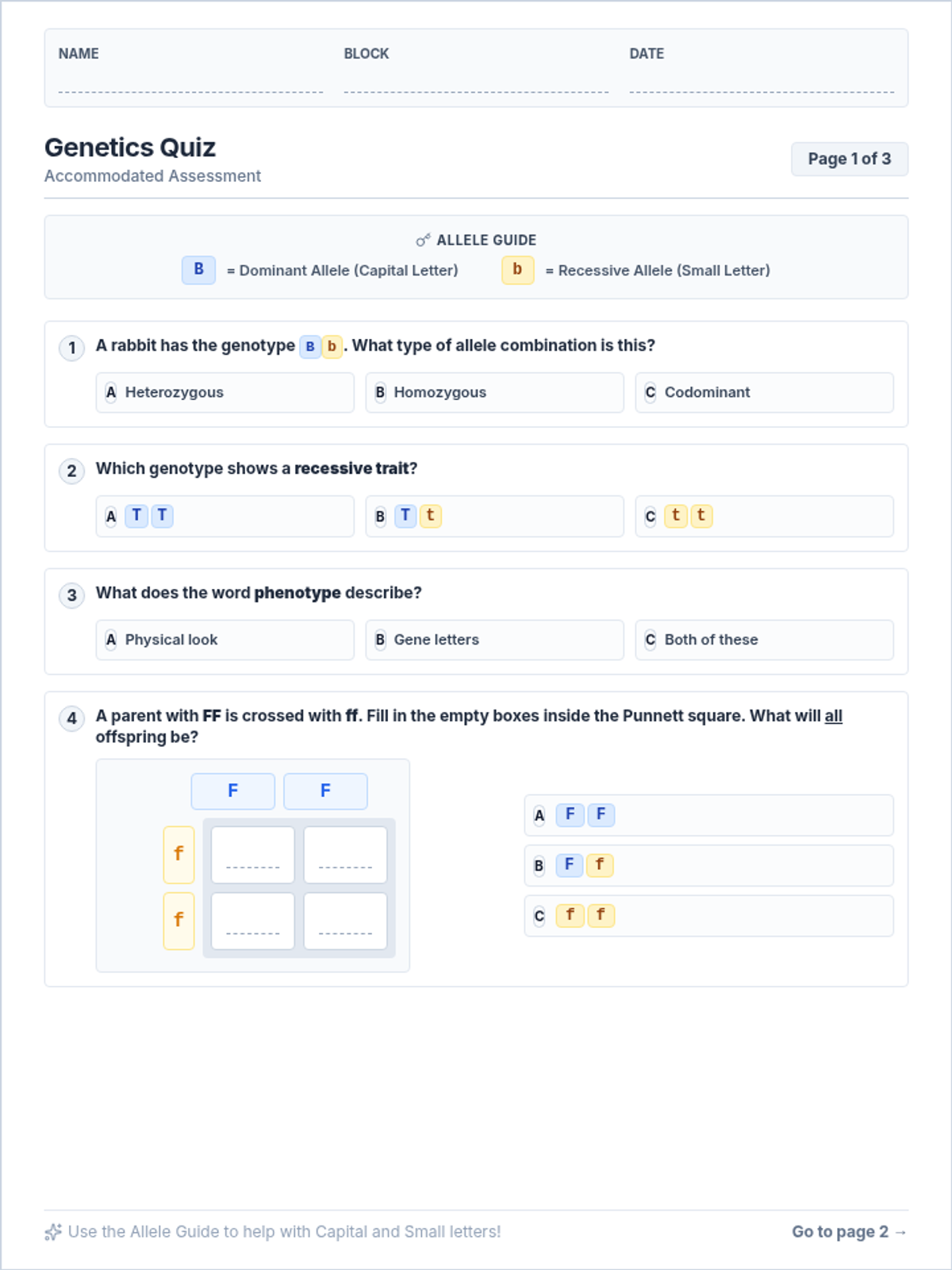
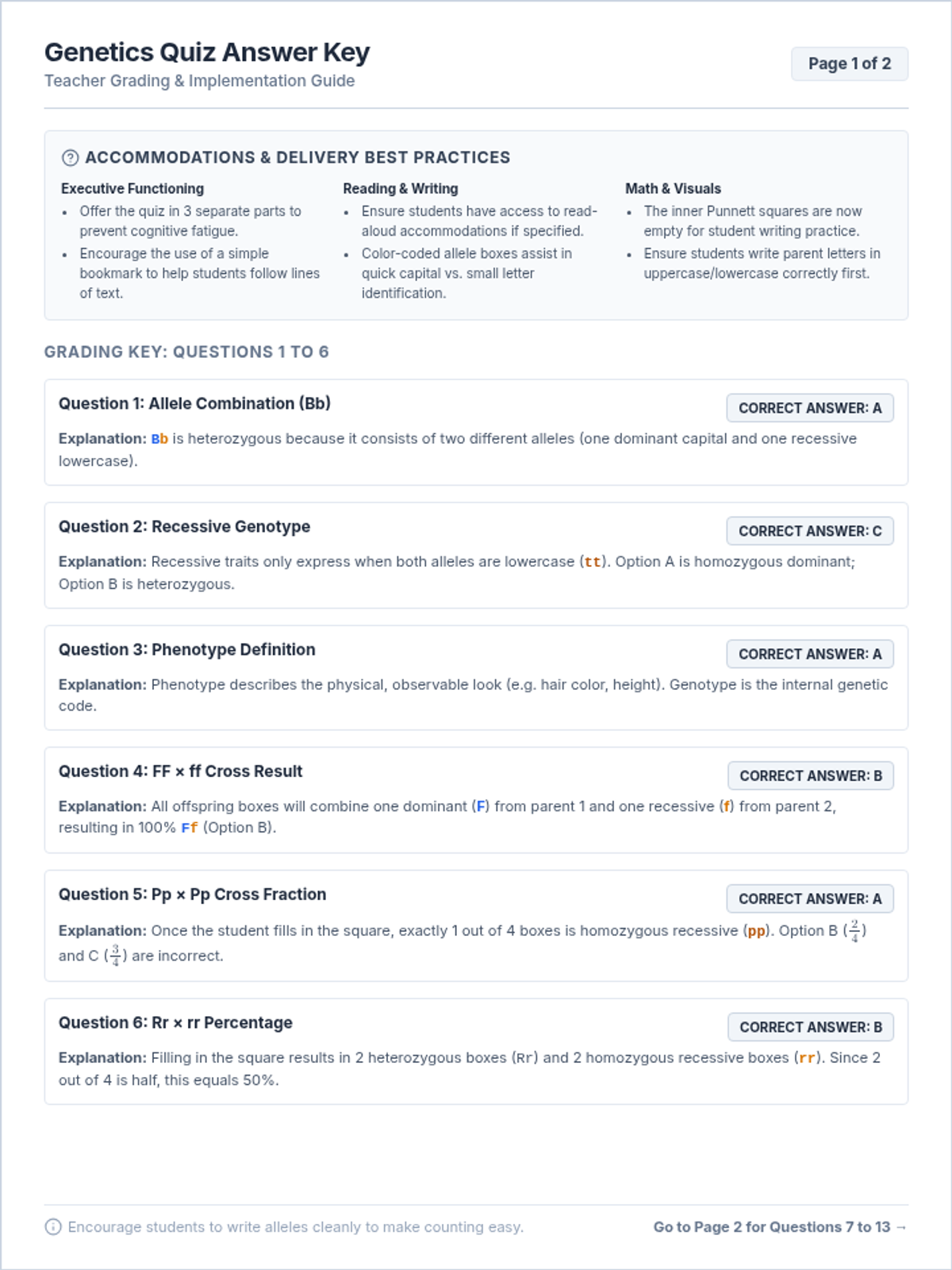
A custom accommodated quiz pack on genetics, designed specifically for students with reading, writing, math, and executive functioning challenges. Includes a highly scaffolded student quiz and a comprehensive teacher answer key with pedagogical guidance.
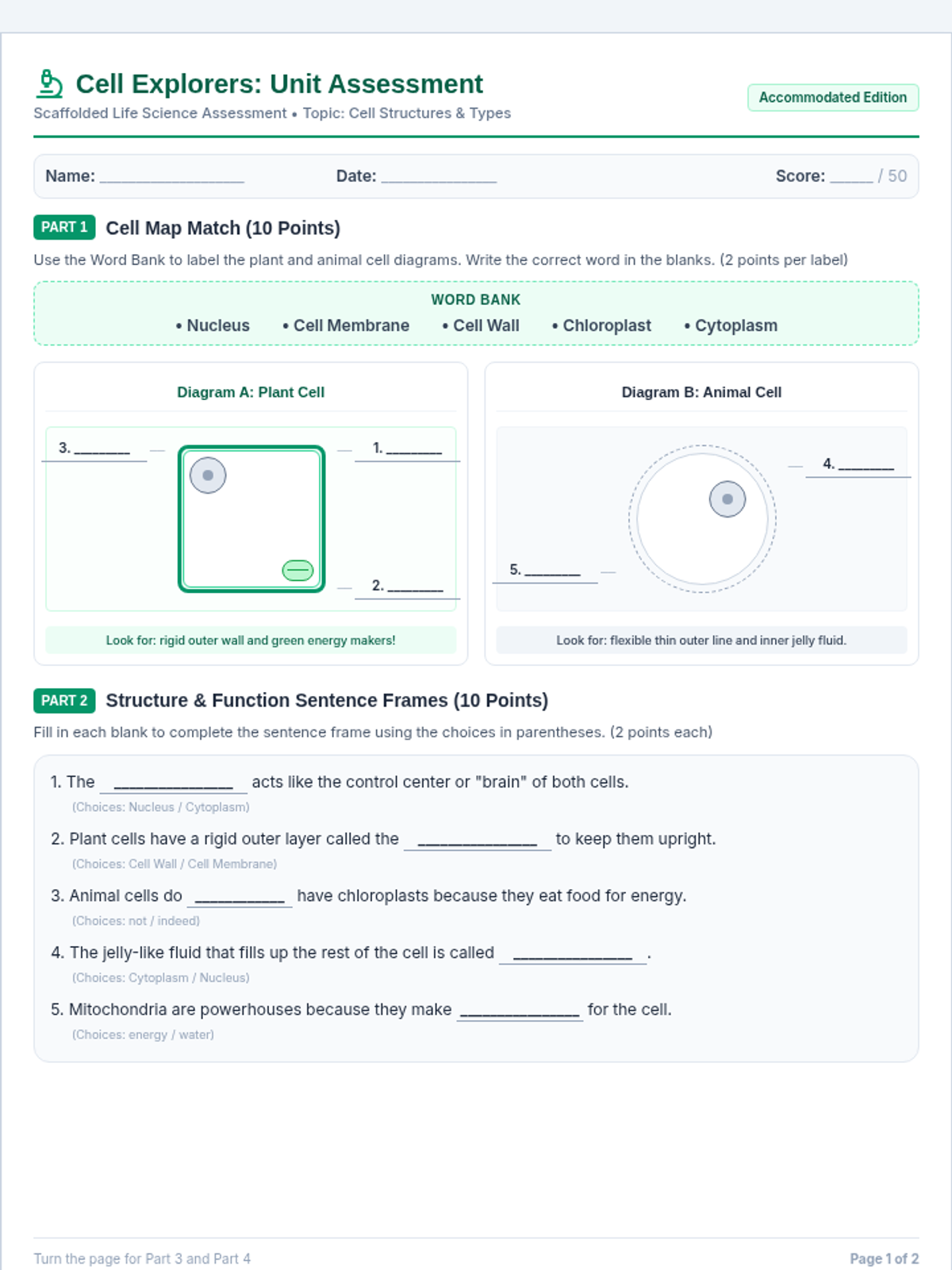
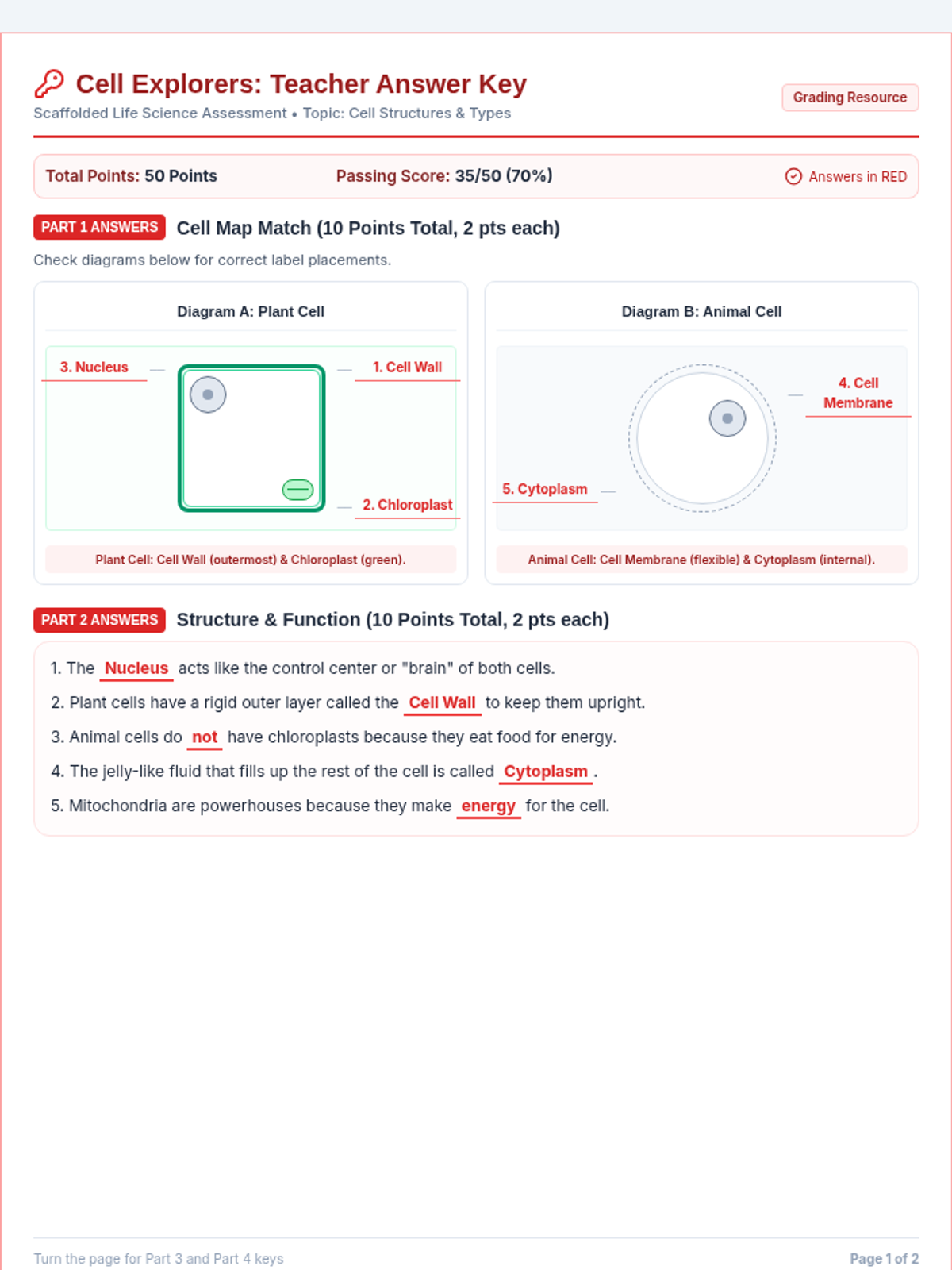
A scaffolded 2-page assessment and corresponding answer key covering prokaryotic and eukaryotic cells, including bacteria, plant, animal, and human cells. Features visual matching, labeling with word banks, sentence frames, and guided sentence starters, scaled to 50 points total.
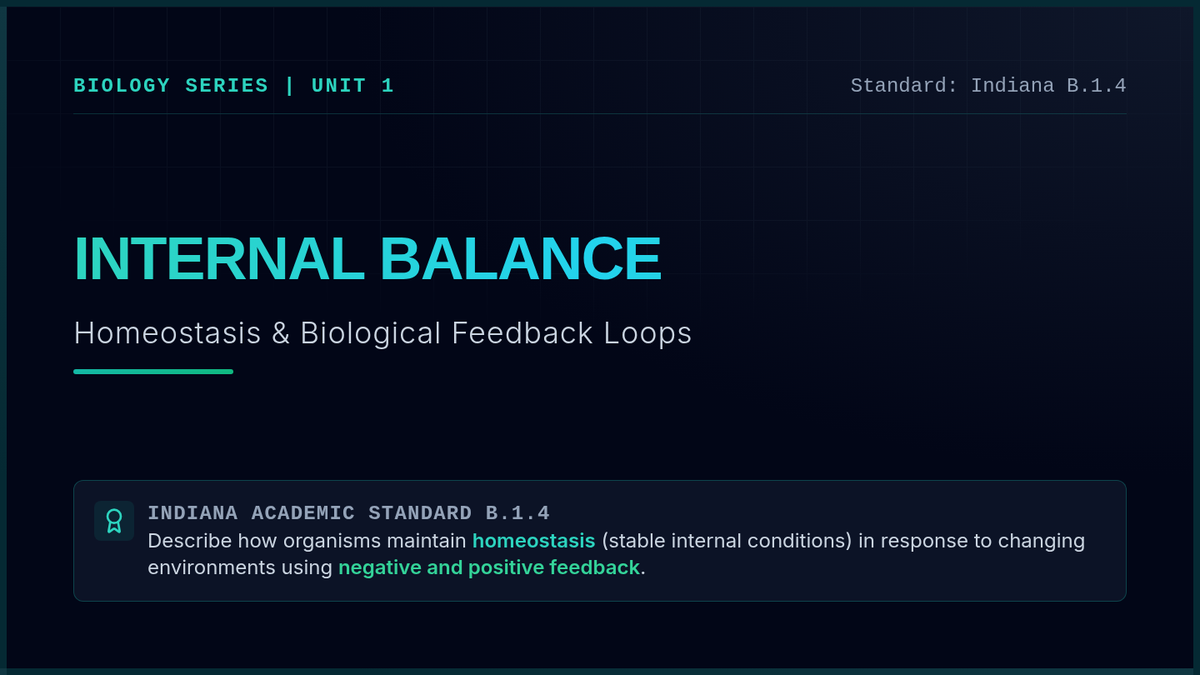
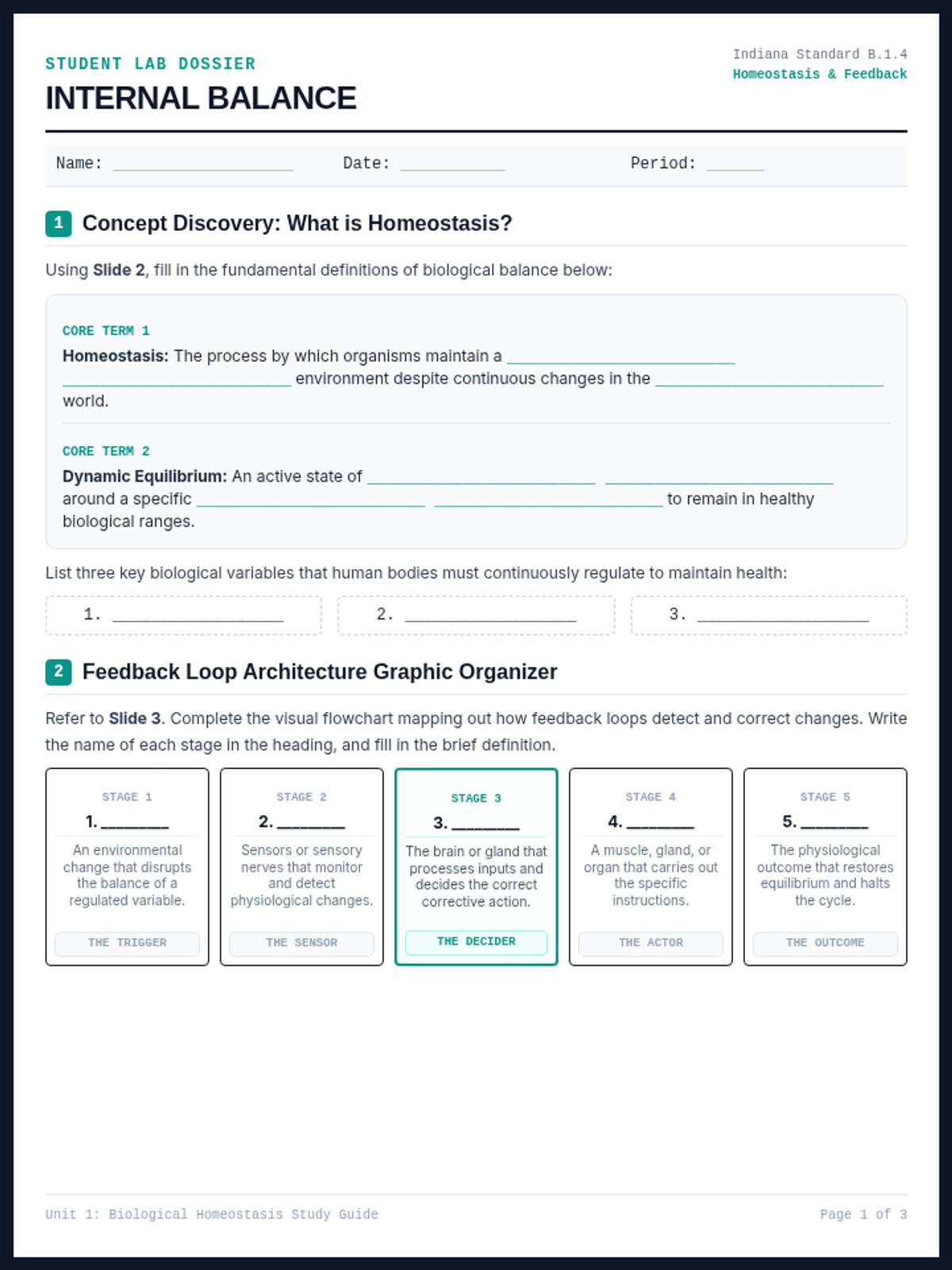
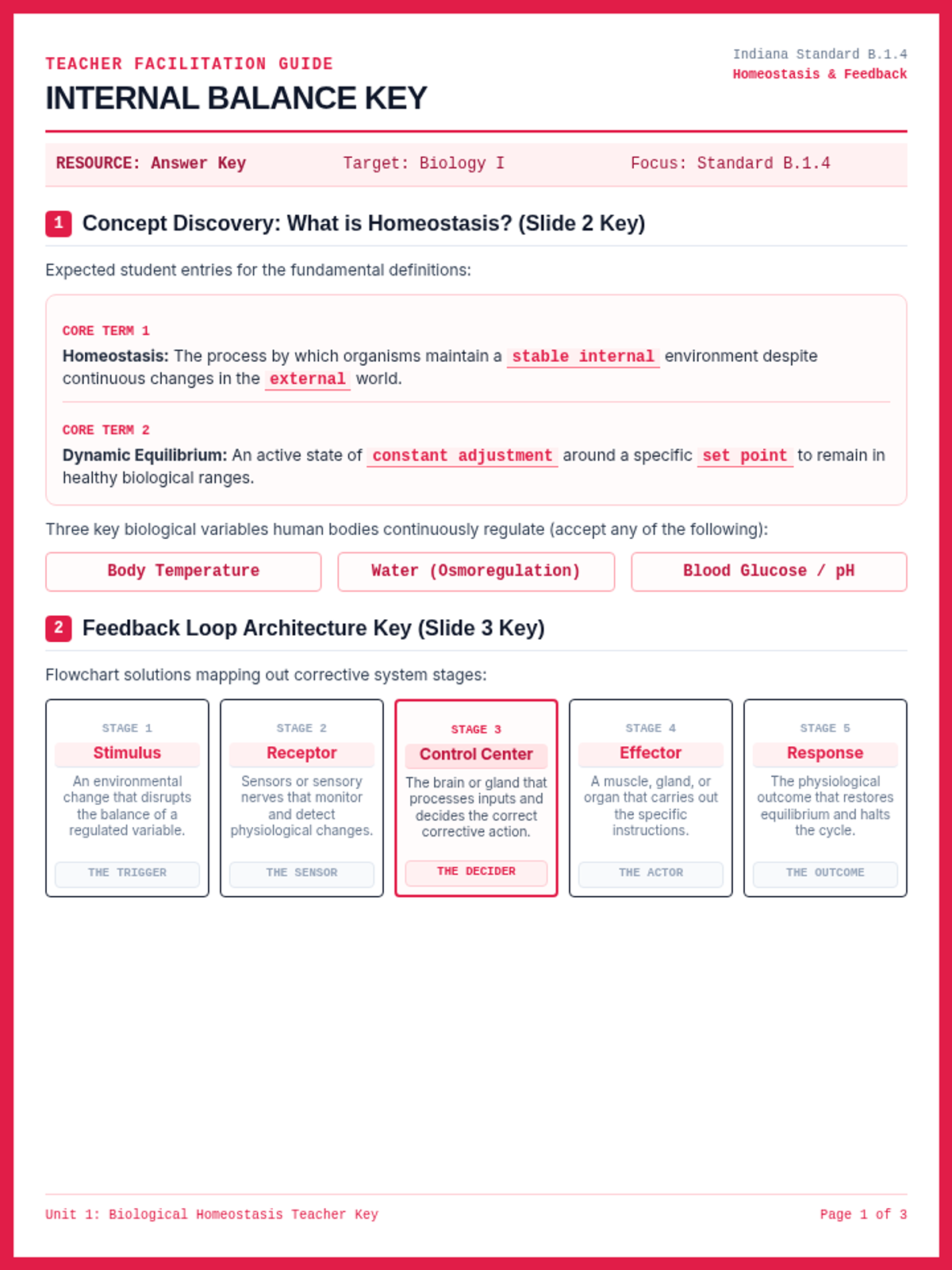
A comprehensive biology lesson on homeostasis and biological feedback mechanisms, aligned with Indiana Academic Standard Biology B.1.4. The lesson includes a highly visual slide deck and matching guided student notesheets with graphic organizers and real-world case studies.
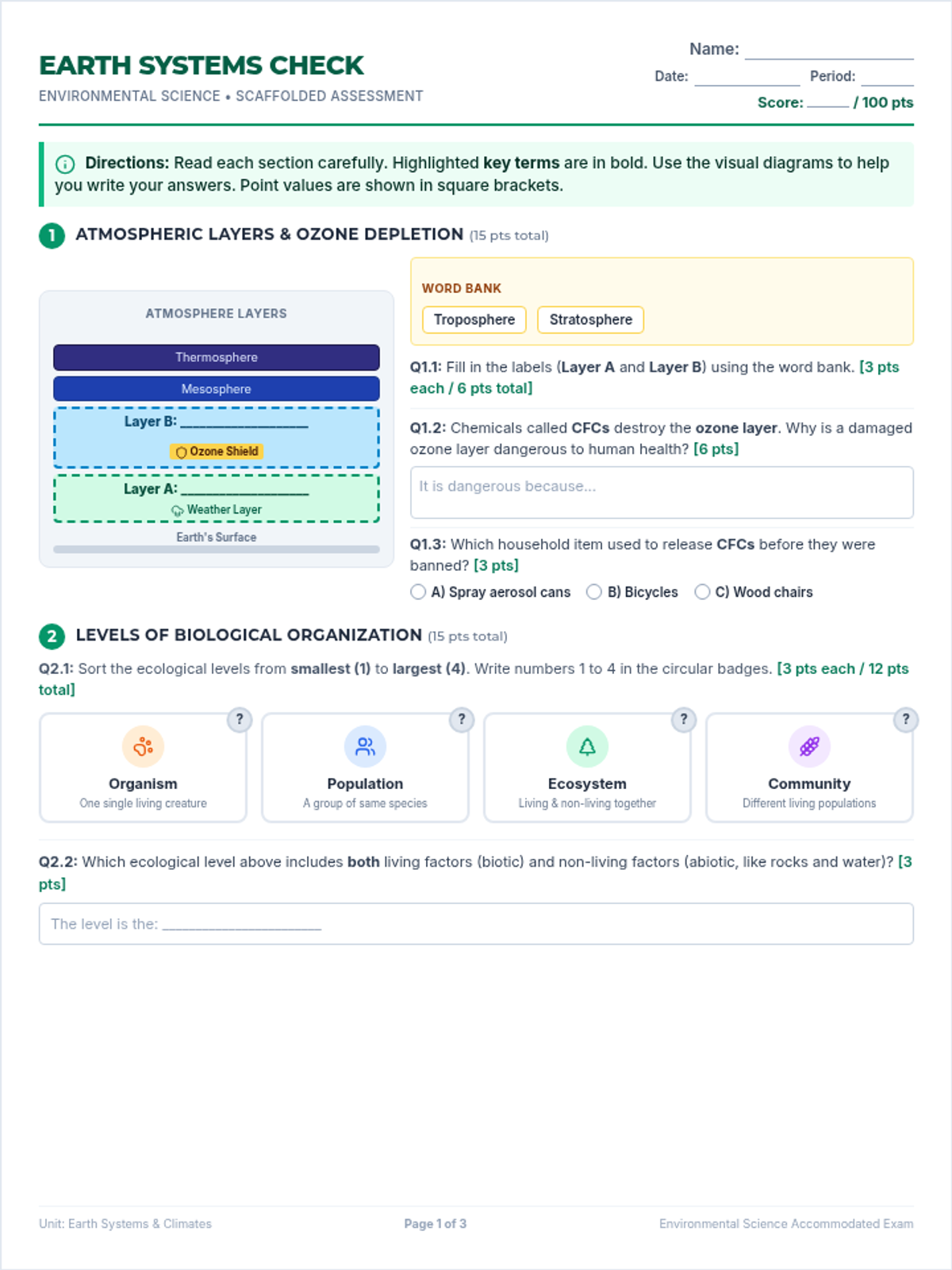
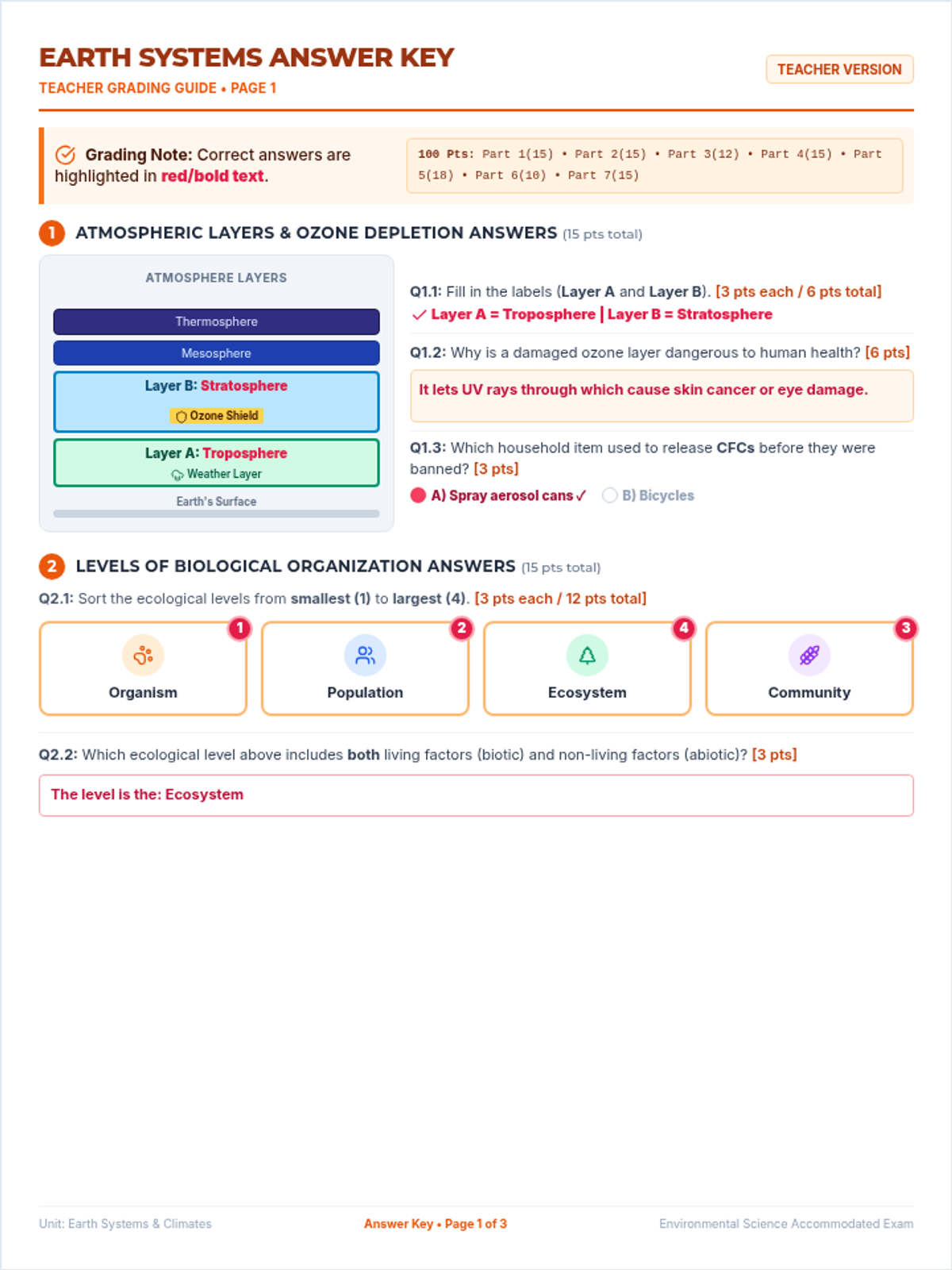
A highly visual, scaffolded assessment and corresponding answer key covering atmospheric layers, resource classification, carbon footprints, biological levels, trophic webs, ice proxies, and photosynthesis.