Students investigate the difference between biotic and abiotic factors, explore how they interact within local ecosystems, and design an anchor chart to map these connections.
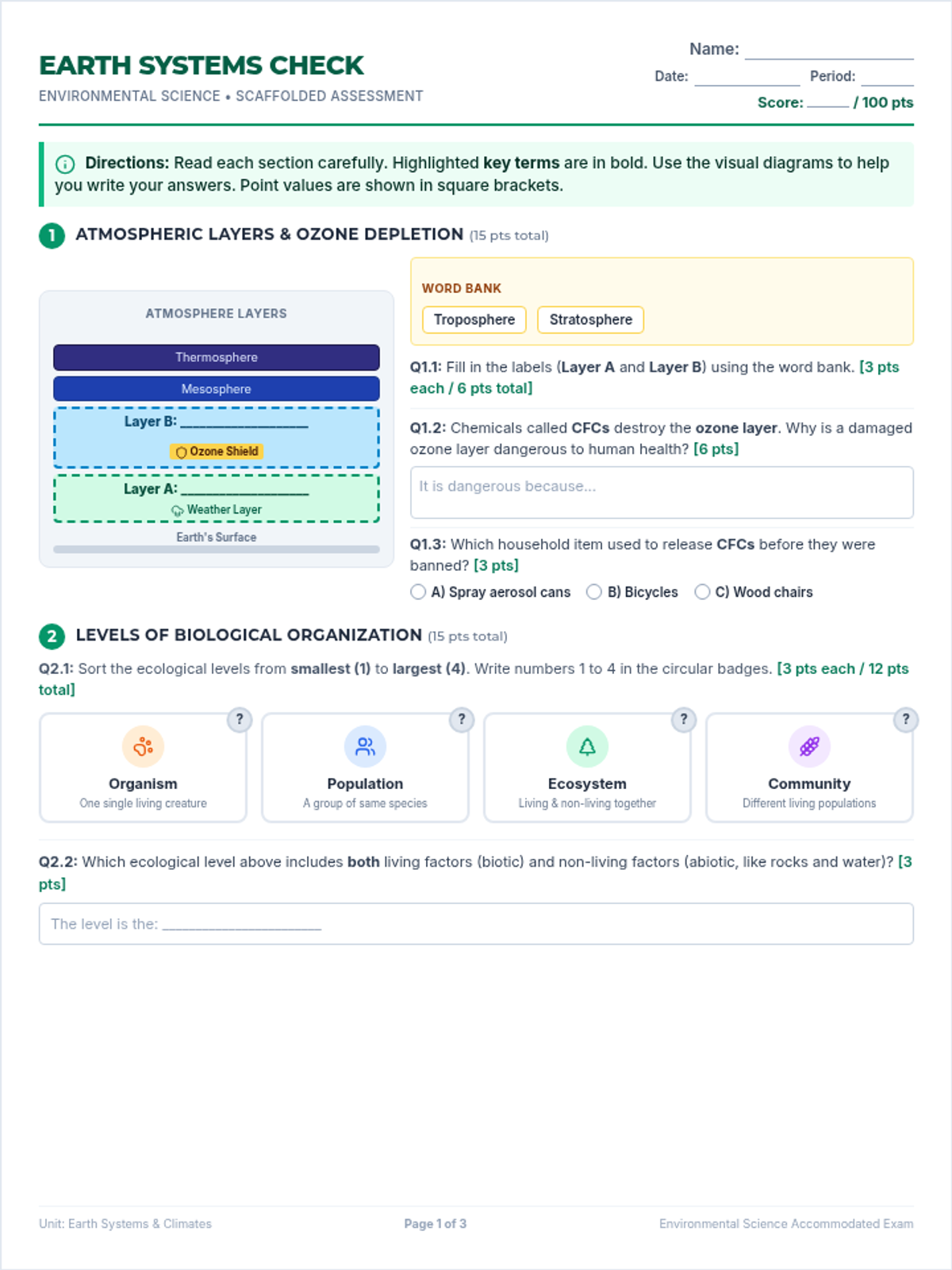
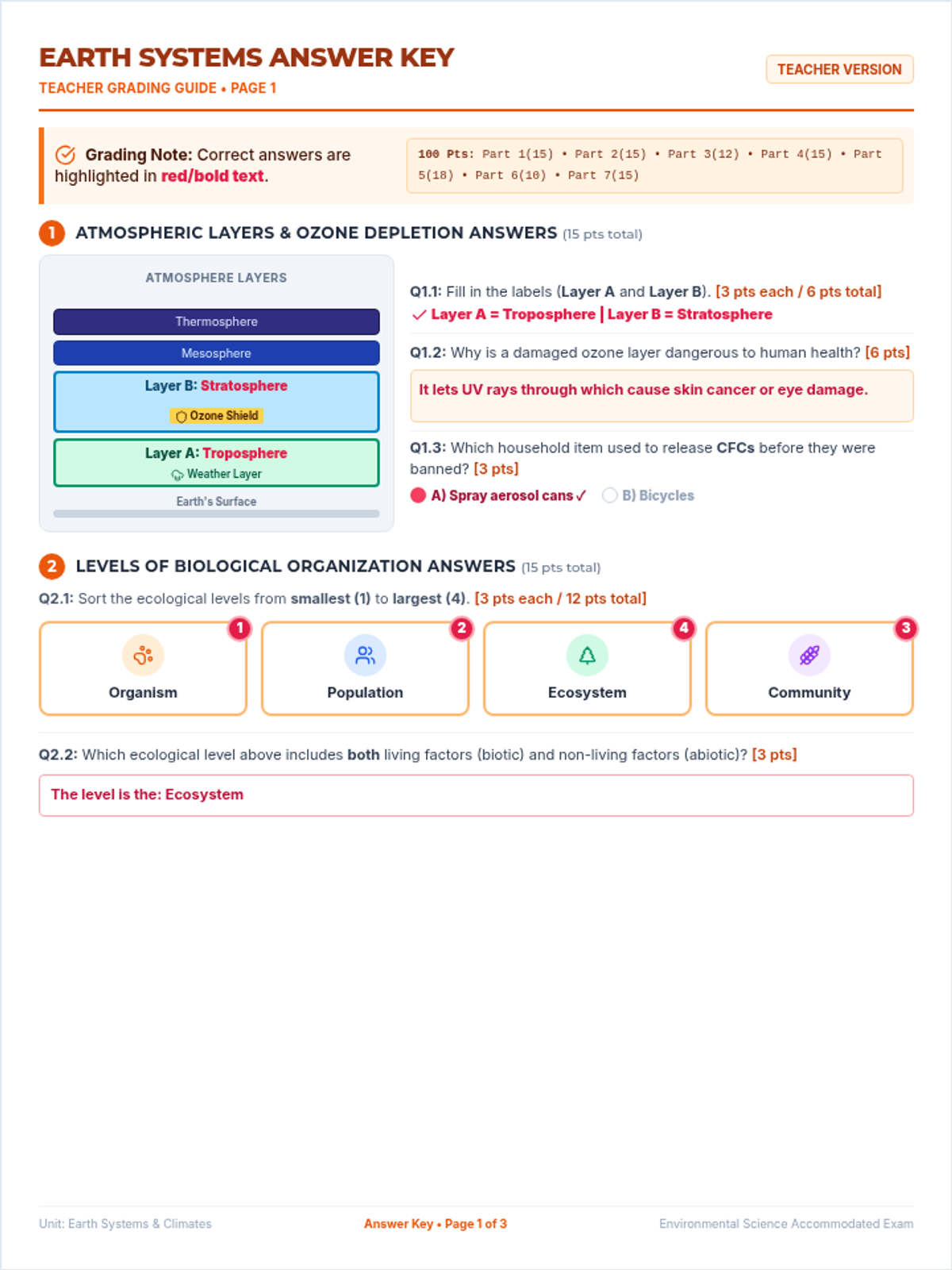
A highly visual, scaffolded assessment and corresponding answer key covering atmospheric layers, resource classification, carbon footprints, biological levels, trophic webs, ice proxies, and photosynthesis.
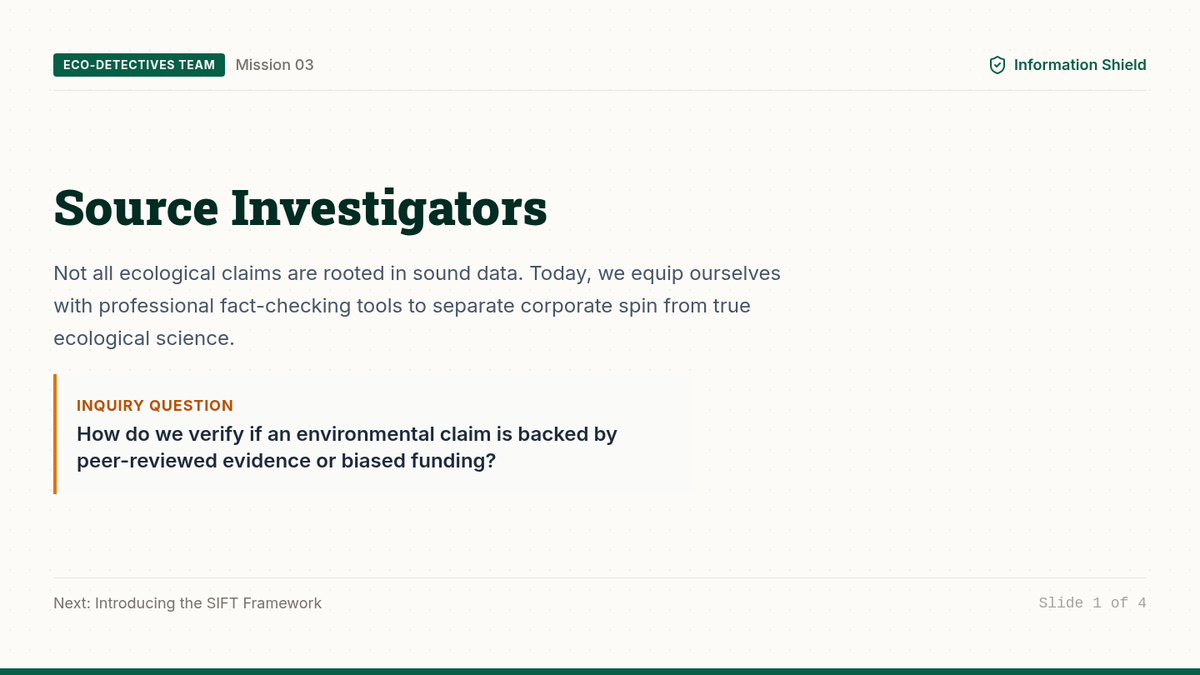
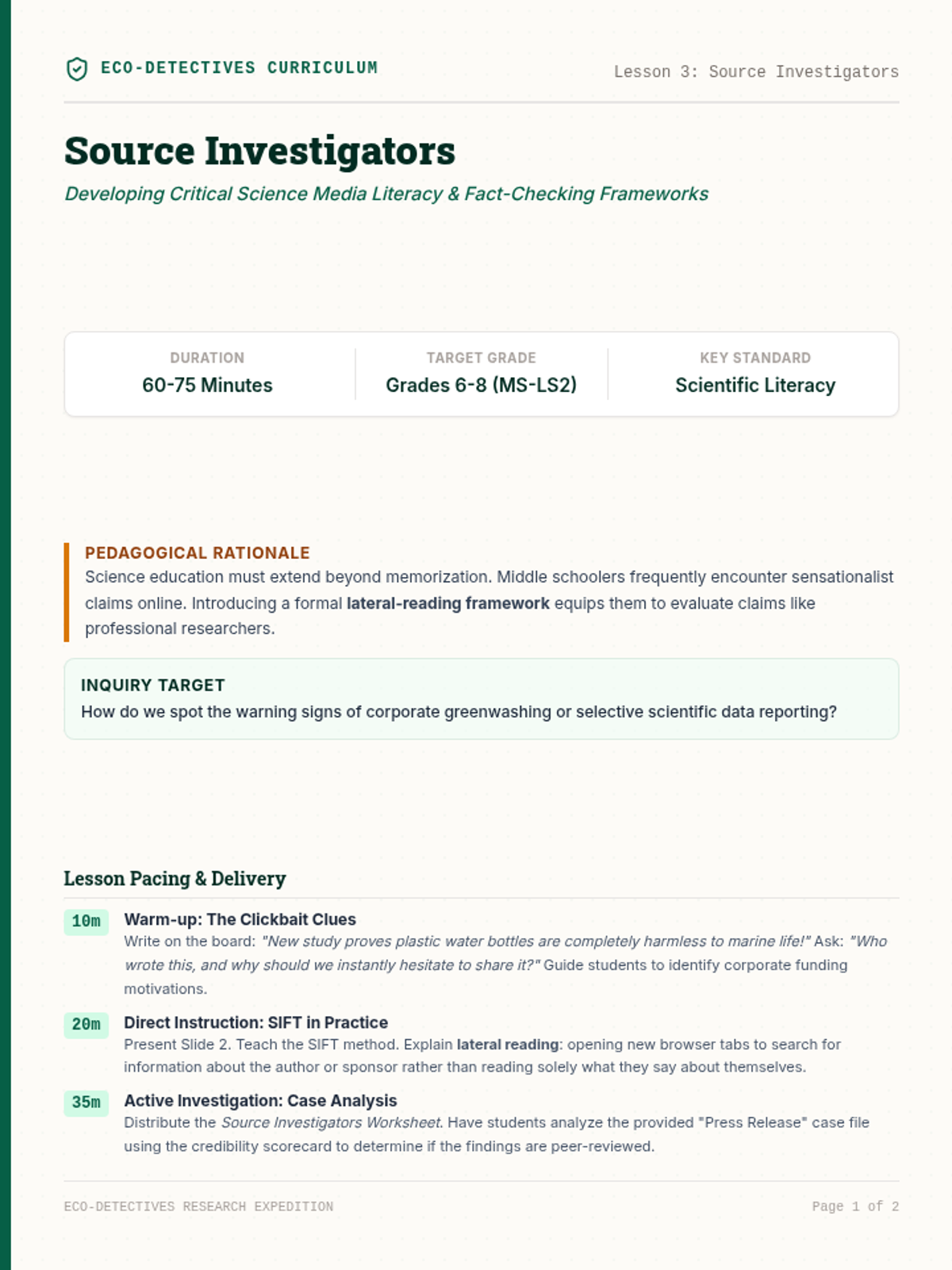
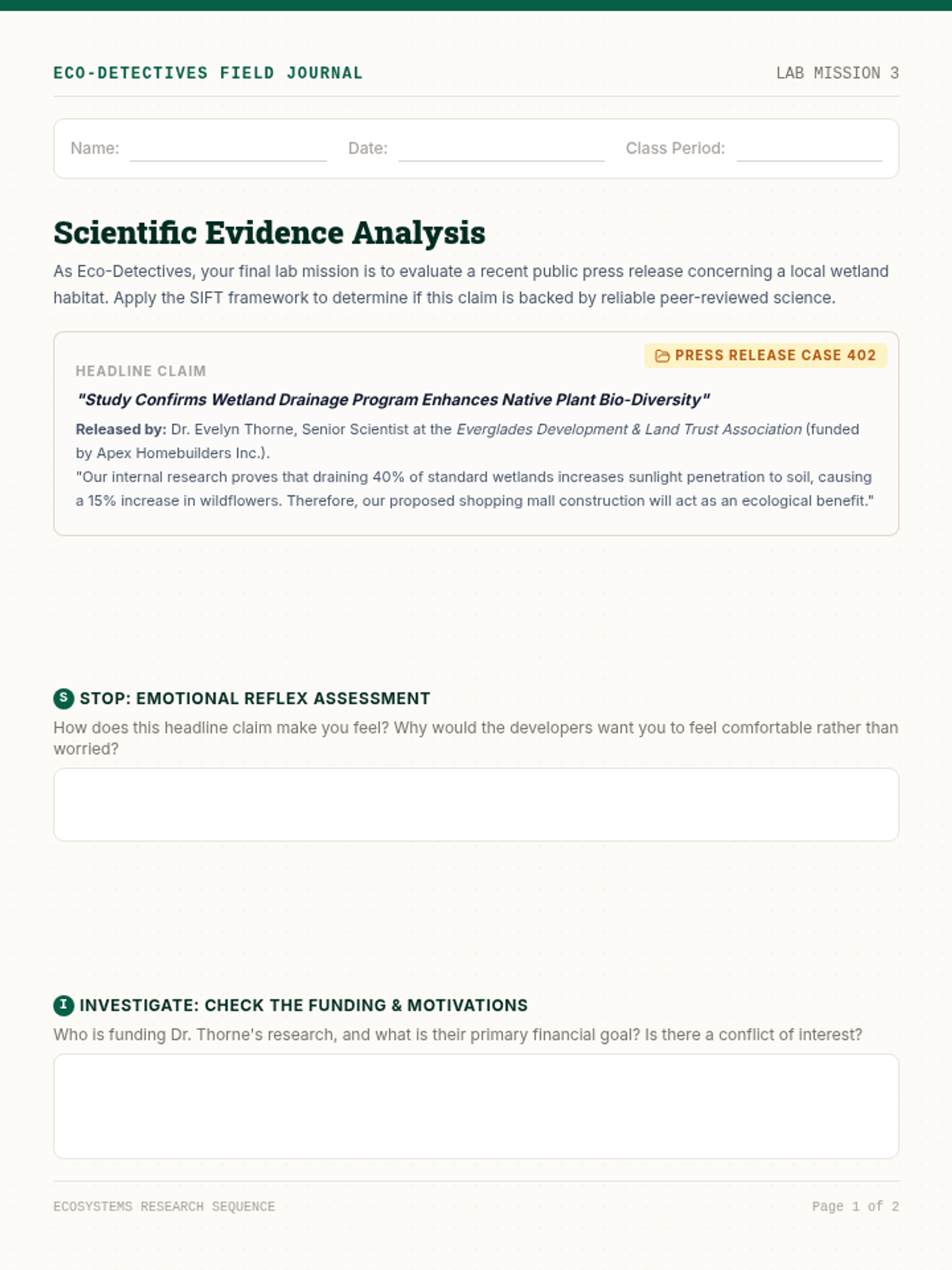
Students evaluate ecosystem research reports and online science media for credibility, bias, and scientific evidence using a scientific evaluation framework.
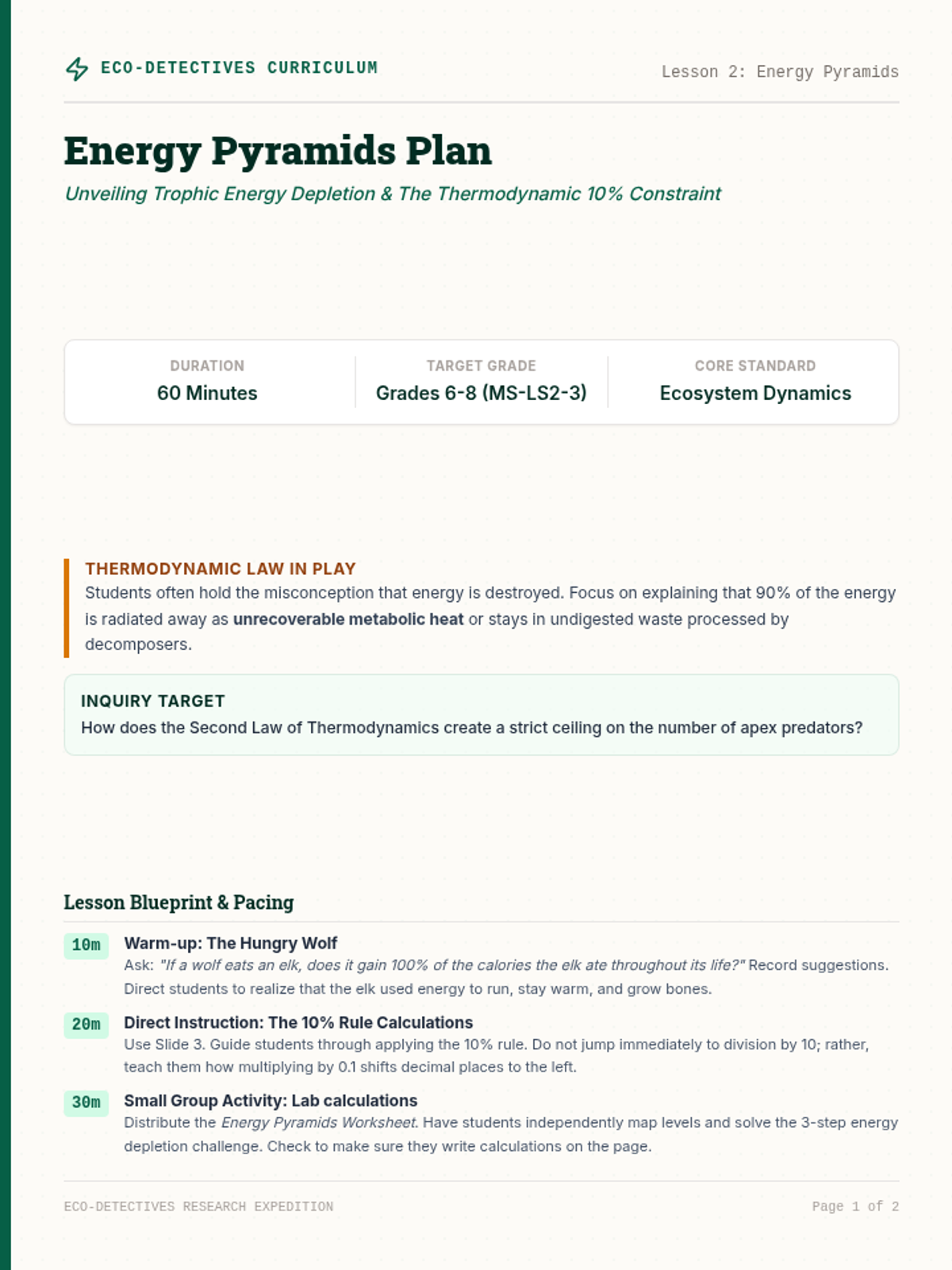
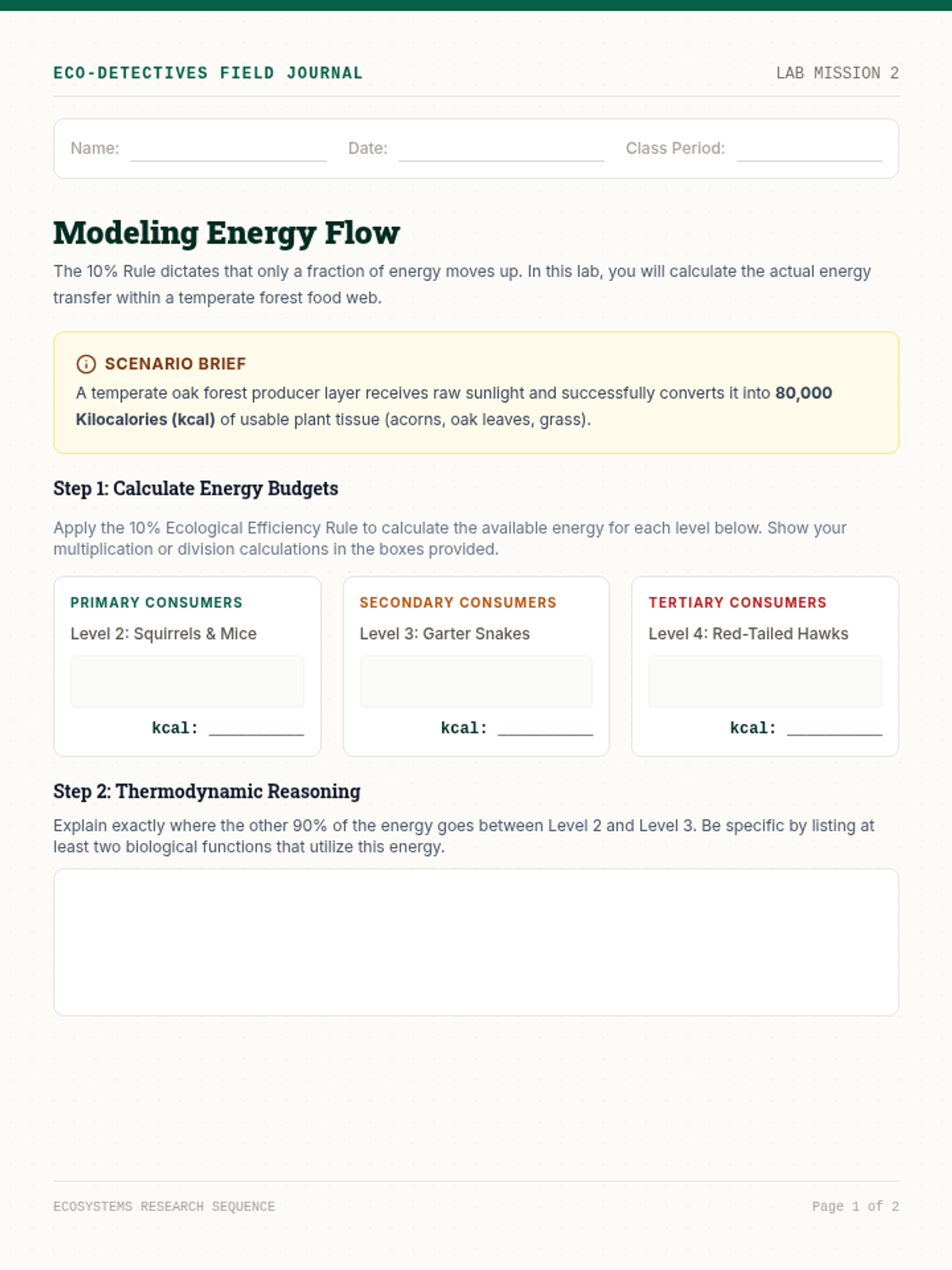
Students model trophic levels, analyze the 10% ecological efficiency rule, and solve ecological energy calculations.
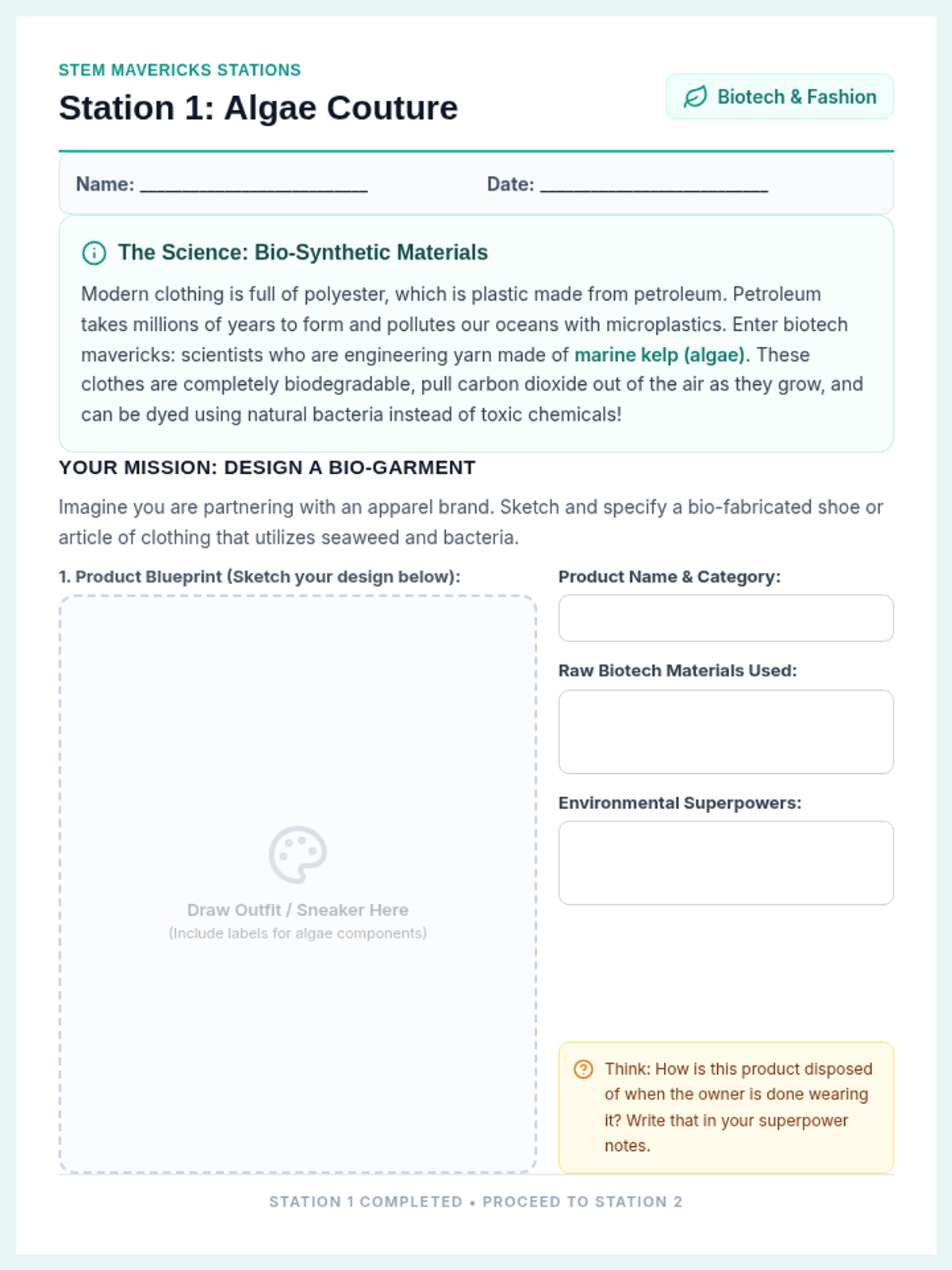
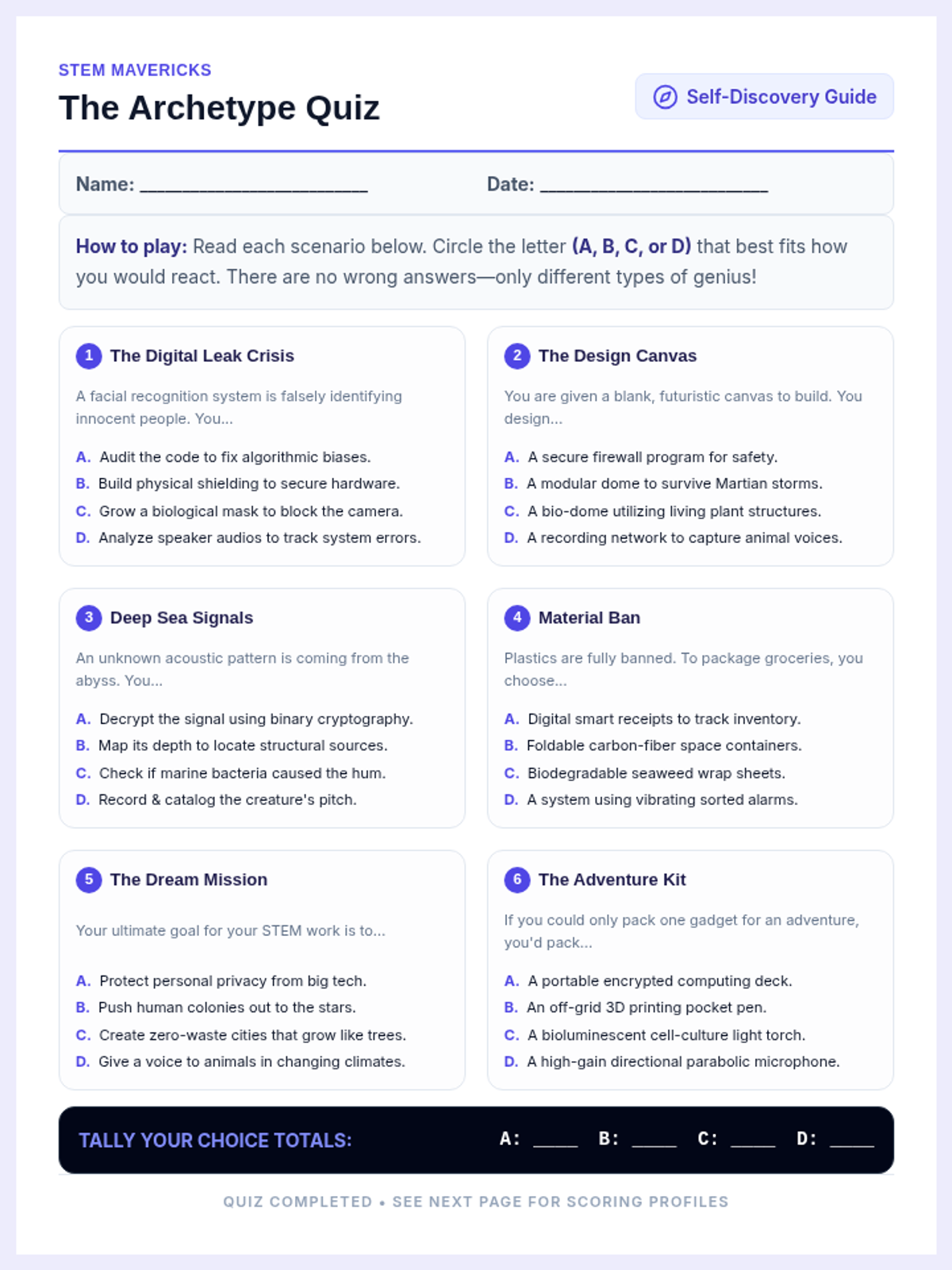
An 8th-grade exploratory lesson on diverse, non-traditional, and underrepresented careers in STEM. Students challenge stereotypes, analyze cutting-edge career profiles, complete a hands-on station rotation, and discover their own STEM archetypes.
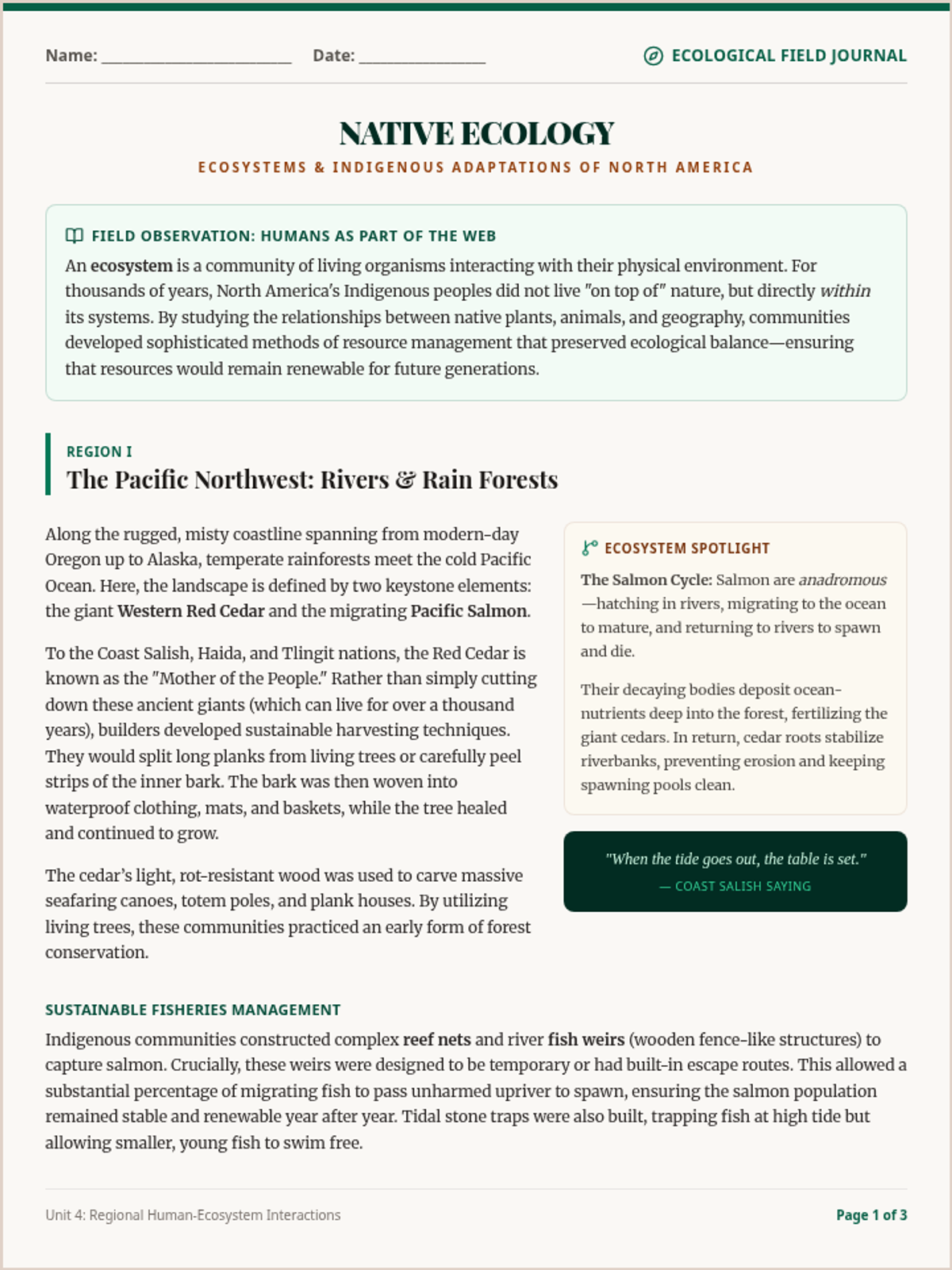
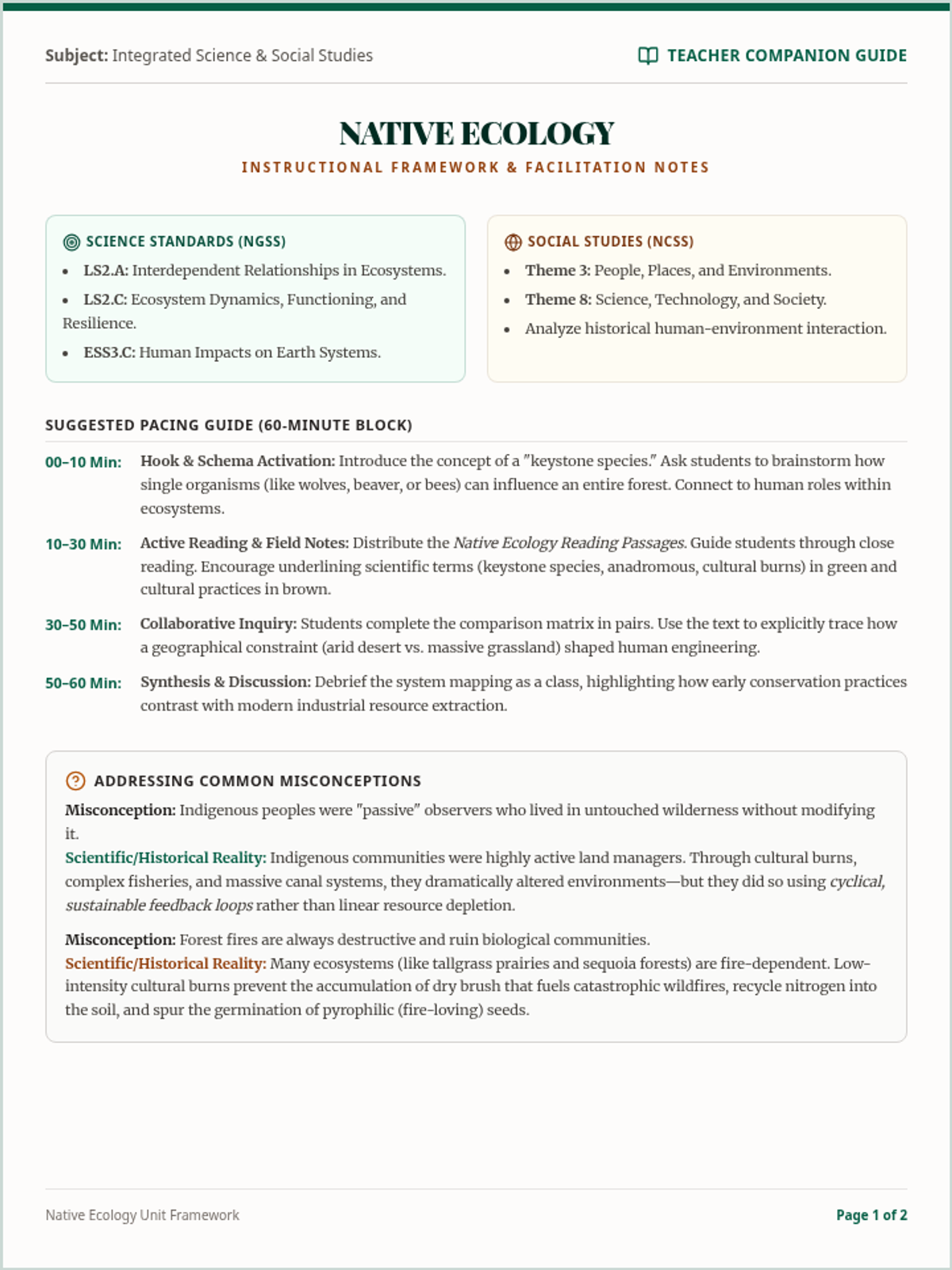
An integrated science and social studies lesson exploring how regional ecosystems and native species supported historical Indigenous communities across North America. Students analyze the ecological relationships and cultural adaptations of three distinct regions.
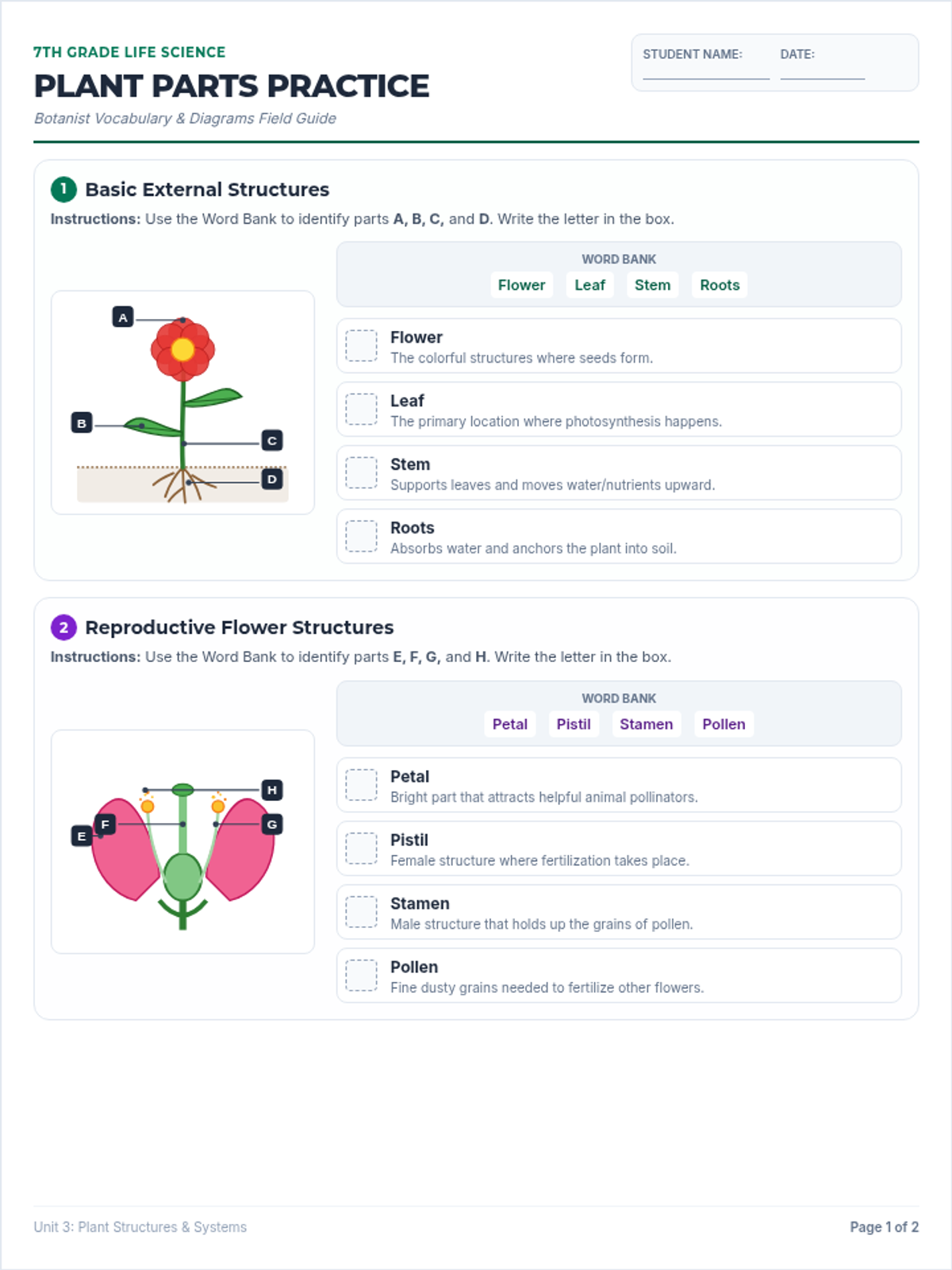
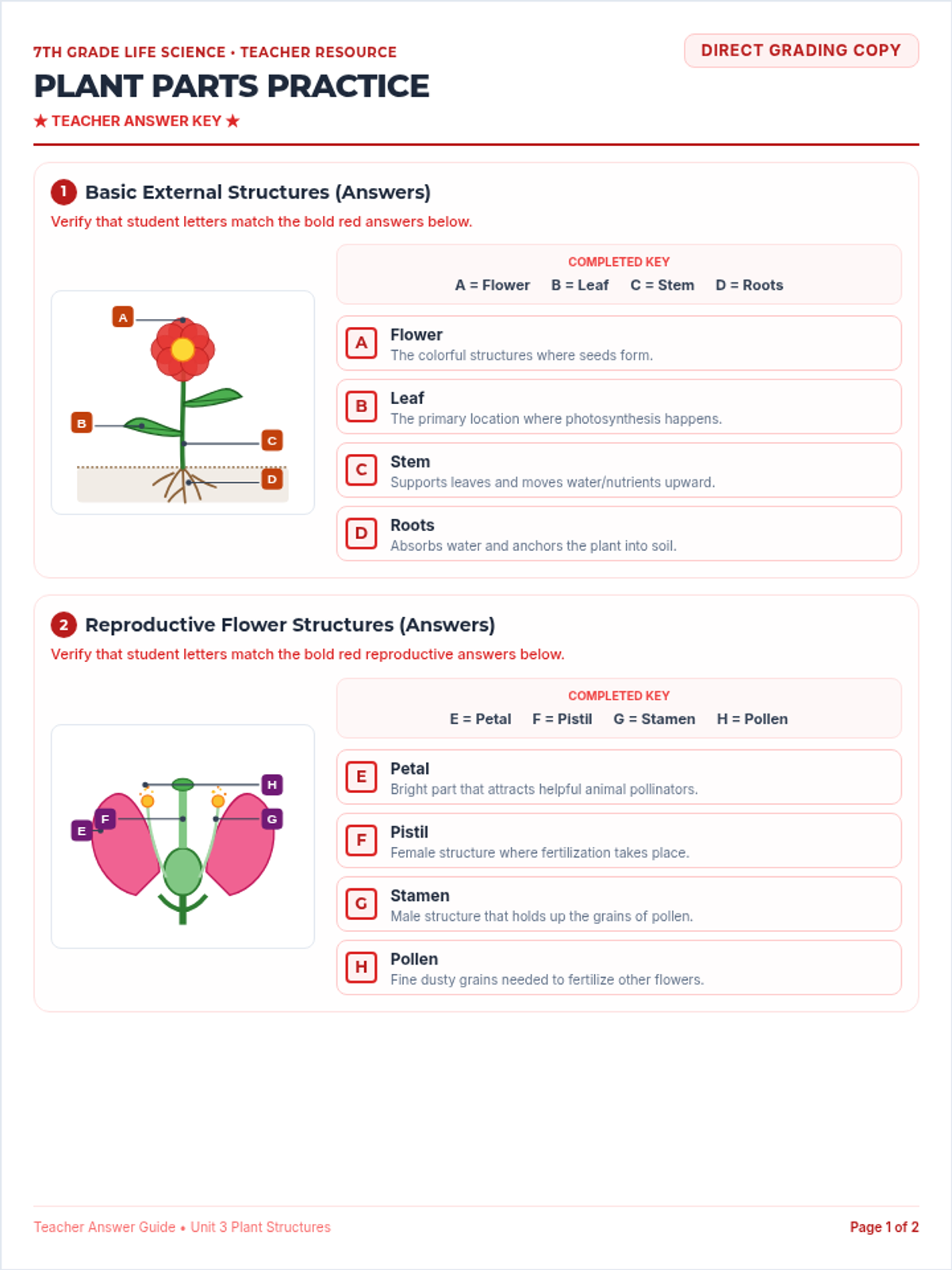
A comprehensive 7th-grade lesson on basic external plant structures (roots, stems, leaves, flowers) and reproductive flower parts (stamen, pistil, pollen, petals). Includes a visual matching worksheet and a teacher answer key.
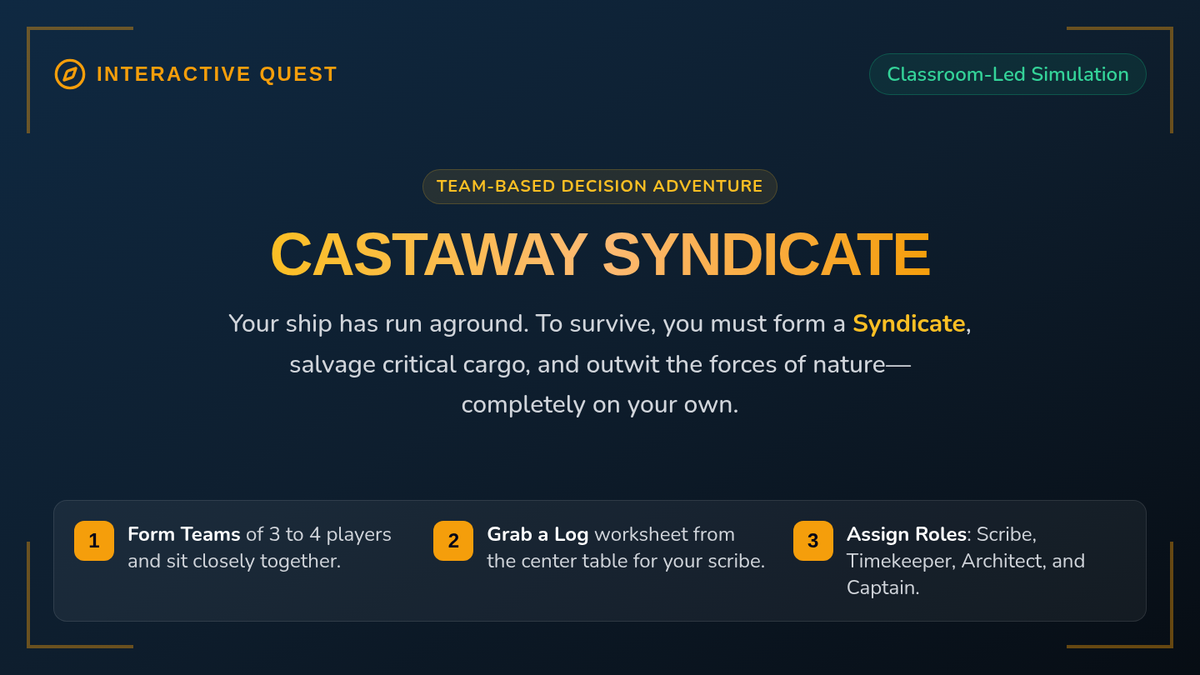
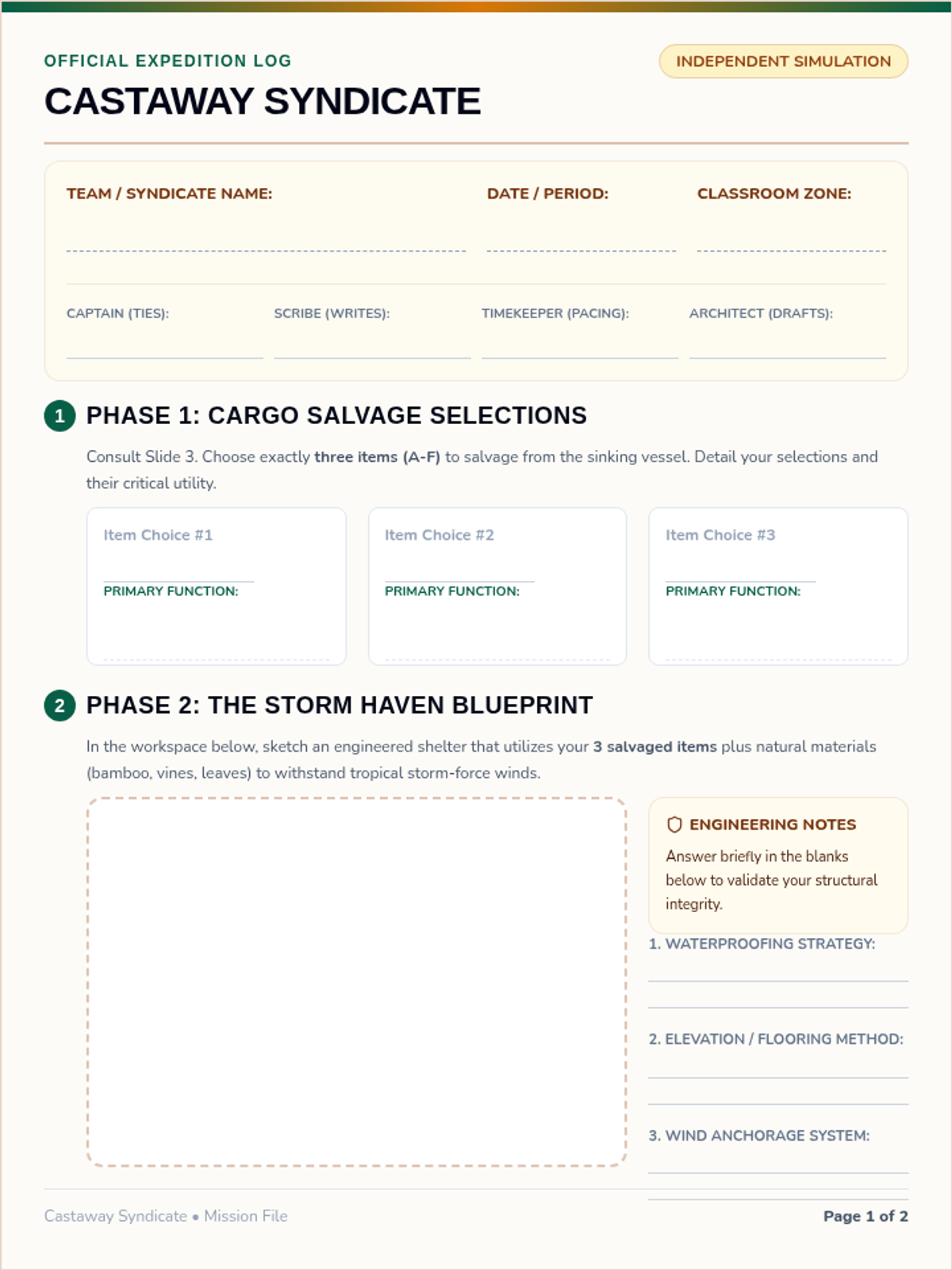
An immersive, self-directed survival simulation where students work in teams to solve creative engineering and resource-management challenges. Designed to keep the entire classroom deeply engaged and collaborative while the teacher conducts one-on-one sessions.
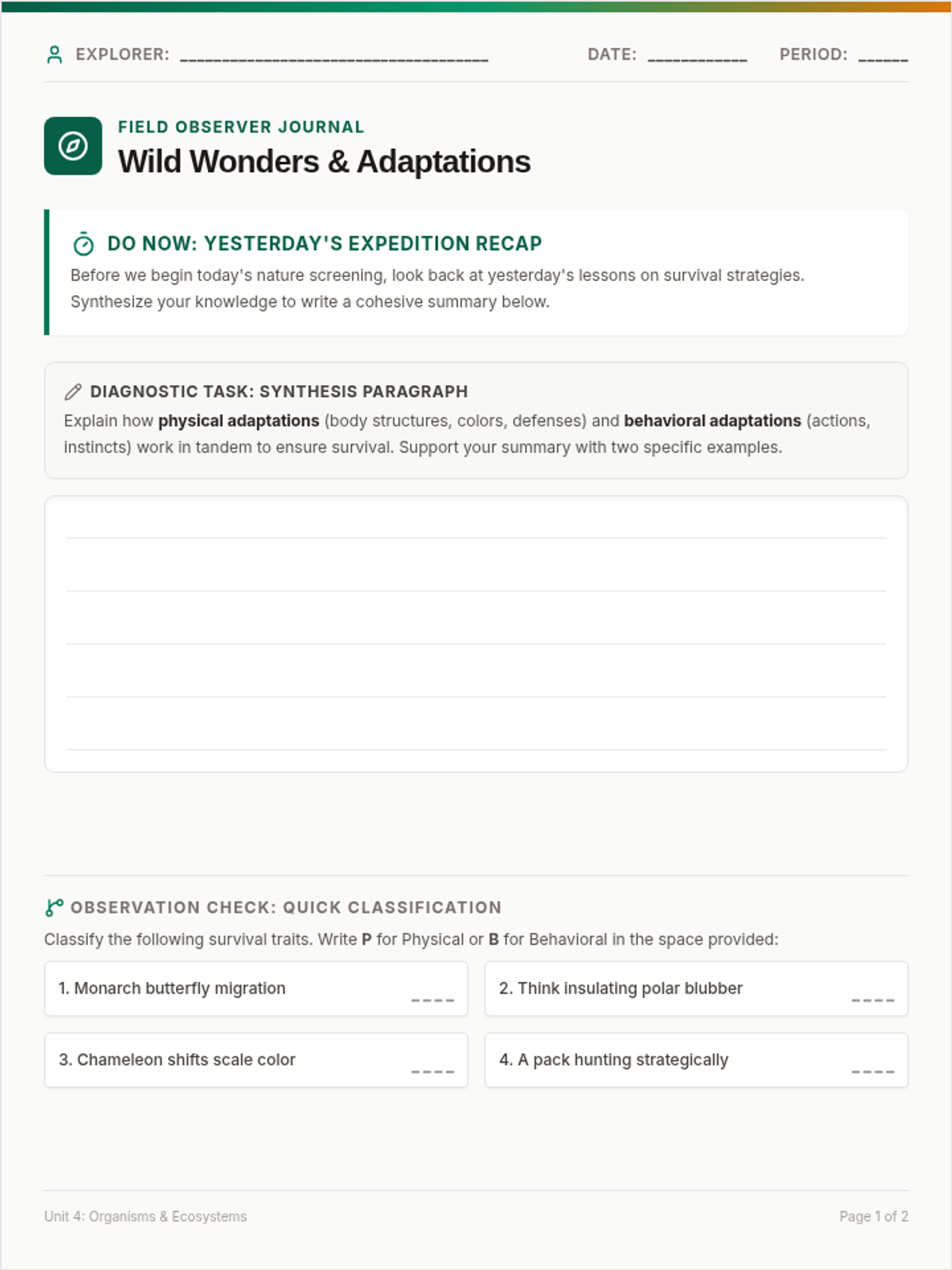
A lesson exploring how physical and behavioral traits help organisms survive in their environments, featuring a video documentary review and diagnostic summary.
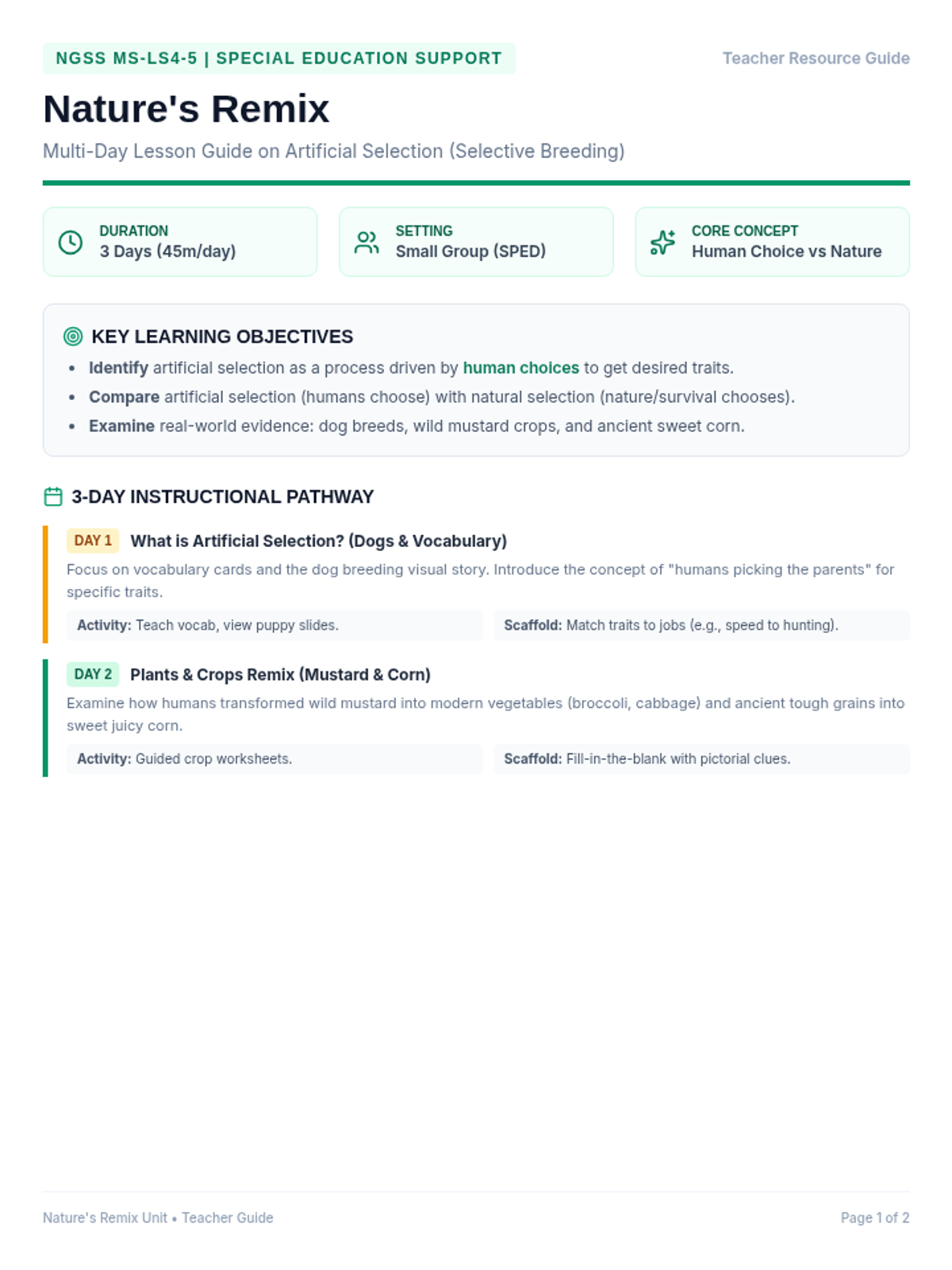
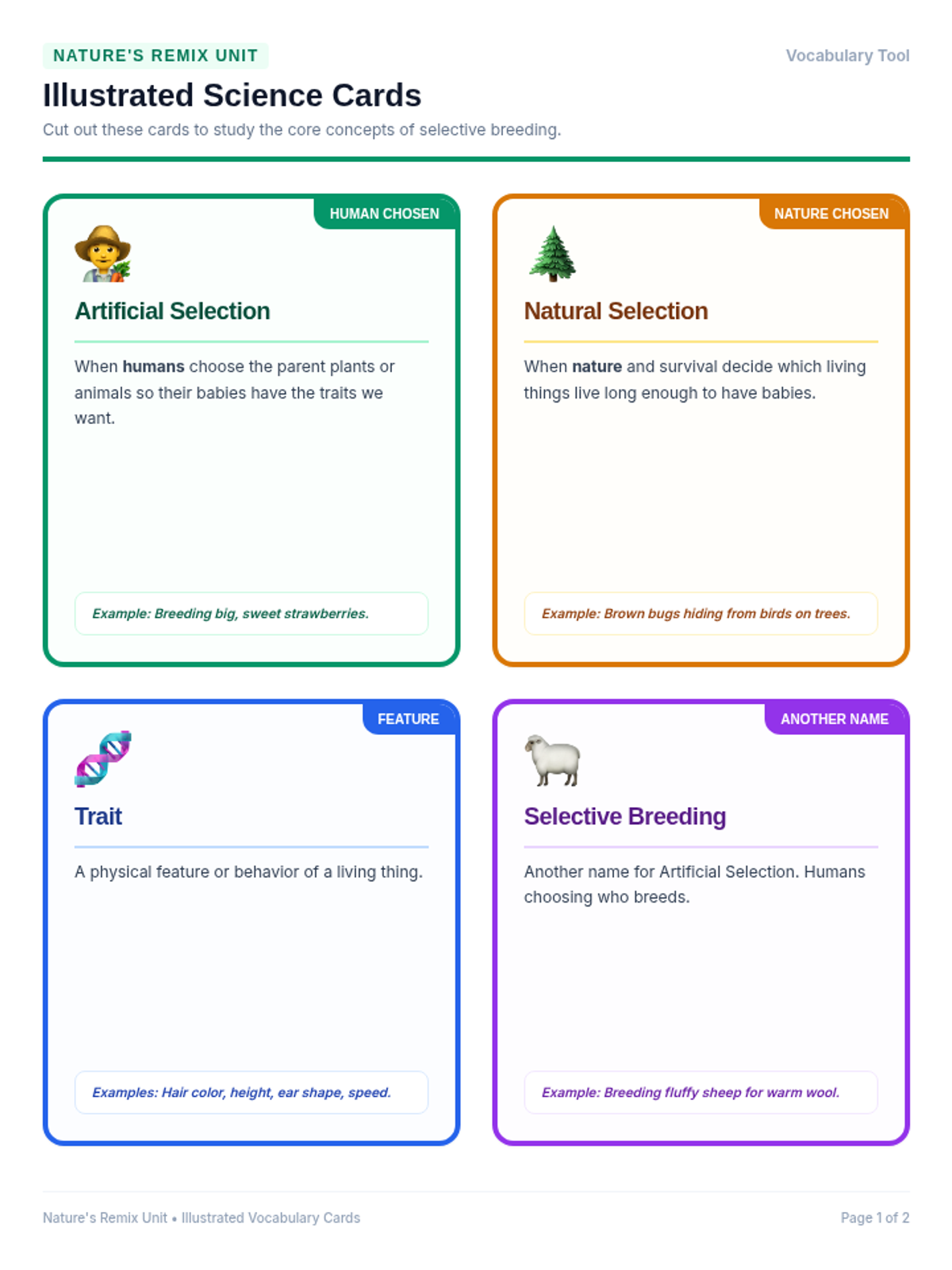
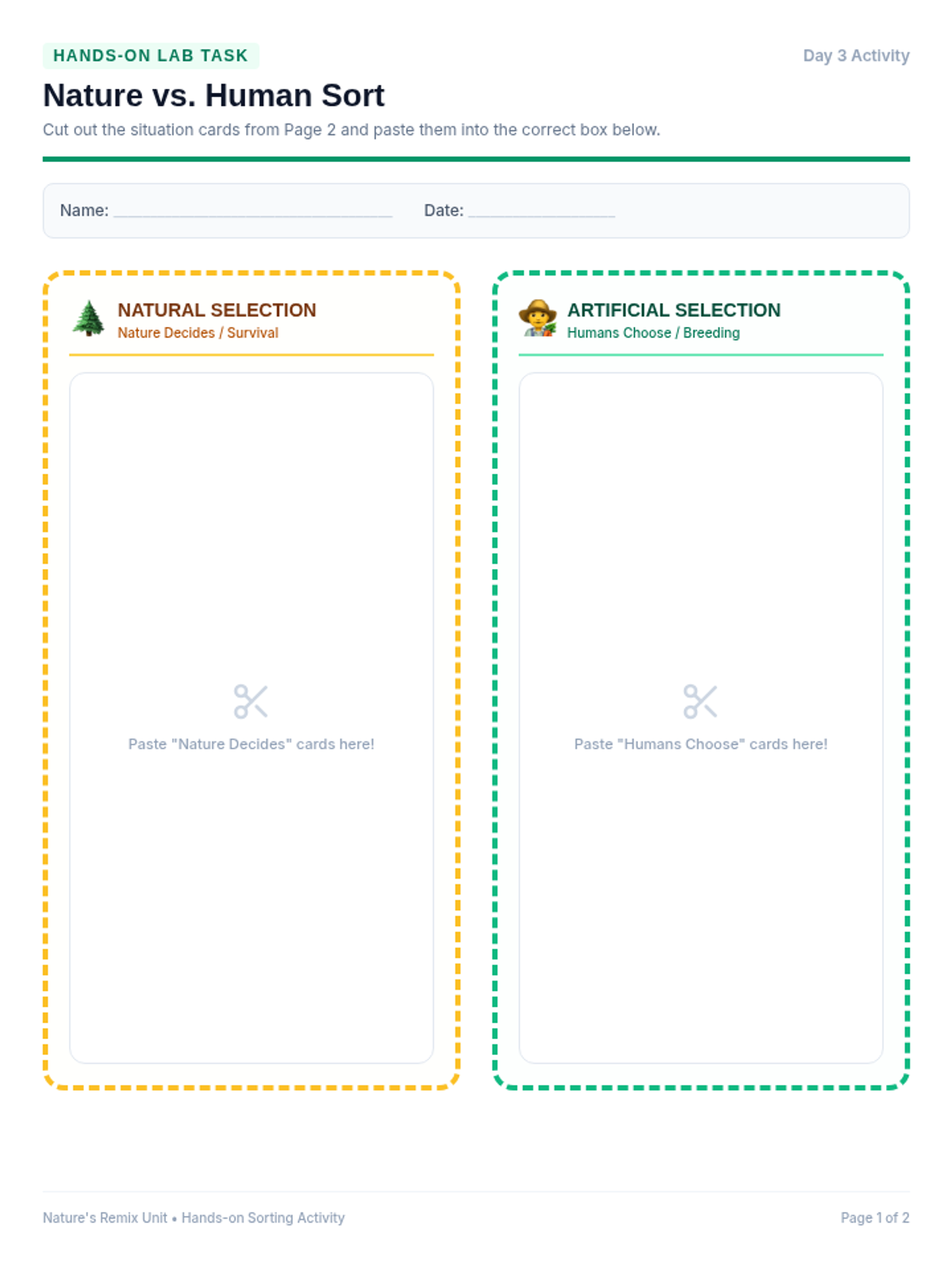
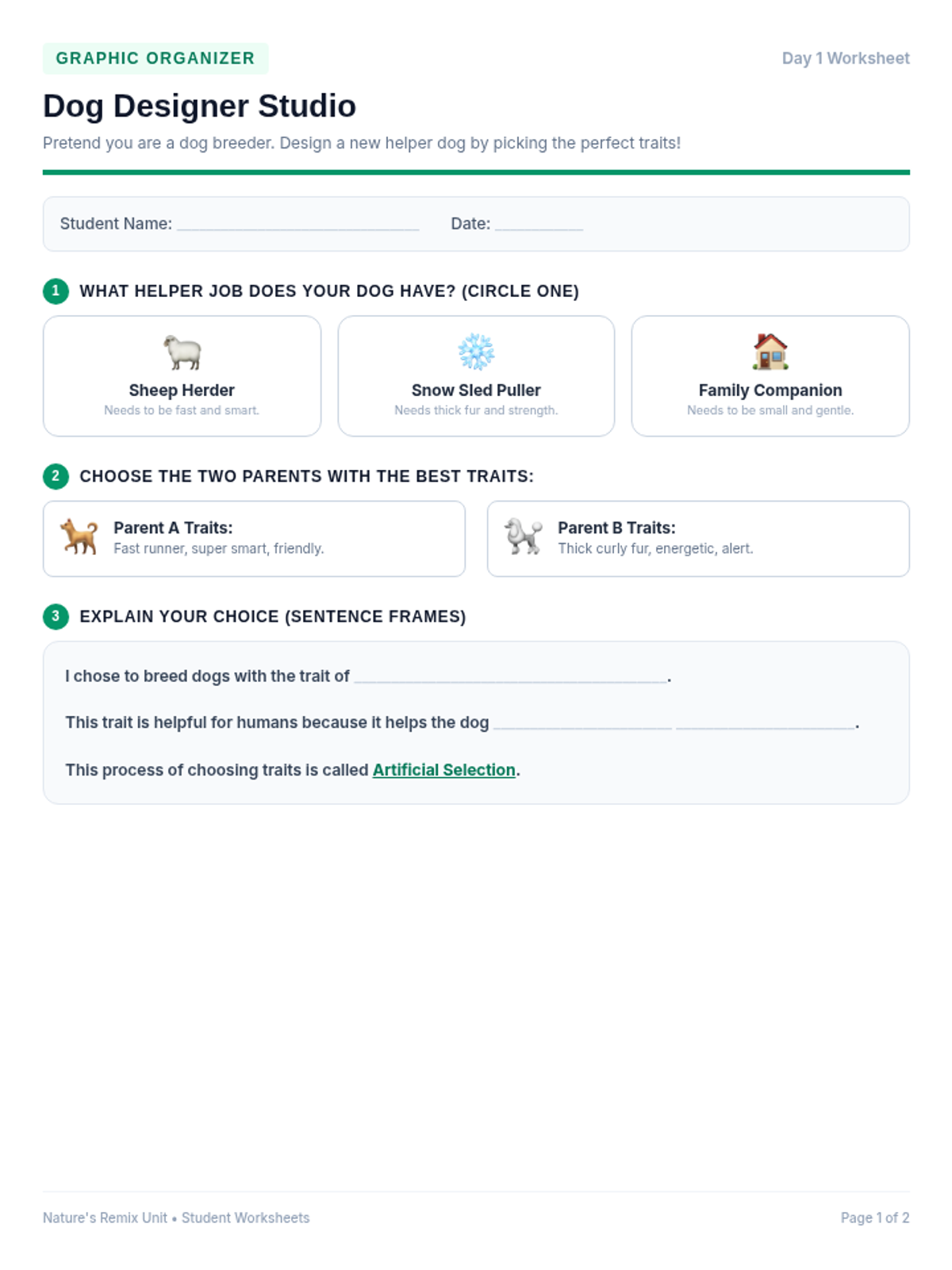
A multi-day, scaffolded special education lesson plan on artificial selection (MS-LS4-5). Includes a simplified visual presentation, graphic organizers with sentence frames, illustrated vocabulary cards, a hands-on sorting task, and a comprehensive teacher guide.
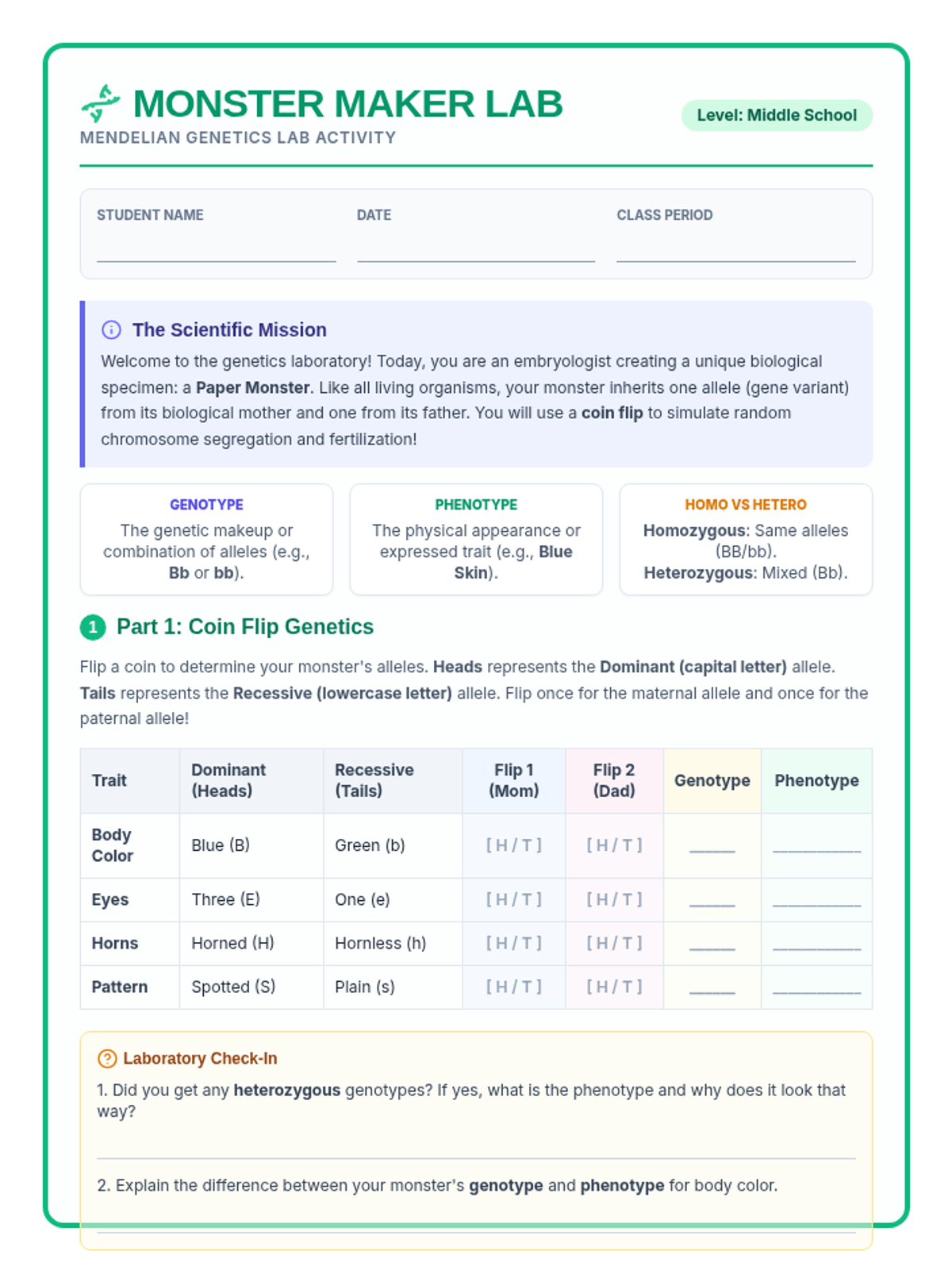
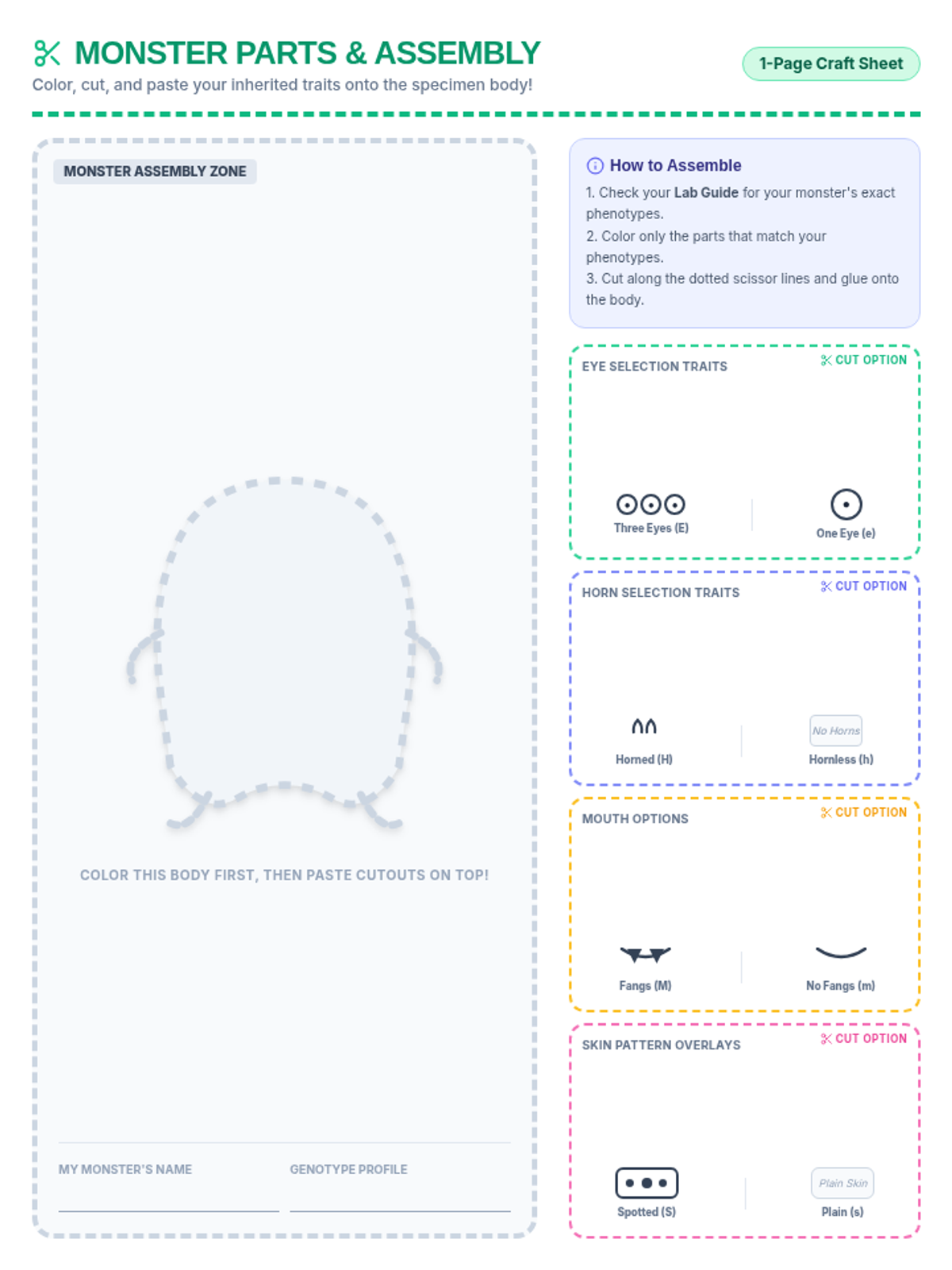
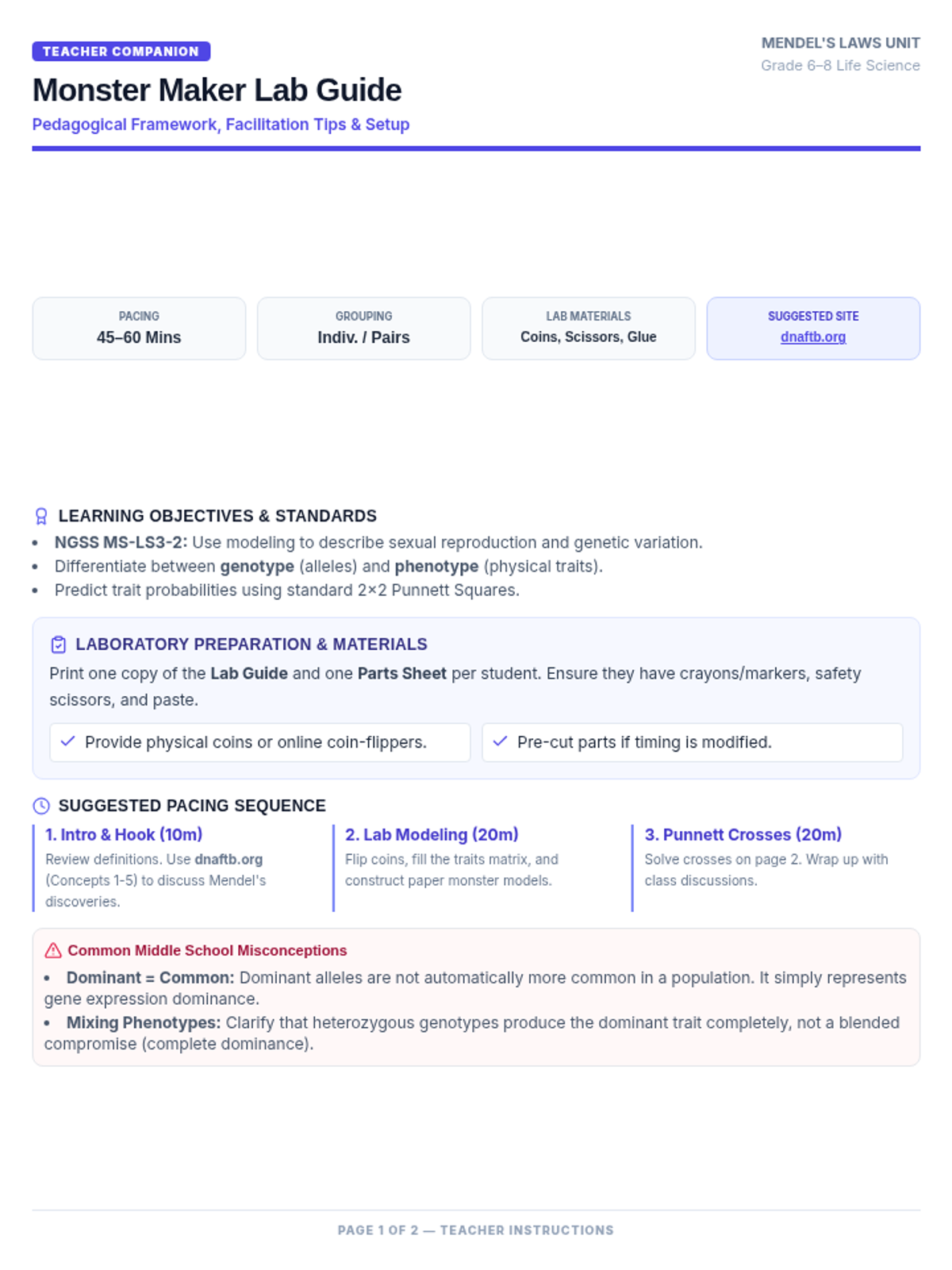
A hands-on paper modeling lab where middle school students explore Mendel's laws of inheritance. Students flip coins to determine alleles, build paper monsters based on genotypes and phenotypes, and complete Punnett squares to predict inheritance outcomes.
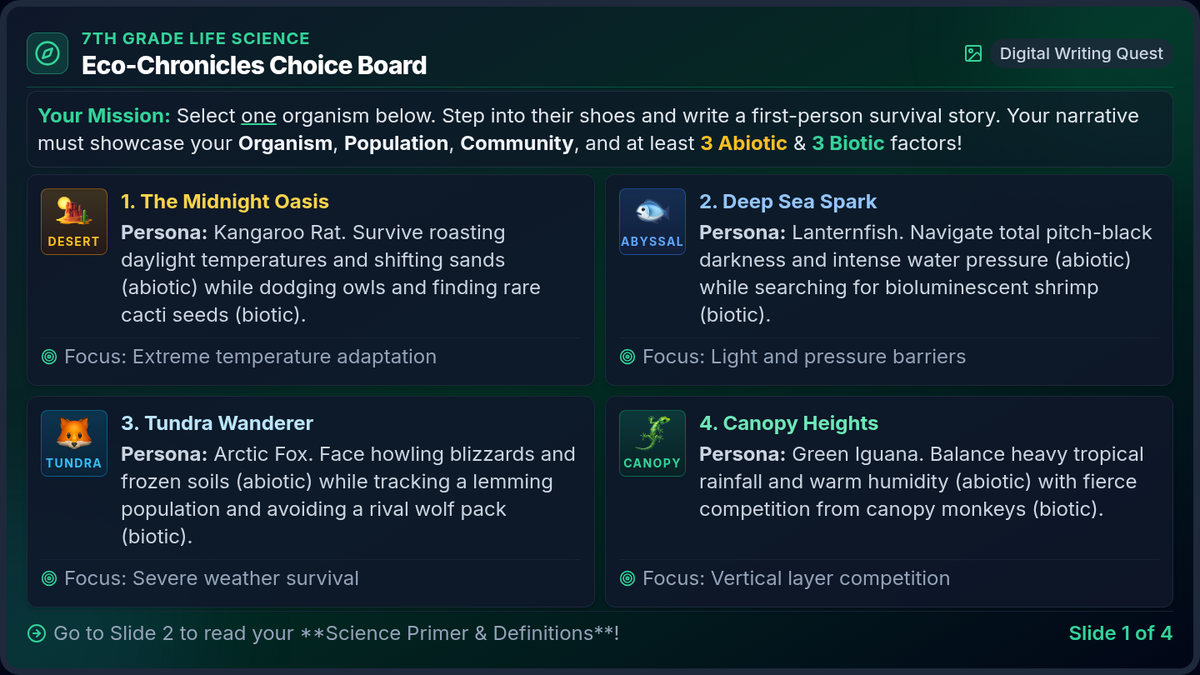
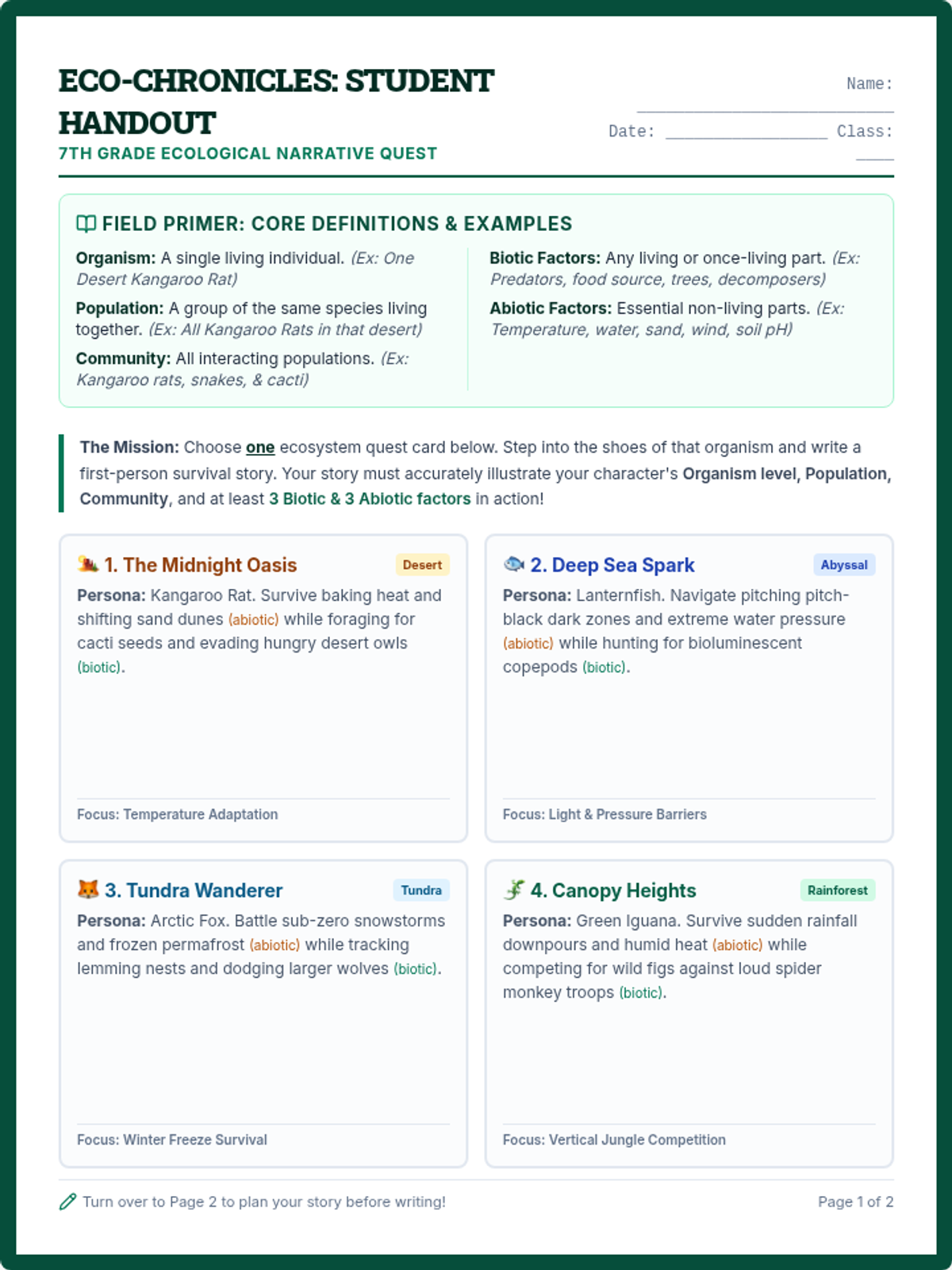
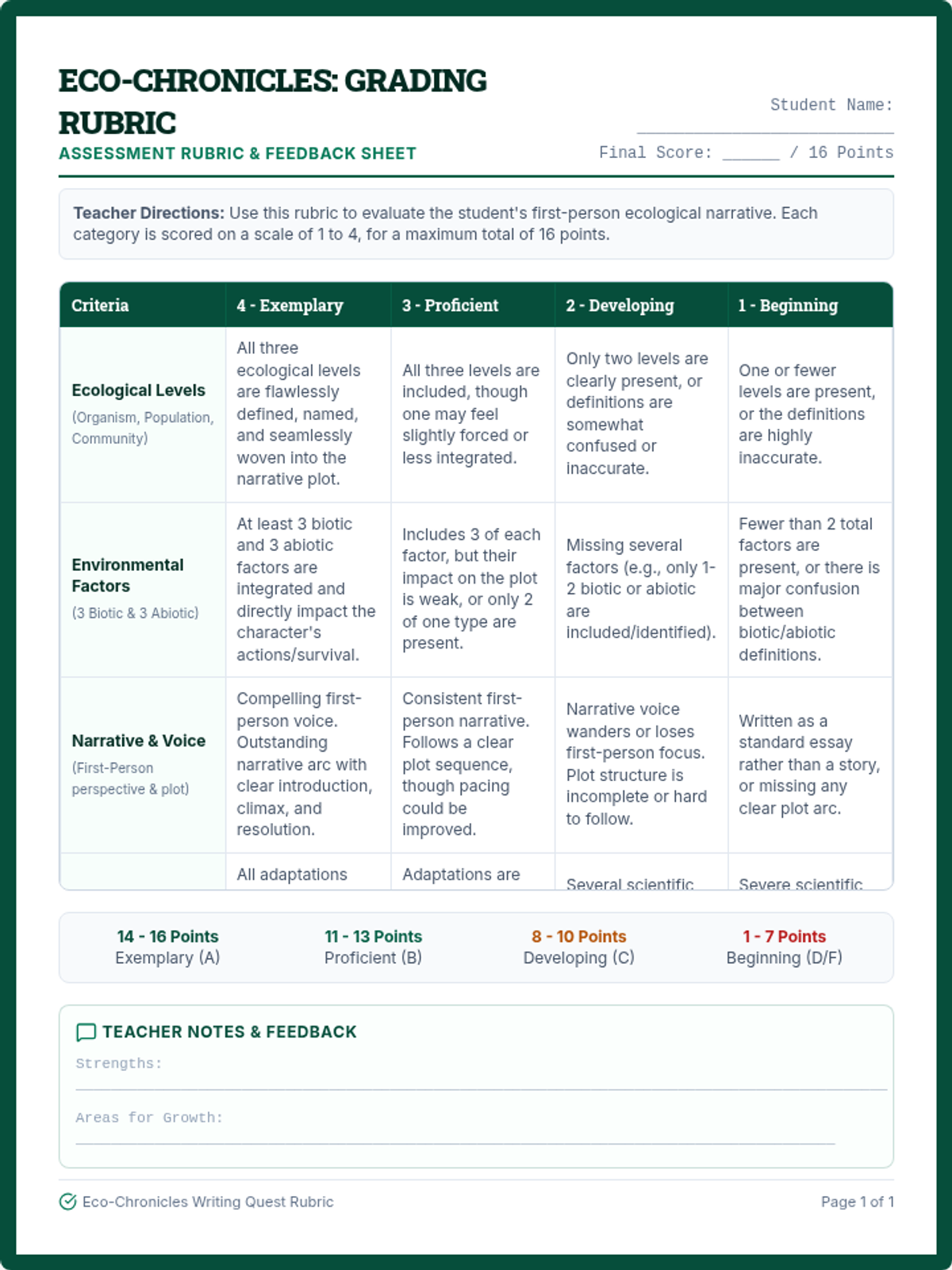
A highly engaging digital lesson where students step into the shoes of organisms, exploring ecological levels (organism, population, community) and biotic/abiotic factors through narrative writing choice boards and a structured brainstorming graphic organizer.
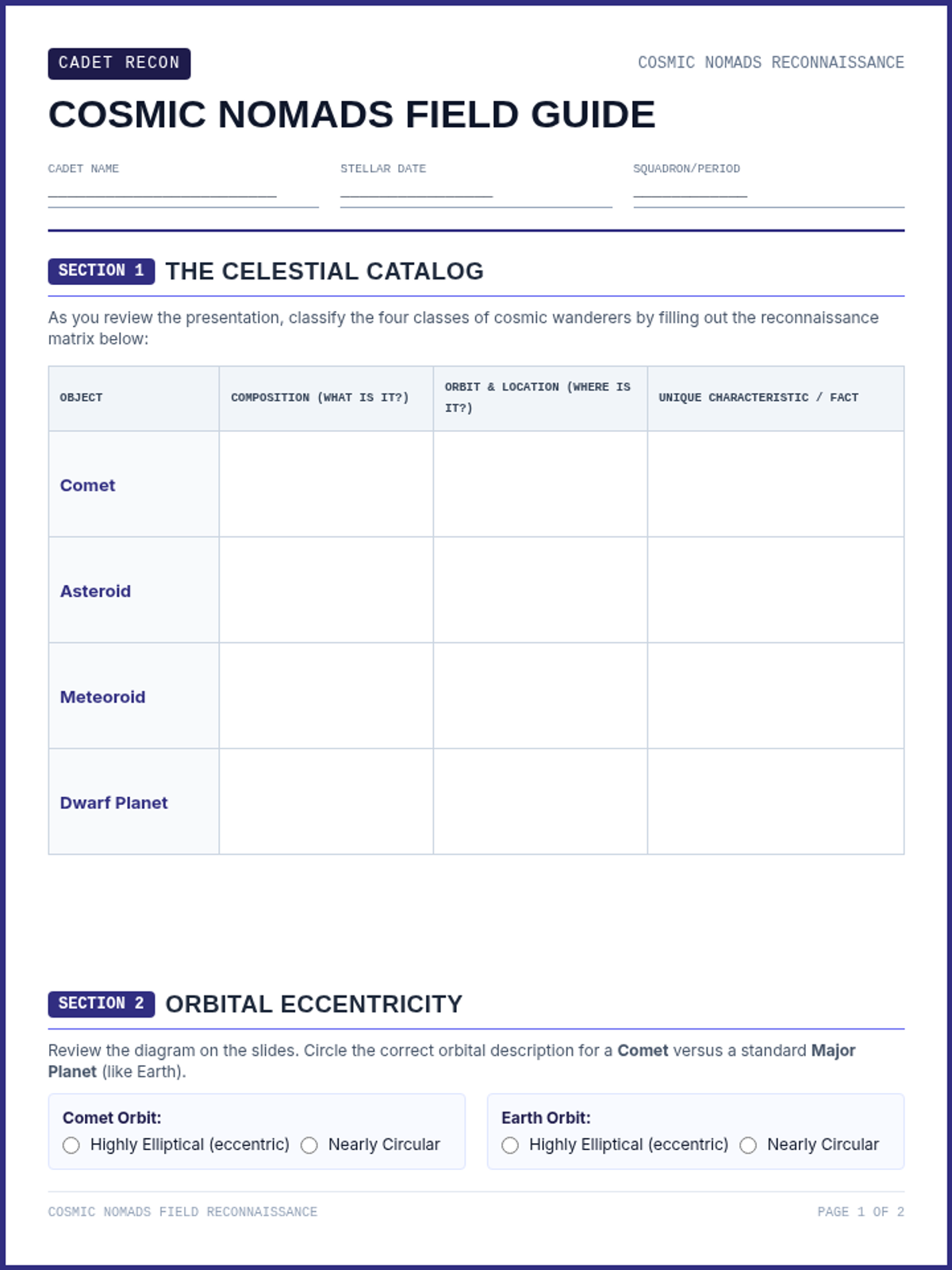
An interactive exploration of asteroids, comets, meteoroids, and dwarf planets, focusing on their physical compositions, eccentric orbital pathways, and origins in the Kuiper Belt and Oort Cloud.
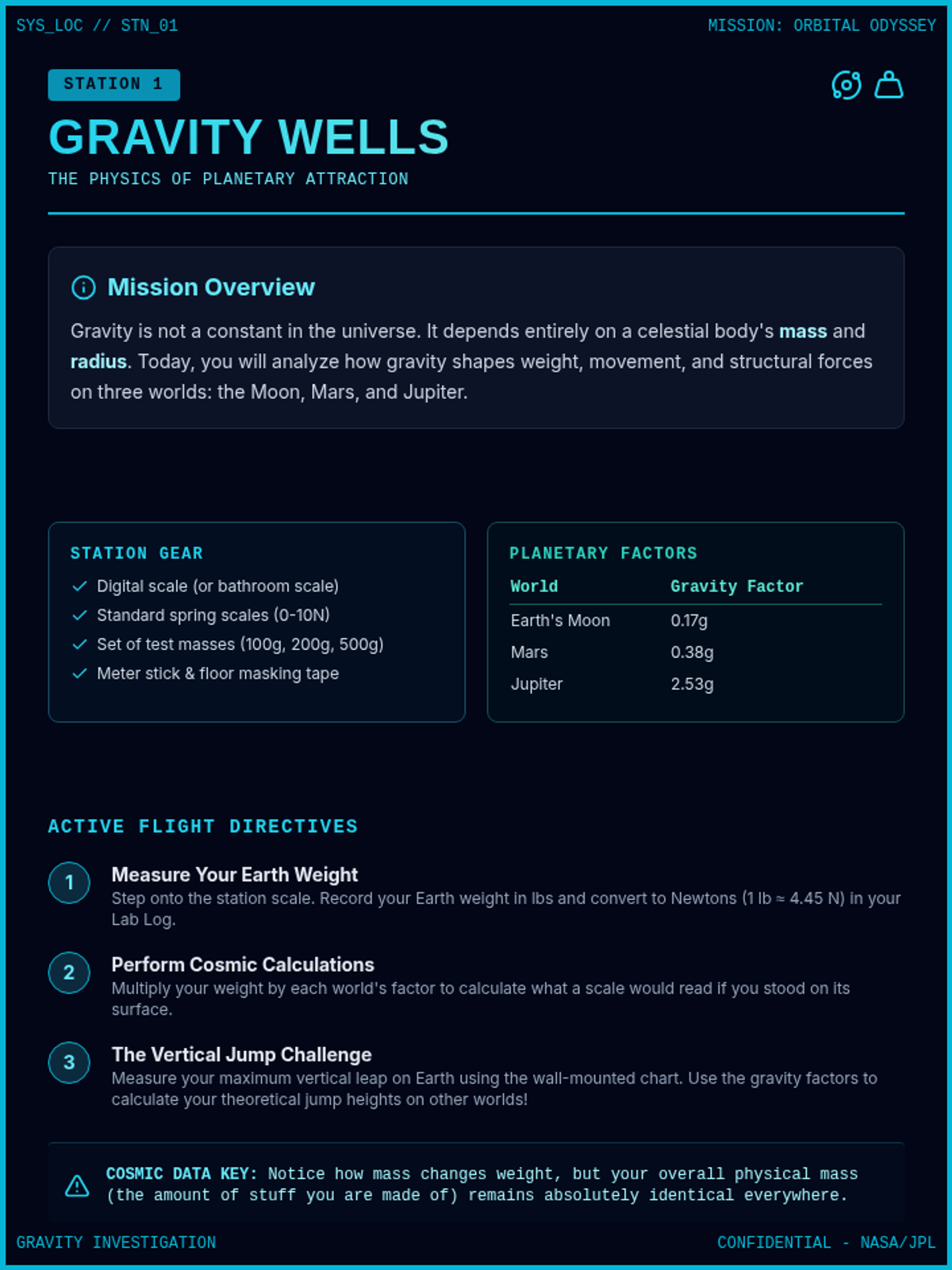
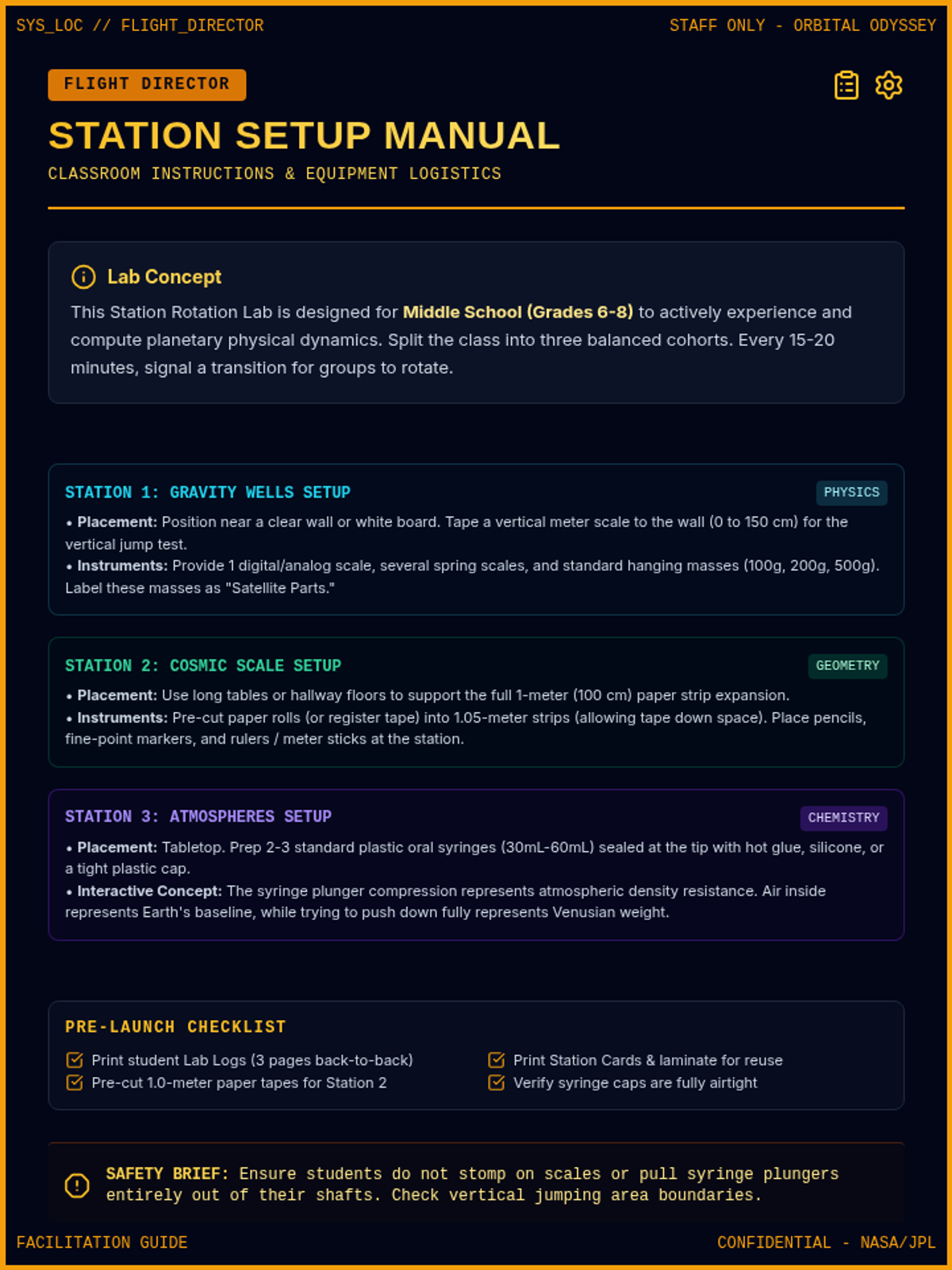
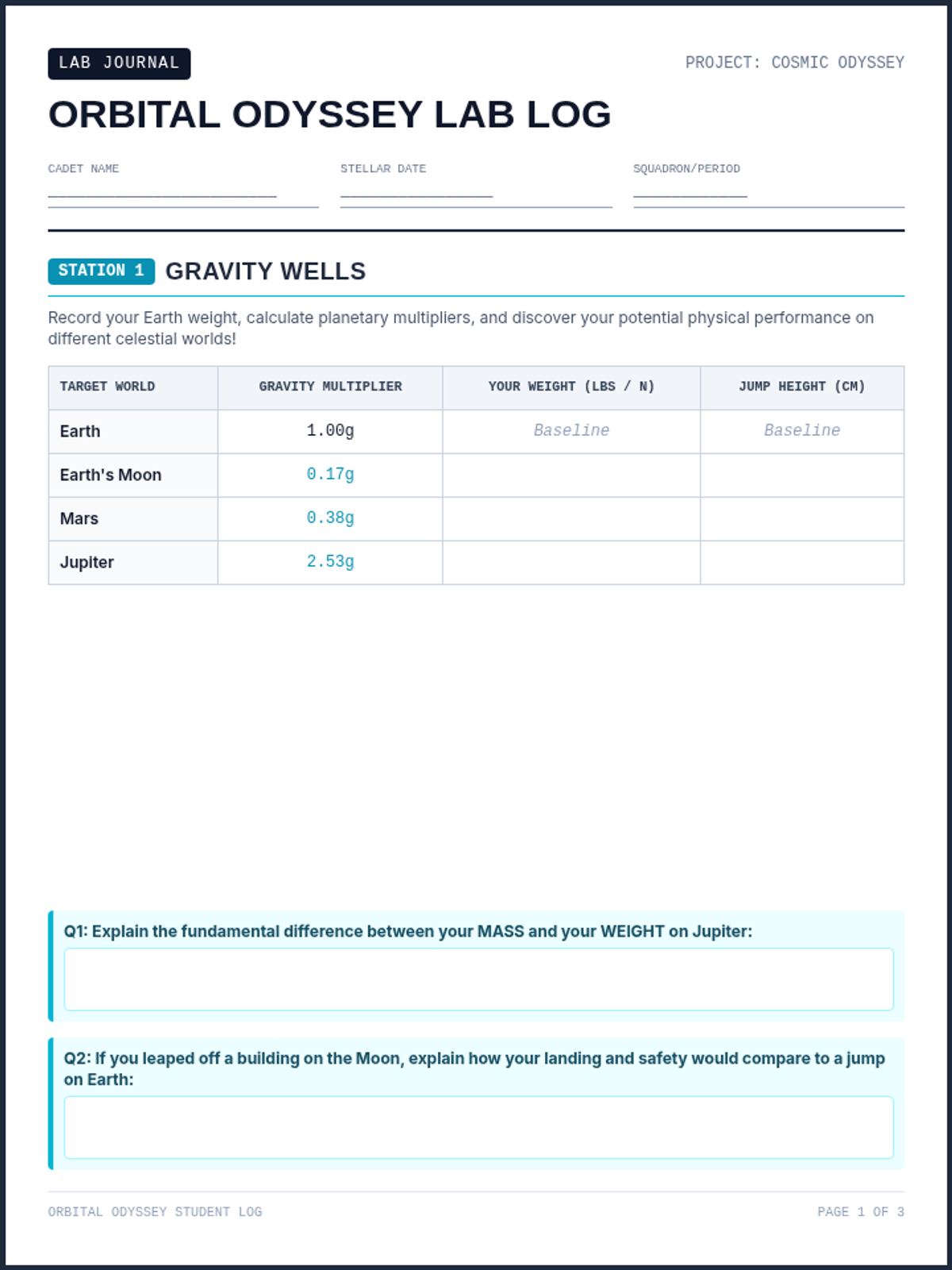
A hands-on station rotation lab where middle school students analyze planetary gravity, scale distances, and atmospheric conditions through inquiry-based activities.
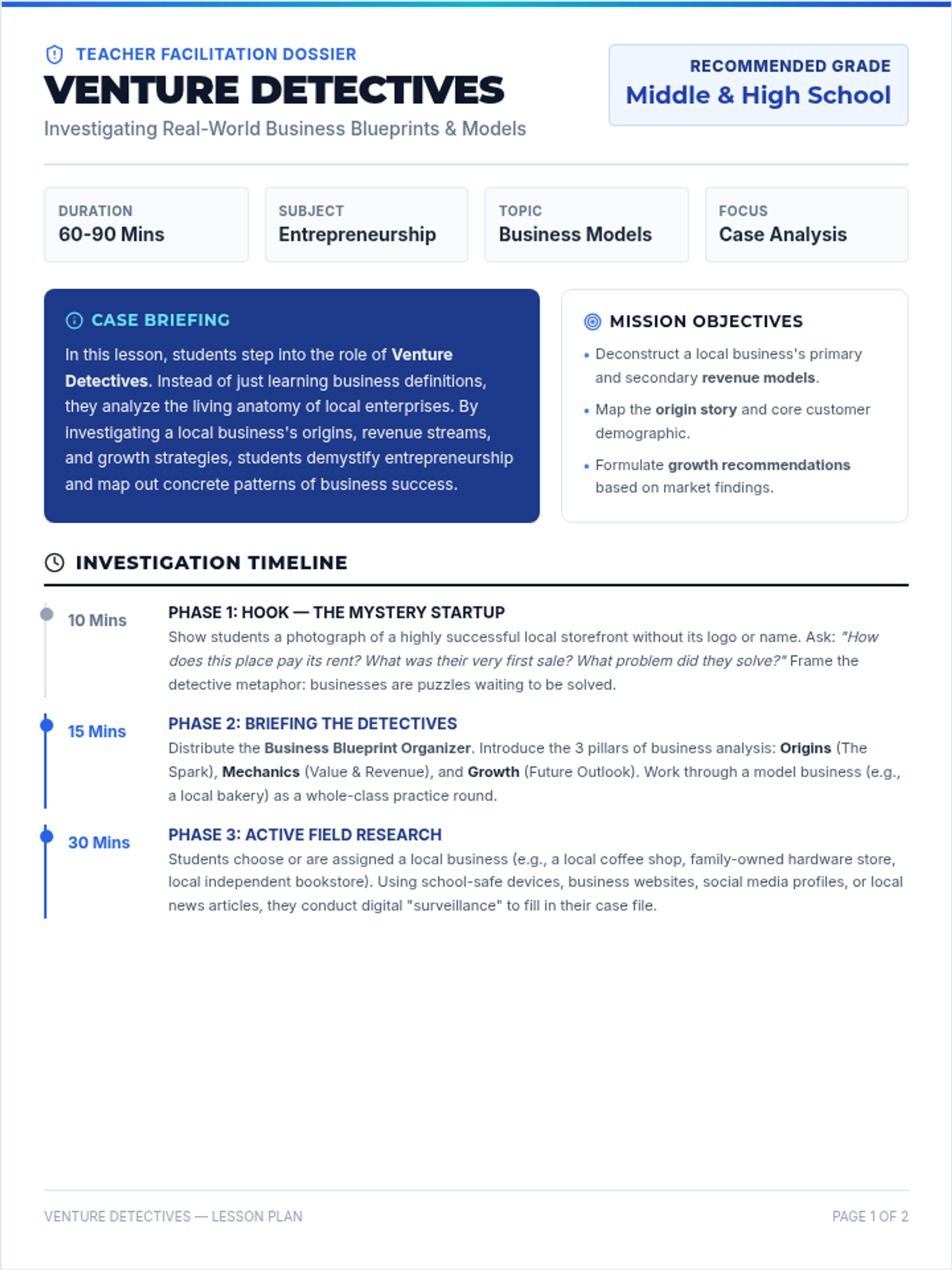
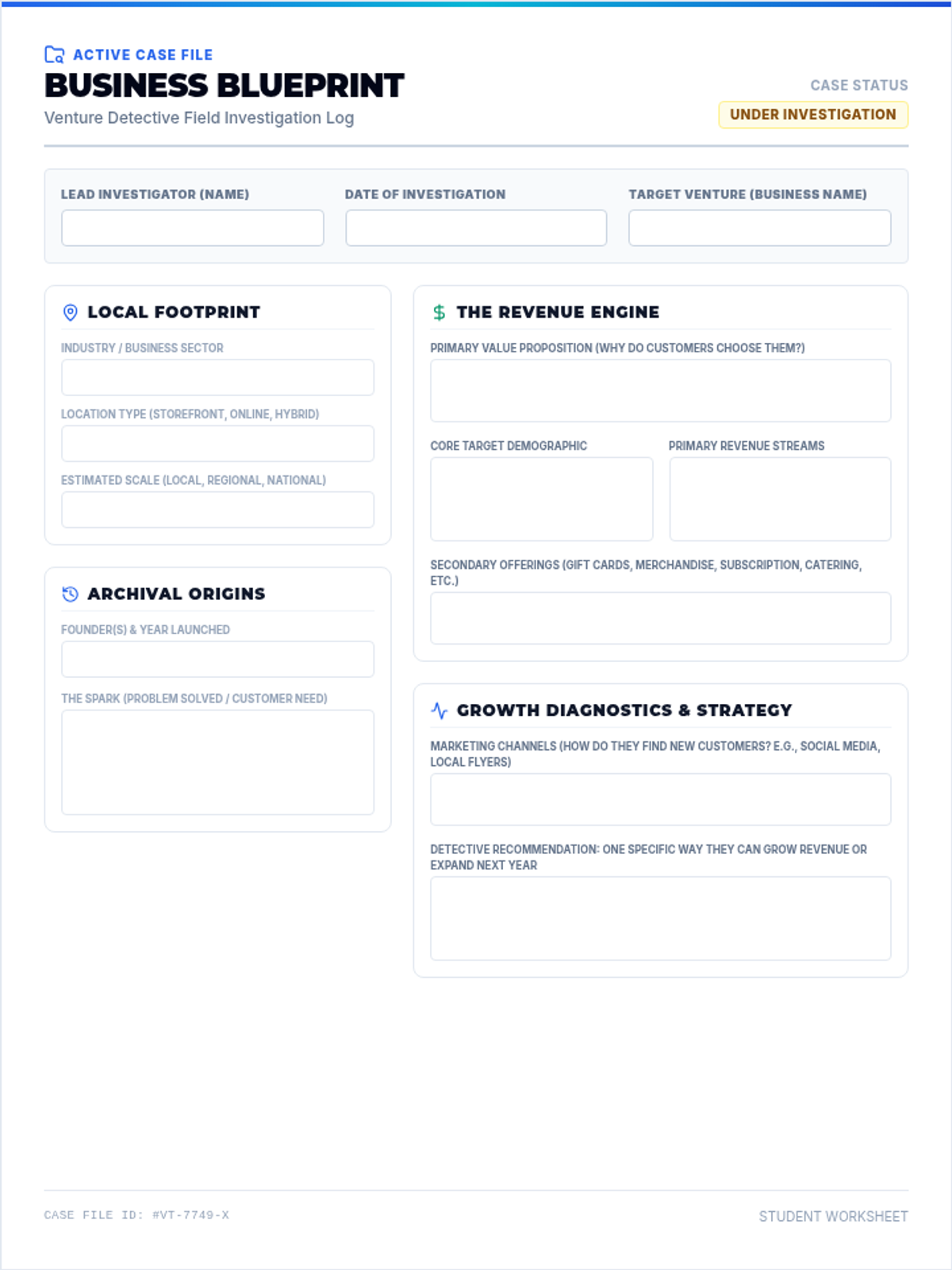
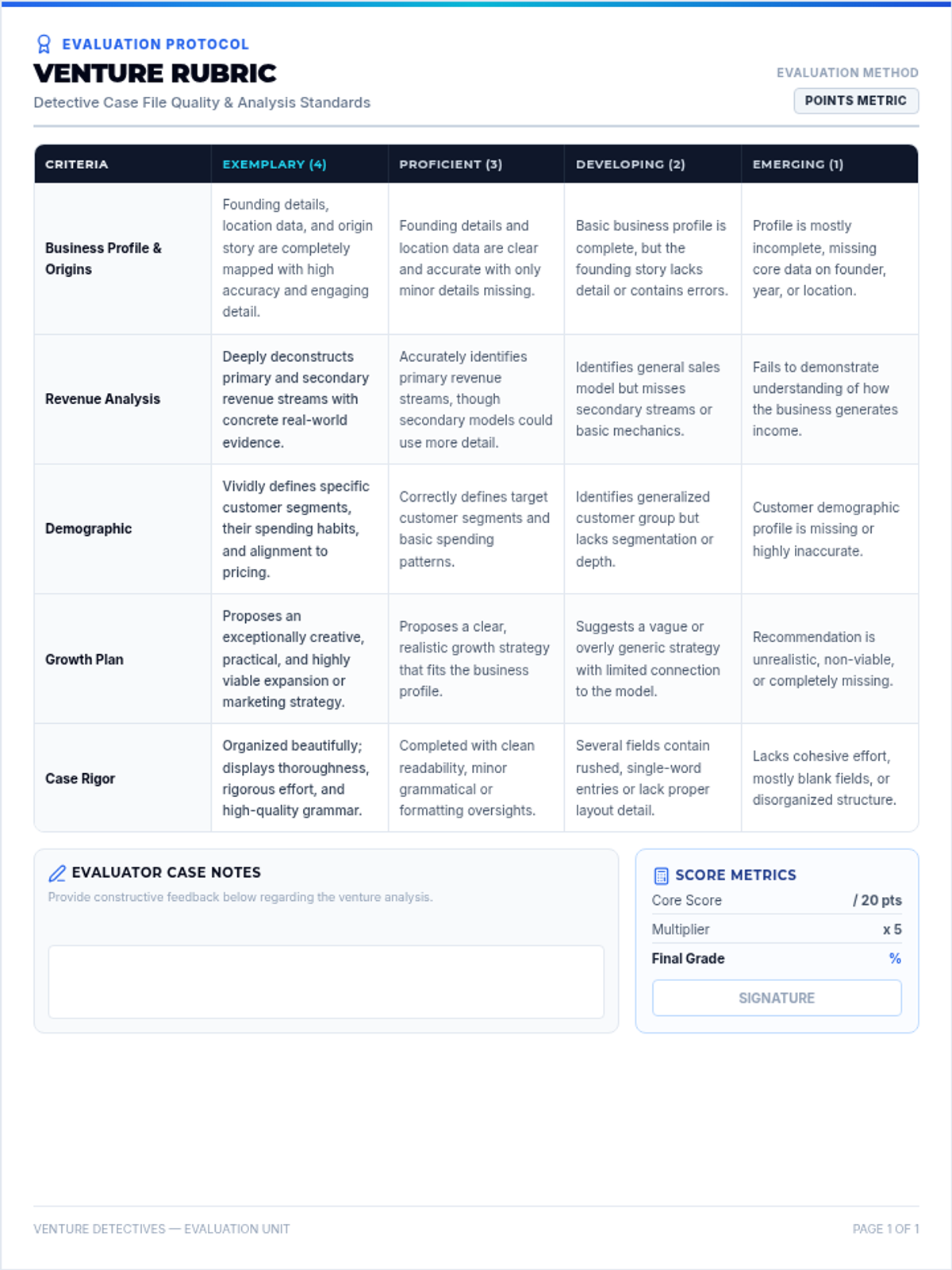
An immersive entrepreneurship lesson where students become 'venture detectives' to investigate local businesses, analyzing how they started, their revenue streams, and their growth strategies.
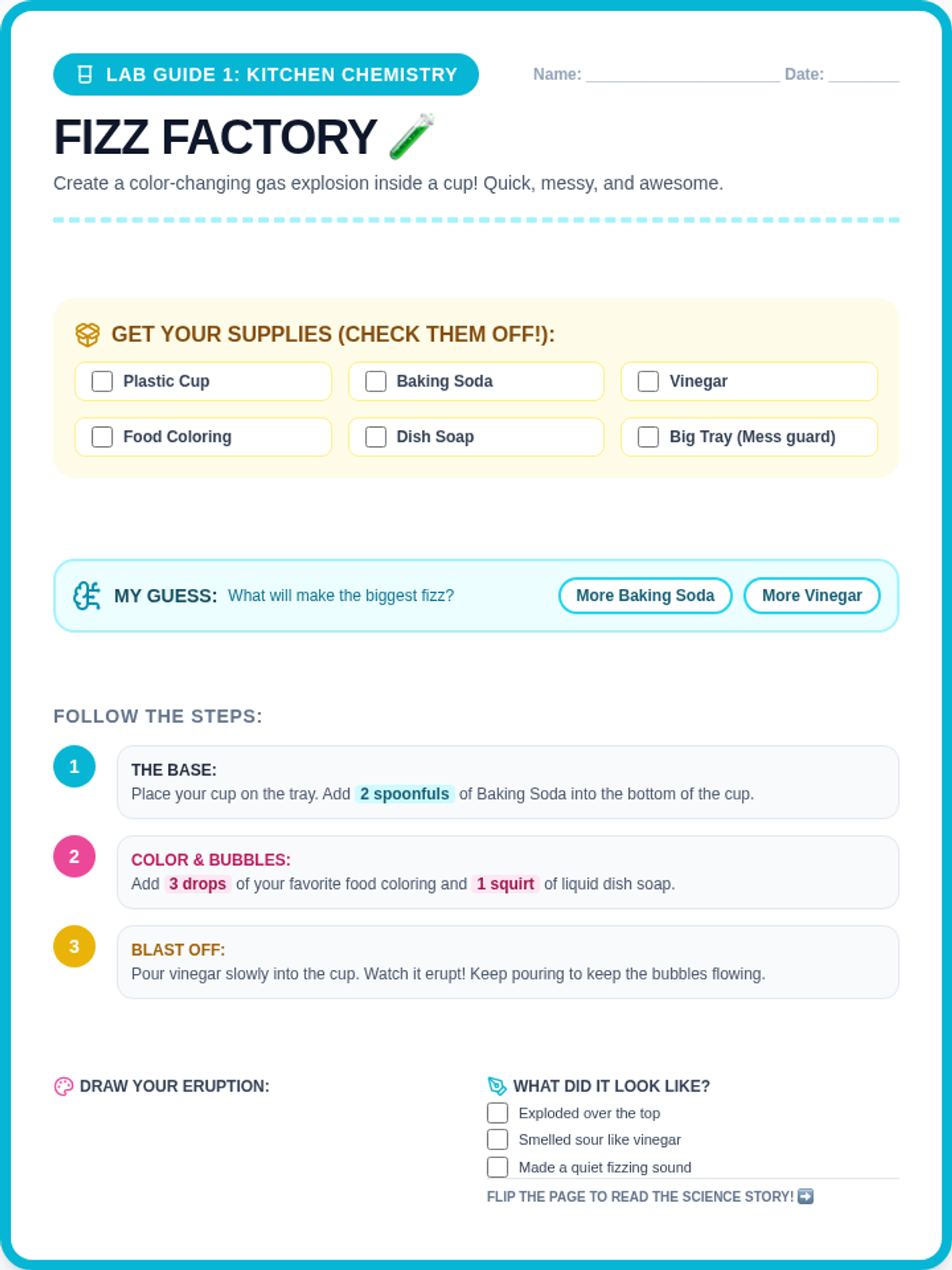
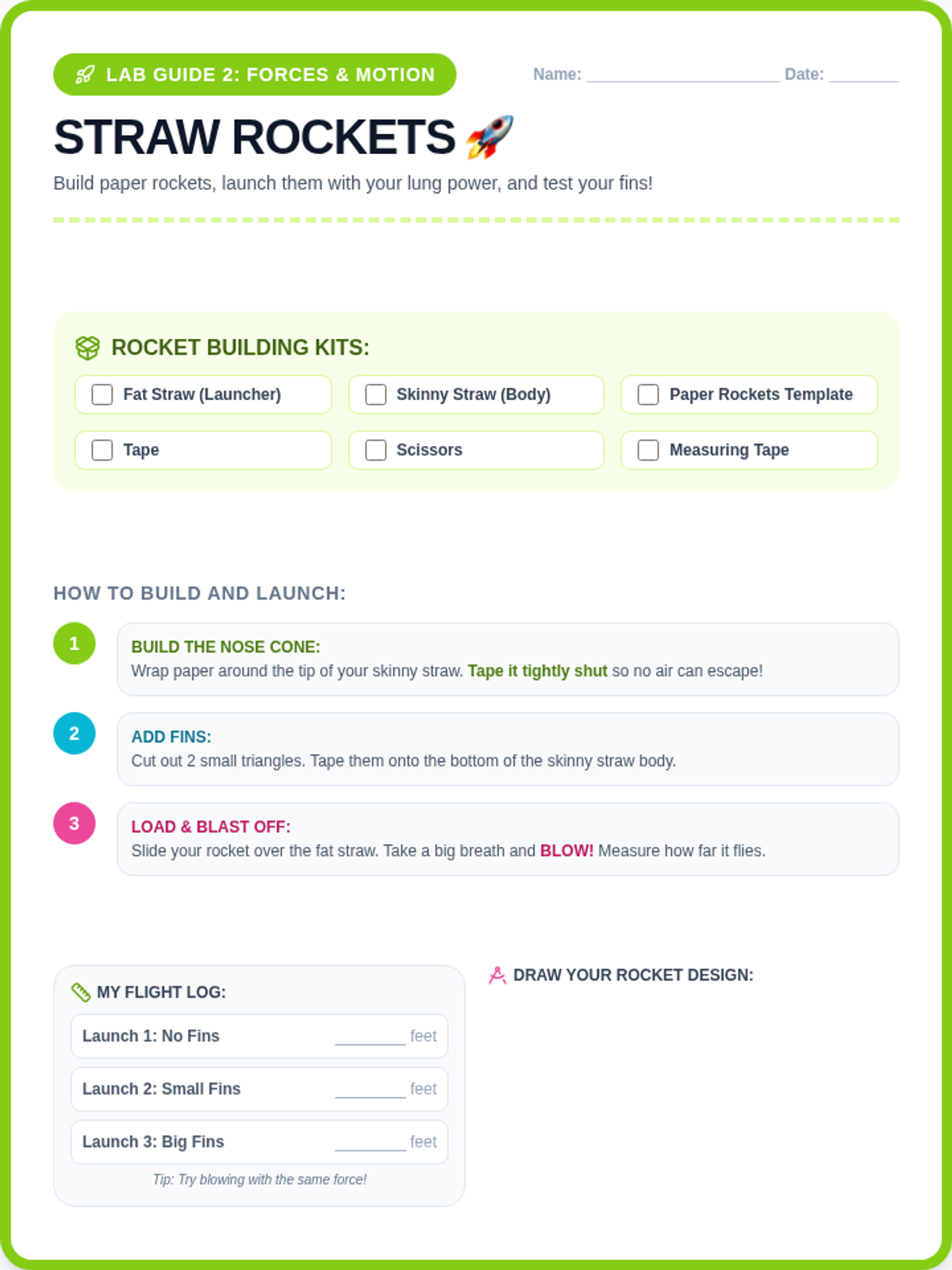
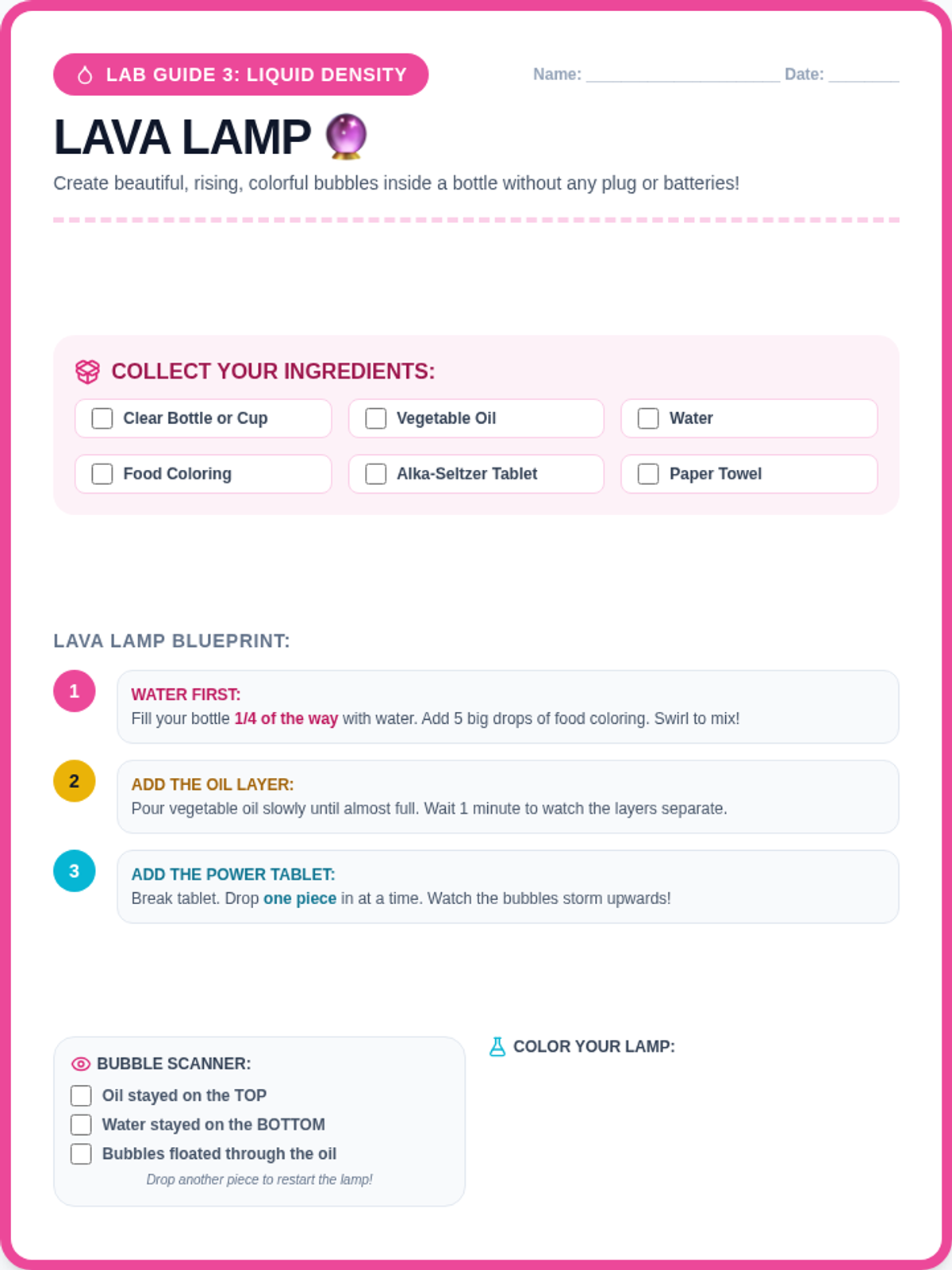
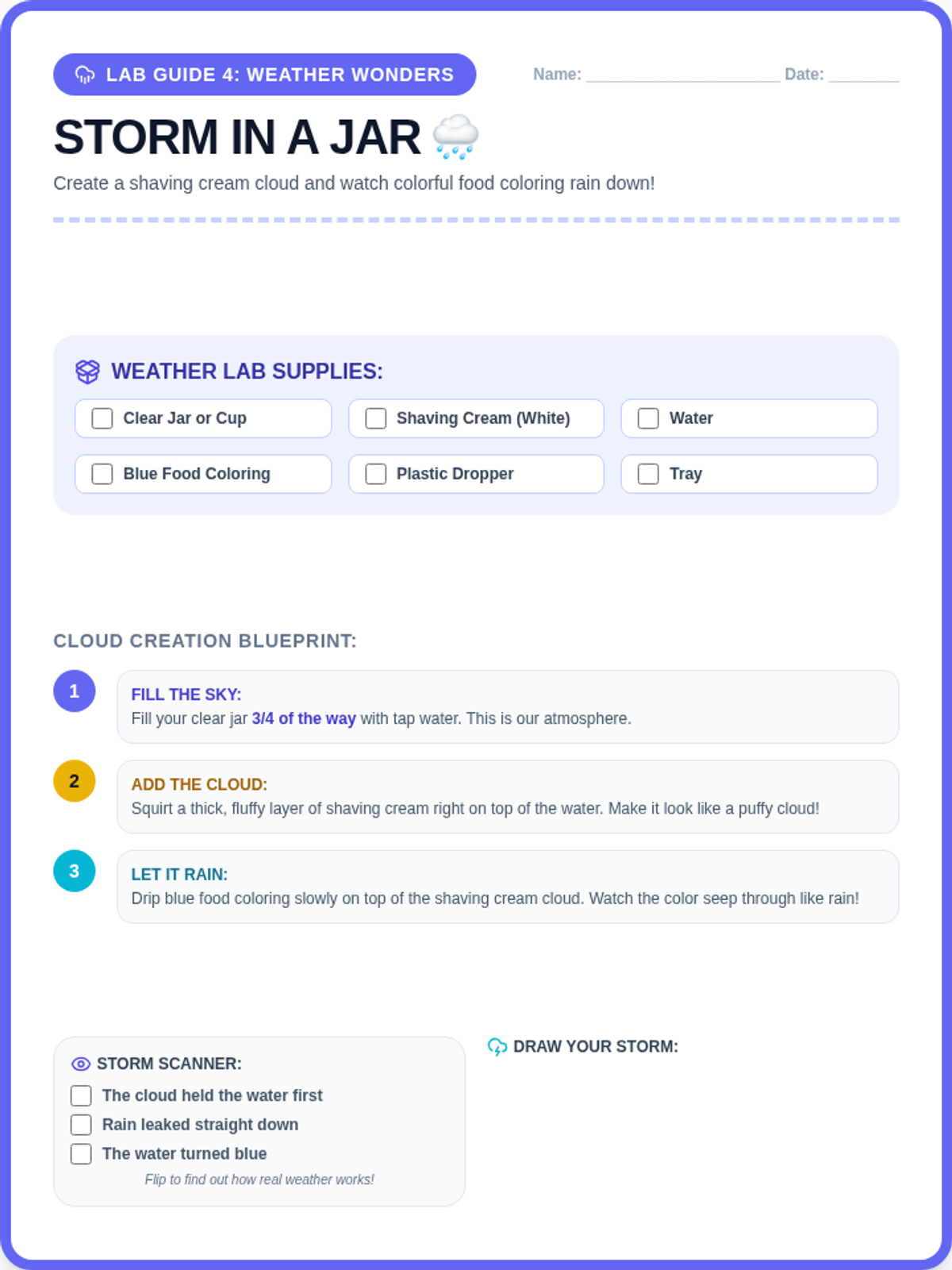
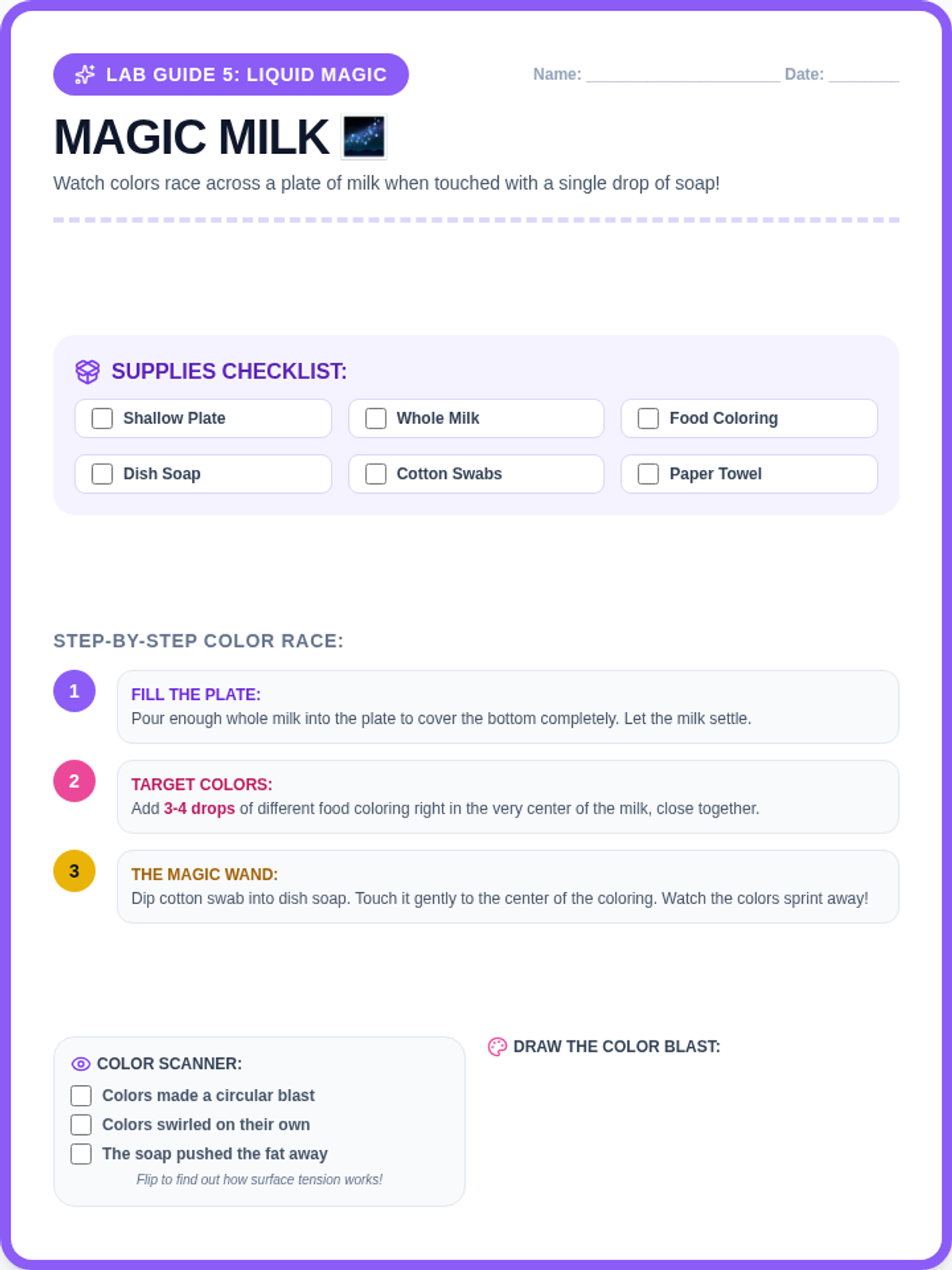
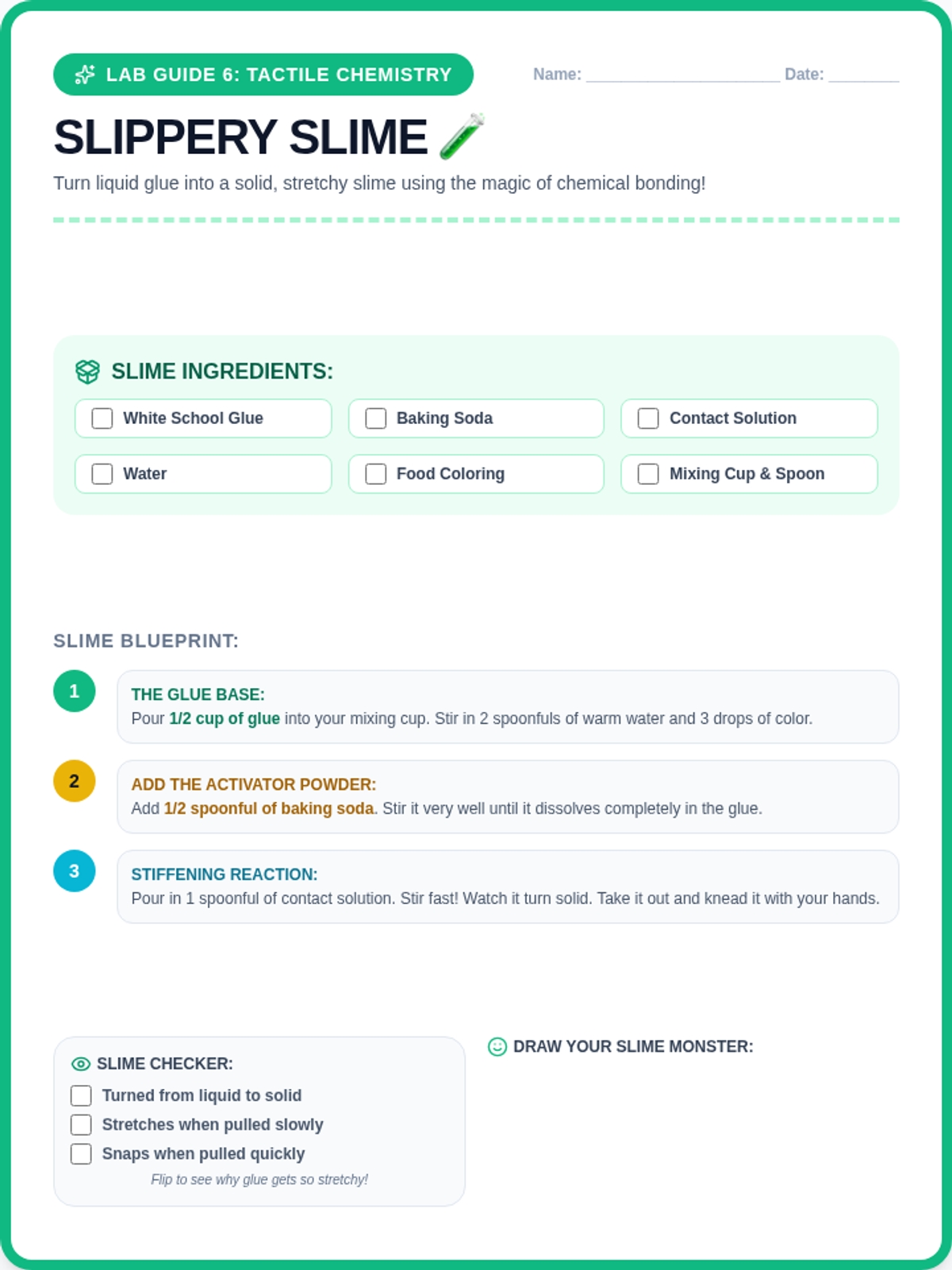
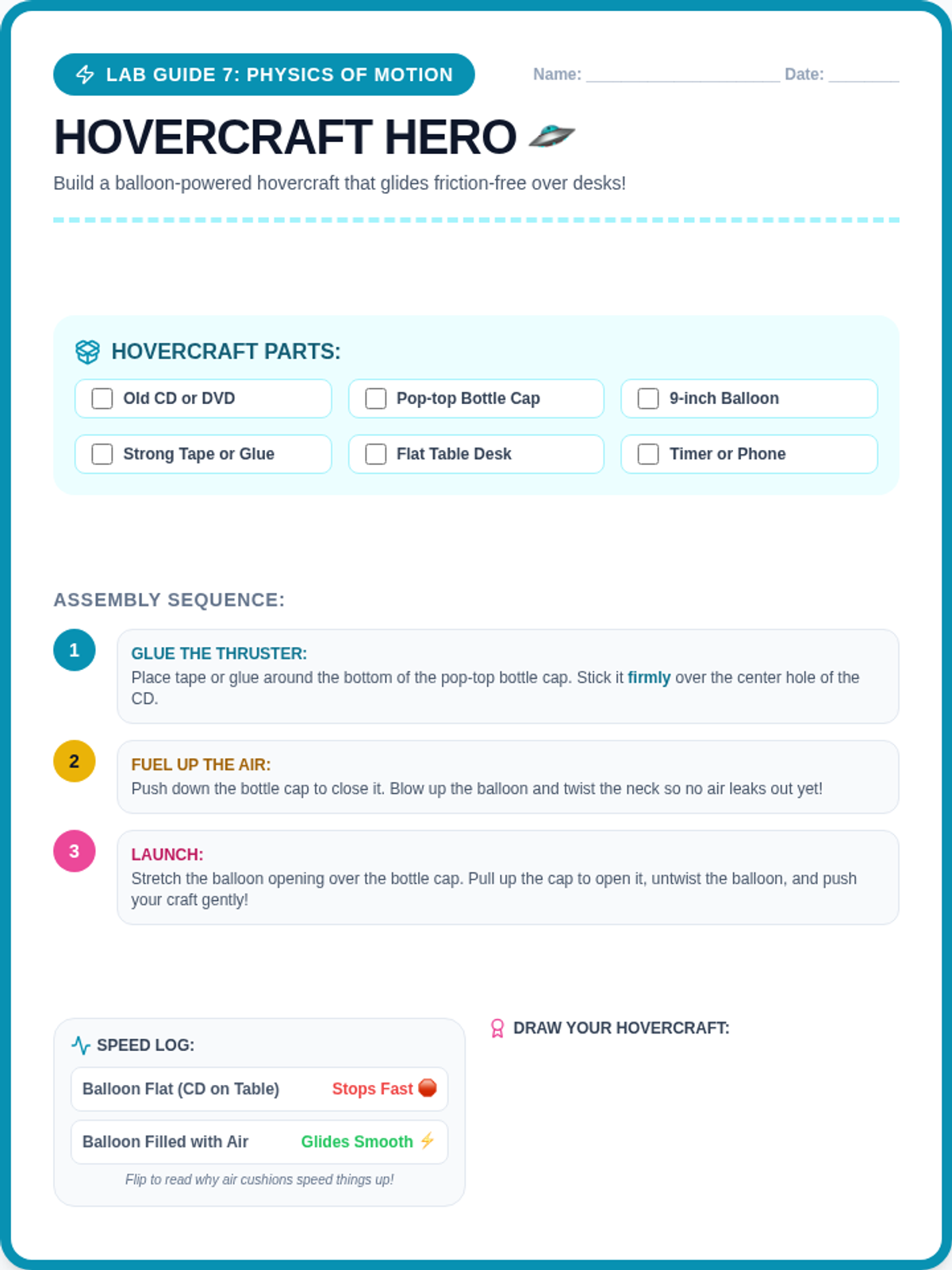
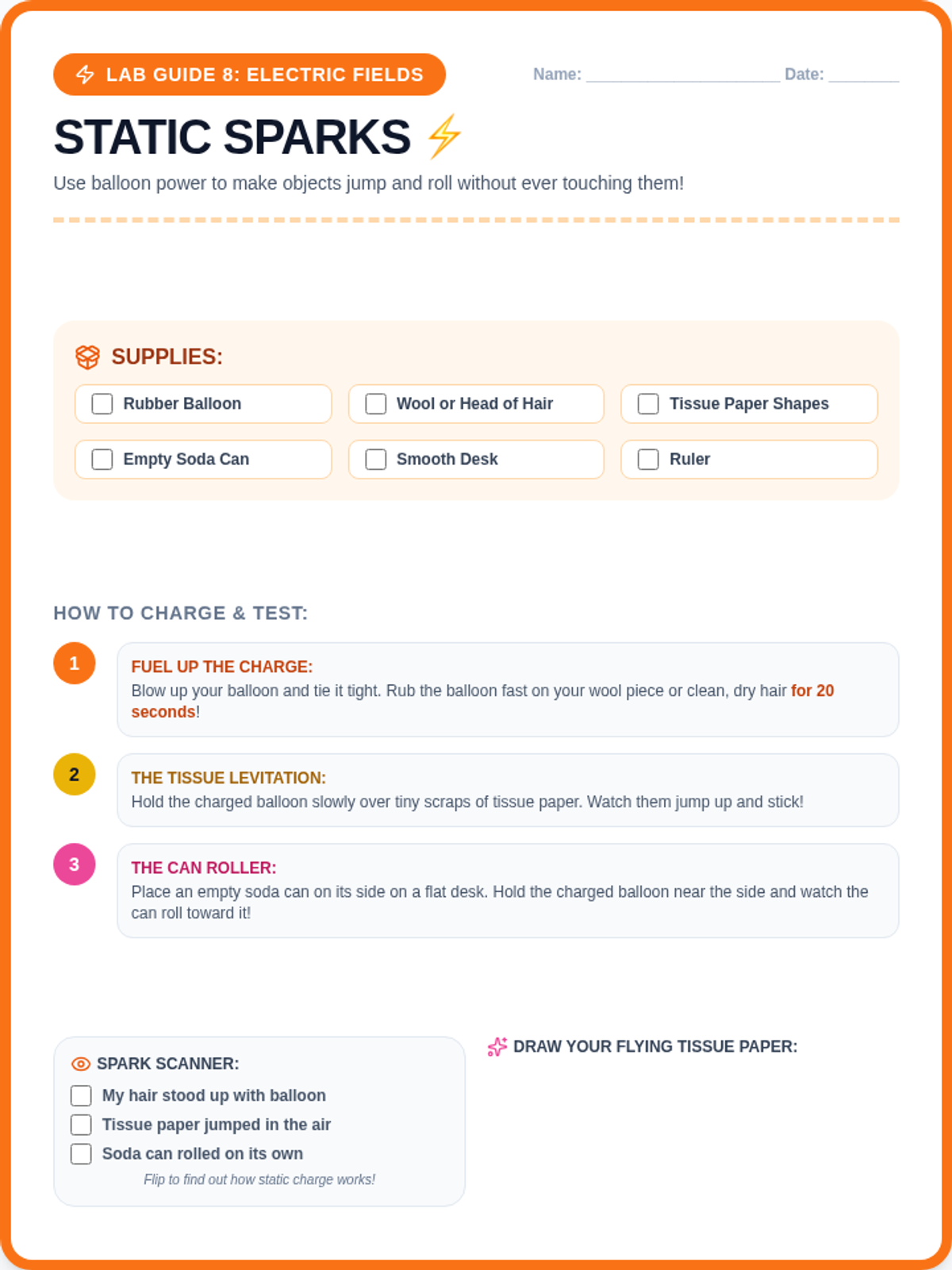
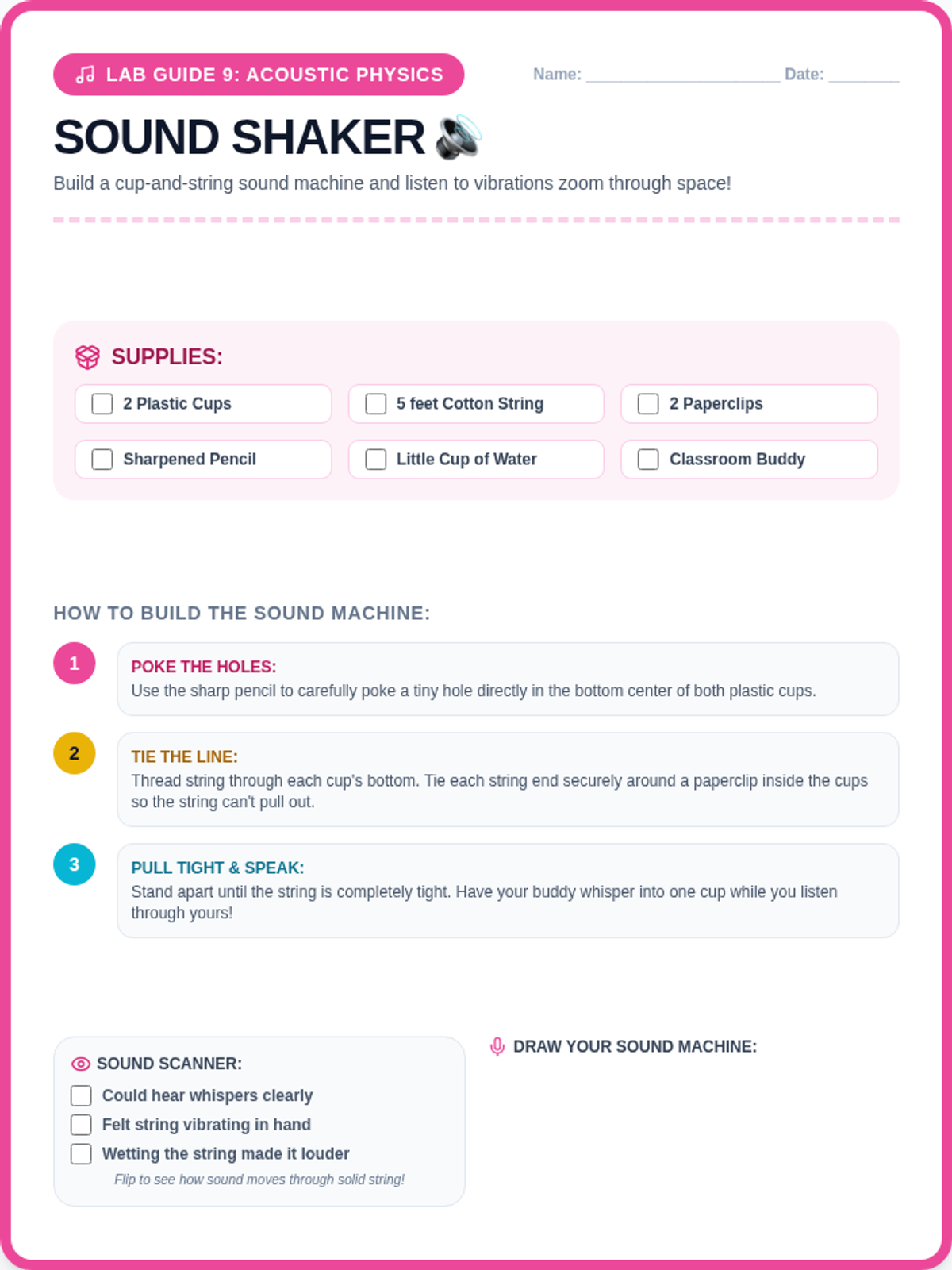
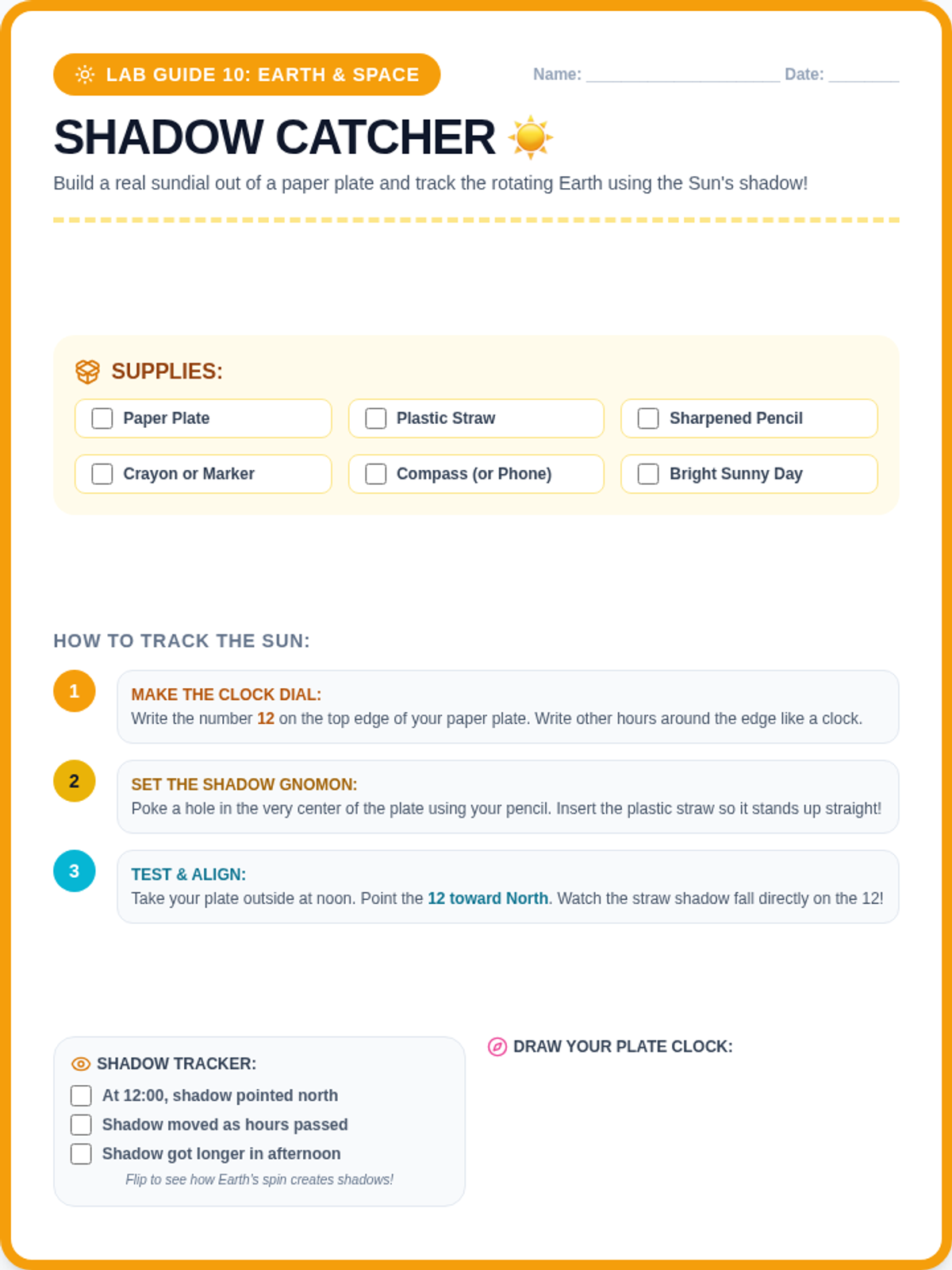
A hands-on, highly engaging, low-cost end-of-year science unit designed for 6th-grade students of lower academic levels. It features simplified, visual step-by-step guides for independent, sensory-rich experiments exploring kitchen chemistry, forces, and density.
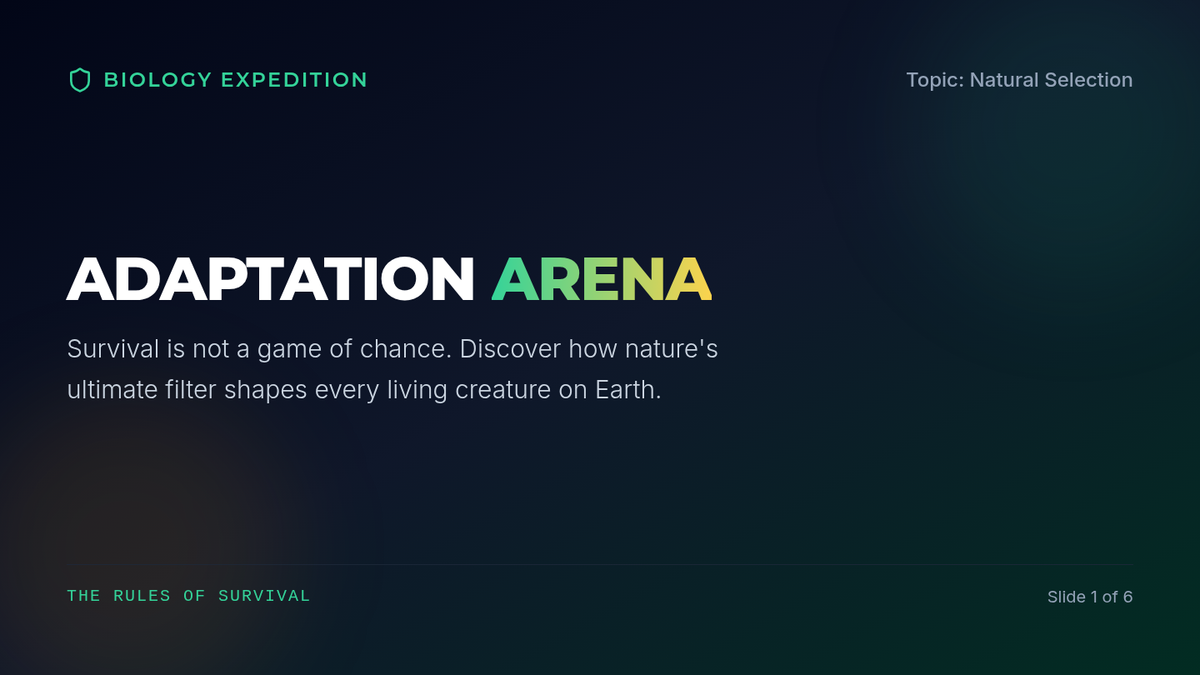
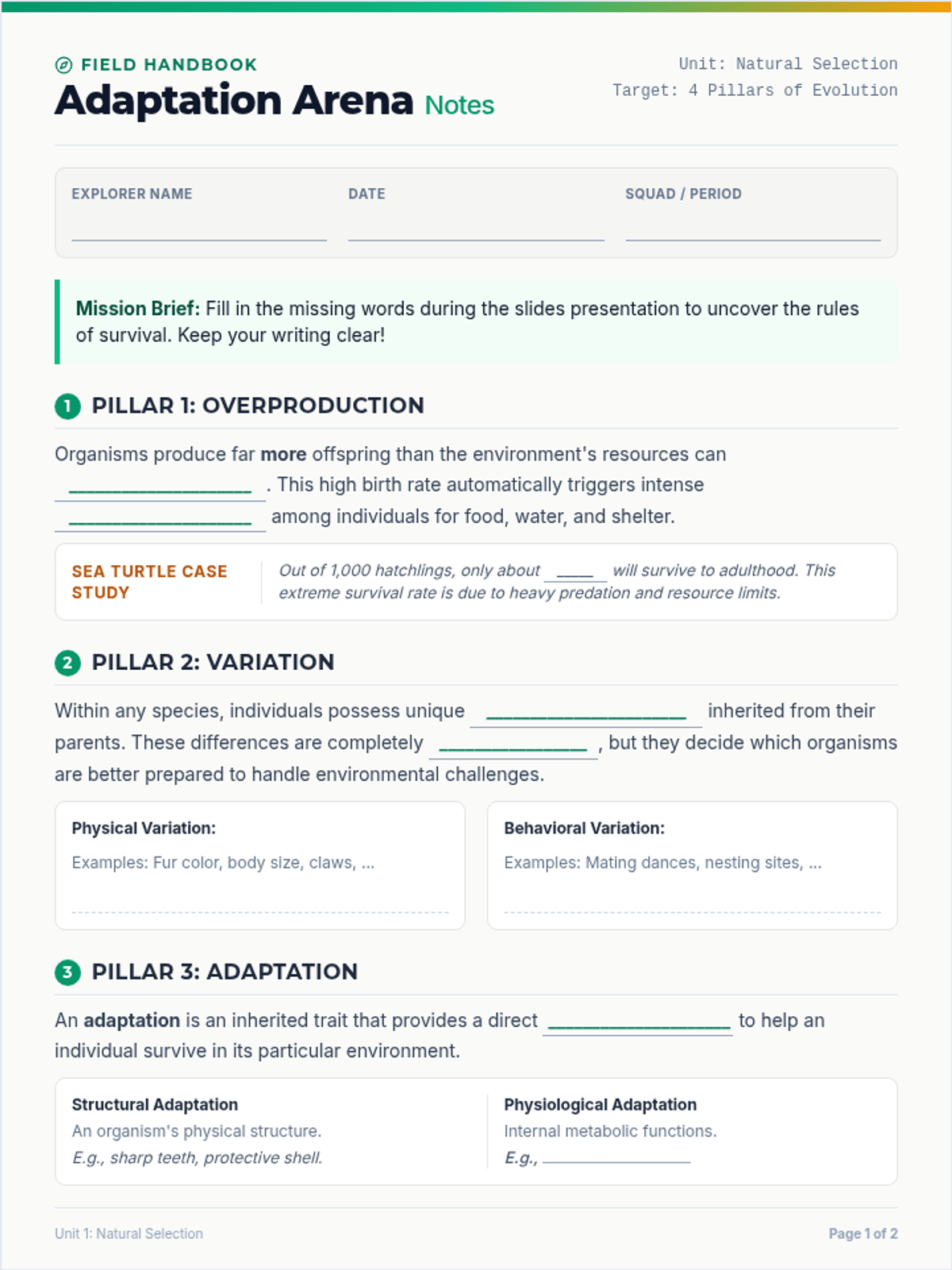
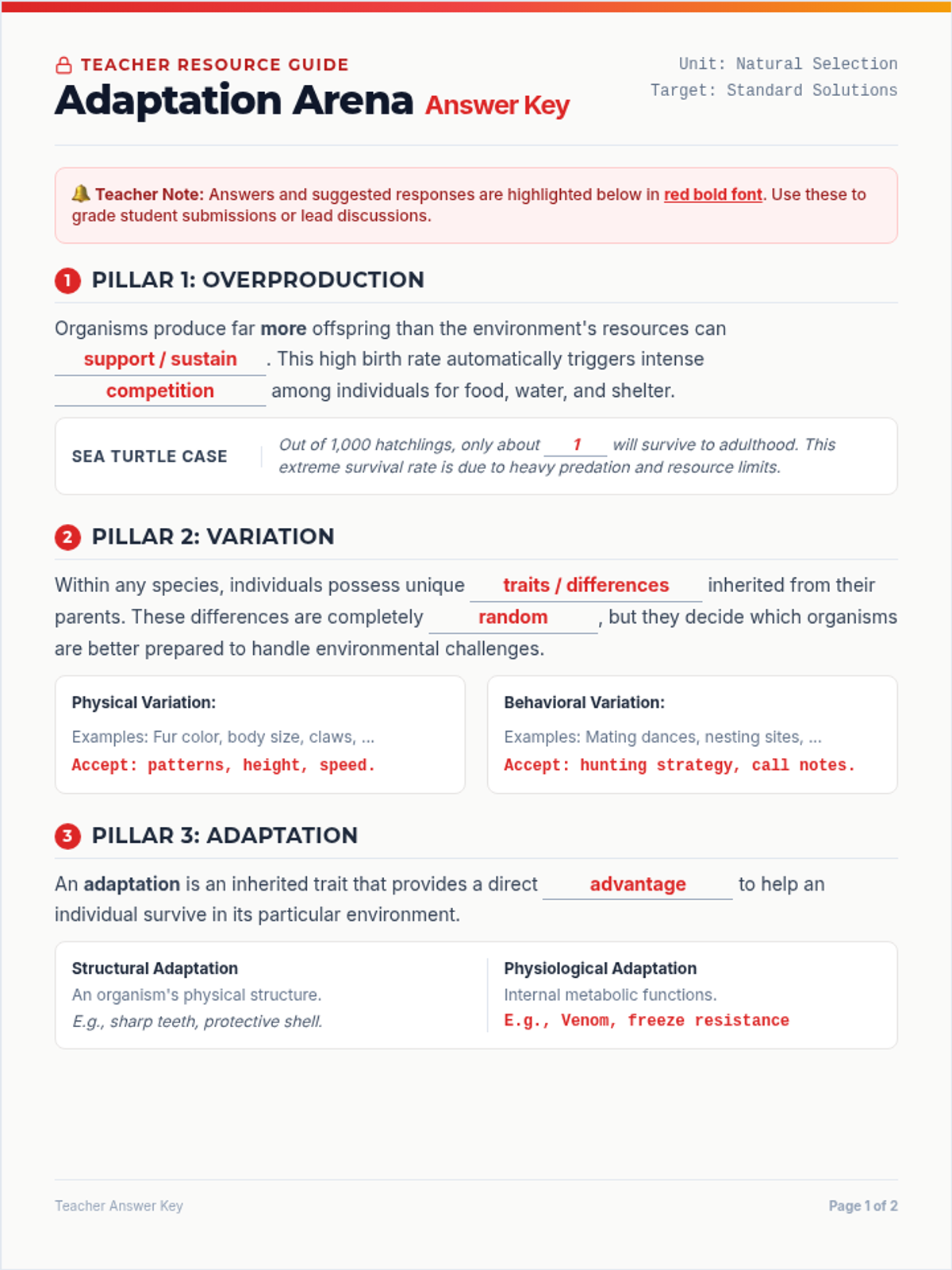
An immersive lesson exploring the core principles of natural selection: variation, overproduction, adaptation, and differential survival. Students engage with visual slides and companion guided notes to understand how populations change over time.
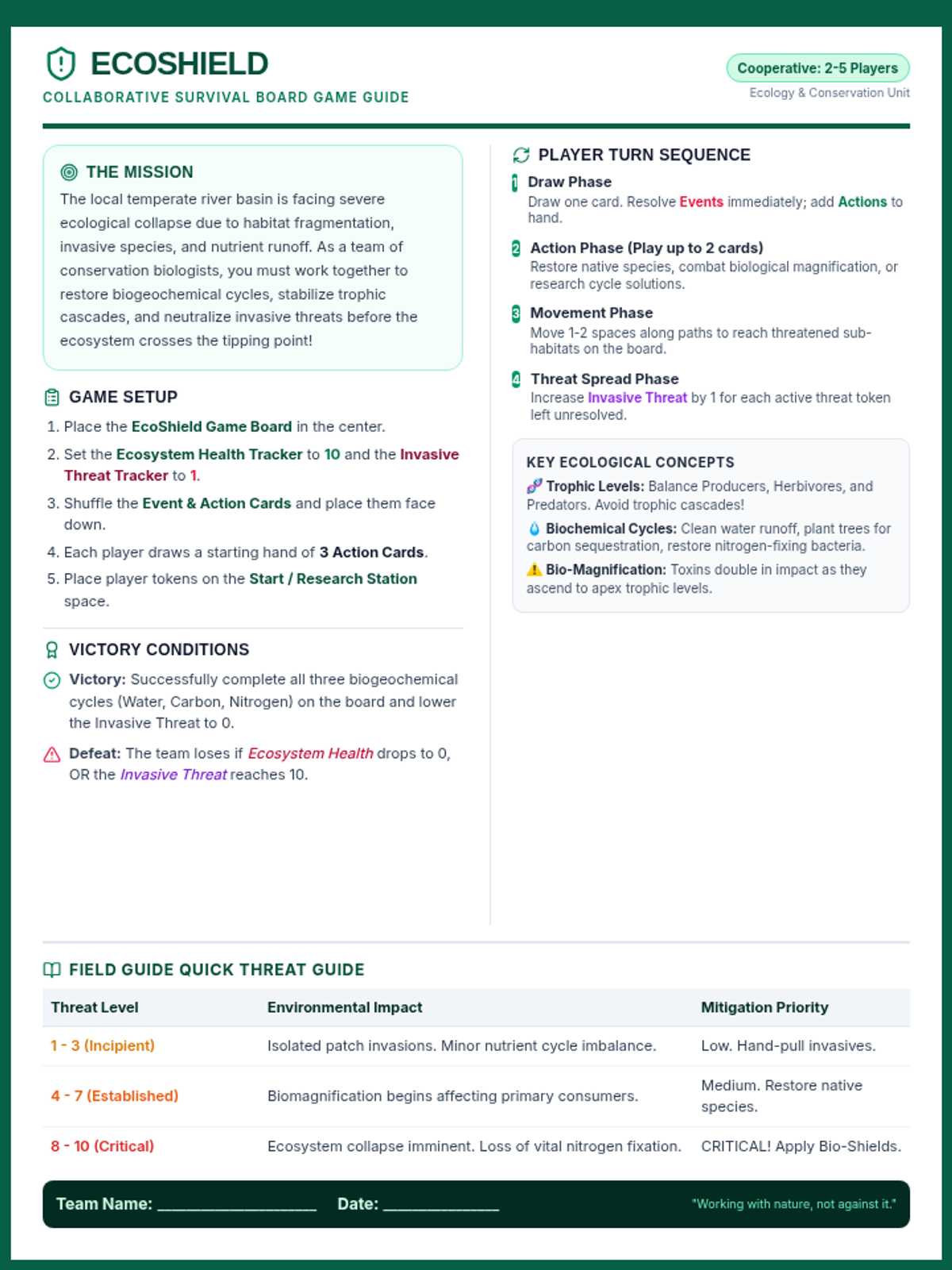
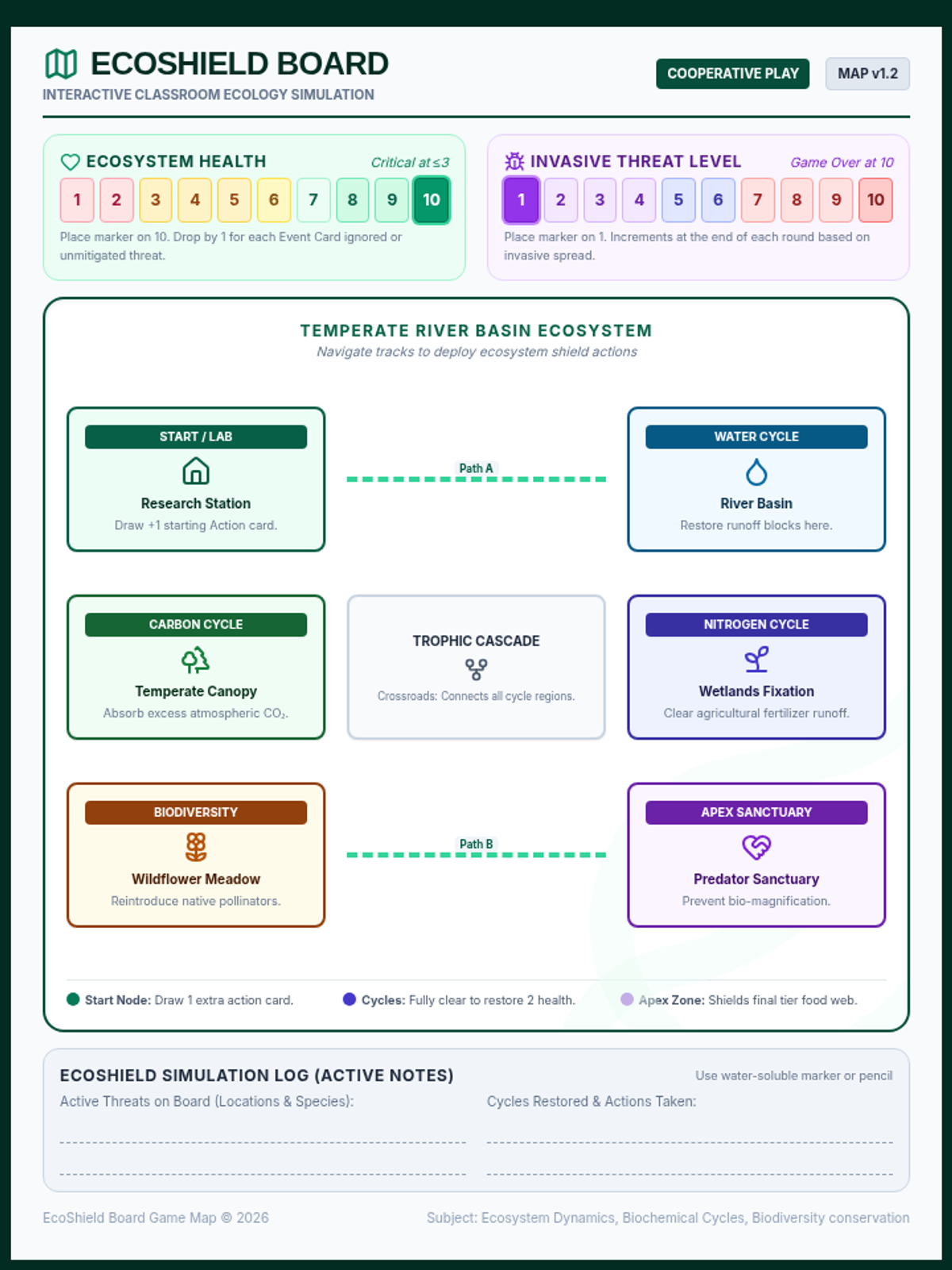
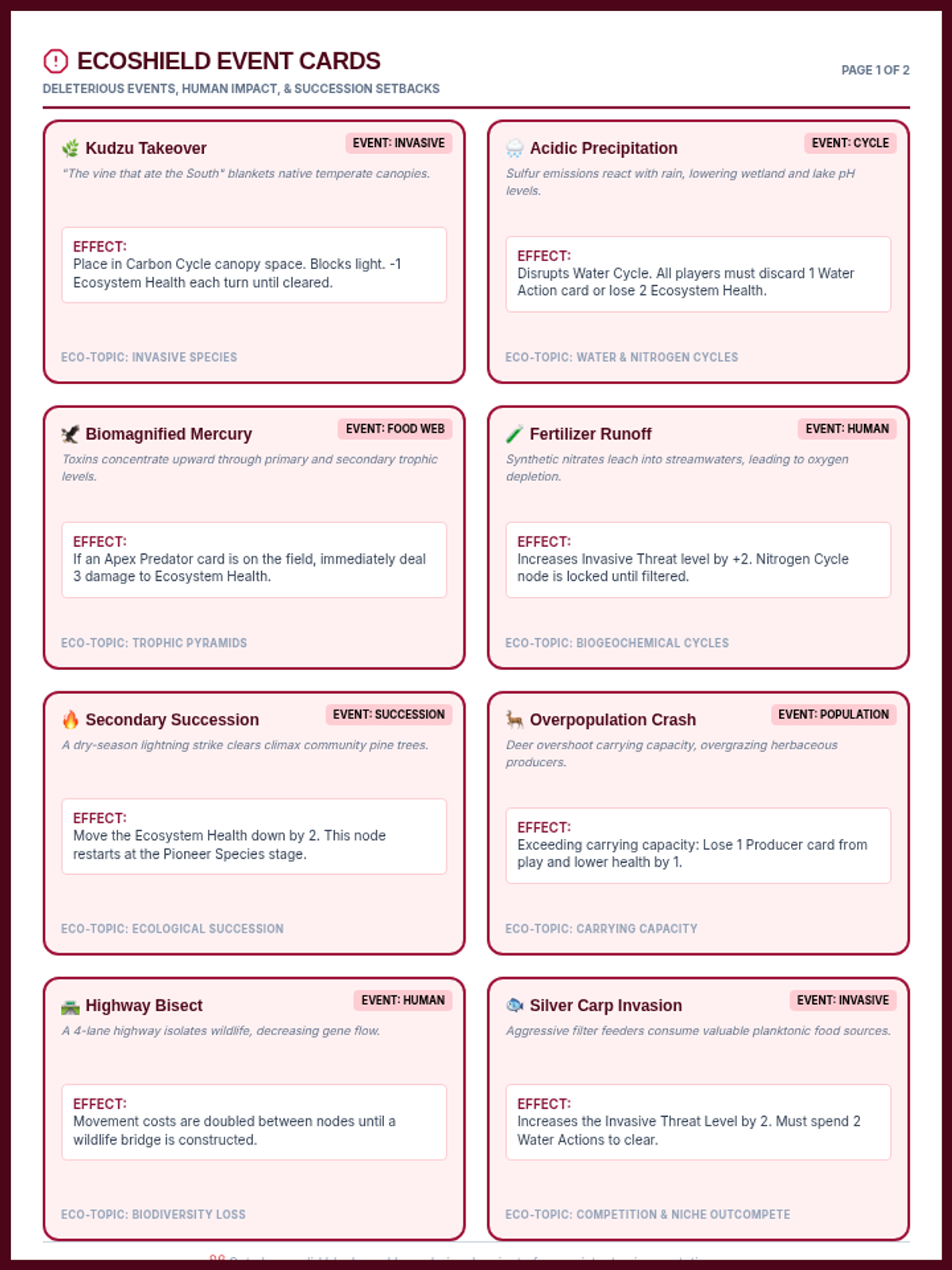
A collaborative board game lesson where students work together to save an ecosystem from ecological threats, human impact, and invasive species using food web dynamics and biochemical cycle actions.
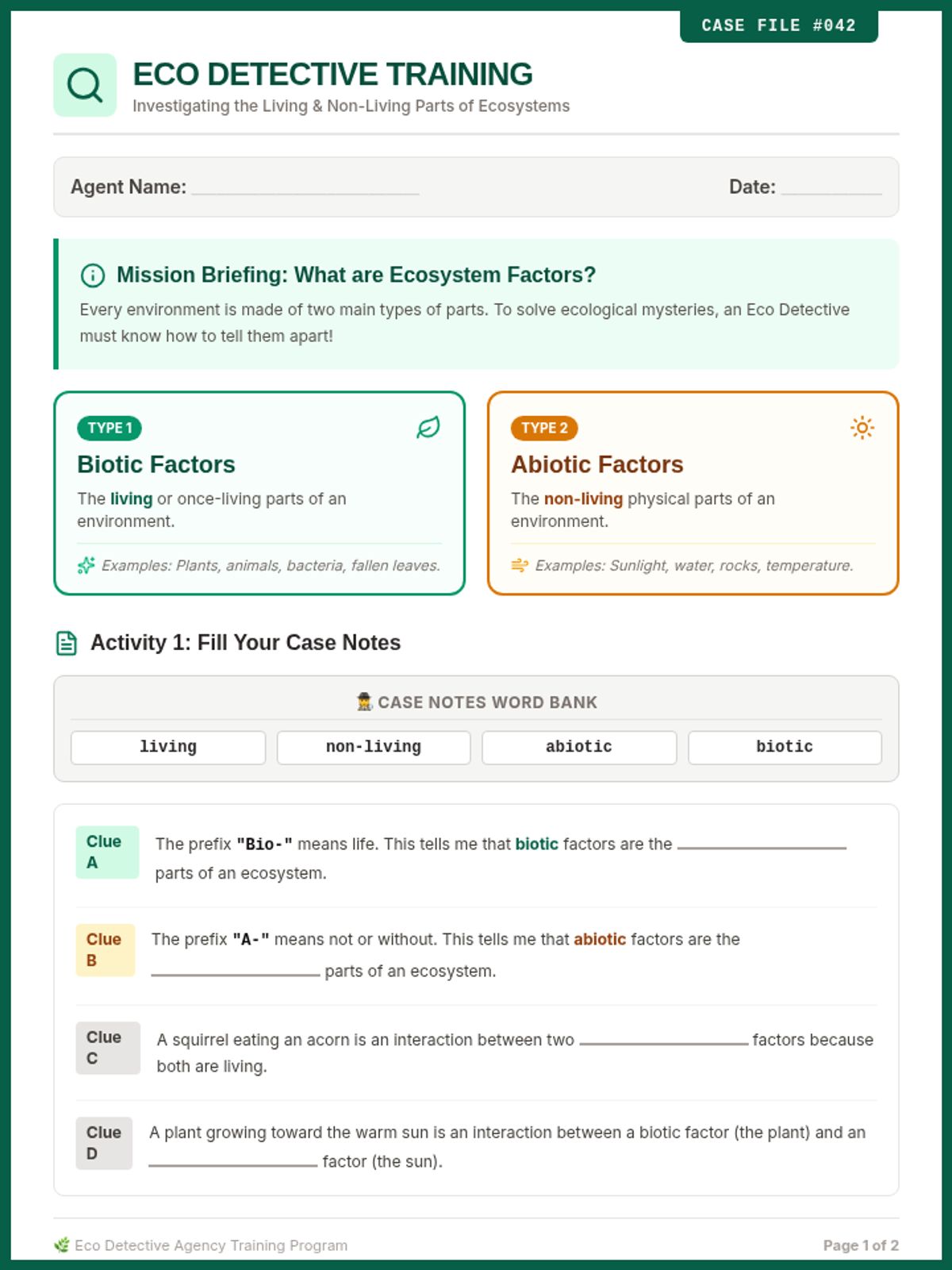
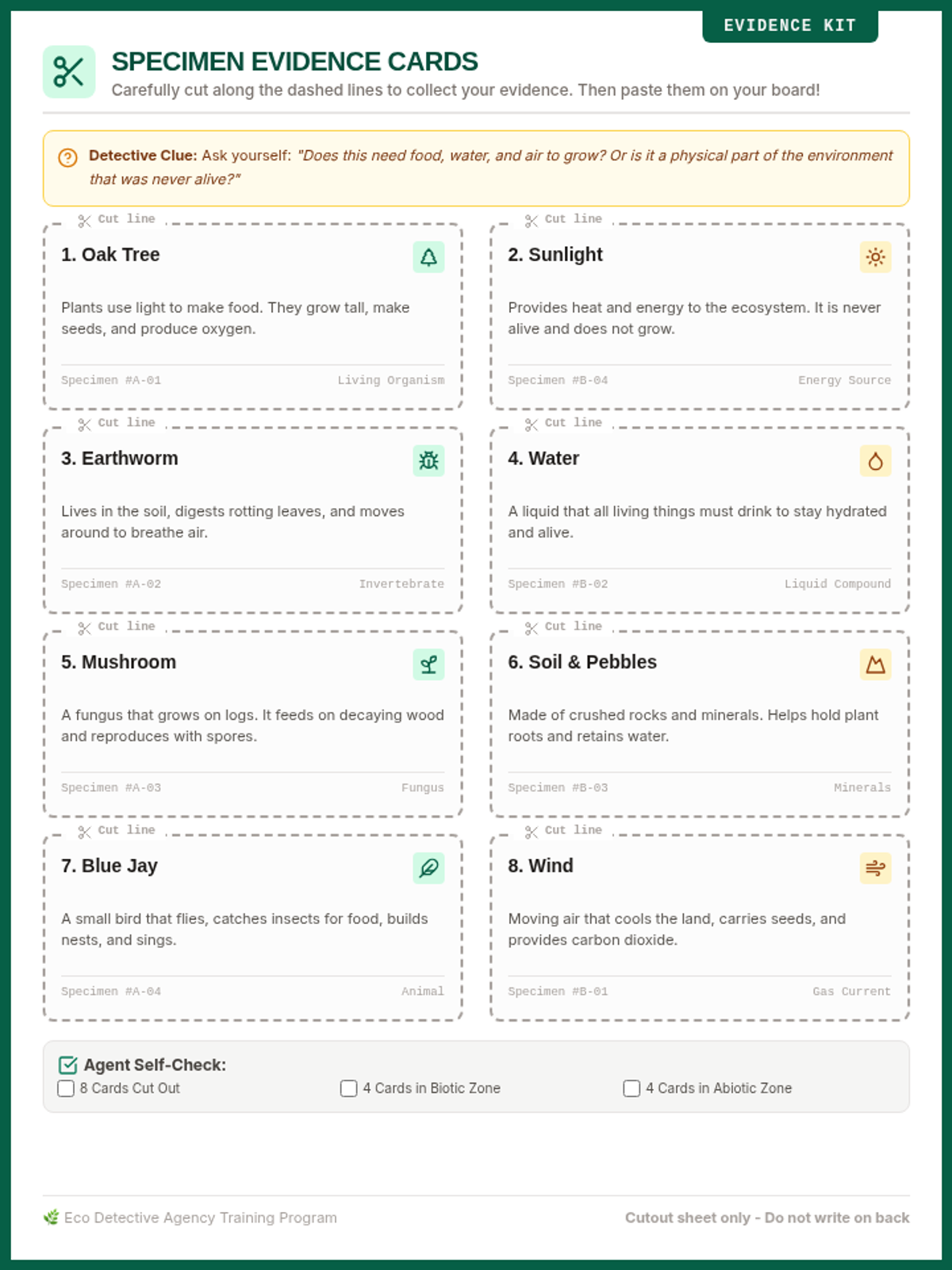
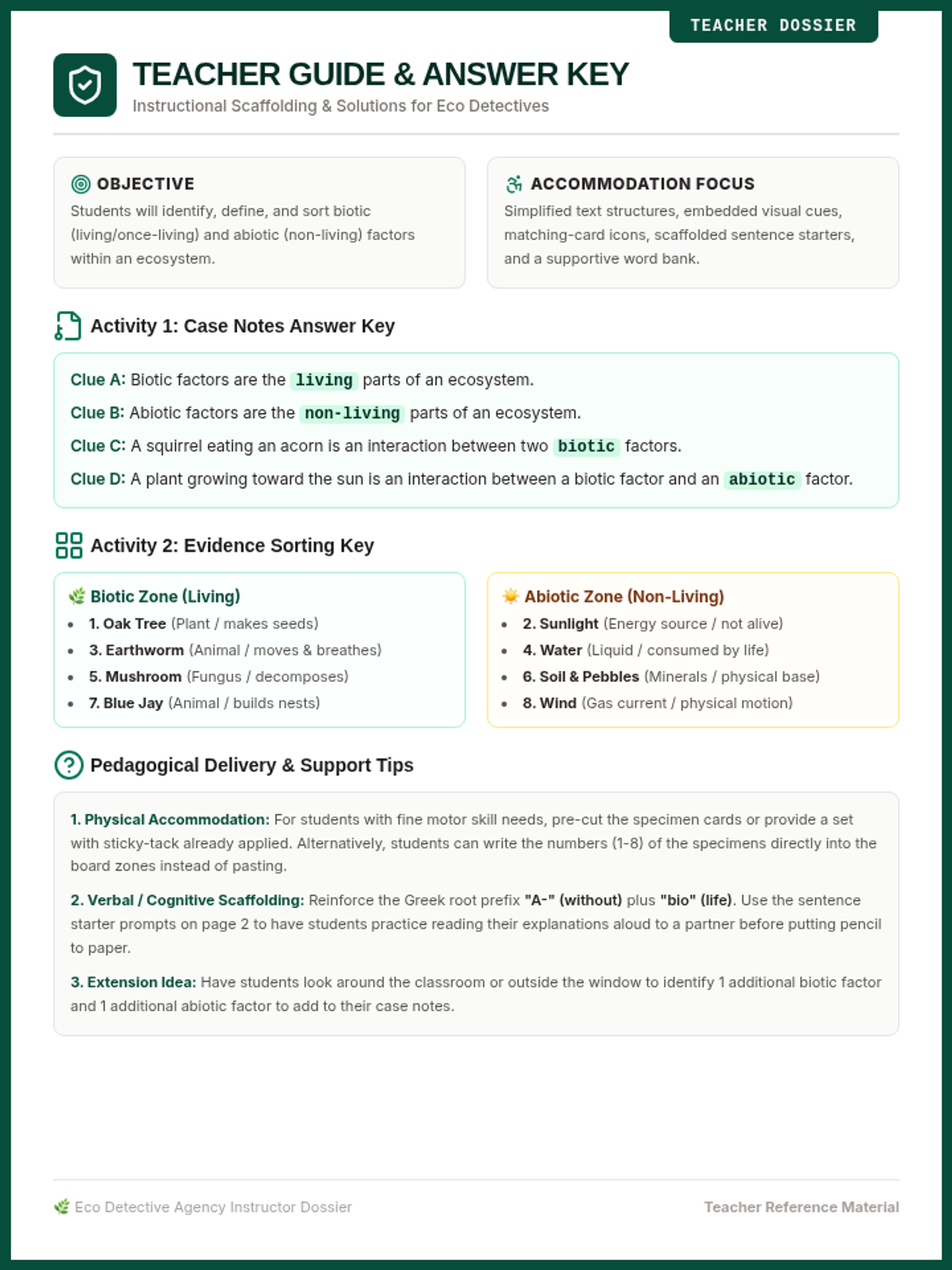
An interactive, scaffolded lesson introducing biotic and abiotic factors in ecosystems. Includes guided notes with sentence starters, a word bank, and a hands-on sorting activity designed for students requiring accommodation.
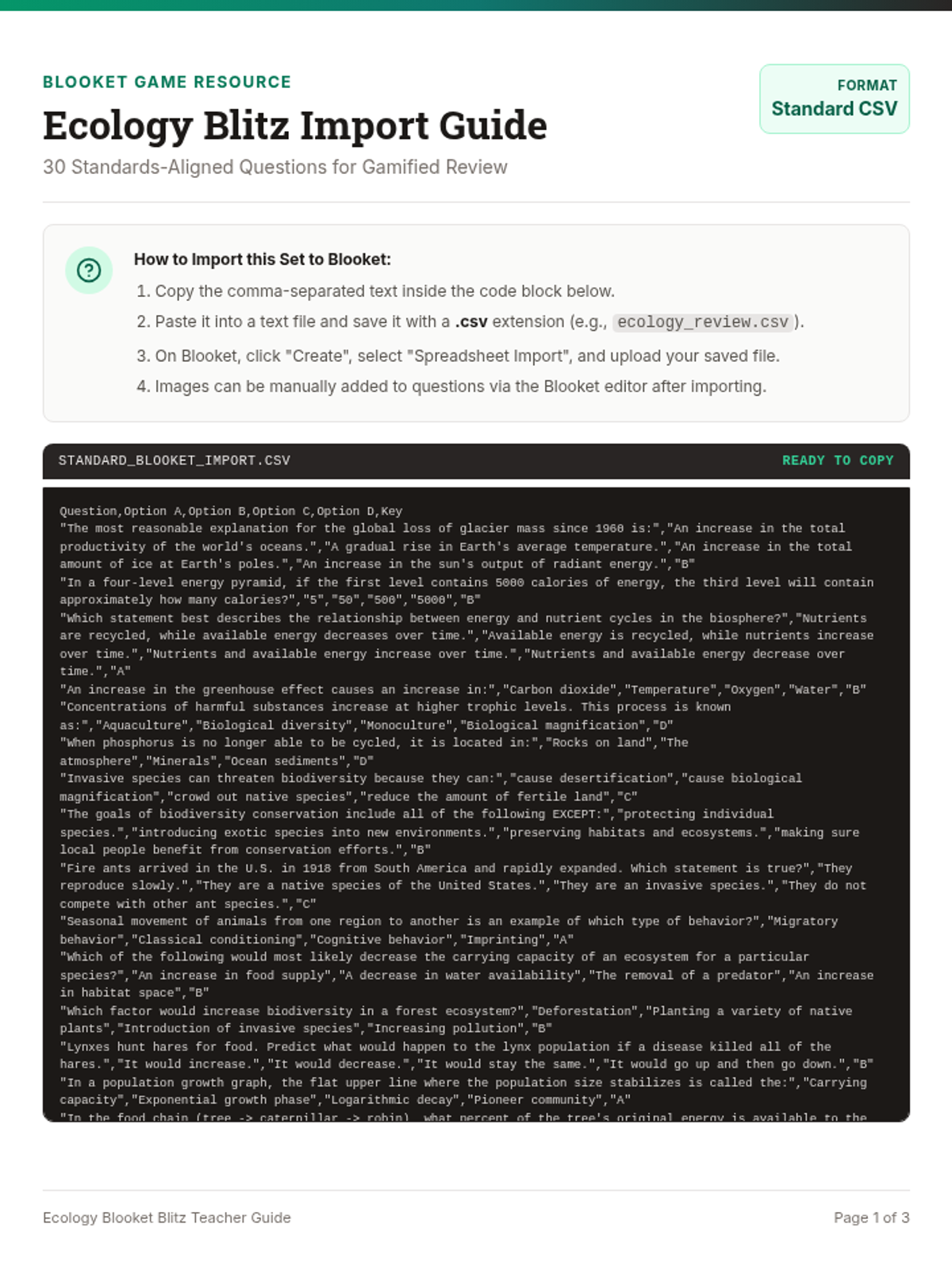
A high-energy ecology review lesson utilizing a gamified Blooket activity. It contains a complete Blooket-ready question bank and teacher guide featuring 30 standards-aligned ecology questions designed to evaluate understanding of ecosystems, energy pyramids, human impacts, and biochemical cycles.
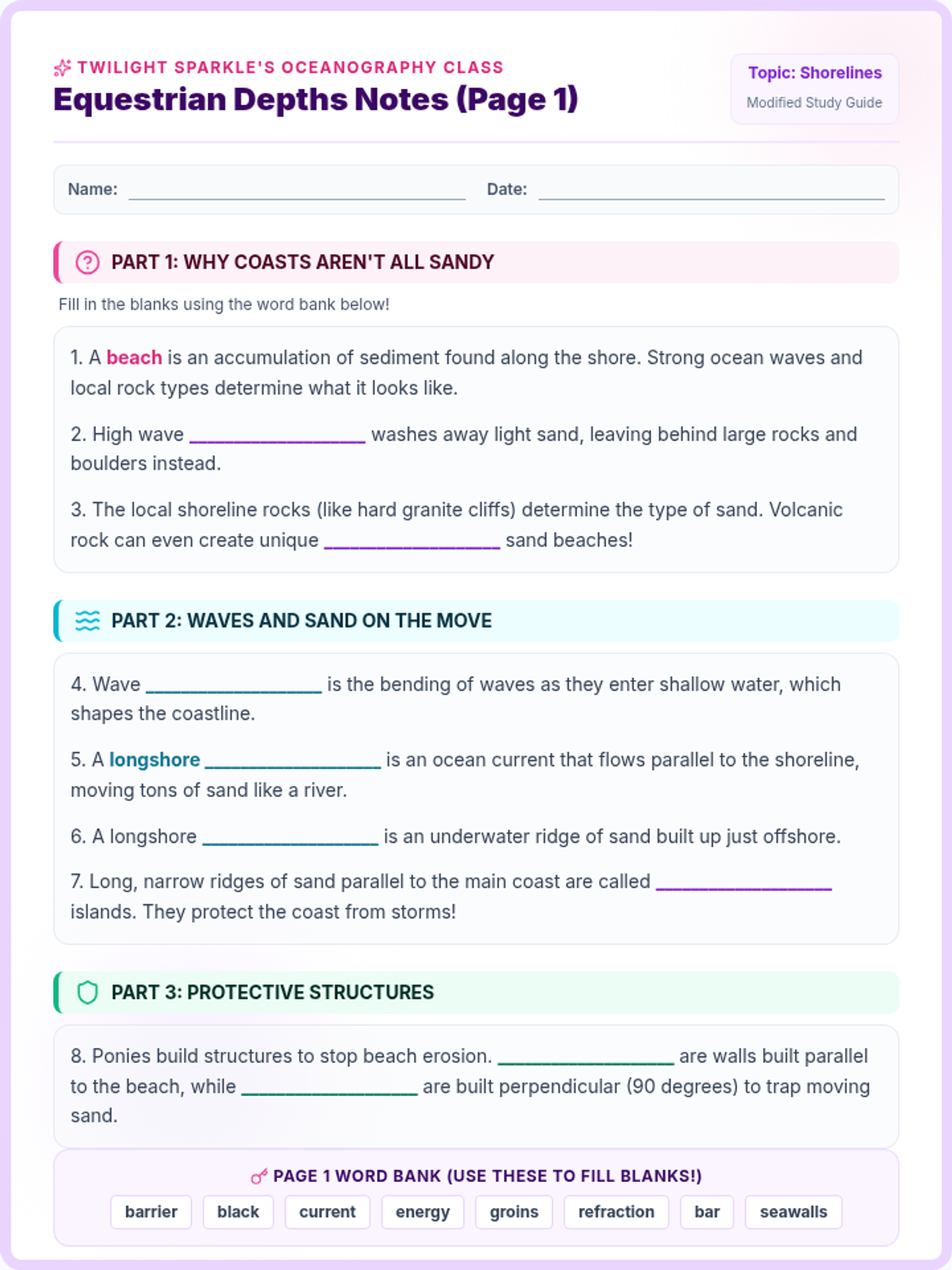
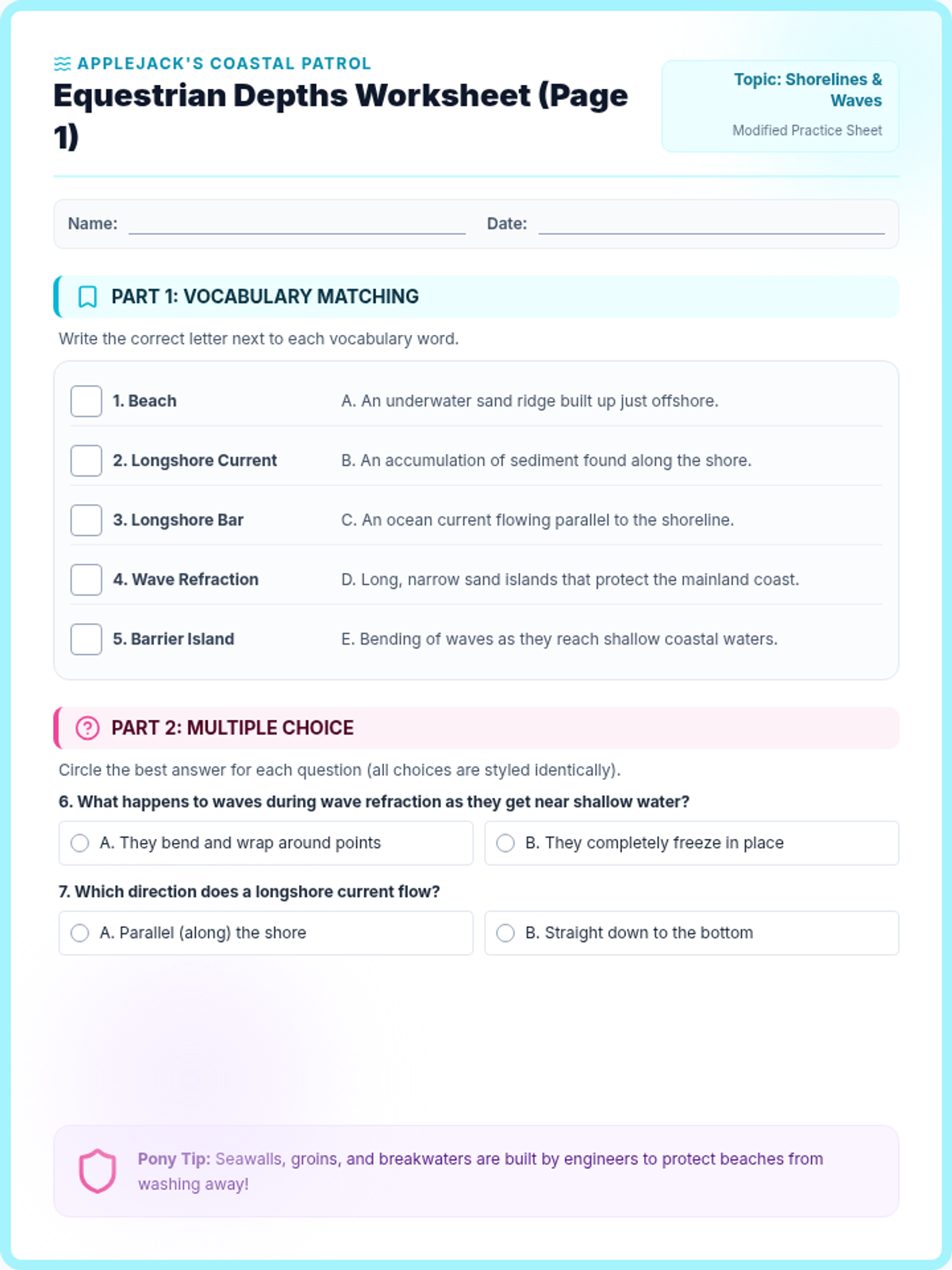
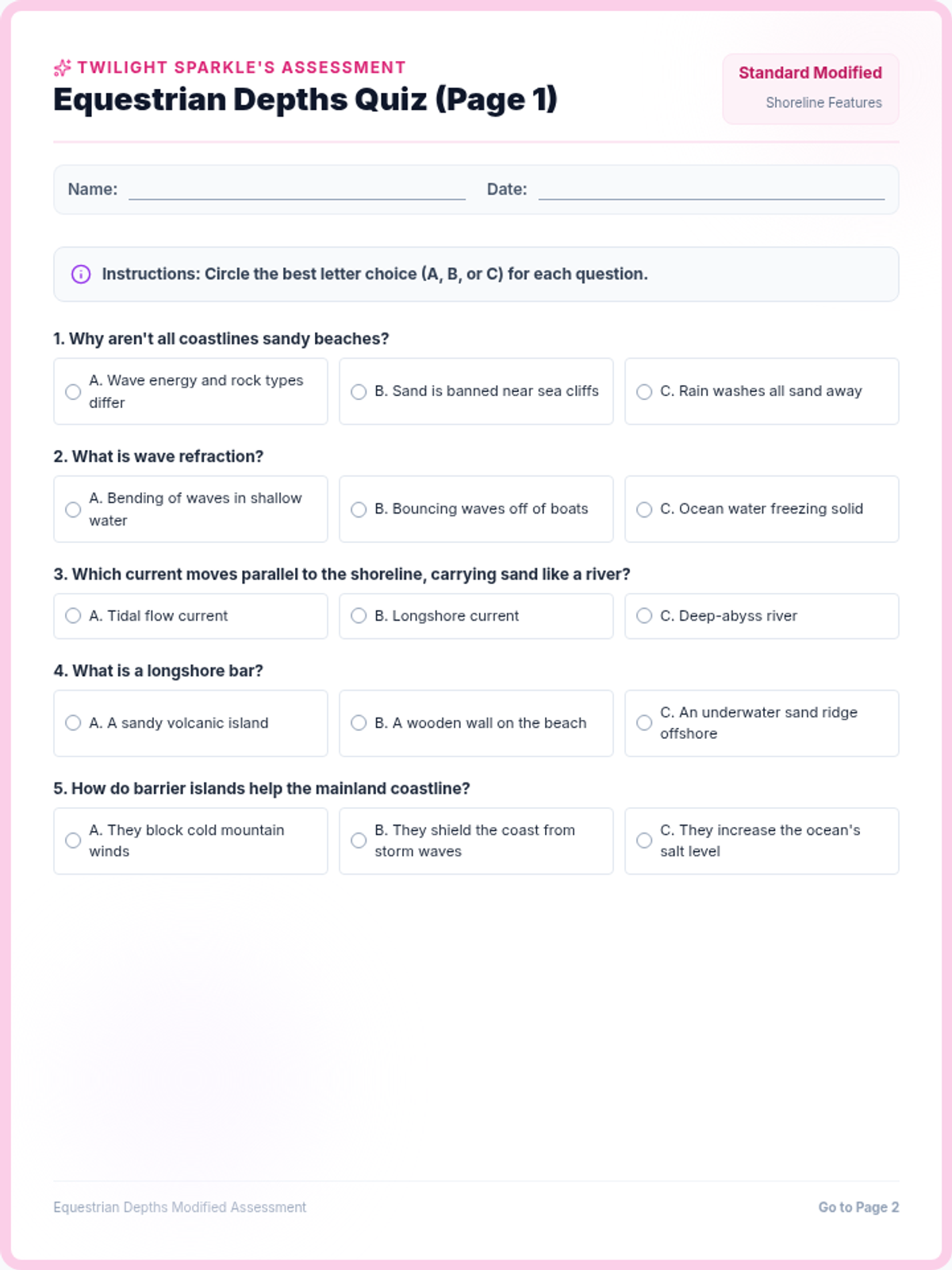
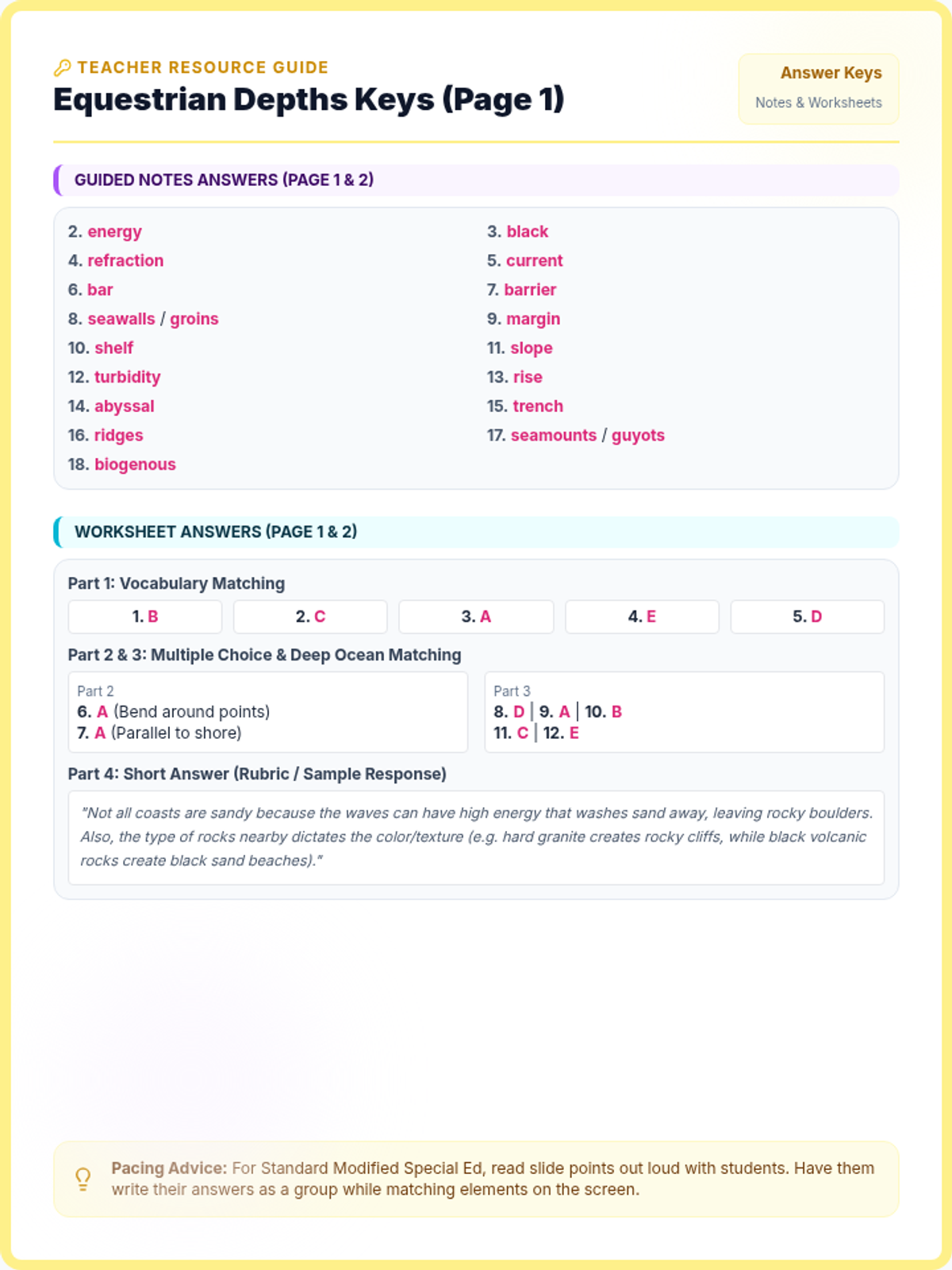
A lesson on oceanography covering shorelines, coastal features, and the deep seafloor, adapted with a friendly My Little Pony decorative theme and chunked, accessible text for Standard Modified Special Education students.
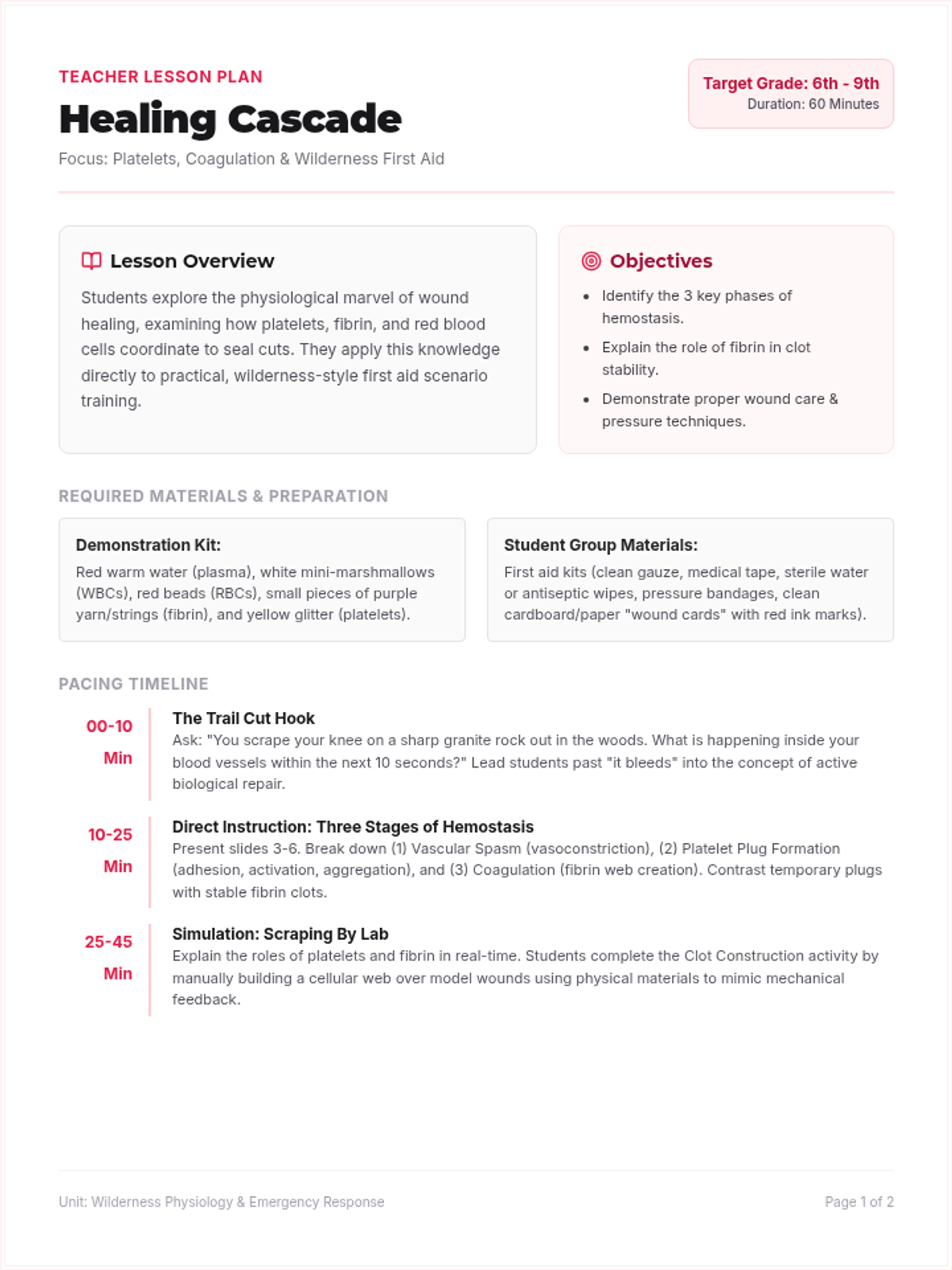
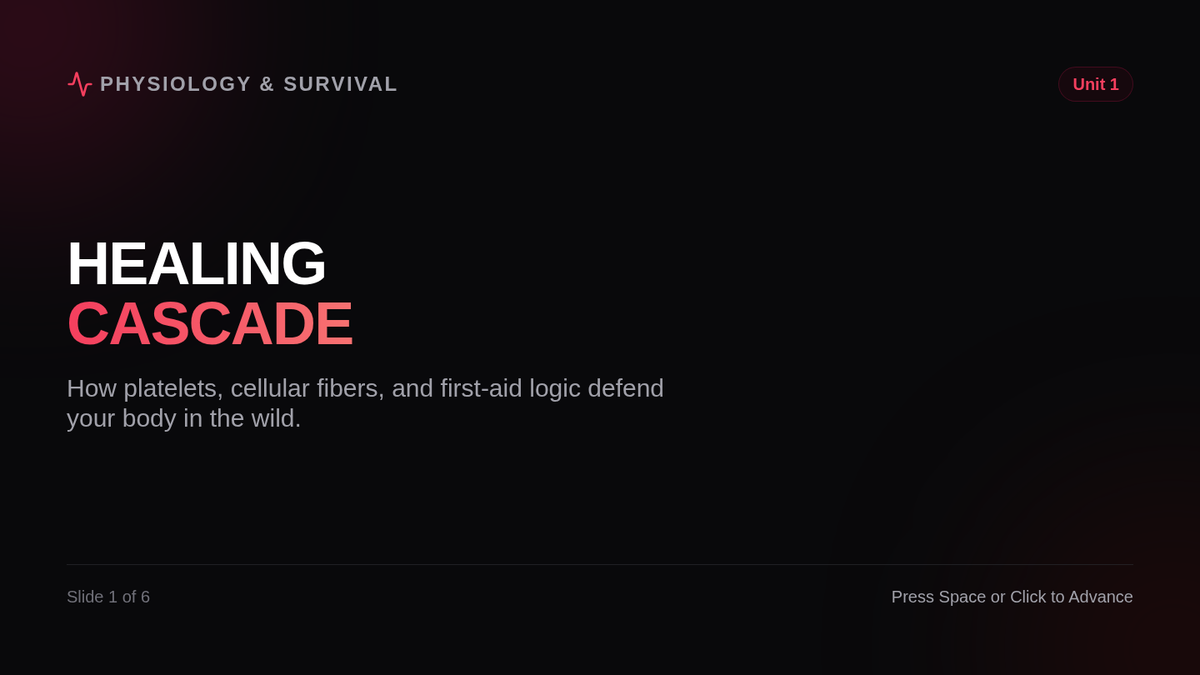
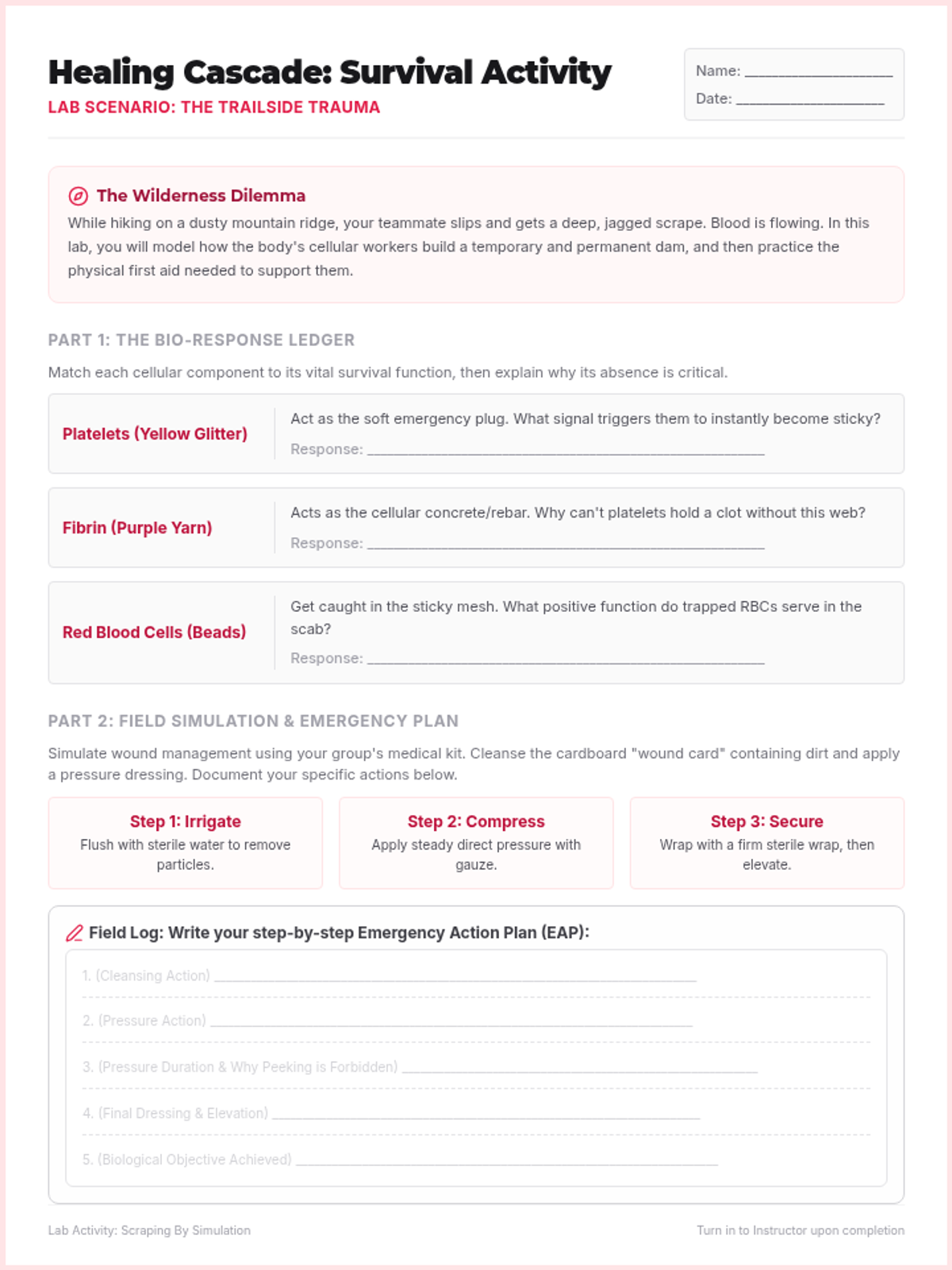
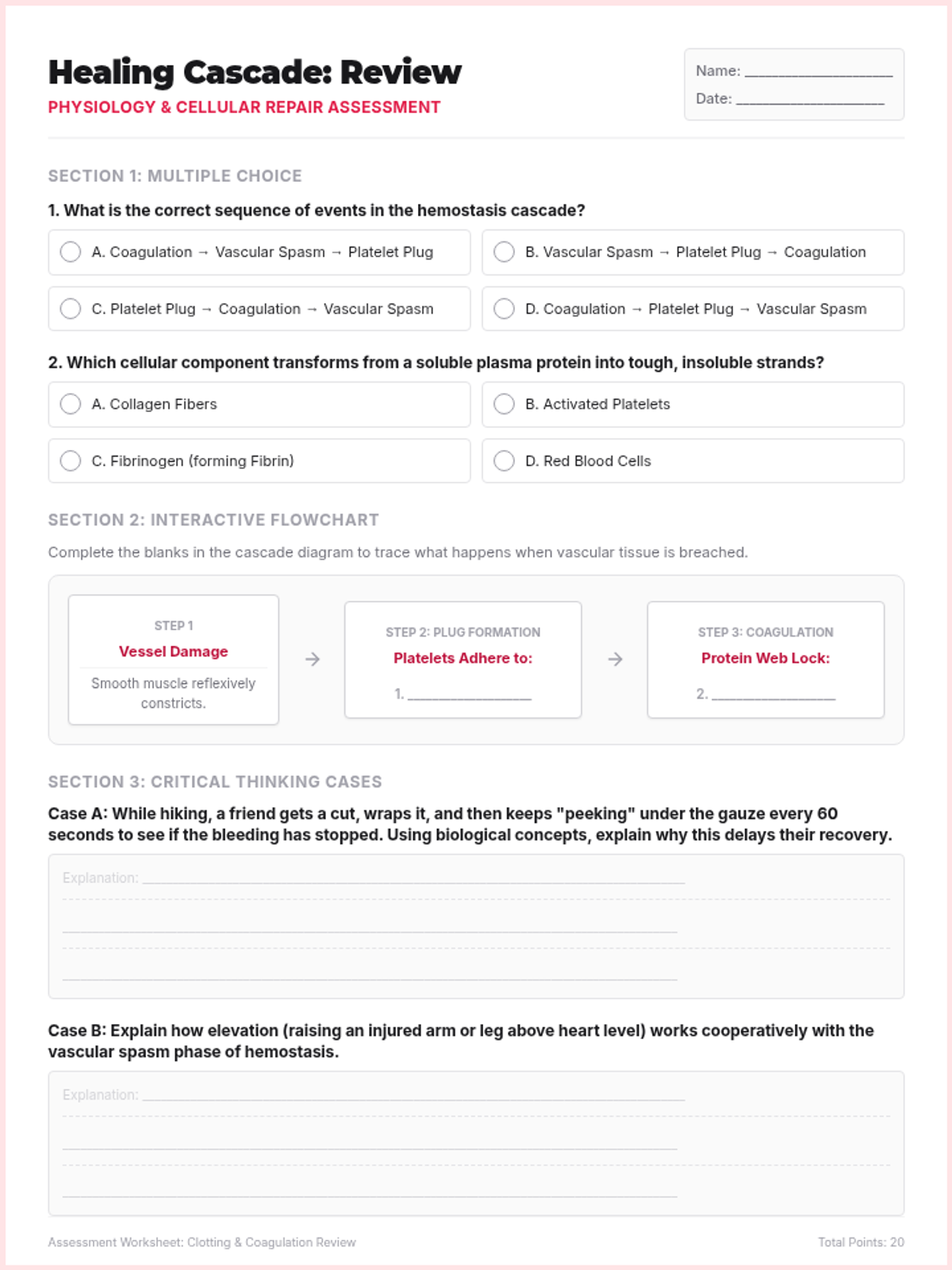
This lesson explores the physiological marvel of wound healing, focusing on platelets, coagulation, and cellular repair. Students learn how the body heals scrapes and cuts and apply this knowledge to practical, outdoors-focused first aid.