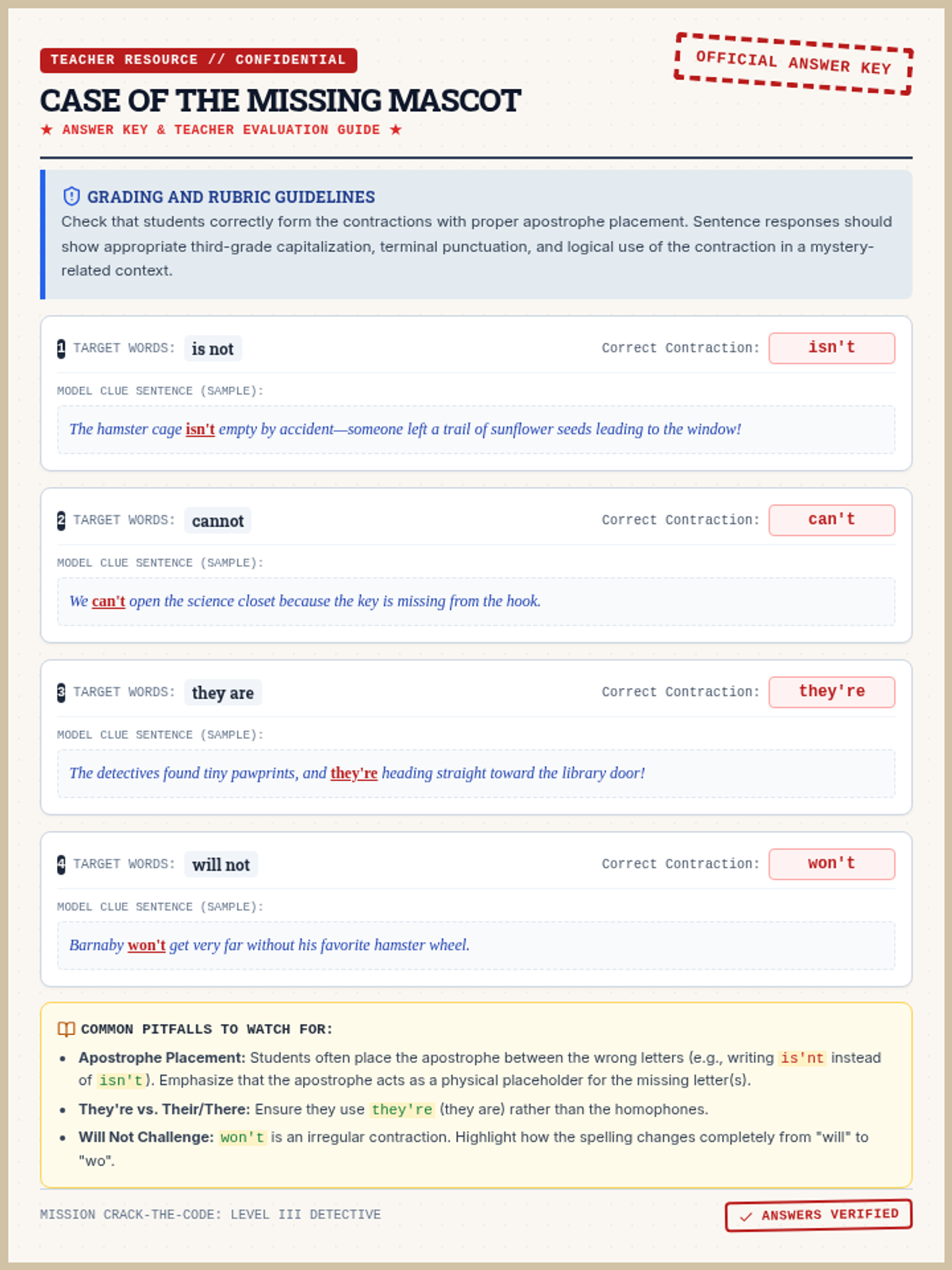
A focused lesson on mastering plural possessive nouns through a detective-themed investigation. Students will learn the rules for placing apostrophes with regular and irregular plural nouns.
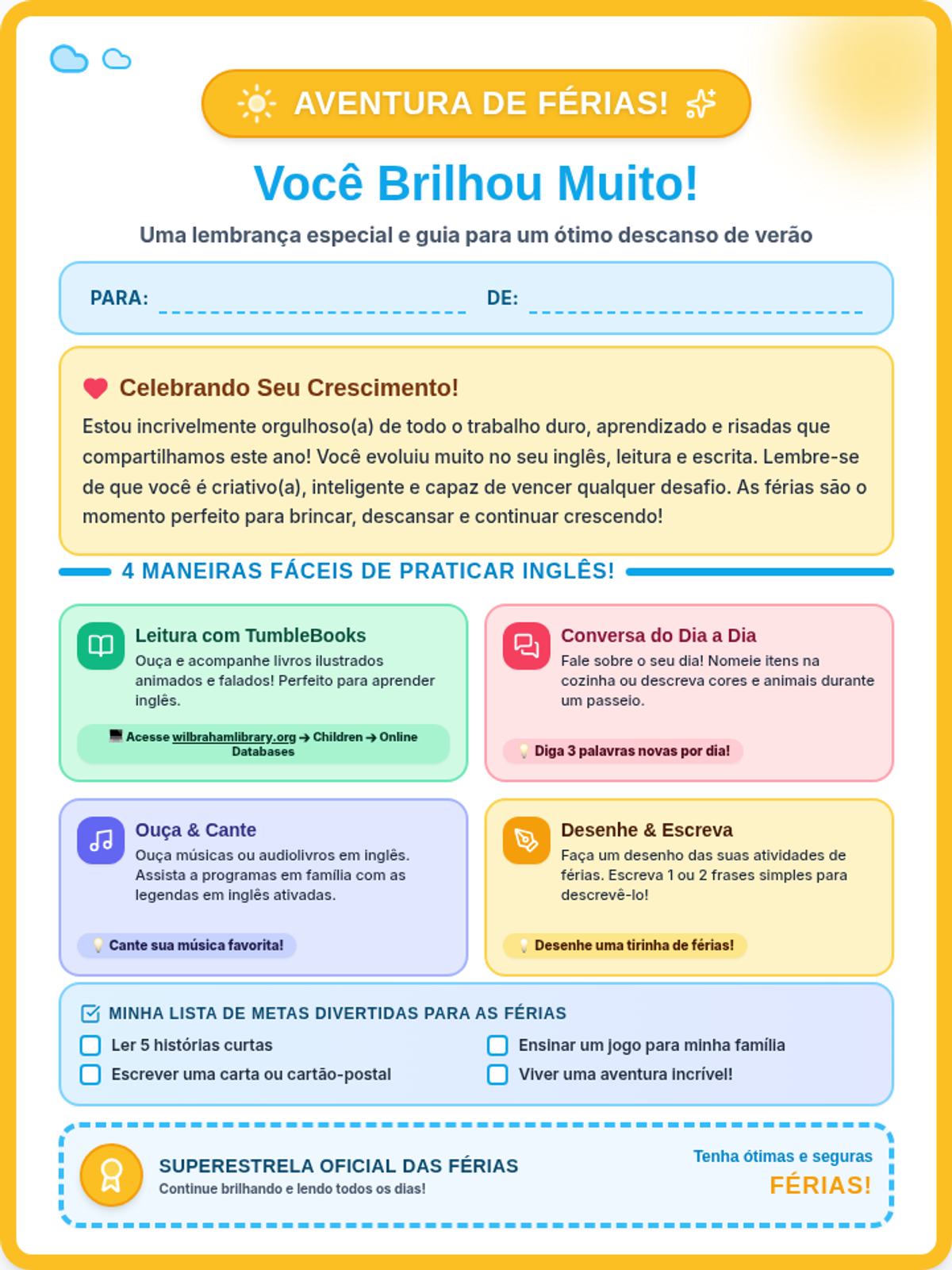
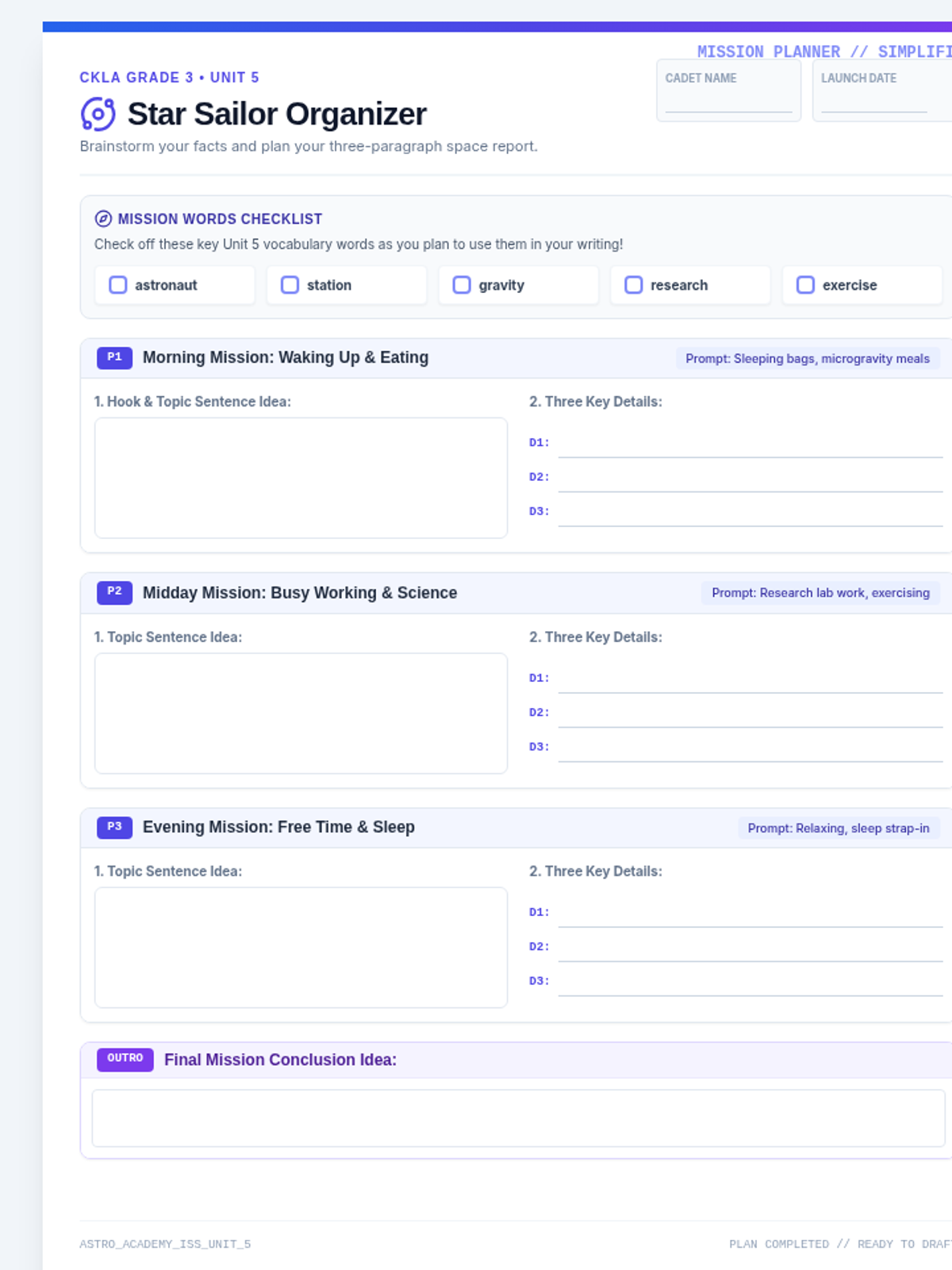
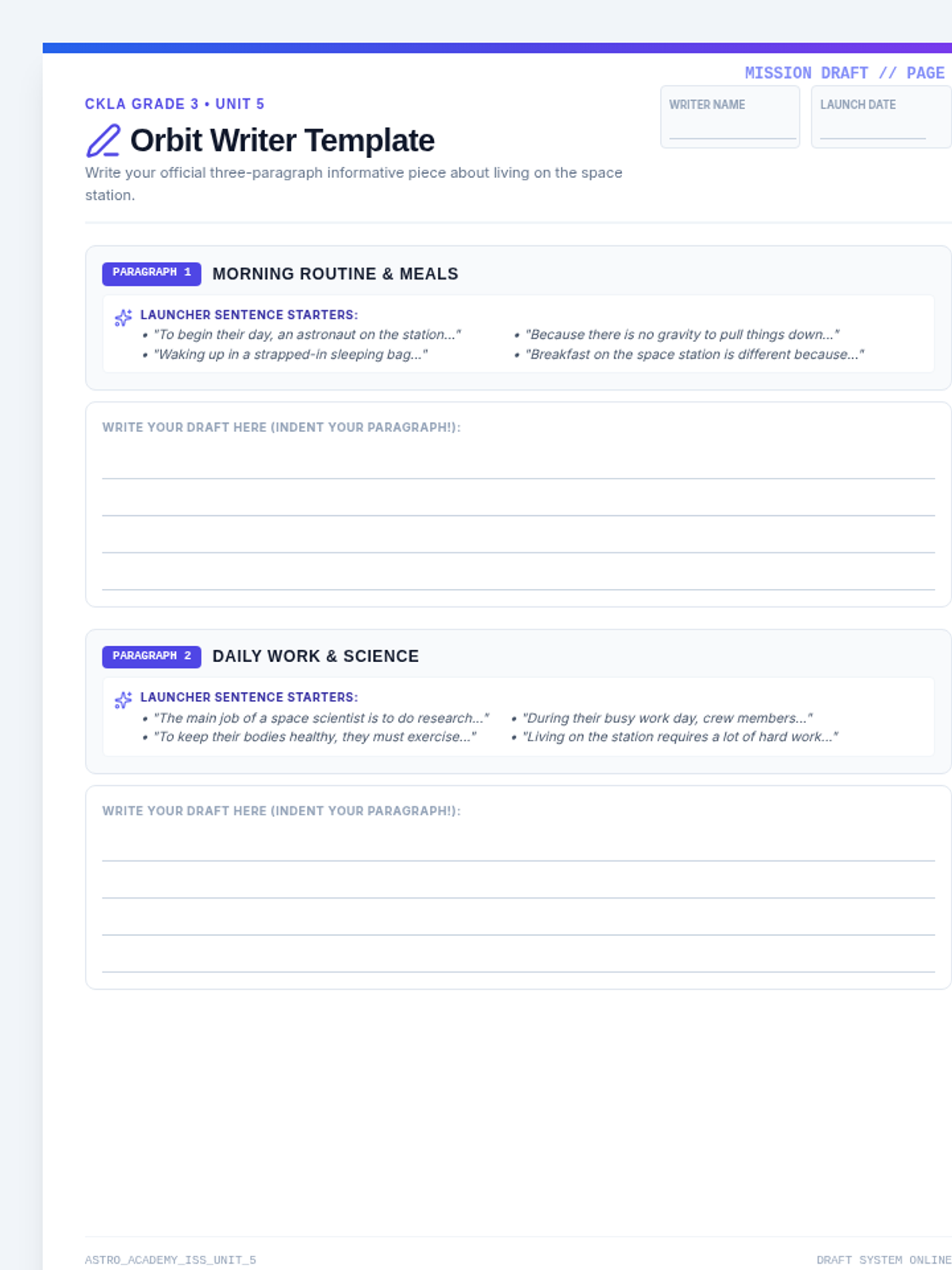
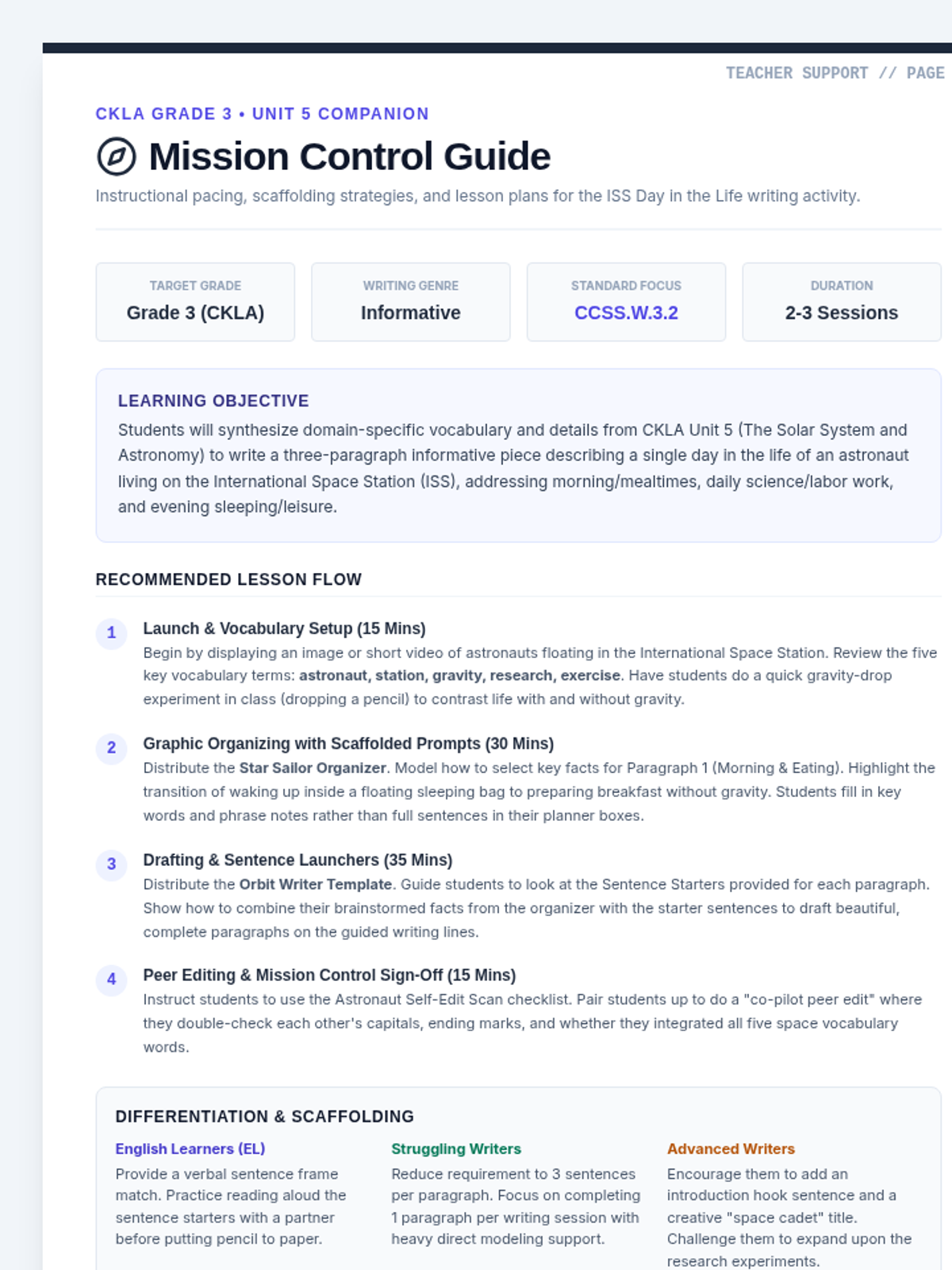
A comprehensive ELA lesson focused on identifying main ideas in space-themed informational texts, explaining scientific procedures, and summarizing fictional narratives about friendship.
Students apply their detective skills to historical texts, focusing on chronological details and key events. Includes history passages, a summative quiz, and a teacher's answer key.
Students learn the 'QAR' (Question Answer Relationship) strategy to find explicit evidence in science-themed expository texts. Includes instructional slides, a set of science passages, and a main idea graphic organizer.
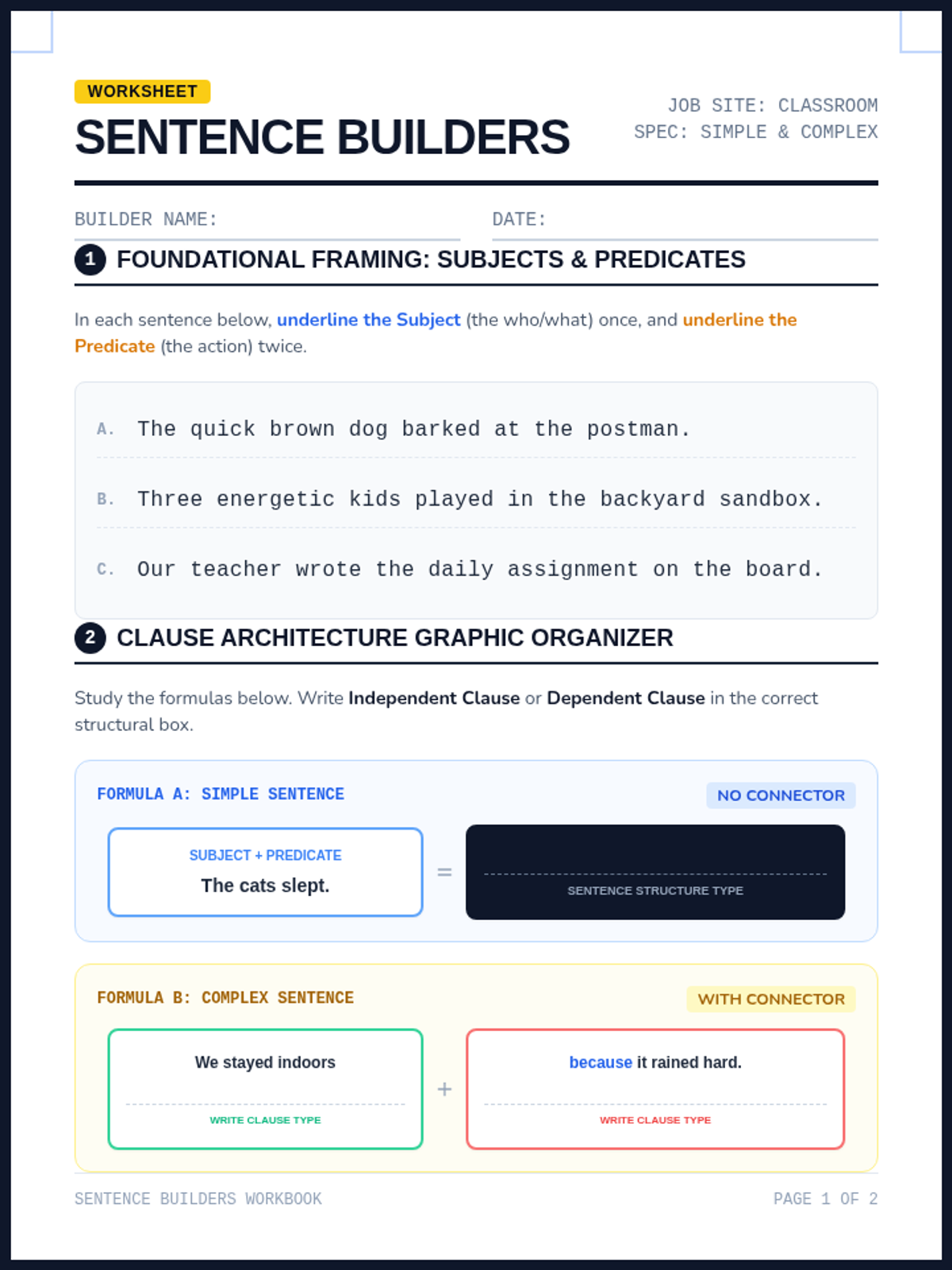
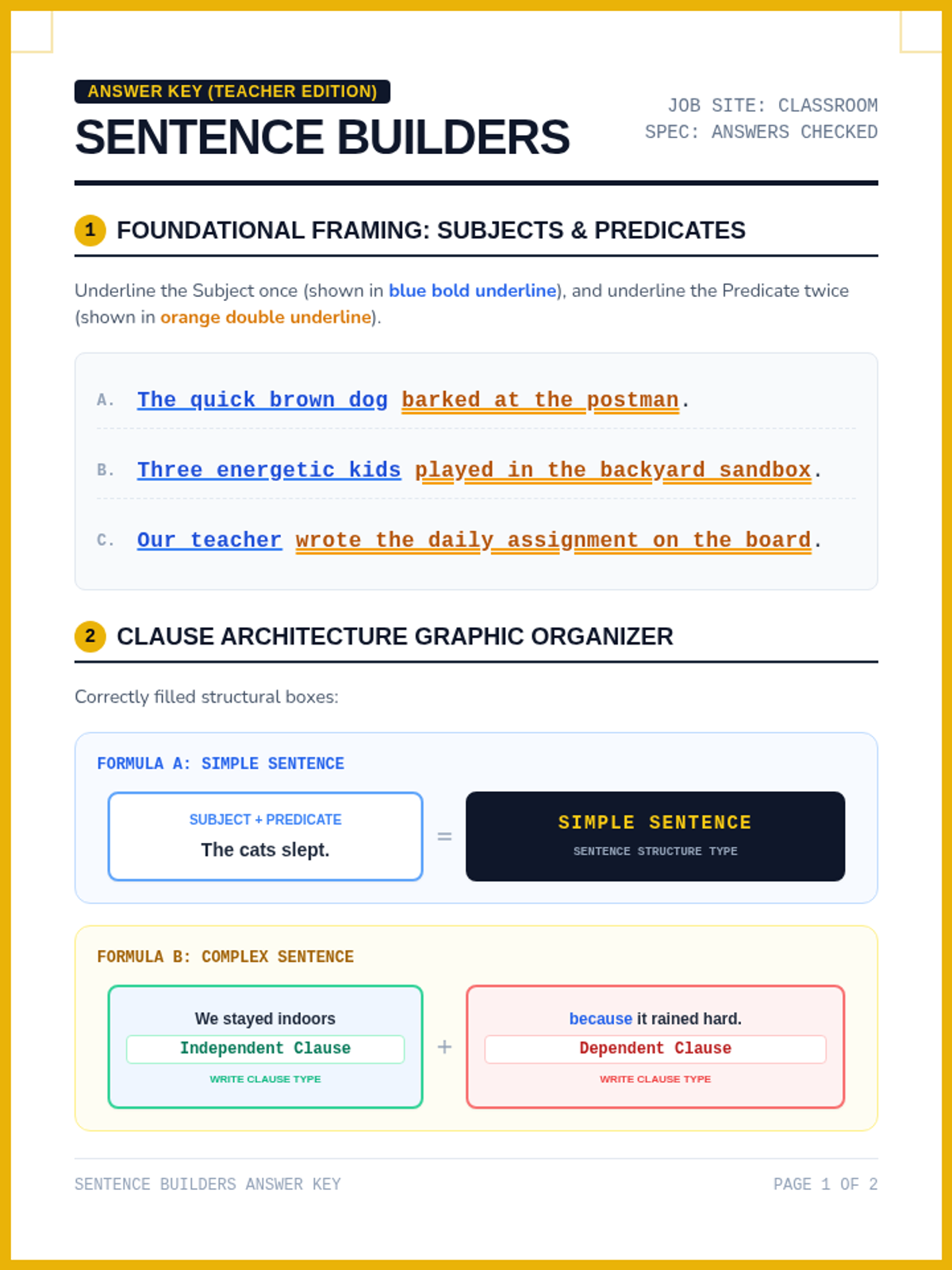
A visual, tactile approach to sentence structure using color-coded "blocks" to represent parts of speech. Students learn to sculpt sentences from basic patterns to complex masterpieces, reducing cognitive load through visual patterns.
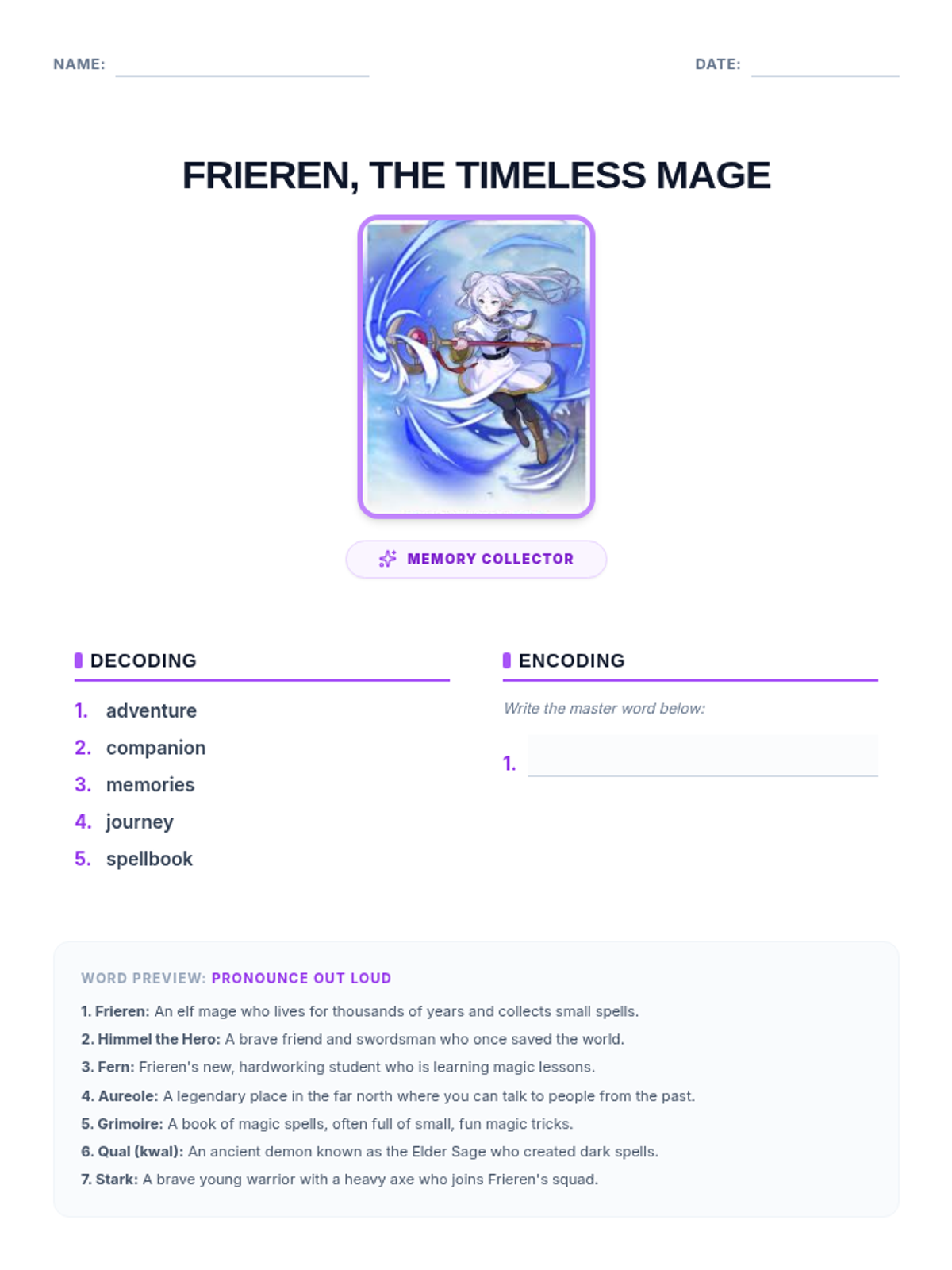
A Language Dive lesson for 3rd Grade focusing on a complex sentence from Peter Pan to analyze character traits and comparisons using "as...as". This guide is designed for new teachers to facilitate a 15-20 minute deep dive into language structure and meaning.
A high-energy, game-based lesson designed to reinforce RI.9 standards. Students engage in a multi-modal 'Double Take' challenge involving a board game, bingo, and a scavenger hunt to analyze how different authors present the same non-fiction topics.
A set of 20 short articles (two for each of the 10 debate topics) to provide students with evidence for their classroom arguments.
A high-energy, tropical-themed review of main idea and supporting details, designed for the day before spring break. Students complete an 'Island Escape' challenge to 'earn' their break.
A lesson focused on distinguishing between main ideas in informational paragraphs and central themes in short fictional stories. Students will practice identifying key details and synthesizing them into a core message.
A multi-day writing project where 2nd and 3rd-grade students identify a personal hero, brainstorm their qualities, plan their narrative, and produce a final written tribute. The lesson is broken down into 15-20 minute daily segments covering brainstorming, planning, drafting, and publishing.
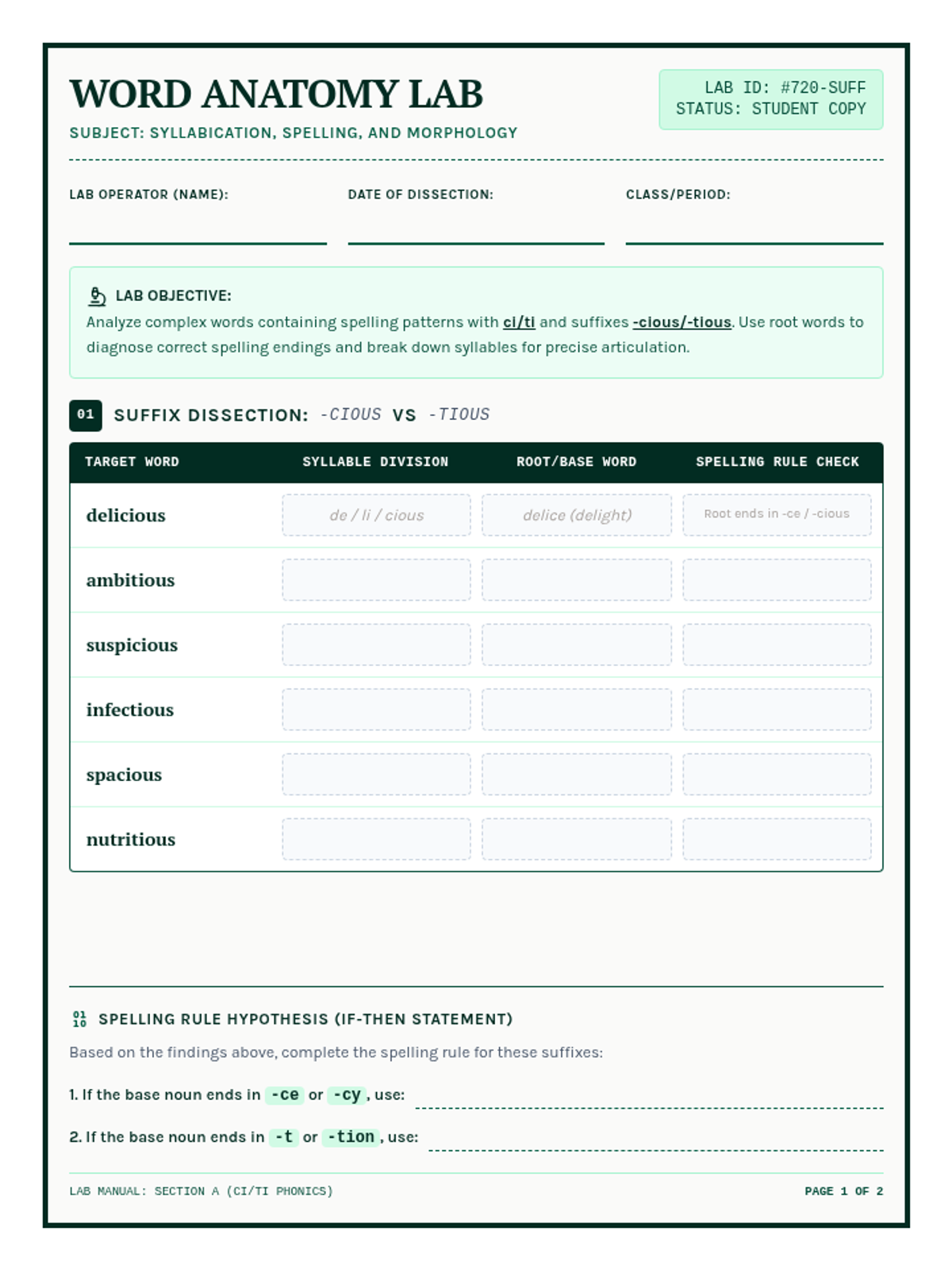
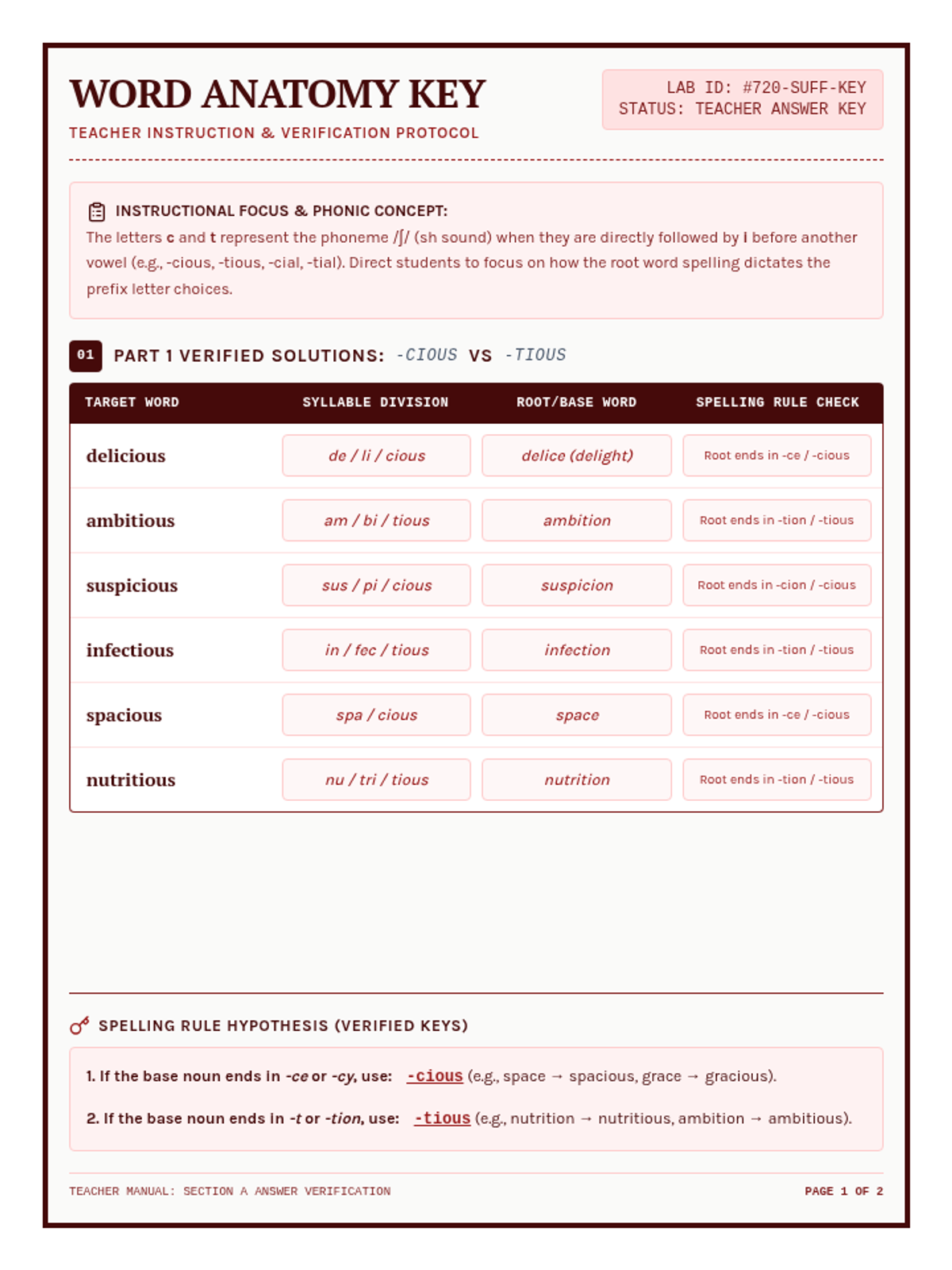
A comprehensive lesson focusing on common suffixes, their meanings, and application through specific vocabulary and descriptive reading passages about contemporary figures.
A lesson on the past progressive tense (was/were + verb-ing) focused on describing ongoing and interrupted actions in the past through a detective mystery theme.
A scaffolded introductory lesson on using common prefixes (un-, re-, dis-, mis-) to decode word meanings, featuring hands-on sorting activities and visual organizers.
A 30-45 minute lesson focused on decoding multisyllabic words using morphology (prefixes, suffixes, and root words). Students will learn to 'mine' for meaning by breaking words into their component parts.
A lesson focused on determining the main idea and identifying supporting key details using a science passage about animal architects. Students will learn to distinguish between the big picture and the specific facts that support it.
A comprehensive 30-45 minute lesson on the present progressive tense, focusing on forming 'am/is/are + verb-ing' to describe actions happening in the immediate moment.
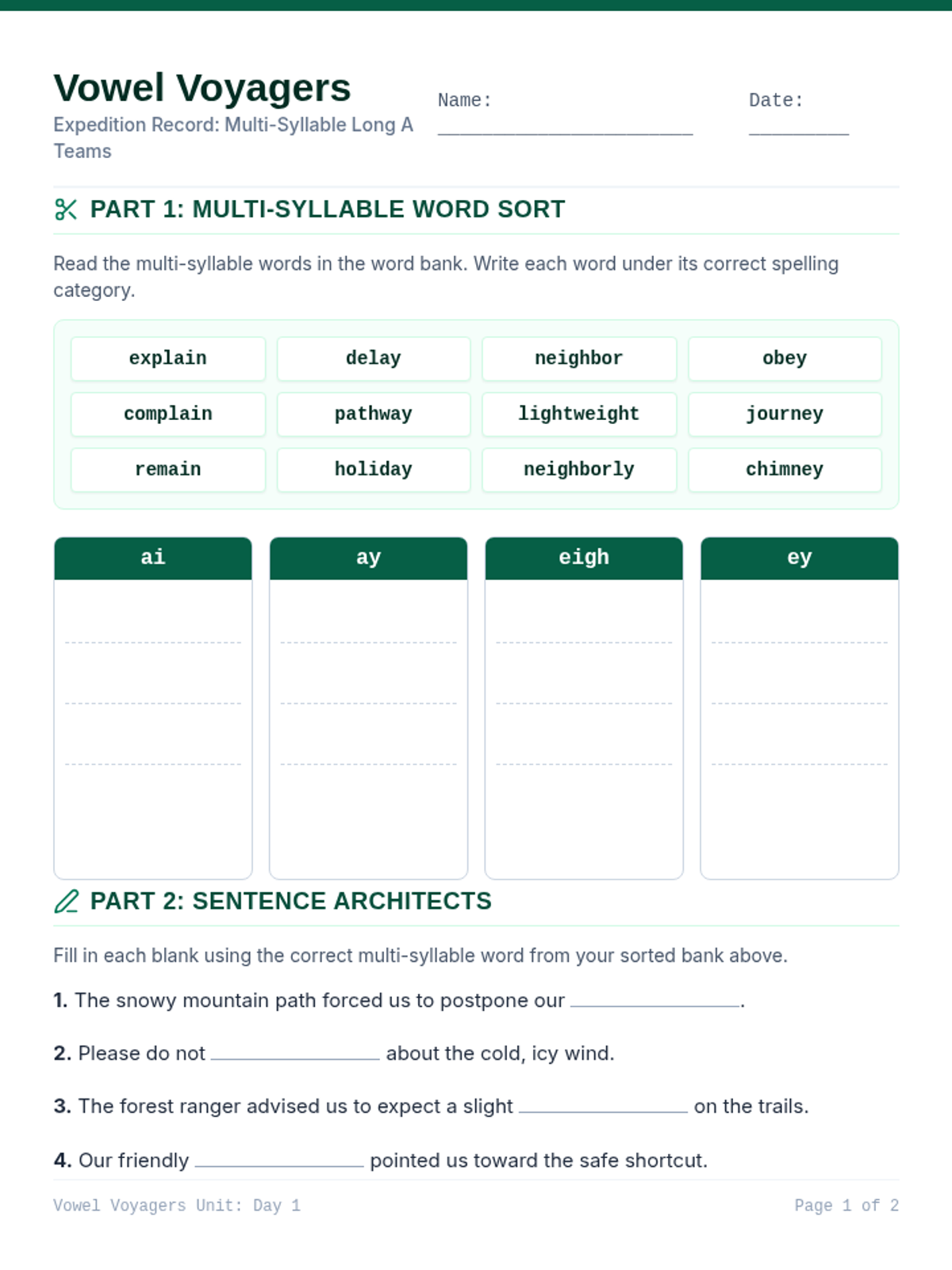
A phonics-focused lesson designed to help students decode multisyllabic words containing complex vowel teams such as ai, ee, oa, and ea through a step-by-step decoding strategy.
A beginner-friendly lesson on using the present perfect tense to talk about past experiences without a specific time. Includes direct instruction on the has/have + past participle formula and interactive matching activities.
A lesson focused on writing objective summaries of non-fiction texts by distinguishing between facts and personal opinions using an animal-themed article.
A lesson introducing interjections as expressive 'bursts' of emotion that stand alone from the rest of the sentence. Students will learn to identify common interjections and use them correctly with appropriate punctuation in a comic-book-inspired format.
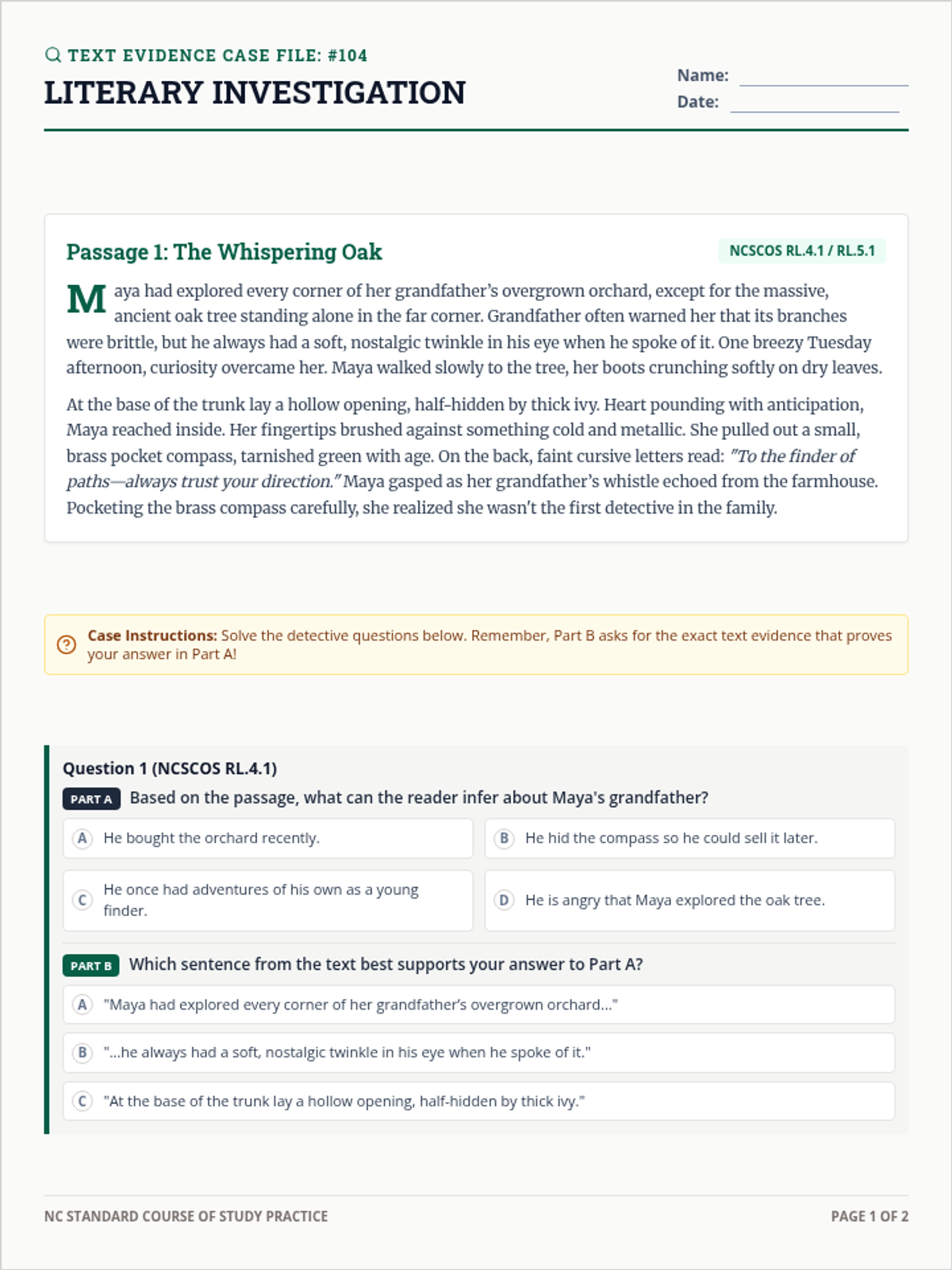
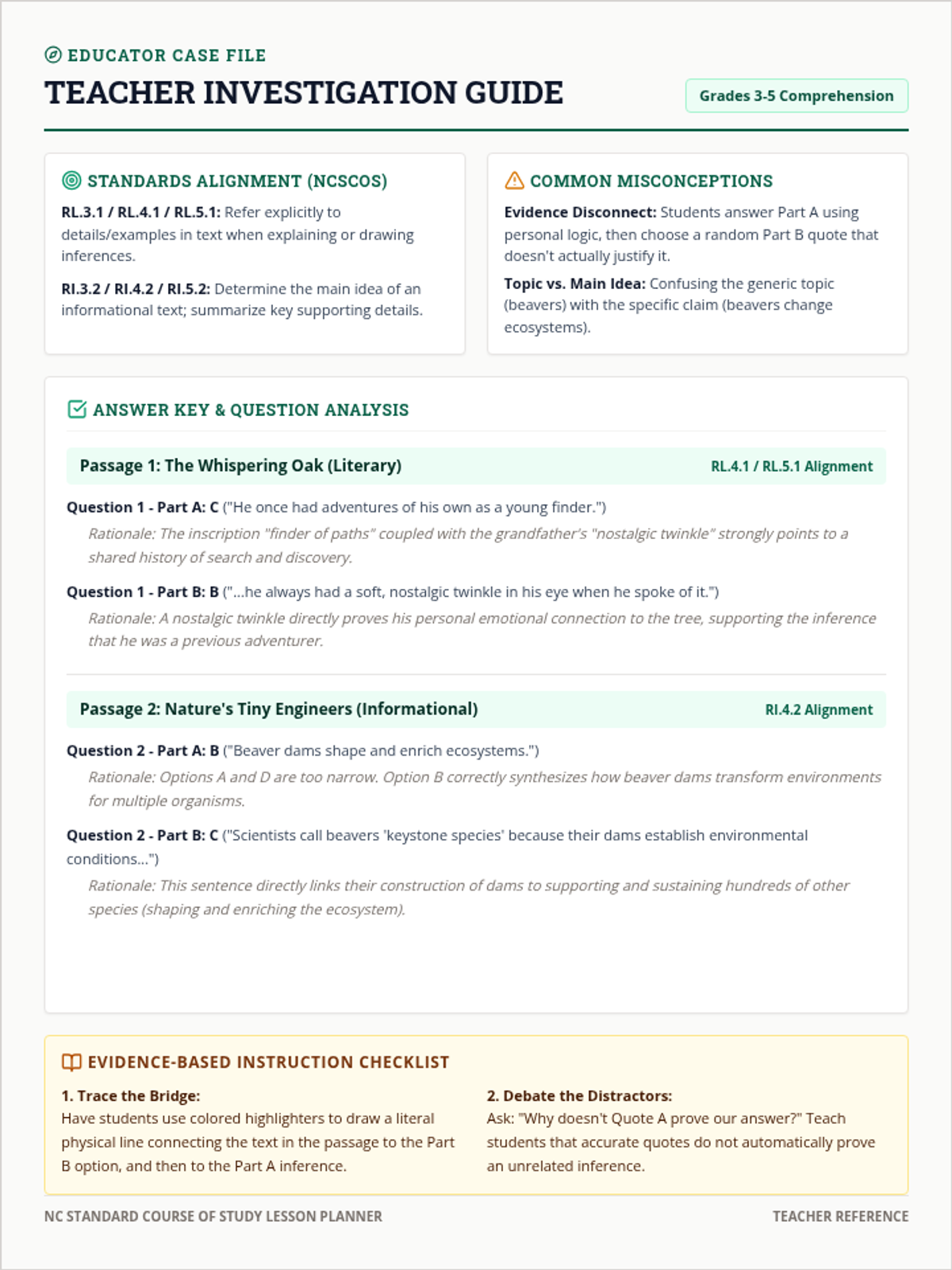
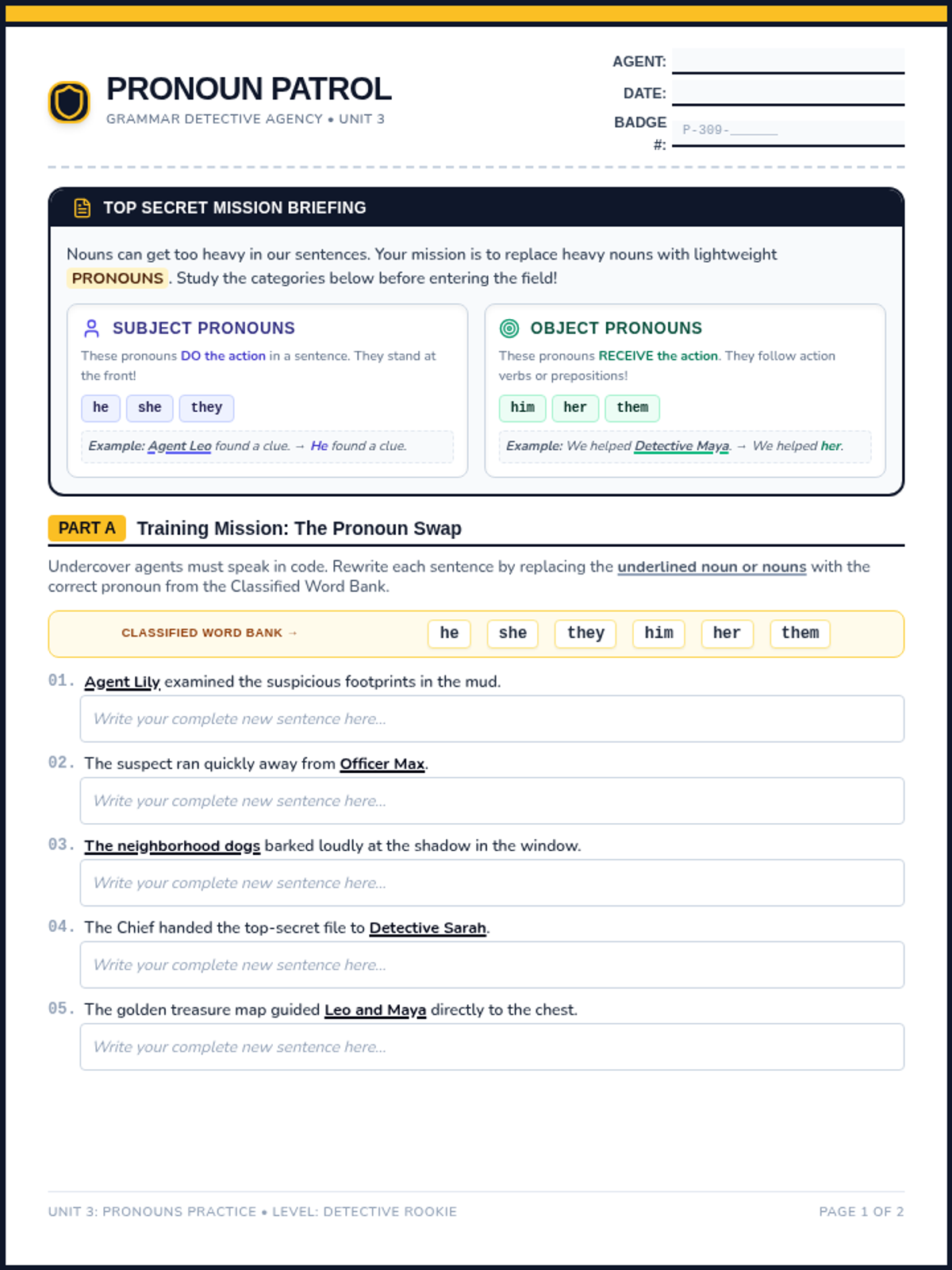
A lesson focused on teaching students how to infer character traits and feelings from short fictional scenarios. Includes a themed detective worksheet and an answer key.
A lesson focused on constructing complex sentences using subordinating conjunctions, featuring architectural-themed scaffolds and sentence frames for Special Education support.
A 30-minute introductory lesson on identifying and pronouncing the schwa sound in 2-3 syllable words, focusing on its 'lazy' nature in unstressed syllables.
A detective-themed lesson teaching 3rd-5th grade students how to use reading comprehension strategies like predicting, questioning, summarizing, and citing evidence to 'crack the case' of any text.
A foundational lesson on identifying and using similes, metaphors, and personification to enhance writing and descriptive language.
An introductory lesson on identifying Author's Purpose (Persuade, Inform, Entertain) and uncovering the deeper Author's Message through short text analysis.
A lesson focused on common word usage errors, homophones, and frequently confused words for 4th-grade writers. Students practice identifying and using the correct words in context through detective-themed scenarios.
A comprehension lesson focused on identifying character emotions and their causes through the story of Luis at summer camp. Students analyze how sharing personal culture can bridge the gap between home and new environments.
Cette formation pour les professeurs de TPS-PS vise à professionnaliser la conception des "traces" d'activités (cahiers de vie, affichages). En s'appuyant sur les photos de classe et les guides 2025, les enseignants apprennent à rendre les apprentissages explicites pour les élèves et les familles.
Cette formation vise à outiller les conseillers pédagogiques pour l'analyse et l'exploitation de ressources diverses (vidéos, manuels, guides) dans le cadre de la formation continue des professeurs des écoles en français, conformément aux orientations stratégiques nationales.
Cette leçon vise à introduire un projet d'écriture authentique en Grande Section : rédiger un message aux parents pour annoncer une sortie scolaire. Elle s'appuie sur l'observation de messages existants pour définir des critères de réussite et initier la planification selon les programmes 2025.