A 40-minute focused lesson on restating the question when writing, using the 'Echo' method to help students provide complete, contextual answers.
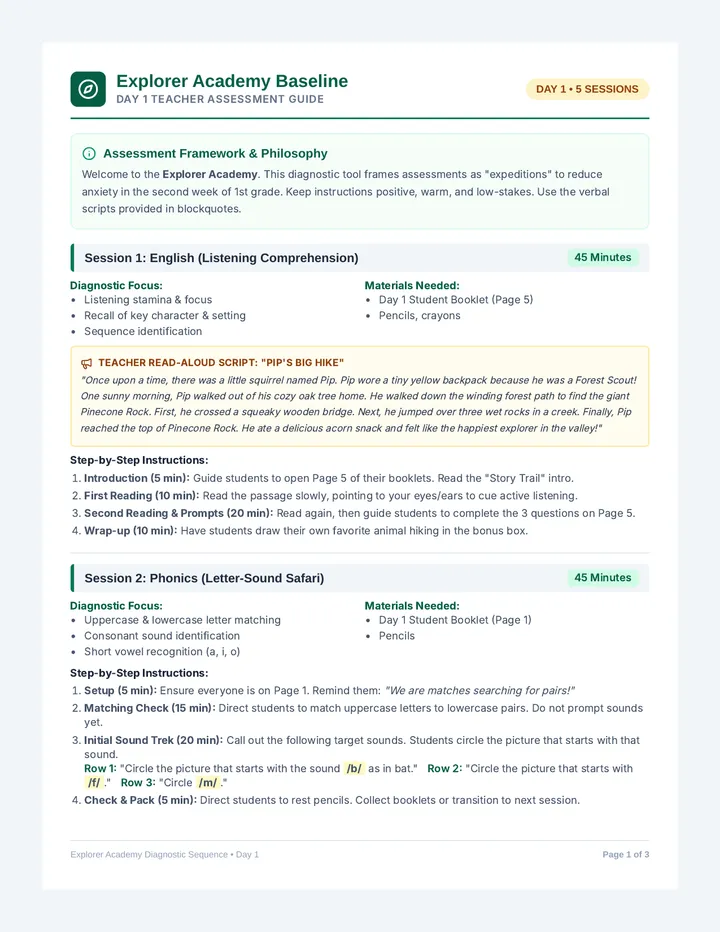
A comprehensive diagnostic assessment sequence designed for the second week of first grade. Spanning two days, it evaluates Kindergarten readiness and first-grade baseline performance across English, Phonics, Writing, Math, and Science in structured 45-minute sessions.
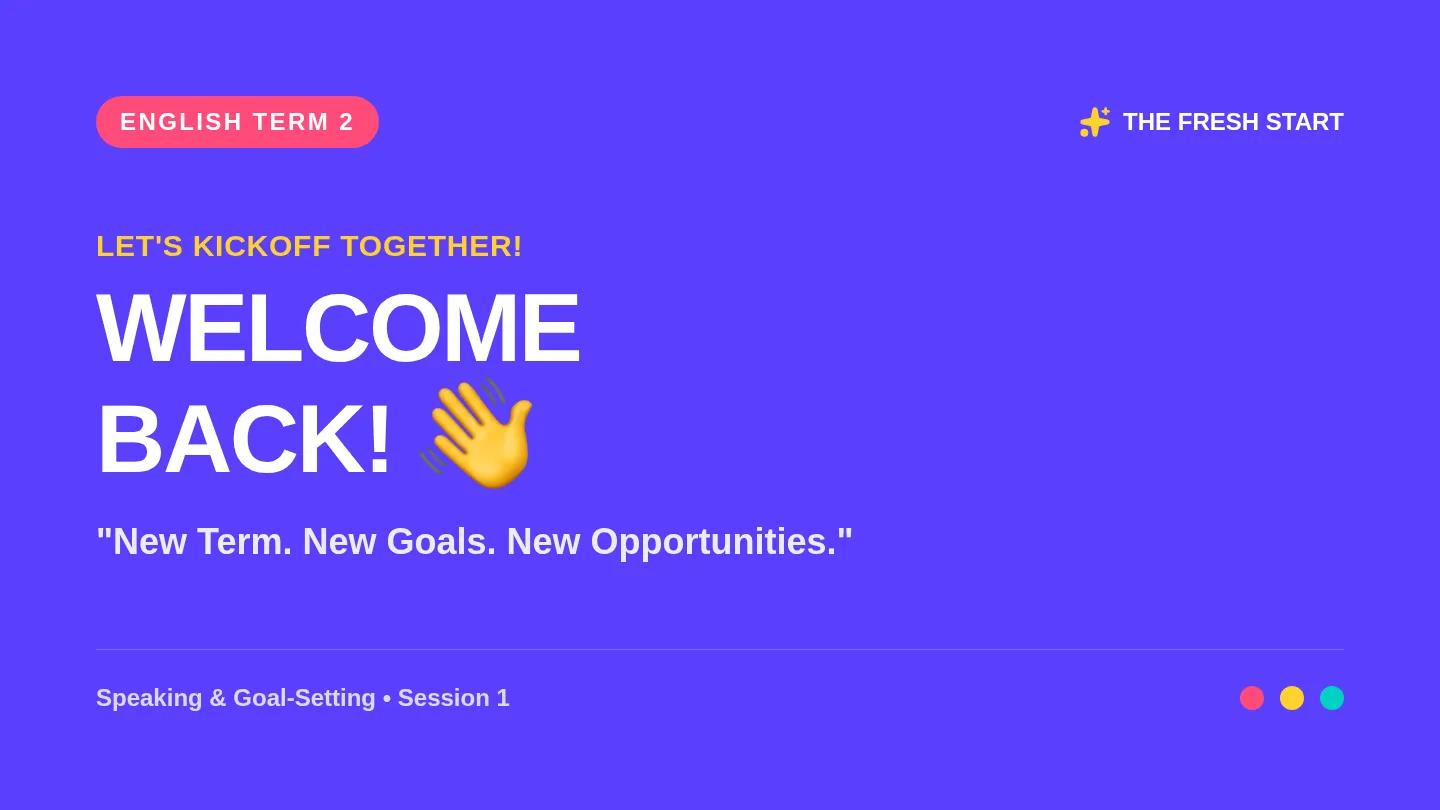
A welcoming, high-energy introductory lesson for English Term 2. Students reflect on their holiday experiences, practice active listening and speaking in a collaborative environment, and set personalized, actionable SMART goals for the new term.
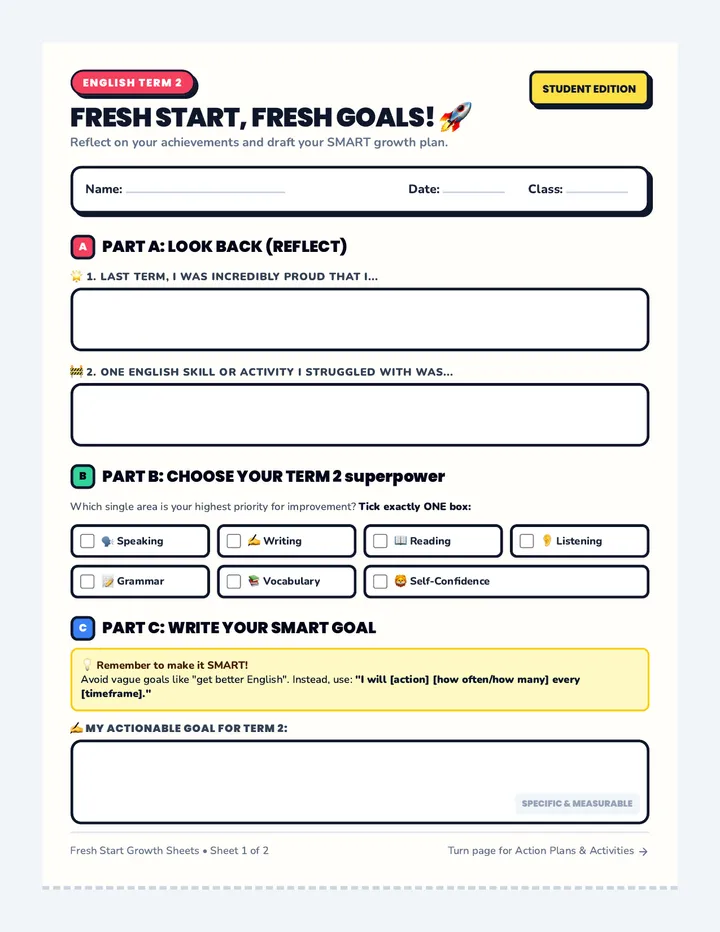
A beautifully formatted, print-ready, 2-page student goal-setting worksheet. Contains look-back reflections, selectable superpower target skill, a structured SMART goal drafting space, a 'Find Someone Who' speaking grid, and a tear-off exit ticket.
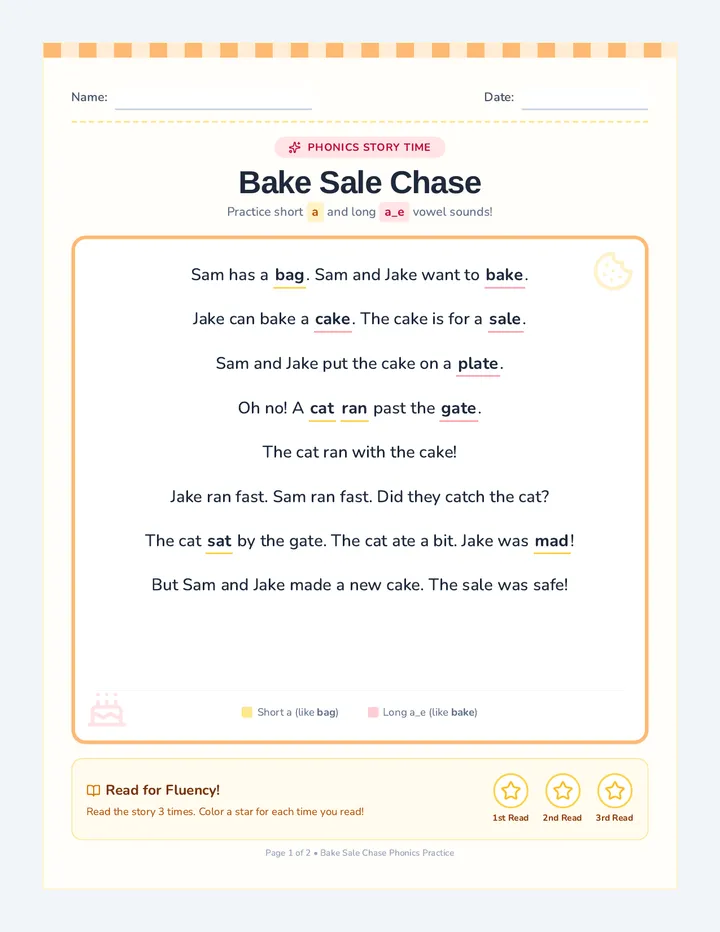
An engaging introductory phonics unit teaching first-grade students to identify, read, and write short and long vowel sounds with silent magic 'e'.
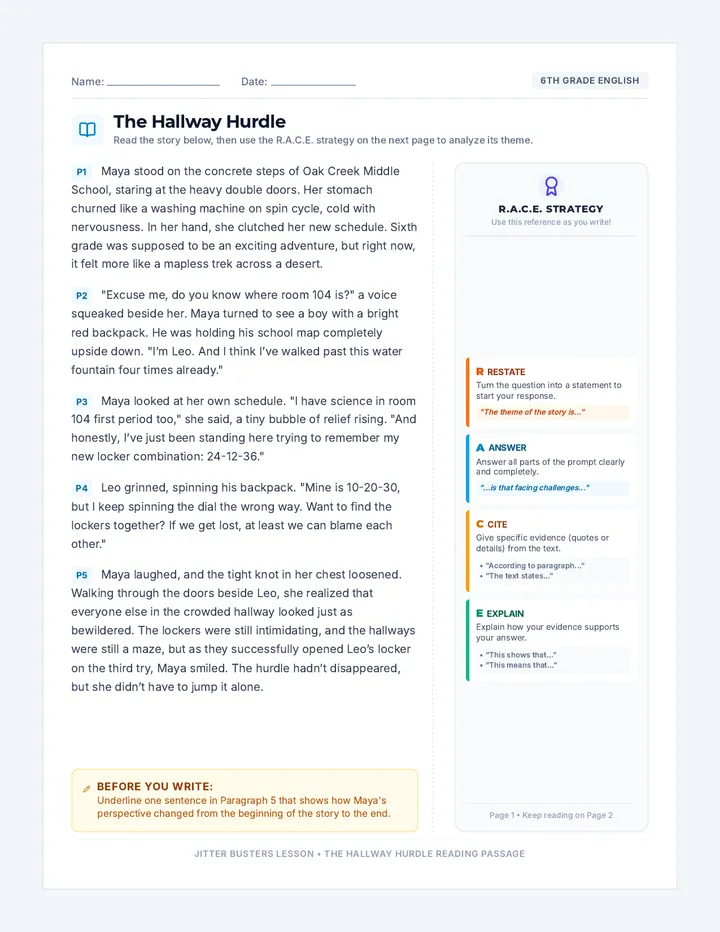
A lesson focusing on identifying the central theme of a text about first-day jitters and using the RACE writing strategy to formulate structured, text-evidence-supported responses.
A minimalist yet highly colorful, high-contrast slide presentation for English Term 2 Welcome Back lesson. Designed with solid flat color blocks, generous breathing room, giant typography, and no text smaller than 24px for maximum readability.
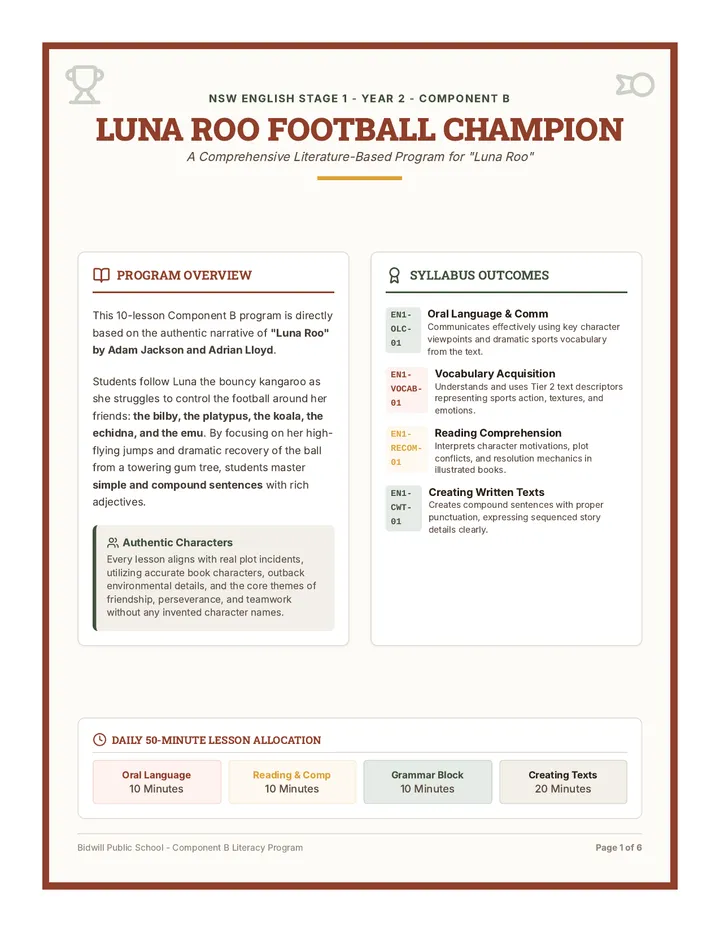
A 10-lesson Stage 1 Year 2 English Component B program based on the book 'Luna Roo' by Adam Jackson and Adrian Lloyd. The sequence explicitly teaches simple and compound sentences enriched with descriptive adjectives focused on Luna's outback soccer matches, animal teammates, and dusty playing fields.
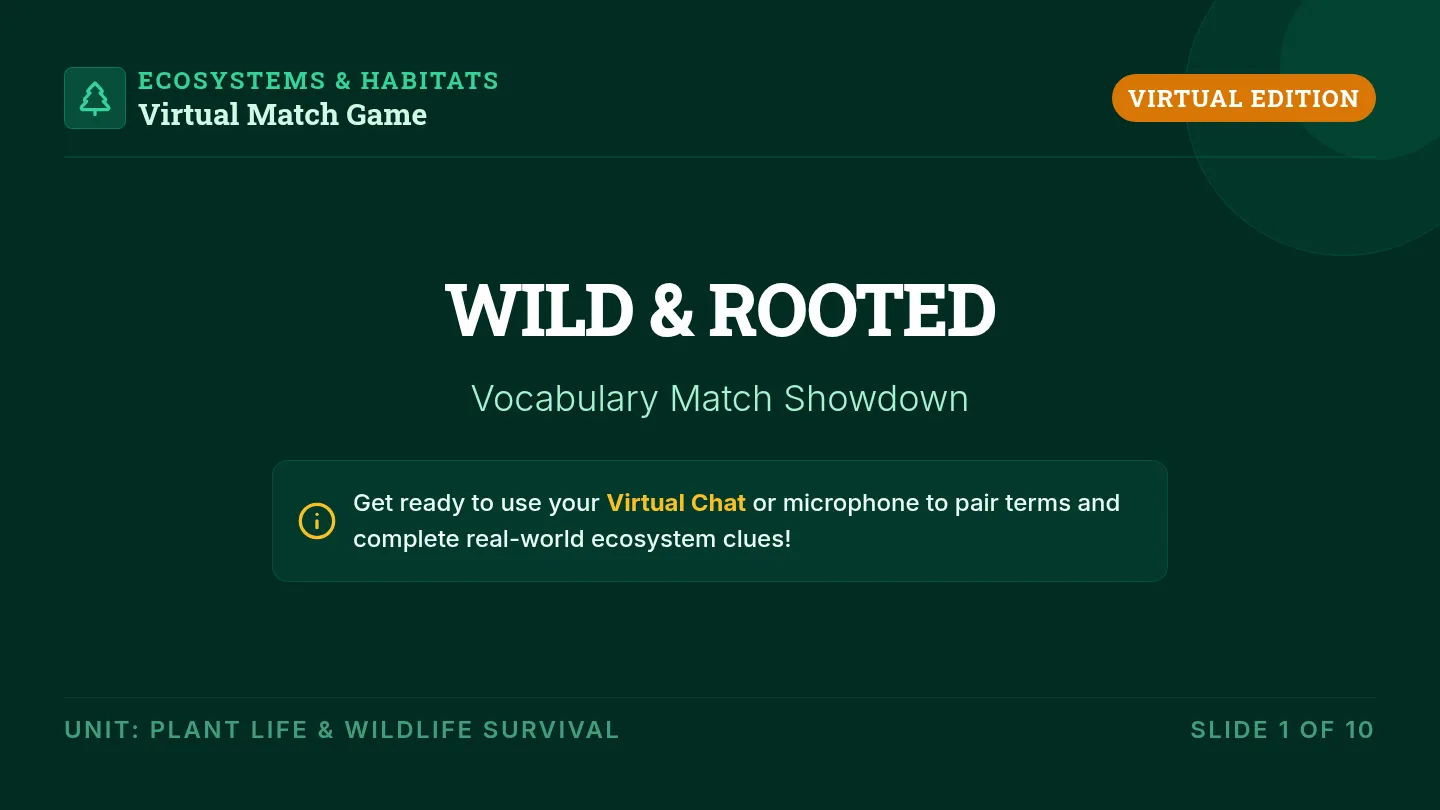
A highly engaging vocabulary lesson where students master key ecosystem and habitat terms through interactive pairing games and hands-on sentence completion.
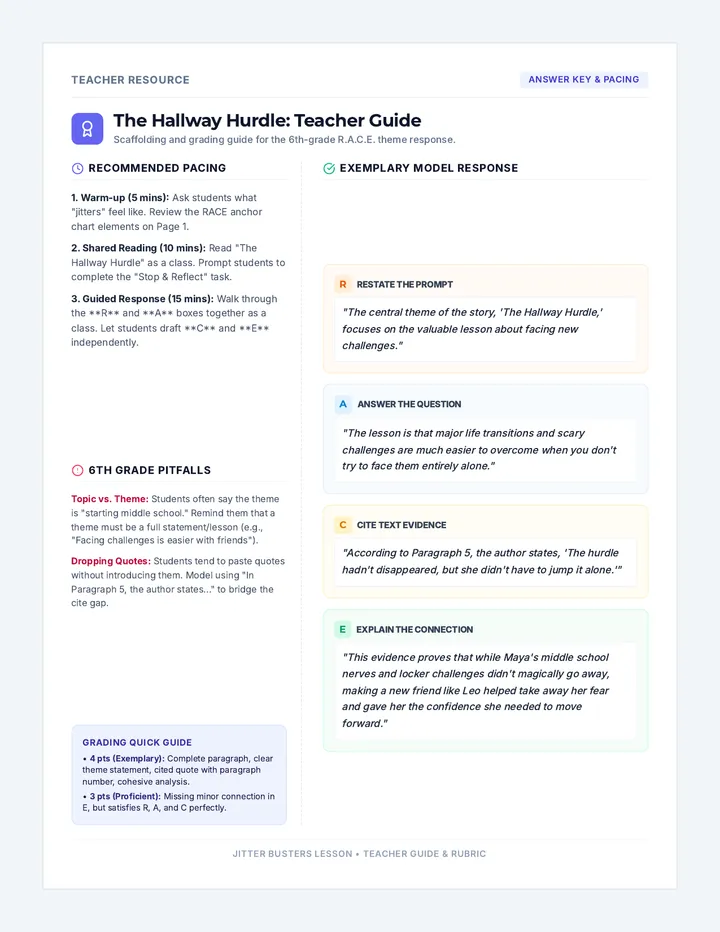
A comprehensive one-page teacher guide and answer key for 'The Hallway Hurdle' worksheet, featuring model RACE responses, a grading rubric, and common student misconceptions.
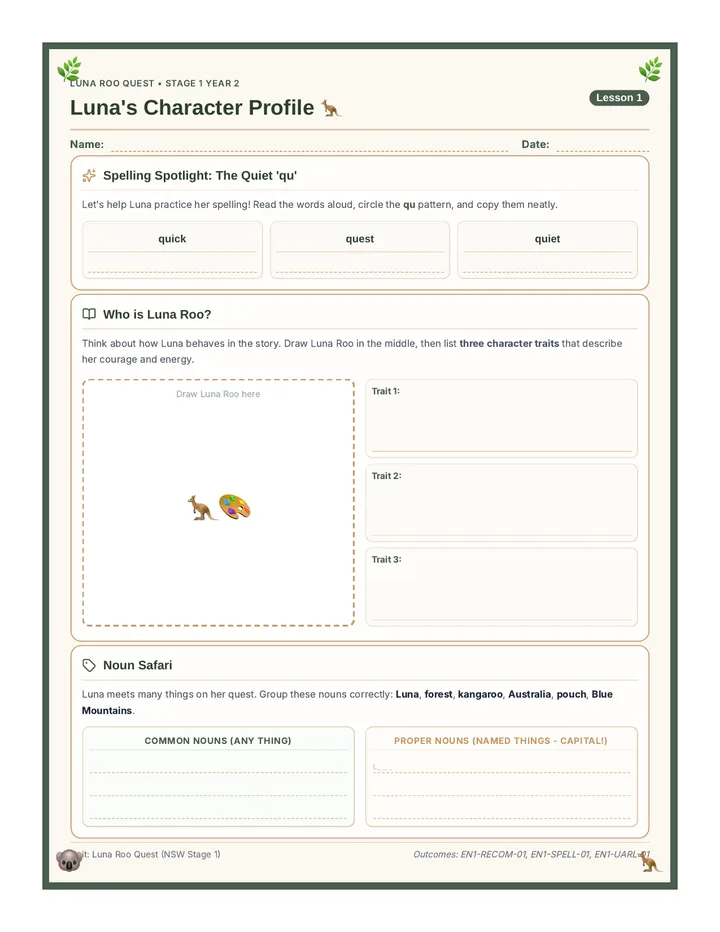
A 10-lesson English unit for NSW Year 2 Stage 1, focusing on the book 'Luna Roo'. Emphasises Component B: literature response, grammar, vocabulary, and text creation, integrating the spelling focus 'qu'.
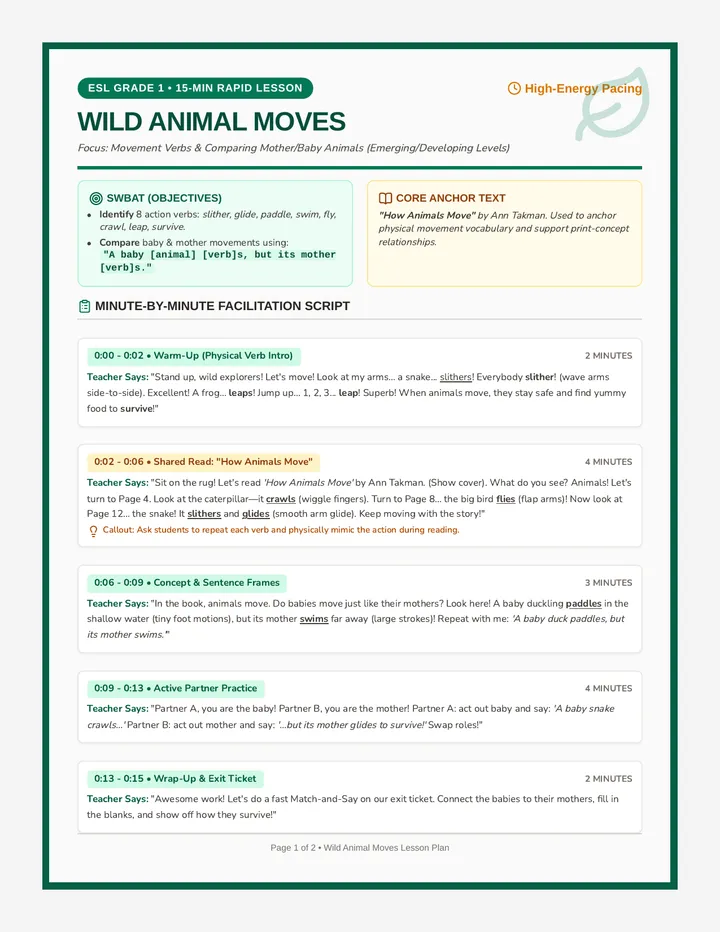
A rapid-fire, high-energy 15-minute ESL lesson for 1st graders focusing on animal movement verbs (slither, glide, paddle, swim, fly, crawl, leap, survive) and comparing baby animals to their mothers using scaffolded sentence frames.
A comprehensive three-page student worksheet featuring 'The Hallway Hurdle' short story, a colorful mini-anchor chart based on the RACE writing strategy, step-by-step lined writing boxes on page 2, and a customizable final draft page on page 3 with an extra-large RACE sidebar guide, a custom question box, and a situation snapshot.