Culminates in the analysis of the novel's resolution and Winnie's ultimate choice regarding the spring water.
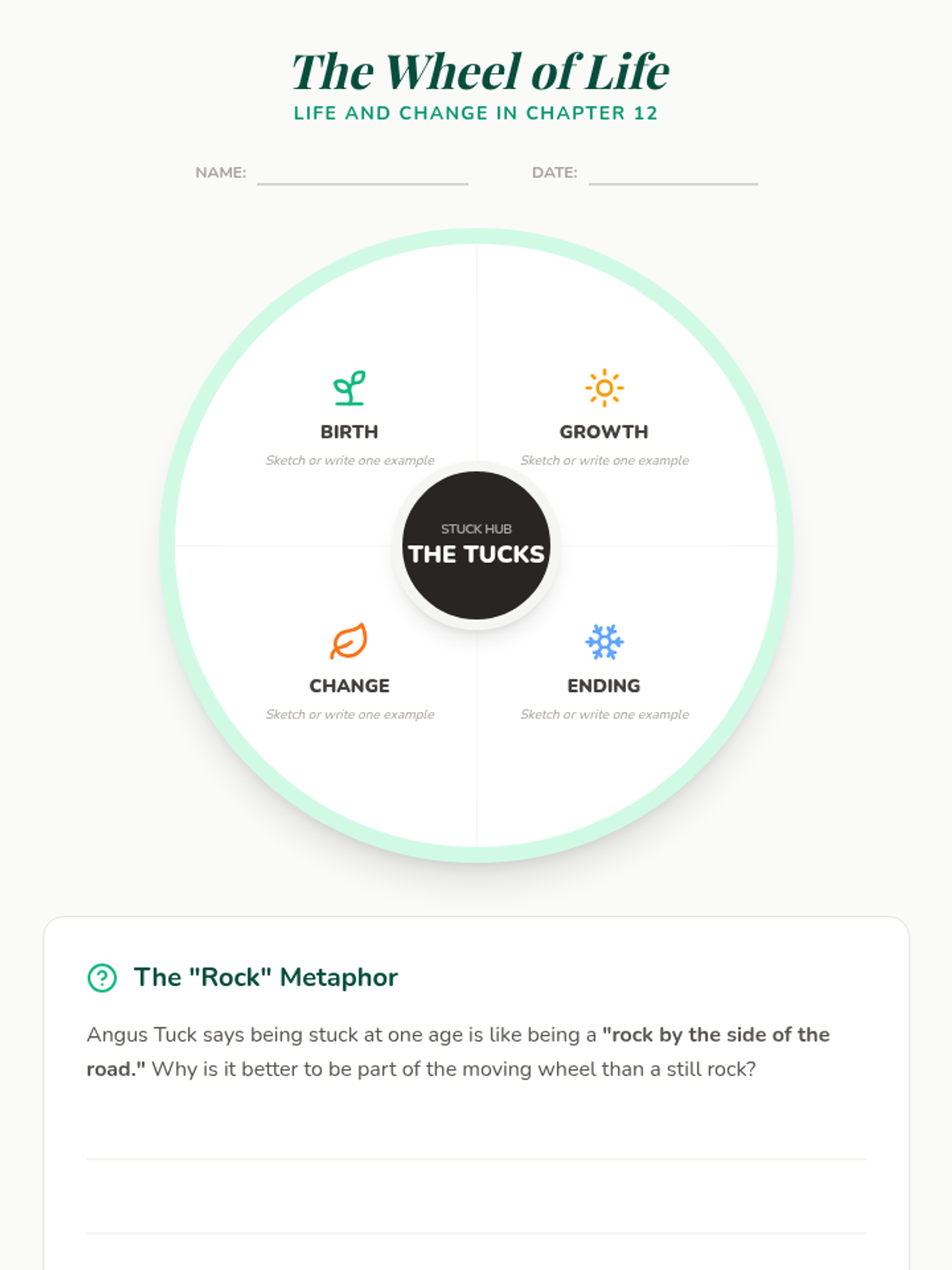
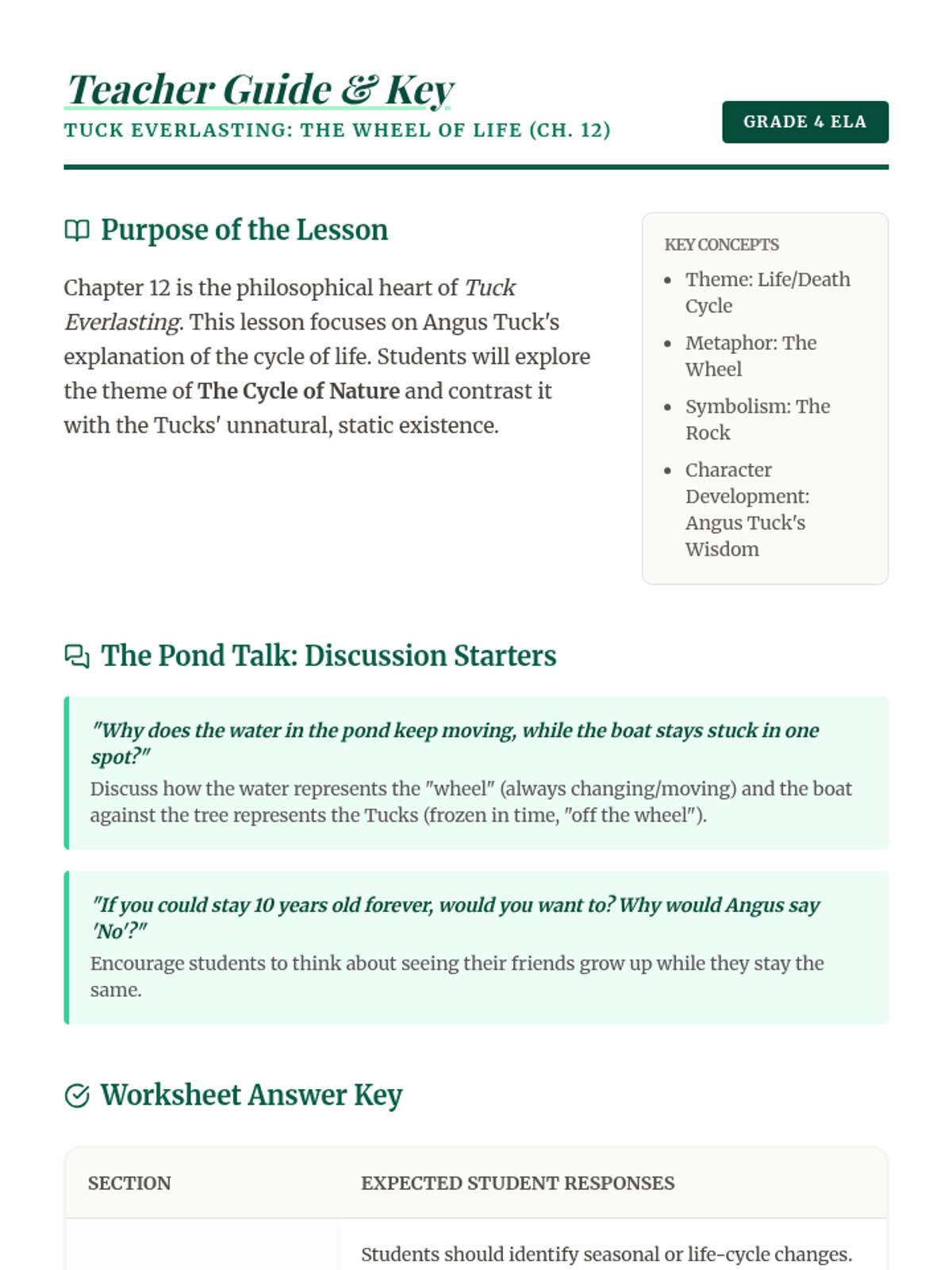
A deep dive into Chapter 12 of Tuck Everlasting, focusing on the metaphor of the Wheel of Life and the importance of the natural cycle of change.
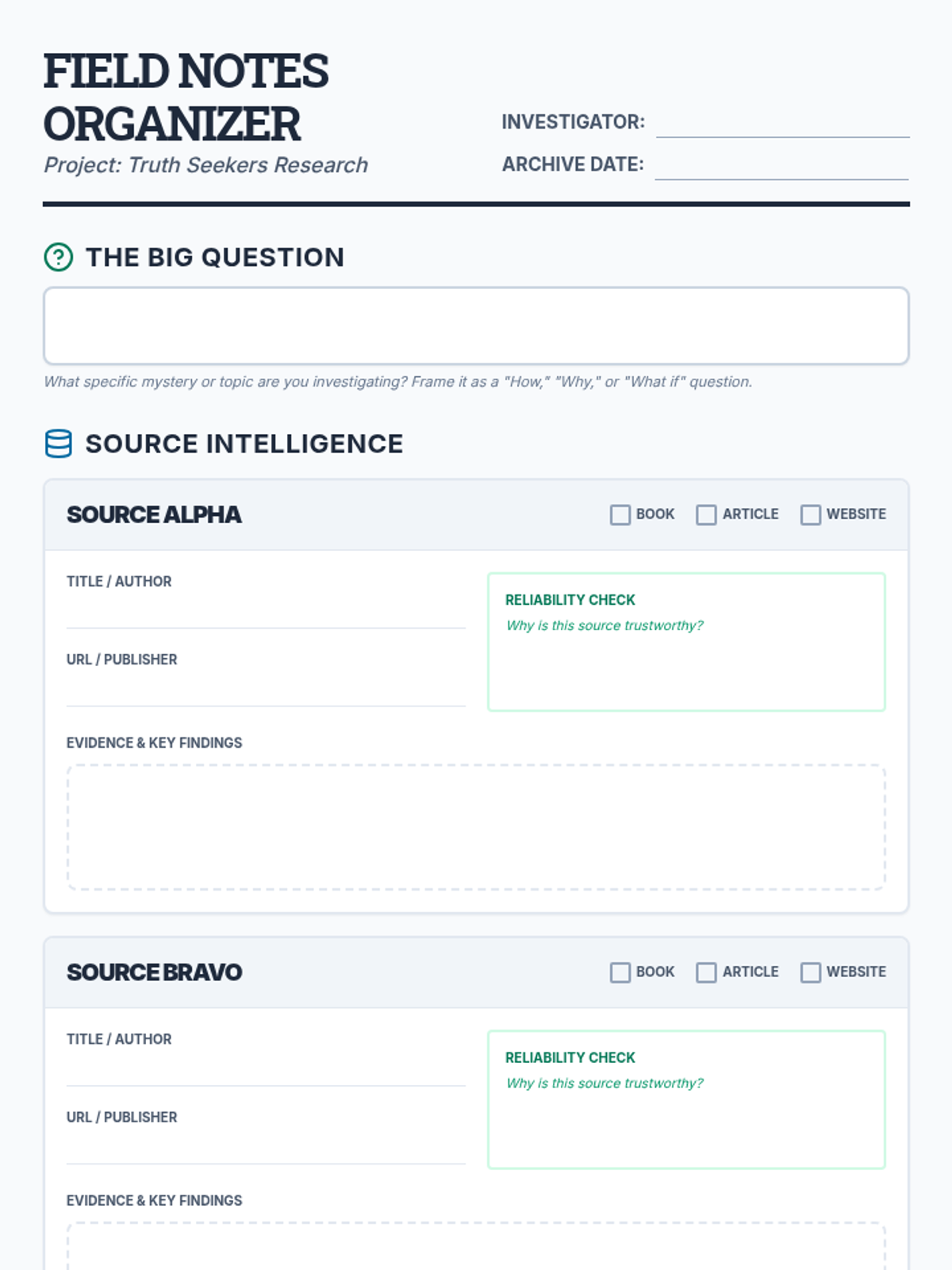
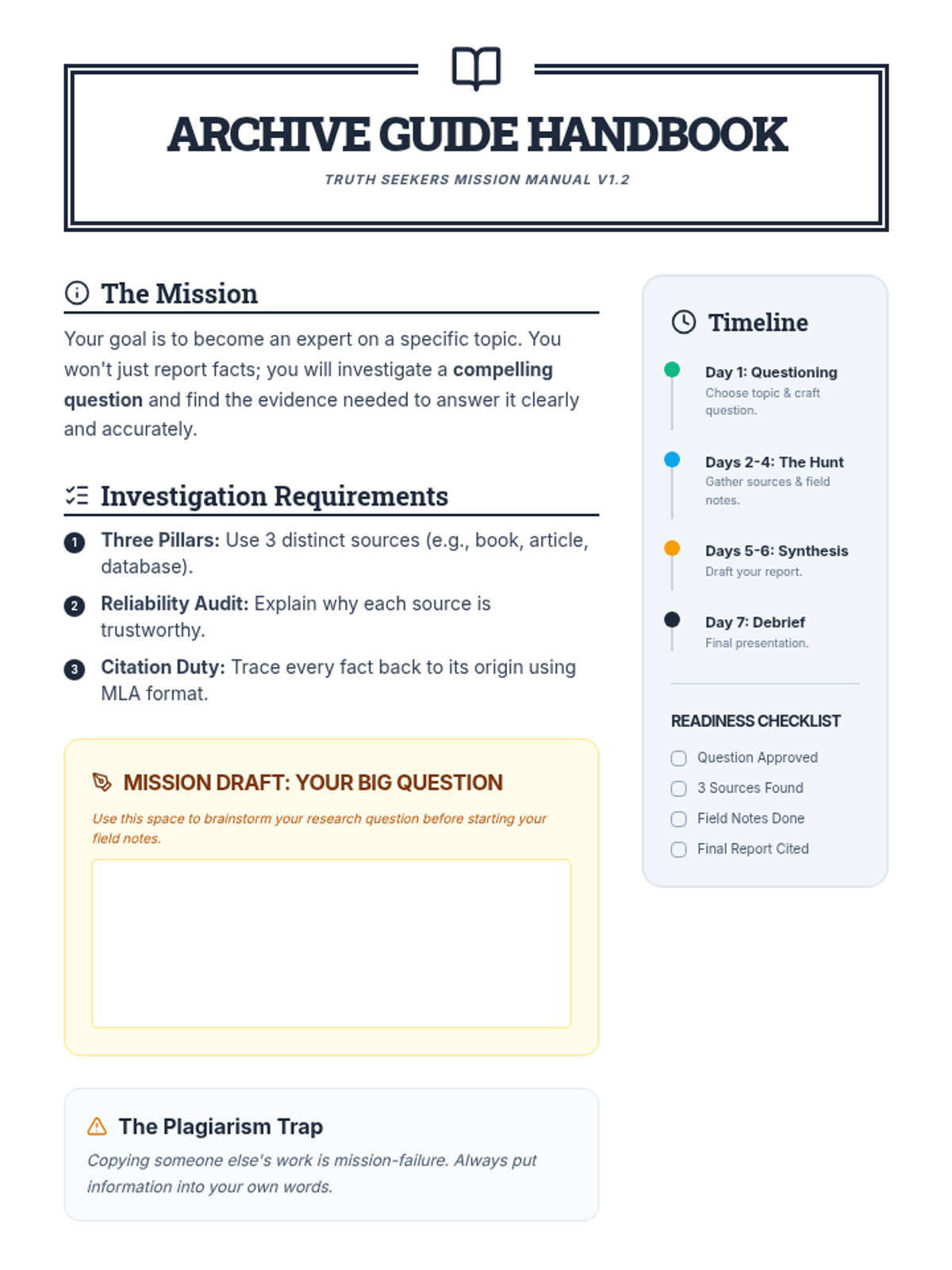
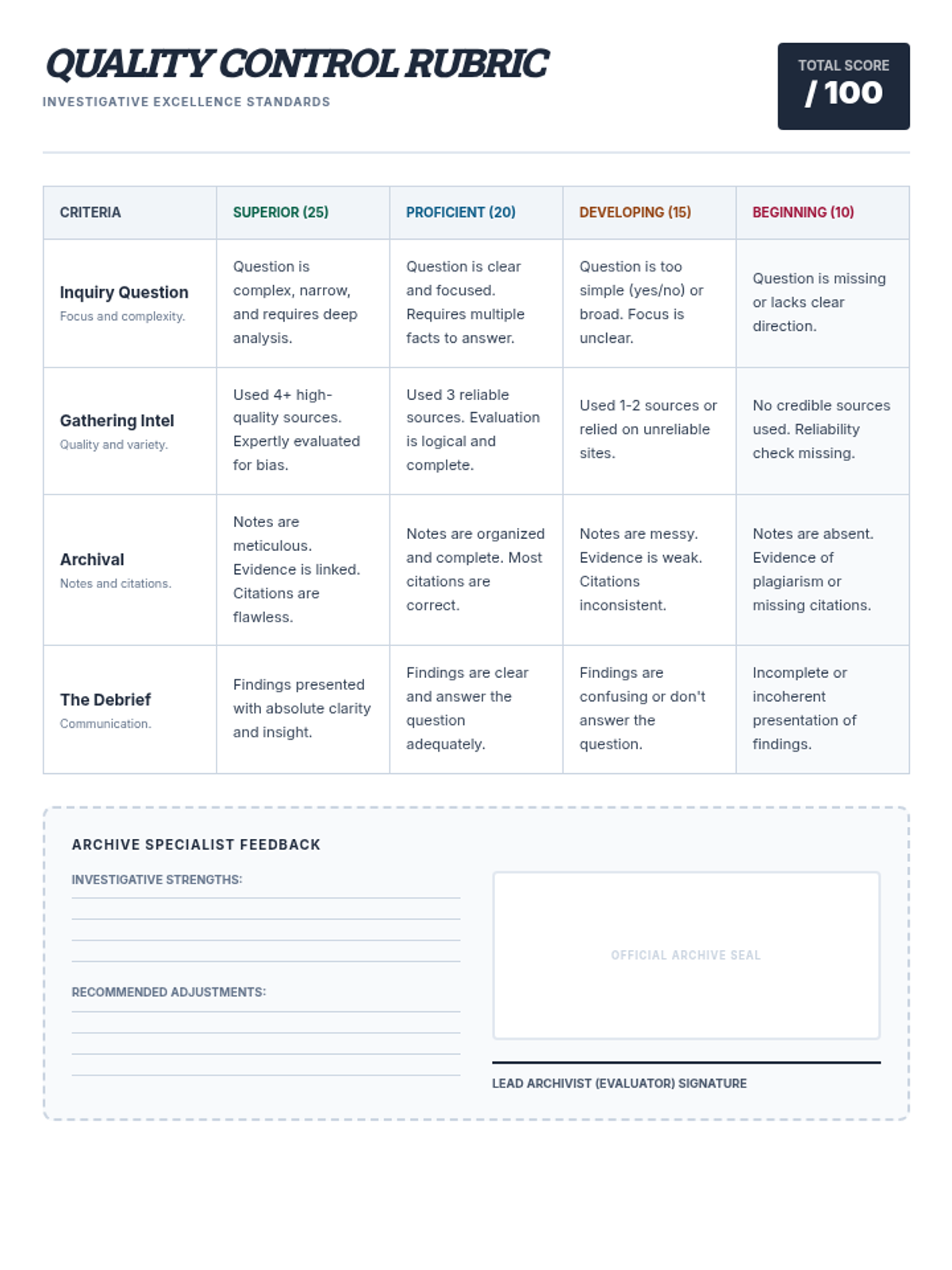
A comprehensive research project framework for 6th graders, guiding them through the process of inquiry, source evaluation, and information organization using an archivist-themed aesthetic.
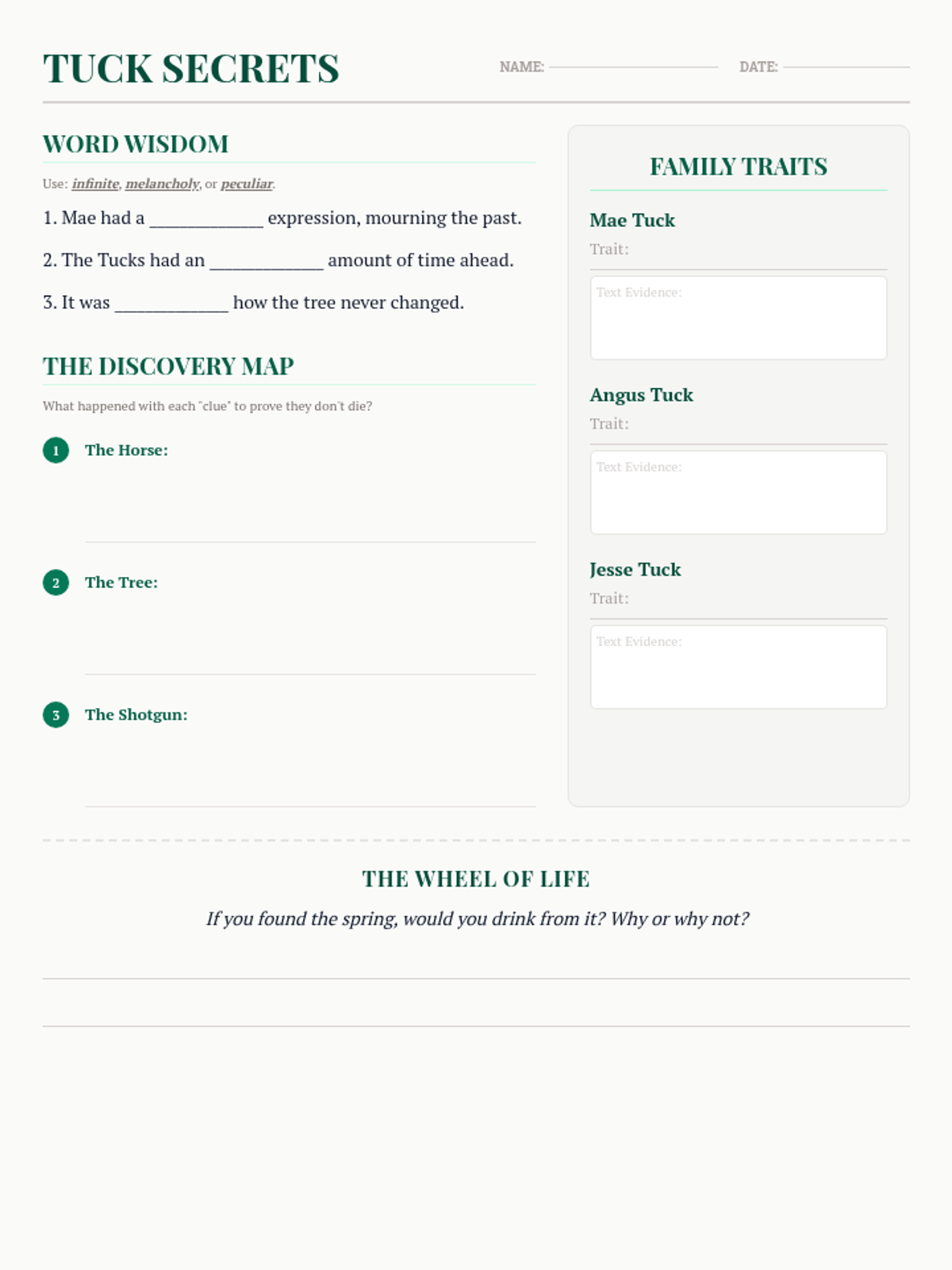
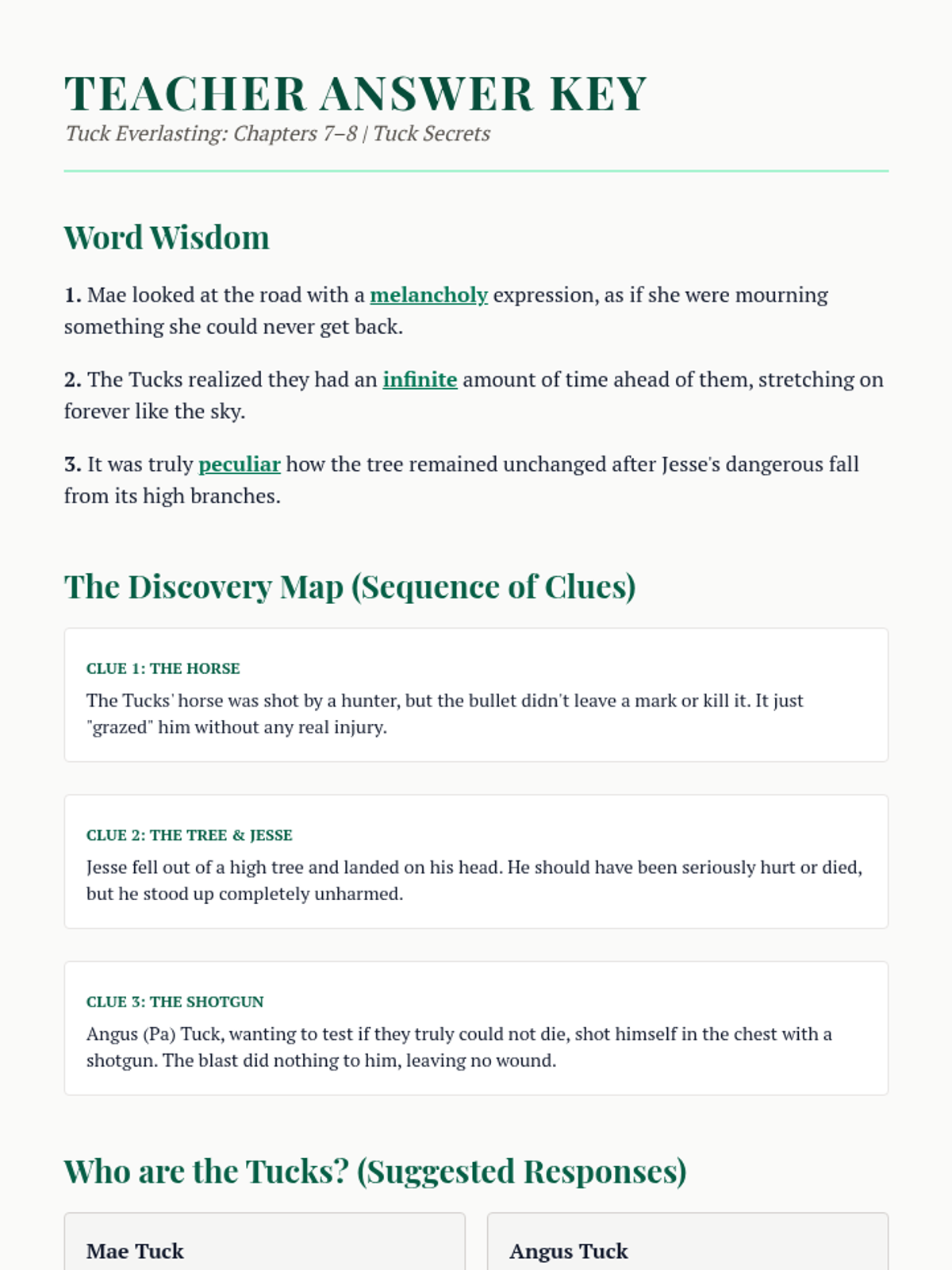
A lesson focused on analyzing the Tucks' revelation of their immortality in Chapters 7-8 of Tuck Everlasting, focusing on sequence of events and character traits.
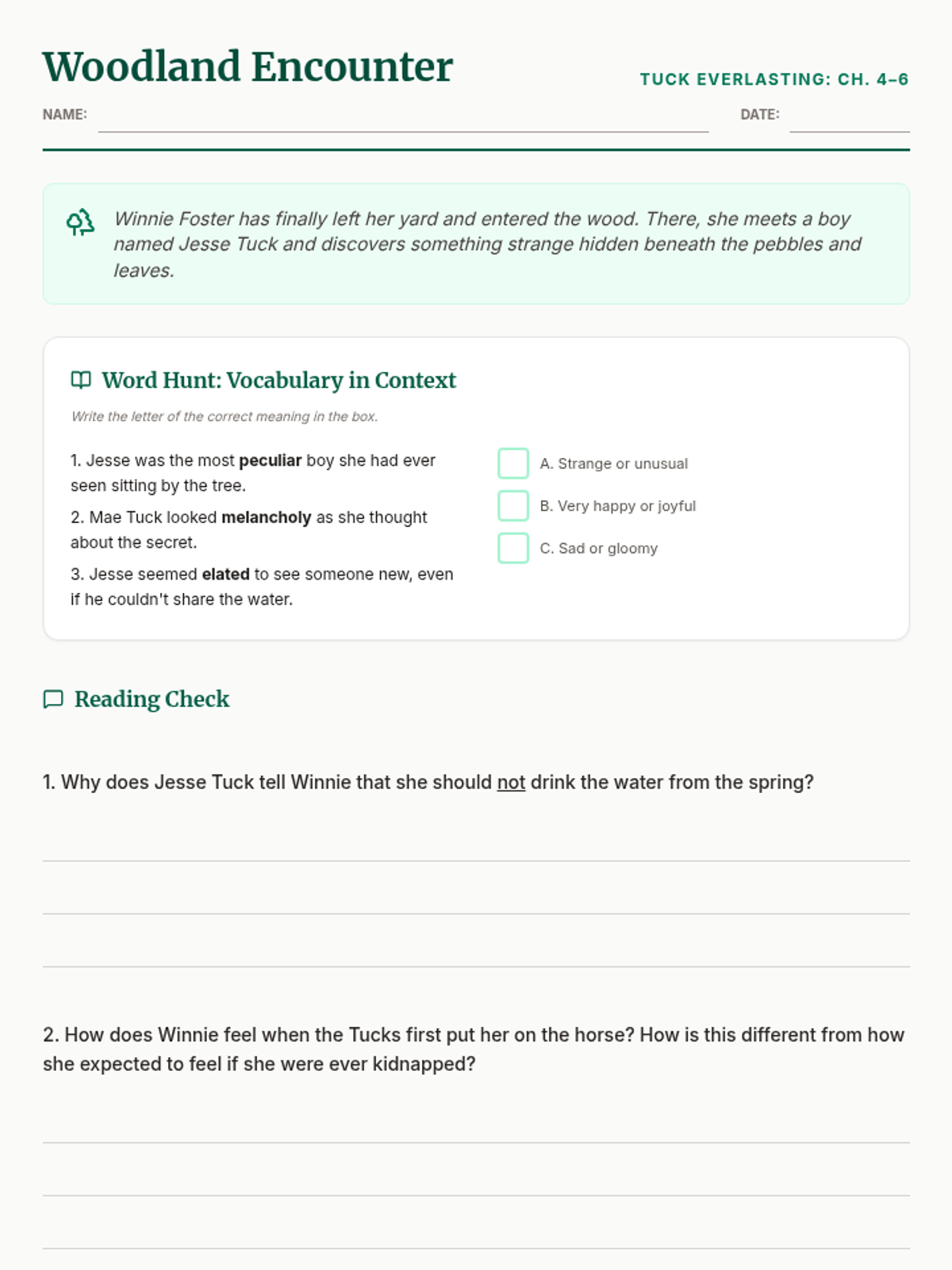
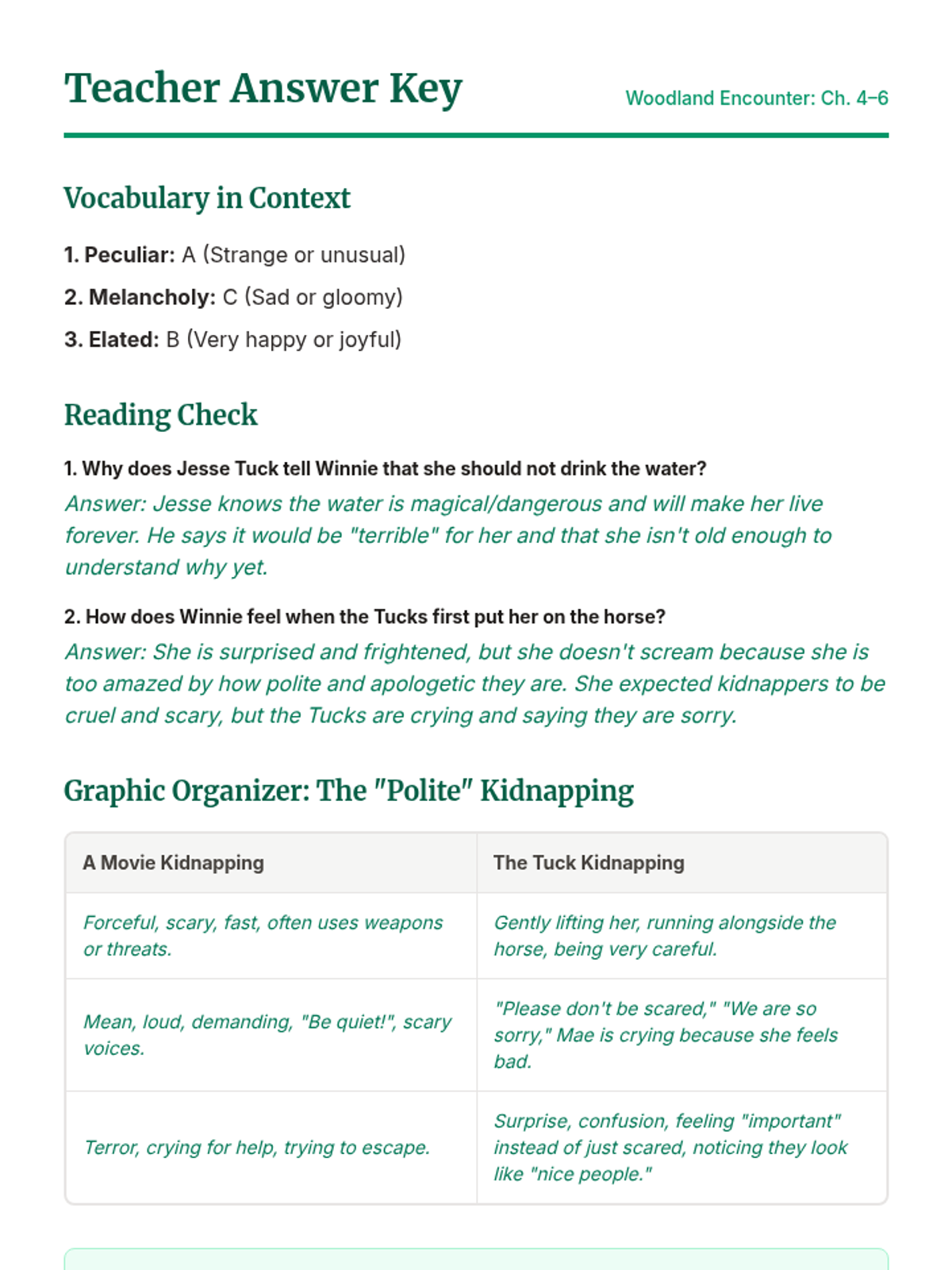
A lesson exploring chapters 4-6 of Tuck Everlasting, focusing on Winnie Foster's first encounter with the Tucks and the unique nature of her 'kidnapping'. Students analyze character motivations and use graphic organizers to compare the Tucks to traditional movie tropes.
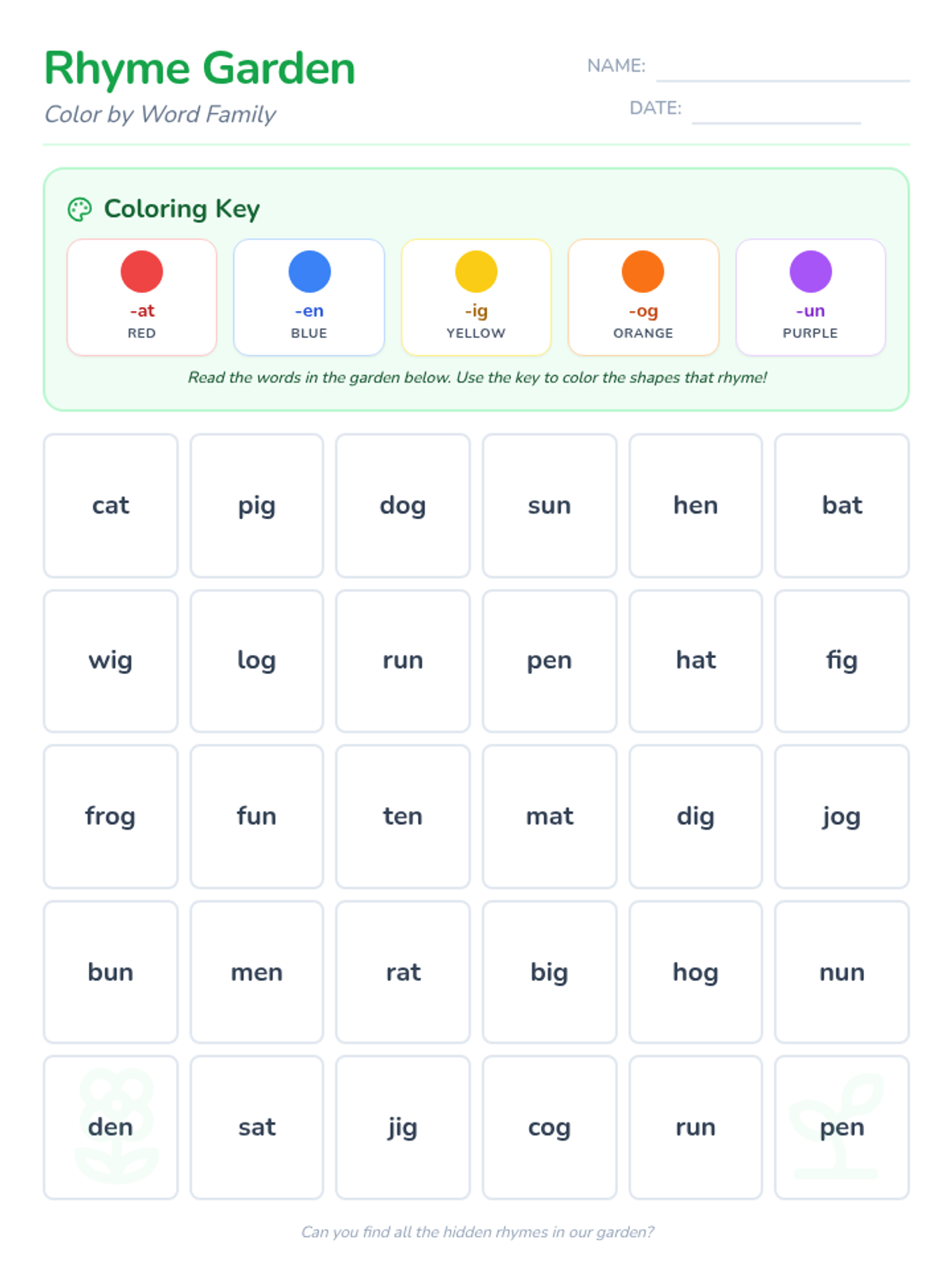
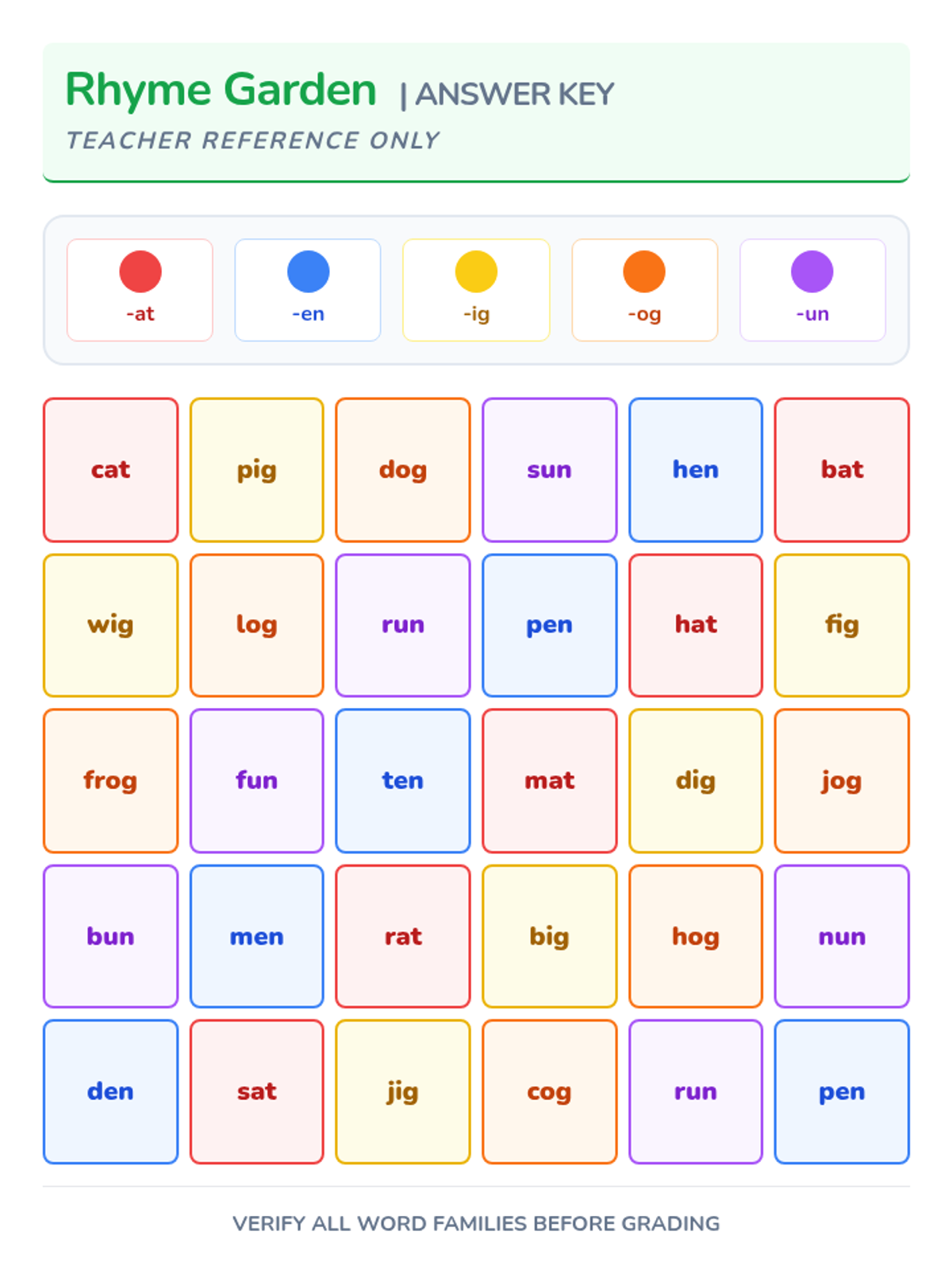
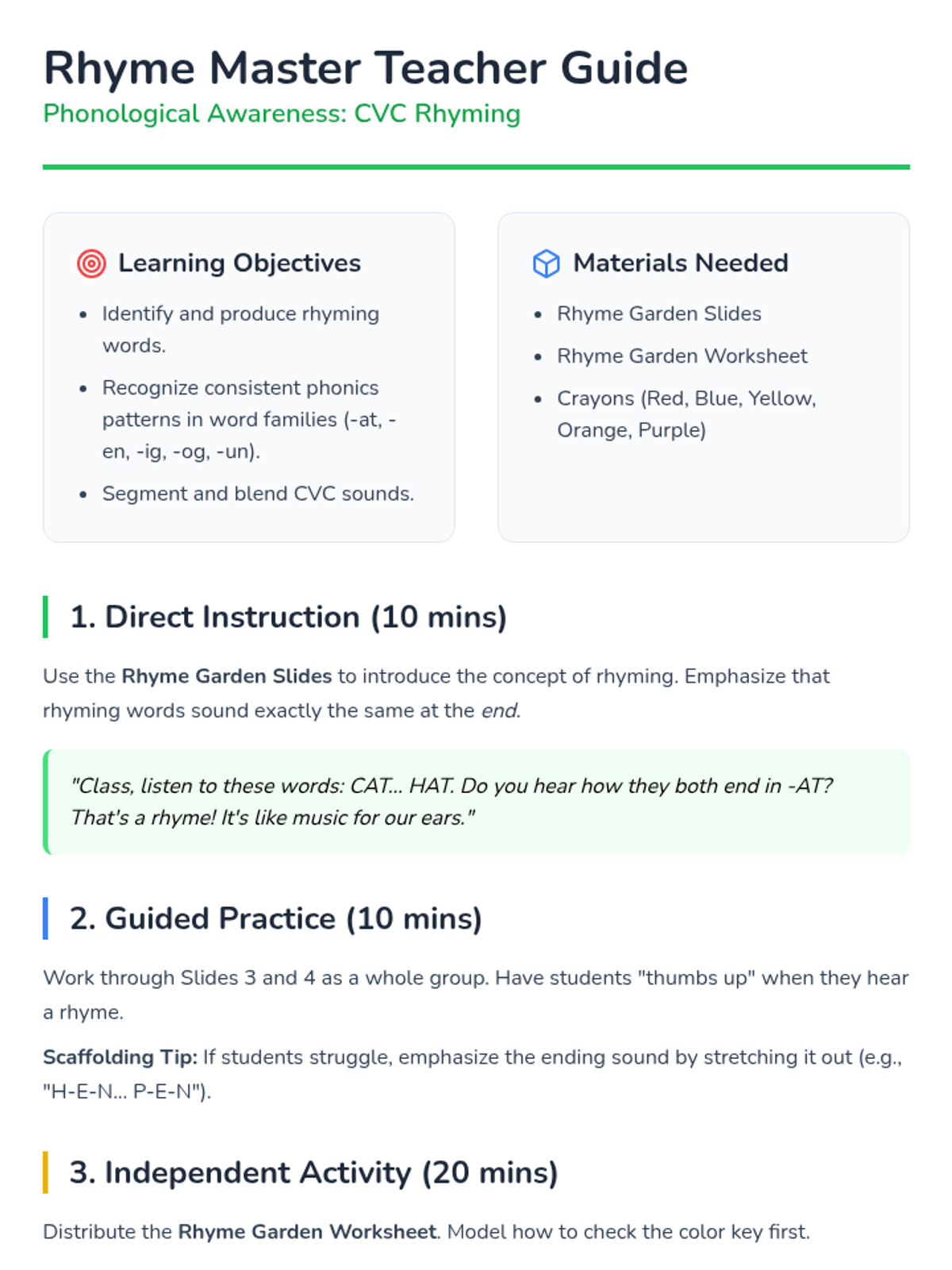
Students explore word families and rhyming patterns through a playful garden-themed color-by-code activity. This lesson builds phonological awareness and early literacy skills for kindergarteners.
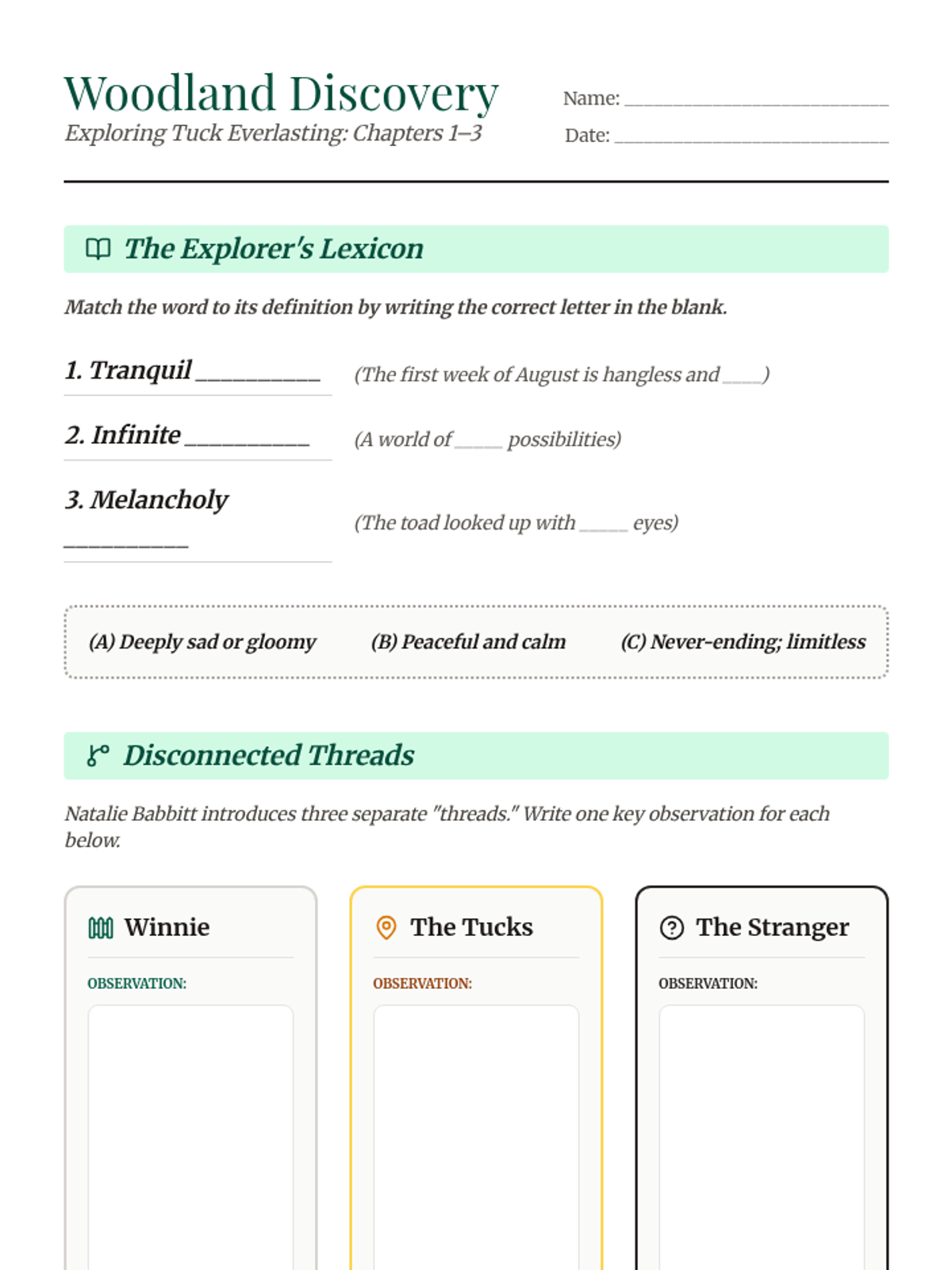
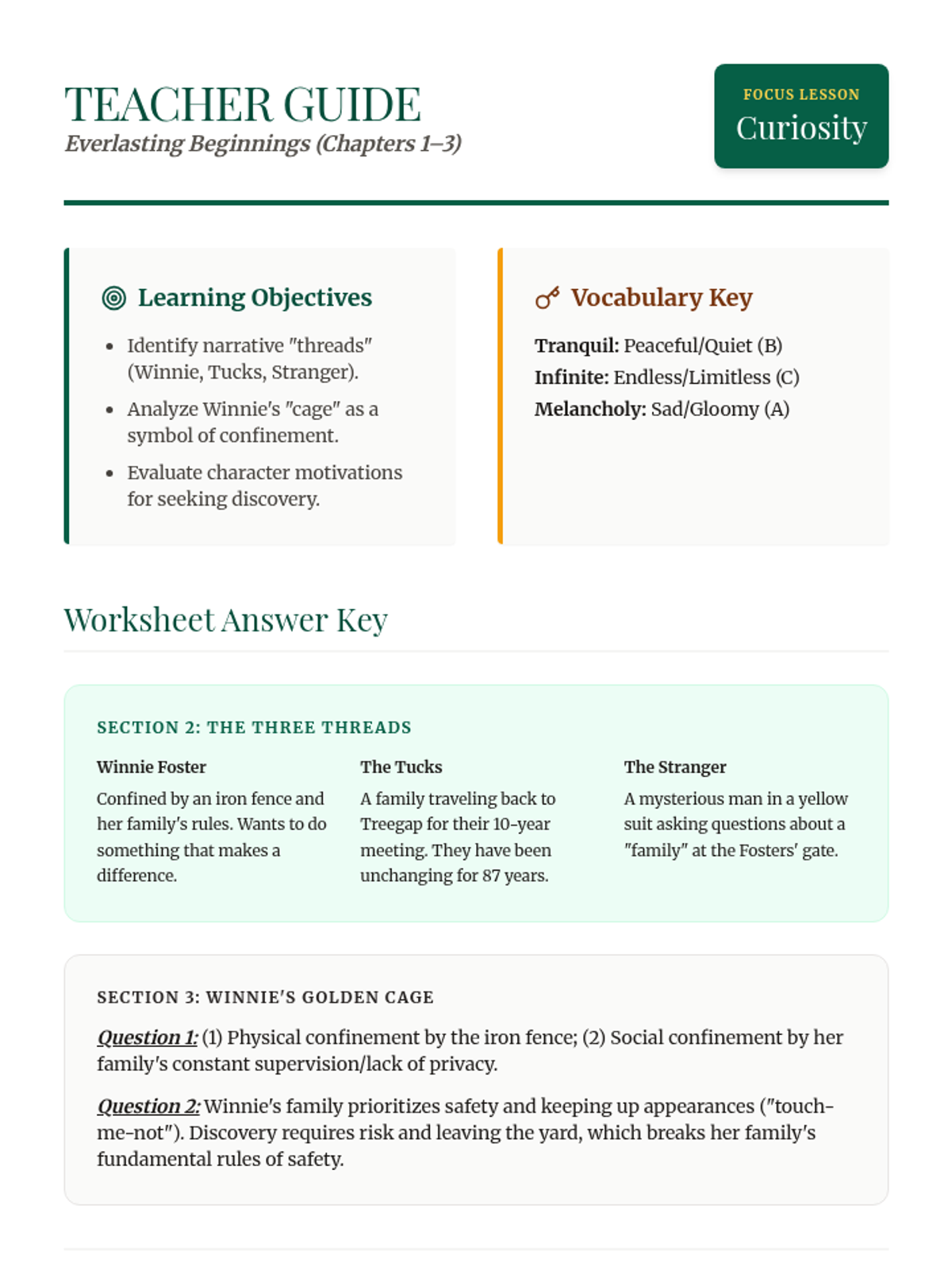
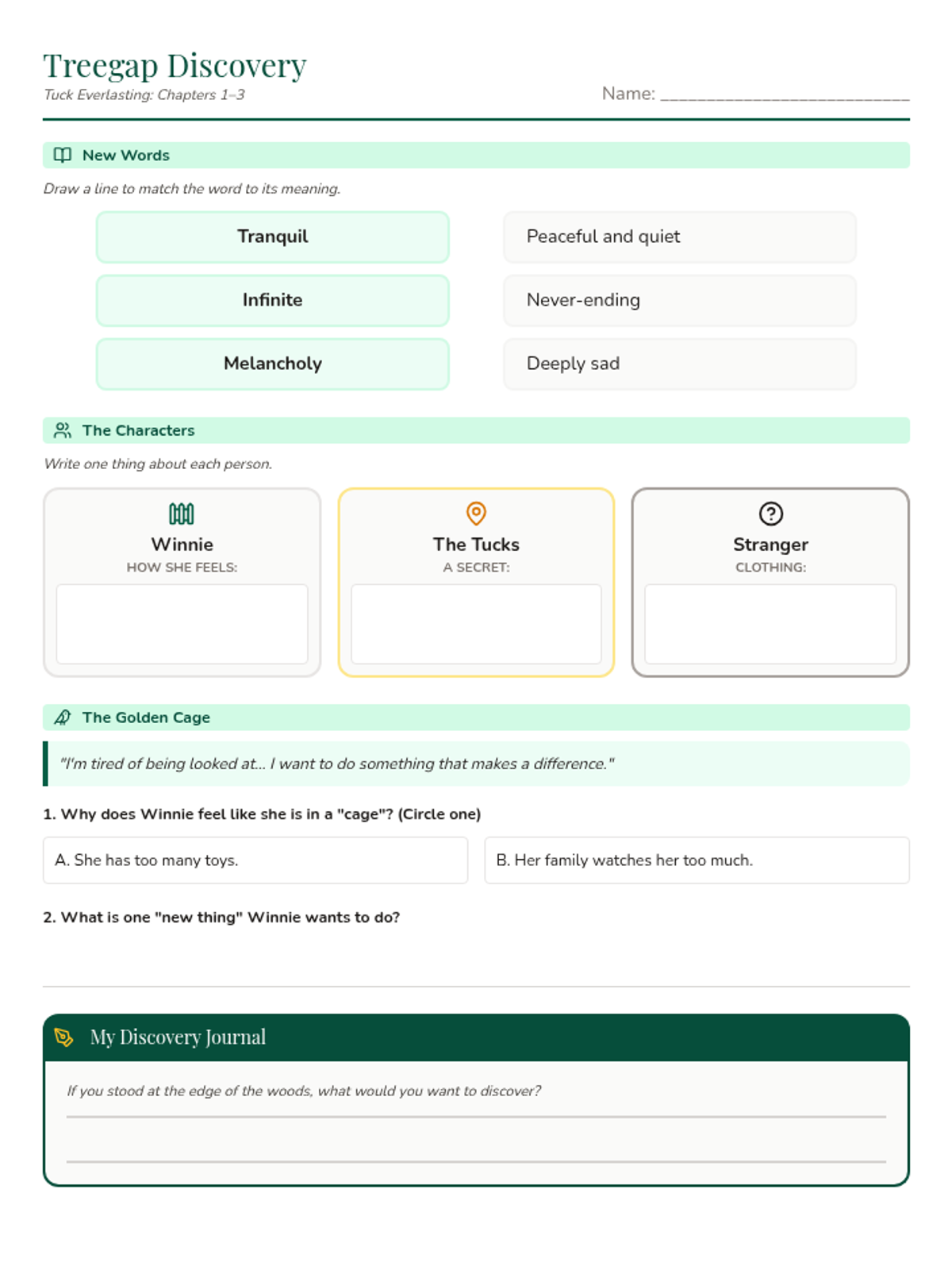
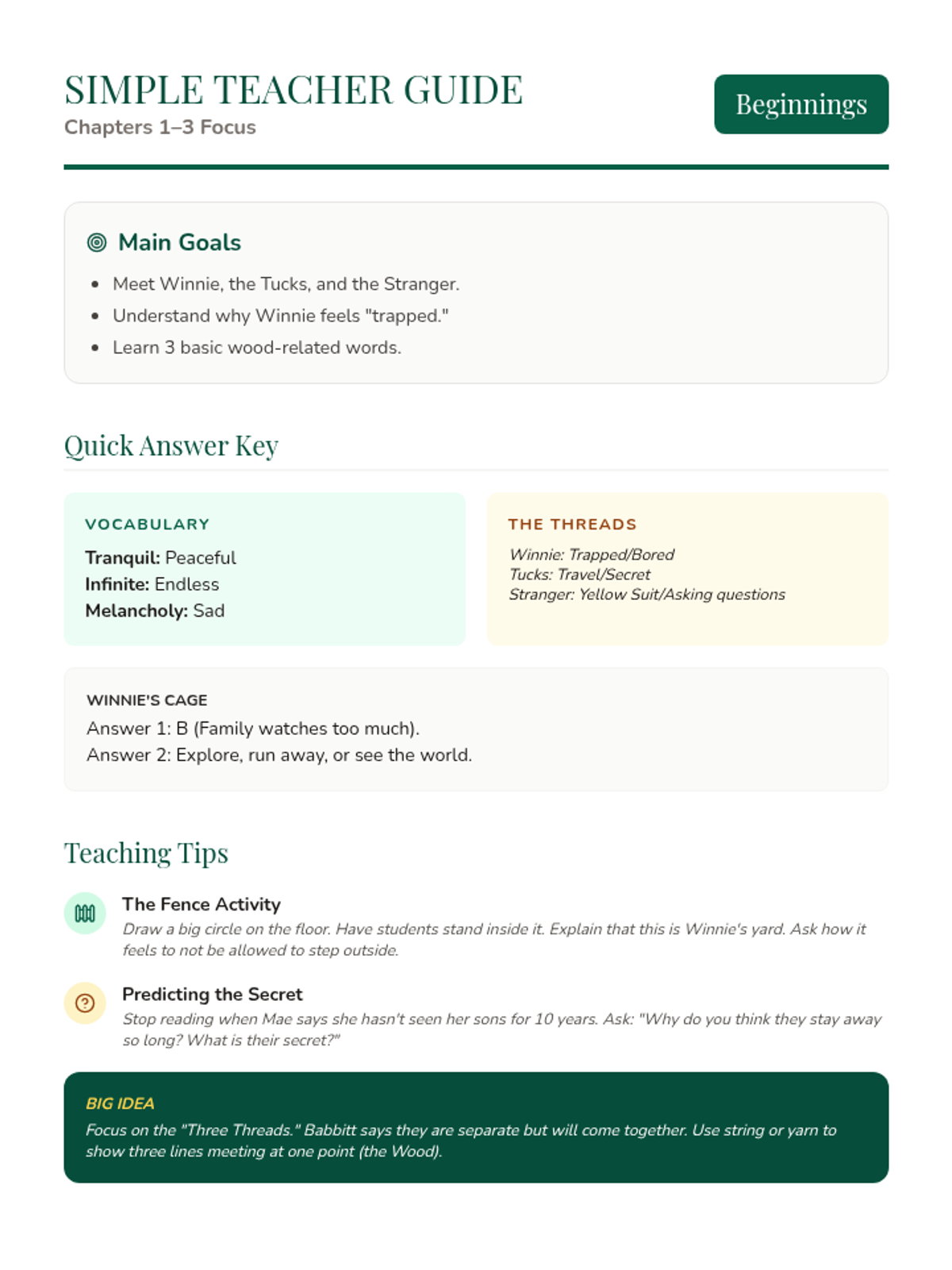
An introductory exploration of the first three chapters of Natalie Babbitt's *Tuck Everlasting*, focusing on character introductions, the theme of discovery, and the metaphor of Winnie Foster's 'cage'.
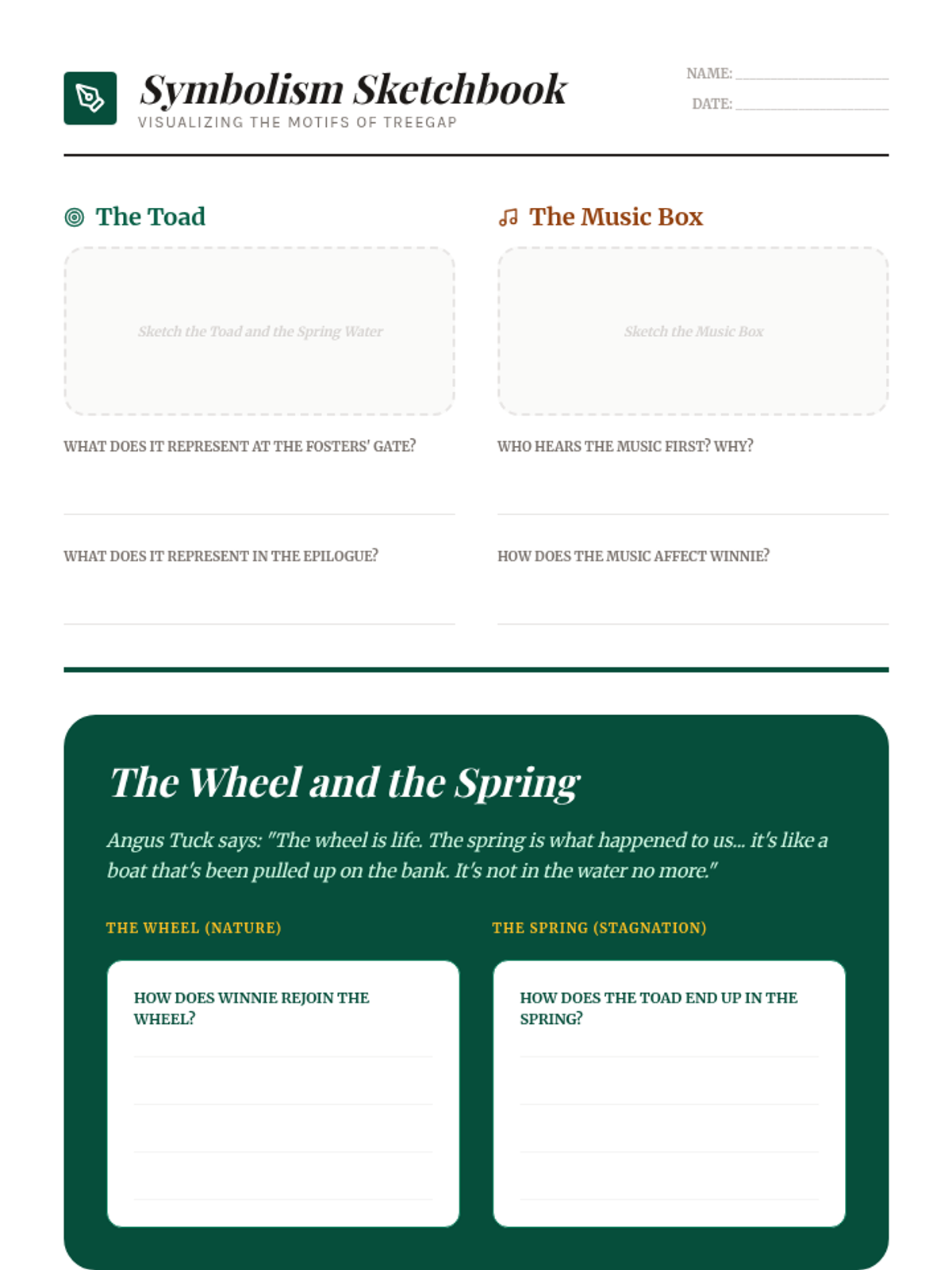
Decodes the major symbols of the novel, including the toad, the spring, and the music box, and their connection to the characters.