Students explore word families and rhyming patterns through a playful garden-themed color-by-code activity. This lesson builds phonological awareness and early literacy skills for kindergarteners.
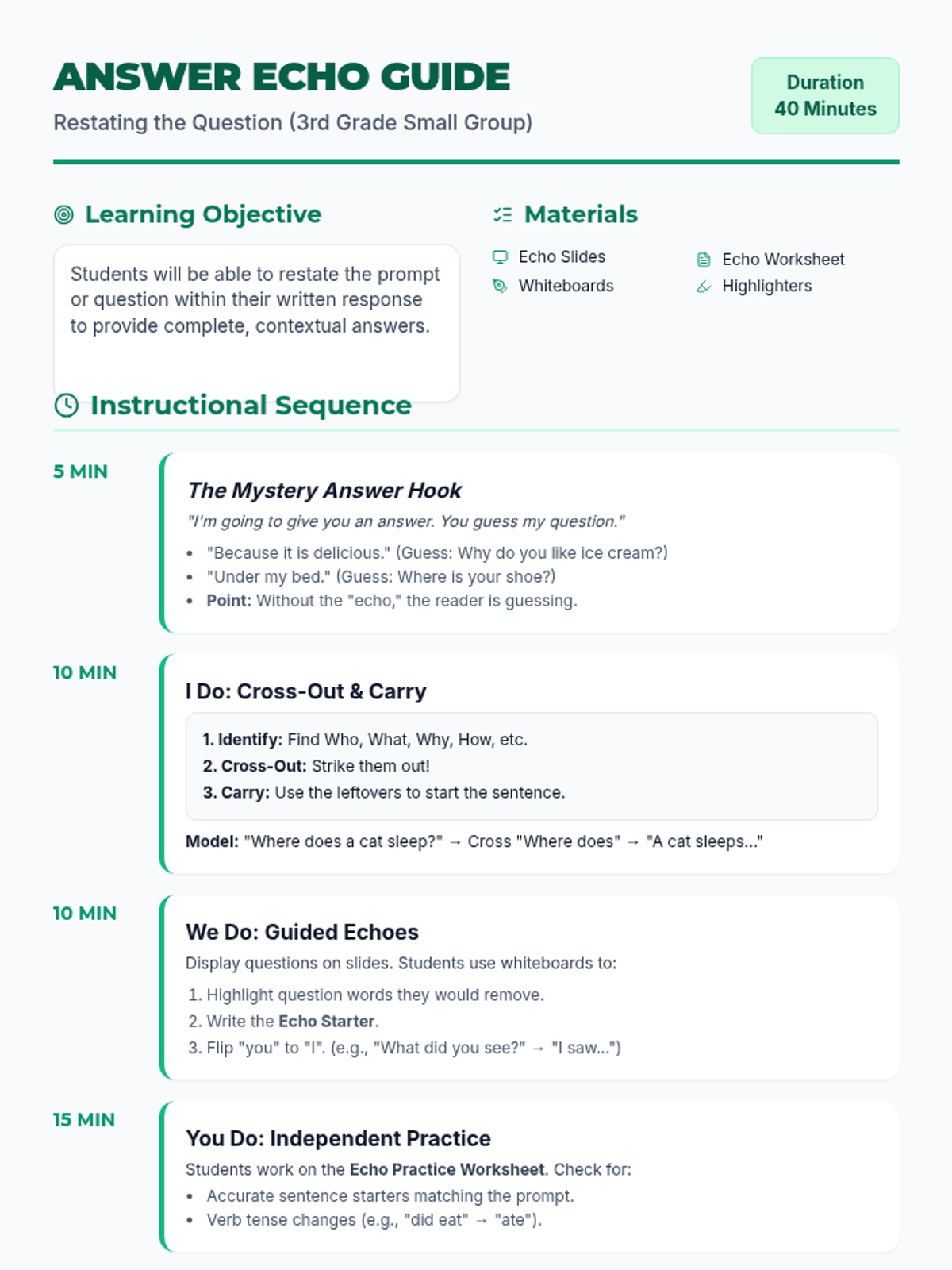
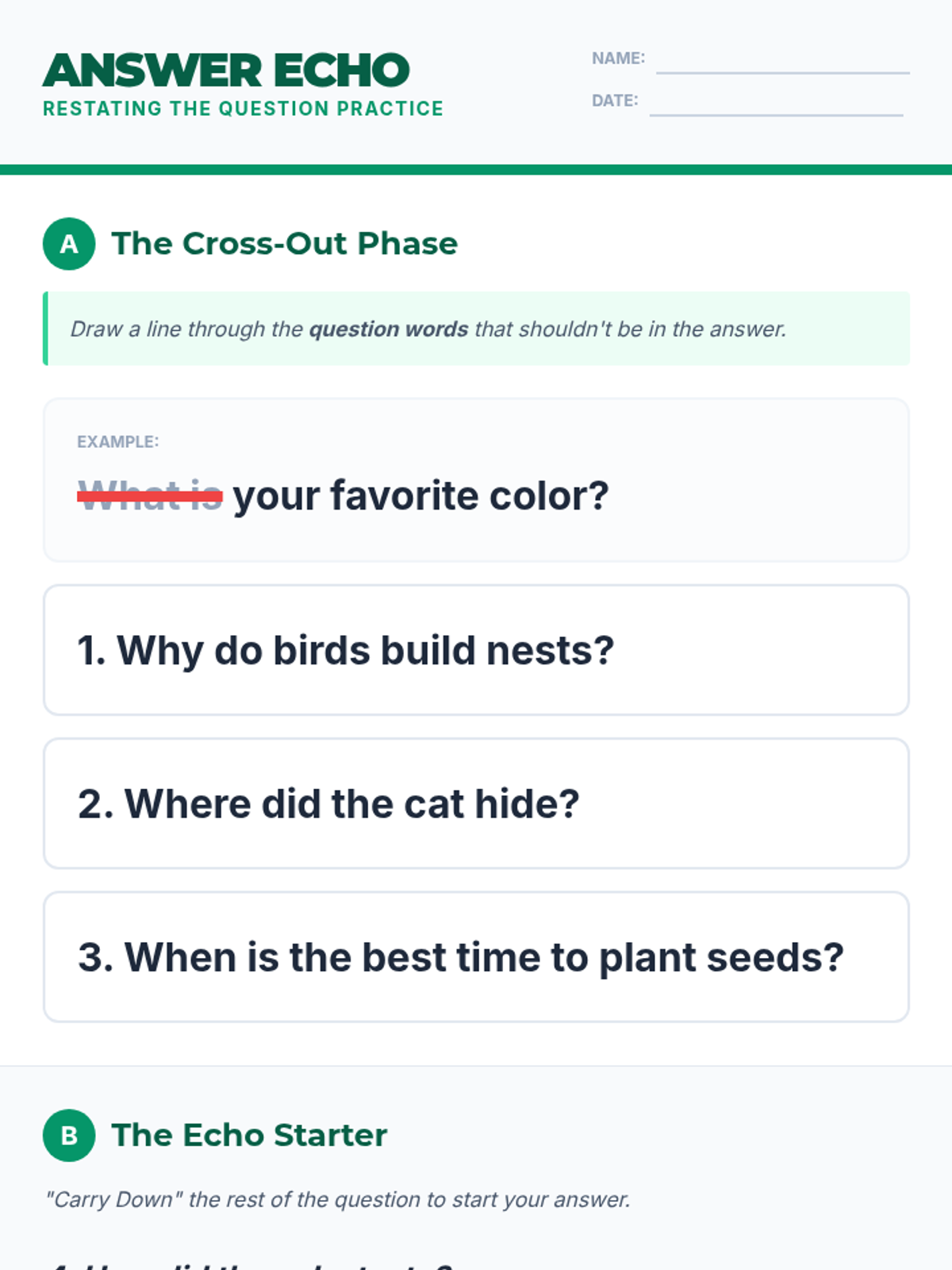
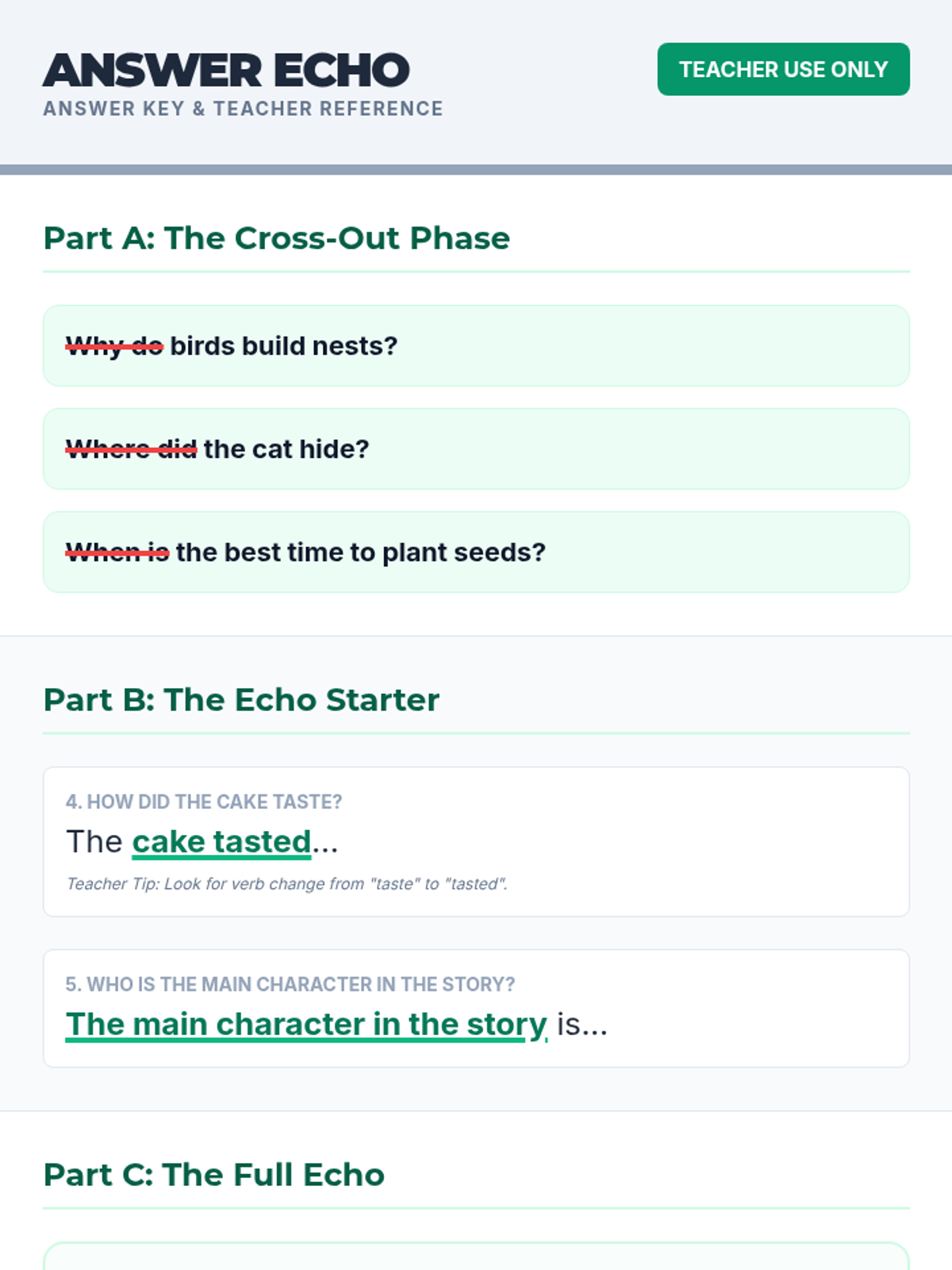
A 40-minute focused lesson on restating the question when writing, using the 'Echo' method to help students provide complete, contextual answers.
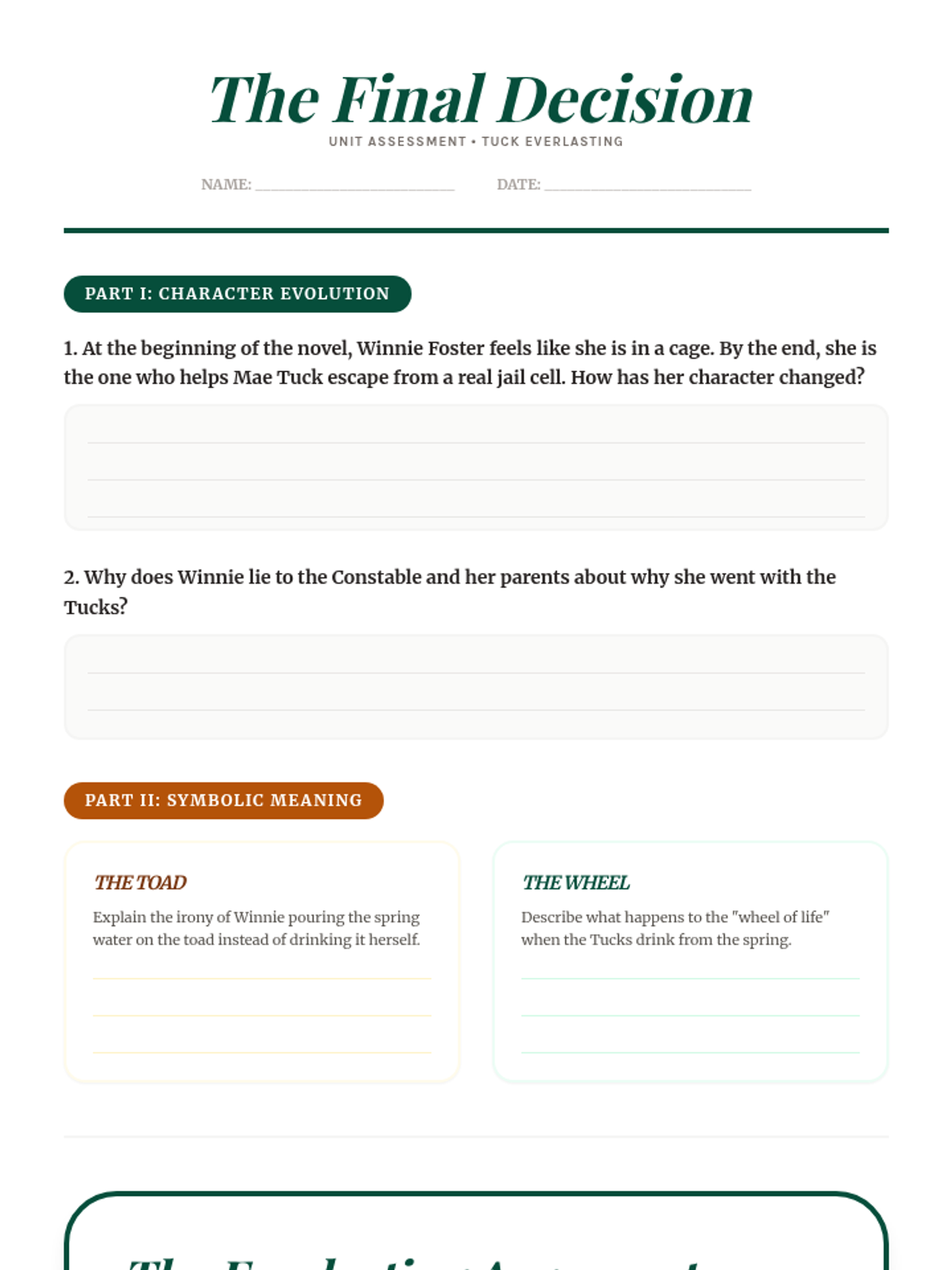
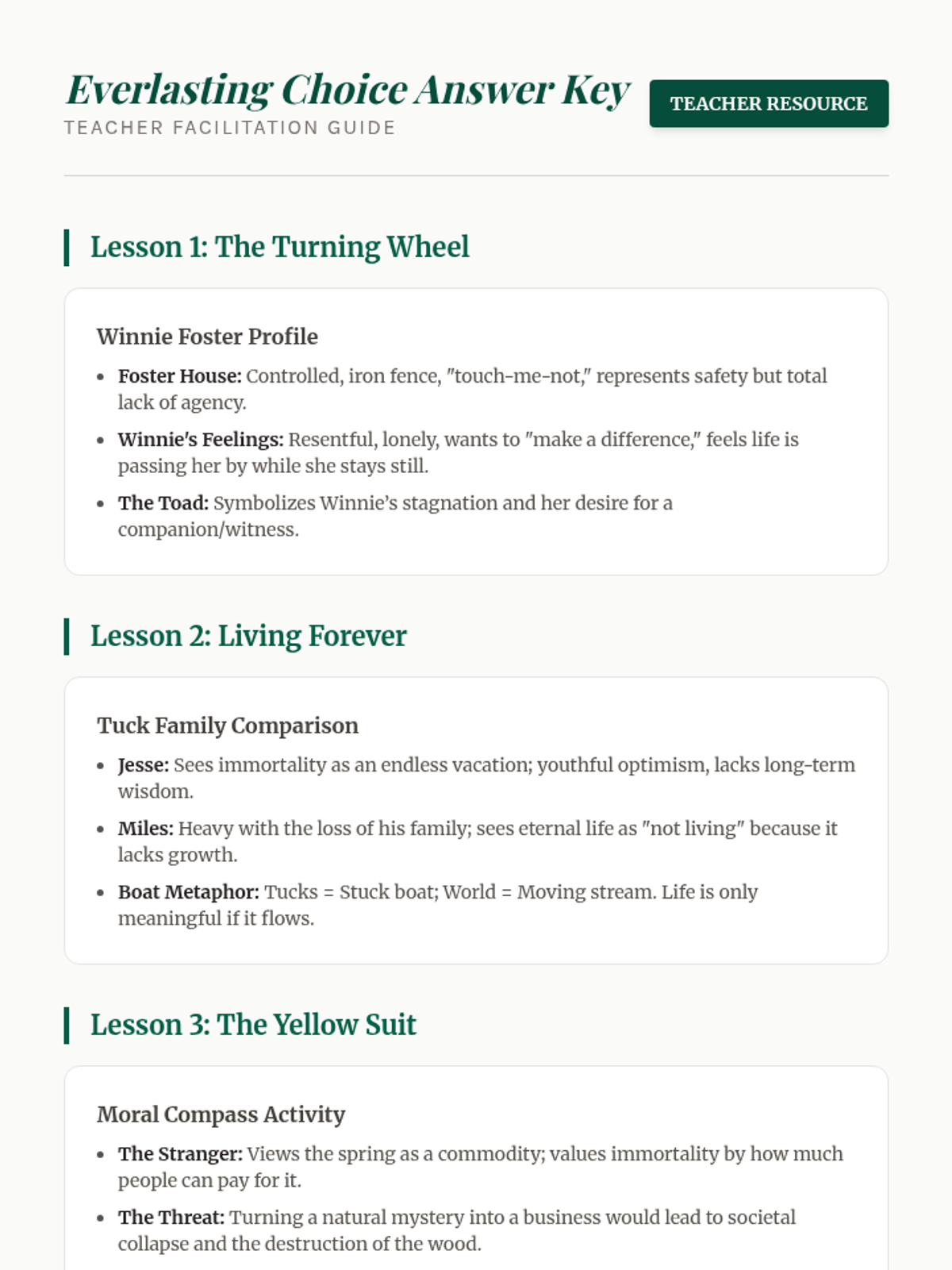
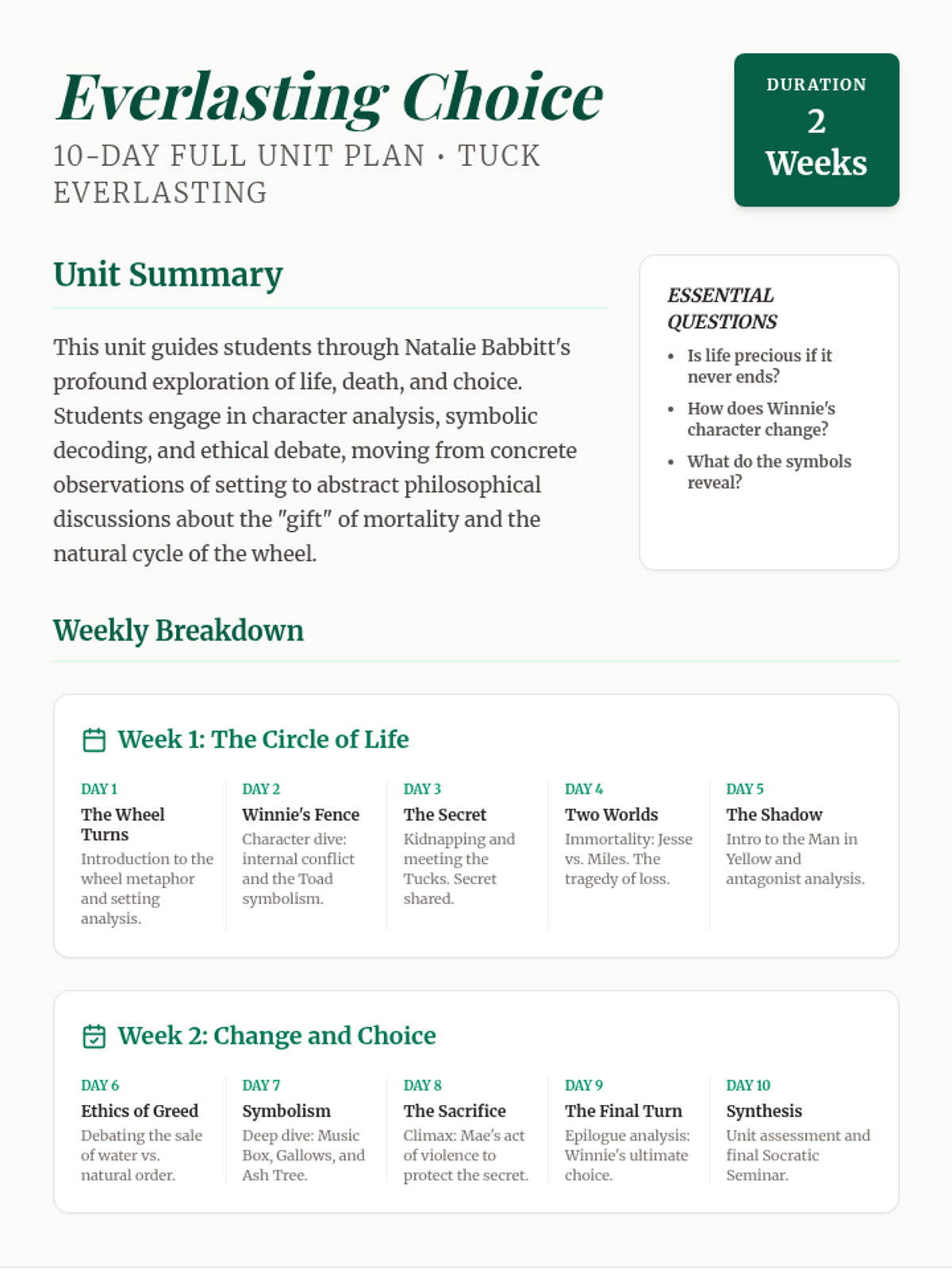
Culminates in the analysis of the novel's resolution and Winnie's ultimate choice regarding the spring water.
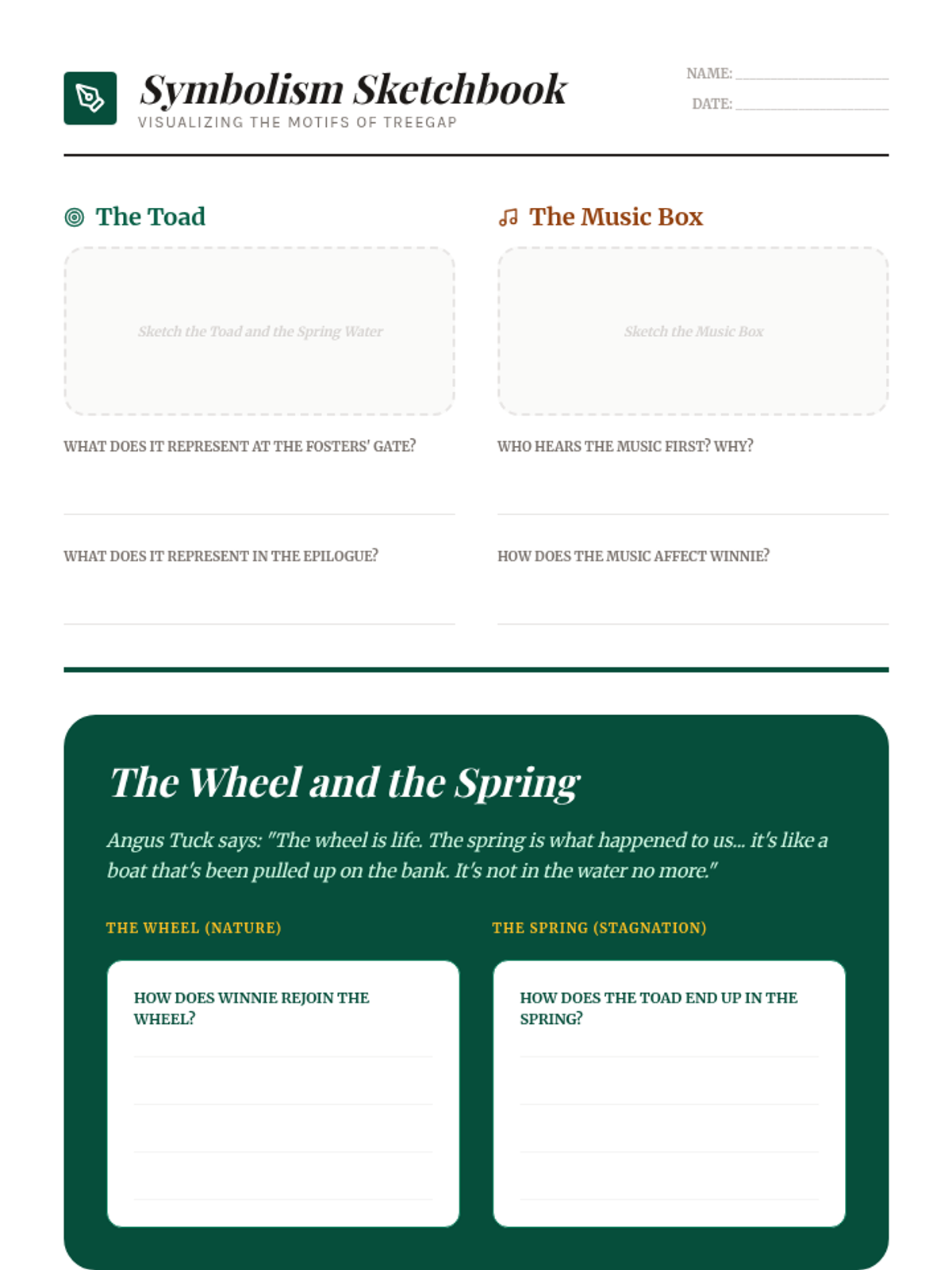
Decodes the major symbols of the novel, including the toad, the spring, and the music box, and their connection to the characters.
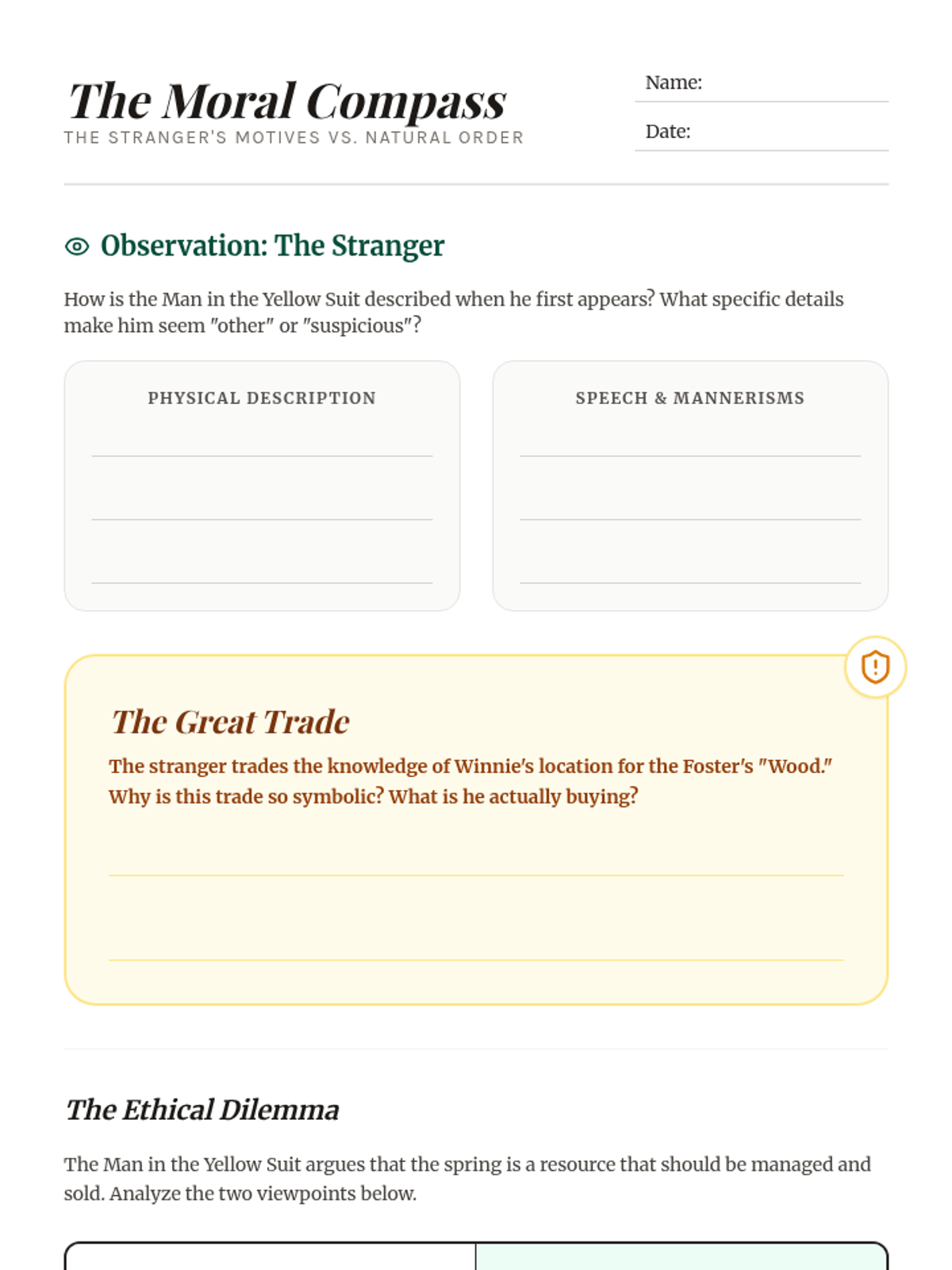
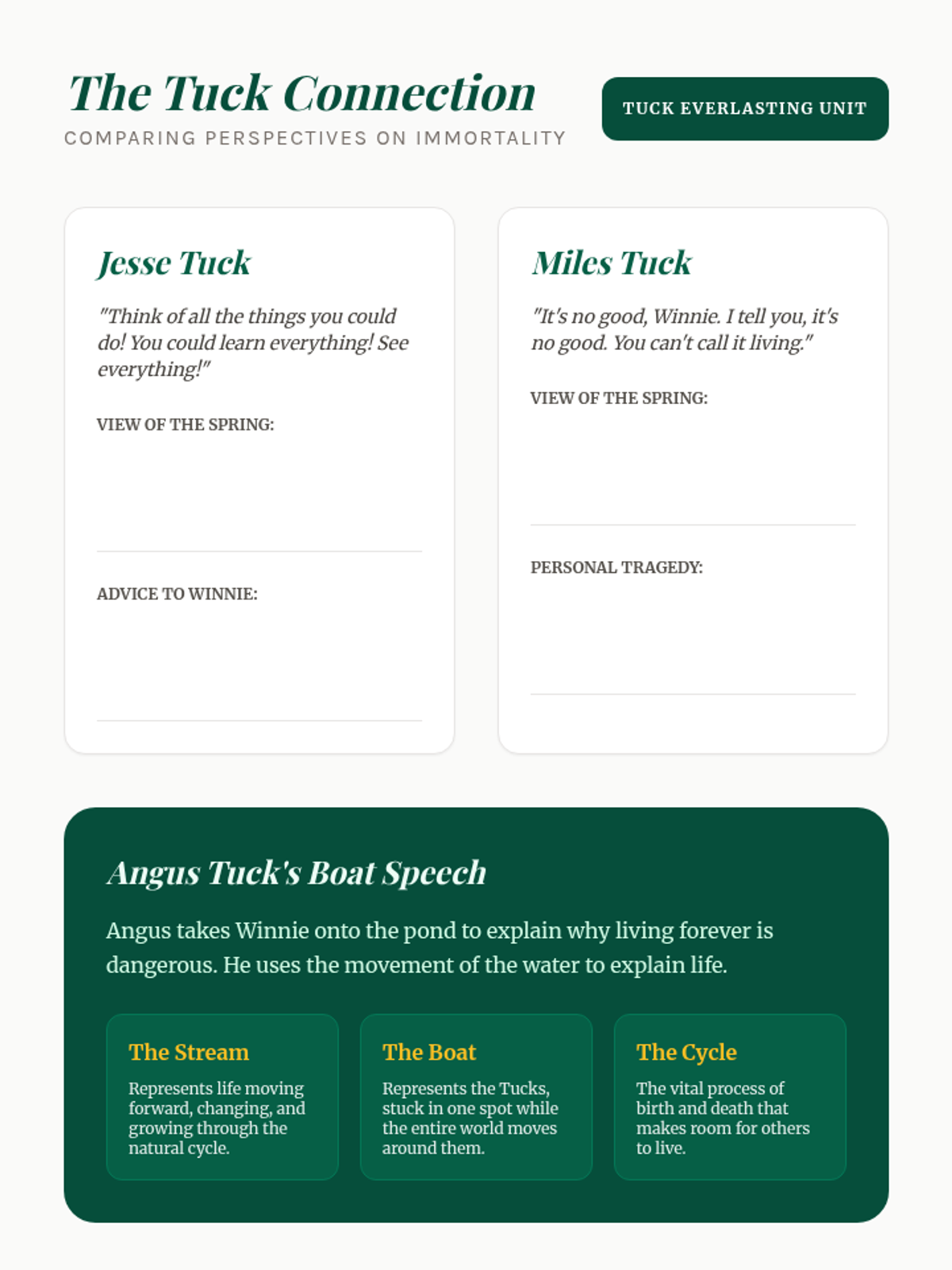
Analyzes the Man in the Yellow Suit as a foil to the Tucks, focusing on themes of greed versus the natural order.
Explores the Tucks' unique perspective on immortality and how Winnie's world expands when she learns their secret.
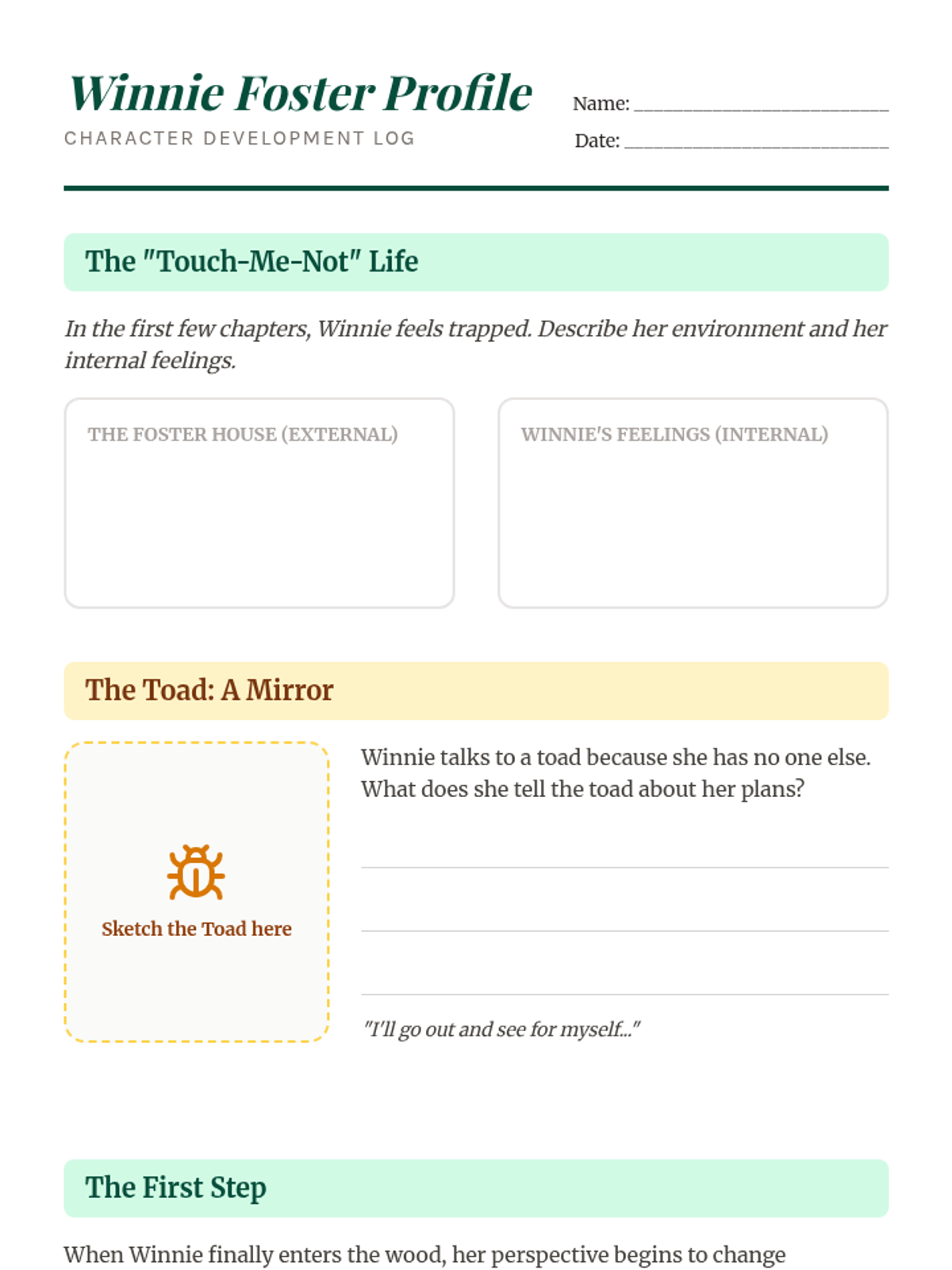
Introduces the central metaphor of the wheel, the setting of Treegap, and the character of Winnie Foster as she contemplates her first flight from home.
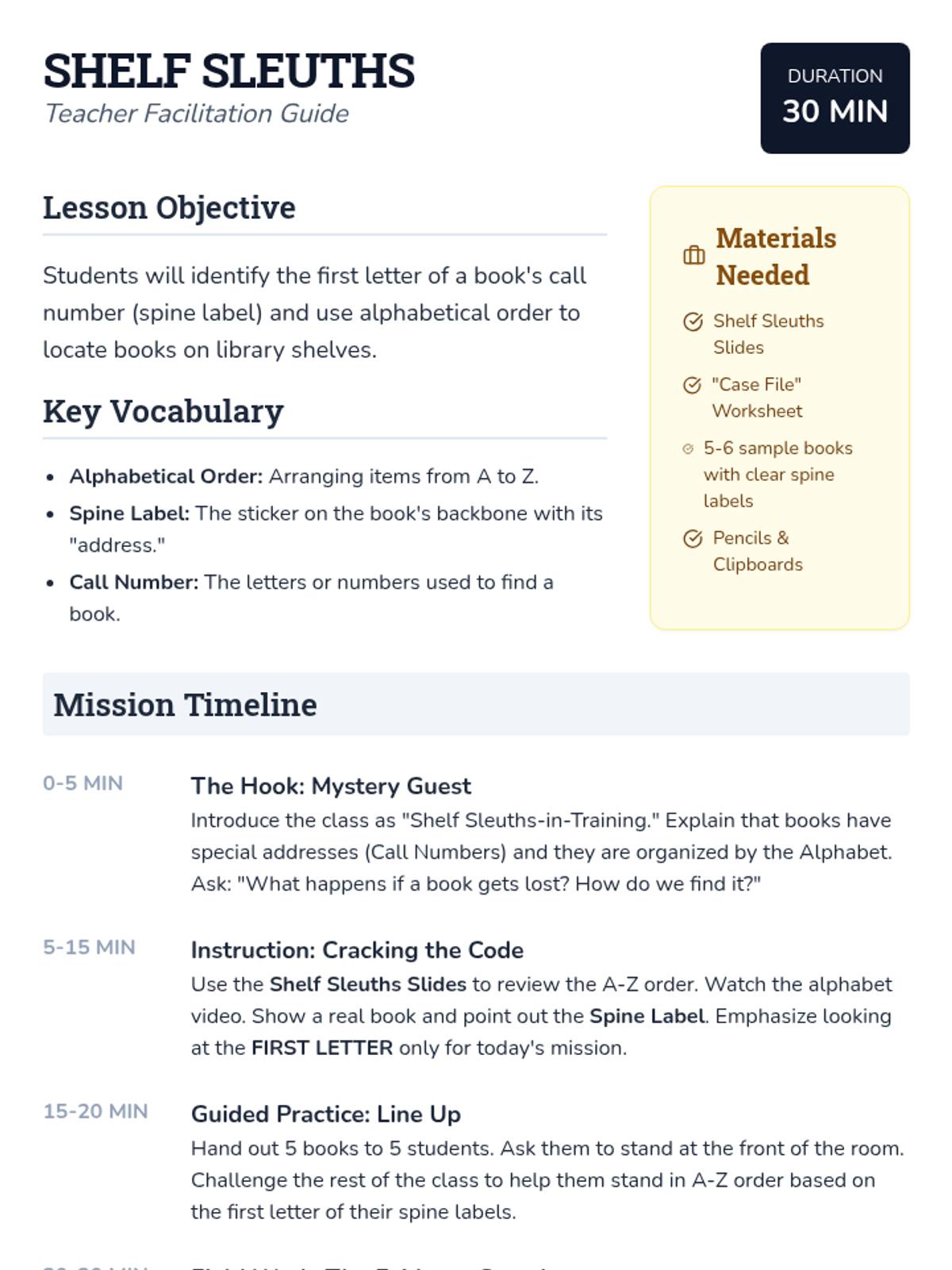
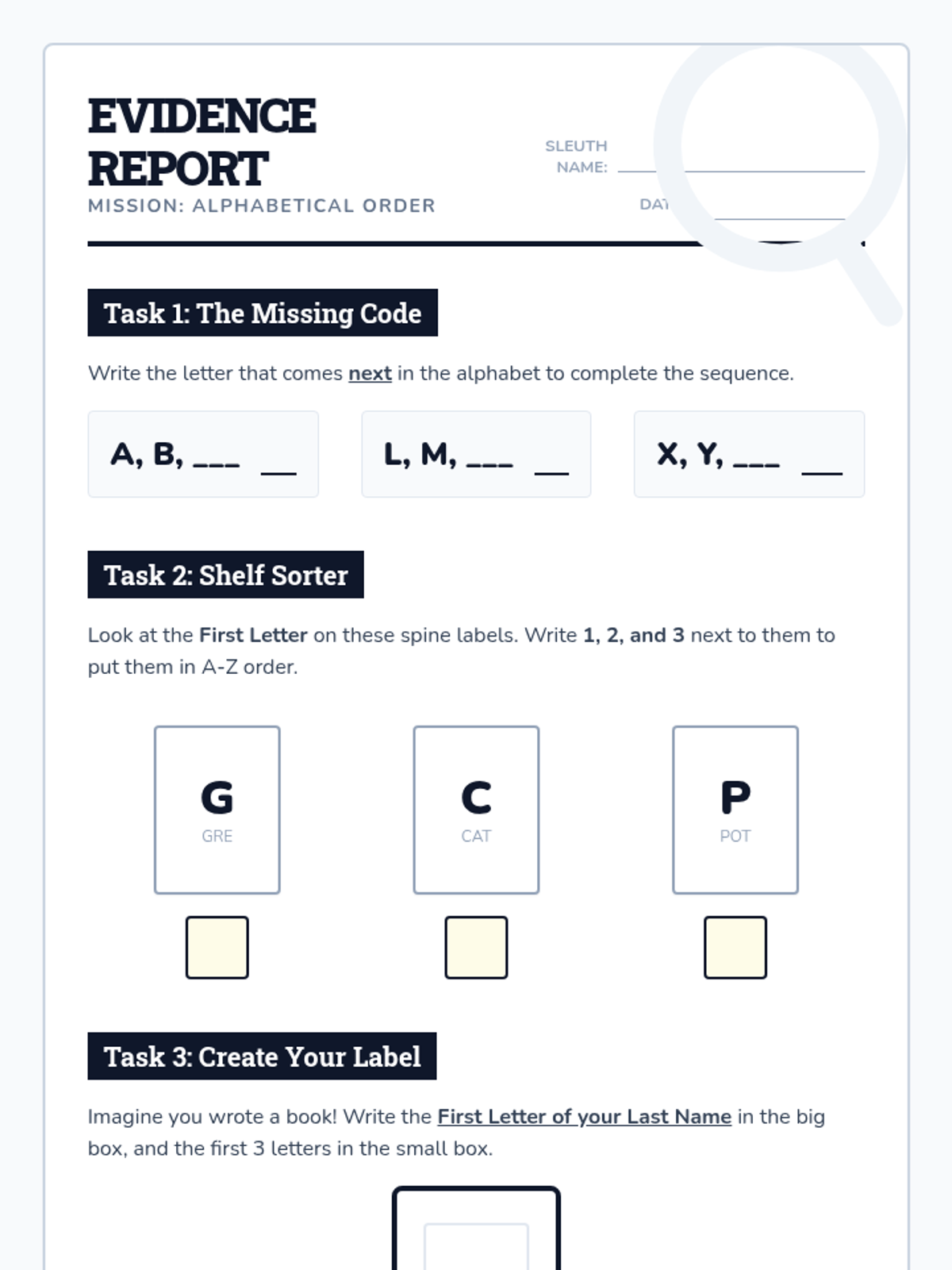
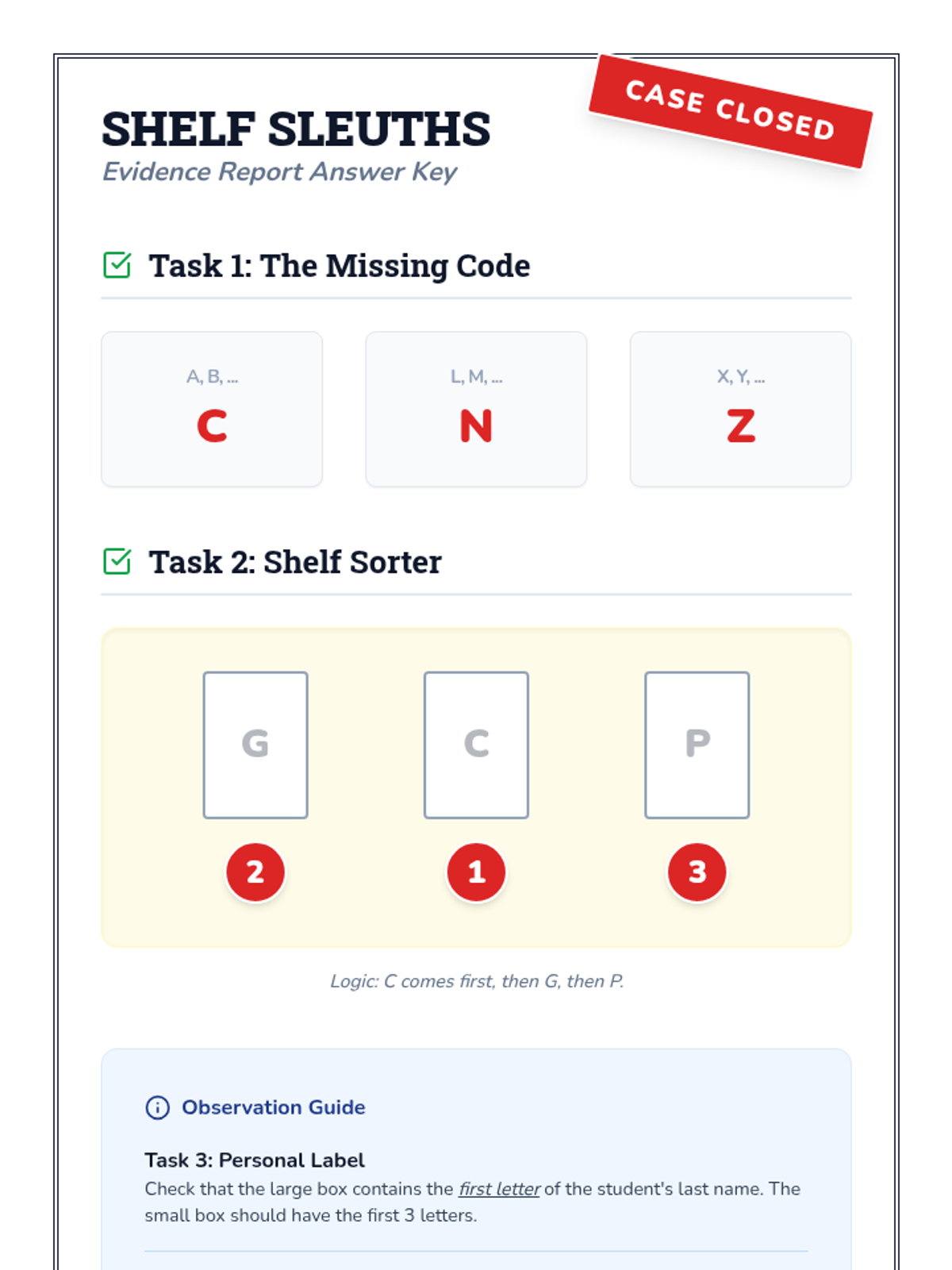
A 30-minute introductory lesson for 1st-3rd graders on alphabetical order (first letter) in a library setting, focusing on finding books by call number.
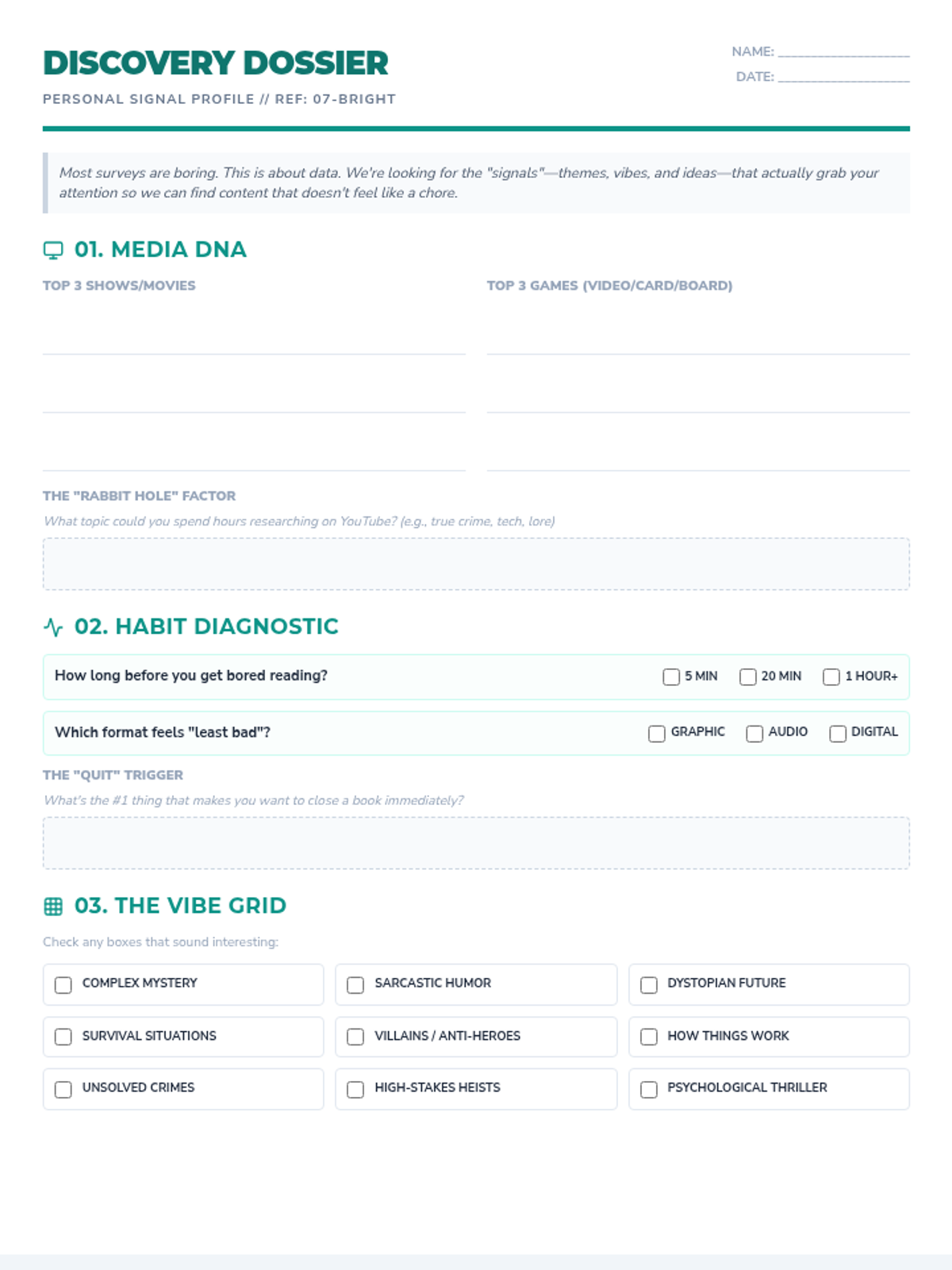
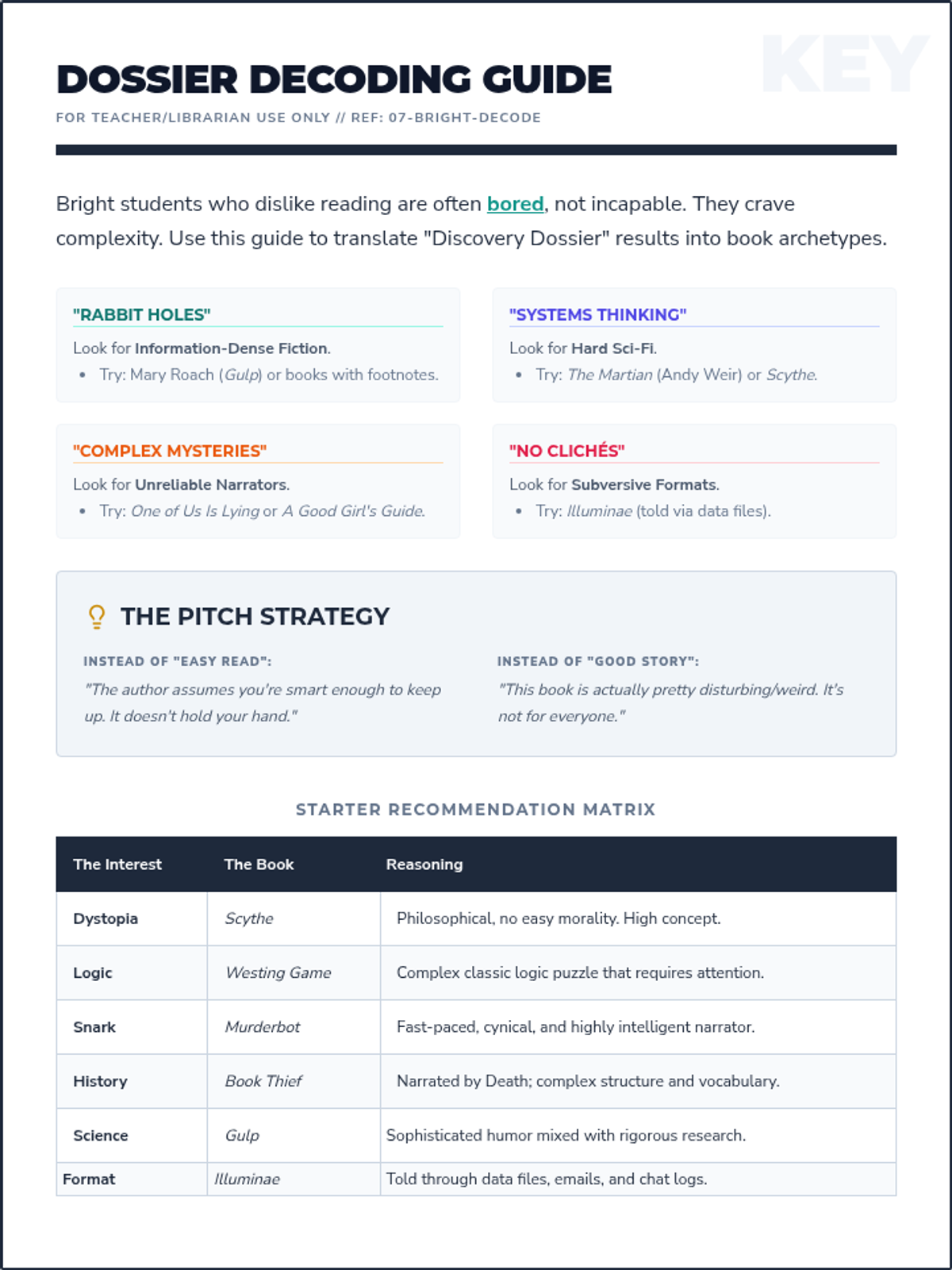
A comprehensive diagnostic toolset designed for a bright, disengaged 7th-grade reader to uncover hidden interests and media preferences that can be translated into book recommendations.
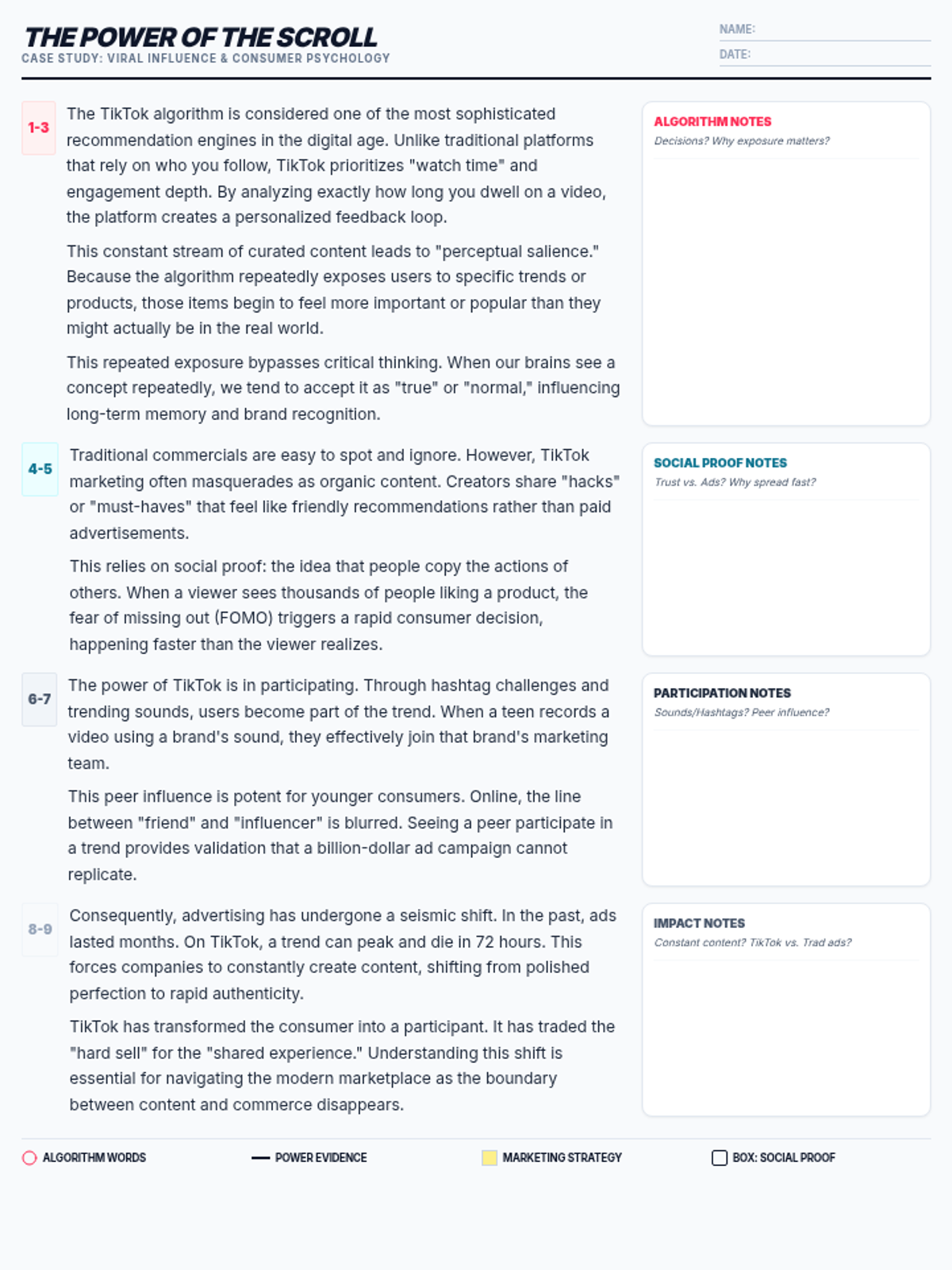
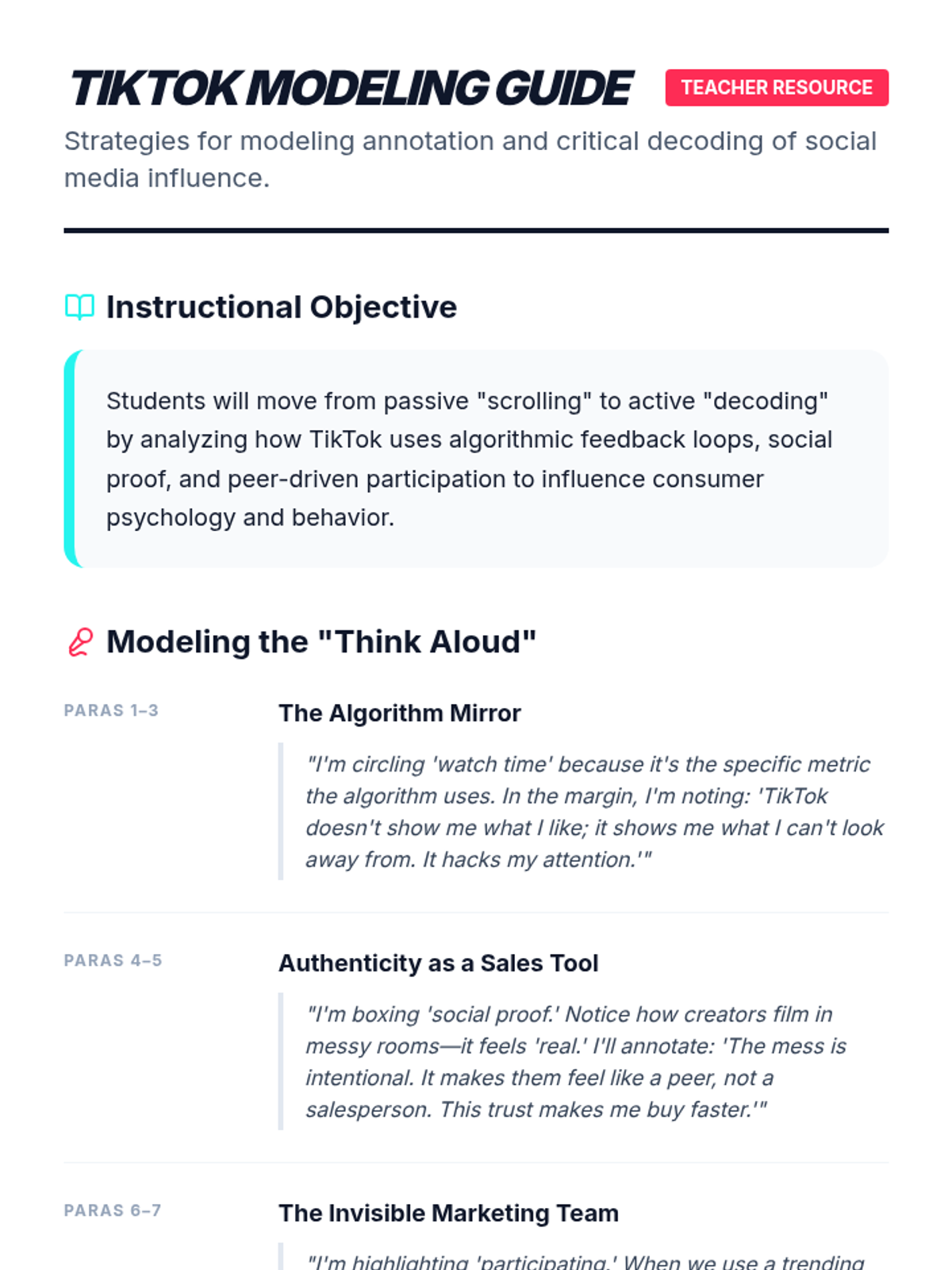
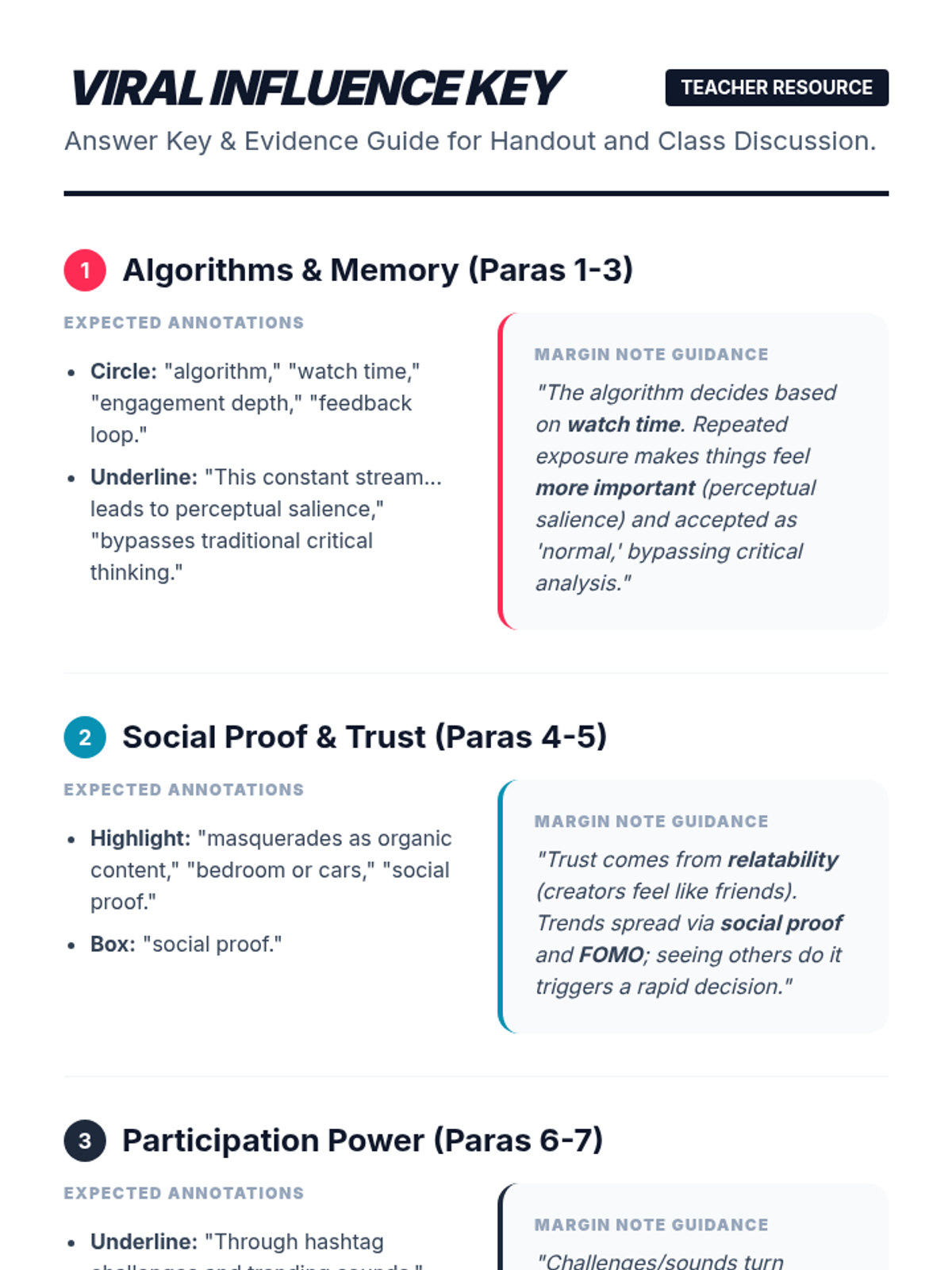
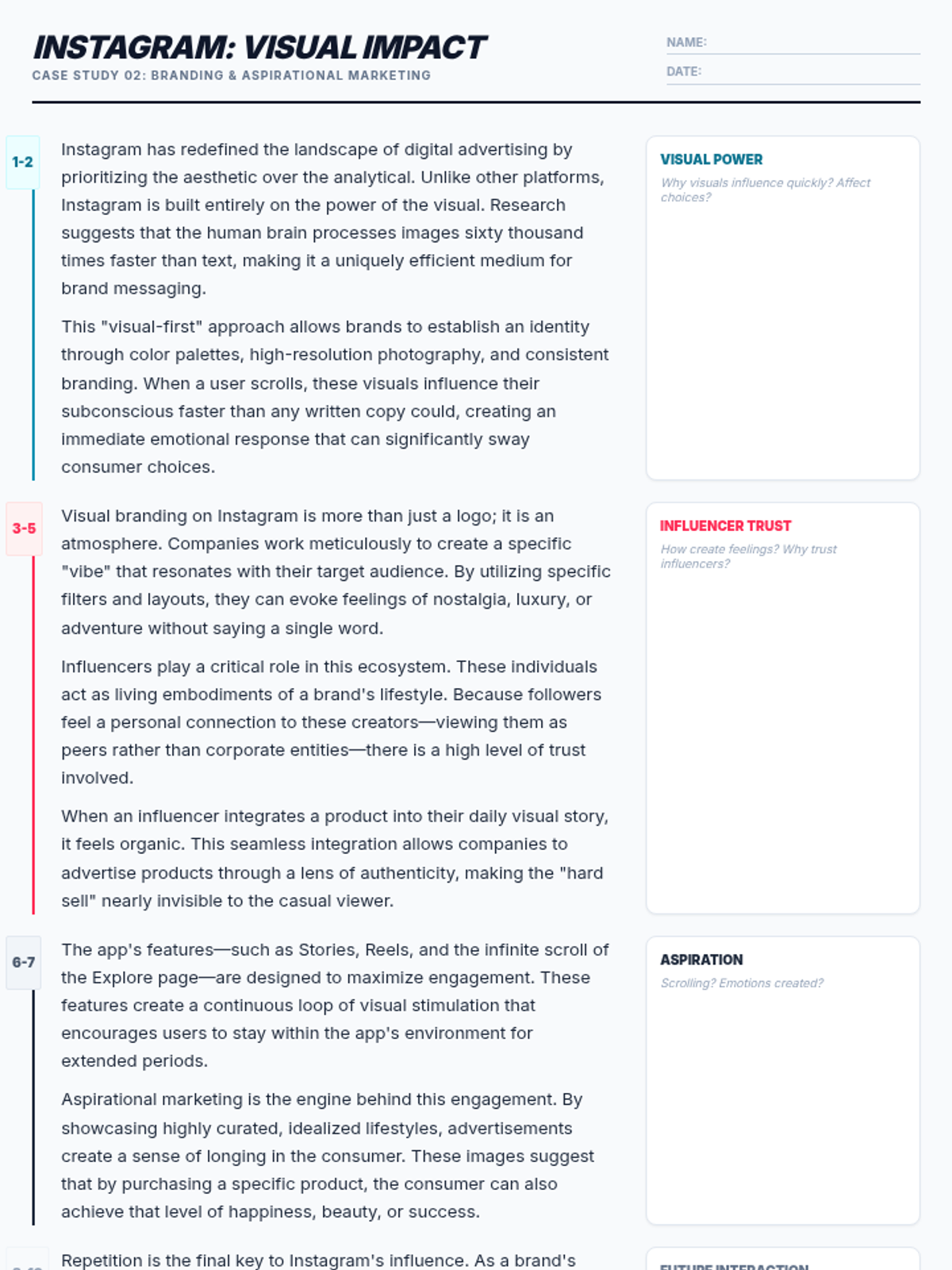
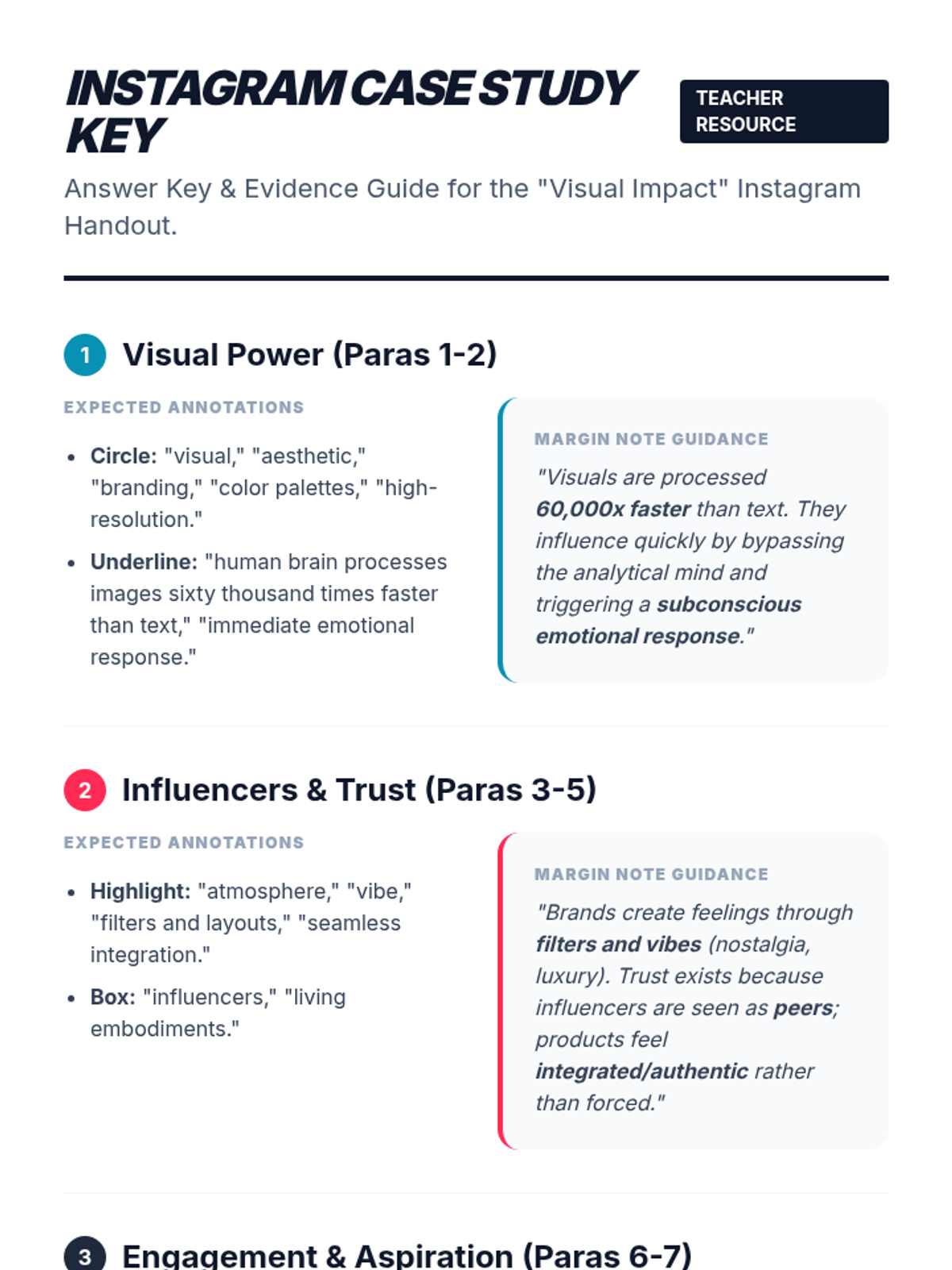
An exploration of TikTok's psychological and marketing influence, focusing on algorithmic power, social proof, and peer-driven trends through modeled annotation practices.
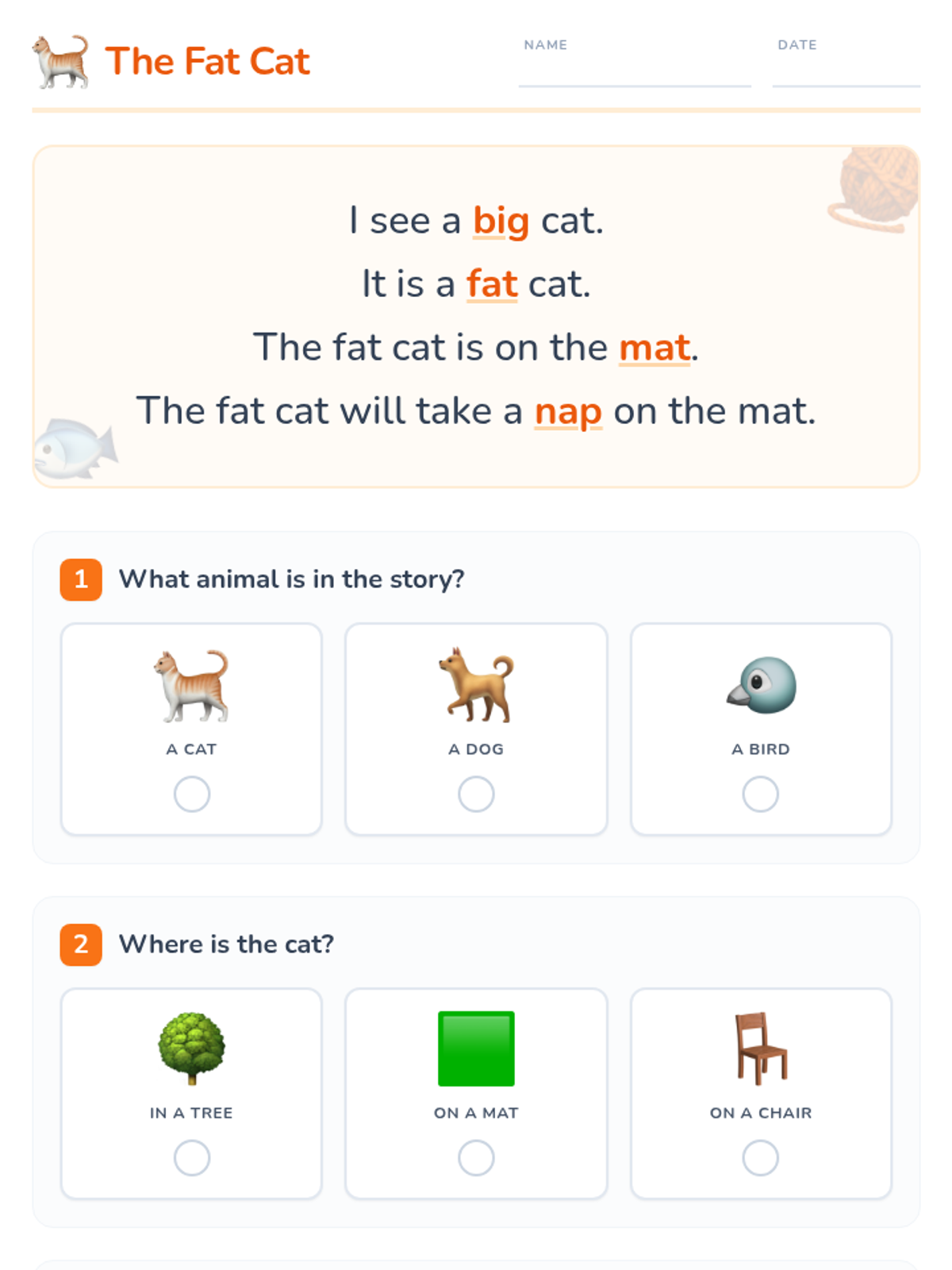
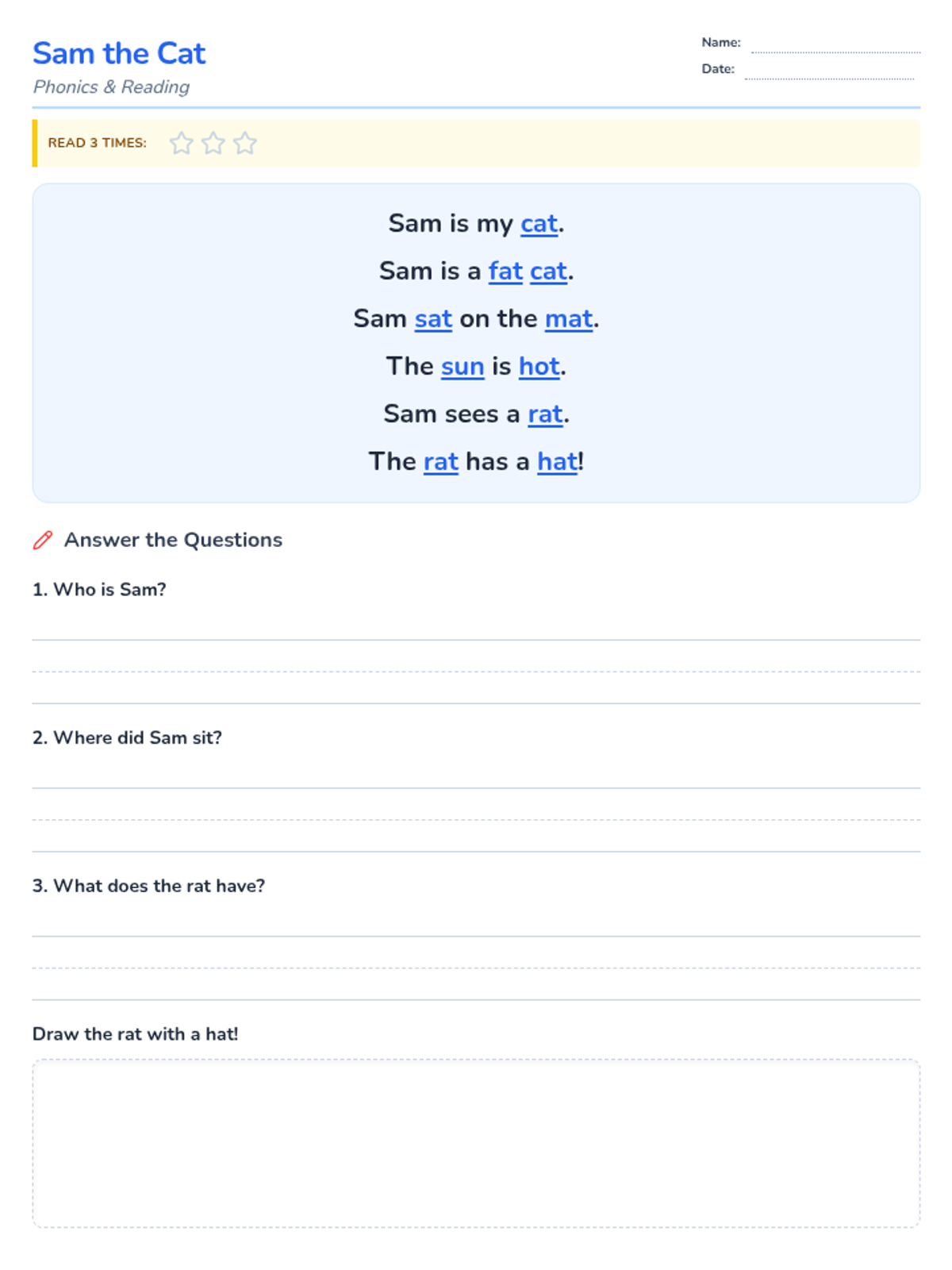
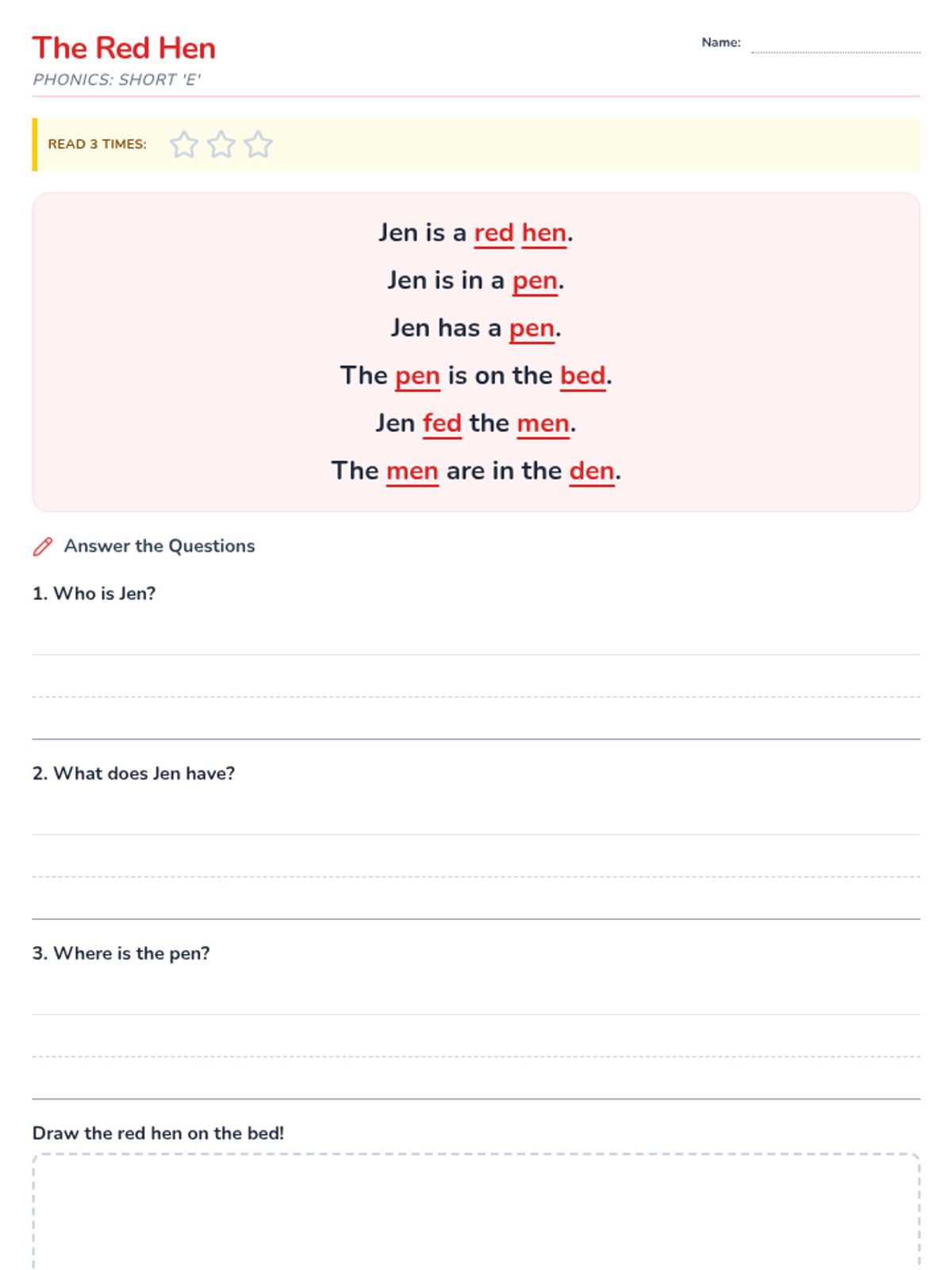
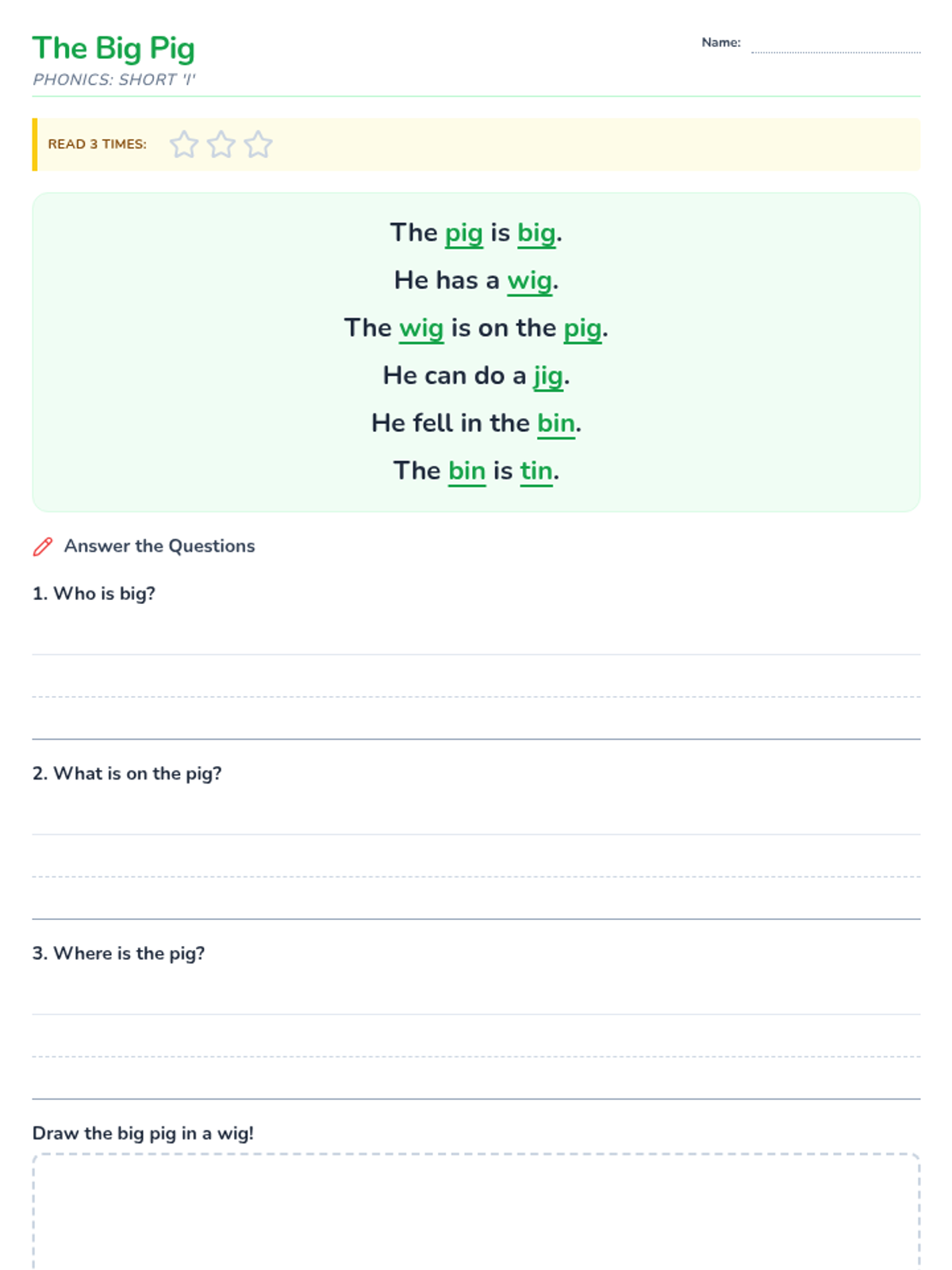
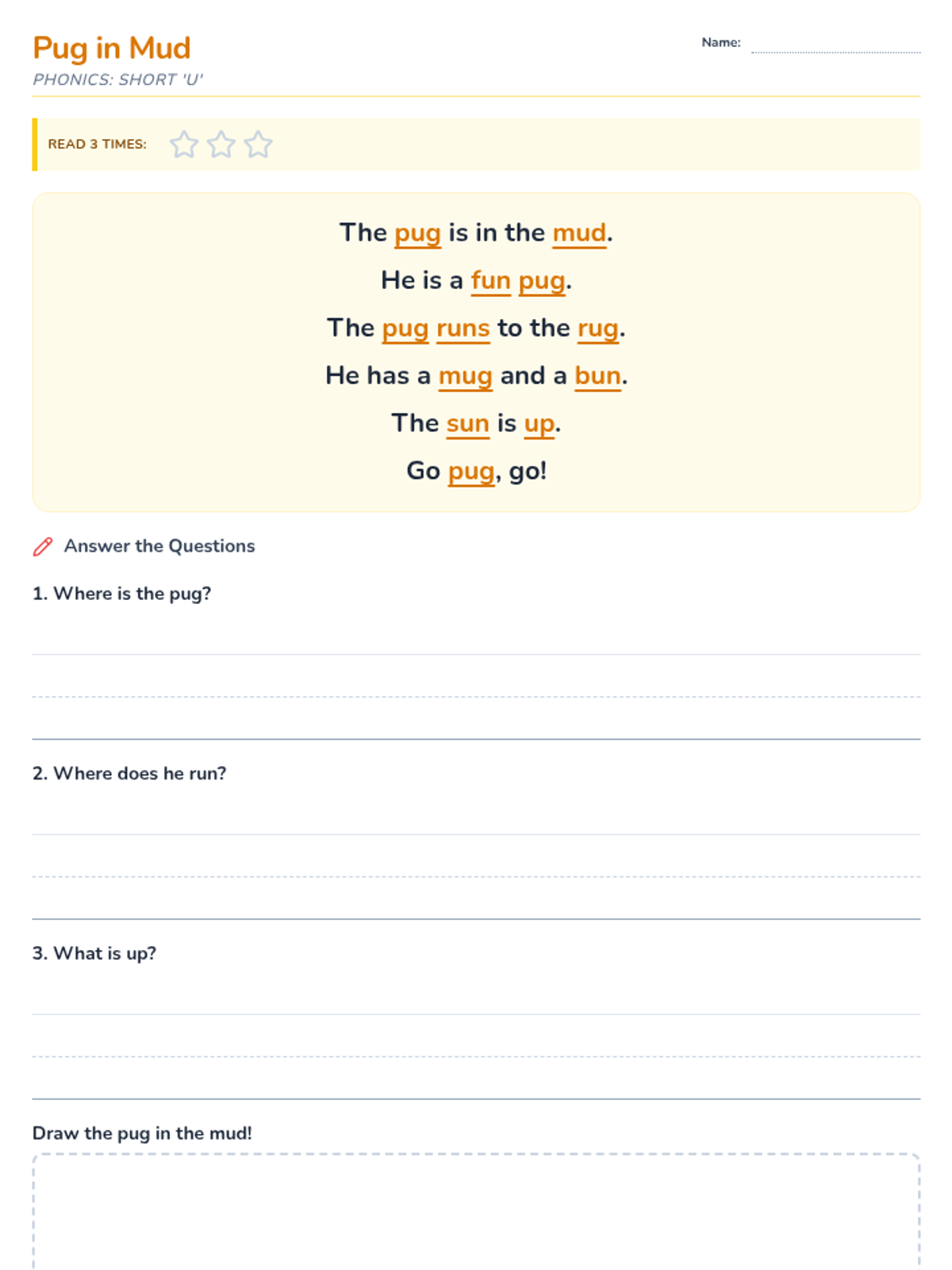
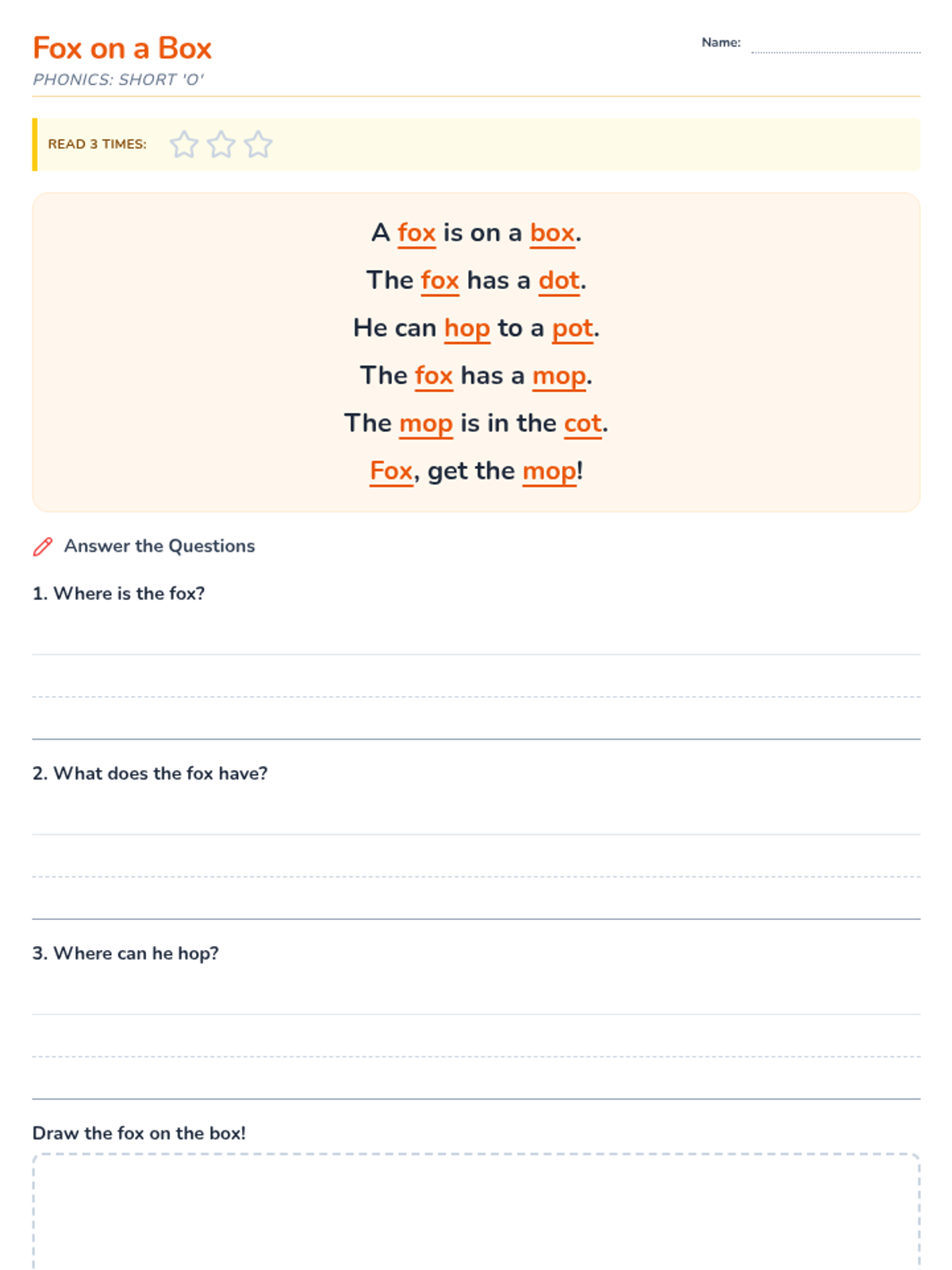
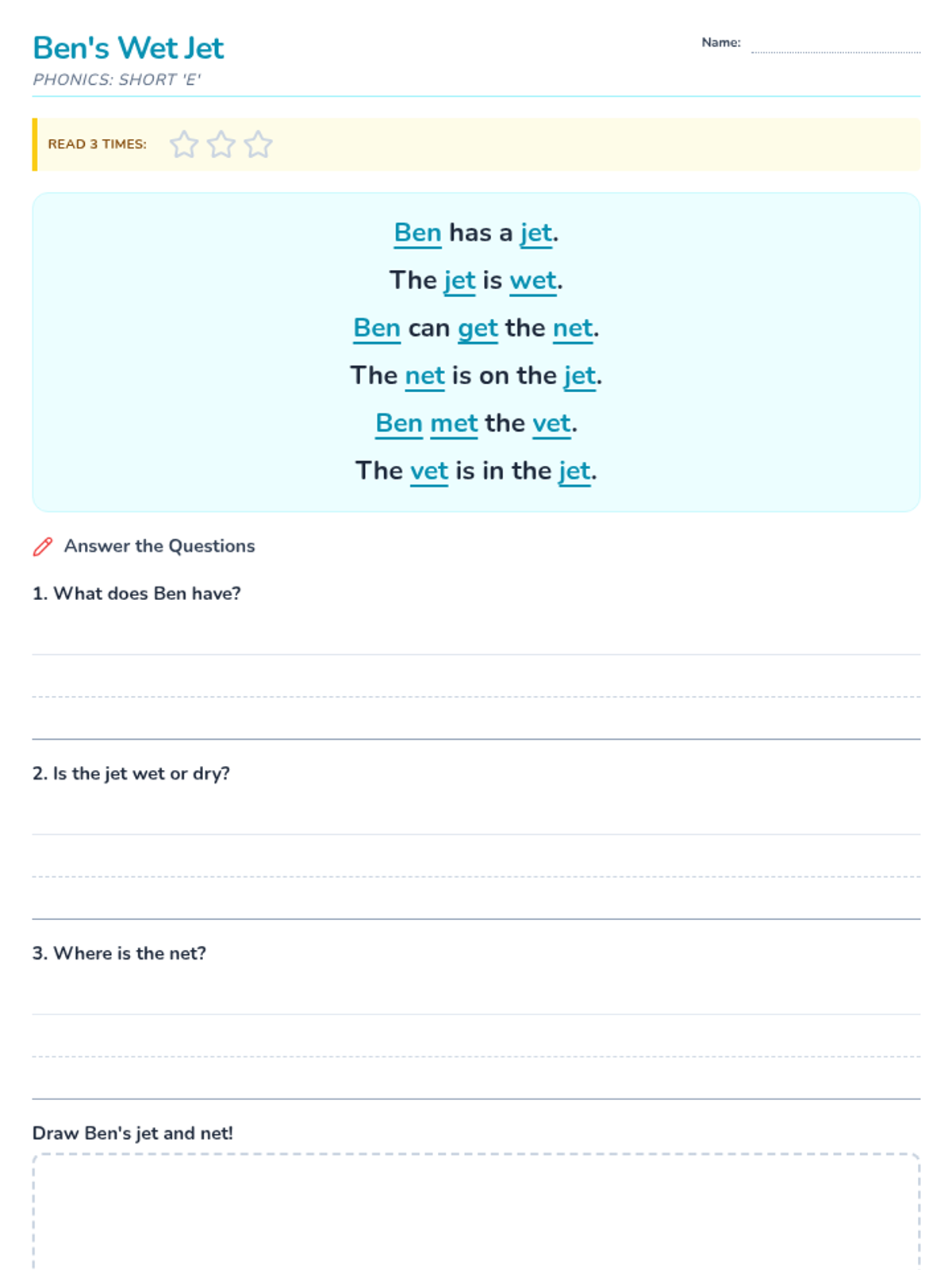
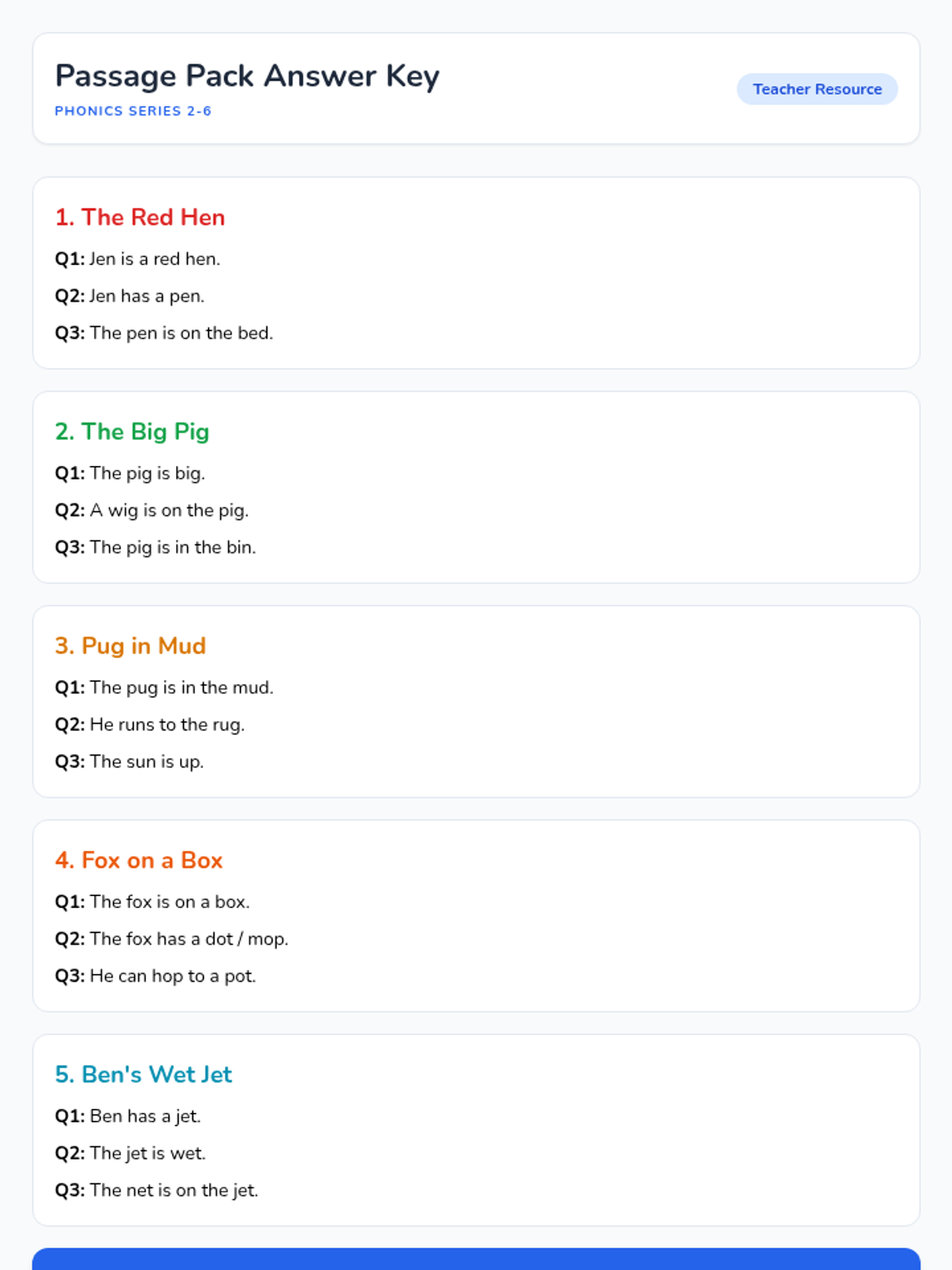
A simple reading comprehension lesson focused on CVC words and basic sentence structure for early readers. Students will read a short story and answer questions with visual support.
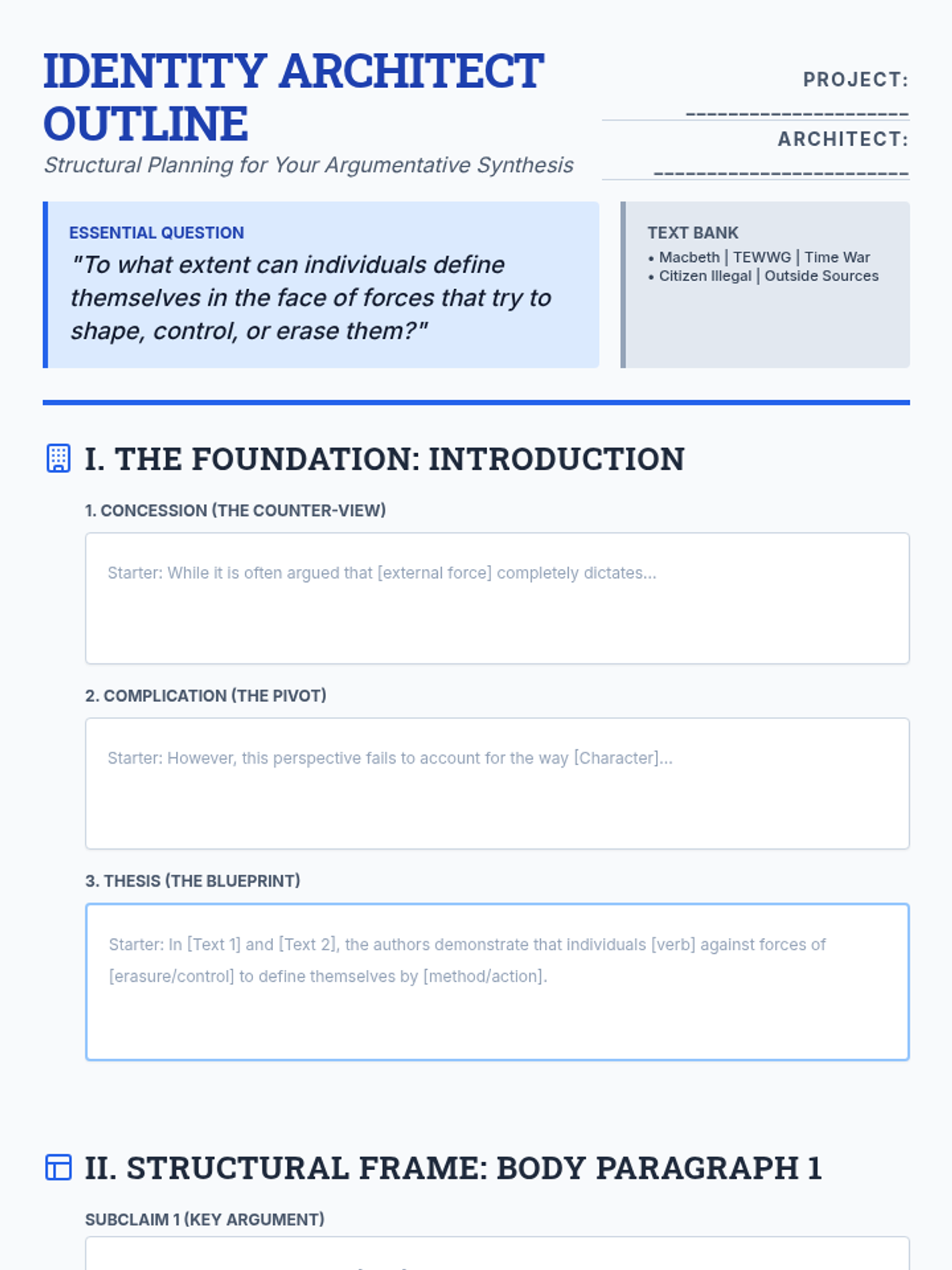
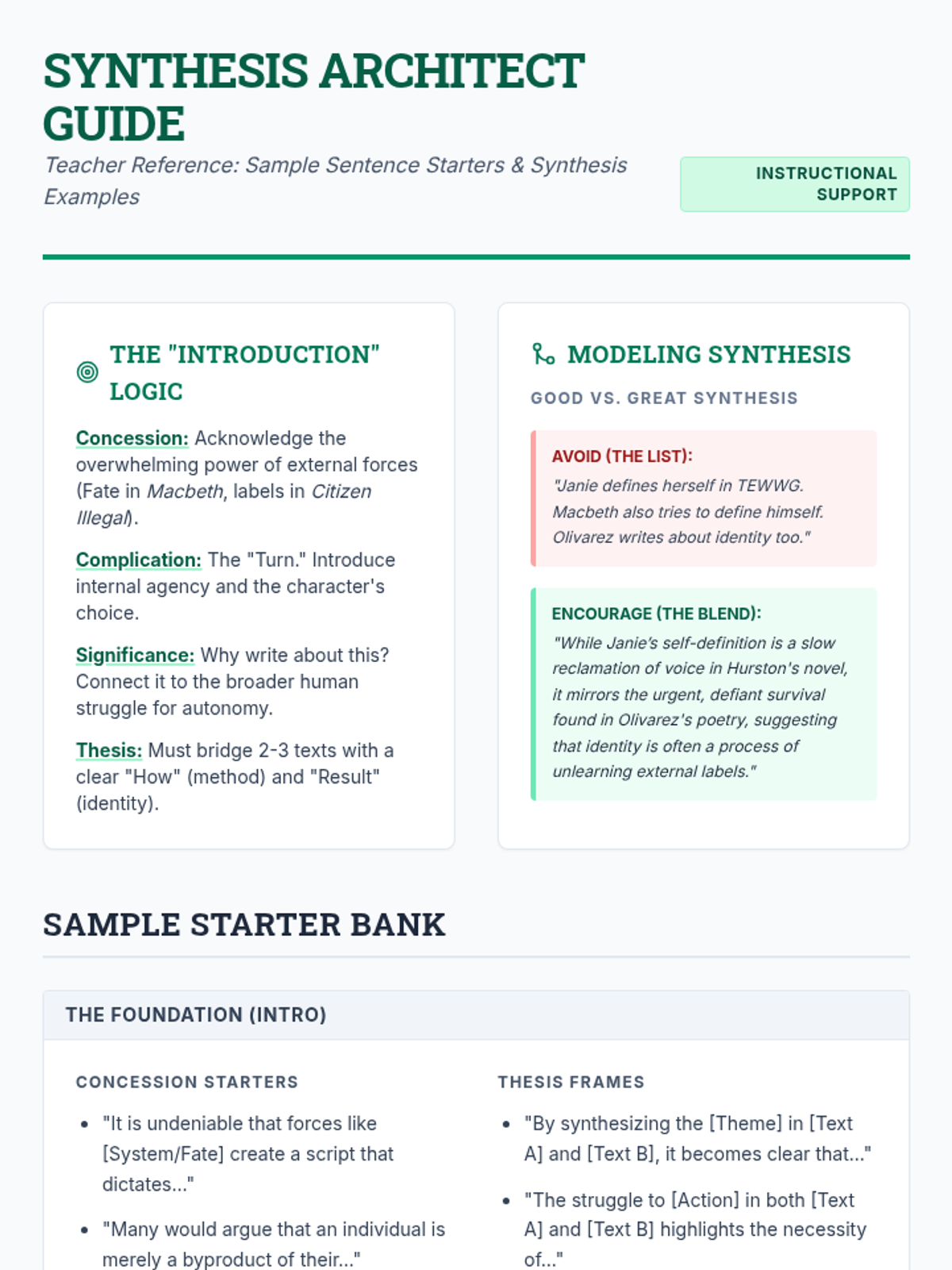
A structured essay planning lesson focused on synthesizing multiple texts (Macbeth, Their Eyes Were Watching God, Citizen Illegal, and Time War) to answer an essential question about identity and external forces. Students use an 'Architectural Blueprint' theme to build their argumentative outlines with specific sentence starters.
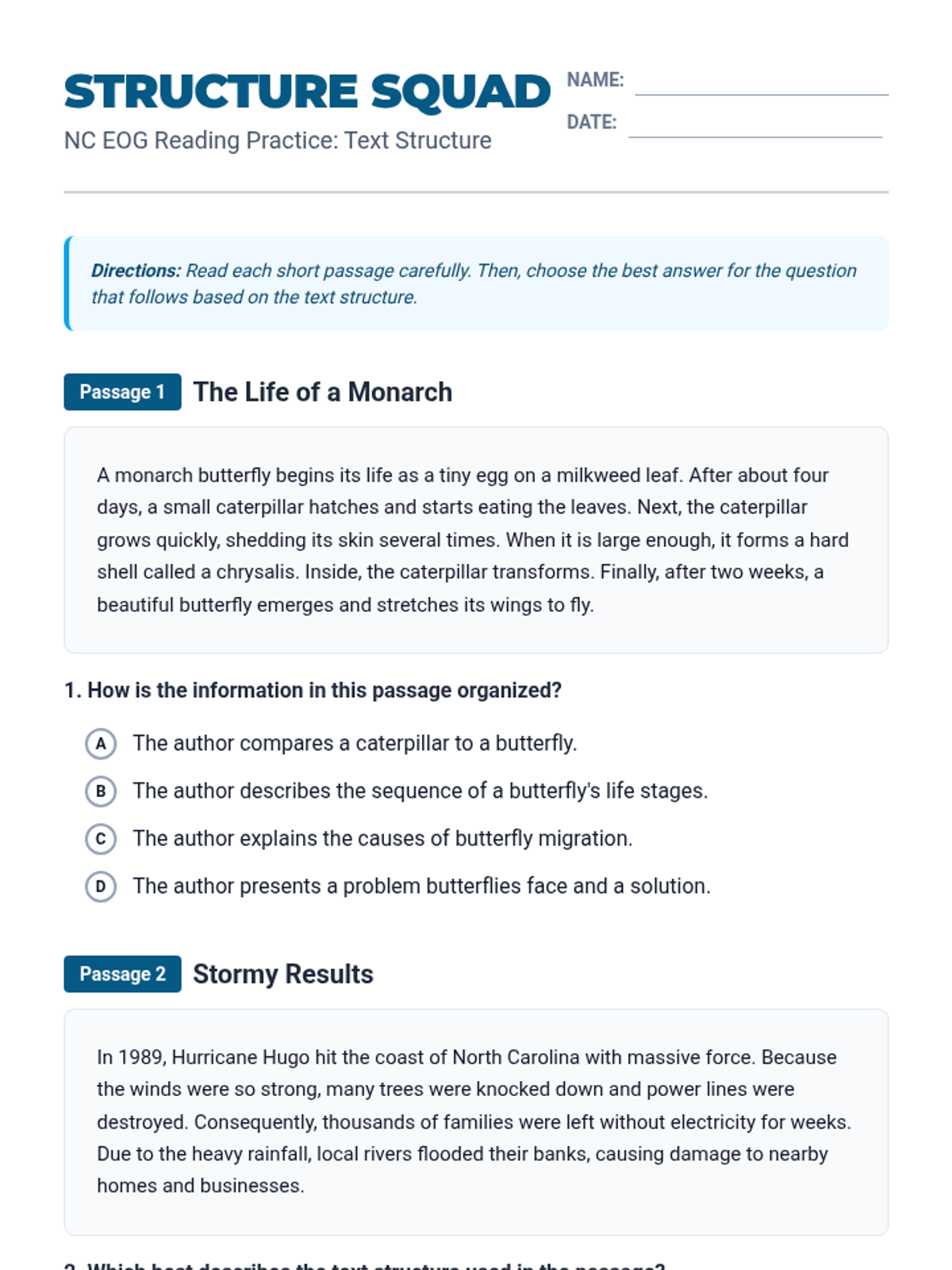
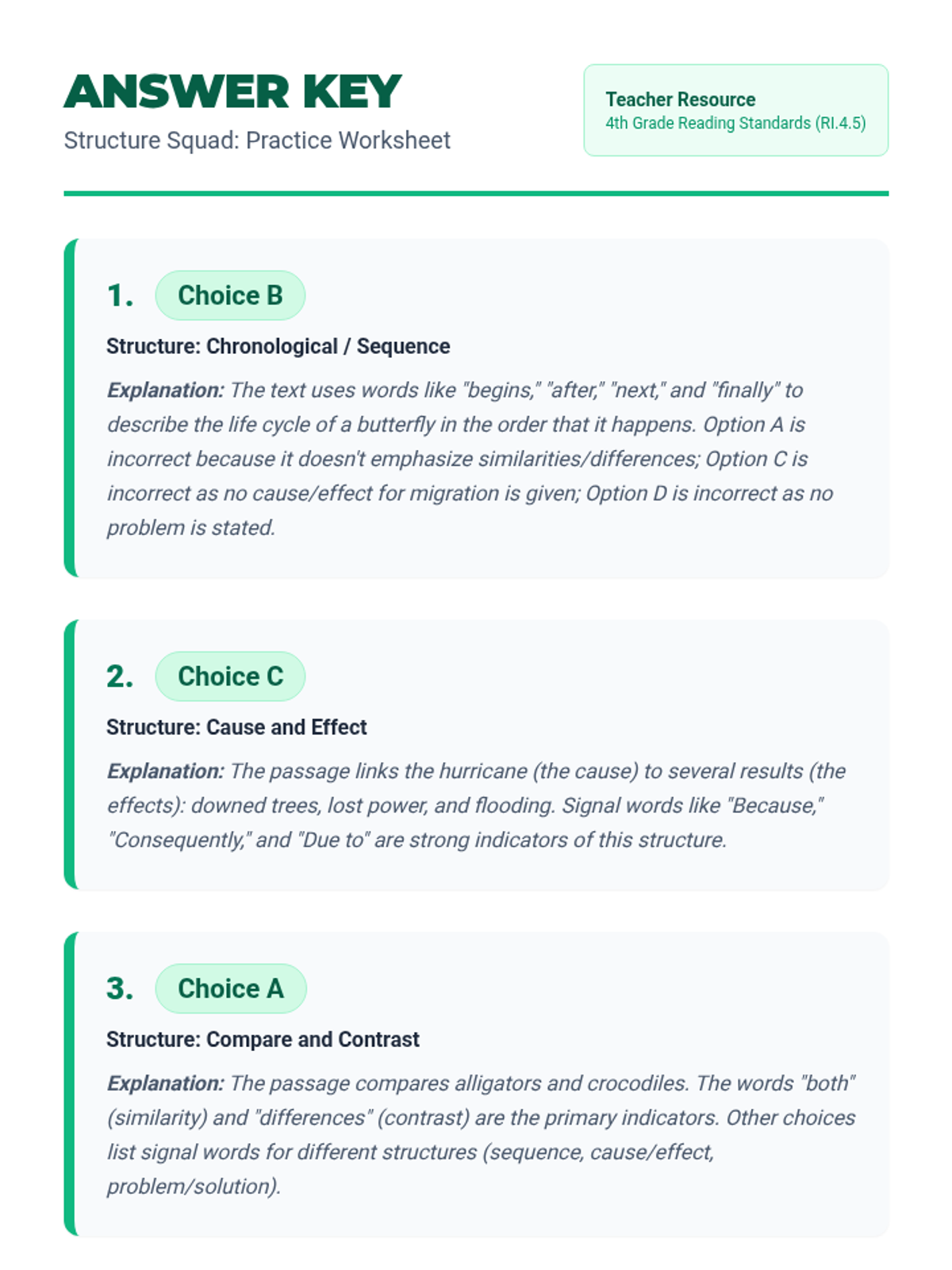
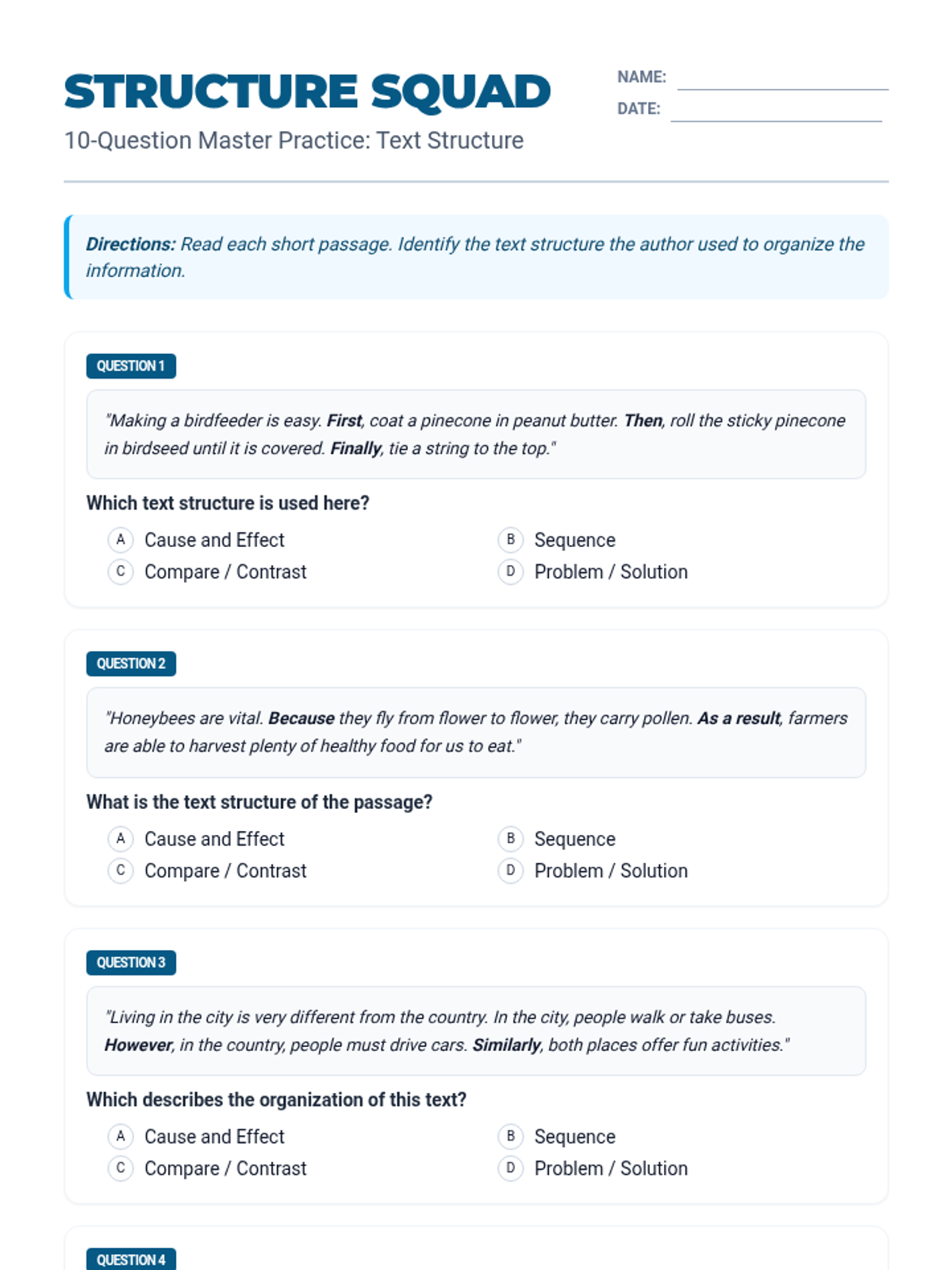
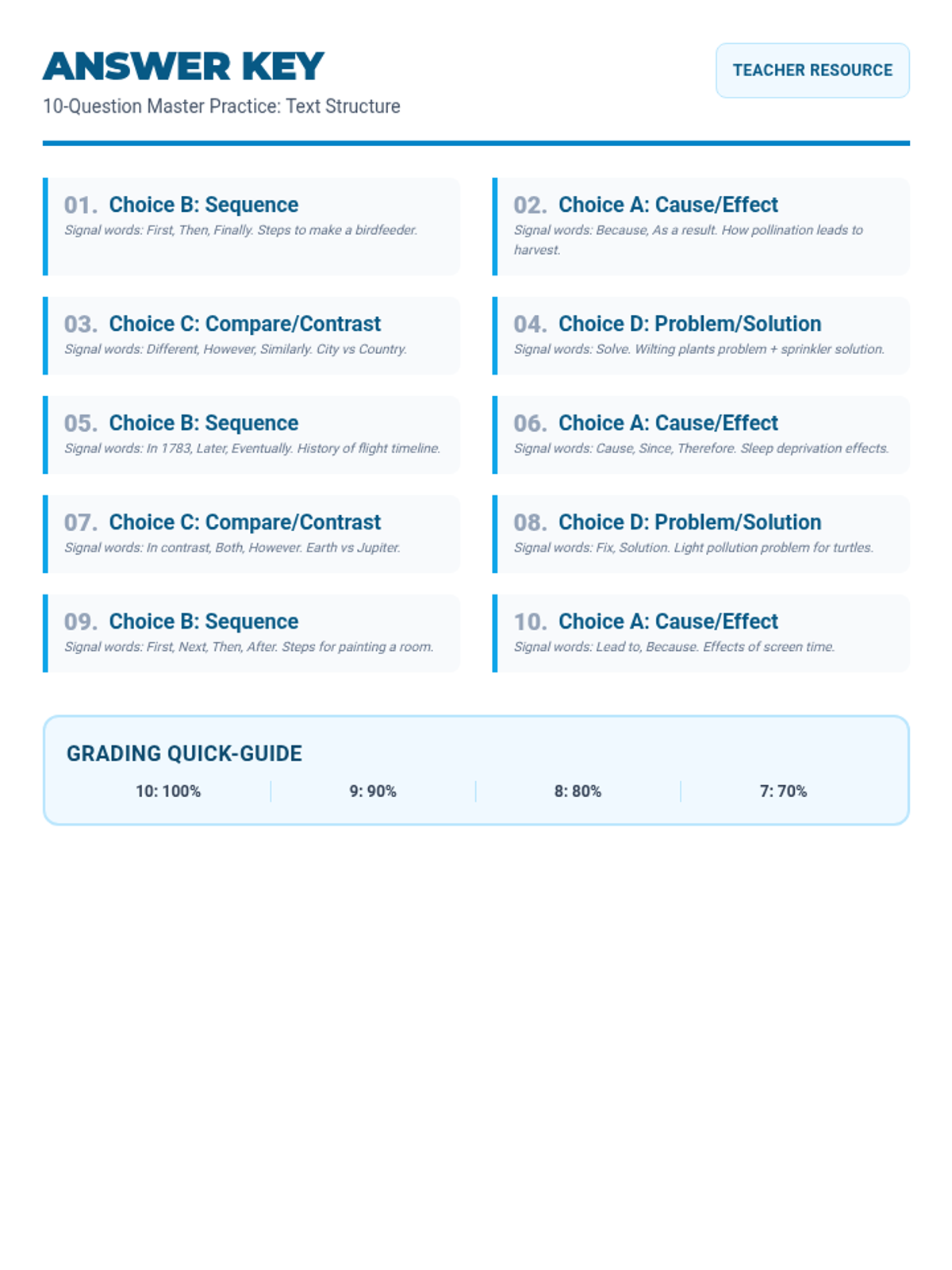
A lesson focused on identifying and analyzing four key text structures (Cause and Effect, Compare and Contrast, Chronological/Sequence, and Problem and Solution) using NC EOG-style short passages and questions.
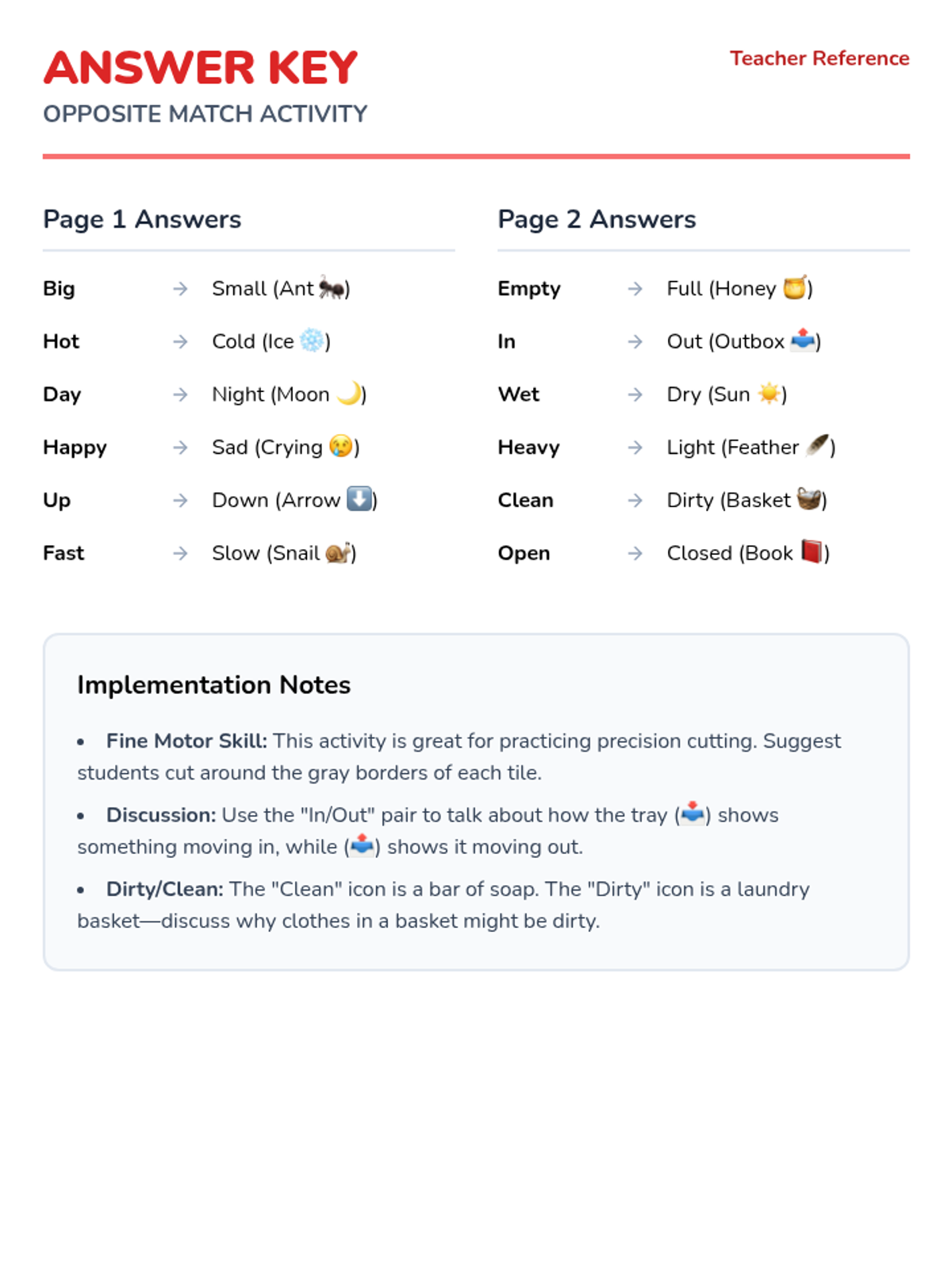
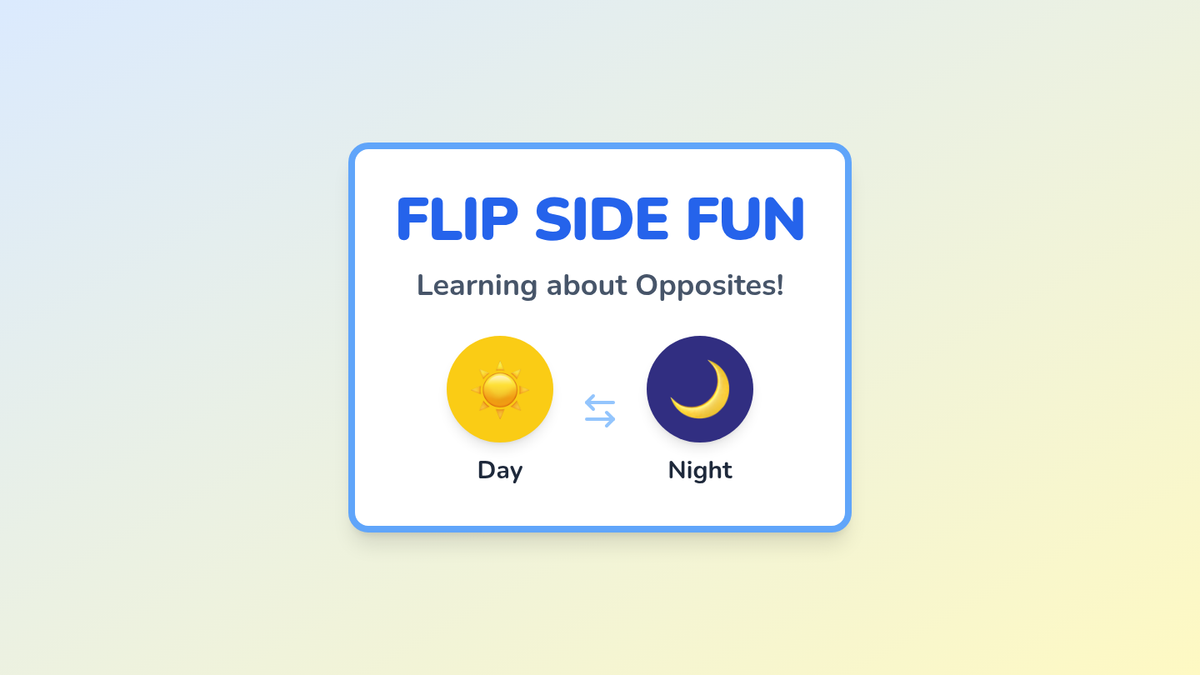
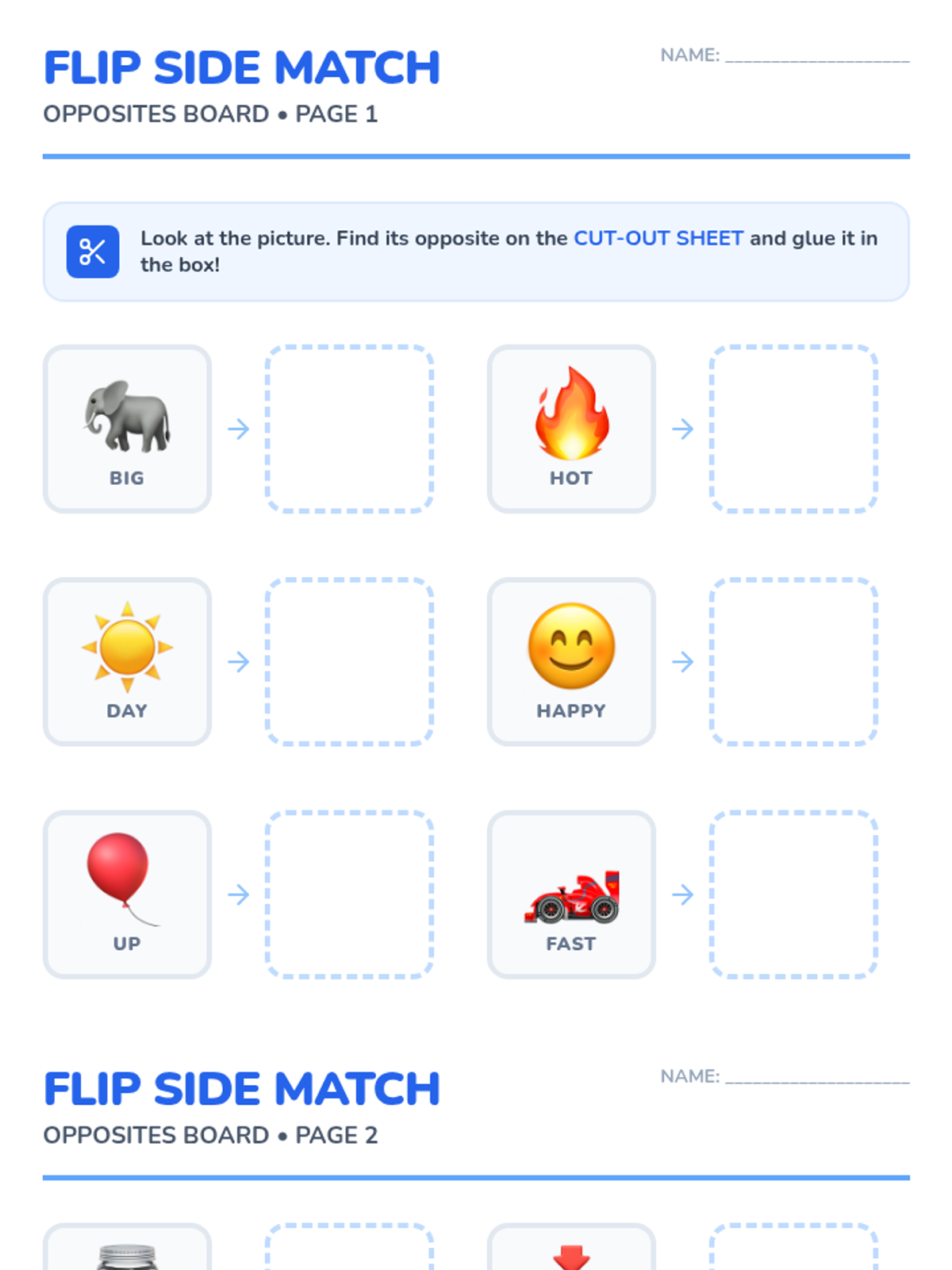
A foundational lesson on opposites using visual matching and hands-on cut-and-paste activities for kindergarten students.
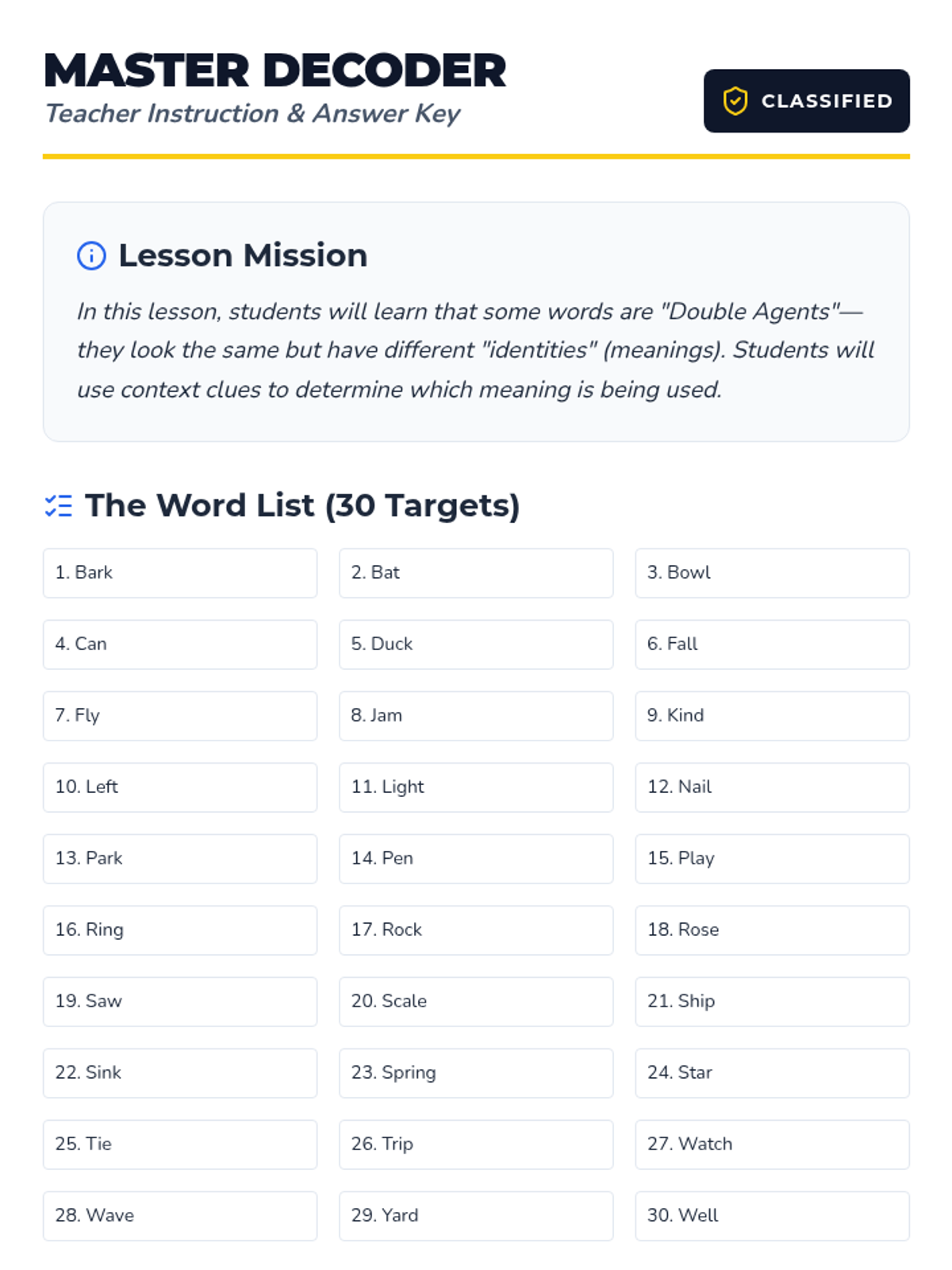
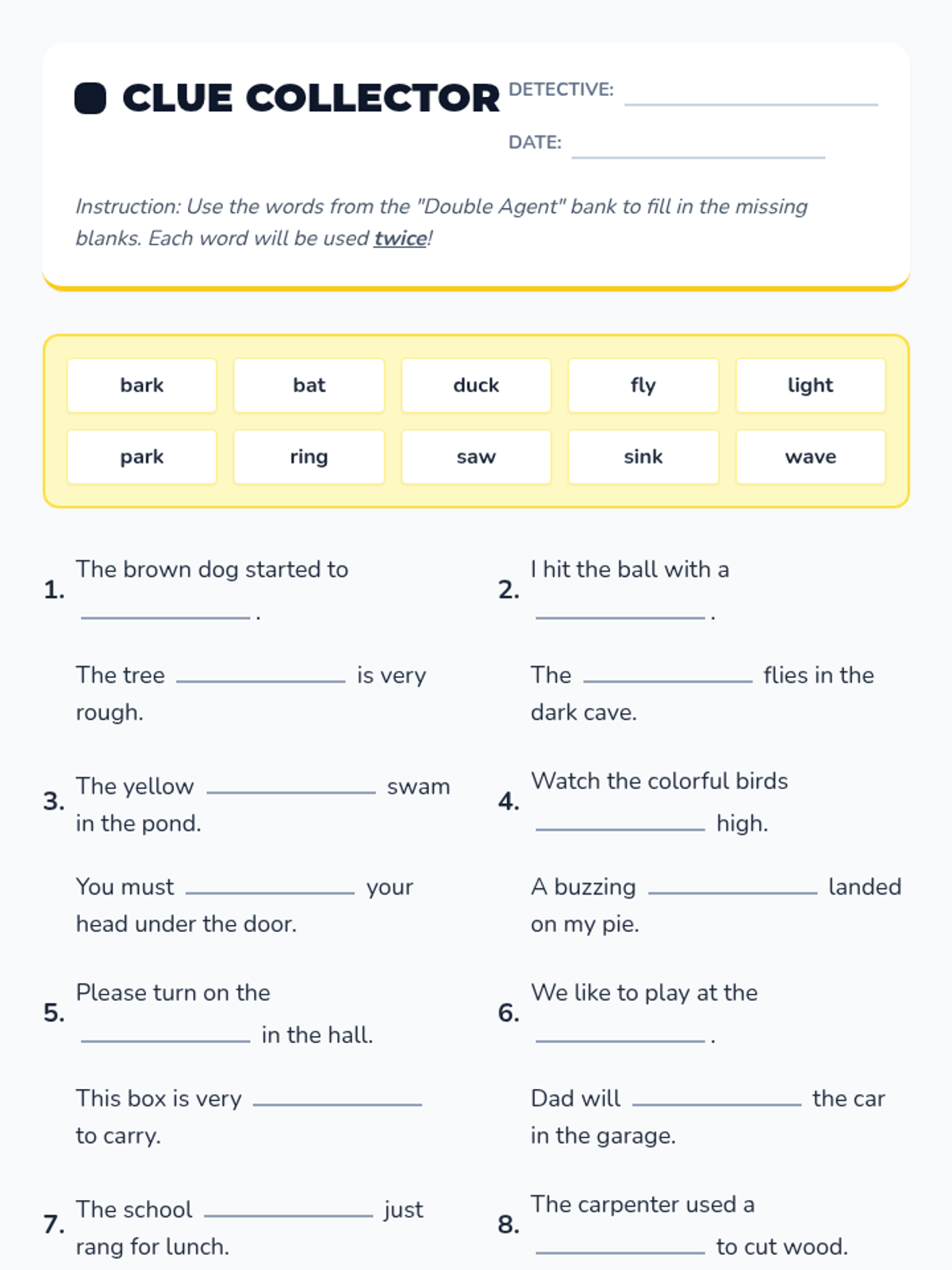
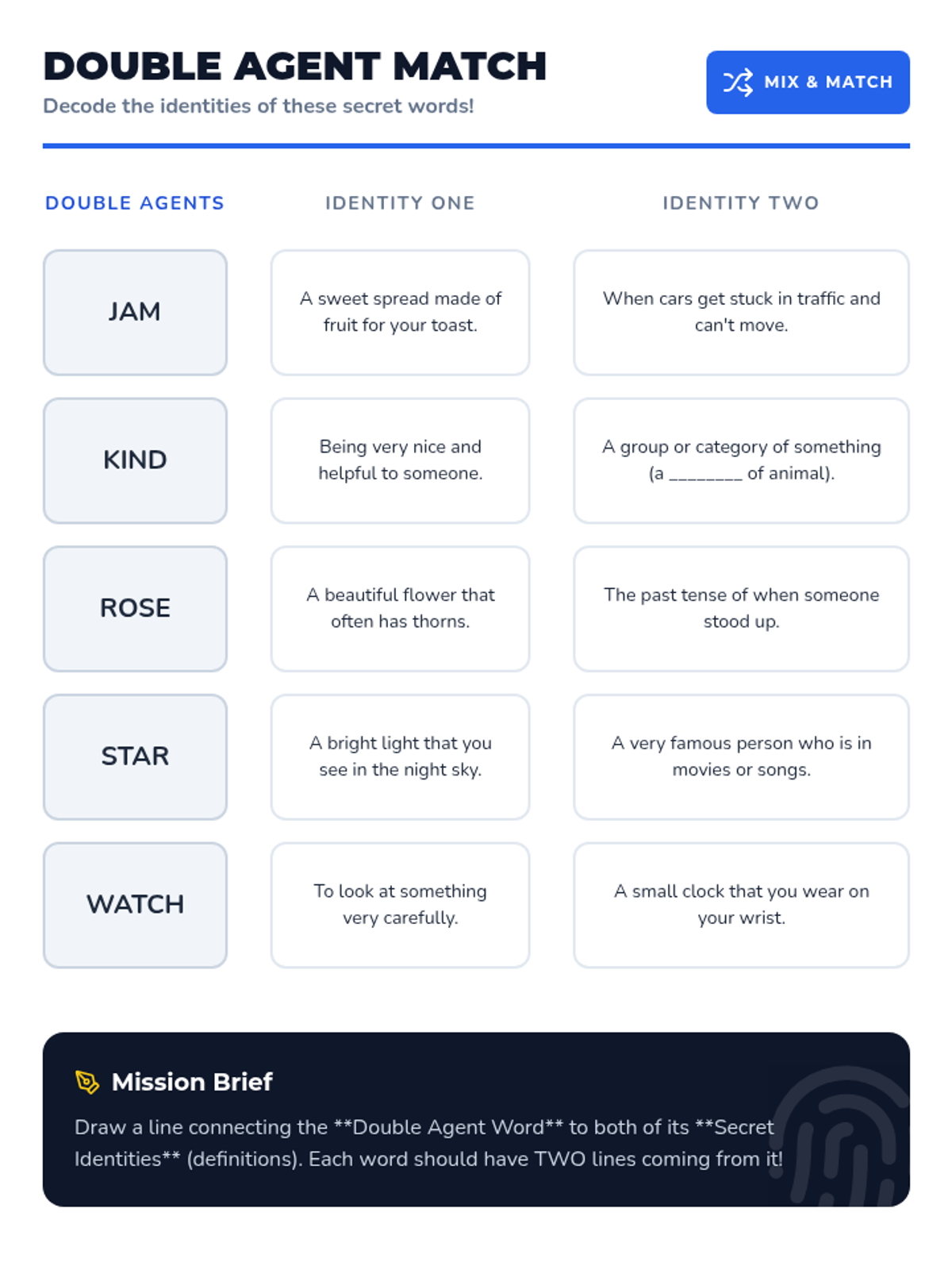
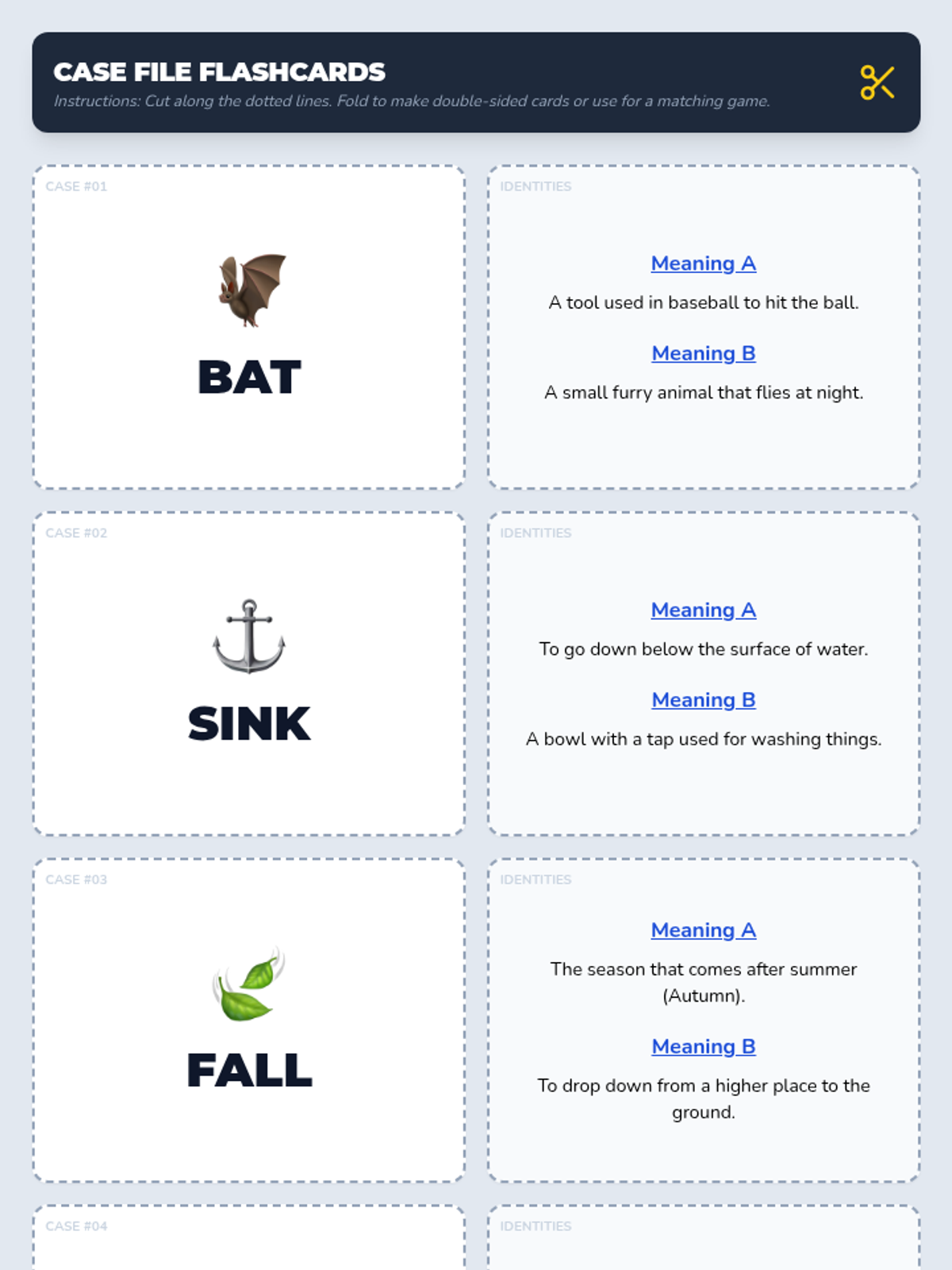
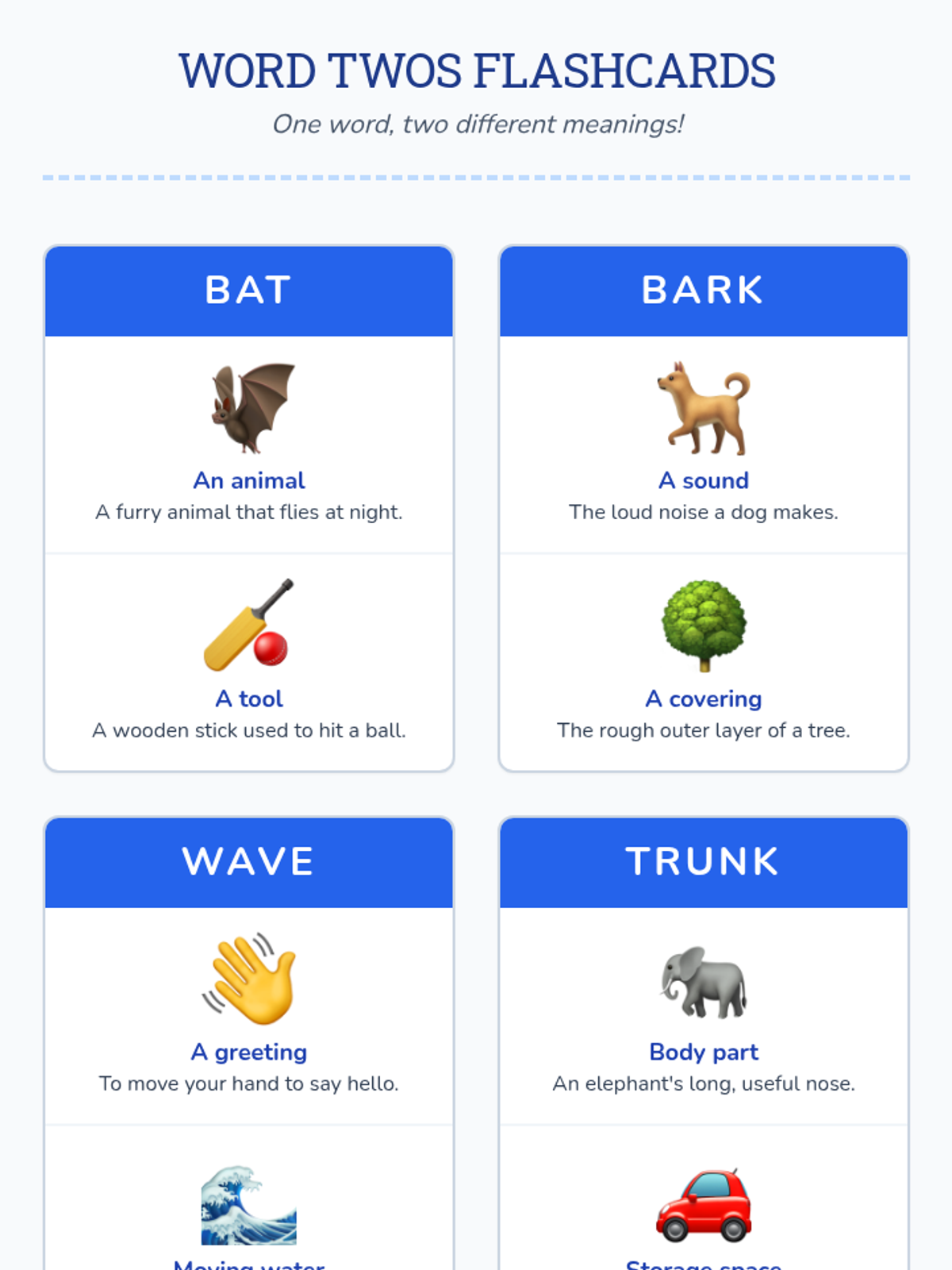
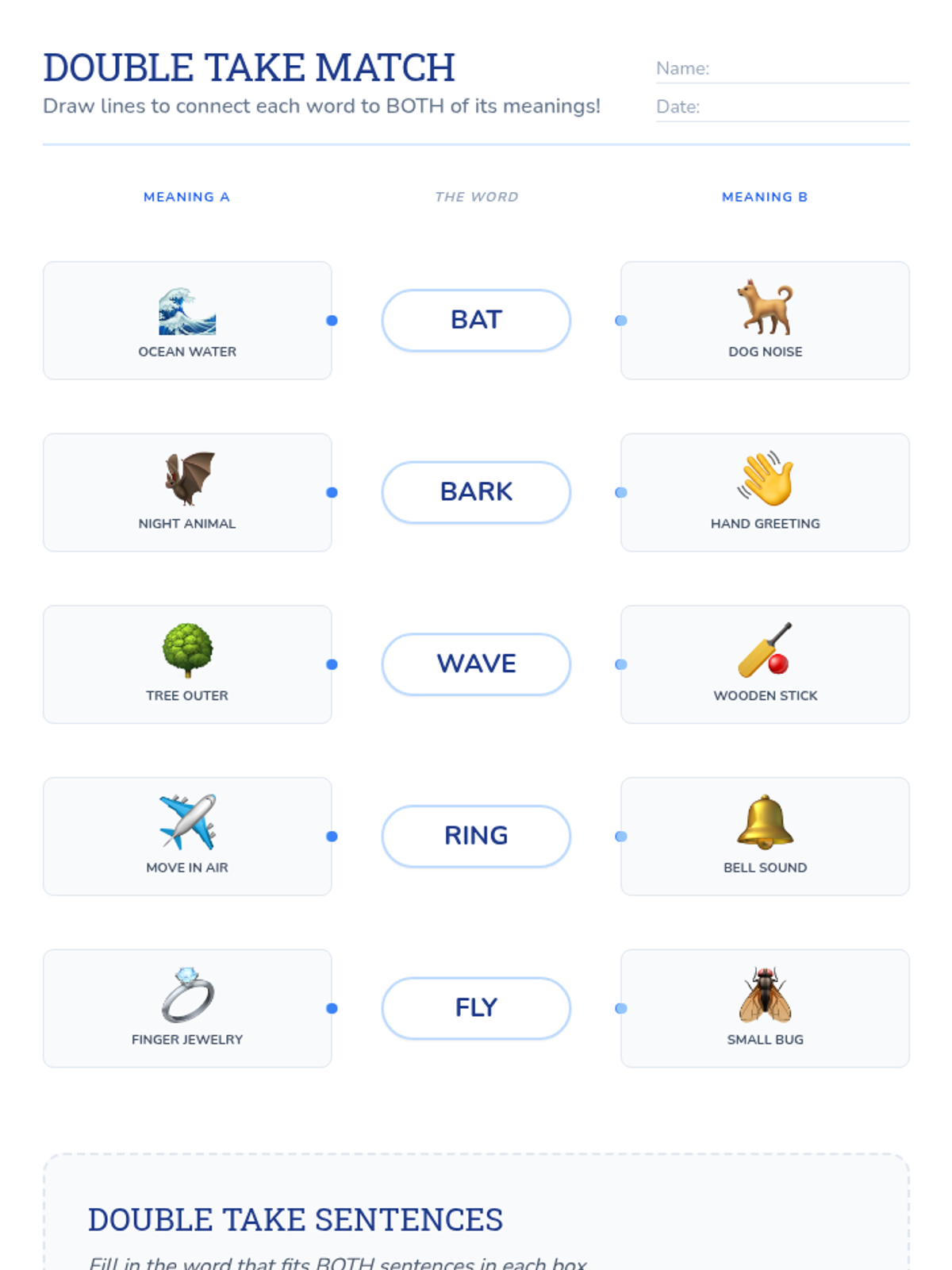
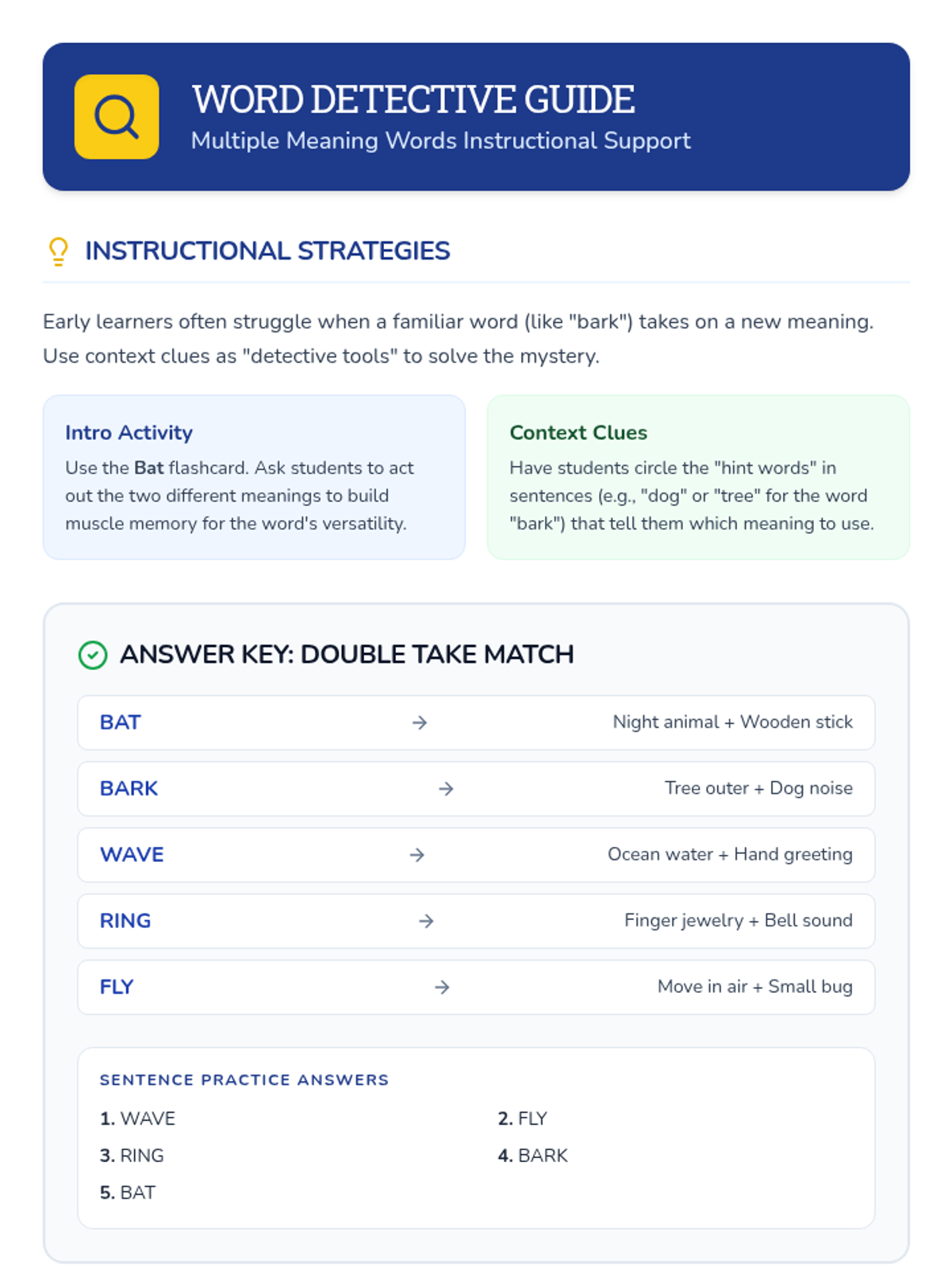
An introductory lesson on identifying and using multiple-meaning words in context. Students explore 30 common homonyms through visual aids, practice exercises, and collaborative activities.
A lesson focused on identifying and understanding common multiple-meaning words for early elementary students through visual aids and matching activities.
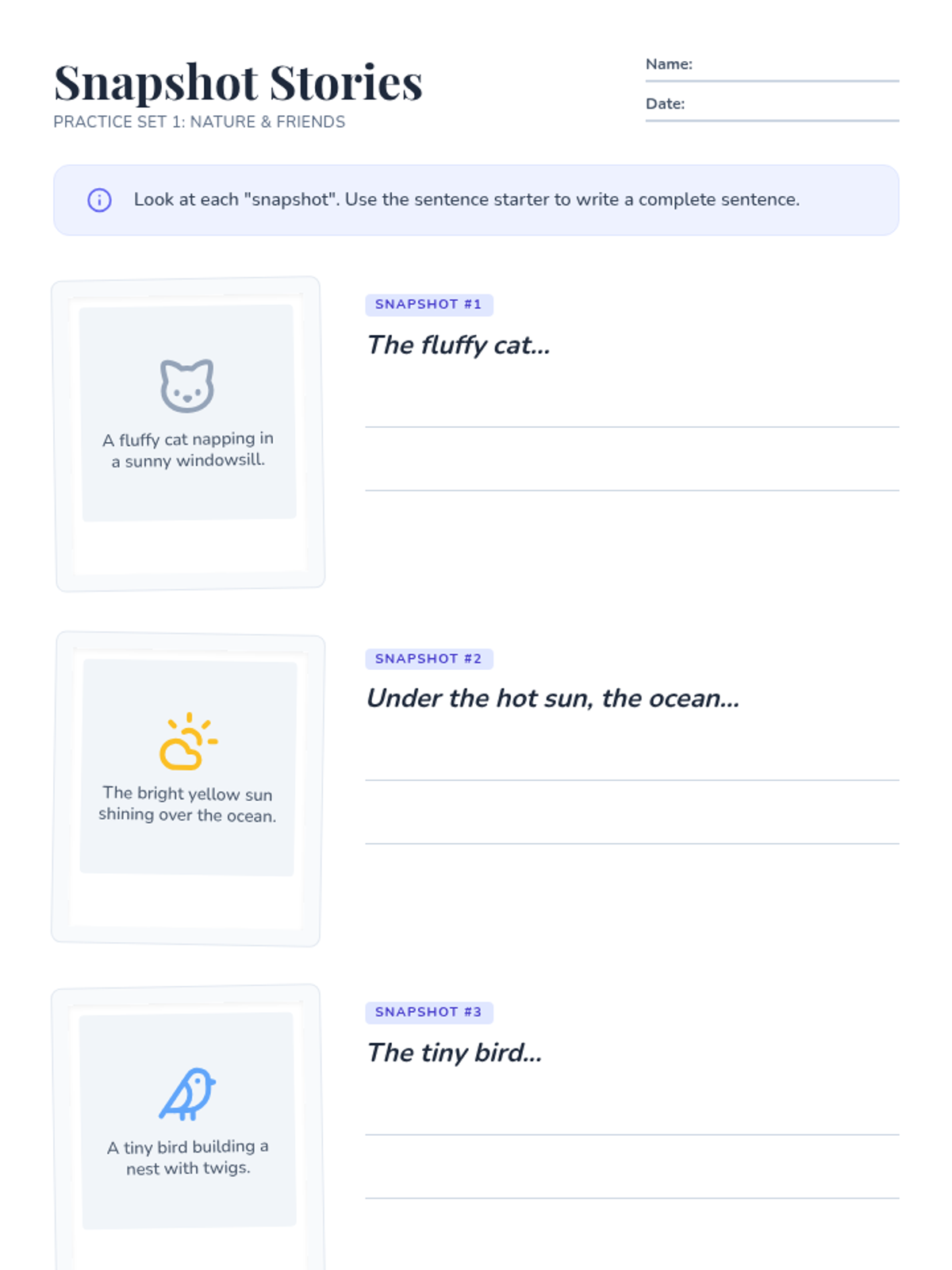
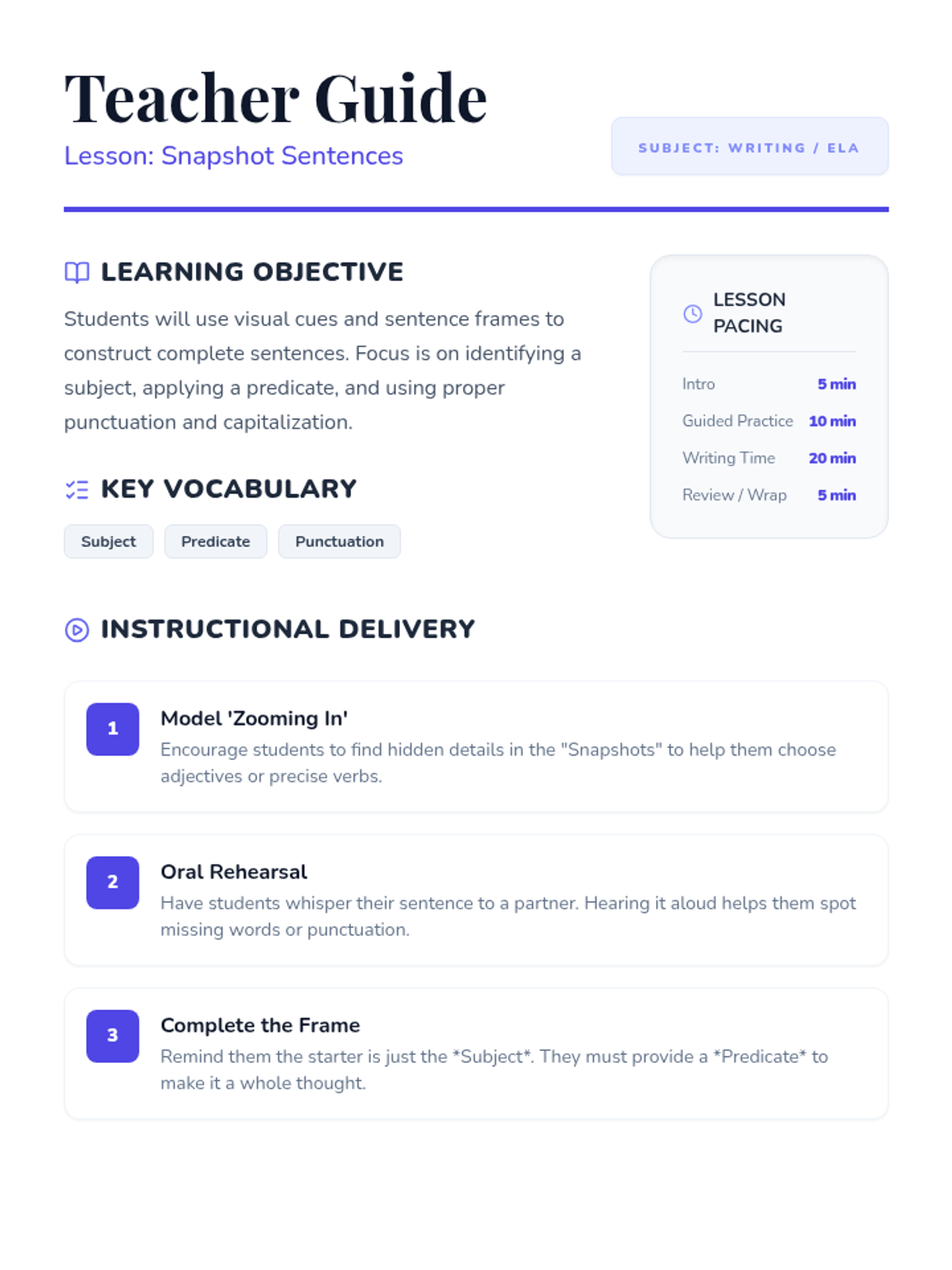
A foundational writing lesson that uses engaging visual prompts and sentence starters to help students construct complete, descriptive sentences. Students observe details in 'snapshots' and use provided frames to ensure their sentences have a clear subject and action.
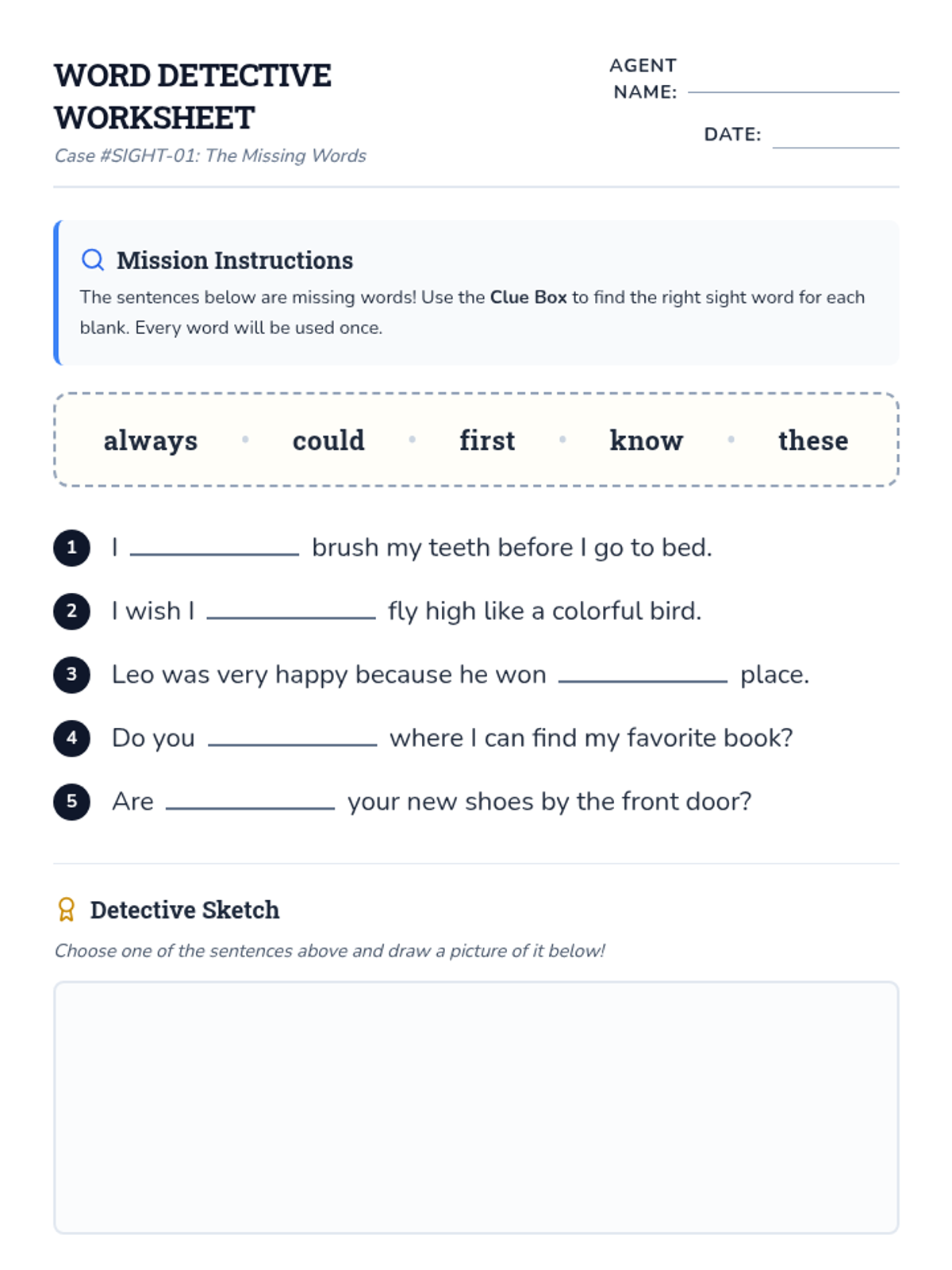
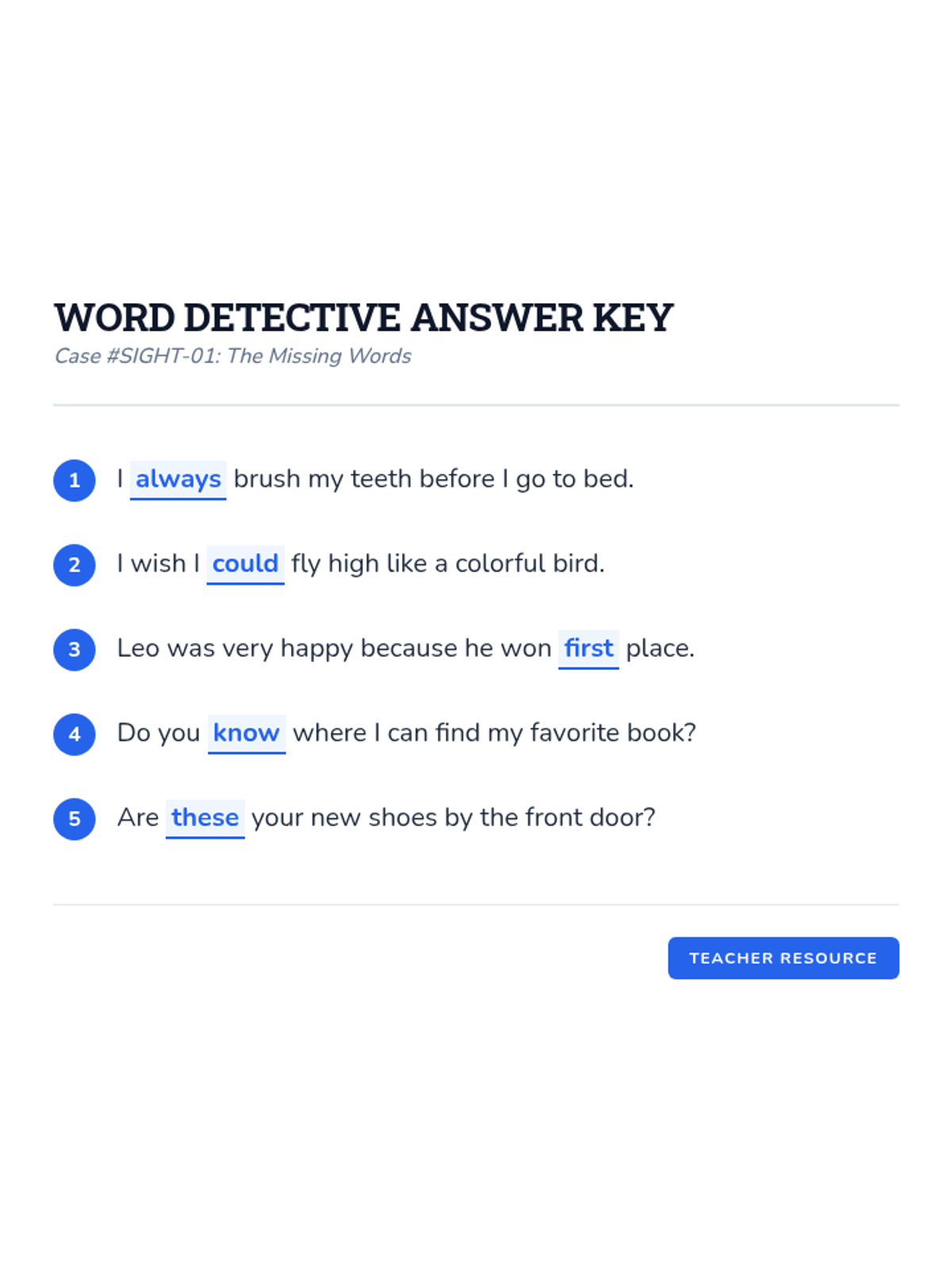
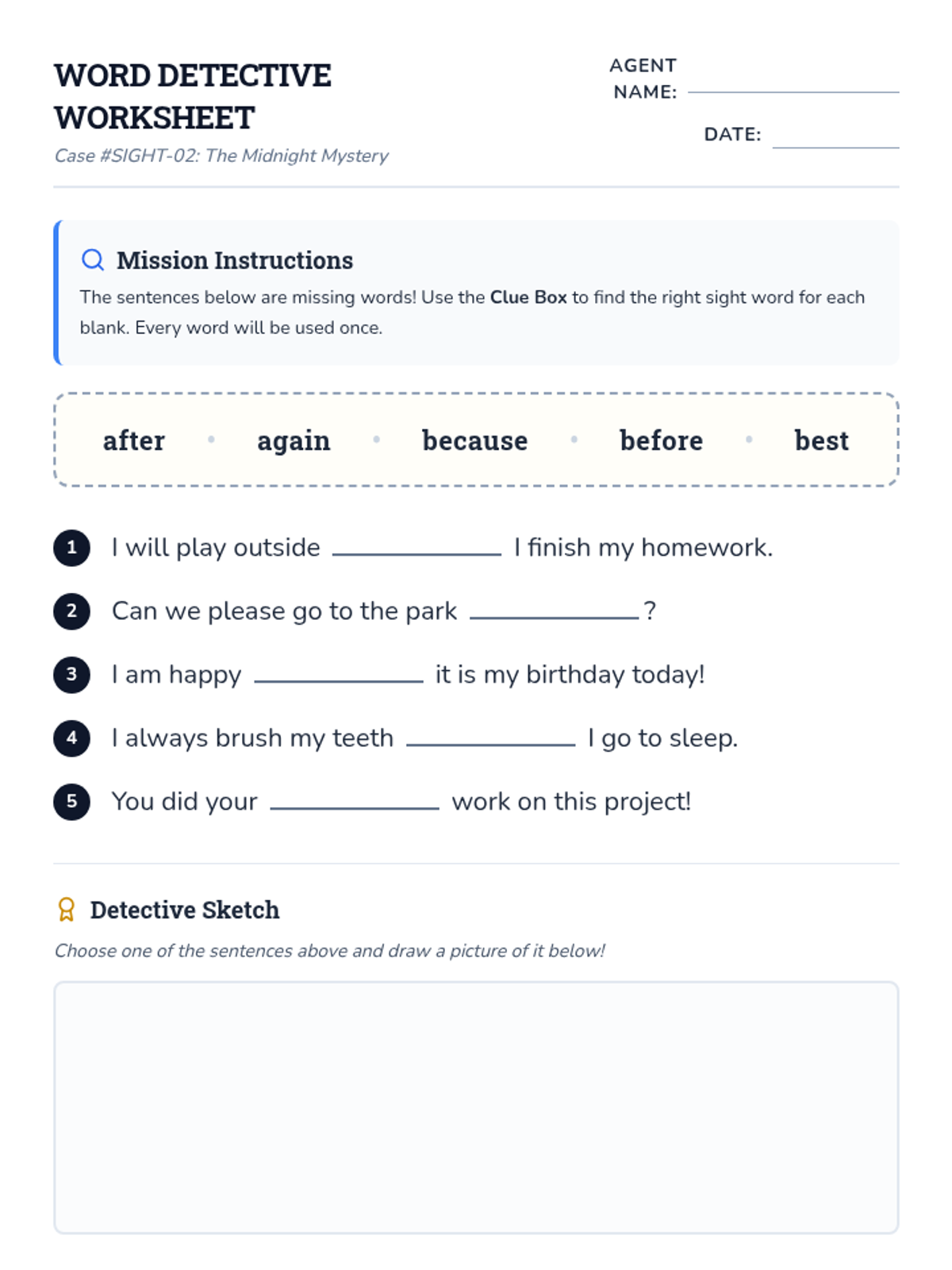
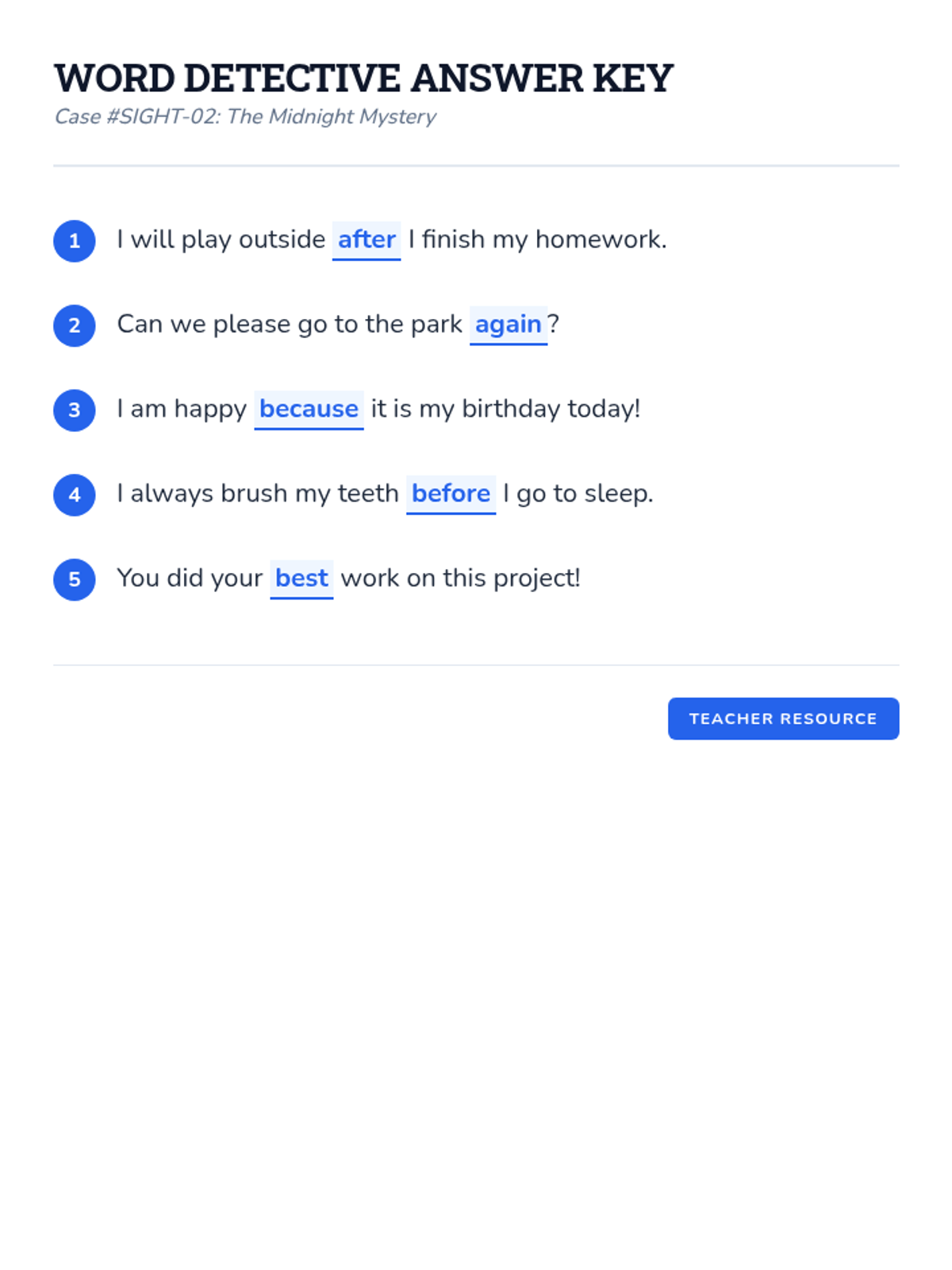
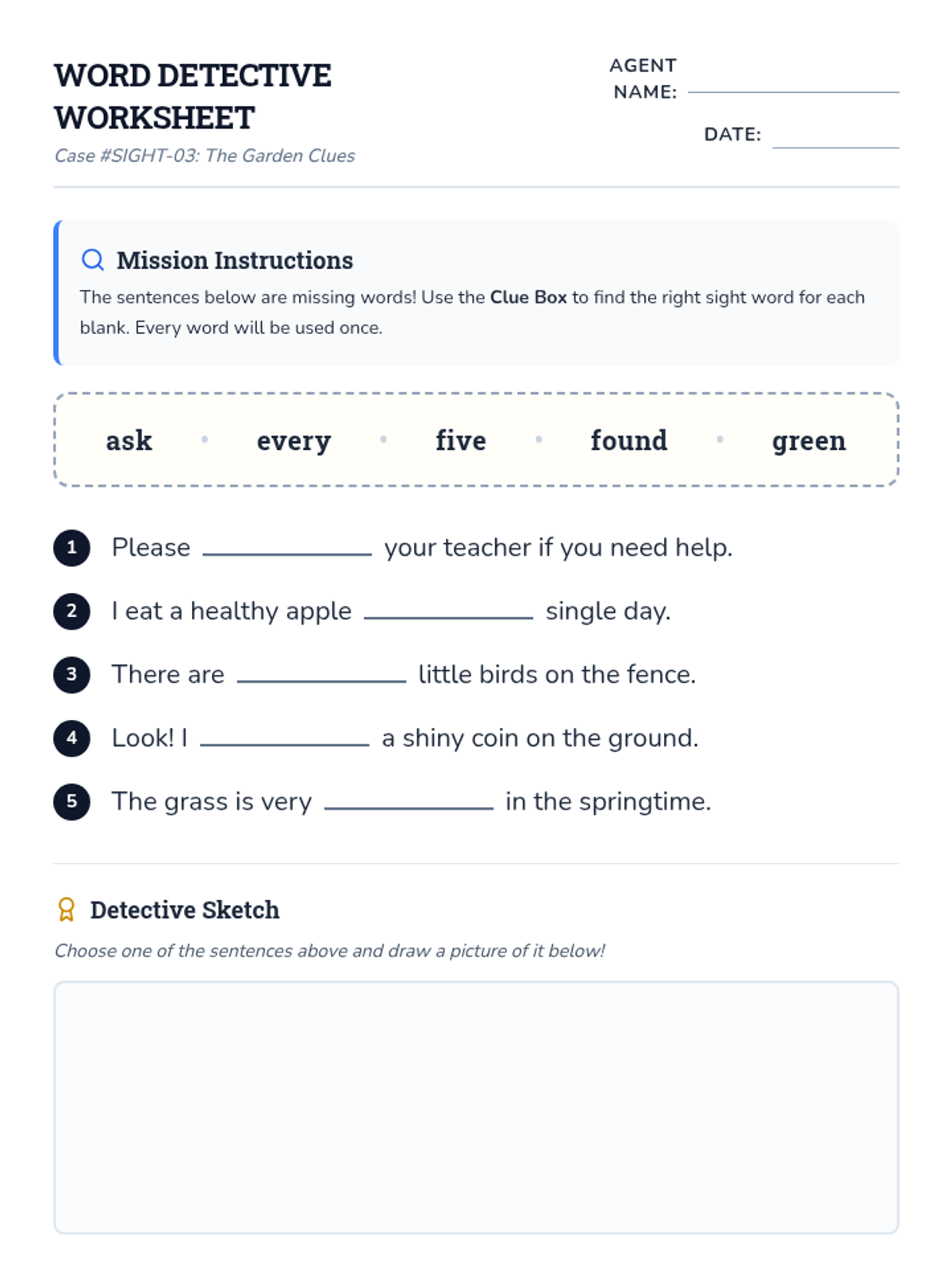
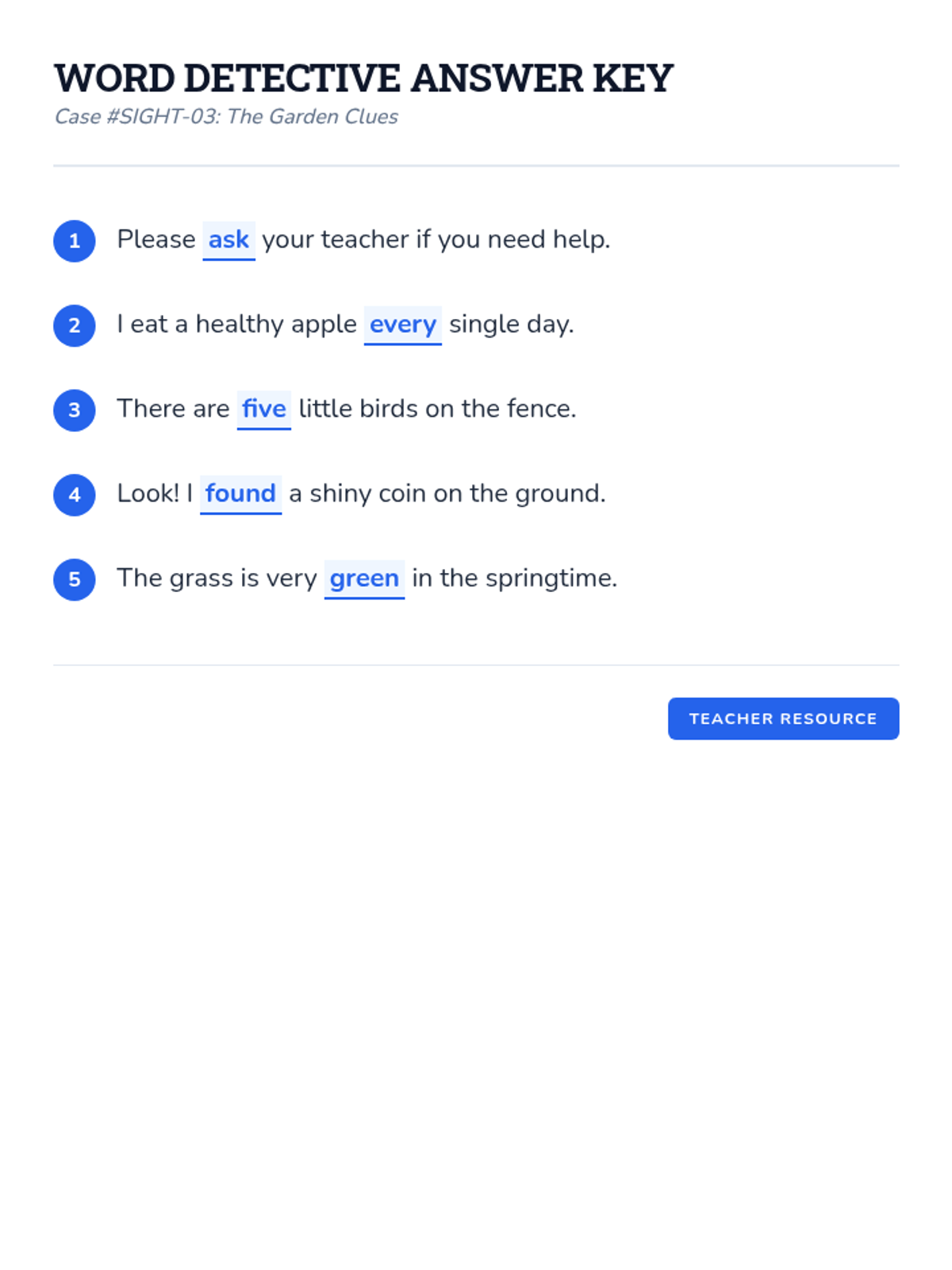
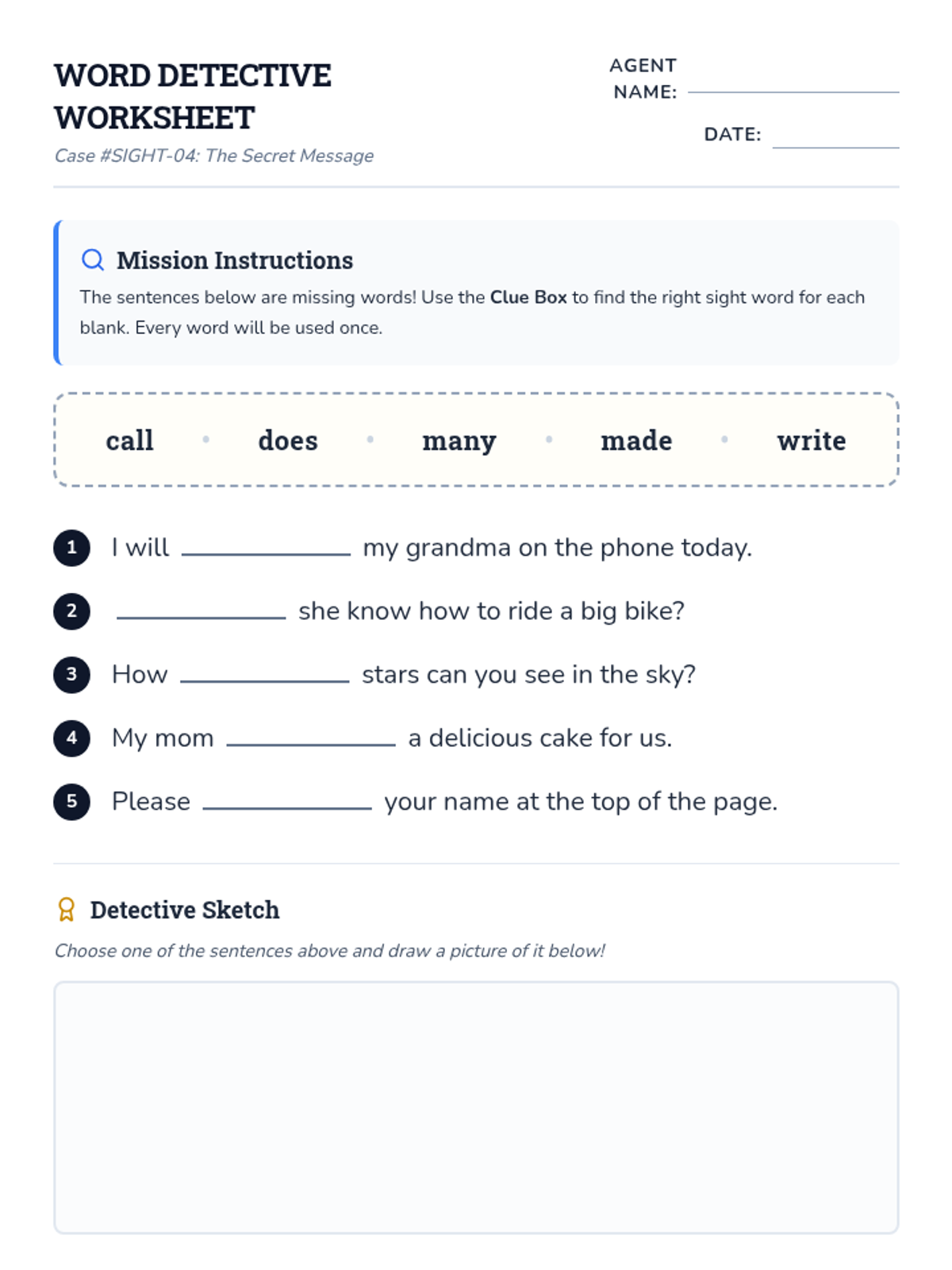
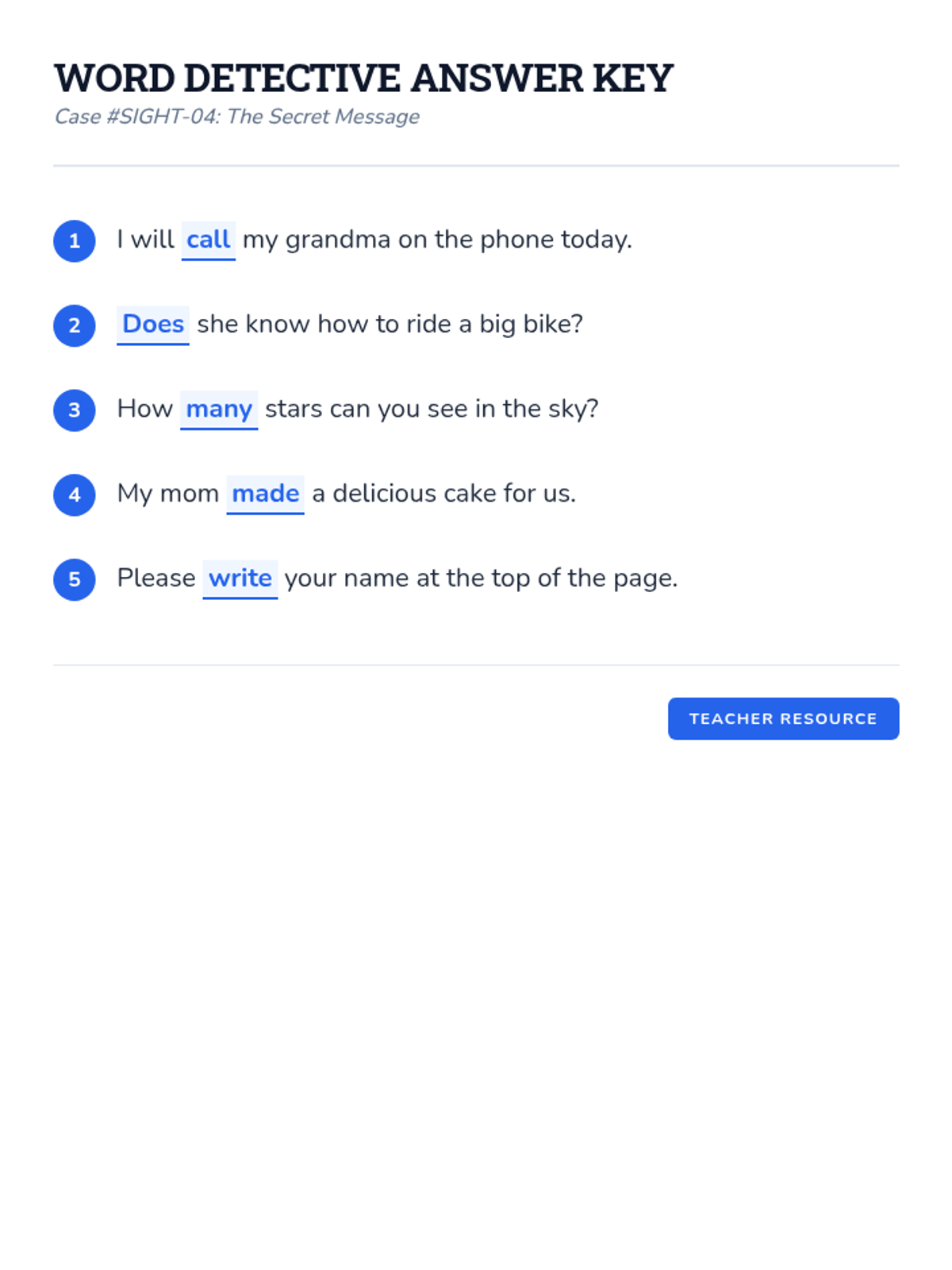
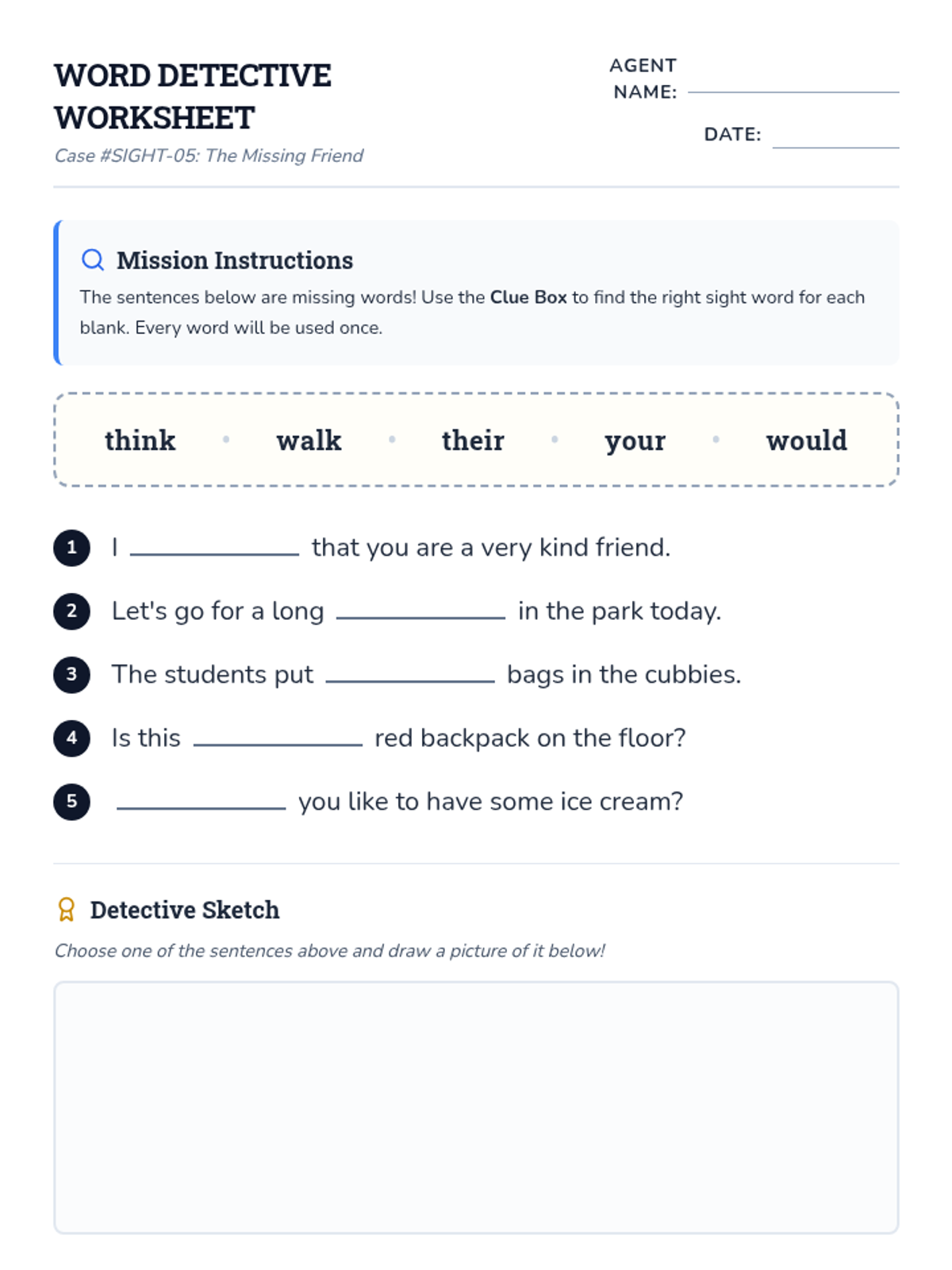
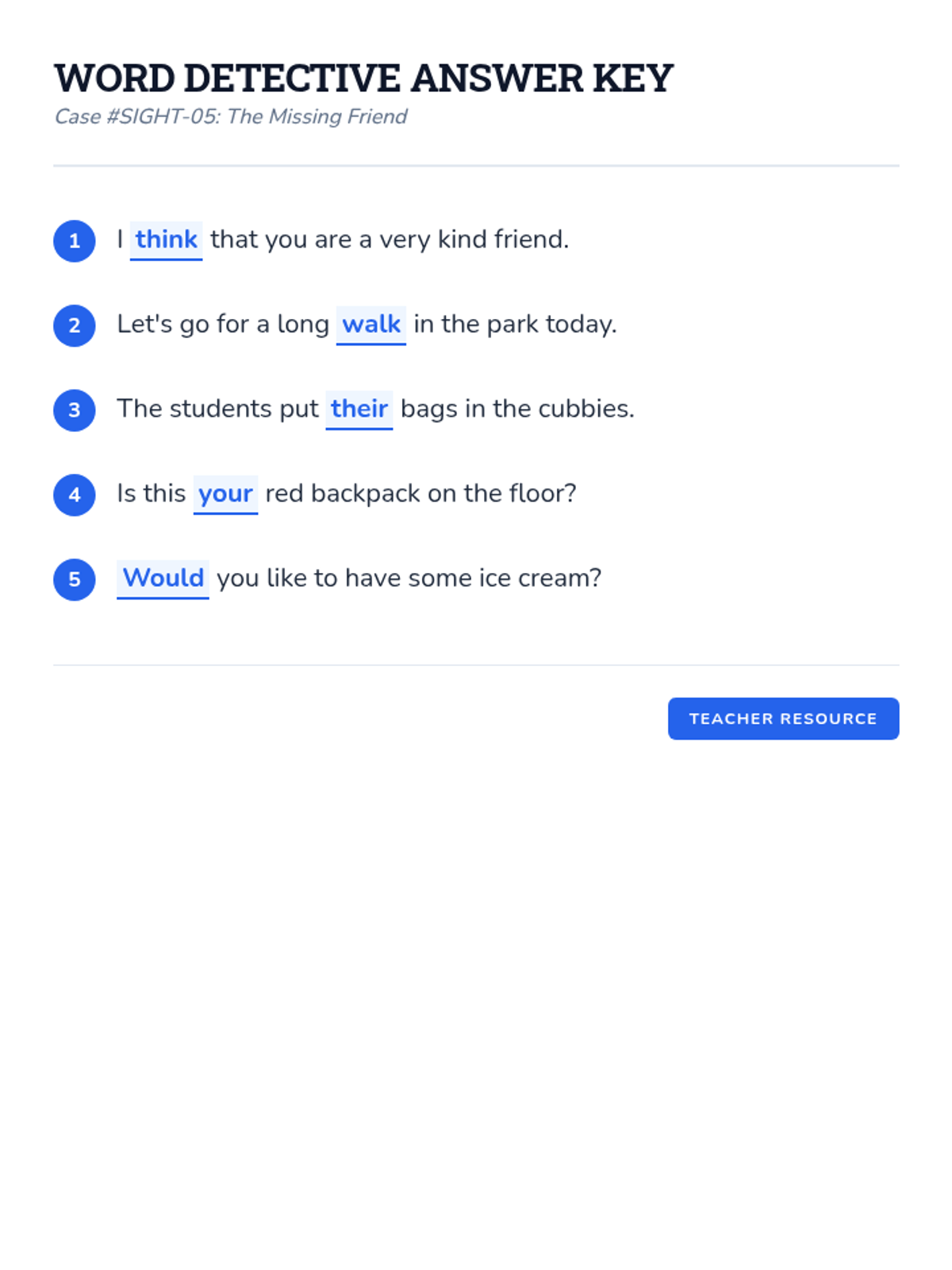
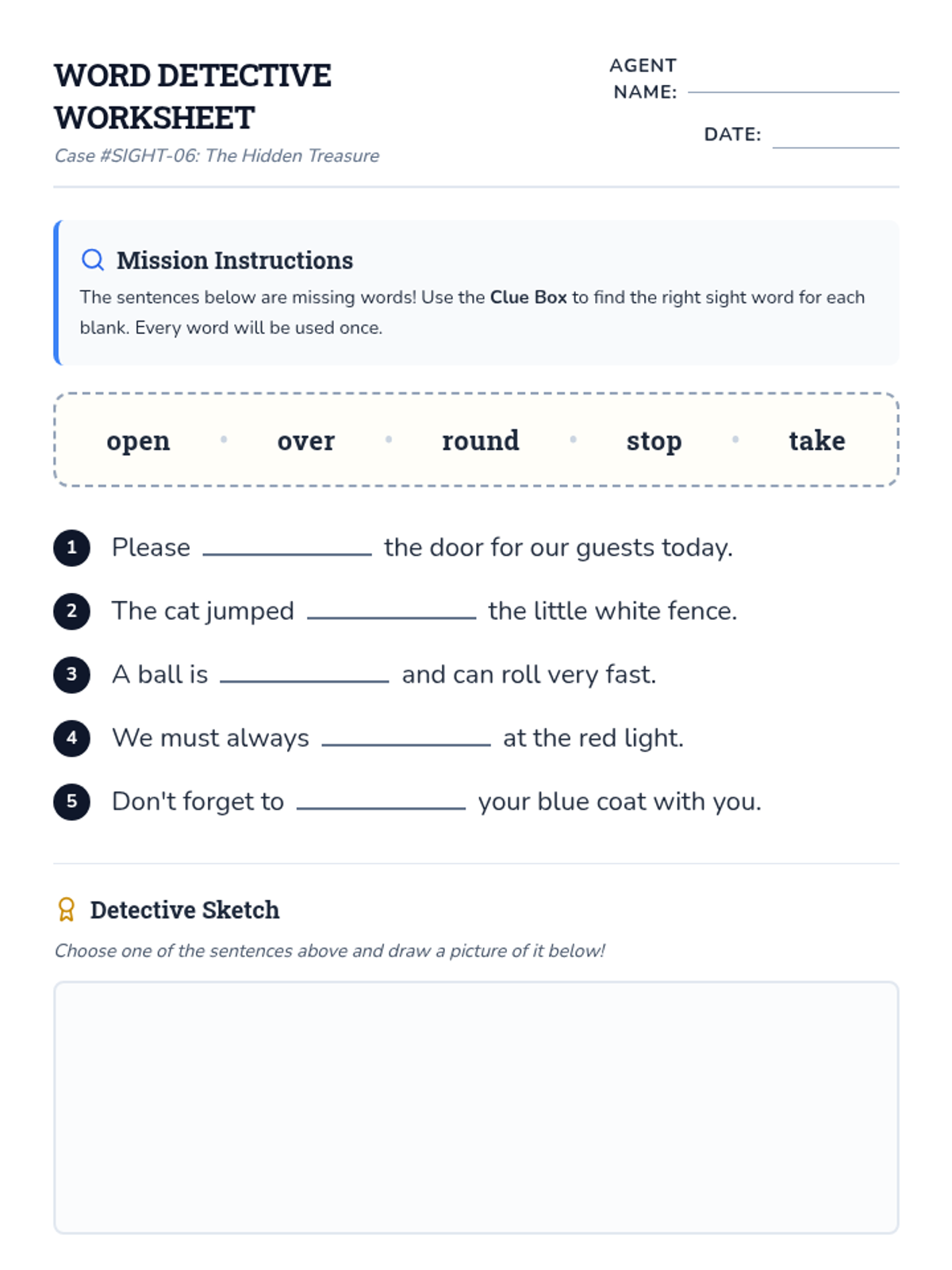
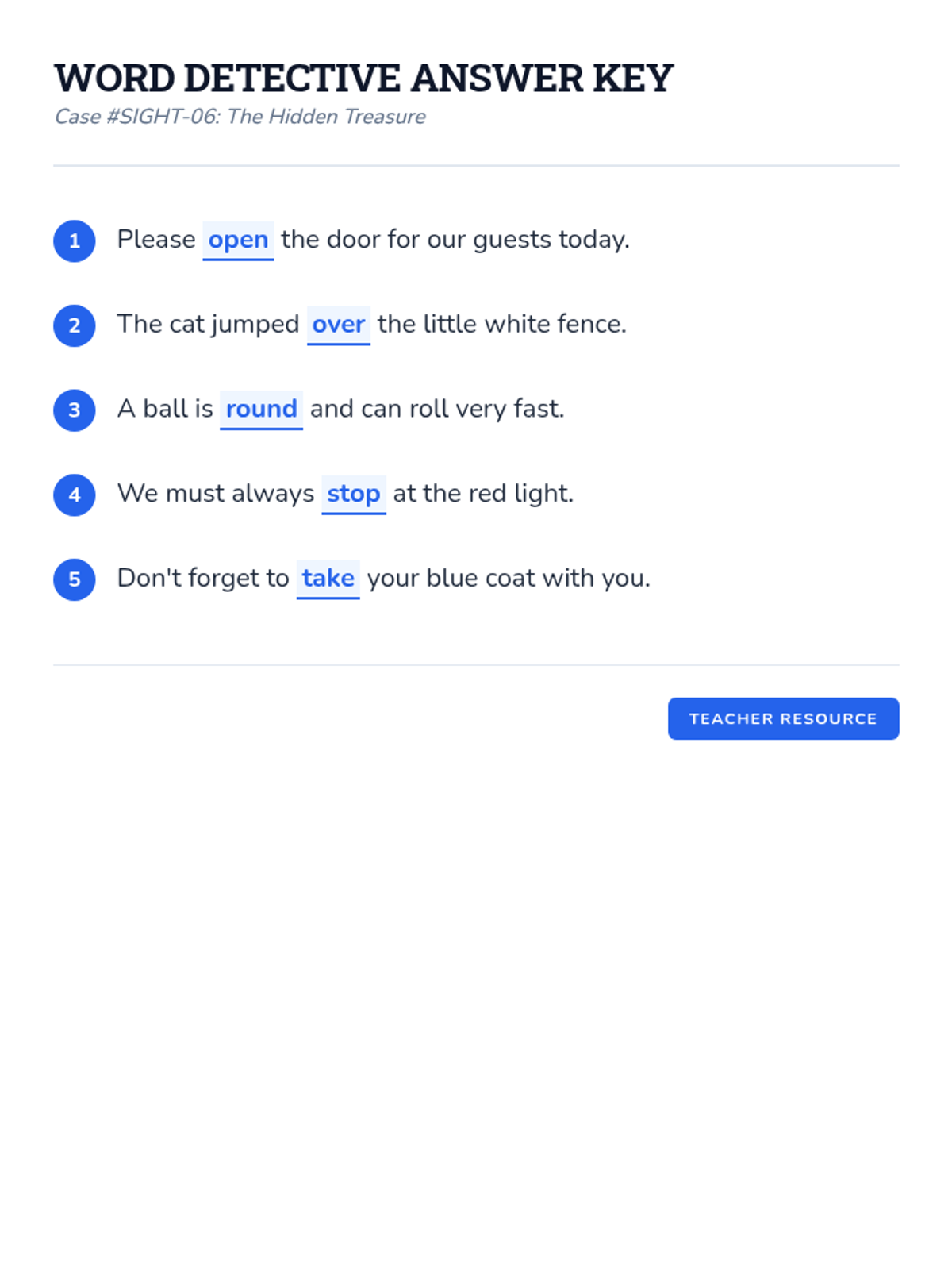
Students act as "Word Detectives" to identify and use Dolch 1st and 2nd grade sight words in context through investigation-themed activities.
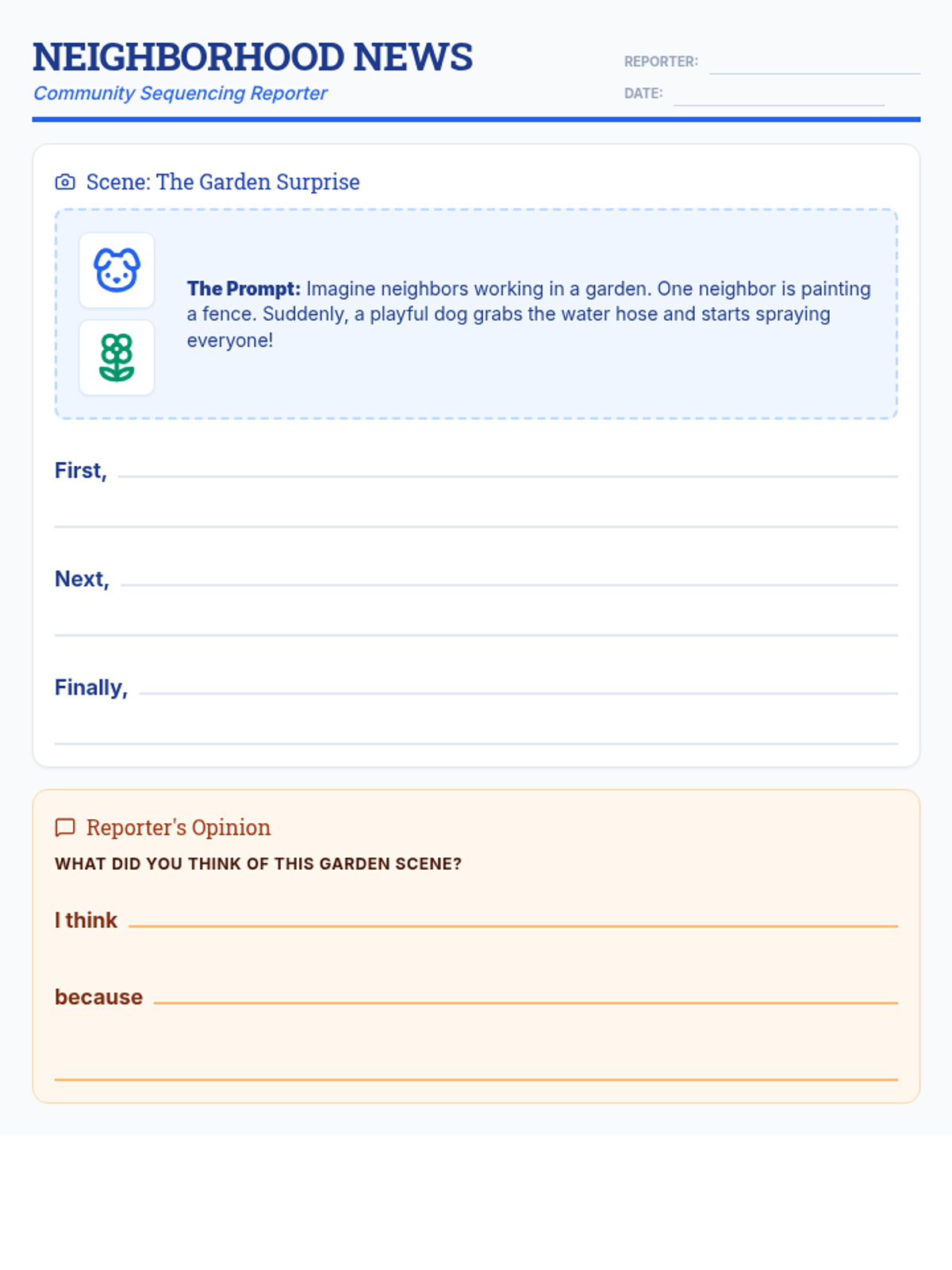
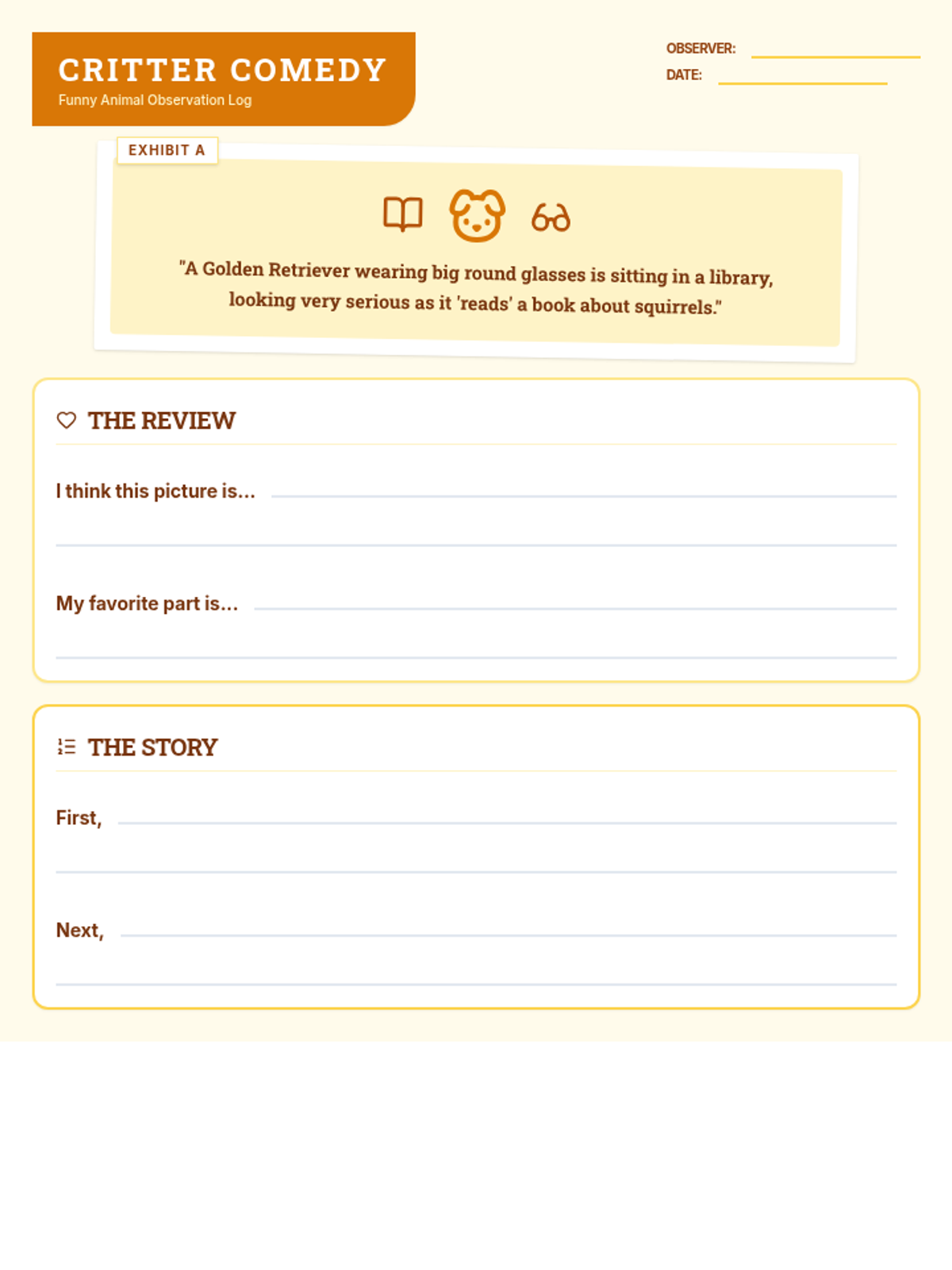
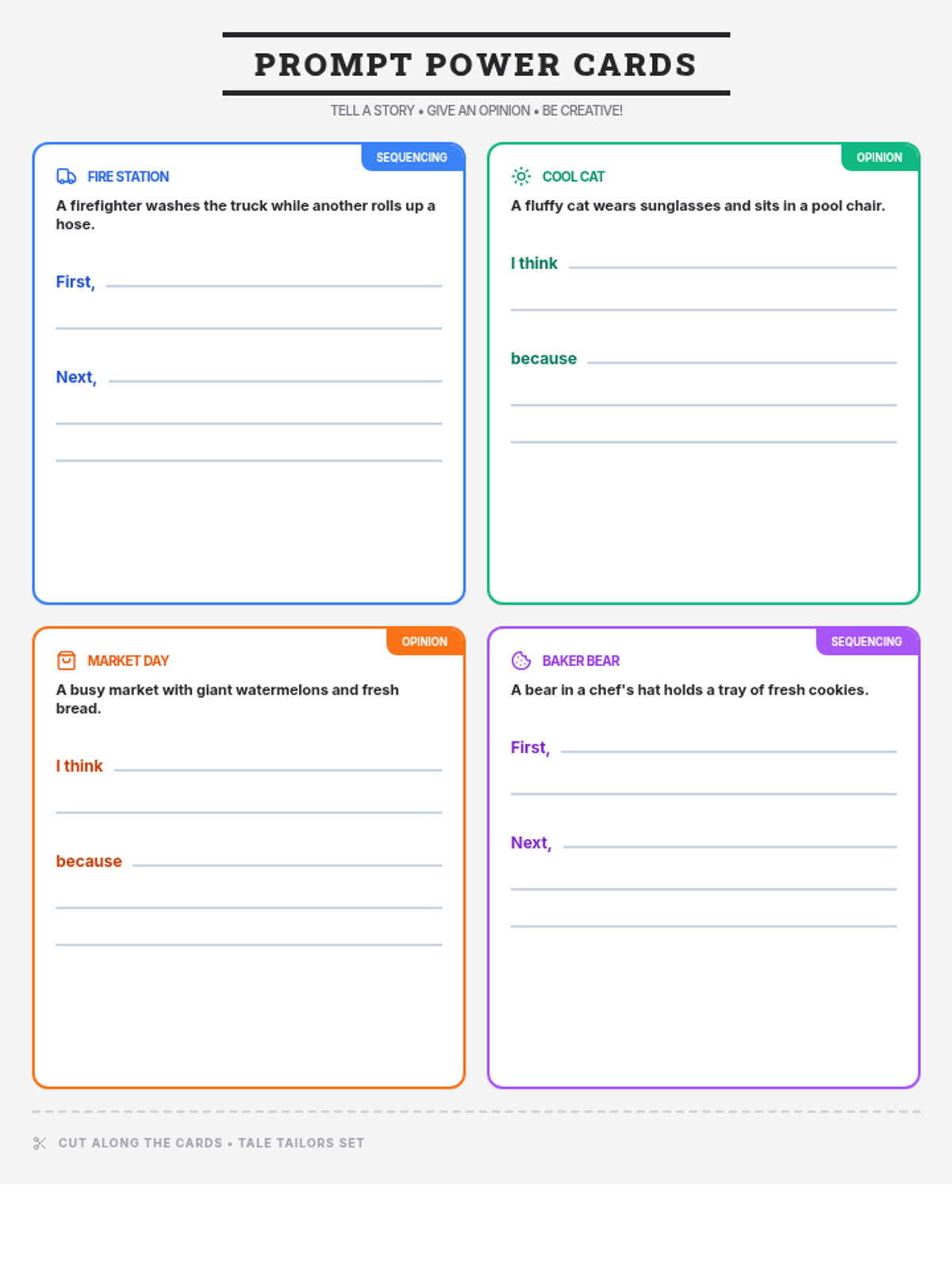
A collection of writing prompts designed to develop narrative sequencing and opinion-based writing skills using community and animal themes.
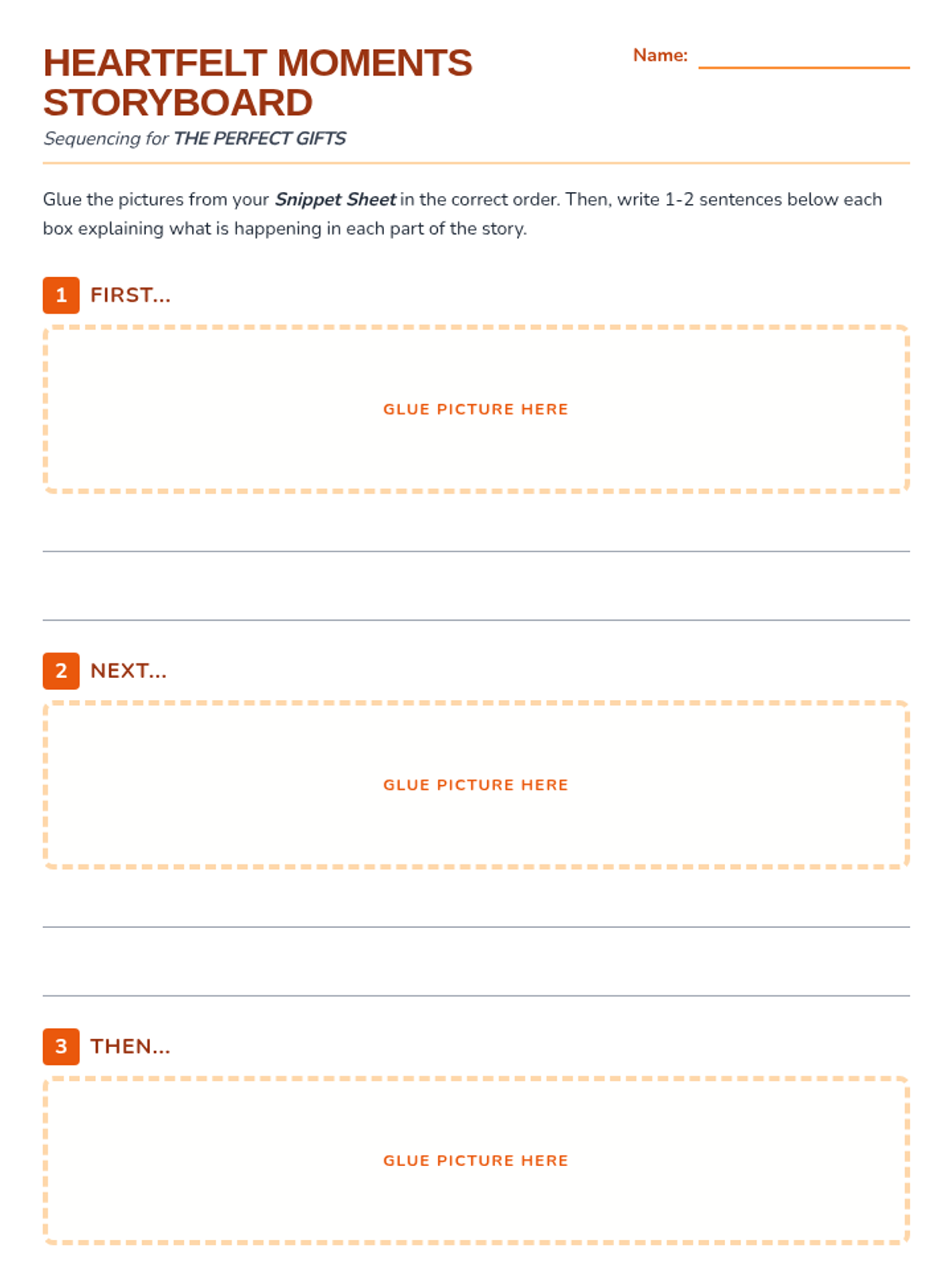
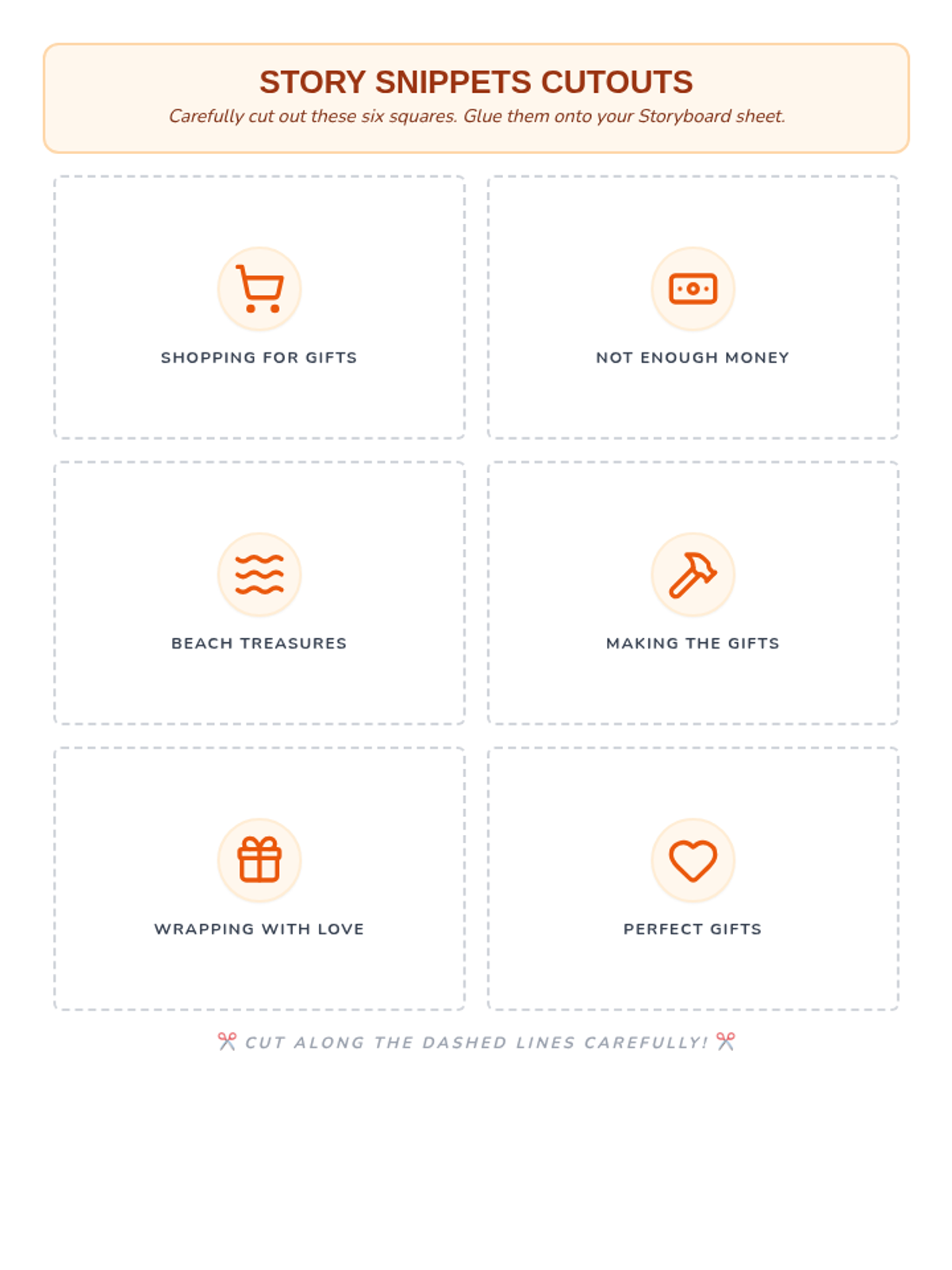
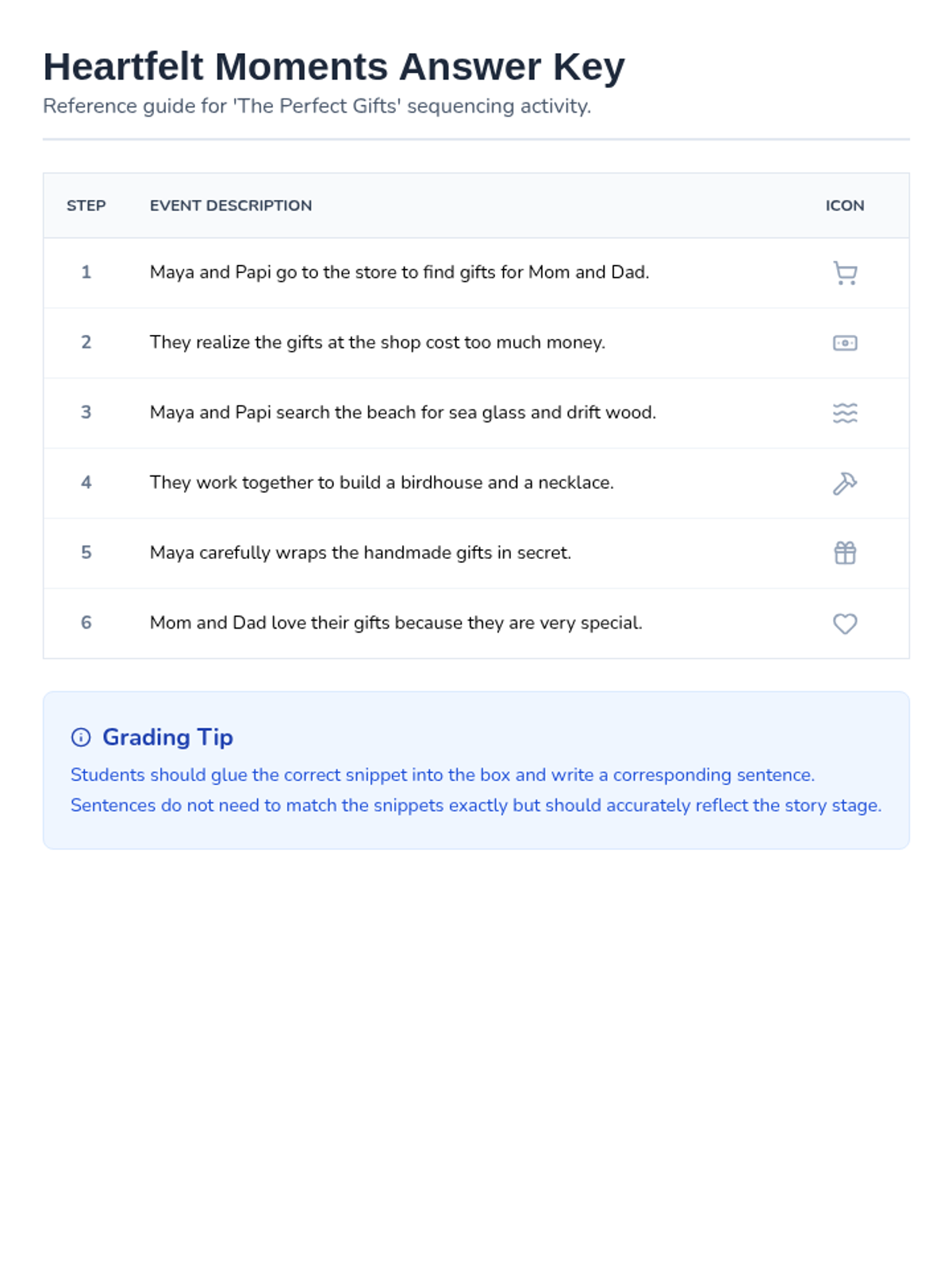
A collection of materials to help students sequence the key events of the story 'The Perfect Gifts' by Terry Miller Shannon, focusing on the theme of thoughtful gift-giving.
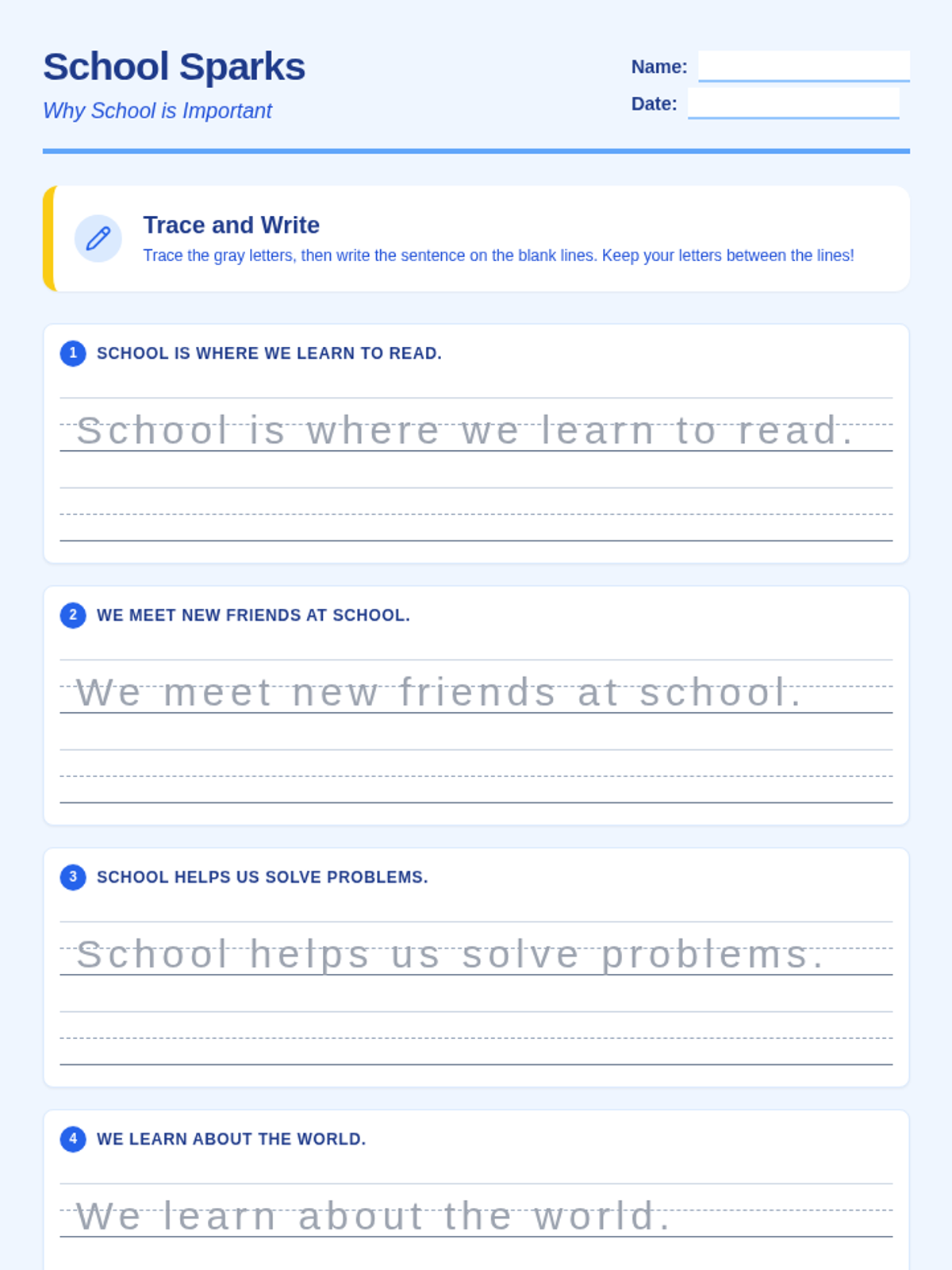
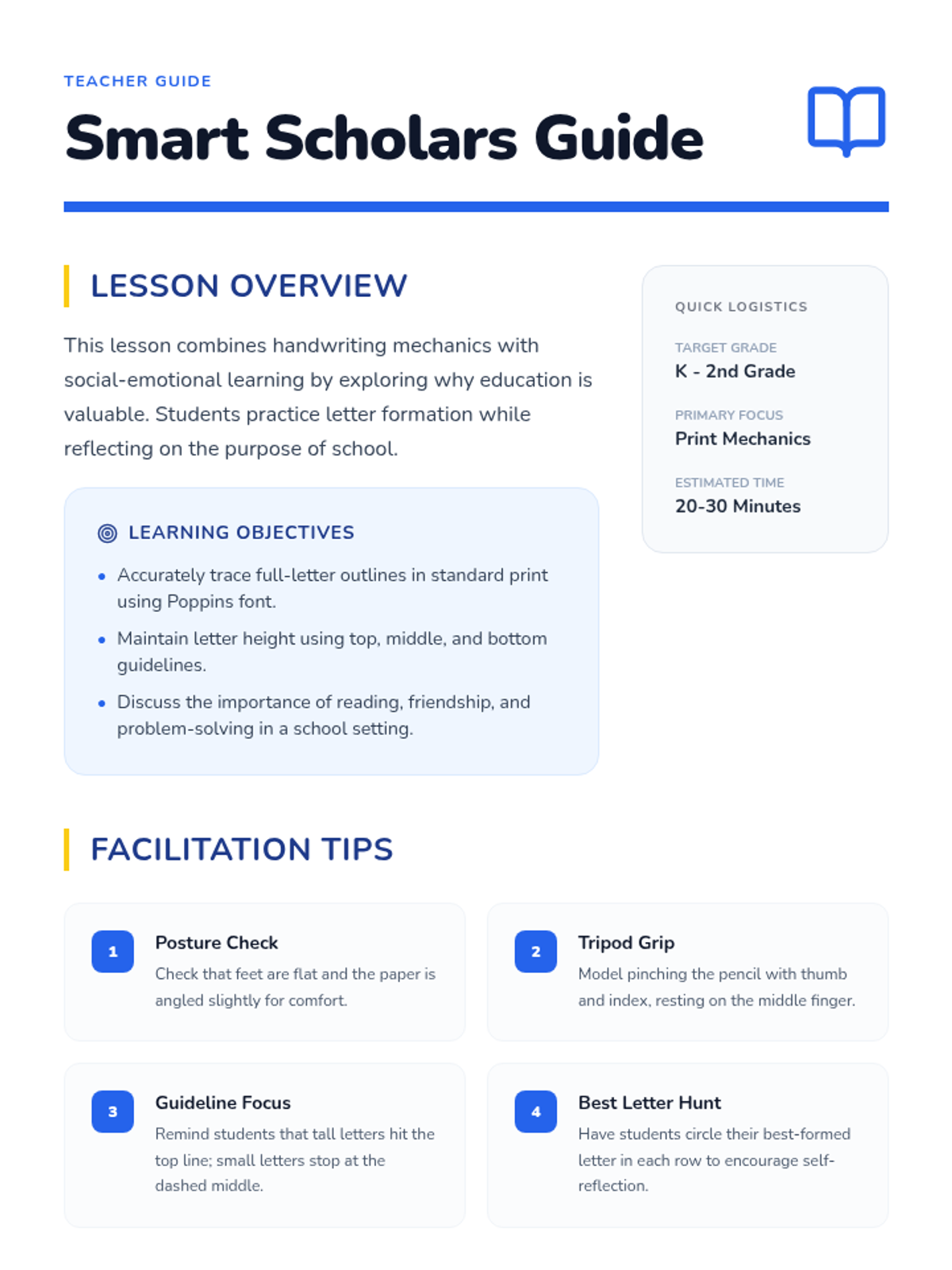
A foundational handwriting lesson focusing on the importance of education, featuring tracing exercises and discussion prompts.
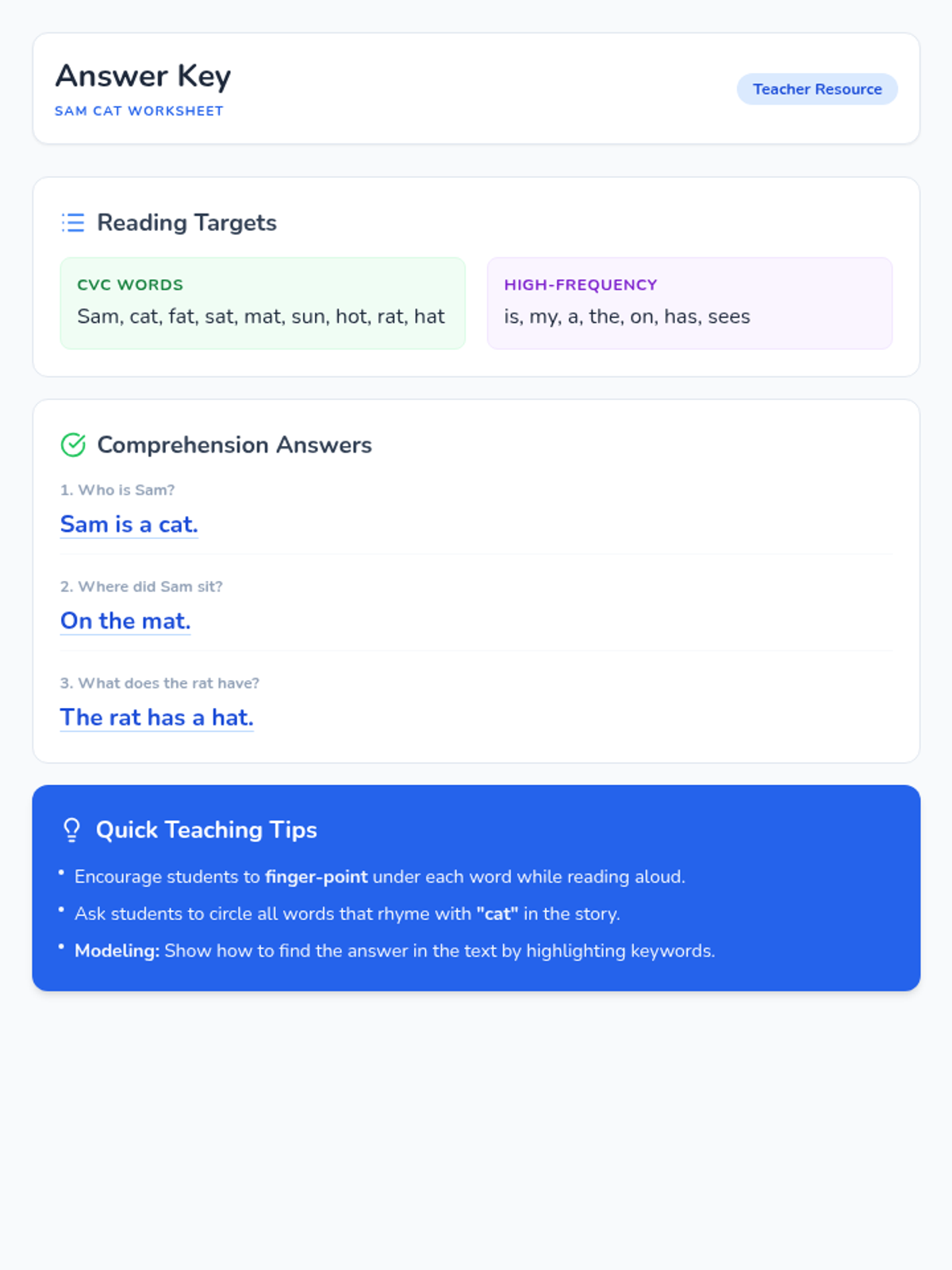
A phonics-focused lesson for kindergarteners centered on a simple CVC-rich reading passage. Students practice decoding short 'a' and 'o' words, identifying high-frequency words, and answering basic comprehension questions.
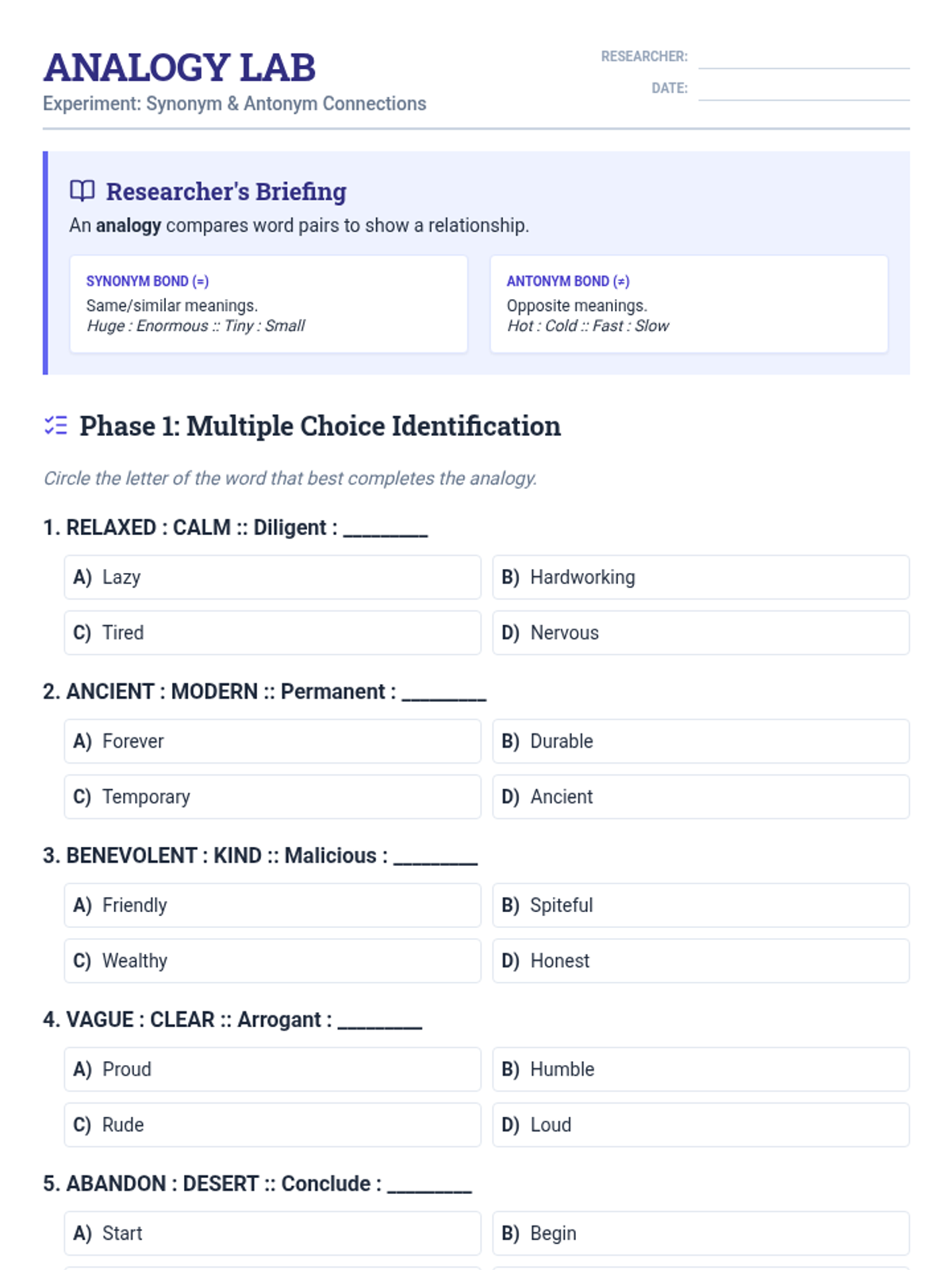
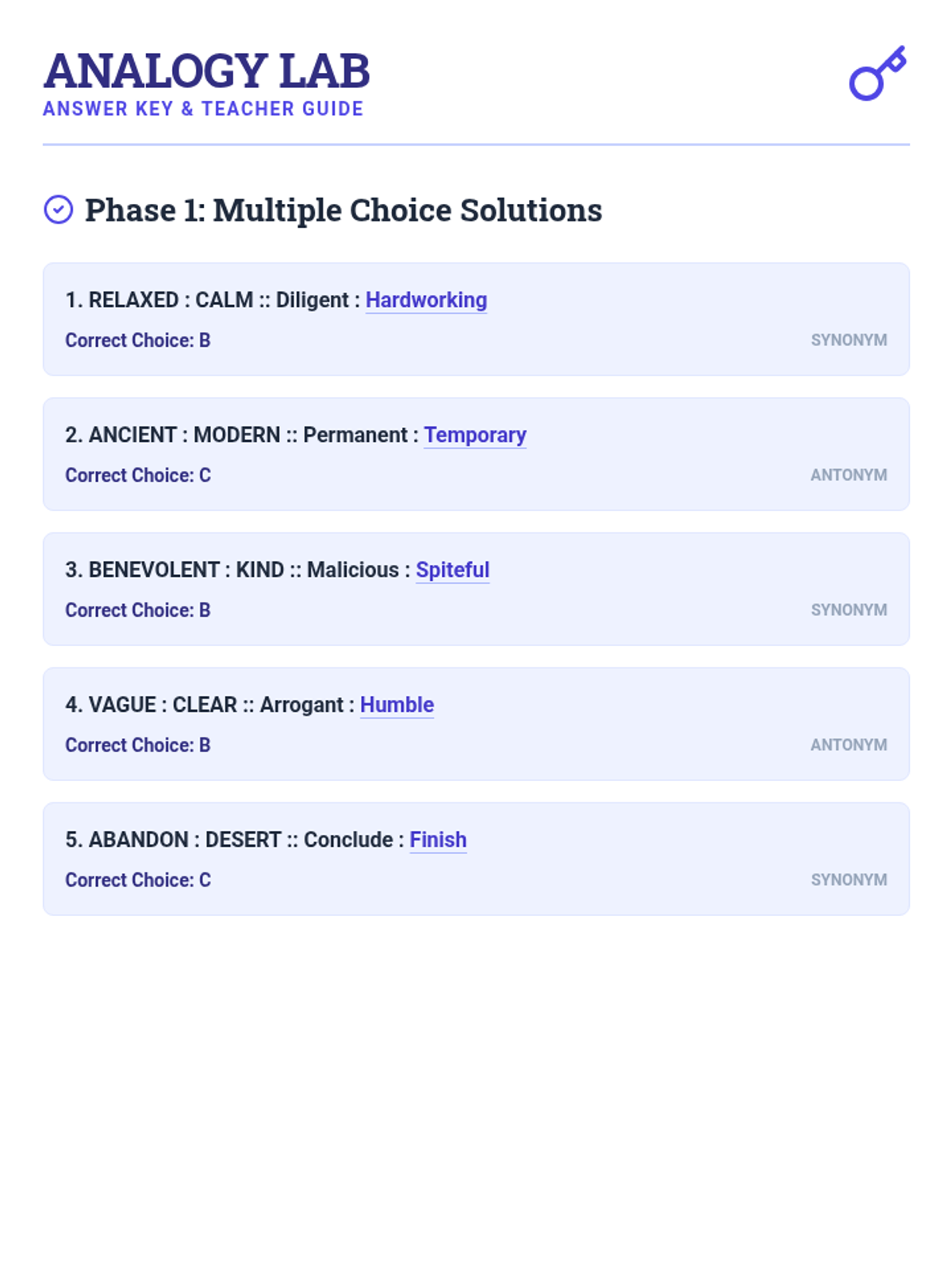
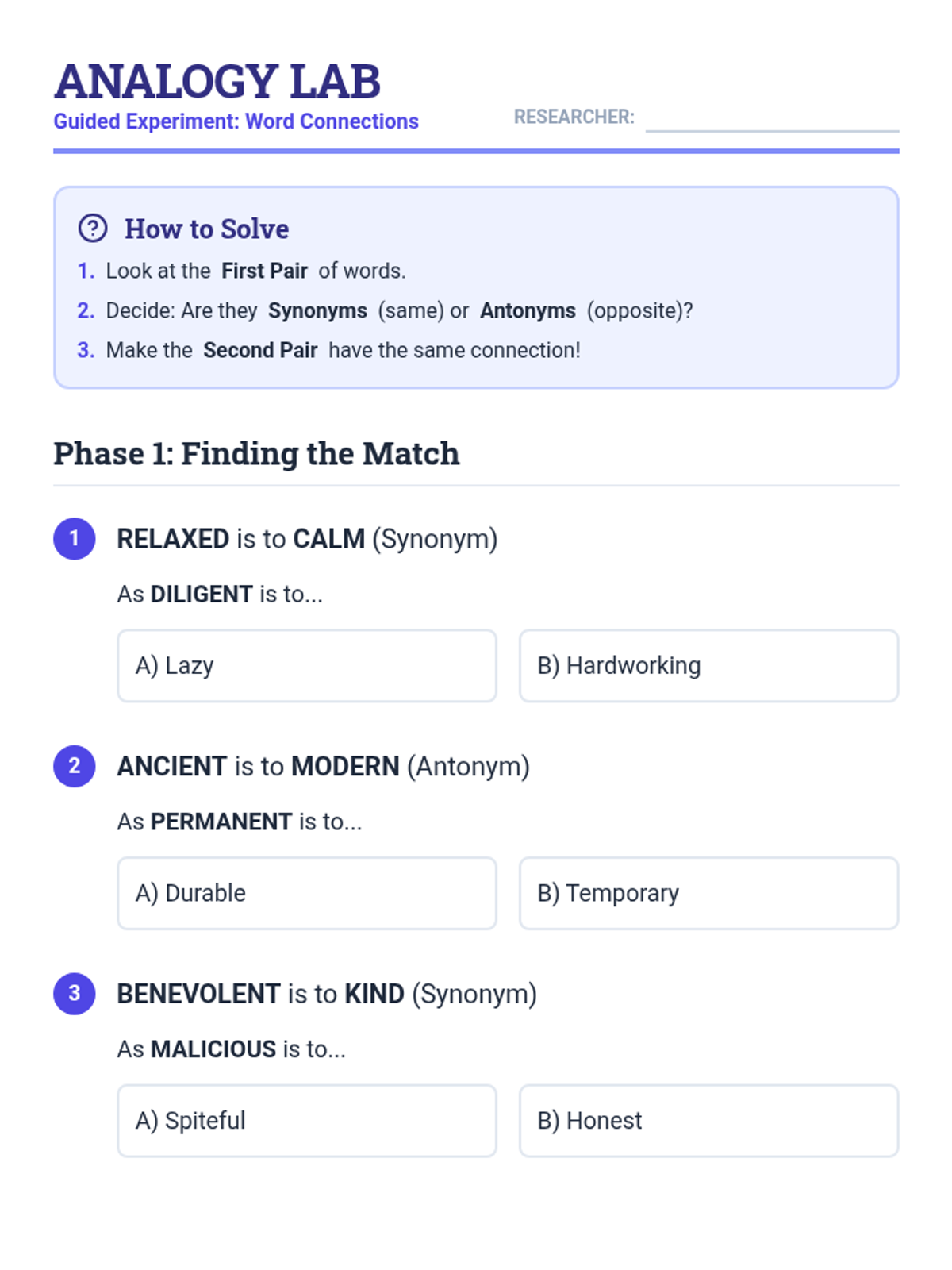
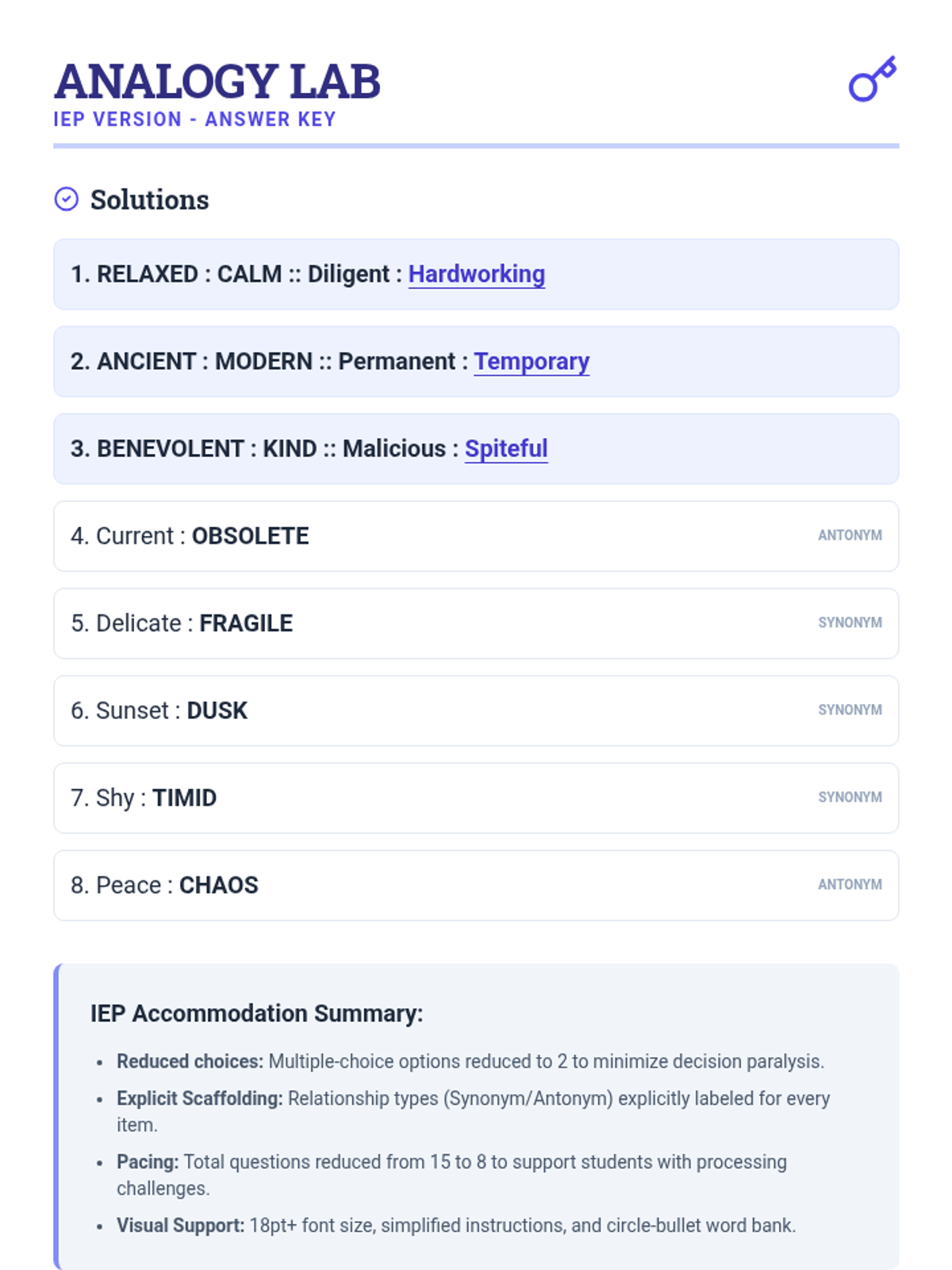
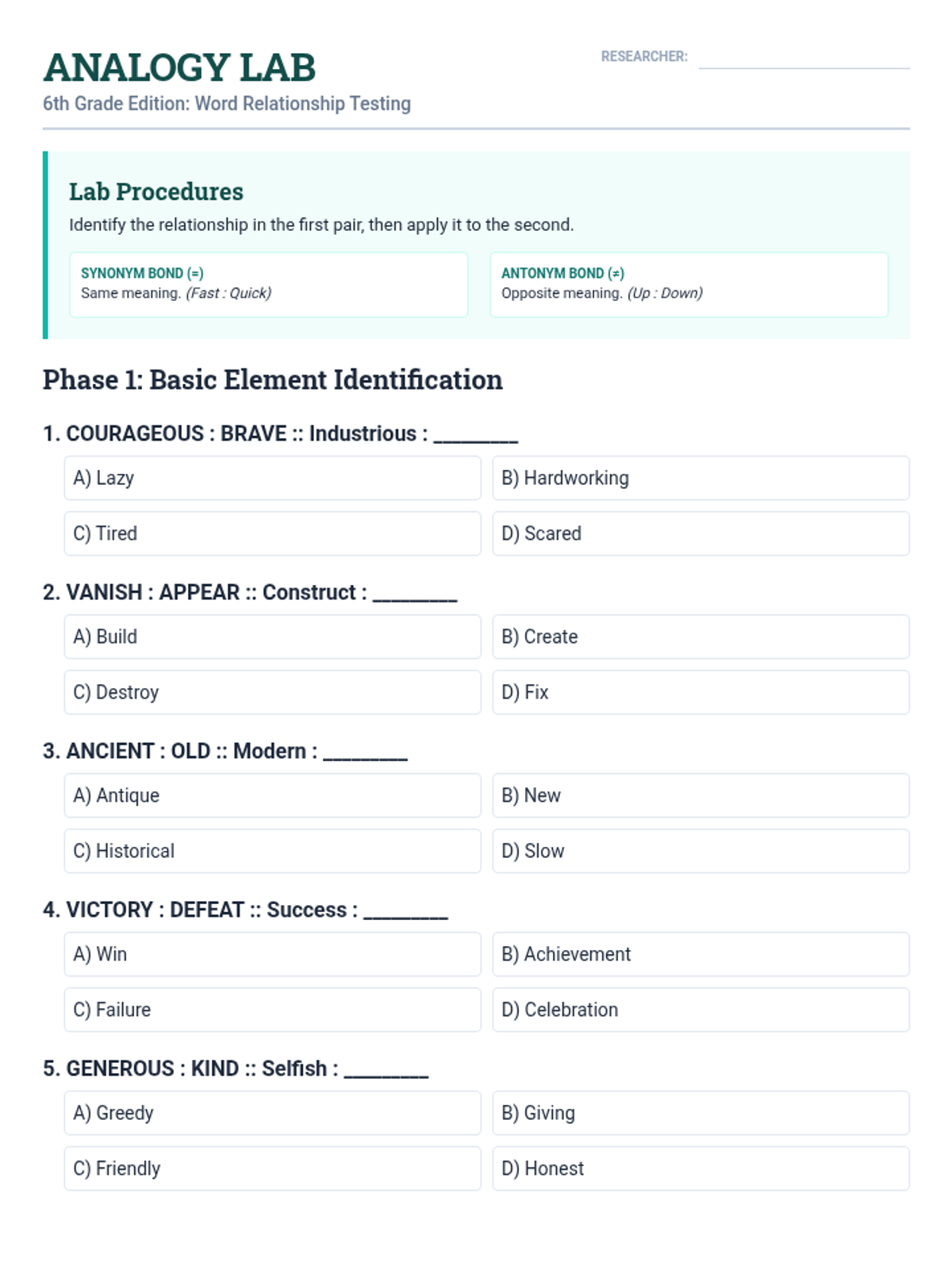
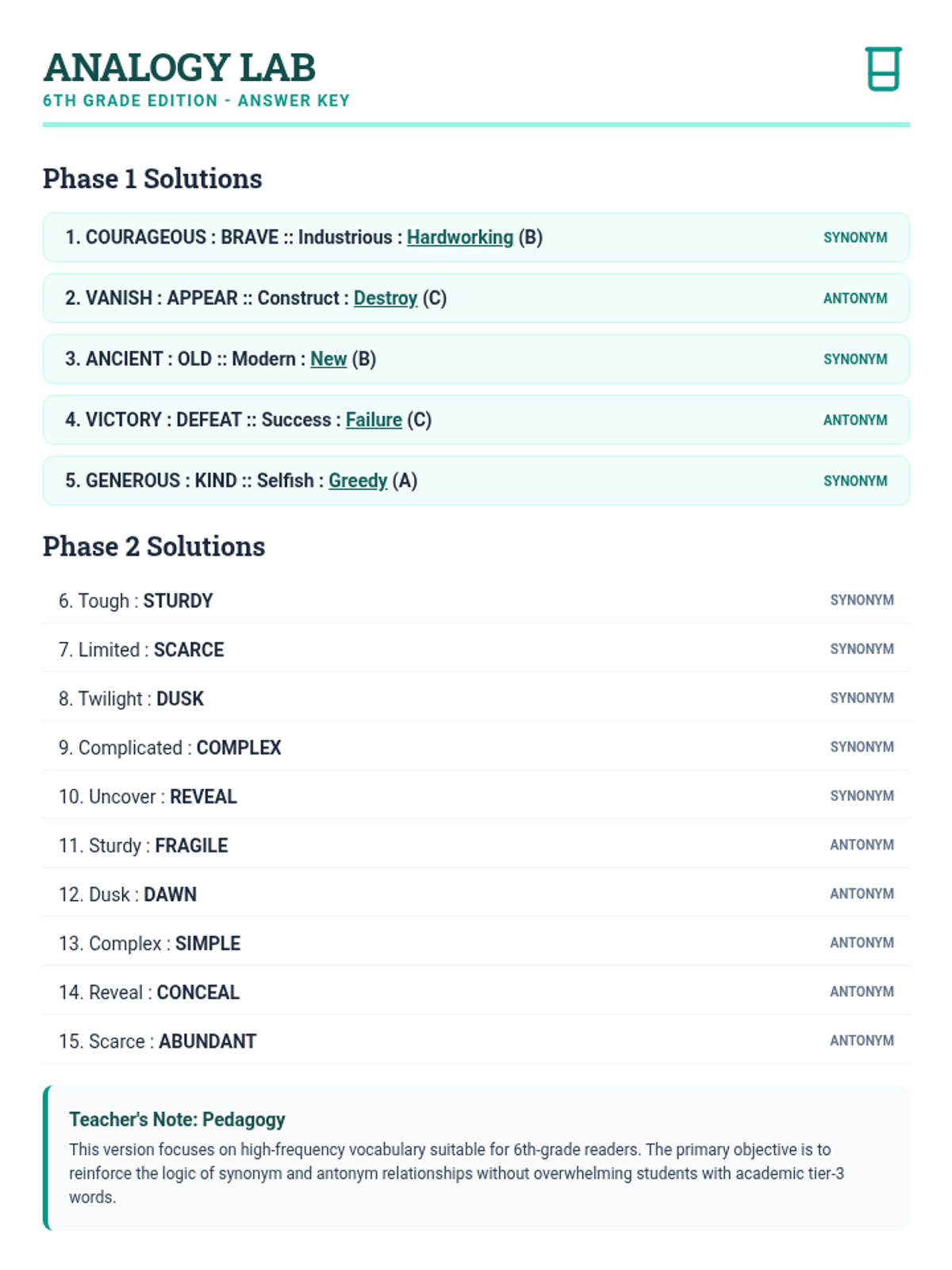
A lesson focused on identifying and completing analogies based on synonym and antonym relationships, designed for 7th-grade students.
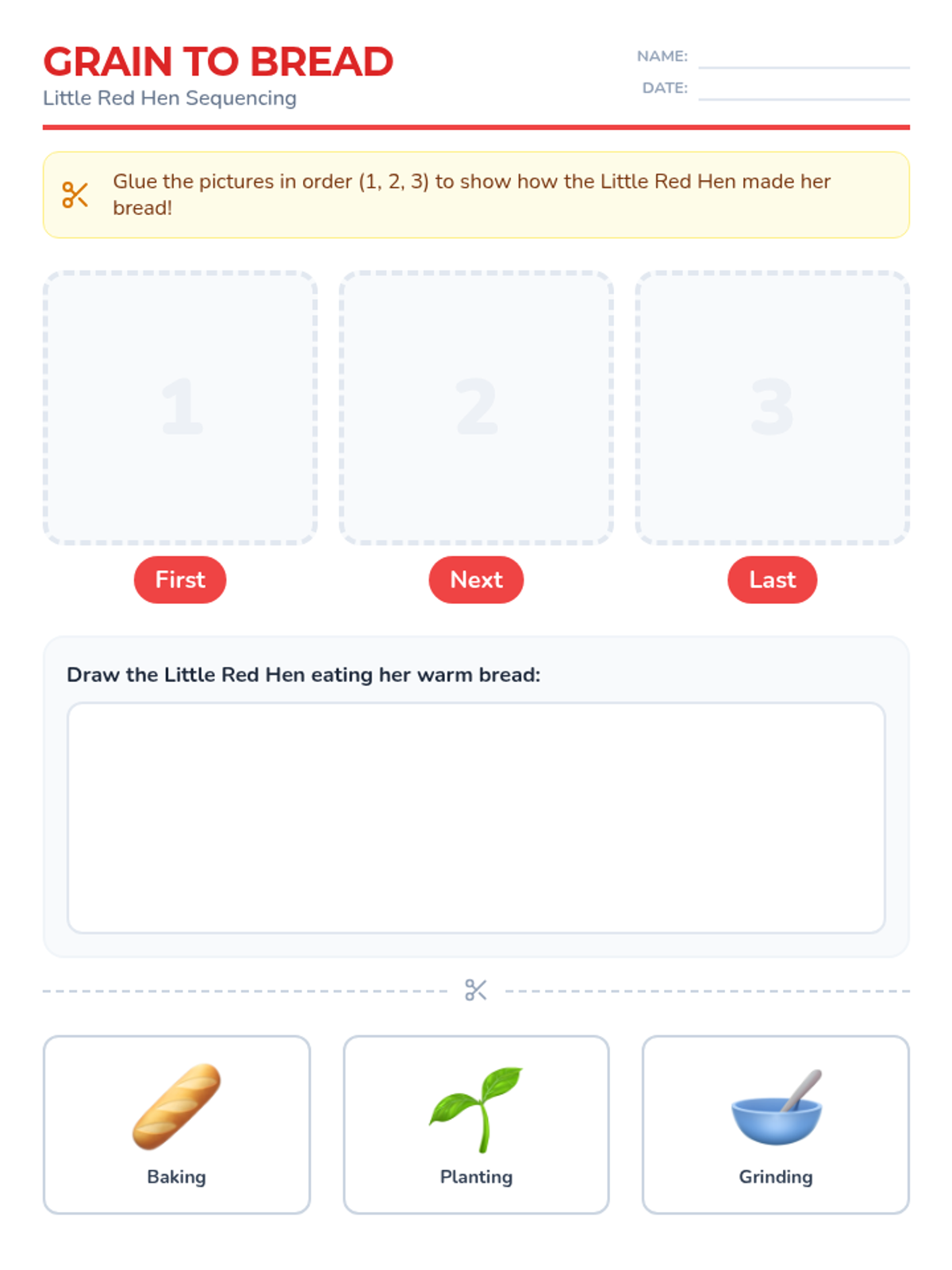
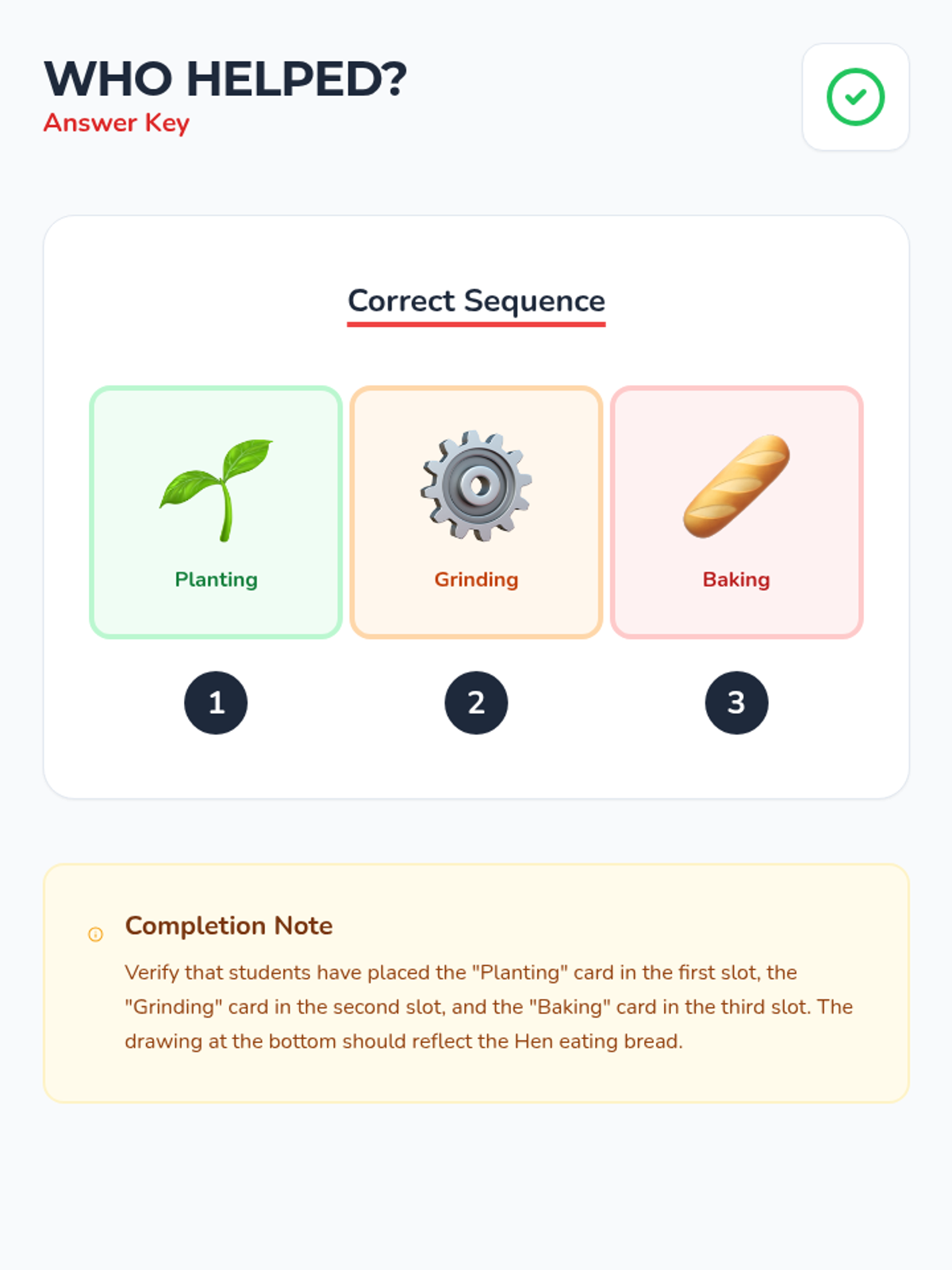
Students listen to the story of The Little Red Hen and practice sequencing the three main stages of making bread: planting, baking, and eating.
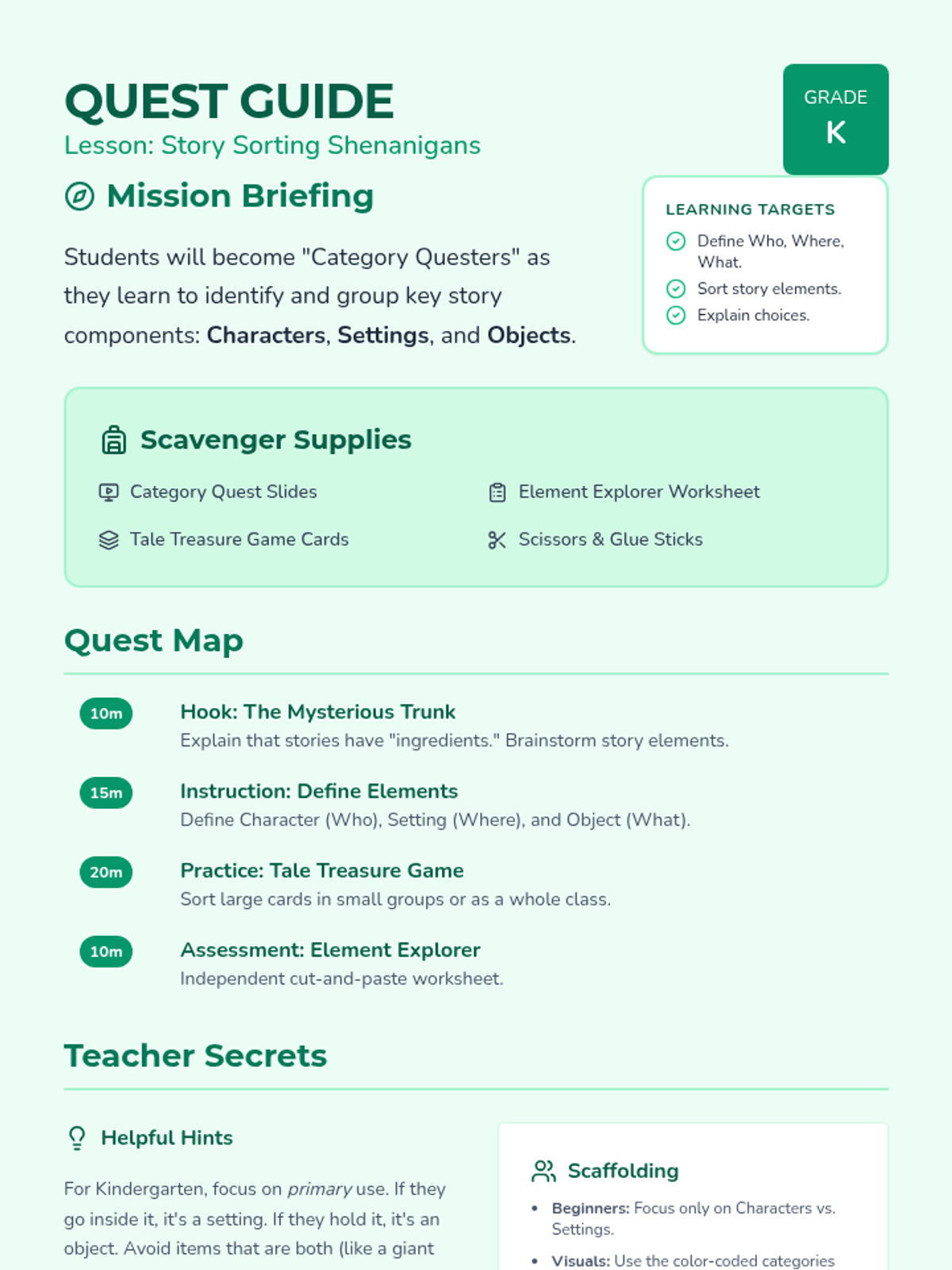
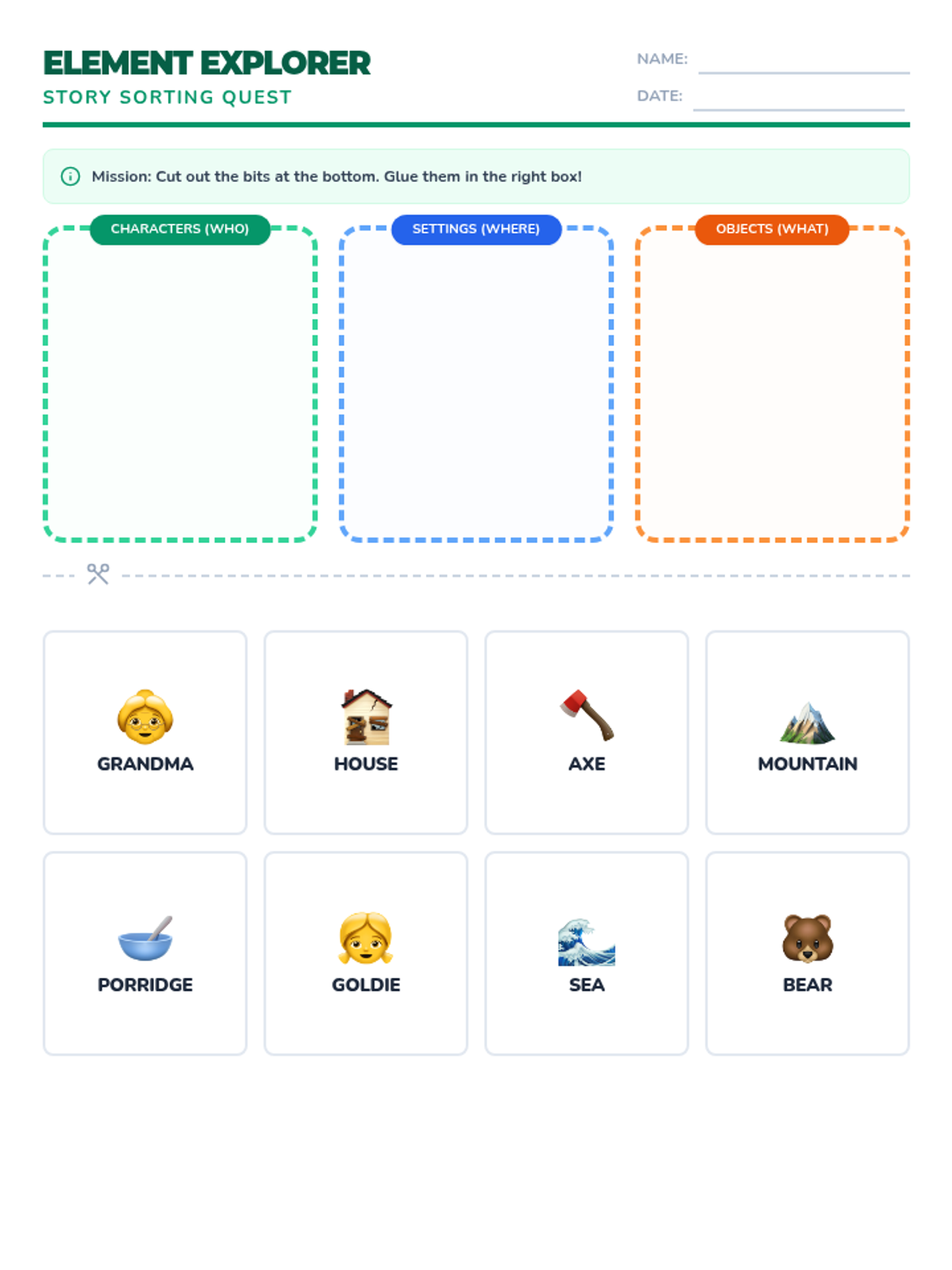
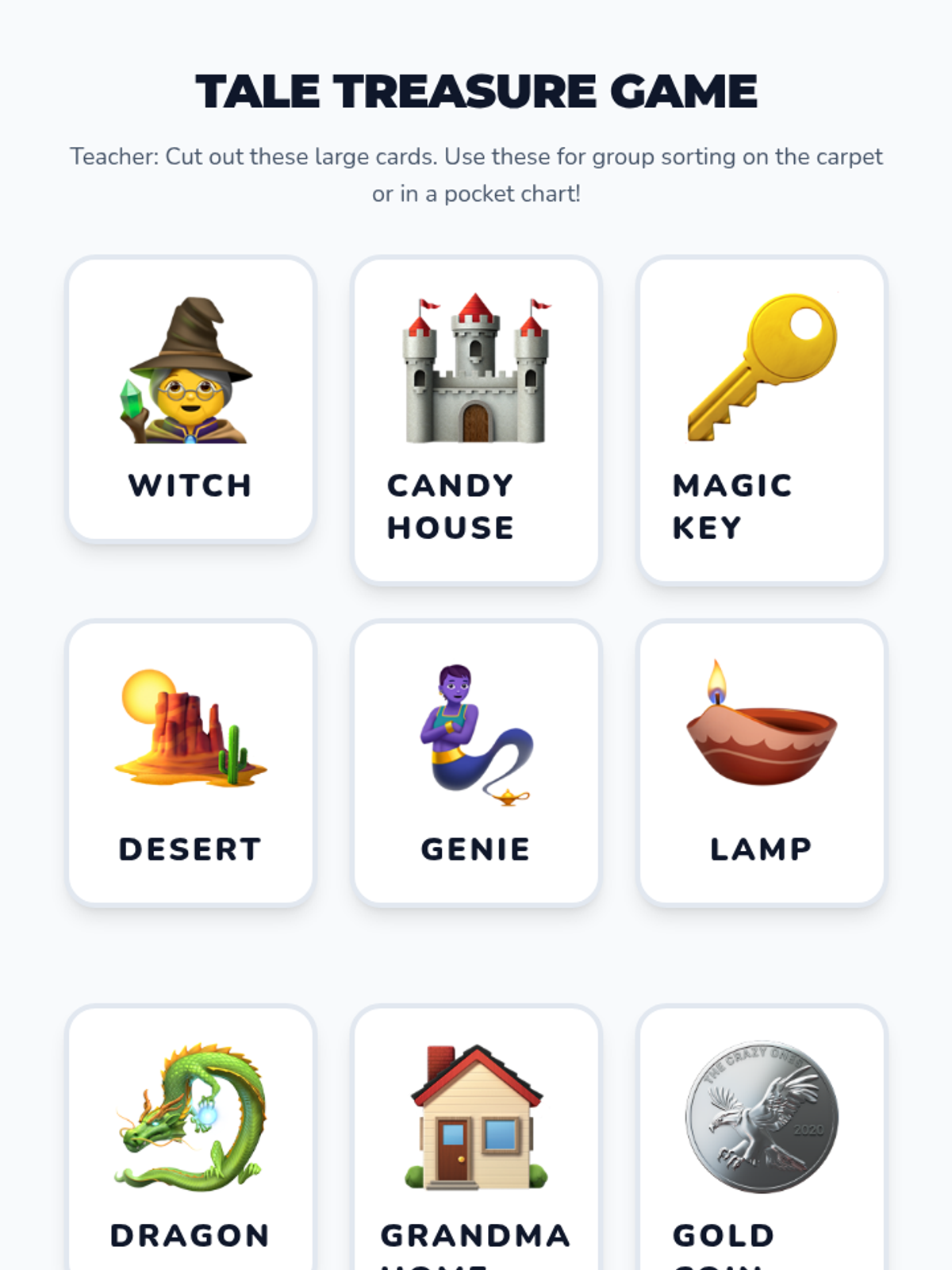
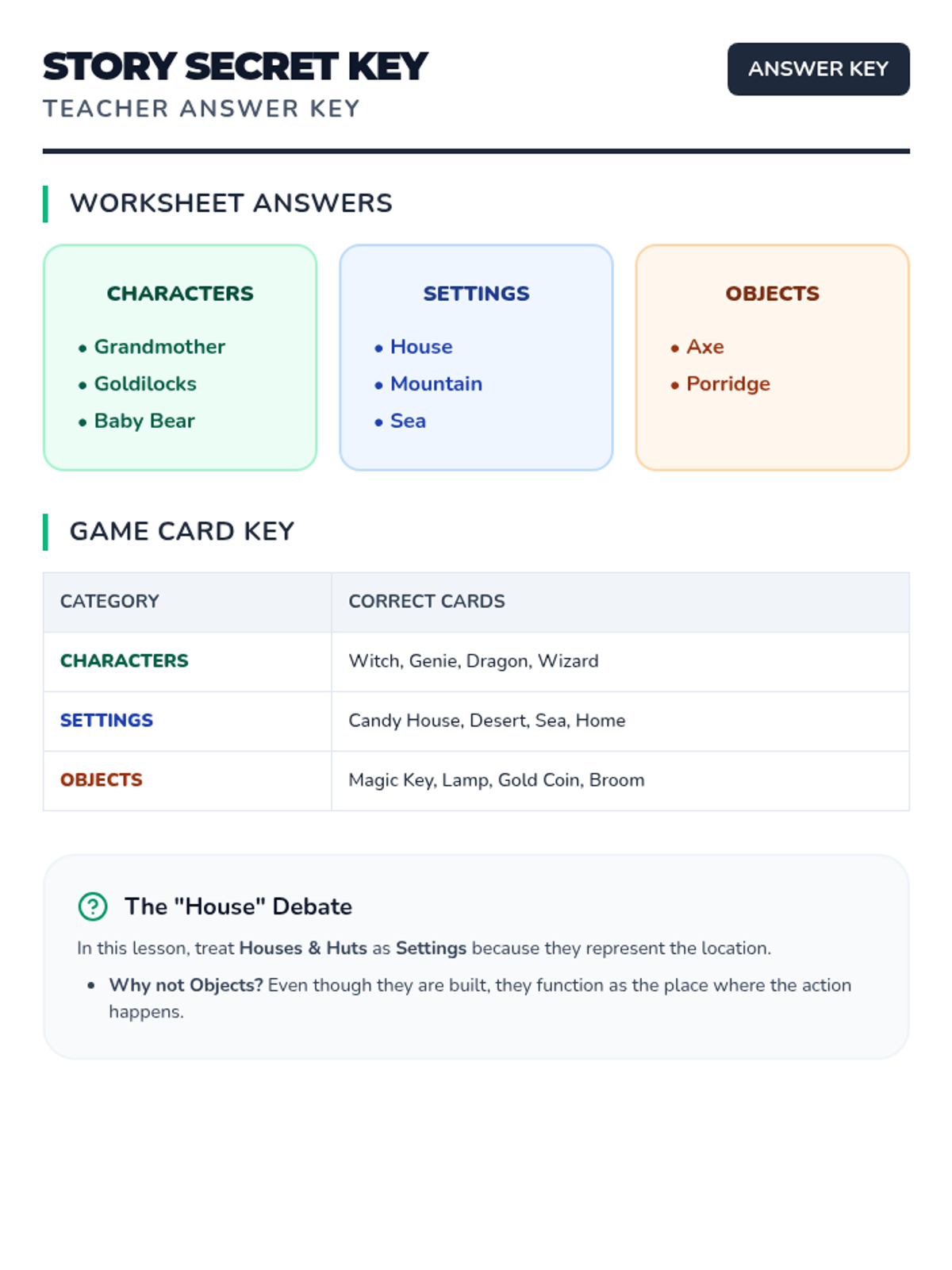
A playful kindergarten lesson where students become 'Category Questers' to sort characters, settings, and objects from familiar fairy tales. This lesson uses interactive games and visual aids to build foundational narrative comprehension and organizational skills.
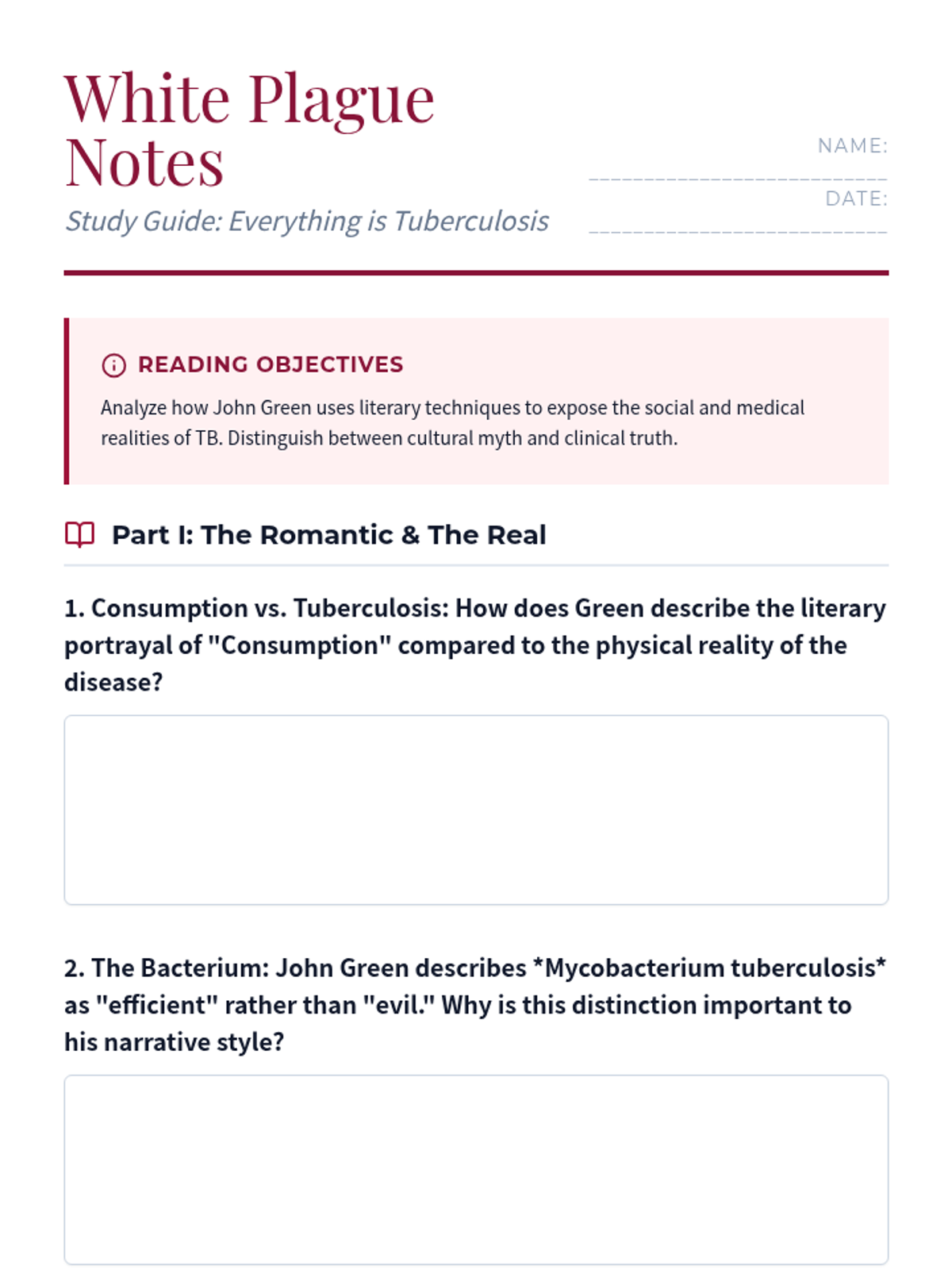
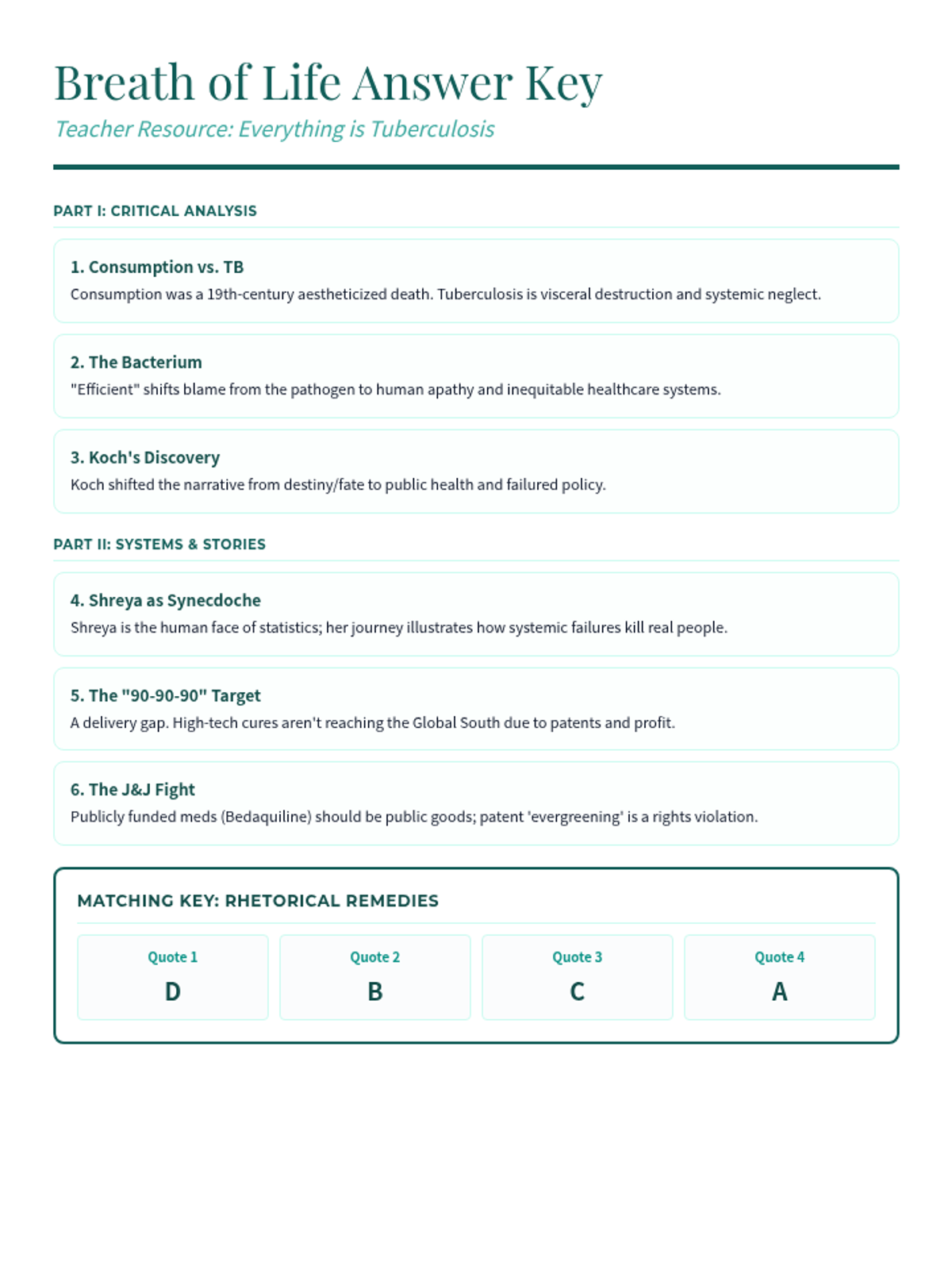
A comprehensive study of John Green's 'Everything is Tuberculosis', focusing on the history of the disease, its impact on human history, and the literary techniques used to convey its devastating reality.
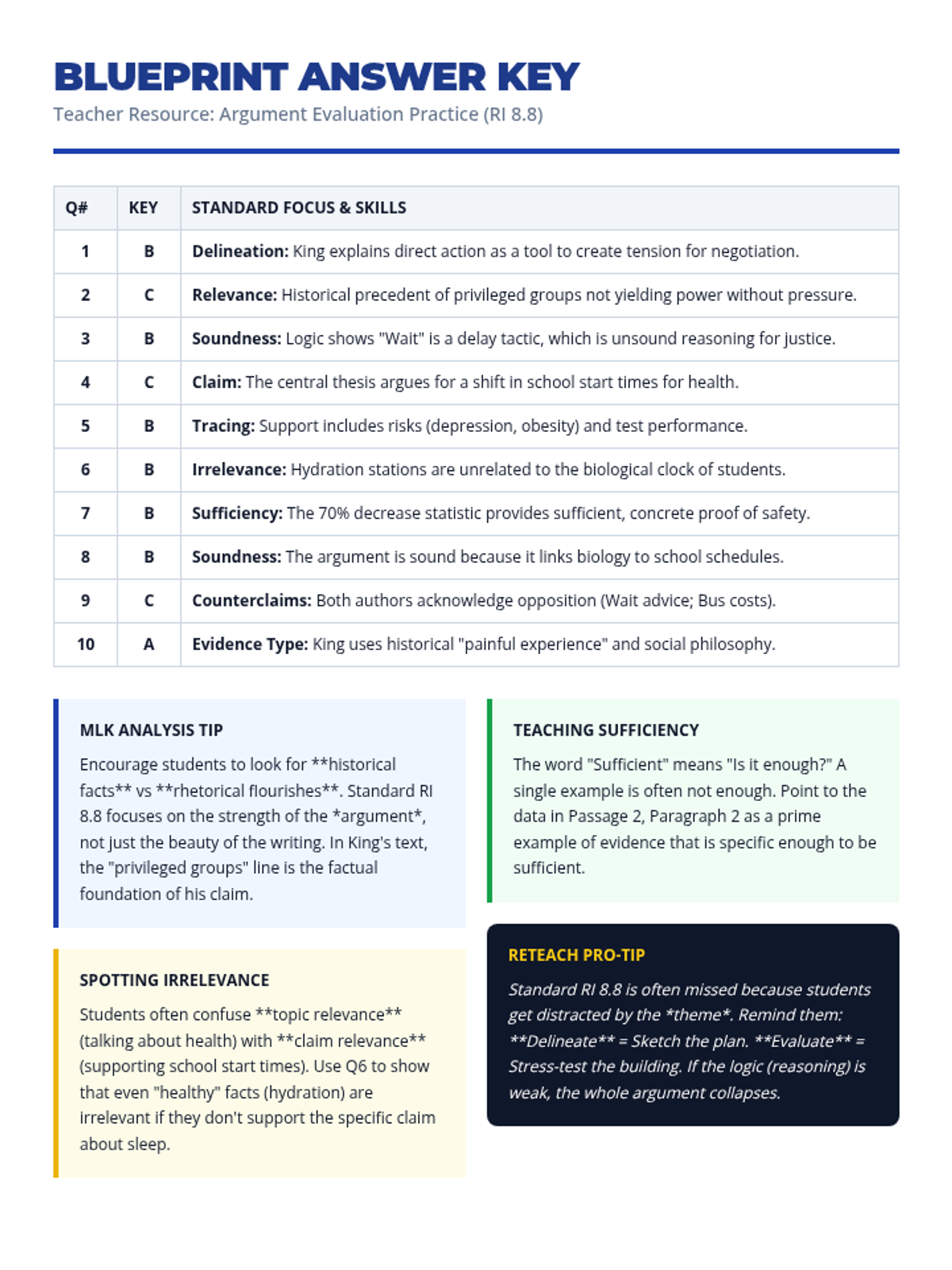
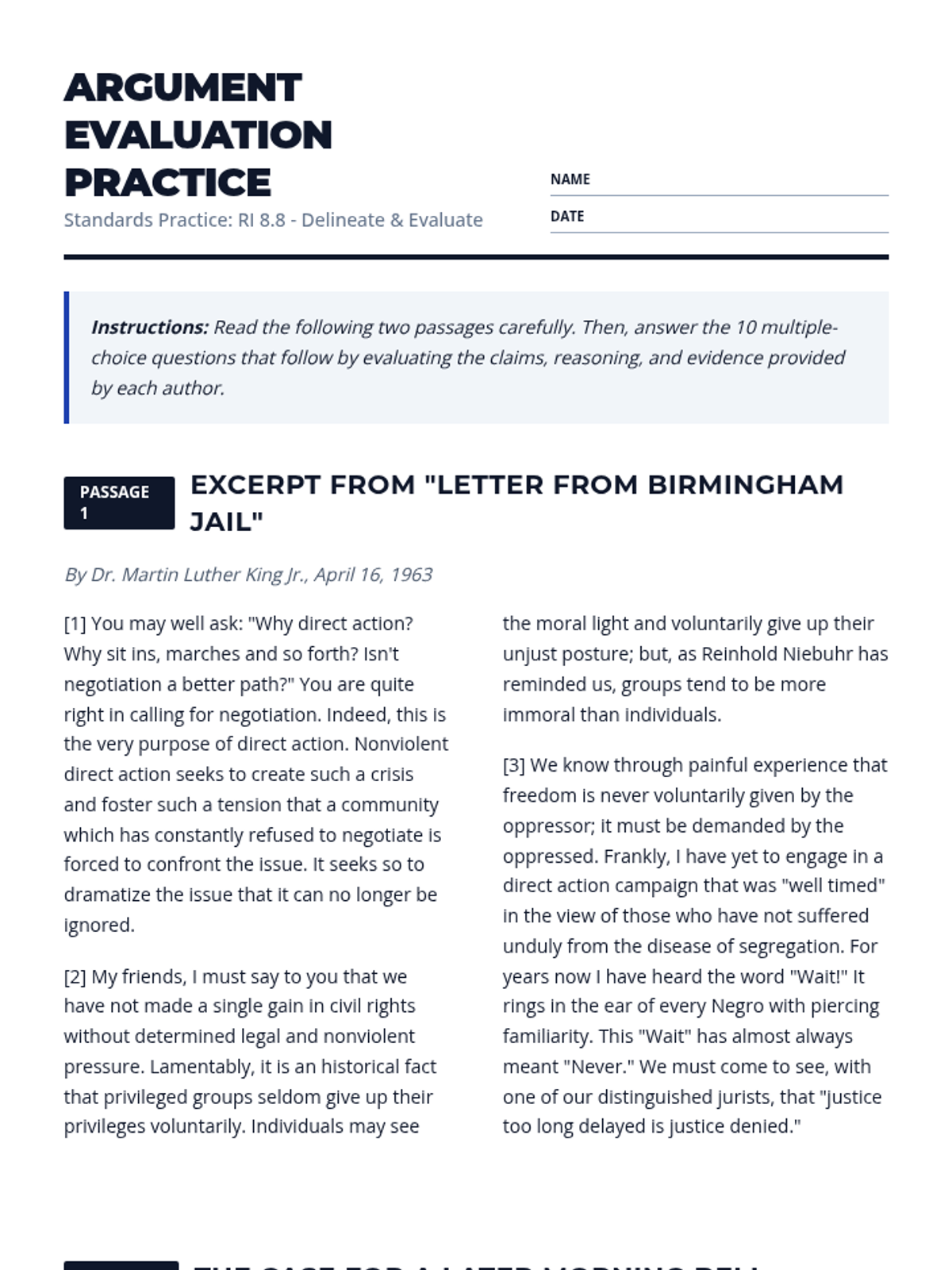
A intensive reteach lesson on RI 8.8, focusing on delineating and evaluating arguments using MLK Jr.'s 'Letter from Birmingham Jail' and a modern editorial on school start times. Students will assess claims, reasoning, and evidence relevance and sufficiency.
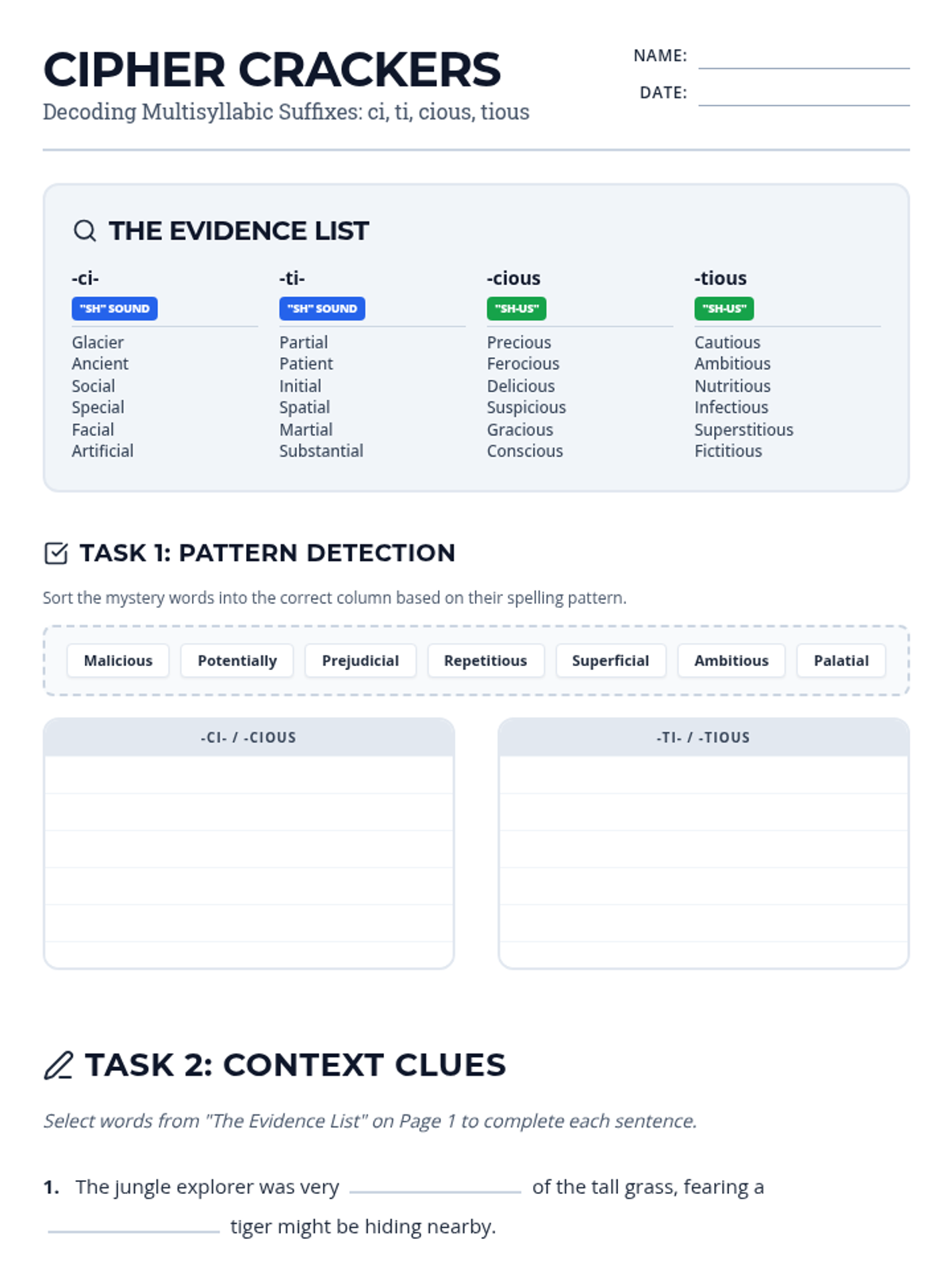
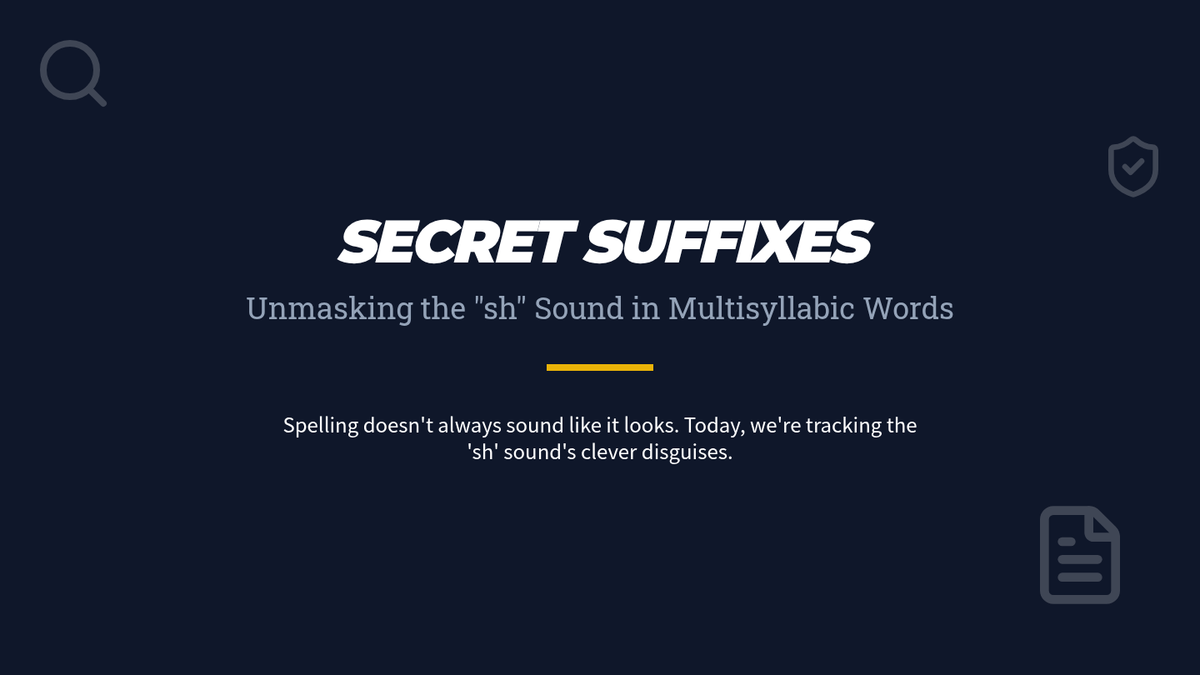
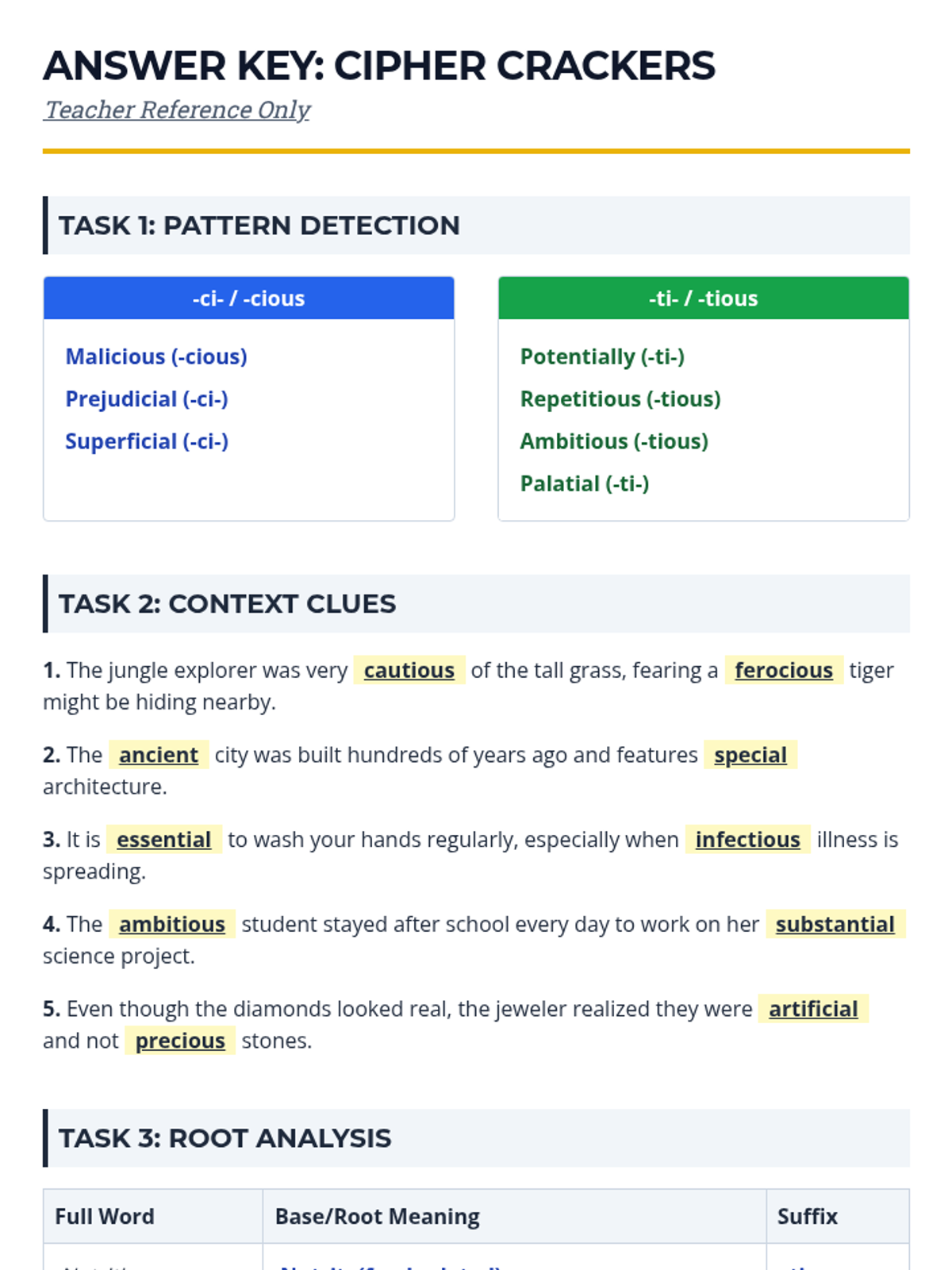
A lesson focused on identifying and using multisyllabic words with the 'sh' sound spelled as 'ci', 'ti', 'cious', and 'tious'. Students will analyze word patterns and apply their knowledge through vocabulary exercises.
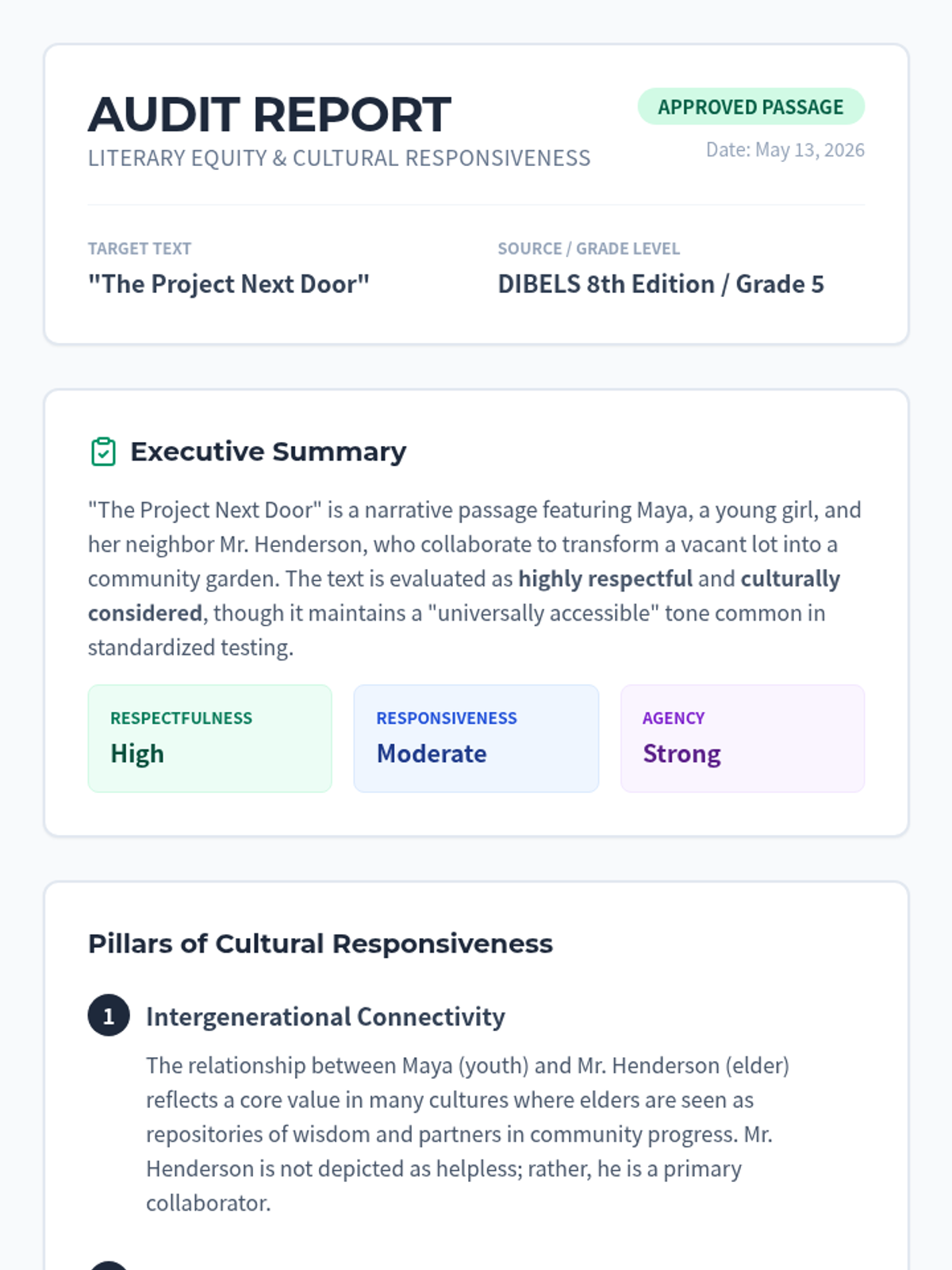
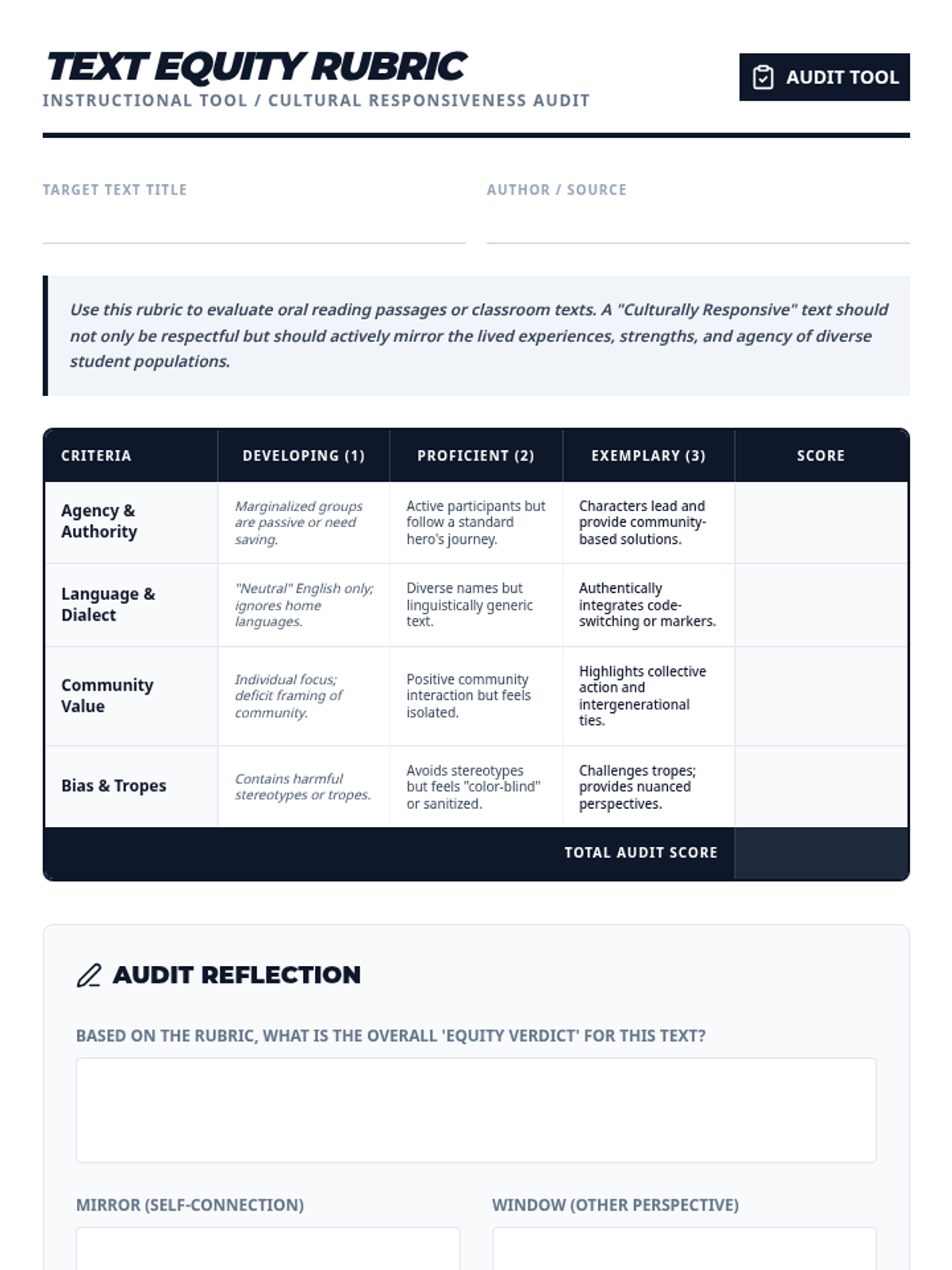
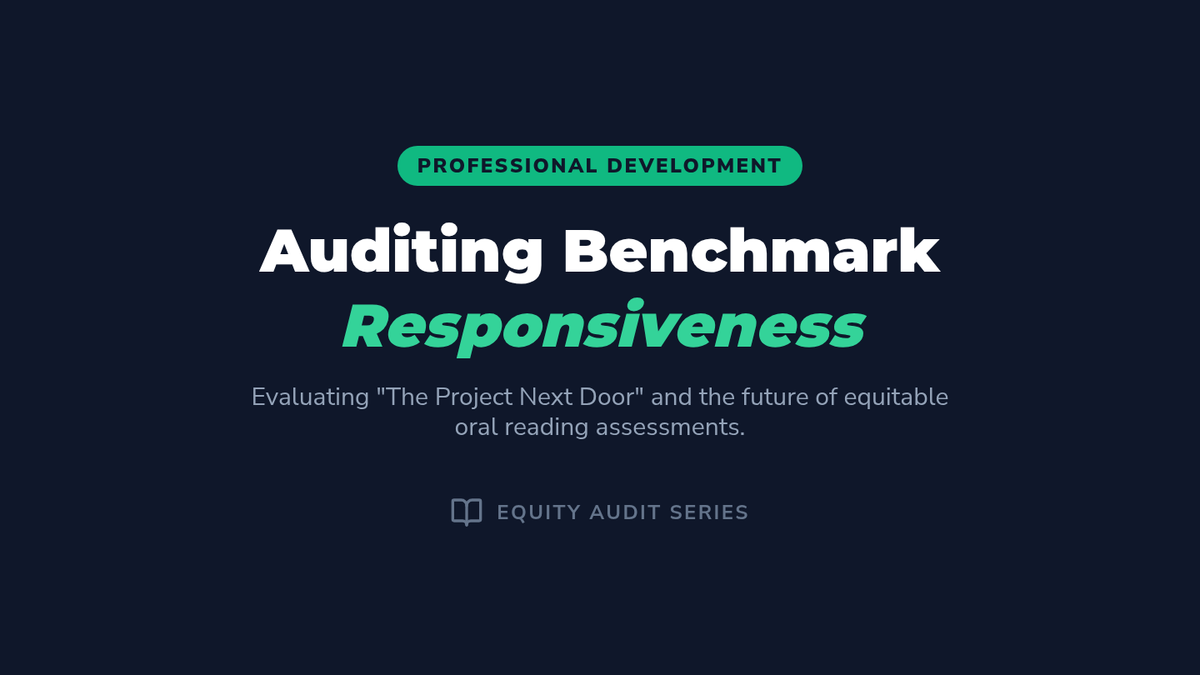
A comprehensive evaluation of the DIBELS 8th Edition passage 'The Project Next Door' through the lens of culturally responsive teaching (CRT). This lesson includes a detailed analysis report, a universal text equity rubric for teachers, and a slide deck for professional development.
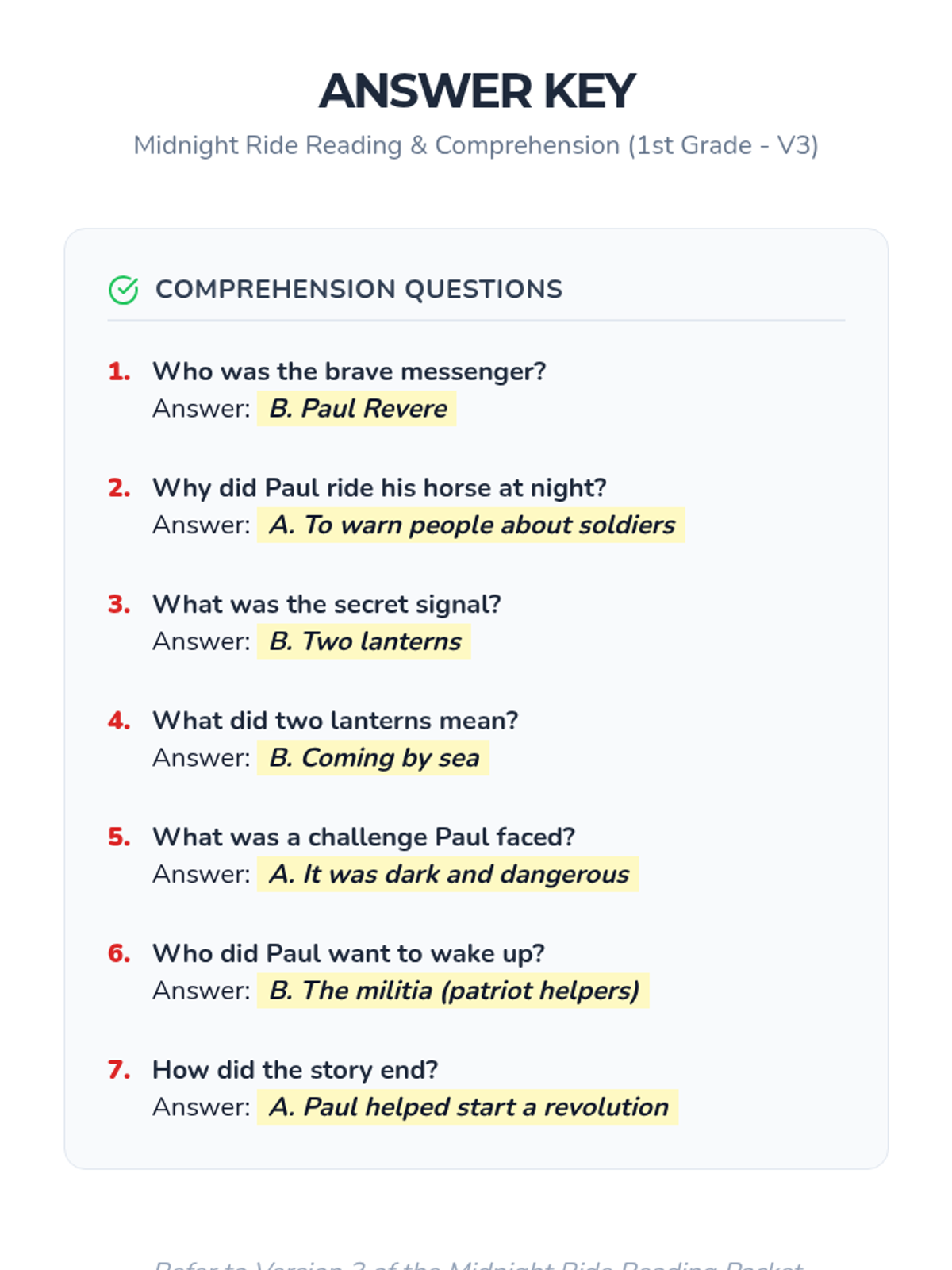
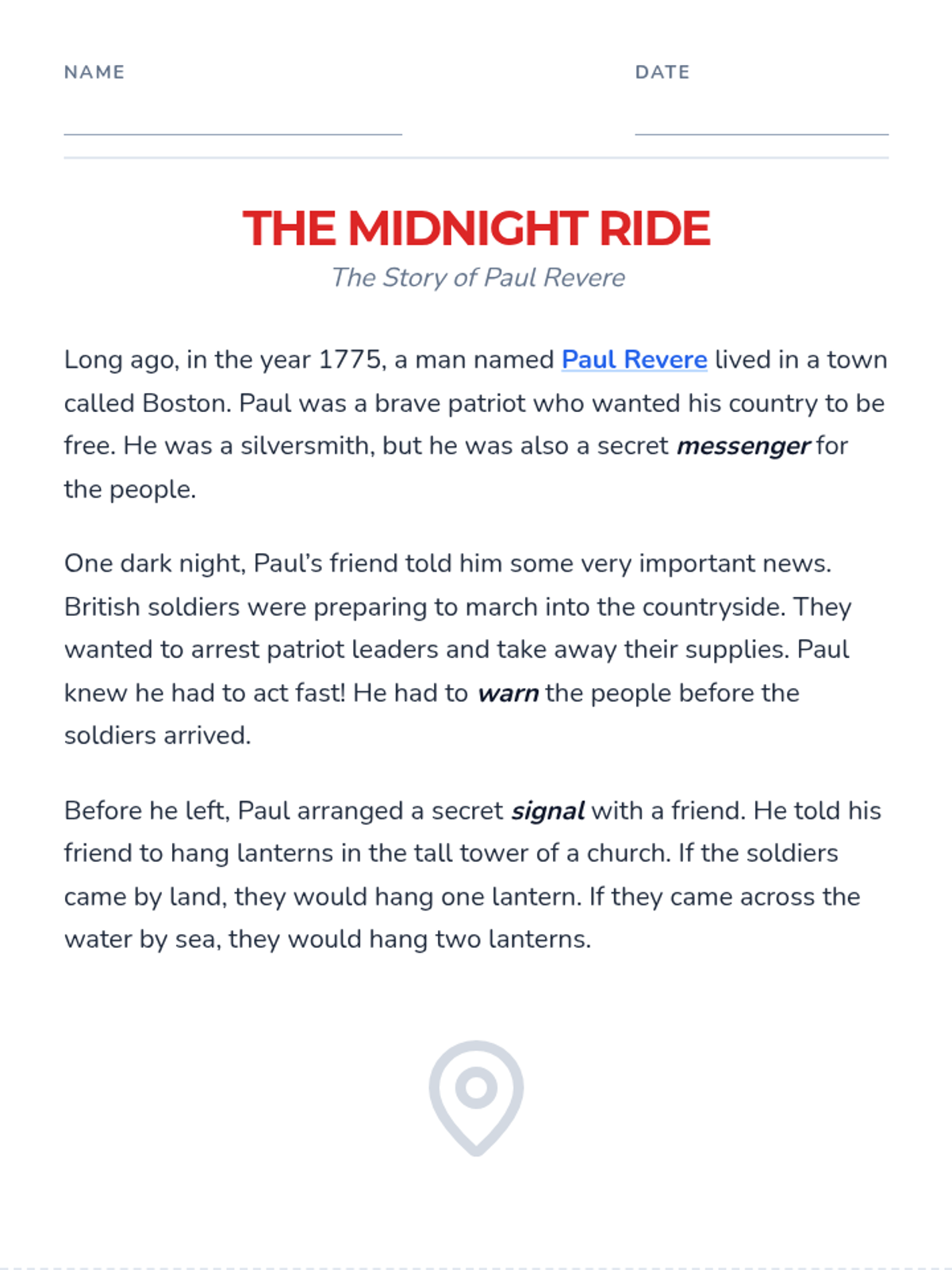
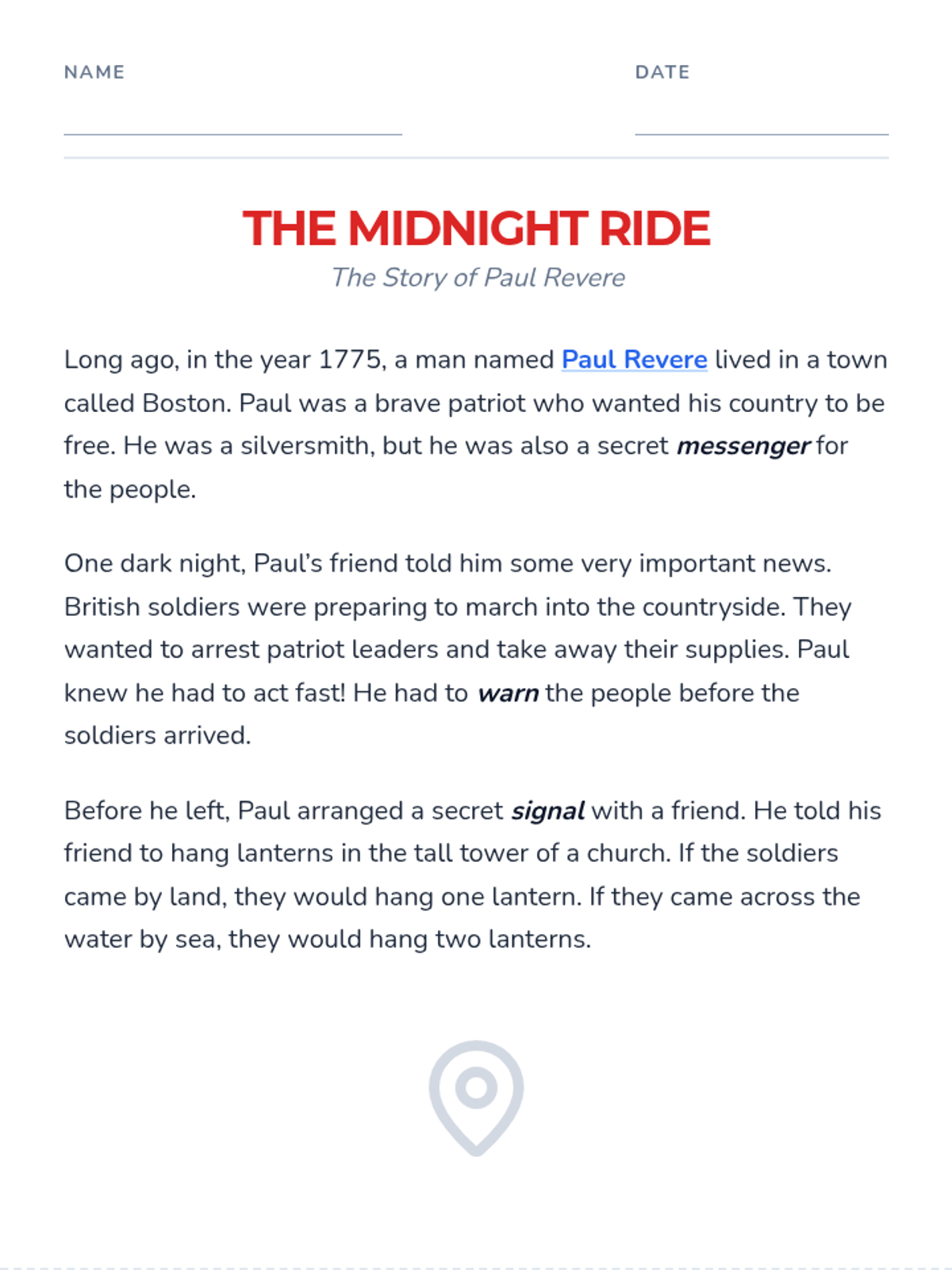
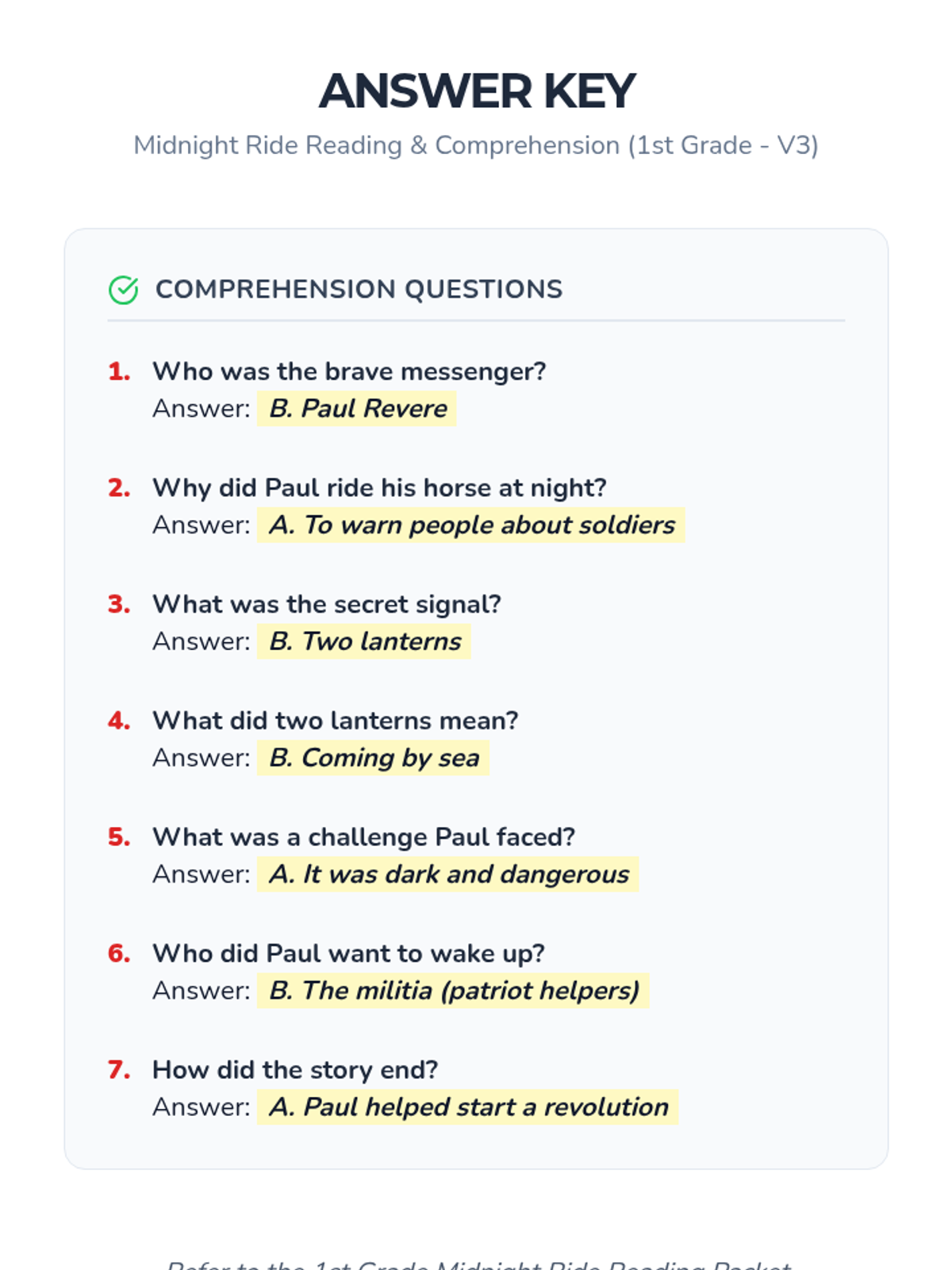
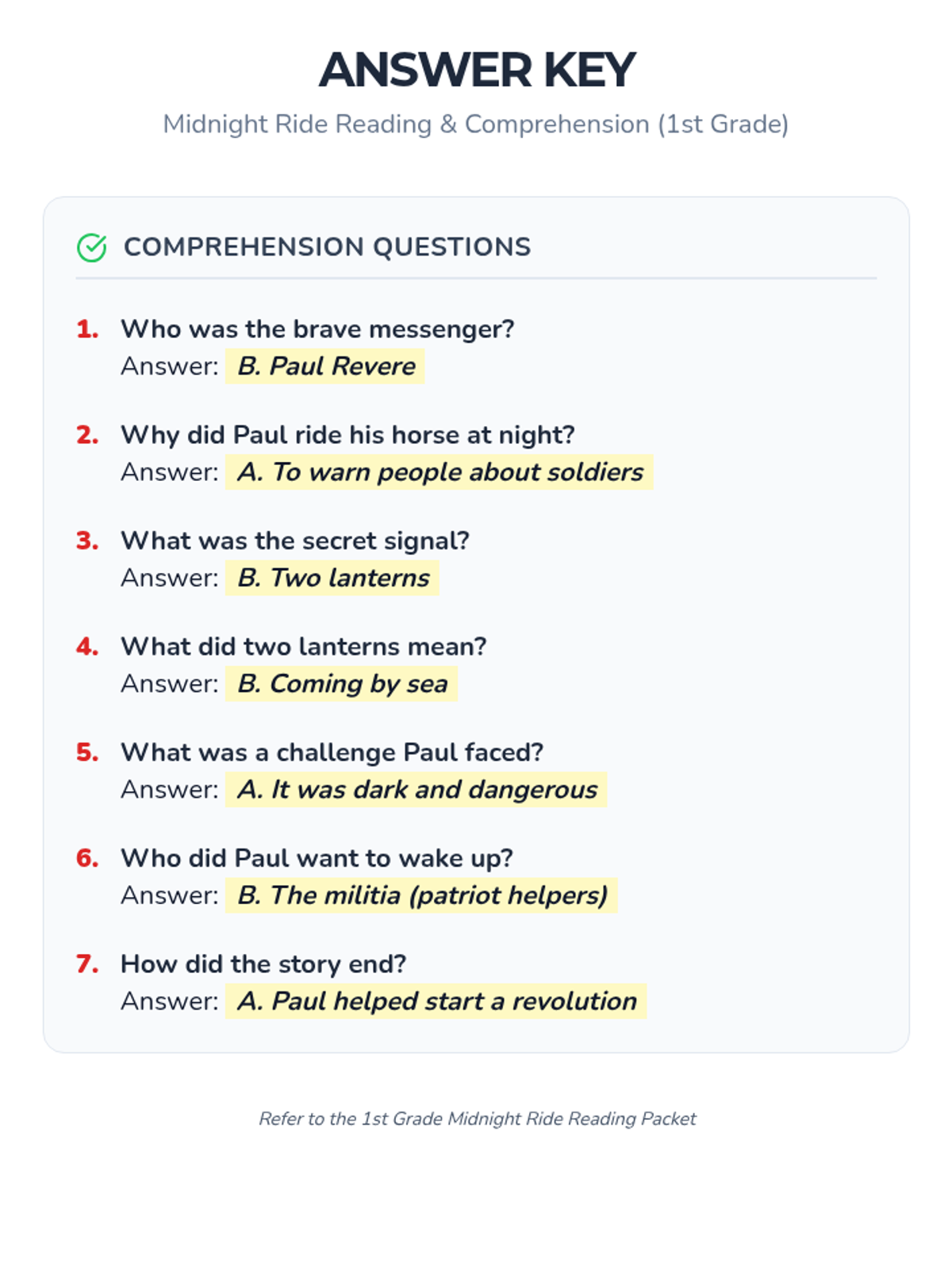
A differentiated literacy packet for 1st-grade students focused on the story of Paul Revere's Midnight Ride, featuring simplified text and multiple-choice comprehension questions.
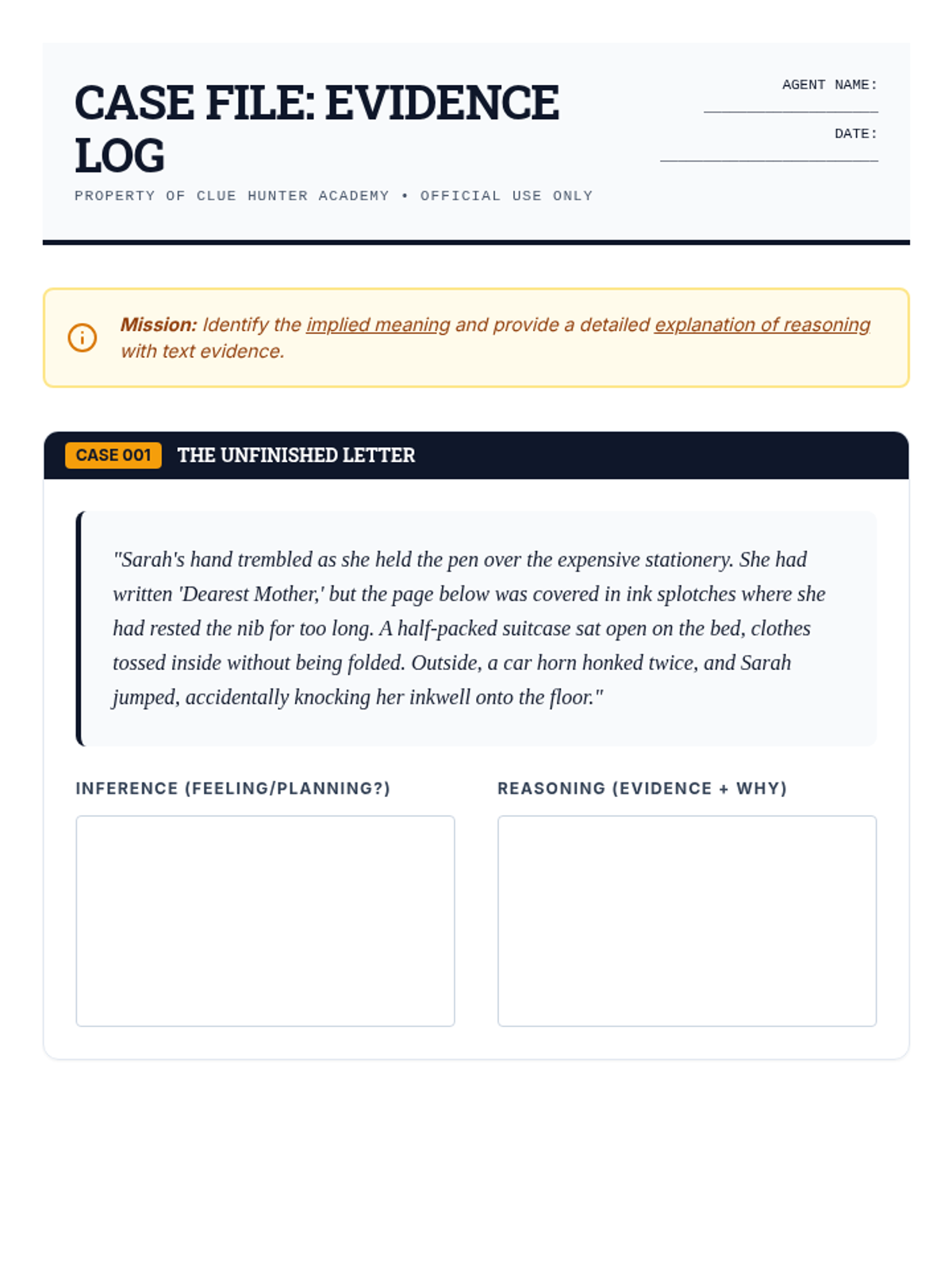
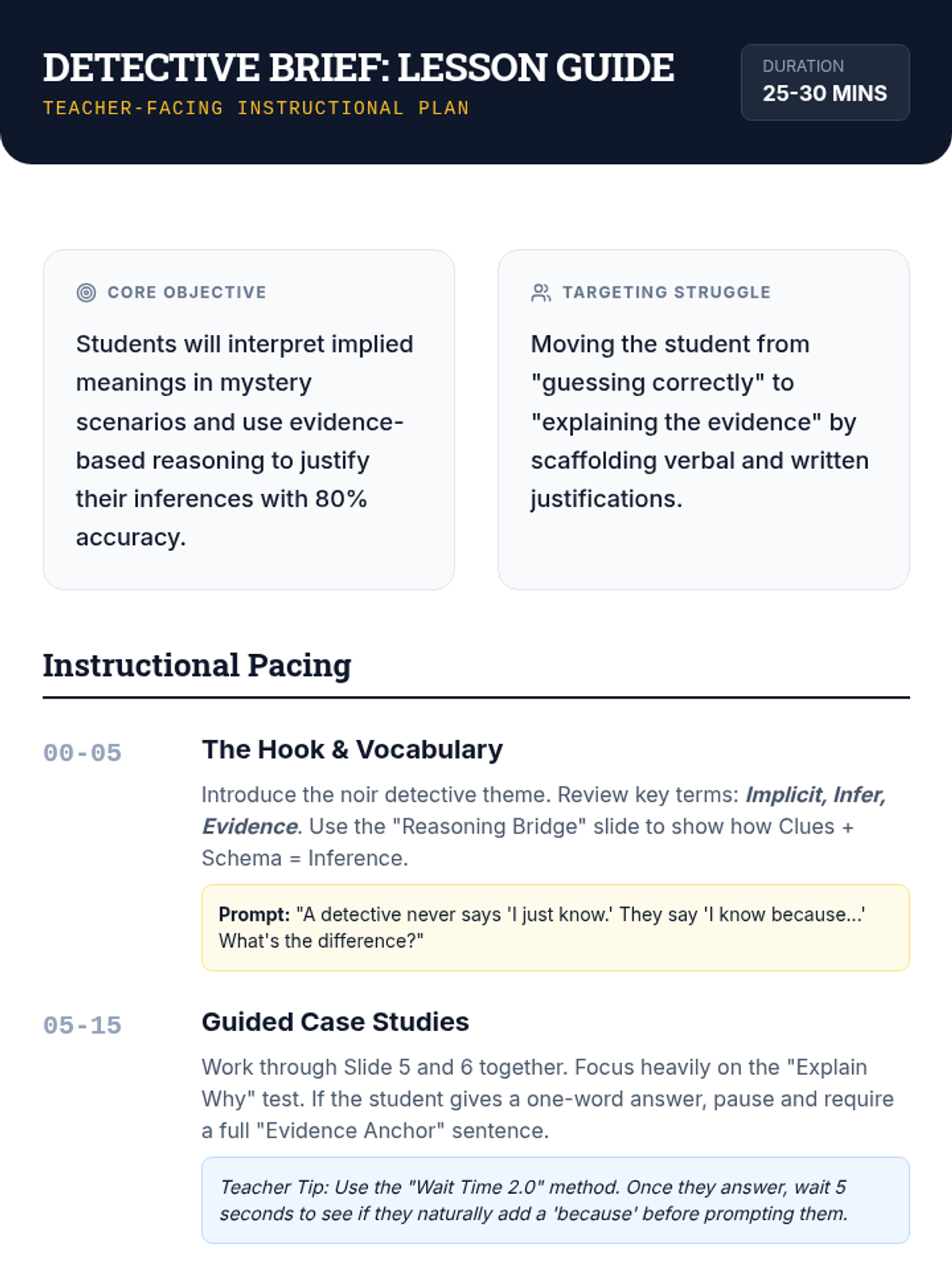
A targeted 1:1 intervention lesson focused on inferential reasoning and evidence-based explanations using a noir mystery theme. Students will practice identifying implied meanings in short scenarios and using specific sentence frames to justify their conclusions.
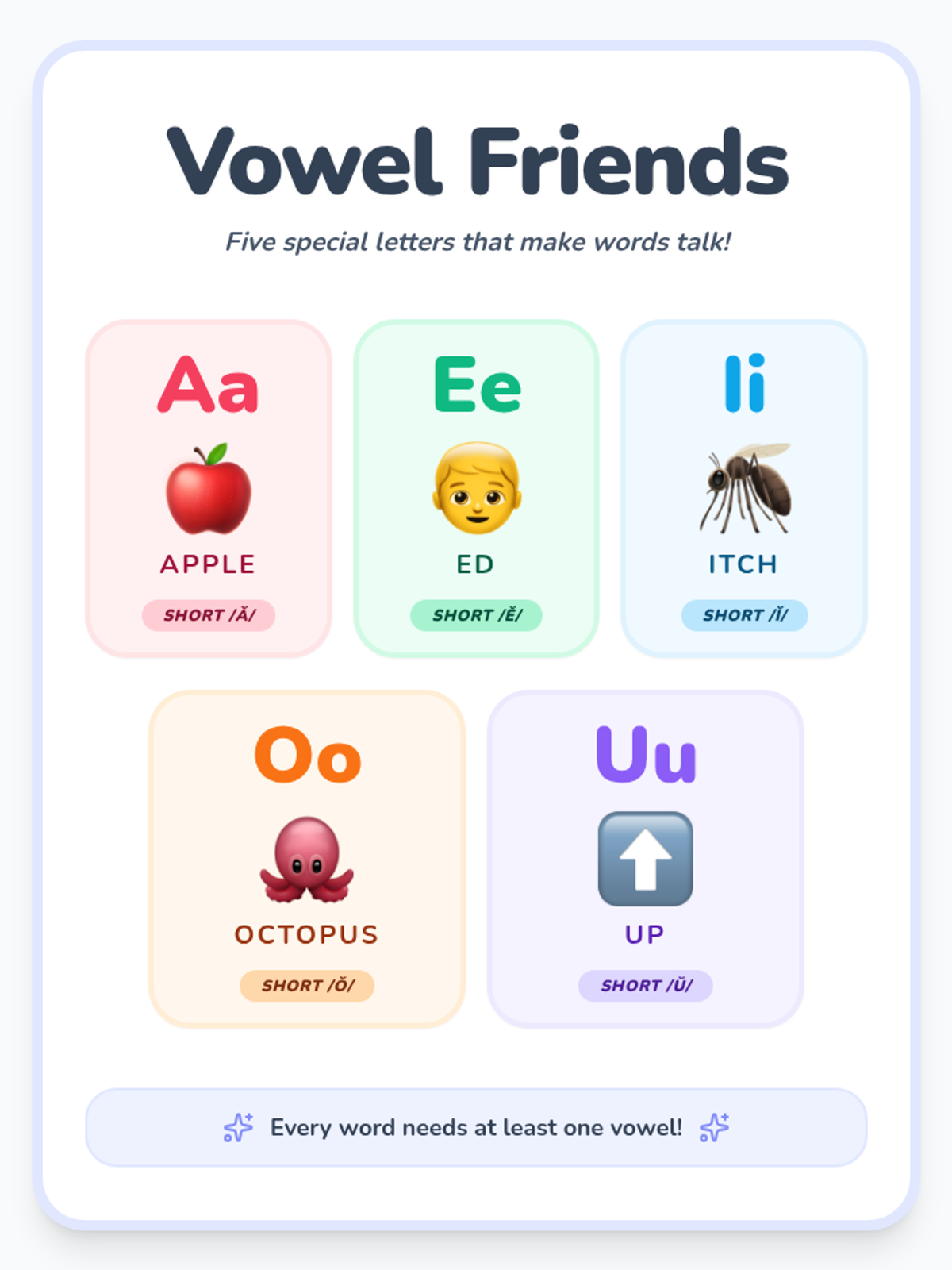
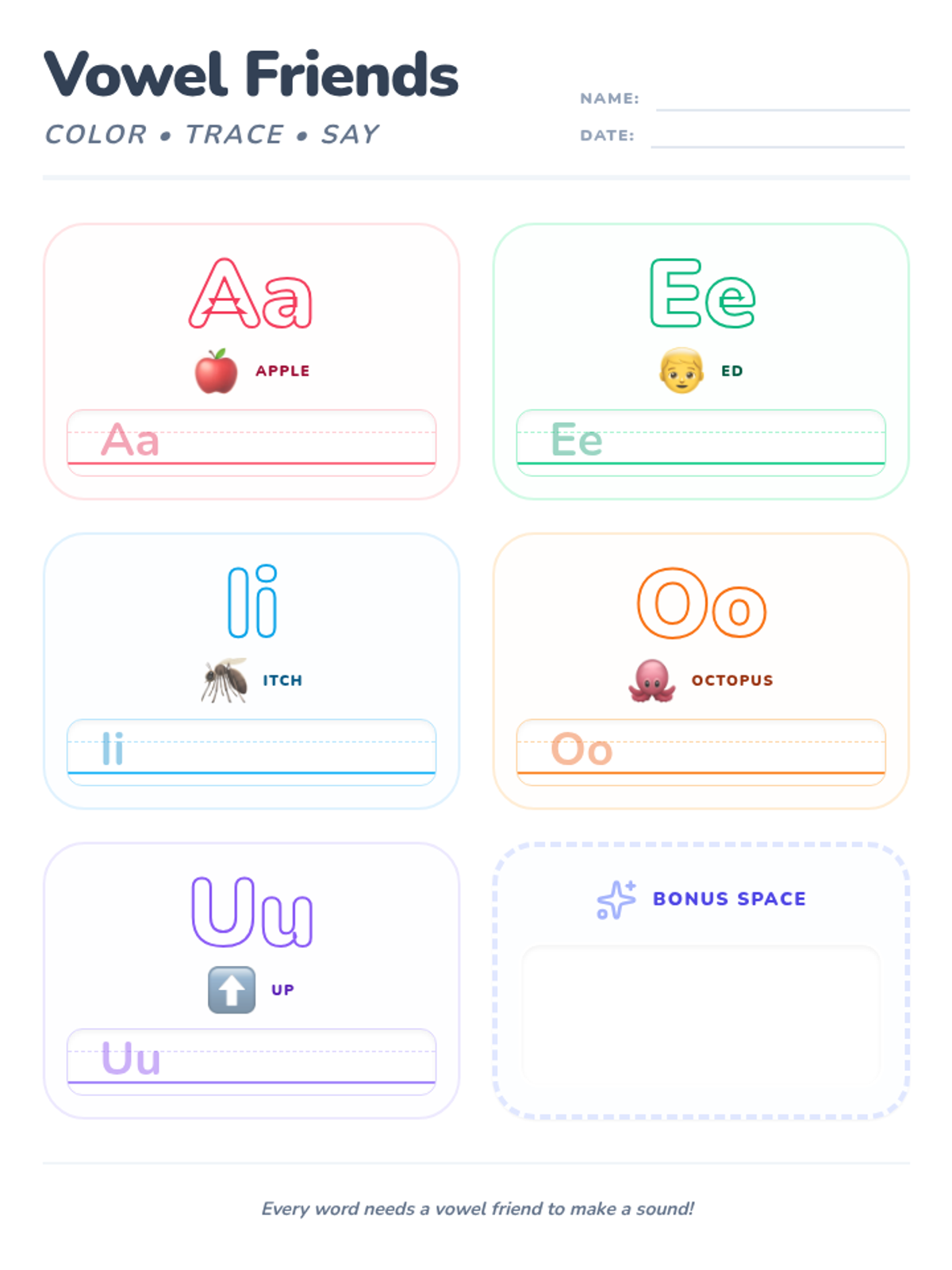
A foundational phonics lesson focused on identifying the five main vowels (A, E, I, O, U) using memorable keywords and visual associations. Includes a classroom display poster and an interactive coloring worksheet for student practice.
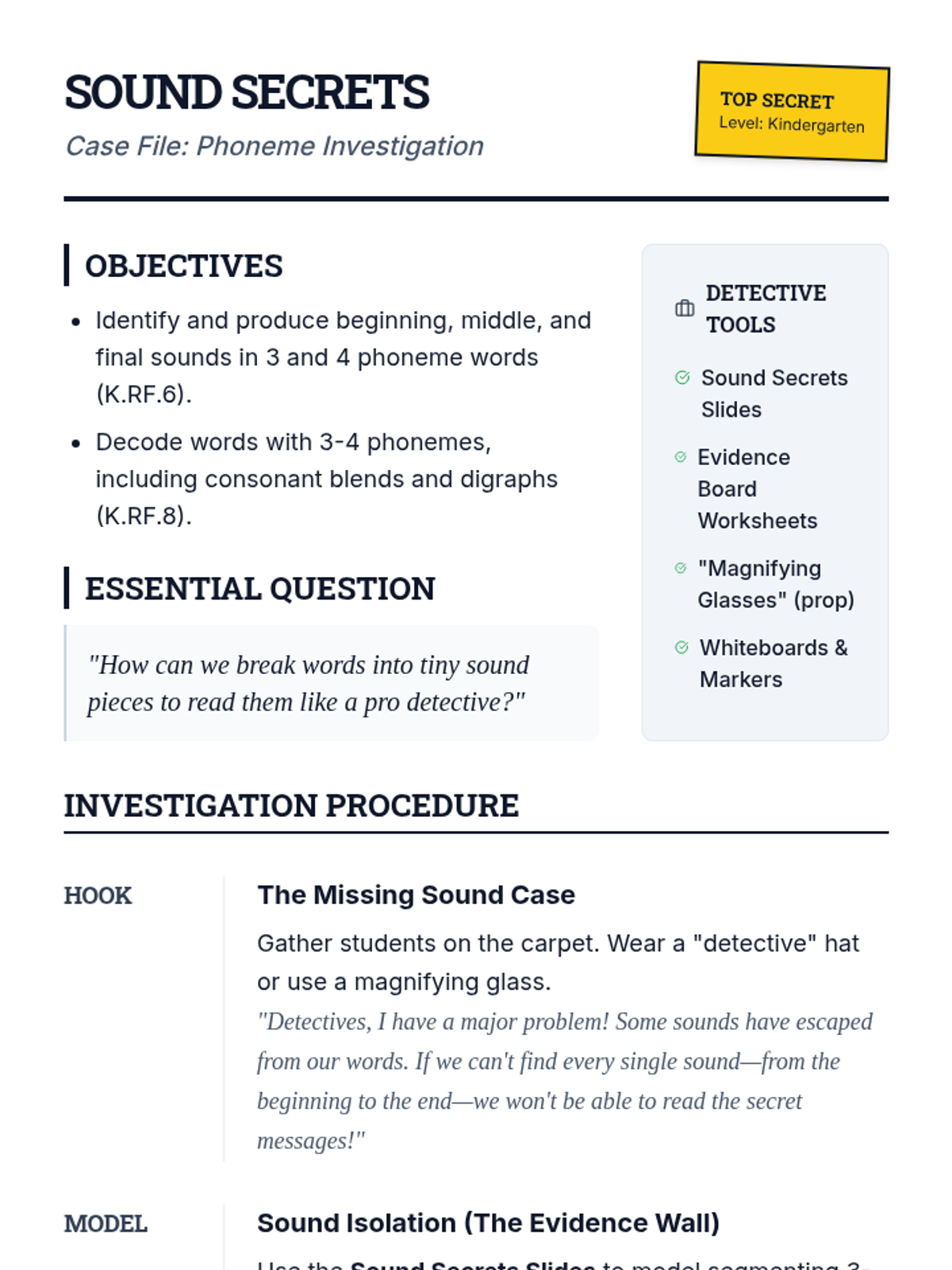
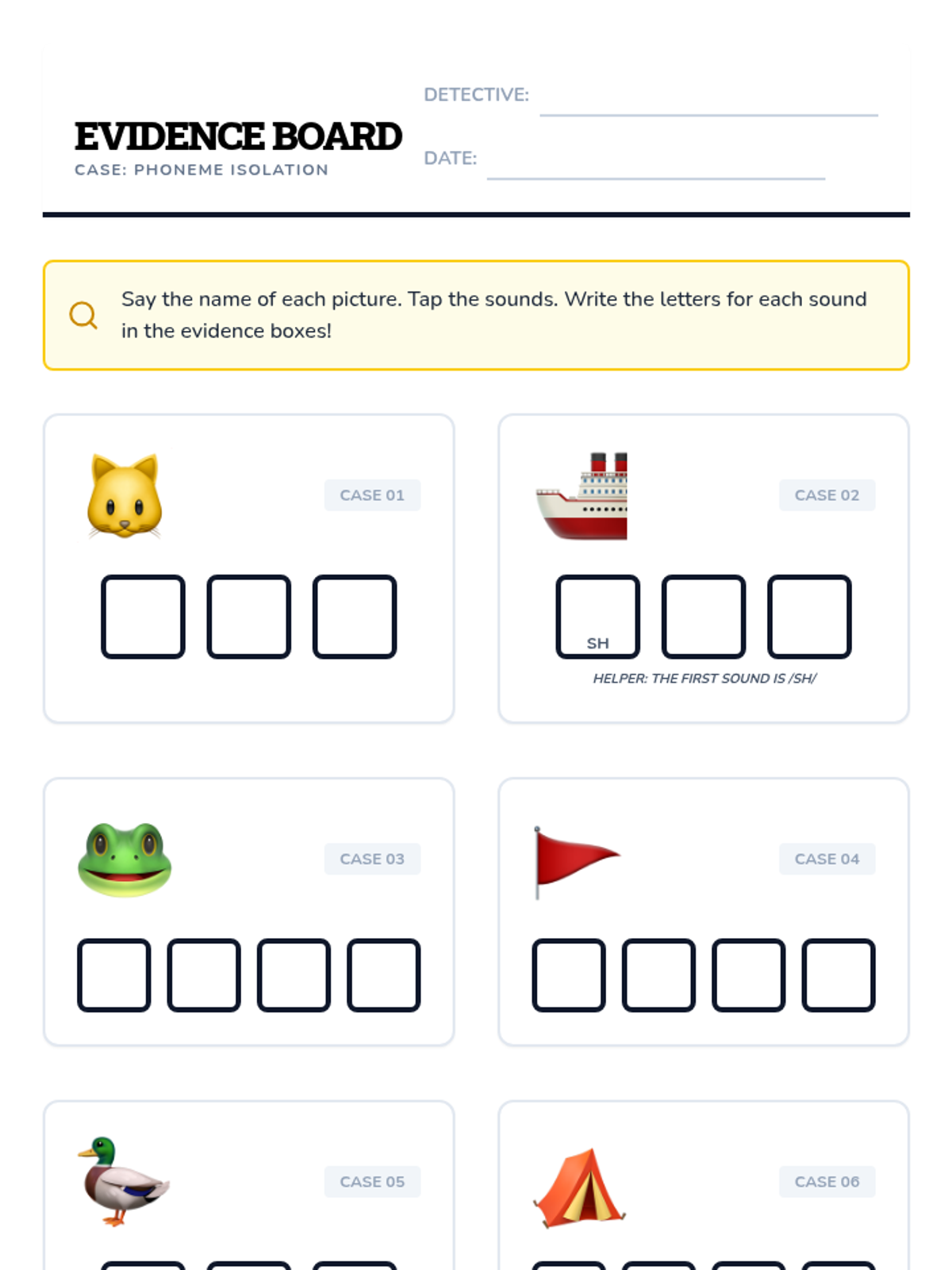
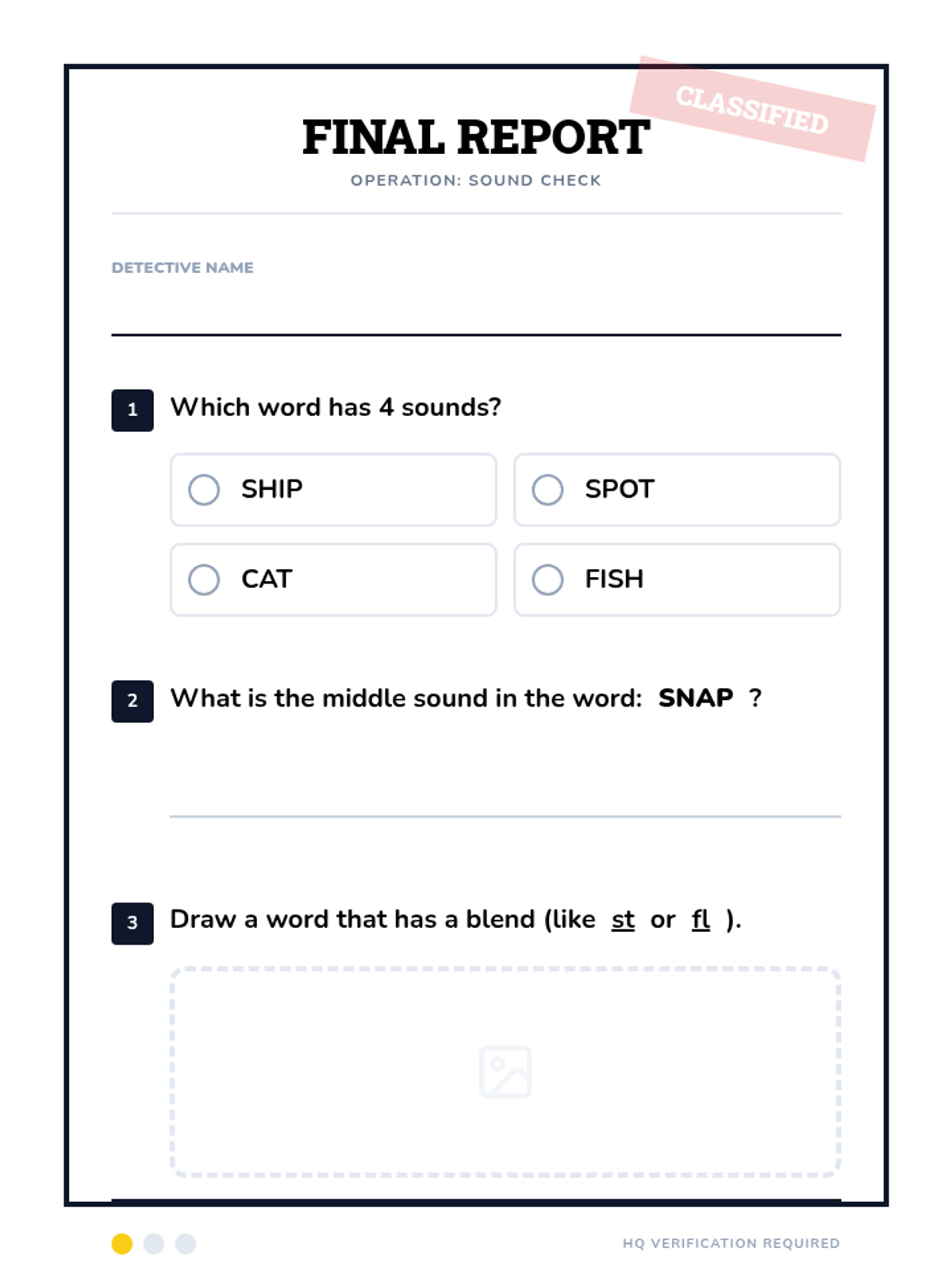
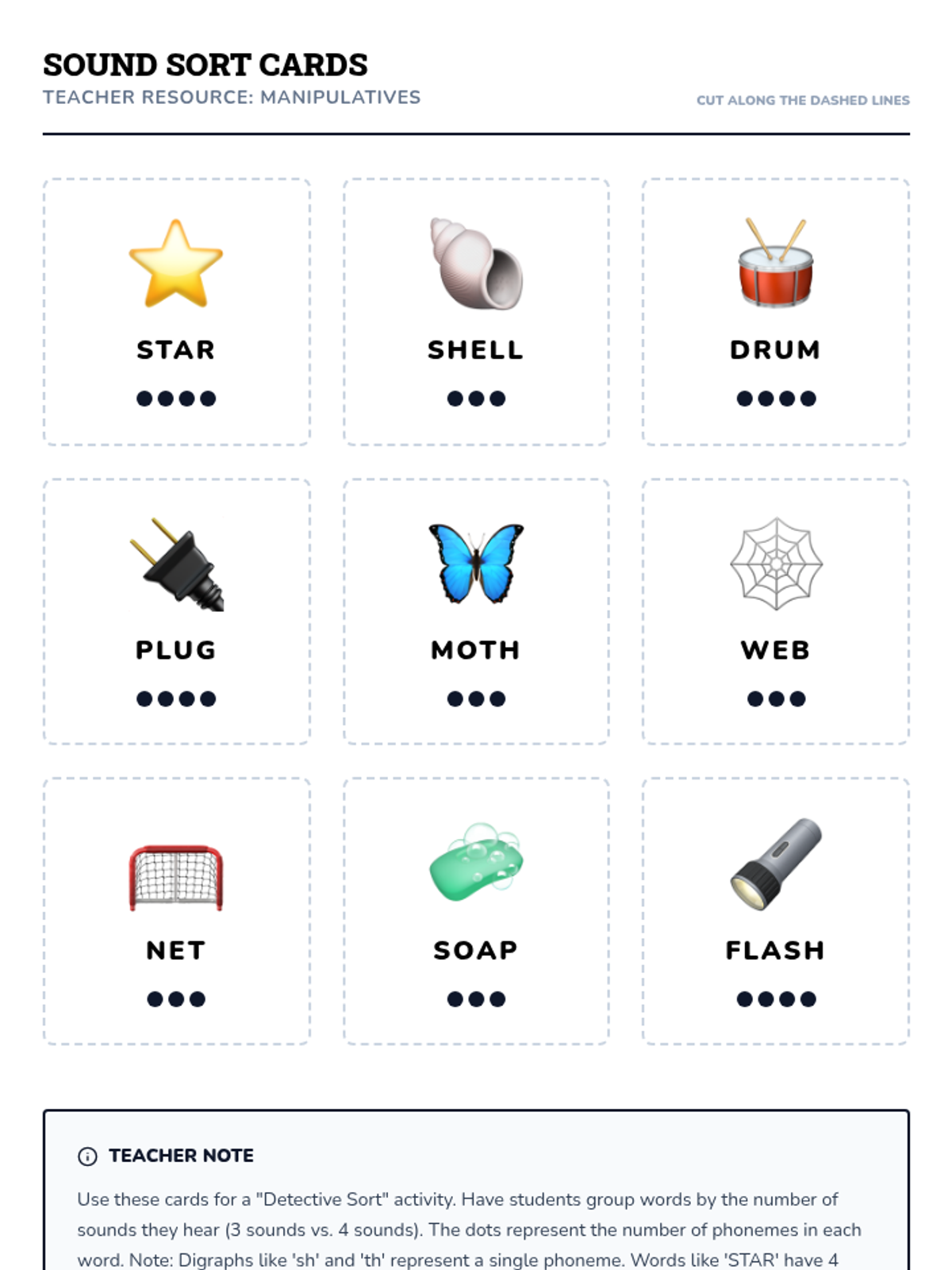
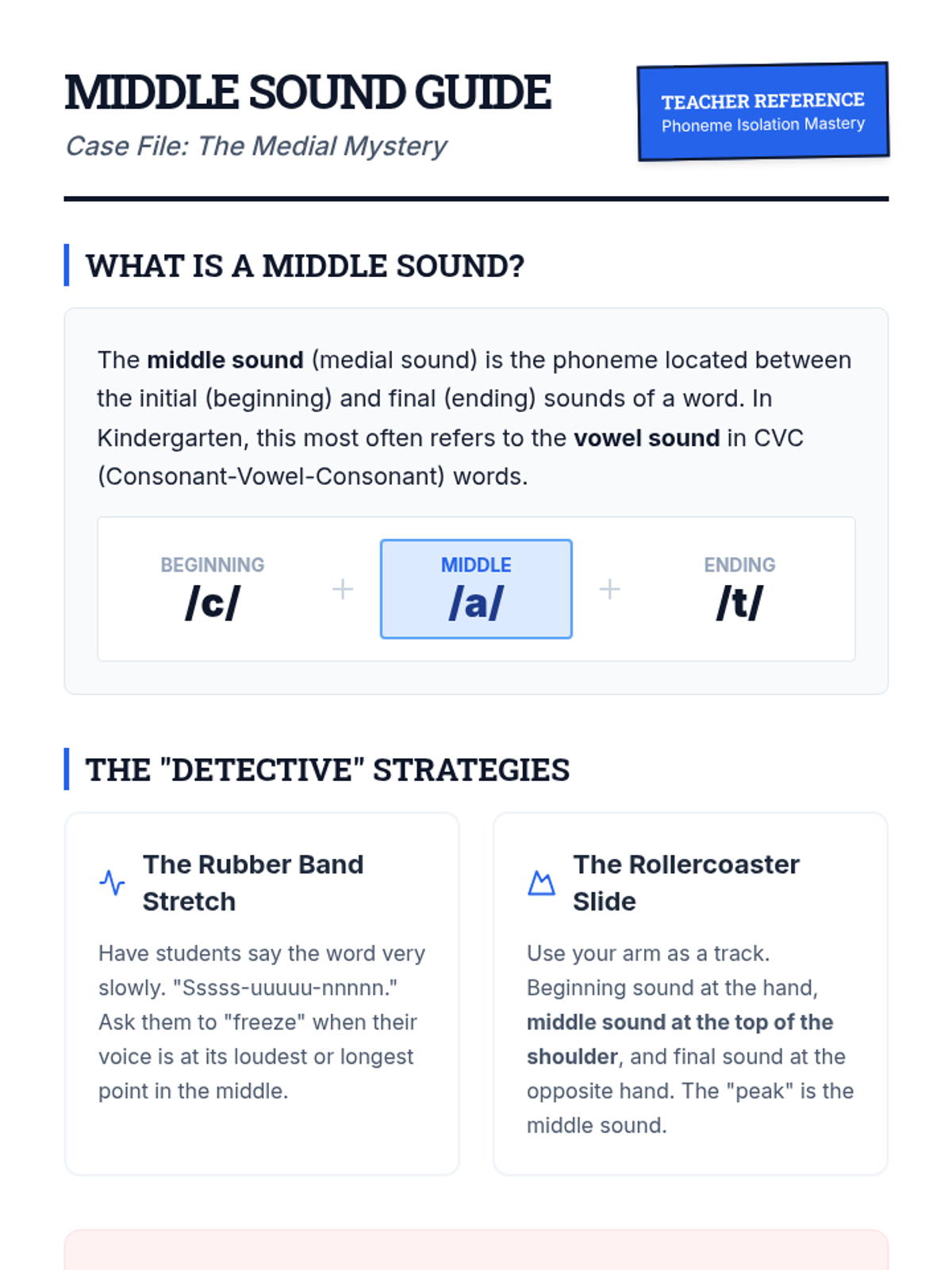
A comprehensive literacy lesson where students act as Sound Detectives to master phoneme isolation and decoding. Students will practice identifying beginning, middle, and ending sounds in 3-4 phoneme words, including those with blends and digraphs.