A lesson focused on identifying main ideas and supporting details within a familiar setting: the school environment. Students analyze a descriptive passage to understand how different school spaces contribute to a community.
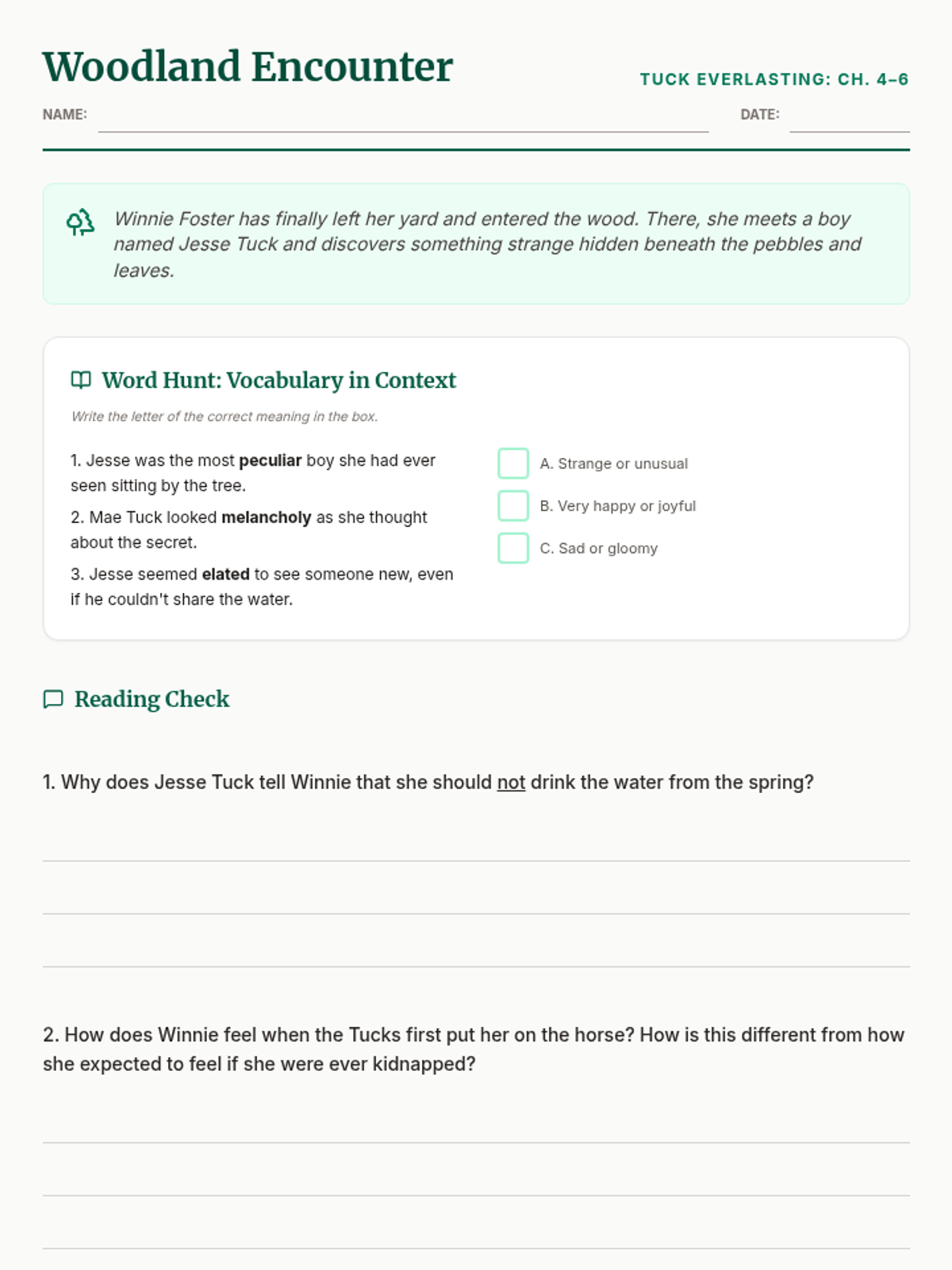
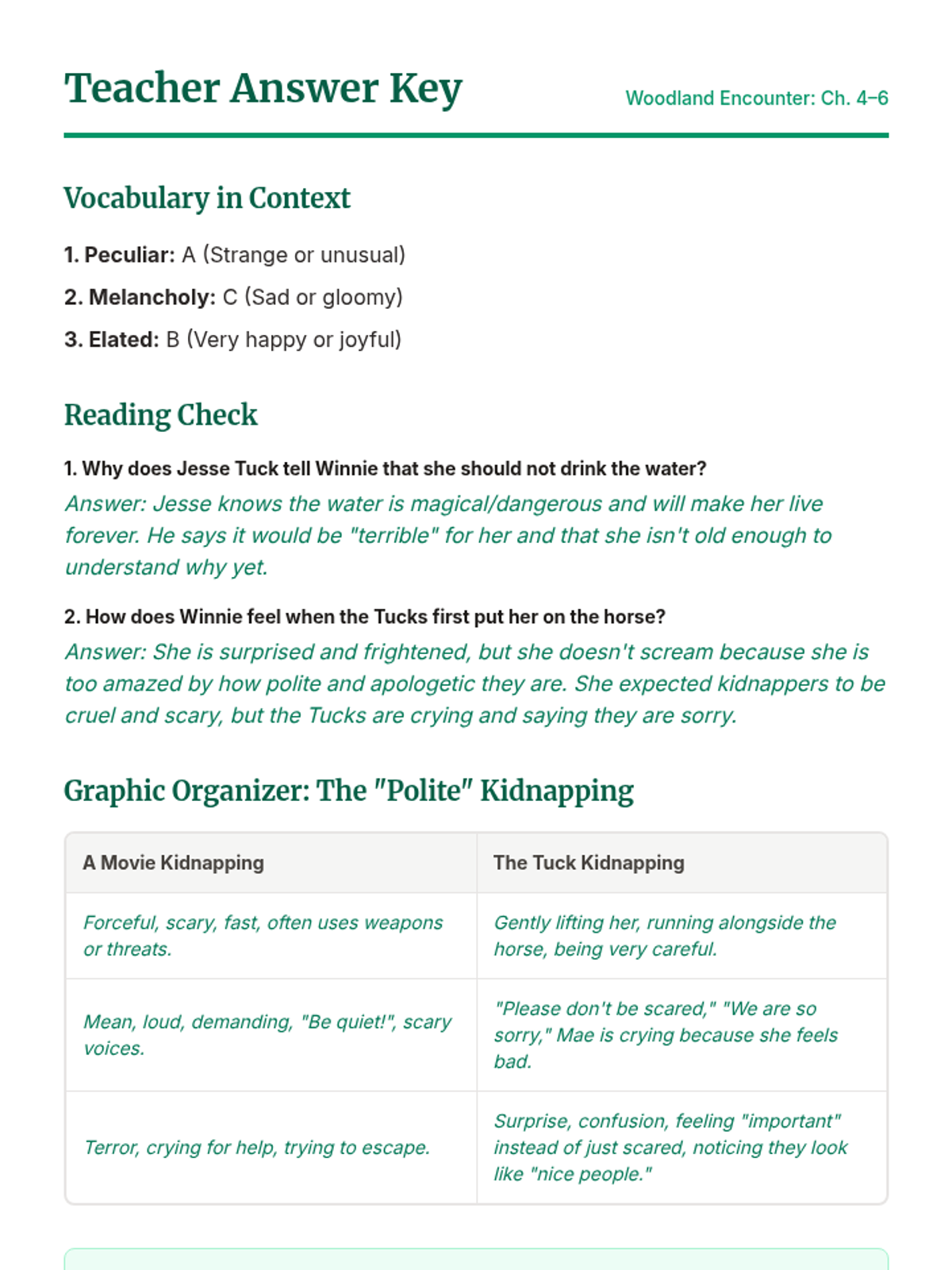
A lesson exploring chapters 4-6 of Tuck Everlasting, focusing on Winnie Foster's first encounter with the Tucks and the unique nature of her 'kidnapping'. Students analyze character motivations and use graphic organizers to compare the Tucks to traditional movie tropes.
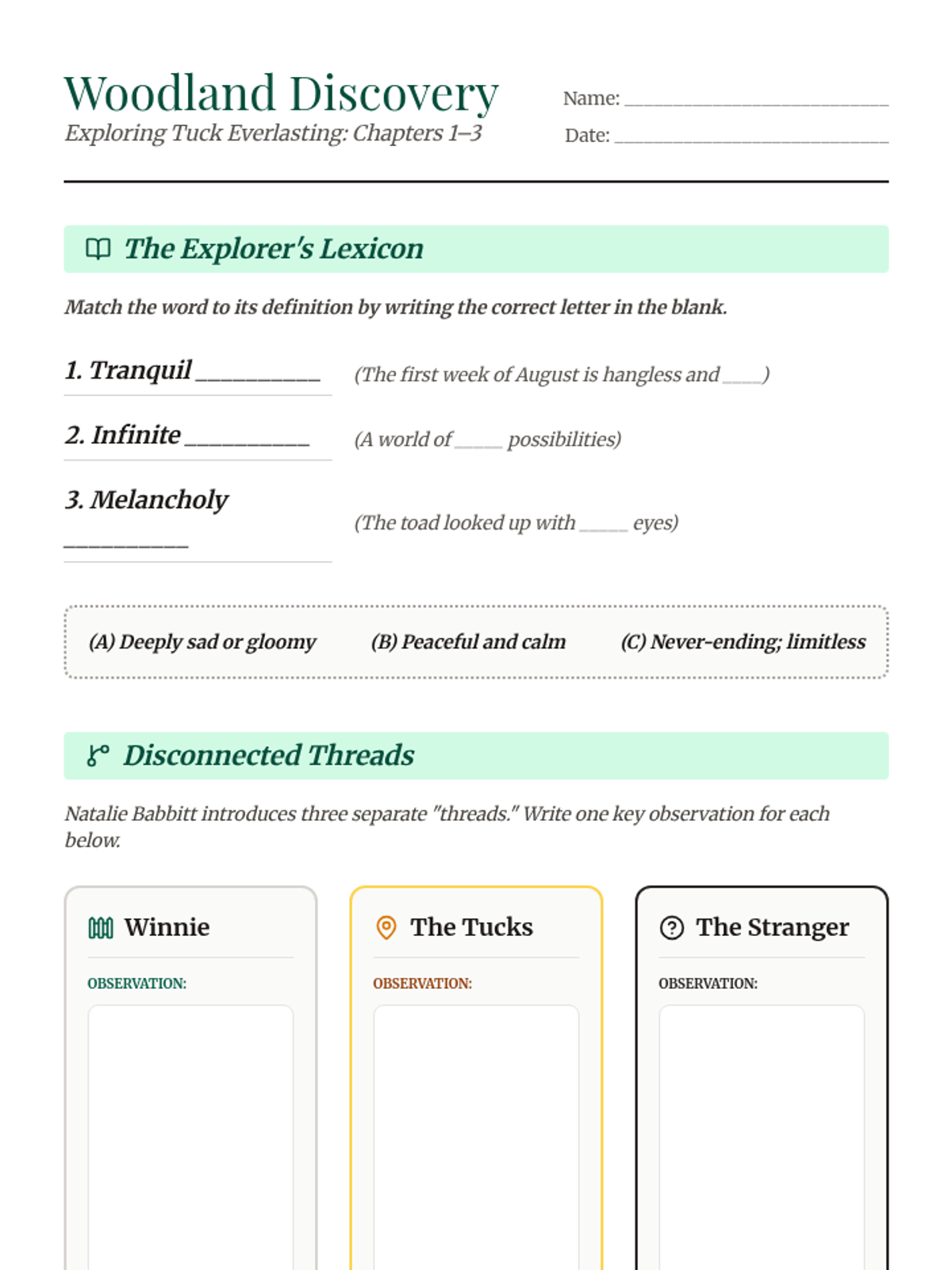
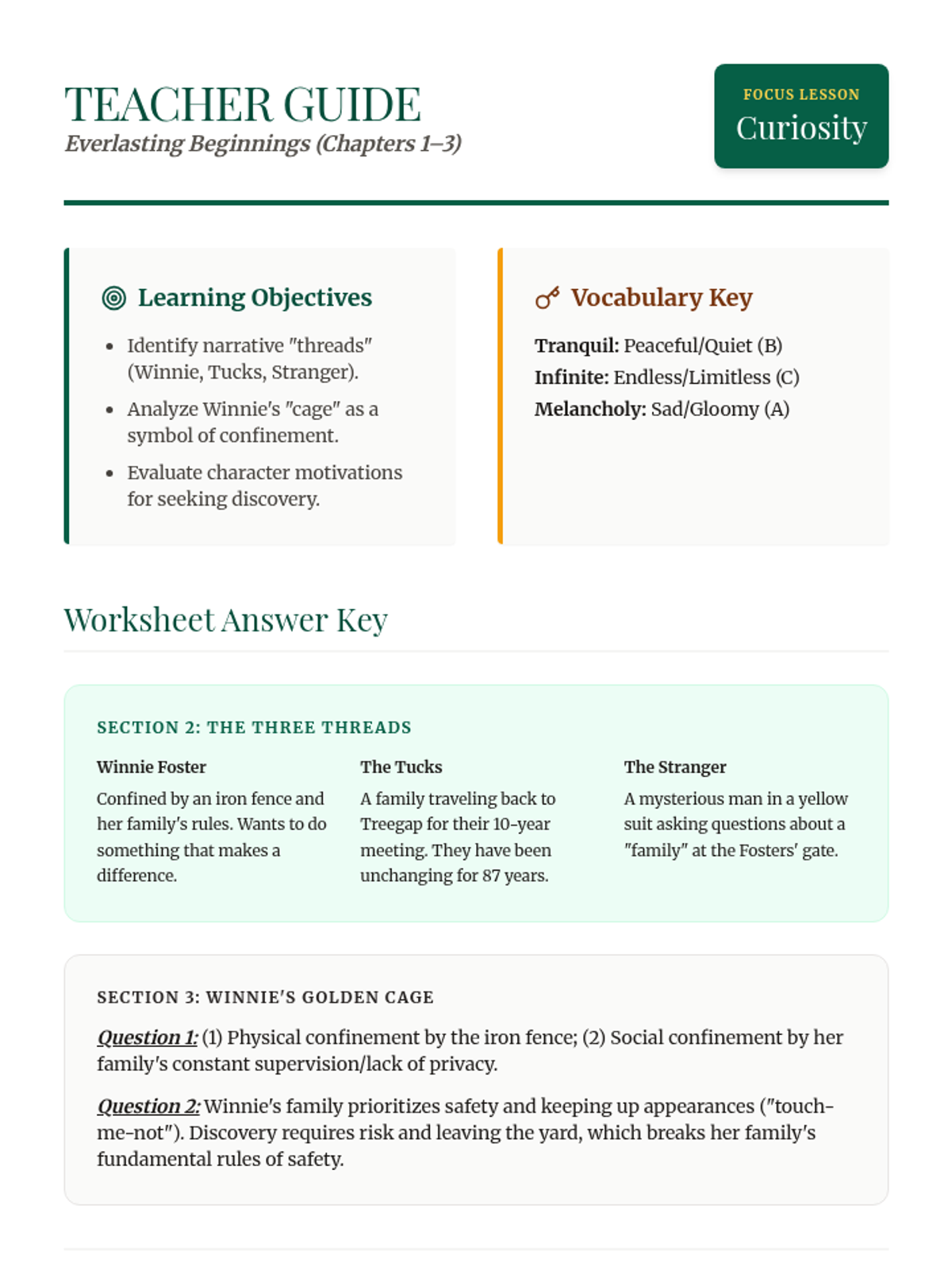
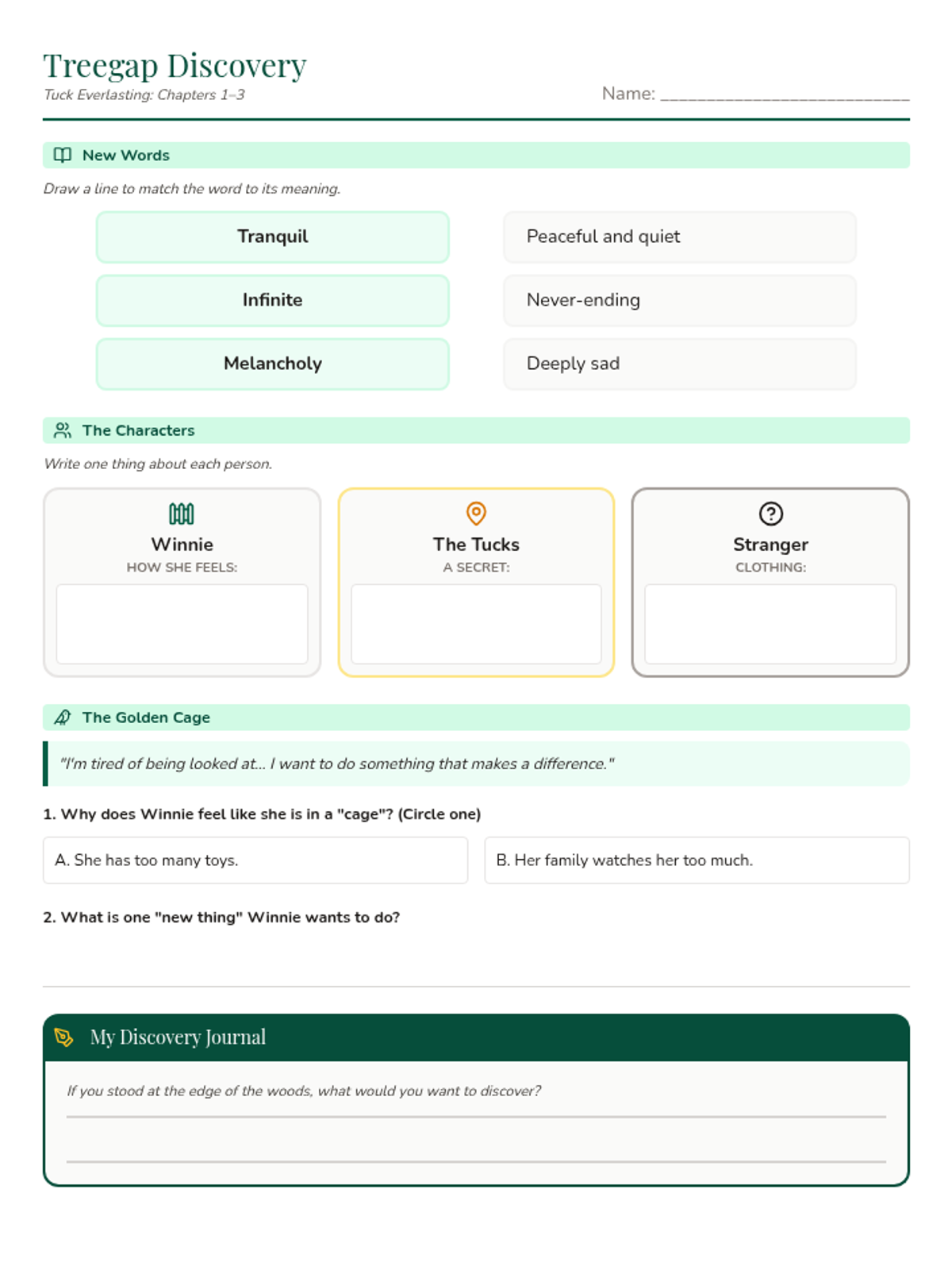
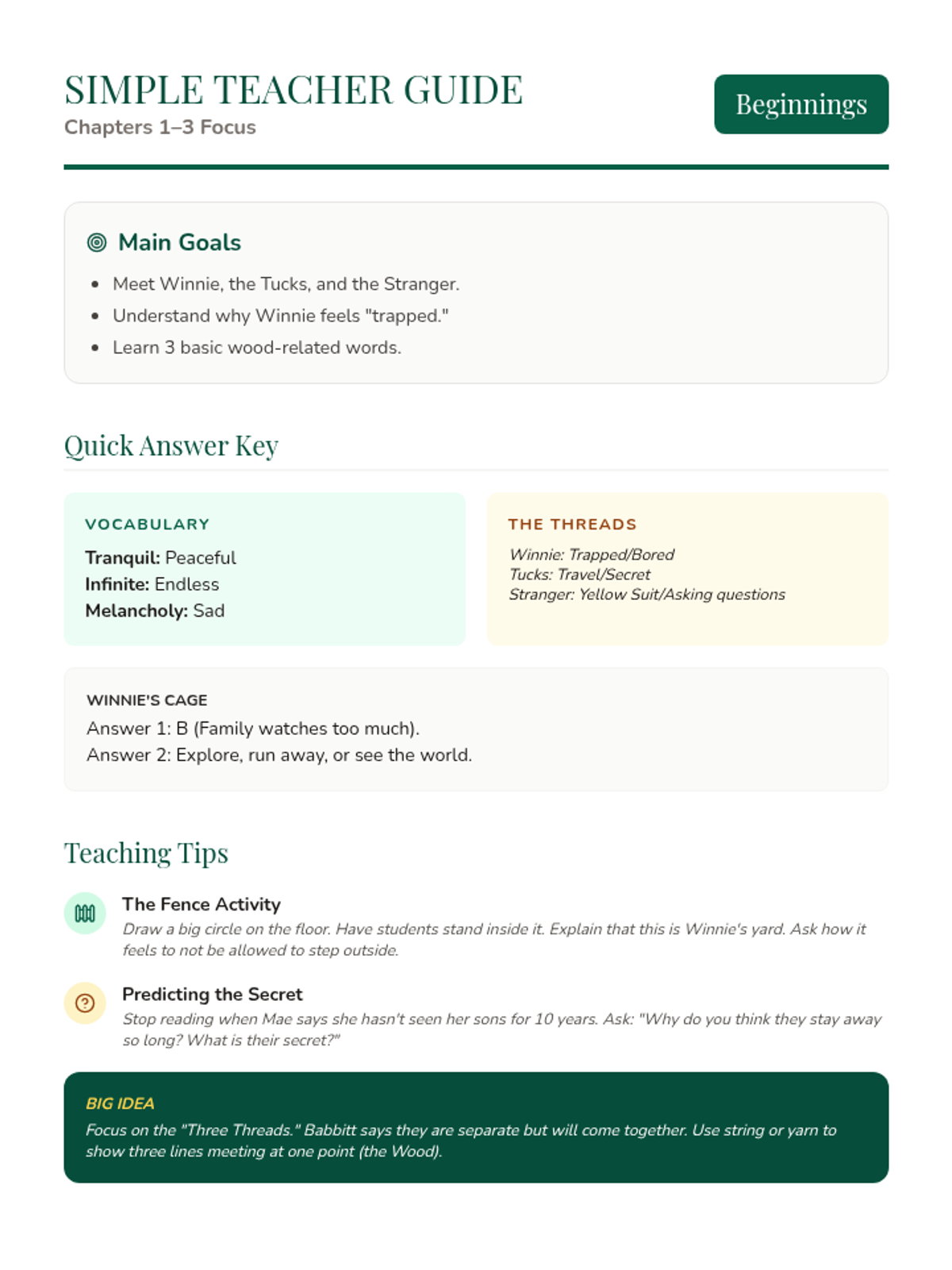
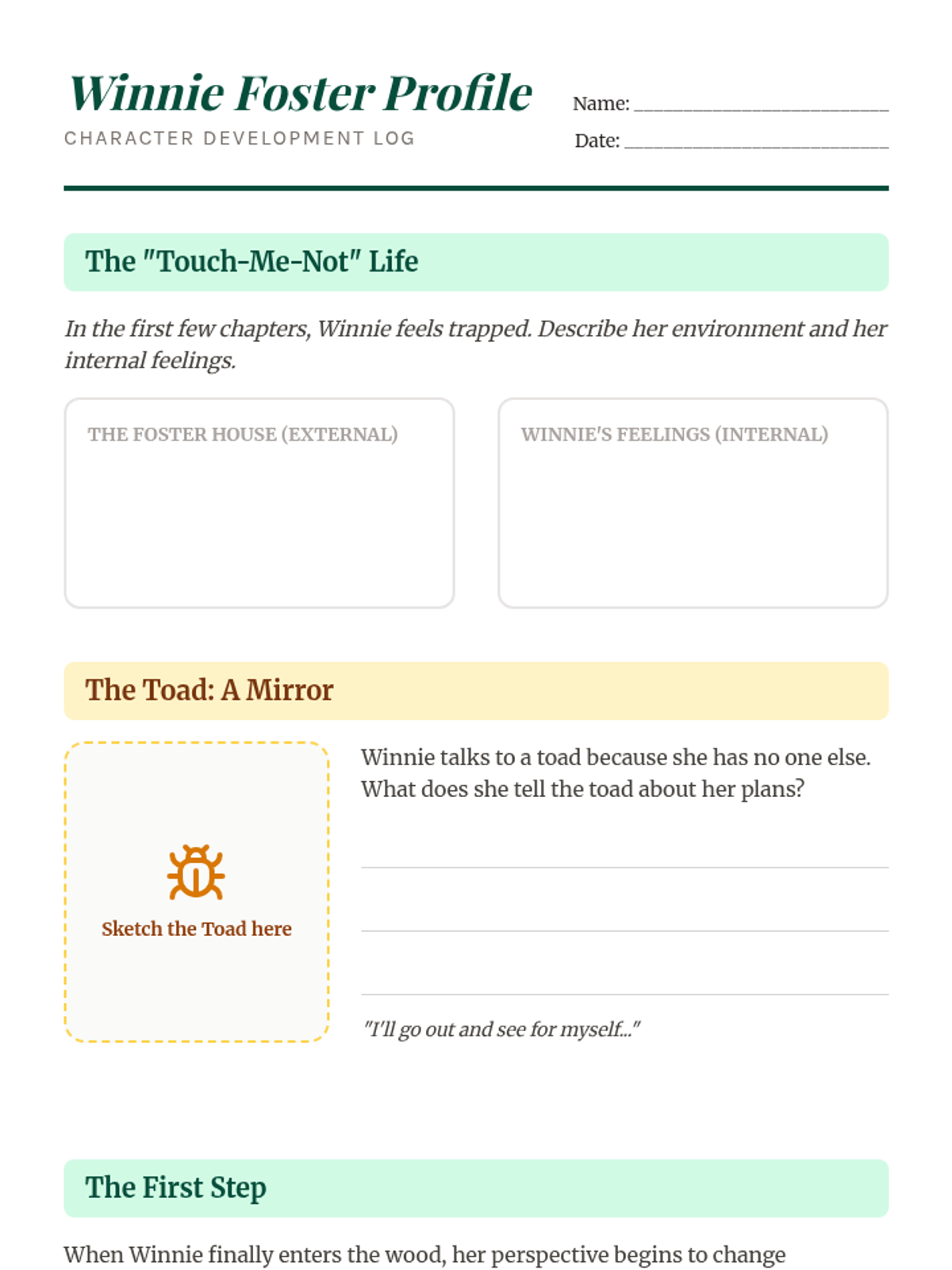
An introductory exploration of the first three chapters of Natalie Babbitt's *Tuck Everlasting*, focusing on character introductions, the theme of discovery, and the metaphor of Winnie Foster's 'cage'.
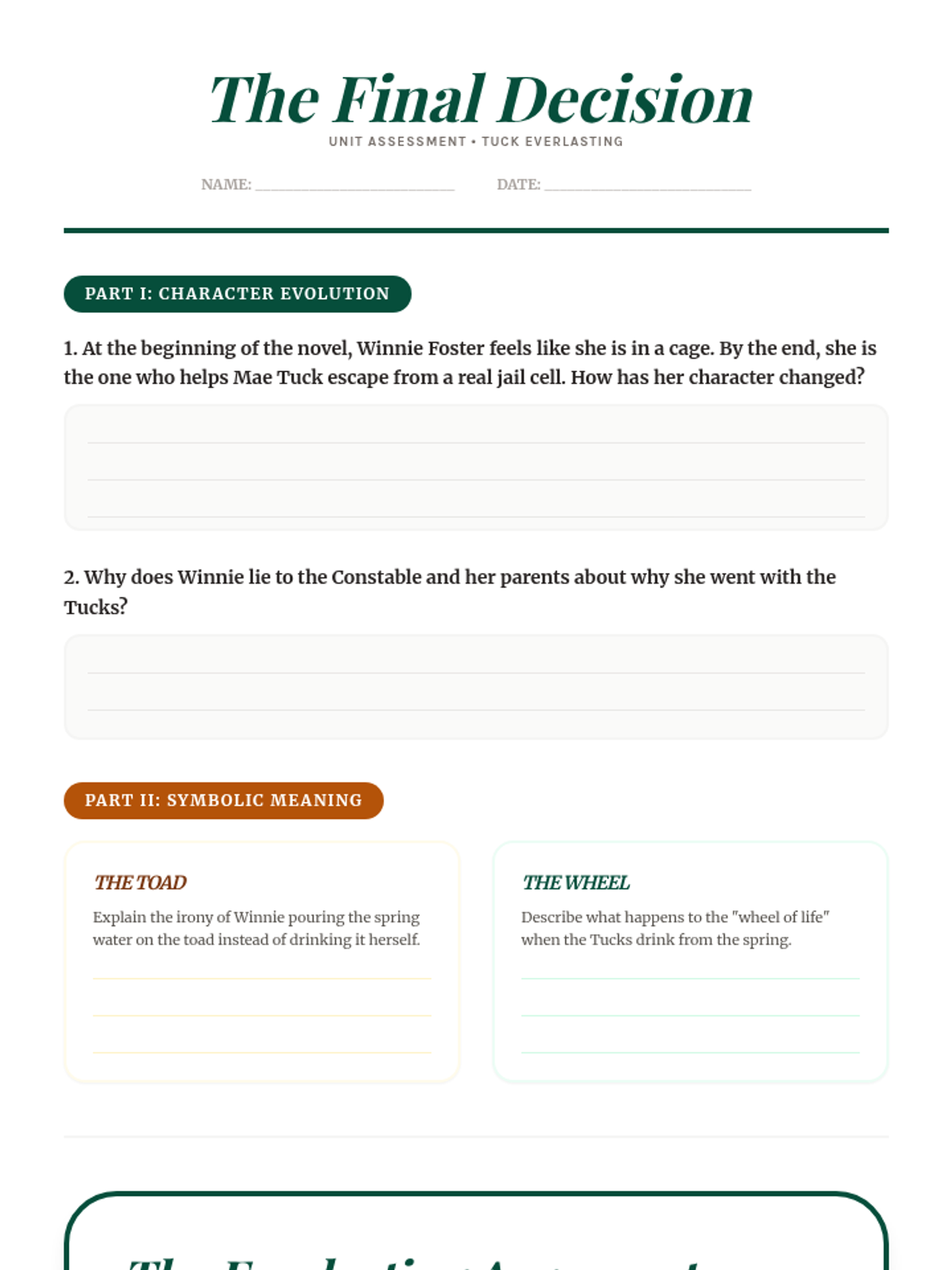
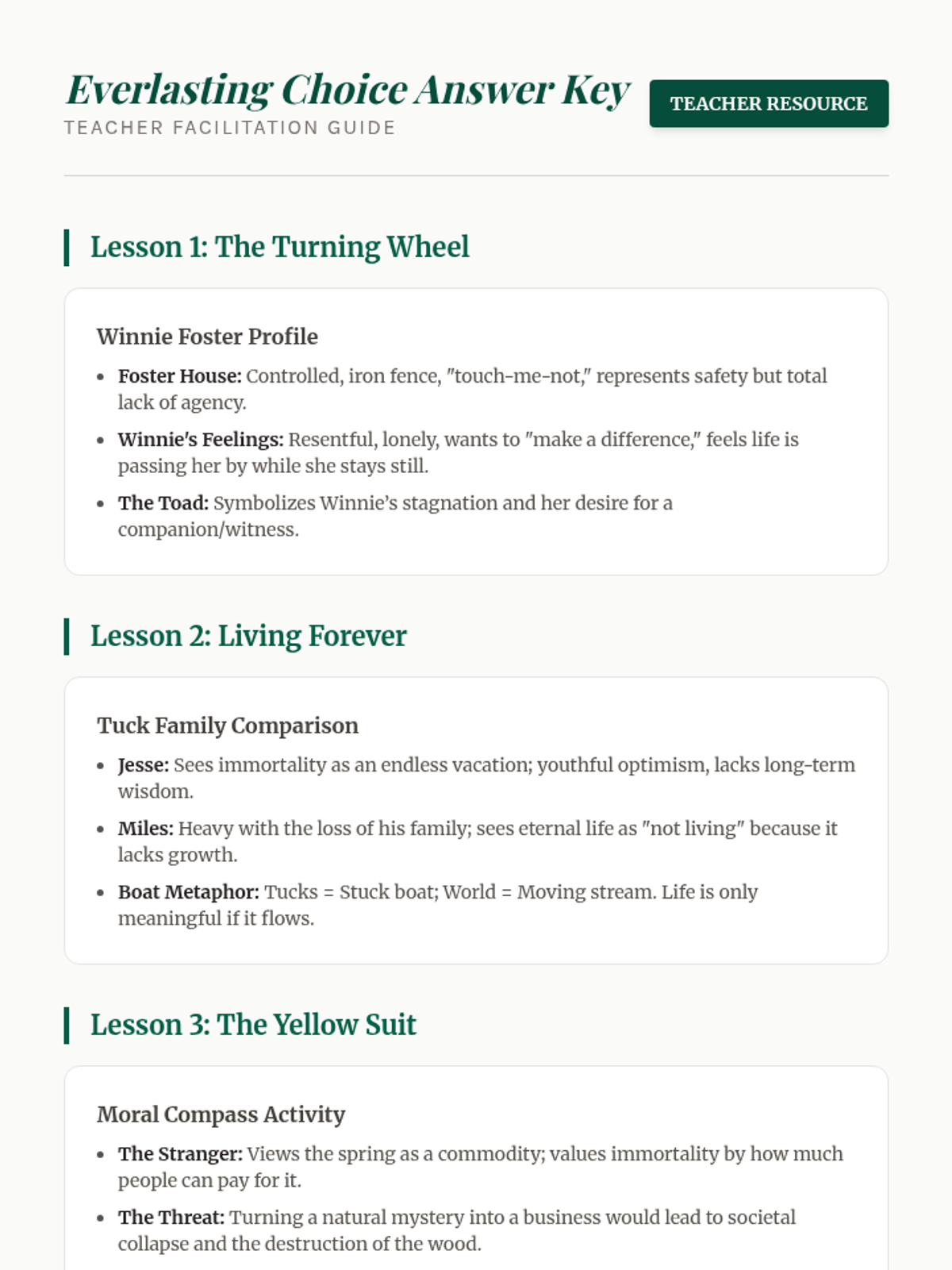
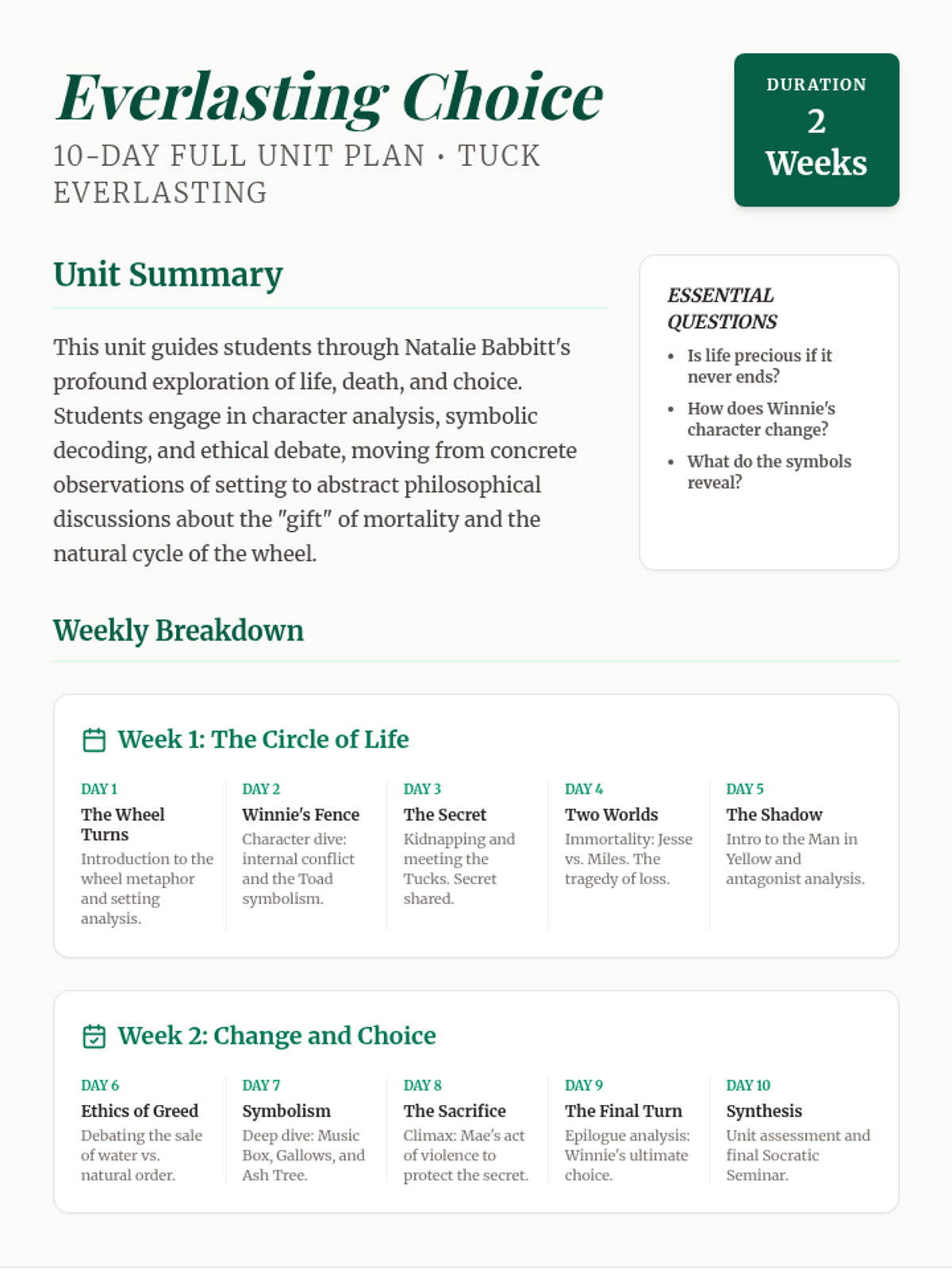
Culminates in the analysis of the novel's resolution and Winnie's ultimate choice regarding the spring water.
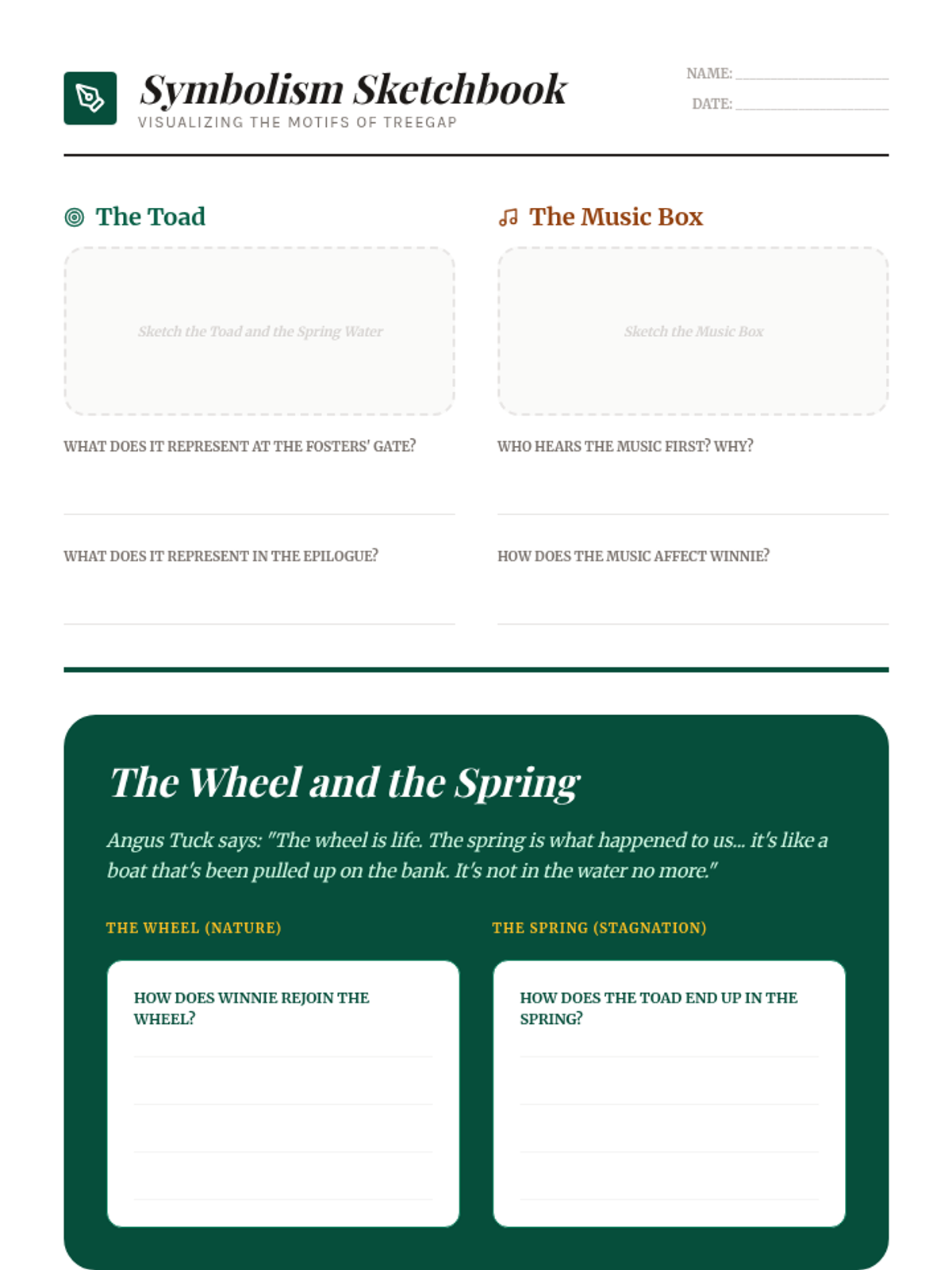
Decodes the major symbols of the novel, including the toad, the spring, and the music box, and their connection to the characters.
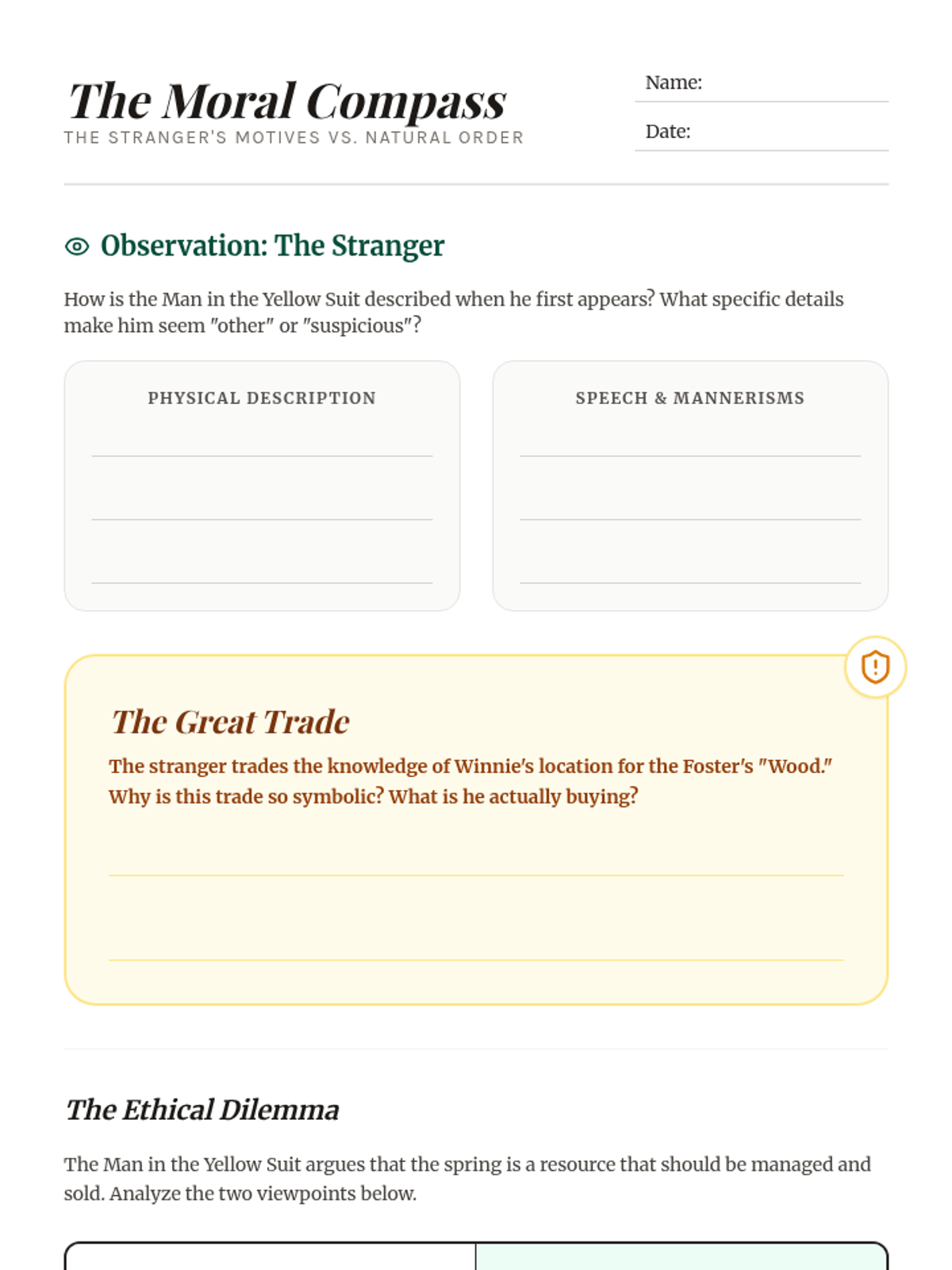
Analyzes the Man in the Yellow Suit as a foil to the Tucks, focusing on themes of greed versus the natural order.
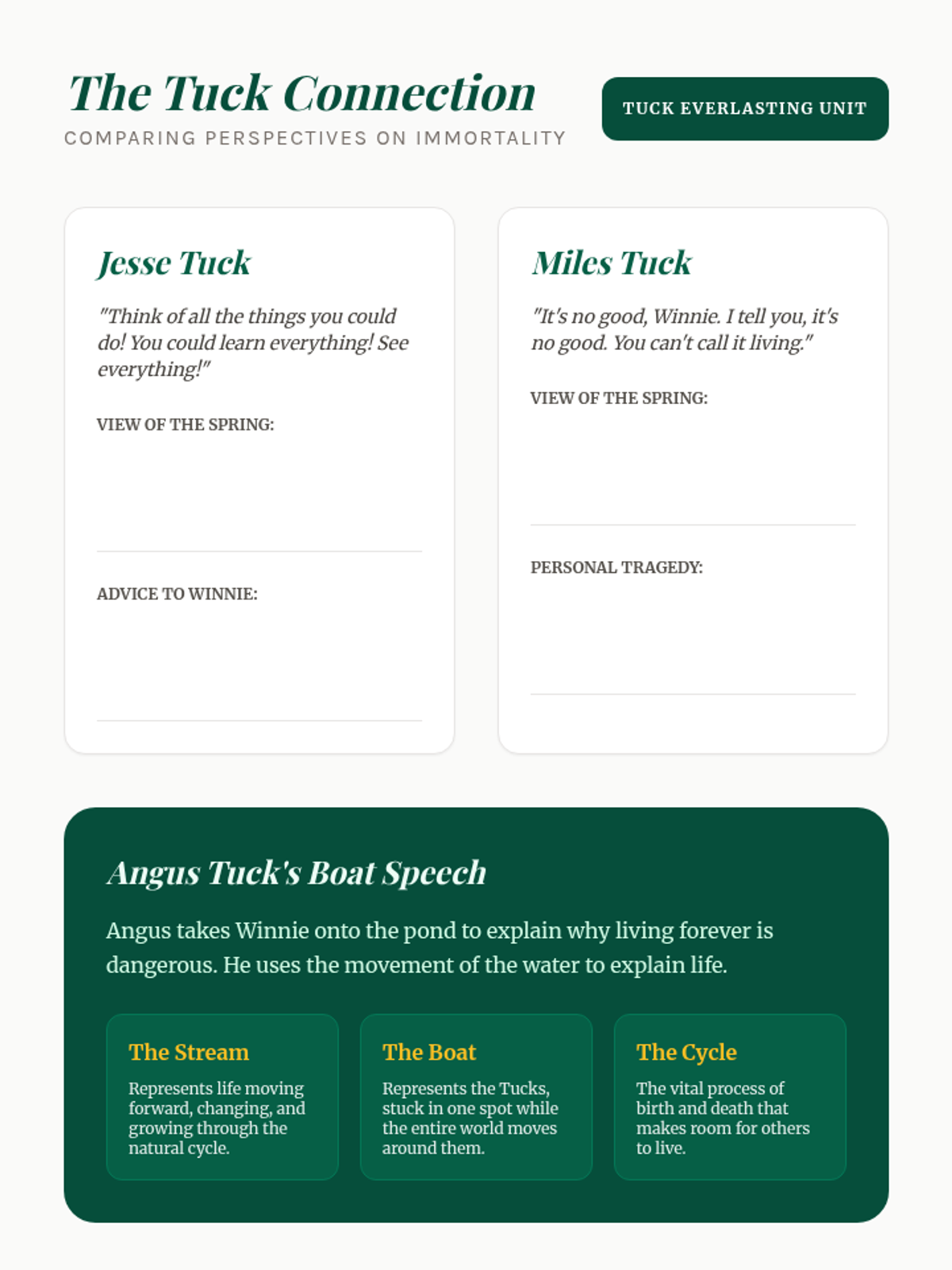
Explores the Tucks' unique perspective on immortality and how Winnie's world expands when she learns their secret.
Introduces the central metaphor of the wheel, the setting of Treegap, and the character of Winnie Foster as she contemplates her first flight from home.
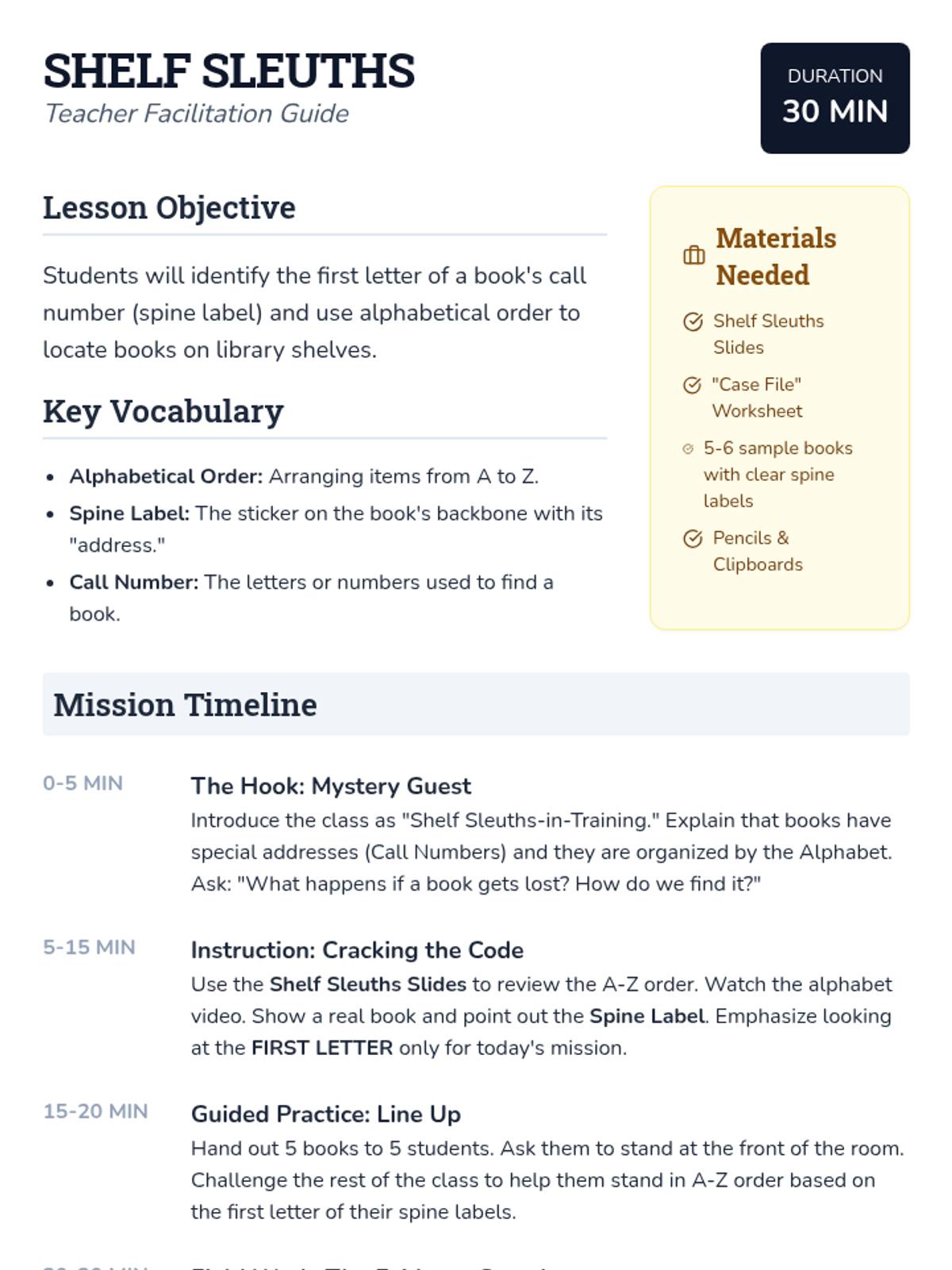
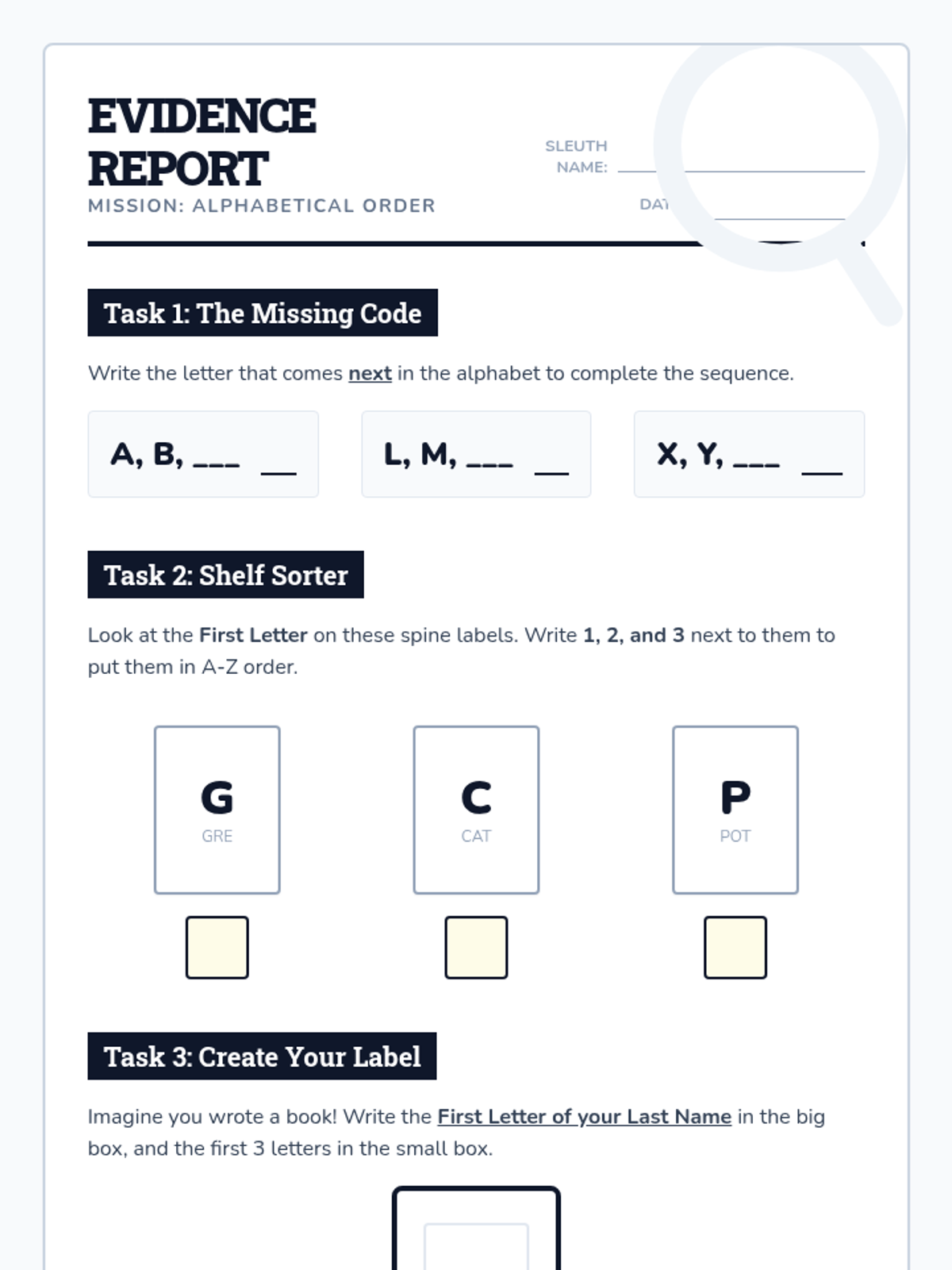
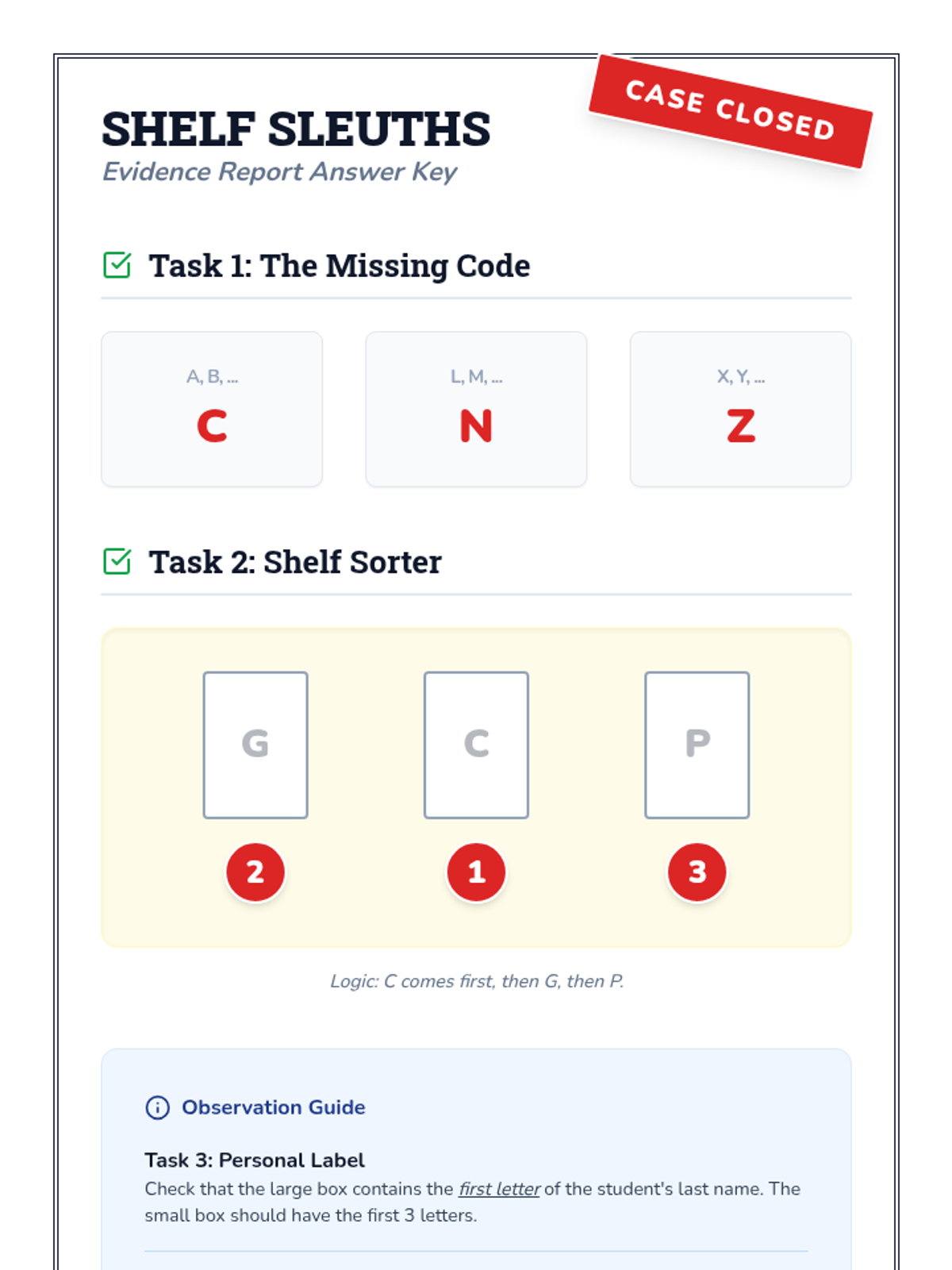
A 30-minute introductory lesson for 1st-3rd graders on alphabetical order (first letter) in a library setting, focusing on finding books by call number.
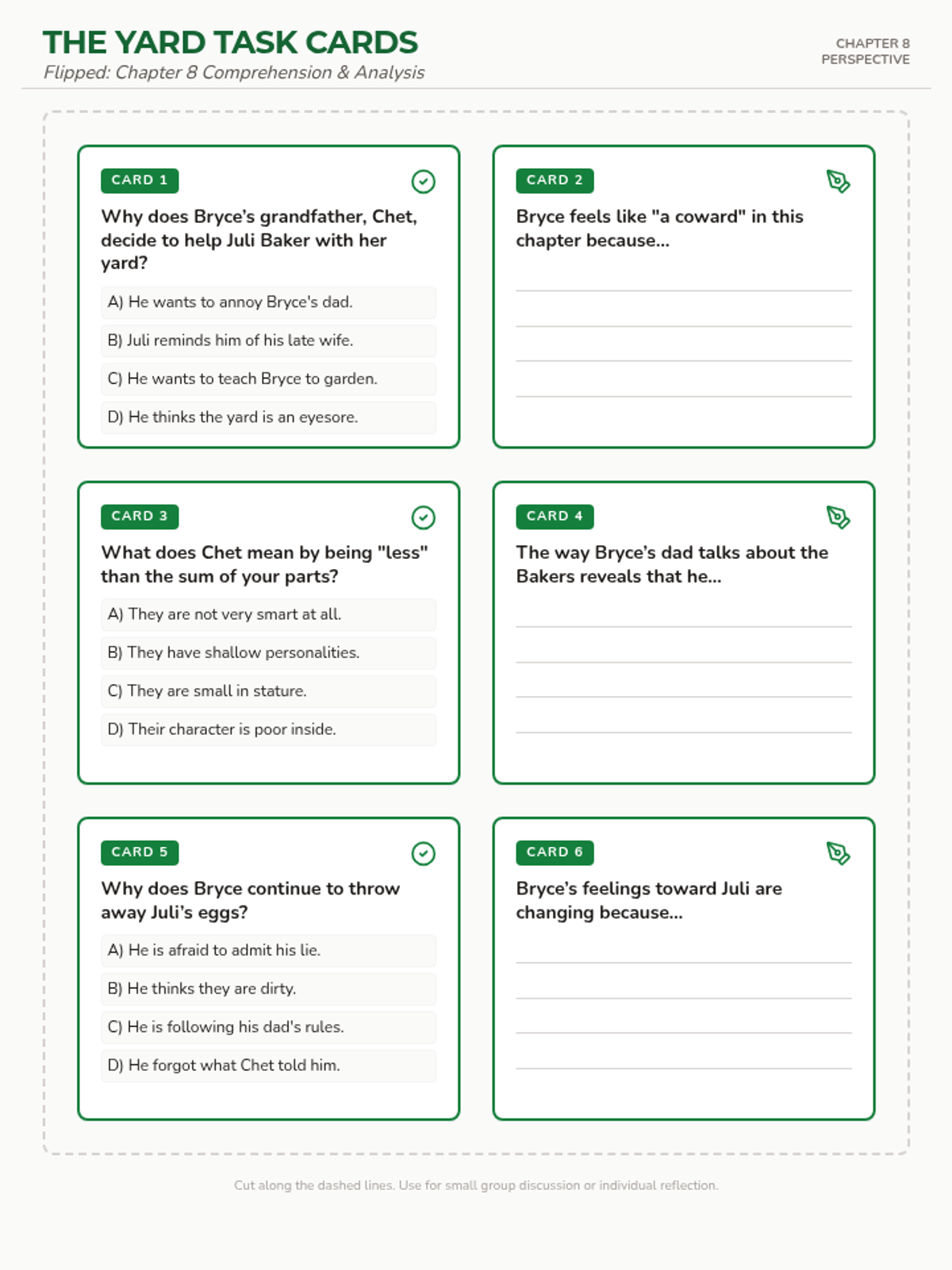
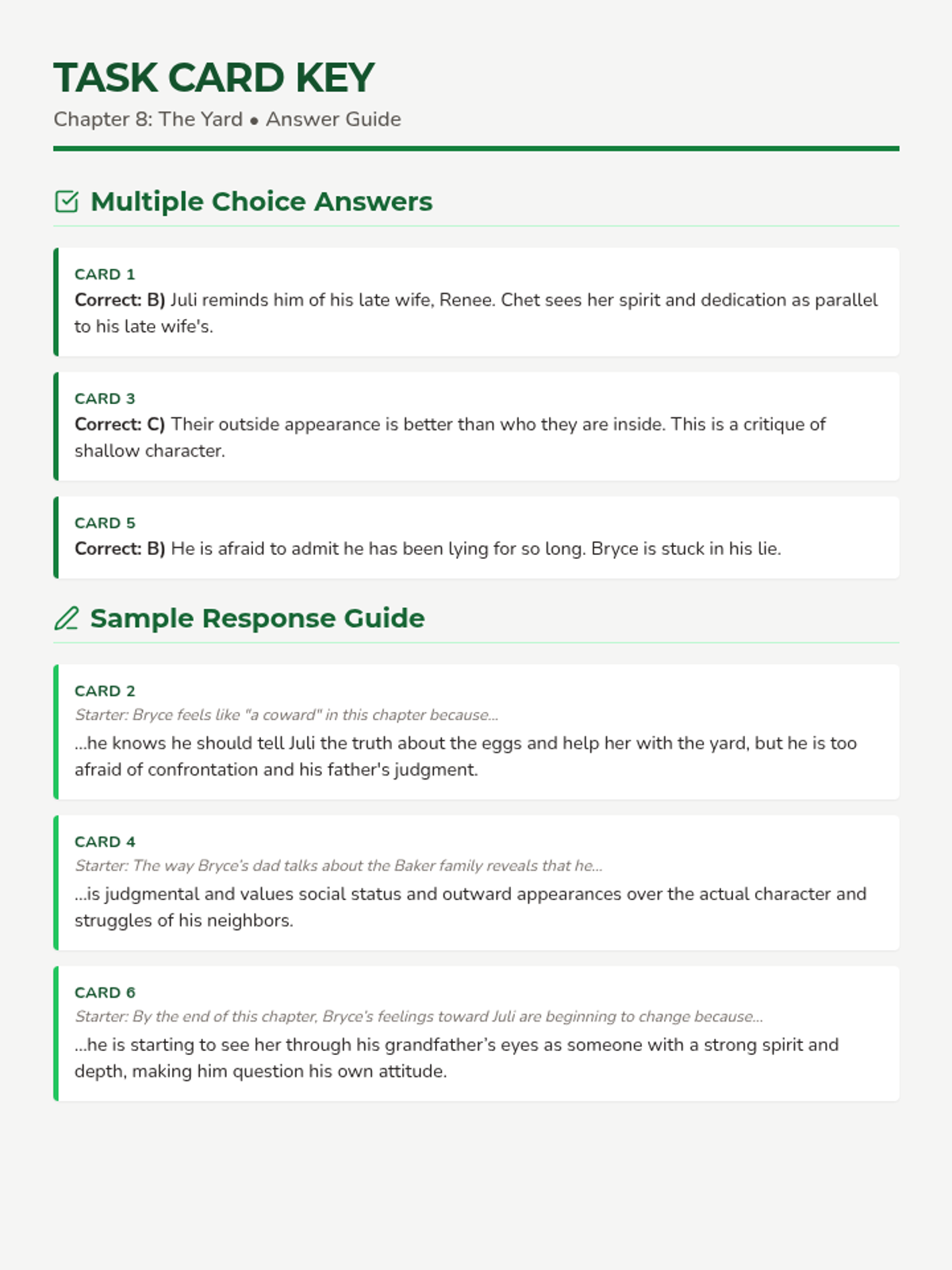
A focused analysis of Chapter 8 from Flipped, exploring Bryce's internal conflict and his grandfather's growing bond with Juli through the lens of character perspective and thematic growth.
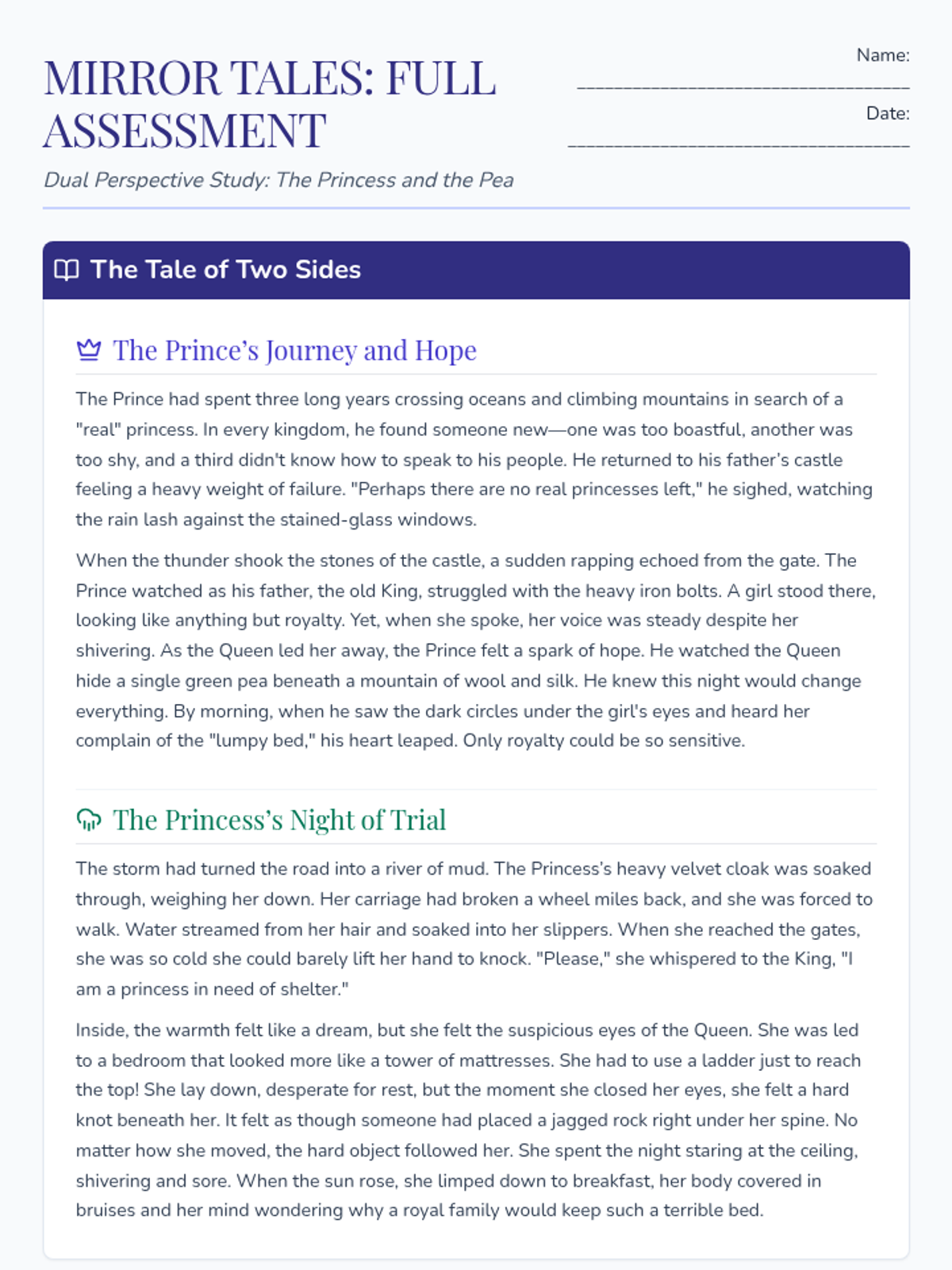
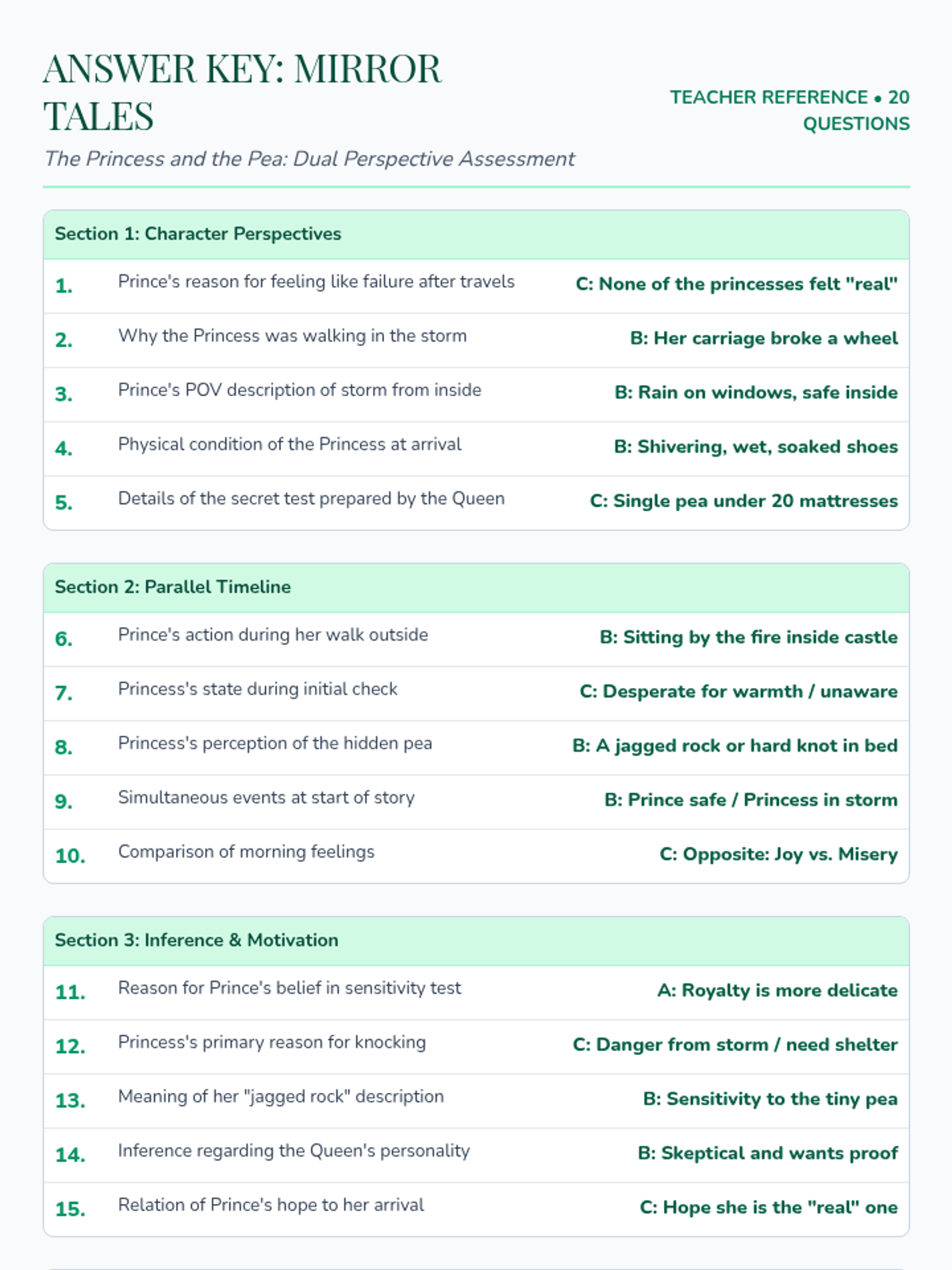
A lesson focused on evaluating student understanding of parallel narratives and dual perspectives through the lens of 'The Princess and the Pea'. Students will demonstrate how the same events are experienced differently by the Prince and the Princess.
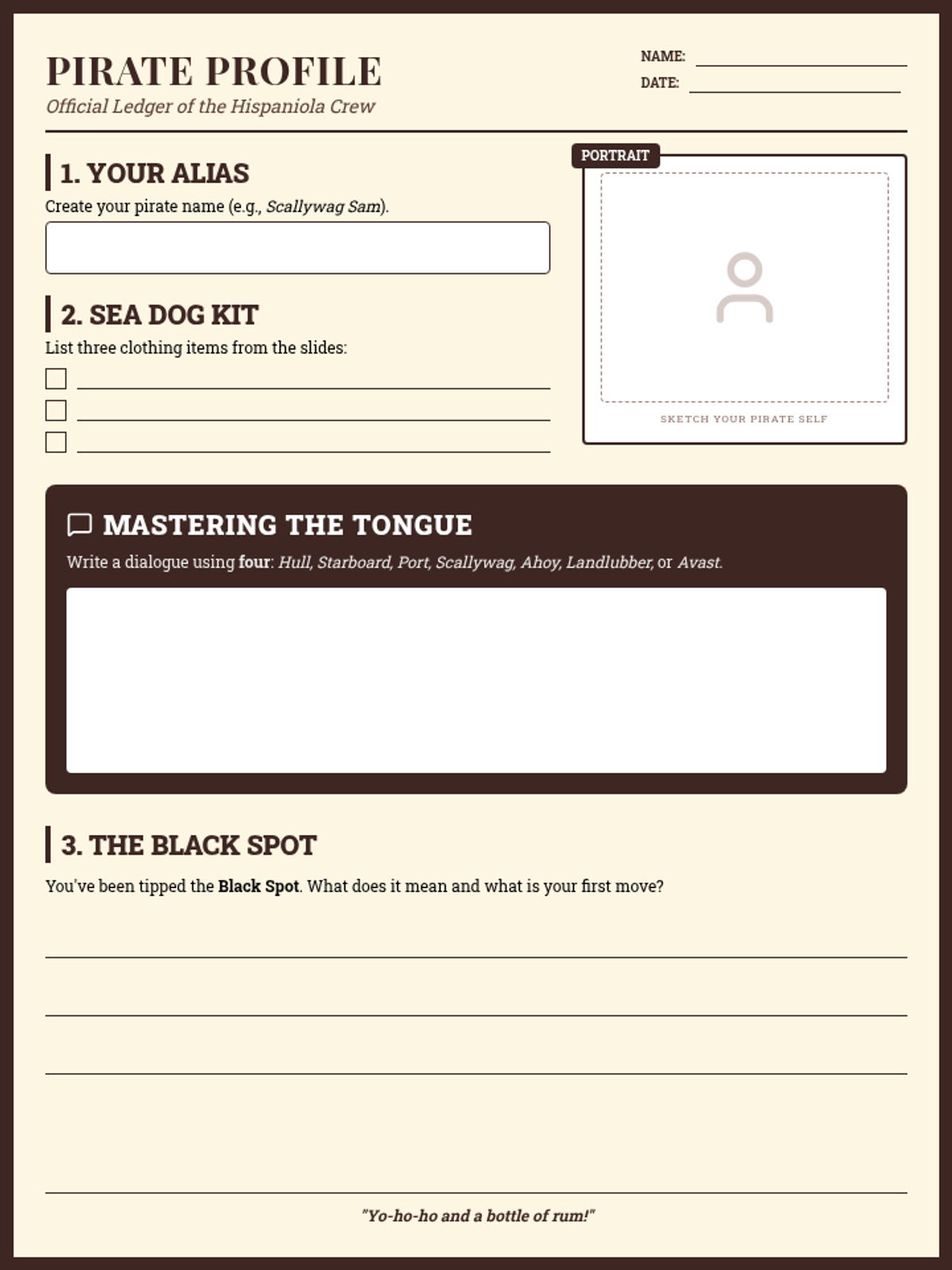
An introductory exploration of pirate life, language, and culture within the context of Robert Louis Stevenson's Treasure Island.
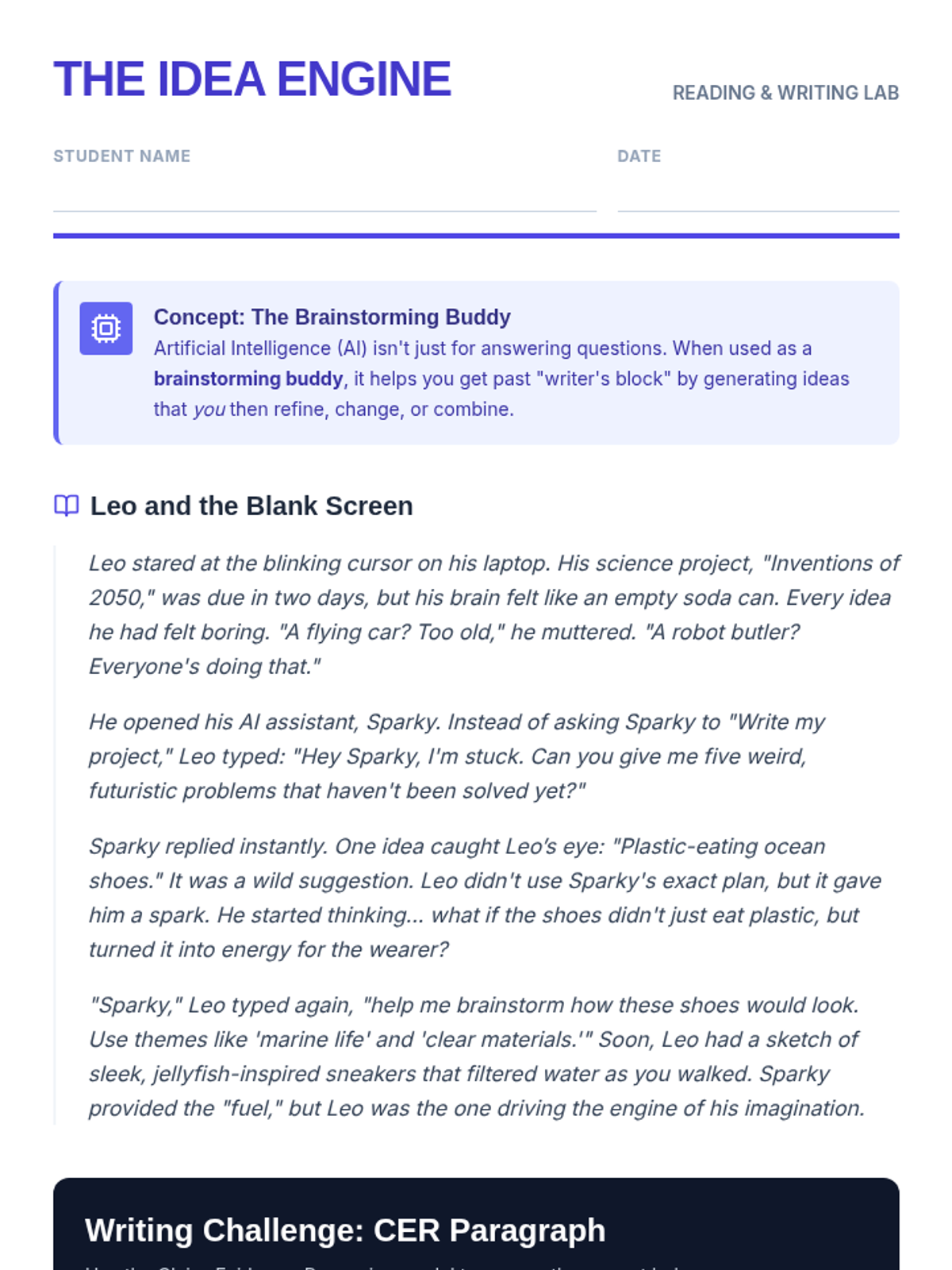
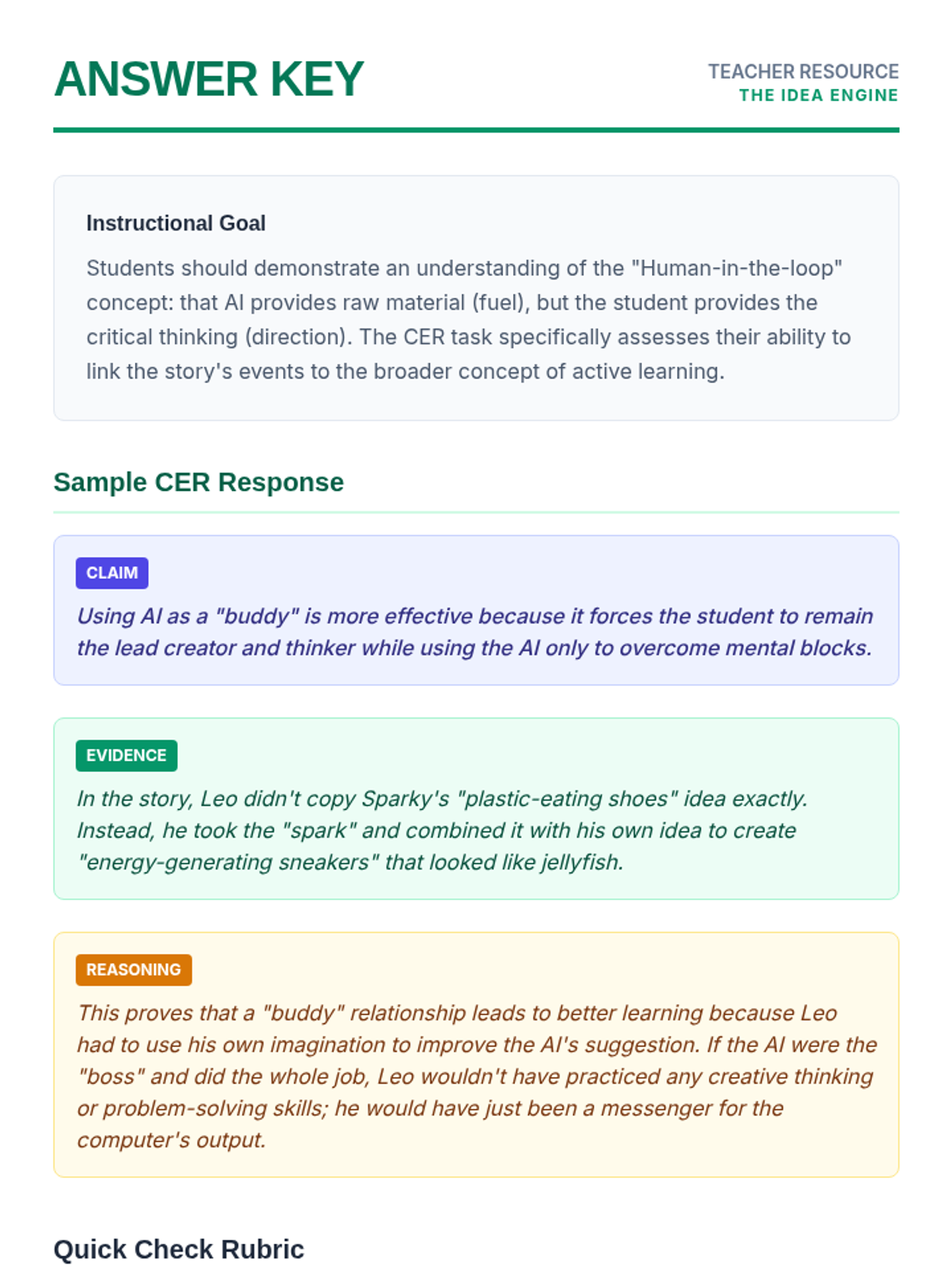
A reading-based lesson where students explore the concept of AI as a 'brainstorming buddy' through a narrative story and practice writing a Claim-Evidence-Reasoning (CER) paragraph.
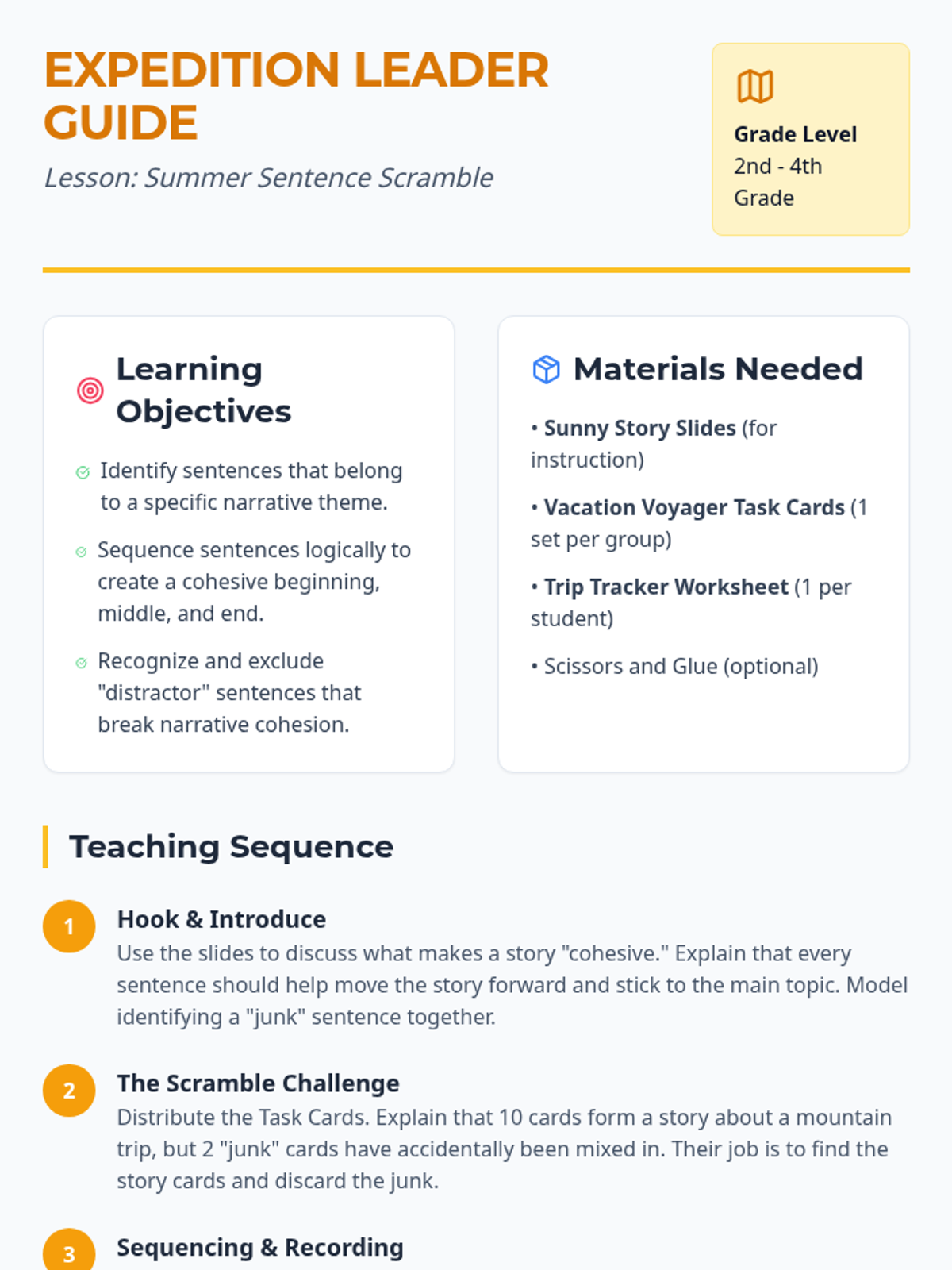
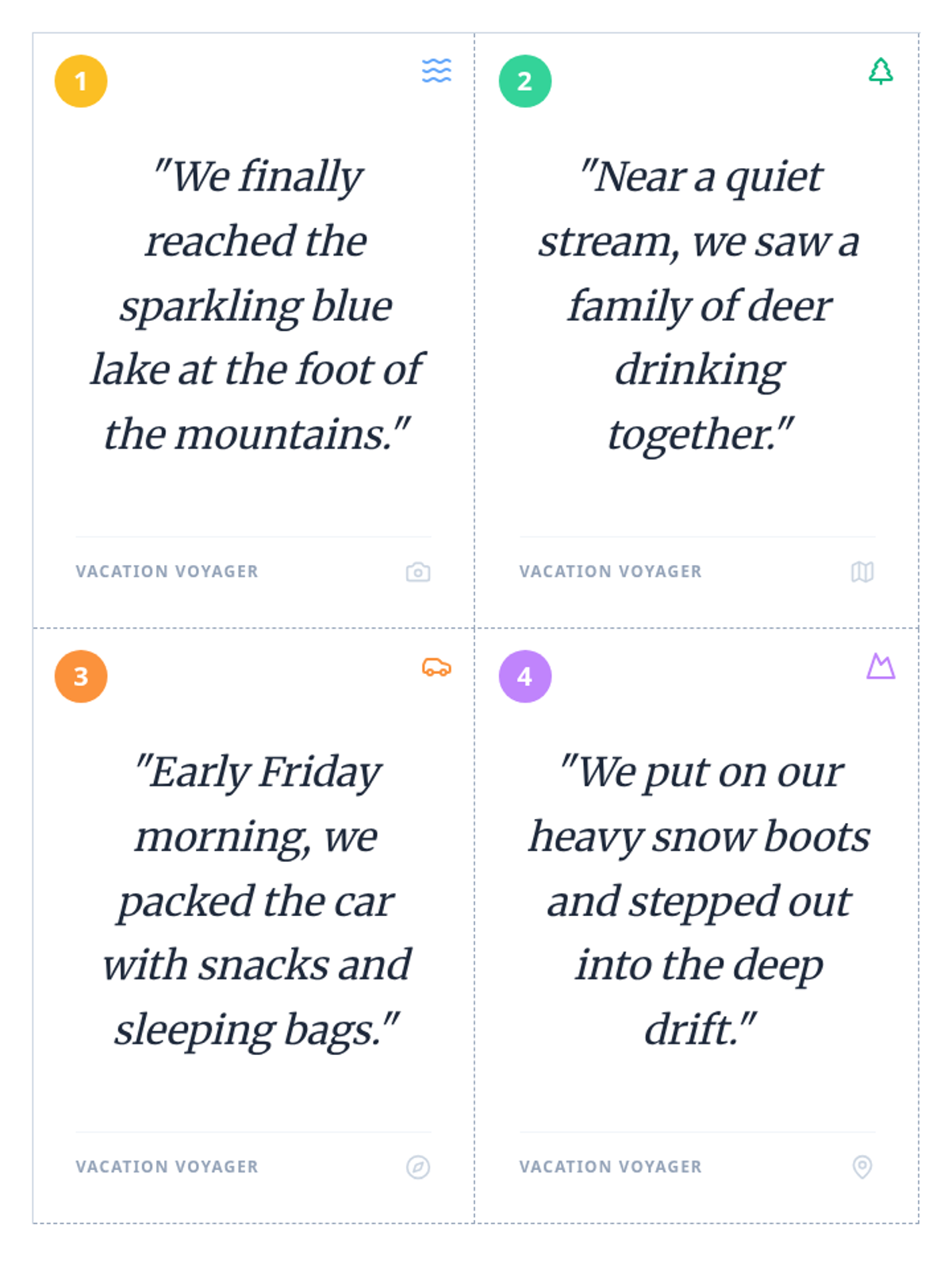
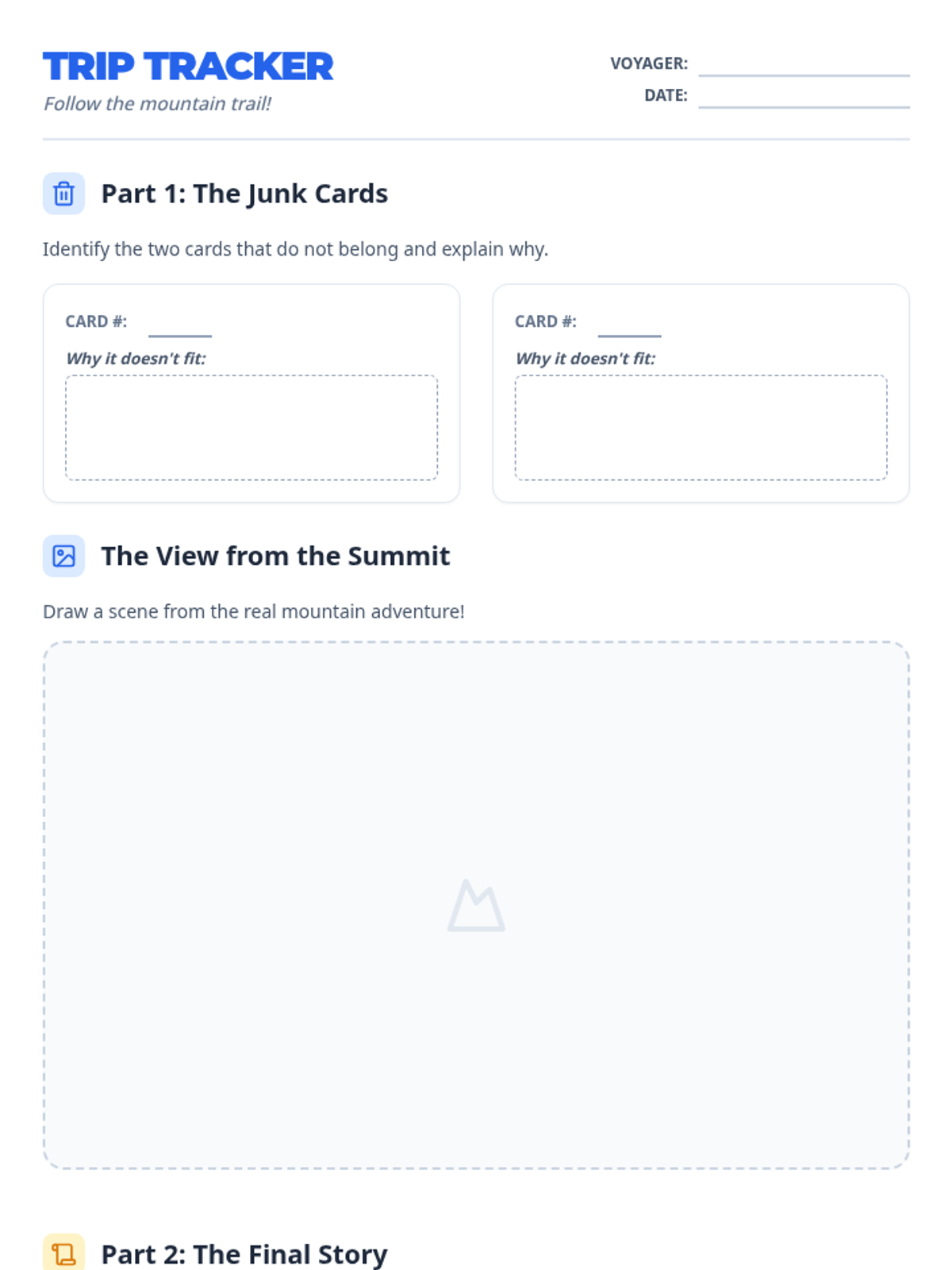
A hands-on literacy lesson where students identify and sequence sentences to build a cohesive narrative about a summer mountain trip. Students must distinguish between relevant plot points and distracting 'out-of-place' sentences.
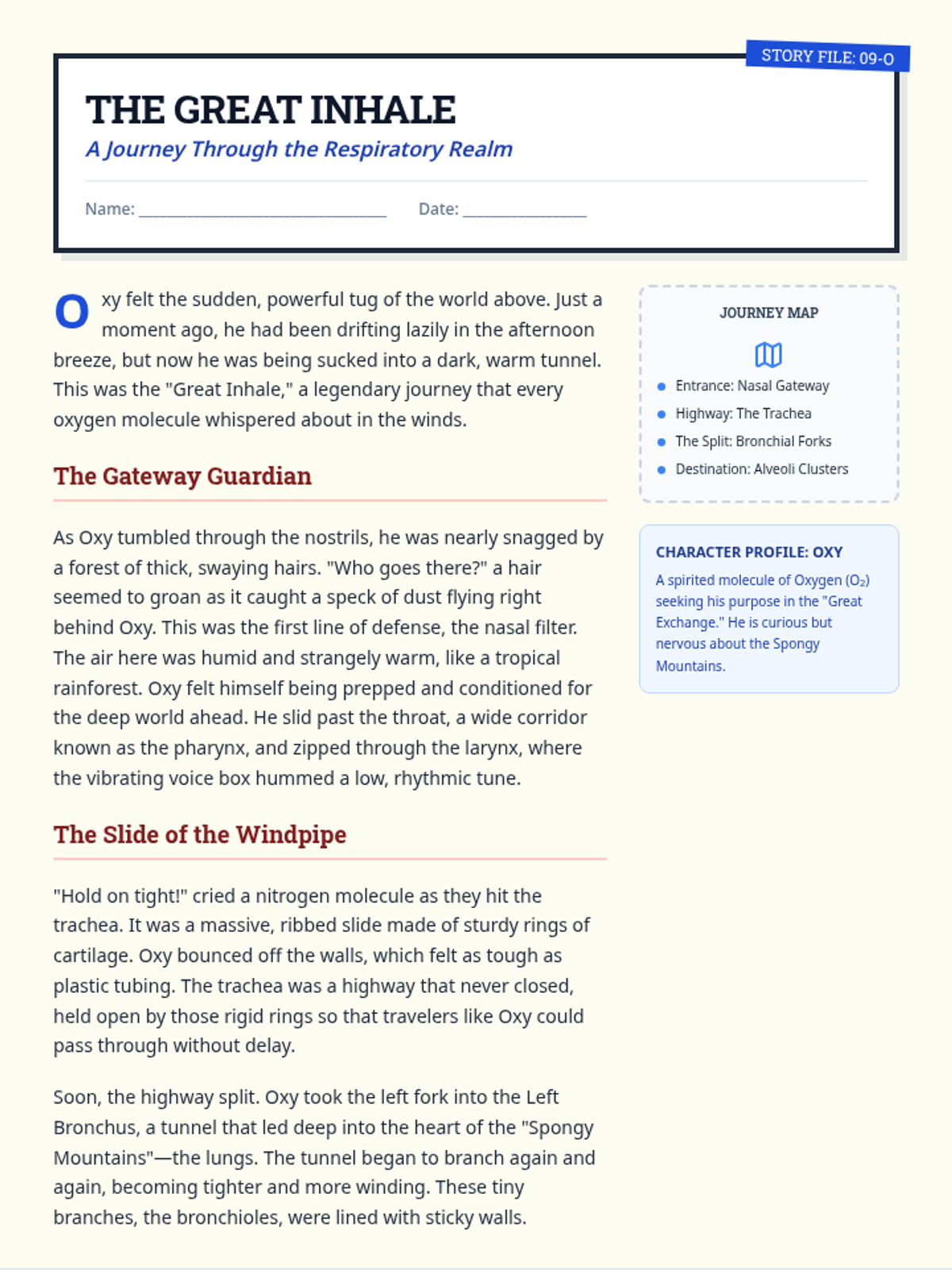
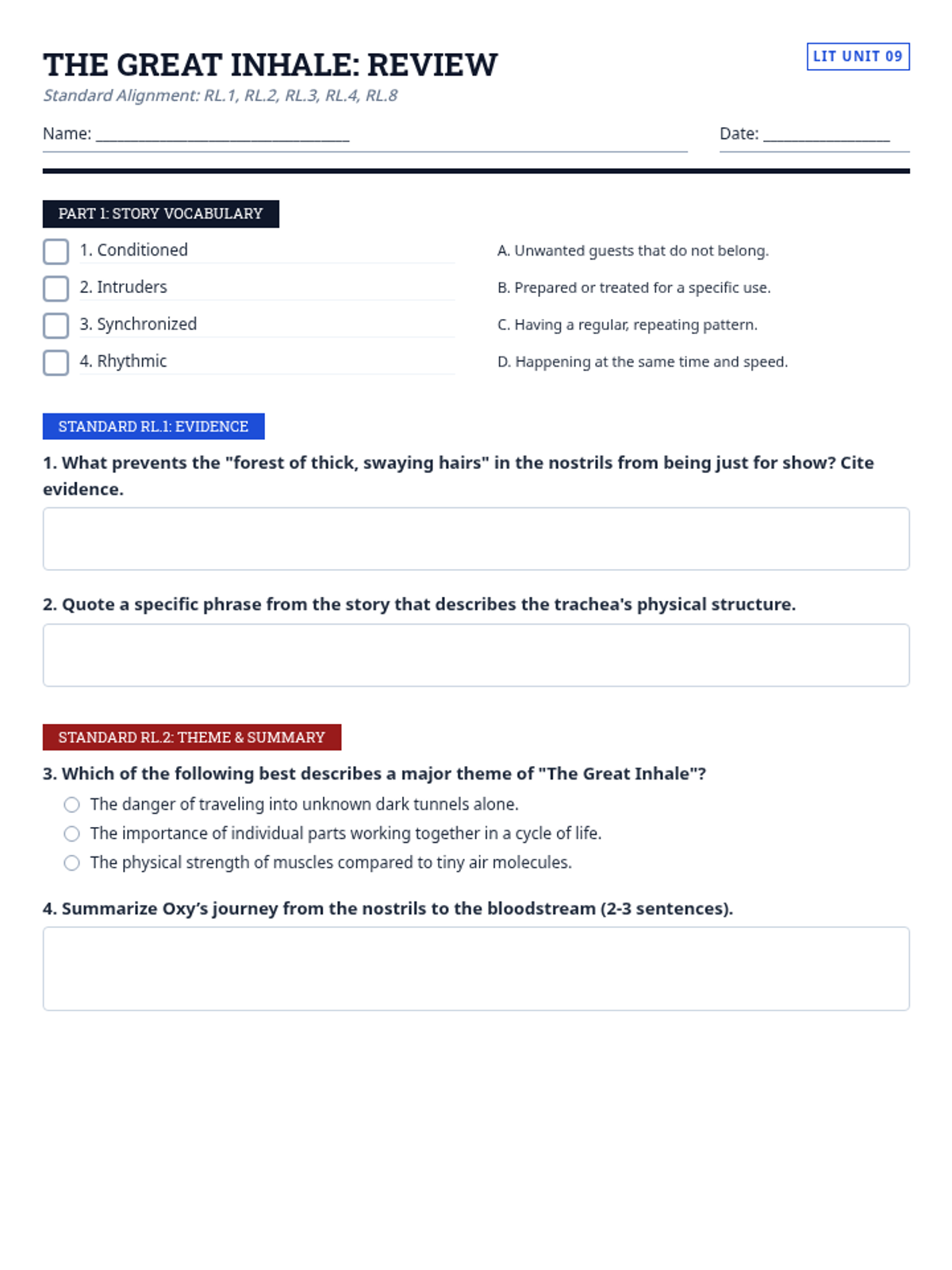
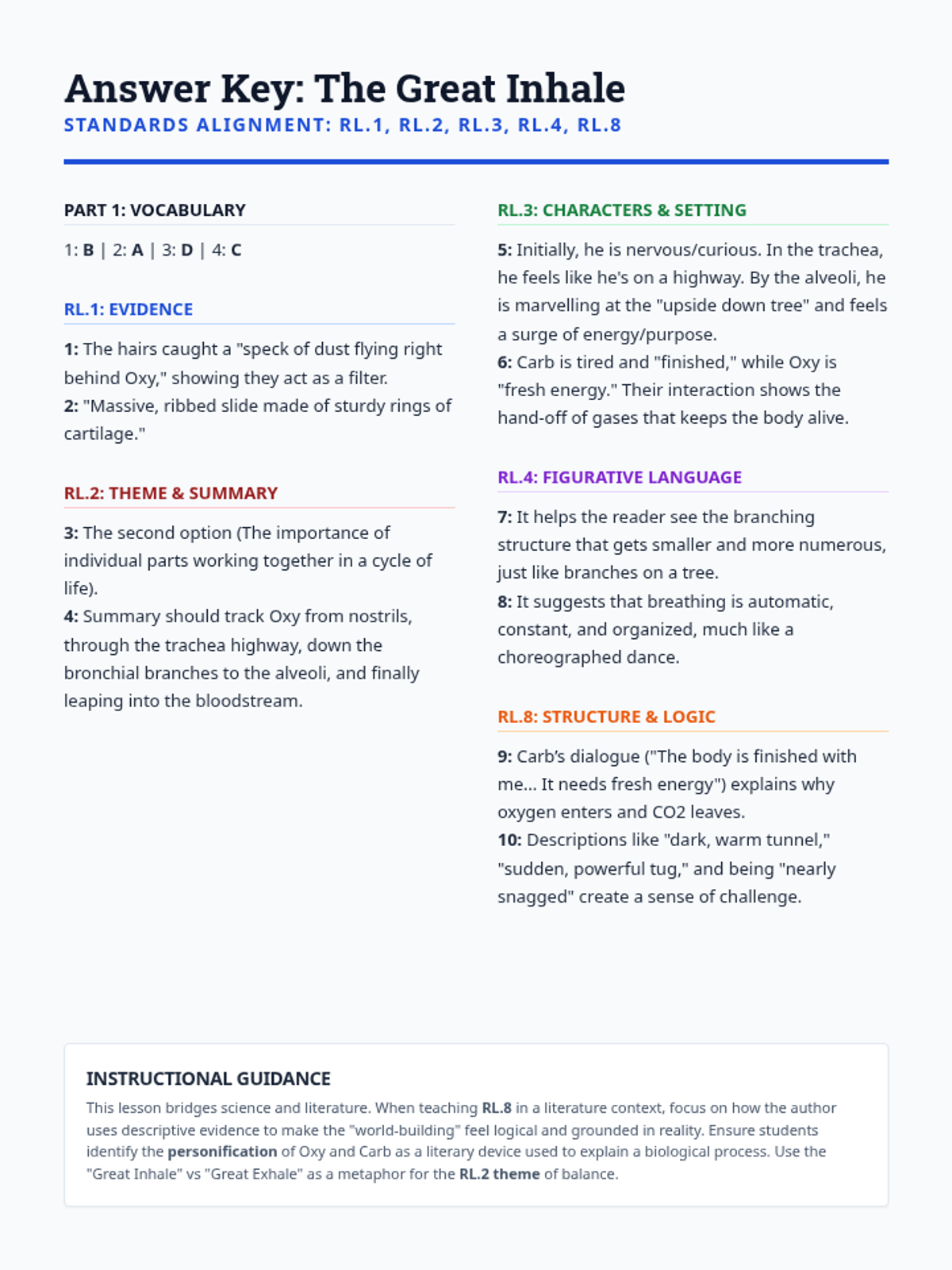
A comprehensive reading and assessment unit covering the respiratory system. Students explore the mechanics of breathing through a detailed two-page narrative passage and demonstrate mastery of RL.1, RL.2, RL.3, RL.4, and RL.8 standards.
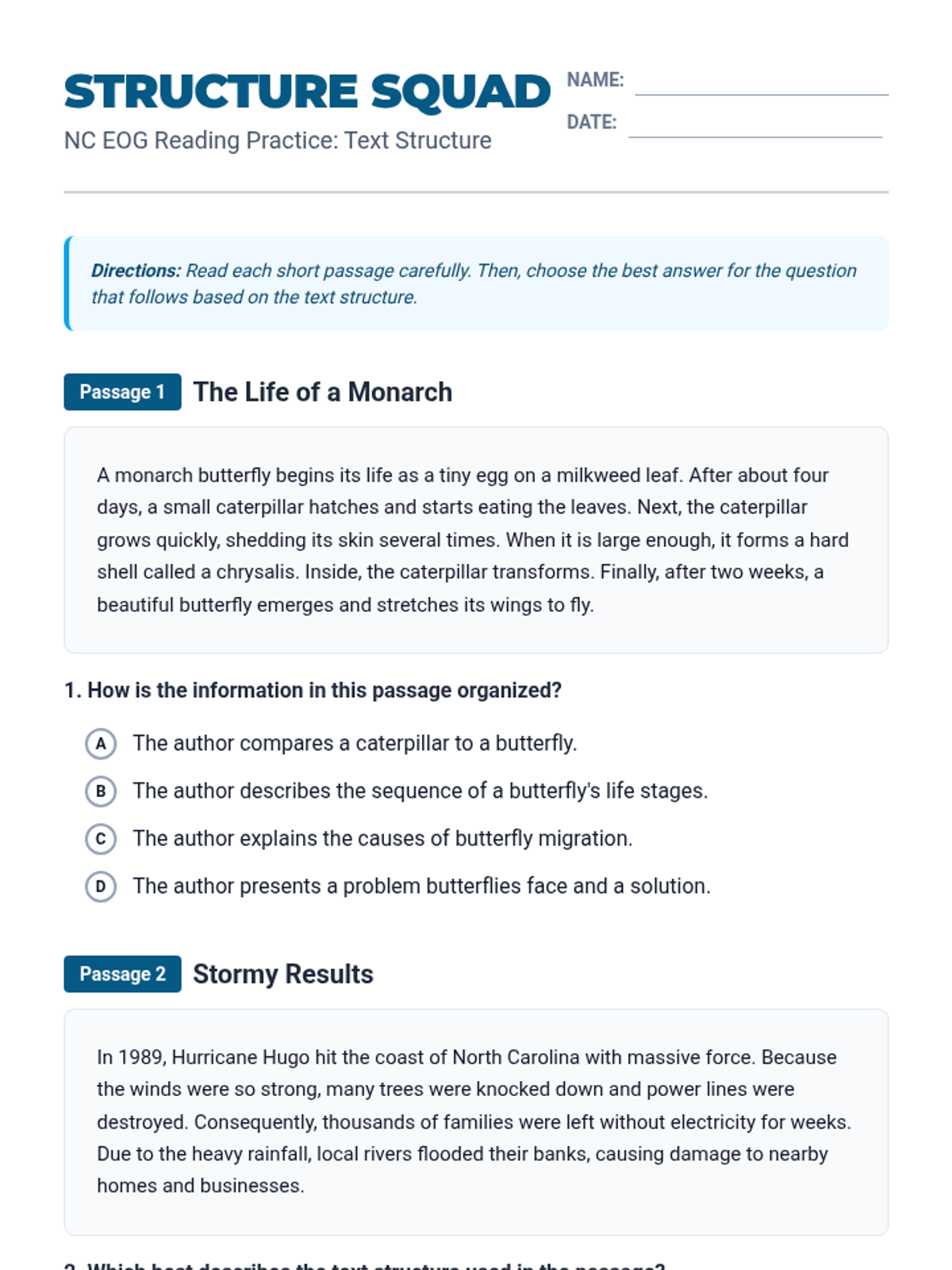
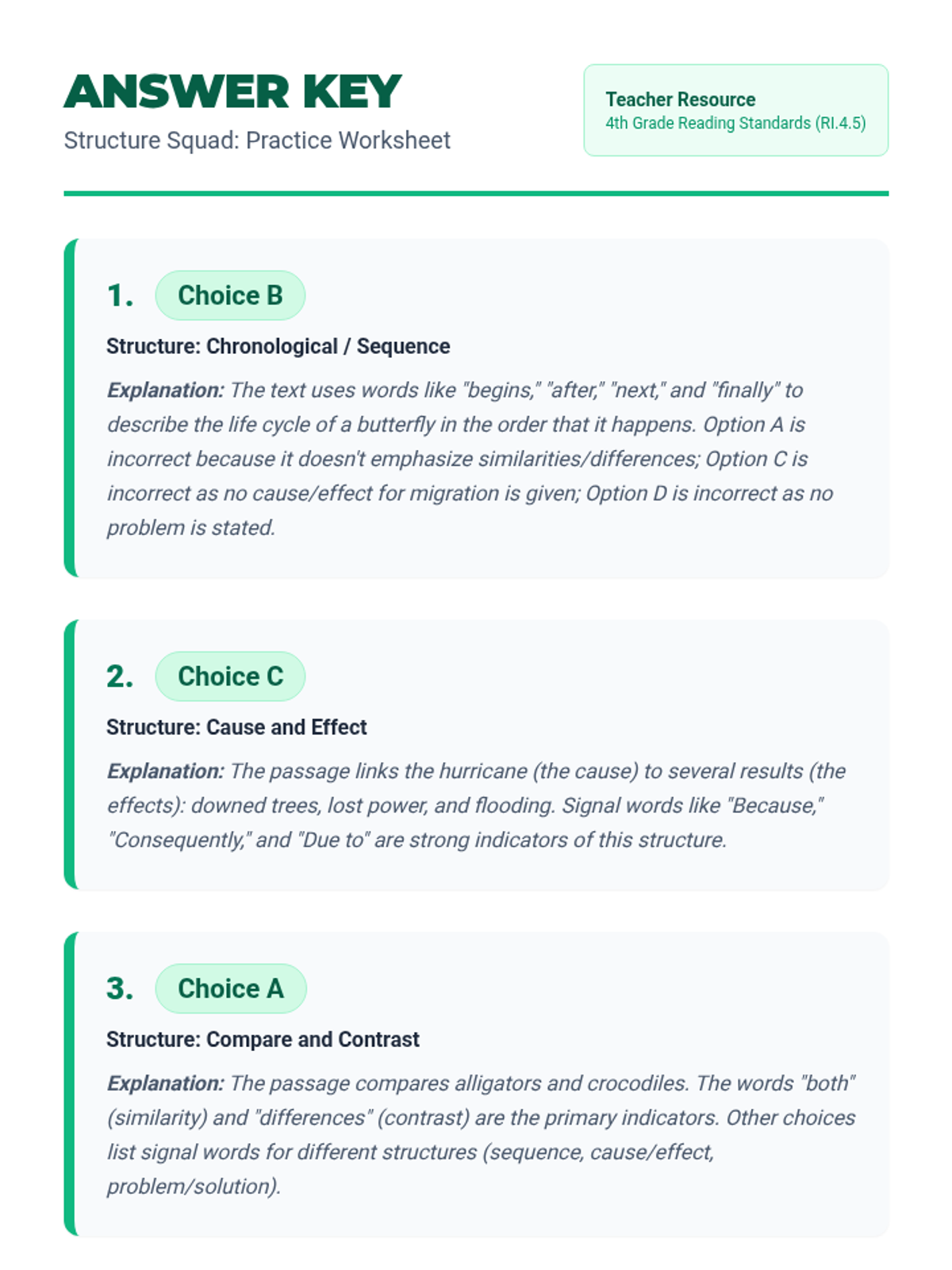
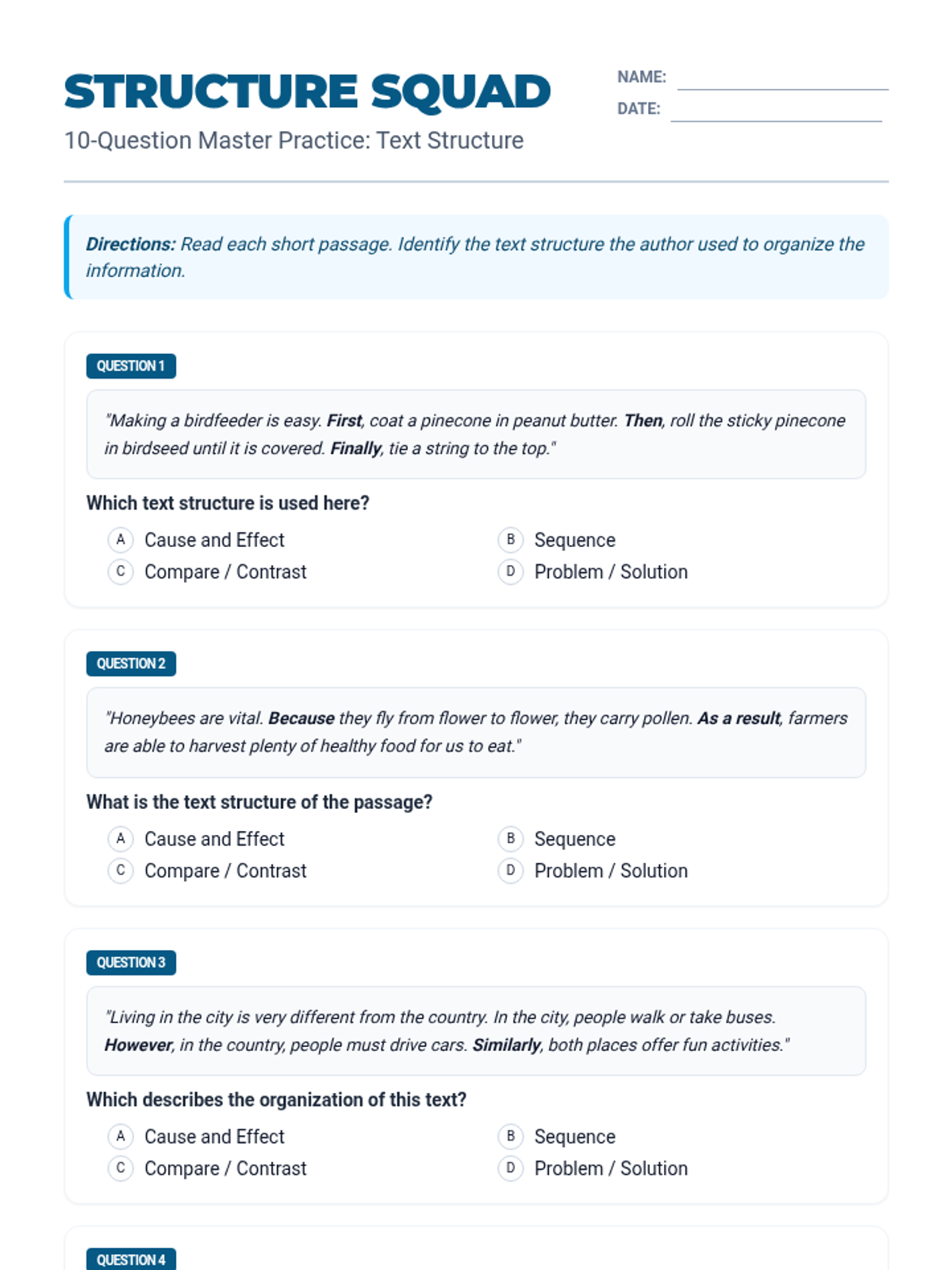
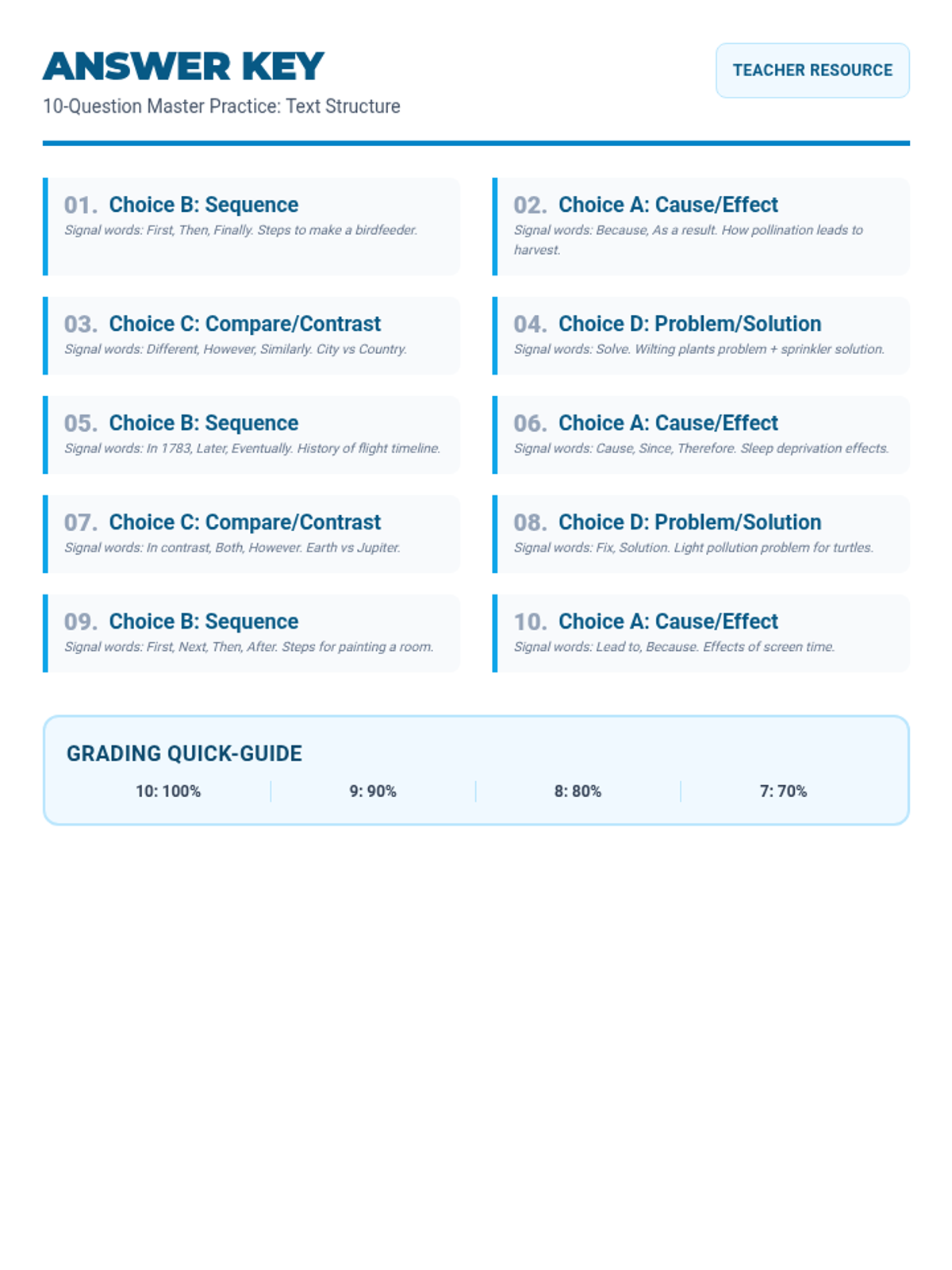
A lesson focused on identifying and analyzing four key text structures (Cause and Effect, Compare and Contrast, Chronological/Sequence, and Problem and Solution) using NC EOG-style short passages and questions.