An exploration of the three modes of heat transfer: conduction, convection, and radiation. Students investigate the physics of thermal energy movement from microscopic particle collisions to global atmospheric systems and engineering applications.
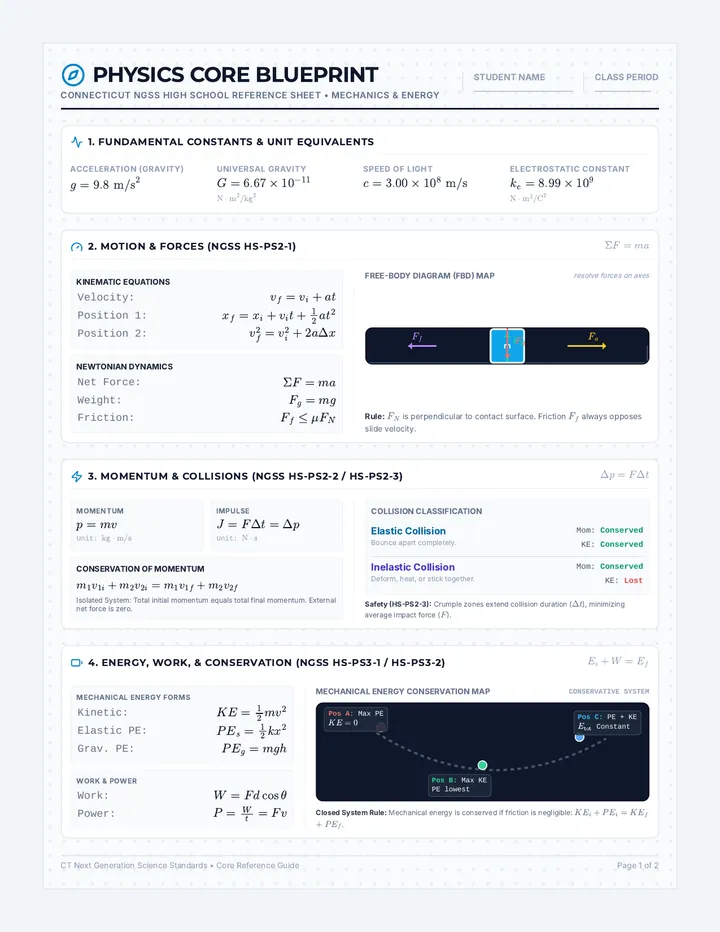
A comprehensive high school physics curriculum sequence aligned with the Connecticut Next Generation Science Standards (CT-NGSS), focusing on core concepts, quantitative problem-solving, and visual models.
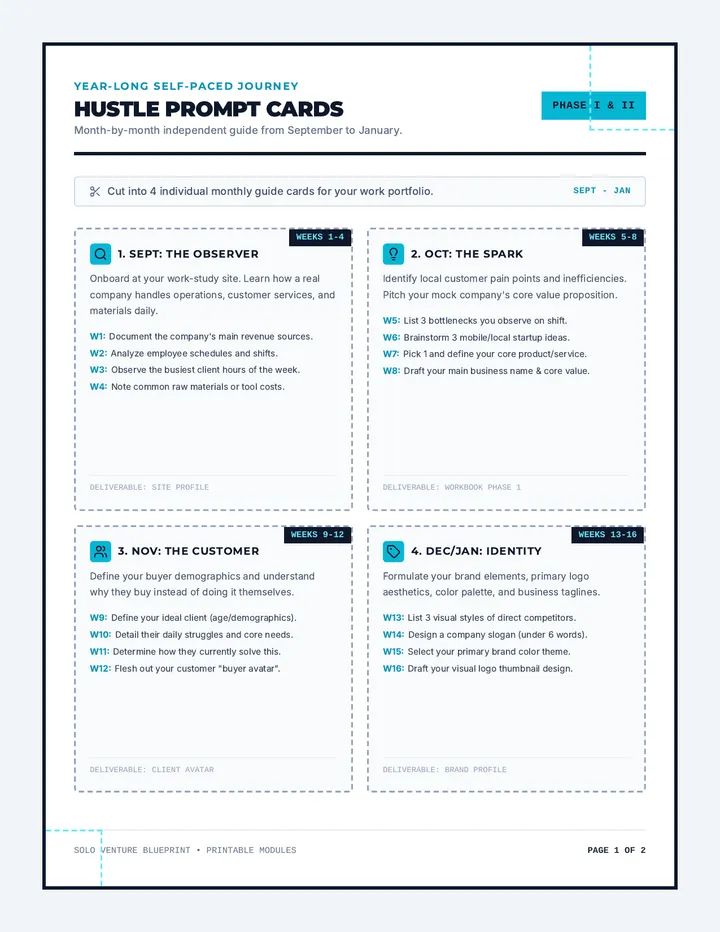
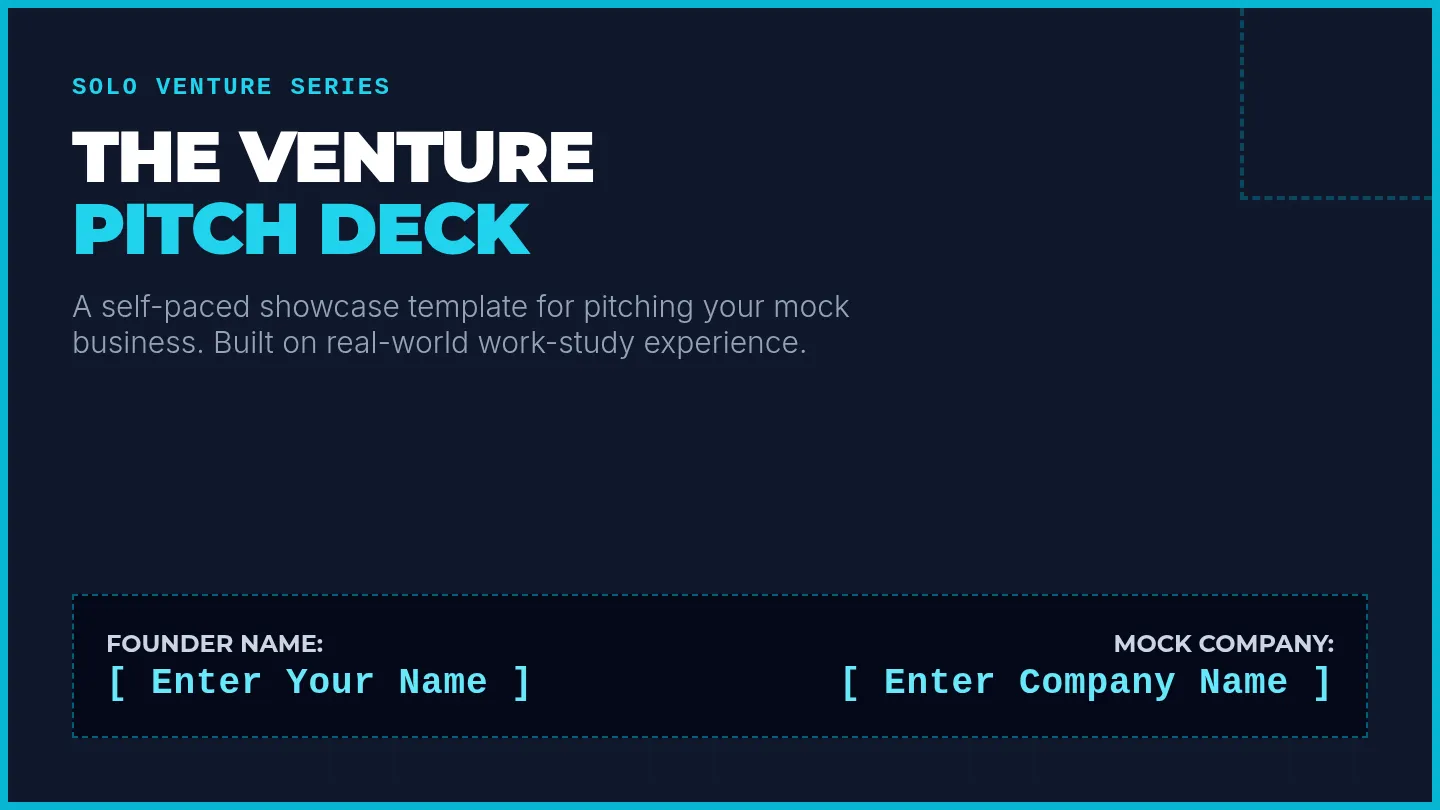
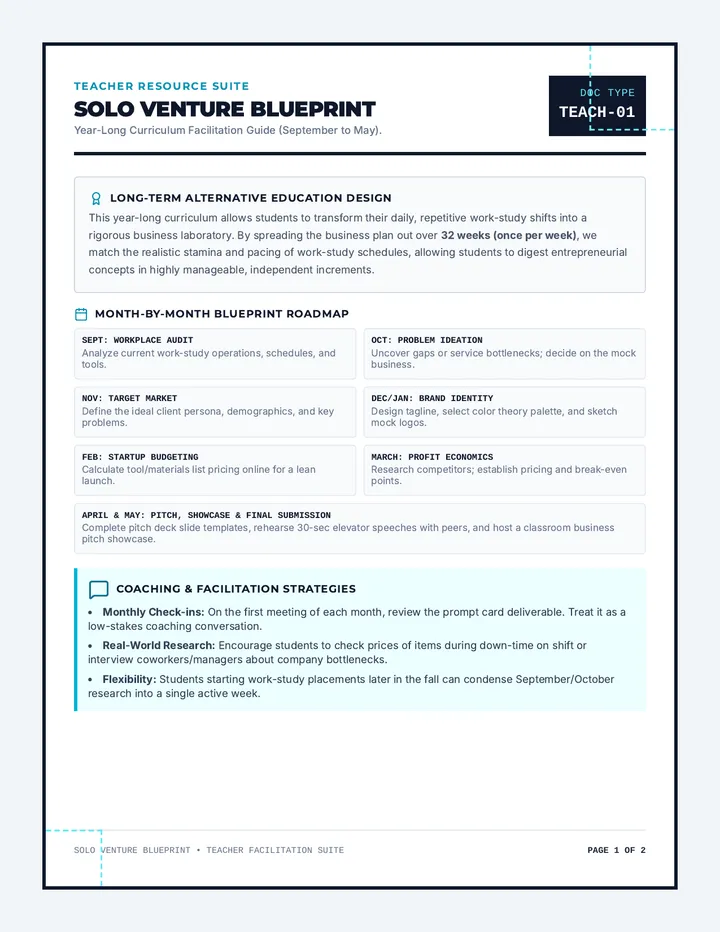
A year-long, self-paced entrepreneurship curriculum spanning September to May for alternative education students in work-study placements. Students transform real-world work experience into a modular business plan and slide presentation.
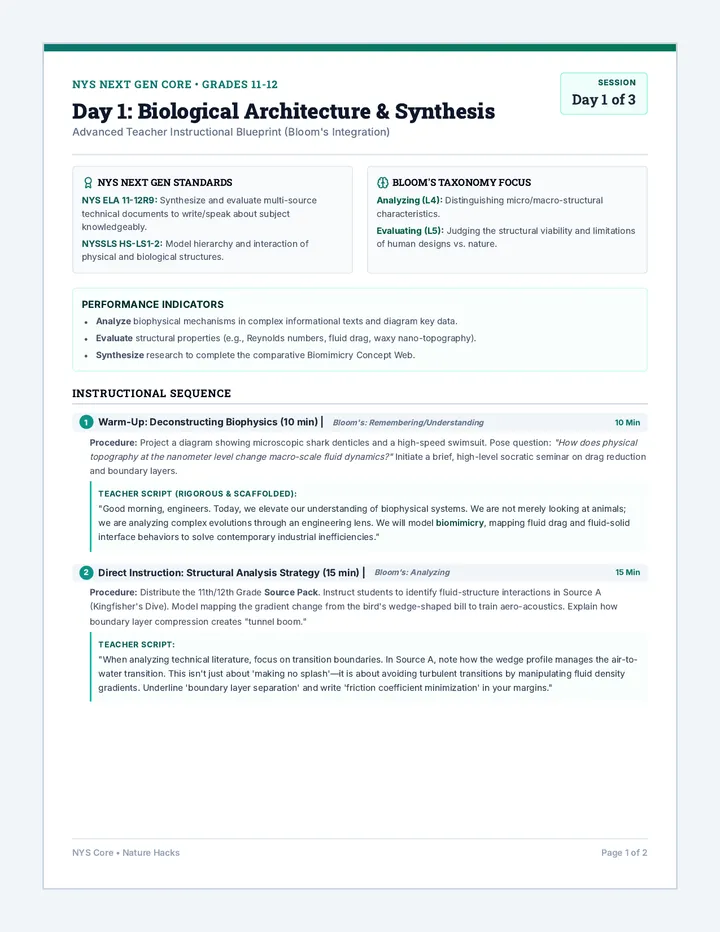
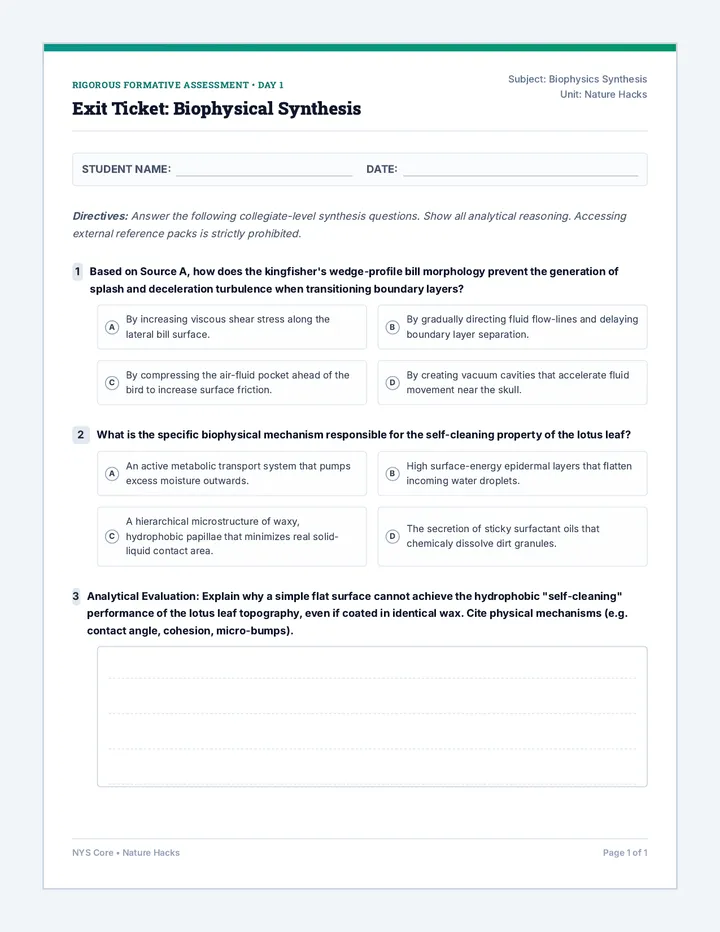
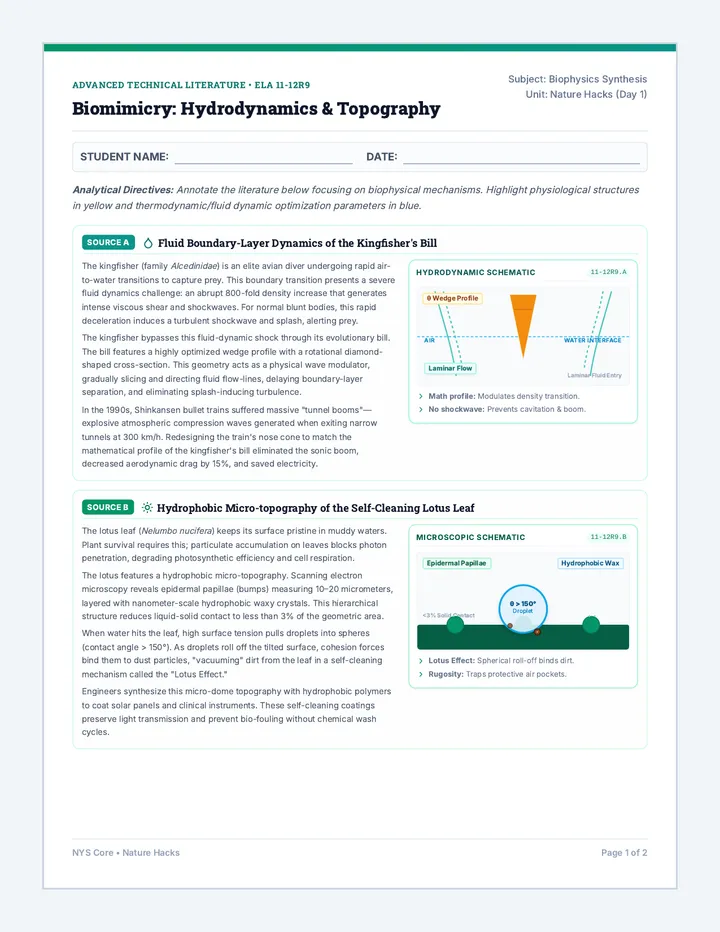
A 3-day cross-curricular STEAM unit where students research biological adaptations, design biomimetic engineering solutions, perform scale calculations, and write a synthesized informational article.
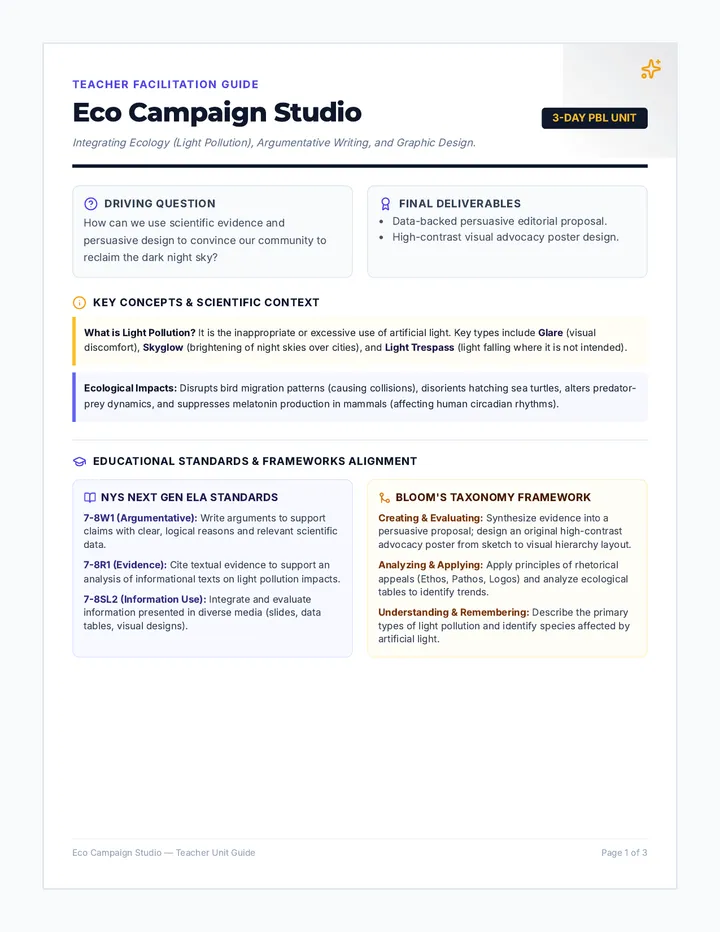
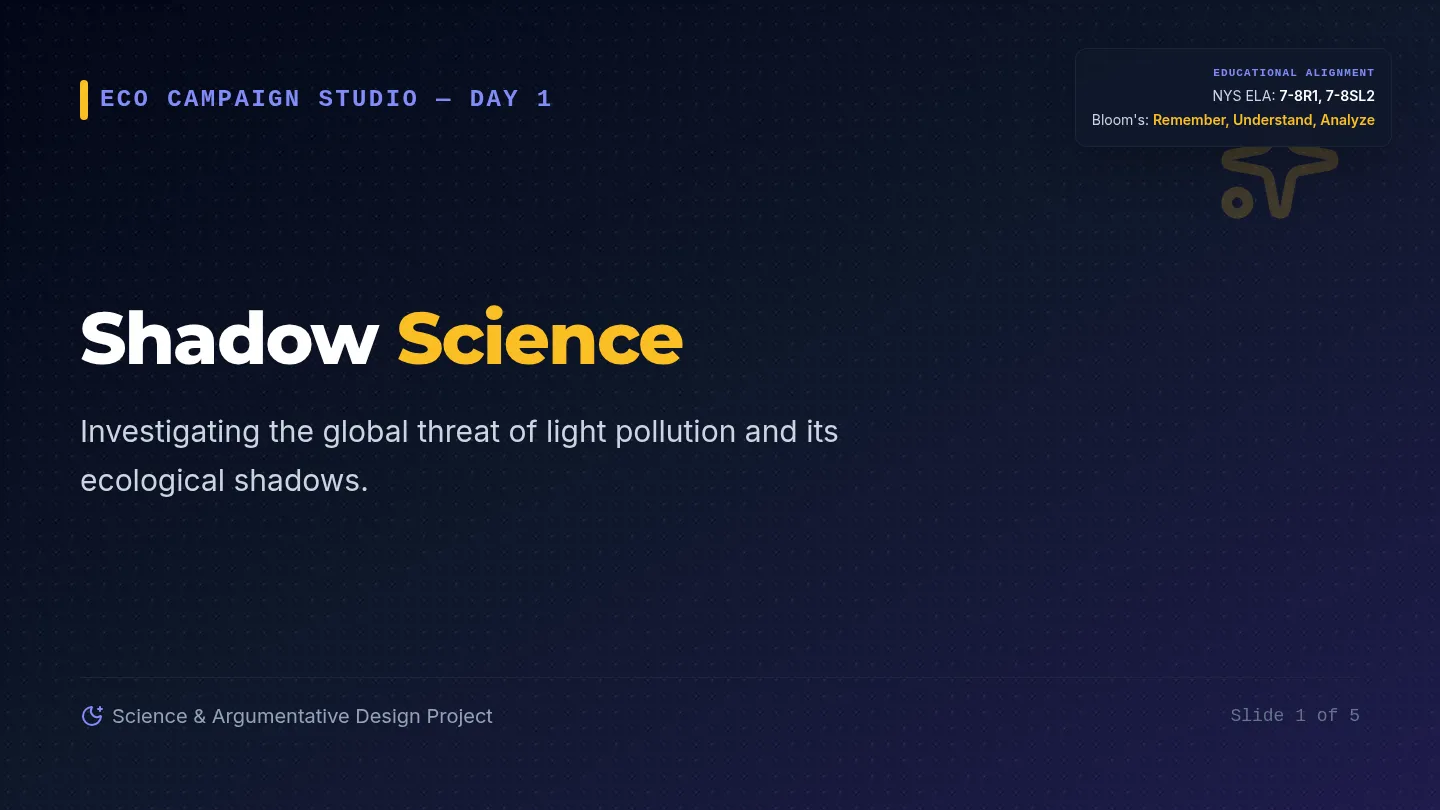
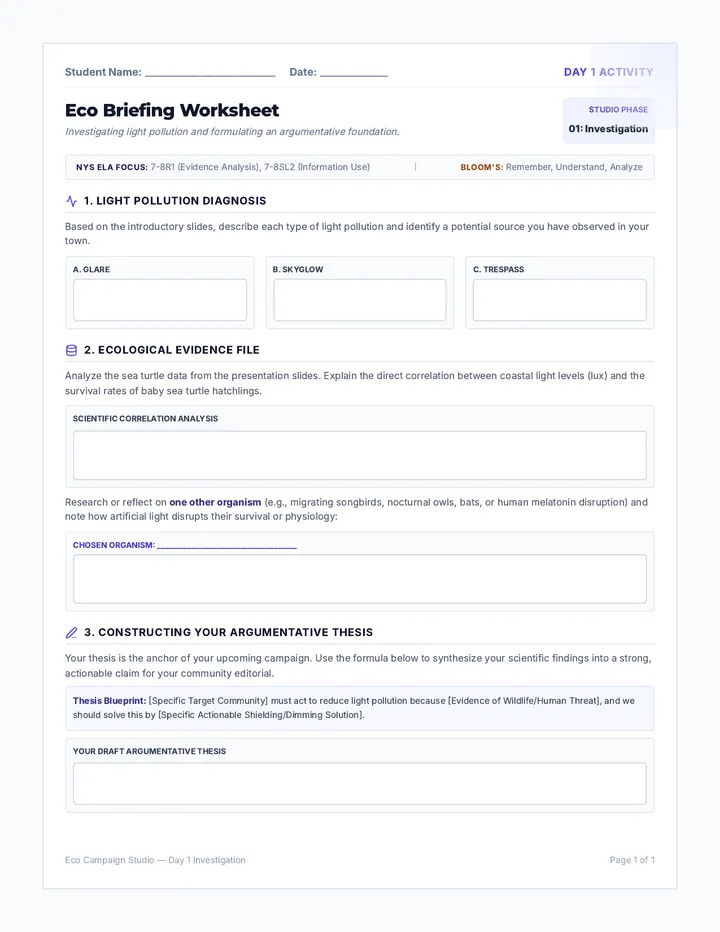
A cross-curricular, 3-day project-based unit combining science, argumentative writing, and graphic design. Students investigate the ecological impacts of light pollution, write a data-driven persuasive proposal, and design a community awareness campaign poster.
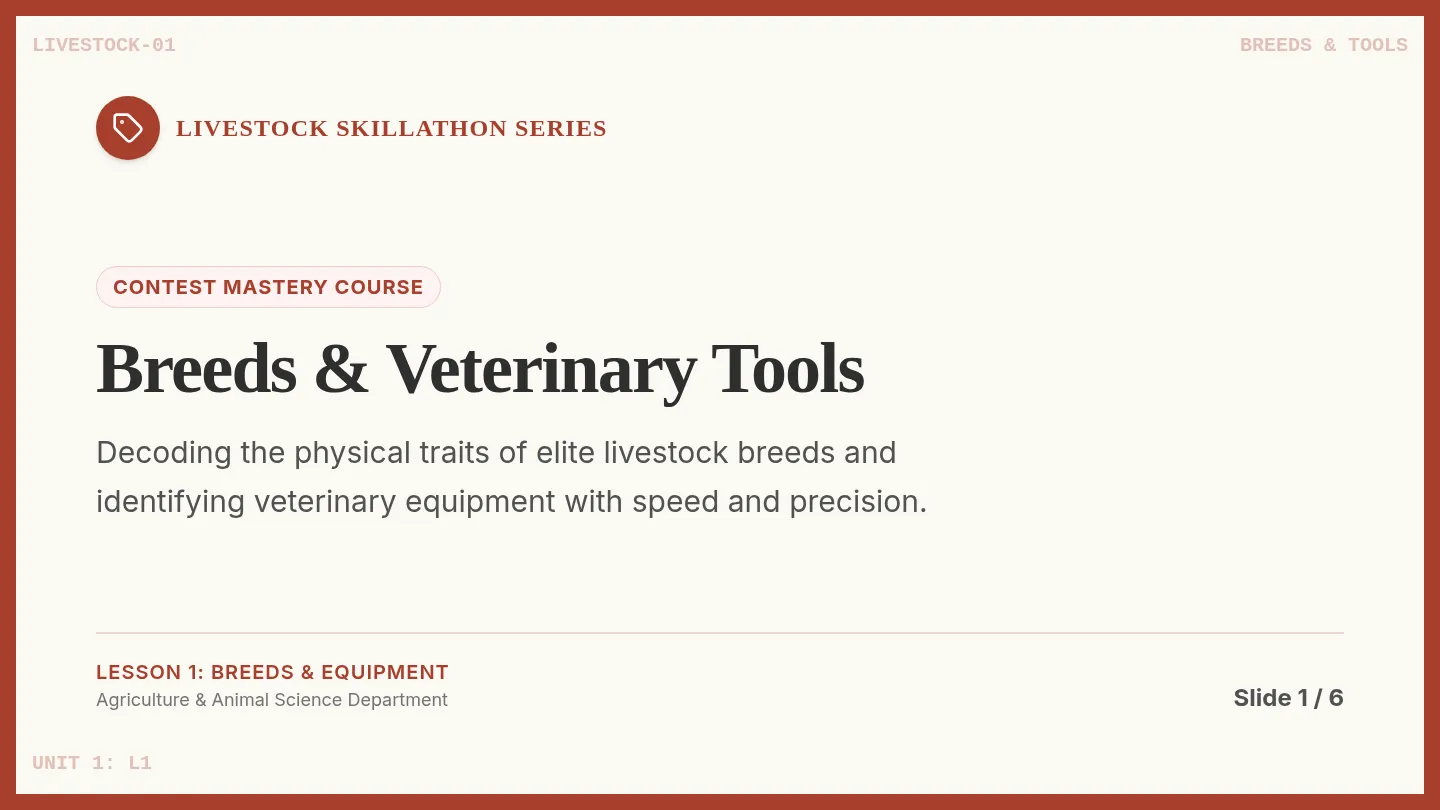
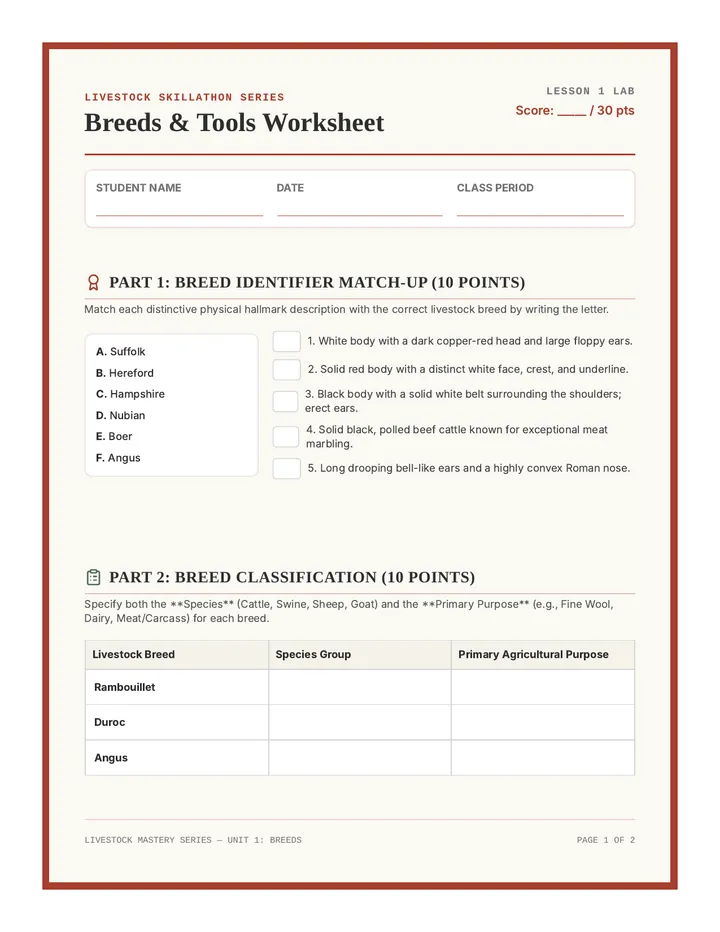
An immersive preparation program that equips agriculture students with the hands-on identification and evaluation skills needed to conquer competitive Livestock Skillathon contests.
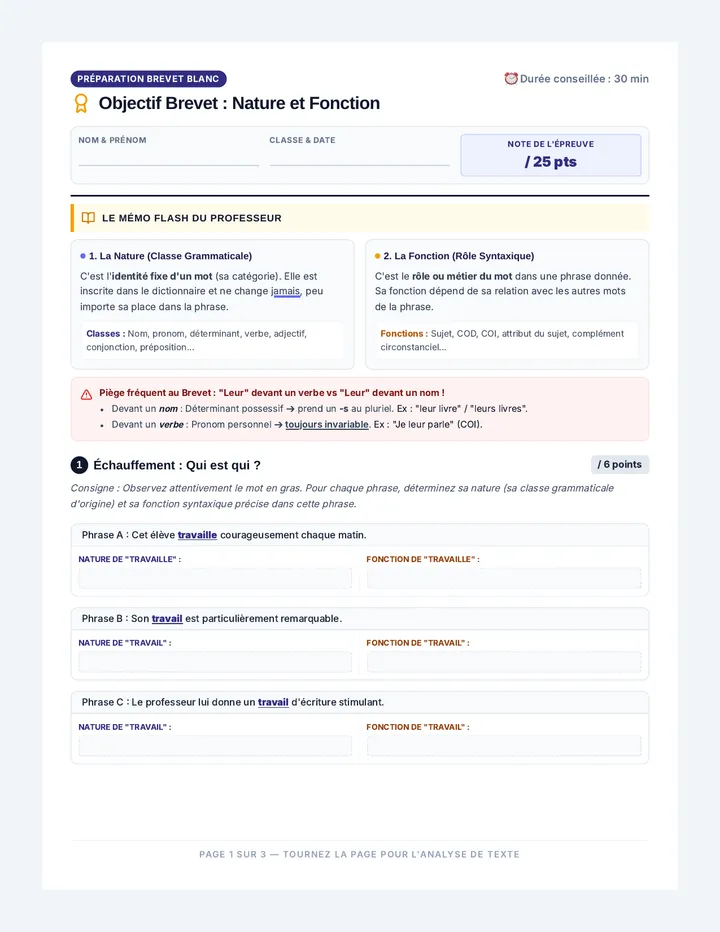
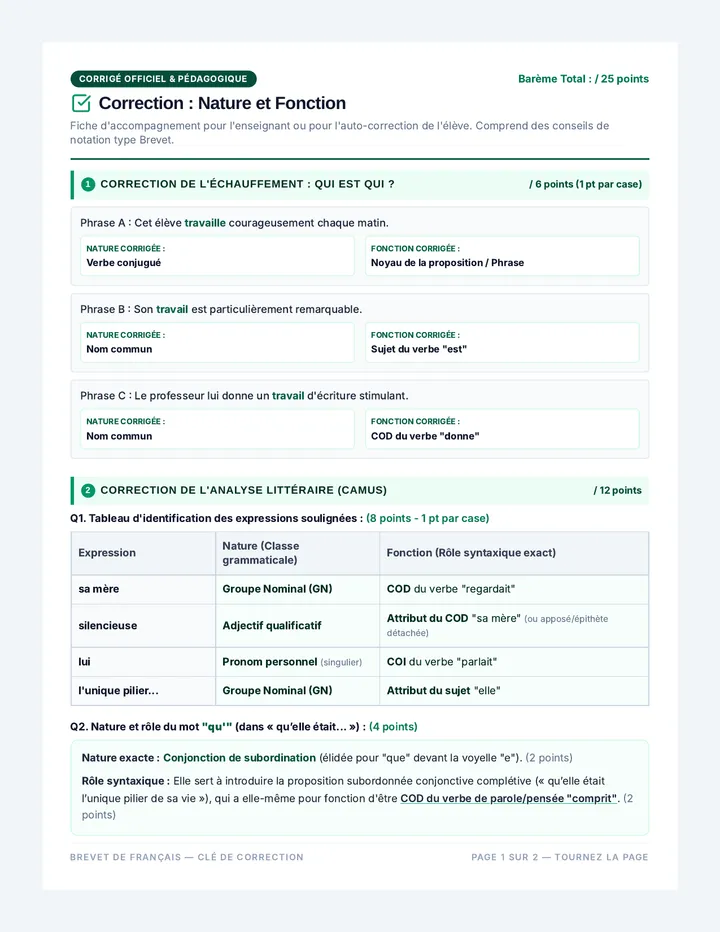
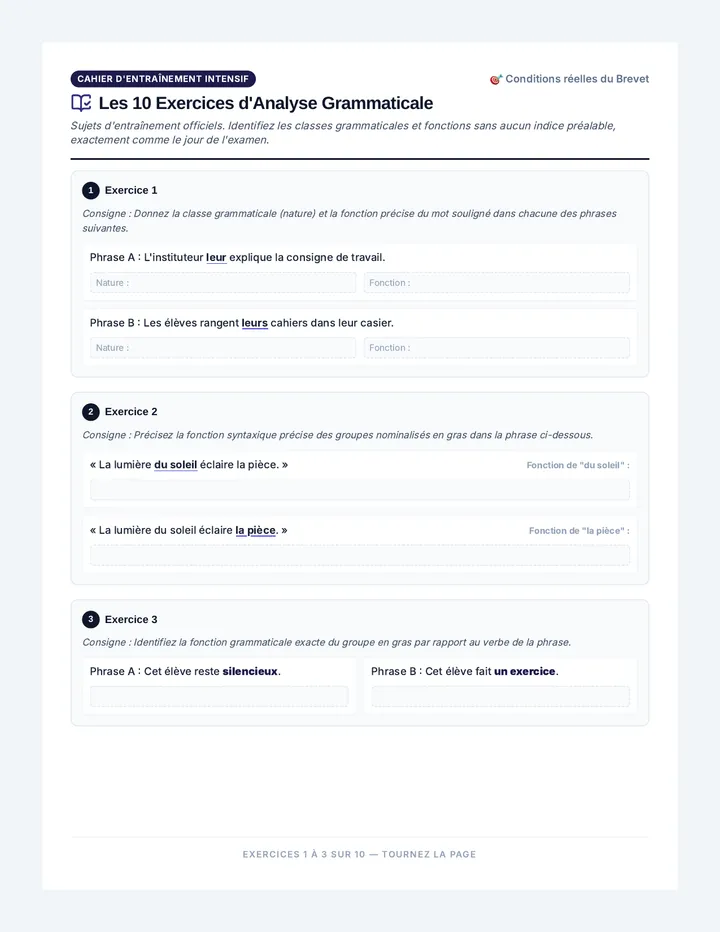
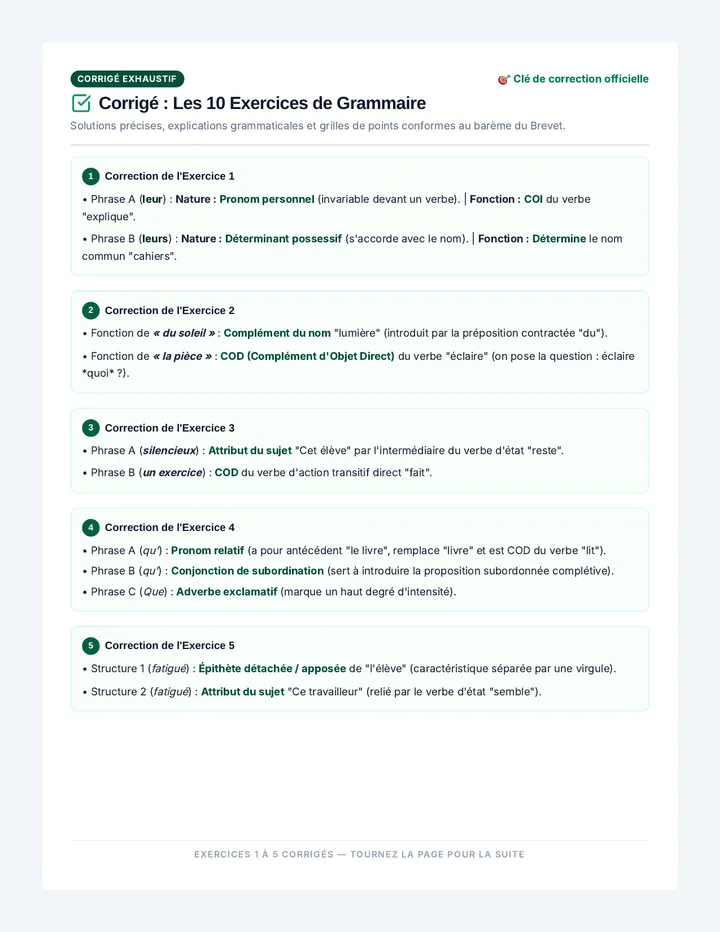
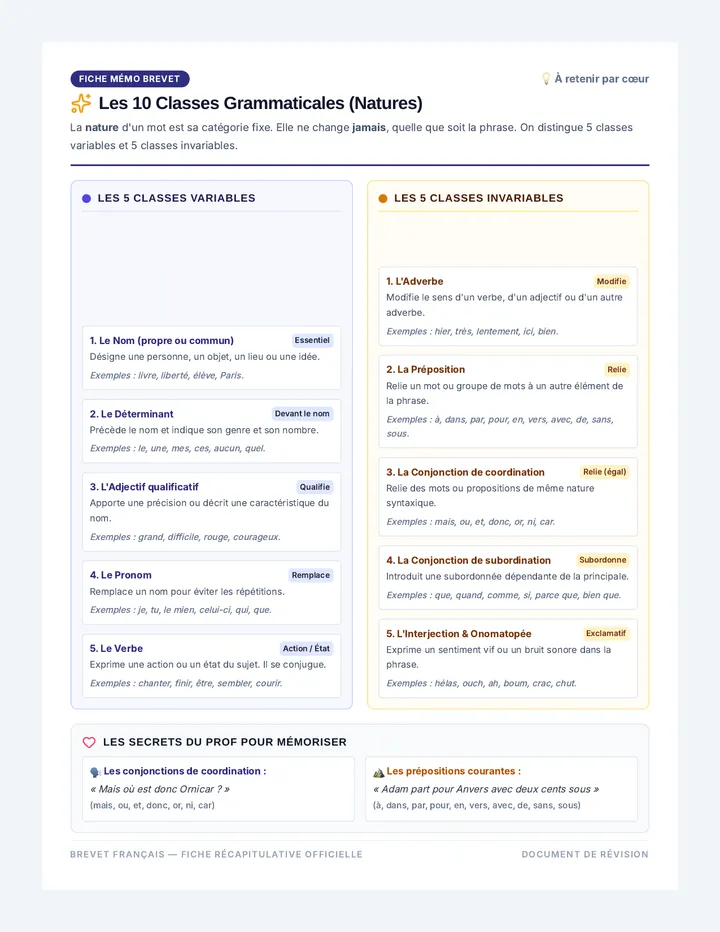
Un programme complet de révision intensive pour le Brevet, regroupant des fiches, exercices et corrigés détaillés en français et en physique-chimie.
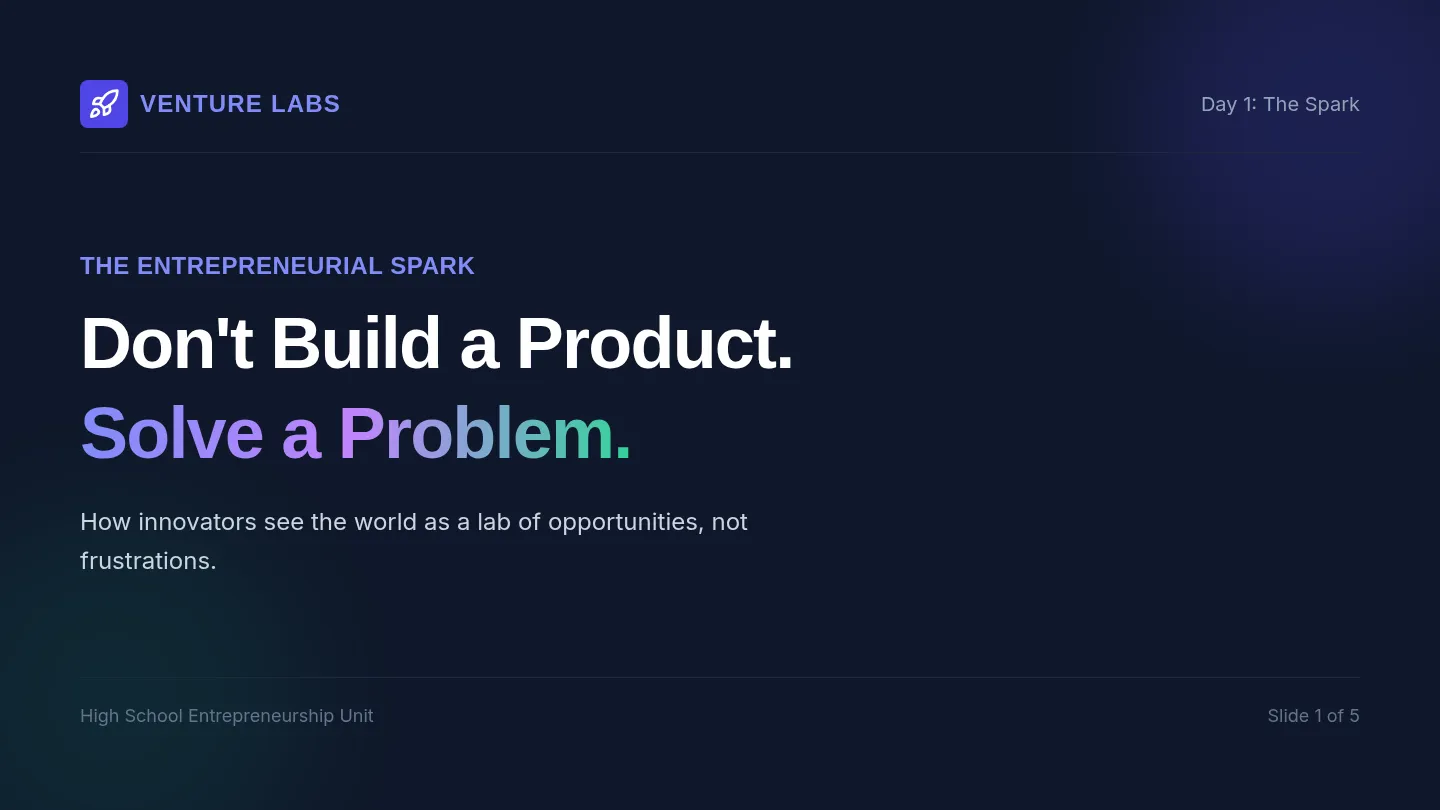
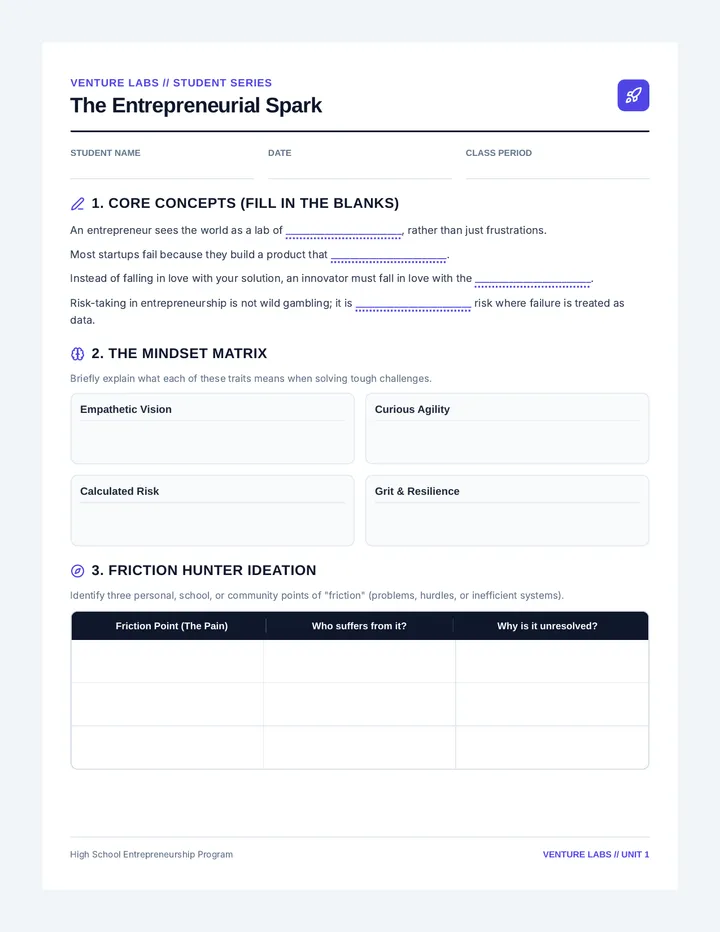
A multi-day entrepreneurship sequence that guides high school students through developing an entrepreneurial mindset, designing a business model, and pitching their own startup concepts.
A comprehensive unit on rainforest ecology, climate regulation, and conservation. Students explore the structural layers of the rainforest, their roles as carbon sinks, the threats of deforestation, and collaborative solutions for preservation.
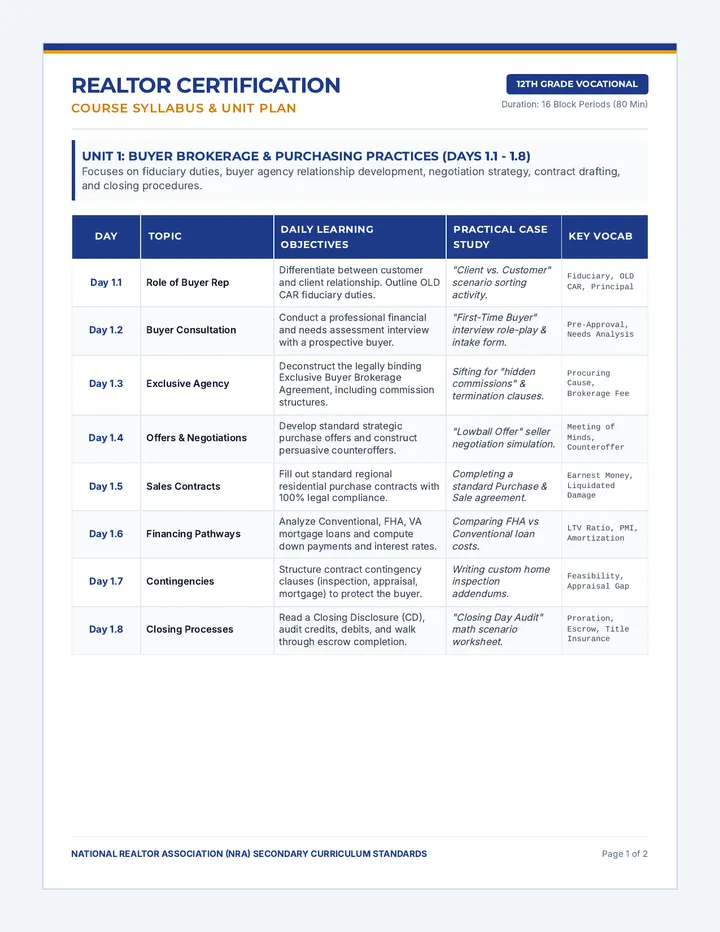
A two-unit, 16-day curriculum sequence for a 12th-grade real estate certification course. Unit 1 covers buying practices (buyer agency, contracts, negotiations, closing), and Unit 2 covers listing practices (listing agency, listings, marketing, closing).
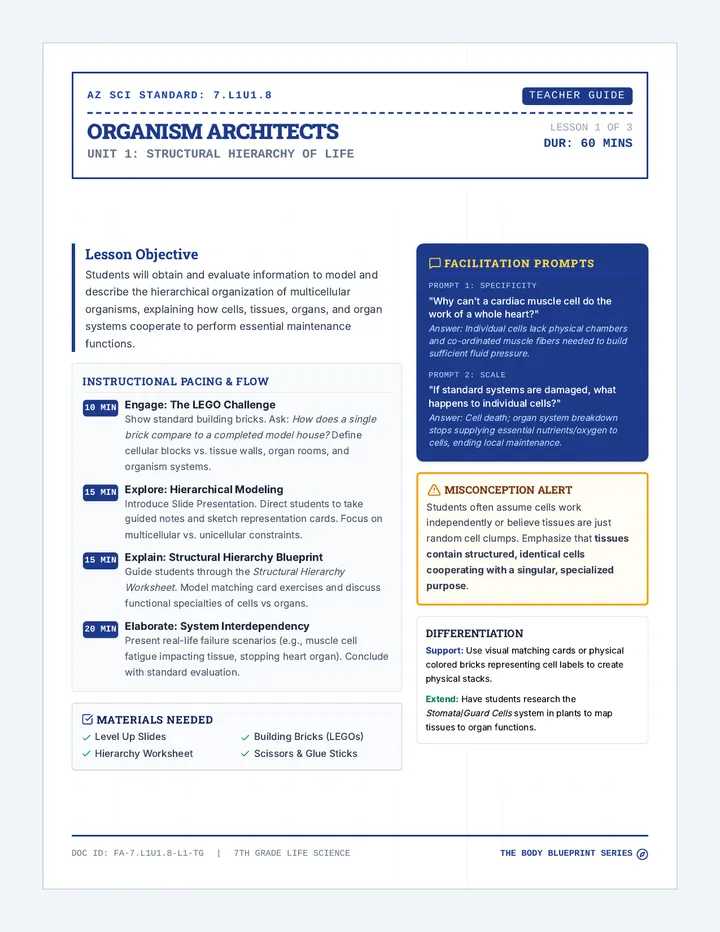
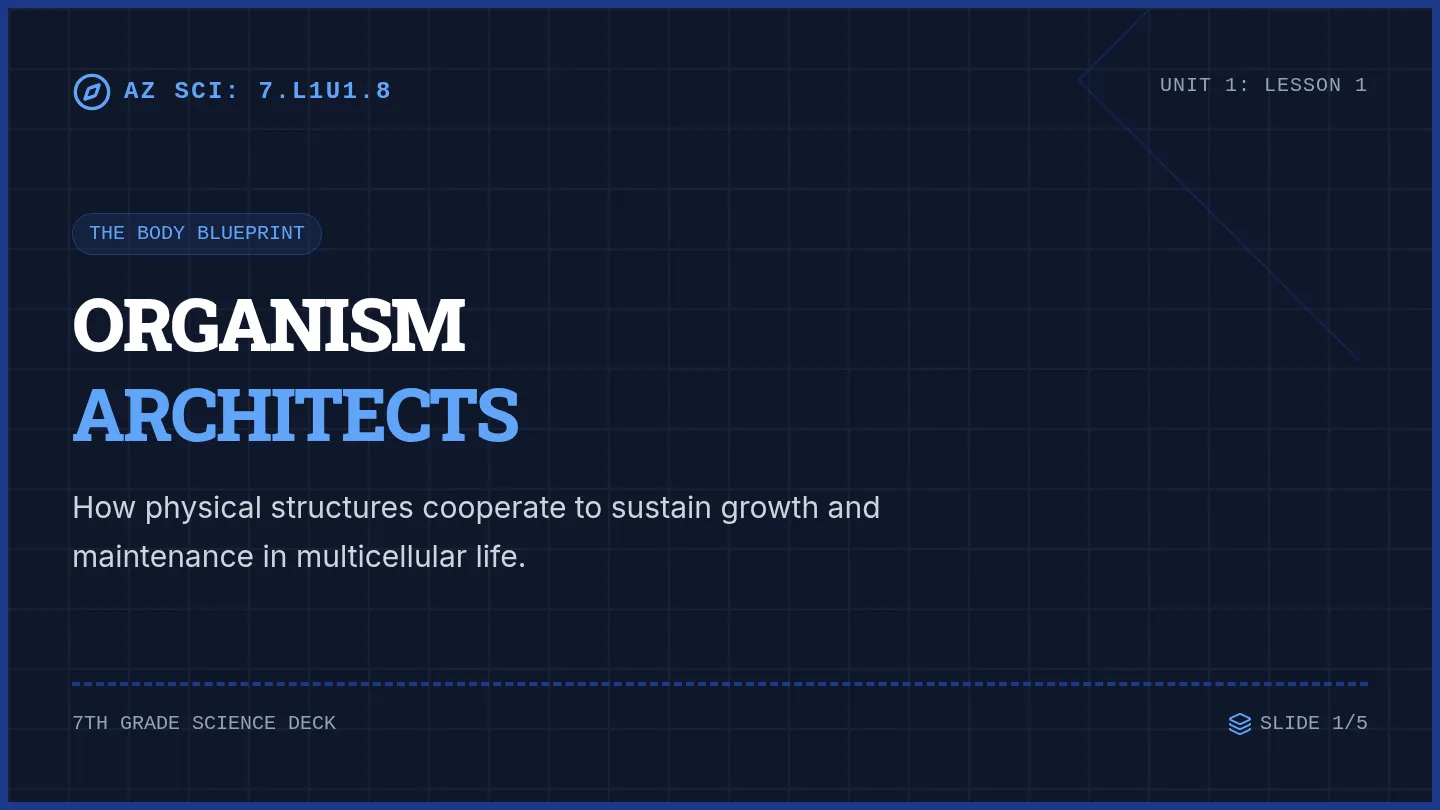
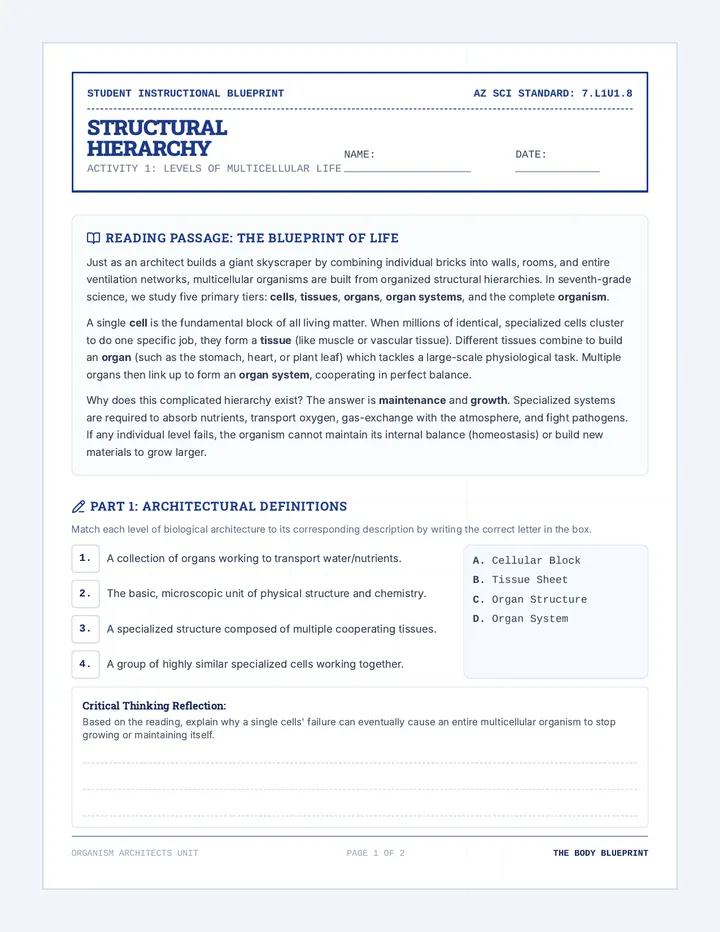
A comprehensive 1-week unit exploring how physical structures in organisms—from microscopic cells to complex organ systems—cooperate to sustain life, maintenance, and growth, aligned with Arizona Science Standard 7.L1U1.8.
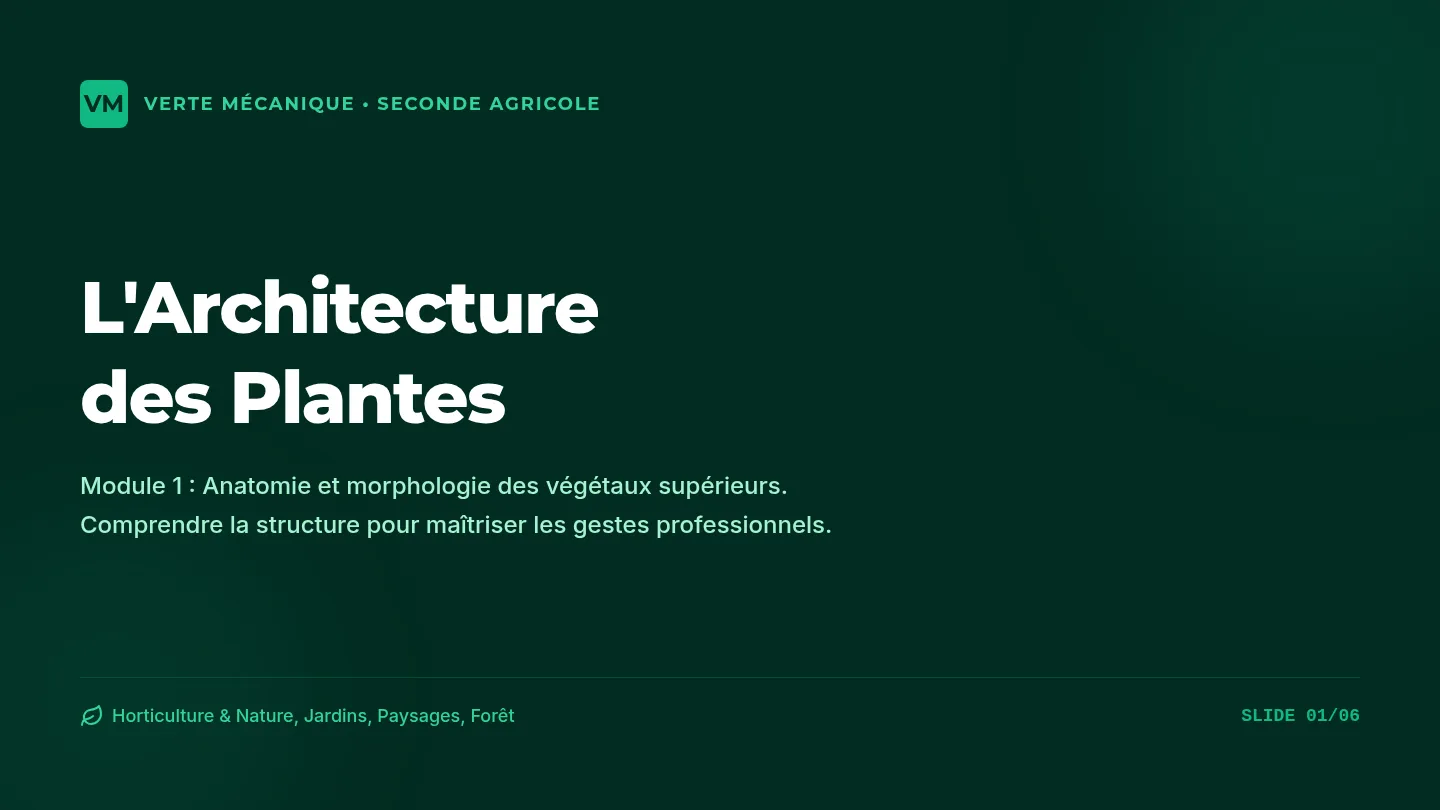
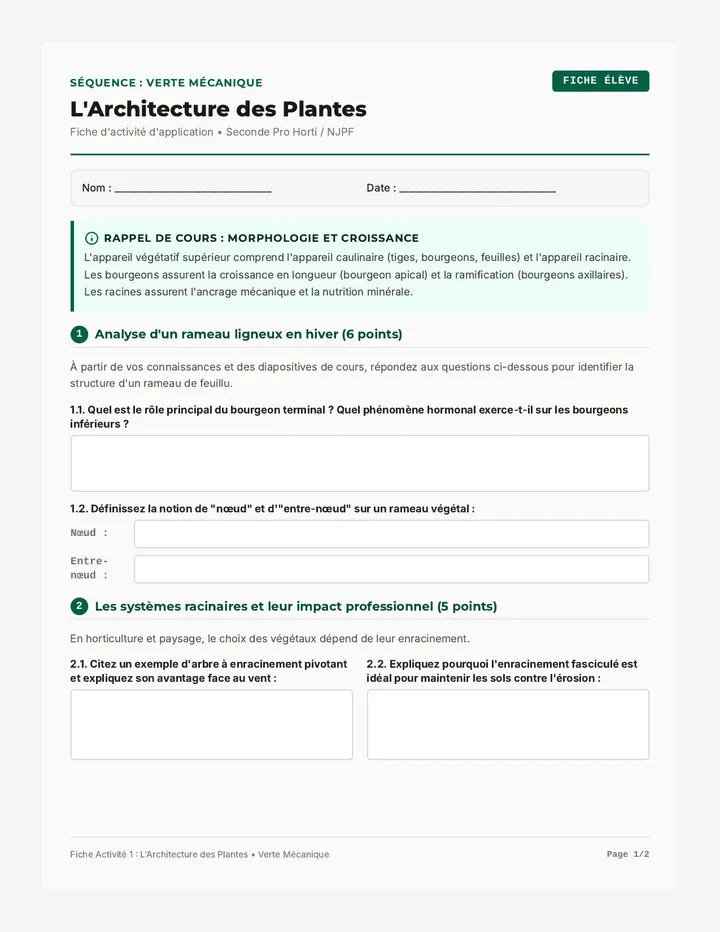
Séquence complète de biologie végétale appliquée pour les classes de Seconde Horticulture et Seconde NJPF (Nature, Jardins, Paysages, Forêt) en lycée agricole. Cette séquence aborde l'anatomie, la physiologie, la reproduction et l'écophysiologie végétale sous un angle technique, scientifique et professionnel.
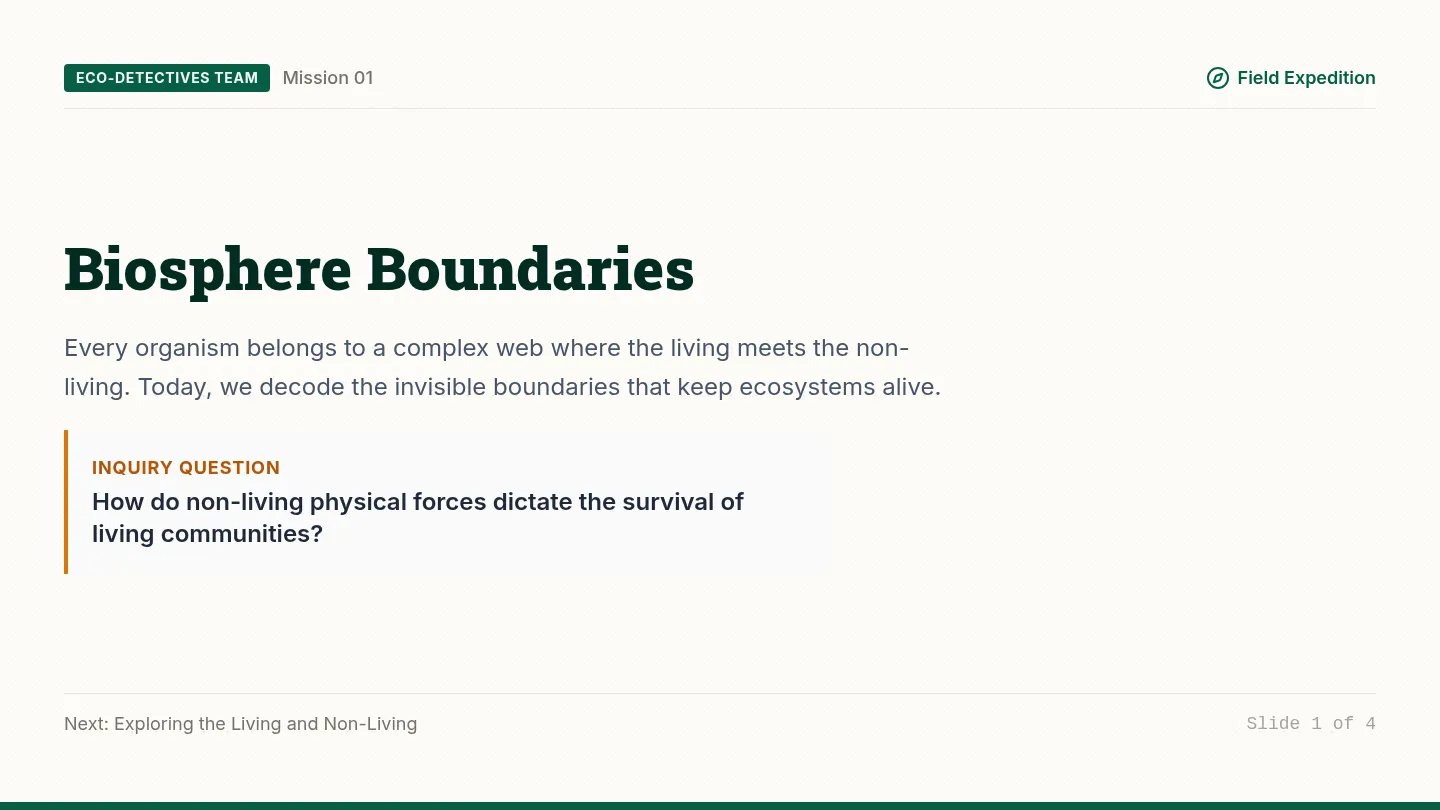
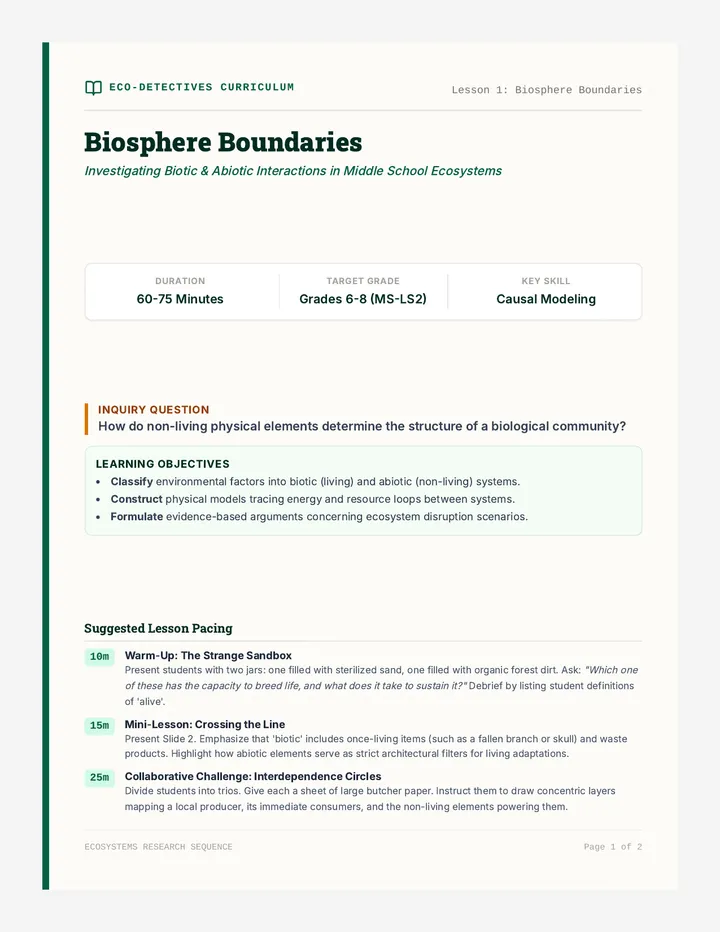
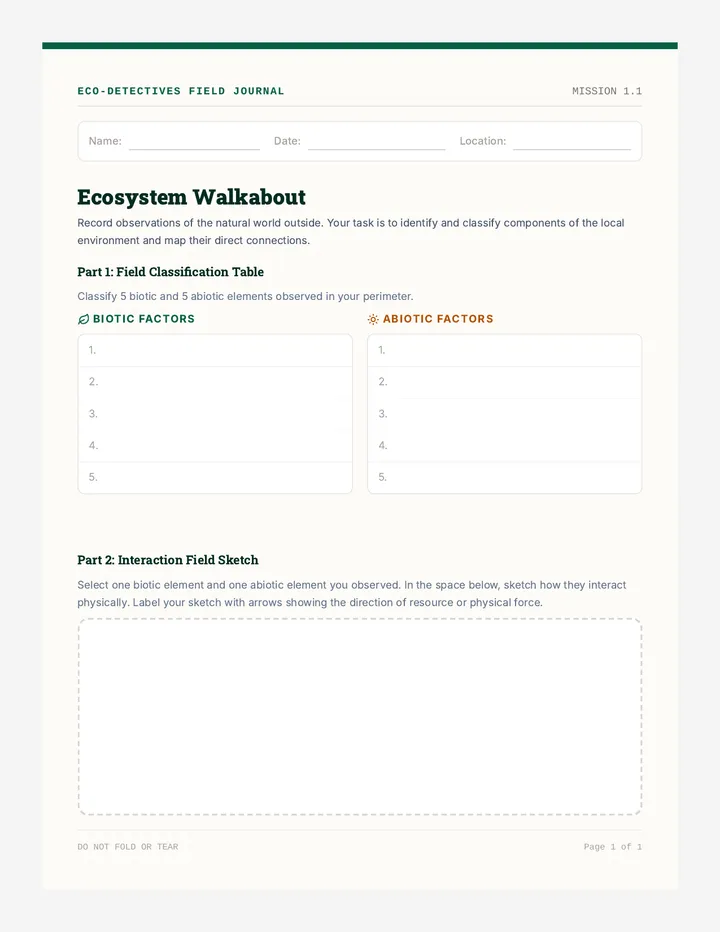
A middle school scientific inquiry sequence where students investigate abiotic and biotic components, trace trophic energy pyramids, and build critical media literacy by evaluating ecological research sources.
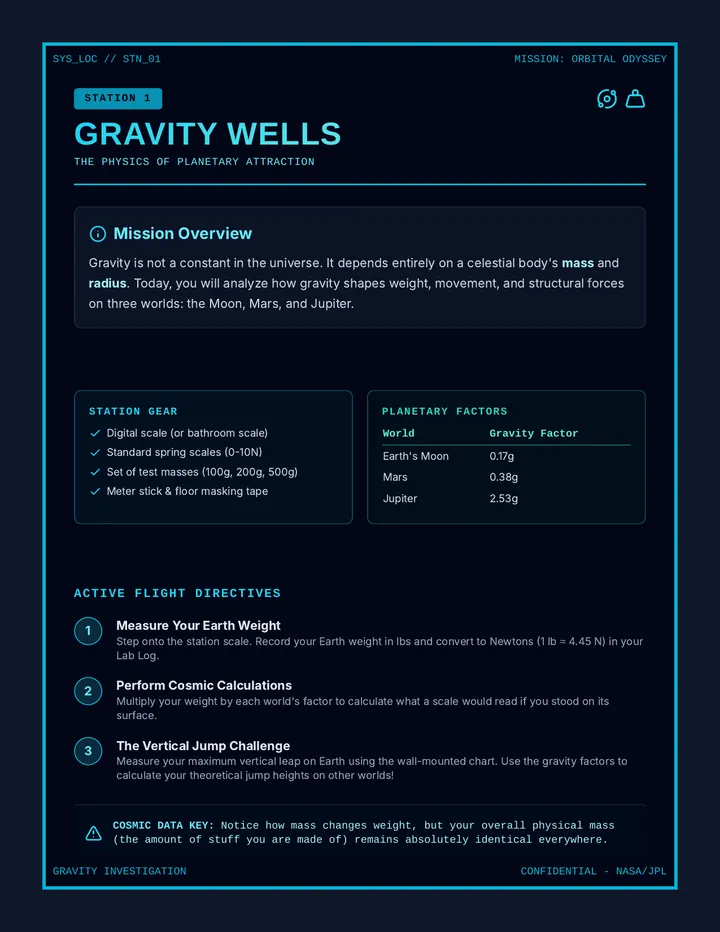
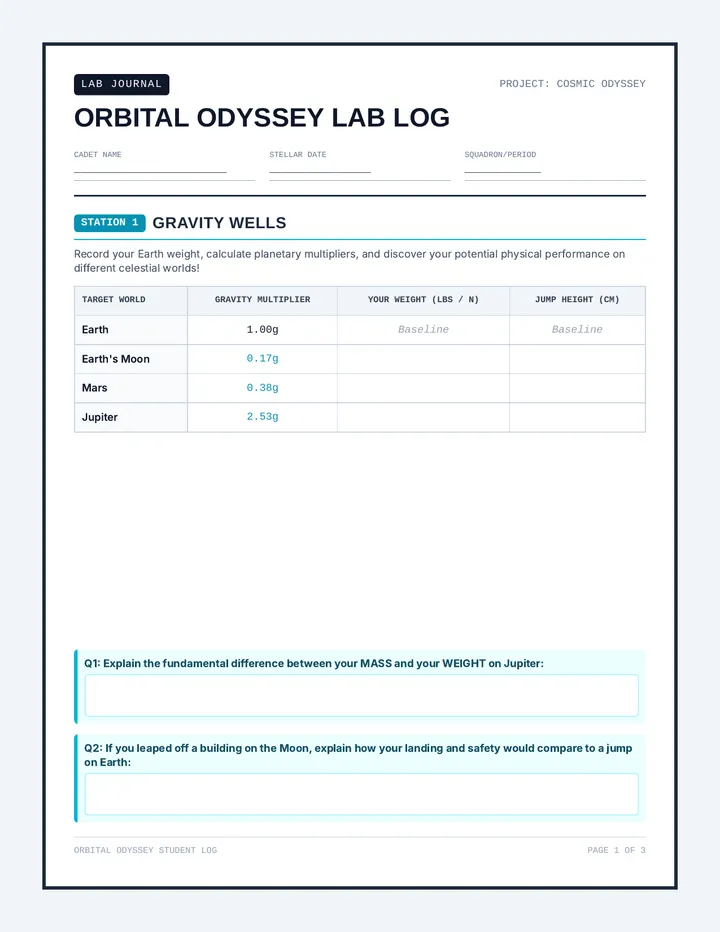
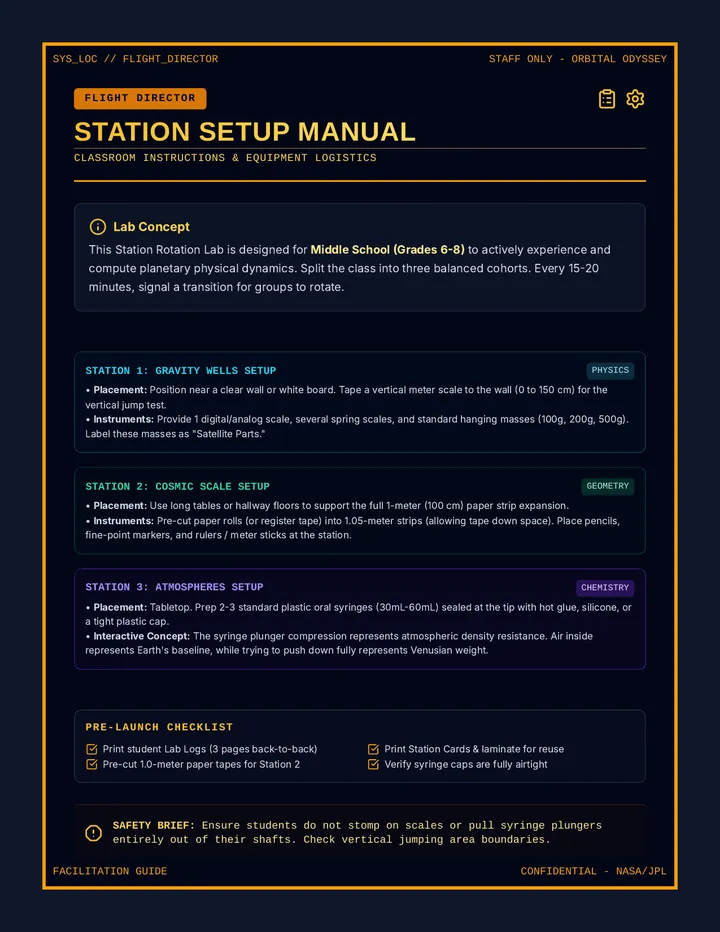
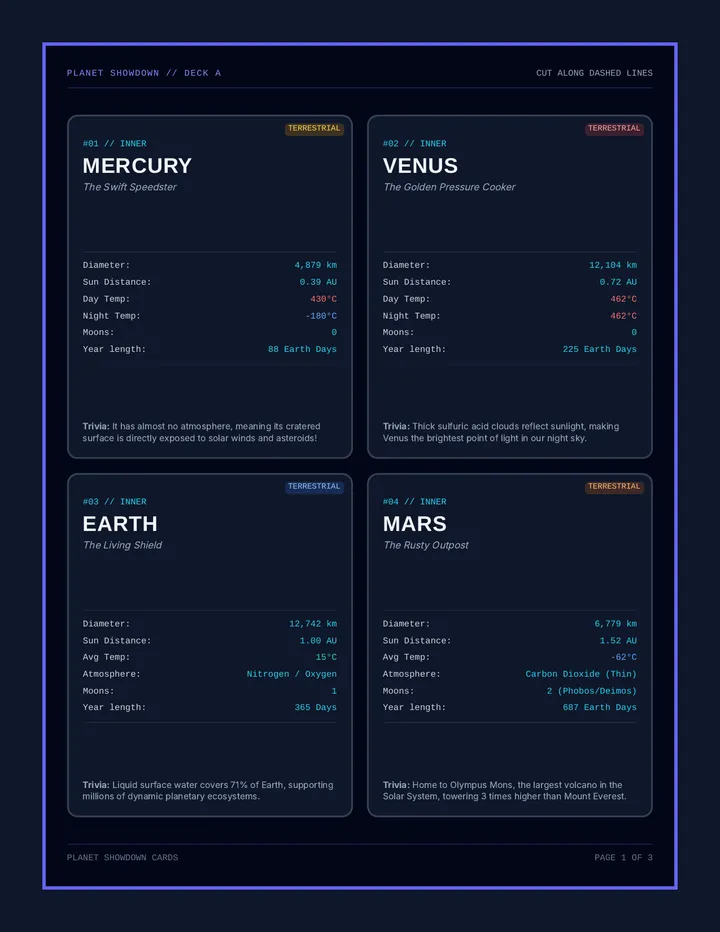
A comprehensive middle school space science unit exploring the physical properties of major planets along with the characteristics, orbits, and origins of other celestial objects like comets, asteroids, and dwarf planets.
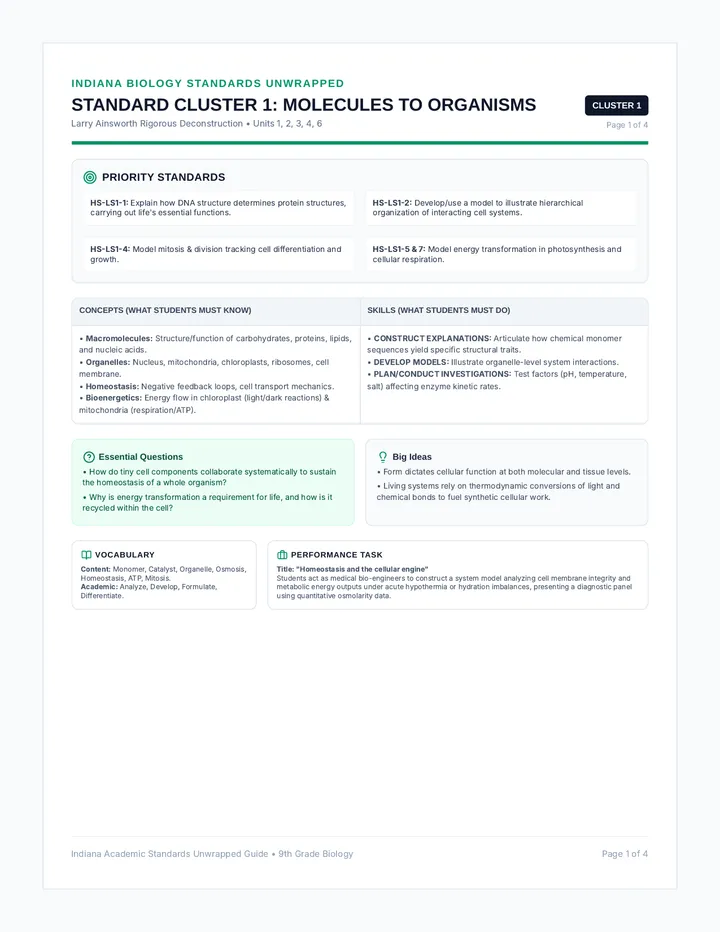
A comprehensive biology curriculum aligned with Indiana Academic Standards, spanning twelve core units from the characteristics of living things to human impact, designed for 9th-grade on-level students.
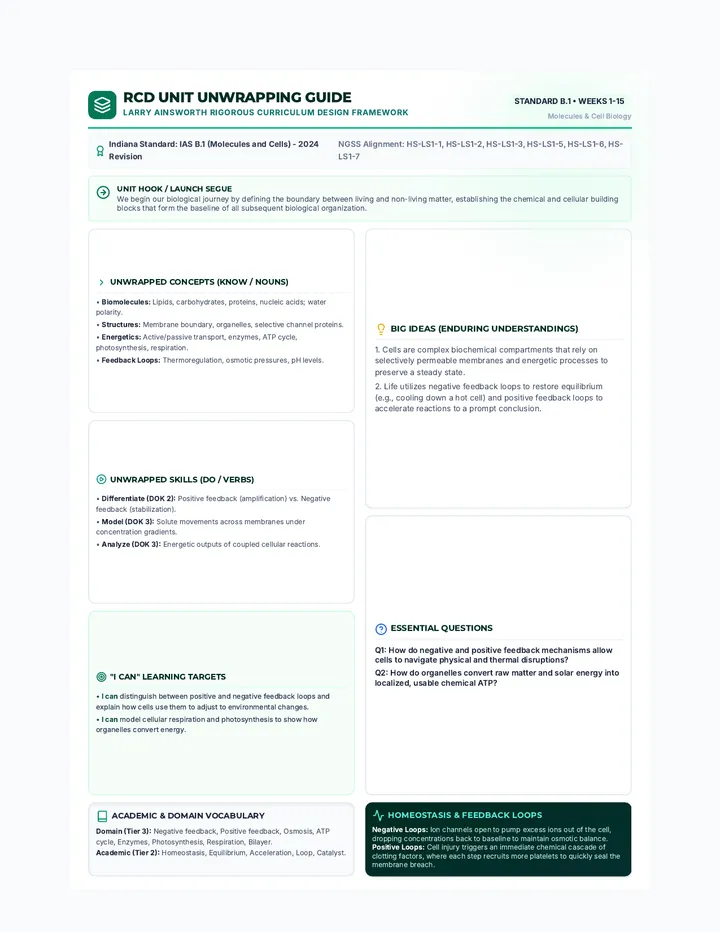
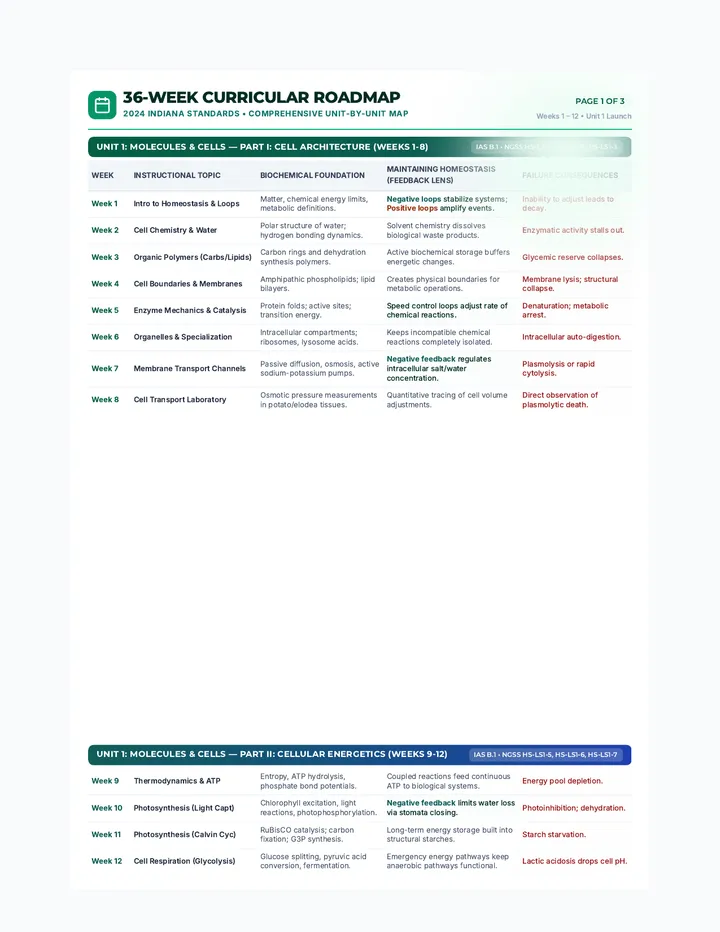
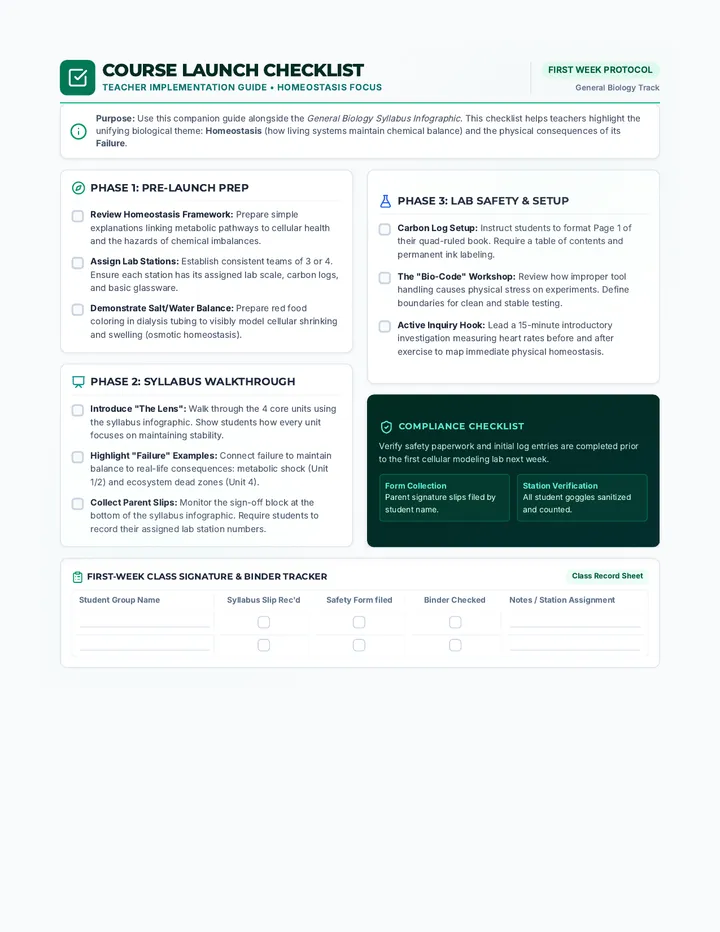
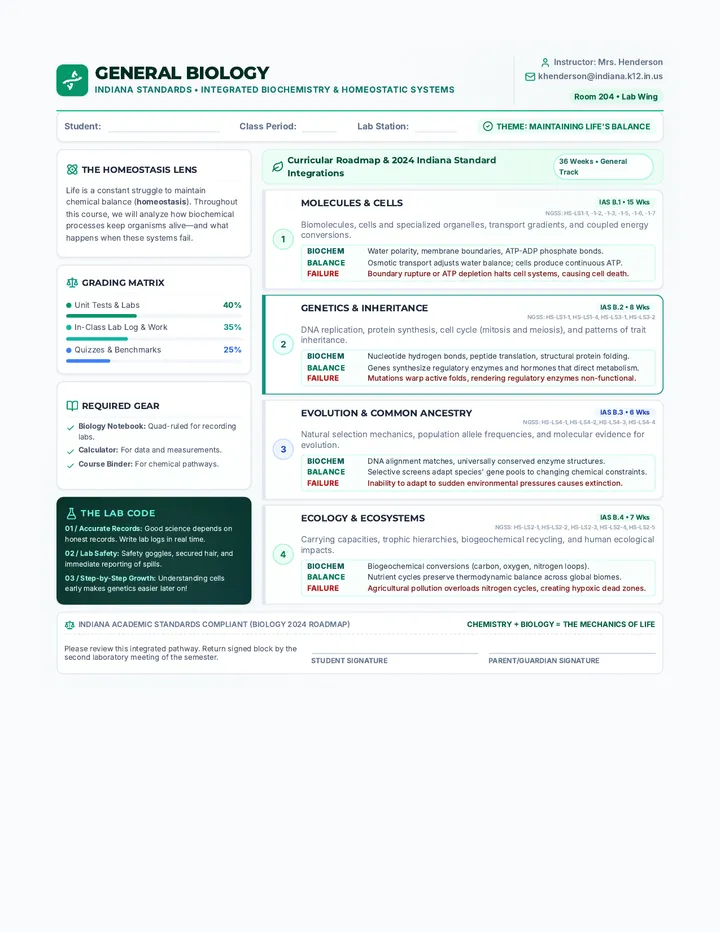
A dual-track course launch suite providing comprehensive curricular roadmaps, syllabus infographics, teacher guides, and unit unwrapping plans for General and Honors Biology.
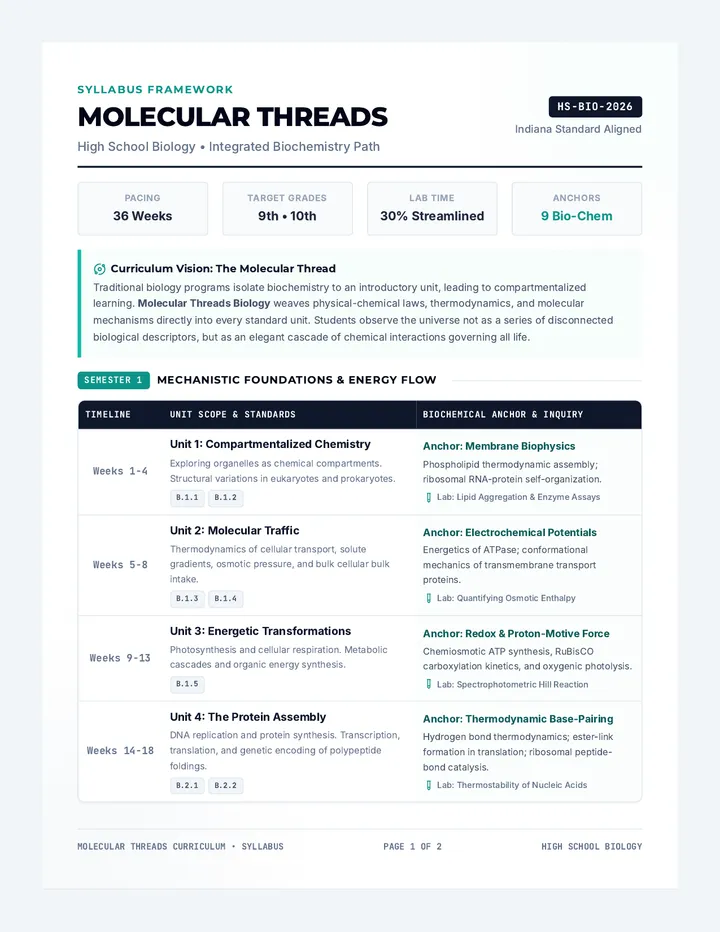
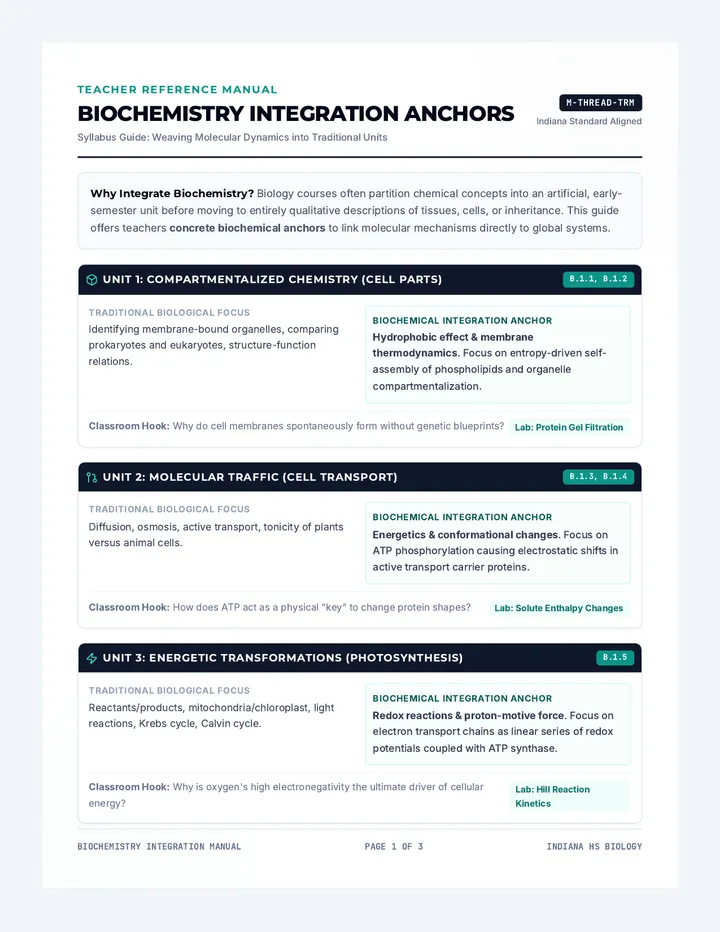
A high school biology curriculum that weaves molecular and biochemical mechanisms into every major traditional unit, fully aligned to the Indiana Academic Standards for Biology.
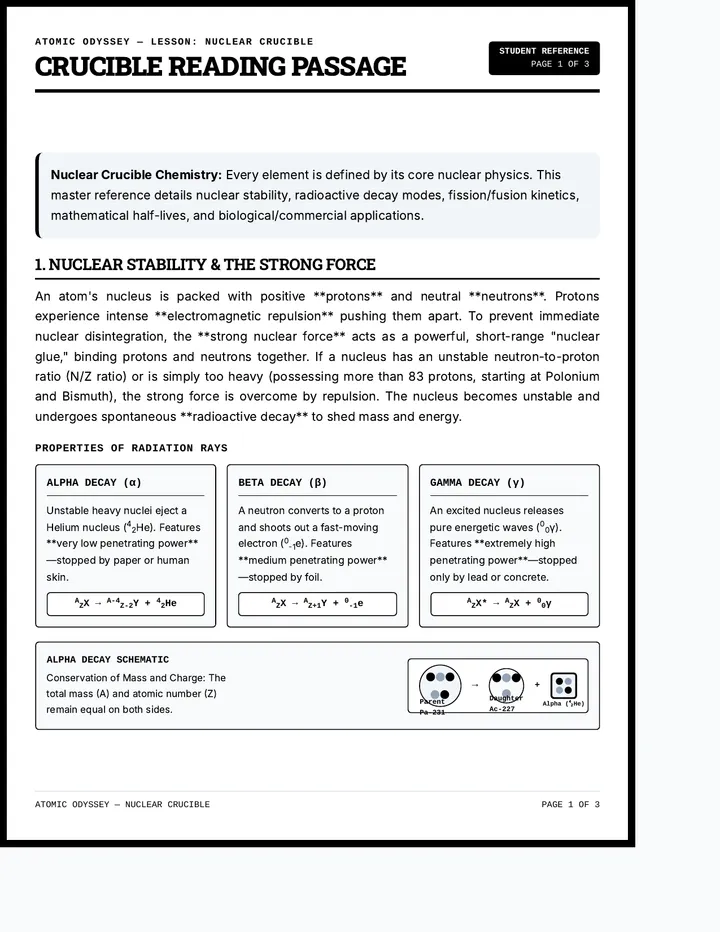
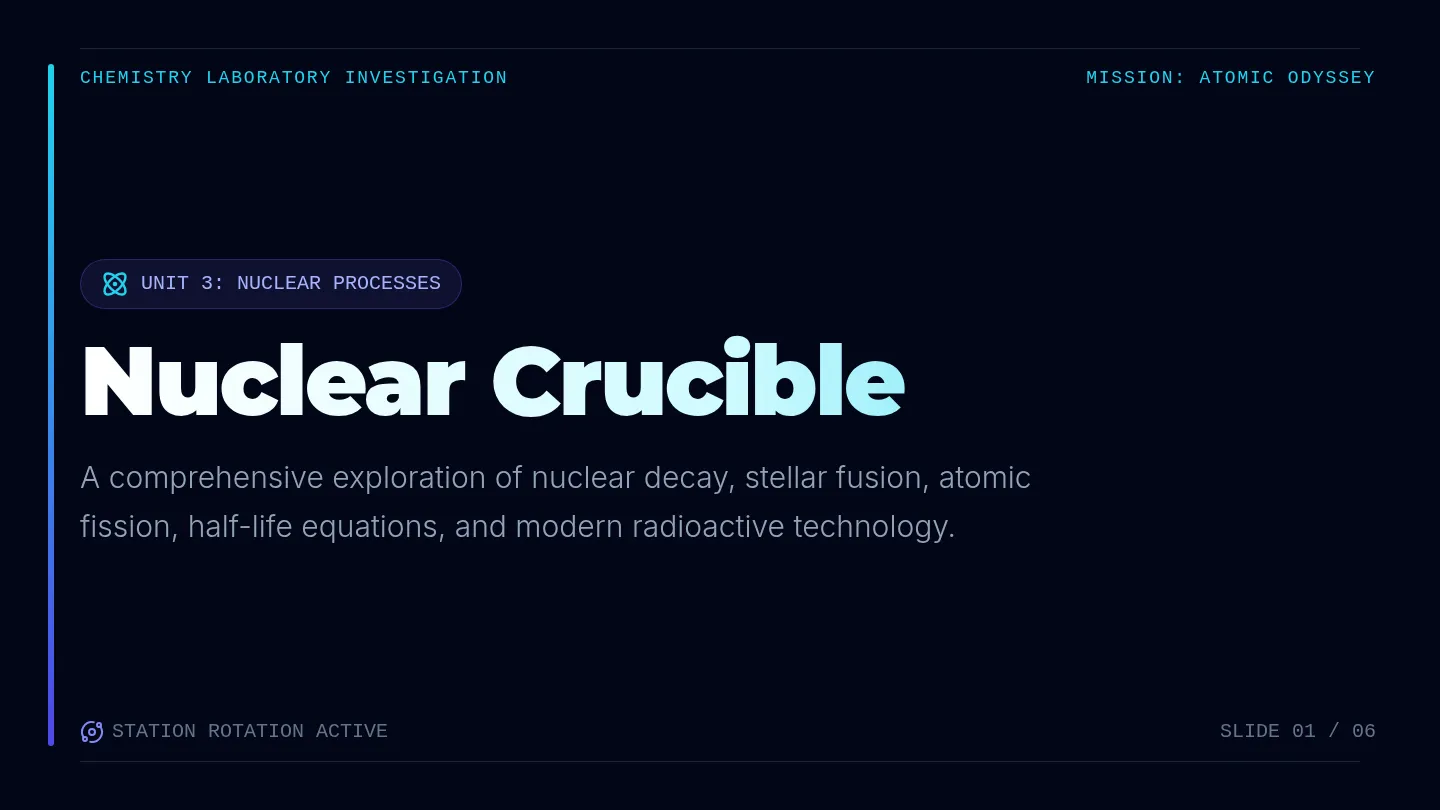
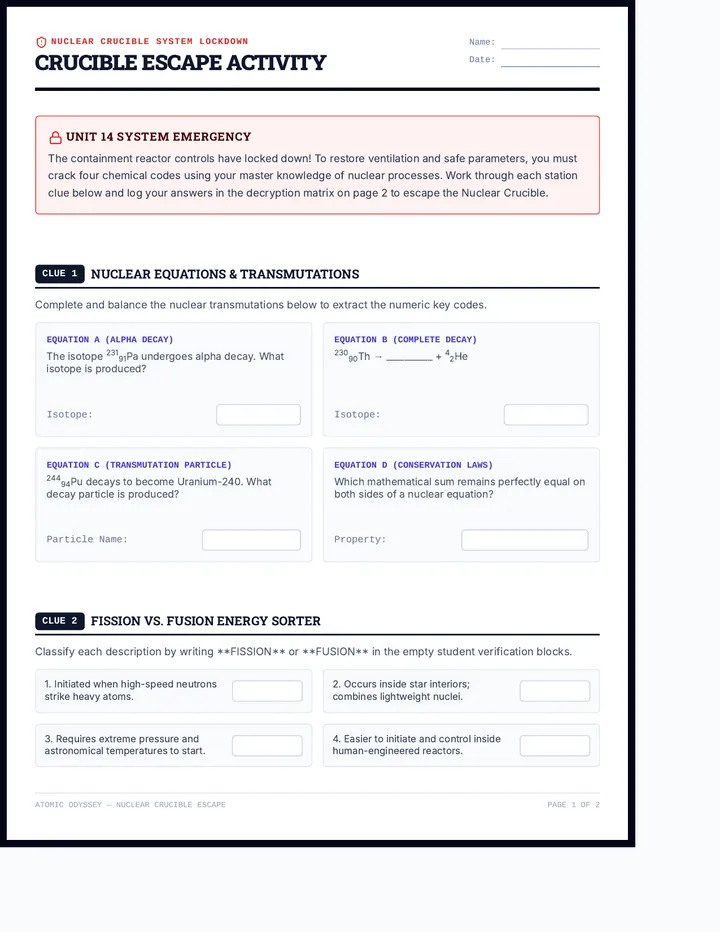
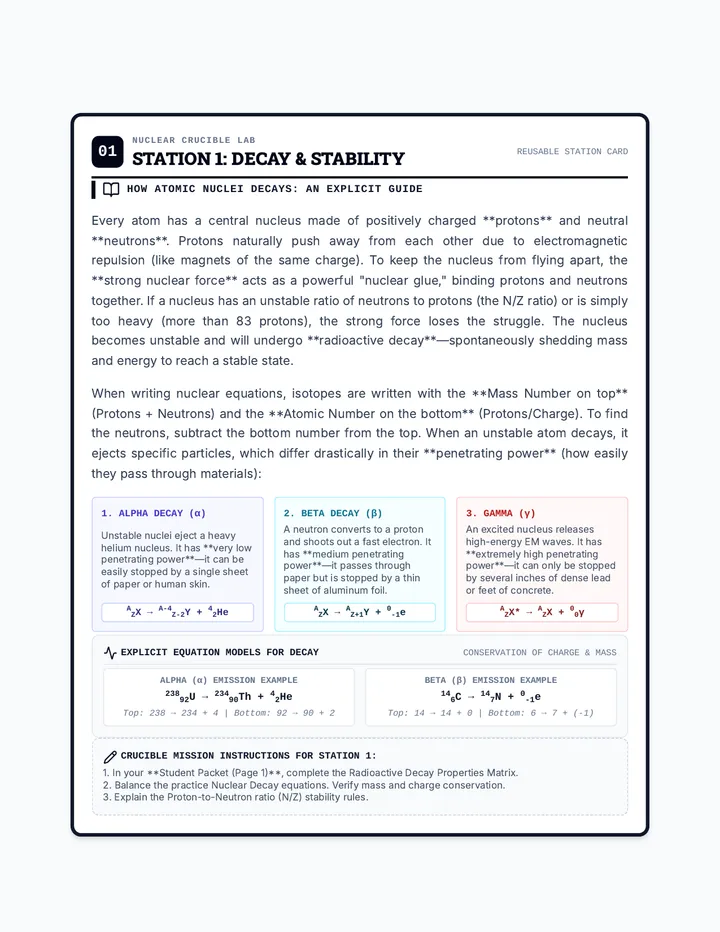
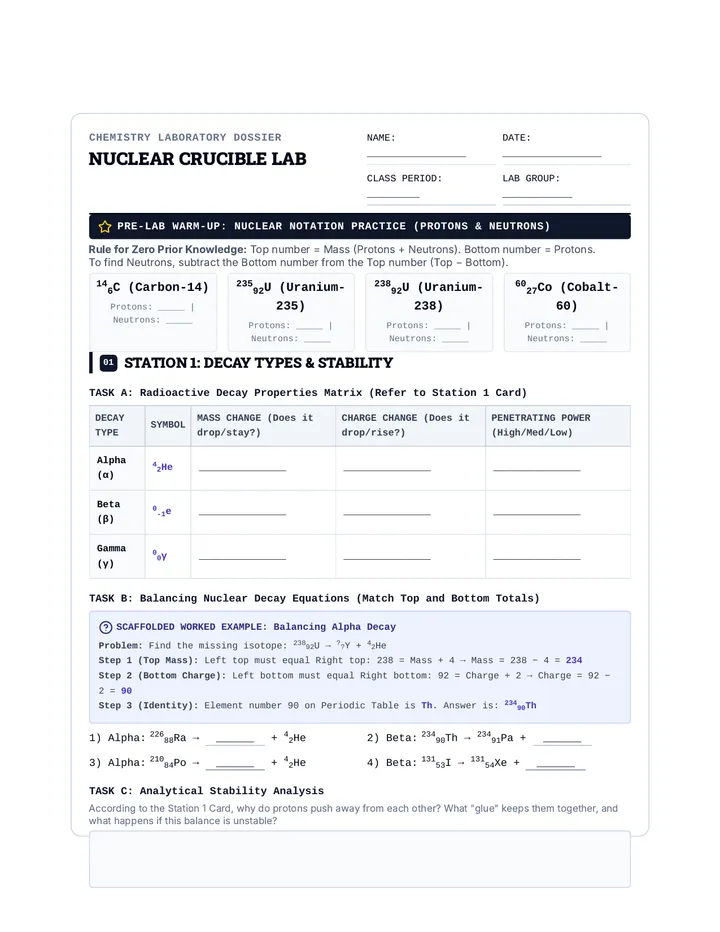
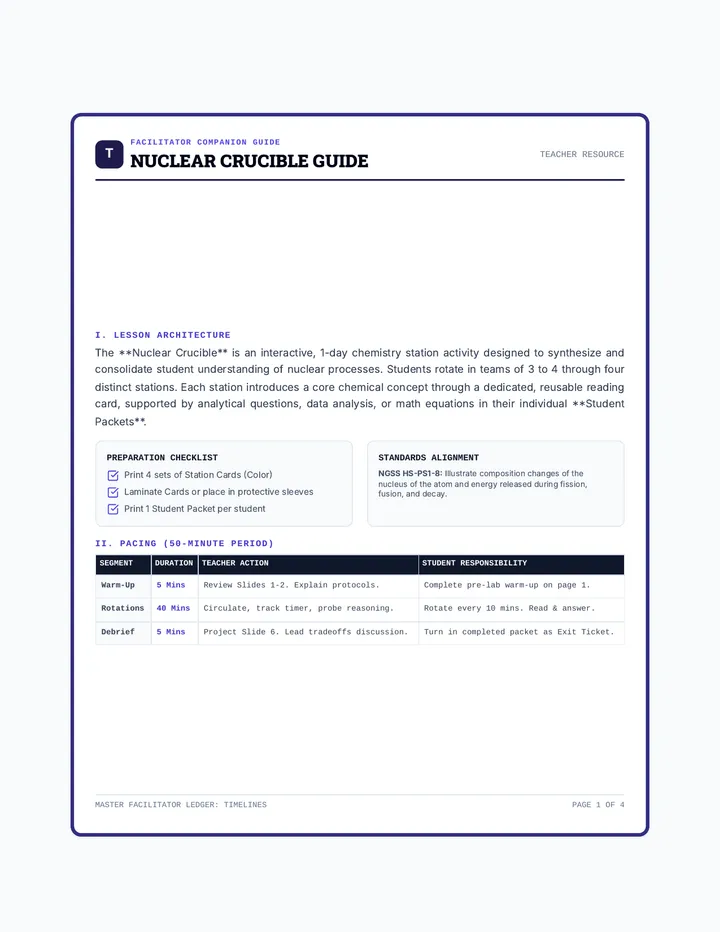
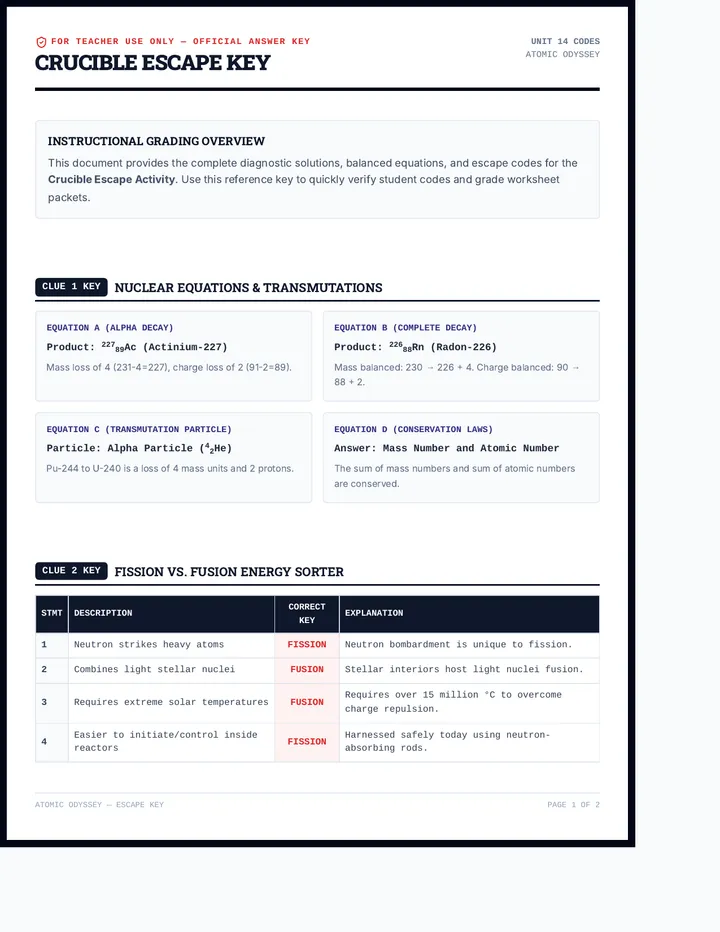
A comprehensive, highly engaging chemistry exploration of nuclear processes, including radioactive decay, nuclear stability, fission, fusion, half-life calculations, and modern nuclear technologies. Studentsrotate through four interactive stations to master atomic chemistry.
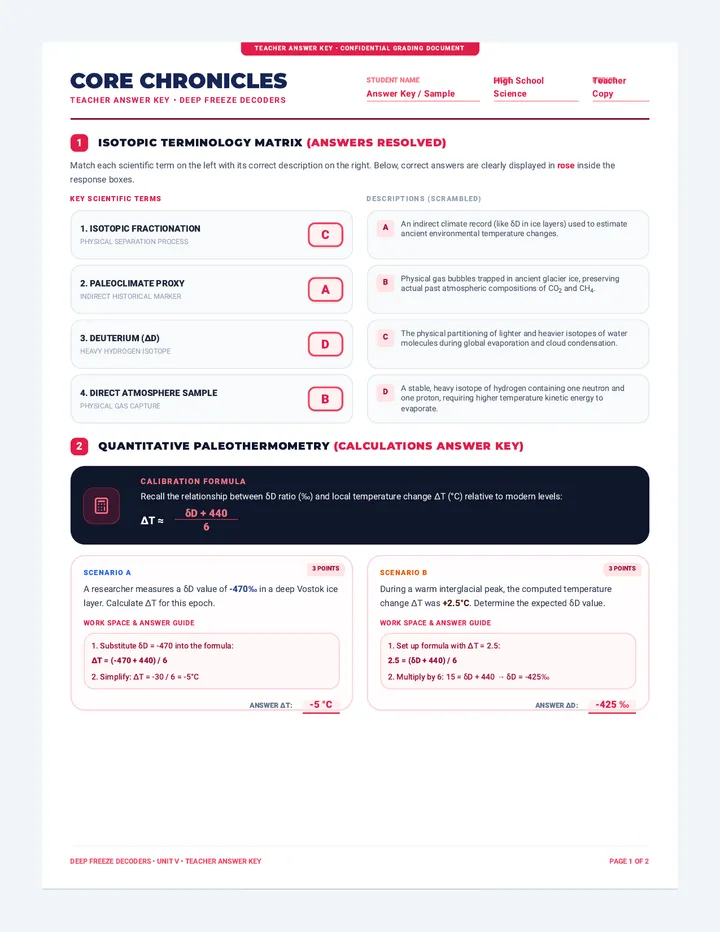
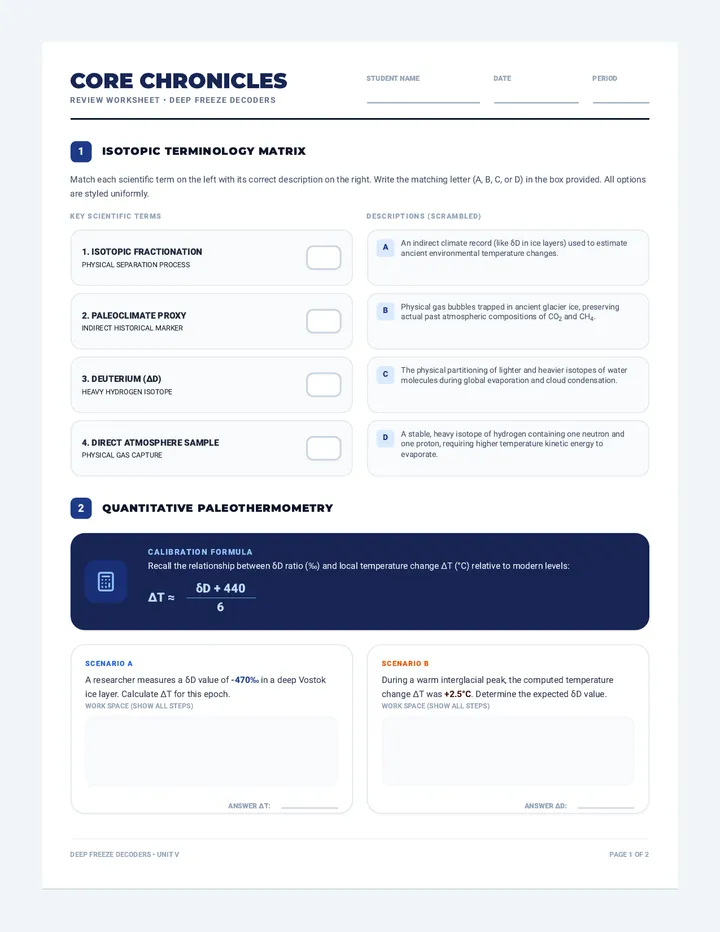
An advanced high school earth science unit exploring how scientists decode paleoclimate data from ice cores. Students analyze isotopic ratios, examine greenhouse gas correlations, and model glacier-climate feedback loops.
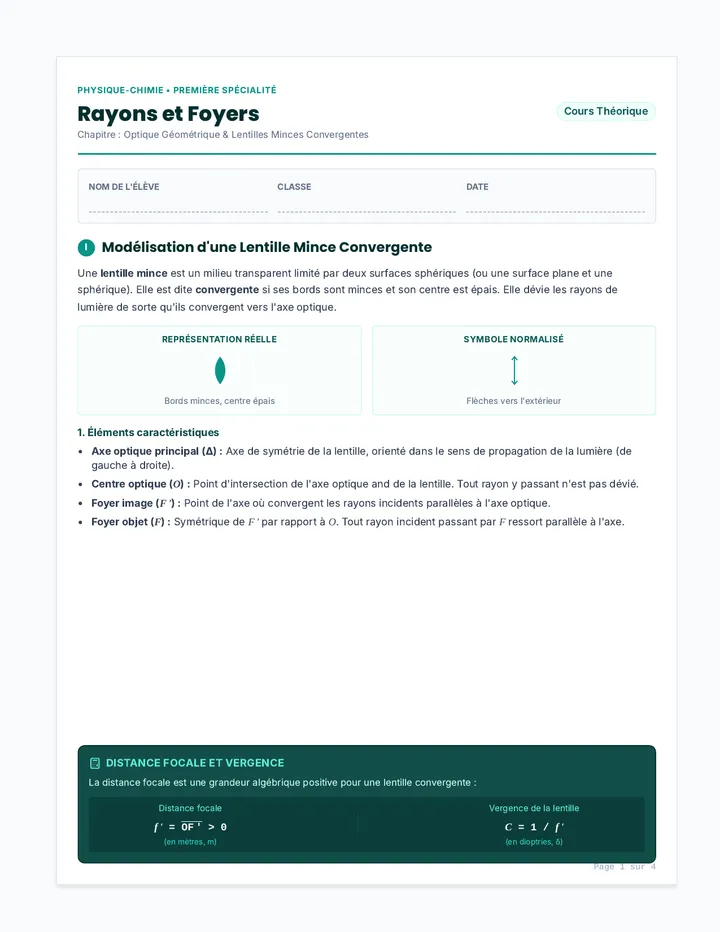
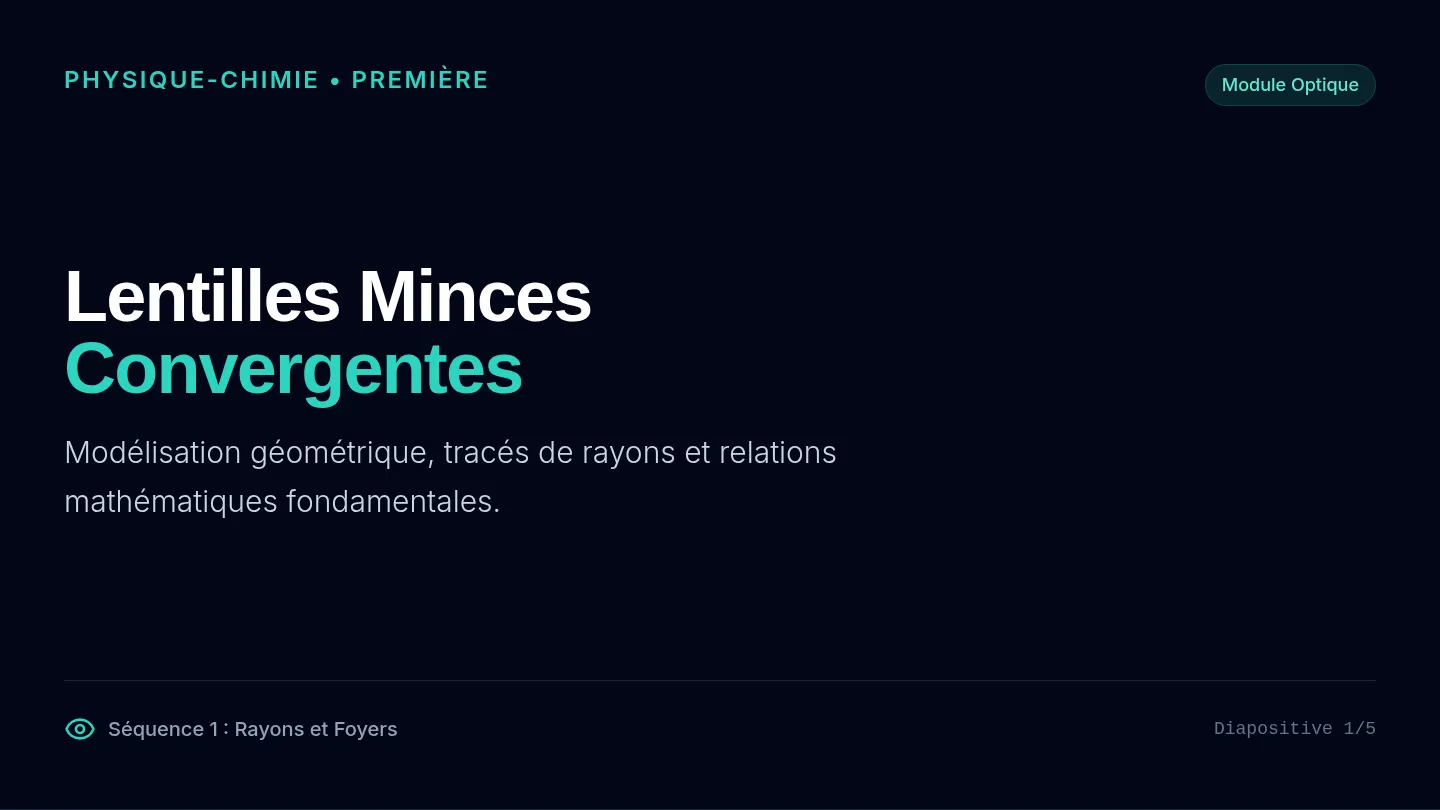
Une séquence de physique de niveau Première sur l'optique géométrique et les lentilles minces convergentes. Elle aborde la modélisation géométrique des lentilles, la construction graphique des images, les relations mathématiques de Descartes et de grandissement, ainsi que les trois méthodes de mesure de la distance focale (objet à l'infini, autocollimation, méthode de Bessel).
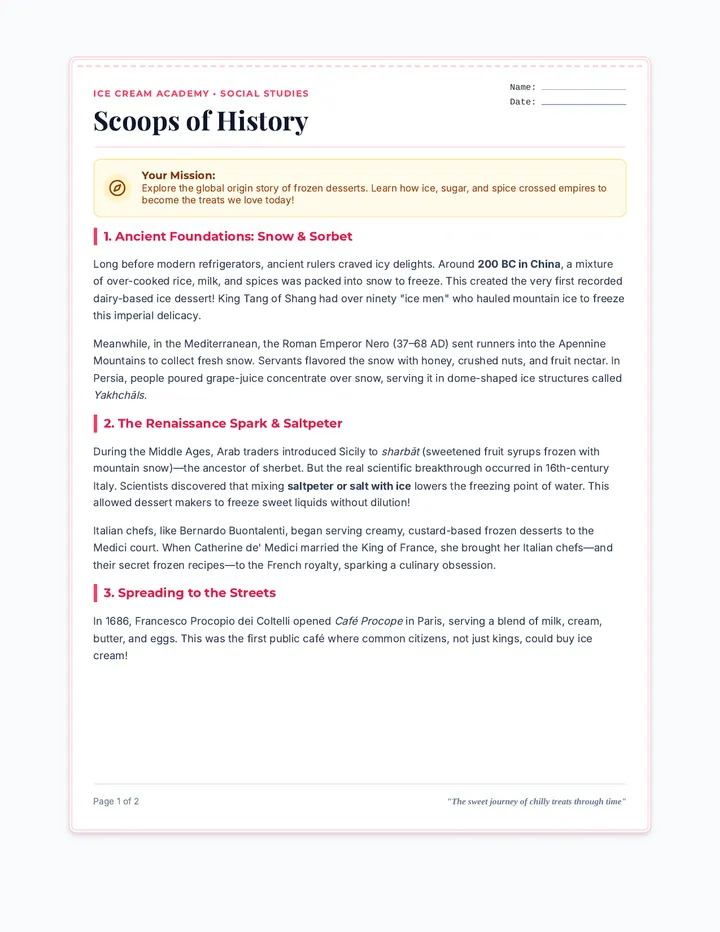
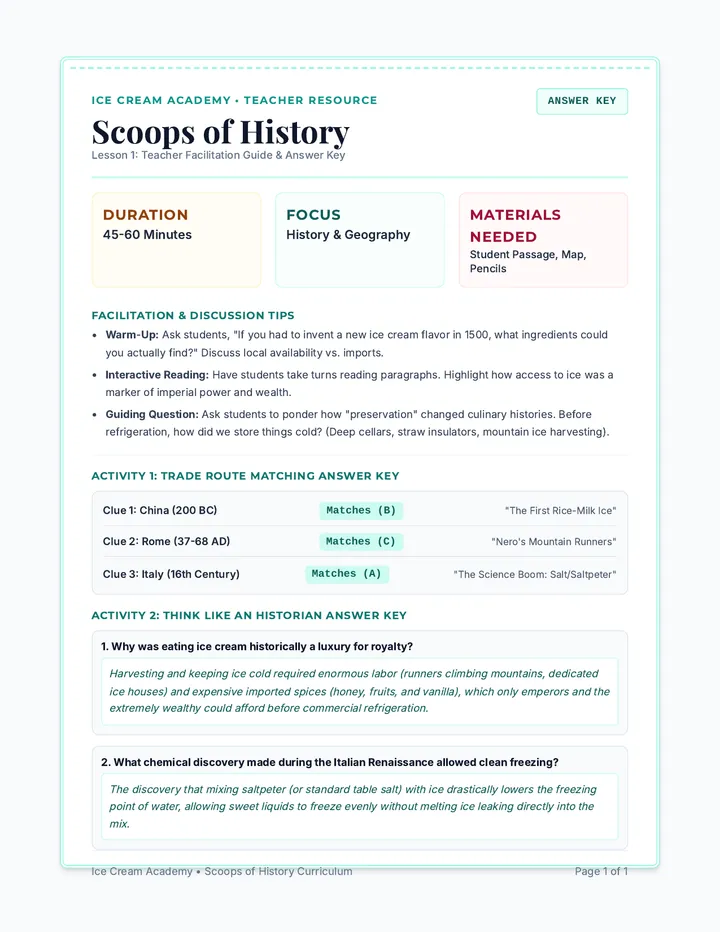
A multi-subject summer school unit exploring the history, science, math, and language arts of ice cream. Students scale recipes, conduct freezing-point experiments, trace historical origins, and design sensory marketing campaigns.
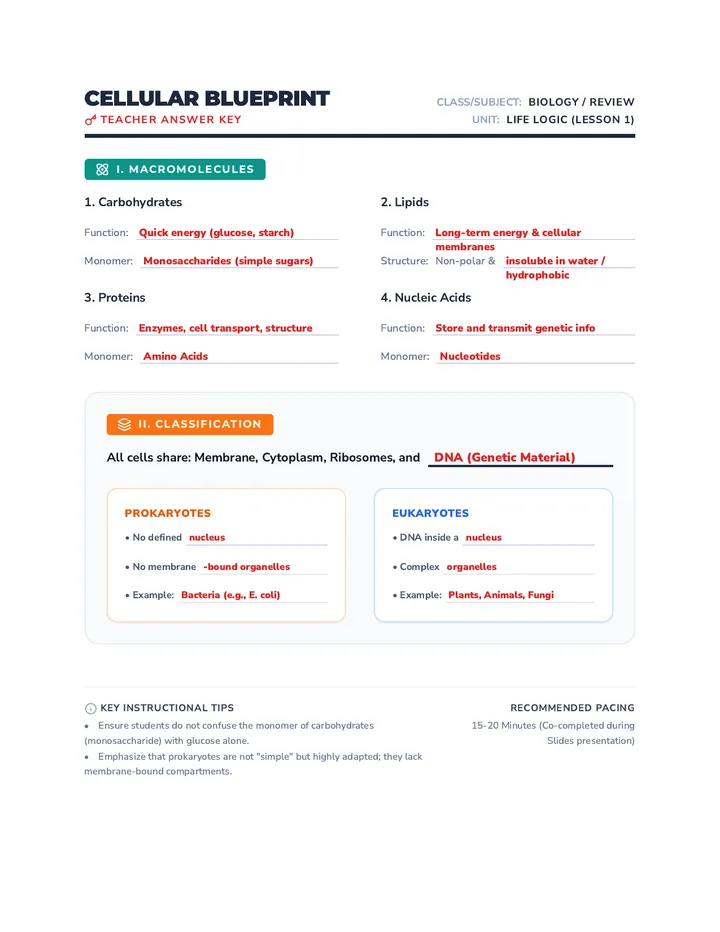
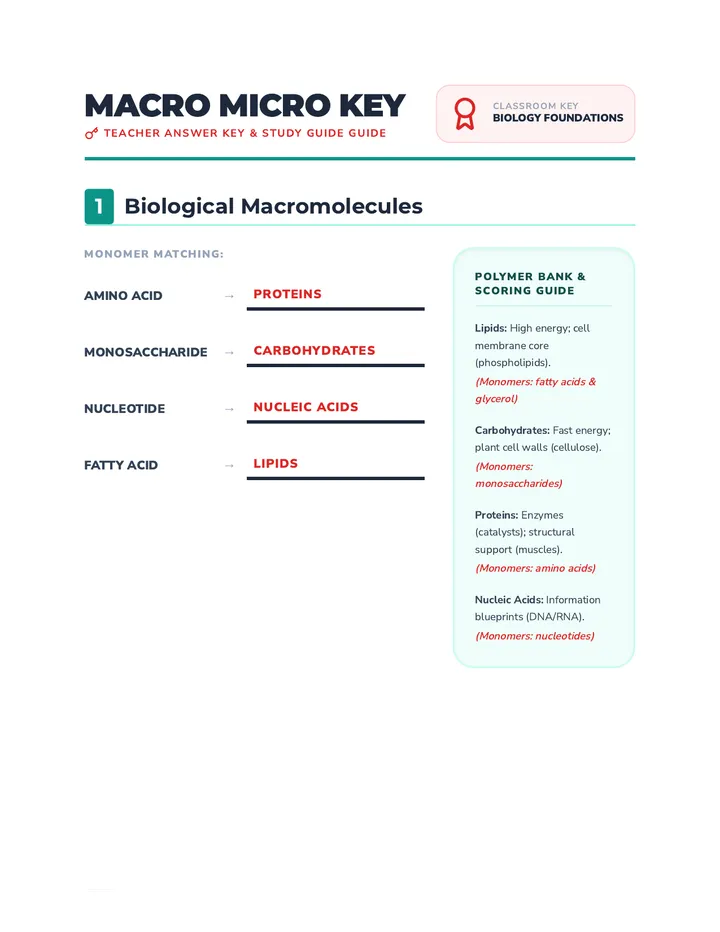
A comprehensive high school biology unit covering the fundamental building blocks of life, including biological macromolecules, prokaryotic organisms, and the complex structures of eukaryotic cells.
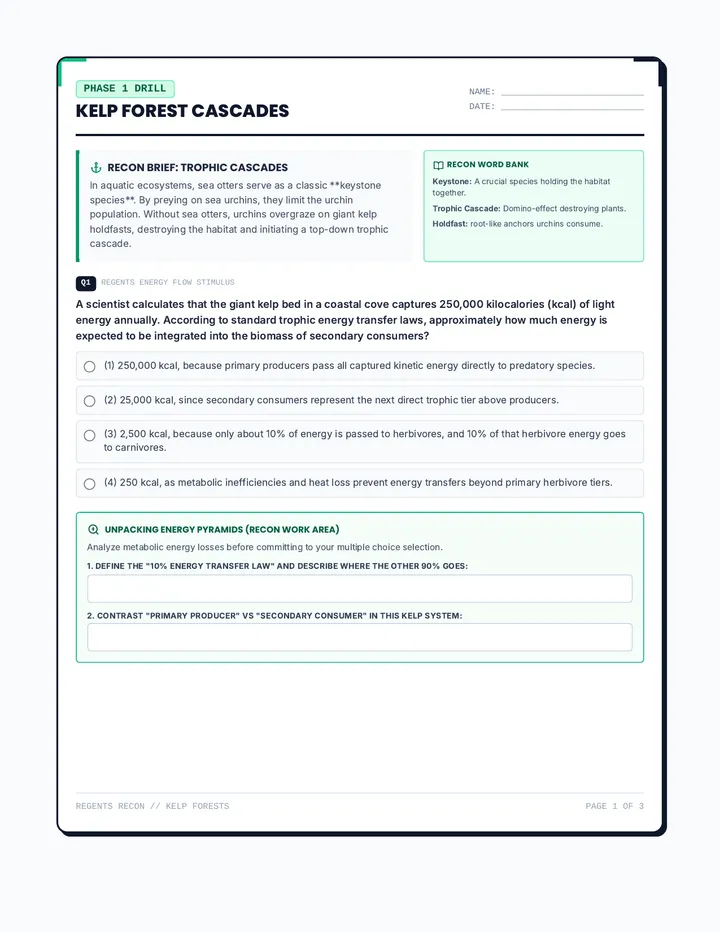
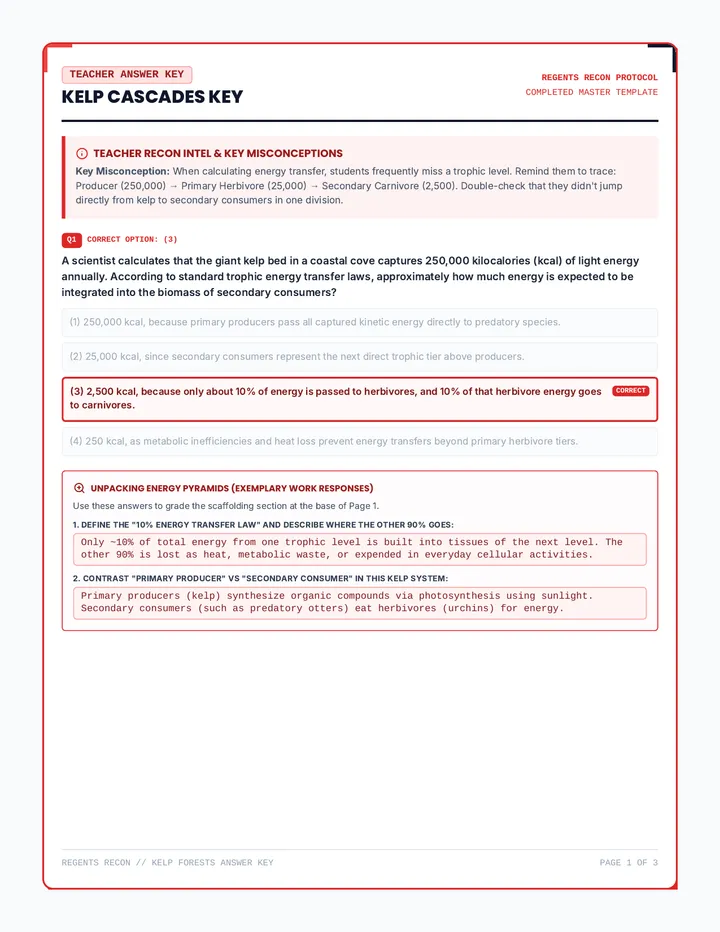
A 19-day high-stakes Regents Biology test preparation sequence covering matter cycling, kelp forest trophic cascades, homeostatic feedback loops, and experimental design constraints and trade-offs.
A four-part immersive crime scene investigation where 7th-grade students act as forensic detectives to solve the mystery of the missing Golden Whistle trophy. This sequence guides students through scene processing, fingerprinting, ink chromatography, and final evidence synthesis.
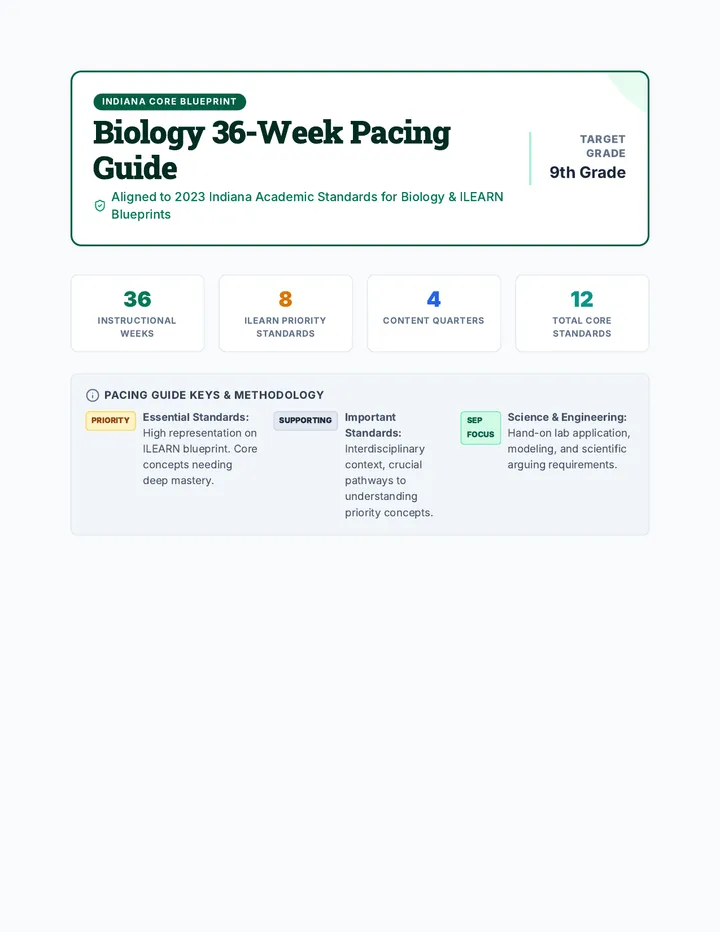
A comprehensive year-long instructional roadmap for Indiana High School Biology, aligned with the 2023 Academic Standards and optimized for ILEARN preparation.
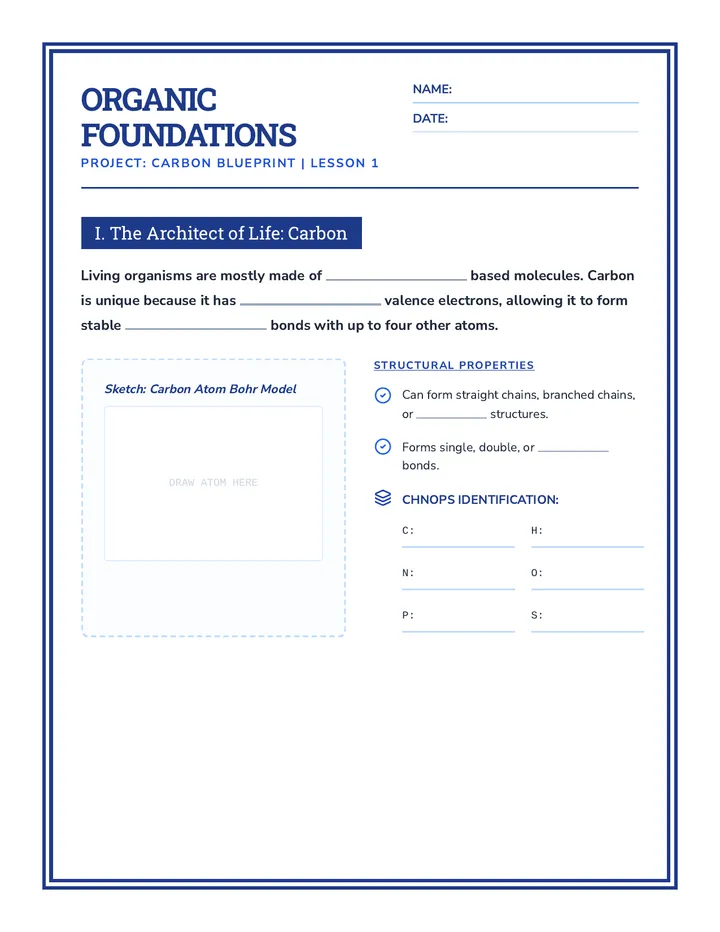
A comprehensive 3-week Biology unit exploring the structure and function of macromolecules, aligned with Indiana HS.LS standards. Students investigate carbon chemistry, the role of DNA in protein synthesis, and energy transfer within metabolic processes through a blueprint-themed architectural lens.
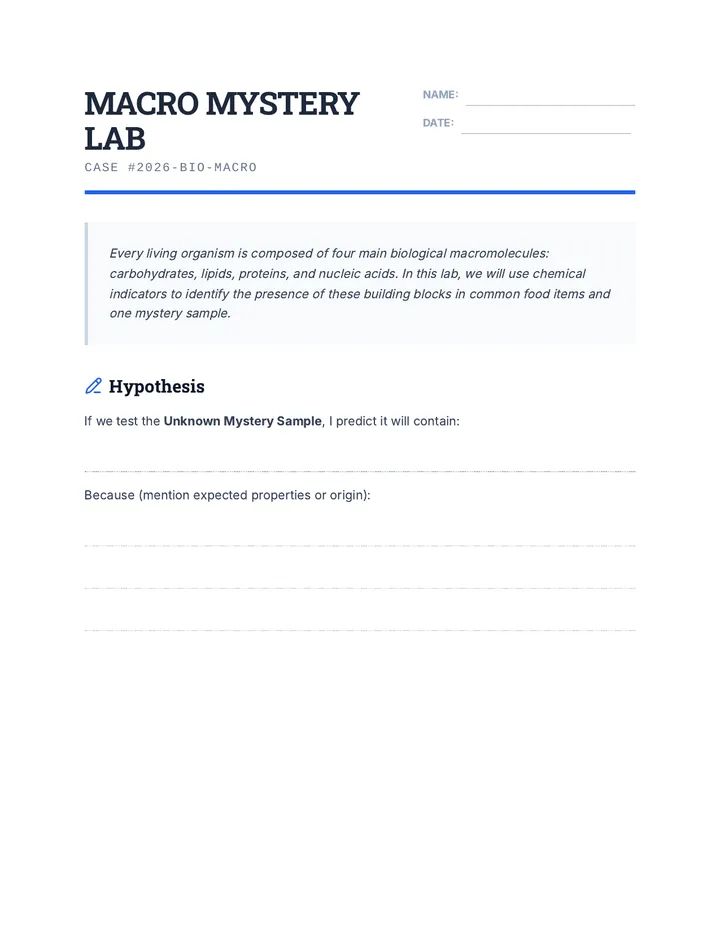
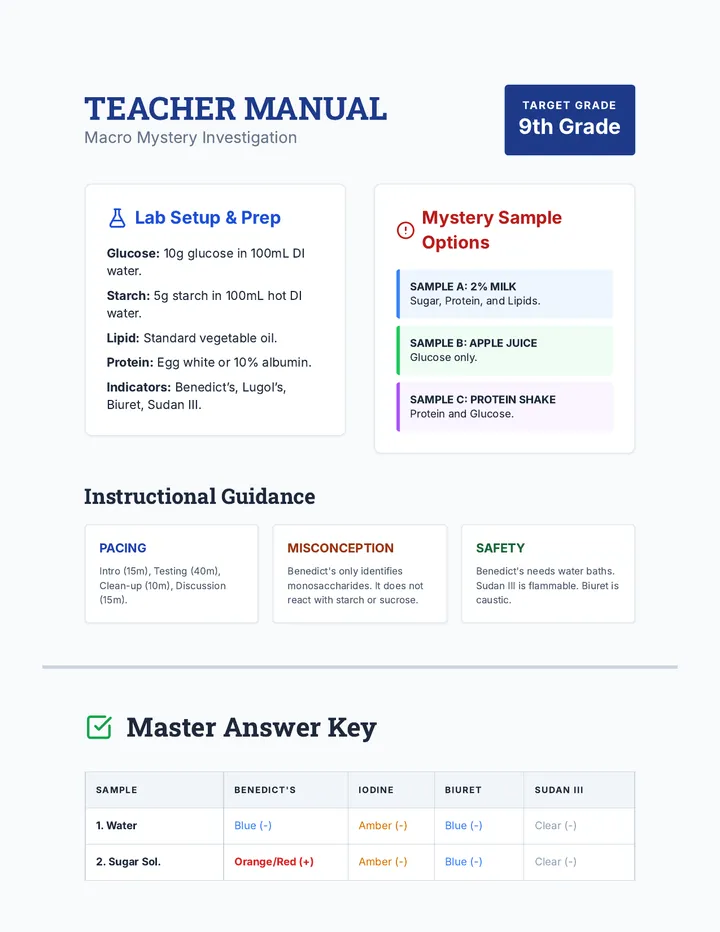
An exploration of the building blocks of life, focusing on the structure, function, and chemical identification of biological macromolecules.