A hands-on geometry sequence for Pre-K students exploring how smaller shapes combine to form larger figures. Students use pattern blocks, tangrams, and paper cutouts to develop spatial awareness and creative construction skills.
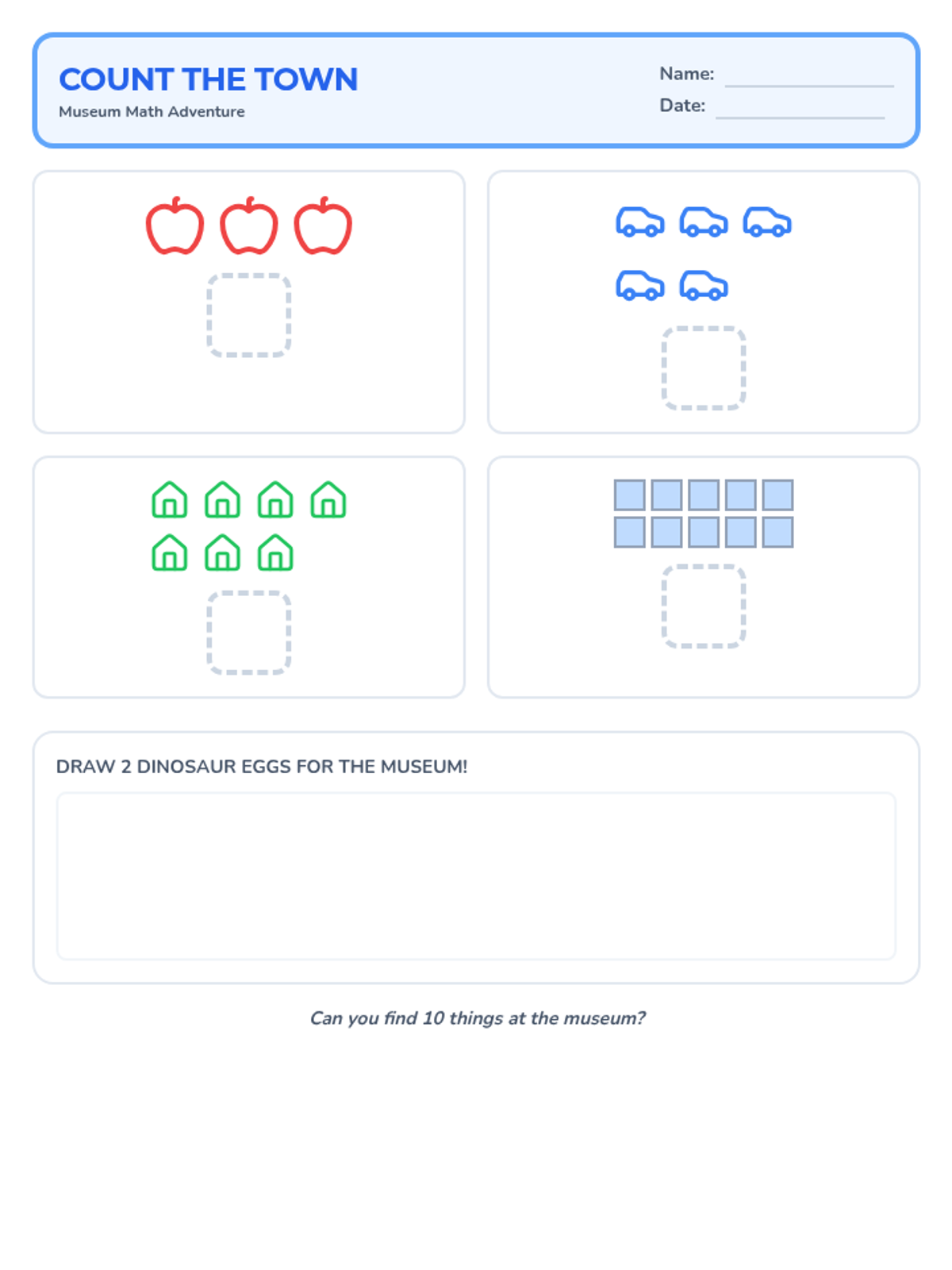
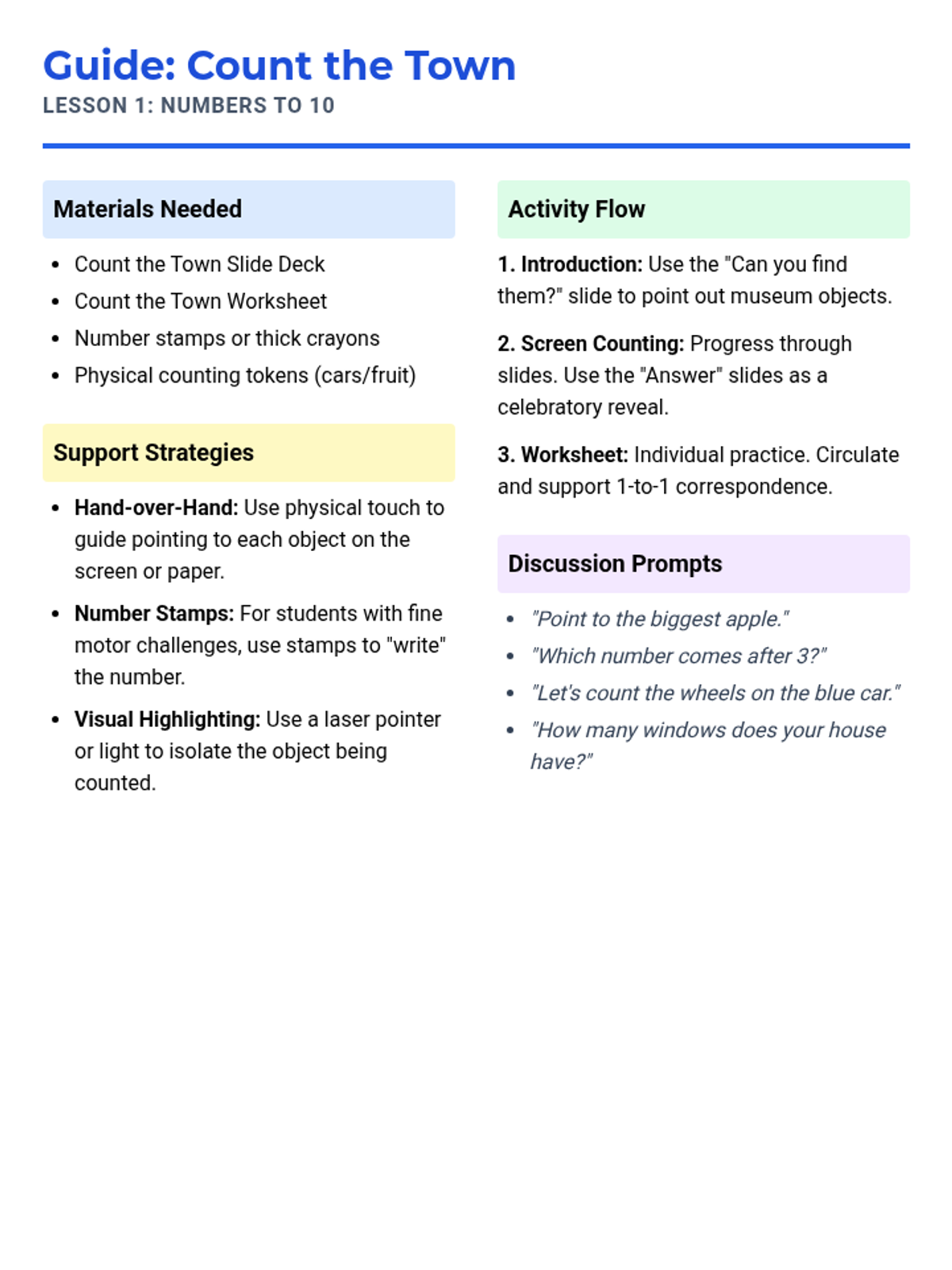
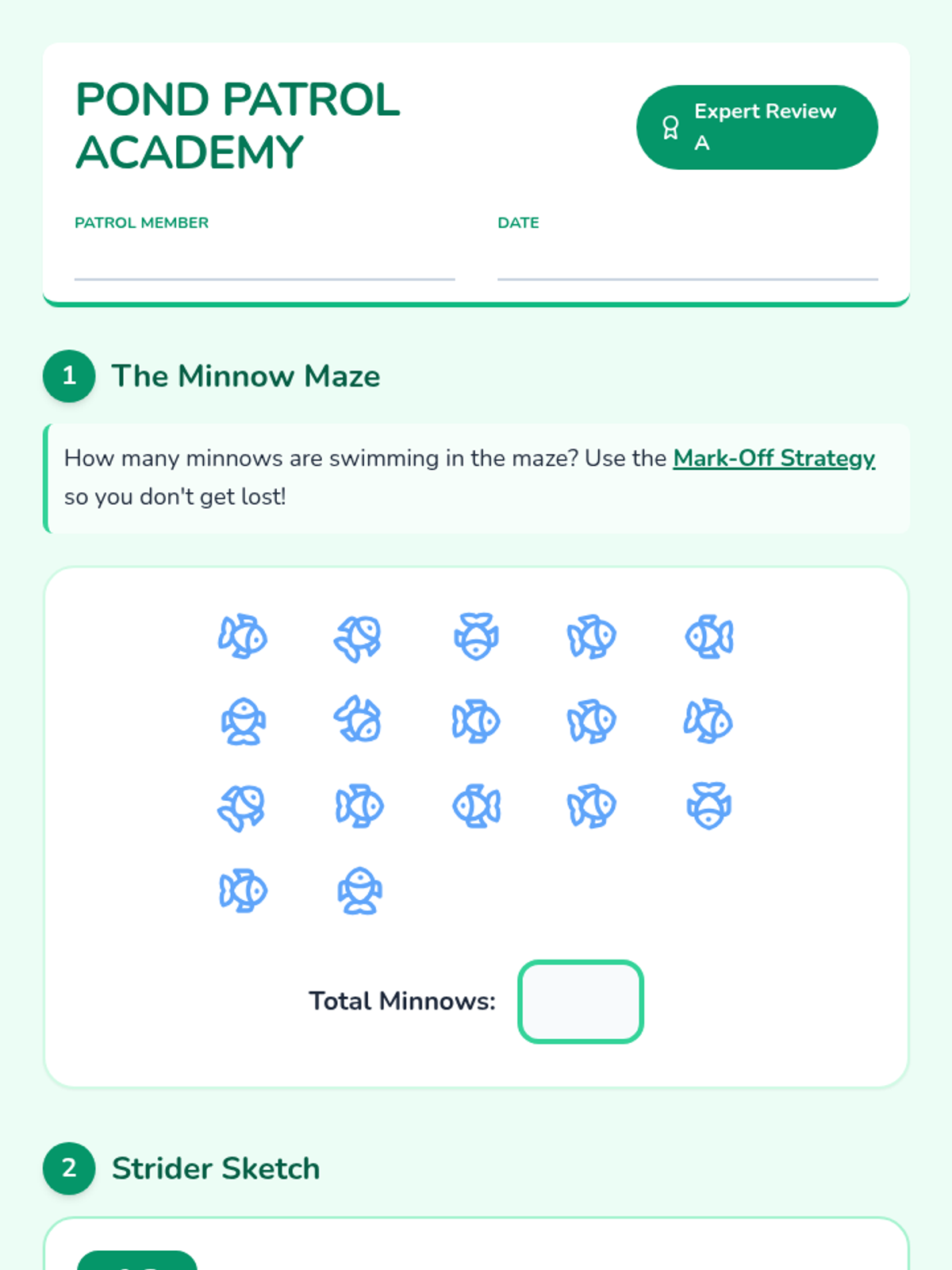
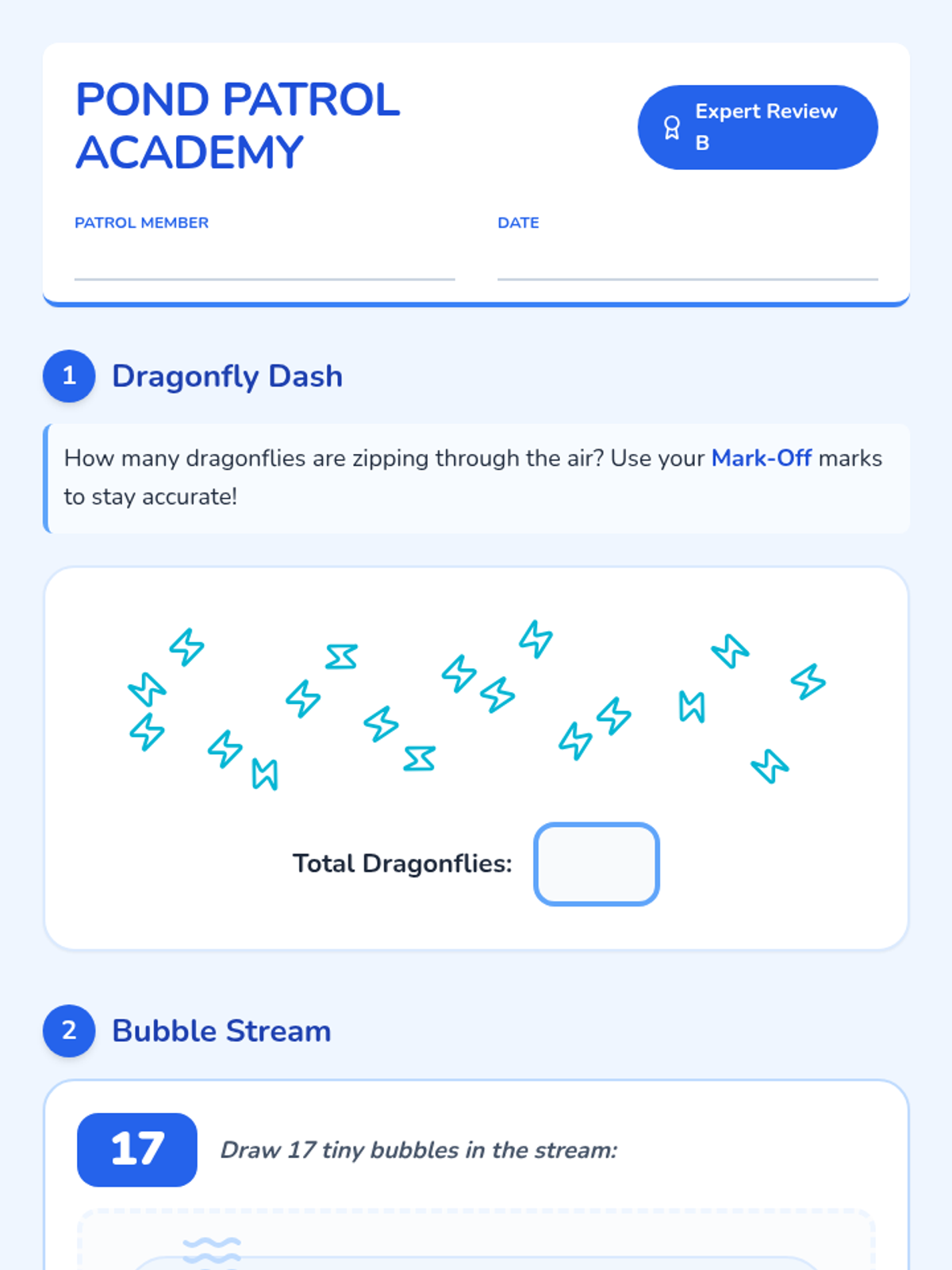
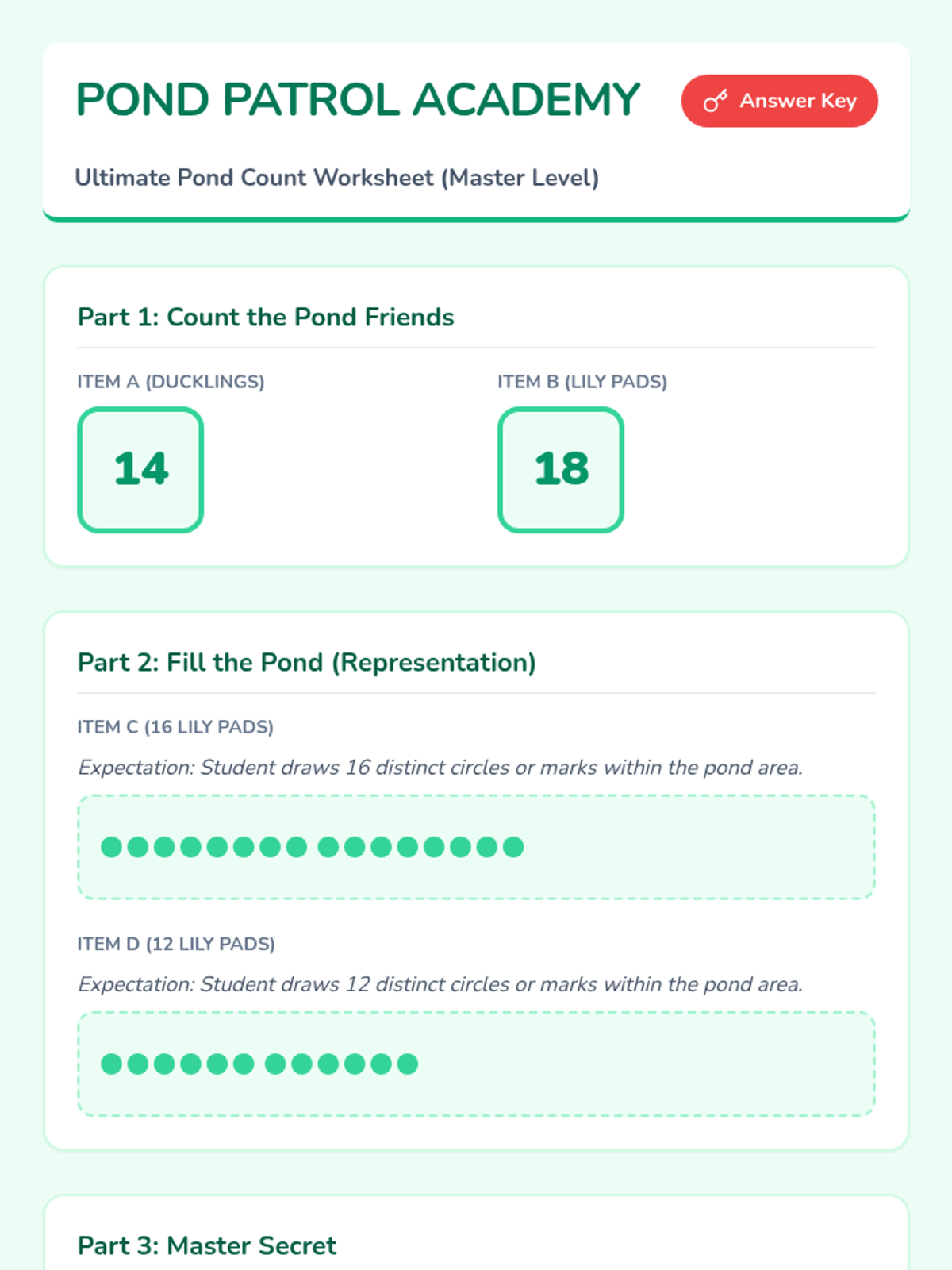
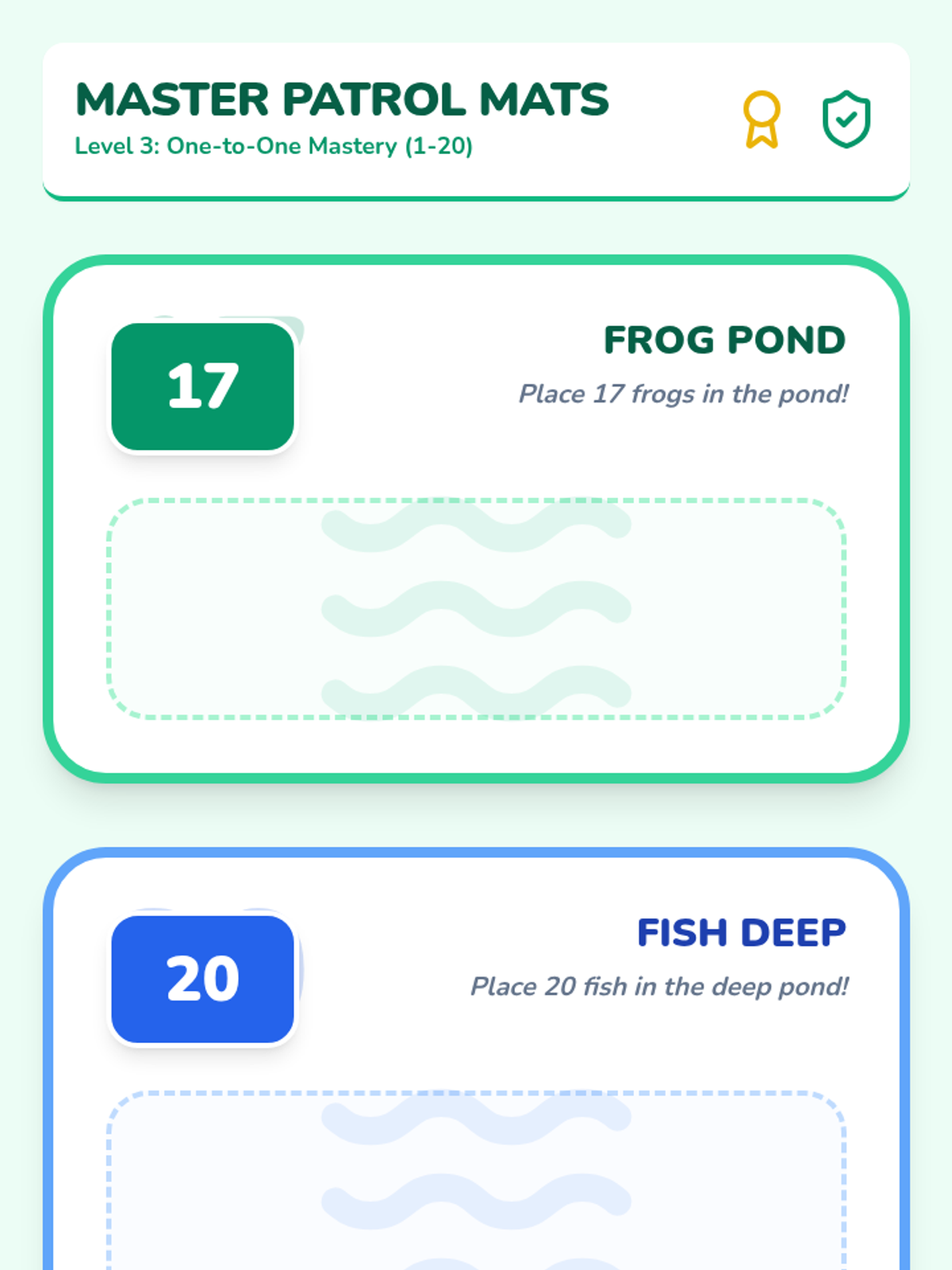
A comprehensive week-long unit for Early Childhood students focusing on number recognition and counting from 1 to 20 using movement-based beanbag activities. Each day introduces a new set of numbers through active play, visual aids, and simple recording tasks.
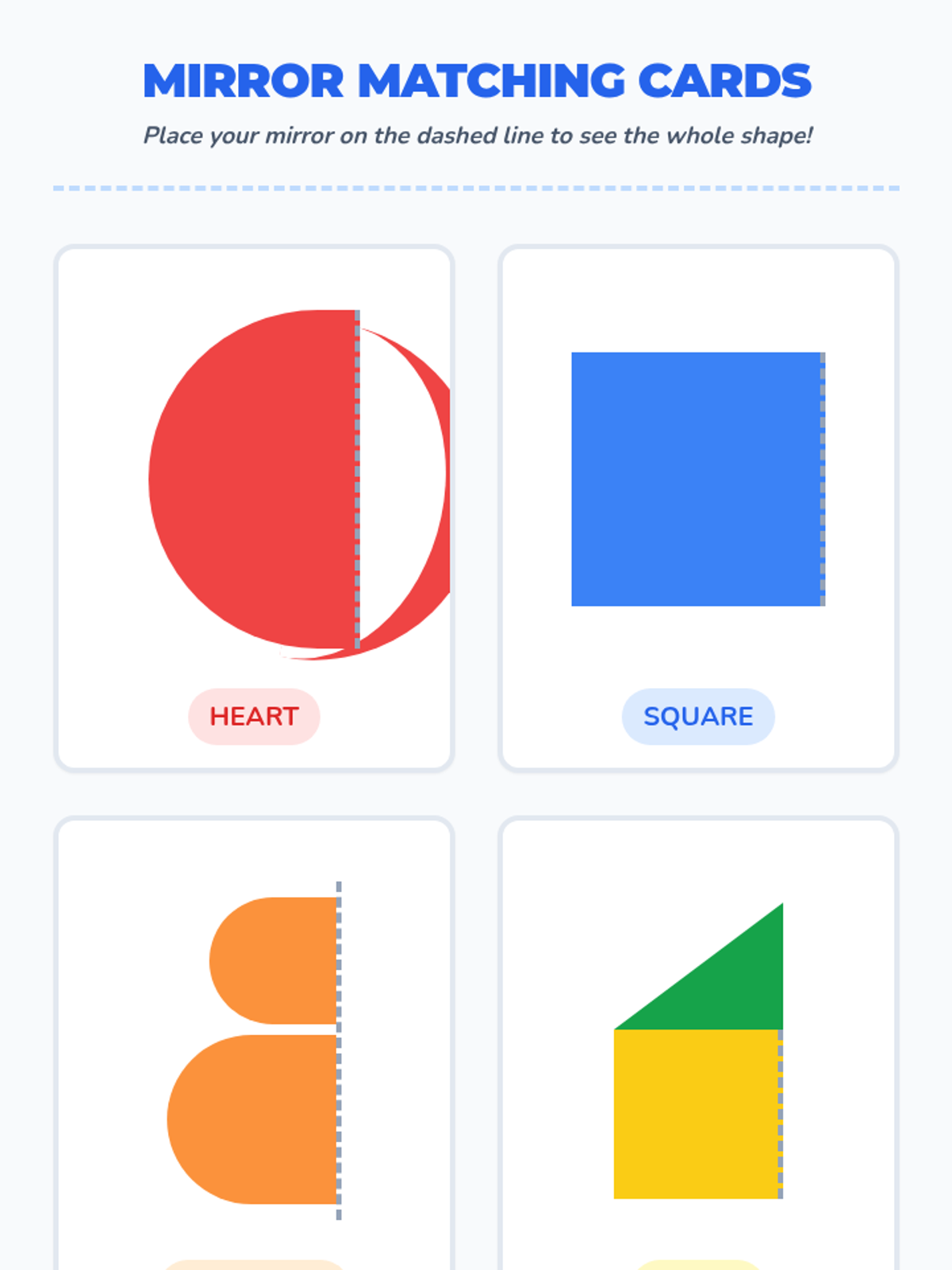
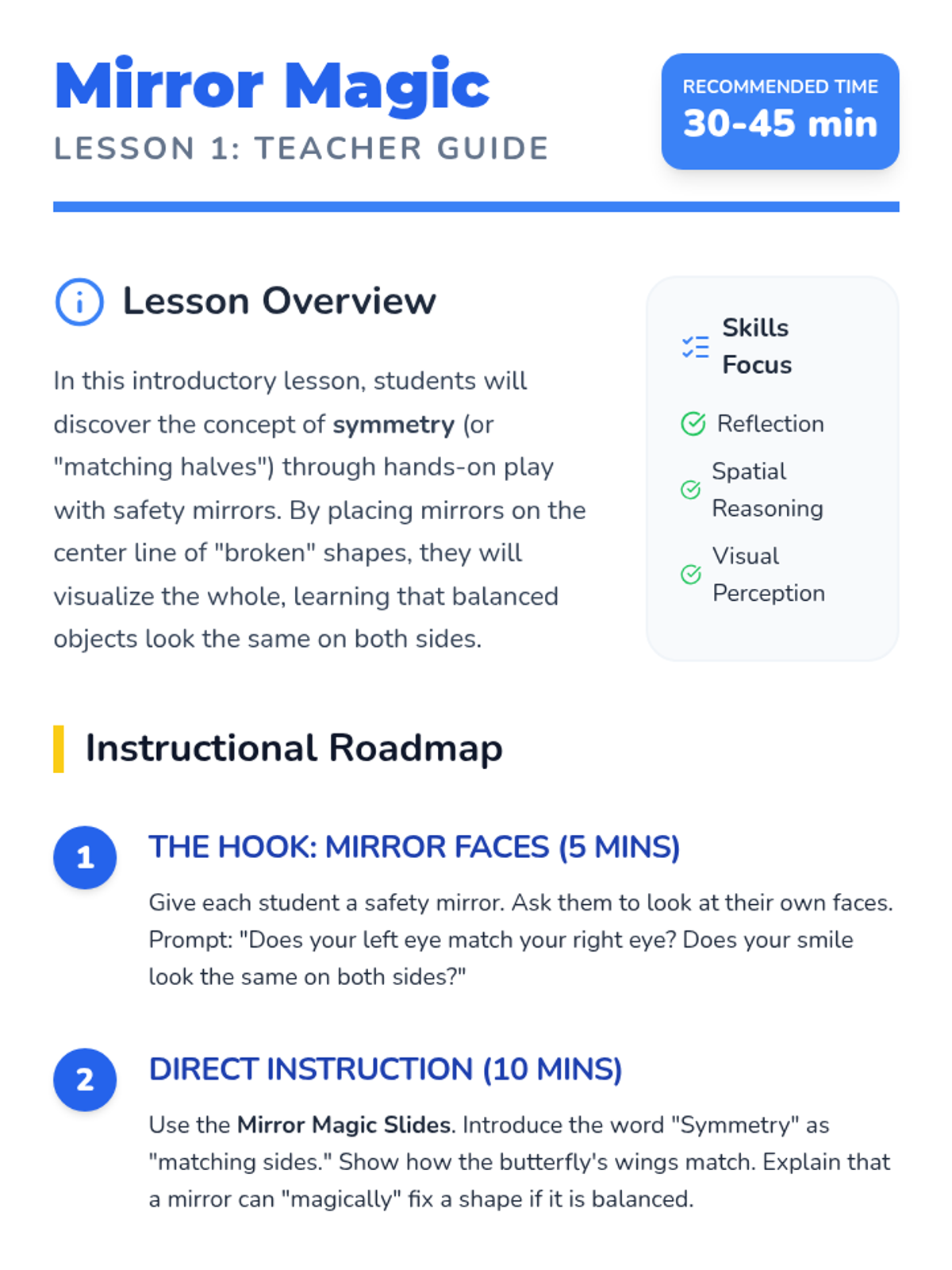
A Pre-K sequence introducing symmetry and patterns through hands-on exploration with mirrors, art, nature, and shape manipulatives. Students learn to identify balanced halves and predict sequences.
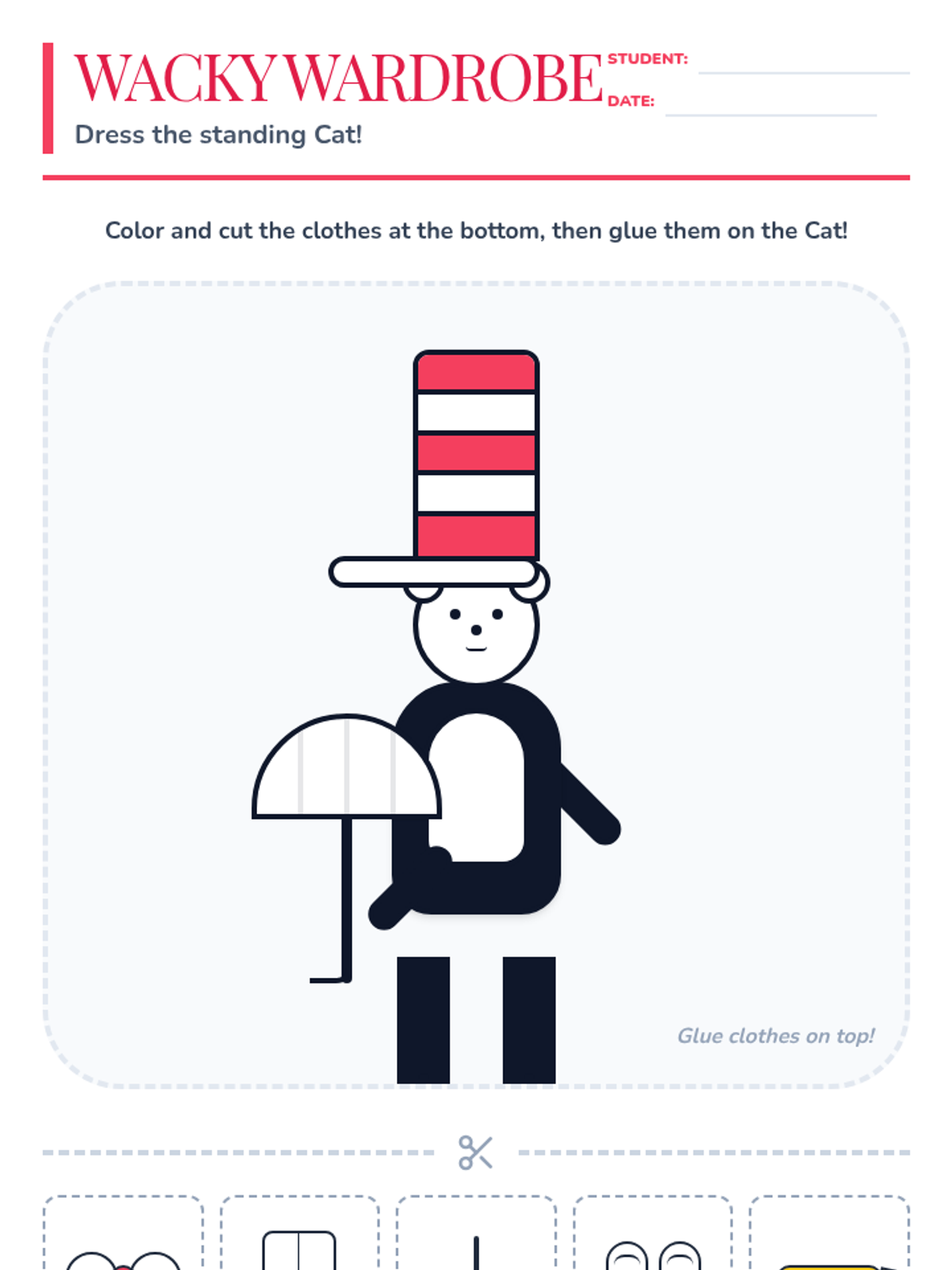
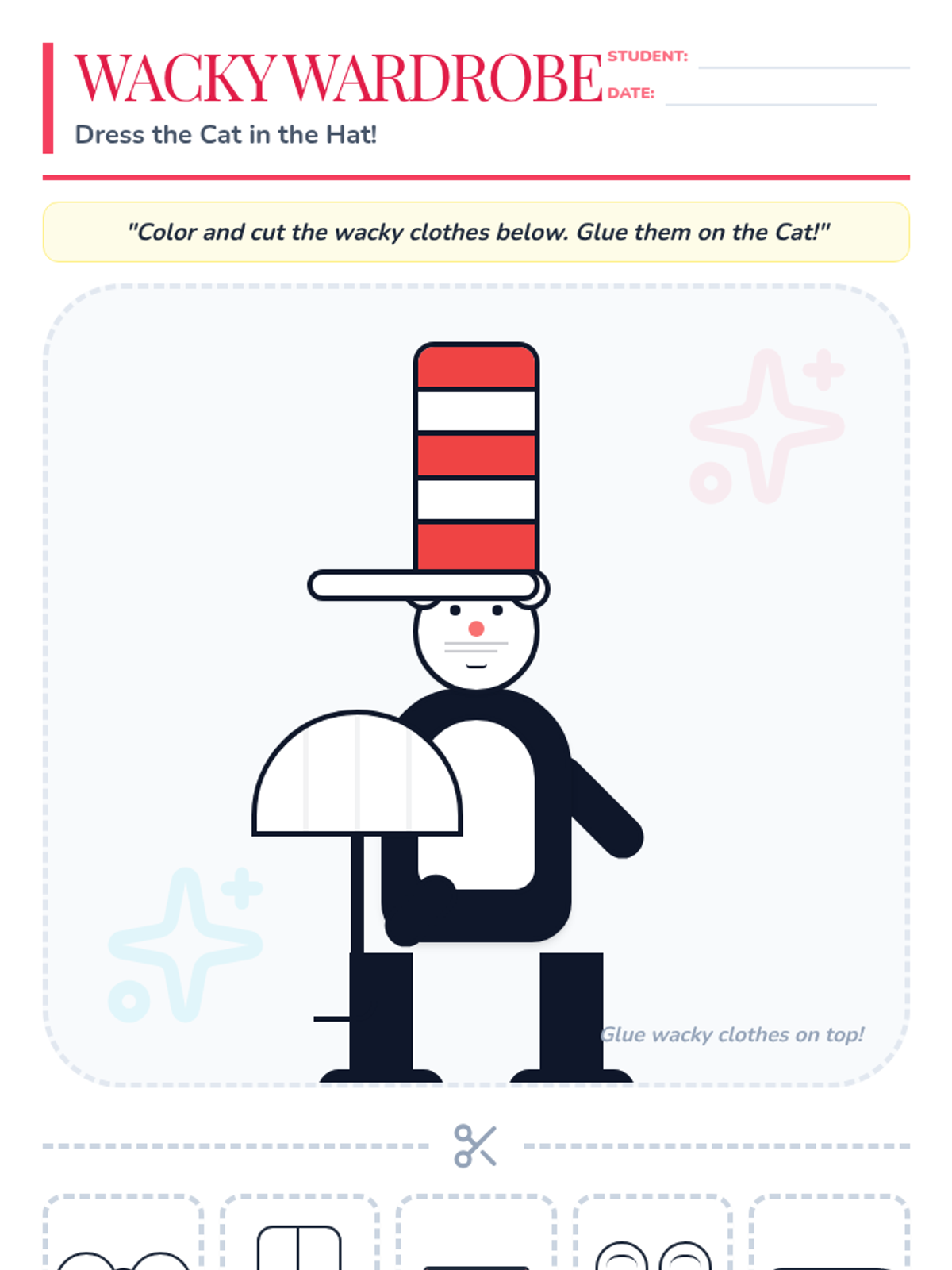
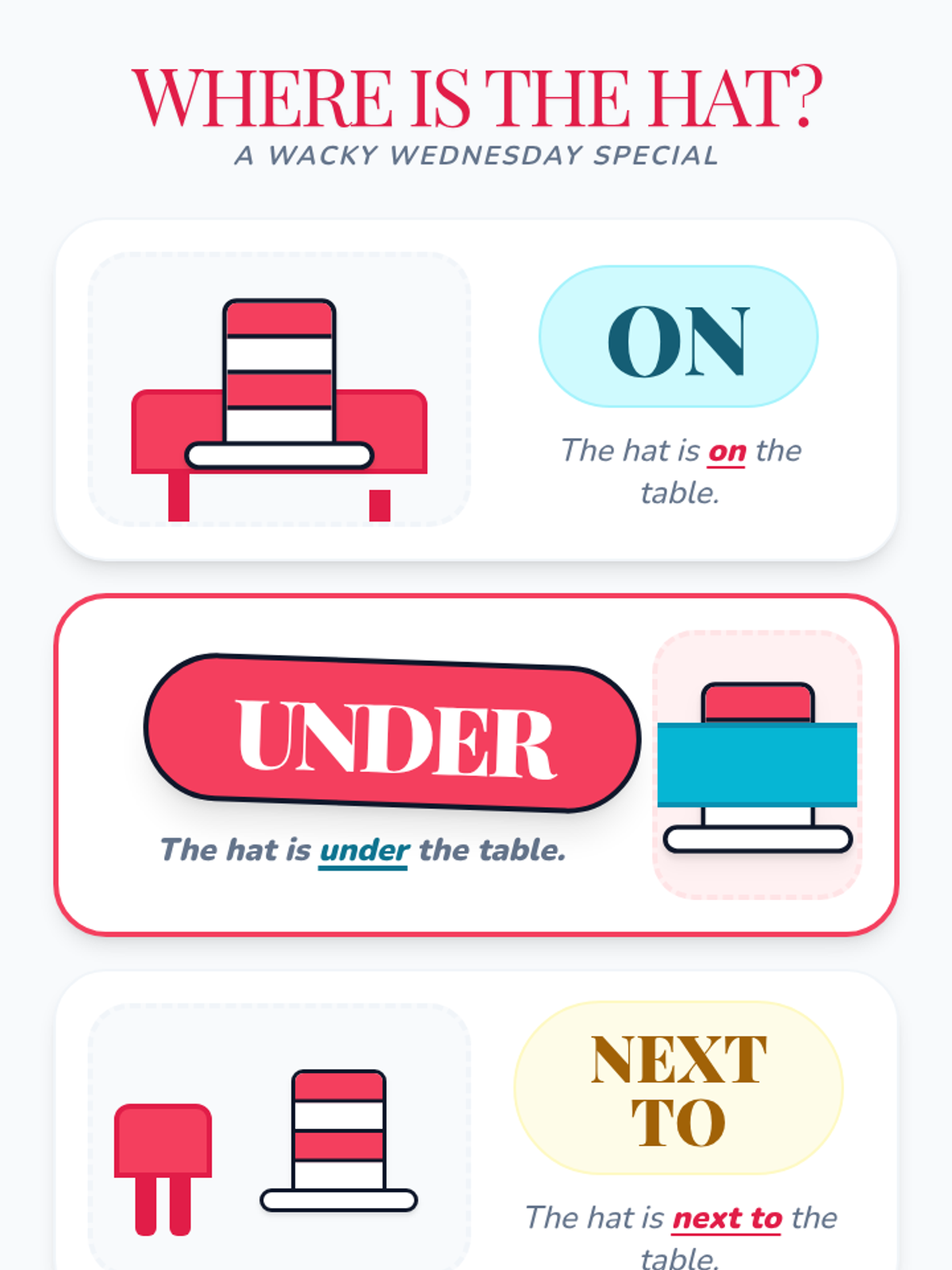
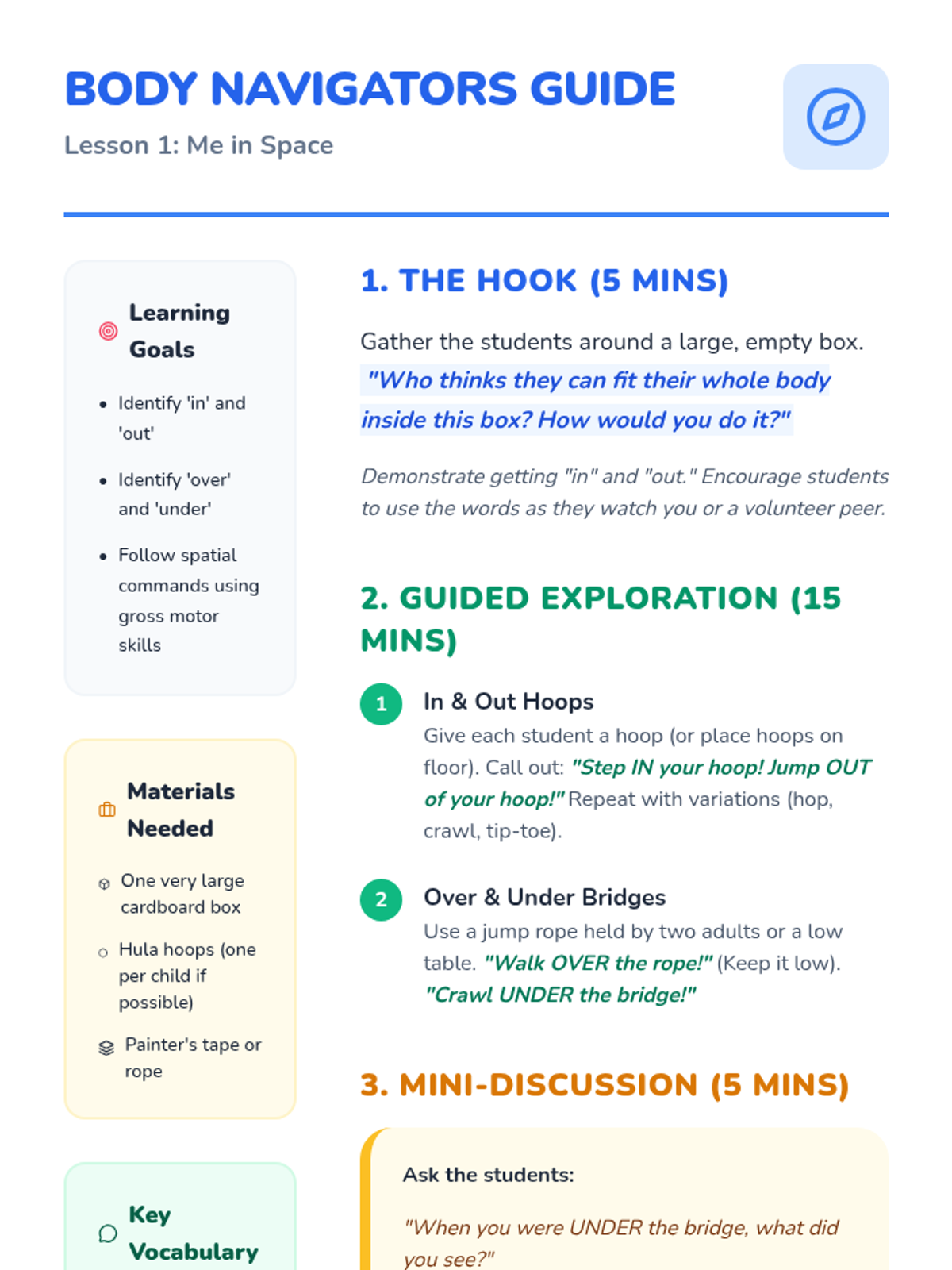
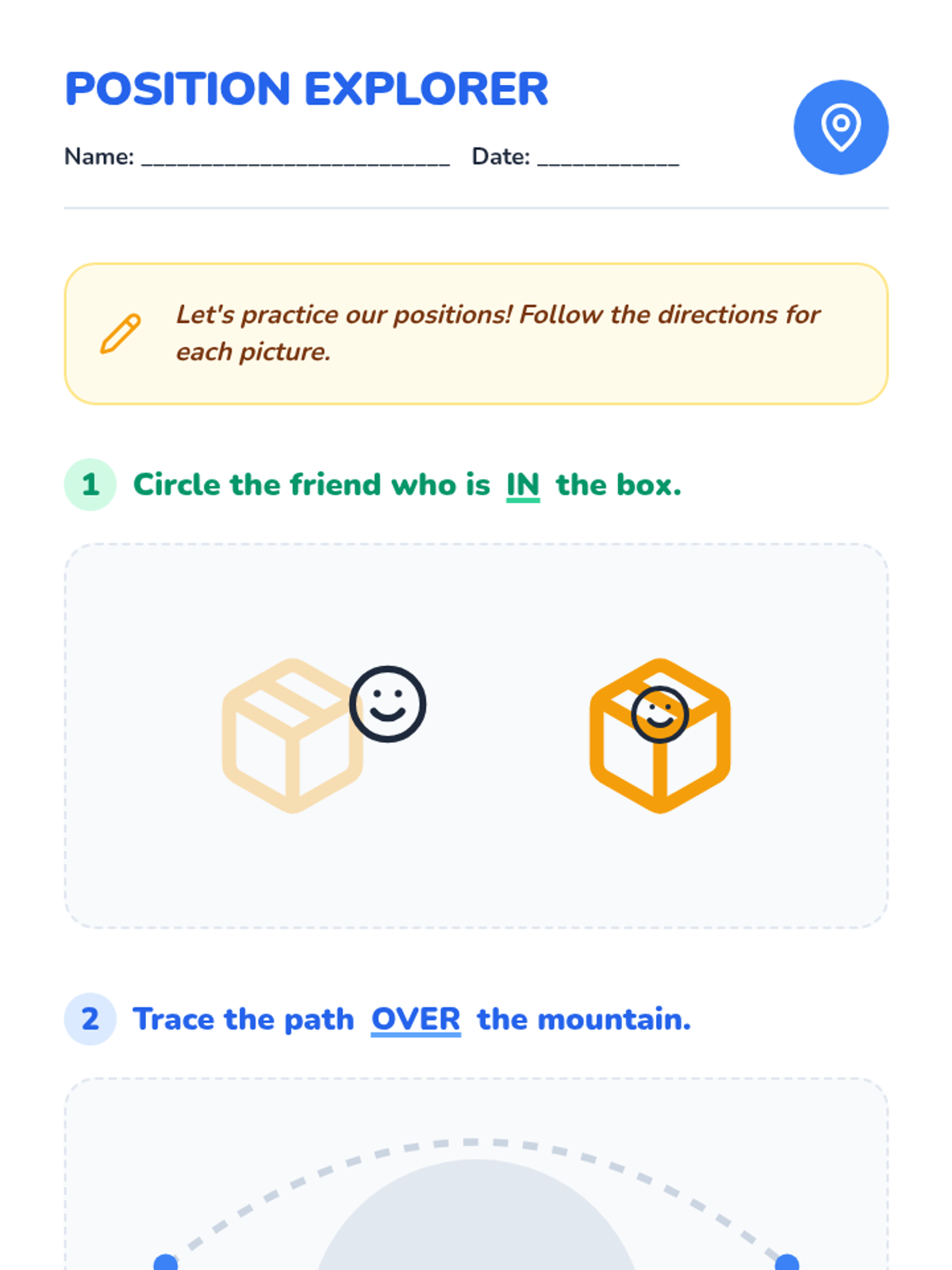
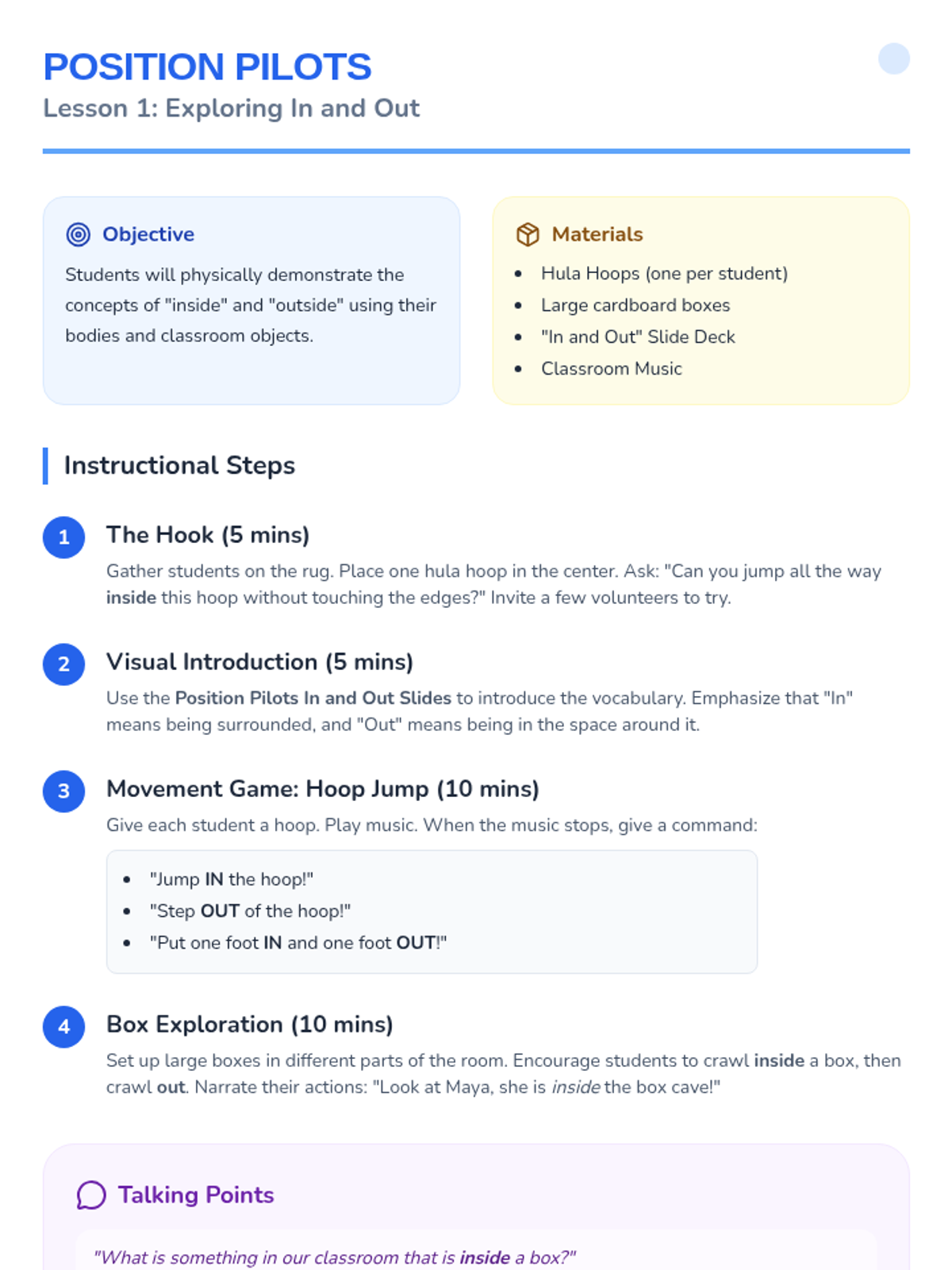
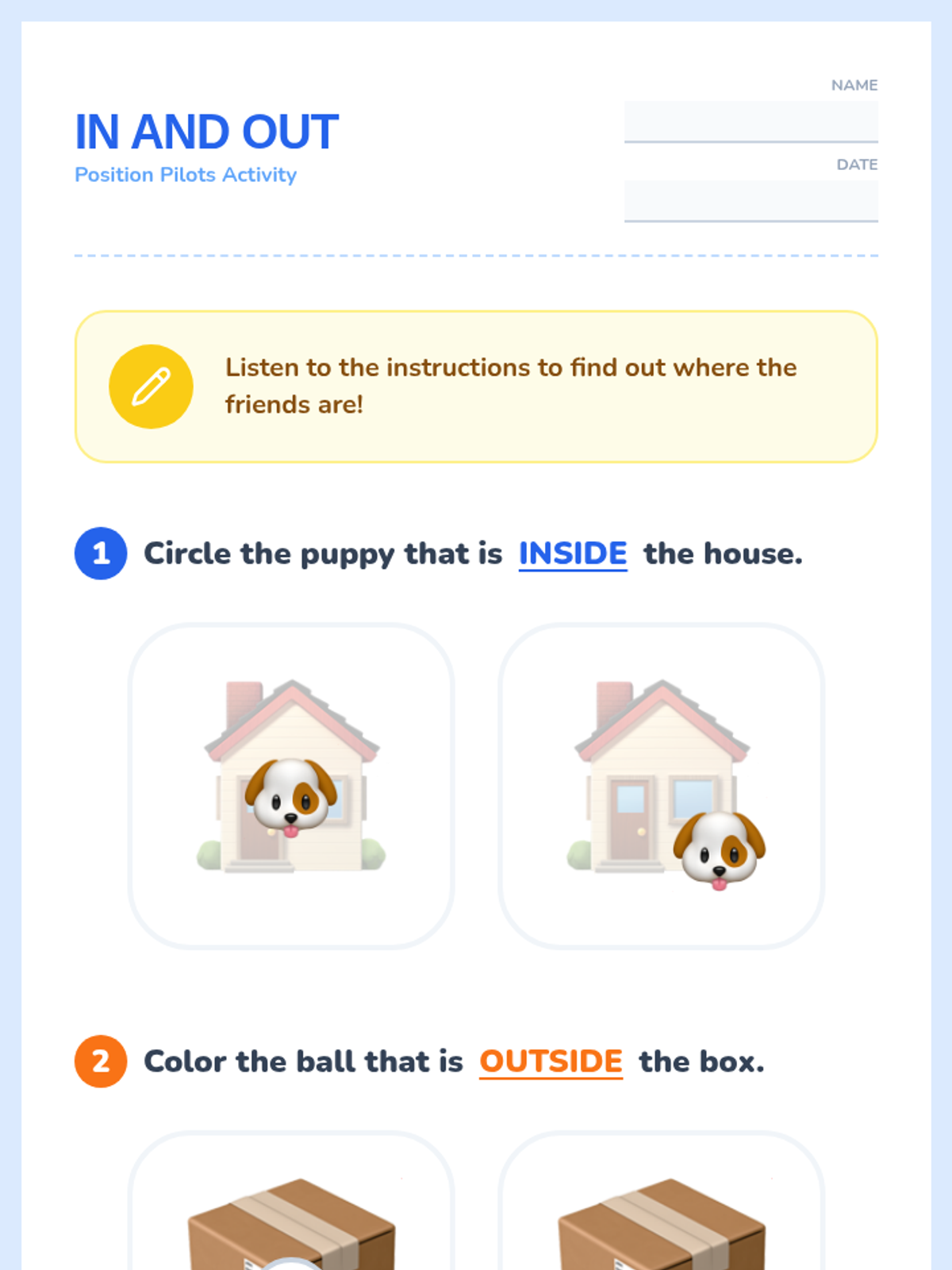
A Pre-K sequence focused on developing spatial awareness and positional vocabulary through physical movement, object manipulation, and classroom mapping. students explore terms like in, out, over, under, next to, and between.
This sequence introduces Pre-K students to 2D shapes (circles, squares, rectangles, triangles) through sensory play, physical movement, and environmental exploration. Students will learn to distinguish shapes by their attributes like sides and corners.
A physical-movement-based sequence for Pre-K students to learn spatial vocabulary. Students use their bodies to explore concepts like in/out, over/under, beside/between, and front/behind through games and an obstacle course.
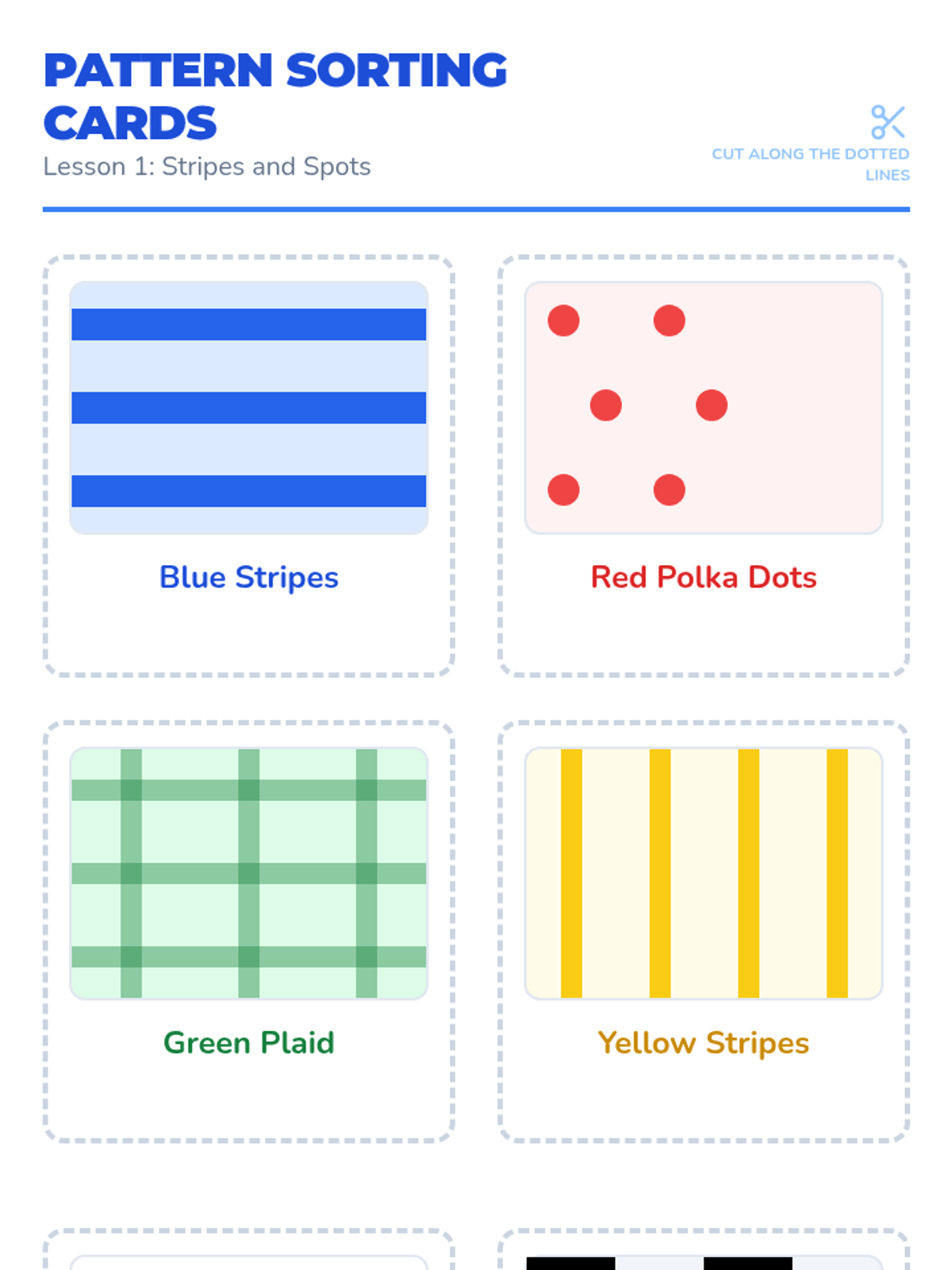
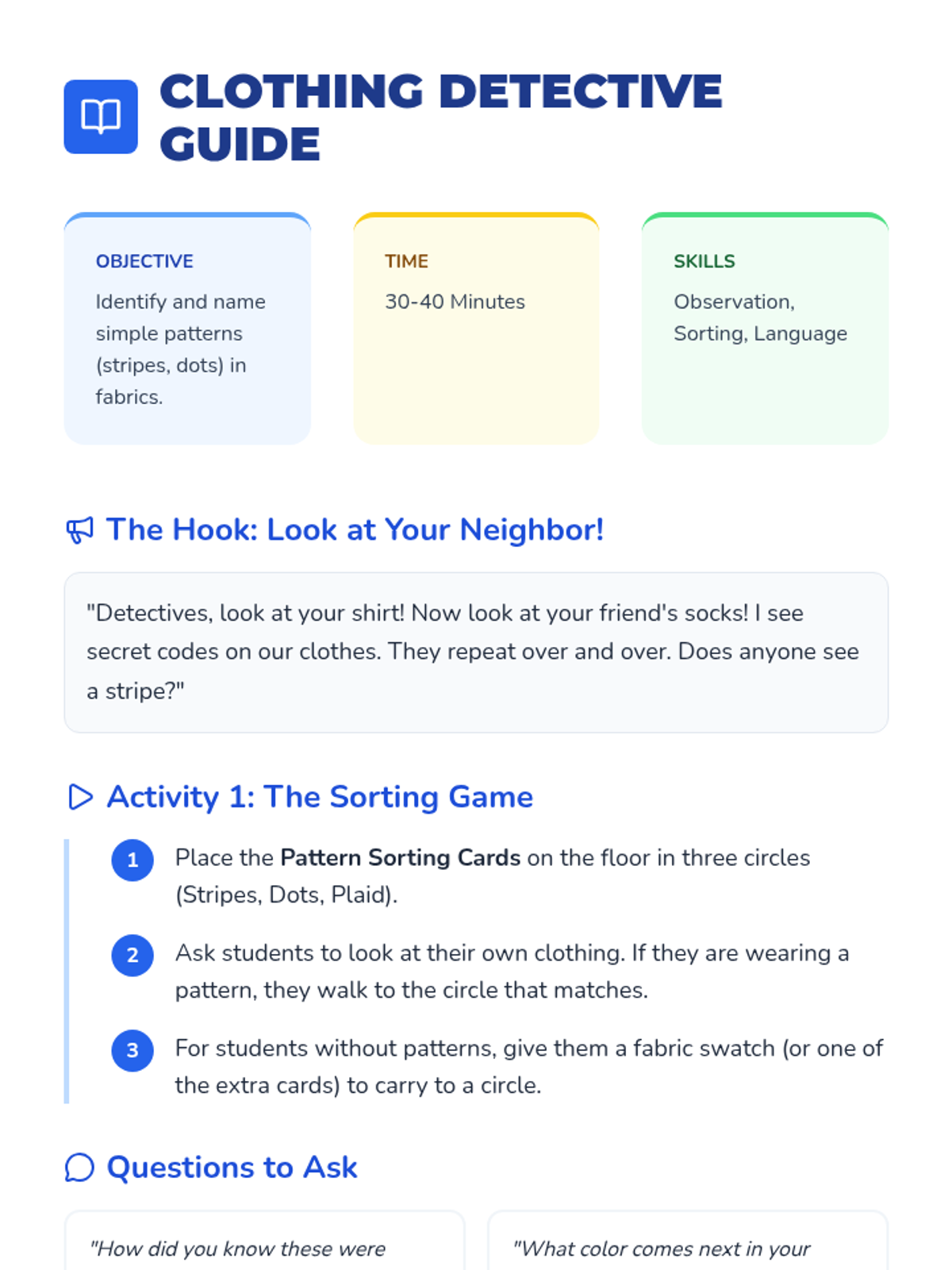
A Pre-K math sequence that explores patterns in clothing, nature, routines, and architecture, turning students into 'Pattern Detectives' who observe and document the world around them.
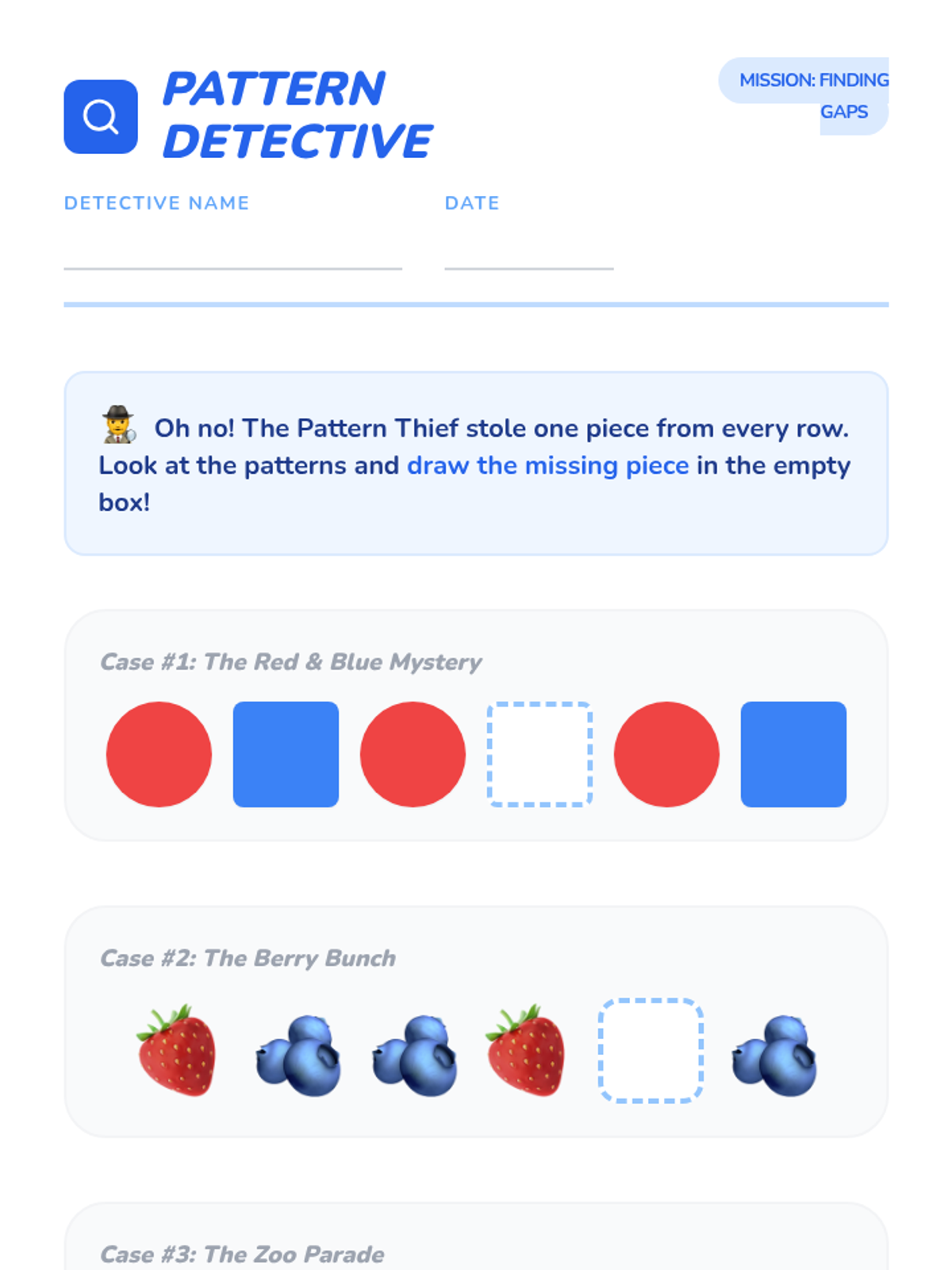
A Pre-K math sequence focused on algebraic reasoning through pattern analysis. Students move beyond simple repetition to identify missing elements, debug errors, create edible and artistic patterns, and translate abstract sounds into visual representations.
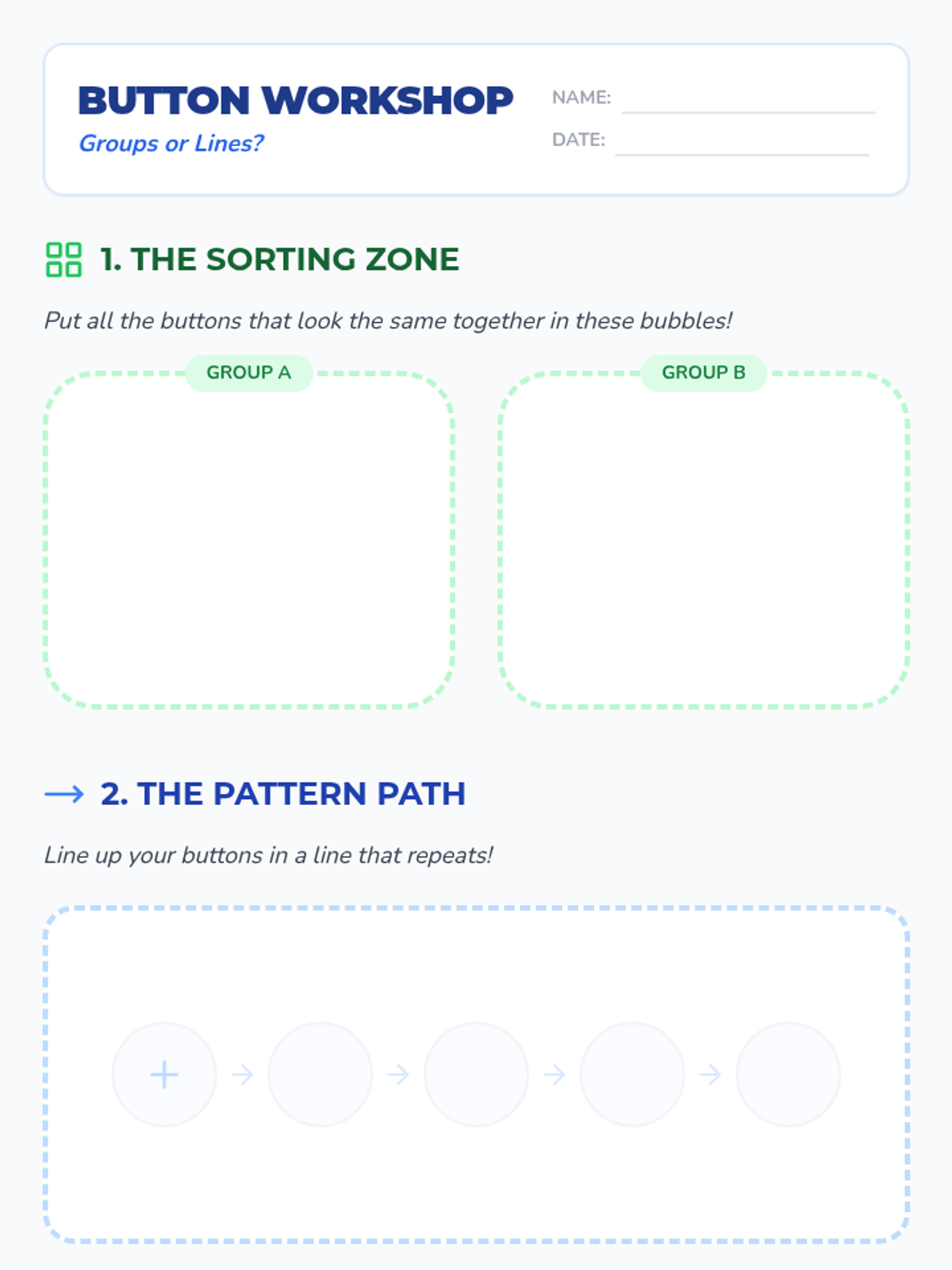
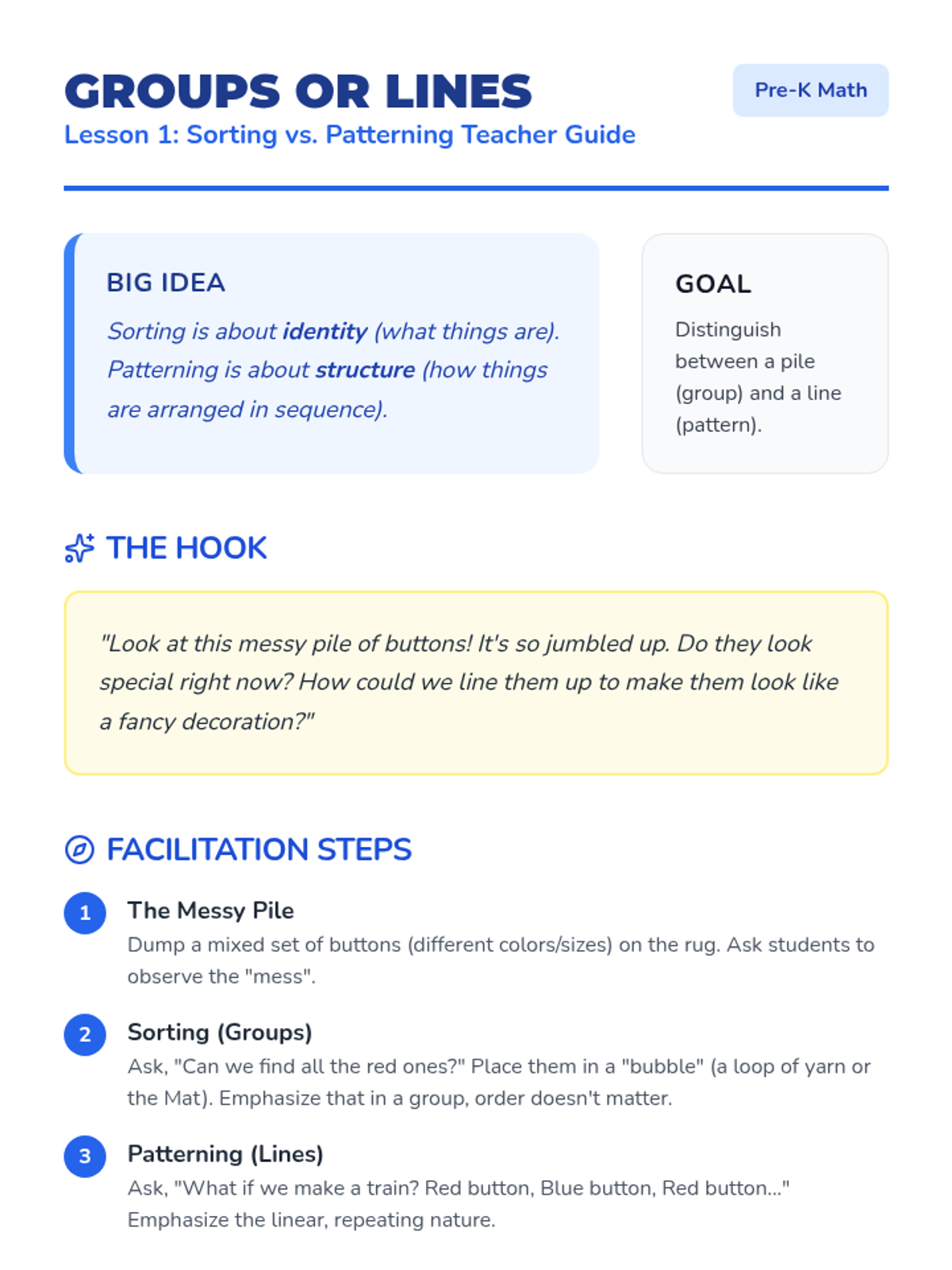
A hands-on workshop-style sequence for Pre-K students to explore, build, and extend linear patterns using concrete manipulatives like bears, blocks, and buttons.
A physical and auditory introduction to patterns for Pre-K students, focusing on recognizing repetition in movement and sound. Students move from distinguishing randomness to creating and leading their own AB patterns.
A foundational Pre-K math sequence focusing on one-to-one correspondence and visual comparison of quantities. Students explore concepts of more, less, and fewer through physical pairing, tower building, voting, and balancing scales.
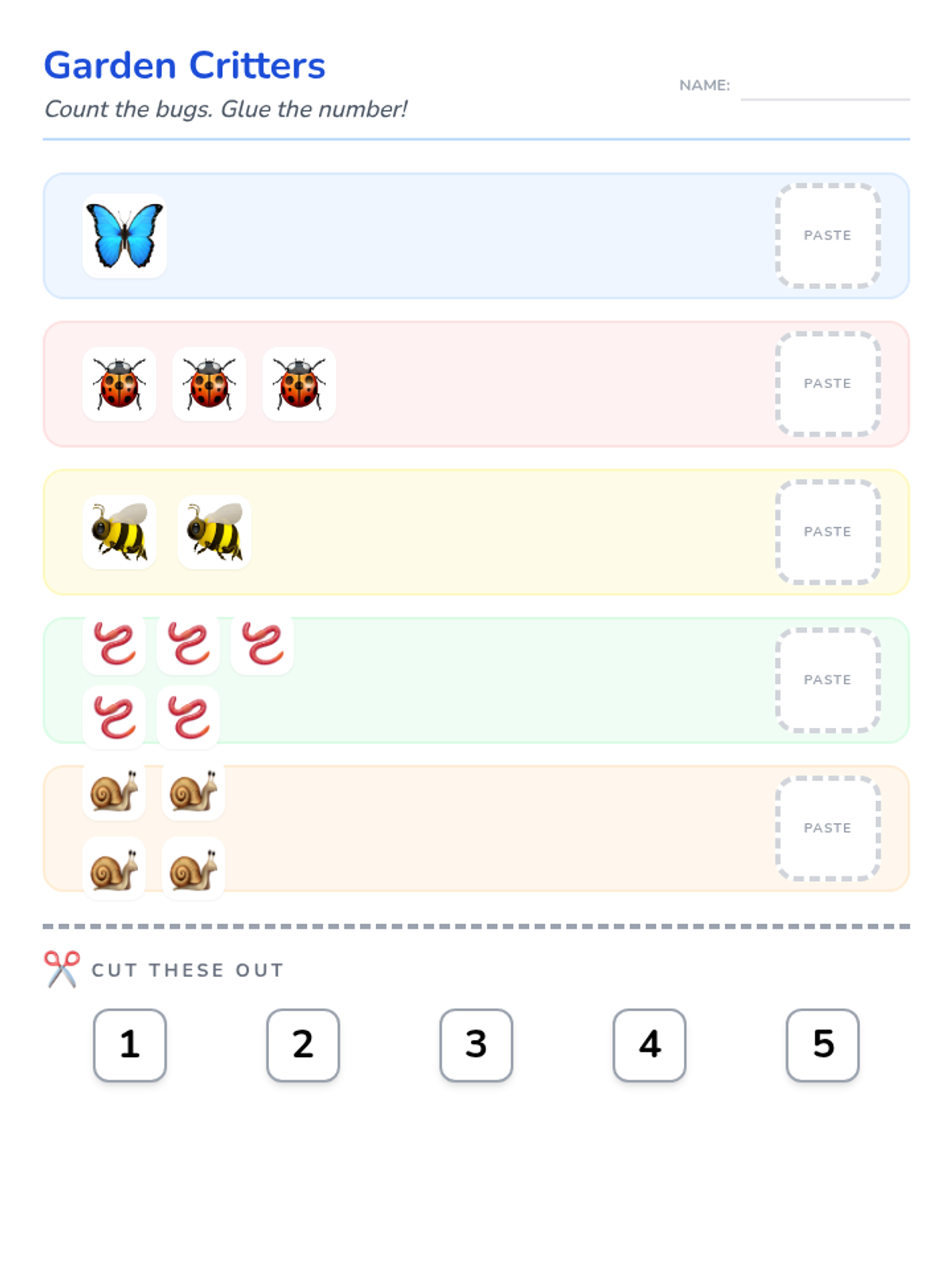
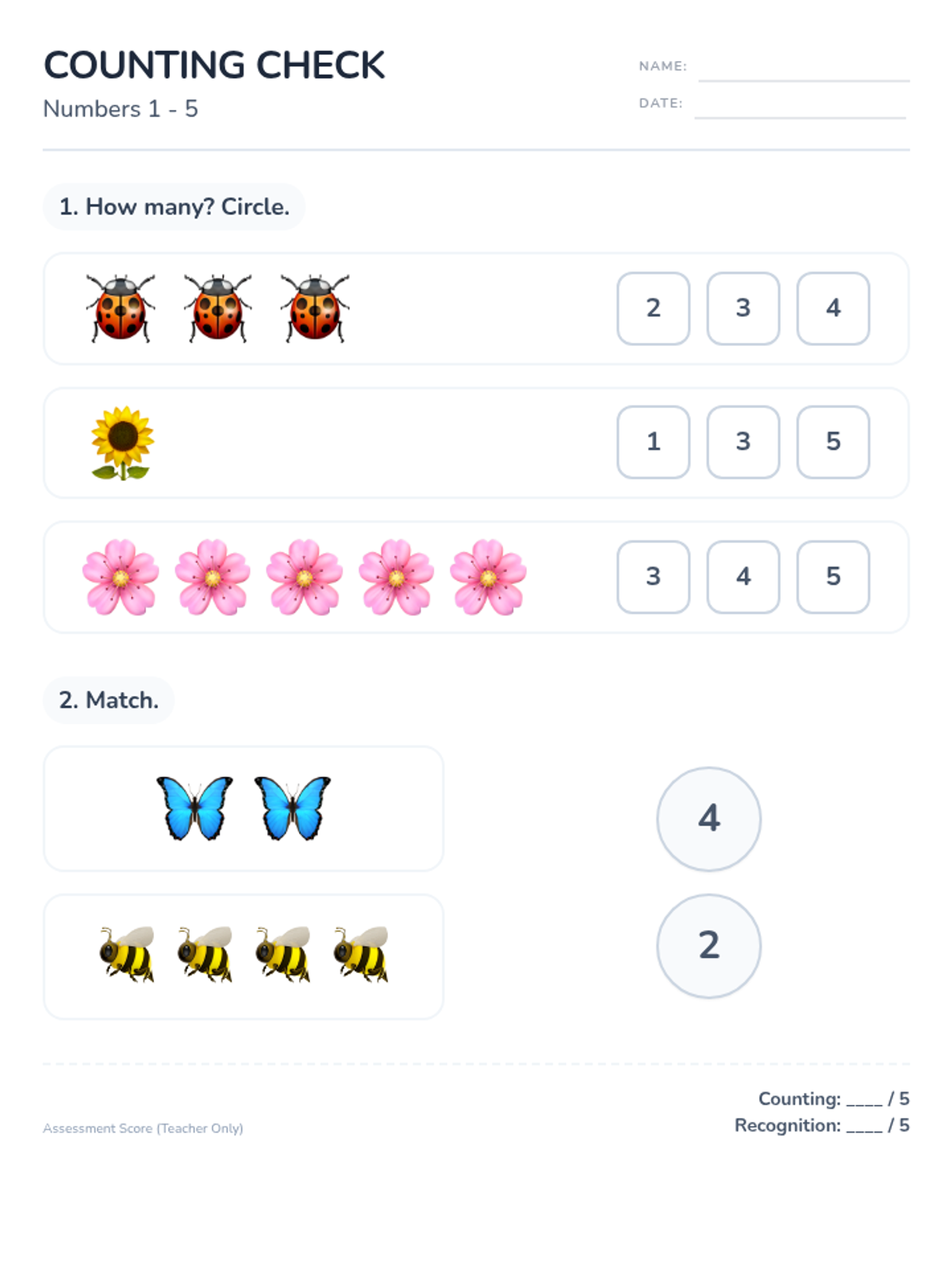
A foundational Pre-K sequence focused on understanding how numbers up to 5 can be composed and decomposed using hands-on manipulatives and games. Students develop subitizing skills and part-part-whole awareness through five-frames, two-color counters, and interactive play.
A Pre-K math sequence that connects early addition and subtraction concepts to storytelling and narrative structure. Students learn to model mathematical changes (adding to and taking away) through role-play, interactive felt boards, drawing, and puppet shows.
A hands-on Pre-K sequence introducing subtraction through songs, games, and sensory activities. Students learn to count 'how many are left' by physically removing items from a group.
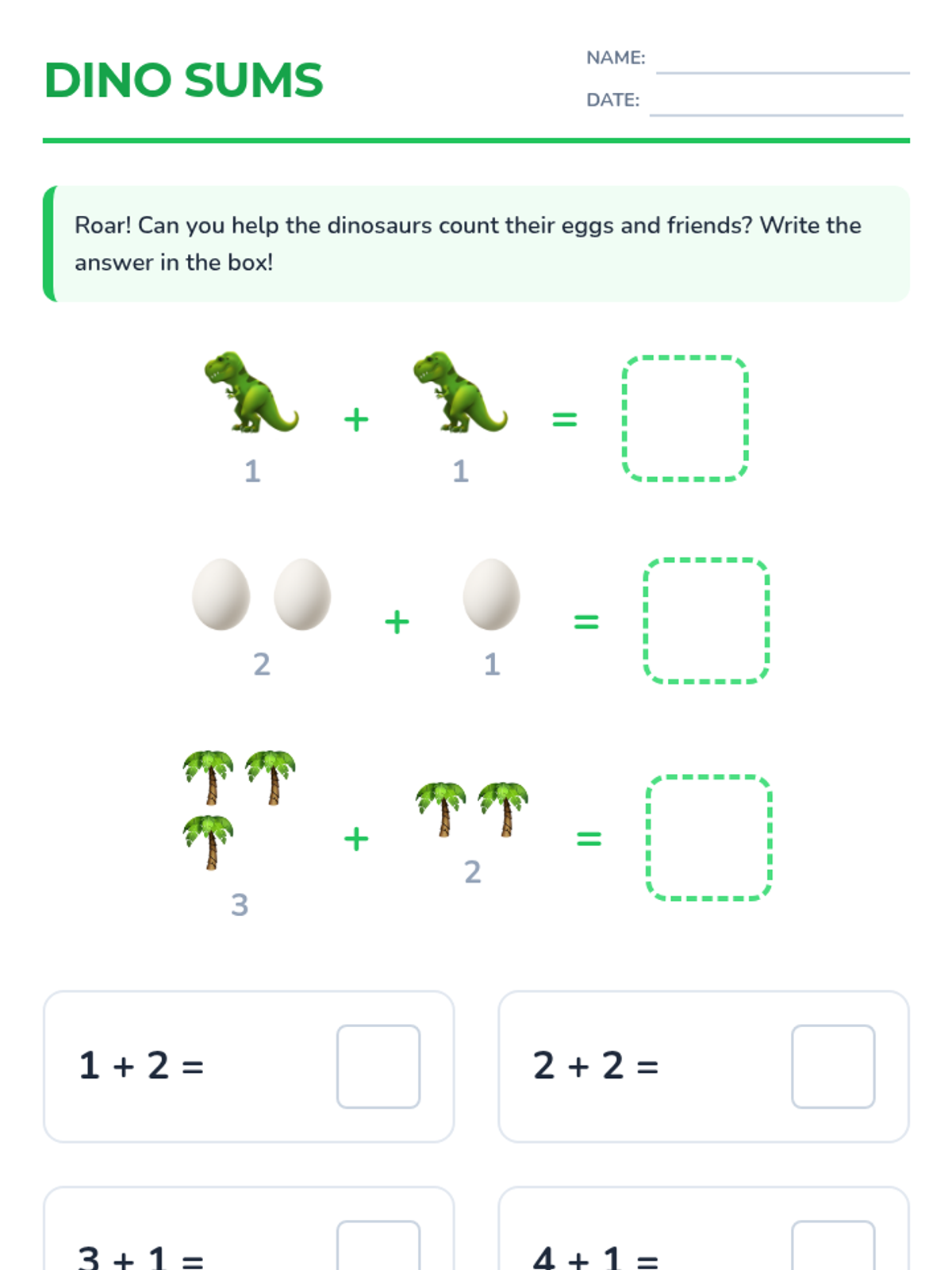
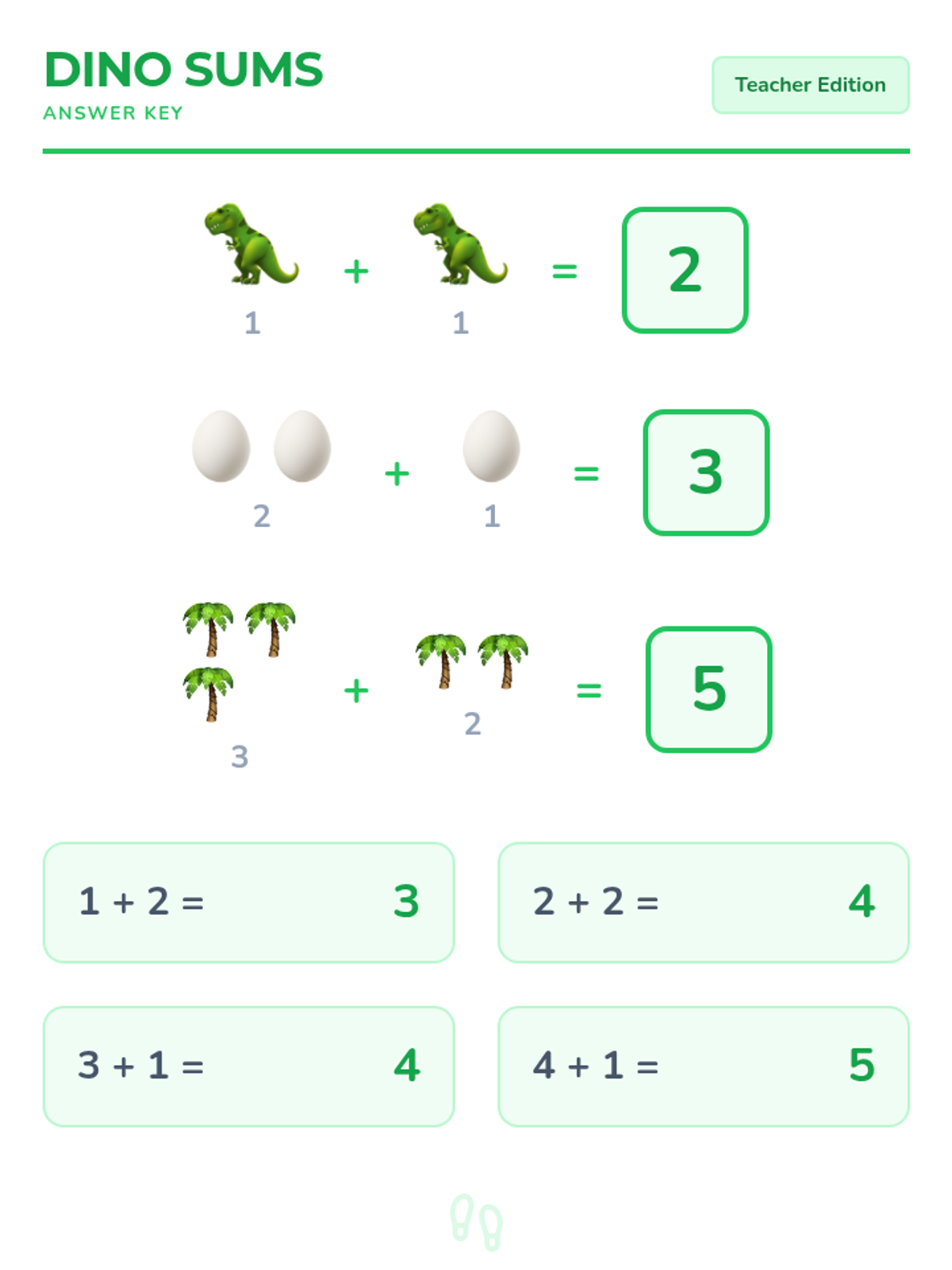
This Pre-K sequence introduces addition through the physical and visual act of joining sets. Students progress from manipulating real objects like teddy bear counters to using work mats, finger strategies, and verbalizing math stories.
This sequence introduces Pre-K students to the concept of zero and the written names of numbers 1-3. It bridges math and literacy through storytelling, environmental print awareness, and rhythmic activities.
This sequence introduces Pre-K students to the numerals and spoken names for numbers 6-10 through hands-on activities, movement, and creative crafts. Students build visual recognition and auditory associations, culminating in the ability to identify and sequence numbers 6-10.
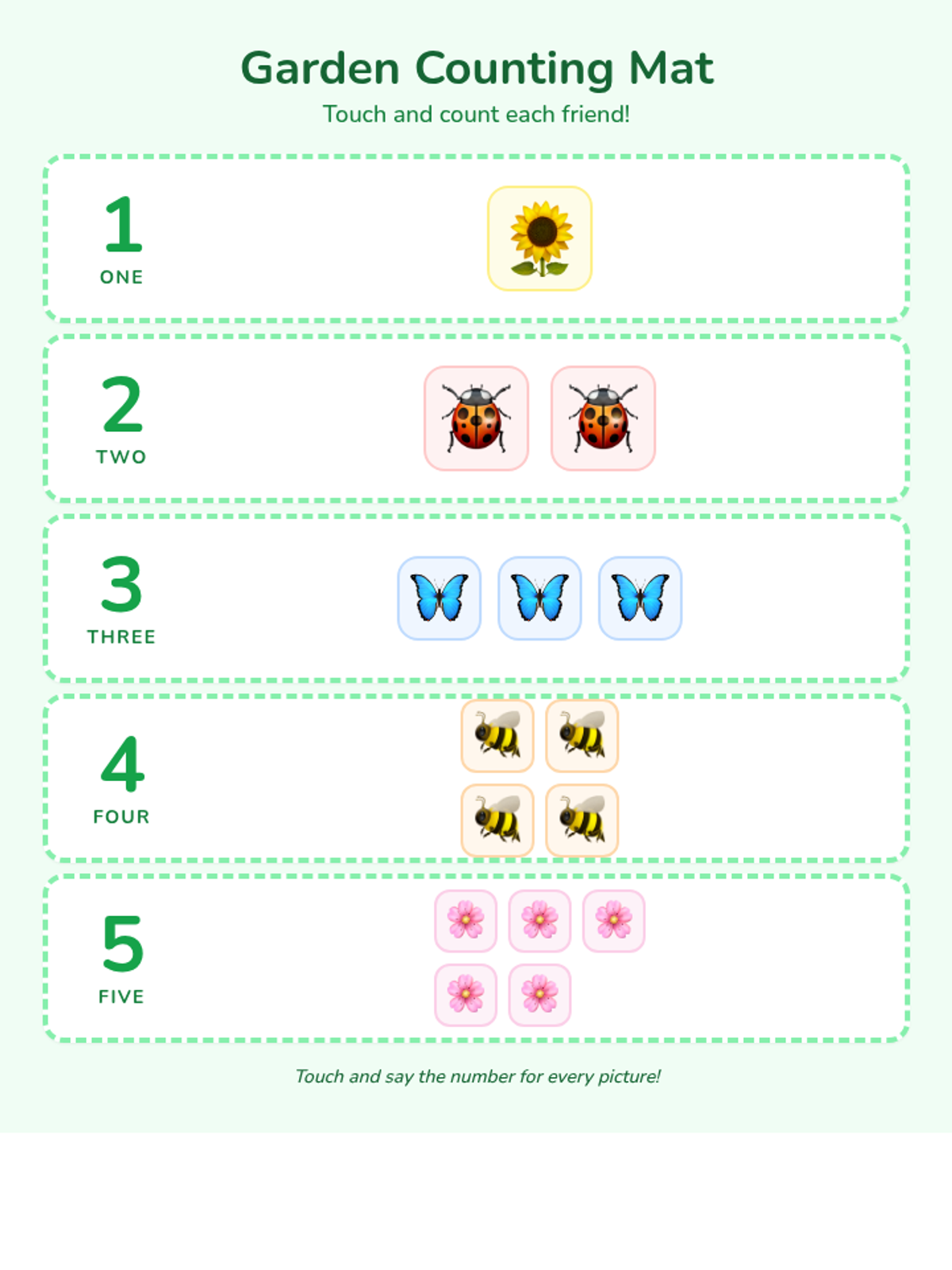
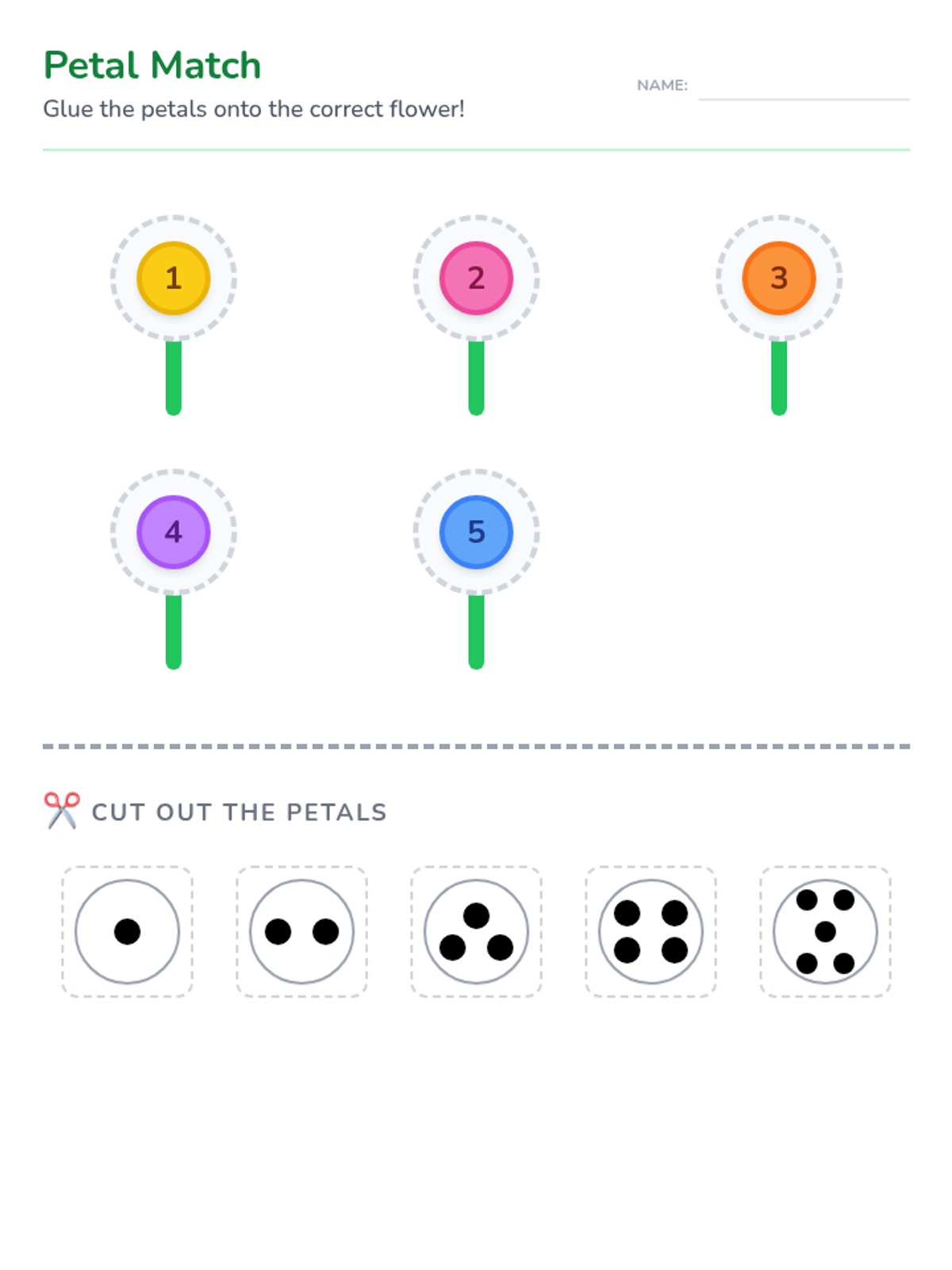
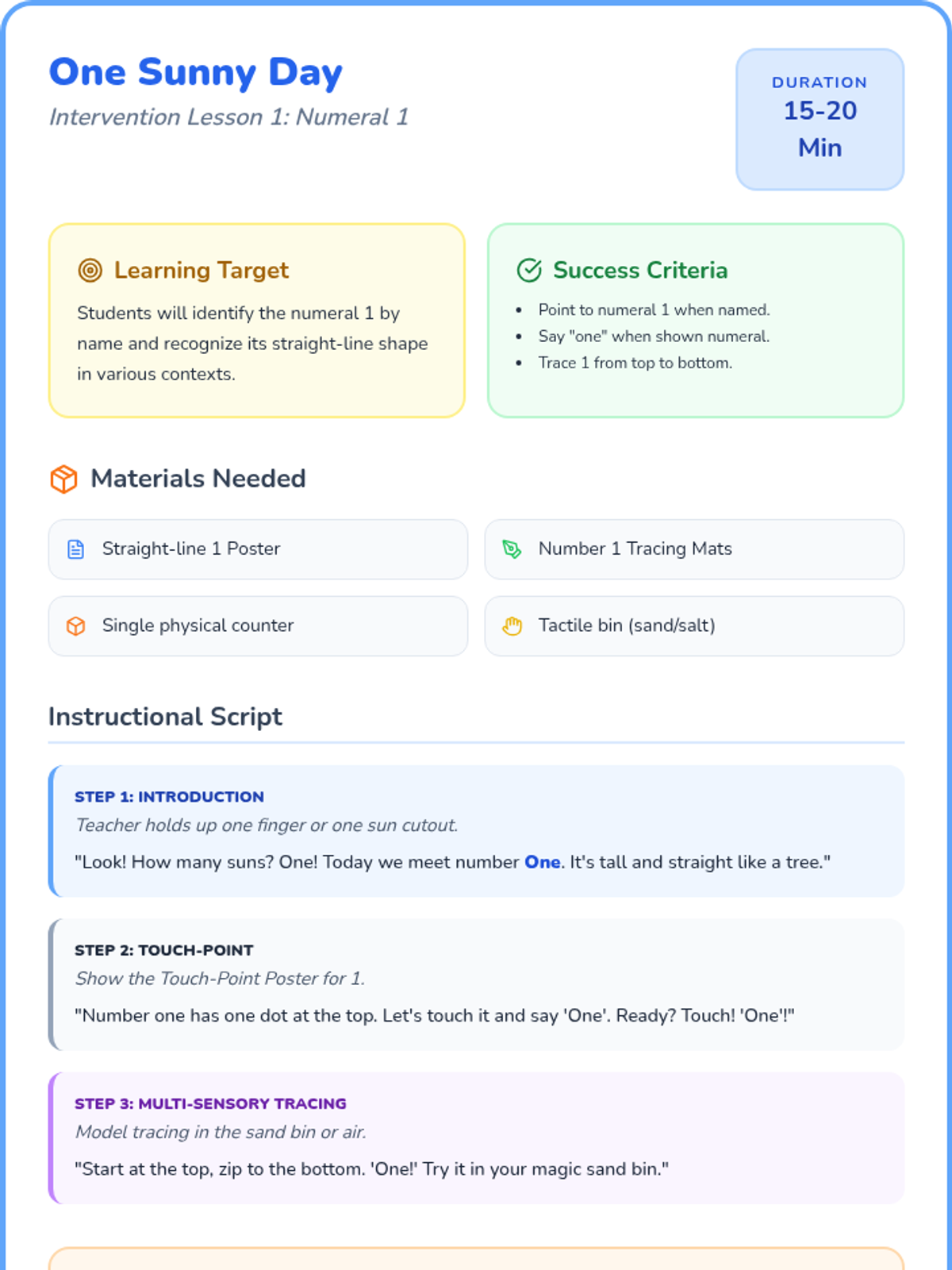
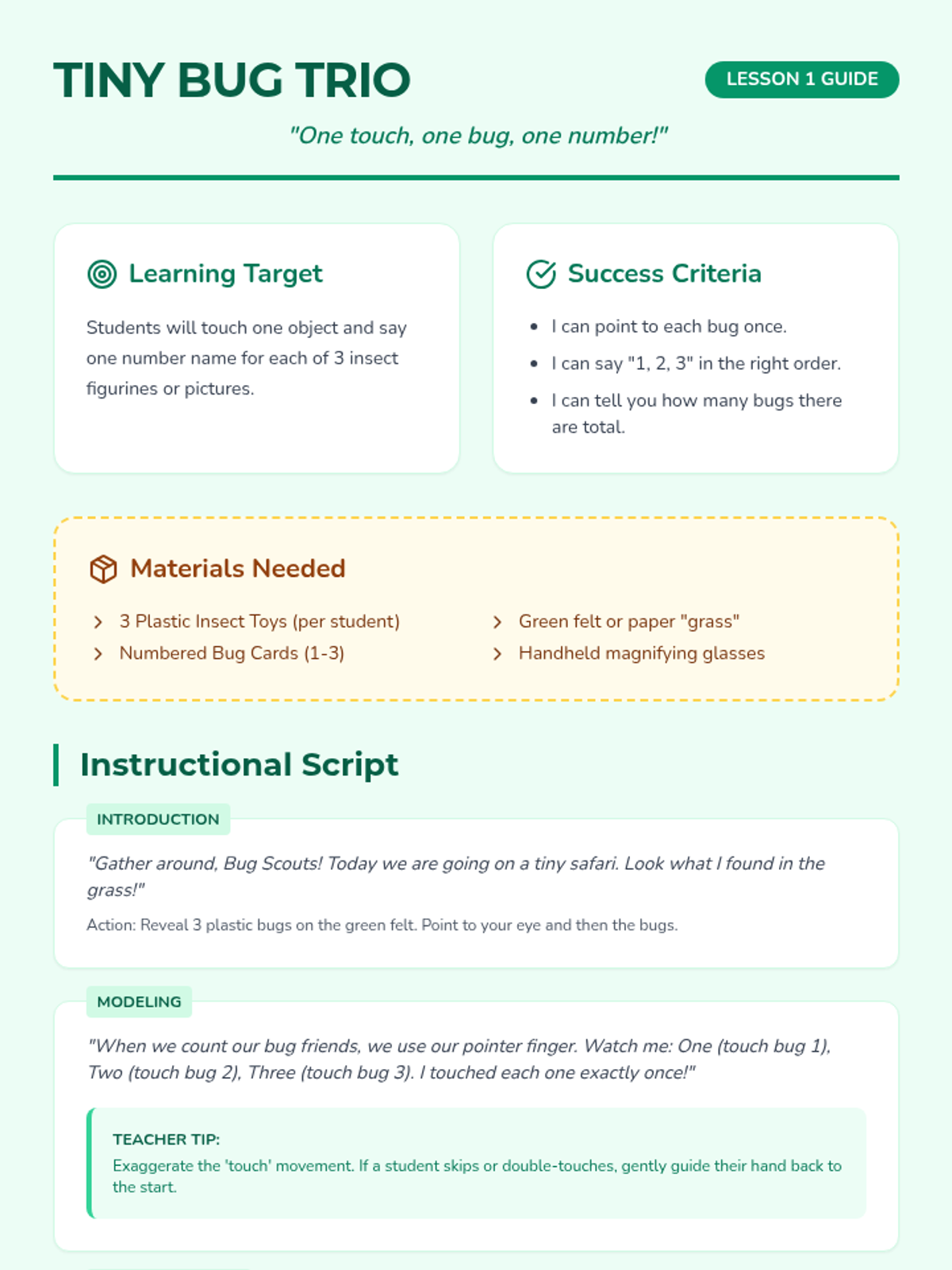
A sensory-rich, game-based introduction to the number names 1 through 5 for Pre-K students. This sequence focuses on associating spoken names with physical quantities through body movement, storytelling, and hands-on exploration.
A Pre-K sequence focused on identifying and using spatial vocabulary through visual analysis, hands-on sticker activities, puppet play, and drawing dictation. students will learn to articulate positions like 'on', 'under', 'beside', 'above', and 'behind'.
A Pre-K sequence focused on spatial awareness and positional vocabulary. Students use manipulatives and physical play to master words like in, on, top, middle, bottom, behind, in front, next to, and far from.
Students explore spatial reasoning through composing and decomposing 2D shapes using pattern blocks, tangrams, and paper cutting. They progress from simple puzzle filling to designing a geometric city, developing cognitive flexibility and geometric intuition.
A kinesthetic Pre-K math sequence where students explore geometric attributes through whole-body movement, tactile construction with sticks and clay, and boundary-stretching activities. Students develop spatial awareness and fine motor skills while learning to identify and build circles, squares, and triangles.
A hands-on introduction to three-dimensional solids for Pre-K students. Children explore spheres, cubes, cylinders, and cones through tactile play, movement, and real-world observation to understand volume and basic physical properties.