A Pre-K math sequence that explores patterns in clothing, nature, routines, and architecture, turning students into 'Pattern Detectives' who observe and document the world around them.
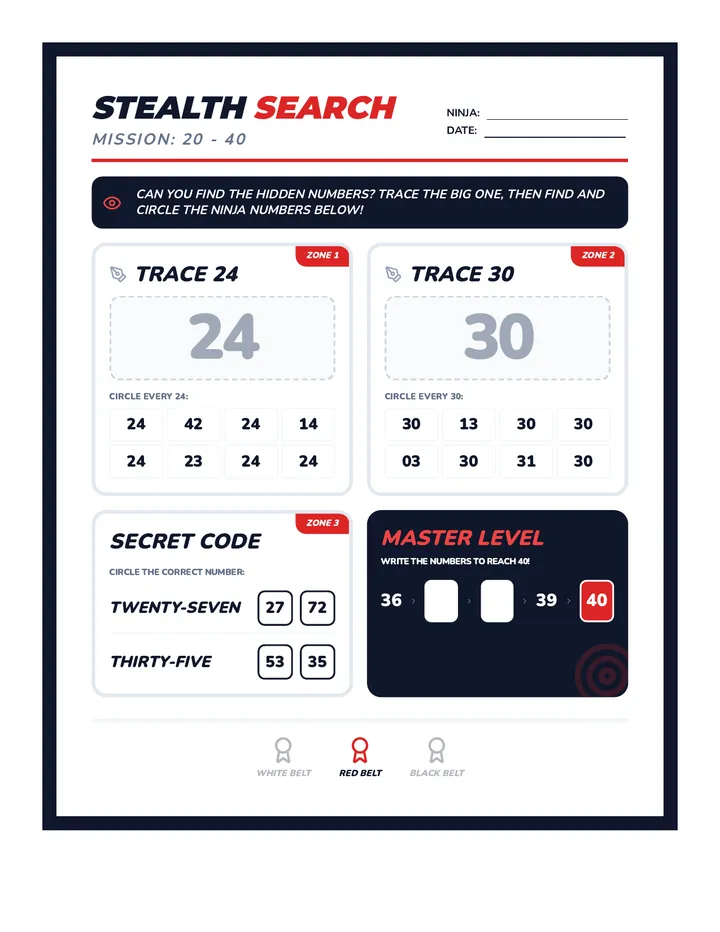
A comprehensive week-long unit for Early Childhood students focusing on number recognition and counting from 1 to 20 using movement-based beanbag activities. Each day introduces a new set of numbers through active play, visual aids, and simple recording tasks.
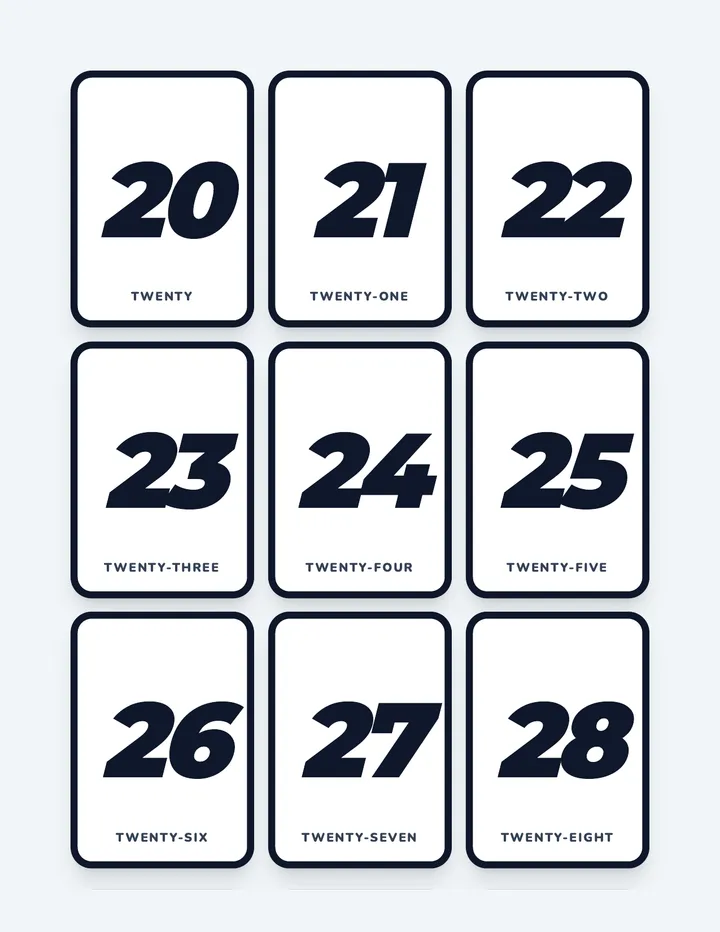
A comprehensive sequence for kindergarteners to master counting and writing numbers 1-20 through a fun jungle-themed exploration.
A Kindergarten math sequence focused on understanding place value through the composition of teen numbers as 'ten and some more'. Students use physical manipulatives and music to reinforce the pattern of adding ones to a base of ten.
A hands-on introduction to probability and chance for early elementary students using the concepts of will, won't, and might.
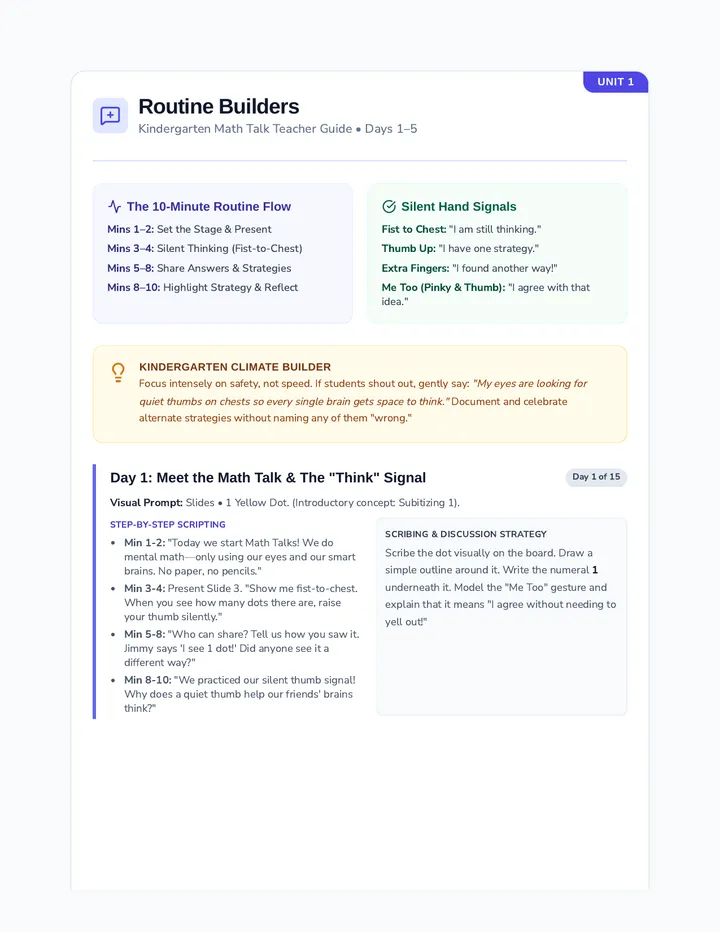
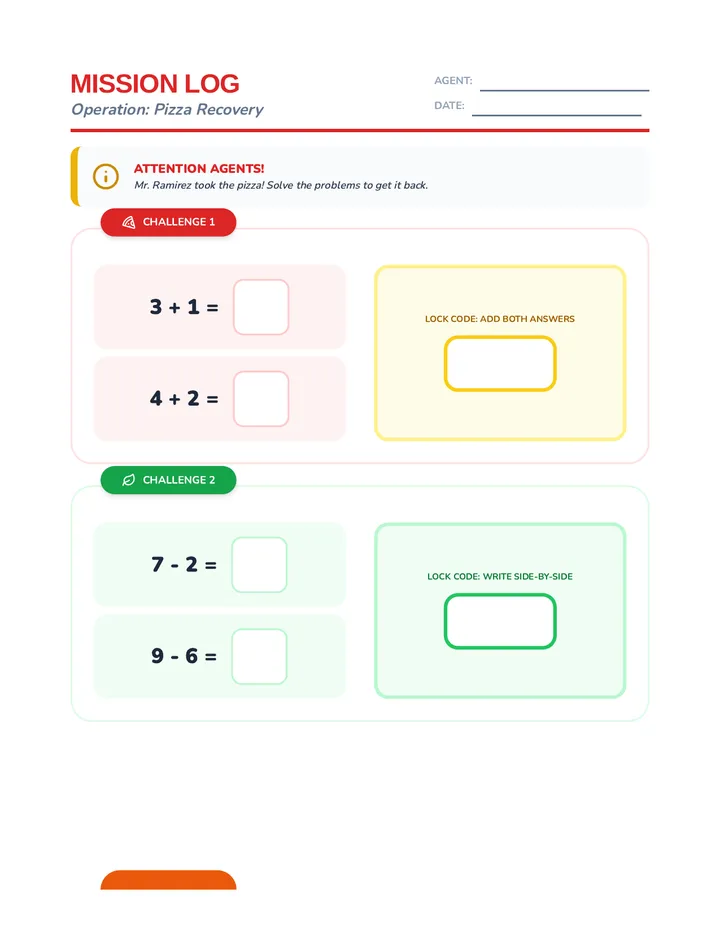
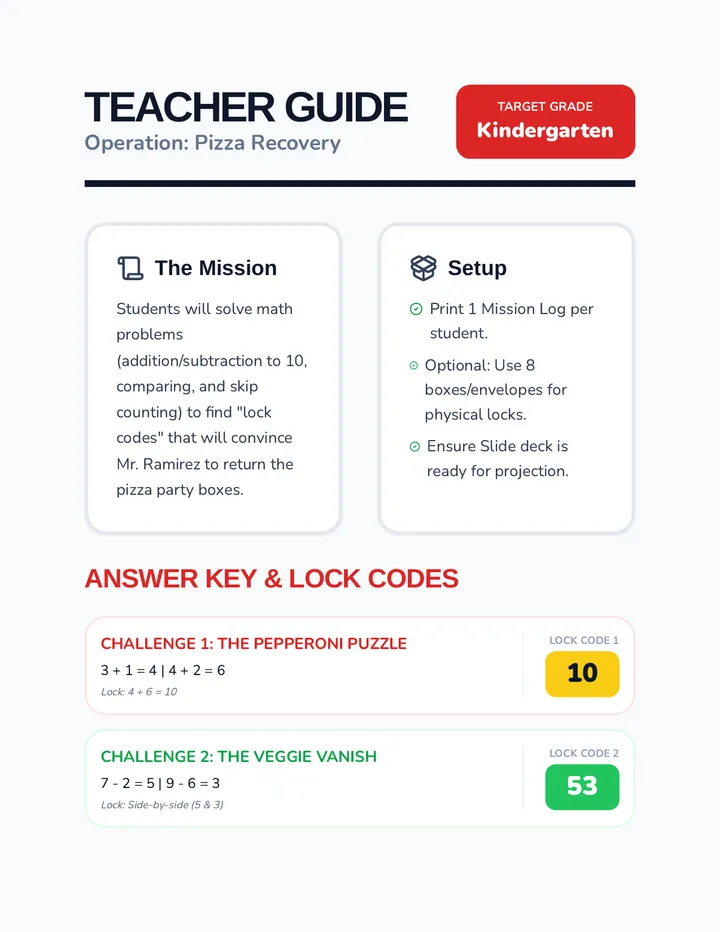
A sequence focused on using music, rhythm, and rhyme to master foundational mathematical concepts like addition and skip counting.
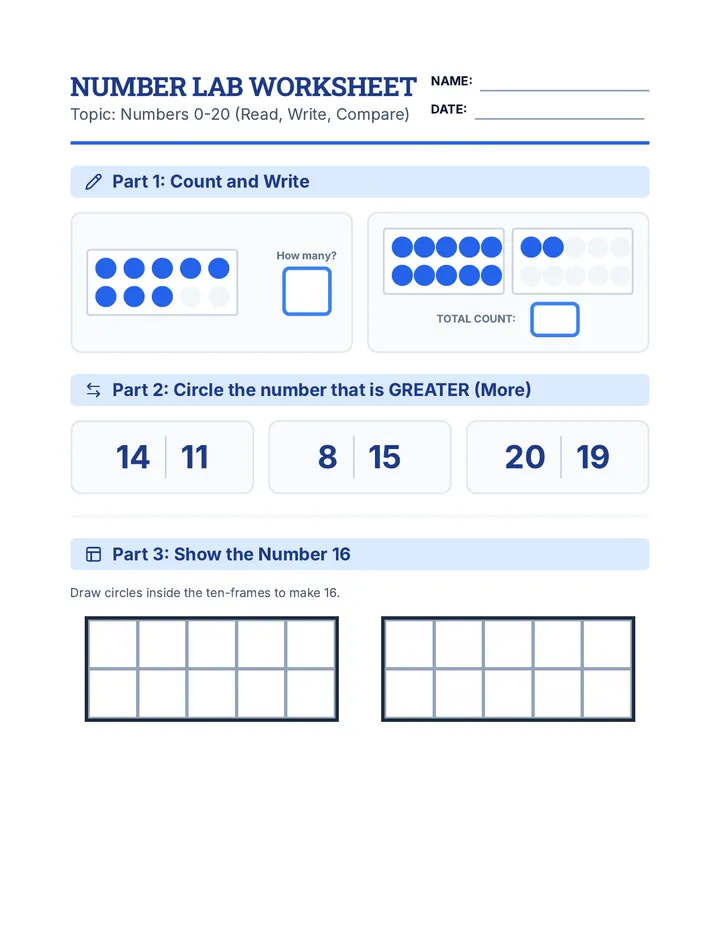
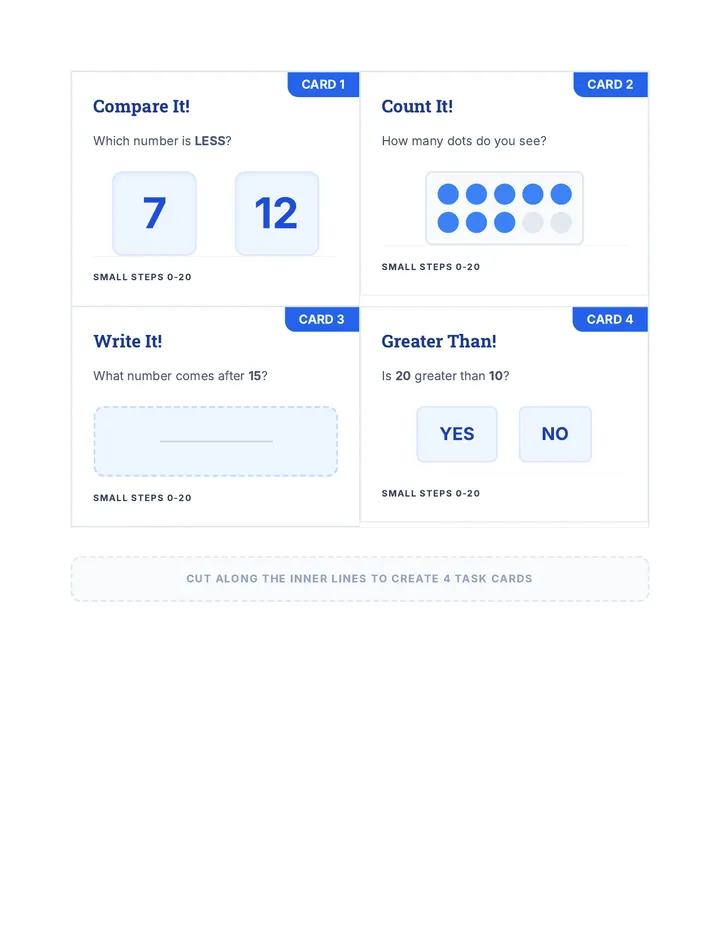
A Kindergarten math sequence for ELL students focused on comparing quantities using the concepts of more, less, and same. Students move from concrete visual comparisons to interactive sorting and hands-on station work.
A Kindergarten math sequence focusing on teen numbers (11-19) using hands-on manipulatives. Students progress from physical bundling to ten-frames and base-ten blocks, establishing a solid foundation for place value.
This Kindergarten math sequence uses the Concrete-Representational-Abstract (CRA) framework to teach composing and decomposing numbers. Students progress from tactile manipulation of physical objects to visual representations and early symbolic equations, specifically supporting diverse learners through sensory-rich mathematical exploration.
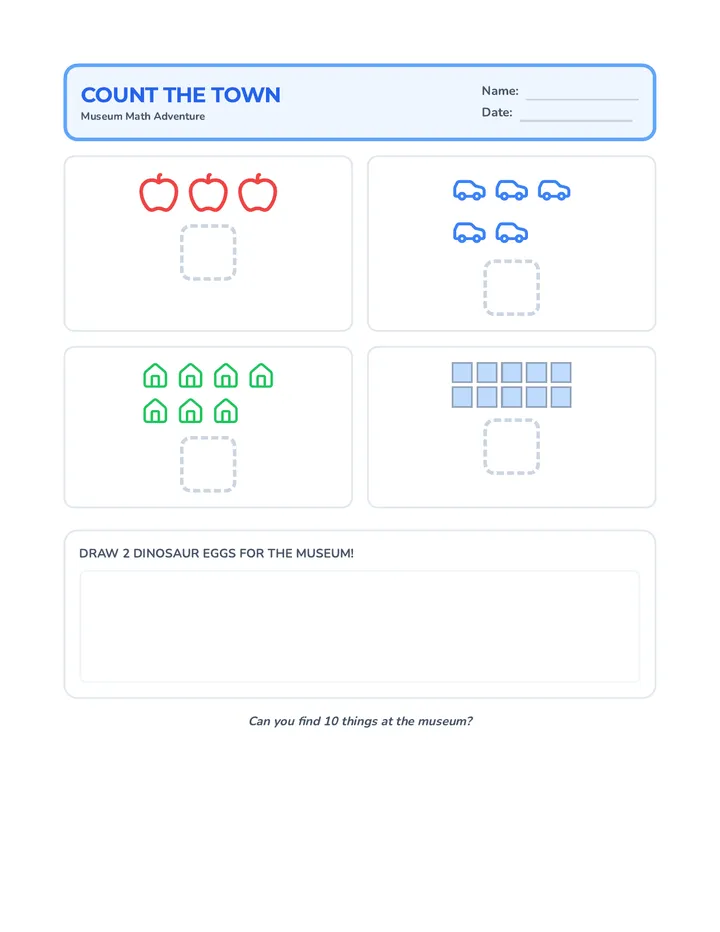
A foundational math sequence for Kindergarten students requiring academic support. This unit uses tactile manipulatives (counters, cubes) to build one-to-one correspondence, cardinality, and number conservation through high-engagement 'Counting Critter' activities.
A comprehensive math sequence for Kindergarten Special Education students, using space-themed visual scaffolds (Five-Frames and Ten-Frames) to build foundational number sense, subitizing skills, and early addition strategies.
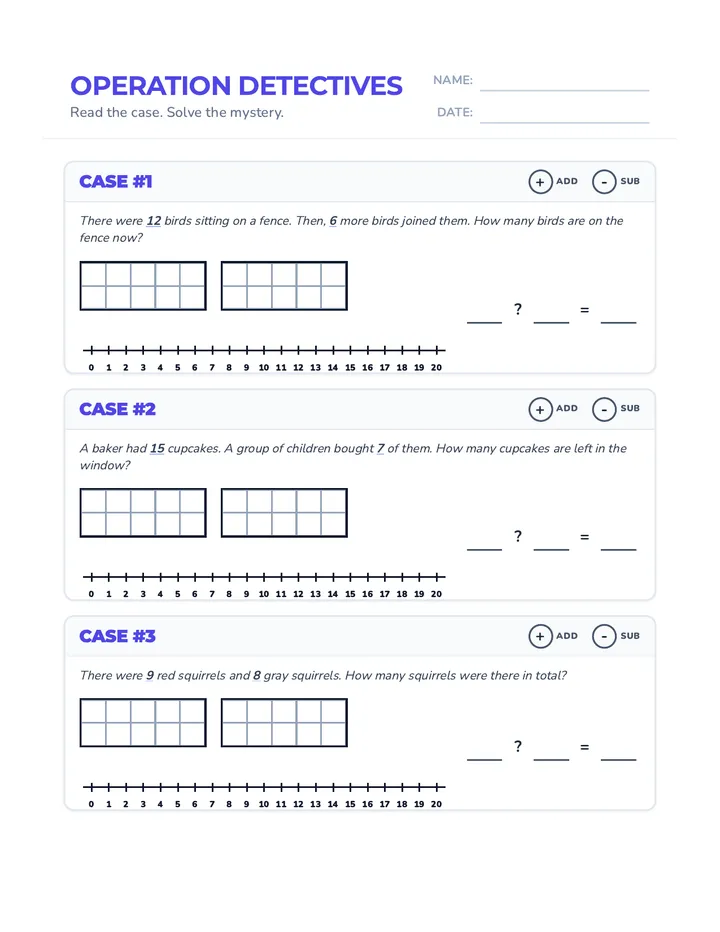
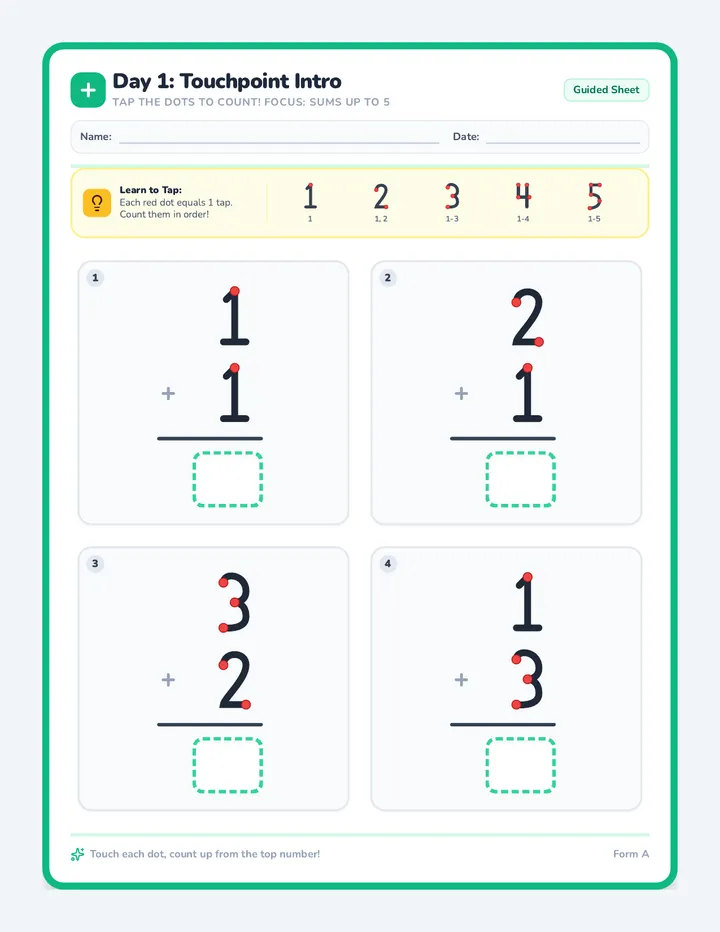
A 5-lesson unit for Kindergarten students focusing on visual math representation using Number Paths. This sequence moves from physical movement to conceptual addition and subtraction, ending with missing addend problem-solving.
This sequence introduces Kindergarten students to the conceptual framework of part-part-whole relationships using visual number bonds. Through tactile sorting, graphic organizers, and story mapping, students develop the foundational skills necessary for addition and subtraction.
This sequence bridges the gap between concrete manipulatives and two-dimensional drawings for Kindergarten students needing academic support. It guides students from tracing physical objects to using simple 'math drawings' (circles) for addition and subtraction.
A Pre-K sequence introducing symmetry and patterns through hands-on exploration with mirrors, art, nature, and shape manipulatives. Students learn to identify balanced halves and predict sequences.
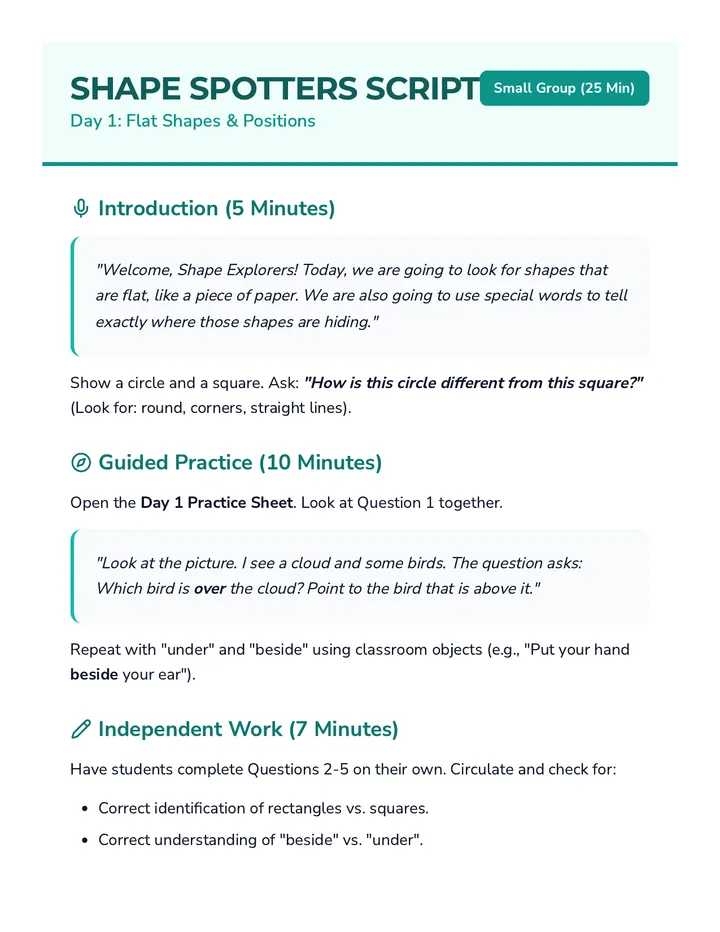
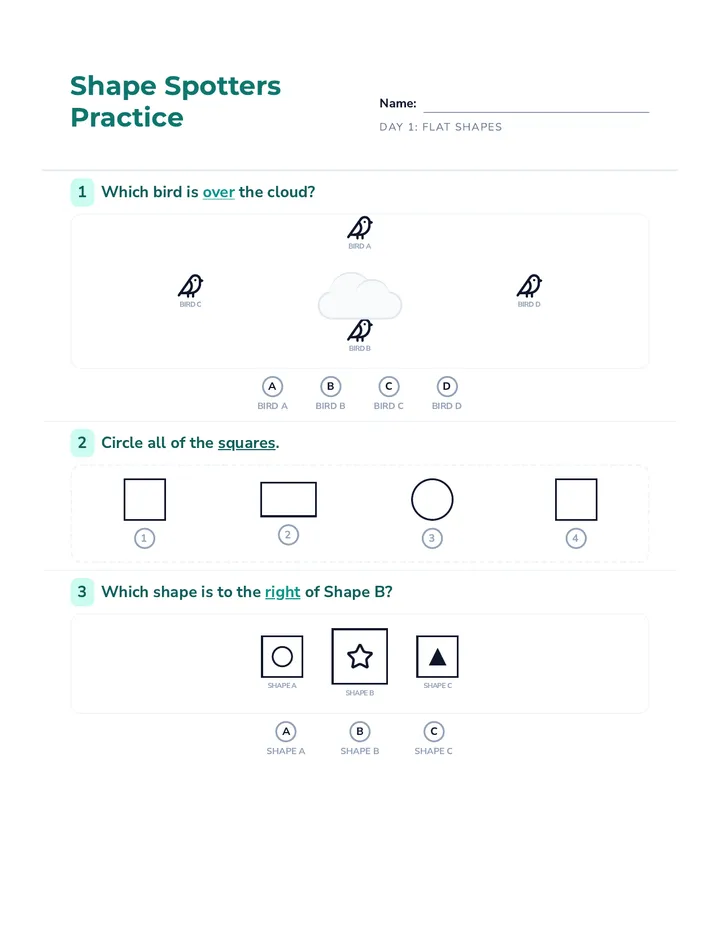
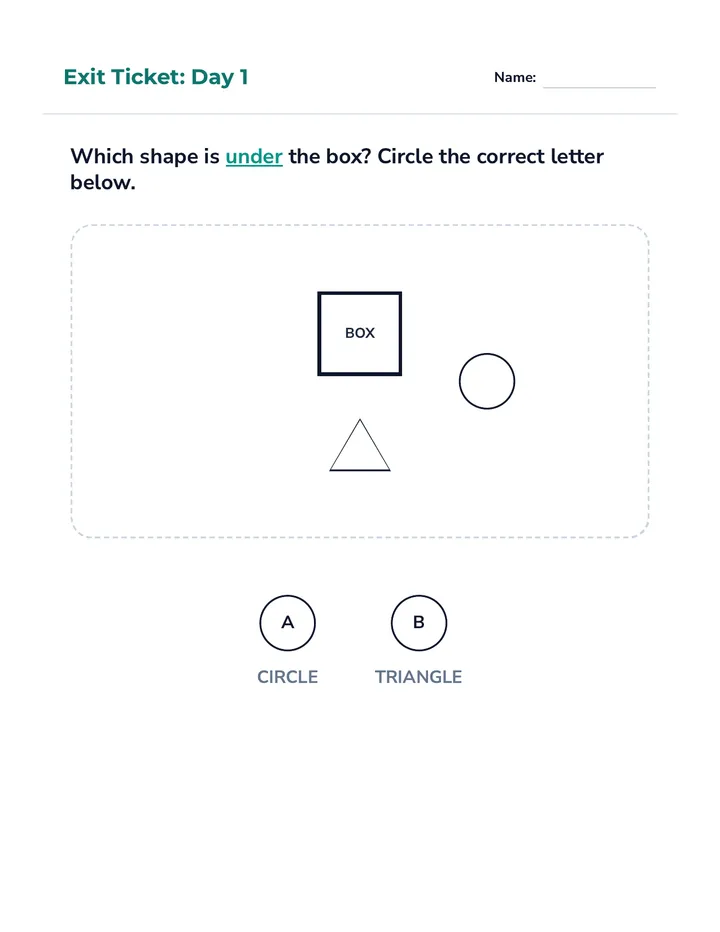
A Pre-K sequence focused on developing spatial awareness and positional vocabulary through physical movement, object manipulation, and classroom mapping. students explore terms like in, out, over, under, next to, and between.
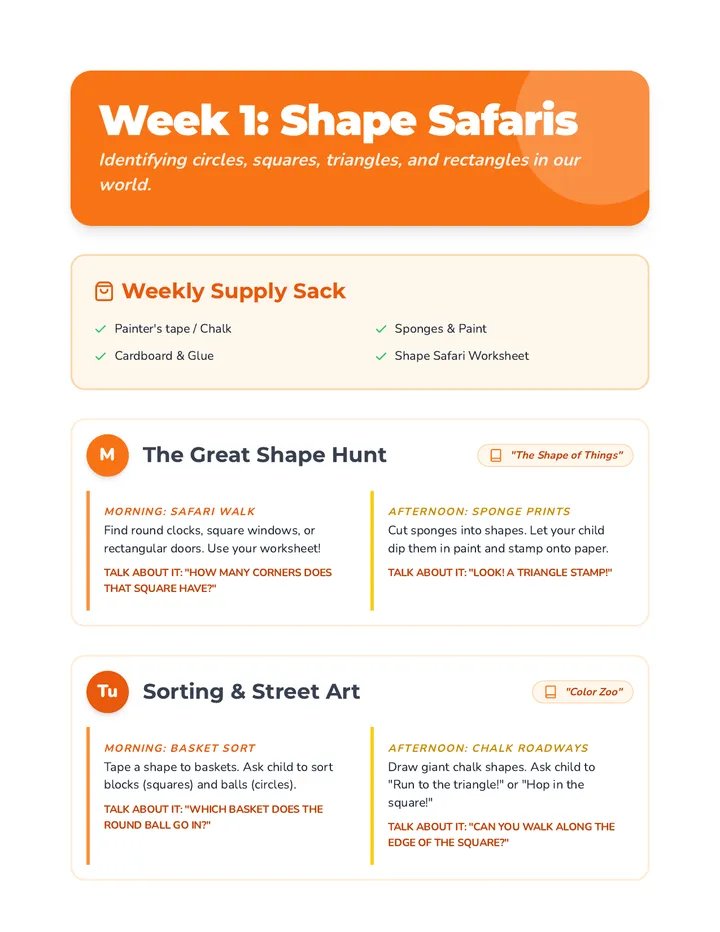
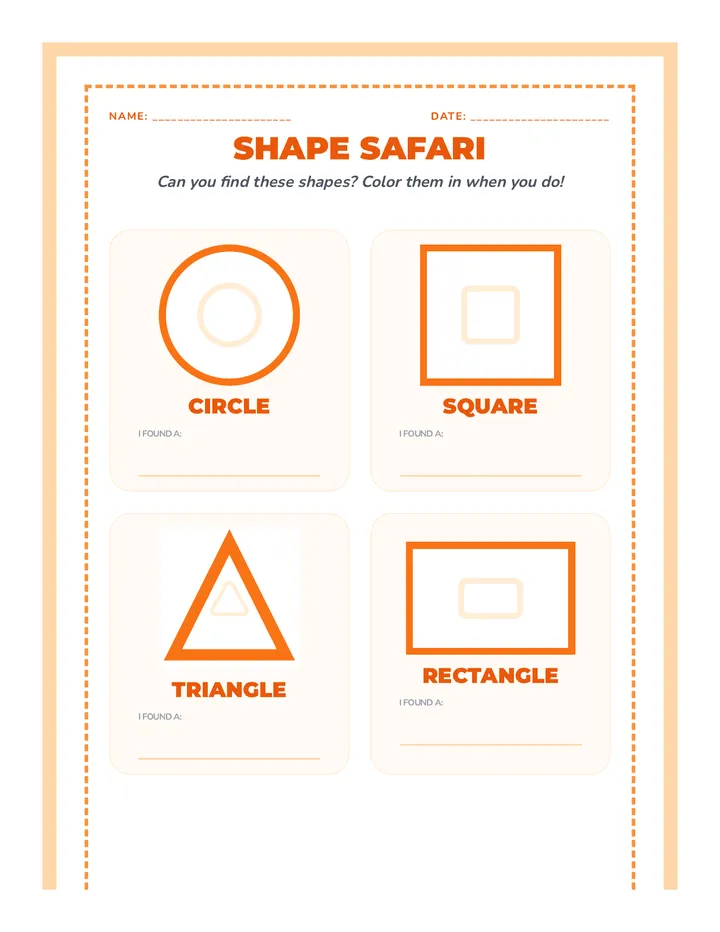
This sequence introduces Pre-K students to 2D shapes (circles, squares, rectangles, triangles) through sensory play, physical movement, and environmental exploration. Students will learn to distinguish shapes by their attributes like sides and corners.
A Kindergarten sequence focusing on higher-level critical thinking skills by asking students to classify, sort, and analyze shapes based on defining versus non-defining attributes. Students explore why color and size do not change a shape's name, while the number of sides and vertices do, and conclude with a mystery analysis challenge.
A foundational physics and spatial reasoning sequence for Kindergarten students focused on using positional vocabulary (above, below, beside, in front of, behind) to describe the relative location of objects. Students progress from physical movement to 2D mapping and verbal communication challenges.
This Kindergarten sequence explores the intersection of geometry and engineering. Students learn to compose and decompose 2D shapes before applying those principles to 3D structural stability, culminating in a collaborative project to design a geometric city.