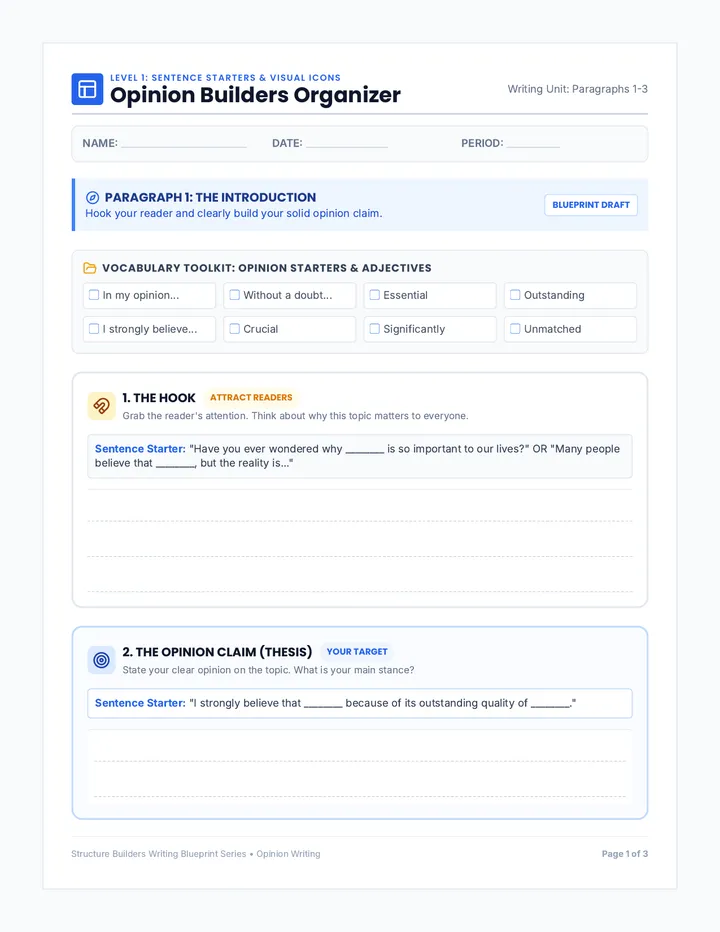
A five-day writing routine for 3rd graders focused on building paragraph structure through engaging daily prompts, guided brainstorming, and peer sharing.
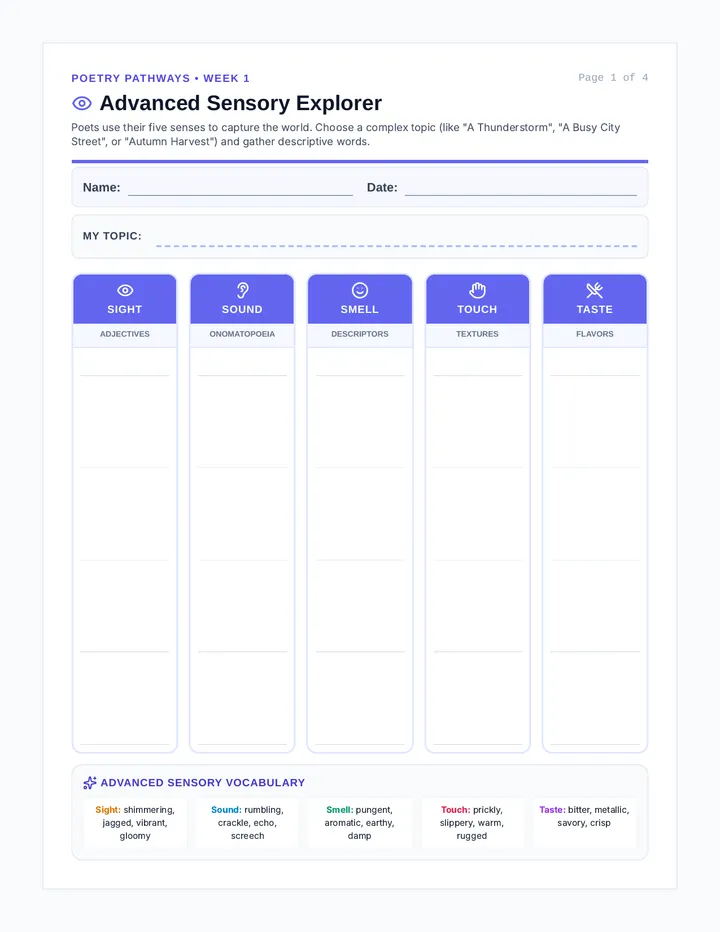
A comprehensive unit focused on teaching 3rd-grade students how to ask and answer questions using textual evidence, specifically focused on the high-interest topic of Extreme Weather.
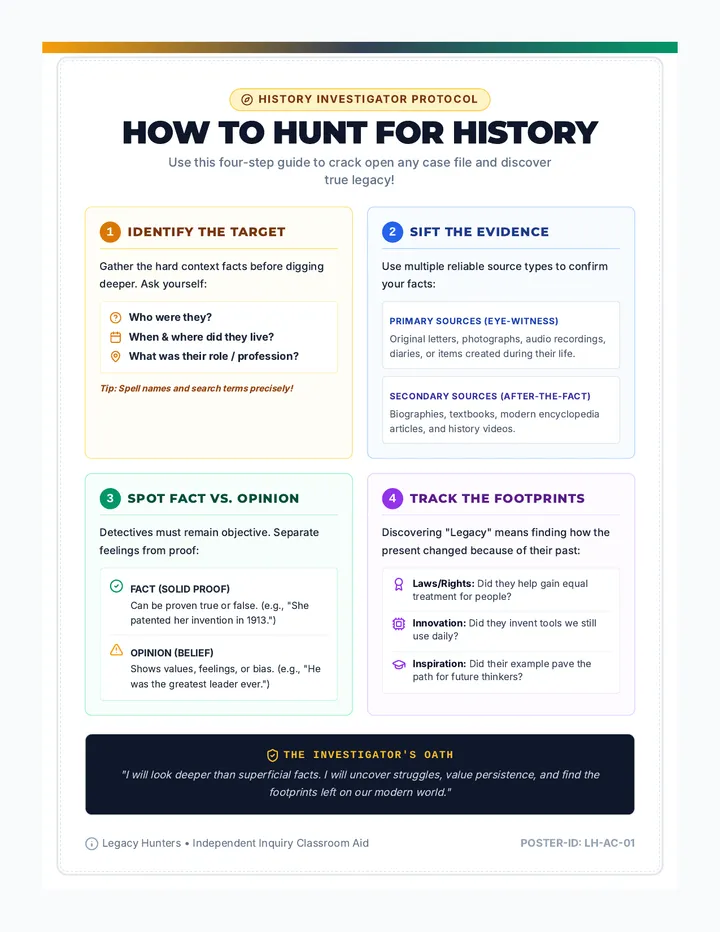
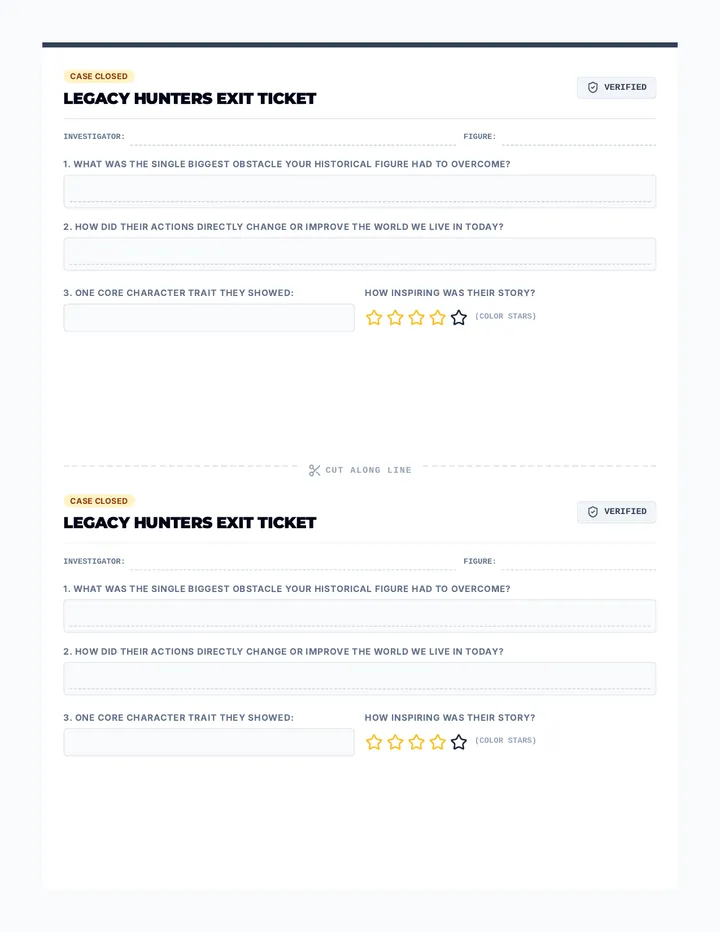
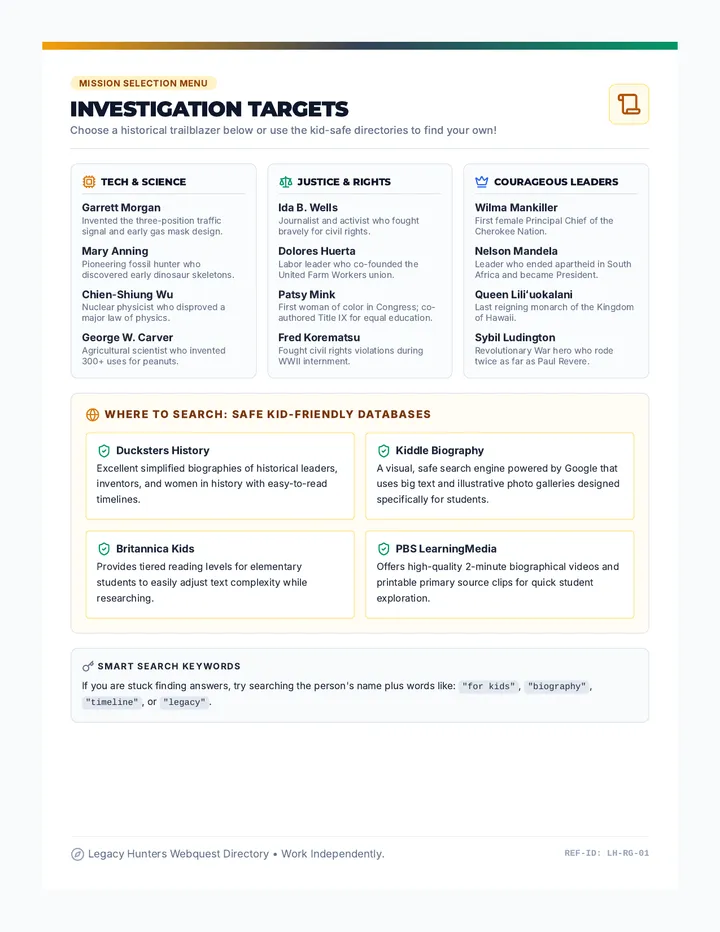
A unit focused on RI.3.1 (Asking and Answering Questions) using historical biographies to build reading comprehension and evidence-based writing skills.
A mastery-based sequence designed to turn students into dictionary experts. Covering navigation basics, guide word logic, and the nuances of multiple definitions.
A 4-day small group intervention focused on using context clues (definition, example, synonym, and antonym) supported by visual illustrations to determine the meaning of unknown words. Students act as 'Word Detectives' to solve vocabulary mysteries.
A 5-day EOG review sequence for NC RL.3.3, focusing on character traits, motivations, and how their actions drive story events through an architectural 'blueprint' theme.
A 3rd-grade vocabulary sequence focused on helping multilingual learners distinguish between synonyms, antonyms, and related-but-not-similar words (thematic associations).
A unit focused on play structure, fluency, and social-emotional problem solving through mystery-themed scripts. Students analyze plot elements while practicing performance skills.
A two-lesson small group sequence for 3rd grade English Learners focusing on multiple-meaning words, synonyms, and antonyms. The sequence uses a 'Word Lab' theme to engage students in scientific word analysis through visuals, sentence stems, and decodable texts.
A two-day small group intensive for 3rd grade students focused on how text features contribute to an author's purpose and reader understanding. Students act as 'text detectives' to investigate headings, subheadings, glossaries, indexes, diagrams, and charts.
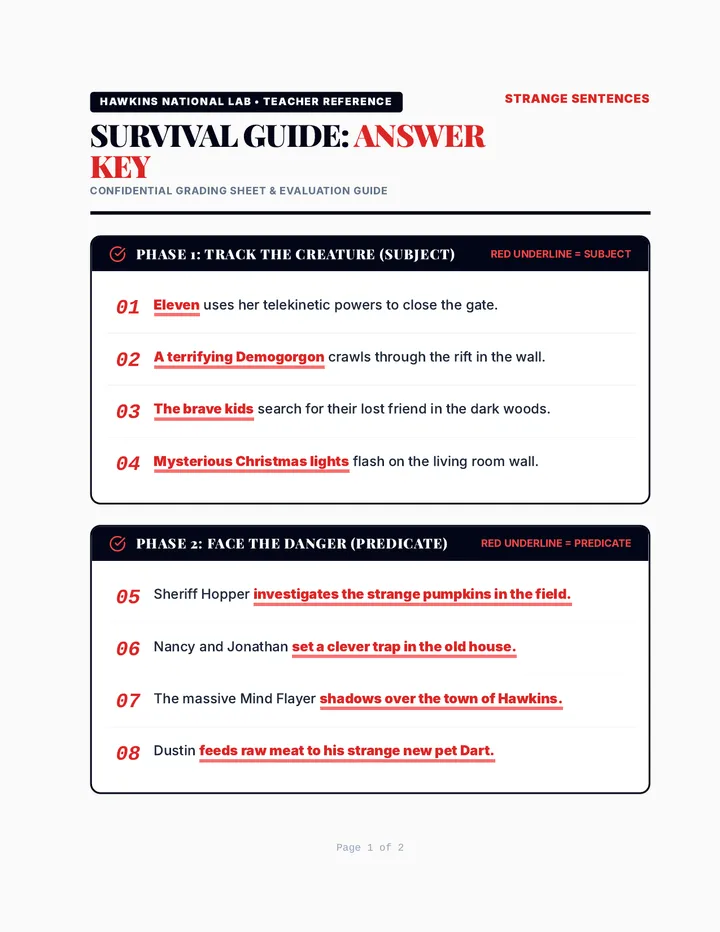
A drama-focused sequence for 3rd grade that uses Mystery and Adventure plays to teach reading literature standards RL.3.1, RL.3.4, and RL.3.5. Students move from teacher modeling to independent practice using the gradual release of responsibility.
A two-part series for 3rd graders focused on mastering the 'Multiple Genres' strand. Students learn to distinguish between literary and informational texts while applying core comprehension skills through paired passages.
سلسلة قصصية خيالية تهدف إلى تعليم الأطفال مهارات القراءة والاستيعاب من خلال مغامرة في غابة سحرية مليئة بالمخلوقات المتكلمة والحوارات الممتعة.
A comprehensive multi-grade level toolkit for reading intervention teachers to track and monitor student reading fluency benchmarks throughout the school year.
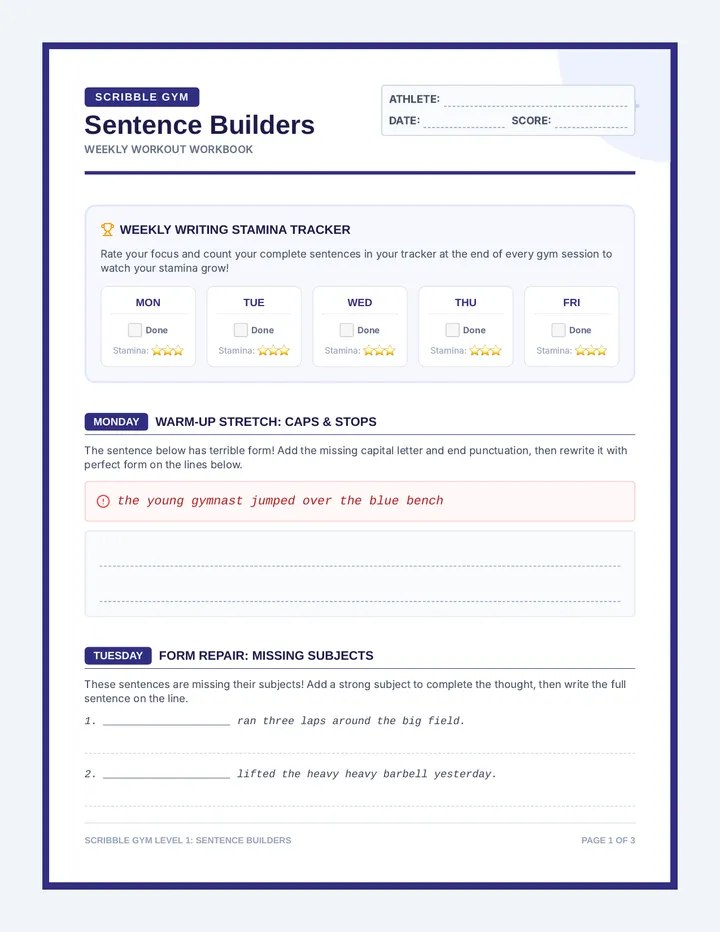
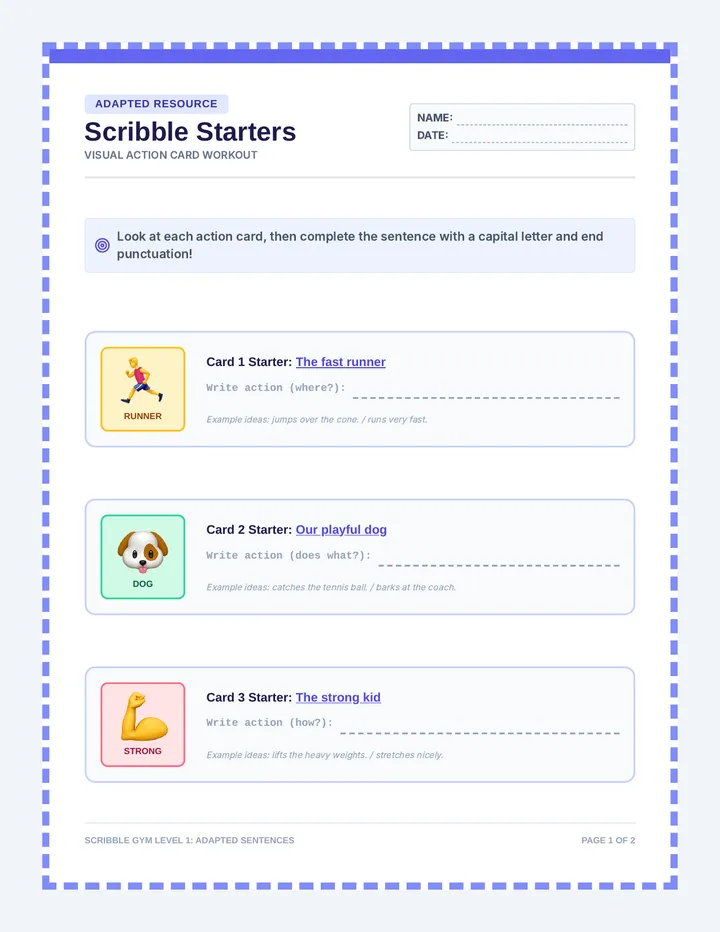
A comprehensive writing program for grades 3-12 focused on sentence and paragraph composition across six different genres, culminating in exam preparation and final assessments. The curriculum balances grammar foundations with creative and formal writing structures.
A Grade 3 unit focused on describing relationships in informational texts, specifically targeting cause and effect connections in history and science.
A collection of thematic reading fluency worksheets designed to improve student reading speed, accuracy, and comprehension through repeated readings and partner retelling.
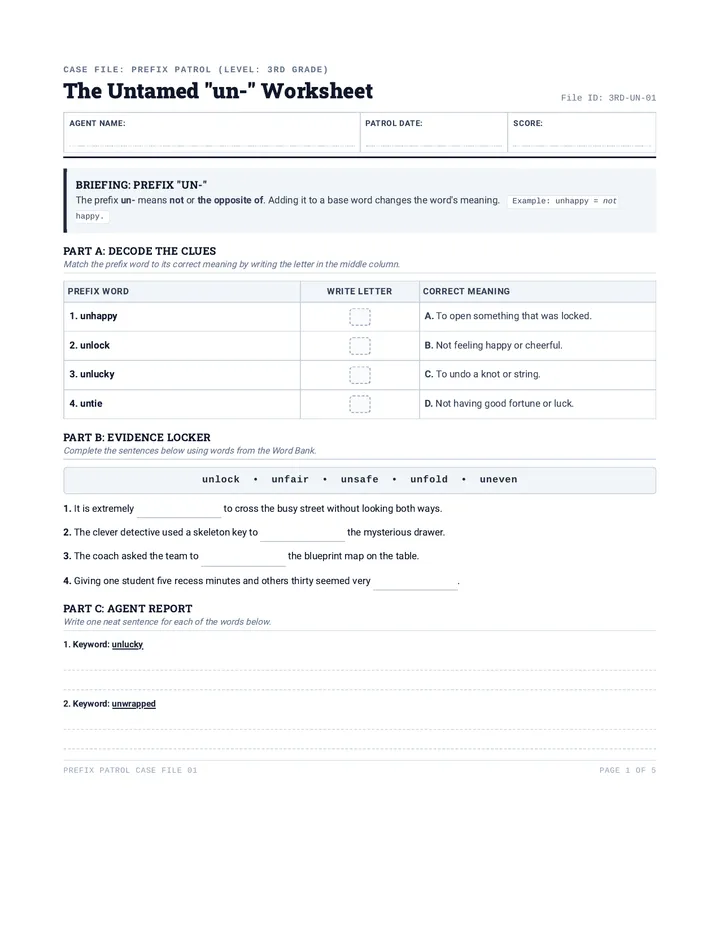
A collection of five fractured fairy tale reader's theater scripts designed for groups of five students, focusing on fluency, expression, and creative retelling.
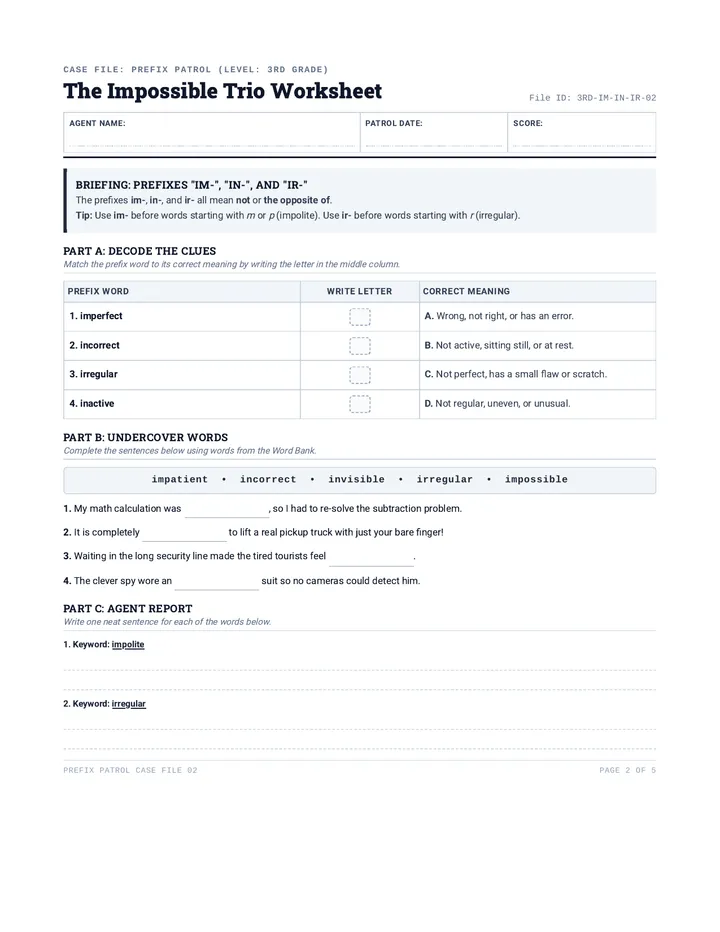
A two-part exploration of Chapters 19 and 20 of 'Because of Winn-Dixie', focusing on the emotional depth of Littmus Lozenges through sequencing and sensory analysis.
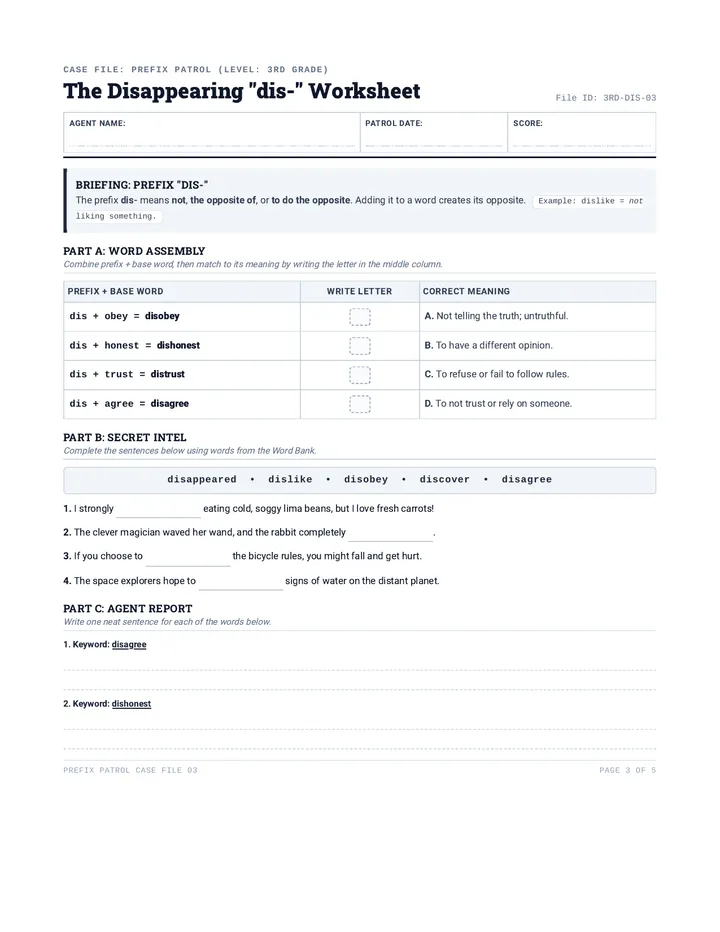
A comprehensive unit focusing on essential literature skills: character analysis, making inferences with text evidence, and identifying themes and summaries. Students act as literary detectives to uncover deeper meanings in texts.
A 3-day reteach sequence for 3rd grade students focused on Author's Craft, aligned with MAP RIT 181-190 and TEKS. Students investigate how graphics, illustrations, and tone contribute to an author's message and audience assumptions across nonfiction, fiction, and persuasive texts.
A series of targeted small-group lessons focused on identifying author's purpose using STAAR-style questions for 3rd-grade students. Includes materials for three approaching-level groups and one higher-level group across fiction, non-fiction, and persuasive texts.
A unit focused on reading comprehension skills, specifically focusing on comparing and contrasting different texts and perspectives.
A sequence designed for WIDA Levels 1-2 (Entering/Emerging) focused on the Language of Language Arts. Students learn to identify and describe characters, settings, and story sequences using high-visual support and scaffolded sentence frames.