A 3-day exploration of thermal energy, particle motion, and phase changes. Students use models to understand how adding or removing energy transforms substances from solids to liquids to gases.
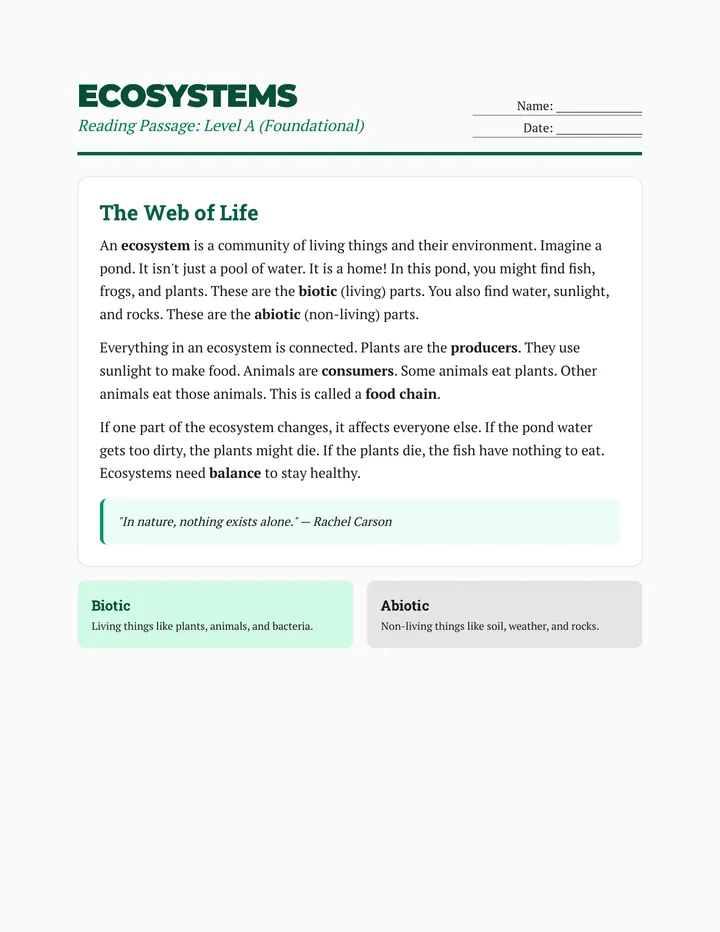
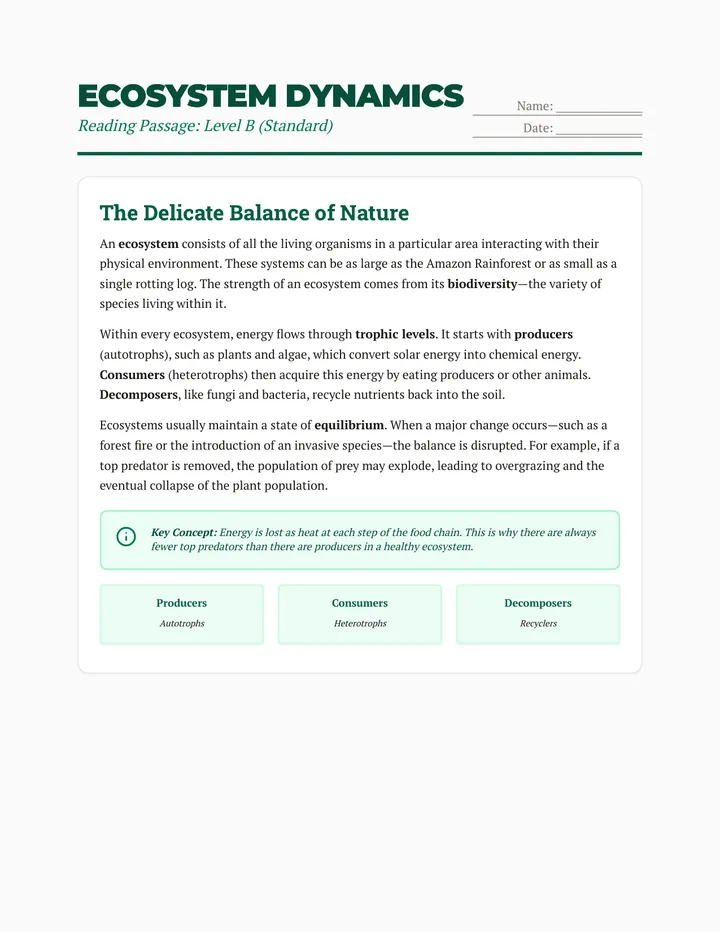
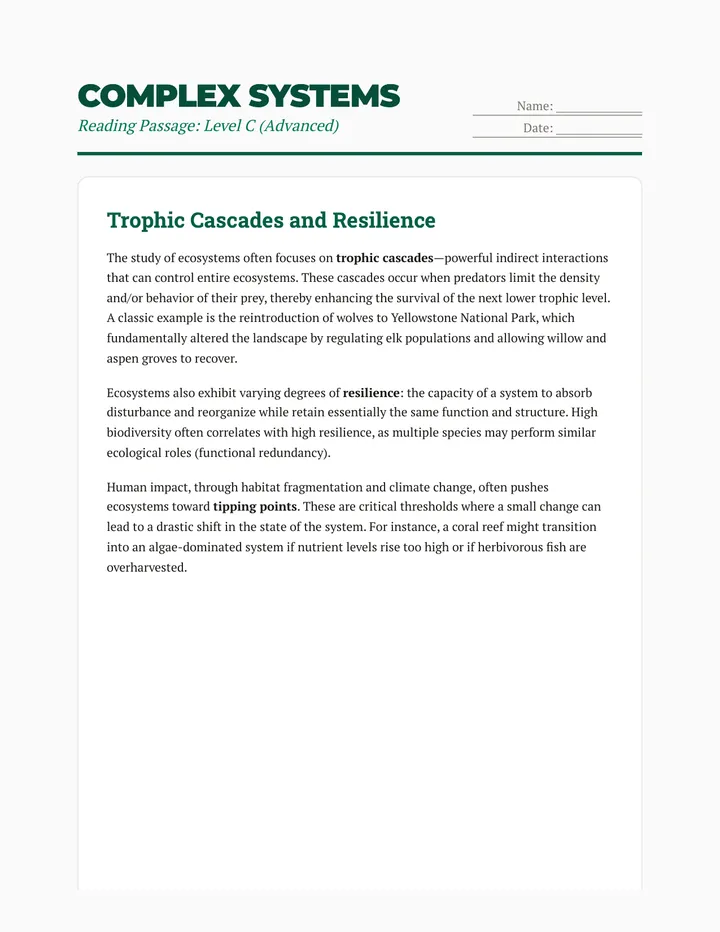
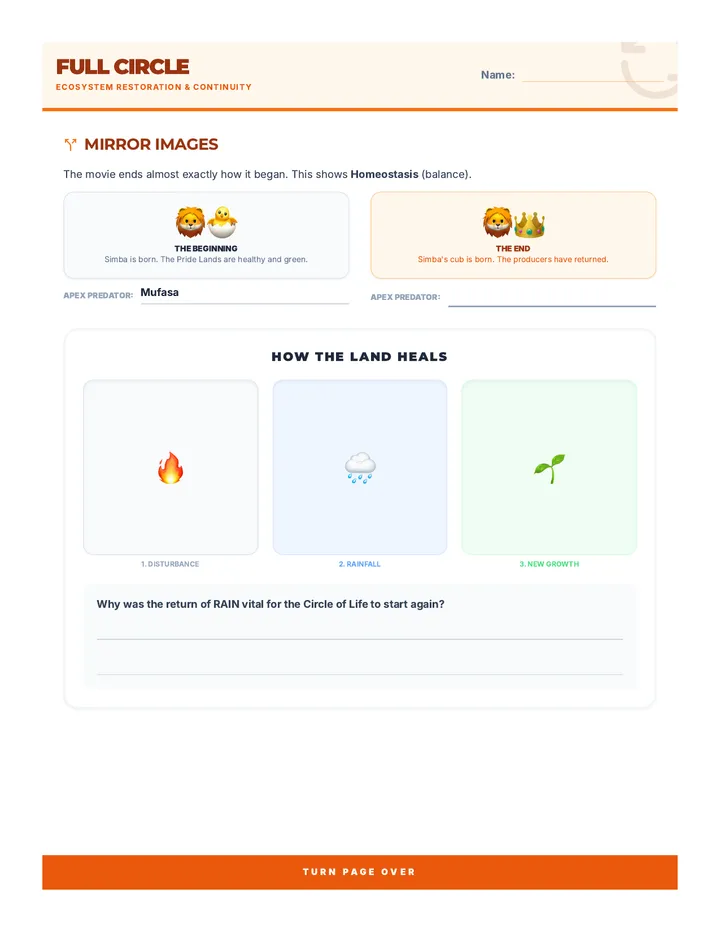
A 3-day exploration of the ecological impacts and ethical complexities of reintroducing wolves to Yellowstone National Park. Students analyze trophic cascades, evaluate stakeholder perspectives, and engage in a structured debate about conservation.
An immersive Earth Science unit exploring the rock cycle, weathering, erosion, and landforms through hands-on labs and creative design projects. Students act as geologists to understand how Earth's surface is constantly being reshaped.
Exploring the internal heat and dynamic processes that shape our planet's surface and interior.
A comprehensive two-day review sequence covering thermal energy, heat transfer, temperature vs. thermal energy, and particle motion, culminating in a CER practice and exit ticket.
A comprehensive review sequence for Grade 6 Science covering genetics, heredity, thermal energy, and climate patterns. Each mission focuses on a mix of all key standards to prepare students for their upcoming assessment.
A three-lesson unit for 6th-grade students exploring the structure of atoms, the nature of elements, and how to use models to distinguish between different types of matter. Students will journey from the subatomic level to the organization of the periodic table.
A collection of unit review materials for middle school science, specifically targeting 6th grade living things and 7th grade body systems. These resources mirror local assessments to ensure student readiness.
A series of four 10-15 minute logic lessons for middle school students, focusing on Zeno's paradoxes and the 'Paradox Player' thinking style. Students will learn to break ideas into tiny steps, push logic to extremes, and identify contradictions through 'Paradox Breaker' activities.
A comprehensive 3-week unit exploring the unique physical properties of water, its role in life and geological processes, and the dynamics of watershed systems. Students investigate polarity, cohesion, and universal solubility through hands-on labs while connecting these traits to climate moderation and the health of the Chesapeake Bay.
A review sequence for Unit 3 data analysis standards, focusing on collection, manipulation, visualization, and ethics through a hands-on mini-project.
An introductory sequence on electromagnetic radiation, focusing specifically on ultraviolet light, its effects on matter, and methods of protection.
A comprehensive collection of life science resources for 6th and 7th grade, covering cell theory, body systems, and defense mechanisms.
Cette séquence explore les enjeux de la gestion des ressources humaines en 1ère STMG, en articulant la valorisation de l'activité humaine avec les contraintes de performance et de coût du travail. Elle s'appuie sur des cas d'entreprises réelles pour illustrer les notions de qualification, de compétence, de conditions de travail et d'arbitrage financier.
Unité complète sur le fonctionnement du corps humain, se concentrant sur la nutrition, la digestion et l'importance d'une alimentation saine pour la croissance et l'activité.
A comprehensive STEM sequence focusing on the intersection of coding logic and physical engineering. Students explore algorithmic thinking, structural design, and the integration of software and hardware through hands-on build challenges and online activities.
A comprehensive unit exploring how animal systems interact to maintain homeostasis, process nutrients, reproduce, and respond to environmental stimuli. This sequence covers organization, regulation, and survival mechanisms across various animal taxa.