A 2nd-grade social studies sequence where students become world travelers, exploring the geography, landmarks, and cultures of the Spanish-speaking world across Latin America and Spain.
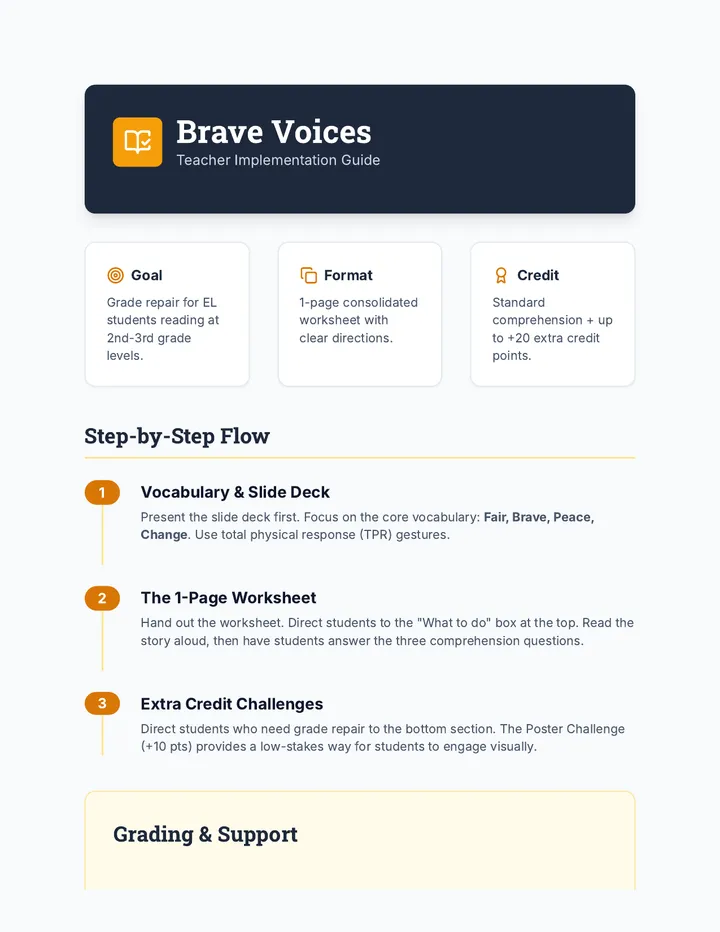
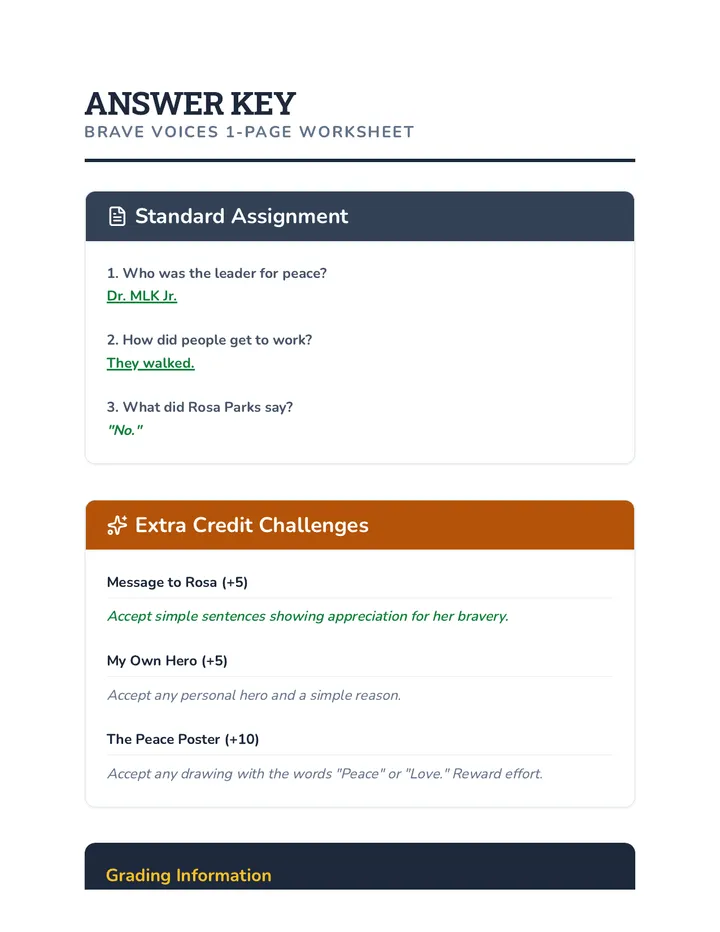
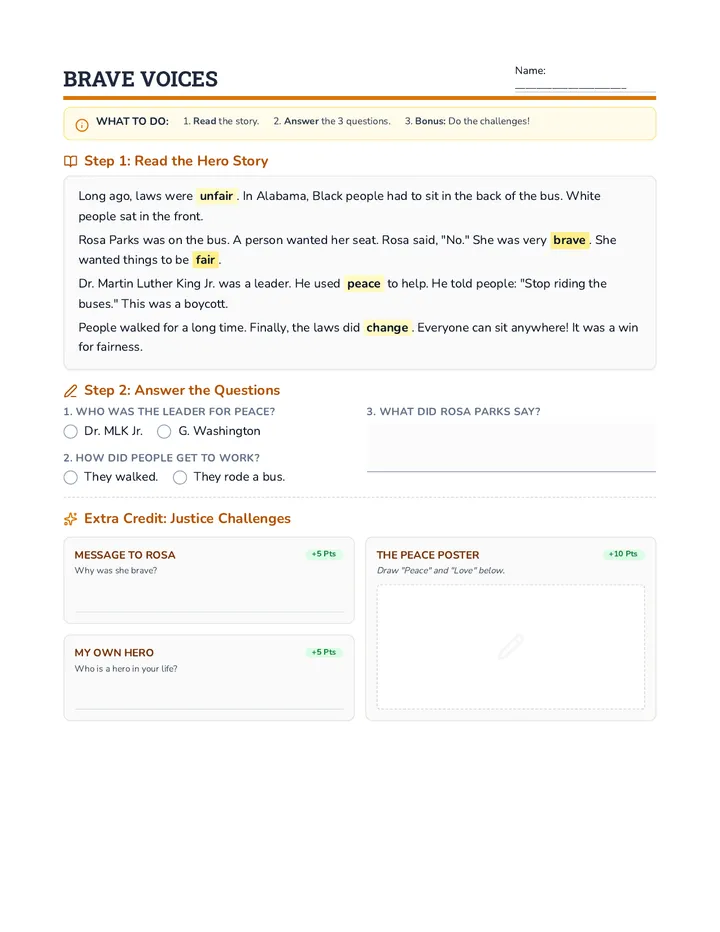
A series of accessible lessons on the Civil Rights Movement designed for middle school English Learners reading at an elementary level. This sequence focuses on key figures and events through simplified text and visual support.
A comprehensive social studies and history lesson for second-grade students based on Alliah L. Agostini's book 'The Juneteenth Story'. It focuses on the timeline of freedom, the historical significance of June 19, 1865, and symbols of celebration like the Juneteenth Flag.
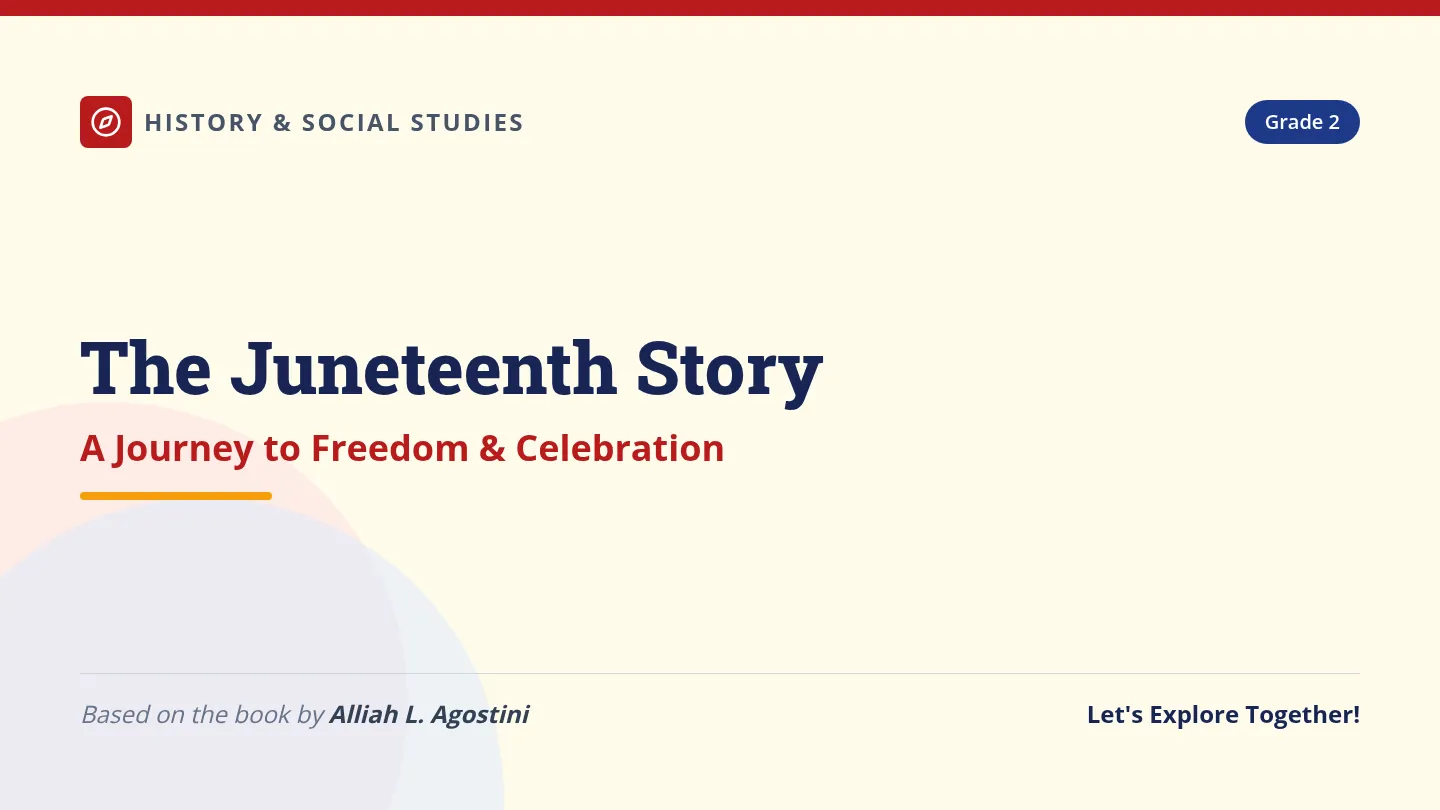
A highly visual 5-slide classroom presentation with high-contrast text (minimum font size 24px) that covers the historical timeline, vocabulary of freedom, flag symbols, and guided discussion questions.
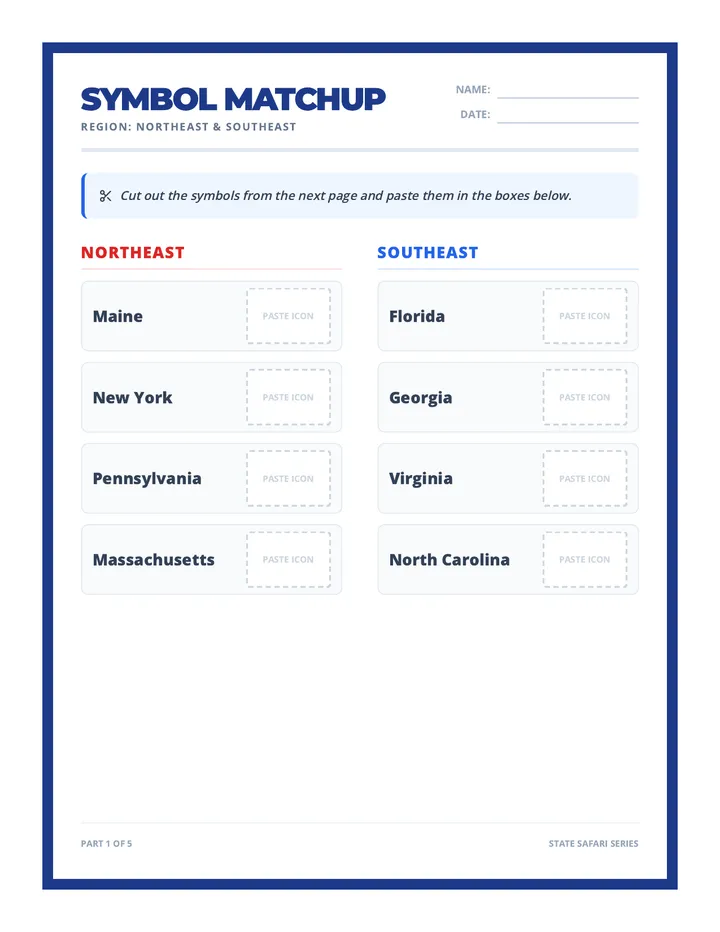
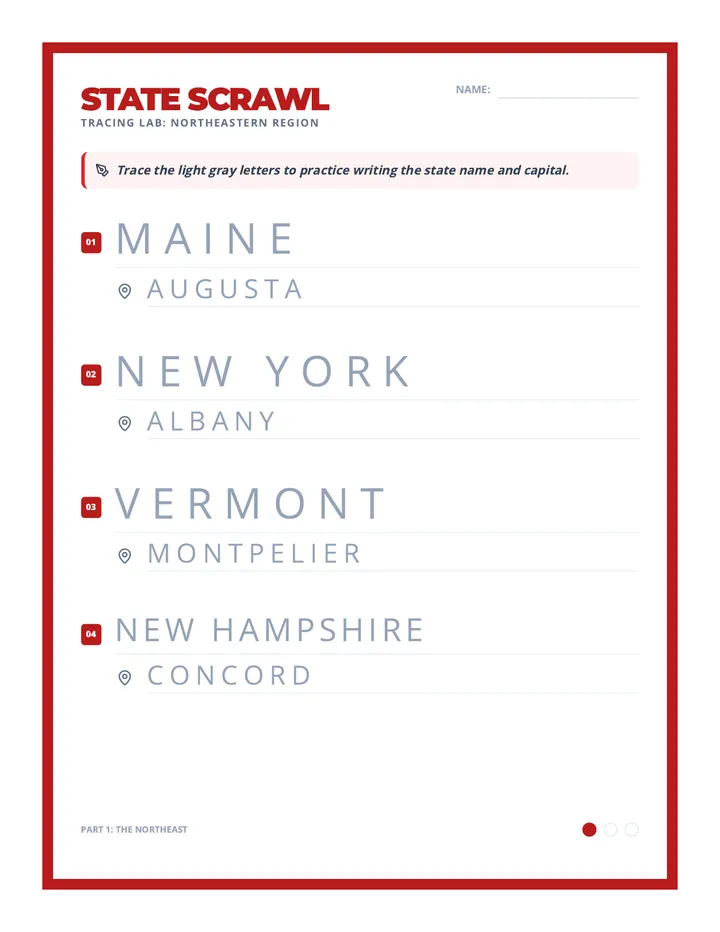
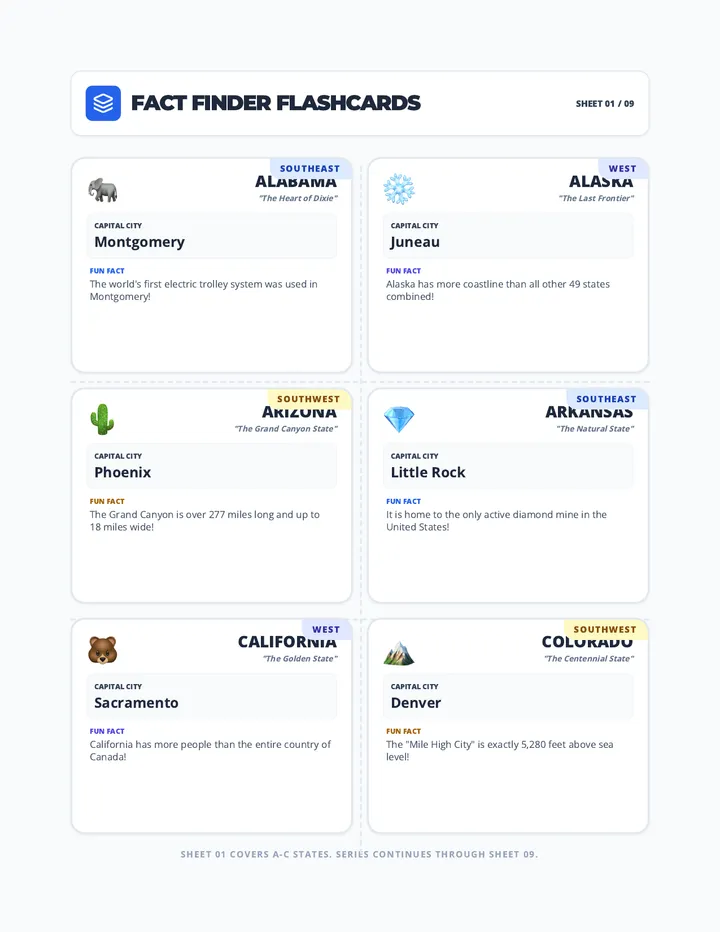
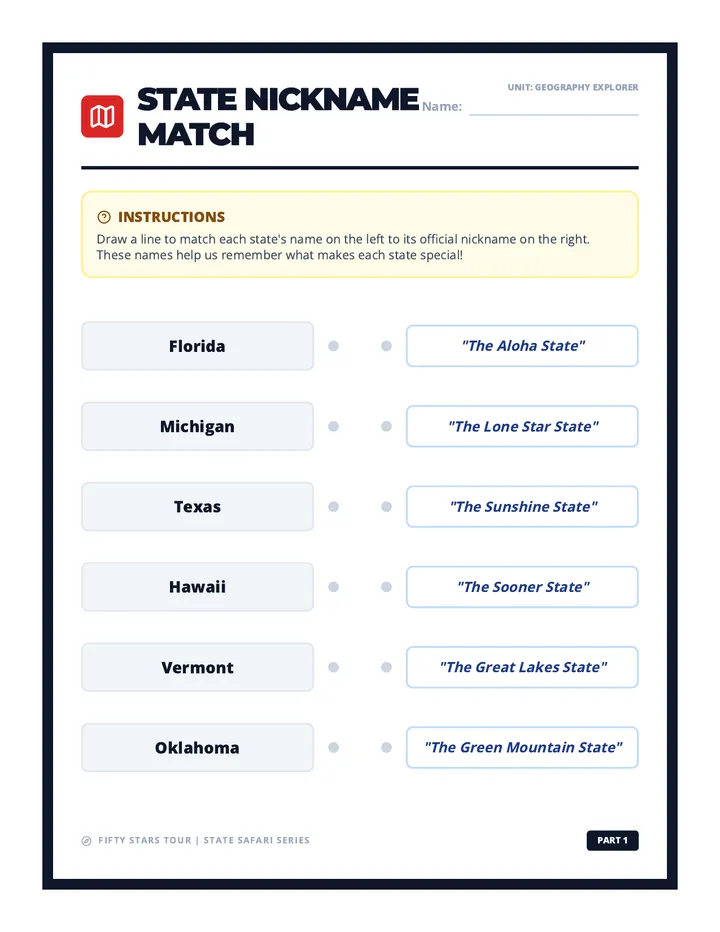
A comprehensive tour of the 50 United States, exploring their flags, shapes, capitals, and unique facts through interactive worksheets and visual aids.
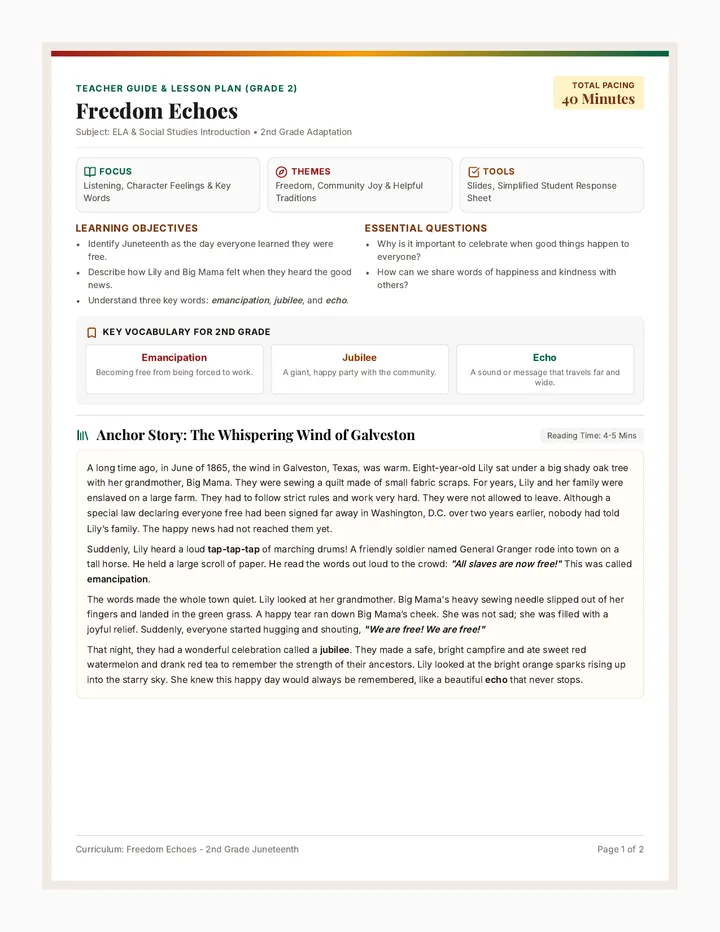
A comprehensive 40-minute ELA lesson centered around the historical significance of Juneteenth, featuring a historical fiction read-aloud, vocabulary exploration, and critical response activities.
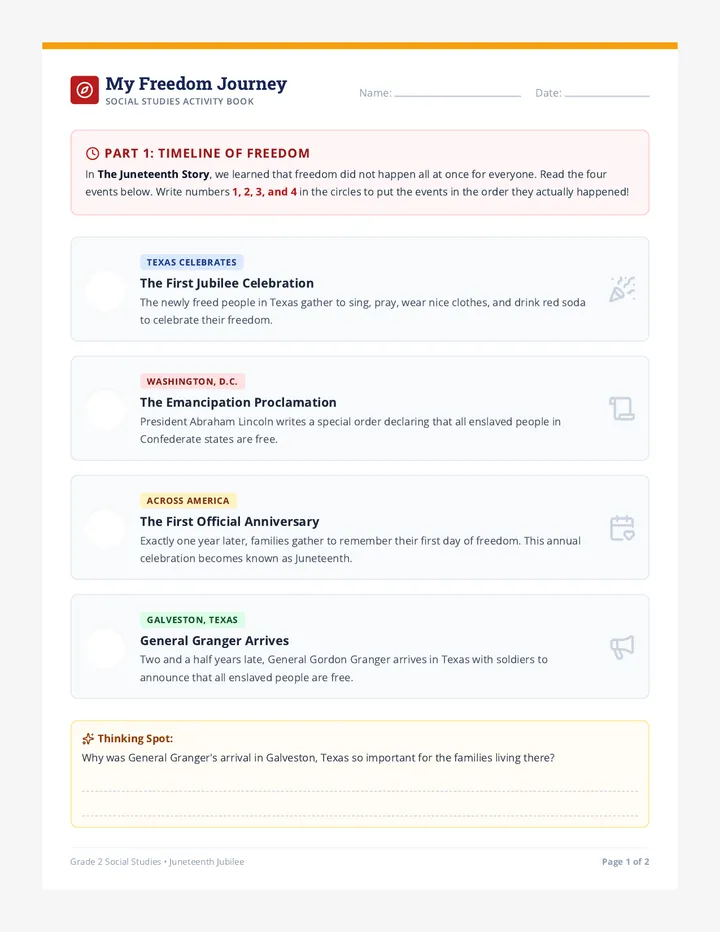
A 2-page student-facing history activity sheet with a chronological timeline ordering activity and a creative Juneteenth Flag symbol analysis and custom flag-drawing page.
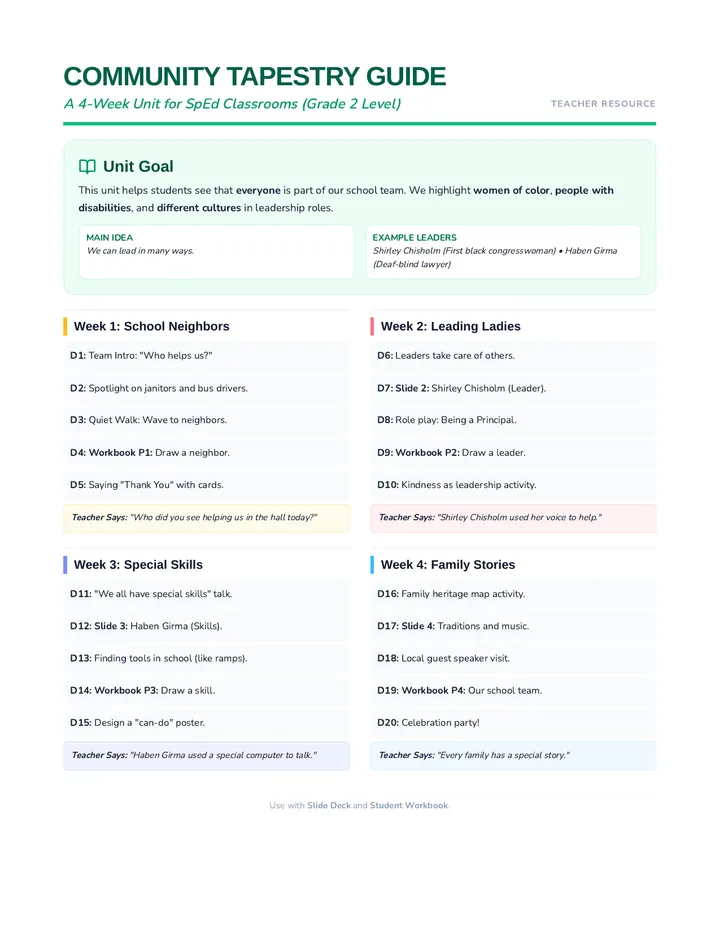
A four-week exploration of school community roles, focusing on diversity, inclusion, and representation in leadership. Students will identify daily community members and learn about the contributions of women of color and people with disabilities in their school and beyond.
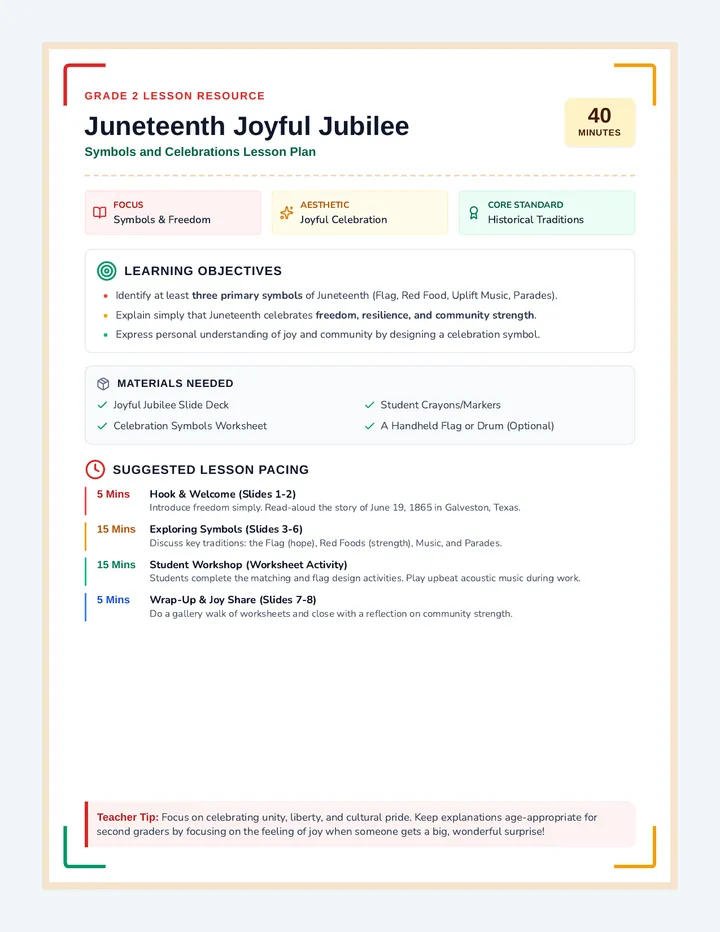
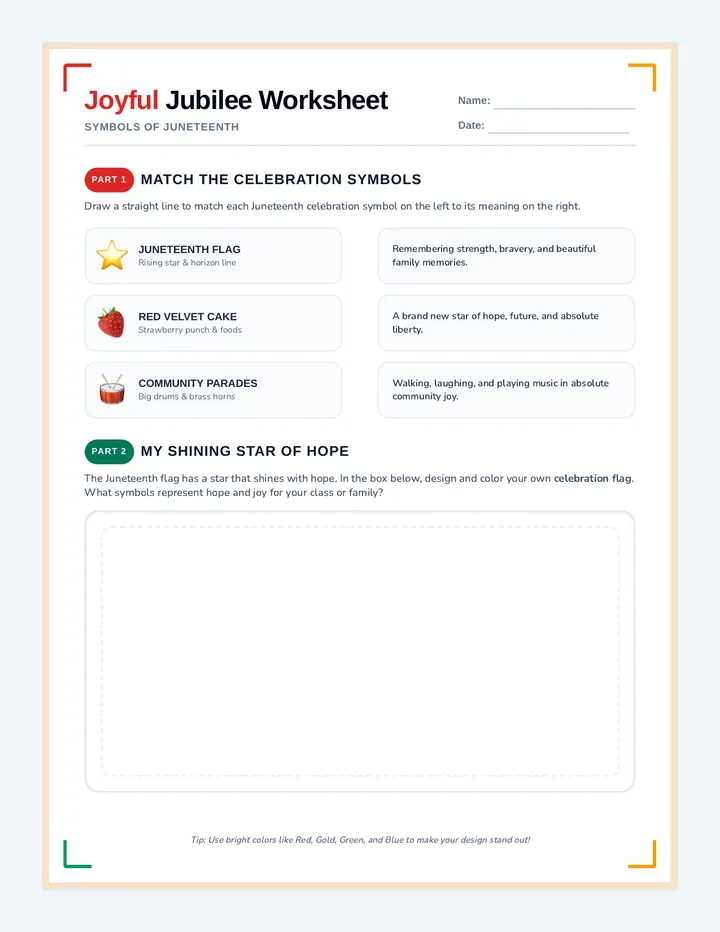
A vibrant 40-minute lesson for second graders focusing on the meaningful symbols and celebrations of Juneteenth. Through interactive slides, a visual worksheet, and structured teaching prompts, students learn about the Juneteenth flag, red food traditions, uplift music, and festive community parades.
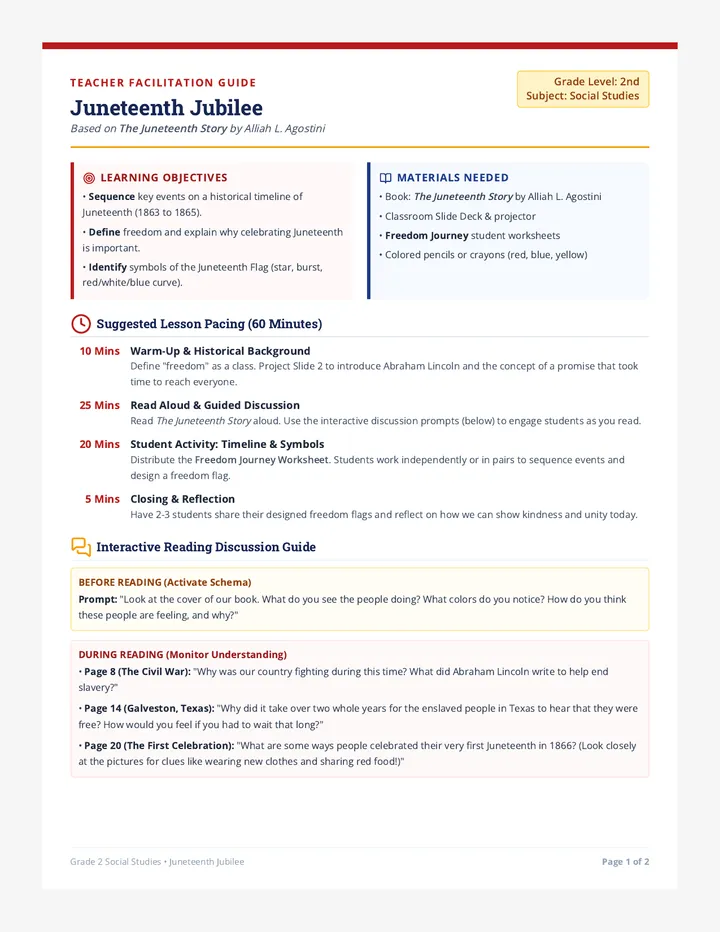
A comprehensive, 2-page teacher facilitation guide containing lesson objectives, reading discussion prompts, pacing, and teacher answer keys for 'The Juneteenth Story'.
A comprehensive collection of high-quality instructional materials across Science, History, ELA, and Math, designed for upper elementary classrooms.
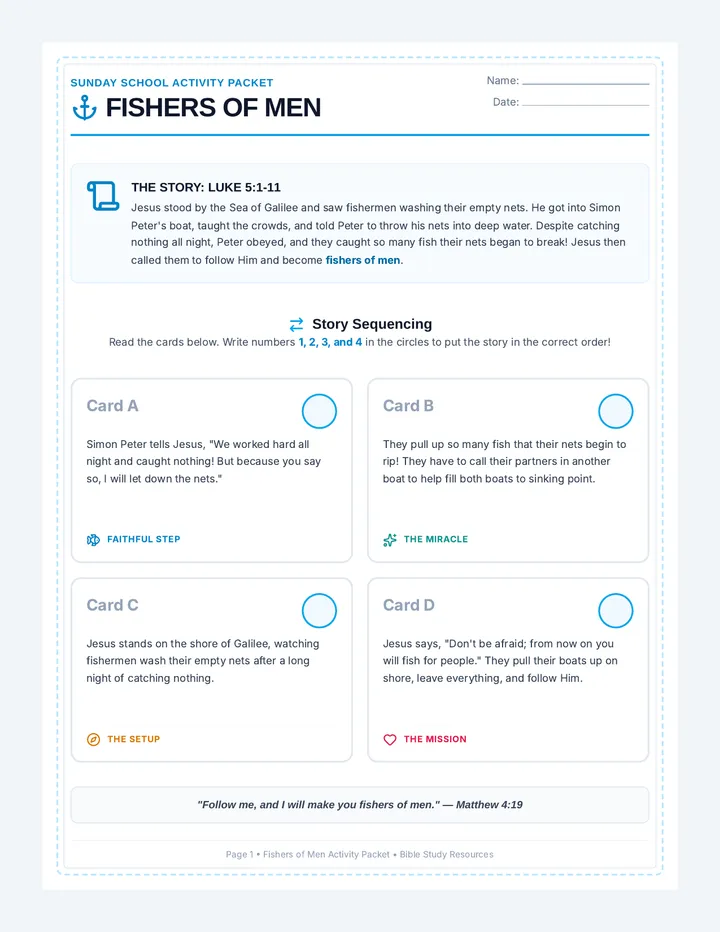
A lesson exploring the calling of the first disciples, focusing on Jesus' invitation to become fishers of men and share God's love with others through creative, hands-on activities.
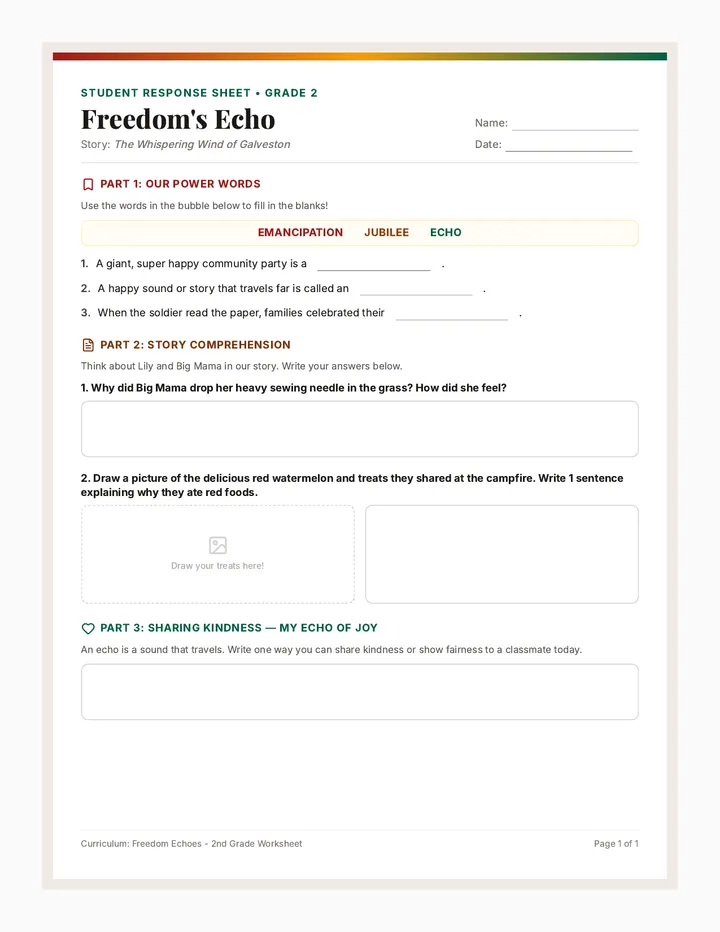
A simplified 1-page student worksheet for 2nd grade. Features a word bank match, basic reading comprehension, and an interactive drawing/writing space to describe ways to share kindness.