A 1st-grade history sequence exploring why we celebrate national holidays. Students learn about calendar literacy, historical figures, the concept of freedom, and the importance of gratitude, culminating in the creation of their own holiday.
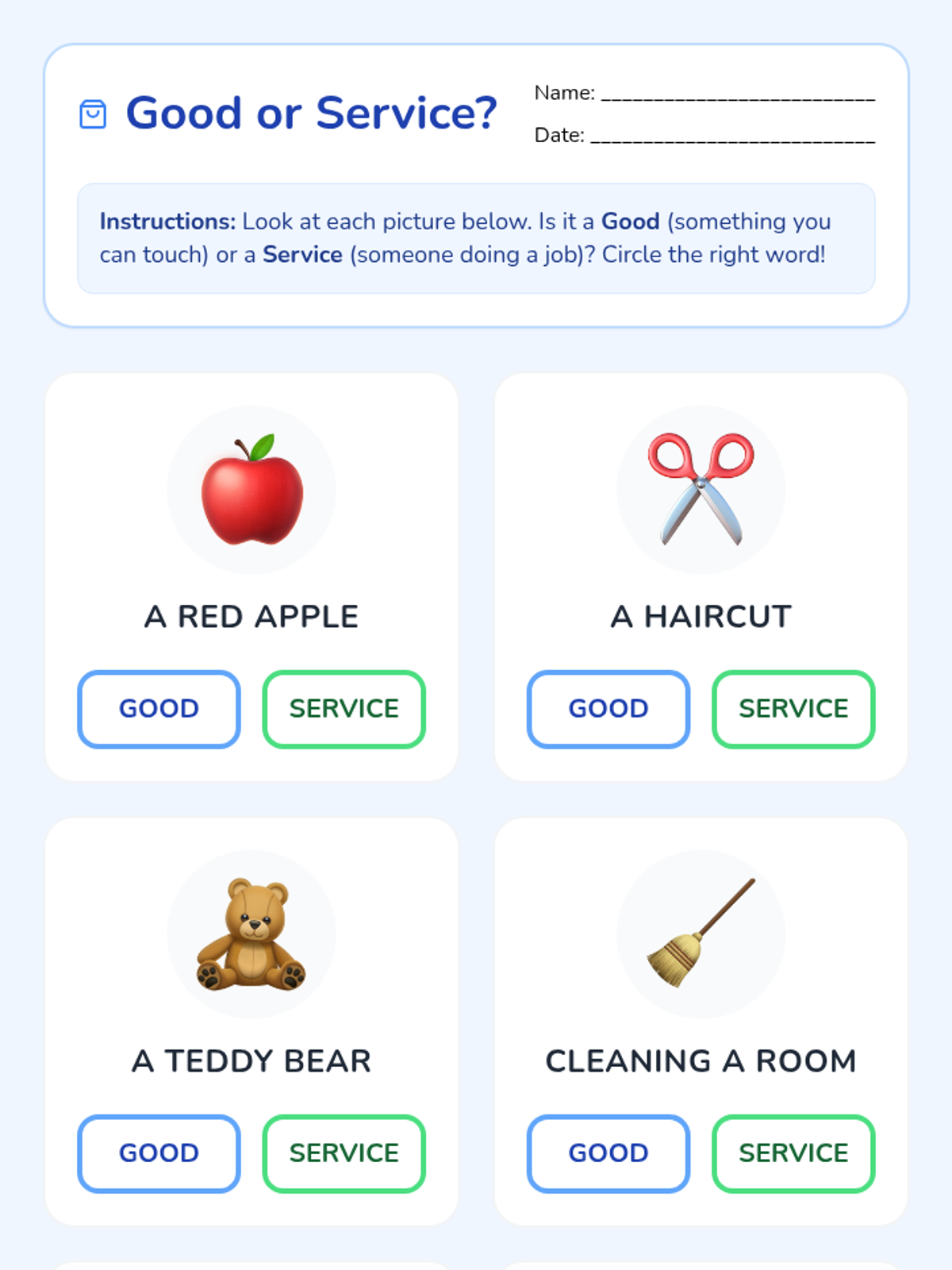
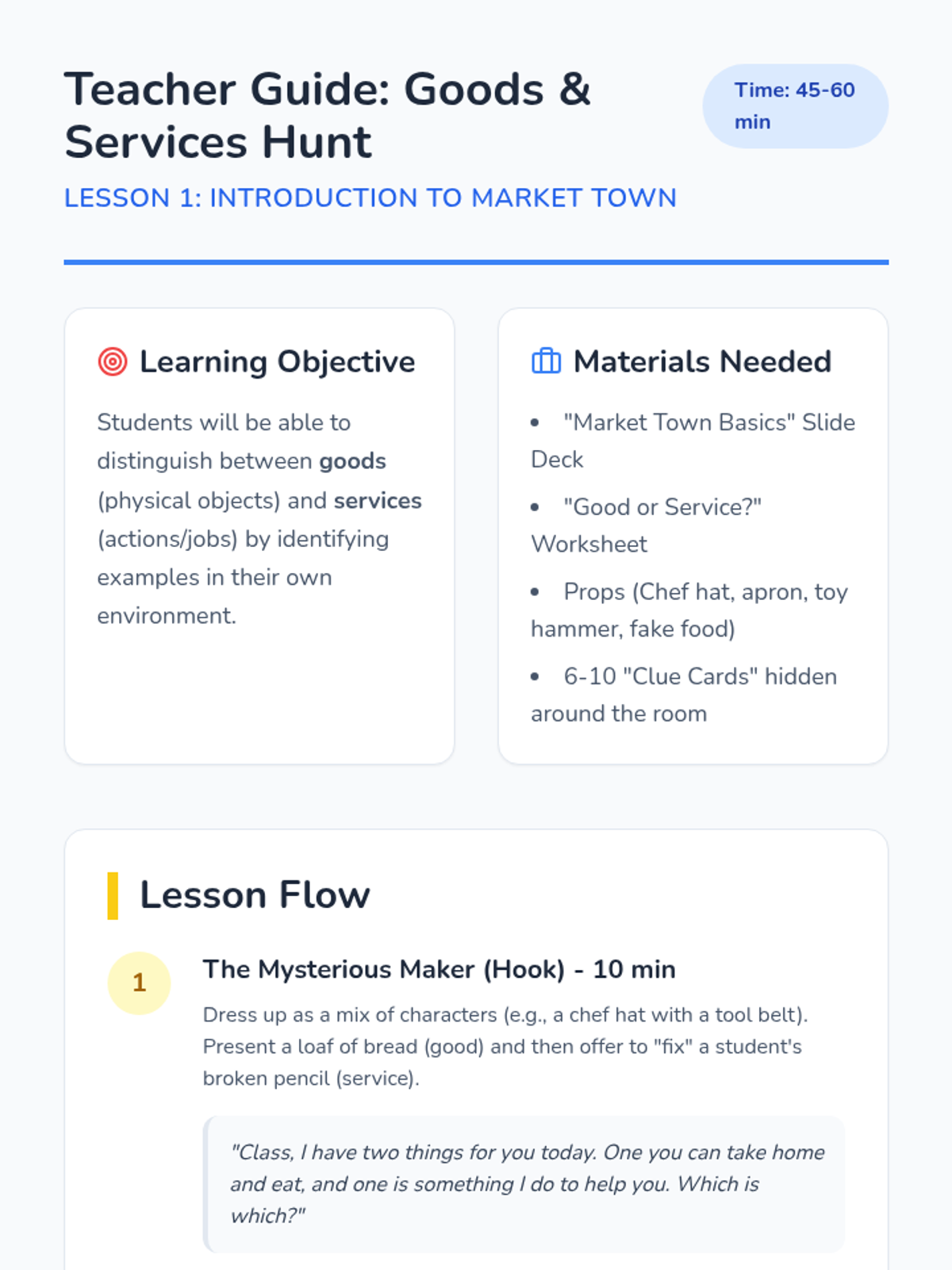
A hands-on introduction to economics for 1st graders, covering goods, services, producers, consumers, and the basic forces of supply and demand through a classroom 'Market Town' simulation.
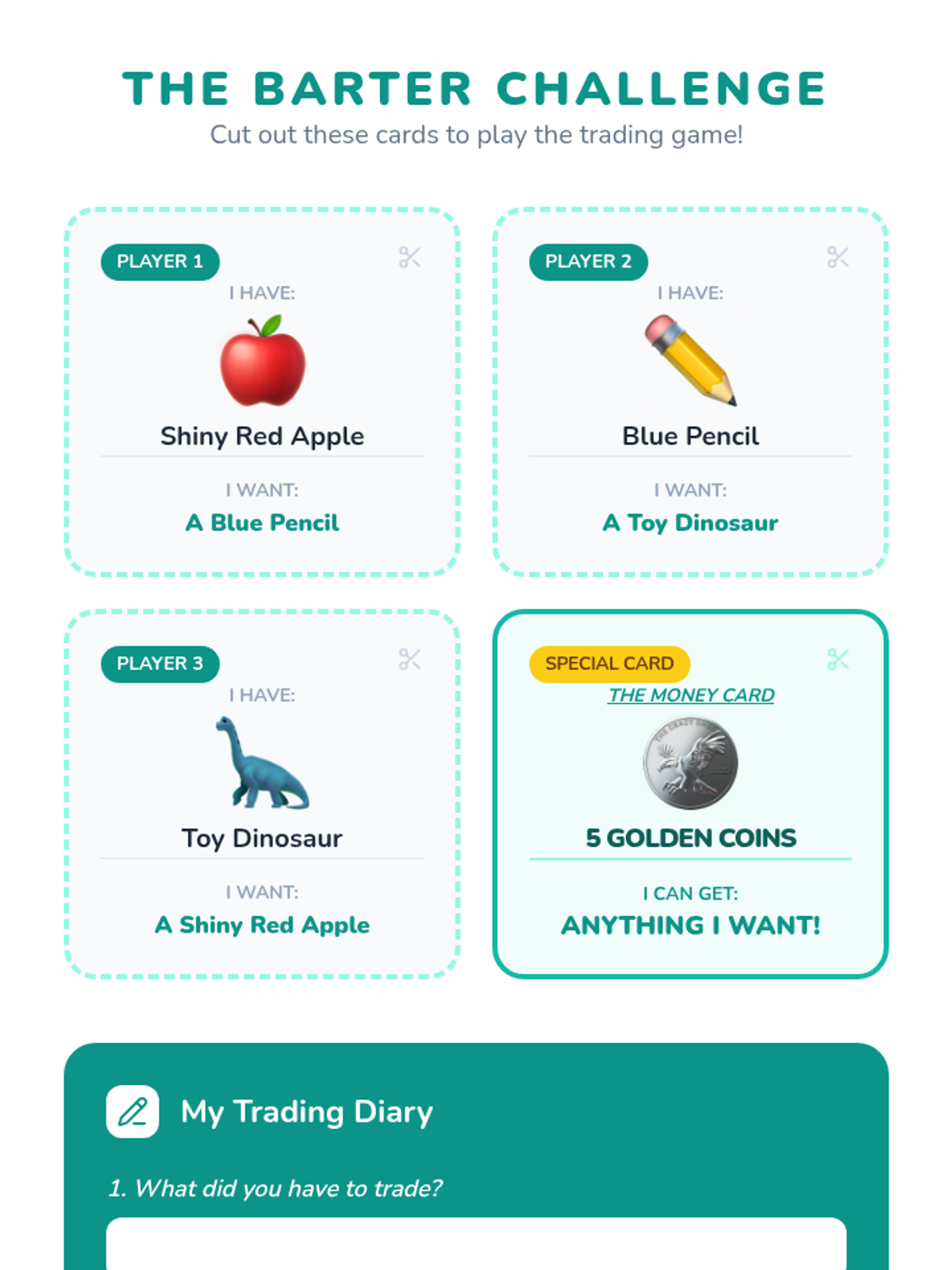
A 1st Grade financial literacy unit exploring the origins of money, the concept of value, why prices change (inflation), and the connection between work and purchasing power. Students move from understanding barter systems to planning their own purchases.
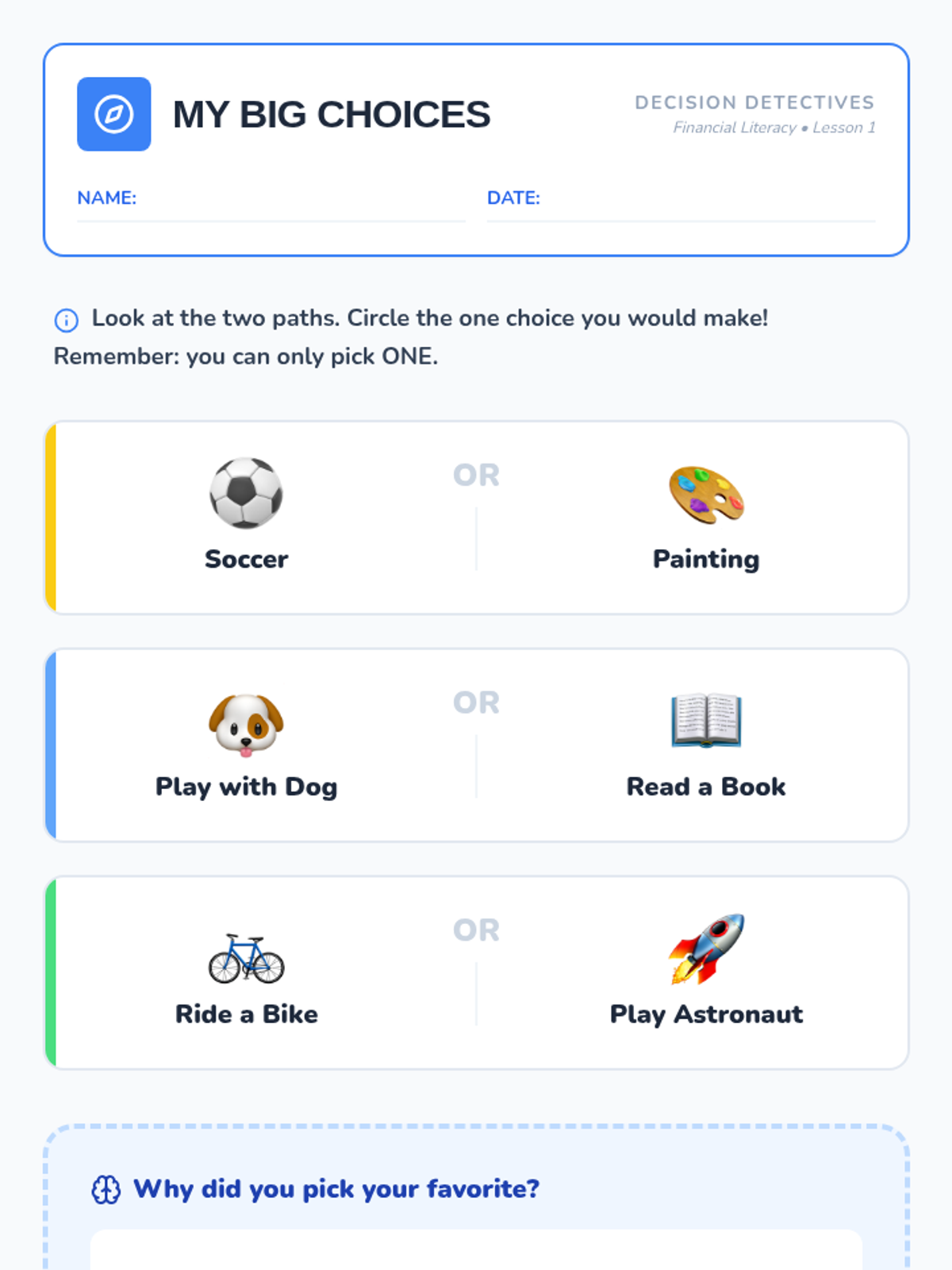
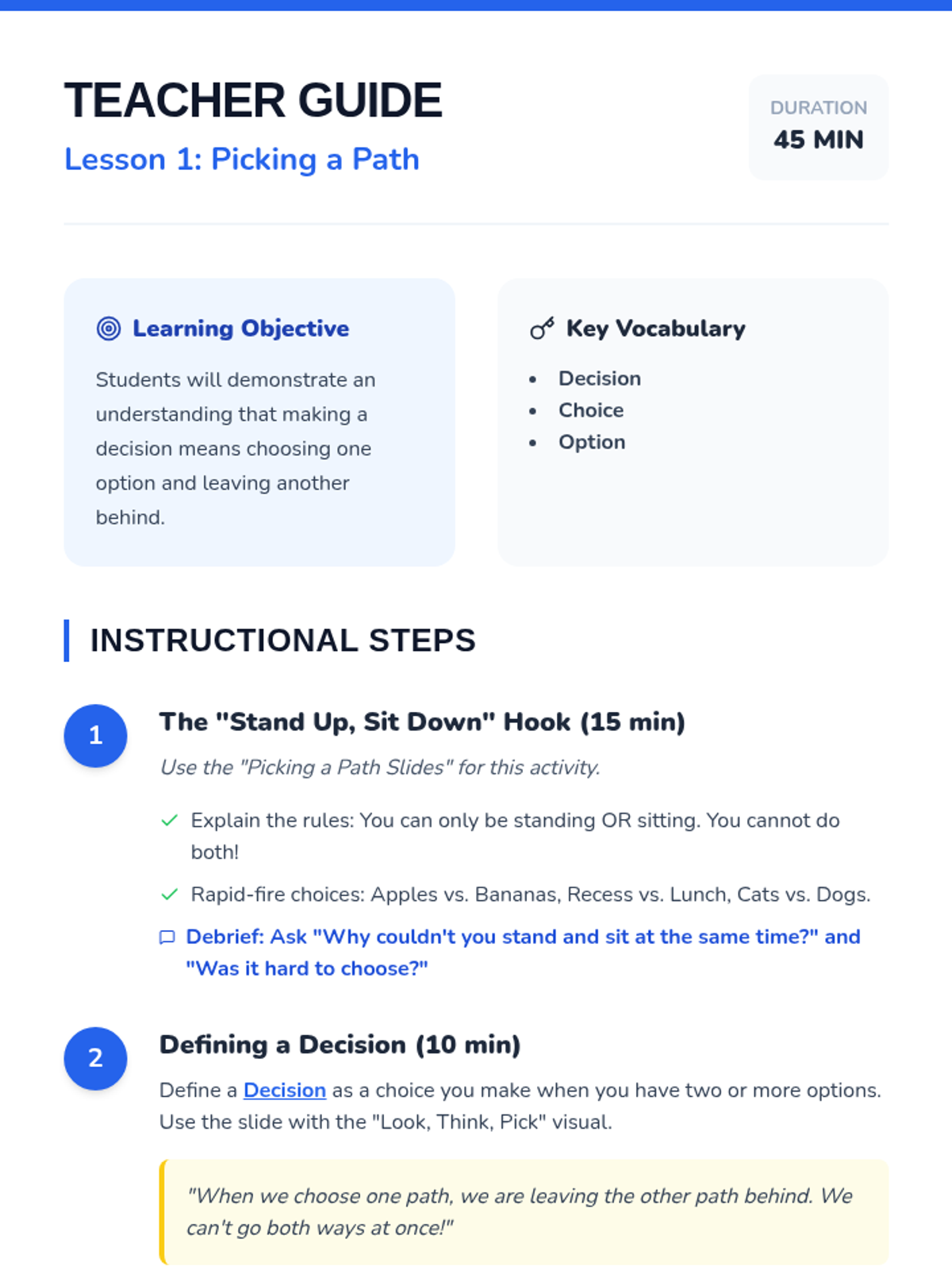
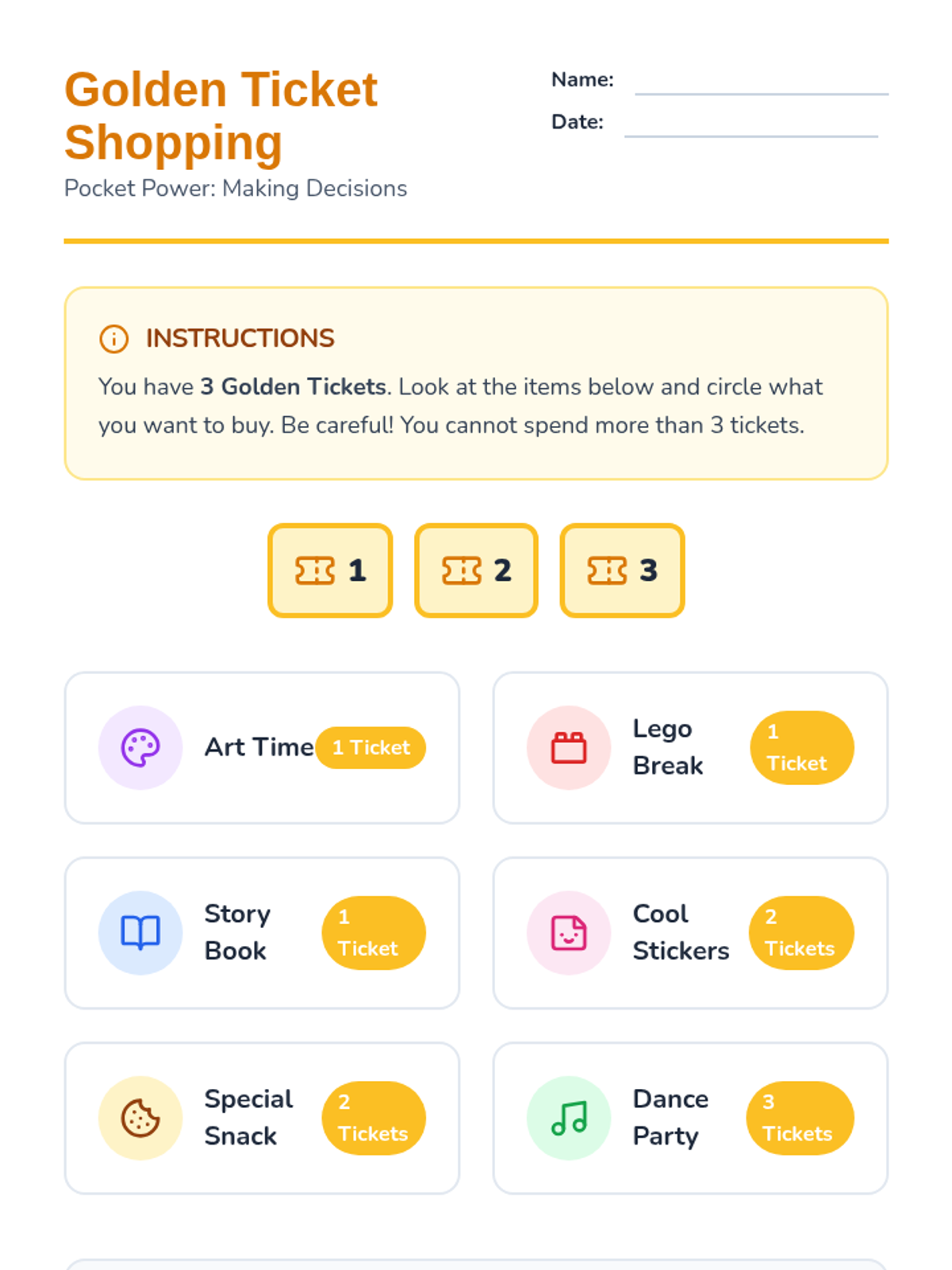
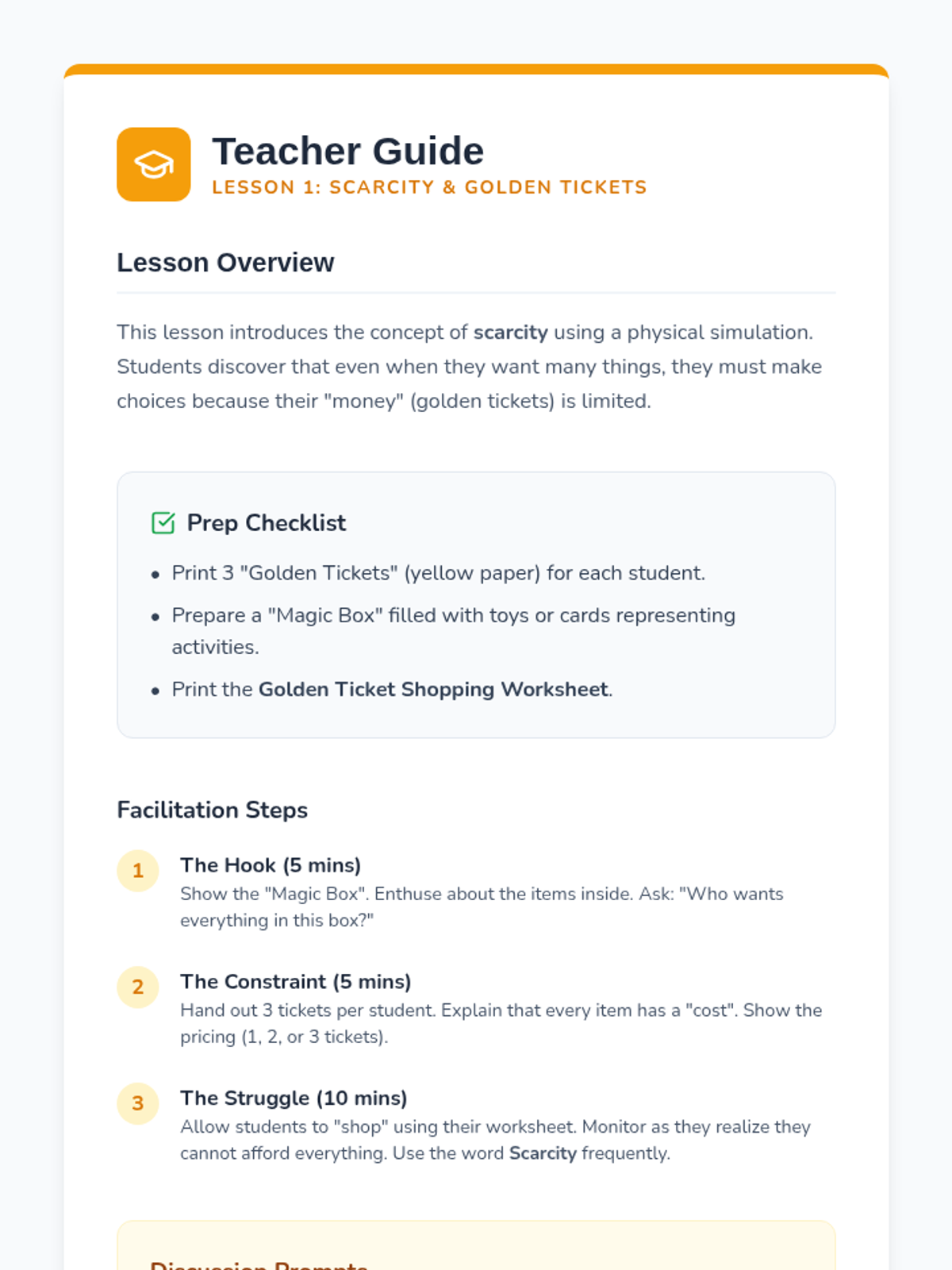
A 1st Grade sequence introducing economic decision-making and the concept of opportunity cost. Students explore trade-offs through interactive games, a token shop simulation, and reflective journaling.
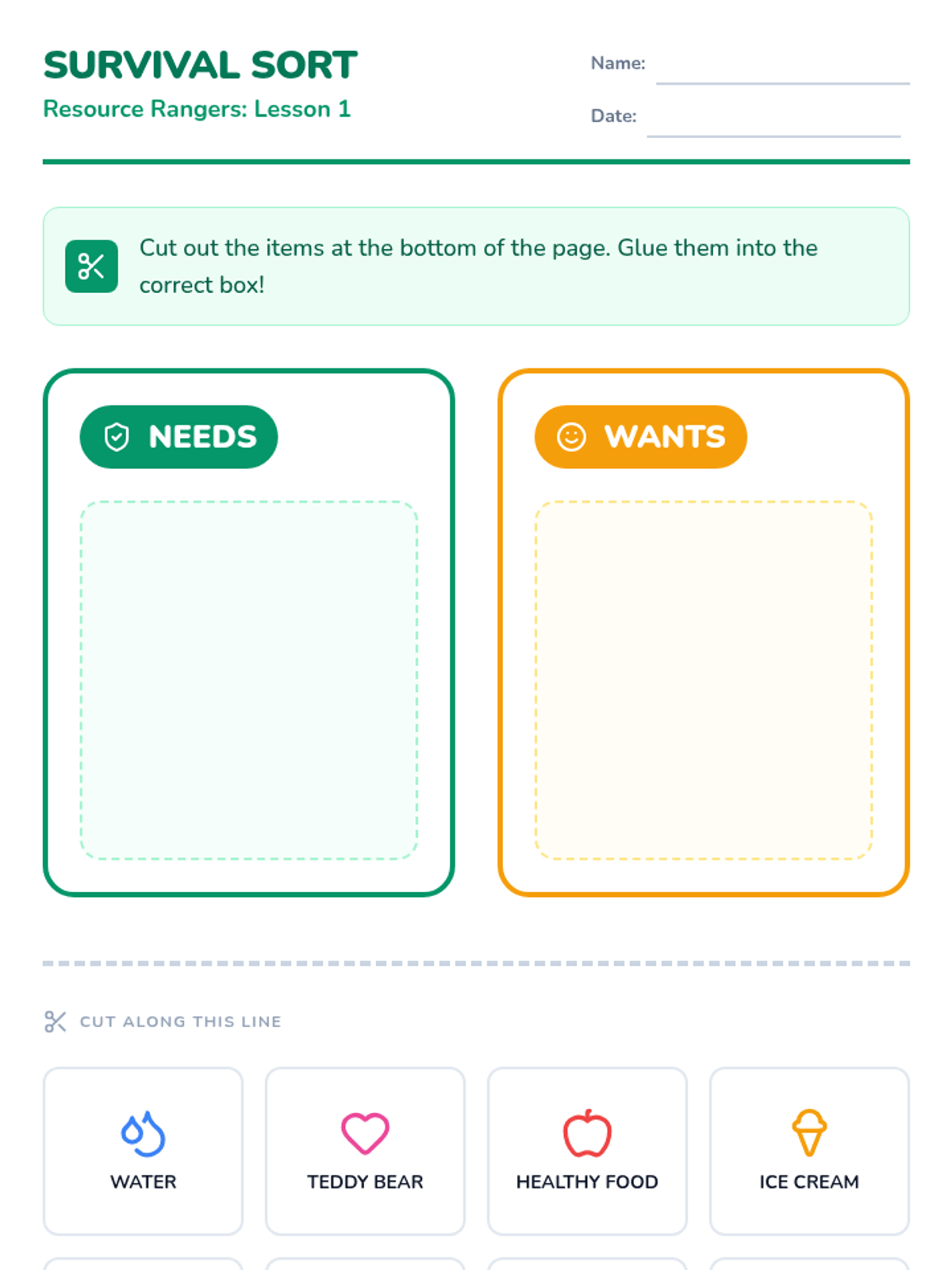
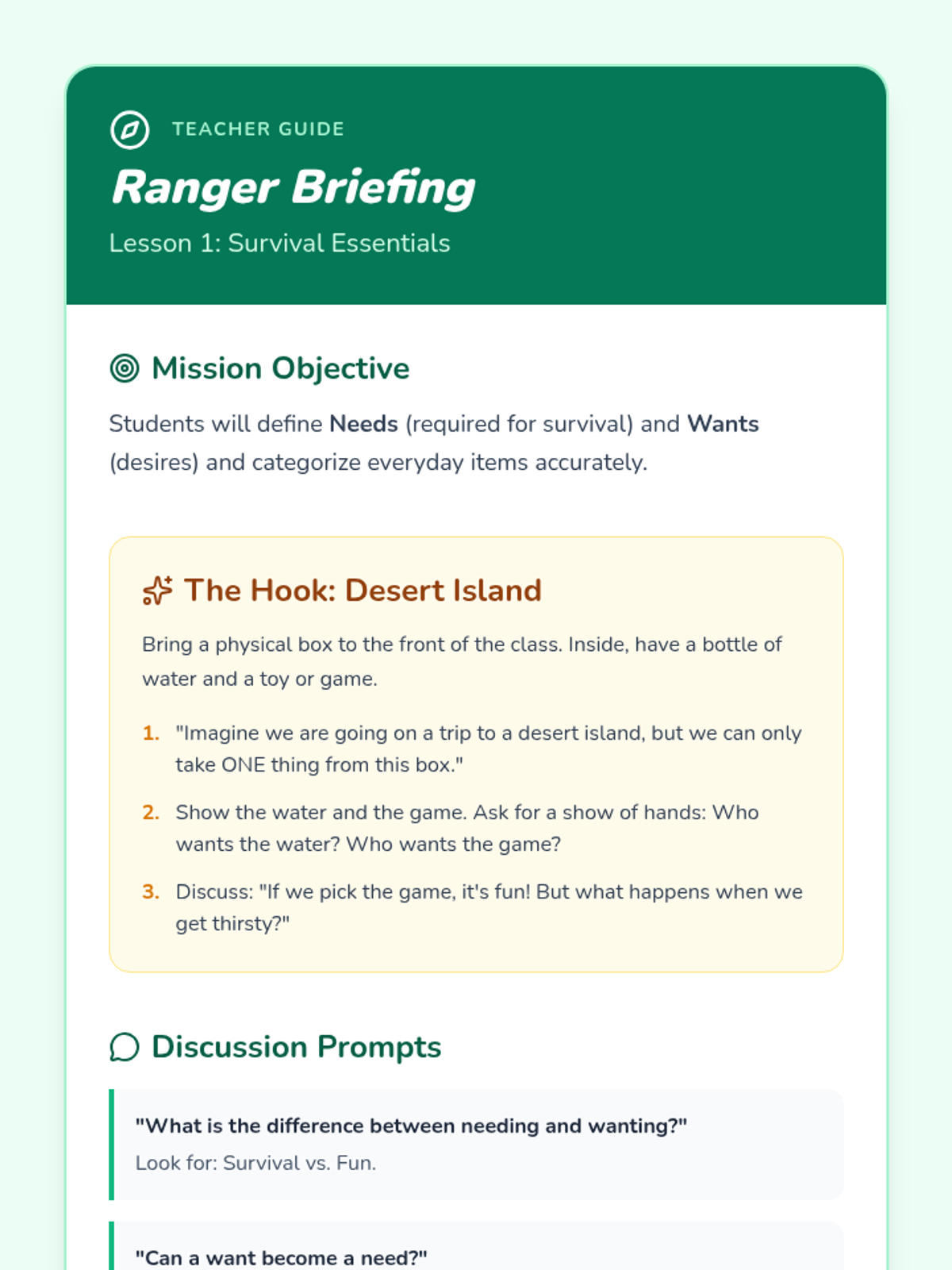
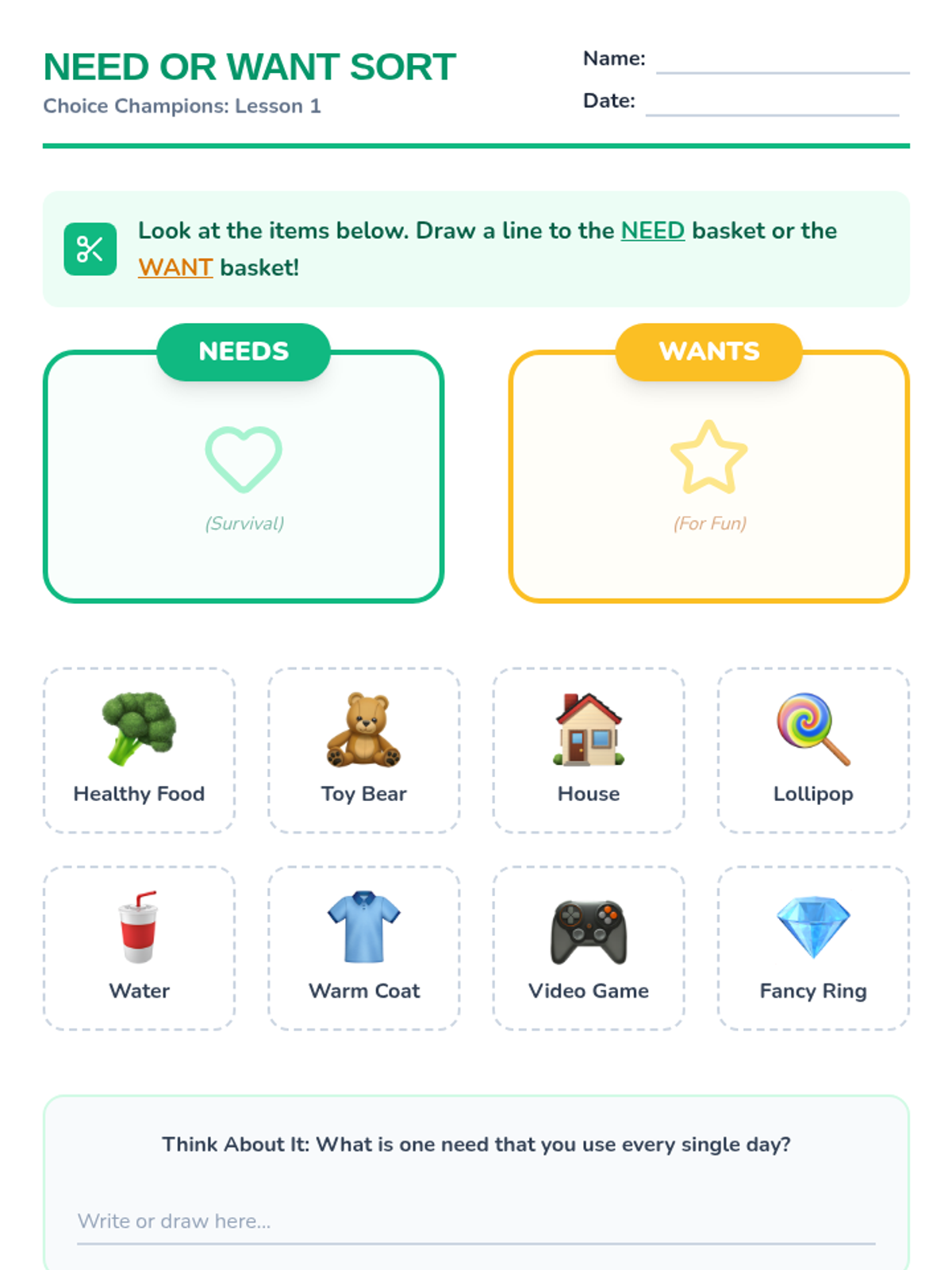
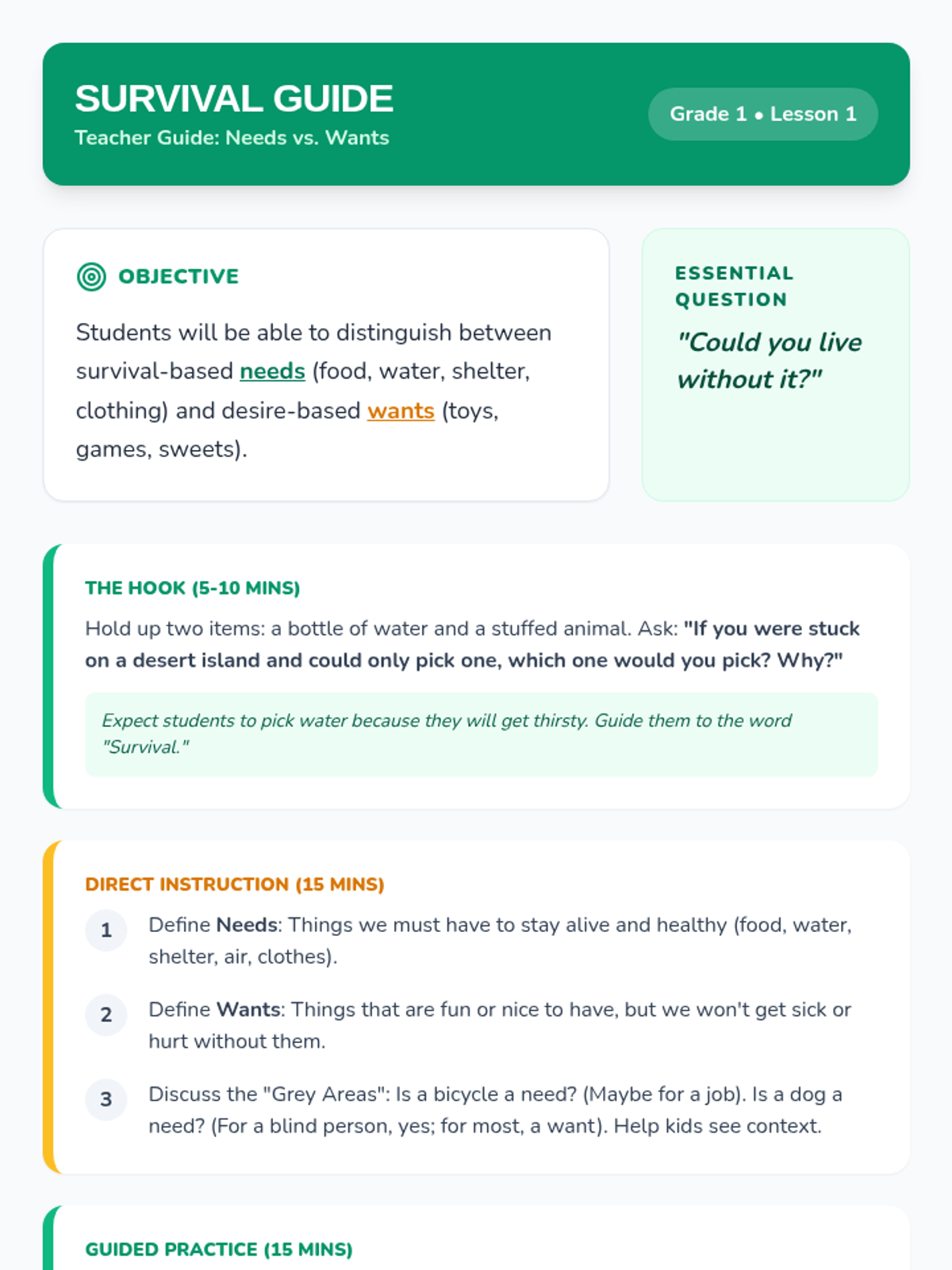
A foundational sequence for 1st graders exploring needs, wants, and scarcity. Students learn to differentiate survival essentials from desires and understand why resources are limited through simulations, games, and creative projects.
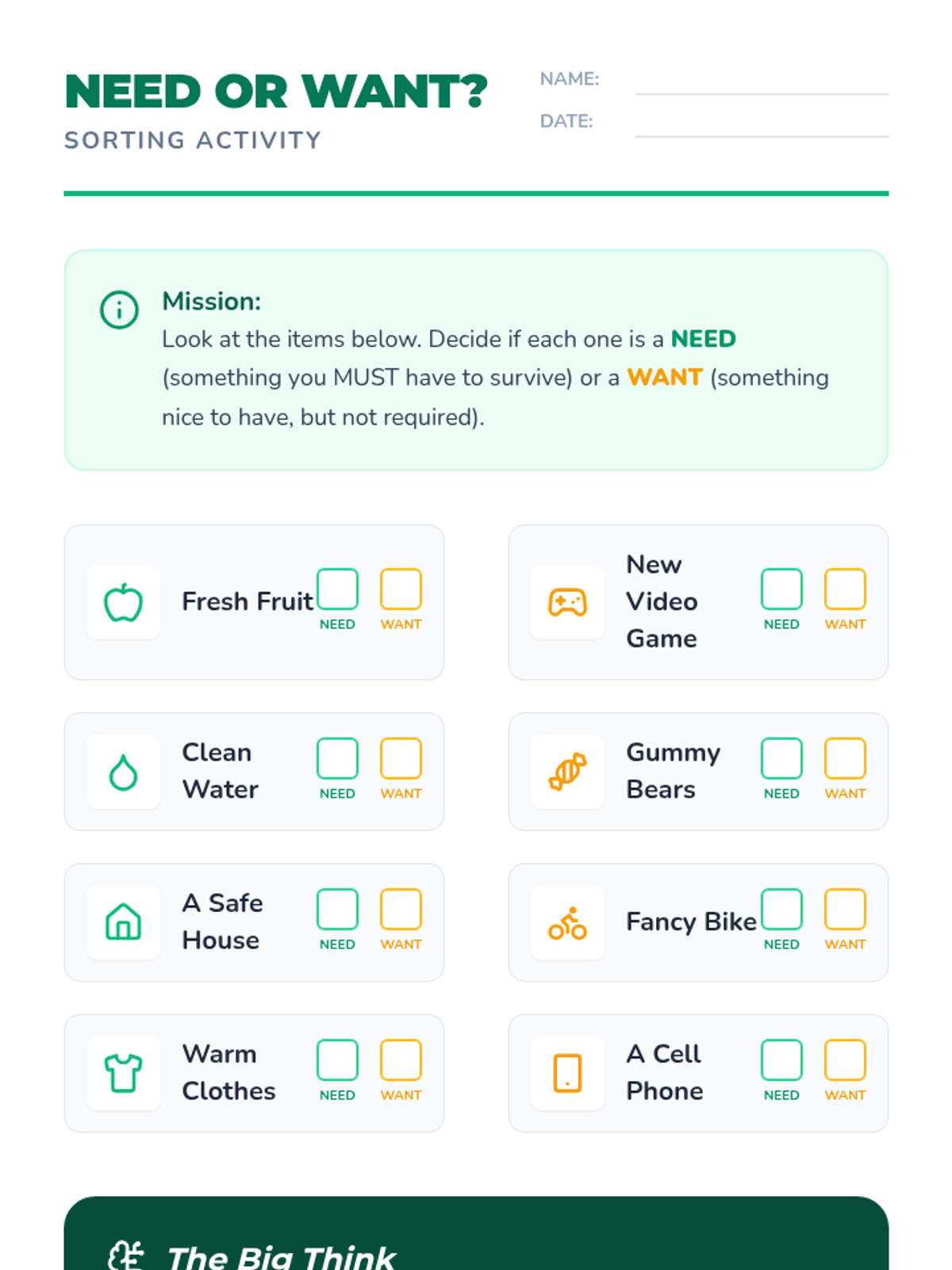
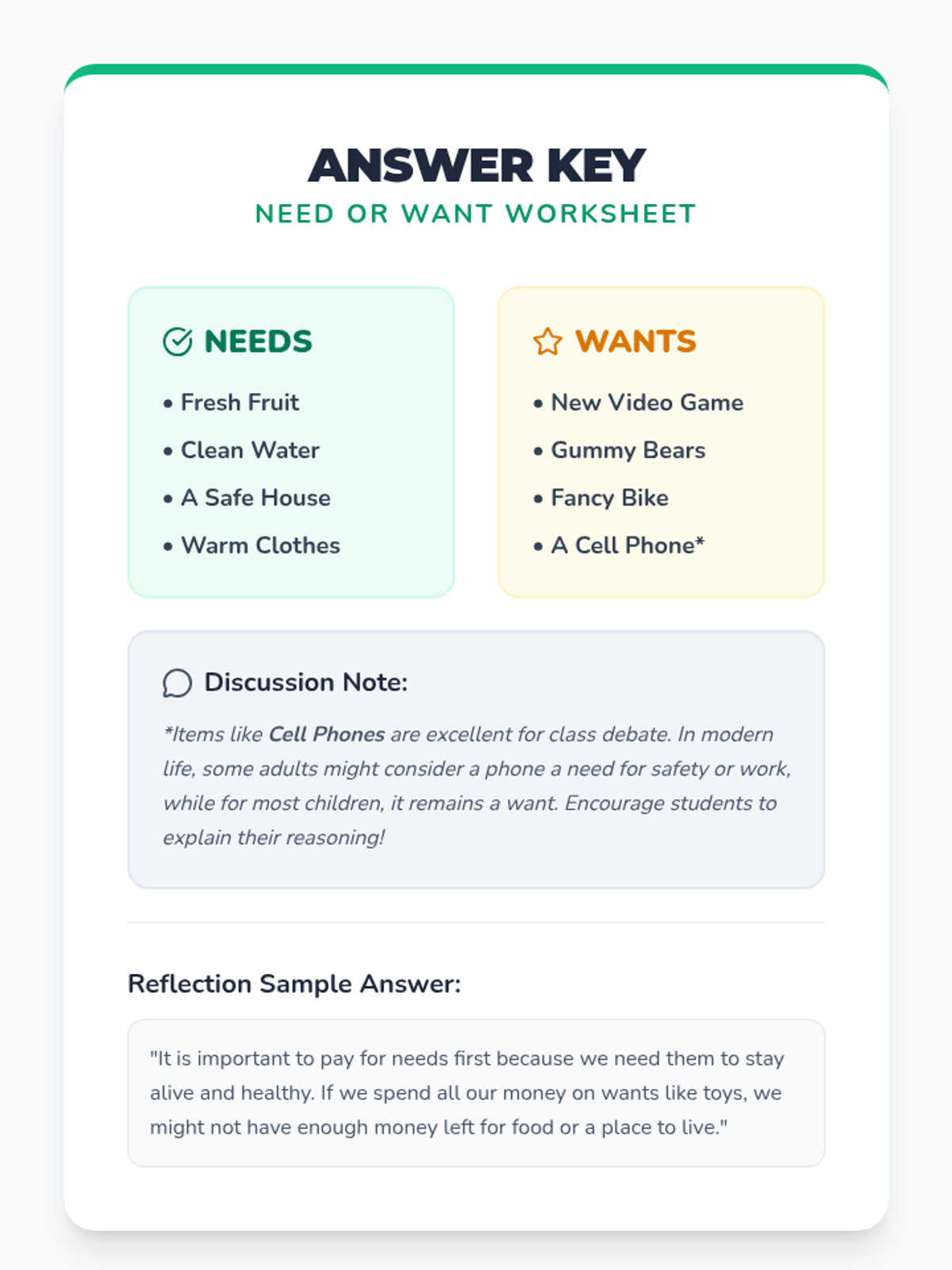
A comprehensive sequence for 1st-grade students to understand financial decision-making, covering scarcity, needs versus wants, and the fundamental concept of opportunity cost through relatable scenarios and creative projects.
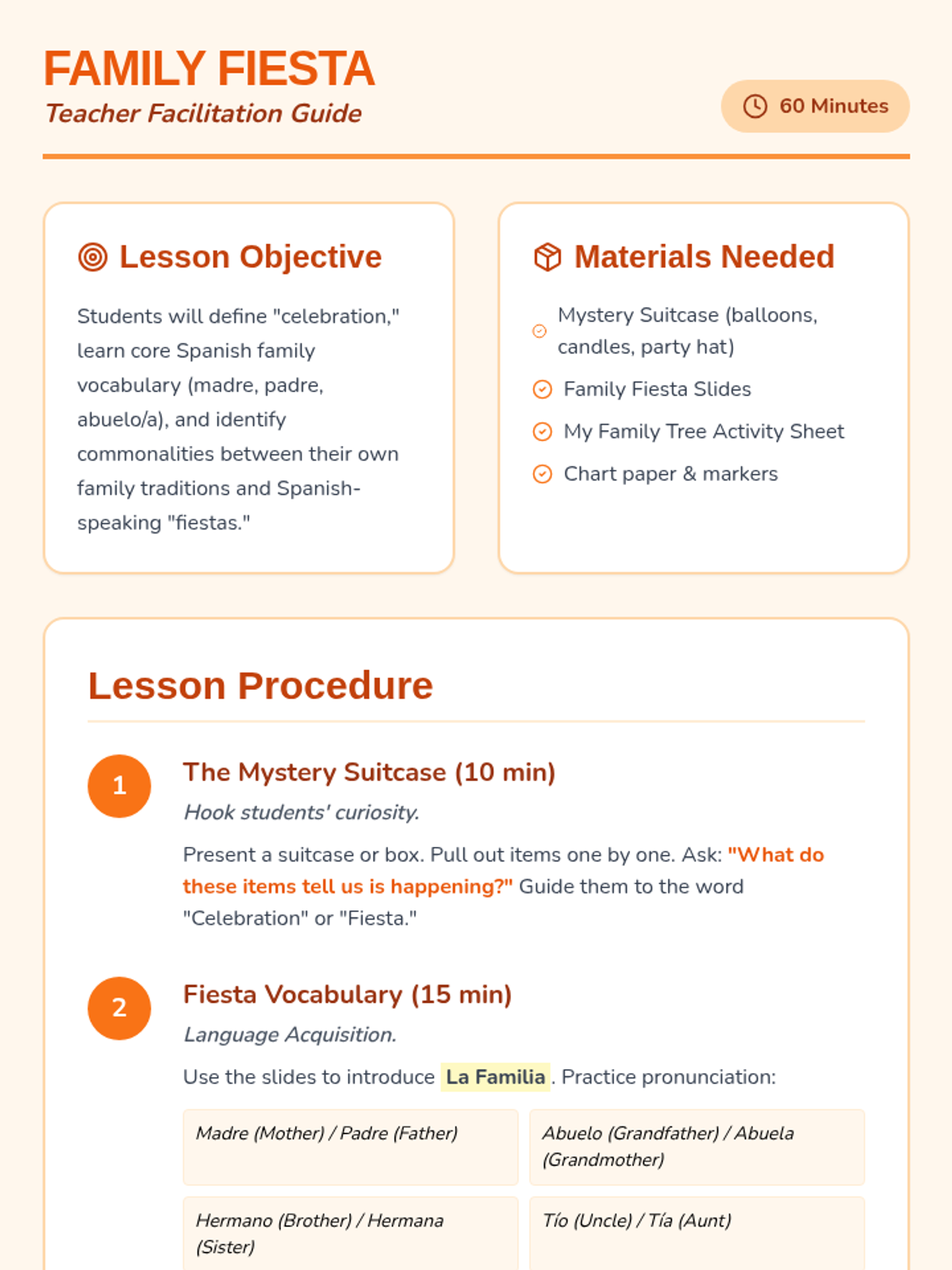
A vibrant introduction for 1st graders to Spanish-speaking holidays and family traditions, exploring Día de los Muertos, Las Posadas, and the history of piñatas.
A 1st-grade sequence exploring basic economic principles including the difference between needs and wants, scarcity, and the logic of making choices with limited resources. Students participate in a market simulation to apply their learning.
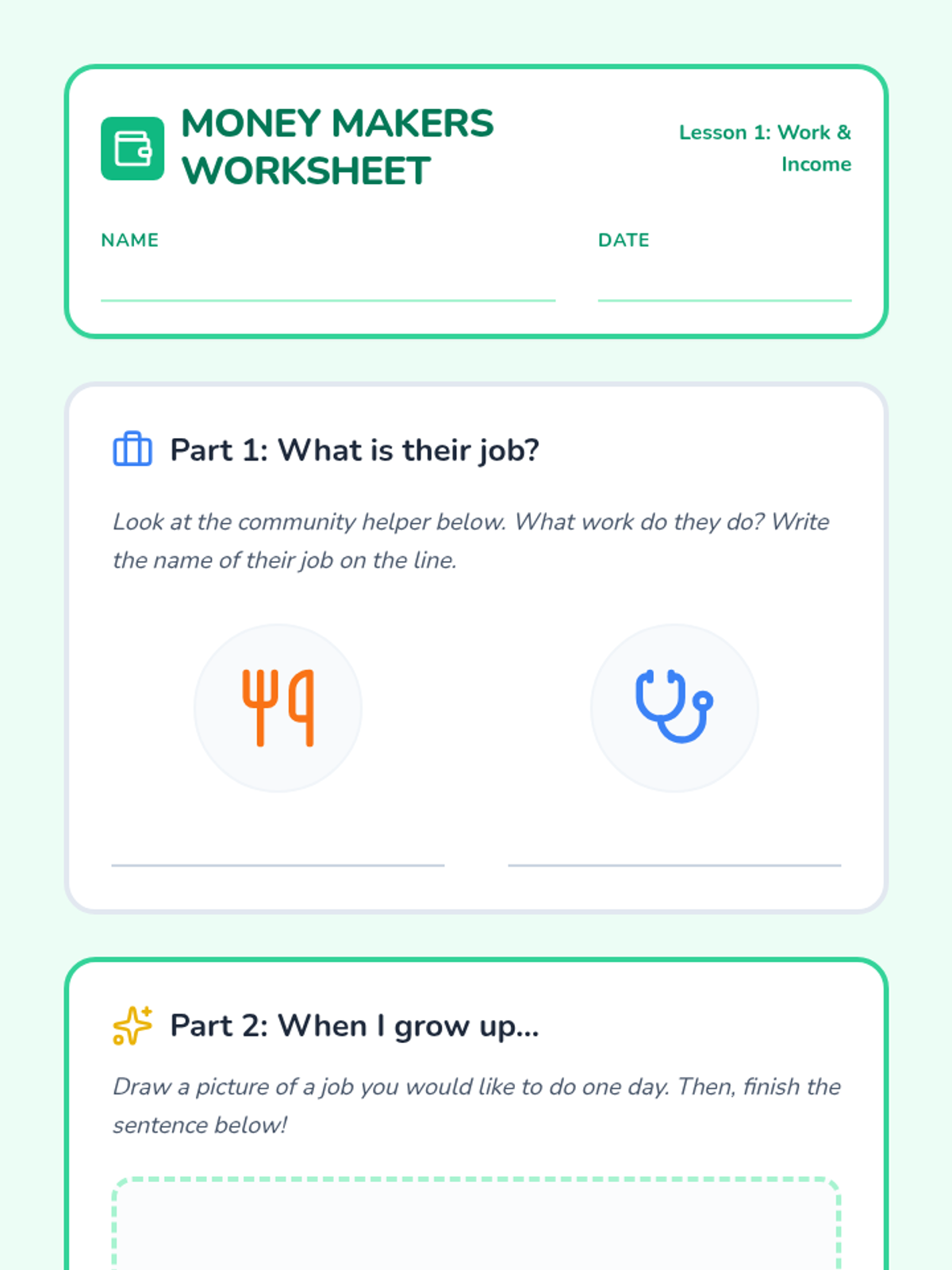
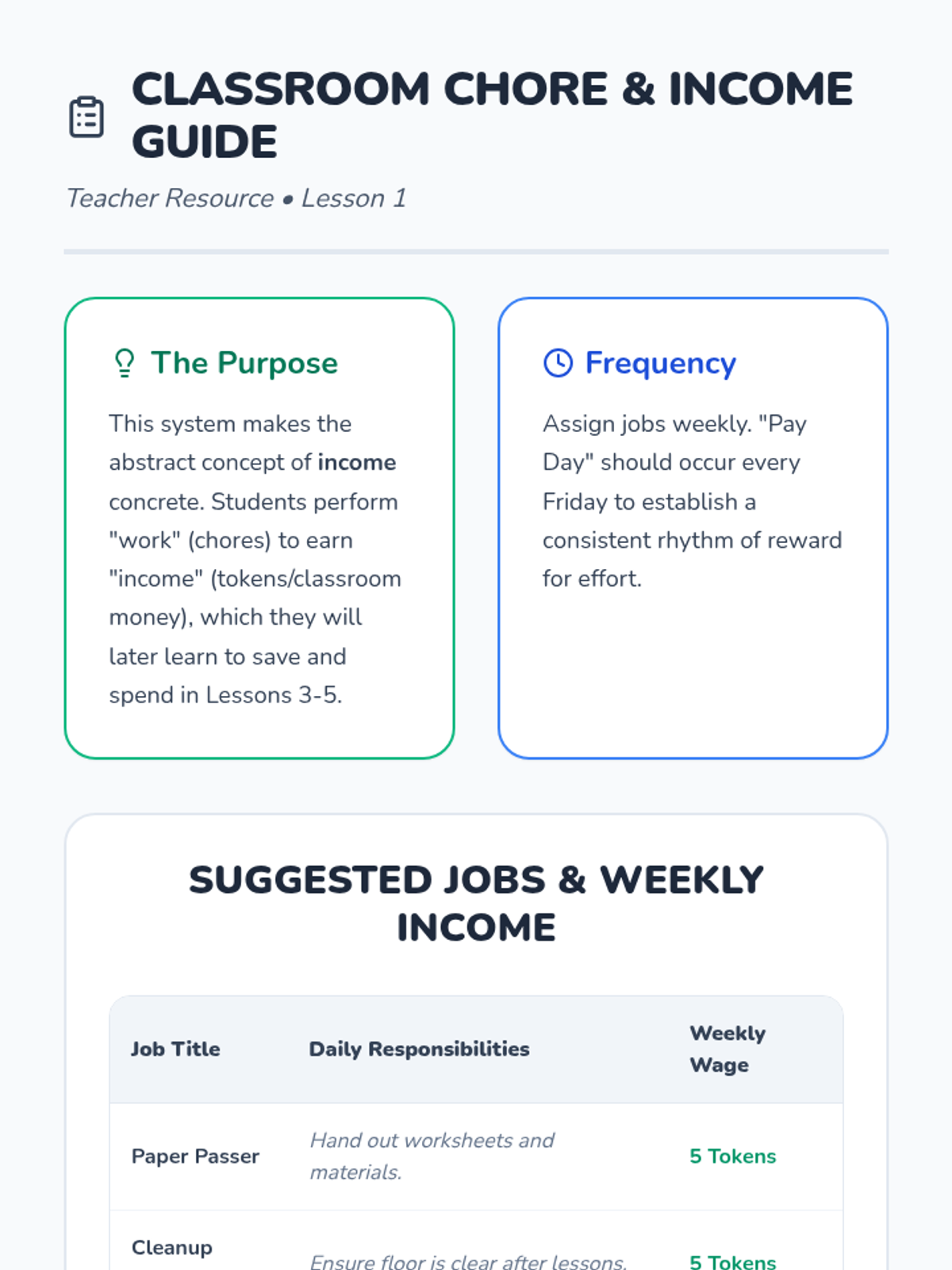
This 1st Grade sequence introduces the fundamentals of economics by exploring how money is earned through work, the difference between goods and services, and the importance of saving for the future. Students engage in classroom simulations and goal-setting to make abstract financial concepts concrete and actionable.
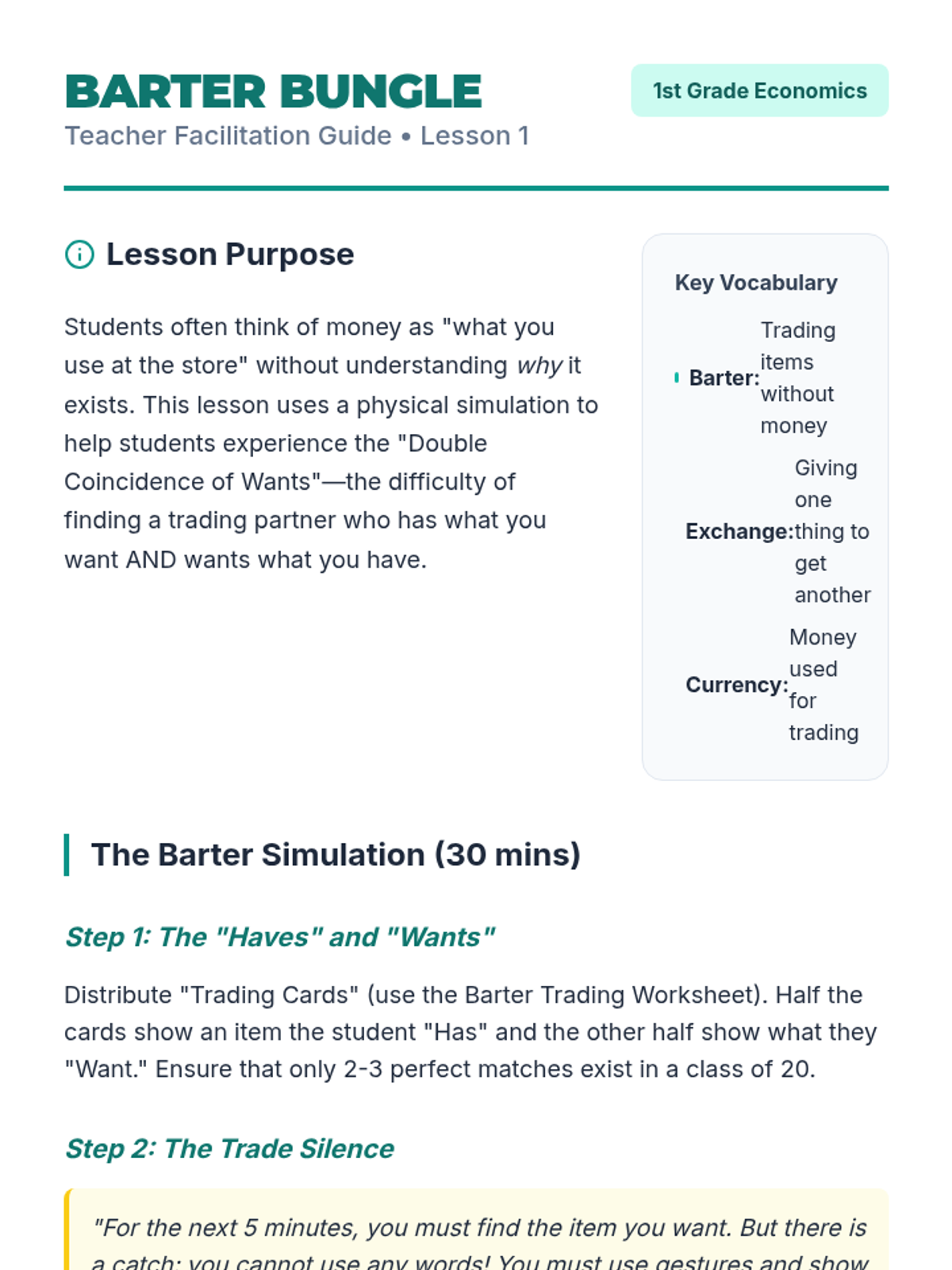
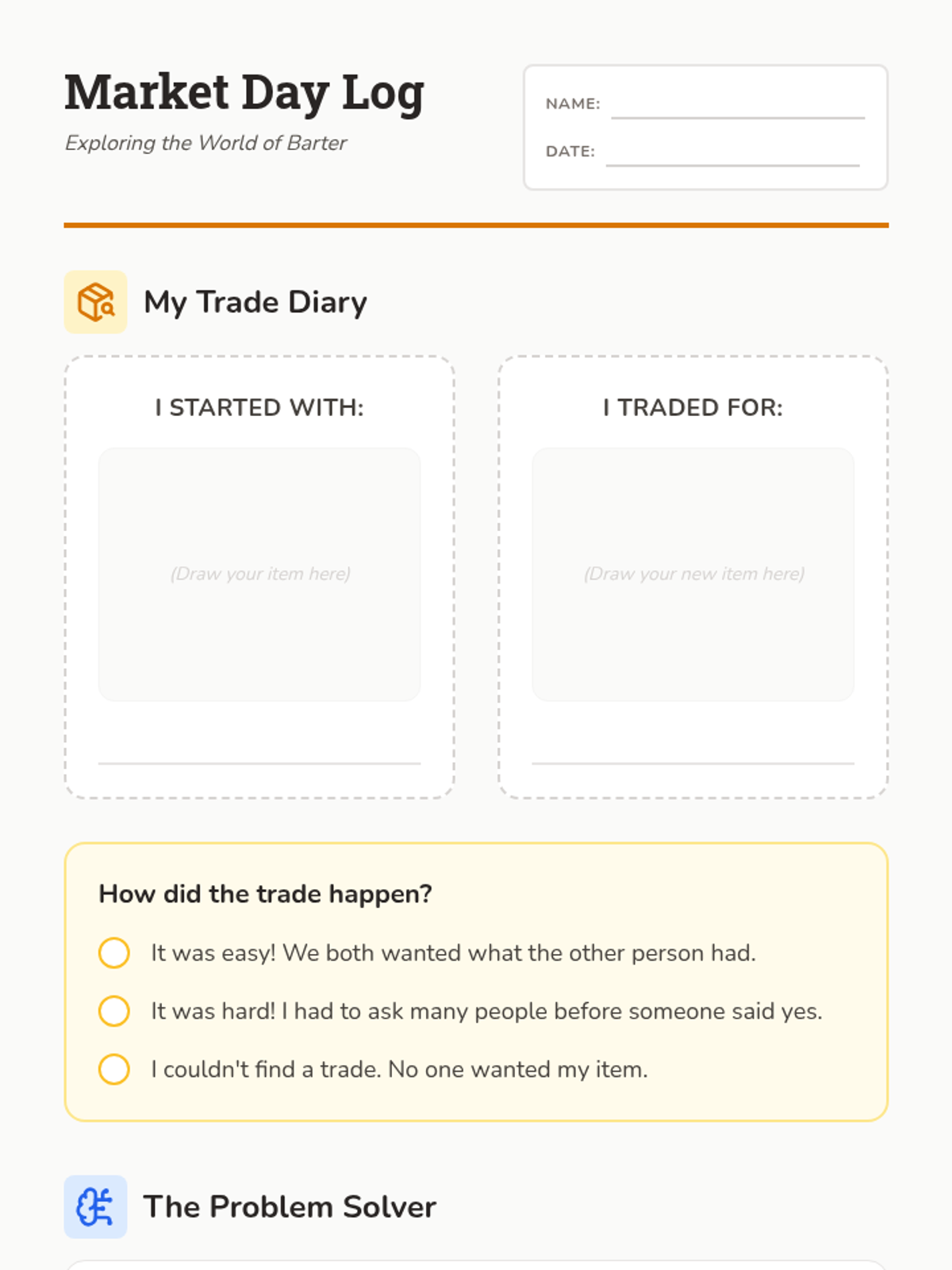
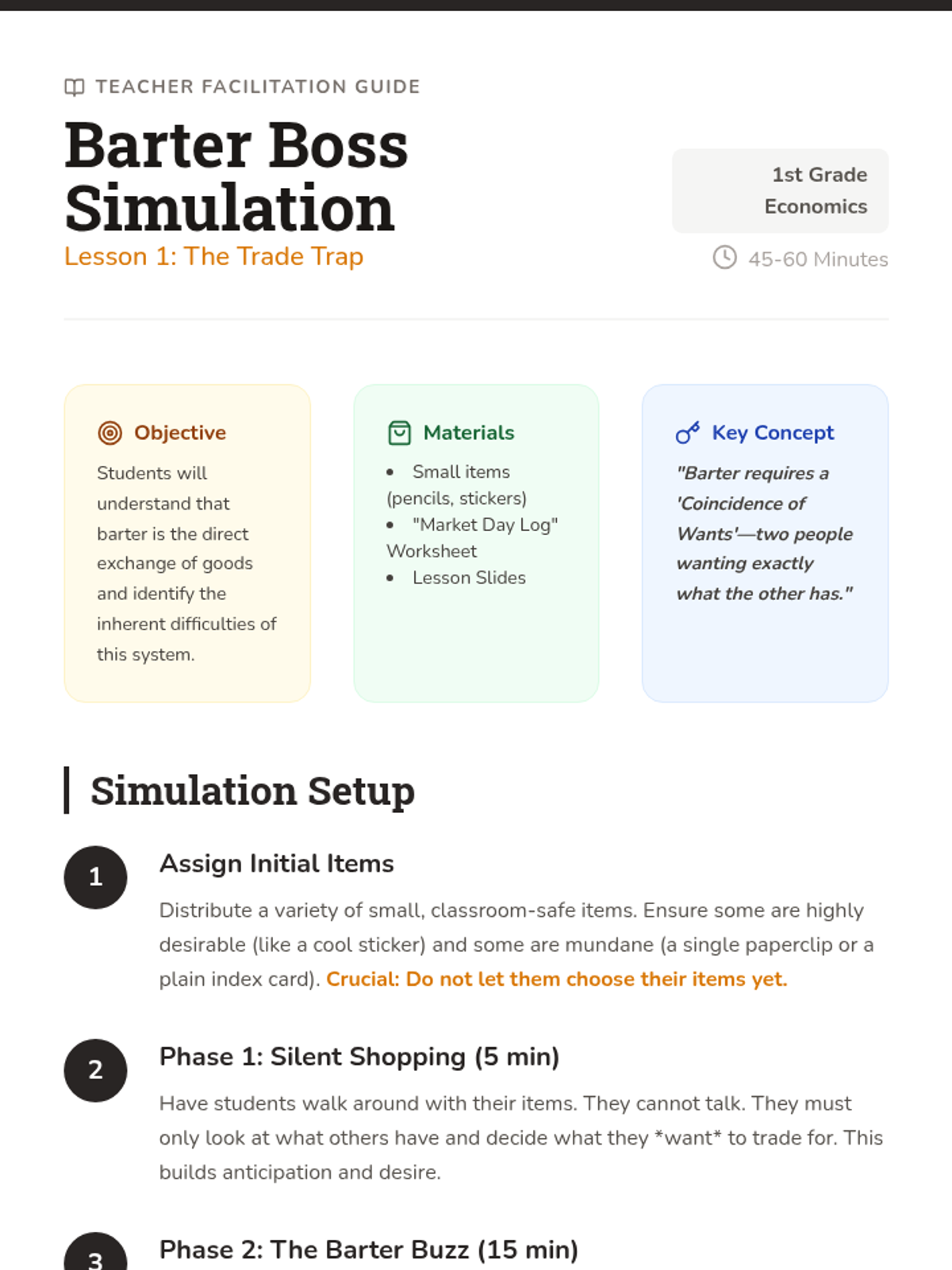
A 1st Grade sequence exploring the evolution of exchange, from the difficulties of bartering to the convenience of modern currency, helping students understand money as a problem-solving tool.
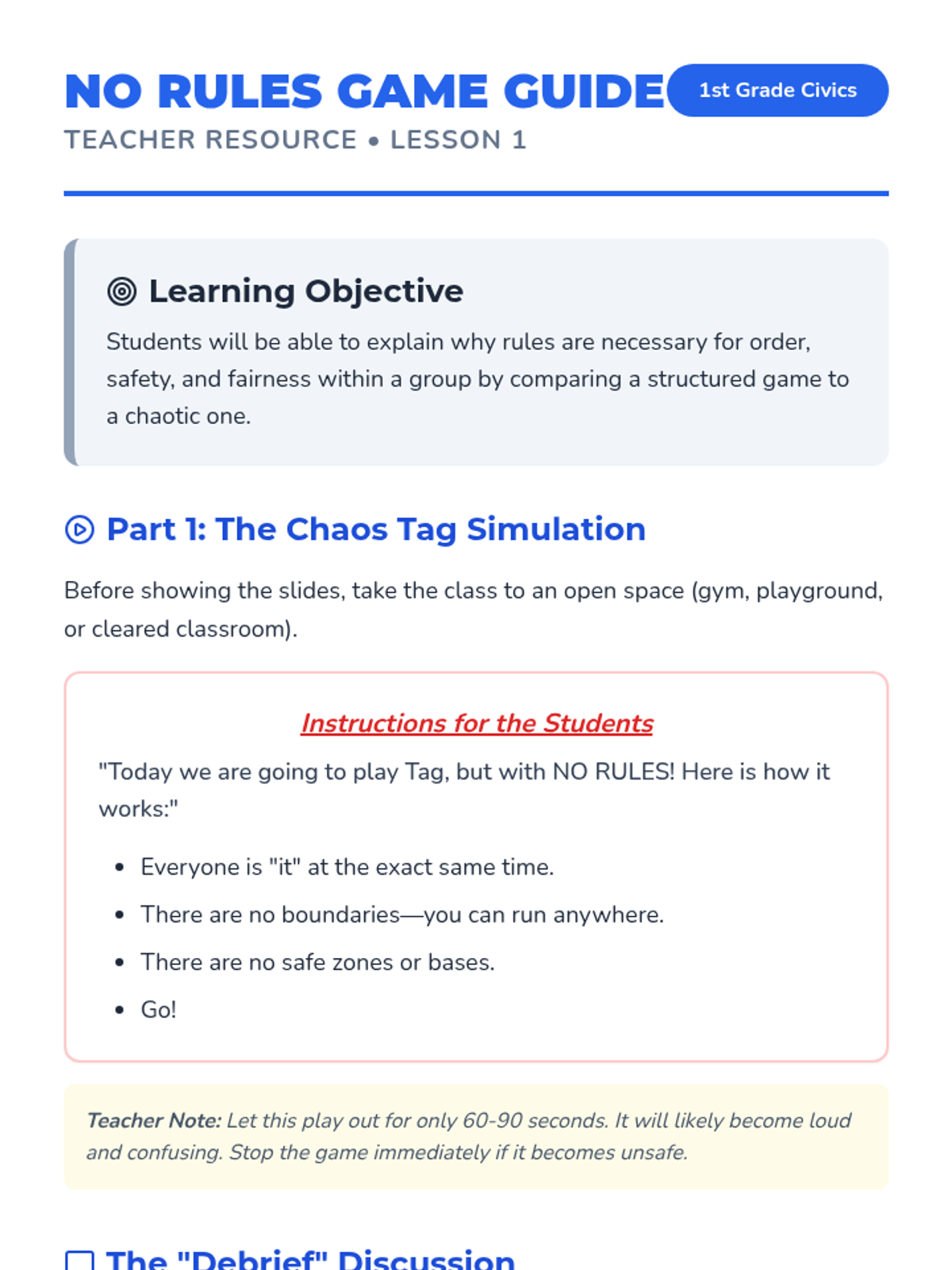
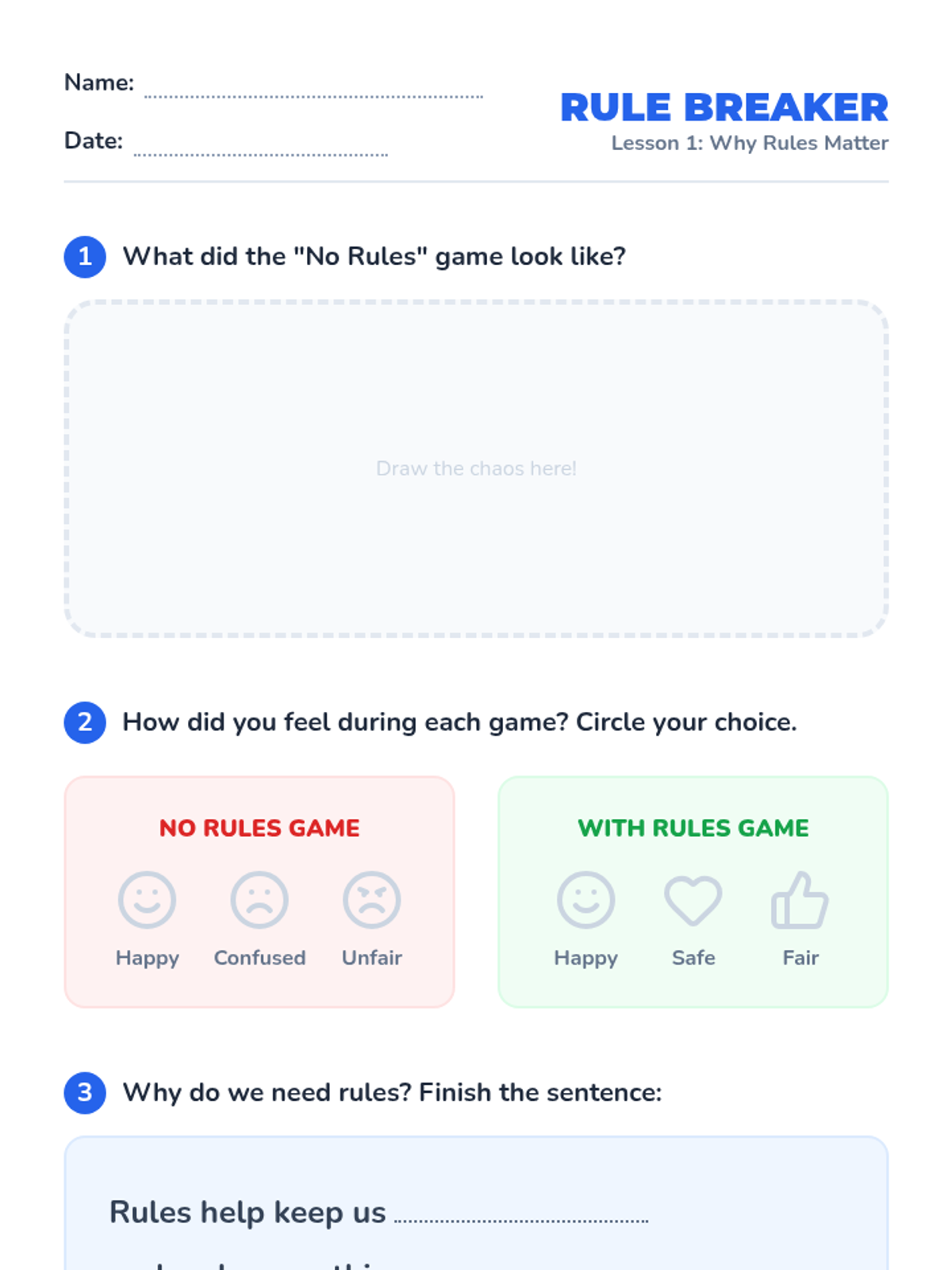
This 1st Grade sequence explores power and authority through rules and voting. Students experience the necessity of rules, collaborate on classroom agreements, and learn the democratic process of voting and majority rule.
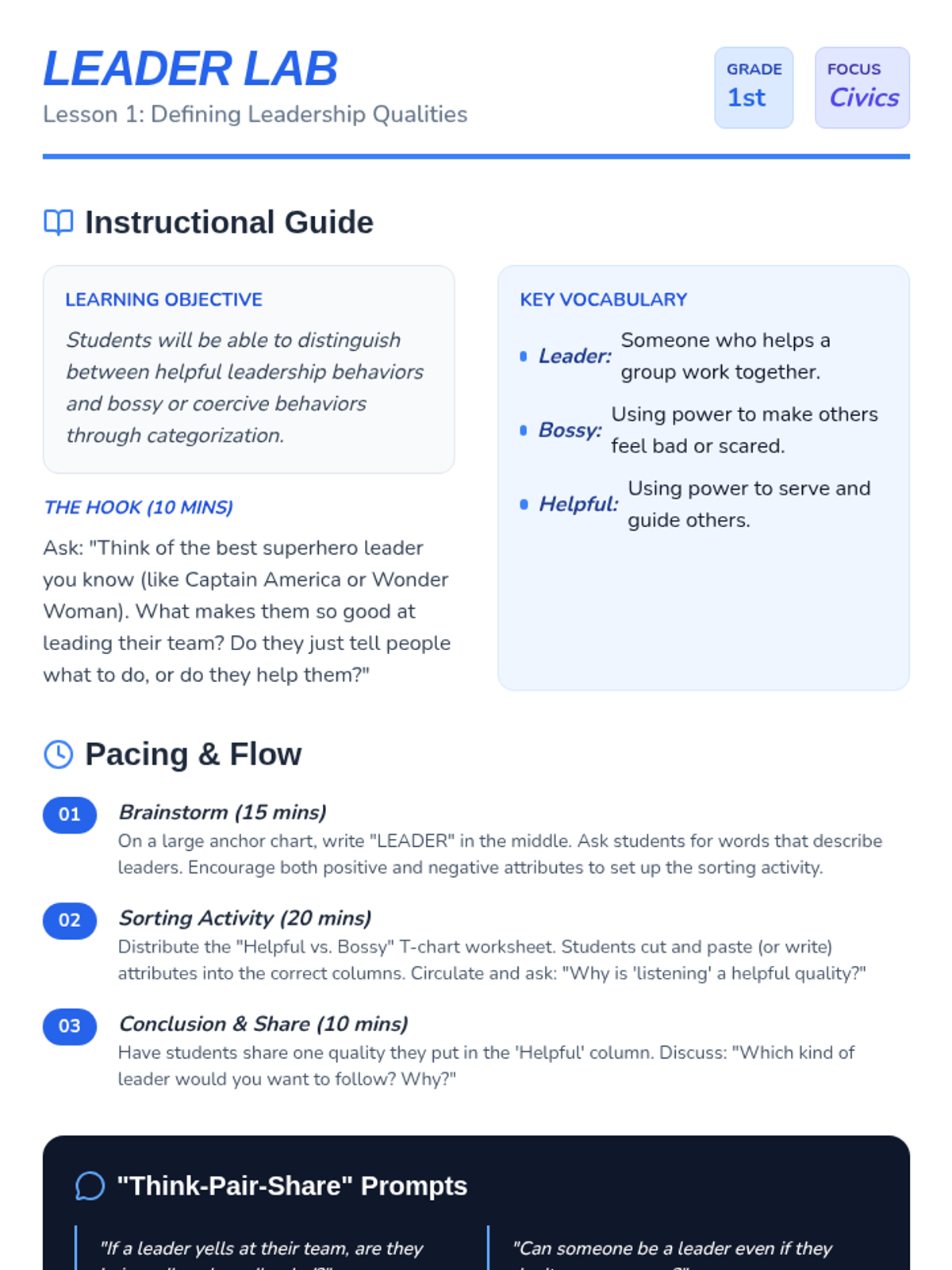
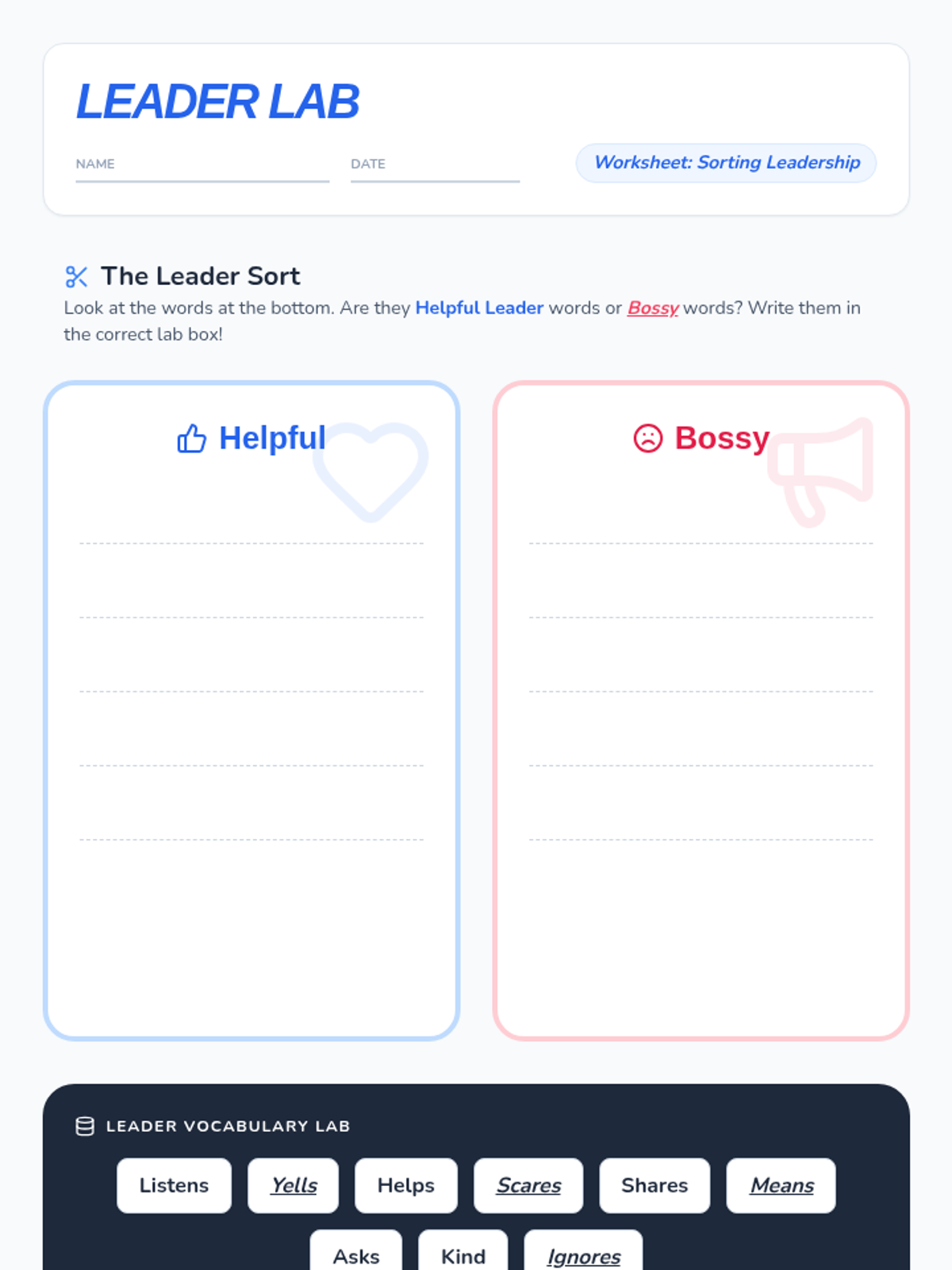
A 1st-grade civics sequence focusing on the distinction between coercive power ('bossy' behavior) and servant leadership ('helpful' behavior), while introducing the concept that all leaders are subject to limits and laws.
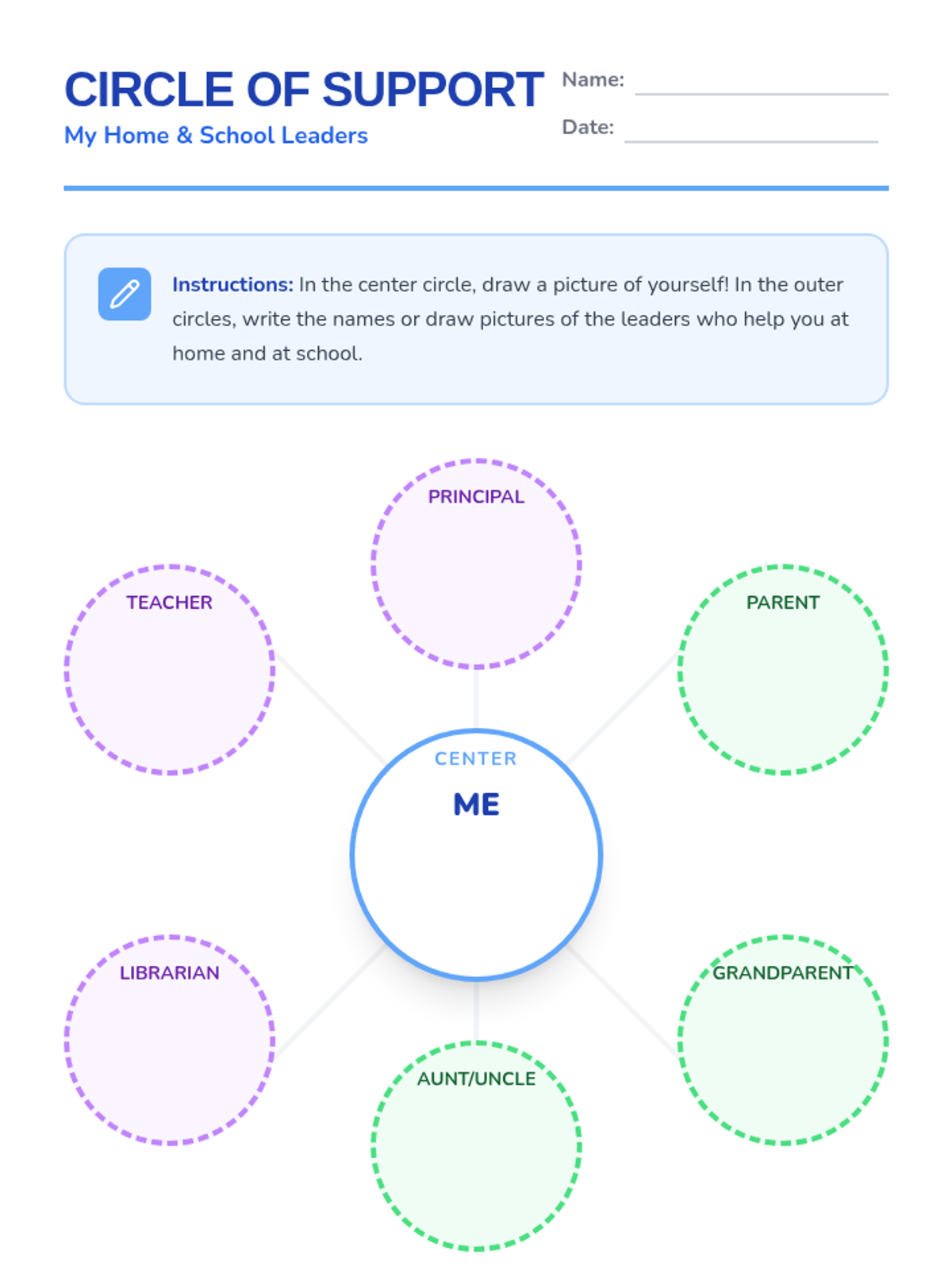
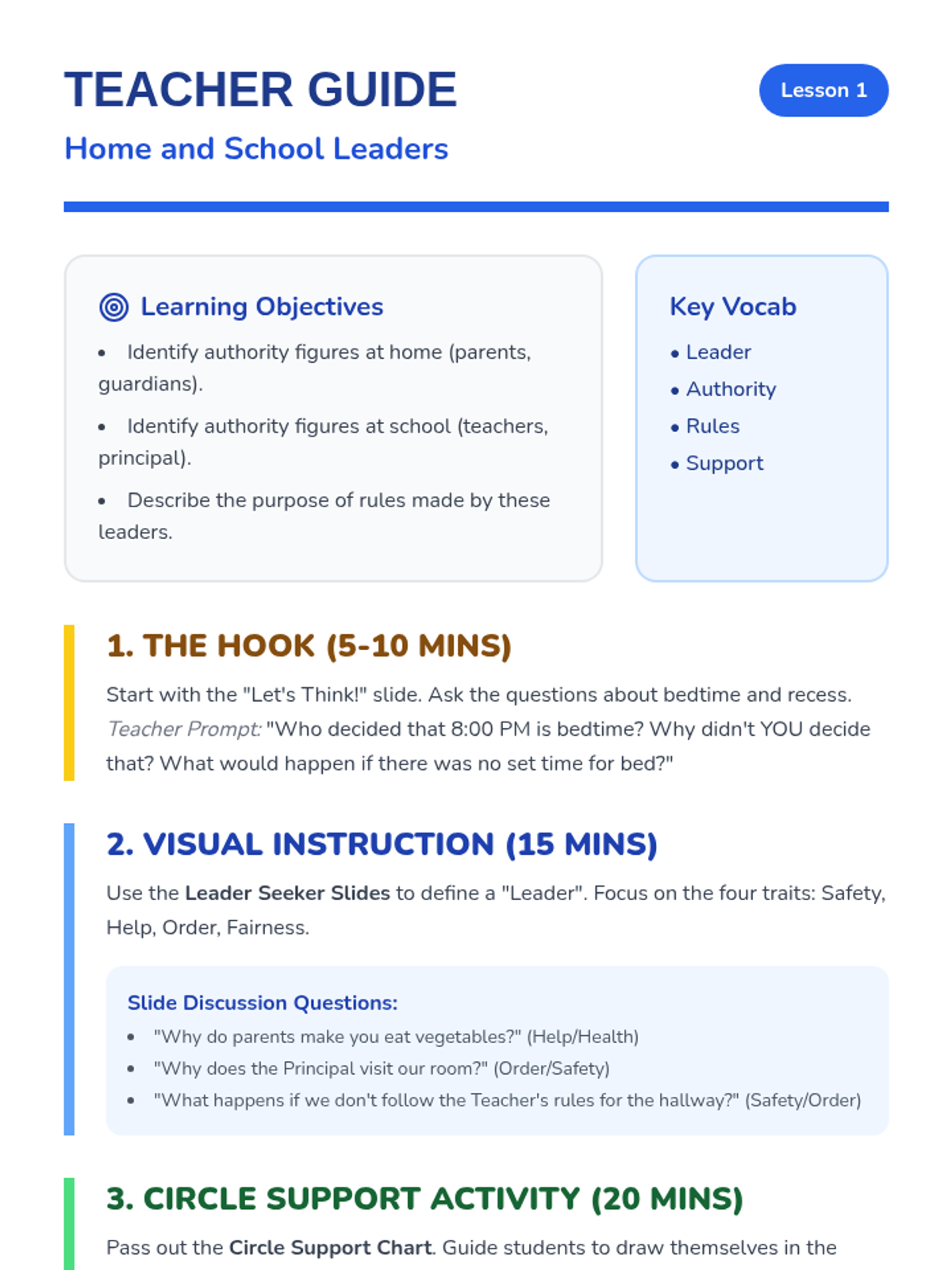
This first-grade sequence introduces the concept of authority figures at home, school, and in the community. Students learn to identify leaders, understand the purpose of rules, and distinguish between positive authority and bullying through interactive lessons and creative projects.
Students navigate a simulated classroom economy to learn budgeting, opportunity cost, and the difference between needs and wants through games and real-world scenarios.
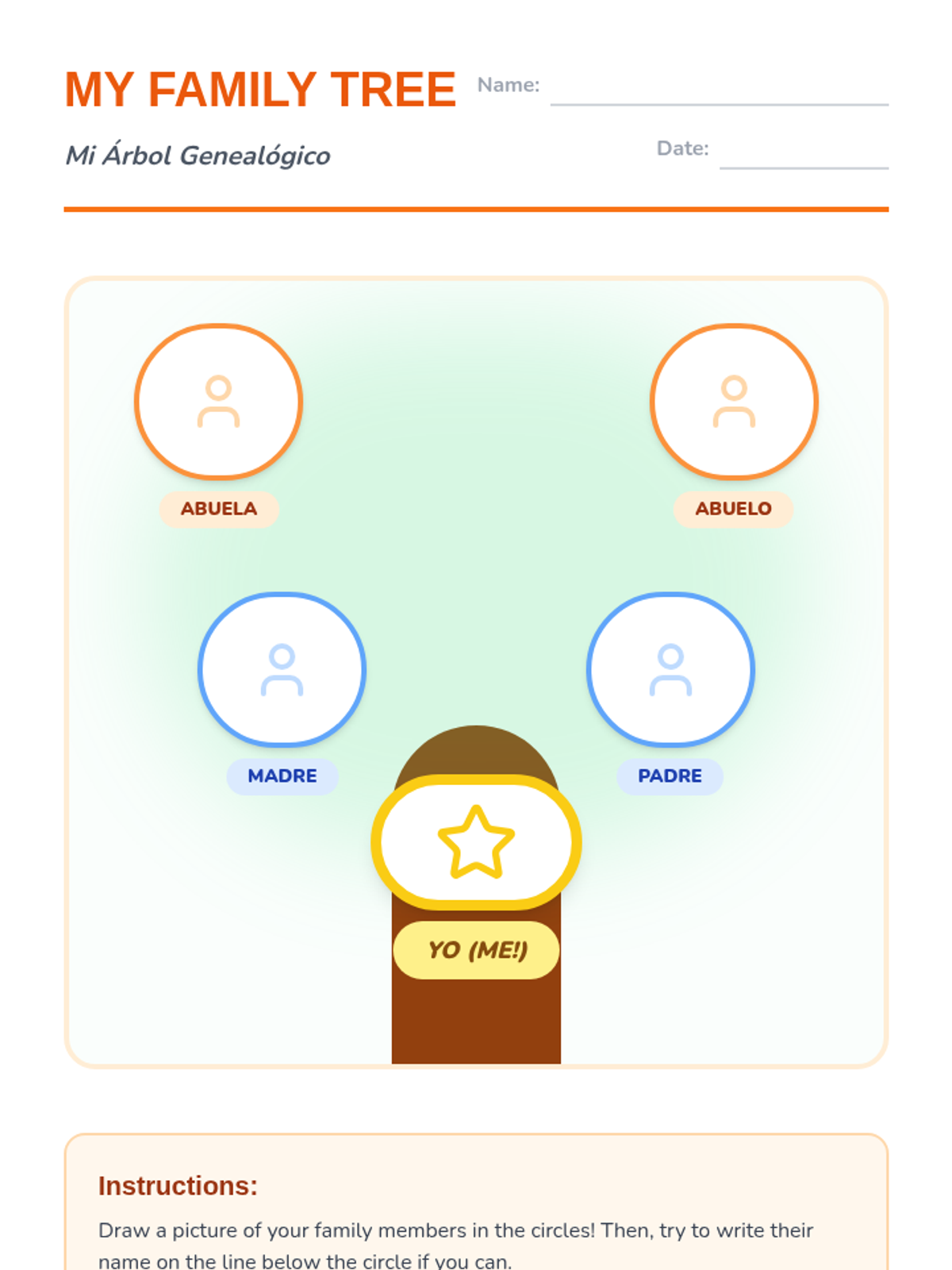
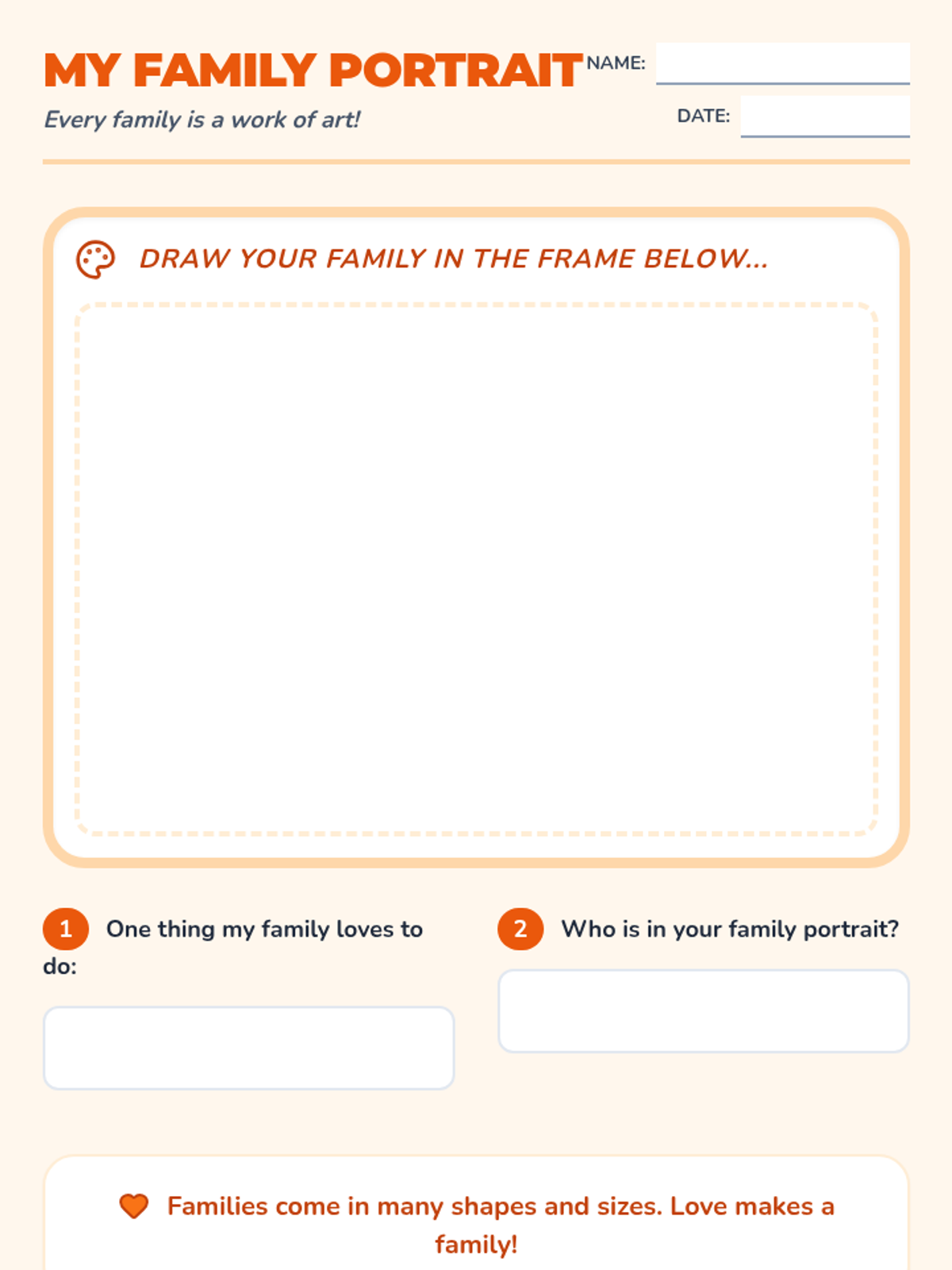
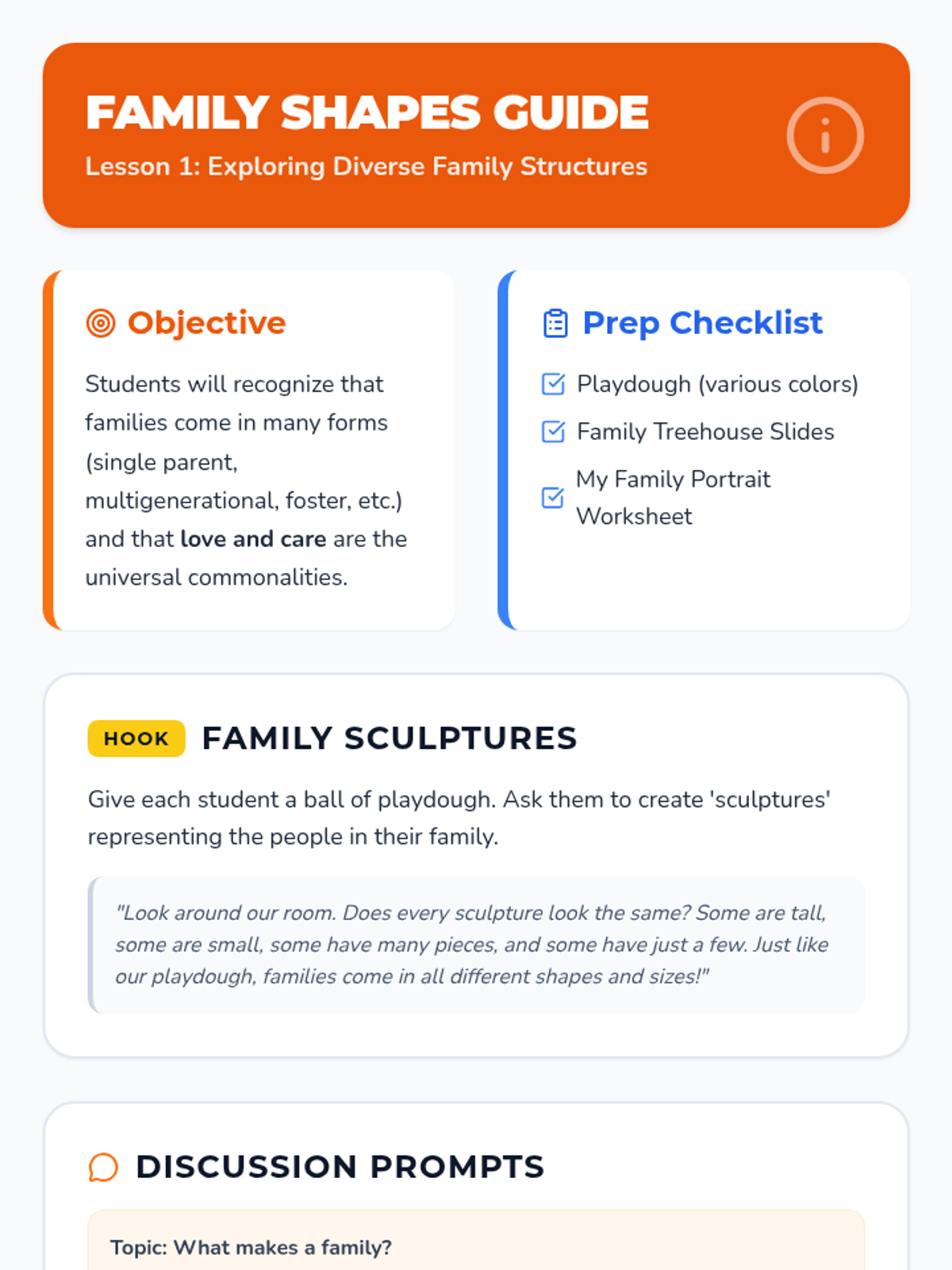
A journey through the diverse ways families and cultures shape our identities. Students explore family structures, traditions, roles, and cultural heritage to build a sense of belonging and respect for diversity.
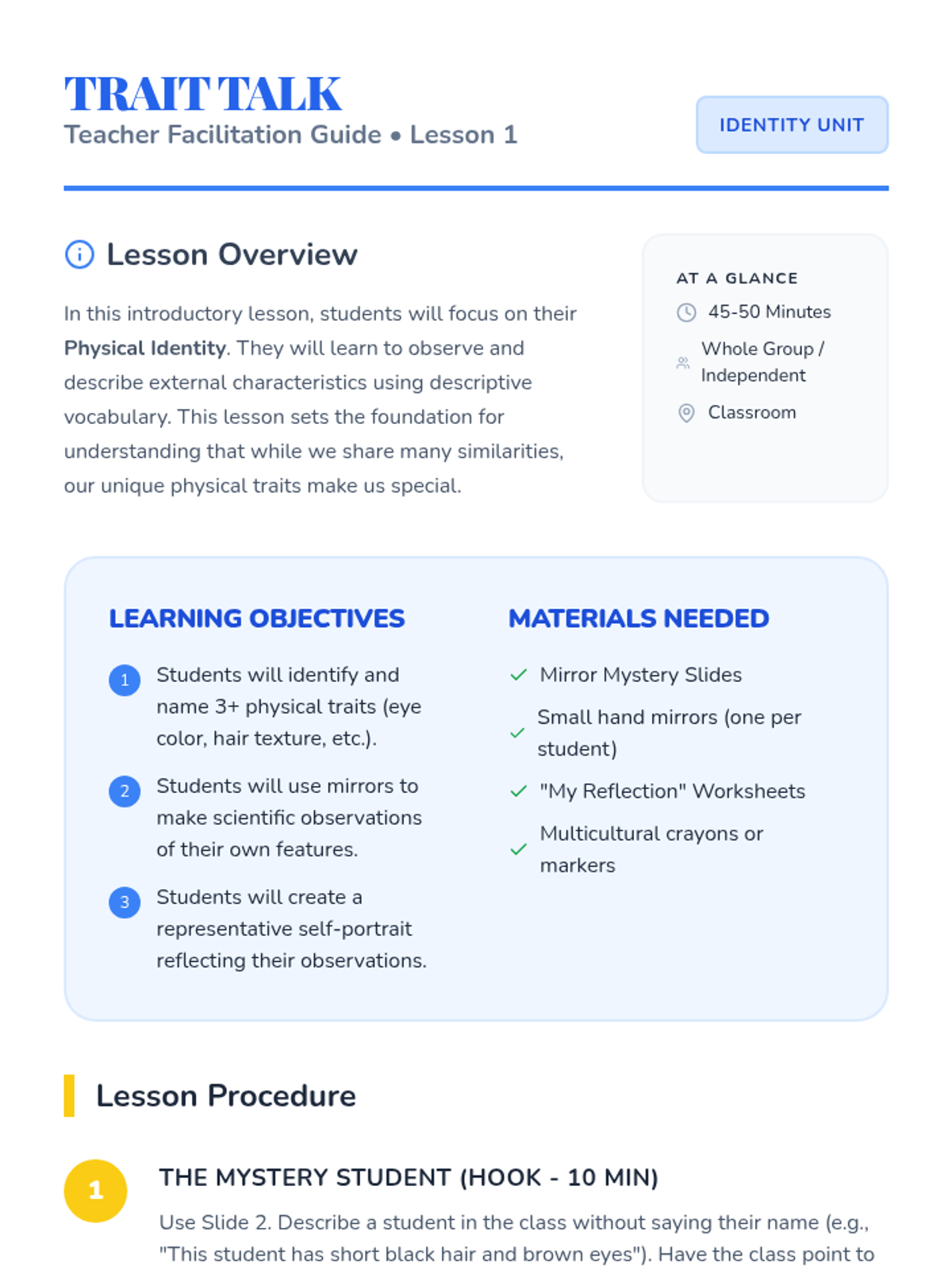
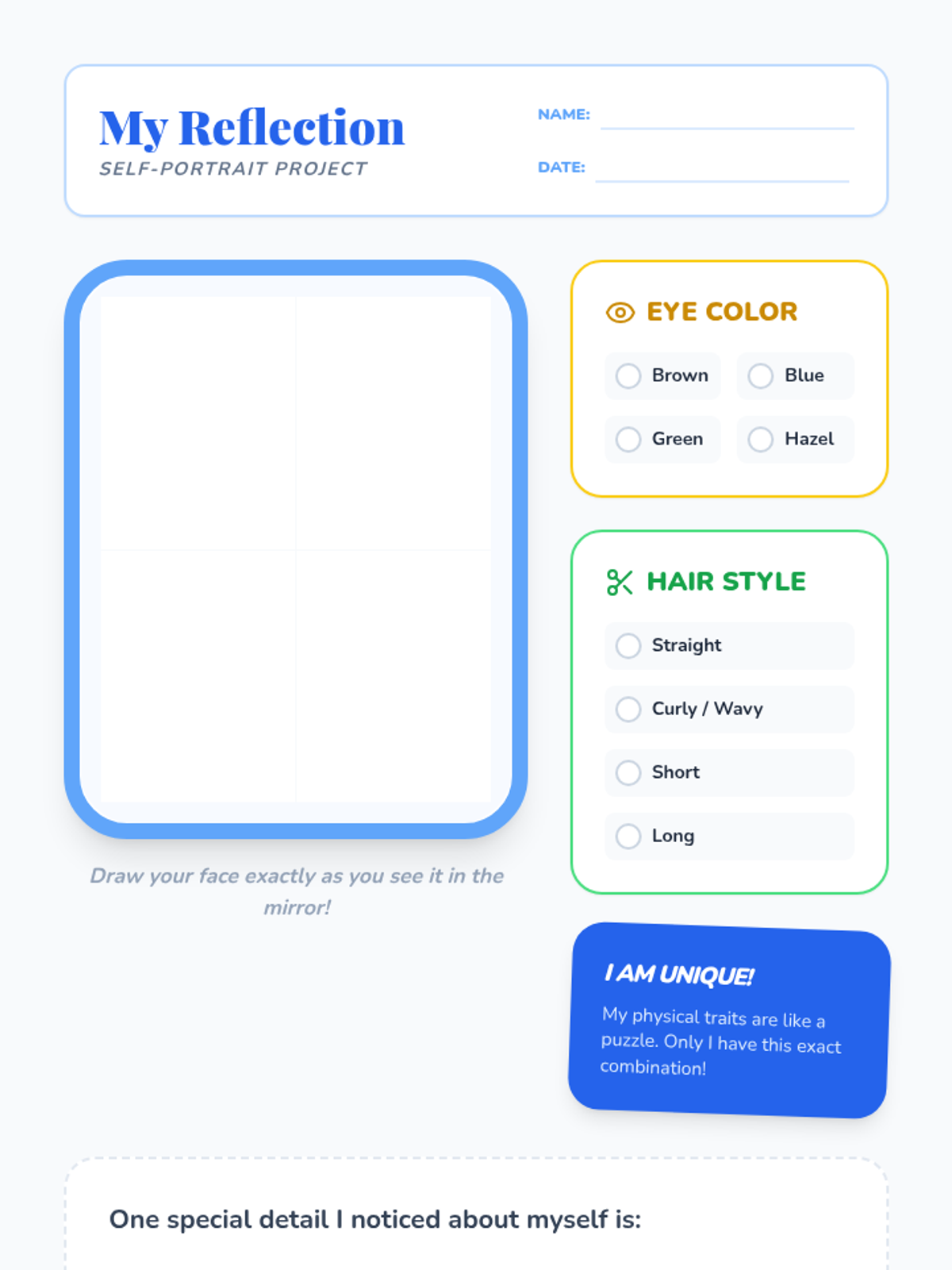
A 1st Grade Social Studies sequence focused on self-identity, exploring physical traits, inner personality, personal interests, and the history of names, culminating in a 'Me Museum' portfolio.
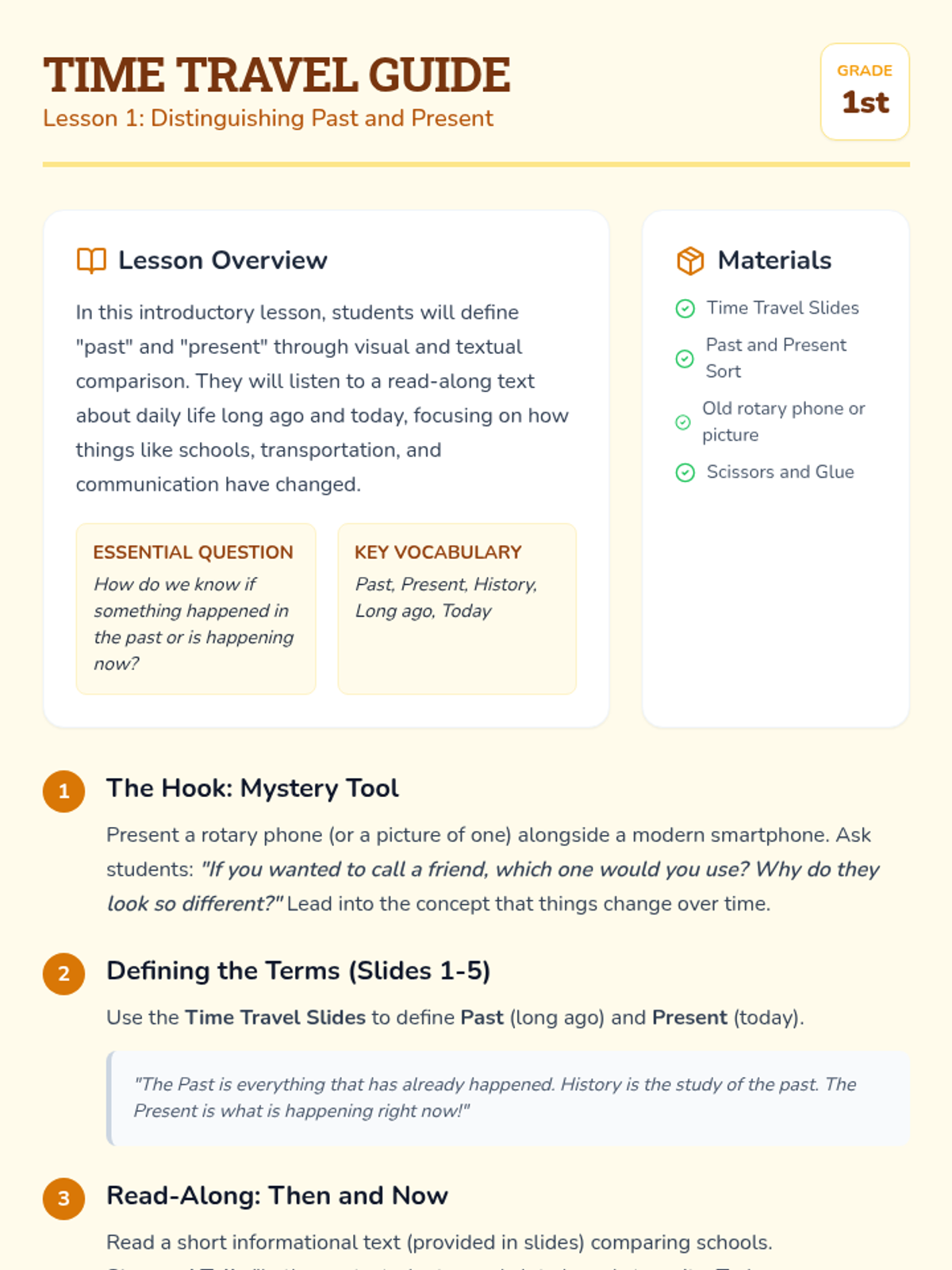
A 1st Grade sequence exploring chronology and sequencing in historical biographies. Students learn to distinguish past from present, identify signal words like 'first' and 'next', and construct timelines of famous lives.
Students use read-along informational texts to research community helpers, categorize tools, and compare roles, culminating in the creation of a 'Community Helper Profile Card'.
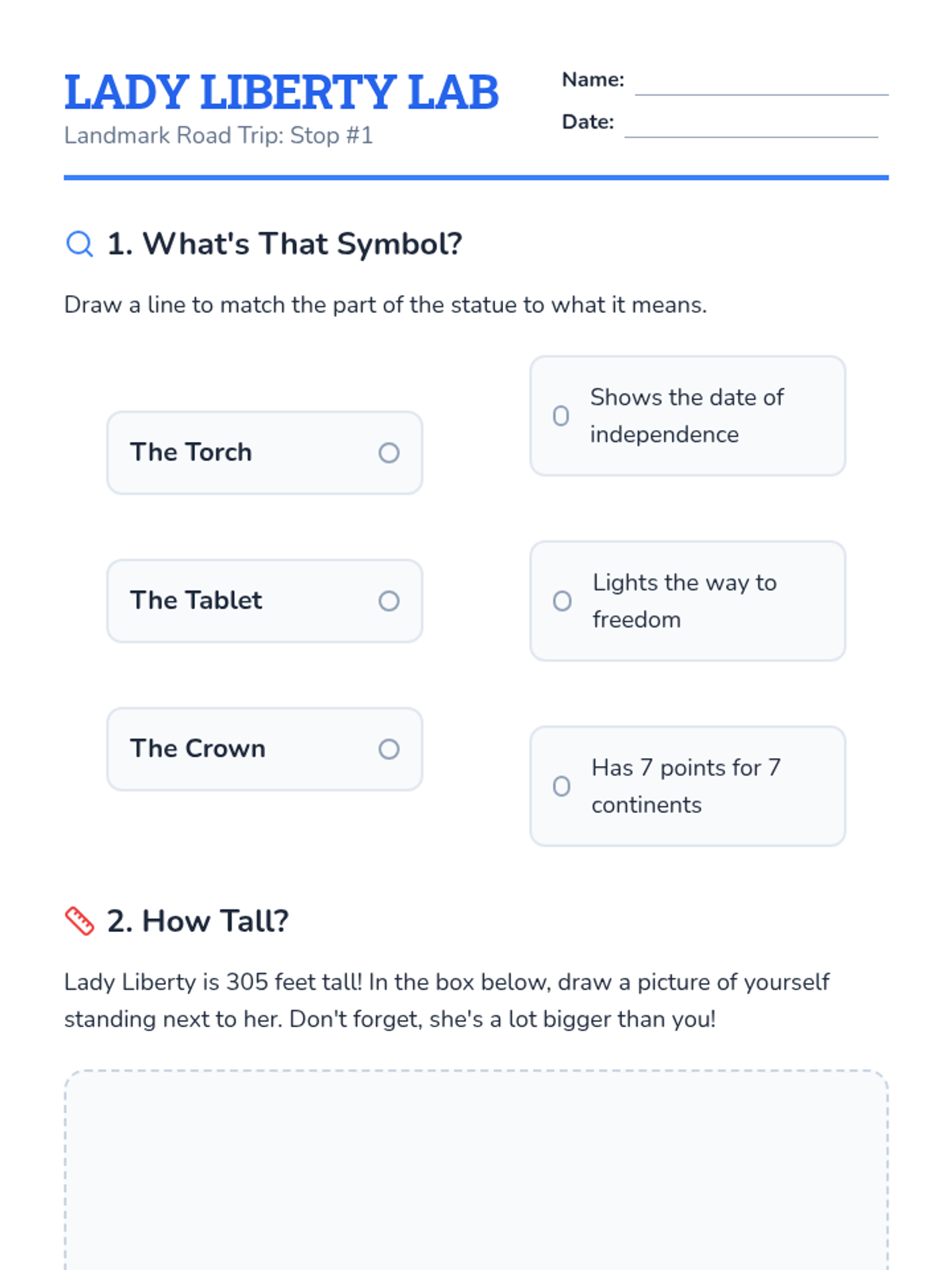
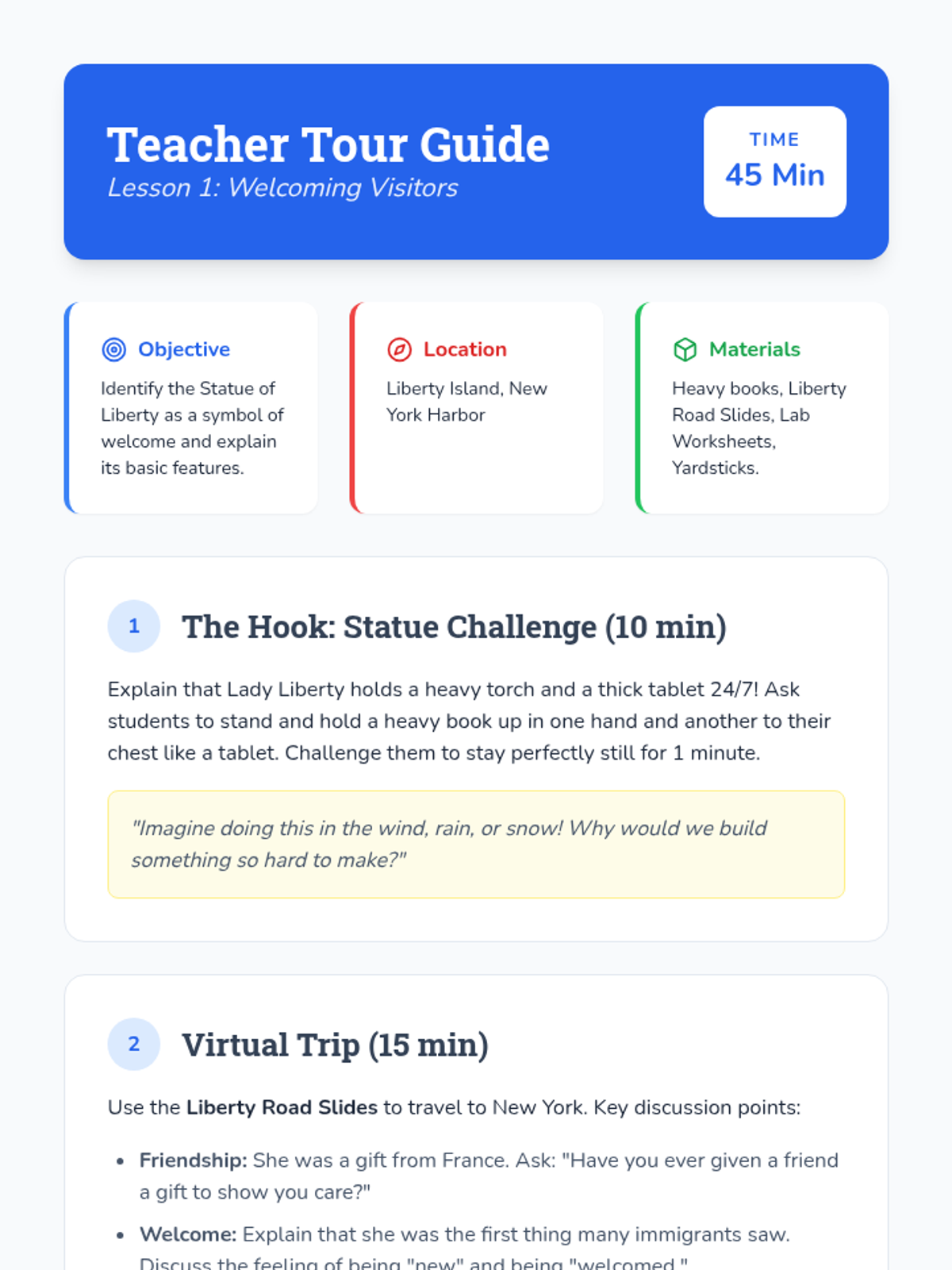
A virtual road trip across America for 1st graders to explore key landmarks and understand how they represent national ideals and history.
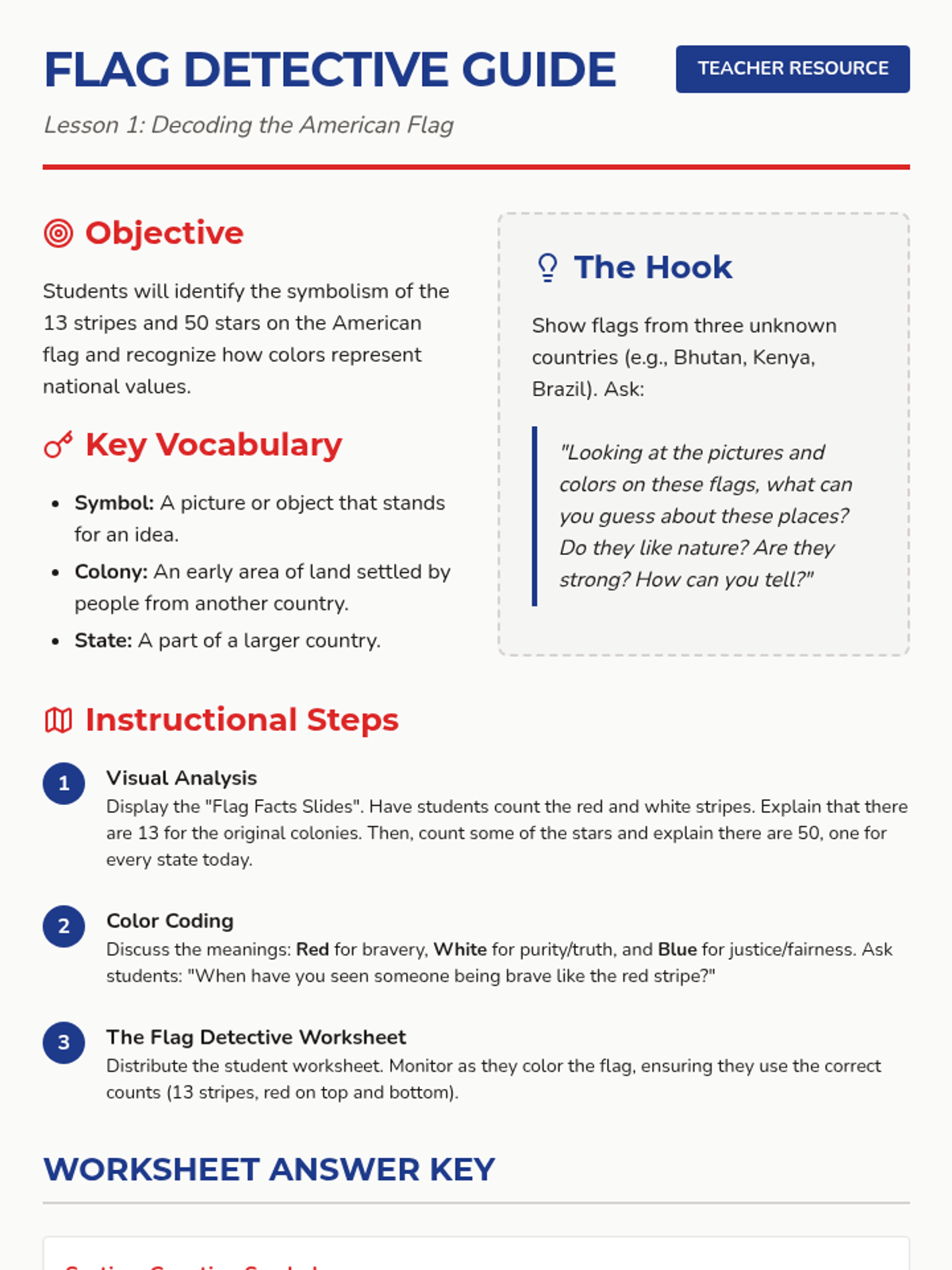
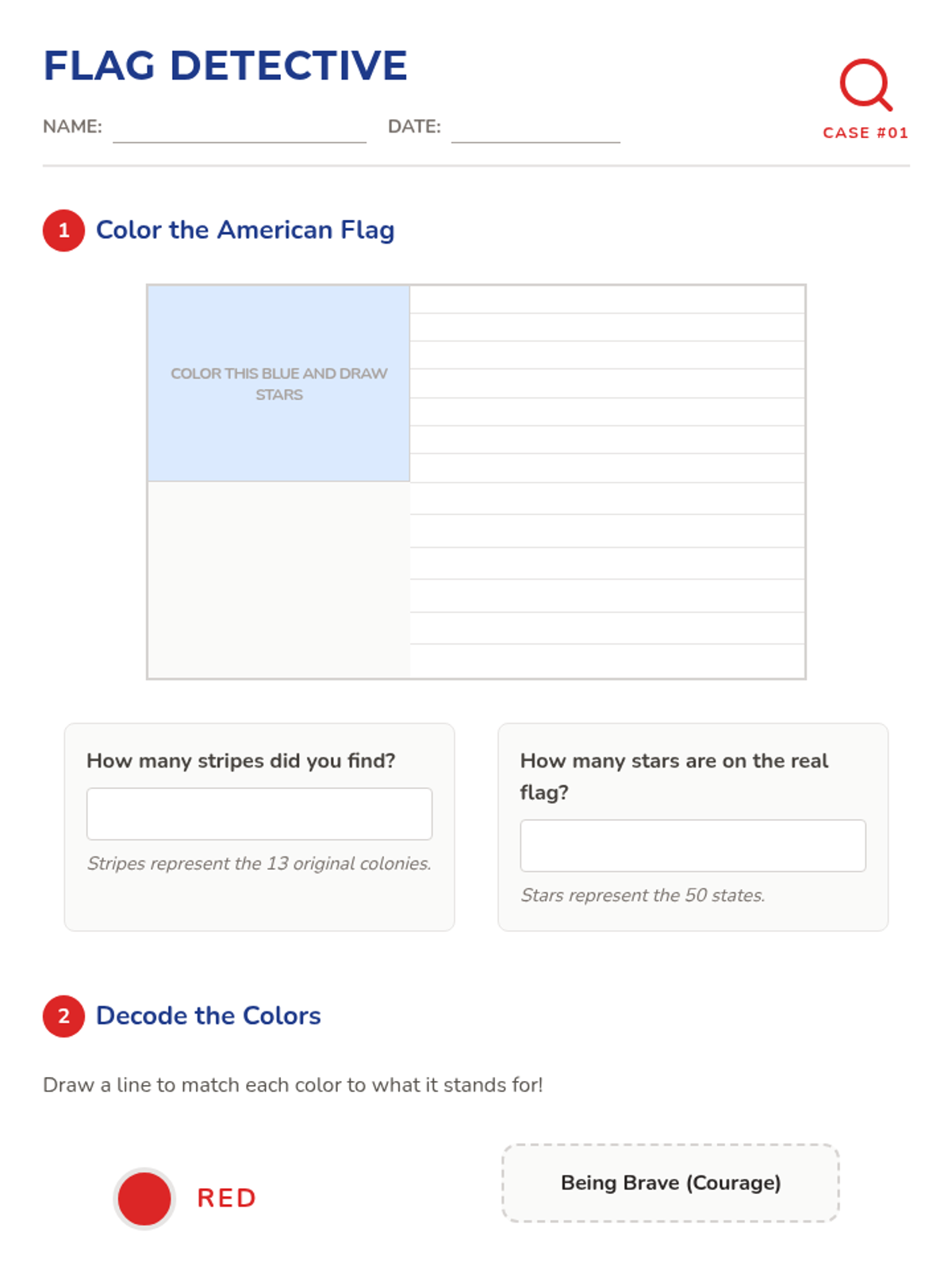
In this inquiry-driven sequence, students explore the concept of symbolism by investigating the most prominent American national icons. They learn to decode meanings behind colors, numbers, and animals, culminating in designing a symbol for their own classroom community.