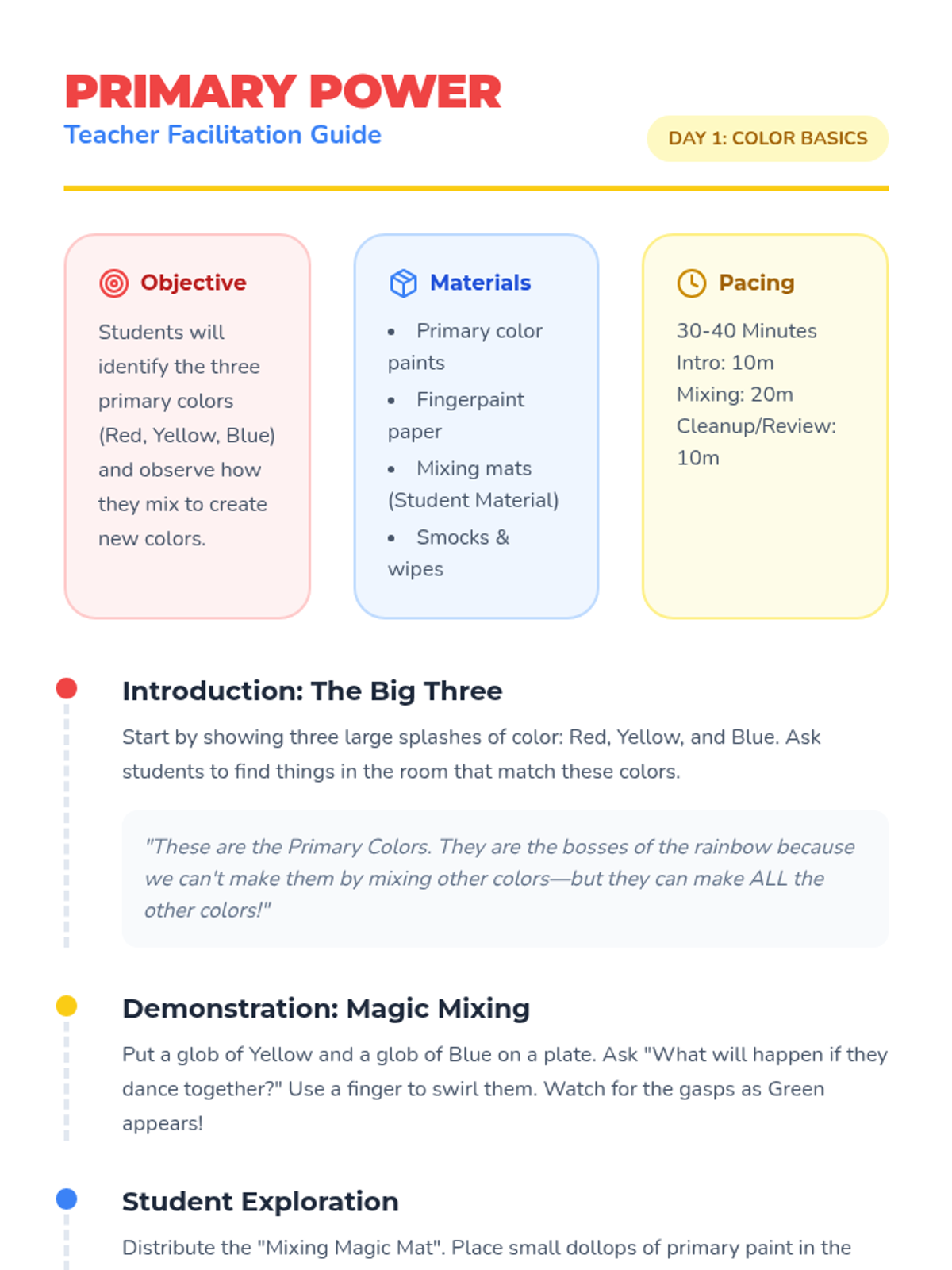
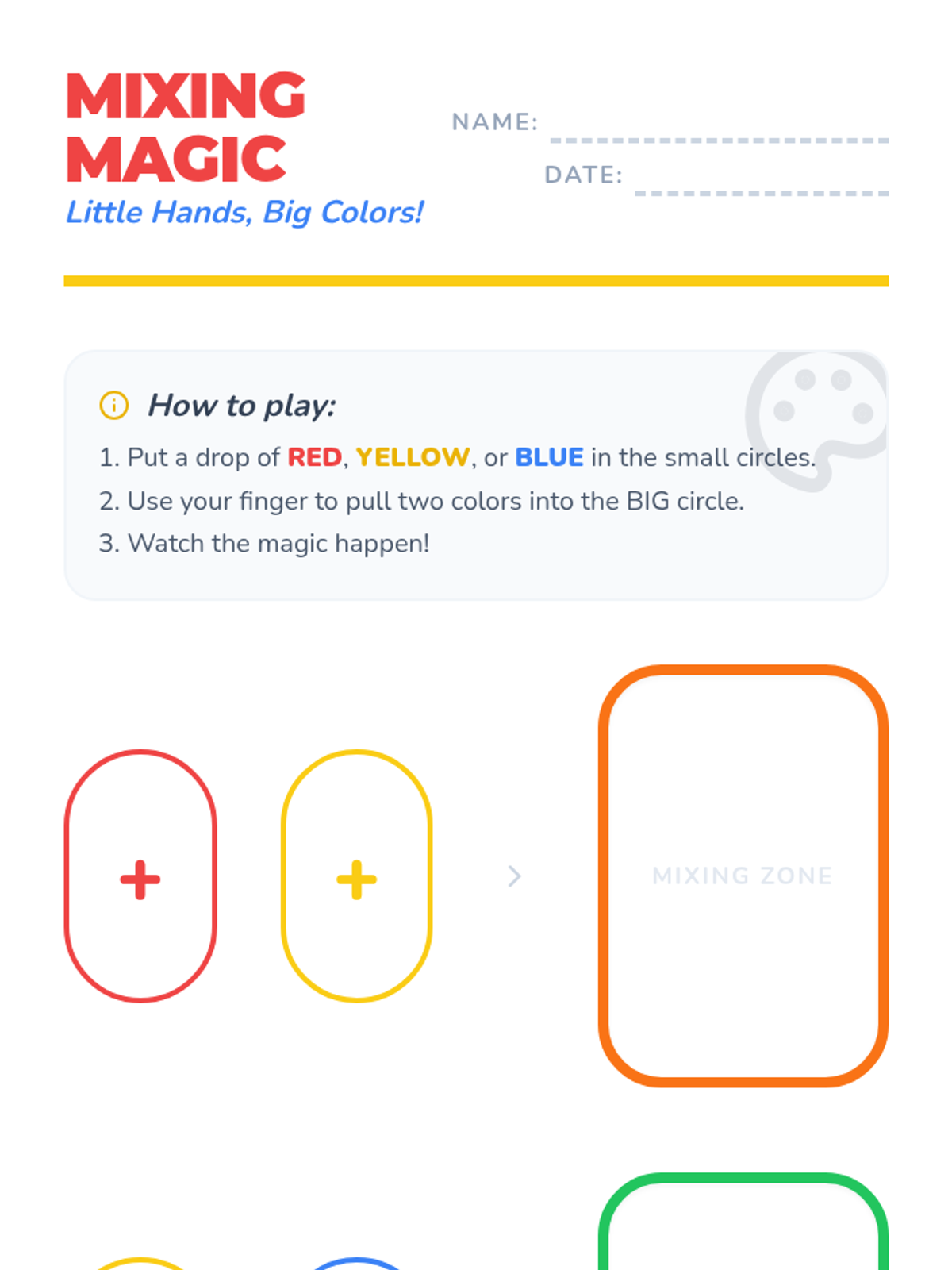
A vibrant journey through the primary and secondary colors, exploring objects, emotions, and the science of mixing. Students will discover the unique characteristics of red, blue, yellow, and green while learning how they combine to create new hues.

A foundational music education series designed for early elementary students, covering rhythm, movement, note reading, dynamics, and music history.
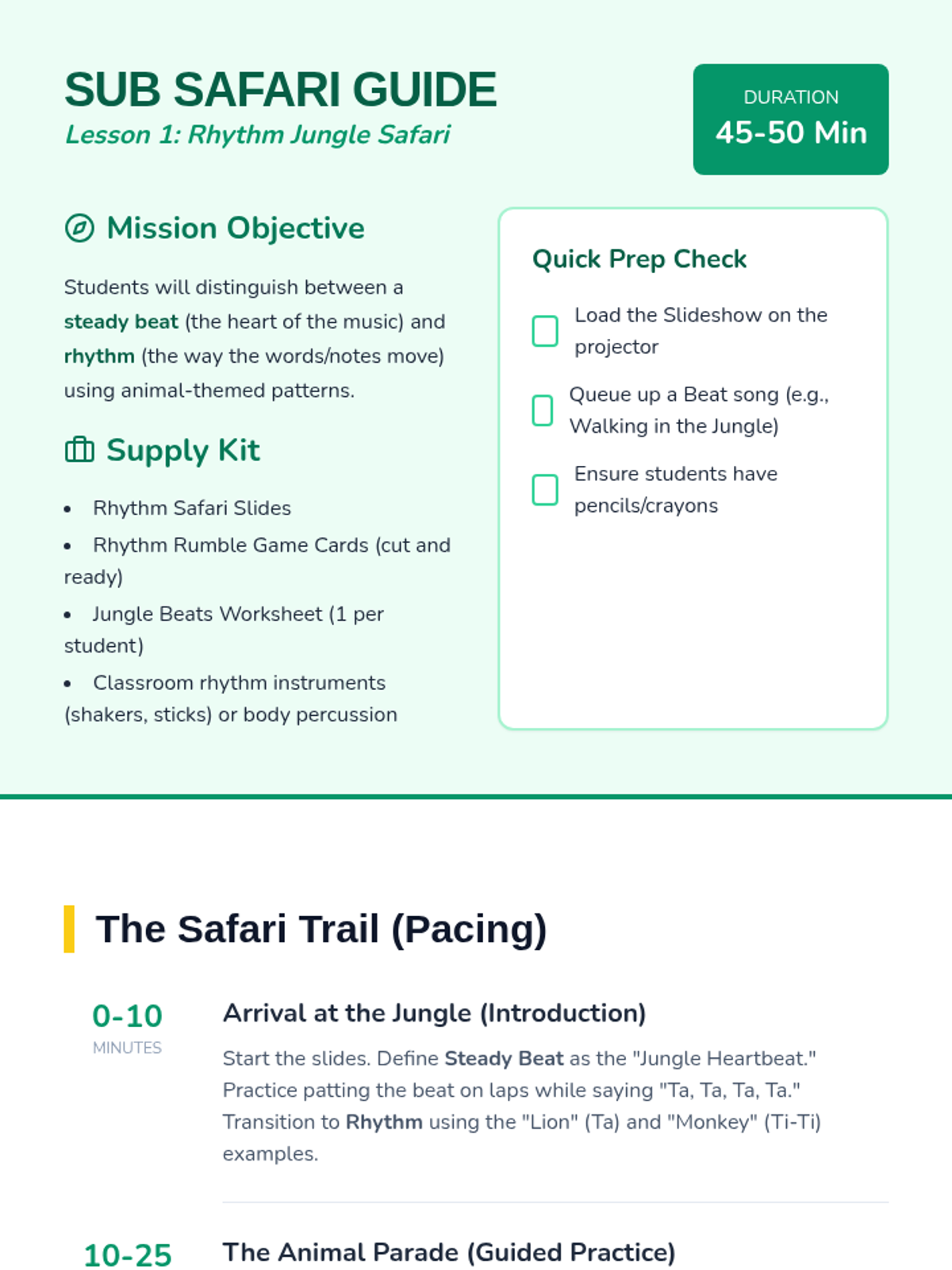
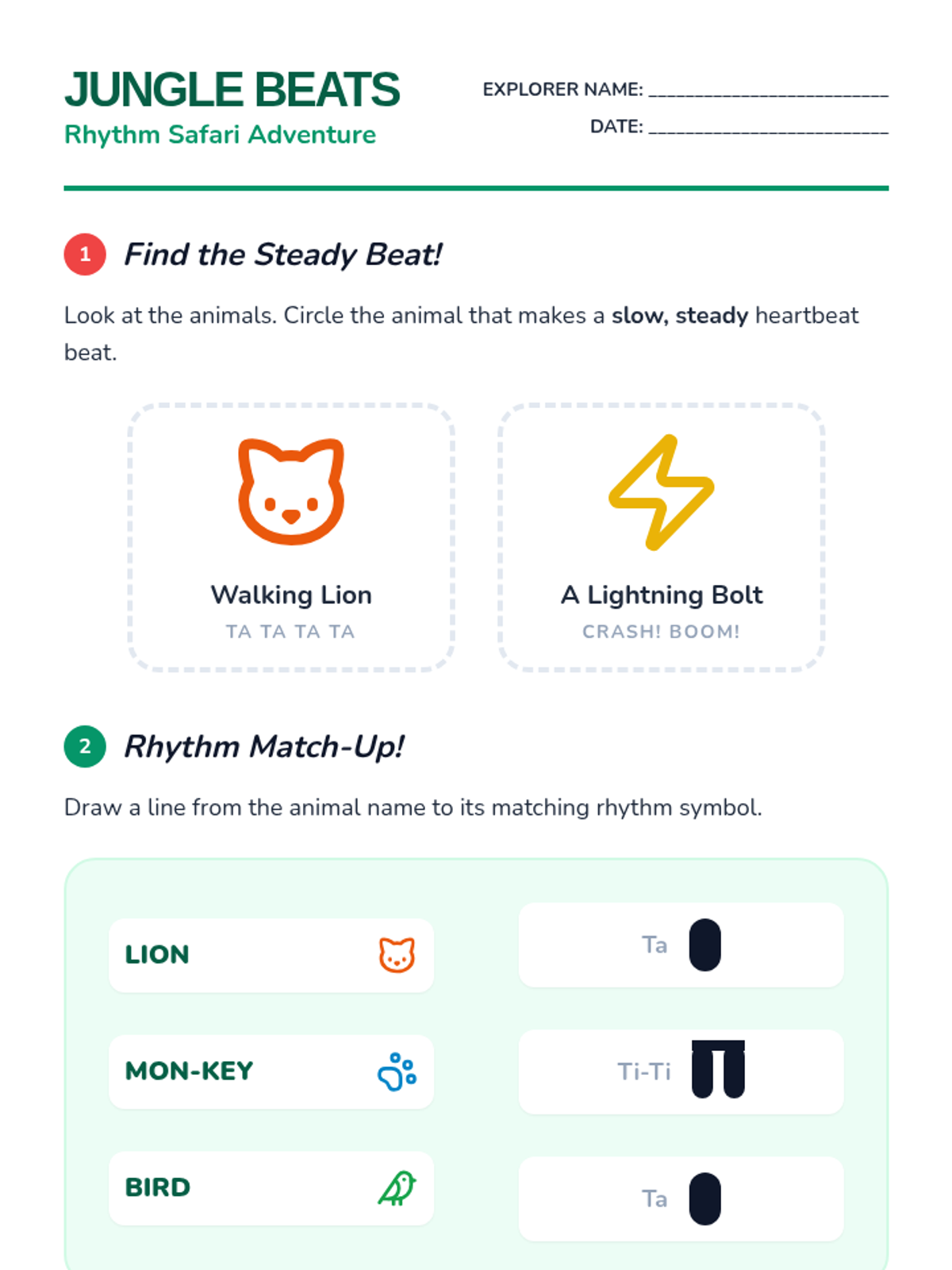
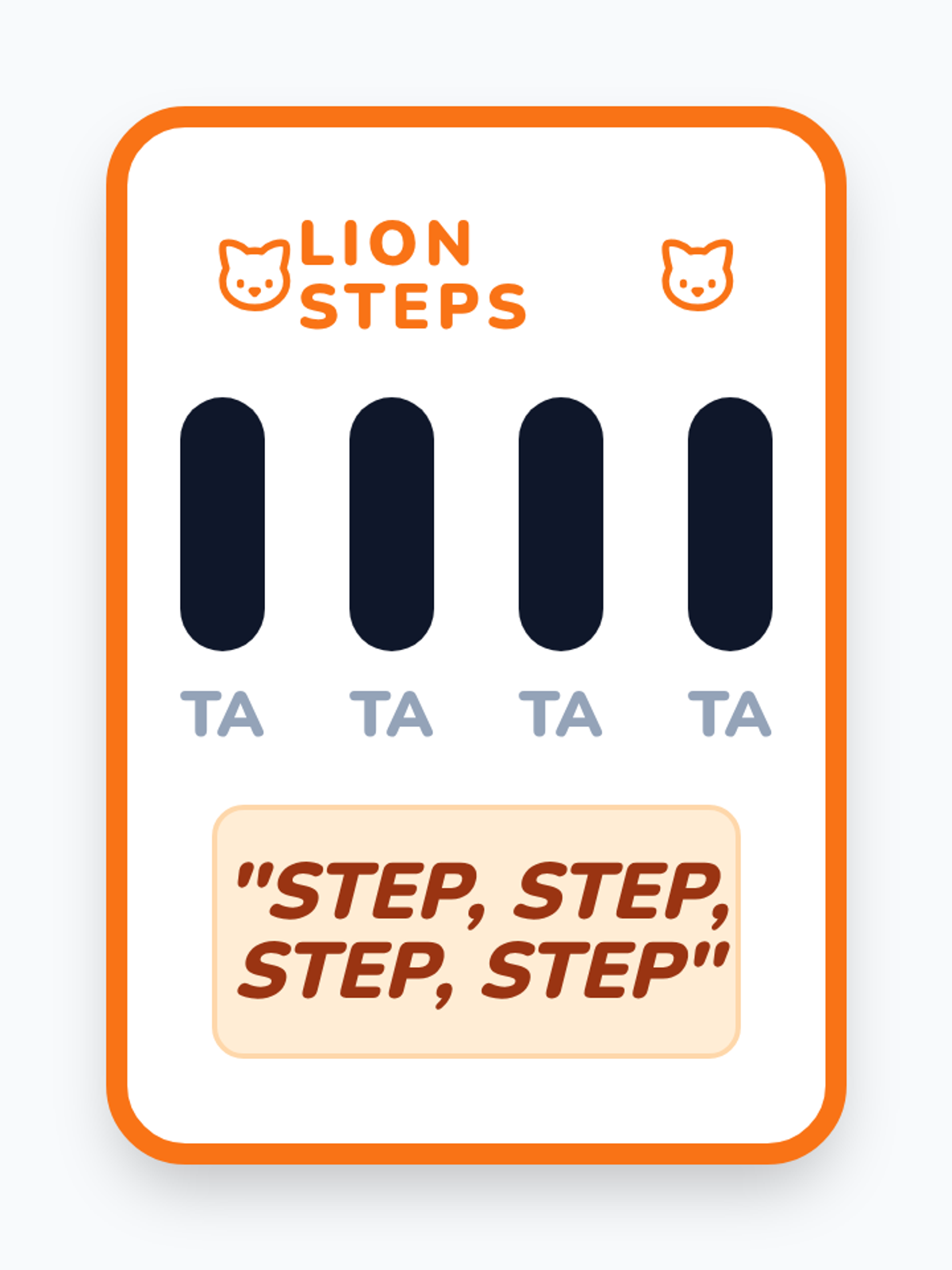
A foundational music sequence for kindergarten students focusing on the difference between steady beat and rhythm, incorporating movement, chanting, and visual recognition.
A series of lessons exploring Caribbean folklore and cultural storytelling traditions, focusing on the iconic character of Anansi the Spider.
A high-energy elementary music unit focusing on the fundamentals of steady beat, tempo variations, and rhythmic patterns through interactive play-alongs and movement.
A high-energy, interactive unit focused on mastering rhythm and tempo through digital gameplay and body percussion, designed specifically for paperless classrooms.
A journey through the 20th and 21st centuries, exploring how technology like electric guitars and synthesizers shaped genres from Rock 'n' Roll to Pop. Students analyze rhythm, structure, and sound to build a chronological timeline of musical evolution.
A global musical expedition for 2nd graders to discover how geography and culture shape instruments and traditions across four continents. Students explore materials, physics of sound, and the cultural roles of music through inquiry and hands-on activities.
An immersive workshop-style sequence for 2nd graders exploring the roots of Jazz, Blues, and Folk music through call-and-response, syncopation, and improvisation. Students trace American musical history from work songs to the Swing era through active music-making.
A 5-lesson sequence for 2nd graders exploring how classical composers use musical elements to tell stories and express emotions. Students 'meet' famous composers like Vivaldi and Beethoven, identifying tempo, dynamics, and leitmotifs in iconic works.
A comprehensive introduction to the four families of the orchestra for 2nd graders. Students explore timbre, mechanics, and historical roles of strings, woodwinds, brass, and percussion, culminating in a conductor simulation.
A 1st Grade music history sequence exploring the lives and works of Mozart, Beethoven, Tchaikovsky, and John Williams through storytelling, active listening, and sensory exploration.
This 1st Grade sequence explores the uniquely American roots of Folk, Blues, and Jazz. Students learn about oral traditions, call-and-response, syncopation, and improvisation through interactive singing and rhythmic games.
A 1st Grade music sequence focused on programmatic music, teaching students how composers use instruments, tempo, and pitch to tell stories without words. Students explore famous works like Saint-Saëns' Carnival of the Animals, Prokofiev's Peter and the Wolf, and Vivaldi's Four Seasons before creating their own sound stories.
An inquiry-based exploration of music history for 1st graders, tracing the evolution of instruments from natural ancient materials to modern electronic synthesizers. Students develop comparative analysis skills and sound discrimination through hands-on activities, movement, and creative design.
A global musical journey for Kindergarten students to explore traditional folk music, instruments, and rhythms from West Africa, East Asia, the Andes, and North America. Students build cultural awareness and musical skills through hands-on drumming, melodic improvisation, and storytelling songs.
A Kindergarten music appreciation unit exploring program music. Students learn how composers use tempo, pitch, and timbre to represent animals, characters, and settings, culminating in the creation of their own musical narrative.
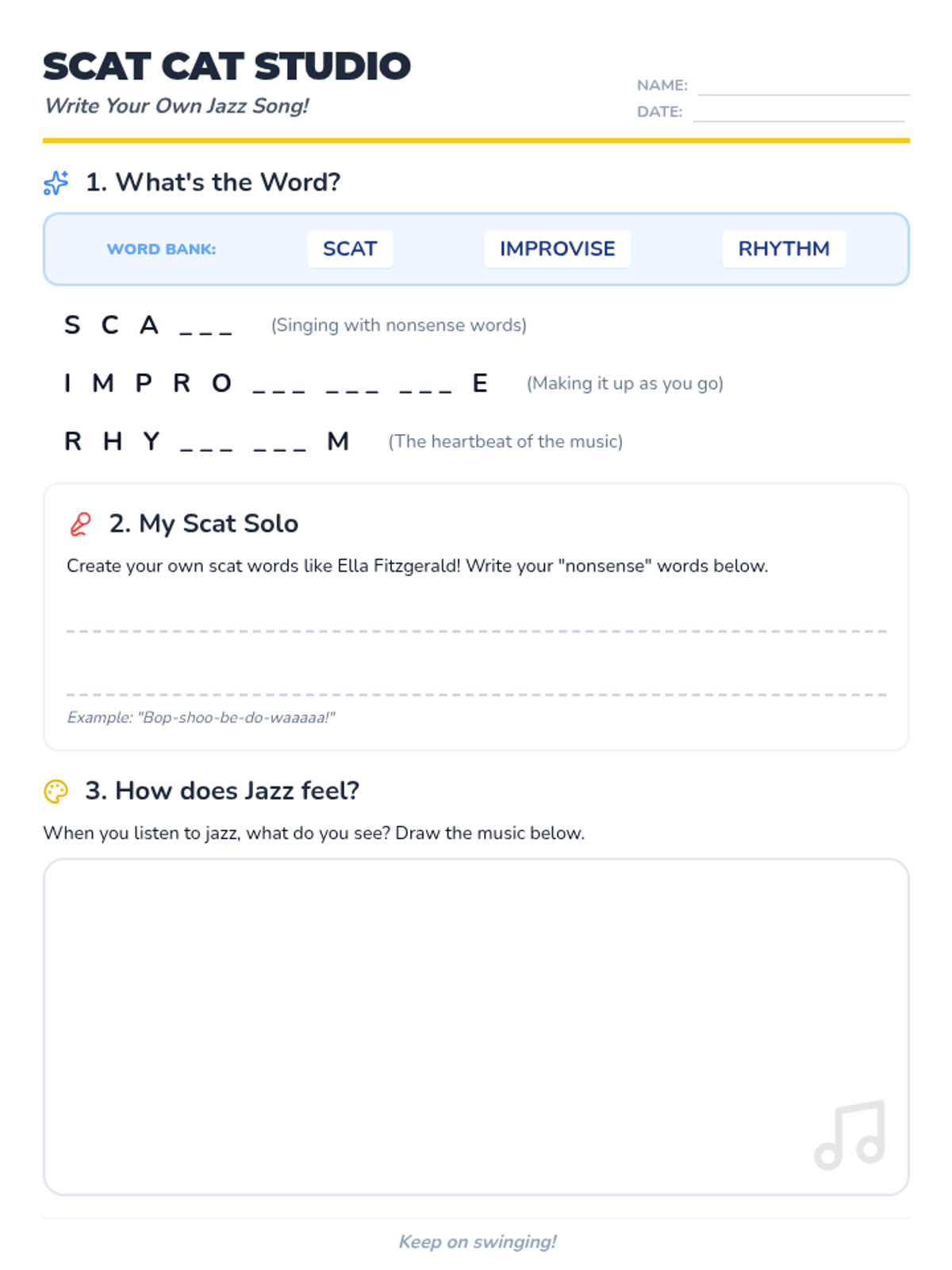
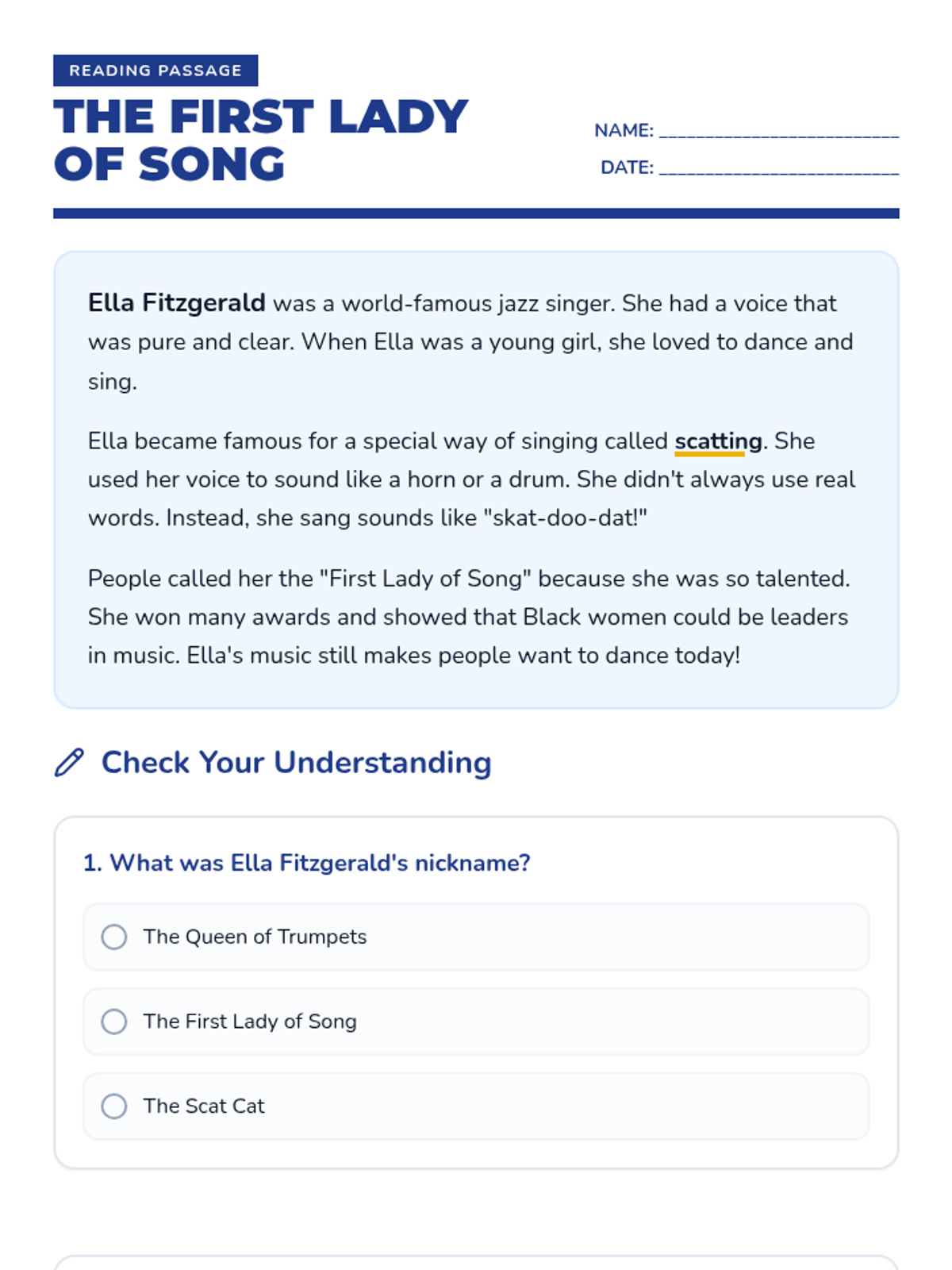
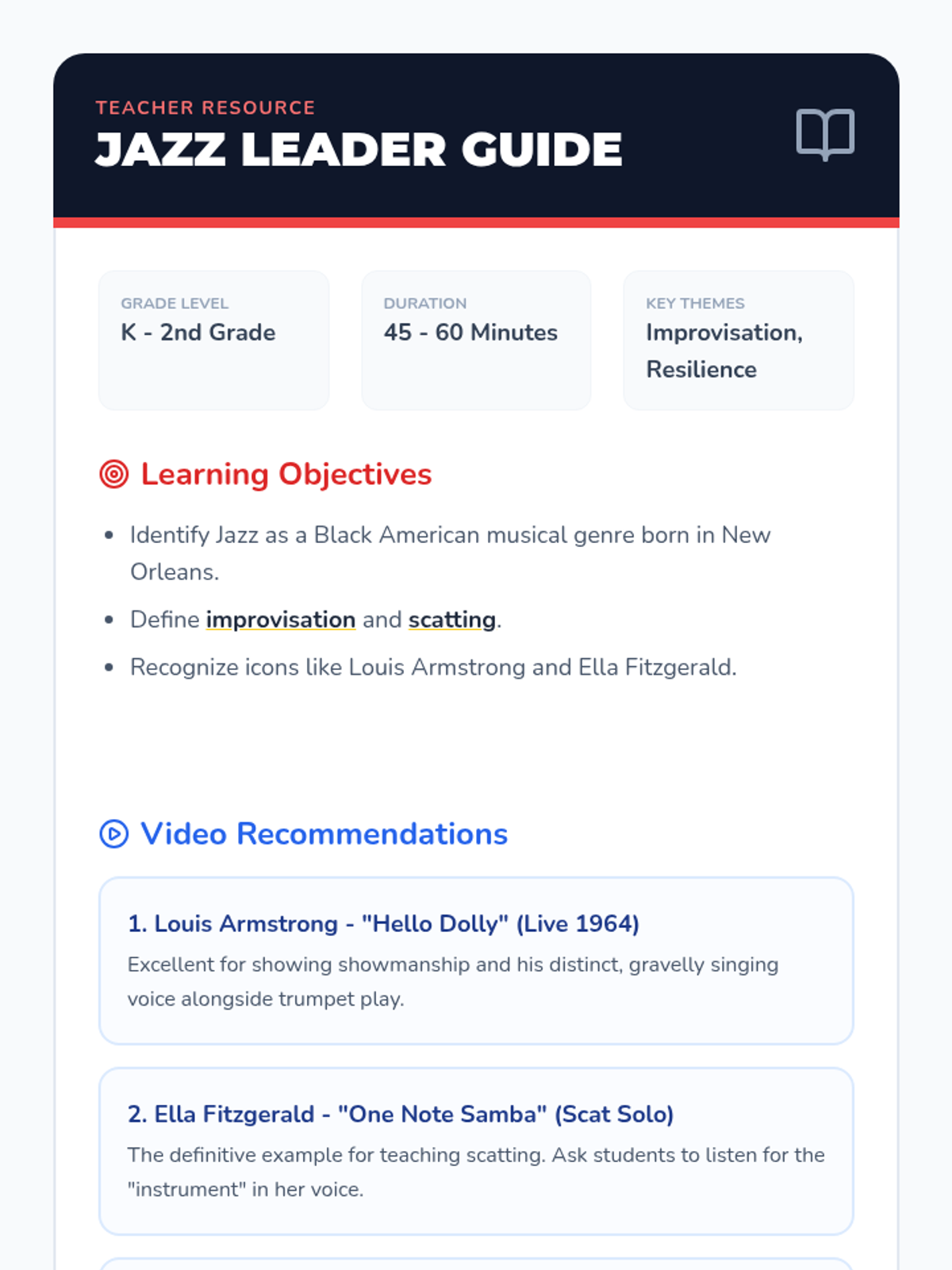
This sequence introduces Kindergarteners to the distinctly American art forms of Jazz and Blues, focusing on emotion and spontaneity. Students explore the 'swing' feel, improvisation, and scat singing through active movement and vocal play.
A musical journey for Kindergarteners to discover the four families of the orchestra, explore dynamics, and experience the role of the conductor through active listening and movement.
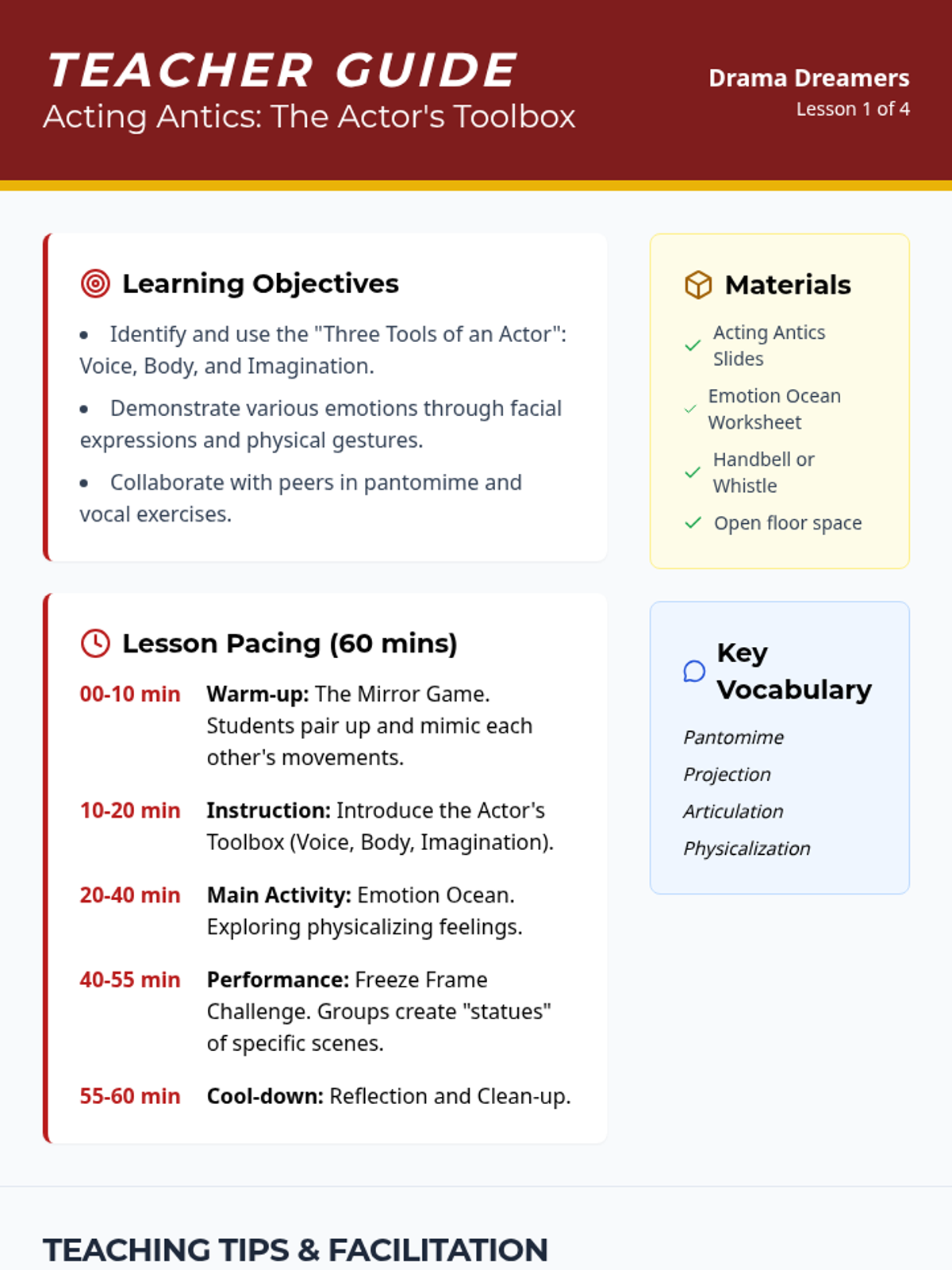
This sequence introduces Pre-K students to the expressive power of creative movement. Students learn to use their bodies to communicate animals, weather, emotions, and stories, developing physical empathy and creative confidence through guided improvisation and play.
Students explore the basics of stage lighting, including direction, shadow, and color, to understand how lighting design creates mood and tells stories in theater.
A 5-lesson sequence for 2nd graders to master reading pitch on the musical staff, moving from high/low discrimination to reading 3-note melodies using Solfege.
A foundational music unit for 2nd grade that guides students from internalizing a steady beat to reading and performing basic rhythmic notation including quarter notes, eighth notes, and rests.
A 5-lesson unit for 2nd graders exploring the building blocks of music, including melody, harmony, ostinato, musical phrasing, and song form (AB/ABA), culminating in a classroom composition project.