Composition techniques, essay structures, and creative expression. Develops narrative, informative, and persuasive writing skills across various genres.
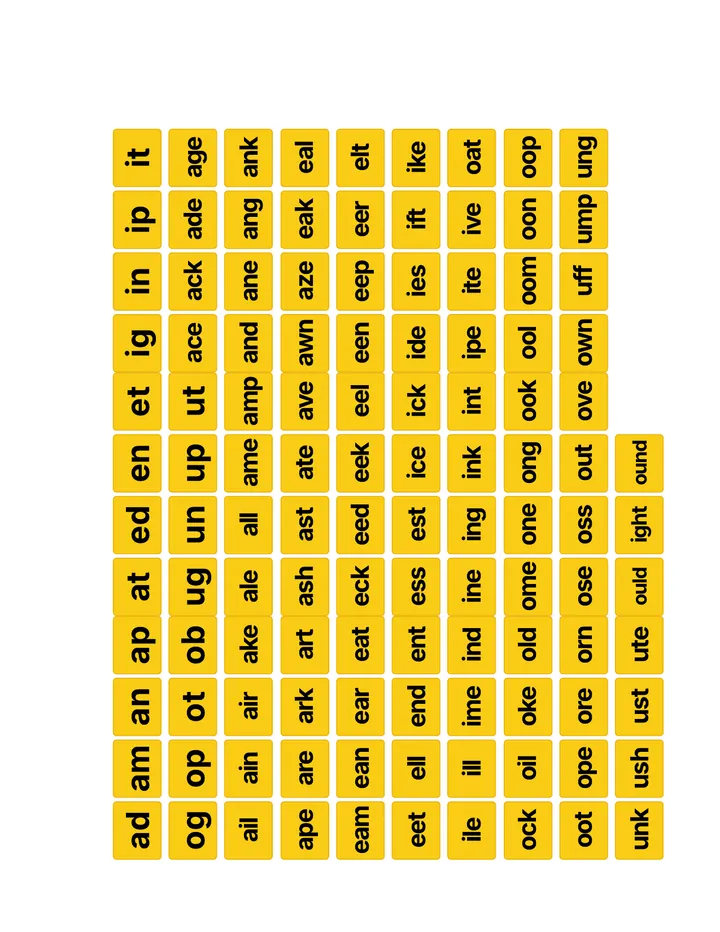
A single-page, landscape printable containing 116 yellow word family tiles organized in rows of 12 with groupings of 4 for easy identification. This version utilizes the entire page area with exactly twice the vertical spacing between rows relative to the space between tiles. The font size is maximized for visibility.
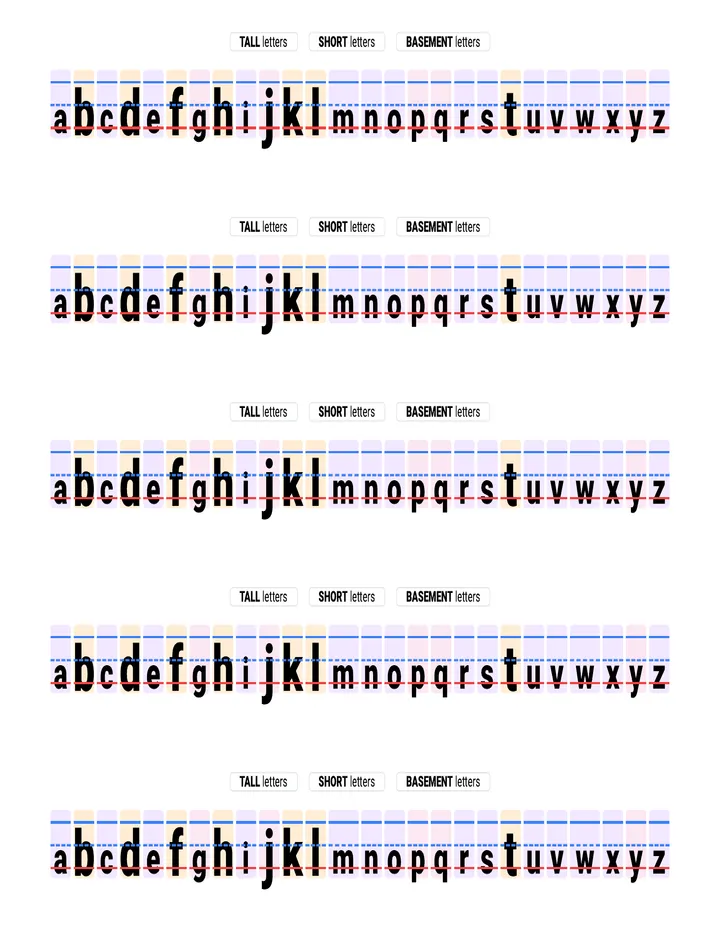
A collection of five alphabet practice strips in landscape layout using Roboto font. Features precisely calibrated primary handwriting line markings (solid blue topline, dashed blue midline, solid red baseline) correctly aligned to letter anatomy. Letters are black, and extra space is provided below the red line for basement letter visibility. Includes a color-coded key and 0.8 inch gaps between strips. Basement letters correctly descend below the red baseline while staying vertically aligned with other letters. High-contrast line colors ensure visibility.
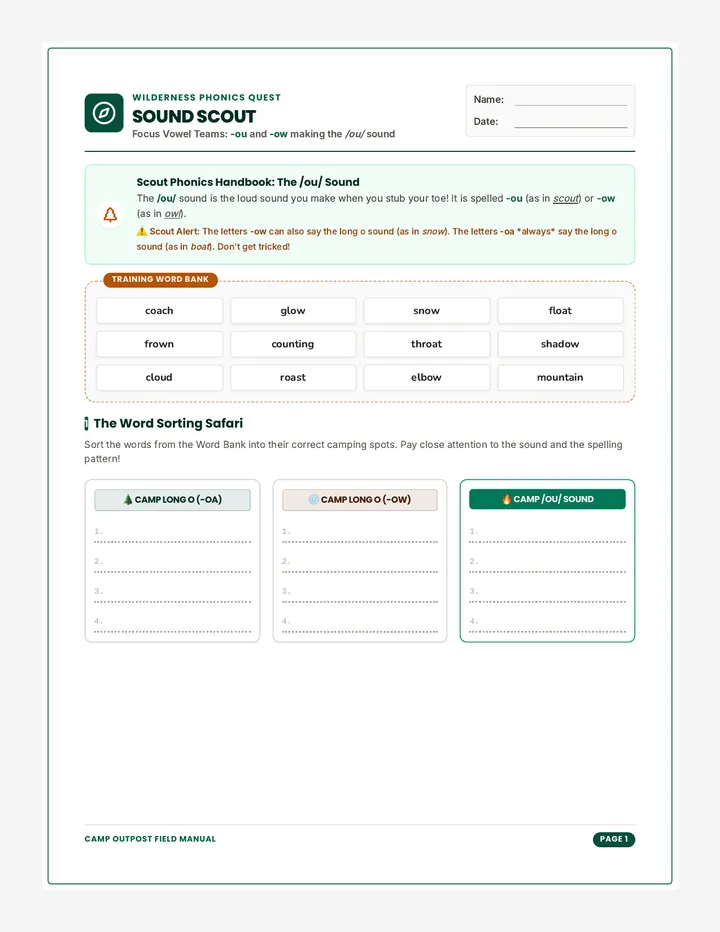
A beautifully themed 2-page print-ready worksheet on the vowel teams -ow and -ou making the /ou/ phoneme, featuring a word bank, sorting columns for distinguishing long O vs. /ou/ sounds, multisyllabic reading practice with a story, and multiple-choice questions with completely uniform styling.
A high-contrast black and white printable sheet featuring three vertical bookmarks in a portrait layout. Each bookmark is 7 inches long (672px) and serves as a book care contract with smaller icons positioned above larger promise text and a signature line.
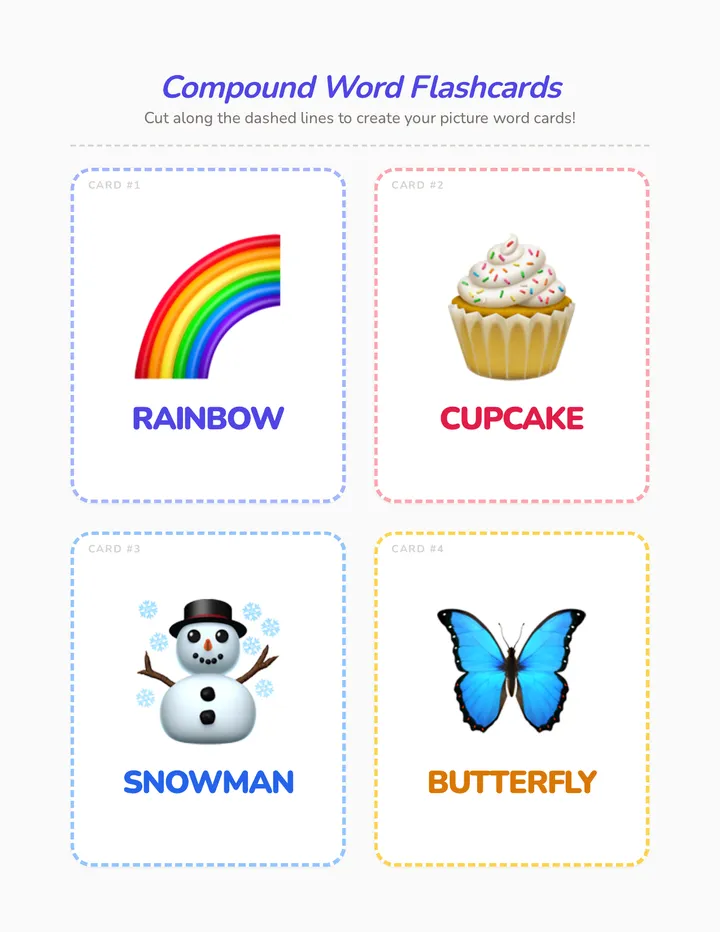
A set of 15 colorful flashcards for young learners featuring a large emoji illustration and the corresponding compound word, now with explicit page breaks for easy printing.
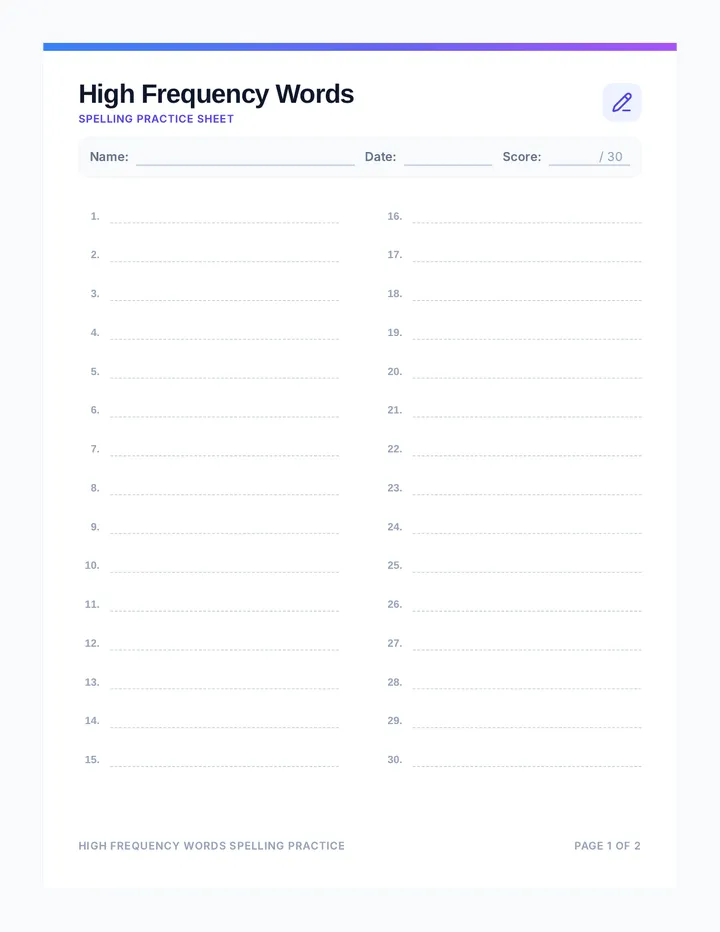
A printable 2-page blank spelling sheet numbered 1 to 60 for High Frequency Words. It features a clean, schoolhouse-themed layout with two columns of 15 spacious writing lines per page, name/date fields, and explicit page break rules for seamless printing.
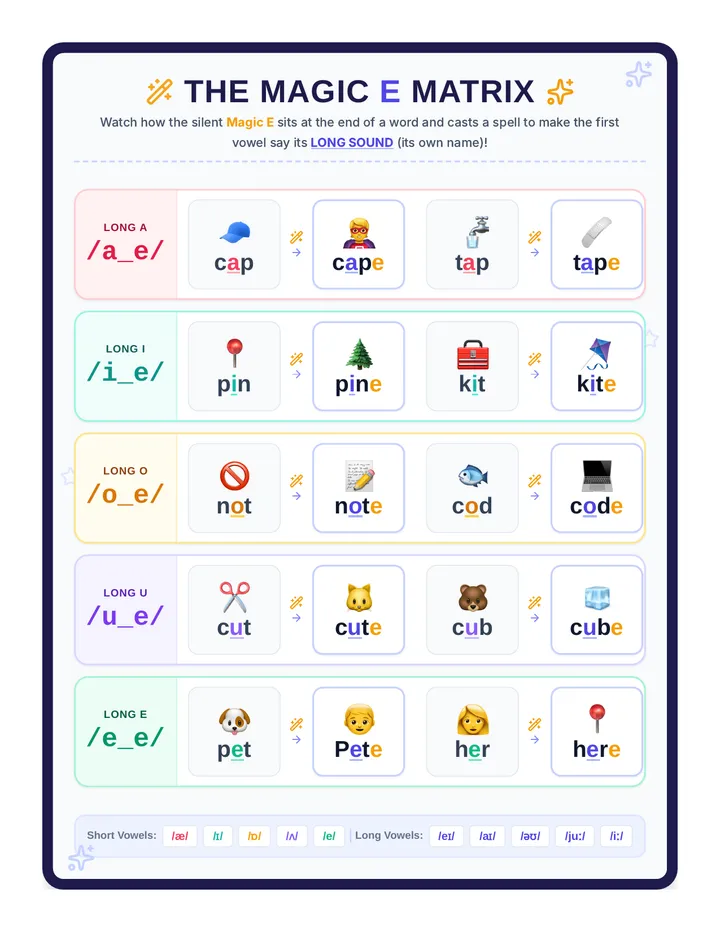
An updated Magic E Anchor Chart with 2 high-visibility examples per vowel pattern. Each word is paired with a clear, engaging visual emoji card, with words displayed in 26px print size for excellent classroom readability.
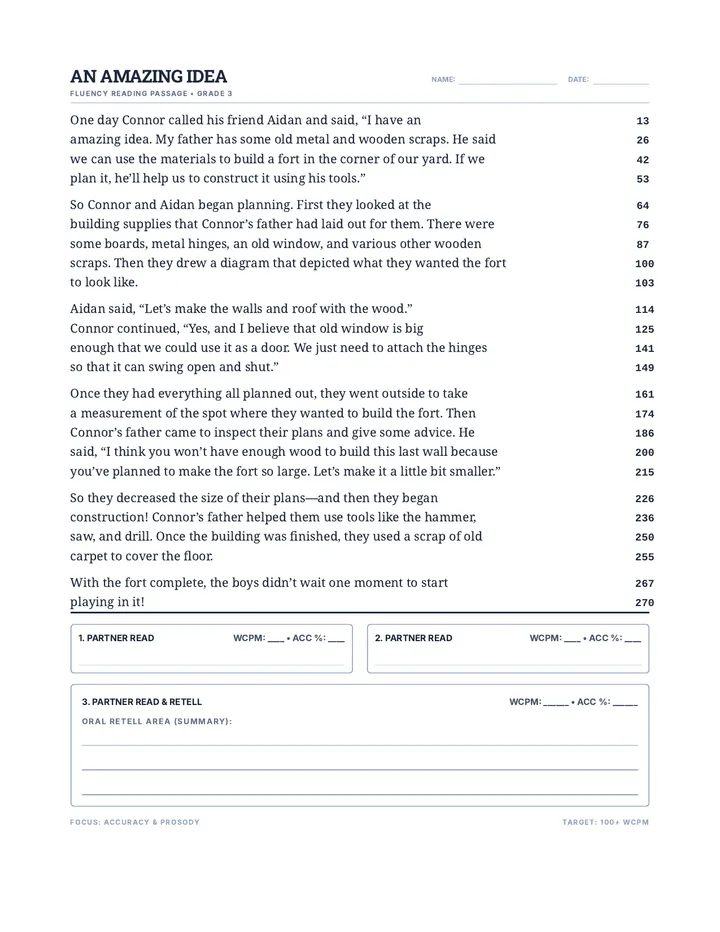
A reading fluency passage for 3rd grade titled 'An Amazing Idea' featuring line-by-line word counts, three partner-reading progress tracking boxes, and a dedicated story retelling area.
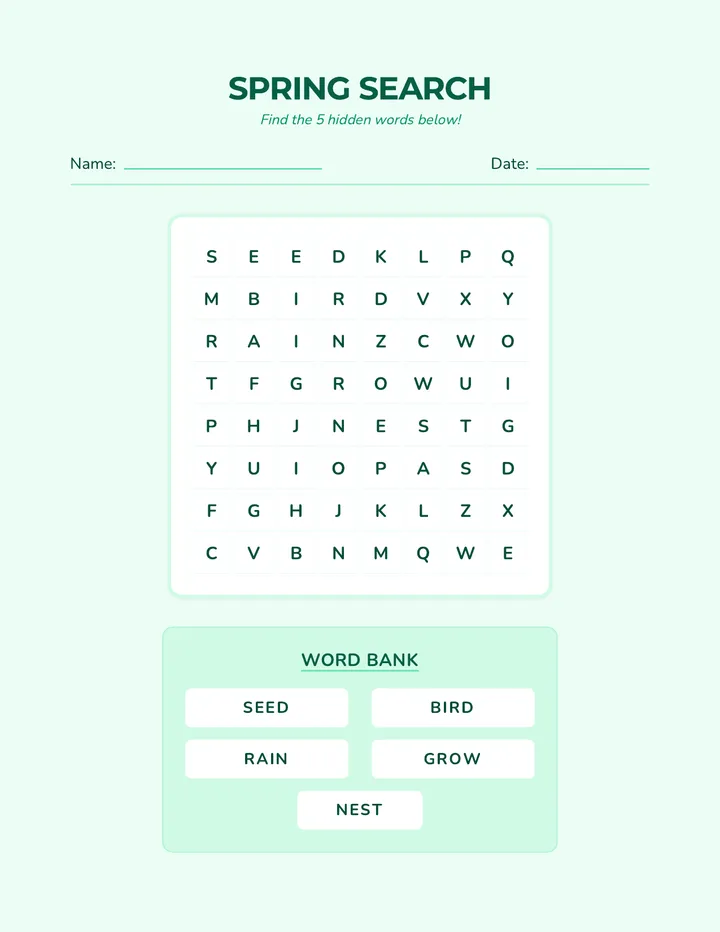
A compact spring-themed word search for students, featuring five easy words (SEED, BIRD, RAIN, GROW, NEST) in an 8x8 grid. Optimized for printing on a single page.
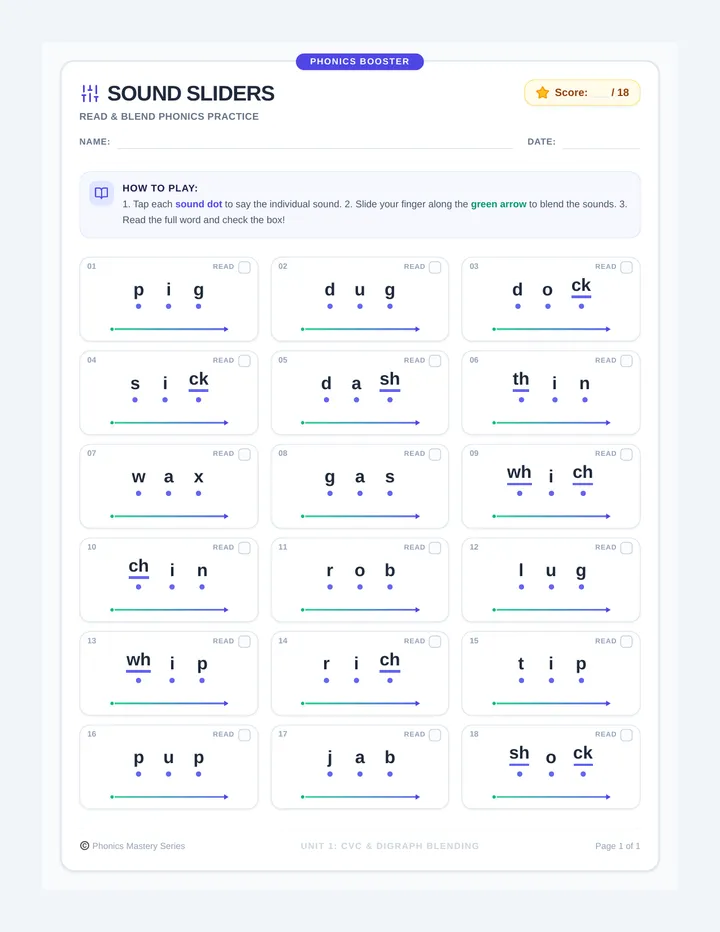
A single-page printable worksheet featuring 18 words with custom-designed sound dots, underlined digraph markings, and left-to-right blending slide tracks. Designed with a clean, friendly theme for handwriting practice and reading mastery.
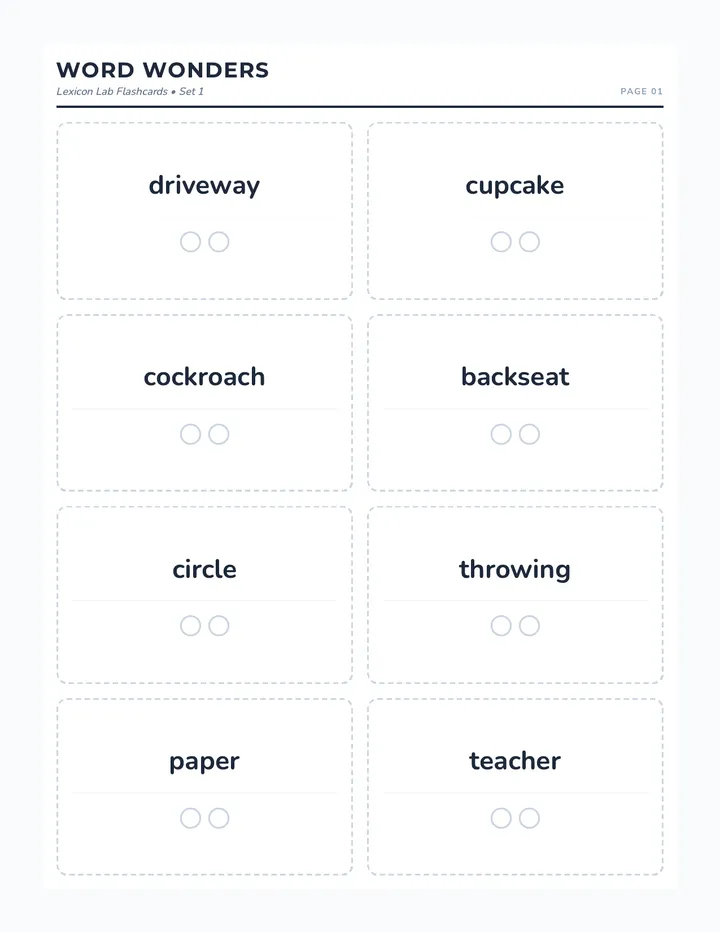
An expanded set of 44 printable word flashcards featuring various syllable counts. Each card includes interactive tracking circles and clean, large typography for easy reading and practice.
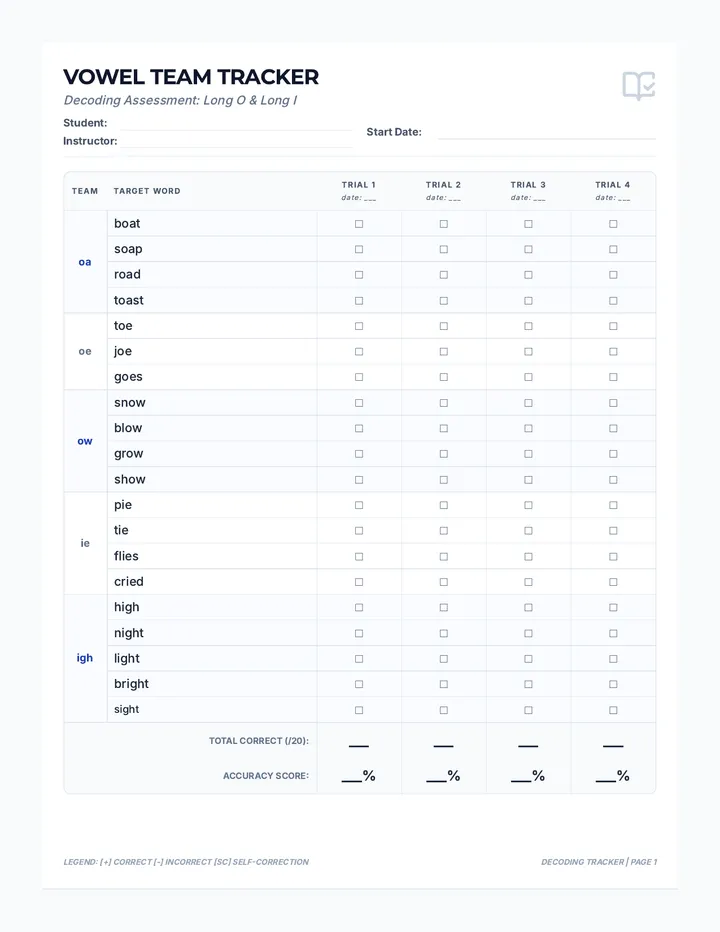
A comprehensive progress monitoring spreadsheet for tracking decoding and encoding skills with vowel teams oa, oe, ow, ie, and igh. Includes multi-trial tracking, target word lists, and sections for qualitative observations.
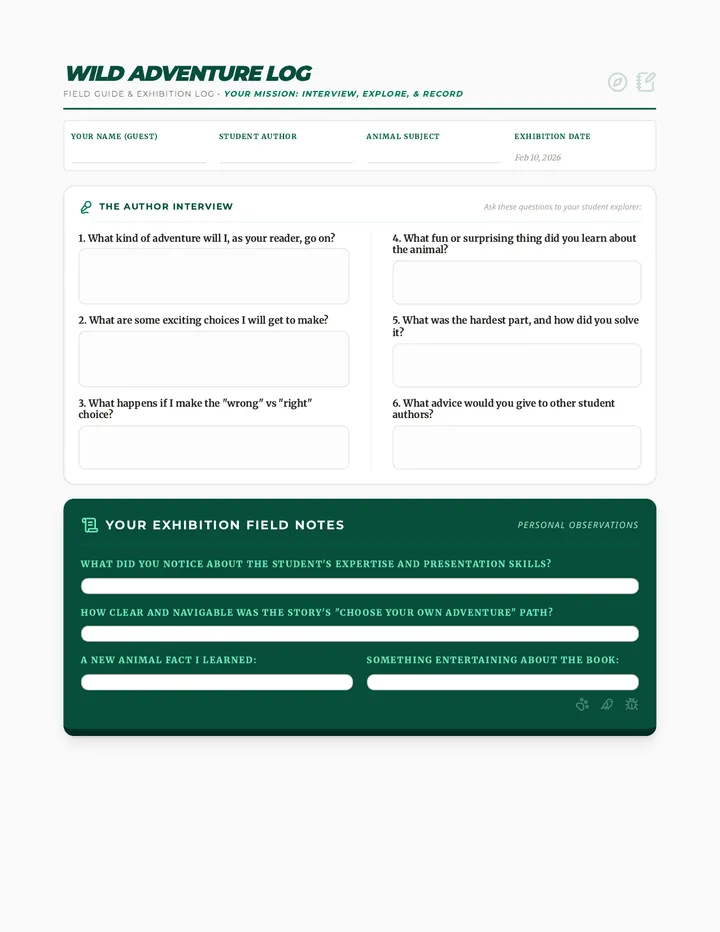
A 2nd-person 'Wild Adventure Log' guest form with maximized writing space. It features a side-by-side author interview/process section and a large Guest Observation area, all designed for comfortable handwriting on a single page.
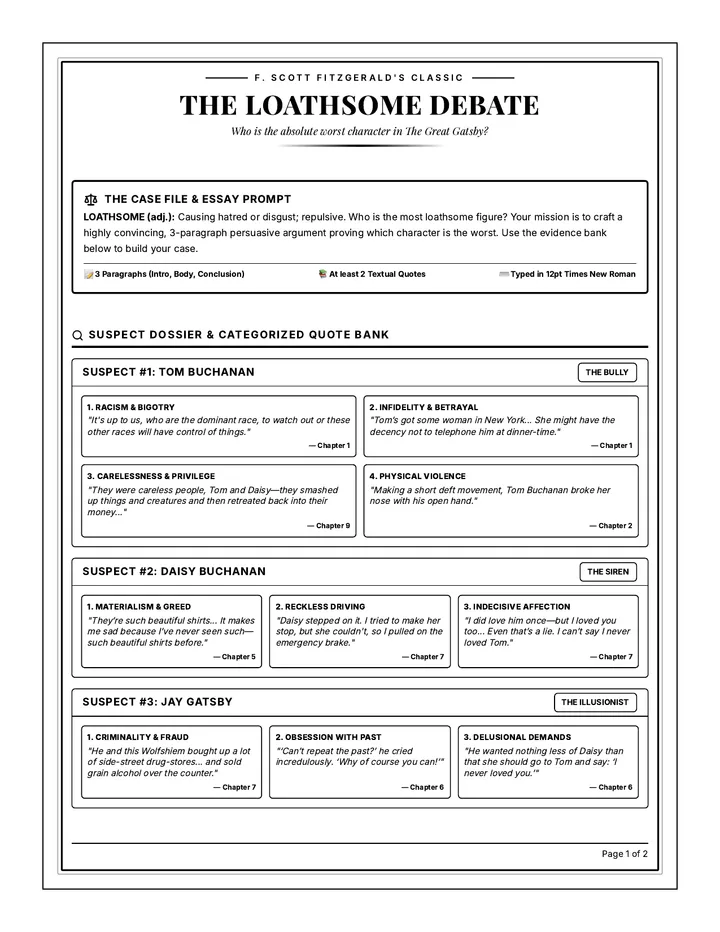
A two-page printable graphic organizer and quote bank in a high-contrast black-and-white theme with zero color or gray fills. Page 1 presents the 'Suspect Dossier' with clear borders, white backgrounds, and pure black text, while Page 2 features the highly structured essay outline and sentence starters with solid black-and-white print-friendly writing guides and page numbers.
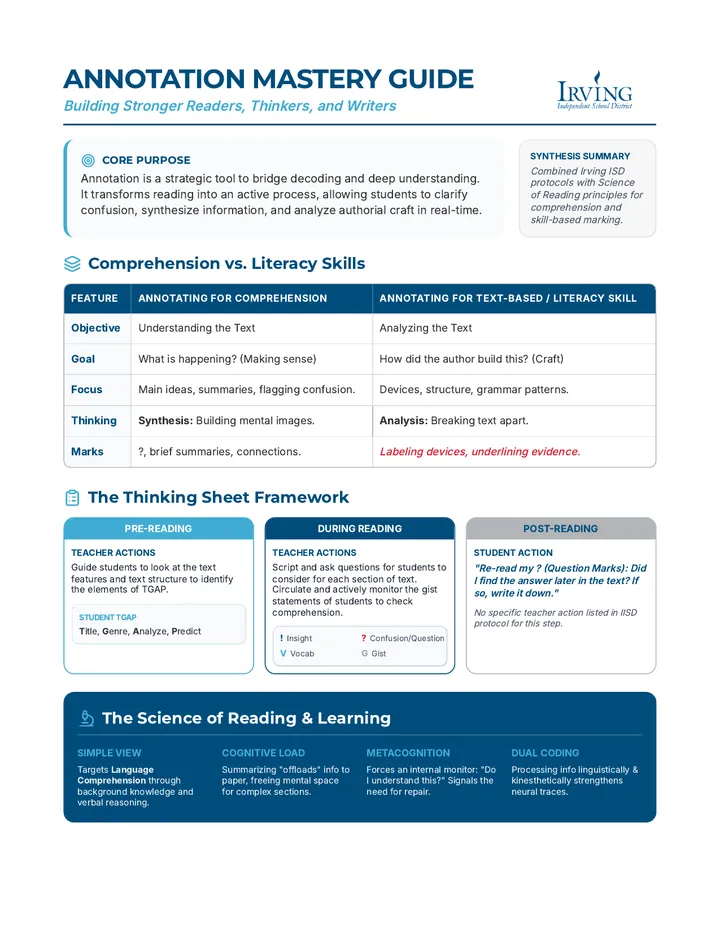
A one-page teacher reference guide synthesizing annotation strategies, featuring a comparison between comprehension and literacy skills, teacher actions through the 'Thinking Sheets' framework, and connections to the Science of Reading. Updated terminology for marking symbols, with an added row comparing 'Understanding the Text' vs. 'Analyzing the Text'.
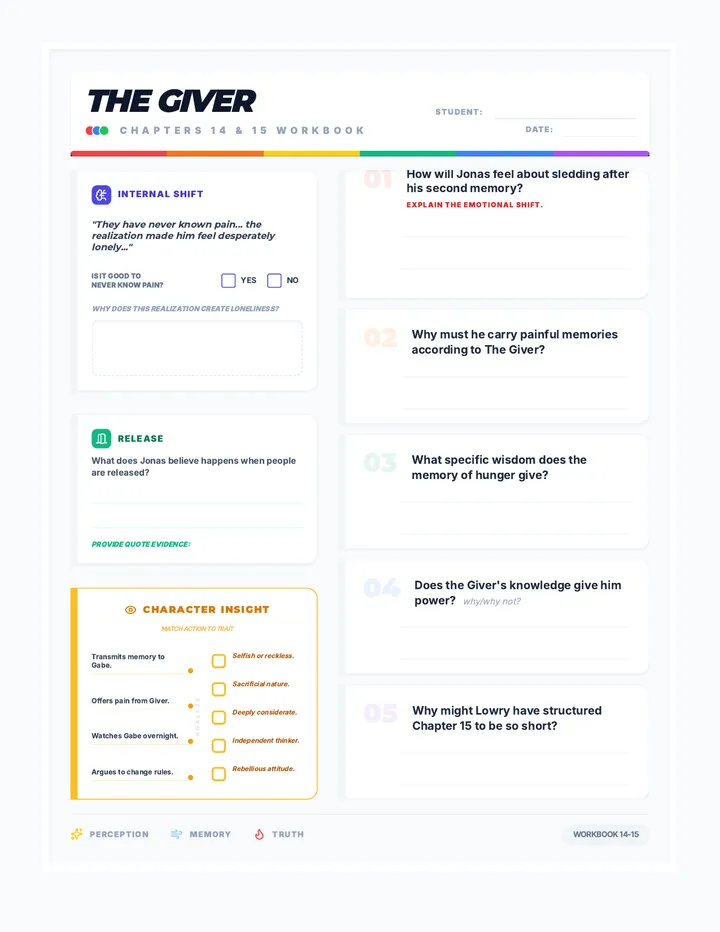
A final, refined one-page workbook for Chapters 14-15 of The Giver. This version has been strictly optimized for height by reducing margins and padding to ensure everything fits perfectly on a single page, while featuring a vibrant full-spectrum rainbow theme to represent Jonas's awakening to color and deep memory.
A refined three-page story planning guide for senior English. Features a high-contrast architectural blueprint aesthetic with improved visual hierarchy, expanded student work areas, and technical schematic sections for character psychology, plot structure, and dialogue subtext.
A comprehensive 100-point rubric for 10th-grade argumentative essays, featuring detailed criteria for claims, evidence, analysis, and counter-claims. Designed with a clean, professional aesthetic for easy grading and clear student feedback.
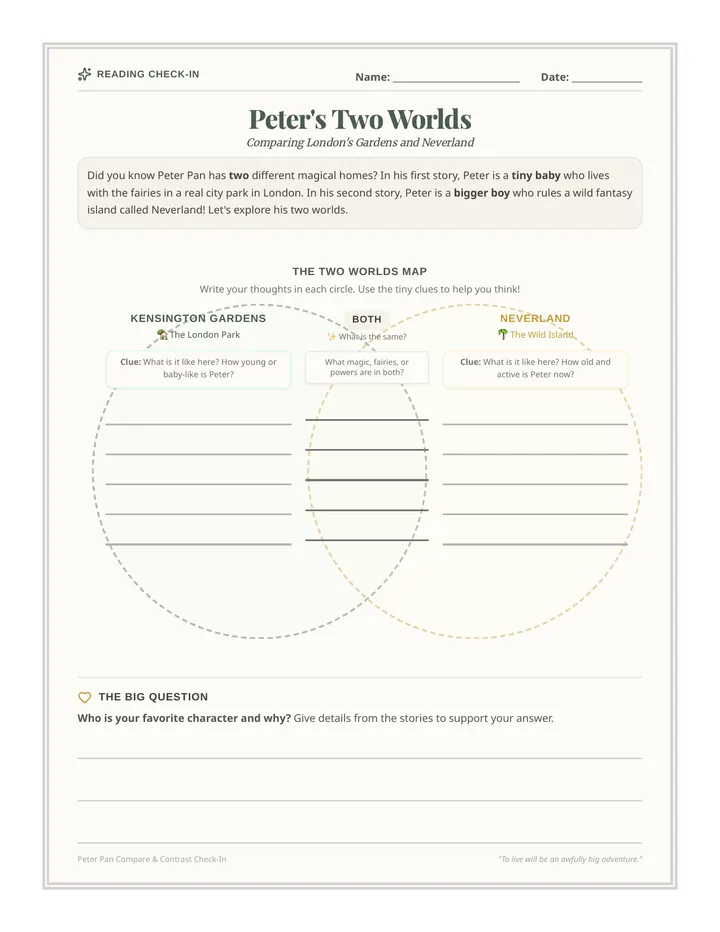
An updated 3rd-grade friendly exit ticket with a large, beautifully aligned Venn diagram where the text and writing lines are positioned in non-overlapping columns. Writing lines are now darker, wider, and increased to 5 lines per column.
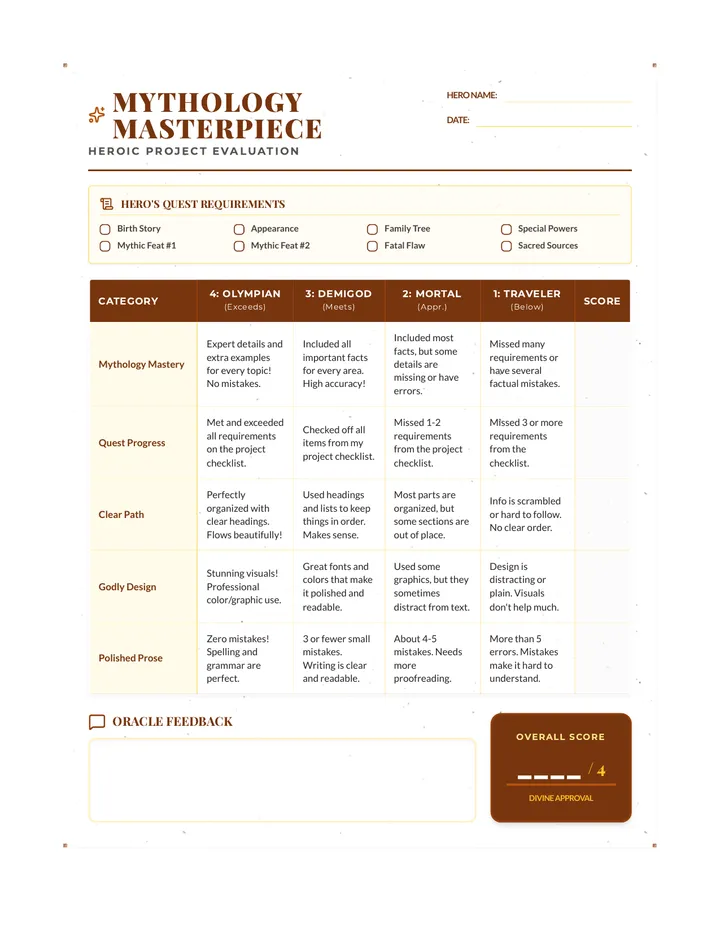
A single-page rubric for the Greek Mythology project, redesigned for space efficiency and readability. It features a horizontal checklist and consolidated footer to ensure the Oracle Feedback and Overall Score sections fit perfectly on one page without sacrificing text size. The final score is now explicitly labeled 'overall score _/4'.
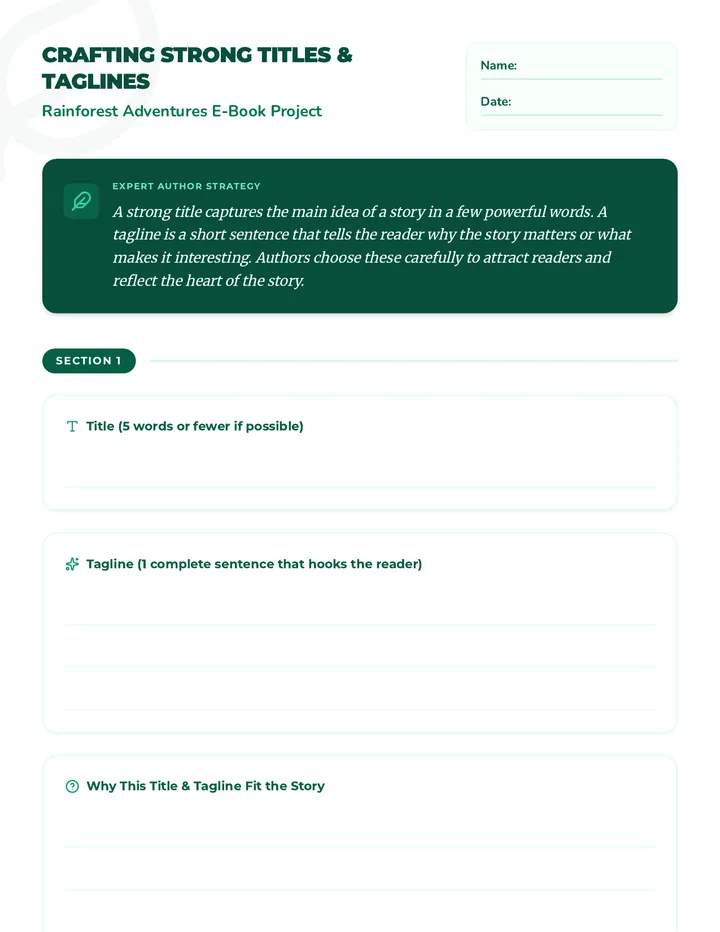
A professional 2-page printable worksheet for student authors to brainstorm and refine titles and taglines for their rainforest-themed e-books. It features a cohesive rainforest aesthetic across two structured pages, providing space for two distinct draft sections and a final synthesis reflection.
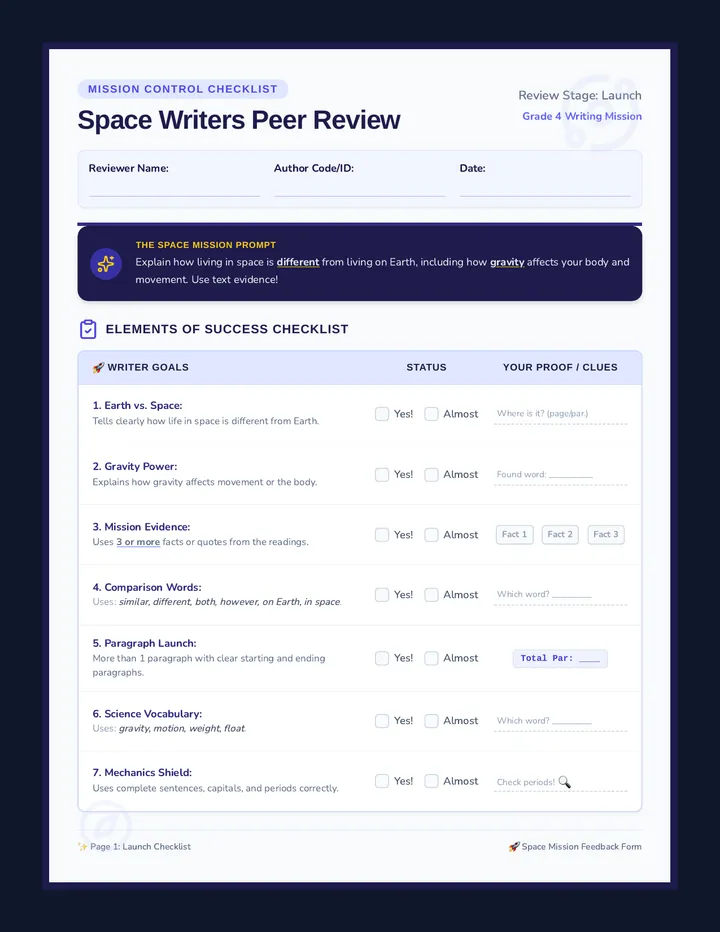
A two-page student peer feedback form styled with an astronaut/space theme. Page 1 contains a spacious visual success checklist for evaluating a writing piece. Page 2 provides expanded writing spaces with generous handwriting lines and color-coded boxes for comprehensive positive and constructive feedback ('Stellar Glows' and 'Cosmic Grows'), accompanied by sentence frames designed for Multilingual Language Learners.
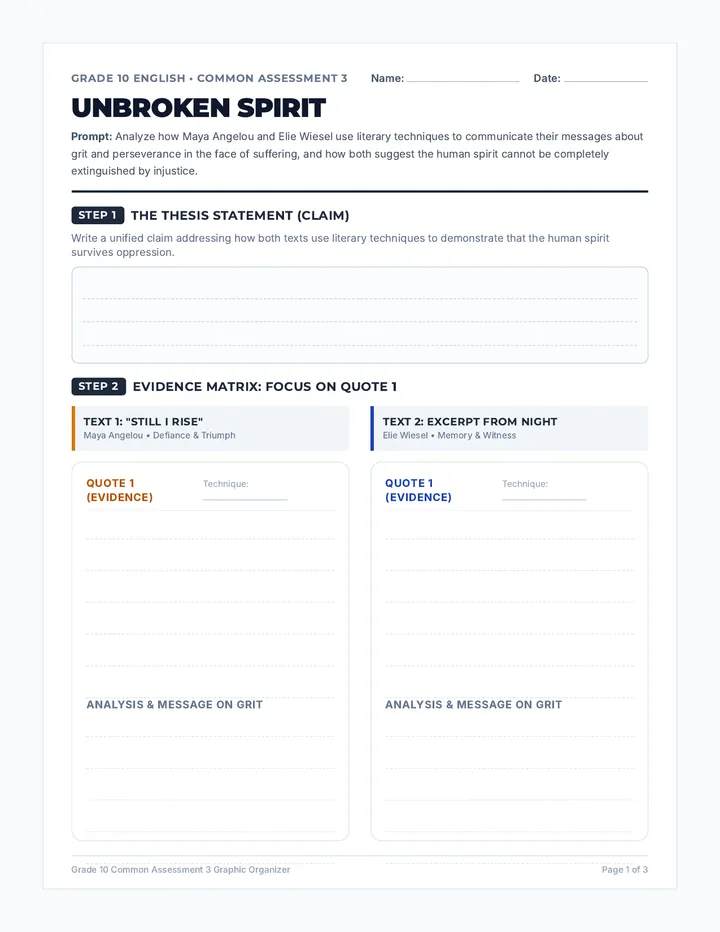
An expanded, premium 3-page graphic organizer designed for 10th-grade students preparing for Common Assessment 3. Features a highly structured layout with maximized 6-line handwriting boxes for both quotes and analysis across Maya Angelou's 'Still I Rise' and Elie Wiesel's 'Night', followed by a deep synthesis section.
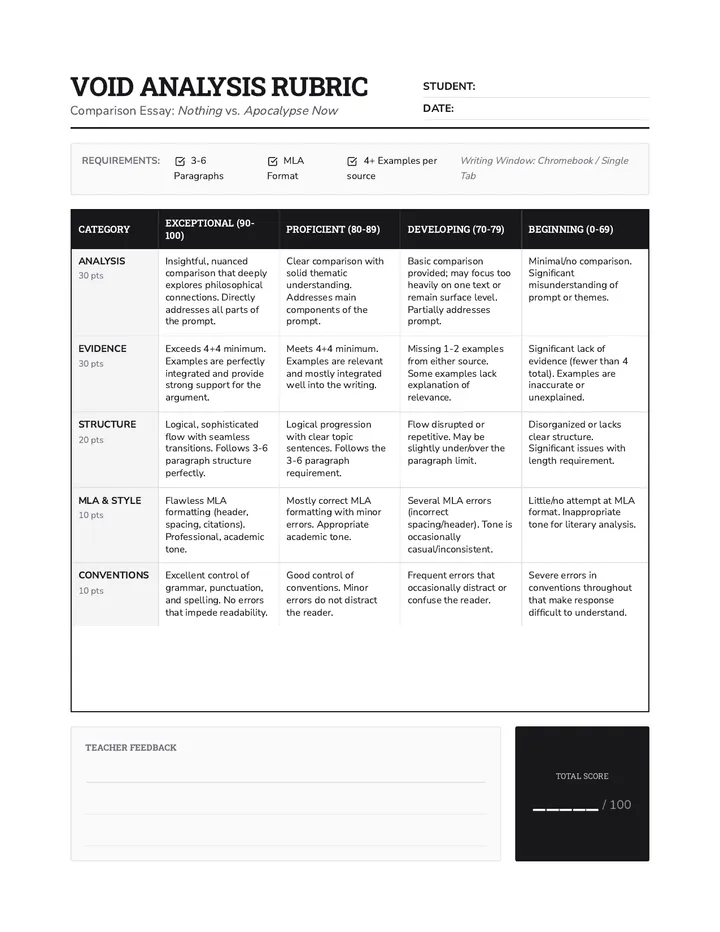
A revised 2-page rubric and prompt sheet for a comparative analysis of 'Nothing' and 'Apocalypse Now'. Page 1 features a detailed 100-point rubric with sections for teacher feedback and final scoring; Page 2 provides the five thematic writing prompts for student reference.
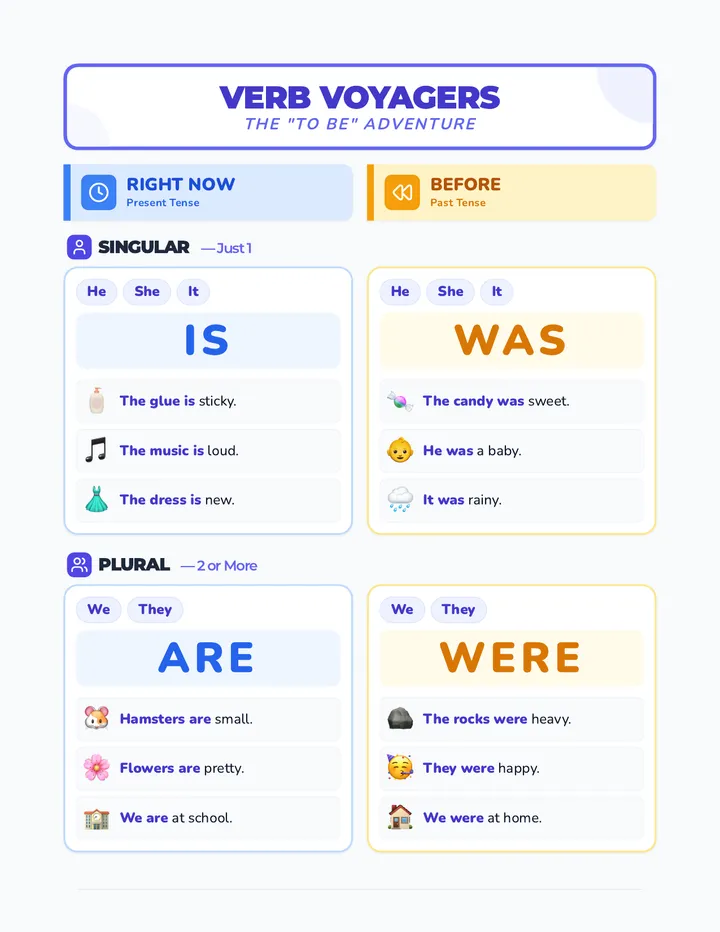
A condensed version of the Verb Voyagers anchor chart, removing student information sections and adjusting spacing and font sizes to ensure it fits perfectly on a single printable page.
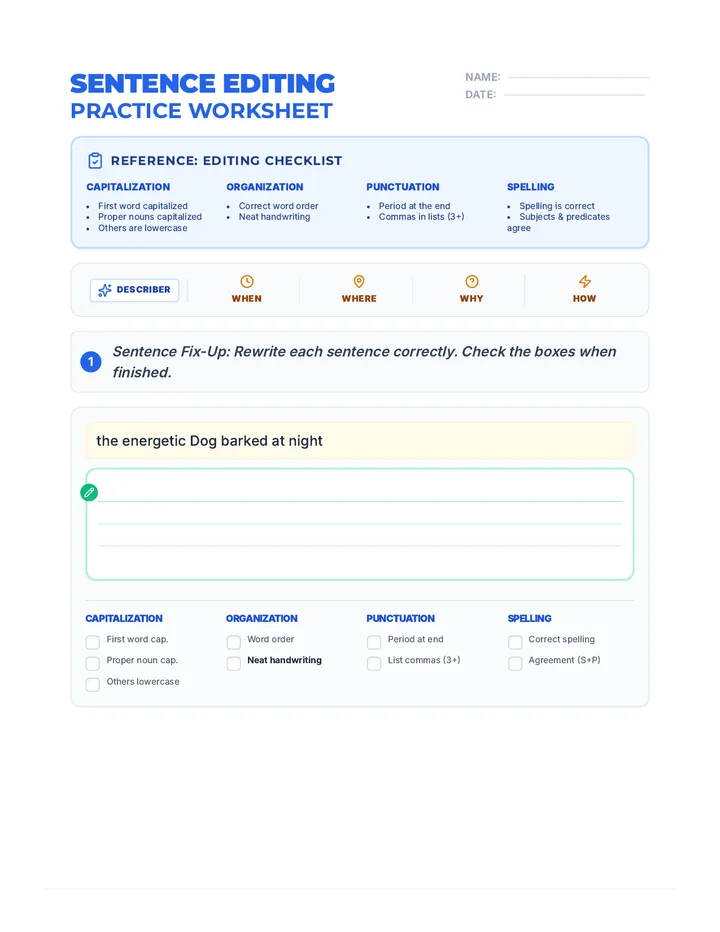
An extensive 6-page worksheet for sentence building and correction. Features an editing checklist for review at the top of Page 1, followed by four 'Sentence Fix-Up' items and six complex frames. All tasks include 4 handwriting lines and a standardized checklist with increased font sizes for better legibility. Subtitle removed and font sizes polished for classroom use.
An expanded anchor chart featuring a second page focused on academic articulation. It provides curated lists of formal sentence starters for stating arguments, introducing evidence, and performing deep text analysis, maintaining a professional editorial aesthetic.
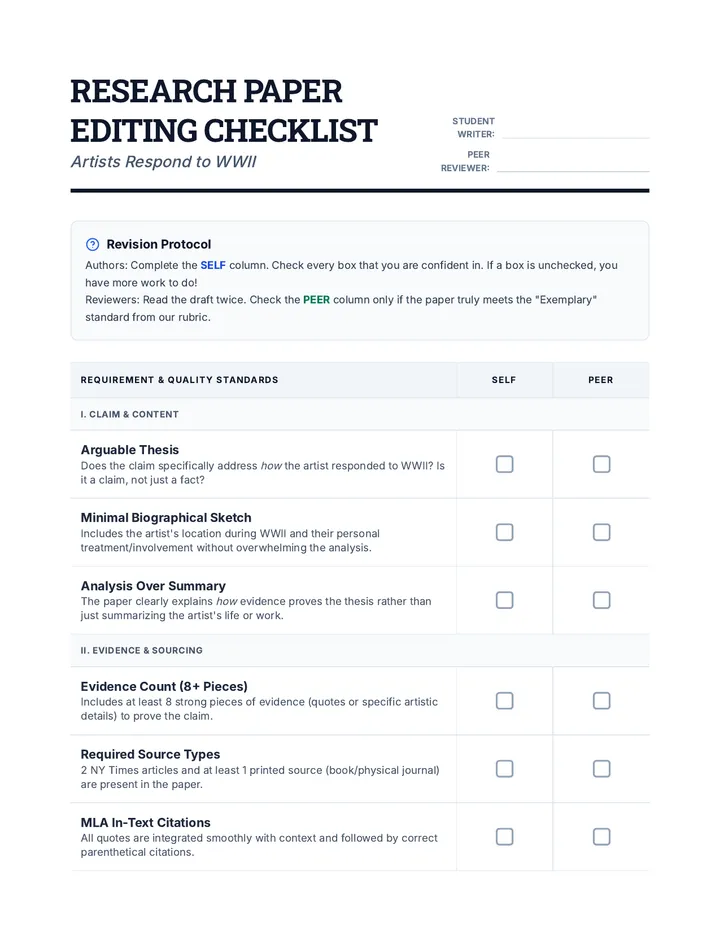
A comprehensive self and peer editing checklist for the WWII Artists research paper. The "MLA Format & Length" requirement has been updated to specify that 6 sources are required for the standard research paper.
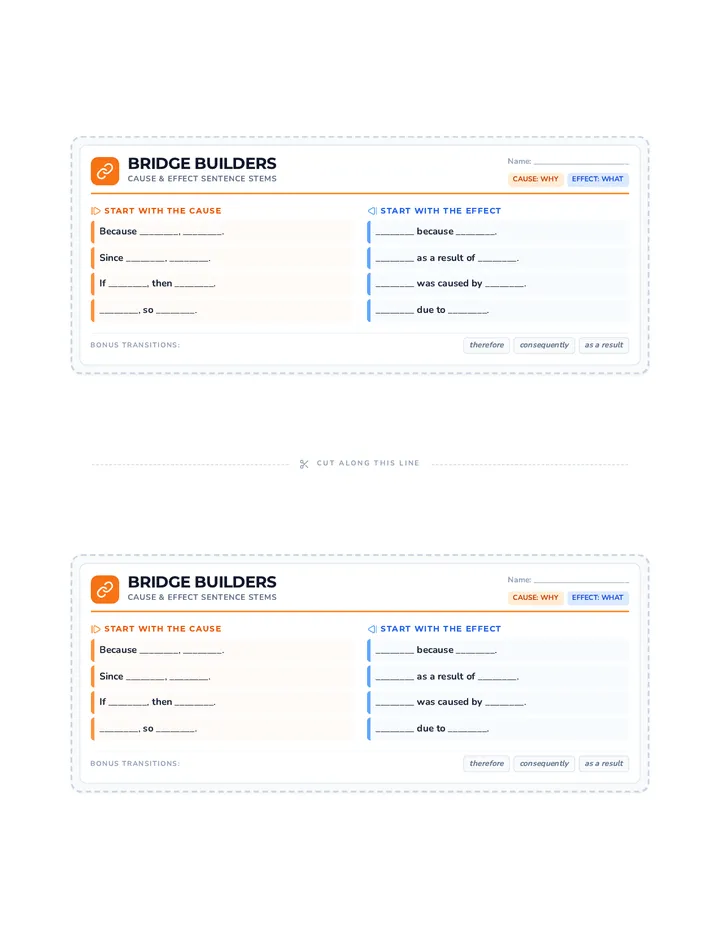
A condensed, printable half-page reference list containing common cause and effect sentence stems for 3rd grade students, strictly constrained to a single page with a center cutting guide.
A strictly one-page C-E-R rubric designed for 8.5x11 printing with 0.5-inch margins. It uses a professional "Argument Blueprint" aesthetic with space for feedback and scoring, optimized to eliminate top whitespace.
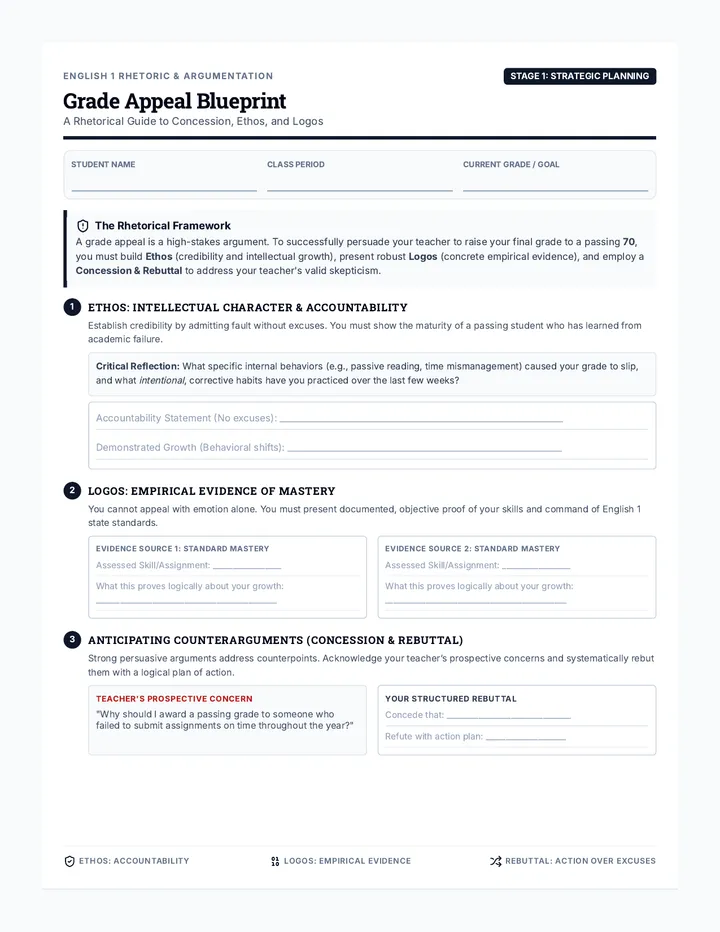
A rigorous grade appeal planning worksheet and formal letter-writing template for English 1. Elevates writing complexity by introducing concession and rebuttal alongside advanced ethos/logos strategies and an academic vocabulary word bank.
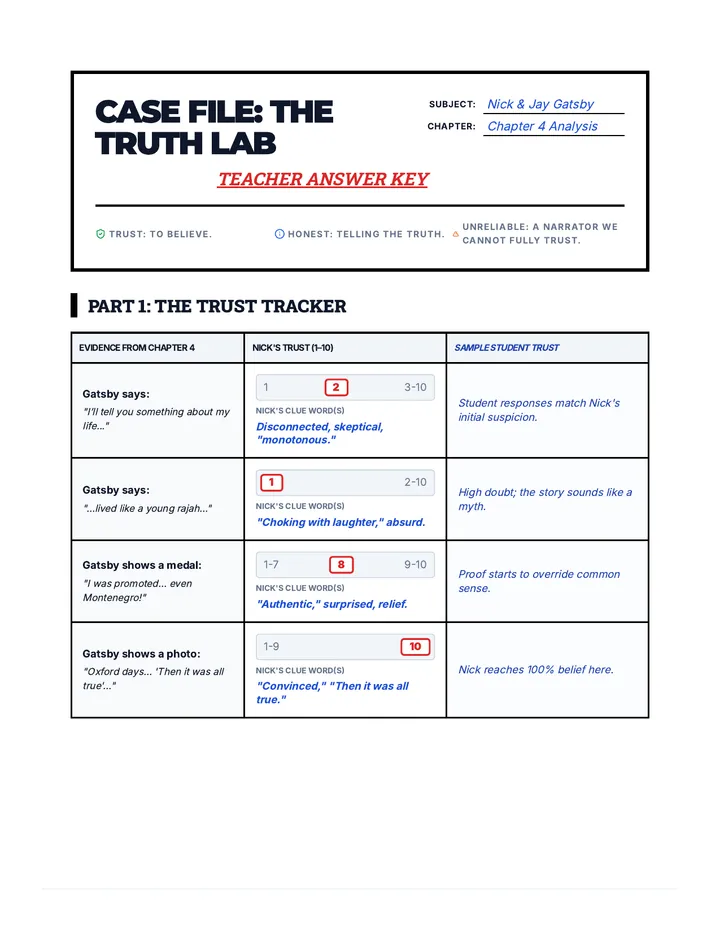
A teacher answer key for the 'Truth Lab' Gatsby worksheet, providing specific text-based answers, reasoning for Nick's shifting trust in Chapter 4, and analysis of character reliability.
A professional, academic rubric for a fieldwork reflection writing assignment. It includes criteria for research inquiry, evidence coding, collaborative synthesis, and writing style, all aligned to CCSS Grade 11-12 standards. Polished for high contrast and 1-page layout.
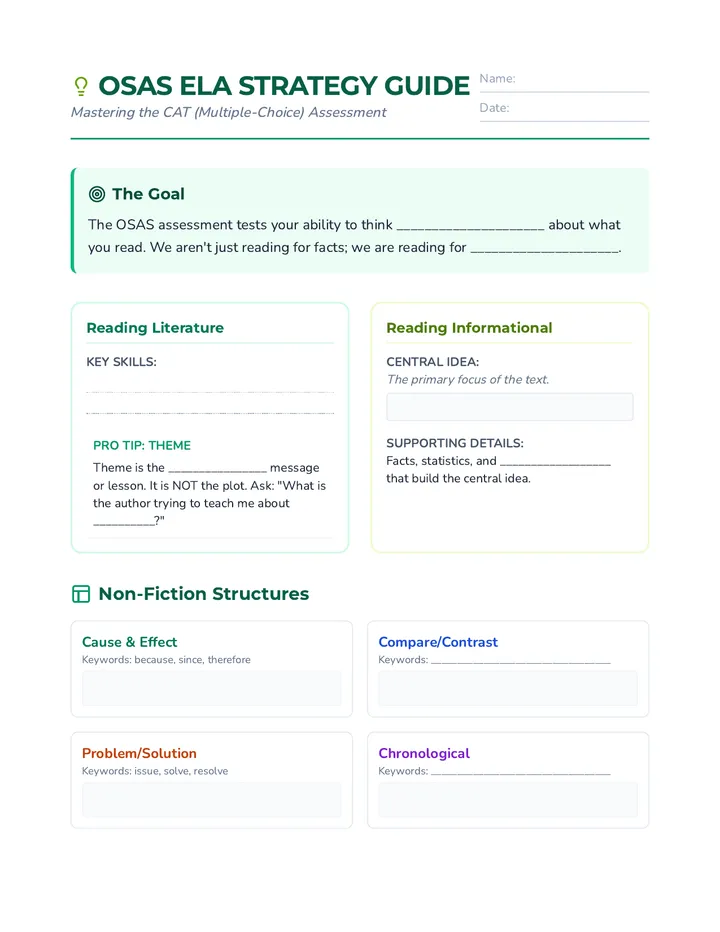
A comprehensive set of guided notes designed for students to follow along with the OSAS ELA Test Prep slides, specifically focusing on multiple-choice strategies. It includes fill-in-the-blank sections for key definitions, graphic organizers for text structures, and a practice checkpoint section.
A collection of ten deep-dive essay prompts for Shakespeare's Hamlet, covering major themes such as inaction, madness, corruption, and mortality. Each prompt is designed to elicit critical analysis and high-level literary interpretation.
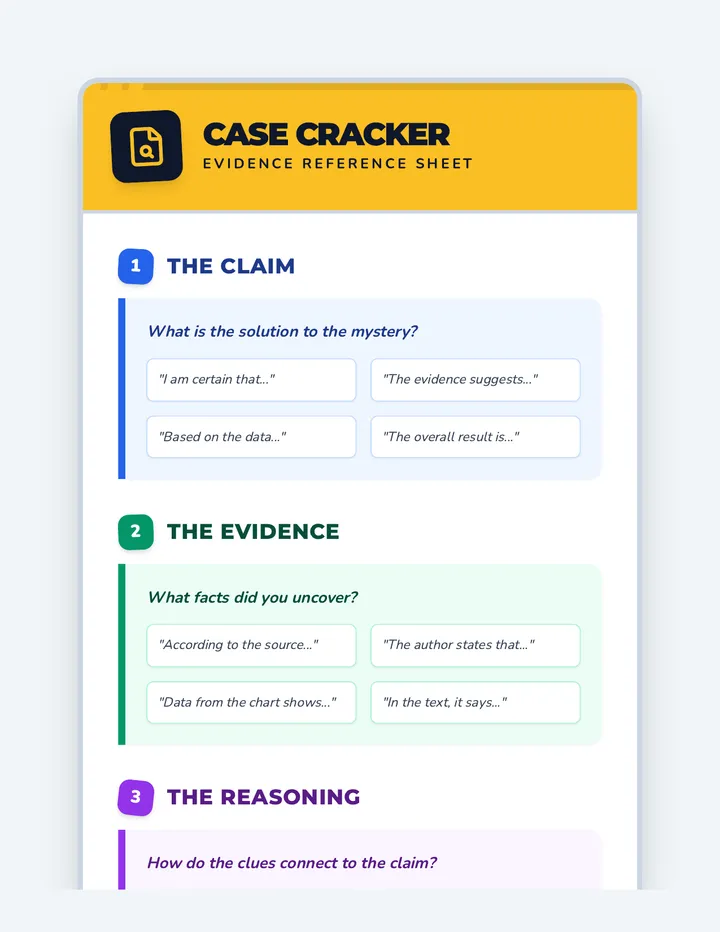
A visually engaging CER (Claim-Evidence-Reasoning) anchor chart designed with a detective 'case file' theme. It includes color-coded sentence starters for each component, a comprehensive transition word bank, and a simplified 3-step checklist for students to follow.
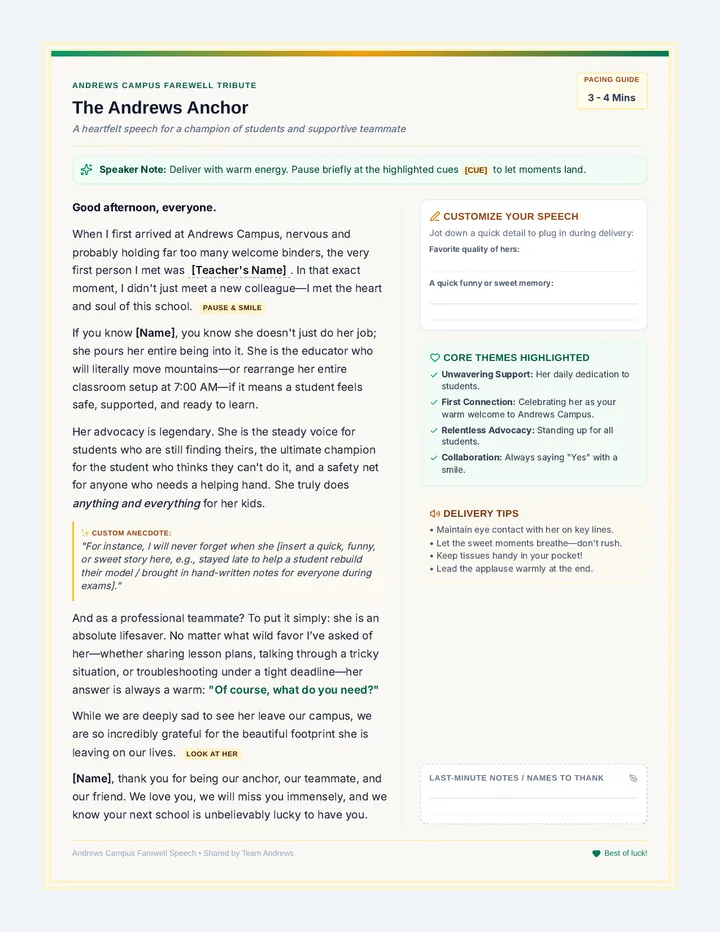
A beautifully formatted, compact, single-page podium-ready farewell speech script for a beloved teacher at Andrews Campus. Includes delivery cues, customization prompts, and a speaker checklist.
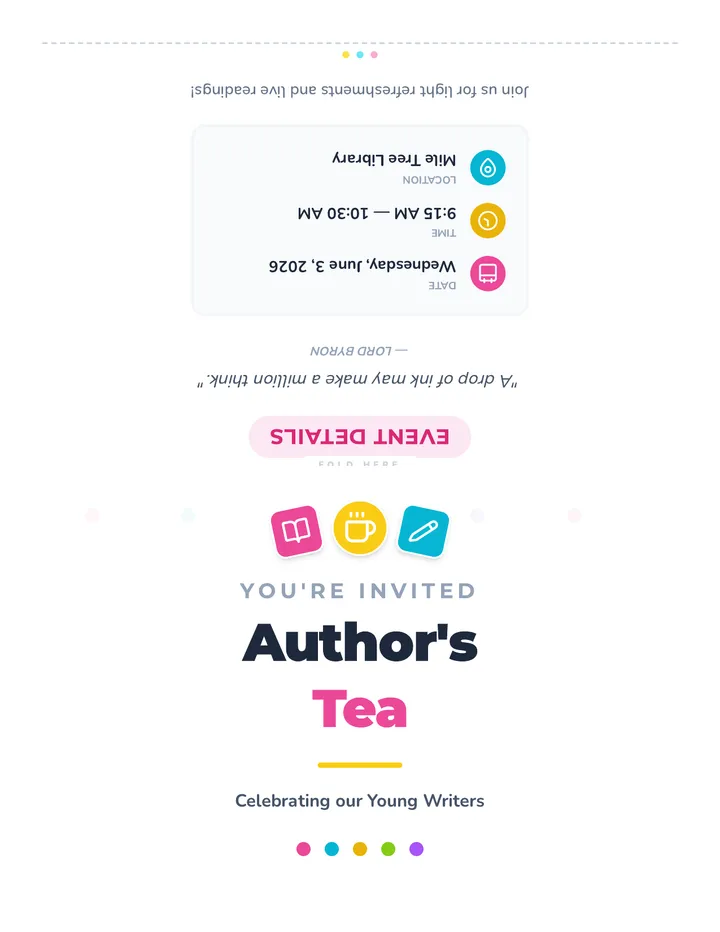
A vibrant, polka-dot themed foldable invitation for an Author's Tea event. The layout includes a front cover and a rotated details section (date, time, location) for a perfect horizontal tent fold.
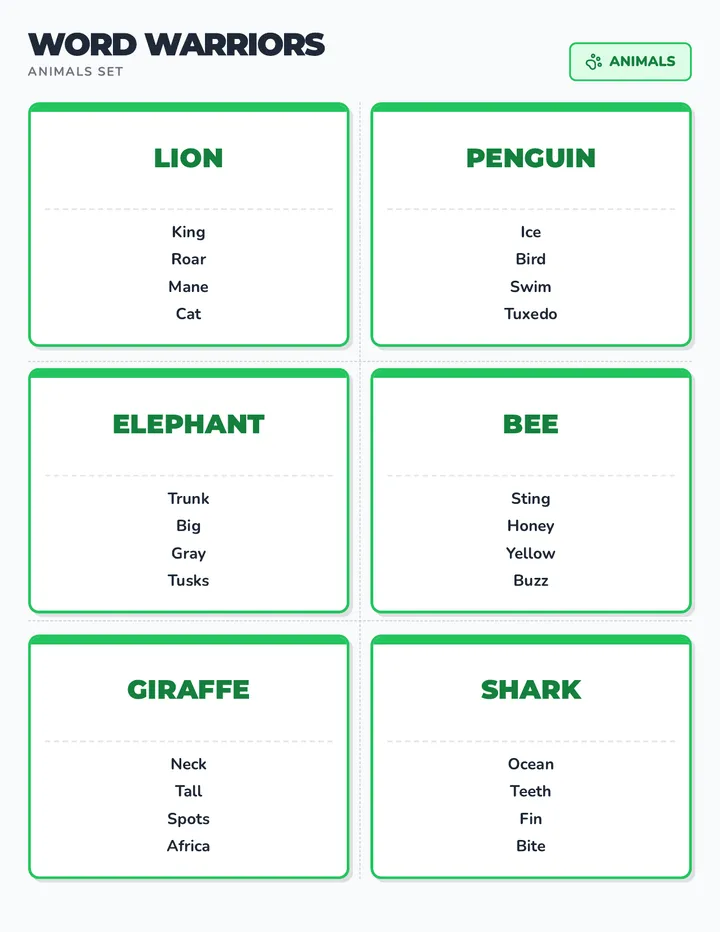
The complete 100-card "Word Warriors" Taboo pack for 4th graders. Includes 10 categories (Animals, Objects, Sports, Food, Places, Jobs, Nature, Clothing, Tech, Hobbies) with 10 cards each. Features dashed cut guides for easy printing and clear rule summary.
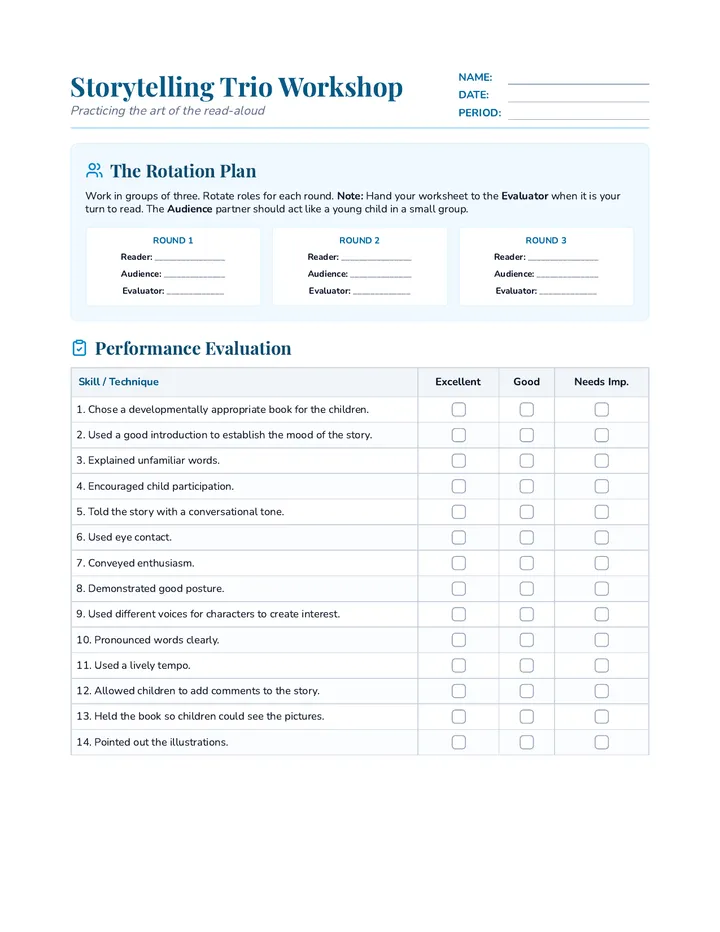
A printable storytelling evaluation worksheet designed for small groups of three, including a role rotation guide, a 14-point skill checklist, and a reflection section for students to assess their read-aloud techniques.
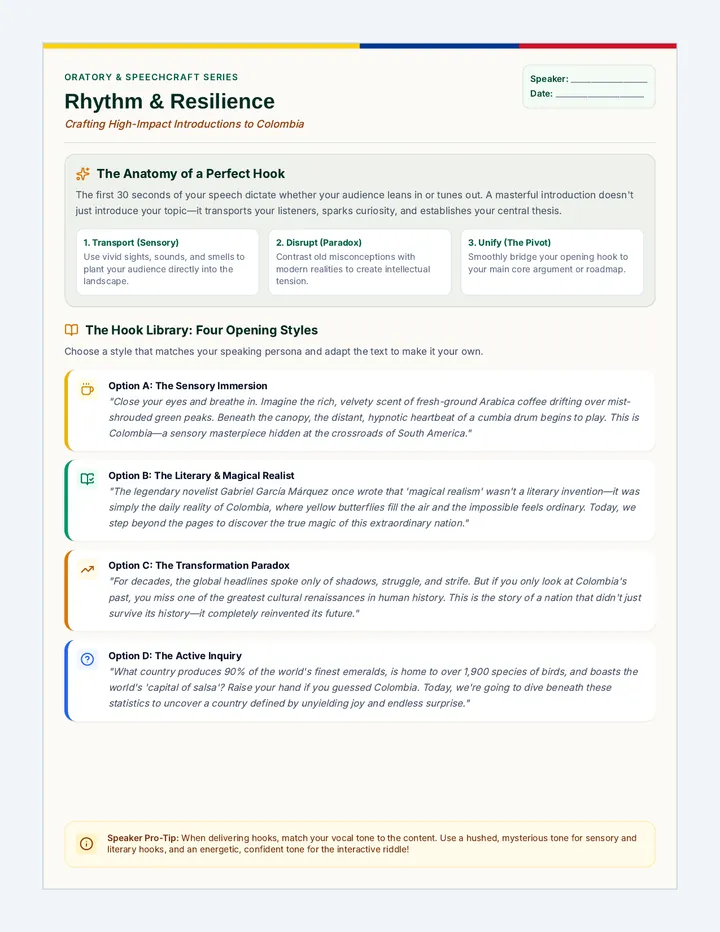
A comprehensive, premium speech writing guide and introductory script collection for a speech about Colombia. It features four distinct high-impact hook techniques, two fully polished introductory scripts (one focused on History and Transformation, and one on Culture, Music, and Art), and an interactive planning section for students to craft their own openings.
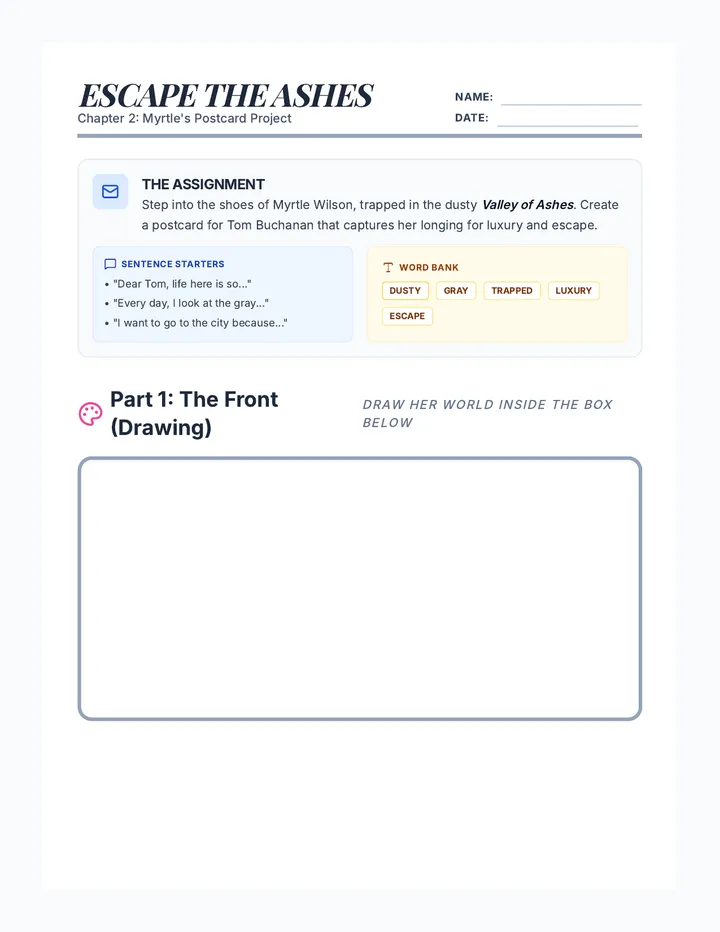
A print-perfect two-page postcard project. Page 1 contains instructions, compact scaffolding, and a 300px drawing box guaranteed to stay on the first page. Page 2 features the postcard back with 16 writing lines. This version ensures Page 1 content is perfectly contained with a significant bottom margin to prevent accidental page splits during printing.
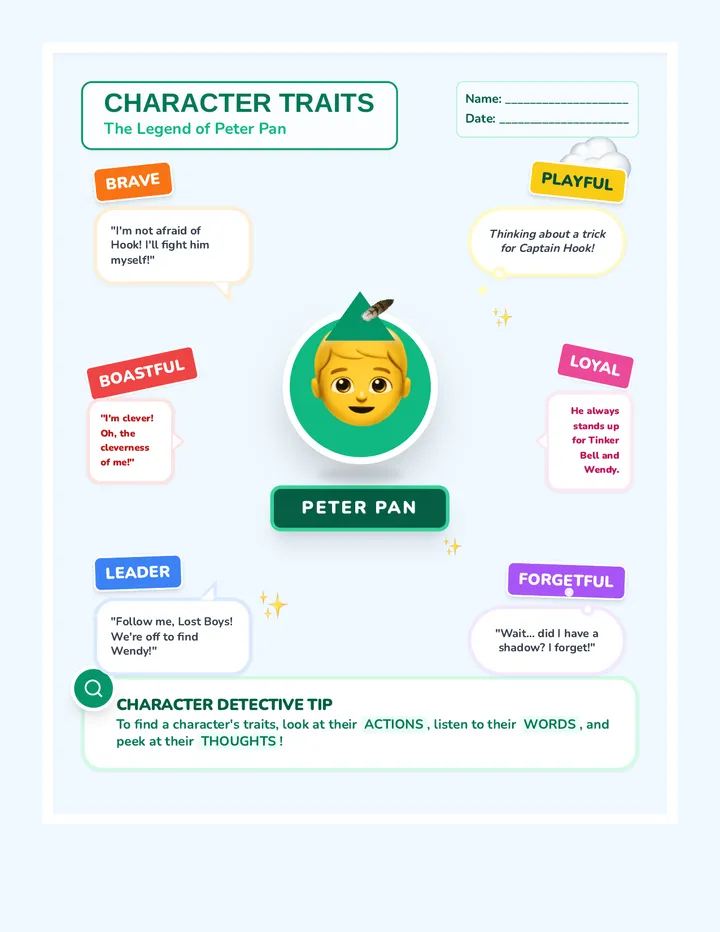
An updated visual character traits poster for Peter Pan featuring iconic speech bubbles with tails and cloud-like thought bubbles with trailing circles. The layout is optimized to fit on a single page while maintaining high-impact visuals and clear instructional tips for Grade 3.
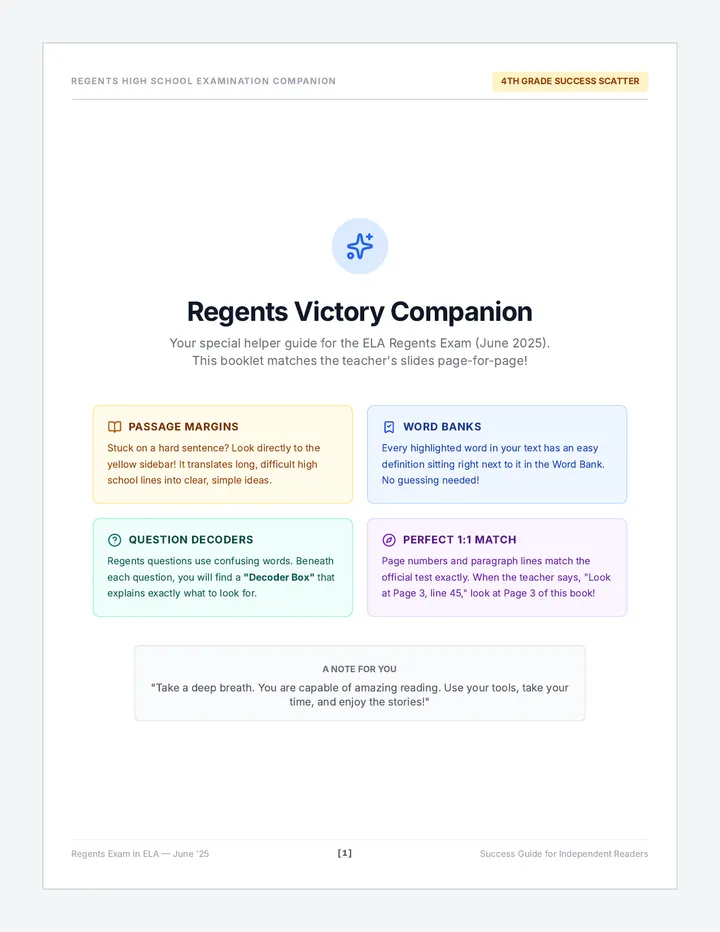
An ELA Regents scaffold guide designed for a 4th-grade independent reader, replicating the layout of ELA Regents June 2025 pages 2-11. Includes exact passages, line numbers, and questions, combined with an active side vocabulary bank and simplified 'Decoder' margin summaries to ensure classroom success.
A warm and inviting worksheet for students to list 15 adjectives describing a special female caregiver. Includes an expanded 'Idea Sparker' word bank and new sections for the caregiver's two favorite colors. All font sizes increased for better readability and column alignment perfected.
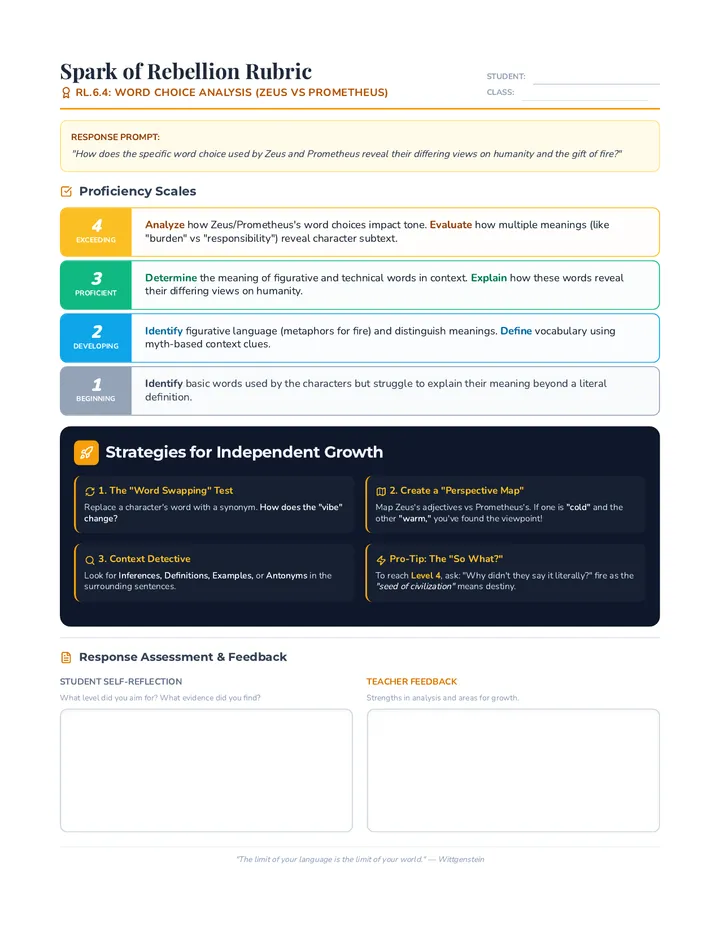
A tailored mastery rubric for the 'Spark of Rebellion' assignment, specifically assessing RL.6.4 by analyzing the word choices of Zeus and Prometheus. Includes a 4-level proficiency scale, targeted growth strategies, and reflection areas for assessment.
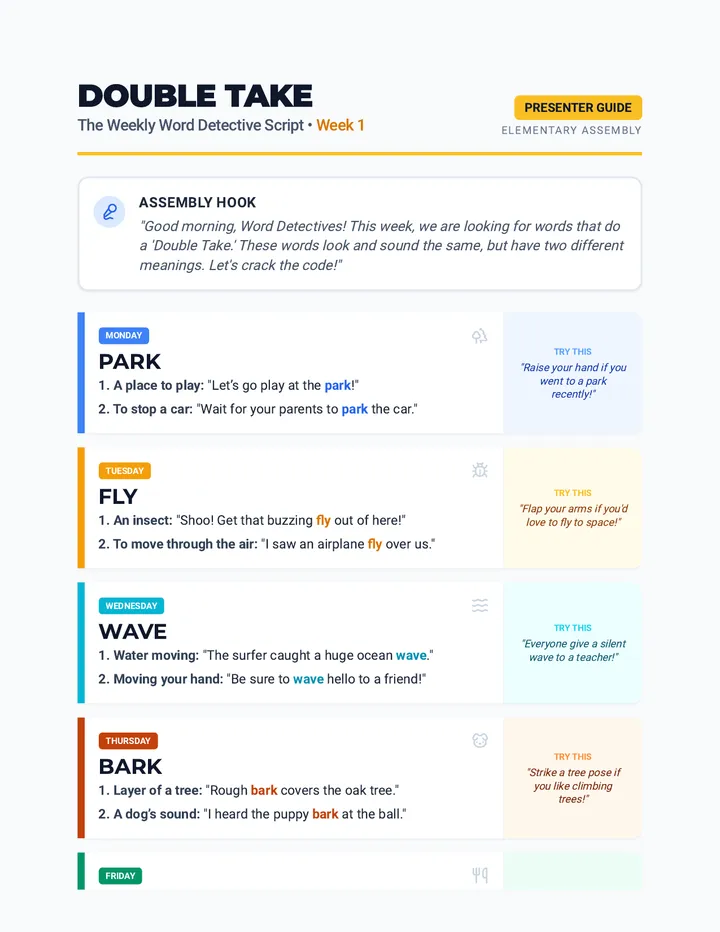
An expanded two-week presenter guide for morning assemblies, providing ten multiple-meaning words (homonyms) with definitions, sentence examples, and interactive student prompts.
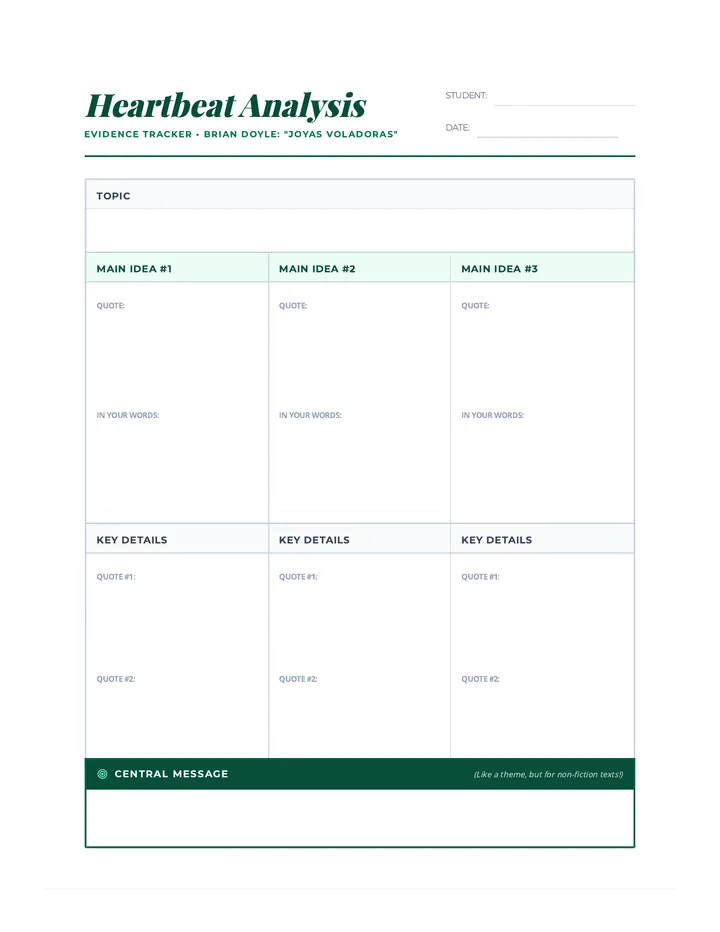
A 2-page literary analysis worksheet for Brian Doyle's 'Joyas Voladoras', optimized for 8.5x11 inch printing. Page 1 features an evidence tracker graphic organizer, and Page 2 focuses on syntax, tone, and mood analysis with structured response areas.
Printable, high-quality large coloring flashcards for early childhood vocabulary, handwriting, and sorting. Features beautiful geometric black-and-white vector outlines of a cat, dog, pig, hen, fox, and rat alongside bold bubble letters for coloring and individual school-line handwriting tracing boxes.
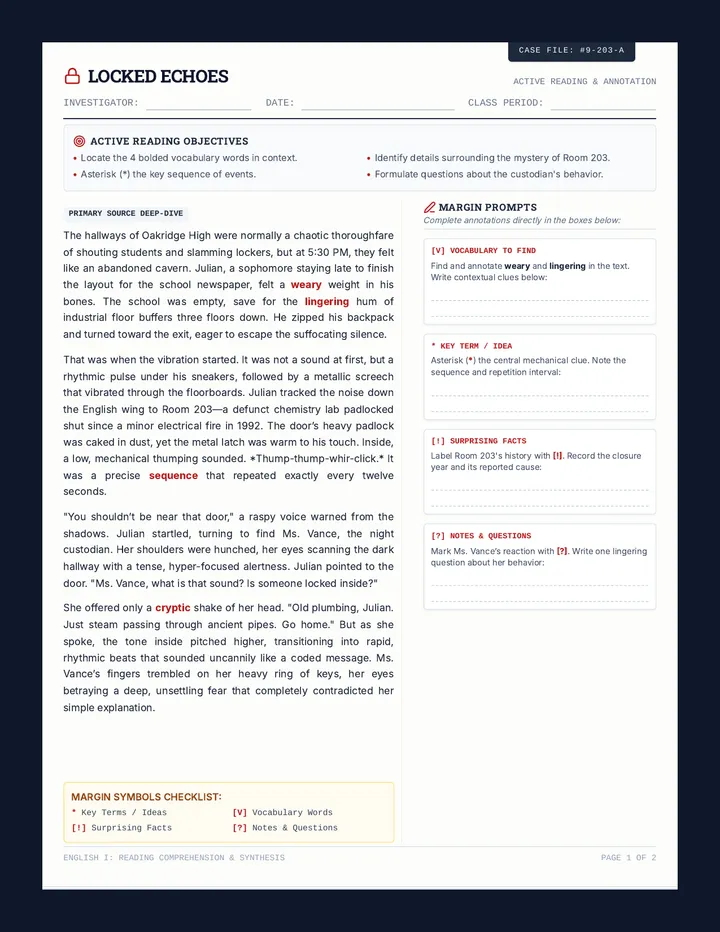
A highly structured 9th-grade reading comprehension and active annotation worksheet centered on a mystery story about a locked classroom. It includes comprehensive annotation supports, dedicated vocabulary definition practice, critical clue analysis, and an objective summary writing prompt with a student self-evaluation checklist.
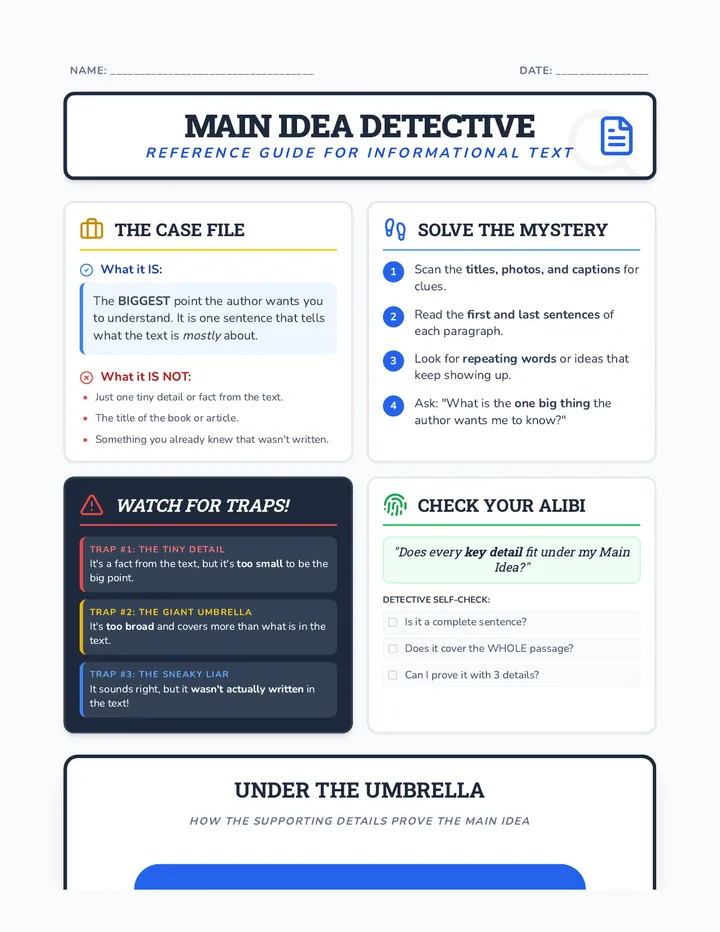
A comprehensive Grade 3 student reference anchor chart for main idea in informational text. It features a detective theme with sections for what main idea is/isn't, steps to finding it, common exam traps, a self-check, and an 'Umbrella' visual metaphor for supporting details.