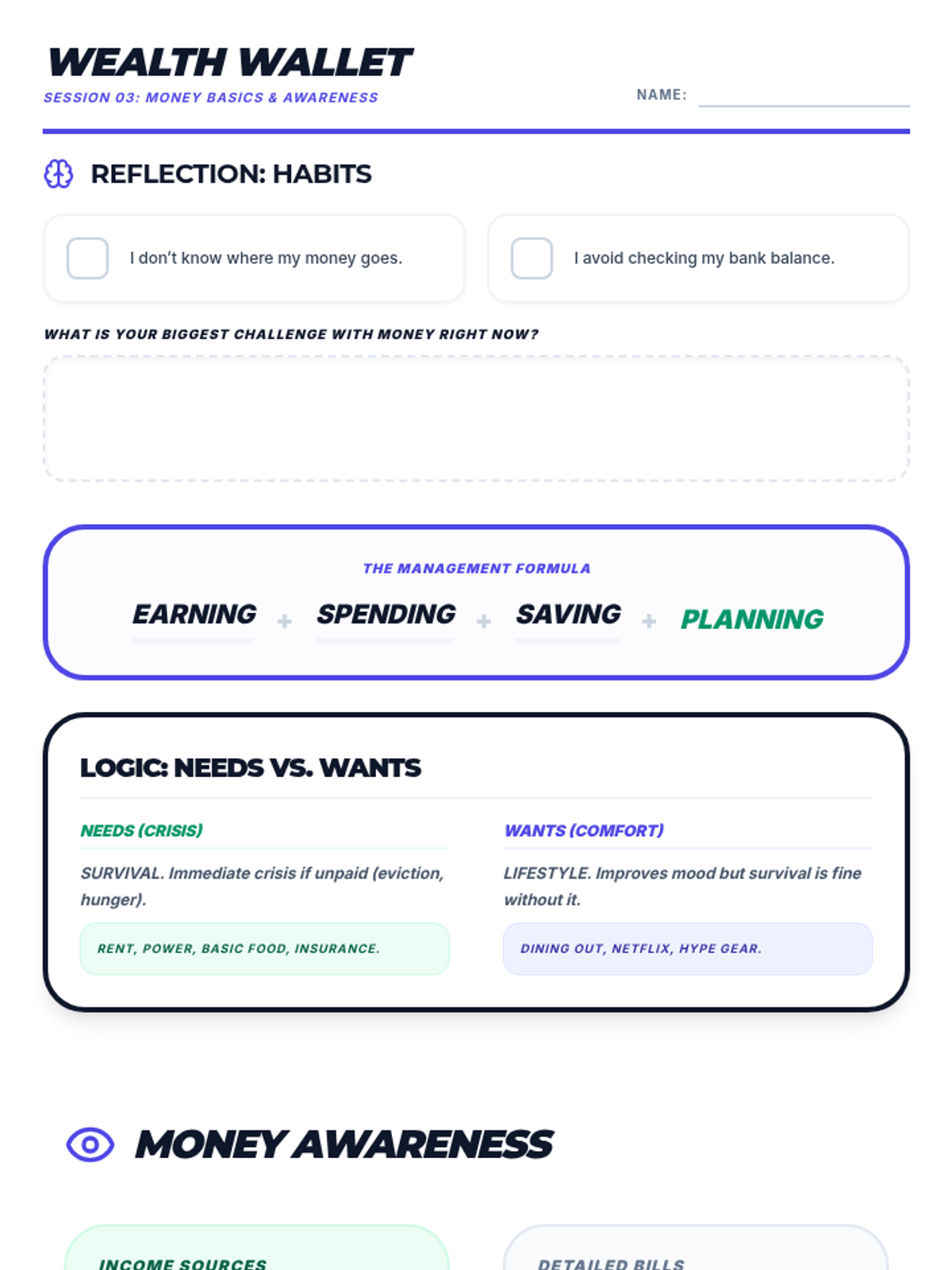
Budgeting, saving, and investment strategies alongside practical skills for managing credit, taxes, and banking. Addresses insurance needs, employment income, and major purchase decisions to support comprehensive long-term financial planning.
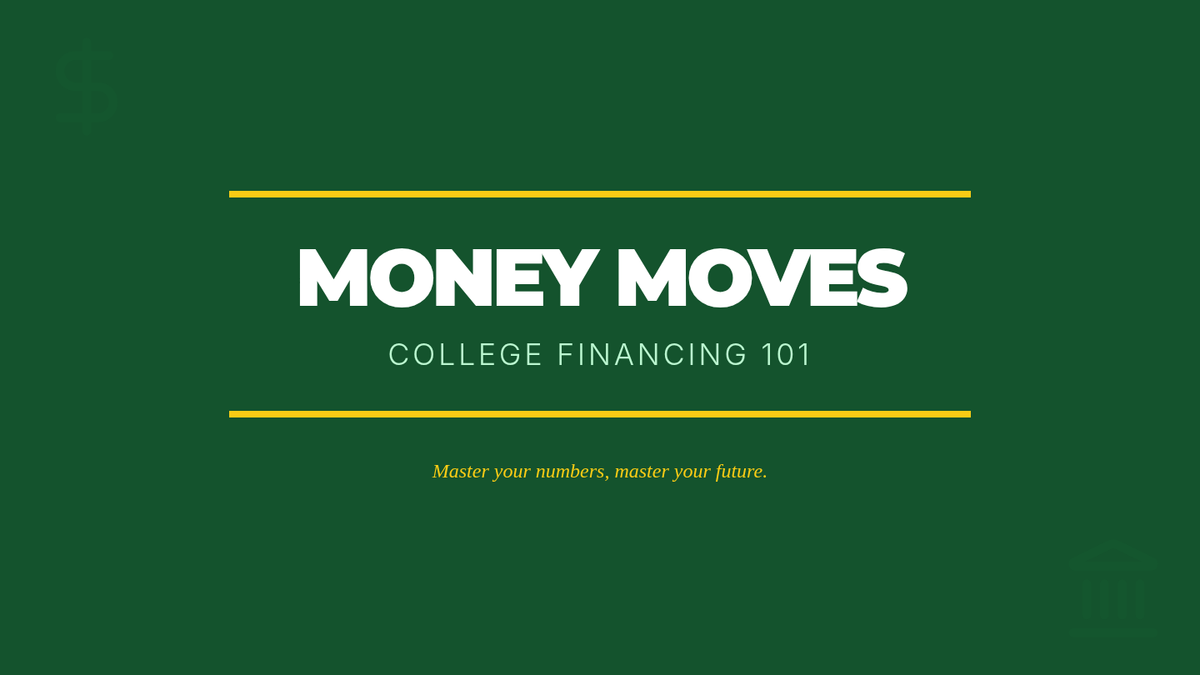
Visual presentation for the final Future Budget session, discussing Return on Investment (ROI), the 50/30/20 budgeting rule, and avoiding common financial pitfalls like credit card debt.
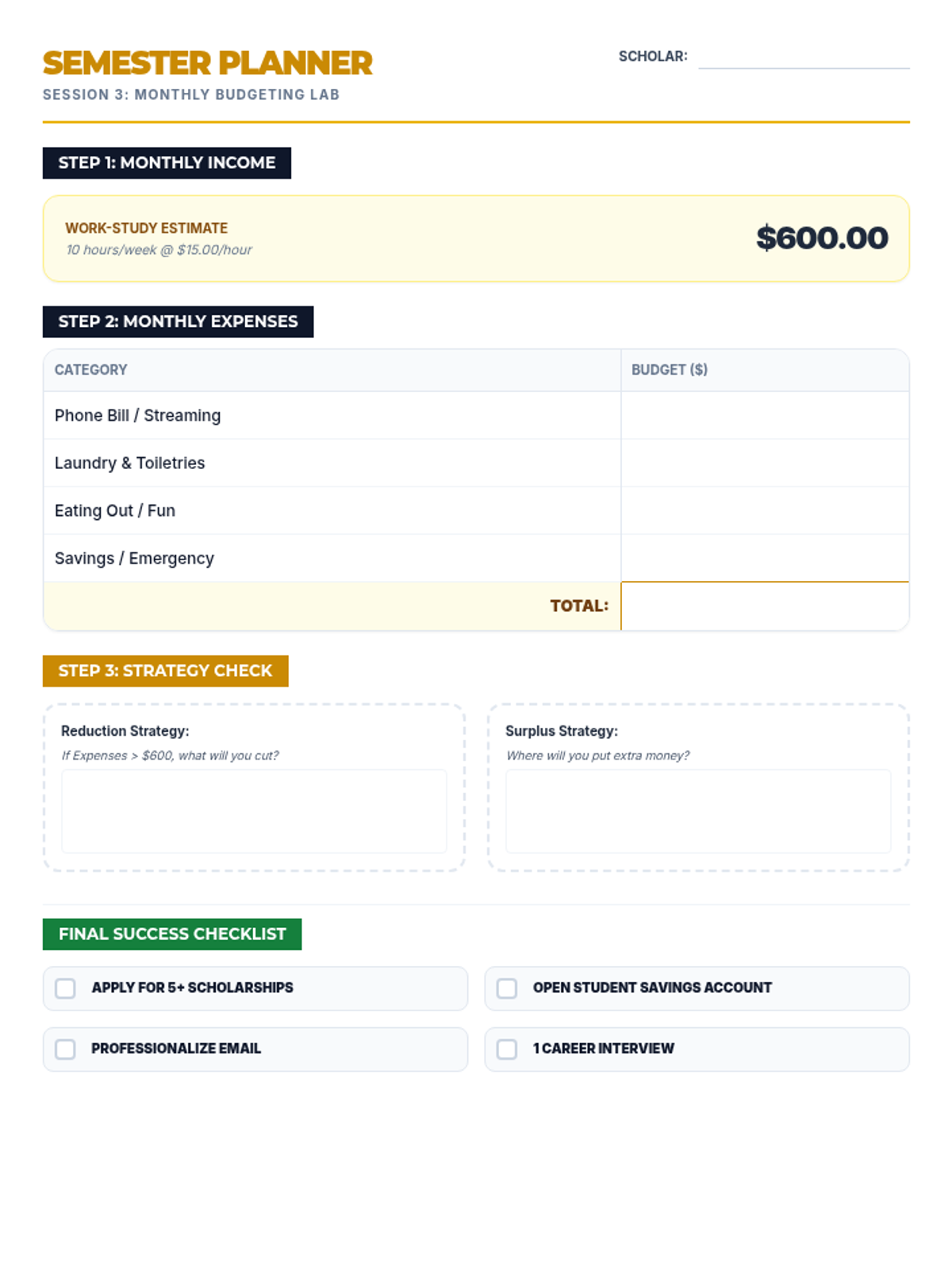
A monthly budgeting worksheet for college students, helping them manage their work-study income against typical college expenses and lifestyle costs.
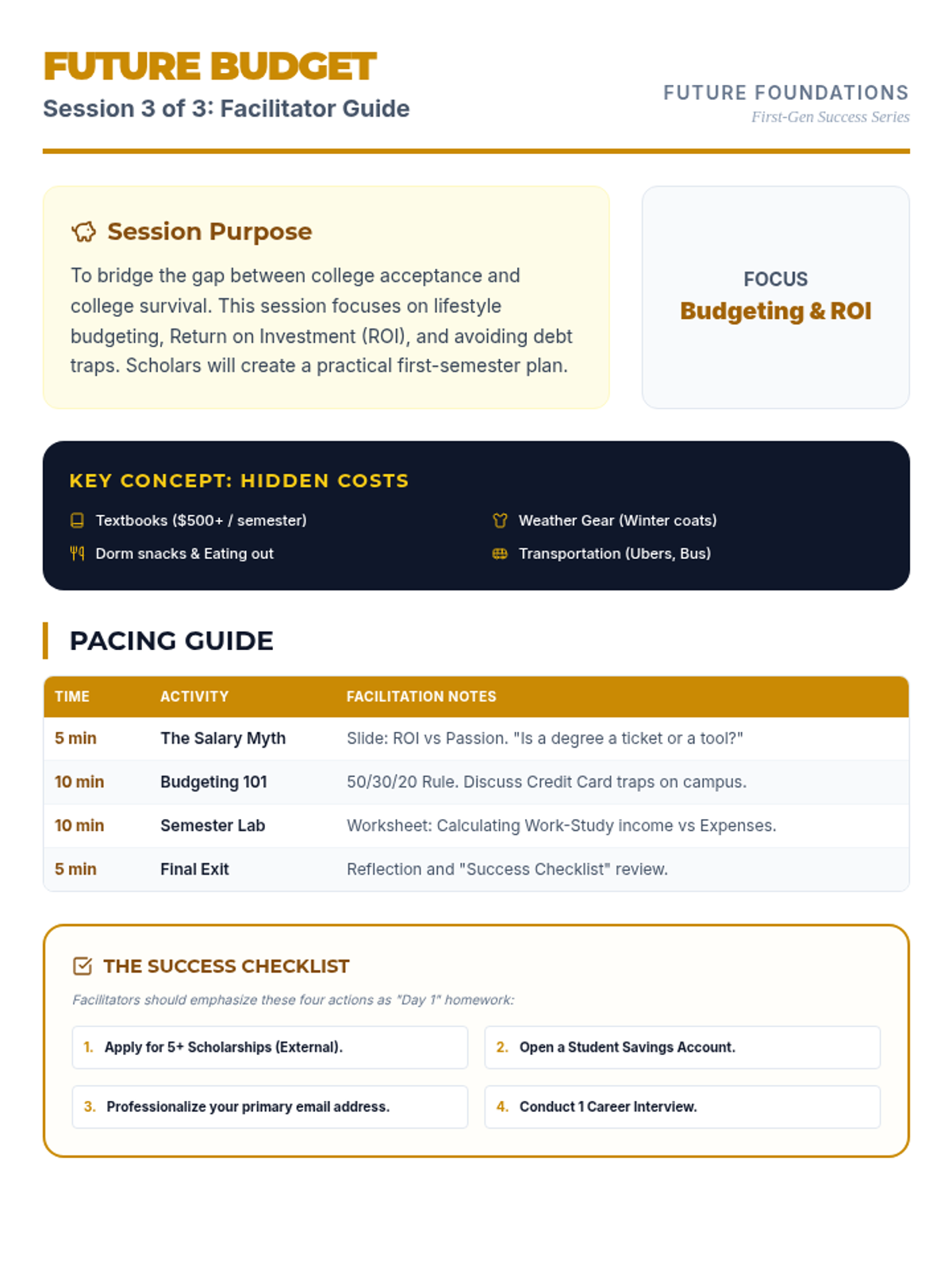
Facilitator guide for the final session, focusing on lifestyle budgeting, Return on Investment (ROI) for degrees, and preparing students for the daily costs of college life.
Visual presentation for the Money Moves session, introducing financial aid terminology, comparing sticker vs. net price, and setting up the aid decoder activity.
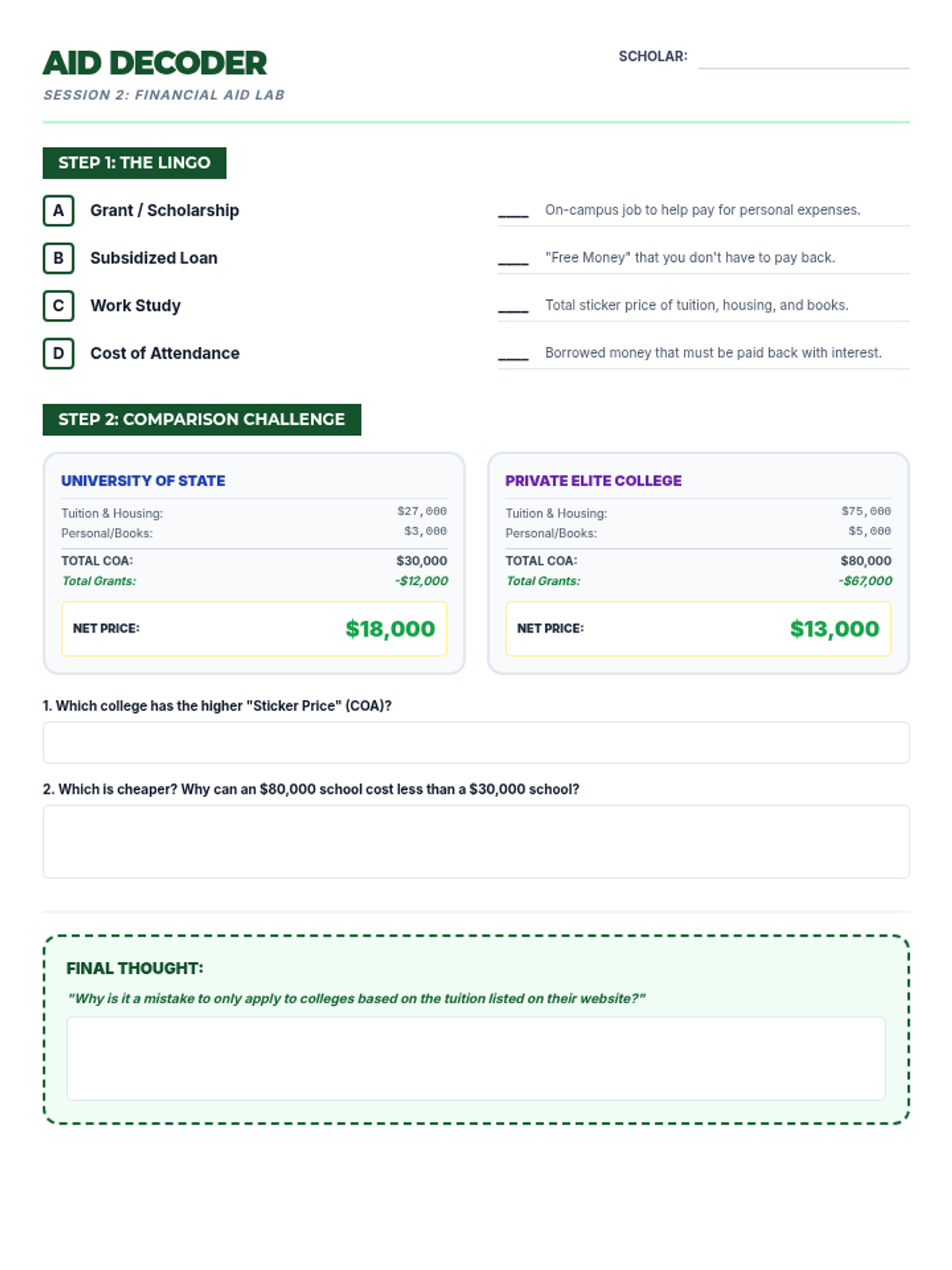
A financial aid comparison worksheet where students practice decoding aid packages and understanding the difference between sticker price and net price.
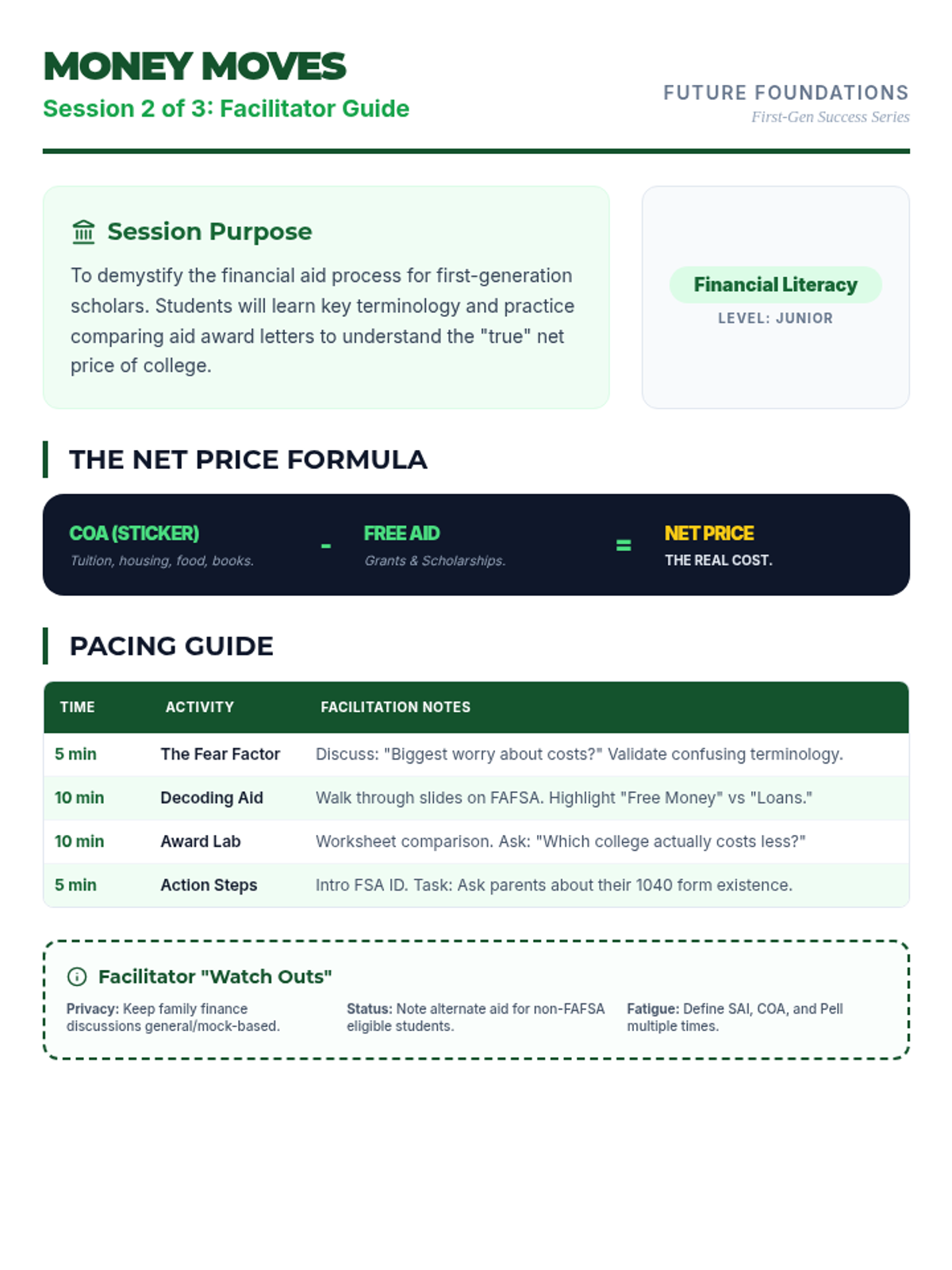
A detailed facilitator guide for the Money Moves session, focusing on financial literacy concepts like Cost of Attendance, Net Price, and types of financial aid for first-generation college students.
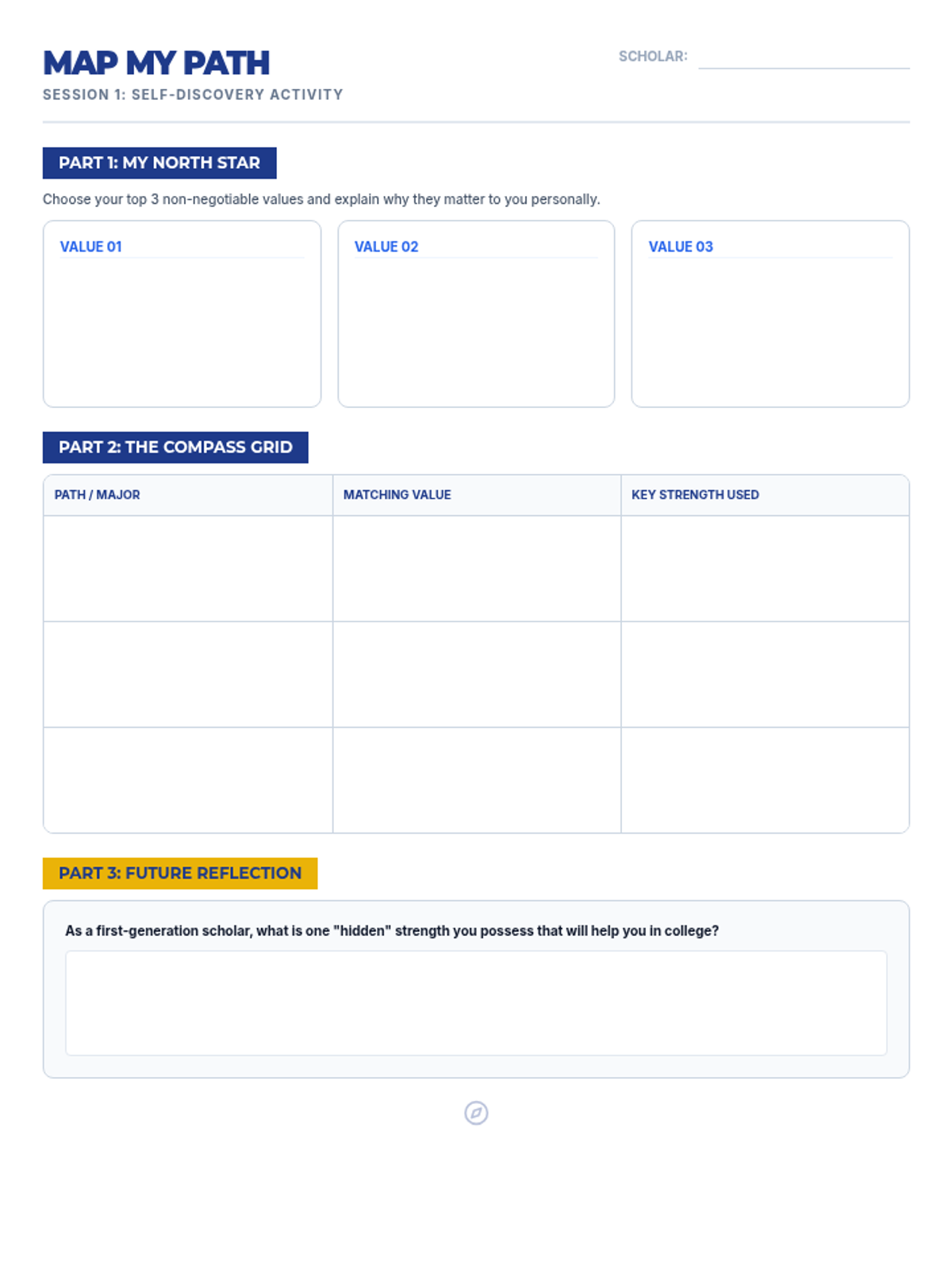
A self-discovery worksheet for students to map their personal values, strengths, and potential career paths as part of the Inner Compass lesson.
Visual presentation for the first session of the Future Foundations series, covering first-gen identity, core values, and finding the sweet spot between strengths and passions.
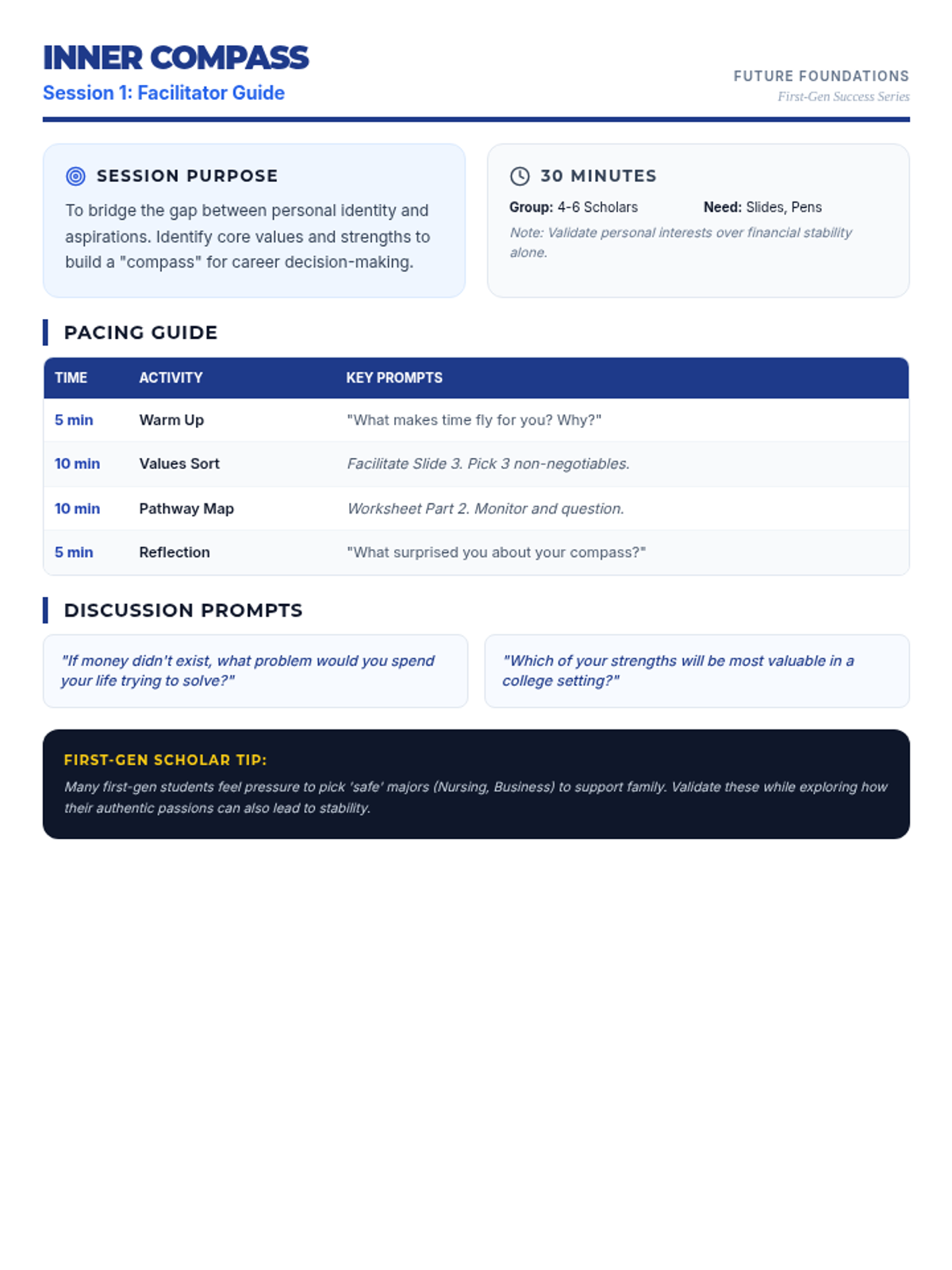
A comprehensive facilitator guide for the first session of the Future Foundations series, providing timing, discussion prompts, and instructional context for working with first-generation scholars.
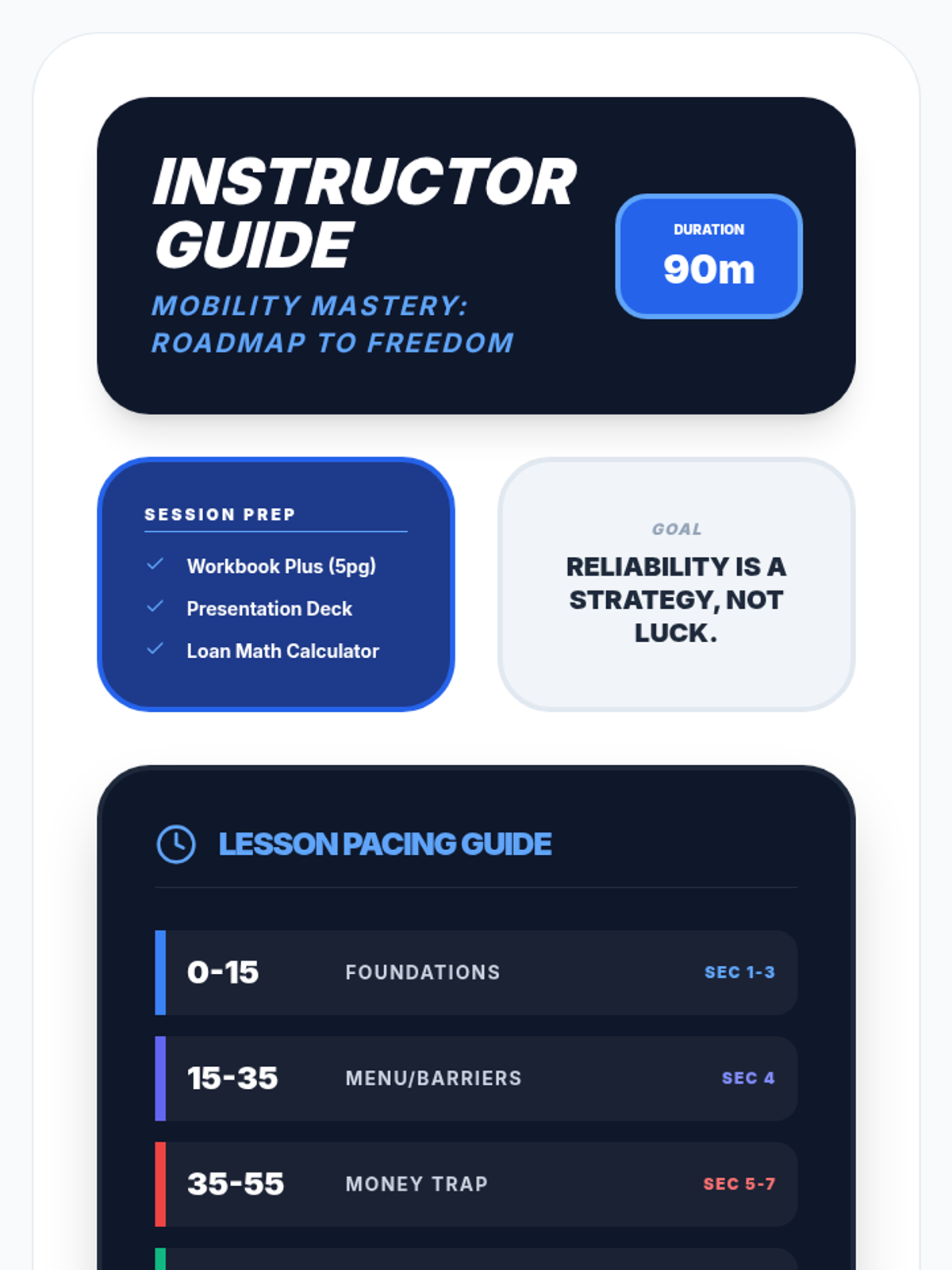
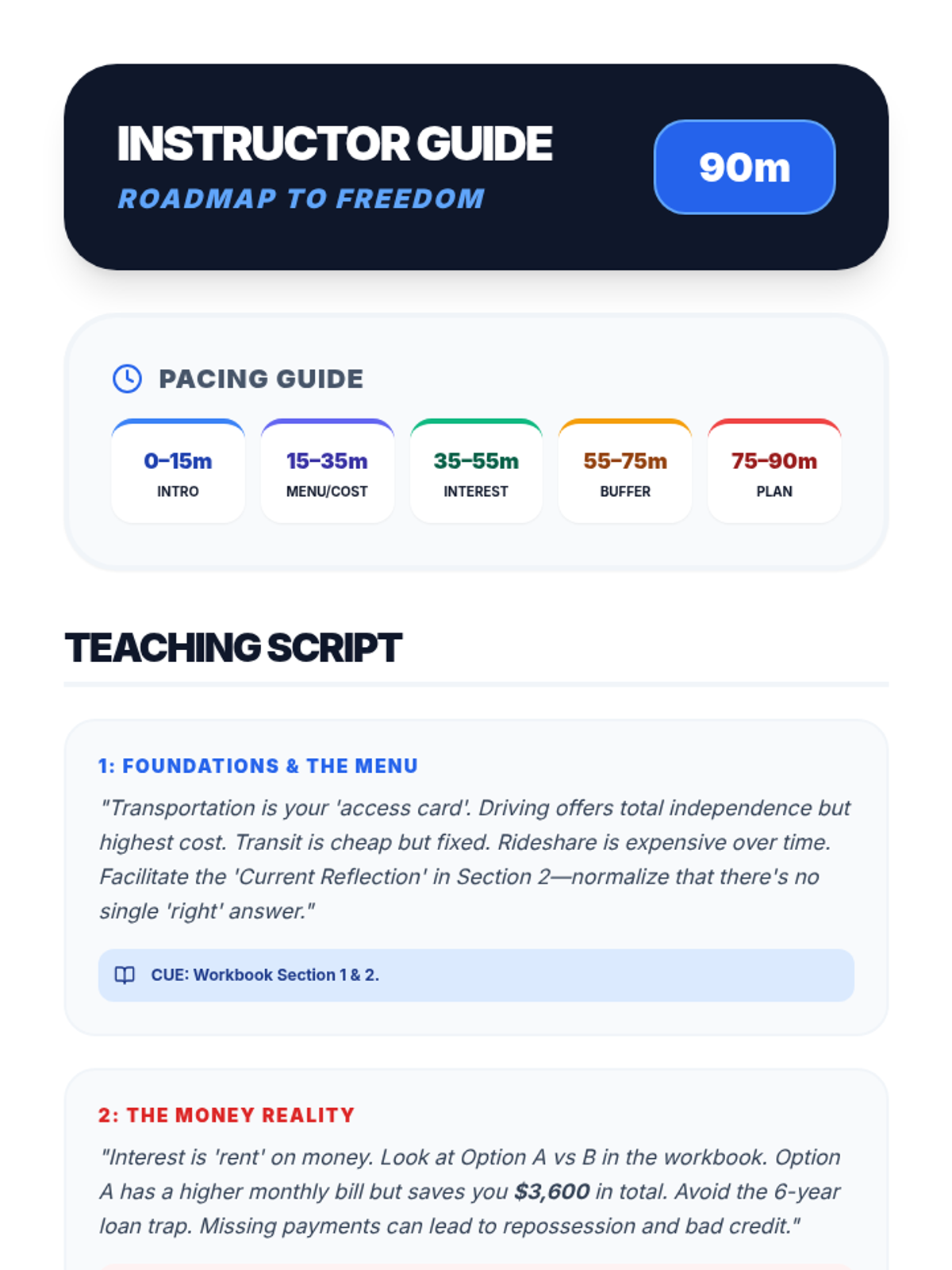
A premium 4-page instructor guide for the Mobility Mastery course. Features detailed scripts, facilitation tips for car insurance and financing, loan math calculator prompts, and high-impact closing goals. Optimized for professional delivery and print.
A comprehensive 5-page instructor guide for the Mobility Mastery course. Includes updated pacing, scripts for insurance essentials, financing math facilitation tips, and scenario discussion guides. Designed for high-contrast print readability.
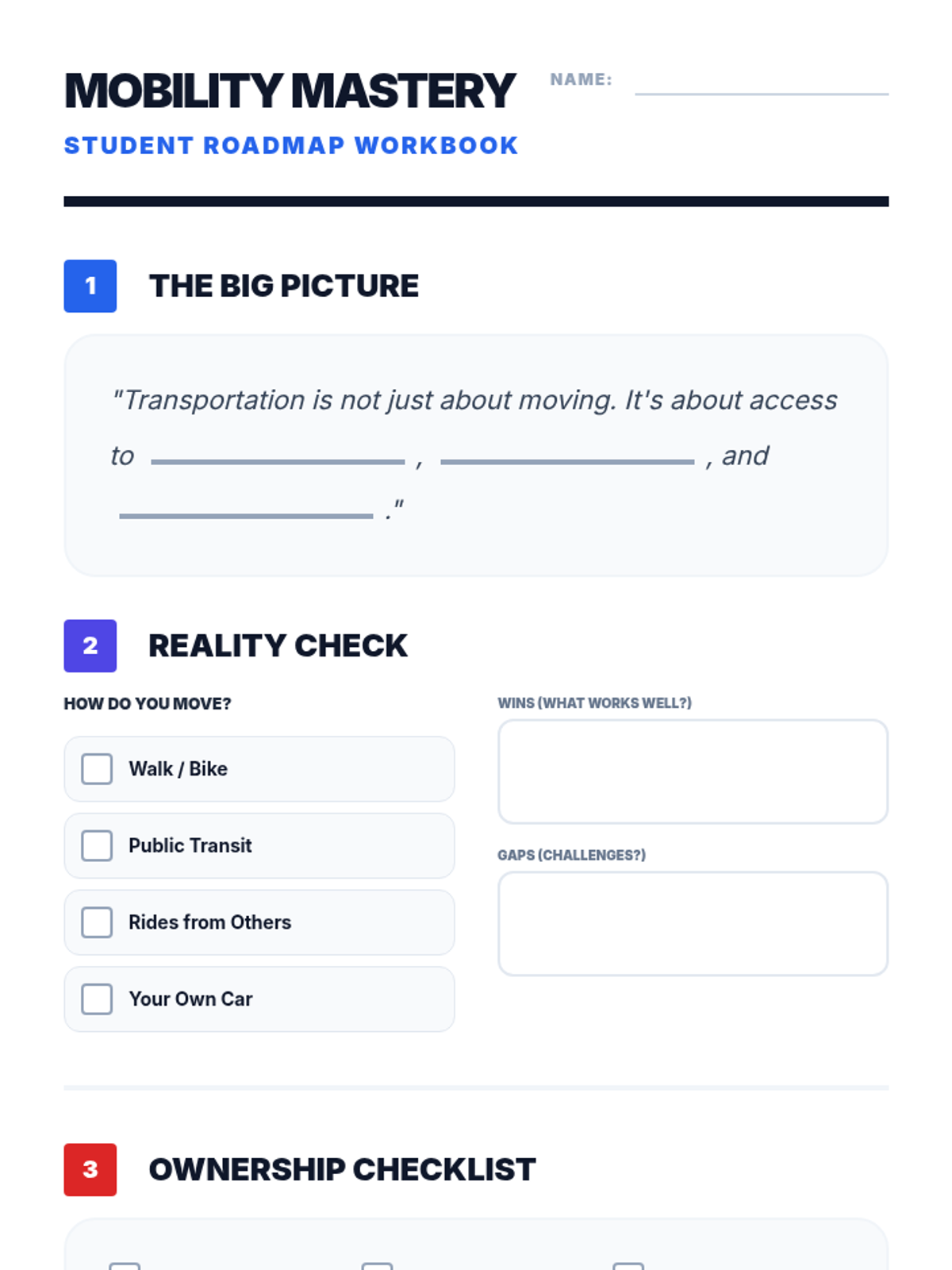
A modern, visually engaging 5-page workbook for students aged 16-21. Features insurance essentials, financing math, mobility comparison tables, and roadmap planning. Designed with high-contrast elements and ample white space for handwriting. Optimized for print with clear layouts.
A modern slide presentation designed for 16-21 year olds, covering transportation planning, car ownership costs including insurance essentials, financing, and mobility reliability. Features clean layouts, high-impact typography, and a cohesive slate and blue theme.
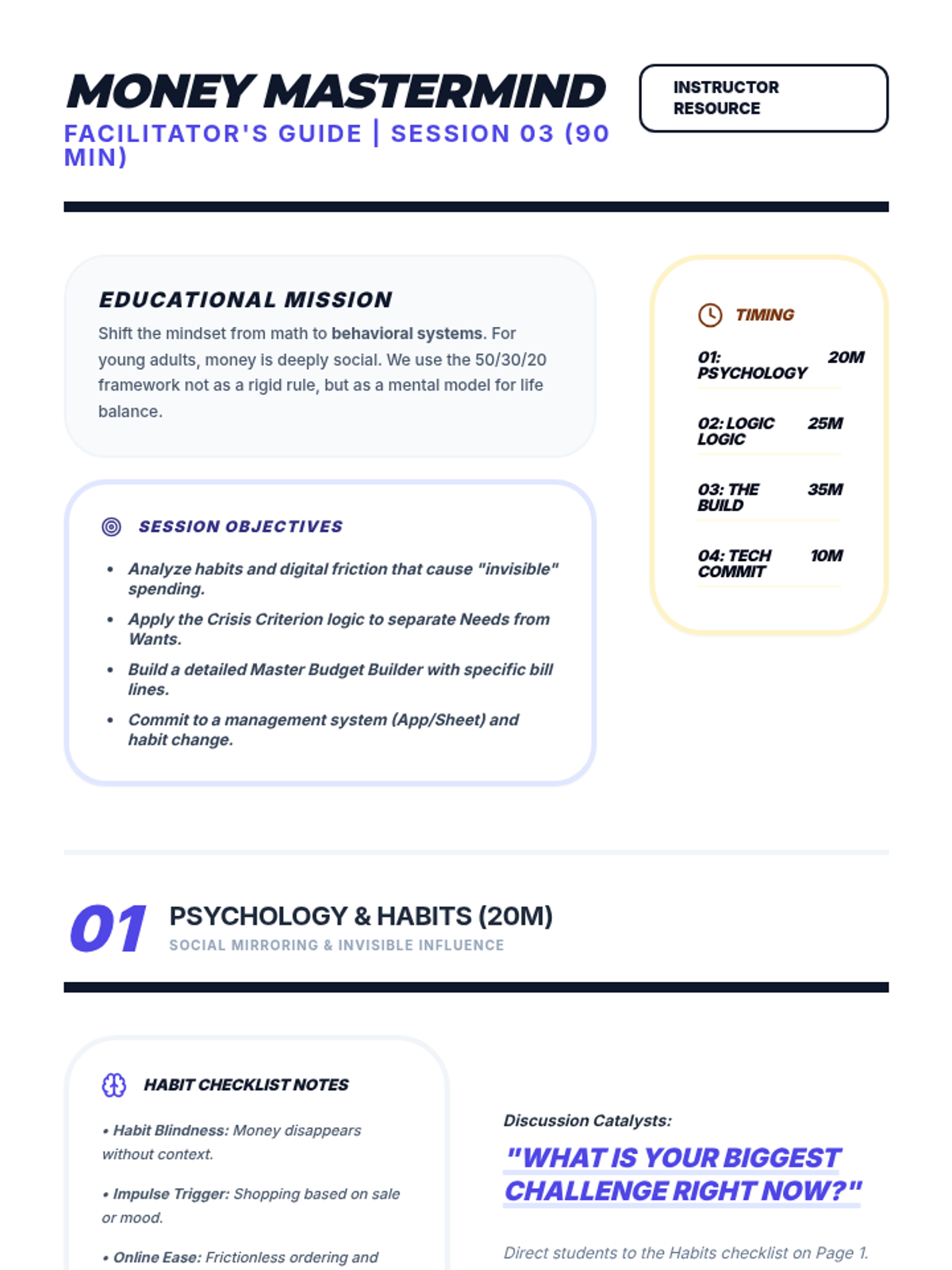
A comprehensive facilitator's guide with deep educational notes, guided discussion prompts, and activity scripts for the Money Moves Basics lesson. Includes behavioral psychology insights and troubleshooting for different student income levels. Focussed on printer-friendly white backgrounds. Designed for a 90-minute workshop with dense instructional content. Removed references to "weapon".
An engaging 90-minute presentation with a high-contrast, printer-friendly white background aesthetic. Covers detailed expense tracking, needs vs. wants logic, common money leaks, and the 50/30/20 budget framework with a concrete math example. Includes expanded workspace area for the Stress Test. Removed references to "weapon".
An expanded 4-page student workbook featuring a comprehensive 'The Complete Money-Out Tracker' with granular living expense categories (Rent, Utilities split, Transport, Health, Personal, etc.). Includes the 50/30/20 budget framework, common mistakes checklist, and a stress-test action plan. Designed for high contrast and clear student work areas.
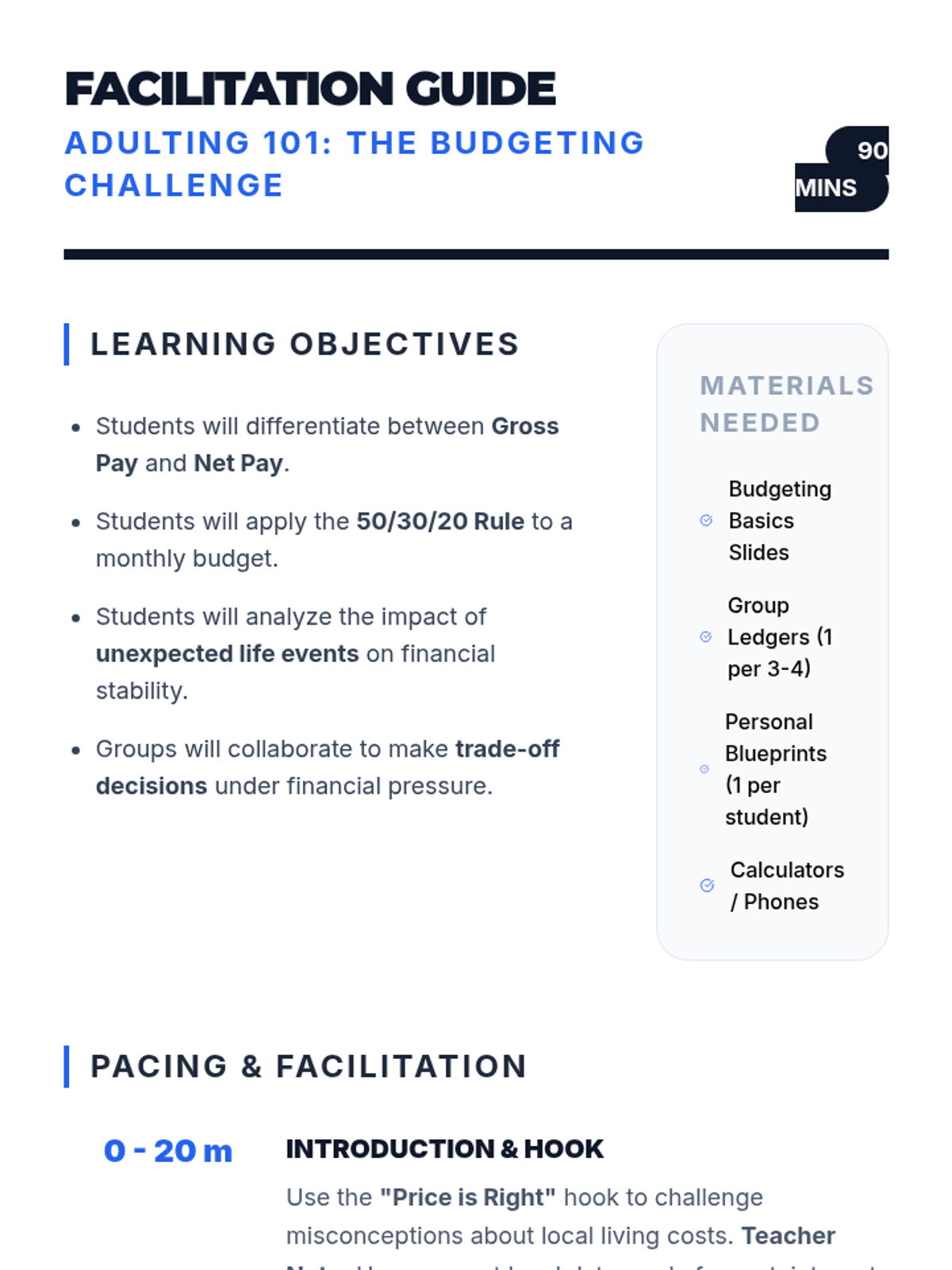
A facilitation guide for teachers to manage the 90-minute Adulting 101 workshop, including pacing, learning objectives, and simulation keys.
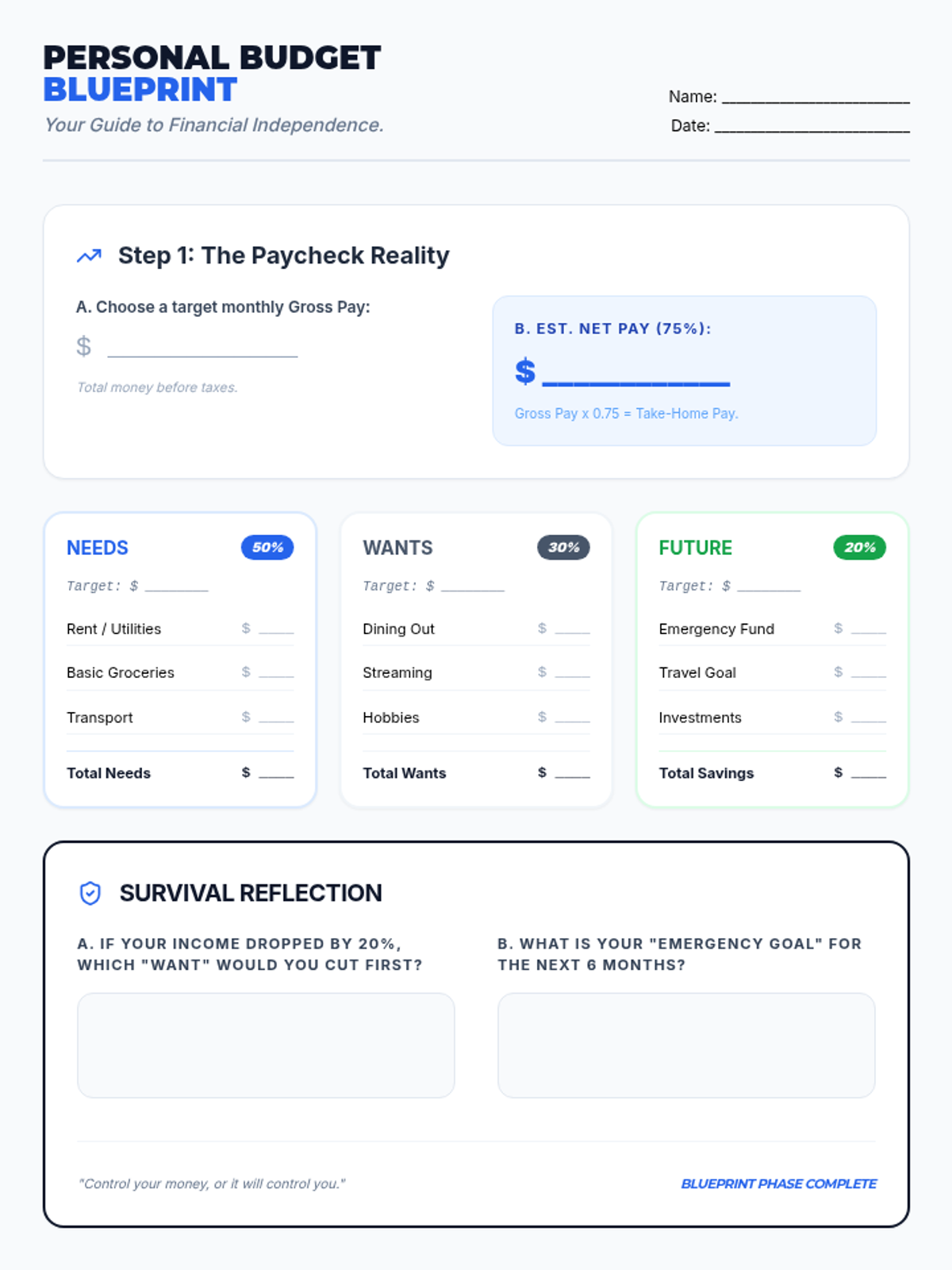
A personal budgeting blueprint where students apply the 50/30/20 rule to a target income, calculating net pay and allocating funds for needs, wants, and savings.
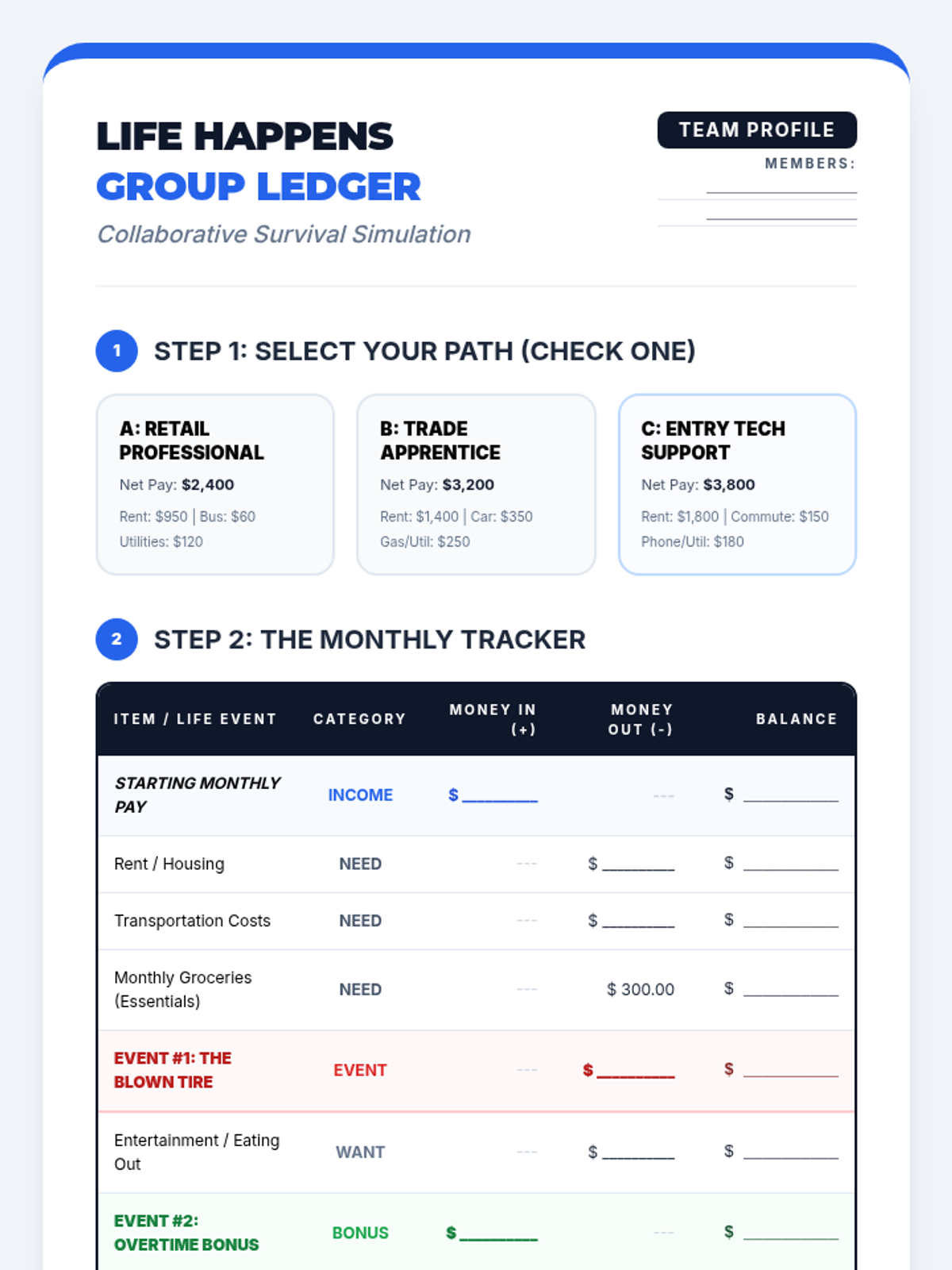
A collaborative group worksheet where students pick a career profile, track a month of income and expenses, and navigate unexpected 'Life Events' together using a structured ledger.
A comprehensive slide deck for a 90-minute budgeting workshop, featuring a 'Price is Right' hook, gross vs. net pay explanations, the 50/30/20 rule, and interactive group simulation scenarios.
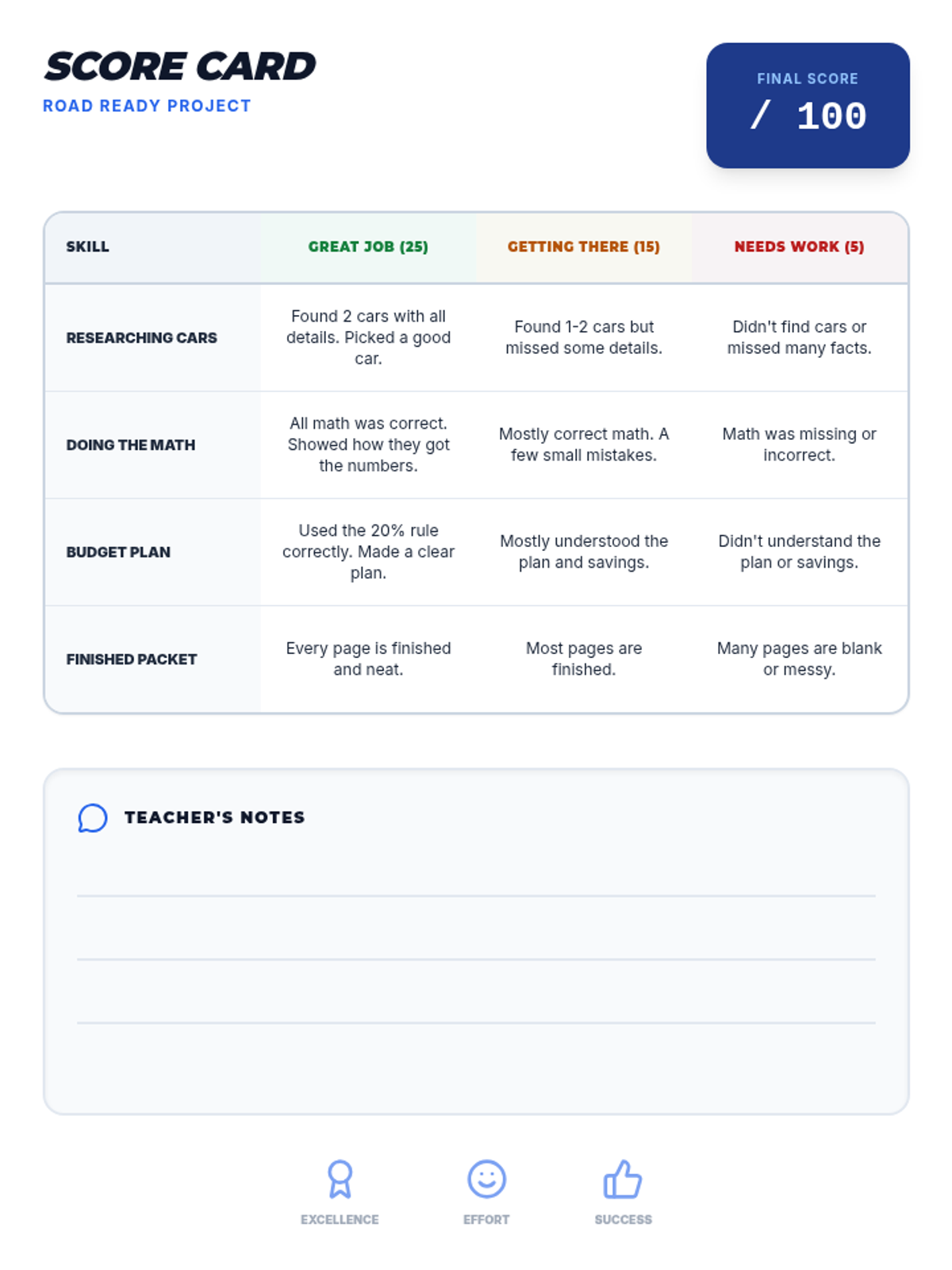
A simplified assessment rubric for lower-level students. It uses a clear 3-point scale (Great Job, Getting There, Needs Work) with plain language and visual icons to make grading and feedback accessible.
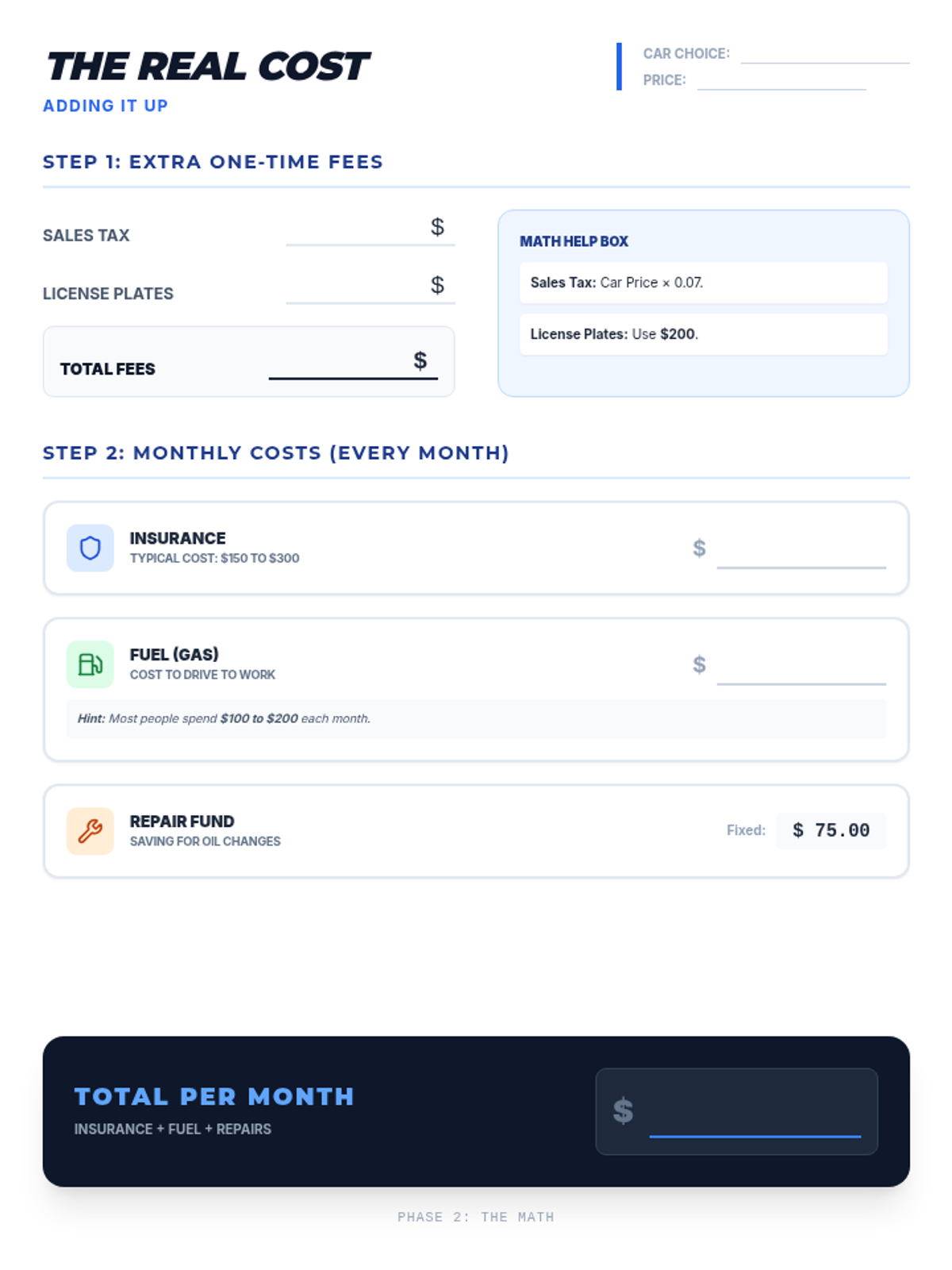
A simplified cost calculator for lower-level students. It breaks down vehicle ownership costs into two steps (fees and monthly costs) using visual icons, clear hints, and a straightforward layout to help students calculate their total monthly expenses.
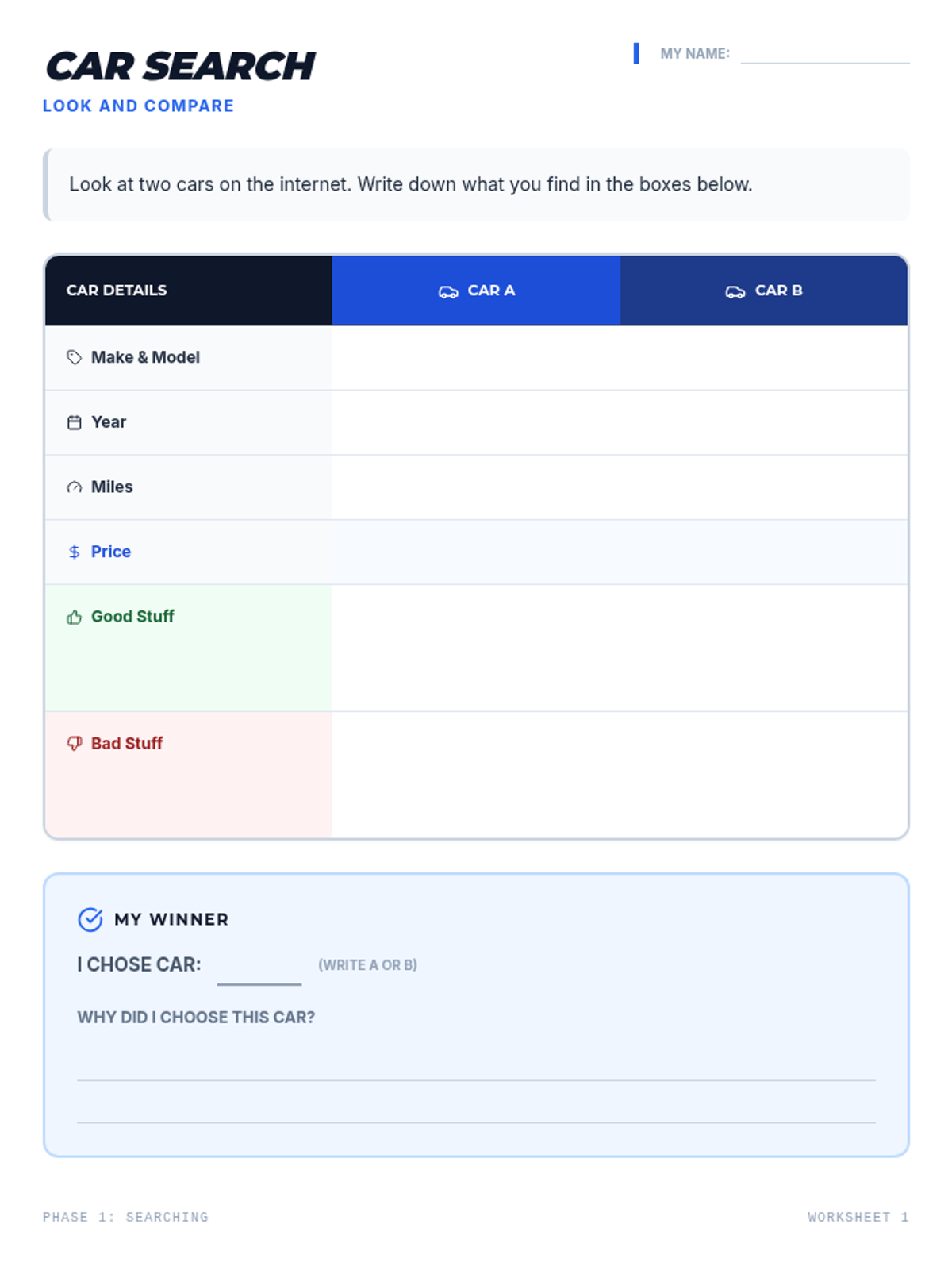
A simplified car research worksheet for lower-level students. It features a side-by-side comparison of two vehicles with clear icons and plain language like "Good Stuff" and "Bad Stuff" to help students make a choice.
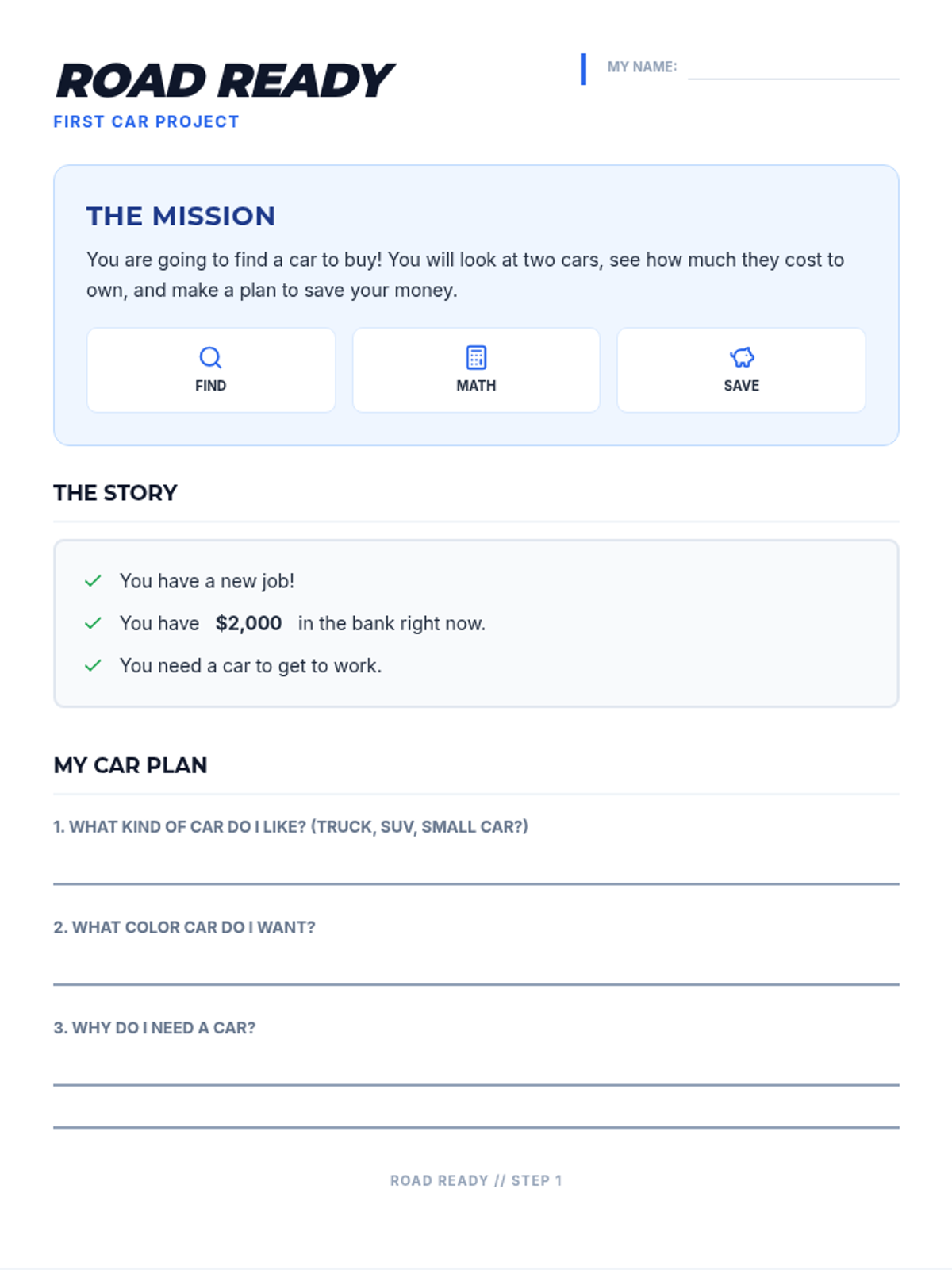
This project guide provides a simplified overview of the "Road Ready" car buying project for lower-level students. It uses clear language, visual steps, and direct prompts to guide students through the vehicle research and financial planning process.
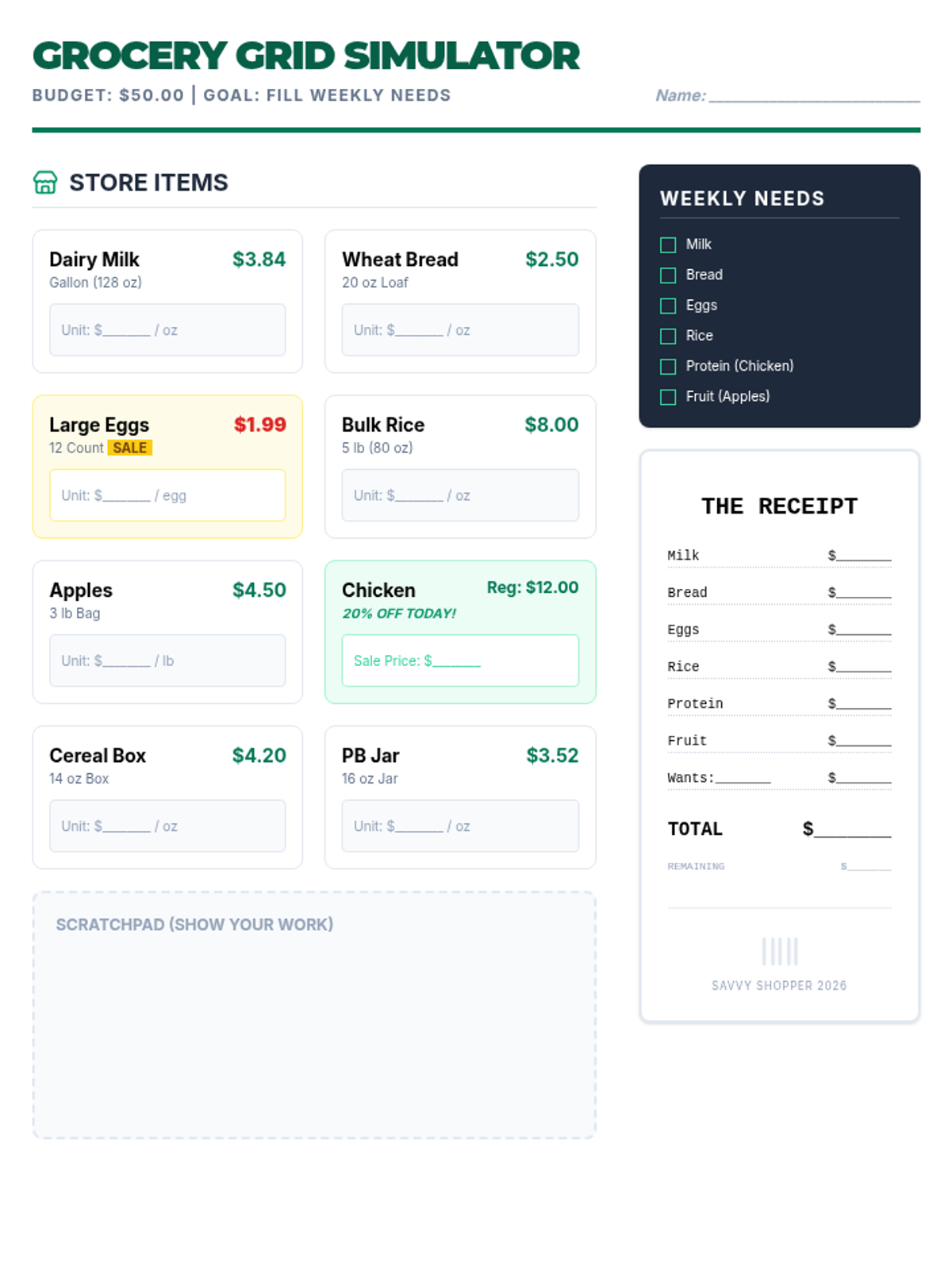
A grocery simulation activity where students manage a $50 budget to purchase essential items while calculating unit prices and discounts to find the best value within a simulated store inventory.
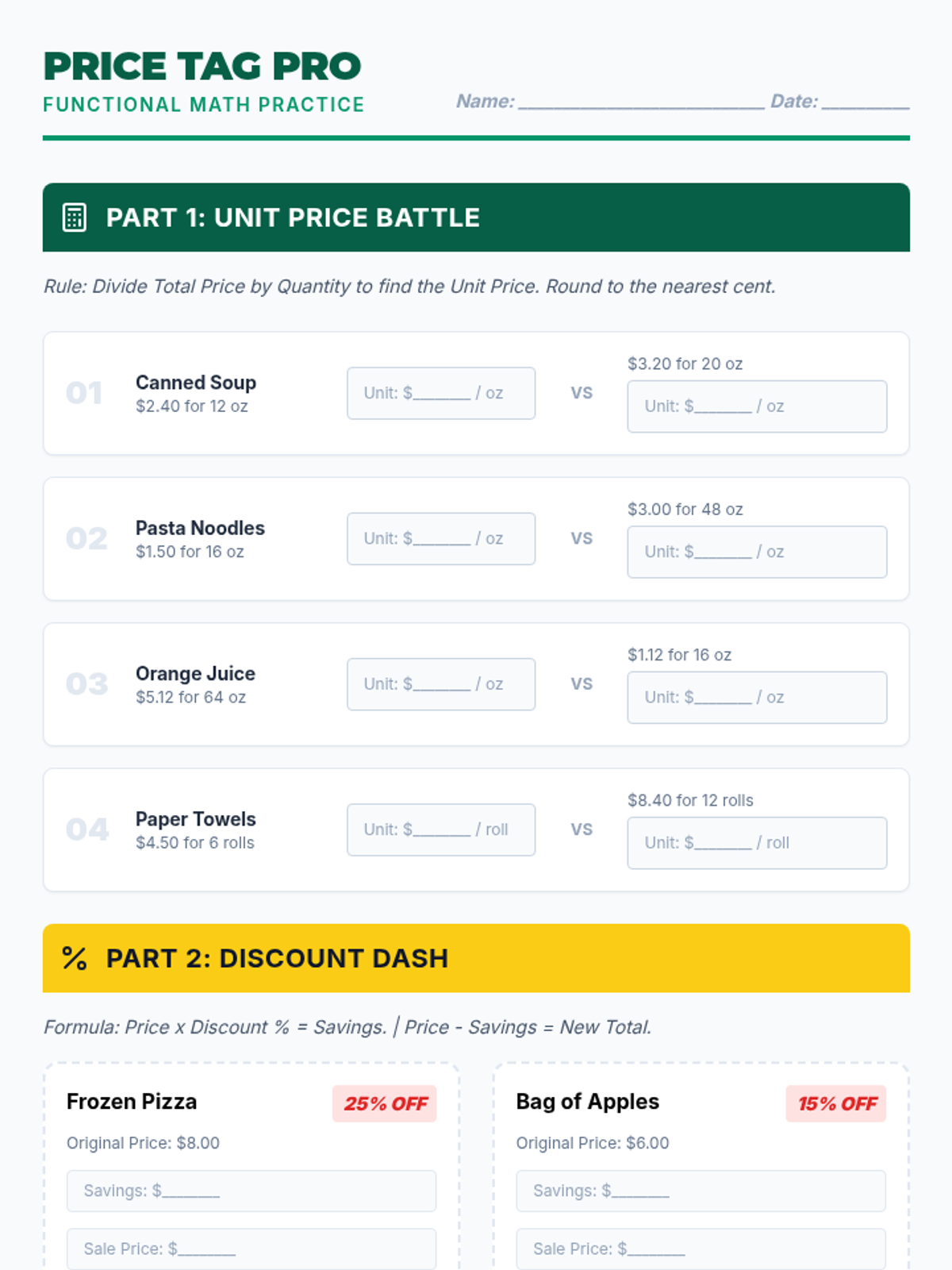
A practice worksheet for calculating unit prices and percentage discounts, designed to help students master the foundational math skills needed for grocery budgeting.
Visual slides for the Savvy Shopper lesson, covering the concept of unit pricing and percentage discounts with clear visual examples and formulas to guide student learning.
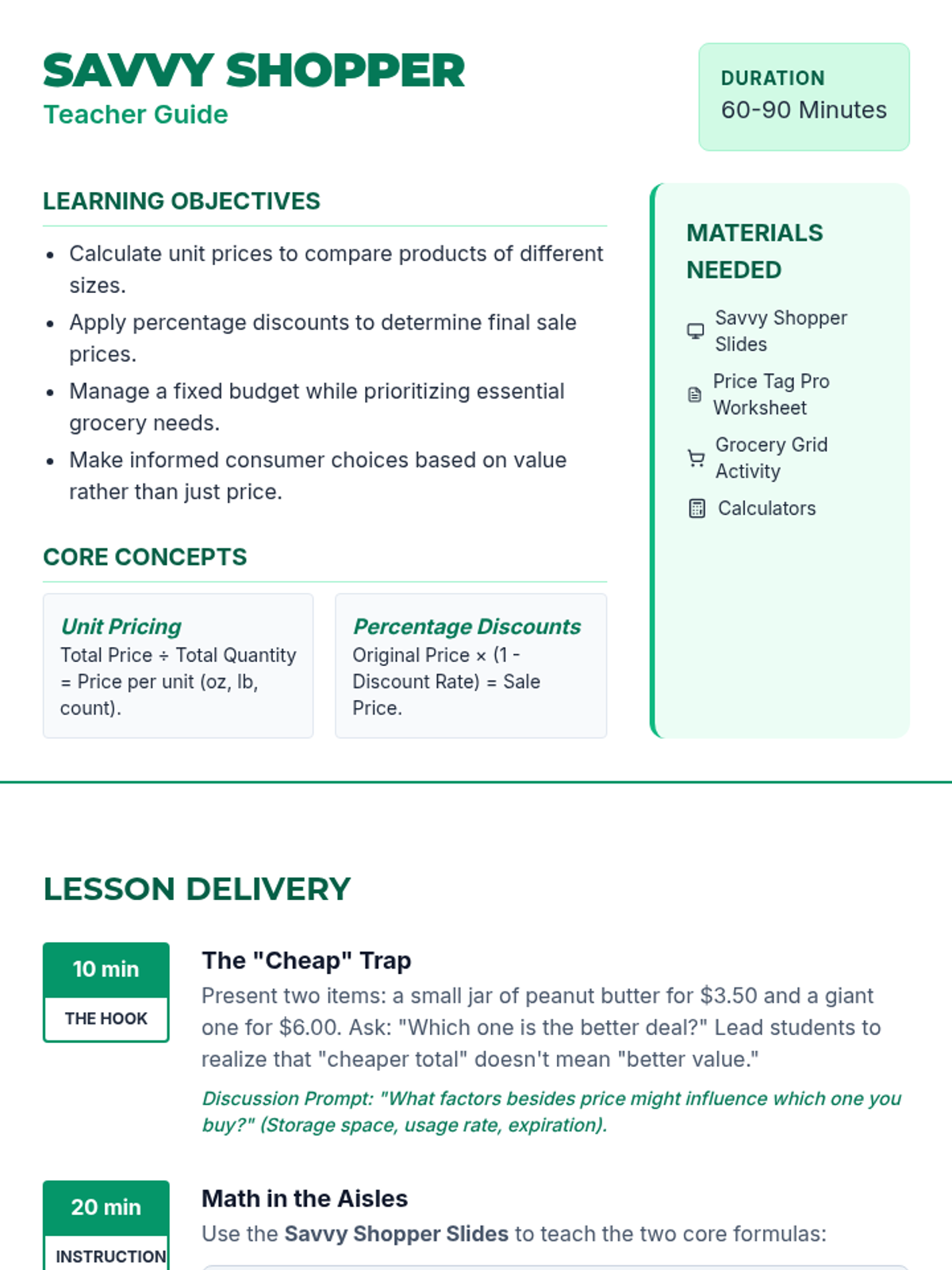
A comprehensive teacher guide for the Savvy Shopper lesson, including objectives, detailed lesson delivery steps, differentiation strategies, and assessment tips for teaching functional grocery math.
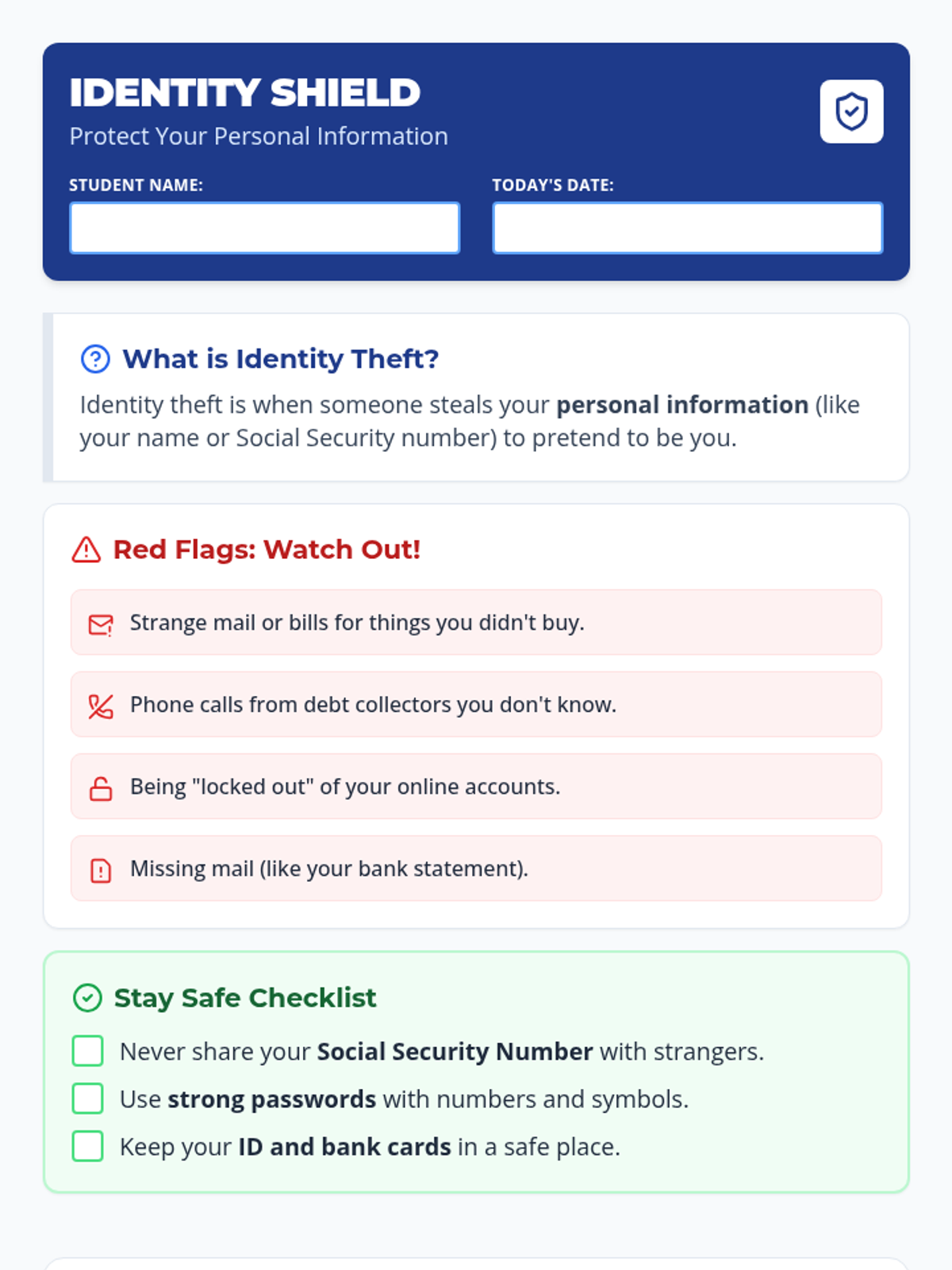
A clear, high-contrast handout for Special Education students explaining identity theft, common warning signs, and safety steps with a practical scenario-based activity.
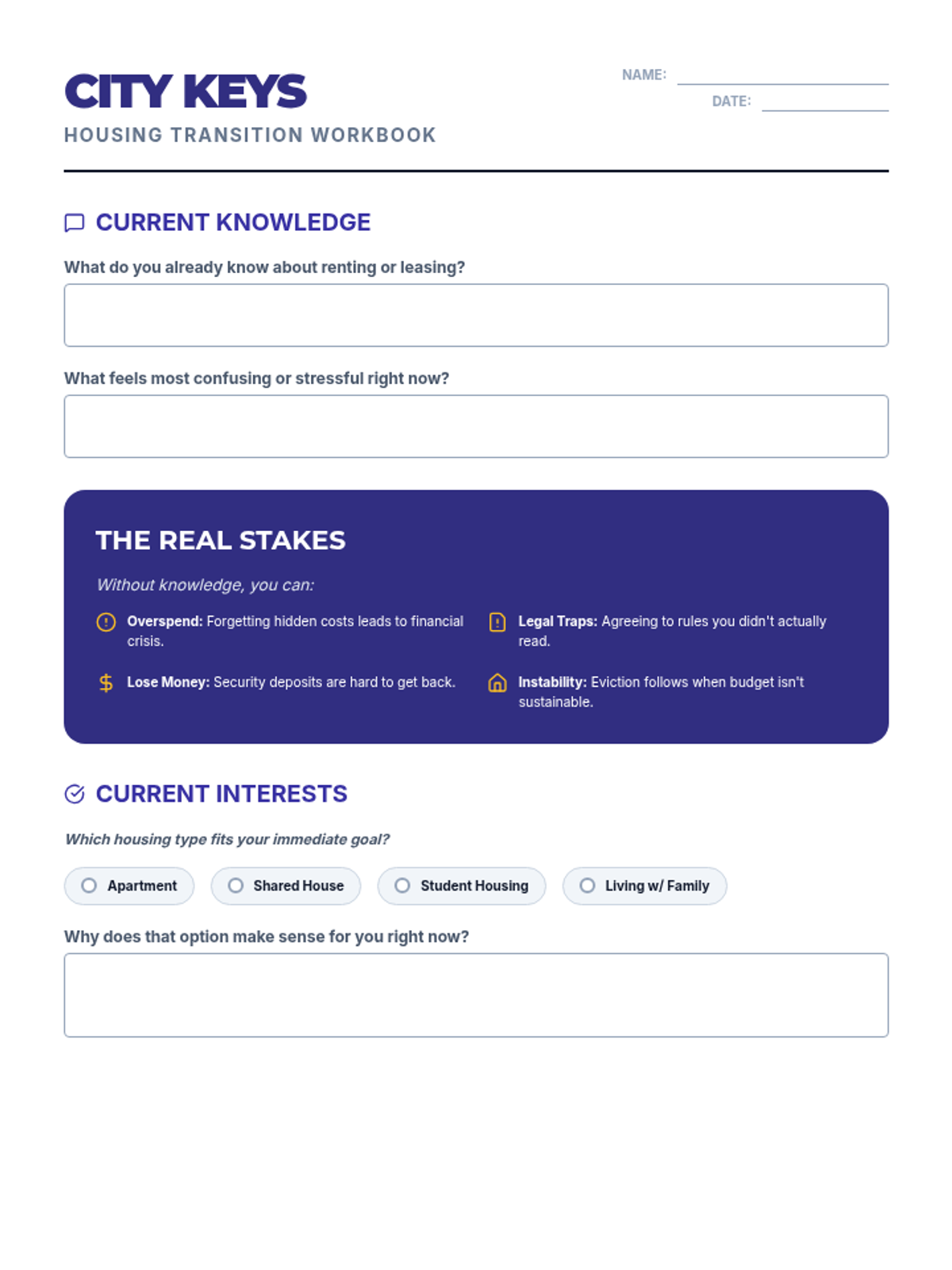
A 4-page student workbook featuring budget calculators, lease lingo matching, needs vs. wants checklists, and rental red flag identifiers.
A bold, visually engaging 13-slide presentation for young adults covering housing basics, the 30% rent rule, and legal lease responsibilities.
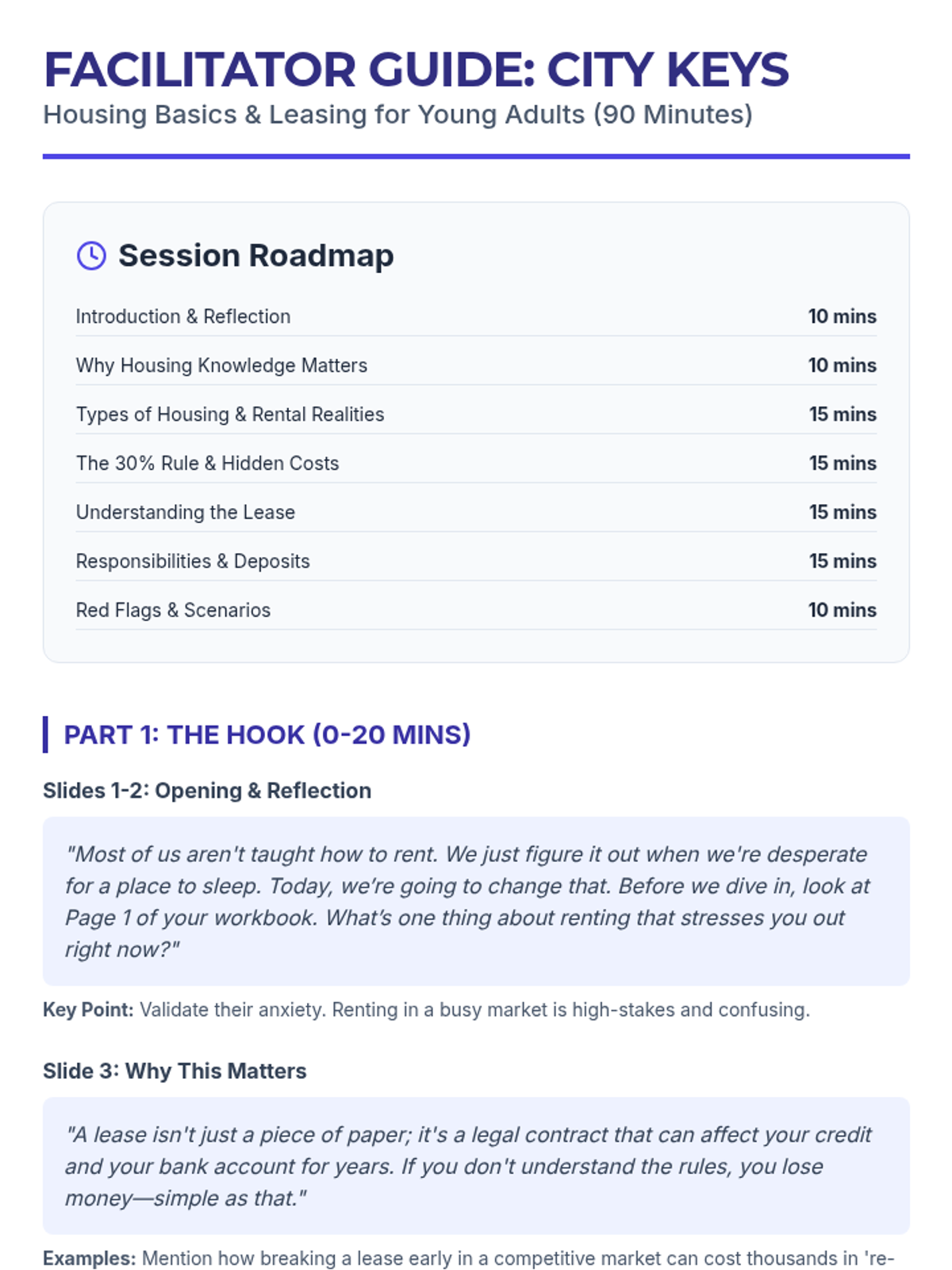
A comprehensive instructor guide for a 90-minute housing workshop, featuring teaching scripts, timing breakdowns, and specific rental market insights.
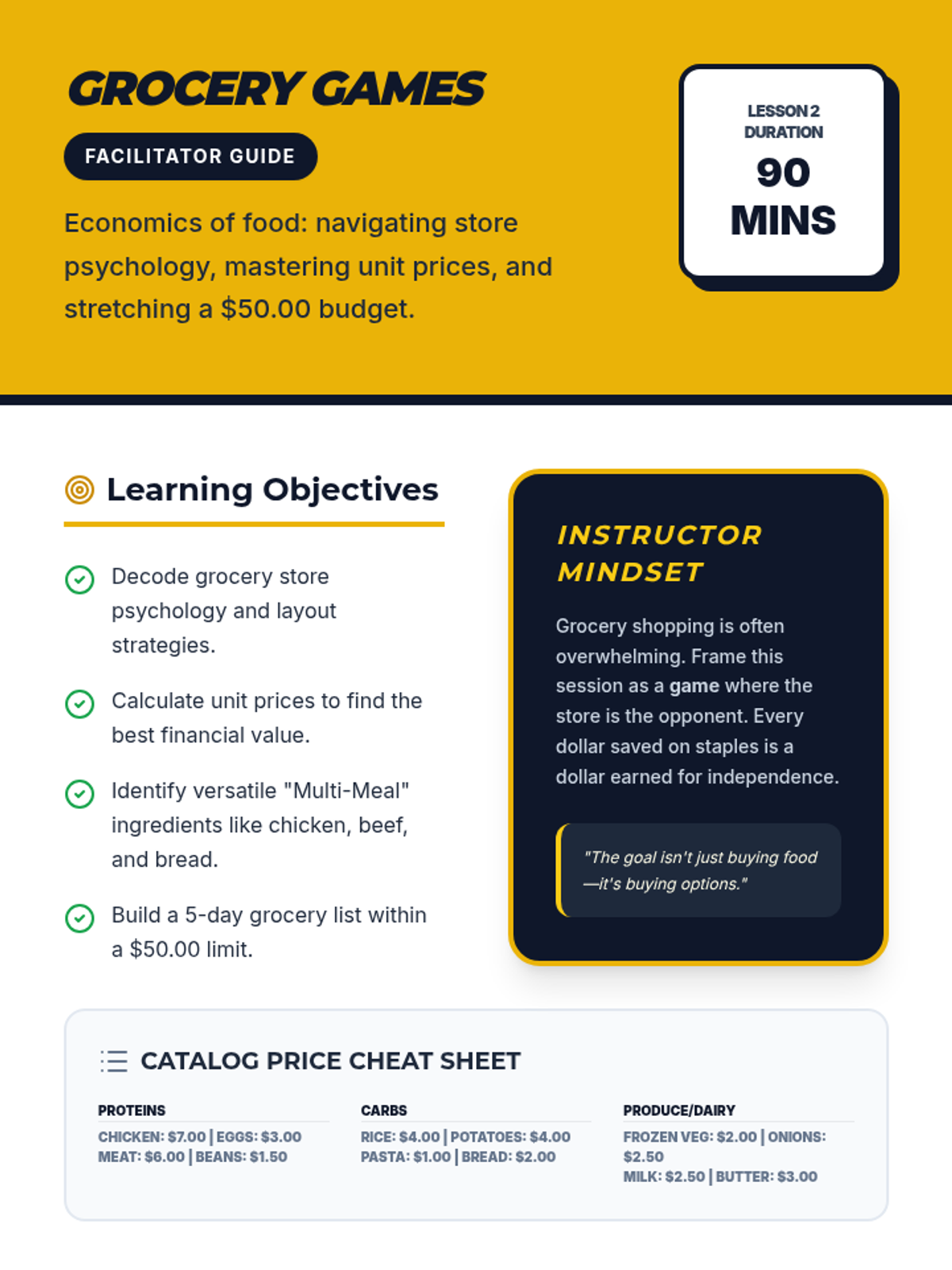
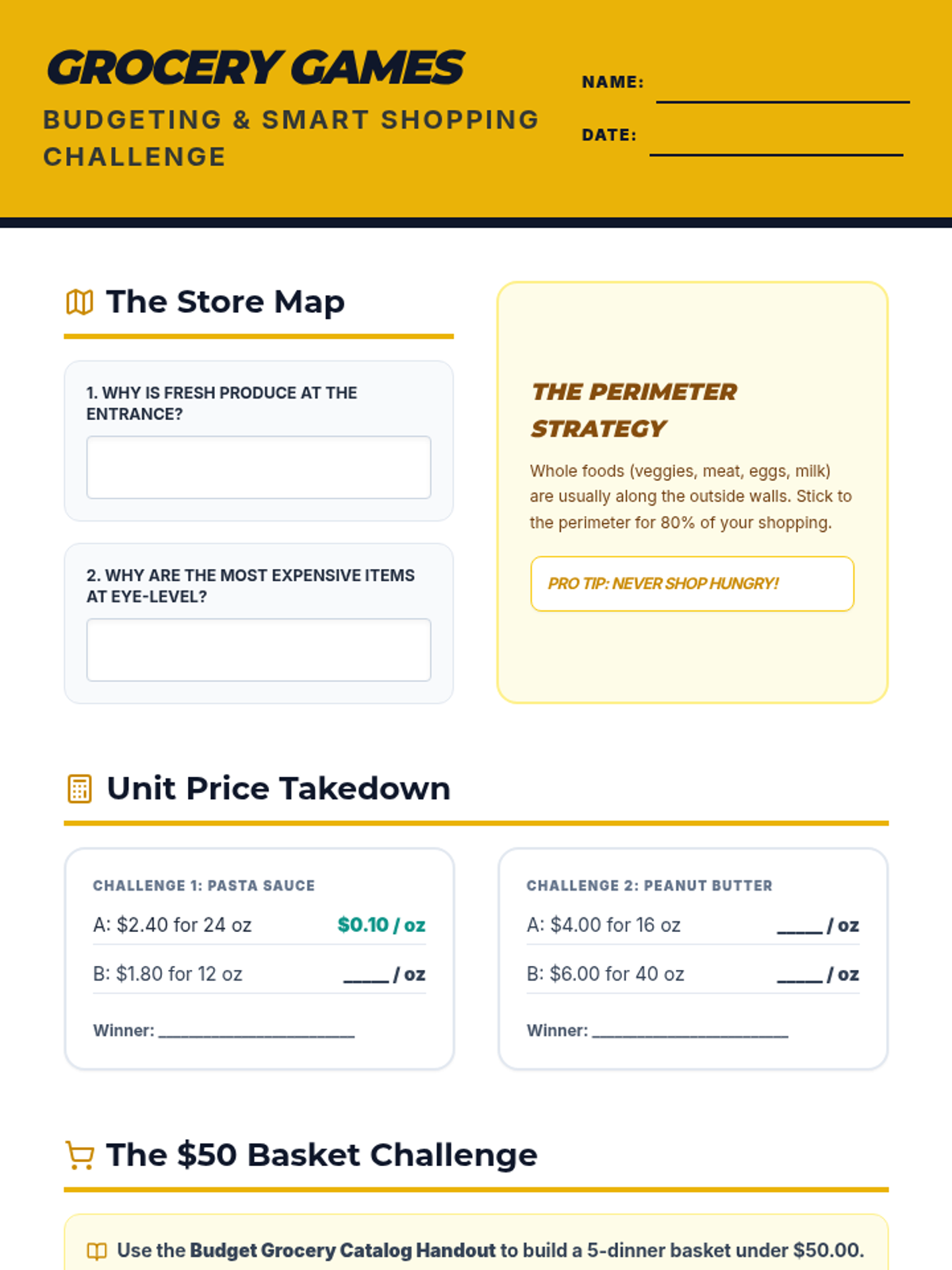
A comprehensive facilitator guide for the Lesson 2: Grocery Games and Budgeting session. Includes explicit instructor scripts ("What to Say"), detailed teaching points for store navigation and unit pricing, and a structured 90-minute pacing guide.
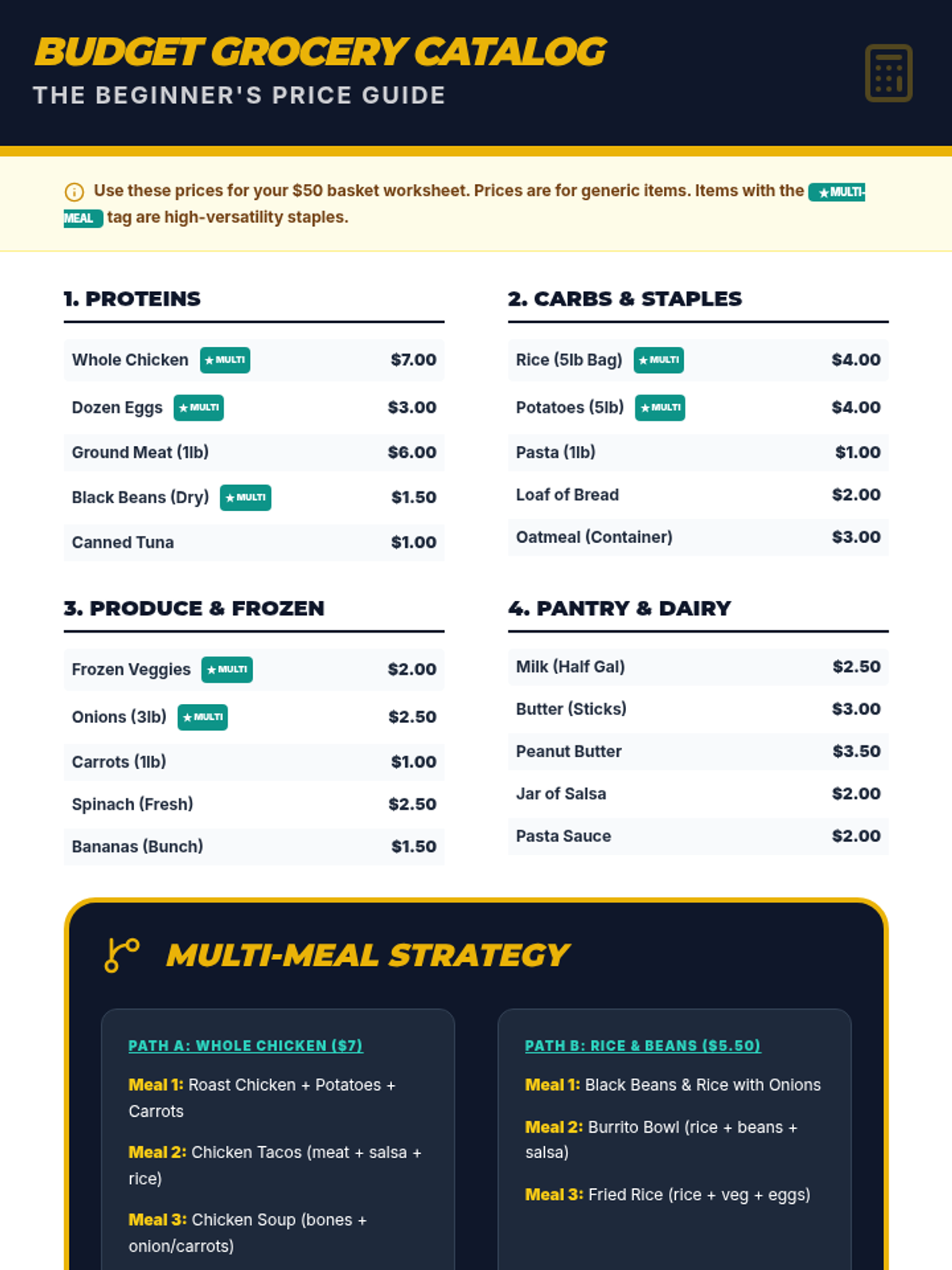
A reference guide for students featuring common grocery items, their estimated budget prices, and a 'Multi-Meal Strategy' map showing how to transform single ingredients into multiple dinners. Now includes a dedicated 'Leftover Legends' safety and transformation guide.
A practical worksheet for students to practice grocery store navigation, unit price calculations, and building a 5-meal grocery basket on a $50 budget. Designed for young adults to build real-world financial skills.
An expanded and high-impact slide deck for the Grocery Games session. Includes the unit pricing formula, educational slides on decoding expiration dates, name brand vs. generic products, bulk buying logic, and avoiding the "convenience tax." Features bold visuals to empower young adult shoppers. Now optimized for layout consistency and readability.
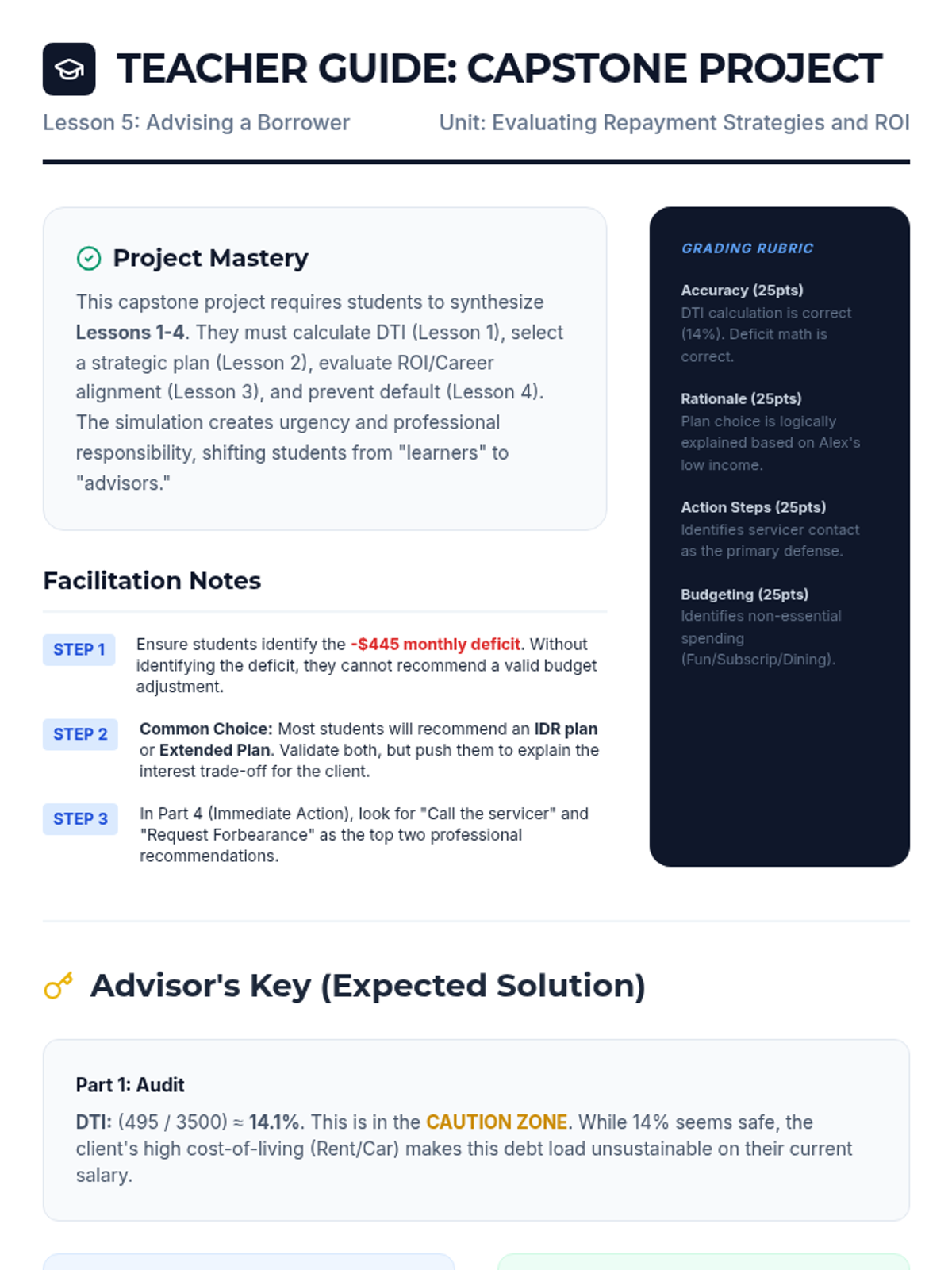
A teacher guide for the final capstone project. Includes the project rubric, solution key for Alex Rivera's DTI and budget audit, and strategic advisory notes.
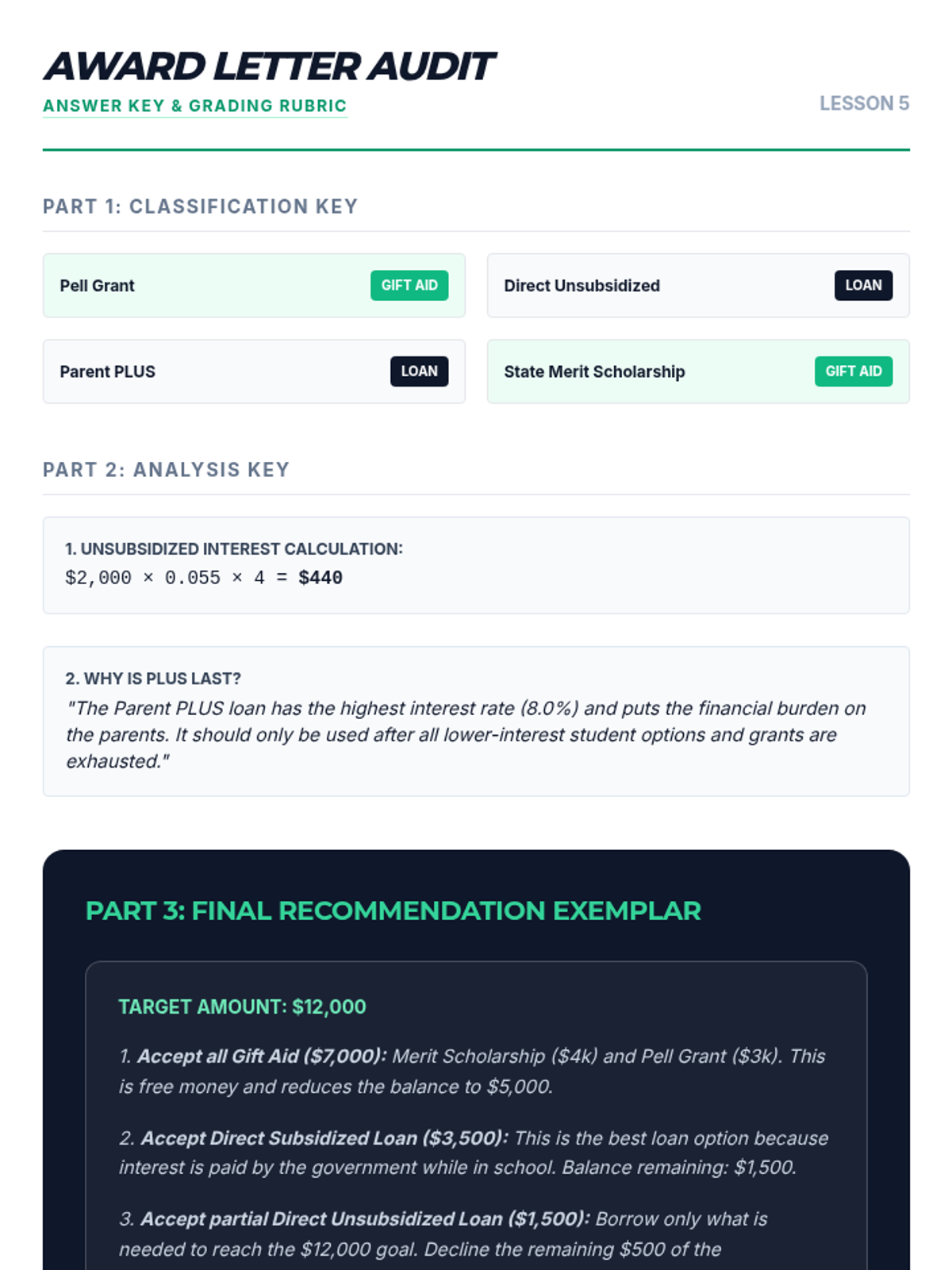
Answer key and scoring guide for the Award Letter Audit Assessment, providing a sample high-scoring student response.
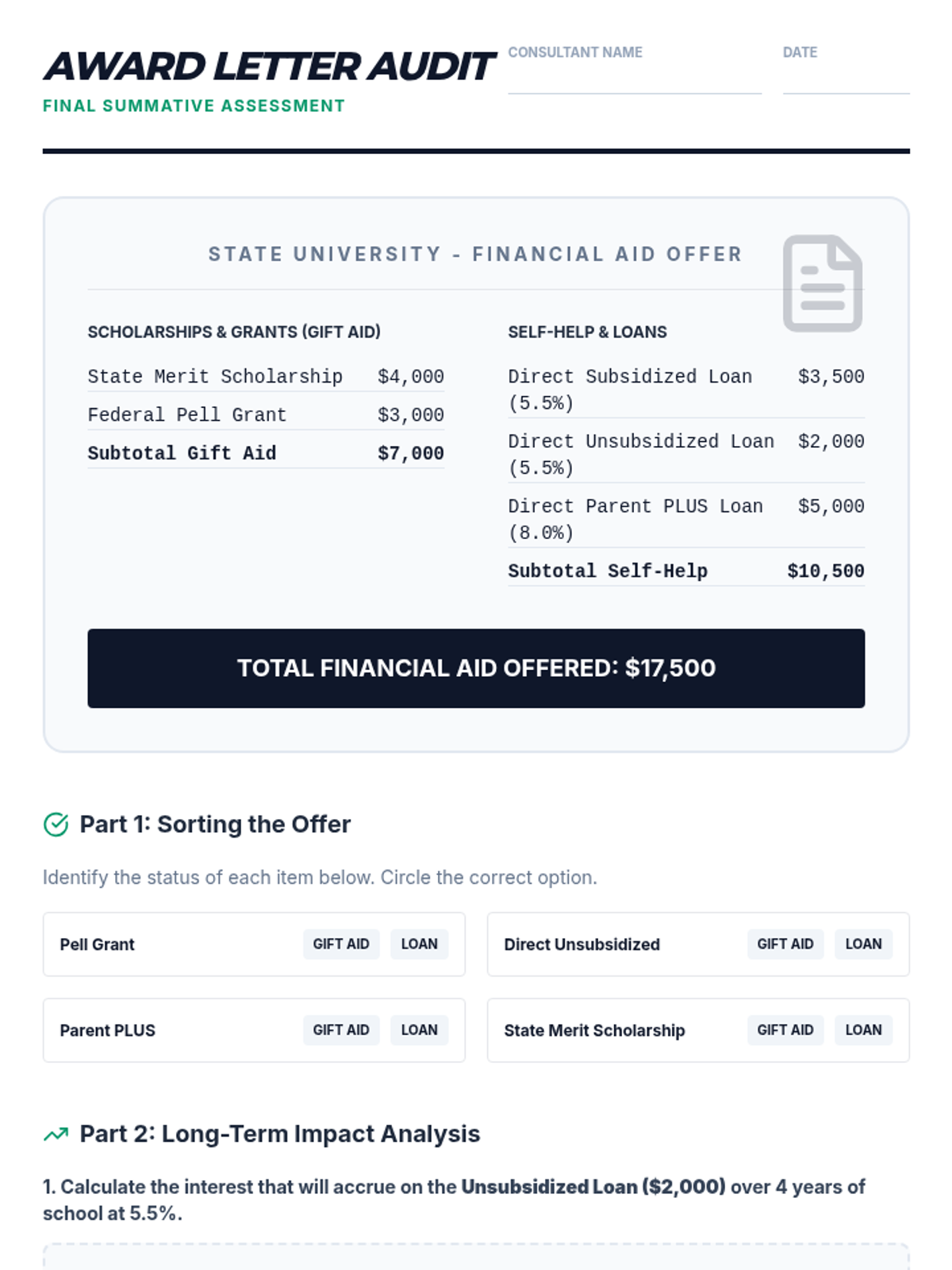
Summative assessment where students audit a sample financial aid offer, classify aid types, and calculate interest impacts.
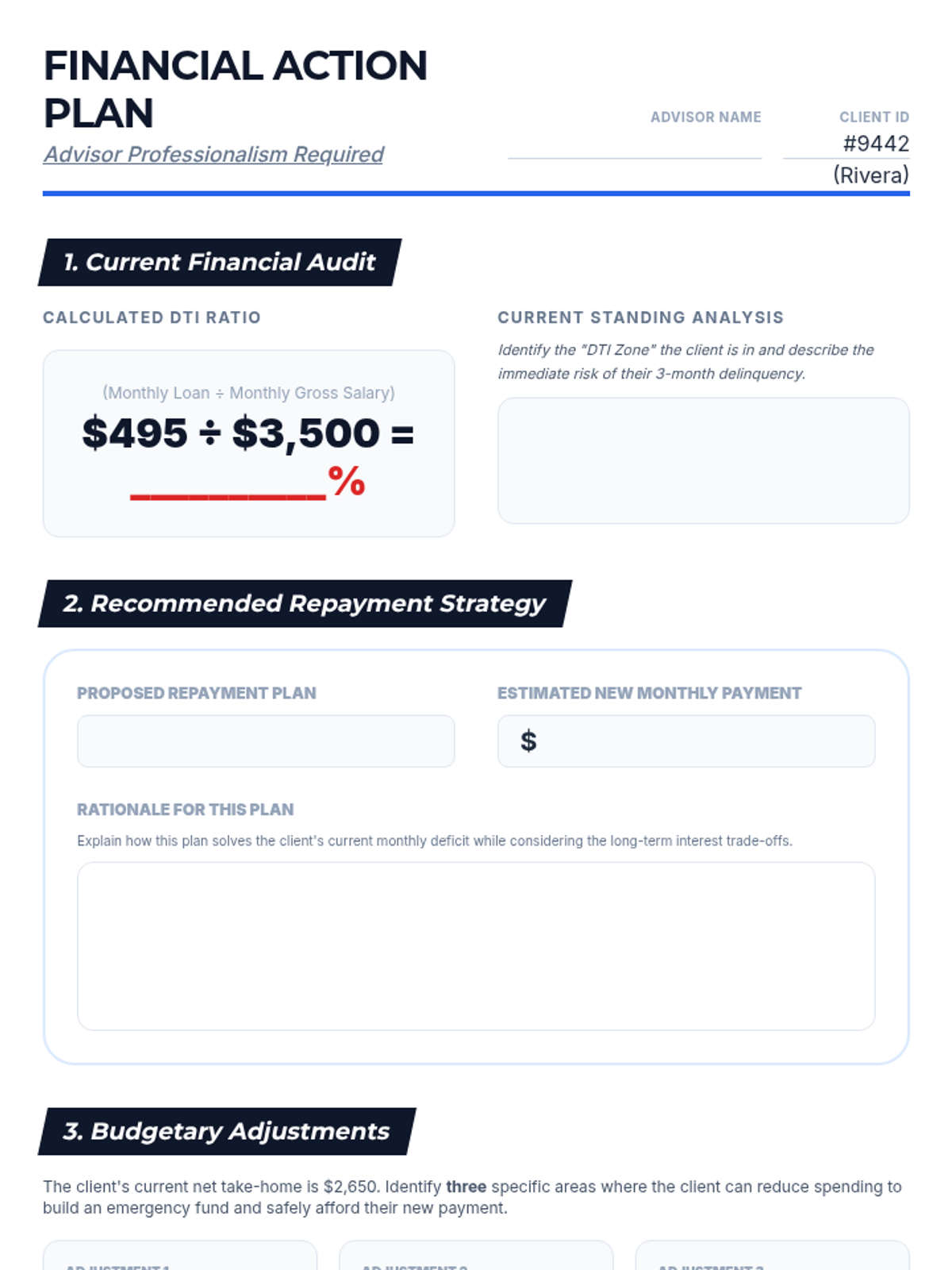
A student template for the final capstone project. Students act as financial advisors for Alex Rivera, performing a DTI analysis, recommending a repayment plan, and suggesting budget adjustments.
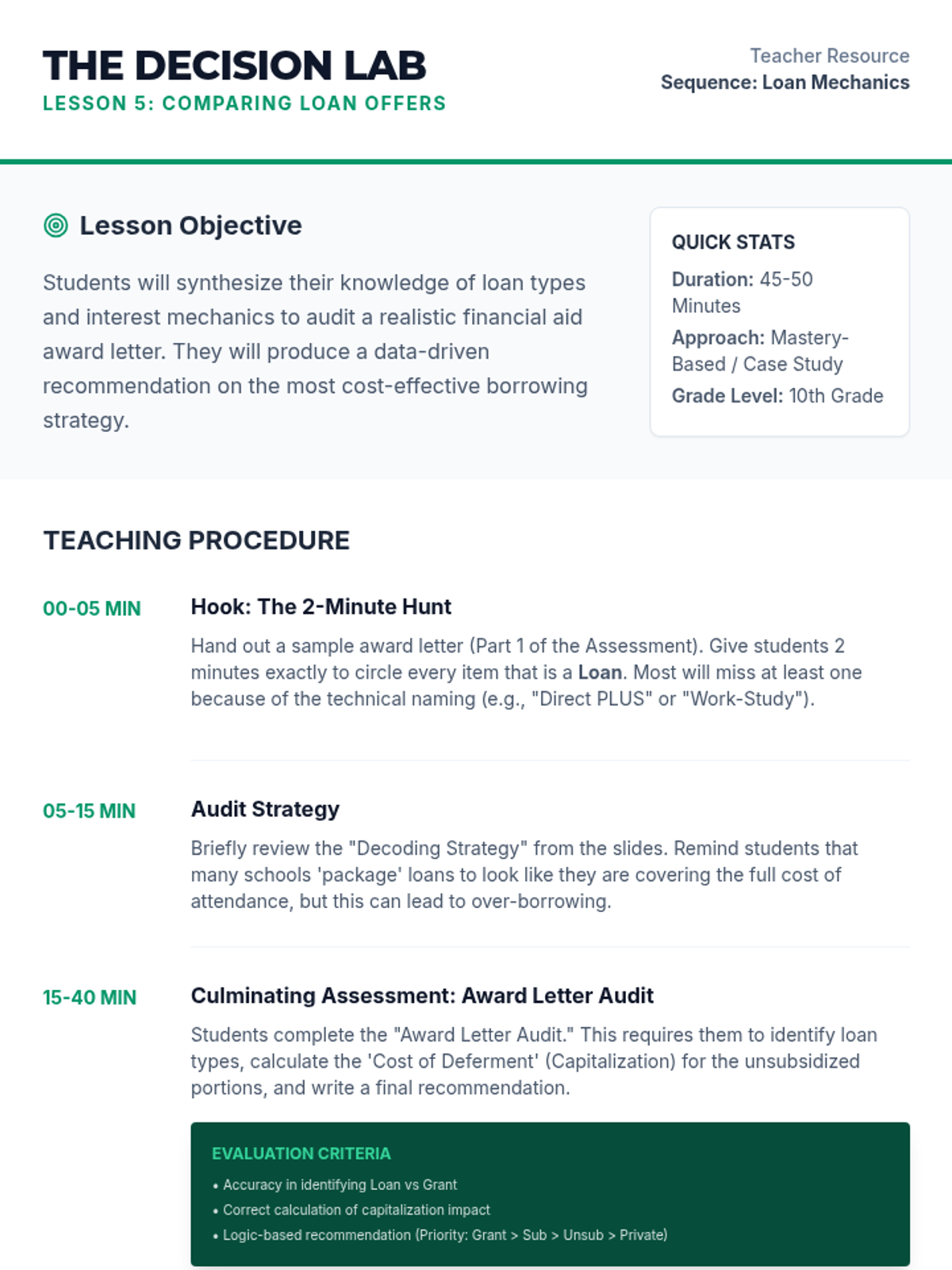
Teacher guide for Lesson 5, focusing on the culminating assessment where students audit a realistic financial aid award letter.
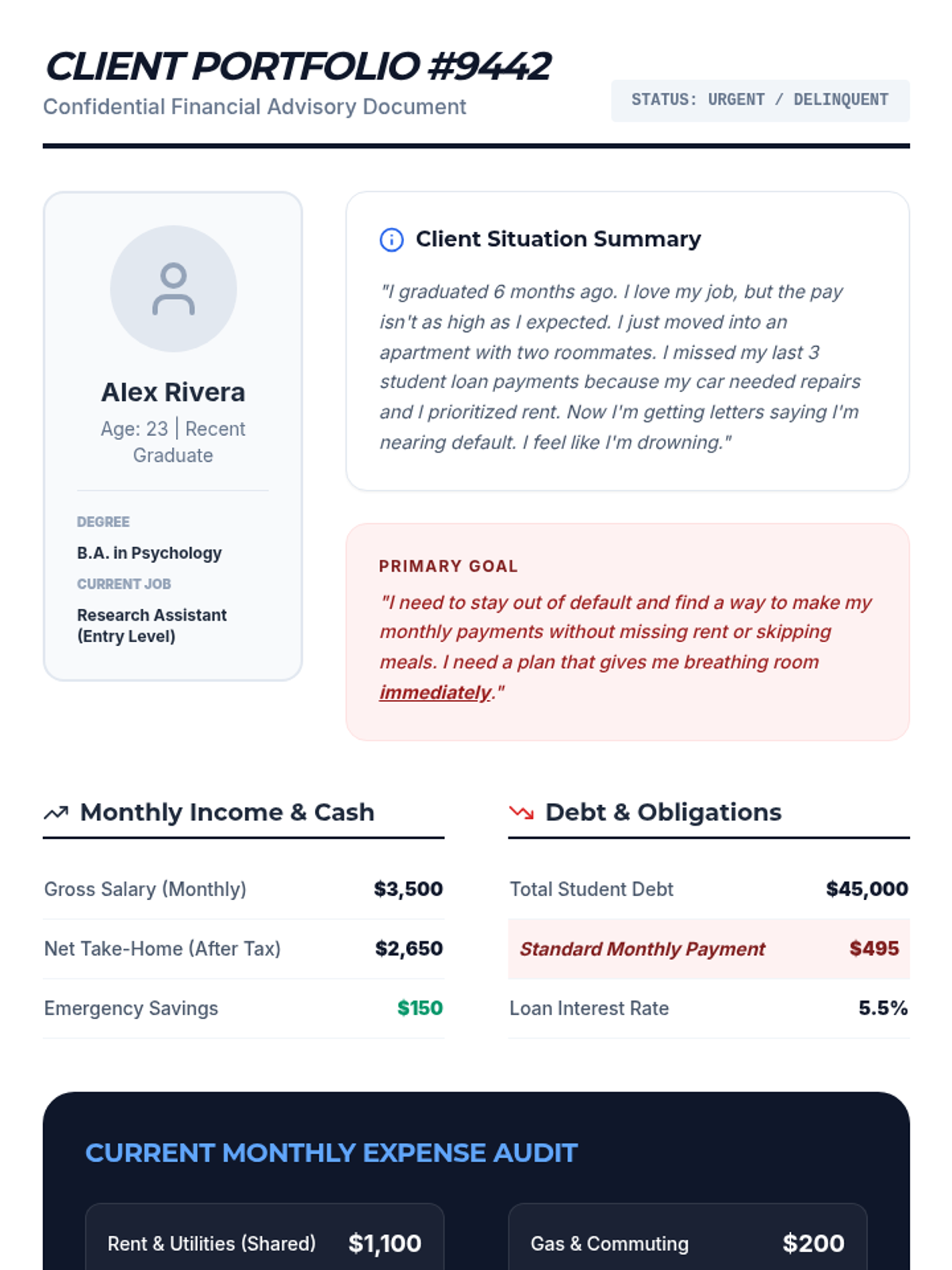
A detailed case study profile for Lesson 5 featuring Alex Rivera, a recent graduate in financial distress. Includes salary, debt amount, monthly expenses, and current repayment status.
Slides for Lesson 5 on comparing financial aid offers, featuring a '2-Minute Hunt' hook and strategies for decoding award letters.
A visual presentation for Lesson 5 that introduces the capstone project where students act as financial counselors for a borrower in crisis, including the "Urgent Email" hook and project deliverables.
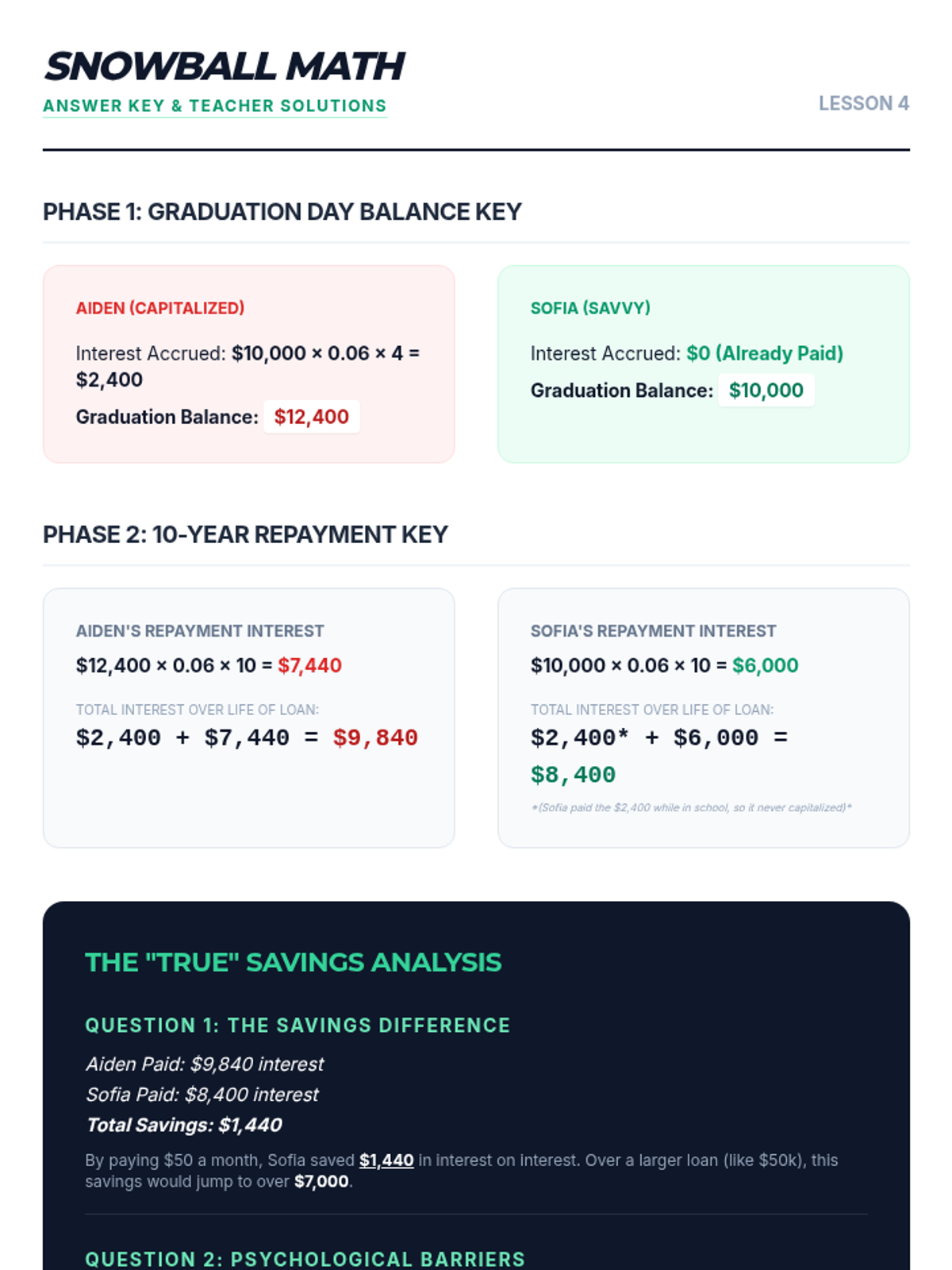
Answer key for the Snowball Math Worksheet, providing the step-by-step interest calculations for both Aiden and Sofia.
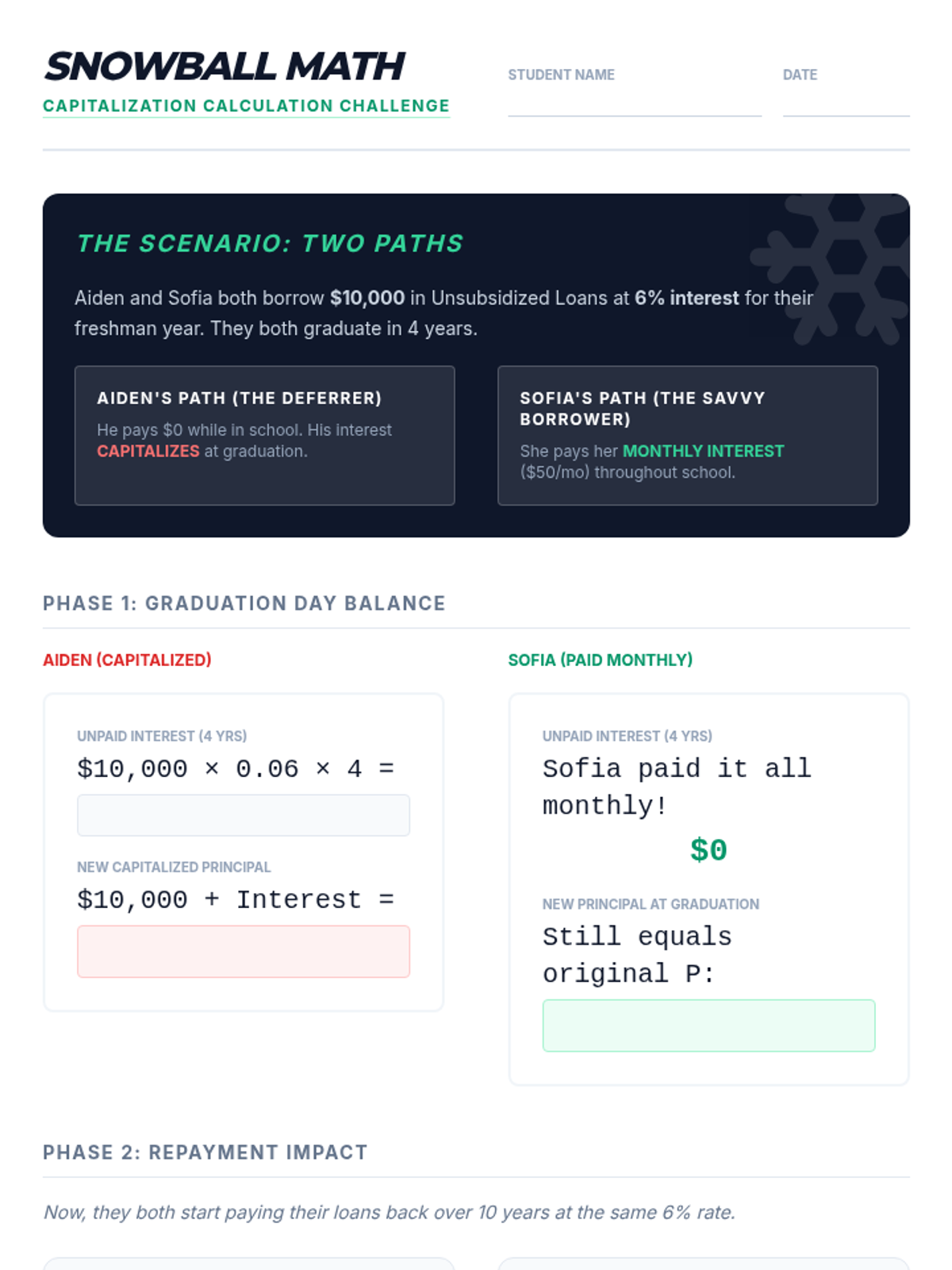
Worksheet for Lesson 4 where students compare the long-term debt of two borrowers, Aiden (who capitalizes interest) and Sofia (who pays monthly).
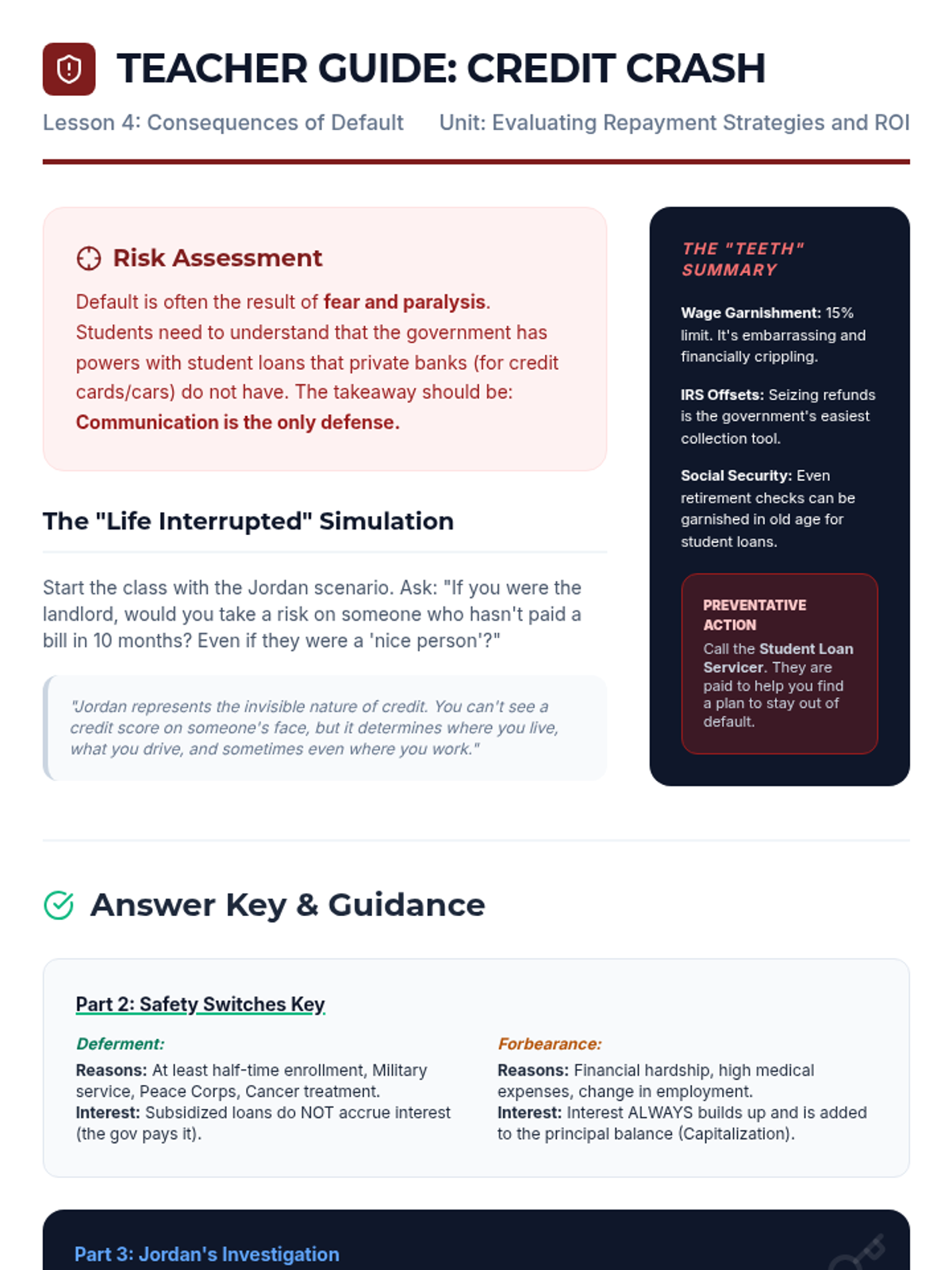
A teacher guide for Lesson 4 providing instructional focus, discussion prompts for the "Life Interrupted" scenario, and an answer key for the Risk Radar worksheet.
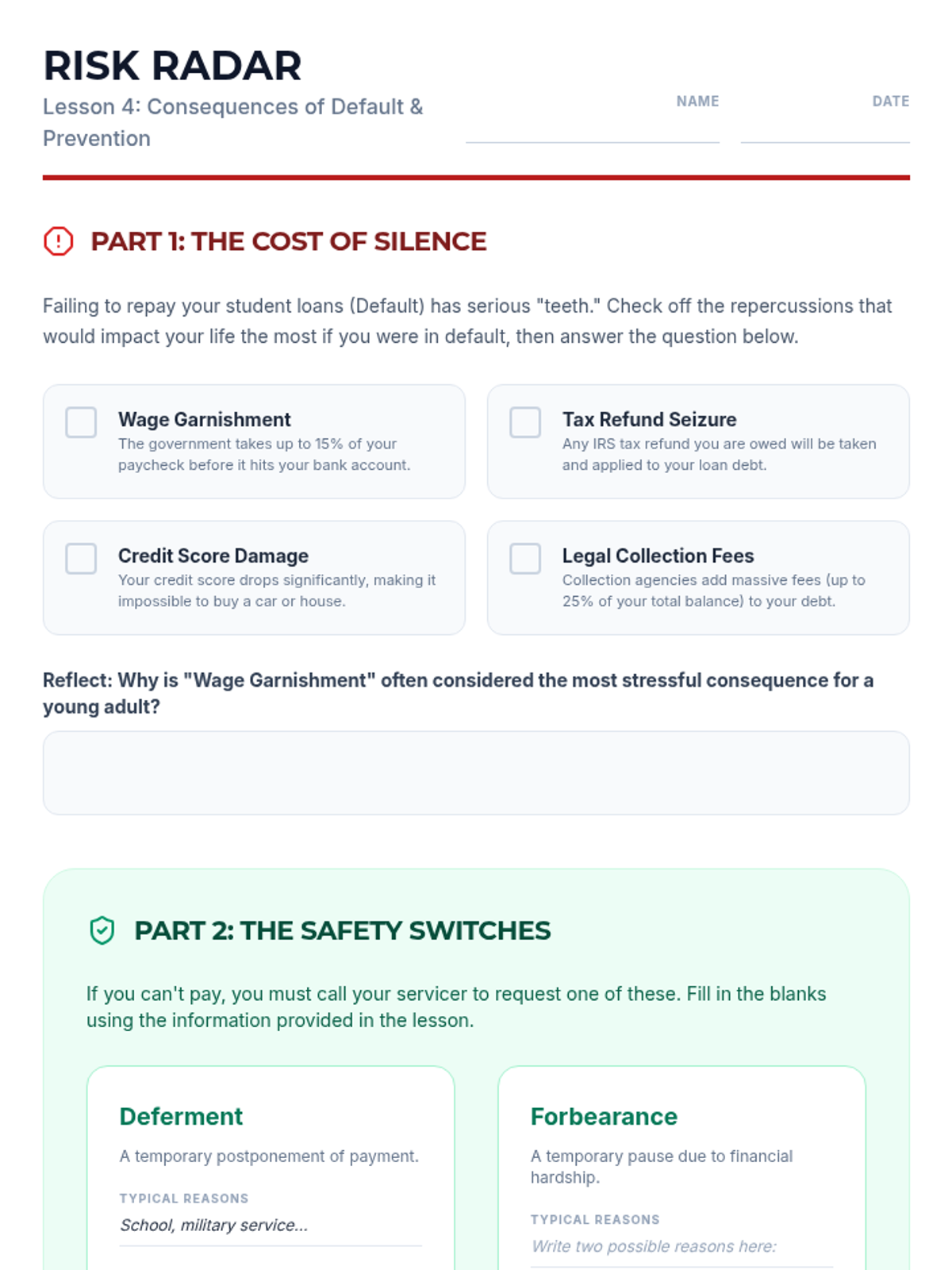
A student worksheet for Lesson 4 that includes a checklist of default repercussions, a comparison table for deferment vs. forbearance, and a case study investigation into a borrower's credit crash.
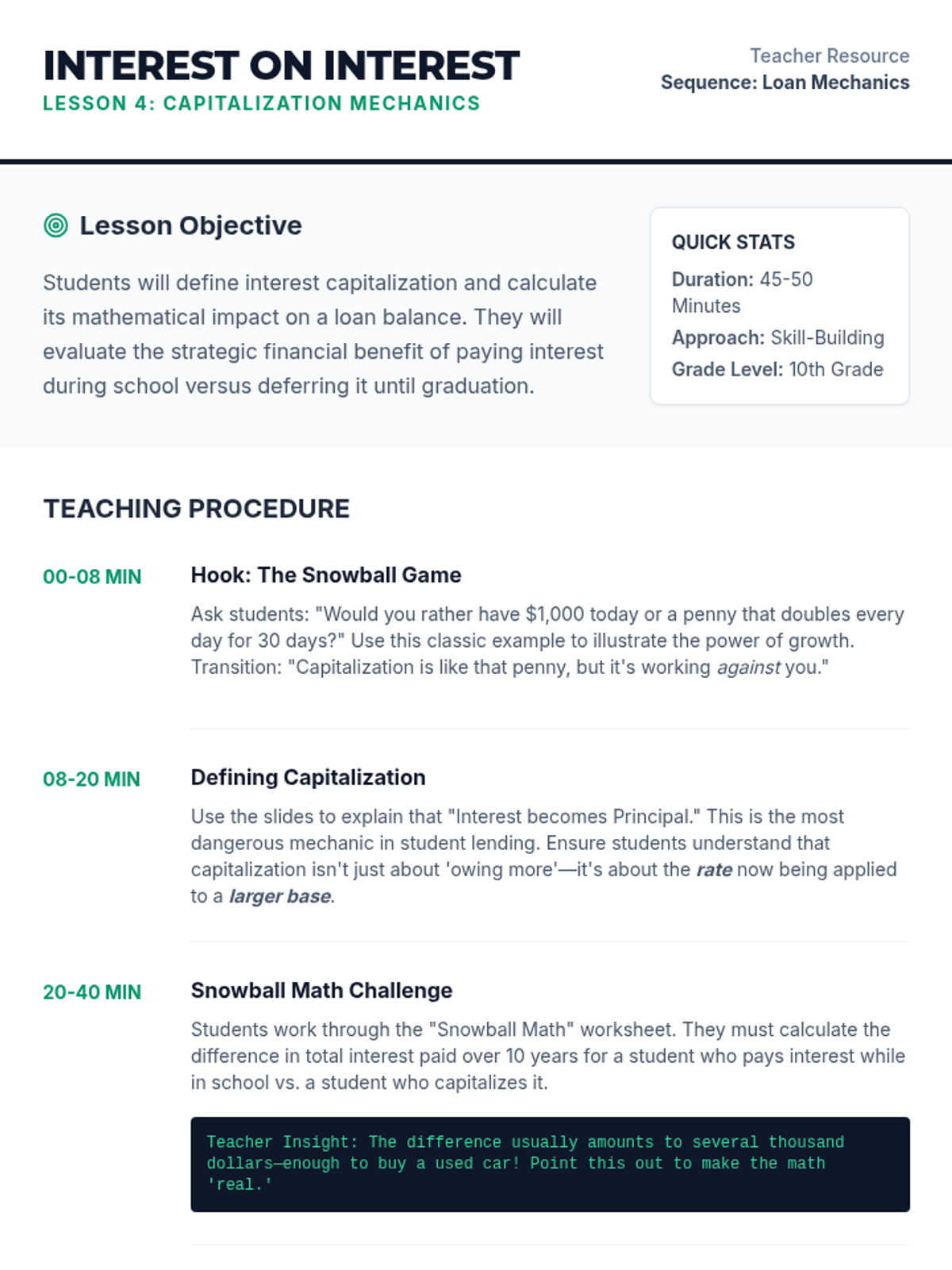
Teacher guide for Lesson 4, focusing on the mechanics of interest capitalization and the 'One Habit' rule to prevent debt growth.
Slides for Lesson 4 explaining interest capitalization, when it occurs, and strategies to prevent it using the 'Snowball Effect' metaphor.
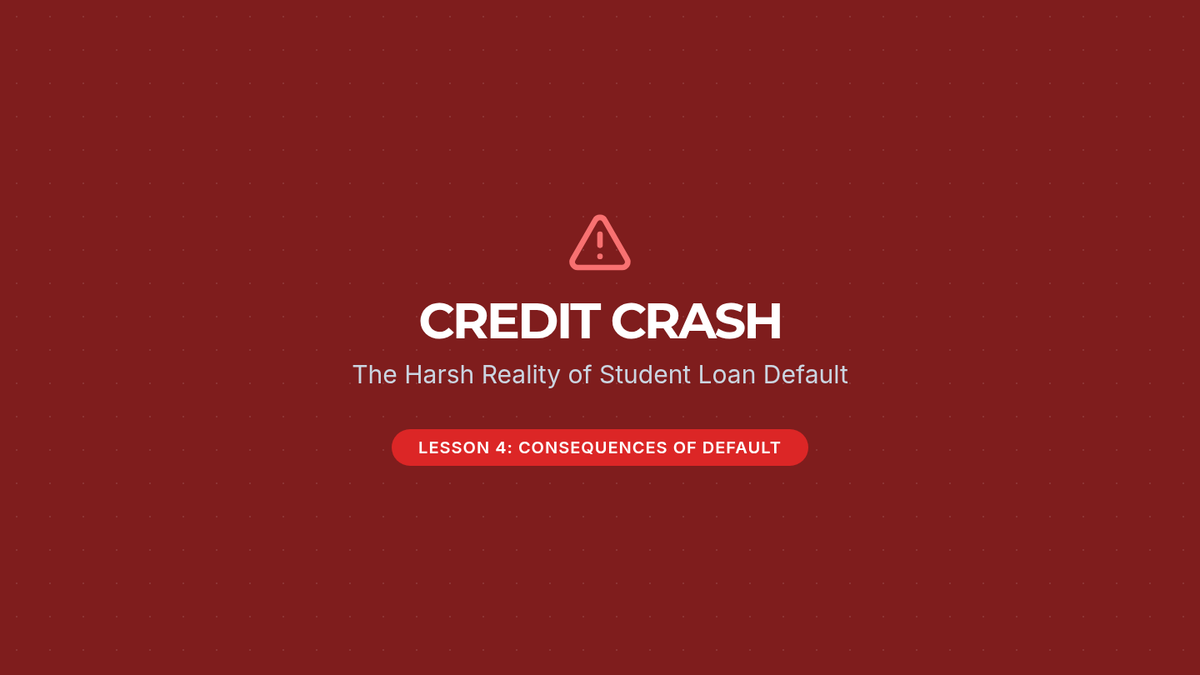
A visual presentation for Lesson 4 that examines the timeline and repercussions of student loan default, including credit score impact, wage garnishment, and prevention strategies like deferment and forbearance.
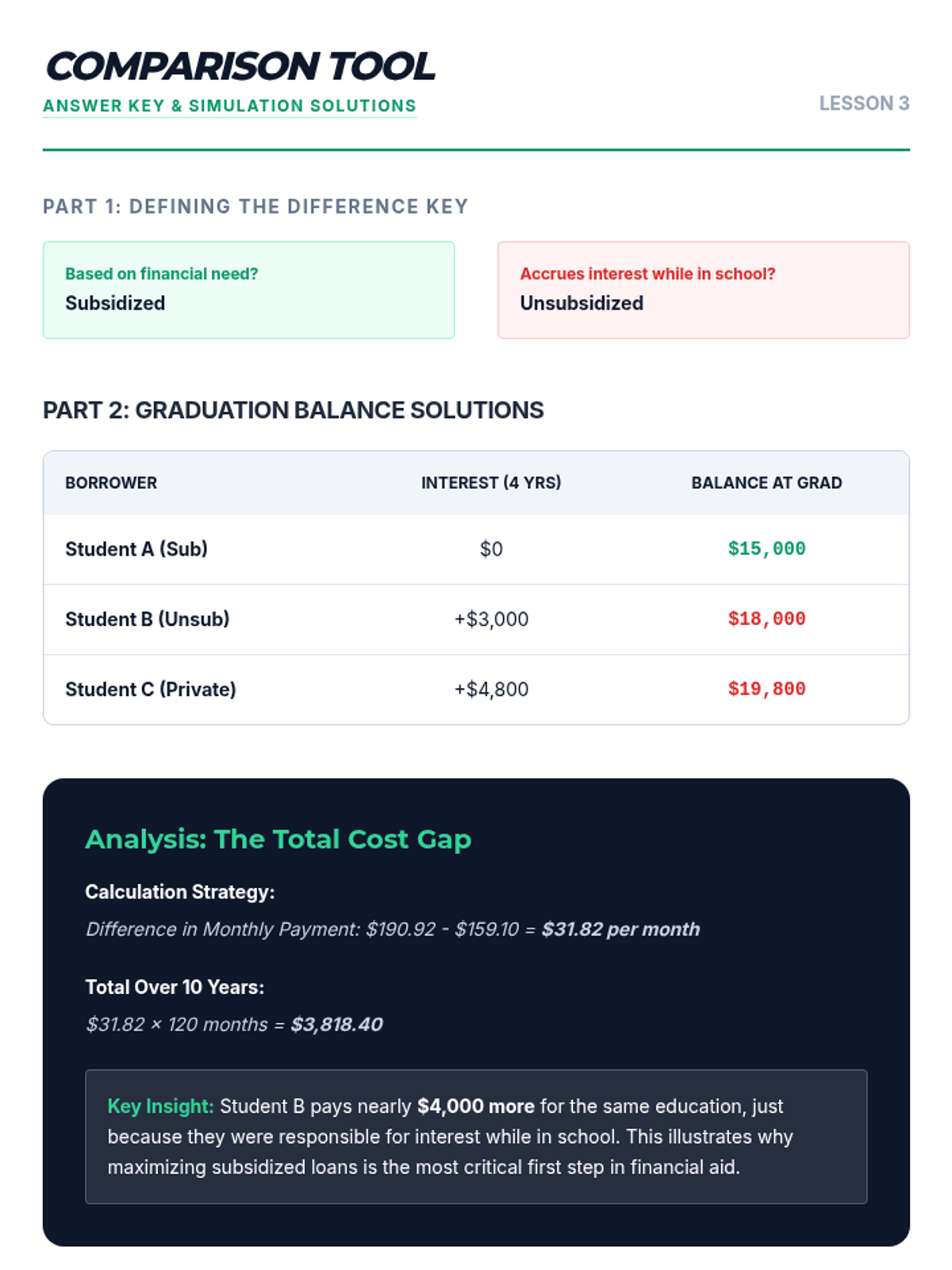
Answer key for the Lesson 3 Comparison Tool, including pre-calculated graduation balances and long-term cost analysis.
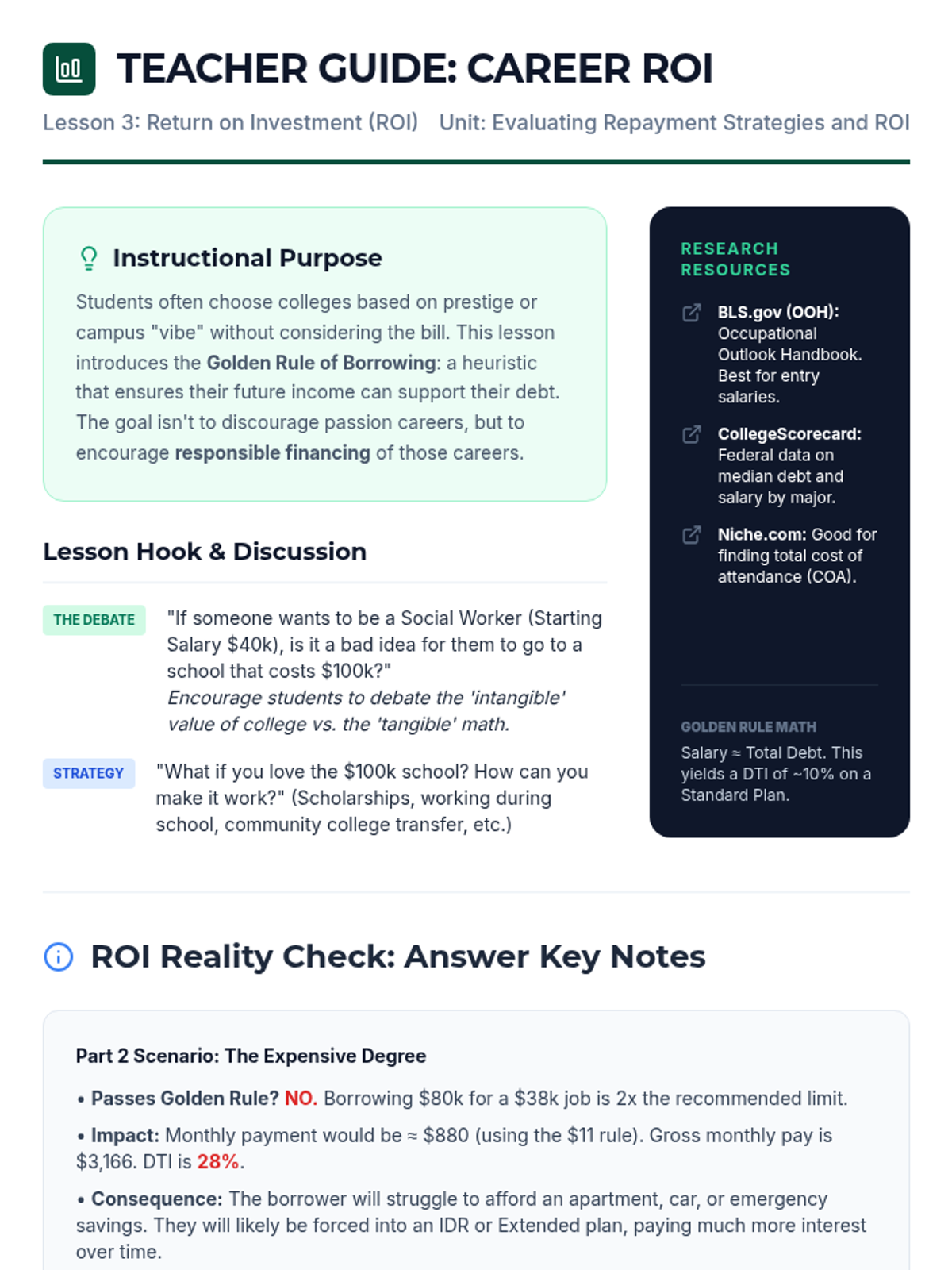
A teacher guide for Lesson 3 providing the "Golden Rule" rationale, research resource links, and scenario analysis for the ROI Research Lab.
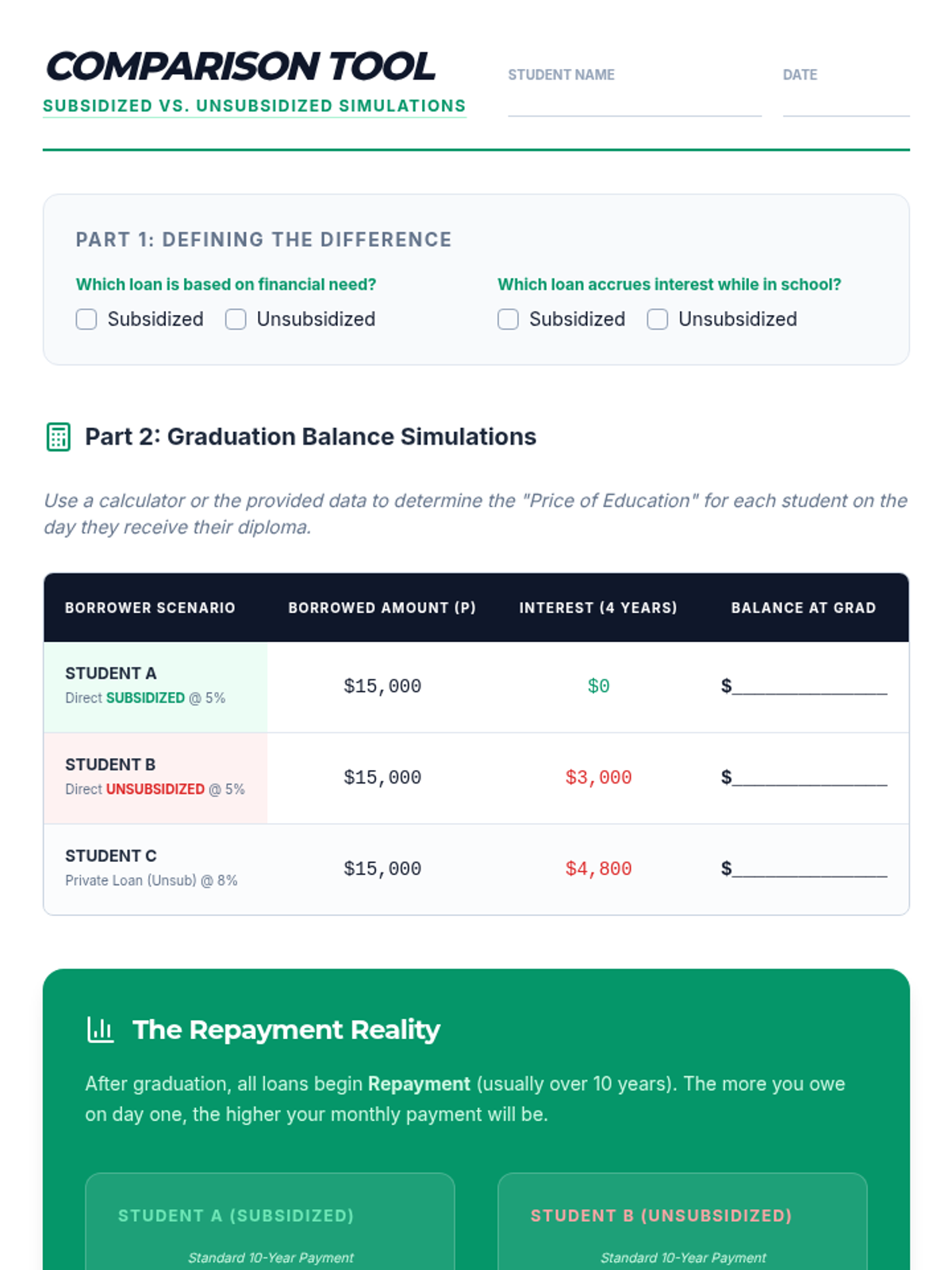
Worksheet for Lesson 3 allowing students to simulate graduation balances and calculate the long-term cost difference between loan types.
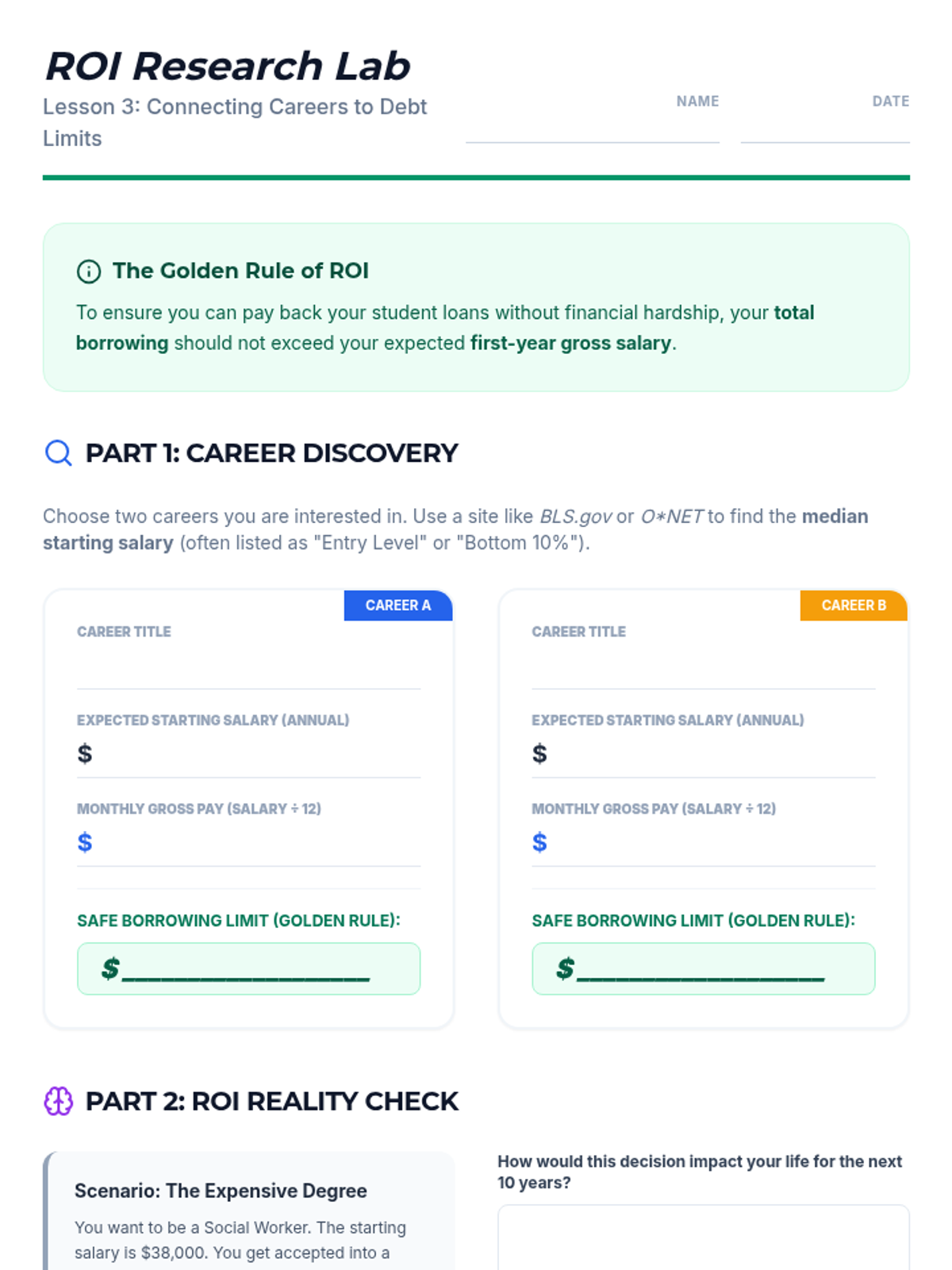
A student worksheet for Lesson 3 that connects career aspirations with borrowing limits. Students research salaries, calculate safe borrowing limits using the "Golden Rule," and analyze the ROI of different education-to-career paths.
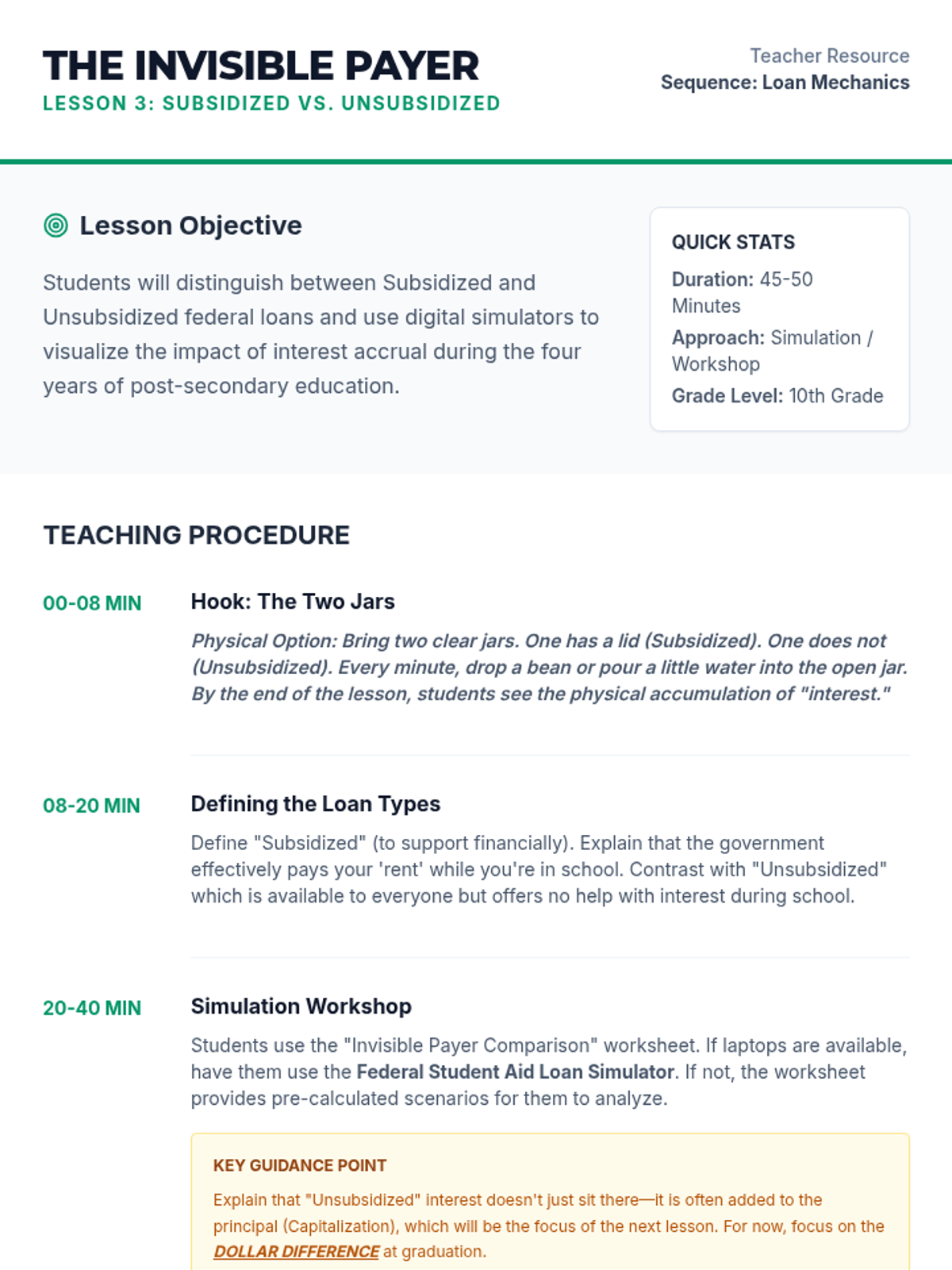
Facilitation guide for Lesson 3, including the 'Two Jars' hook and instructions for the simulation workshop.
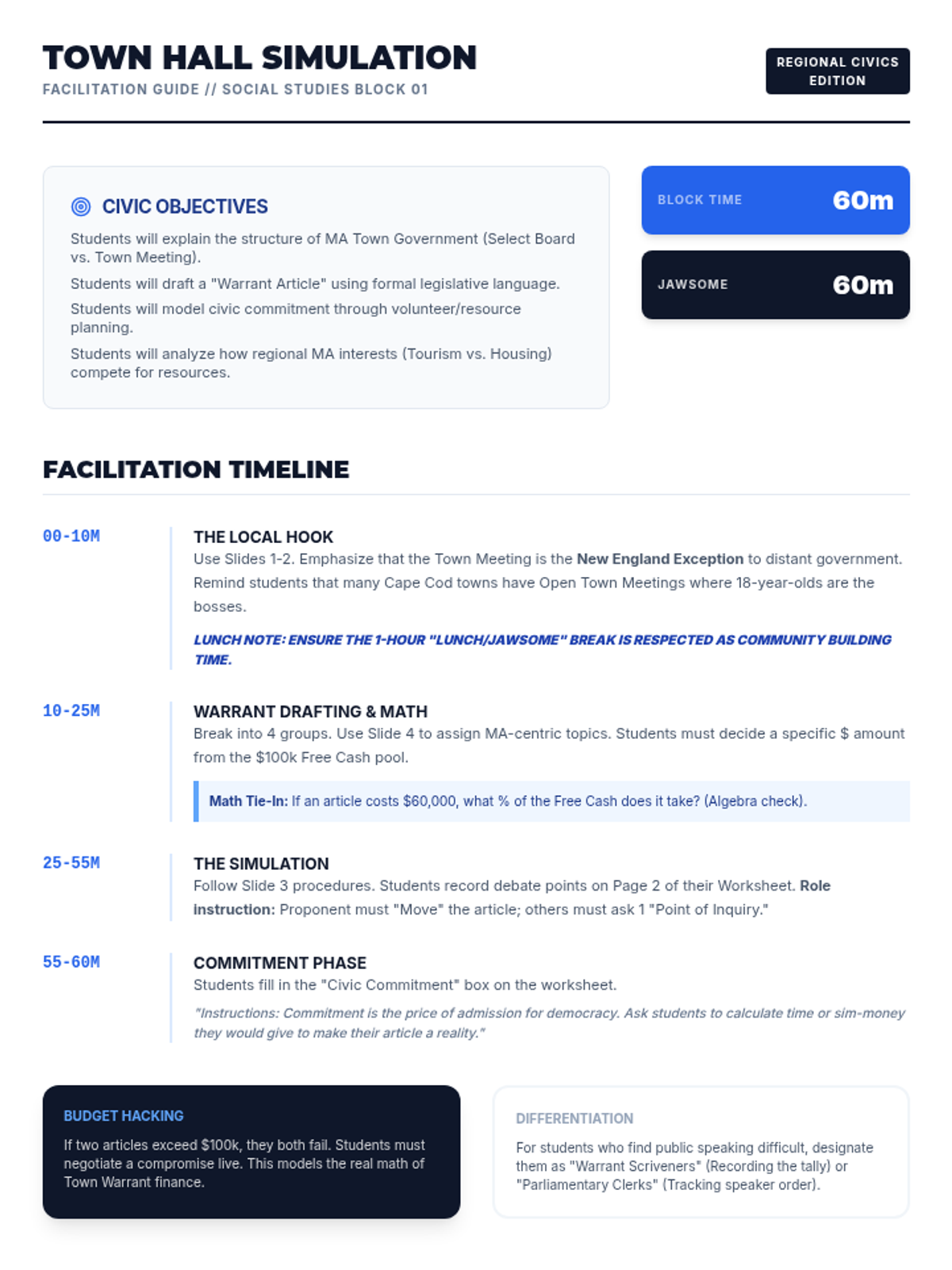
A facilitation guide for teachers to lead a 60-minute Social Studies simulation of a New England Town Meeting, including role assignments and parliamentary procedure. Updated with Lunch/Jawsome timing, MA localization, and Commitment instructions.
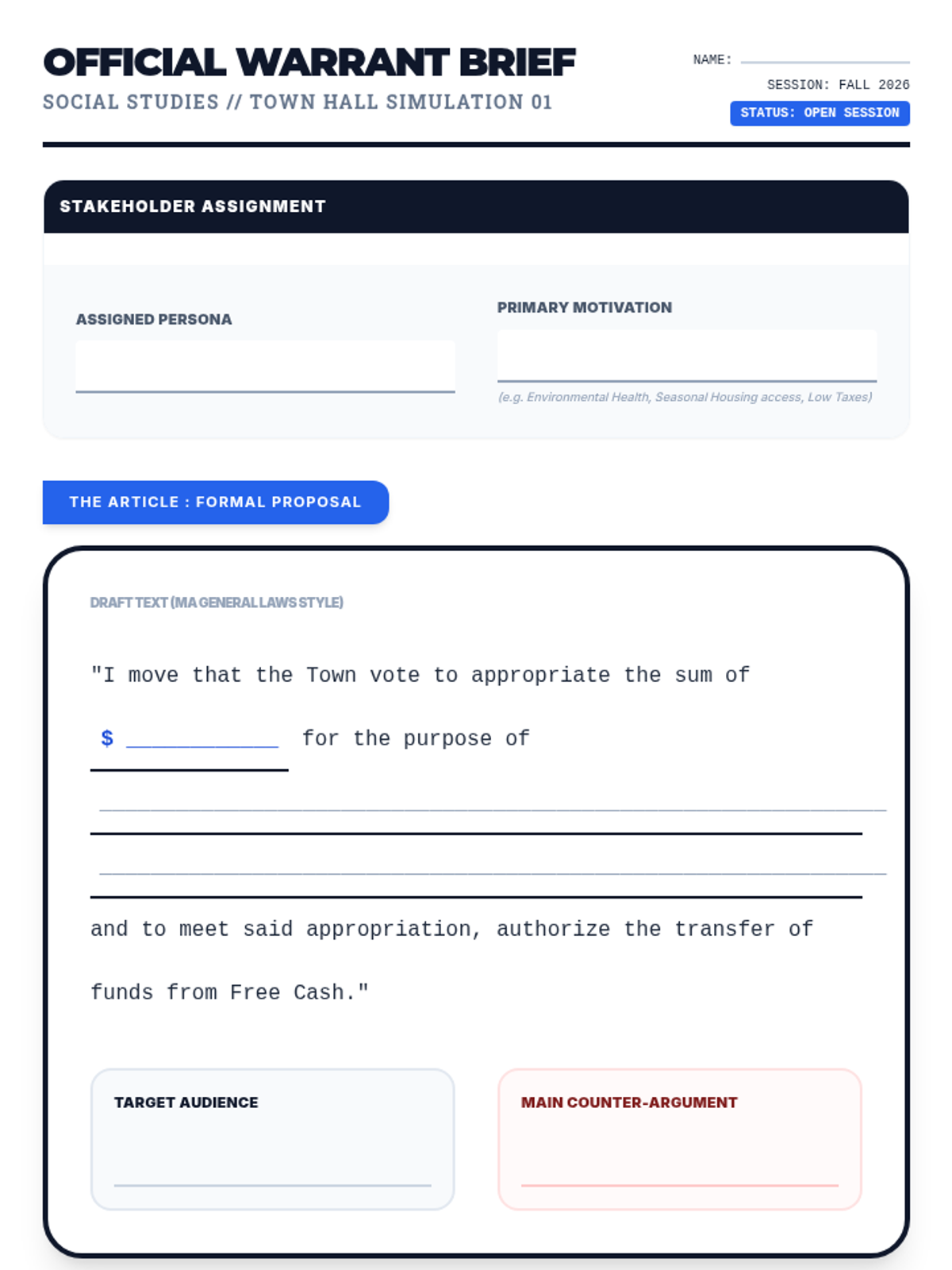
A simulation briefing worksheet for a Town Hall Meeting, providing role-play assignments, a template for drafting formal warrant articles, and space for tracking floor debates. Localized for Eastern MA. Includes "Civic Commitment" and larger fonts. Fixed page break and instructions. Final polish for layout.
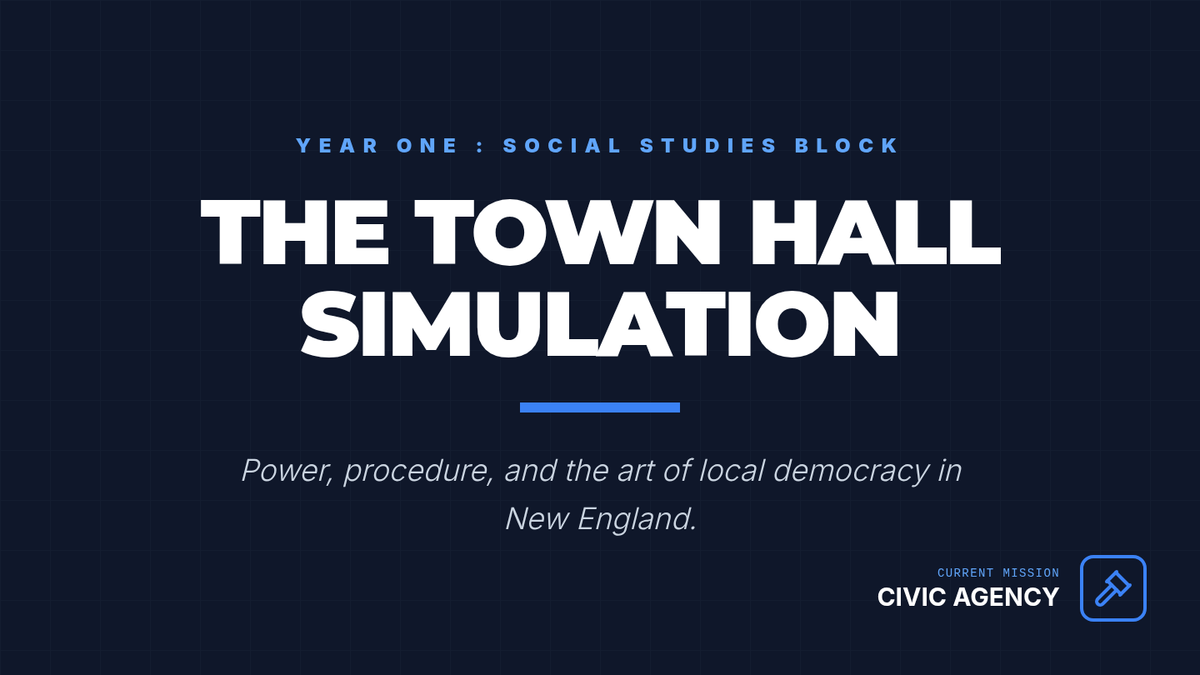
A civics slide deck for a Town Hall Simulation, localized to Eastern MA/Cape Cod issues. Explains procedure, articles, and the "Civic Commitment" concept. Revised for better kerning and localized examples. Final pass for layout.
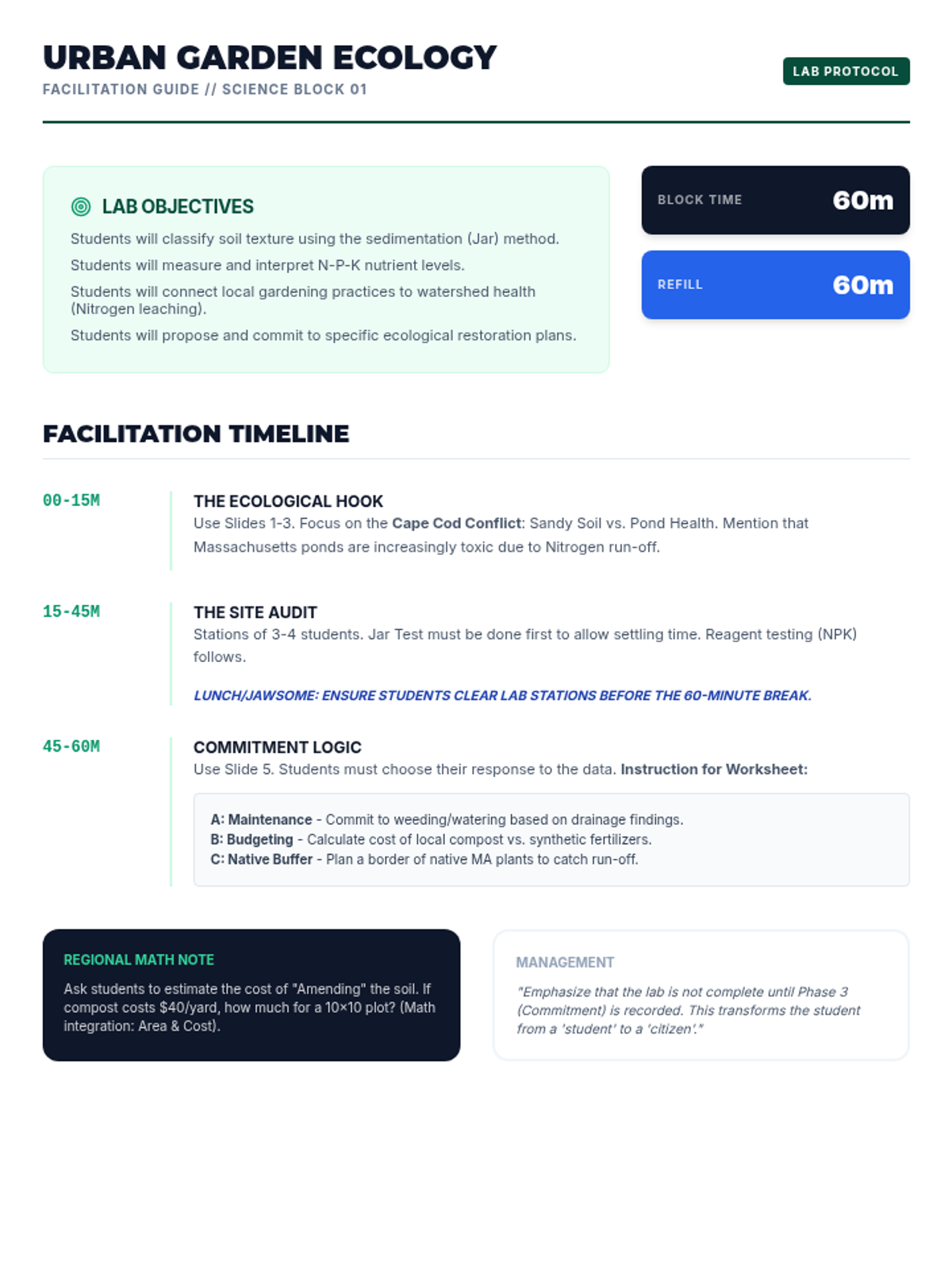
A facilitation guide for teachers to lead a 60-minute Integrated Science lab on garden ecology, featuring soil testing protocols and regional ecological discussion prompts. Updated with Lunch/Jawsome timing and Commitment instructions.
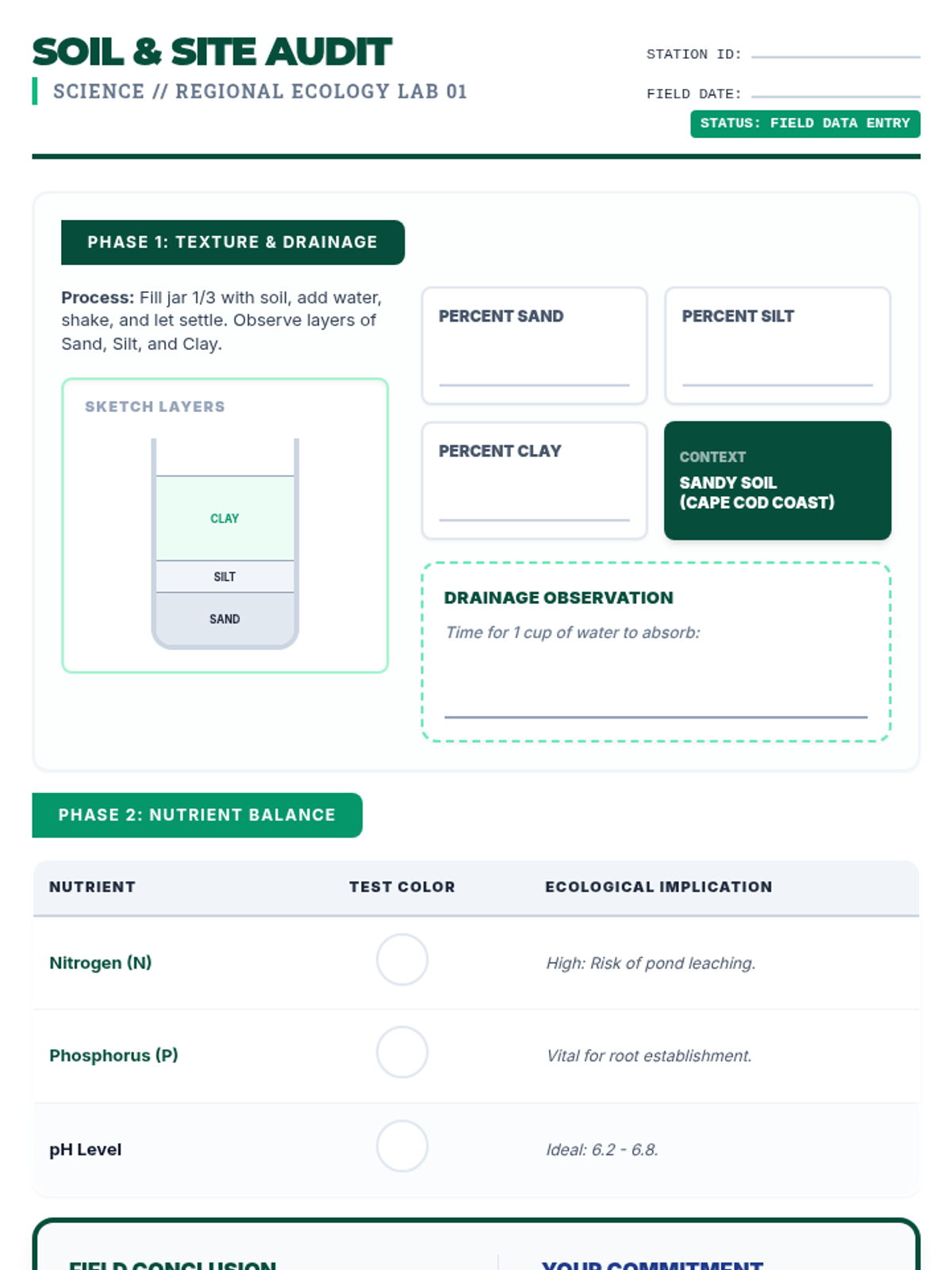
A scientific field notebook worksheet for a Soil & Site Audit, involving physical jar testing for texture and chemical NPK testing, contextualized for Massachusetts soil profiles. Updated with a "Your Commitment" section, larger font sizes, and improved page breaks. Final polish for student completion.
A visually rich science slide deck for Urban Garden Ecology, focusing on soil health, nutrient cycles (NPK), and regional leaching challenges specific to Cape Cod and Eastern MA. Includes schedule for Lunch/Jawsome and commitment instructions. Fixed rendering for Slide 3 and NPK text wrap. Final pass for layout.
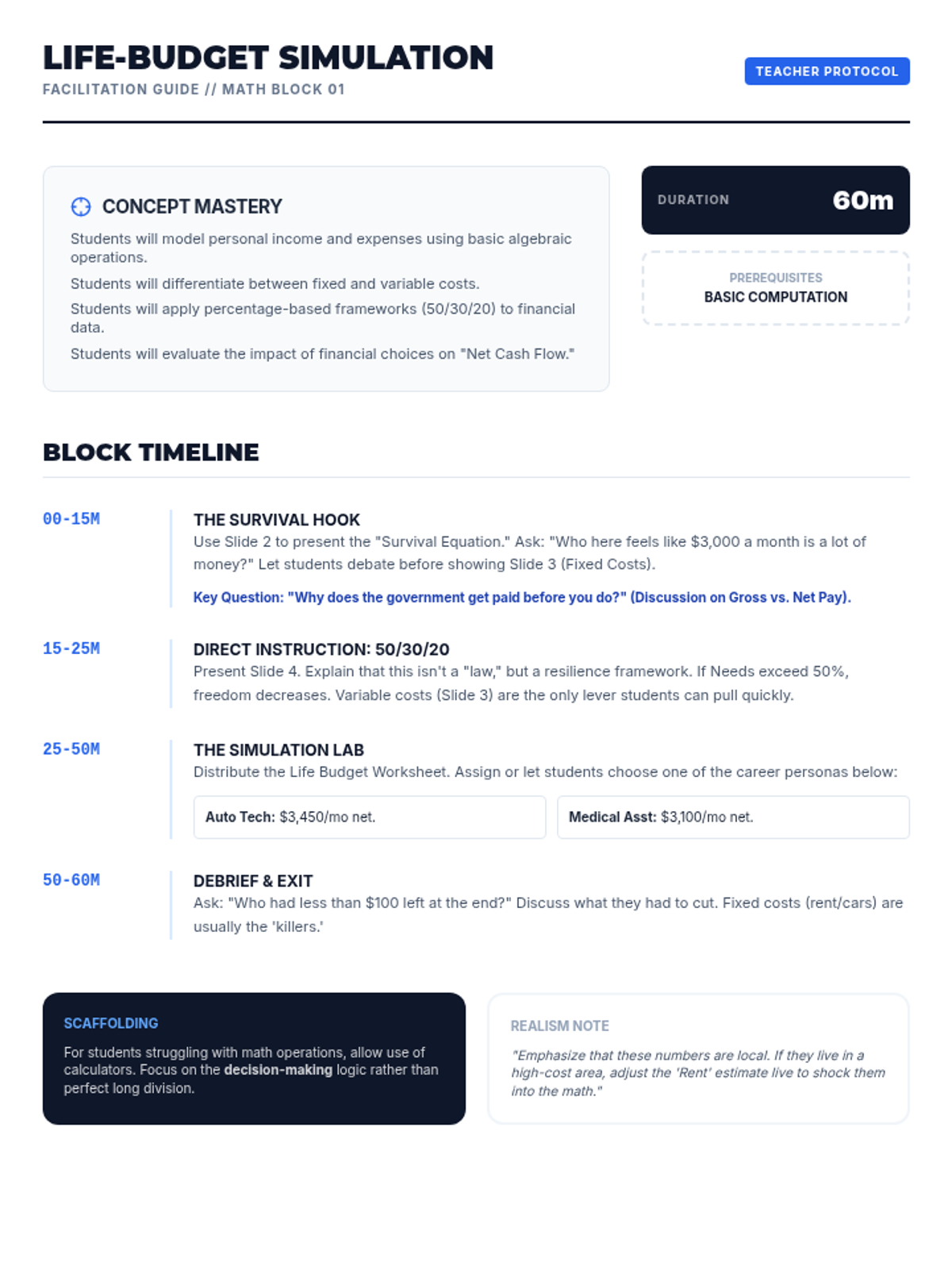
A facilitation guide for teachers to lead a 60-minute Applied Math workshop on budgeting, featuring persona choices, discussion prompts, and scaffolding tips. Contextualized for Cape Cod and Eastern Massachusetts. Updated with instructions for "Commitment" decision-making.
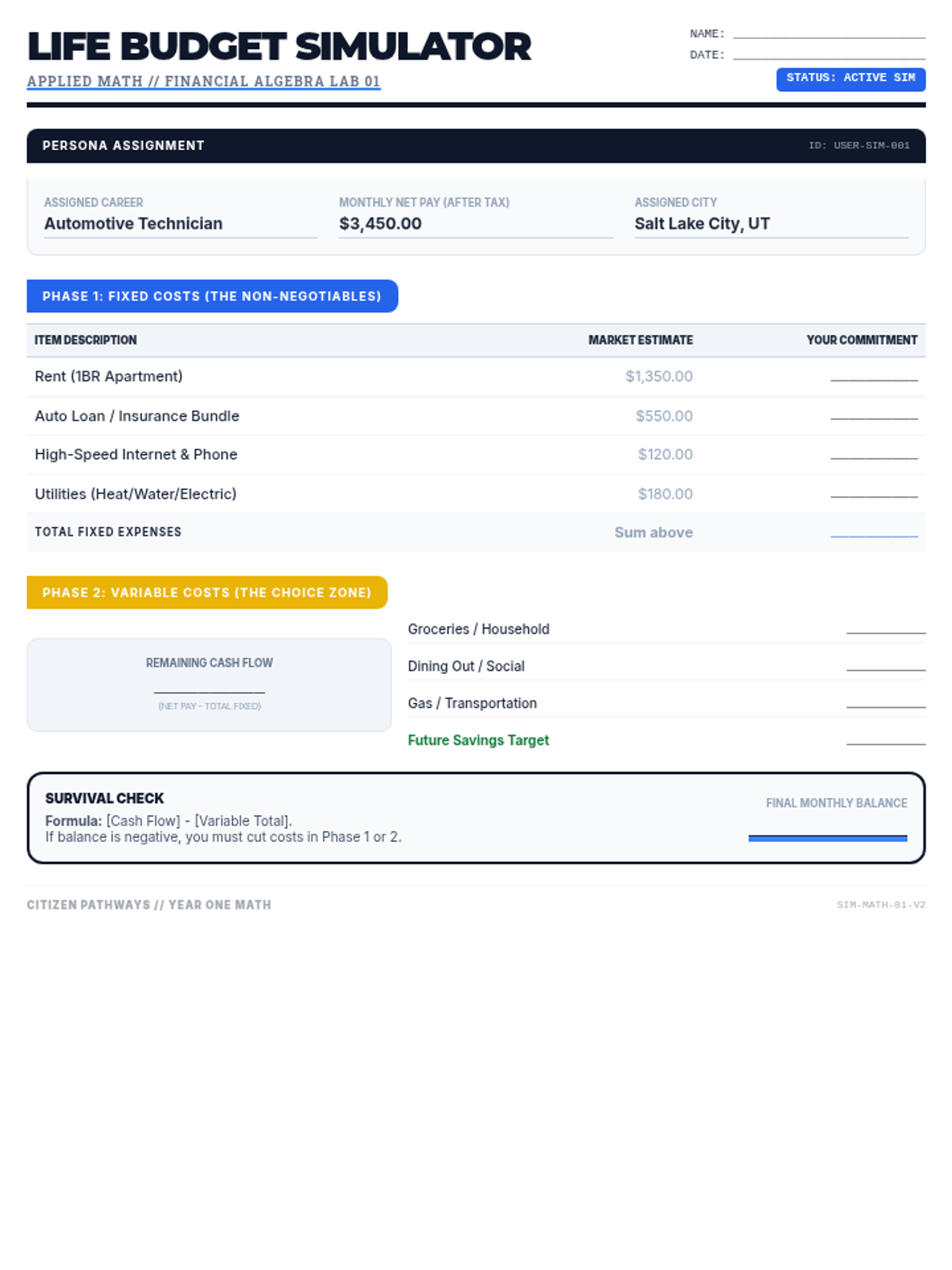
An applied math worksheet for a Life-Budget Simulation, featuring a "Decision Key" that explains how to fill out the commitment column by using hacks like roommates or cutting non-essential items. Redesigned to fit on one page. Higher contrast for input areas. Final polish for student completion.
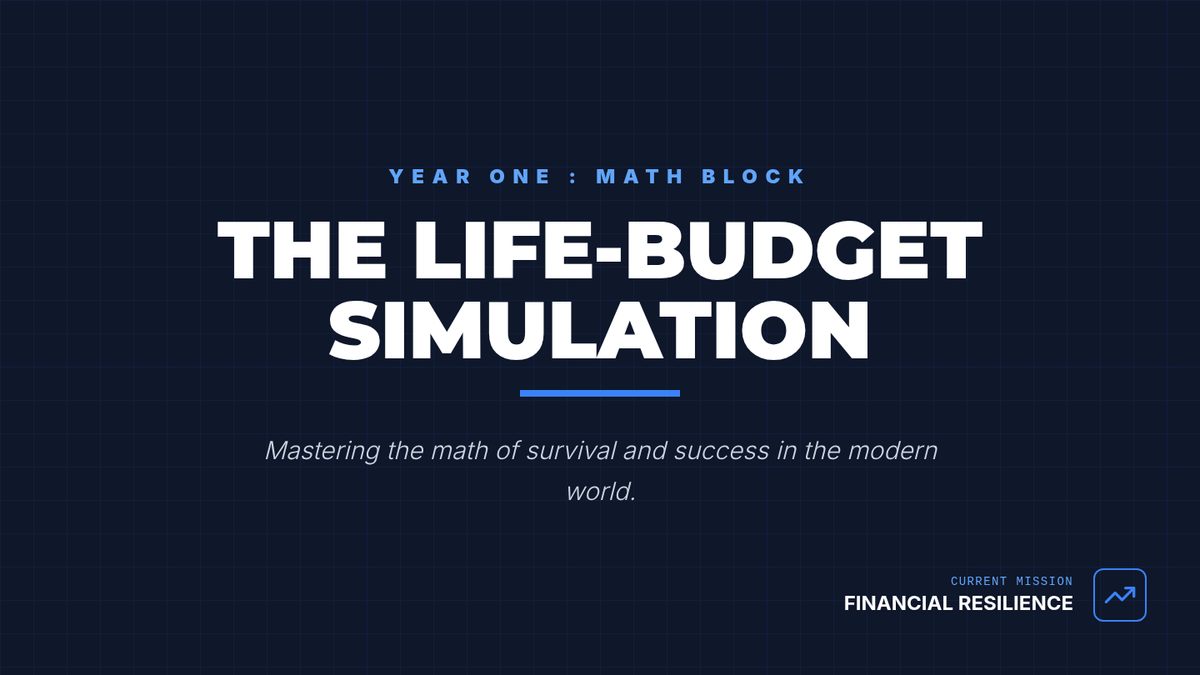
A high-impact math slide deck for a Life-Budget Simulation, introducing financial literacy concepts. Includes a specific slide on "Estimate vs. Commitment" to help students understand how to make strategic financial choices like roommates or shared plans. Contextualized for Cape Cod and Eastern MA. Final pass for layout.
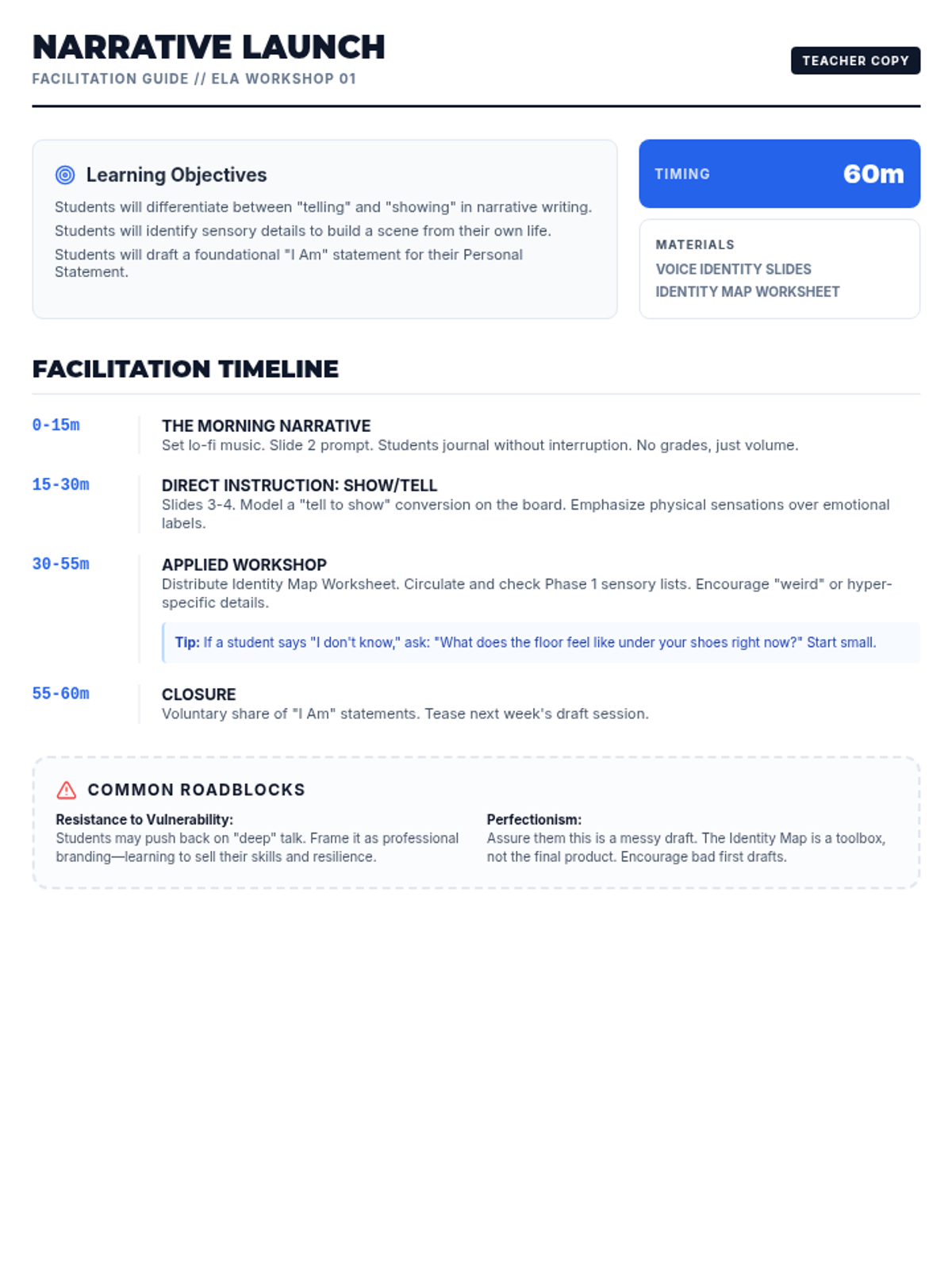
A facilitation guide for teachers to lead the 60-minute ELA Workshop 01, including pacing, discussion prompts, and differentiation strategies. Optimized for single-page use.
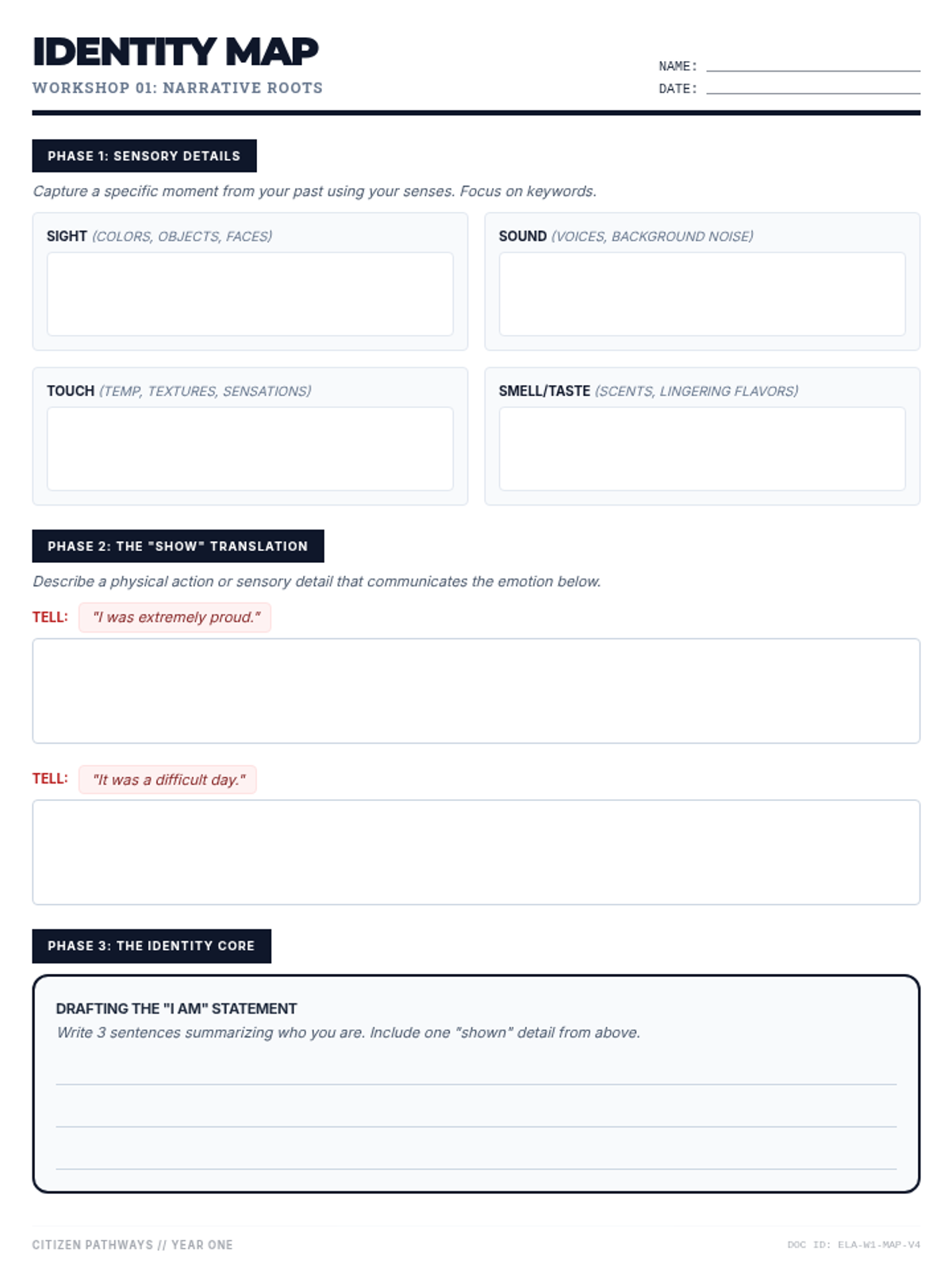
A student worksheet for the first ELA workshop, providing space for sensory brainstorming, narrative practice, and drafting an identity statement. Redesigned to fit on one page. Higher contrast and optimized for handwriting. Final polish for spacing.
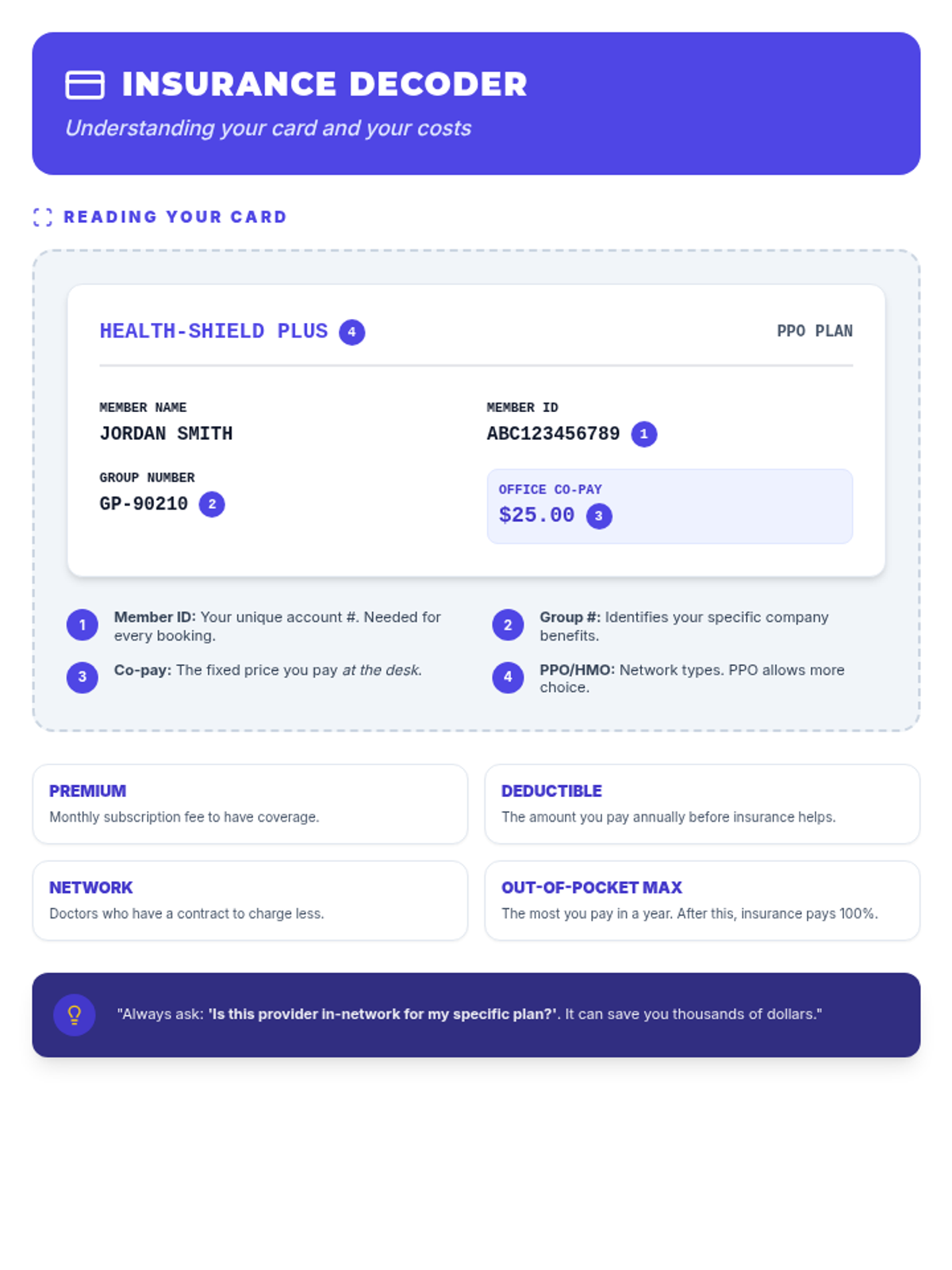
A student reference handout that demystifies health insurance terminology. It includes a visual breakdown of a health insurance card and clear, plain-language definitions for complex terms like premium, deductible, and out-of-pocket maximum. Optimized for single-page use. Mnemonic labels updated for consistency.
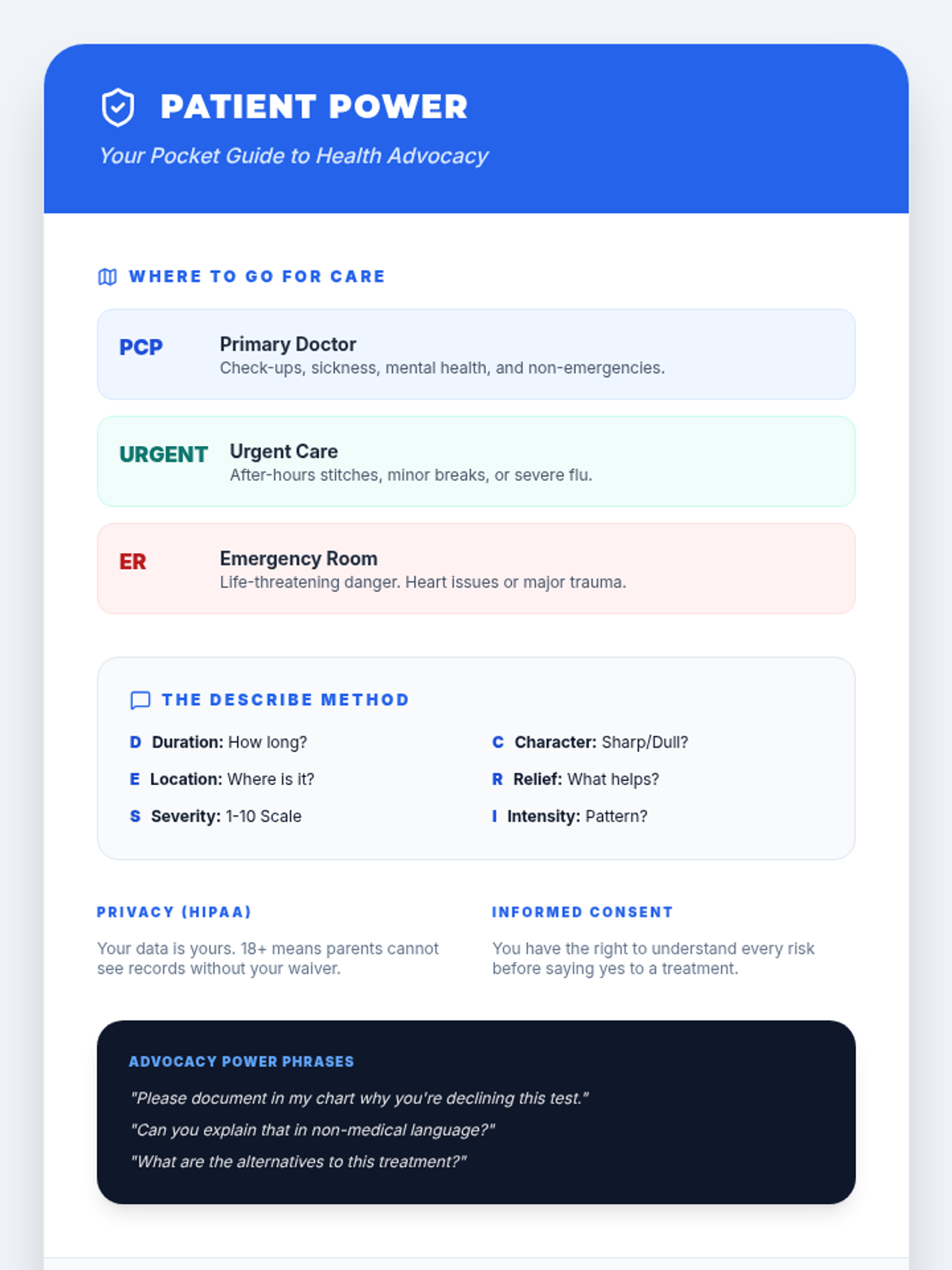
A student reference handout that summarizes the key concepts of the System Navigator session. It includes a care hierarchy guide, the DESCRIBE communication method, a list of patient rights, and powerful advocacy phrases to use in medical settings. Optimized for readability.
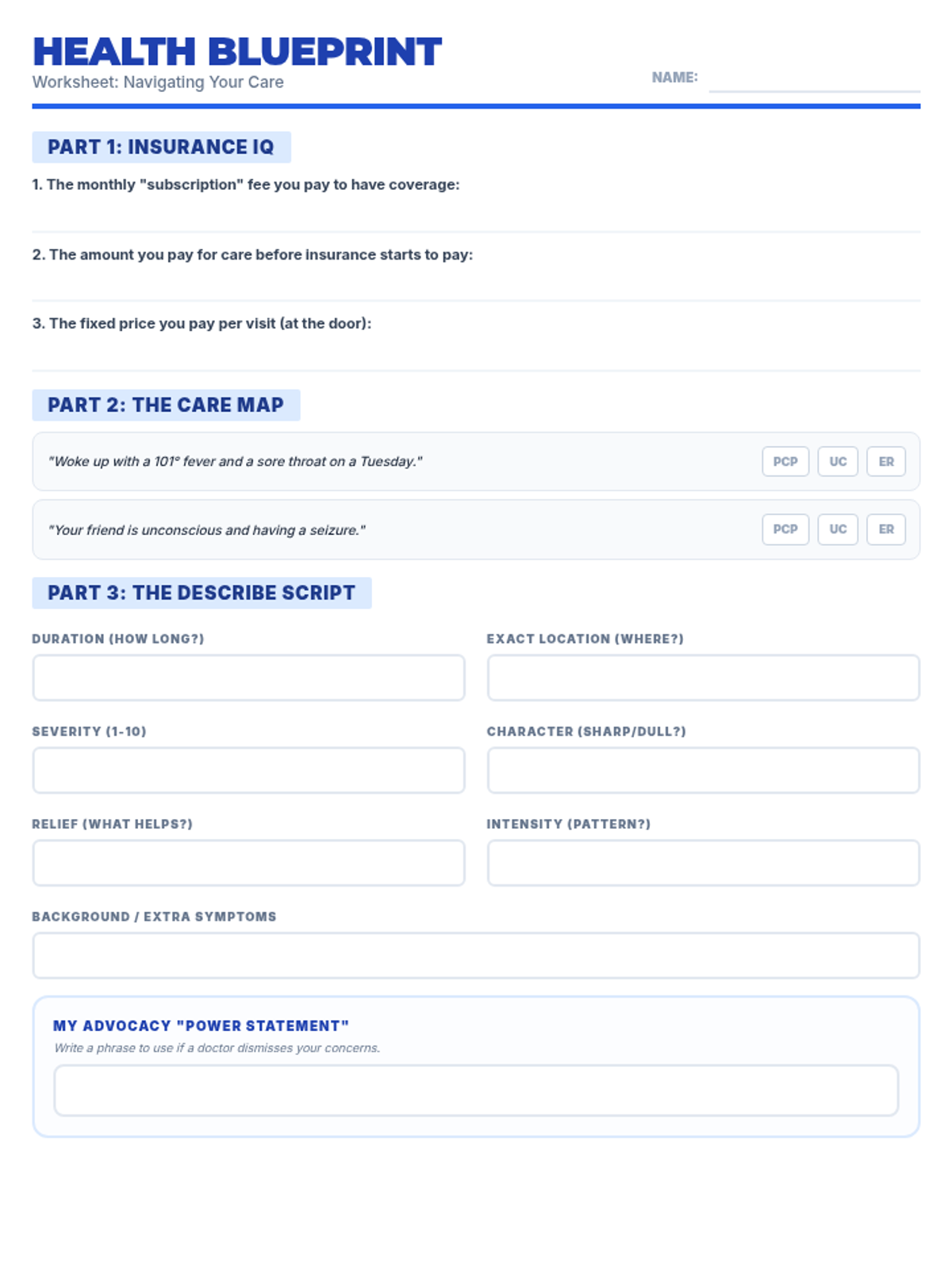
A structured student worksheet for the System Navigator session. It includes an insurance vocabulary section, care-level matching, and communication practice areas using the full DESCRIBE mnemonic. Fit for single-page use. Mnemonic labels updated for consistency. Overall polish improved.
A visual presentation for a 90-minute workshop on navigating health systems. It includes an expanded section on insurance terminology (premiums, deductibles, networks) and a visual guide to reading insurance ID cards. Contrast updated for better readability. Mnemonic updated to full DESCRIBE.
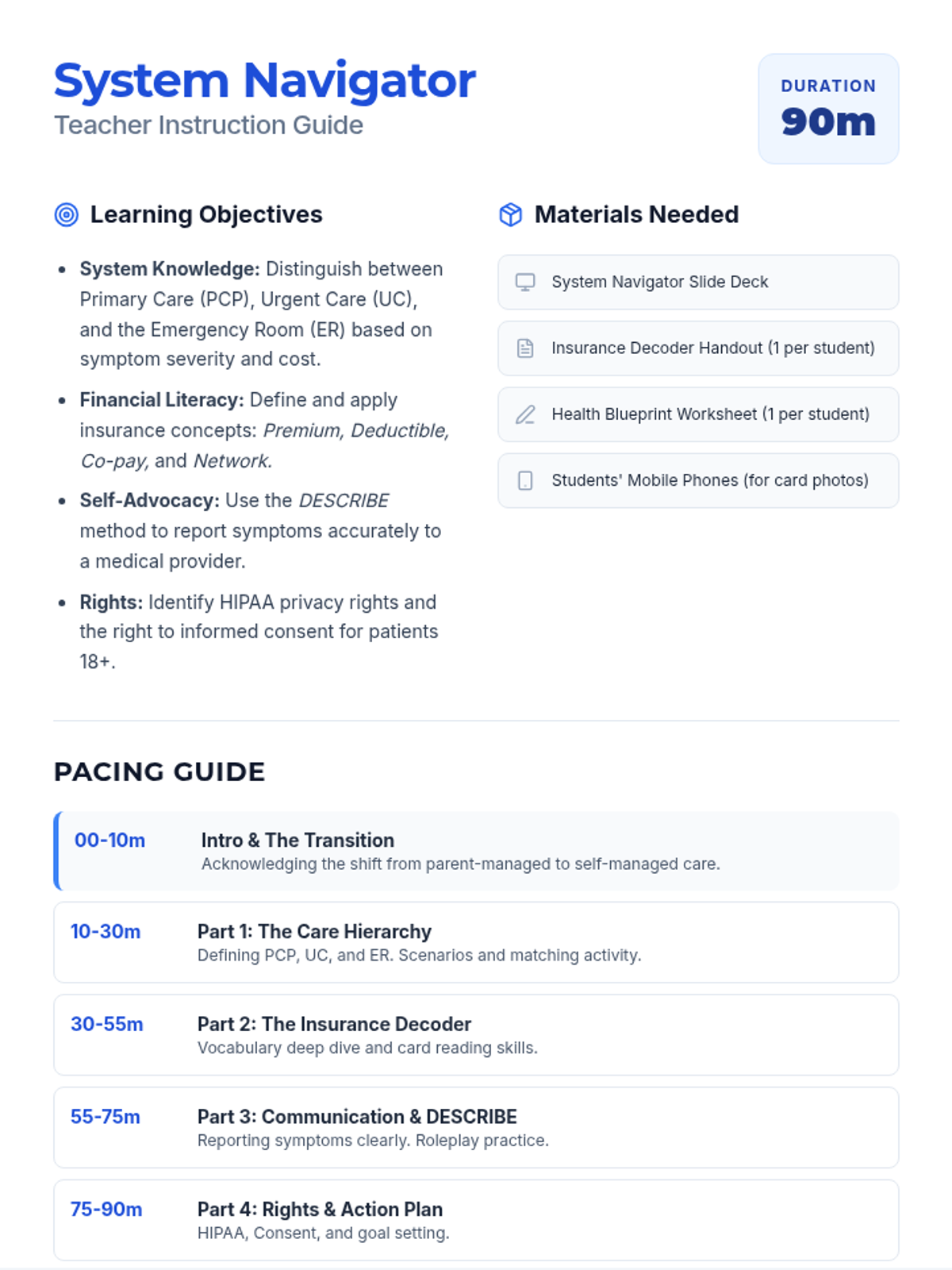
A comprehensive 4-page instructor guide for facilitators leading a 90-minute session on health systems and self-advocacy. It now includes expanded instruction on health insurance terminology, including premiums, deductibles, and network navigation.
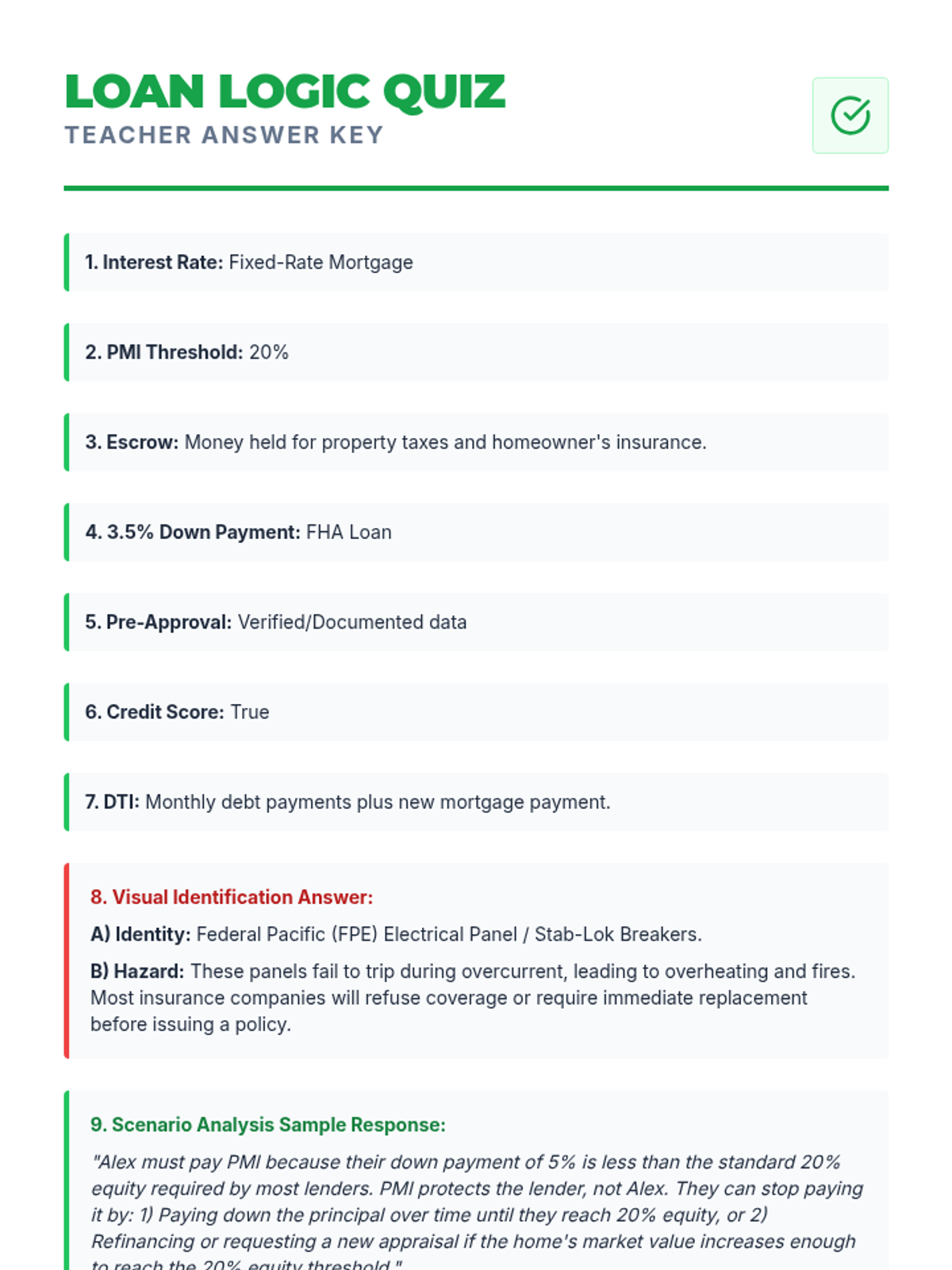
A teacher-facing answer key for the Loan Logic Quiz, providing correct answers, brief explanations/rationales for each question, and a sample response for the scenario analysis.
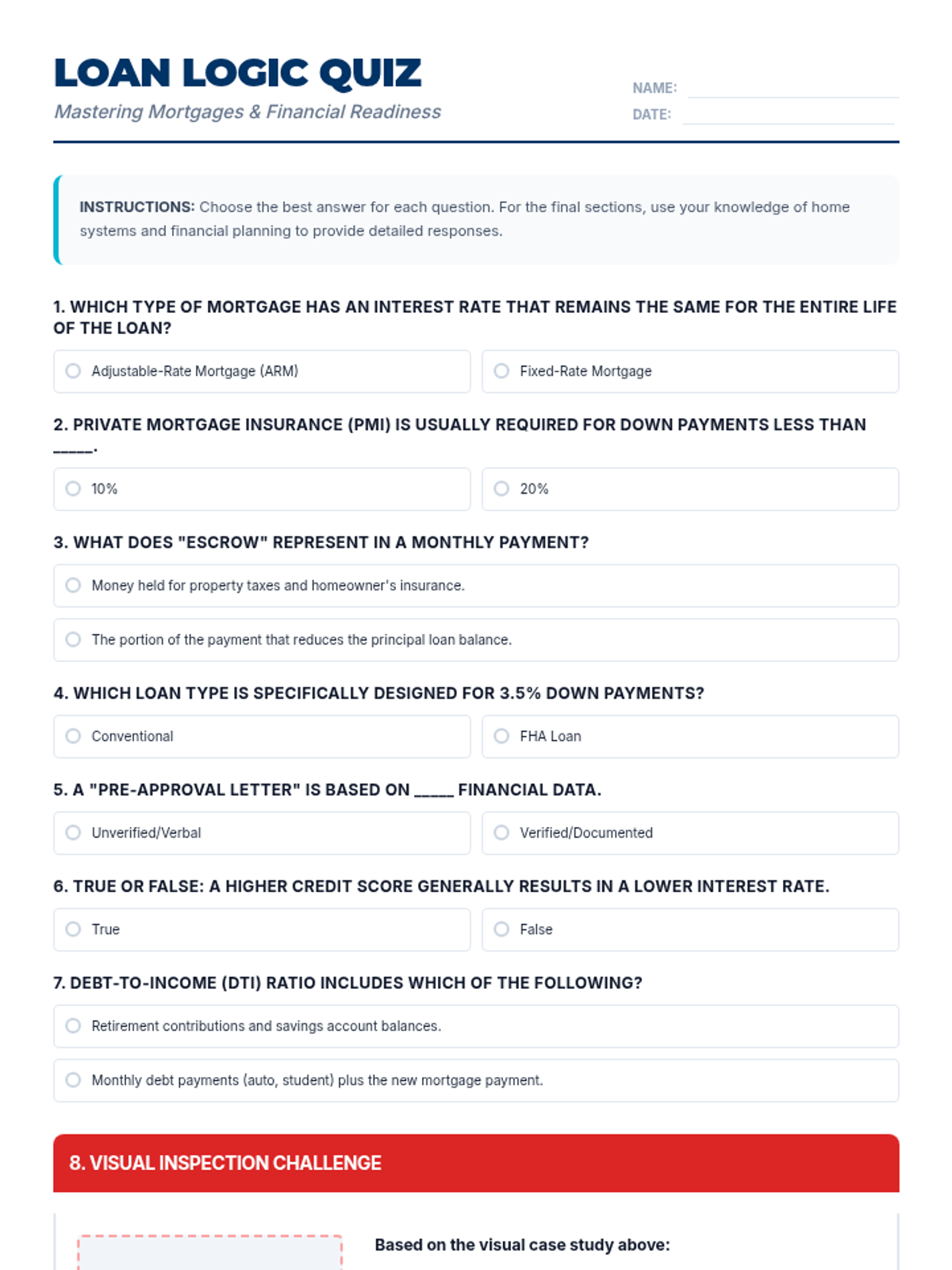
A comprehensive assessment tool covering mortgage types, financial terminology (PMI, Escrow, DTI), and loan approval processes. It includes multiple-choice questions, true/false items, and a short scenario-based analysis. Revised for better spacing and page flow.
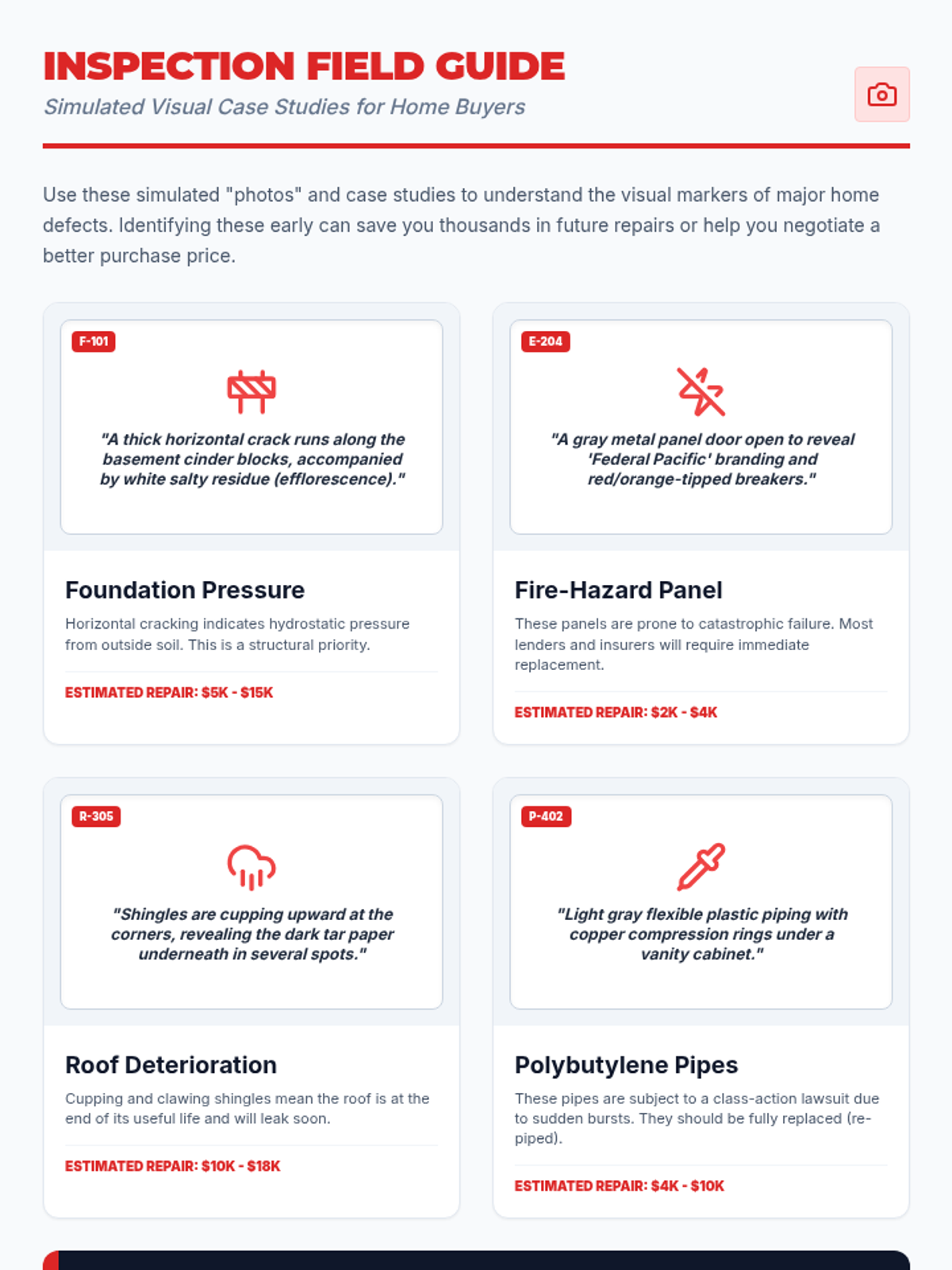
A visual field guide with detailed descriptions of common home inspection issues. It acts as a "photo gallery" for students to identify major structural, electrical, and plumbing red flags. Revised for better page flow and visual clarity.
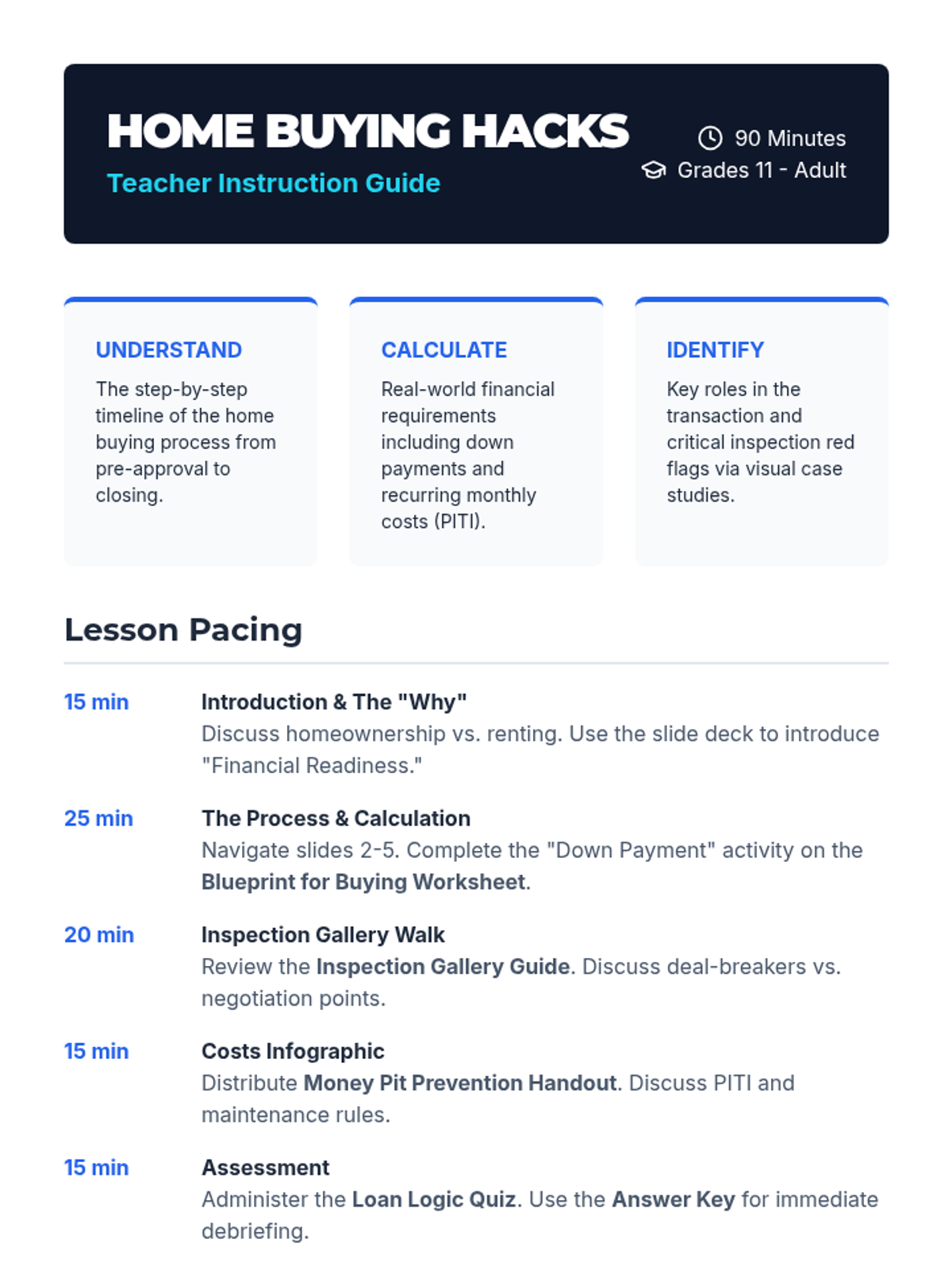
A comprehensive lesson plan for instructors, including learning objectives, a 90-minute pacing guide, discussion prompts, and key vocabulary definitions. It provides clear guidance on how to integrate the other lesson materials.
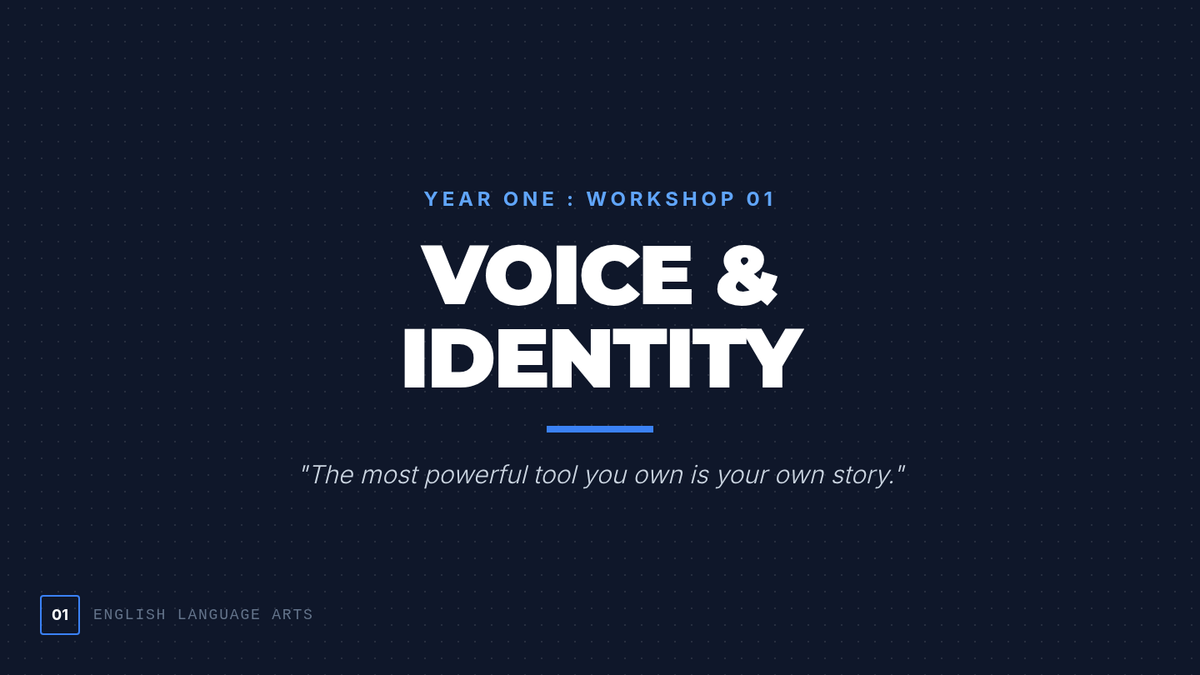
A visually engaging slide deck for the first ELA workshop, focusing on narrative voice, identity, and the "Show, Don't Tell" technique. Simplified for cleaner rendering and larger text. Final pass for layout.
A logistical guide for teachers detailing the 6-hour rotating schedule and instructional strategies. Updated with flexible block-based timing and renamed lunch period. Updated with regional context.
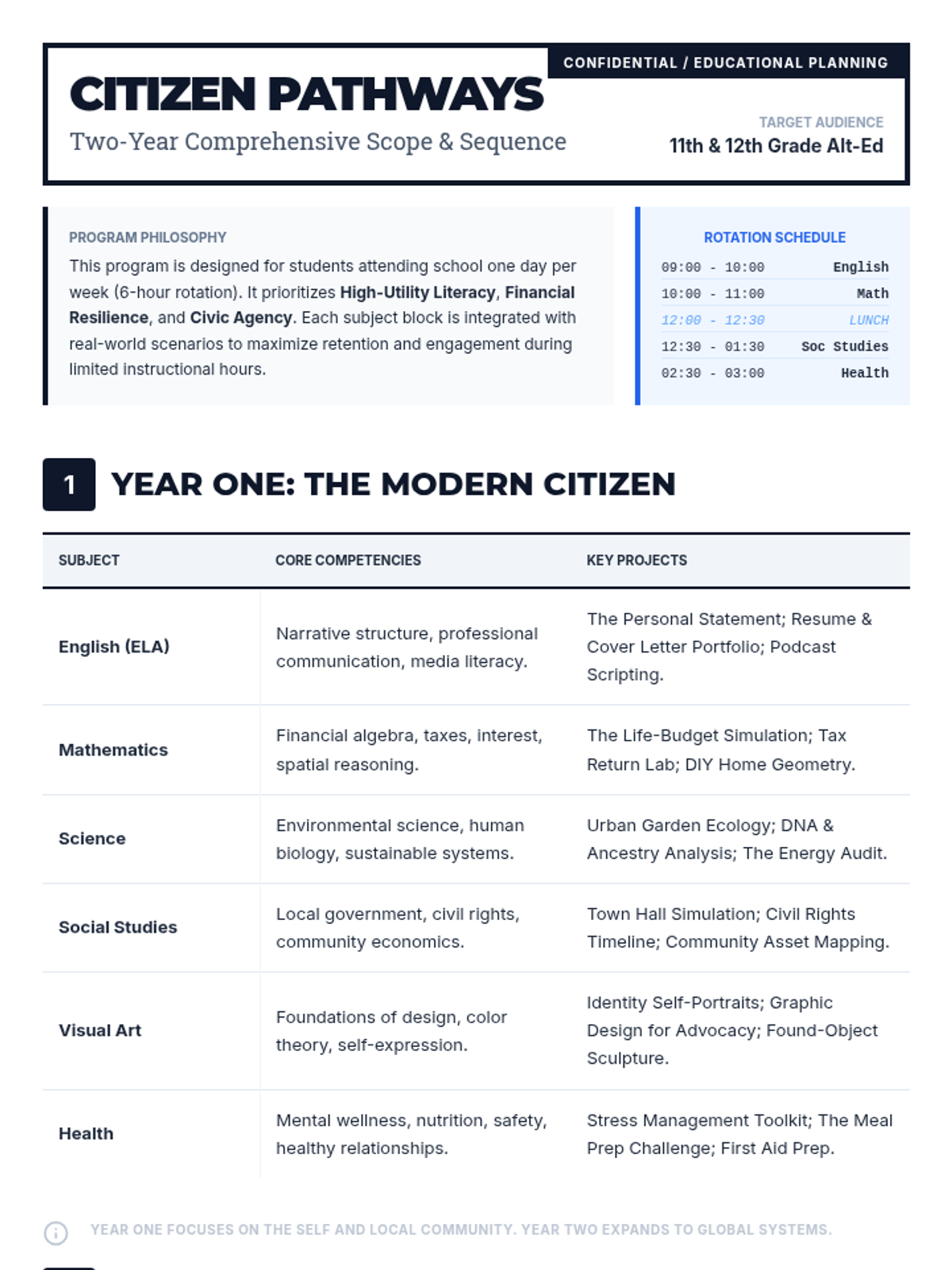
A blueprint-themed two-year scope and sequence for an alternative education program, detailing subject competencies and key projects for 11th and 12th graders. Updated with flexible timing and renamed lunch period. Now localized for Cape Cod and Eastern MA.
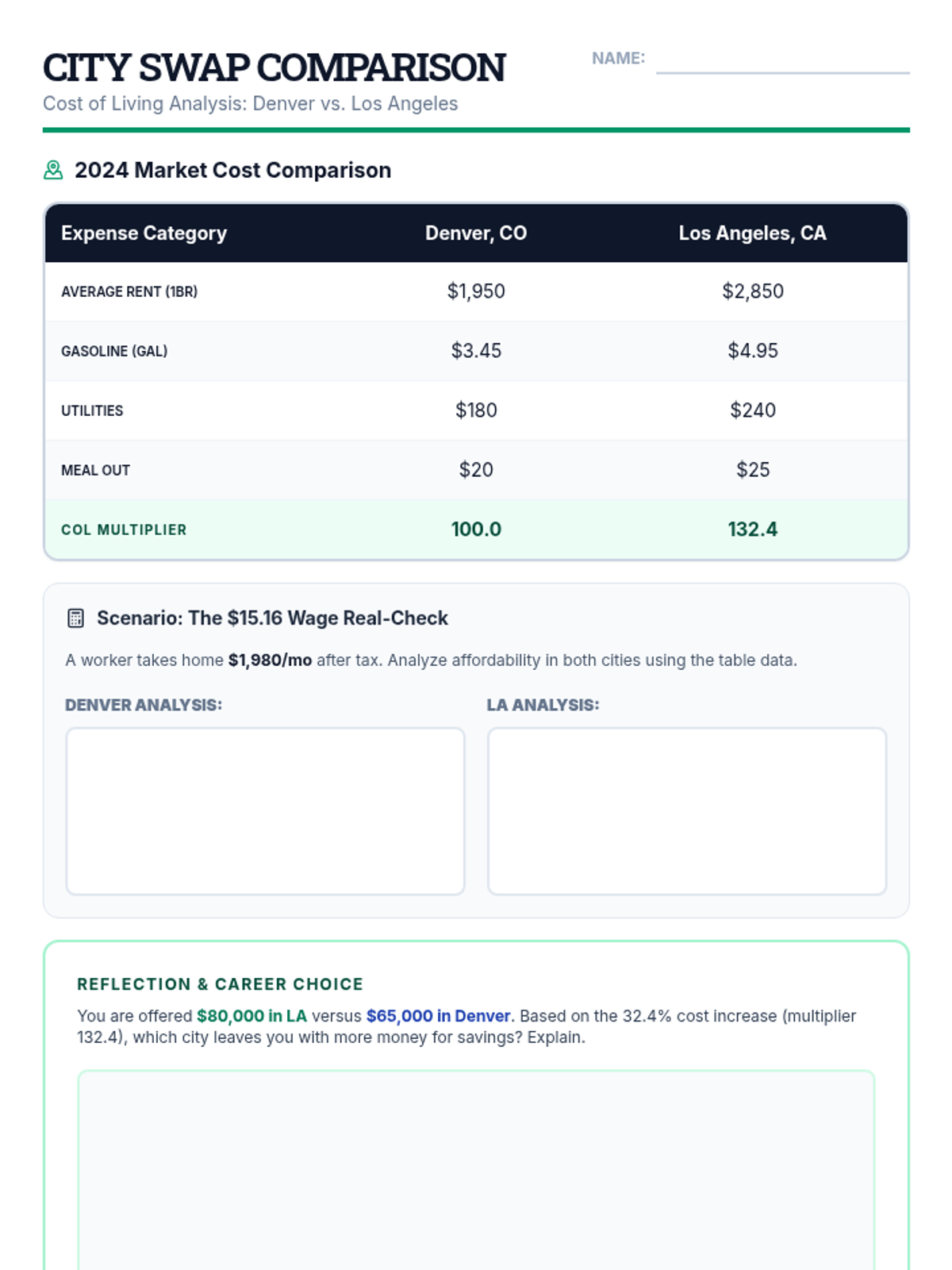
A comparative worksheet analyzing the cost of living differences between Denver and Los Angeles, using real-world data for rent, gas, and utilities to solve financial scenarios.
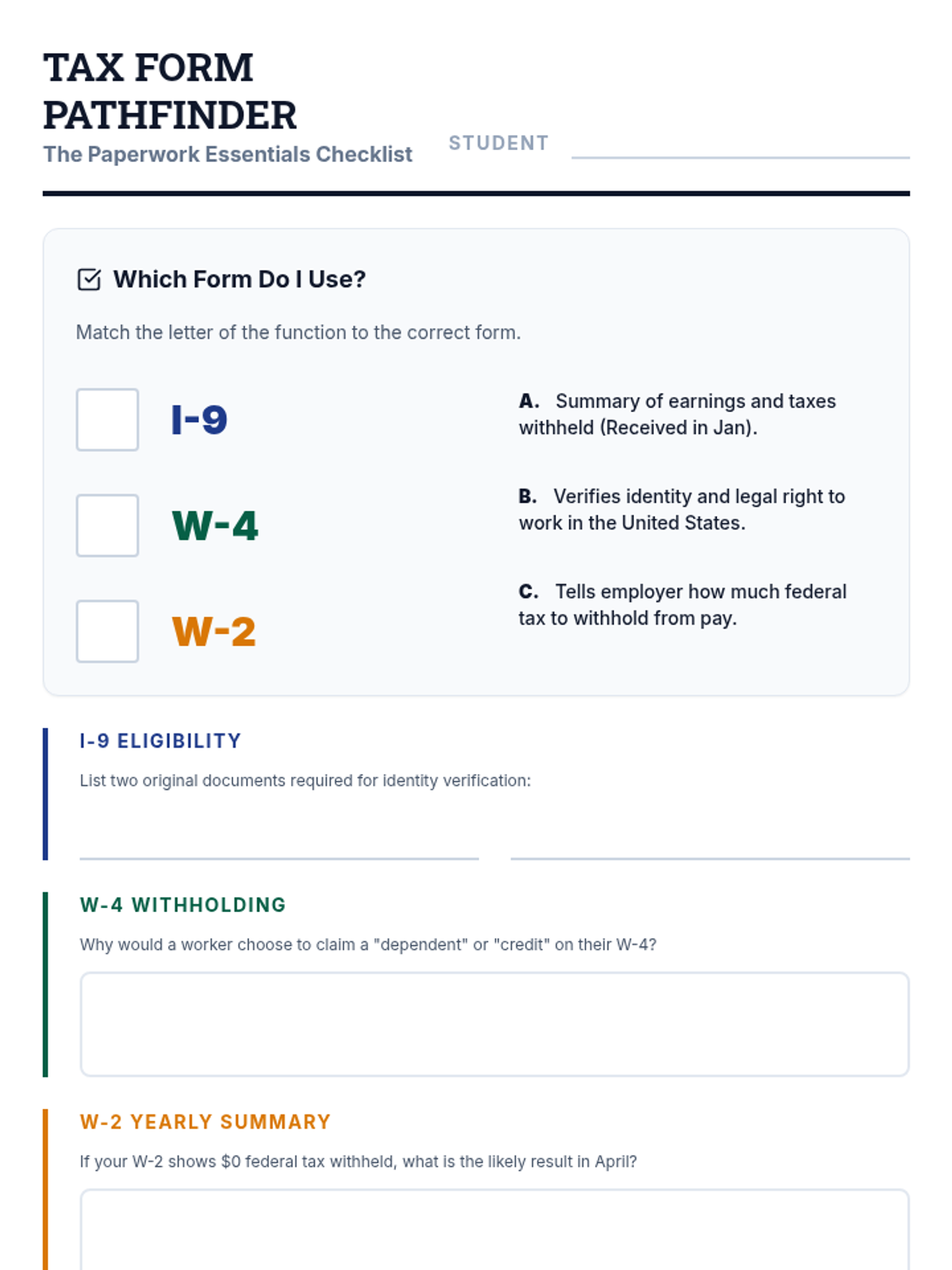
An interactive guide and worksheet covering the purpose and practical application of Form I-9, W-4, and W-2 for new employees.
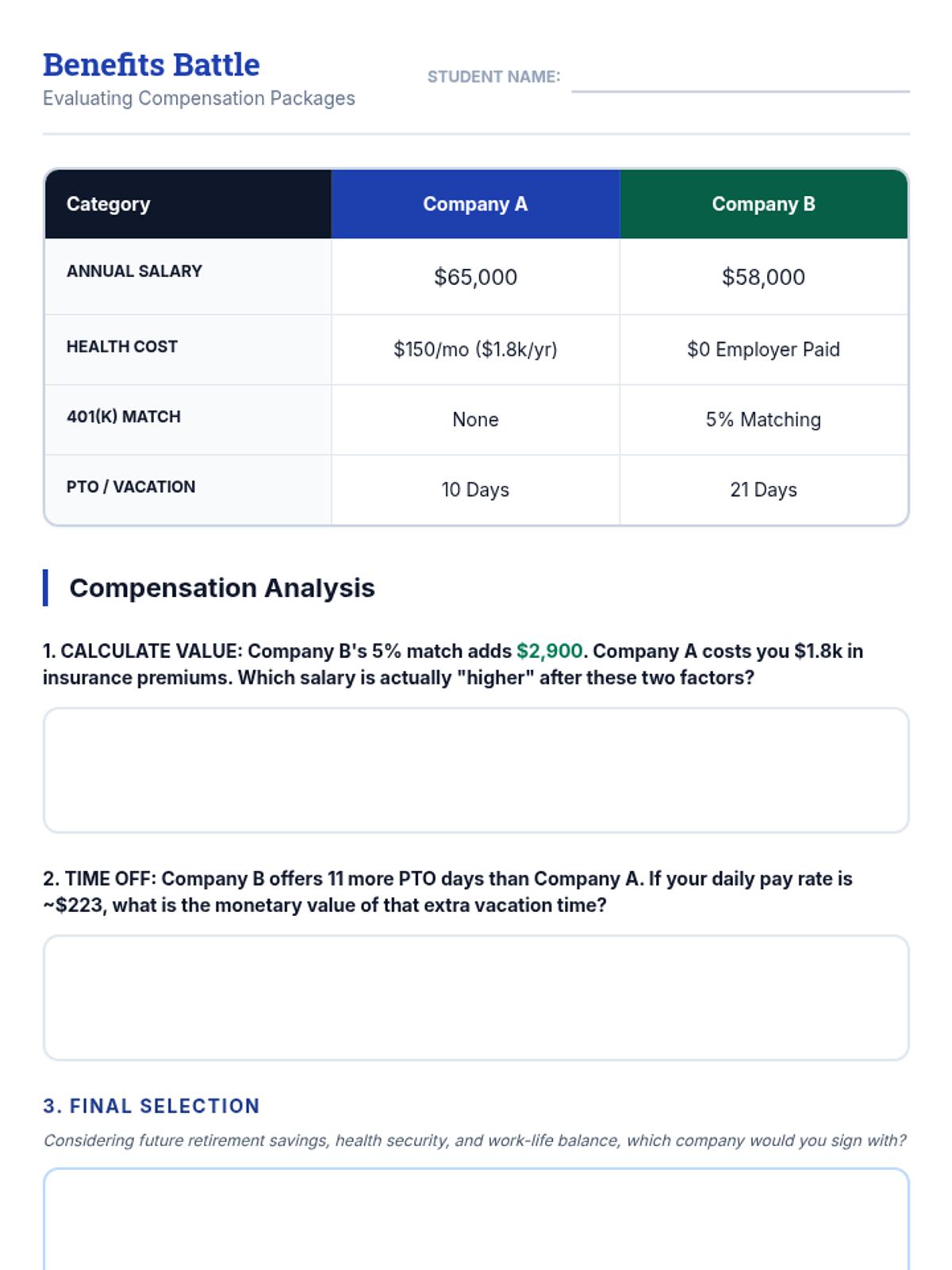
A comparison activity where students evaluate two job offers, weighing base salary against benefits like health insurance, retirement matching, and paid time off.
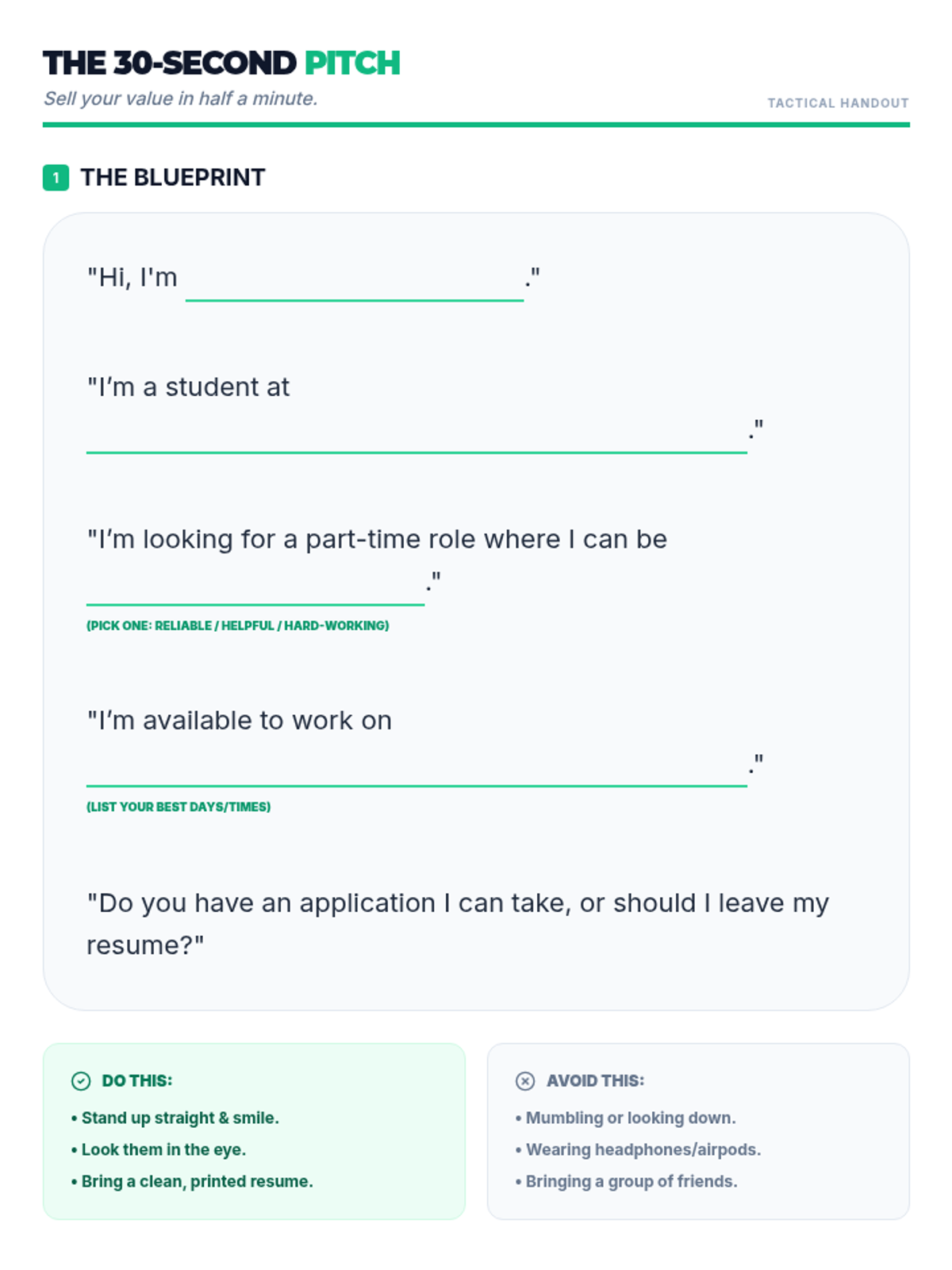
A tactical worksheet for students to script and practice their introductory "pitch" for potential employers, focusing on brevity, value, and professional presentation.
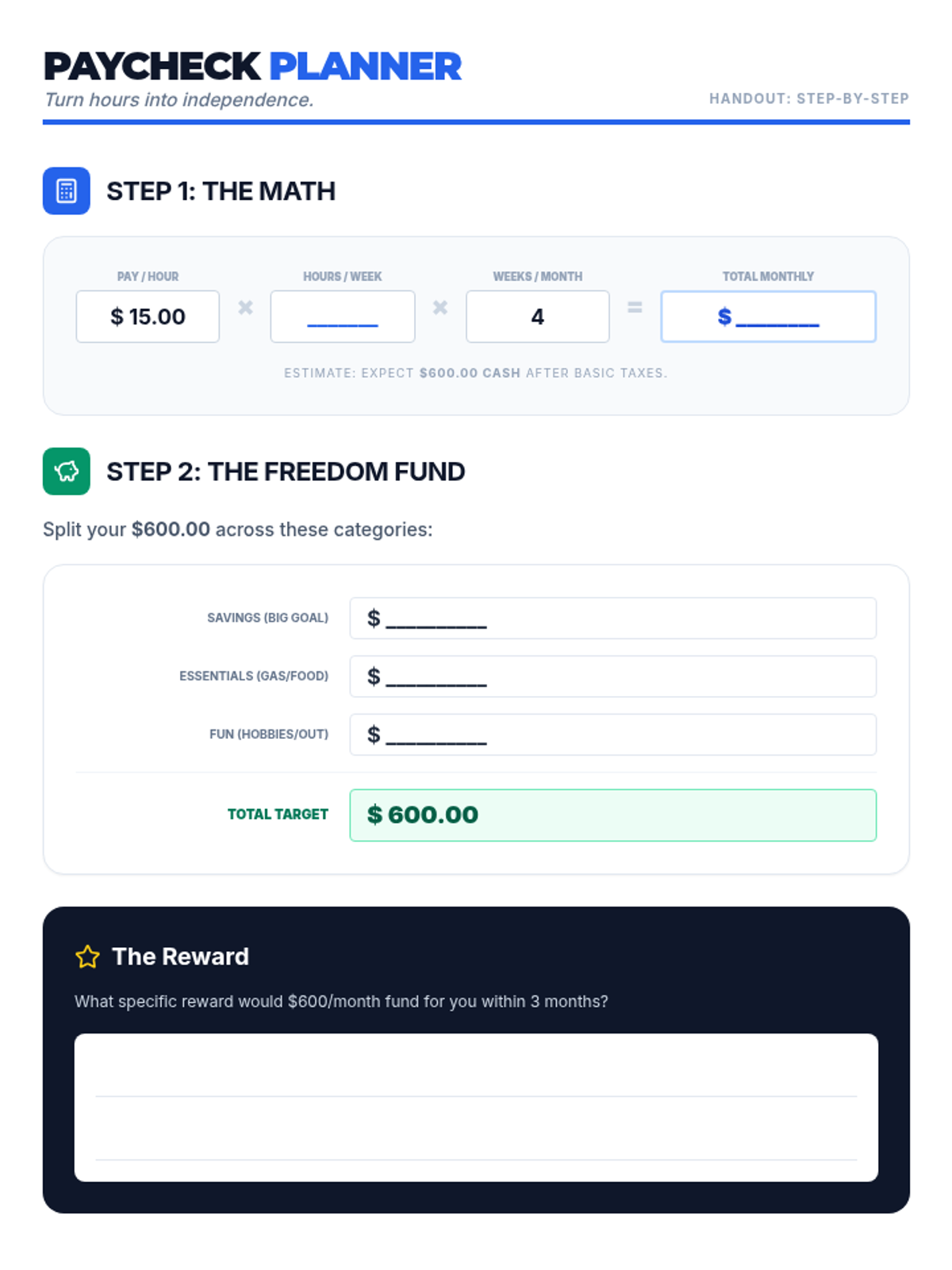
A practical worksheet to help students calculate potential monthly earnings from a part-time job and plan their "freedom fund" to see the tangible benefits of working.
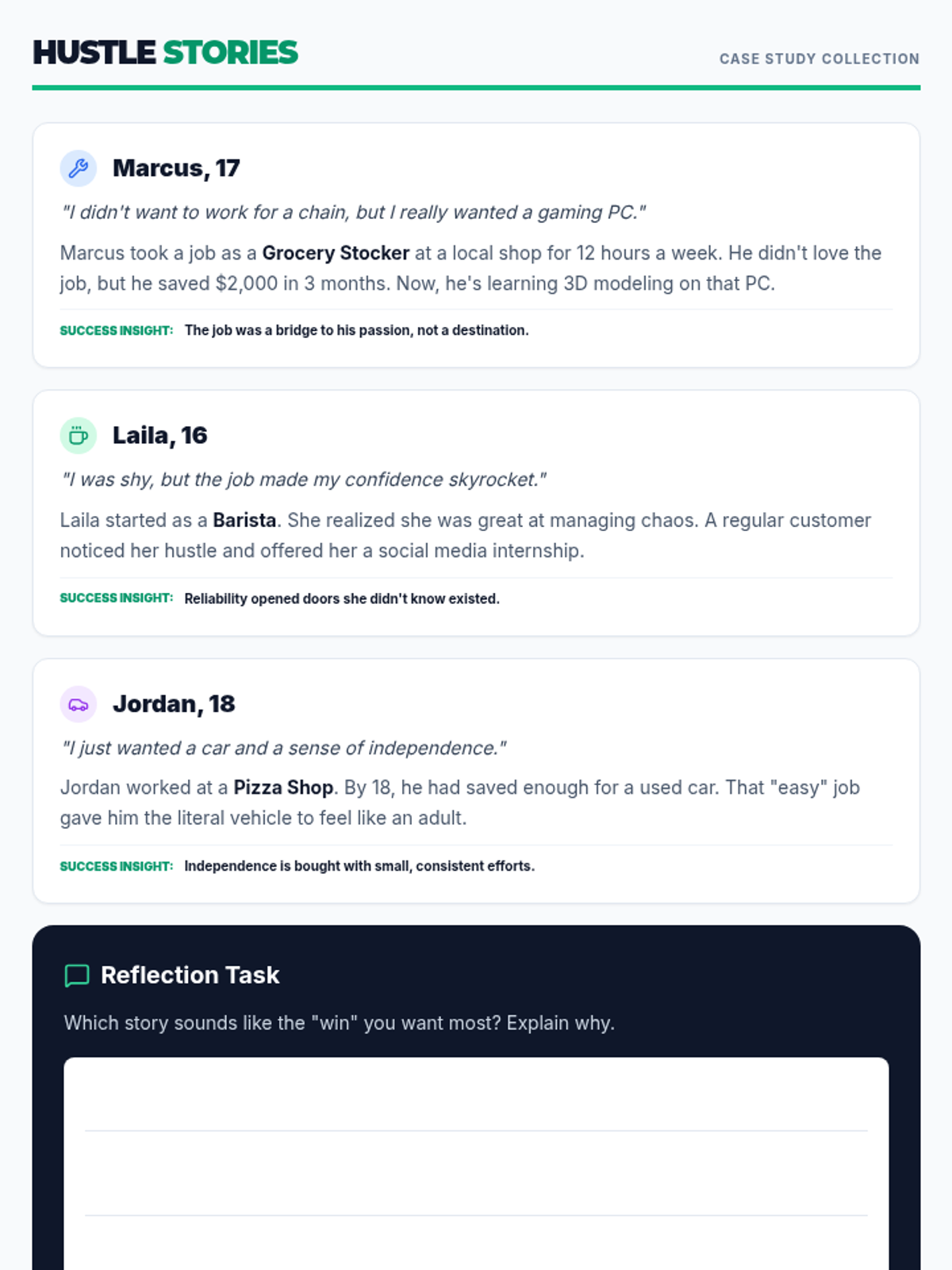
A set of short, engaging case studies featuring high schoolers who used entry-level jobs as stepping stones to personal success and independence. Provides social proof and real-world context for the workshop.
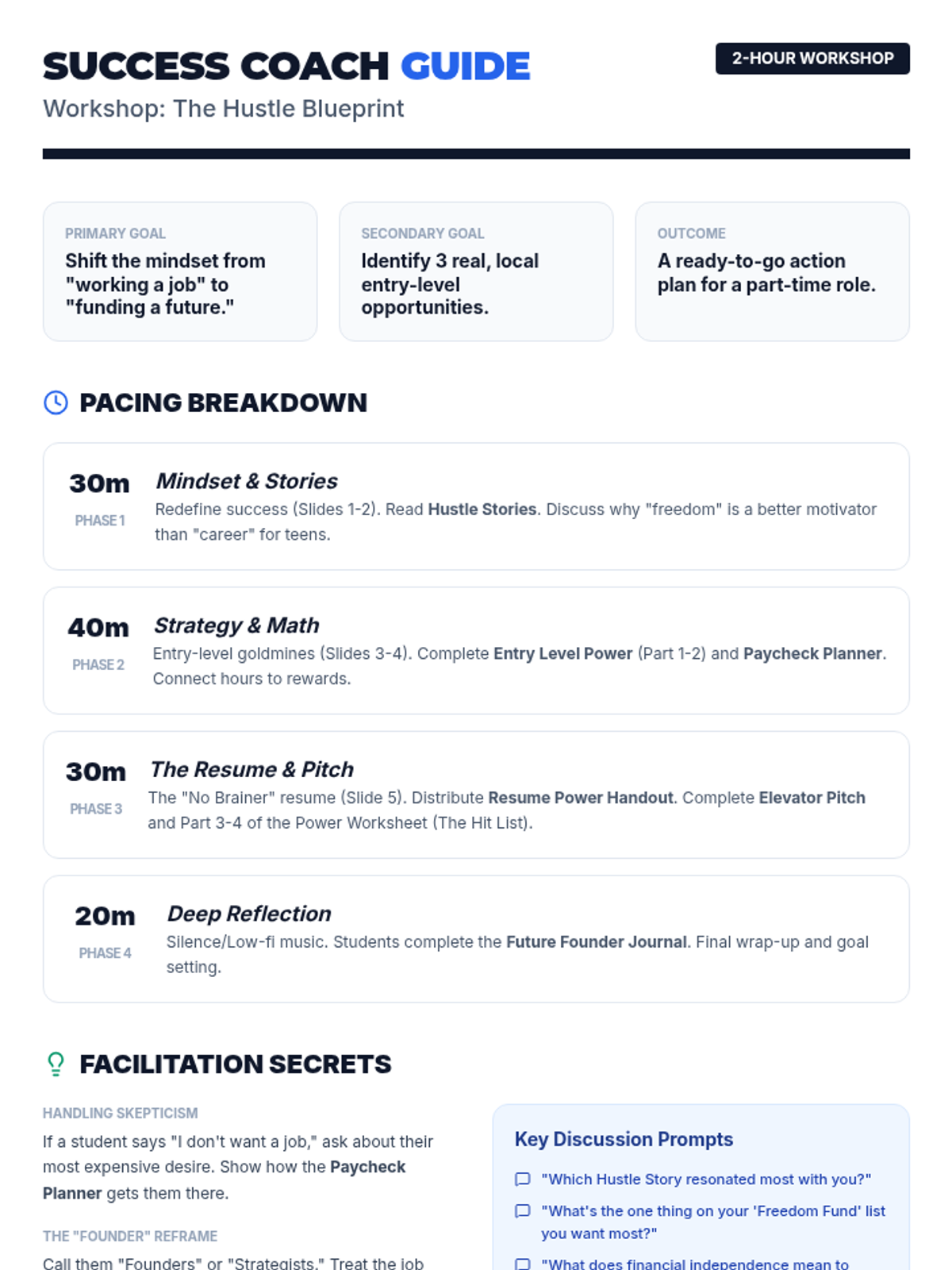
A facilitator's guide for the Hustle Blueprint workshop, including an updated 2-hour pacing guide that incorporates new case studies and tactical worksheets.
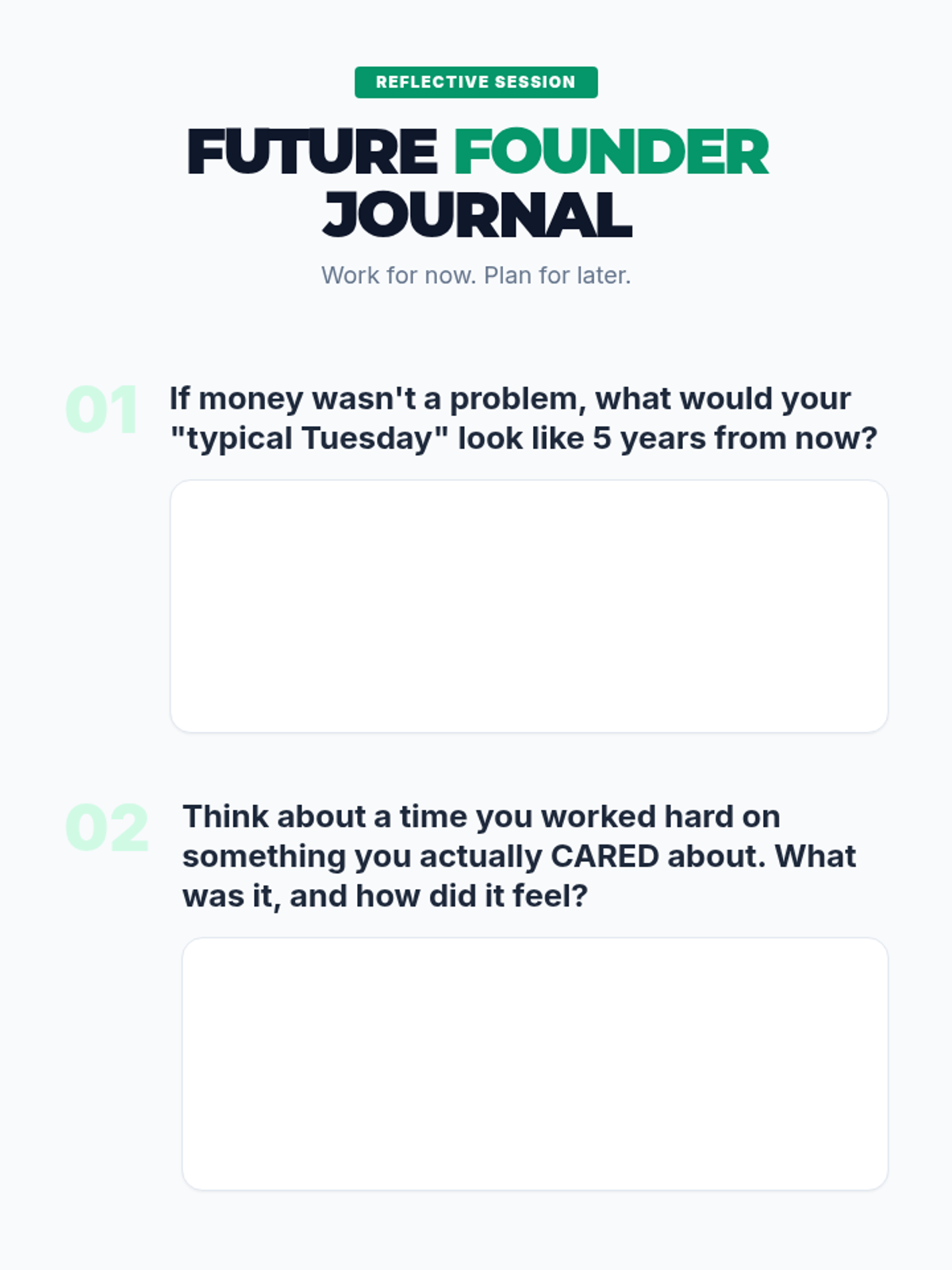
A set of deep reflection prompts for students to connect their personal goals and definitions of success to the practical step of getting a part-time job.
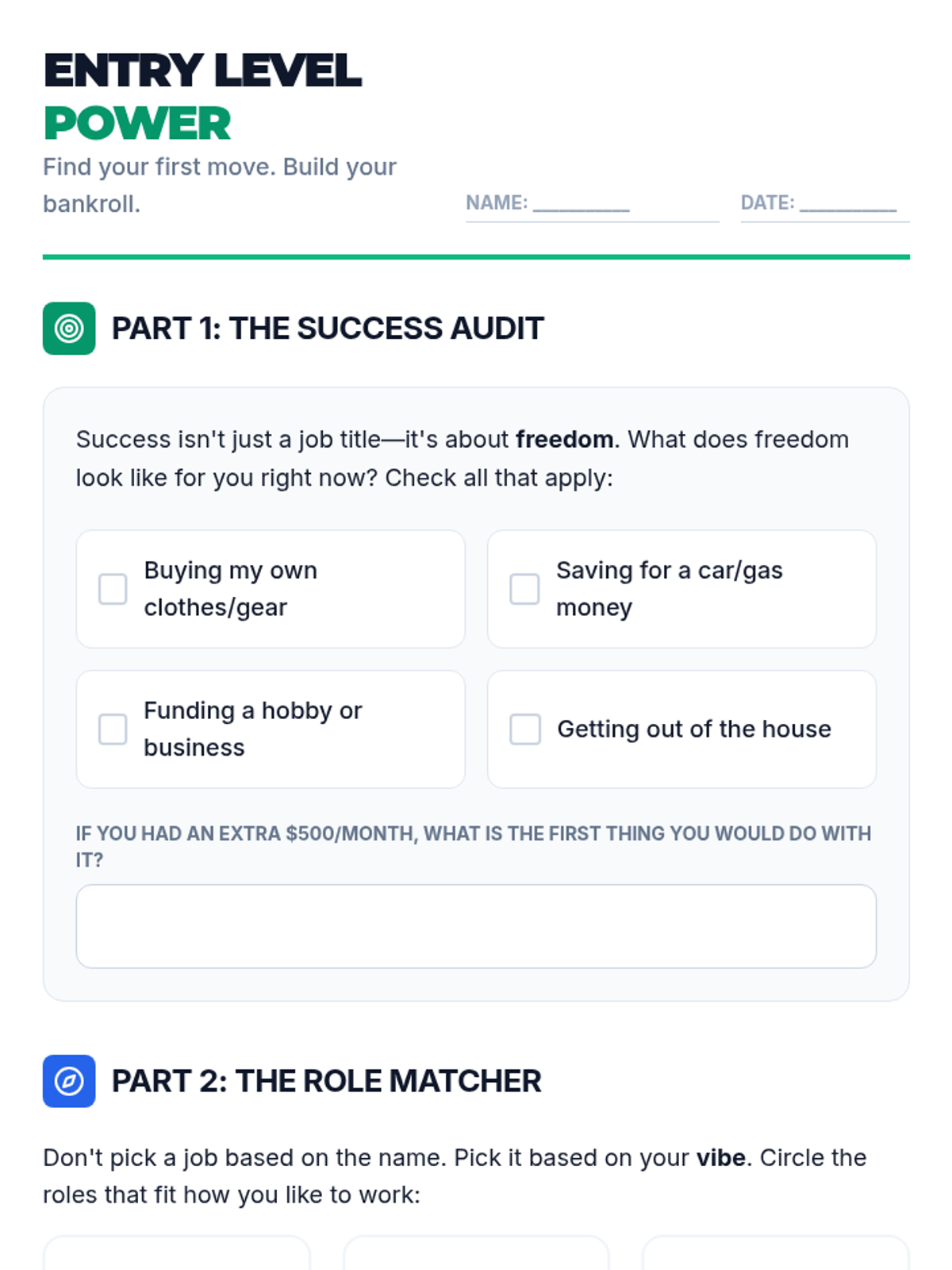
An interactive worksheet for high schoolers to identify their motivations for working, match their personality to entry-level roles, and map out local job opportunities.
A high-impact slide deck for high school students focused on redefining success and identifying entry-level job opportunities. Includes visual guides for resume building and strategic thinking about part-time work.
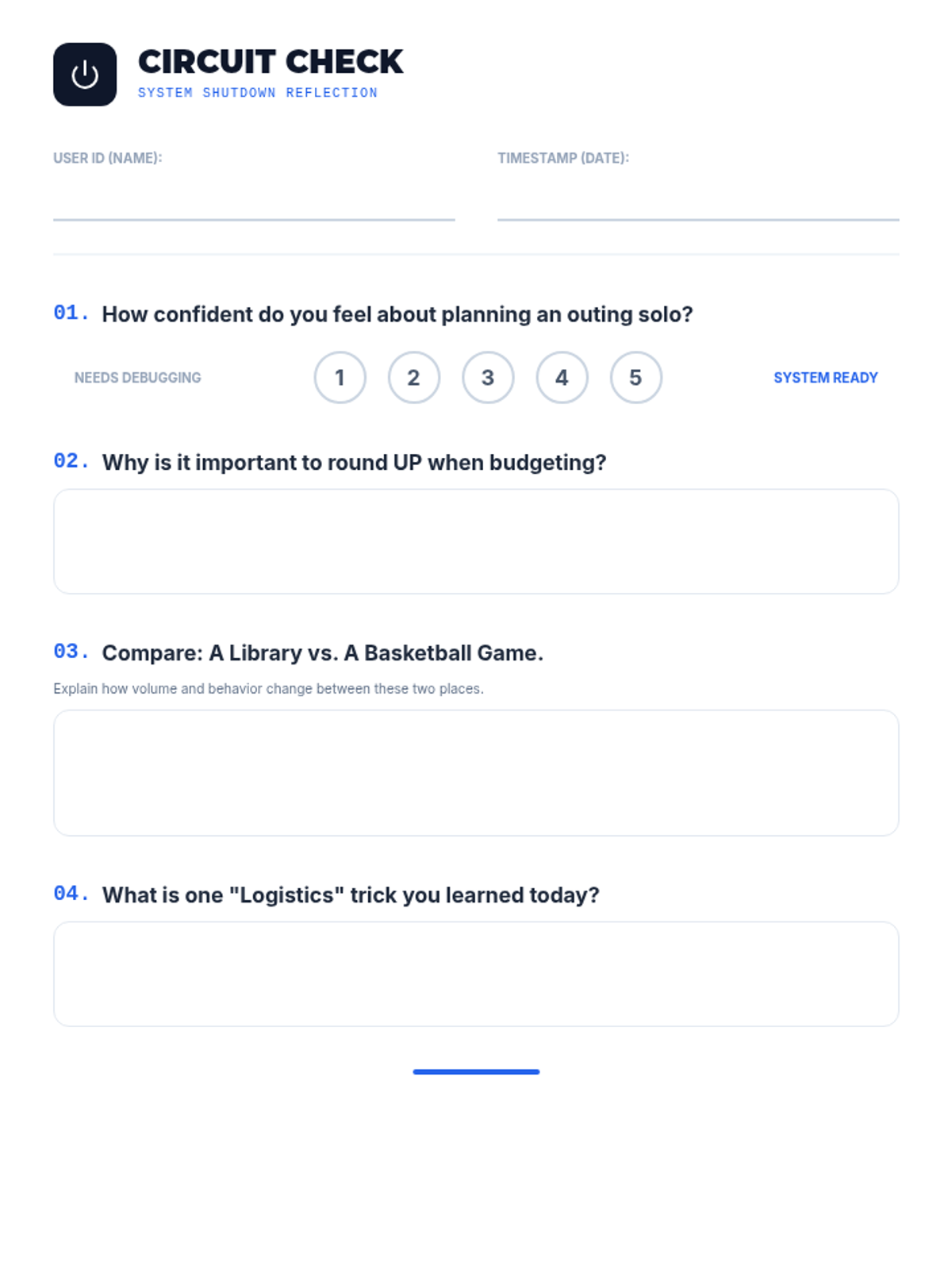
A concise exit ticket that prompts students to reflect on their learning, assess their confidence in planning outings, and articulate key concepts like budgeting safety buffers and situational social norms.
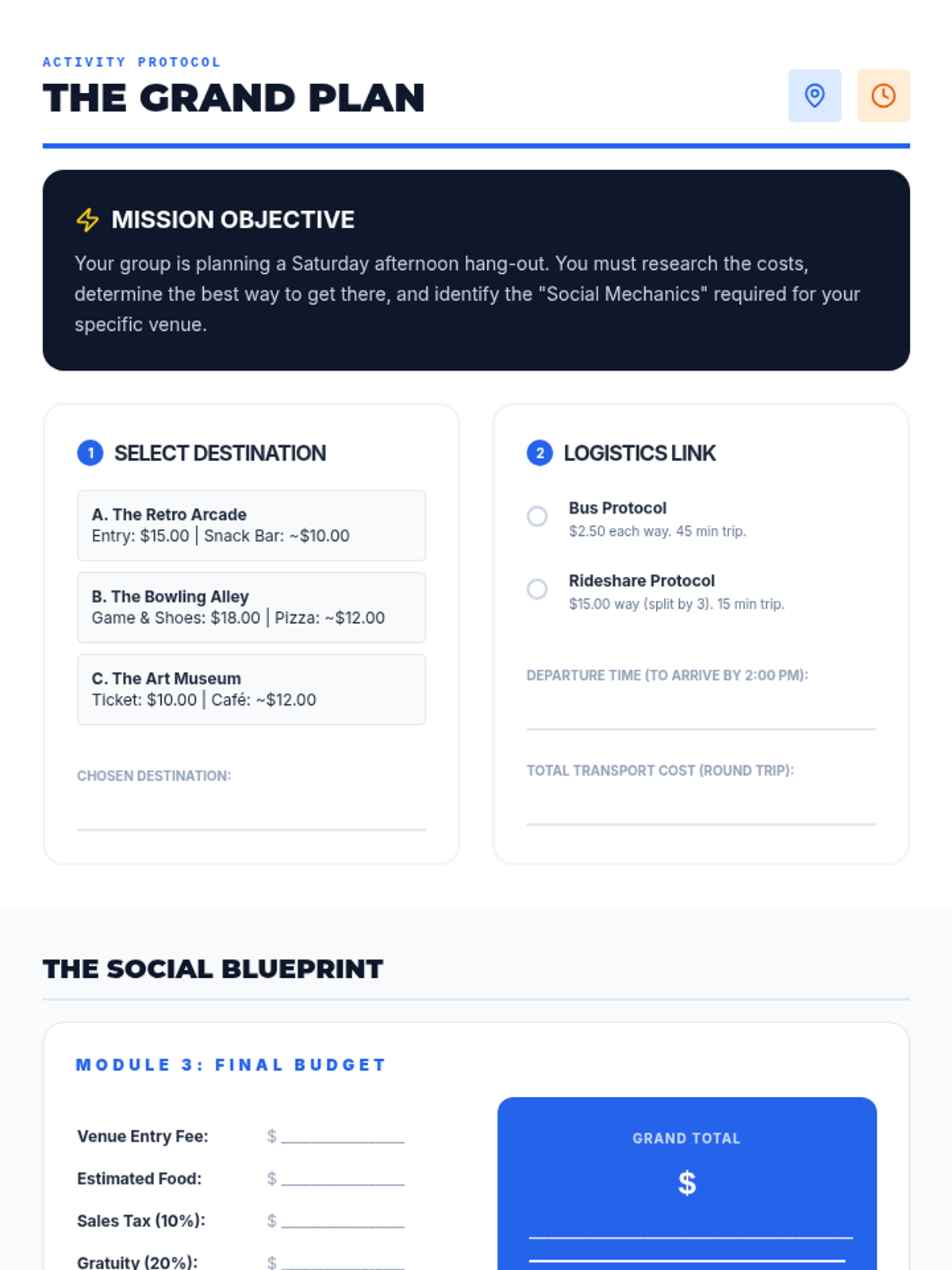
A collaborative activity where students work in groups to plan a complete social outing, from selecting a destination and calculating transit times to identifying venue-specific social norms.
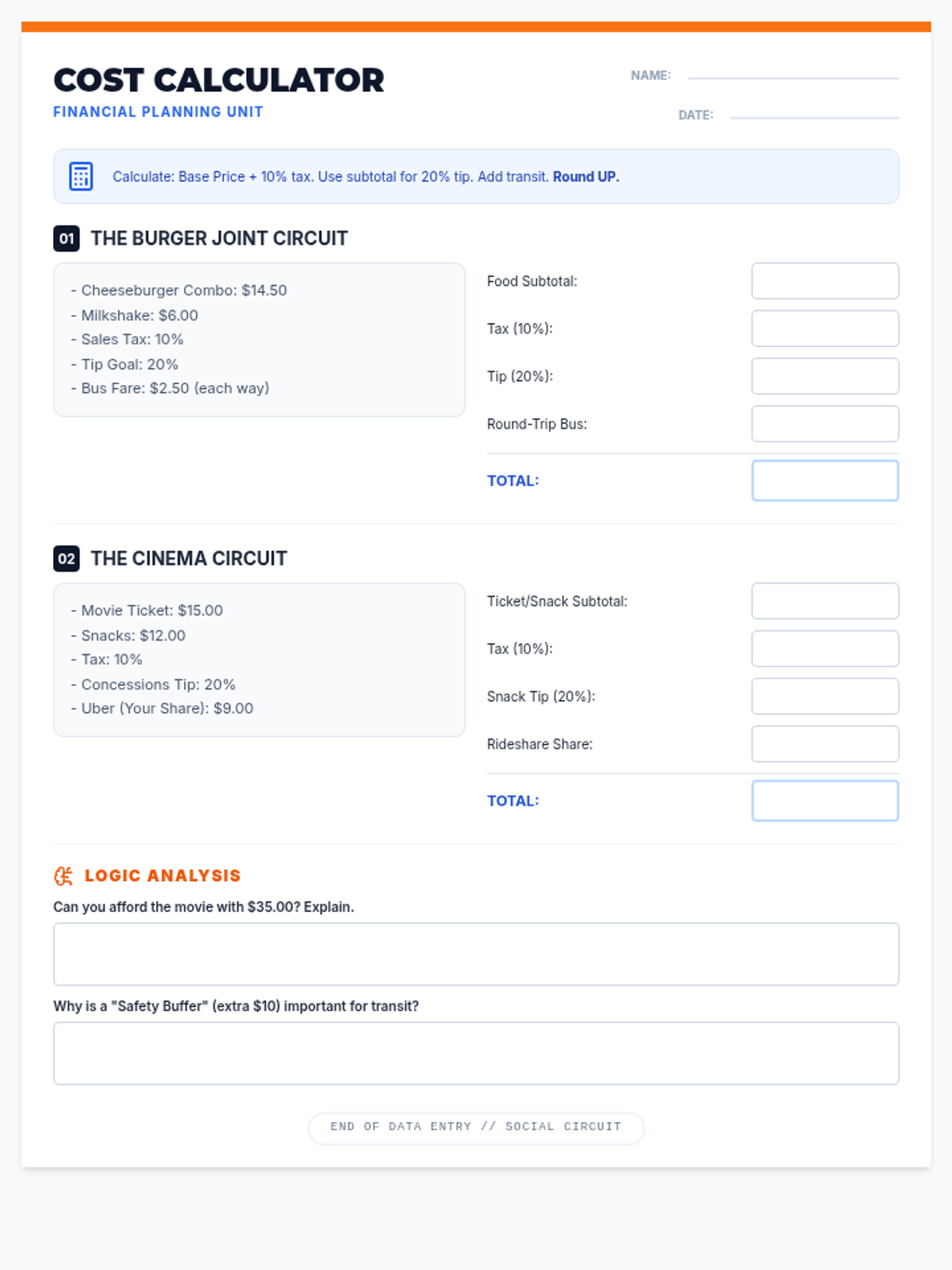
A practical math worksheet that guides students through calculating the total cost of social outings, including taxes, tips, and transportation fees across different scenarios.
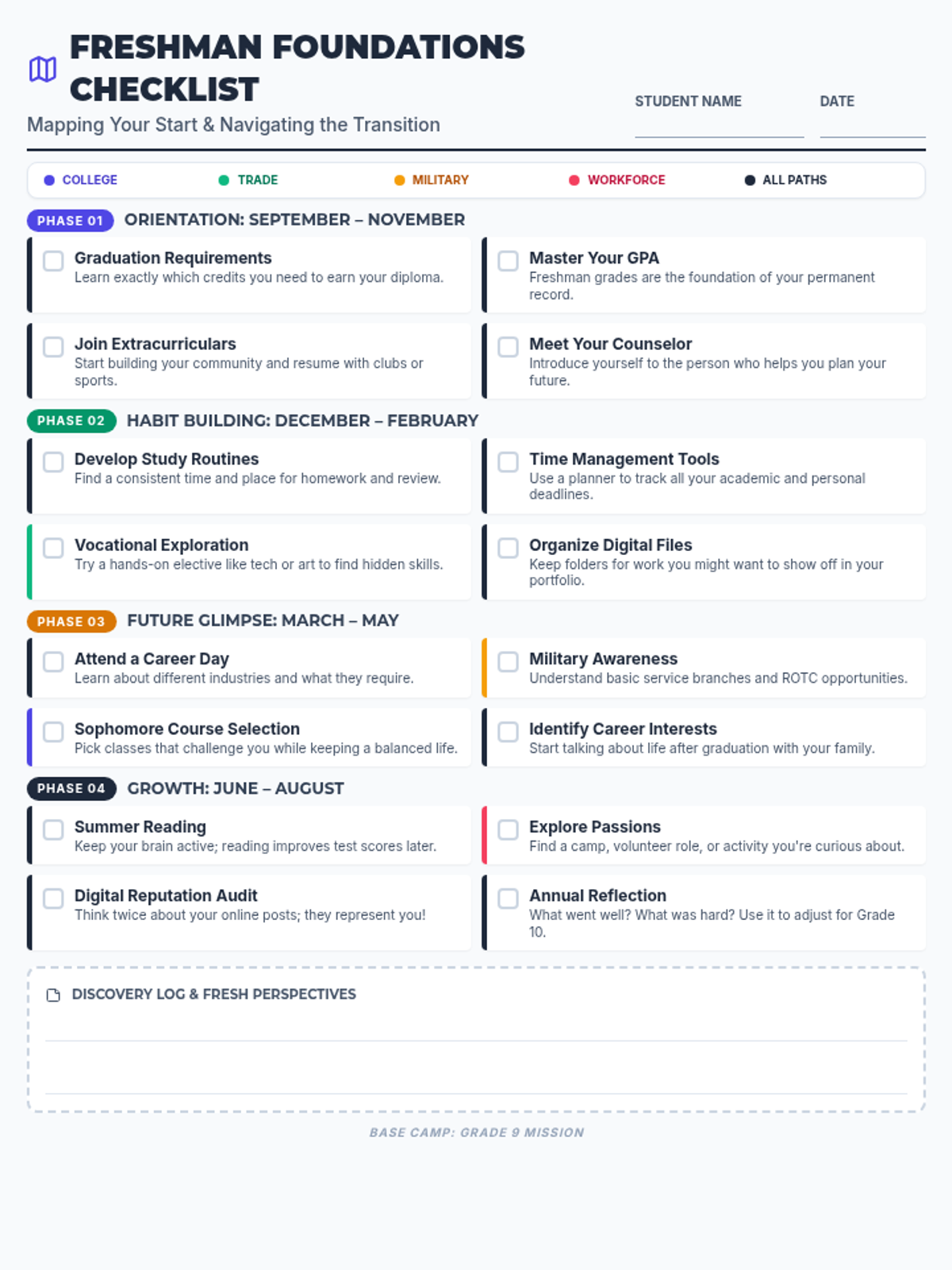
A comprehensive one-page checklist for high school freshmen, organized by seasonal phases and color-coded by post-secondary path (College, Trade, Military, Workforce). Focuses on building academic foundations, exploring interests, and developing essential study habits.
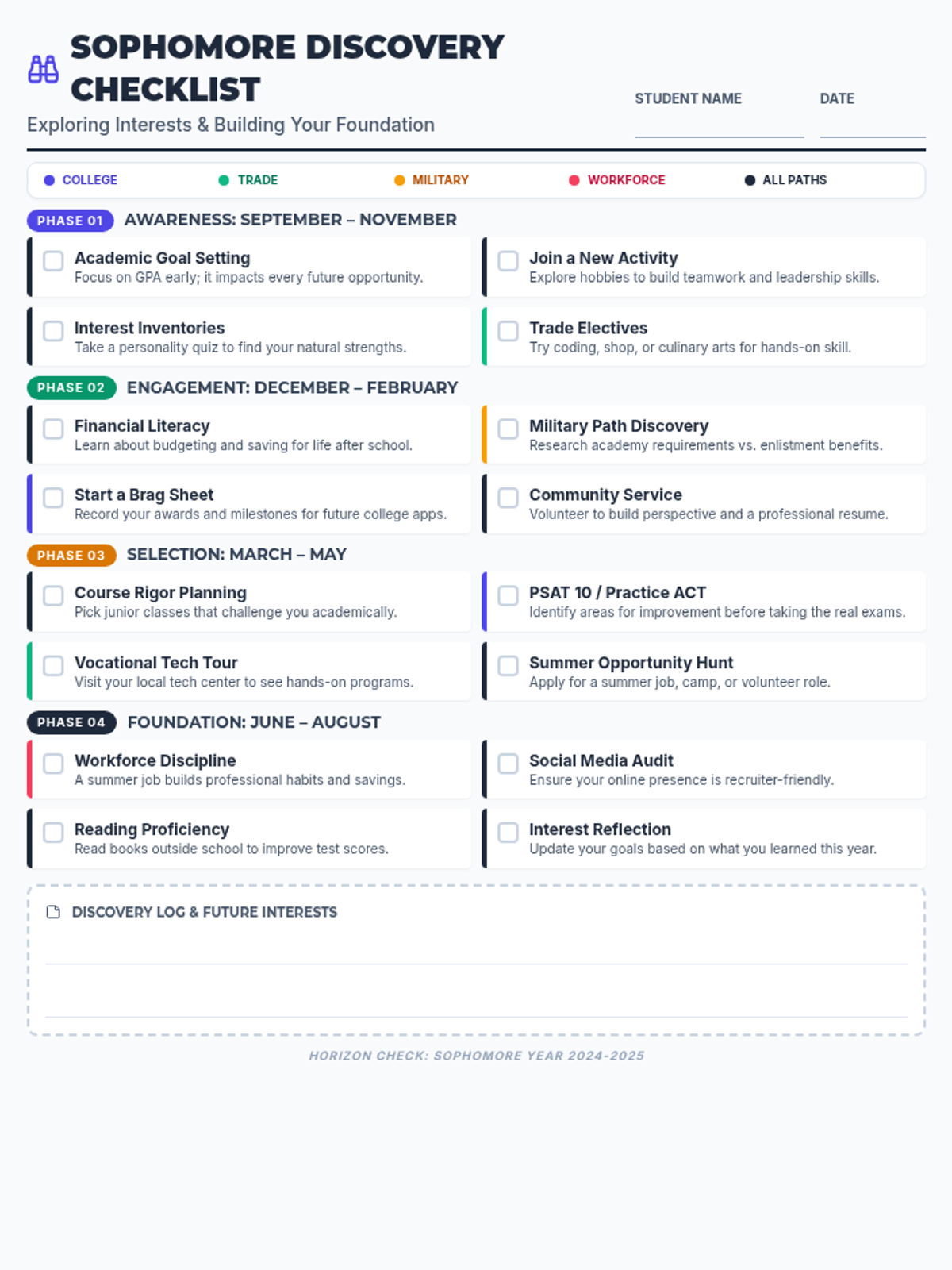
A comprehensive one-page checklist for high school sophomores, organized by seasonal phases and color-coded by post-secondary path (College, Trade, Military, Workforce). Focuses on interest exploration and building an academic and extracurricular foundation.
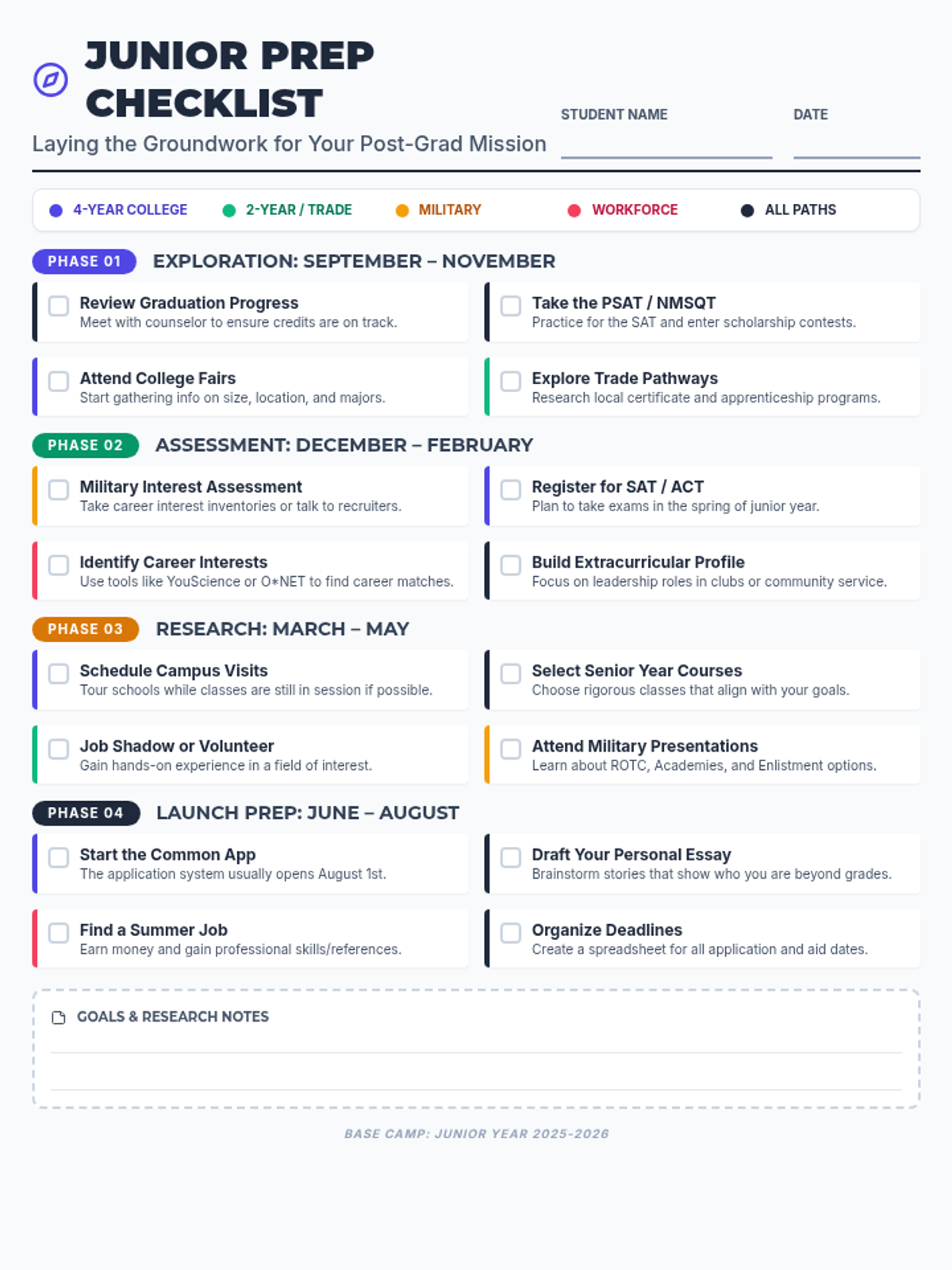
A comprehensive one-page checklist for high school juniors, organized by seasonal phases and color-coded by post-secondary path (College, Trade, Military, Workforce). Helps students lay the groundwork for their senior year mission.
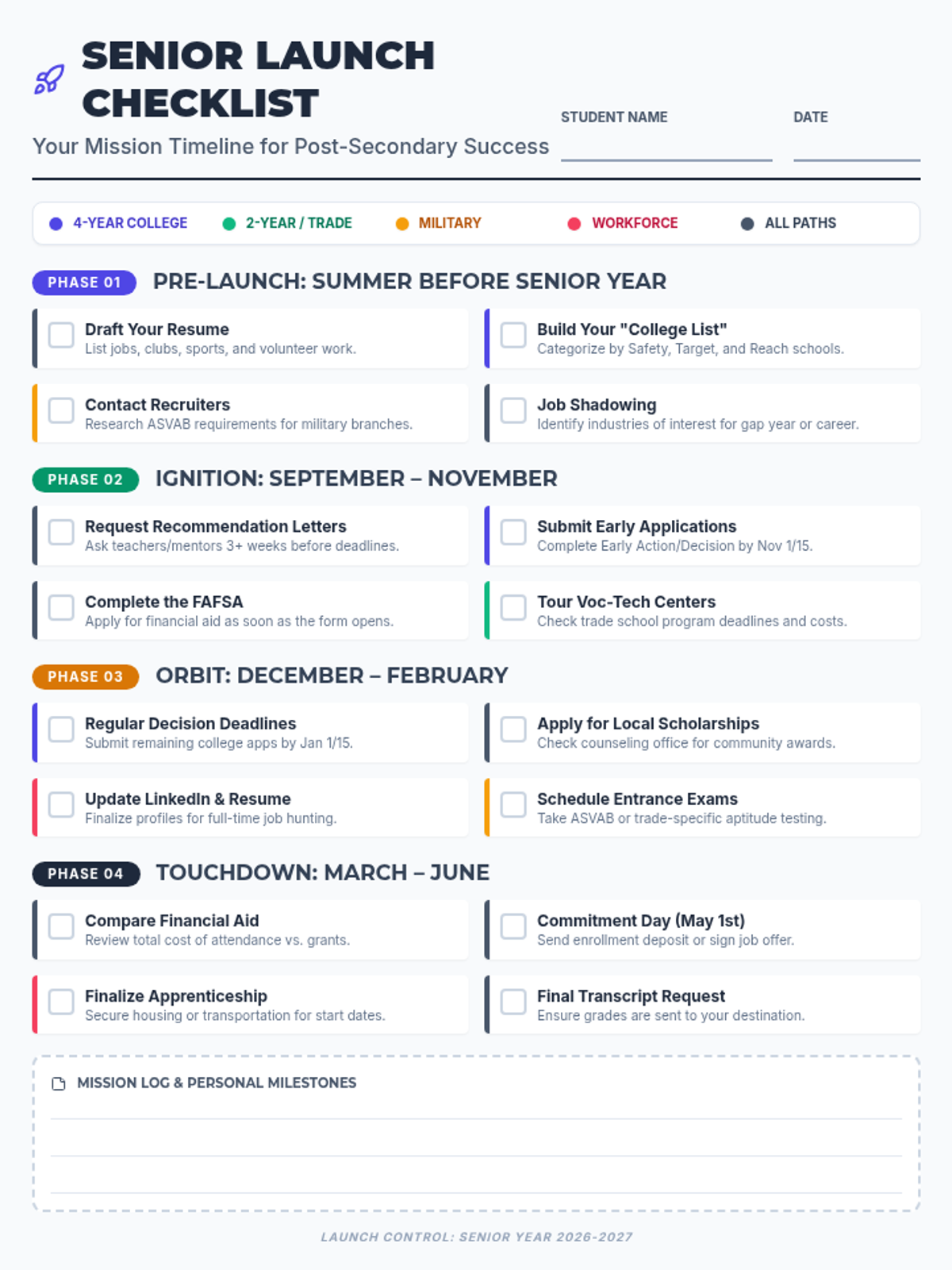
A comprehensive one-page checklist for high school seniors, organized by seasonal phases and color-coded by post-secondary path (College, Trade, Military, Workforce). Includes space for notes and tracking major milestones from summer through graduation.
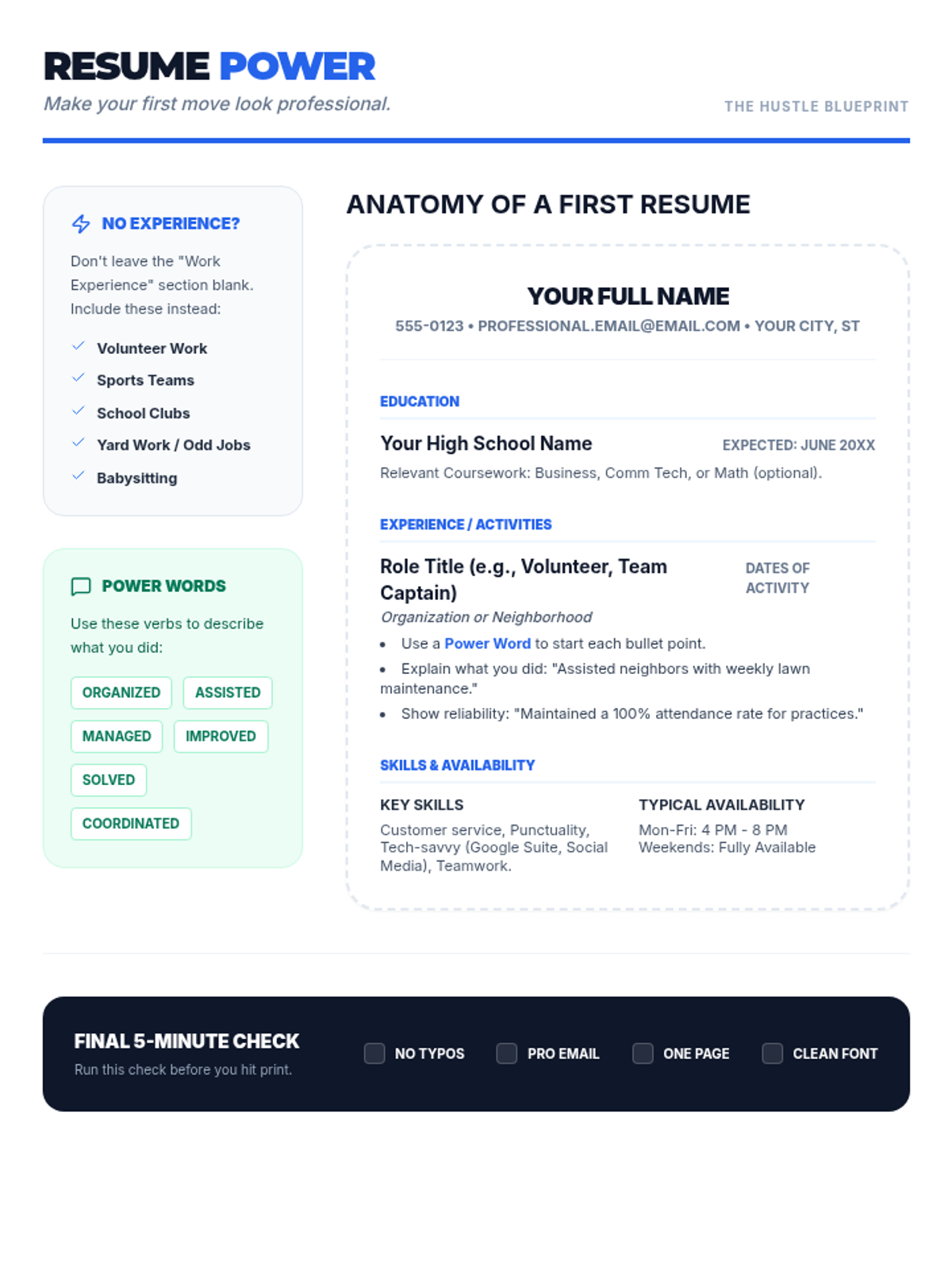
A comprehensive 1-page guide for high schoolers creating their first resume. Includes tips for students with no prior work experience, power words for entry-level skills, and a visual breakdown of a professional resume layout.
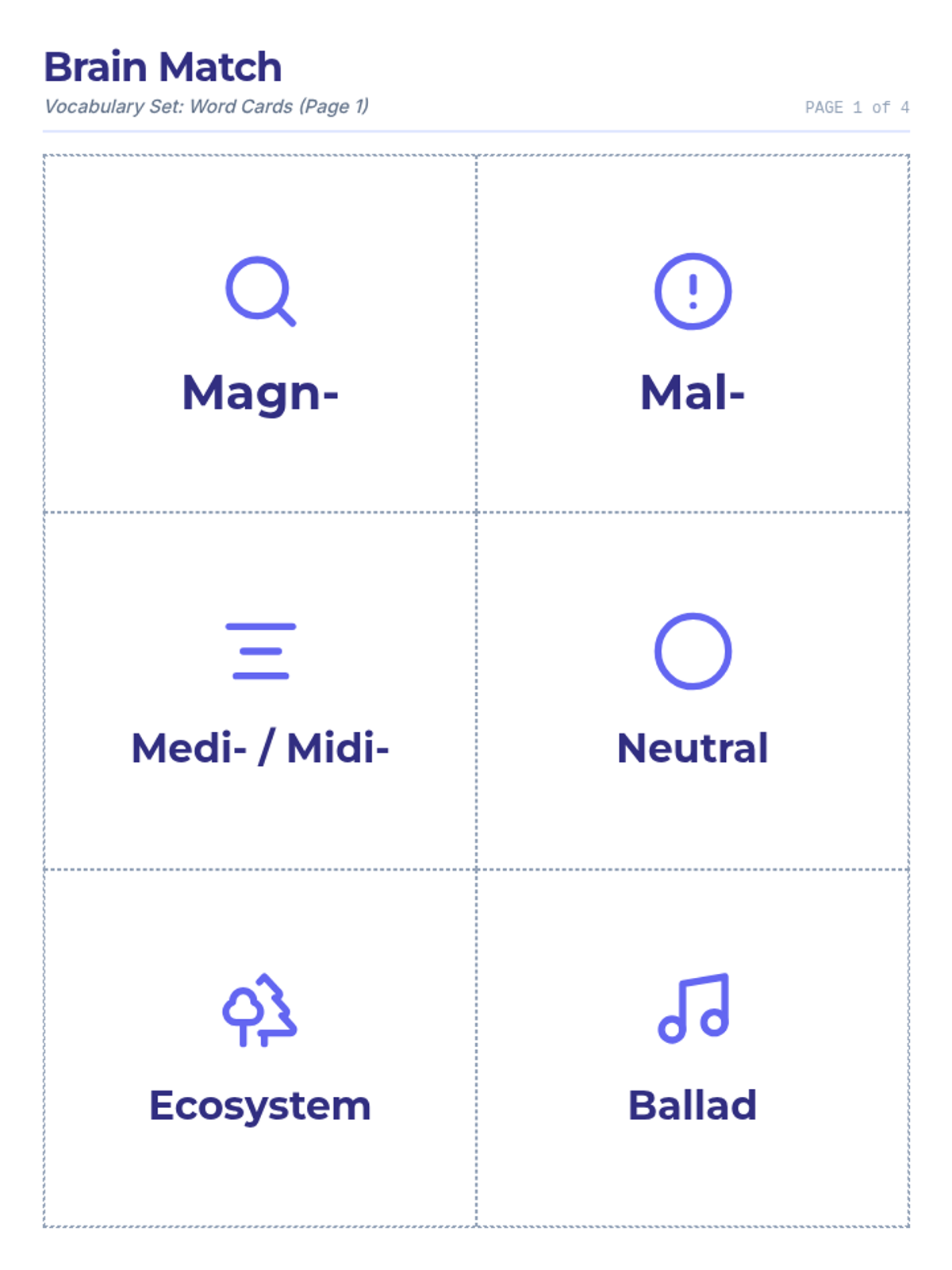
A final set of large-format vocabulary matching cards spanning 4 pages (6 cards per page). Features a unified Indigo theme, dashed cutting guides, and matching iconography. To prevent "cheating" by matching icons, definition cards use subtle grayscale versions of the icons. Card sizing is strictly controlled to ensure no page overflow.
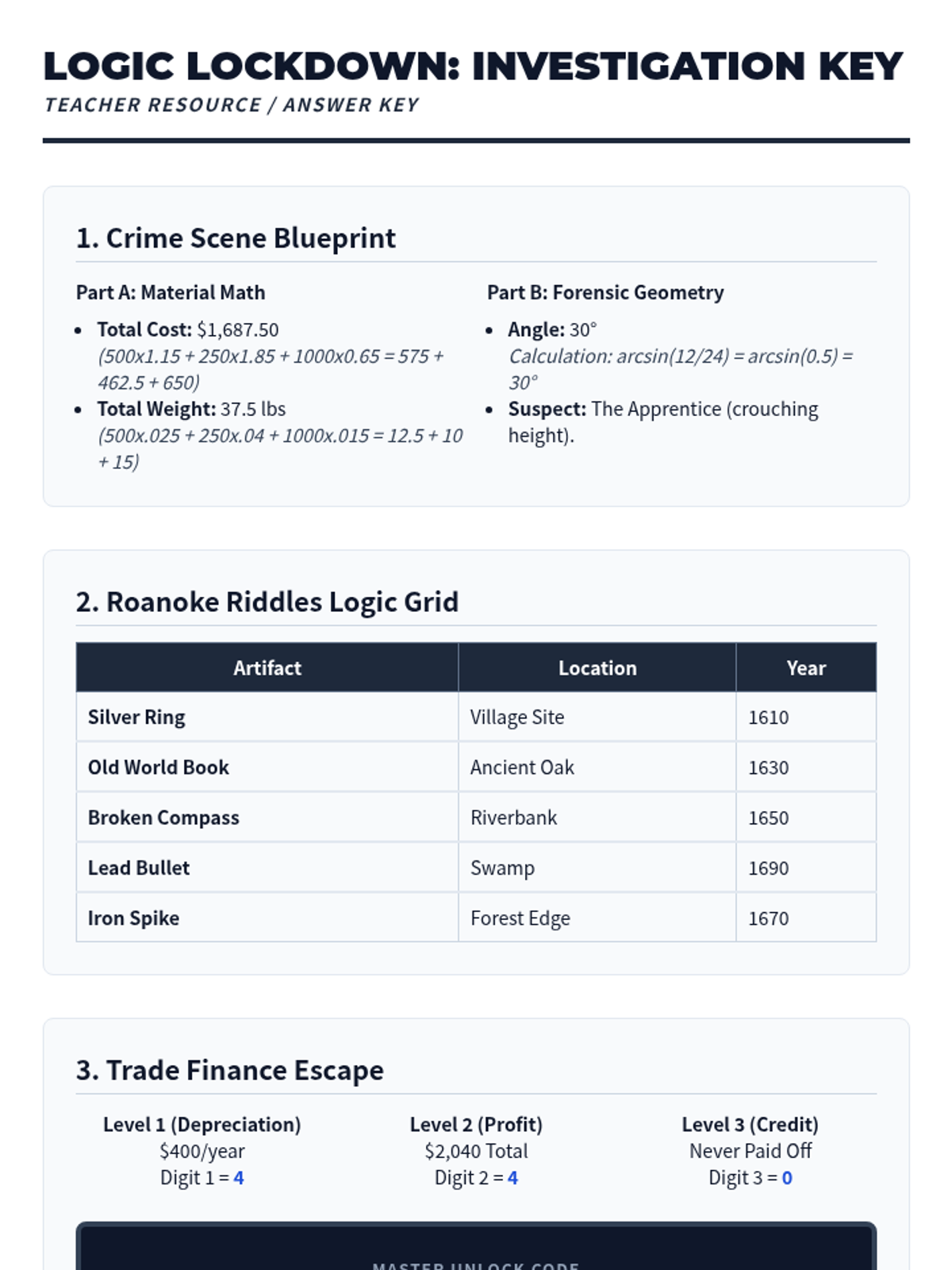
Complete answer key and logic walkthrough for the Logic Lockdown lesson. Revised for math clarity, contrast, and layout stability.
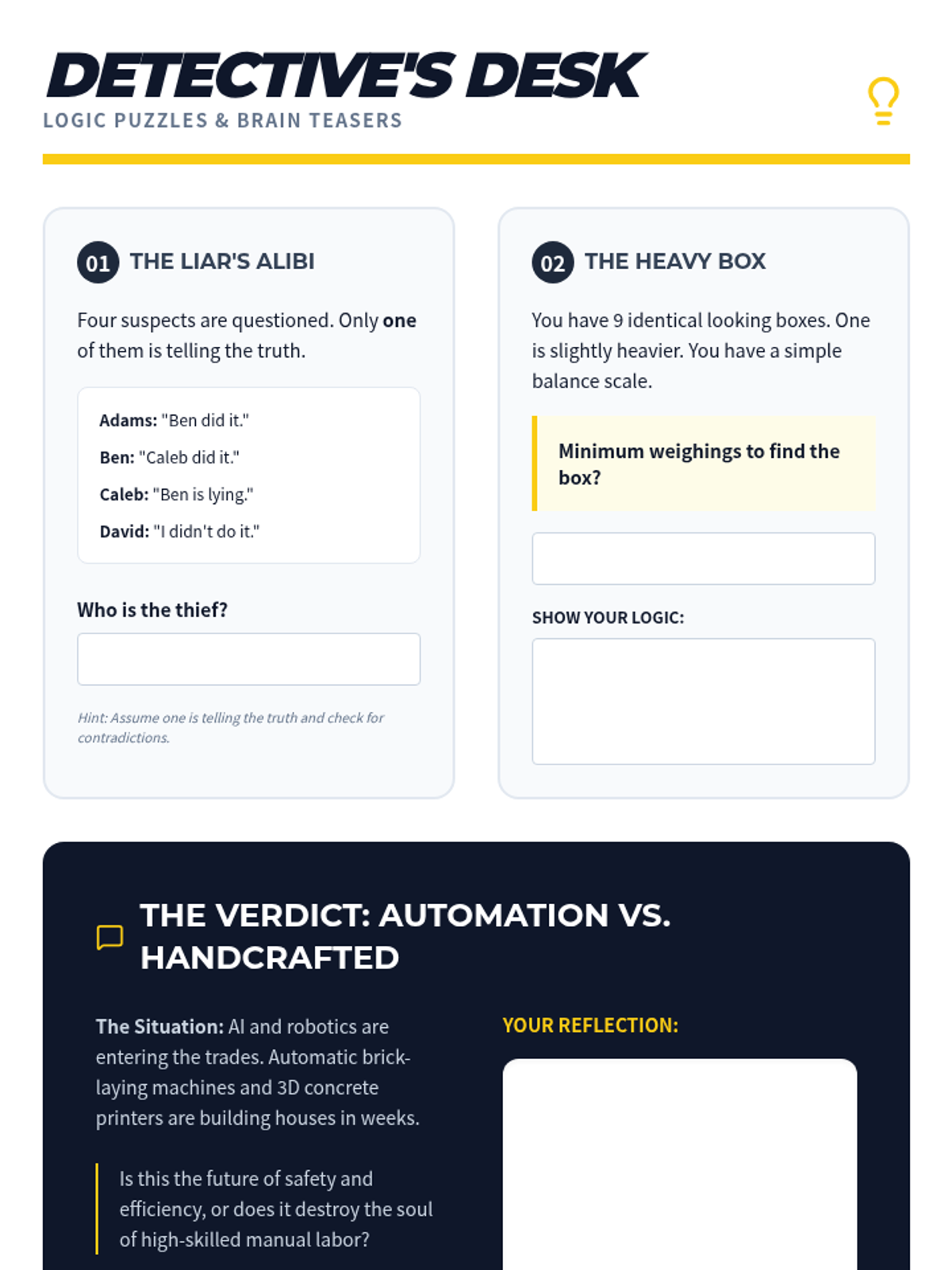
A collection of brain teasers and a critical thinking writing prompt focused on the trades. Revised to fix page breaks, syntax, and increase writing space.
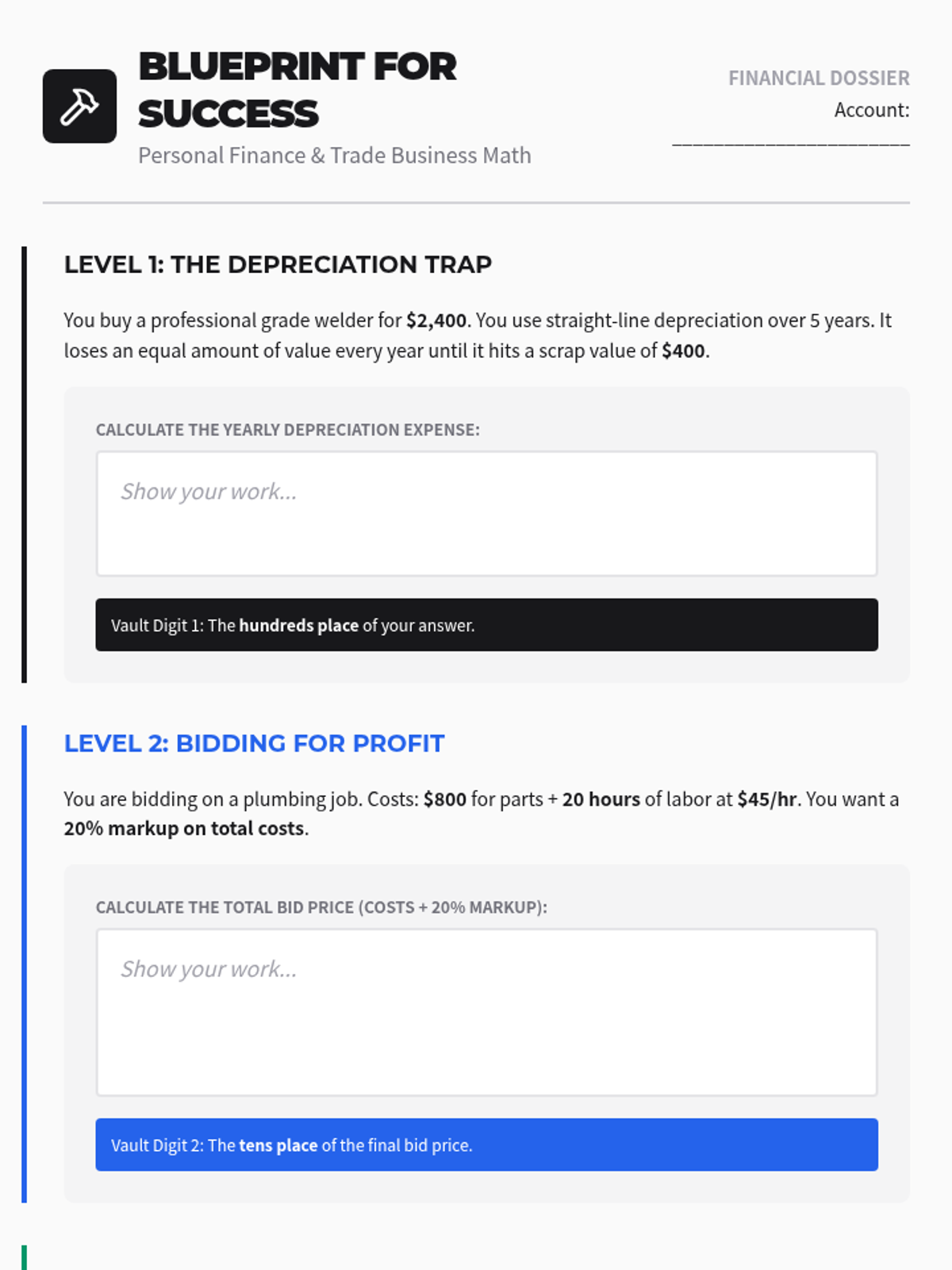
A math-based escape room activity. Revised to clarify "markup" terminology, fix answer choice styling, and ensure Level 2 stays together on one page.