College selection, application workflows, and financial aid navigation including FAFSA and scholarship acquisition. Builds skills in personal statement writing and career exploration to align post-secondary choices with long-term professional goals.
Visual presentation for the final Future Budget session, discussing Return on Investment (ROI), the 50/30/20 budgeting rule, and avoiding common financial pitfalls like credit card debt.
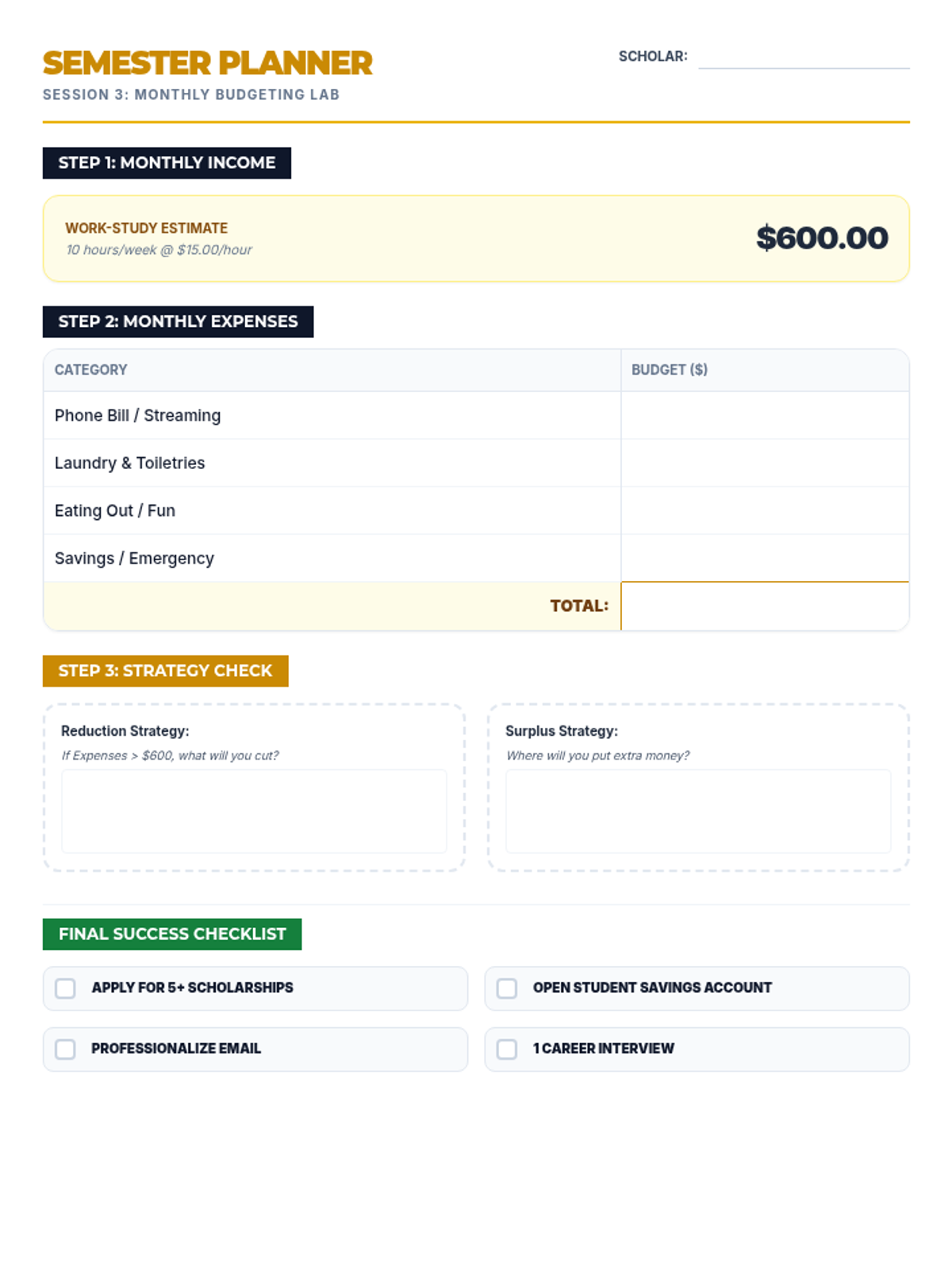
A monthly budgeting worksheet for college students, helping them manage their work-study income against typical college expenses and lifestyle costs.
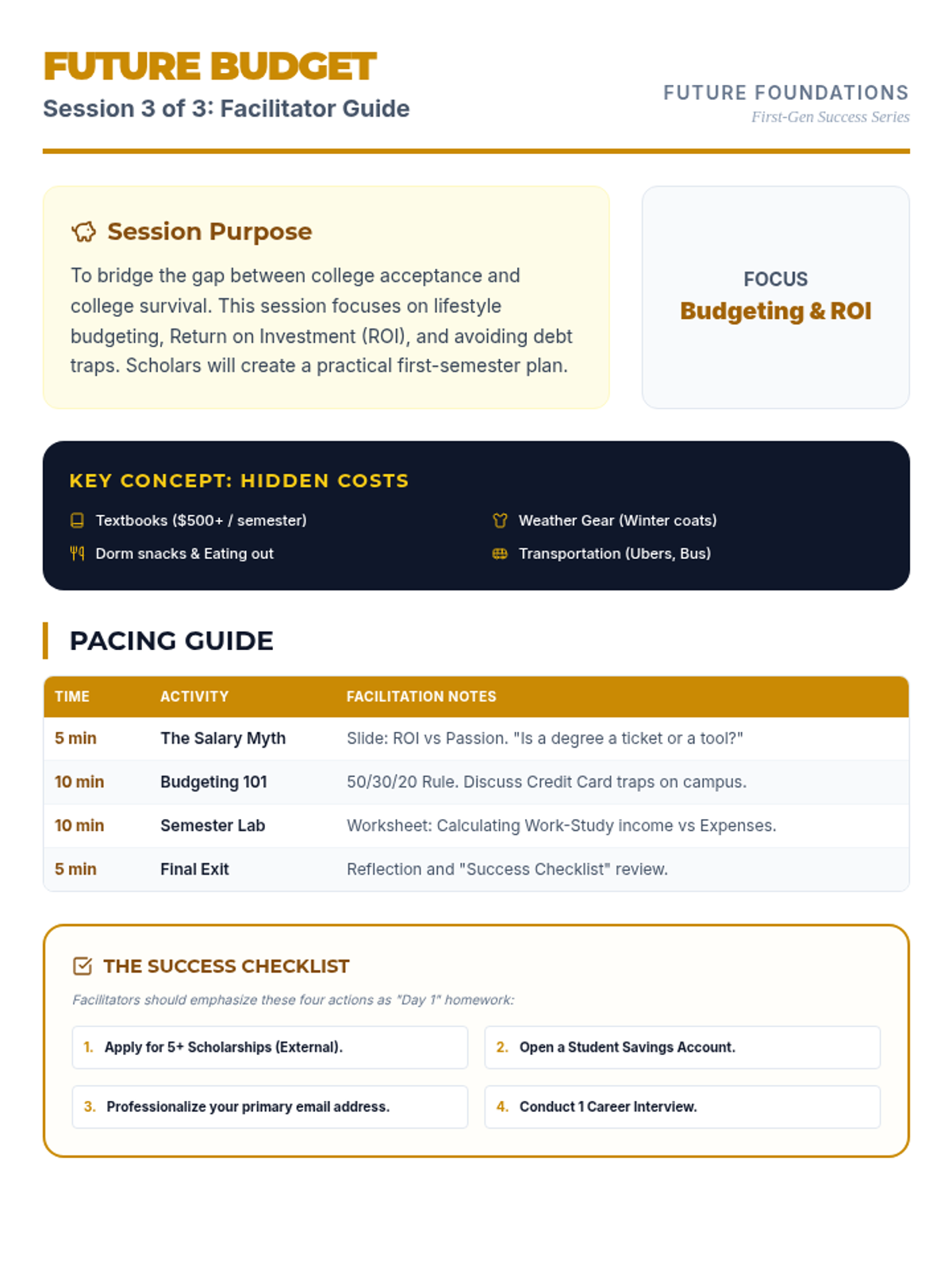
Facilitator guide for the final session, focusing on lifestyle budgeting, Return on Investment (ROI) for degrees, and preparing students for the daily costs of college life.
Visual presentation for the Money Moves session, introducing financial aid terminology, comparing sticker vs. net price, and setting up the aid decoder activity.
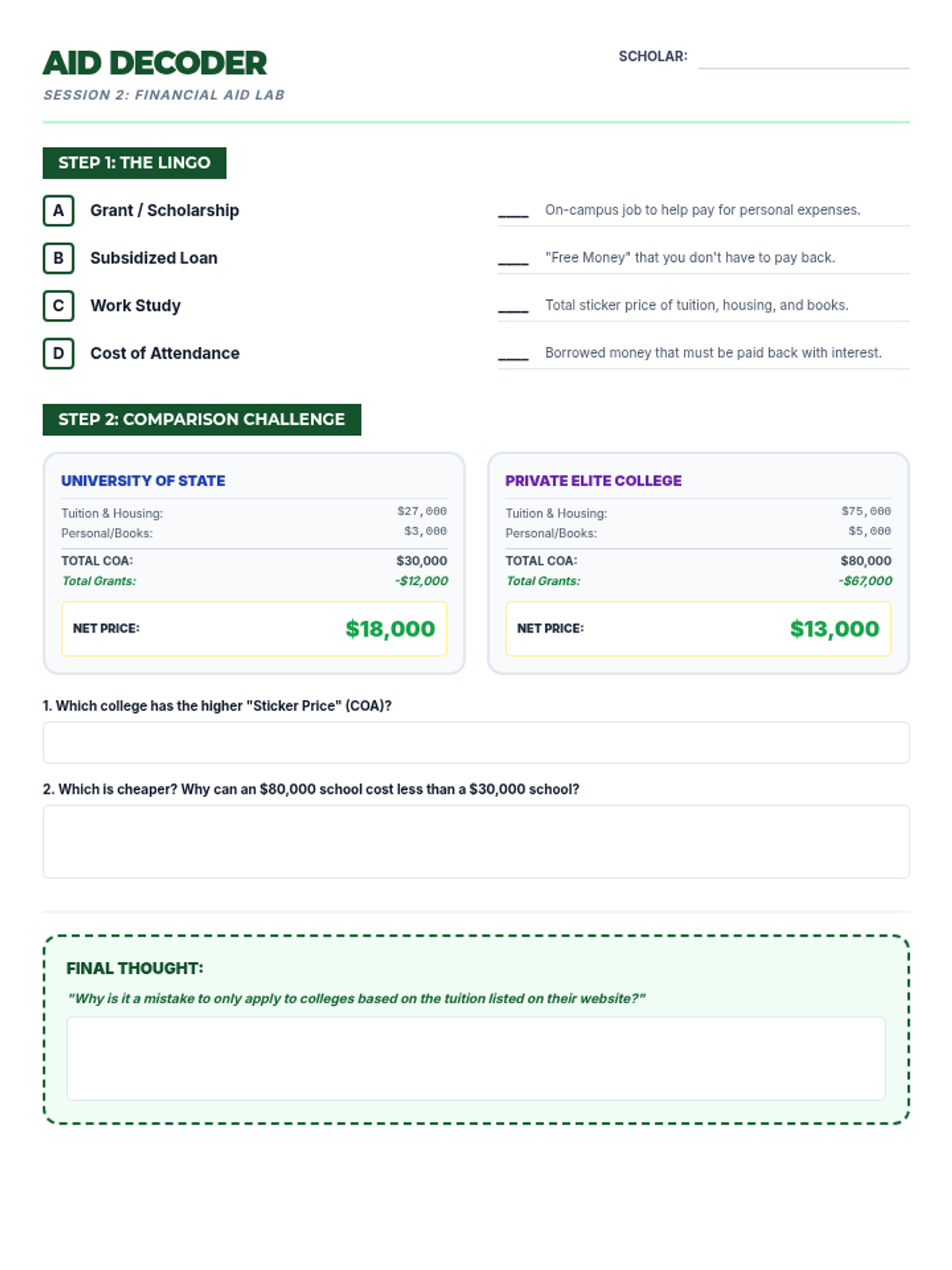
A financial aid comparison worksheet where students practice decoding aid packages and understanding the difference between sticker price and net price.
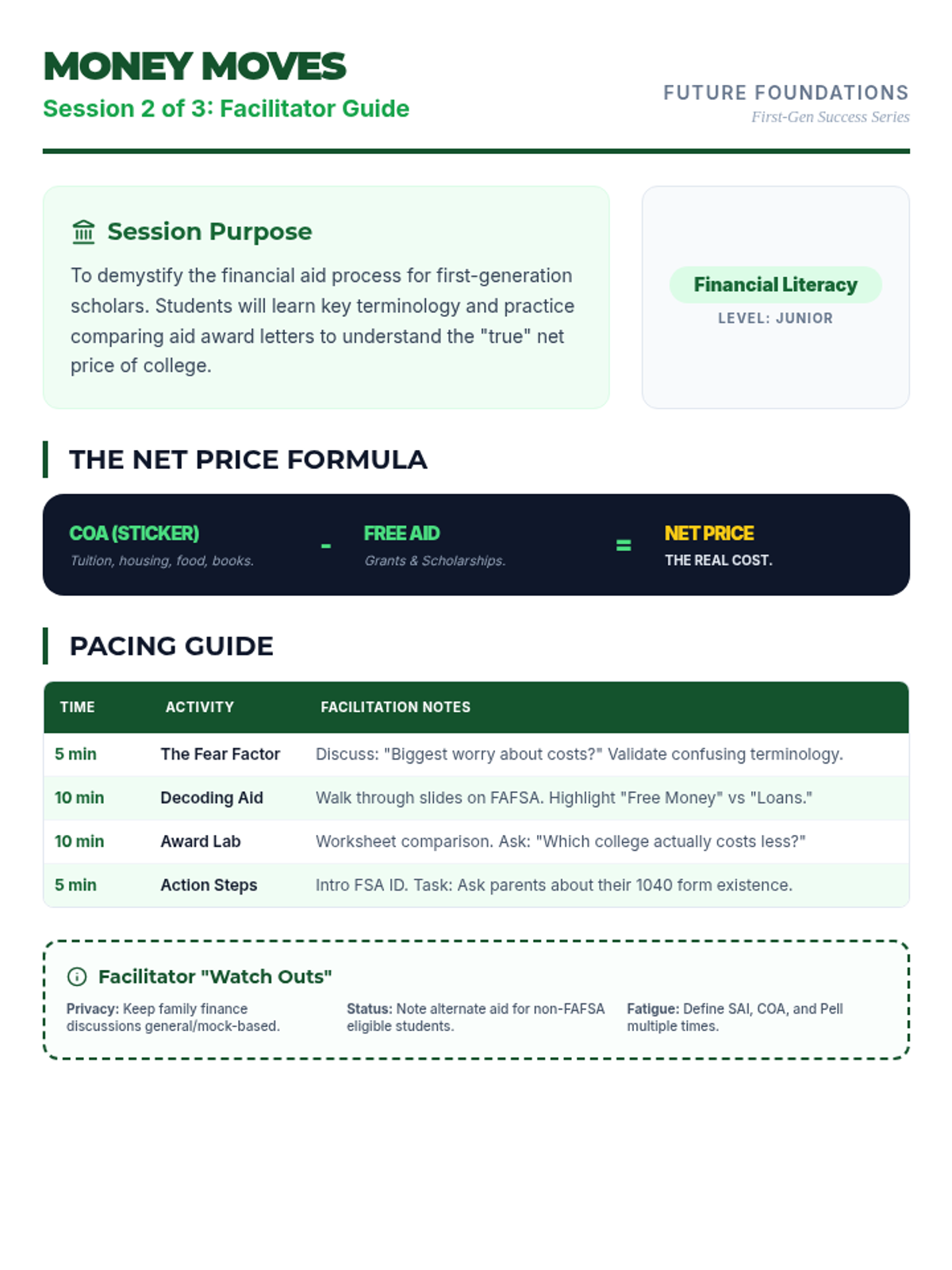
A detailed facilitator guide for the Money Moves session, focusing on financial literacy concepts like Cost of Attendance, Net Price, and types of financial aid for first-generation college students.
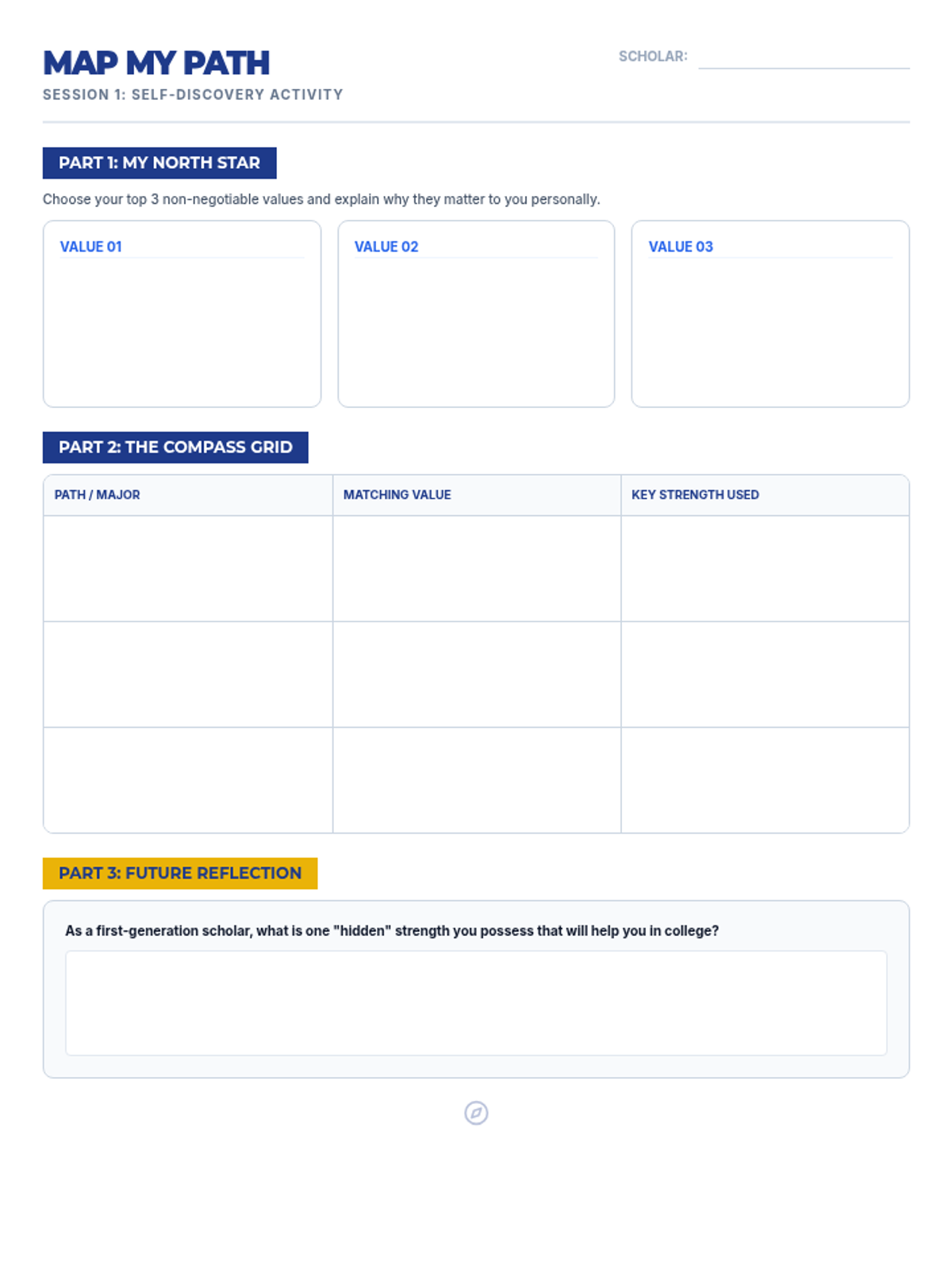
A self-discovery worksheet for students to map their personal values, strengths, and potential career paths as part of the Inner Compass lesson.
Visual presentation for the first session of the Future Foundations series, covering first-gen identity, core values, and finding the sweet spot between strengths and passions.
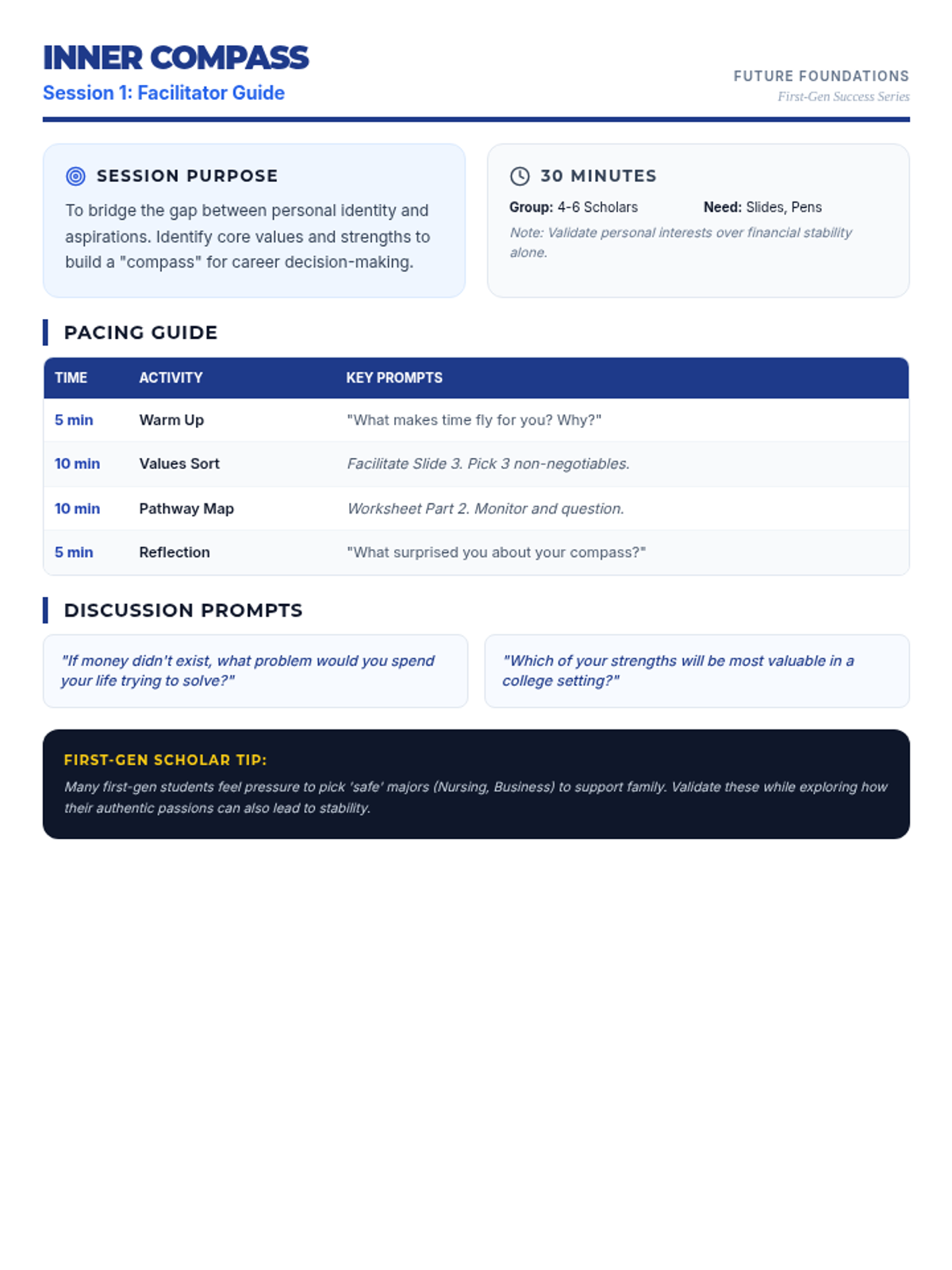
A comprehensive facilitator guide for the first session of the Future Foundations series, providing timing, discussion prompts, and instructional context for working with first-generation scholars.
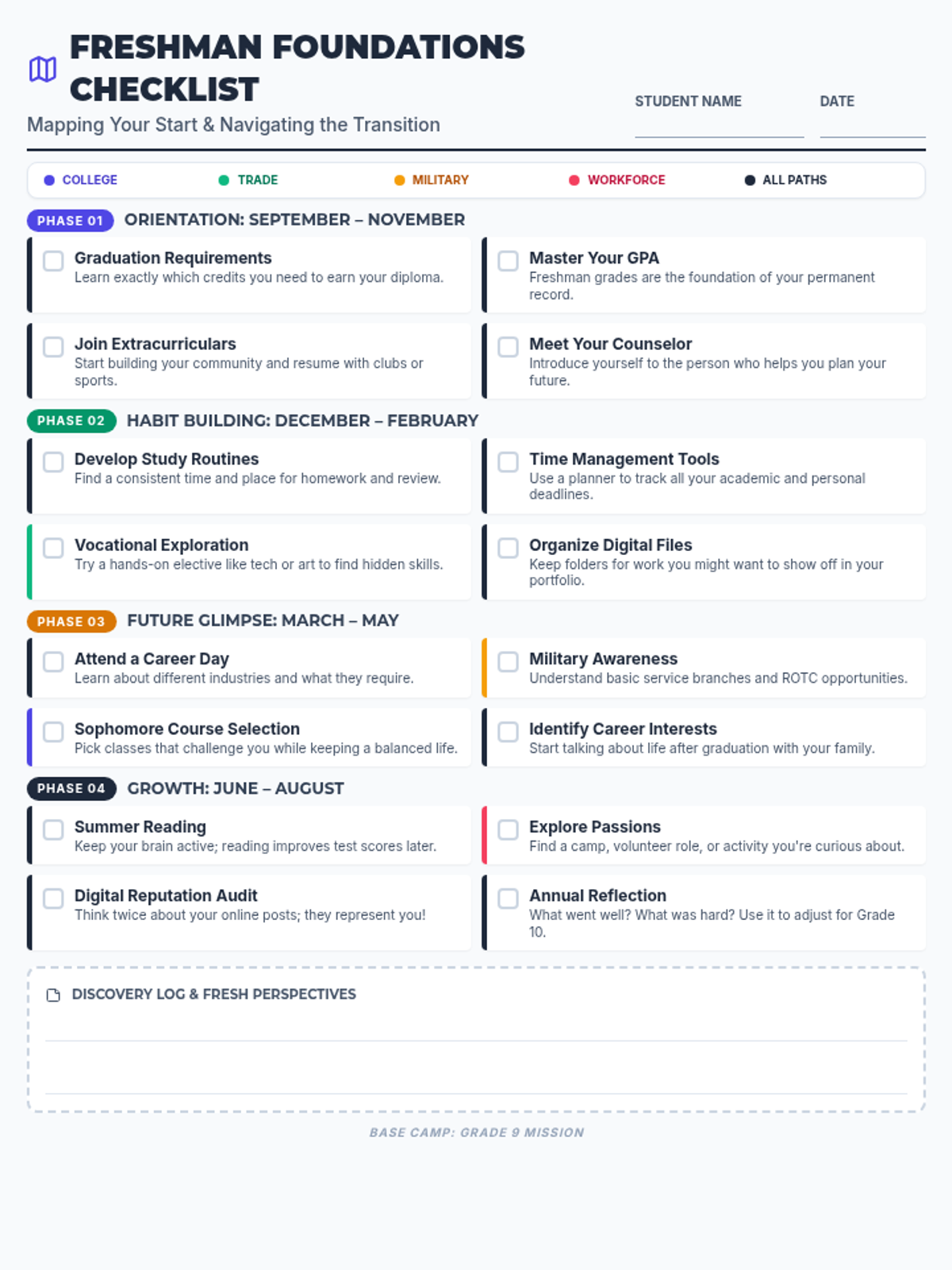
A comprehensive one-page checklist for high school freshmen, organized by seasonal phases and color-coded by post-secondary path (College, Trade, Military, Workforce). Focuses on building academic foundations, exploring interests, and developing essential study habits.
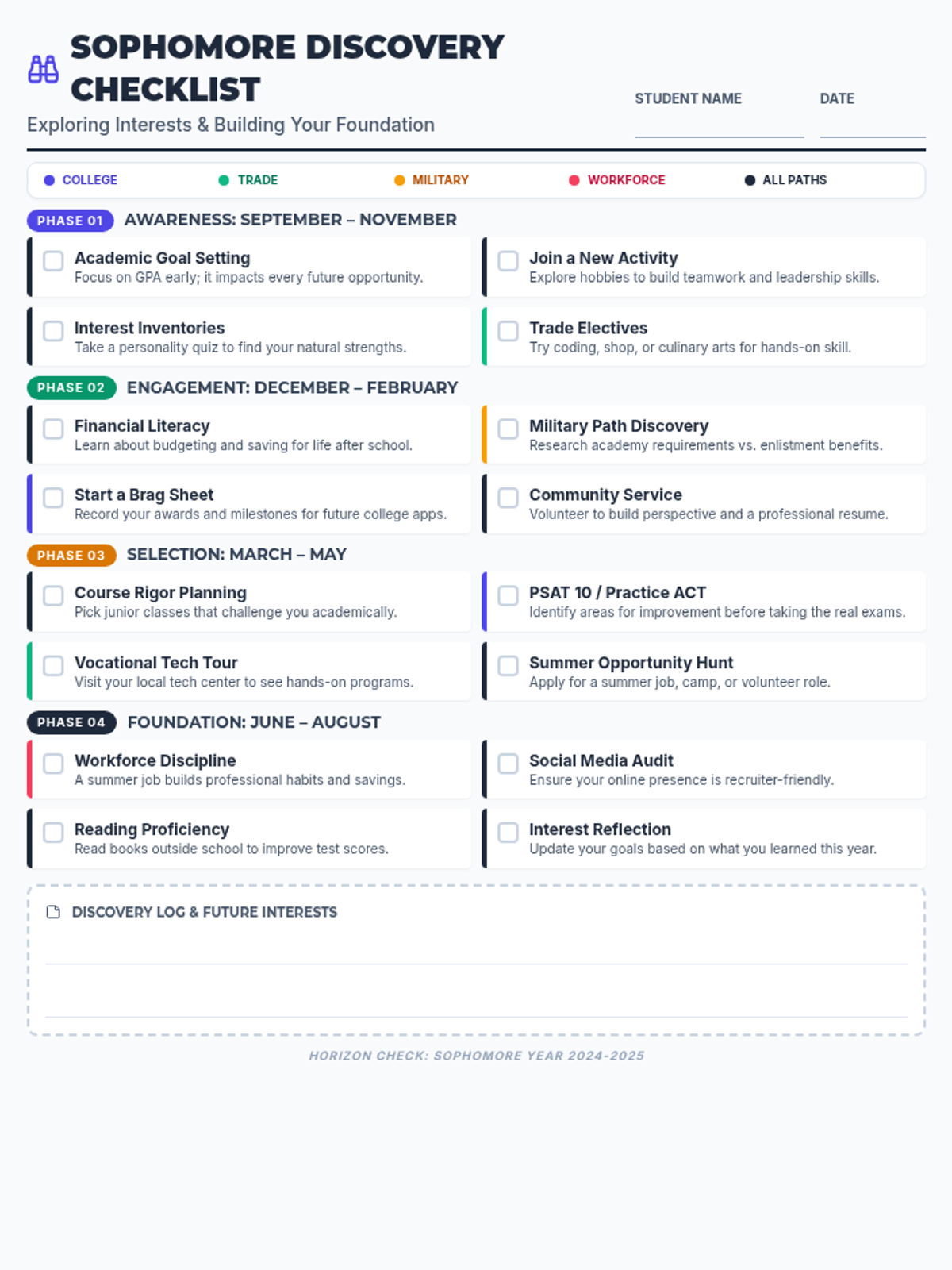
A comprehensive one-page checklist for high school sophomores, organized by seasonal phases and color-coded by post-secondary path (College, Trade, Military, Workforce). Focuses on interest exploration and building an academic and extracurricular foundation.
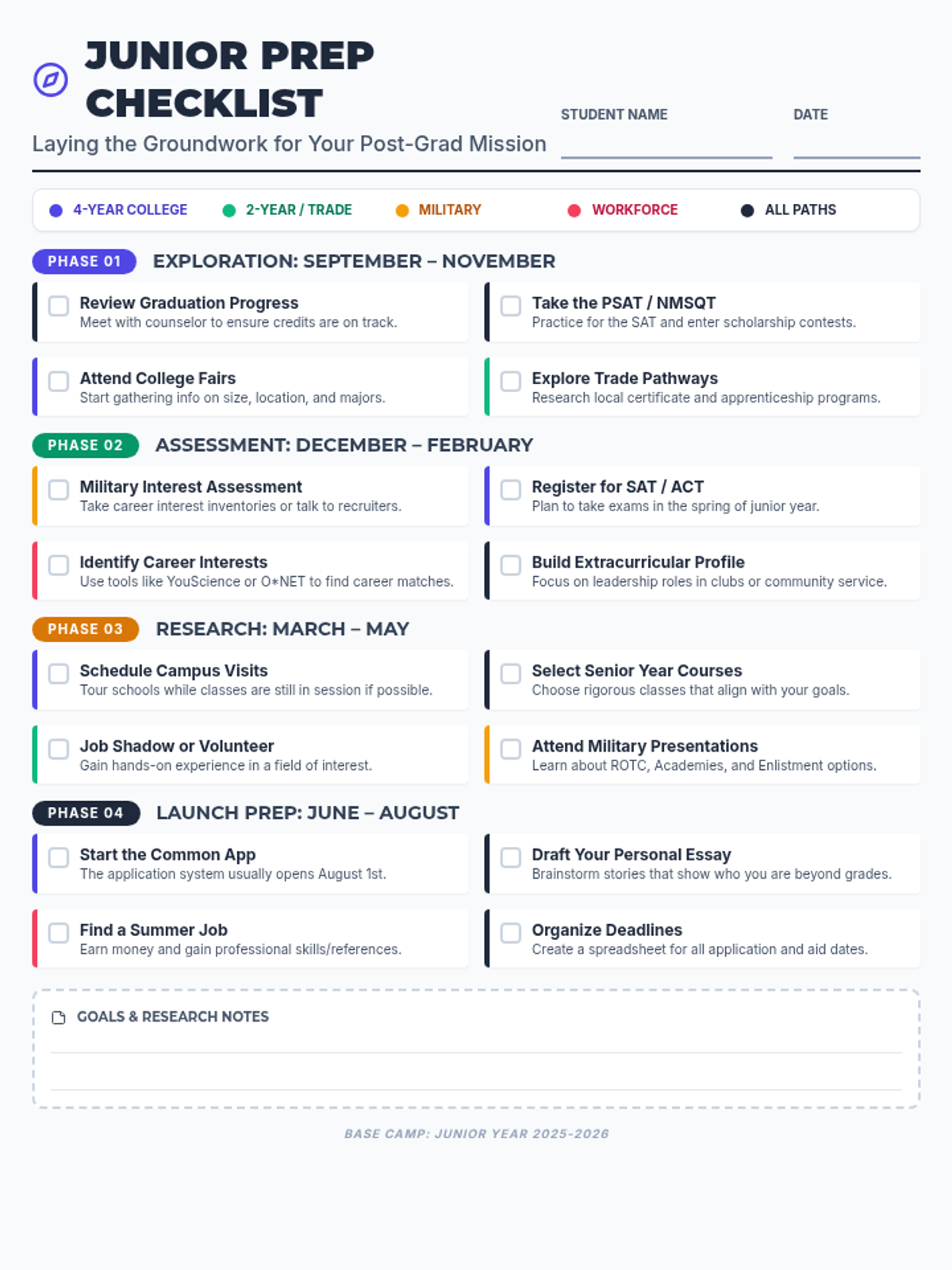
A comprehensive one-page checklist for high school juniors, organized by seasonal phases and color-coded by post-secondary path (College, Trade, Military, Workforce). Helps students lay the groundwork for their senior year mission.
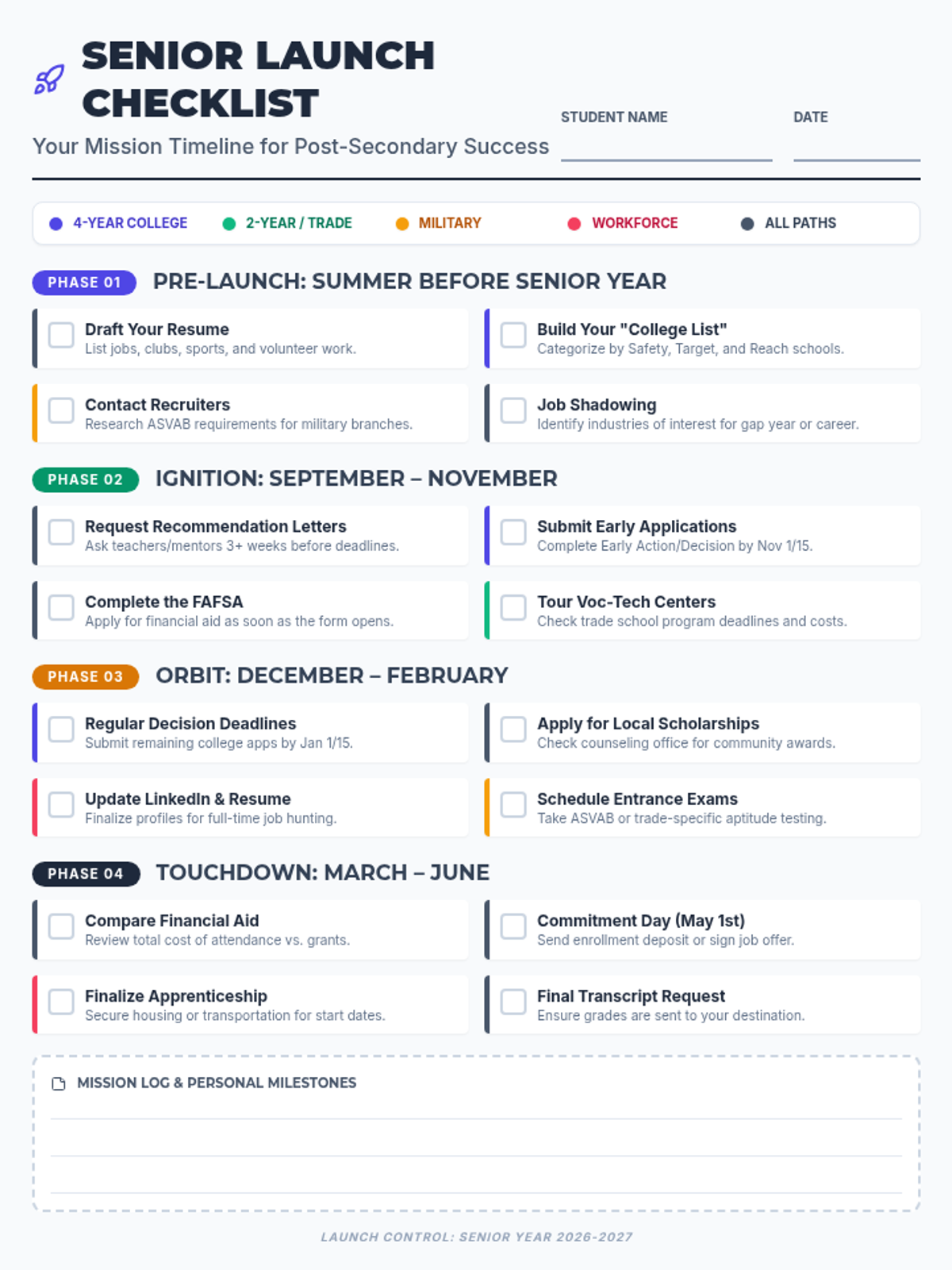
A comprehensive one-page checklist for high school seniors, organized by seasonal phases and color-coded by post-secondary path (College, Trade, Military, Workforce). Includes space for notes and tracking major milestones from summer through graduation.
Day 5 Slides: Consolidating resources and finalizing the personal safety plan.
Day 4 Slides: Setting up the workshop environment for individual reflection and goal mapping.
Day 3 Slides: Focusing on the specific anxiety surrounding graduation and the loss of the high school support system.
Day 2 Slides: Differentiating depression from sadness and teaching specific conversational skills for peer support.
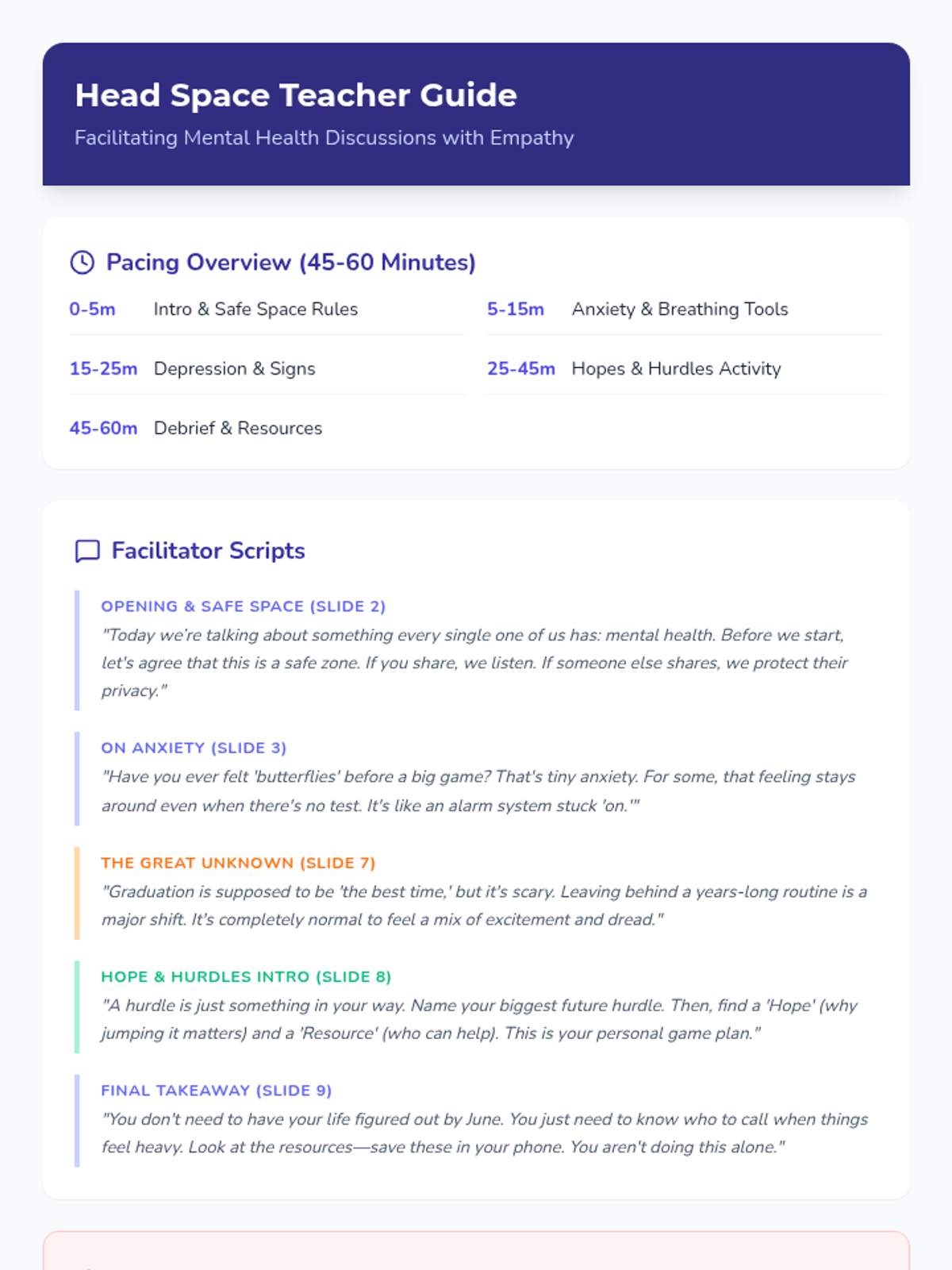
A comprehensive guide for teachers to facilitate sensitive mental health discussions, now featuring detailed scripts for key lesson transitions and safety protocols.
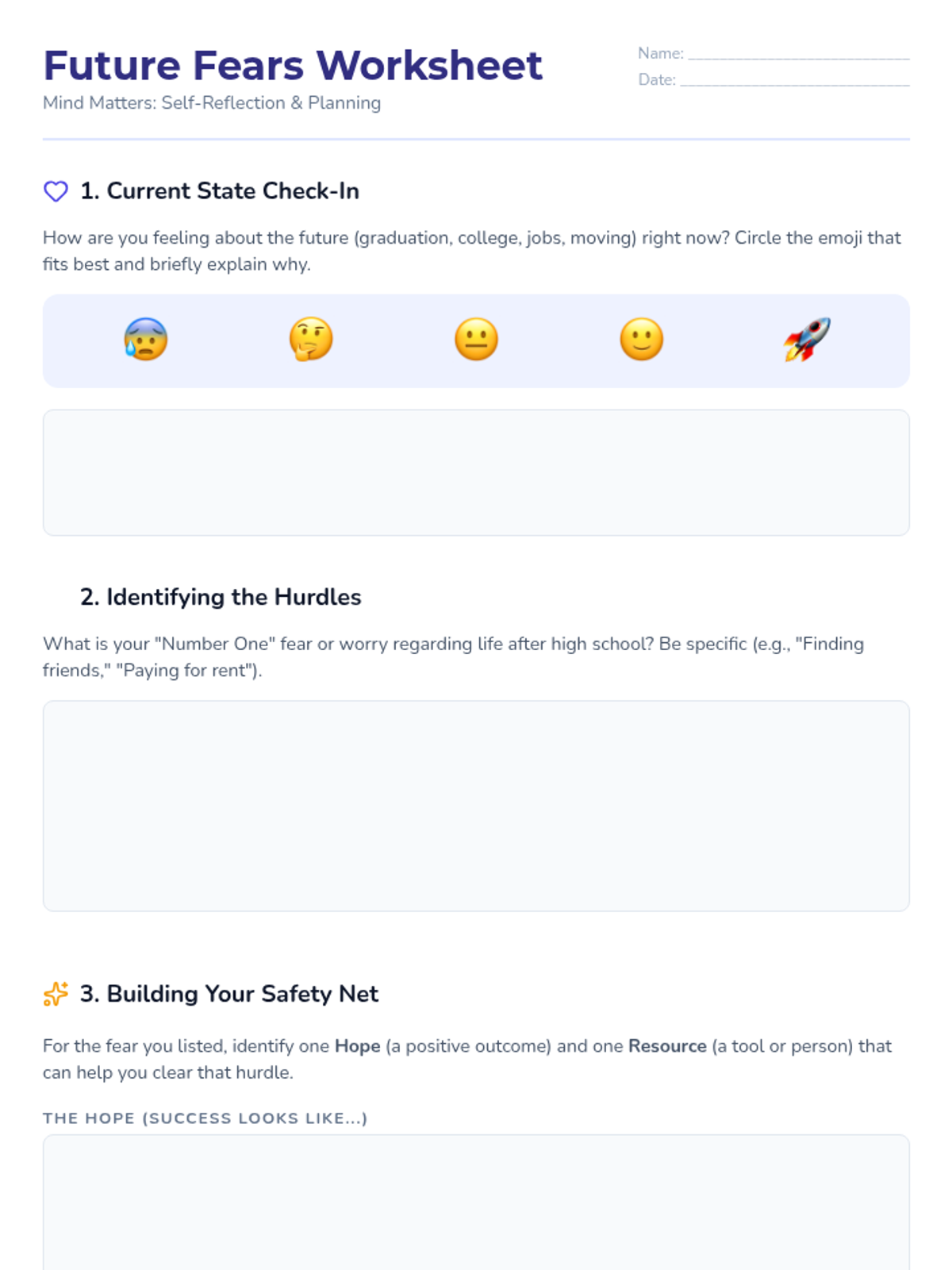
A student self-reflection document designed to accompany the mental health presentation, focusing on identifying personal fears (hurdles) and planning resources and coping strategies (hopes).
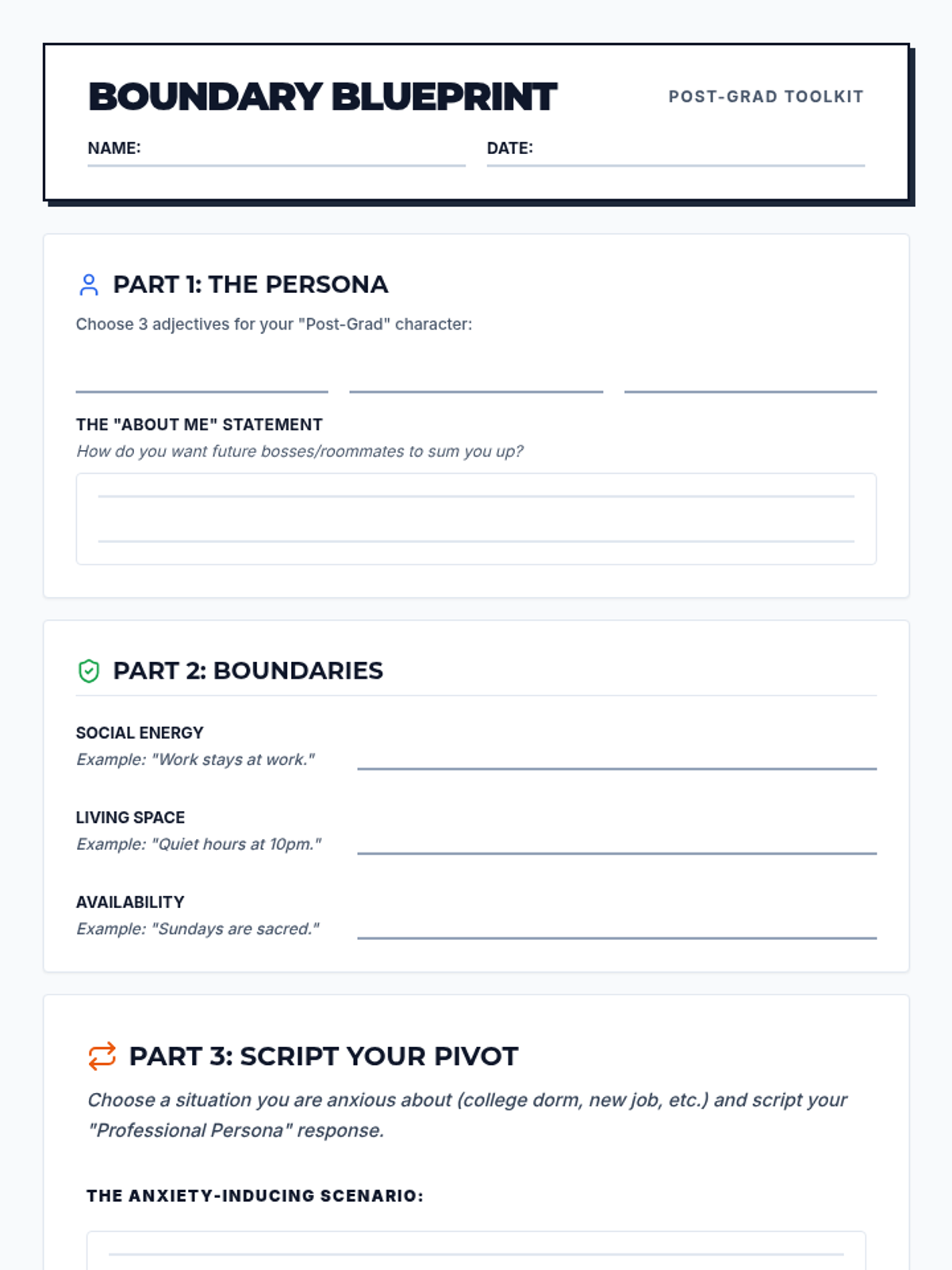
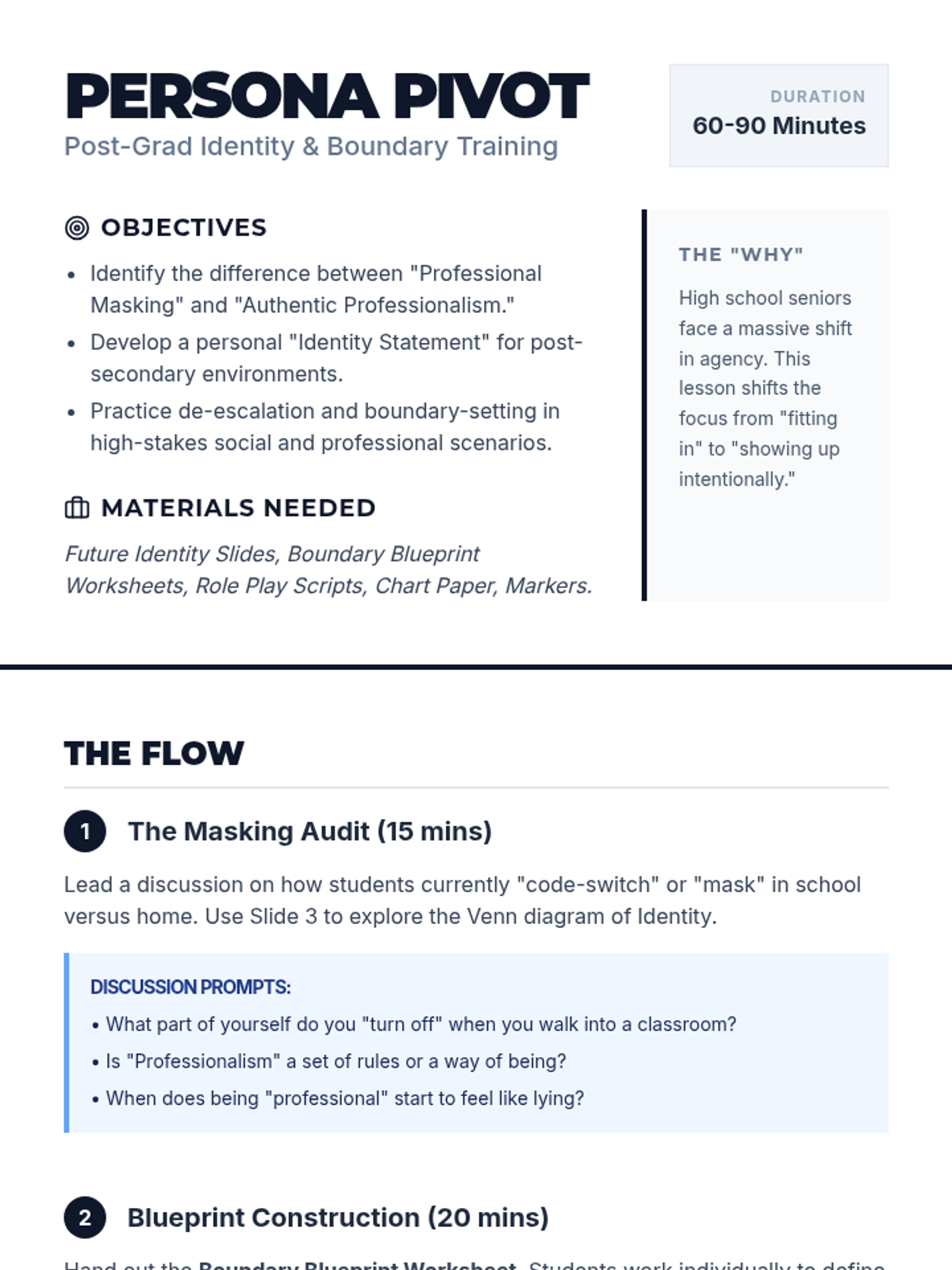
A student-facing worksheet for the Persona Pivot lesson, guiding high schoolers through defining their professional persona, identifying non-negotiable boundaries, and practicing the 'pivot' communication technique.
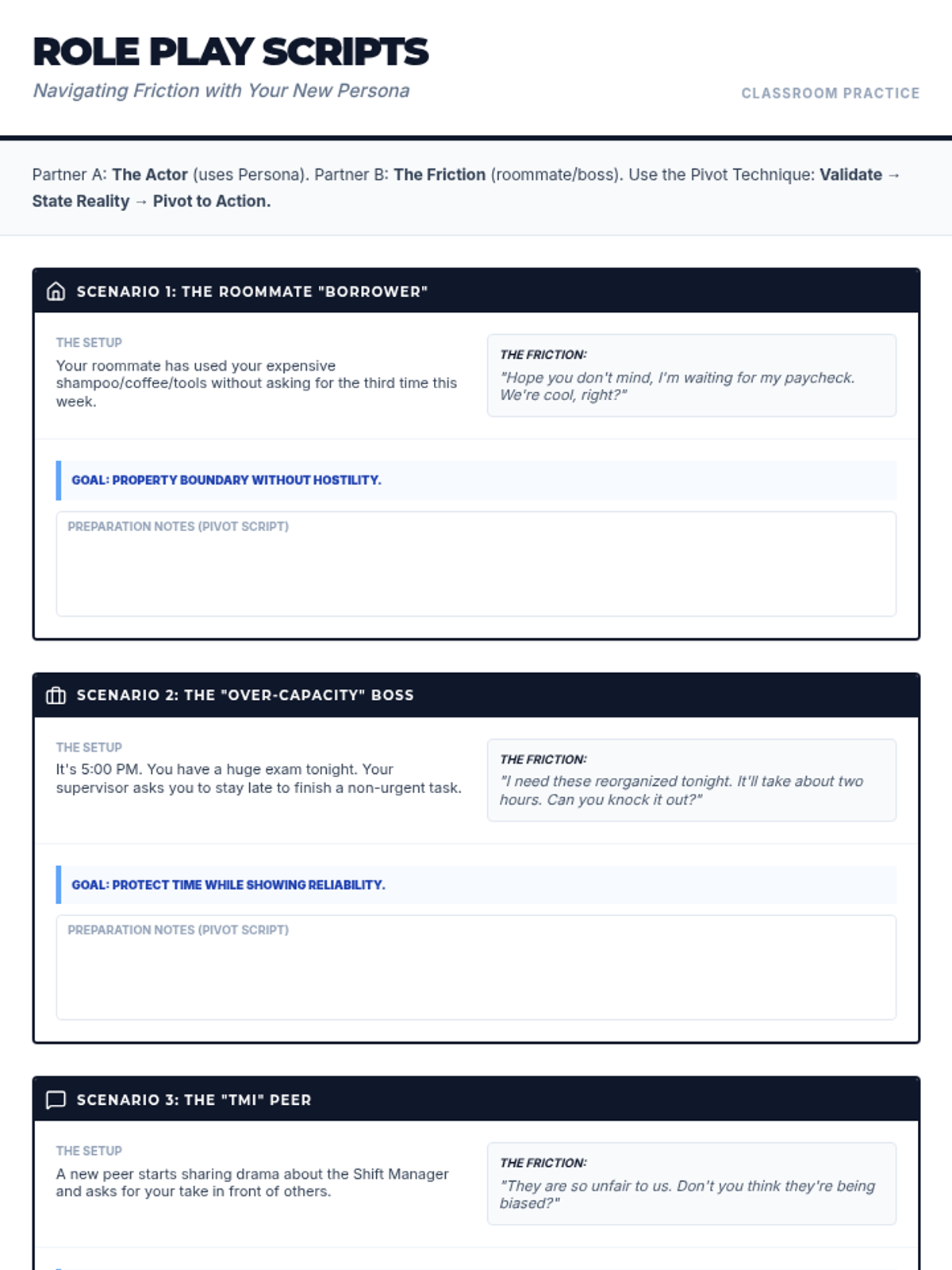
A set of role-play scenarios and prompts designed to help students practice maintaining their professional persona while handling difficult interpersonal situations with roommates, supervisors, and peers.
A modern, high-impact slide deck for the Persona Pivot lesson, guiding students through the concepts of professional identity, boundary setting, and the 'pivot' communication technique.
A comprehensive teacher's guide for the Persona Pivot lesson, featuring instructional phases, discussion prompts, and quick-reference scripts for classroom facilitation.
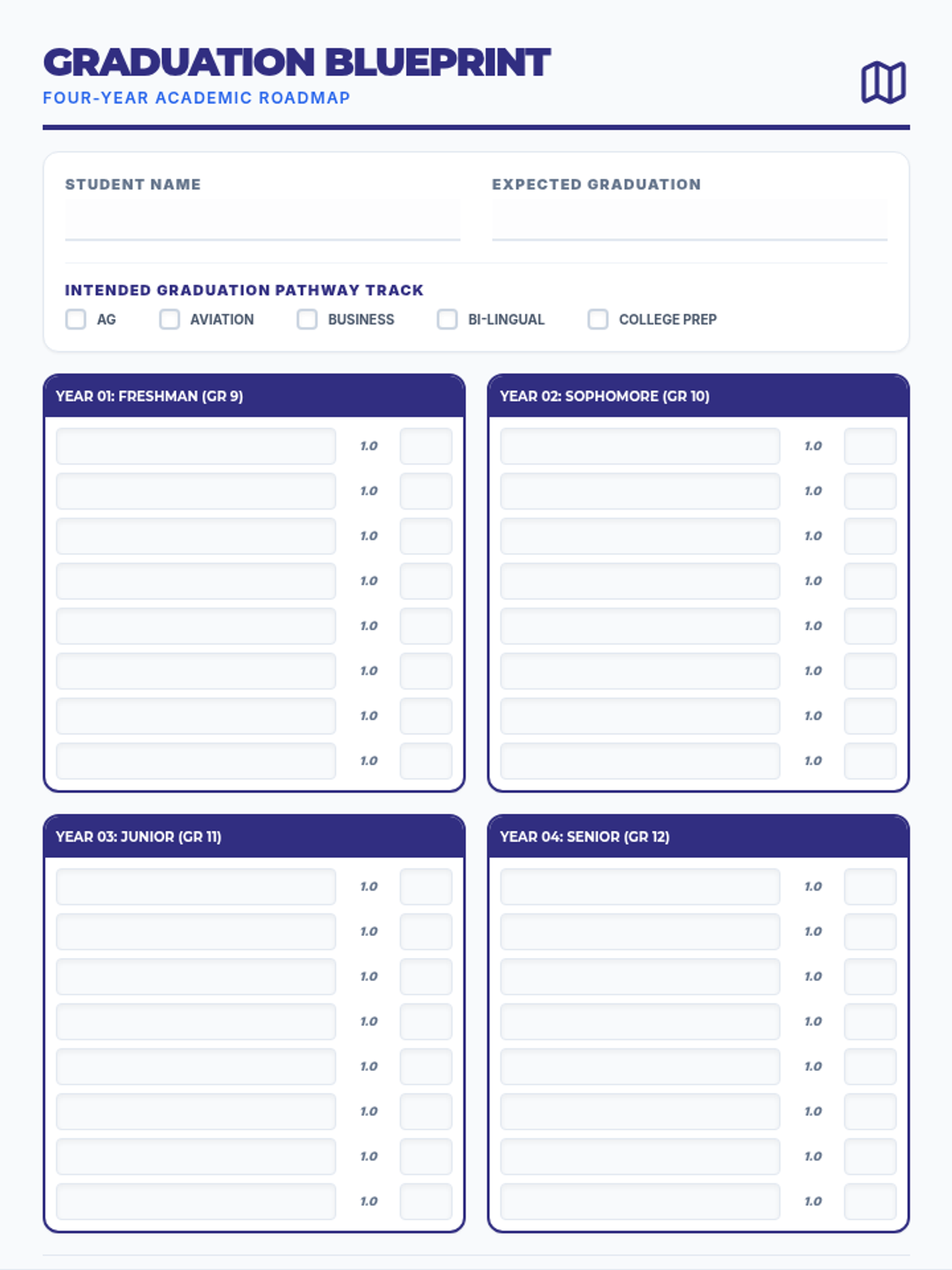
A consolidated 2-page academic planning and tracking tool that combines the 4-year roadmap with the graduation milestone checklist. Features a 4-year course planning grid on page 1 and a comprehensive credit tracker, annual audit verification, and meeting notes section on page 2. Added dedicated space for students to write specific class names for each credit requirement. Corrected font sizes for better readability.
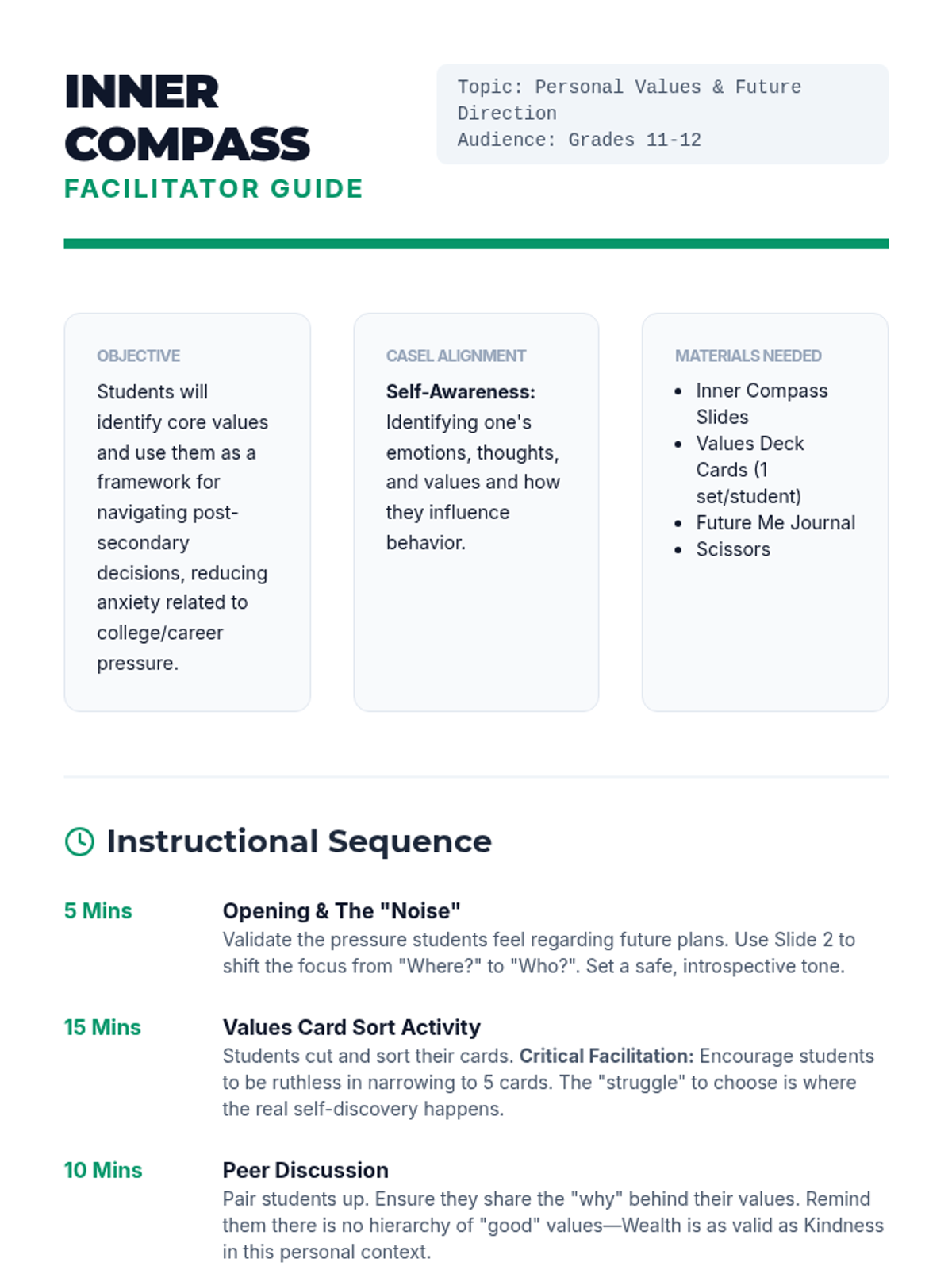
A comprehensive guide for counselors or teachers to facilitate the 'Inner Compass' lesson, including pacing, CASEL alignment, and differentiation strategies for various student paths.
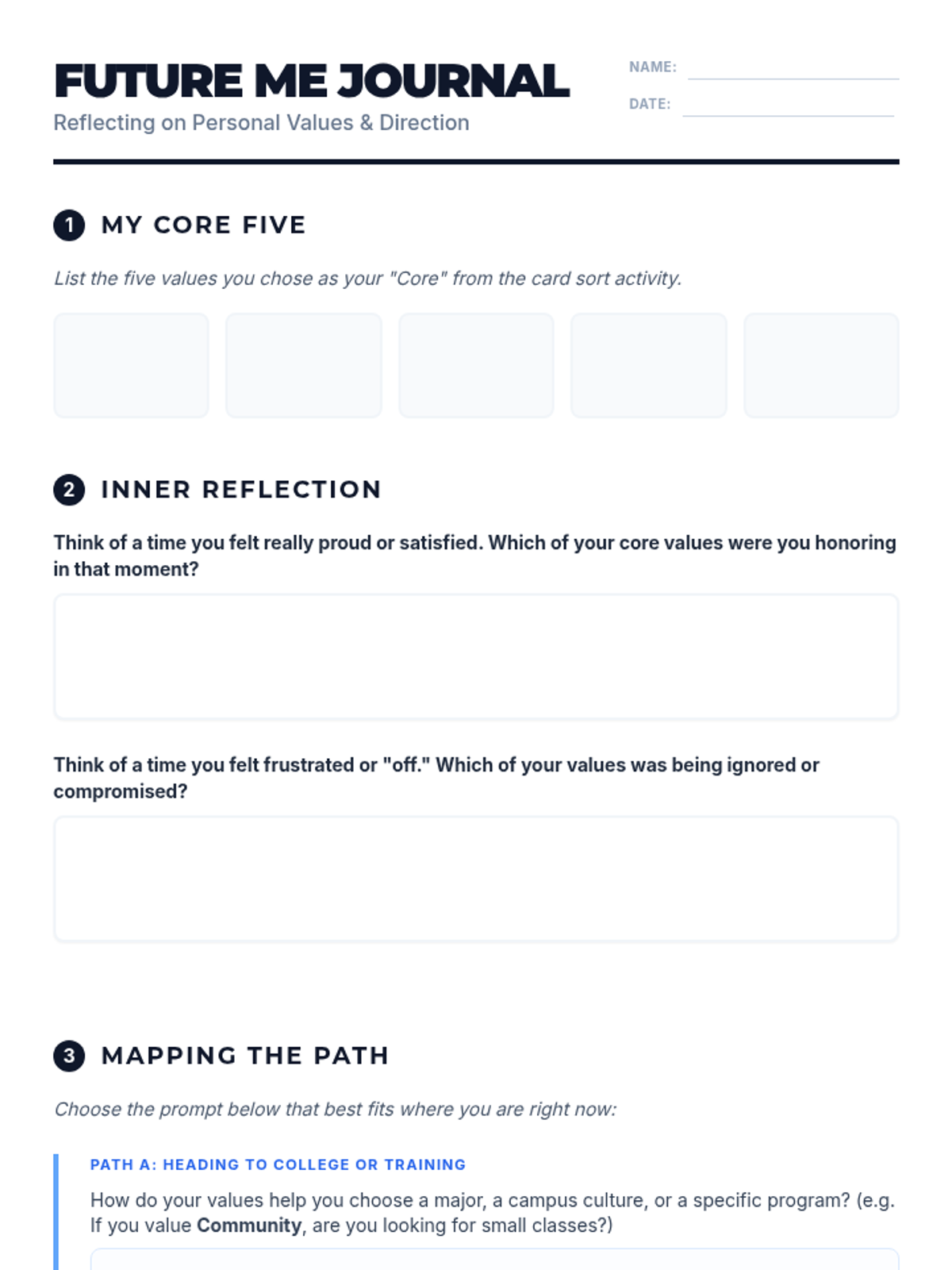
A compact, student-friendly reflective journal for documenting core values, analyzing past experiences, and applying values to various post-secondary paths.
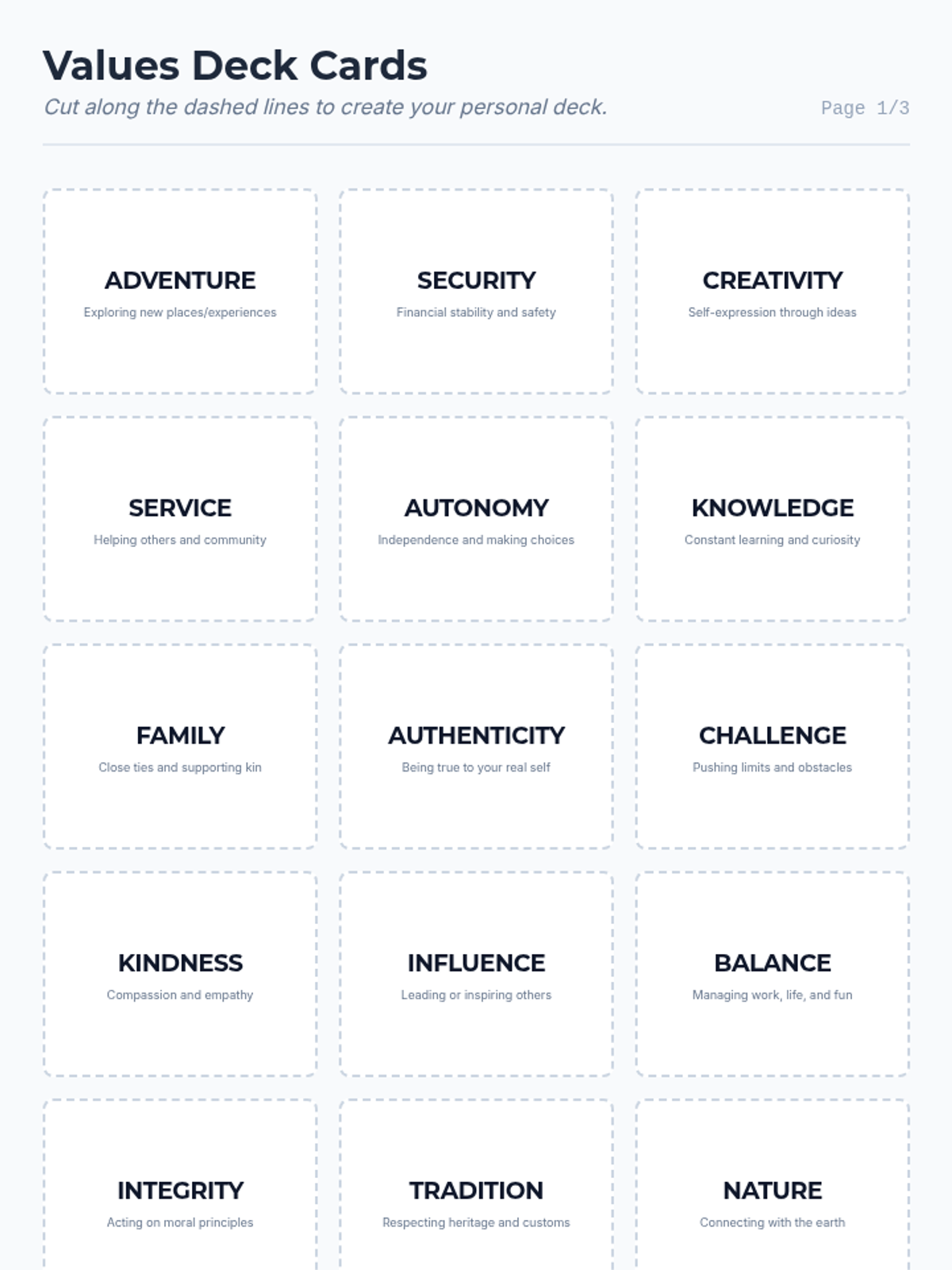
A printable set of value cards for the sorting activity, containing 21 pre-defined values and blanks for personal additions, with a dedicated high-contrast sorting mat on a separate page.
A visual presentation to guide students through the 'Inner Compass' lesson, featuring slides on value definitions, the card sort activity, and peer discussion prompts.
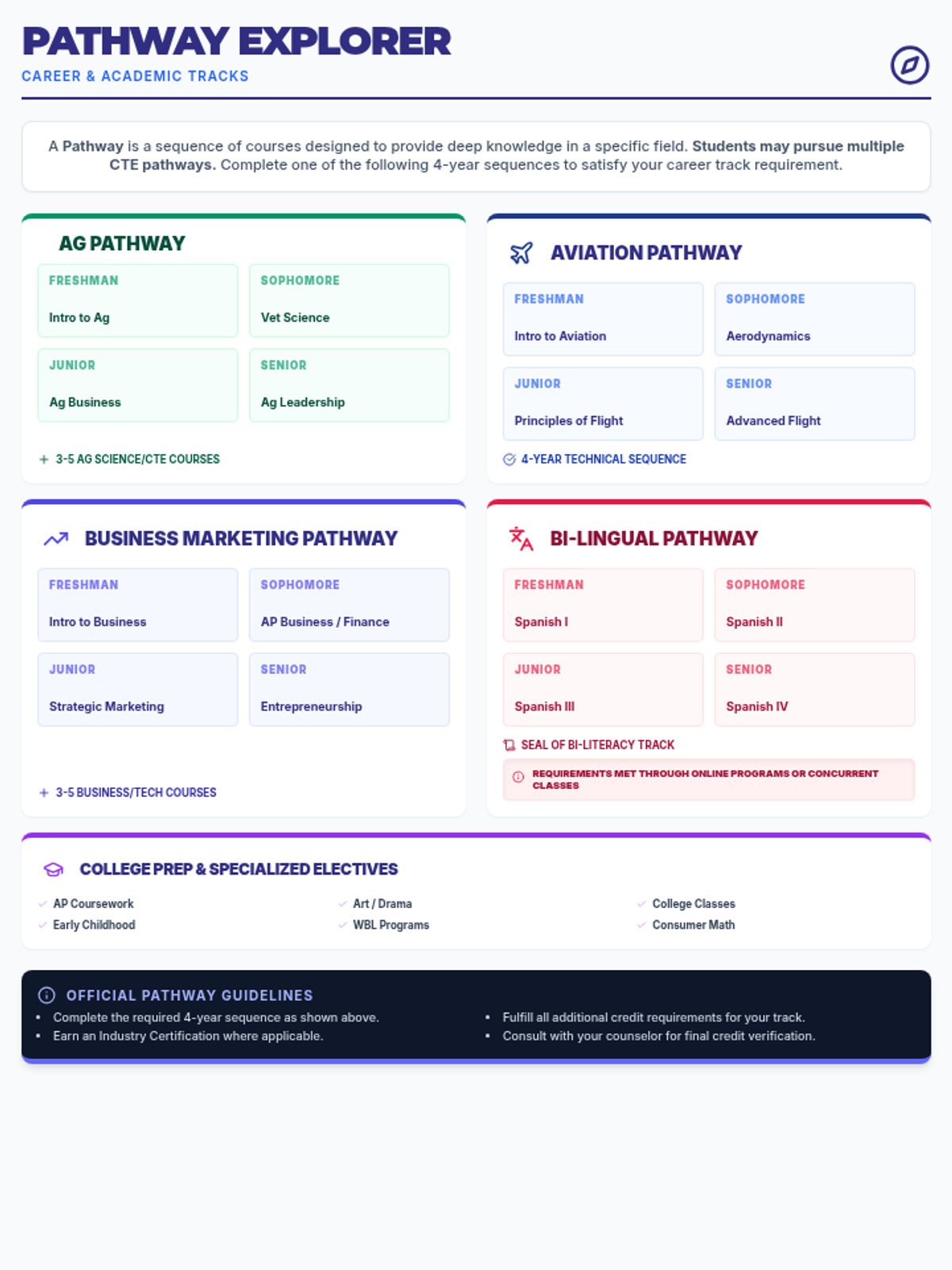
Updated the Pathway Explorer Handout to remove 'Drama' and 'Consumer Math' from the College Prep and Specialized Electives section. The layout remains optimized for a single-page reference with updated pathway annotations.
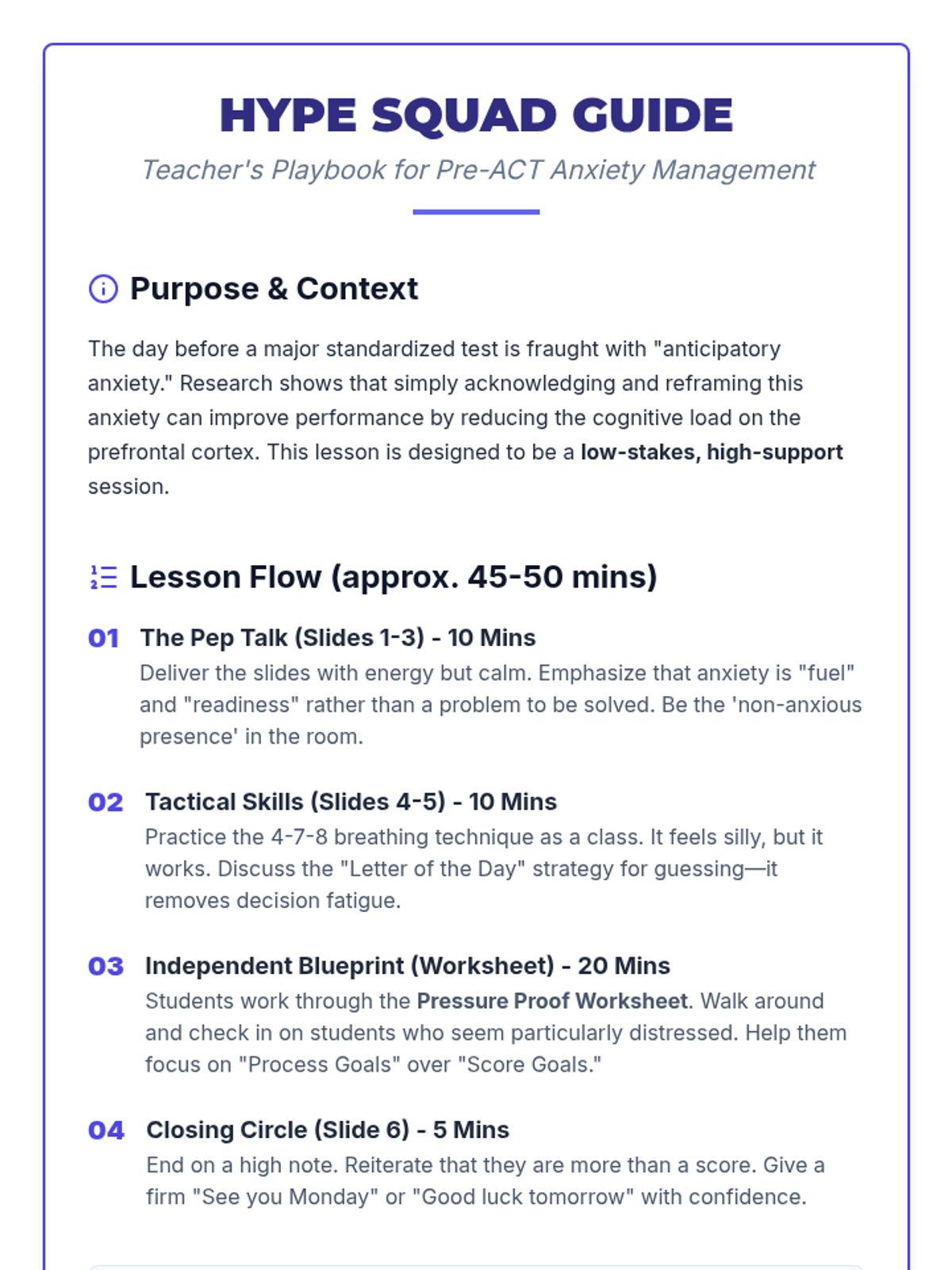
A teacher's facilitation guide for managing pre-ACT anxiety, including instructional flow, talking points, and logistics reminders.
A presentation for the day before the ACT test to help students manage anxiety, understand their physiological responses, and learn tactical test-taking mindsets.
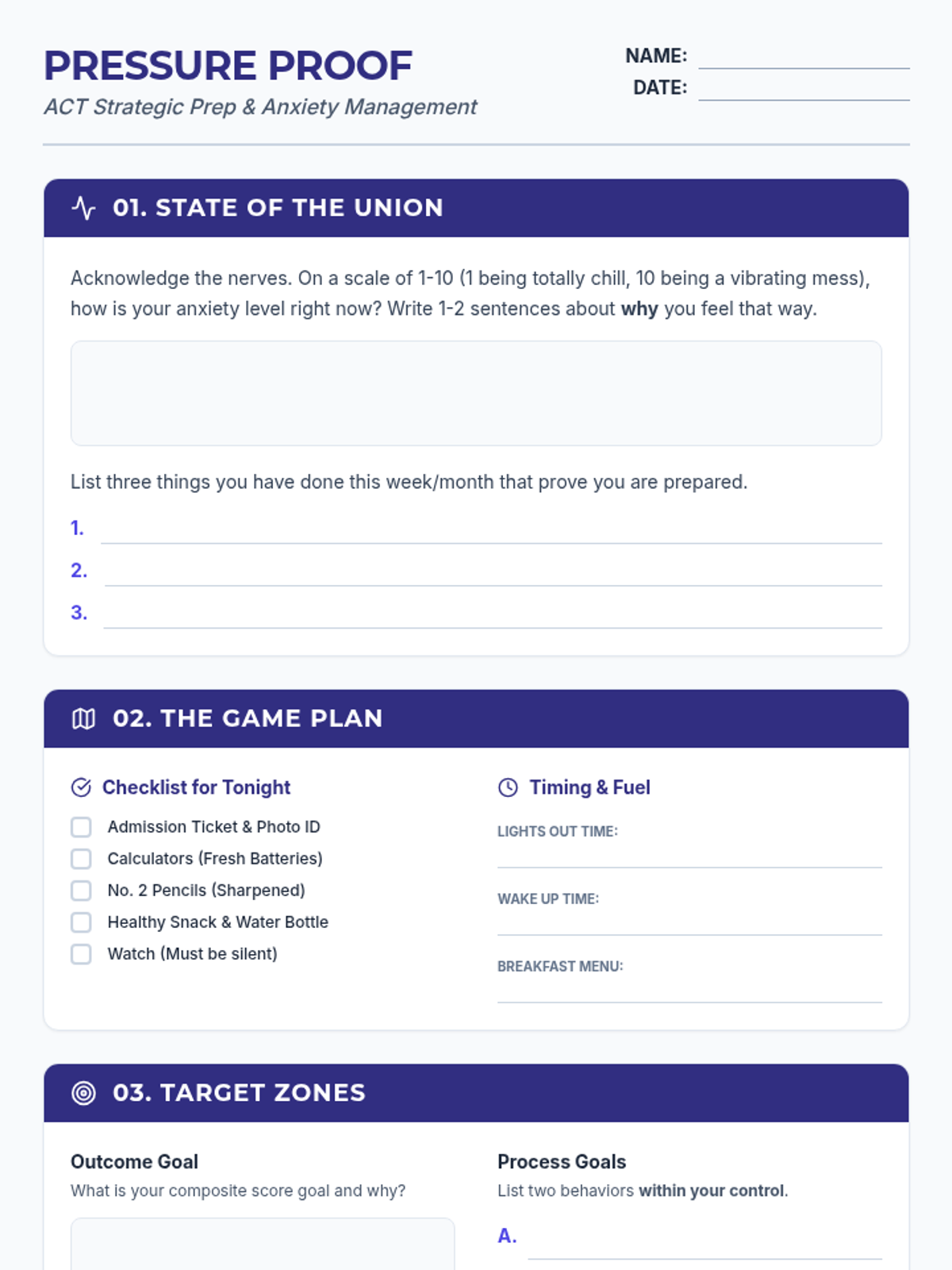
An independent worksheet for students to complete the day before the ACT, focusing on anxiety levels, logistics, and process goals.
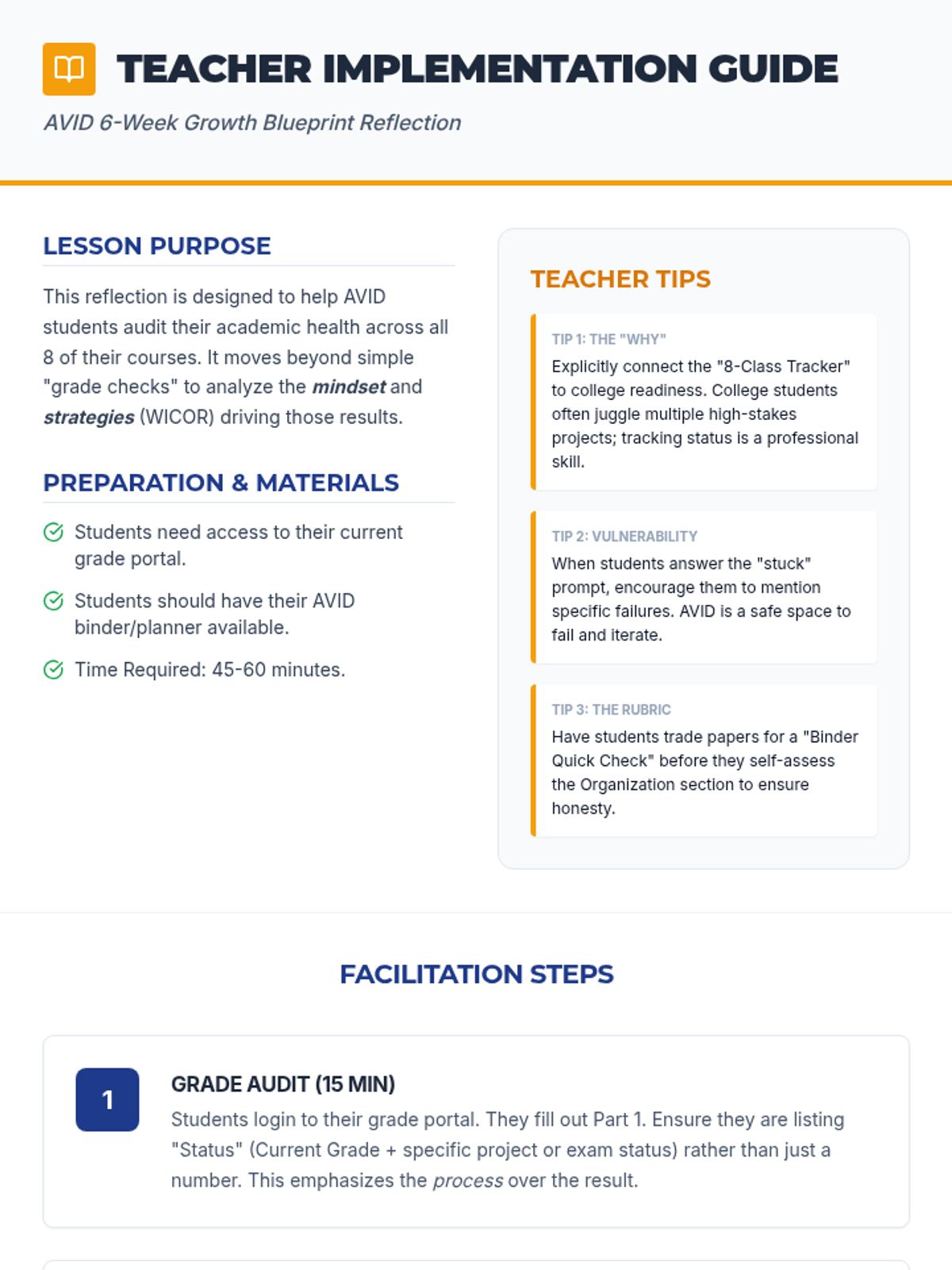
A teacher's guide for implementing the AVID 6-week reflection, including facilitation steps, grading rubrics, and instructional tips for high school CTE educators.
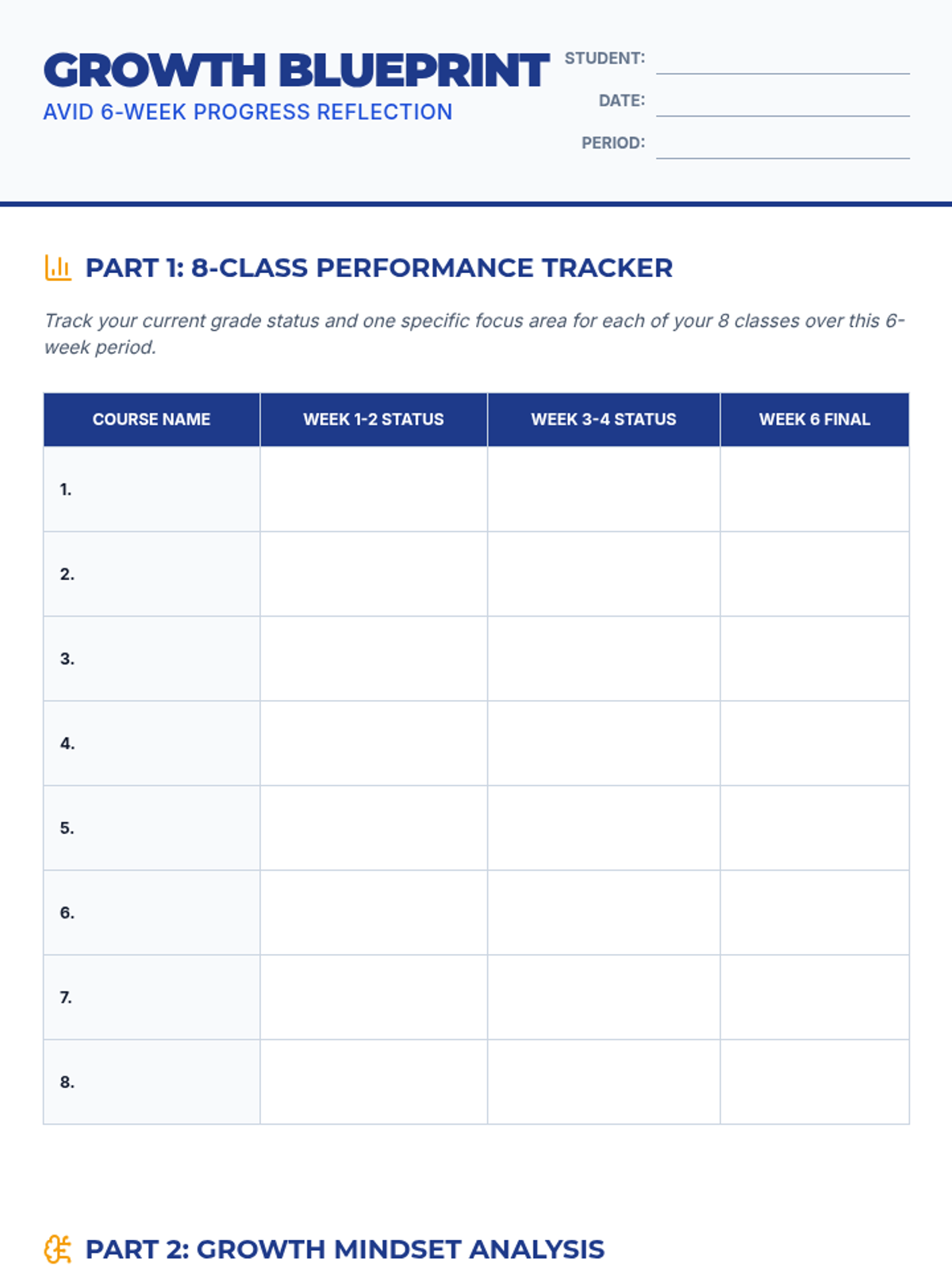
A comprehensive 3-page 6-week reflection document for high school AVID students, featuring an 8-class progress log, growth mindset writing prompts, and a detailed WICOR self-assessment rubric.
A visually engaging slide deck to introduce juniors to the purpose, structure, and high-level strategies of the ACT.
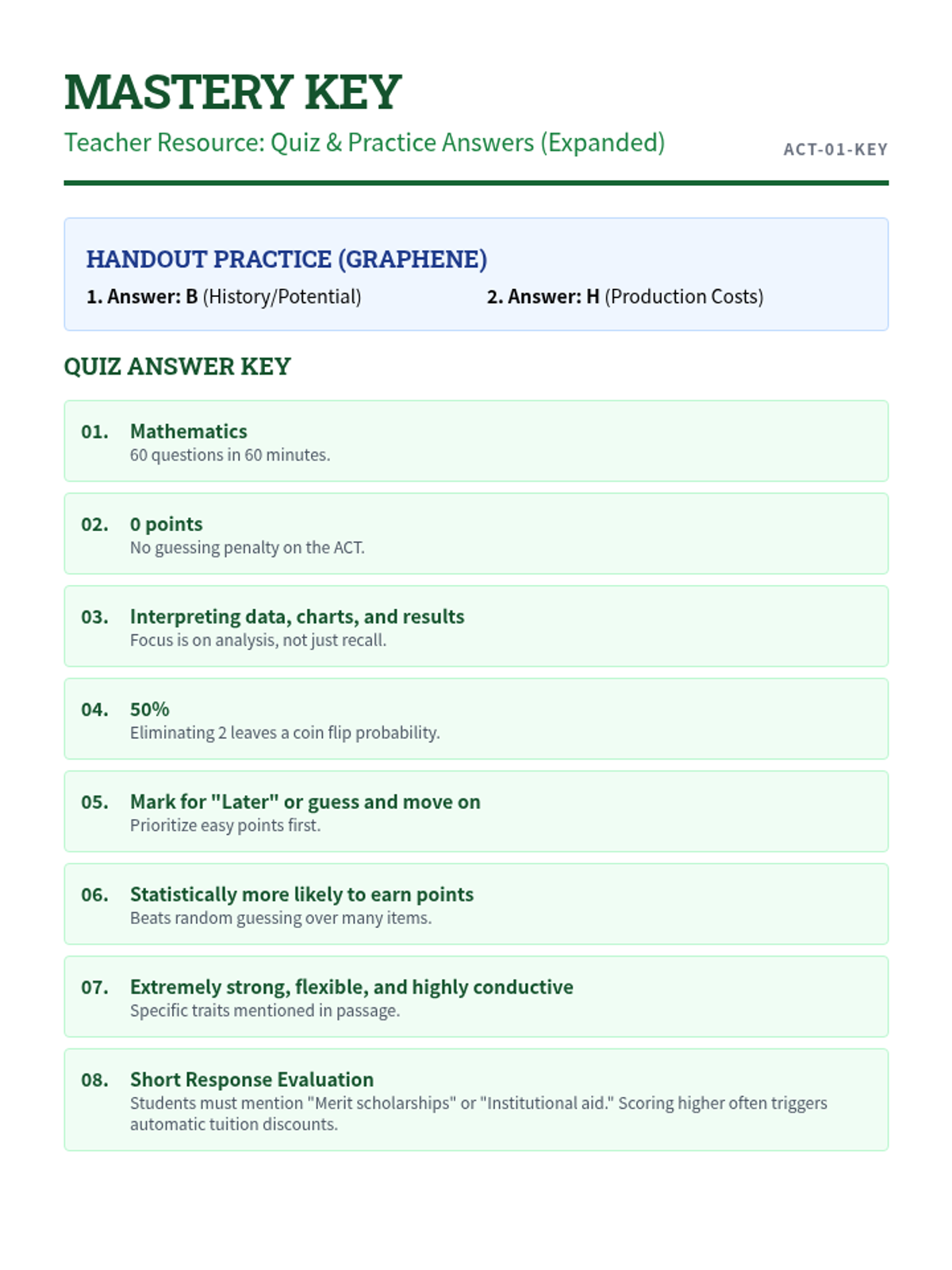
The teacher-facing answer key and grading rubric for the ACT Essentials Handout practice and Test Mastery Quiz.
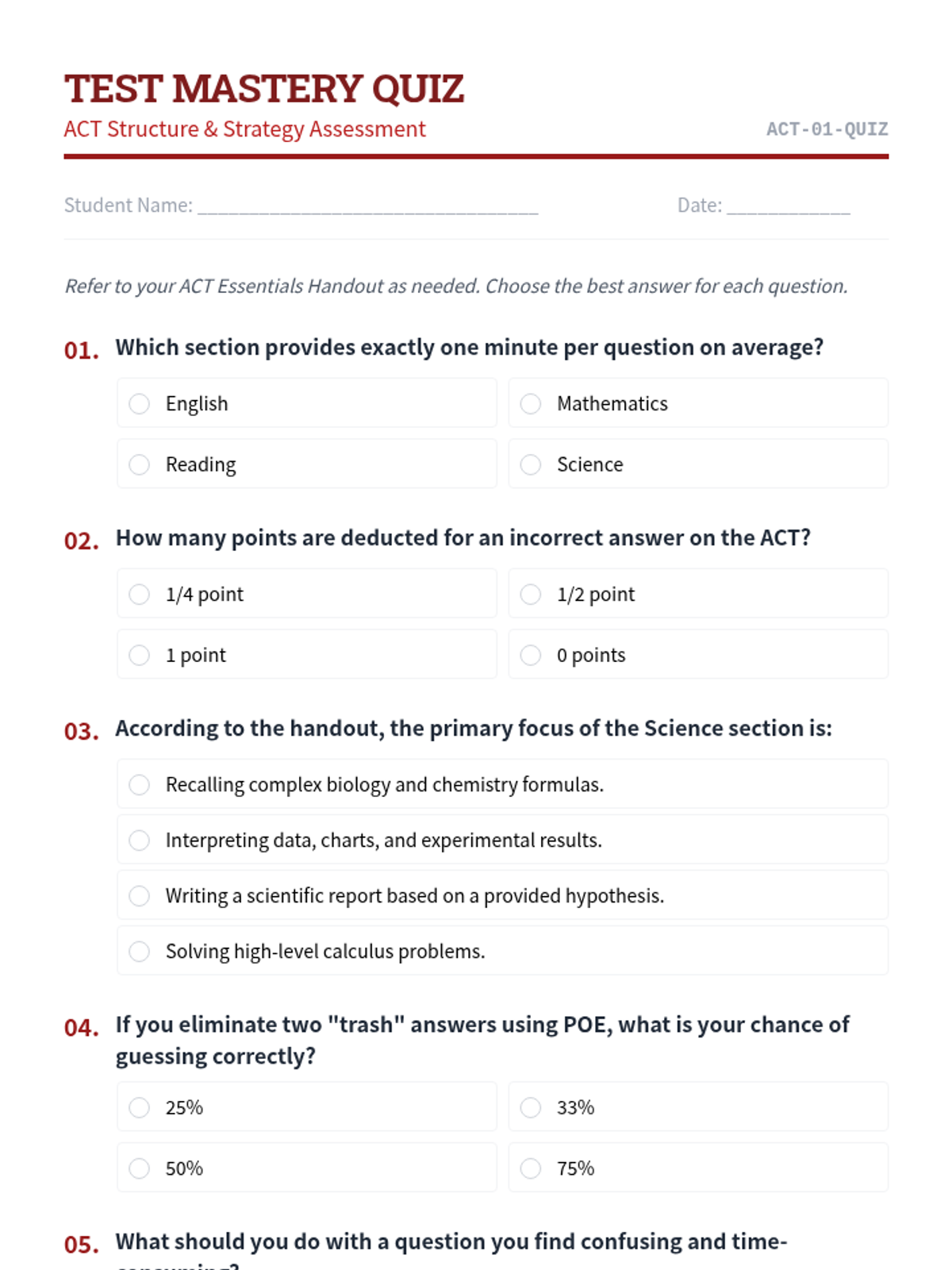
An expanded 2-page comprehension quiz assessing student knowledge of ACT sections, admissions impact, and specific test-taking strategies.
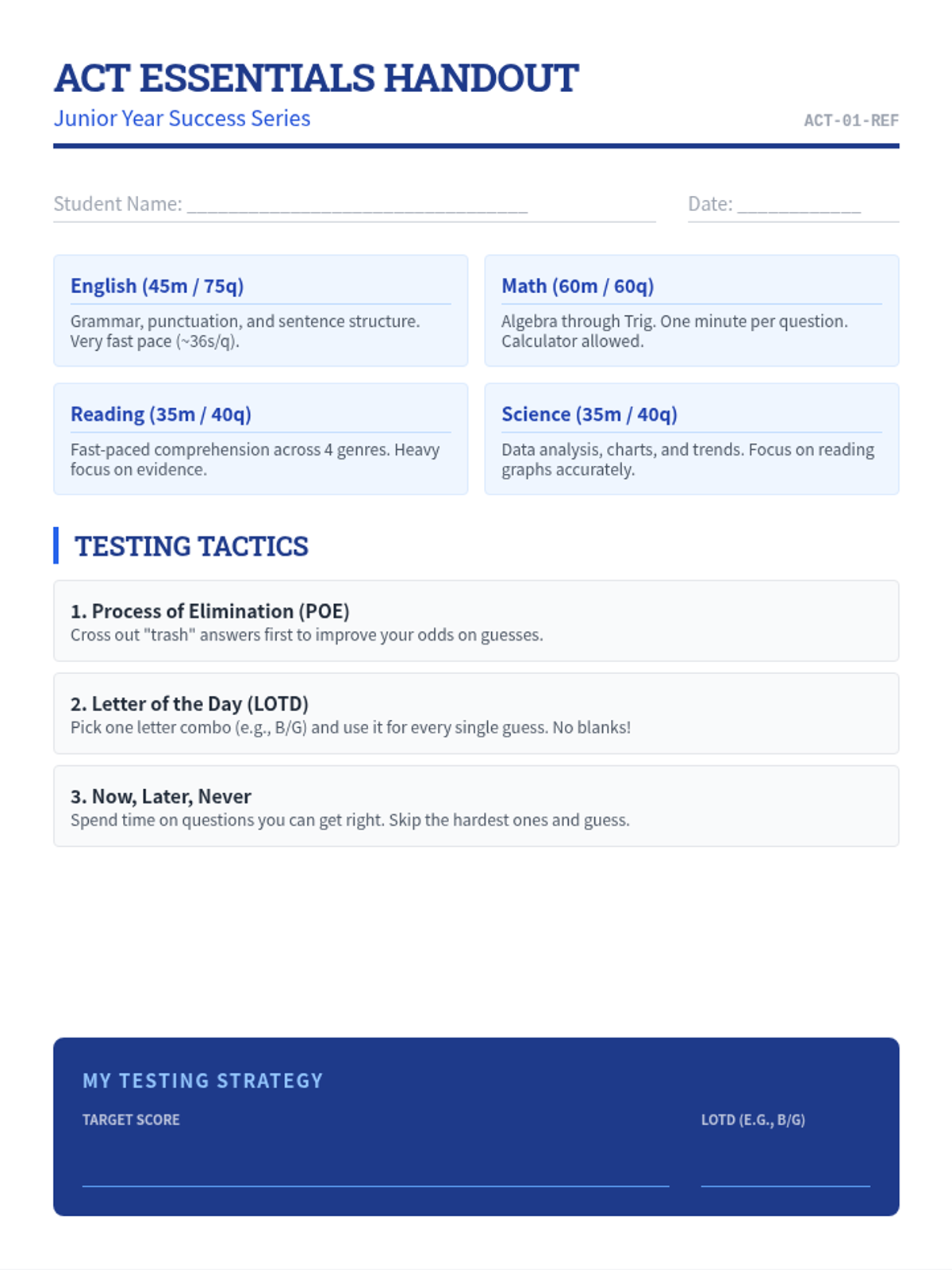
A comprehensive 2-page handout including a reference guide for ACT sections/strategies and a simulated reading passage with practice questions.
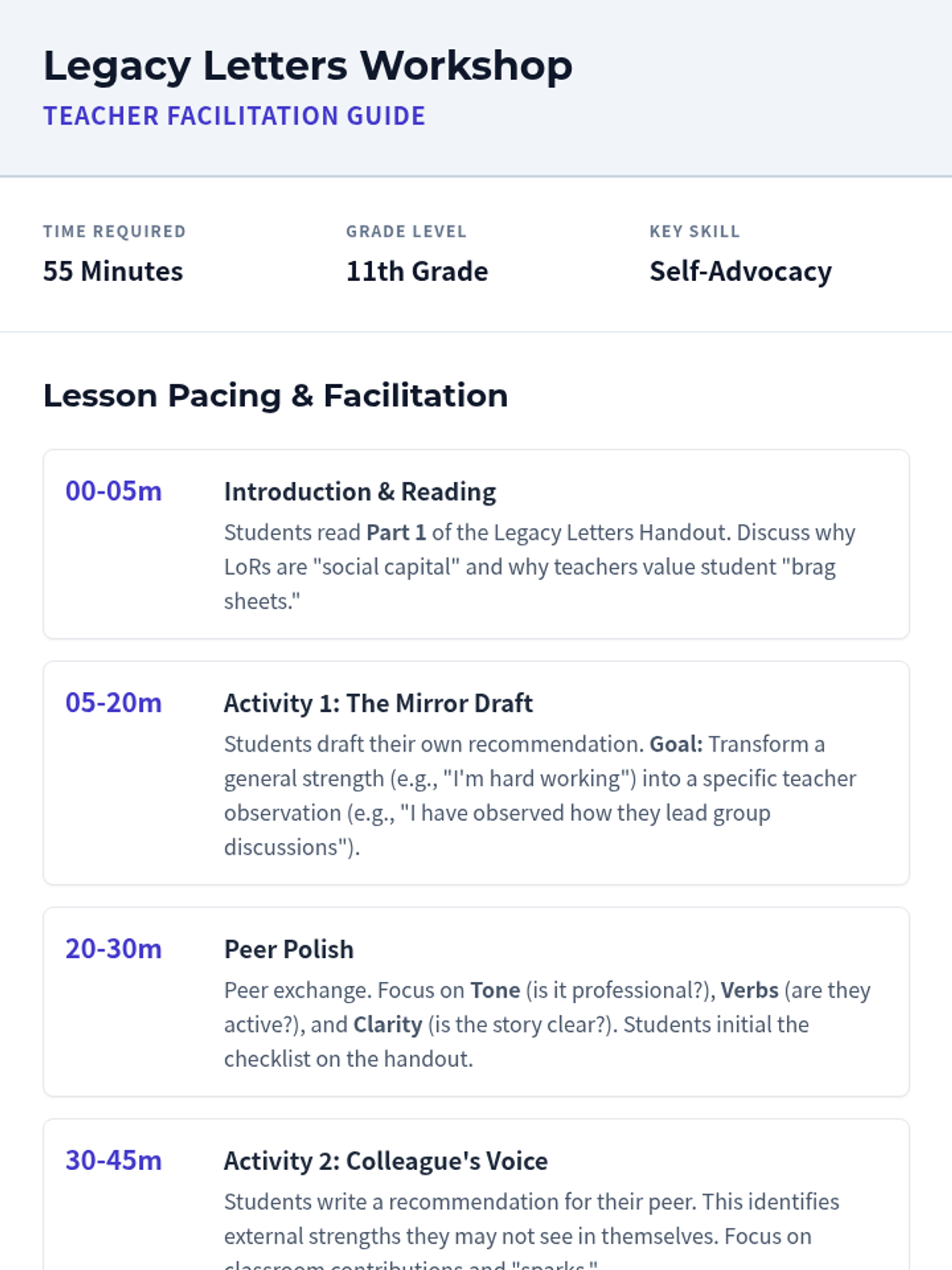
A teacher facilitation guide for the Legacy Letters lesson, providing detailed pacing, discussion prompts, and differentiation strategies for managing the 55-minute workshop.
A 7-slide presentation supporting the Legacy Letters workshop. It includes a lesson agenda, an explanation of letters of recommendation, timed writing prompts for self and peer drafts, and closing reflection questions.
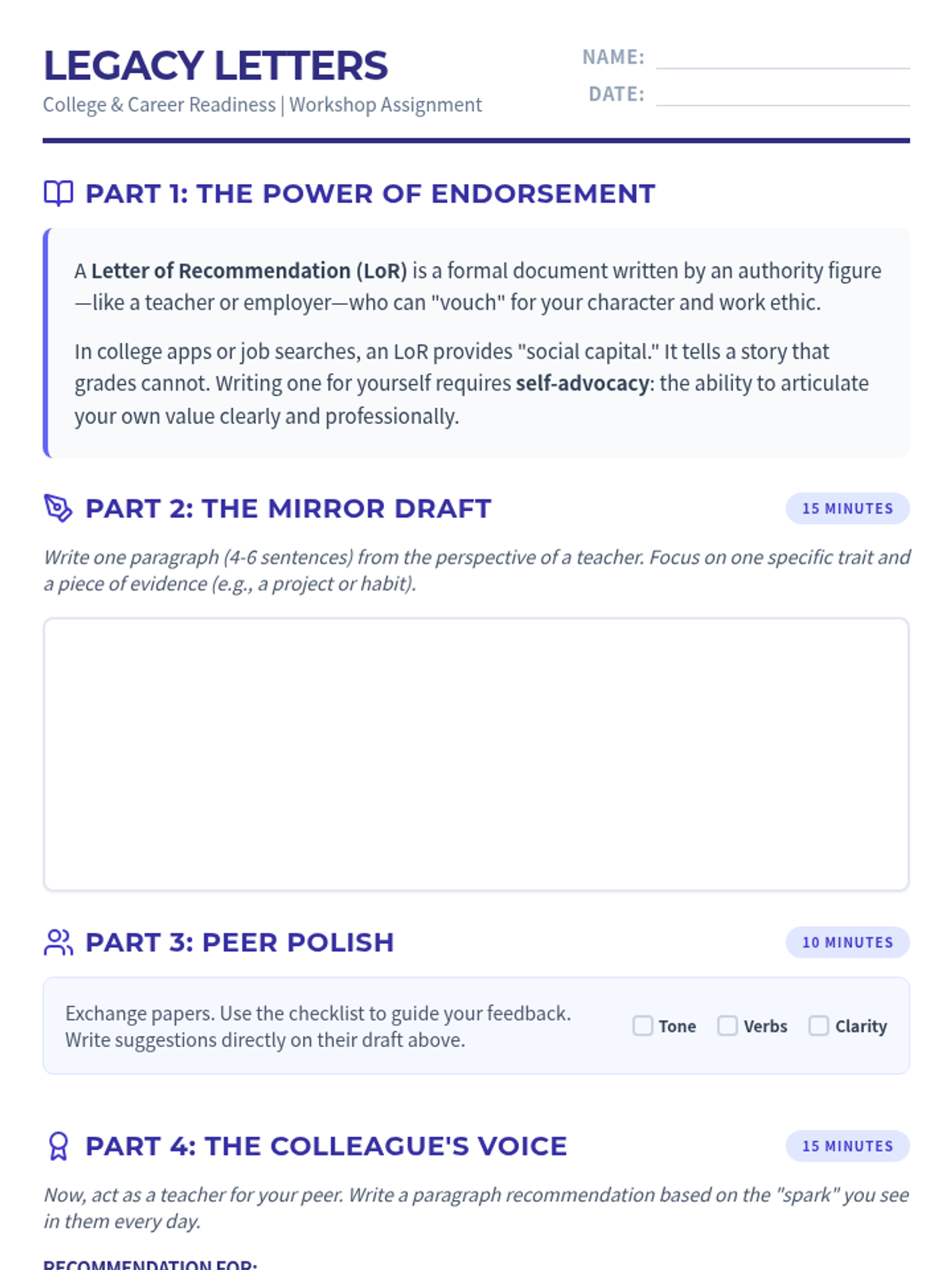
A comprehensive student worksheet for the Legacy Letters workshop. It includes a reading passage on letters of recommendation, spaces for self-drafting, peer-drafting, and guided reflection questions focused on self-advocacy and strengths.
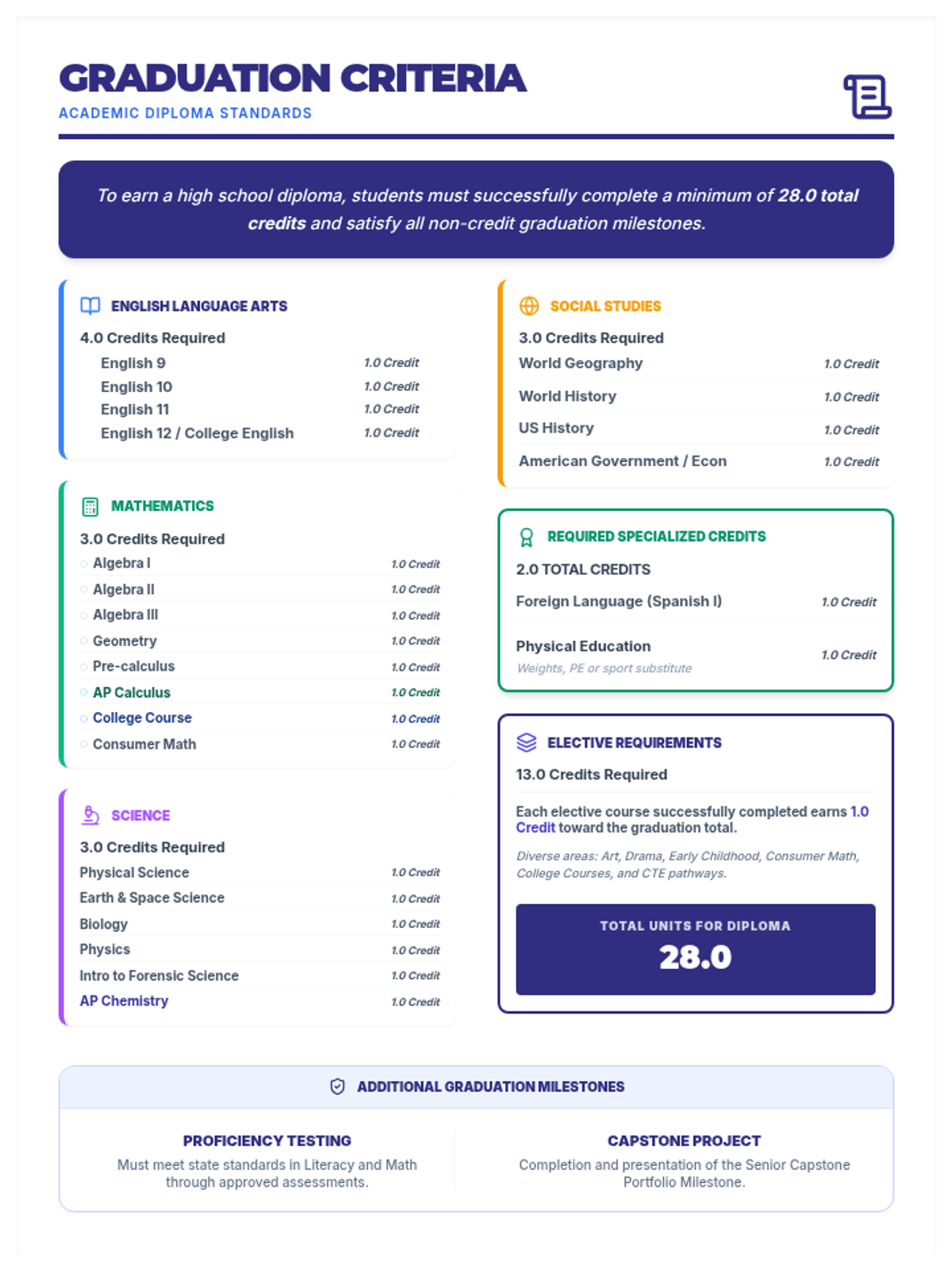
Updated graduation criteria reference sheet with '1.0 Credit' annotations for each listed course, ensuring clarity on the value of individual classes toward the 28.0 total credit requirement. Maintenance of clean, universal layout.
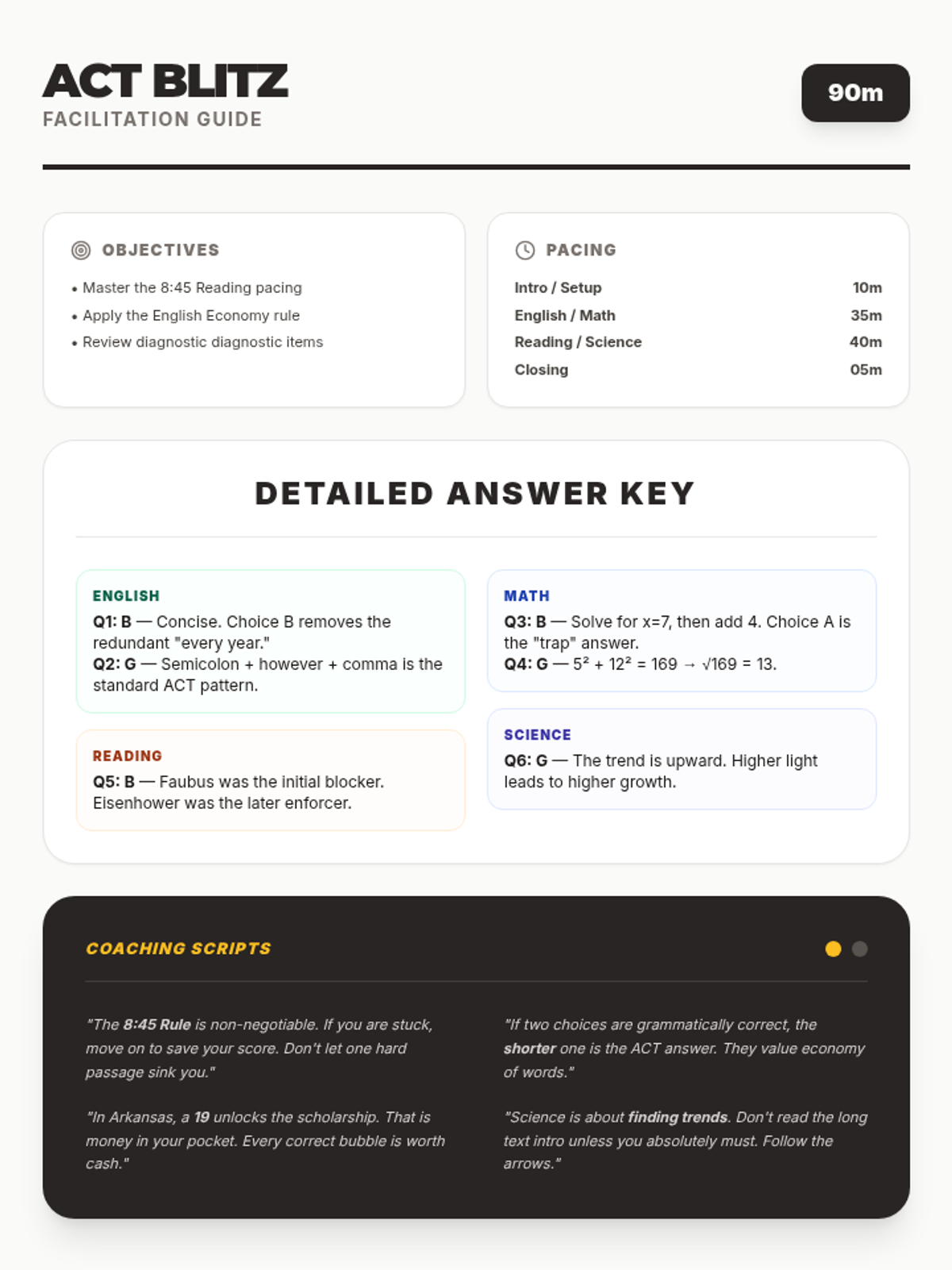
A comprehensive teacher's guide for facilitating the ACT Blitz lesson, including pacing, detailed answer explanations, and motivational coaching prompts.
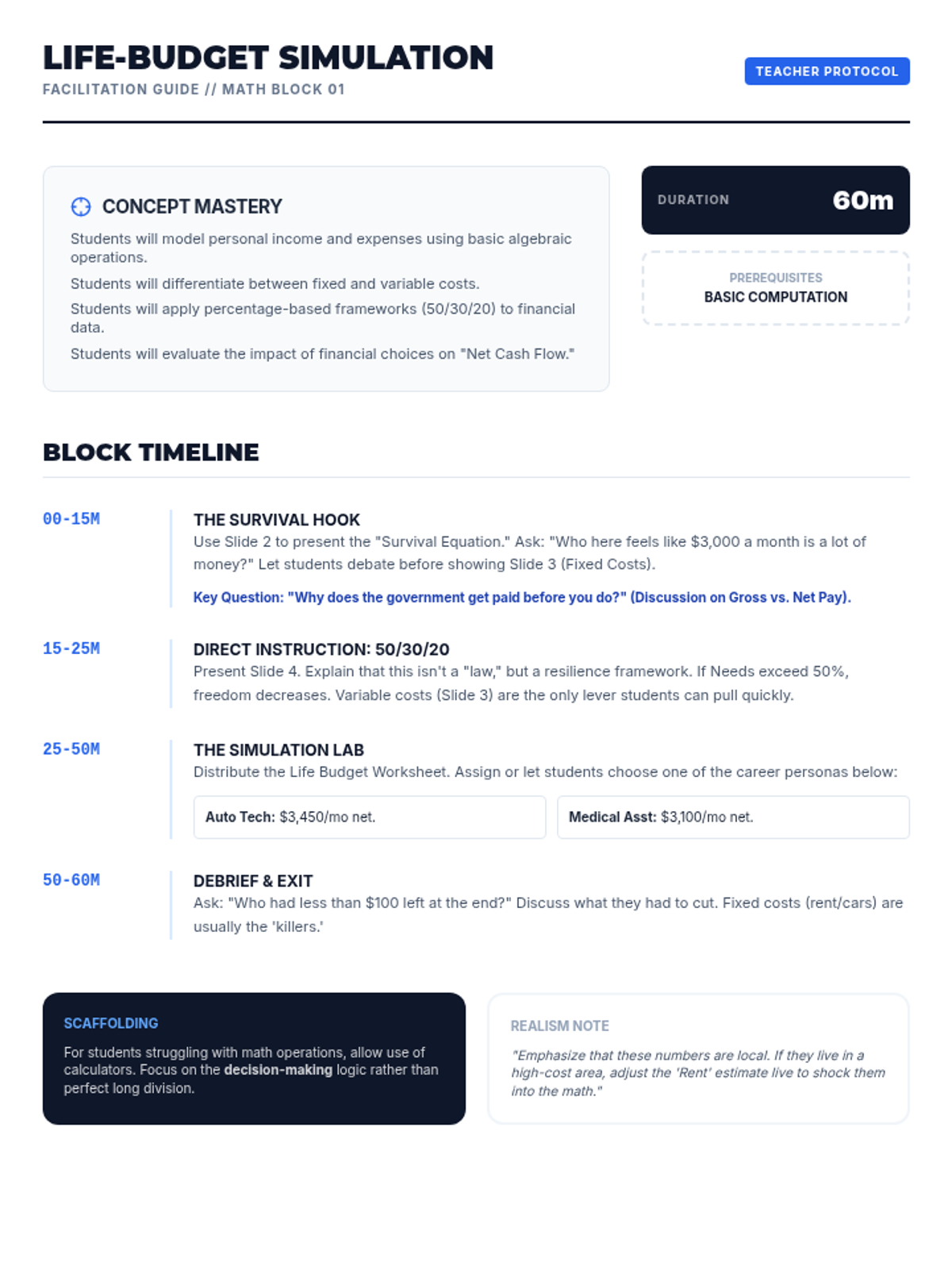
A facilitation guide for teachers to lead a 60-minute Applied Math workshop on budgeting, featuring persona choices, discussion prompts, and scaffolding tips. Contextualized for Cape Cod and Eastern Massachusetts. Updated with instructions for "Commitment" decision-making.
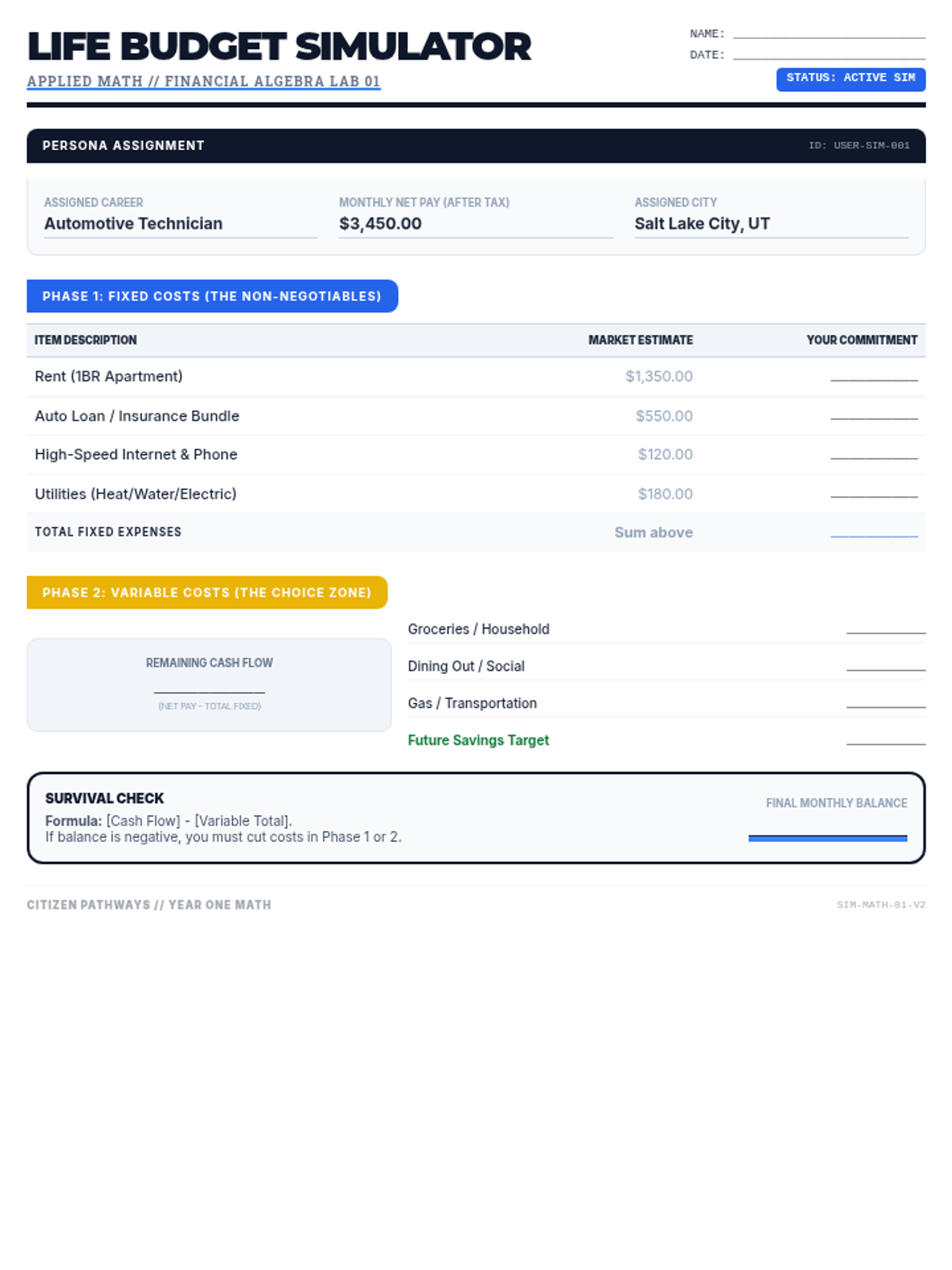
An applied math worksheet for a Life-Budget Simulation, featuring a "Decision Key" that explains how to fill out the commitment column by using hacks like roommates or cutting non-essential items. Redesigned to fit on one page. Higher contrast for input areas. Final polish for student completion.
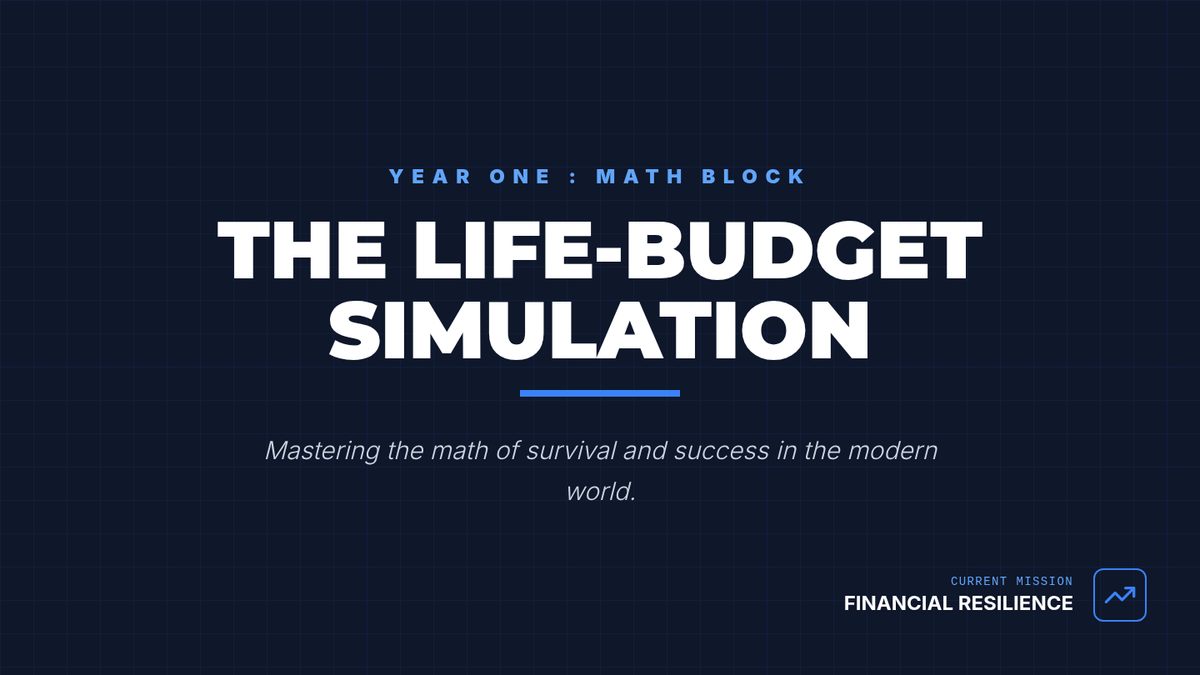
A high-impact math slide deck for a Life-Budget Simulation, introducing financial literacy concepts. Includes a specific slide on "Estimate vs. Commitment" to help students understand how to make strategic financial choices like roommates or shared plans. Contextualized for Cape Cod and Eastern MA. Final pass for layout.
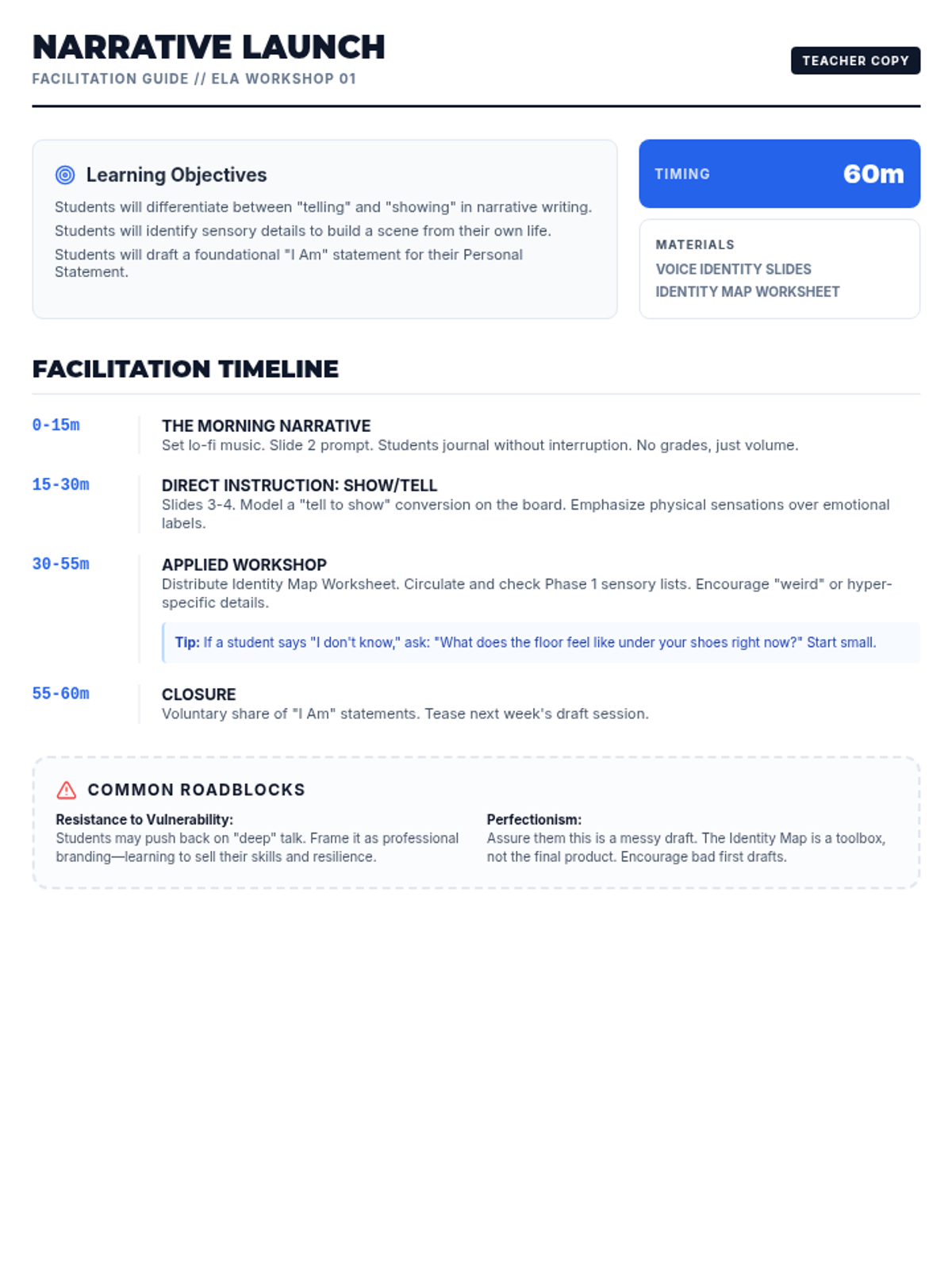
A facilitation guide for teachers to lead the 60-minute ELA Workshop 01, including pacing, discussion prompts, and differentiation strategies. Optimized for single-page use.
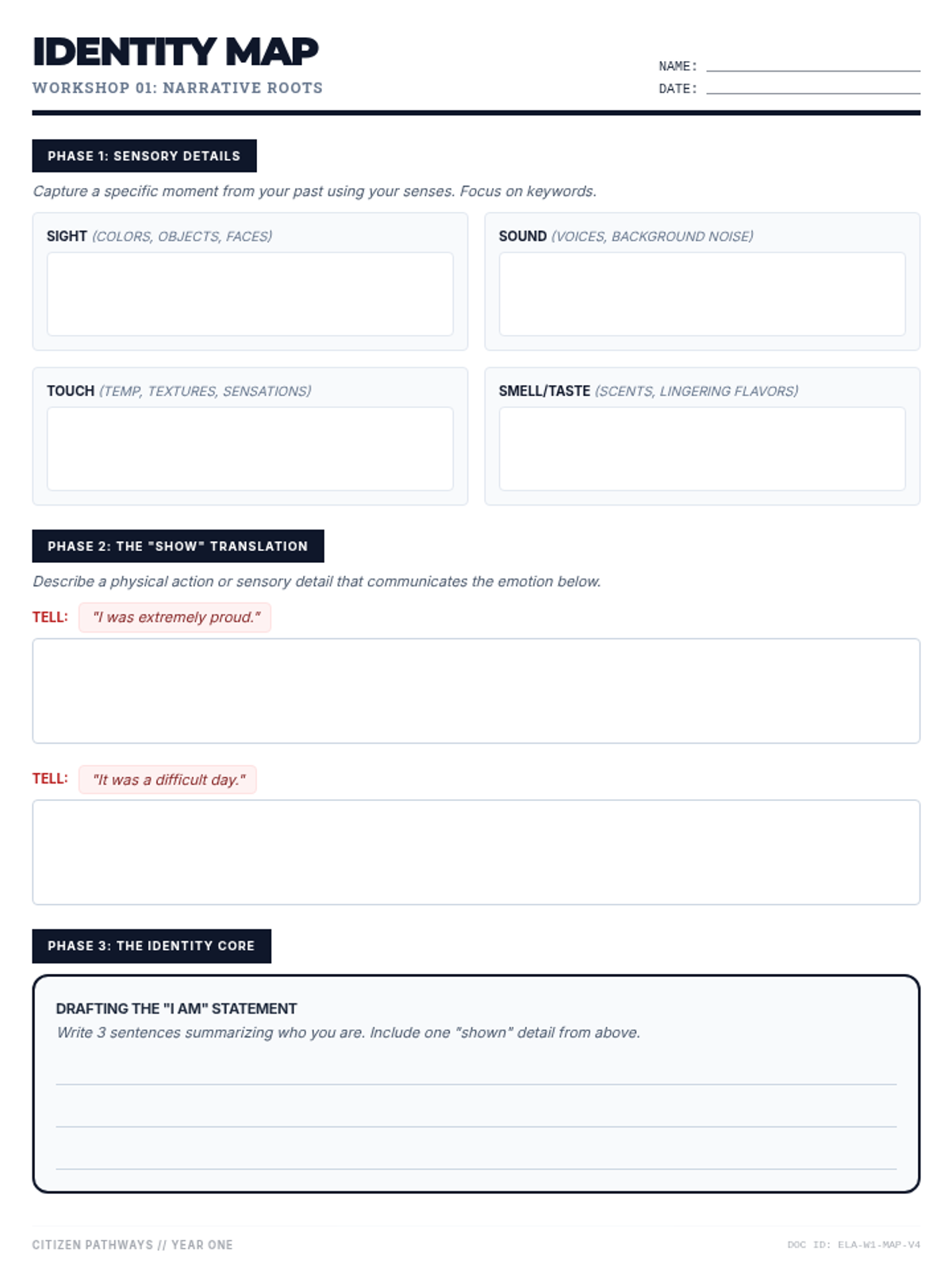
A student worksheet for the first ELA workshop, providing space for sensory brainstorming, narrative practice, and drafting an identity statement. Redesigned to fit on one page. Higher contrast and optimized for handwriting. Final polish for spacing.
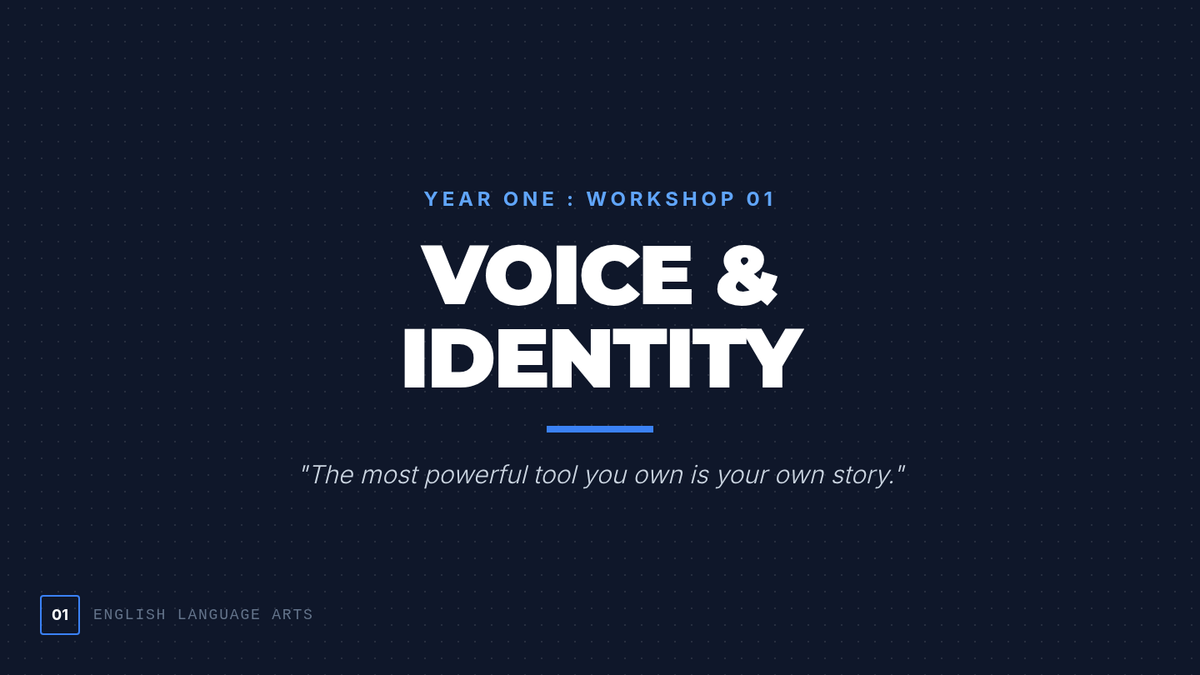
A visually engaging slide deck for the first ELA workshop, focusing on narrative voice, identity, and the "Show, Don't Tell" technique. Simplified for cleaner rendering and larger text. Final pass for layout.
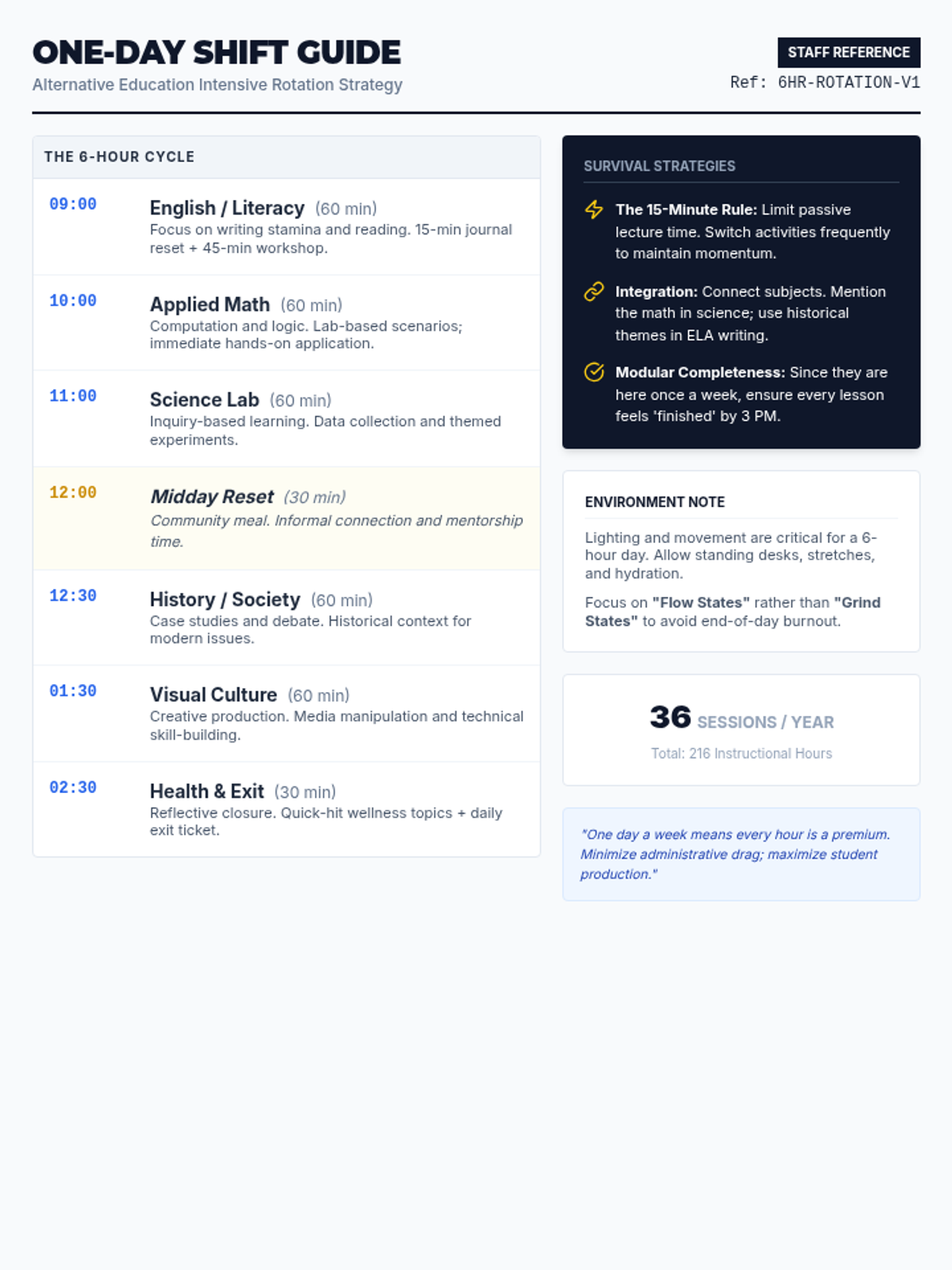
A logistical guide for teachers detailing the 6-hour rotating schedule and instructional strategies. Updated with flexible block-based timing and renamed lunch period. Updated with regional context.
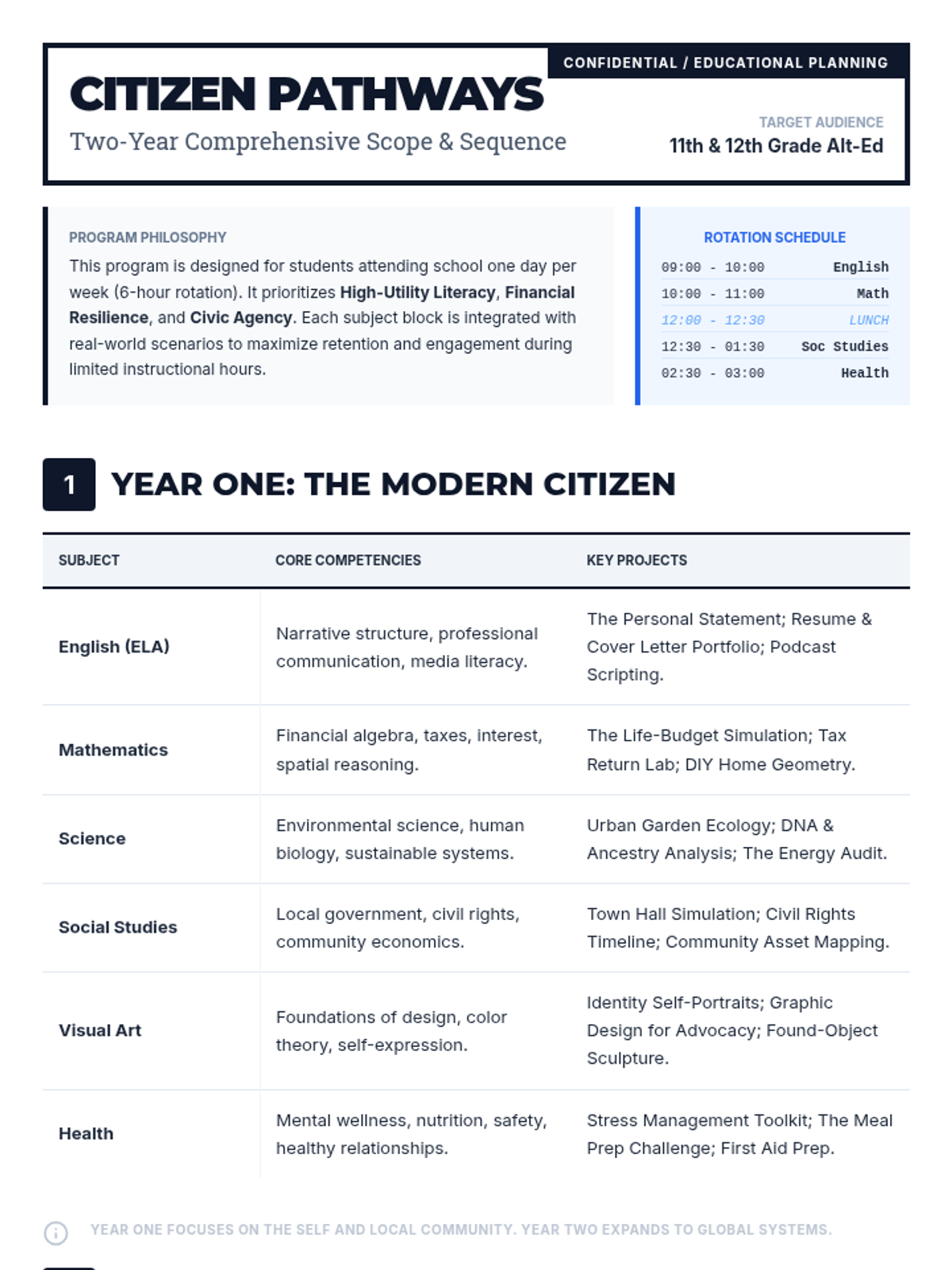
A blueprint-themed two-year scope and sequence for an alternative education program, detailing subject competencies and key projects for 11th and 12th graders. Updated with flexible timing and renamed lunch period. Now localized for Cape Cod and Eastern MA.
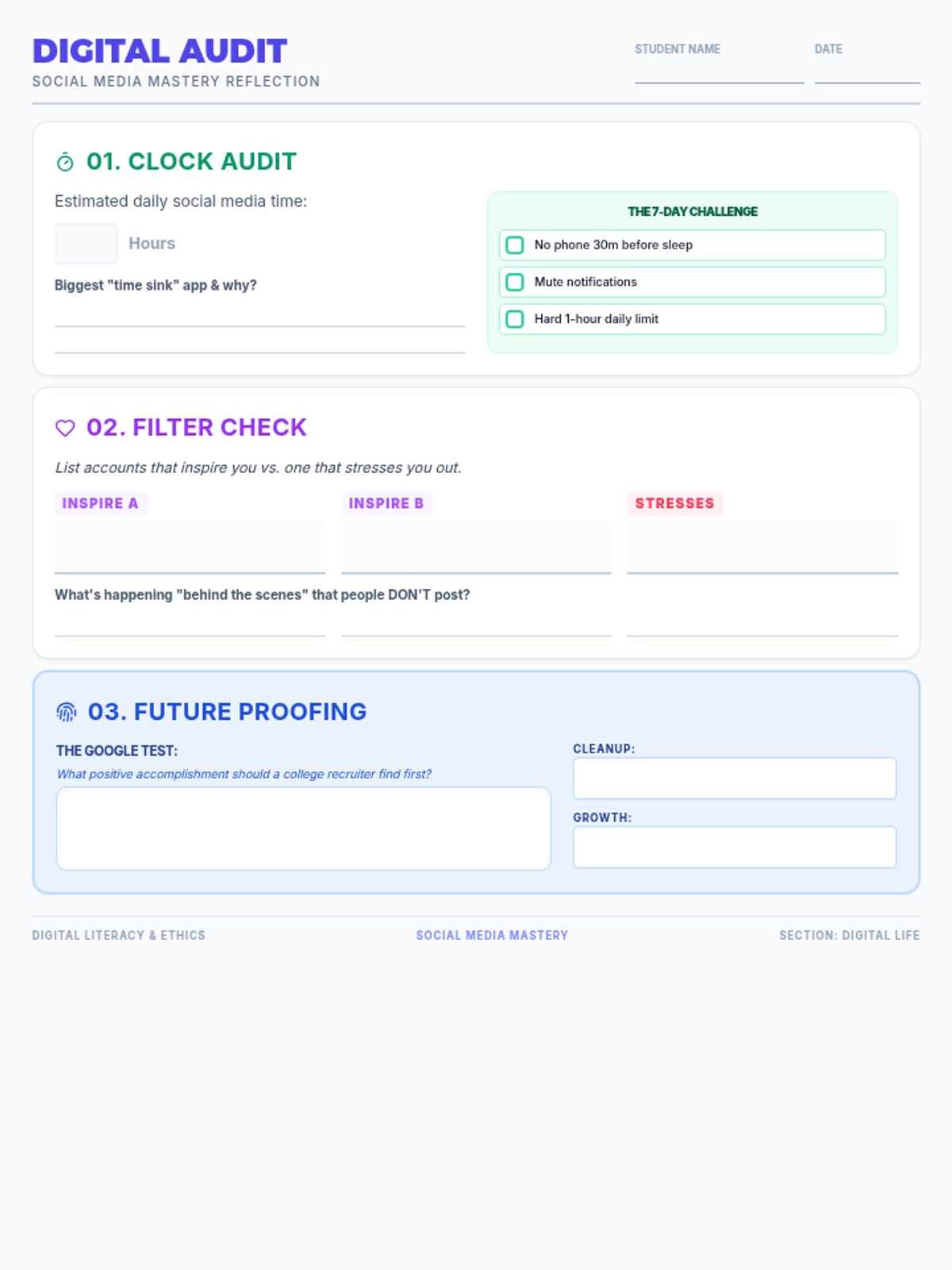
A reflection worksheet for students to audit their own social media habits. Includes a screen time self-assessment, a "filter check" to identify healthy vs. toxic accounts, and a strategic "Google Test" exercise for digital footprint management.
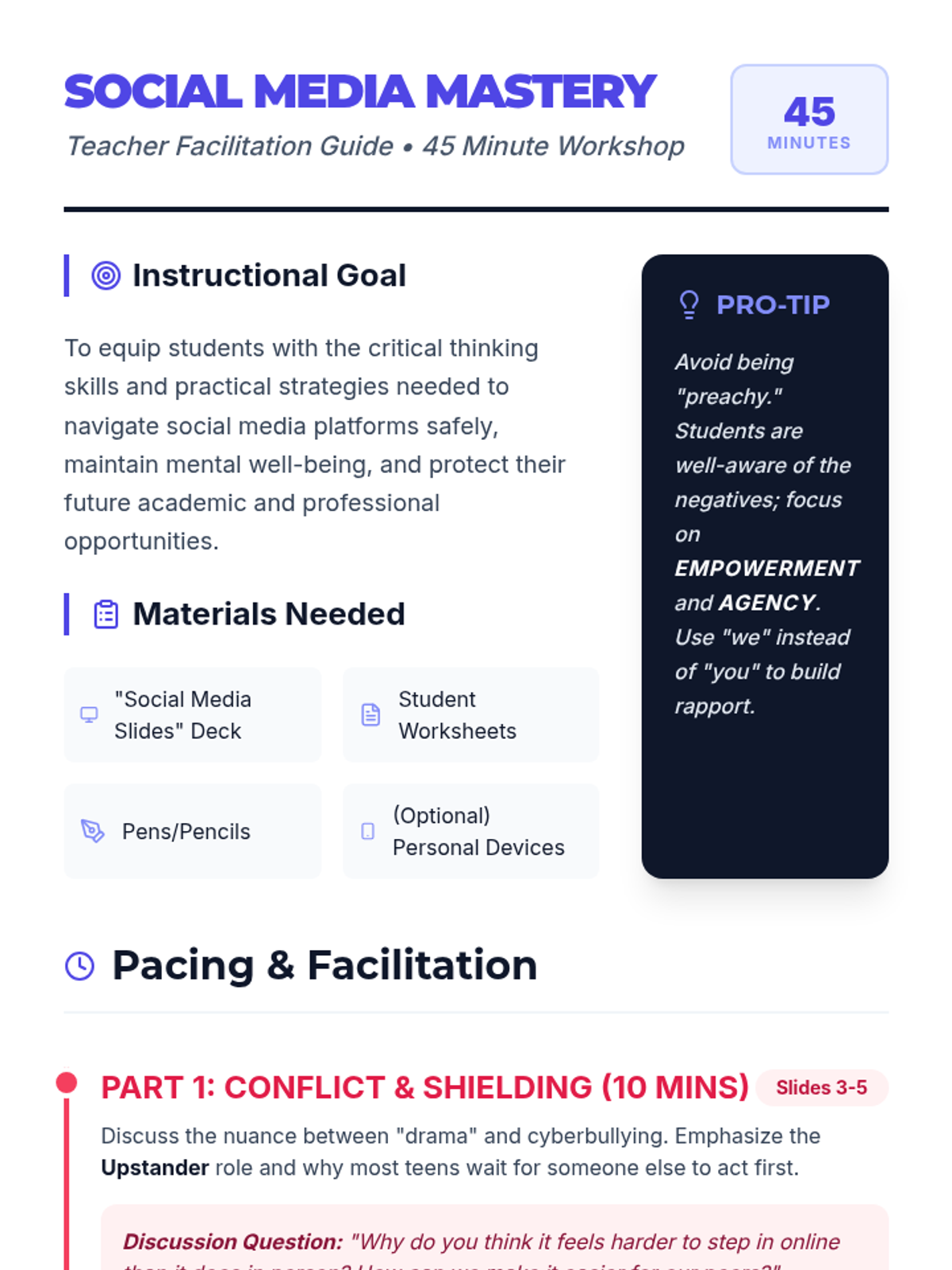
A detailed facilitation guide for teachers to deliver the Social Media Mastery workshop. Includes time-stamped pacing, specific discussion prompts for each slide section, and strategies for handling common student pushback.
A high-impact 14-slide presentation designed to engage students in critical conversations about social media. It features modern aesthetics, bold typography, and clear sections on cyberbullying, mental health, screen time boundaries, and digital footprint for college.
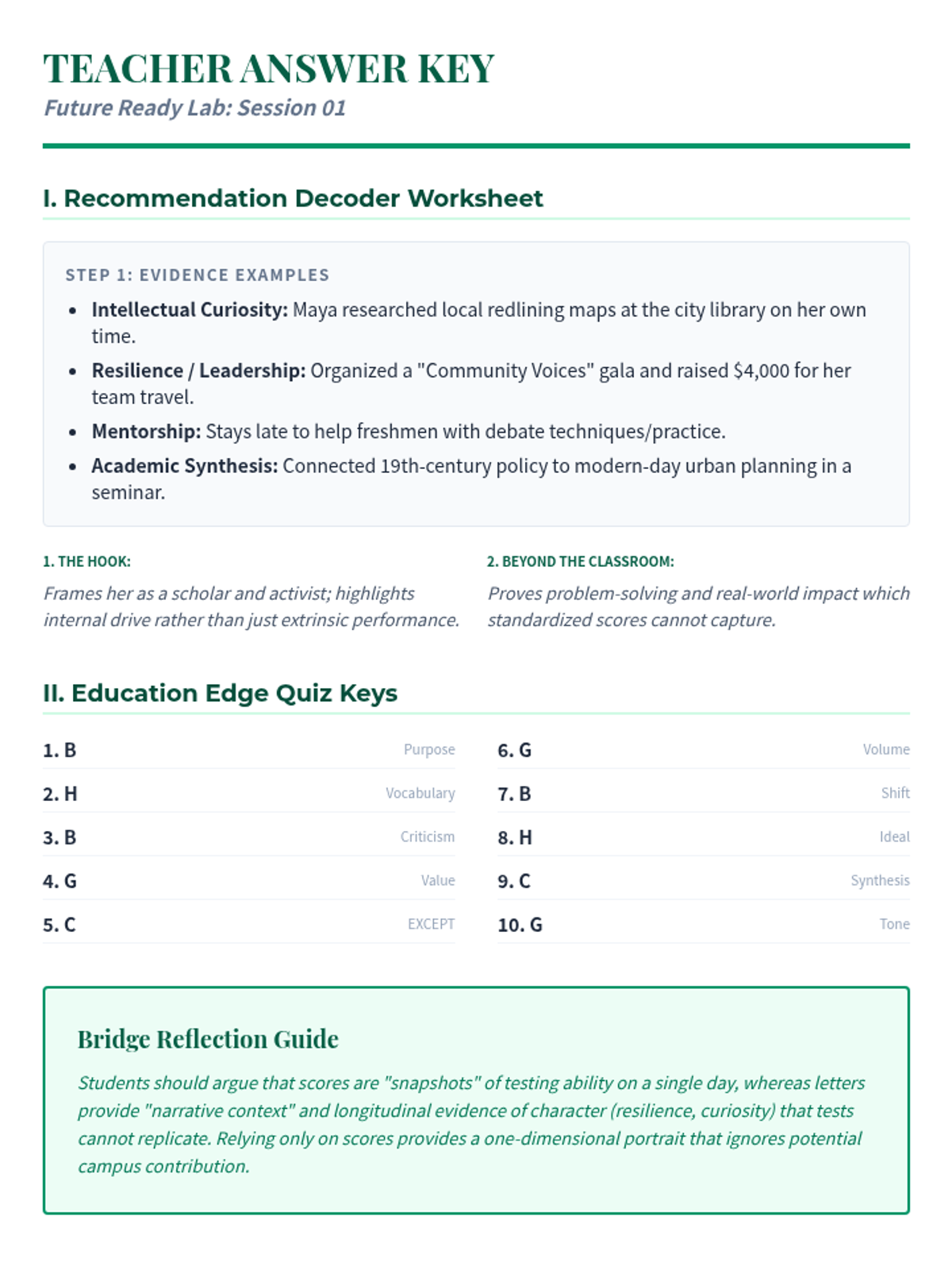
A teacher guide with answer keys and discussion points to facilitate a friendly lesson on holistic college admissions.
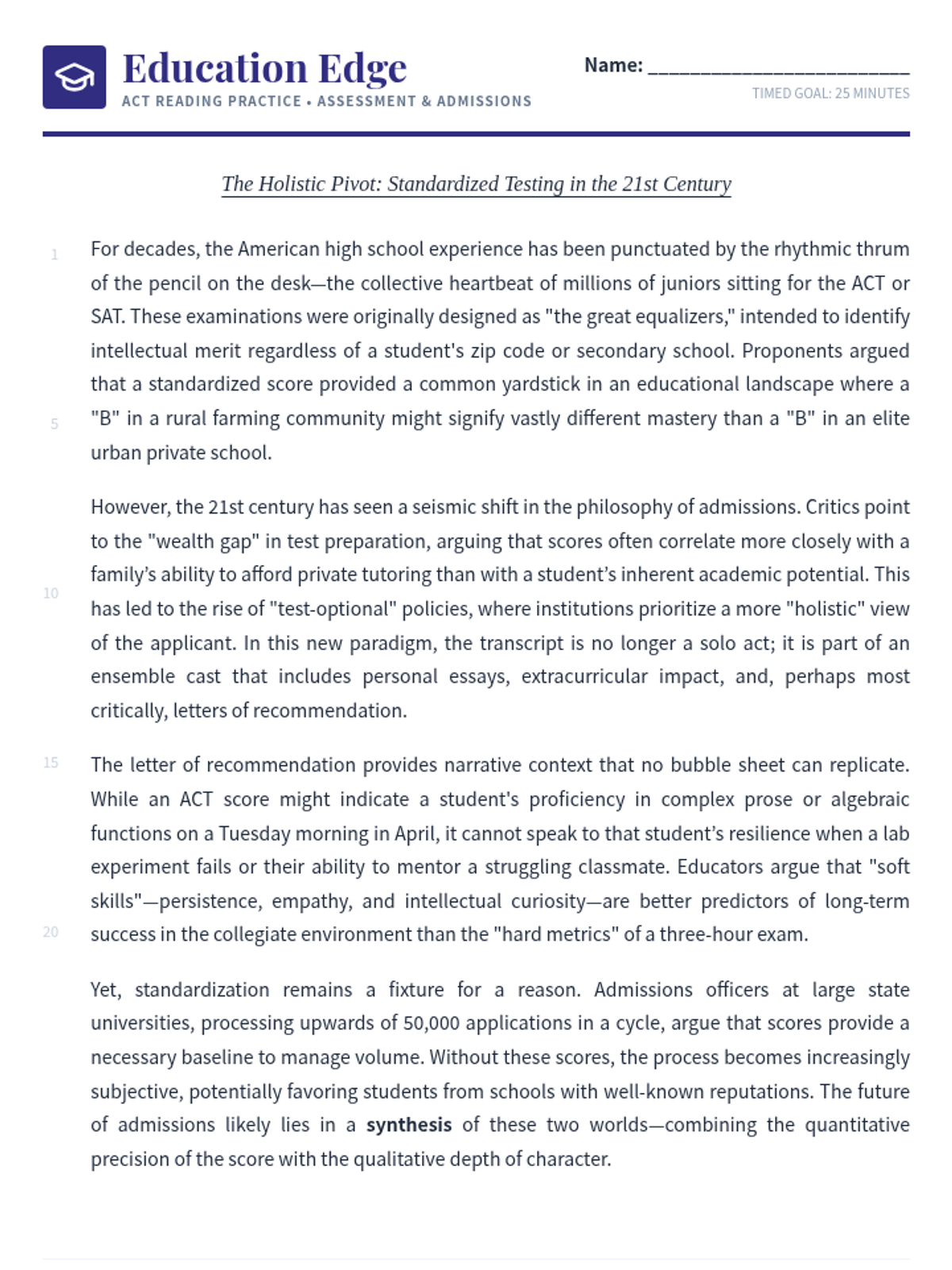
A reading and reflection activity that explains the connection between ACT scores and recommendation letters using a "Holistic Review" framework.
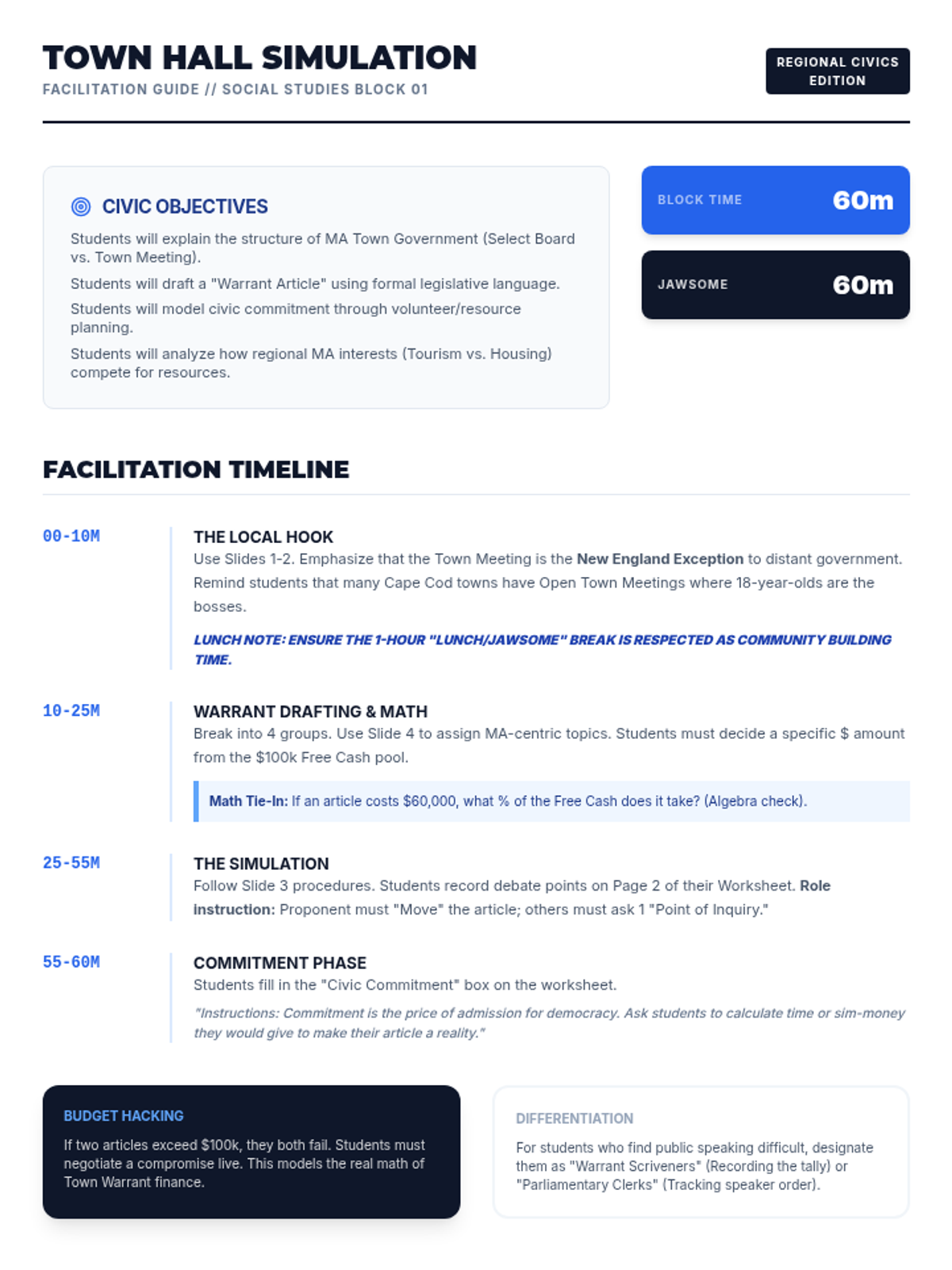
A facilitation guide for teachers to lead a 60-minute Social Studies simulation of a New England Town Meeting, including role assignments and parliamentary procedure. Updated with Lunch/Jawsome timing, MA localization, and Commitment instructions.
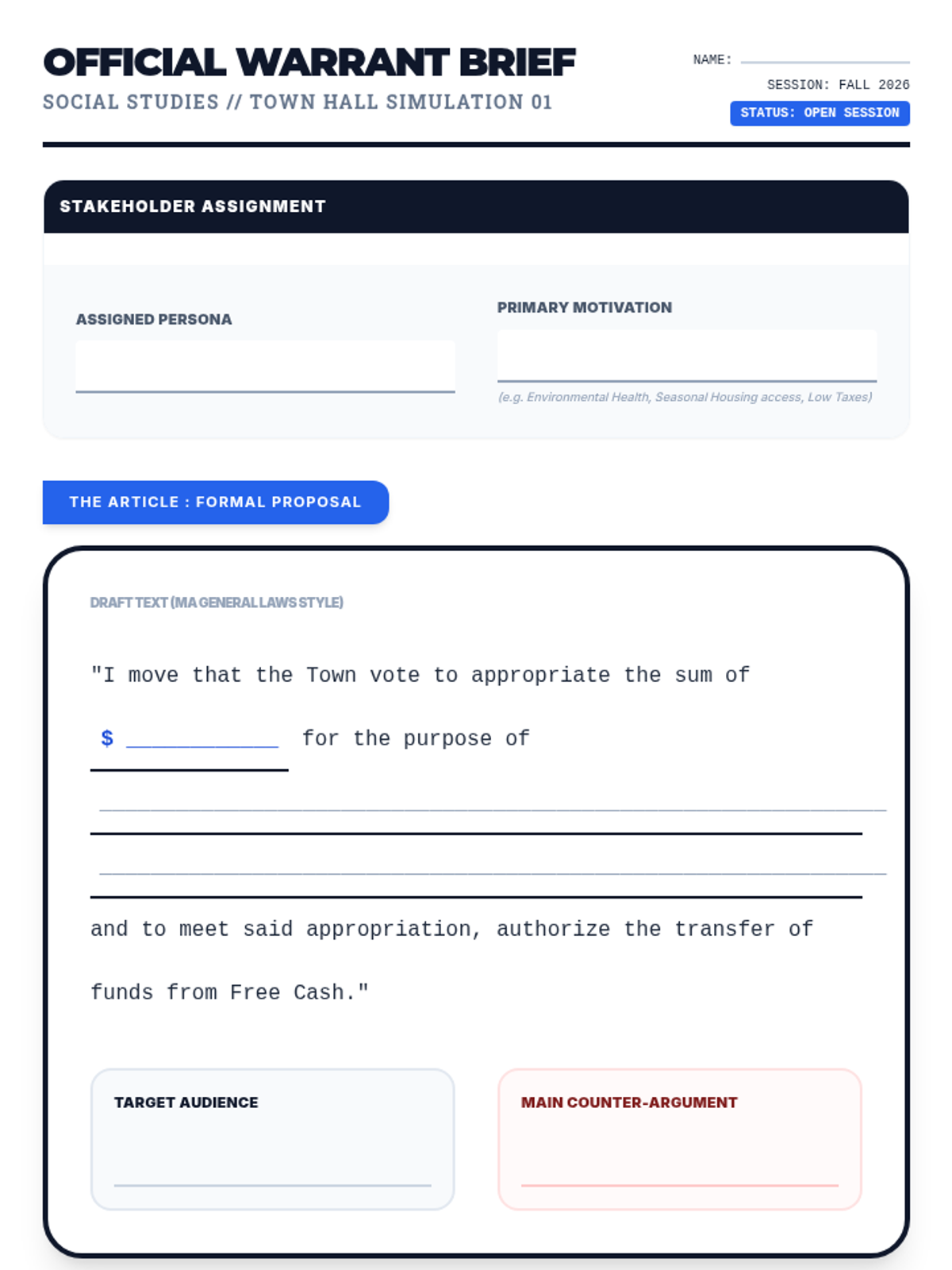
A simulation briefing worksheet for a Town Hall Meeting, providing role-play assignments, a template for drafting formal warrant articles, and space for tracking floor debates. Localized for Eastern MA. Includes "Civic Commitment" and larger fonts. Fixed page break and instructions. Final polish for layout.
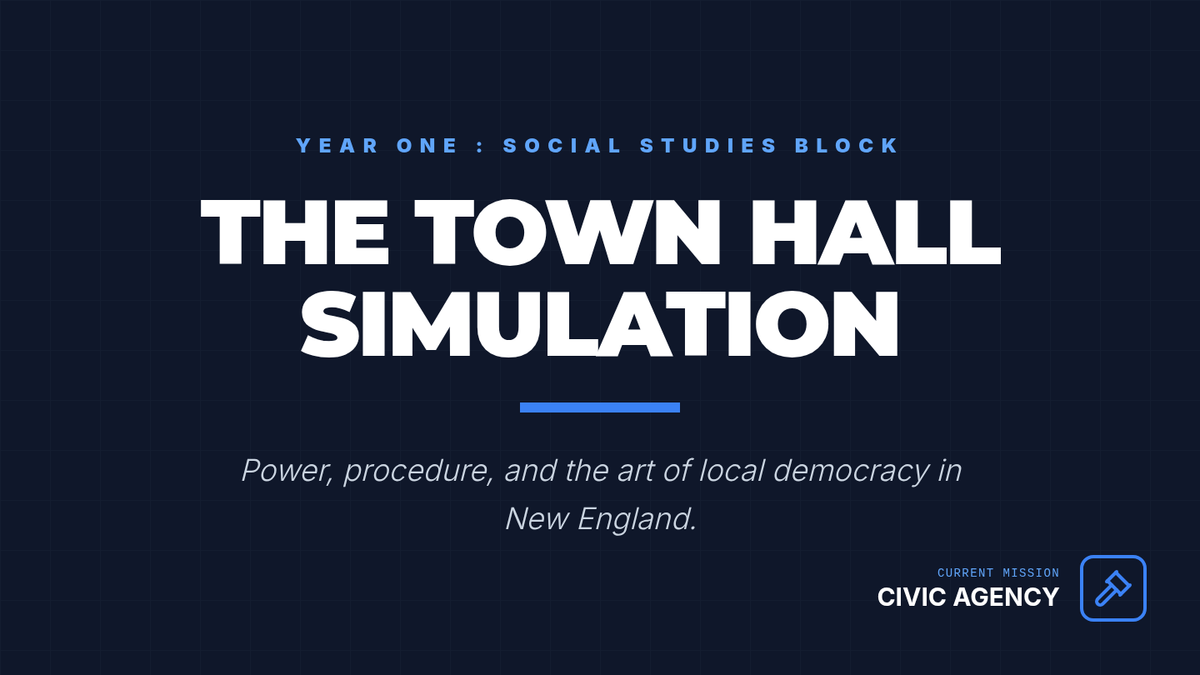
A civics slide deck for a Town Hall Simulation, localized to Eastern MA/Cape Cod issues. Explains procedure, articles, and the "Civic Commitment" concept. Revised for better kerning and localized examples. Final pass for layout.
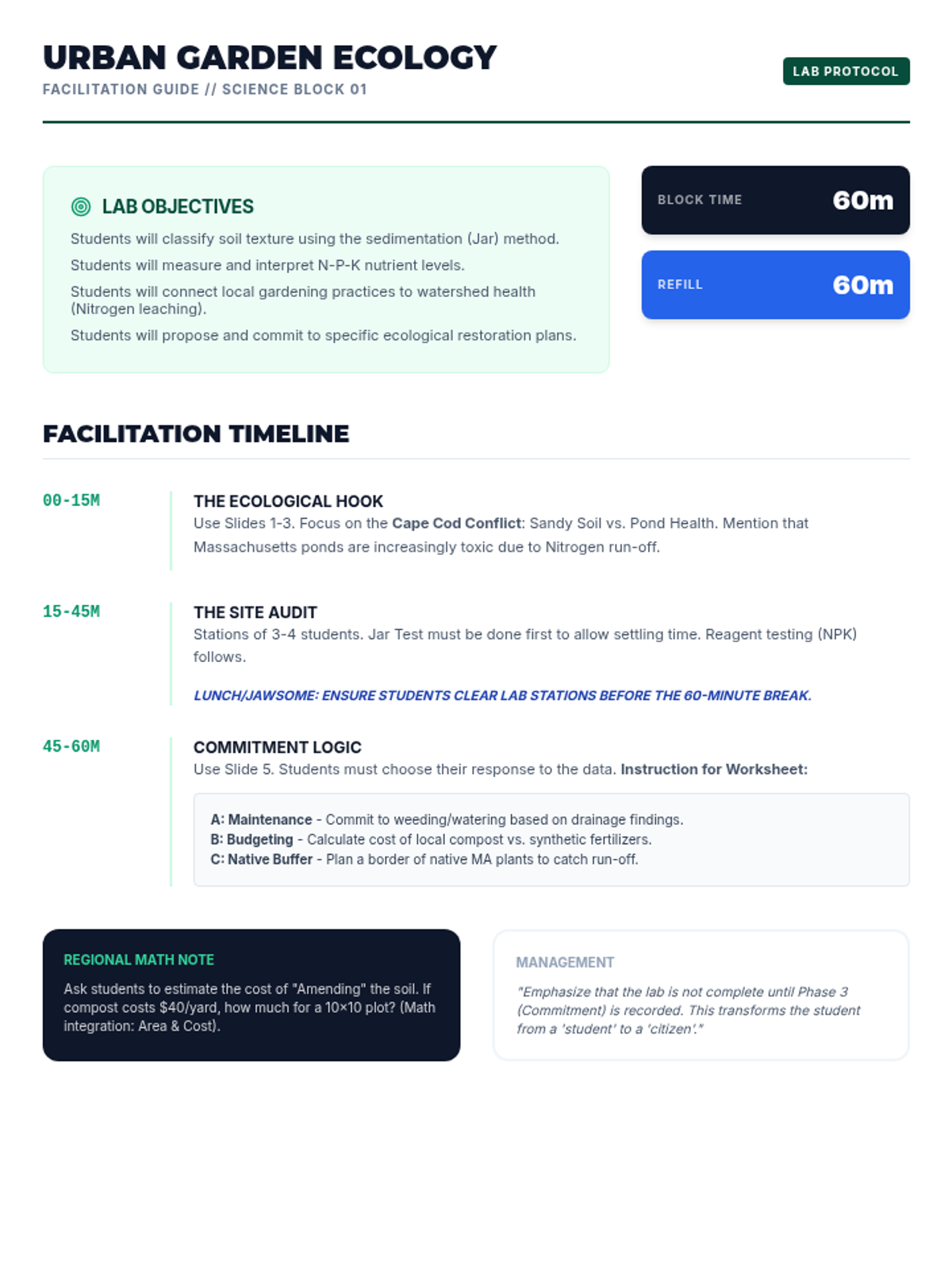
A facilitation guide for teachers to lead a 60-minute Integrated Science lab on garden ecology, featuring soil testing protocols and regional ecological discussion prompts. Updated with Lunch/Jawsome timing and Commitment instructions.
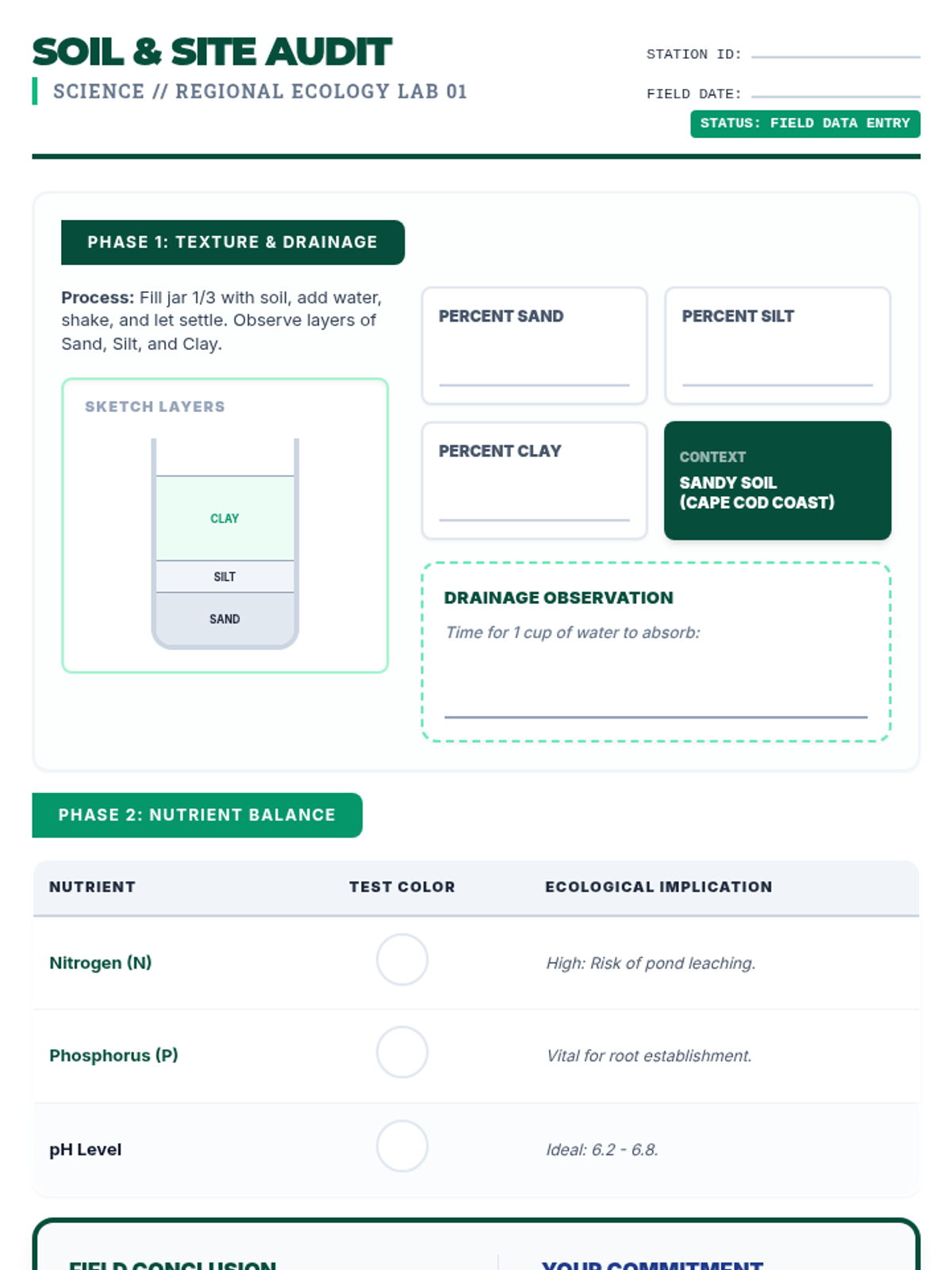
A scientific field notebook worksheet for a Soil & Site Audit, involving physical jar testing for texture and chemical NPK testing, contextualized for Massachusetts soil profiles. Updated with a "Your Commitment" section, larger font sizes, and improved page breaks. Final polish for student completion.
A visually rich science slide deck for Urban Garden Ecology, focusing on soil health, nutrient cycles (NPK), and regional leaching challenges specific to Cape Cod and Eastern MA. Includes schedule for Lunch/Jawsome and commitment instructions. Fixed rendering for Slide 3 and NPK text wrap. Final pass for layout.
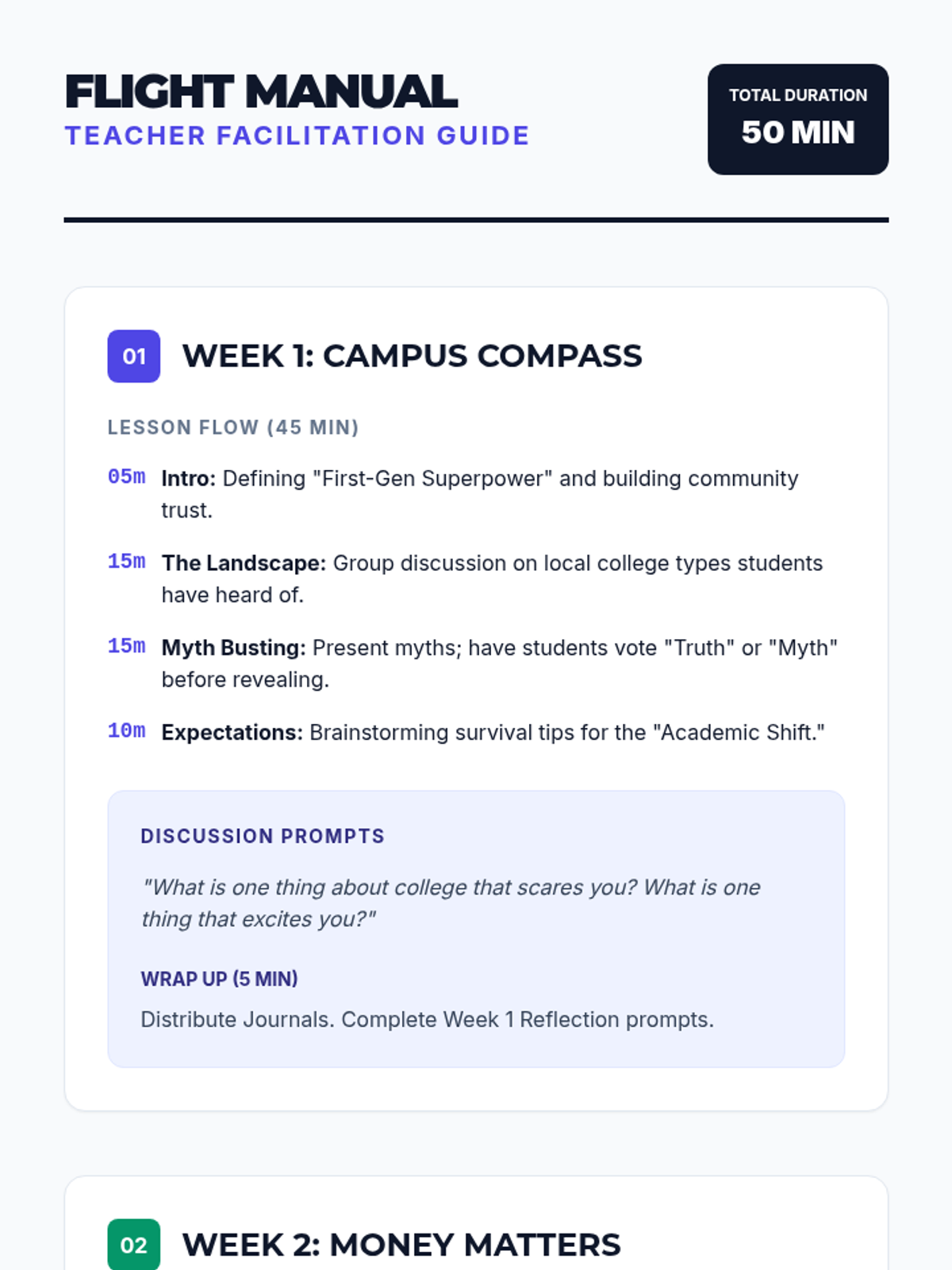
A comprehensive facilitation guide for teachers leading the 4-week First Gen Flight Plan program, including 45-minute lesson flows, discussion prompts, and wrap-up activities.
A comprehensive reflection journal for first-generation students to document their college readiness journey, featuring weekly prompts and a final mission statement activity.
A presentation for first-generation students outlining the steps to take after receiving acceptance letters, including deposits, orientation, and housing.
A presentation for first-generation students guiding them through the application timeline, components of a college application, and the admissions review process.
A presentation for first-generation students focusing on financial aid basics, scholarship hunting strategies, and how to read financial aid award letters.
A presentation introducing first-generation students to different types of colleges, debunking academic myths, and setting expectations for the college experience.
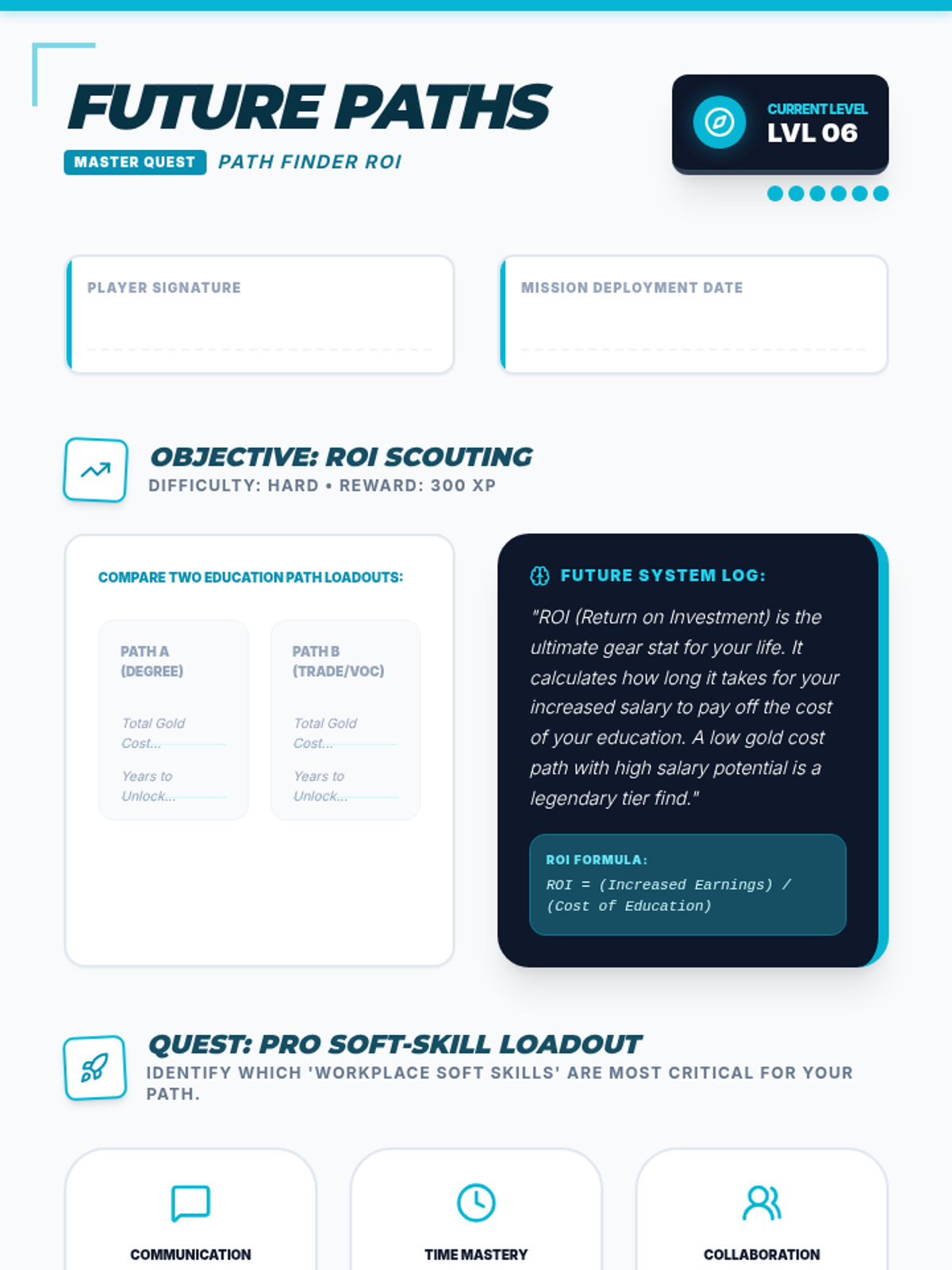
A gamified worksheet for the Future Paths module, focusing on education ROI comparison and professional soft skill identification. Features a high-fidelity 'Quest Log' visual theme with cyan accents and RPG-inspired UI elements.
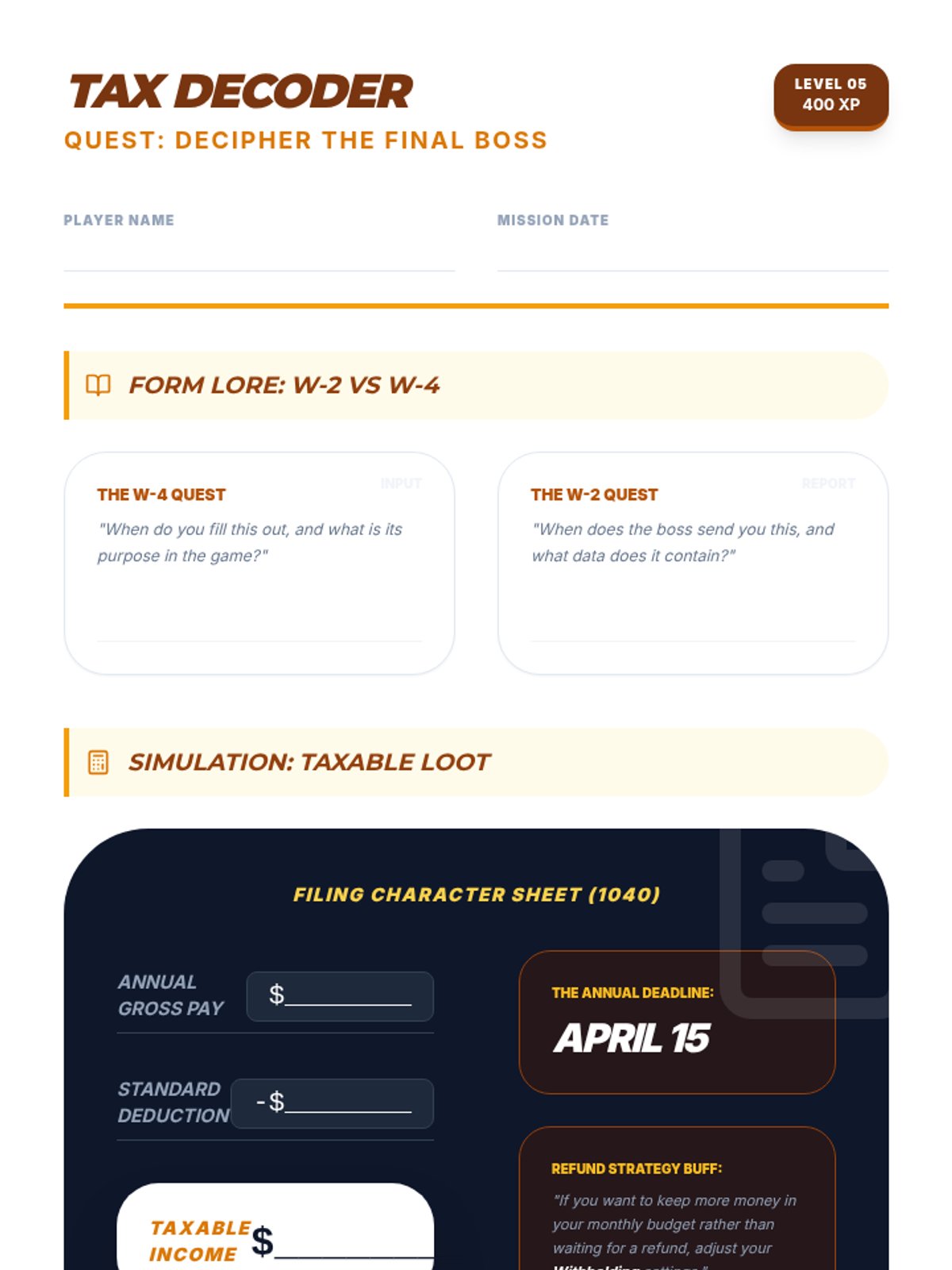
A gamified worksheet for the Tax Decoder module, focusing on tax form logic, filing deadlines, and income simulation. Features a high-fidelity 'Quest Log' visual theme with amber accents and RPG-inspired UI elements.
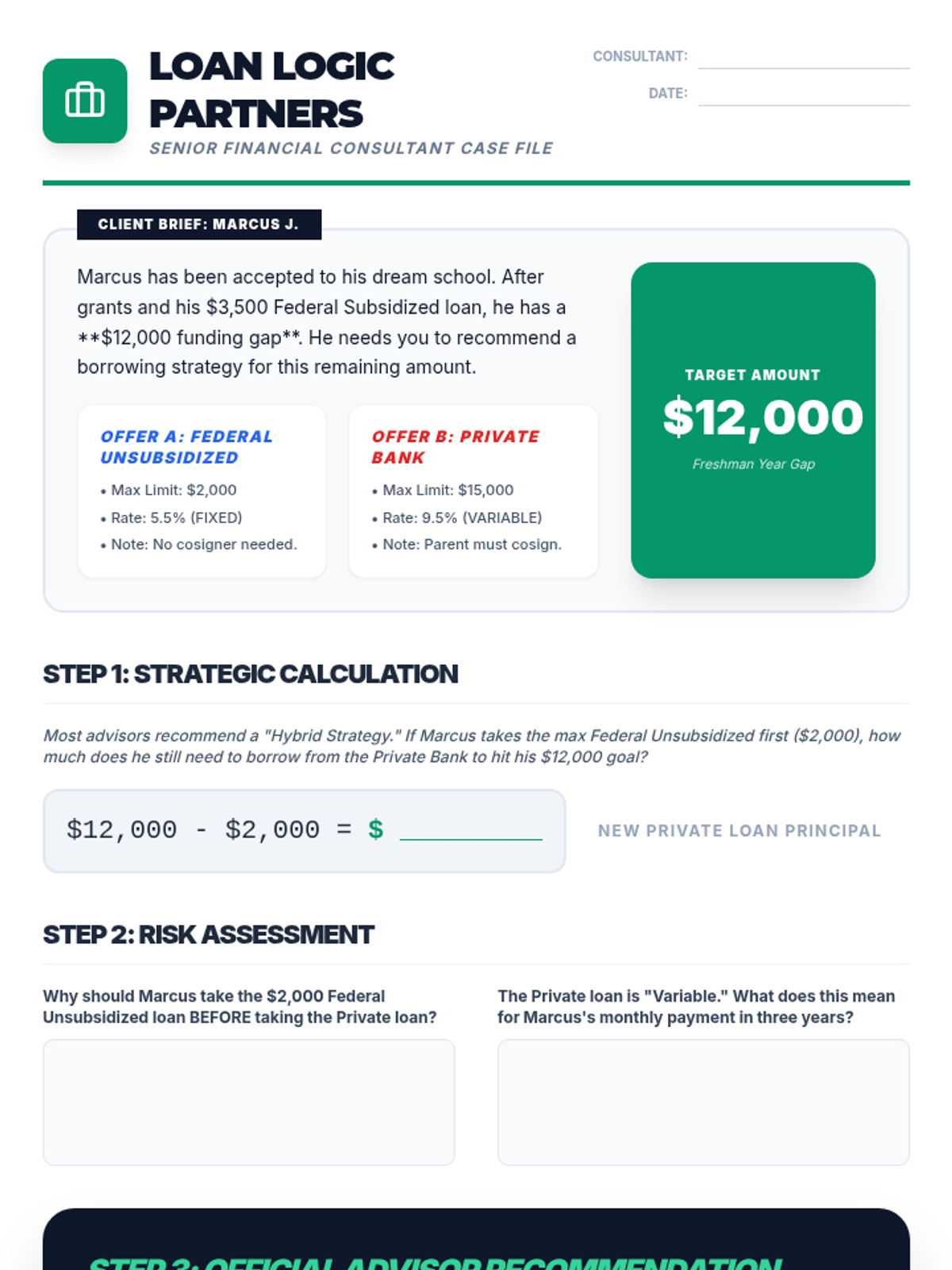
A student project for Lesson 5 where students synthesize their knowledge to create a borrowing recommendation for a fictional client.
Visual presentation for Lesson 5, focusing on a final case study project where students act as financial advisors to evaluate loan offers.
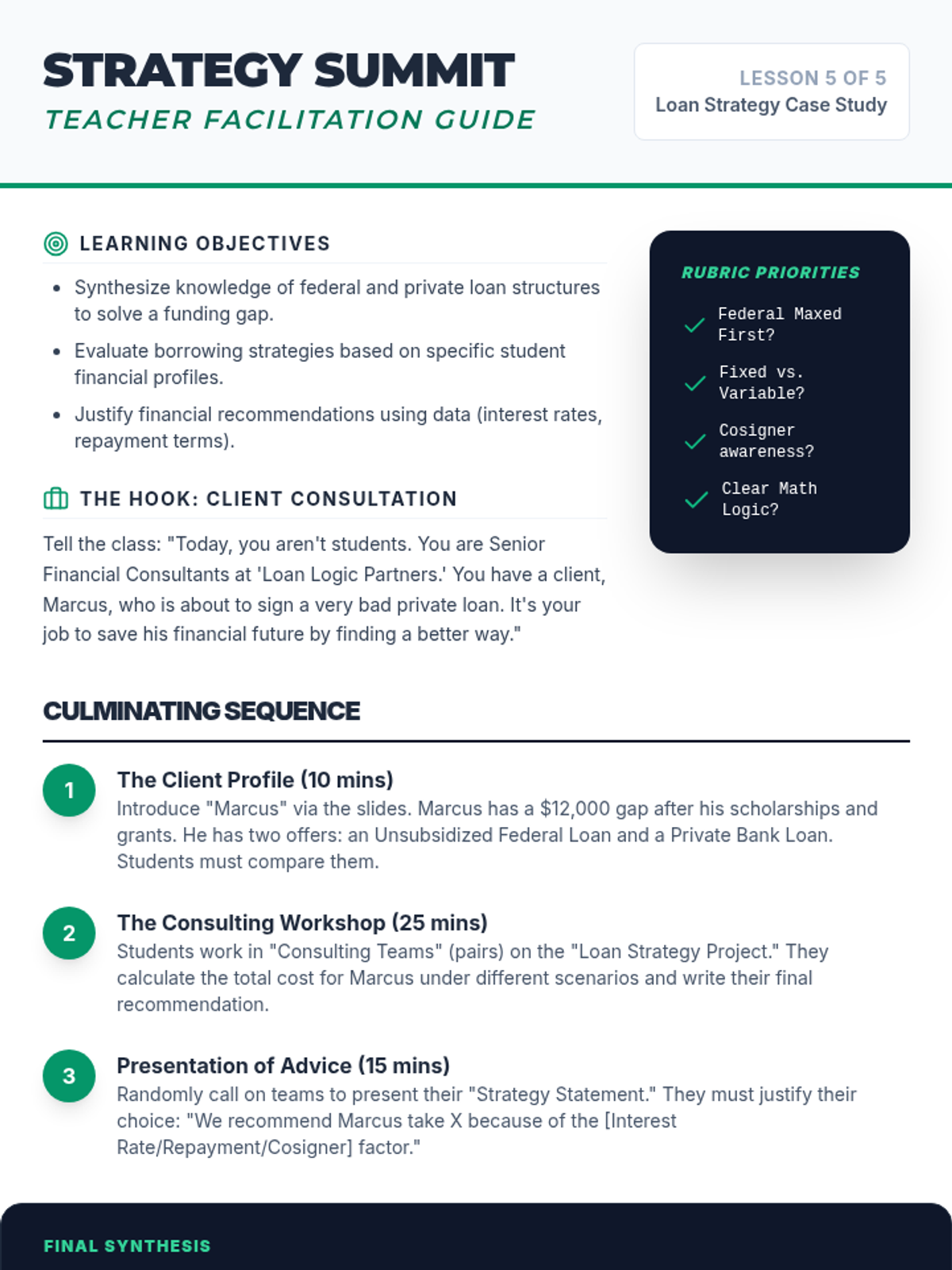
A teacher facilitation guide for Lesson 5, focusing on a final case study project where students act as financial advisors to evaluate loan offers.
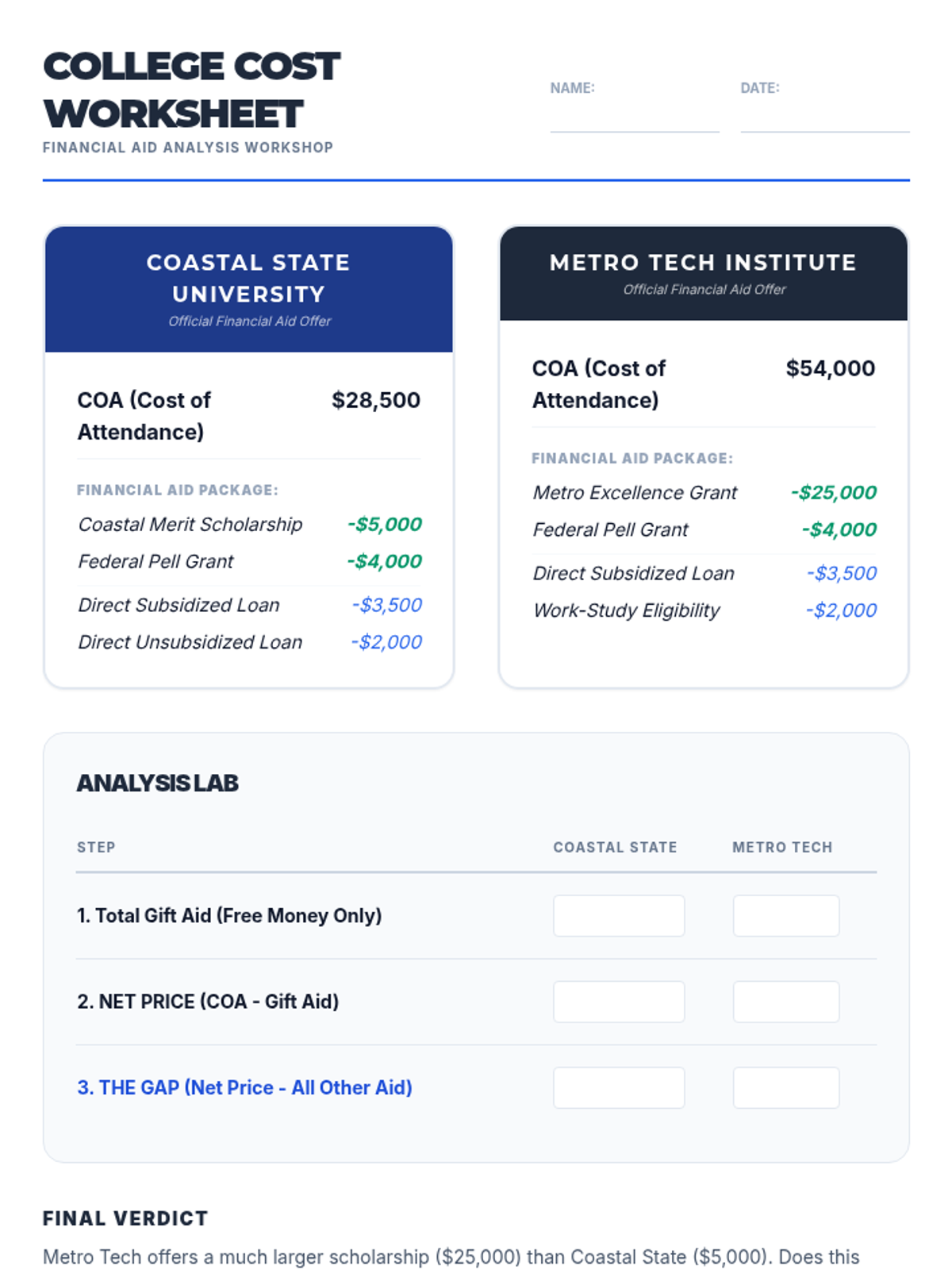
A student worksheet for Lesson 4 where students compare two financial aid award letters and calculate net price and funding gaps.
Visual presentation for Lesson 4, focusing on interpreting financial aid award letters and calculating the true net price of college.
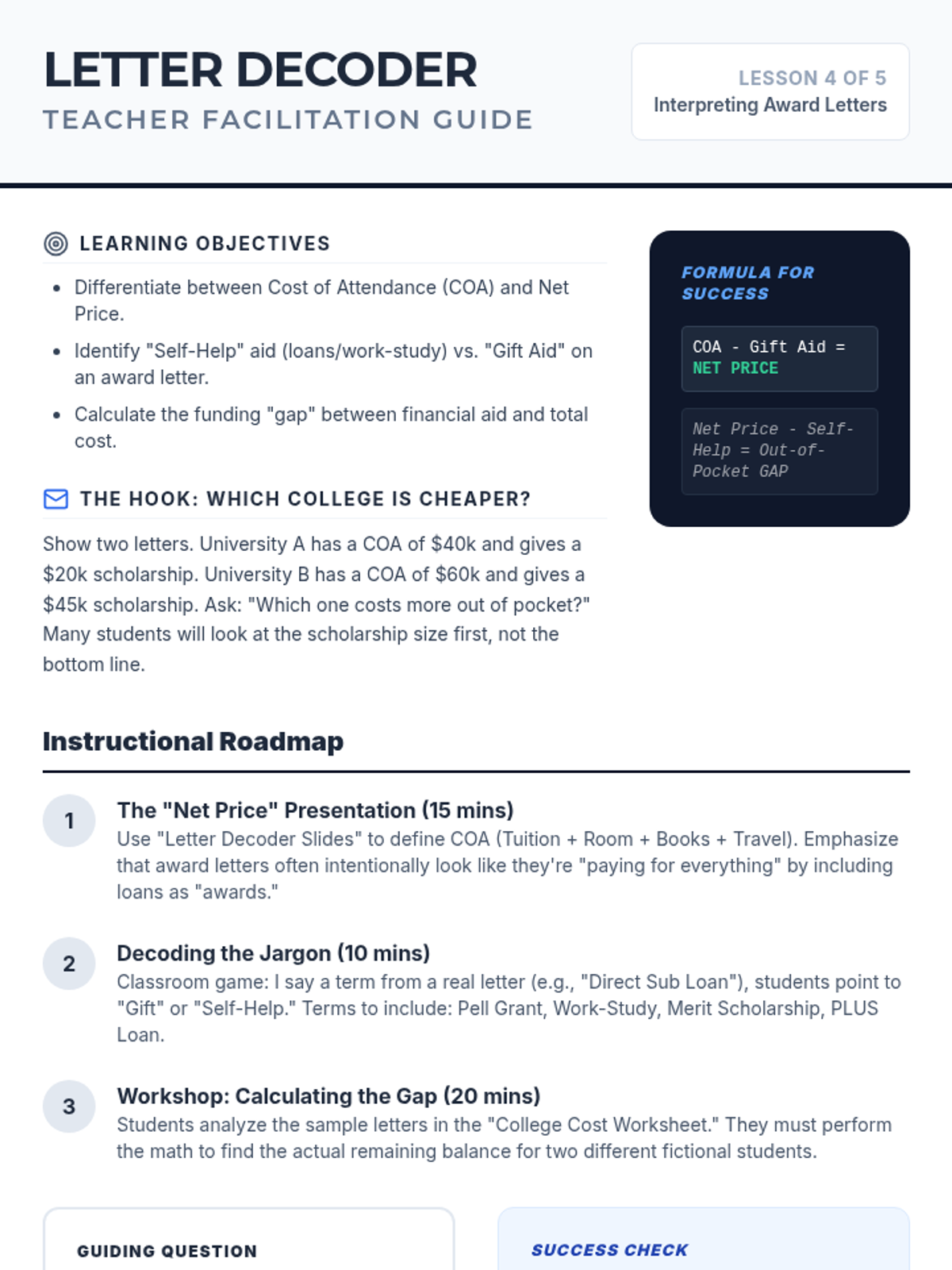
A teacher facilitation guide for Lesson 4, focusing on interpreting financial aid award letters and calculating the true net price of college.
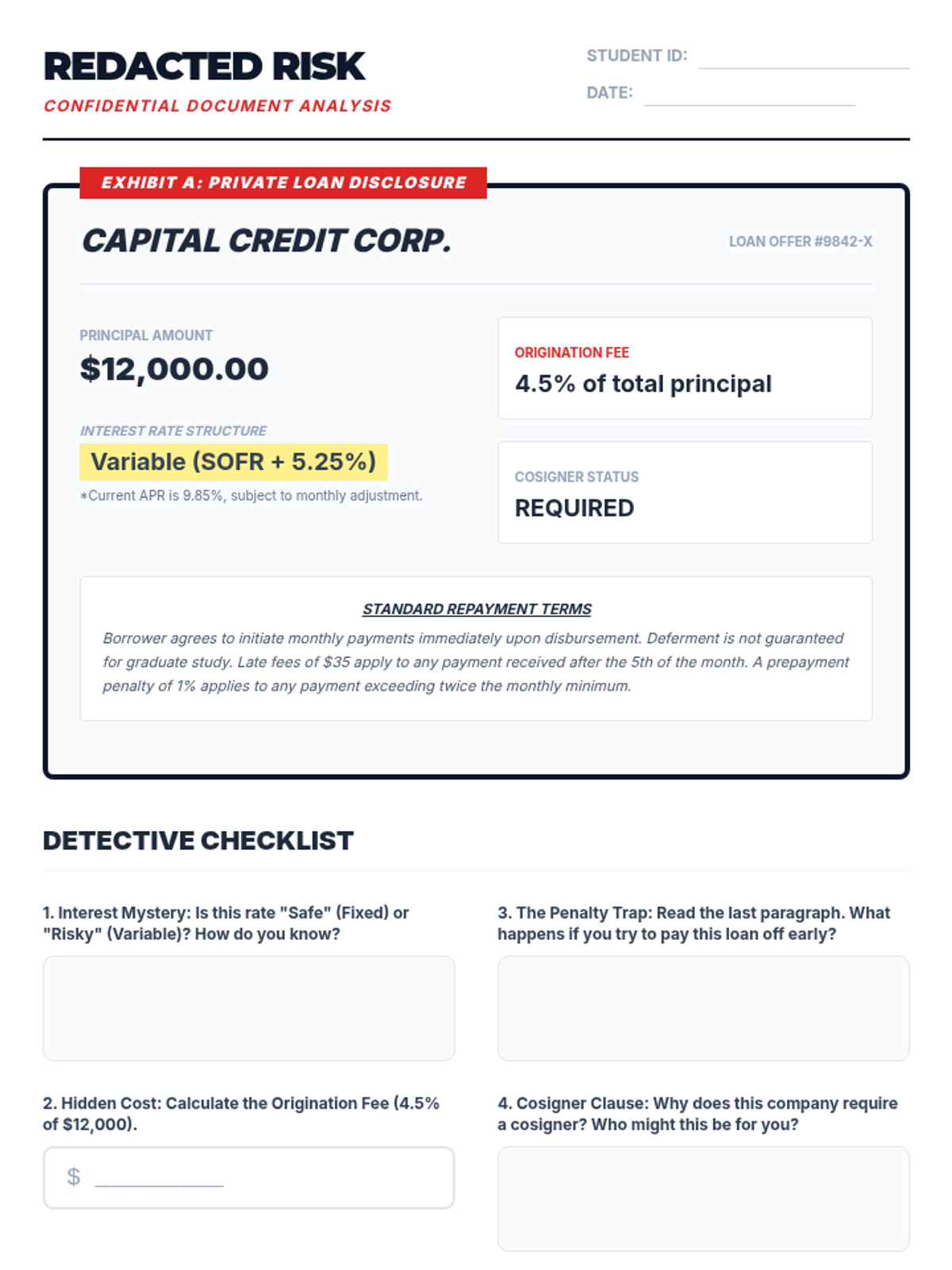
A student risk assessment worksheet where students analyze a redacted private loan offer to identify predatory terms and hidden fees.
Visual presentation for Lesson 3, introducing the risks of private student loans, variable interest rates, and cosigner requirements.
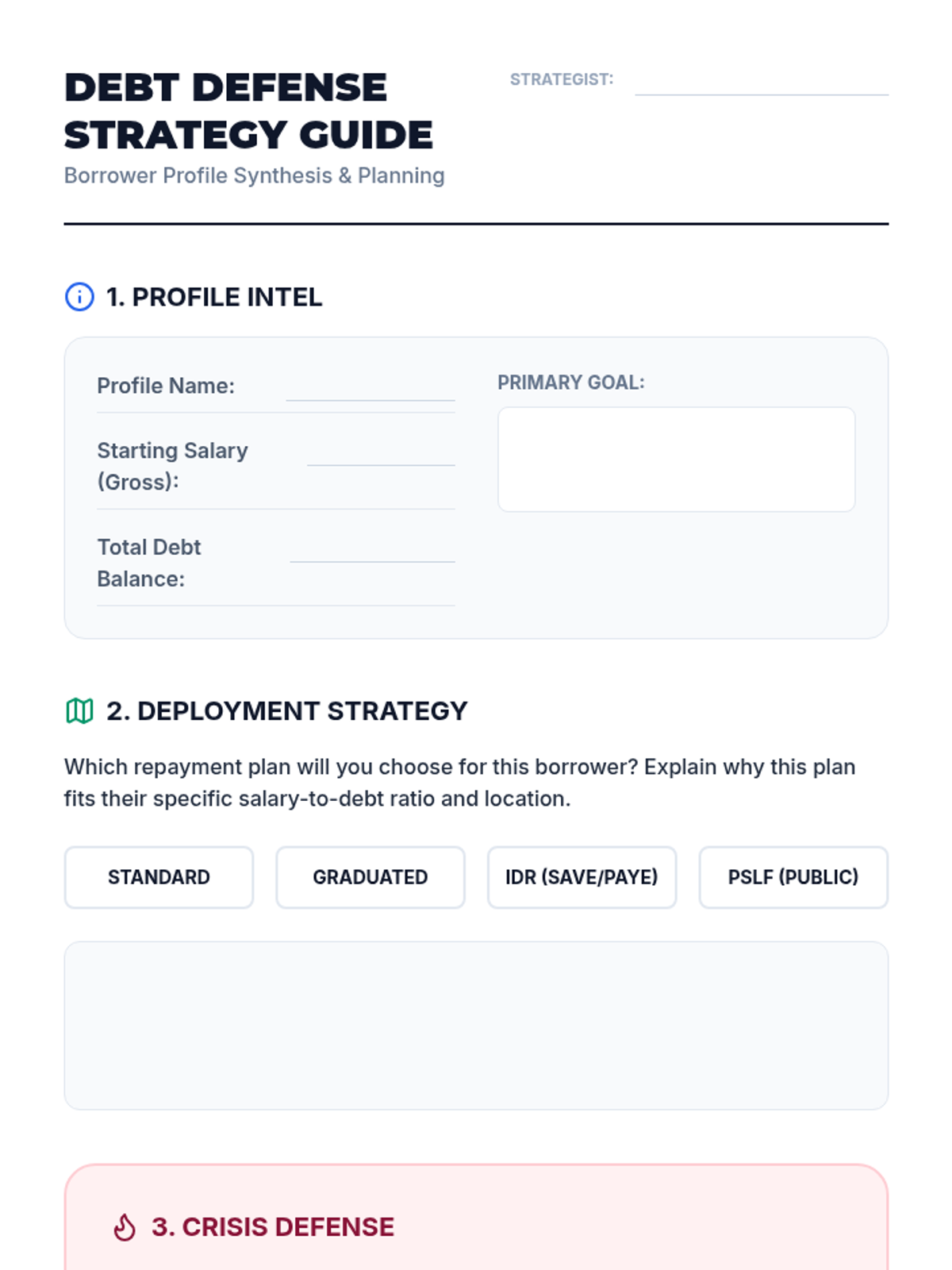
A strategy worksheet for the final simulation where students document their borrower profile, repayment strategy, and crisis response, followed by a peer review section.
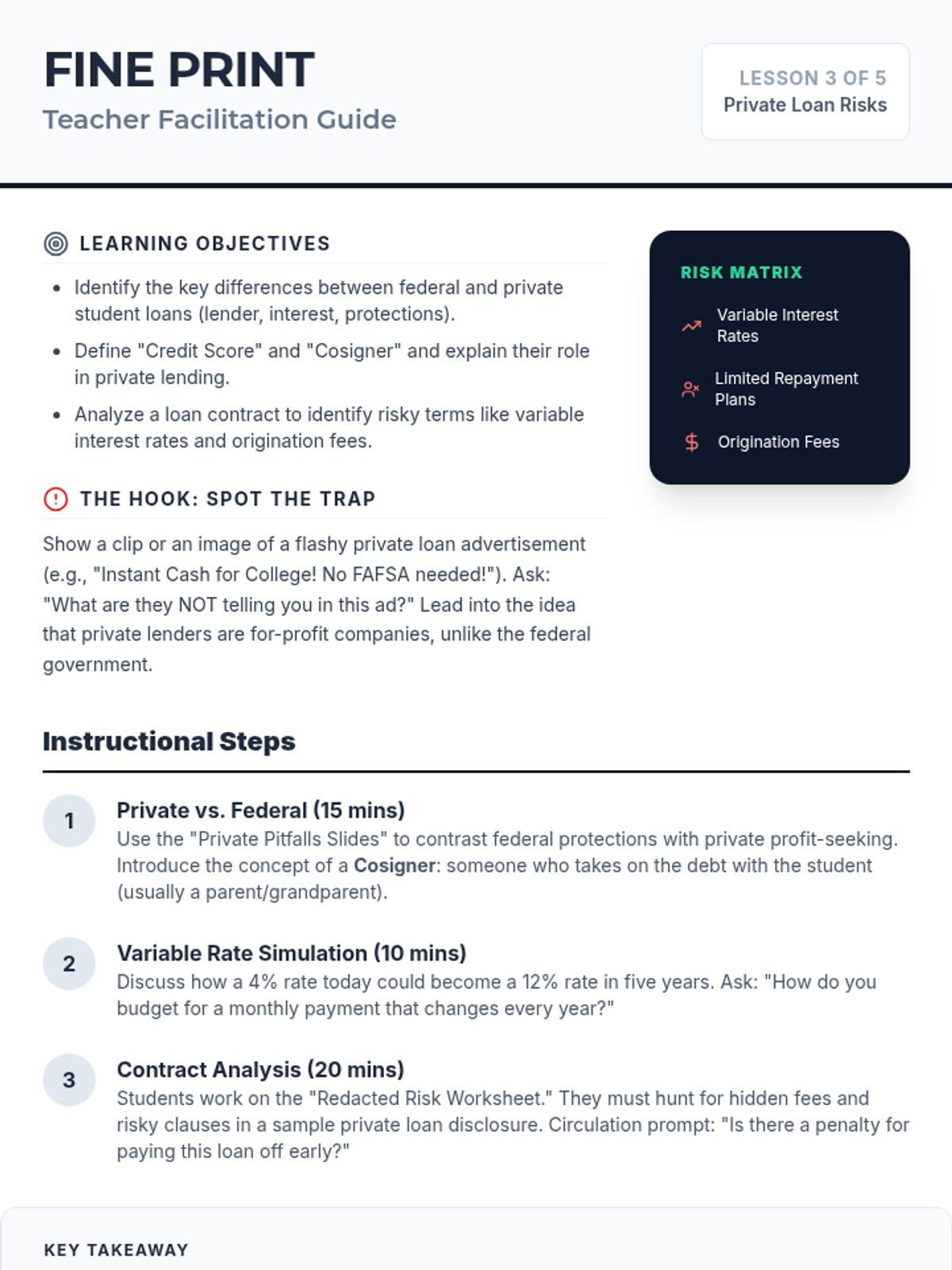
A teacher facilitation guide for Lesson 3, focusing on the risks of private student loans and how to teach document analysis of loan terms.
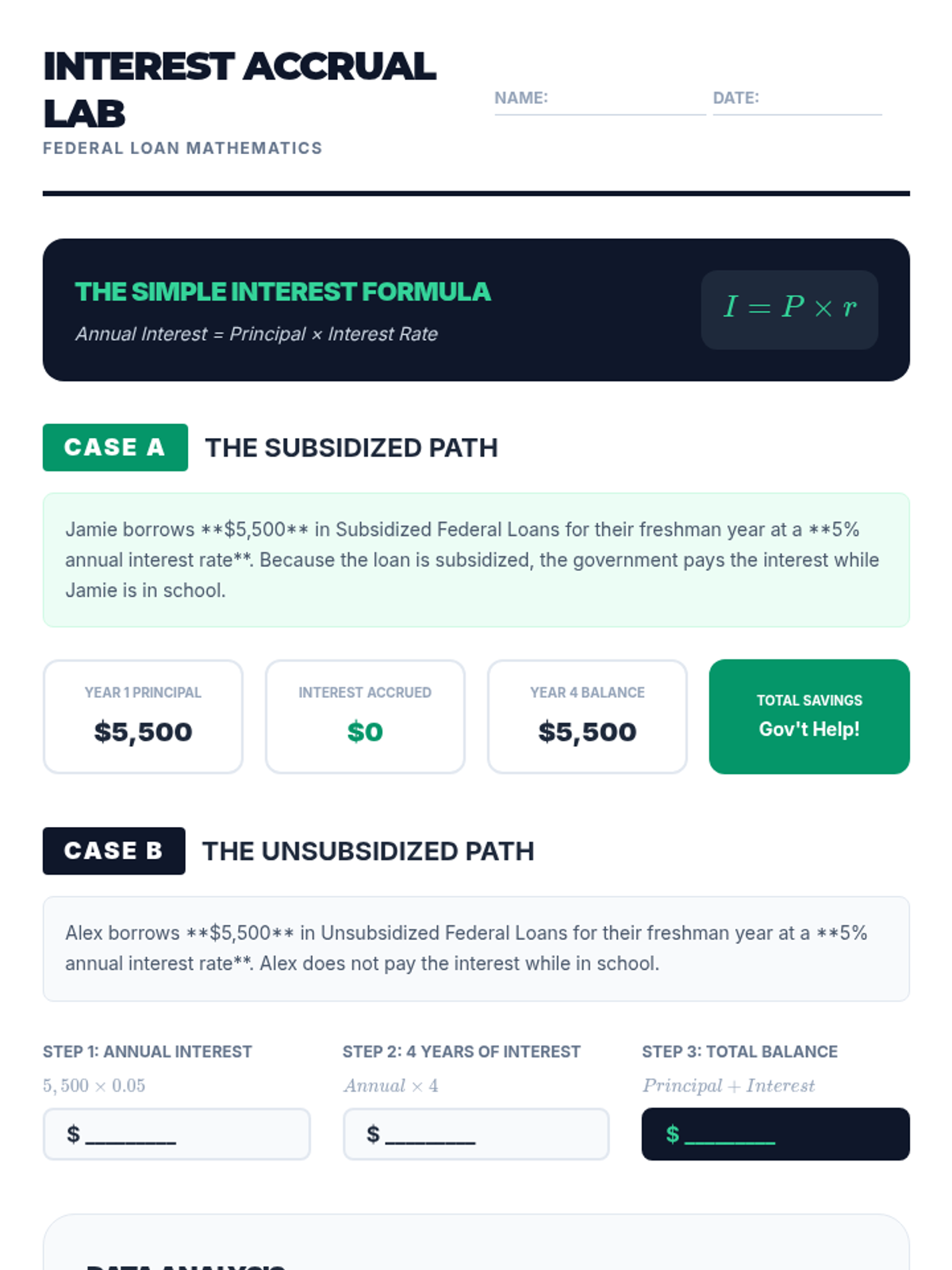
A student worksheet for Lesson 2 that guides students through calculating interest accrual for Subsidized vs. Unsubsidized federal loans.
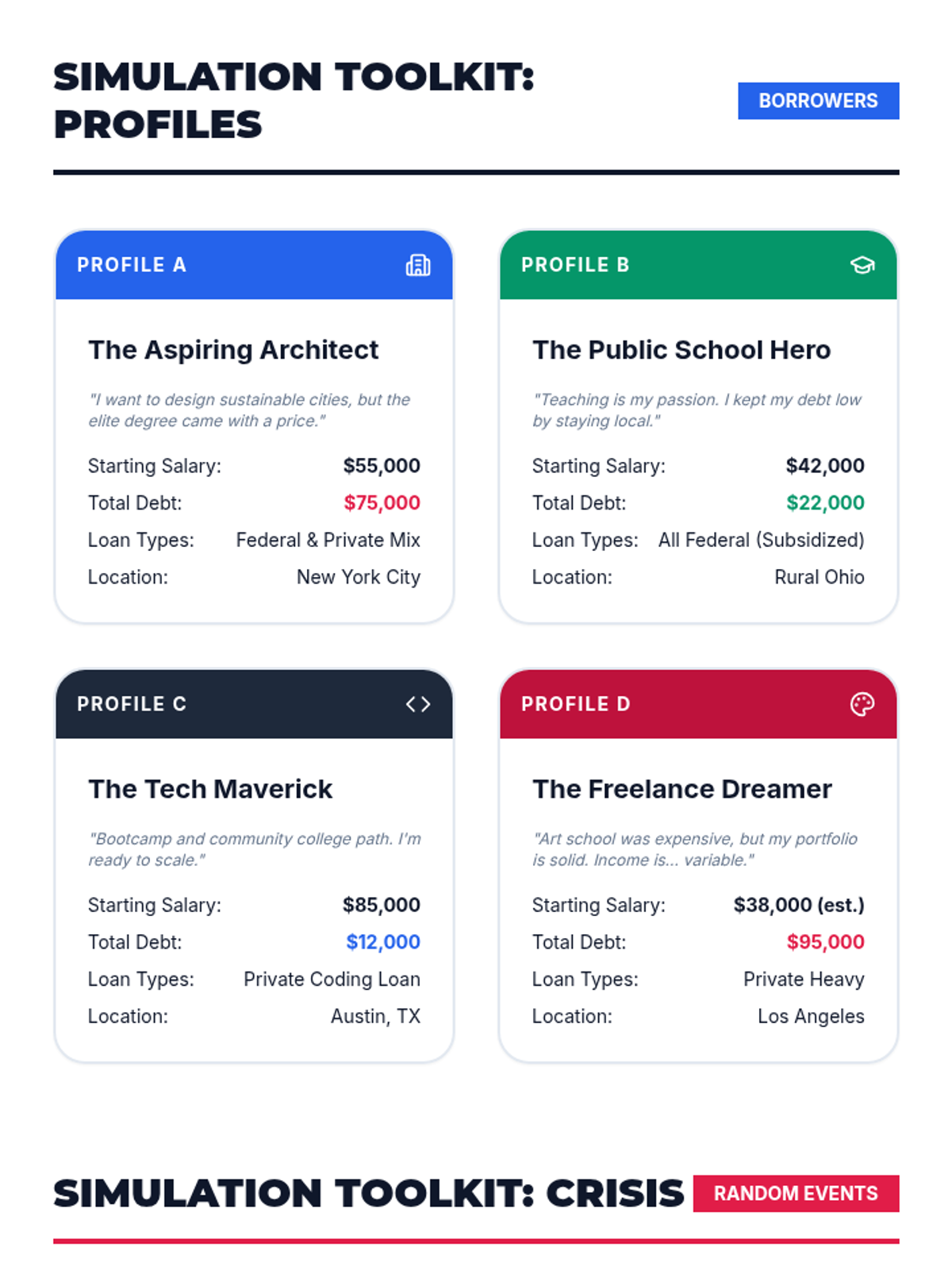
A comprehensive set of borrower profiles and random event 'Crisis Cards' used to simulate real-world financial management and debt repayment.
Visual presentation for Lesson 2, introducing the differences between Federal Direct Subsidized and Unsubsidized loans with a focus on interest accrual.
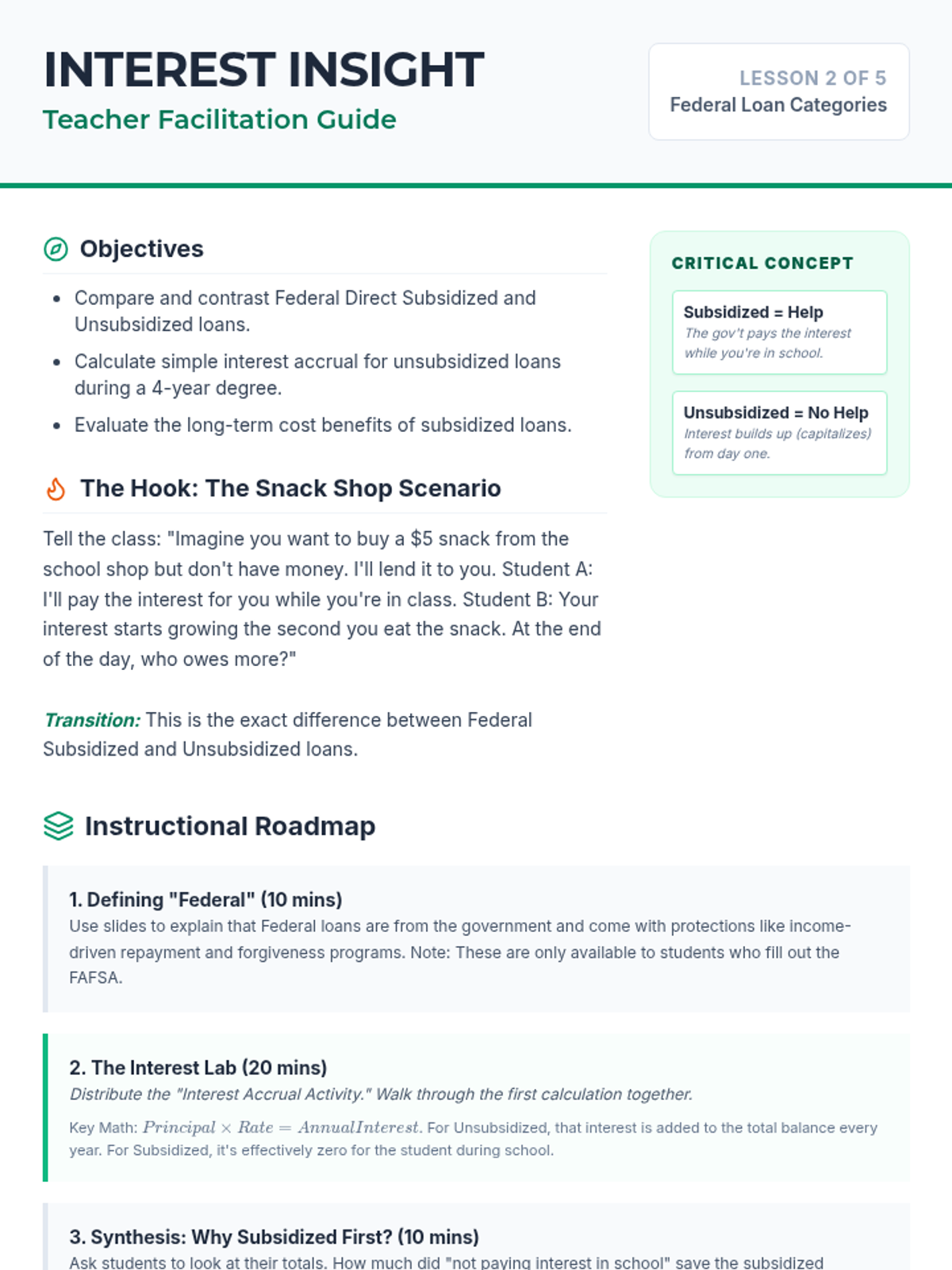
A teacher facilitation guide for Lesson 2, providing instructional steps for explaining Subsidized vs. Unsubsidized federal loans and interest math.
Introductory slides for the final simulation, explaining the mechanics of borrower profiles, crisis cards, and the consequences of loan default. Revised for font size compliance.
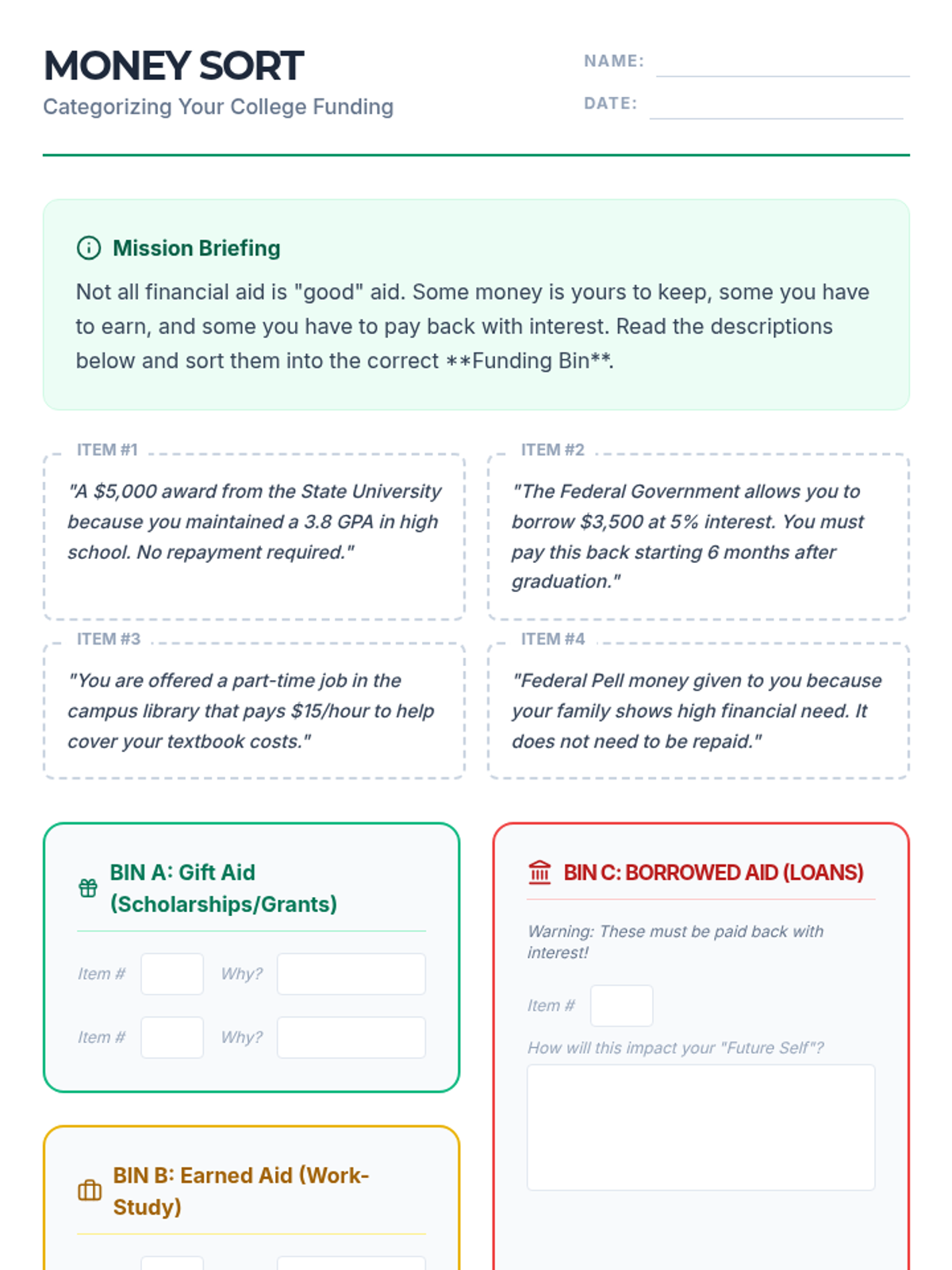
A student sorting activity for Lesson 1, where students categorize real-world financial aid descriptions into Gift Aid, Earned Aid, or Borrowed Aid.
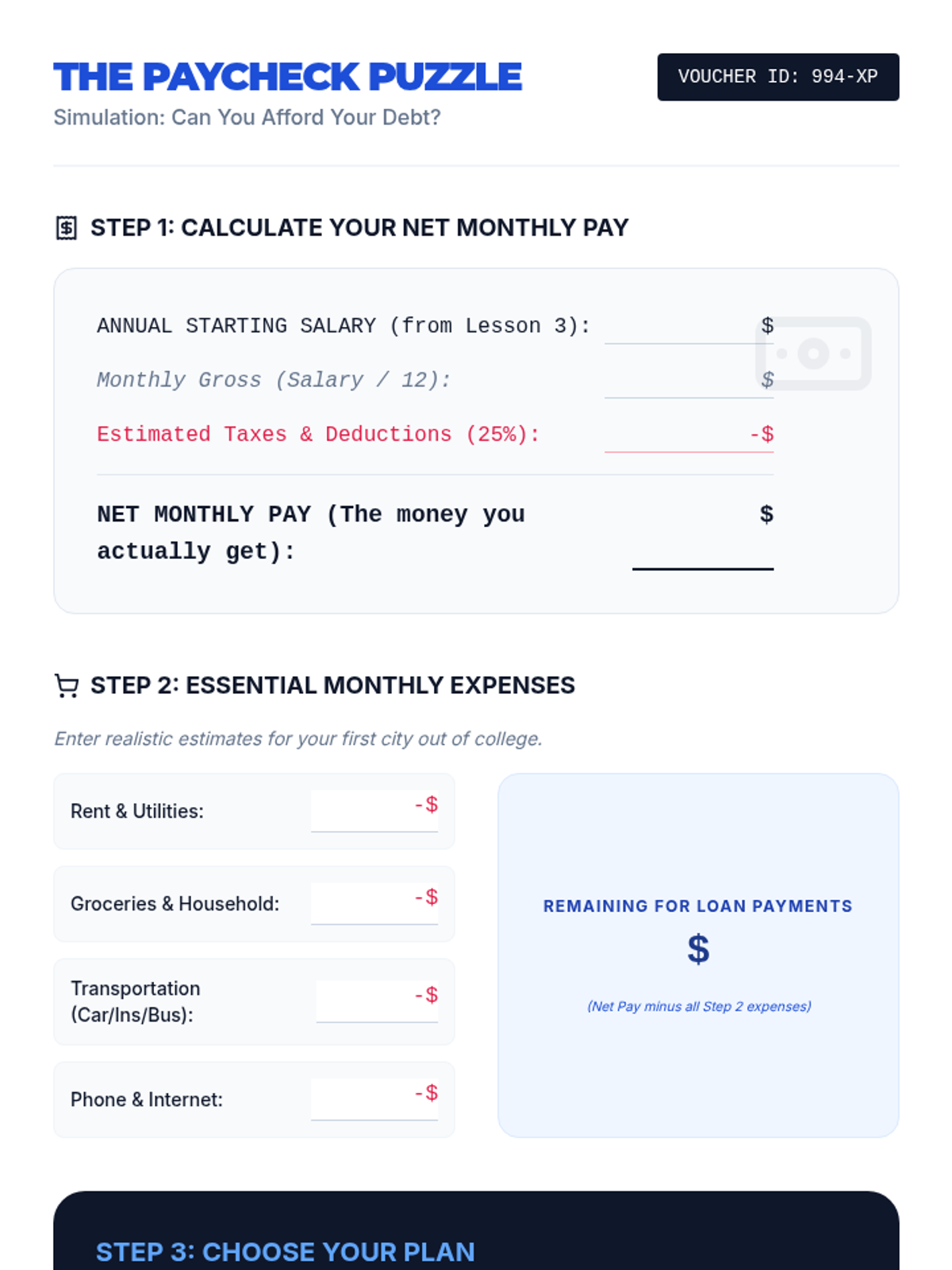
A simulation worksheet where students calculate their net monthly income, subtract essential living expenses, and evaluate which repayment plan best fits their budget.
Visual presentation for Lesson 1, introducing the financial aid hierarchy and key loan terminology with a focus on 'gift aid' vs 'owed money'.
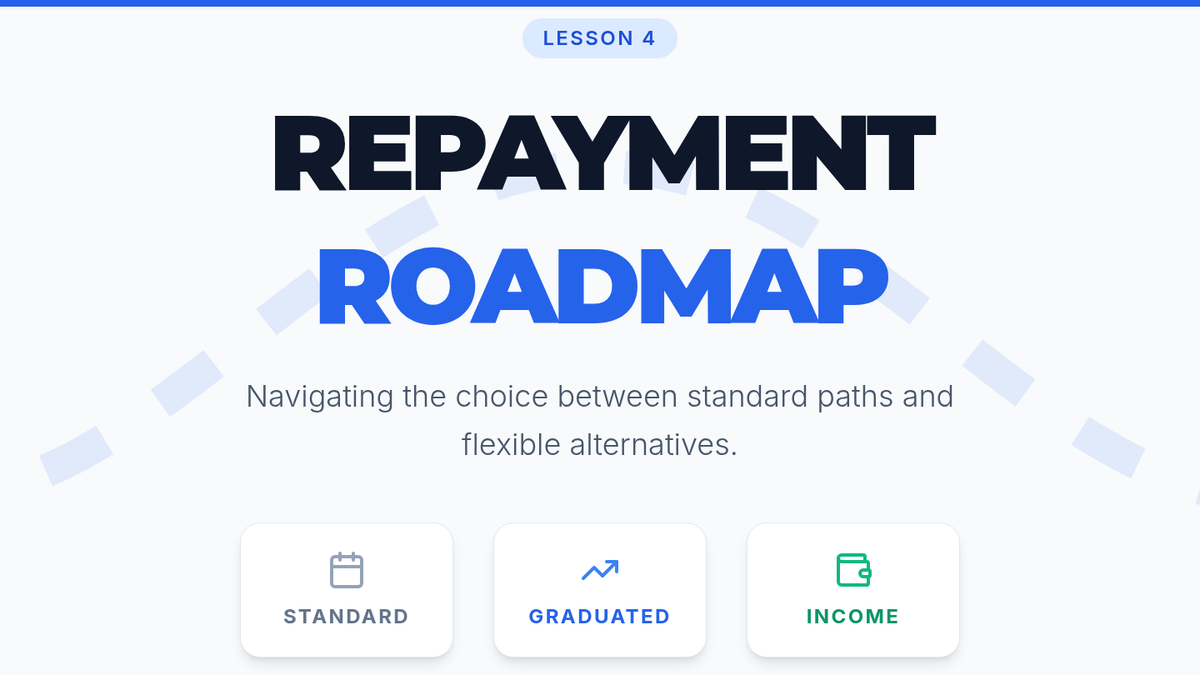
Instructional slides on federal repayment options (Standard, Graduated, IDR), the mechanics of amortization, and Public Service Loan Forgiveness (PSLF). Revised for font size compliance.
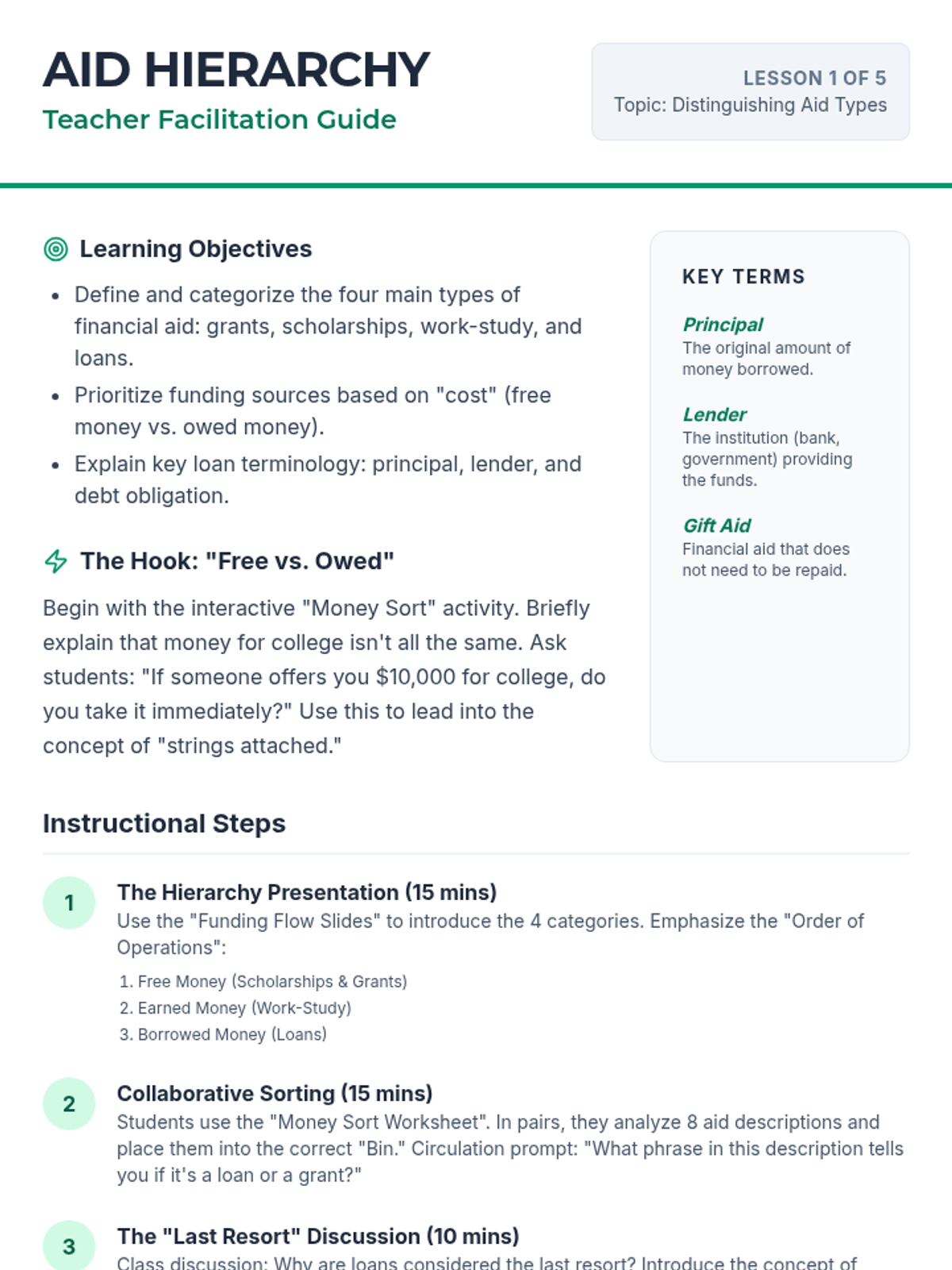
A teacher facilitation guide for Lesson 1, detailing learning objectives, instructional steps for the financial aid hierarchy, and key discussion prompts.
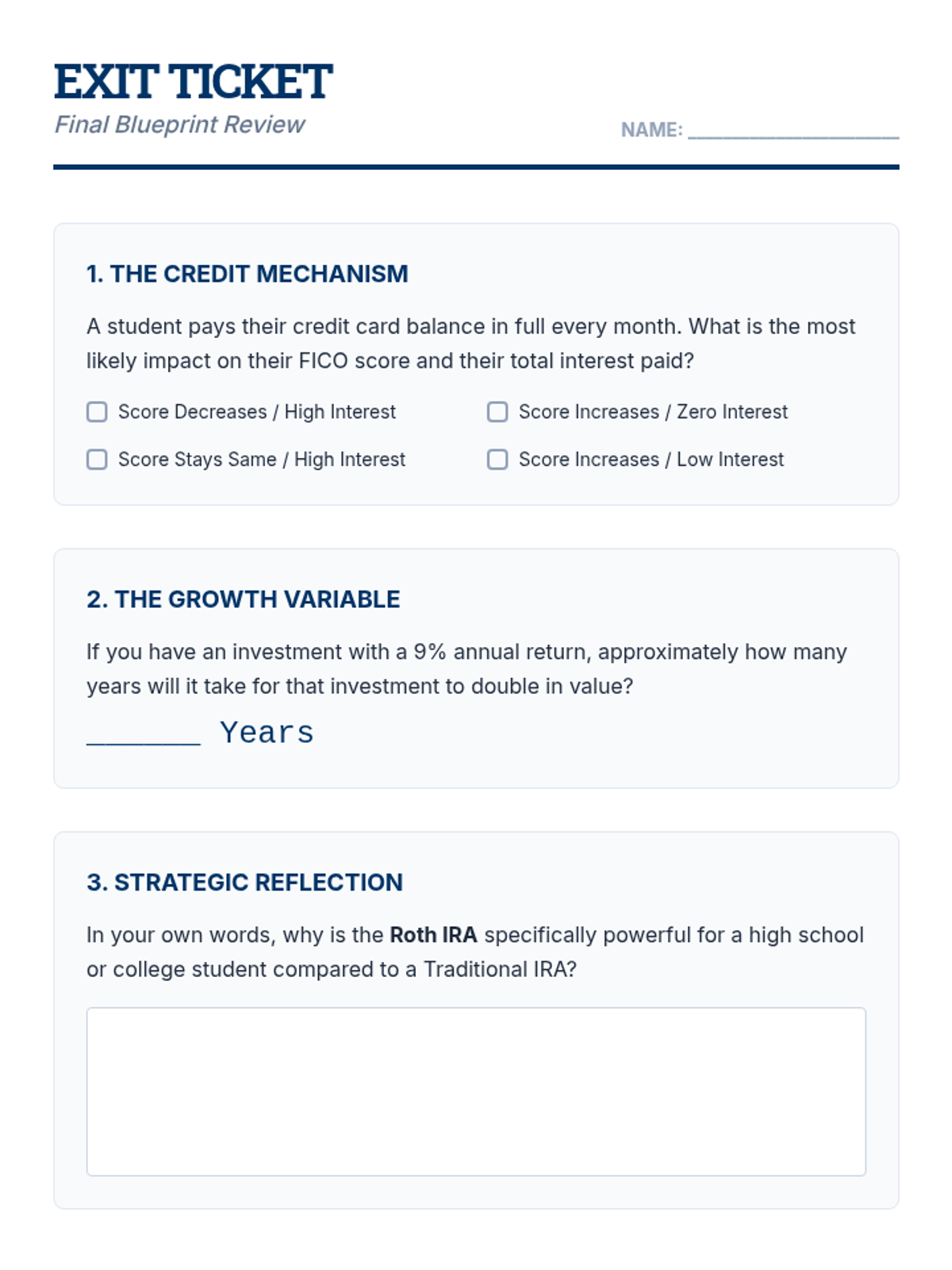
A quick check-for-understanding for the end of the lesson. Covers credit mechanics, the Rule of 72, and the strategic benefits of a Roth IRA for young investors.
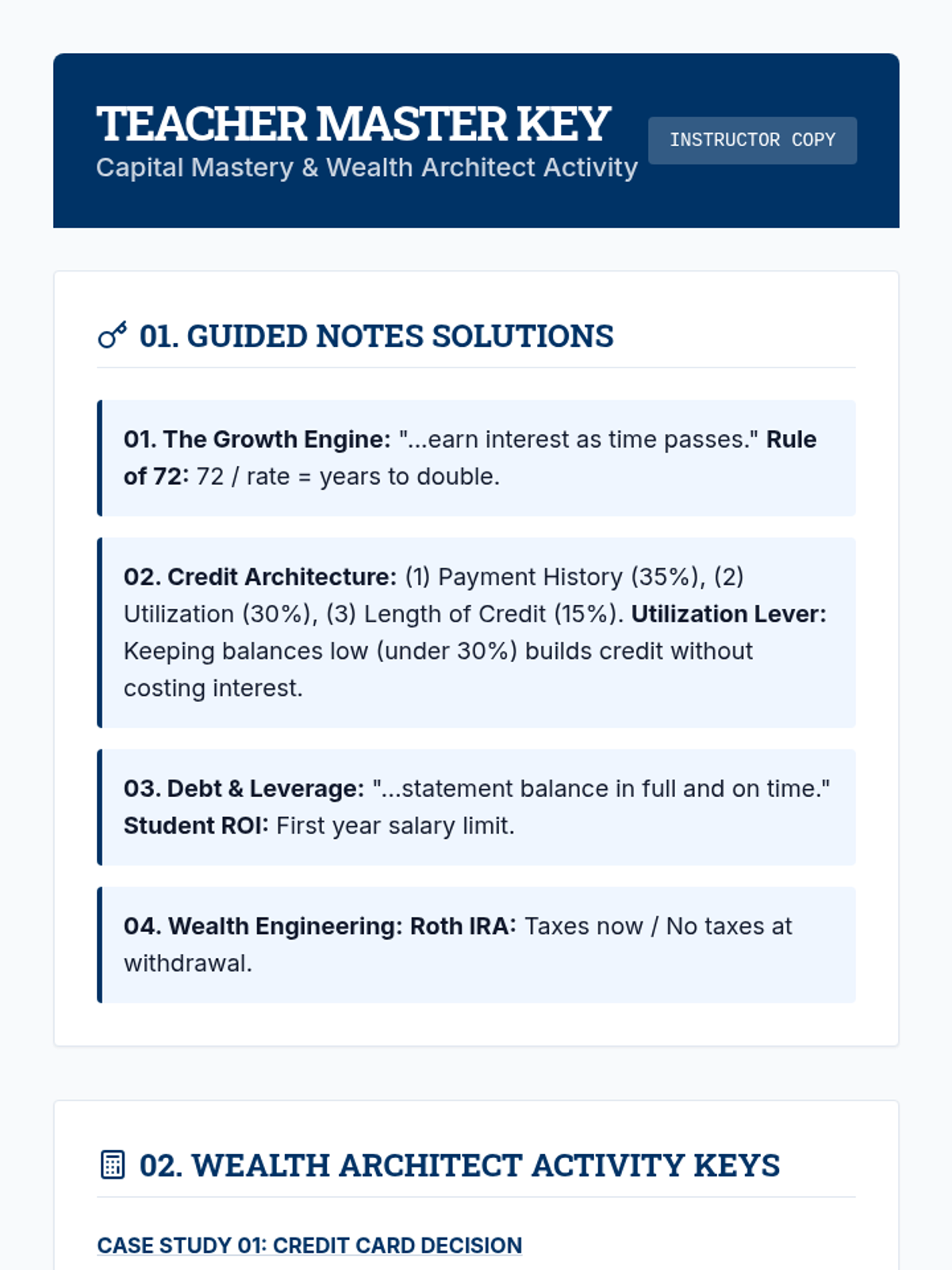
A teacher-facing answer key and instructional guide for the Capital Mastery lesson. Includes specific mathematical breakdowns for the credit card, student loan, and investment case studies, as well as pedagogical discussion prompts.
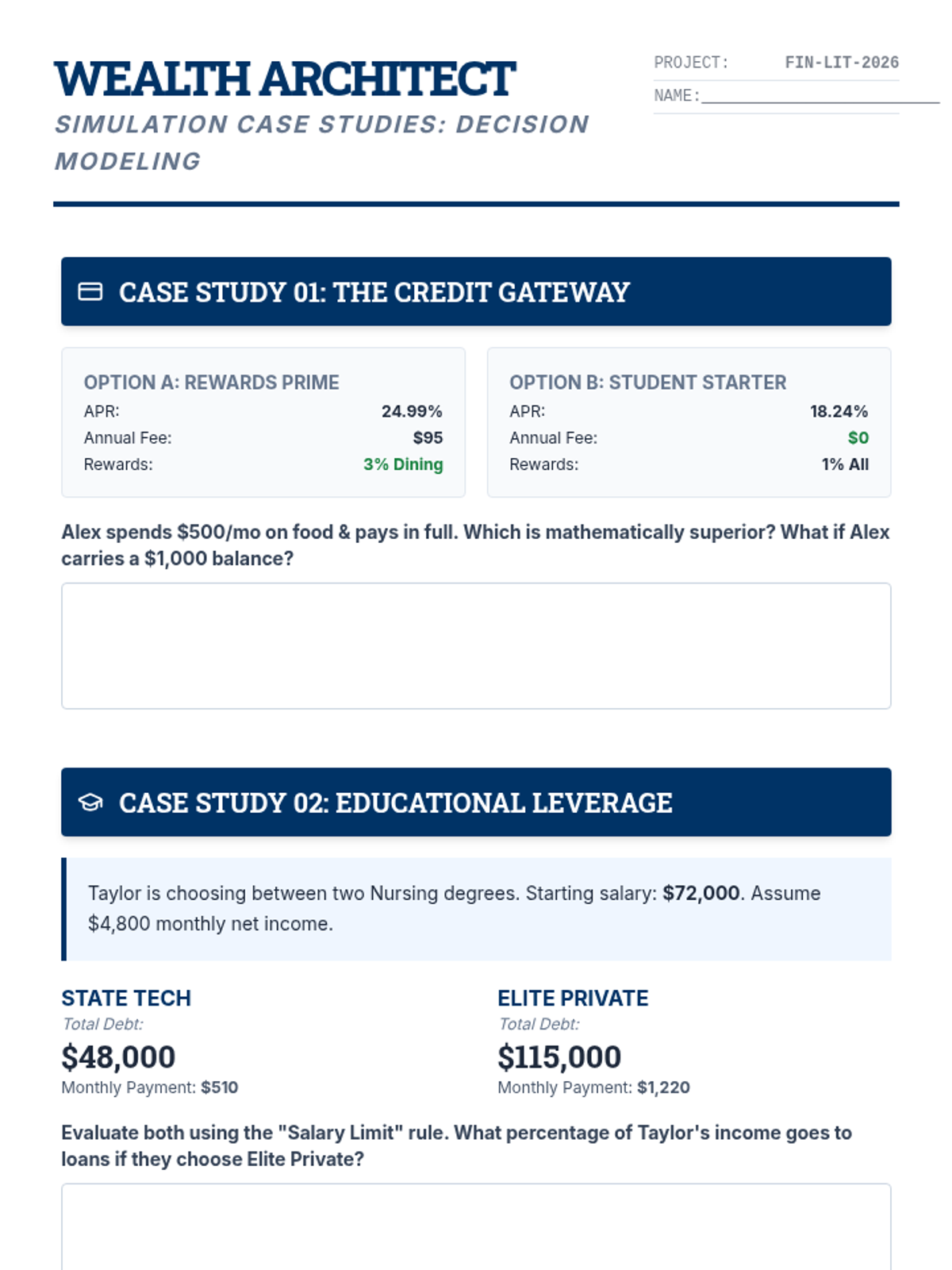
A student activity worksheet featuring three complex financial case studies: credit card evaluation, student loan ROI modeling, and index fund vs. active fund analysis. Designed for advanced high school students to apply mathematical and strategic reasoning to real-world financial decisions.
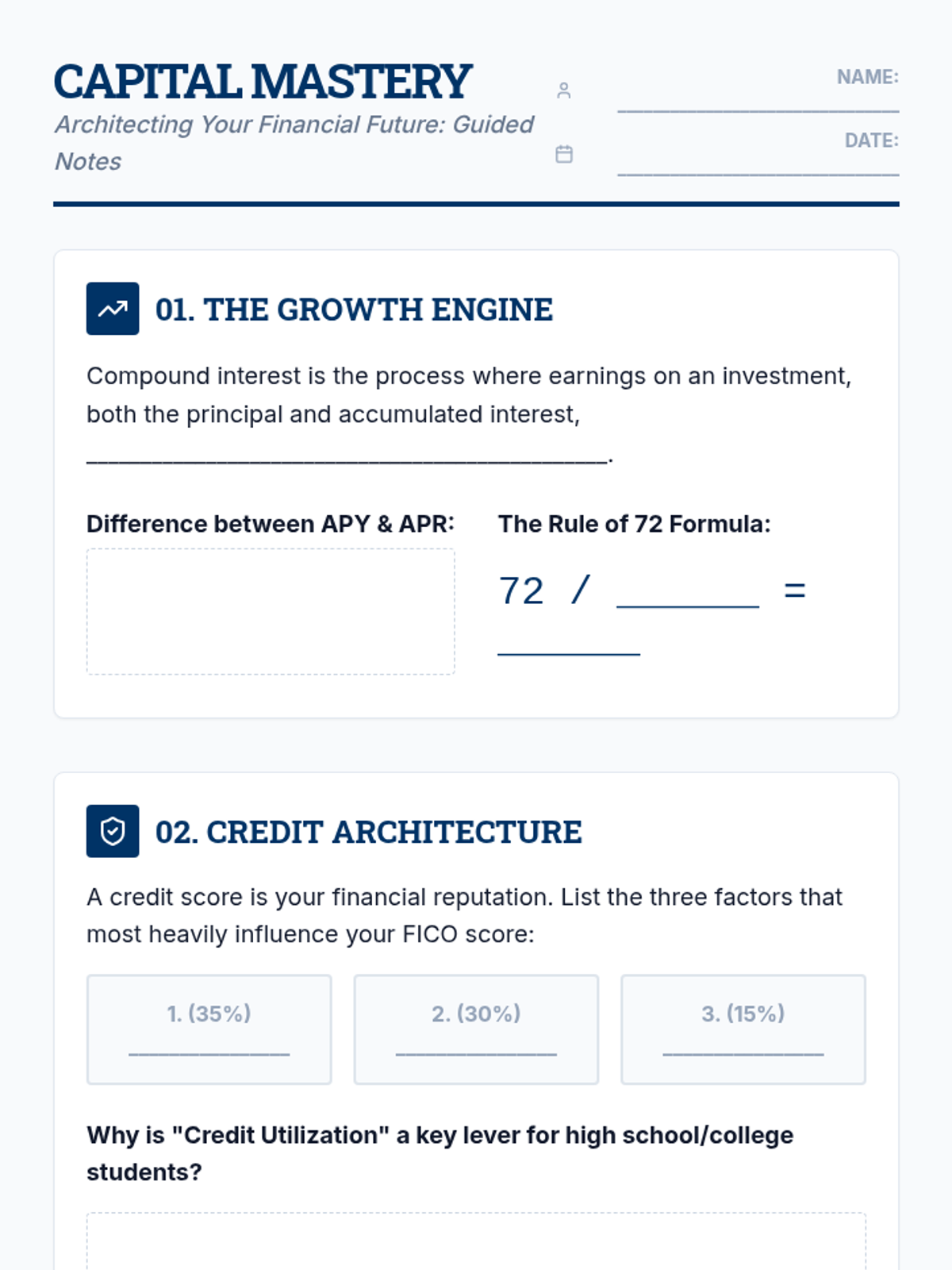
A student-facing guided notes document to be used during the Capital Blueprint Slides presentation. Includes fill-in-the-blanks, summary boxes, and reflective spaces designed with a blueprint-themed aesthetic to maintain lesson cohesion.
A comprehensive 10-slide presentation designed for advanced high school students, exploring the architectural principles of personal finance. It covers compound interest, credit scoring mechanics, the dangers of minimum payments, strategic student debt, index fund investing, and tax-advantaged accounts with a professional blueprint-inspired aesthetic.
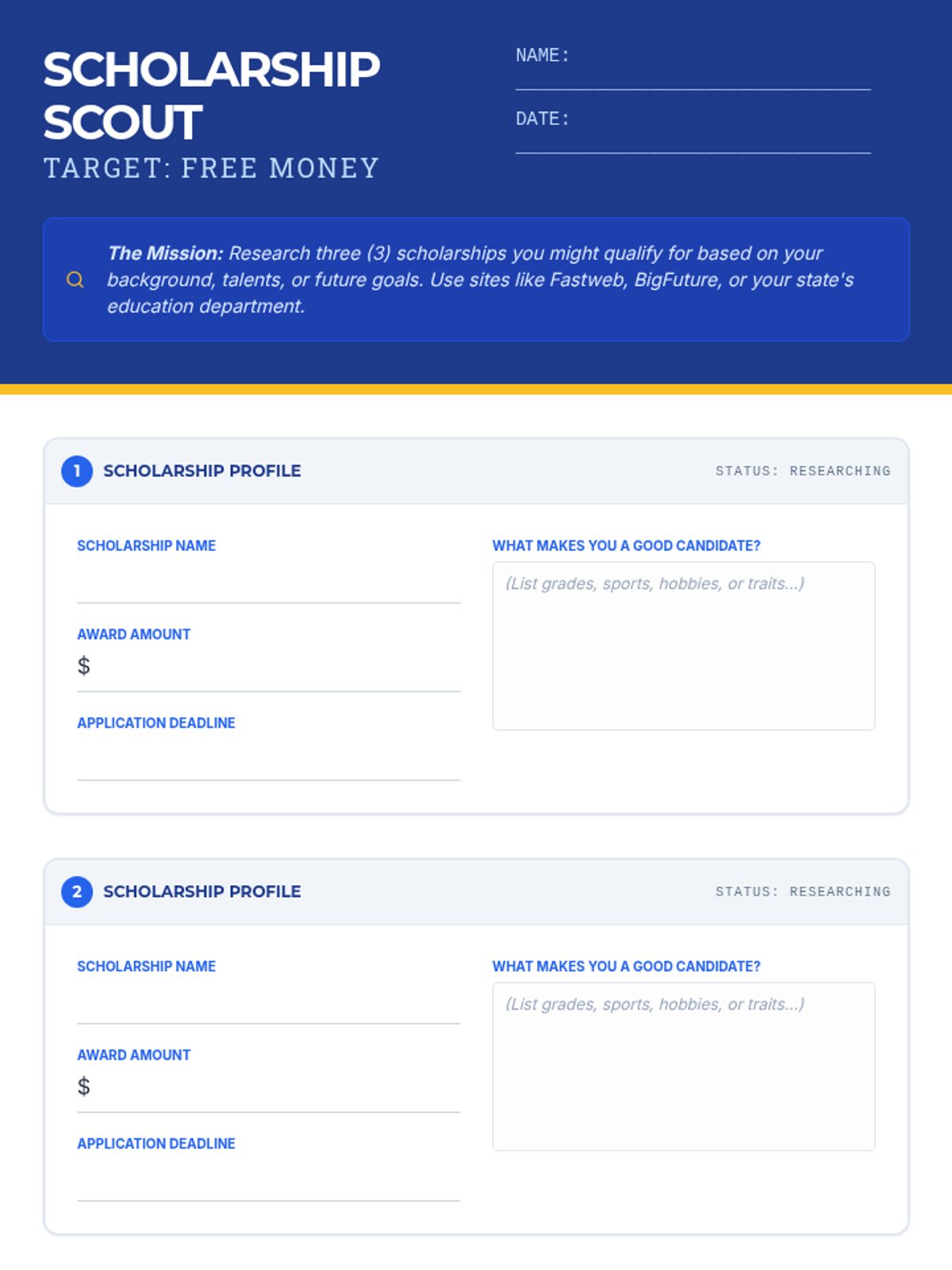
A research template for students to identify and analyze three specific college scholarships based on their background and interests.
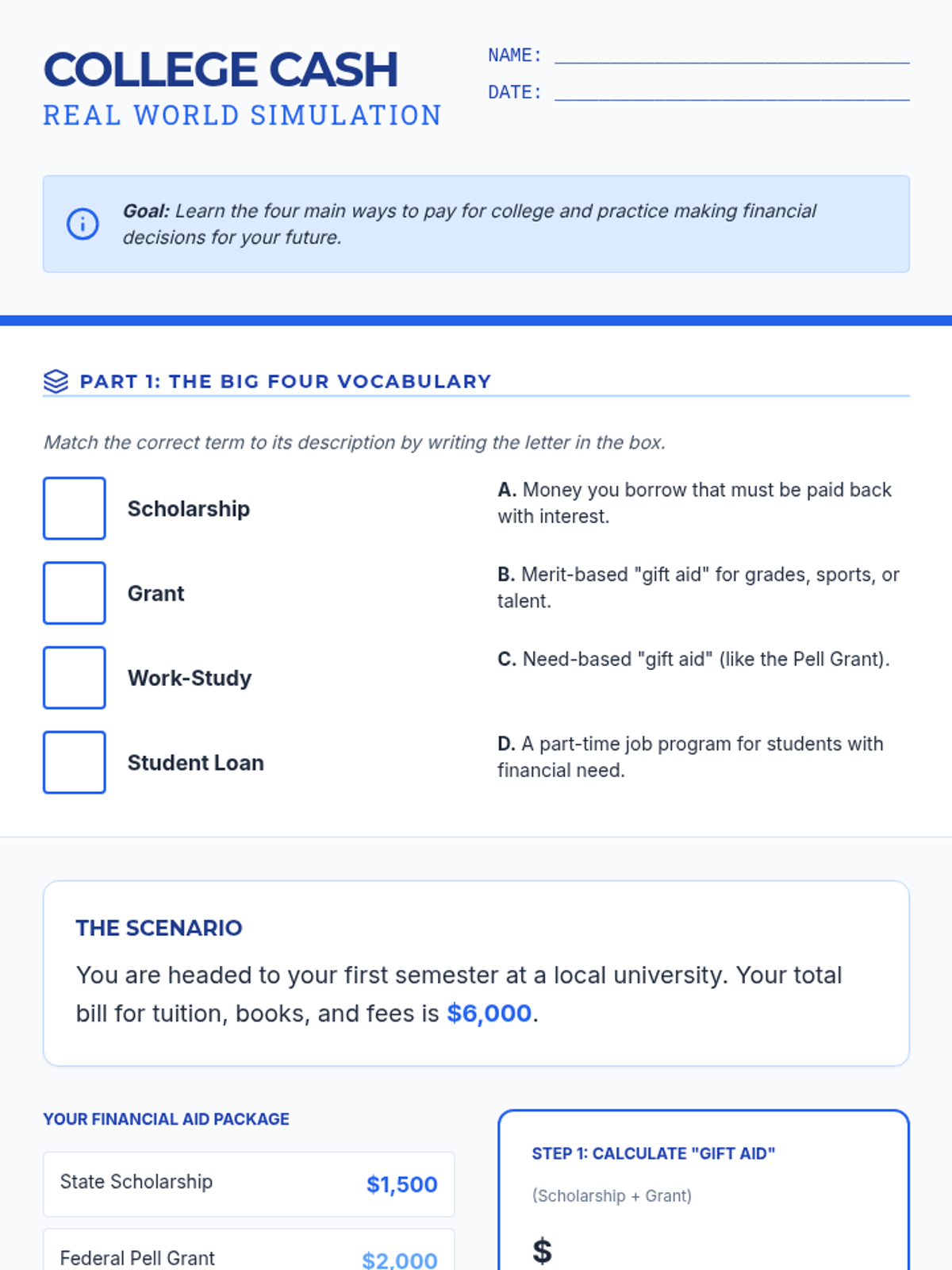
A student worksheet for calculating a college financial aid package and making budget-based decisions.
A visually engaging slide deck covering the four main types of college funding and the "Real World Budget" simulation scenario.
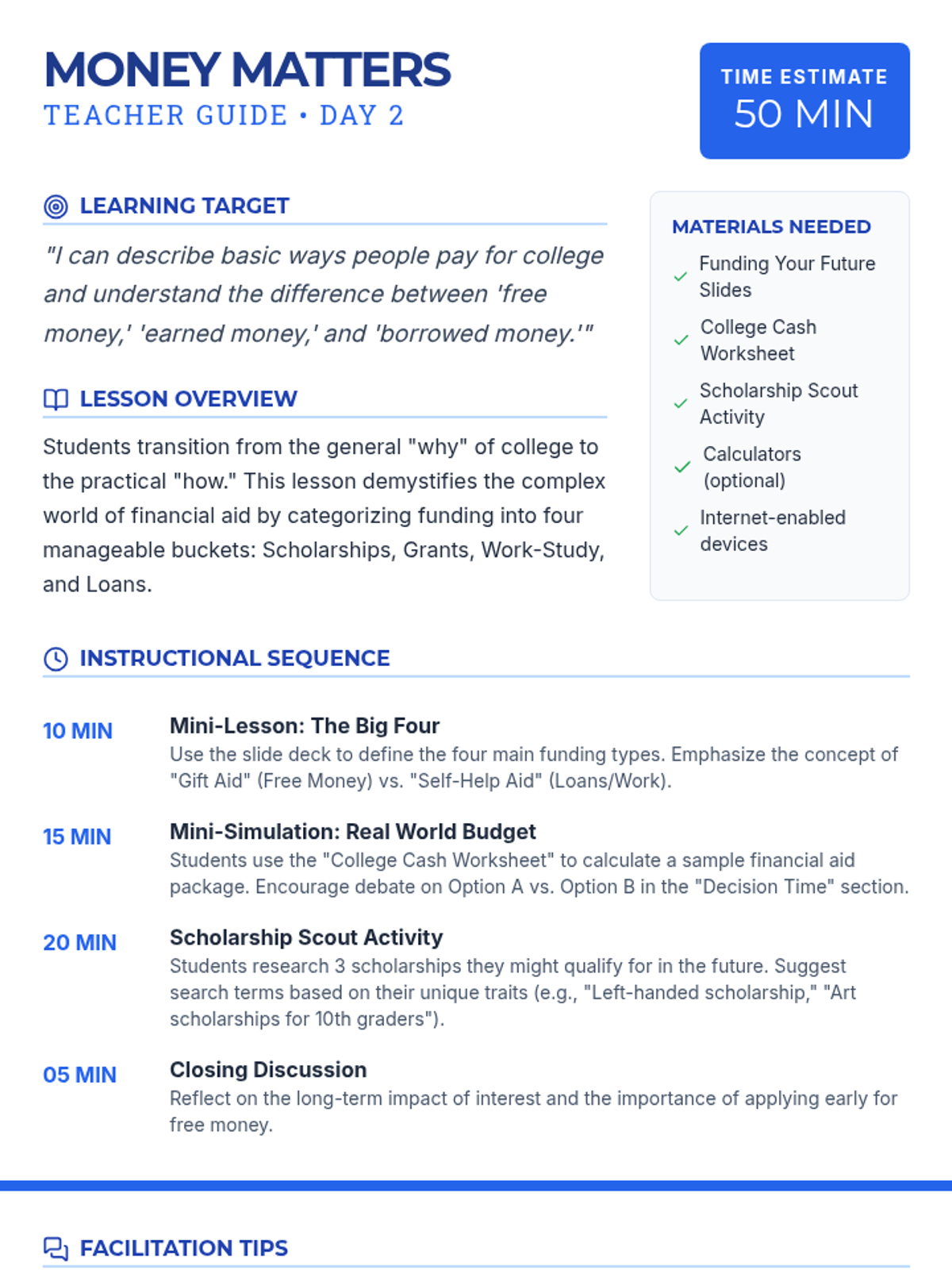
A comprehensive teacher's guide for the "Paying for College Basics" lesson, featuring a pacing guide, facilitation tips, common misconceptions, and an answer key for the student activities.
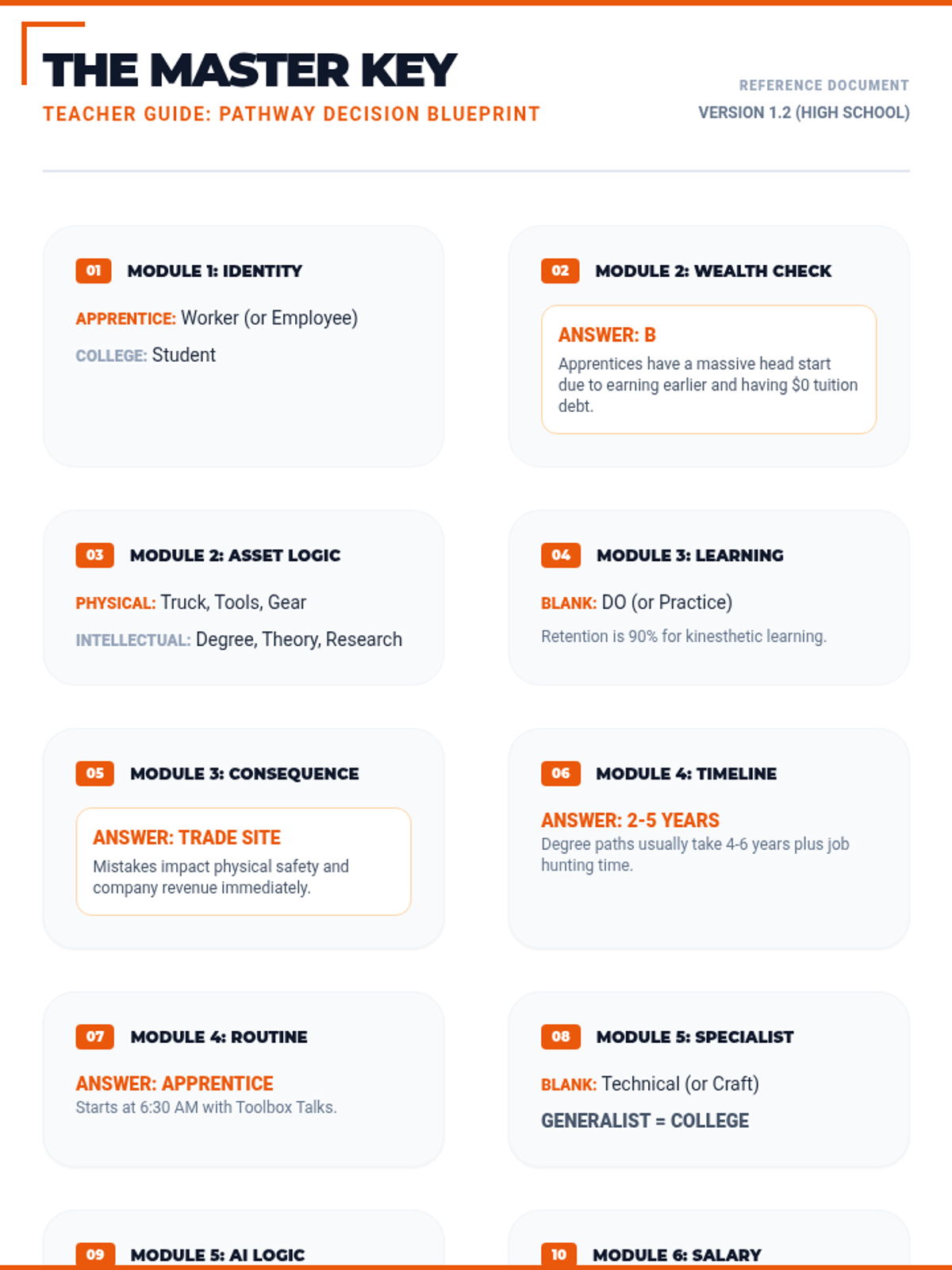
A teacher's master answer key for the Pathway Decision Blueprint Worksheet (15-section version), provided in a clean print layout with a Safety Orange and Slate theme.
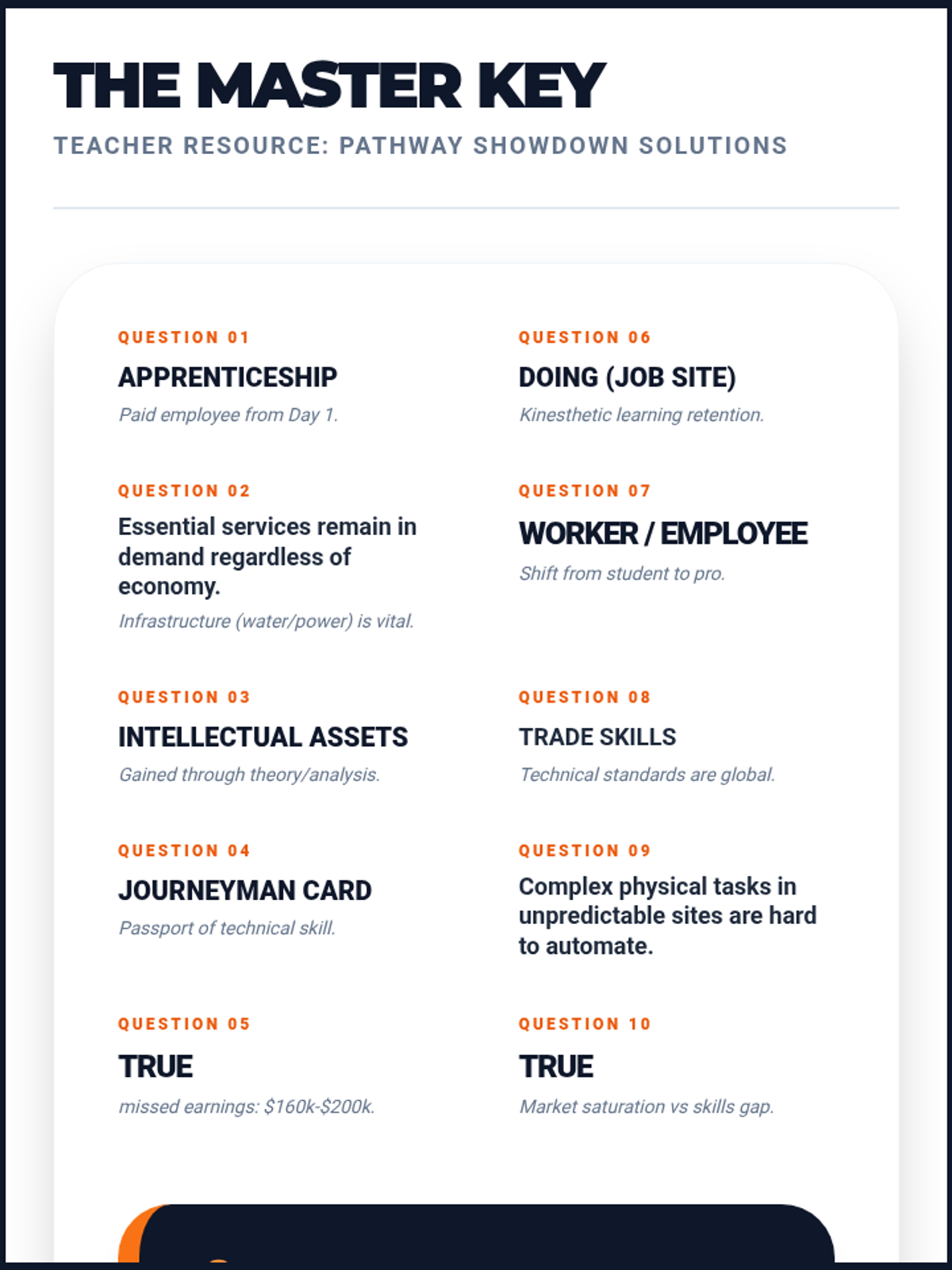
A standalone print-ready teacher answer key for the Pathway Showdown Info Sheet, featuring solutions for all 10 knowledge-check questions with detailed explanations.
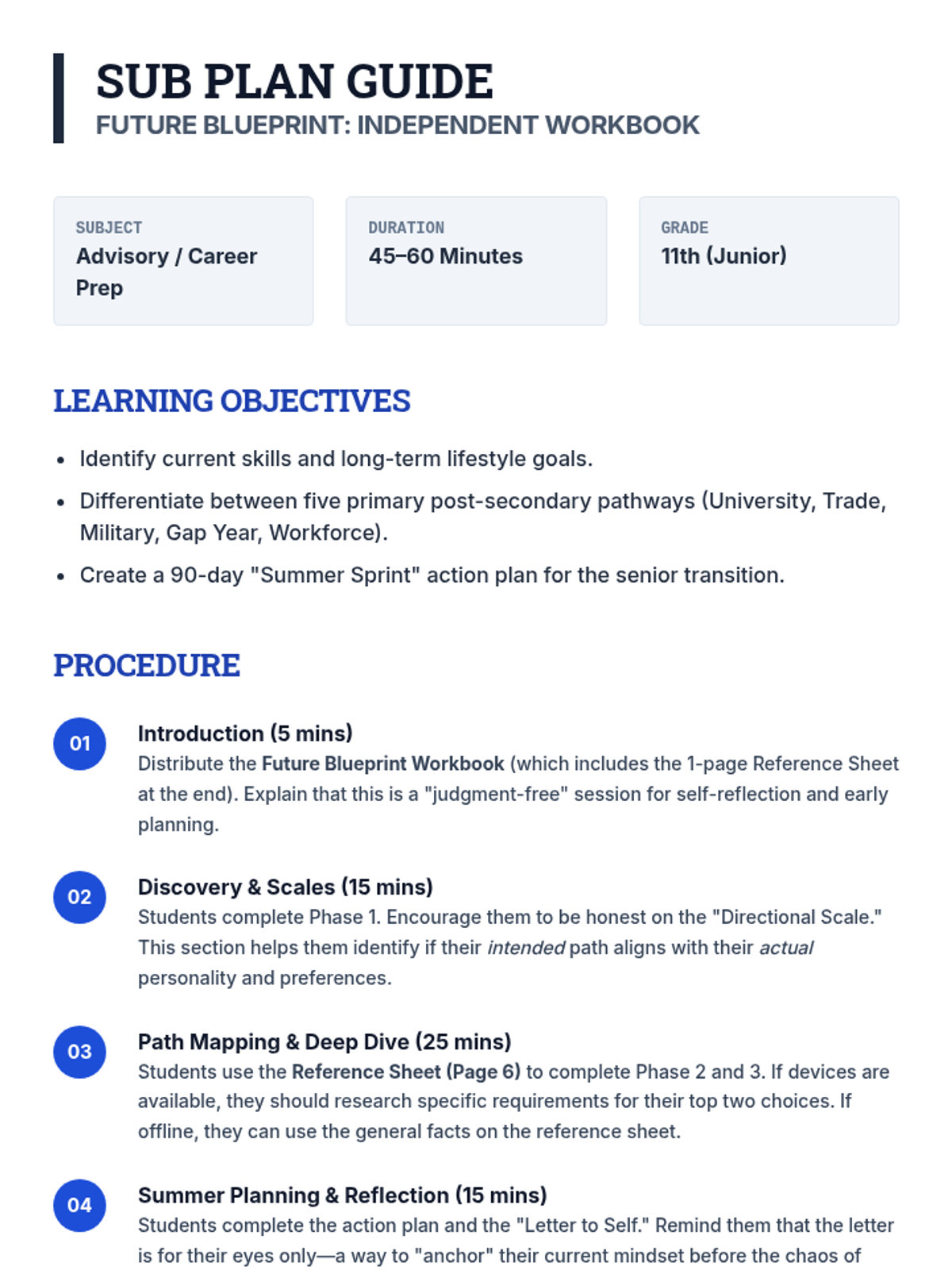
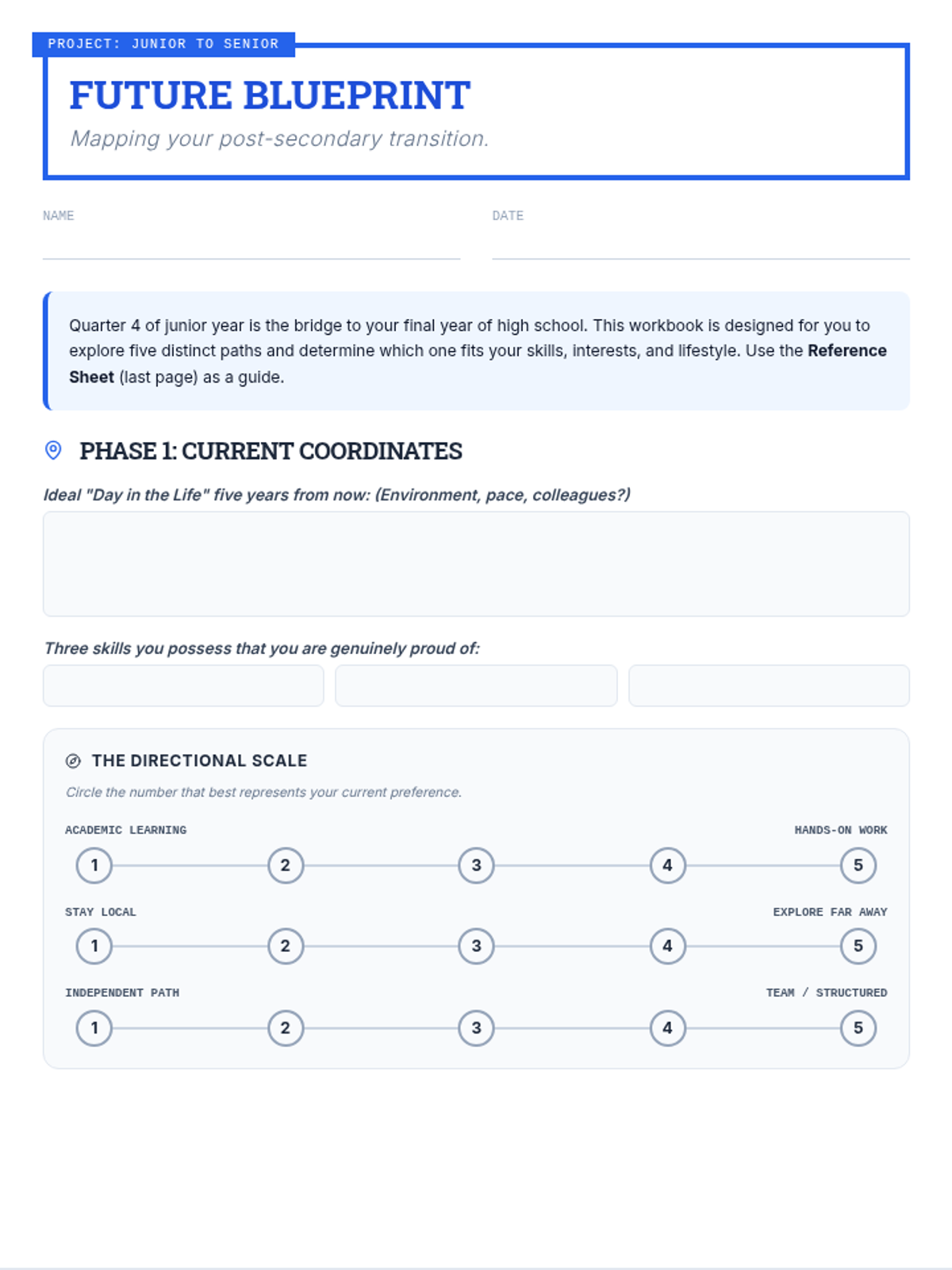
A teacher/substitute guide for the Future Blueprint lesson. It includes timing suggestions, learning objectives, and a step-by-step facilitation guide for the independent workbook. Darkened text and high-contrast headers for copier legibility.
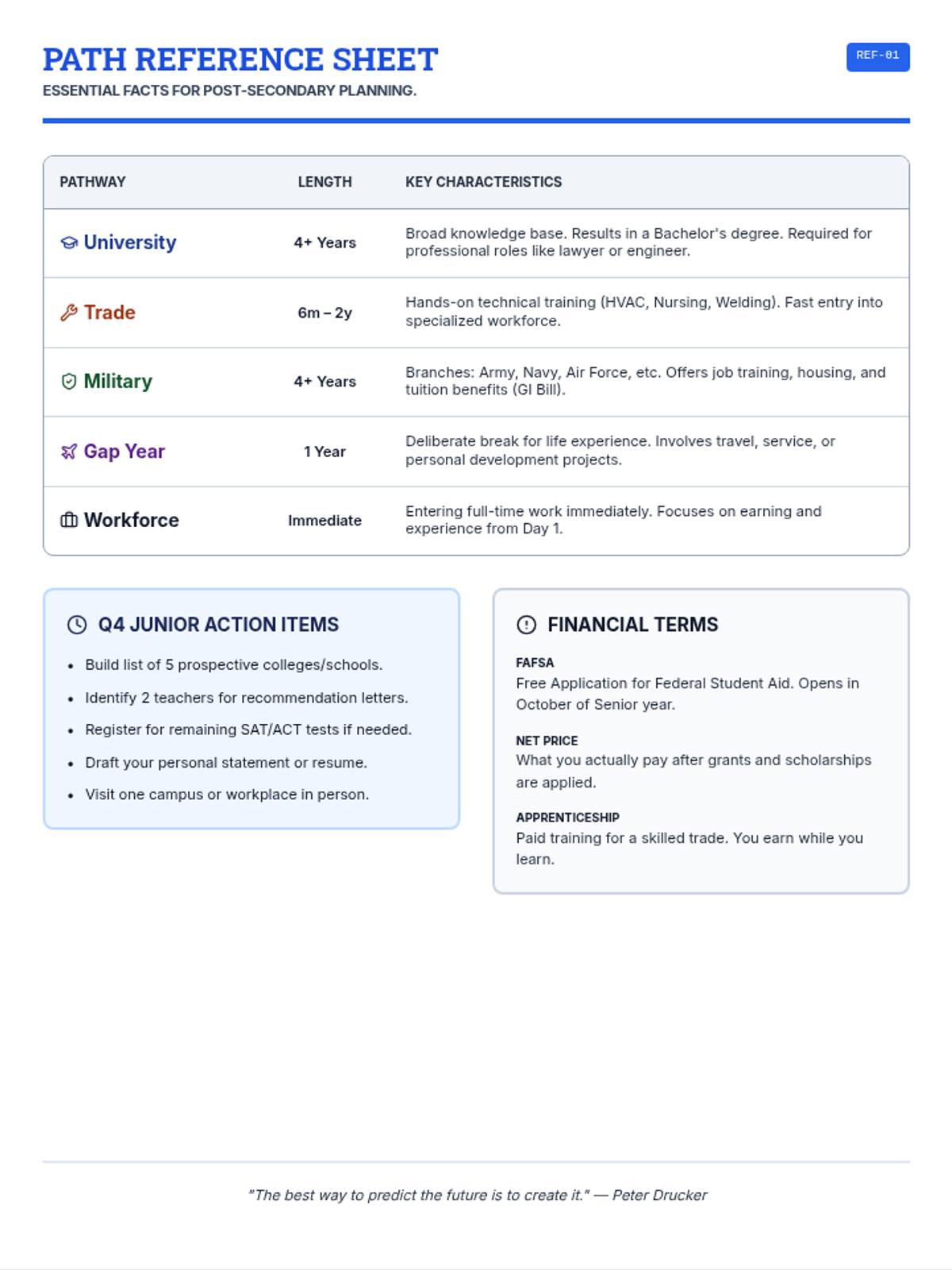
A one-page reference guide for students to use while completing their workbook. It provides definitions, typical timelines, and key characteristics for the five major post-secondary paths. Darkened text for high-volume copier legibility.
A comprehensive 6-page student workbook packet designed for independent completion. It guides students through self-reflection, comparative research (using the integrated reference sheet), summer planning, and future-self reflection. Adjusted for better legibility and response area height.
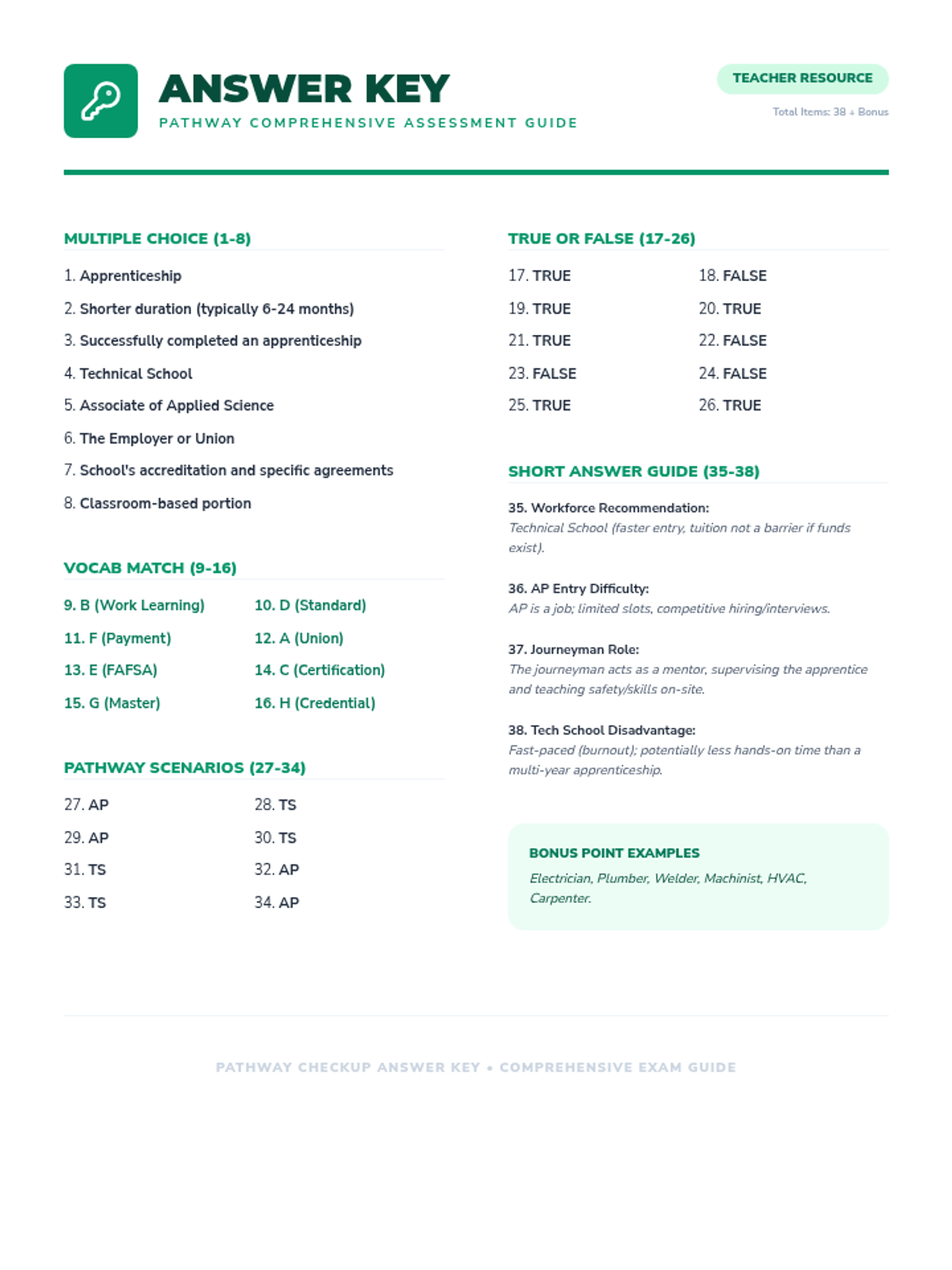
A teacher-facing answer key for the Pathway Checkup Quiz, including sample responses for short-answer questions and a bonus question guide.
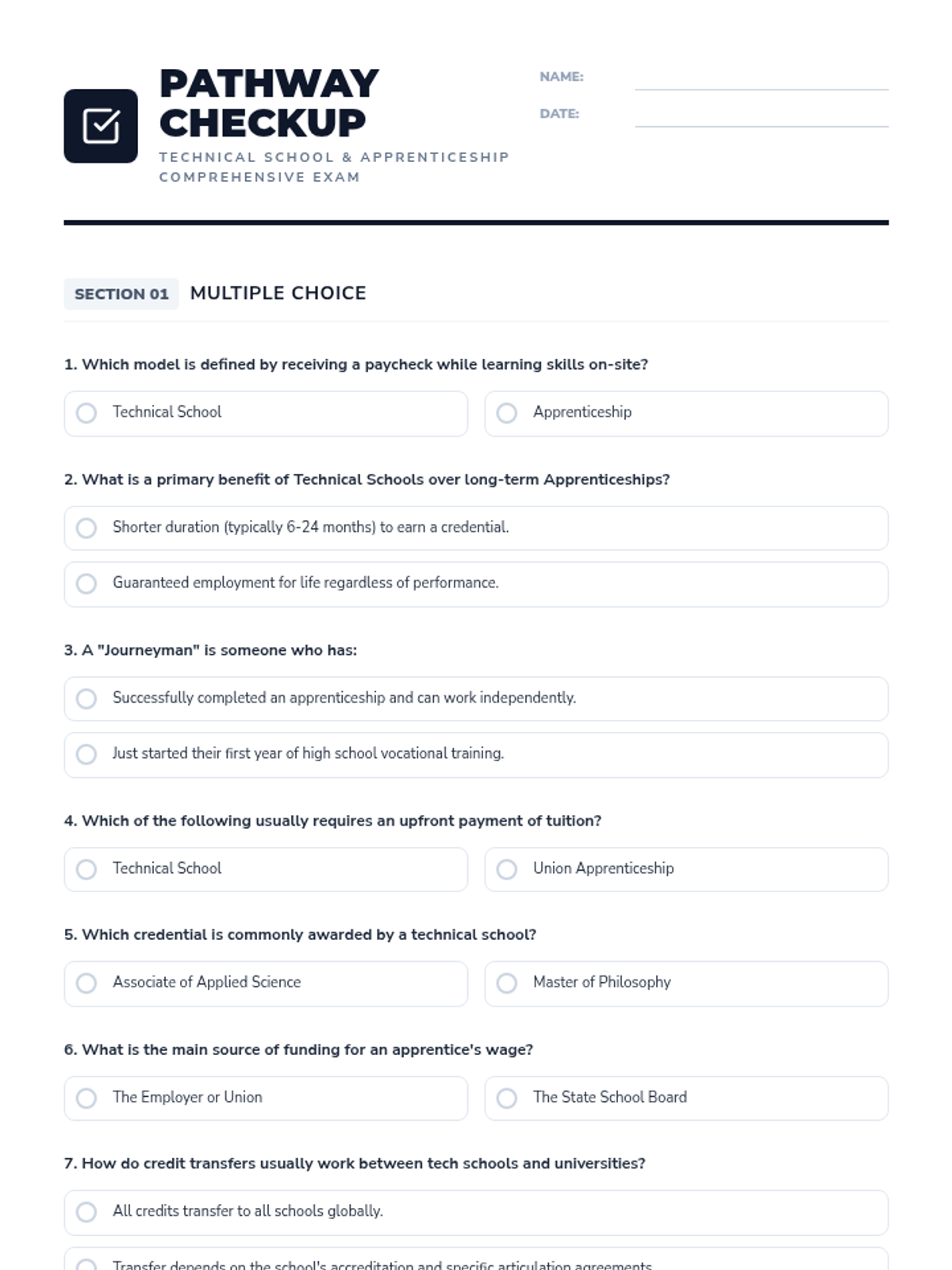
An extended 38-question formal assessment featuring multiple-choice, vocabulary matching, scenario analysis, true/false, and short-answer questions to evaluate student understanding of technical schools and apprenticeships.
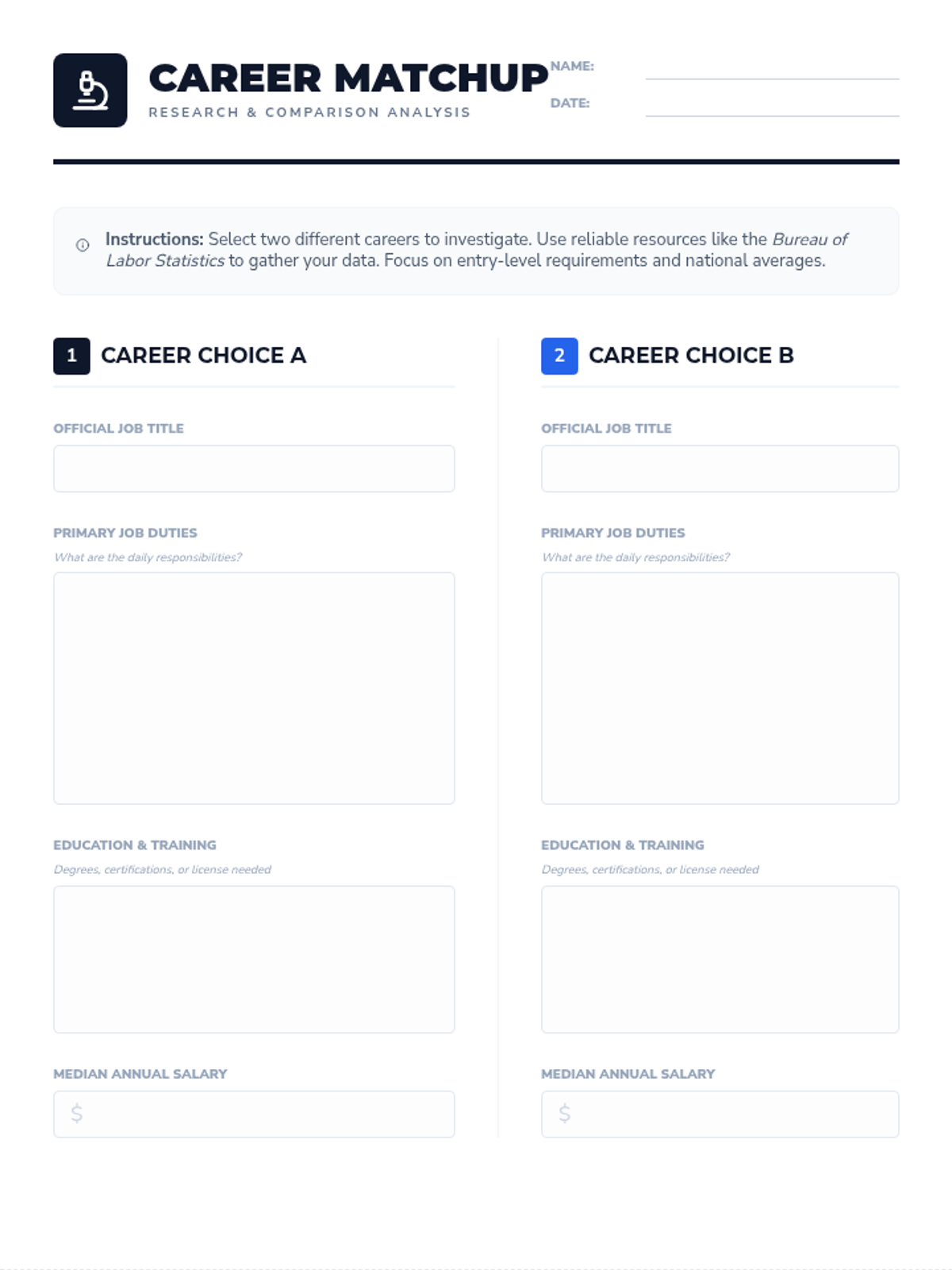
A student research activity sheet designed for comparing two different career paths side-by-side, focusing on job duties, education requirements, salary, and a detailed similarity/difference analysis.
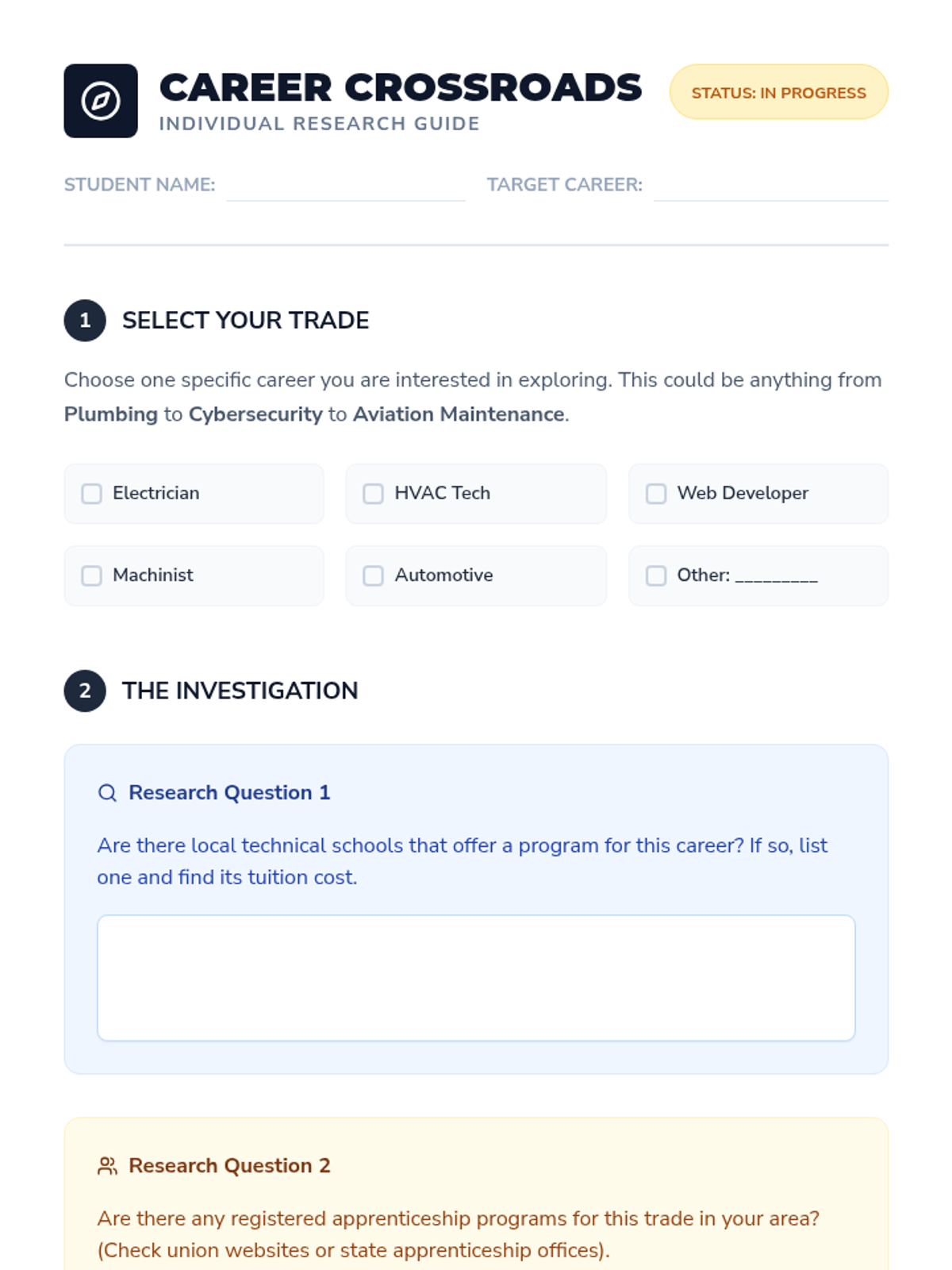
A student-led research guide for exploring specific trade careers and determining the local requirements for both technical school and apprenticeship pathways.
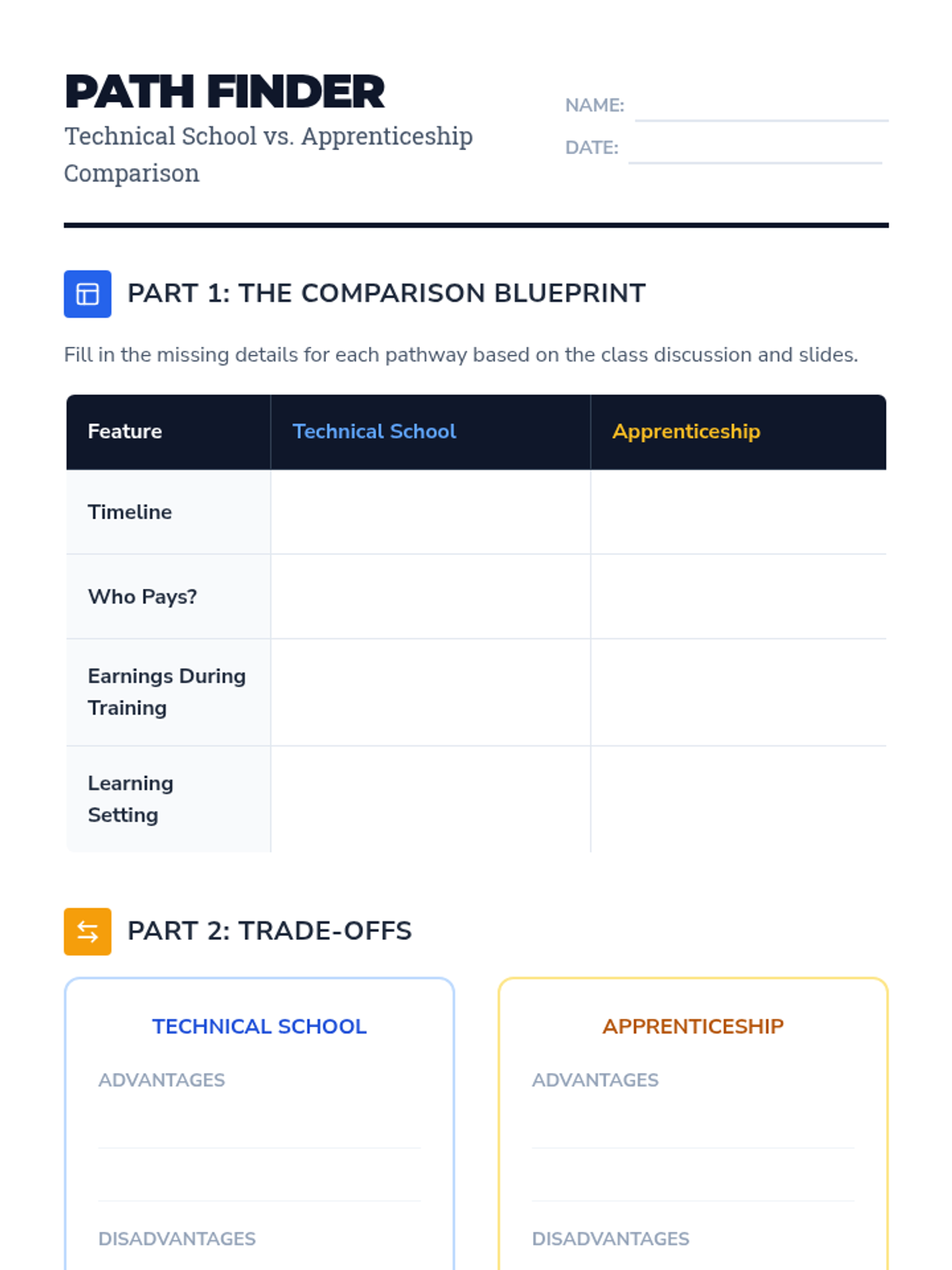
A student worksheet for comparing technical schools and apprenticeships, featuring a comparison table, pros/cons sorting, and scenario-based decision making.
A high-impact visual presentation using a 16:9 aspect ratio, designed to guide students through the definitions, pros, cons, and industry snapshots of technical schools and apprenticeships.
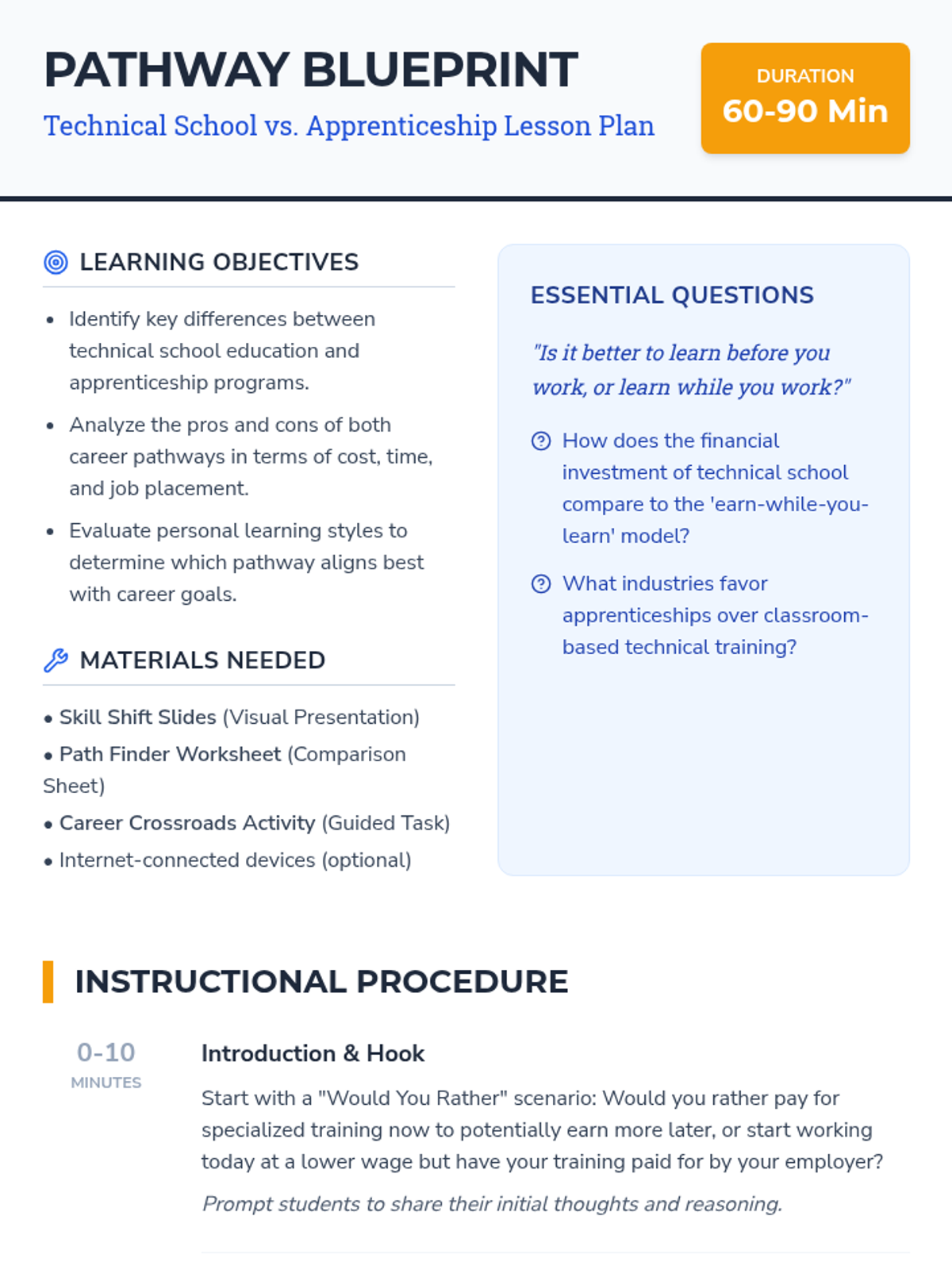
A detailed instructional guide for teachers, outlining lesson objectives, essential questions, and a step-by-step procedure for teaching students about the differences between technical schools and apprenticeships.
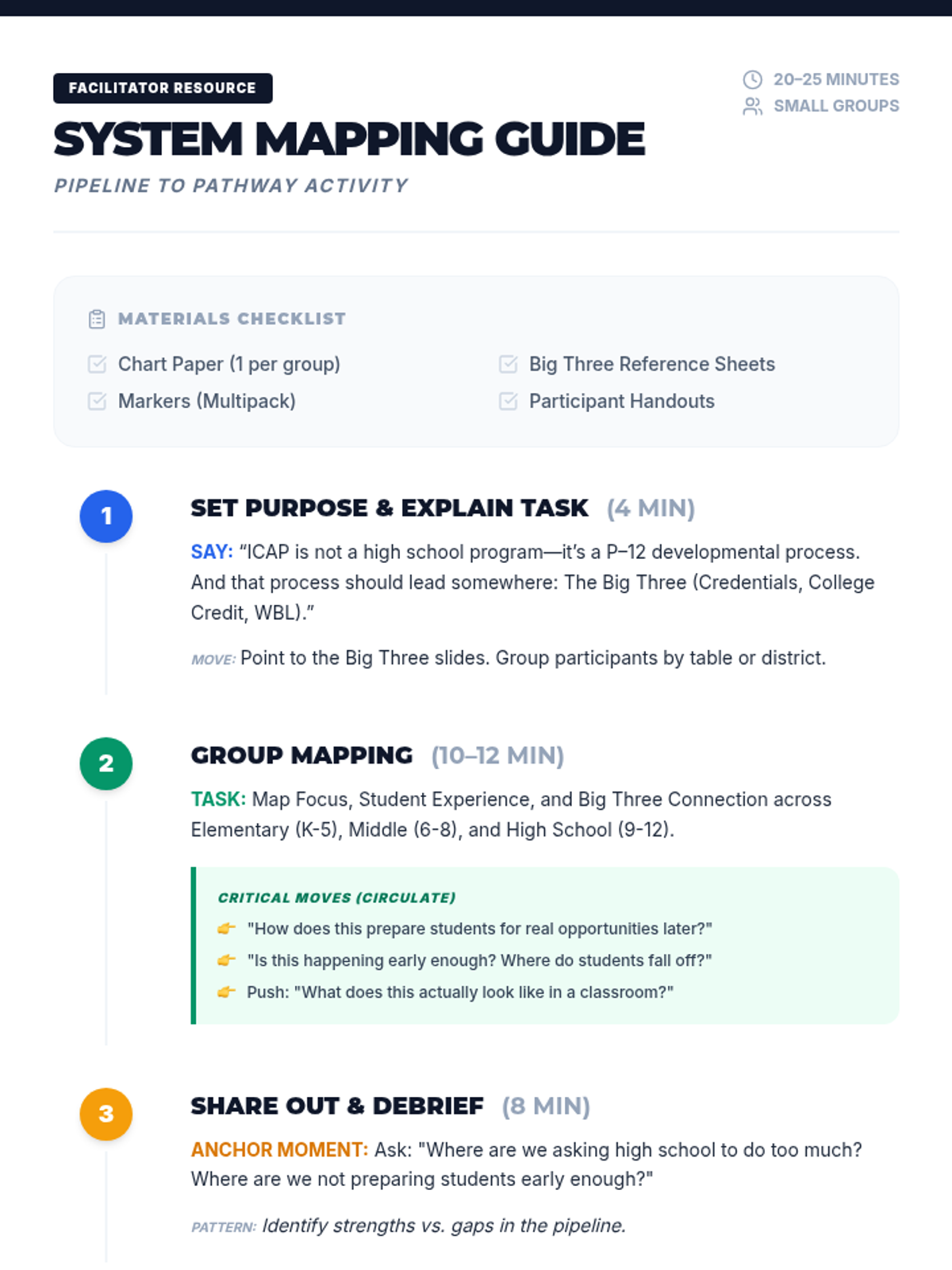
A facilitator cheat sheet for the Pipeline to Pathway activity, providing a step-by-step guide with scripts, moves, and critical prompts to ensure a high-impact session.
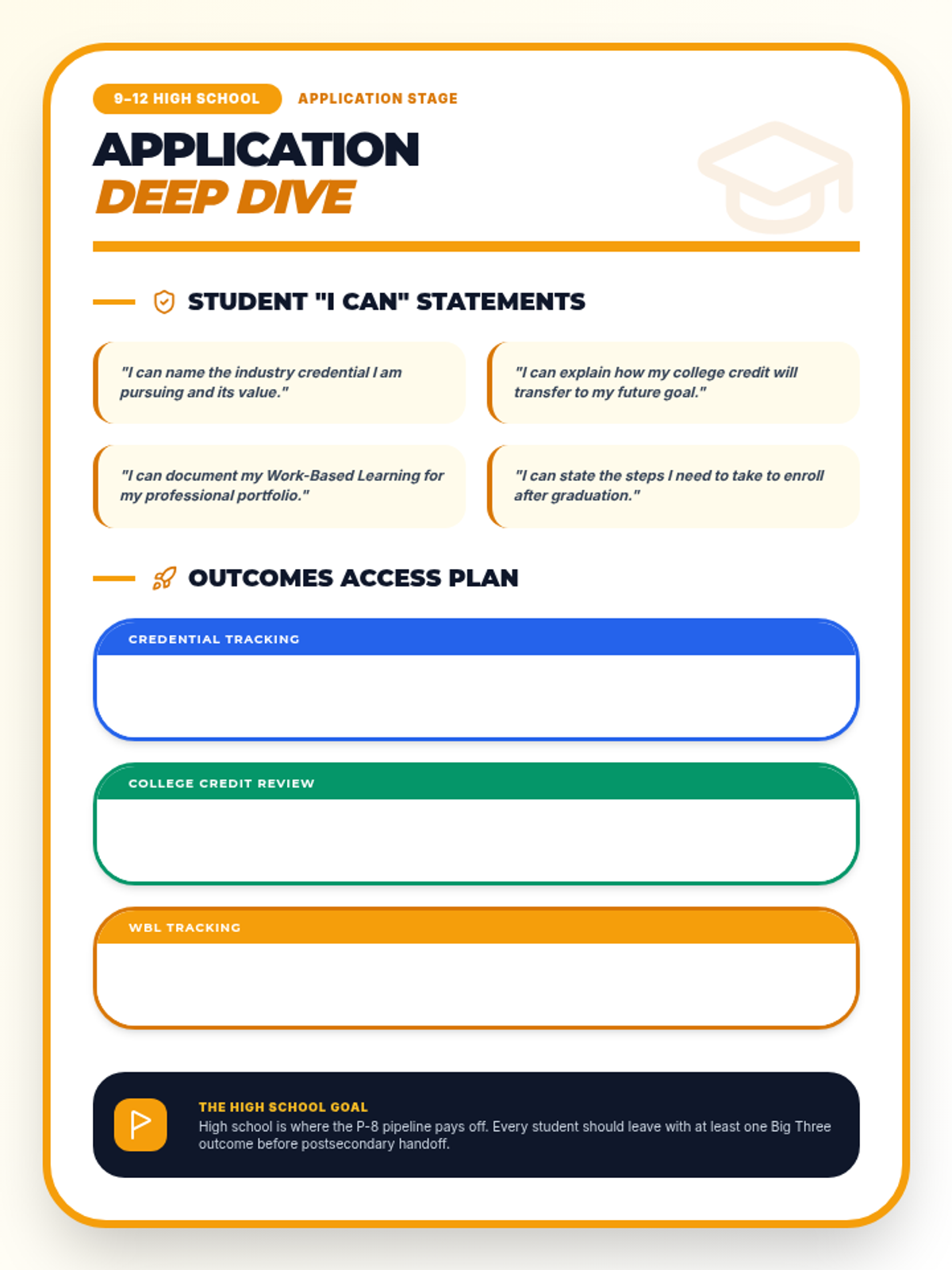
A deep dive implementation guide for the High School (9-12) level. Redesigned with a full-page layout that maximizes space for outcome tracking (Credentials, College Credit, WBL) and high-impact "I Can" statements.
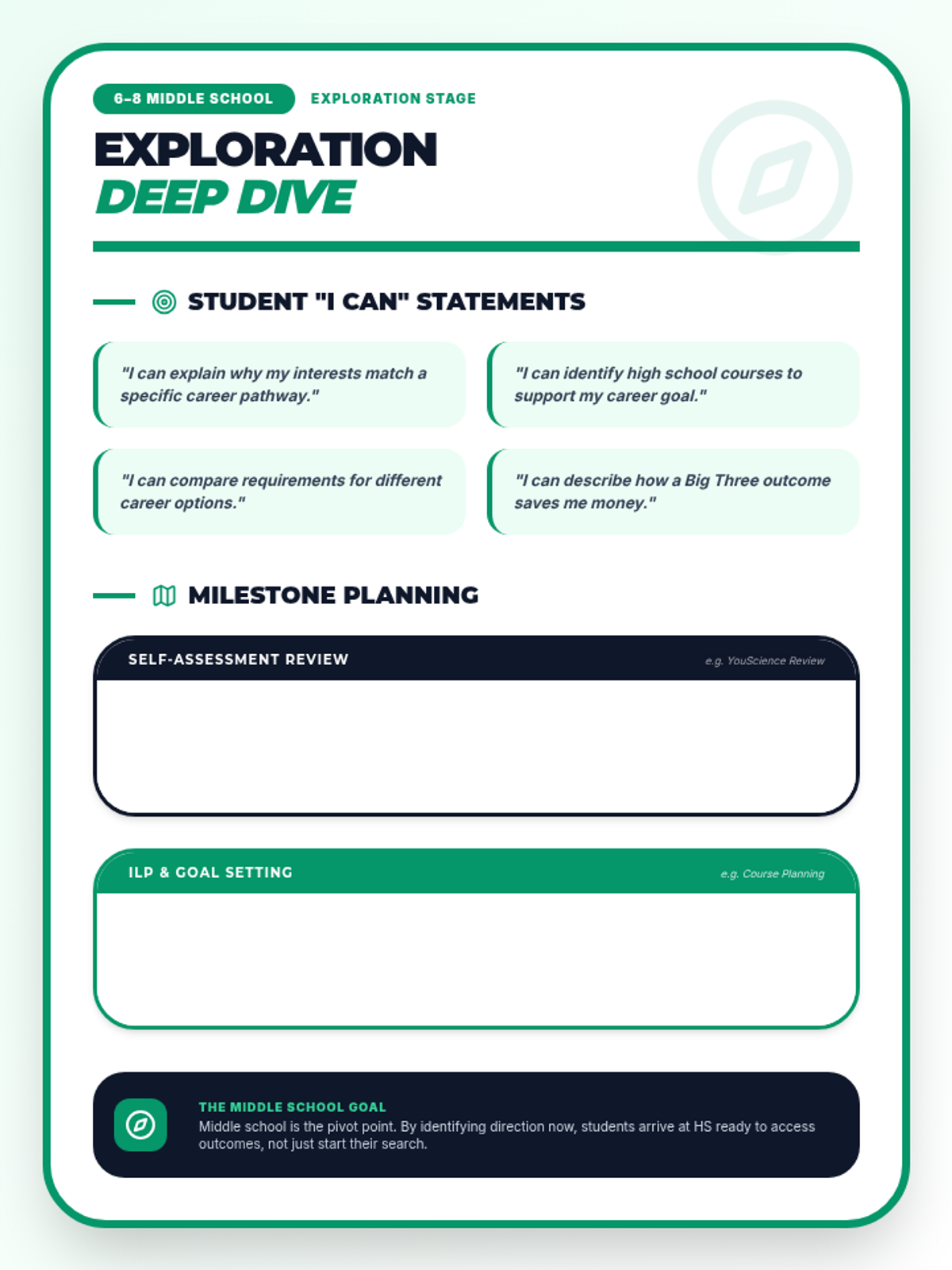
A deep dive implementation guide for the Middle School (6-8) level. Redesigned with a full-page layout that maximizes space for milestone planning and "I Can" statement exploration.
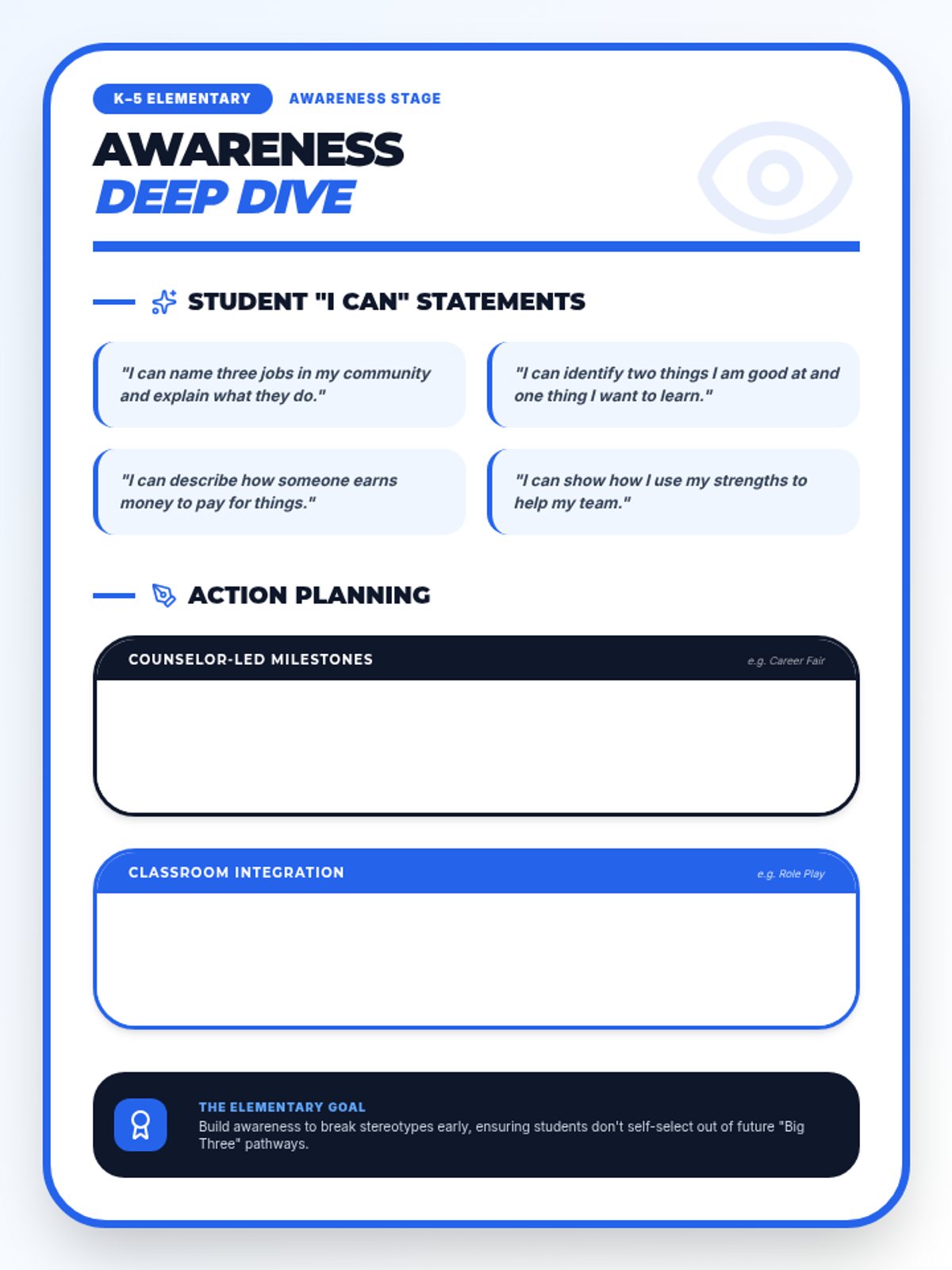
A deep dive implementation guide for the Elementary (K-5) level. Redesigned with a full-page layout that maximizes space for action planning while maintaining high-impact visuals.
A complete presentation guide for the facilitator, following the 7-step Pipeline to Pathway activity with integrated "Big Three" themes and prompts. All text is sized for maximum visibility (minimum 24px).
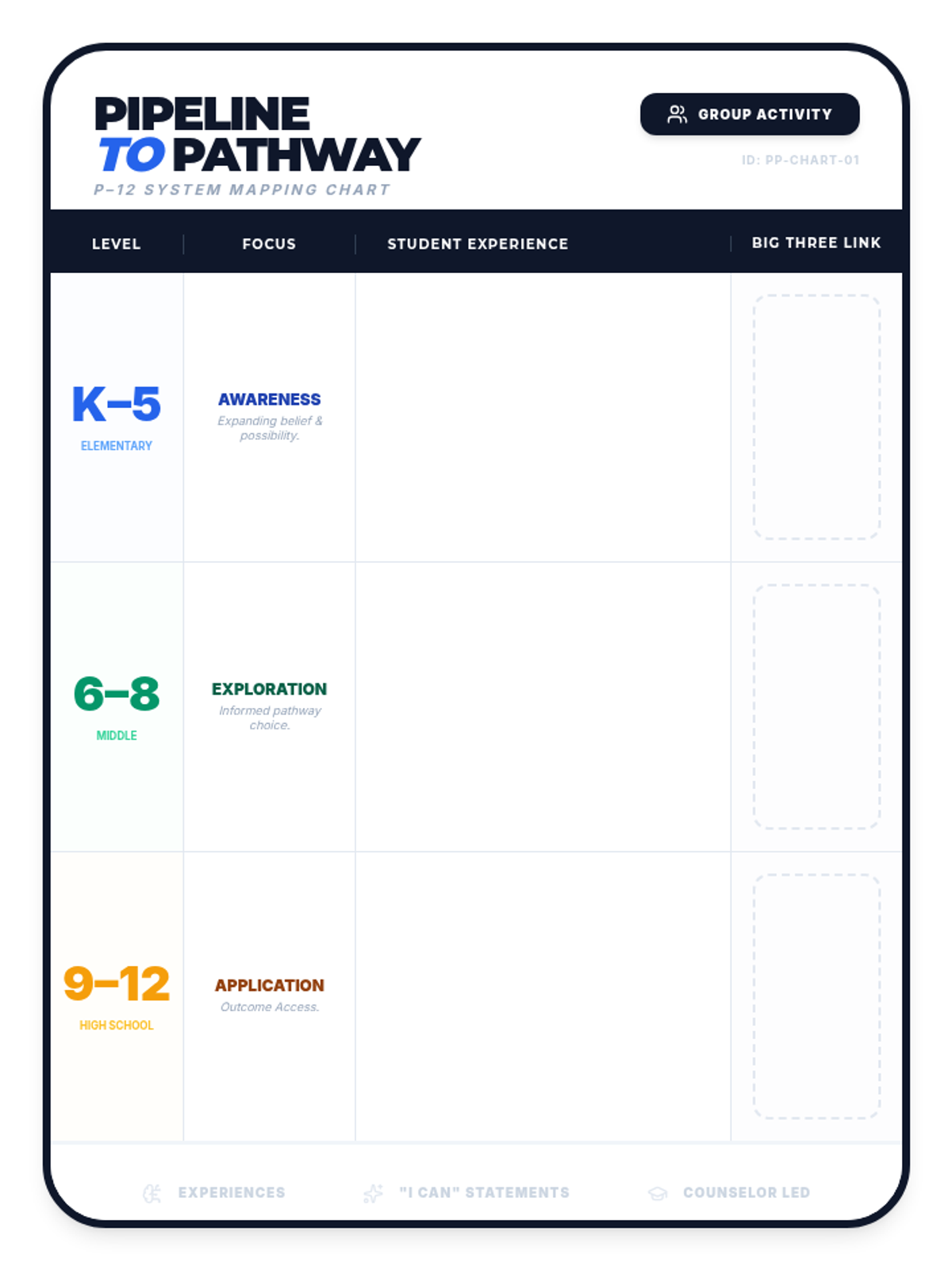
A large-format chart template for group activity, precision-fitted for a portrait printable area (720x960). Features three equal sections for Elementary, Middle, and High School mapping.
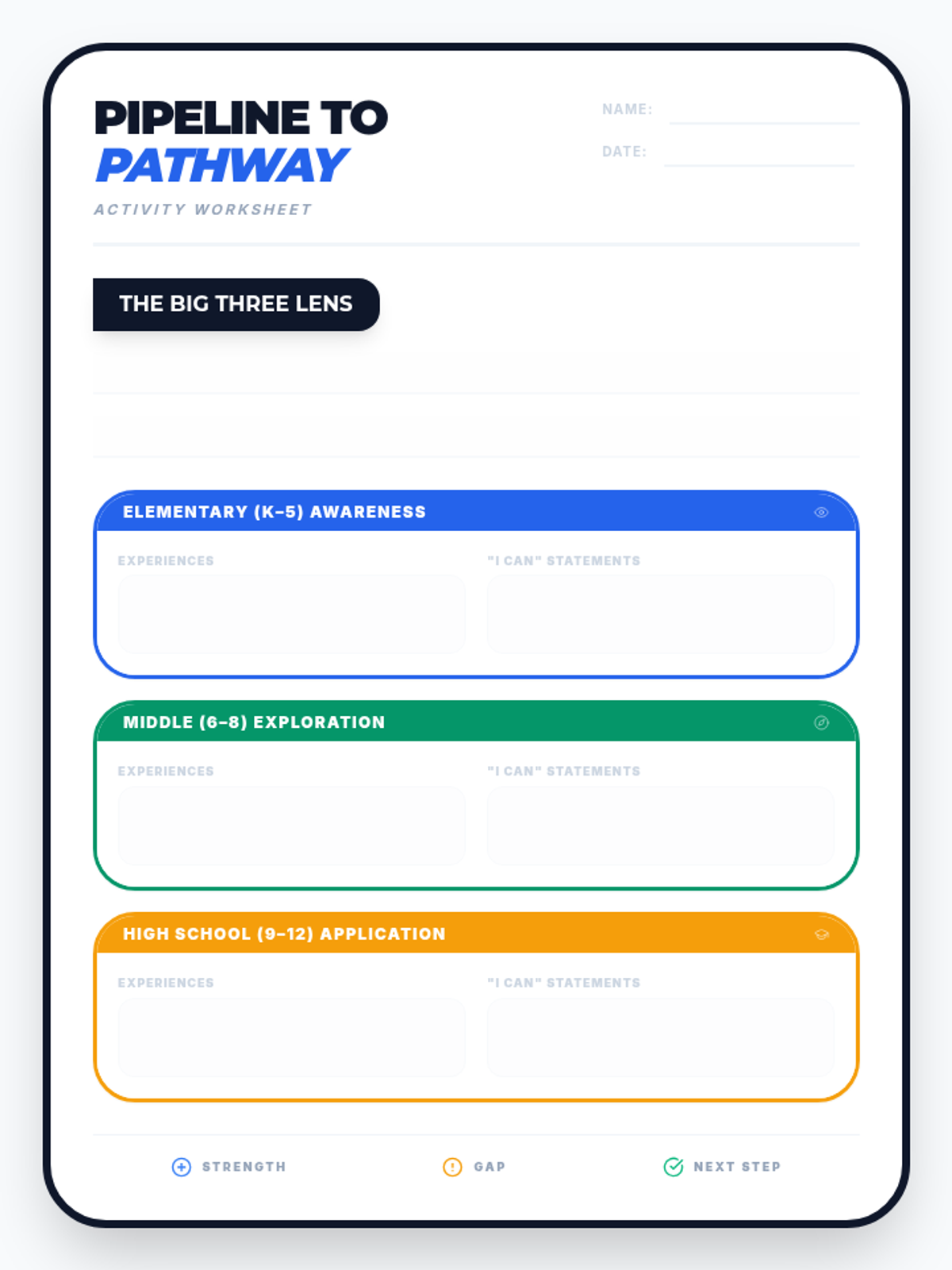
A participant handout for the Pipeline to Pathway activity. Redesigned to fill the full 720x960 page with three equal grade-level sections and clear work areas.
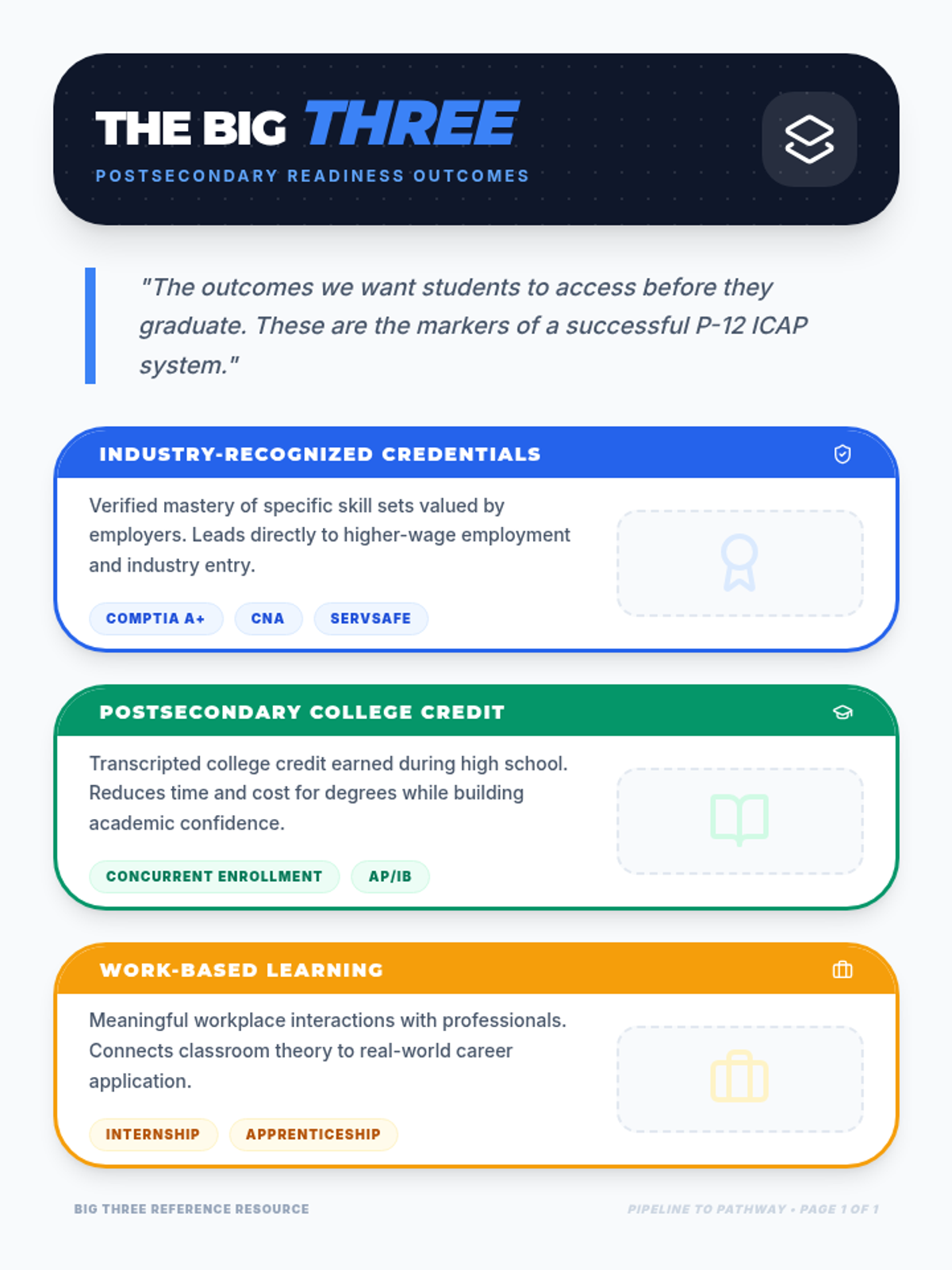
A high-quality reference sheet defining the Big Three outcomes (Industry Credentials, College Credit, and Work-Based Learning). Redesigned to fill the full 720x960 page with high-impact visuals.
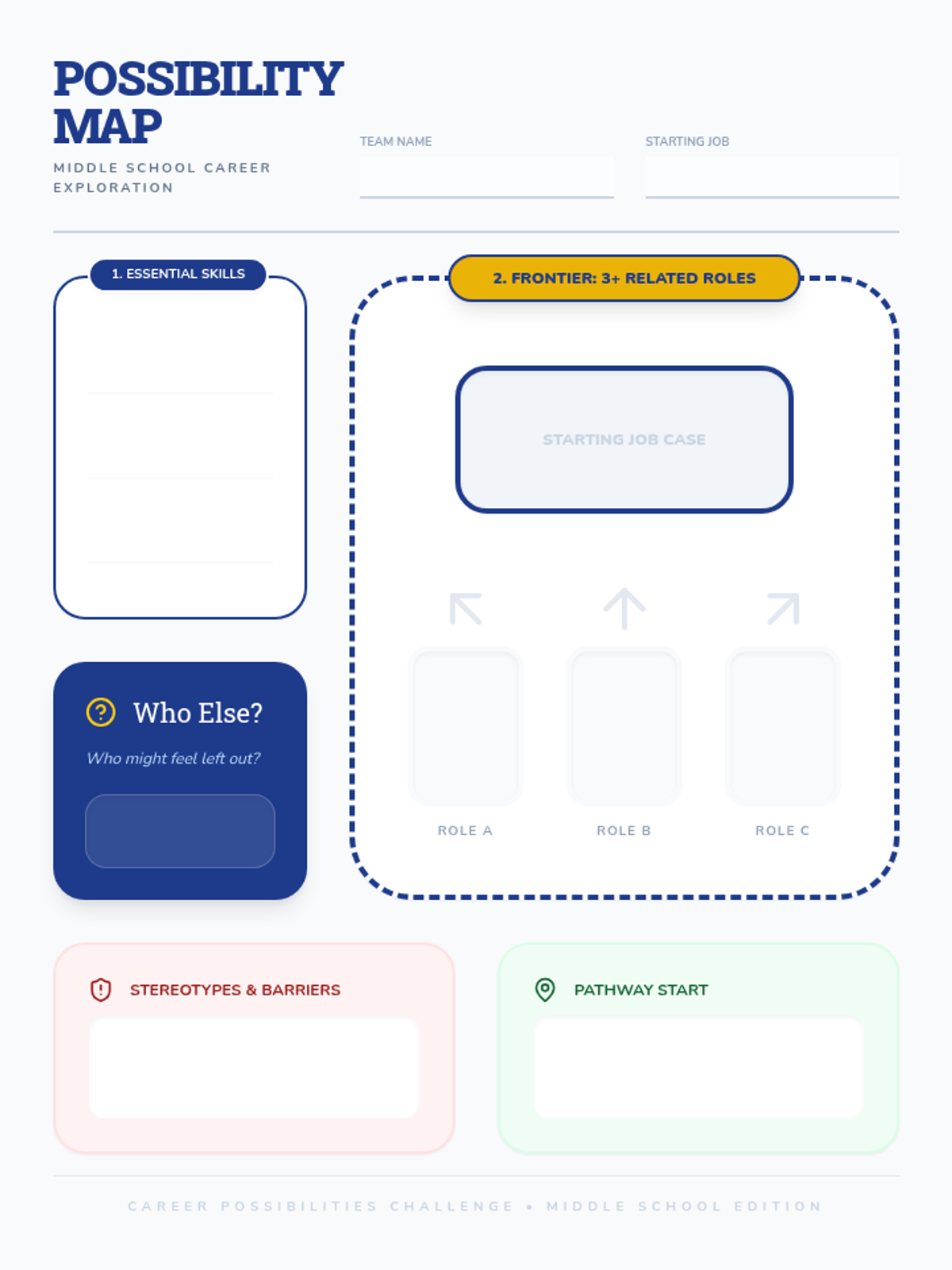
A middle-school-level brainstorming worksheet for mapping career skills, expansion connections, and common stereotypes/barriers, condensed to fit on a single page.
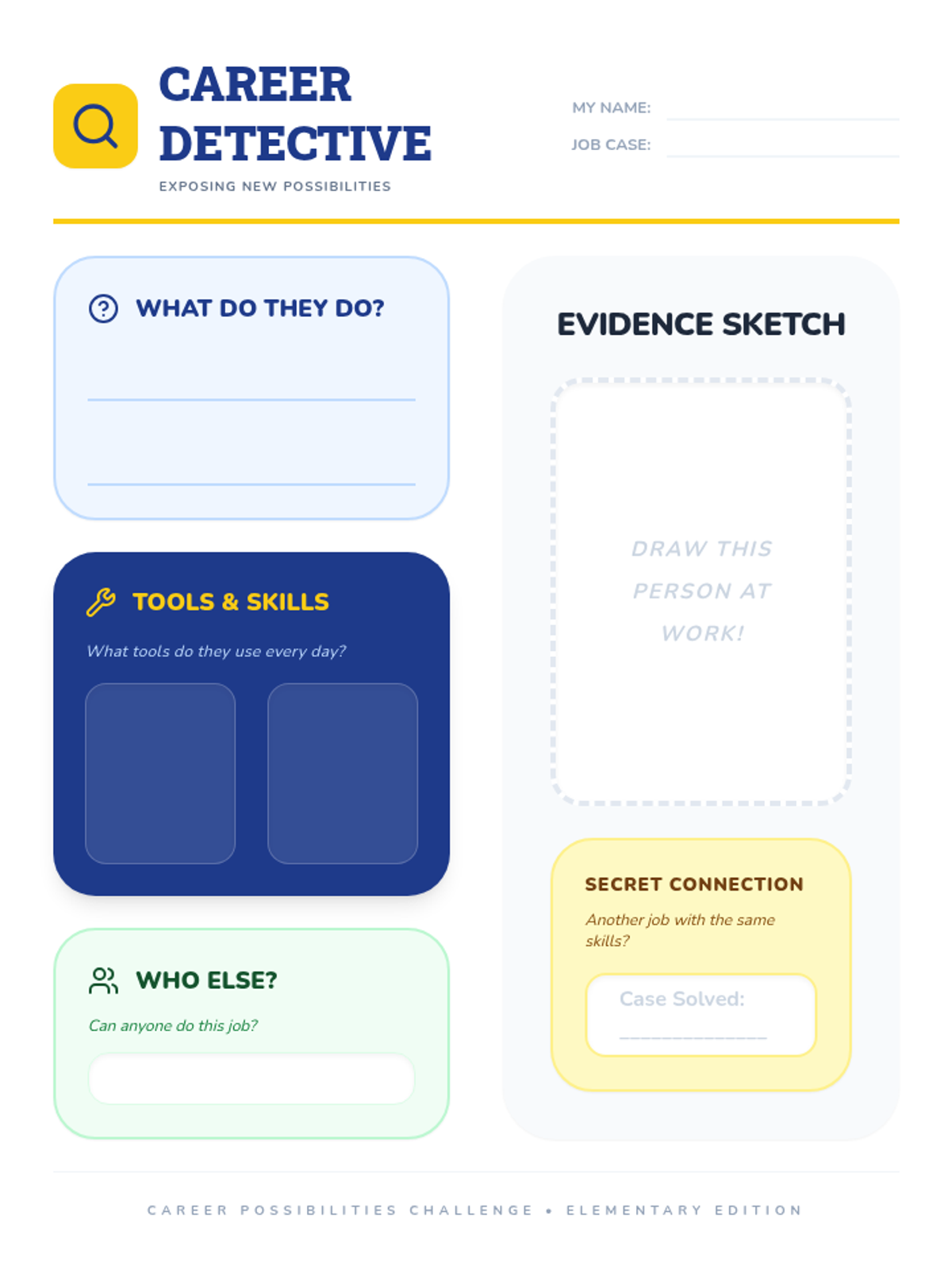
A simplified career exploration worksheet for elementary students, focusing on basic job roles, tools, and visual representation, condensed to fit on a single page.
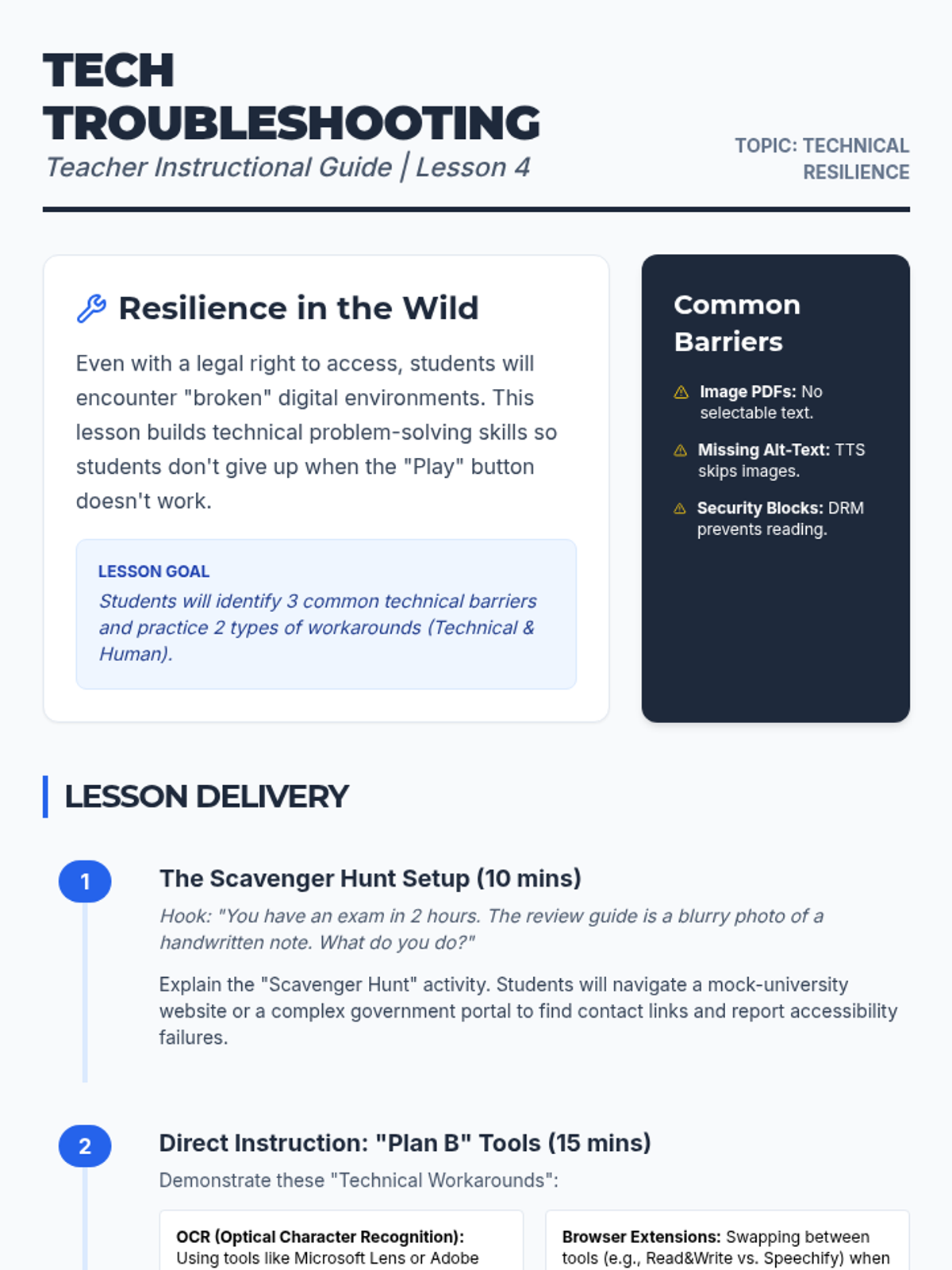
An instructional guide for teachers to lead the Tech Trouble Detectives lesson, including demonstrations of OCR tools and facilitation for the scavenger hunt.
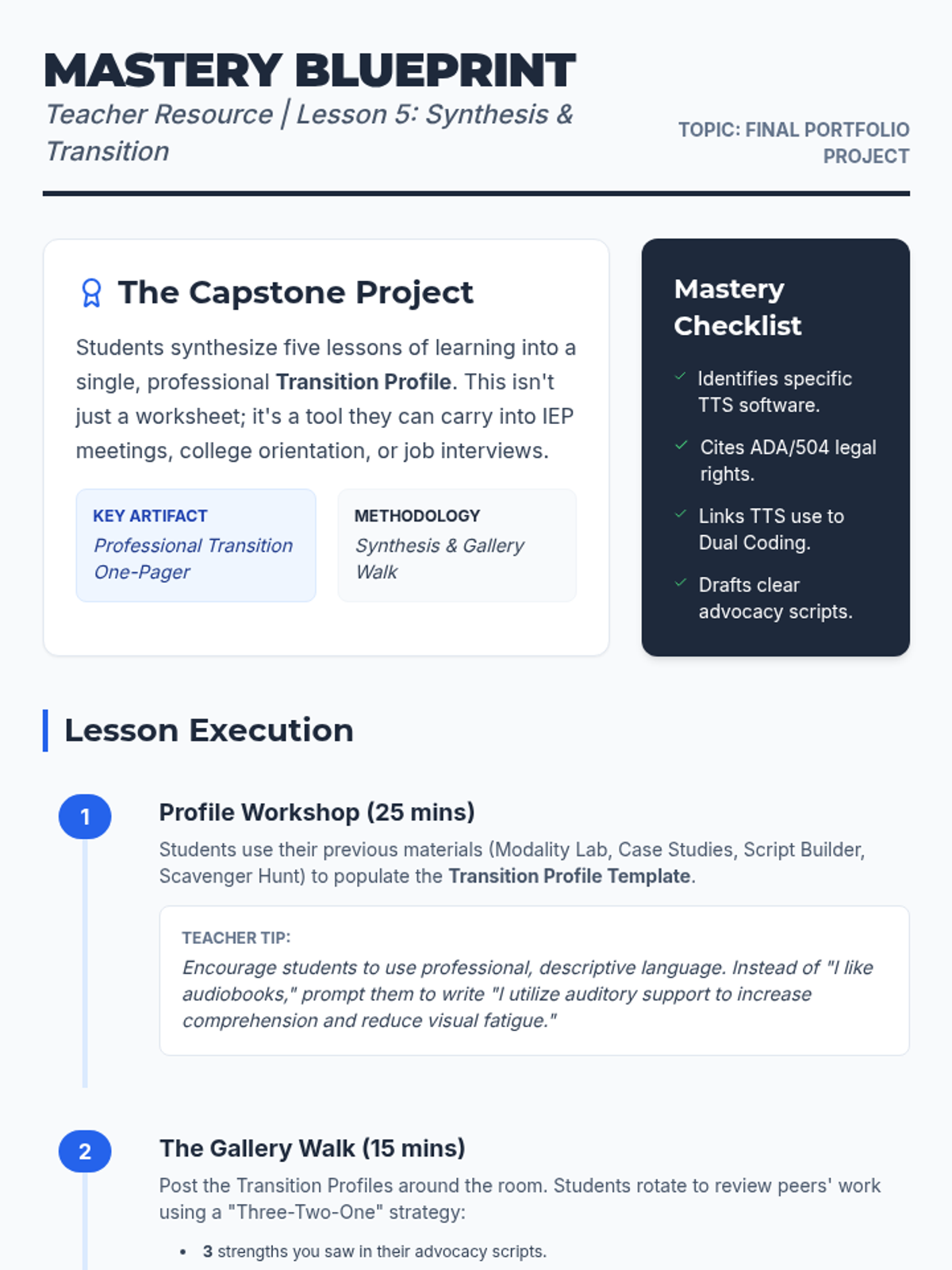
A teacher resource providing guidance for the final 'Transition Profile' project, instructions for a gallery walk activity, and a mastery rubric.
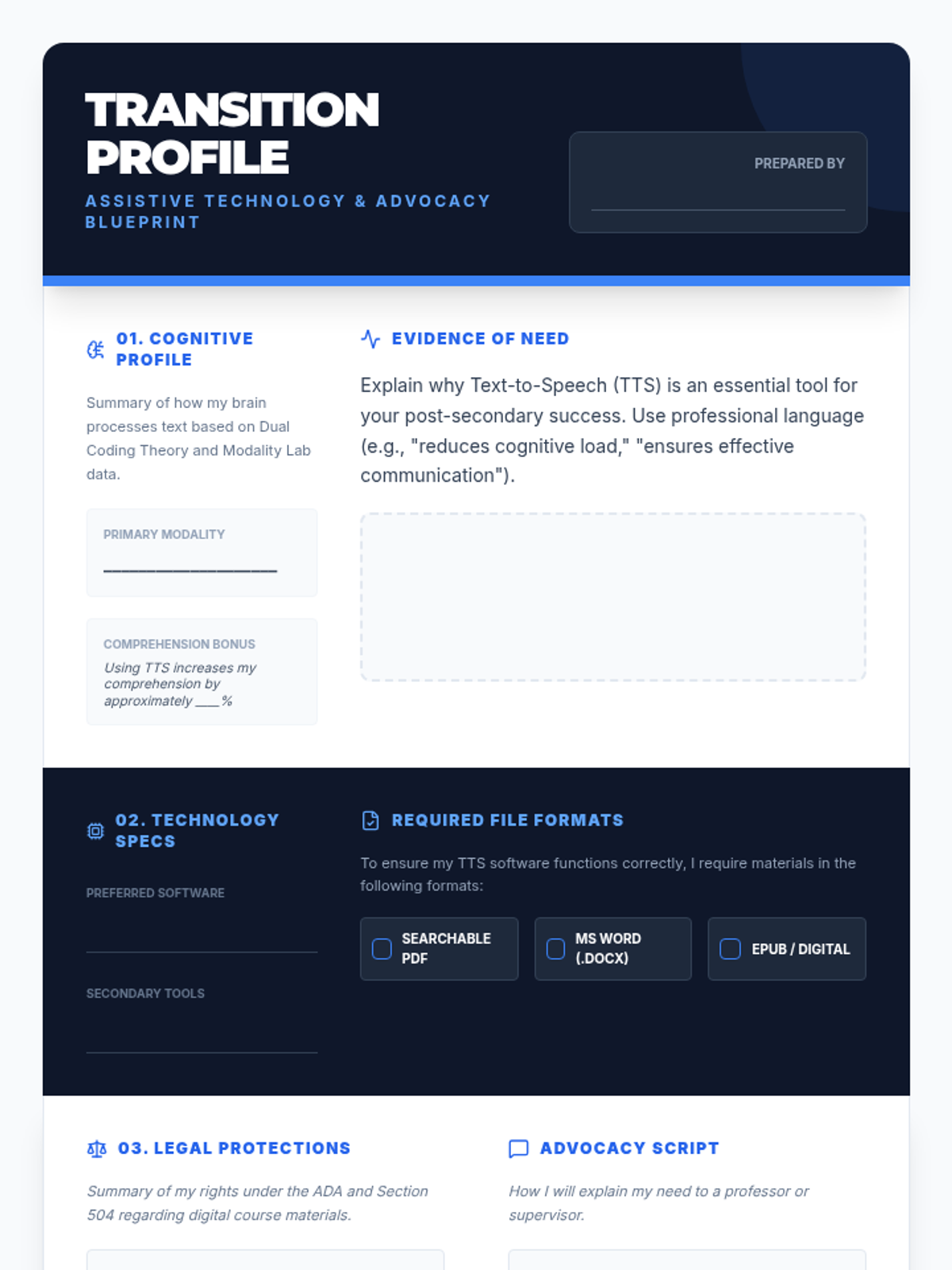
A student template for creating a professional 'Transition Profile' that summarizes their assistive technology needs, legal rights, and self-advocacy scripts.
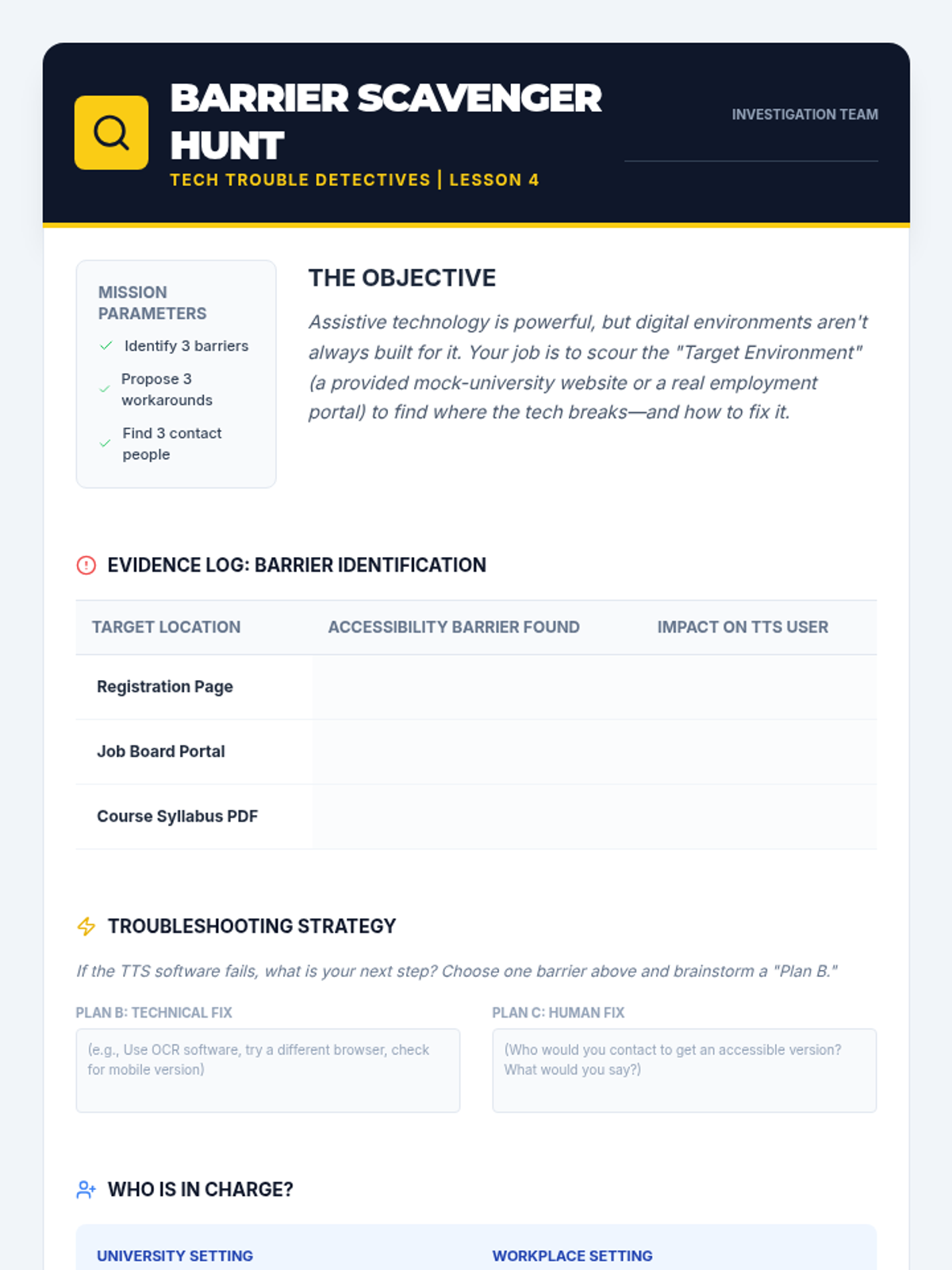
A student worksheet for identifying digital barriers on websites and practicing finding technical workarounds or appropriate contact persons for accessibility support.
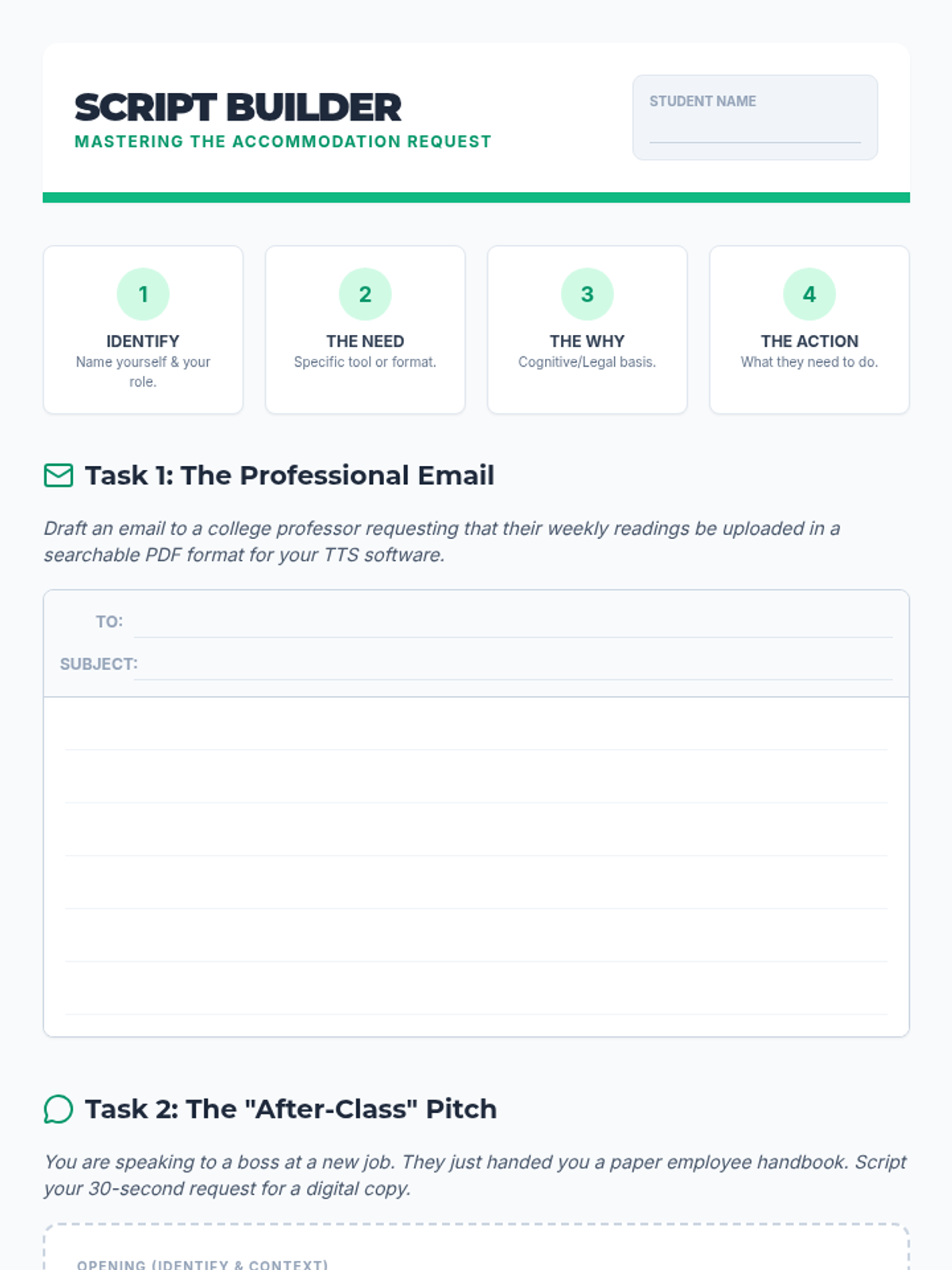
A student worksheet for drafting professional emails and verbal scripts to request Text-to-Speech accommodations in post-secondary and workplace environments.
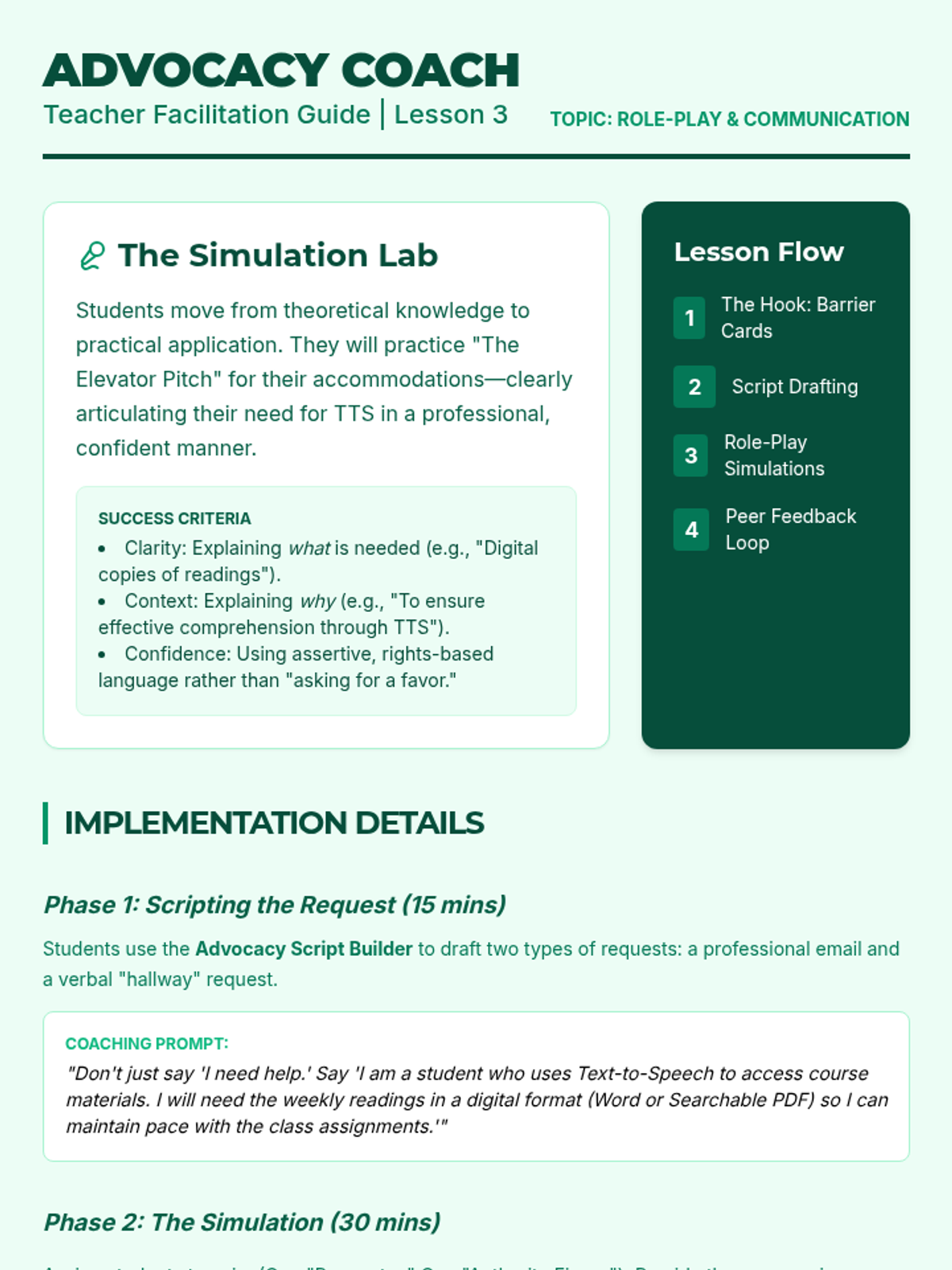
A teacher resource providing role-play scenarios, coaching prompts, and a feedback rubric for simulating accommodation requests in college and workplace settings.
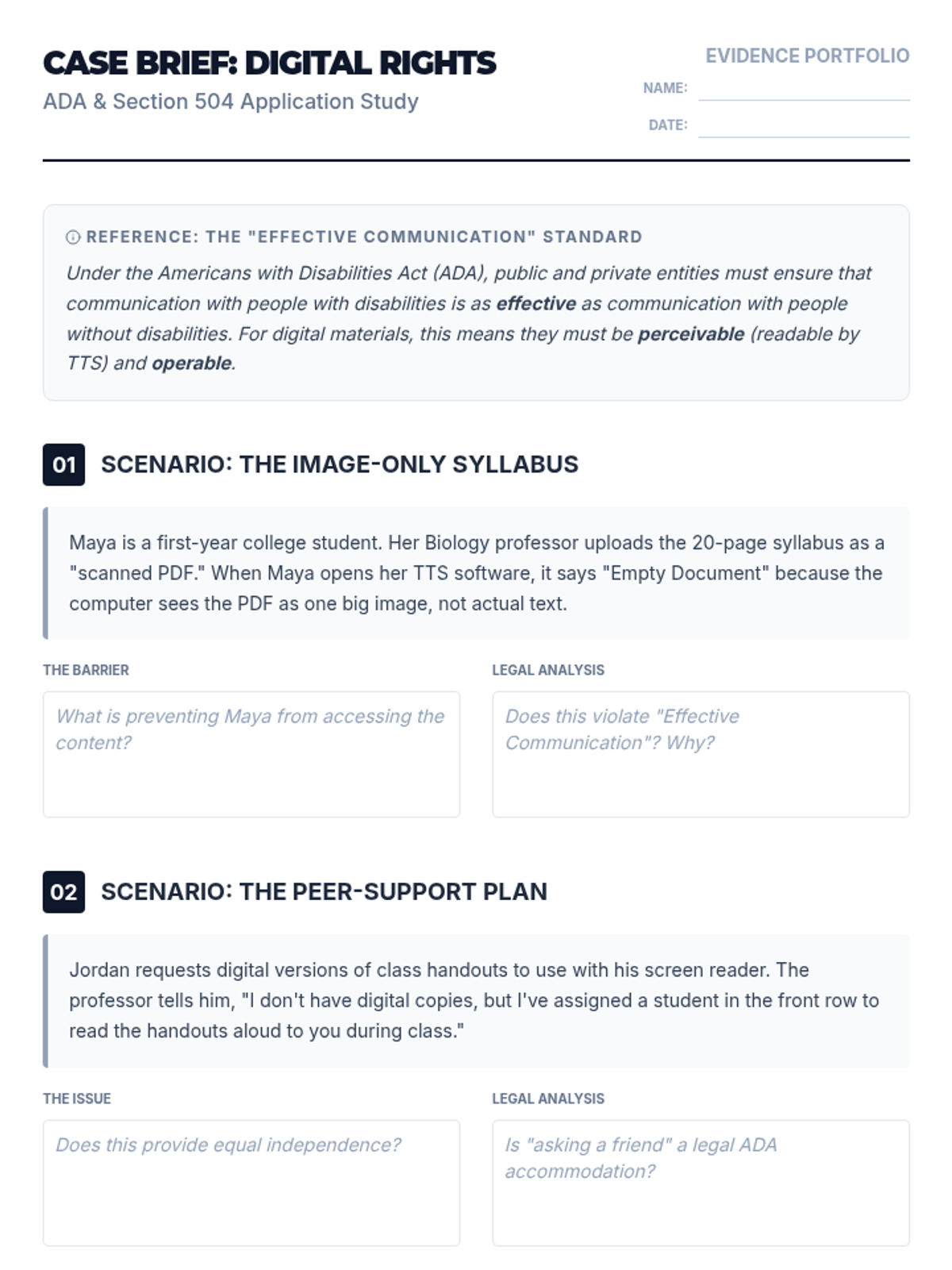
A student worksheet featuring three legal scenarios where digital accessibility is a barrier, requiring students to analyze the situation using ADA standards.
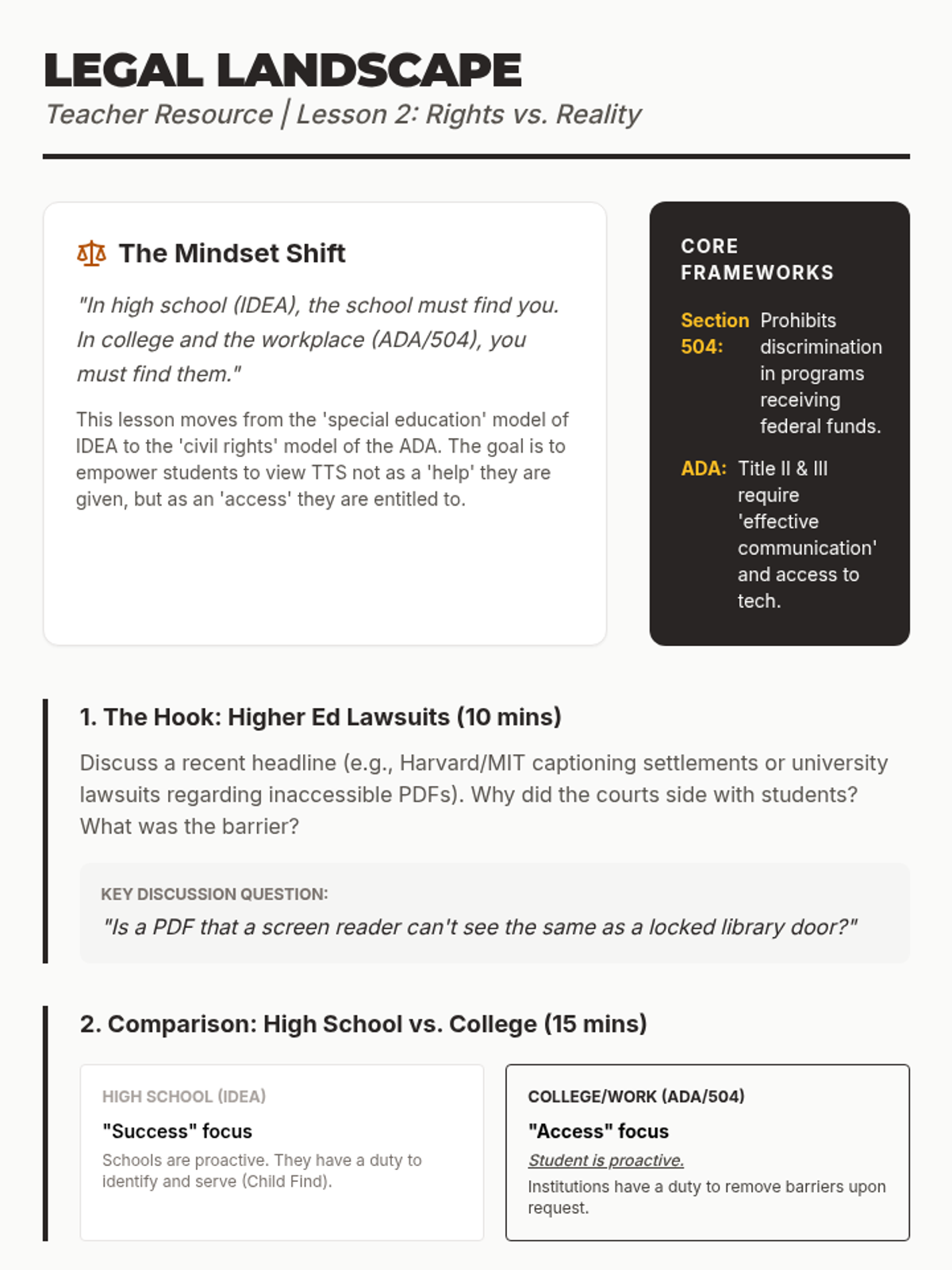
A teacher resource outlining the shift from IDEA to ADA, providing discussion prompts, and an answer key for legal case studies.
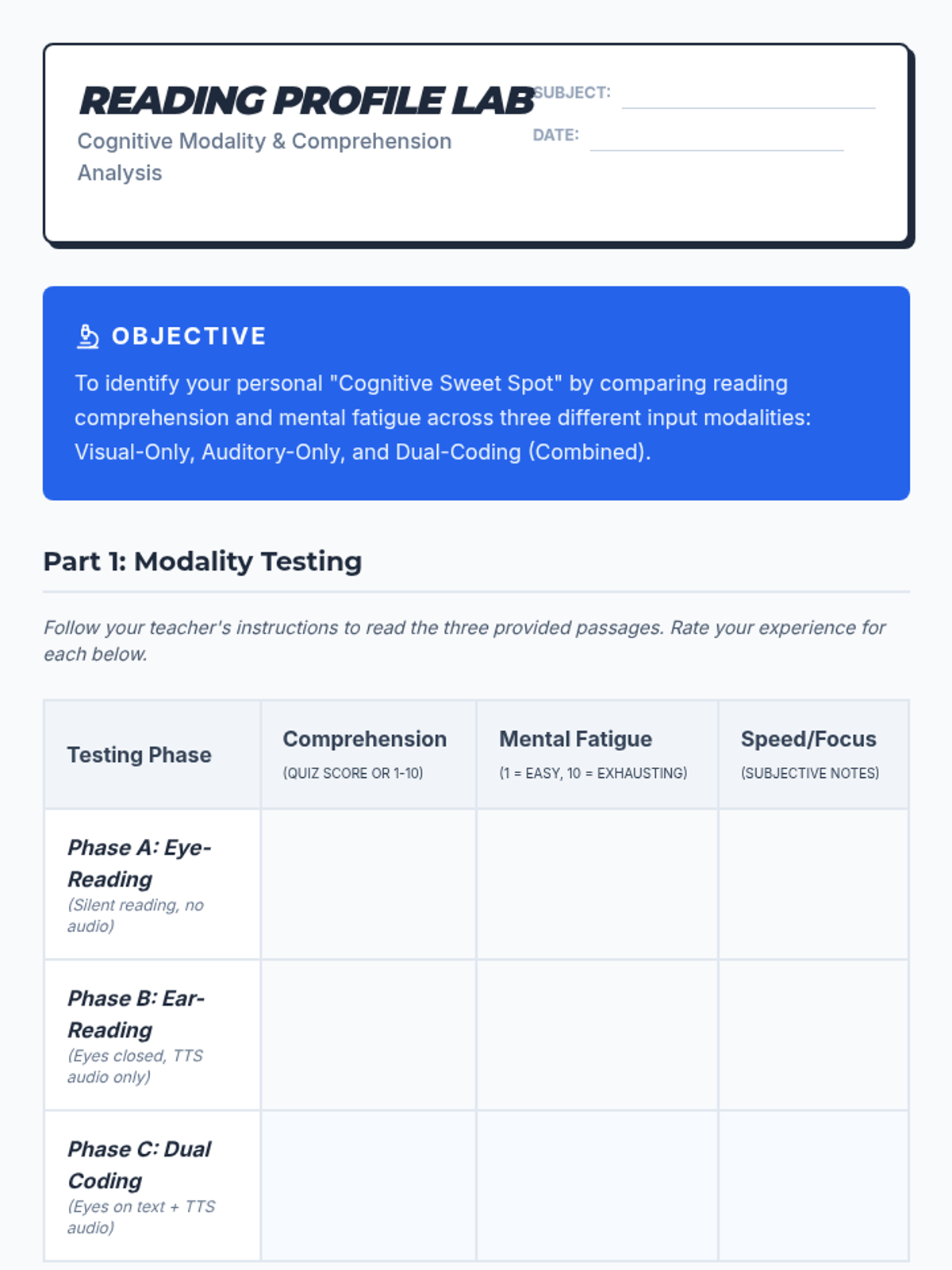
A student lab report for comparing comprehension and fatigue across different reading modalities (visual, auditory, and combined).
Visual presentation for Lesson 1, introducing Dual Coding Theory and Cognitive Load Theory to contextualize the use of Text-to-Speech technology.
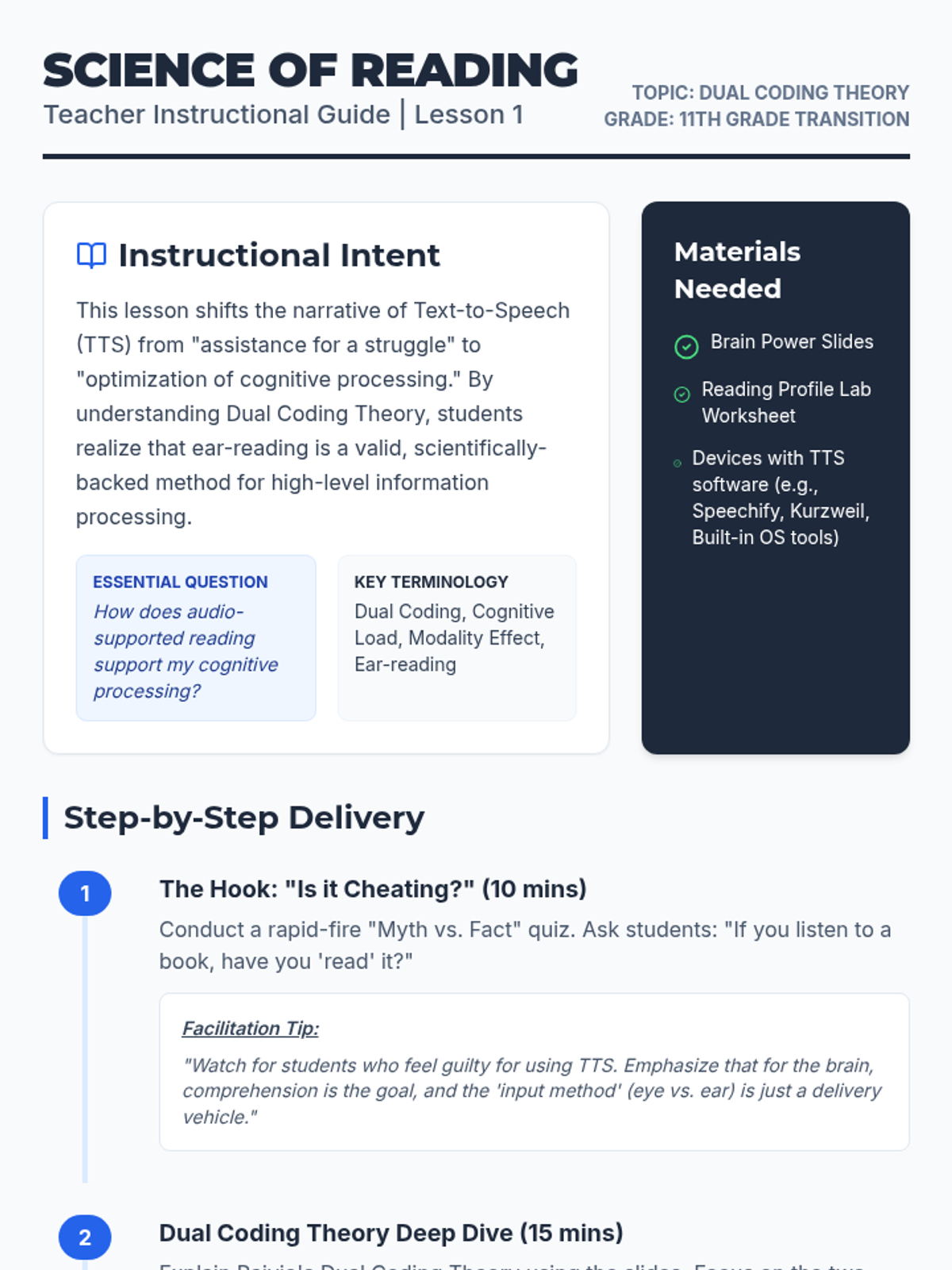
An instructional guide for teachers providing the pedagogical background of Dual Coding Theory and a step-by-step lesson plan for implementing a reading modality lab.
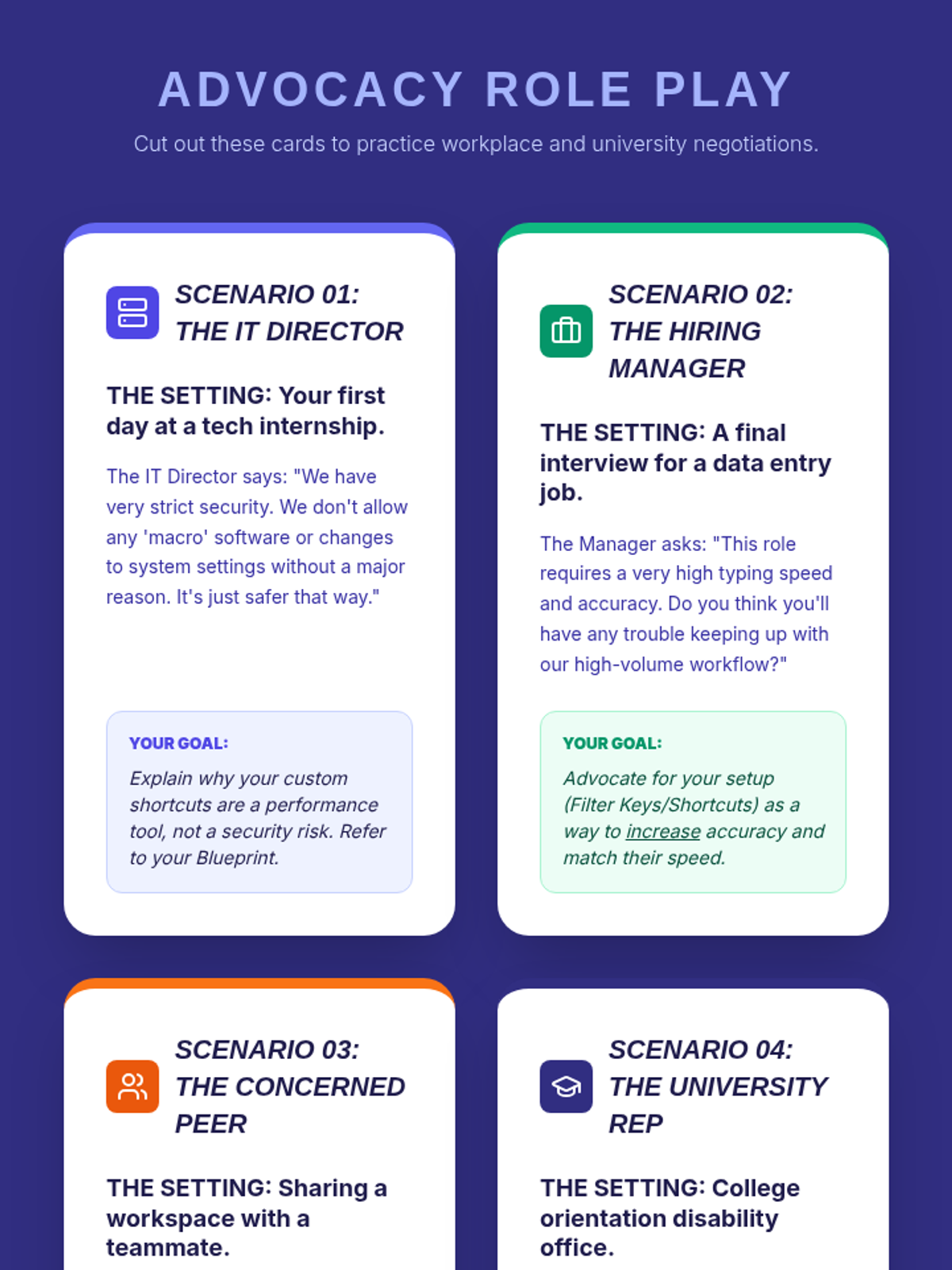
Scenario cards for students to practice advocacy and negotiation conversations with IT directors, hiring managers, and university officials.
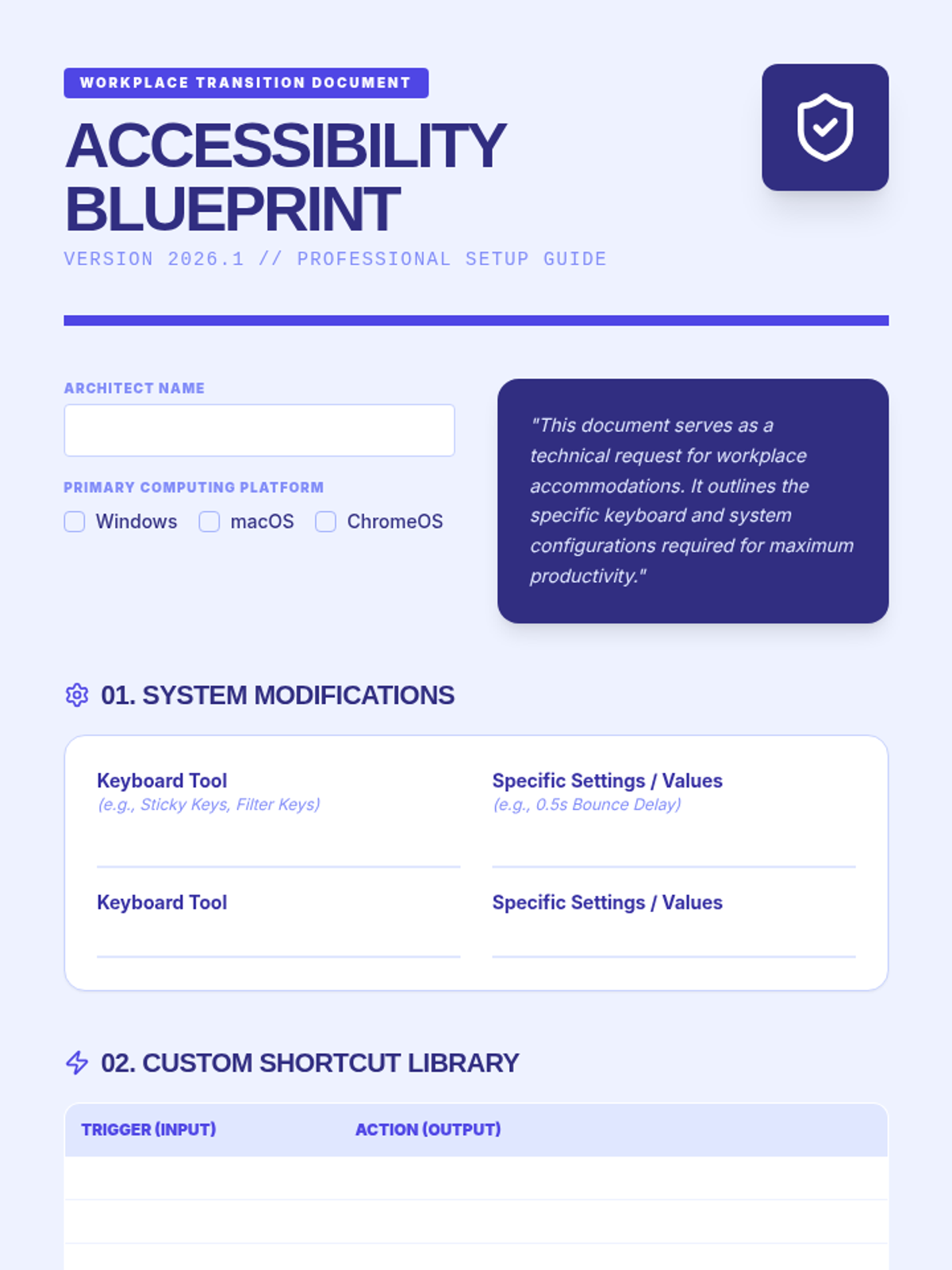
A comprehensive setup sheet for students to document their preferred keyboard accessibility settings, software, and custom shortcuts for future employers.
Capstone slide deck for Lesson 5 focusing on career transition, self-advocacy, and the final 'Accessibility Blueprint' project.
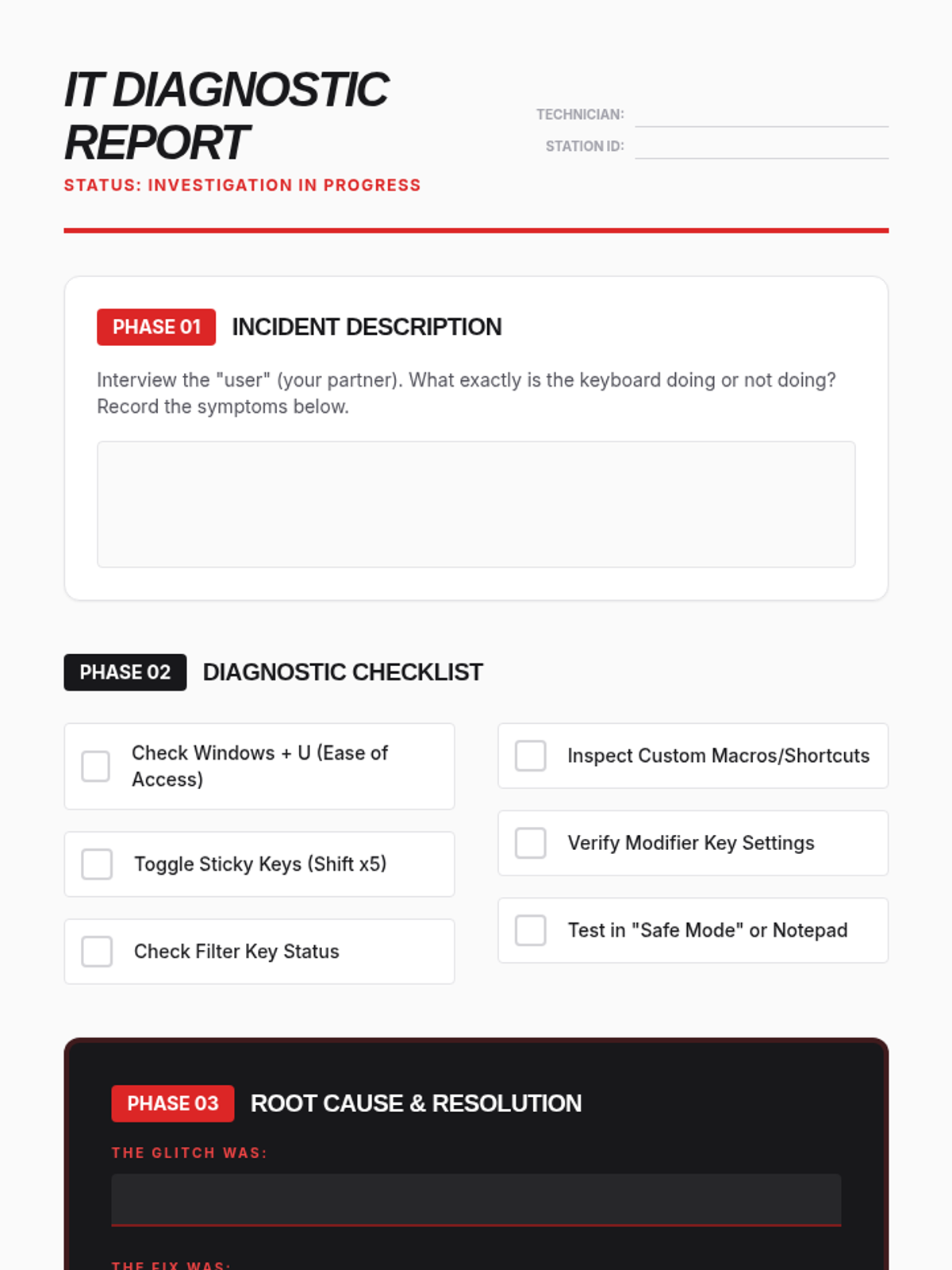
Technical problem-solving worksheet where students document their process of diagnosing and resolving keyboard shortcut conflicts.
Slide deck for Lesson 4 covering technical troubleshooting of keyboard shortcut conflicts and accessibility settings.
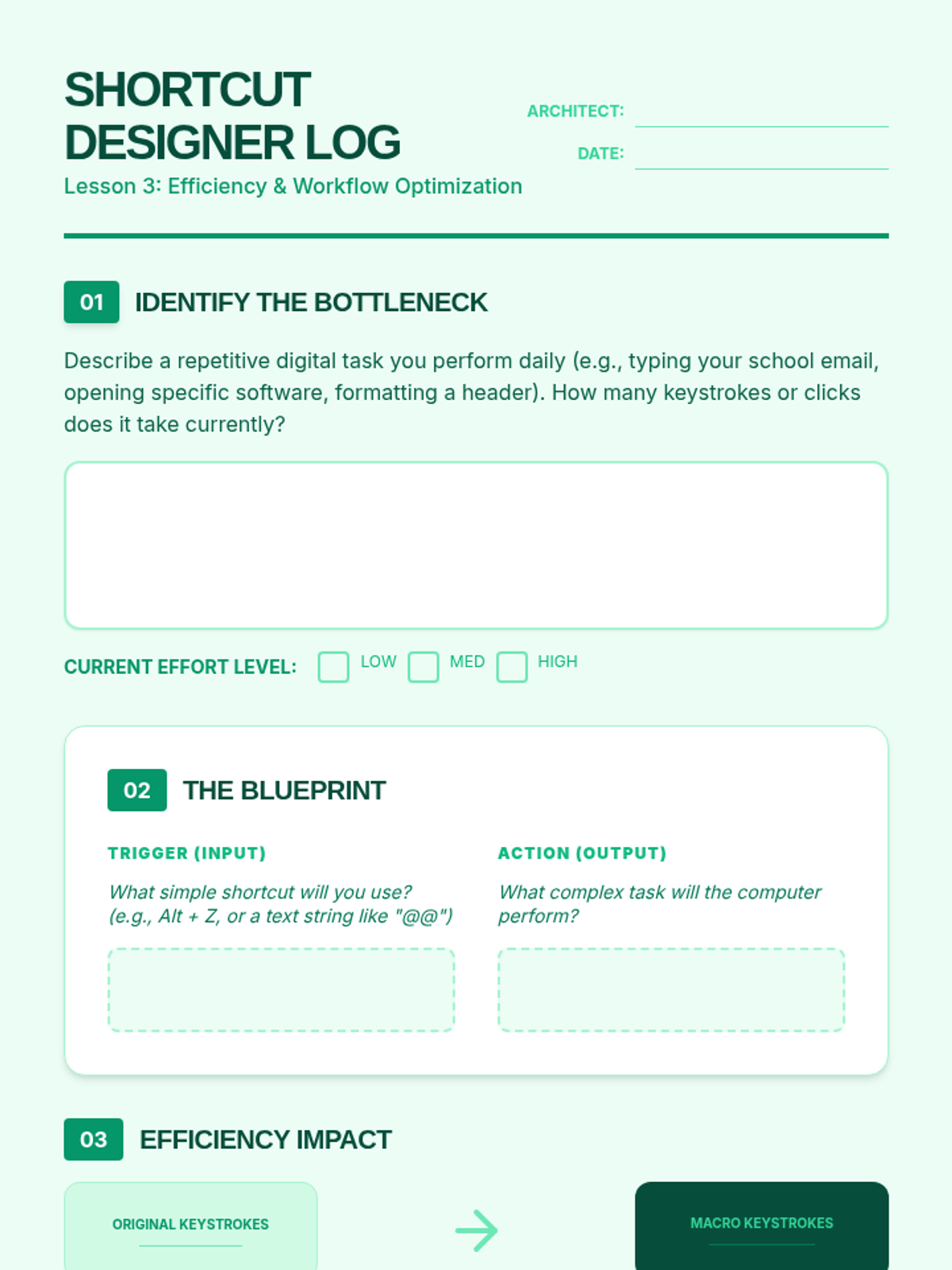
Project-based worksheet where students design a "macro" or custom shortcut to improve efficiency and reduce repetitive strain.
Slide deck for Lesson 3 covering custom keyboard shortcuts and macros for workplace efficiency.
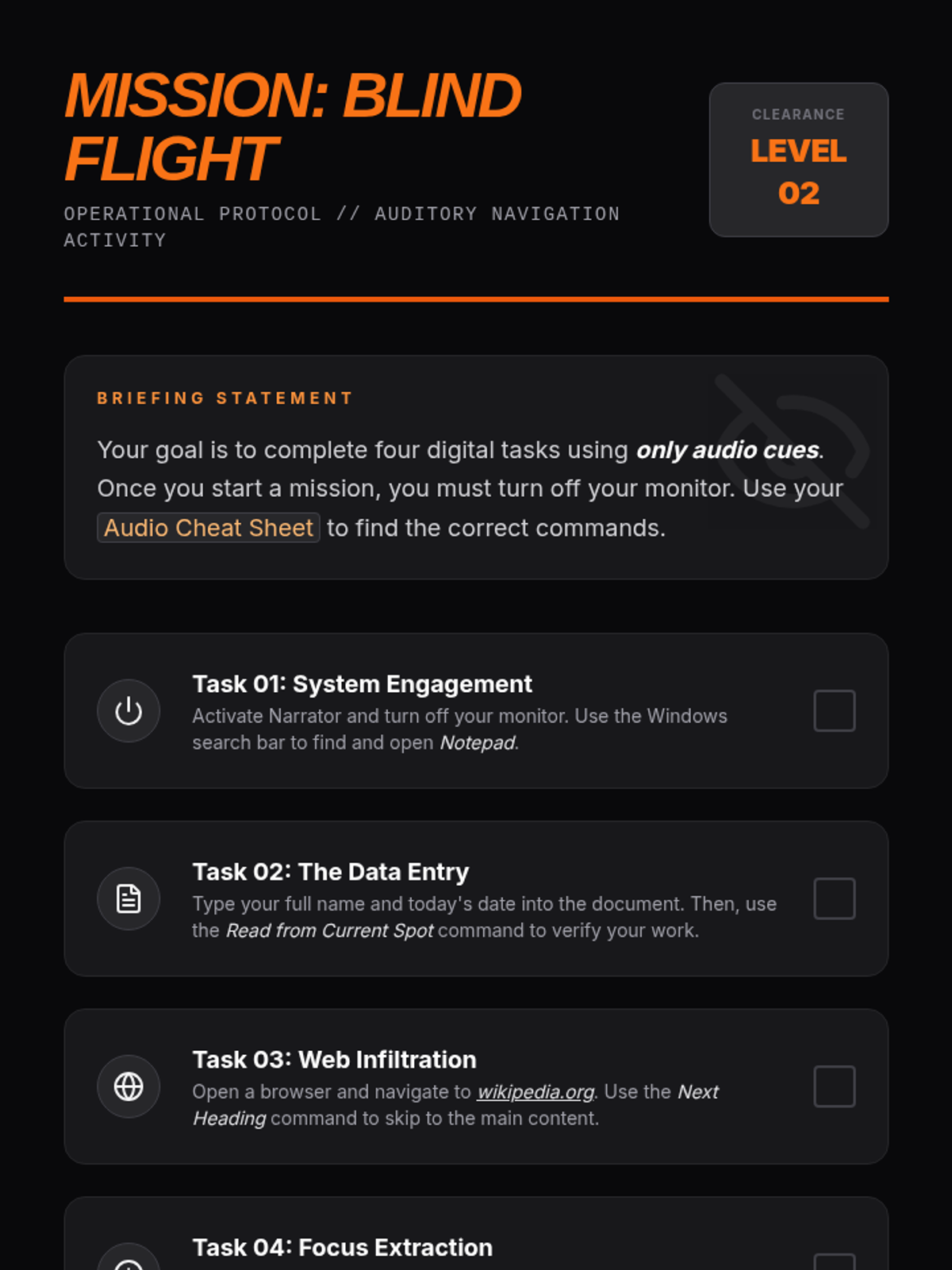
Activity sheet for Lesson 2 featuring the "Blind Flight" navigation challenge and reflection questions.
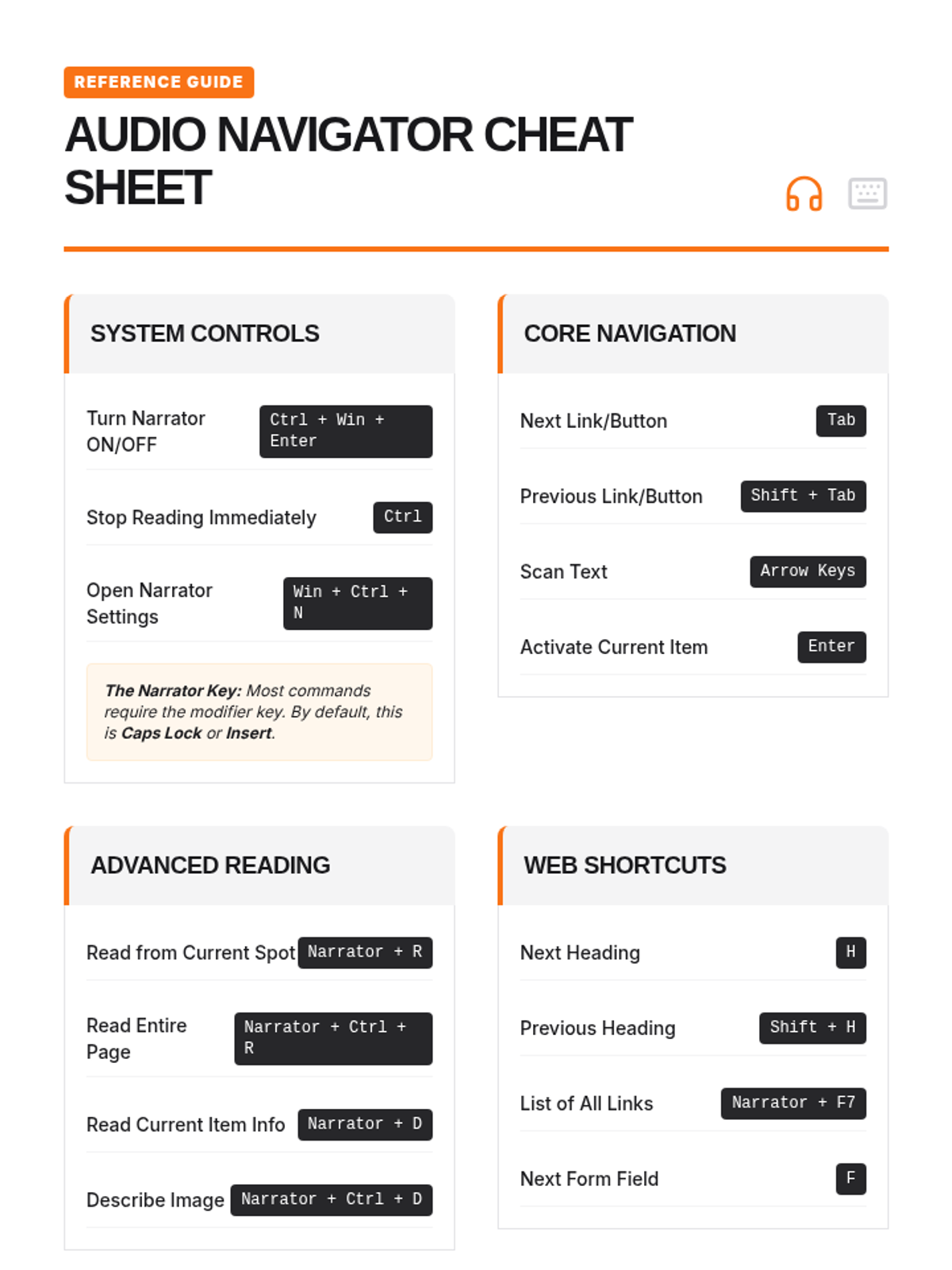
Reference guide for Lesson 2 featuring essential Narrator commands for movement, reading, and web navigation.