Emotion recognition ranging from basic feelings to complex nuances and mixed states. Strengthens accurate self-assessment through identity exploration, strength identification, and values-based decision making.
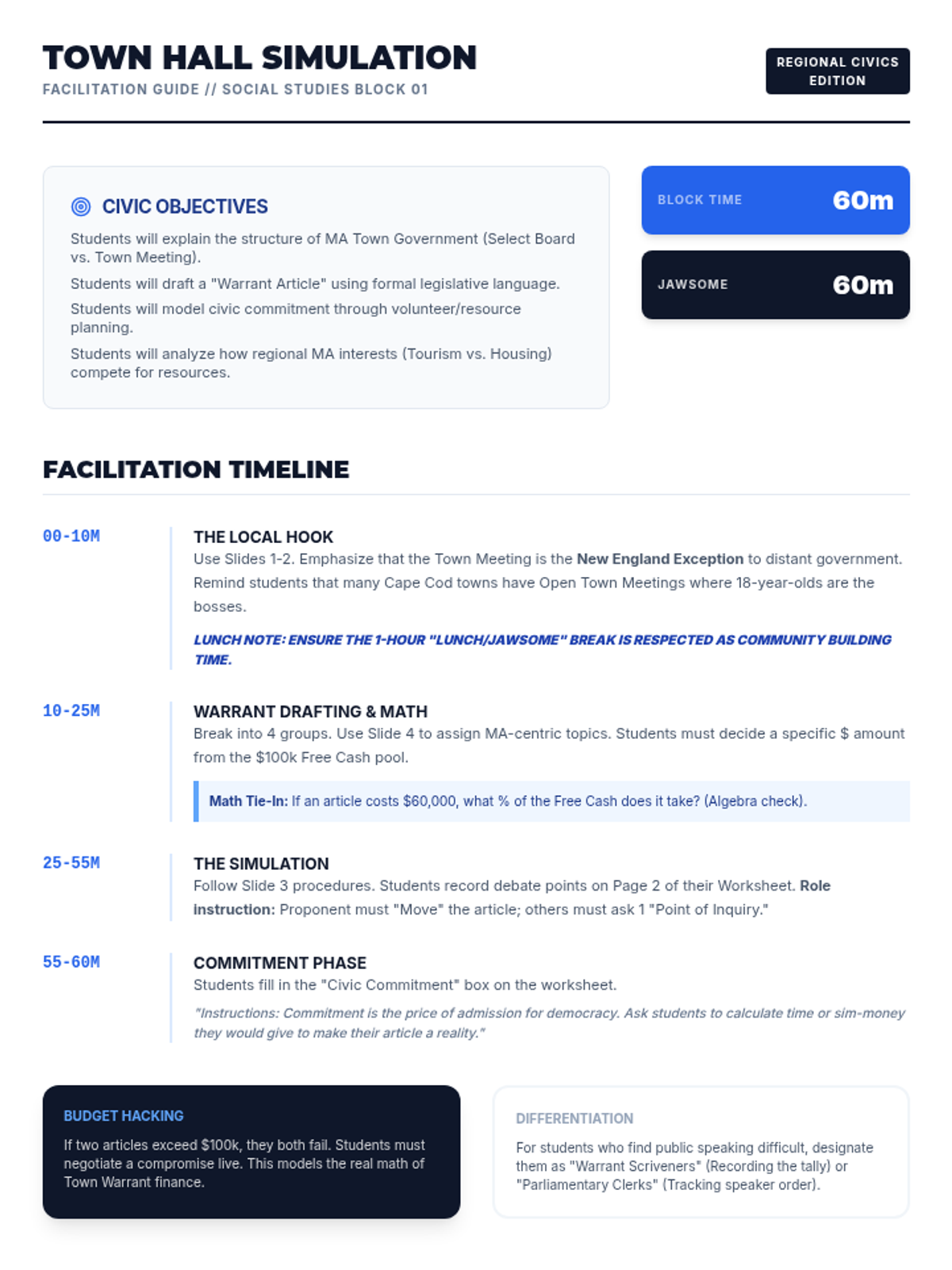
A facilitation guide for teachers to lead a 60-minute Social Studies simulation of a New England Town Meeting, including role assignments and parliamentary procedure. Updated with Lunch/Jawsome timing, MA localization, and Commitment instructions.
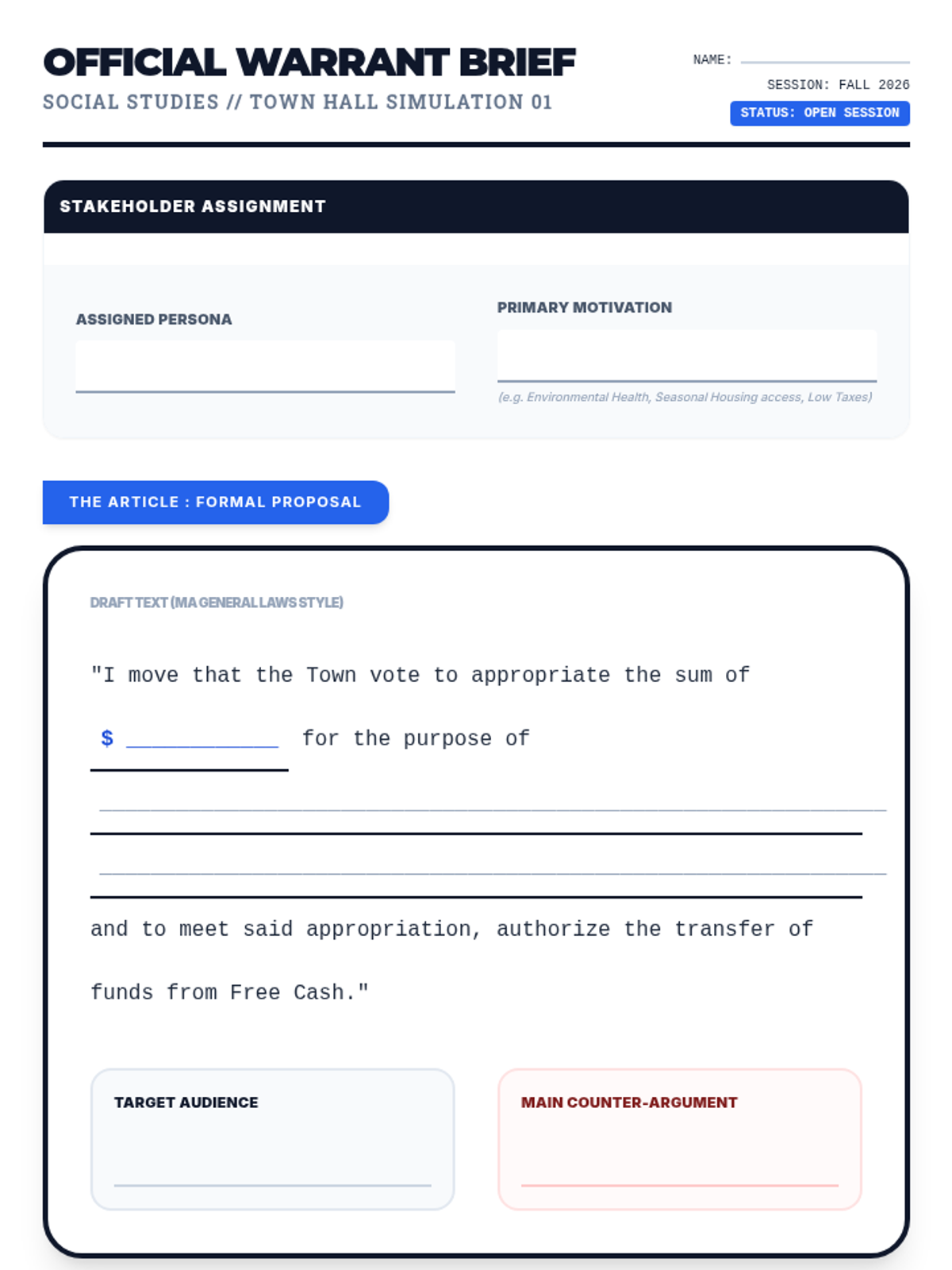
A simulation briefing worksheet for a Town Hall Meeting, providing role-play assignments, a template for drafting formal warrant articles, and space for tracking floor debates. Localized for Eastern MA. Includes "Civic Commitment" and larger fonts. Fixed page break and instructions. Final polish for layout.
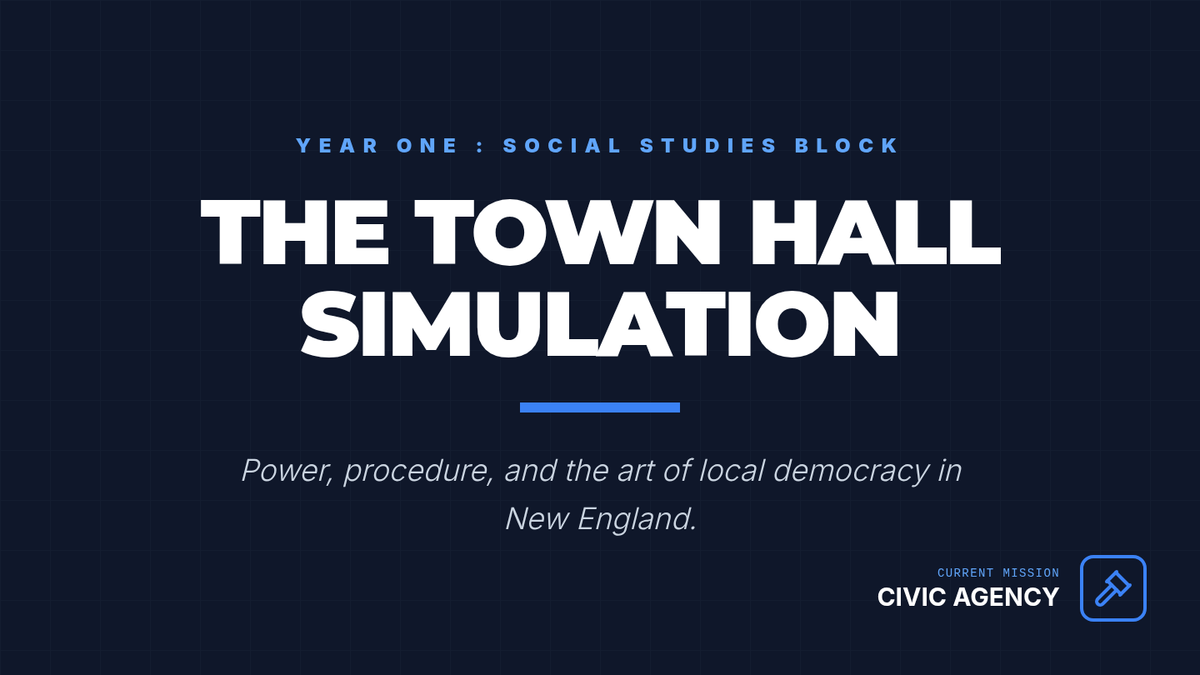
A civics slide deck for a Town Hall Simulation, localized to Eastern MA/Cape Cod issues. Explains procedure, articles, and the "Civic Commitment" concept. Revised for better kerning and localized examples. Final pass for layout.
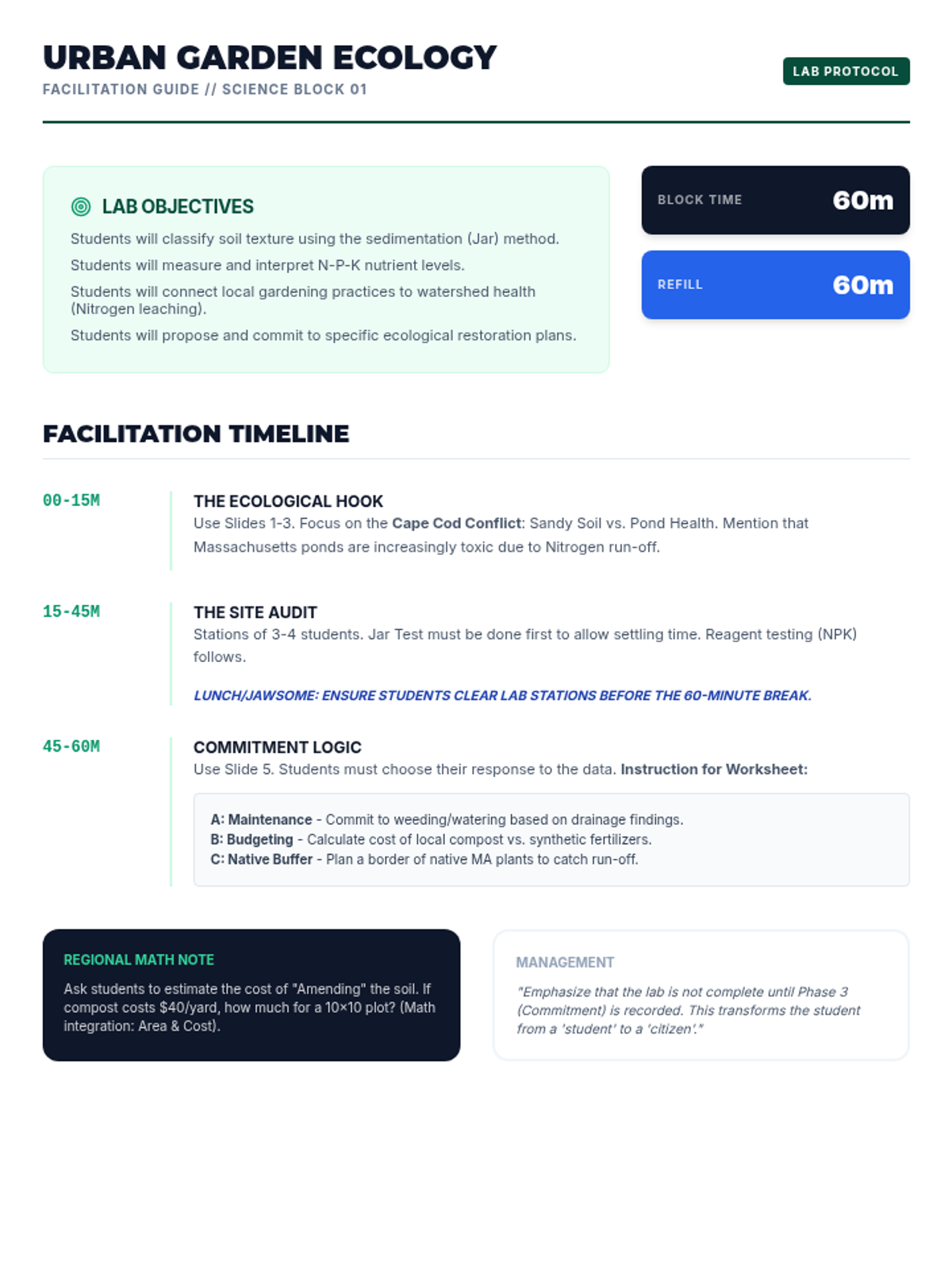
A facilitation guide for teachers to lead a 60-minute Integrated Science lab on garden ecology, featuring soil testing protocols and regional ecological discussion prompts. Updated with Lunch/Jawsome timing and Commitment instructions.
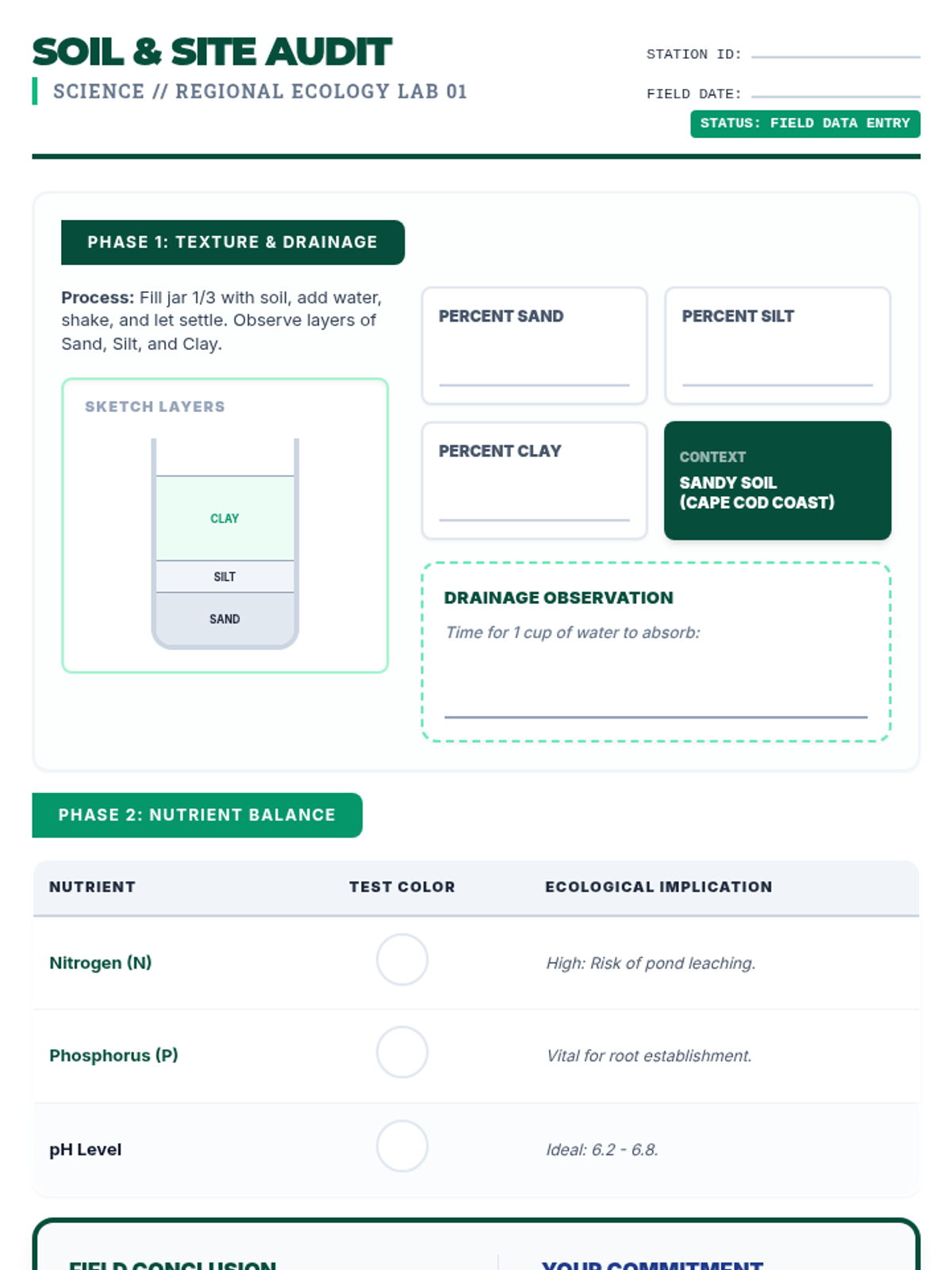
A scientific field notebook worksheet for a Soil & Site Audit, involving physical jar testing for texture and chemical NPK testing, contextualized for Massachusetts soil profiles. Updated with a "Your Commitment" section, larger font sizes, and improved page breaks. Final polish for student completion.
A visually rich science slide deck for Urban Garden Ecology, focusing on soil health, nutrient cycles (NPK), and regional leaching challenges specific to Cape Cod and Eastern MA. Includes schedule for Lunch/Jawsome and commitment instructions. Fixed rendering for Slide 3 and NPK text wrap. Final pass for layout.
Visual presentation for the final Future Budget session, discussing Return on Investment (ROI), the 50/30/20 budgeting rule, and avoiding common financial pitfalls like credit card debt.
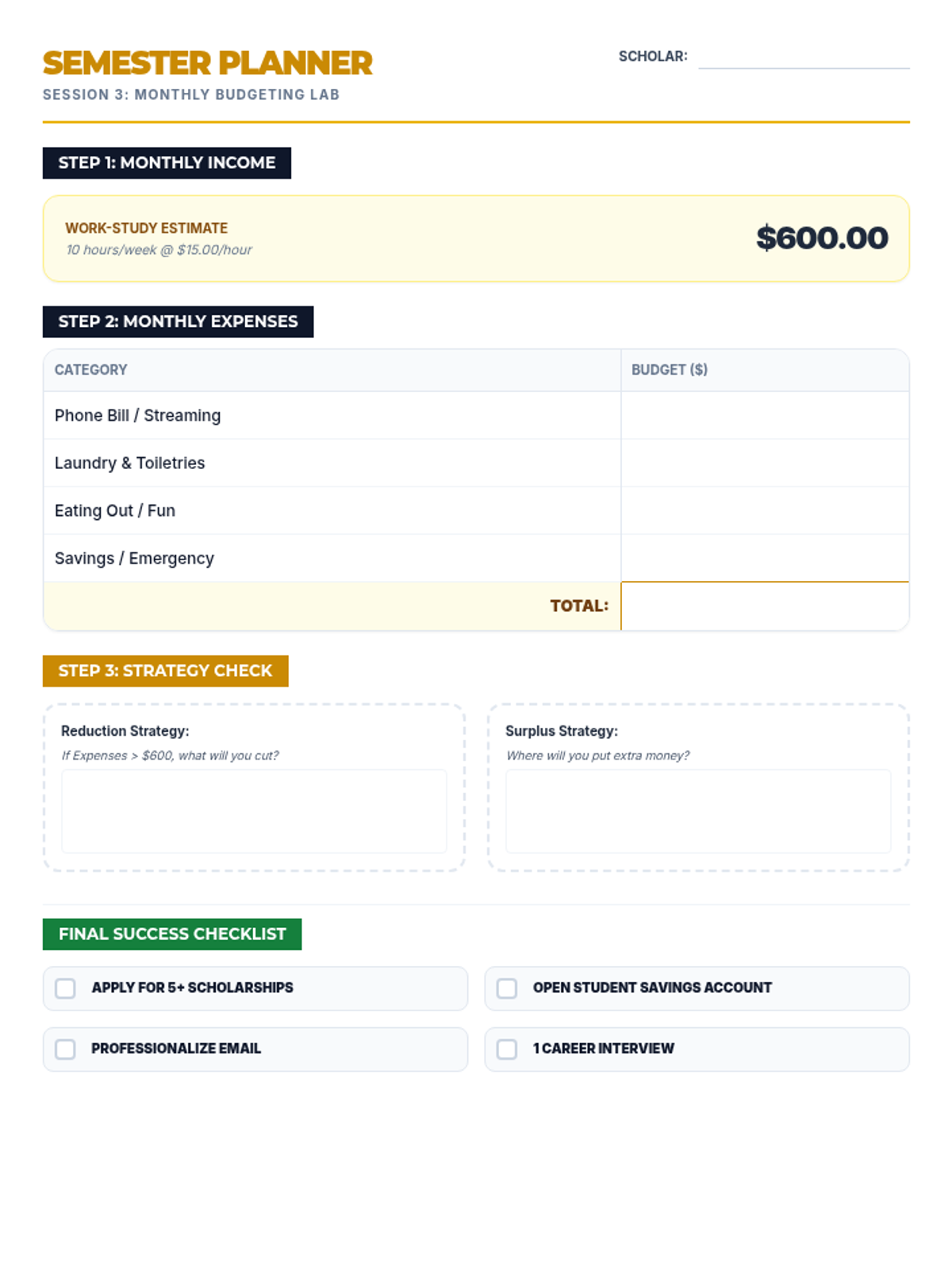
A monthly budgeting worksheet for college students, helping them manage their work-study income against typical college expenses and lifestyle costs.
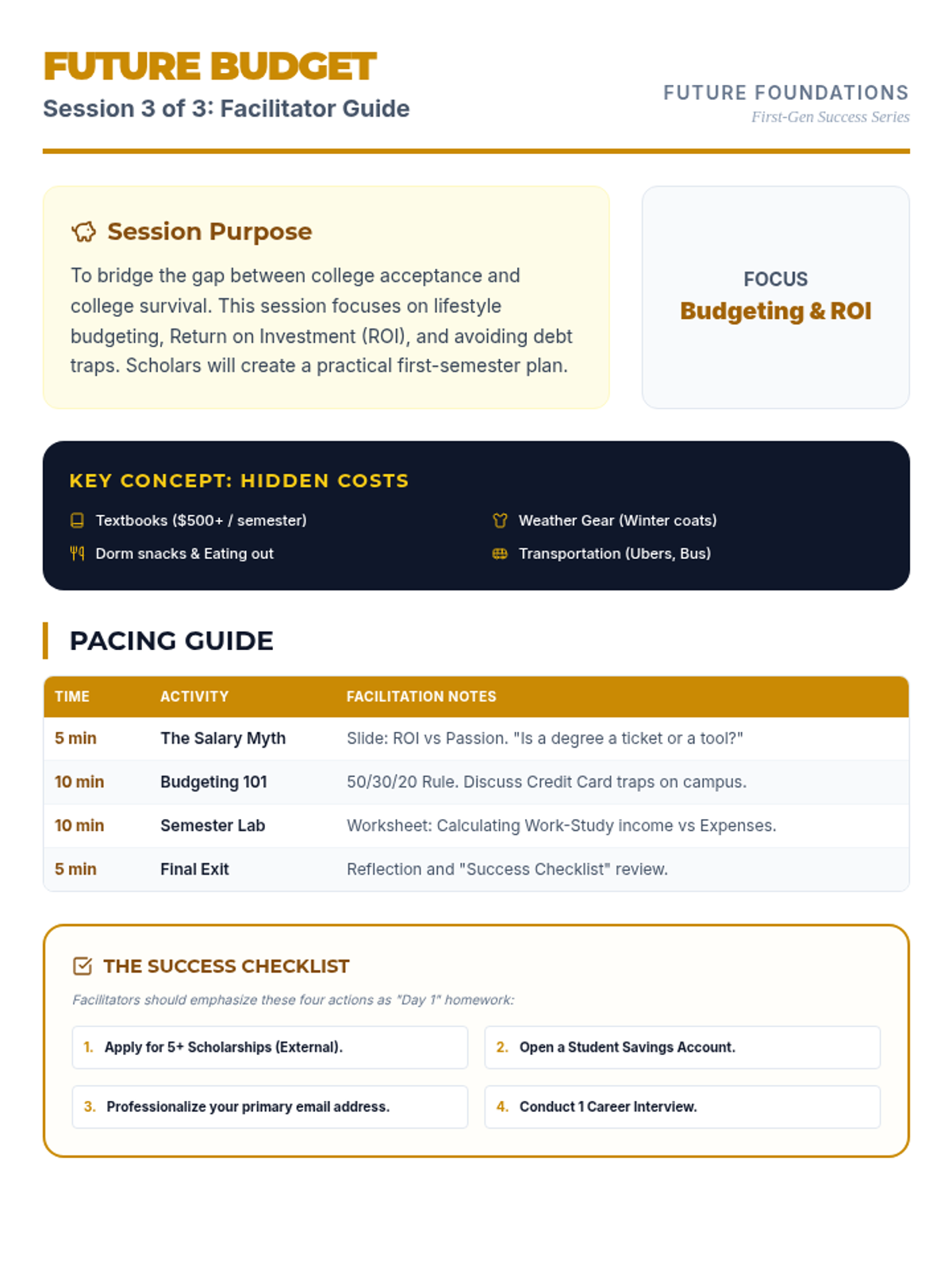
Facilitator guide for the final session, focusing on lifestyle budgeting, Return on Investment (ROI) for degrees, and preparing students for the daily costs of college life.
Visual presentation for the Money Moves session, introducing financial aid terminology, comparing sticker vs. net price, and setting up the aid decoder activity.
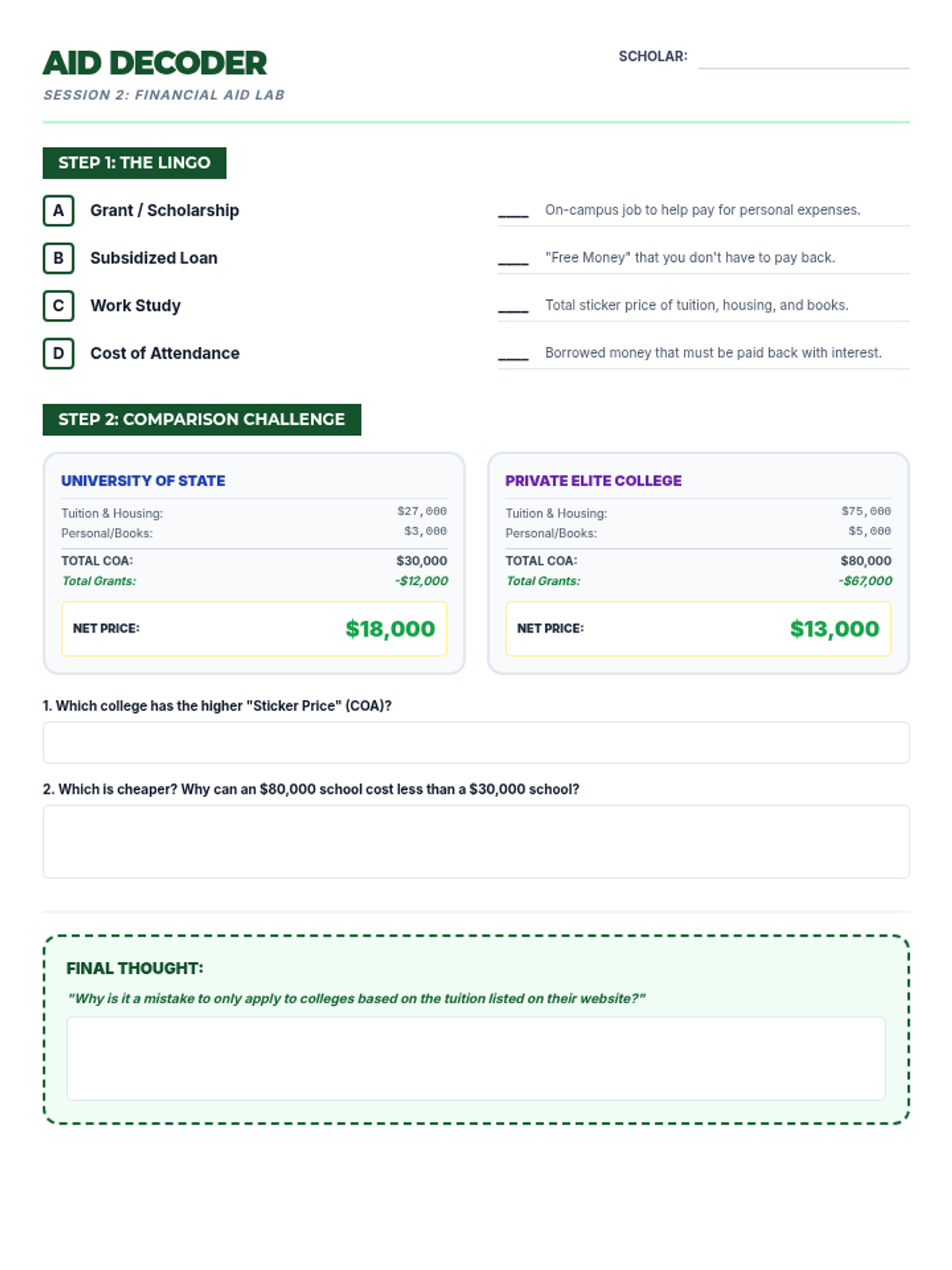
A financial aid comparison worksheet where students practice decoding aid packages and understanding the difference between sticker price and net price.
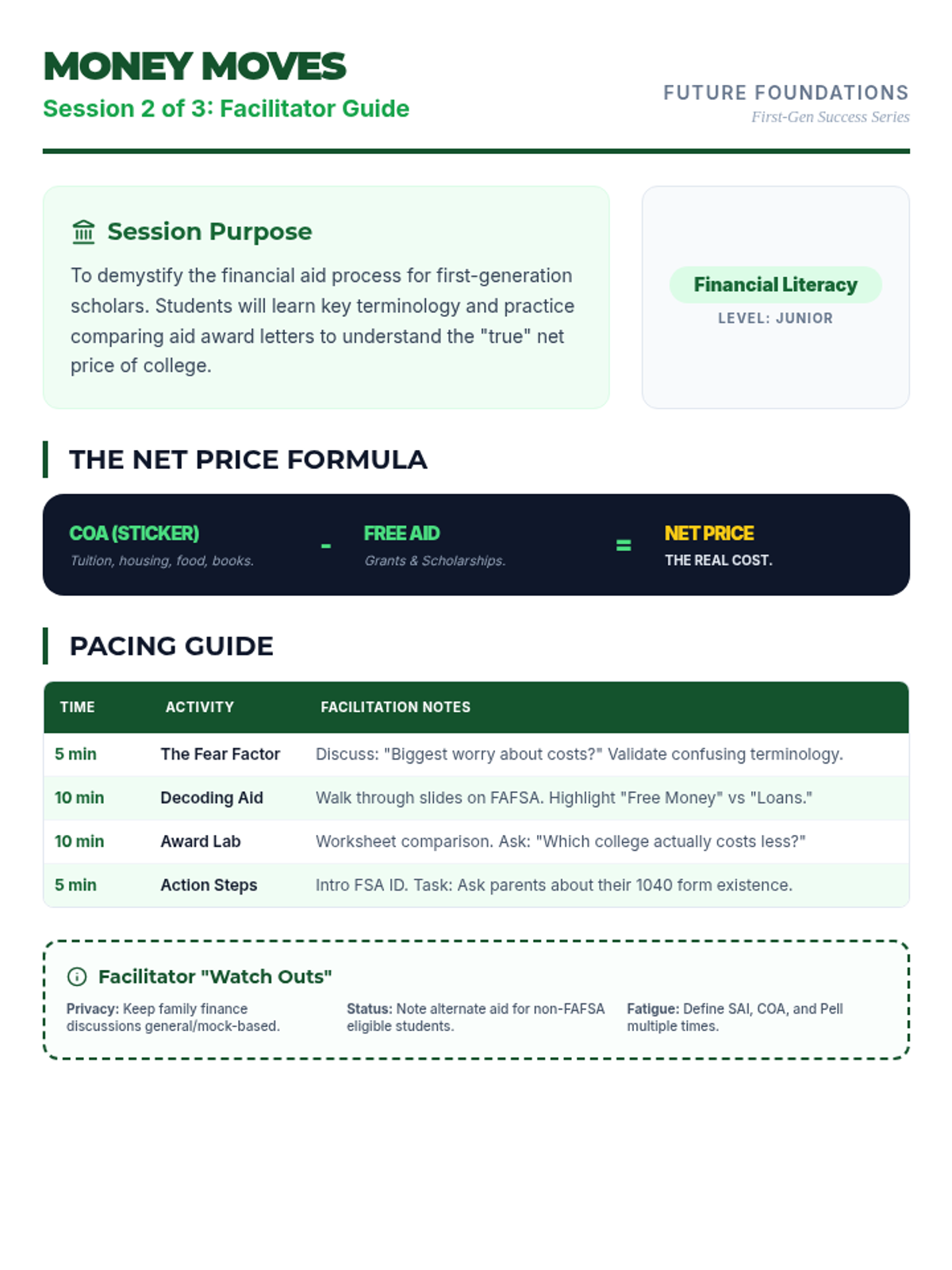
A detailed facilitator guide for the Money Moves session, focusing on financial literacy concepts like Cost of Attendance, Net Price, and types of financial aid for first-generation college students.
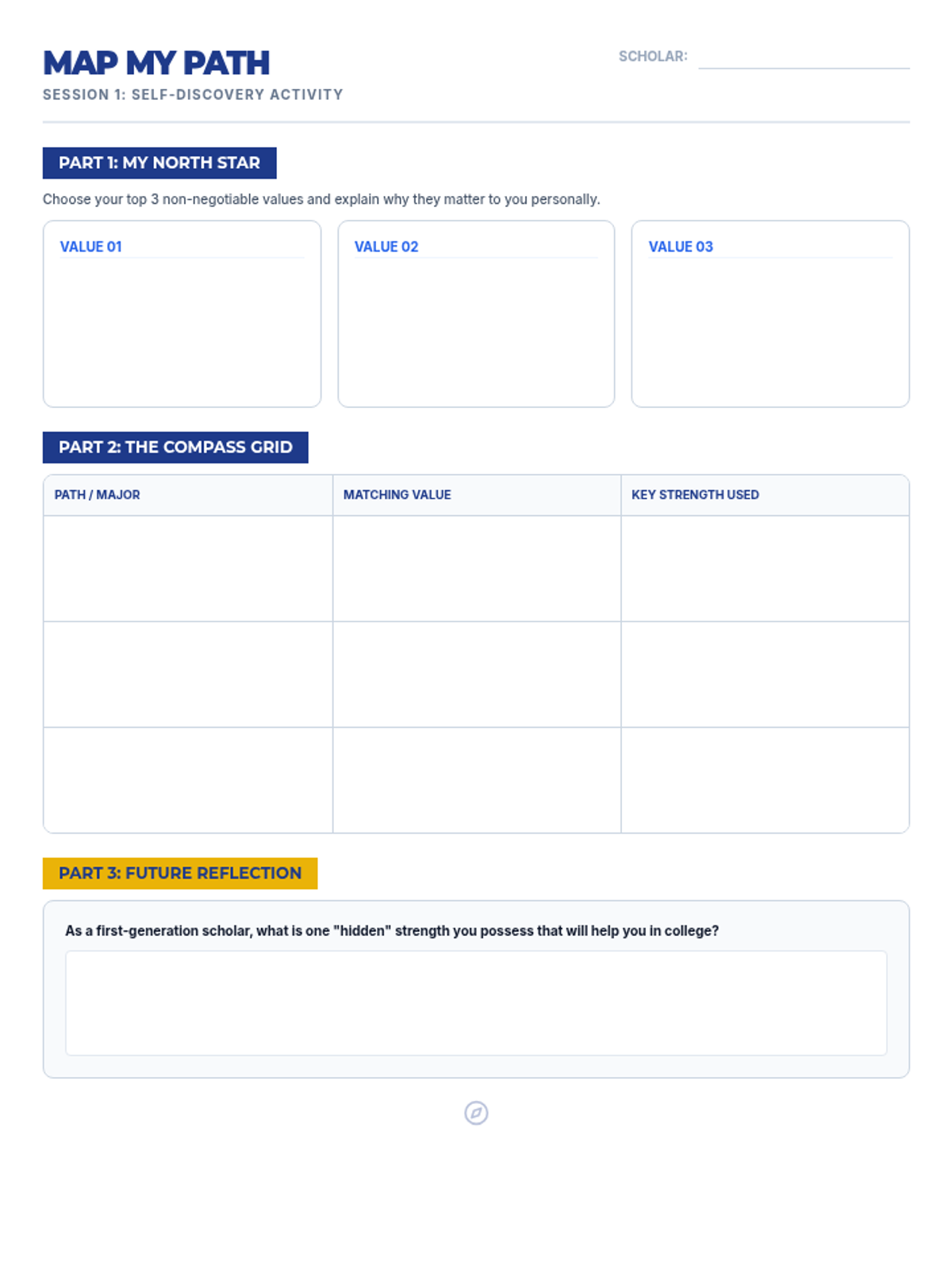
A self-discovery worksheet for students to map their personal values, strengths, and potential career paths as part of the Inner Compass lesson.
Visual presentation for the first session of the Future Foundations series, covering first-gen identity, core values, and finding the sweet spot between strengths and passions.
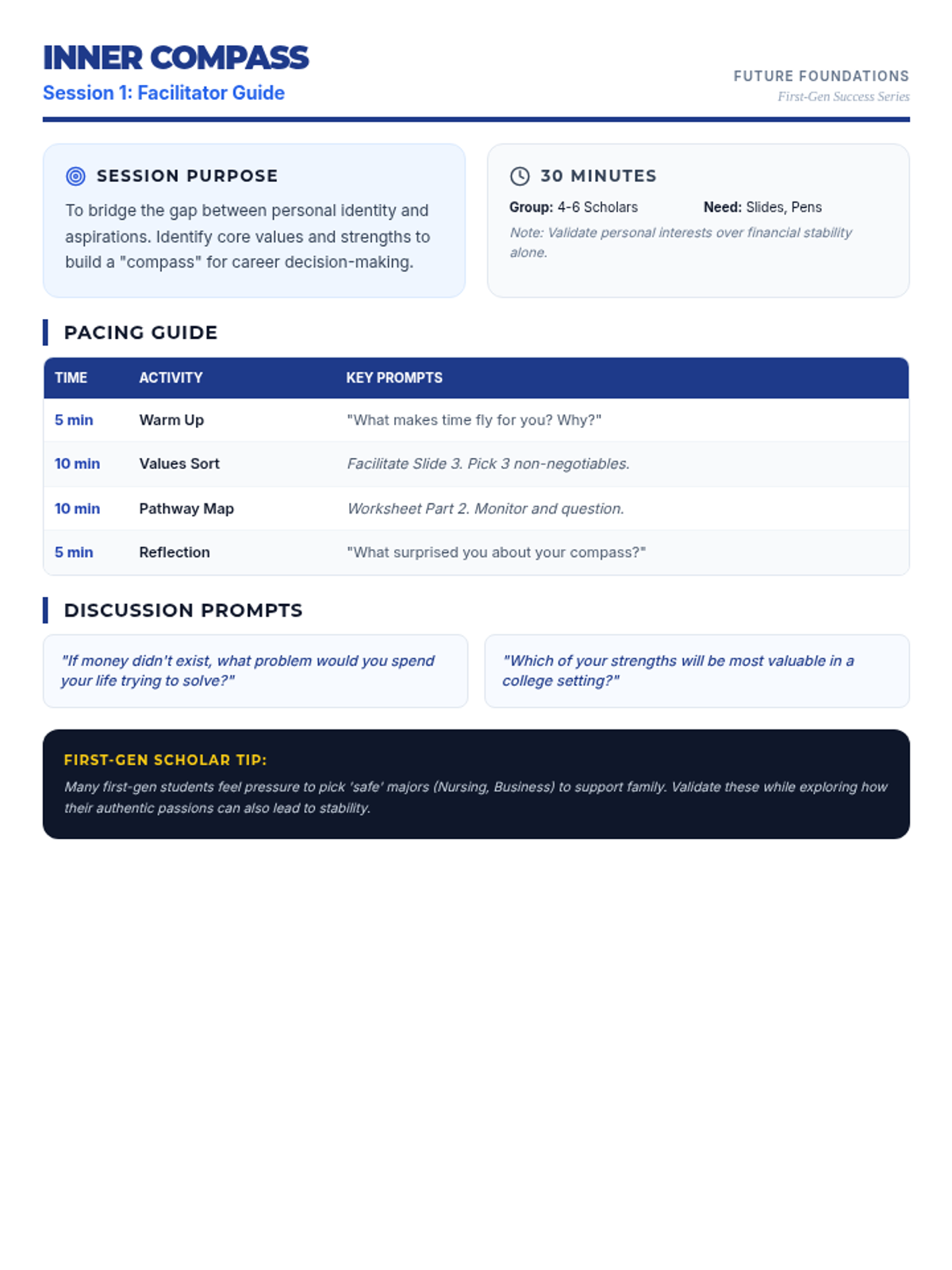
A comprehensive facilitator guide for the first session of the Future Foundations series, providing timing, discussion prompts, and instructional context for working with first-generation scholars.
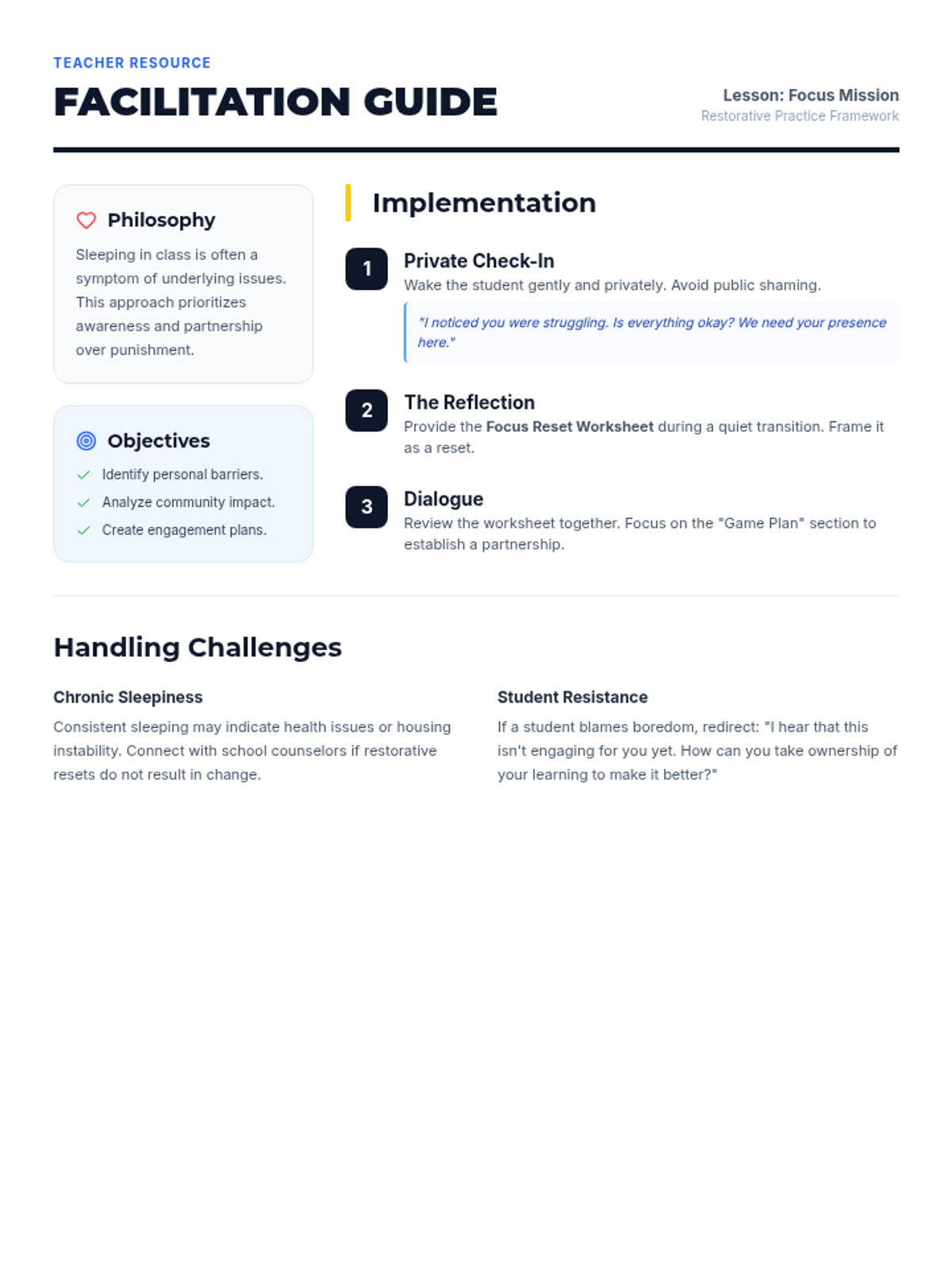
A teacher facilitation guide providing restorative strategies and instructional prompts for addressing classroom sleepiness and using the Focus Mission materials effectively.
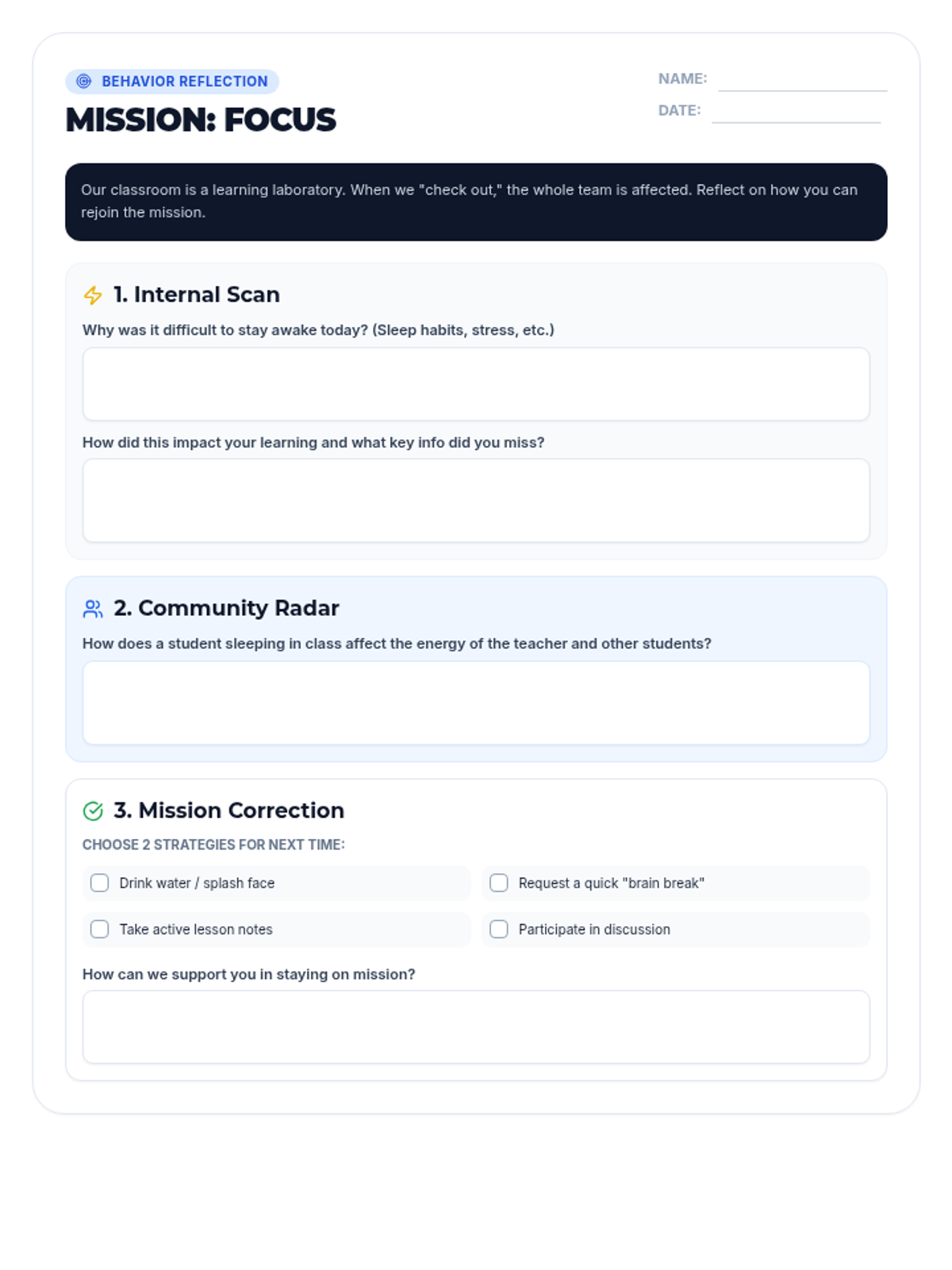
A restorative behavior reflection worksheet that encourages students to evaluate the causes of their drowsiness and understand its impact on their learning and classroom community.
An engaging slide deck explaining the impact of sleeping in class on personal success and the classroom community, featuring restorative strategies for staying engaged.
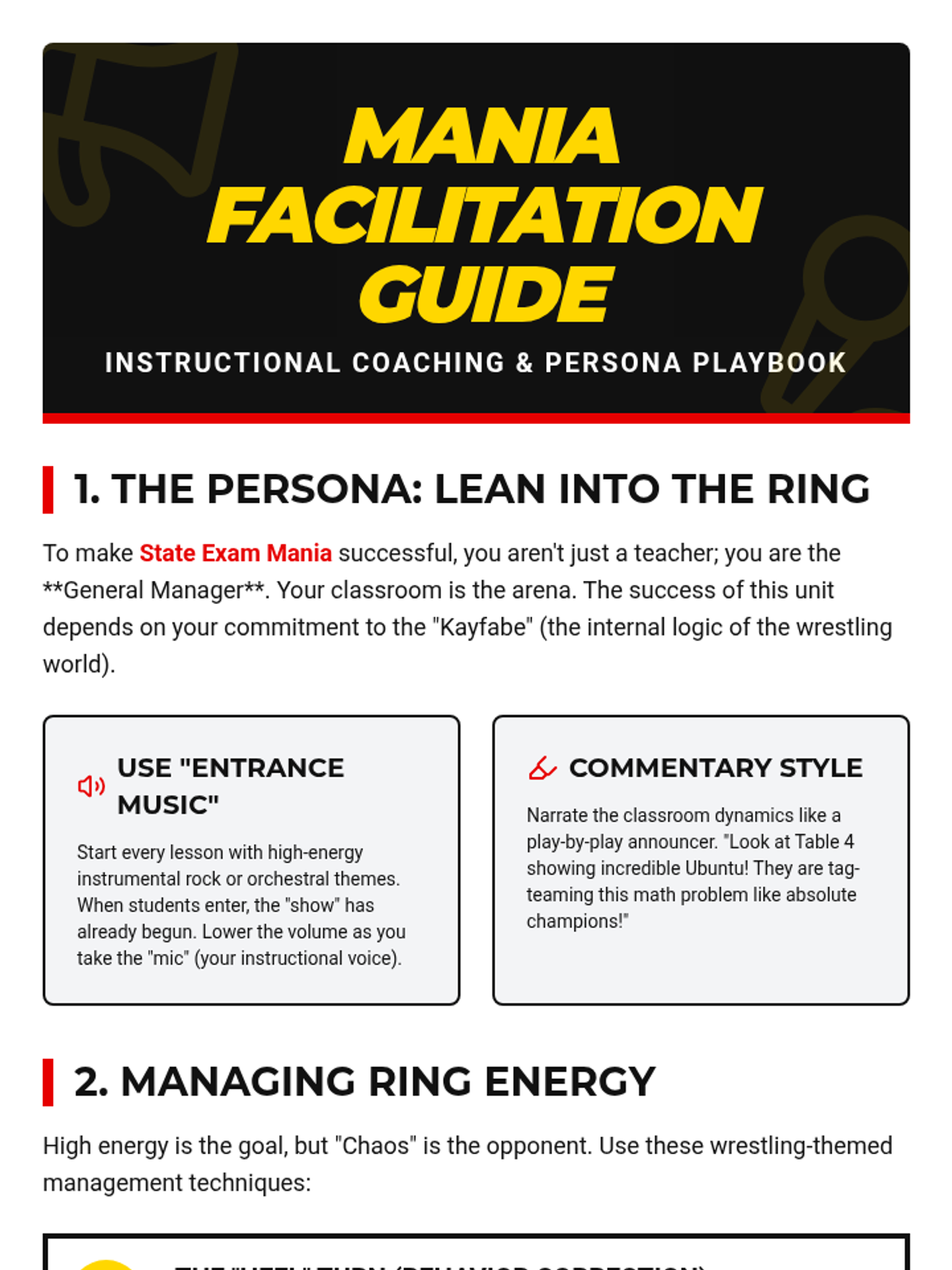
A comprehensive teacher facilitation guide for the 'Road to State Exam Mania' sequence, featuring persona coaching, behavior management strategies (using wrestling metaphors), lesson-specific tips, and a bank of discussion questions.
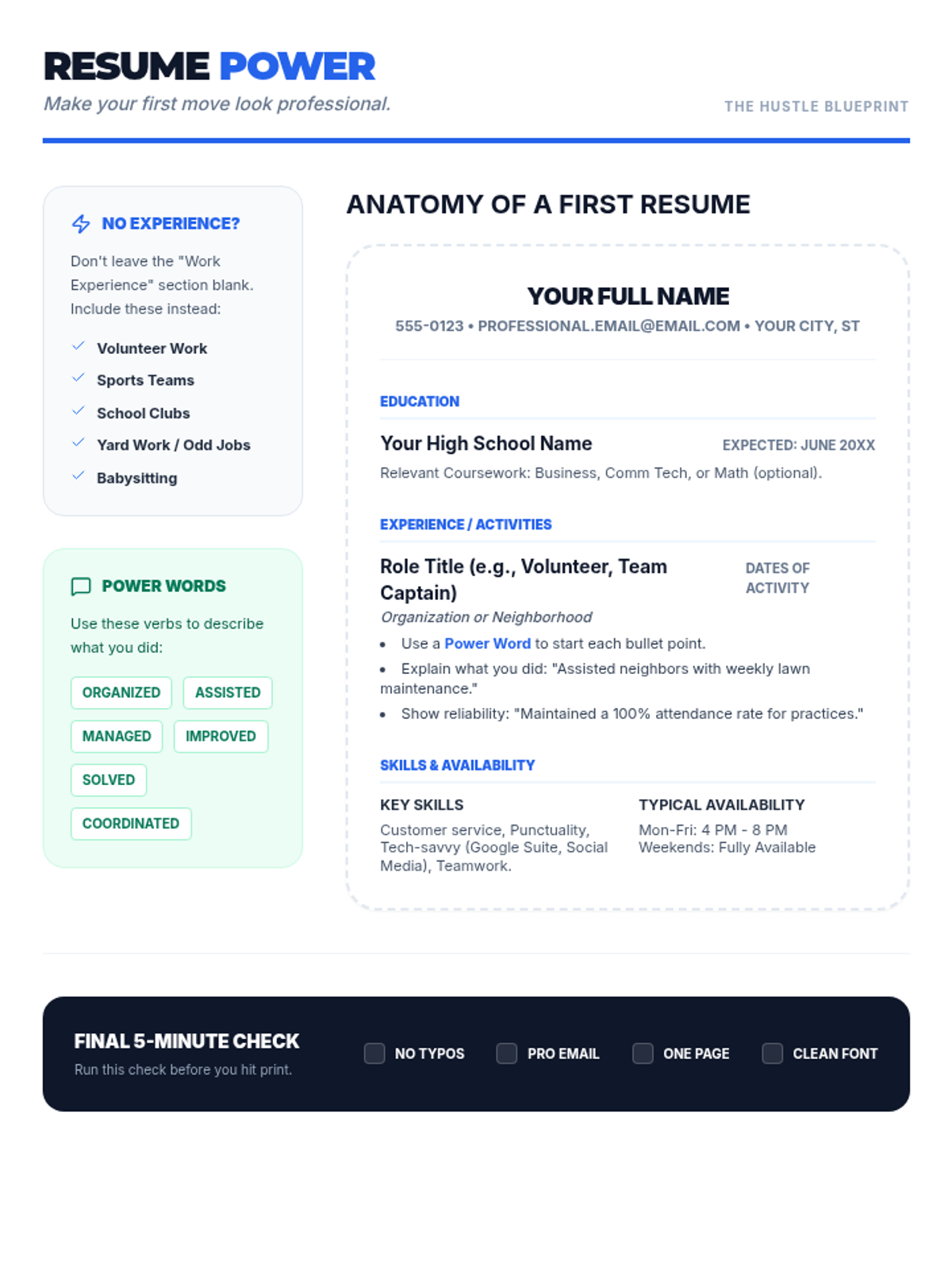
A comprehensive 1-page guide for high schoolers creating their first resume. Includes tips for students with no prior work experience, power words for entry-level skills, and a visual breakdown of a professional resume layout.
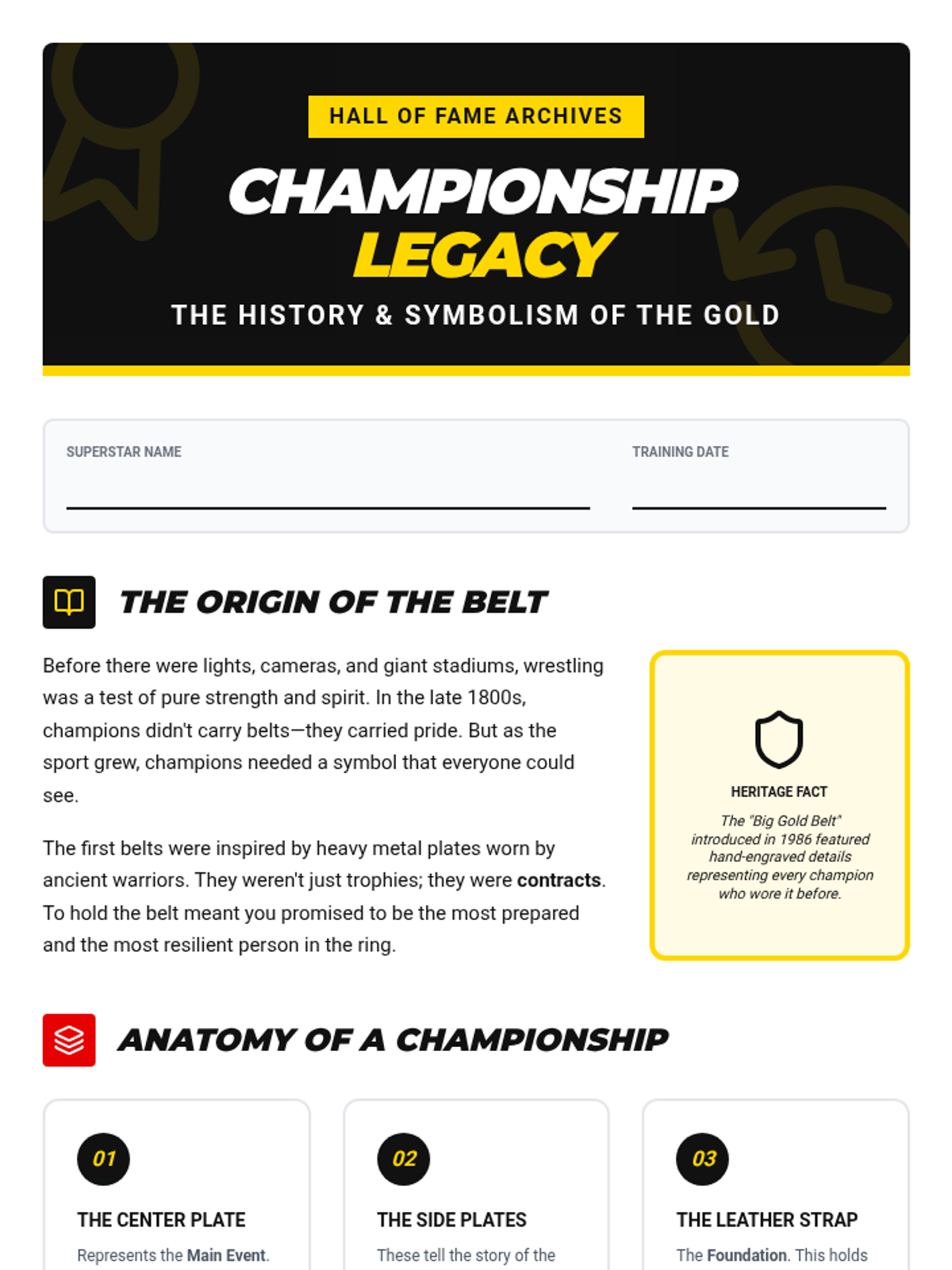
A student-facing reading and activity sheet exploring the history of wrestling championship belts, their symbolism, and how students can build their own academic legacy.
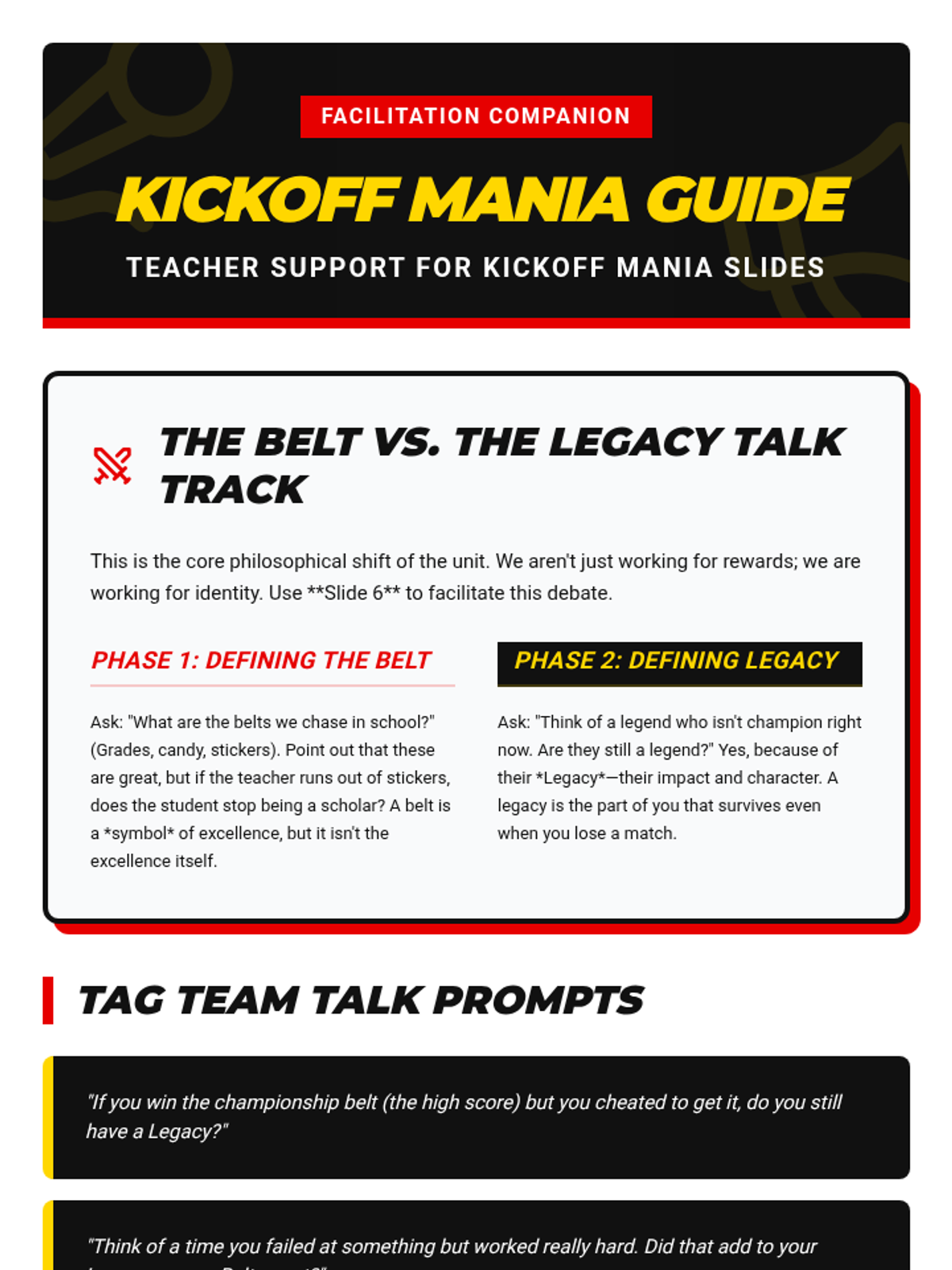
A detailed teacher facilitation companion for the Kickoff Mania slides, providing talk tracks for the 'Belt vs. Legacy' discussion, discussion prompts, and implementation steps for the Ubuntu mission.
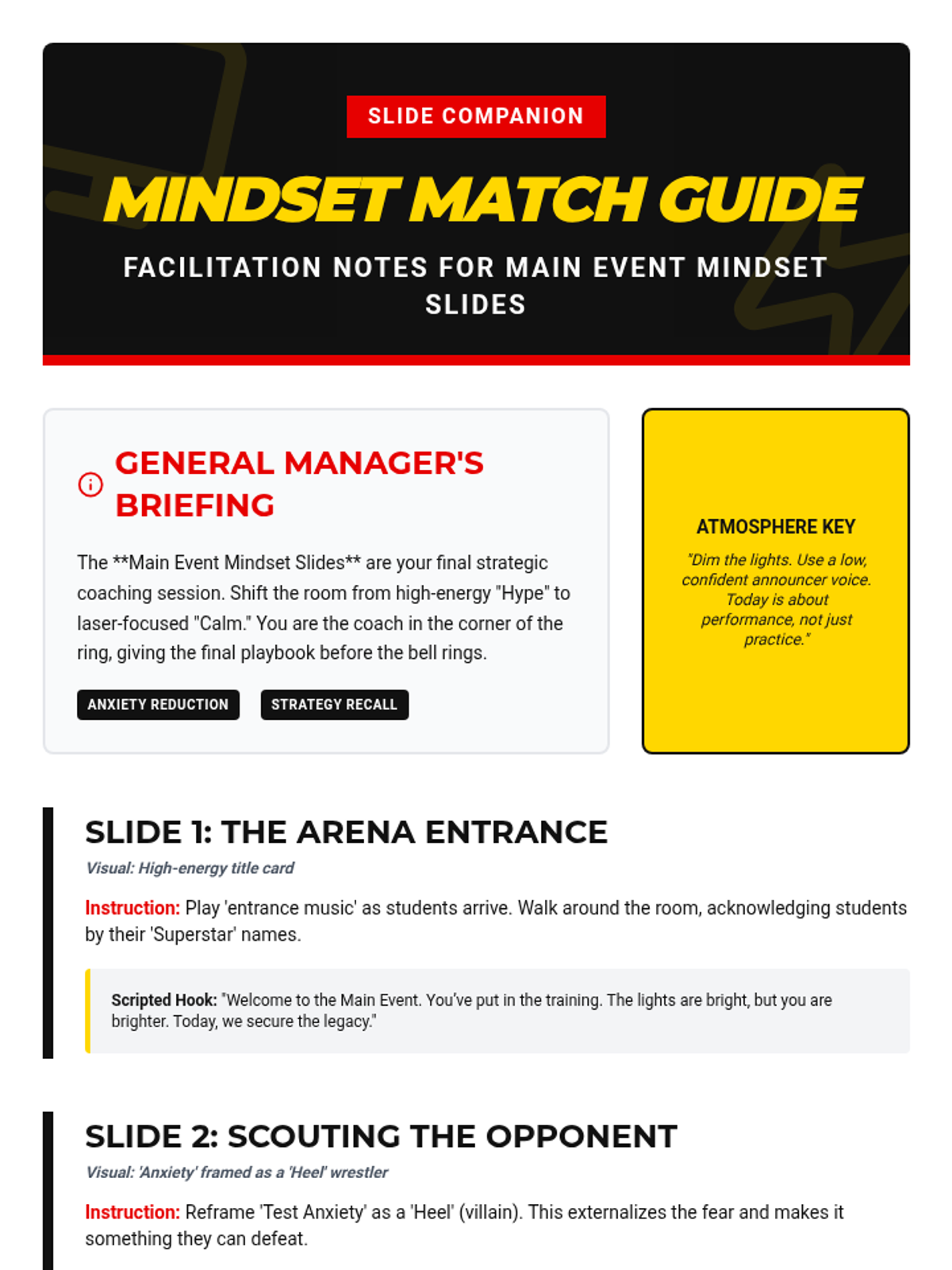
A teacher-facing companion guide for the 'Main Event Mindset' slides, providing slide-by-slide scripts, instructional instructions for managing test anxiety, and post-test decompression strategies.
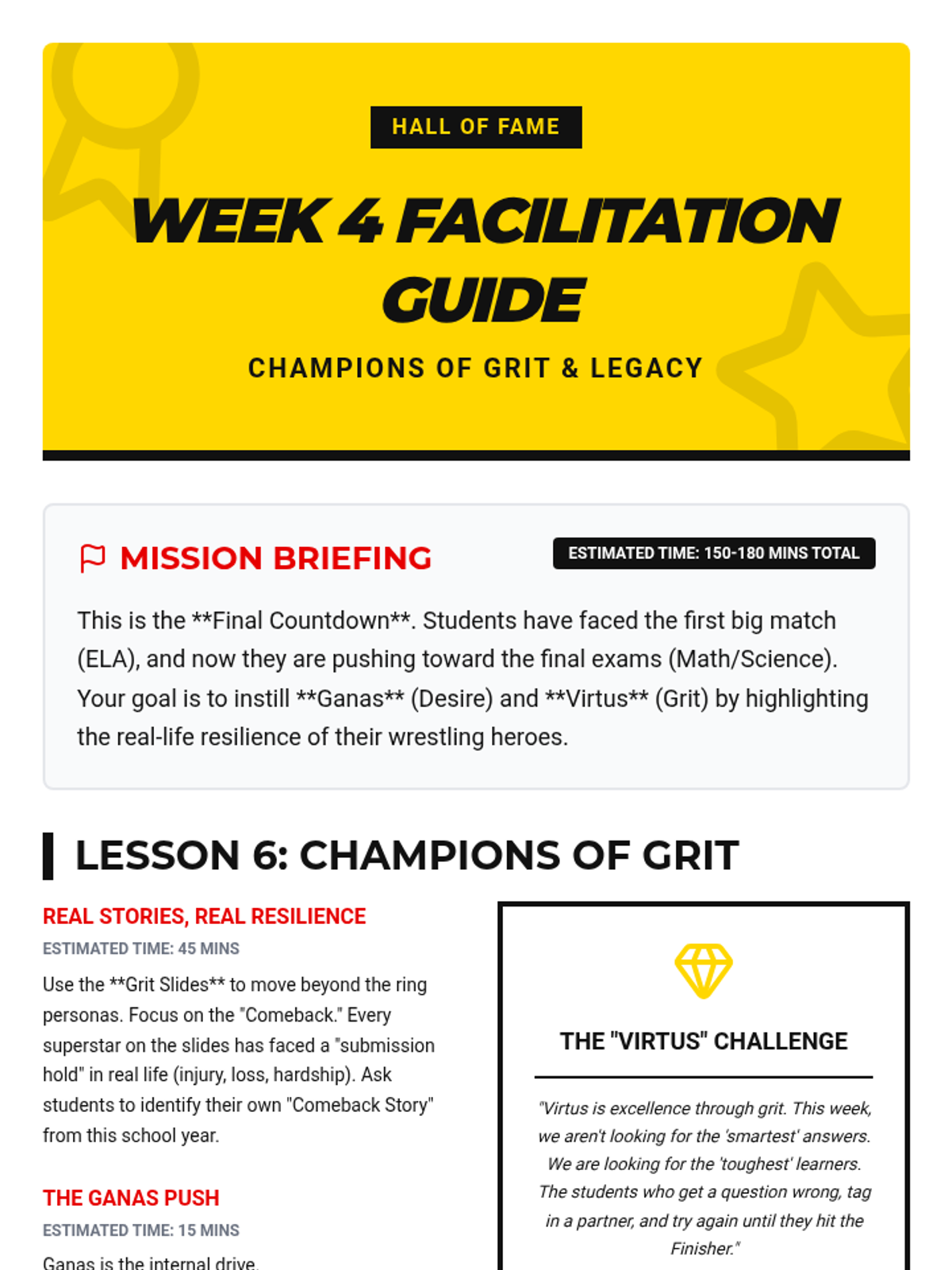
A detailed teacher facilitation guide for Week 4 of the 'Road to State Exam Mania' sequence, focusing on Ganas (drive) and Virtus (grit) for the final exam push and the 'Mania Gala' unit wrap-up.
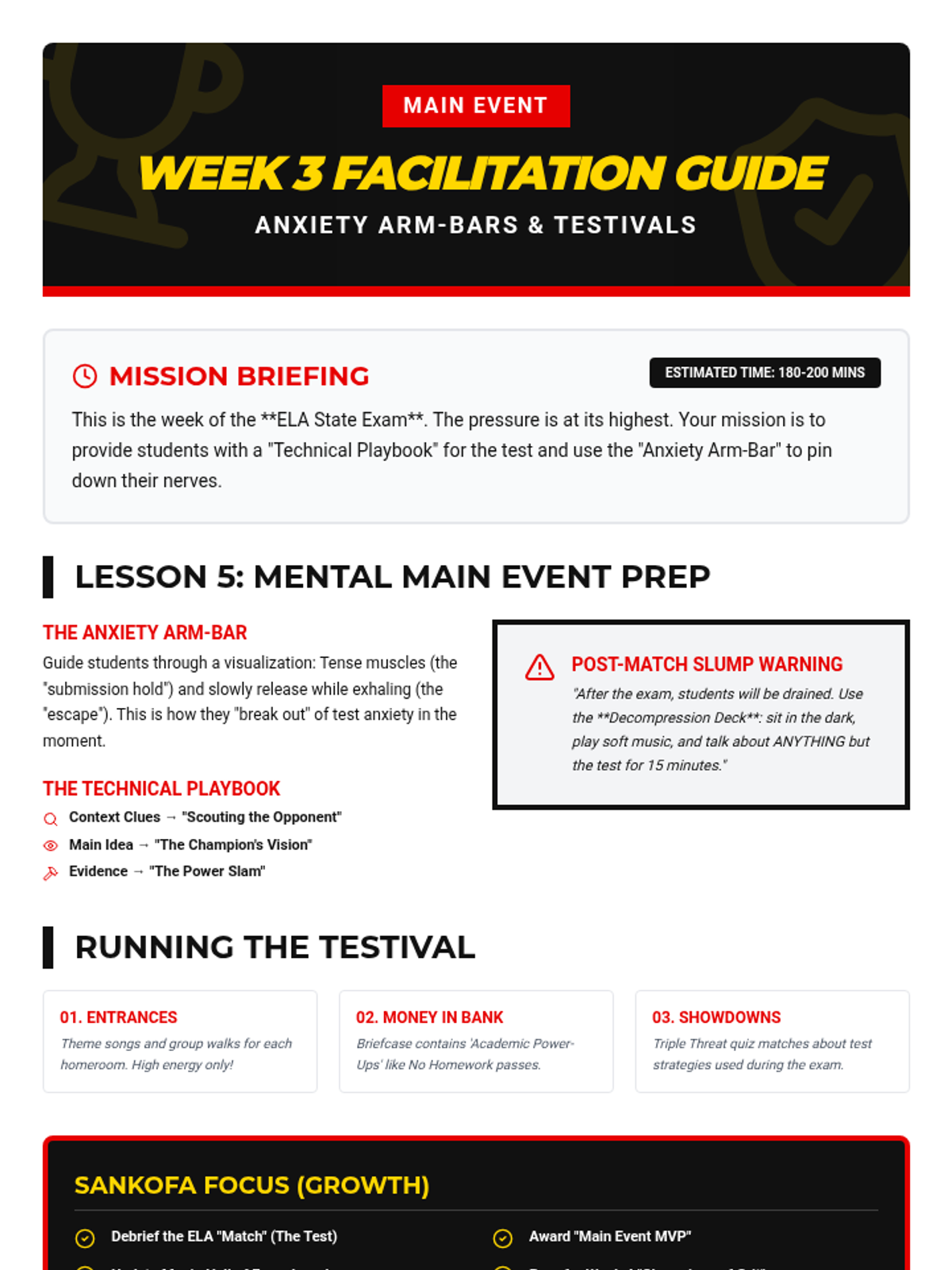
A detailed teacher facilitation guide for Week 3 of the 'Road to State Exam Mania' sequence, focusing on ELA state exam preparation and the 'Testival' pep rally.
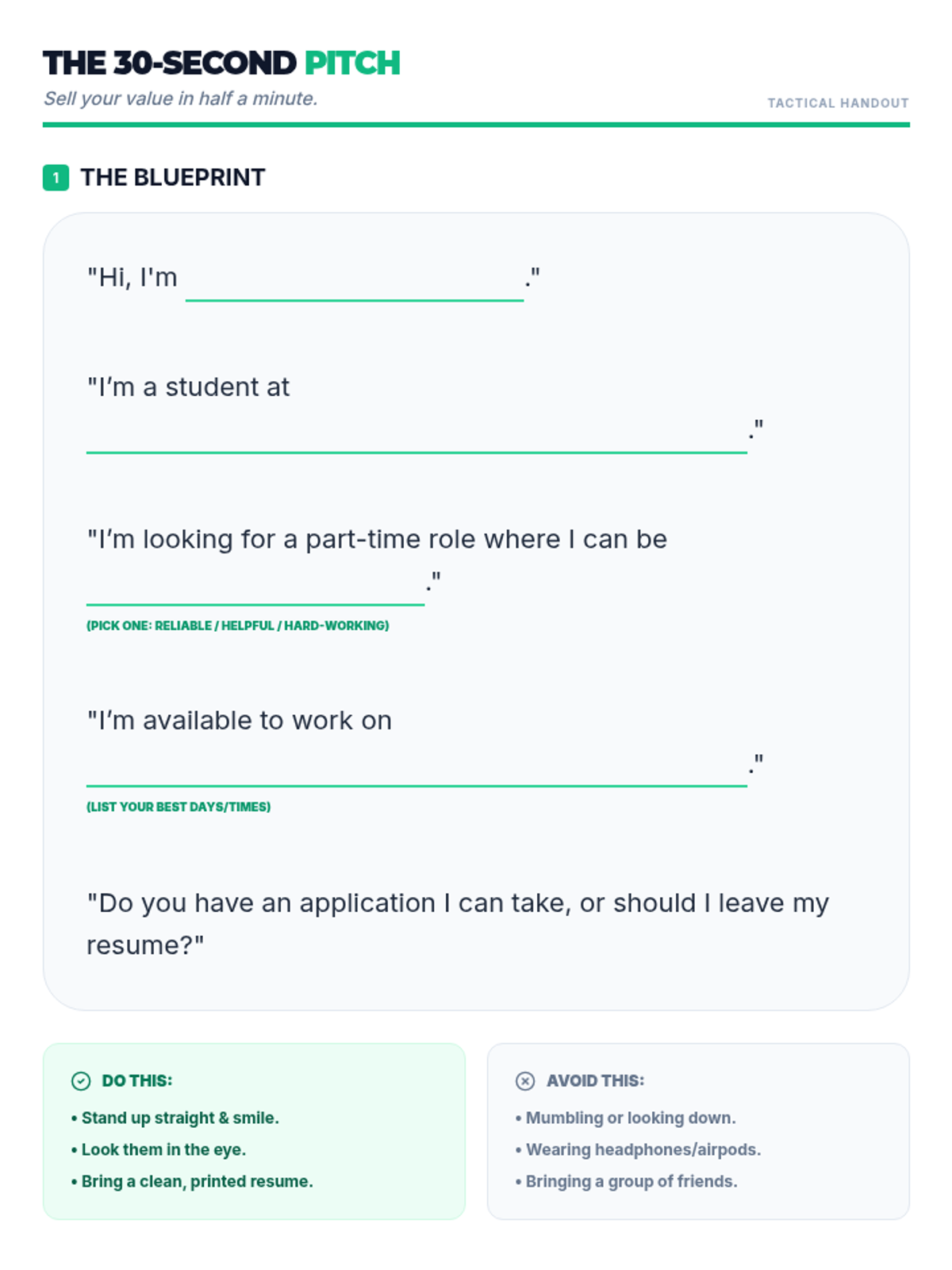
A tactical worksheet for students to script and practice their introductory "pitch" for potential employers, focusing on brevity, value, and professional presentation.
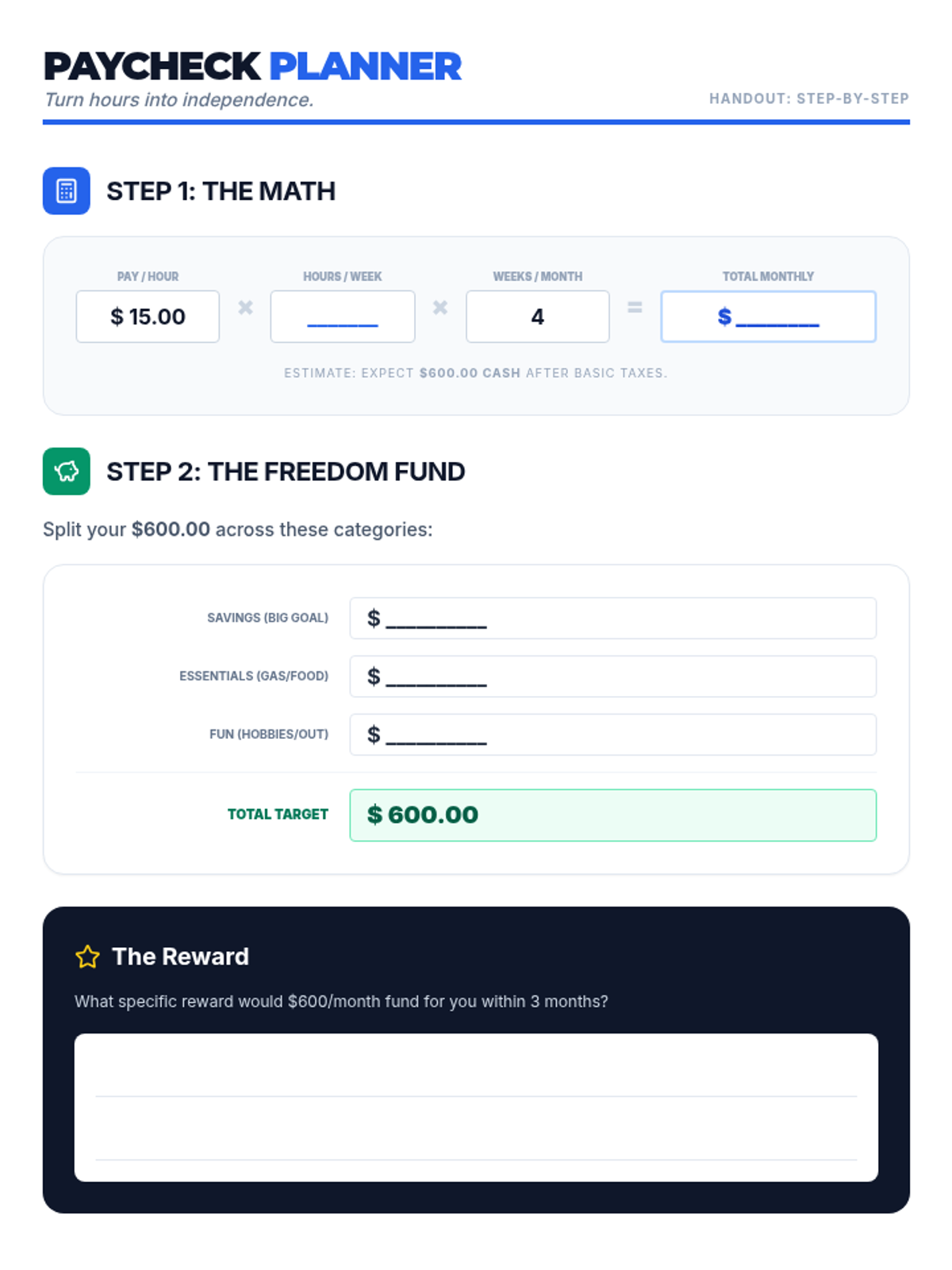
A practical worksheet to help students calculate potential monthly earnings from a part-time job and plan their "freedom fund" to see the tangible benefits of working.
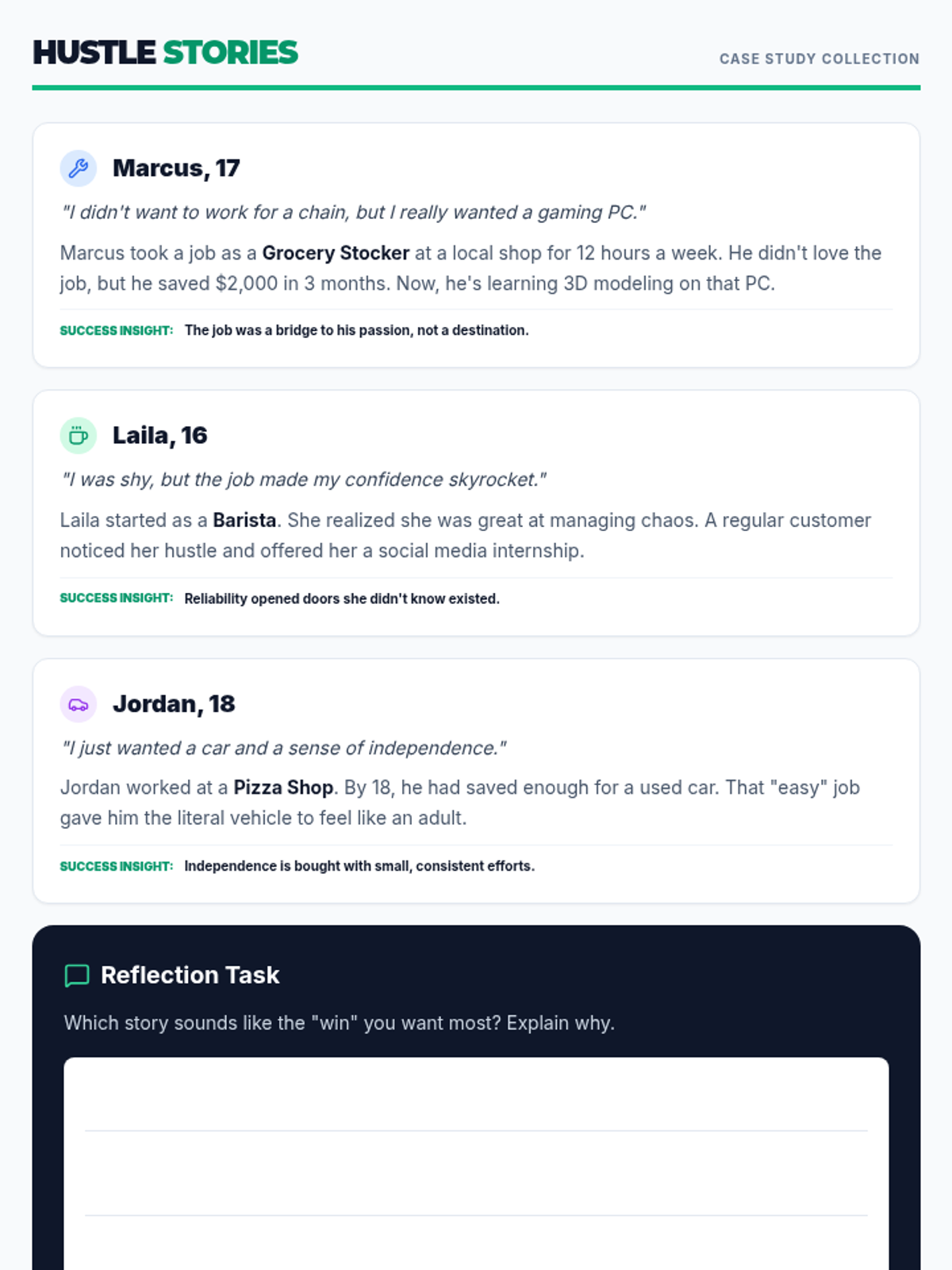
A set of short, engaging case studies featuring high schoolers who used entry-level jobs as stepping stones to personal success and independence. Provides social proof and real-world context for the workshop.
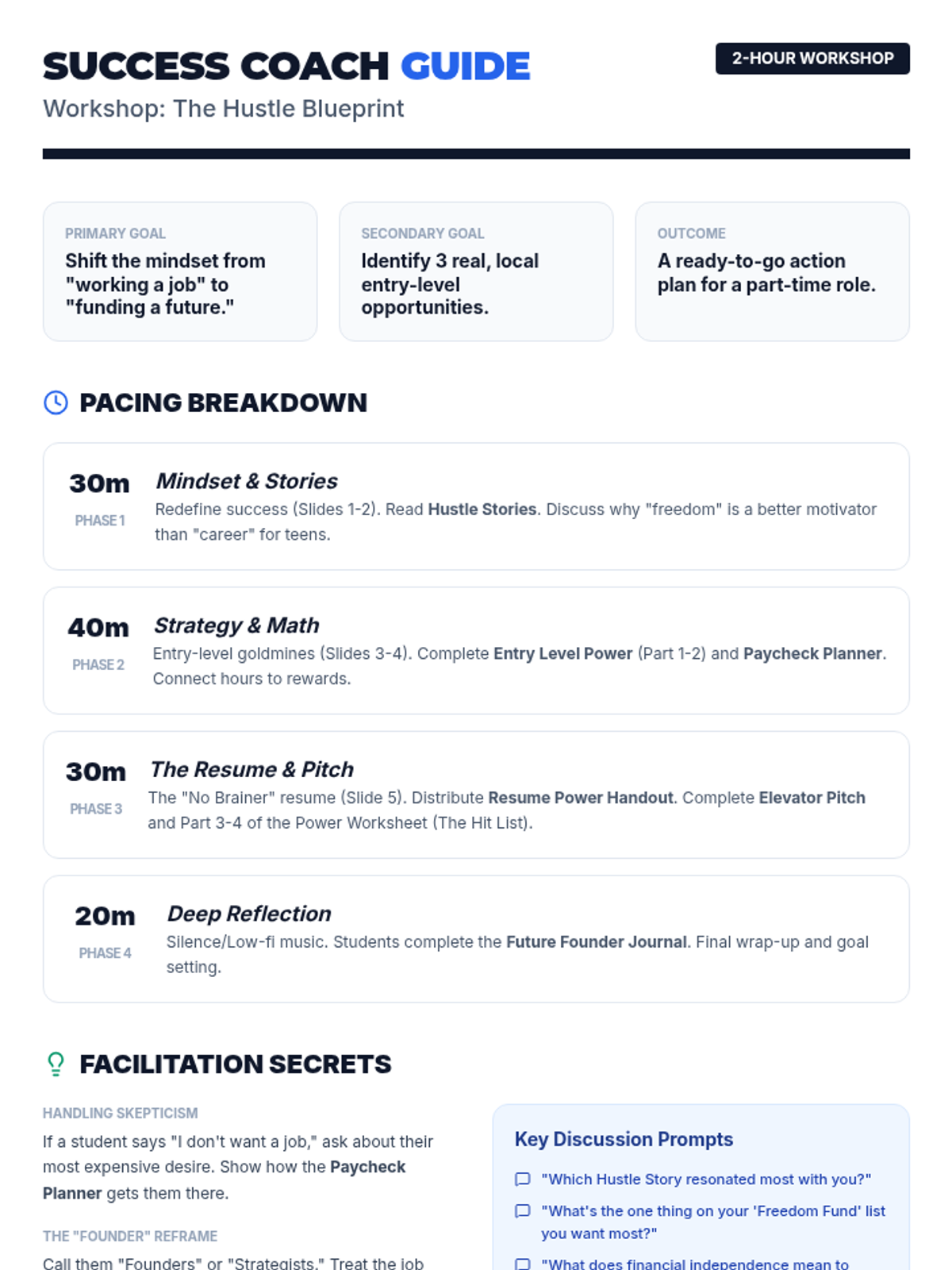
A facilitator's guide for the Hustle Blueprint workshop, including an updated 2-hour pacing guide that incorporates new case studies and tactical worksheets.
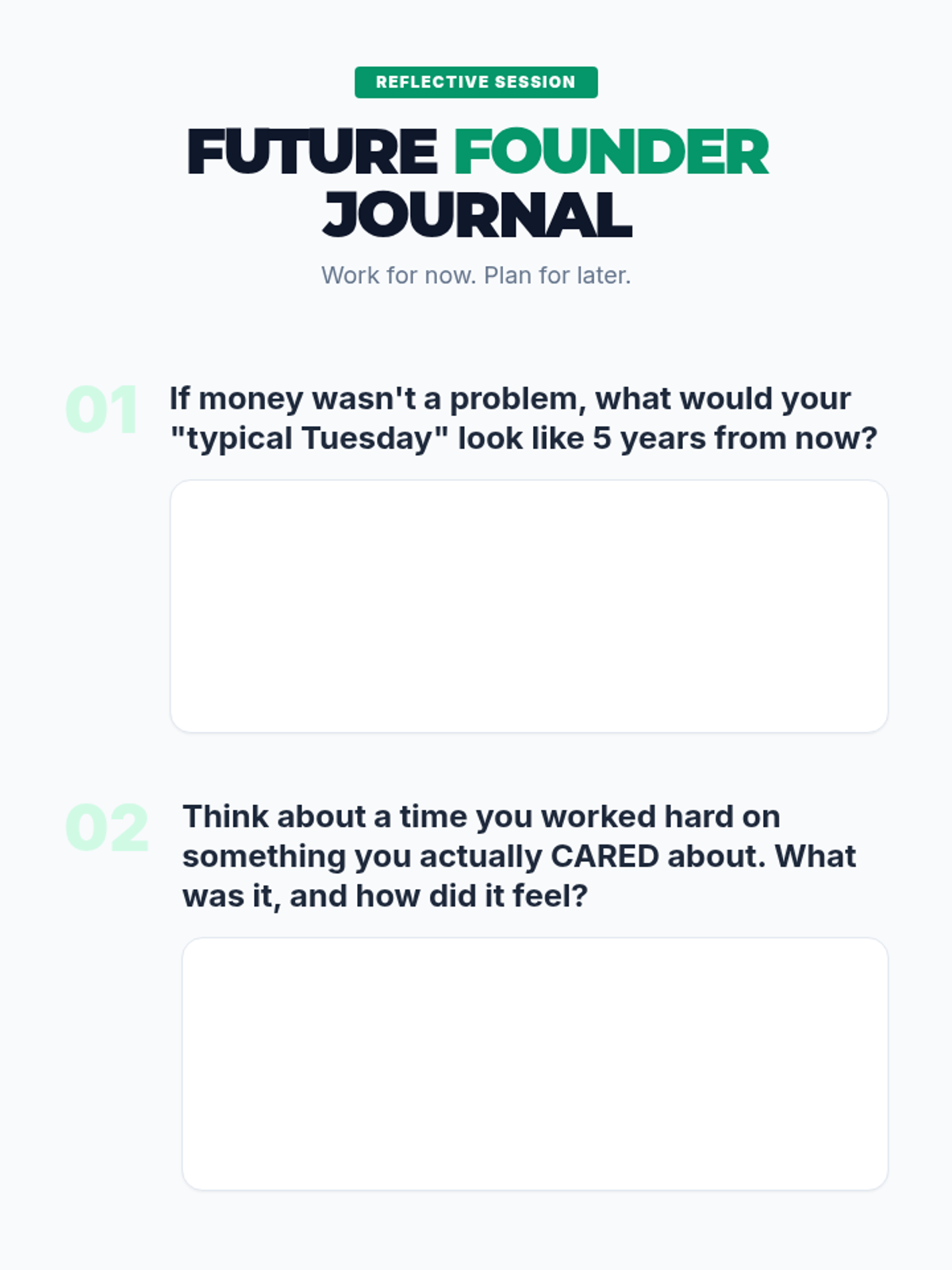
A set of deep reflection prompts for students to connect their personal goals and definitions of success to the practical step of getting a part-time job.
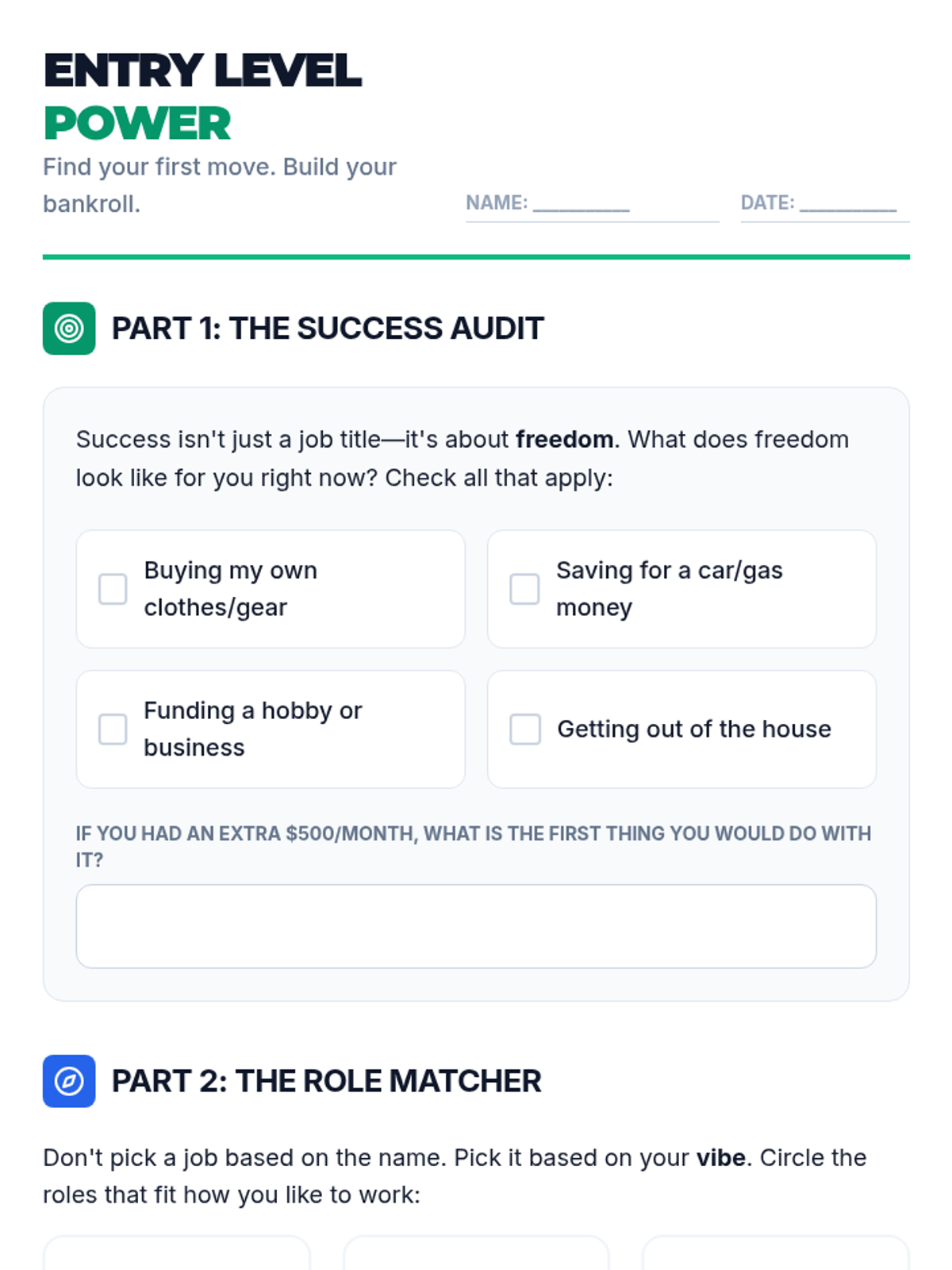
An interactive worksheet for high schoolers to identify their motivations for working, match their personality to entry-level roles, and map out local job opportunities.
A high-impact slide deck for high school students focused on redefining success and identifying entry-level job opportunities. Includes visual guides for resume building and strategic thinking about part-time work.
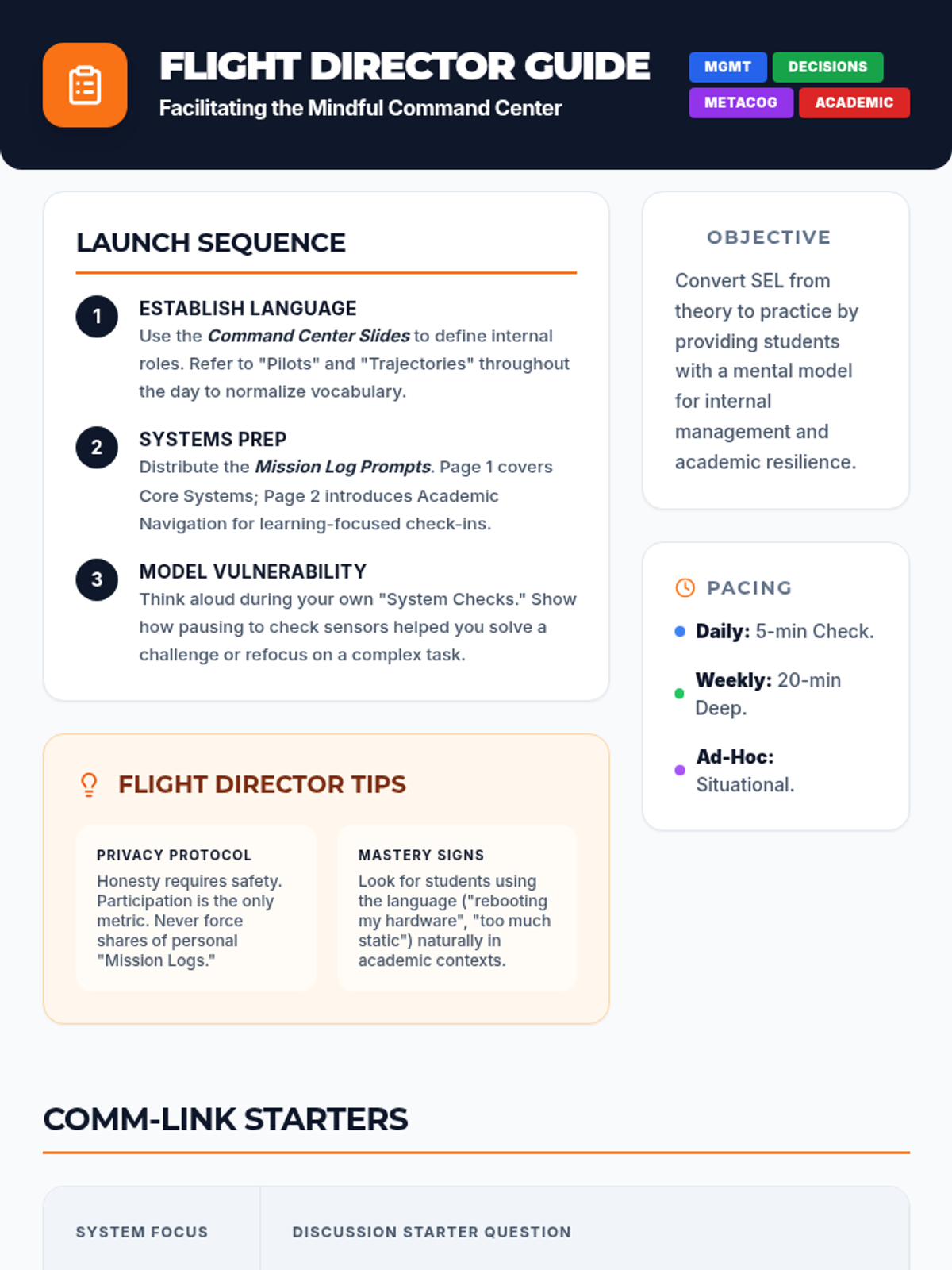
A guide for teachers to implement the 'Command Center' journaling system. Includes pacing suggestions, facilitation tips, and discussion starters.
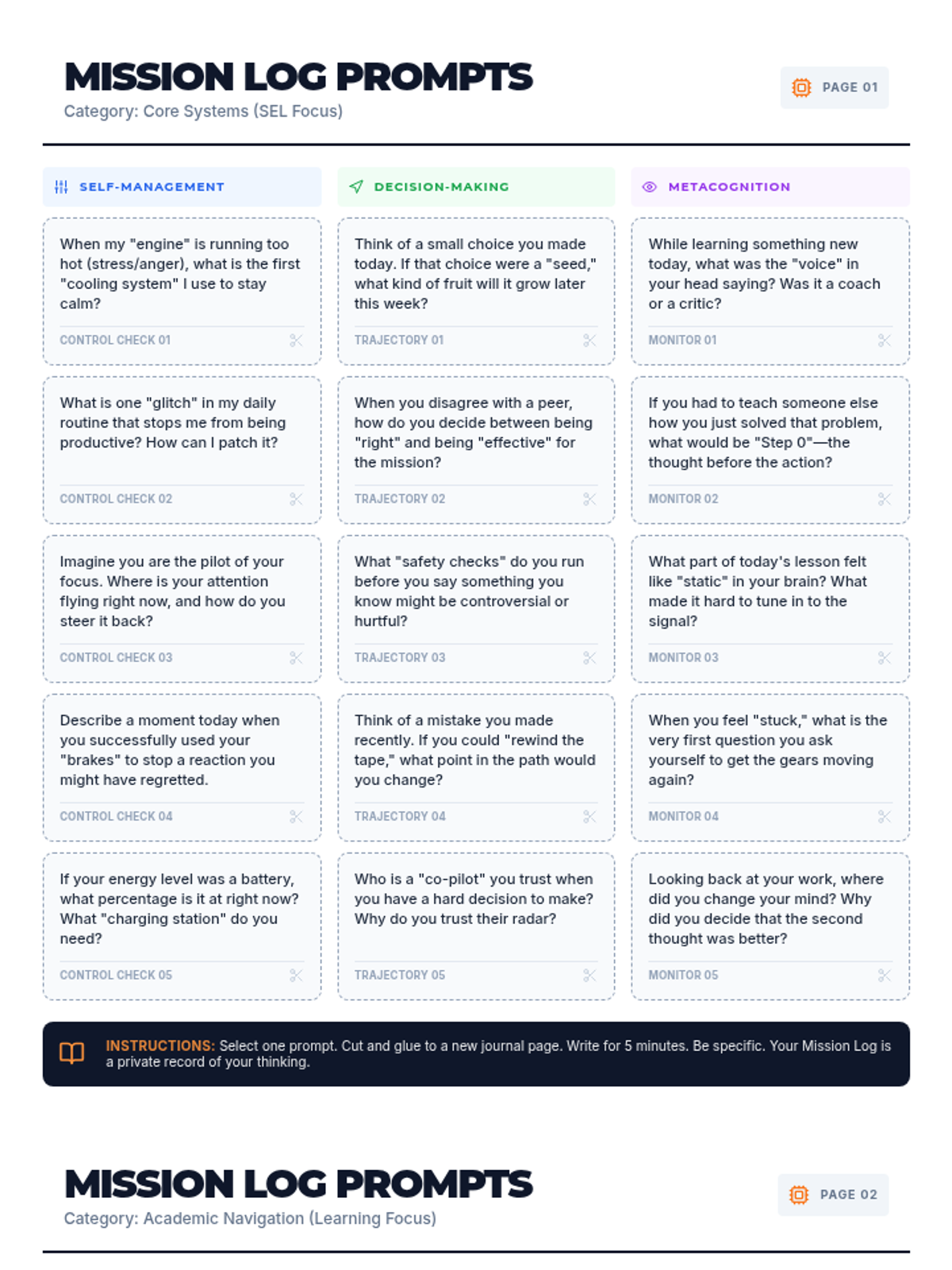
A collection of printable prompt strips categorized by focus area (Core Systems and Academic Navigation). Designed to be cut out and glued into student journals for regular check-ins.
A visual presentation that introduces the 'Command Center' metaphor for self-regulation and metacognition. Includes visual prompts and system-focused slides for classroom discussion.
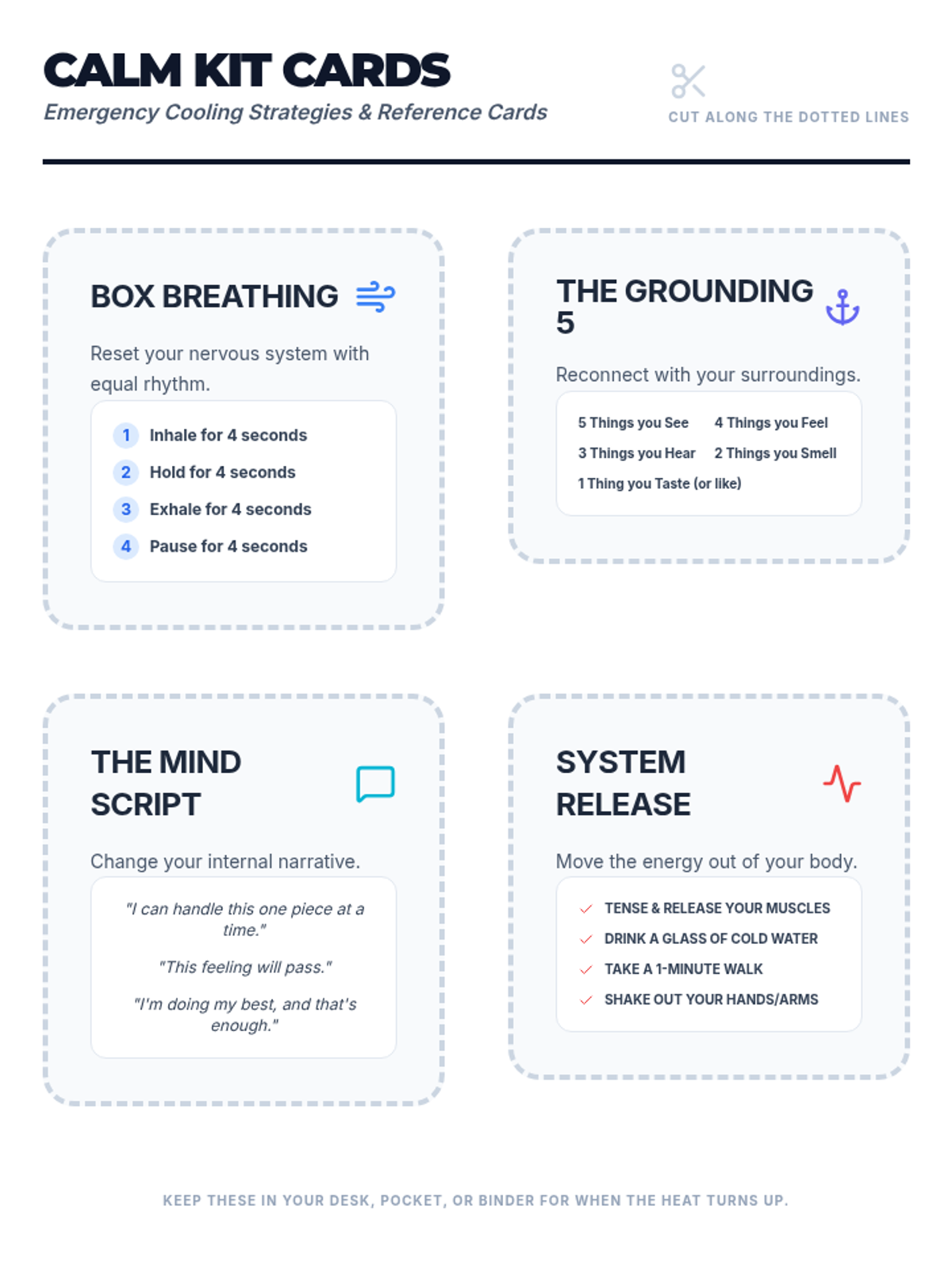
A set of four printable reference cards featuring quick coping techniques: Box Breathing, Grounding 5-4-3-2-1, Mind Scripts, and Physical System Releases.
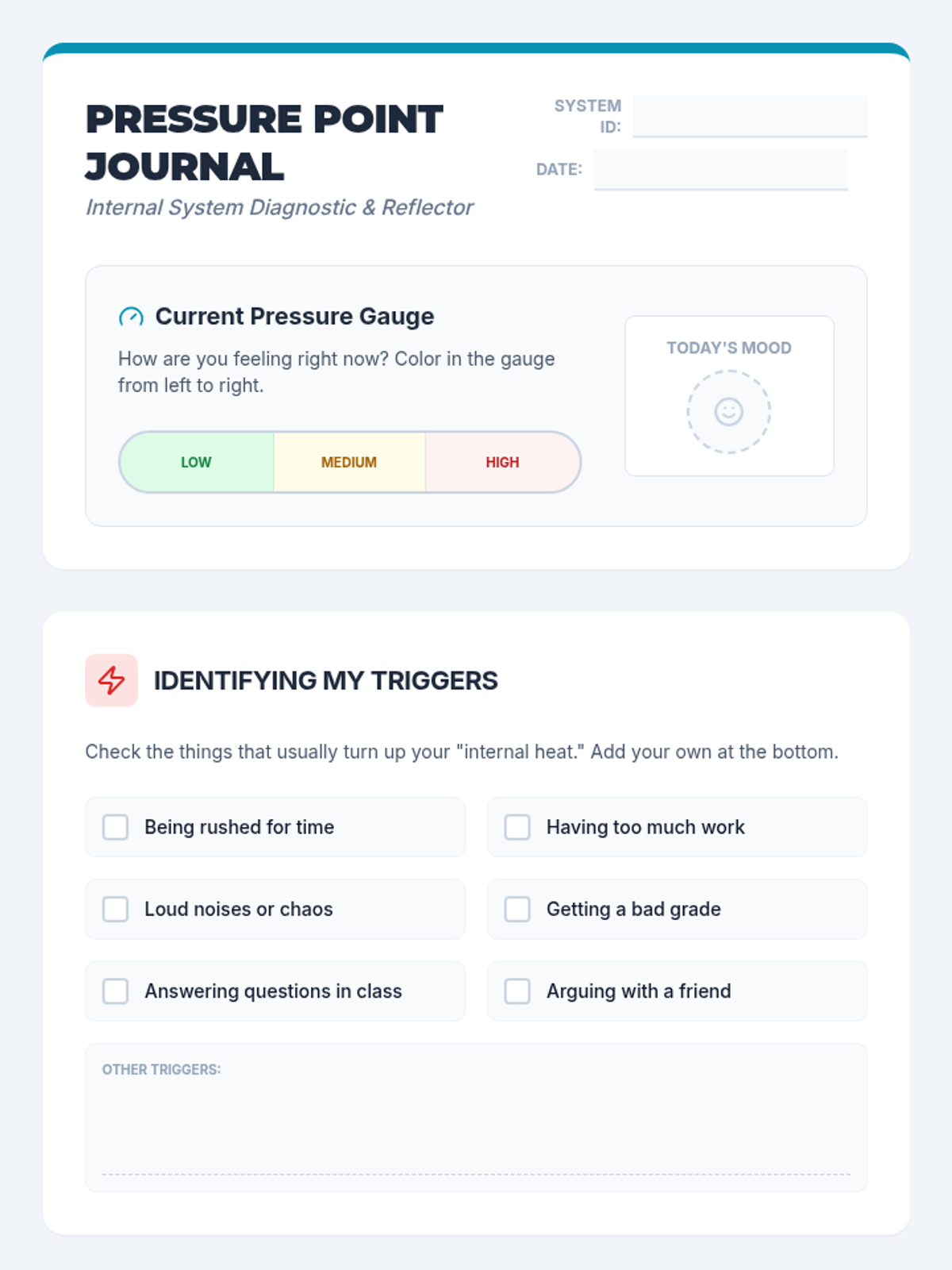
A self-reflection worksheet for students to identify their personal stress triggers, assess their current emotional state using a pressure gauge, and document their preferred coping strategies.
A slide presentation for a check-in session that guides students through identifying current stress levels, recognizing triggers, and reviewing coping techniques.
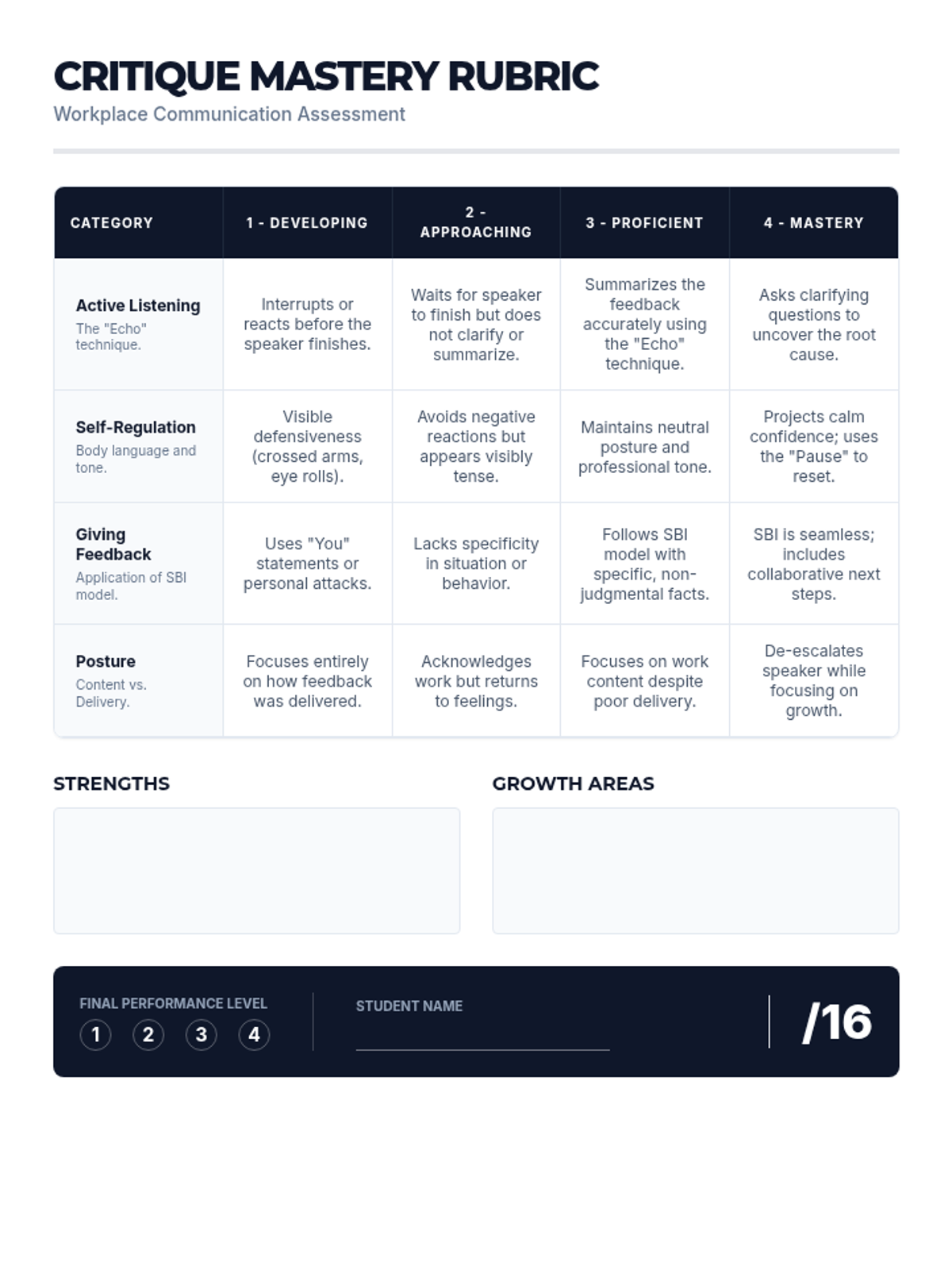
A professional evaluation rubric for assessing student performance. Revised to fit on a single page and improve visual contrast for grading.
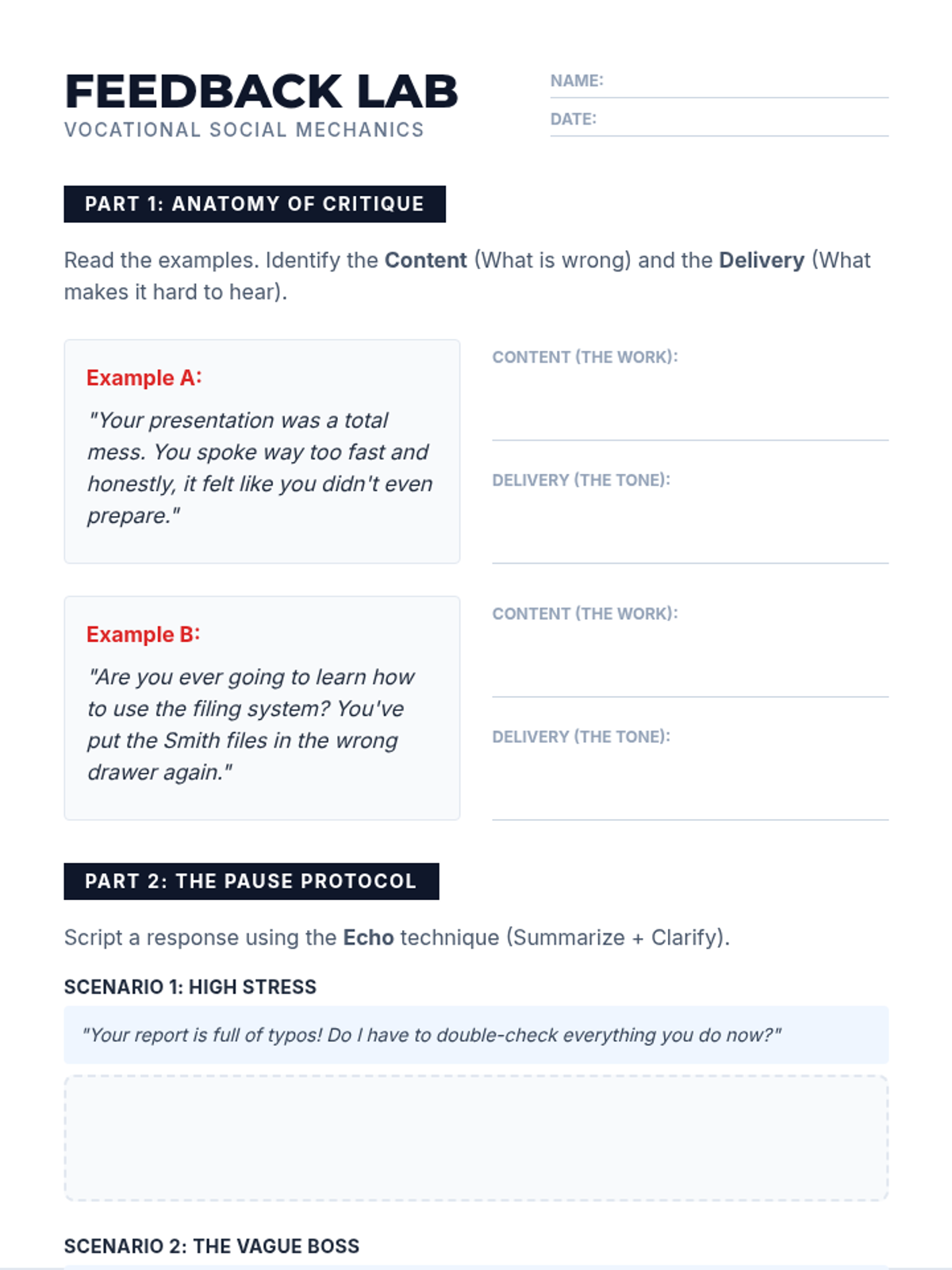
A student worksheet for practicing de-escalation, active listening, and the SBI feedback model. Revised to improve handwriting space and ensure layout consistency across pages.
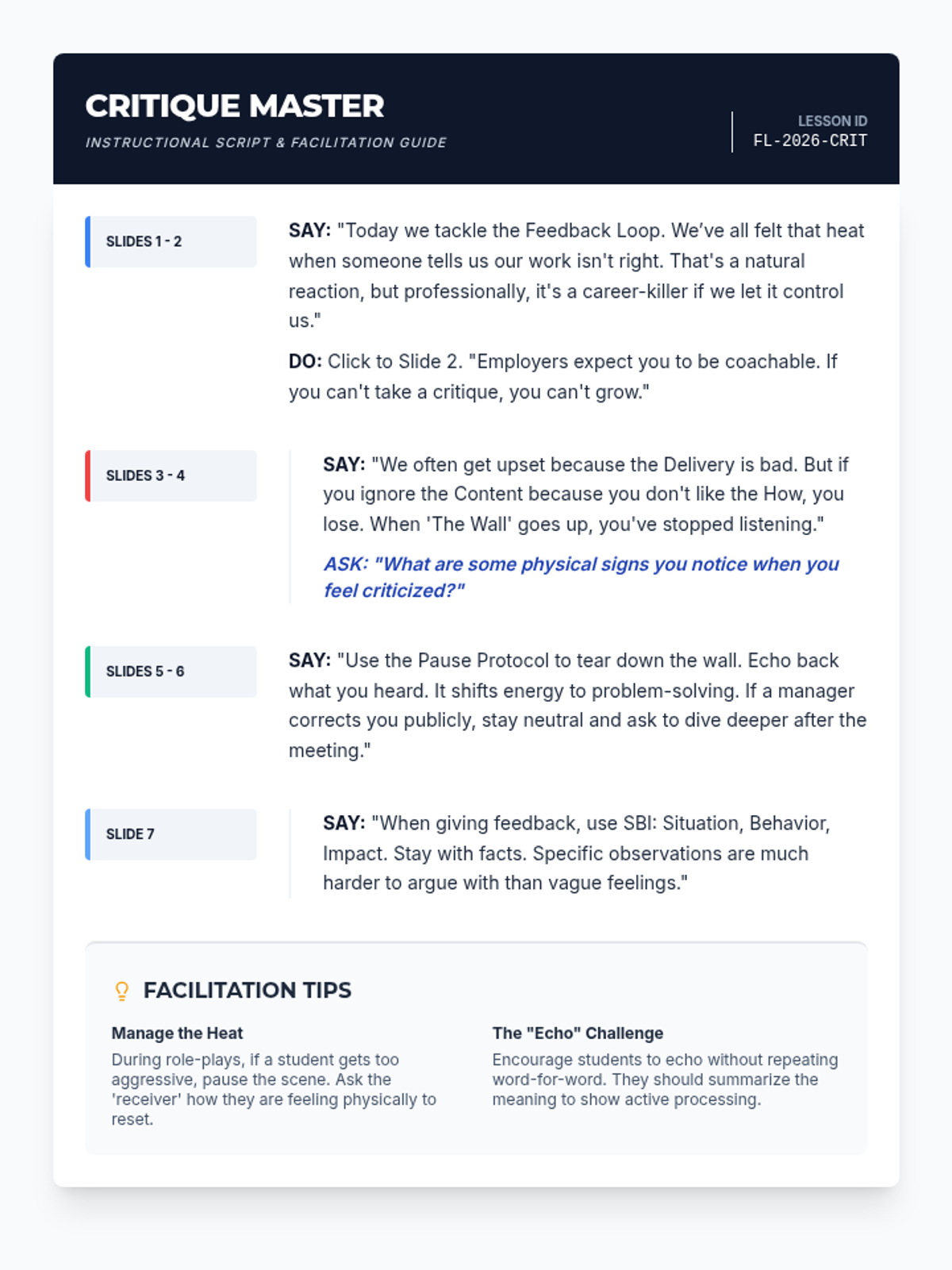
An instructional script for educators to use alongside the 'Feedback Loop' slides. Revised to remove extra pages and ensure all icons render.
A high-impact visual slide deck for delivering instruction on professional feedback, featuring the SBI model, de-escalation tactics, and the 'Pause Protocol'. Revised to fix placeholders and contrast.
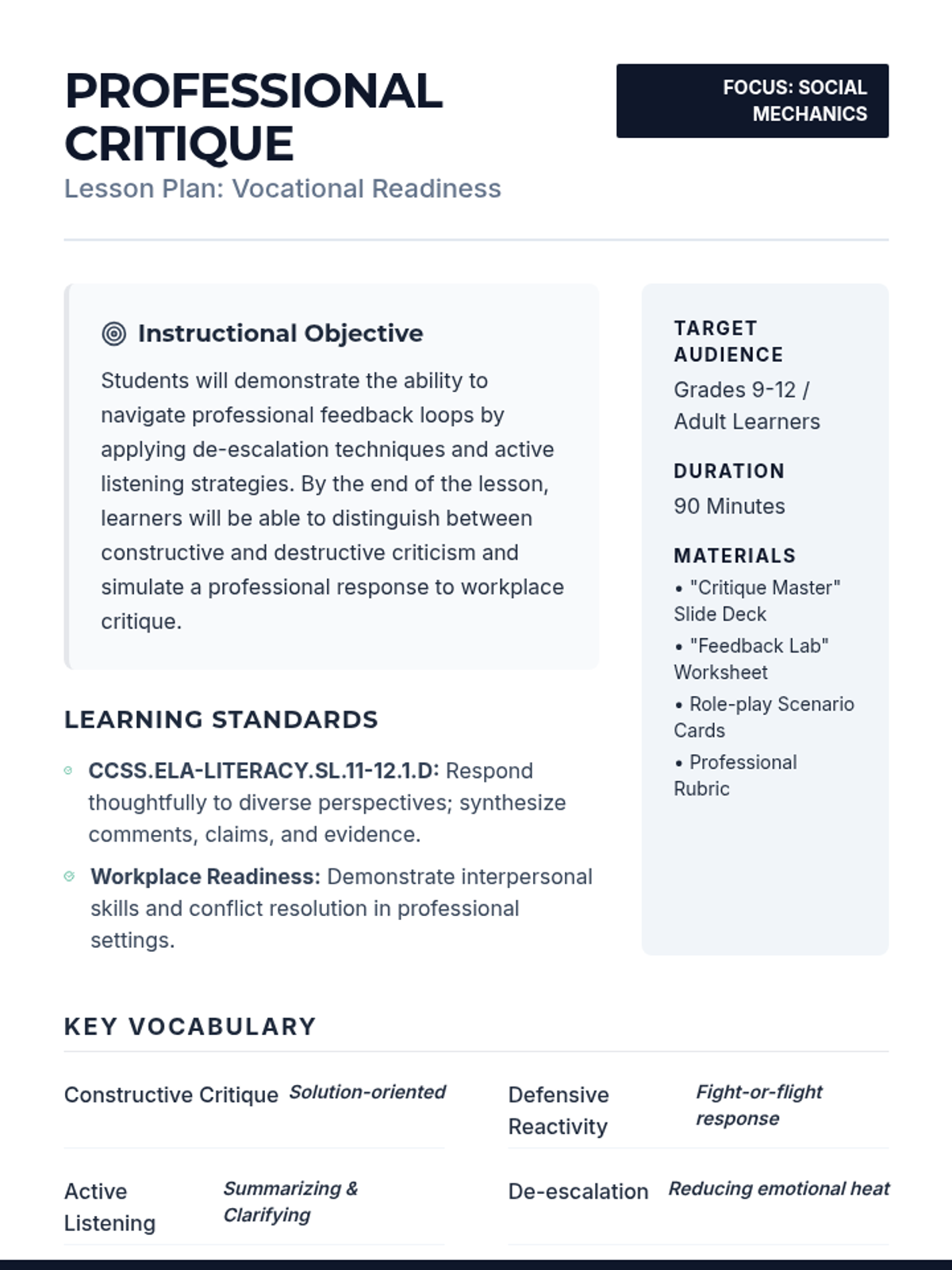
A comprehensive lesson plan for instructors detailing the objectives, standards, and step-by-step procedures for teaching professional feedback and de-escalation skills. Revised for layout and timestamps.
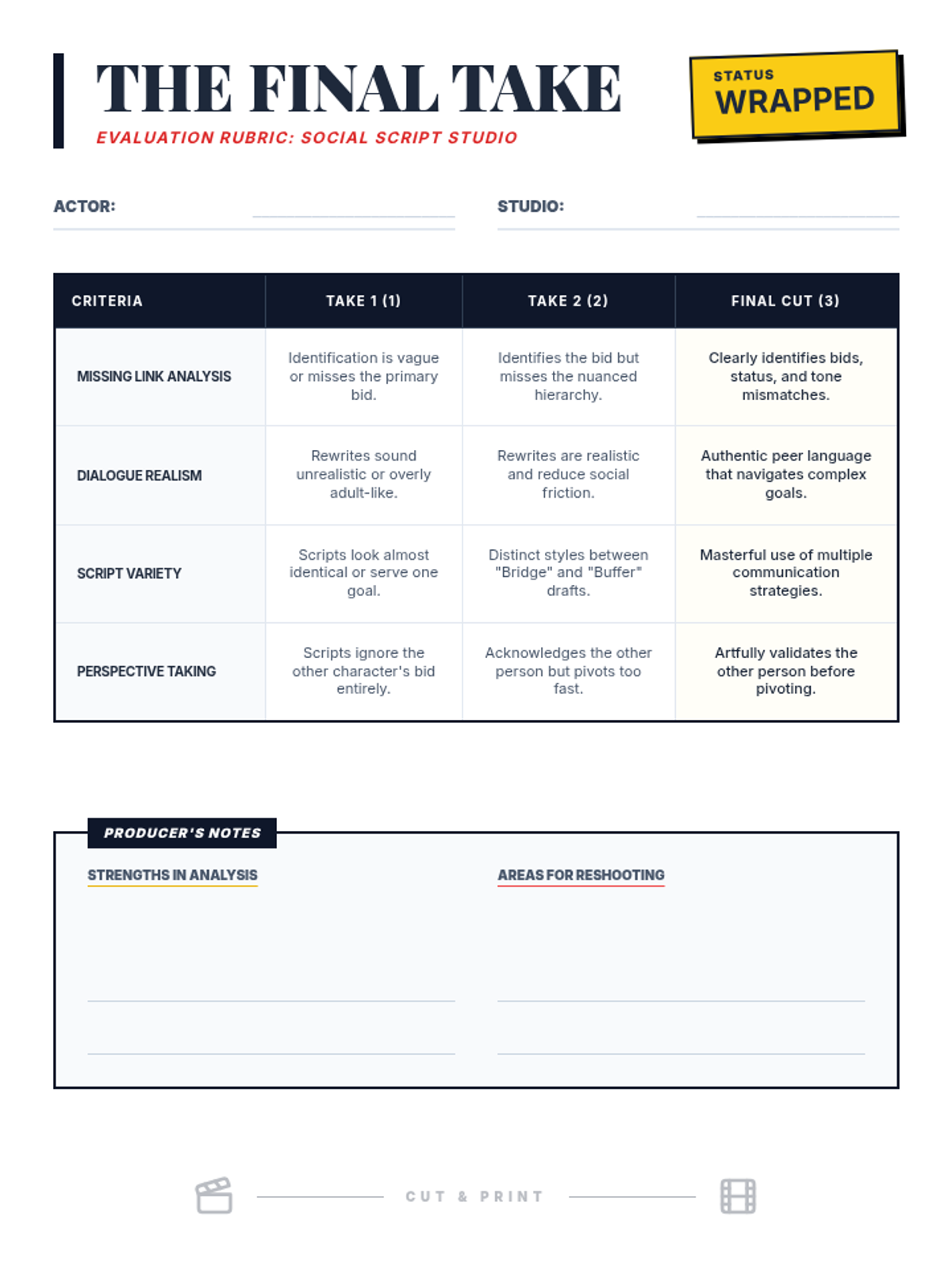
A performance evaluation rubric for the Social Script Studio lesson, assessing students on their ability to analyze communication "missing links," write realistic and effective scripts, and demonstrate flexibility in social responses.
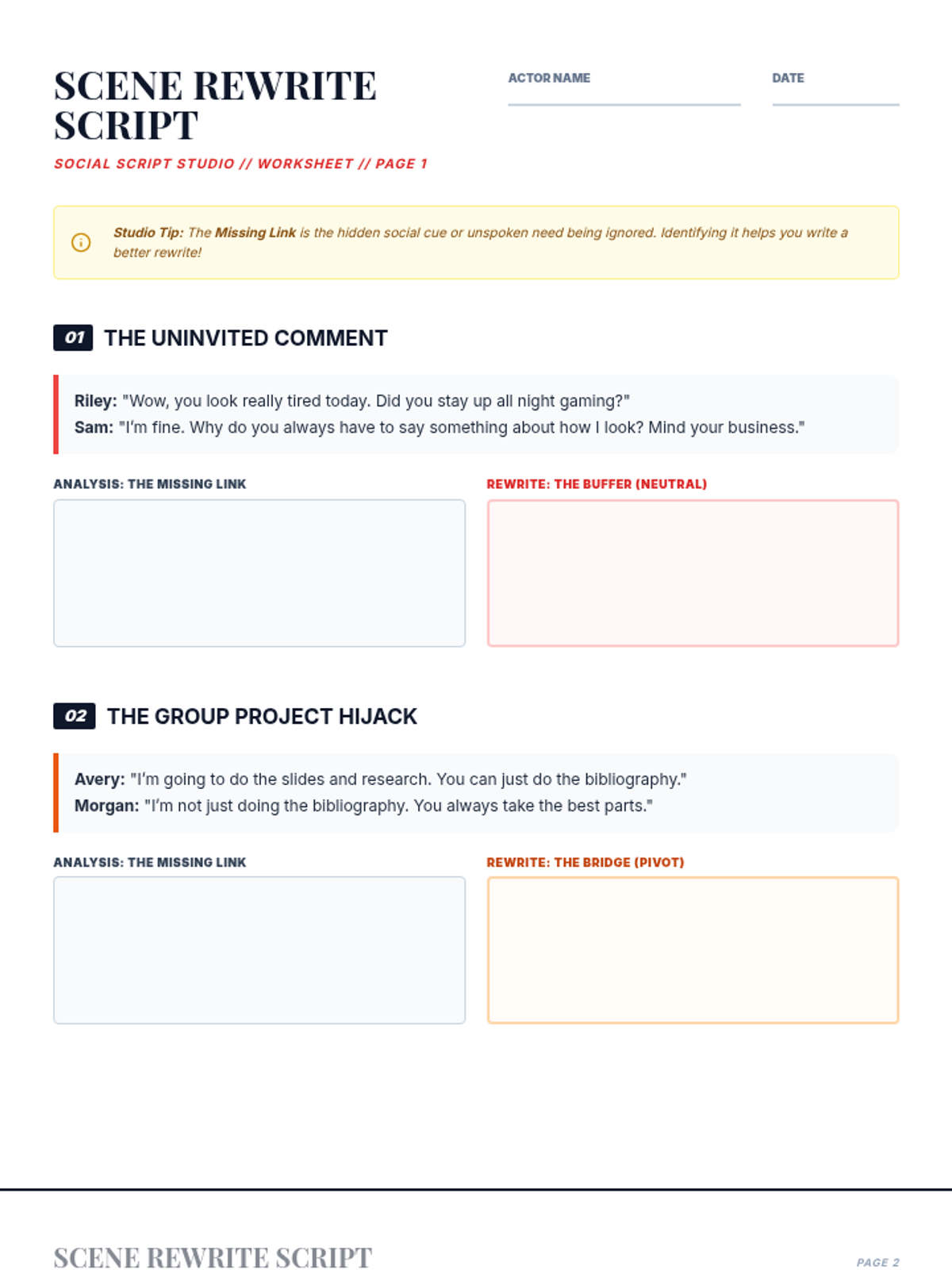
A student worksheet designed as a film script template where students analyze social friction in peer scenarios, identify the "Missing Link" in communication, and write alternative responses ("The Buffer", "The Bridge", "The Stand") to improve their pragmatic language skills. Now includes 5 expanded scenarios covering various peer conflict situations.
Instructional slides for the Social Script Studio lesson, utilizing a cinematic theme to teach students the "Friction Scale," how to identify "Missing Links" in social interactions, and strategies for scripting more effective peer communications. Now includes introductory slides explaining the "Missing Link" concept.
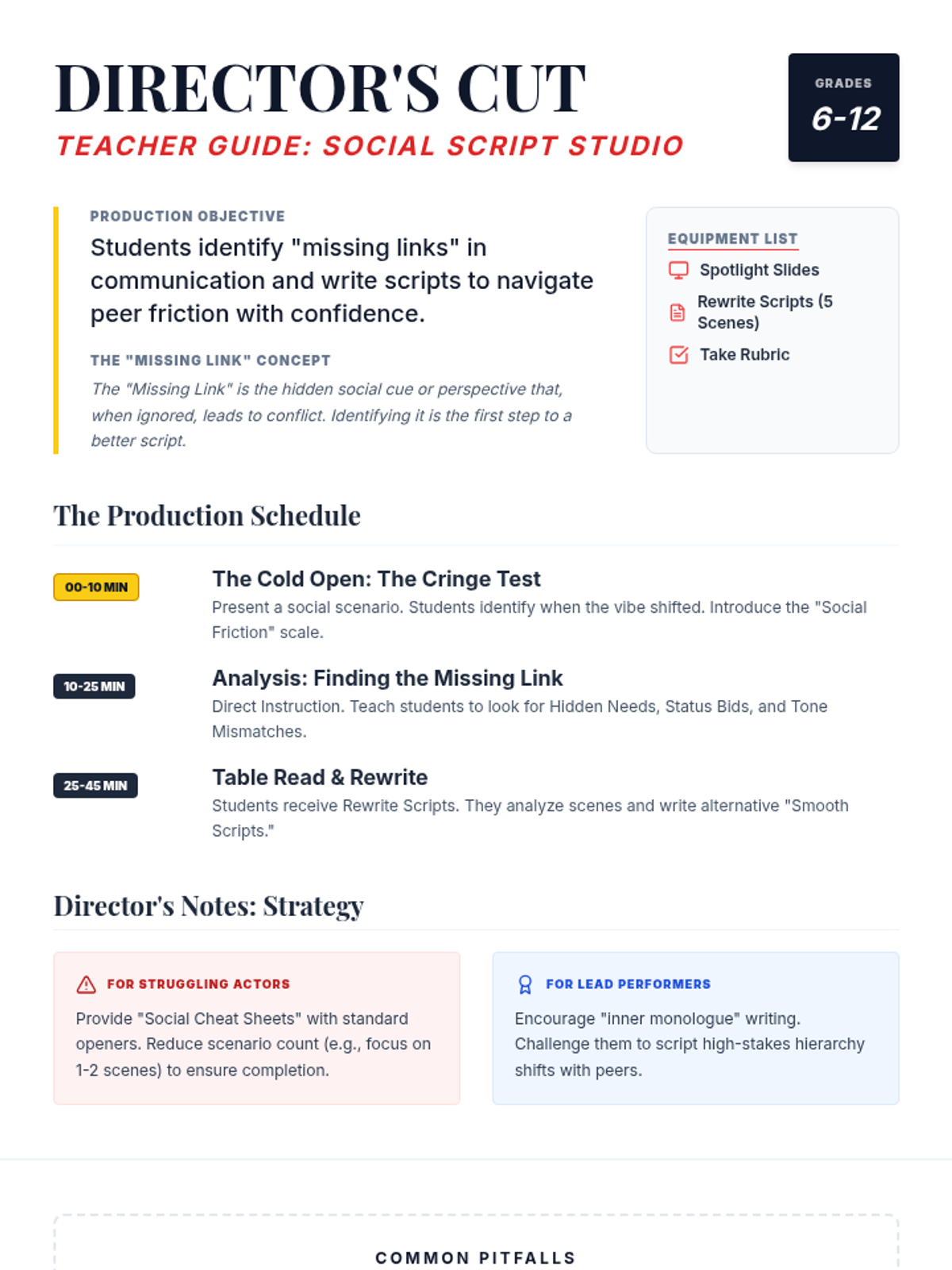
A comprehensive teacher guide for the Social Script Studio lesson, featuring a timed schedule, differentiation strategies, and tips for facilitating pragmatic language skills in grades 6-12. Now updated to include references to the expanded 5-scenario worksheet.
Day 5 Slides: Consolidating resources and finalizing the personal safety plan.
Day 4 Slides: Setting up the workshop environment for individual reflection and goal mapping.
Day 3 Slides: Focusing on the specific anxiety surrounding graduation and the loss of the high school support system.
Day 2 Slides: Differentiating depression from sadness and teaching specific conversational skills for peer support.
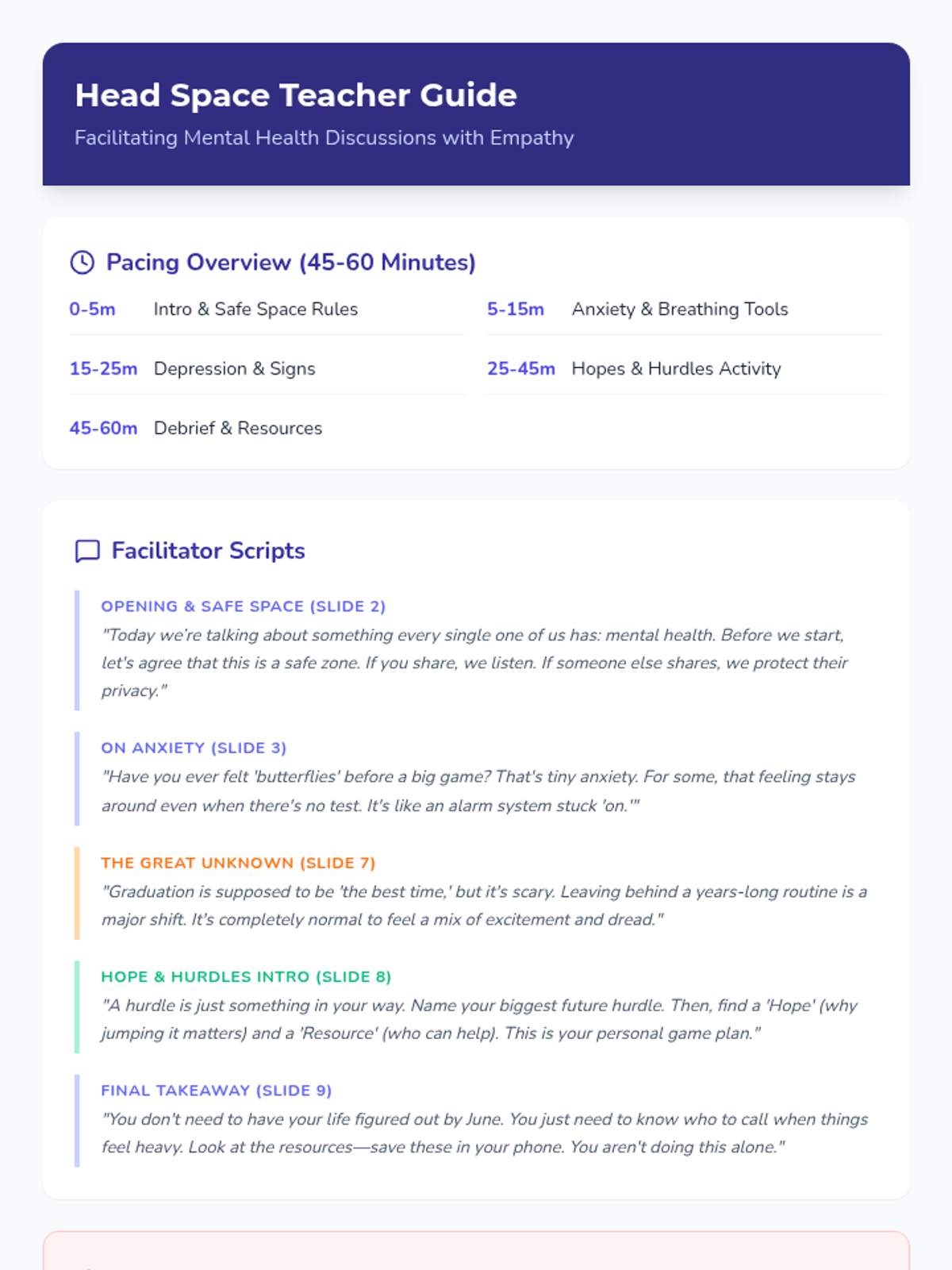
A comprehensive guide for teachers to facilitate sensitive mental health discussions, now featuring detailed scripts for key lesson transitions and safety protocols.
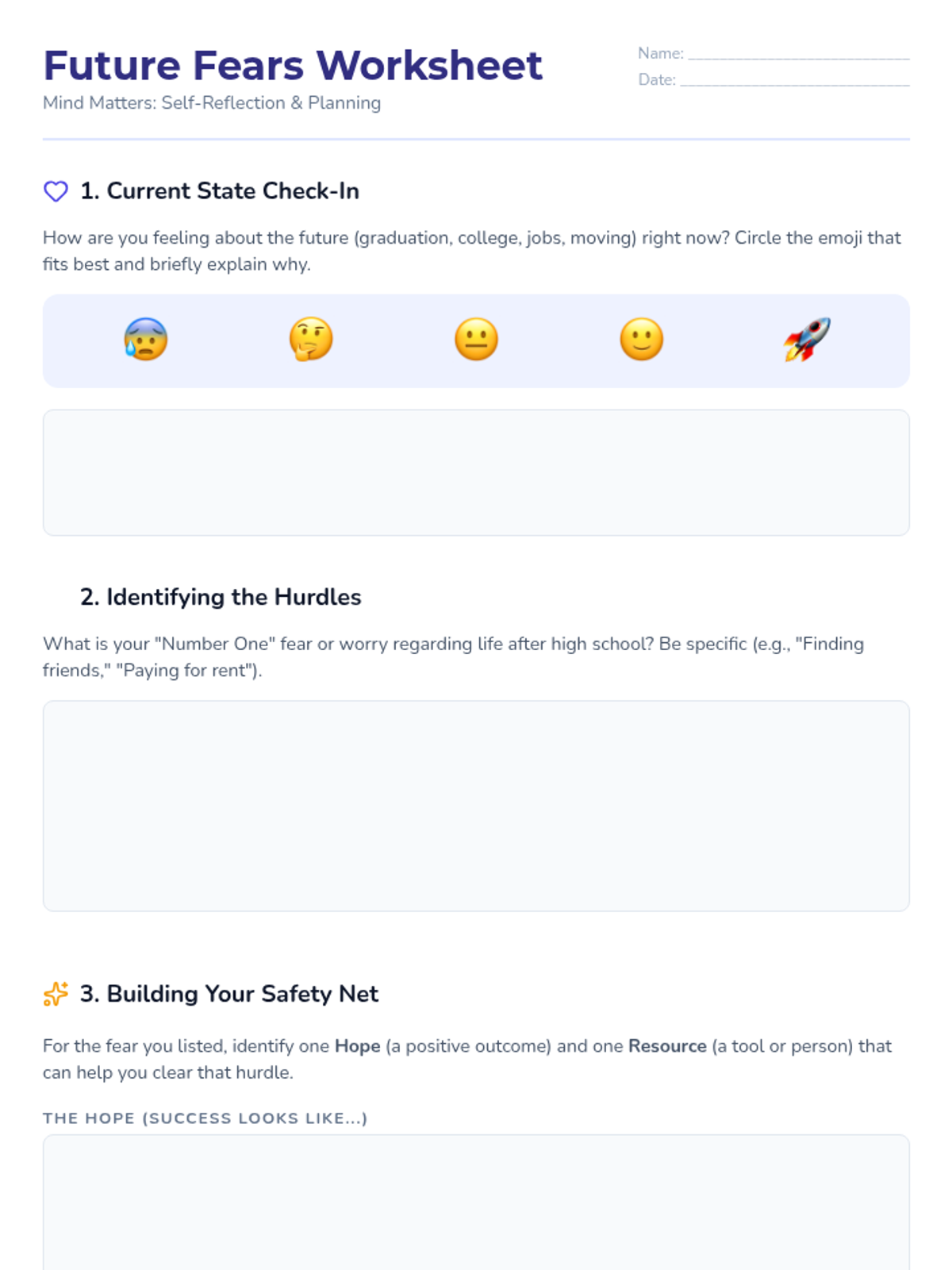
A student self-reflection document designed to accompany the mental health presentation, focusing on identifying personal fears (hurdles) and planning resources and coping strategies (hopes).
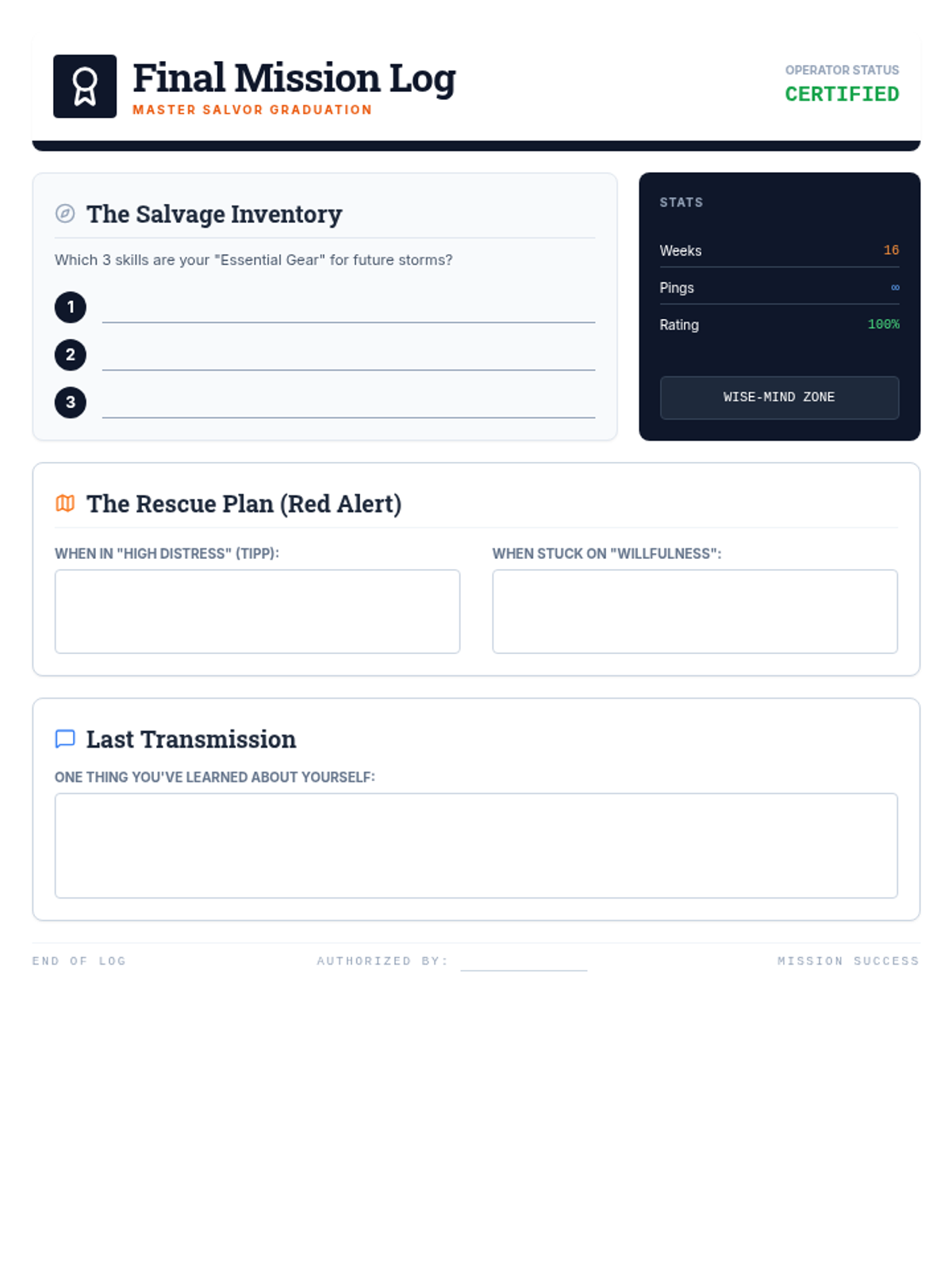
A student graduation log and review sheet for the final week of the Survival and Salvage DBT program. Includes a skill inventory, red alert planning, and a final self-reflection. Revised to fix page boundaries and line visibility.
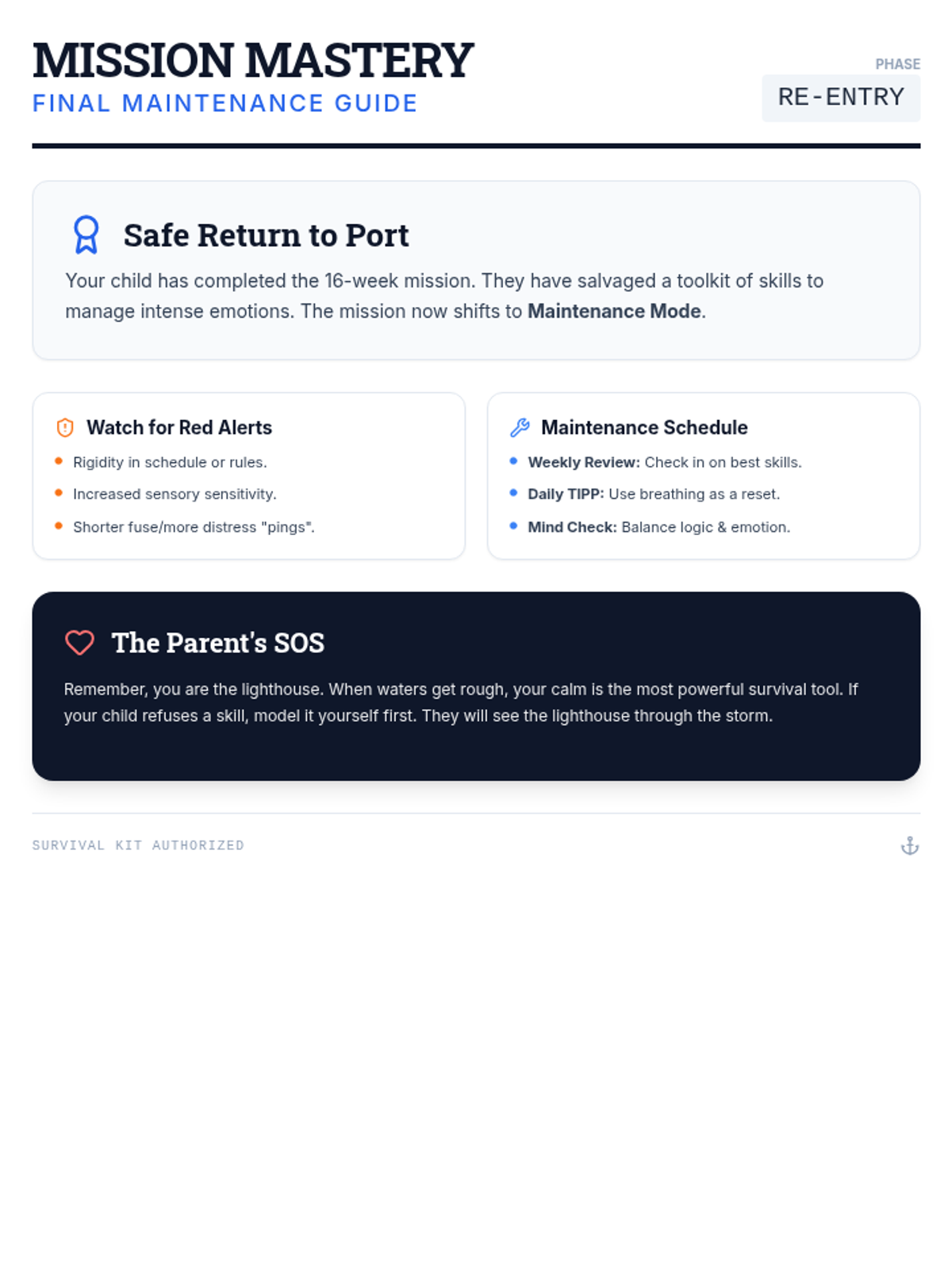
Parent guide for the final week of the Survival and Salvage DBT program, focusing on post-program maintenance and identifying early warning signs for skill reinforcement. Revised to fit a single page.
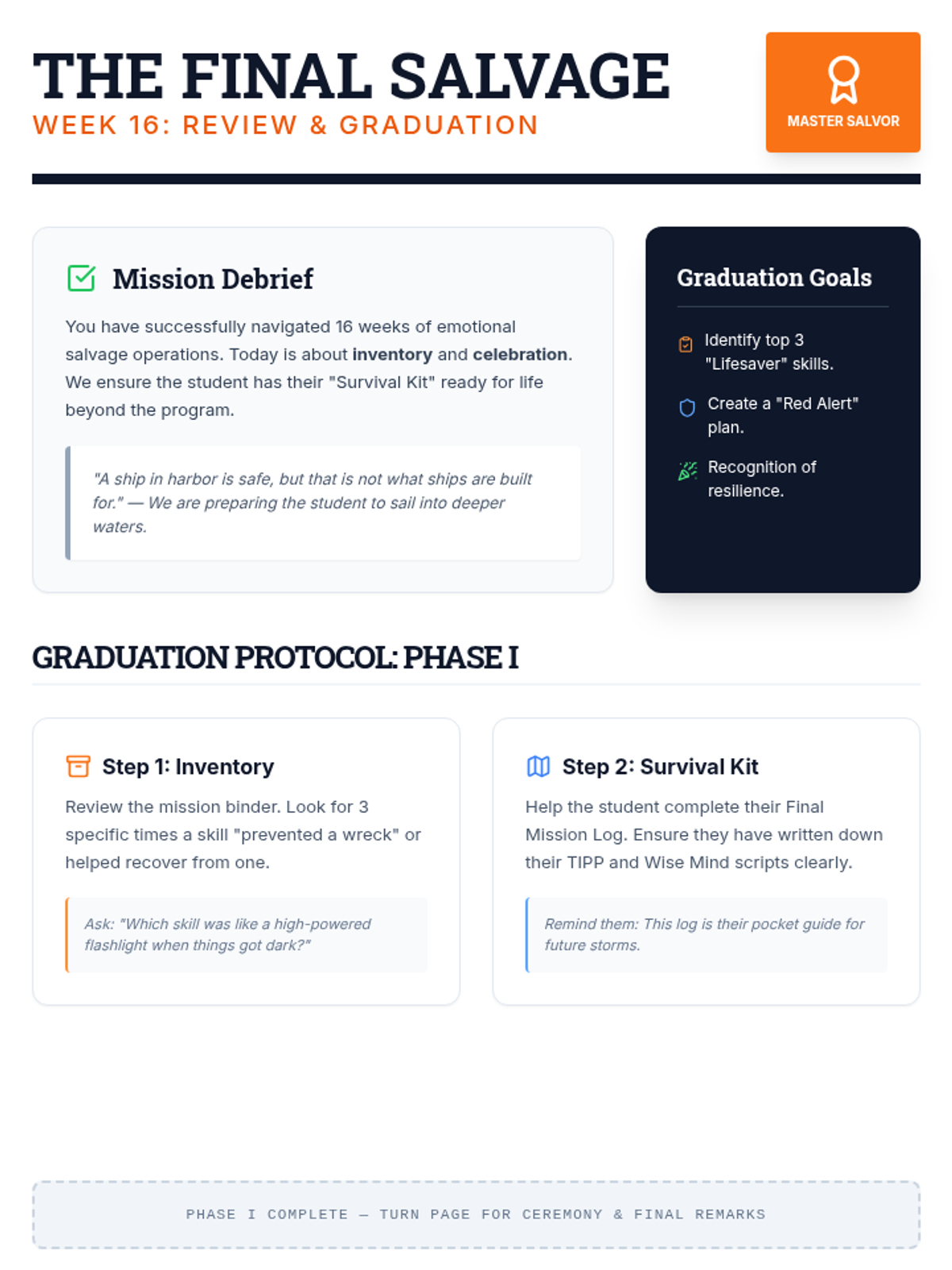
Counselor guide for the final week of the Survival and Salvage DBT program, covering the review of skills, graduation ceremony protocols, and maintenance planning. Revised to fix protocol splitting and layout issues.
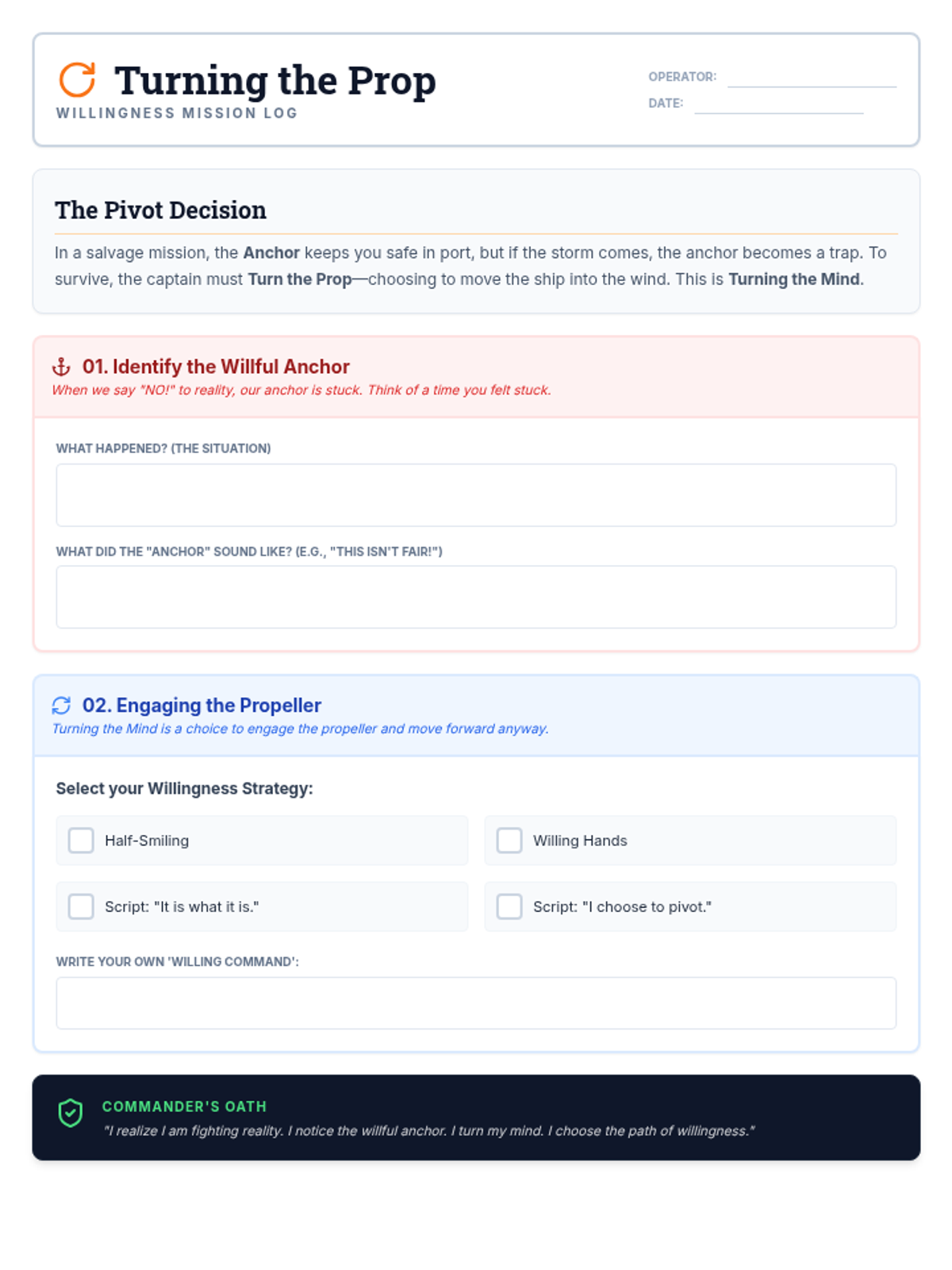
A student-facing worksheet for practicing the Turning the Mind skill using the 'Turning the Prop' metaphor. Includes identification of the 'Willful Anchor' and selection of 'Willingness Strategies'. Revised for single-page layout and white writing areas.
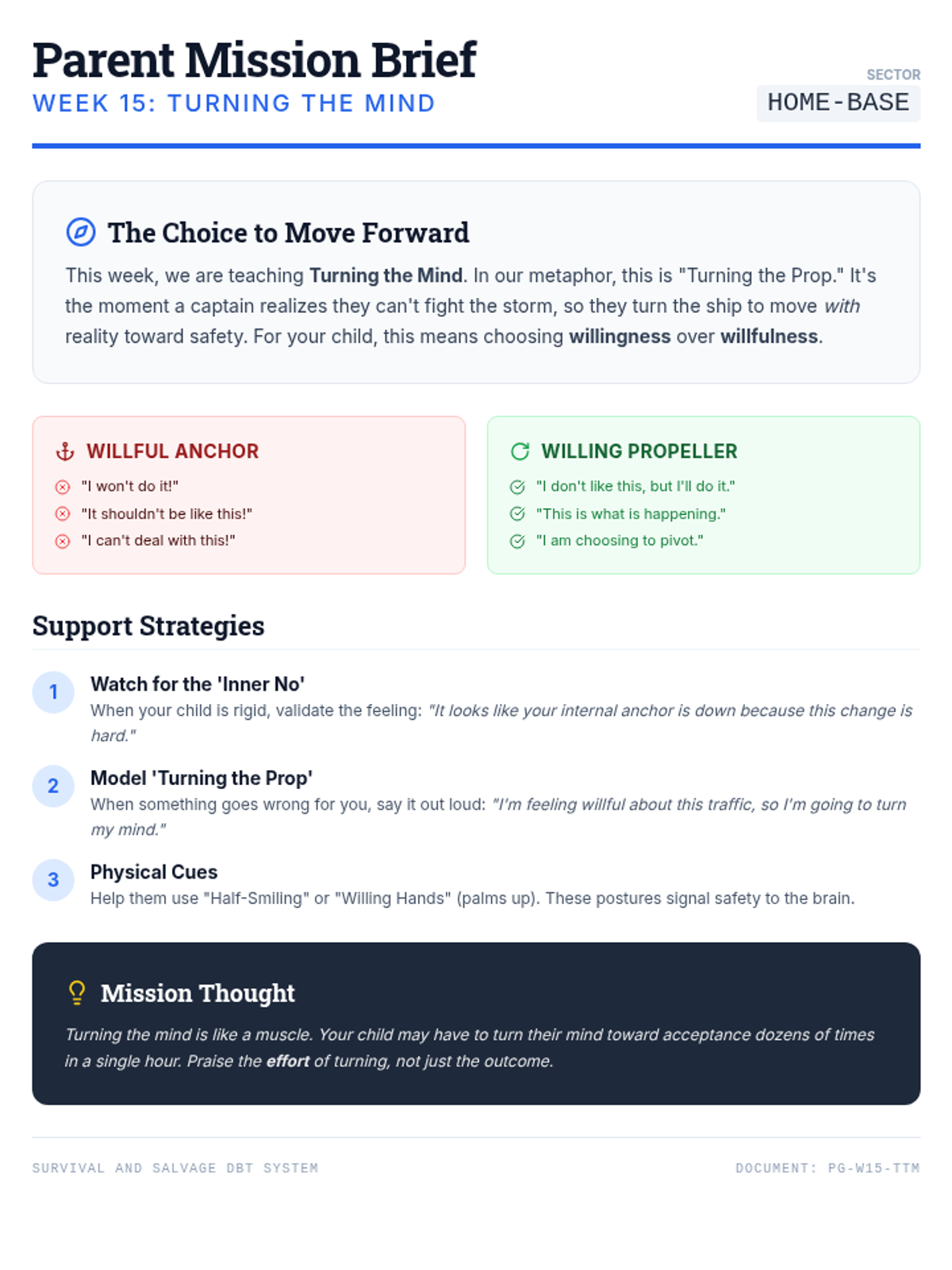
Parent guide for Week 15 of the Survival and Salvage DBT program, explaining the Turning the Mind skill using the 'Turning the Prop' metaphor for autism-friendly communication at home. Revised to fit a single page.
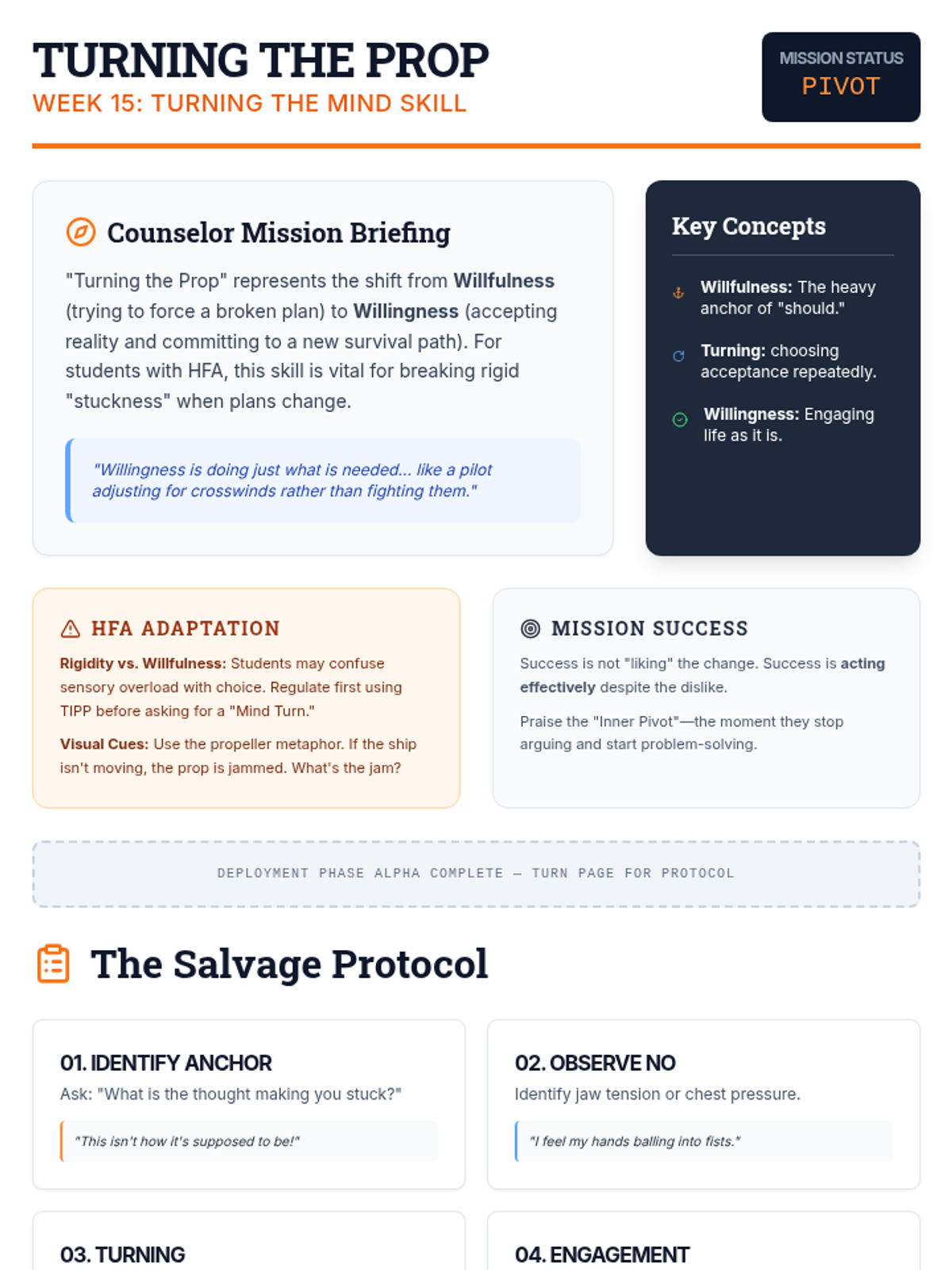
Counselor guide for Week 15 of the Survival and Salvage DBT program, focusing on the Turning the Mind skill using the 'Turning the Prop' metaphor for shifting from willfulness to willingness. Revised to fix page break issues and add notes space.
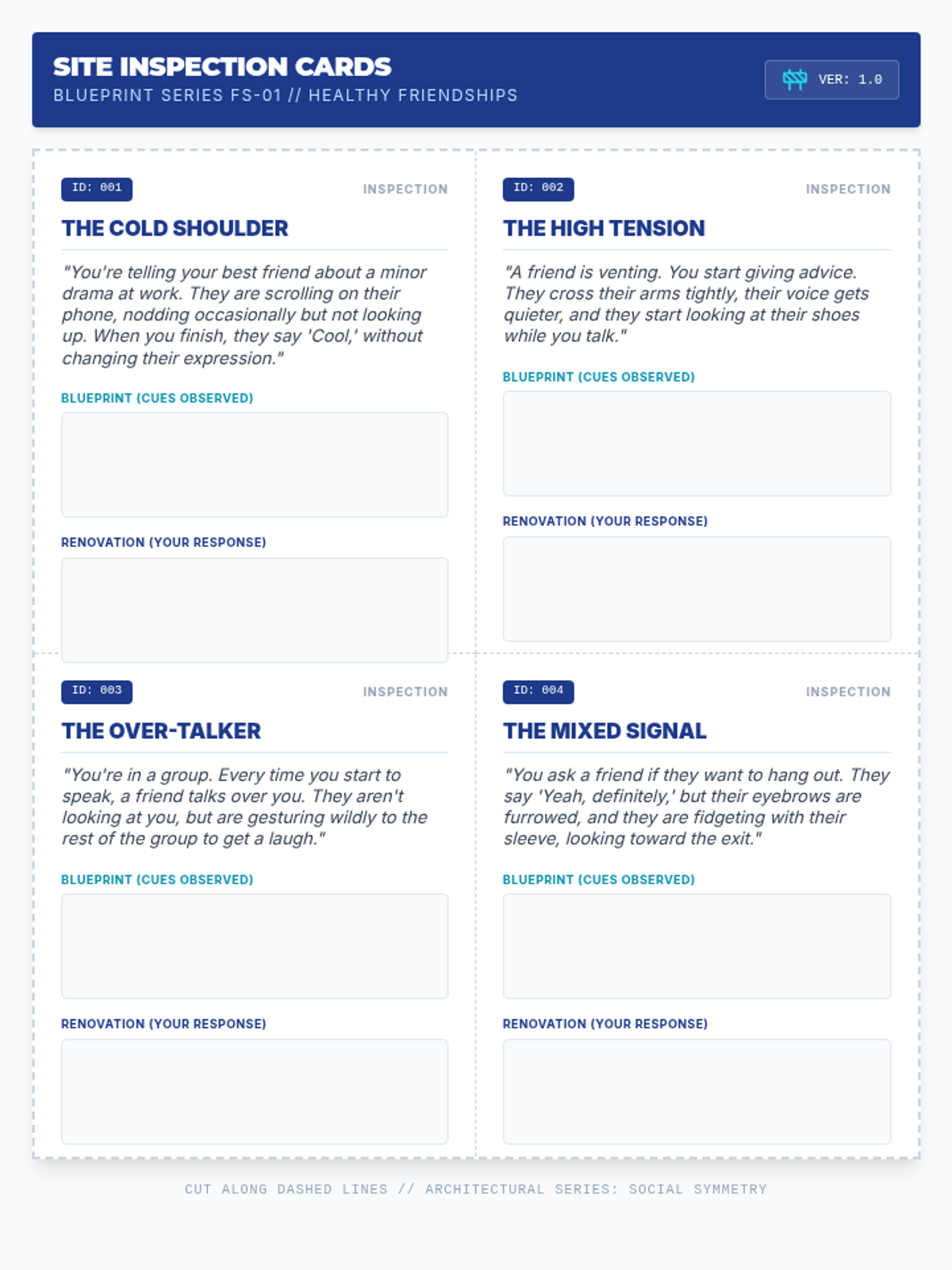
A set of printable 'Site Inspection' scenario cards. Each card presents a social situation rich with non-verbal cues. Students identify the cues (the blueprint) and formulate a healthy response (the construction).
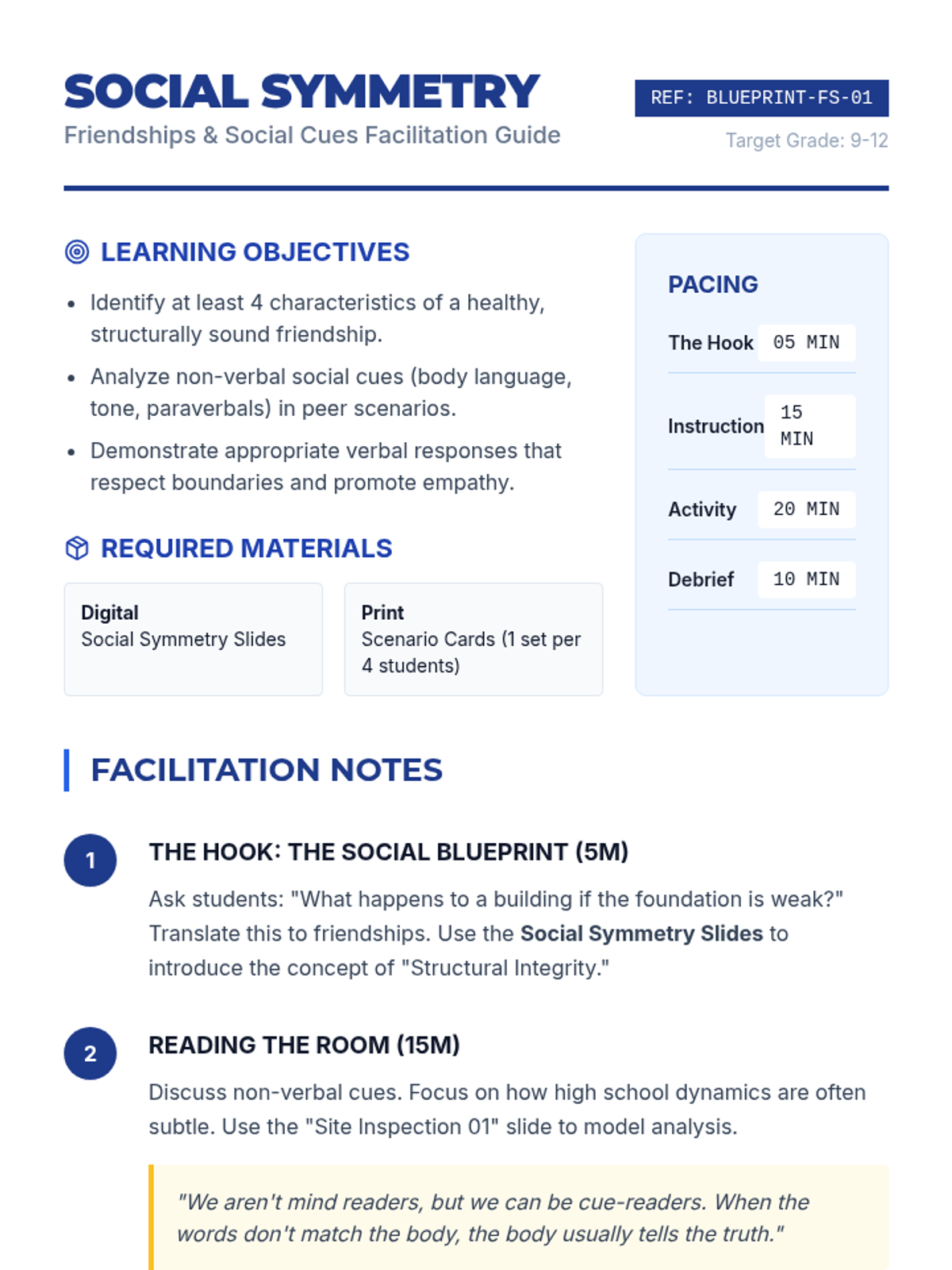
A comprehensive teacher's guide for the 'Social Symmetry' lesson. Includes learning objectives, a detailed pacing guide, facilitation notes for each lesson phase, and differentiation strategies.
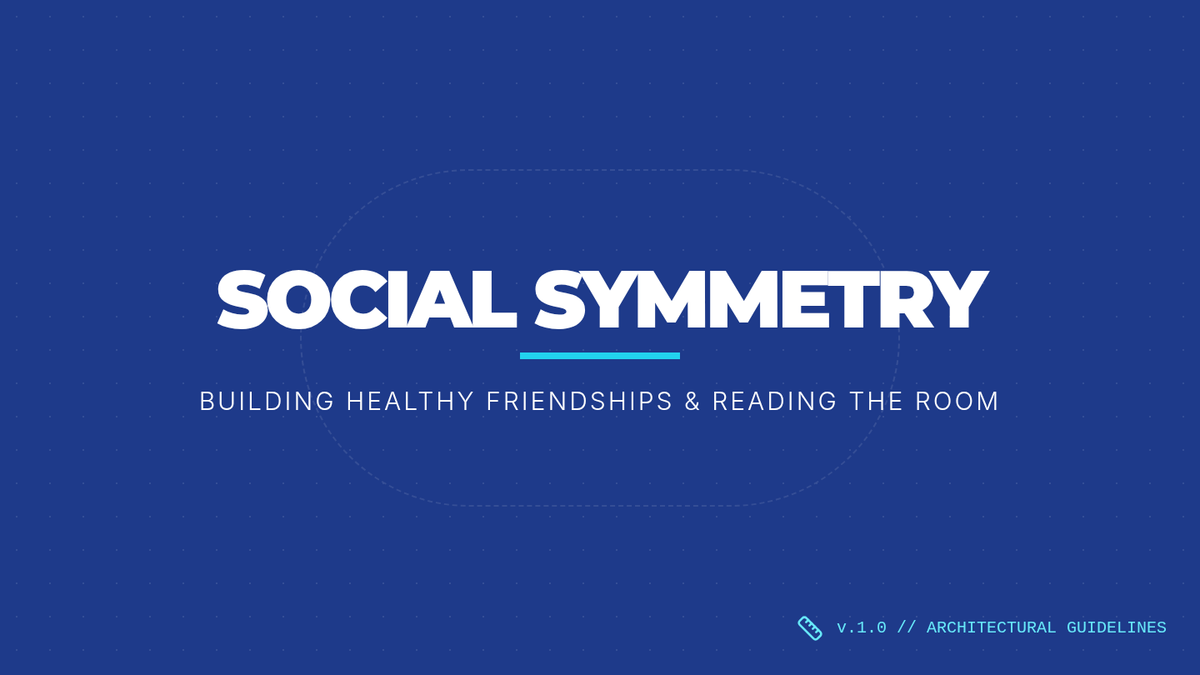
A visual slide deck introducing the concepts of healthy friendships and social cues using an architectural 'Social Symmetry' theme. Includes sections on friendship foundations, body language, and activity instructions.
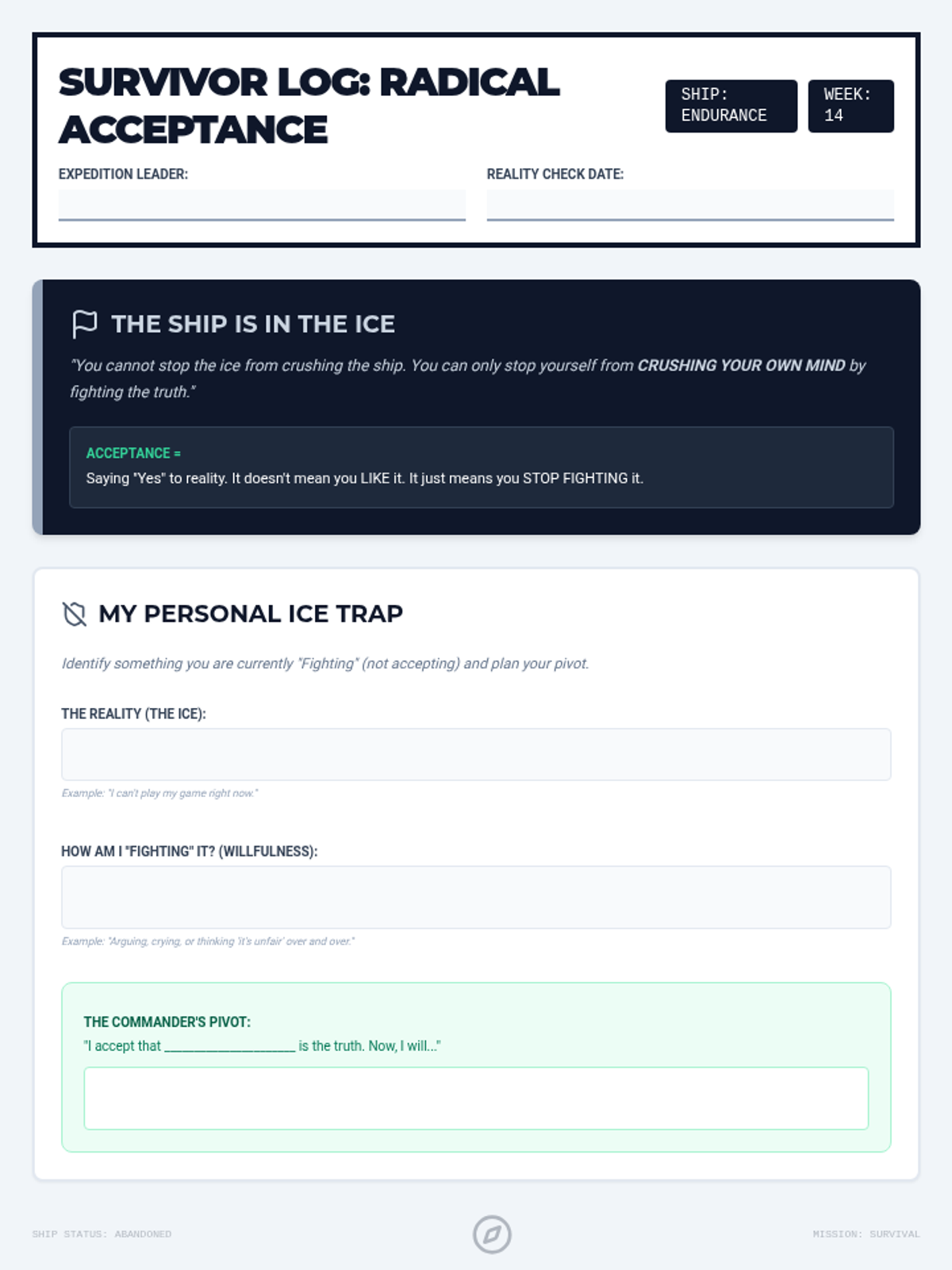
A student-facing worksheet for practicing Radical Acceptance using Shackleton's Endurance story. Includes an 'Ice Trap' analysis and a 'Commander's Pivot' for finding new solutions.
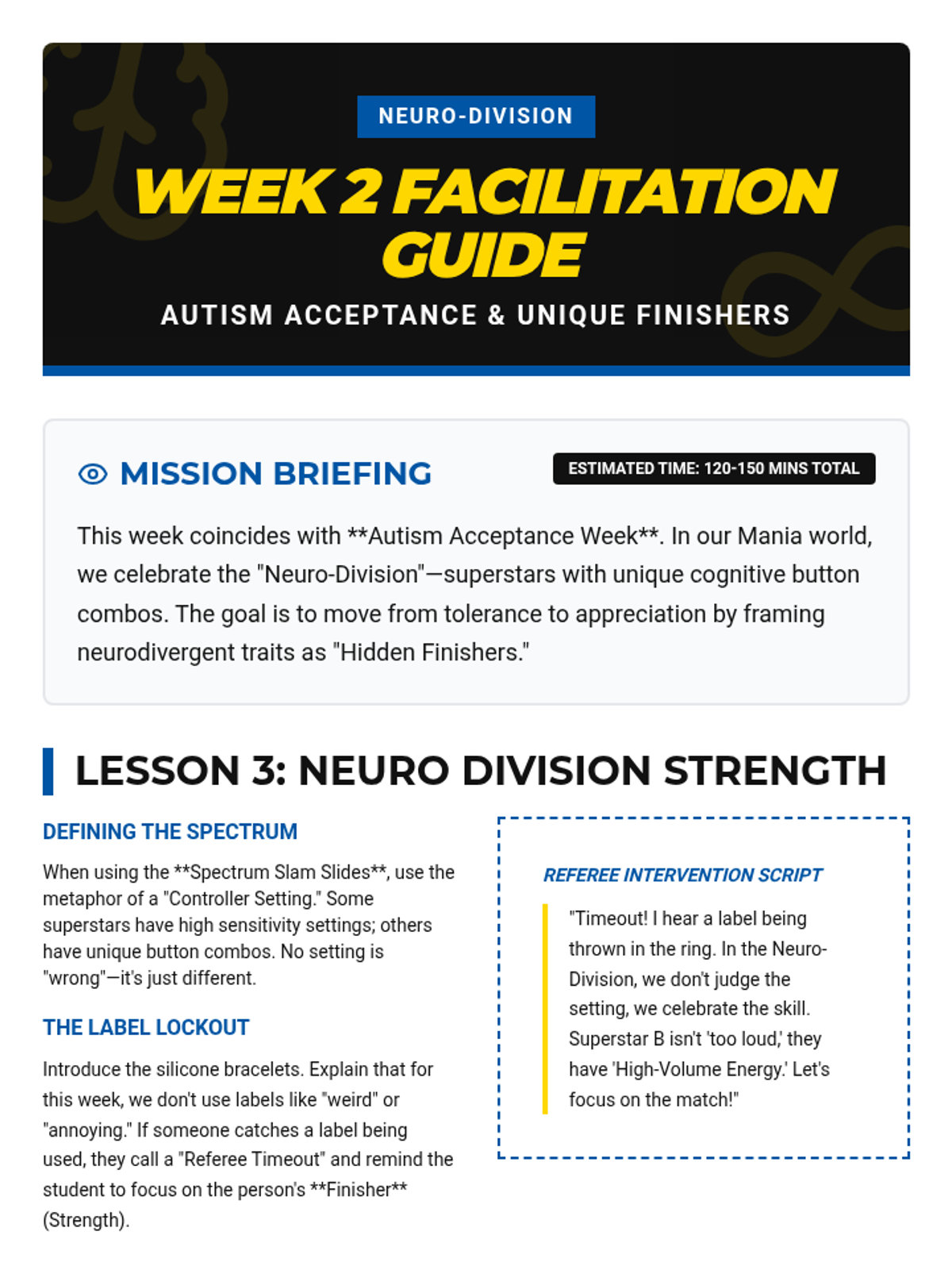
A detailed teacher facilitation guide for Week 2 of the 'Road to State Exam Mania' sequence, focusing on Autism Acceptance Week and celebrating neurodiversity.
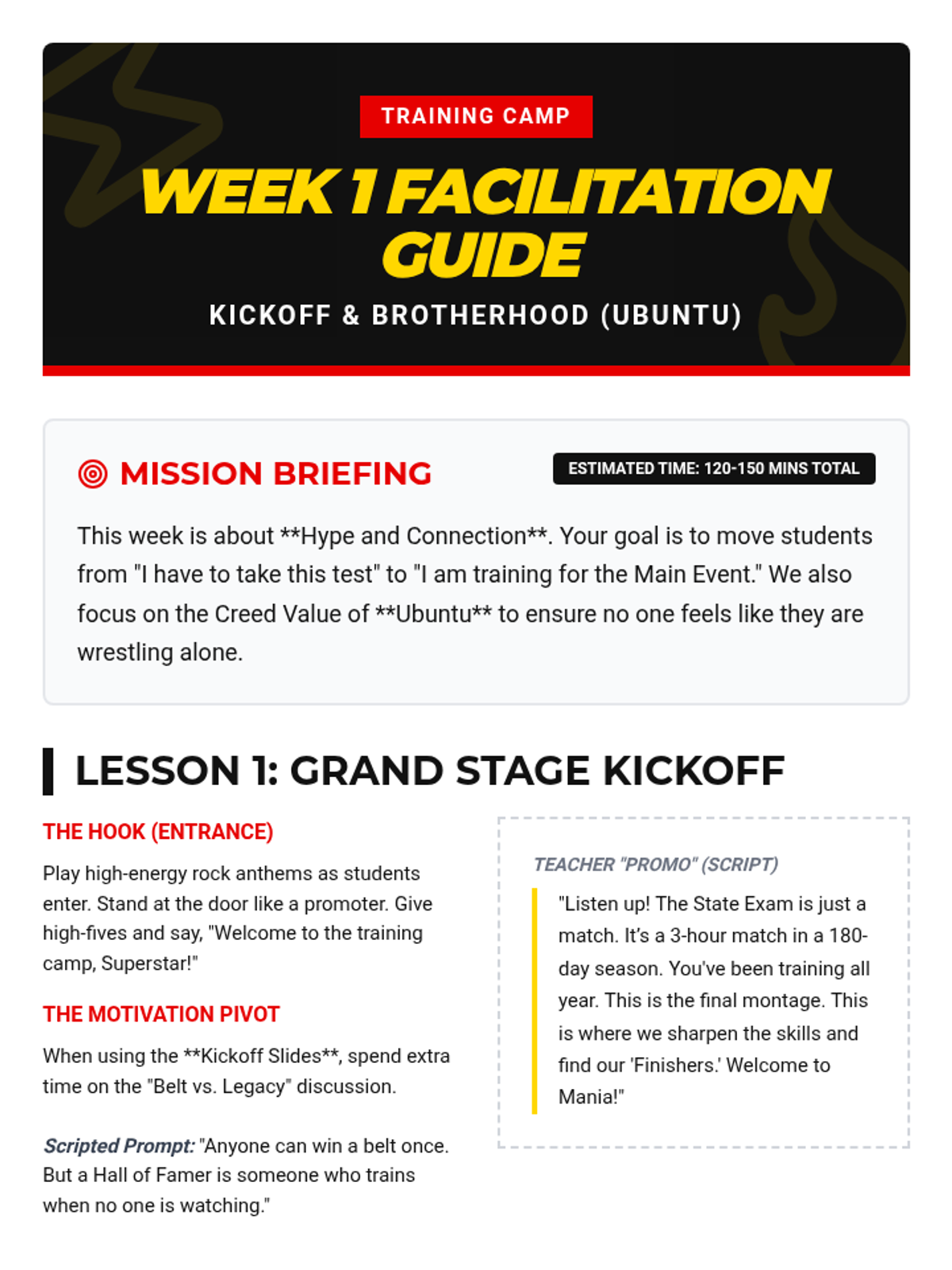
A detailed teacher facilitation guide for Week 1 of the 'Road to State Exam Mania' sequence, focusing on kickoff motivation and the Creed Value of Ubuntu.
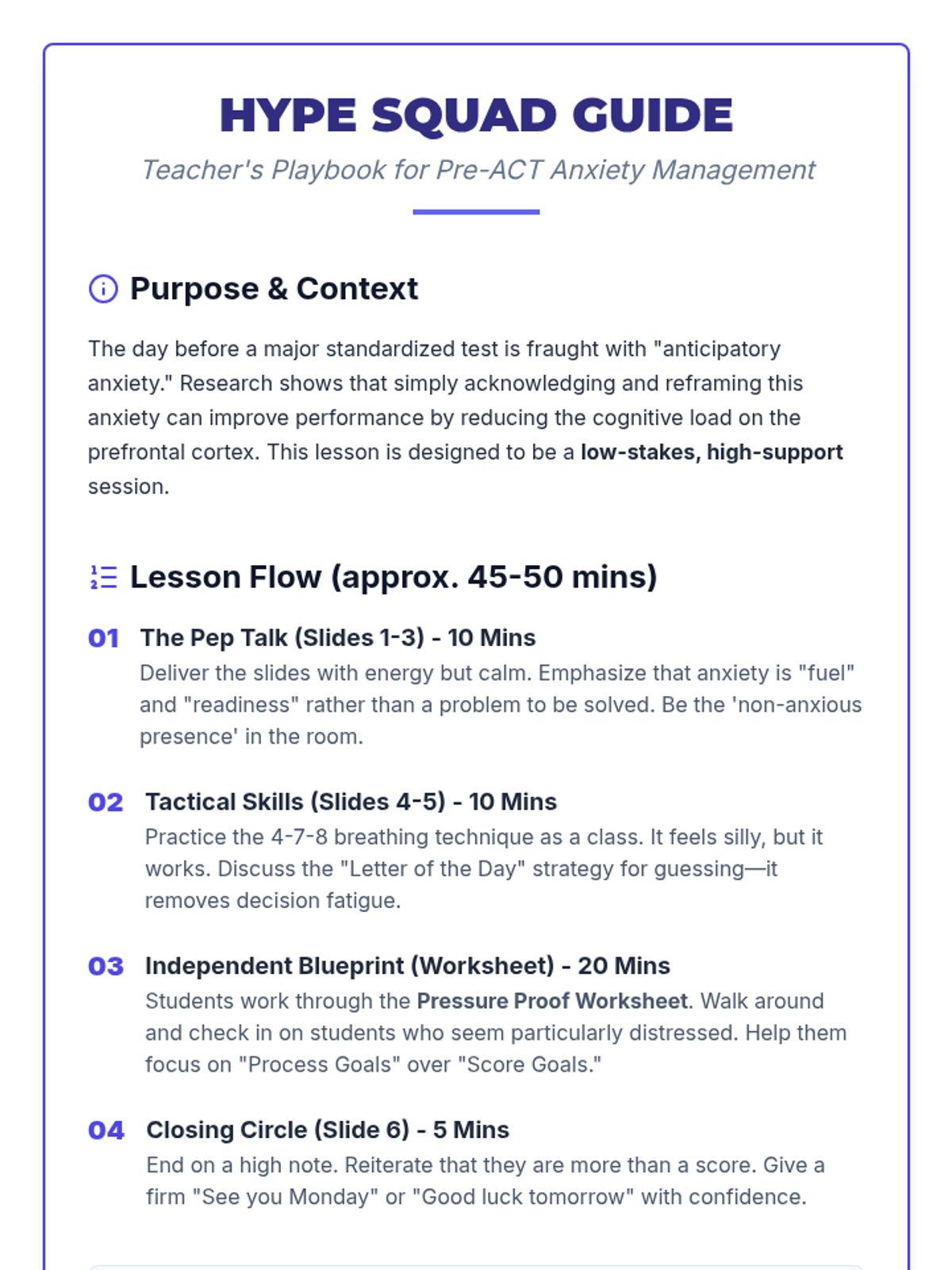
A teacher's facilitation guide for managing pre-ACT anxiety, including instructional flow, talking points, and logistics reminders.
A presentation for the day before the ACT test to help students manage anxiety, understand their physiological responses, and learn tactical test-taking mindsets.
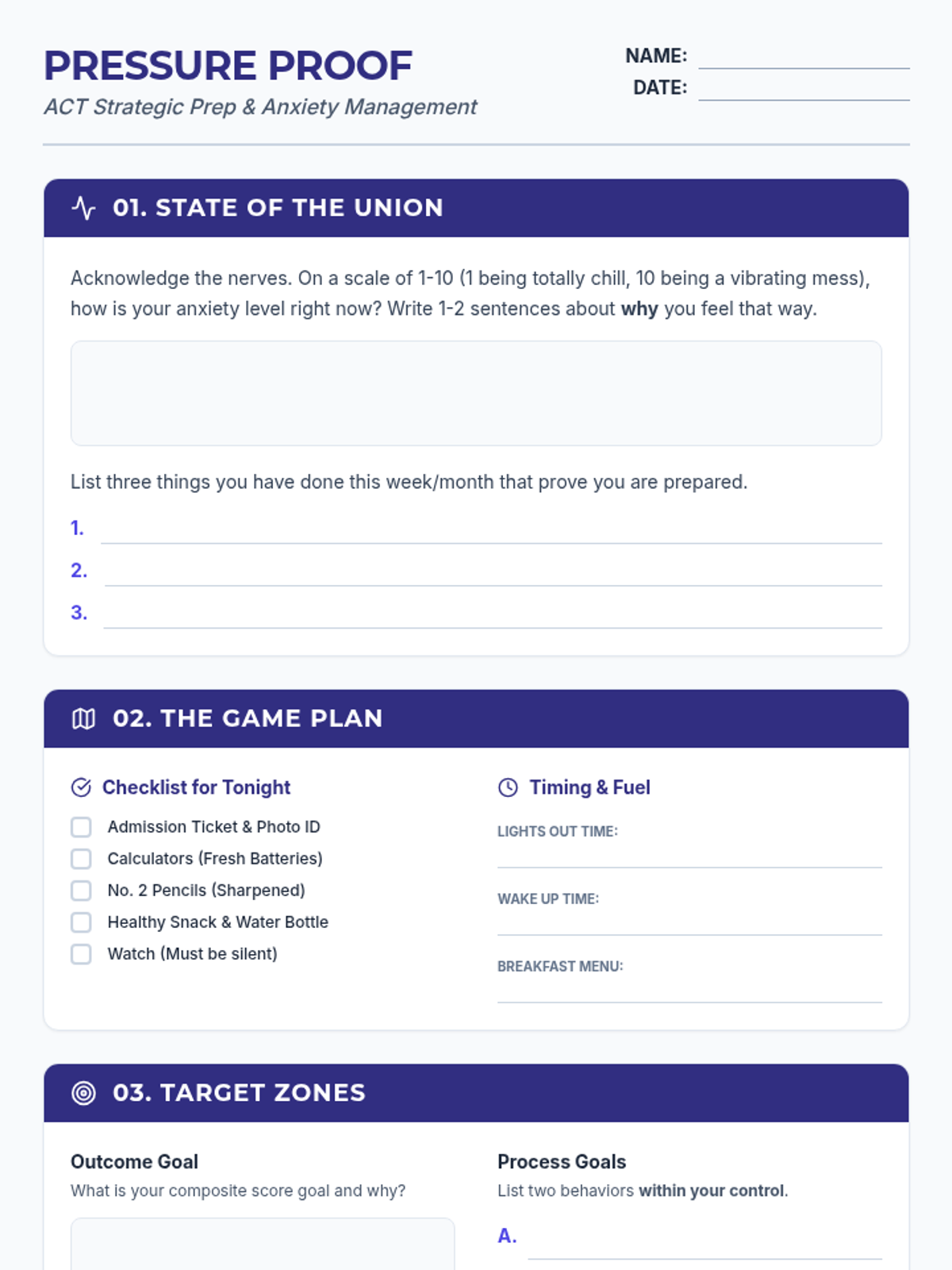
An independent worksheet for students to complete the day before the ACT, focusing on anxiety levels, logistics, and process goals.
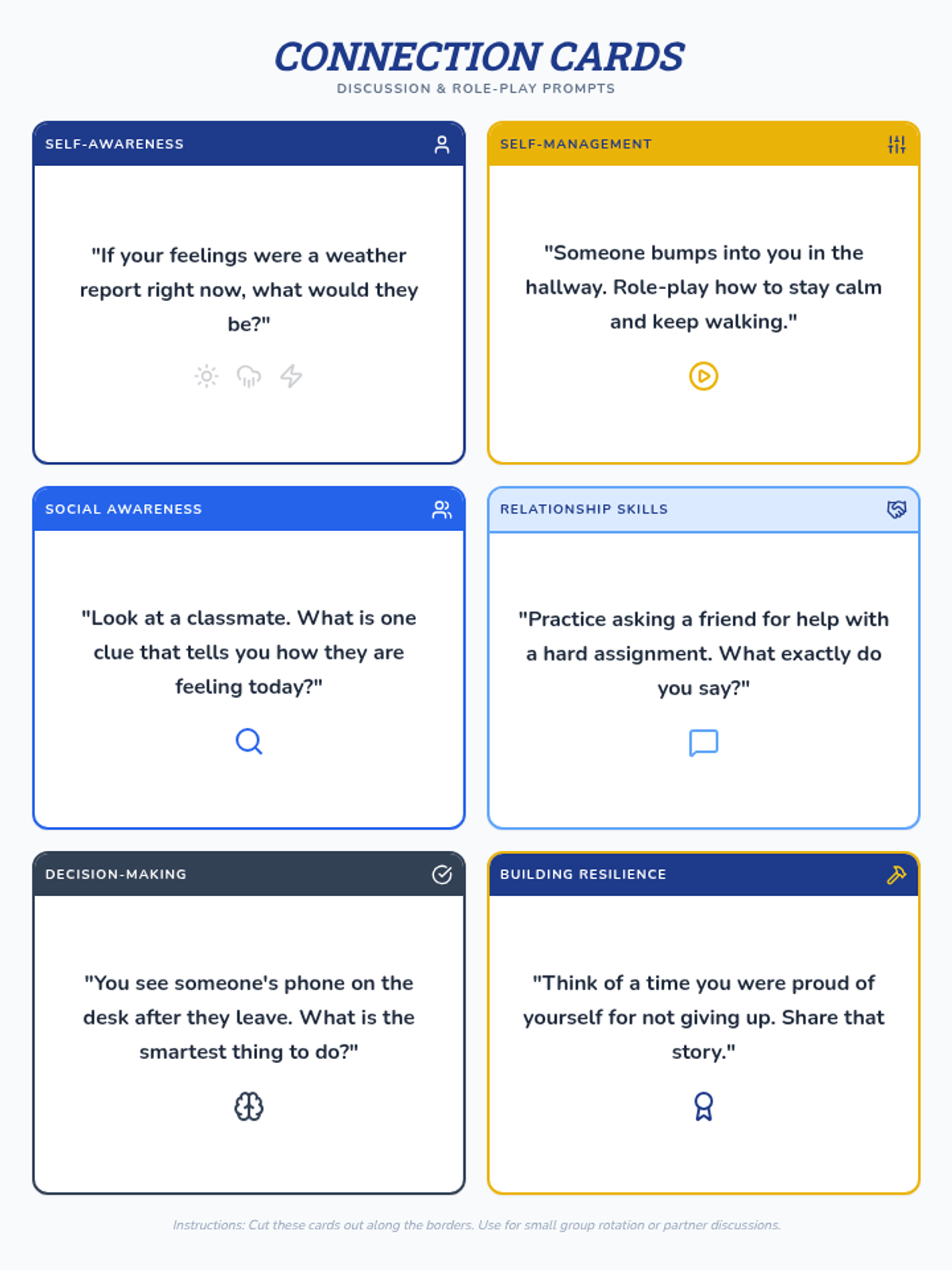
A set of discussion and role-play cards. Revised with improved text contrast on headers, fixed layout to prevent page breaks, and uniform card sizing for easier printing and cutting.
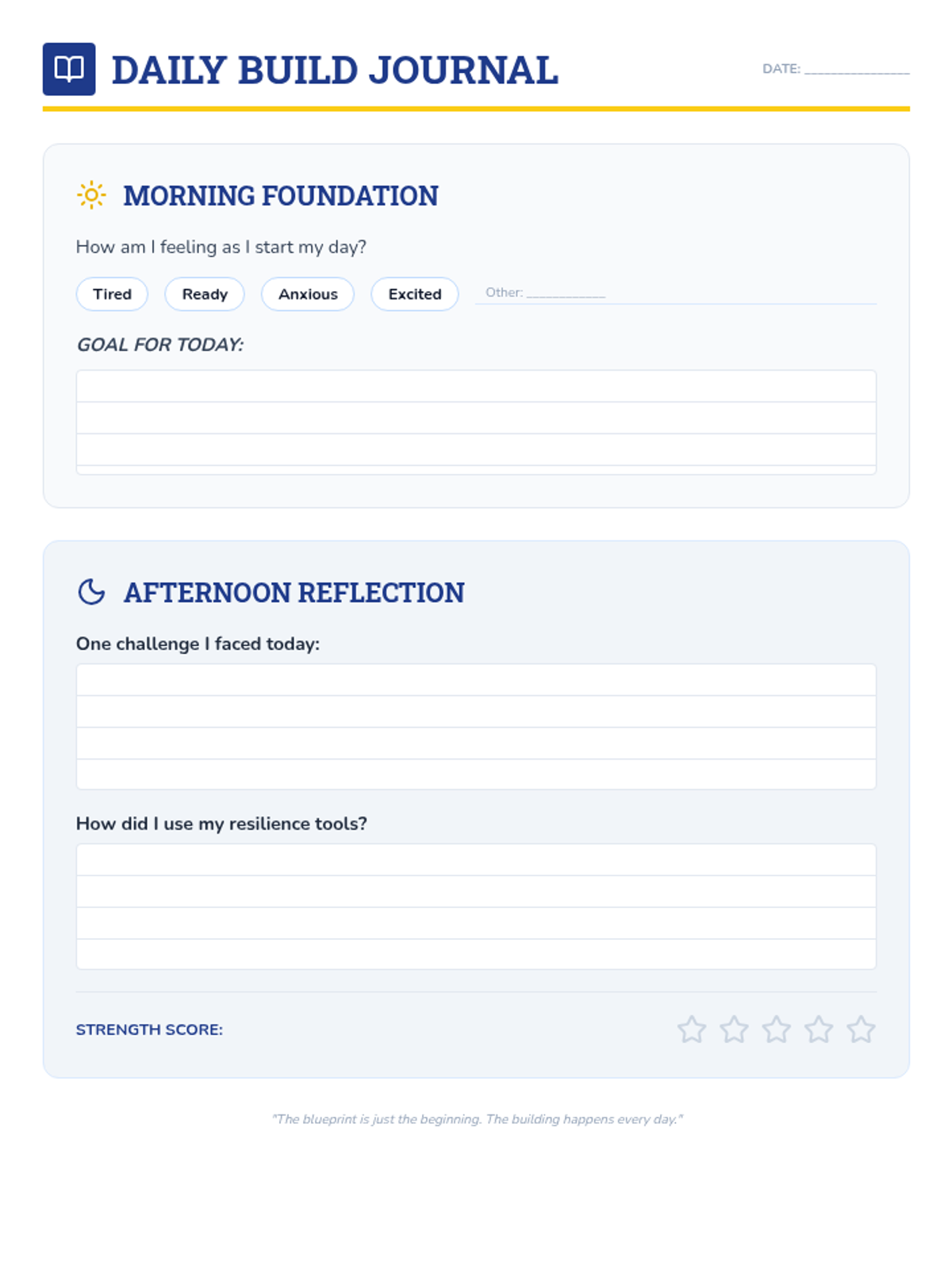
A reflective journaling page for students. Revised with high-contrast work areas for better handwriting legibility and adjusted layout to fit on a single page.
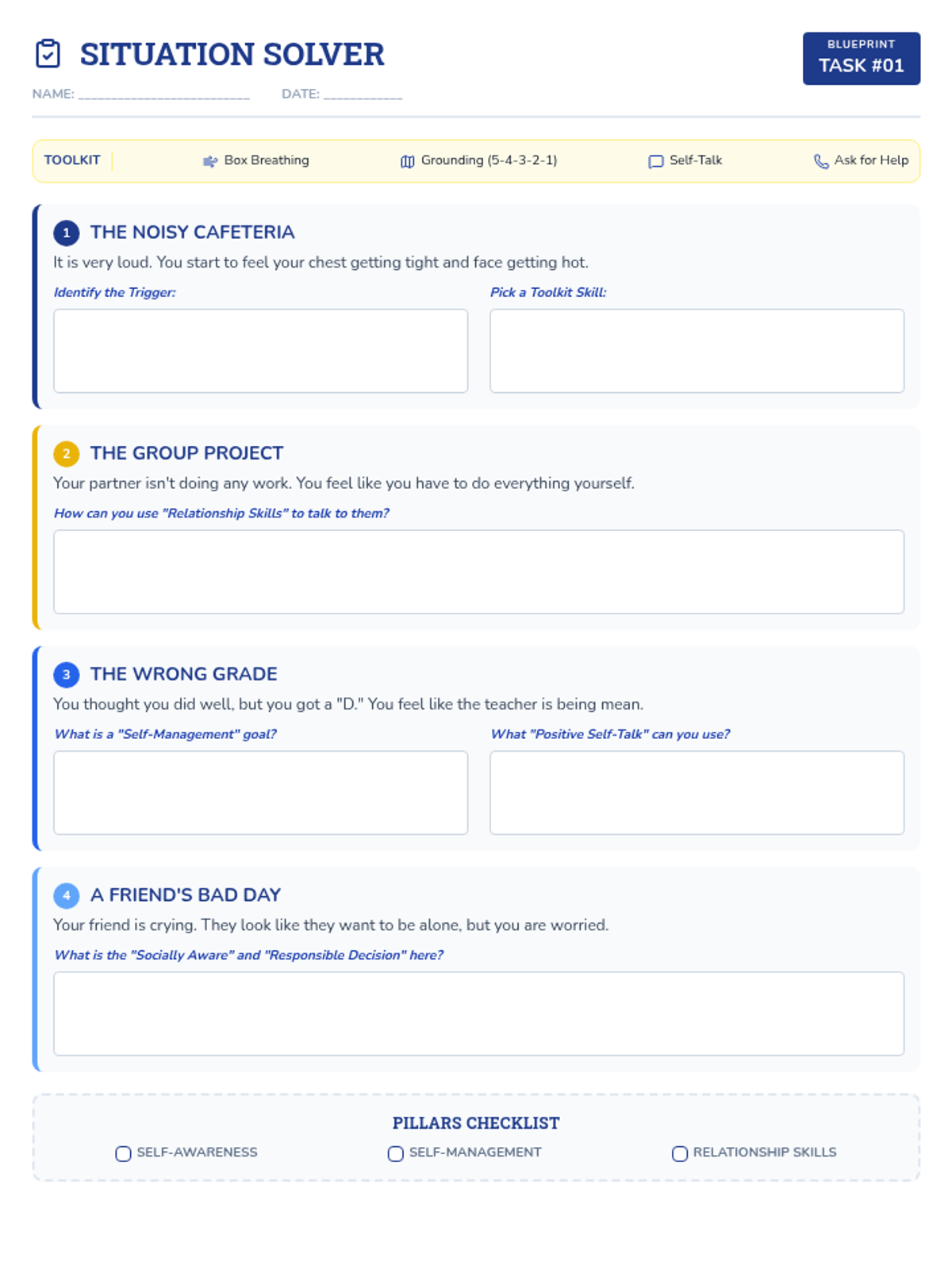
A scenario-based worksheet where students apply their knowledge of SEL triggers and coping skills. Revised with 4 scenarios, a toolkit reference, and improved layout to fit on one page.
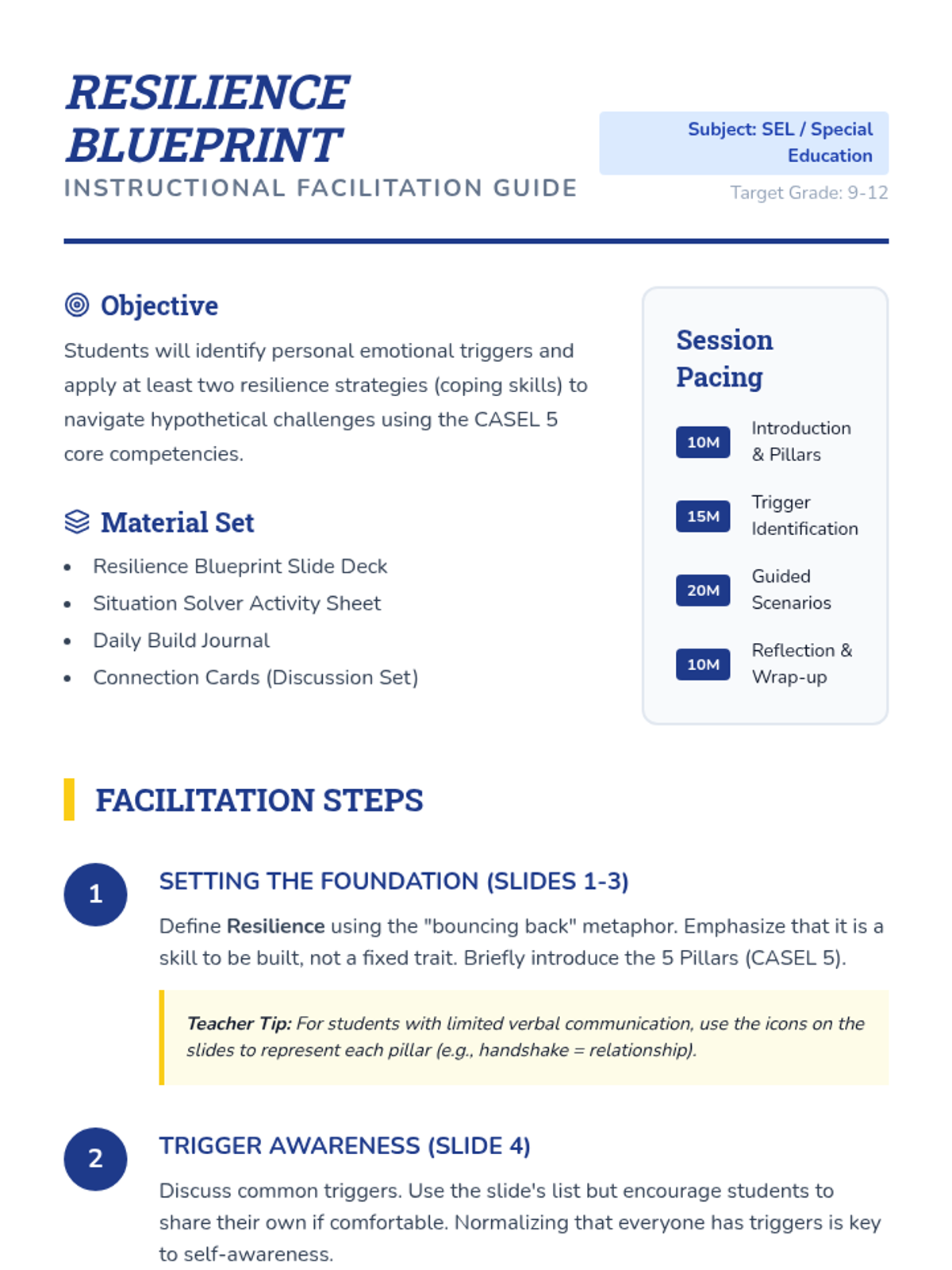
A comprehensive teacher's guide for the Resilience Blueprint lesson, featuring pacing, instructional steps, and differentiation strategies for high school special education students.
A visual presentation for high school special education students that introduces the concept of resilience using a 'Blueprint' theme, covering triggers, the five SEL pillars, and coping strategies. Revised for better layout balance and text spacing.
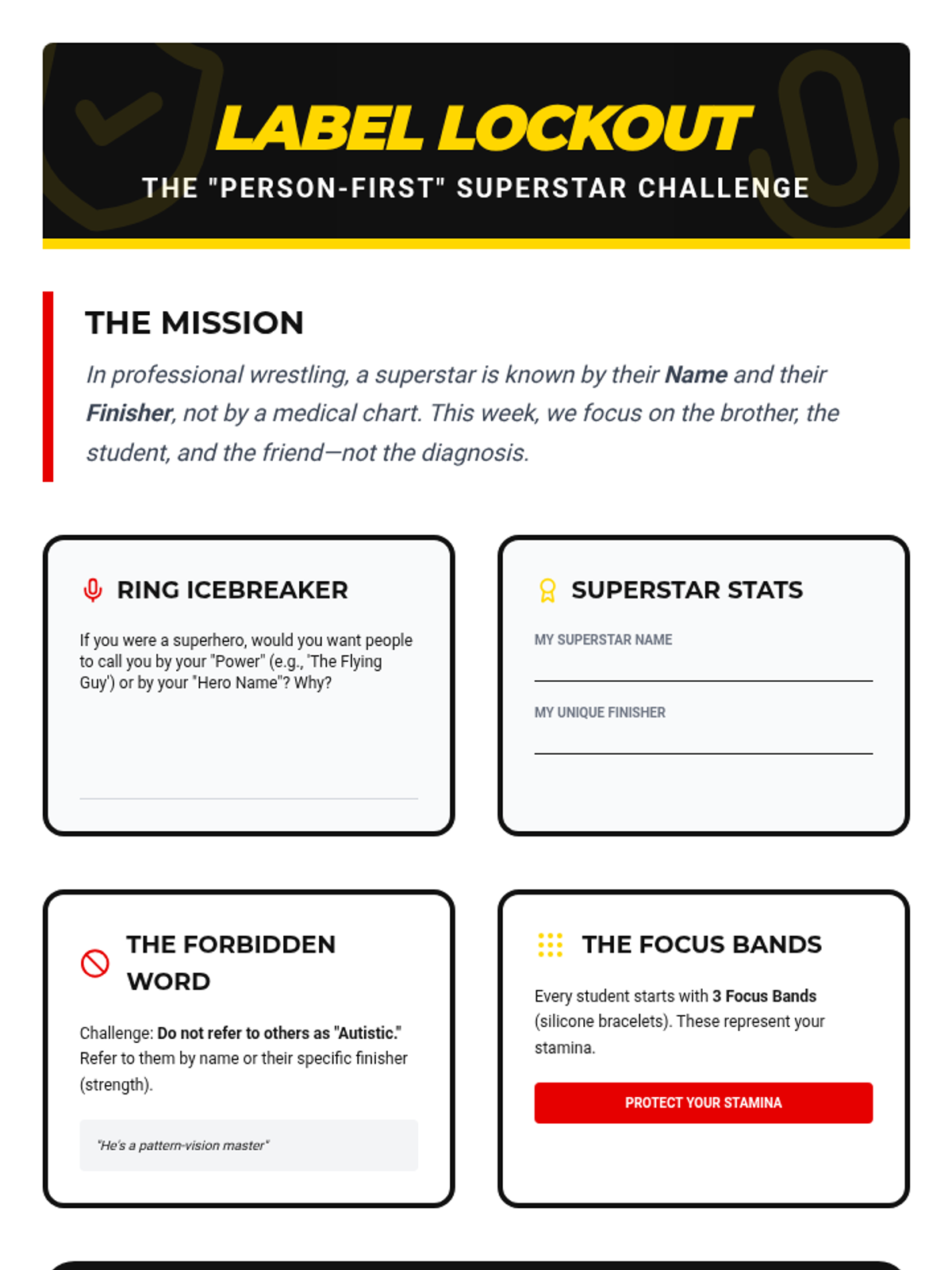
A week-long challenge guide where students avoid labels like 'autistic' to focus on individual strengths, using silicone bracelets as tokens in a 'Referee' style game.
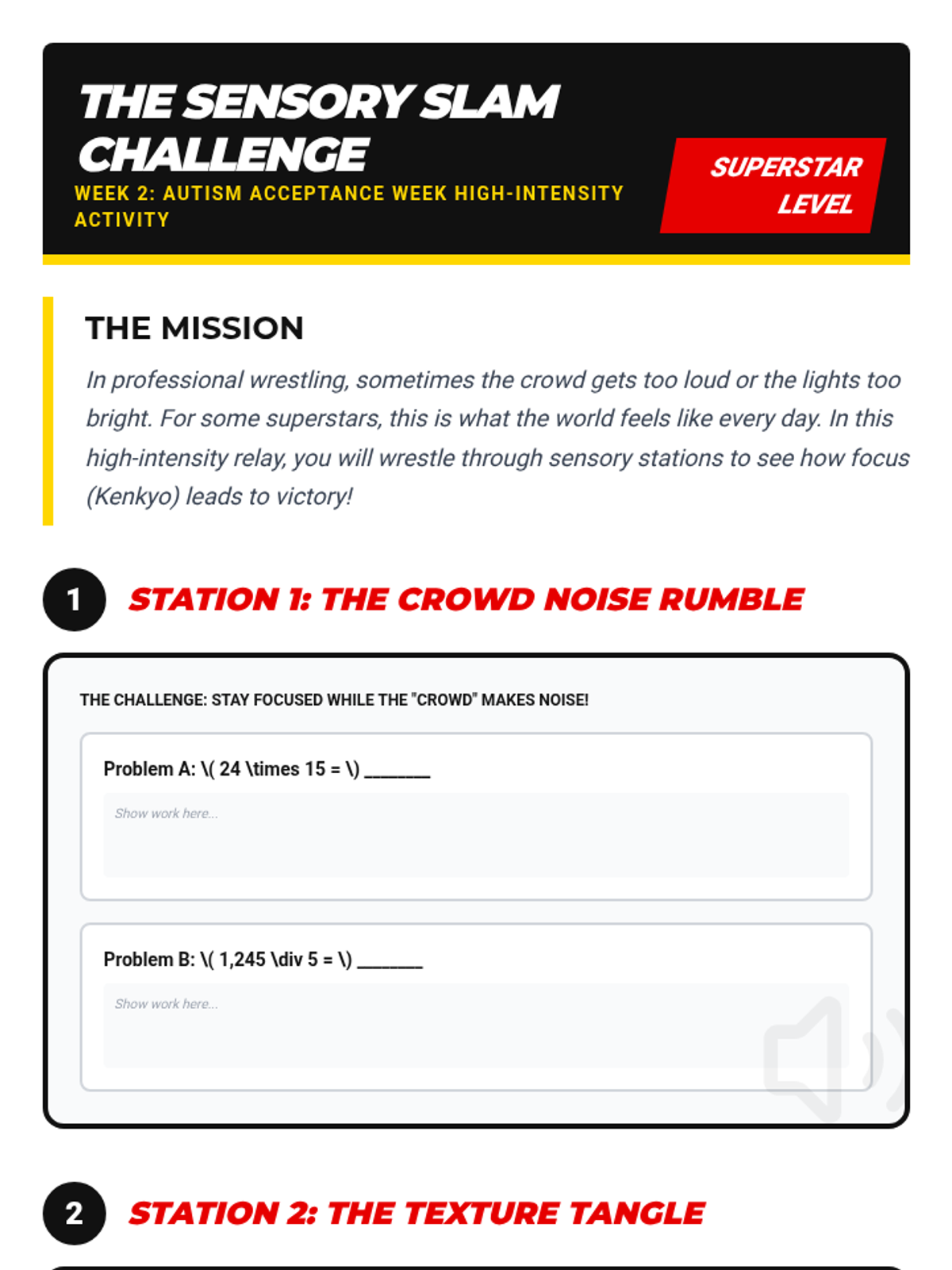
A sensory awareness activity for Autism Acceptance Week that uses high-energy challenges to simulate sensory processing differences and promote inclusive focus strategies.
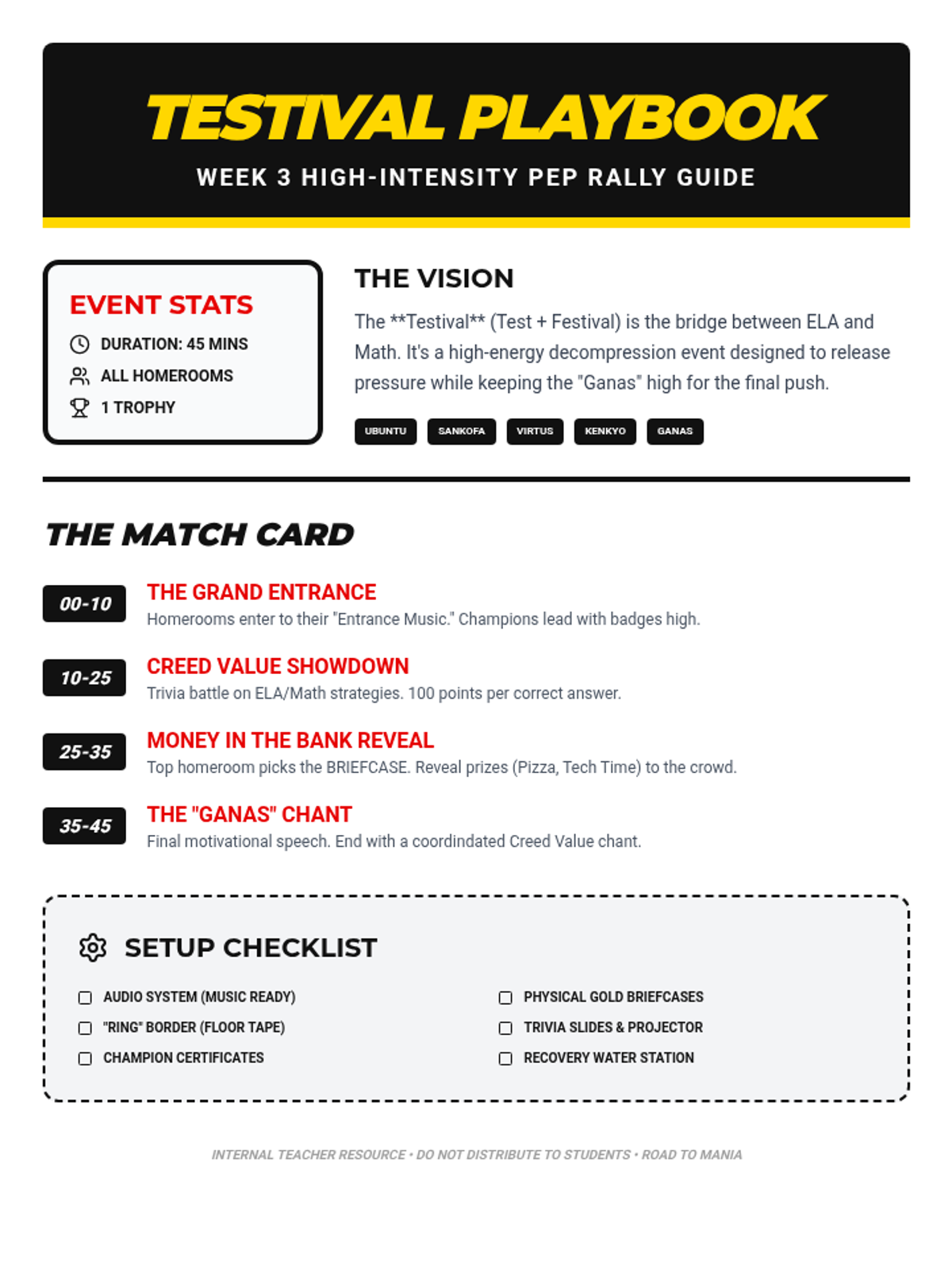
A teacher-facing resource for running a high-intensity 'Testival' (Test + Festival) pep rally, including 'Ring Entrances,' 'Creed Value Showdowns' (academic bowl style), and the 'Money in the Bank' opening.
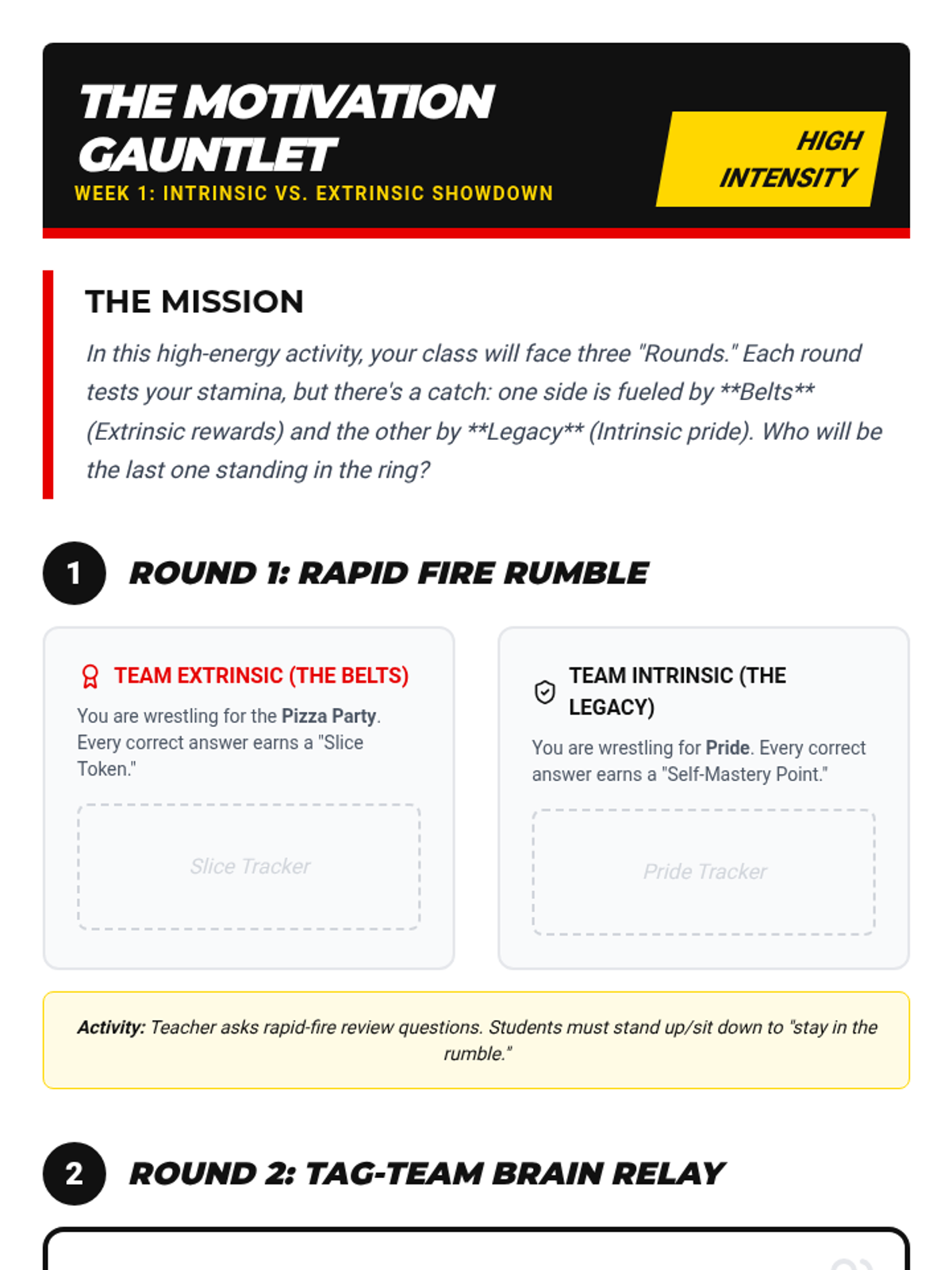
A physical and mental challenge activity where students explore intrinsic vs. extrinsic motivation through high-energy 'rounds' of review and physical exercise.
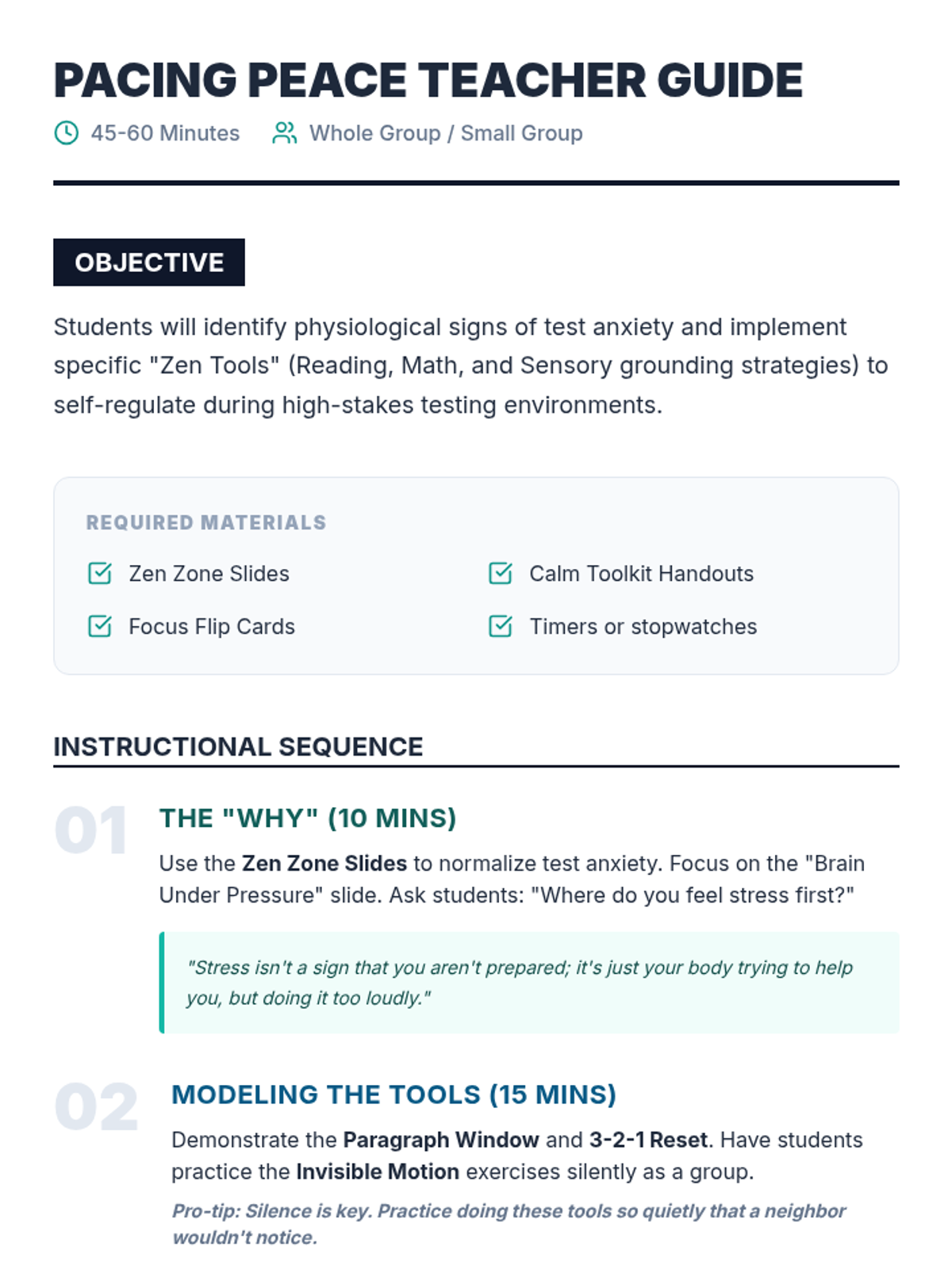
A comprehensive guide for teachers to facilitate the Test Zen lesson, including timing, instructional phases, modeling tips, and differentiation strategies for students with various needs.
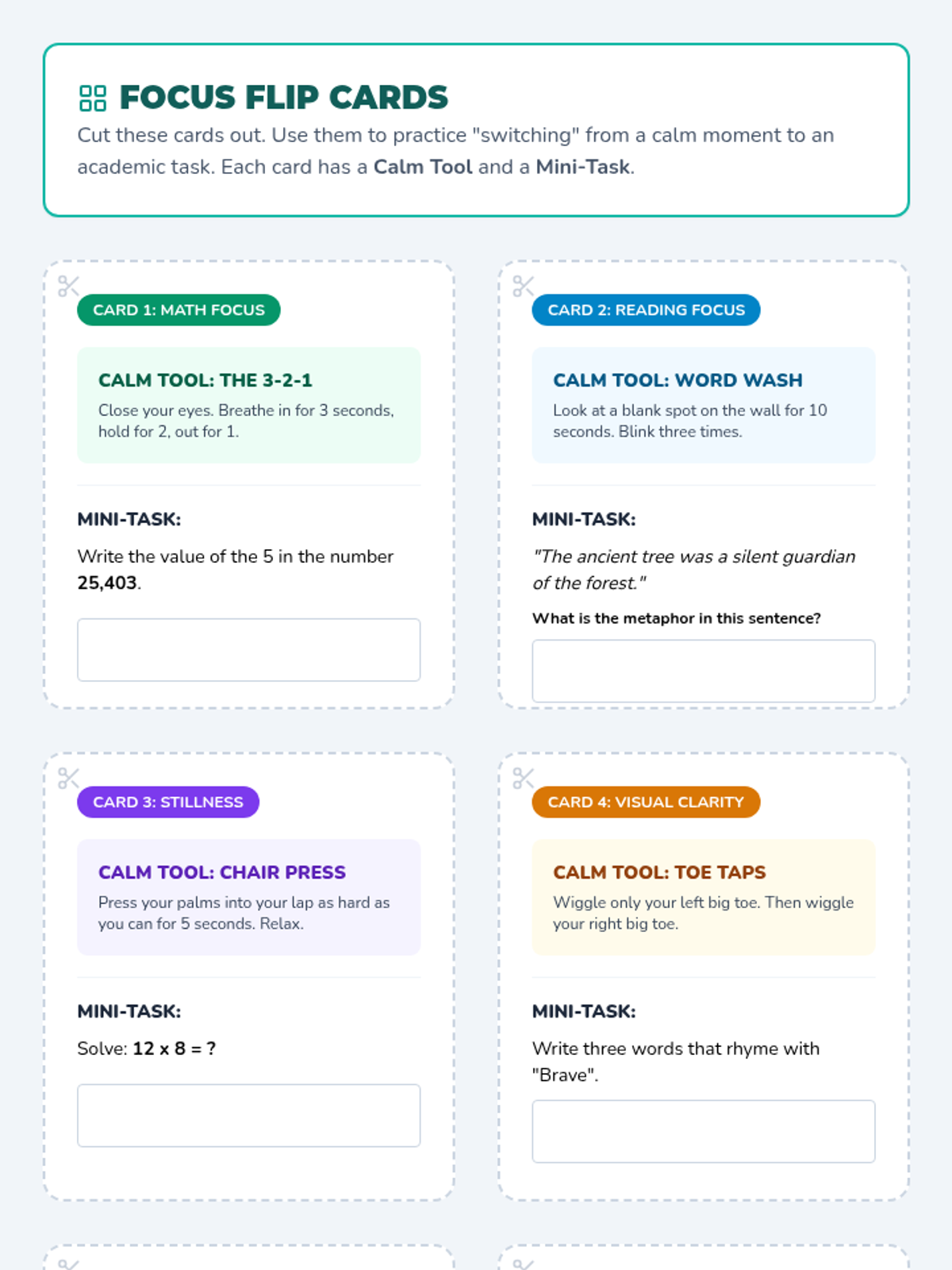
A set of printable task cards that guide students through a mindfulness exercise followed by a brief academic challenge, helping them practice the transition from anxiety to focused work.
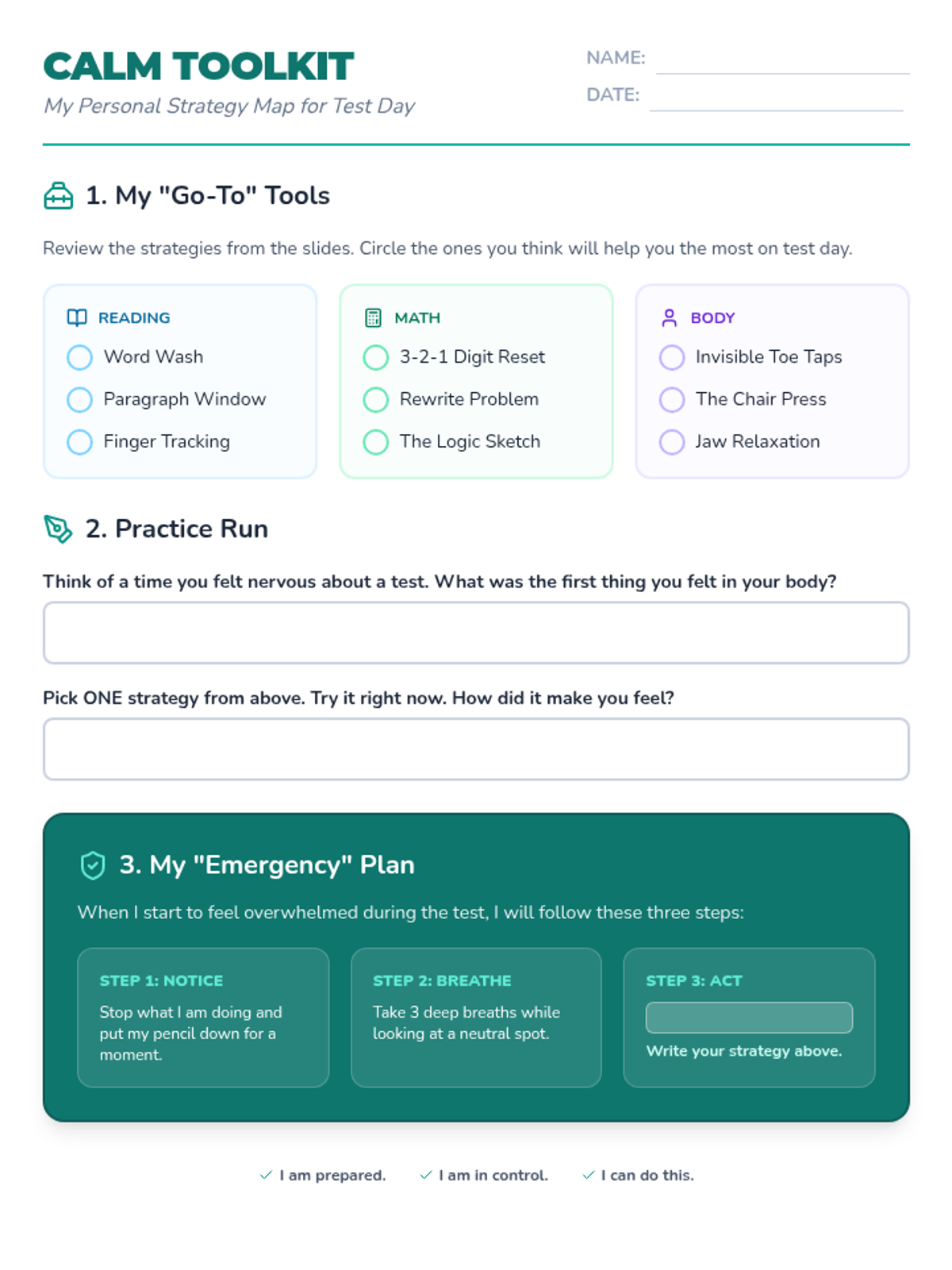
A student worksheet designed to help learners identify and commit to specific anxiety-reduction strategies for testing, including space for reflection and a personalized emergency action plan.
A visually calming slide deck introducing students to specific mindfulness and grounding techniques for testing situations, including strategies for Reading, Math, and physical restlessness.
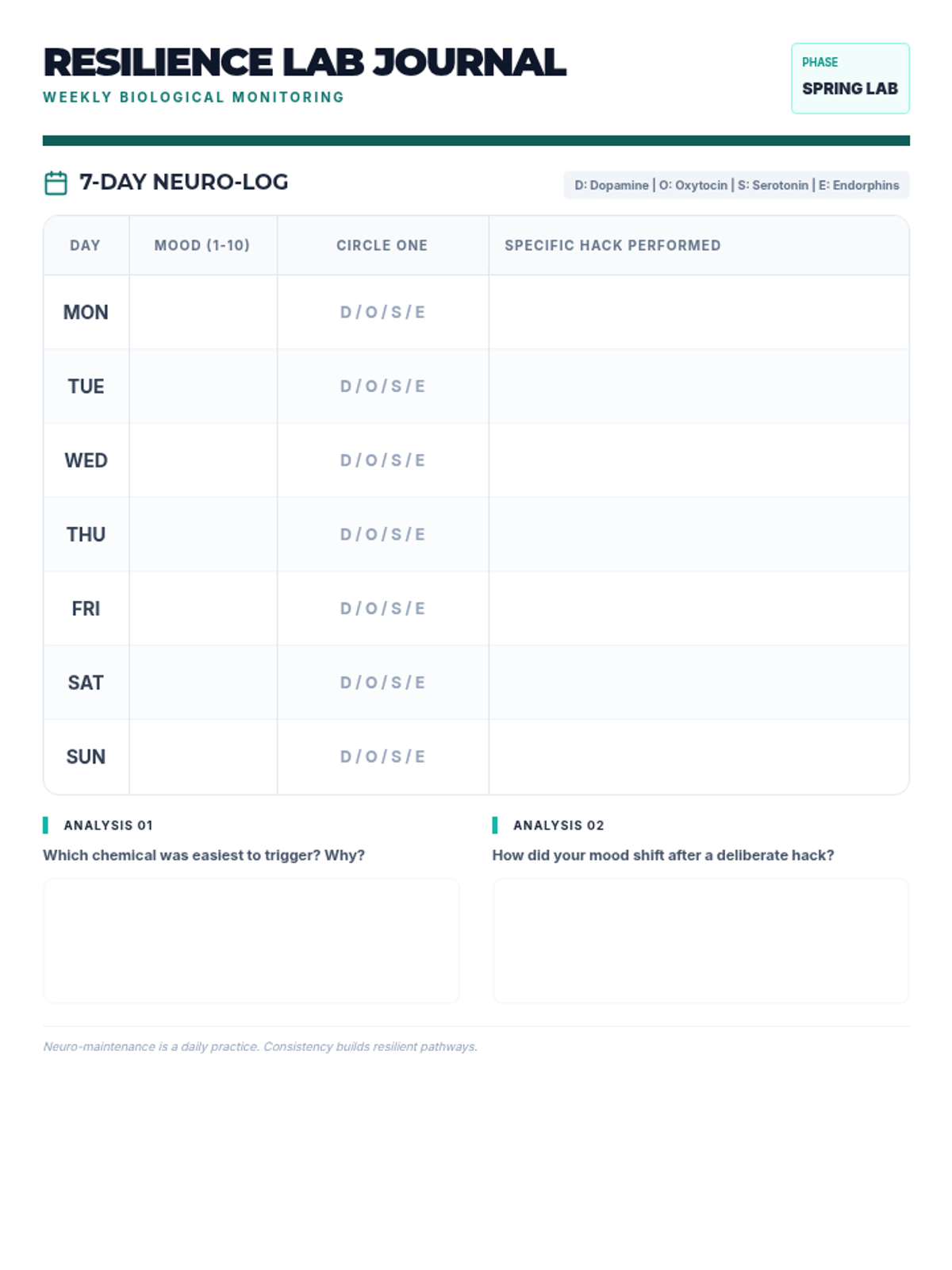
A two-page self-monitoring tool for students to track their mood and the use of 'Neuro-Hacks' over a week, including space for deep reflection and synthesis.
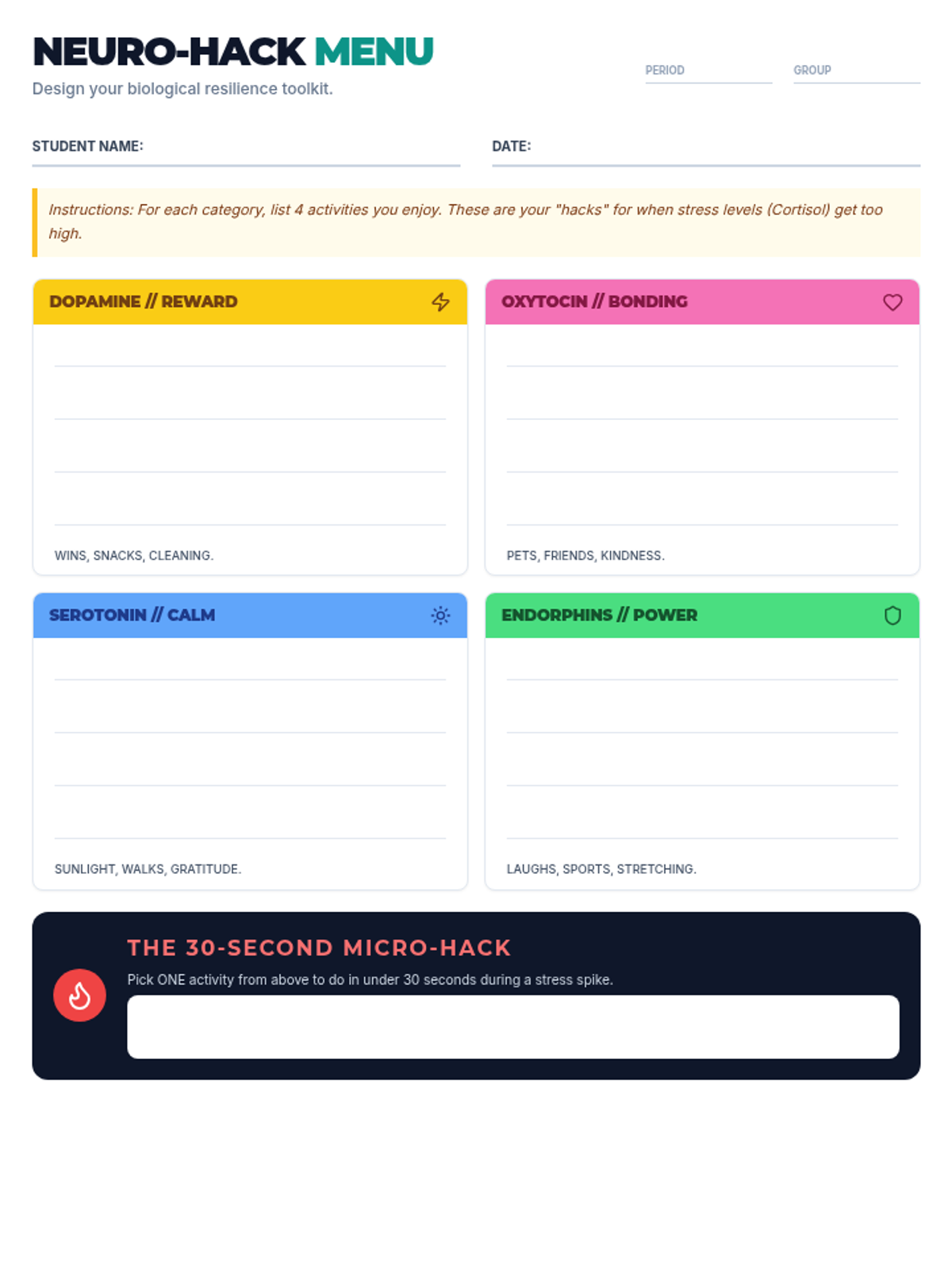
A personalized worksheet where students categorize activities into the four neurotransmitter 'buckets' to create their own evidence-based mental health toolkit.
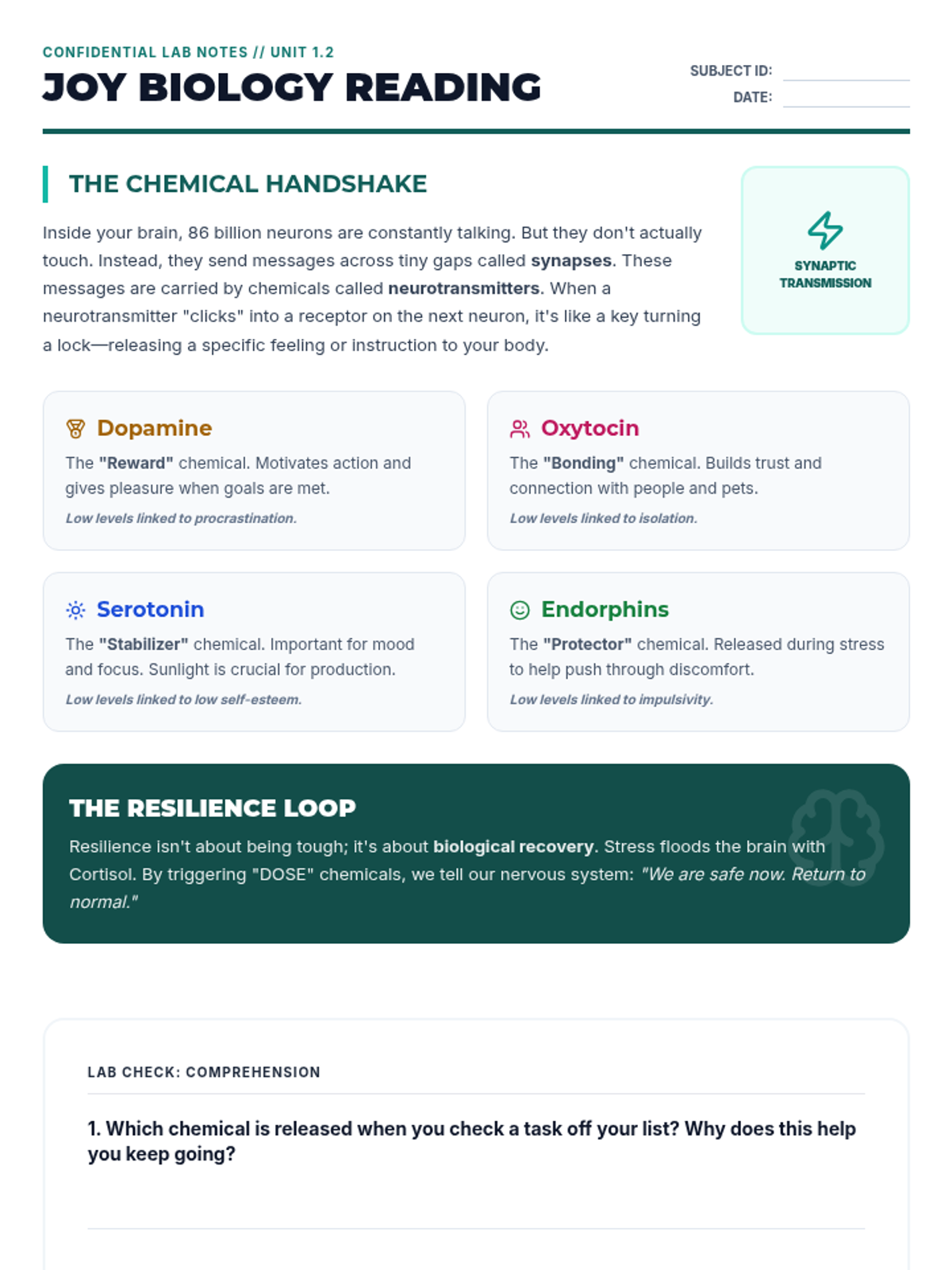
A foundational reading passage that explains the science of neurotransmitters, the synapse mechanism, and the four 'DOSE' chemicals in student-friendly language.
A visual presentation for students that introduces the four main 'DOSE' neurotransmitters, the biological impact of stress, and the concept of 'Neuro-Hacking' for mental health.
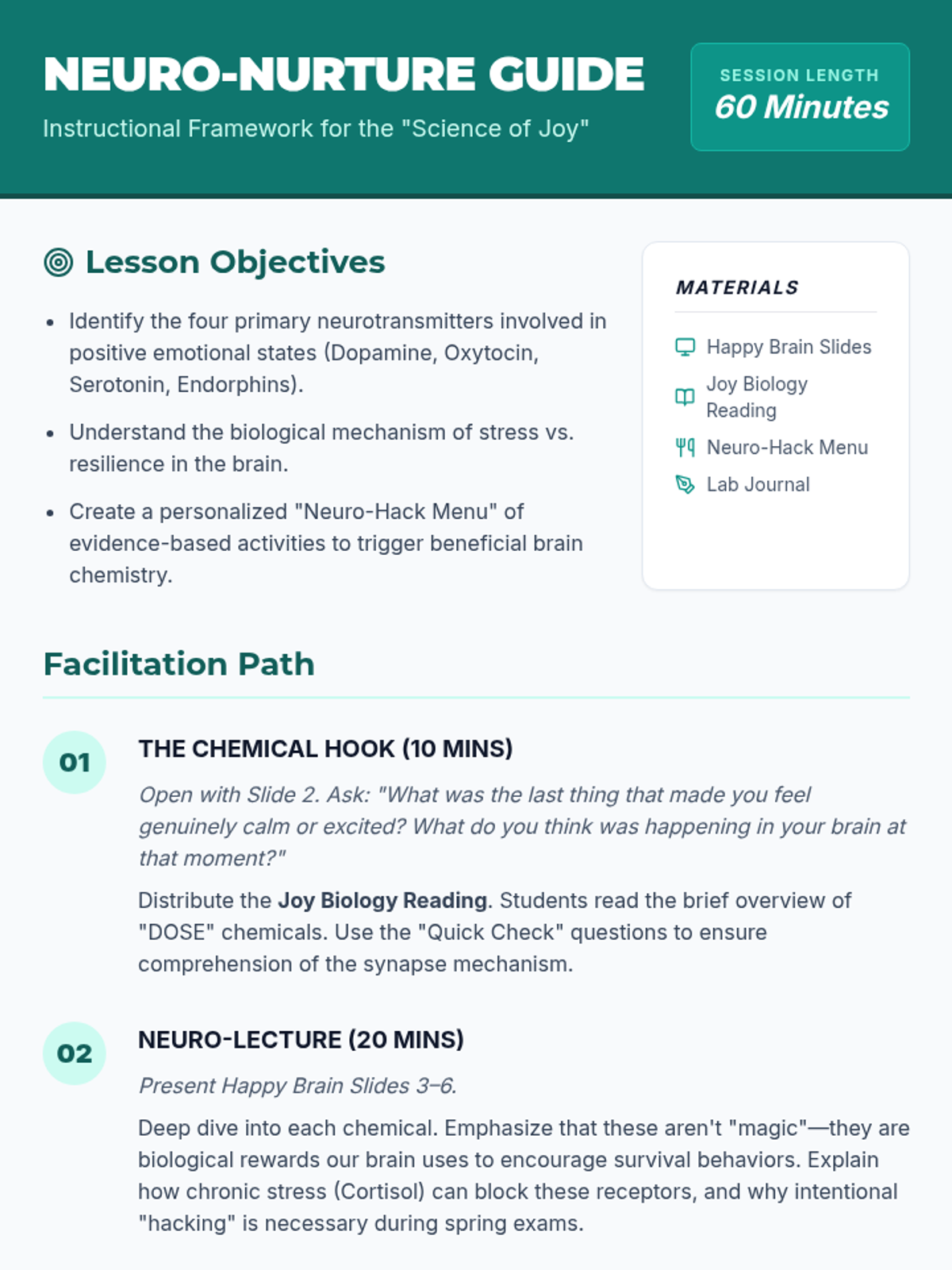
A comprehensive teacher guide for leading the Neuro-Nurture Project, including objectives, materials, a detailed facilitation path, and clinical notes for implementation.
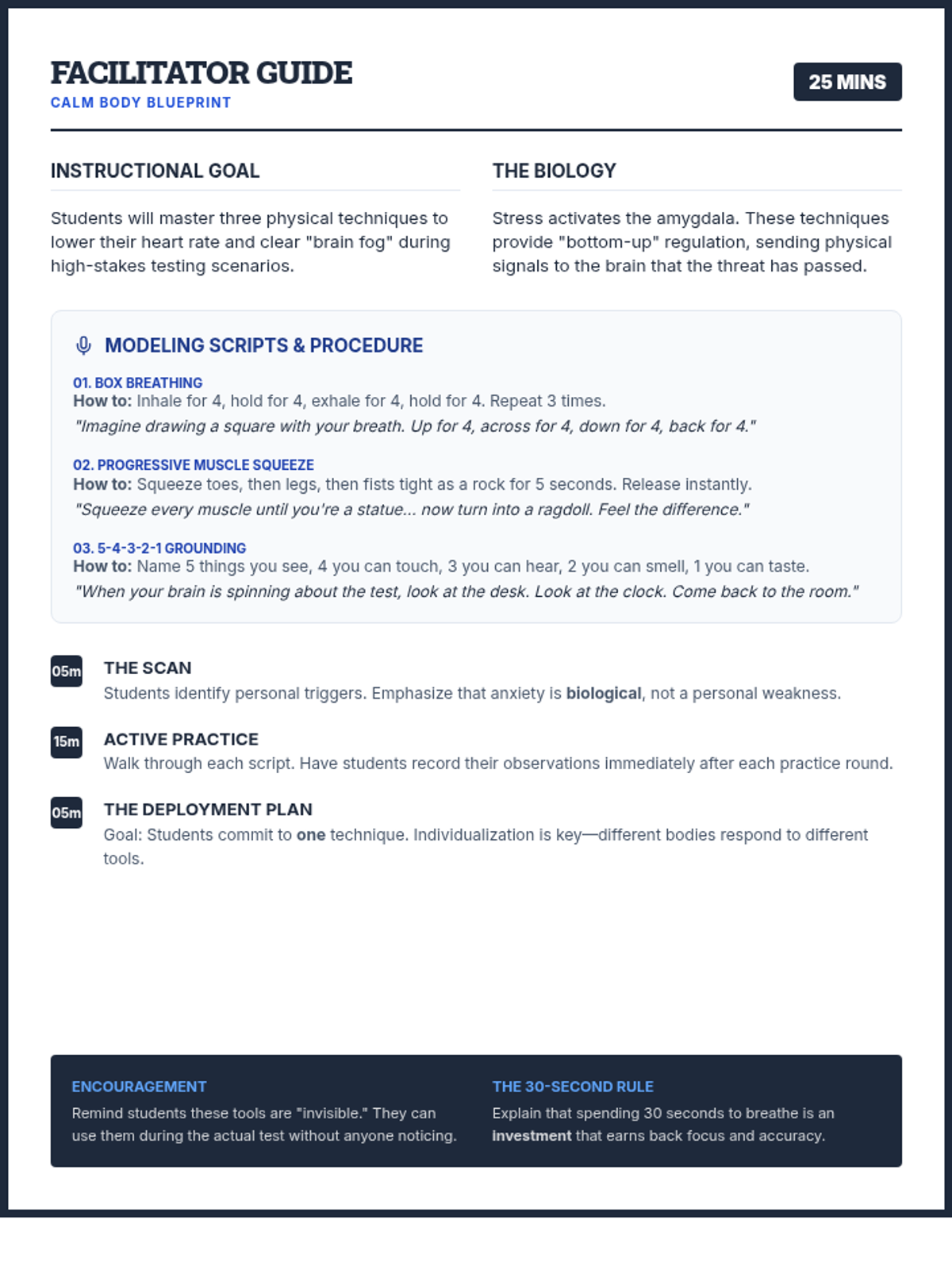
A facilitation guide for teachers to lead the 'Calm Body Blueprint' lesson. Includes scientific background on anxiety, step-by-step instructions for leading physical relaxation techniques, and tips for addressing common student misconceptions.
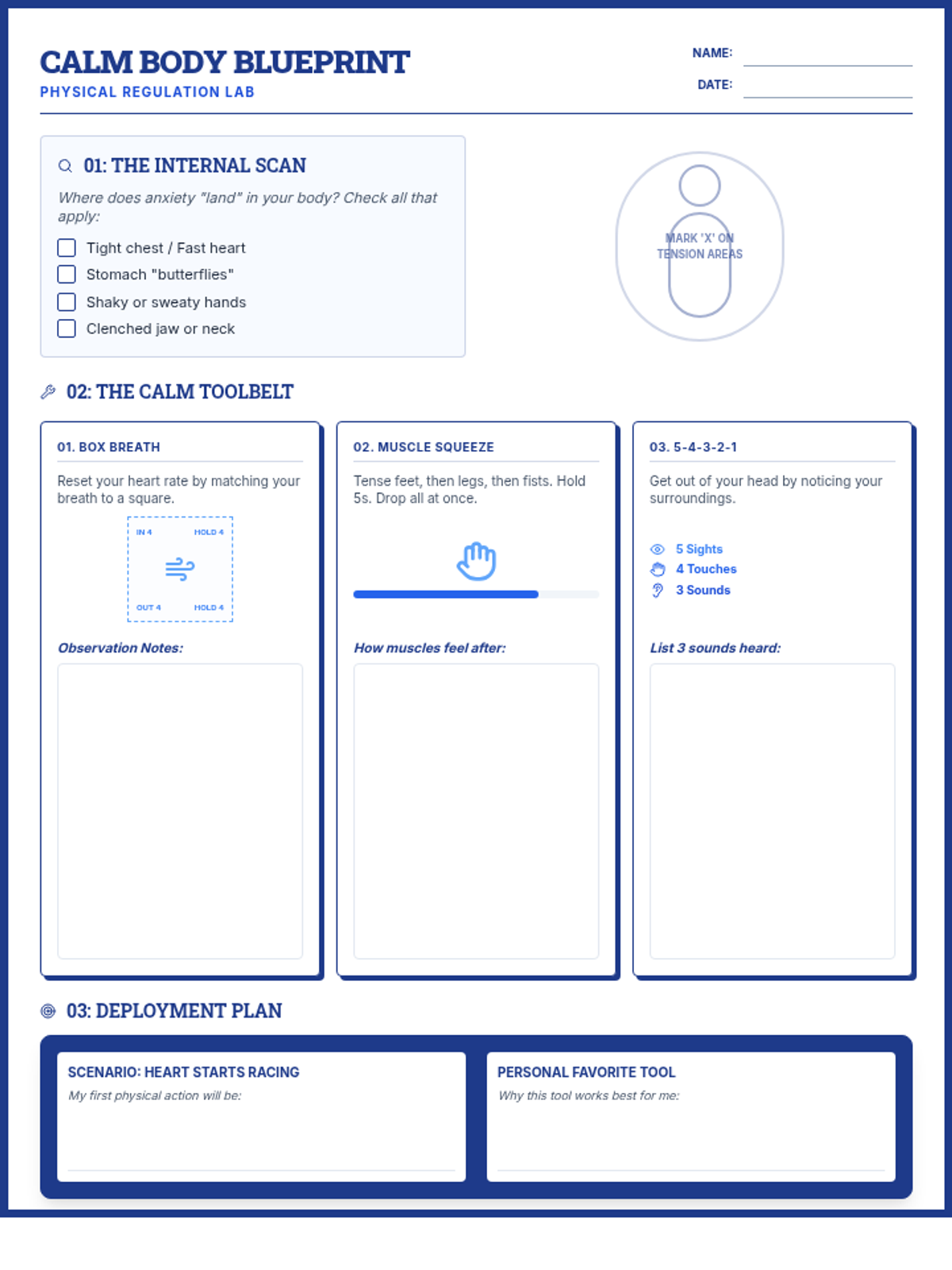
A student worksheet designed with a technical 'blueprint' theme to help students identify physical symptoms of anxiety and practice three relaxation techniques. Includes space for self-reflection and a deployment plan for testing scenarios.
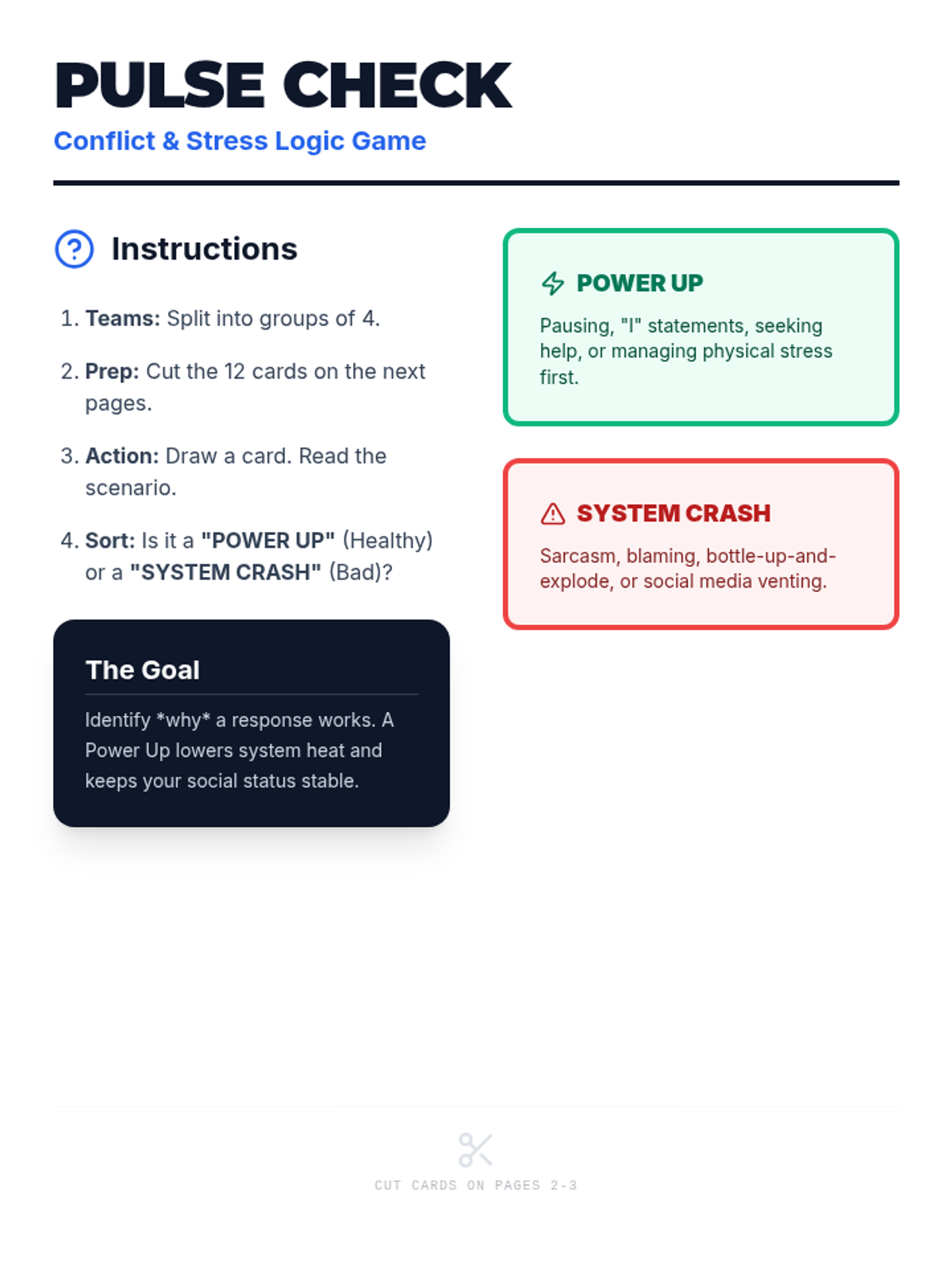
A set of 12 scenario-based game cards for 'The Pulse Check' game. Updated with stable grid layouts and adjusted text sizes to prevent page overflow.
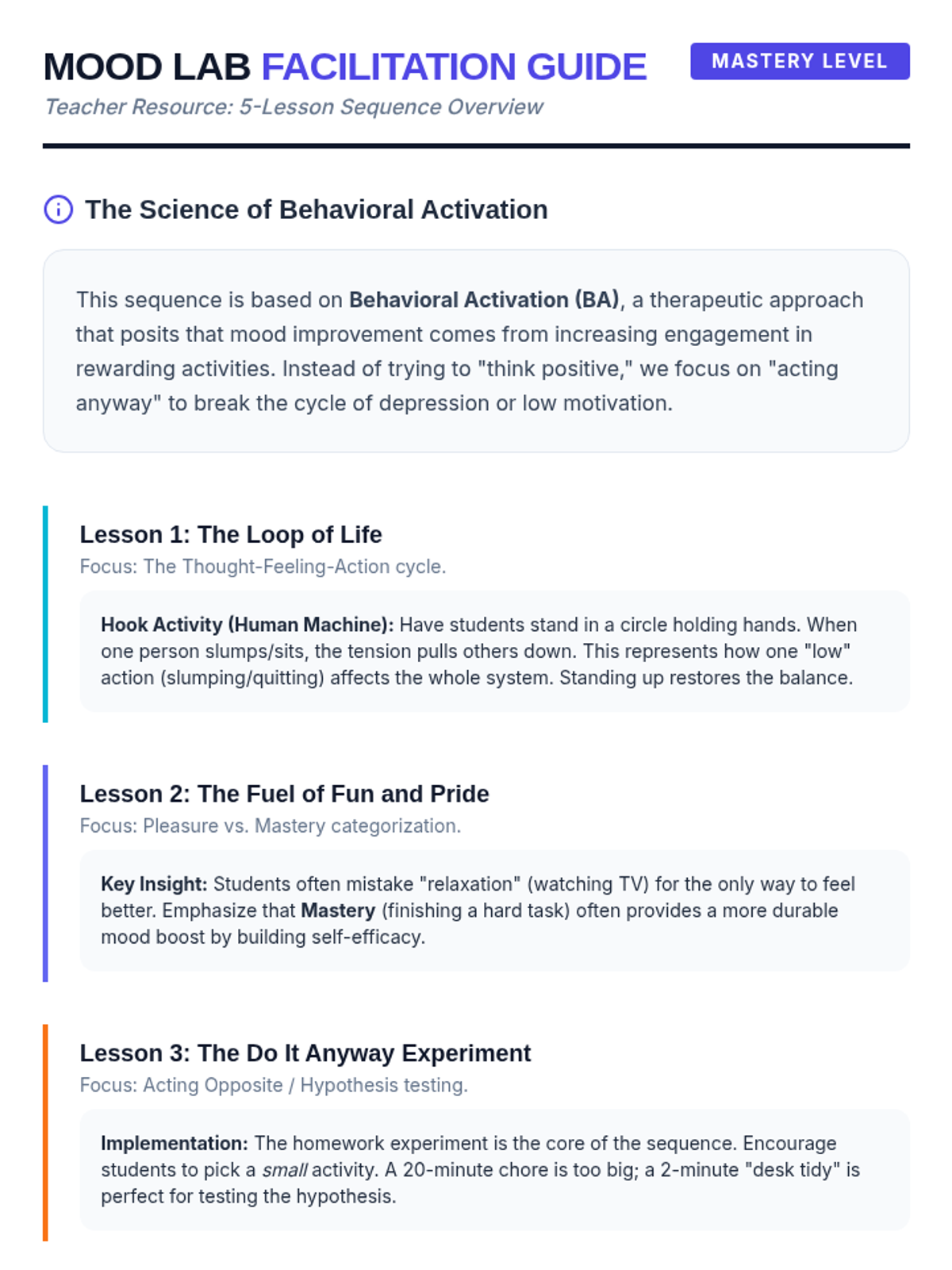
A teacher facilitation guide for the 'Mood Lab Experiment' sequence, providing therapeutic context, hook instructions, and tips for each lesson.
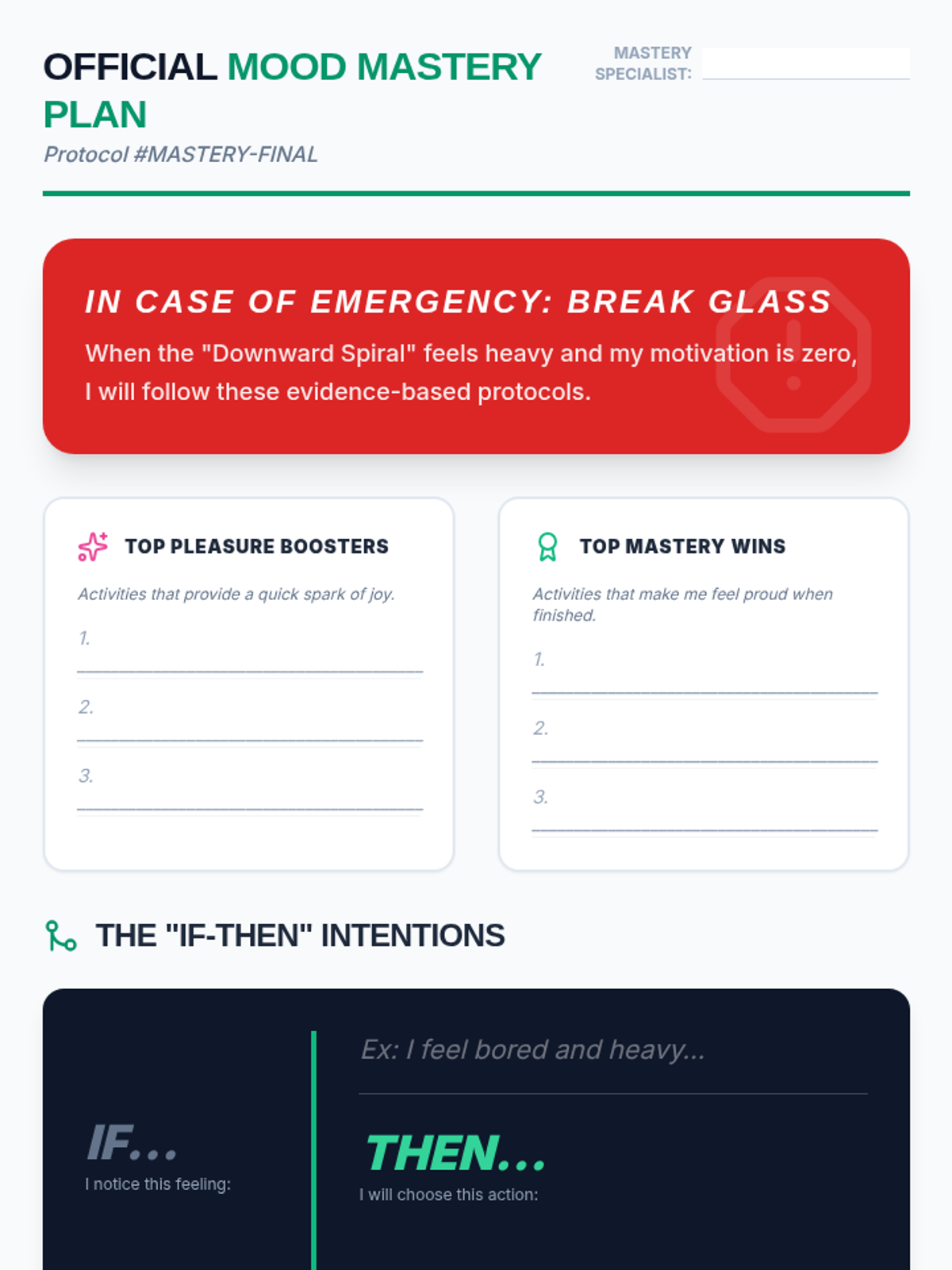
A comprehensive 'Break the Glass' emergency plan worksheet where students synthesize their findings into specific 'If-Then' implementation intentions for mood regulation.
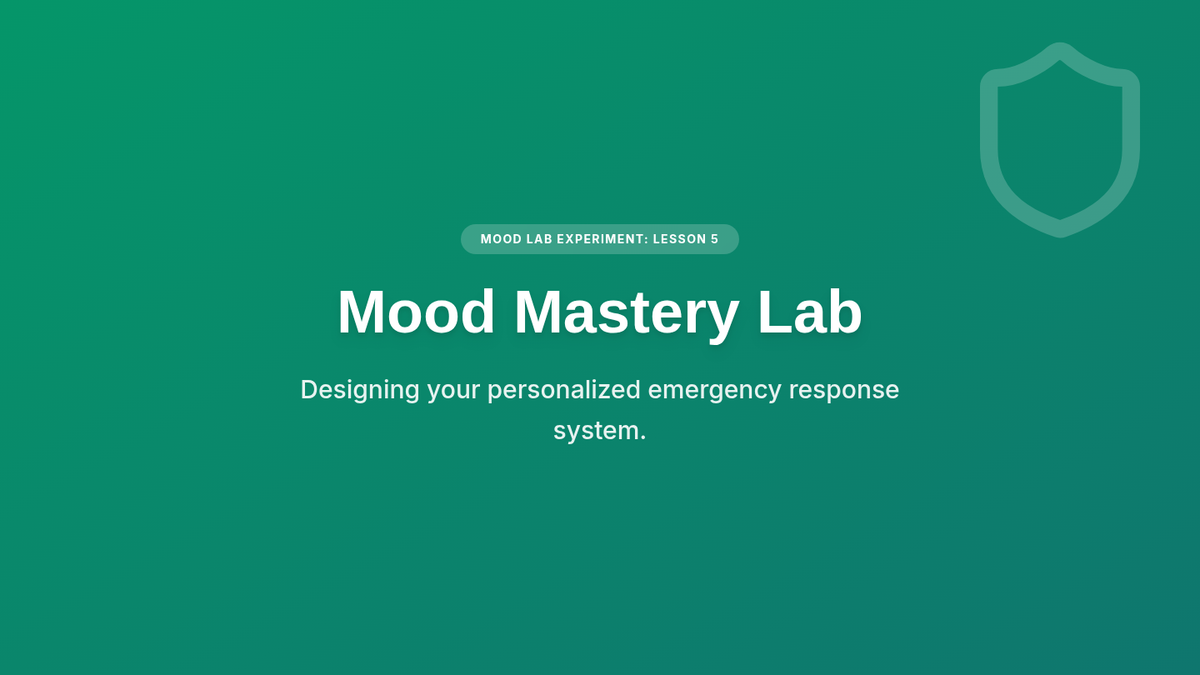
Final slide deck for the 'Mood Mastery Lab' lesson, teaching students how to create implementation intentions and synthesize their learning into an emergency activation plan.
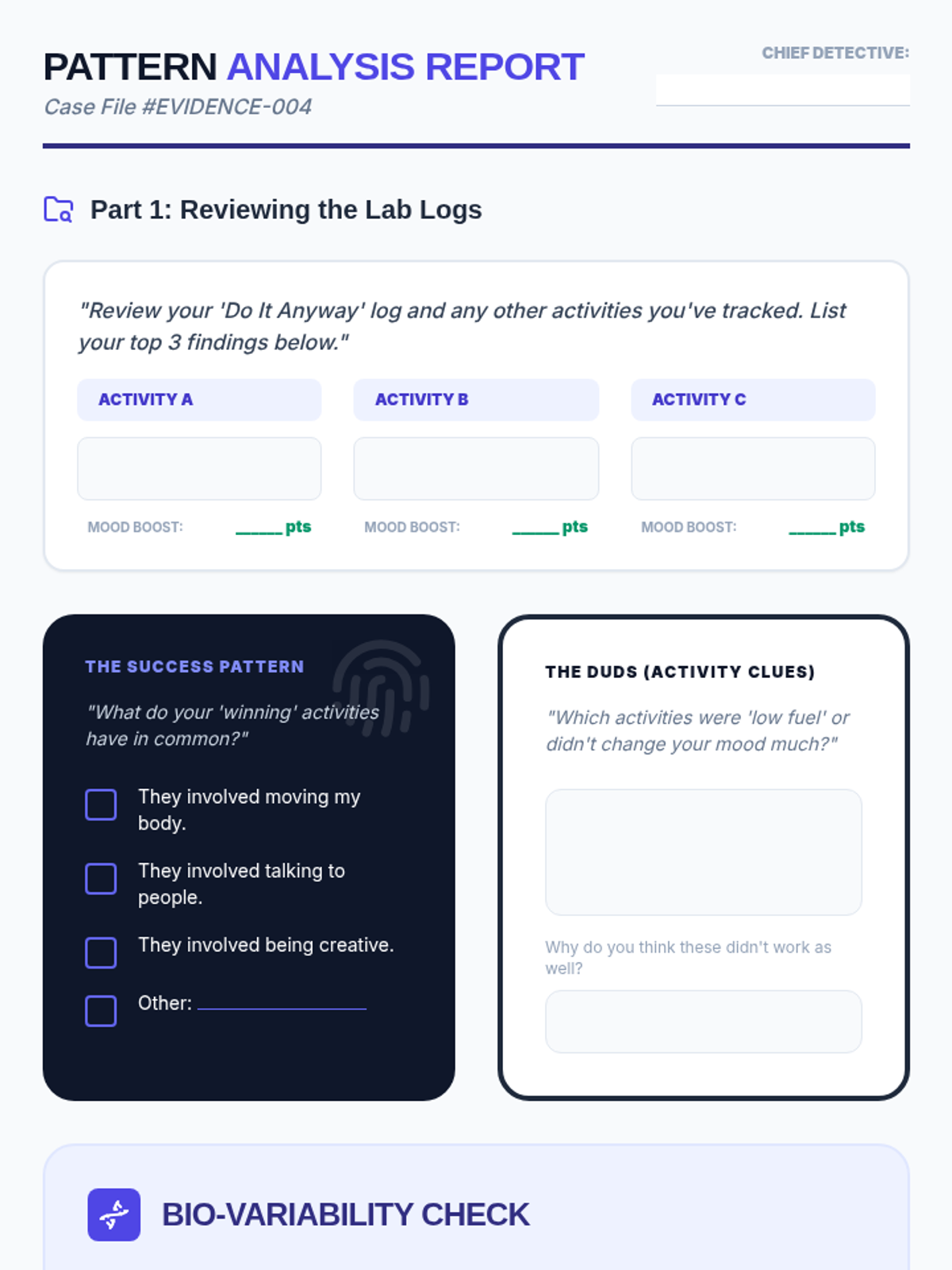
A lab report worksheet for students to analyze their experiment data, identify patterns in effective activities, and reflect on individual differences.
Introductory slides for the 'Mood Pattern Detectives' lesson, helping students analyze their data and understand the concept of individual variability in activity effectiveness.
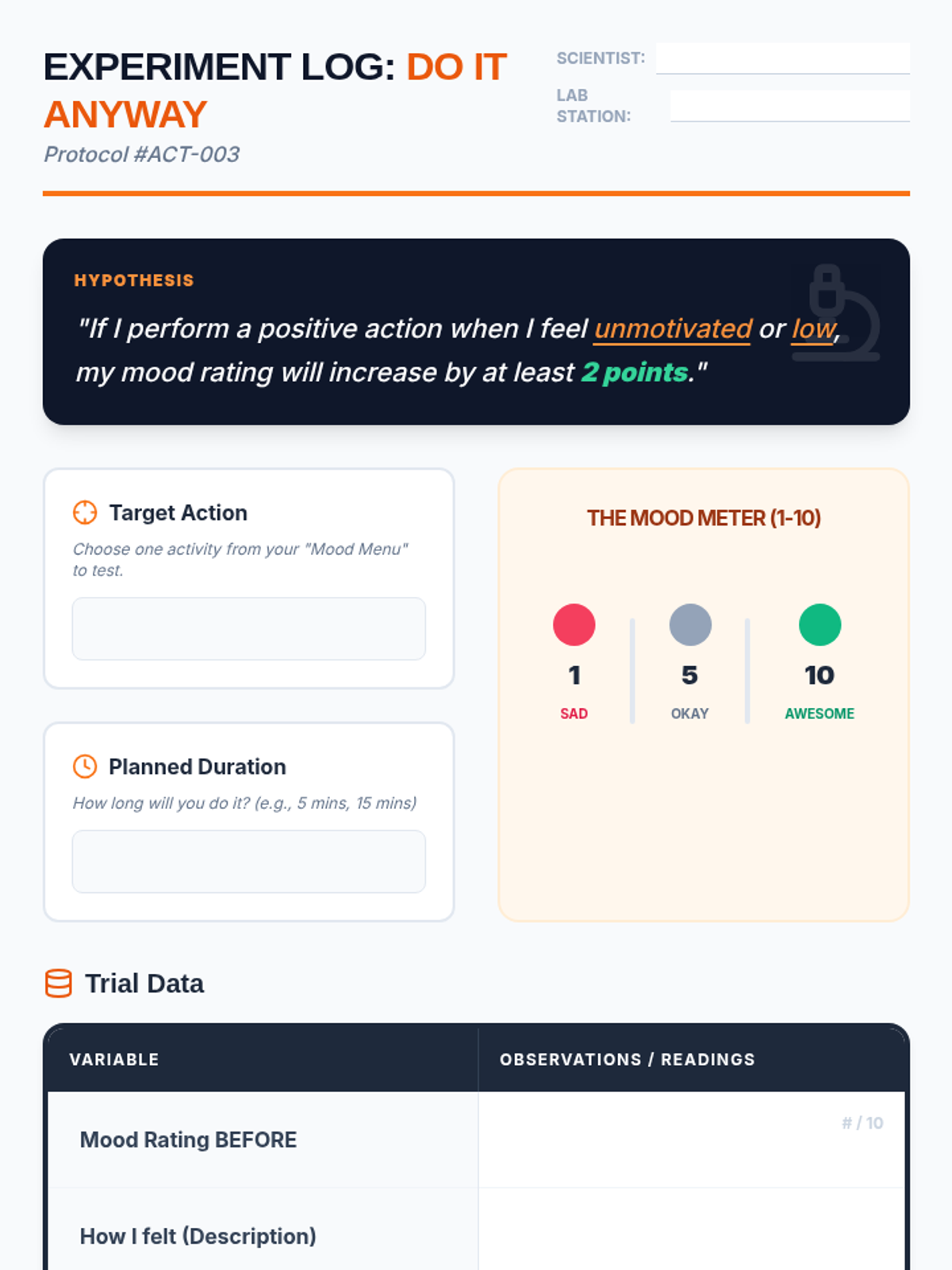
A data collection log for the 'Do It Anyway' experiment, allowing students to track their mood ratings before and after engaging in a positive action.
Introductory slides for the 'Do It Anyway' experiment, explaining the concept of 'acting opposite' and how to track mood data for a personal science experiment.
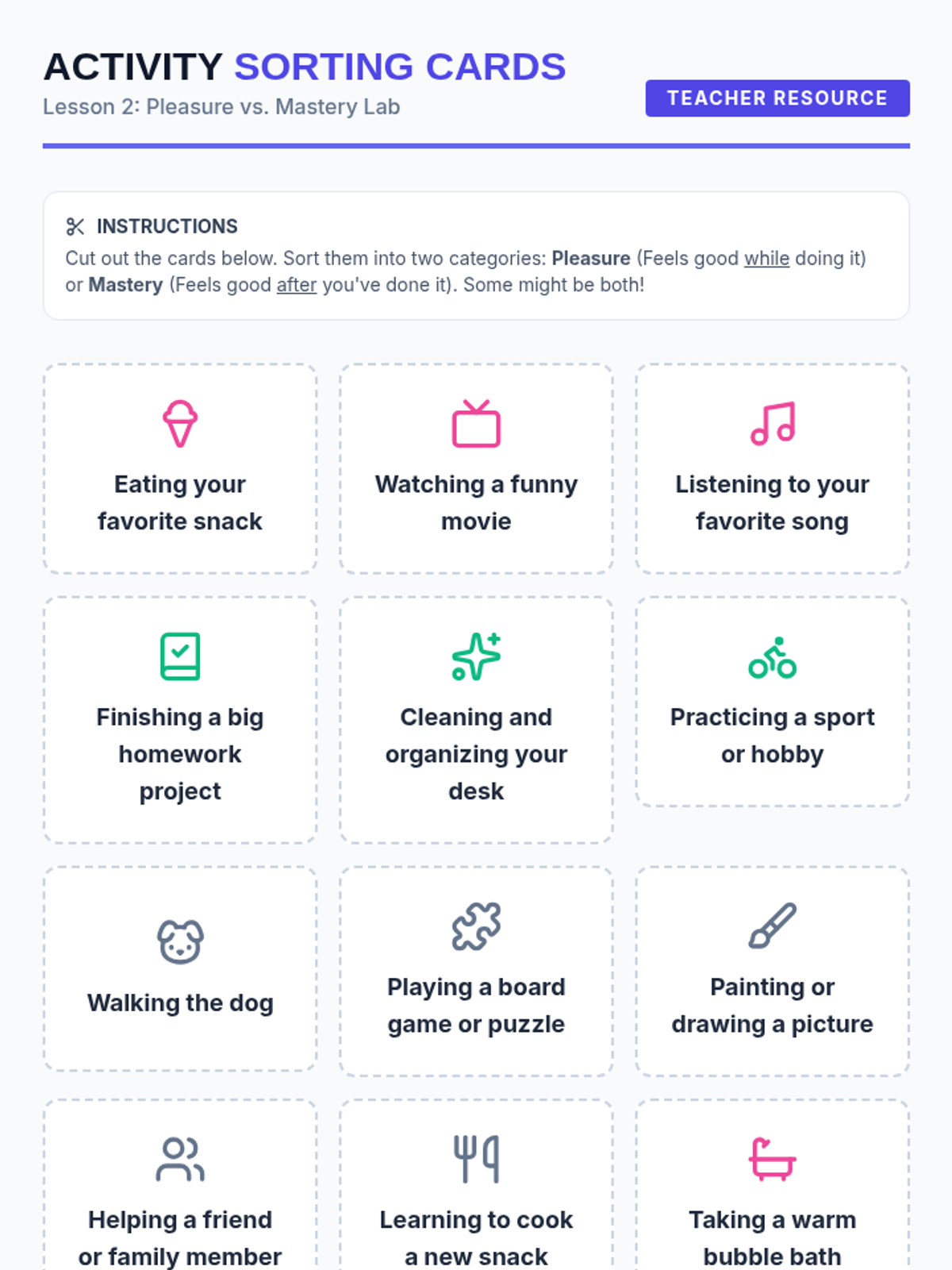
Sorting cards and a categorization t-chart for Lesson 2, helping students distinguish between pleasure-based and mastery-based activities.
Introductory slides for the 'Pleasure and Mastery' lesson, explaining the difference between 'Fun fuel' and 'Proud fuel' and the importance of a balanced activity diet.
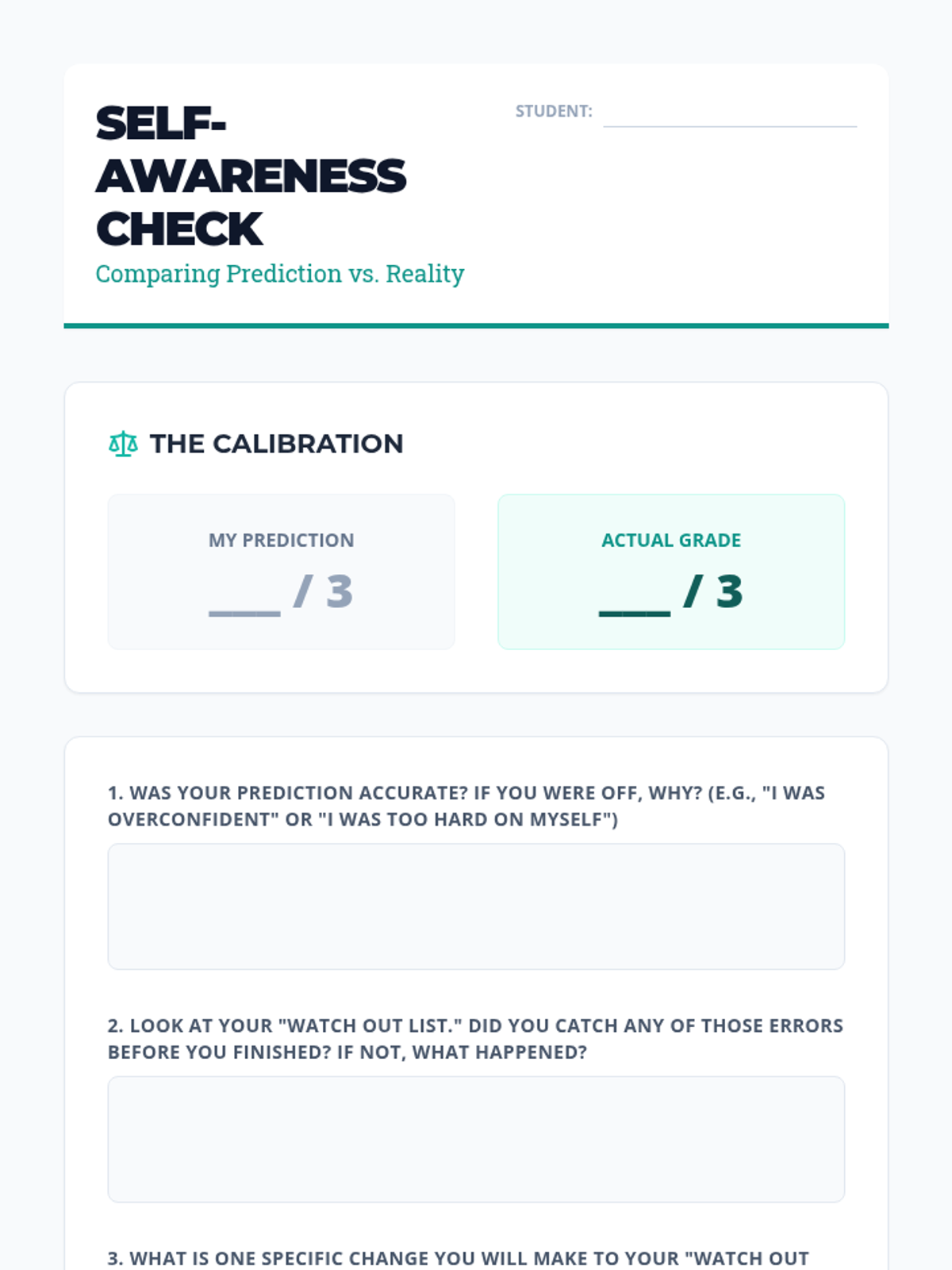
A final reflection sheet for students to compare their quiz predictions with their actual grades, evaluating the effectiveness of their metacognitive strategies.
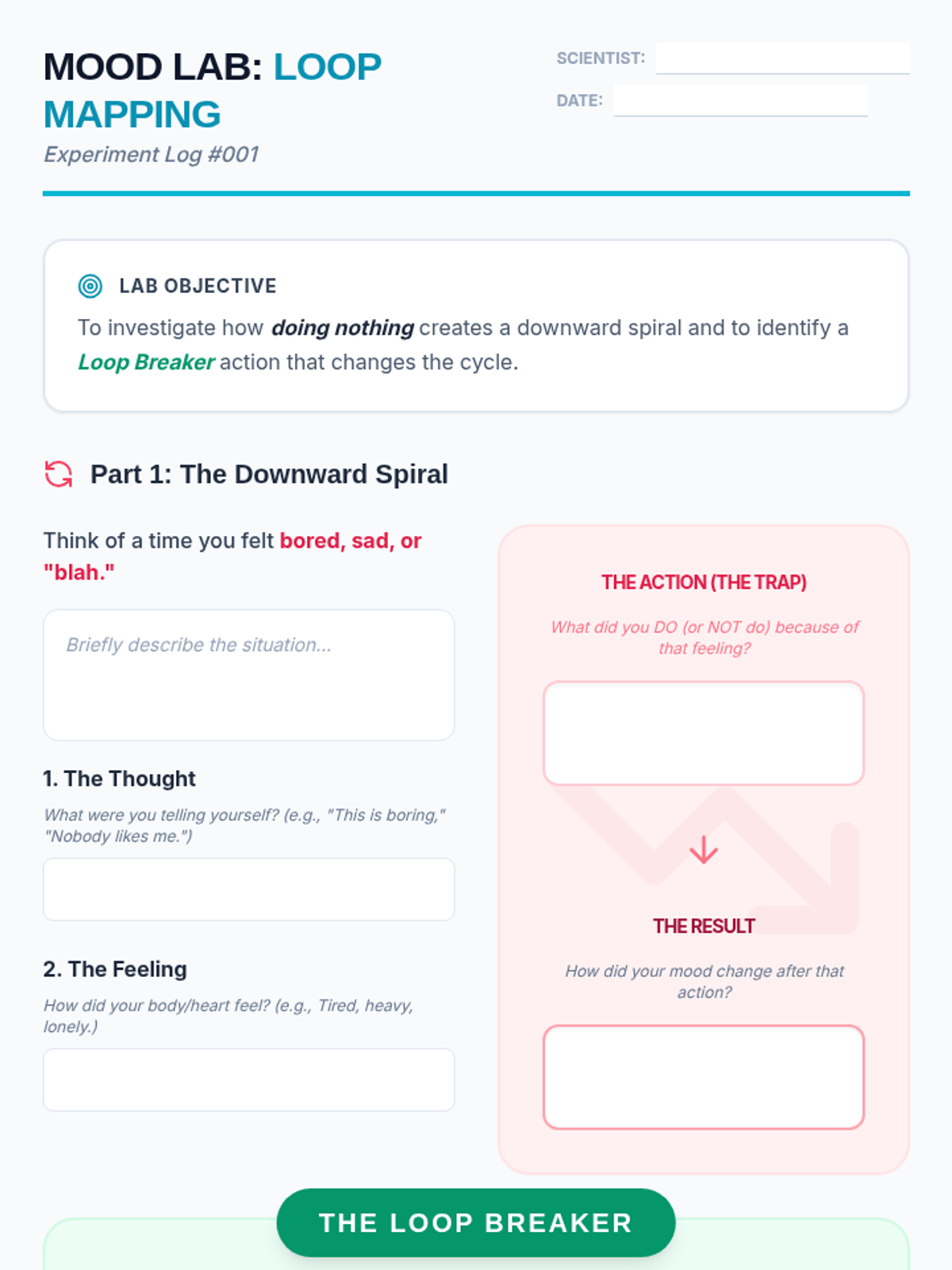
A lab notebook style worksheet for students to map out their own action-emotion loop, identifying a 'downward spiral' moment and a 'loop breaker' action.
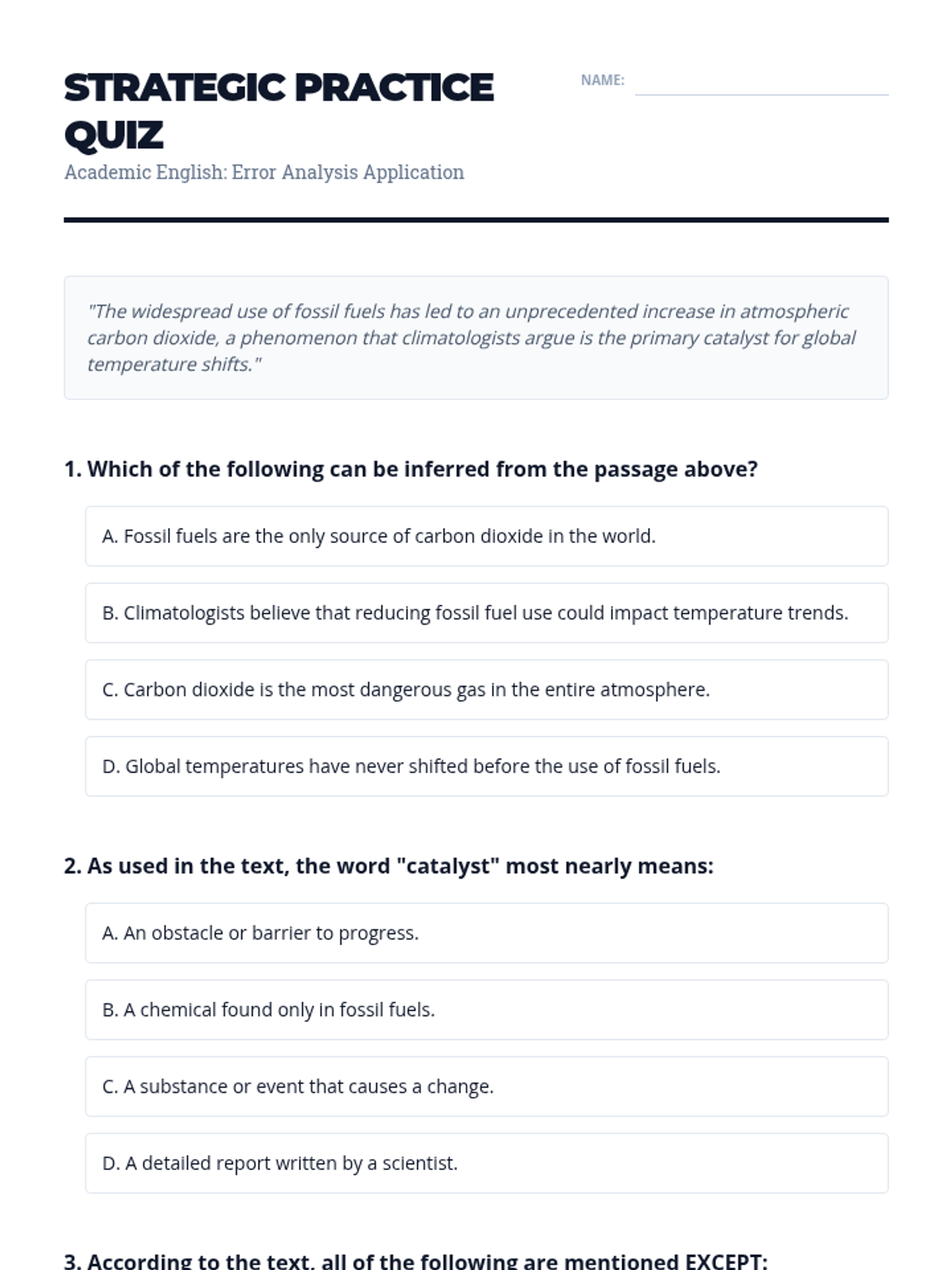
A short Academic English quiz designed to test students' application of their "Watch Out List," including a mandatory pre-grading self-reflection and score prediction section.
Final slides for the sequence focusing on the "Showtime" assessment. It introduces the score prediction challenge and real-time error analysis.
Introductory slides for the 'Loop of Life' lesson, featuring the human machine hook and visual representations of the thought-feeling-action cycle.
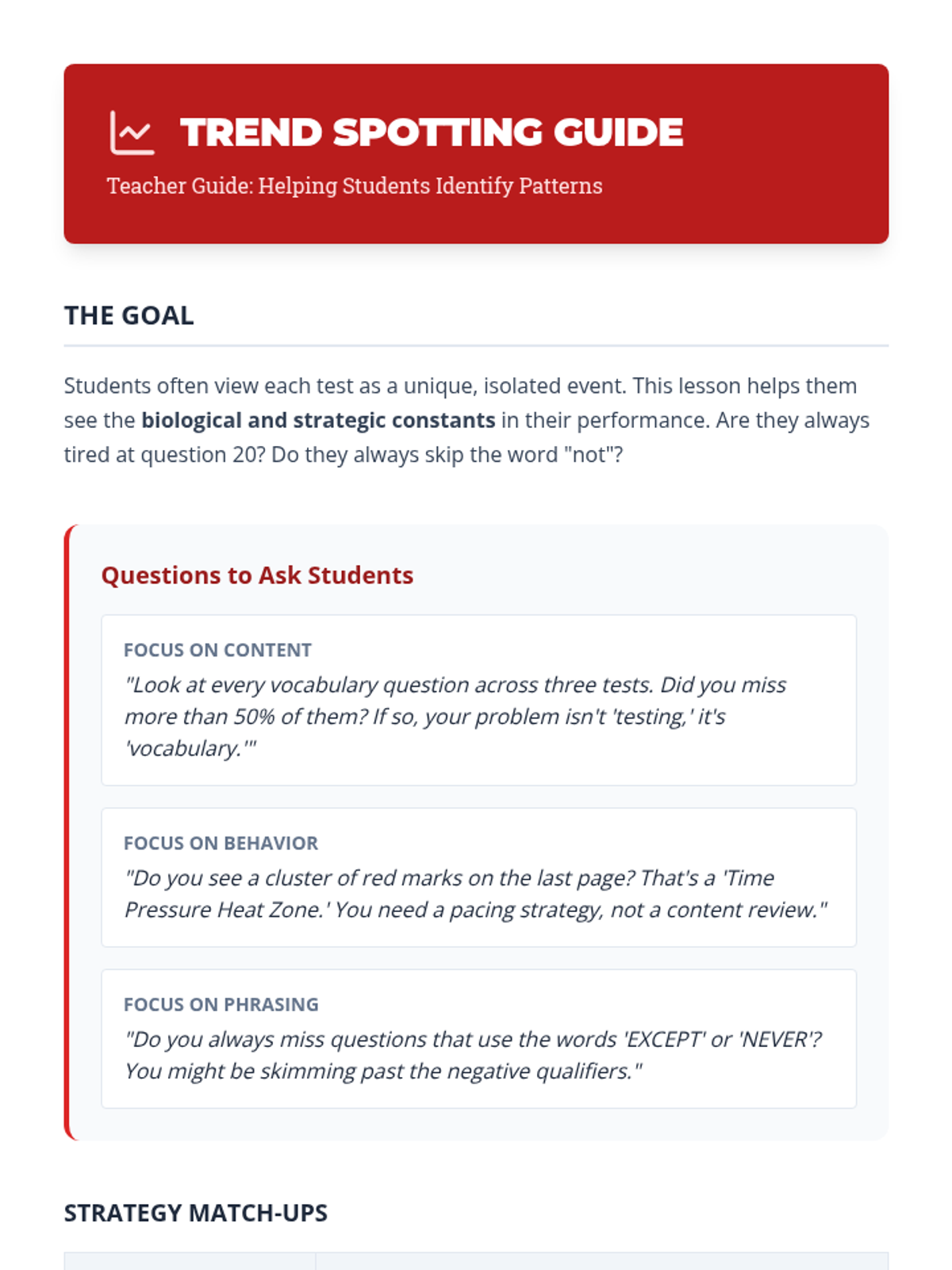
A guide for teachers to help students interpret their error data and connect patterns to specific defensive strategies.
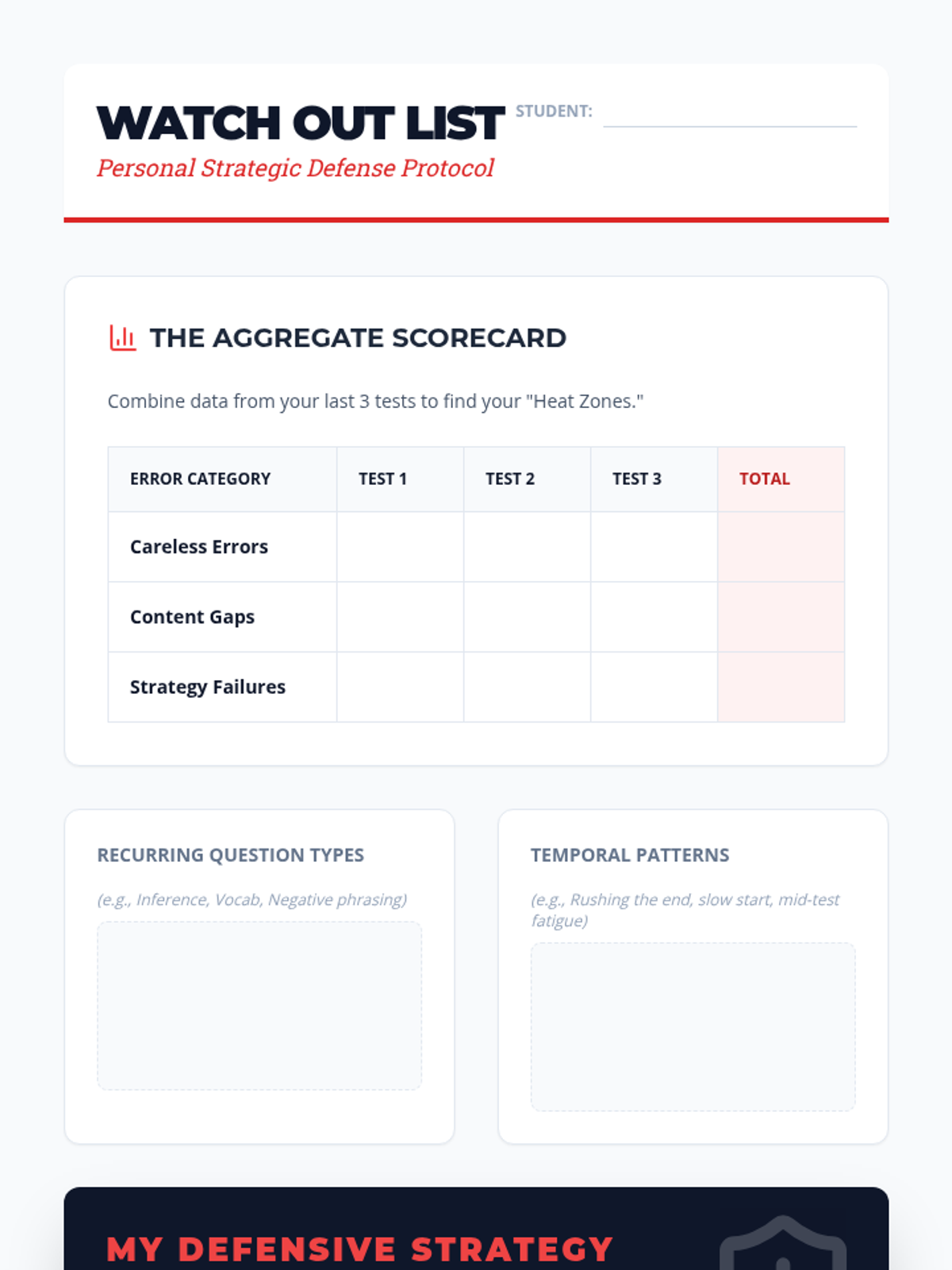
A student worksheet for aggregating error data across multiple assessments and distilling those patterns into a "Watch Out List" for future defense.
Slides for Lesson 4 that use a "Heatmap" analogy to teach students how to aggregate error data and identify recurring personal patterns.
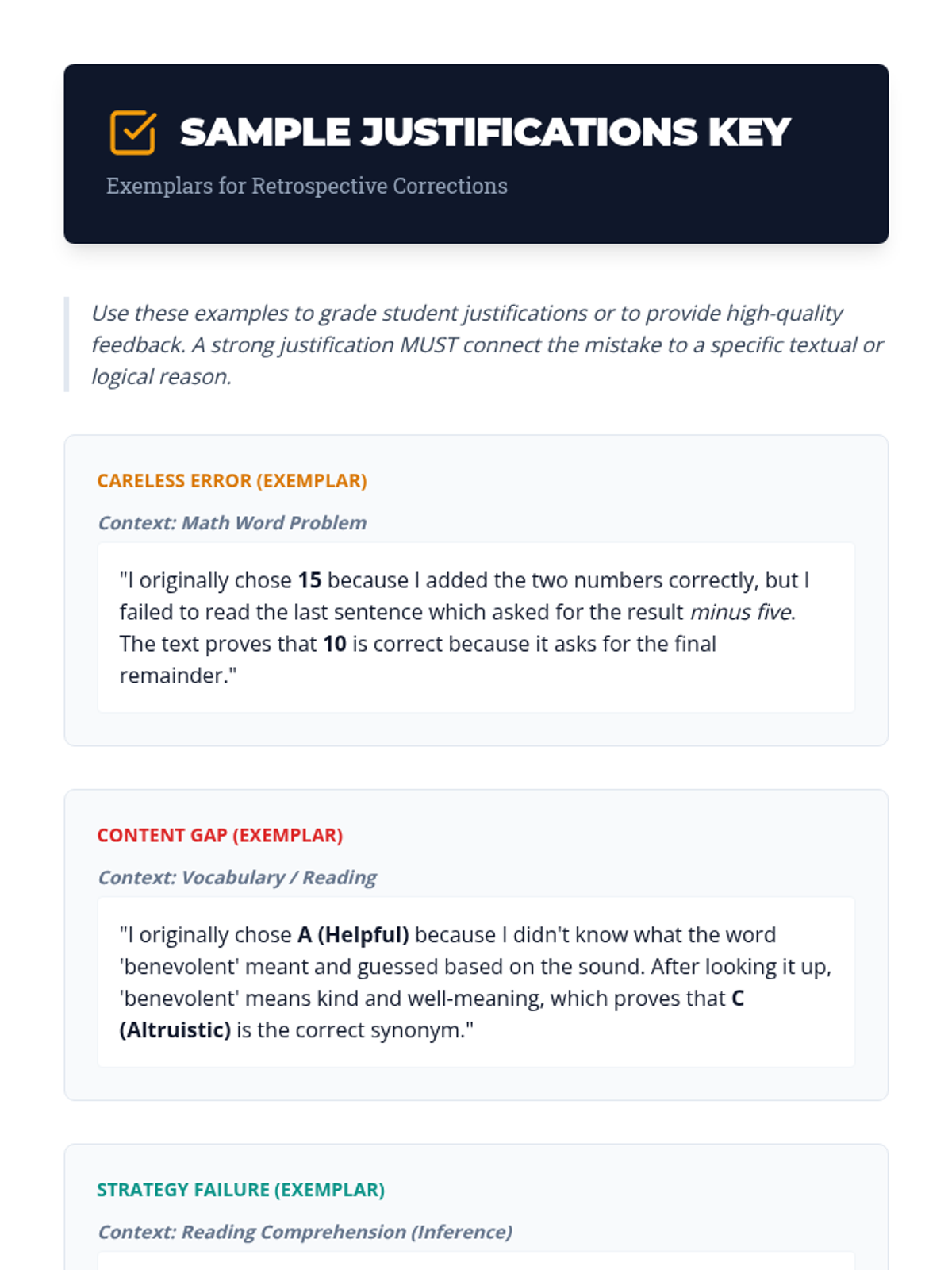
An answer key/exemplar guide for teachers to evaluate student justification statements, showing the difference between weak and mastery-level corrections.
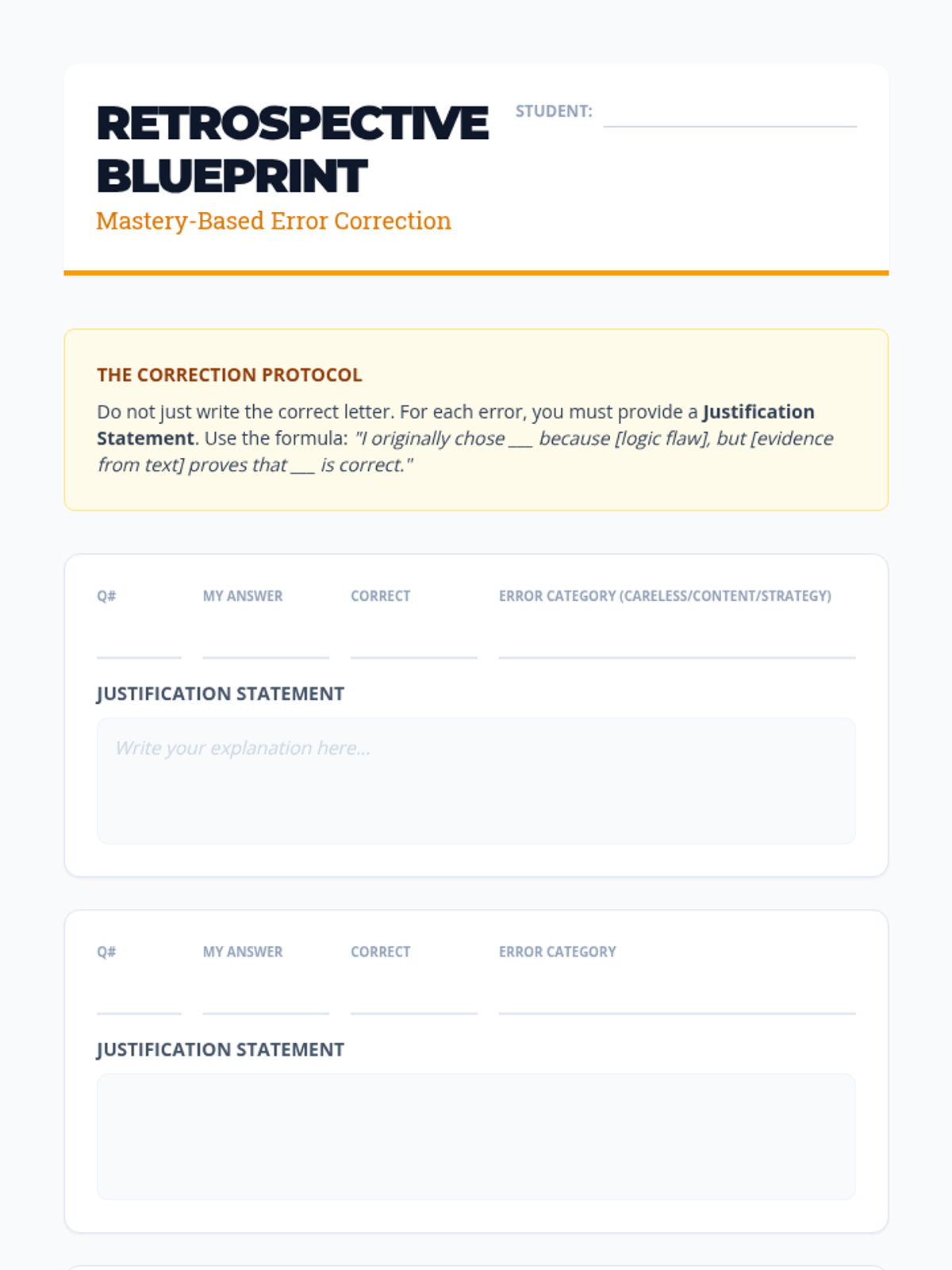
A template for students to perform deep error corrections, requiring them to write justification statements using a specific logic-based formula.
Slides for Lesson 3 introducing the "Justified Fix" method. It emphasizes that students must explain why they were wrong and why the new answer is right using evidence.