Peer relationship navigation, conversational turn-taking, and stress management strategies within supportive group settings. Develops communal belonging through shared mental health education and collaborative skill practice.
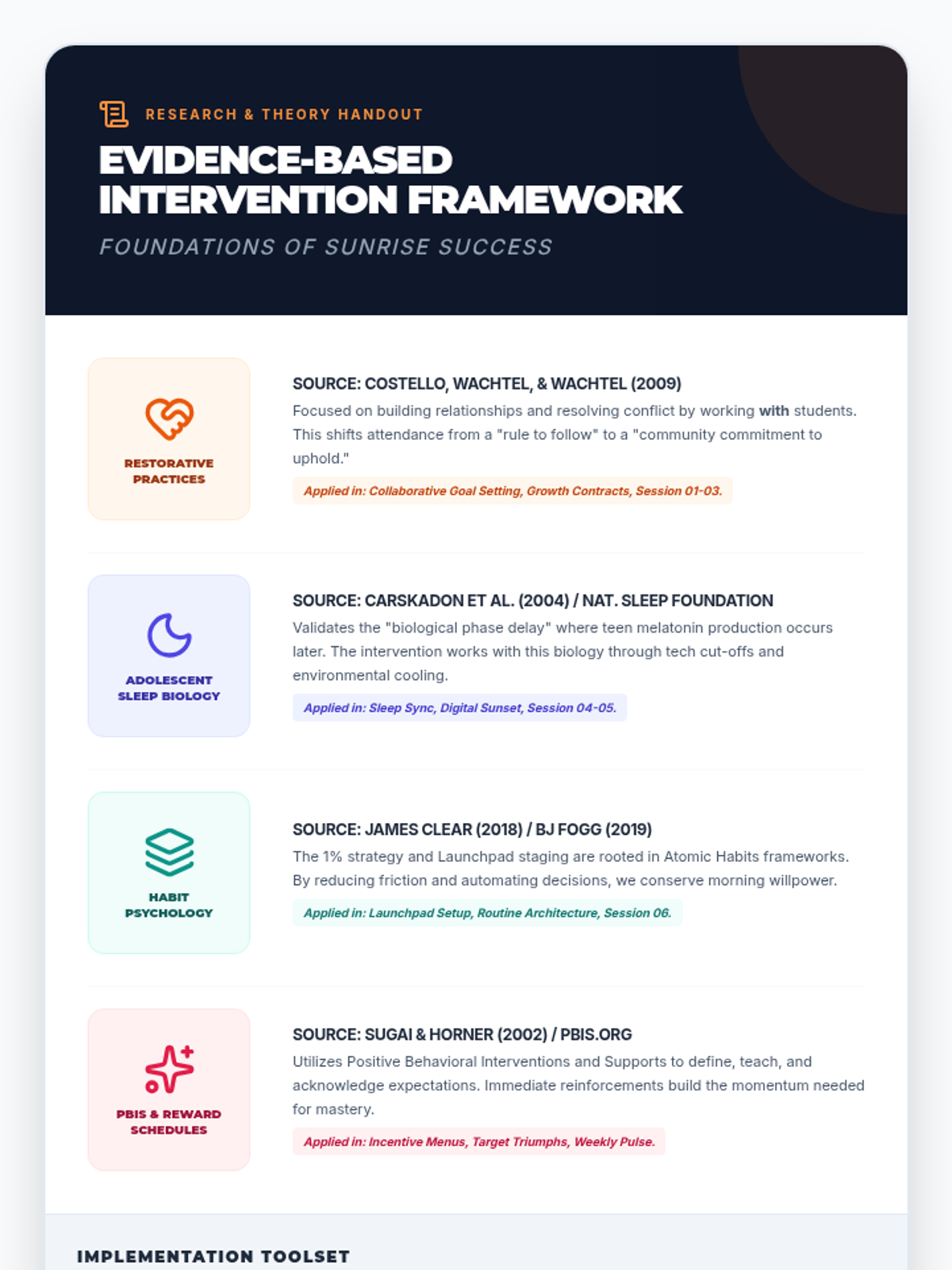
A comprehensive list of research sources and theoretical frameworks that underpin the Sunrise Success intervention, including Restorative Practices, Sleep Science, Habit Psychology, and PBIS.
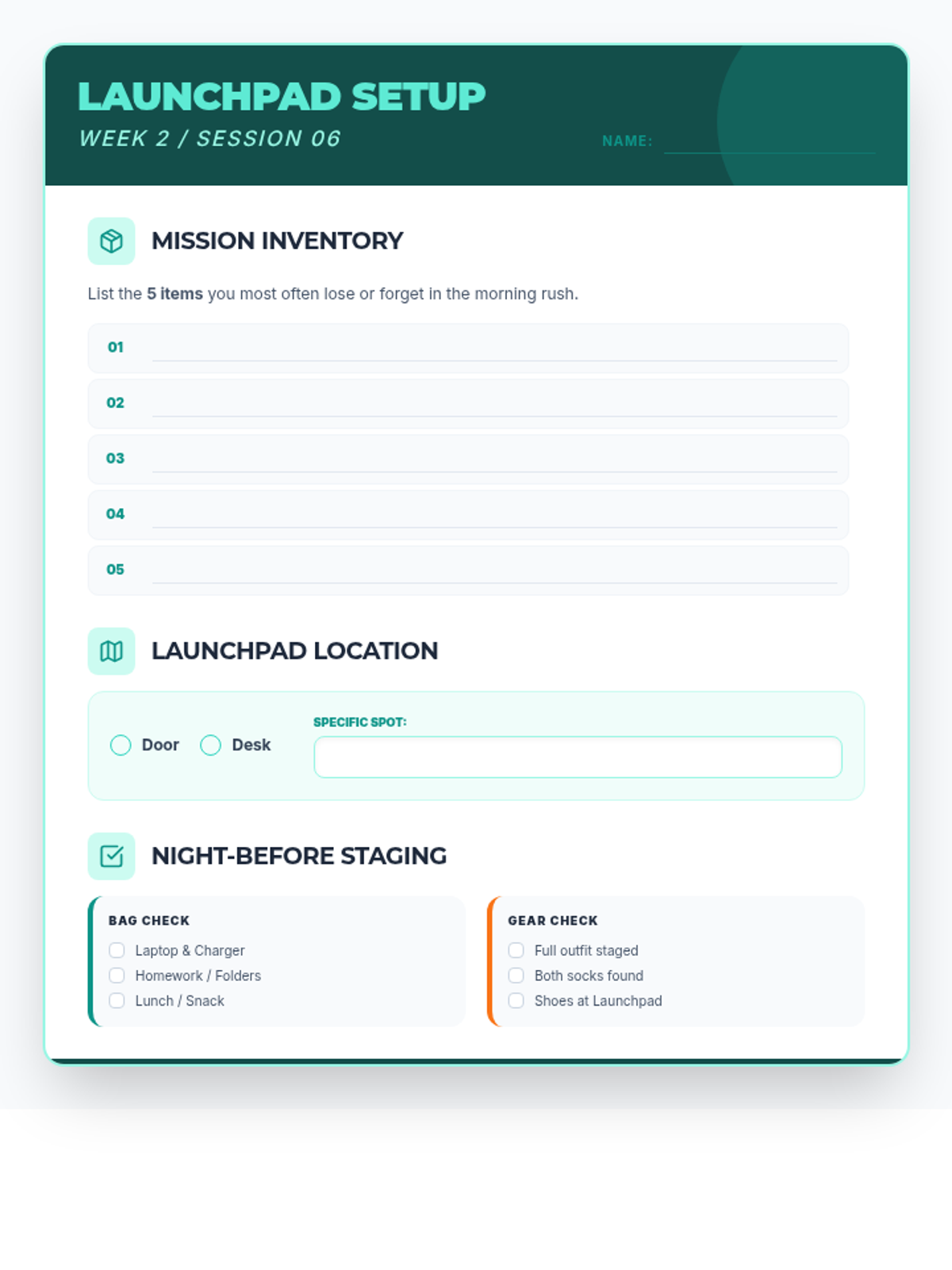
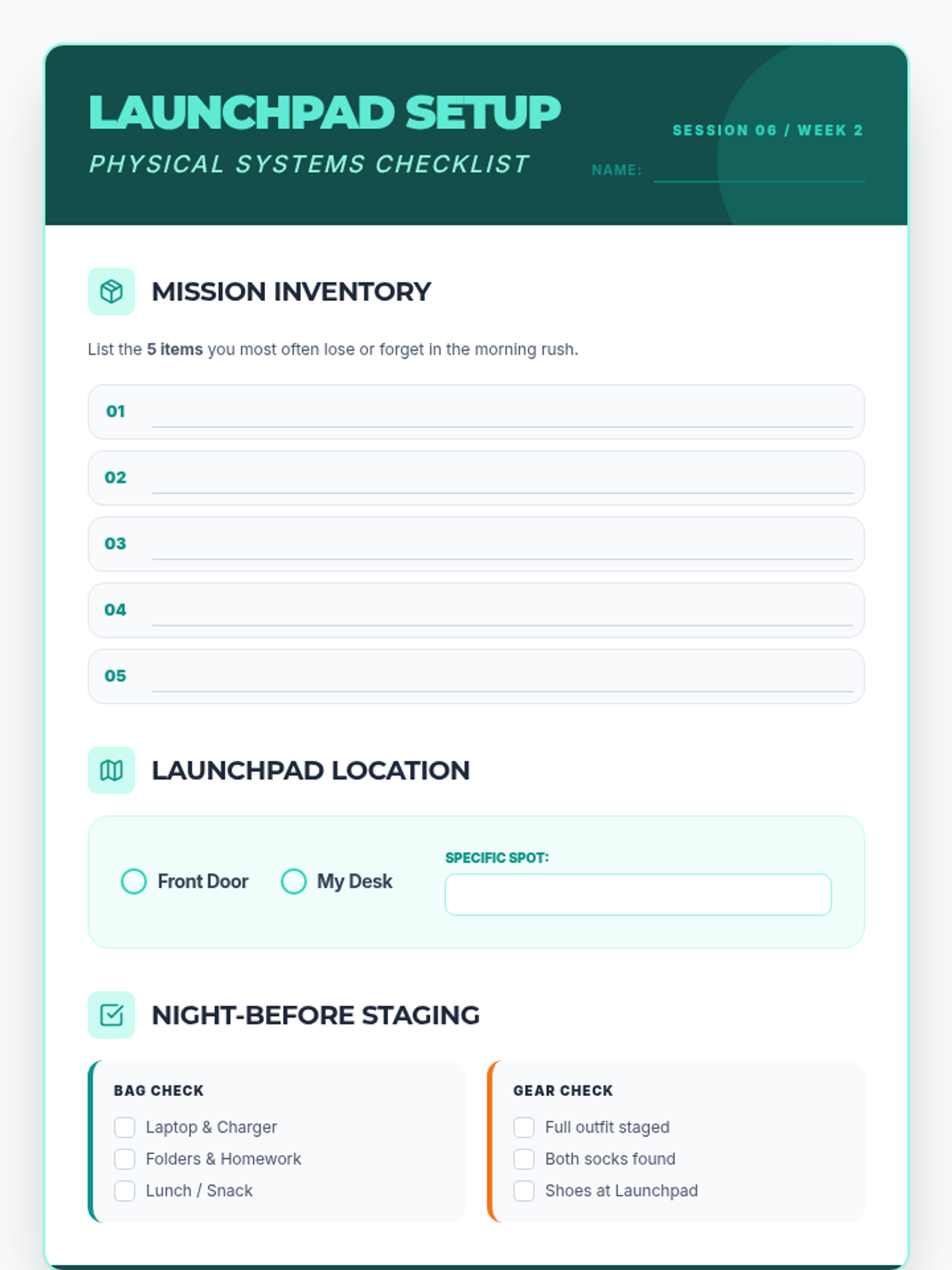
A physical organization checklist revised to fit on a single page, featuring vertical inventory lines for easier handwriting and improved print layout.
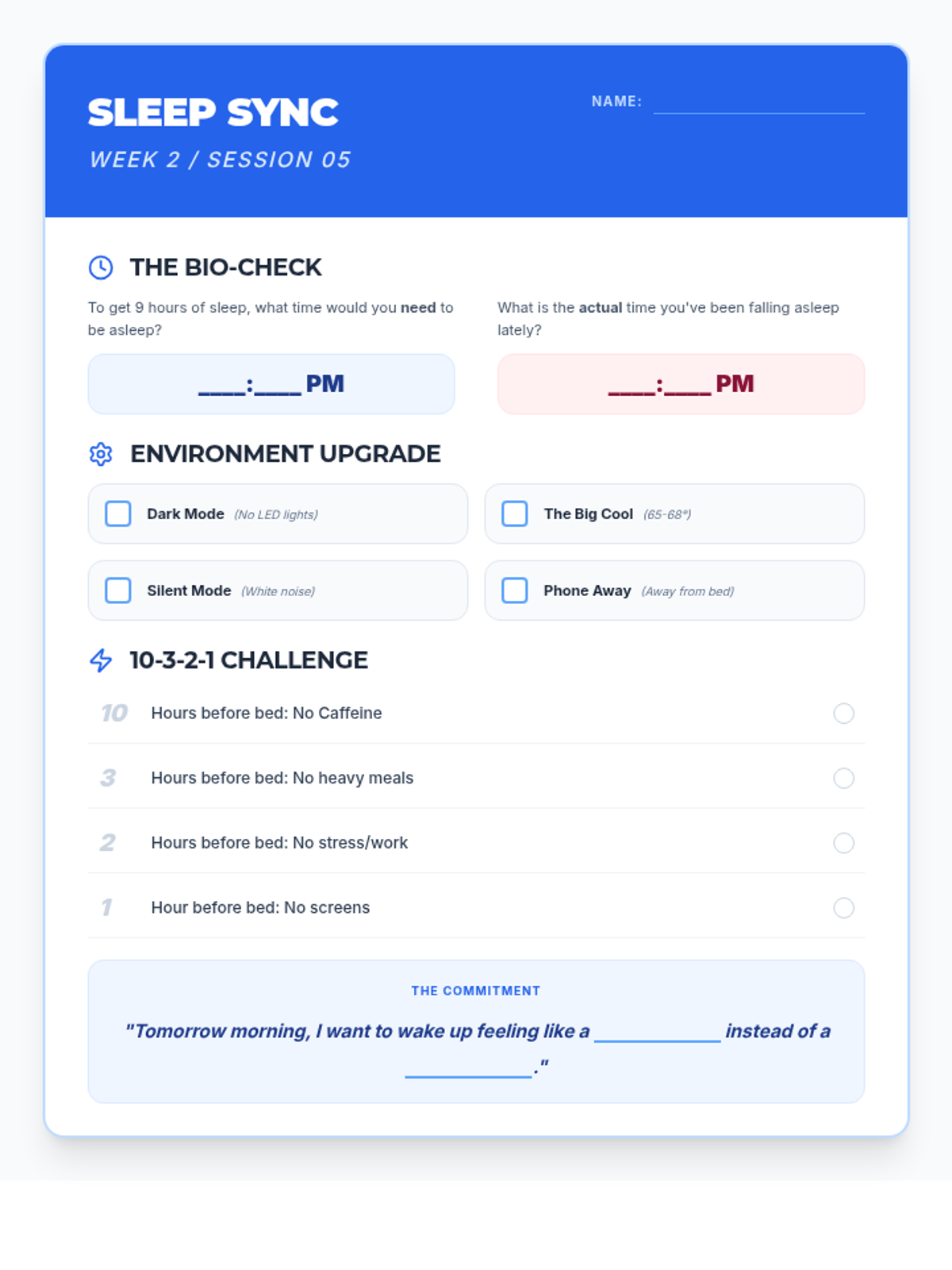
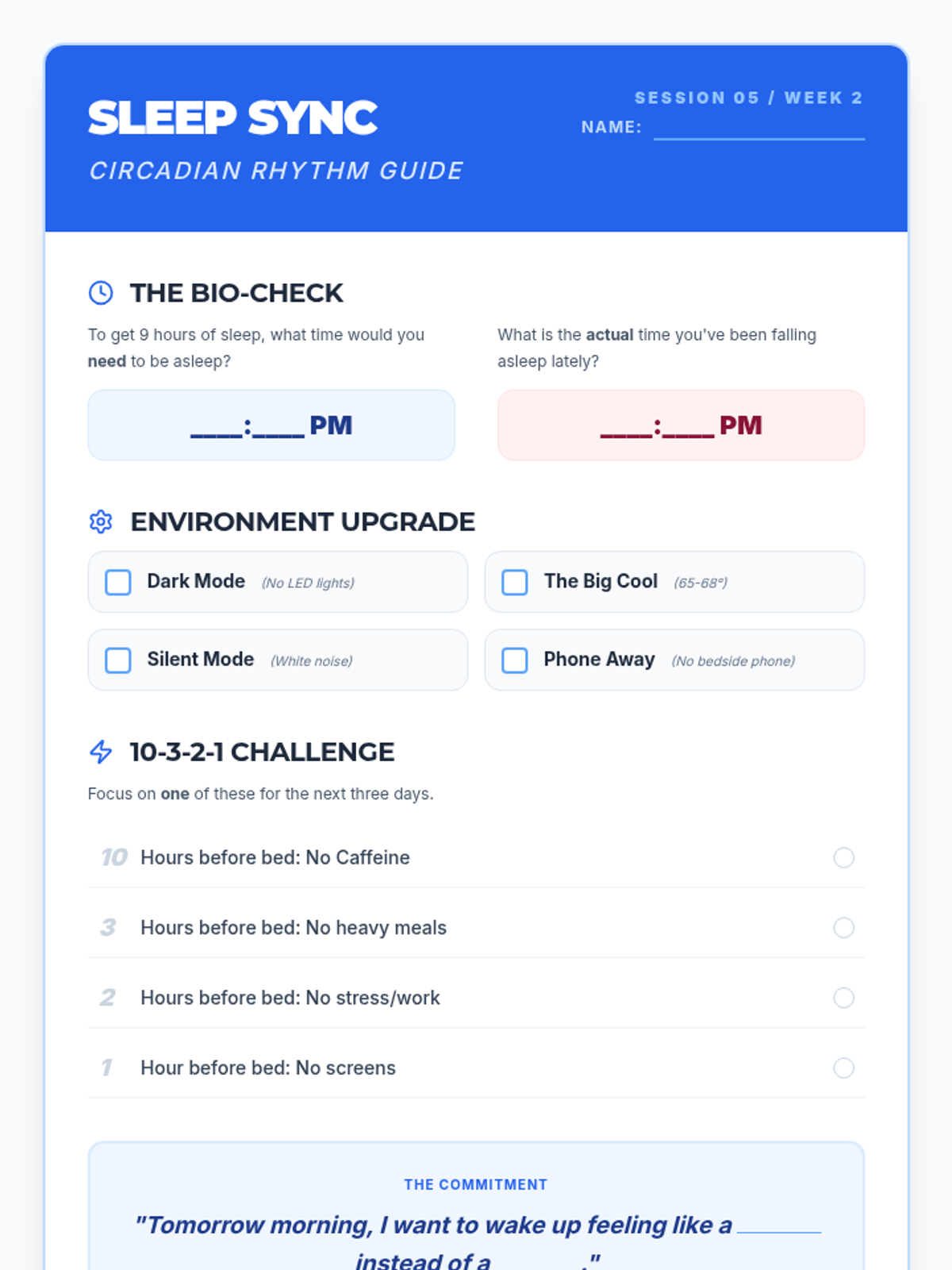
A sleep hygiene guide revised to fit on a single page, featuring improved contrast for student handwriting and functional input spaces for commitments.
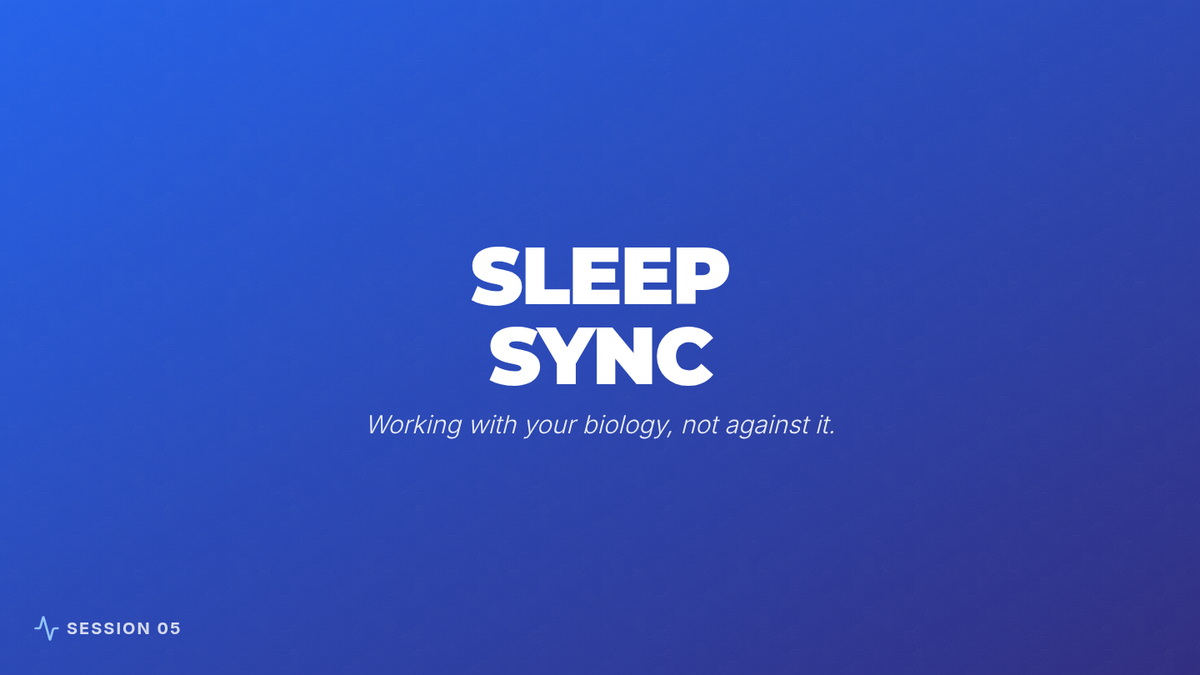
Instructional slides for the Sleep Sync lesson, revised with better text contrast for projection and simplified layouts for guaranteed PDF rendering.
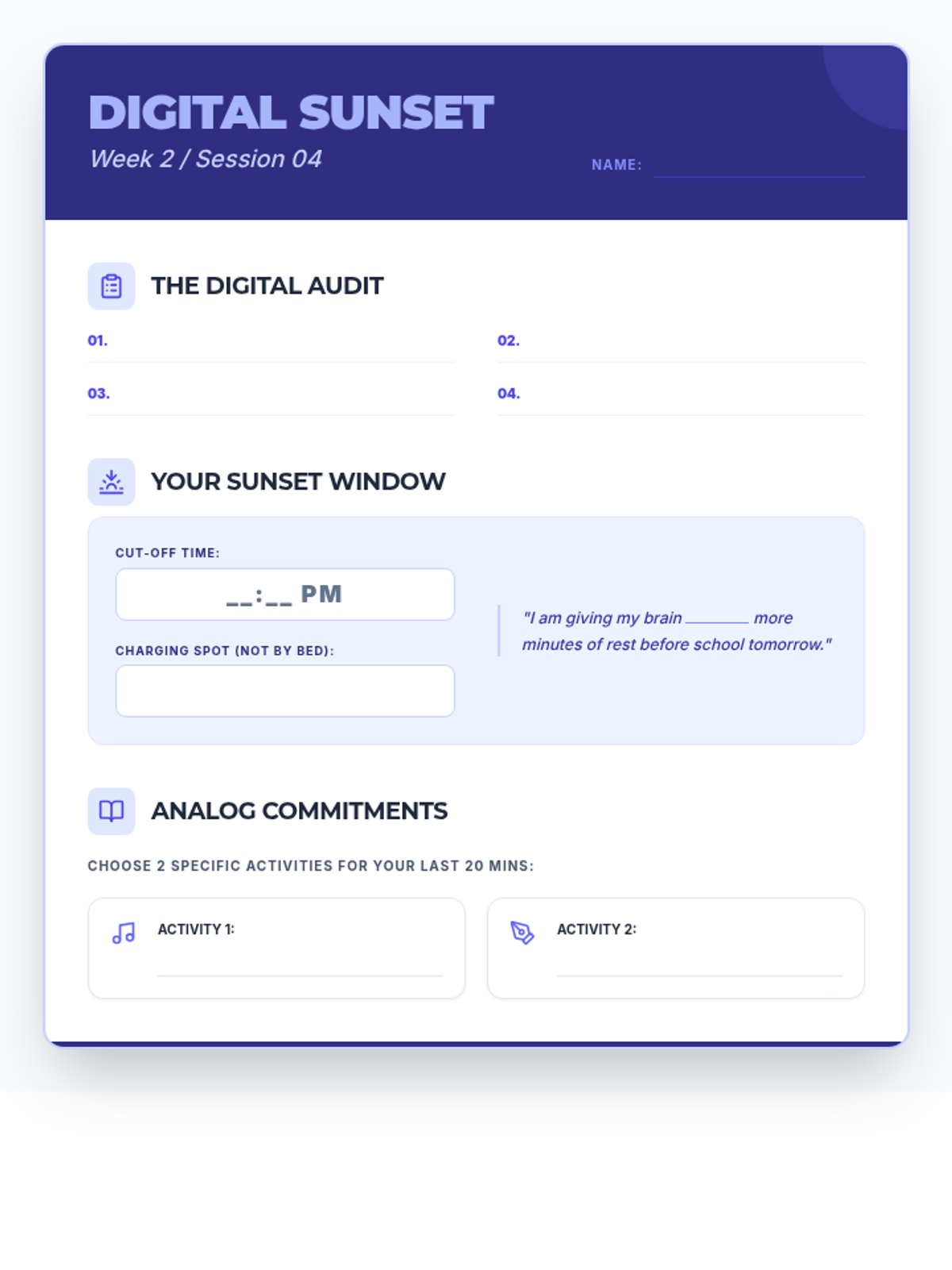
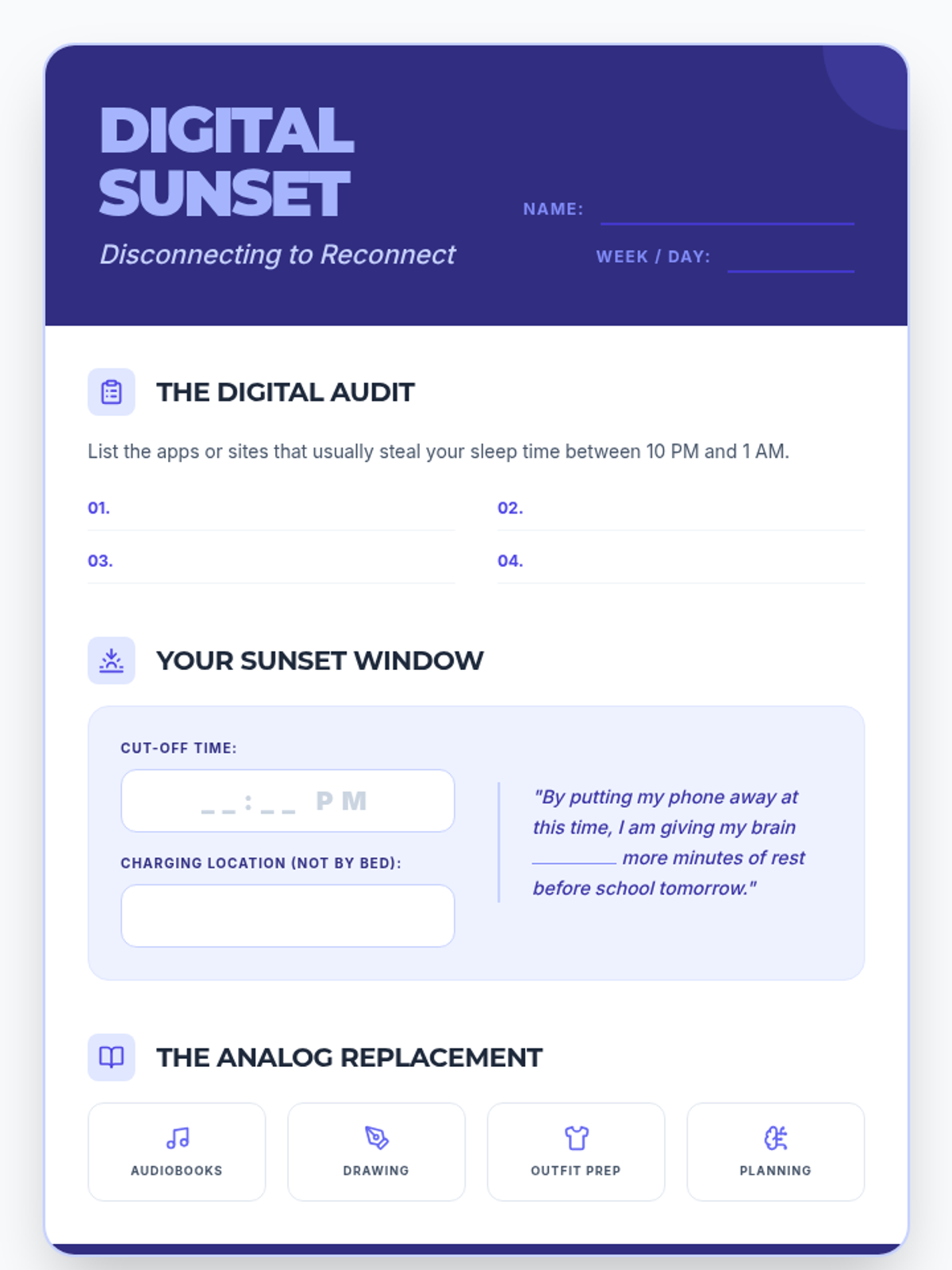
A worksheet for designing a 'Digital Sunset' window, revised to fit on a single page with larger handwriting areas and functional input spaces for analog commitments.
Instructional slides for the Digital Sunset lesson, revised with higher contrast for projection, improved word spacing, and a clearer roadmap for the 5-week cycle.
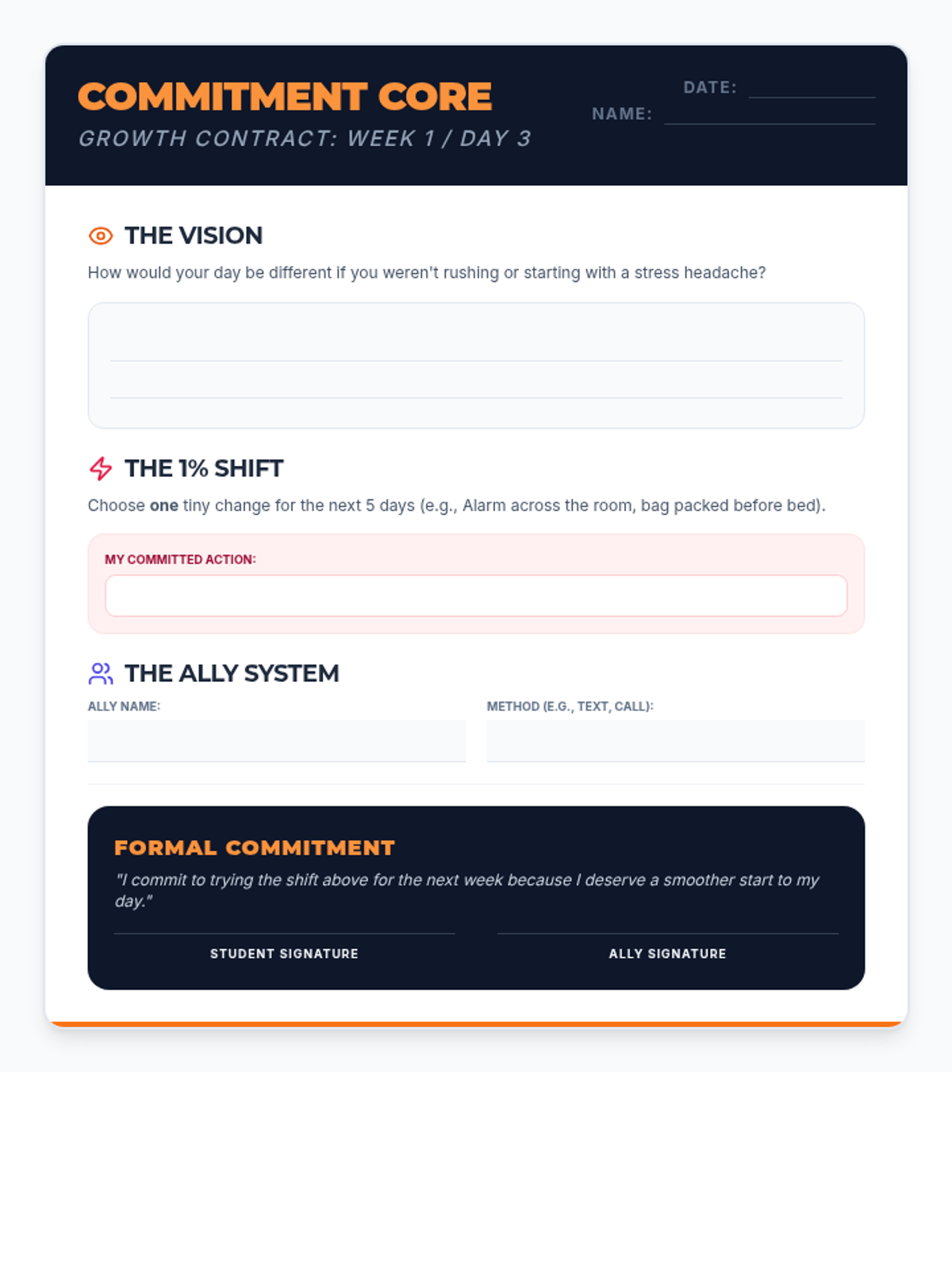
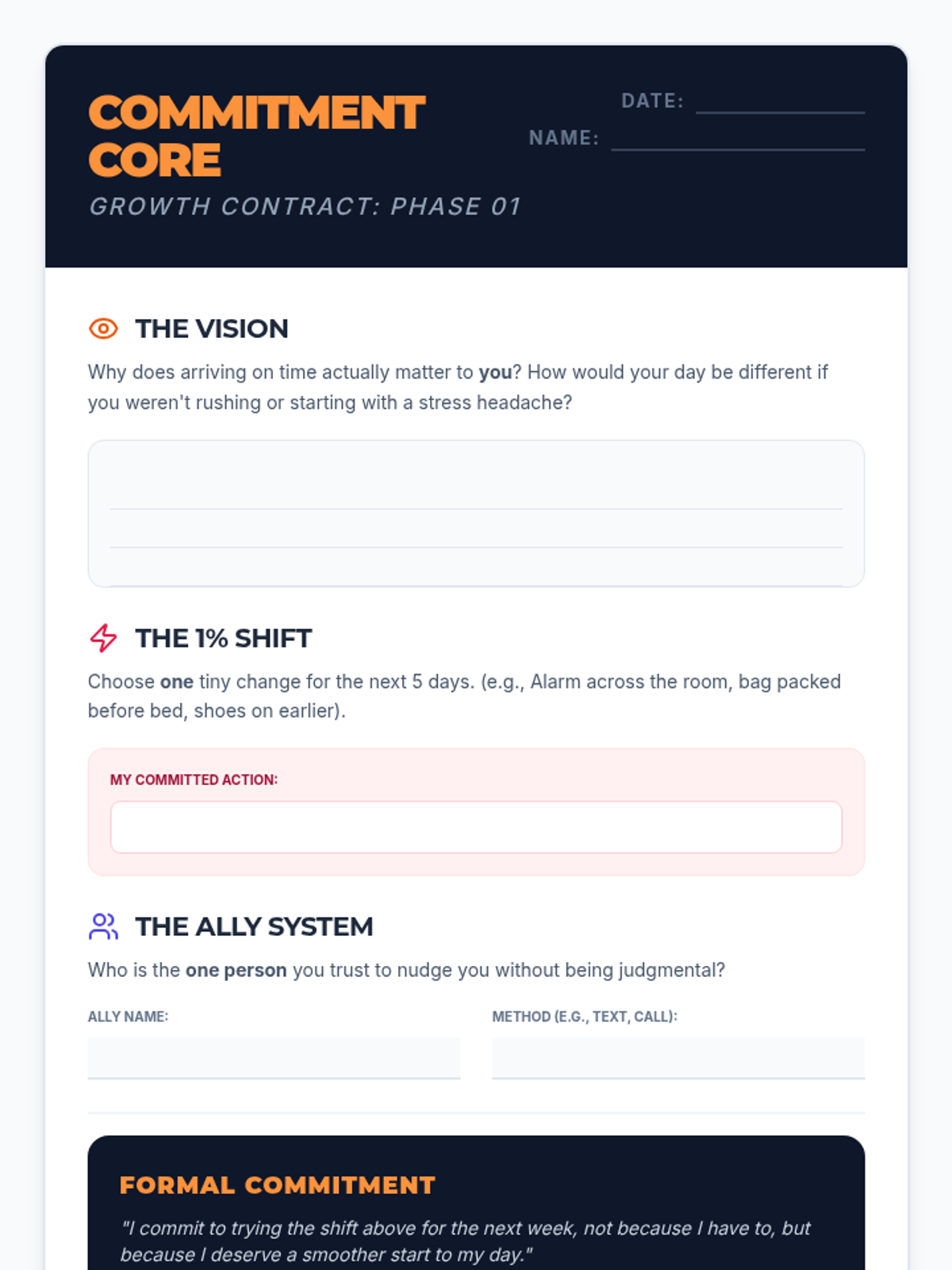
A formal growth contract revised to fit on a single page, featuring guided lines for student writing and explicit layout adjustments for print utility.
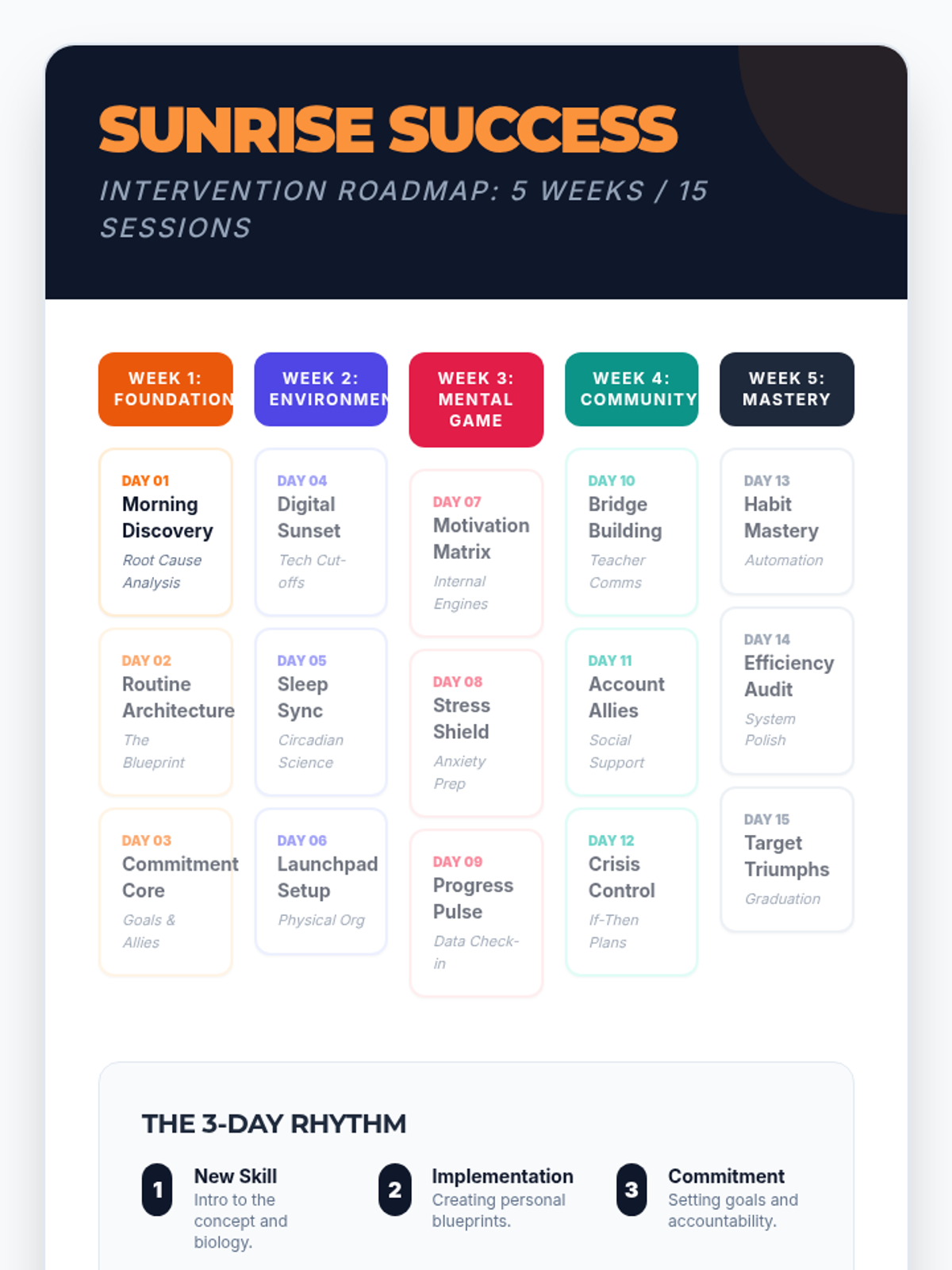
A comprehensive visual roadmap of the 15-session restorative attendance intervention, outlining the themes and daily topics across the 5-week cycle.
Instructional slides for the Launchpad Setup lesson, revised with higher contrast for projection and simplified design elements for reliable PDF rendering.
A sleep hygiene guide revised to fit on a single page, featuring improved contrast for student handwriting and a consolidated layout.
Instructional slides for the Sleep Sync lesson, revised with better text contrast for projection and a redesigned layout for quotes and mission statements.
A worksheet for designing a 'Digital Sunset' window, revised to fit on a single page with larger handwriting areas and a flexible week/day header.
Instructional slides for the Digital Sunset lesson, revised with higher contrast for projection, a week-at-a-glance roadmap, and improved visual centering.
Introductory slides for the Commitment Core lesson, revised to include the 5-week intervention roadmap and improved visual contrast/layout.
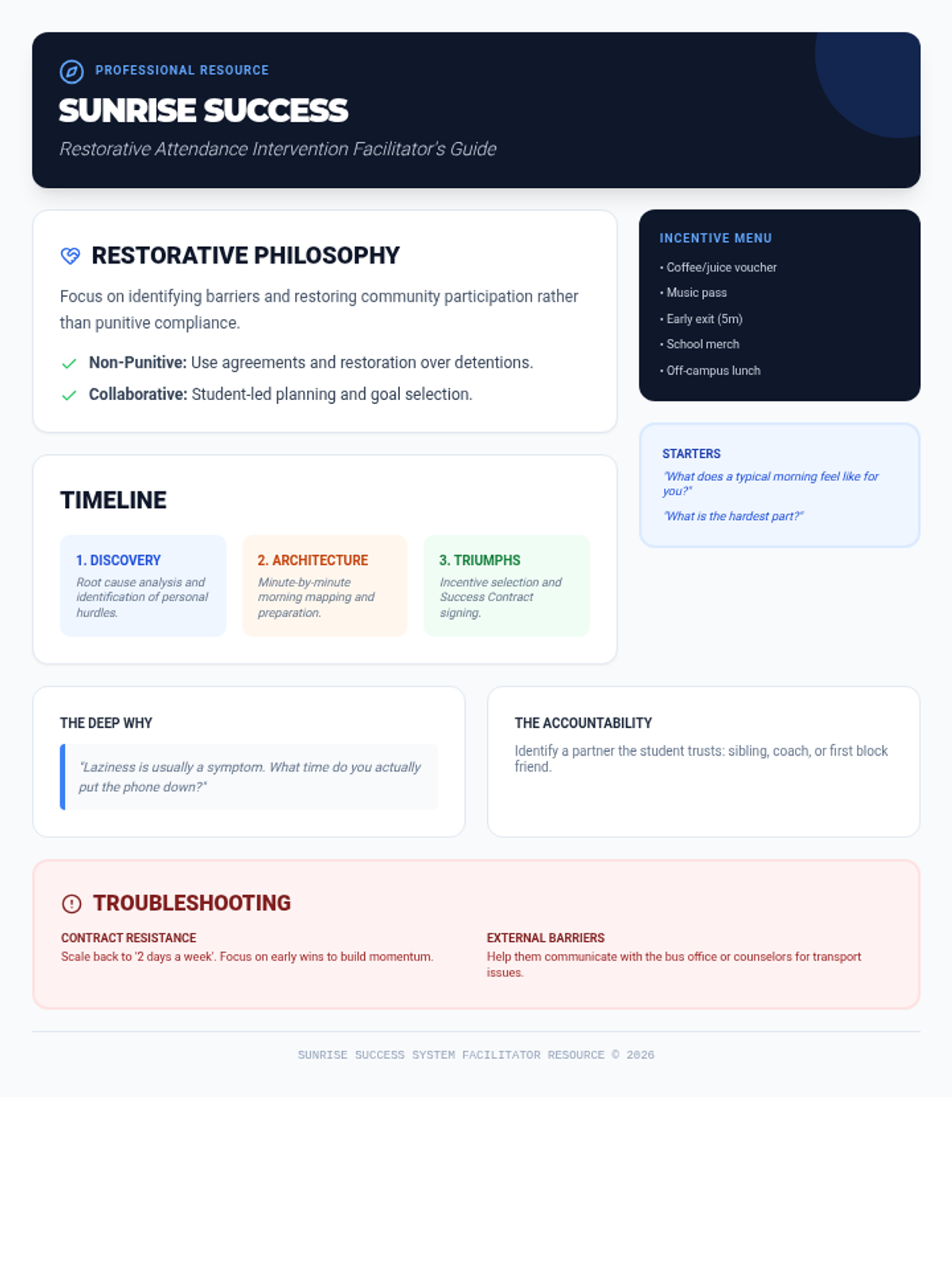
A comprehensive teacher/facilitator guide for implementing the Sunrise Success intervention. It outlines restorative philosophies, provides facilitation scripts, suggests incentive ideas, and offers troubleshooting strategies for high school attendance issues.
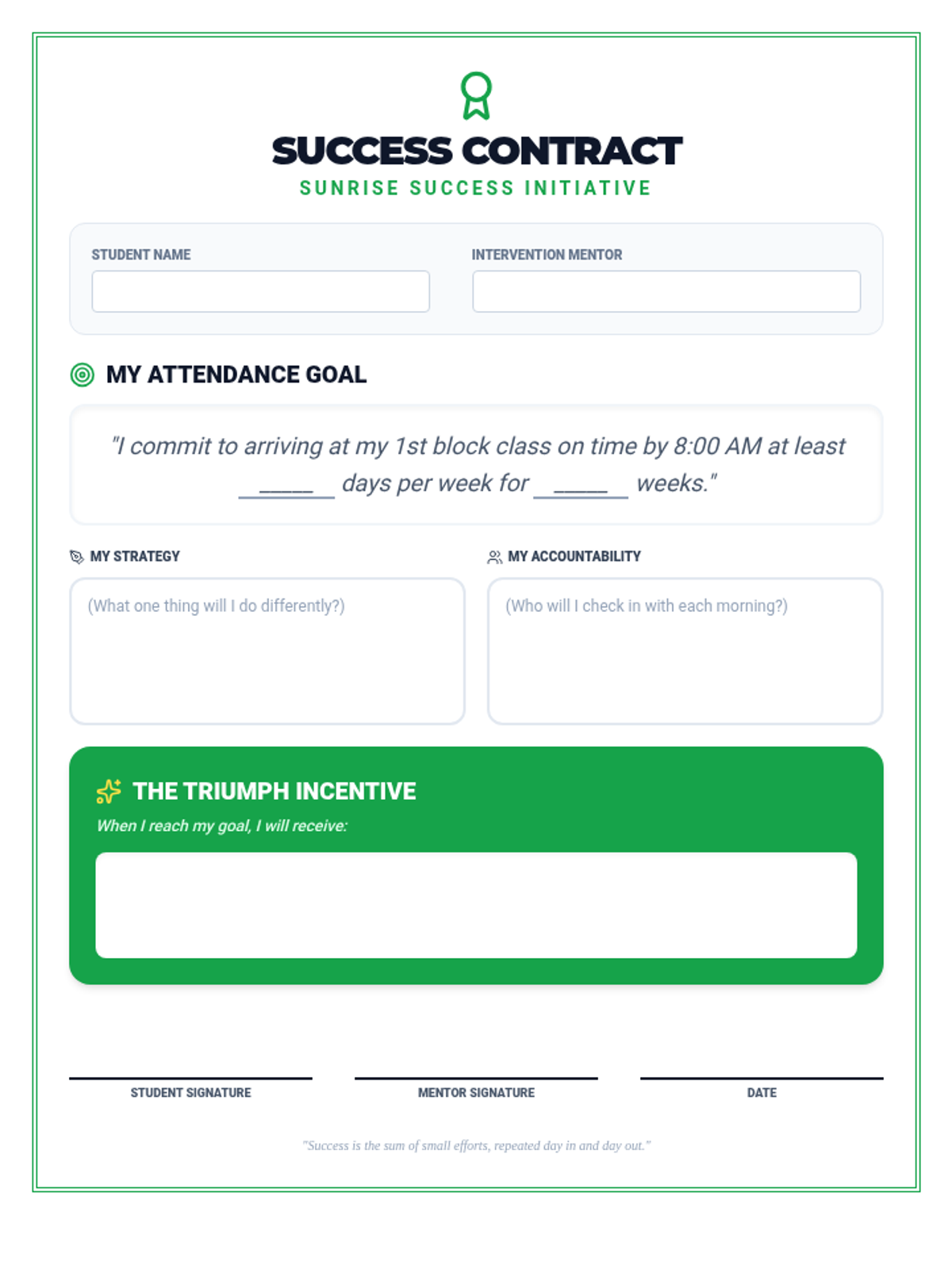
A formal 'Success Contract' for high school students completing an attendance intervention. It includes sections for defining goals, specific morning strategies, accountability partners, and earned incentives.
Presentation for the final session of the Sunrise Success intervention. It focuses on the psychology of incentives, reward selection, and the importance of daily accountability check-ins for high school students.
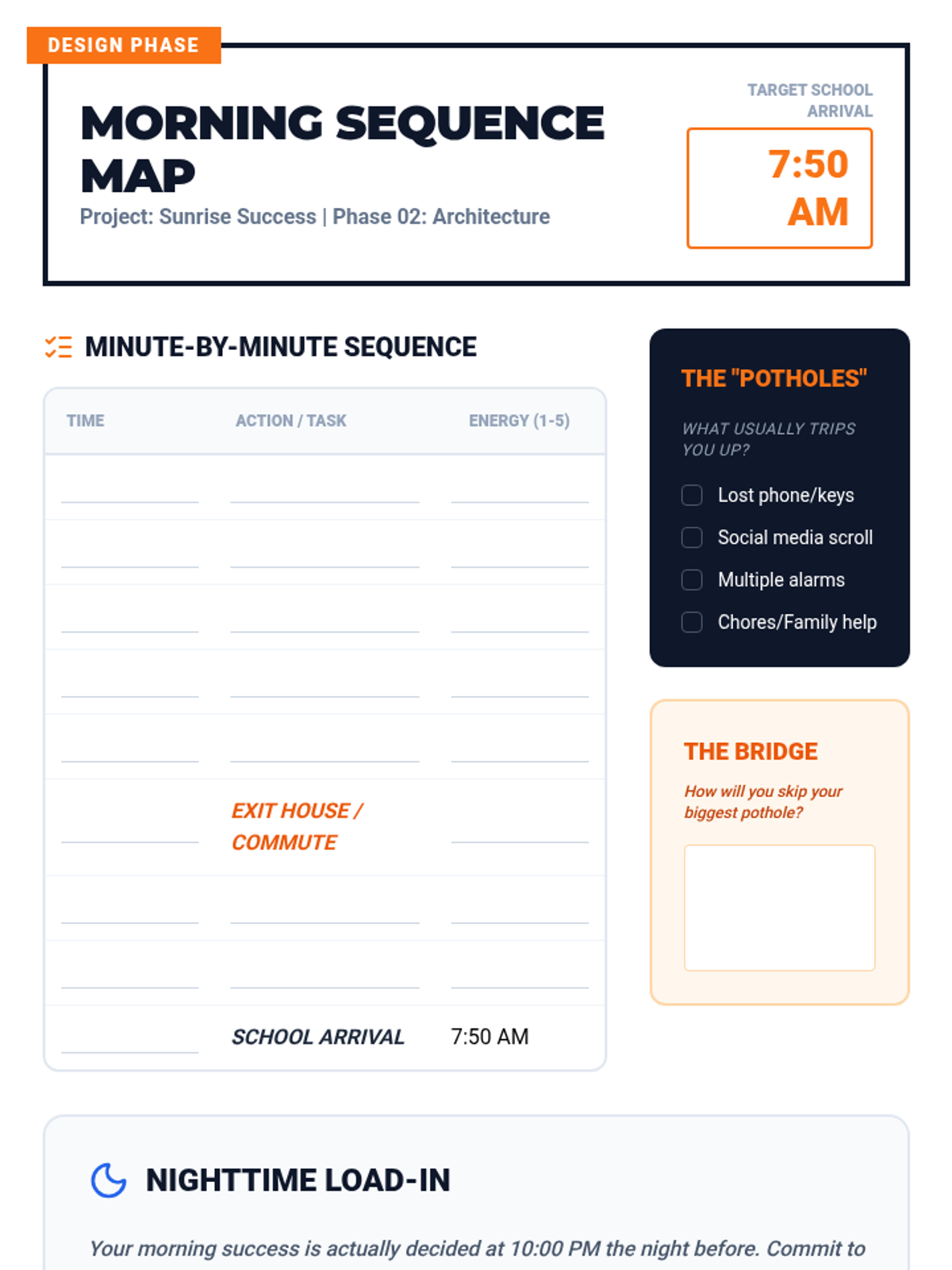
A structured worksheet for high school students to map out their morning routine. It includes a minute-by-minute planning table, identification of 'potholes' (barriers), and a nighttime preparation checklist.
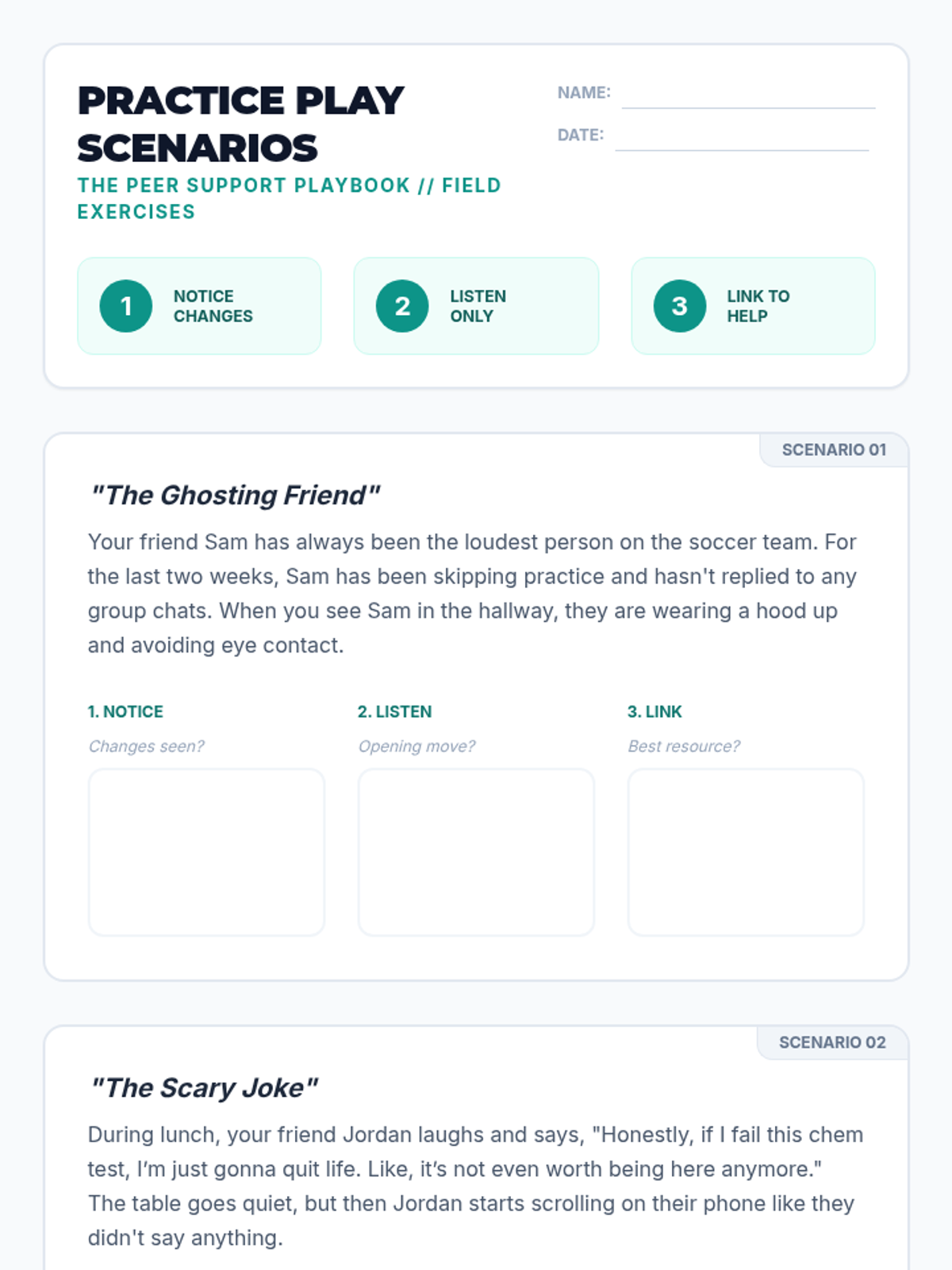
A student worksheet featuring realistic social scenarios for practicing the 'Notice, Listen, Link' support model and boundary-setting.
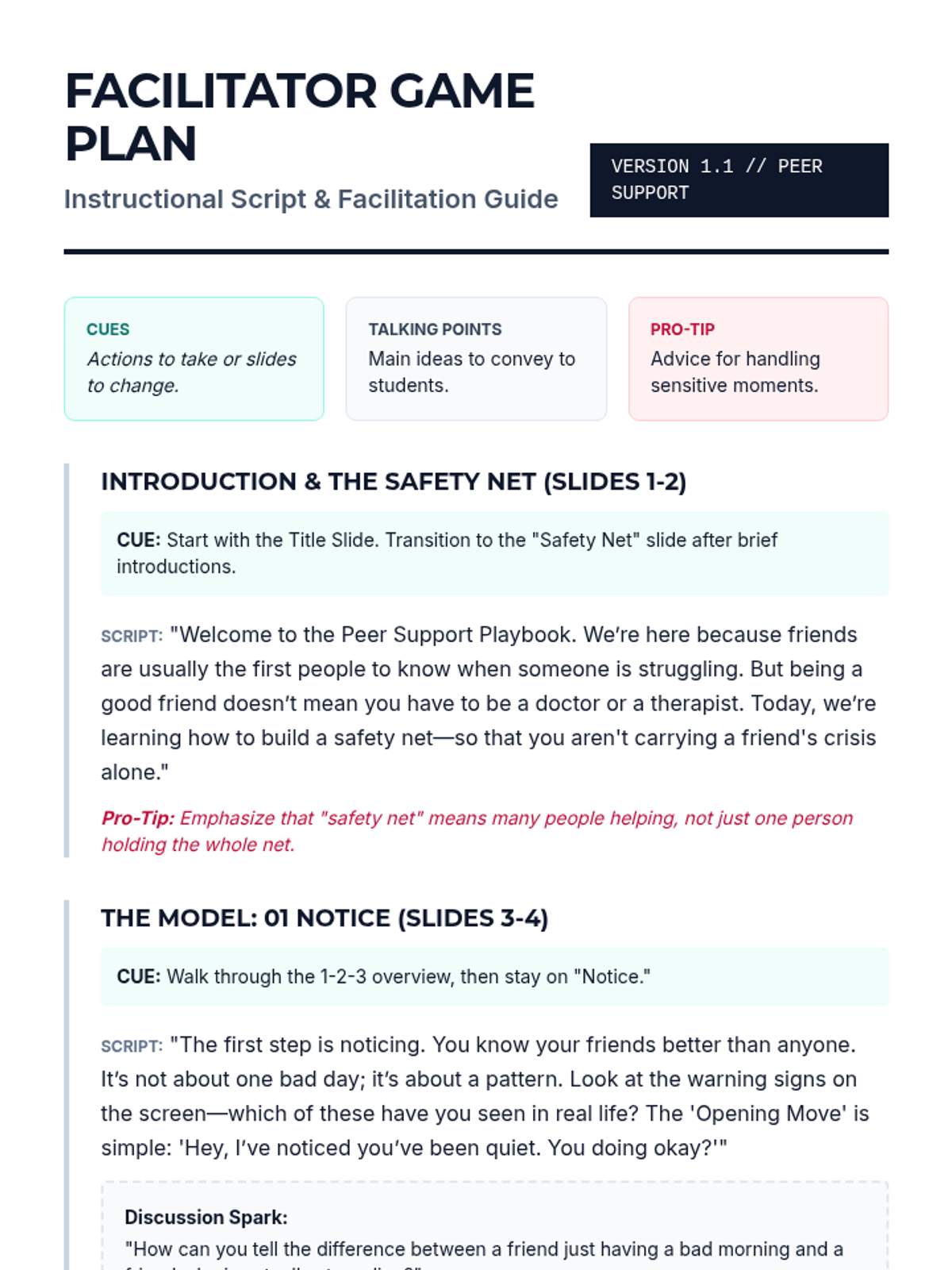
A detailed facilitator script and instructional guide for leading the Peer Support Playbook workshop, including talking points, slide cues, and discussion prompts.
A visual presentation for the Peer Support Playbook workshop, introducing the 'Notice, Listen, Link' model and emphasizing the importance of a safety net.
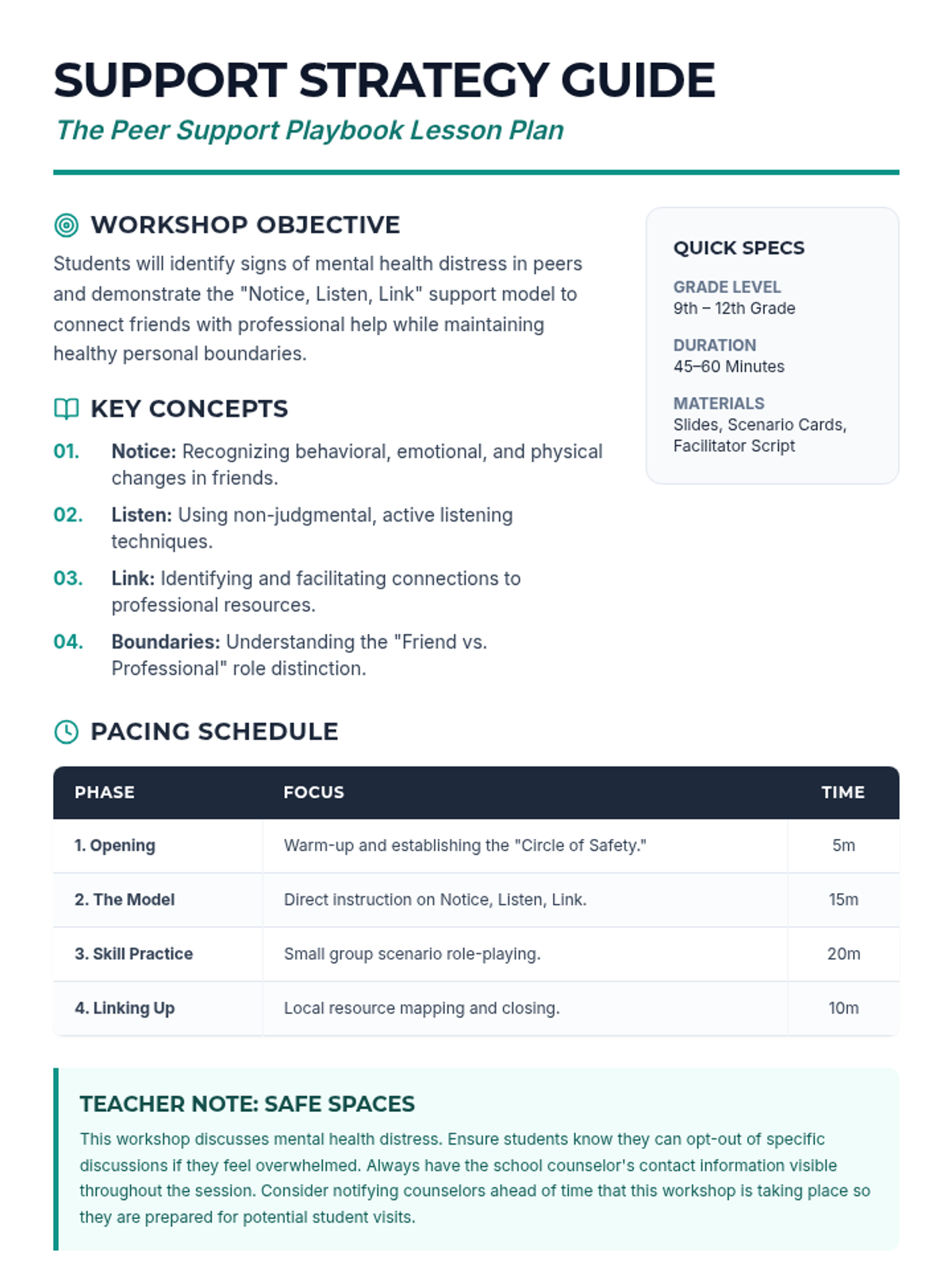
A comprehensive lesson plan for high school educators, outlining the objectives, pacing, and key concepts for the Peer Support Playbook workshop.
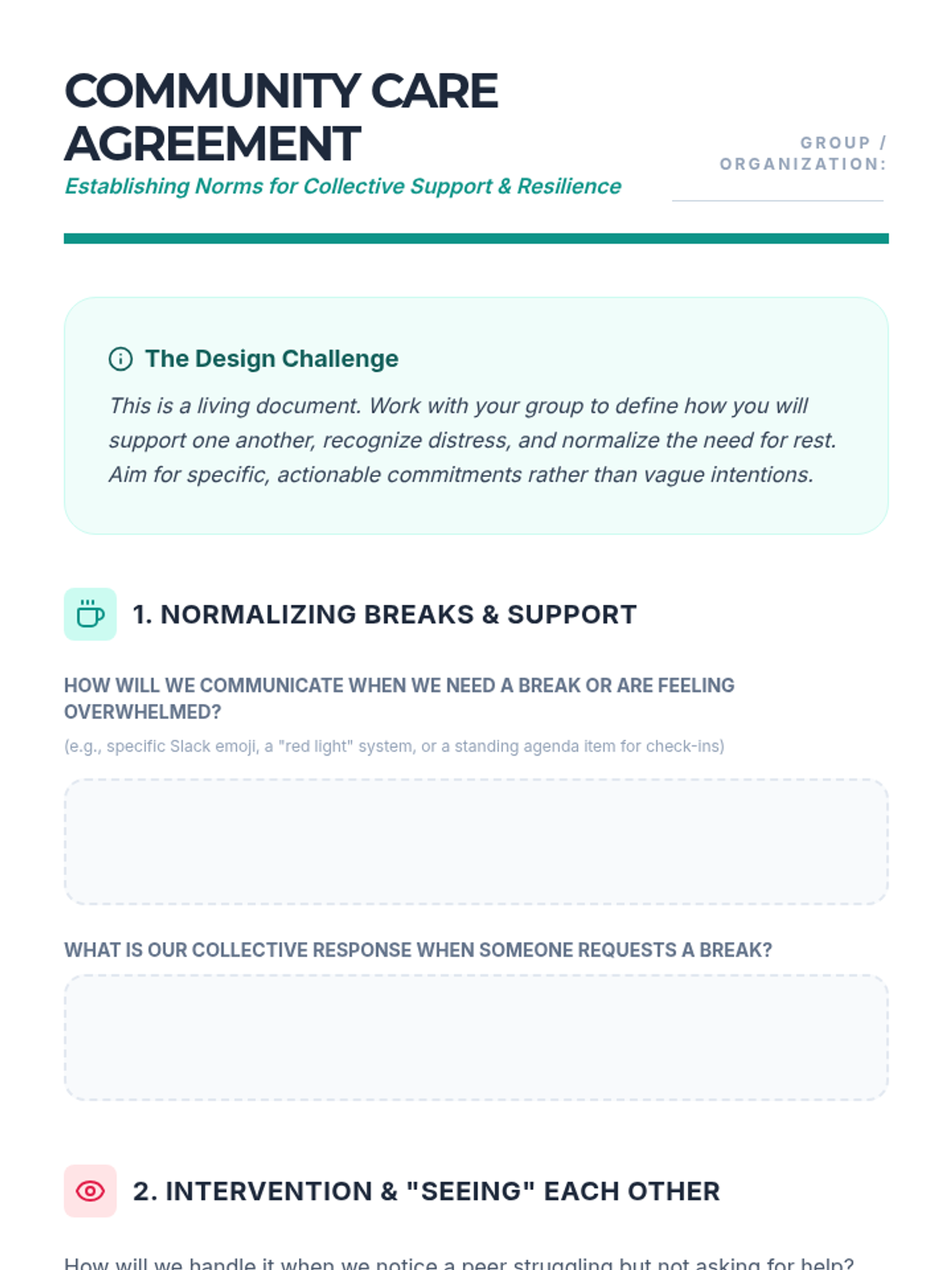
A design template for students to create a 'Community Care Agreement', establishing norms for mutual support, intervention strategies, and collective boundaries.
Slide deck for the 'Building Care Webs' lesson, introducing the concept of collective care vs. self-care and providing a framework for creating Community Care Agreements.
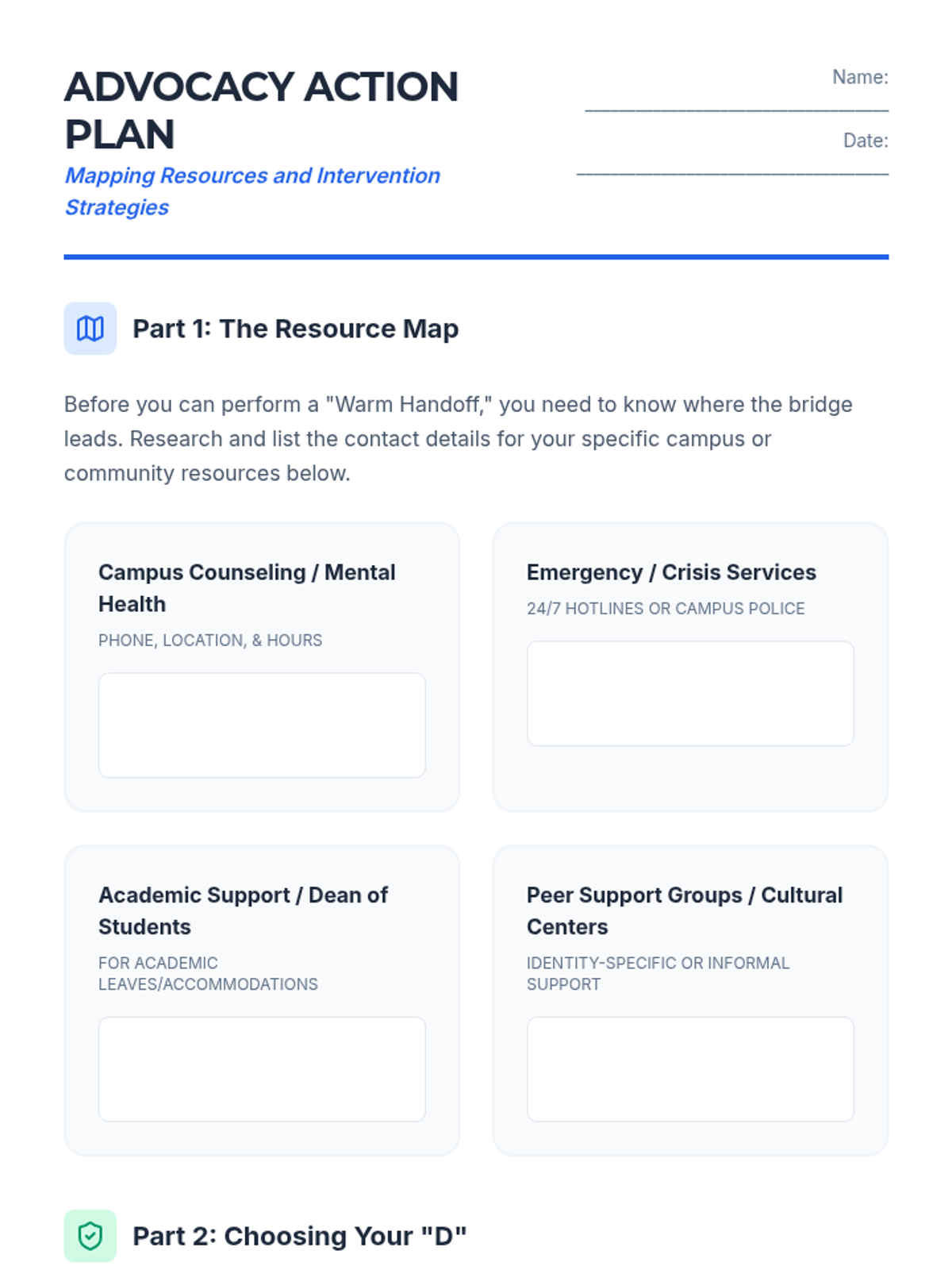
A student worksheet for mapping local mental health resources and practicing the 5Ds of intervention in a specific peer-distress scenario.
Slide deck for 'Mental Health Advocacy', covering the bystander effect, the 5Ds of intervention strategies, and the 'Warm Handoff' technique for connecting peers to professional resources.
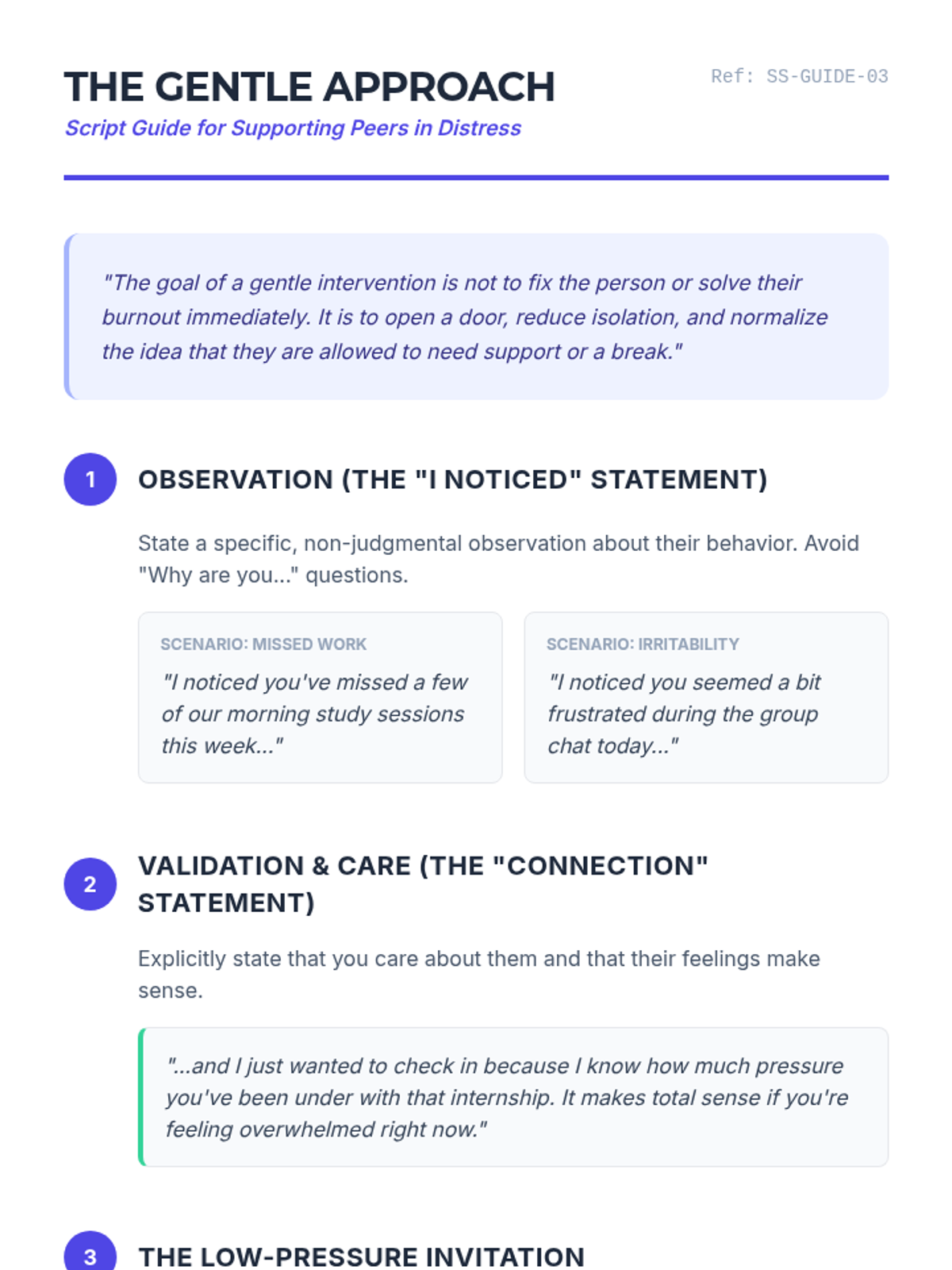
A script-building guide for students to practice the 'Gentle Approach' to intervention, providing specific phrasing for observations, validation, and low-pressure invitations.
Slide deck for 'Spotting the Signs', covering the three dimensions of burnout (Exhaustion, Cynicism, Inefficacy), behavioral red flags, and the three-step 'Gentle Approach' for intervention.
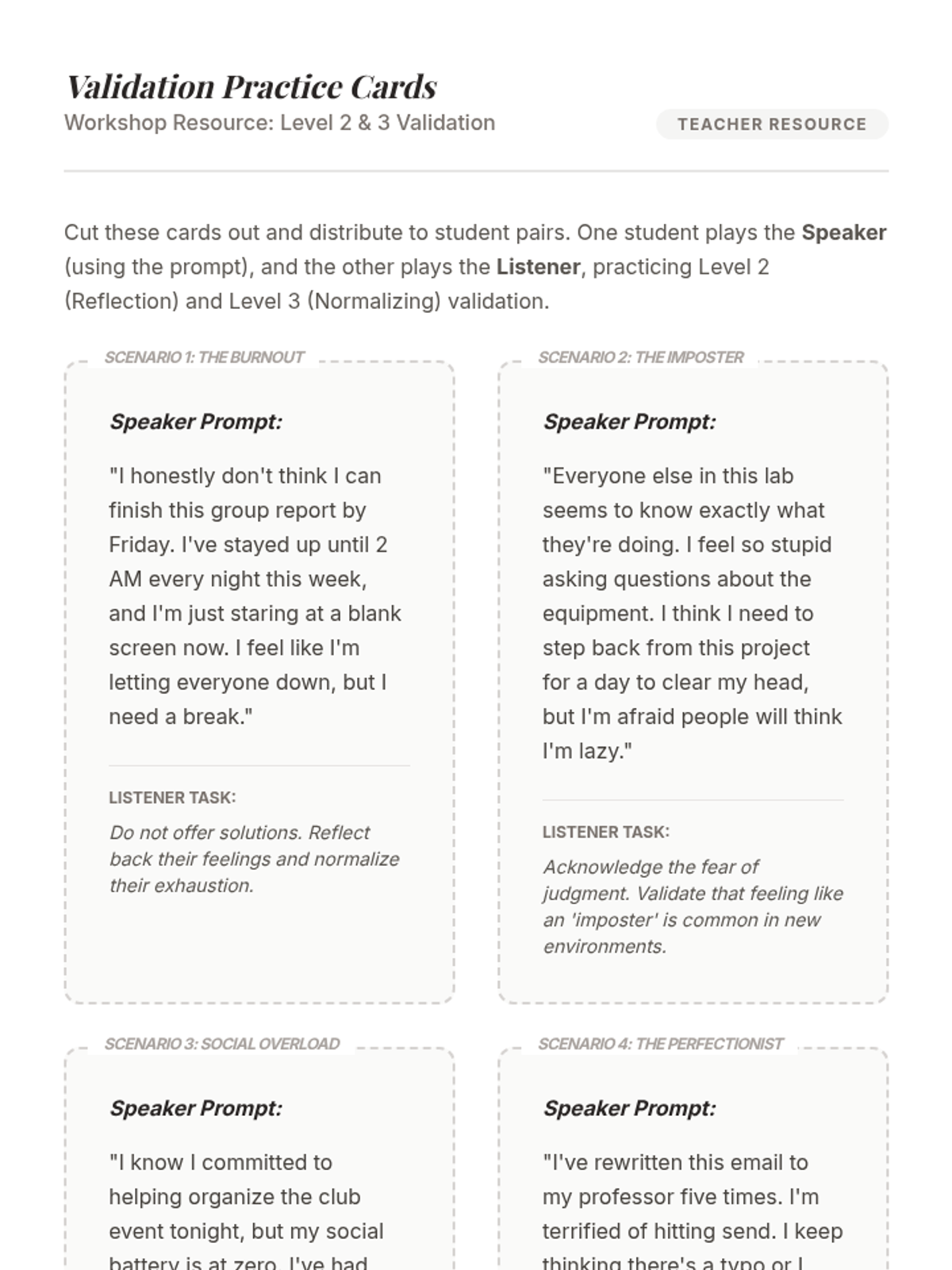
Scenarios and facilitator notes for the active listening workshop, providing students with structured practice in emotional validation and 'holding space' for peers in distress.
Slide deck for the 'Holding Space Workshop' lesson, focusing on the distinction between problem-solving ('fixing') and emotional validation, and introducing the 3 levels of validation.
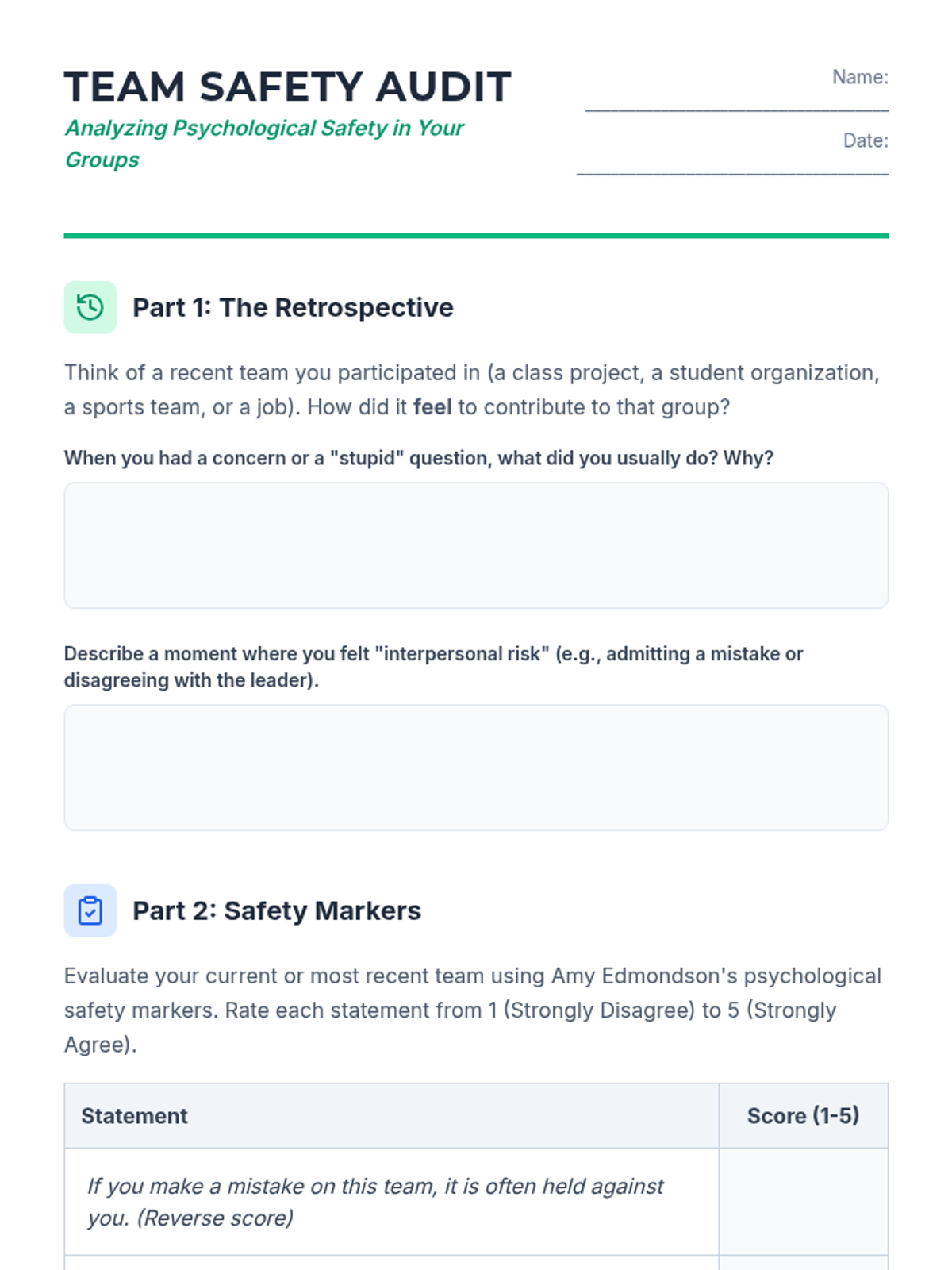
A reflection and audit worksheet for students to analyze the psychological safety of their own teams and identify barriers to requesting support.
Introductory slides for the 'Safe Spaces for Strong Teams' lesson, covering Google's Project Aristotle and the fundamental definition of psychological safety in group settings.
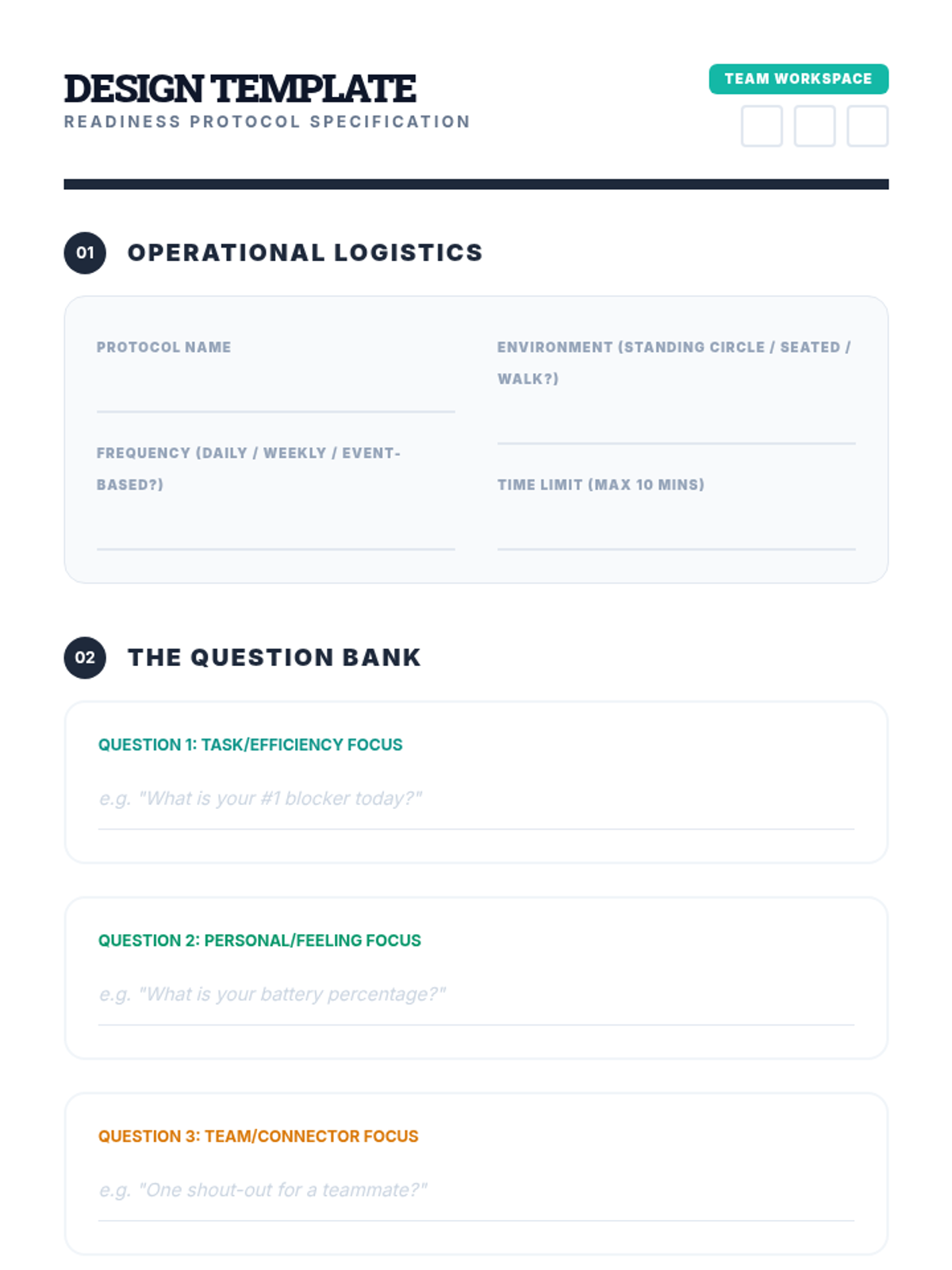
The project planning template for students to design their custom team protocol, including logistics, question banks, and escalation plans.
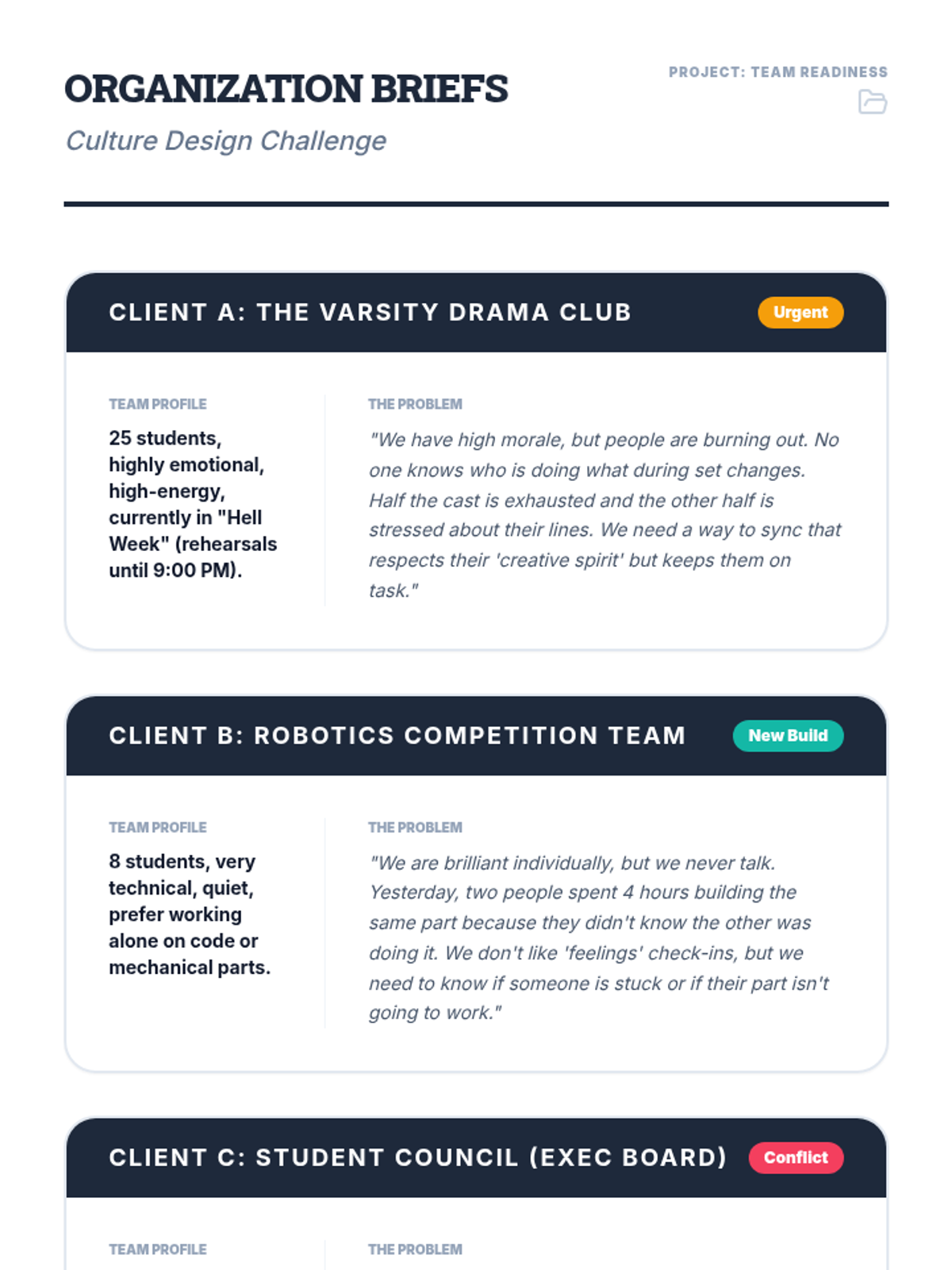
Client case study briefs for the final project, describing three different student organizations with unique team dynamic challenges.
Slide deck for the final project overview, detailing the "Culture Consultant" challenge and pitch requirements.
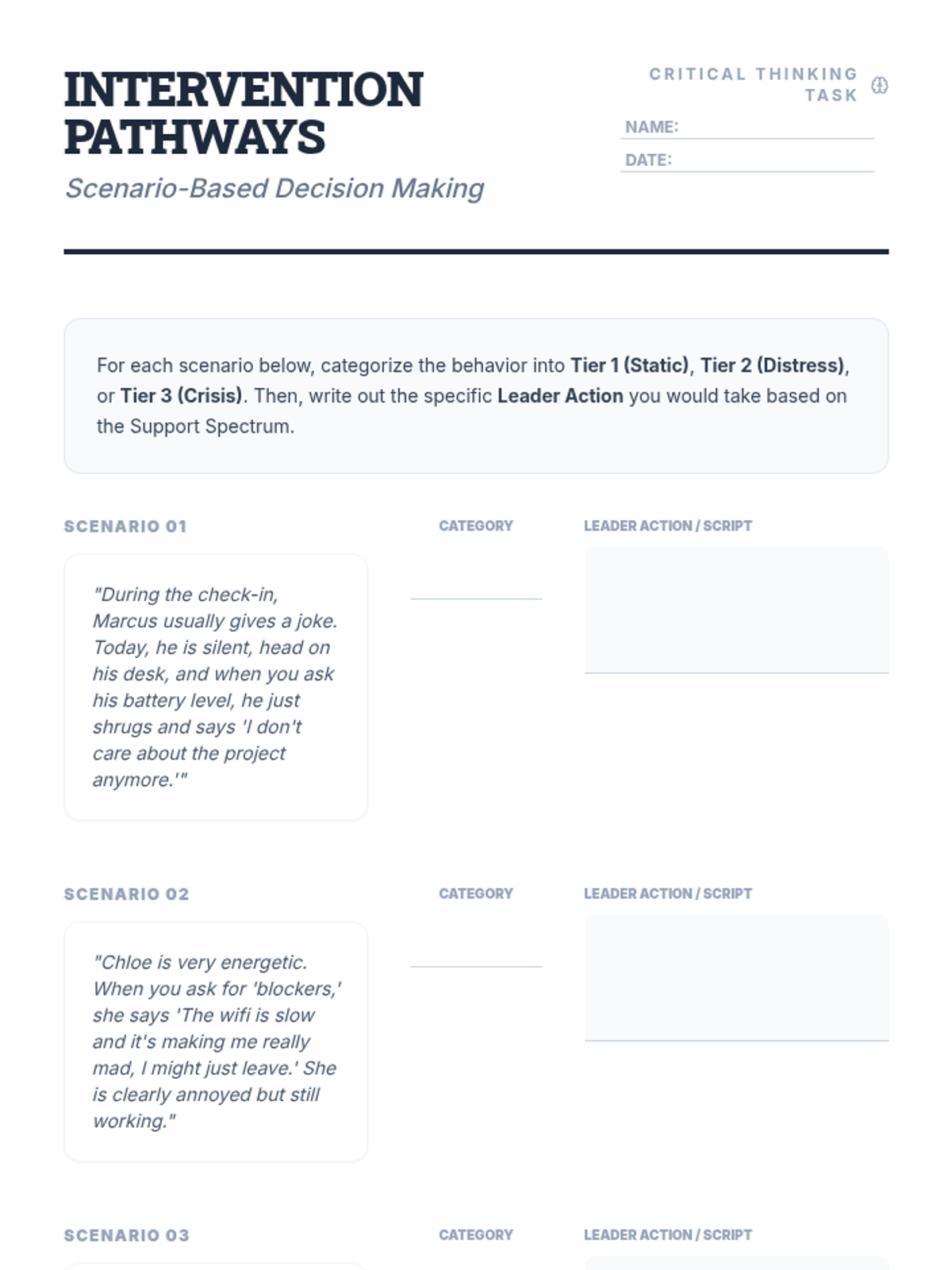
Worksheet for Lesson 4 where students analyze scenarios to determine the appropriate level of intervention and practice writing referral scripts.
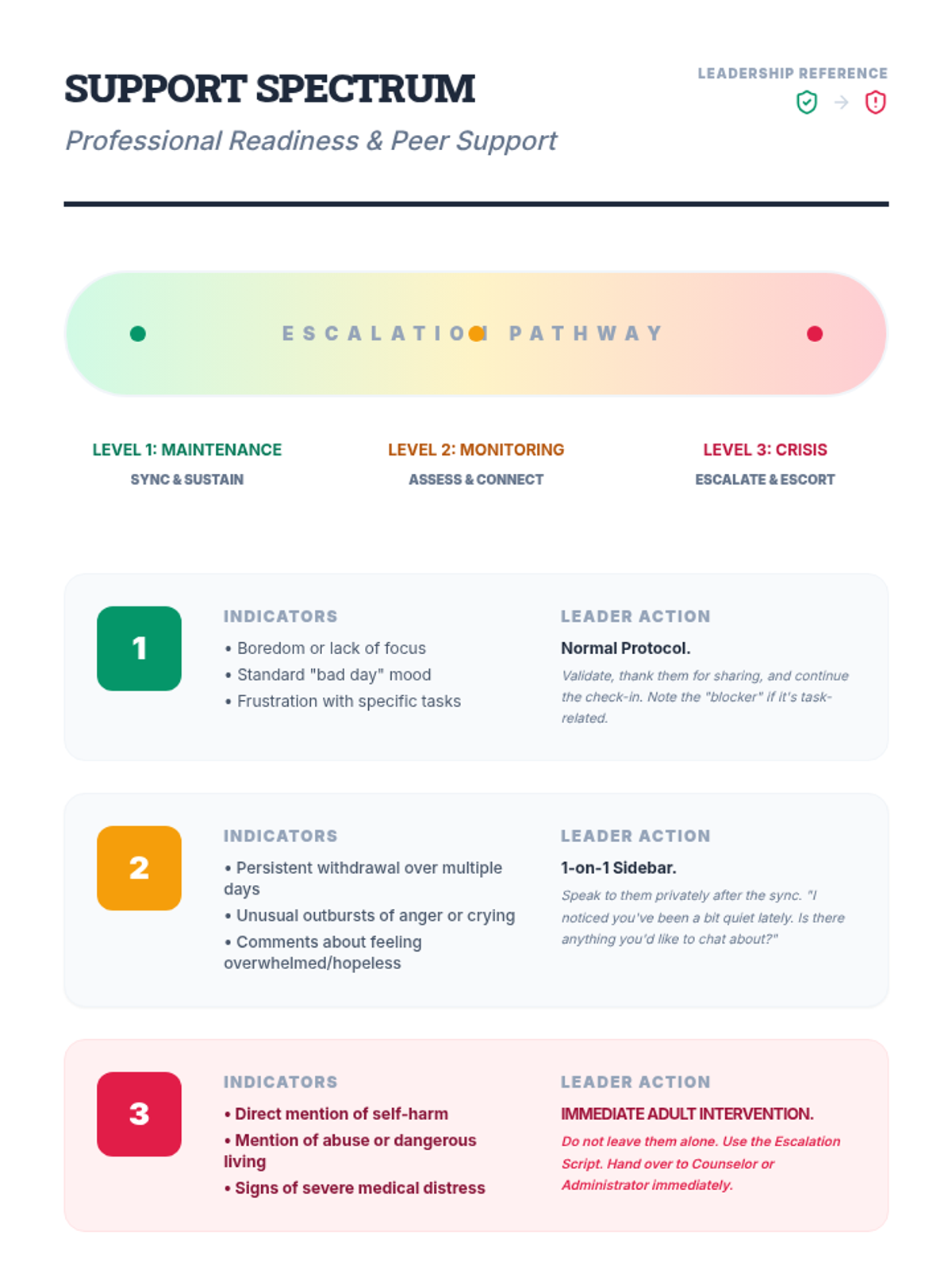
A visual guide and reference sheet for students to understand the different tiers of behavioral indicators and the appropriate leadership responses.
Slide deck for Lesson 4 exploring how to distinguish between a "bad mood" and a "red flag" and when to escalate concerns to professionals.
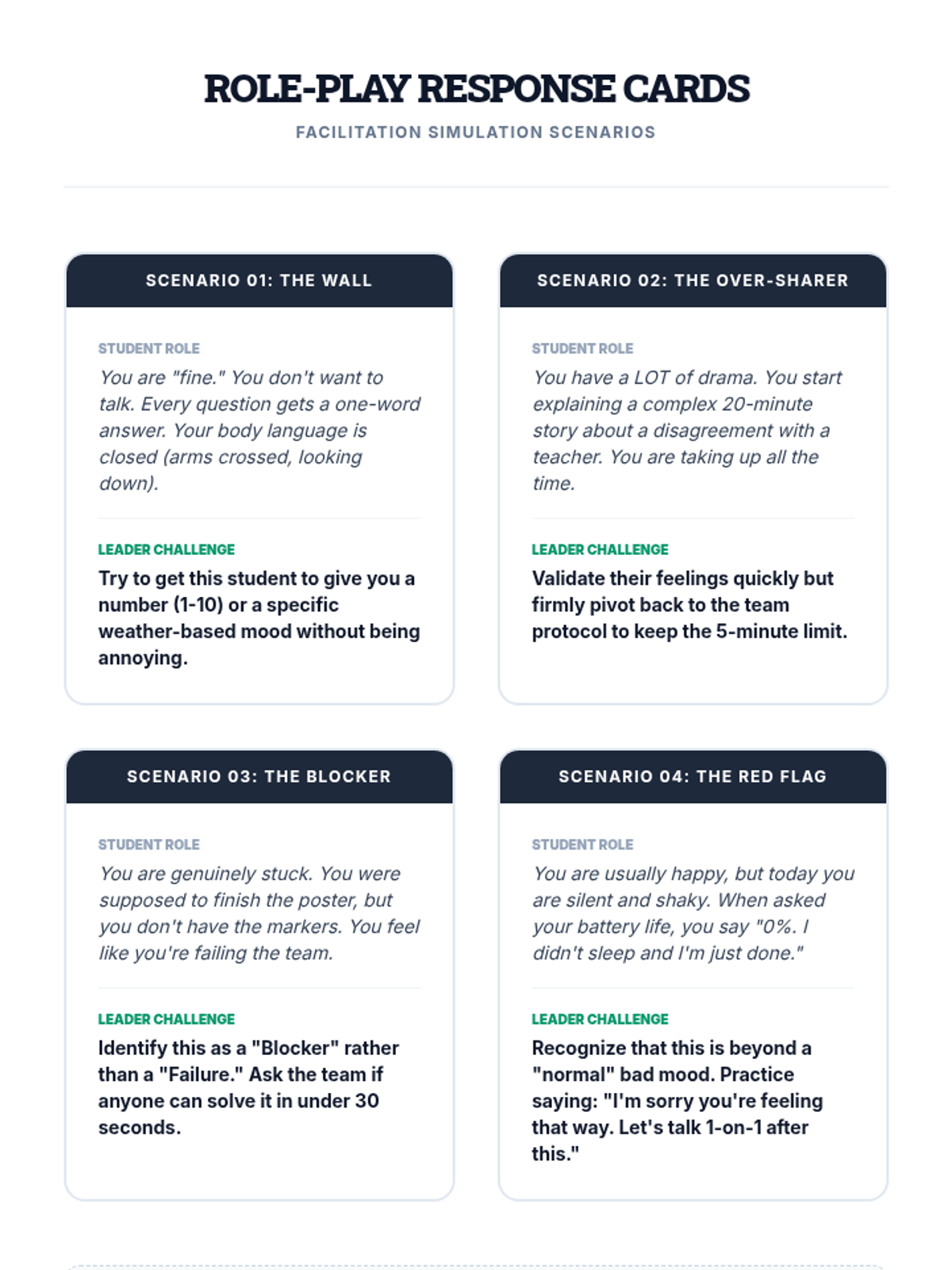
Scenario cards for role-playing common check-in challenges, including a silent student, an over-sharer, a team blocker, and a "red flag" situation.
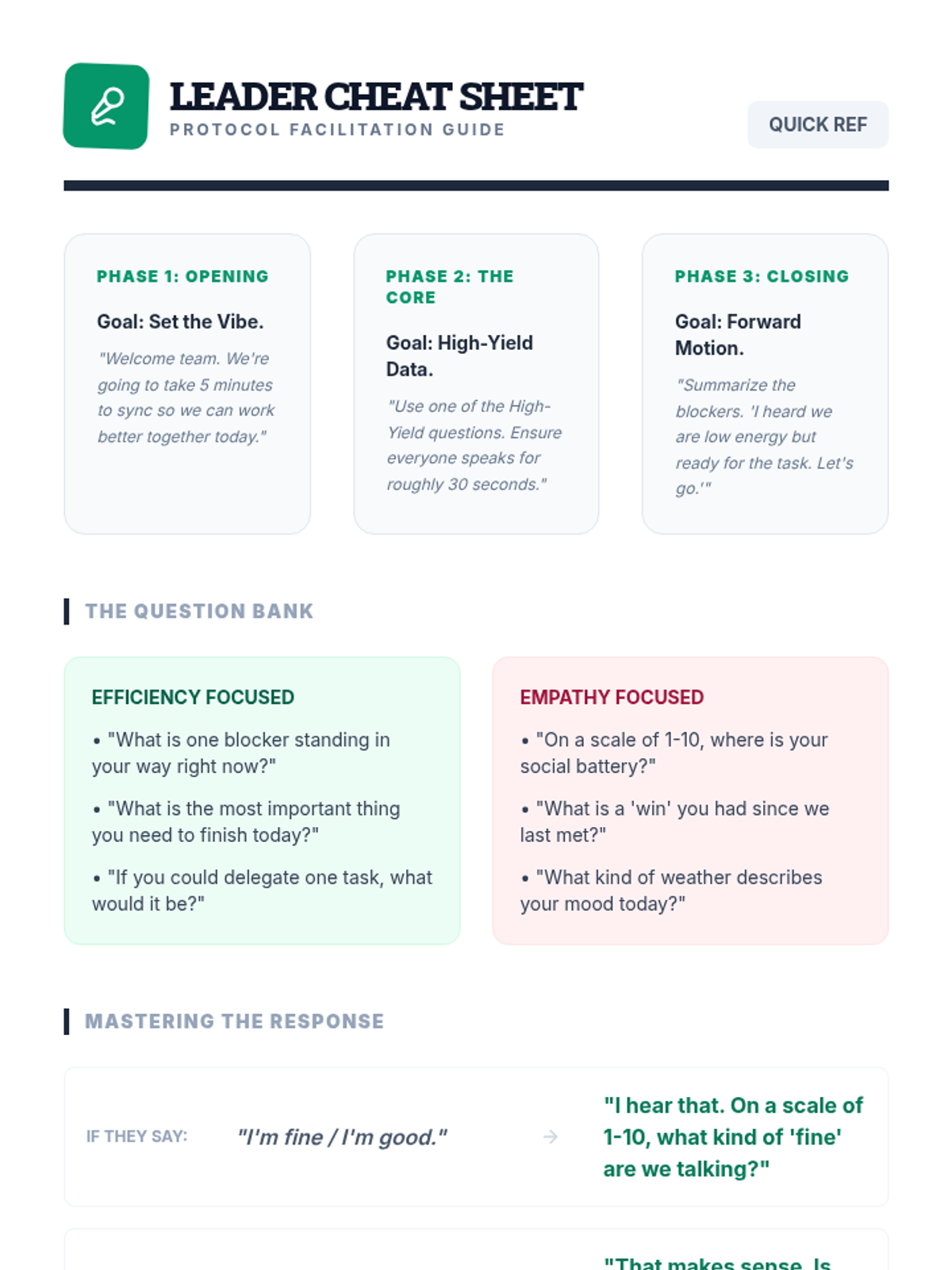
A tactical reference guide for student leaders to use during check-in facilitation practice, featuring question banks and response techniques.
Slide deck for Lesson 3 focusing on facilitation techniques, active listening, and avoid the "fixer" trap during peer check-ins.
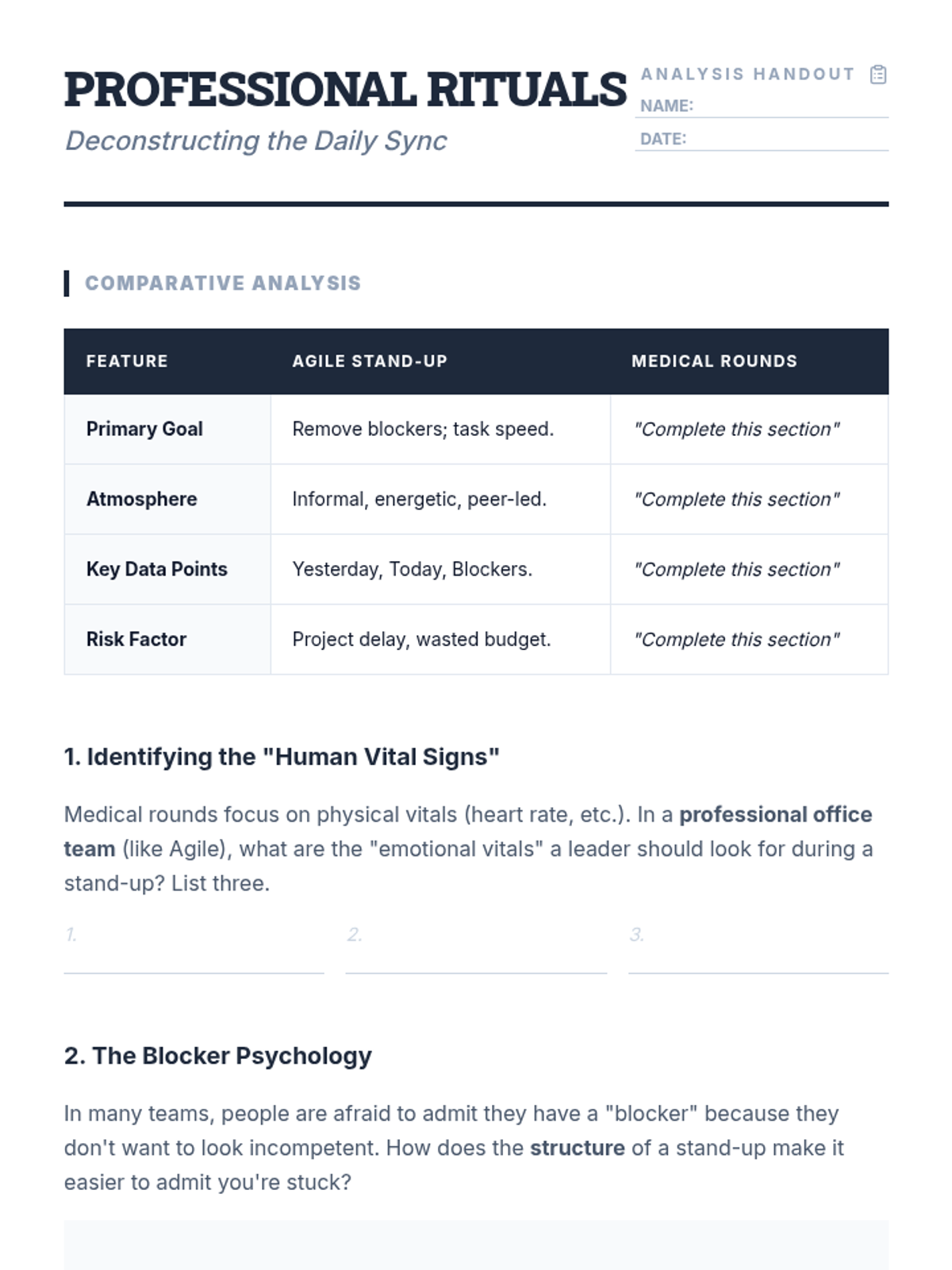
Worksheet for Lesson 2 that helps students compare different professional check-in rituals and analyze their effectiveness for different types of teams.
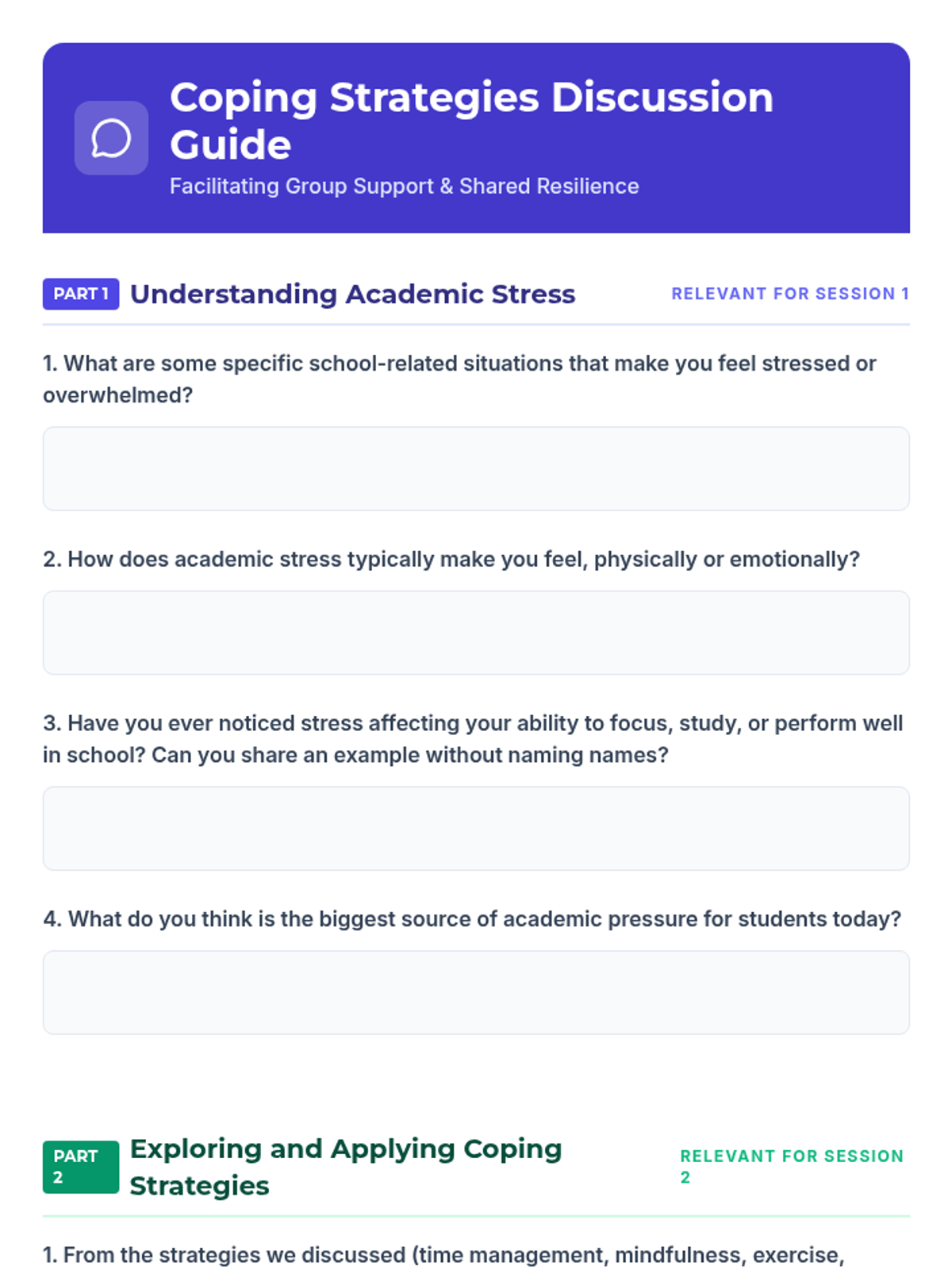
A discussion guide for instructors to facilitate group conversations about academic stress and coping strategies. Organized into Session 1 and Session 2 focus areas.
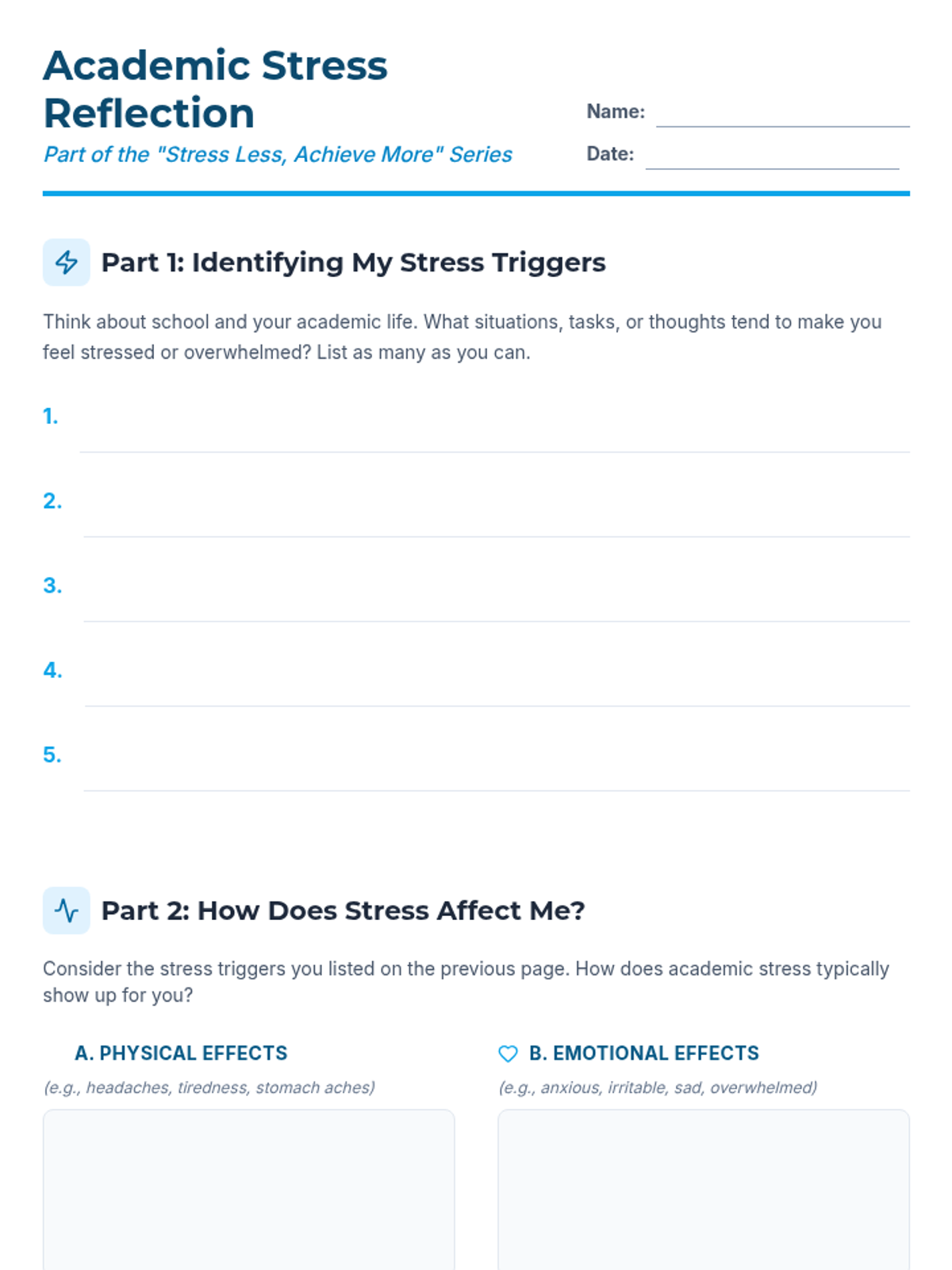
A reflection worksheet for students to identify their personal academic stress triggers and analyze how stress affects them physically, emotionally, and mentally.
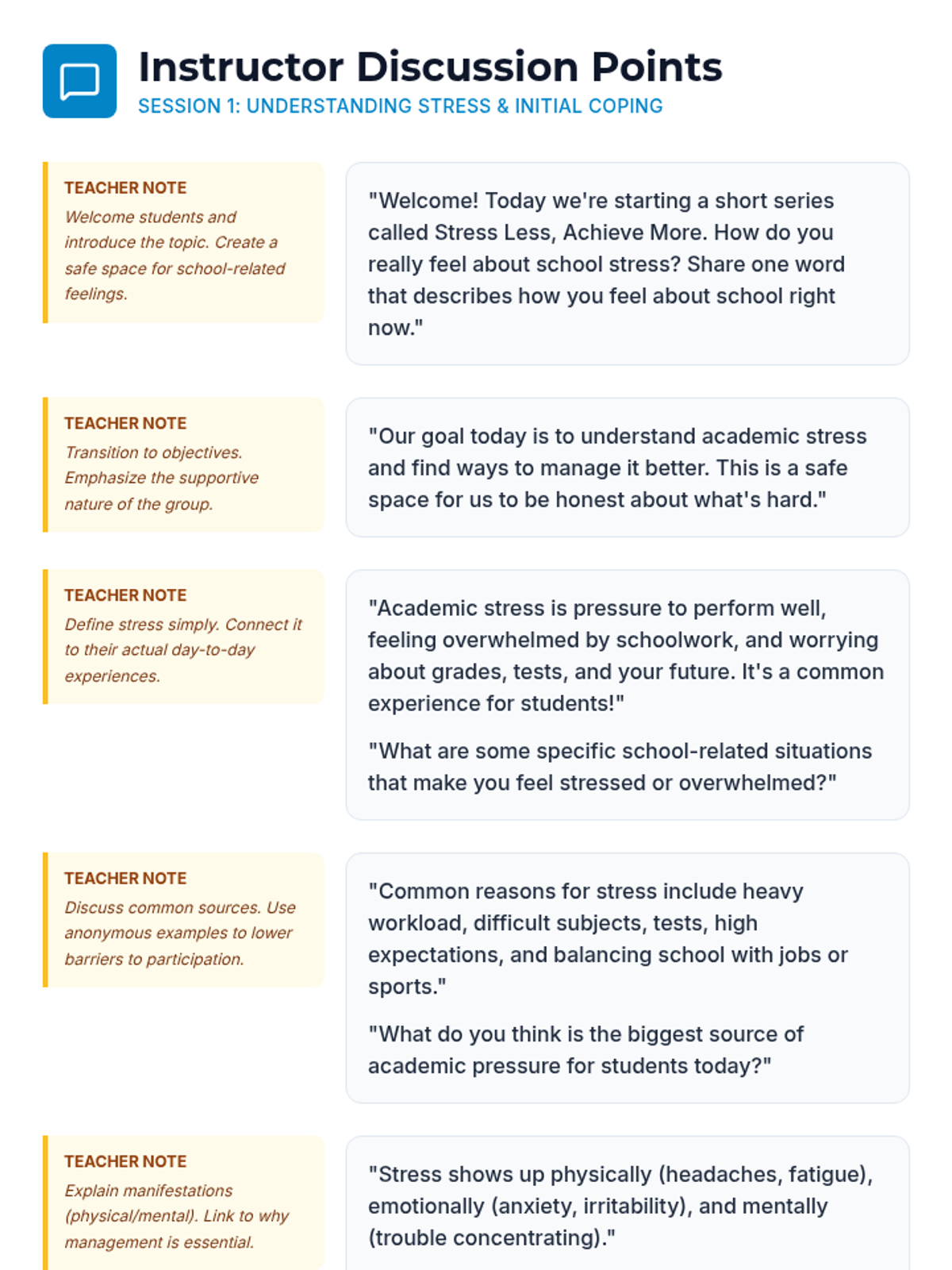
A structured script for instructors to facilitate Session 1 and Session 2 of the Stress Less, Achieve More group. Includes teacher notes and specific discussion prompts.
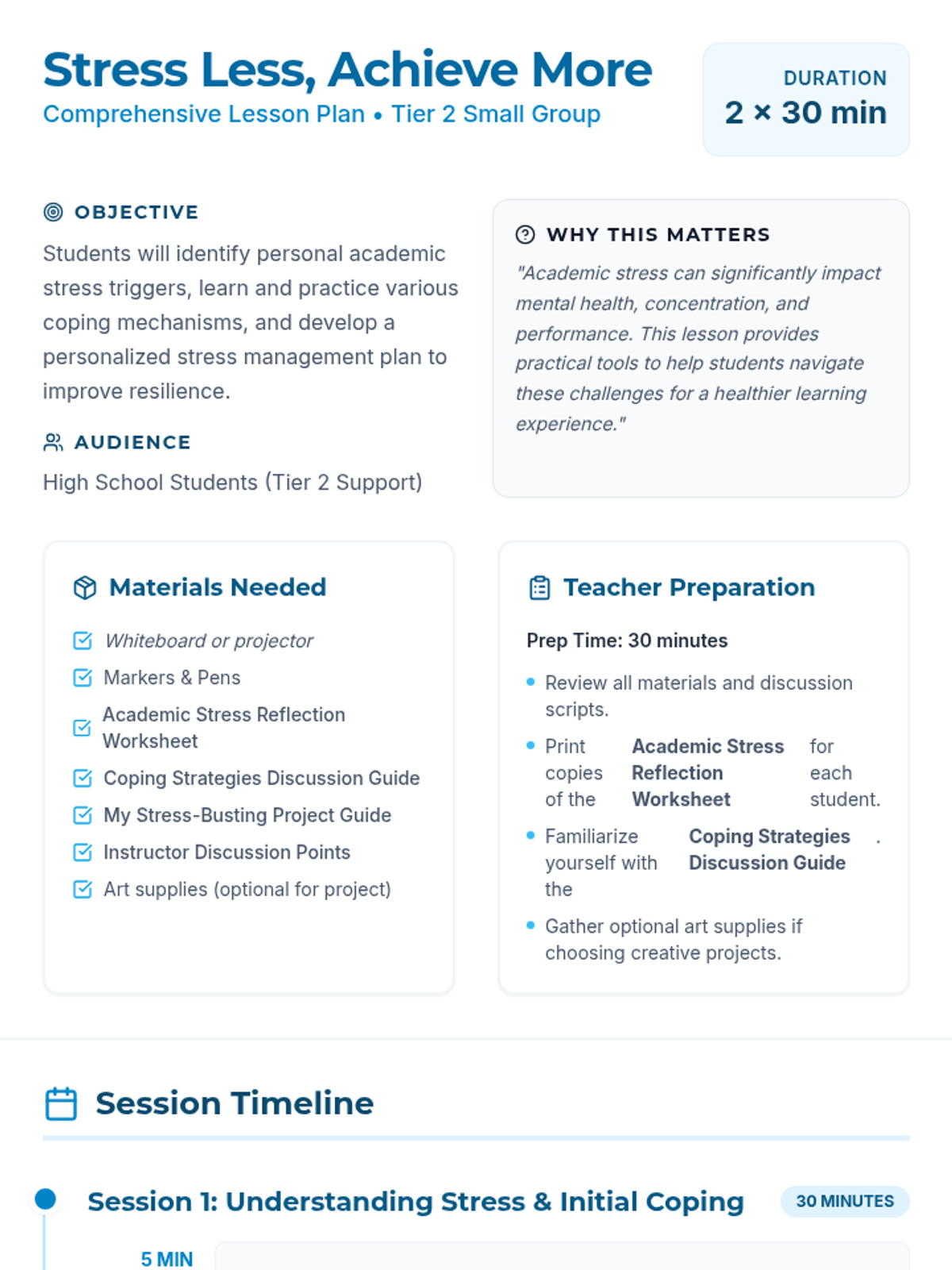
A comprehensive 2-session lesson plan for a Tier 2 high school small group focused on academic stress management. Includes a timeline, materials checklist, and teacher preparation steps.
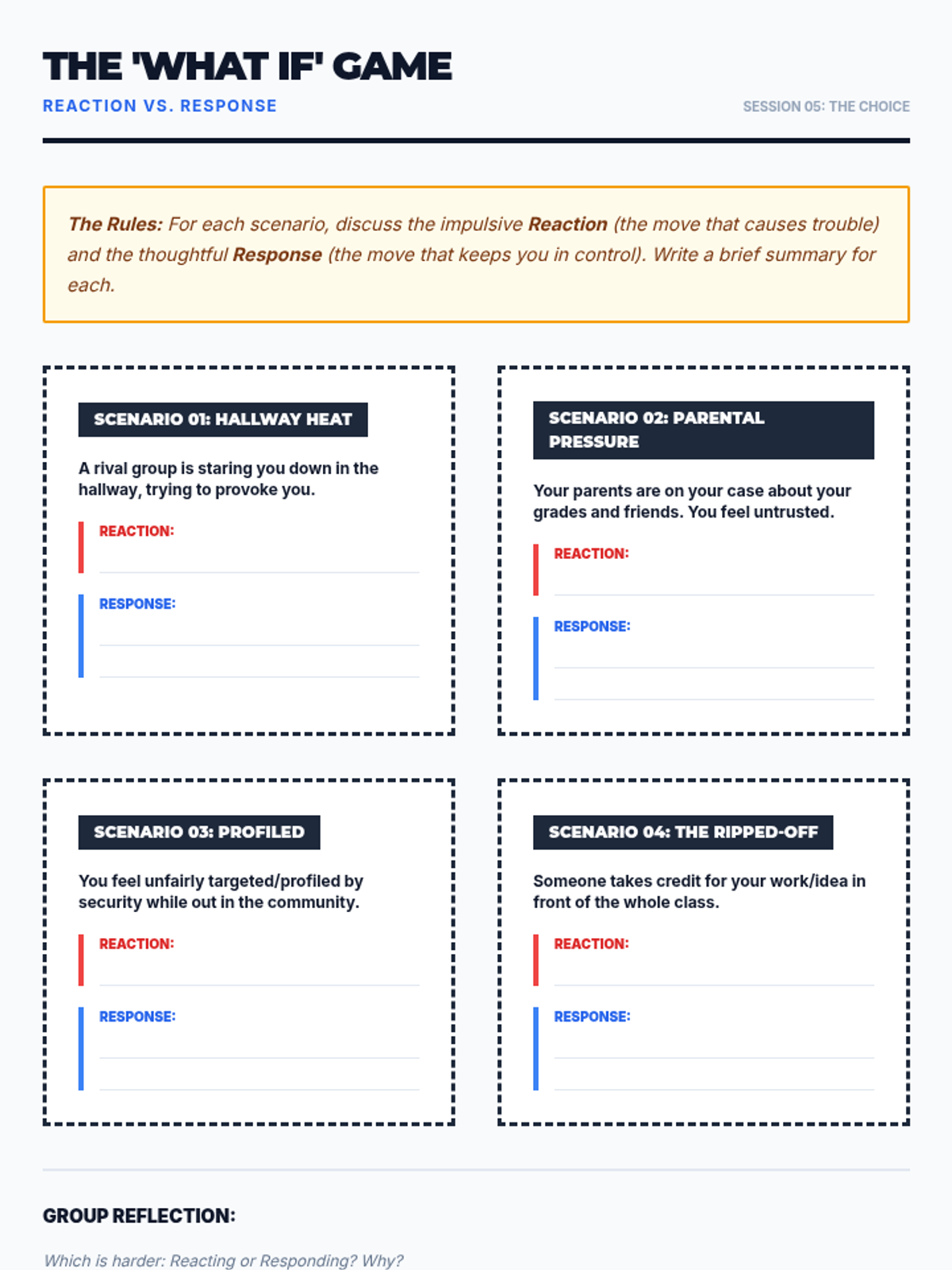
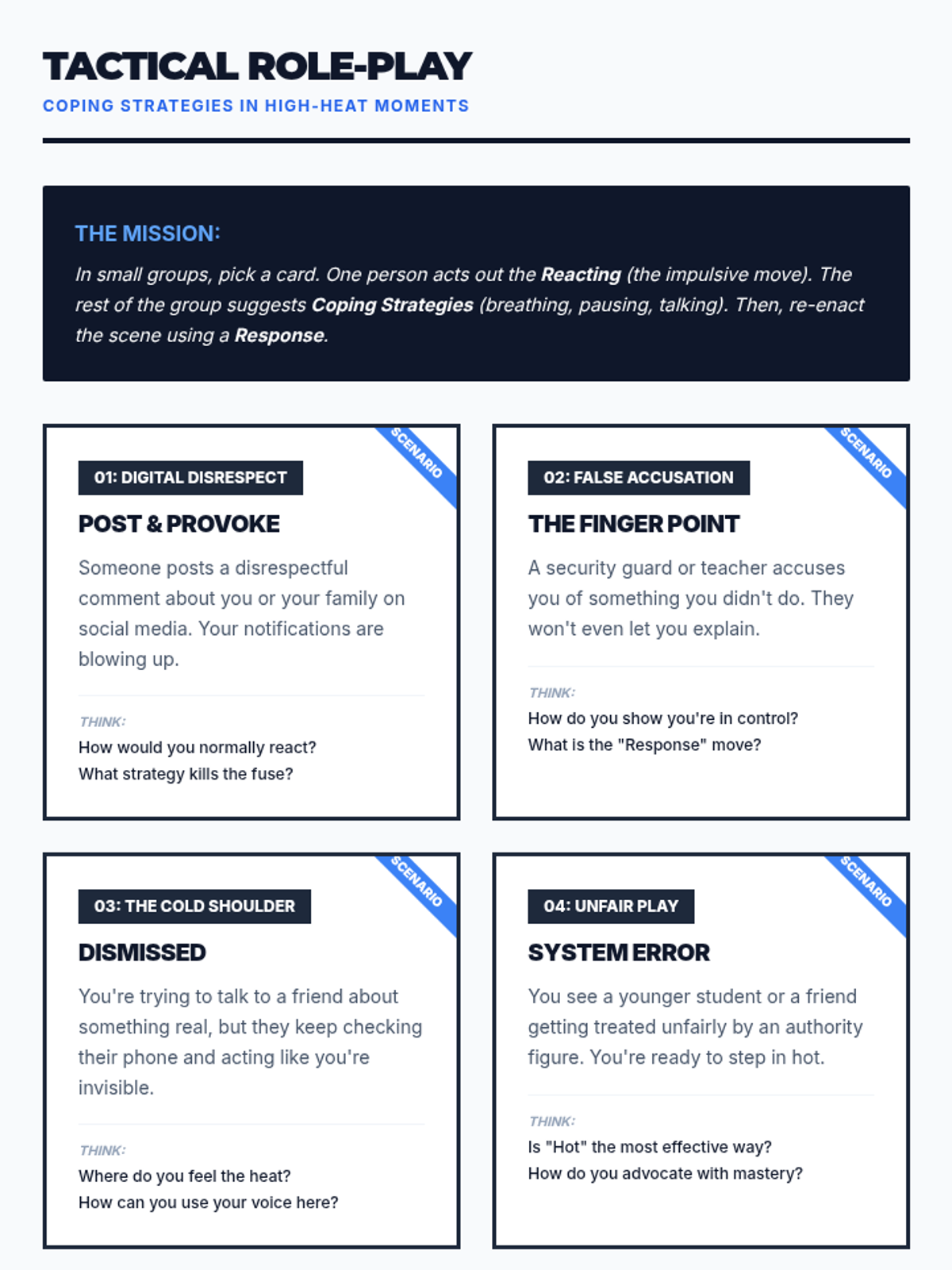
A scenario-based game card set where students discuss and practice choosing thoughtful responses over impulsive reactions in challenging situations.
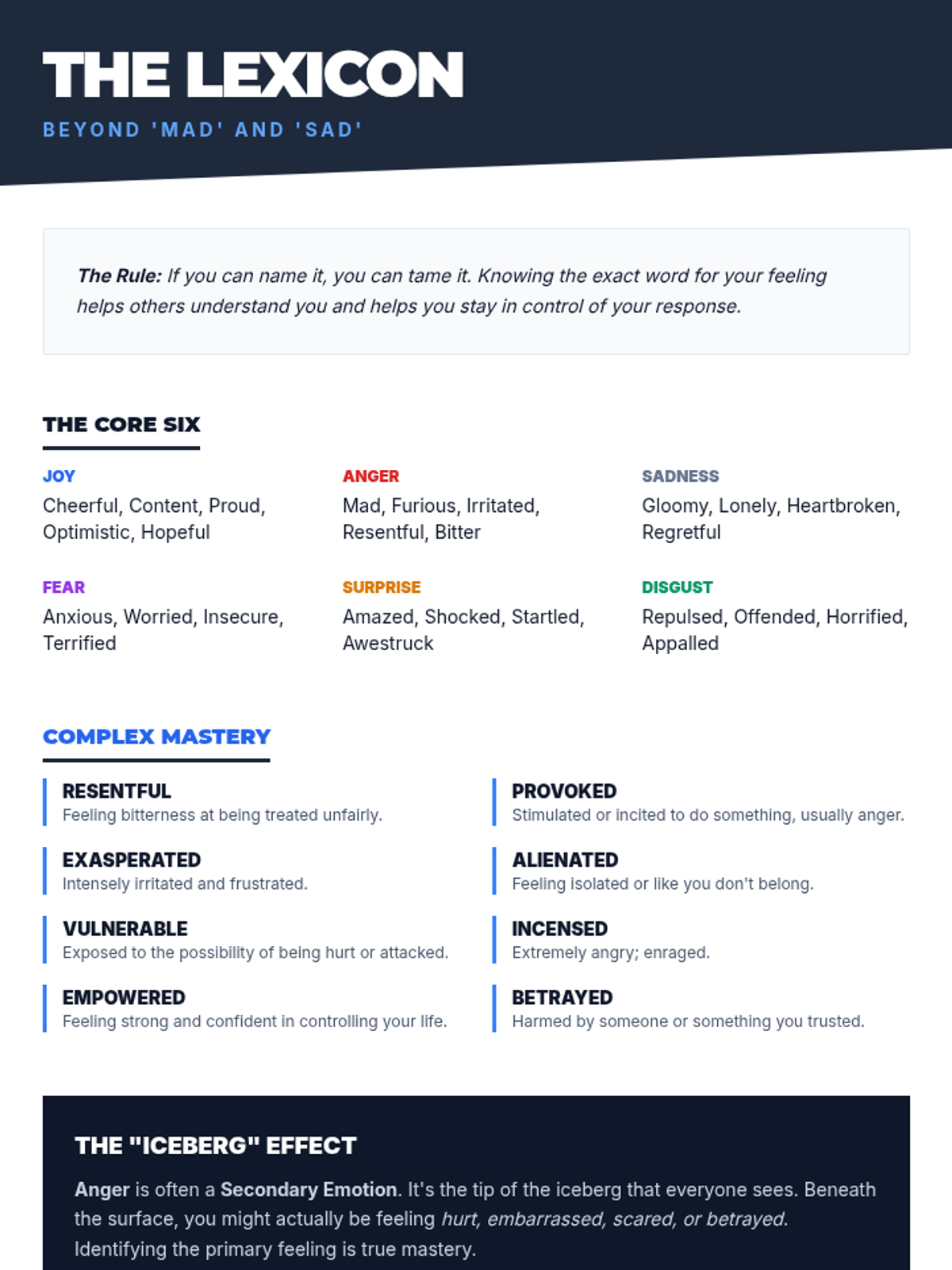
A comprehensive list of emotional vocabulary words, categorized by core emotions and including definitions for complex feelings to help students express themselves accurately.
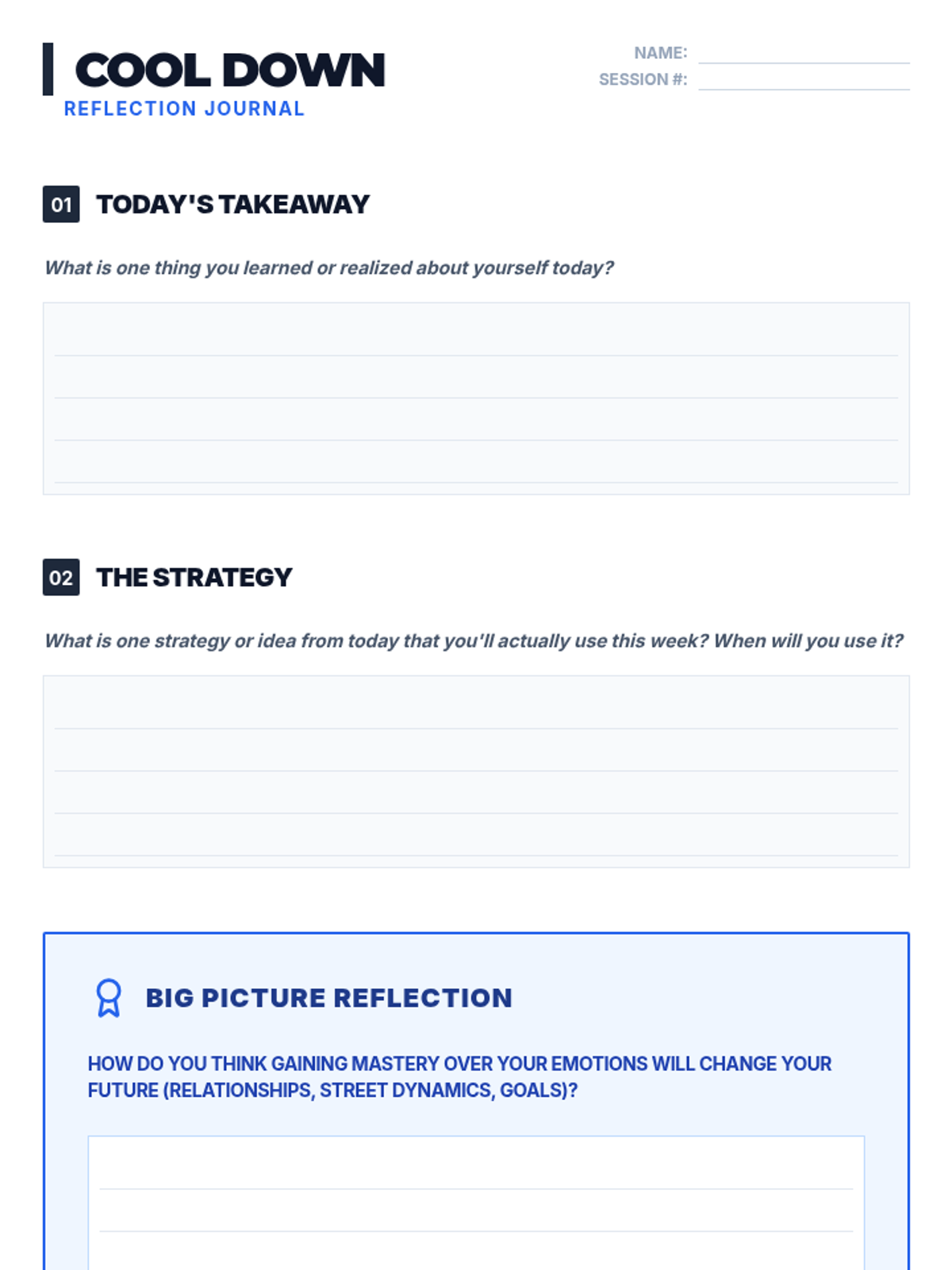
A recurring reflection journal for students to track their progress, identify key takeaways from each session, and plan how to apply emotional mastery in their lives.
Scenario cards for students to practice using coping strategies and assertive communication in high-pressure situations.
A visually engaging slide deck covering the core themes of emotional mastery, anger management, and effective communication for high school students.
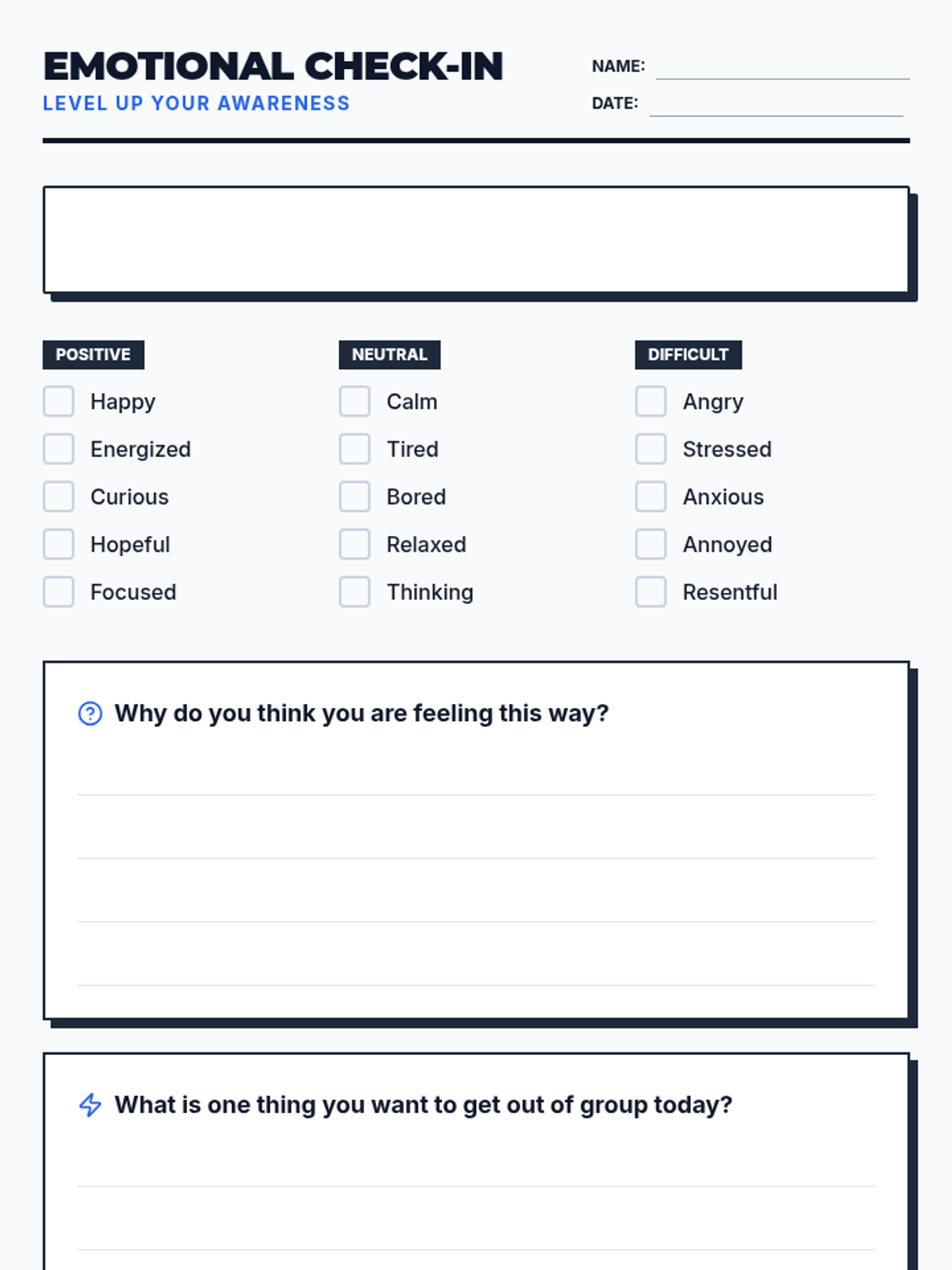
A recurring warm-up activity for students to identify their current emotional state and reflect on external influences.
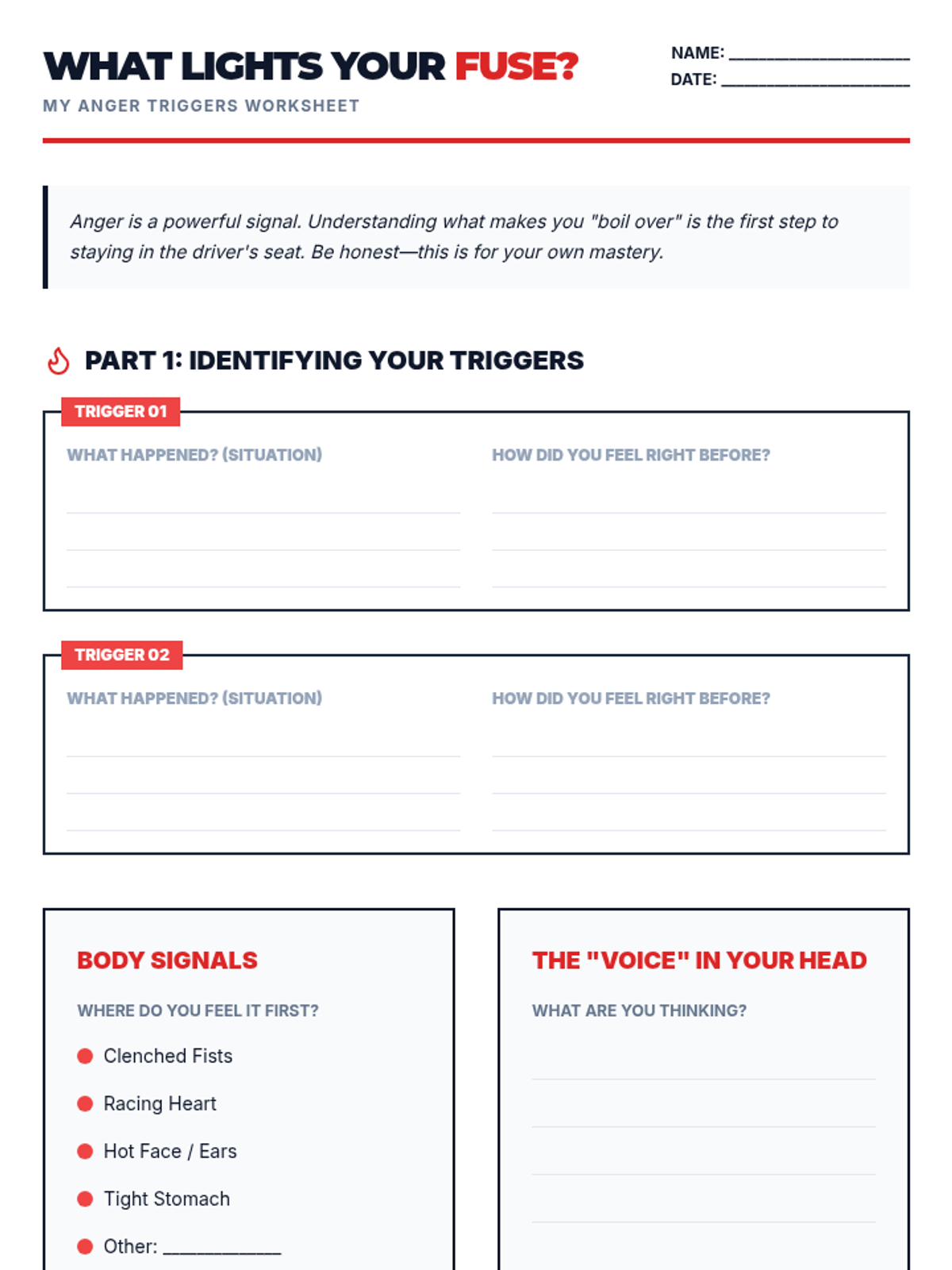
A worksheet for students to identify their personal anger triggers, physical warning signs, and the internal thoughts that precede emotional outbursts.
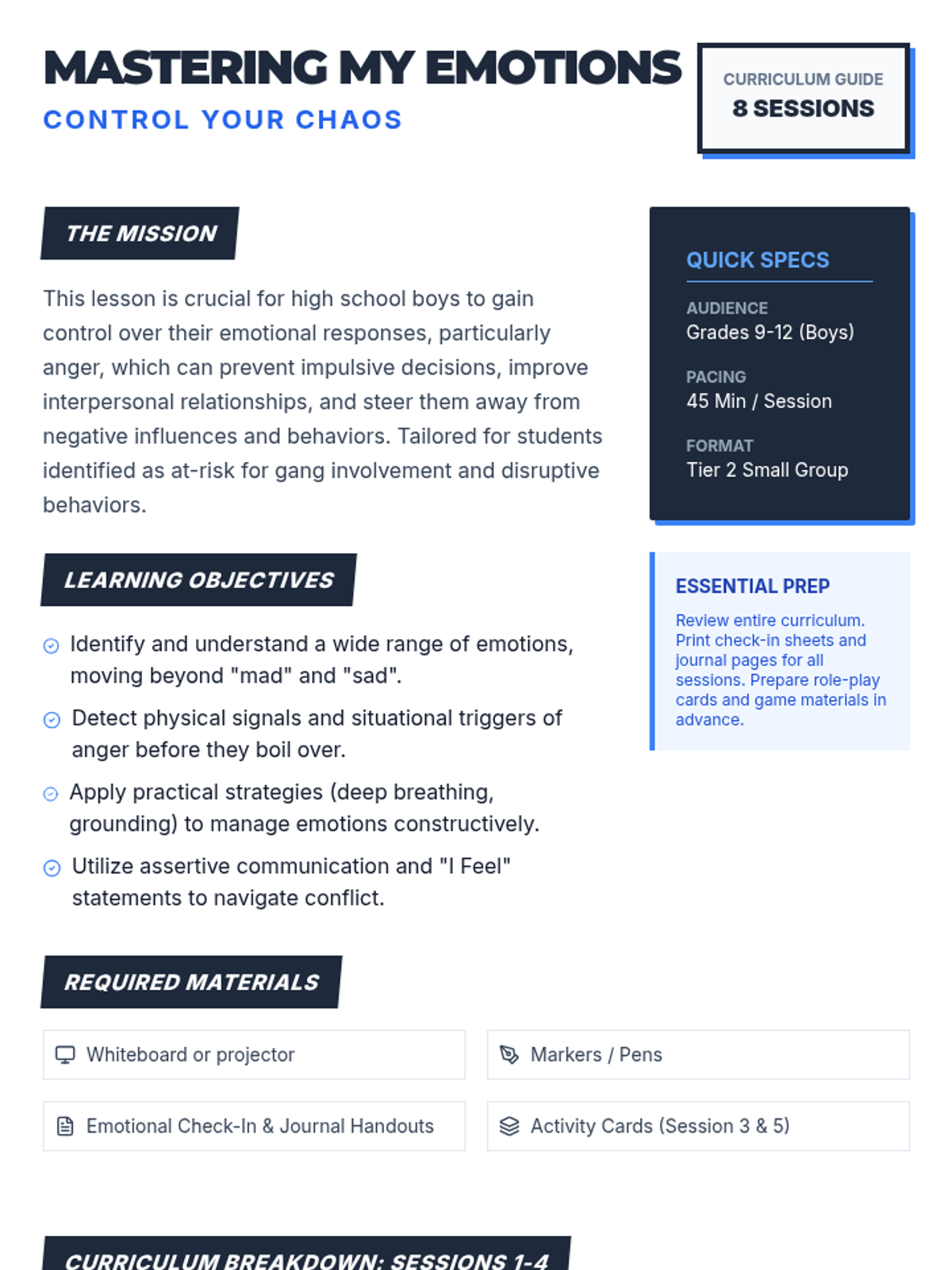
A comprehensive 8-session teacher curriculum guide outlining objectives, session breakdowns, and preparation requirements for the emotional mastery program.
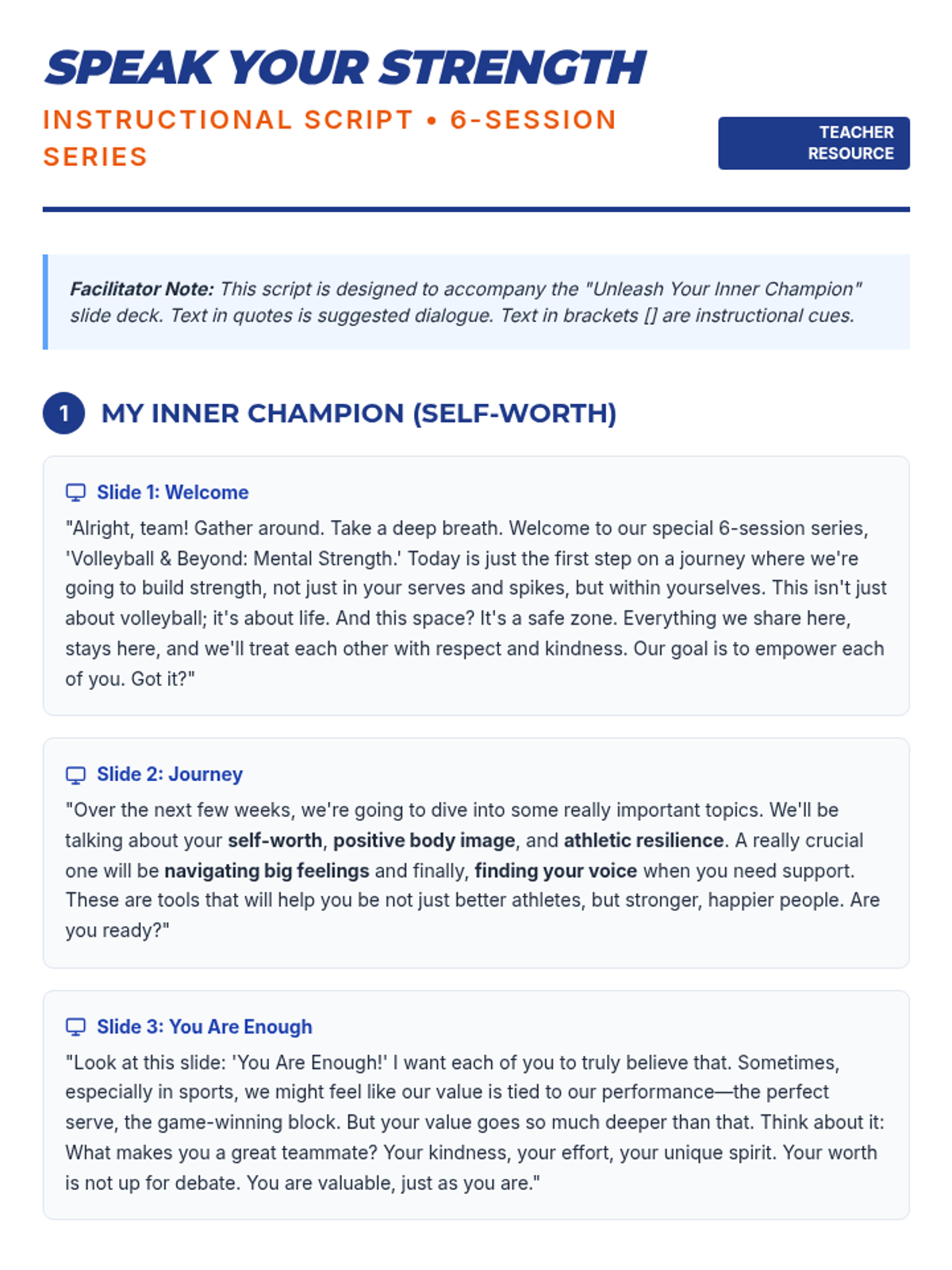
Instructional script for facilitators to lead the 6-session series, aligned with the slideshow content and providing specific dialogue for each topic.
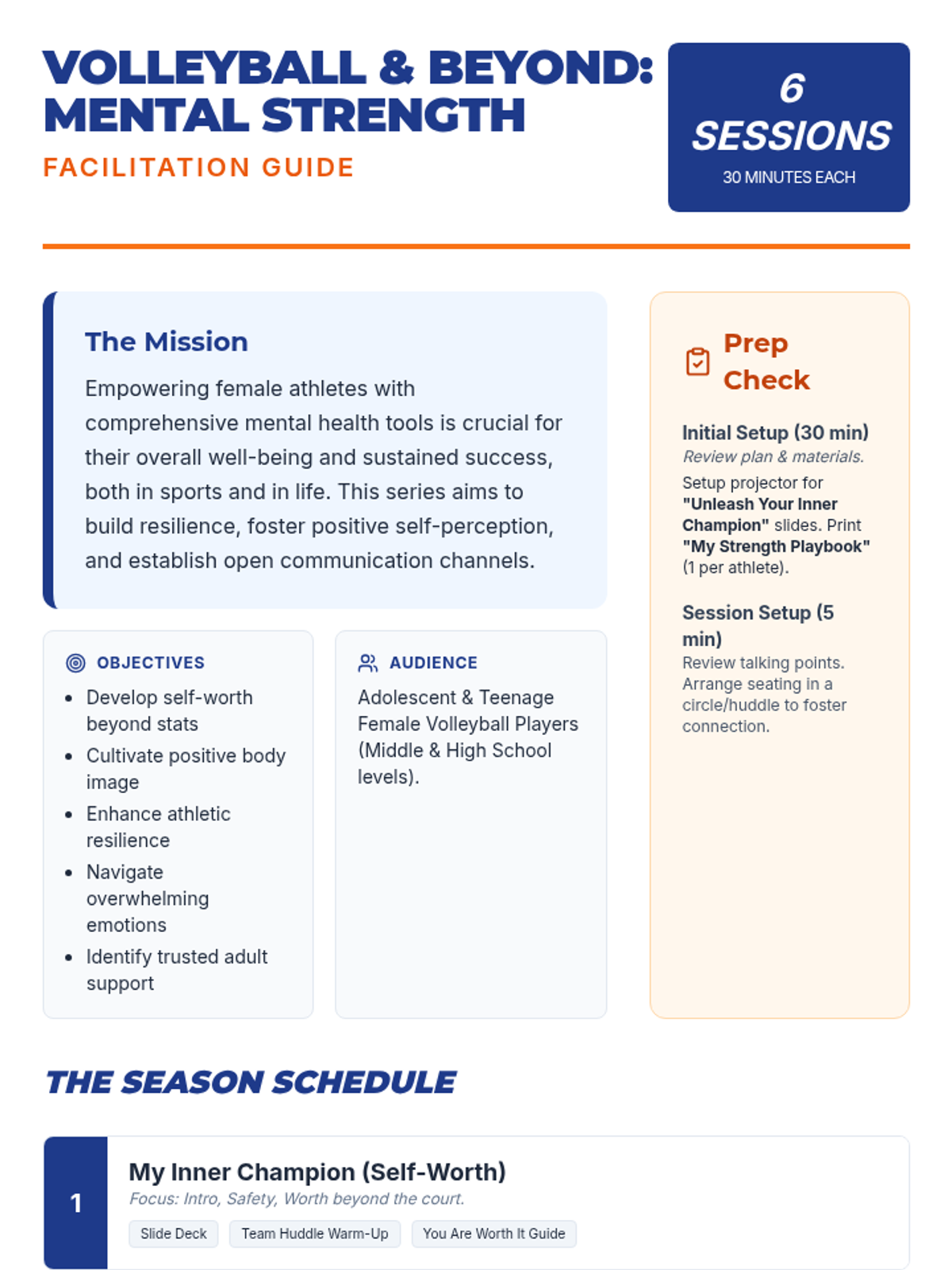
A comprehensive teacher guide for the 6-session series, including session objectives, materials, and a sequence map for the mental strength curriculum.
Visual presentation for the 6-session series, covering self-worth, body image, resilience, overwhelming emotions, and seeking support.
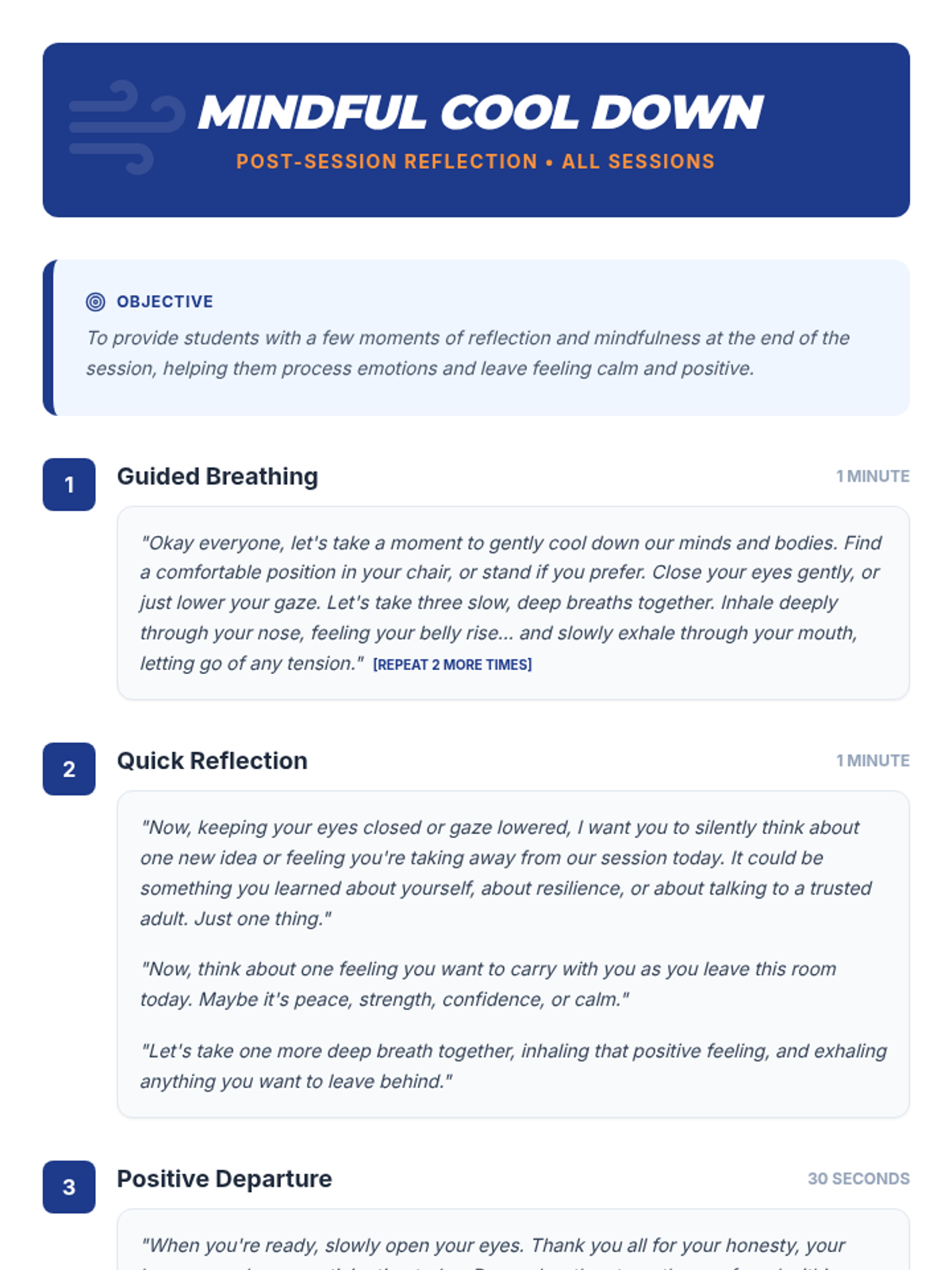
Mindfulness activity for facilitators to conclude each session of the mental strength series, fostering reflection and calm.
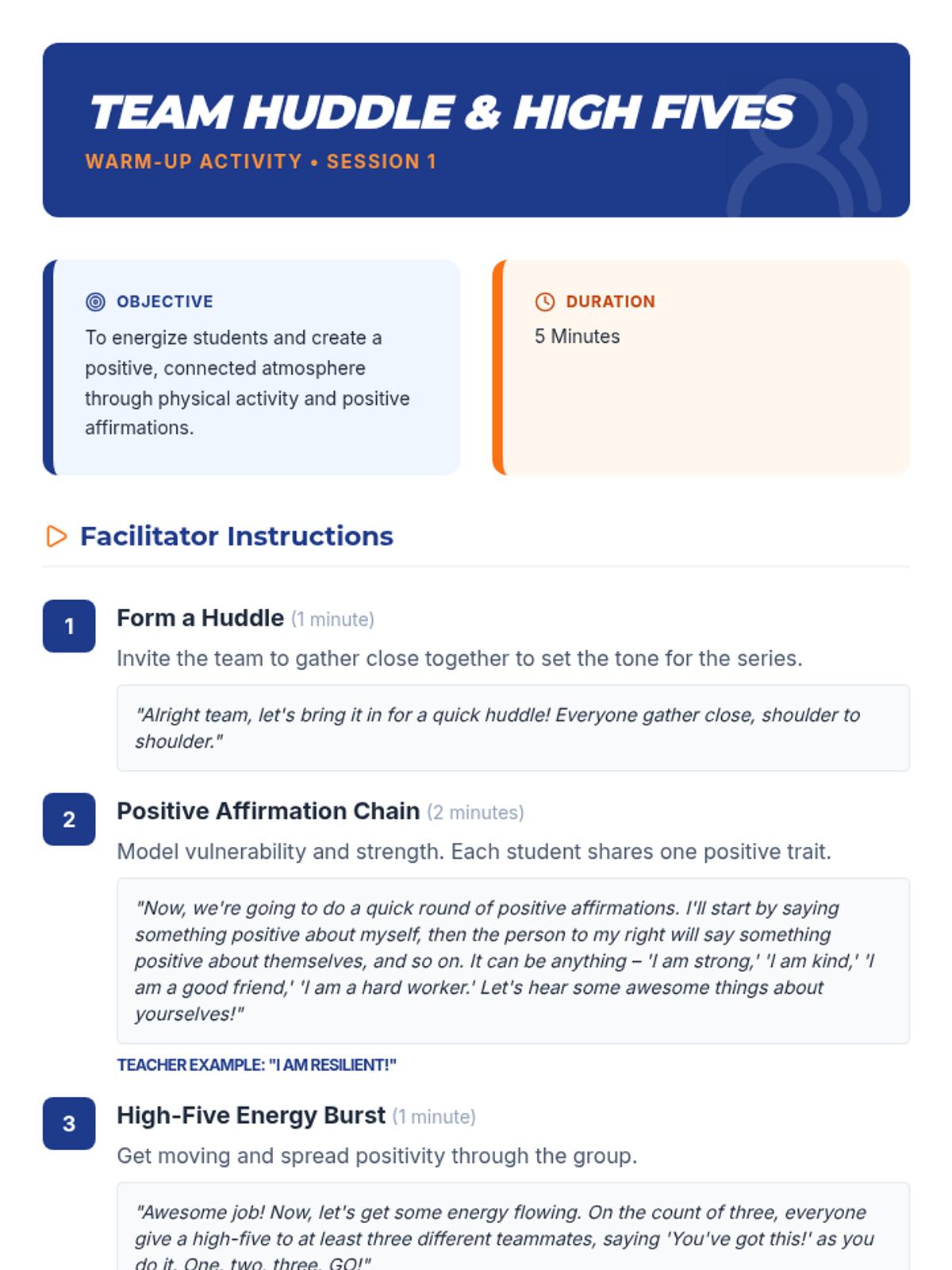
Warm-up activity to energize the group through movement and positive affirmations at the start of the mental strength series.
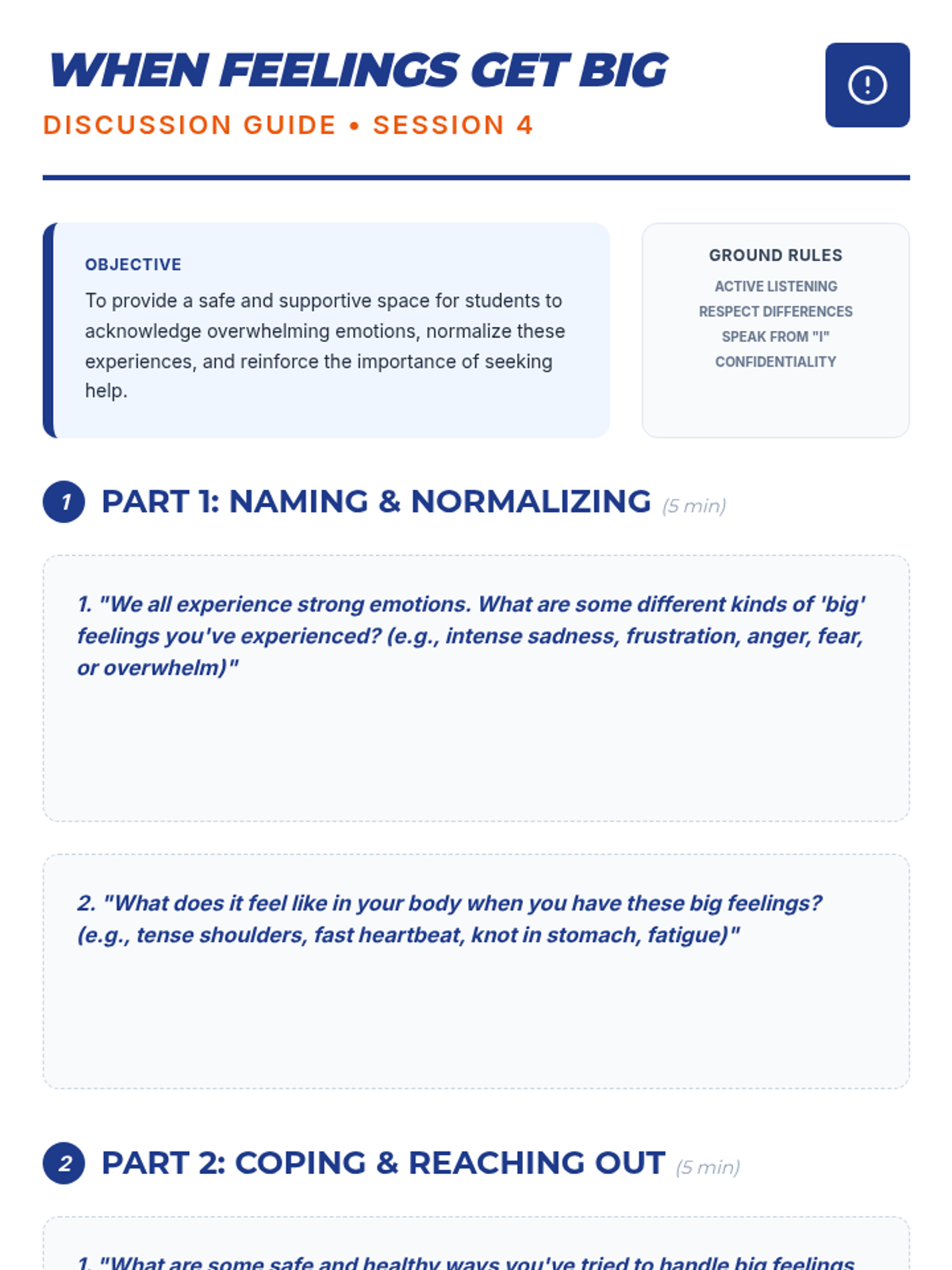
Discussion guide for facilitators to lead conversations on recognizing and managing overwhelming emotions during the fourth session.
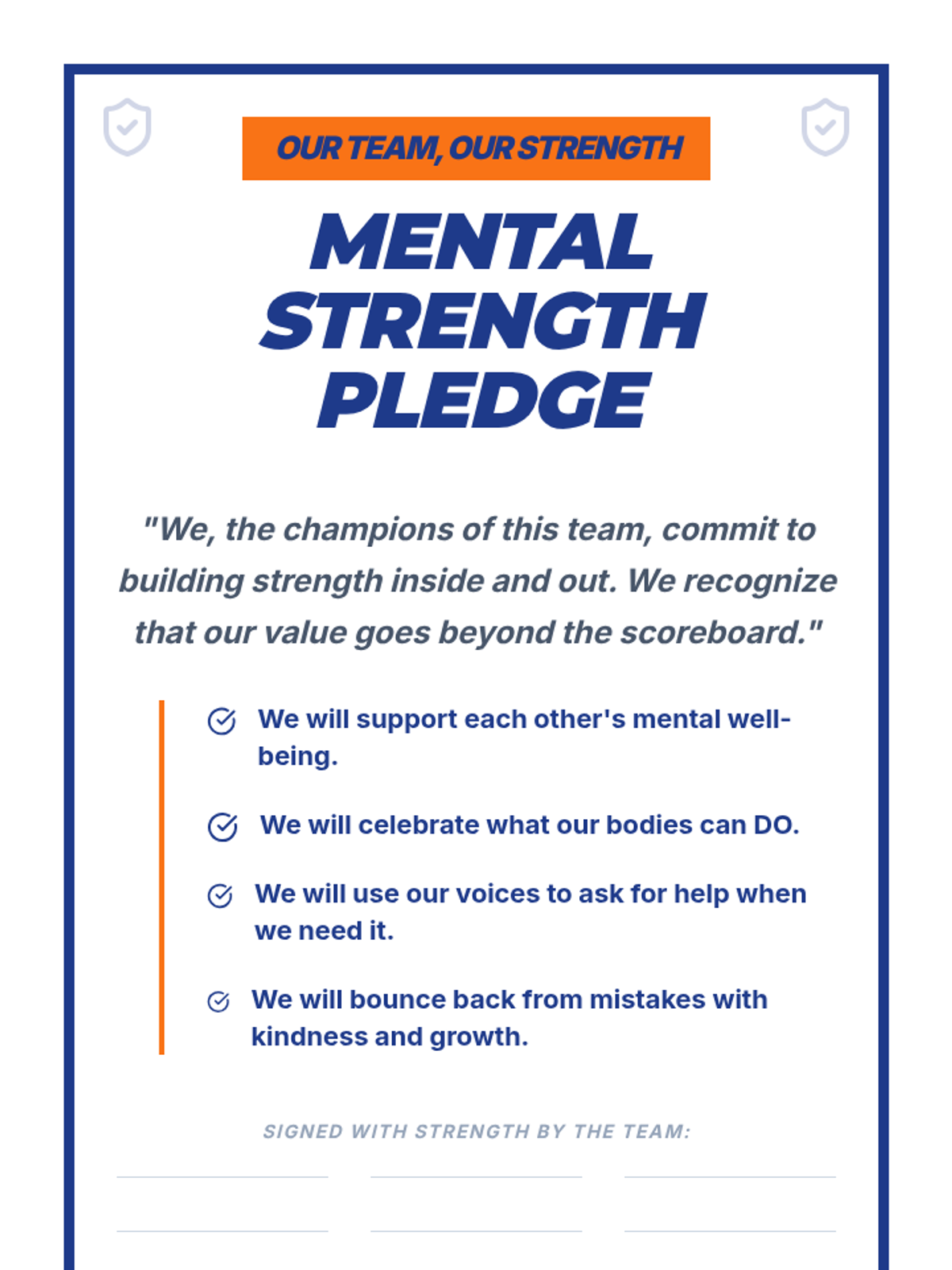
A collective pledge for the team to sign at the conclusion of the series, affirming their commitment to mental health and mutual support.
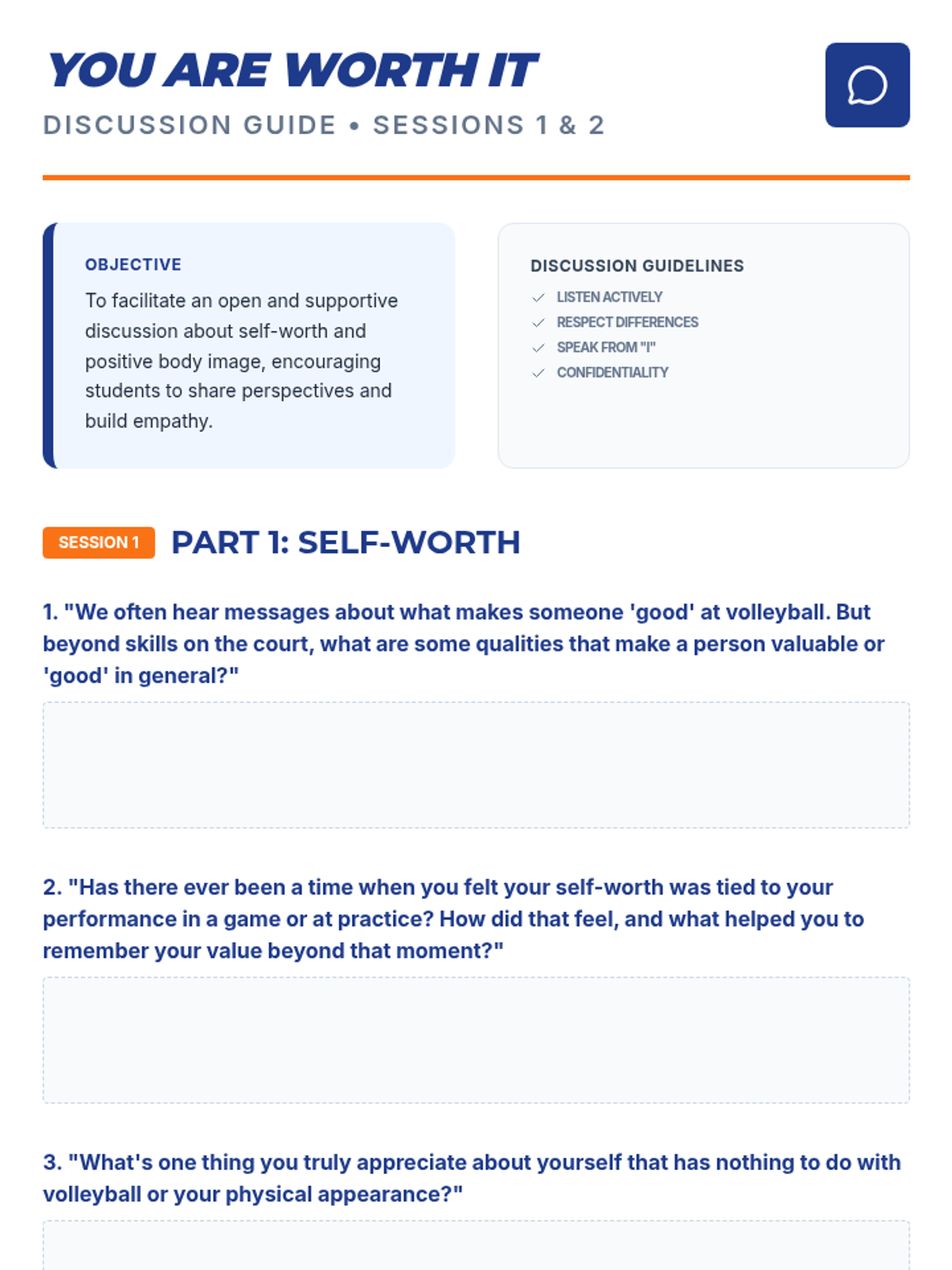
Discussion guide for facilitators to lead conversations on self-worth and body image during the first two sessions of the mental strength series.
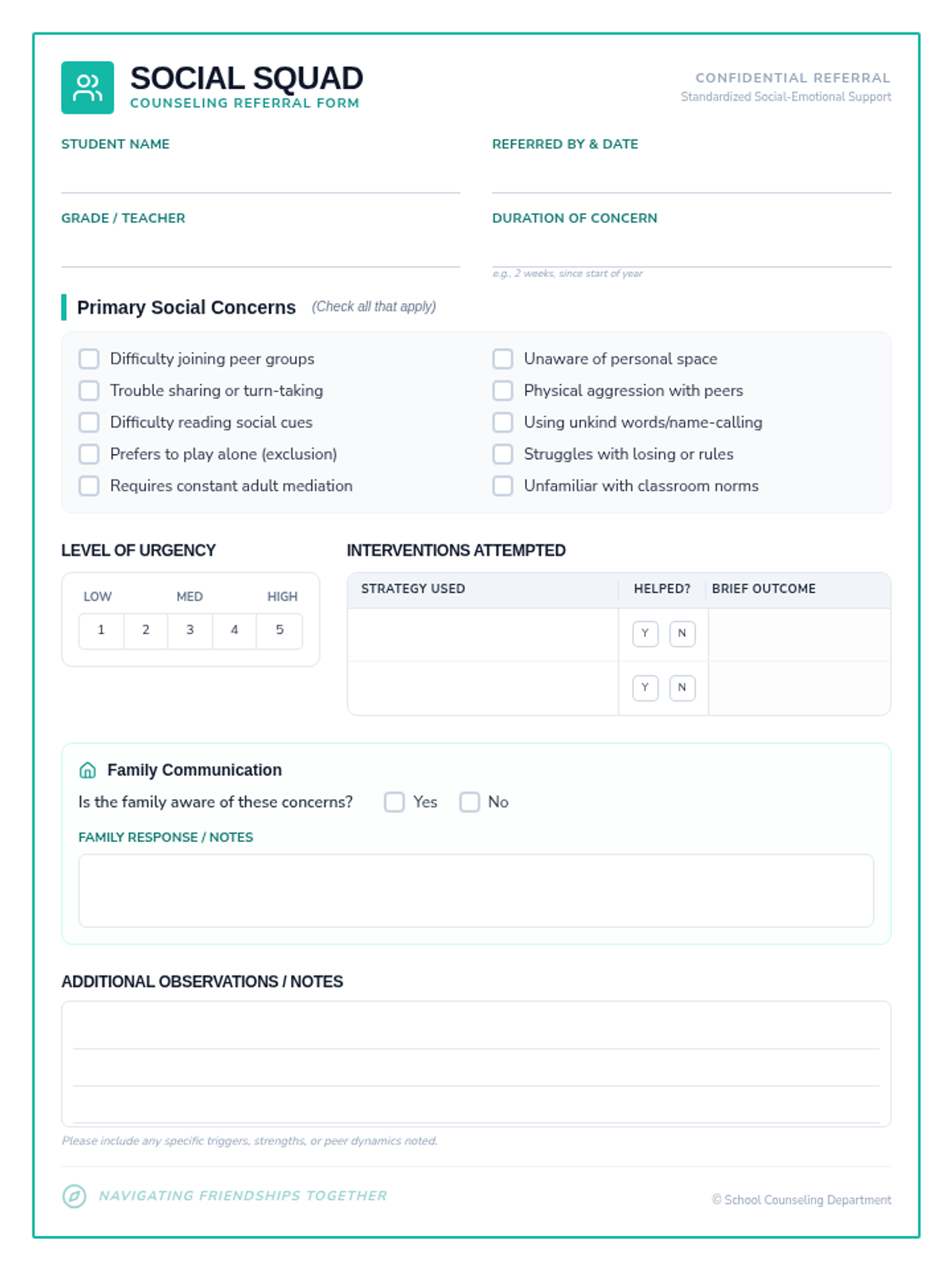
A revised comprehensive school counseling referral form for teachers, optimized to fit on a single page. It features clearer sections for social concerns, a more functional interventions table, and improved spacing for student work areas.
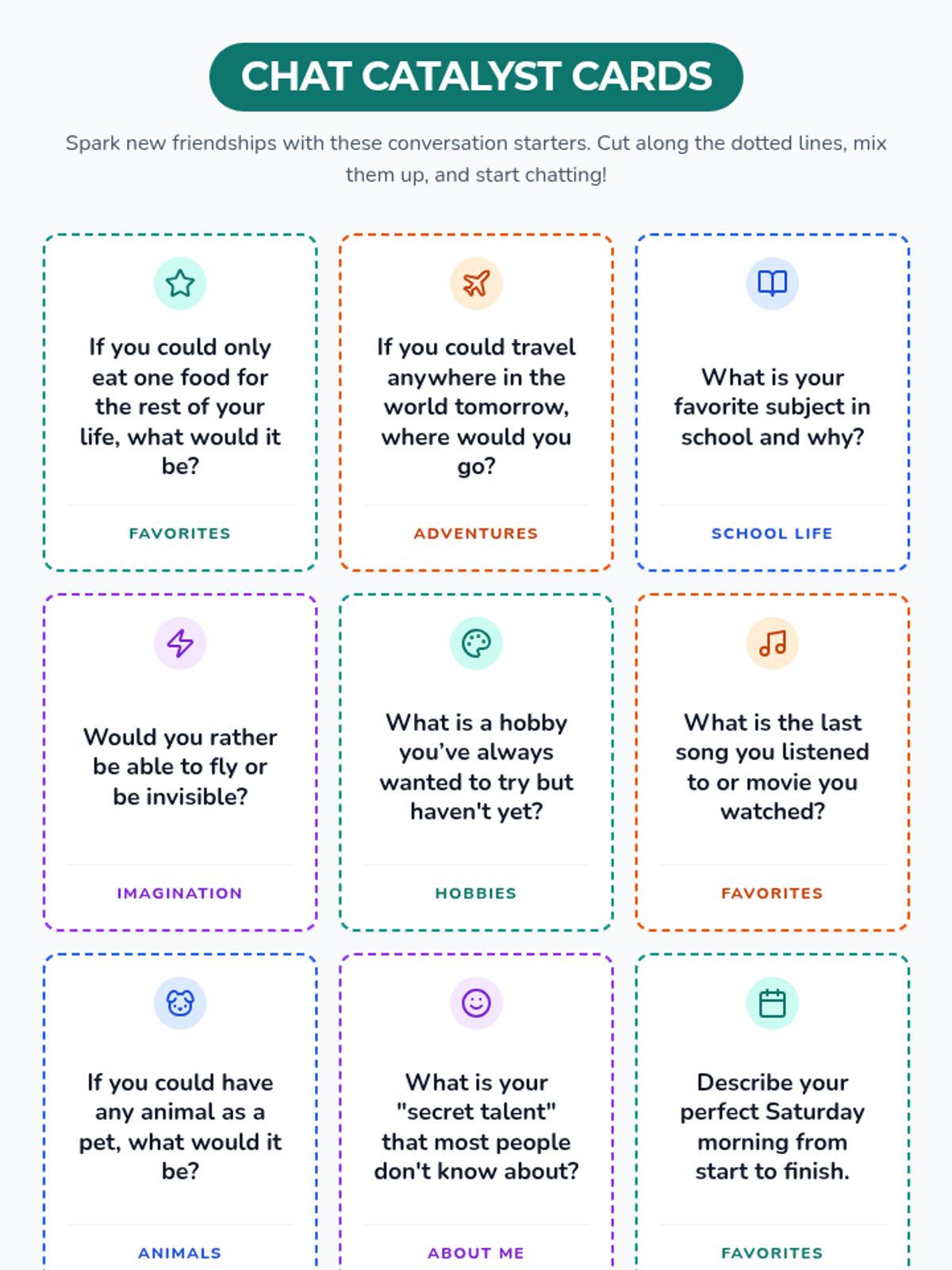
A set of printable conversation starter cards designed for students to break the ice and build new friendships. The cards feature varied prompts across categories like favorites, adventures, school life, and imagination.
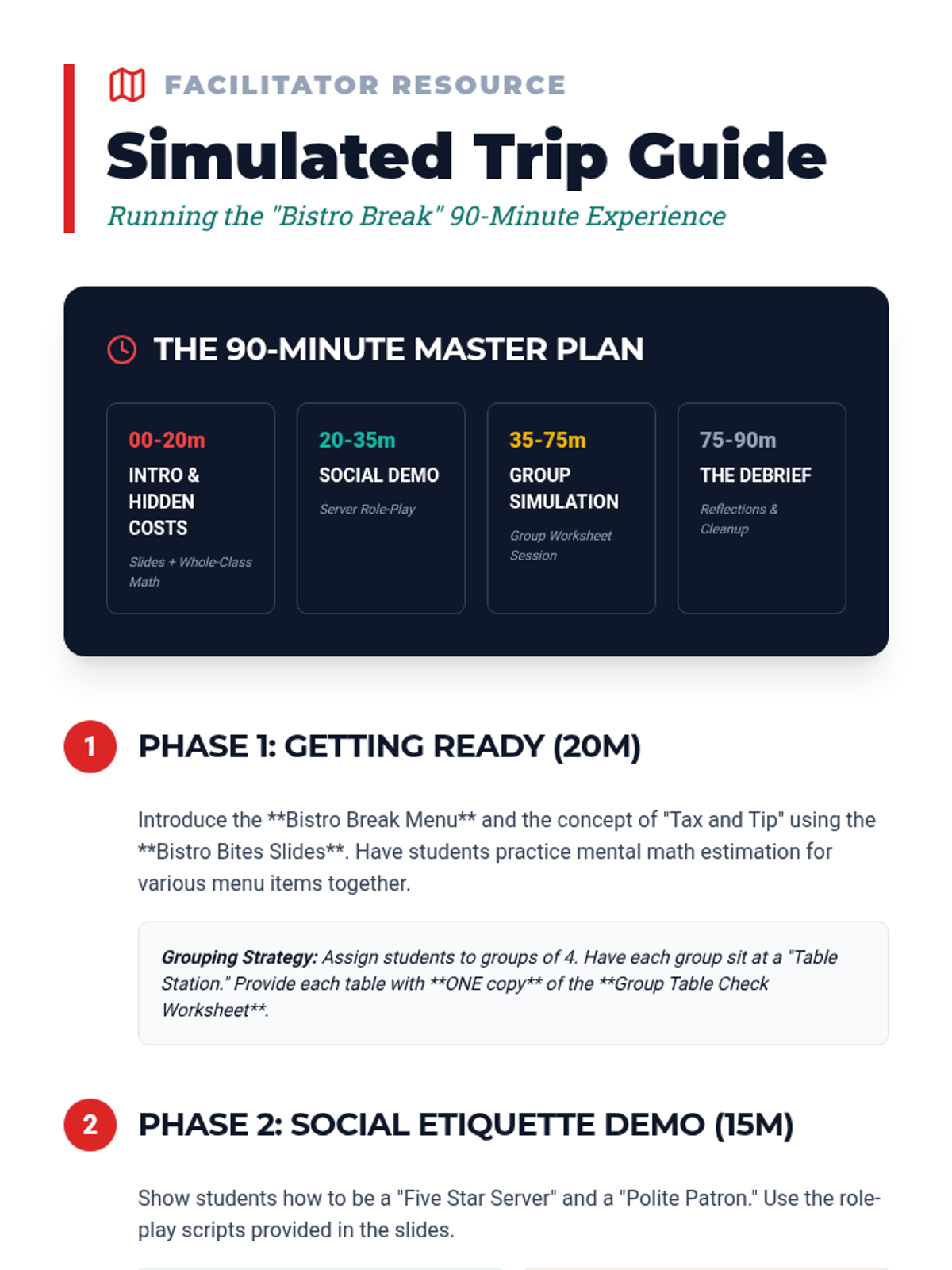
A facilitator's guide for conducting a simulated restaurant field trip in the classroom, including role-play scripts and setup instructions.
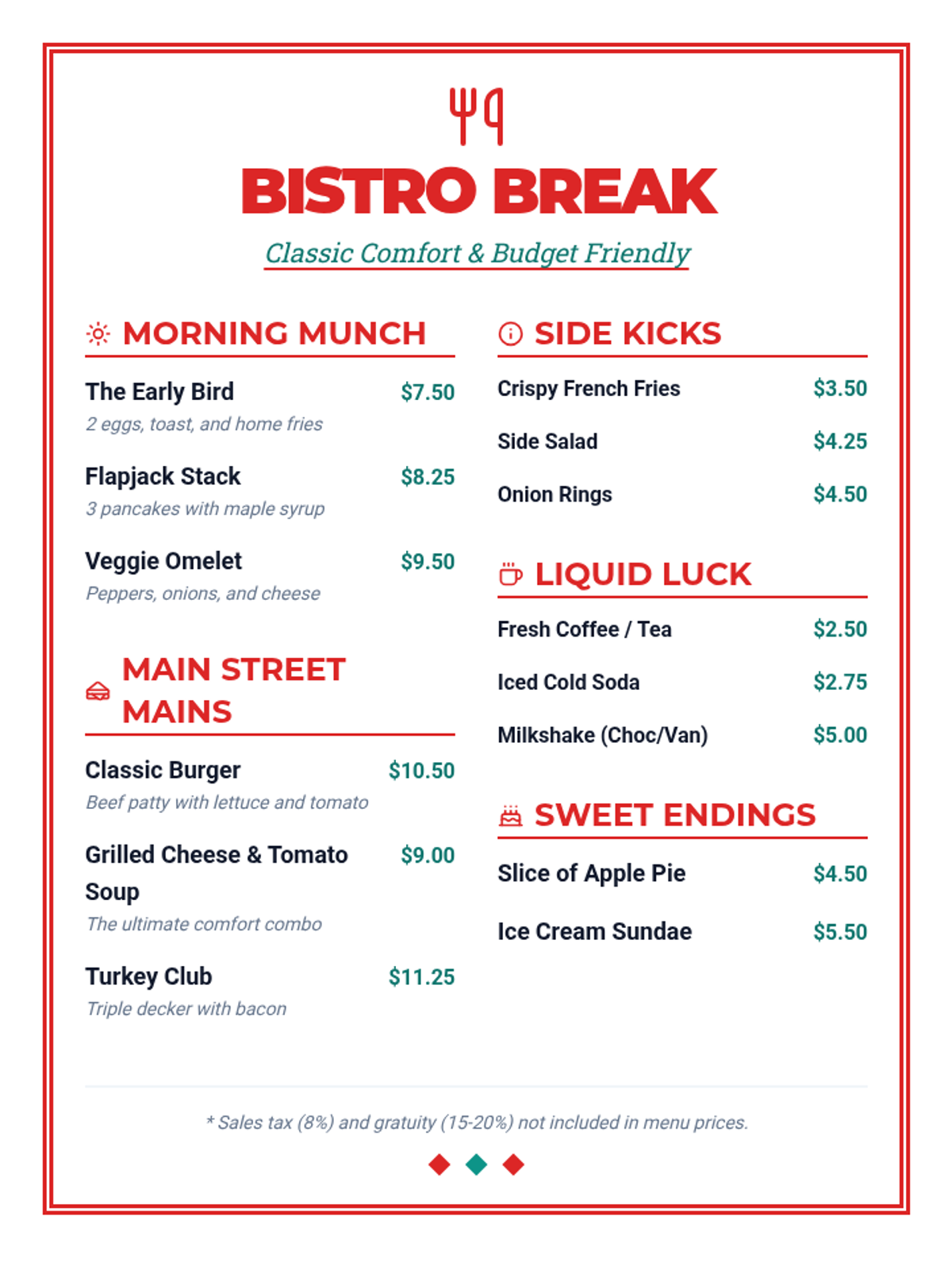
A retro-style bistro menu featuring breakfast, main courses, sides, drinks, and desserts with clear pricing for use in budget and math exercises.
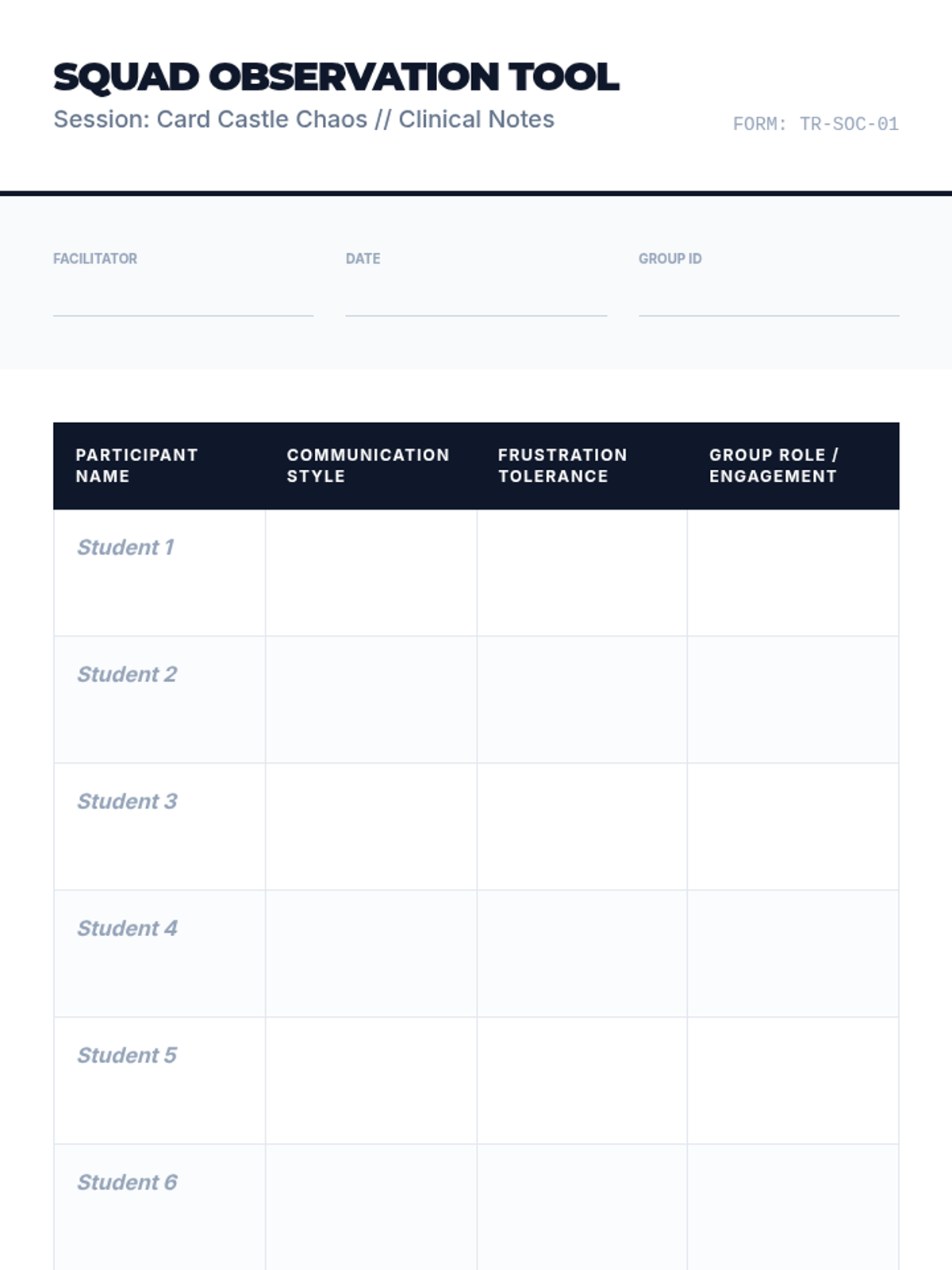
A clinical observation tool for the facilitator to track participant engagement, communication styles, and frustration tolerance during the session's activities. Designed specifically for the clinical rehab context.
A presentation slide deck for the Squad Support session. It introduces the session objectives, provides clear instructions for the "Common Threads" and "Card Castle Chaos" activities, and sets the stage for final reflection.
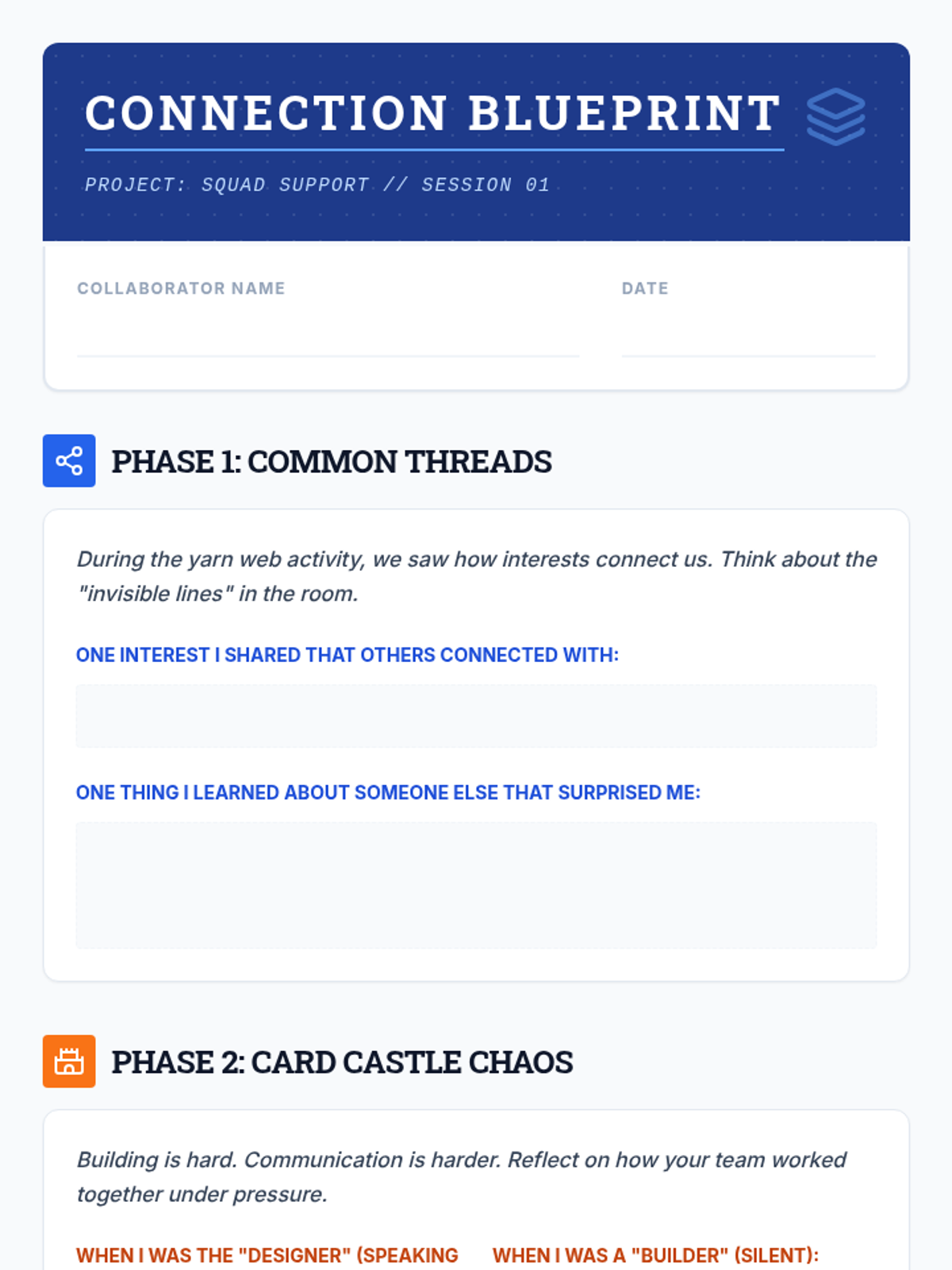
A student reflection worksheet using a "blueprint" aesthetic. It guides teens through processing their experiences with connection and teamwork from the session's activities.
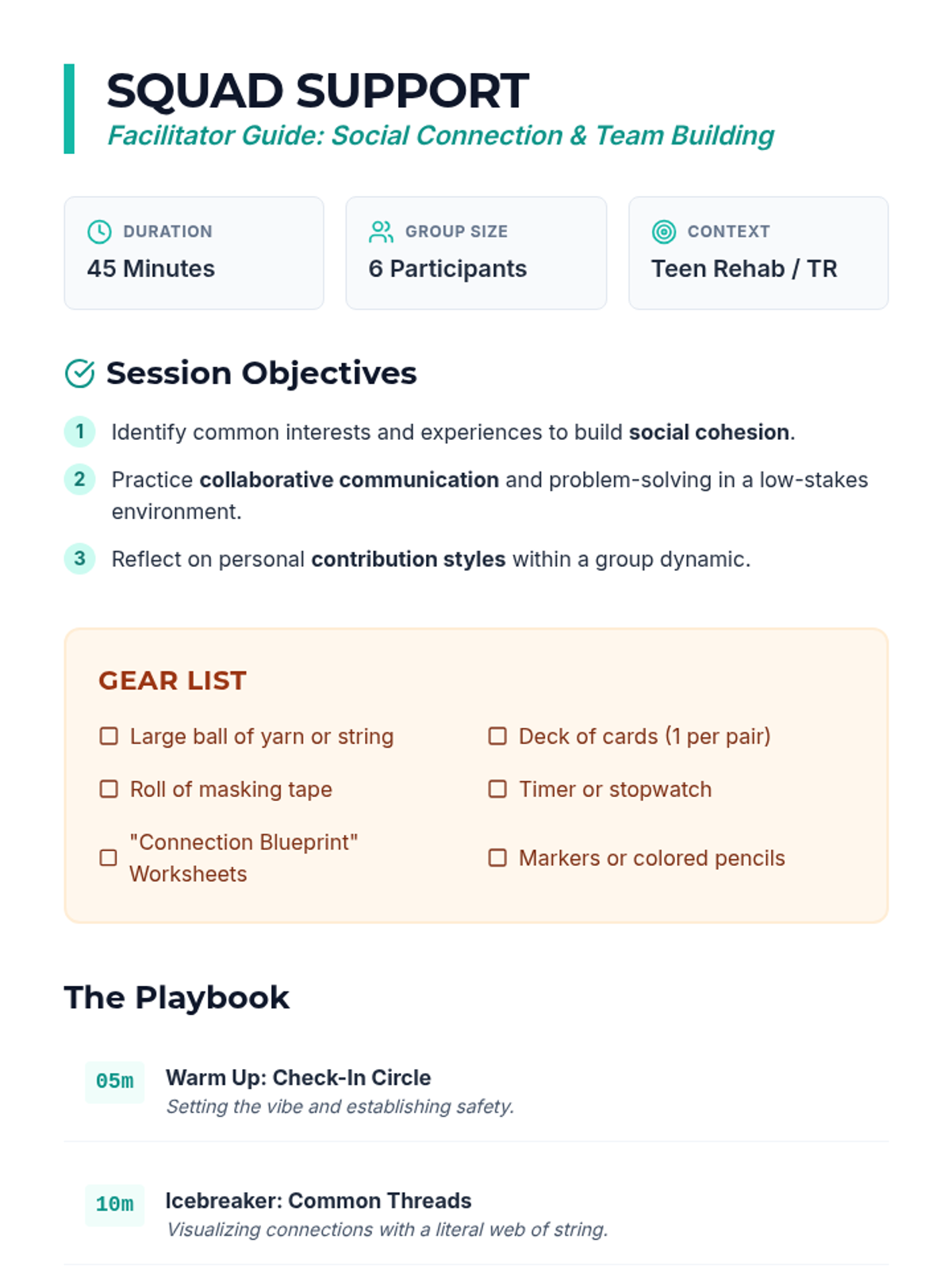
A comprehensive facilitator guide for a 45-minute therapeutic leisure session. Includes session objectives, a detailed materials checklist, activity breakdowns with specific prompts, and clinical considerations for working with teens in rehab.
A vibrant slide deck for the Sisterhood Circle workshop, breaking down friendship profiles and exploring themes of Black girlhood and community. Revised for accessibility with minimum 24px font sizes.
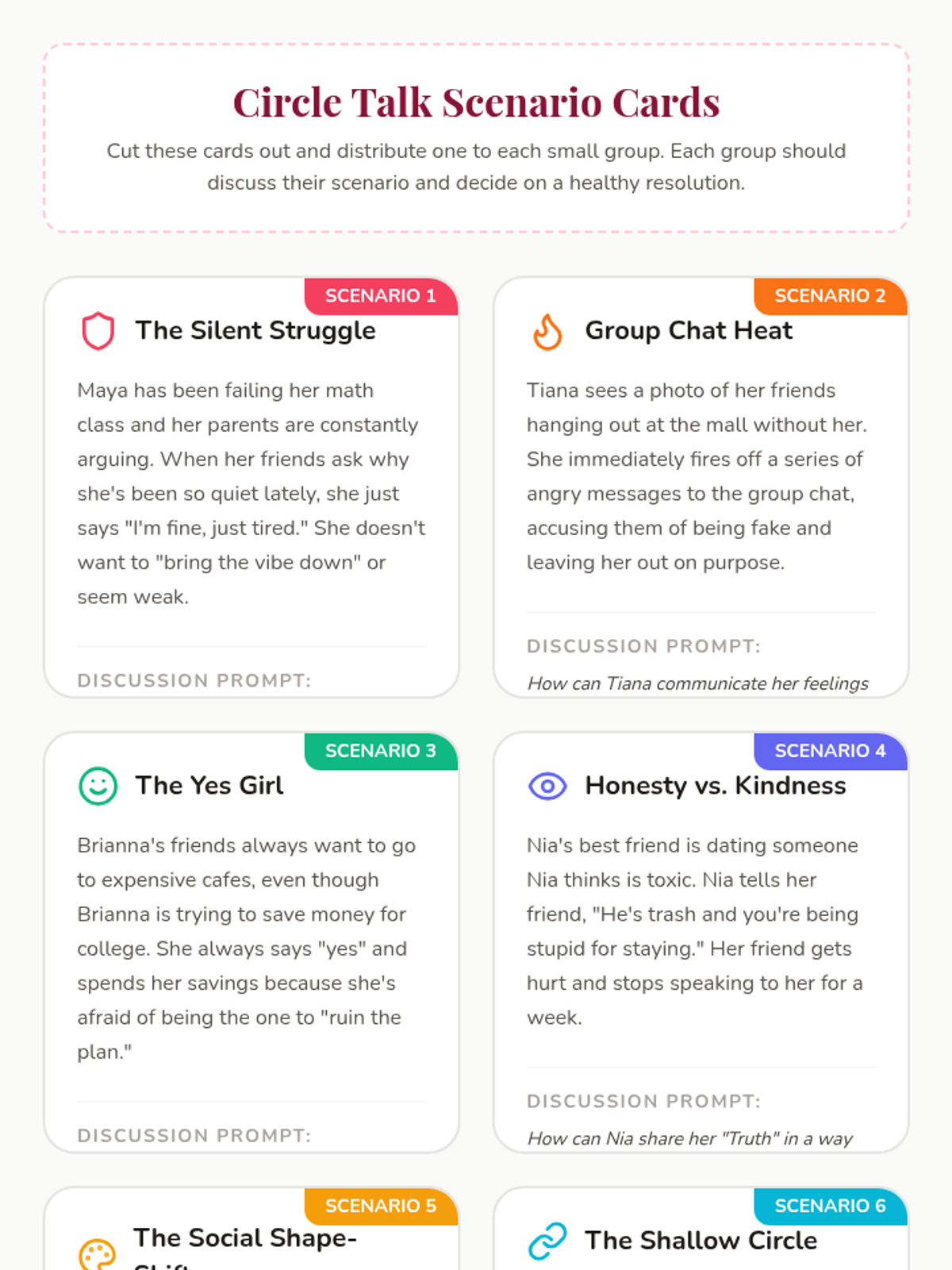
A set of scenario cards for small group discussion, highlighting different friendship profiles and challenges in Black girlhood friendships.
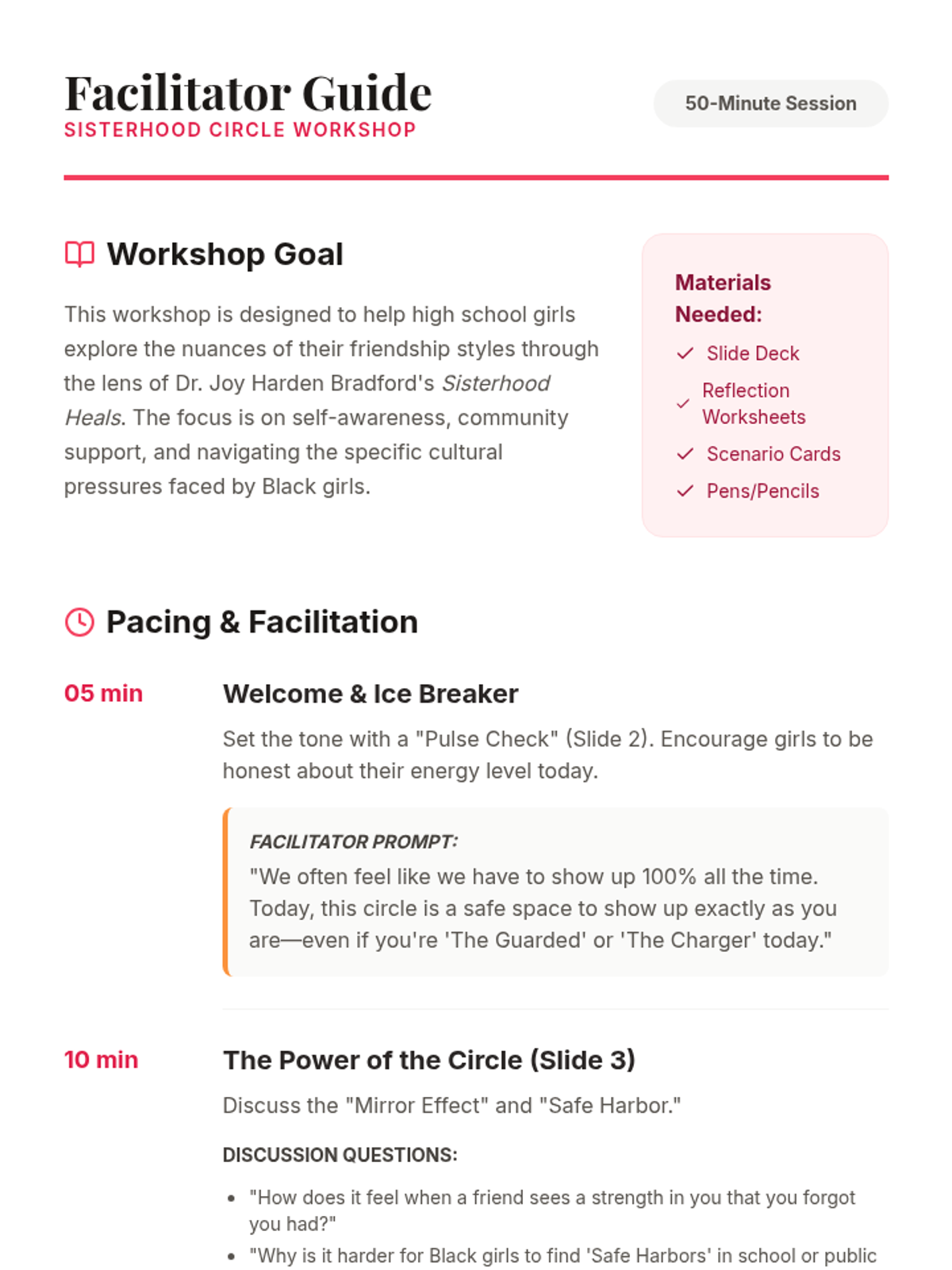
A comprehensive facilitator guide for the Sisterhood Circle workshop, including pacing, discussion prompts, and facilitation tips for high school girls.
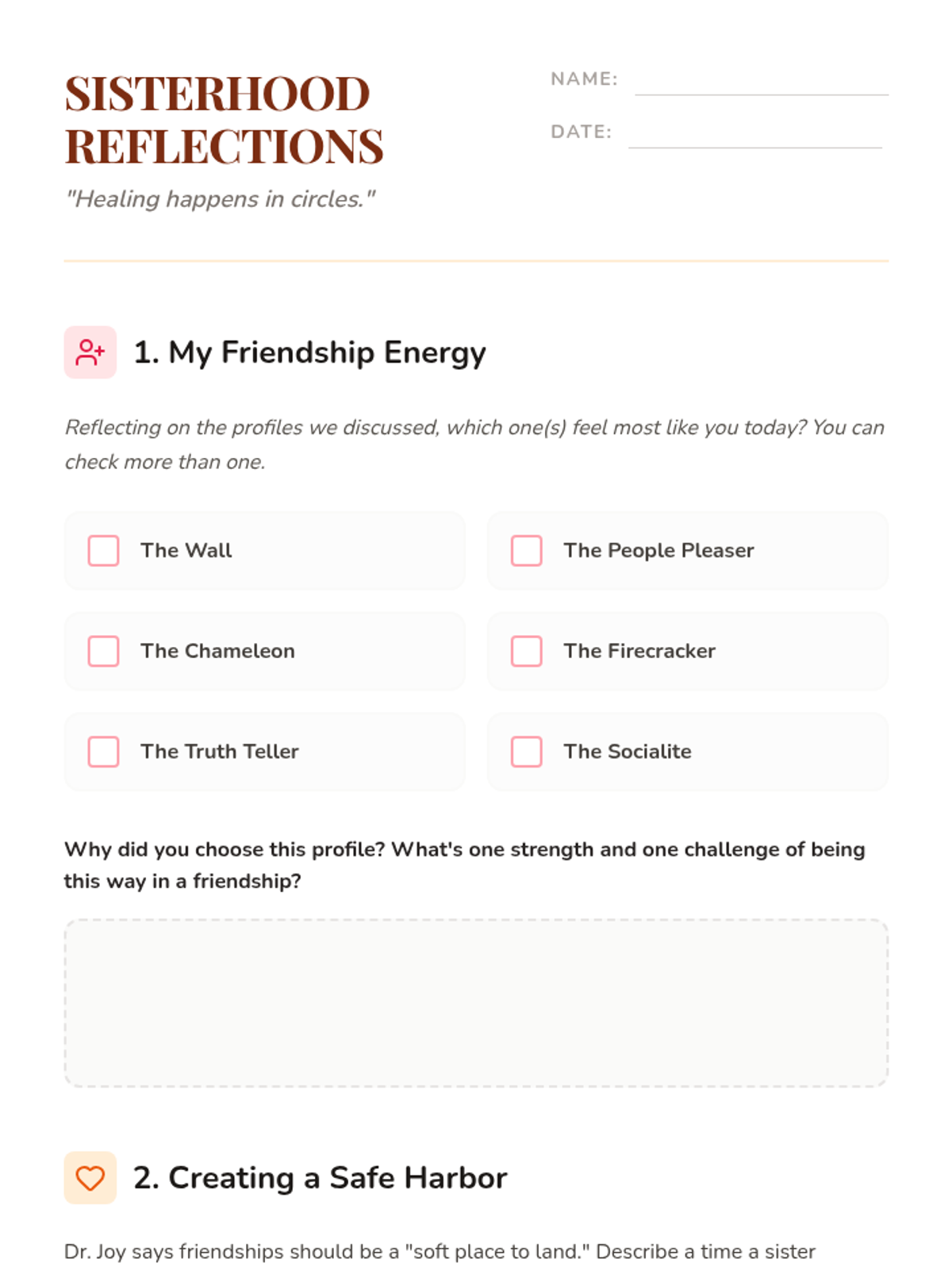
A personal reflection worksheet for students to self-identify their friendship profiles and reflect on their support systems.
A vibrant slide deck for the Sisterhood Circle workshop, breaking down friendship profiles and exploring themes of Black girlhood and community.
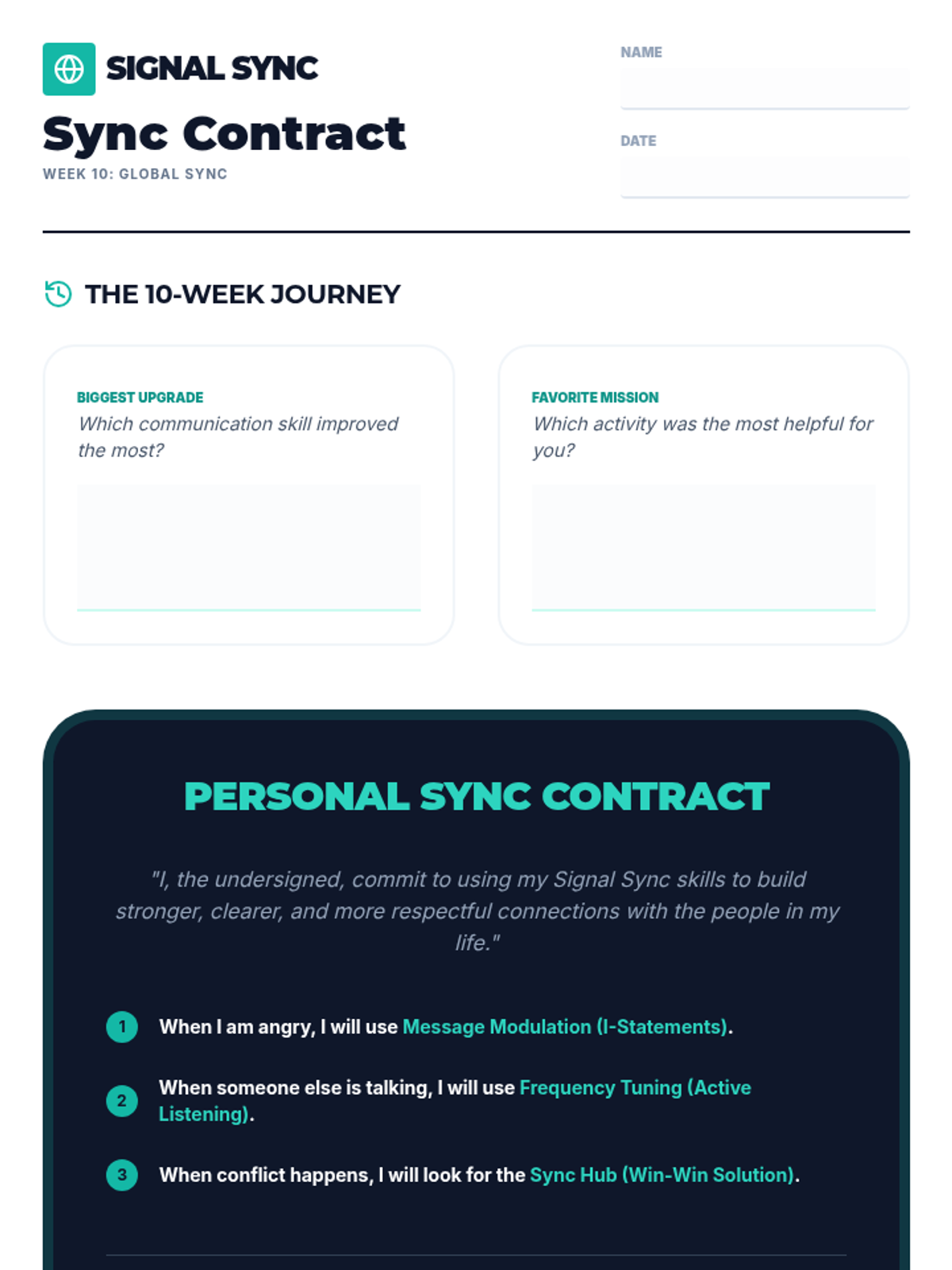
The final student activity sheet for the Signal Sync curriculum, featuring a reflection area and a formal communication commitment contract.
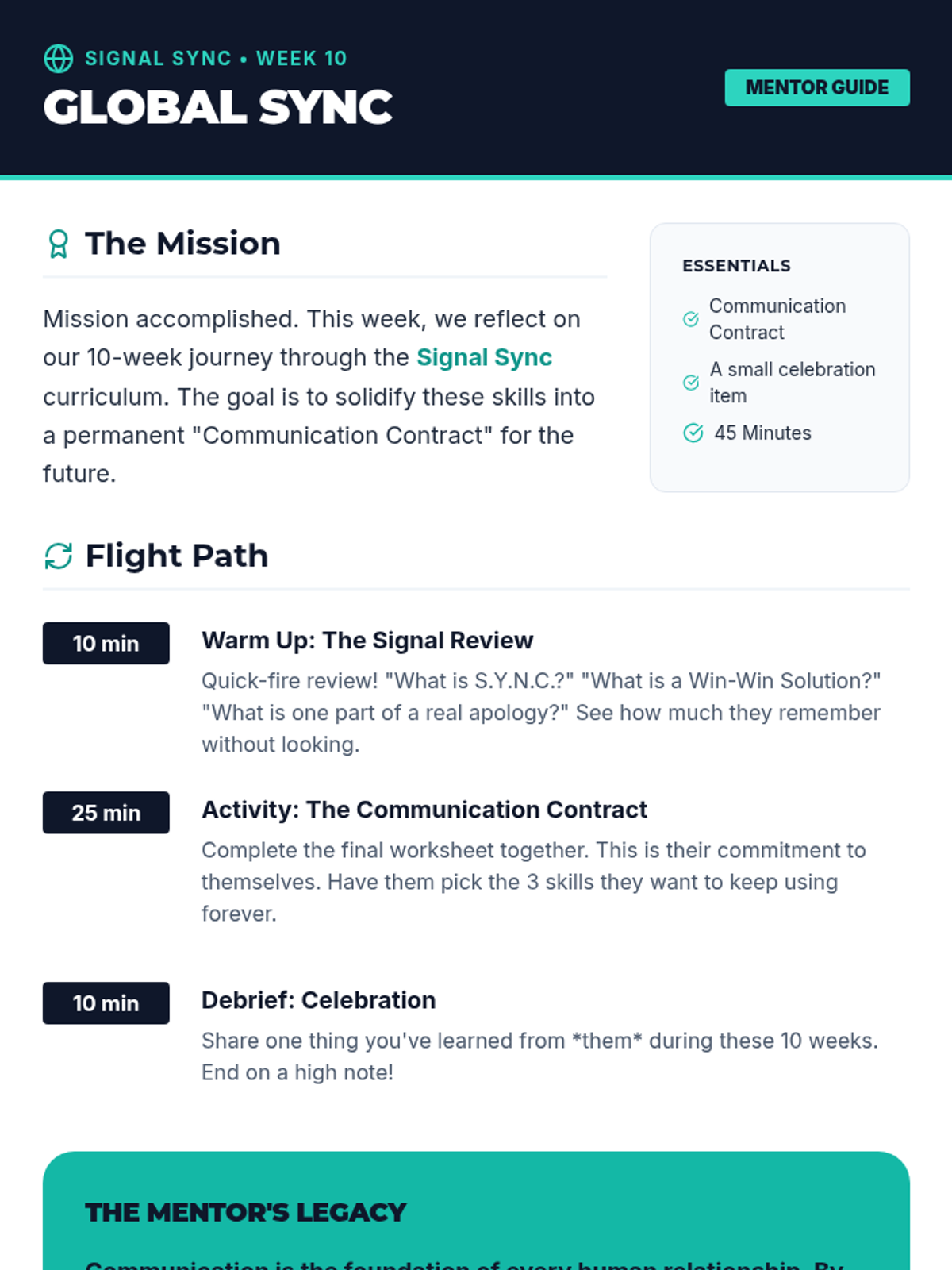
A mentor guide for the final week of the Signal Sync curriculum, focusing on reflection and the creation of a personal communication contract.
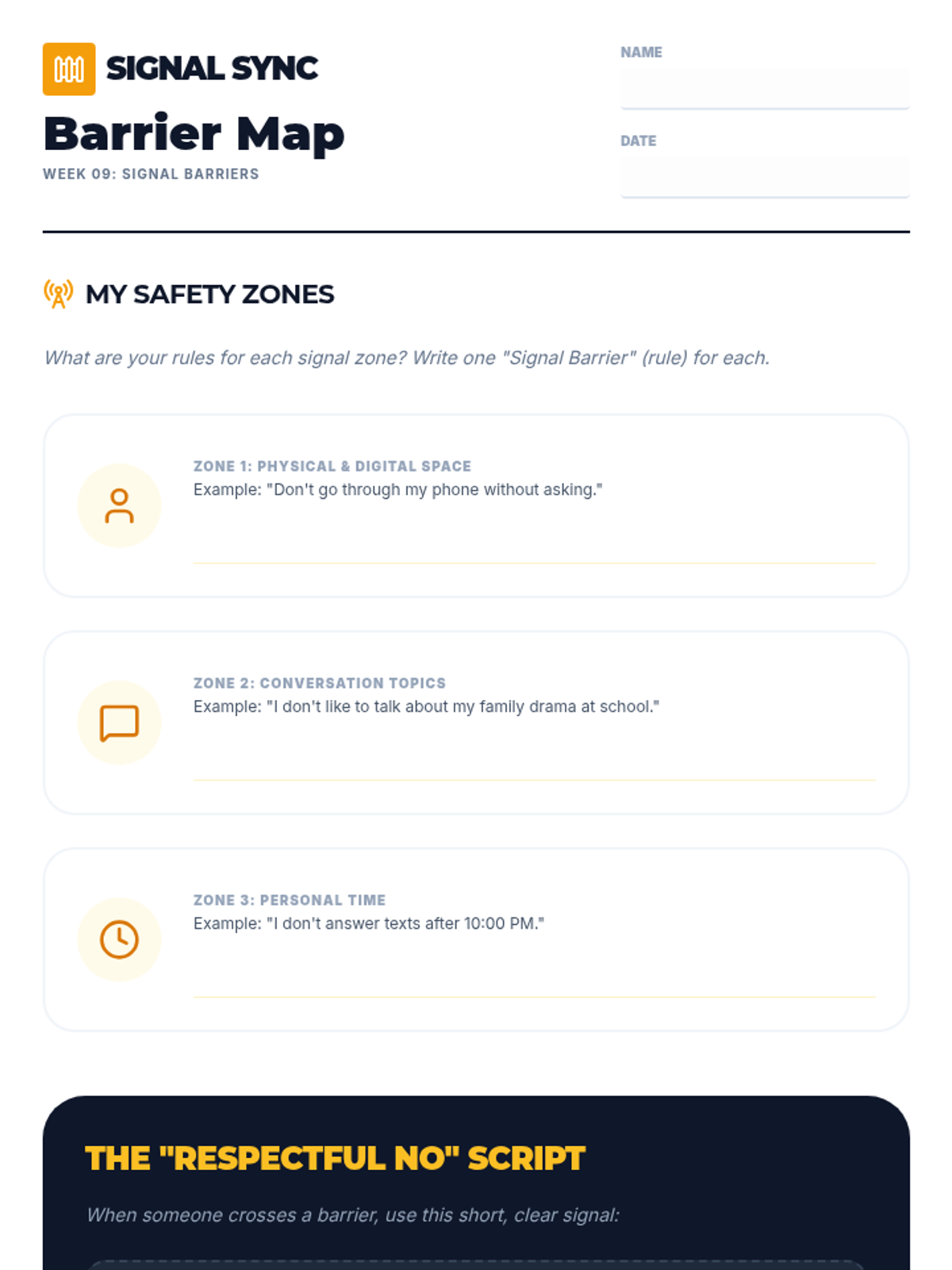
A student activity sheet for mapping personal boundaries and practicing assertive 'No' scripts.
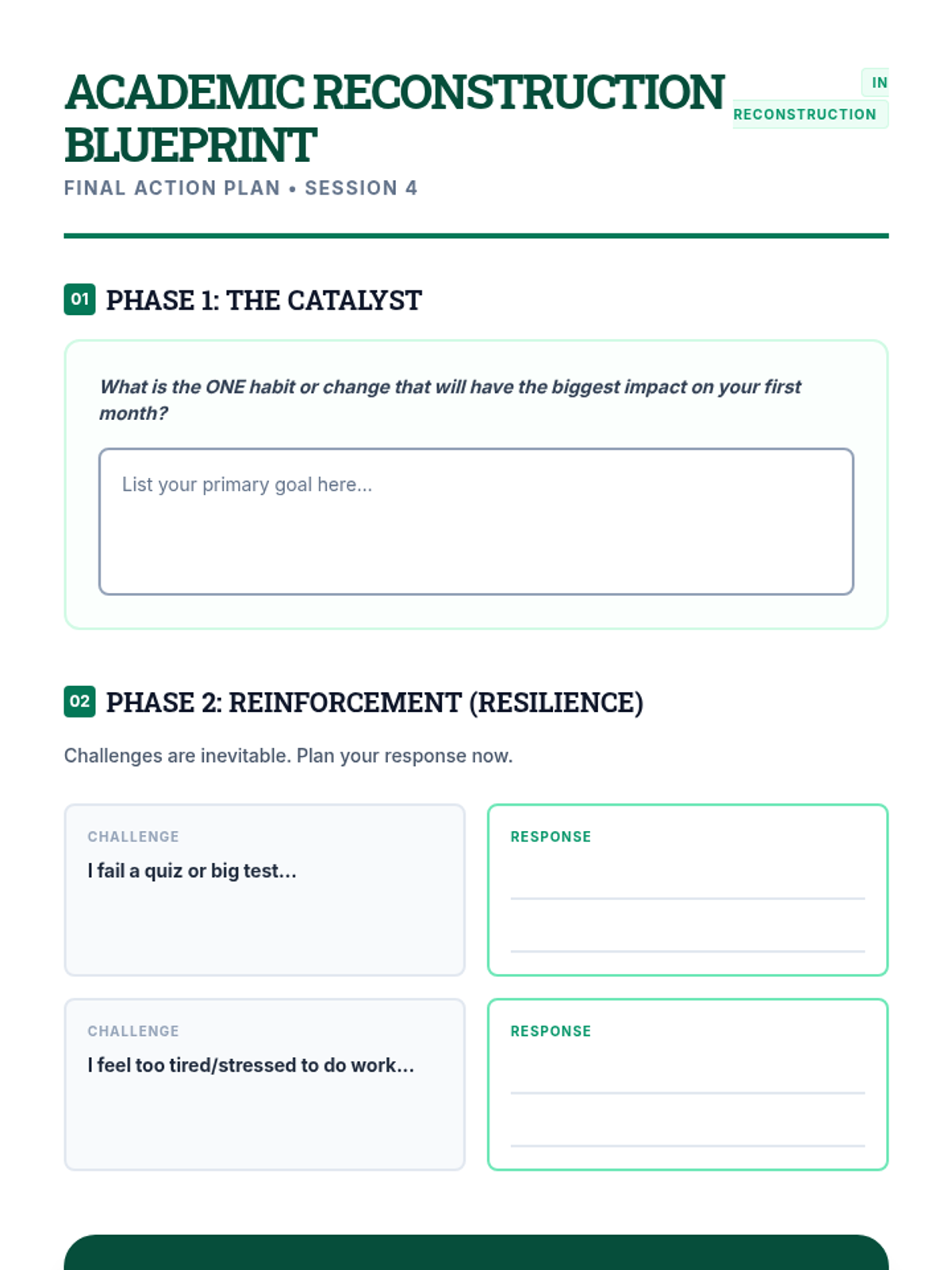
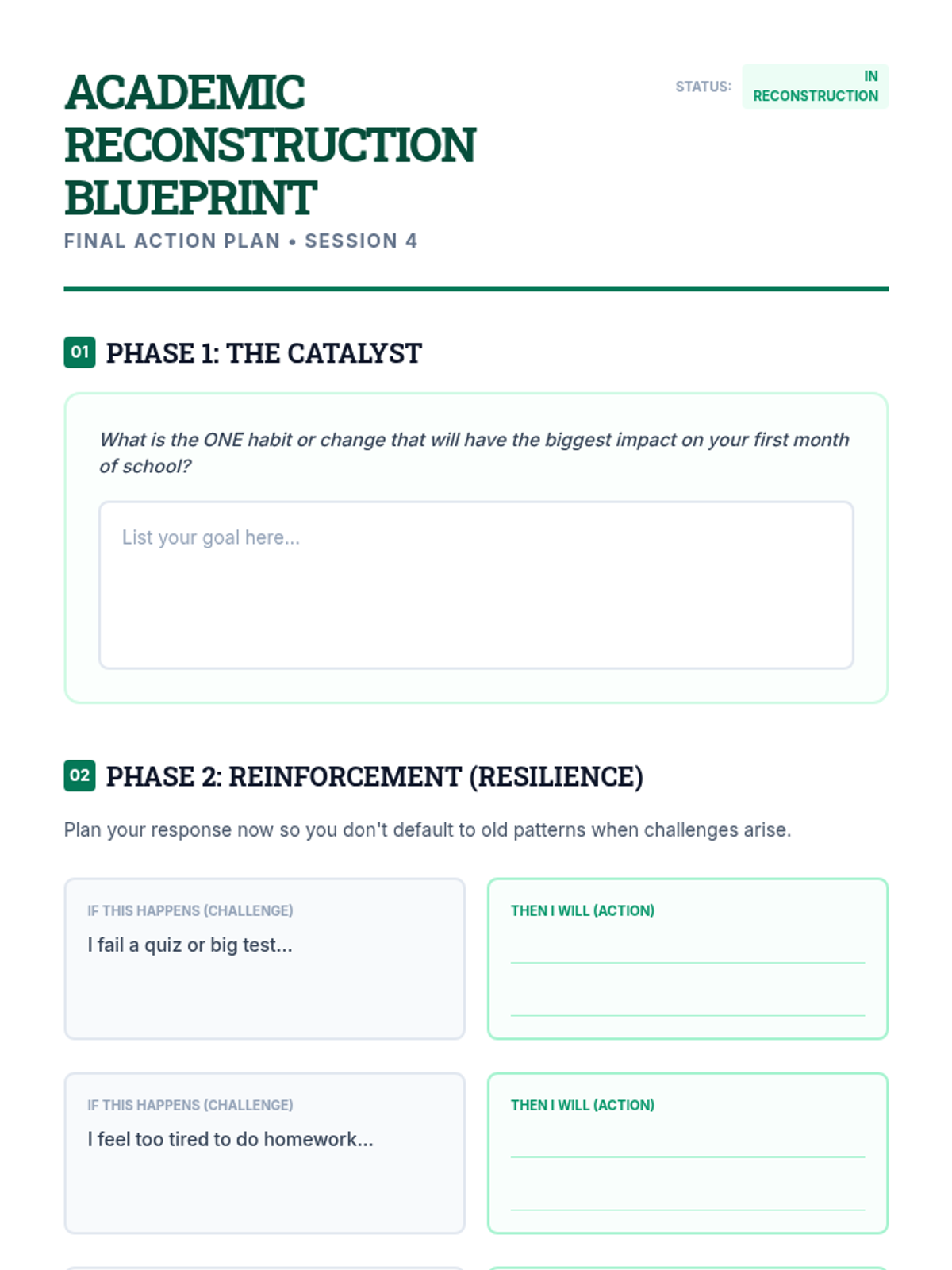
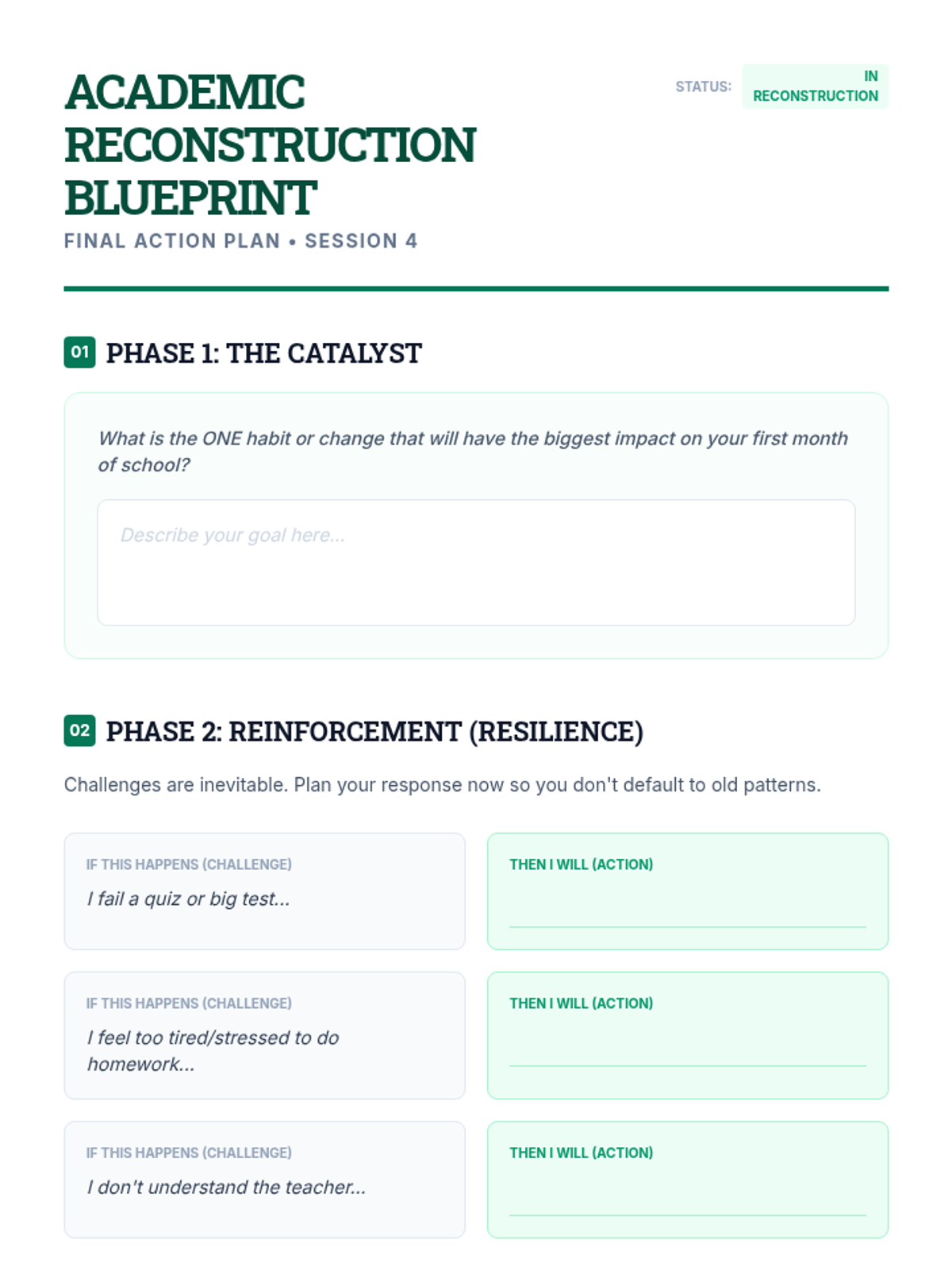
A final comprehensive academic blueprint worksheet for Session 4. Revised to fit one page, add multi-line action areas for 'If/Then' strategies, and unify signature block labeling.
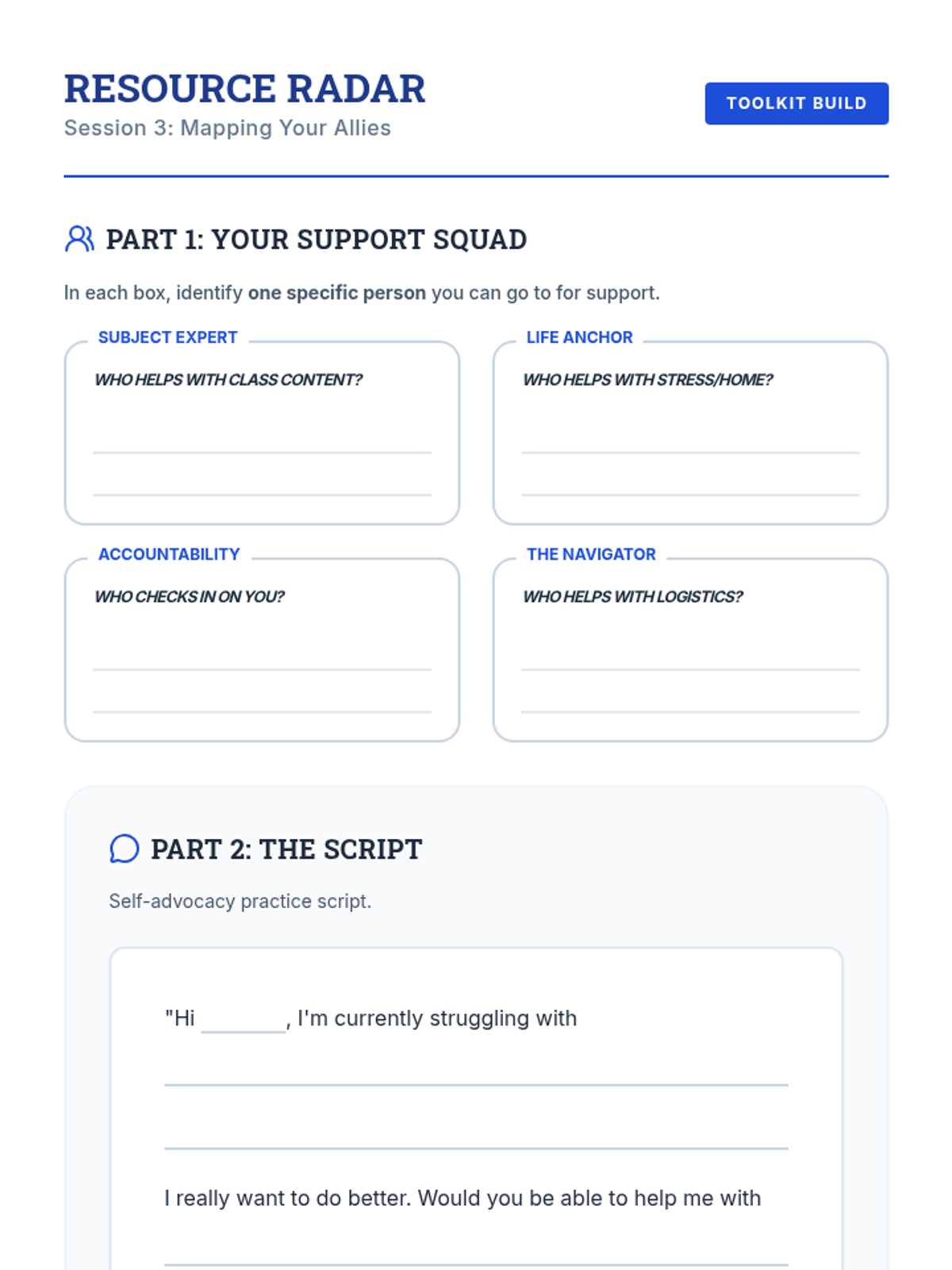
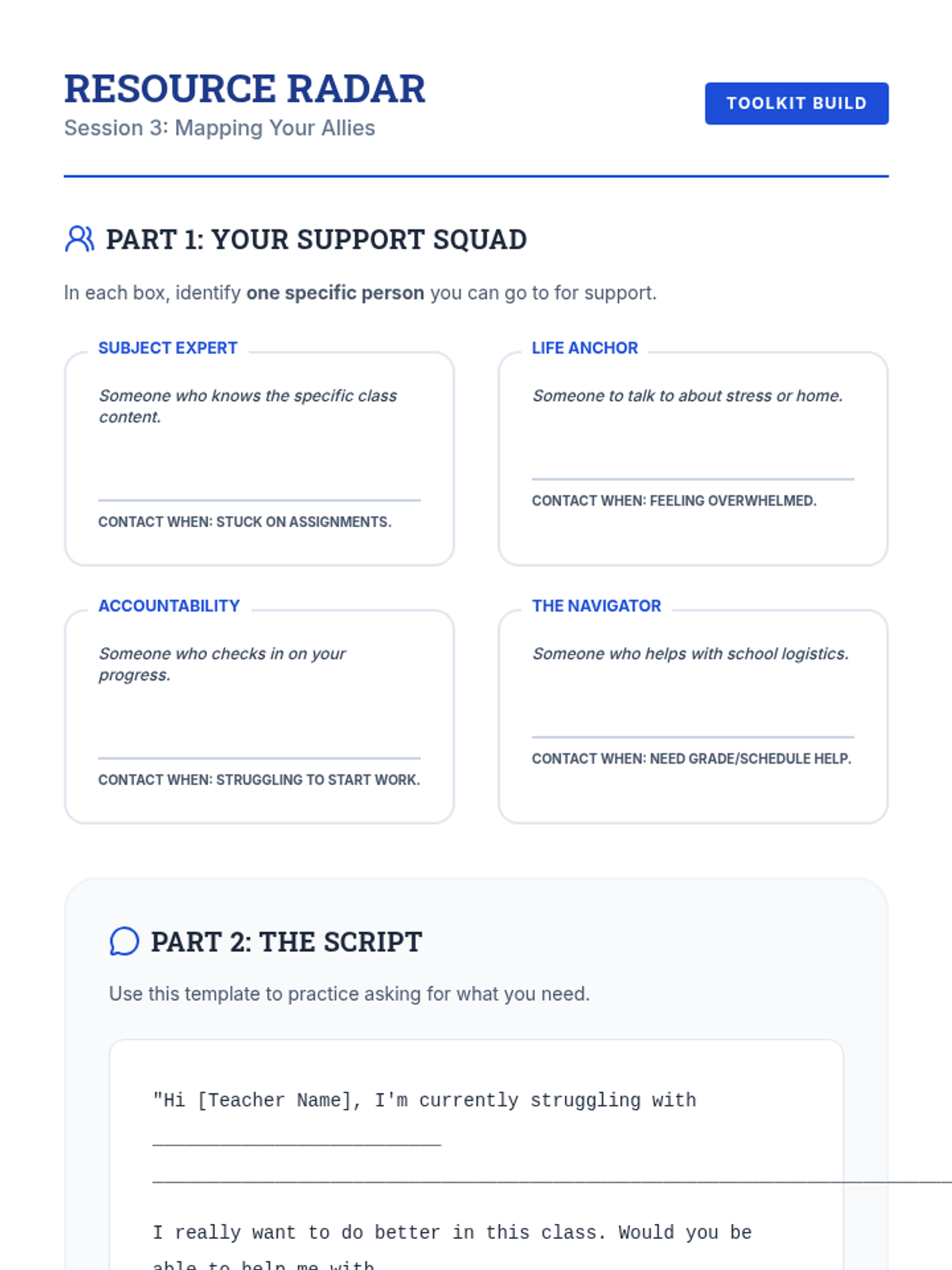
A worksheet for Session 3. Revised for a single-page layout, expanded handwriting areas for Part 1, and a cleaner, more usable advocacy script template in Part 2.
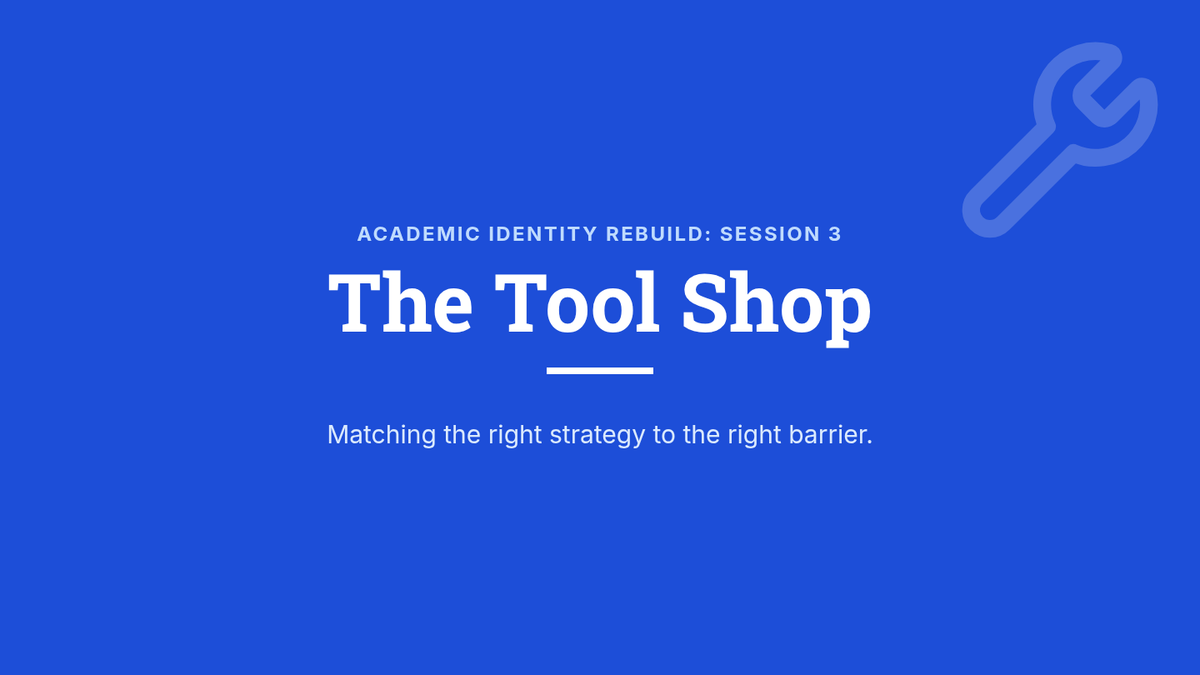
Slide deck for Session 3. Revised to fix quote wrapping on Slide 5 and further maximize student writing space in the Resource Radar activity on Slide 4.
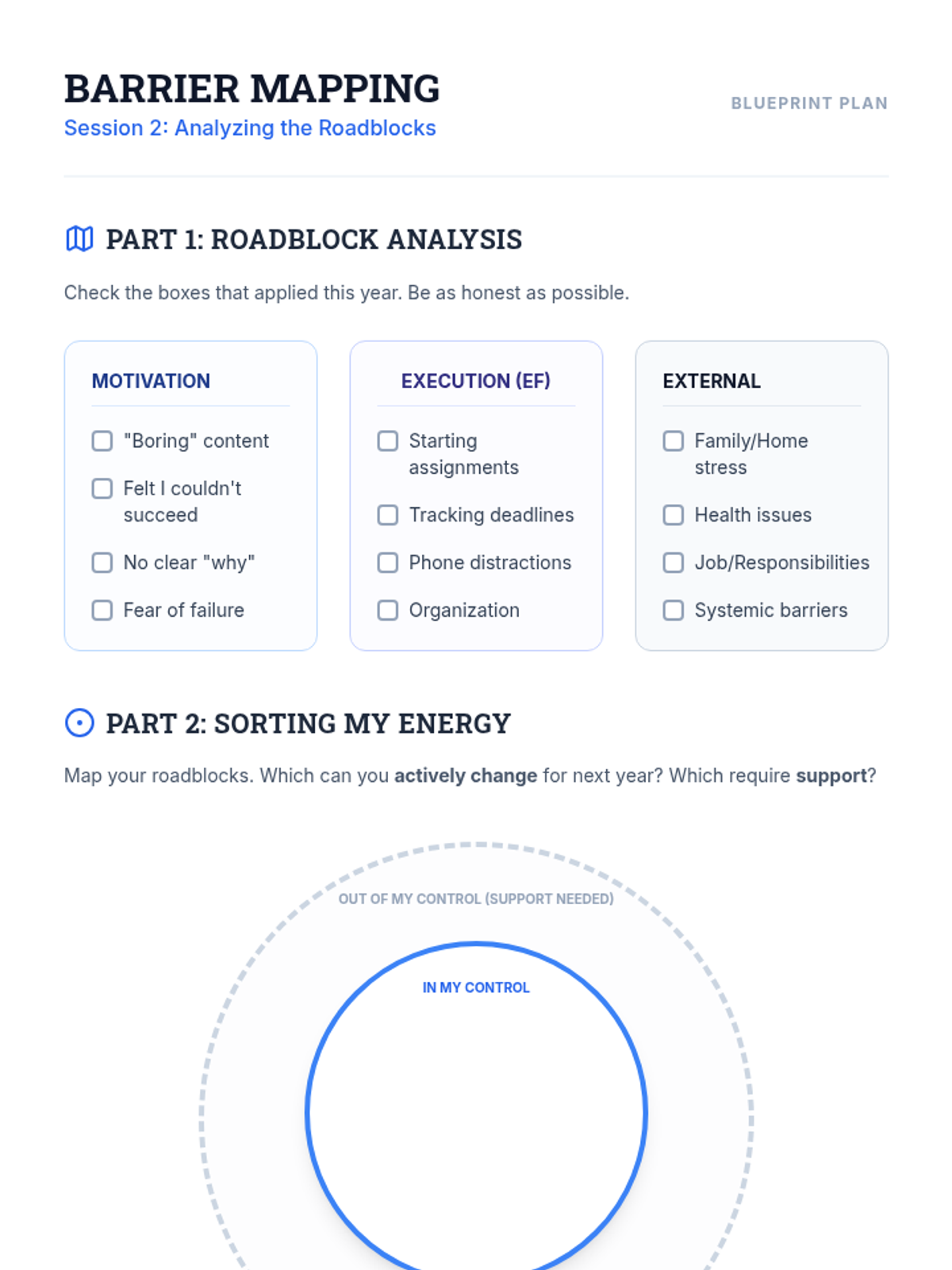
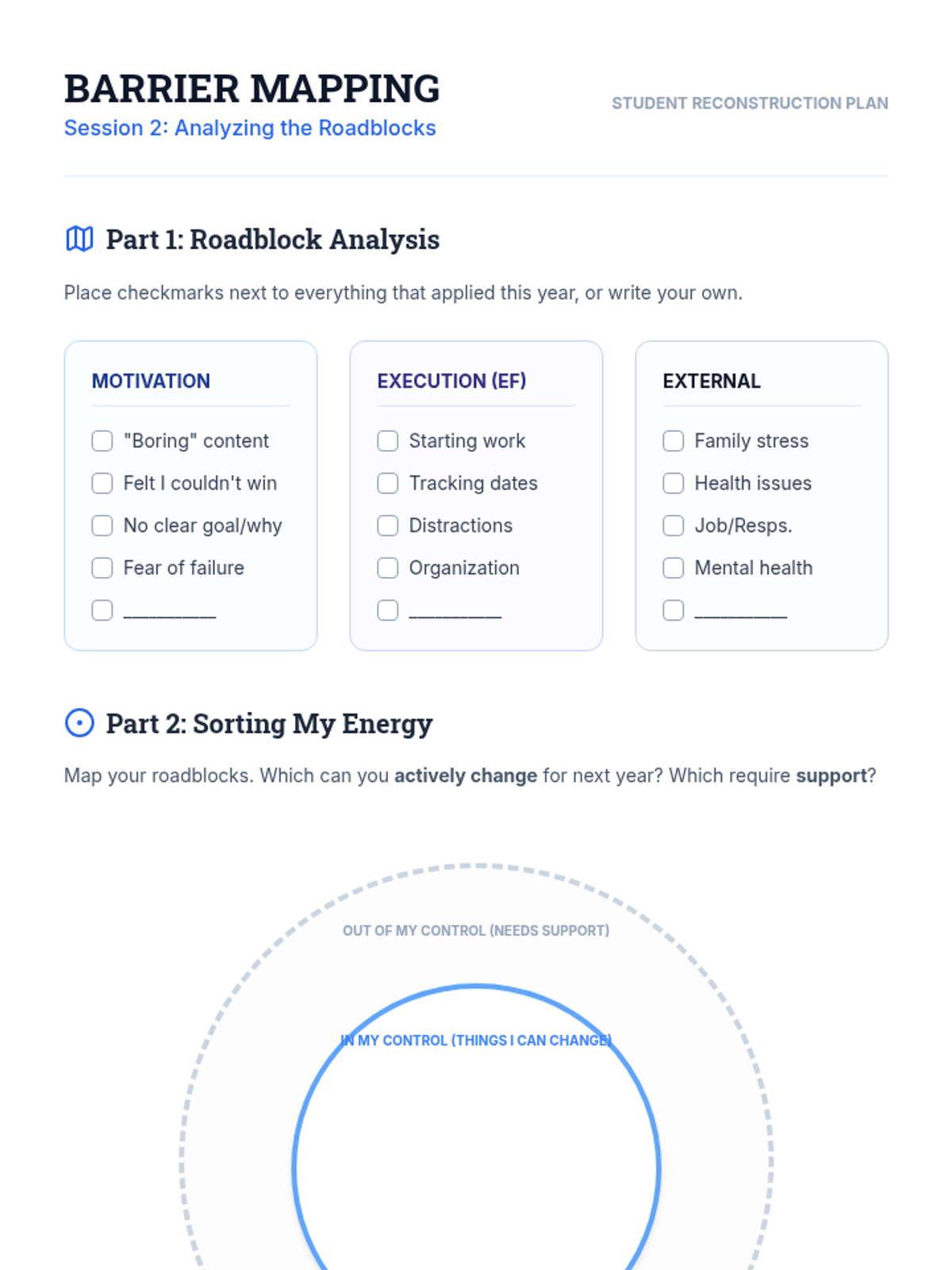
A barrier mapping worksheet for Session 2. Revised for single-page layout, improved vertical alignment of checkboxes, and removal of placeholder text in work areas.
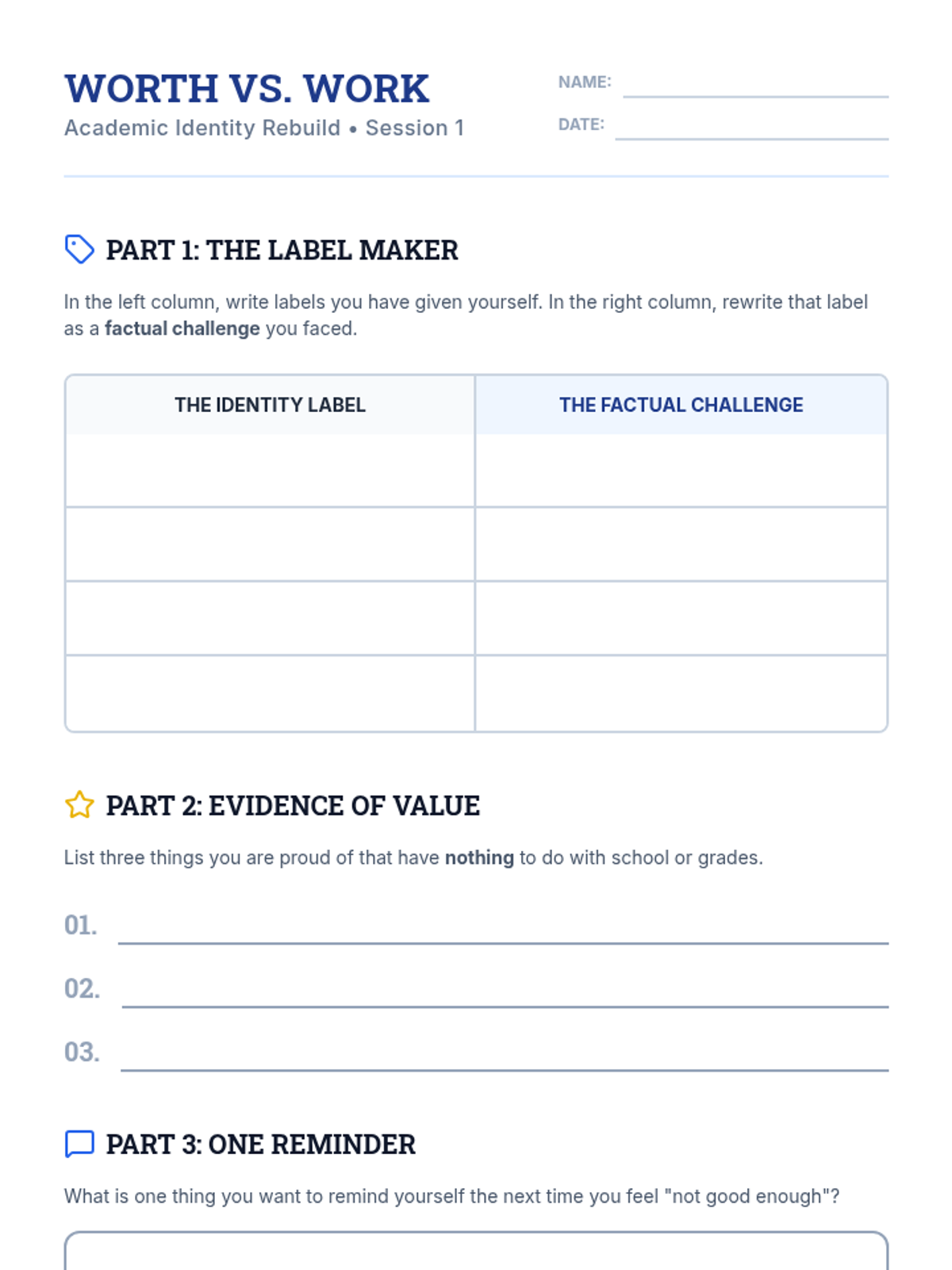
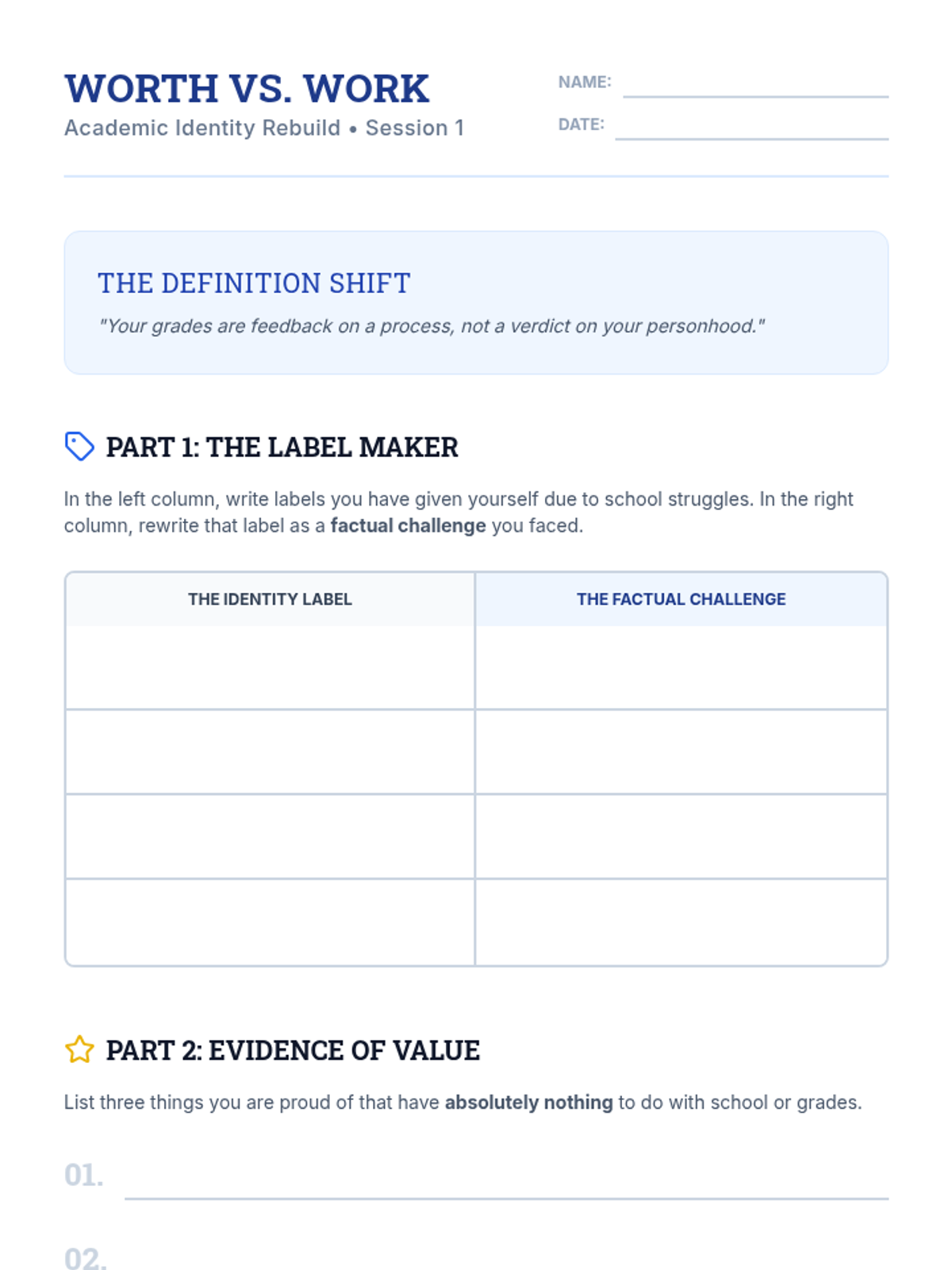
A reflective worksheet for Session 1. Revised for single-page layout, improved writing line contrast, and clearer header sizing.
Introductory slide deck for Session 1. Revised for improved vertical balancing, fixed text kerning on Slide 3, and enhanced color contrast.
A final comprehensive academic blueprint worksheet for Session 4. Revised to fit one page, increase writing space for 'If/Then' scenarios, and improve text contrast.
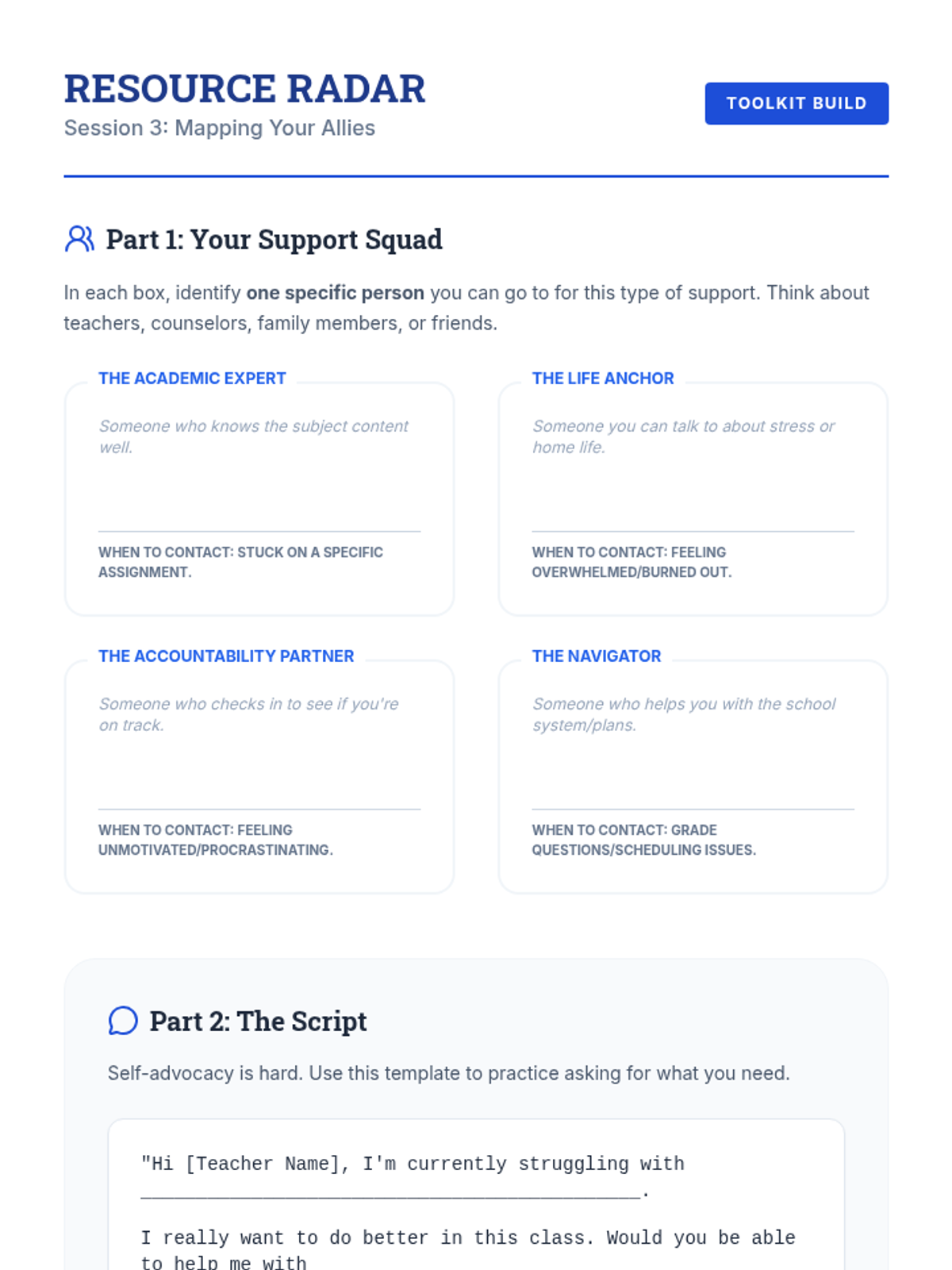
A worksheet for Session 3 that helps students identify their support network. Revised for better layout (one page), improved text contrast, and cleaner script formatting.
Slide deck for Session 3, focusing on building a personalized toolkit of academic strategies. Revised to improve vertical utilization and student work area sizing on Slide 4.
A barrier mapping worksheet for Session 2 that helps students categorize academic struggles. Revised to fit one page and remove cluttered placeholder text from work areas.
A reflective worksheet for Session 1 that helps students deconstruct academic labels and identify areas of self-worth outside of school performance. Revised to fit one page and improve print legibility.
Introductory slide deck for Session 1 of the Academic Identity Rebuild program, focusing on group norms and separating academic performance from personal self-worth. Revised for better layout and text legibility.
A final comprehensive academic blueprint worksheet for Session 4, allowing students to set habit-based goals, create 'If/Then' resilience strategies, and sign a commitment to their academic rebuilding process.
Slide deck for the final session, focusing on creating a concrete academic action plan, establishing 'If/Then' resilience strategies, and providing closure for the group.
A worksheet for Session 3 that helps students identify specific people in their support network and provides a script for practicing self-advocacy with teachers.
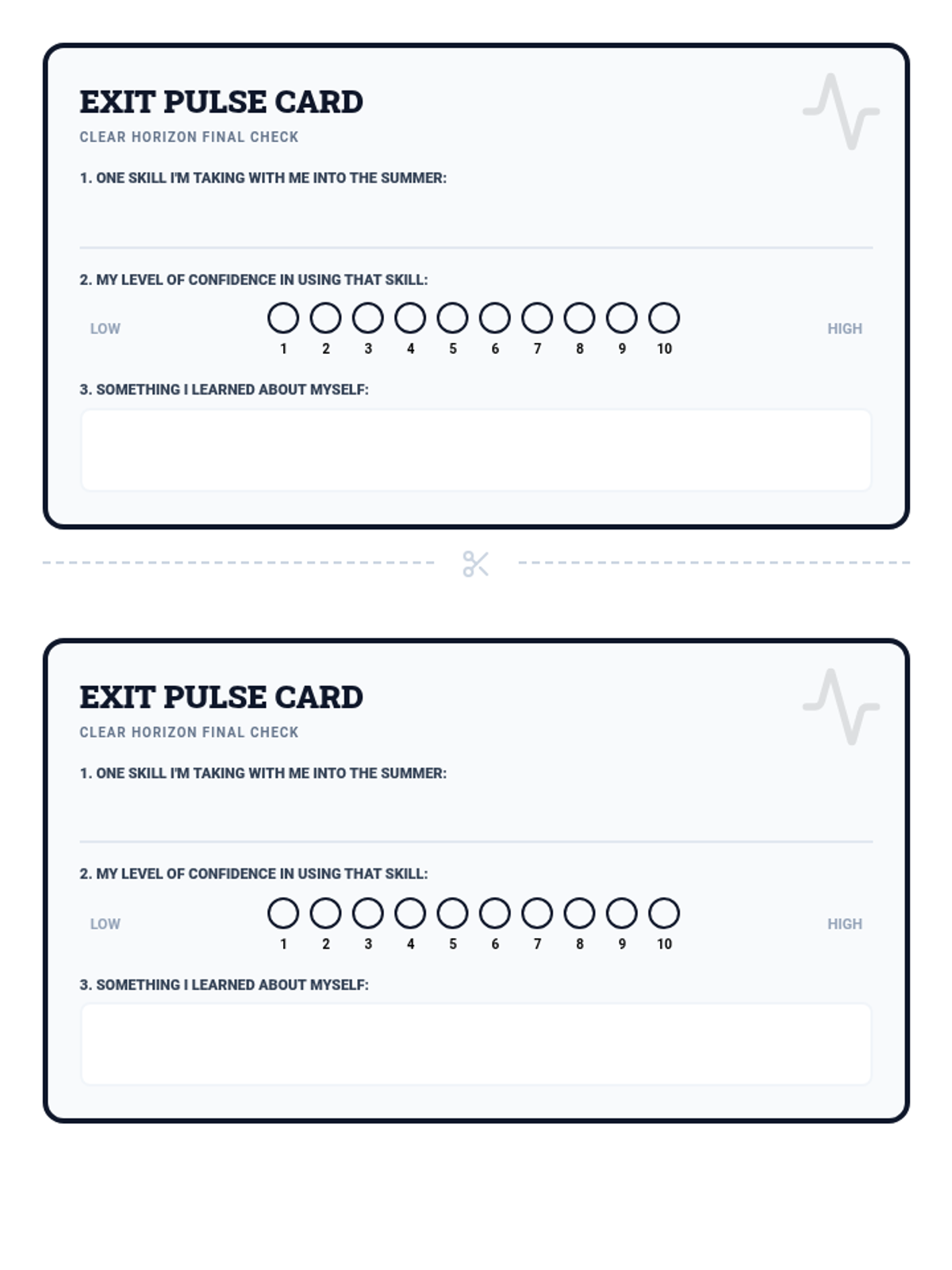
A final exit ticket for the sequence with two usable cards per page for efficient printing, featuring numbered confidence scales.
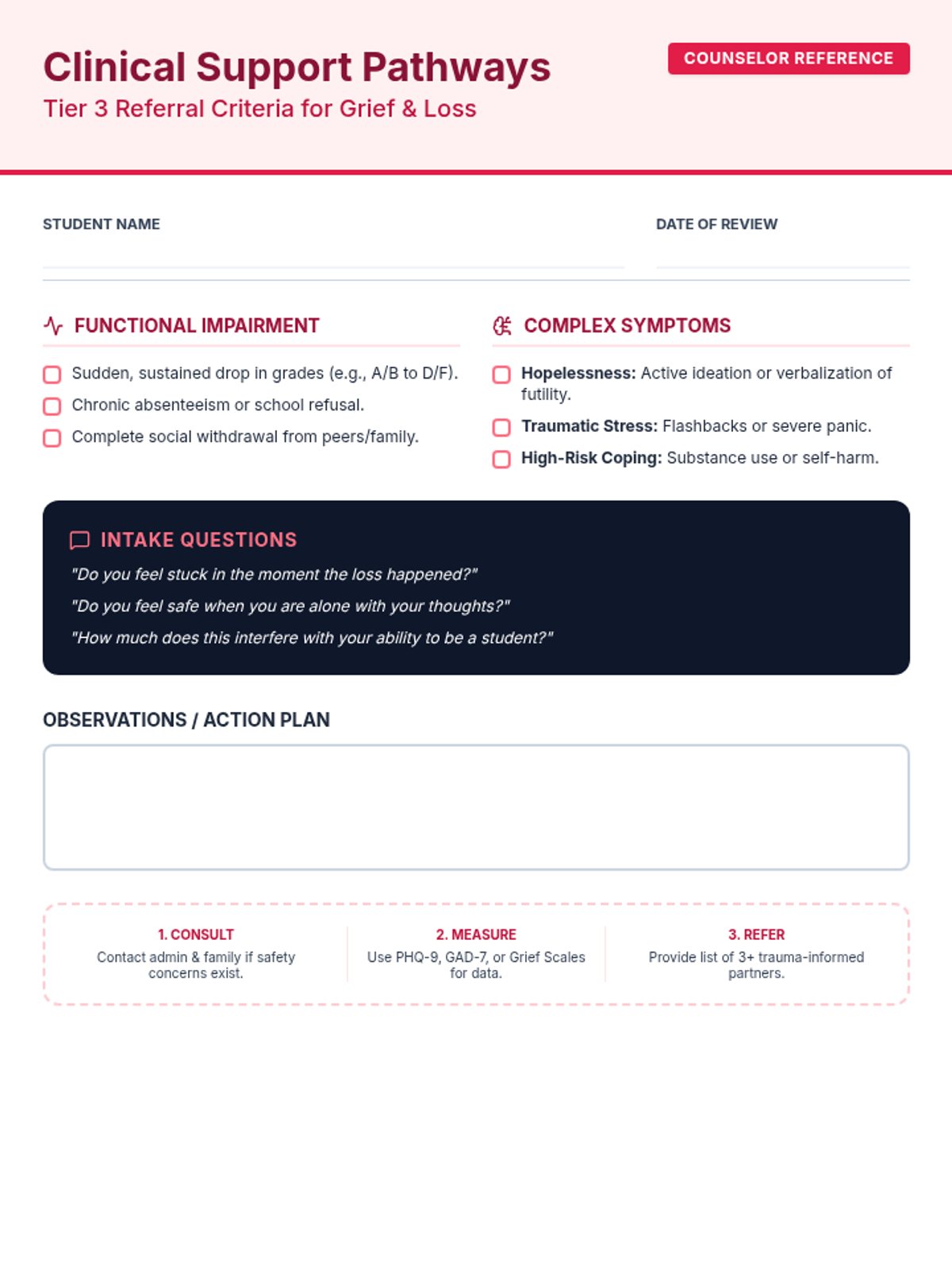
A clinical reference guide for counselors to identify Tier 3 needs. Revised for single-page layout, includes header fields, and improved contrast.
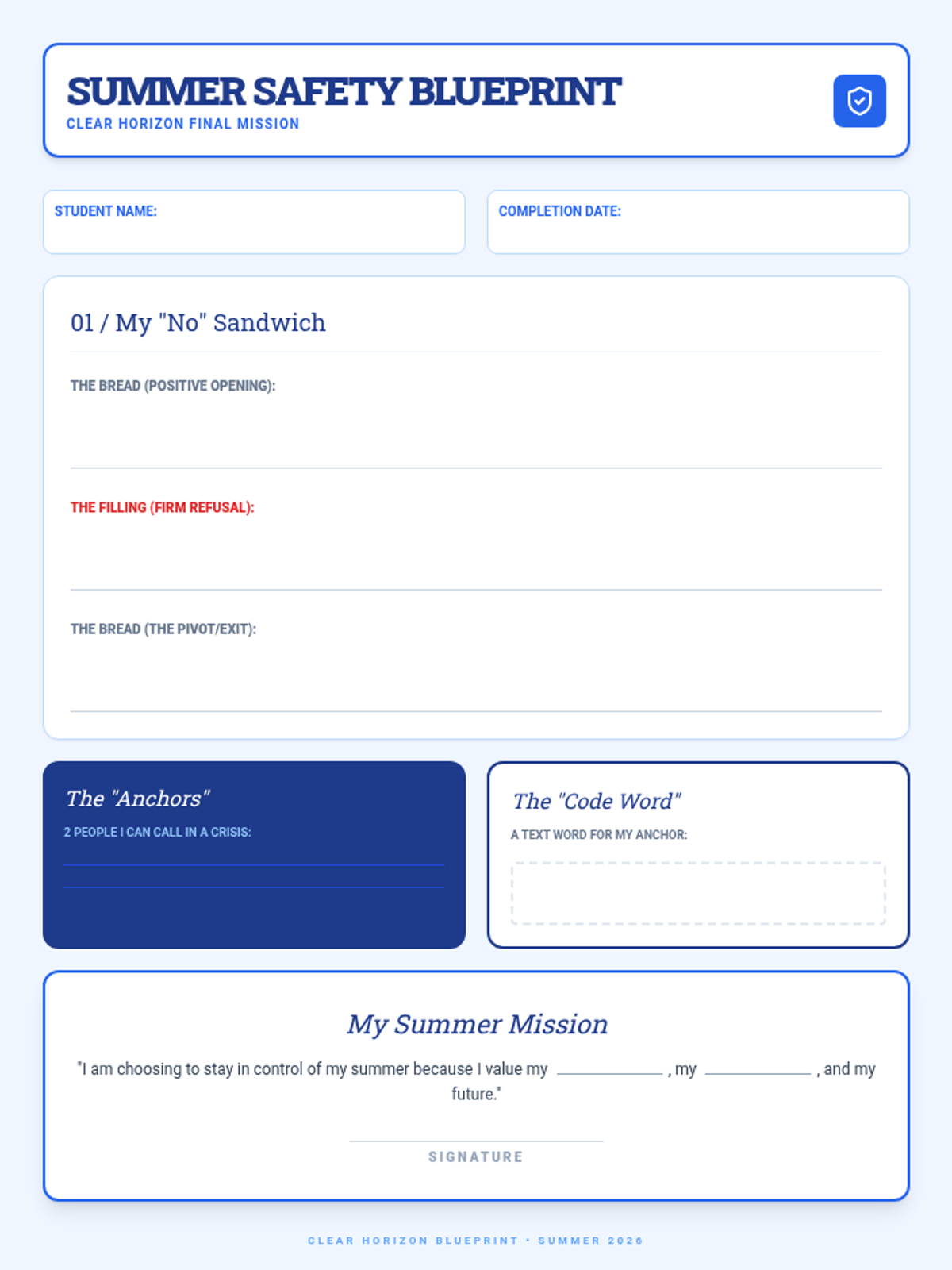
A culminating safety plan for students to document refusal scripts and emergency strategies, with improved spacing and layout for physical completion.
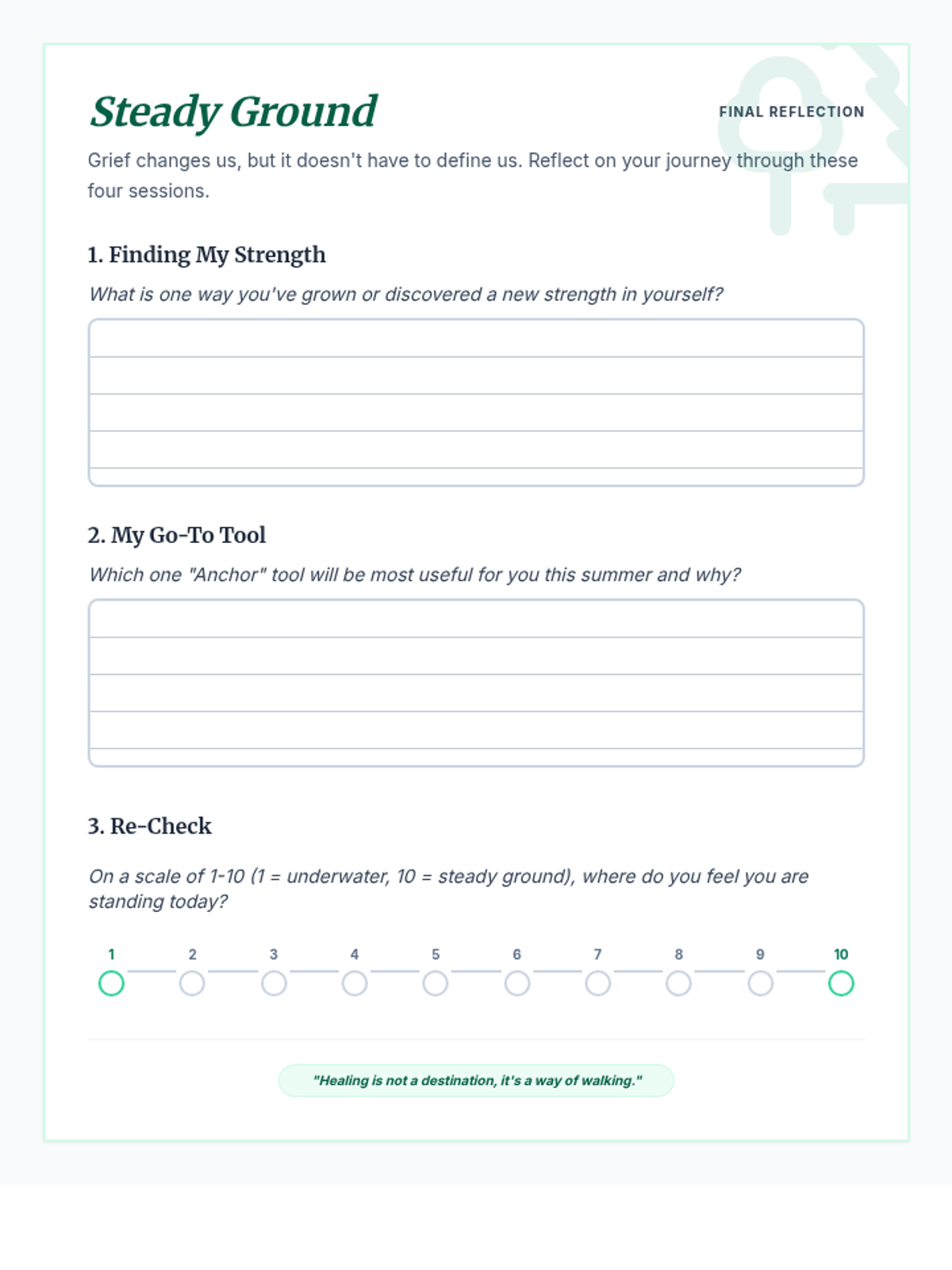
A final student reflection handout for identifying growth and self-assessing. Revised with numeric scale labels, improved contrast, and writing guide lines.
A final session presentation focusing on concrete refusal skills and practical exit strategies, with improved visual contrast and layout.
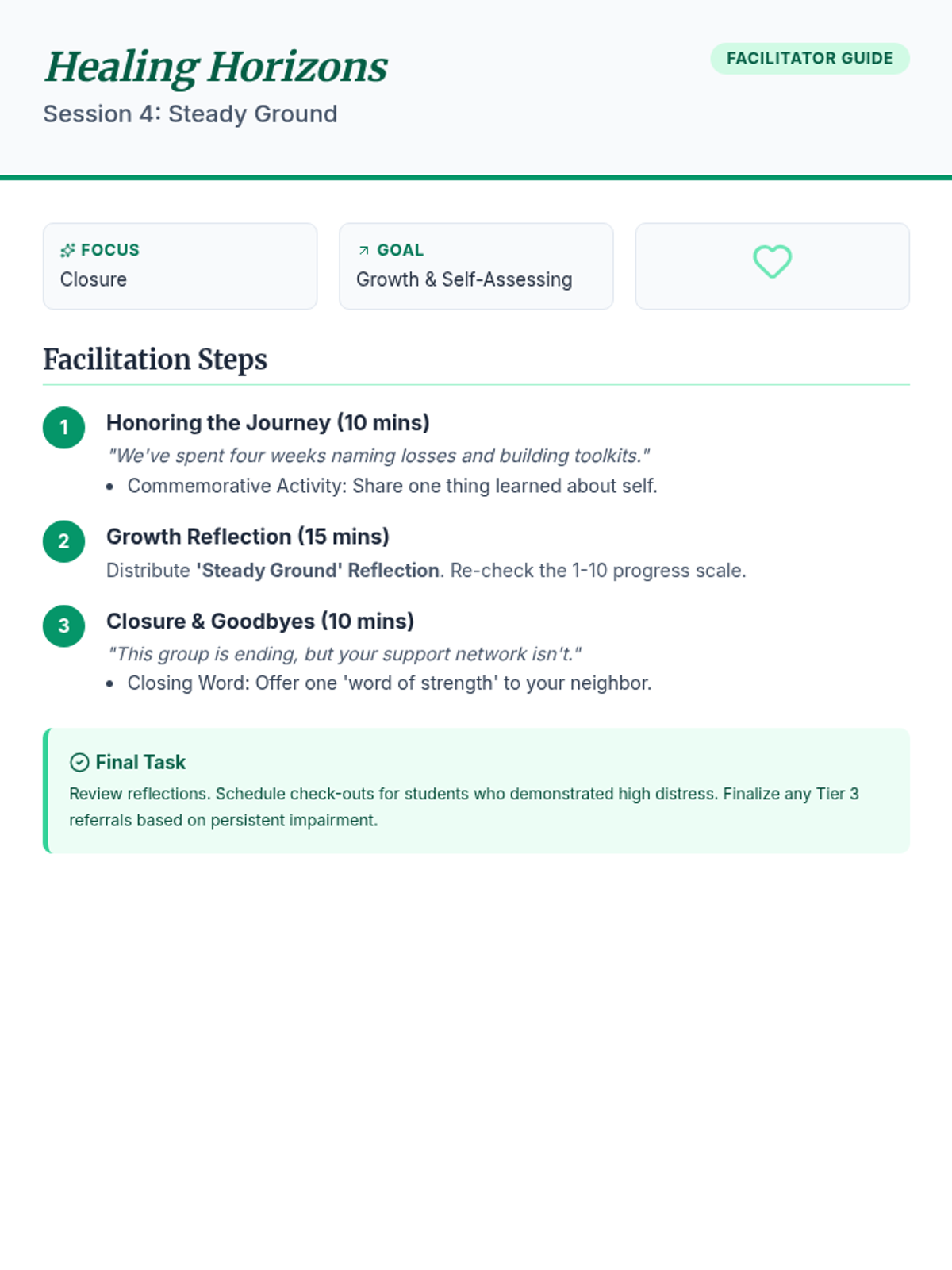
A facilitation guide for the final group session focusing on growth and closure. Revised for a single-page layout.
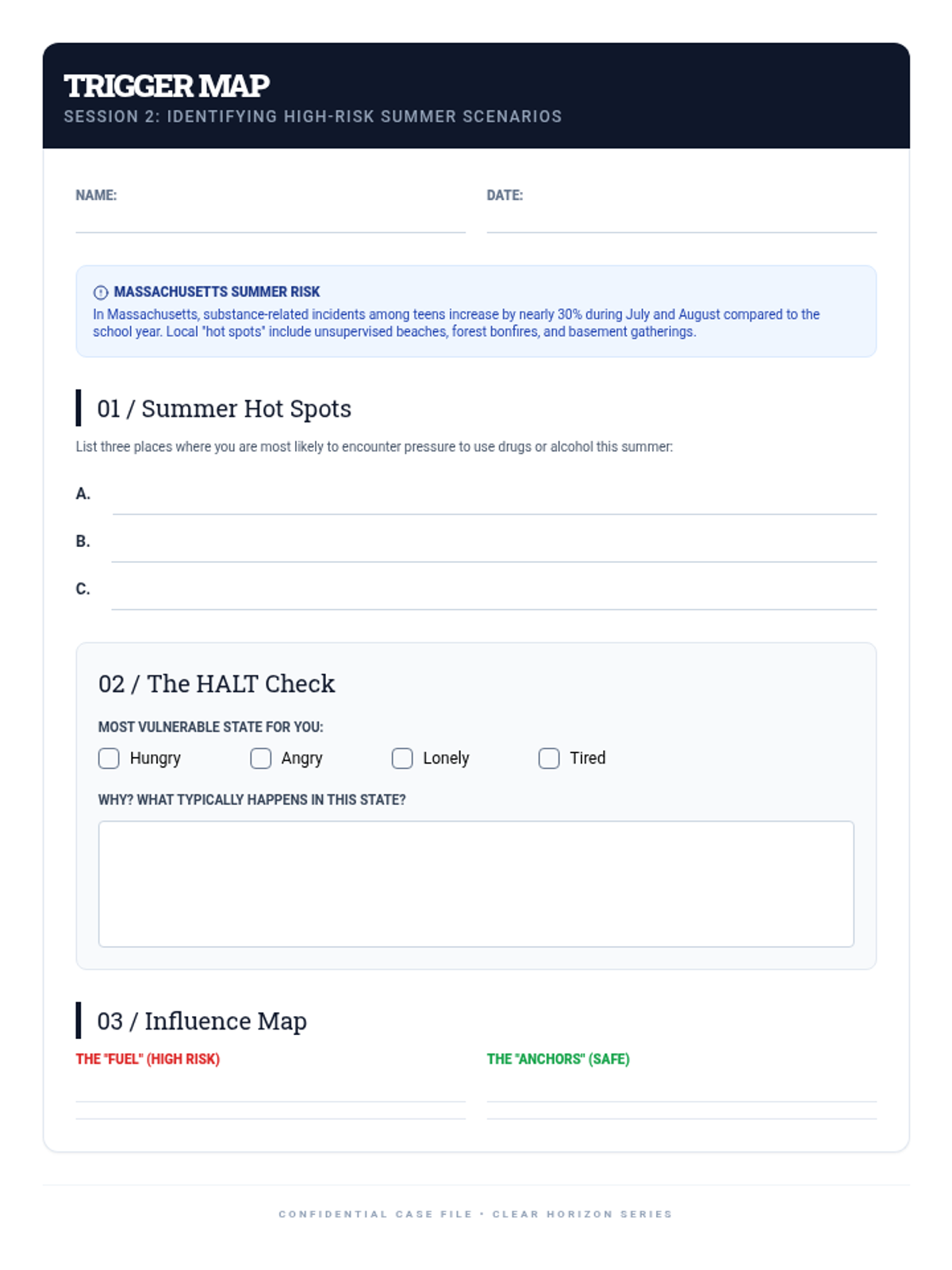
A diagnostic worksheet for identifying personal triggers and social influences, optimized for handwriting and clear page layout.
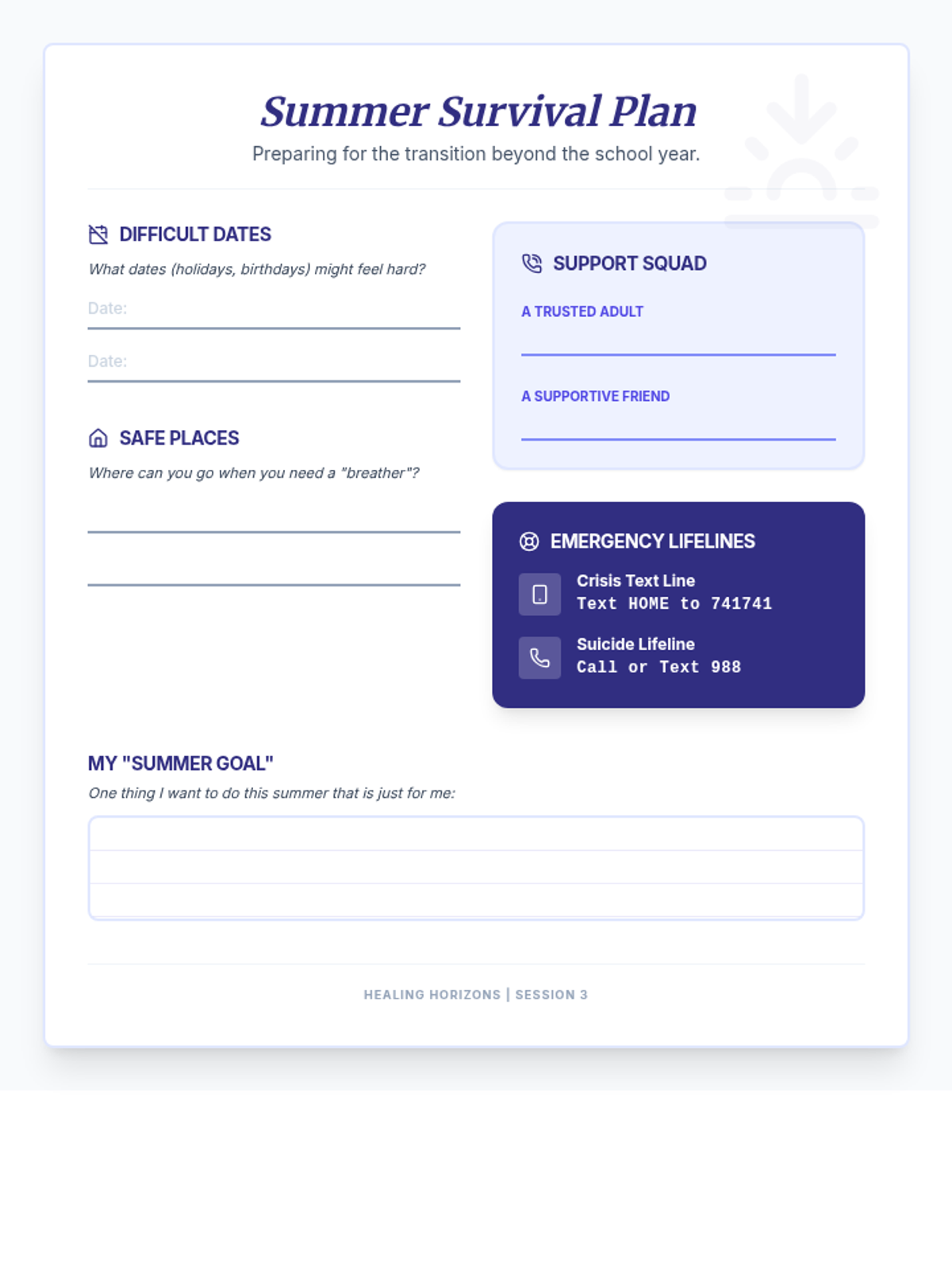
A transition planning worksheet for students to identify summer triggers and support systems. Revised for single-page layout and improved contrast/safety section unity.
A presentation for the second session focusing on the HALT framework and Massachusetts-specific summer risk data for adolescents.
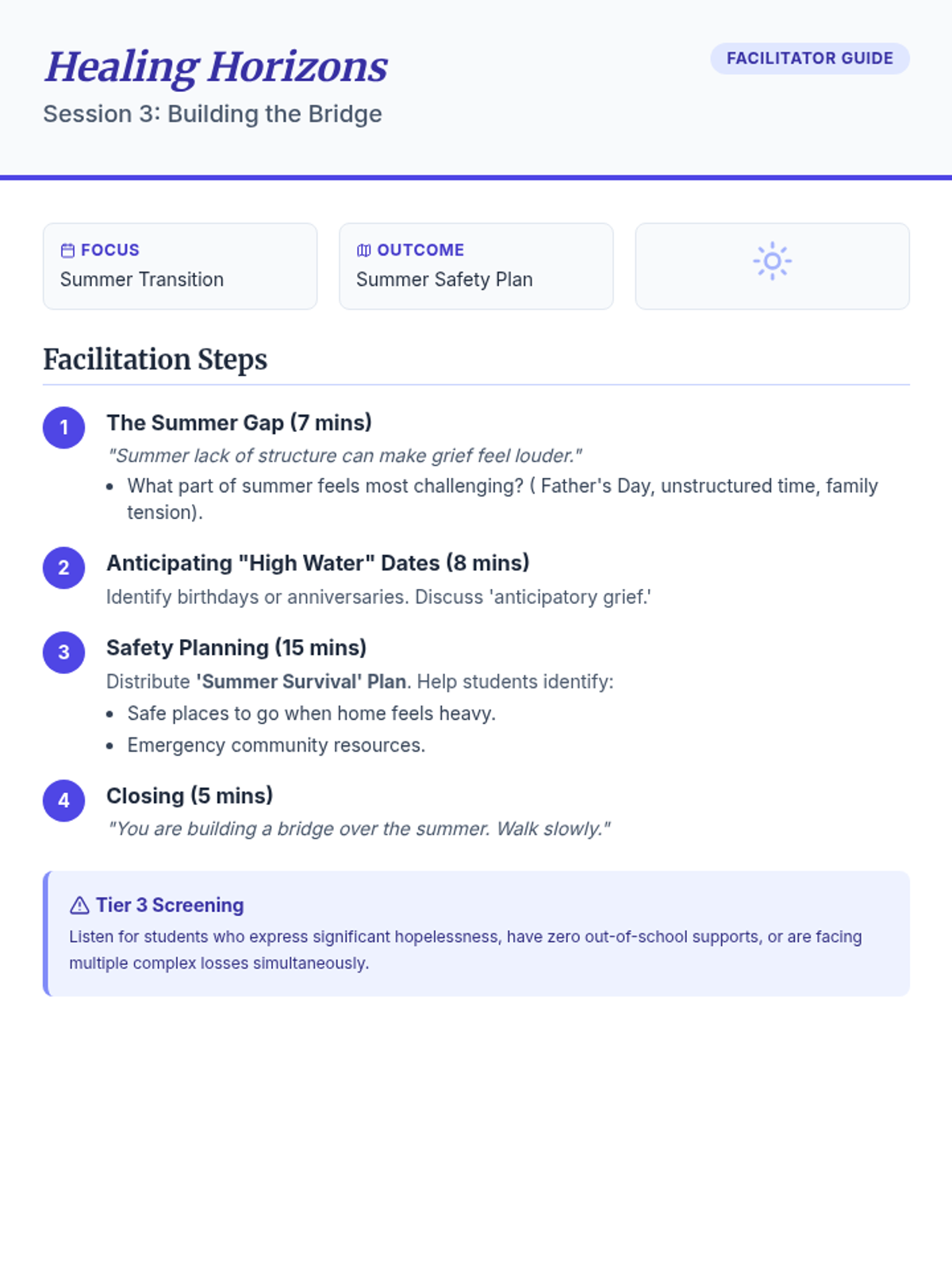
A facilitation guide for the third session focusing on summer transition planning. Revised for a single-page layout and improved page breaks.
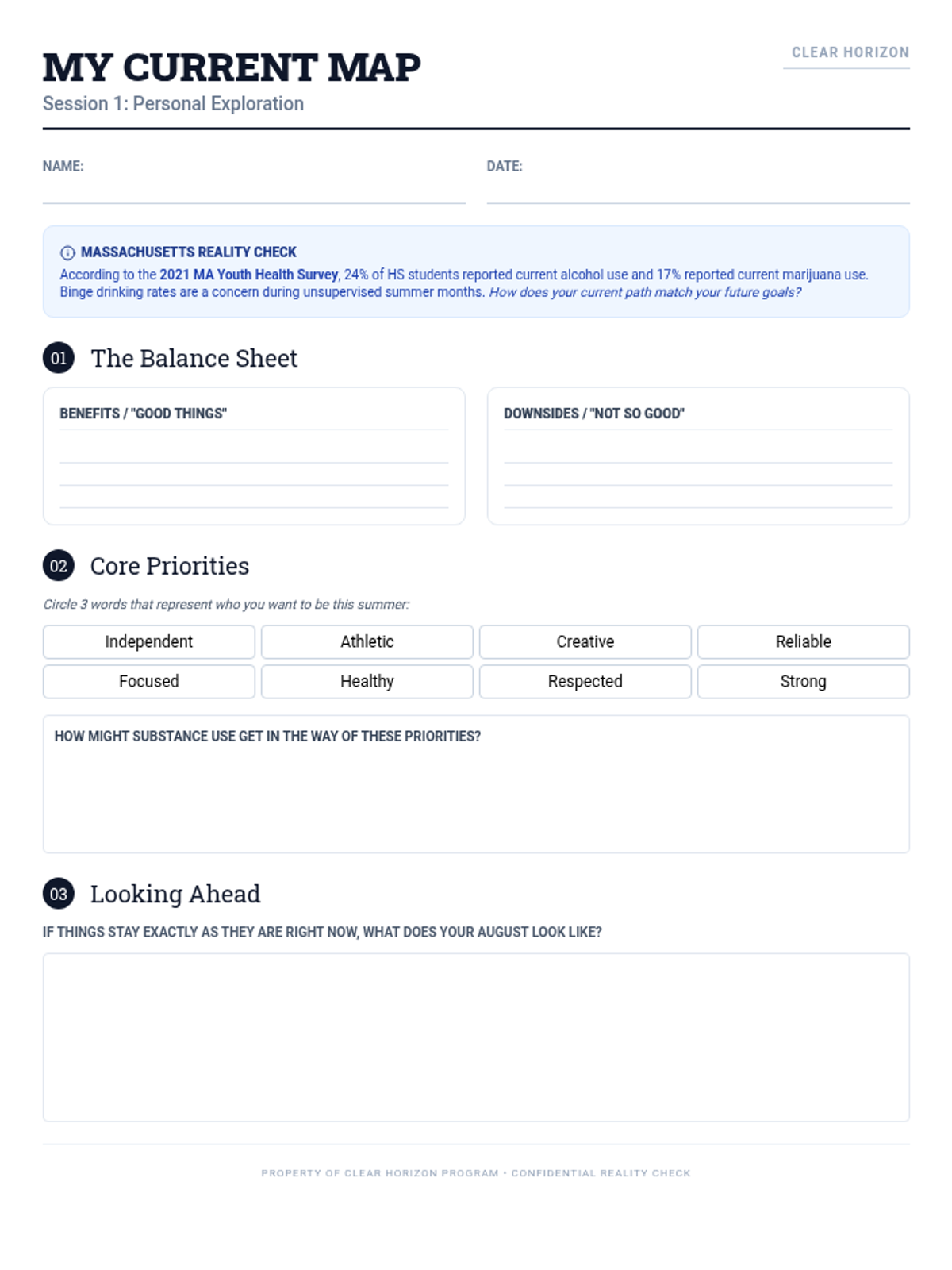
A reflective worksheet for students to map out the pros and cons of their current habits, including Massachusetts-specific adolescent health data.
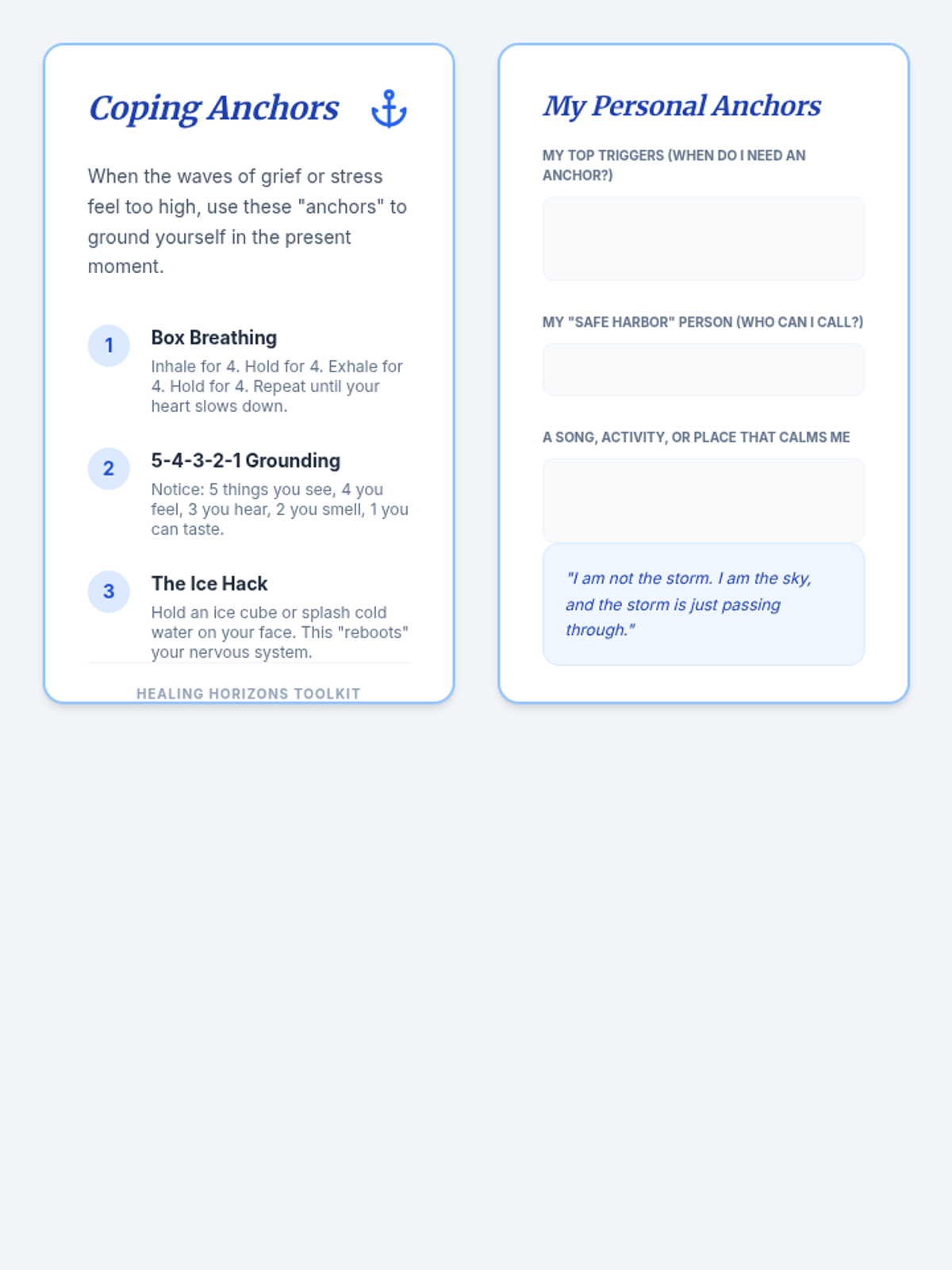
A double-sided pocket card/handout for students that lists grounding techniques and provides space to personalize their own coping strategies and support systems.
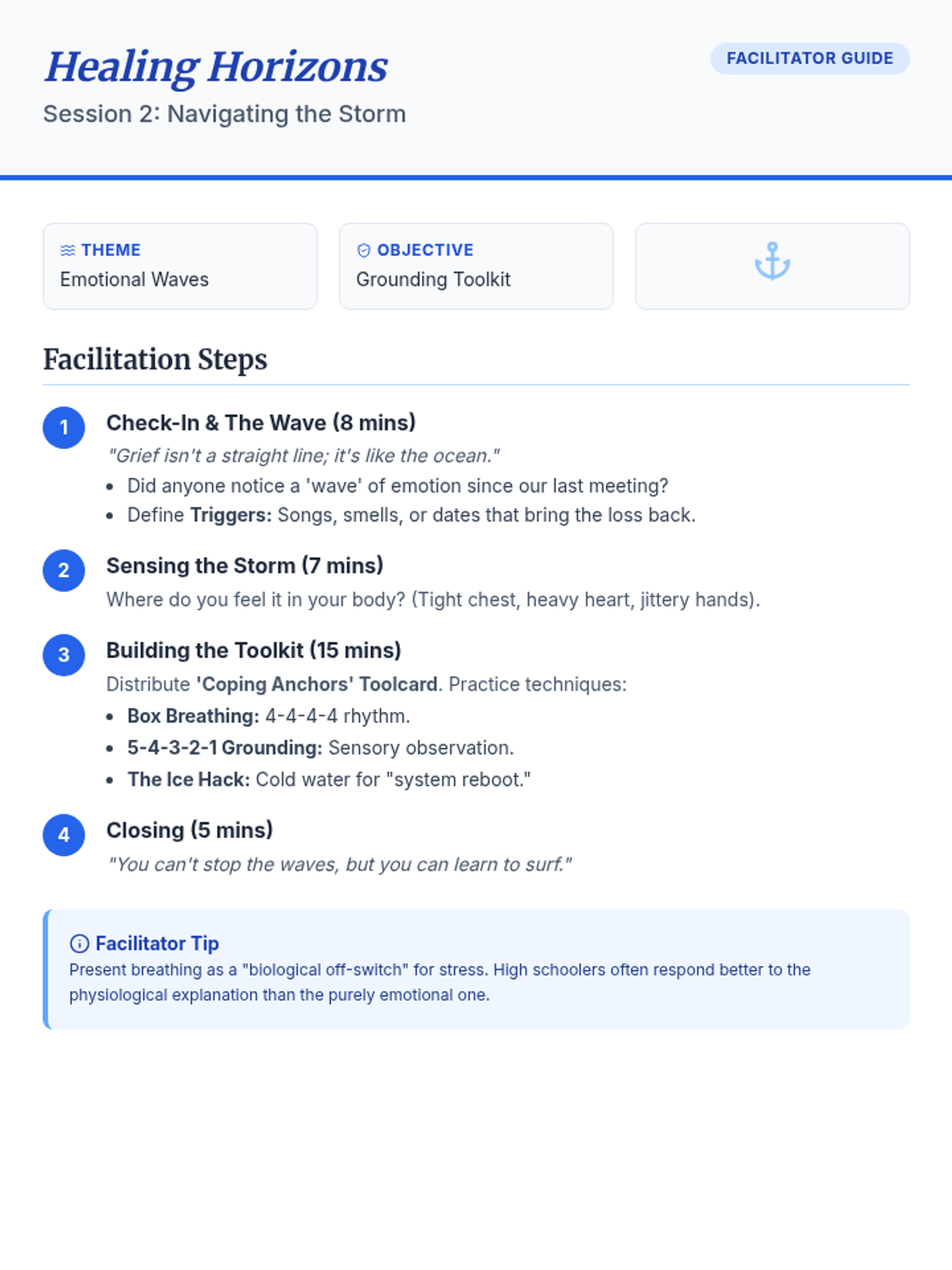
A facilitation guide for the second session focusing on identifying grief triggers and teaching specific grounding and coping strategies. Revised for a single-page layout.
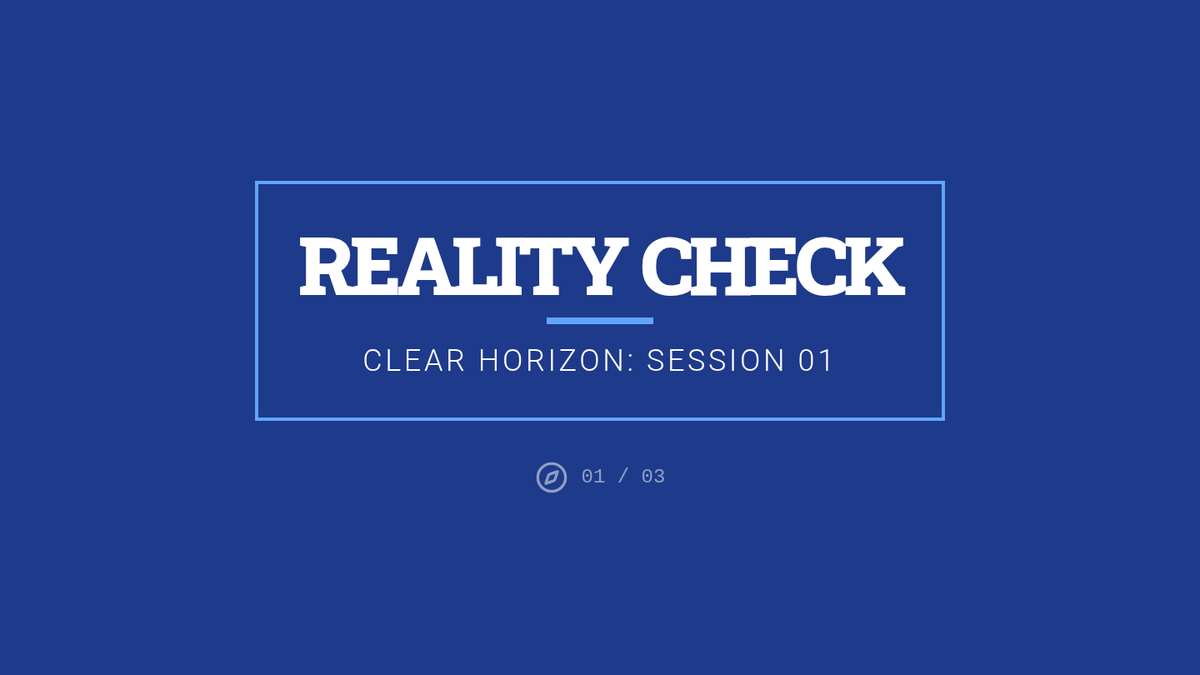
A visual presentation for the first session, introducing group norms, Massachusetts substance use data, and an interactive 'Importance Ruler' activity to gauge student readiness for change.
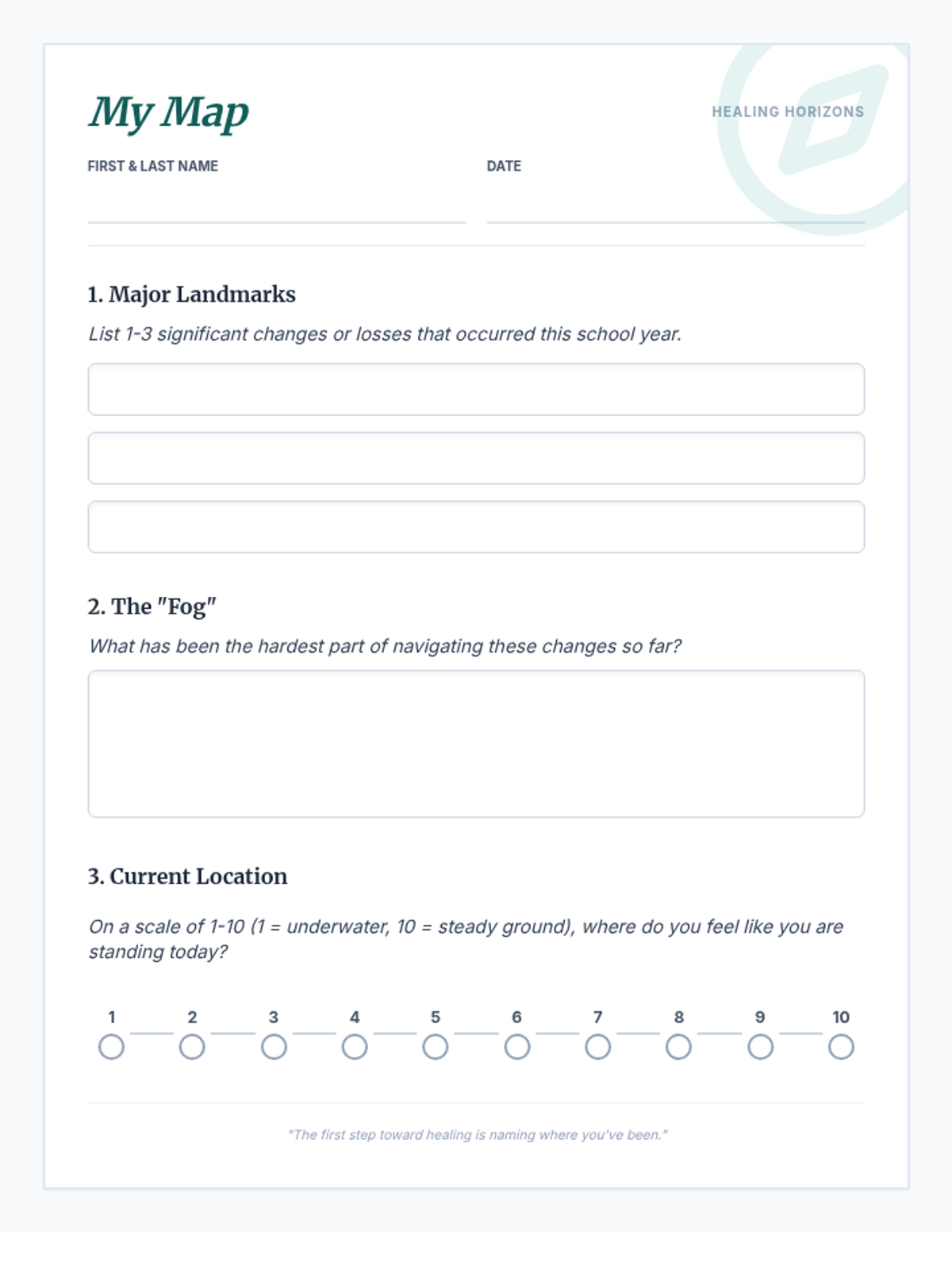
A student-facing worksheet for the first session that helps students identify and name the specific losses or changes they have experienced during the school year. Revised for better layout and contrast.
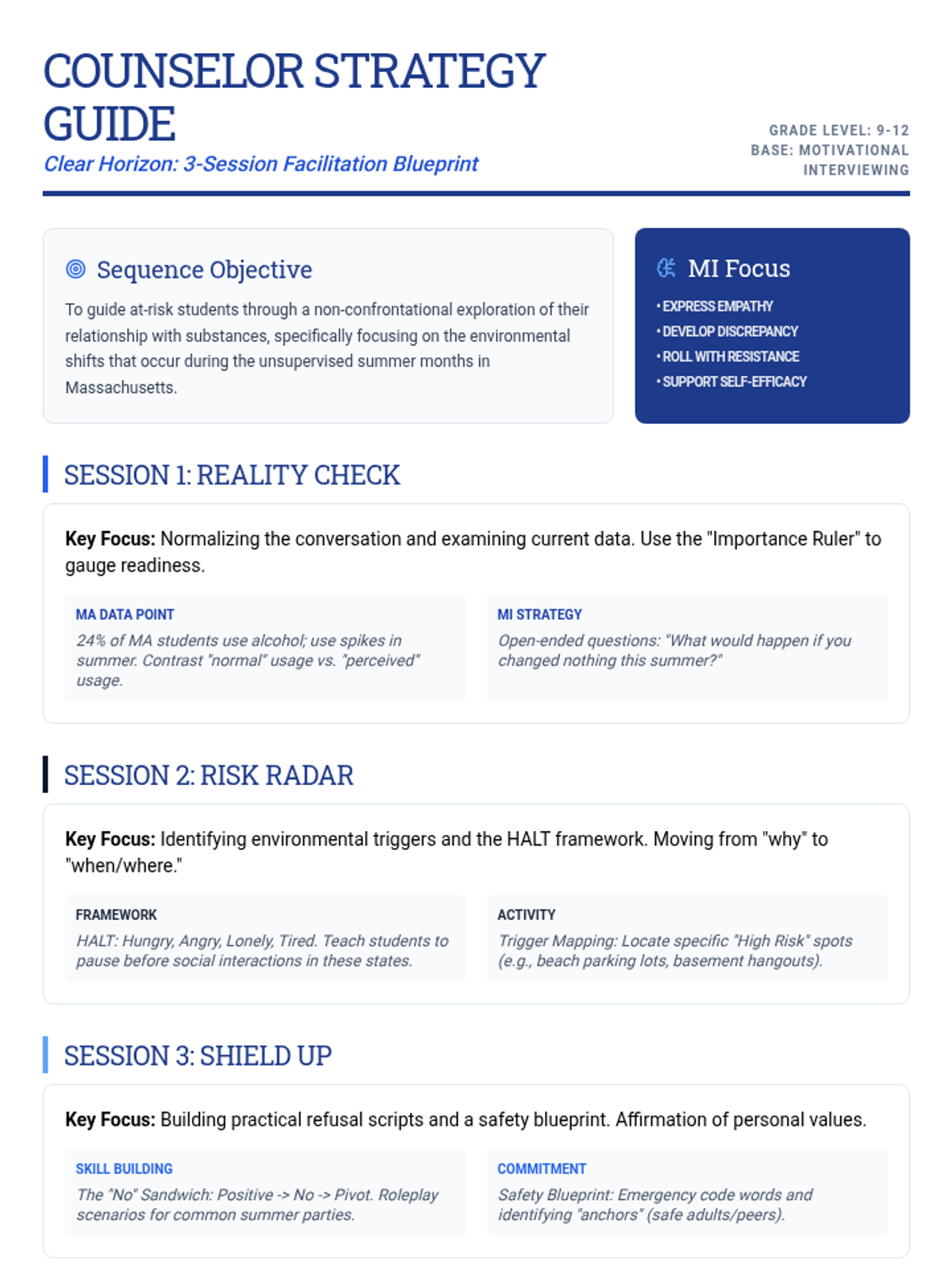
A comprehensive facilitation guide for school counselors, outlining the objectives for all three sessions, Motivational Interviewing strategies, and key focus areas for the Clear Horizon sequence.