Employer research strategies and behavioral response techniques using the STAR method. Develops virtual interview etiquette, professional presence, and effective follow-up communication.
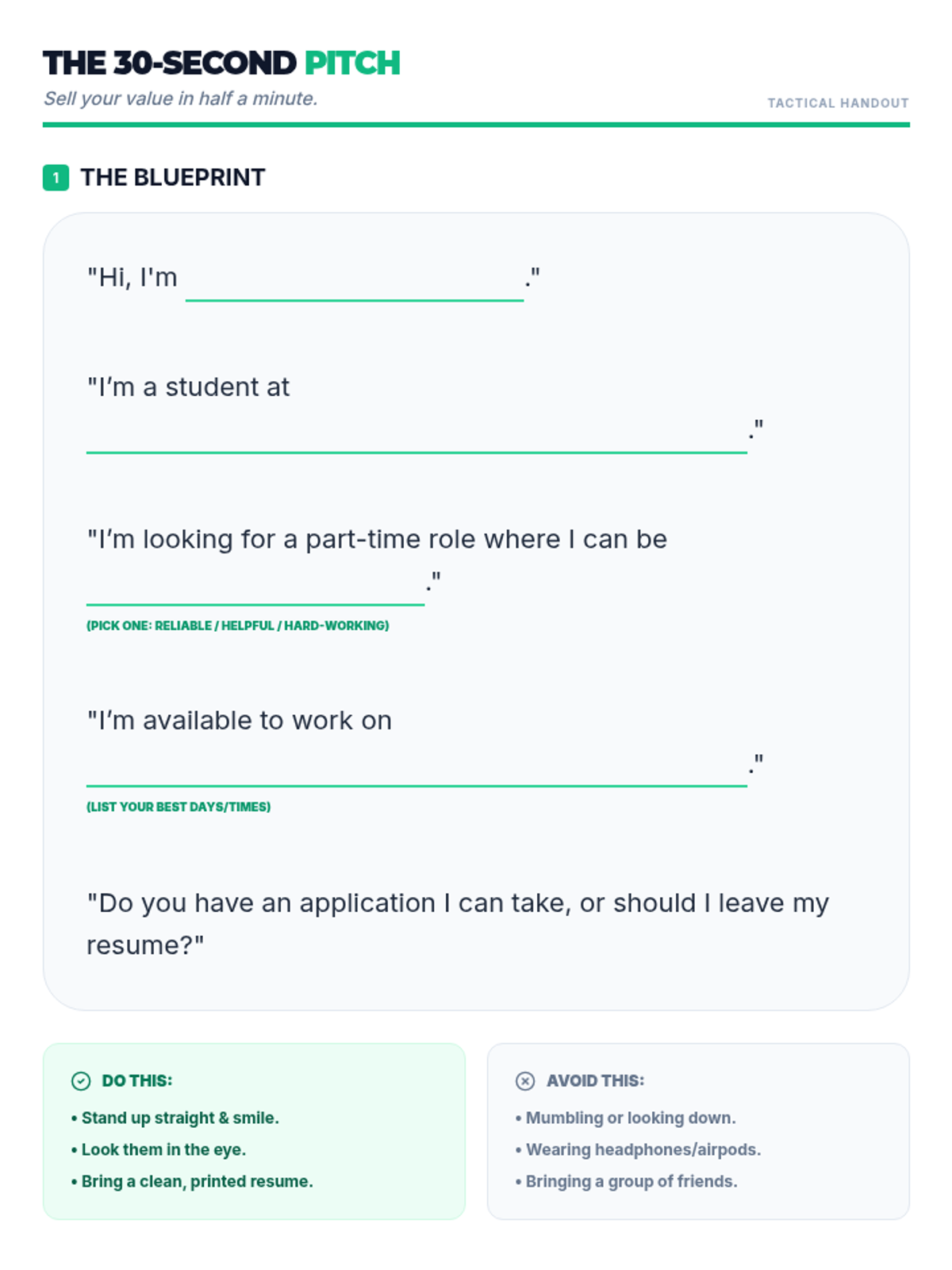
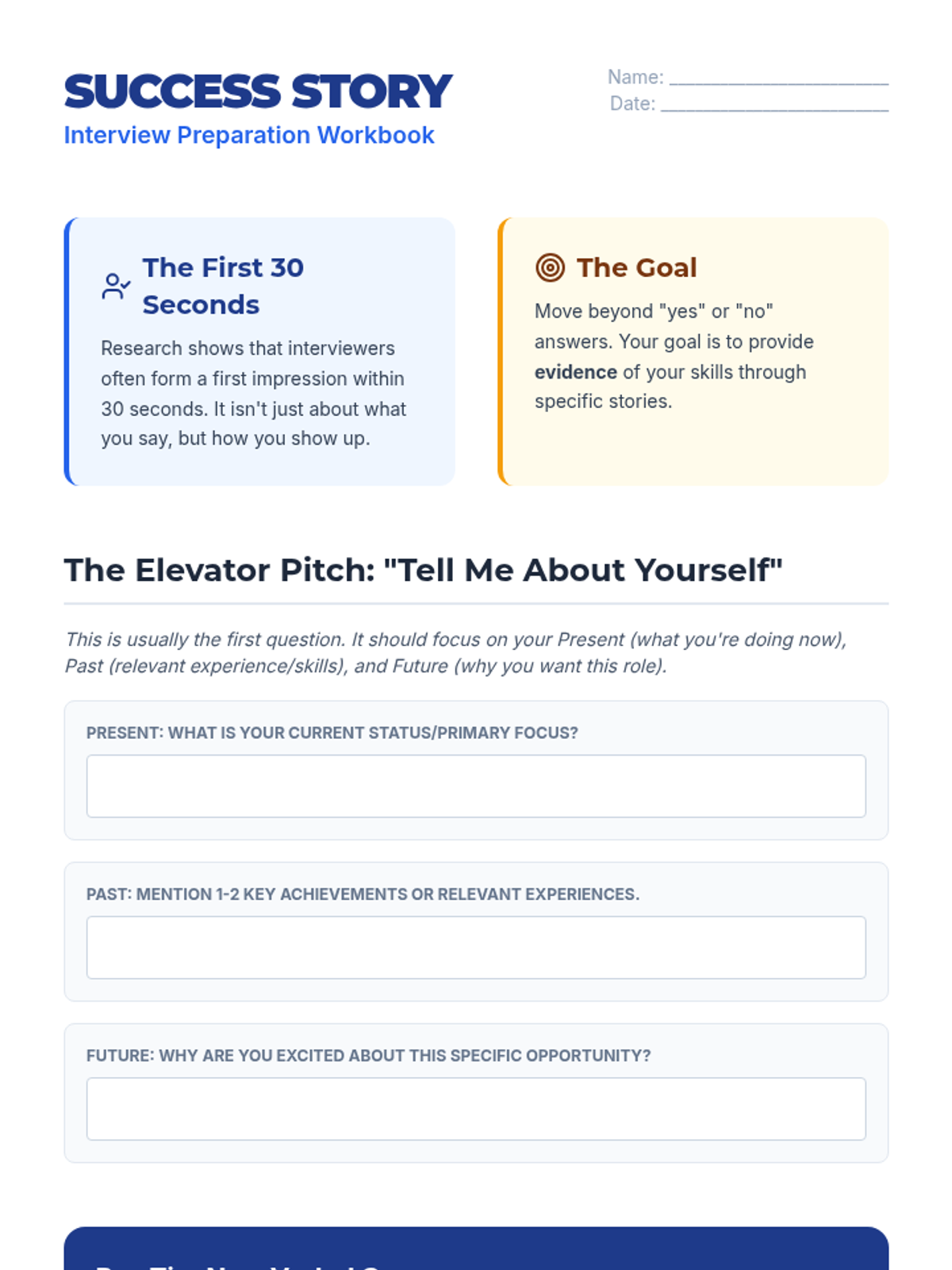
A tactical worksheet for students to script and practice their introductory "pitch" for potential employers, focusing on brevity, value, and professional presentation.
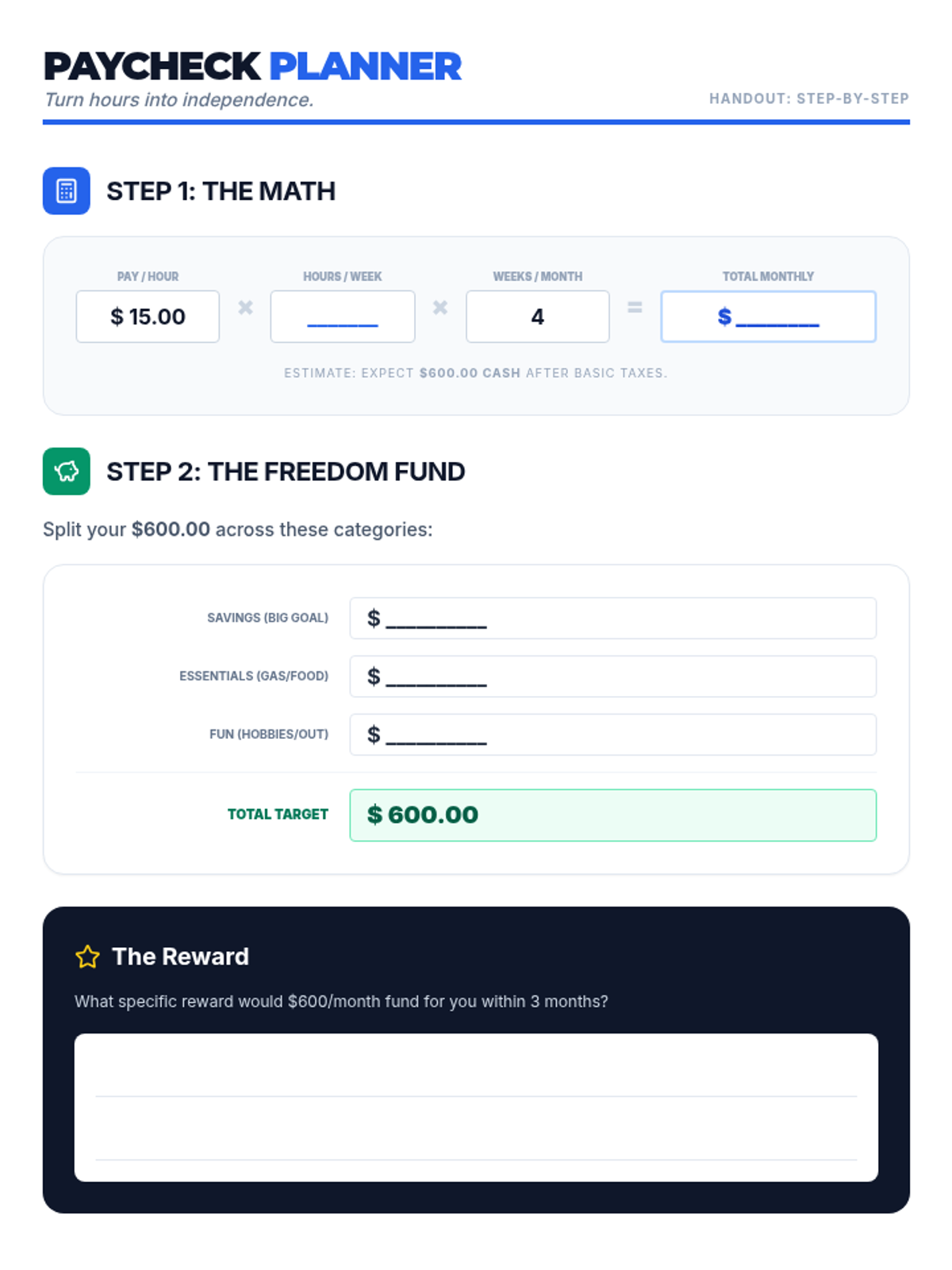
A practical worksheet to help students calculate potential monthly earnings from a part-time job and plan their "freedom fund" to see the tangible benefits of working.
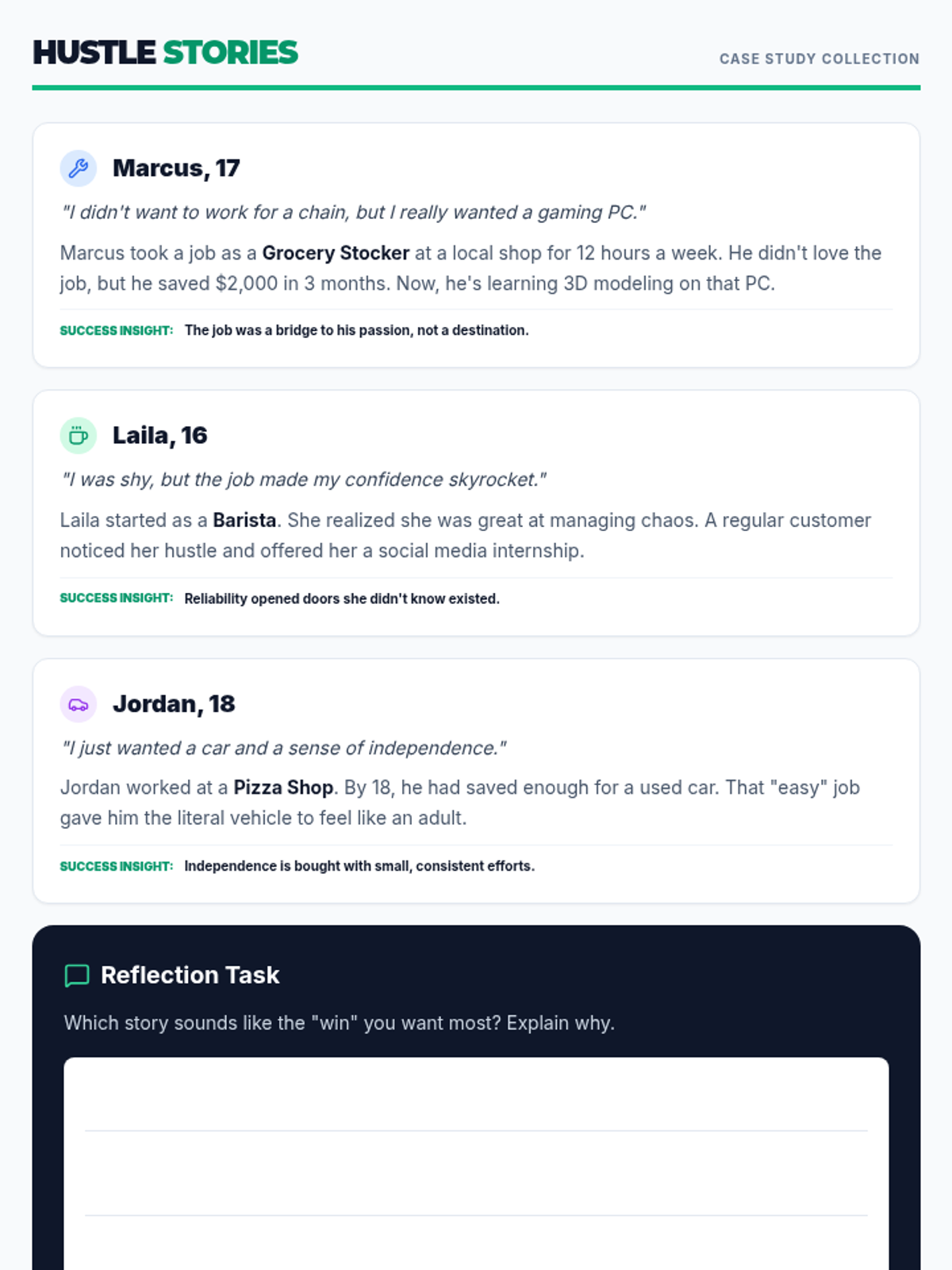
A set of short, engaging case studies featuring high schoolers who used entry-level jobs as stepping stones to personal success and independence. Provides social proof and real-world context for the workshop.
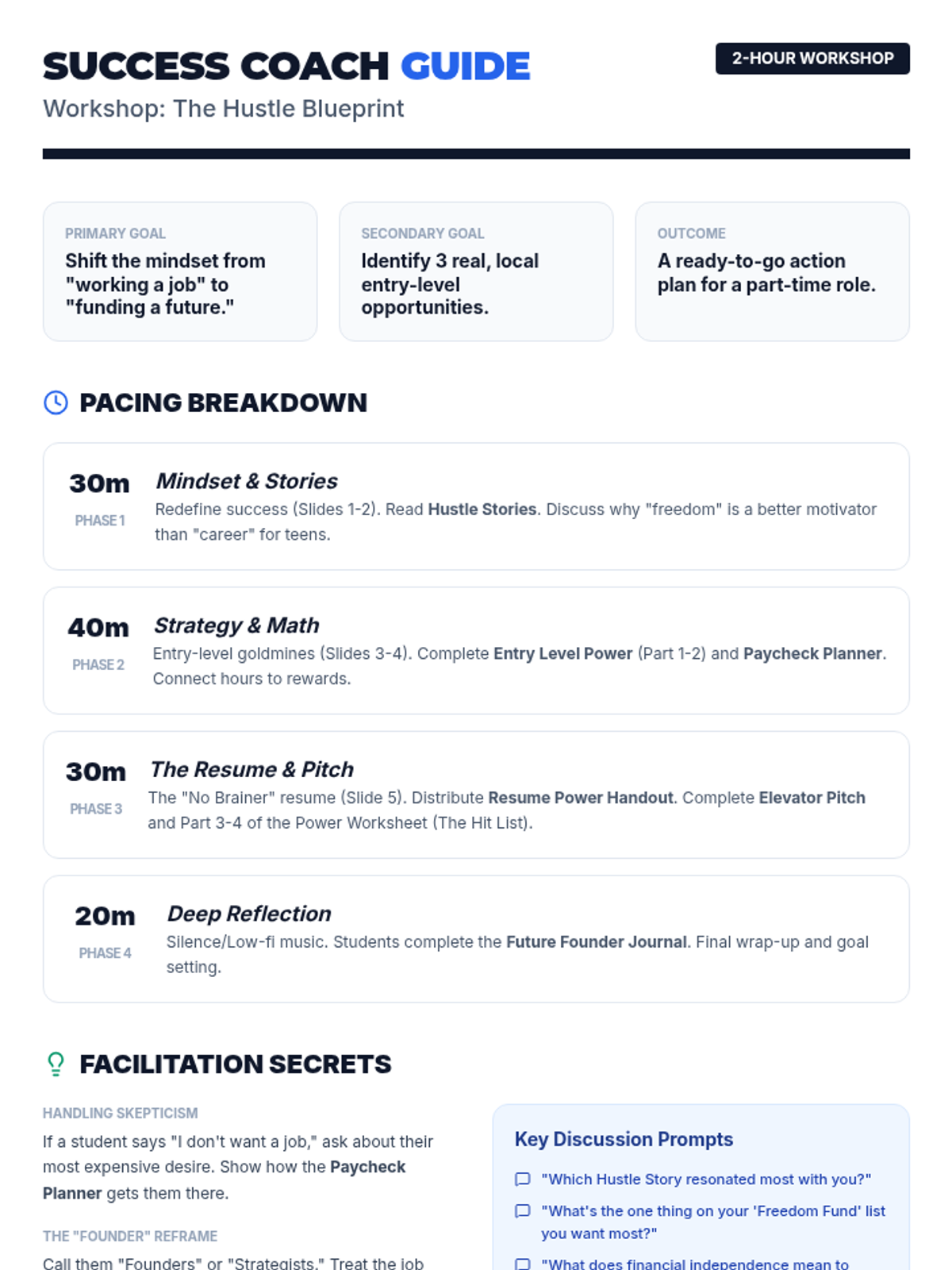
A facilitator's guide for the Hustle Blueprint workshop, including an updated 2-hour pacing guide that incorporates new case studies and tactical worksheets.
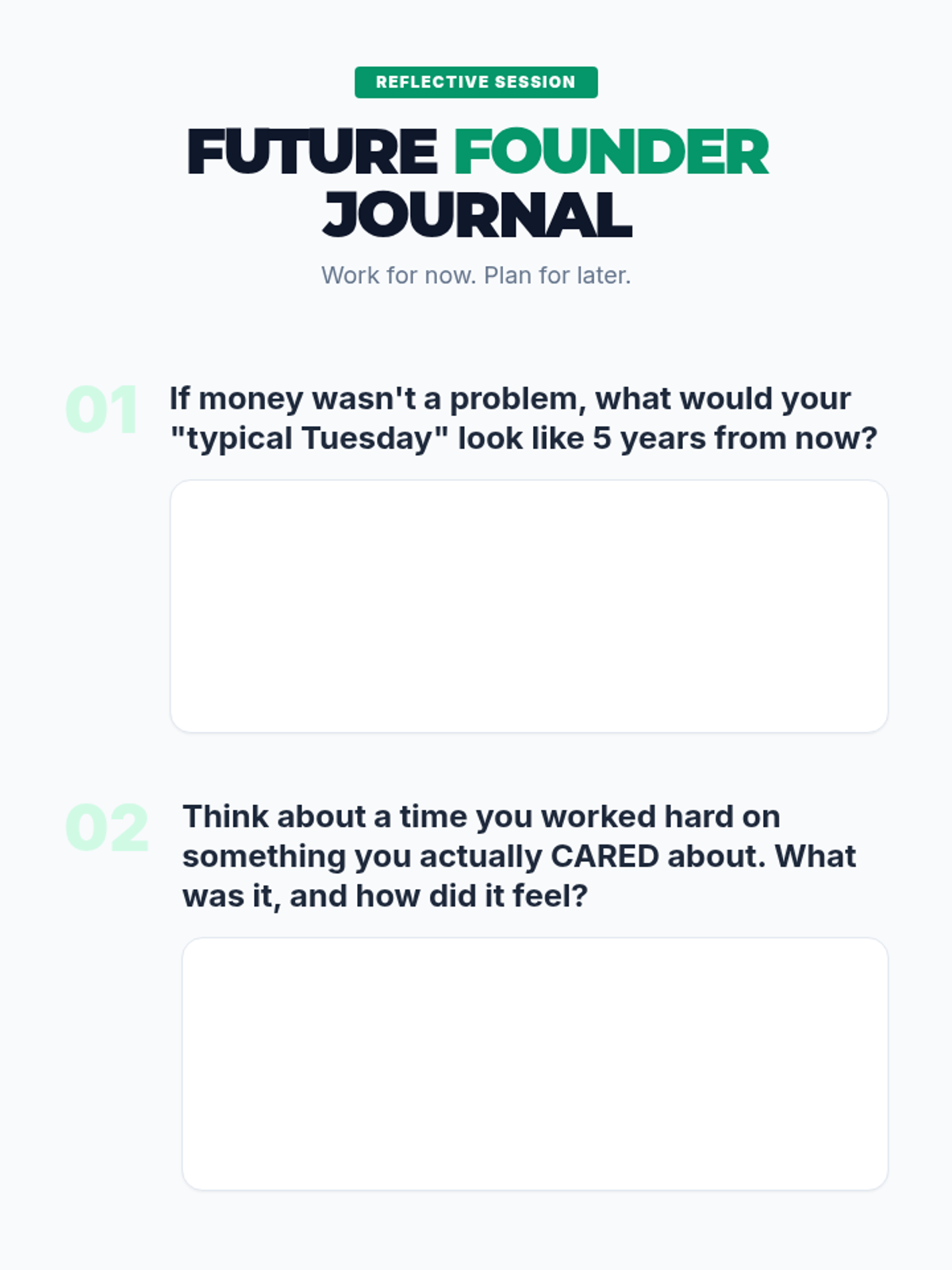
A set of deep reflection prompts for students to connect their personal goals and definitions of success to the practical step of getting a part-time job.
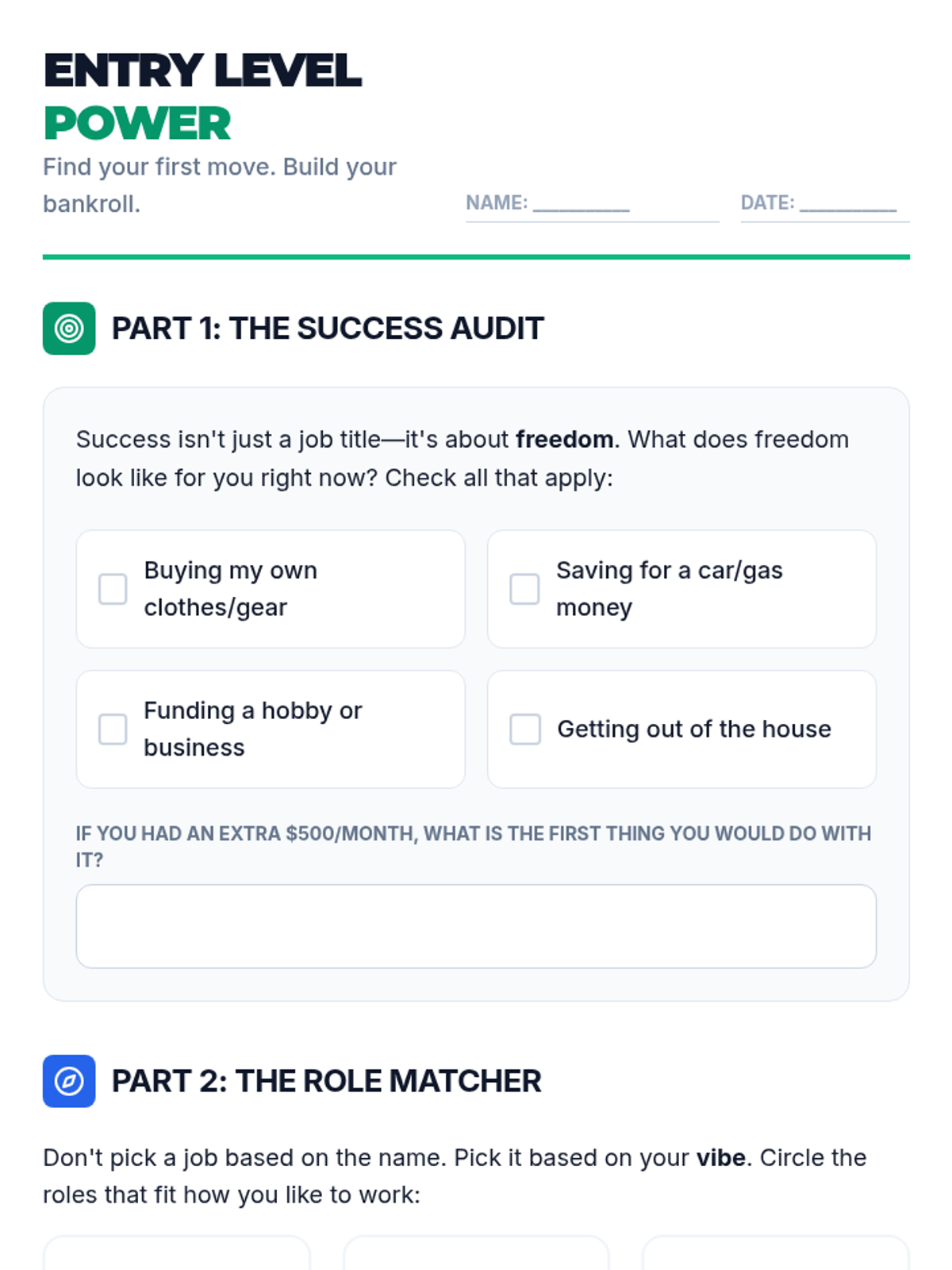
An interactive worksheet for high schoolers to identify their motivations for working, match their personality to entry-level roles, and map out local job opportunities.
A high-impact slide deck for high school students focused on redefining success and identifying entry-level job opportunities. Includes visual guides for resume building and strategic thinking about part-time work.
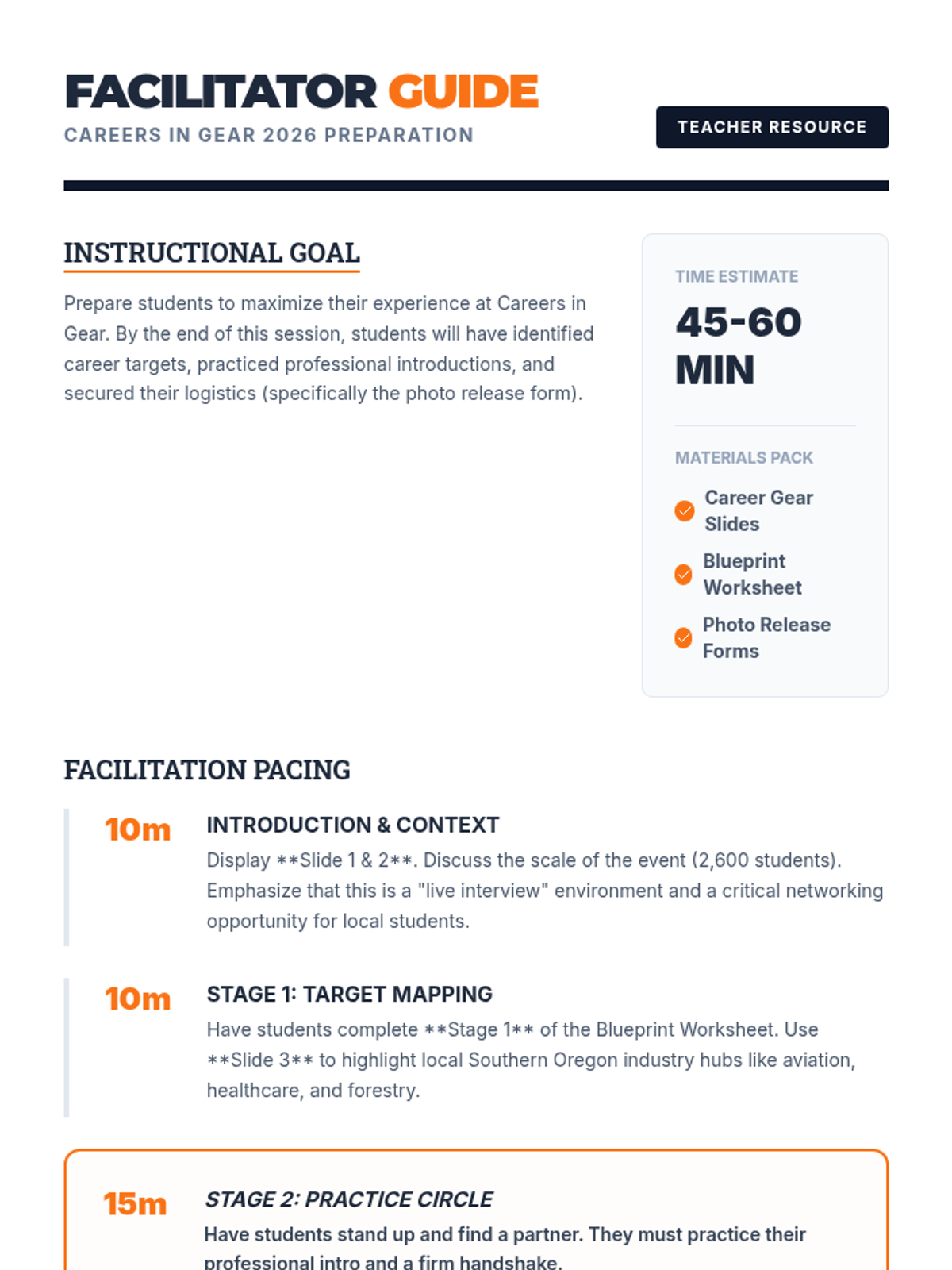
A comprehensive instructional guide for teachers to lead the Careers in Gear 2026 preparation session. Includes a timed pacing guide, active learning exercises for handshakes/introductions, and discussion prompts.
A high-impact visual presentation to introduce high school students to the Careers in Gear 2026 event. Covers event logistics, professional etiquette, networking strategies, and the mandatory photo release form.
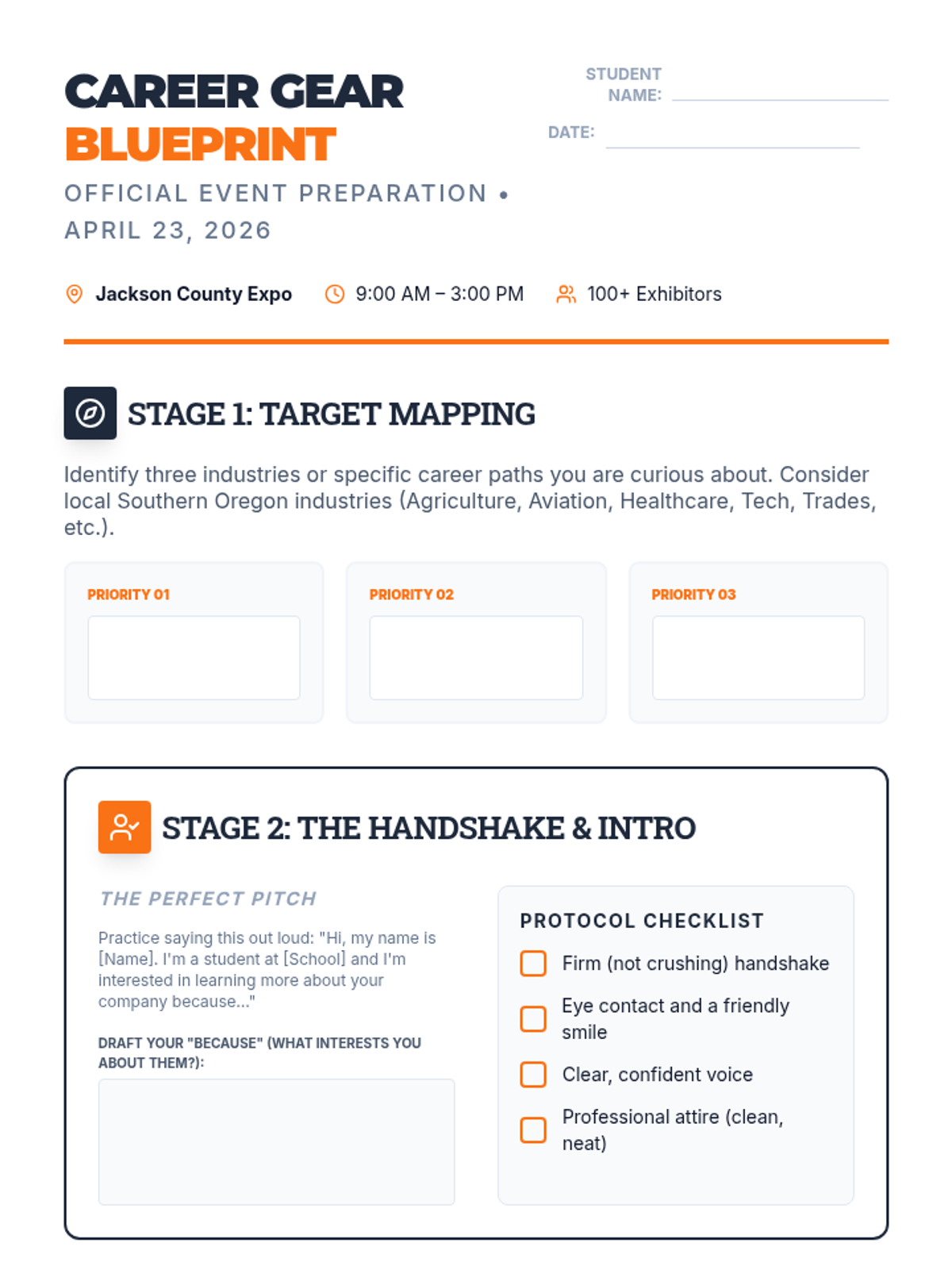
A student-facing activity sheet designed to prepare high schoolers for the Careers in Gear 2026 event. Includes sections for career mapping, practicing introductions, brainstorming questions, and a critical reminder for the photo release form.
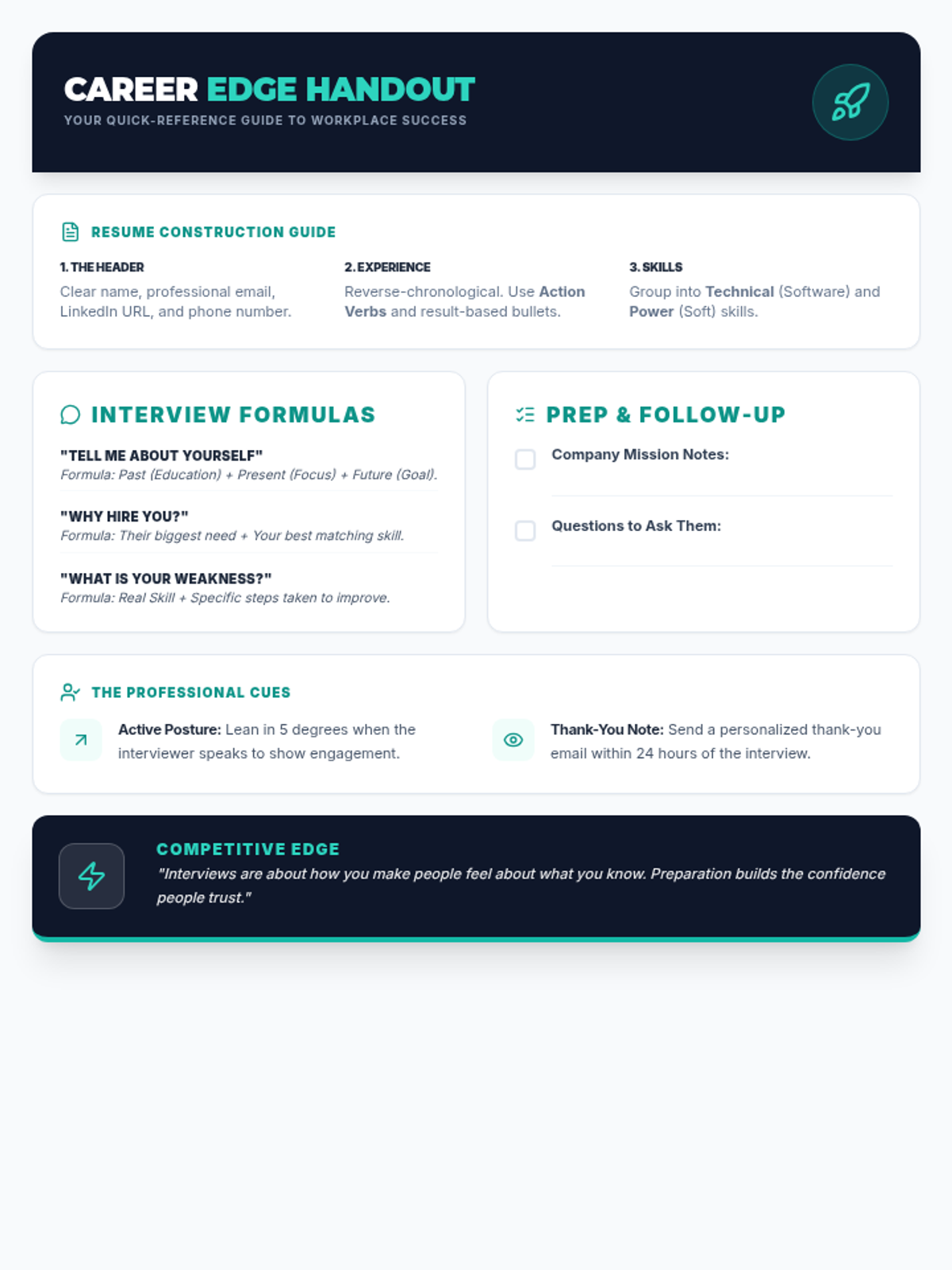
A comprehensive career-ready handout covering resume construction, interview question strategies, body language, and preparation checklists. (Revised for high information density and single-page utility).
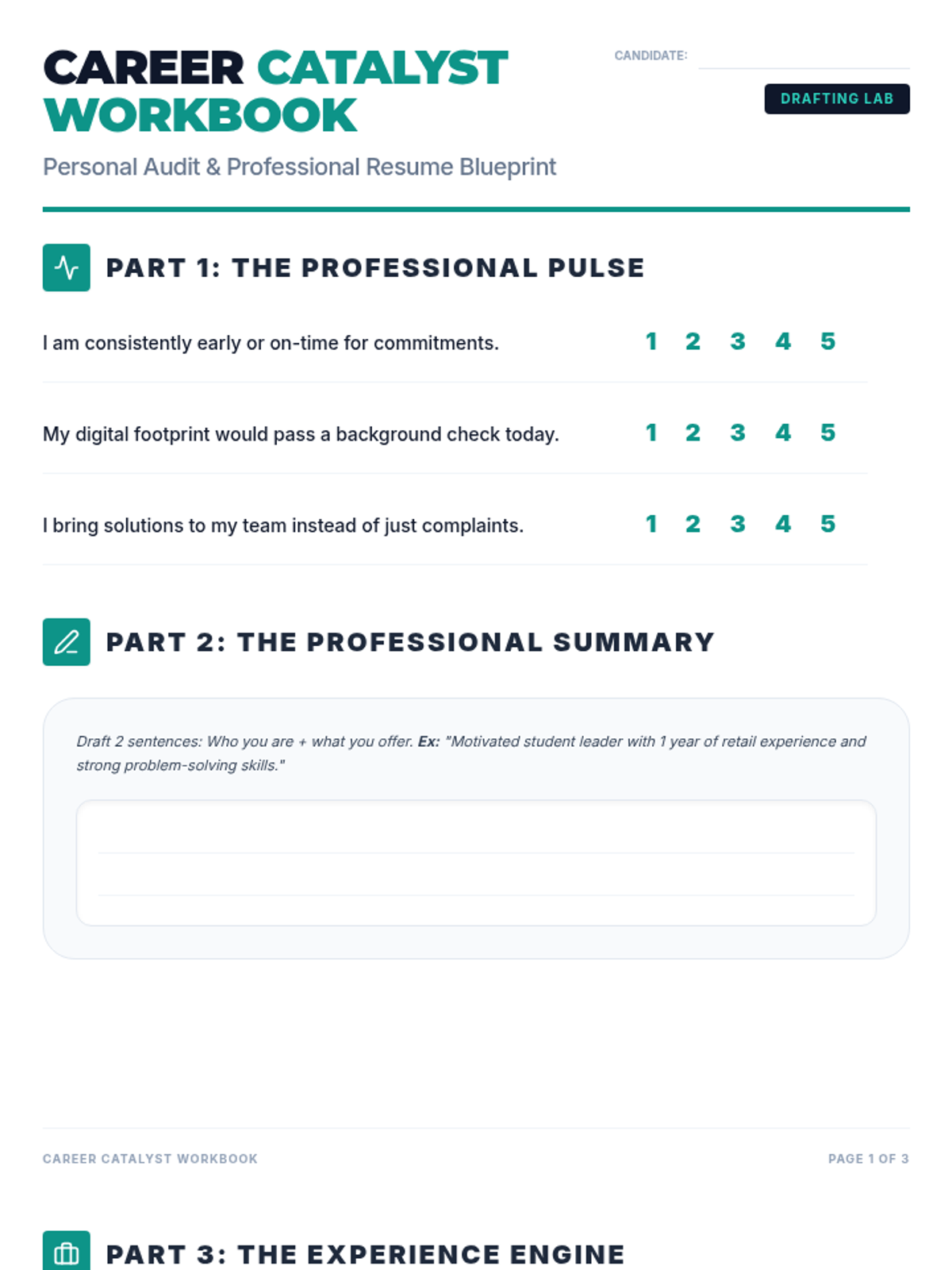
A comprehensive 3-page student workbook containing a professionalism audit, a guided resume drafting blueprint, and a scaffolded STAR method interview workshop. (Combined for utility and instructional depth).
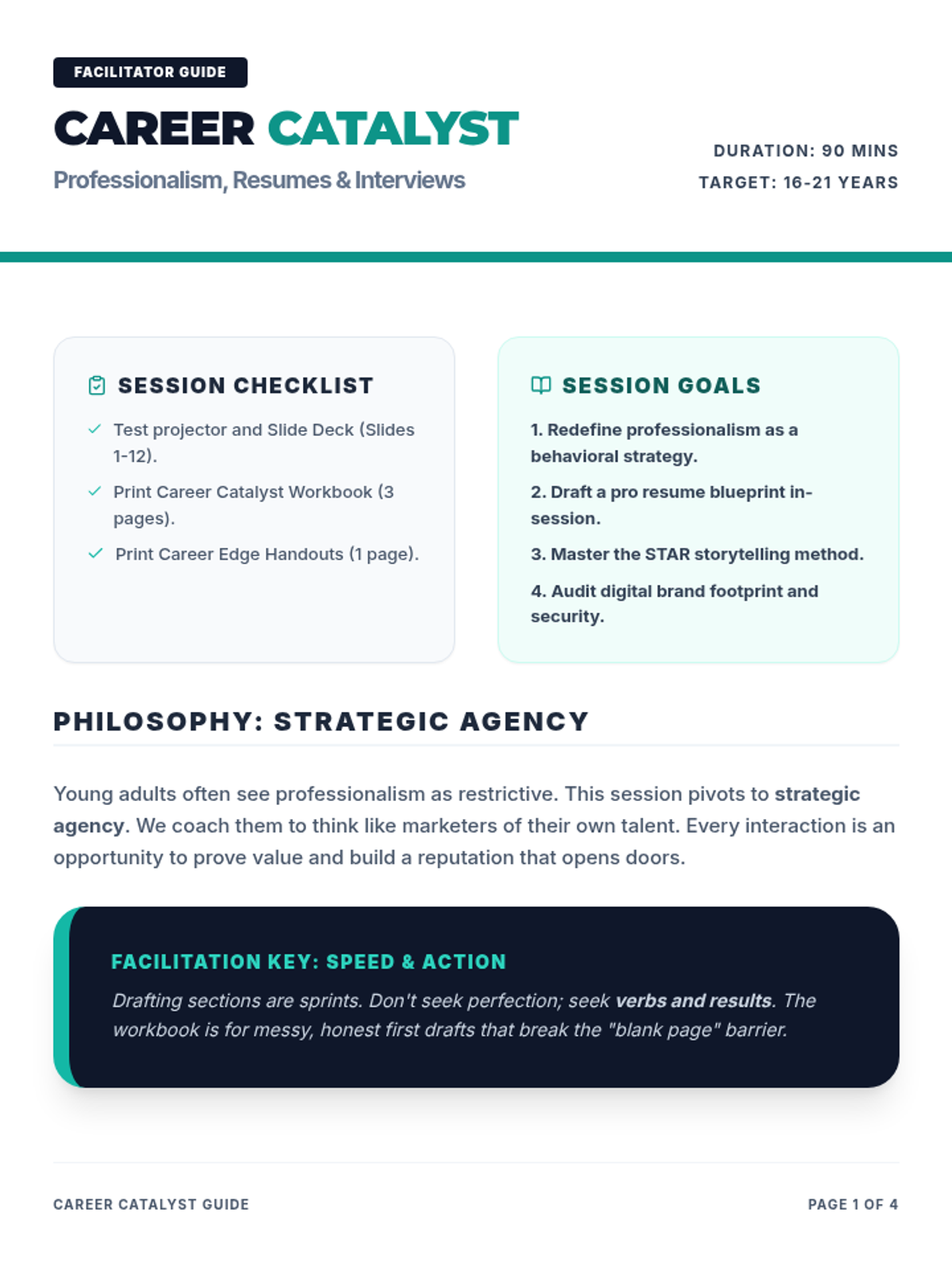
A detailed 4-page facilitator guide for the Career Catalyst session, including deep-dive scripts, resume building instruction, STAR method debriefs, and inclusive professionalism context. (Revised for comprehensive coverage and consistent styling).
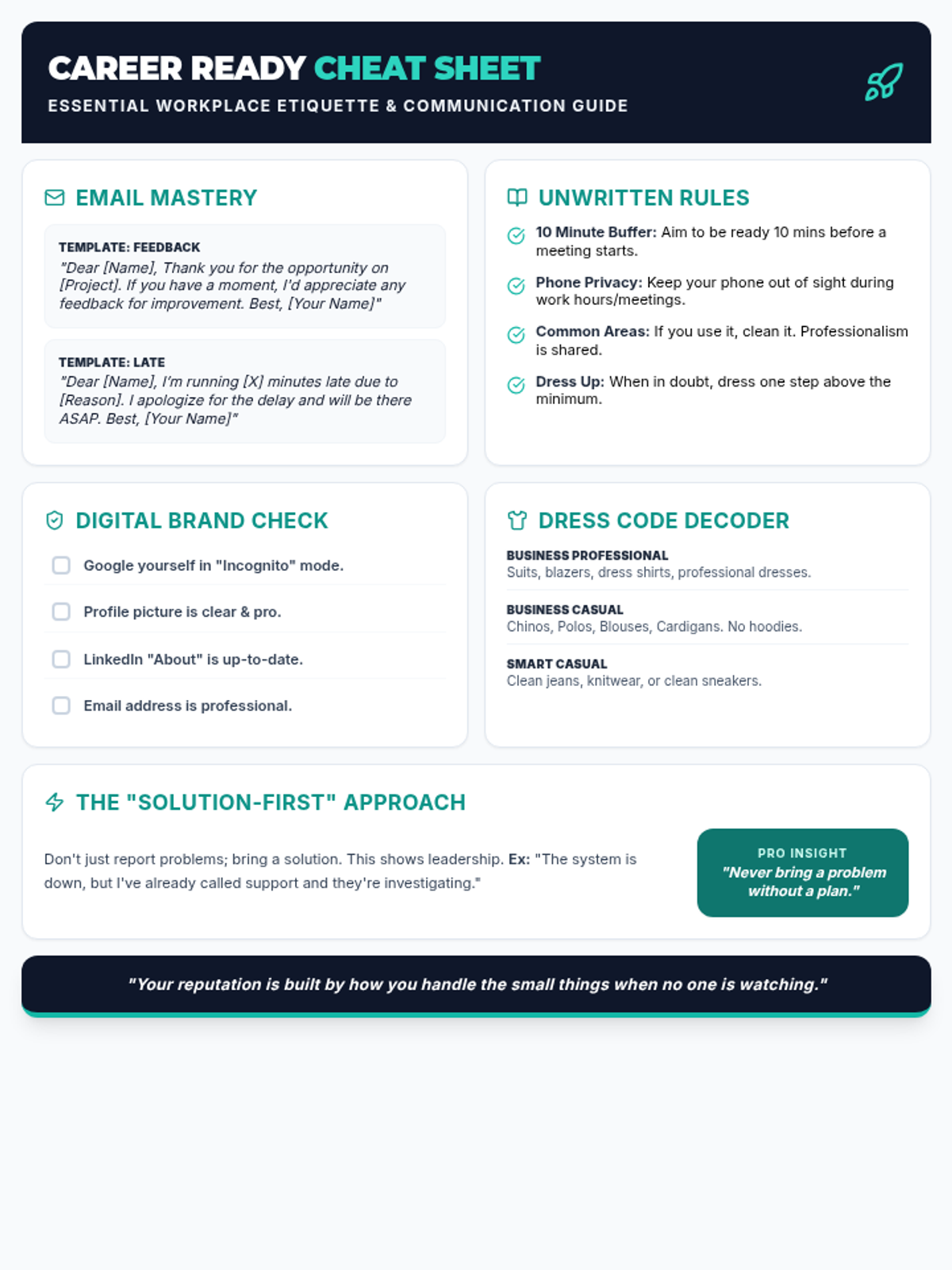
A condensed, single-page reference handout for young professionals containing email templates, unwritten workplace rules, digital brand checklists, and dress code guidance. (Revised for single-page efficiency and contrast).
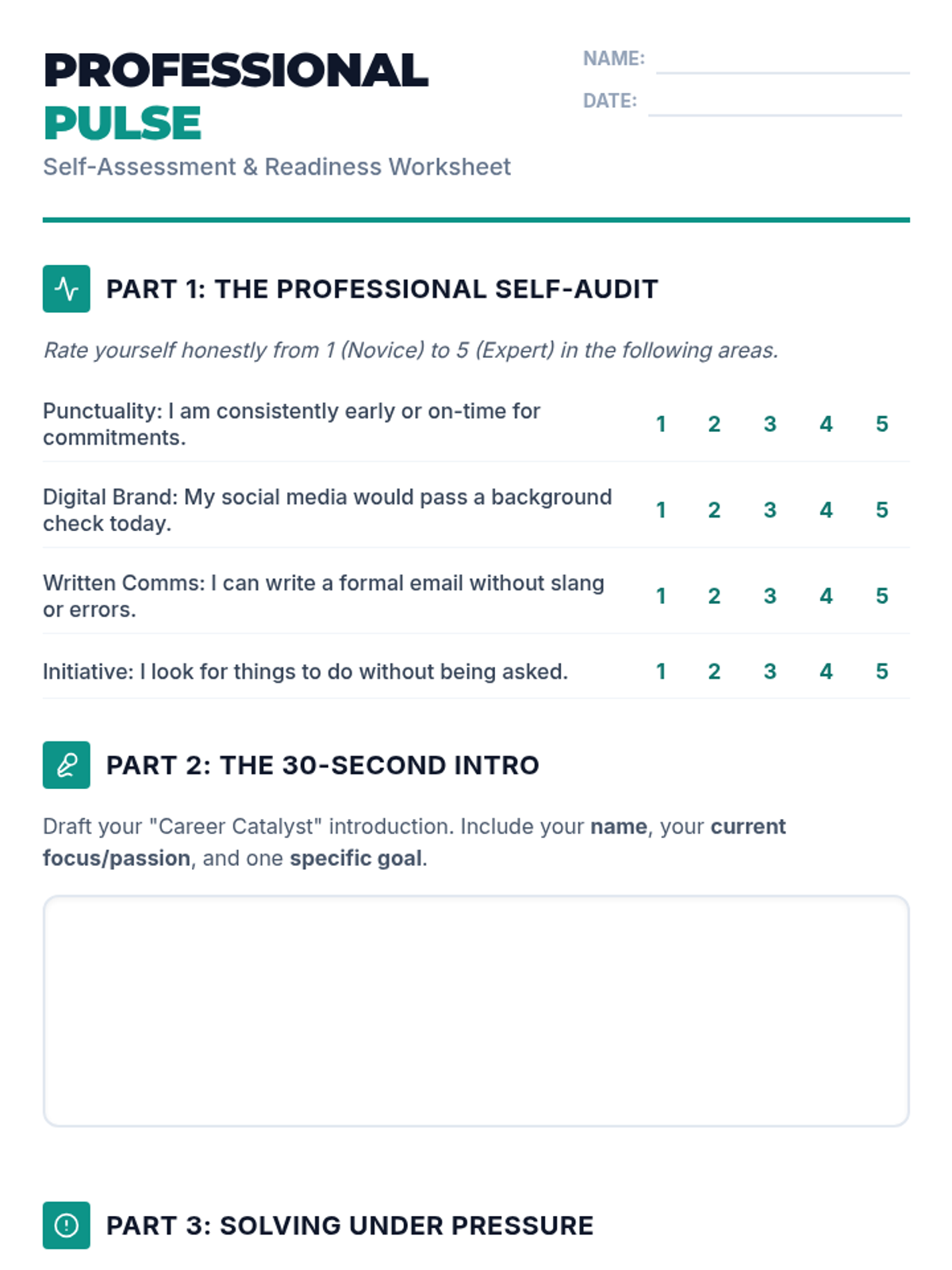
A reflective student worksheet designed to help young adults audit their current professionalism skills and practice high-stakes workplace scenarios. (Revised to fit on 2 pages with improved work area sizing).
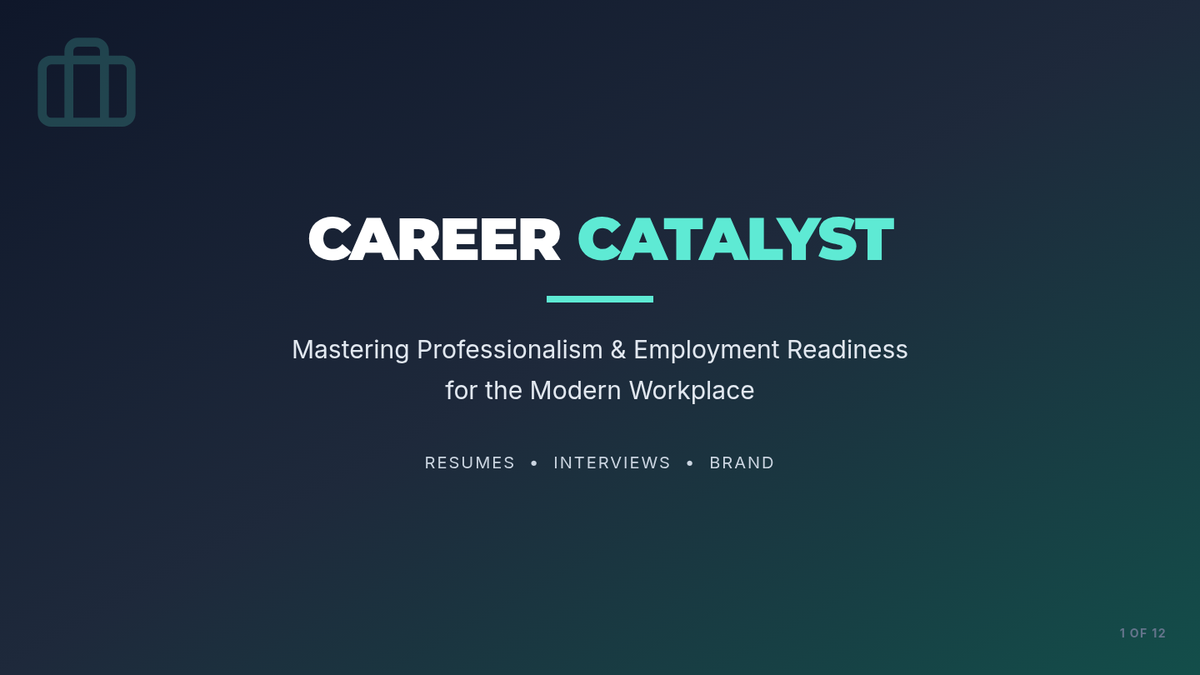
A high-impact slide deck for young adults covering professionalism, resume anatomy, and interview techniques using the STAR method. (Revised for layout balance, accessibility, and content reordering).
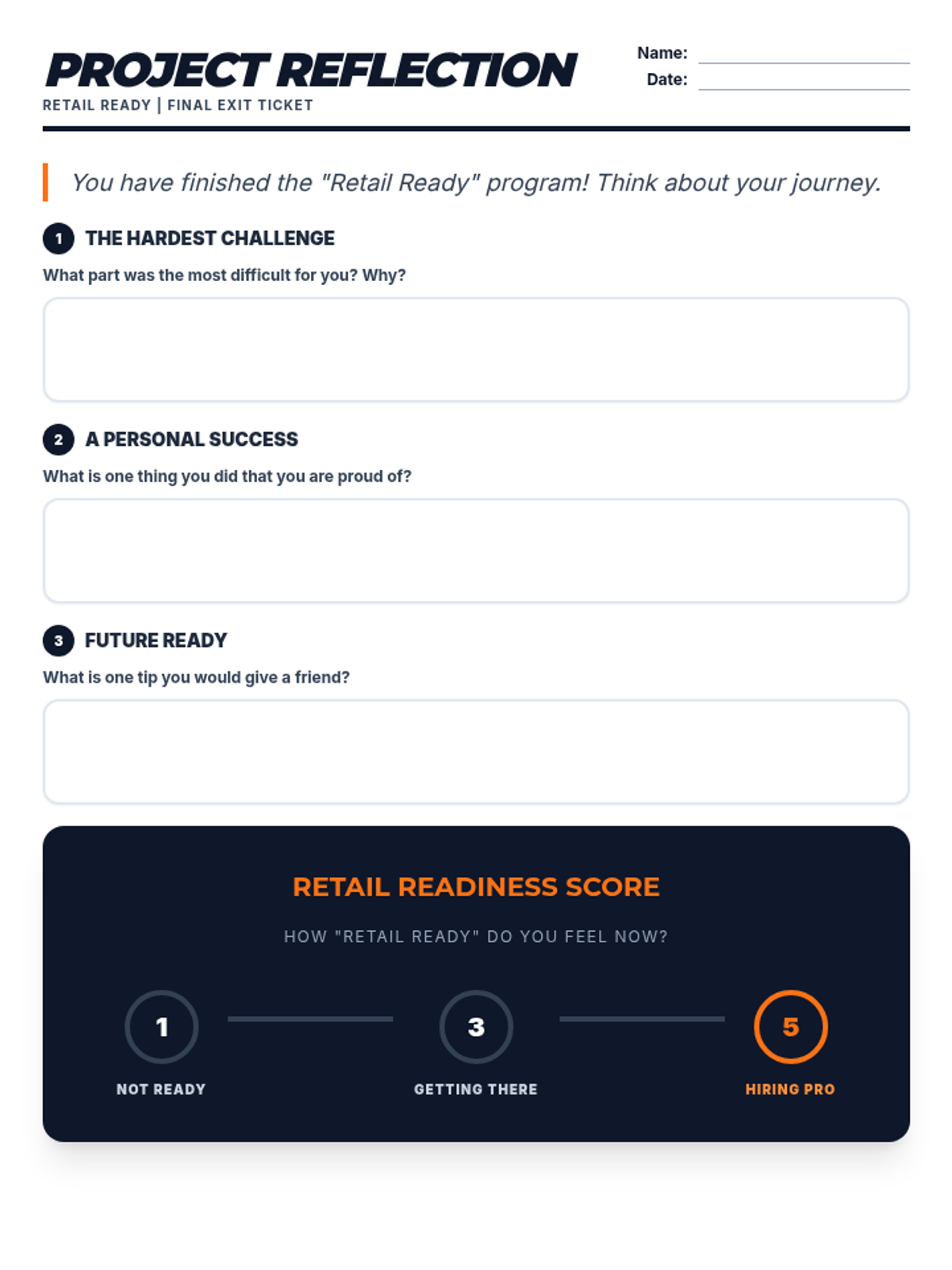
A final reflection activity that encourages students to evaluate their own progress throughout the unit. Updated to fit on one page with higher-contrast student work areas and darkened text.
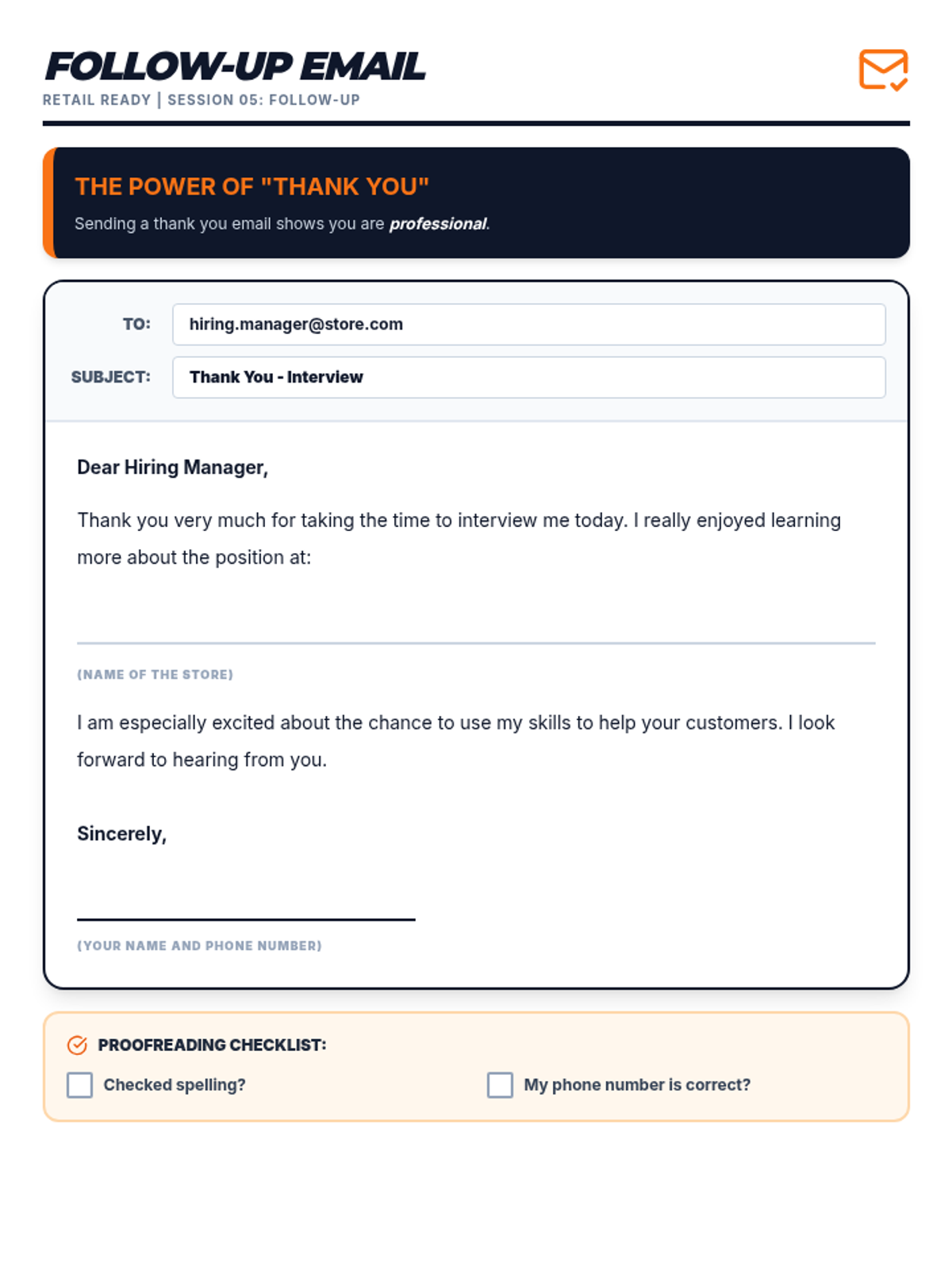
A structured template for writing a professional thank-you email following a job interview. Updated to fit on one page with larger handwriting placeholders and clearer formatting.
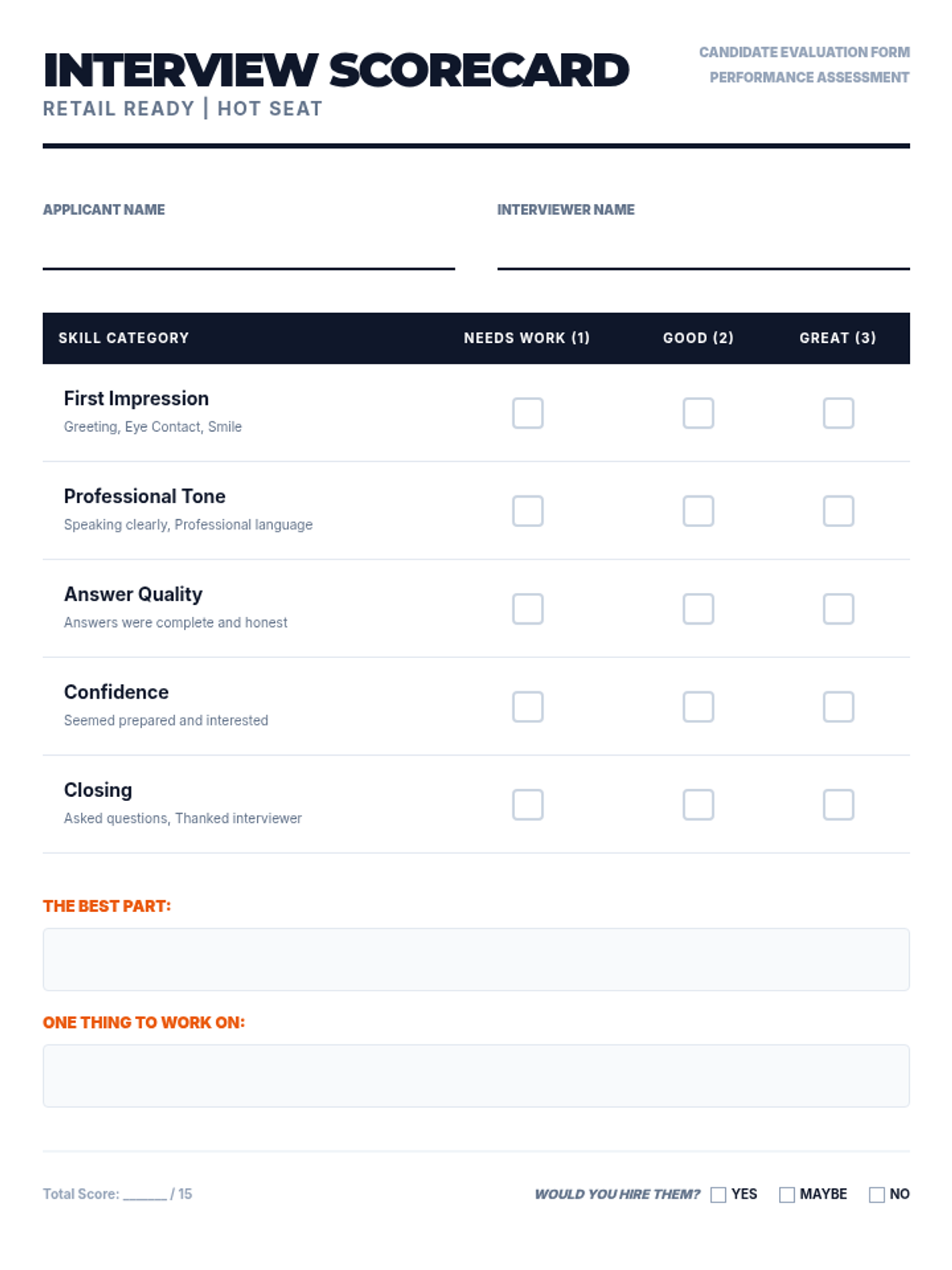
A peer or teacher evaluation rubric for mock interviews. Uses a simple 1-3 scale and focuses on actionable feedback like "The Best Part" and "One thing to work on" to maintain a supportive environment.
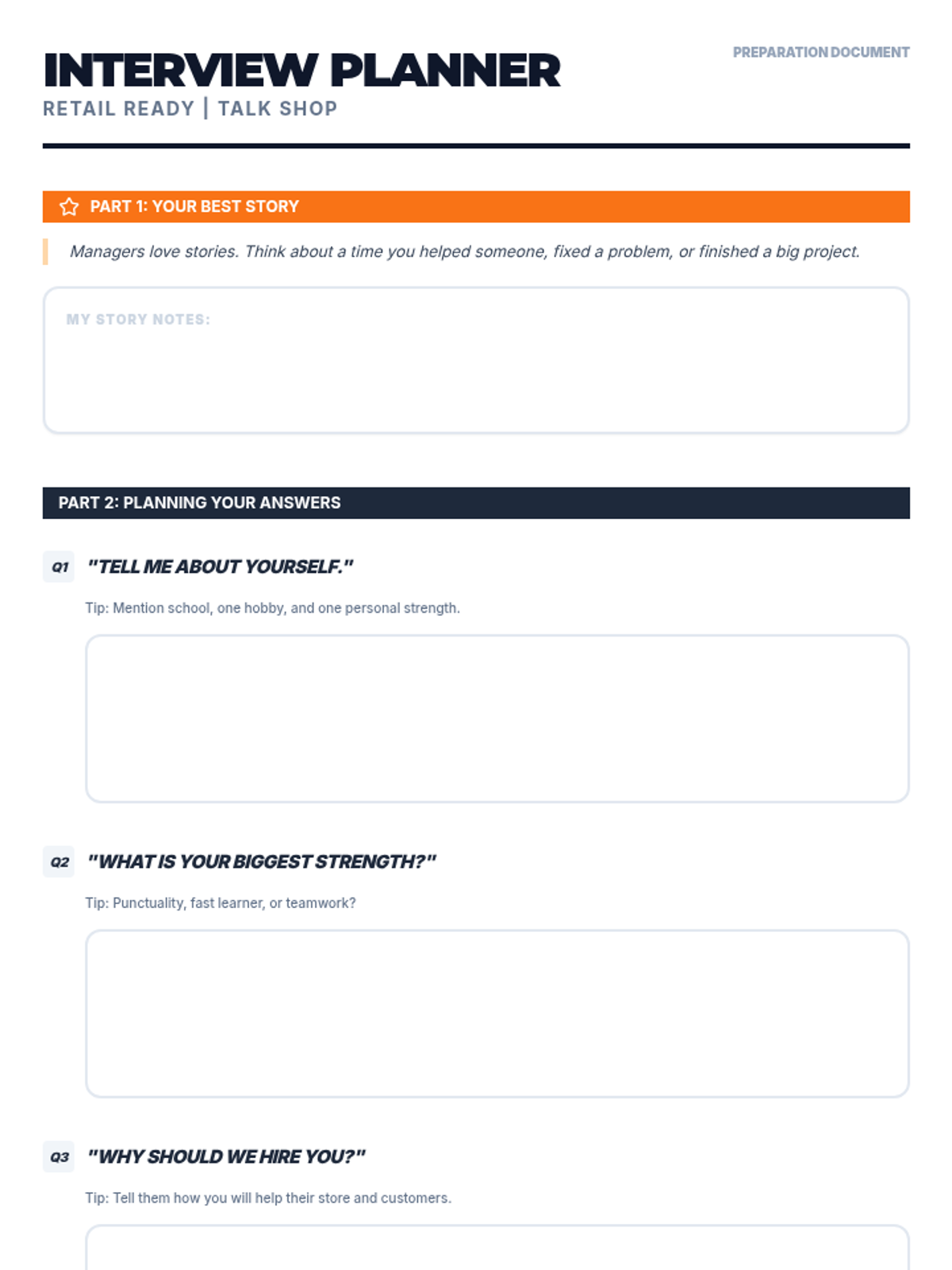
A structured interview planner that helps students draft their "personal story" and plan responses to common retail interview questions. Updated with significantly larger response areas and better formatting for page breaks.
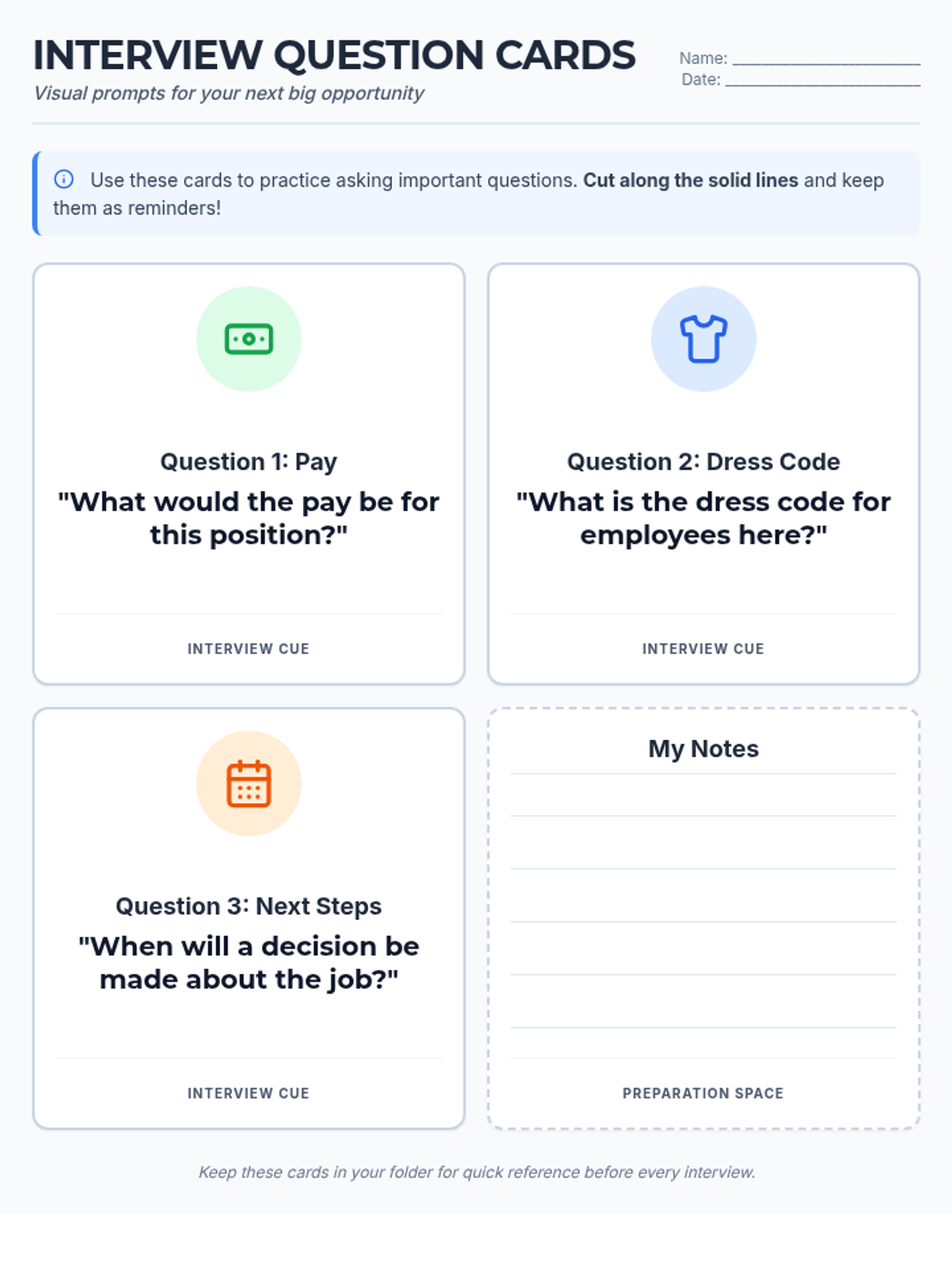
A stripped-down, highly visual set of three interview cards with large icons and simplified text for easier reading.
A simplified, high-contrast slide deck with minimal text and large icons, focusing on three core interview questions.
A professional and highly visual slide deck that introduces how to ask about pay, dress code, and hiring timelines during a job interview.
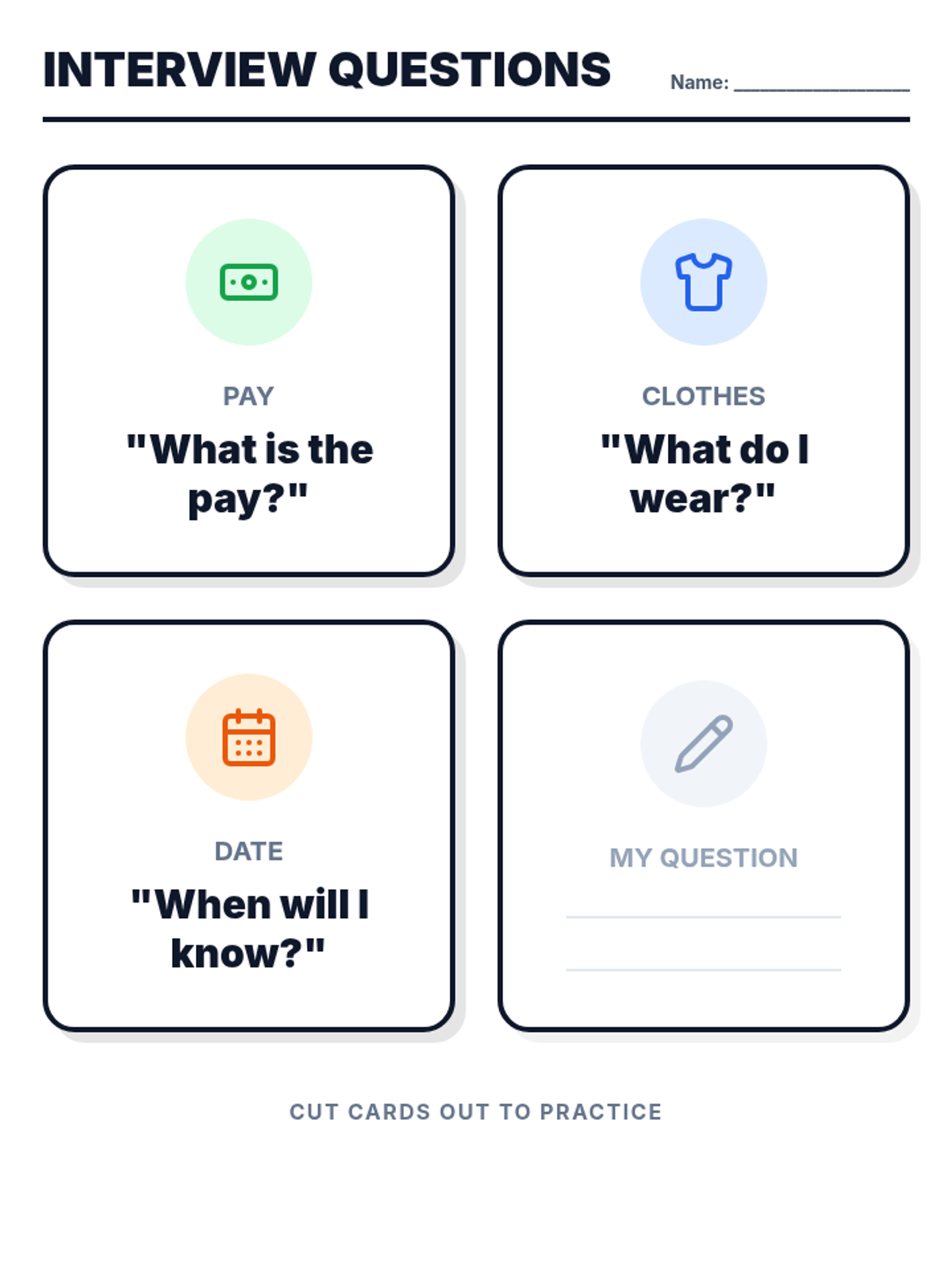
A set of visual flashcards featuring clear icons and specific job interview questions about pay, dress code, and decision timelines.
Presentation slides focusing on interview social dynamics and common retail interview questions. Includes "The Big 3" questions and suggestions for student-led questions to ask employers.
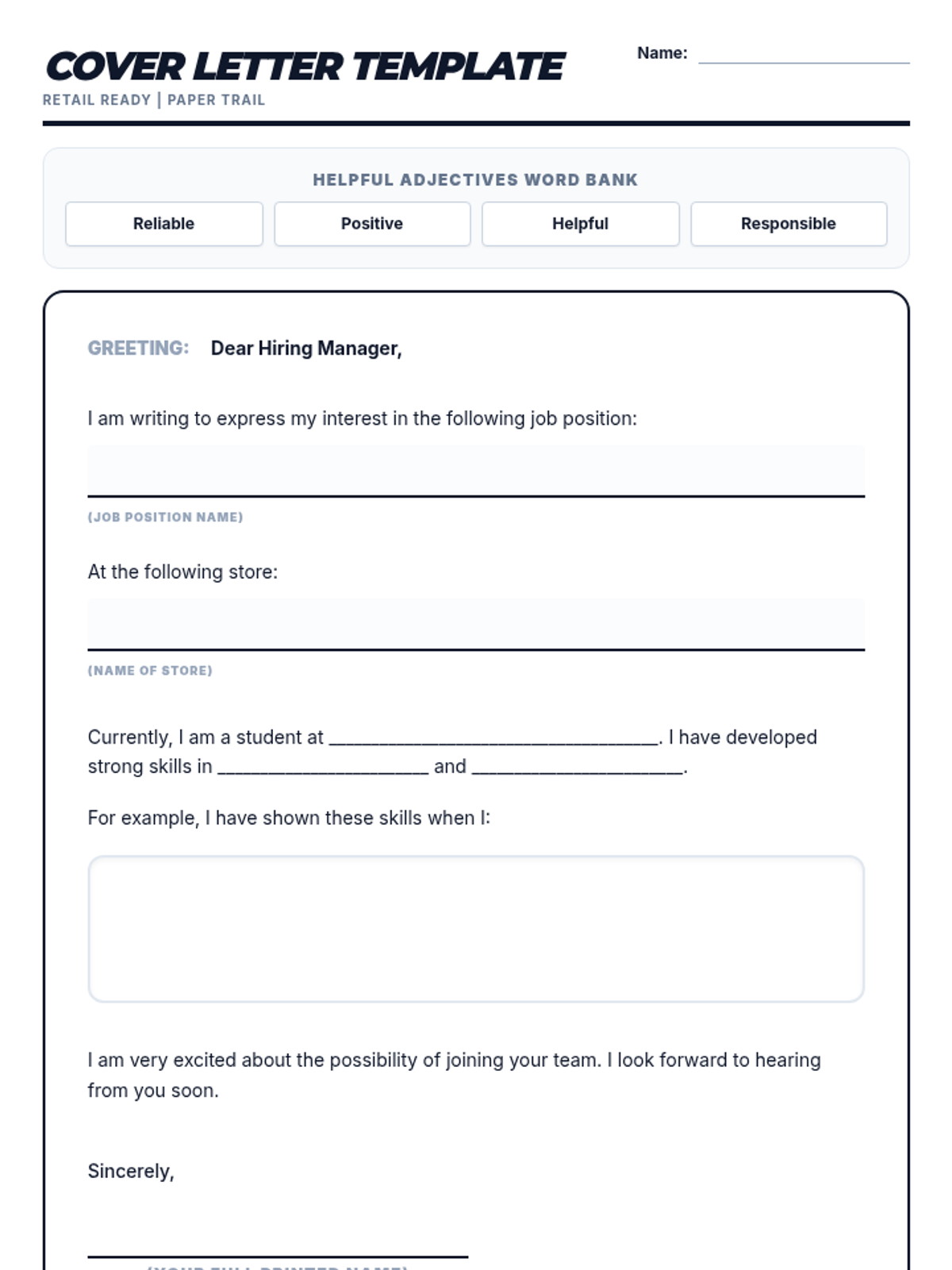
A fill-in-the-blank cover letter template designed to scaffold the writing process for students. Updated to fit on one page with larger handwriting areas and an integrated word bank.
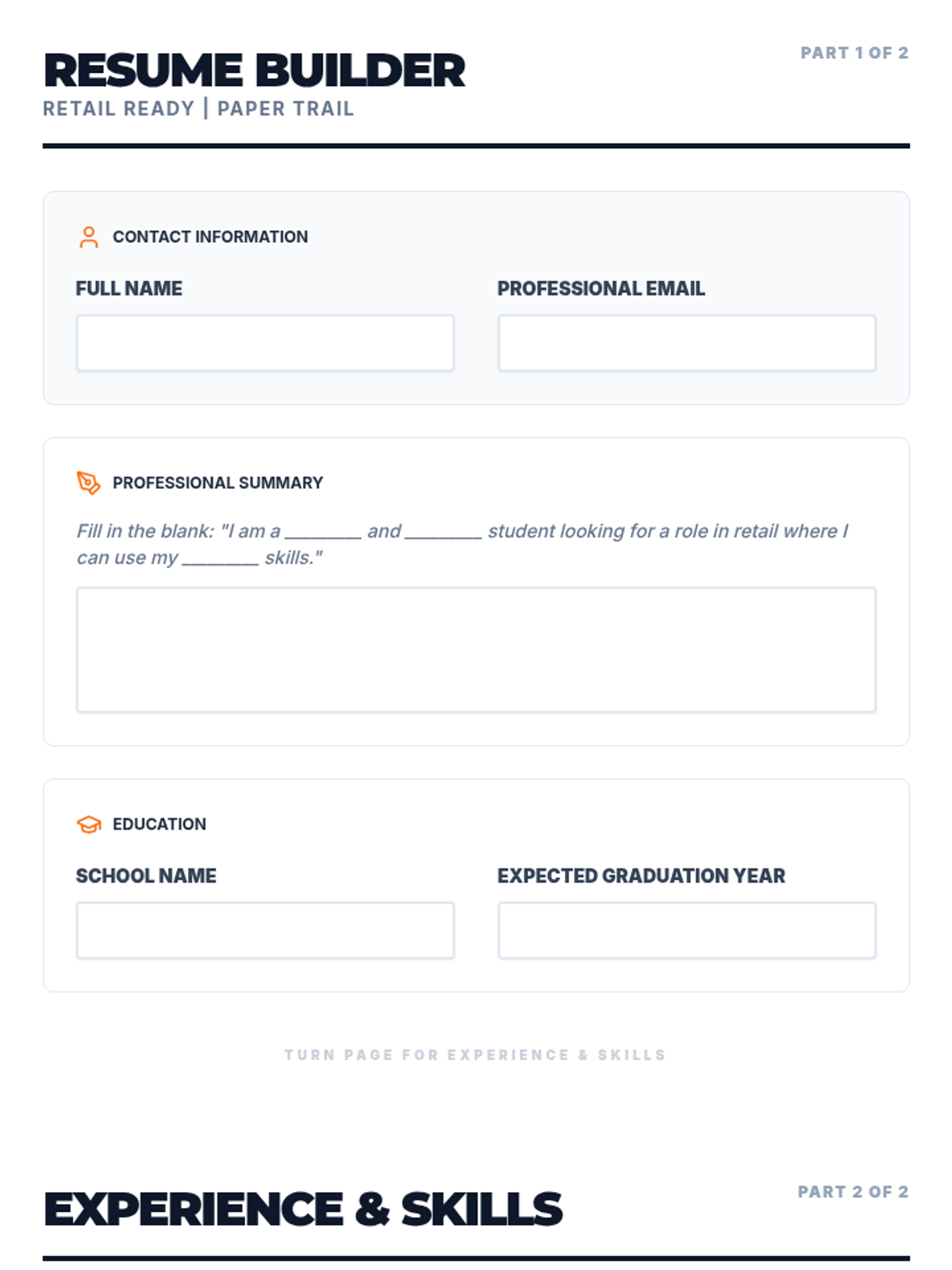
A guided resume drafting worksheet that breaks down the process into manageable sections. Updated with larger text, clearer labels, increased work area heights, and a new reference drafting section.
An expanded 7-slide presentation for Module 05: Tax Decoder. Explains the Form Trinity (W-4, W-2, 1040), Gross vs. Net reality, Deduction vs. Credit power moves, the W-4 Gambit, and Audit Defense strategies (record keeping).
An expanded 7-slide presentation for Module 04: Civic Navigator. Covers community ownership, registration logic (citizenship, Selective Service), decoding ballot propositions, the influence grid (Local vs. State vs. Fed), and jury duty requirements.
An expanded 8-slide detailed presentation for Module 03: Health Navigation. Explains the Insurance Trinity (Premium, Deductible, Copay), In-Network vs. Out-of-Network traps, the Triage Protocol (PCP vs. Urgent Care vs. ER), and the math of a major medical bill.
An expanded 7-slide professional presentation for Module 02: Career Trajectory. Explores resume vs. network, ATS bot secrets, the Elevator Pitch framework, the STAR method for interviews, and Professionalism 2.0 (etiquette and reliability).
An expanded 7-slide deep-dive presentation for Module 01: Money Mastery. Covers the 50/30/20 rule, banking logistics (Checking vs Savings vs HYSA), credit score DNA, compound interest math, and debt types.
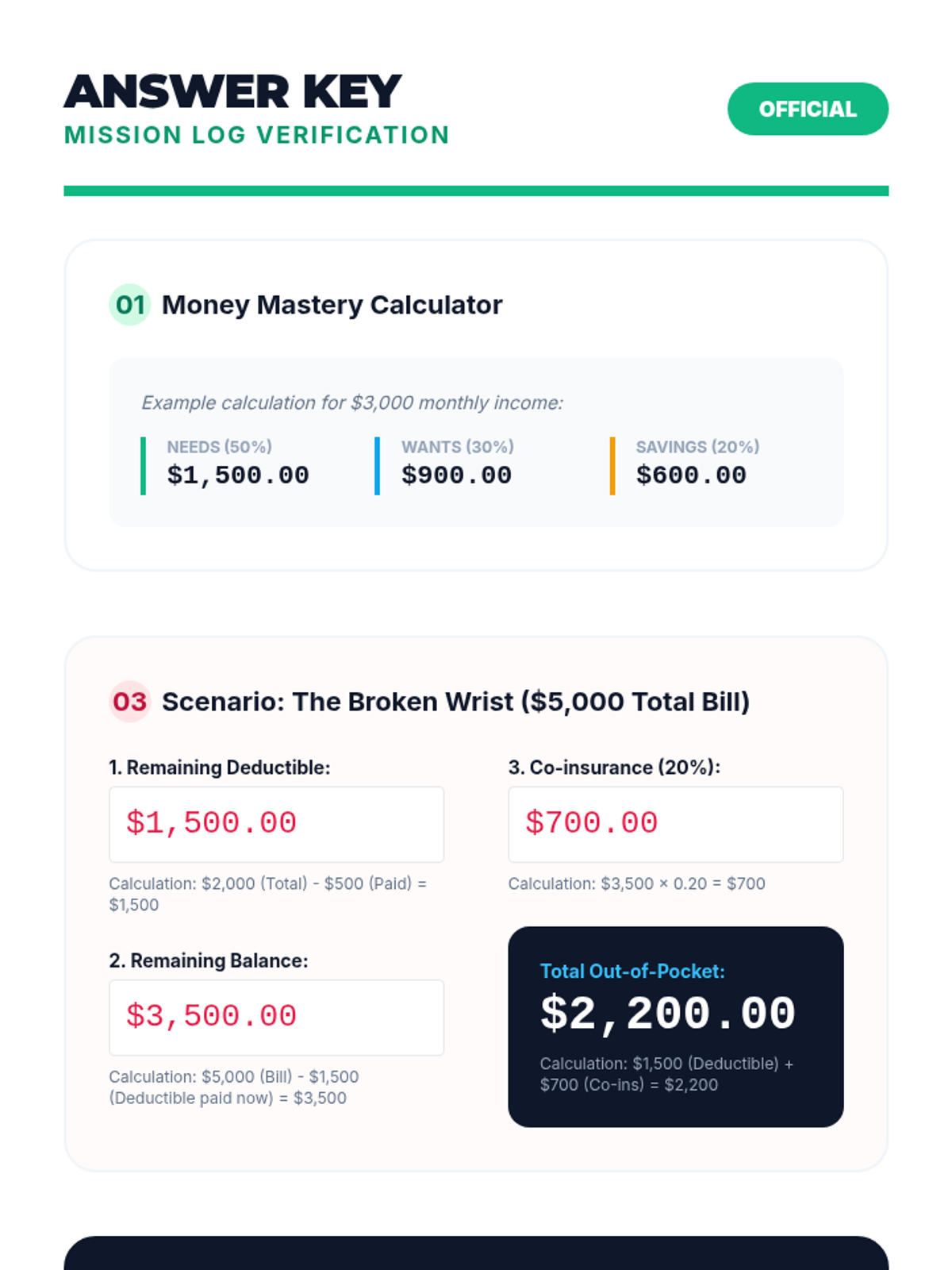
An answer key for the Mission Log Portfolio. Provides worked-out solutions for the 50/30/20 budget calculator, the health insurance 'Broken Wrist' scenario, and the tax pay stub breakdown.
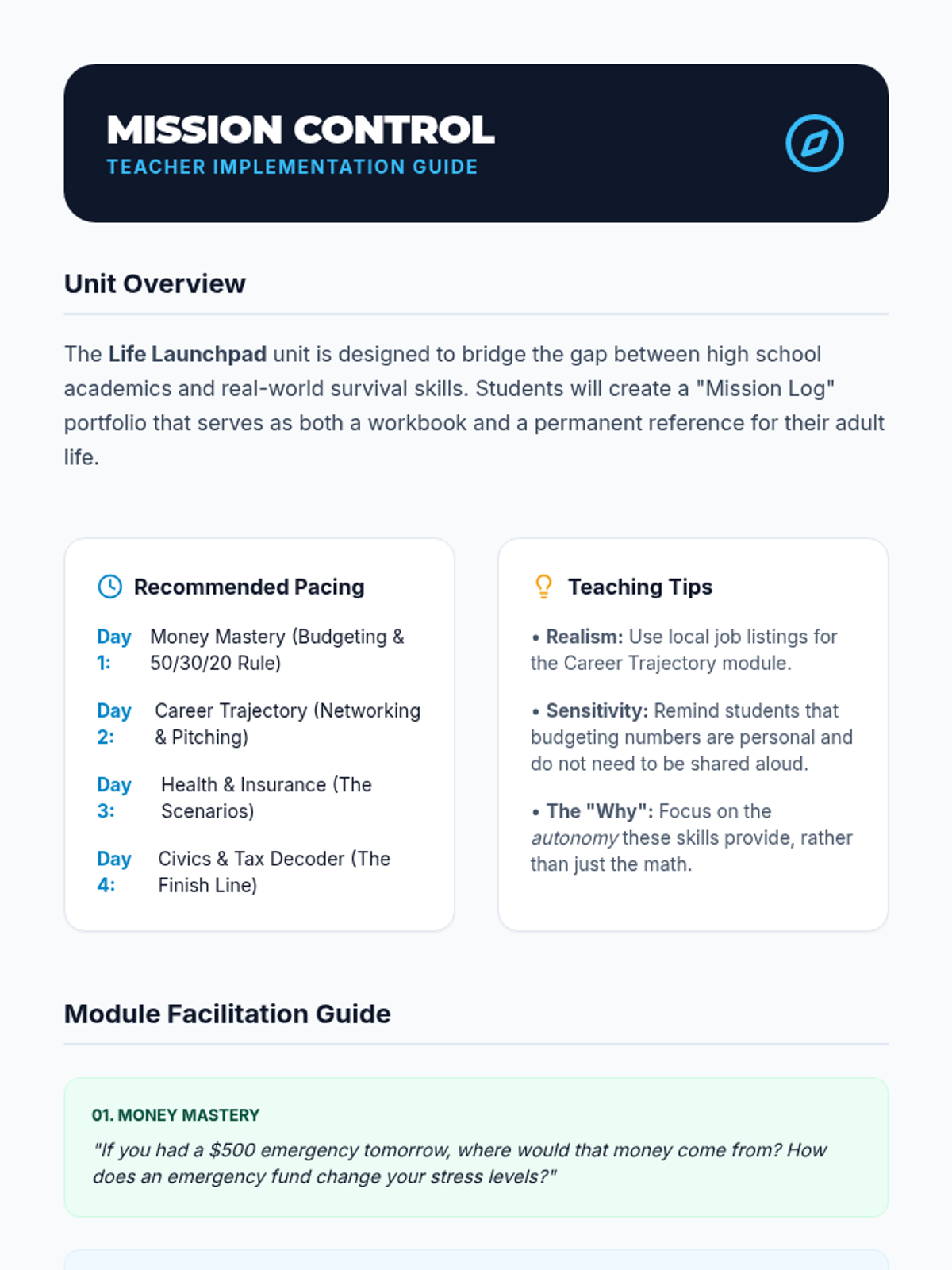
A facilitation guide for teachers implementing the Life Launchpad unit. Includes recommended pacing (4-day plan), module-specific discussion prompts, and differentiation strategies for varied learner levels.
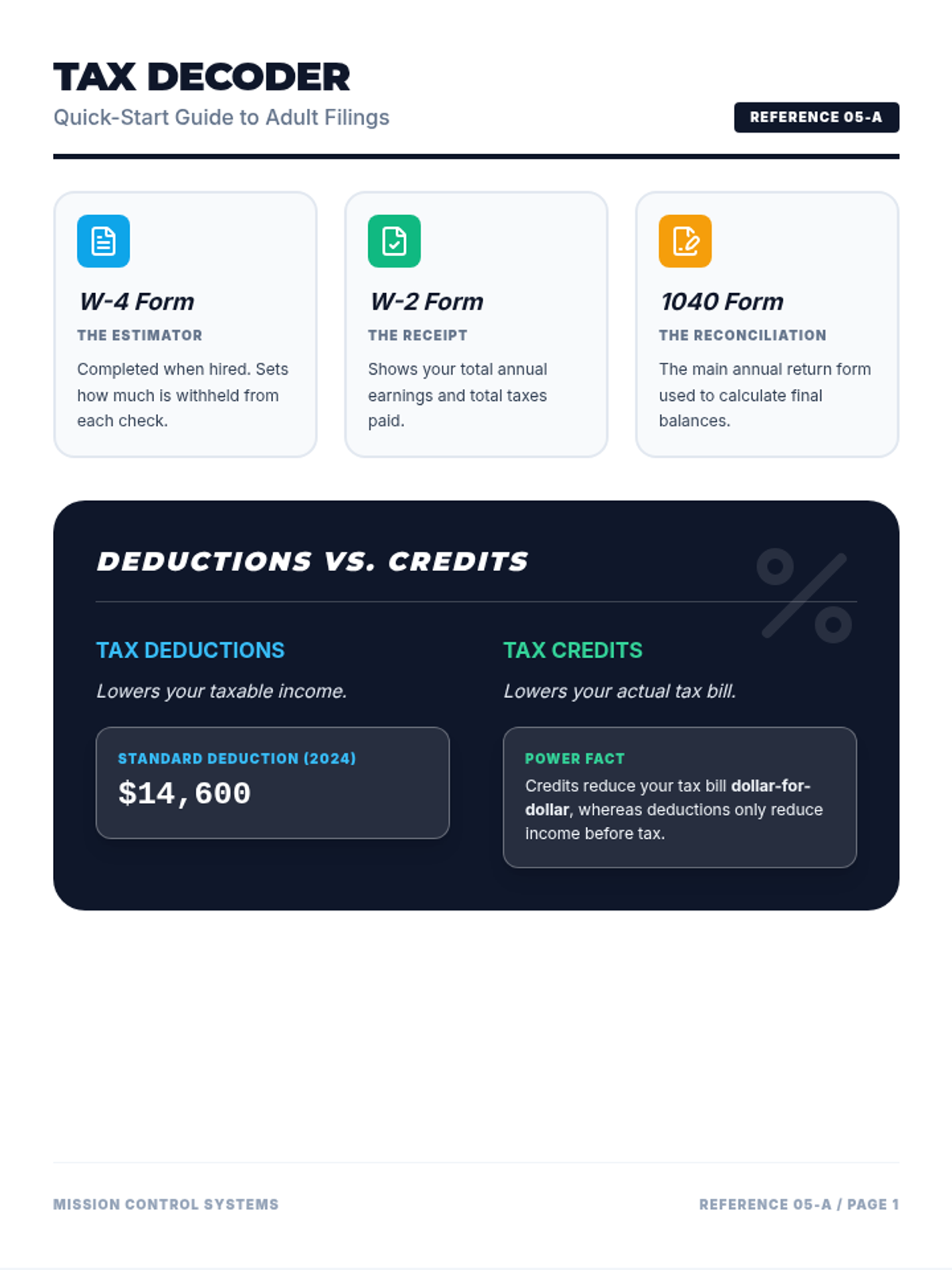
A two-page reference sheet that breaks down the difference between W-4, W-2, and 1040 forms, along with tax deductions and payroll withholdings. Features improved page breaks and text contrast.
An expanded 8-slide introductory presentation for the Life Launchpad curriculum. Covers mindset, SMART goals, the purpose of the Mission Log portfolio, and cross-system integration between money, career, and health.
A 7-page comprehensive personal portfolio workbook for young adults. It features modules on budgeting, career planning, health insurance scenarios, civic engagement, and tax document analysis with white work areas for handwriting. Includes a concrete elevator pitch example.
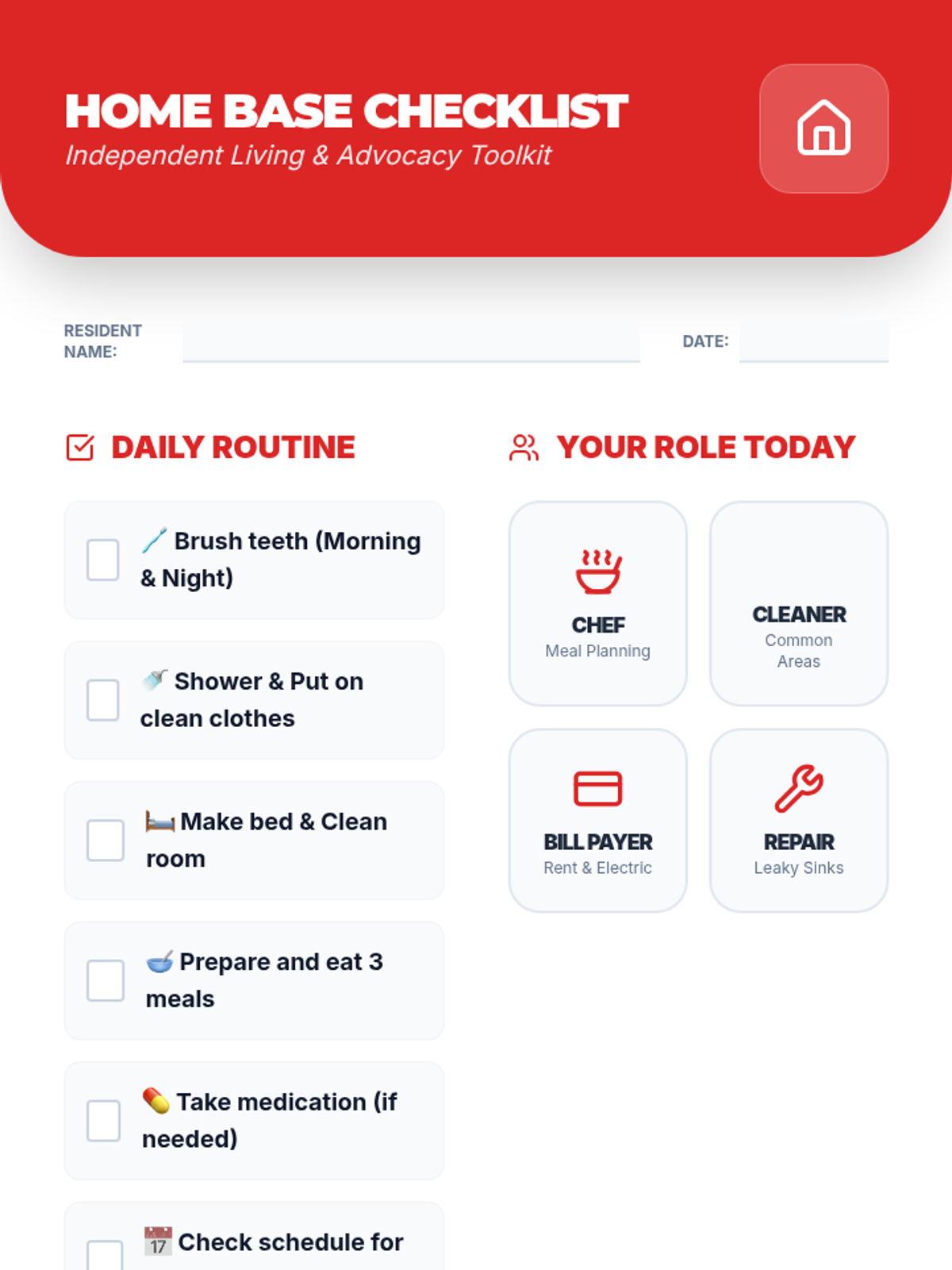
A comprehensive toolkit for independent living, including a daily checklist, apartment simulation roles, and self-advocacy script cards for real-world scenarios.
A visual presentation introducing independent living and the apartment simulation, focusing on home management and self-advocacy.
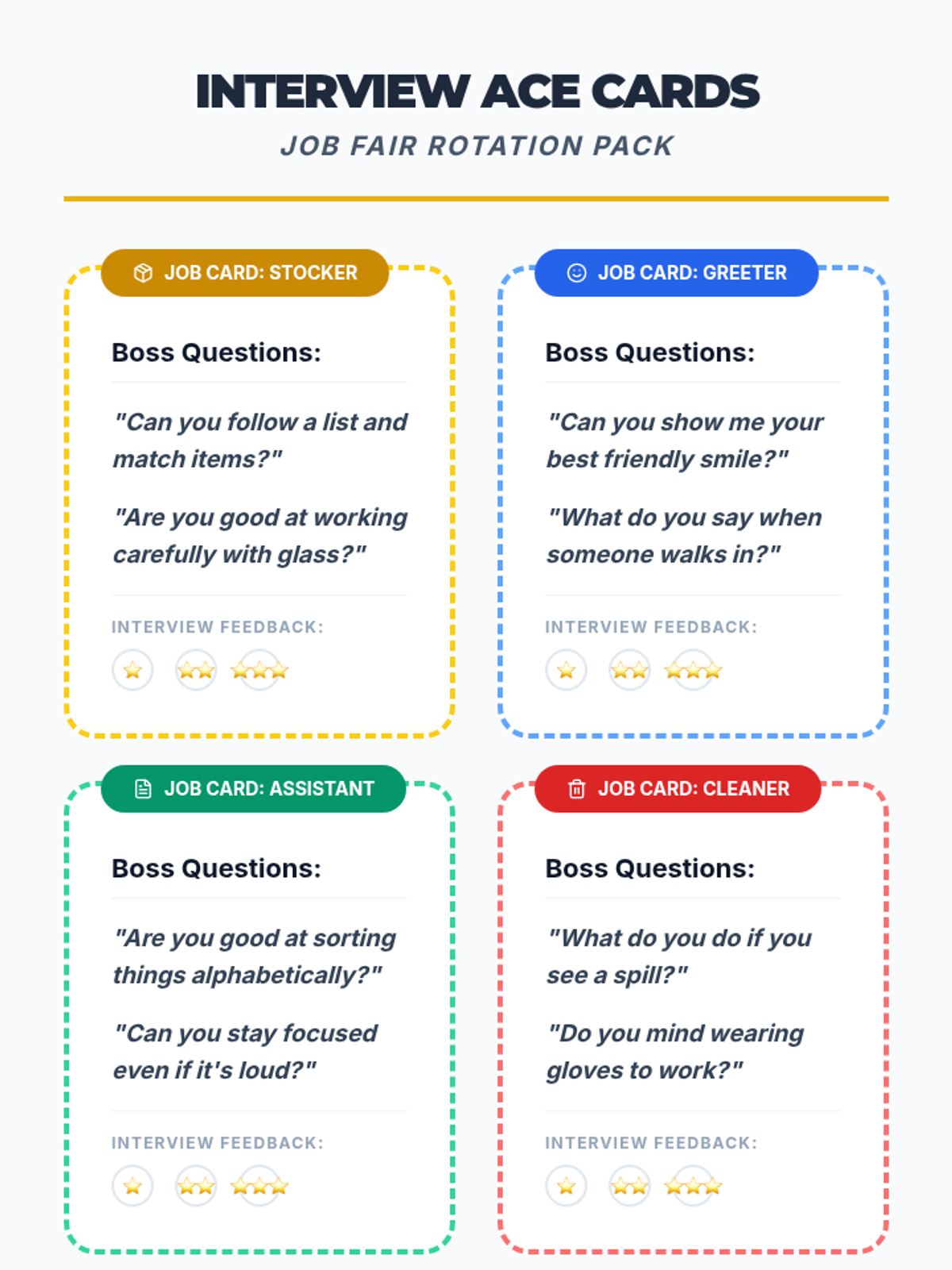
A printable set of job cards, interview questions, and a certificate for the Mock Job Fair activity.
A visual presentation introducing career readiness and the mock job fair, focusing on first impressions and differentiated interview strategies.
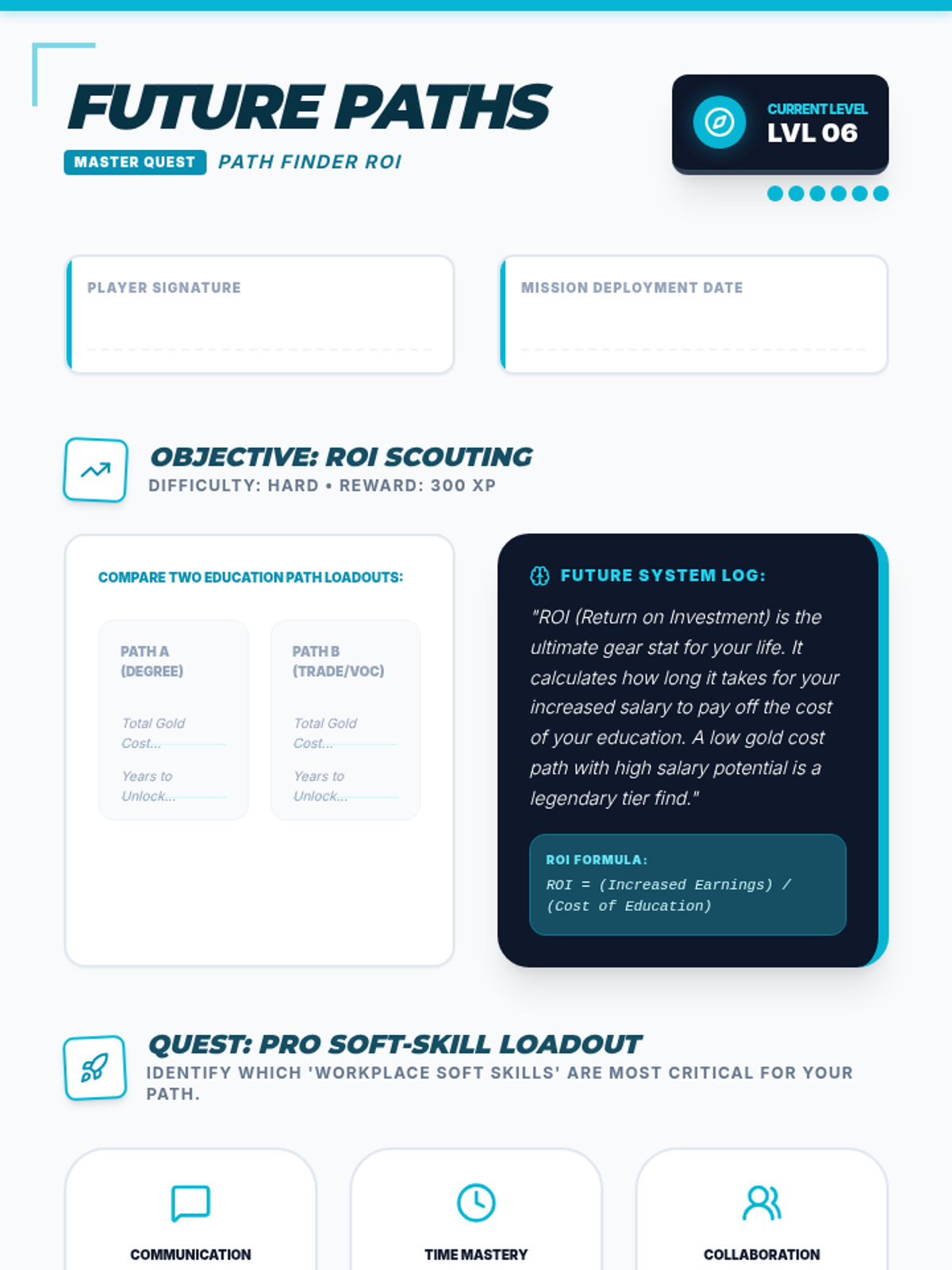
A gamified worksheet for the Future Paths module, focusing on education ROI comparison and professional soft skill identification. Features a high-fidelity 'Quest Log' visual theme with cyan accents and RPG-inspired UI elements.
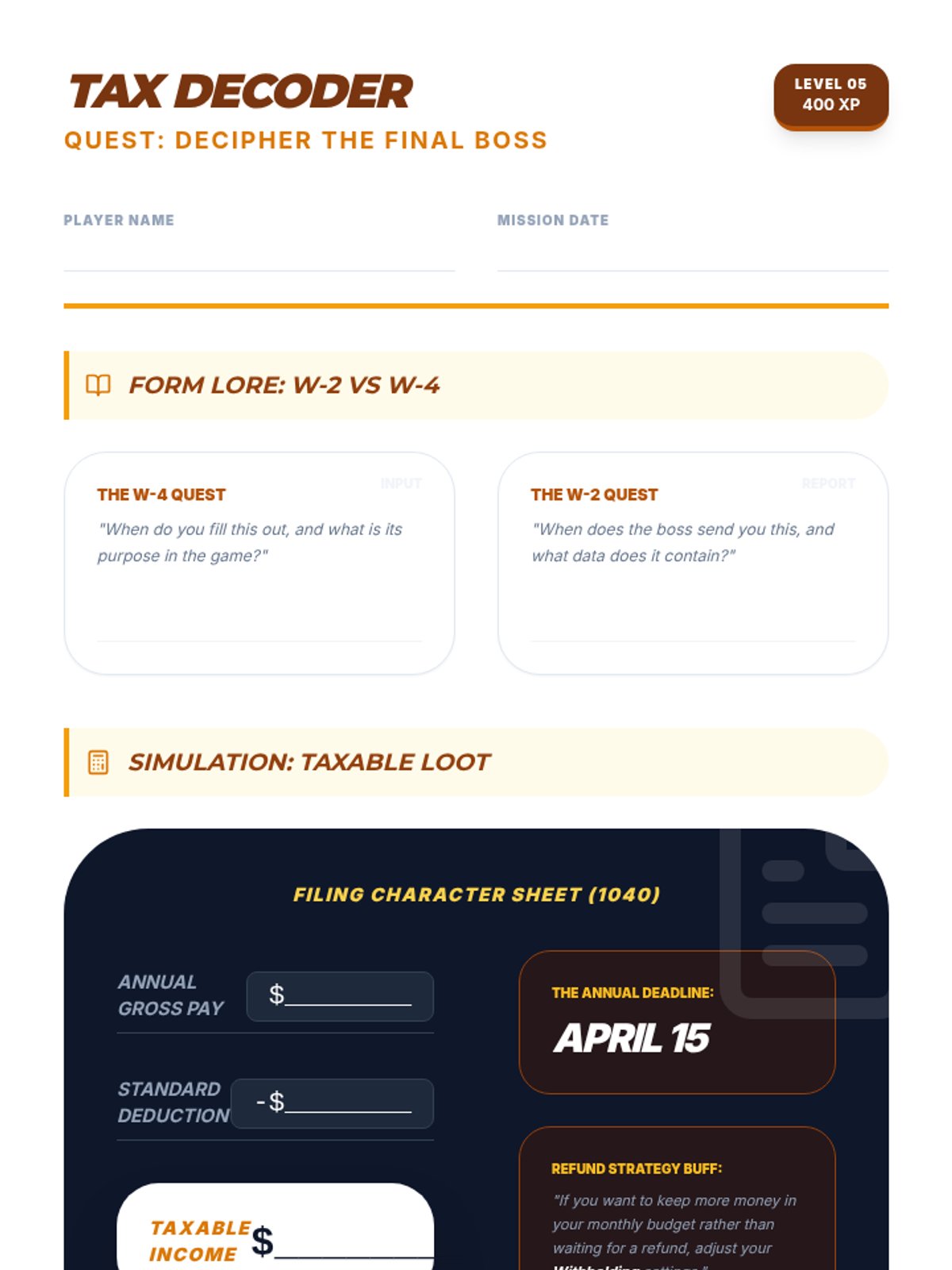
A gamified worksheet for the Tax Decoder module, focusing on tax form logic, filing deadlines, and income simulation. Features a high-fidelity 'Quest Log' visual theme with amber accents and RPG-inspired UI elements.
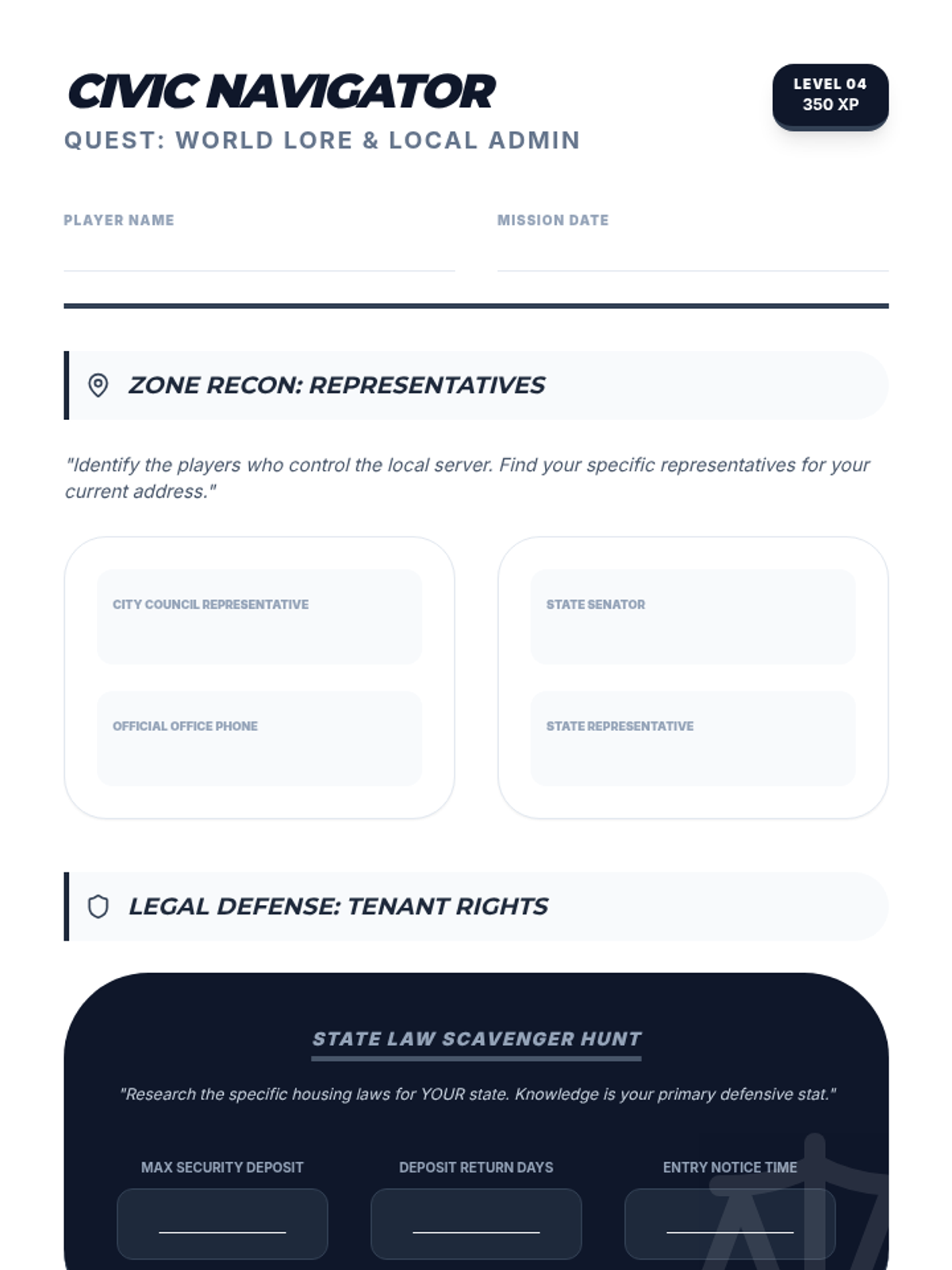
A gamified worksheet for the Civic Navigator module, focusing on identifying representatives and researching state-specific tenant rights. Features a high-fidelity 'Quest Log' visual theme with indigo accents and RPG-inspired UI elements.
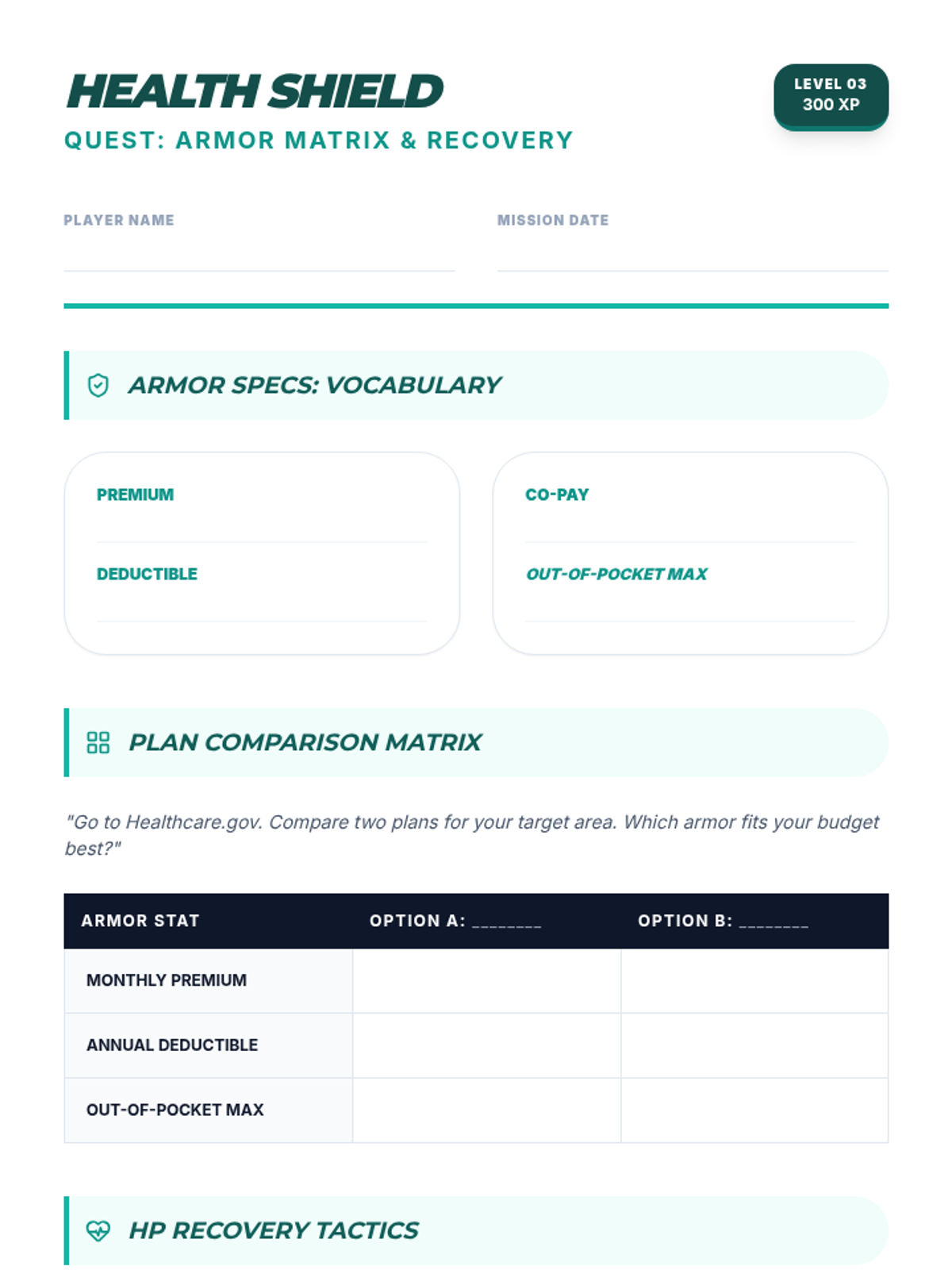
A gamified worksheet for the Health Shield module, focusing on insurance terminology, plan comparisons, and HP recovery tactics. Features a high-fidelity 'Quest Log' visual theme with rose red accents and RPG-inspired UI elements.
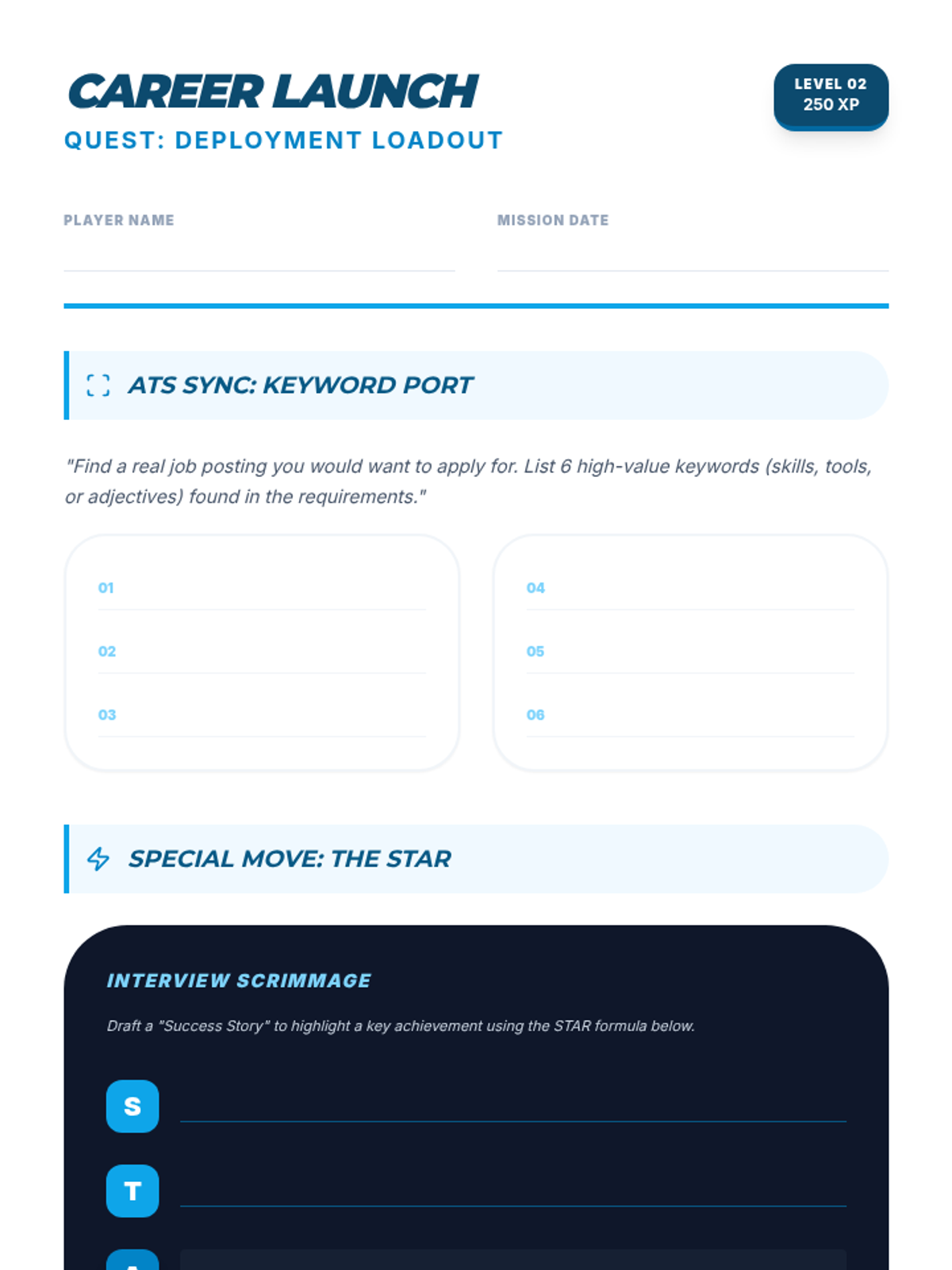
A gamified worksheet for the Career Launch module, focusing on keyword scouting and STAR method drafting. Features a high-fidelity 'Quest Log' visual theme with sky blue accents and RPG-inspired UI elements.
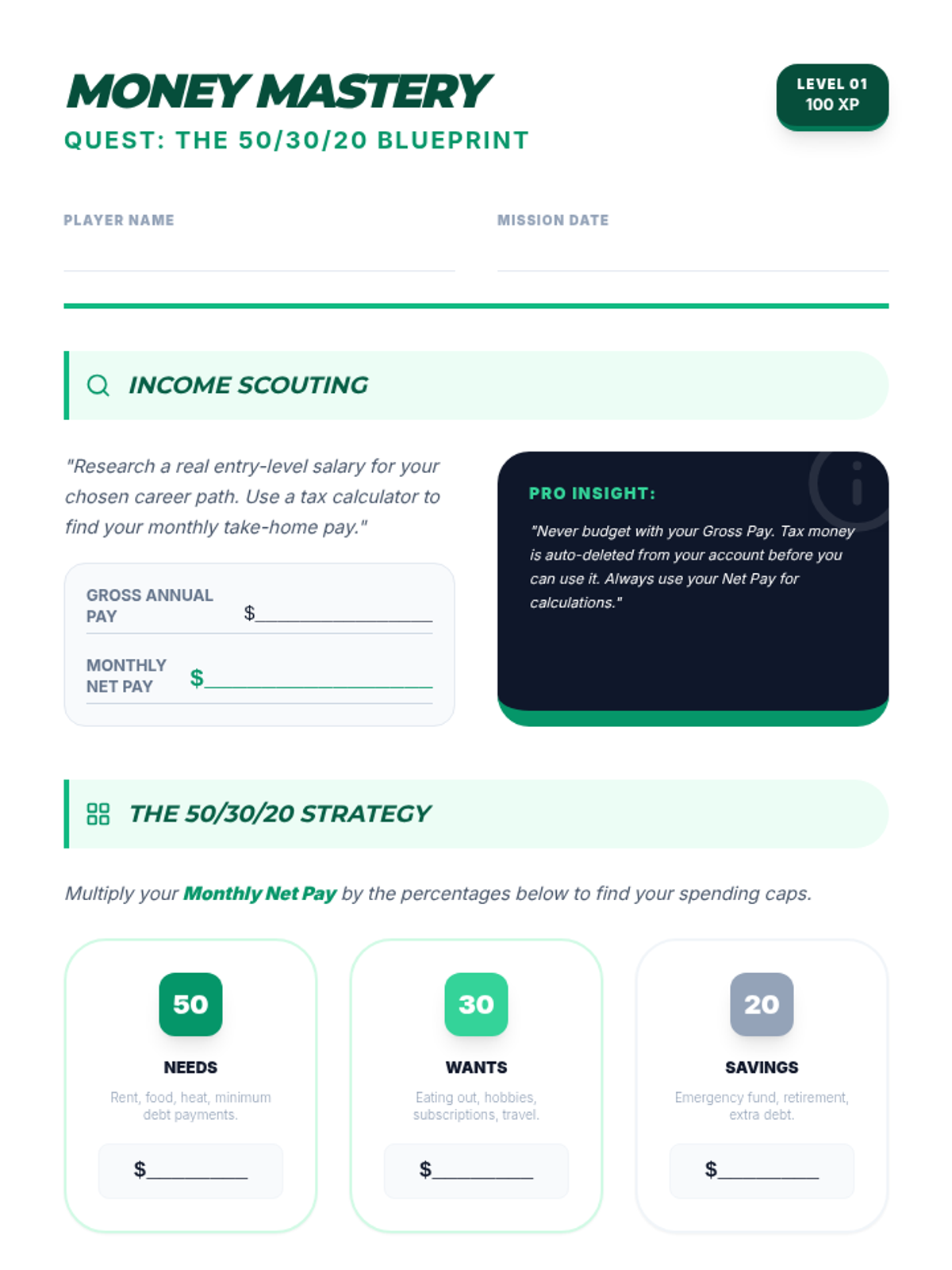
A gamified worksheet for the Money Mastery module, focusing on 50/30/20 budgeting math and income research. This updated version features a 'Quest Log' visual theme with RPG-inspired UI elements, XP rewards, and high-impact visual aids.
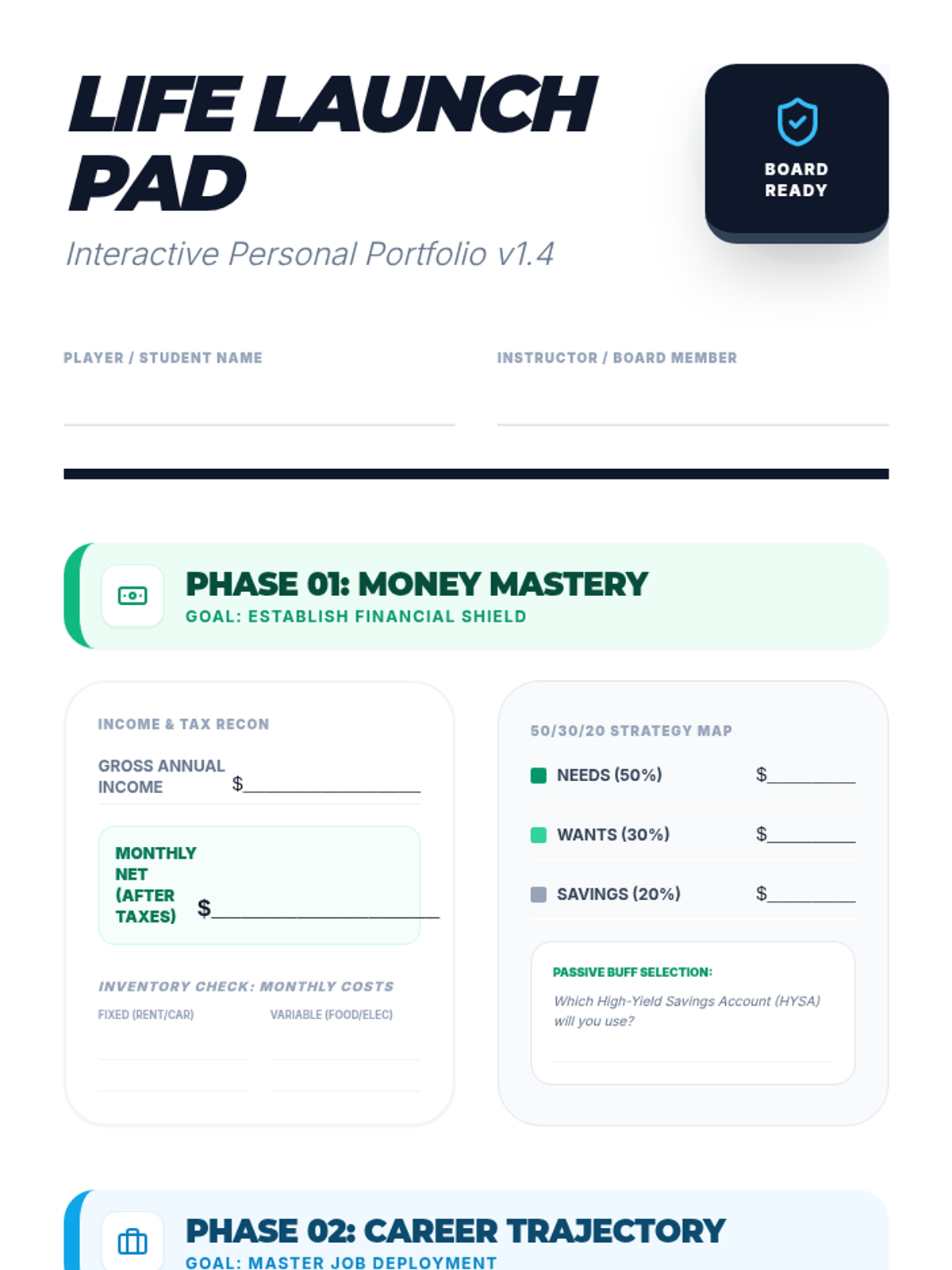
A high-impact, gamified student portfolio document designed as the primary deliverable for the course. Students complete tasks for all six levels, including budgeting, STAR drafting, insurance comparison, and ROI scouting. Updated v3.0 with improved layout and maximum whitespace. Expanded to 8 dedicated pages for printable consistency.
A gamified slide deck covering college vs. vocational paths, career ROI, and essential work readiness soft skills. Includes a Live PBL Path Finder workshop.
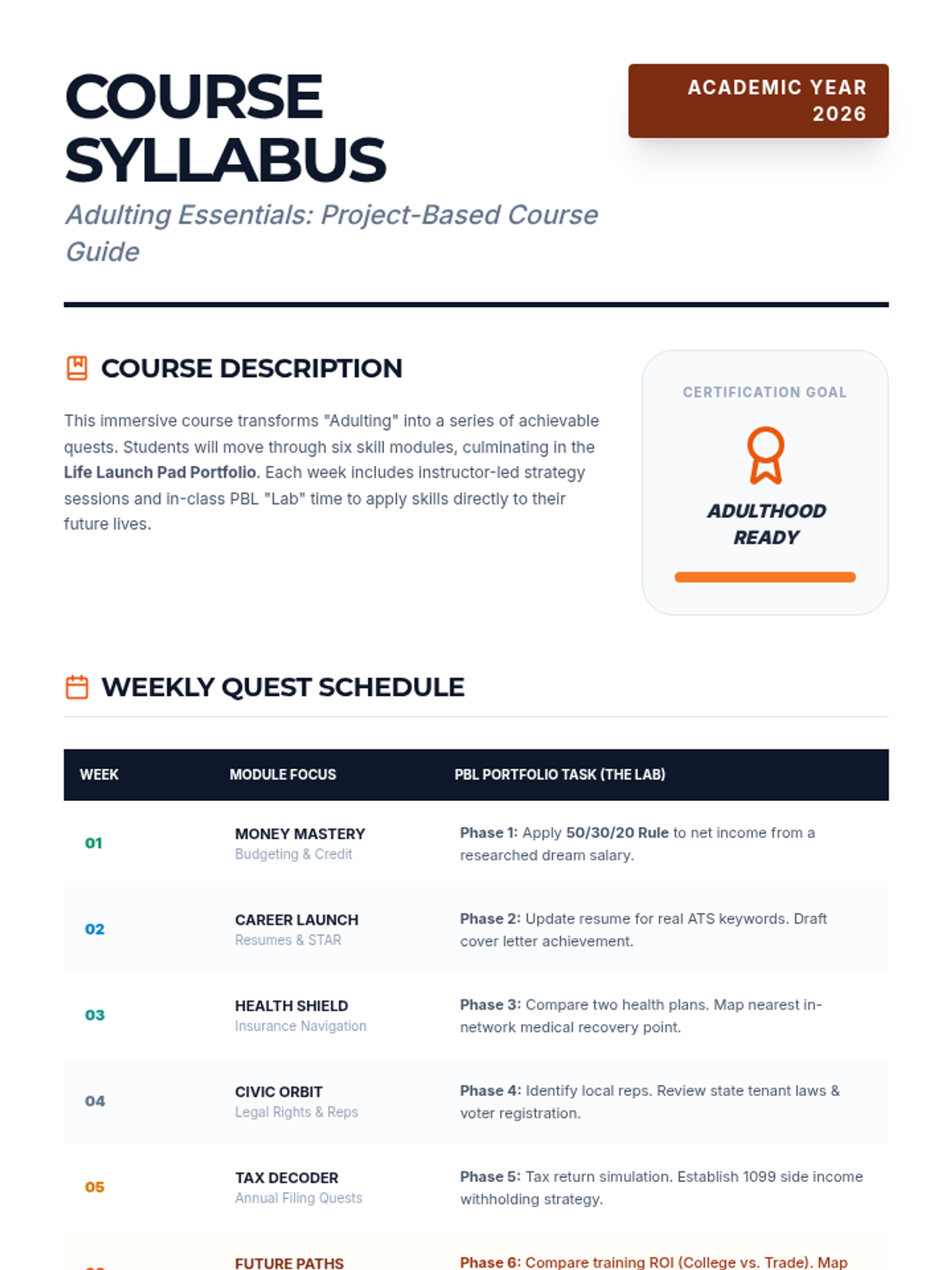
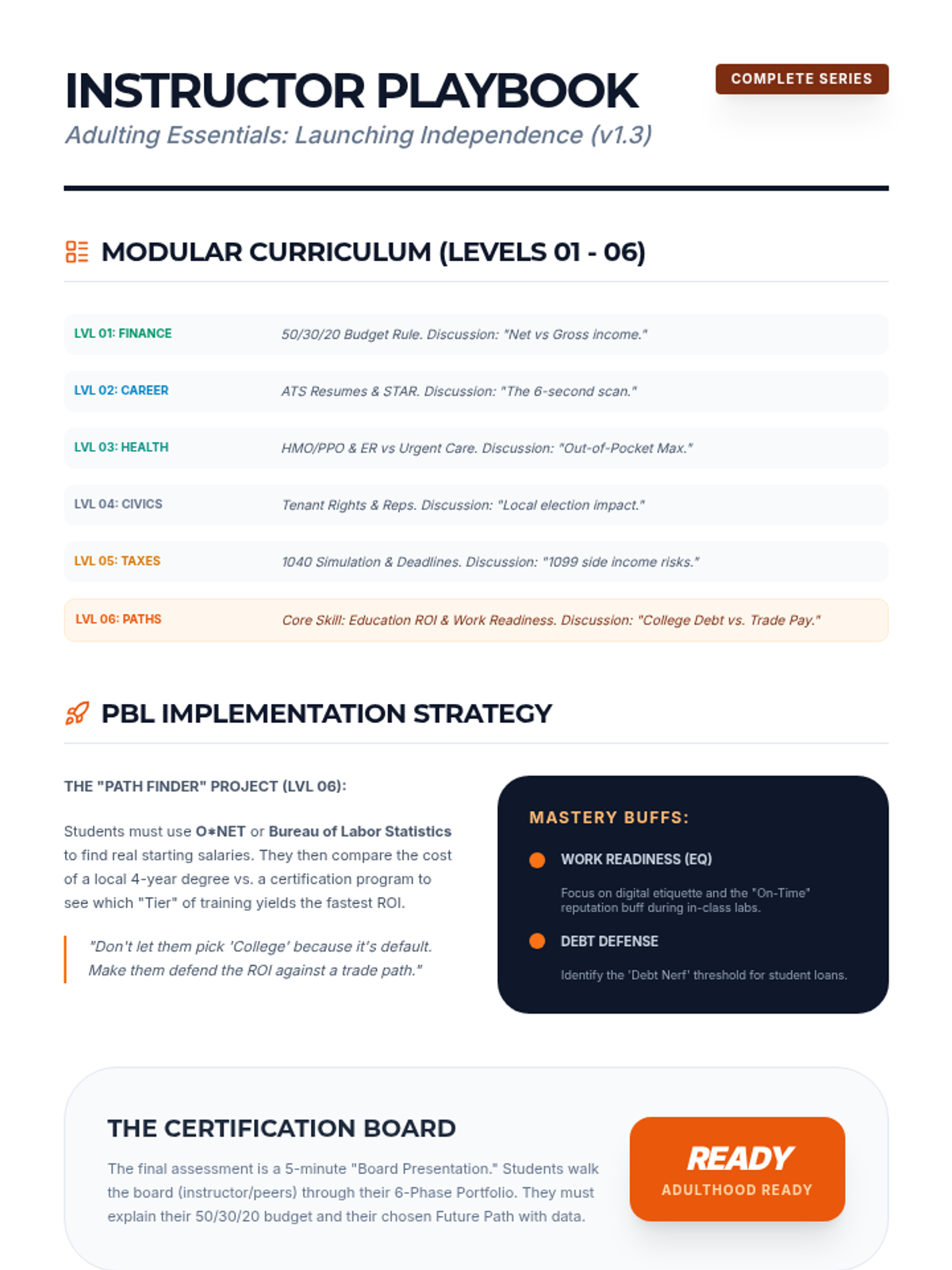
A structured pacing guide and syllabus for the Adulting Essentials in-class course, breaking down 6 weeks of instruction and PBL Lab time. Updated with Future Paths.
An essential slide deck covering tax vocabulary, the difference between W-2 and W-4 forms, and a step-by-step guide to filing taxes. Expanded with a Live PBL Workshop.
A comprehensive instructional guide for teachers, featuring lesson pacing, discussion prompts for each module, and strategies for facilitating the Life Launch Pad PBL project.
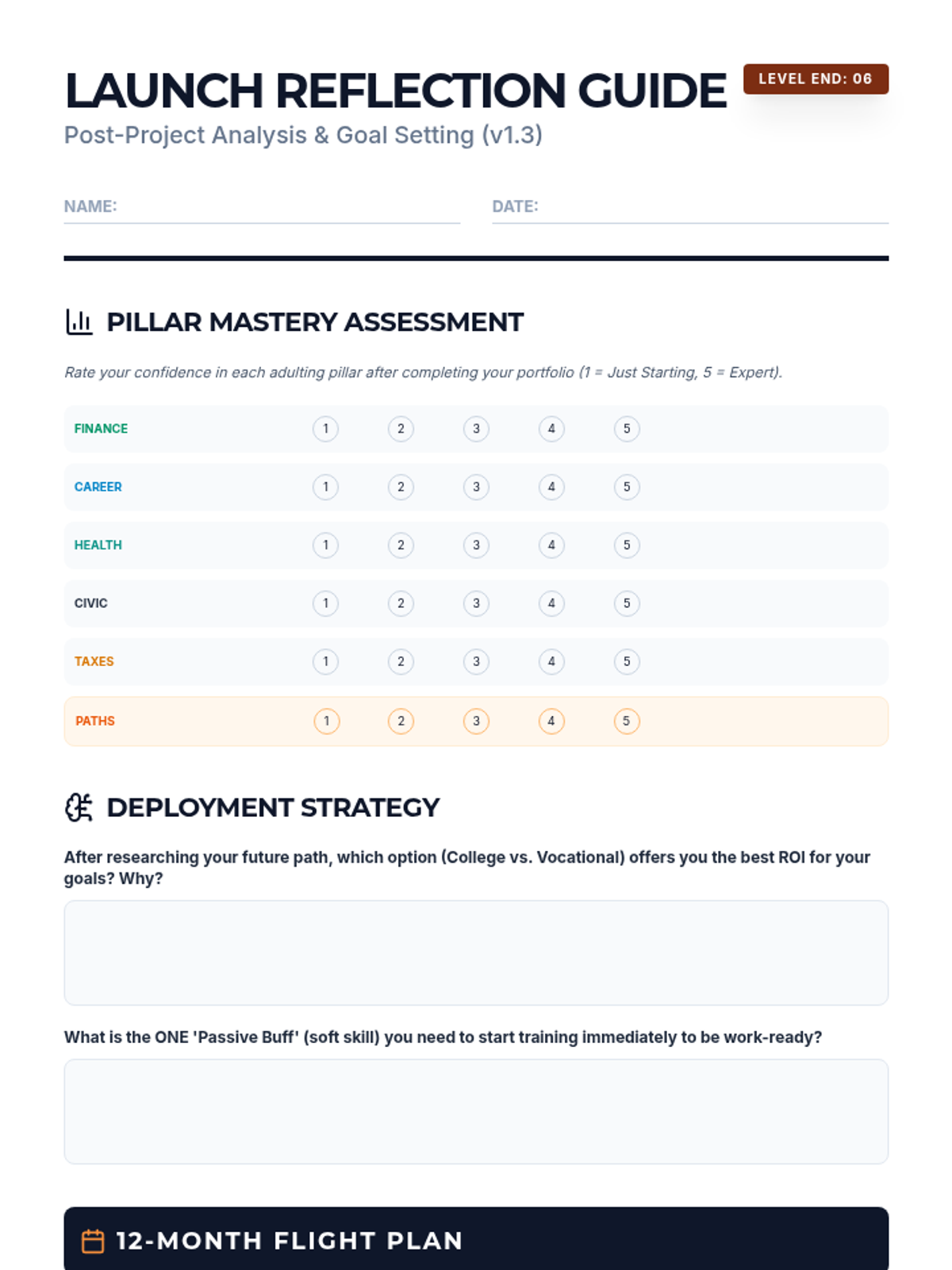
A student reflection guide for the Life Launch Pad project, featuring self-assessment ratings, critical insight prompts, and short/long-term goal setting. Updated with future paths.
A comprehensive 2-page pre-interview resource for students. Page 1 covers logistics and day-of preparation. Page 2 provides advanced mastery tips, virtual interview etiquette, psychology-based rules, and the "Pivot Technique" for difficult questions.
A comprehensive 5-page workbook for students to prepare for interviews, featuring the STAR method guide, elevator pitch templates, sector-specific practice questions, a mock interview rubric, and a master question bank.
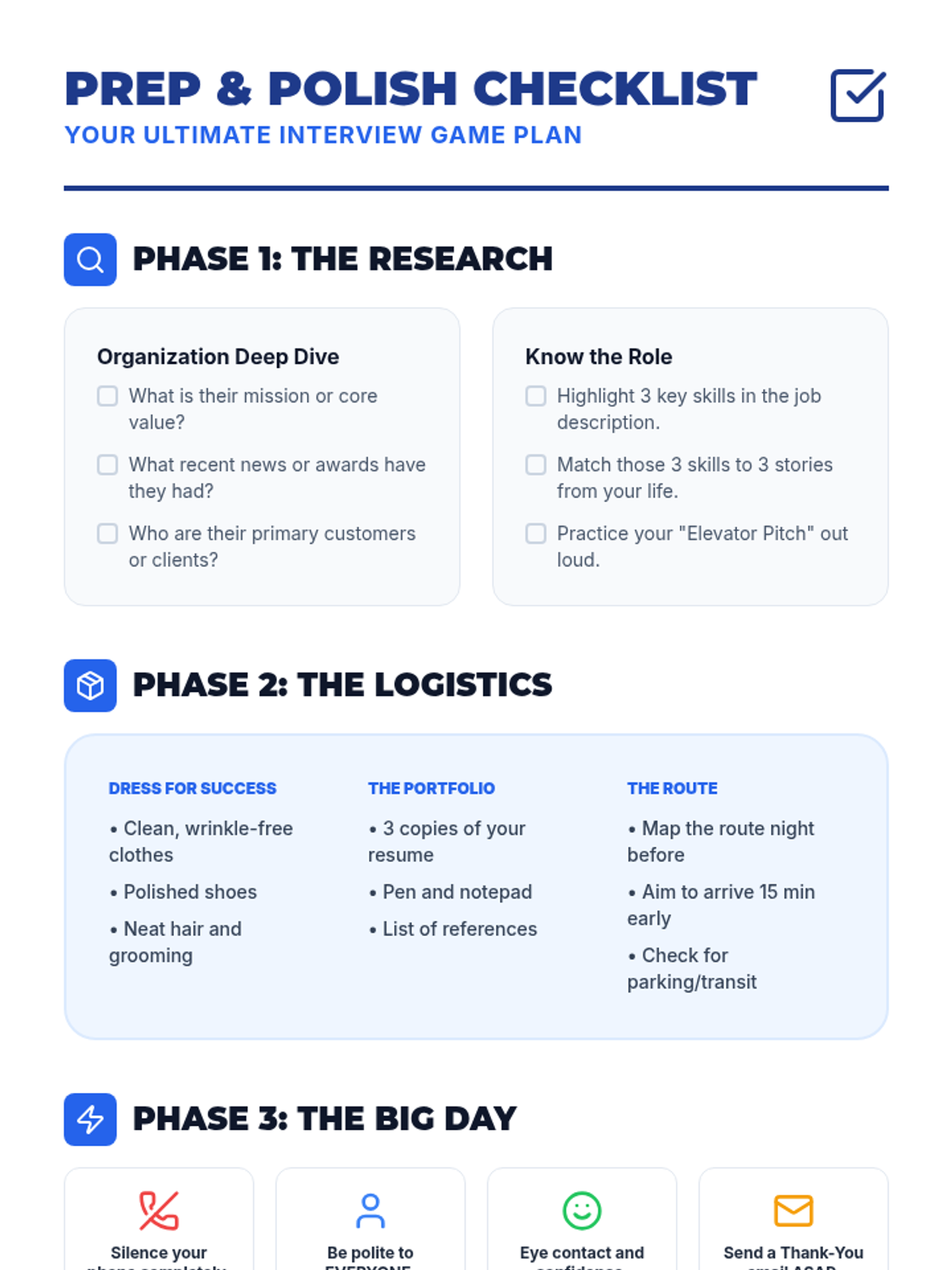
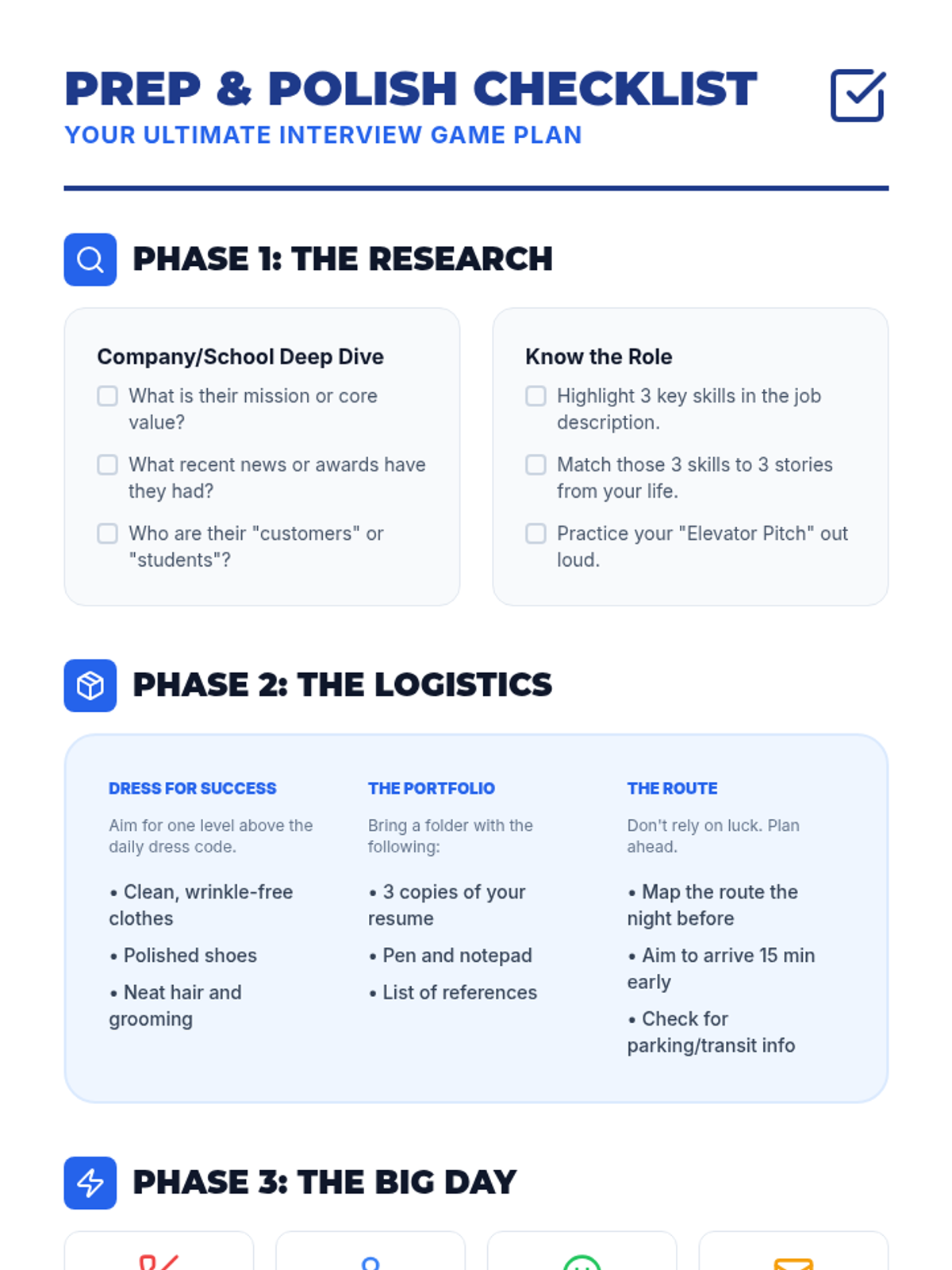
A comprehensive pre-interview checklist and tip sheet for students, covering research strategies, logistical preparation, dress code, and professional day-of etiquette. Focuses on workplace preparation.
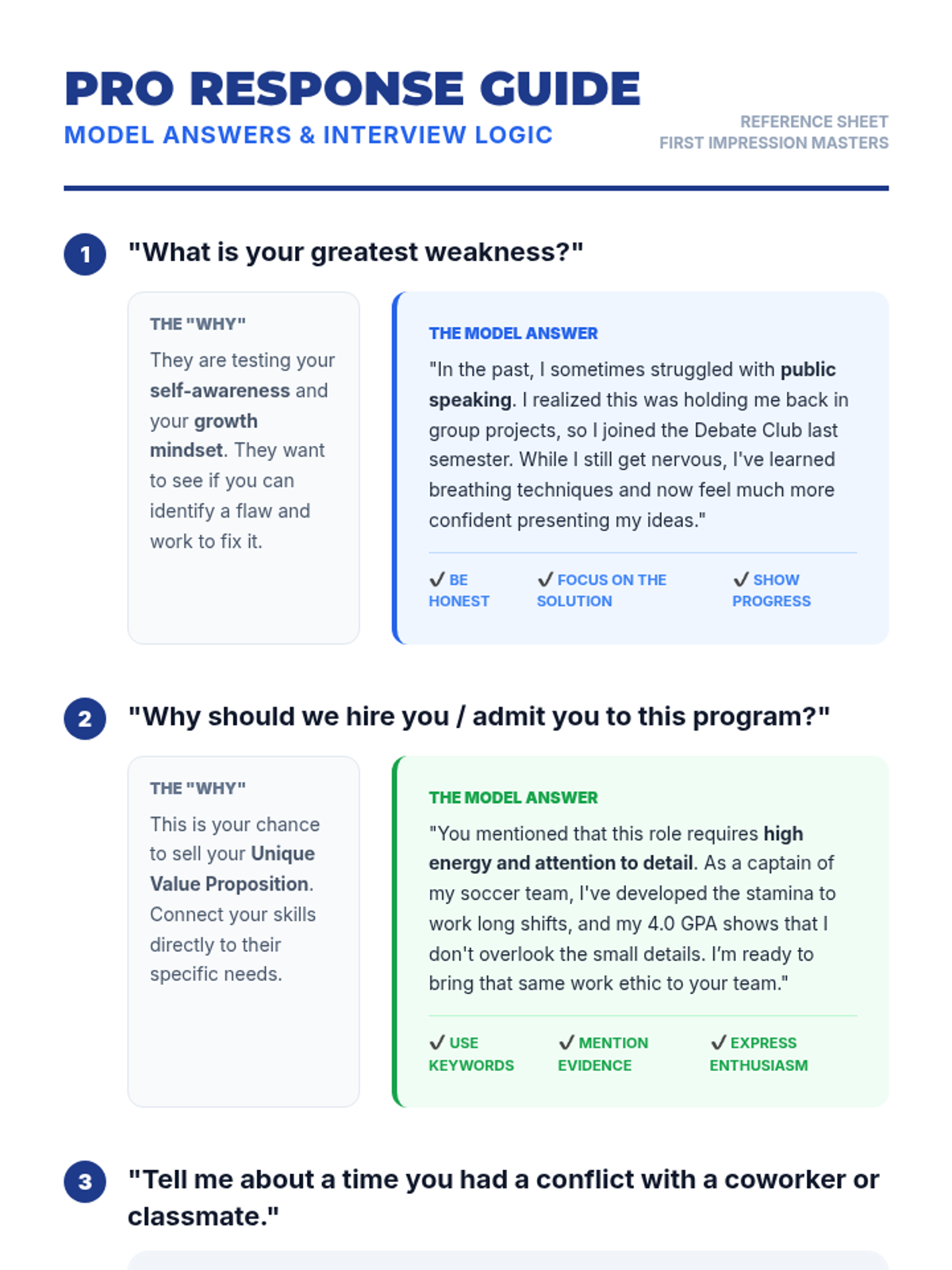
A detailed reference guide for students and teachers featuring common interview questions, the logic behind why they are asked, model answers using the STAR method, and a list of common pitfalls to avoid. Focused on professional roles.
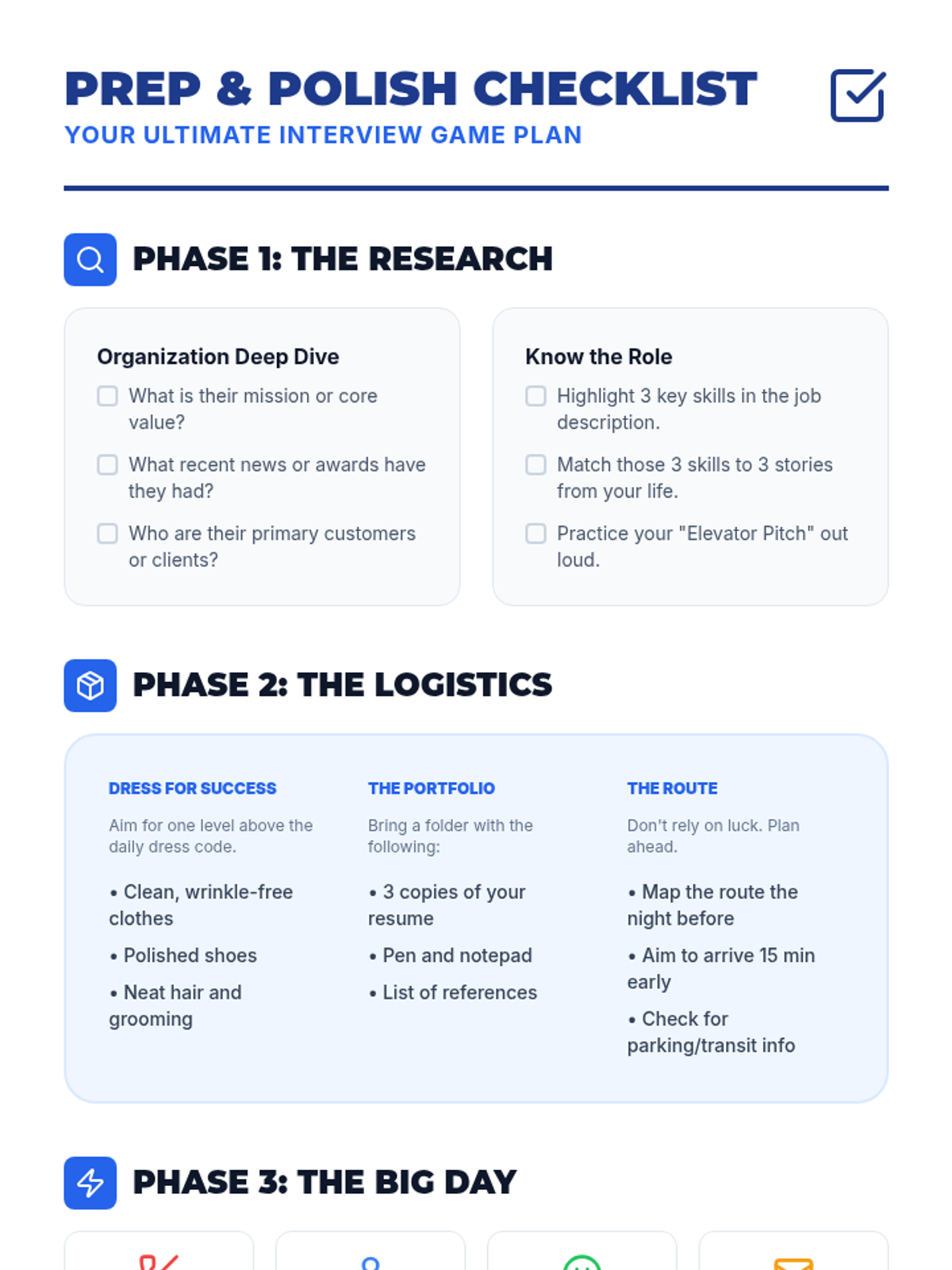
A comprehensive pre-interview checklist and tip sheet for students, covering research strategies, logistical preparation, dress code, and professional day-of etiquette.
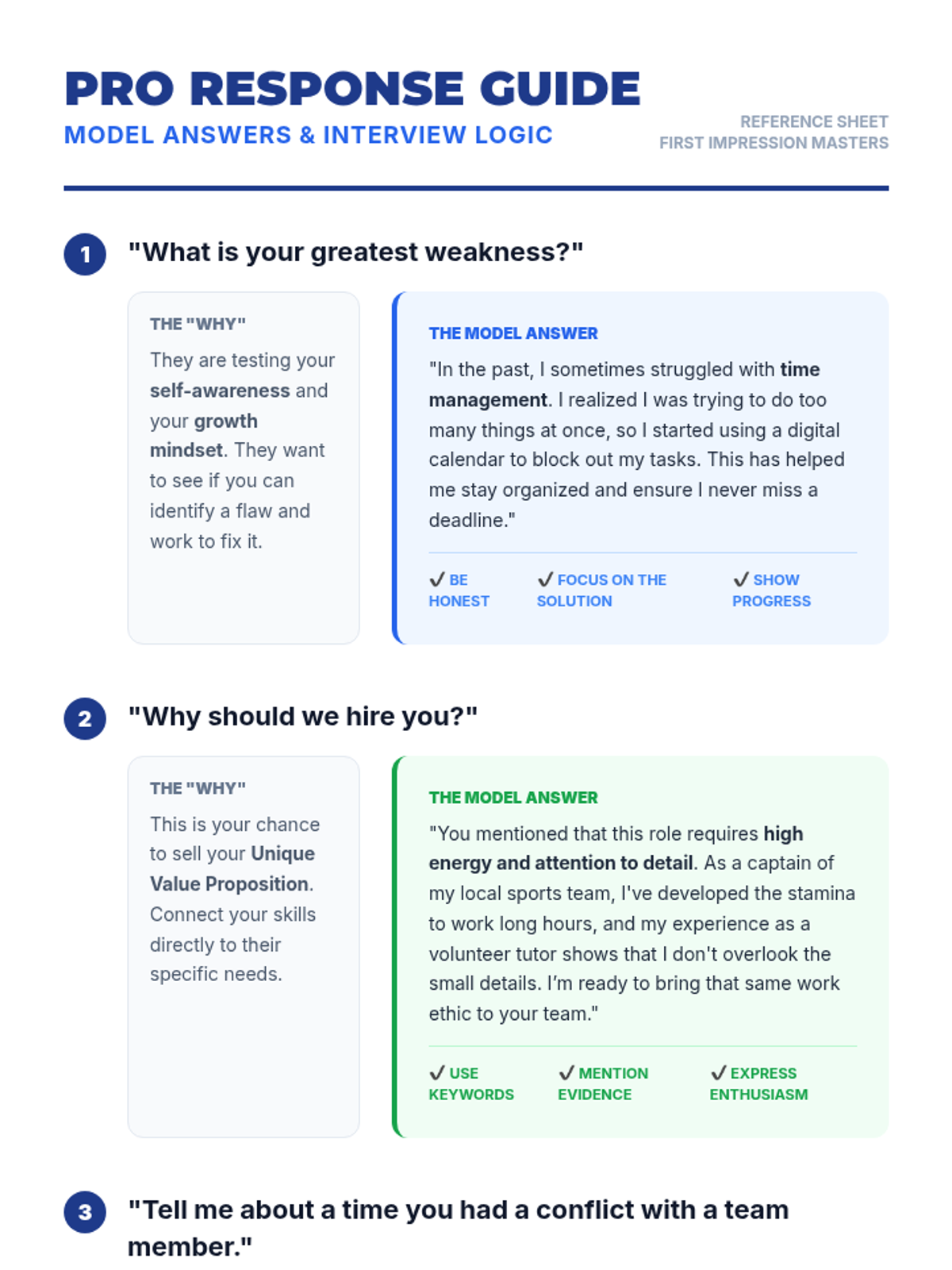
A detailed reference guide for students and teachers featuring common interview questions, the logic behind why they are asked, model answers using the STAR method, and a list of common pitfalls to avoid.
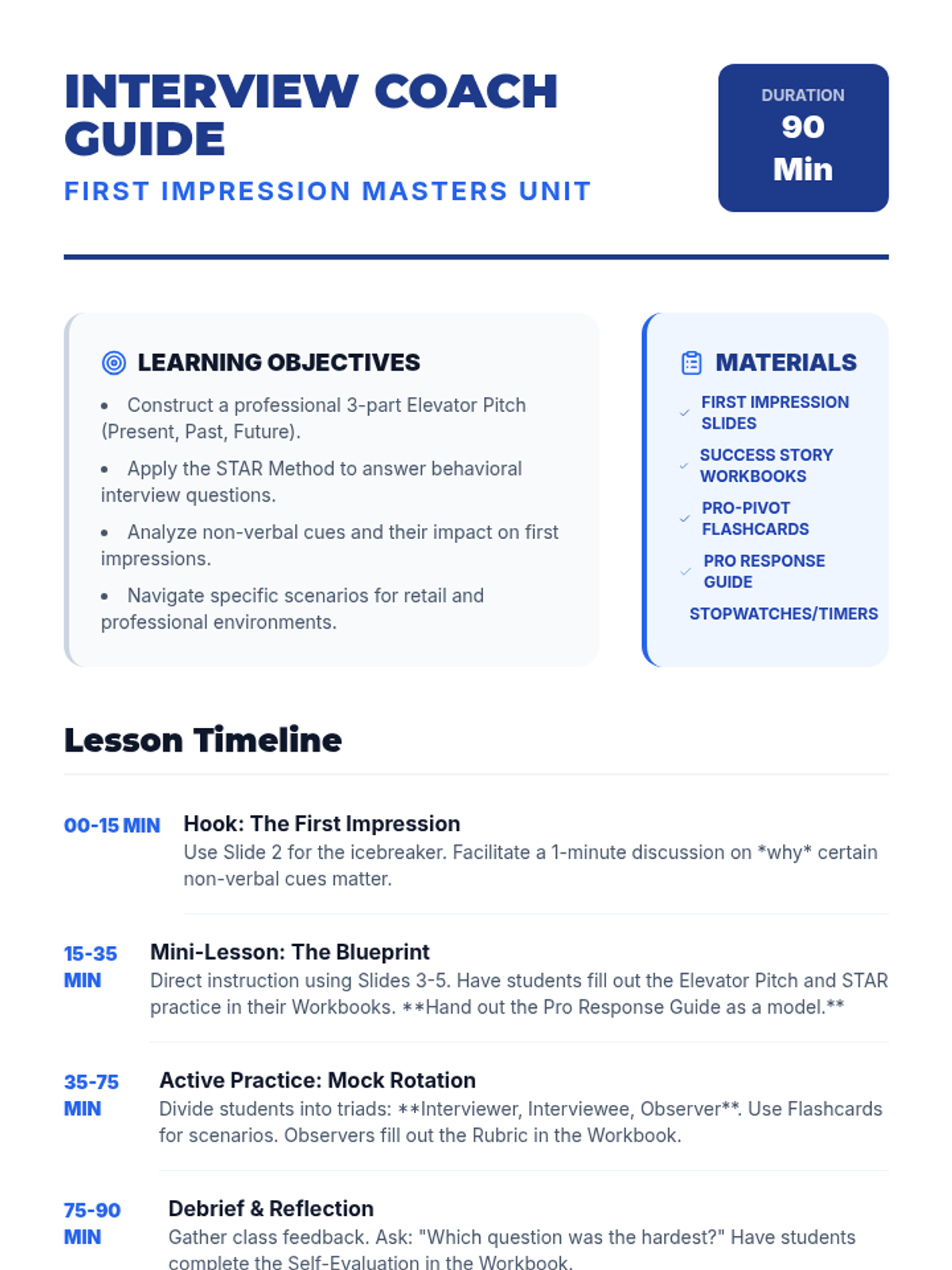
A facilitator's guide for the "First Impression Masters" lesson, including a 90-minute lesson timeline, grouping strategies for mock interviews, and sample feedback phrases. Updated for retail and professional focus.
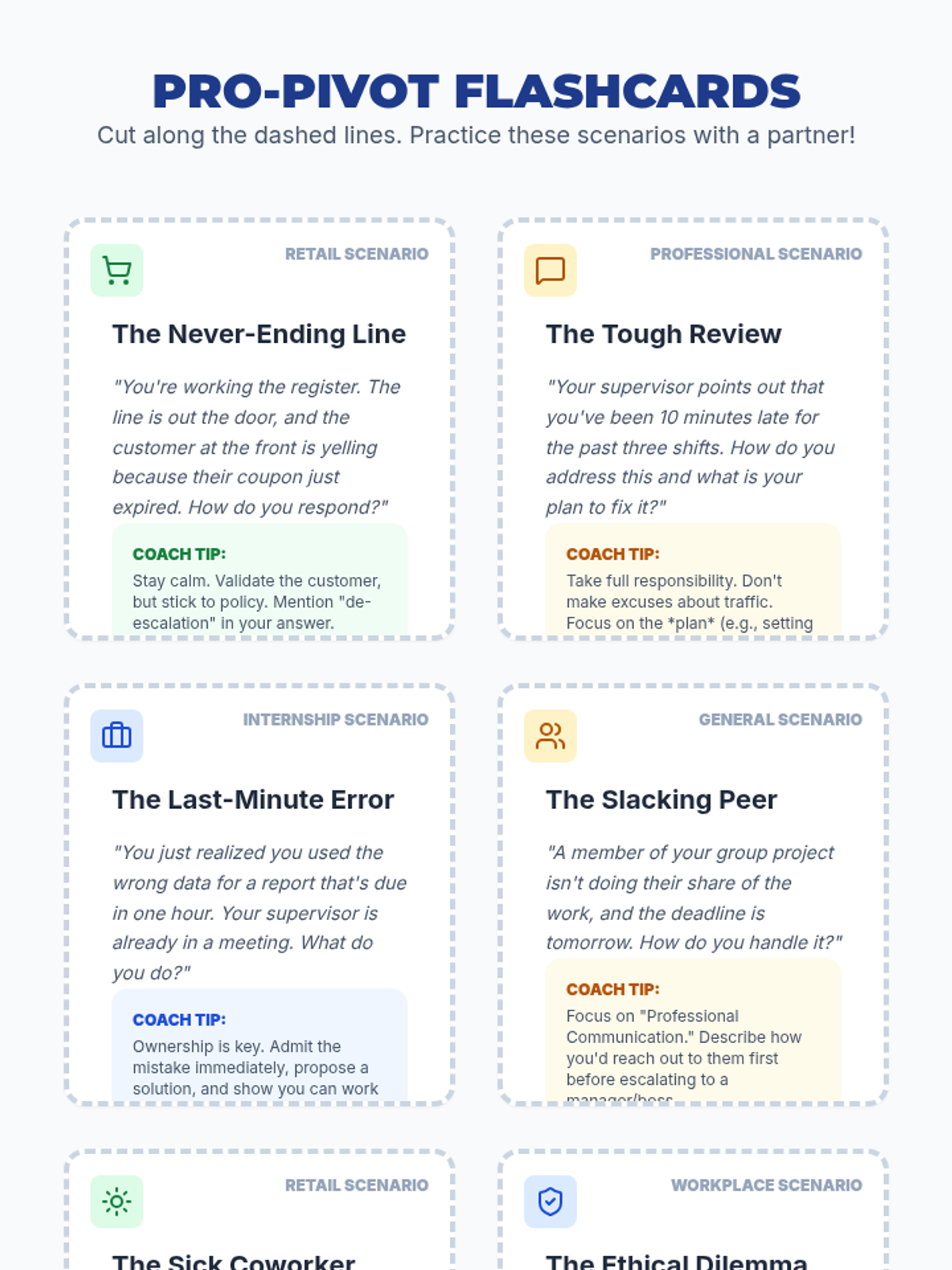
A set of 6 printable scenario flashcards covering retail, service, and internship dilemmas, including coaching tips for each situation. Focusing on workplace ethics and conflict resolution.
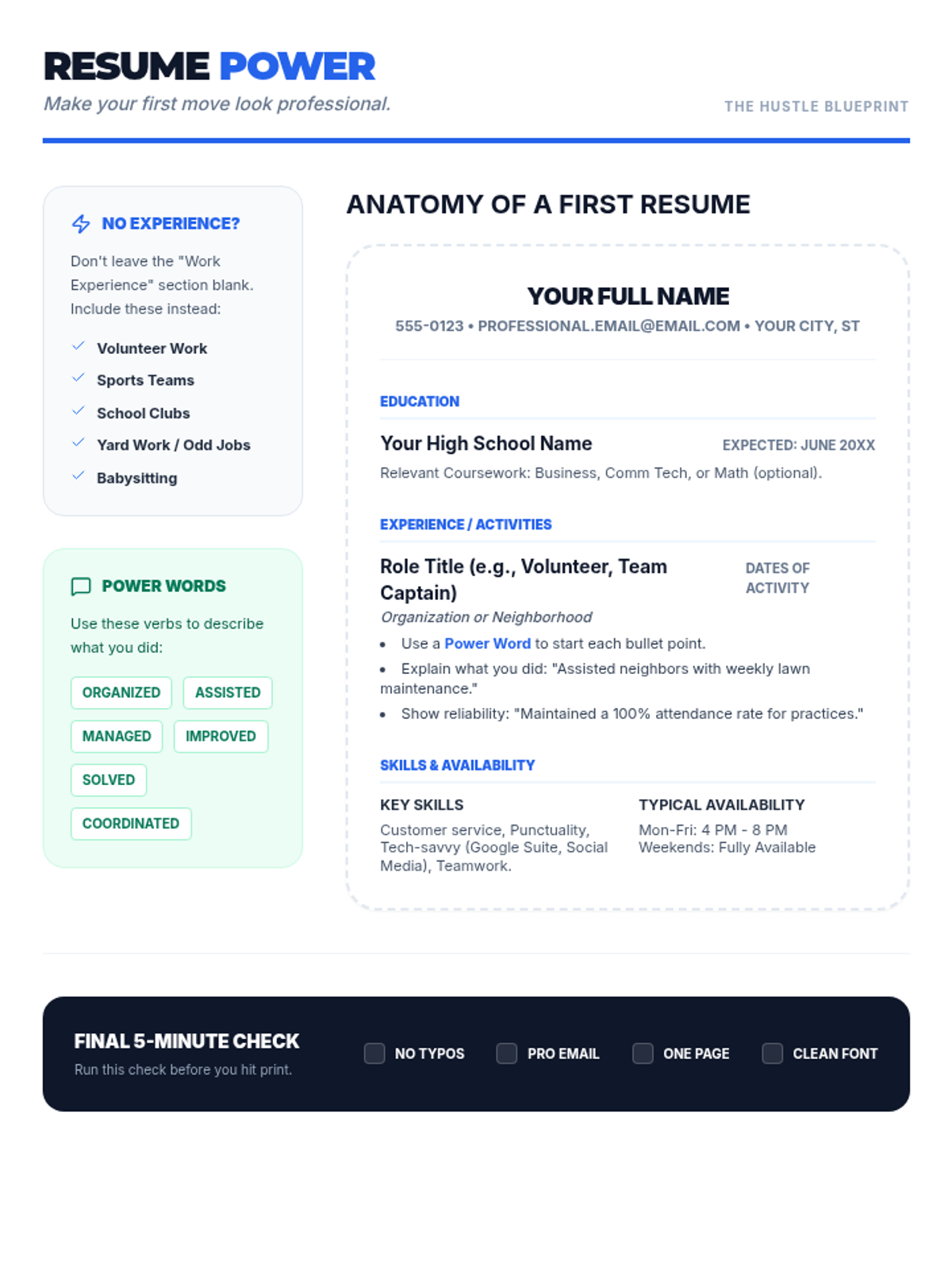
A comprehensive 1-page guide for high schoolers creating their first resume. Includes tips for students with no prior work experience, power words for entry-level skills, and a visual breakdown of a professional resume layout.
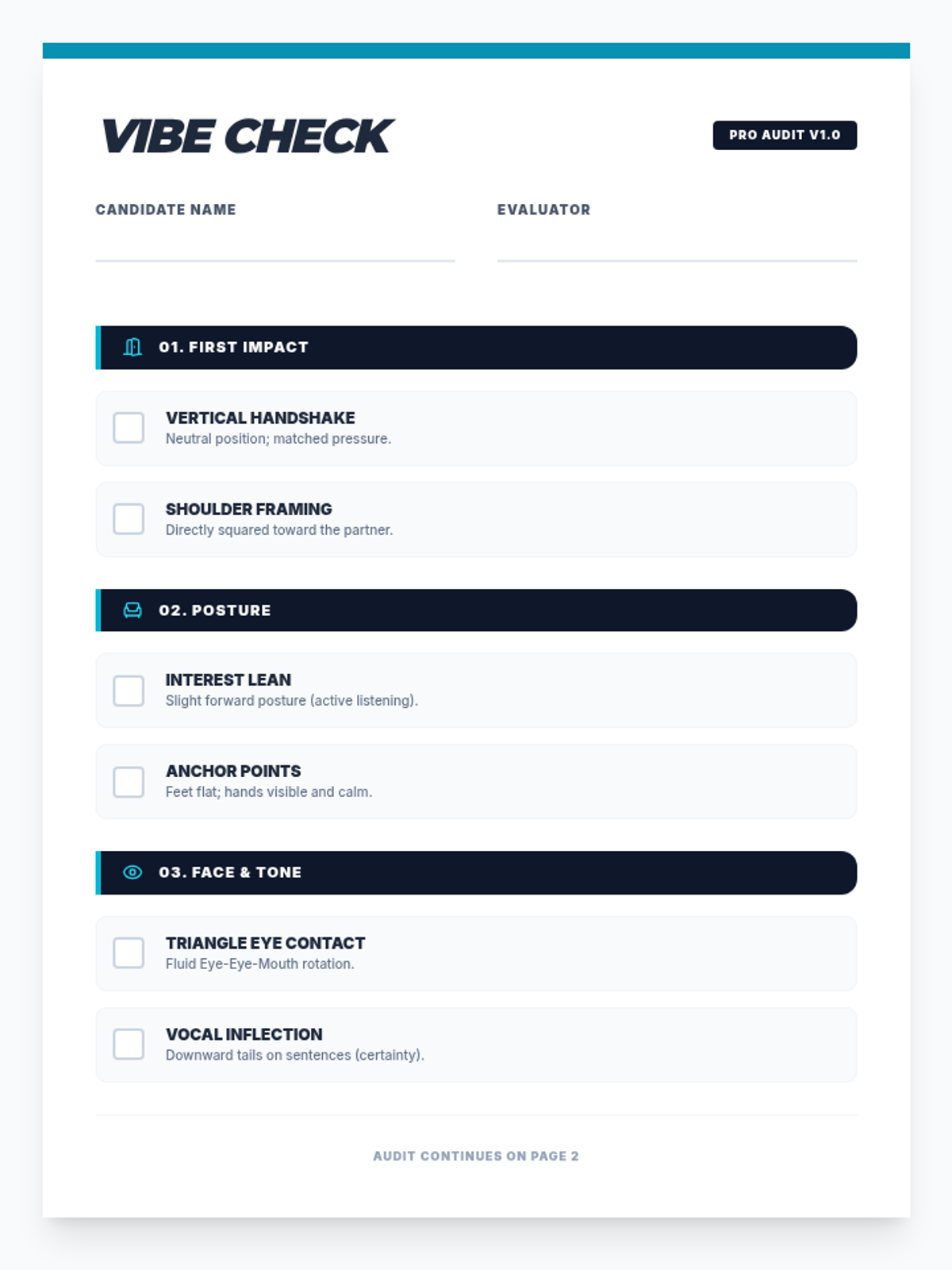
A checklist for students to evaluate professional non-verbal communication during mock interviews, covering handshakes, posture, and facial expressions.
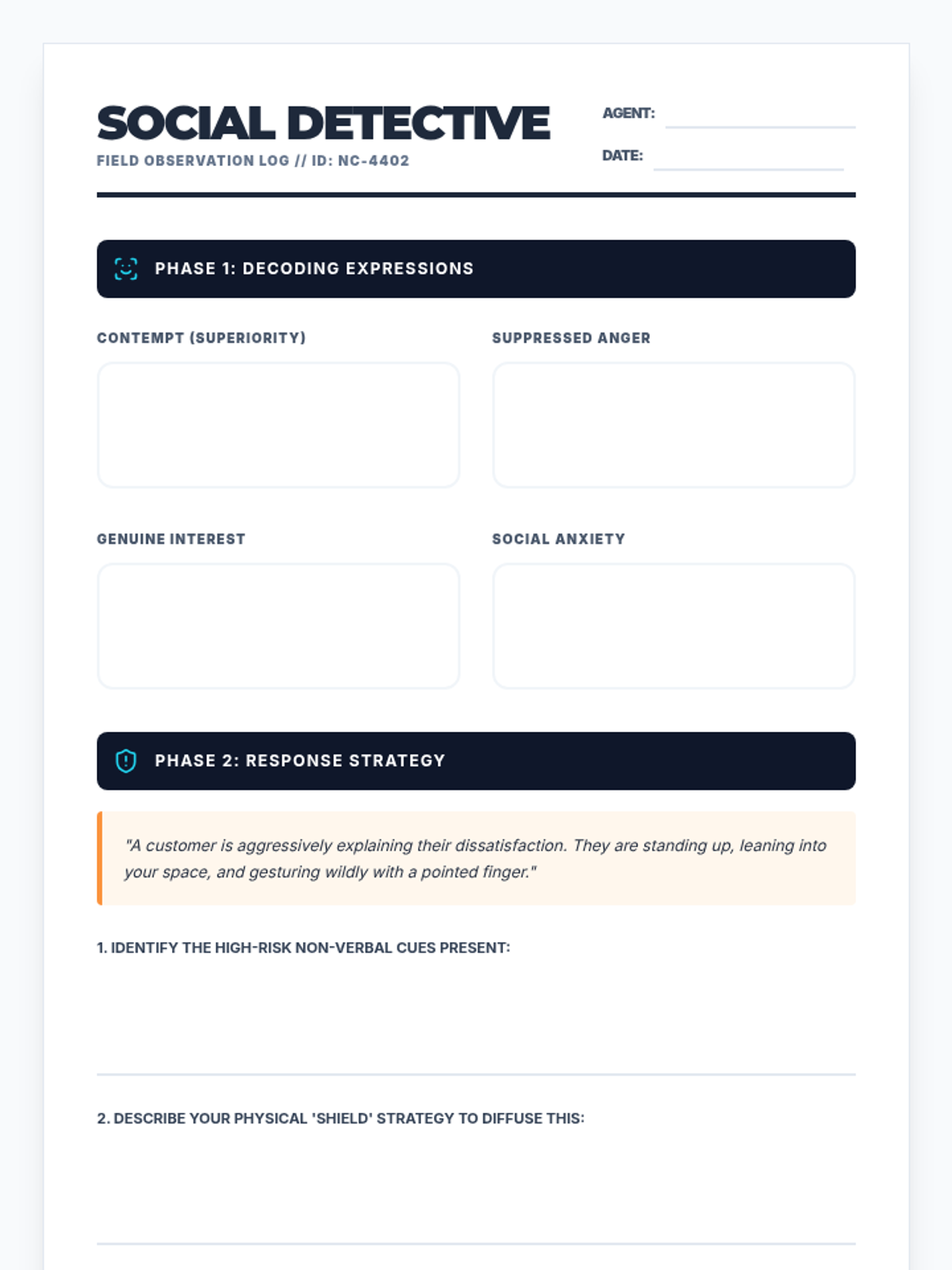
A student worksheet designed as a 'Field Observation Log' for role-playing exercises and scenario analysis in non-verbal communication.
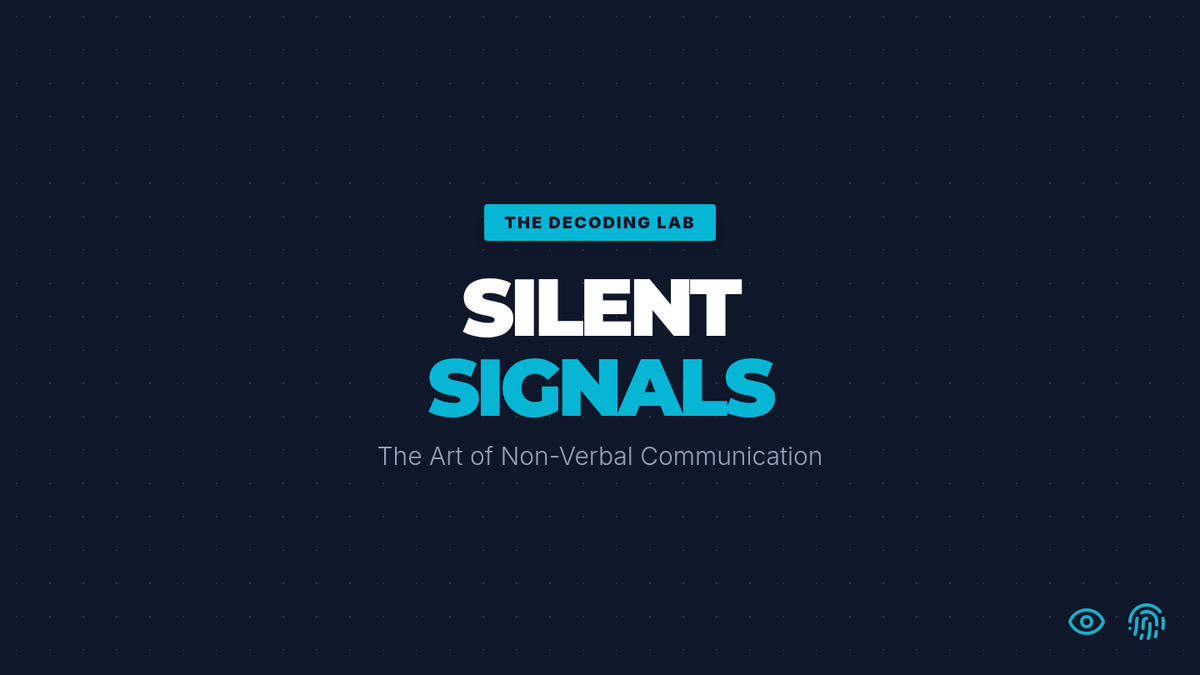
Instructional slides for the 'Silent Signals' lesson, featuring visual breakdowns of the 93% rule, interpersonal rapport techniques, professional interview cues, and de-escalation strategies.
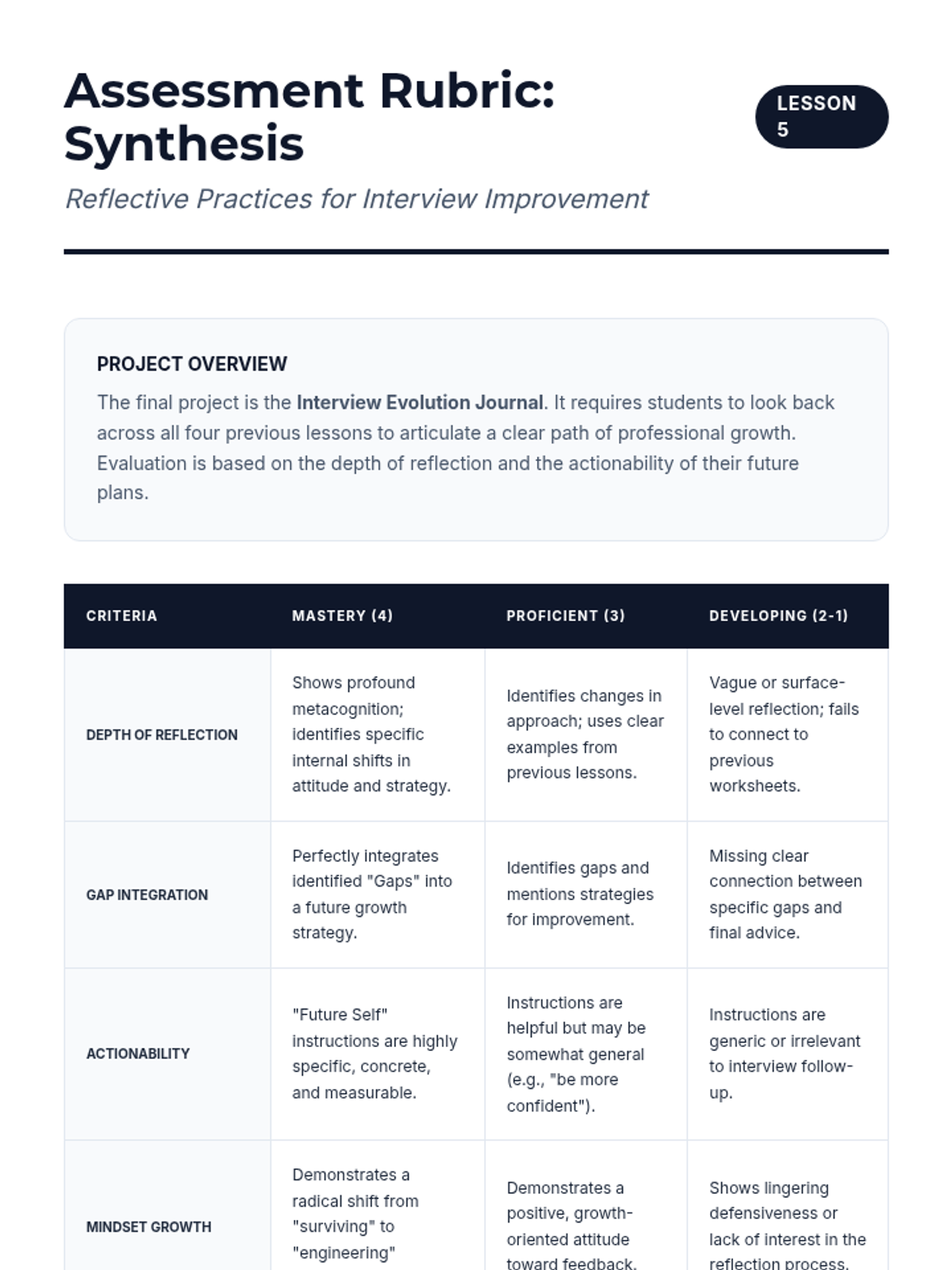
Assessment rubric for the final synthesis project, evaluating students on depth of reflection, gap integration, and the actionability of their future professional plans.
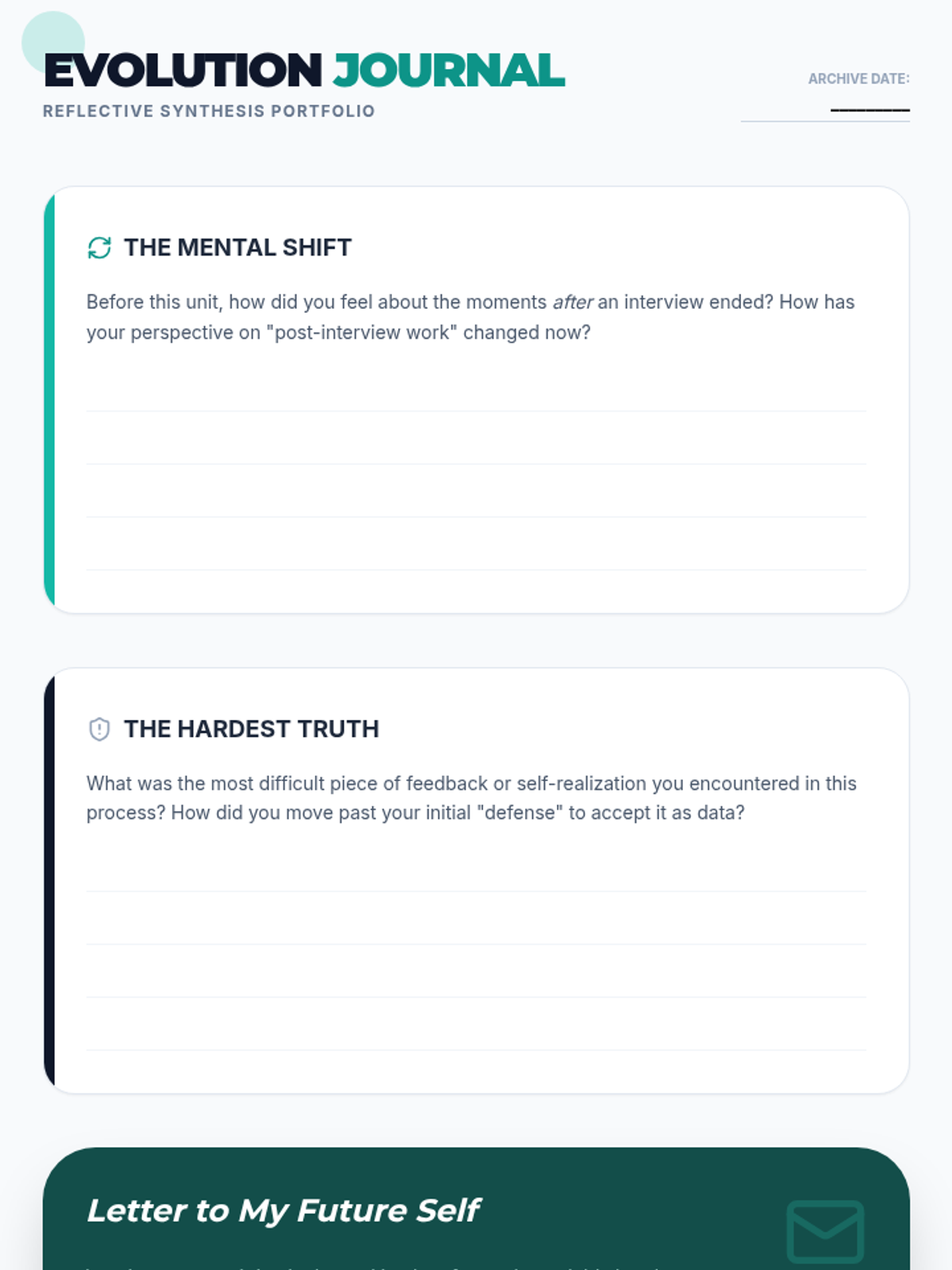
A reflective journal template for the final lesson, prompting students to synthesize their learning and write a "Letter to My Future Self" for their next interview experience.
Final slide deck for Lesson 5, focusing on synthesis, metacognition, and the long-term application of reflective interview practices.
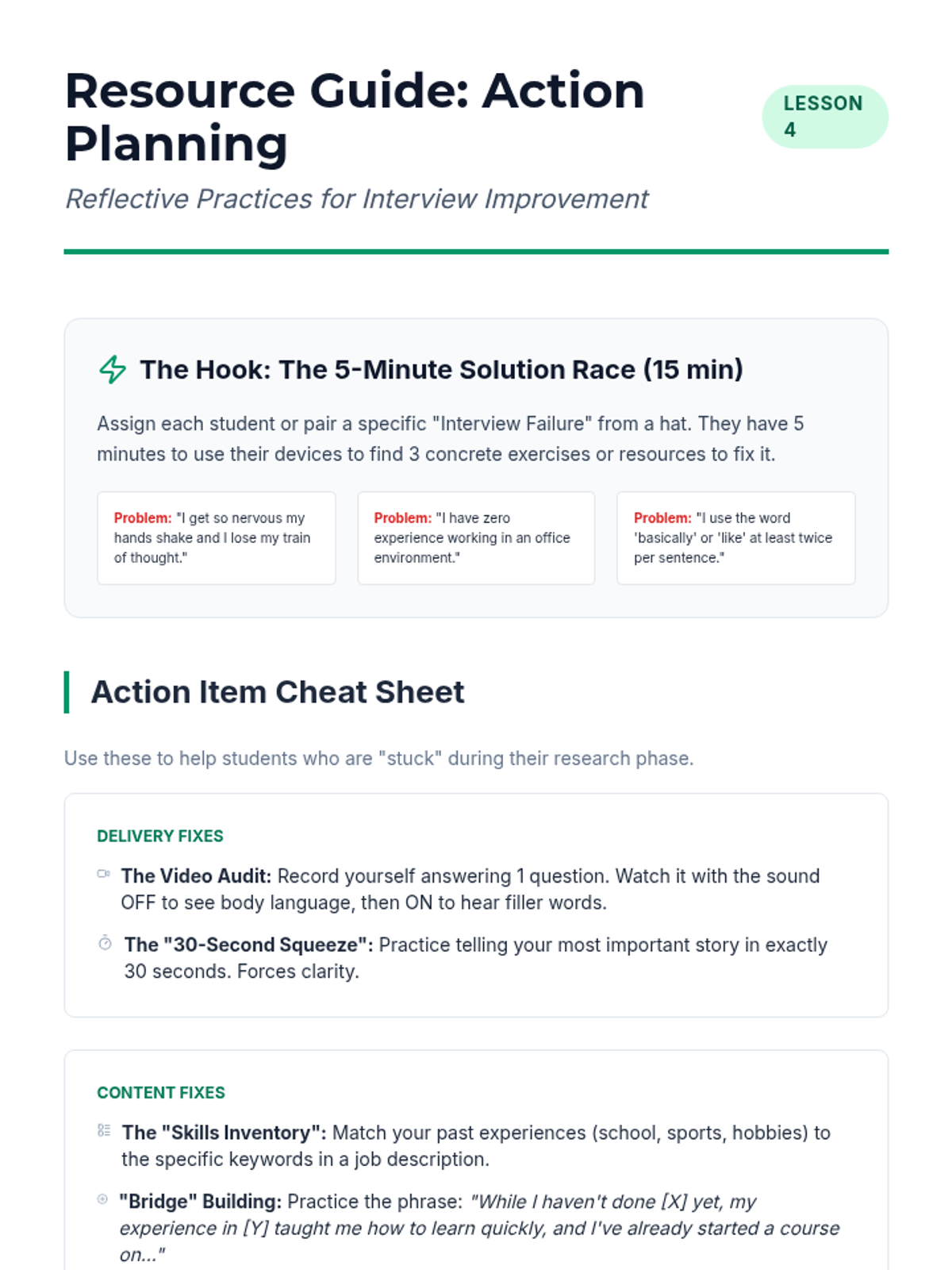
Teacher resource guide for Lesson 4, containing a "Solution Race" activity, a cheat sheet of actionable improvement strategies, and differentiation tips for anxious students.
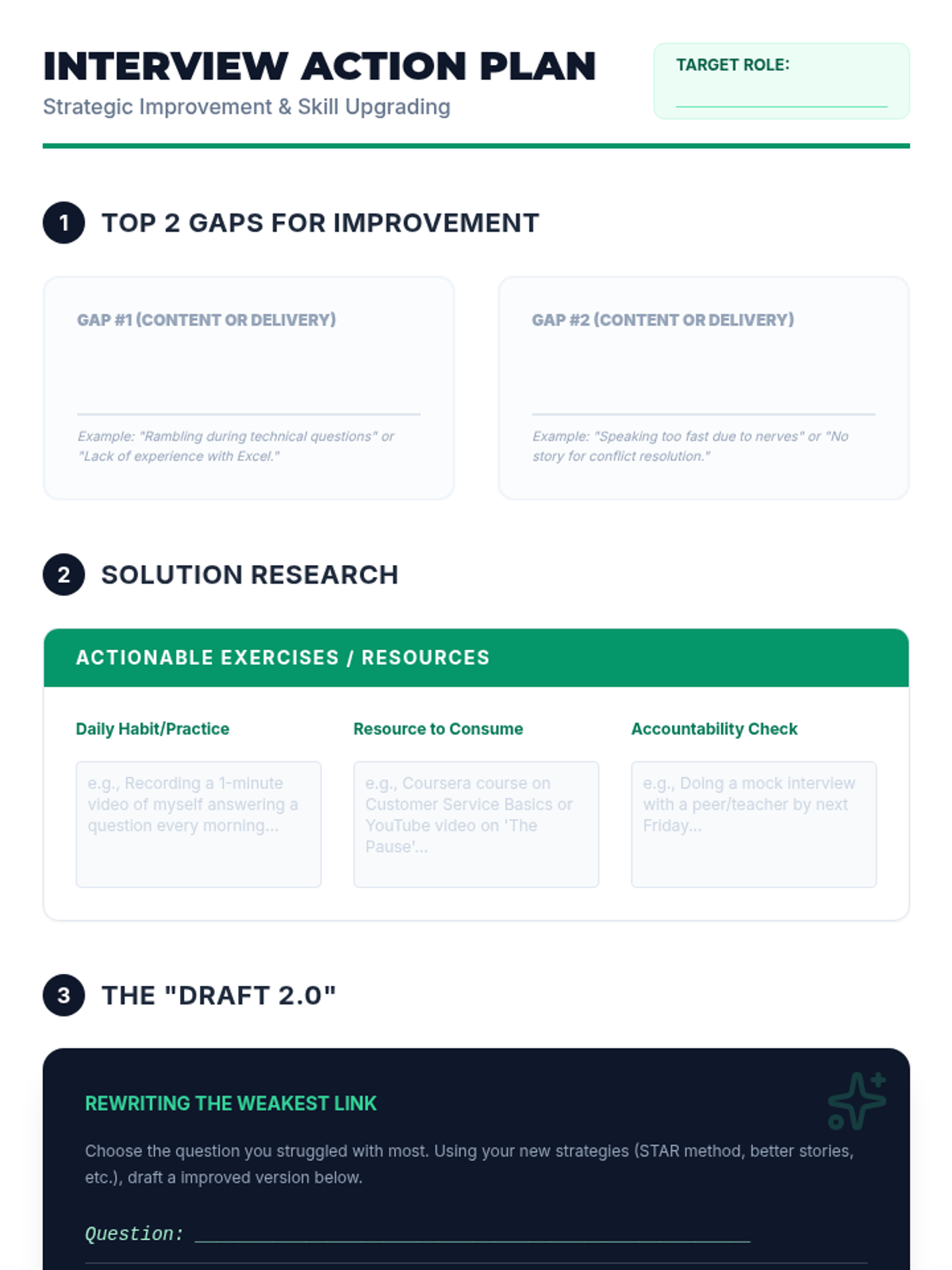
A comprehensive worksheet for Lesson 4 that guides students through researching solutions to their interview gaps and rewriting a previously weak interview answer.
Slides for Lesson 4, introducing concrete strategies for fixing common delivery and content gaps identified in previous lessons.
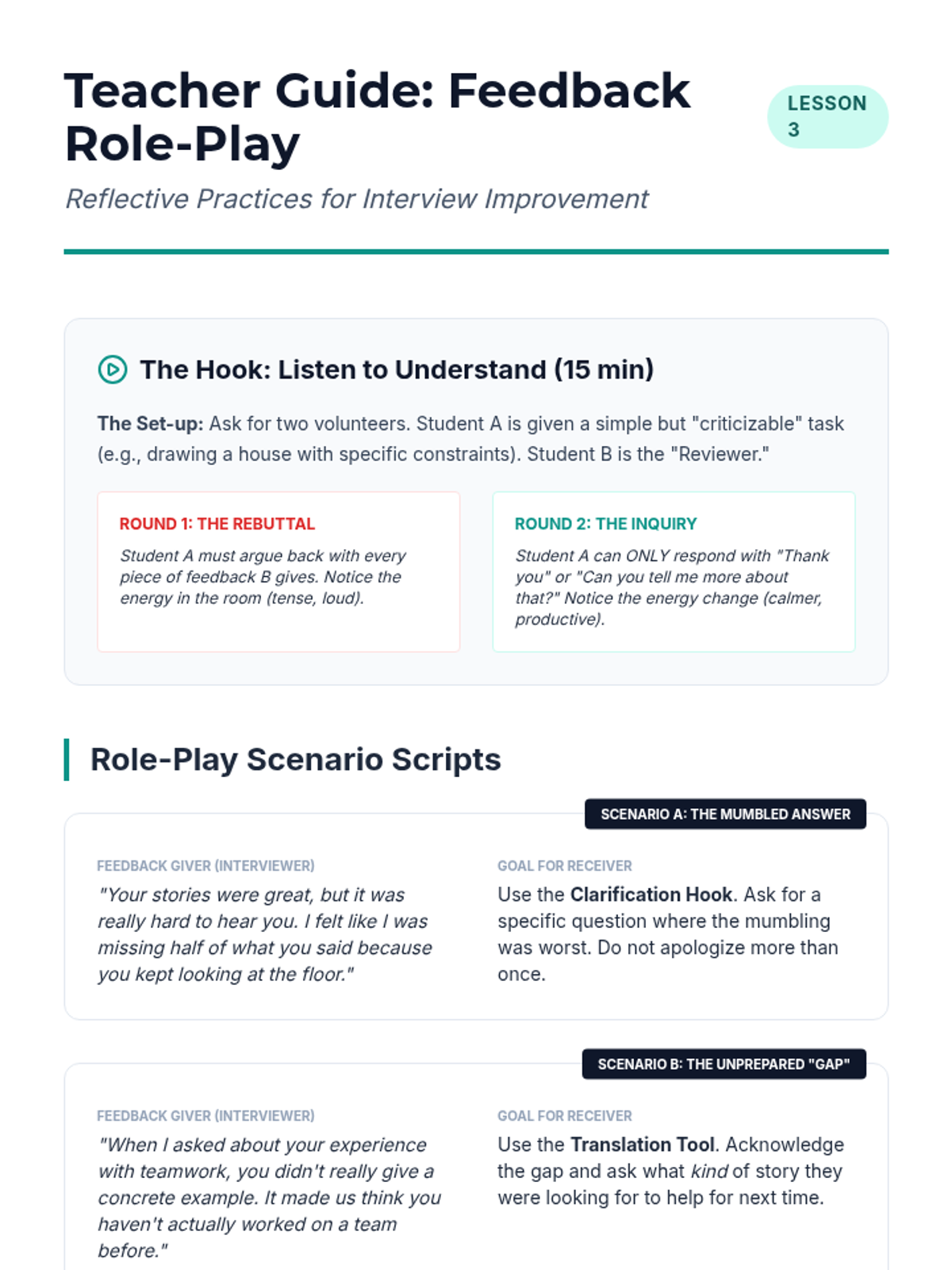
Instructions and scripts for teachers to facilitate feedback role-plays, including a "Listening Lab" hook and specific scenarios for students to practice zero-defense reception.
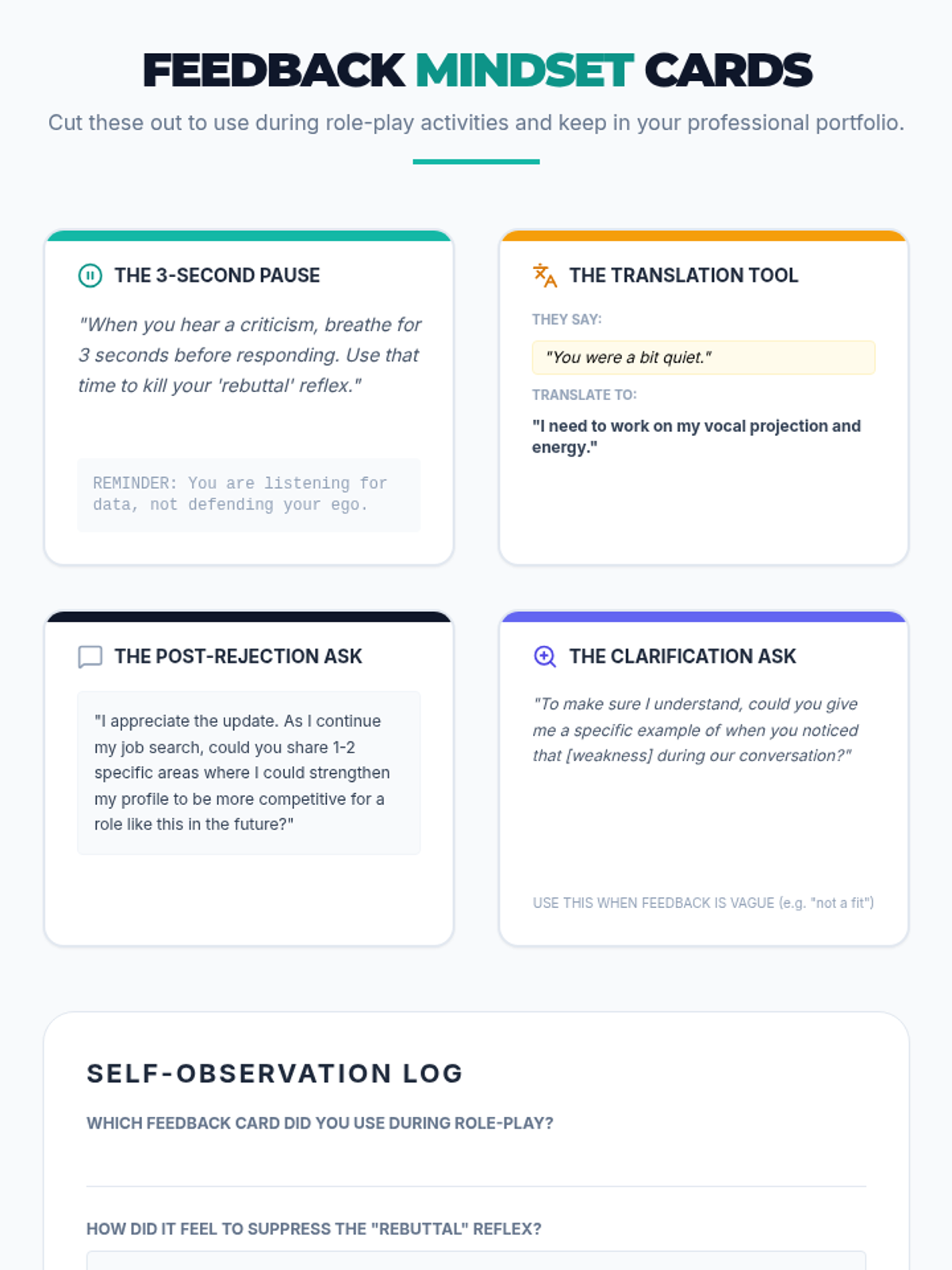
A set of printable "Mindset Cards" for Lesson 3 that provide students with scripts and techniques for processing feedback without becoming defensive.
Slides for Lesson 3, focusing on the psychological challenges of receiving feedback and providing specific scripts for requesting feedback after a rejection.
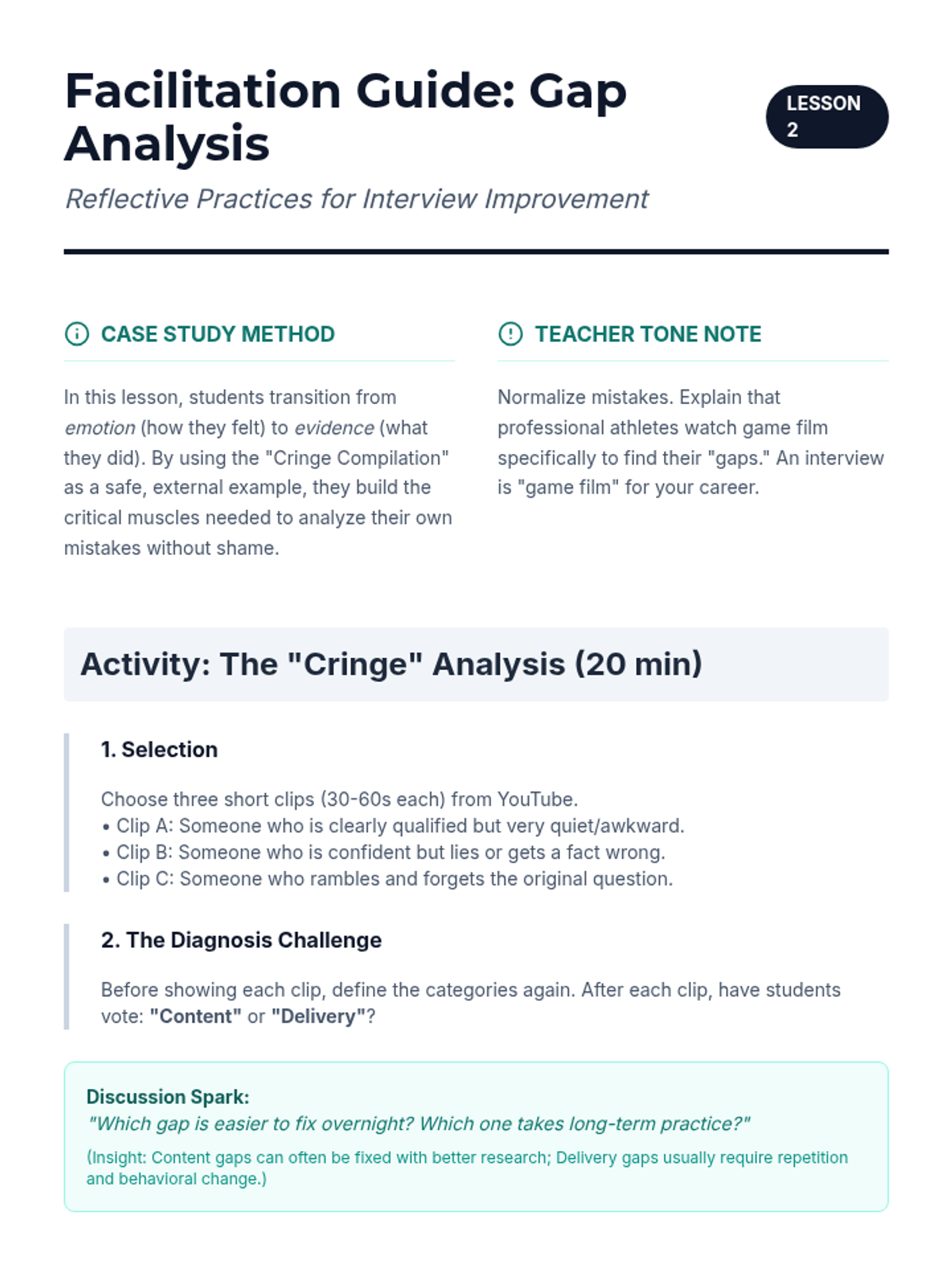
Facilitation guide for Lesson 2, providing instructions for the "Cringe Compilation" hook activity and guidance for students conducting their own performance self-audits.
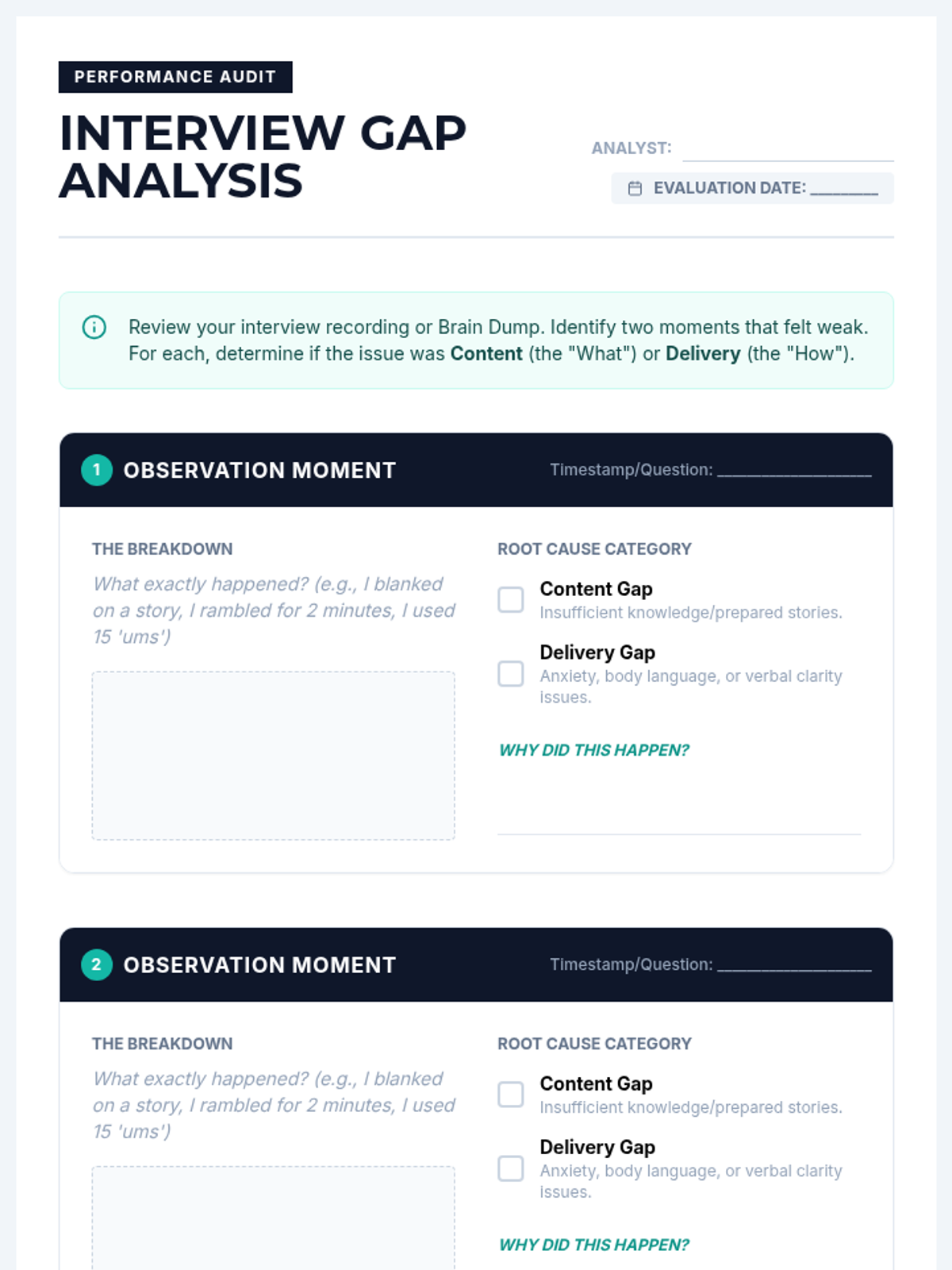
A worksheet for Lesson 2 that guides students through identifying and categorizing weak moments in their interview performance as either content or delivery gaps.
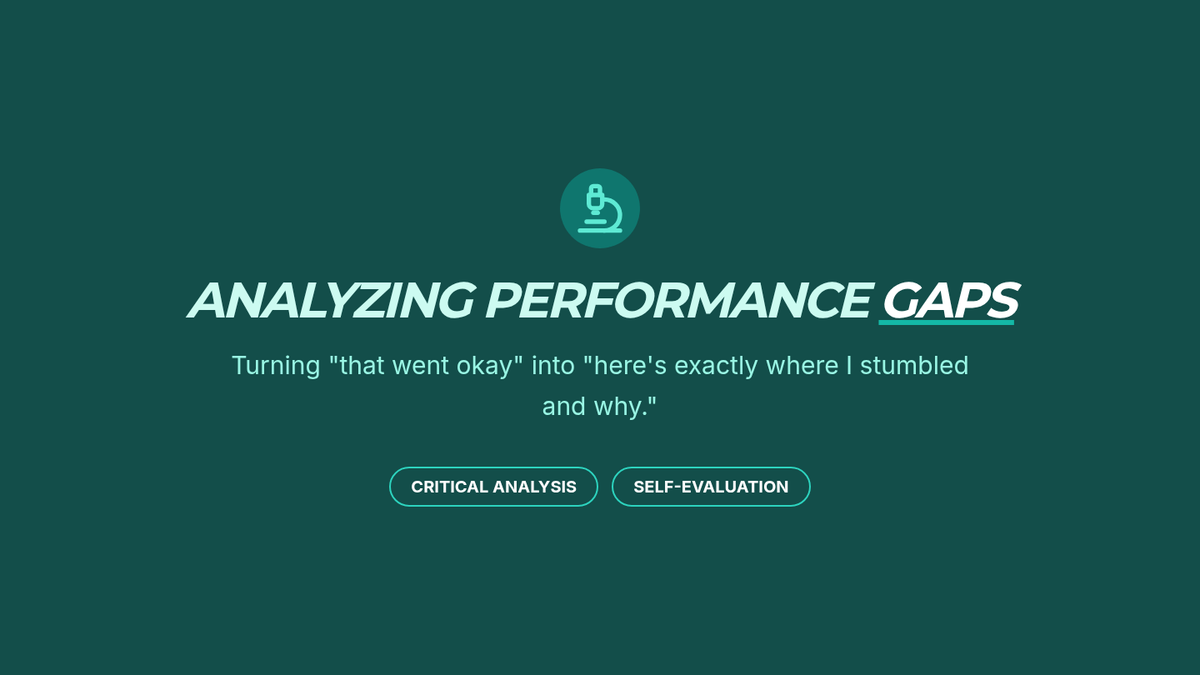
Slides for Lesson 2, defining performance gaps and helping students distinguish between content-based issues (lack of knowledge/stories) and delivery-based issues (nerves/clutter).
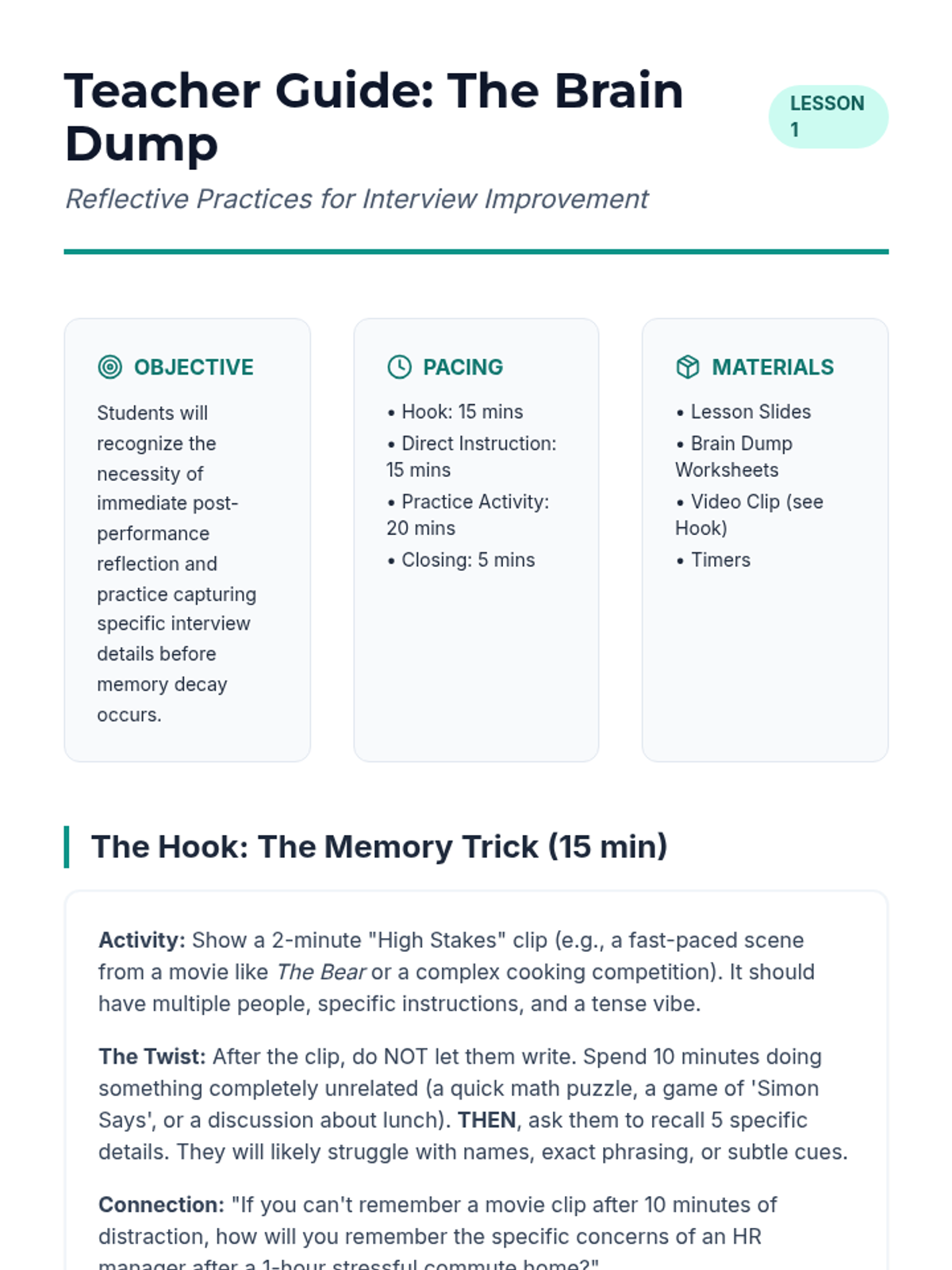
Teacher guidance for Lesson 1, including a memory-based hook activity, discussion prompts, and strategies for emphasizing raw recall over organized writing.
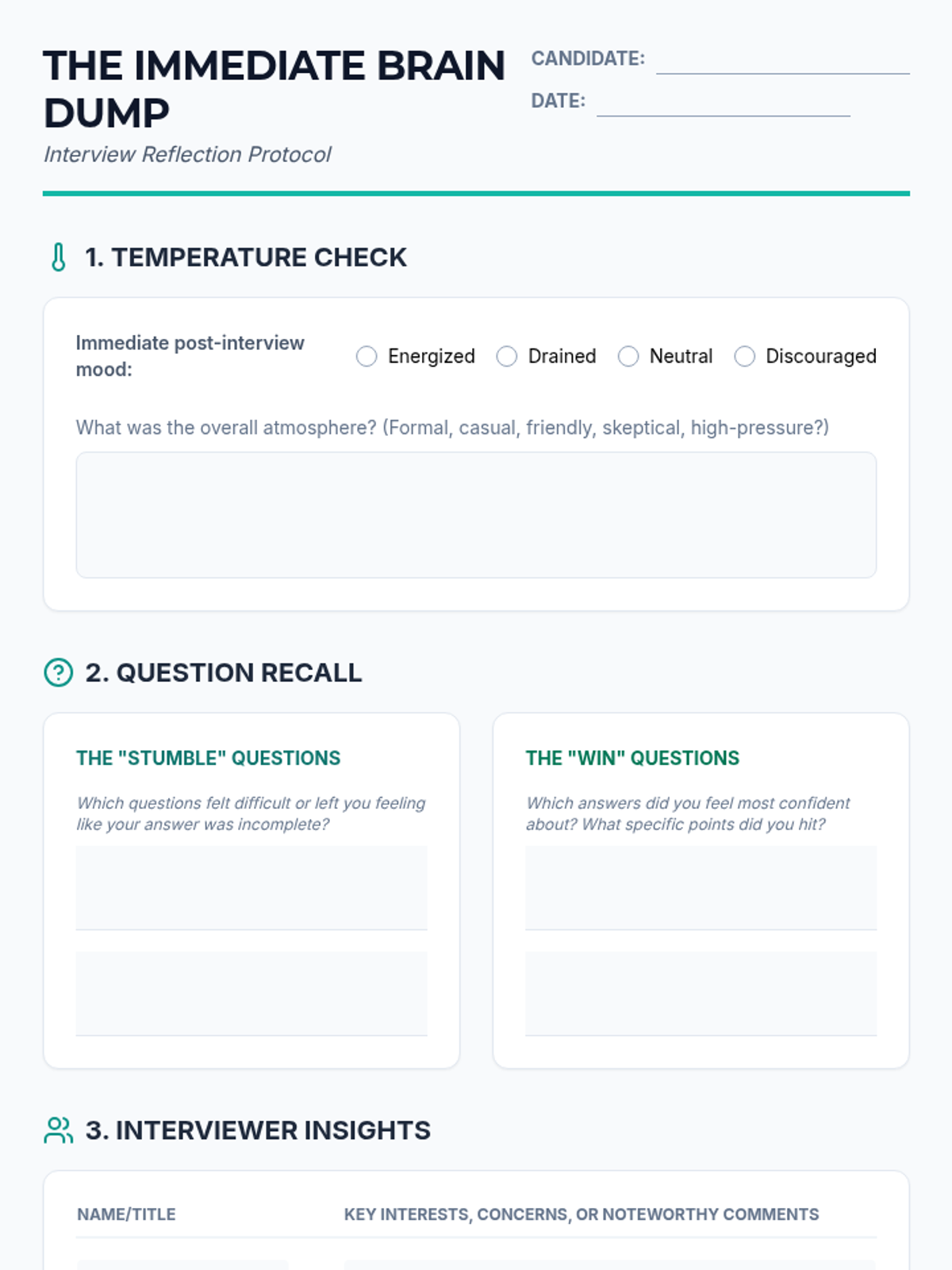
A structured template for students to use immediately after an interview to capture questions, feelings, and key details about interviewers.
Introductory slides for Lesson 1, covering the psychology of memory fade after interviews and the specific types of information students should record immediately post-interaction.
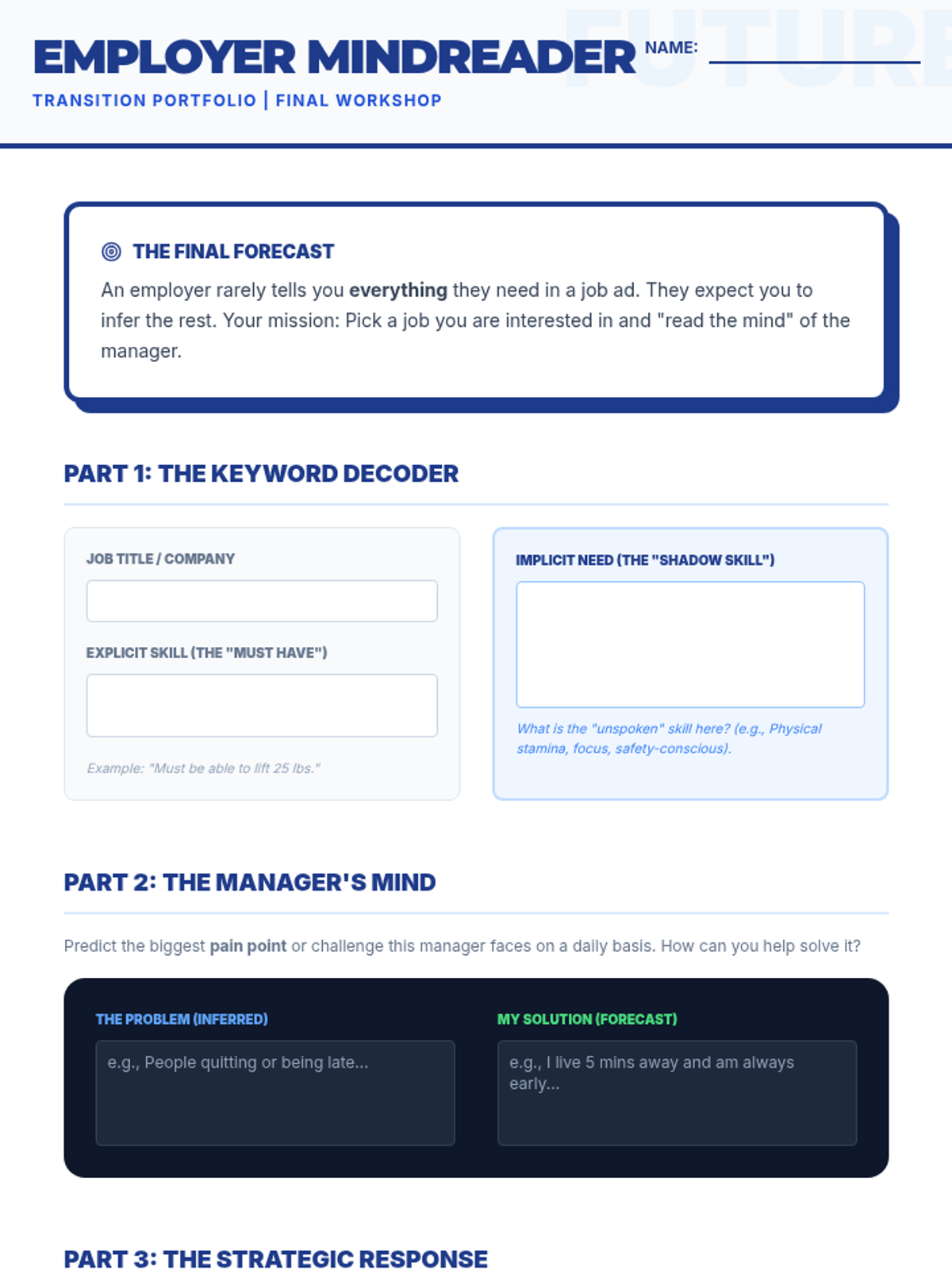
The final workshop worksheet where students analyze job postings to identify "shadow requirements" and draft strategic interview responses.
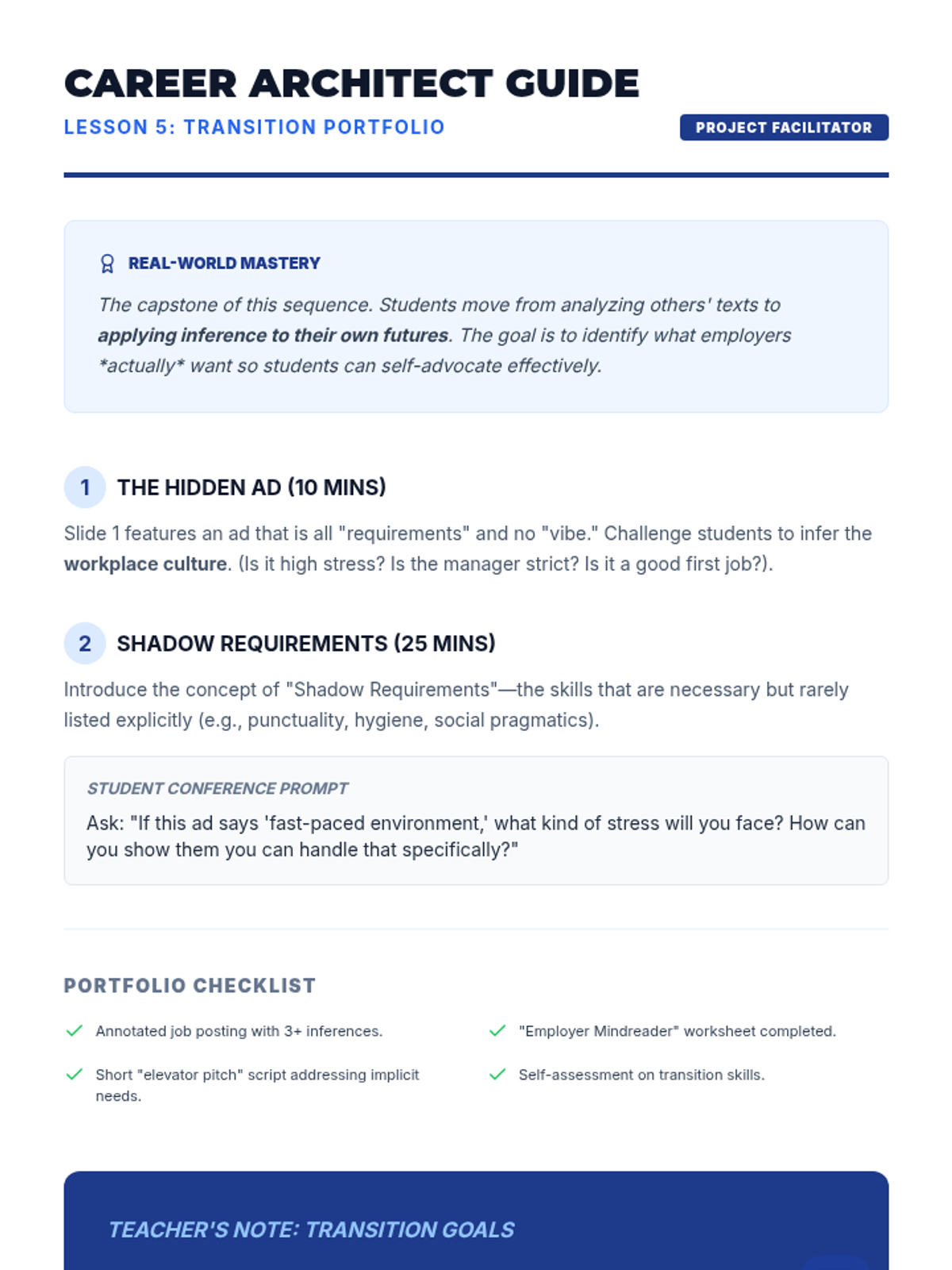
Facilitation guide for the final lesson, helping students apply inference skills to their transition portfolios by analyzing job postings and employer expectations.
Instructional slides for Lesson 5, focusing on applying predictive skills to job postings and college applications to infer employer needs.
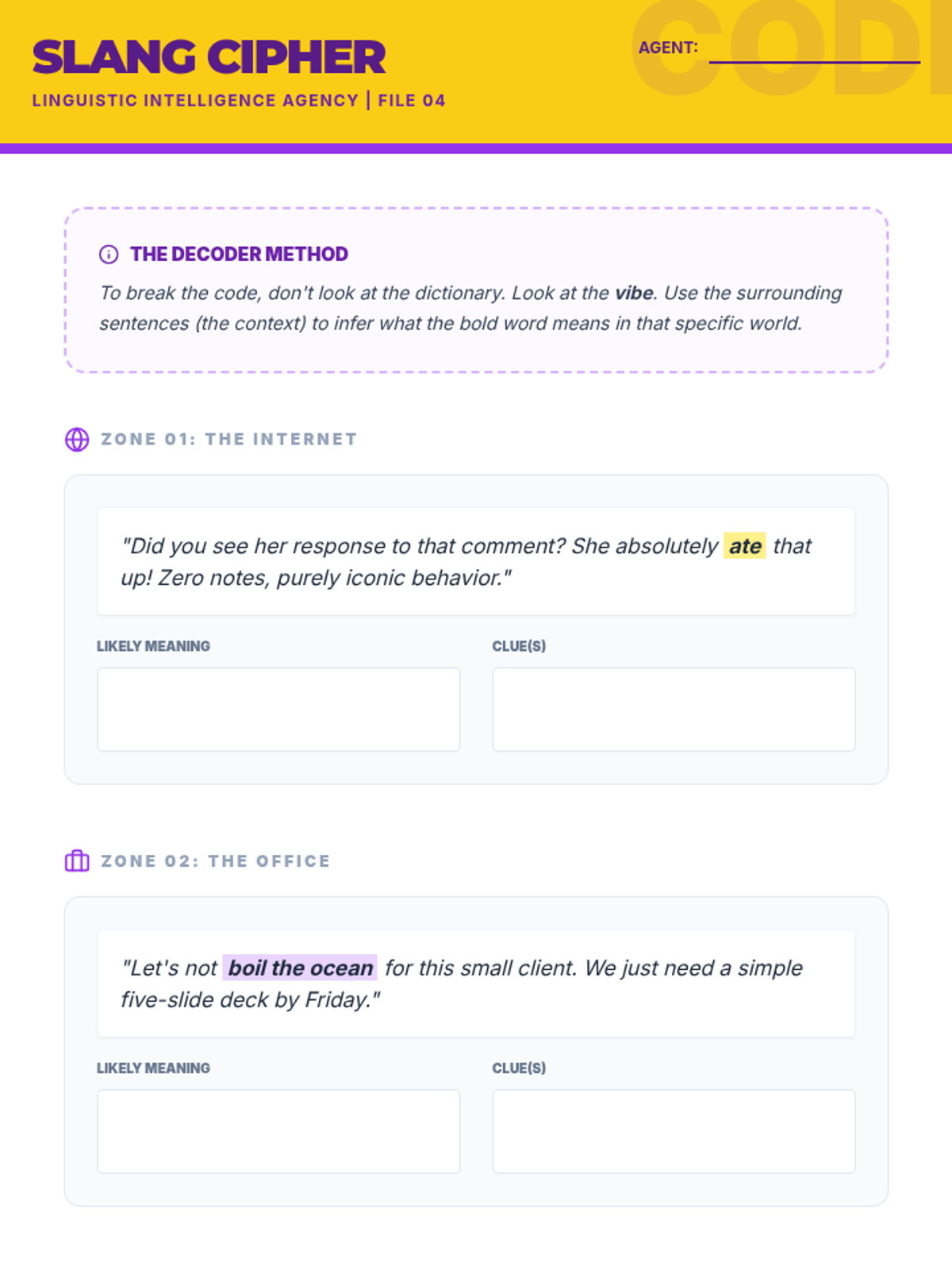
An activity worksheet where students use context clues to decode cultural slang and professional jargon across different social "zones."
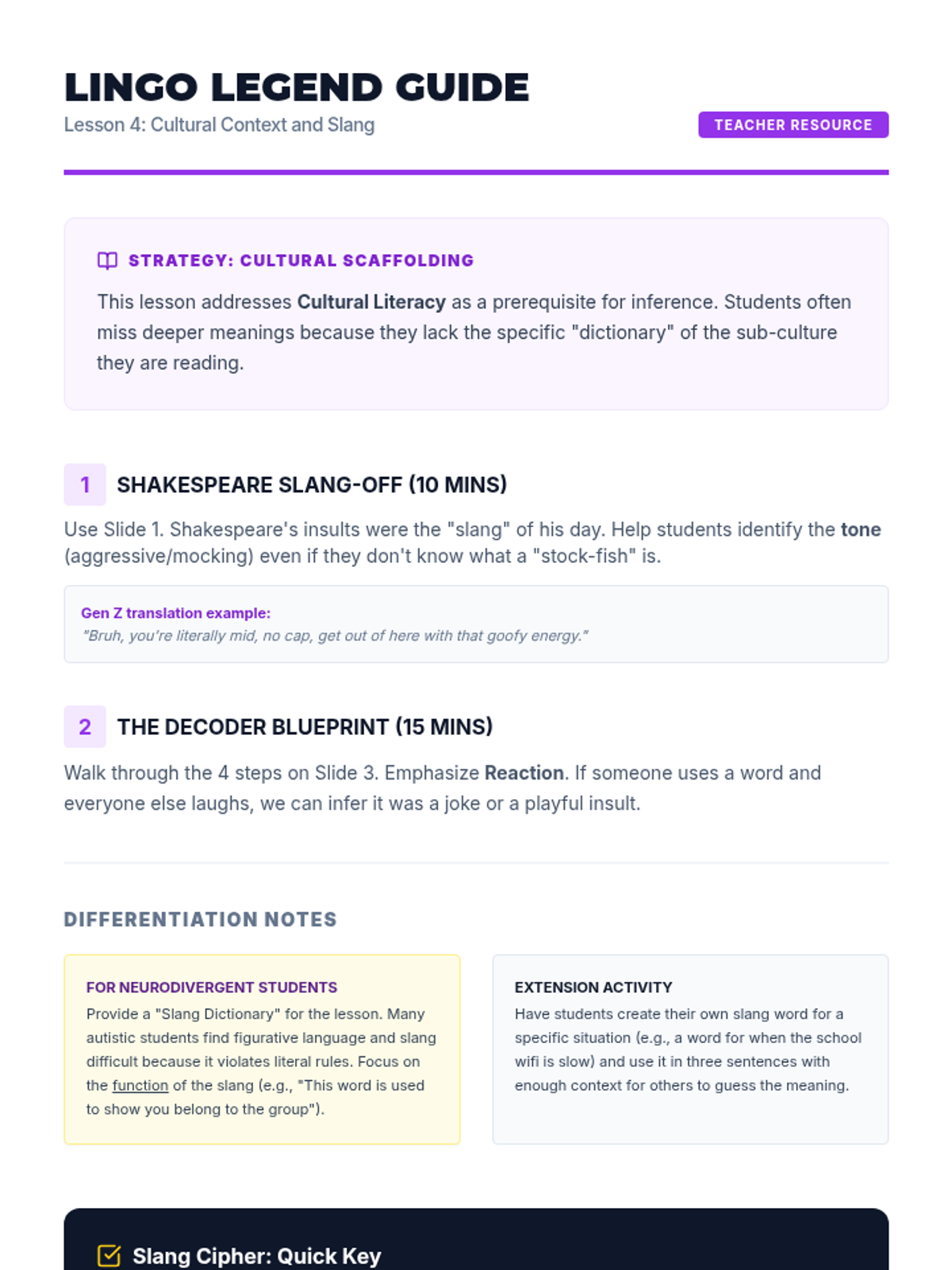
Facilitation guide for Lesson 4, focusing on teaching students to decode cultural slang and regional dialects through context clues and cultural literacy.