Functional behavior assessment, data tracking, and de-escalation strategies for managing classroom conduct. Addresses positive reinforcement, token economies, and individualized behavior contracts to support student self-regulation.
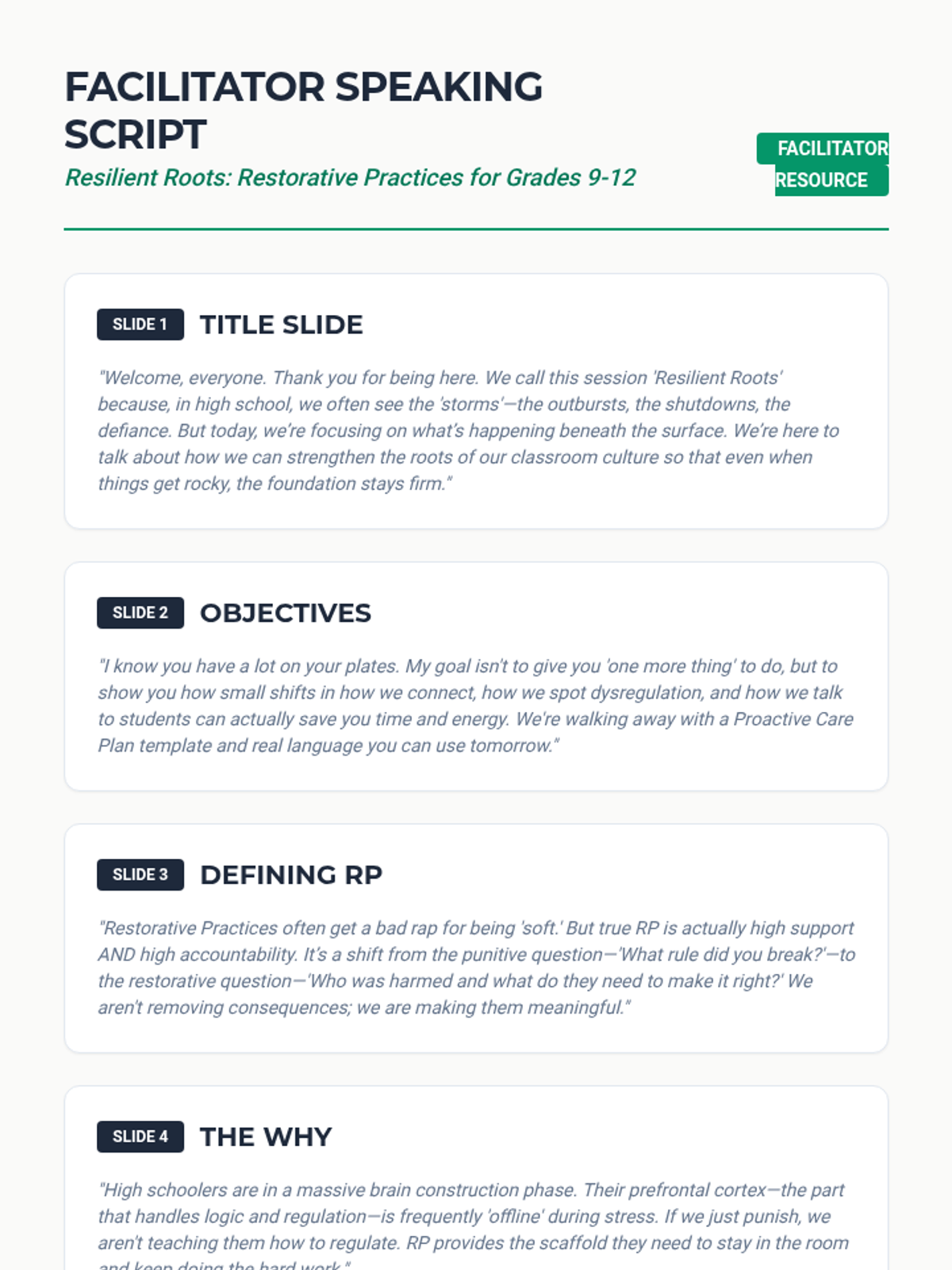
A comprehensive facilitator's speaking script for the Resilient Roots professional development session. This document provides slide-by-slide talking points, transition cues, and specific instructional guidance to help presenters deliver the 2-hour restorative practices workshop effectively.
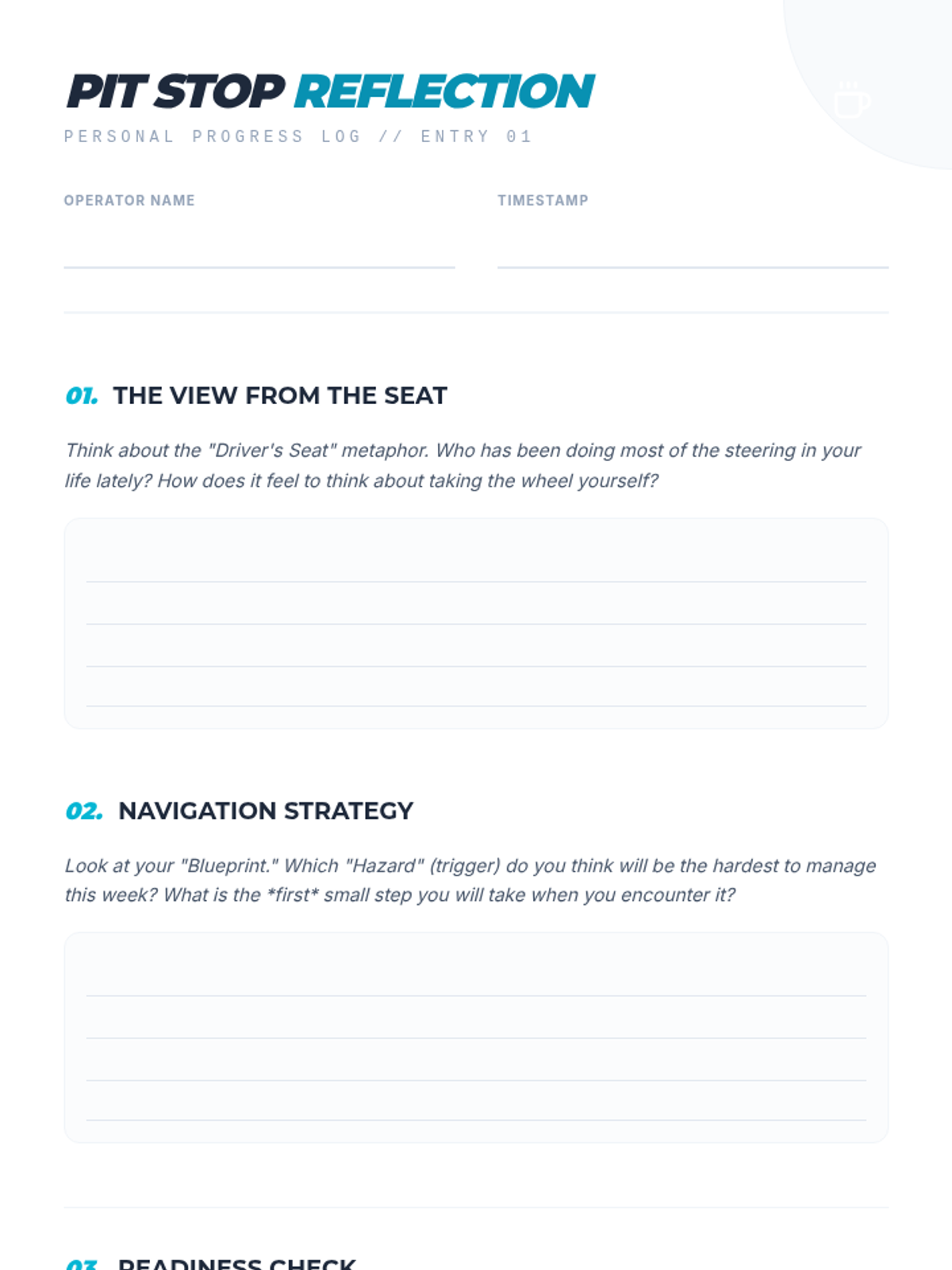
A reflective journal document for students to process their learning from the 'Driver's Seat' lesson, focusing on personal agency, trigger management, and plan confidence.
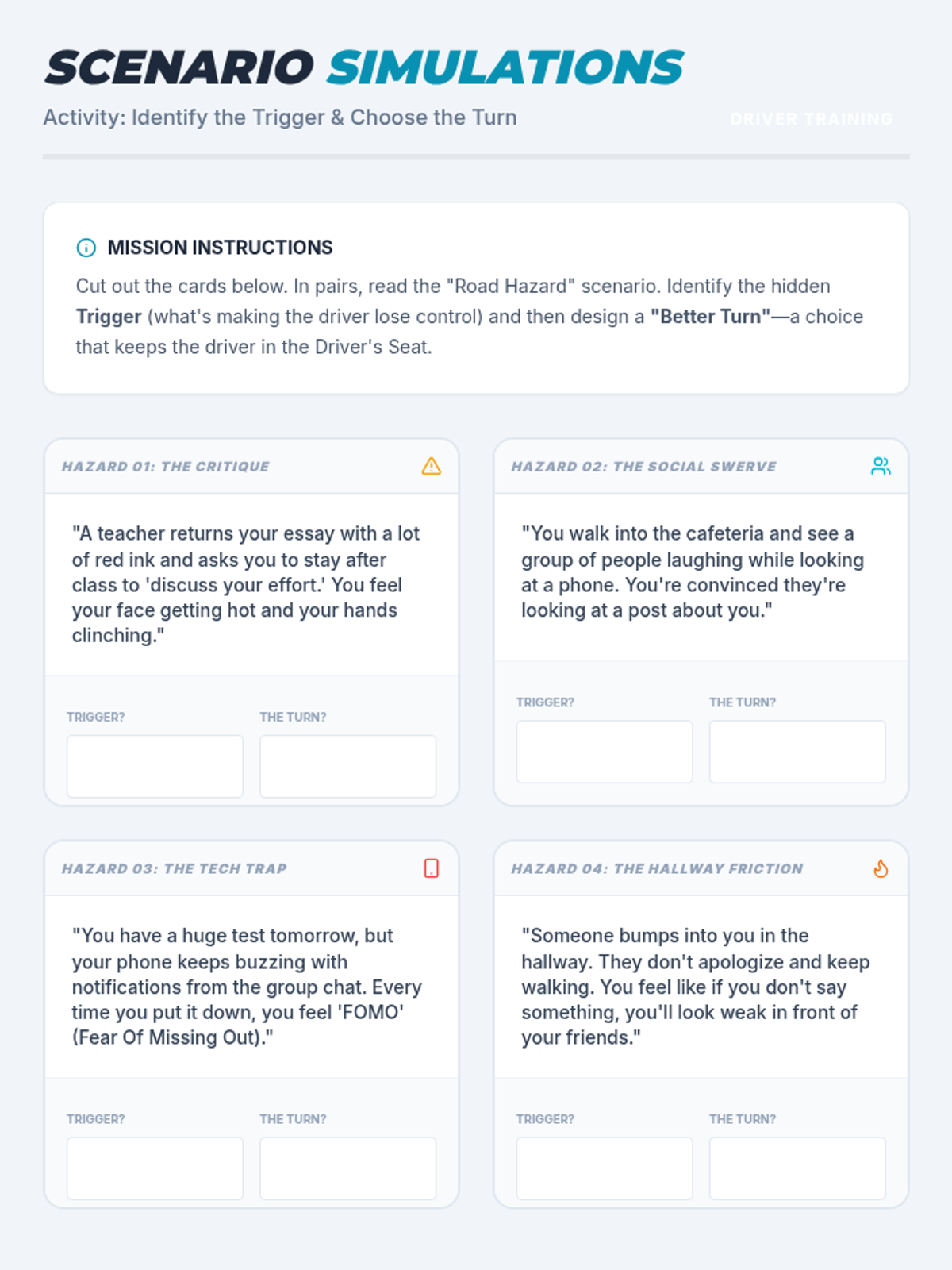
A set of interactive scenario cards for high school students to practice identifying behavioral triggers and selecting alternative responses in realistic situations.
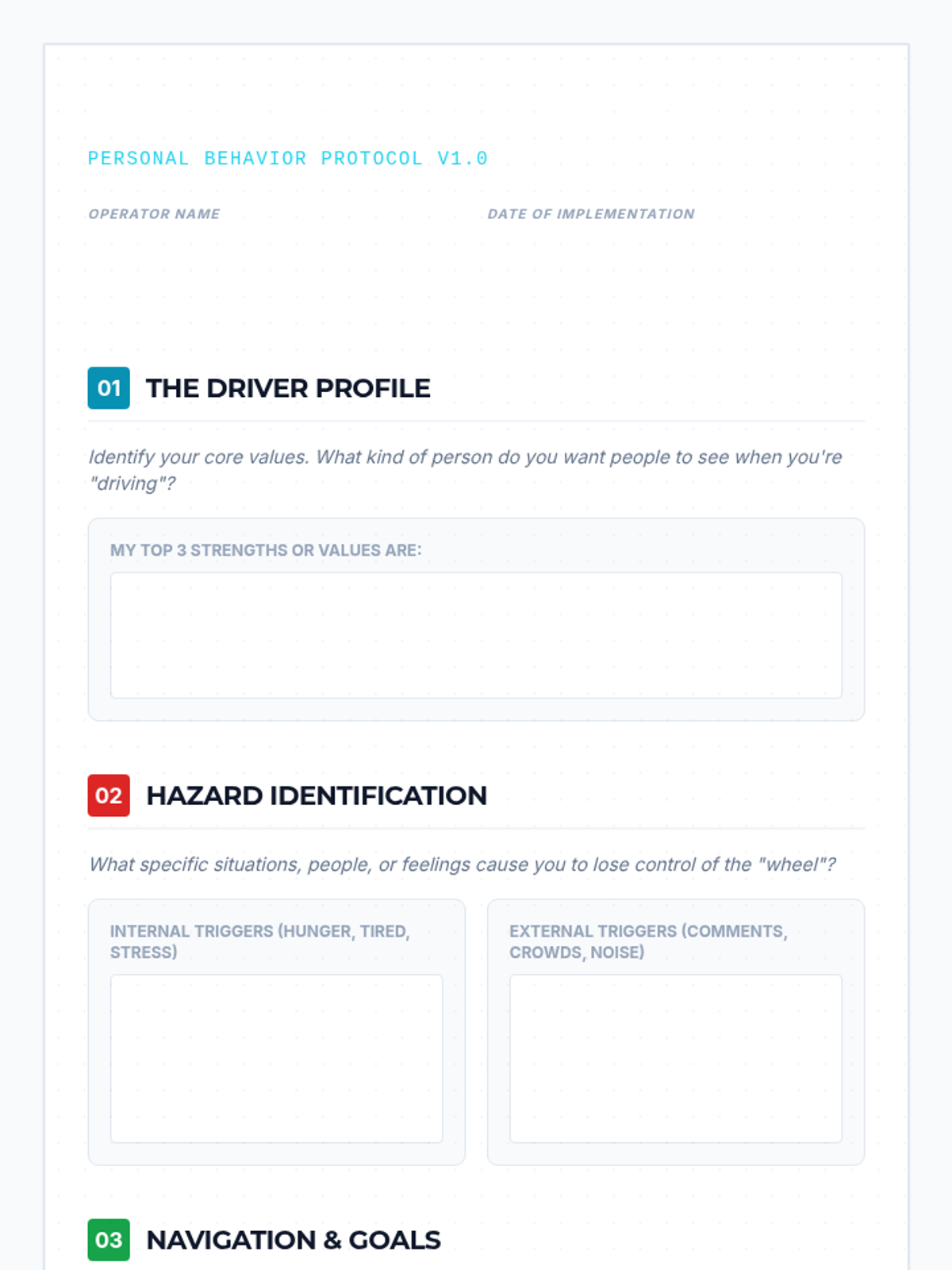
A structured personal behavior plan worksheet for high school students, using a 'blueprint' aesthetic to guide them through identifying triggers, setting goals, and designing self-management signals.
A high-energy, dark-themed slide deck that uses a car metaphor to teach high school students about self-regulation, triggers, and taking ownership of their behavioral choices.
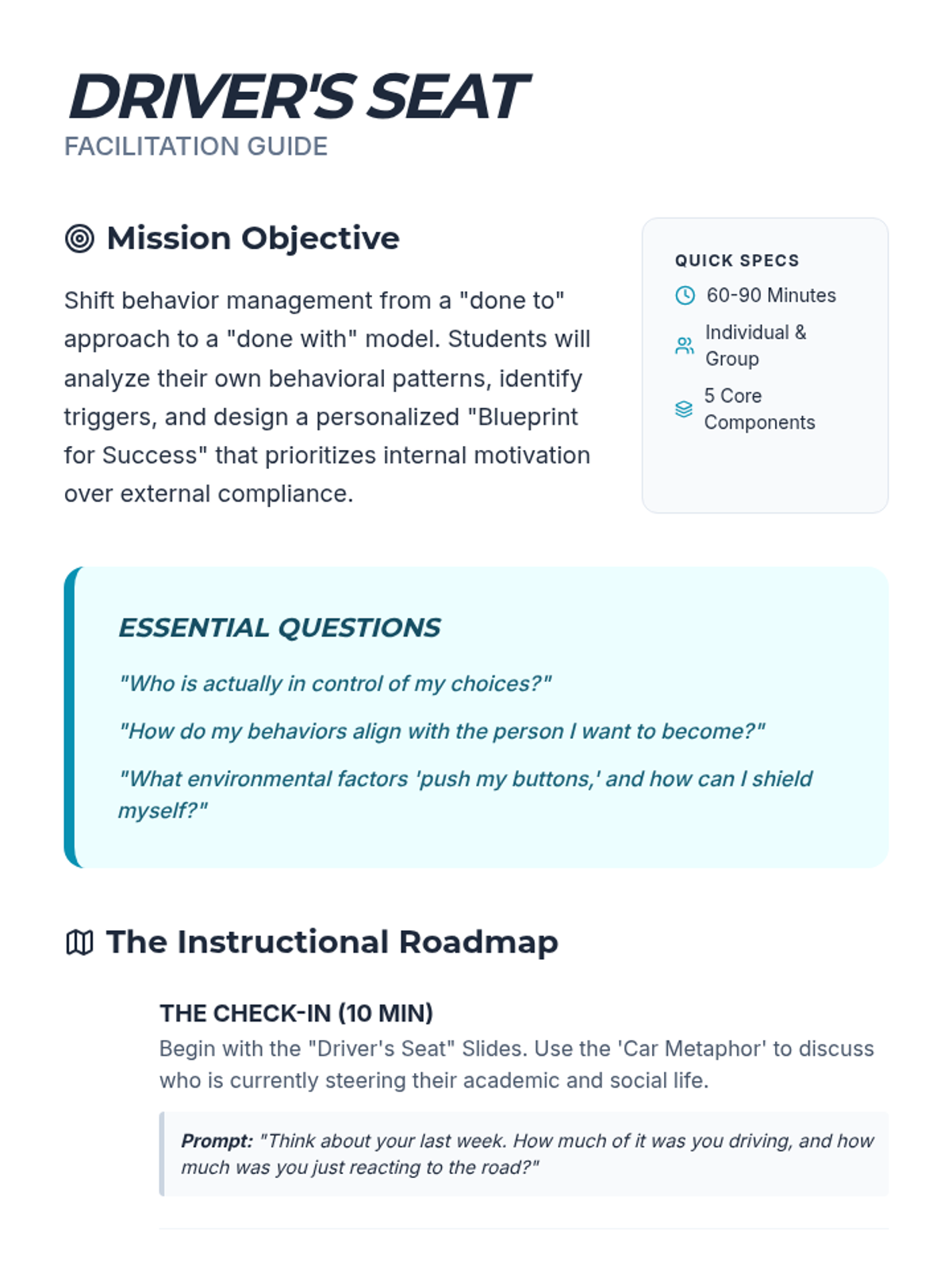
A comprehensive teacher facilitation guide for the 'Driver's Seat' lesson, featuring instructional steps, language shifts, and strategies for empowering high school students to own their behavioral choices.
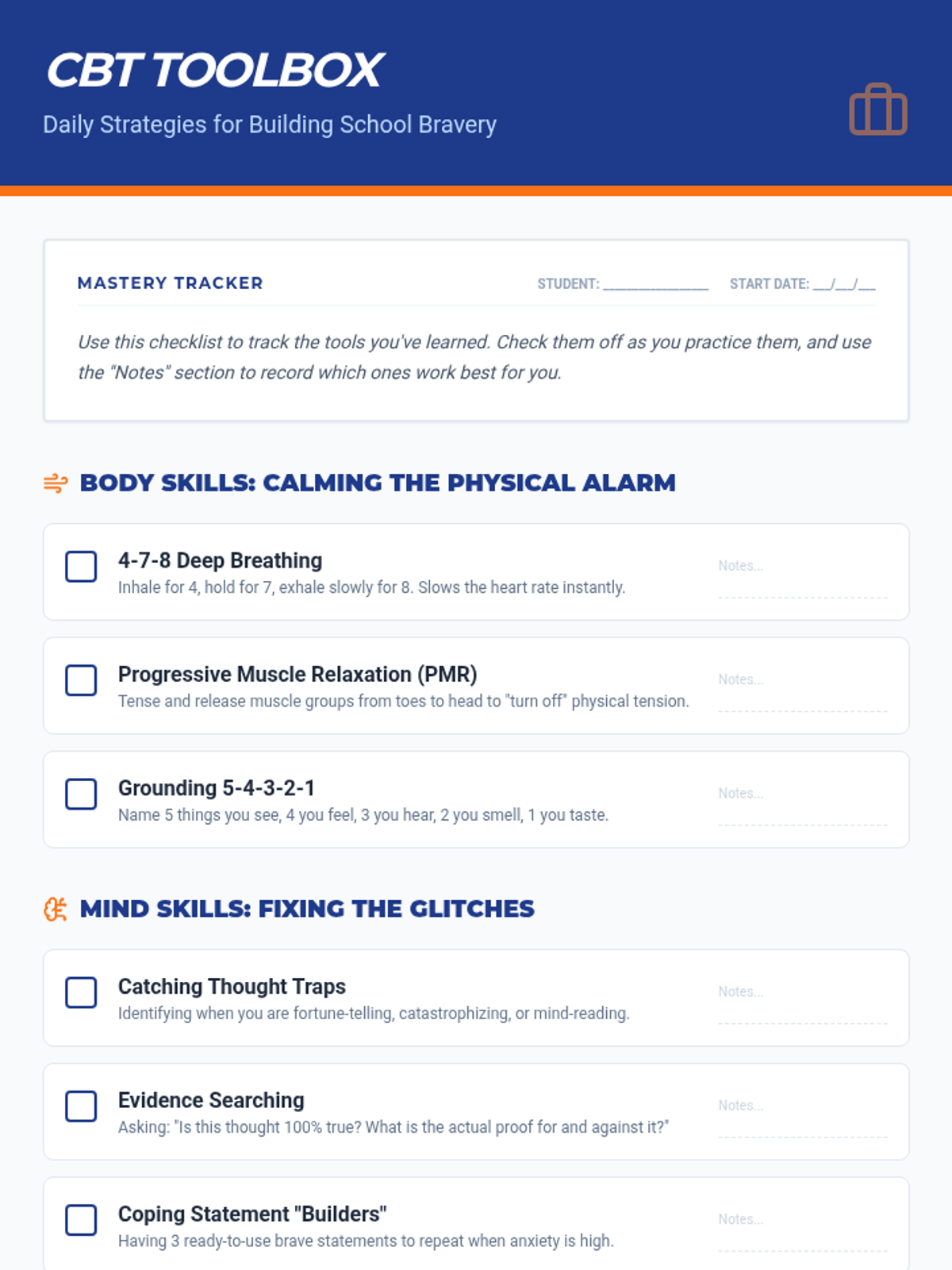
A comprehensive checklist of CBT strategies categorized by Body, Mind, and Action skills to help students track their progress in overcoming school refusal.
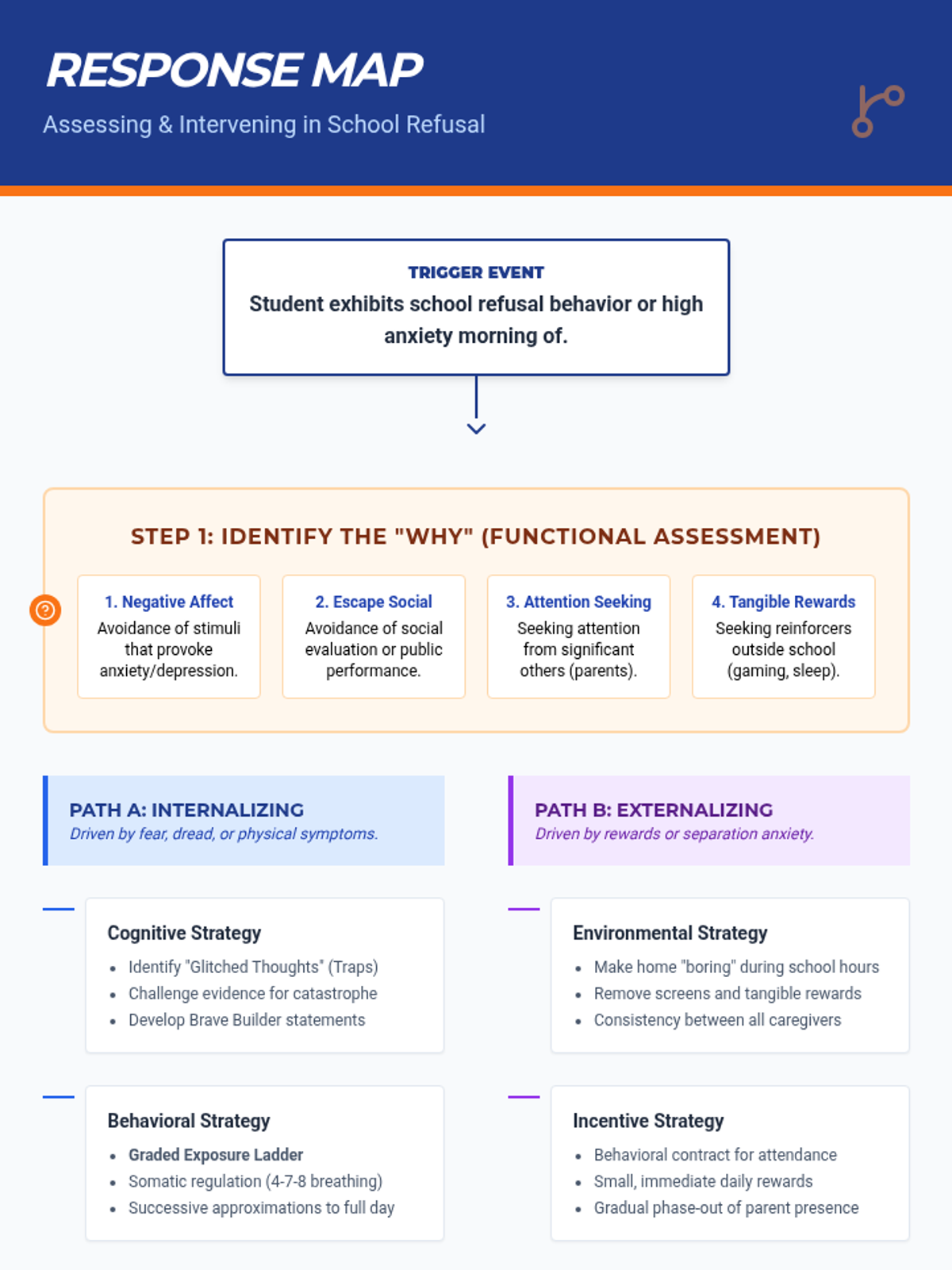
A visual flowchart for educators and clinicians to assess the function of school refusal behavior and determine the appropriate CBT-based intervention pathway.
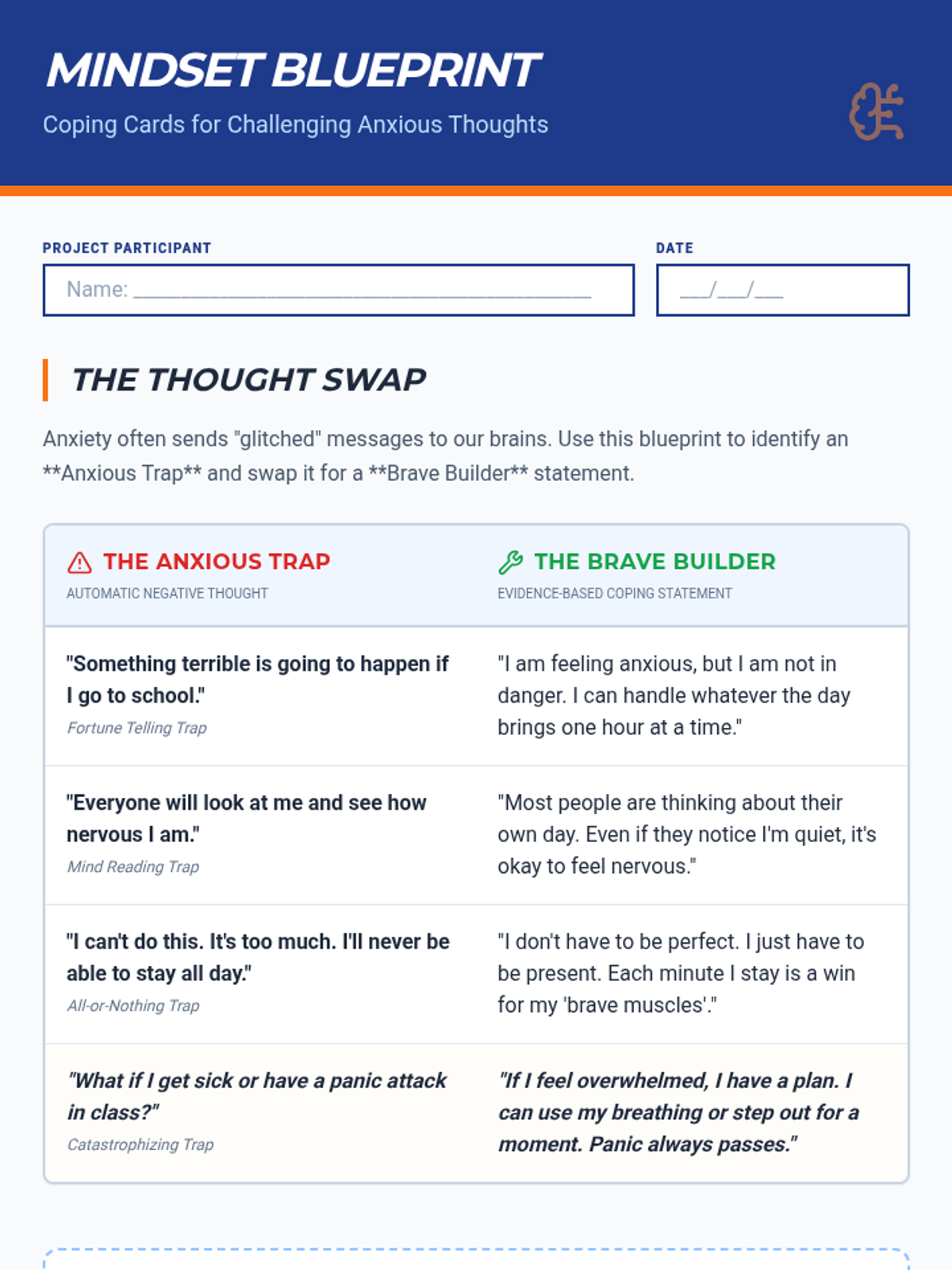
A quick reference chart of common anxious thoughts (traps) paired with evidence-based coping statements (builders) for cognitive restructuring.
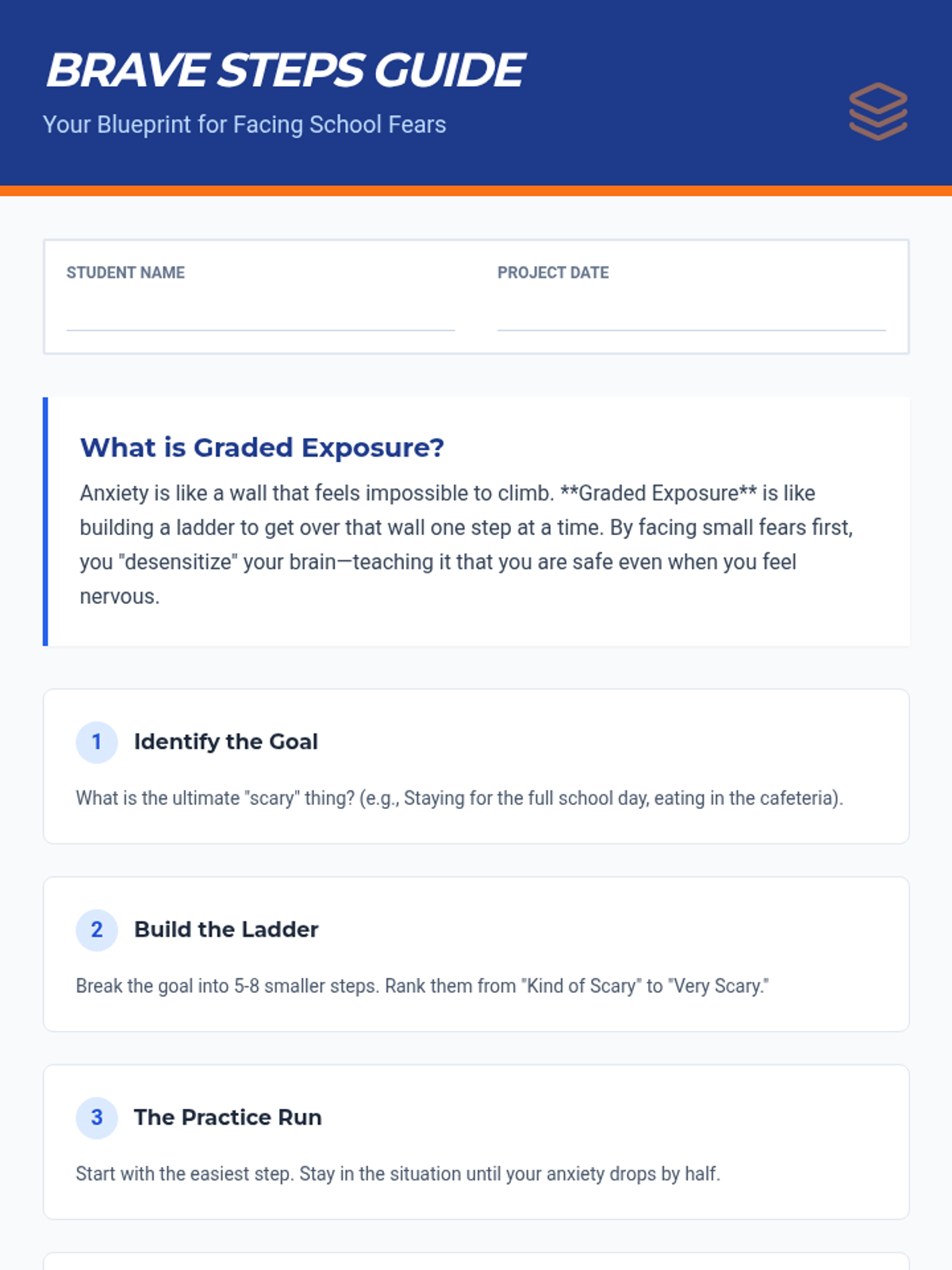
A step-by-step drafting guide for students to build an exposure ladder, helping them gradually face school-related fears using the SUDs scale.
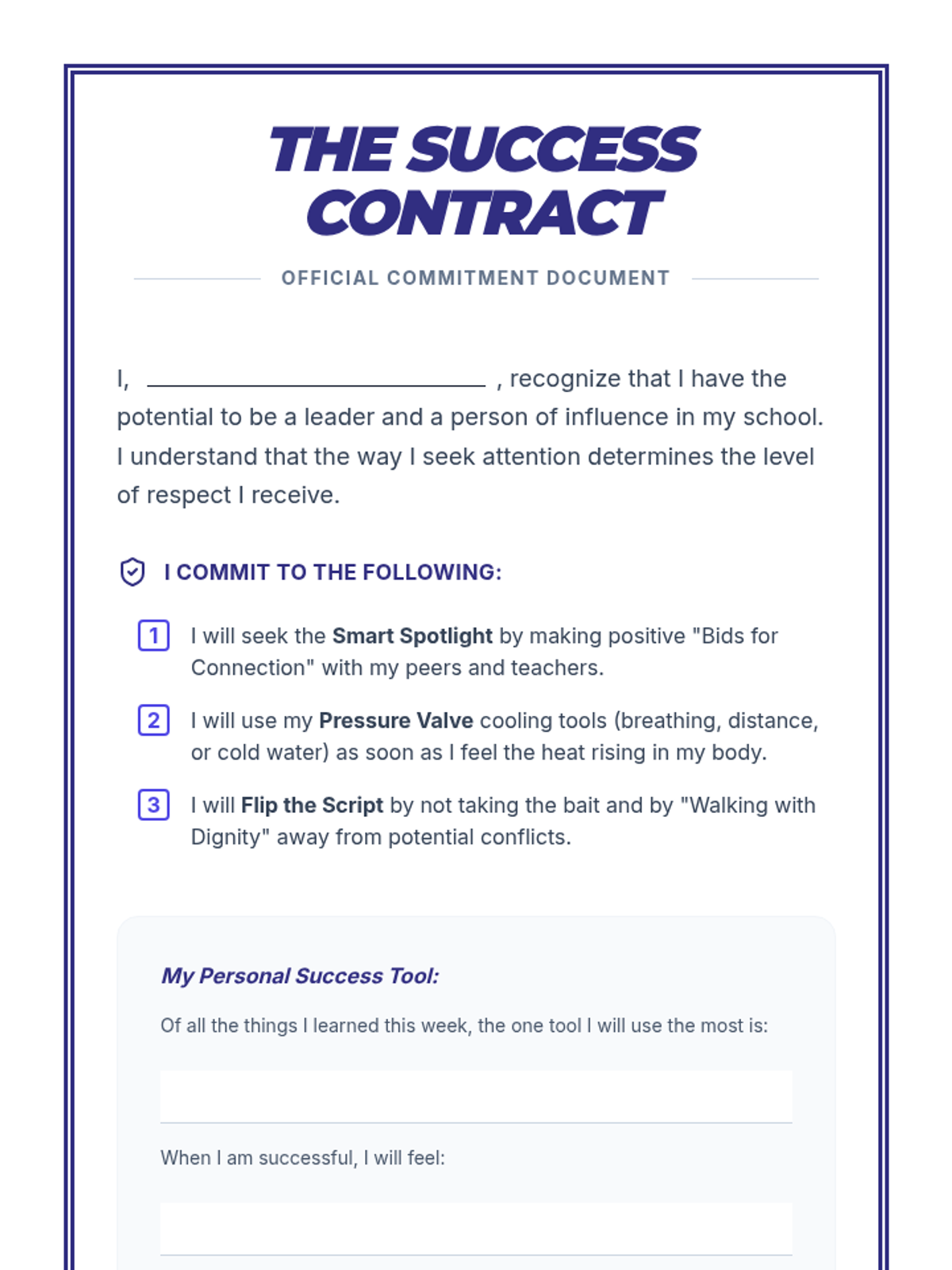
A formal commitment document for students to sign at the end of the unit, pledging to use their new social and de-escalation skills.
Day 5 slides for the unit finale, reviewing key concepts from the week and setting the stage for roleplays and the Success Contract.
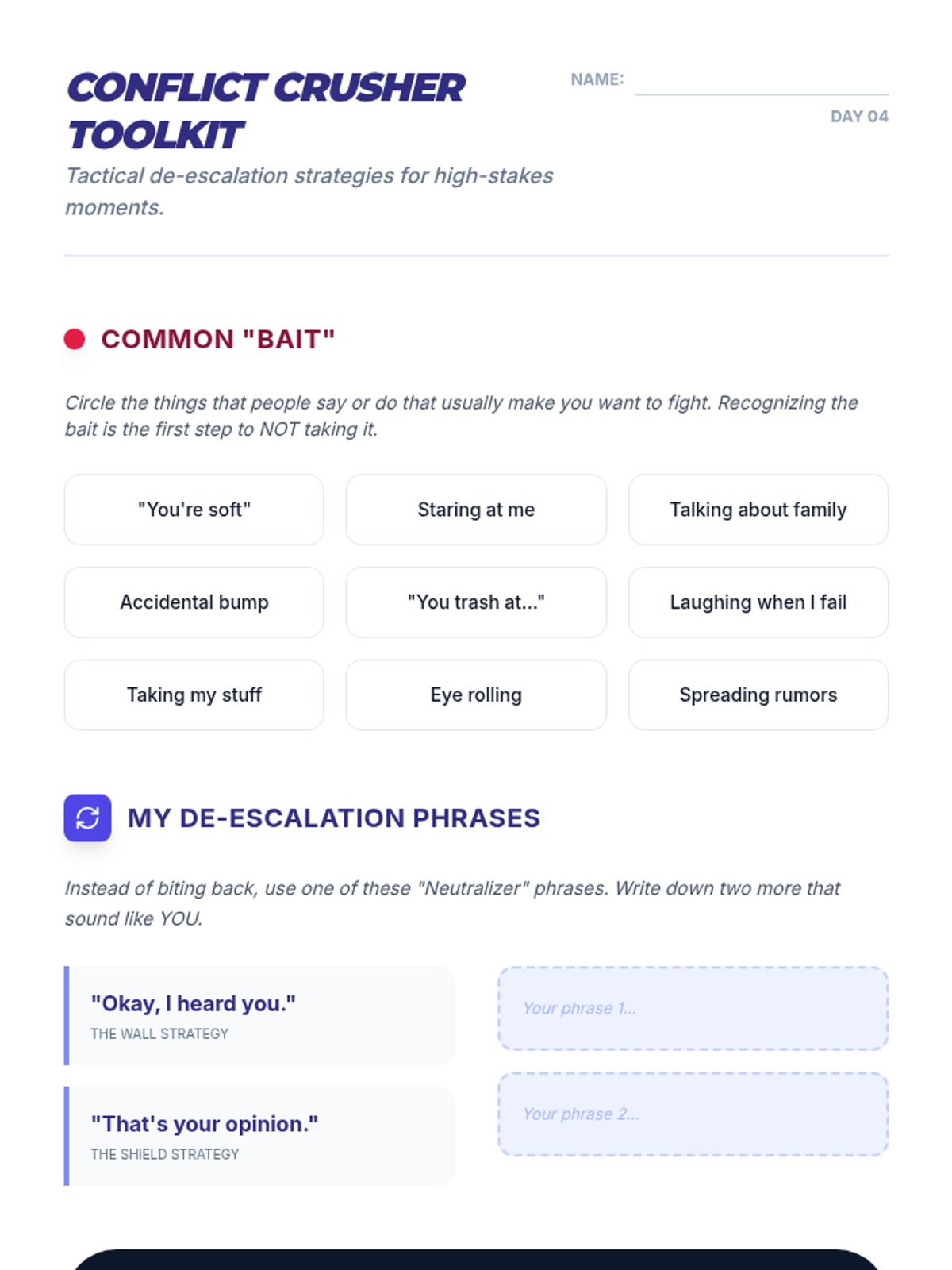
Day 4 worksheet focusing on identifying personal "conflict bait" and developing a toolkit of de-escalation phrases and physical movements.
Day 4 slides focused on de-escalation strategies, avoiding the "bait," and the power of "Walking with Dignity."
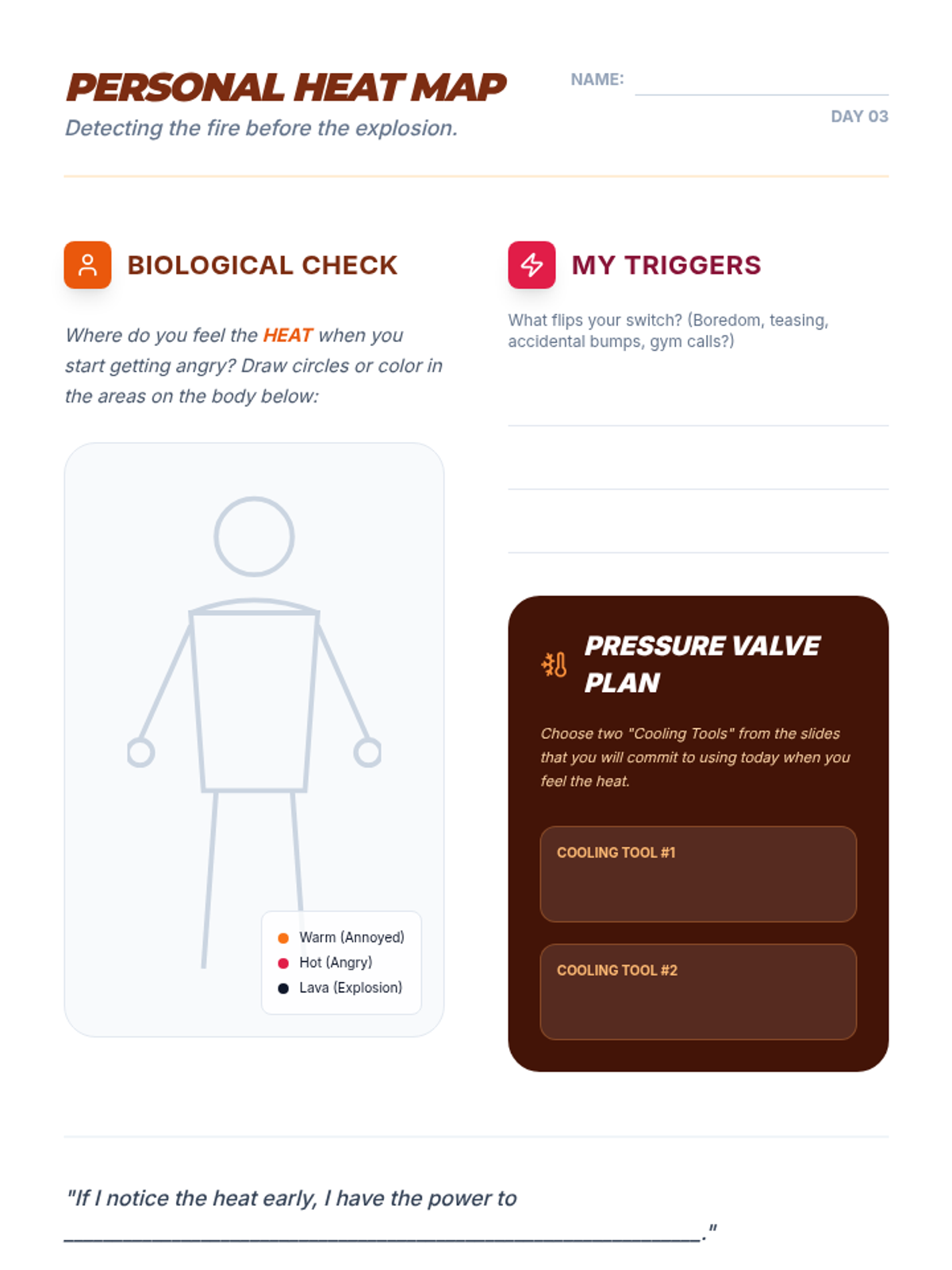
Worksheet for Day 3 where students map out their physiological anger cues (biological "heat") and identify personal triggers and cool-down strategies.
Day 3 slides focusing on self-regulation techniques, biological anger cues, and the "Pressure Valve" cooling tools.
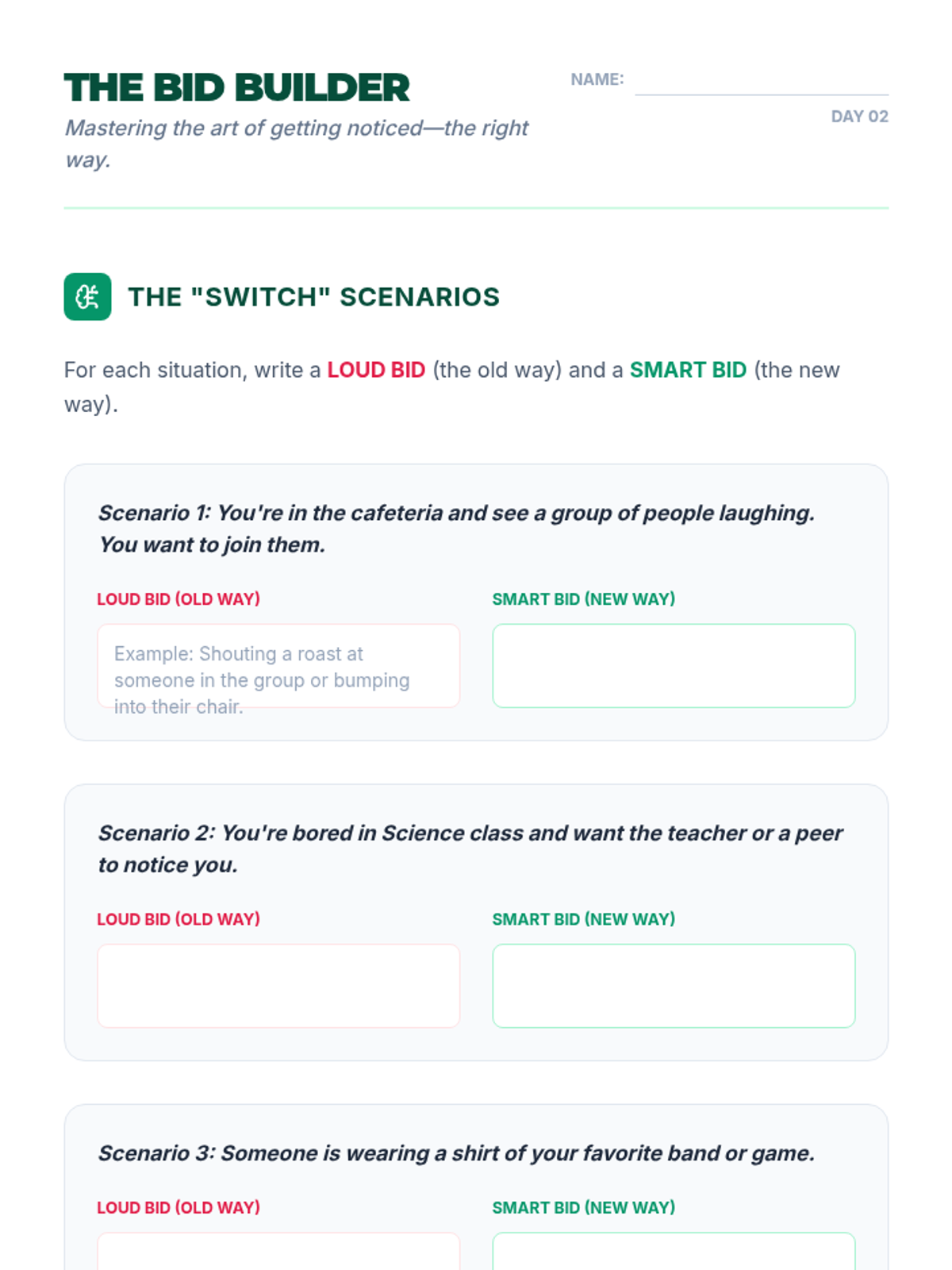
Worksheet for Day 2 focused on transforming aggressive "Loud Bids" for attention into prosocial "Smart Bids" through scenario-based practice.
Day 2 slides focusing on "Connection Bids" - identifying and practicing prosocial ways to get noticed by peers and adults.
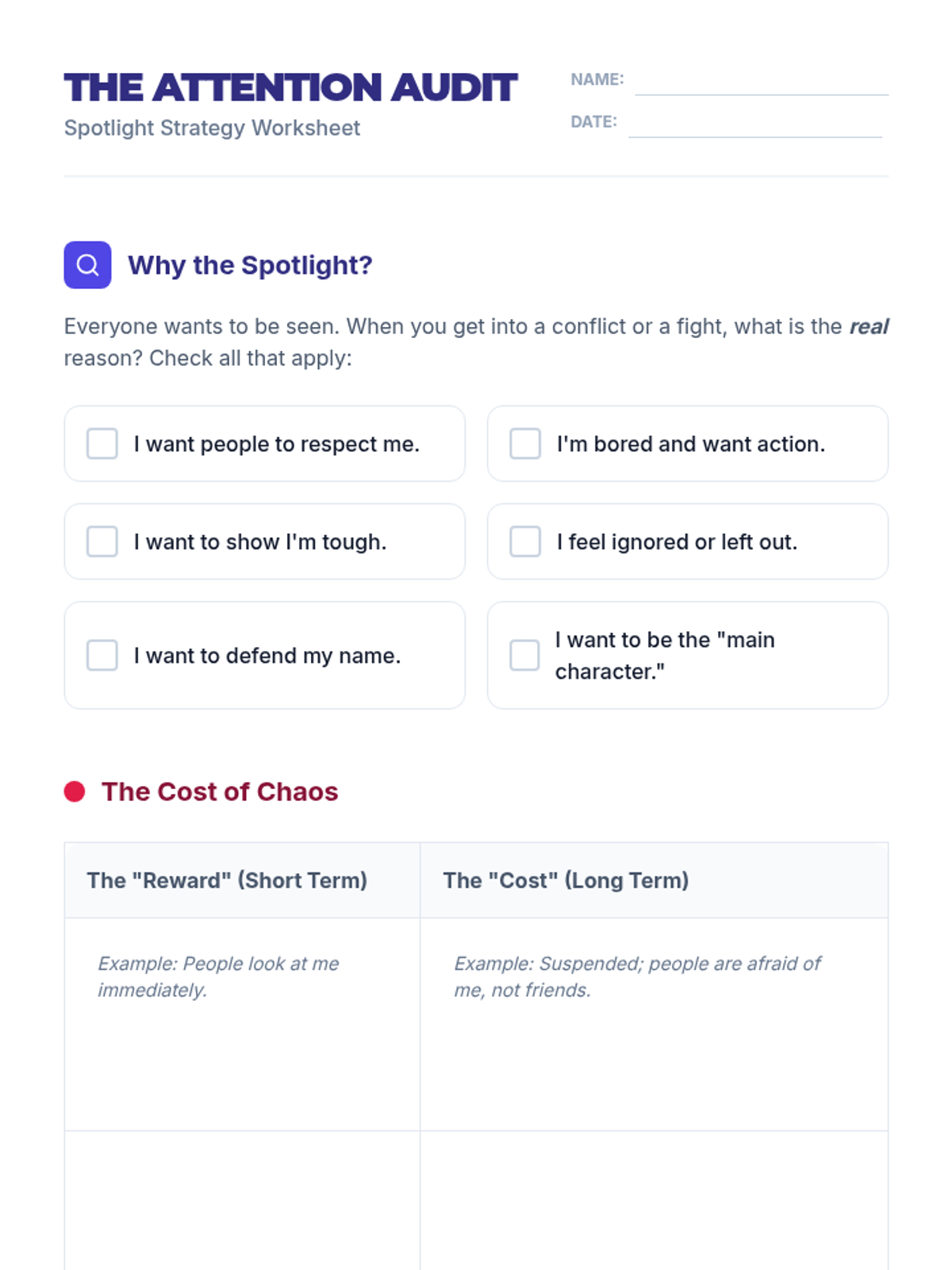
A reflective worksheet for students to analyze why they seek attention through conflict and evaluate the long-term consequences of negative behaviors.
Introductory slide deck for the unit, exploring the human need for attention and contrasting positive and negative ways to be seen.
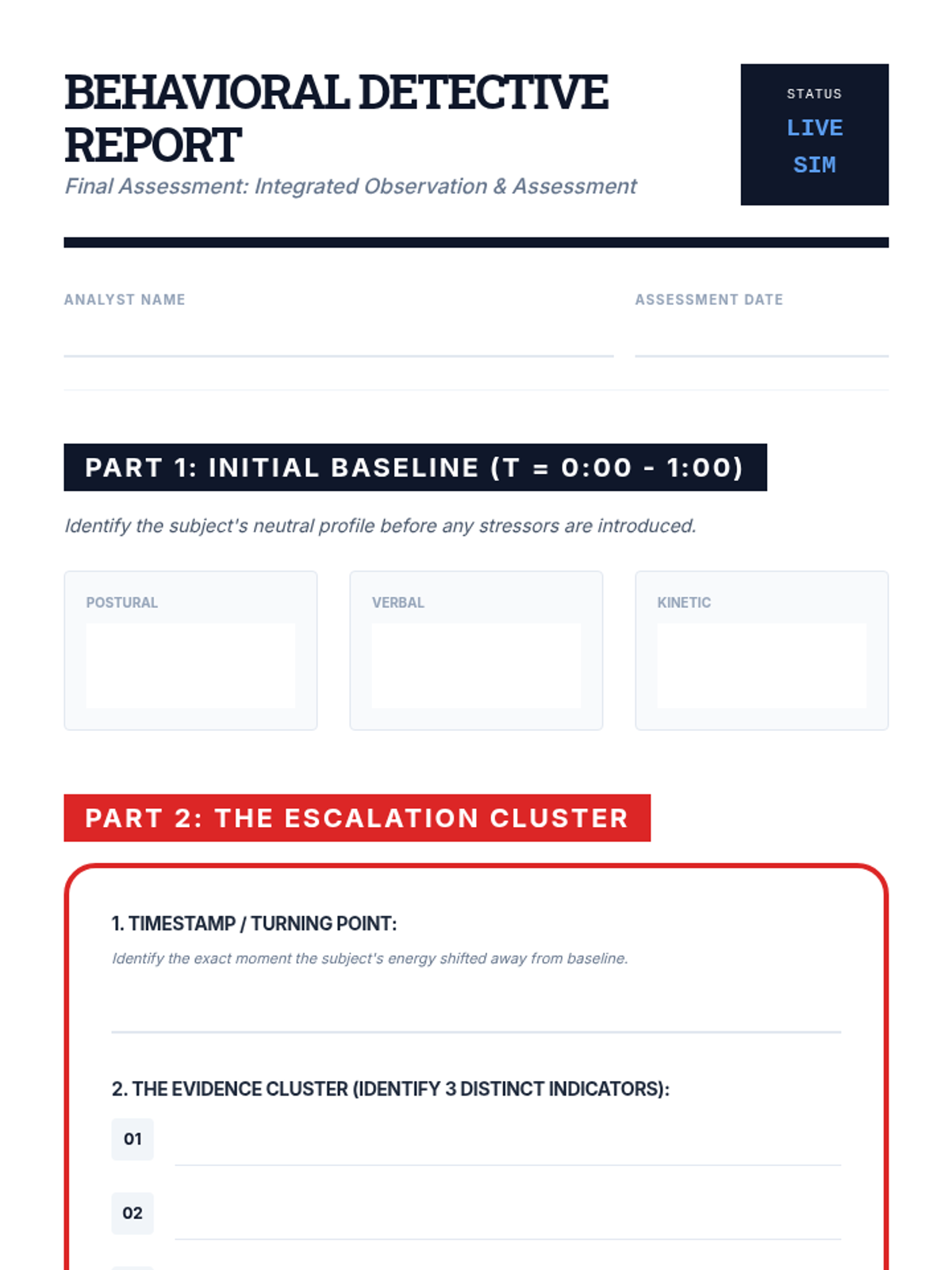
Final assessment document for the sequence. Students act as "Behavioral Detectives" to analyze a full simulation, identifying baseline behaviors, the escalation turning point, and a cluster of indicators, culminating in an intervention justification.
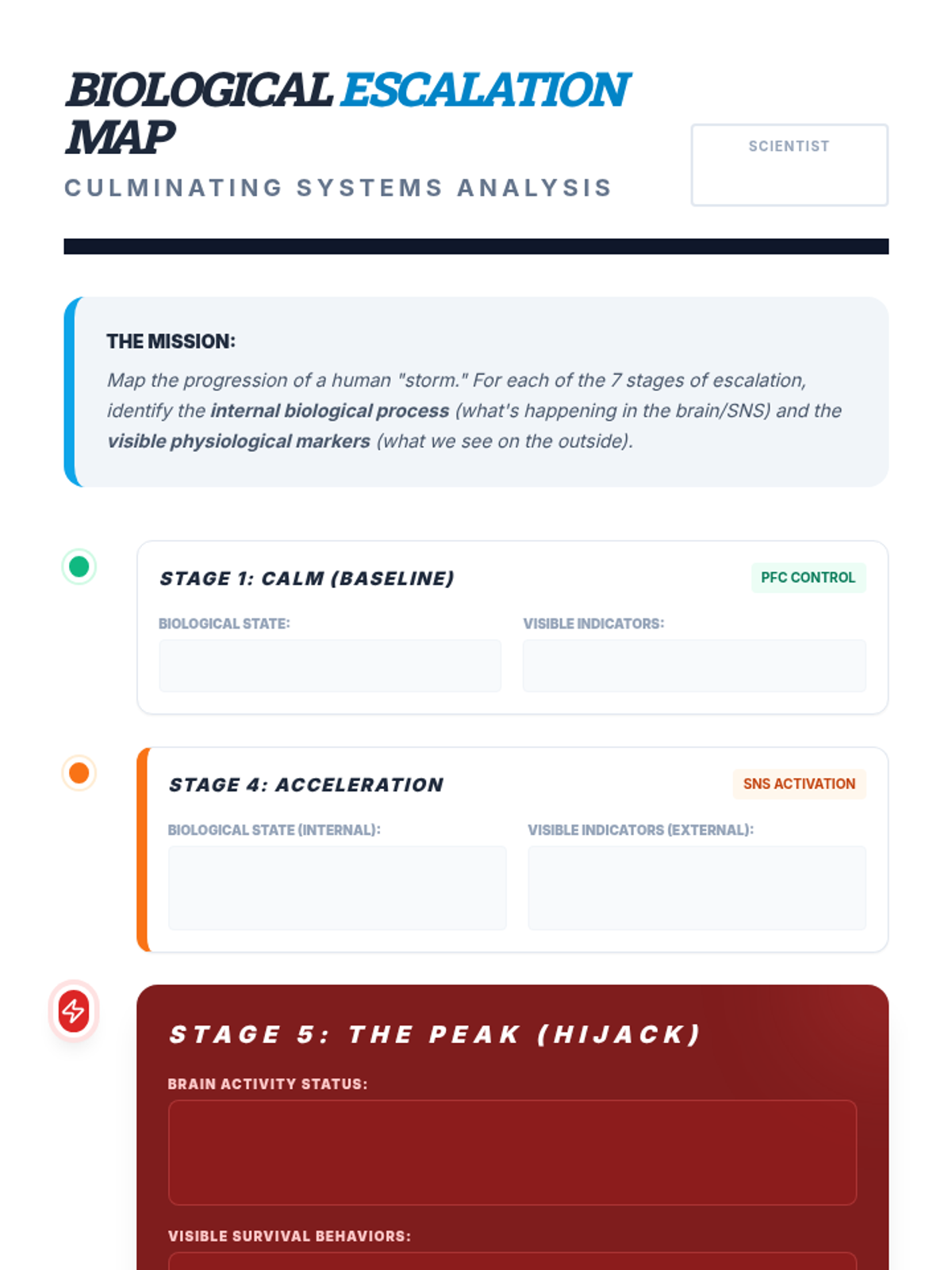
A culminating project sheet for students to map the internal biological states and external physiological markers across the seven stages of behavioral escalation.
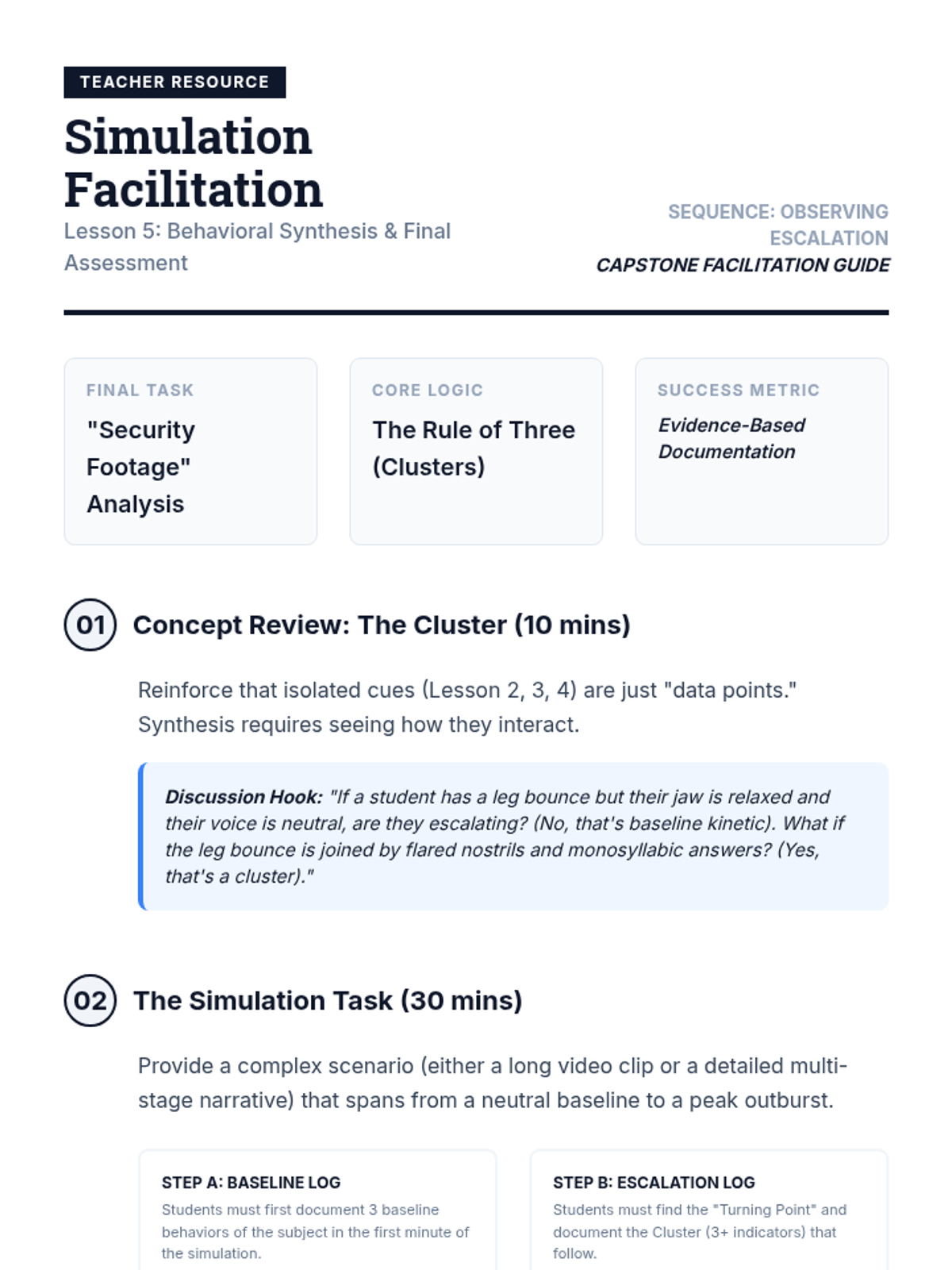
Teacher guide for Lesson 5, focusing on the capstone simulation activity. Provides a roadmap for facilitating the "Security Footage" assessment and criteria for evaluating student mastery of behavioral synthesis.
A visual presentation on the seven stages of behavioral escalation, using a storm forecast metaphor to explain the progression from calm to peak and back to recovery.
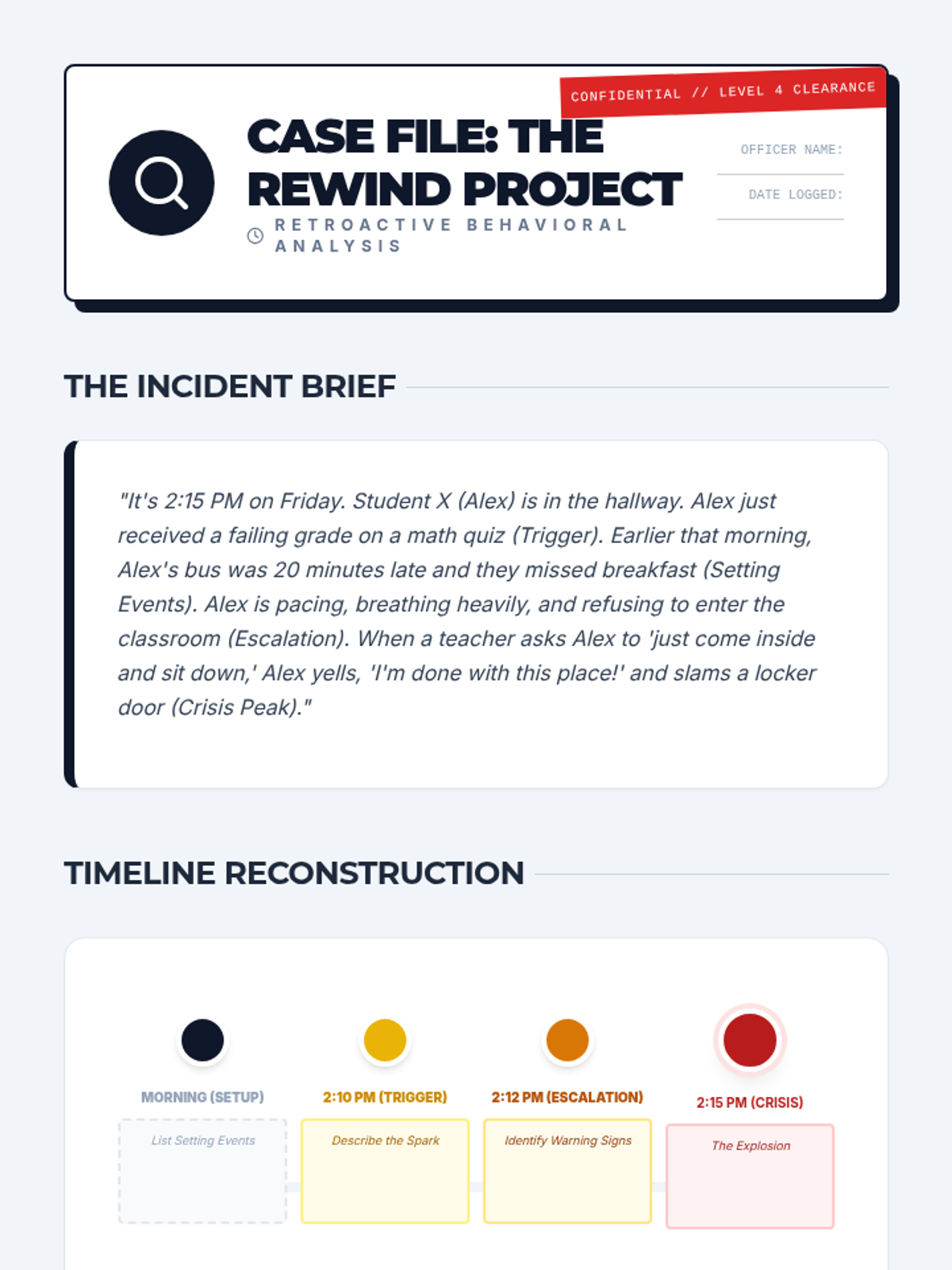
A summative project where students reconstruct a crisis event timeline to identify missed intervention 'off-ramps' and missed warning signs.
Synthesis slides for Lesson 5, introducing the "Rule of Three" cluster concept. Focuses on bringing together kinetic, facial, and withdrawal cues to confirm escalation and the importance of objective documentation.
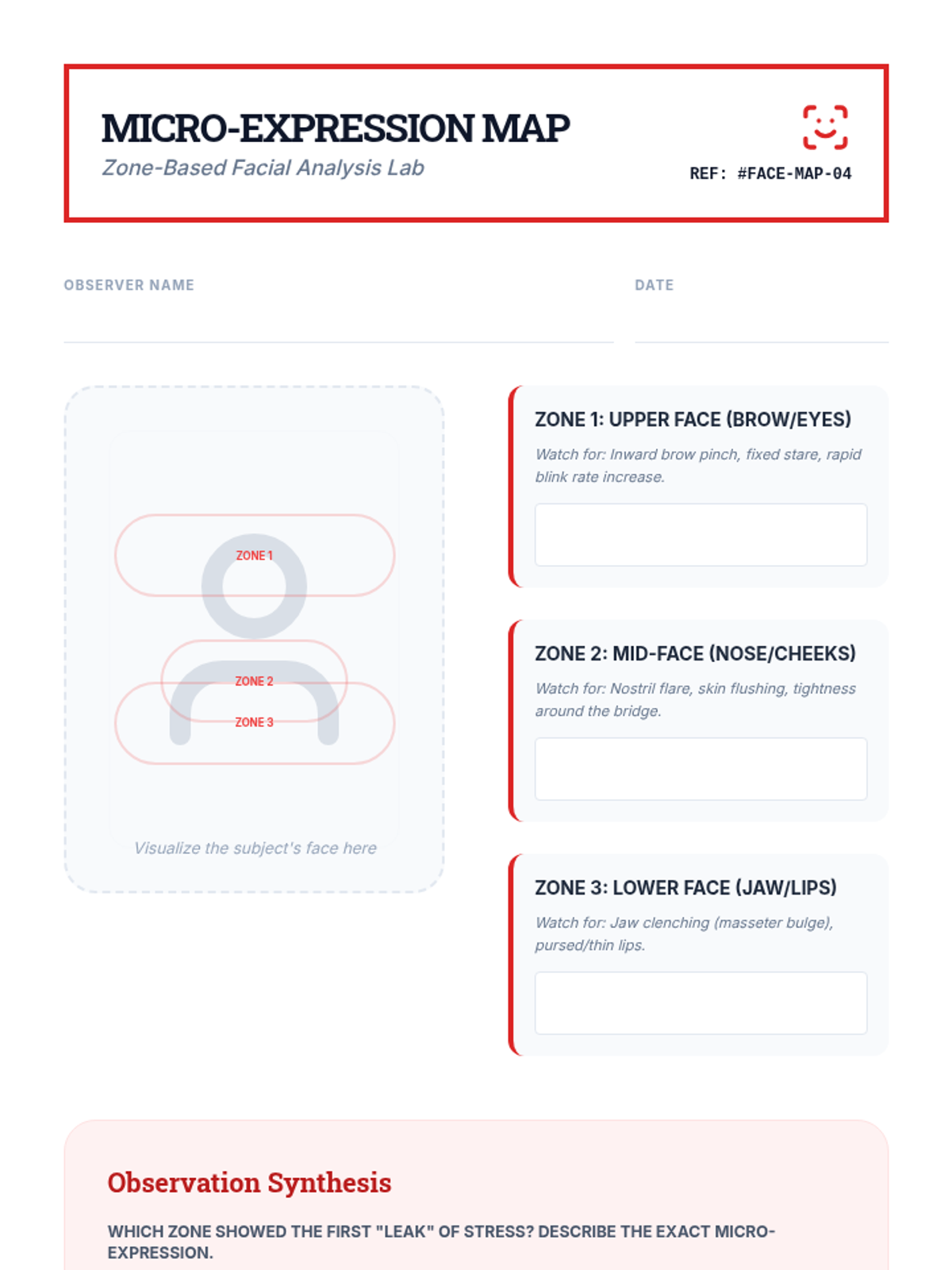
Student worksheet for Lesson 4, featuring a three-zone map for documenting micro-expressions and facial tension. Provides specific observation cues for each facial zone.
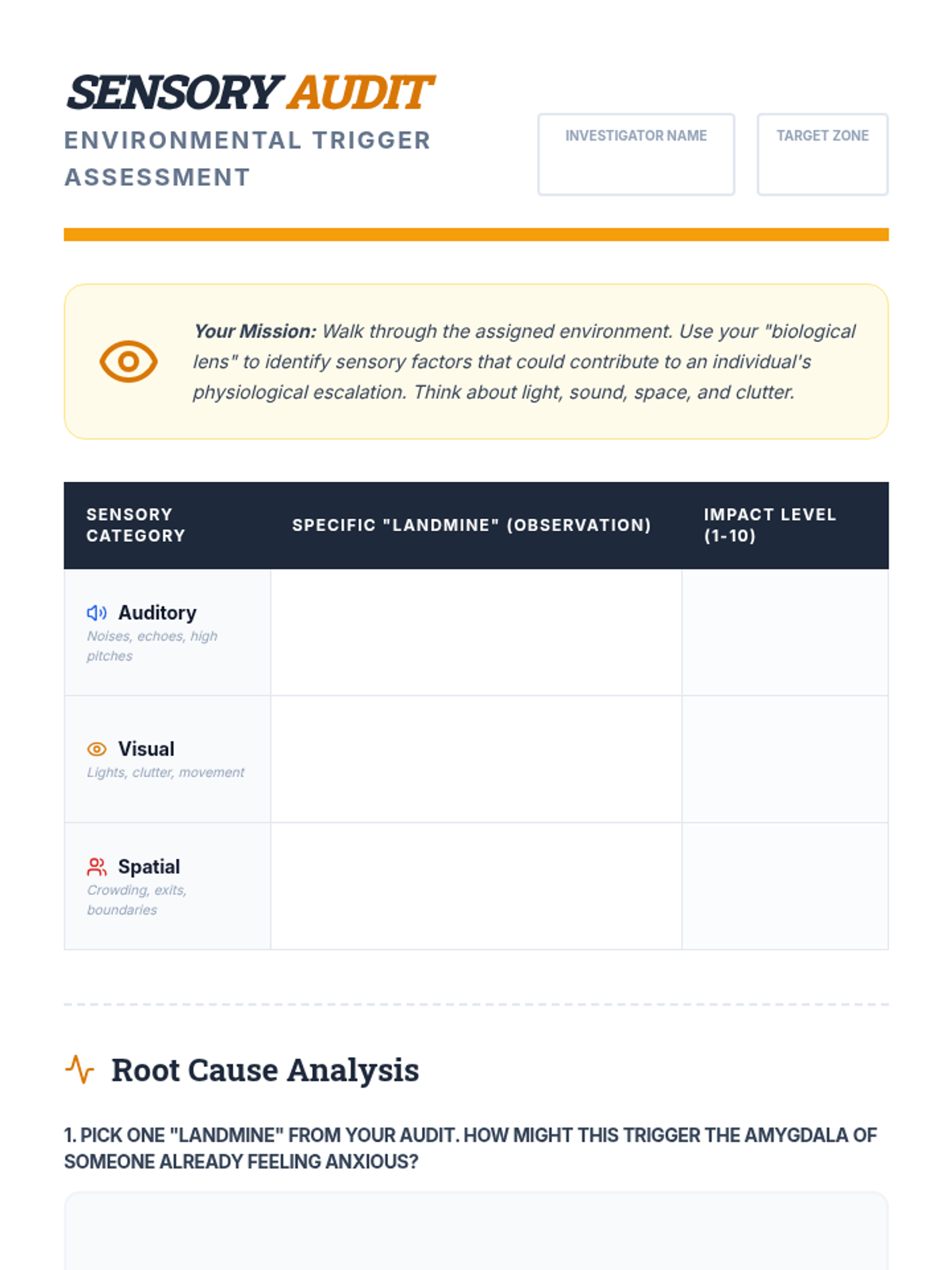
A classroom audit sheet for students to identify and analyze environmental sensory triggers and propose brain-friendly modifications.
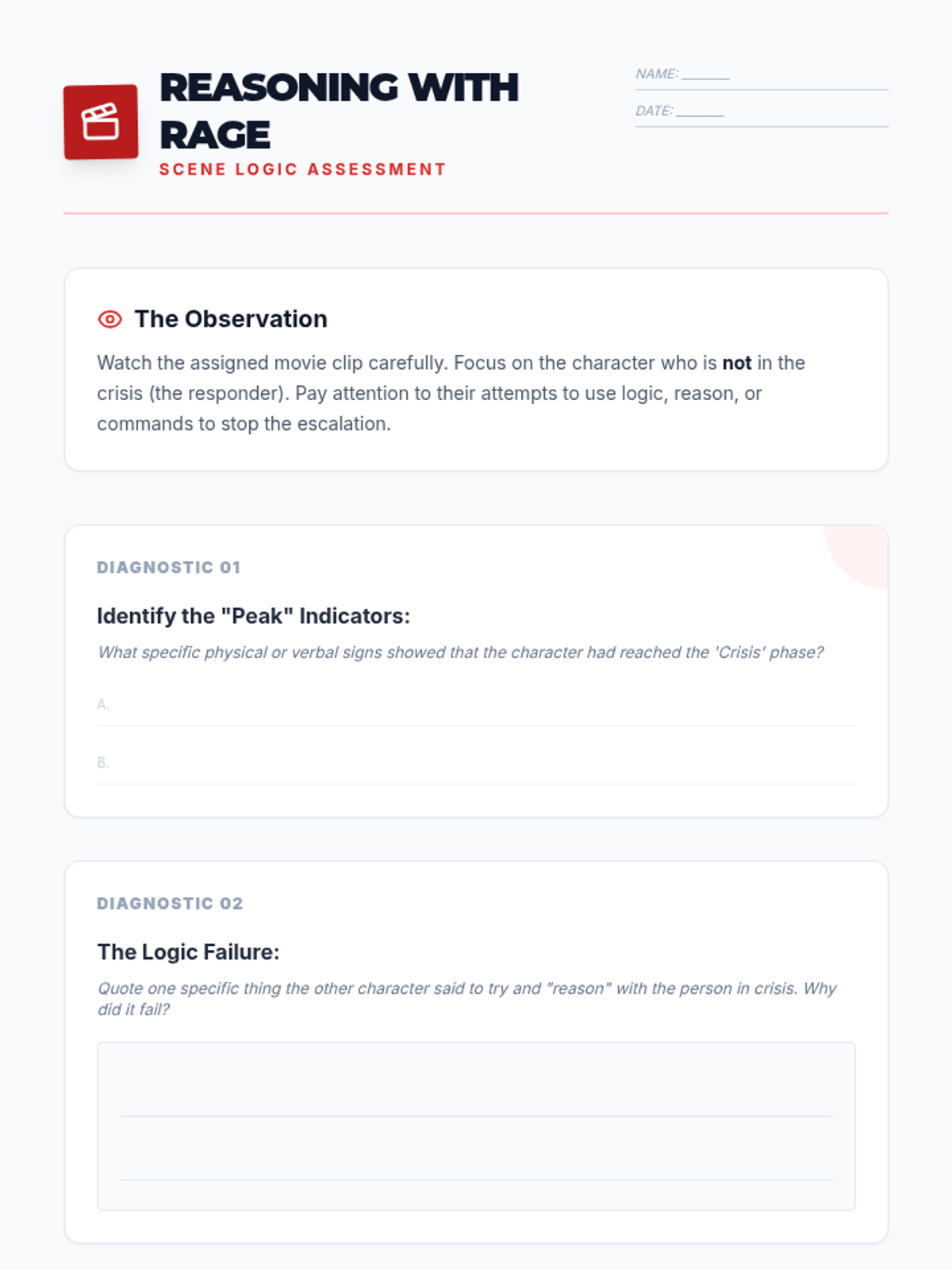
An analysis worksheet for Lesson 4 where students analyze a movie scene of a crisis to identify signs of the peak and why rational reasoning failed.
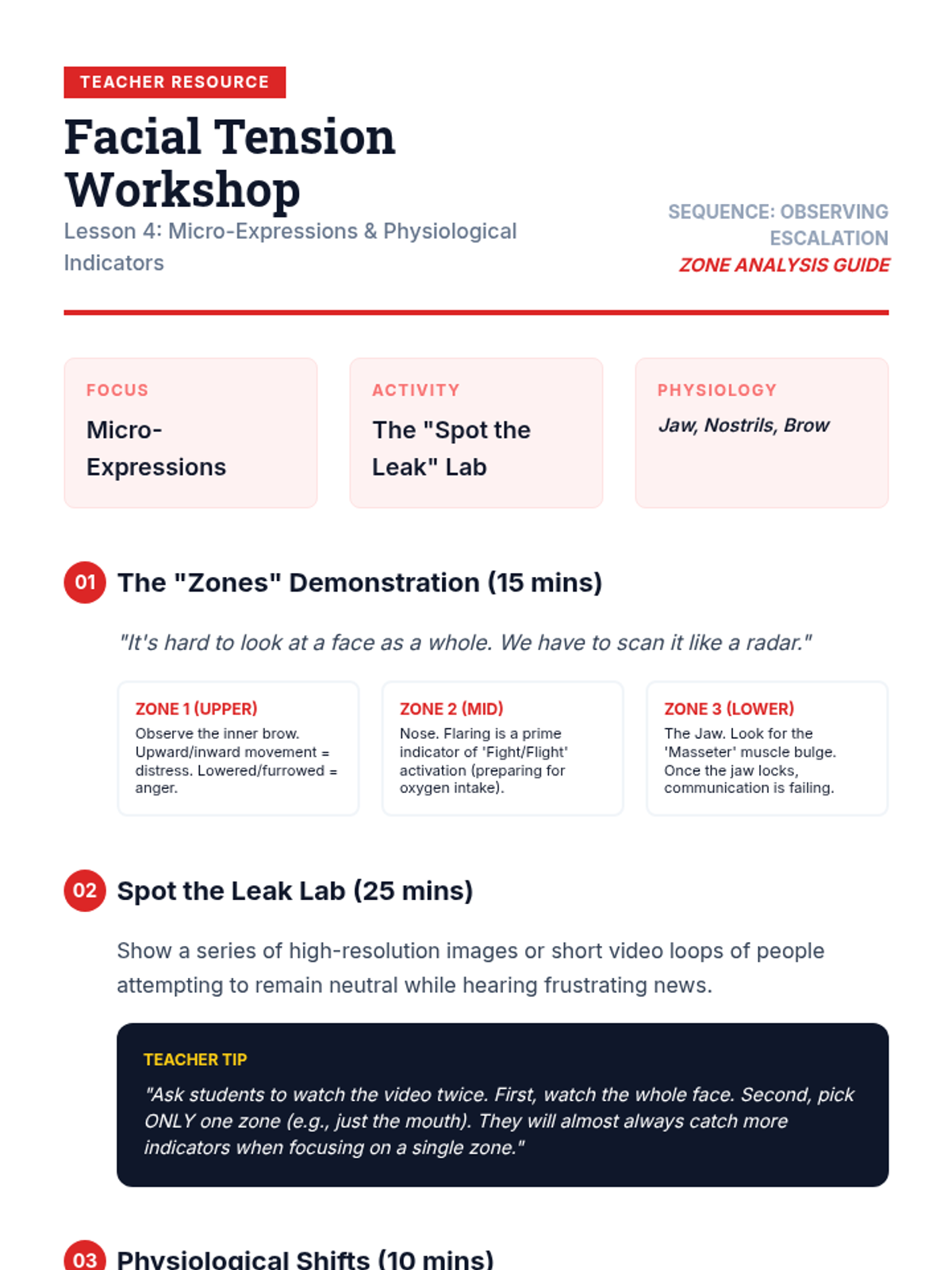
Teacher guide for Lesson 4, detailing the three-zone facial analysis method, instructions for the "Spot the Leak" lab, and guidance on physiological shifts like flushing and blanching.
A visual presentation focusing on sensory overload as a physiological trigger for escalation, exploring the role of the thalamus and identifying common environmental triggers.
A slide deck for Lesson 4 exploring the biological 'Amygdala Hijack' and why rational communication fails during the peak of a crisis.
Slides for Lesson 4 on facial tension and micro-expressions. Covers the three zones of facial tension (Brow, Mid-Face, Jaw) and the science behind involuntary micro-expressions as early warning signs.
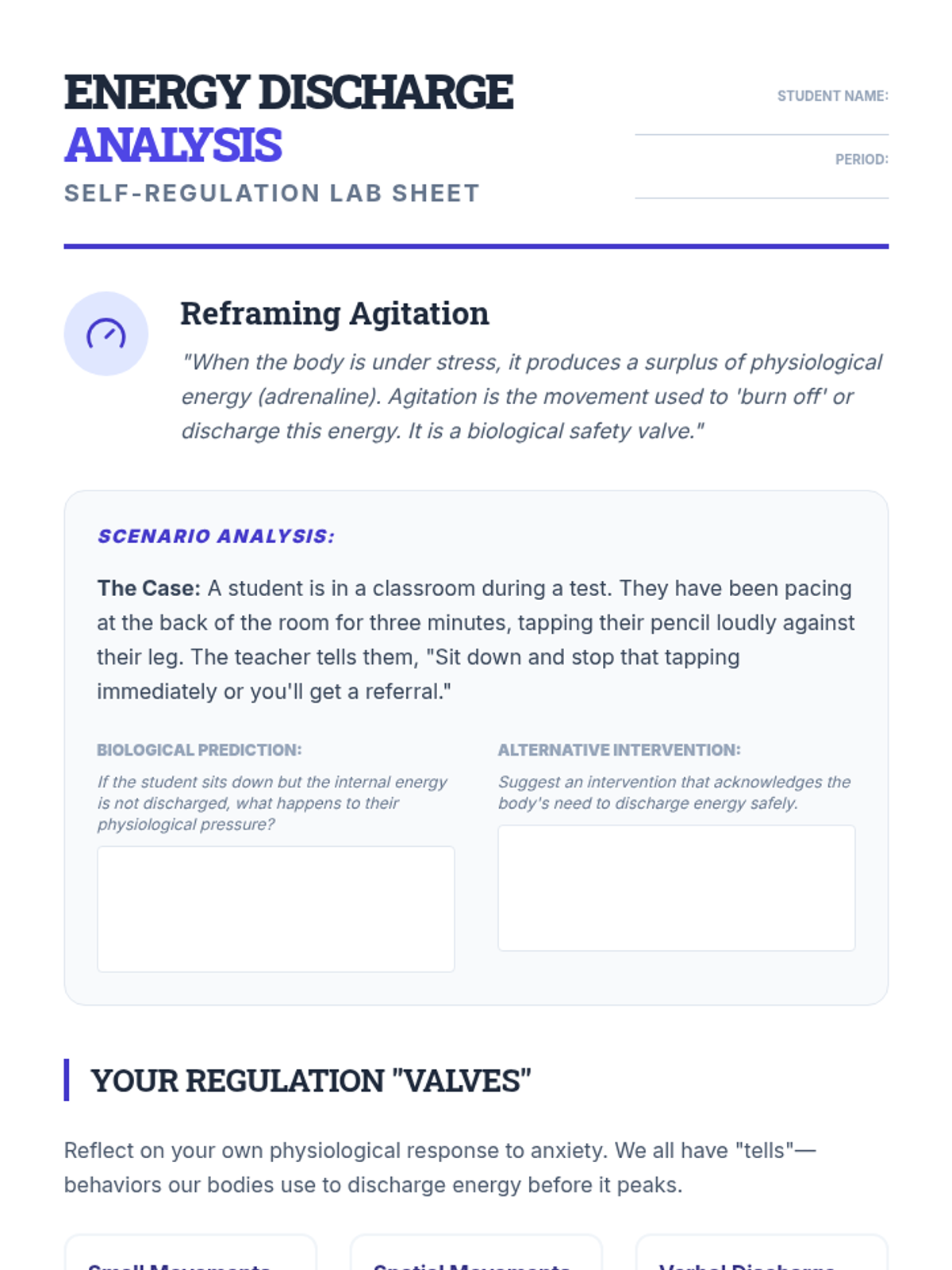
A worksheet for students to identify their own energy discharge behaviors and analyze scenarios through the lens of physiological self-regulation.
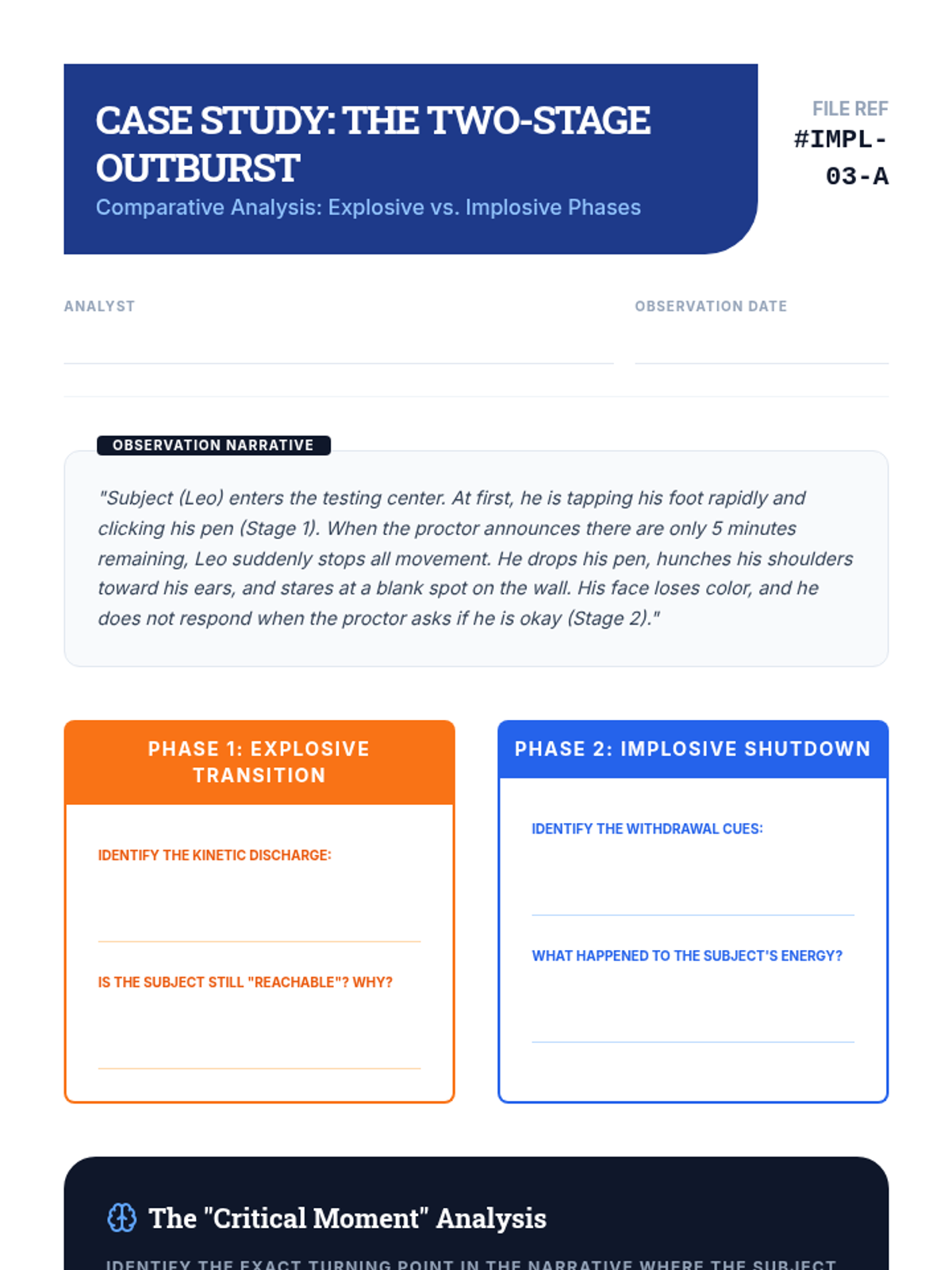
Student case study for Lesson 3, analyzing a narrative of a student's transition from active agitation (explosive) to total shutdown (implosive). Includes structured fields for identifying cues in each phase.
A slide deck for Lesson 3 focused on the cumulative nature of stress and the psychological signs of the acceleration phase.
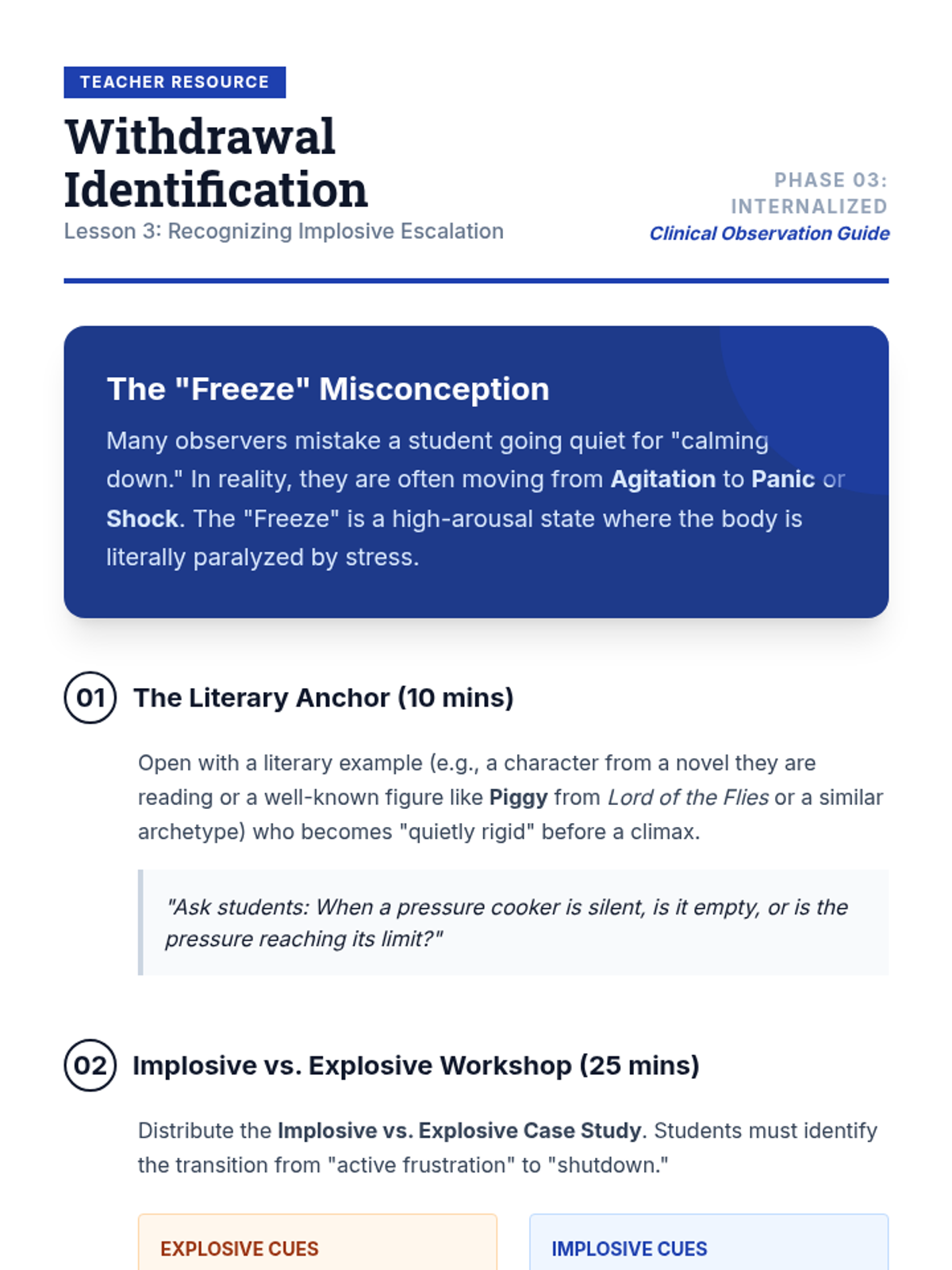
Teacher guide for Lesson 3, focusing on identifying withdrawal responses. Includes the pressure cooker analogy, comparison of explosive vs. implosive cues, and intervention logic for shutdown behaviors.
A visual presentation exploring the connection between internal anxiety and external agitation, reframing discharge behaviors as self-regulation attempts.
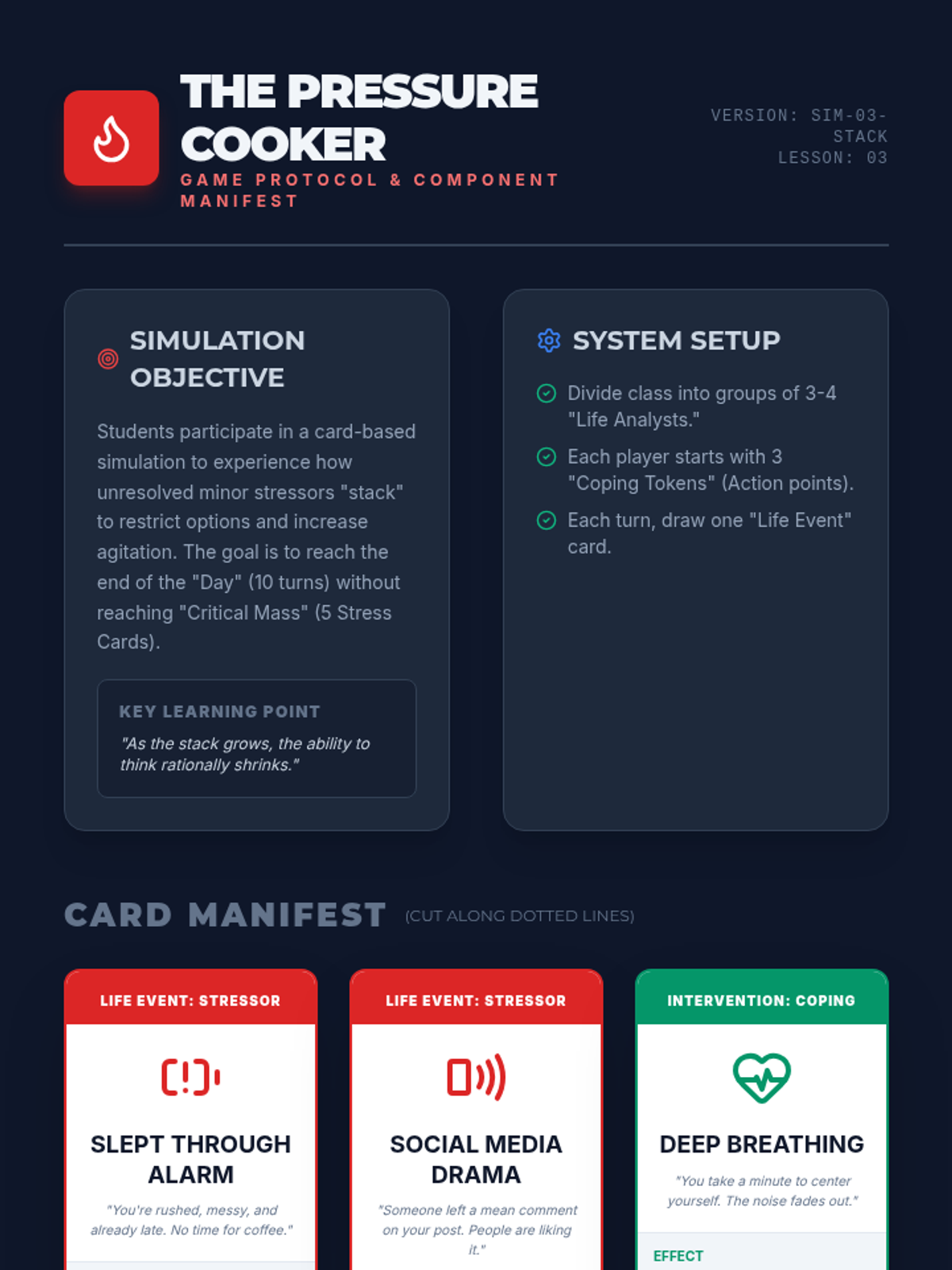
Teacher guide and card components for 'The Pressure Cooker', a game-based simulation where students experience the cumulative effects of stress on rational decision-making.
Slides for Lesson 3 focusing on withdrawal and freeze responses as forms of 'implosive' escalation. Contrasts explosive and implosive behaviors and identifies key indicators like gaze aversion and protective bracing.
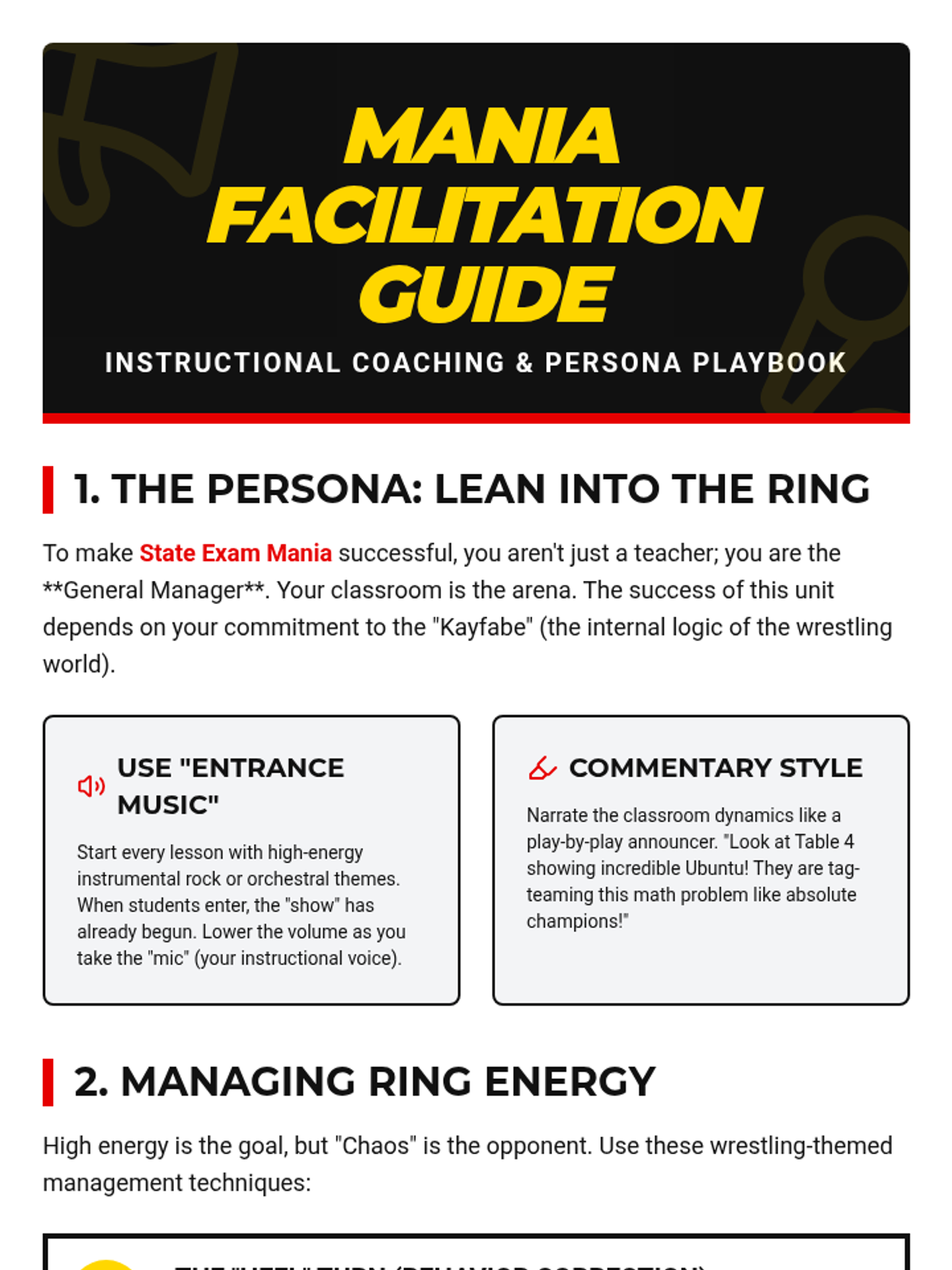
A comprehensive teacher facilitation guide for the 'Road to State Exam Mania' sequence, featuring persona coaching, behavior management strategies (using wrestling metaphors), lesson-specific tips, and a bank of discussion questions.
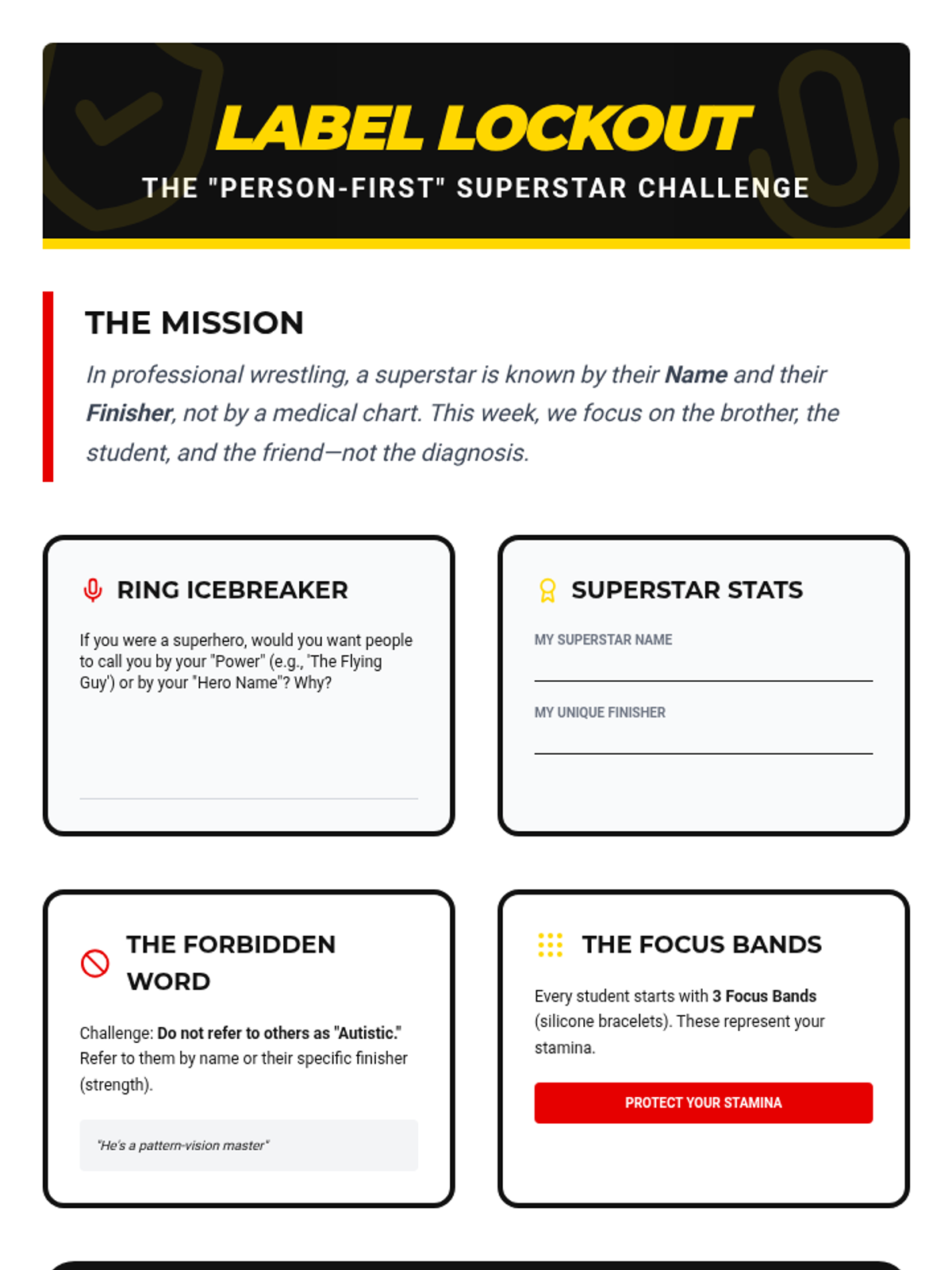
A week-long challenge guide where students avoid labels like 'autistic' to focus on individual strengths, using silicone bracelets as tokens in a 'Referee' style game.
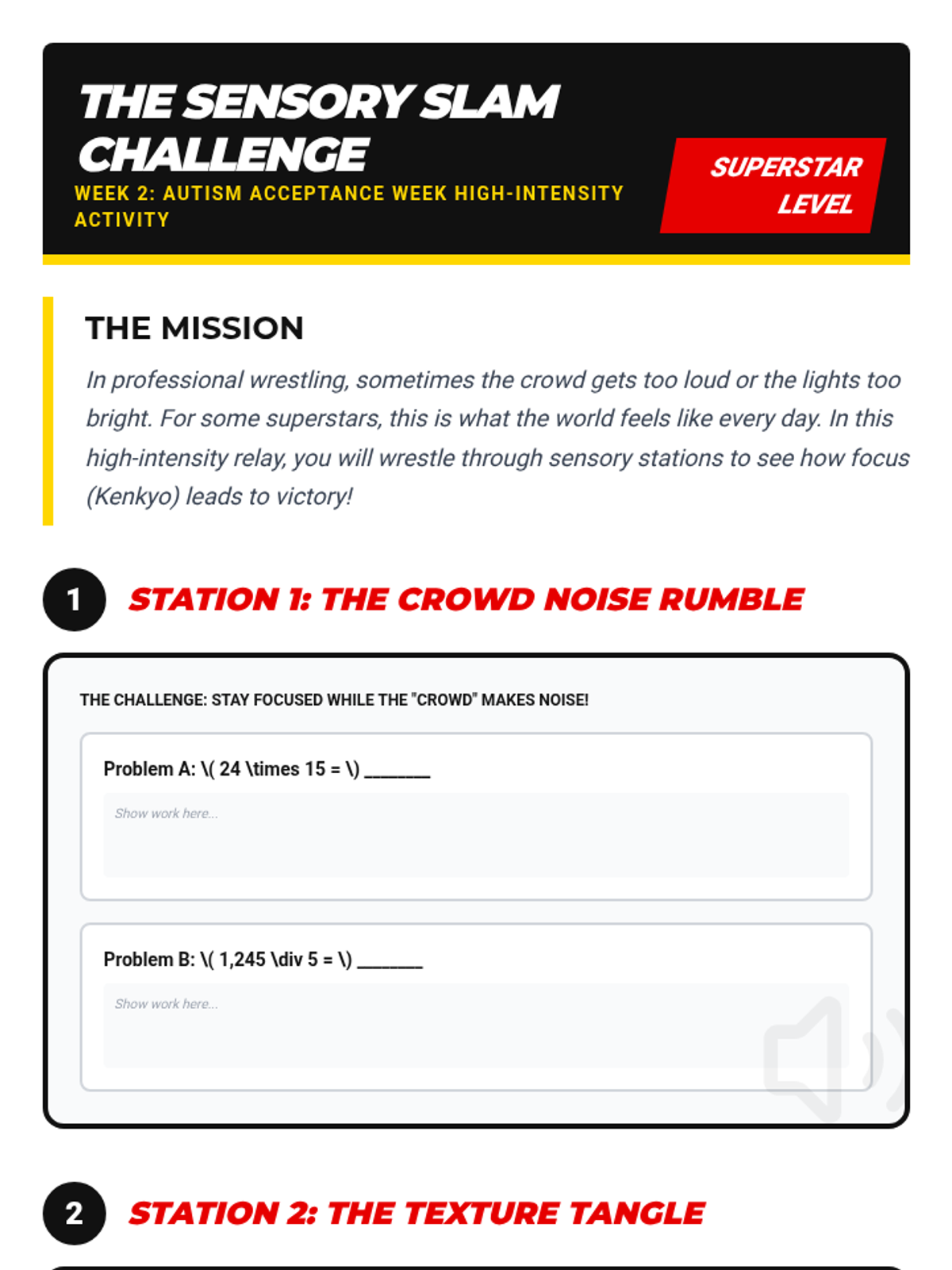
A sensory awareness activity for Autism Acceptance Week that uses high-energy challenges to simulate sensory processing differences and promote inclusive focus strategies.
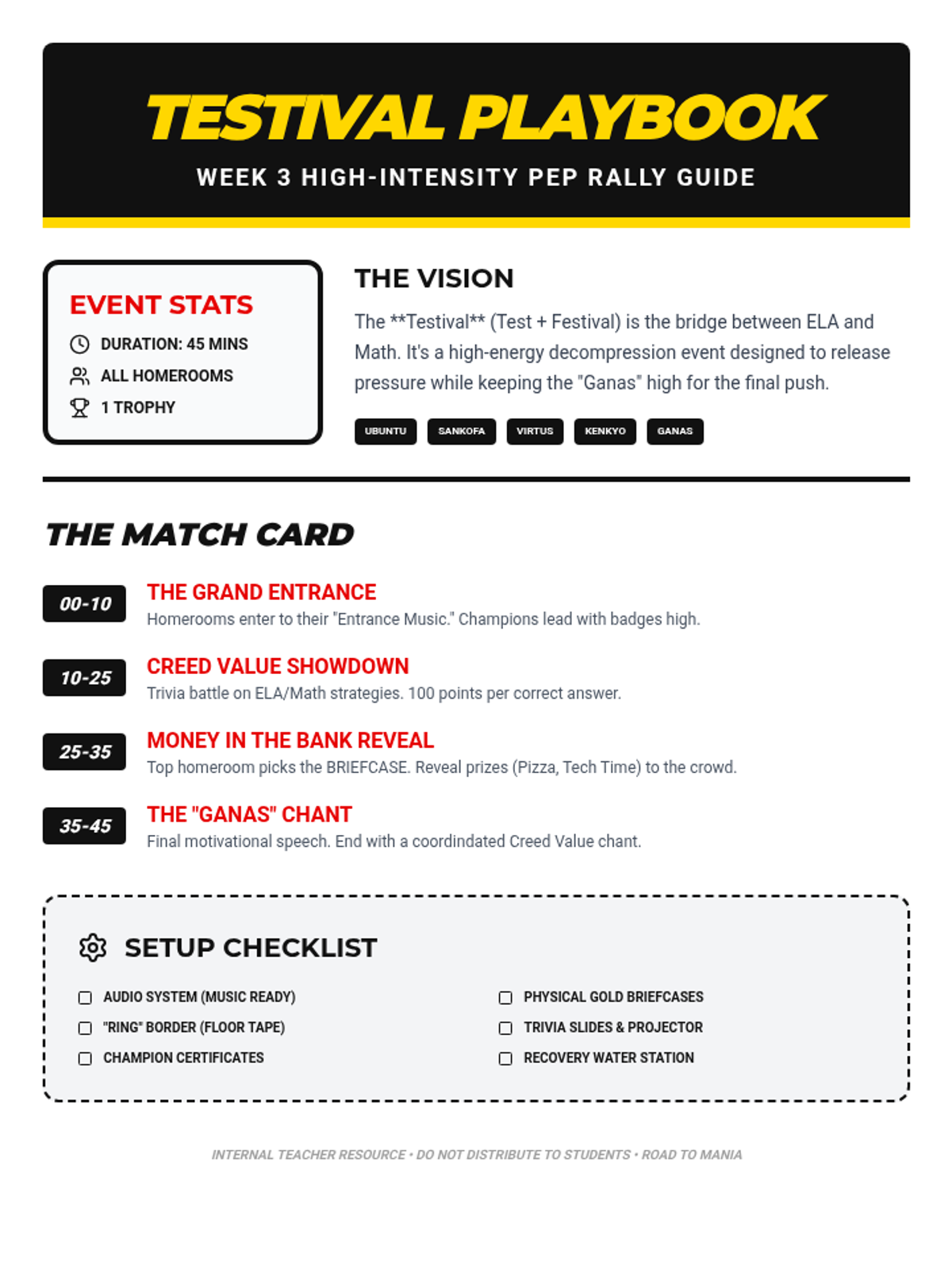
A teacher-facing resource for running a high-intensity 'Testival' (Test + Festival) pep rally, including 'Ring Entrances,' 'Creed Value Showdowns' (academic bowl style), and the 'Money in the Bank' opening.
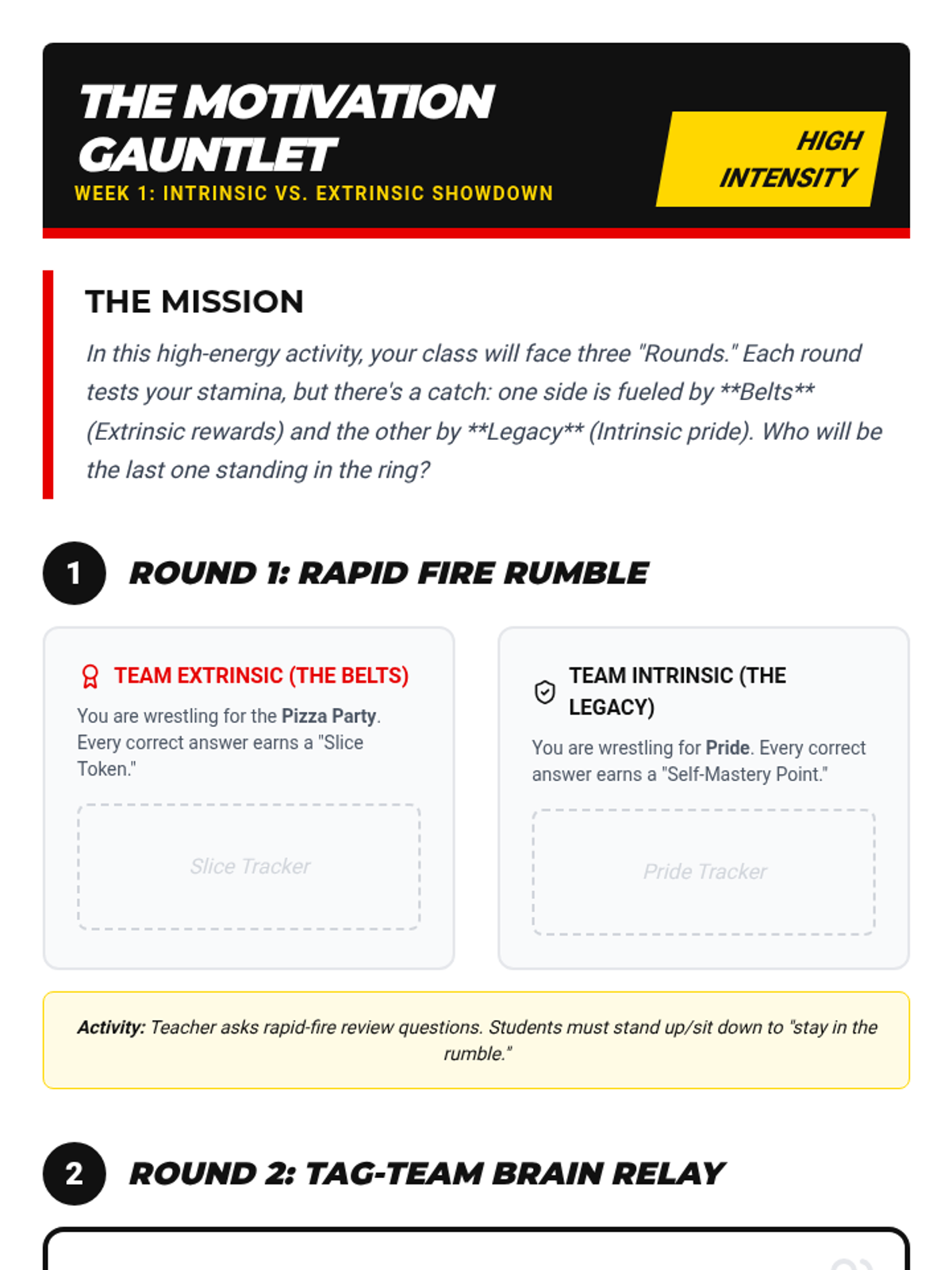
A physical and mental challenge activity where students explore intrinsic vs. extrinsic motivation through high-energy 'rounds' of review and physical exercise.
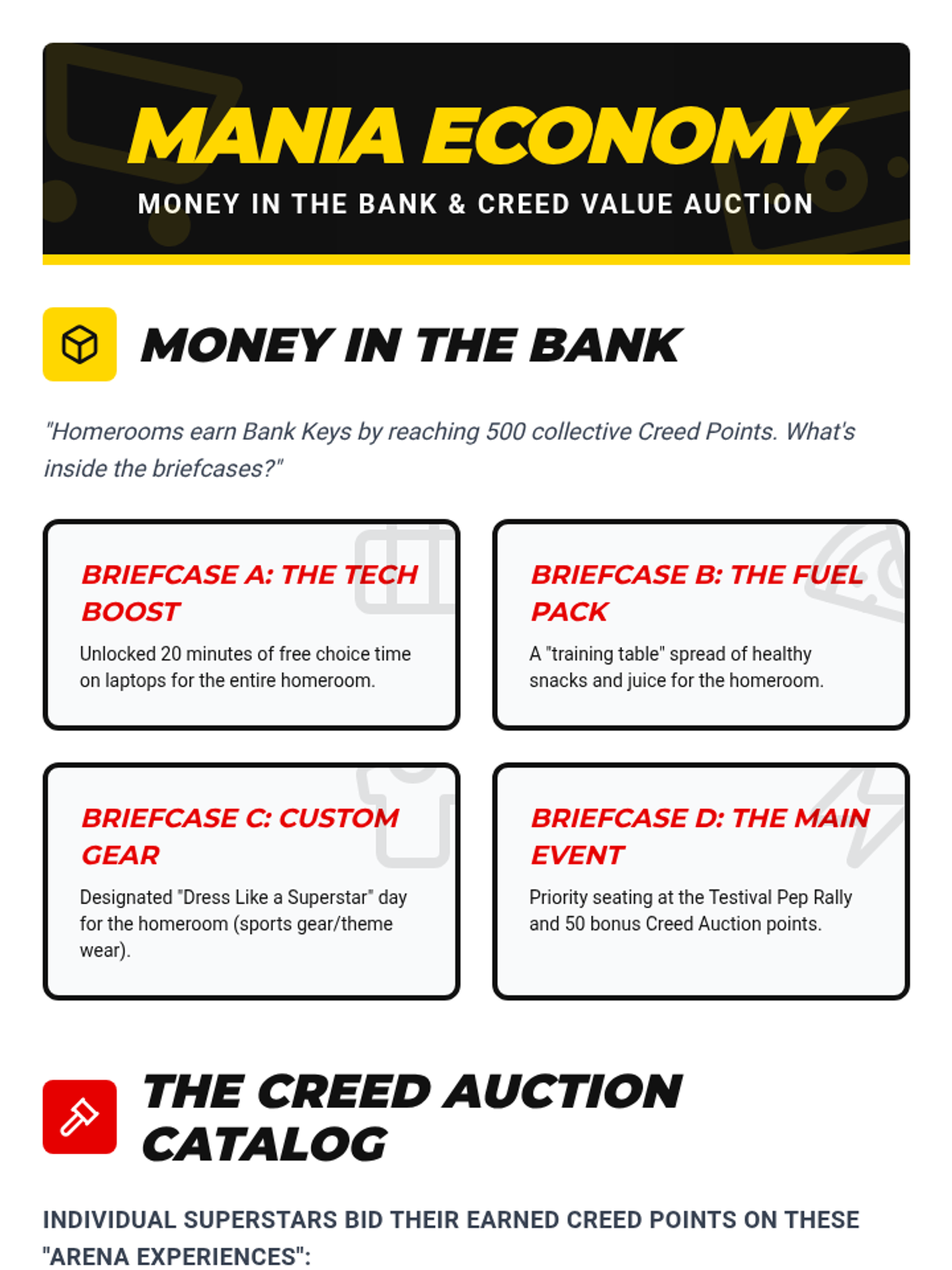
A student-facing guide to the incentive systems of the 4-week sequence, including rewards for Money in the Bank briefcases and a catalog for the Creed Value Auction.
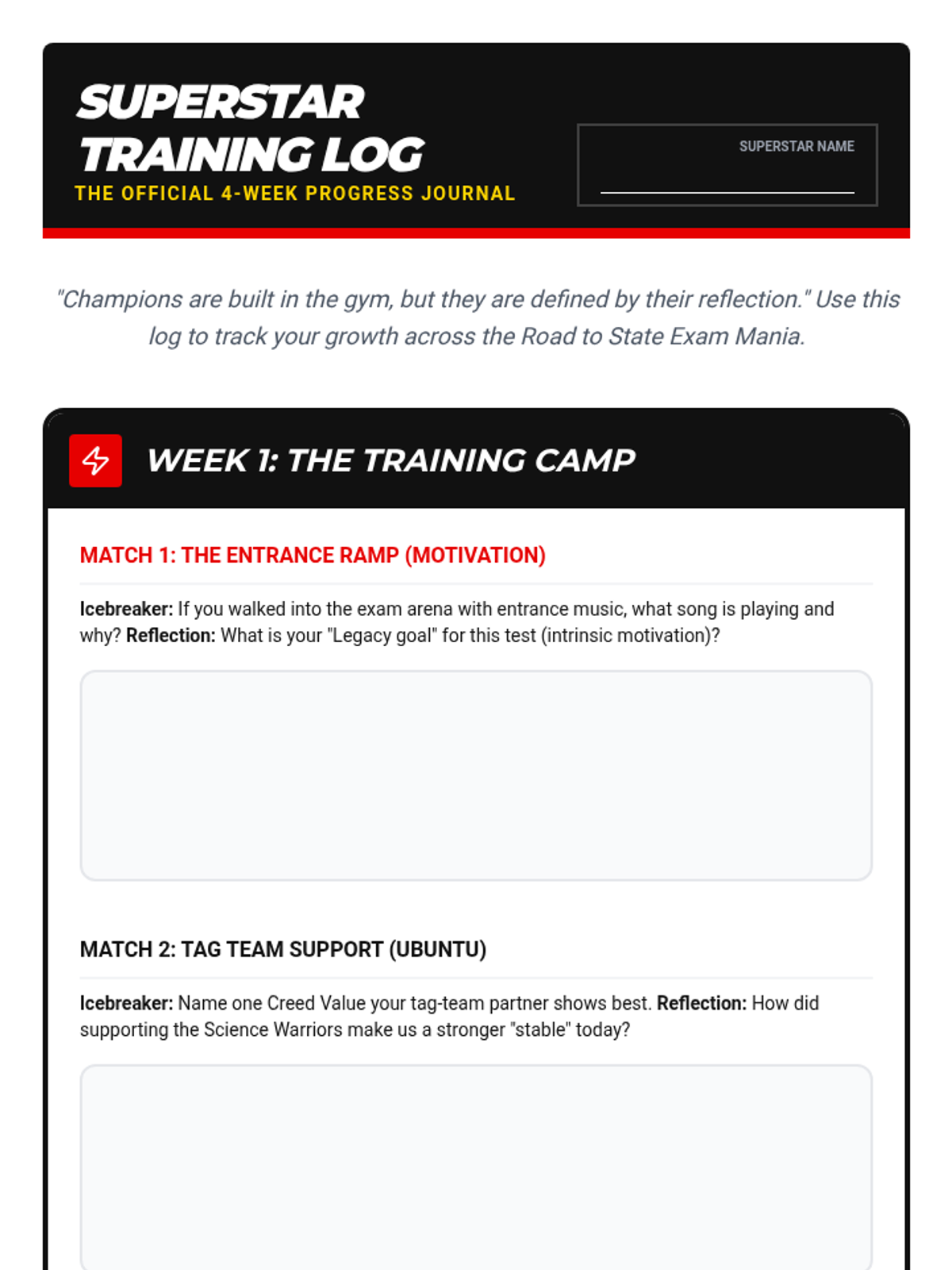
A reflection and icebreaker journal for students to use throughout the 4-week sequence, featuring themed check-ins and a pre-season scouter report for Spring Break and Q4 goals.
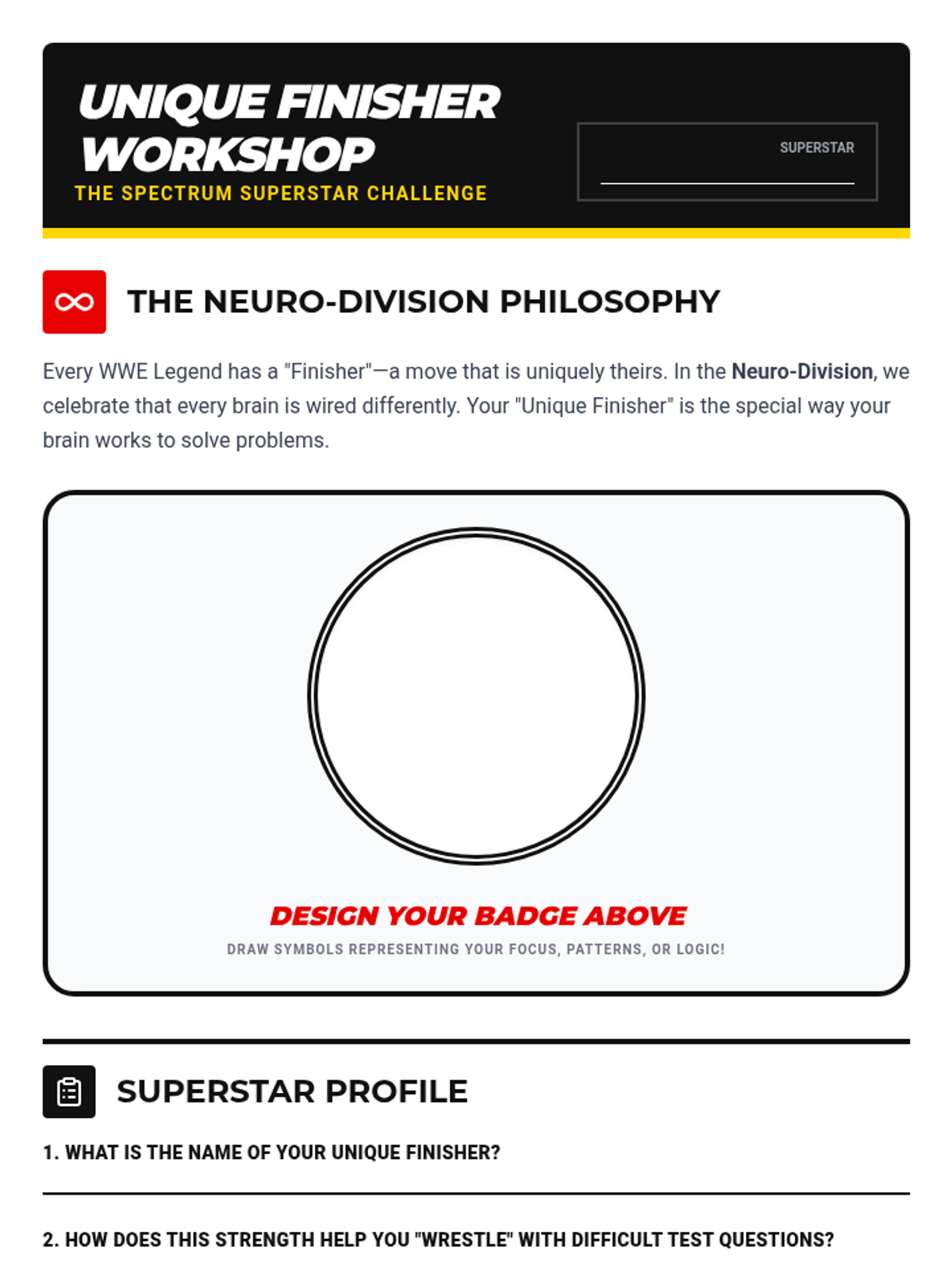
A creative student worksheet for Autism Acceptance Week where students design a 'Unique Finisher' badge representing their neurodivergent strengths and reflect on inclusive support.
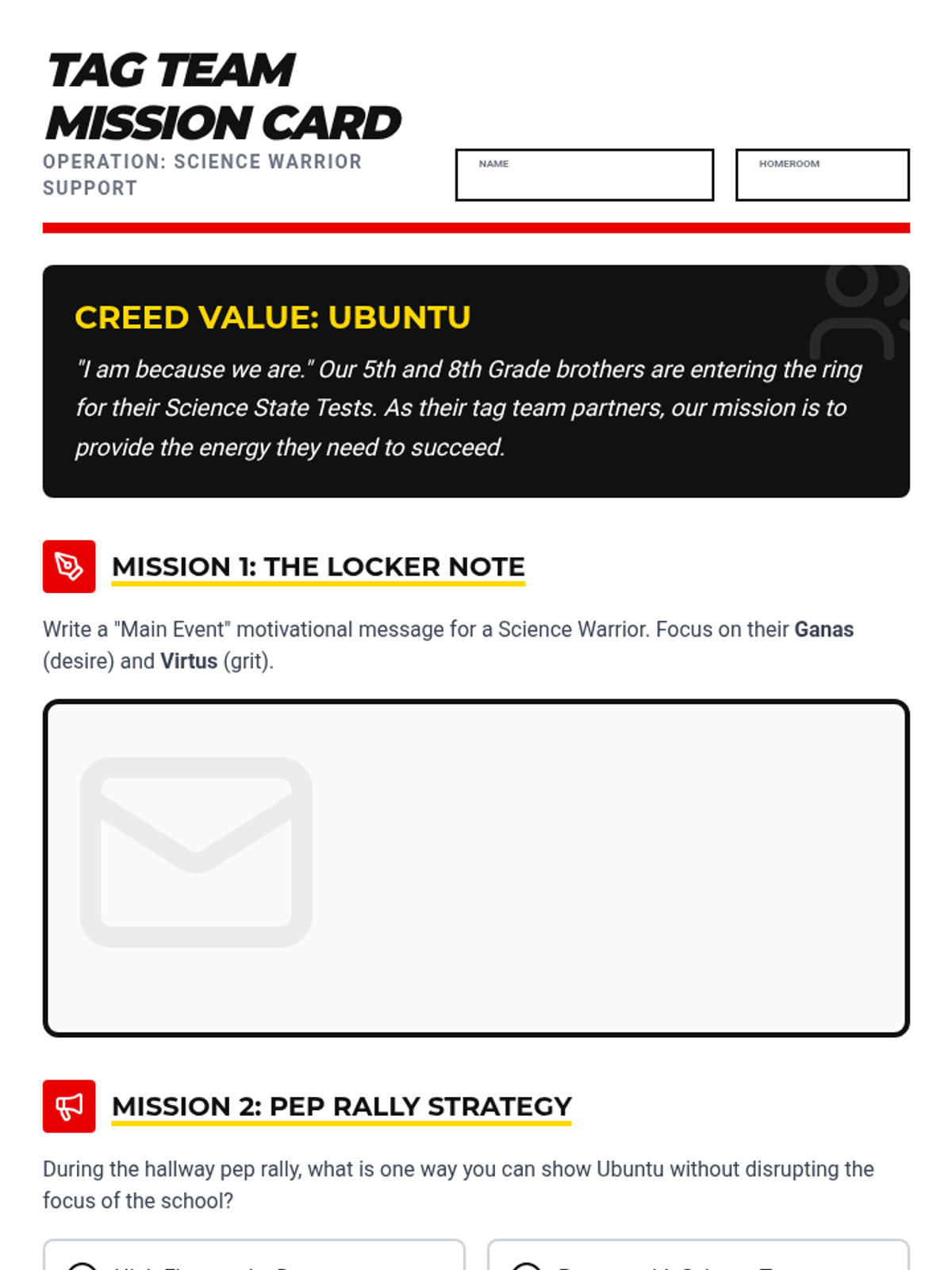
A student activity sheet focused on the Creed Value of Ubuntu, guiding students to support their peers during state science exams through motivational notes and pep rally participation.
A slide deck highlighting the real-life struggles and resilience of WWE superstars, focusing on Ganas (desire) and Virtus (grit) for the final push.
A presentation focused on test anxiety, ELA strategies, and post-test decompression using the 'Heel' and 'Technical Playbook' metaphors.
A slide deck for Autism Acceptance Week, using wrestling metaphors to celebrate neurodiversity, unique strengths (finishers), and inclusive support.
A high-energy presentation introducing the State Exam Mania theme, exploring intrinsic vs. extrinsic motivation with a side-by-side 'Belt vs. Legacy' comparison and a video placeholder.
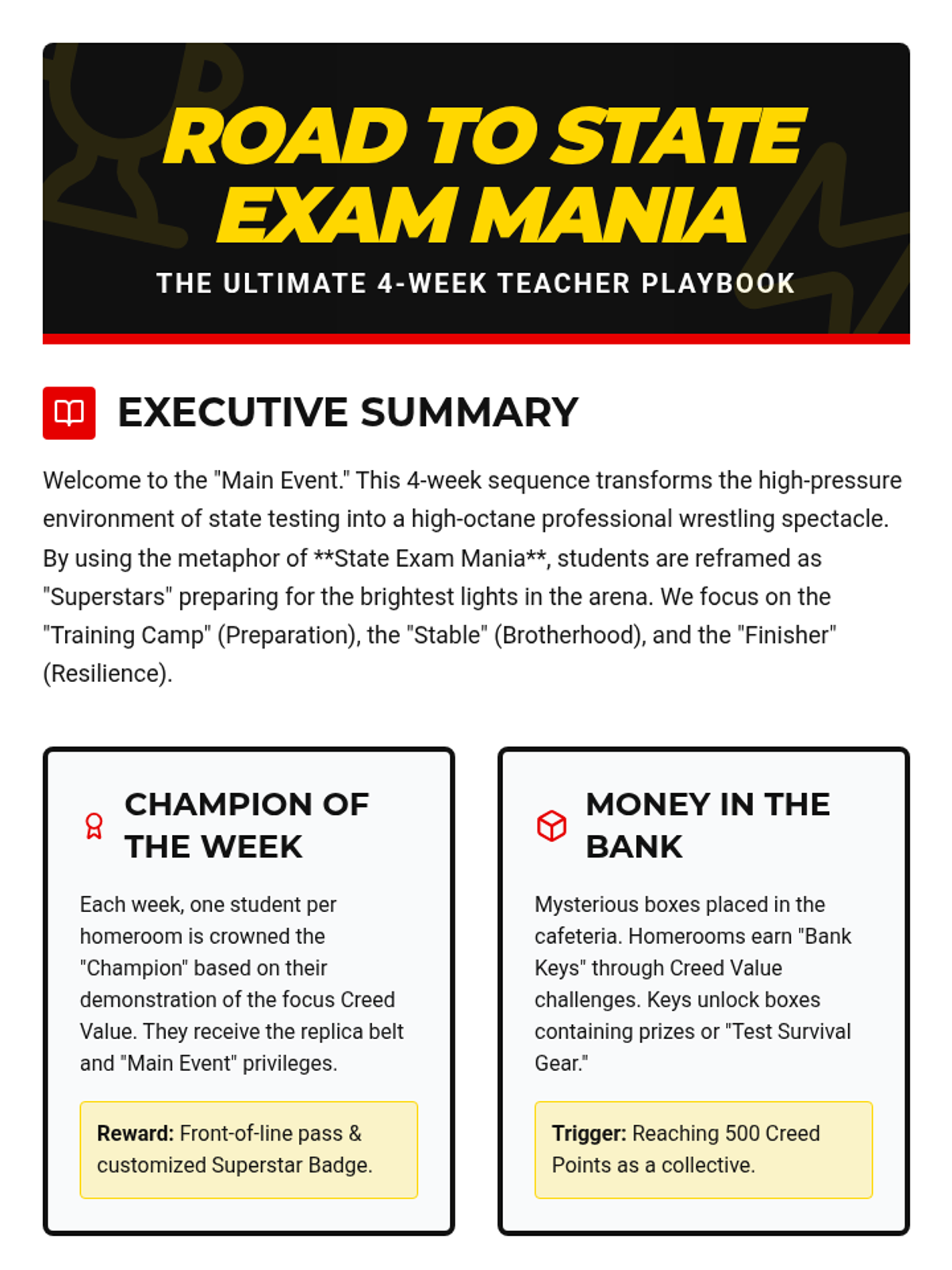
A comprehensive 4-week roadmap for teachers, outlining lesson themes, weekly Creed Value focuses, and competition details like Money in the Bank and Champion of the Week.
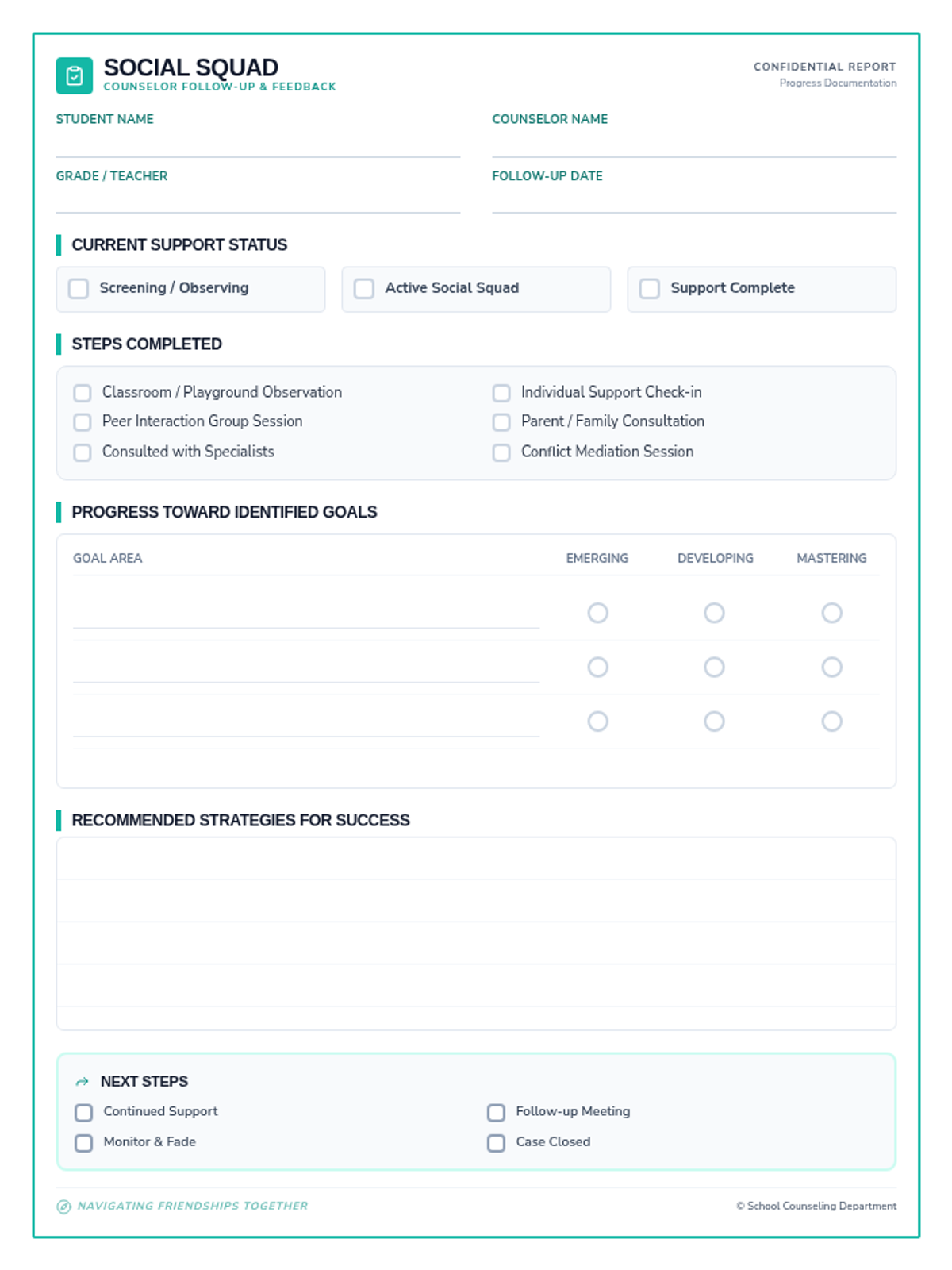
A revised school counselor follow-up and feedback form. It features a new introductory referral sentence, detailed intervention logs with dates and goals, a dedicated 'At this time' status section, and a professional closing message inviting continued collaboration. Now includes 'Outside Referral' in next steps.
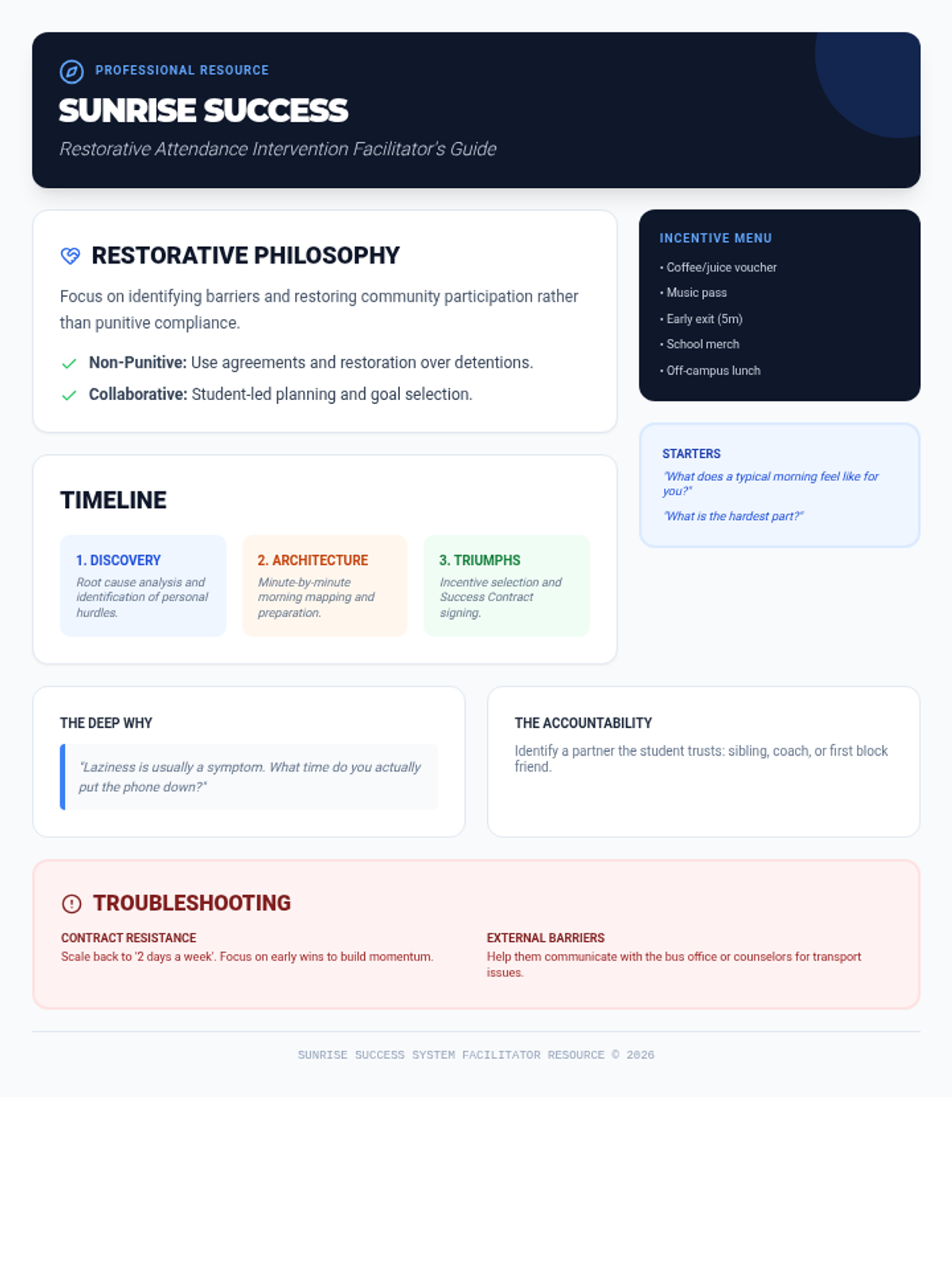
A comprehensive teacher/facilitator guide for implementing the Sunrise Success intervention. It outlines restorative philosophies, provides facilitation scripts, suggests incentive ideas, and offers troubleshooting strategies for high school attendance issues.
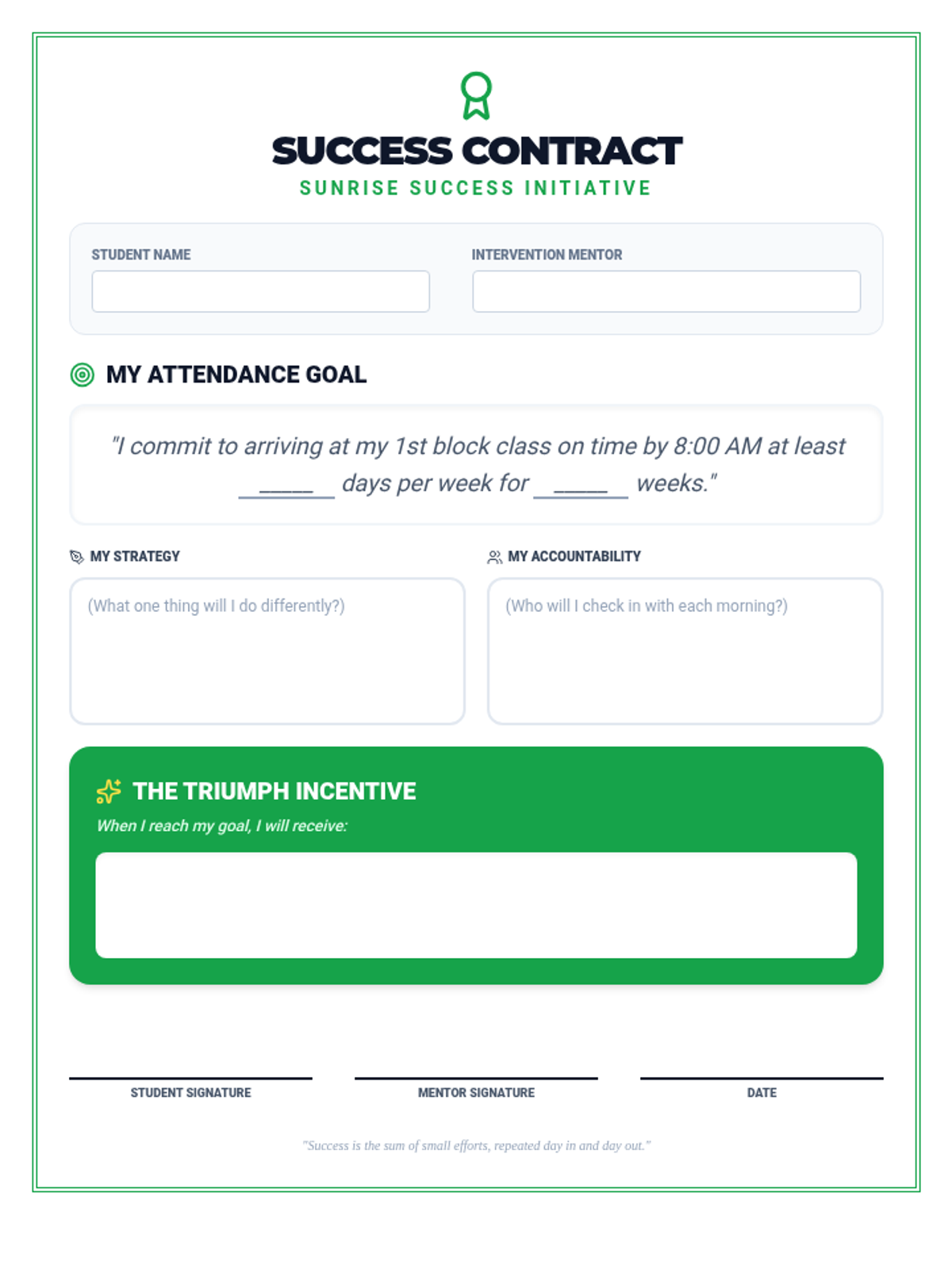
A formal 'Success Contract' for high school students completing an attendance intervention. It includes sections for defining goals, specific morning strategies, accountability partners, and earned incentives.
Presentation for the final session of the Sunrise Success intervention. It focuses on the psychology of incentives, reward selection, and the importance of daily accountability check-ins for high school students.
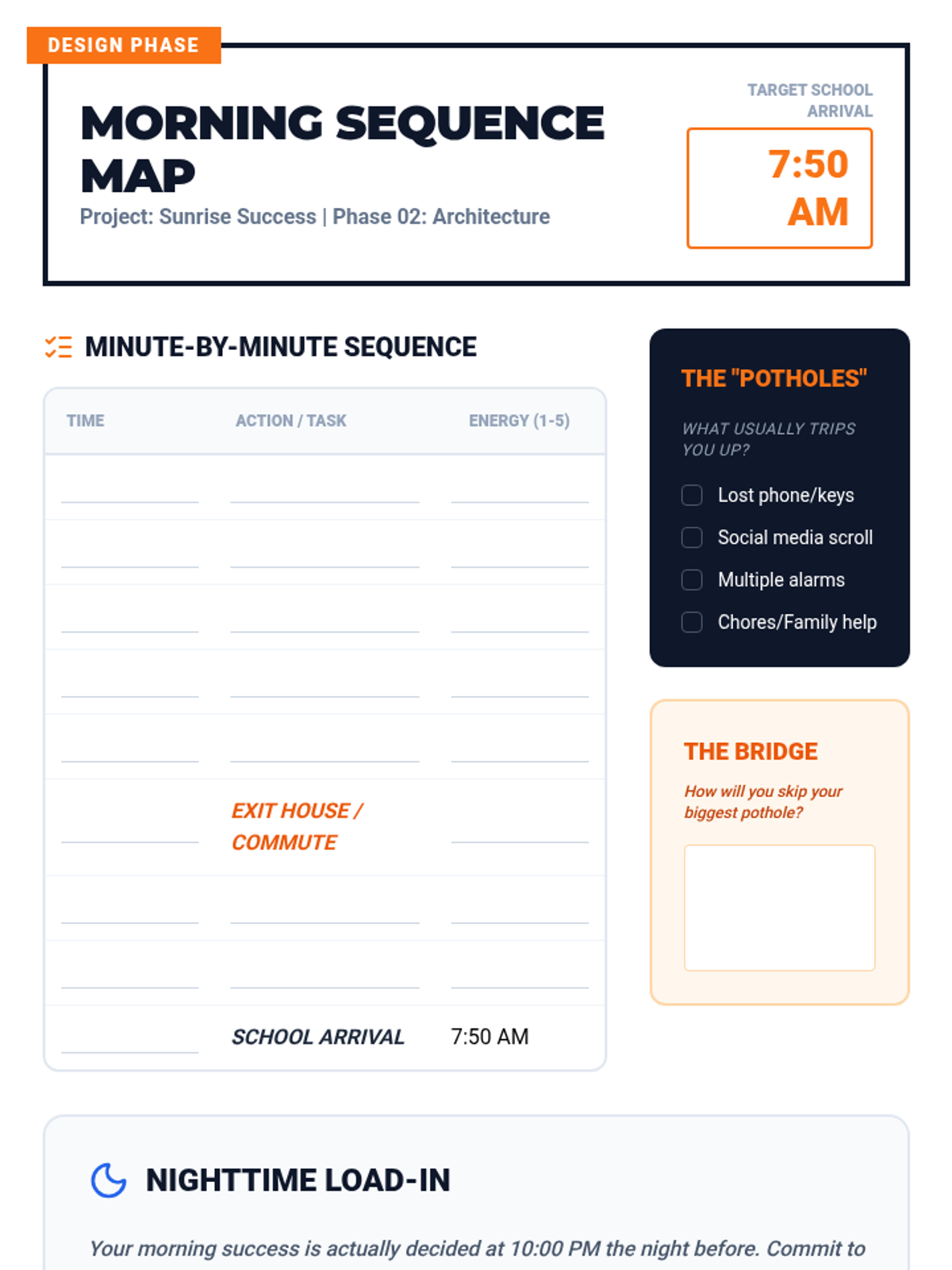
A structured worksheet for high school students to map out their morning routine. It includes a minute-by-minute planning table, identification of 'potholes' (barriers), and a nighttime preparation checklist.
Presentation for the second session of the Sunrise Success intervention. It teaches students practical time management techniques like backward design and decision fatigue reduction to optimize their morning routines.
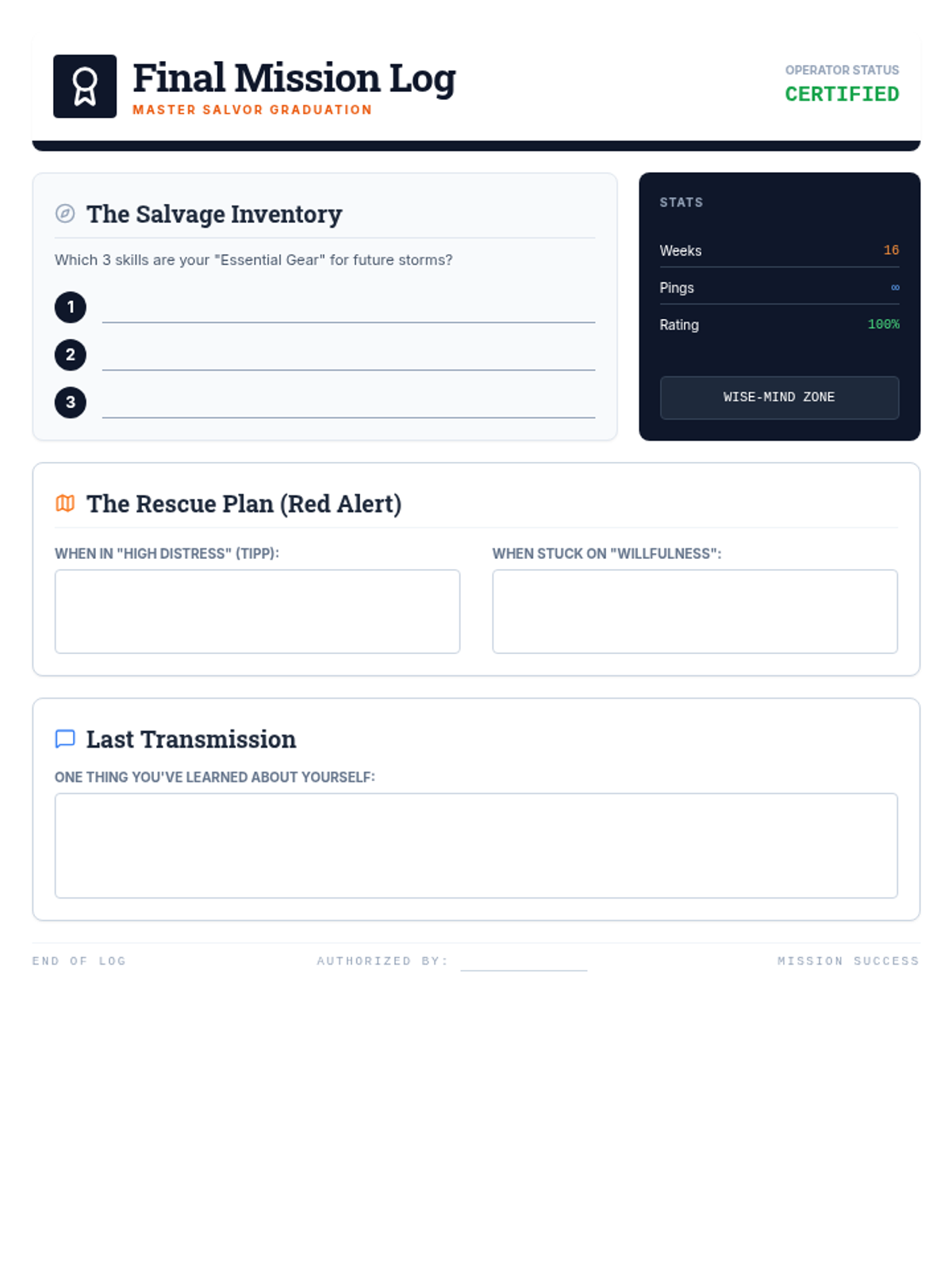
A student graduation log and review sheet for the final week of the Survival and Salvage DBT program. Includes a skill inventory, red alert planning, and a final self-reflection. Revised to fix page boundaries and line visibility.
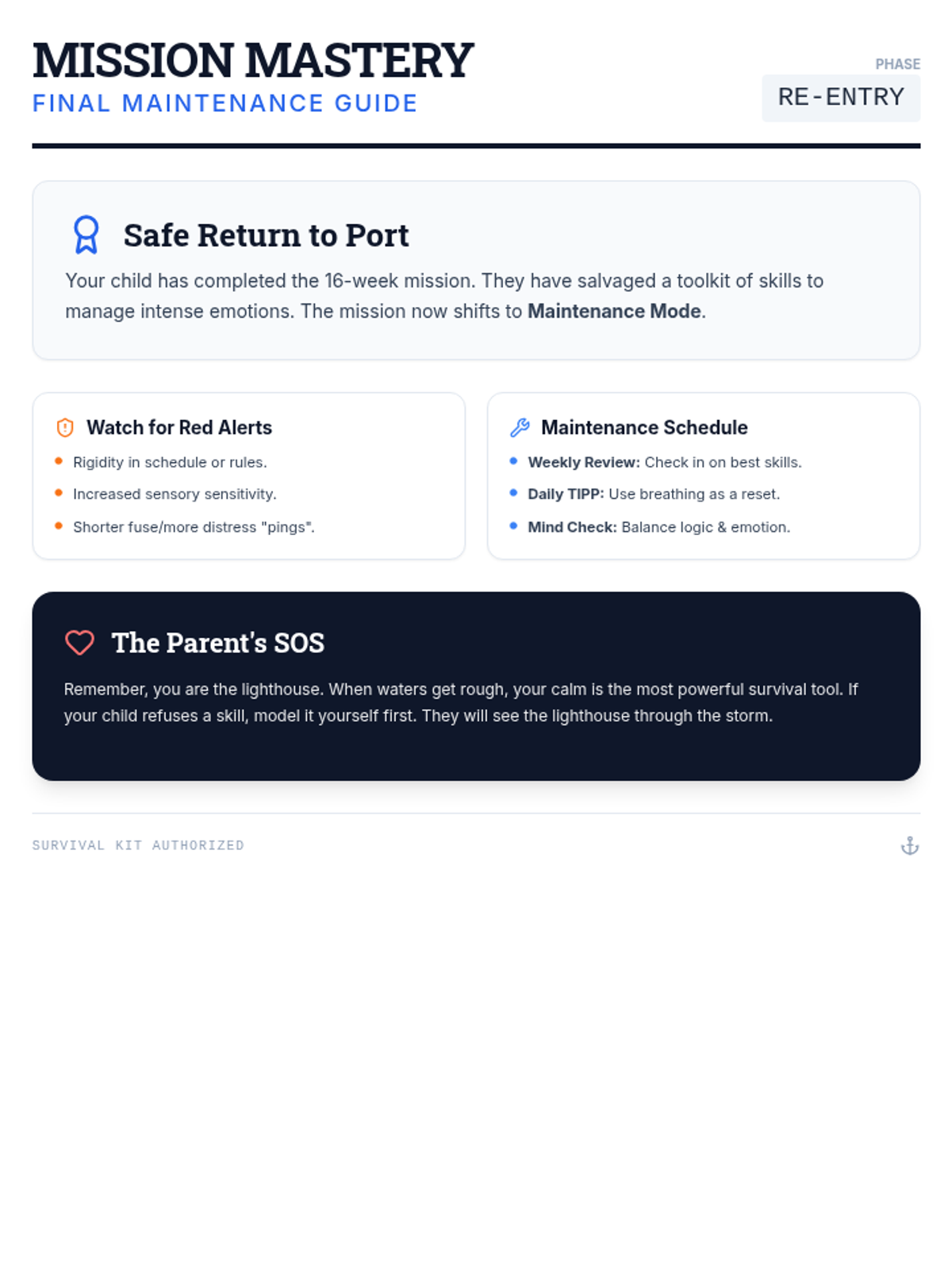
Parent guide for the final week of the Survival and Salvage DBT program, focusing on post-program maintenance and identifying early warning signs for skill reinforcement. Revised to fit a single page.
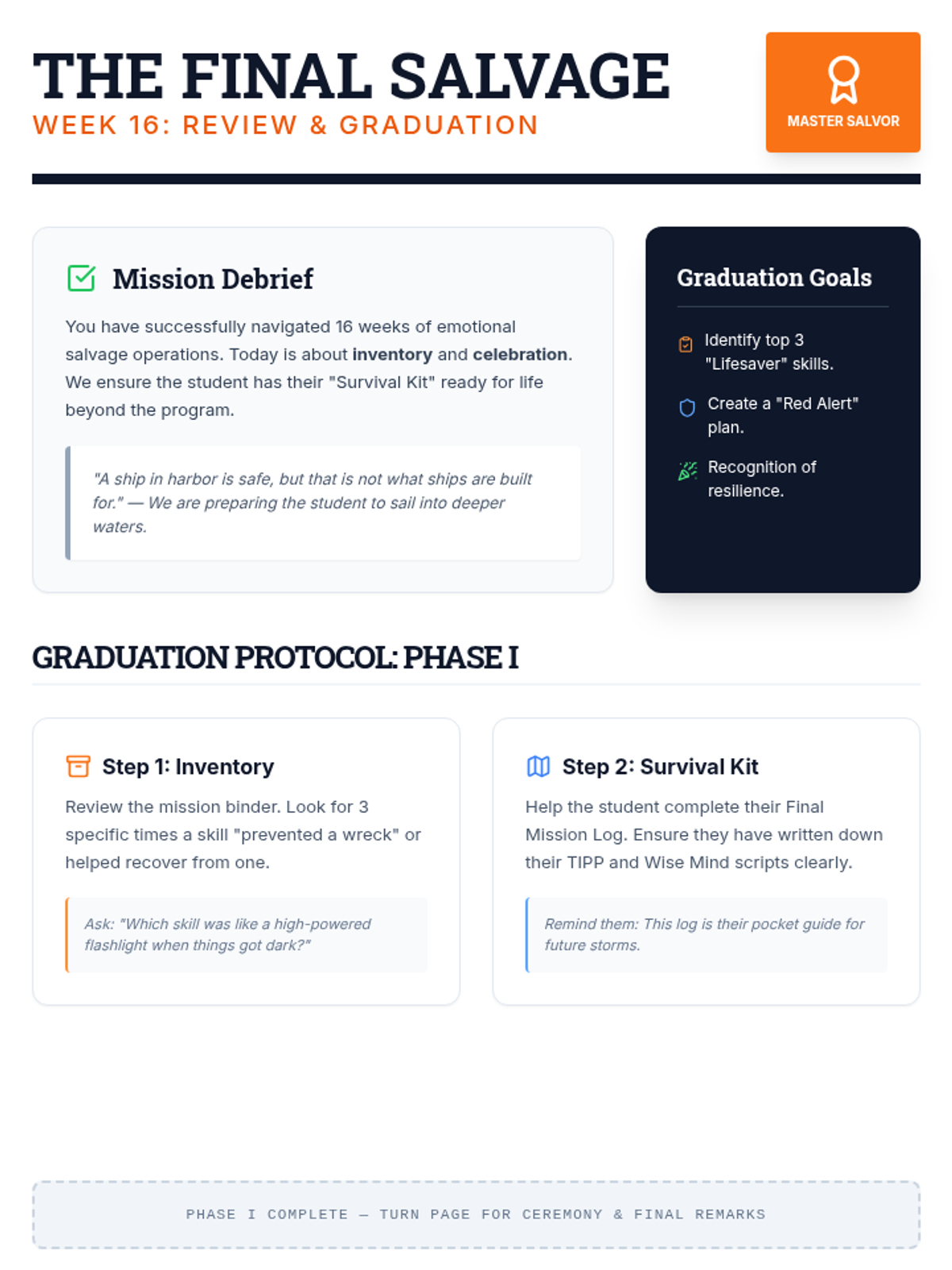
Counselor guide for the final week of the Survival and Salvage DBT program, covering the review of skills, graduation ceremony protocols, and maintenance planning. Revised to fix protocol splitting and layout issues.
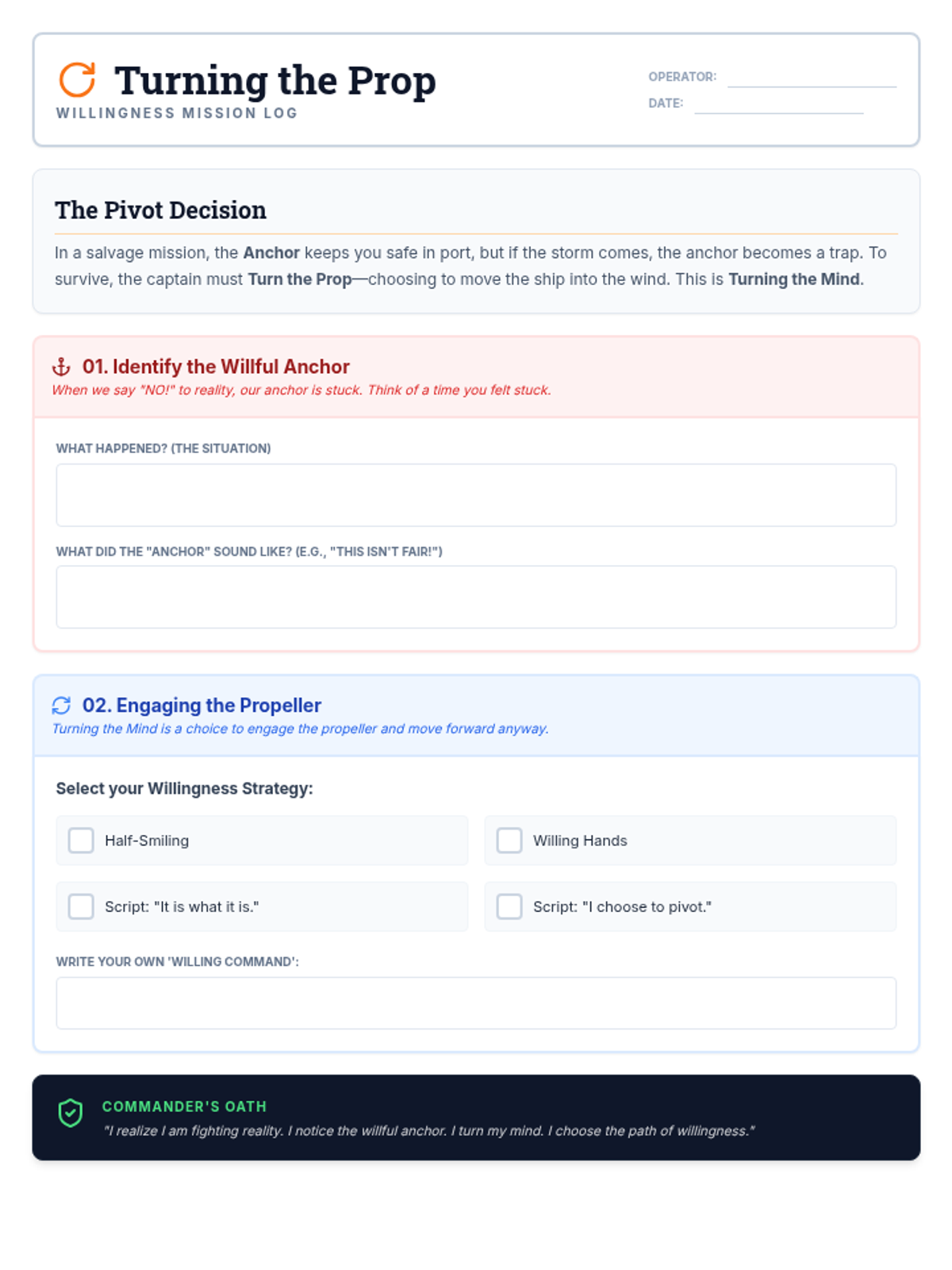
A student-facing worksheet for practicing the Turning the Mind skill using the 'Turning the Prop' metaphor. Includes identification of the 'Willful Anchor' and selection of 'Willingness Strategies'. Revised for single-page layout and white writing areas.
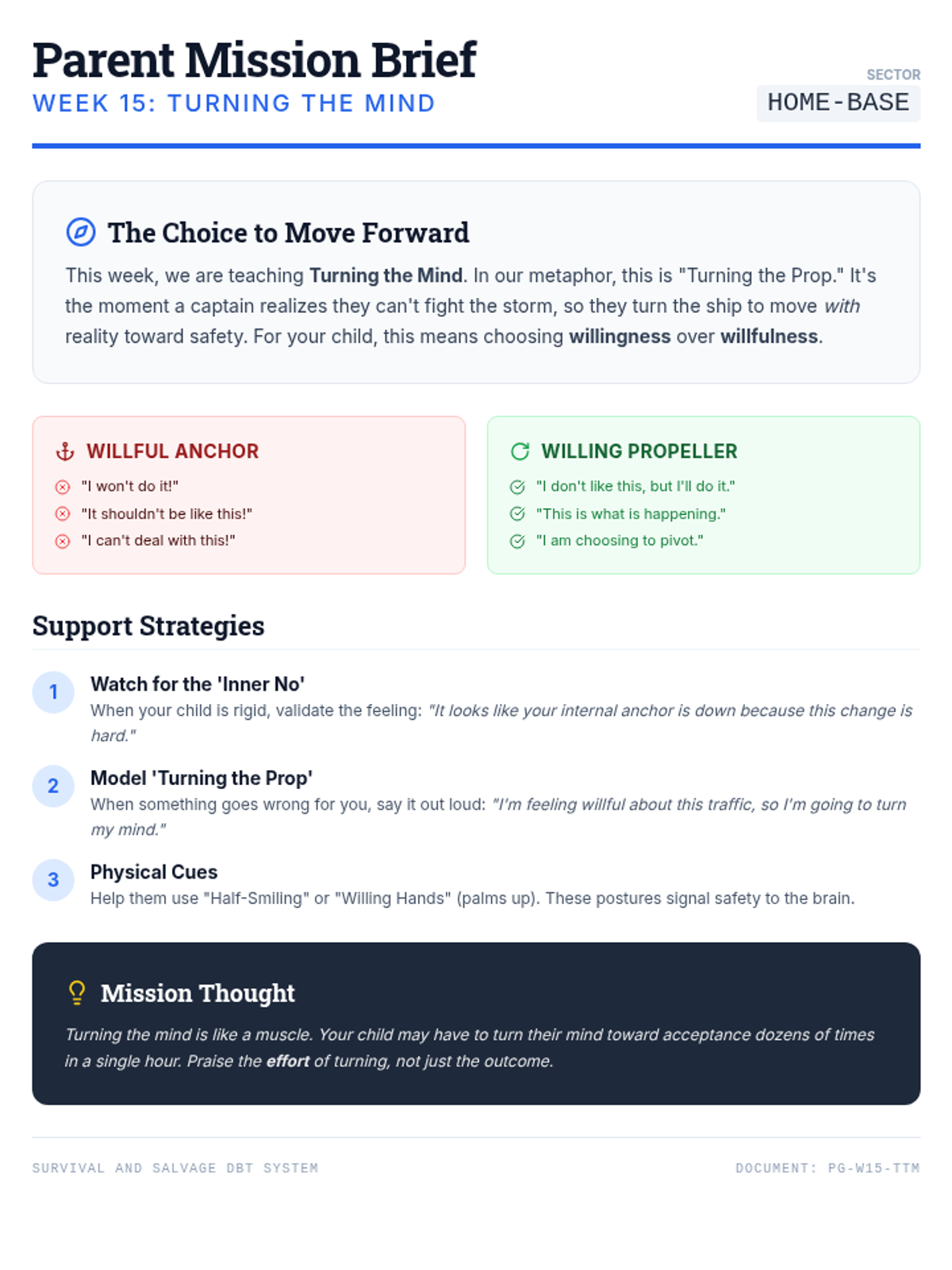
Parent guide for Week 15 of the Survival and Salvage DBT program, explaining the Turning the Mind skill using the 'Turning the Prop' metaphor for autism-friendly communication at home. Revised to fit a single page.
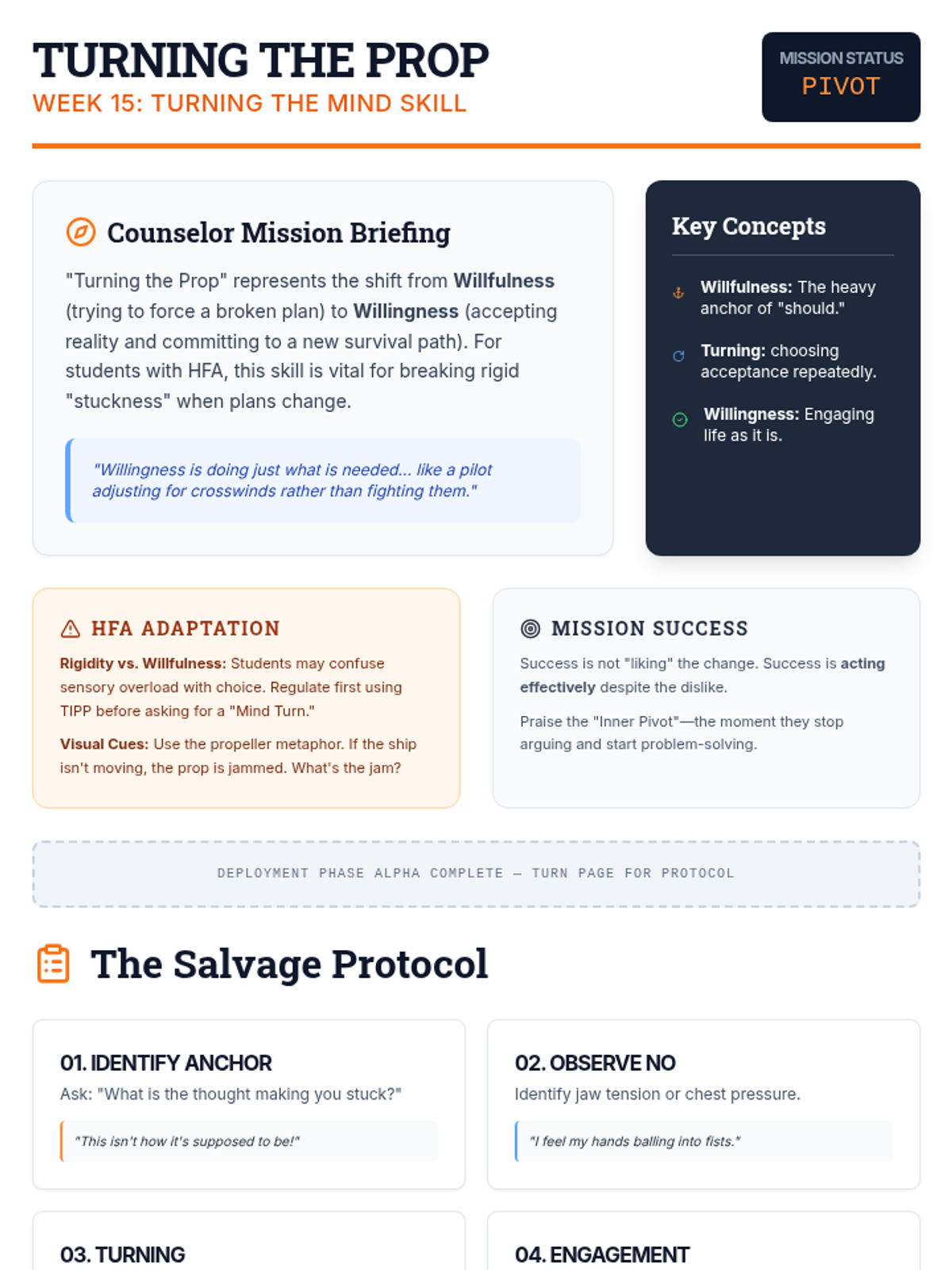
Counselor guide for Week 15 of the Survival and Salvage DBT program, focusing on the Turning the Mind skill using the 'Turning the Prop' metaphor for shifting from willfulness to willingness. Revised to fix page break issues and add notes space.
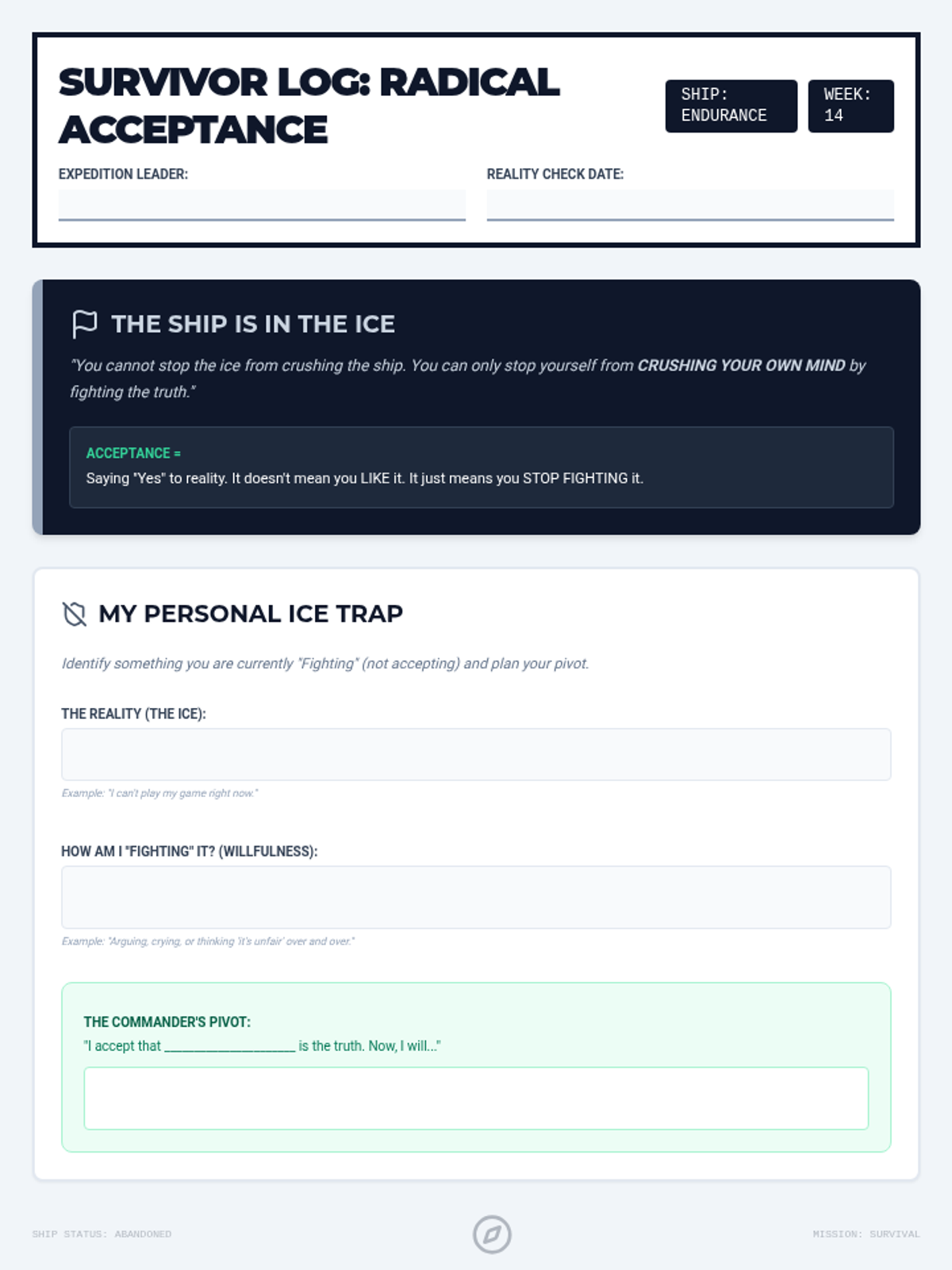
A student-facing worksheet for practicing Radical Acceptance using Shackleton's Endurance story. Includes an 'Ice Trap' analysis and a 'Commander's Pivot' for finding new solutions.
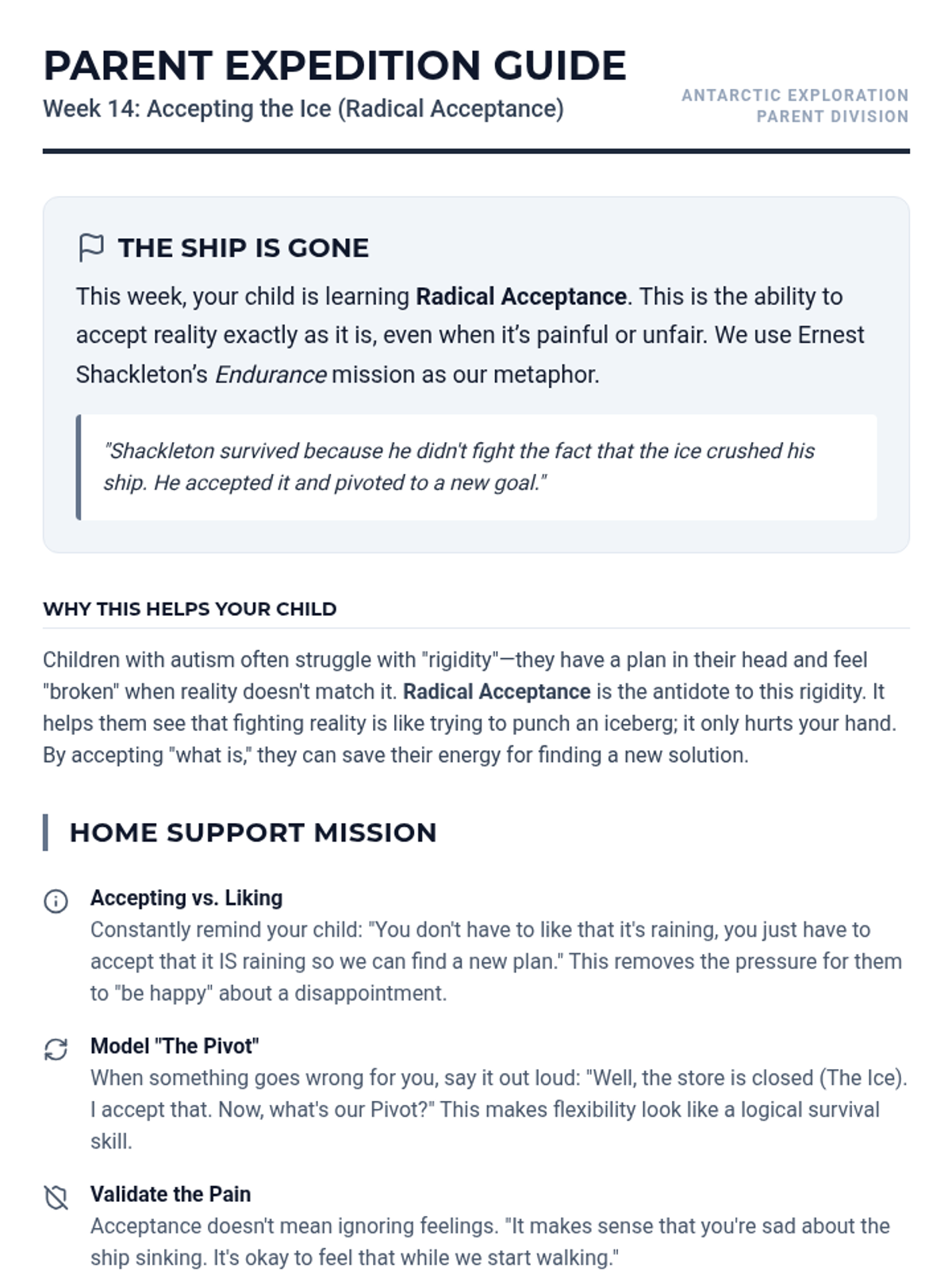
Parent guide for Week 14 of the Survival and Salvage DBT program, explaining Radical Acceptance using Shackleton's Endurance story.
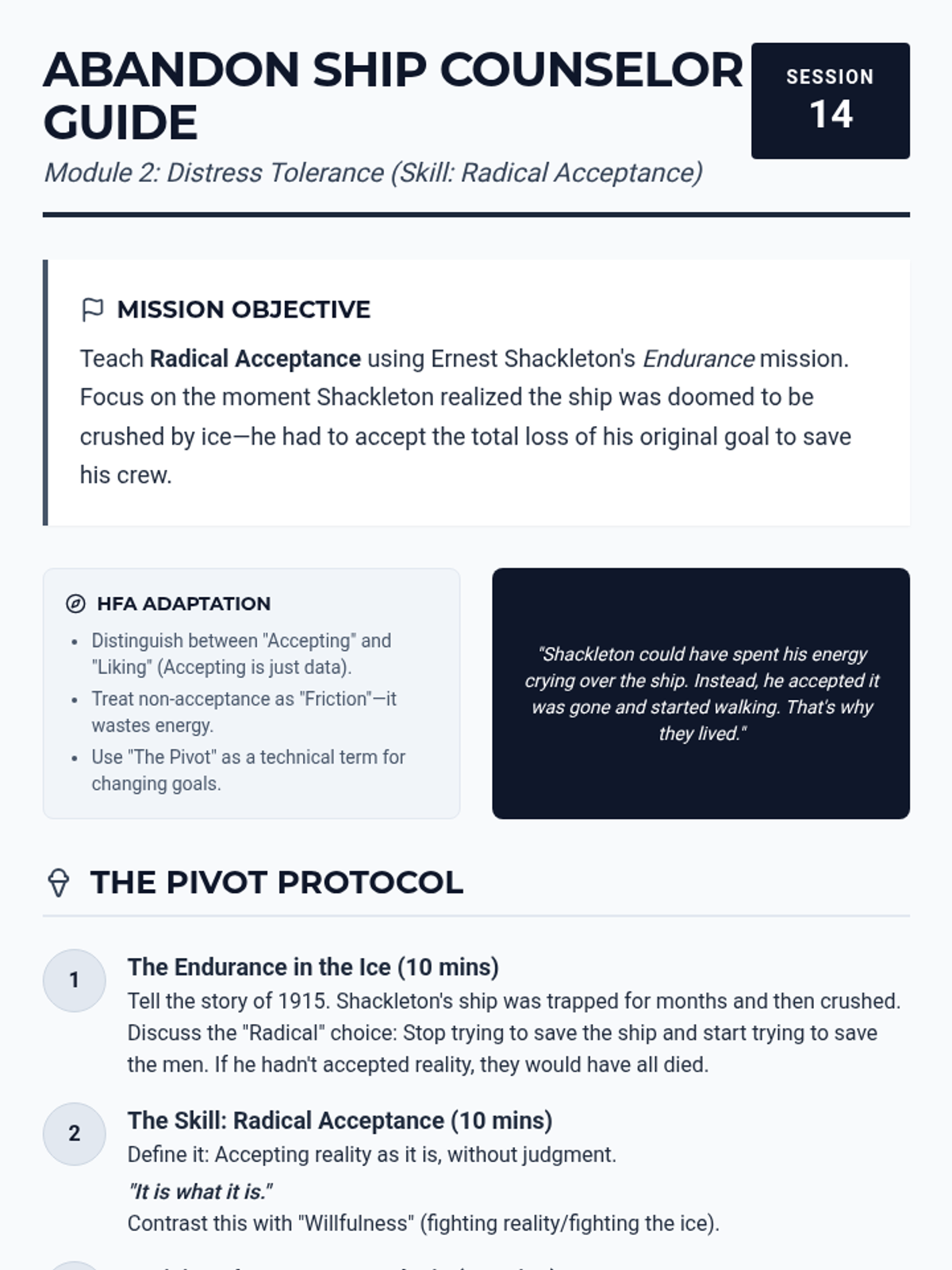
Counselor guide for Week 14 of the Survival and Salvage DBT program, focusing on Radical Acceptance using Shackleton's Endurance story.
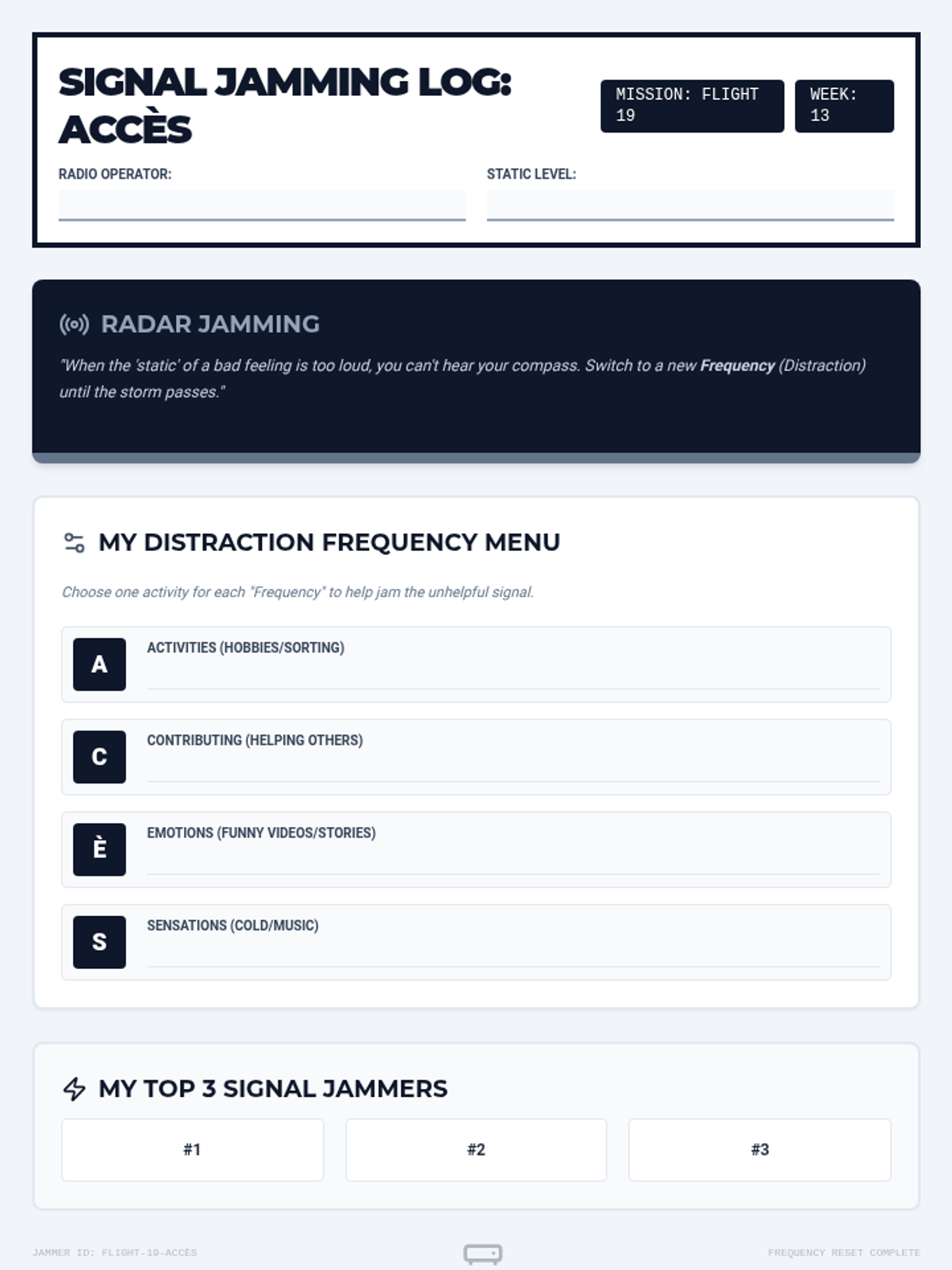
A student-facing worksheet for practicing Distract and ACCÈS skills using radar jamming metaphors. Includes a selection of activities for different distraction modes.
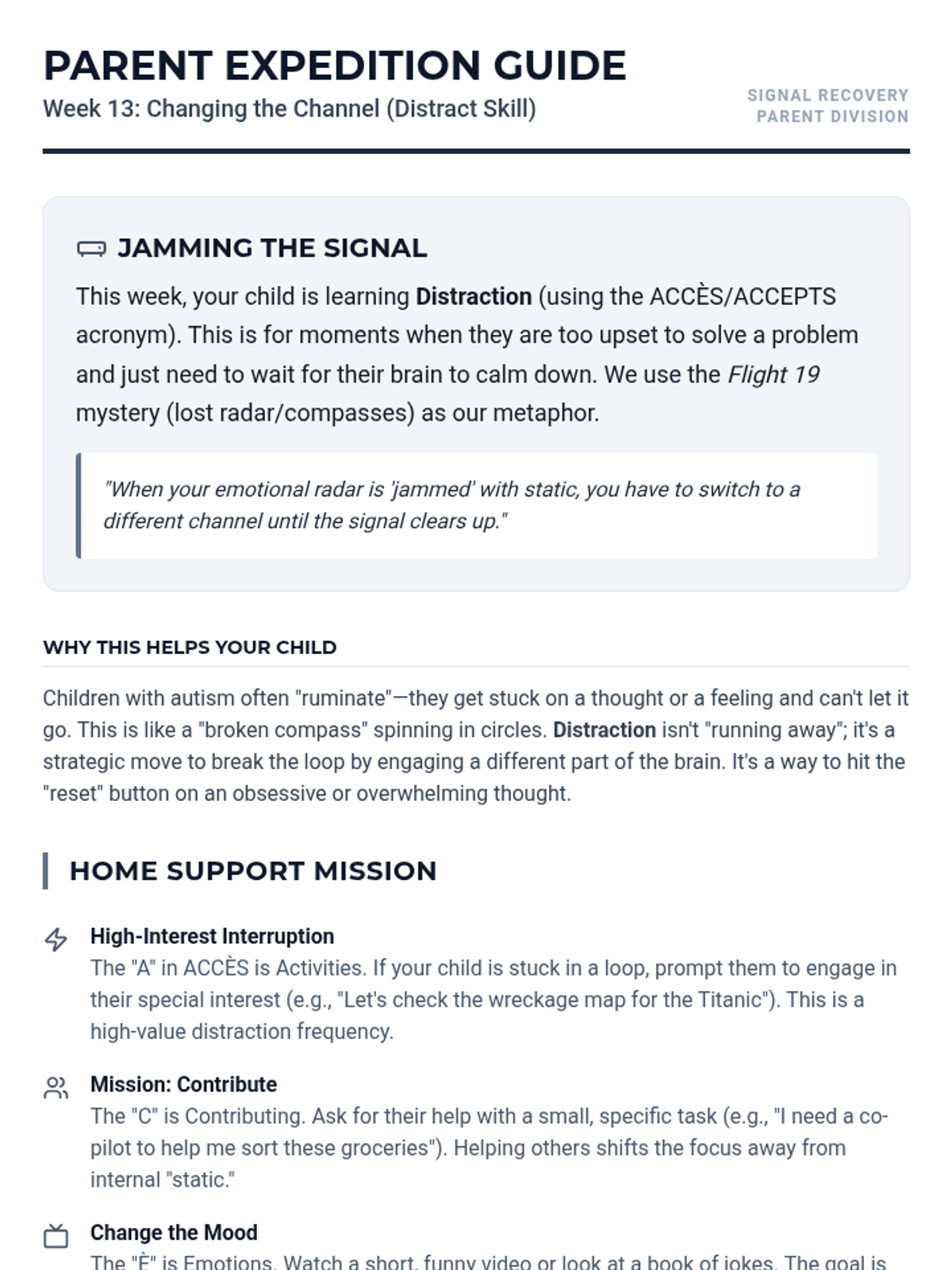
Parent guide for Week 13 of the Survival and Salvage DBT program, explaining Distraction and ACCÈS skills using radar jamming metaphors.
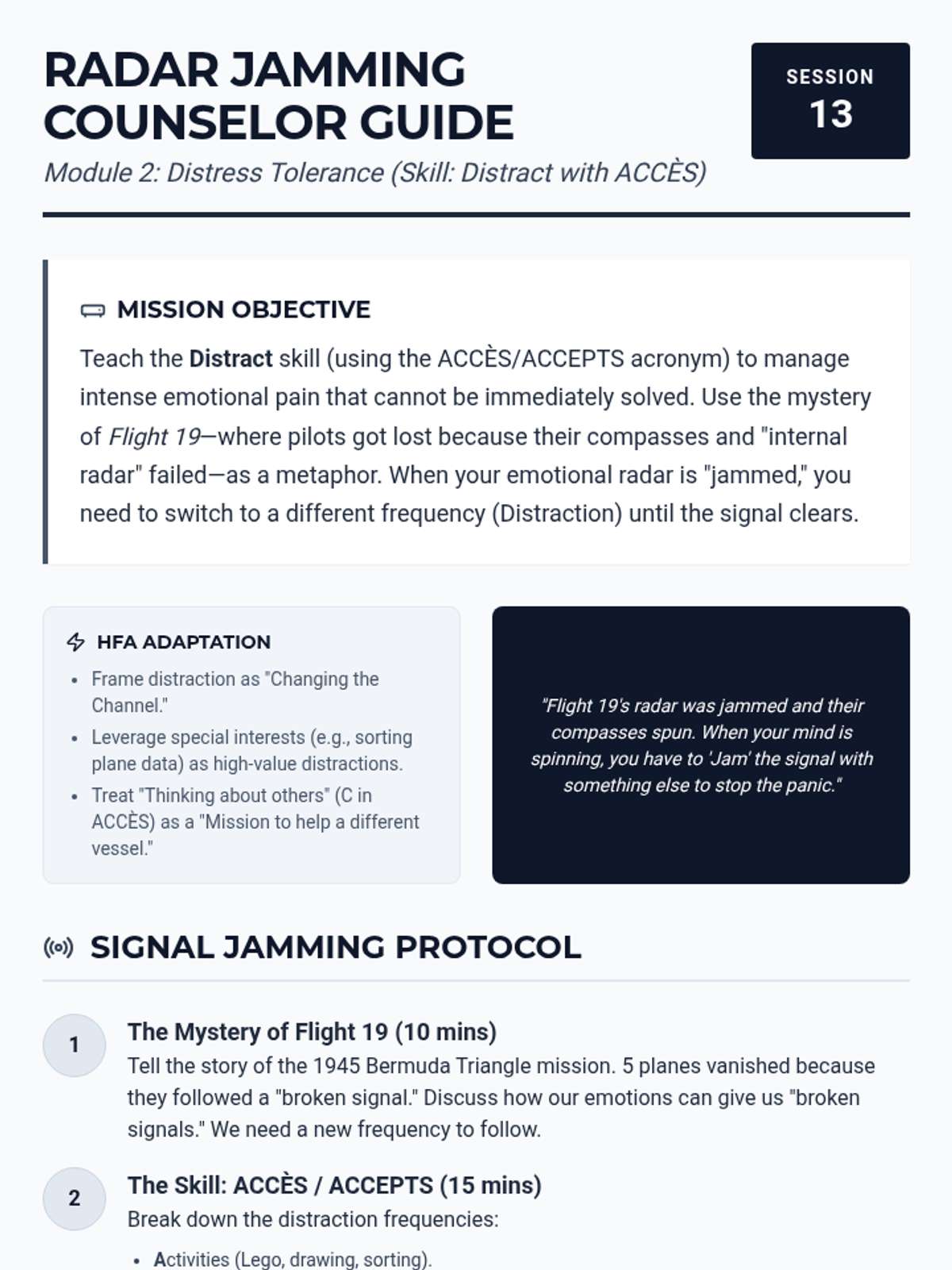
Counselor guide for Week 13 of the Survival and Salvage DBT program, focusing on Distract and ACCÈS skills using radar jamming metaphors.
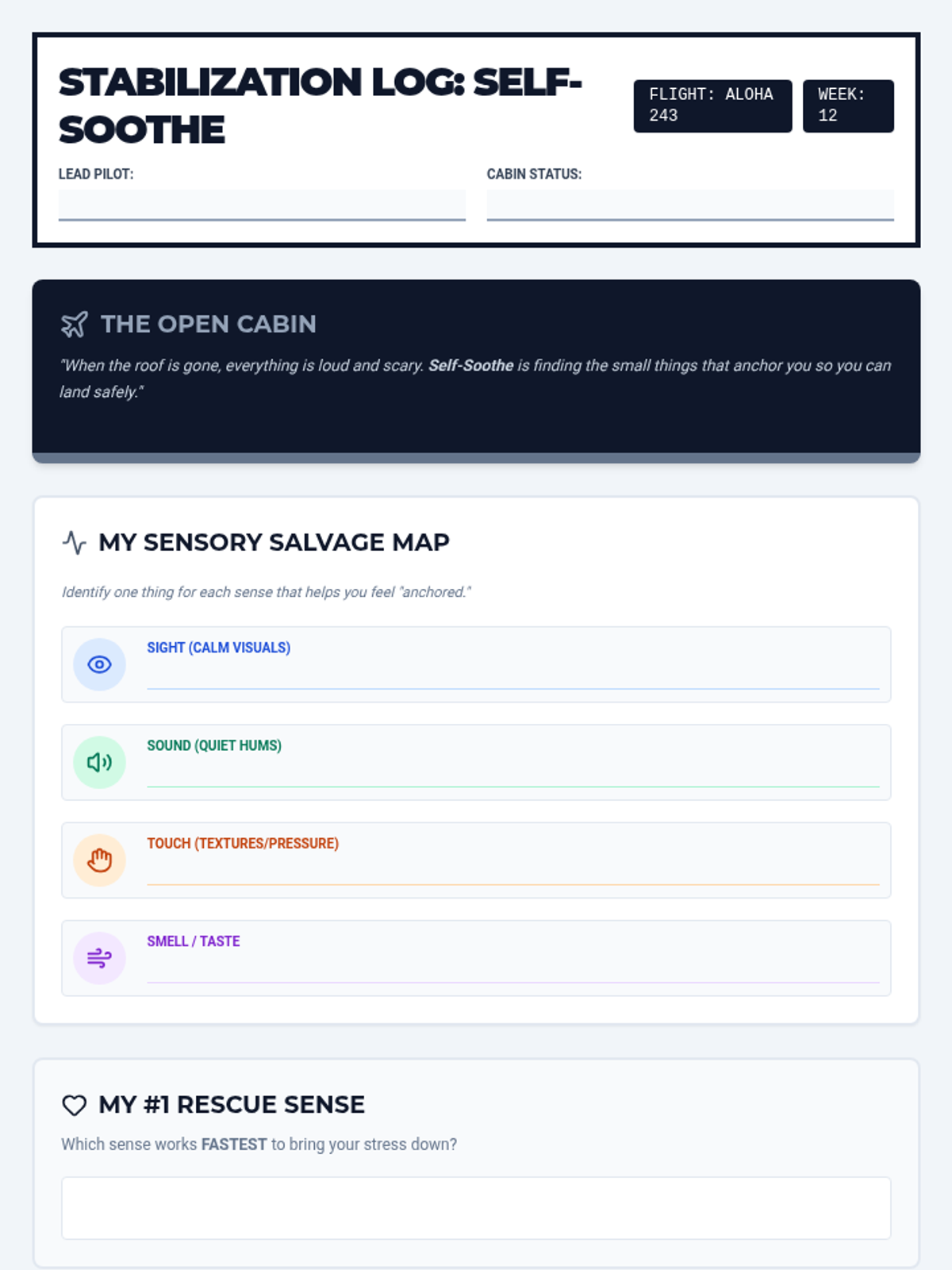
A student-facing worksheet for practicing the Self-Soothe skill using flight survival metaphors. Includes a mapping of the 5 senses and identification of a primary rescue sense.
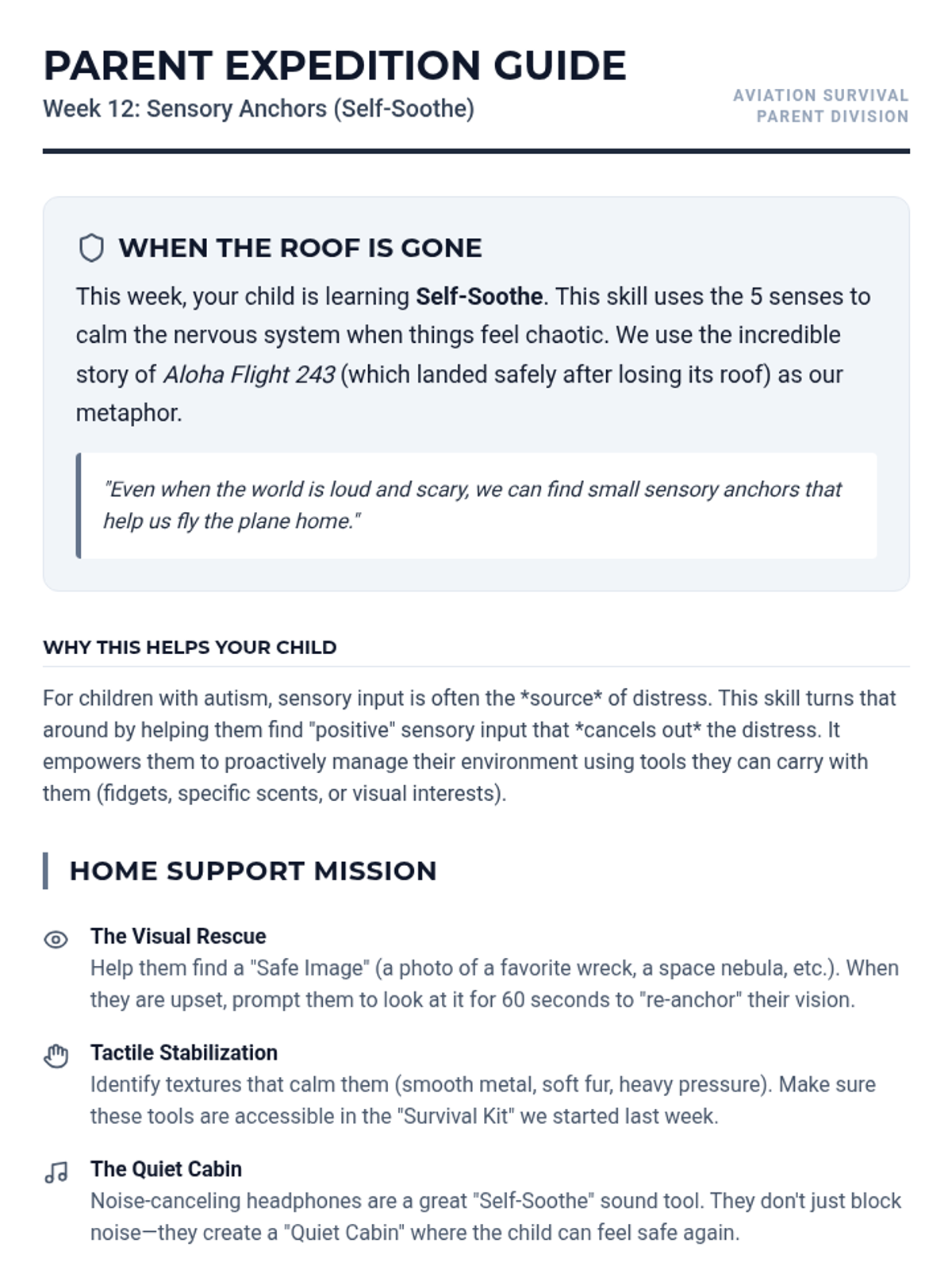
Parent guide for Week 12 of the Survival and Salvage DBT program, explaining the Self-Soothe skill using flight survival metaphors.
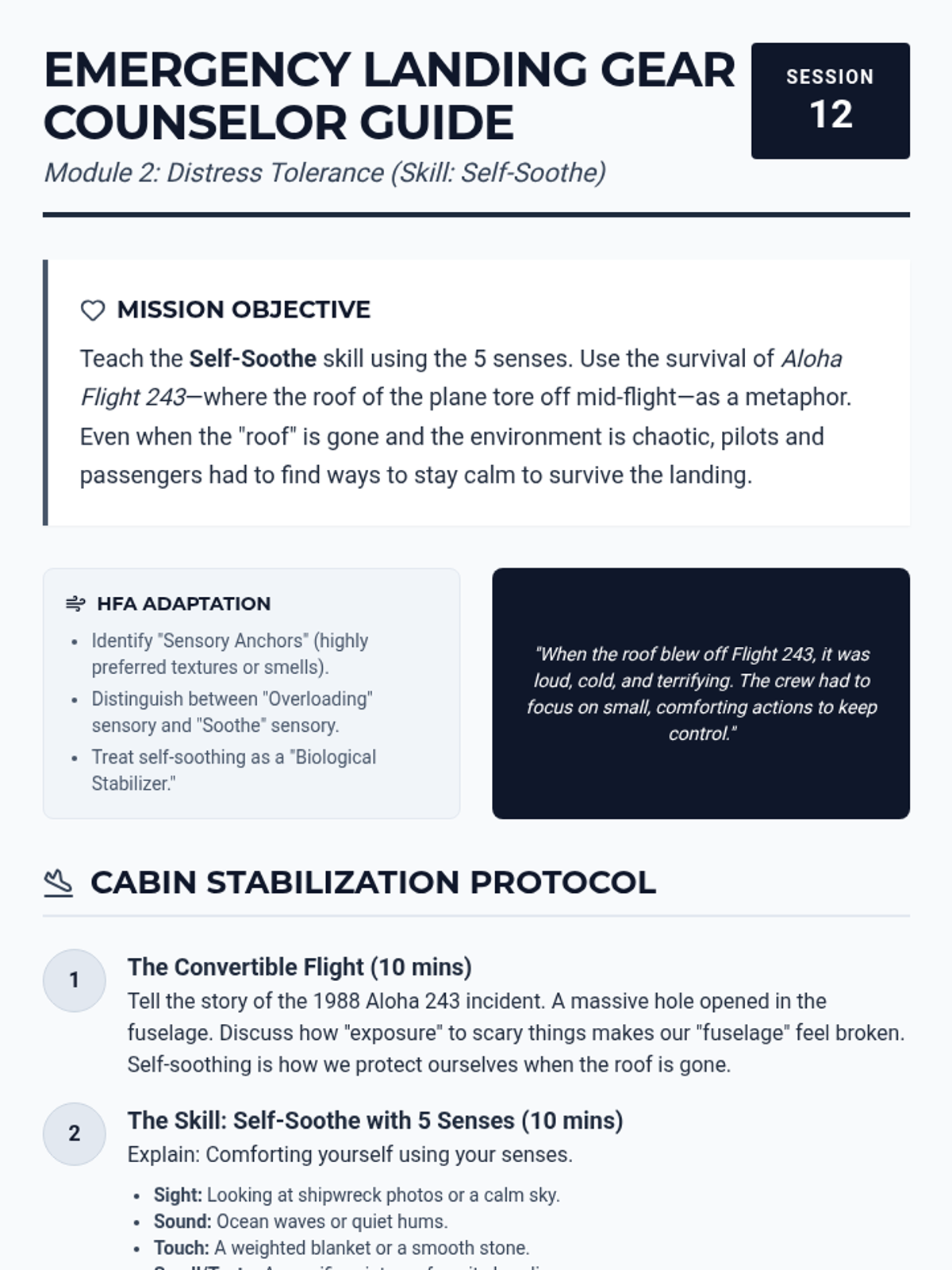
Counselor guide for Week 12 of the Survival and Salvage DBT program, focusing on the Self-Soothe skill using the Aloha Flight 243 survival story.
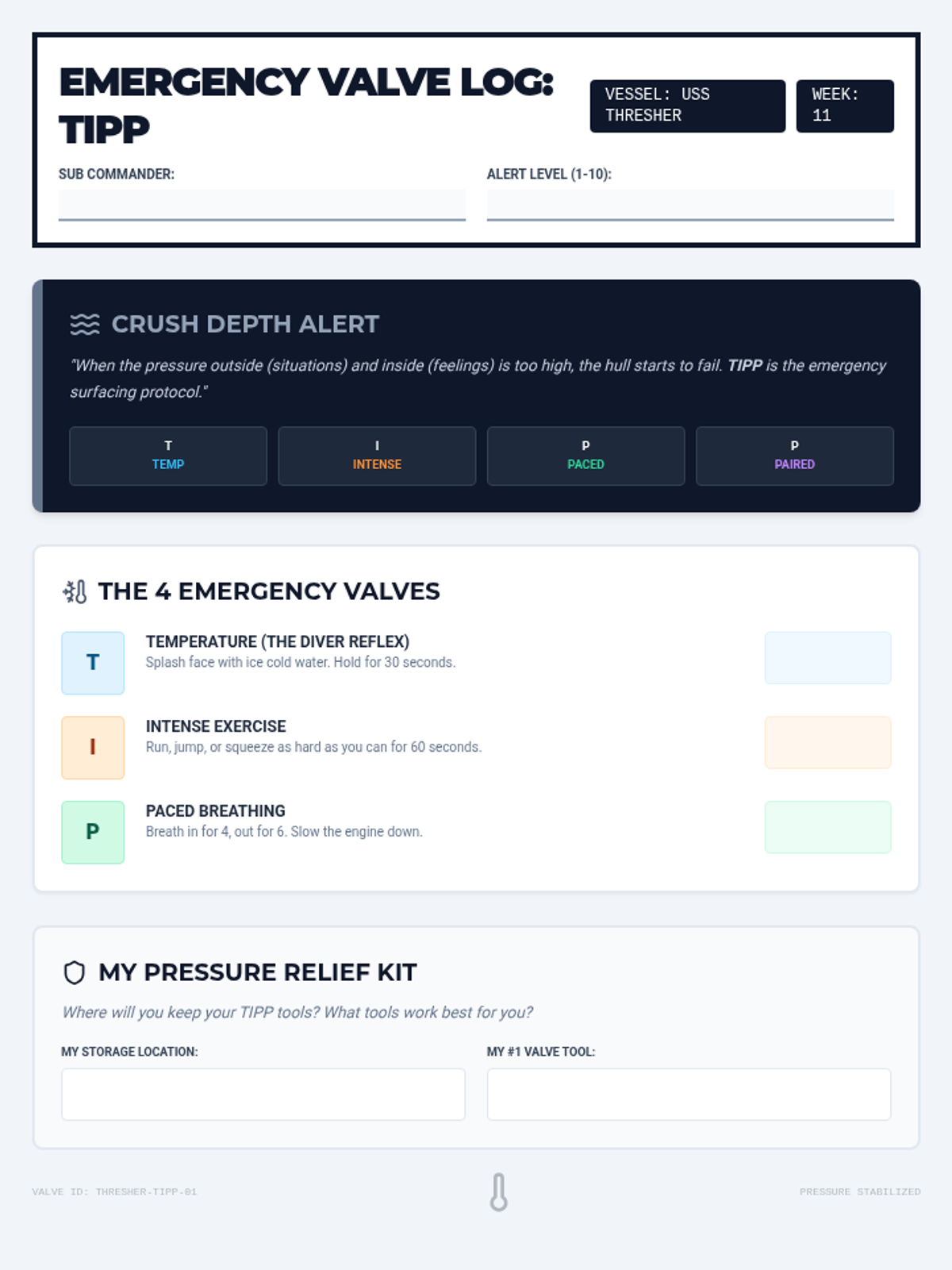
A student-facing worksheet for practicing the TIPP skill using submarine pressure metaphors. Includes a breakdown of T, I, and P (Breathing and Relaxation).
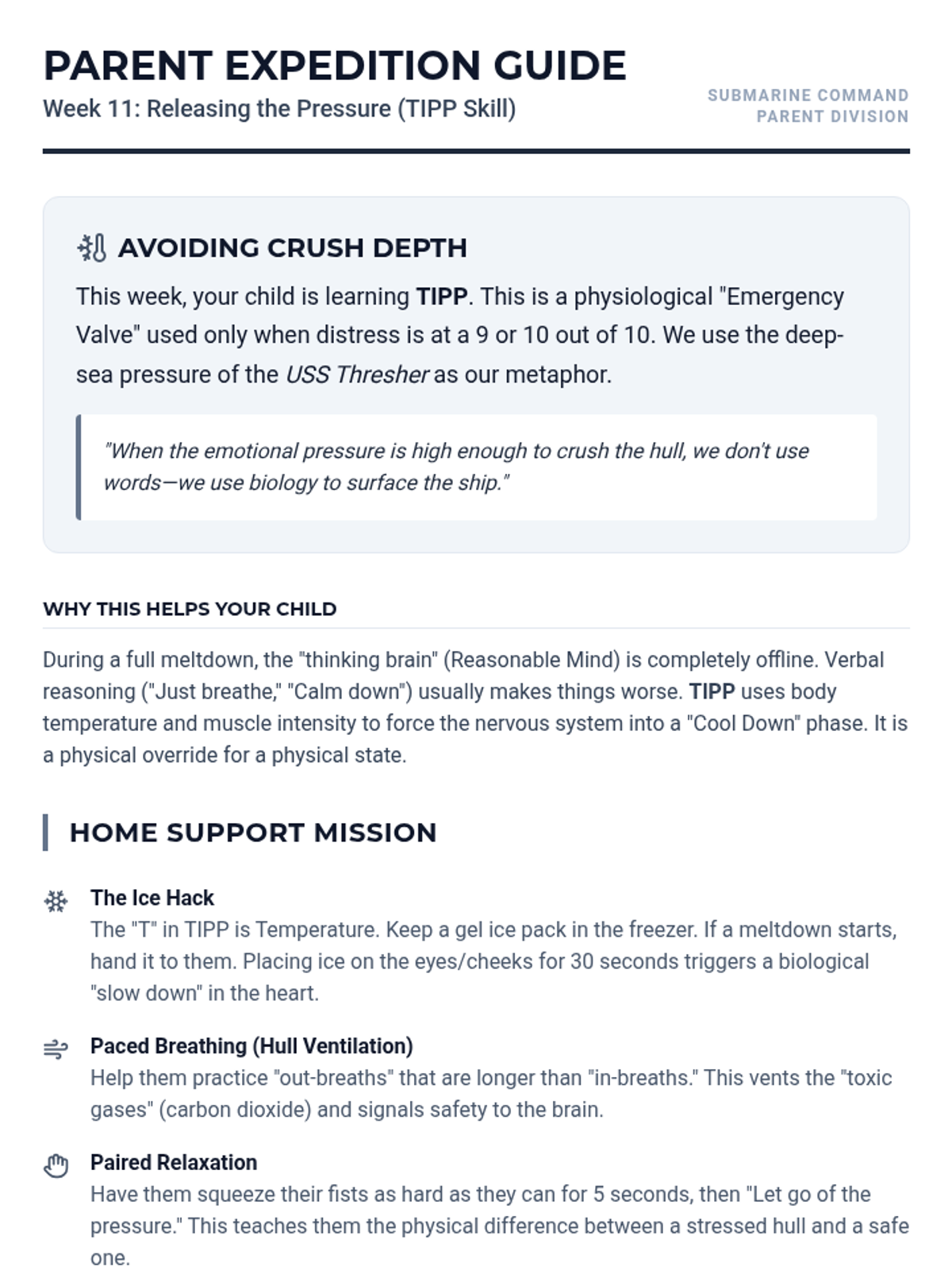
Parent guide for Week 11 of the Survival and Salvage DBT program, explaining the TIPP skill using deep-sea pressure metaphors.
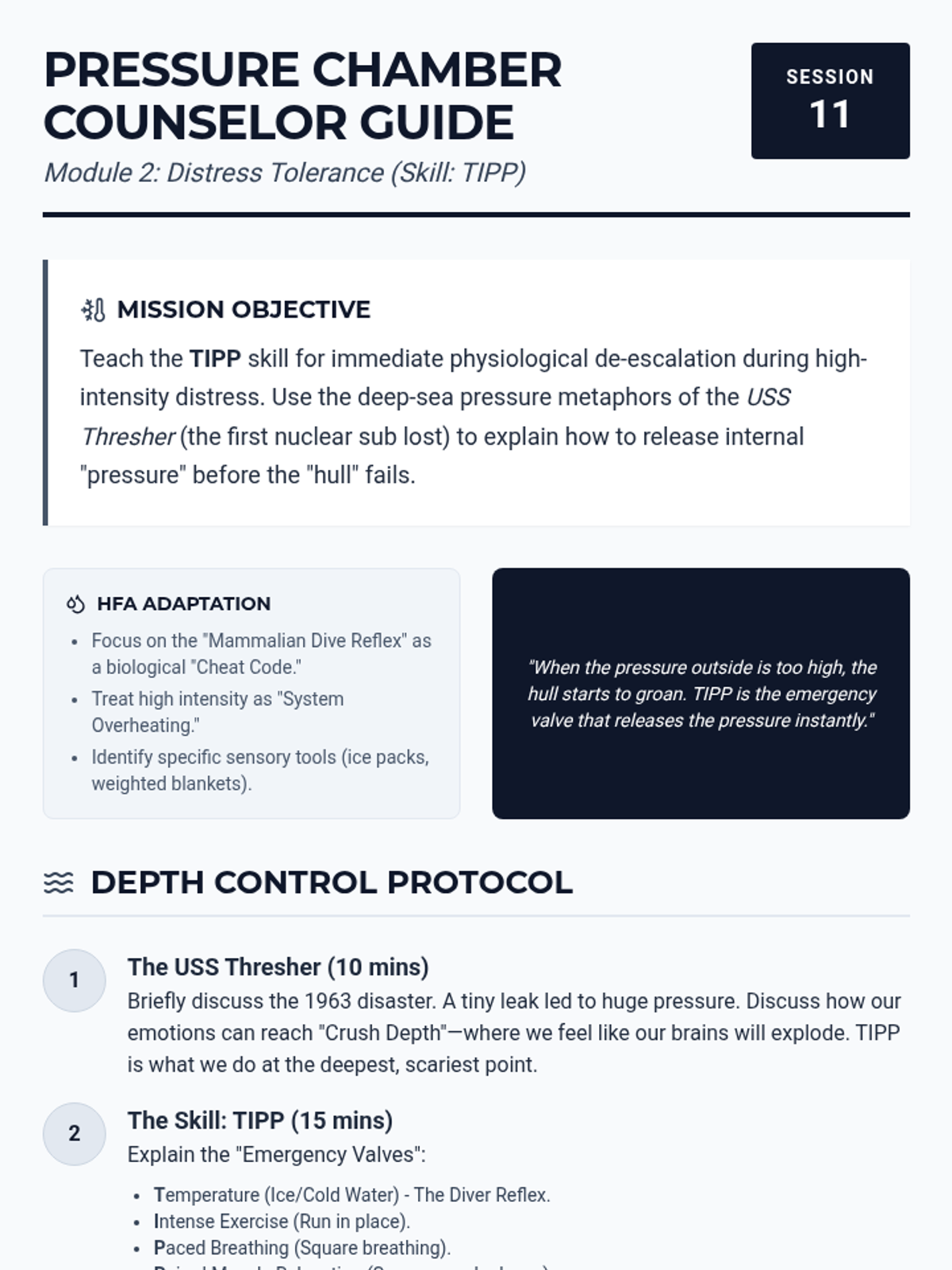
Counselor guide for Week 11 of the Survival and Salvage DBT program, focusing on the TIPP skill using submarine pressure metaphors.
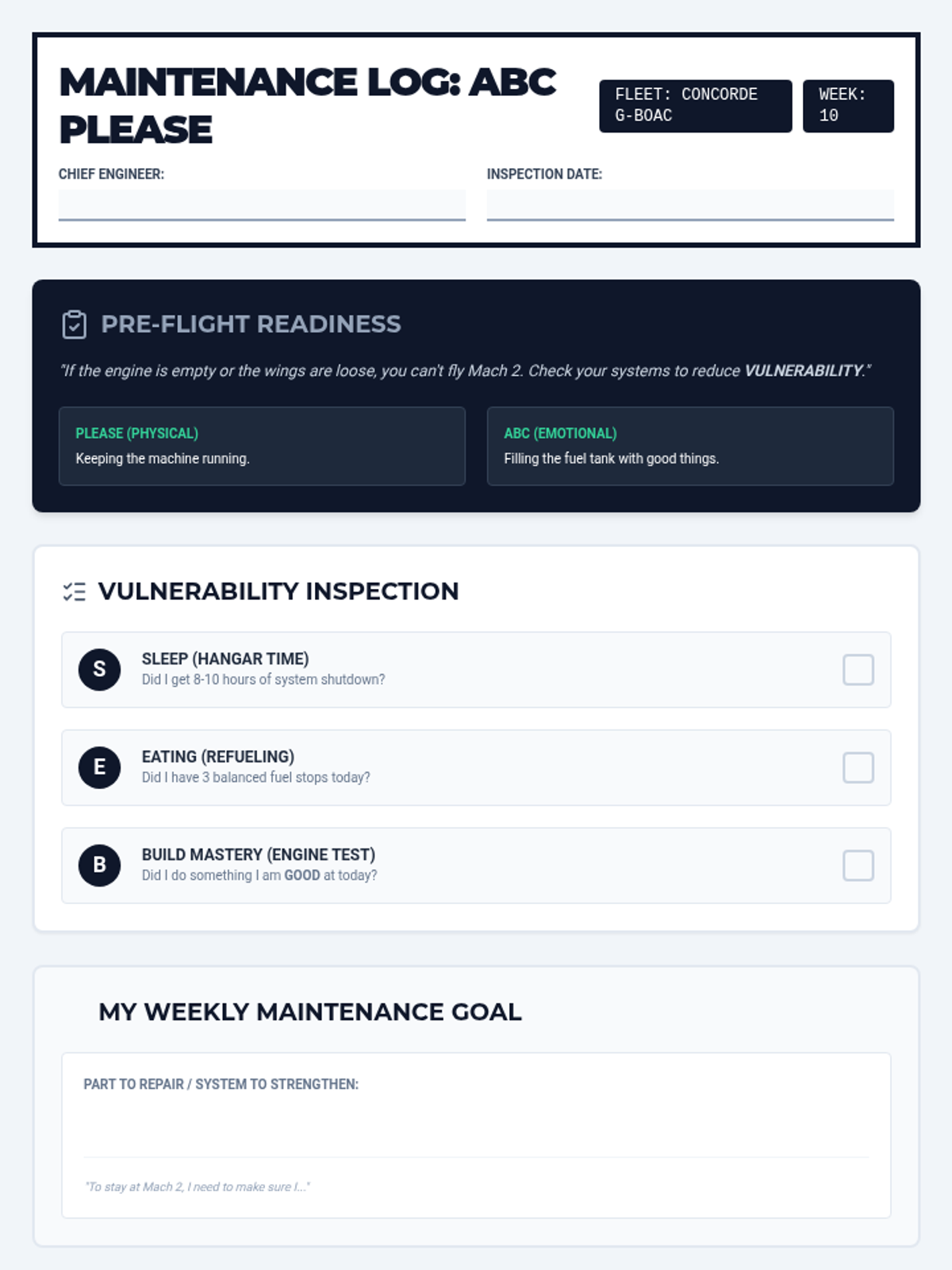
A student-facing worksheet for practicing the ABC PLEASE skill using Concorde maintenance metaphors. Includes a vulnerability checklist and ABC planning section.
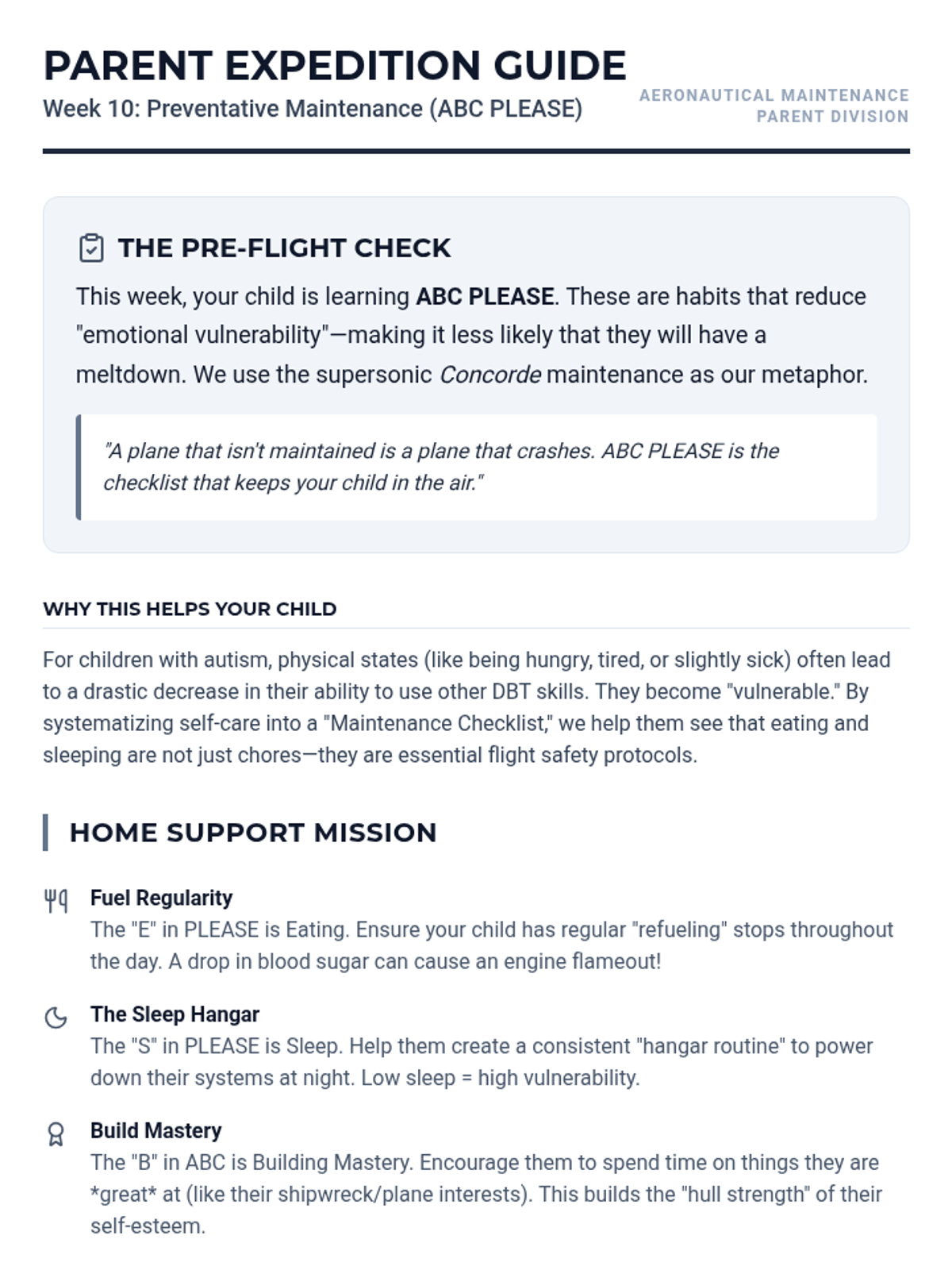
Parent guide for Week 10 of the Survival and Salvage DBT program, explaining the ABC PLEASE skill using aeronautical maintenance metaphors.
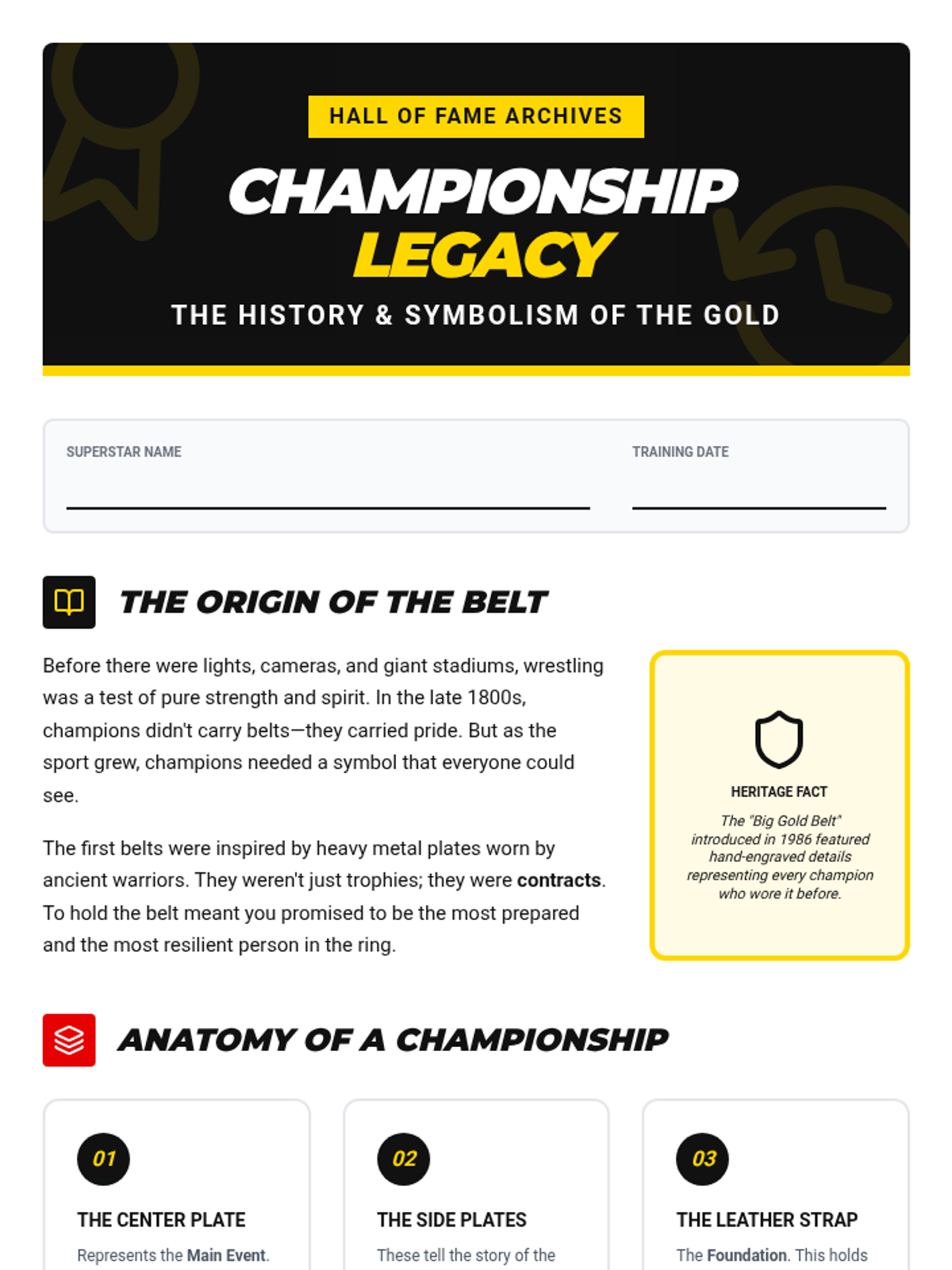
A student-facing reading and activity sheet exploring the history of wrestling championship belts, their symbolism, and how students can build their own academic legacy.
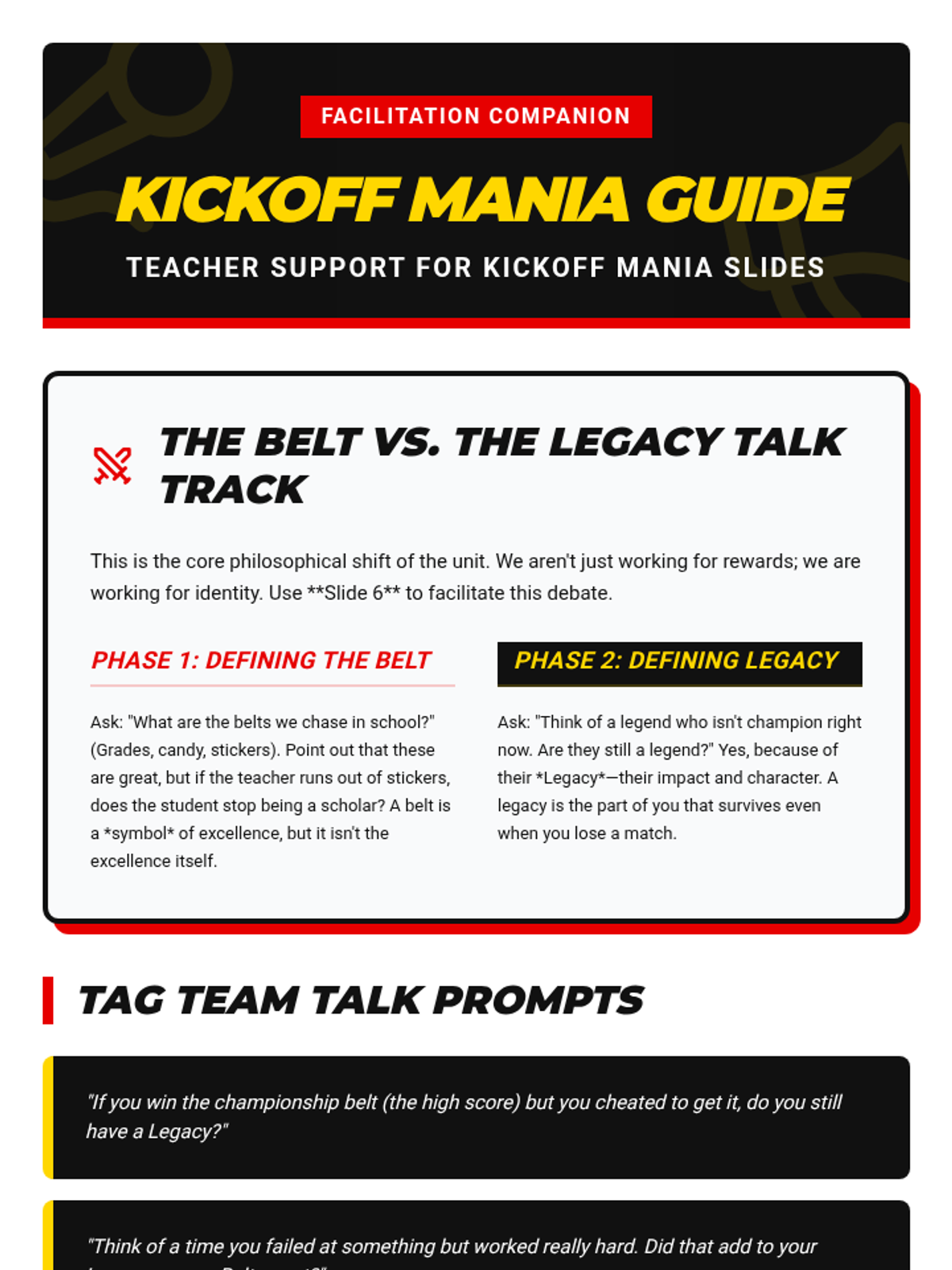
A detailed teacher facilitation companion for the Kickoff Mania slides, providing talk tracks for the 'Belt vs. Legacy' discussion, discussion prompts, and implementation steps for the Ubuntu mission.
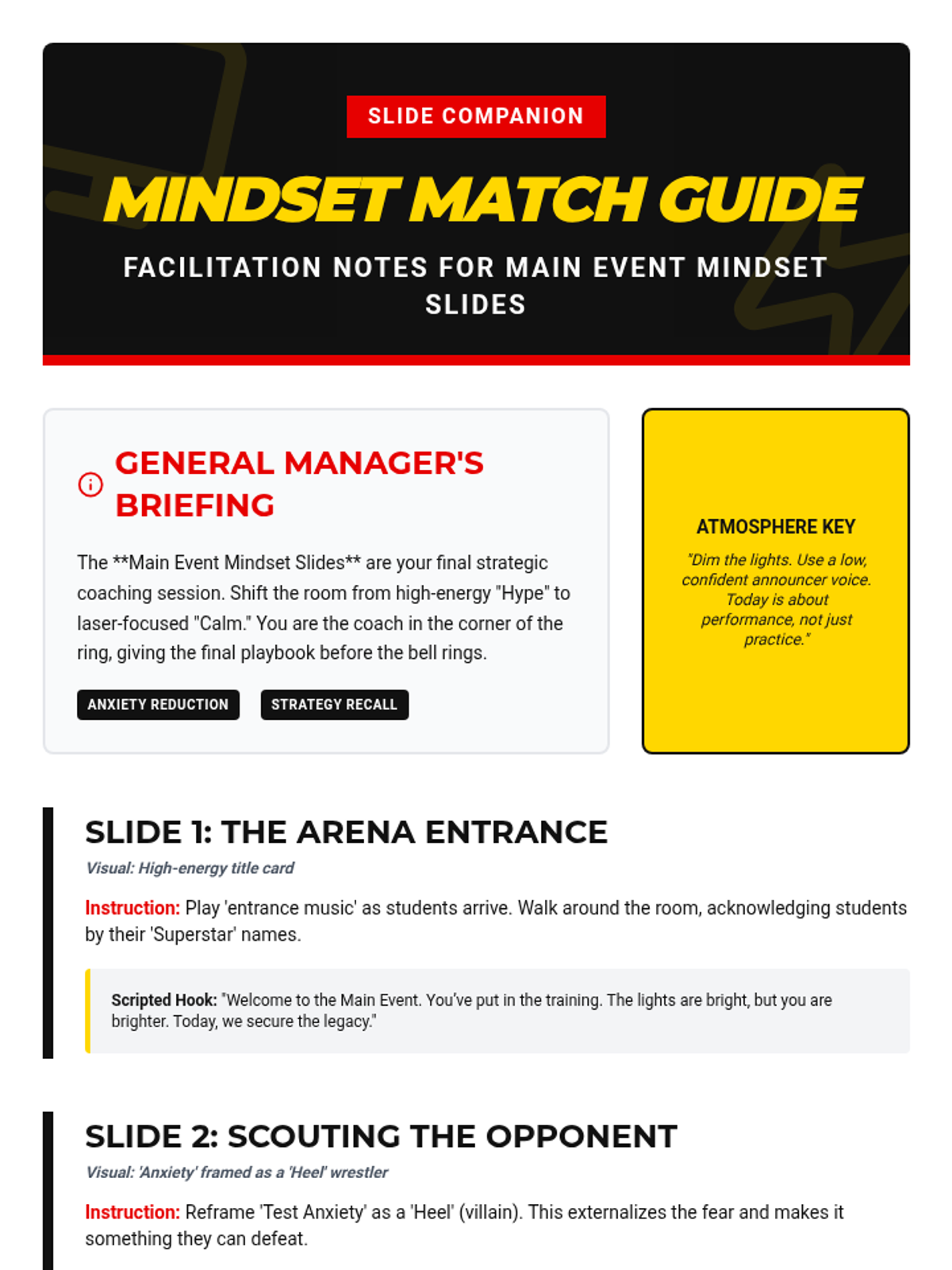
A teacher-facing companion guide for the 'Main Event Mindset' slides, providing slide-by-slide scripts, instructional instructions for managing test anxiety, and post-test decompression strategies.
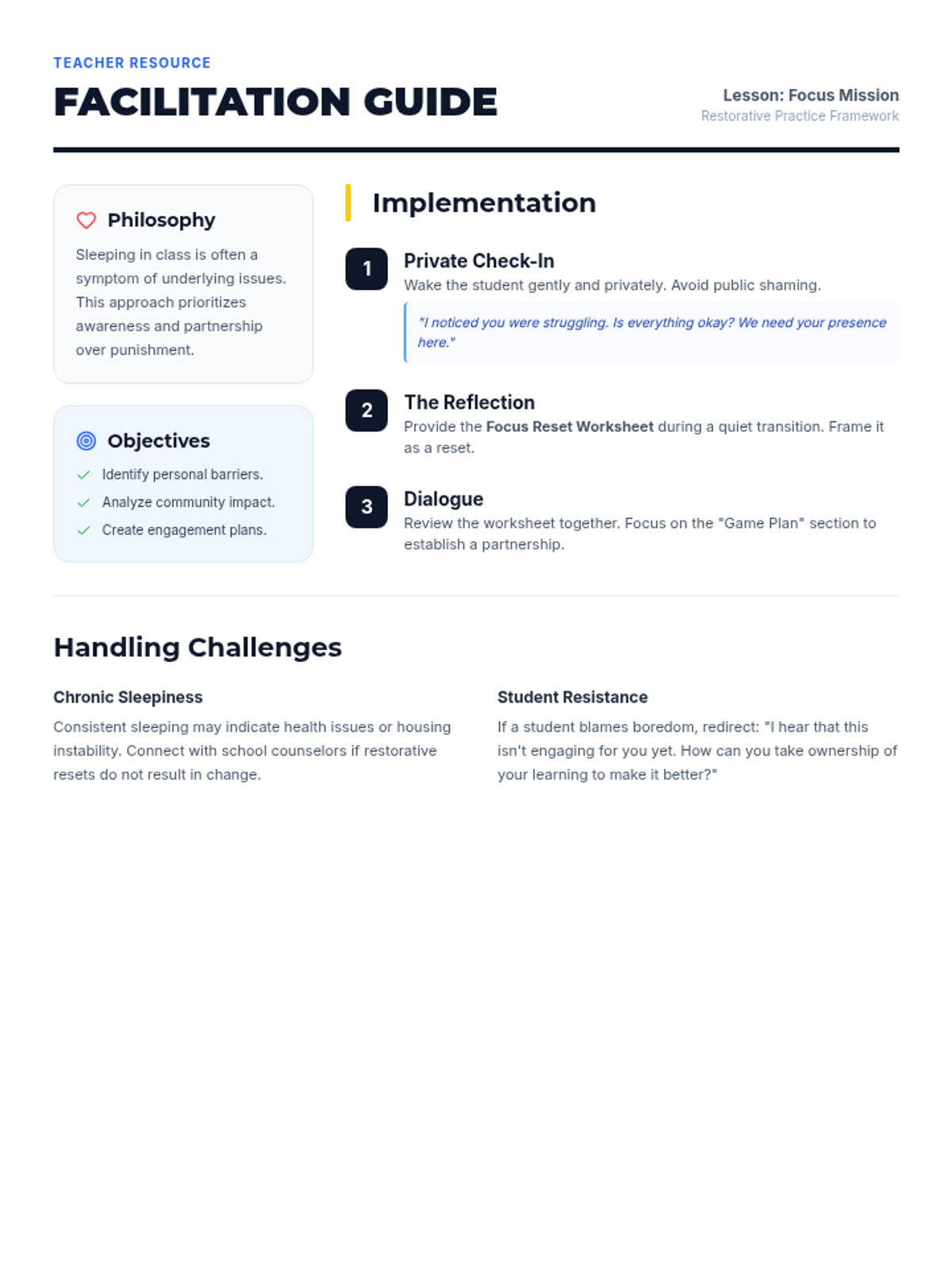
A teacher facilitation guide providing restorative strategies and instructional prompts for addressing classroom sleepiness and using the Focus Mission materials effectively.
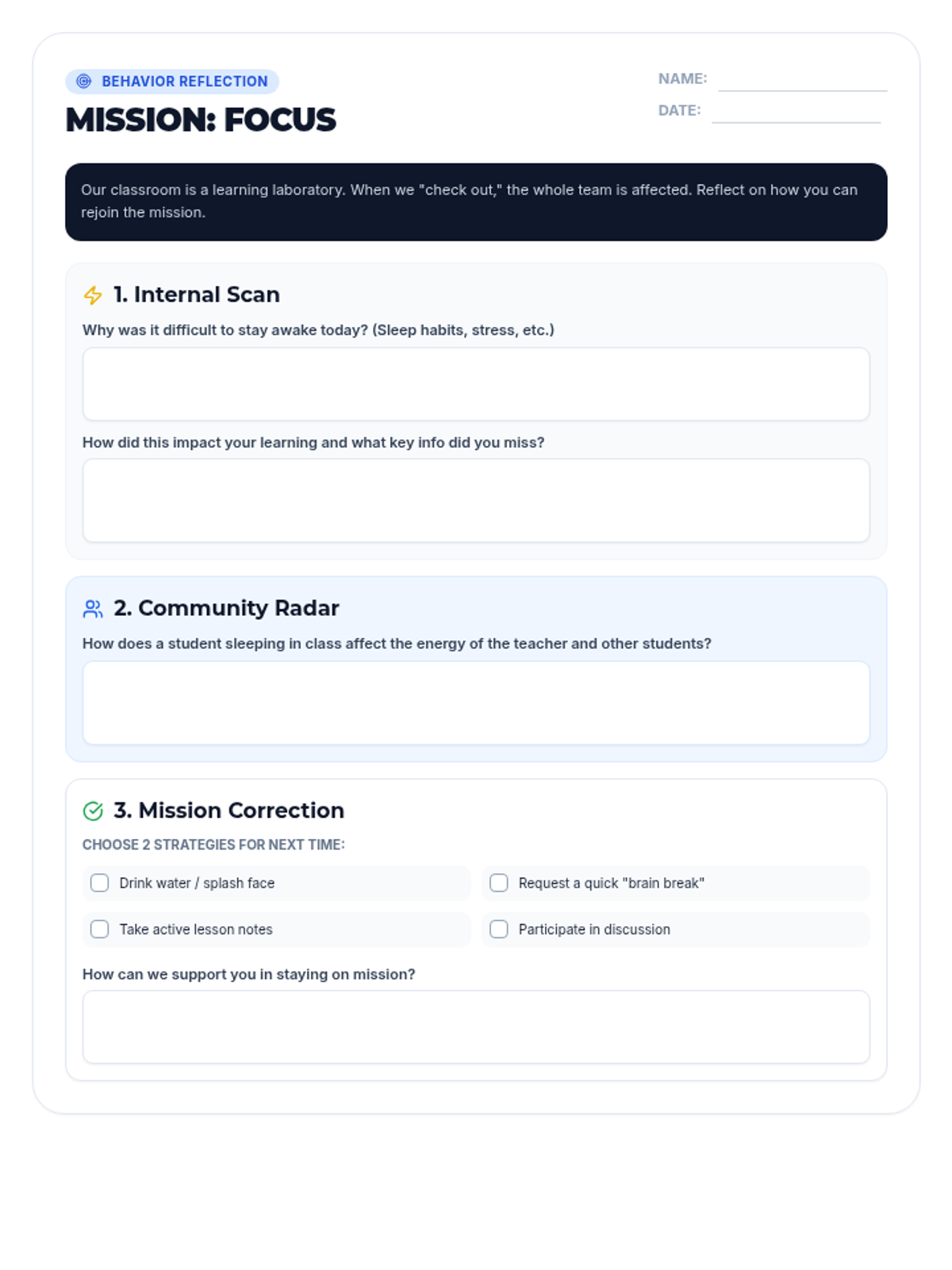
A restorative behavior reflection worksheet that encourages students to evaluate the causes of their drowsiness and understand its impact on their learning and classroom community.
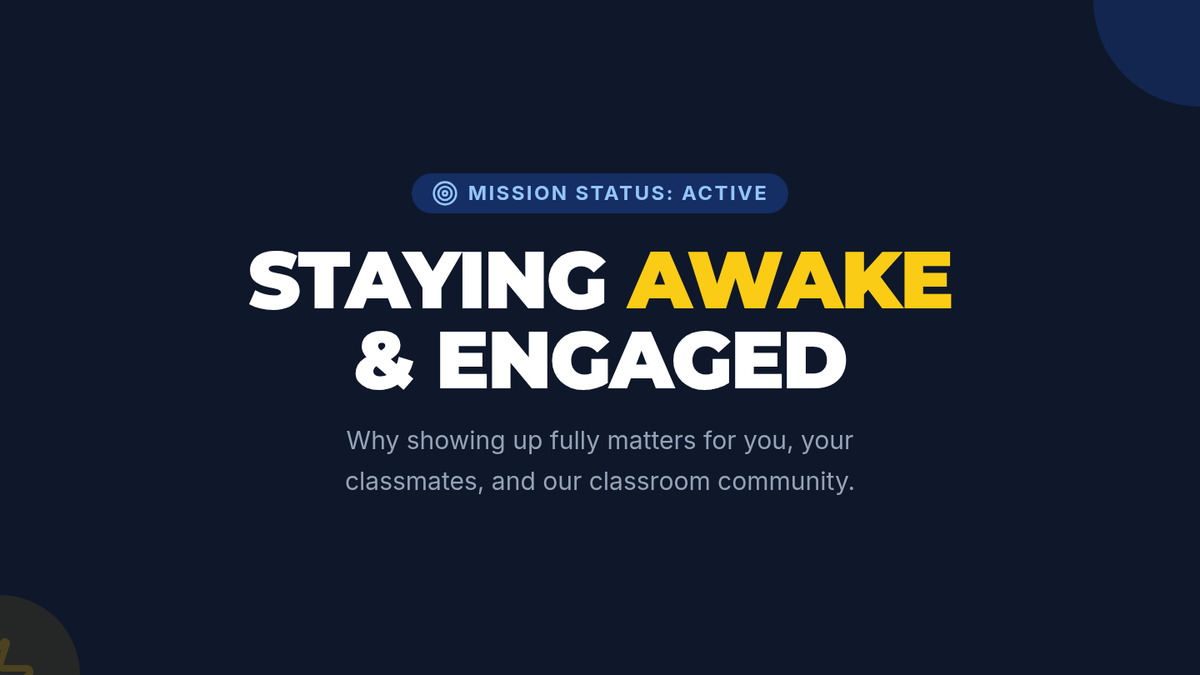
An engaging slide deck explaining the impact of sleeping in class on personal success and the classroom community, featuring restorative strategies for staying engaged.
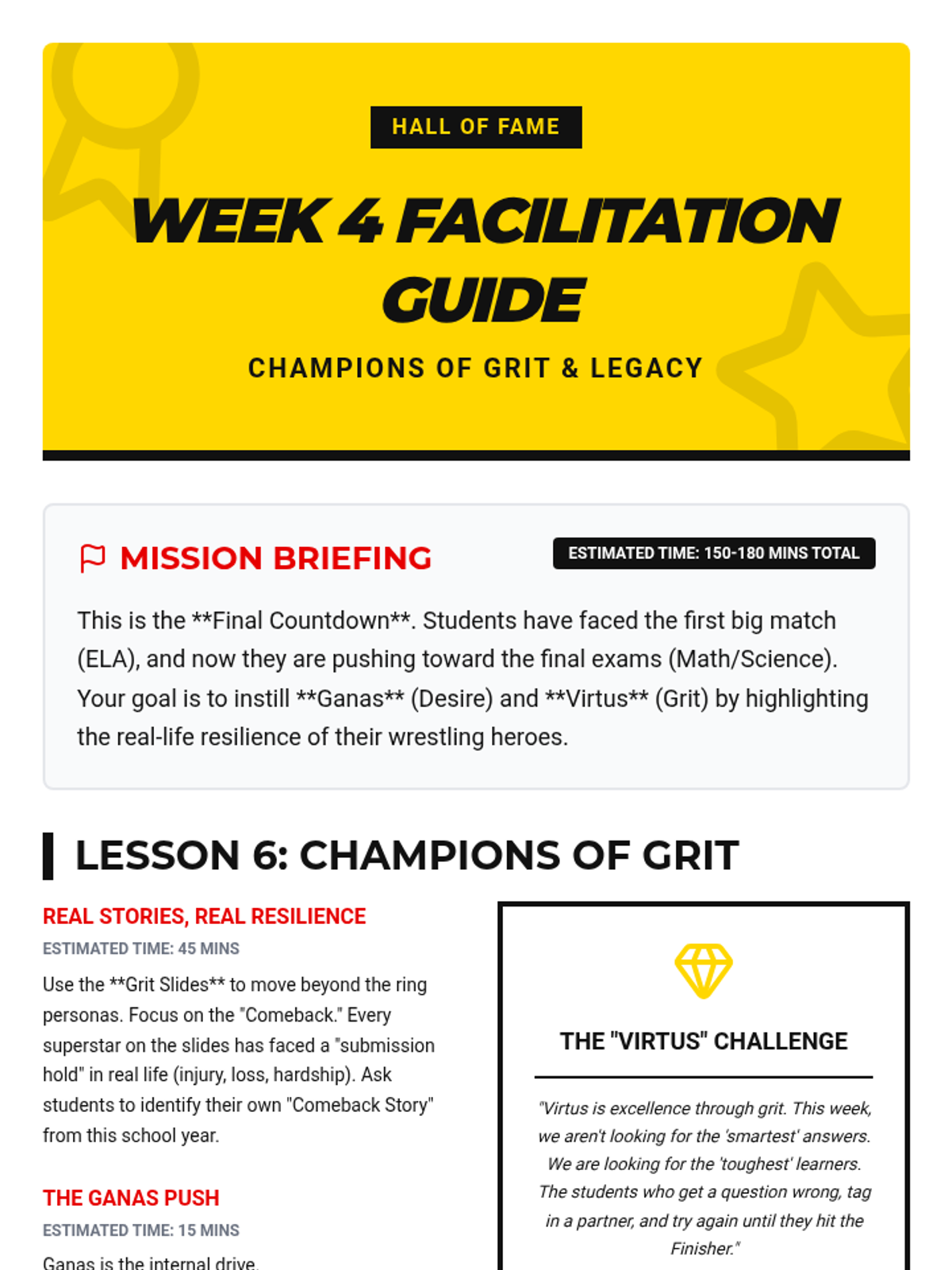
A detailed teacher facilitation guide for Week 4 of the 'Road to State Exam Mania' sequence, focusing on Ganas (drive) and Virtus (grit) for the final exam push and the 'Mania Gala' unit wrap-up.
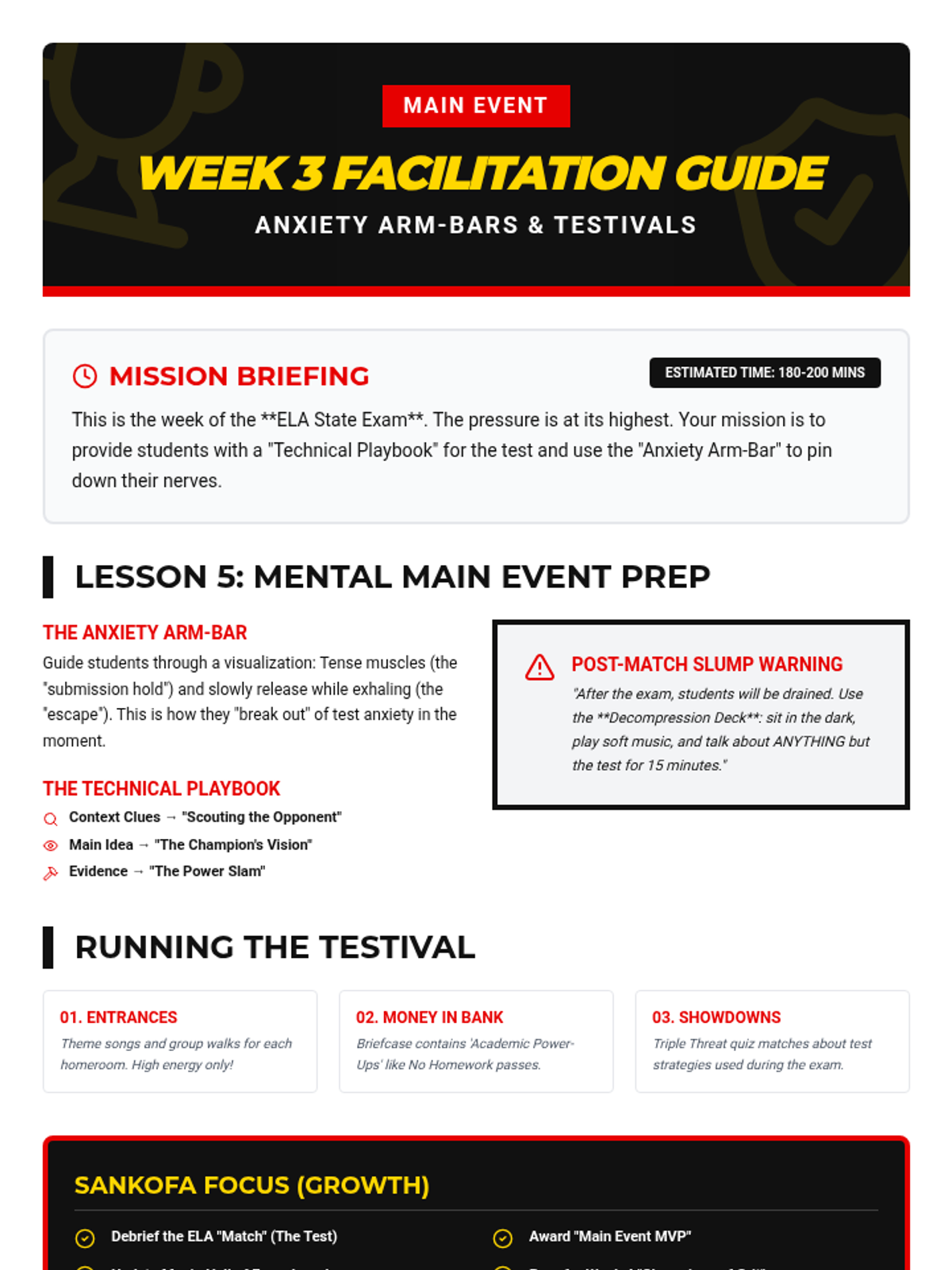
A detailed teacher facilitation guide for Week 3 of the 'Road to State Exam Mania' sequence, focusing on ELA state exam preparation and the 'Testival' pep rally.
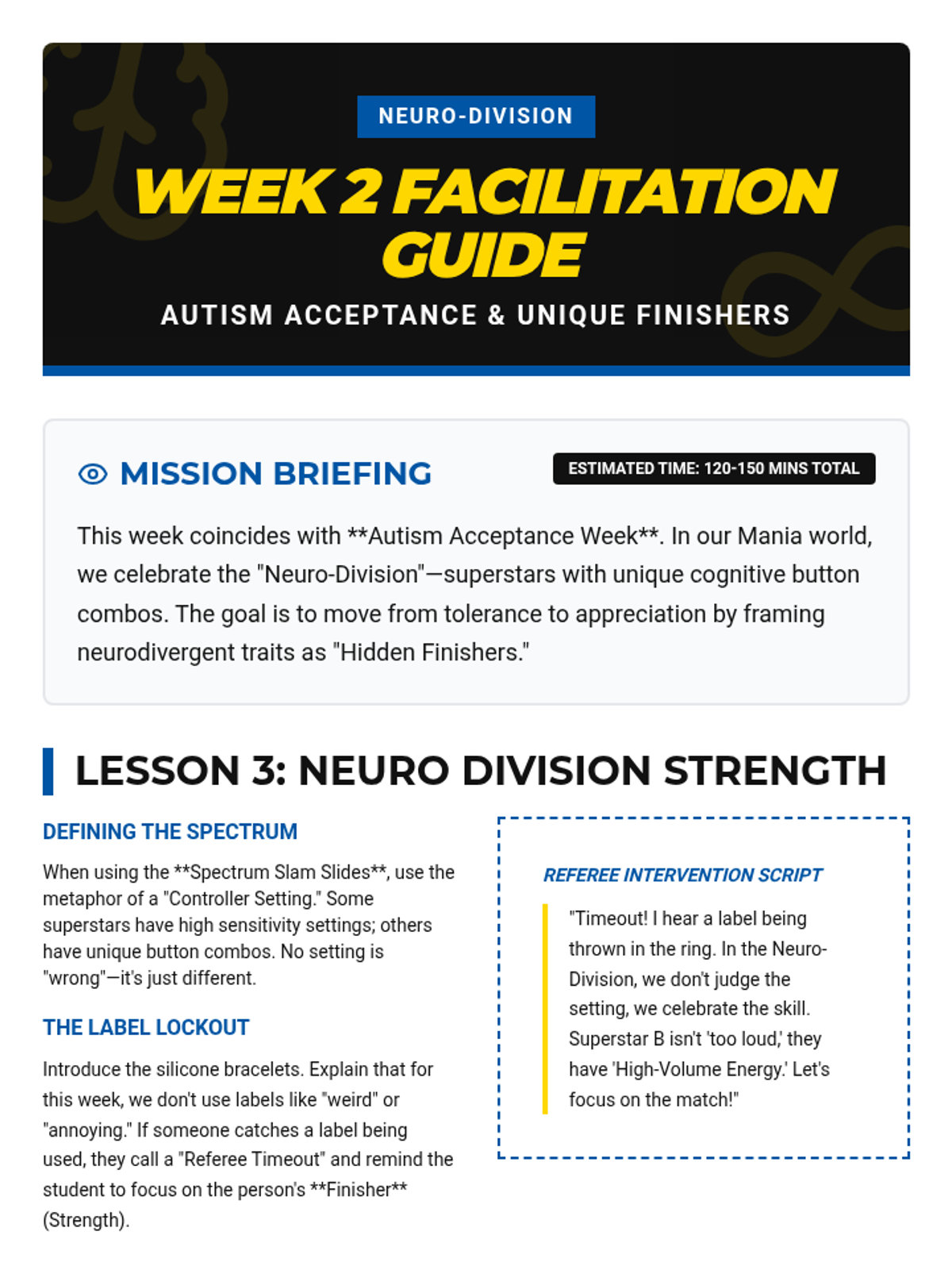
A detailed teacher facilitation guide for Week 2 of the 'Road to State Exam Mania' sequence, focusing on Autism Acceptance Week and celebrating neurodiversity.
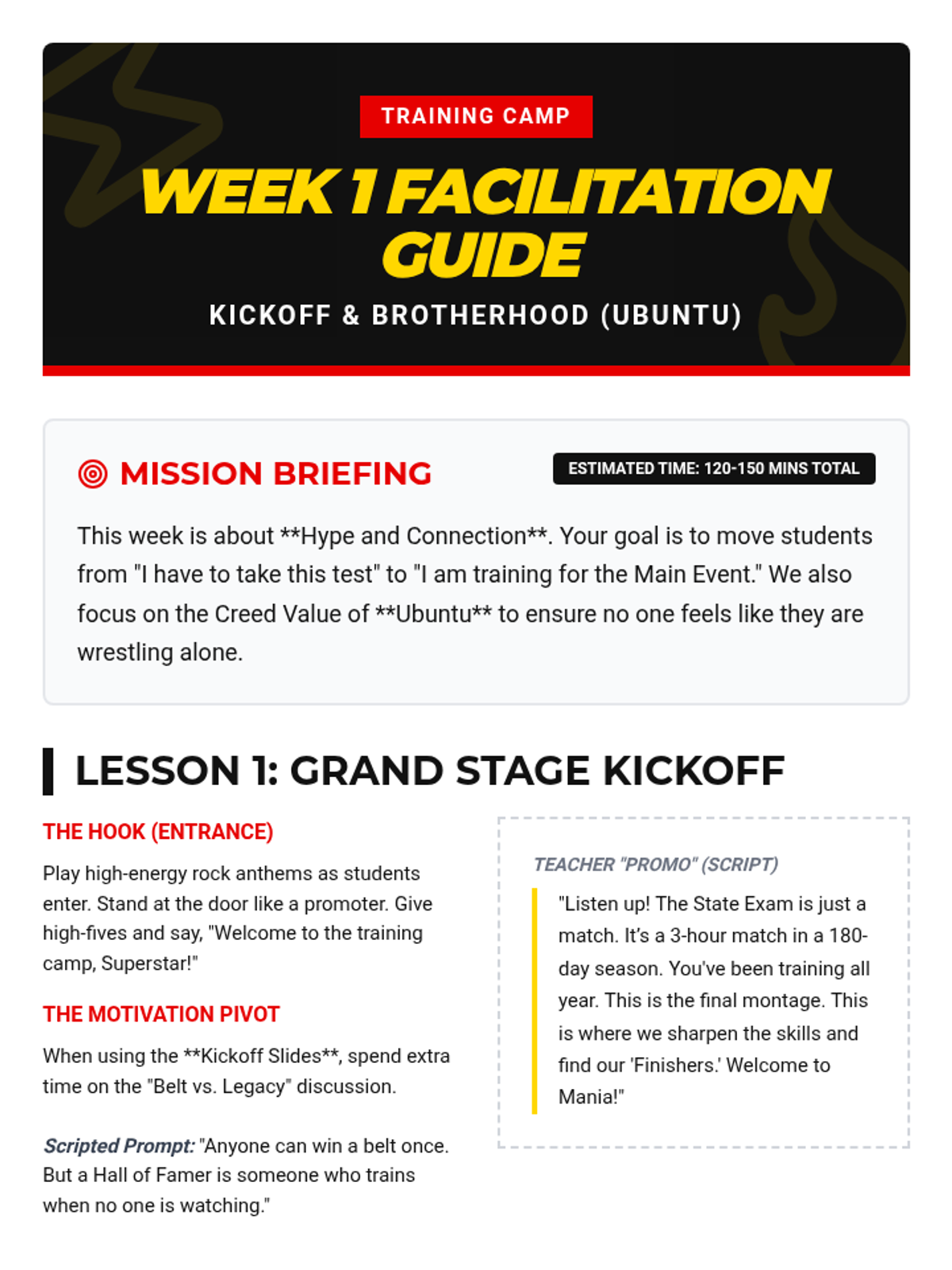
A detailed teacher facilitation guide for Week 1 of the 'Road to State Exam Mania' sequence, focusing on kickoff motivation and the Creed Value of Ubuntu.
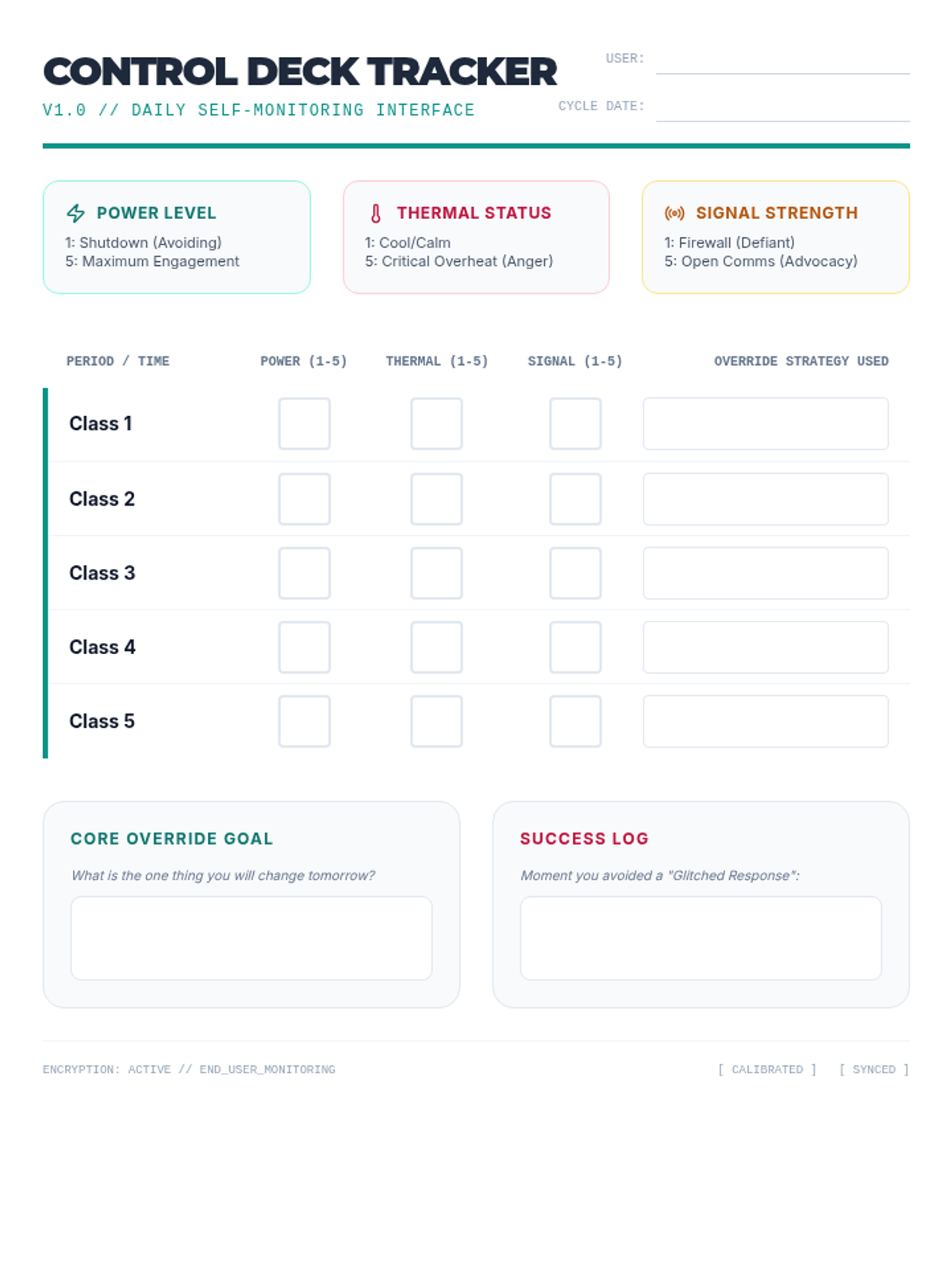
A student-facing self-monitoring tool styled as a sleek 'Control Deck' dashboard. It allows students to track engagement, emotional state, and communication throughout the day.
A visually striking, dark-themed slide deck that frames behavior intervention through a 'systems interface' metaphor, making it engaging and high-interest for high schoolers.
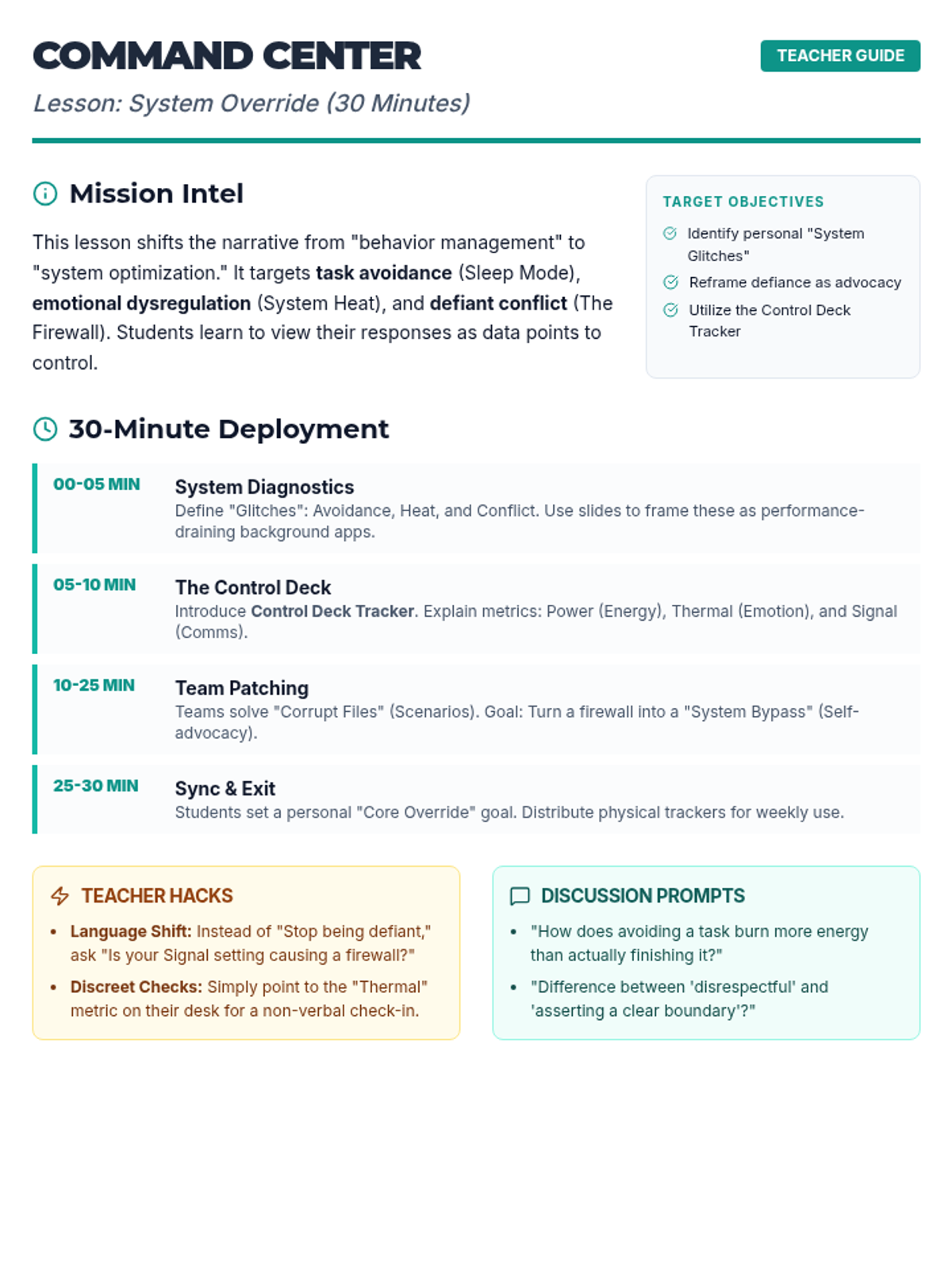
A comprehensive teacher guide for the 30-minute System Override lesson, featuring a minute-by-minute timeline, facilitation hacks, and discussion prompts.
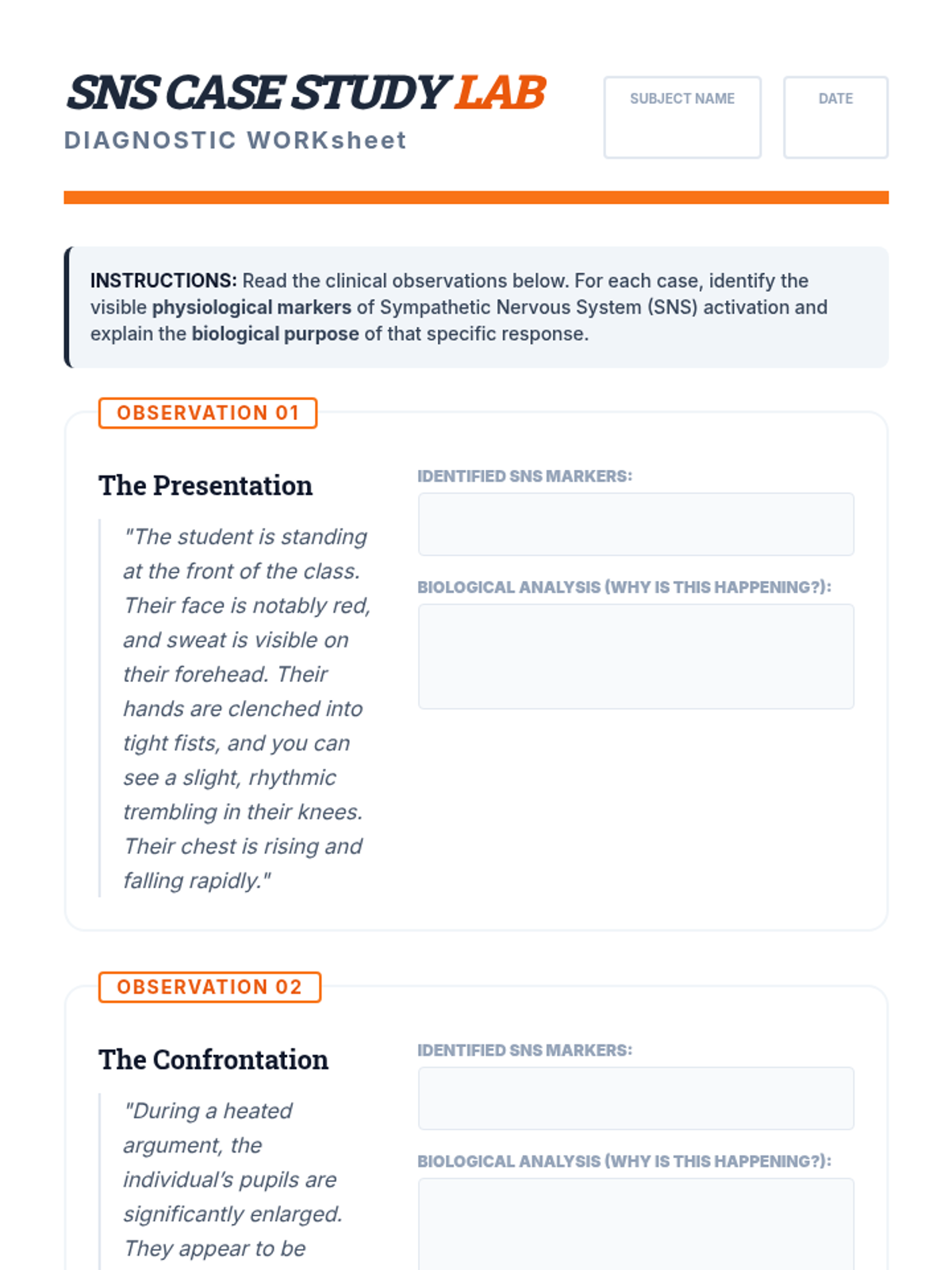
A worksheet where students analyze case study observations to identify Sympathetic Nervous System (SNS) markers and explain their biological purposes.
A visual presentation focusing on the Sympathetic Nervous System (SNS), high-arousal symptoms (breathing, sweating, trembling), and the 'Gas vs Brake' analogy for the autonomic nervous system.
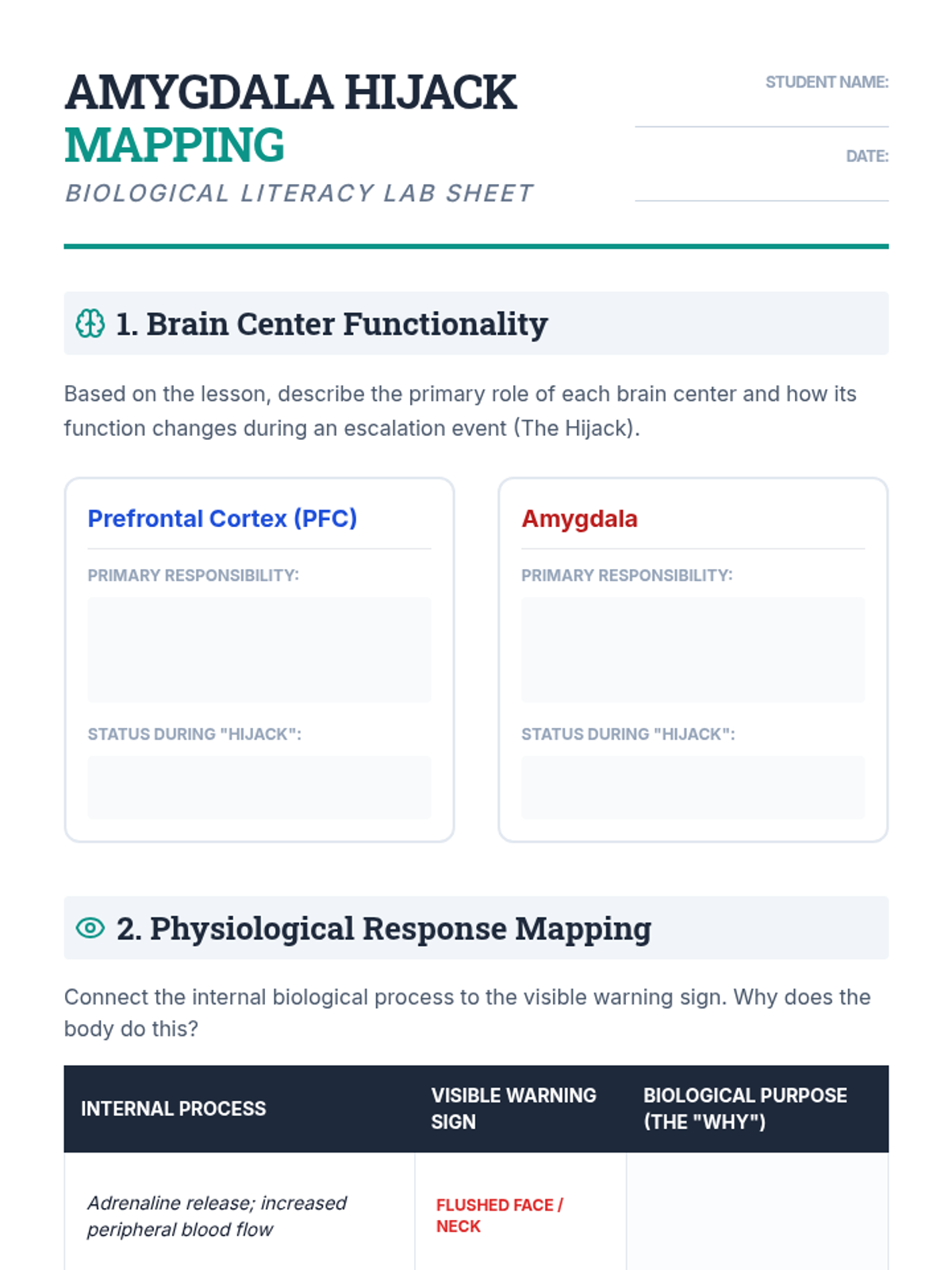
A worksheet for students to map the brain centers (Amygdala and Prefrontal Cortex) to physiological responses and reflect on the biological nature of escalation.
A visual presentation for 11th-grade students explaining the brain science of the amygdala hijack, contrasting the prefrontal cortex with the amygdala and identifying external physiological markers.
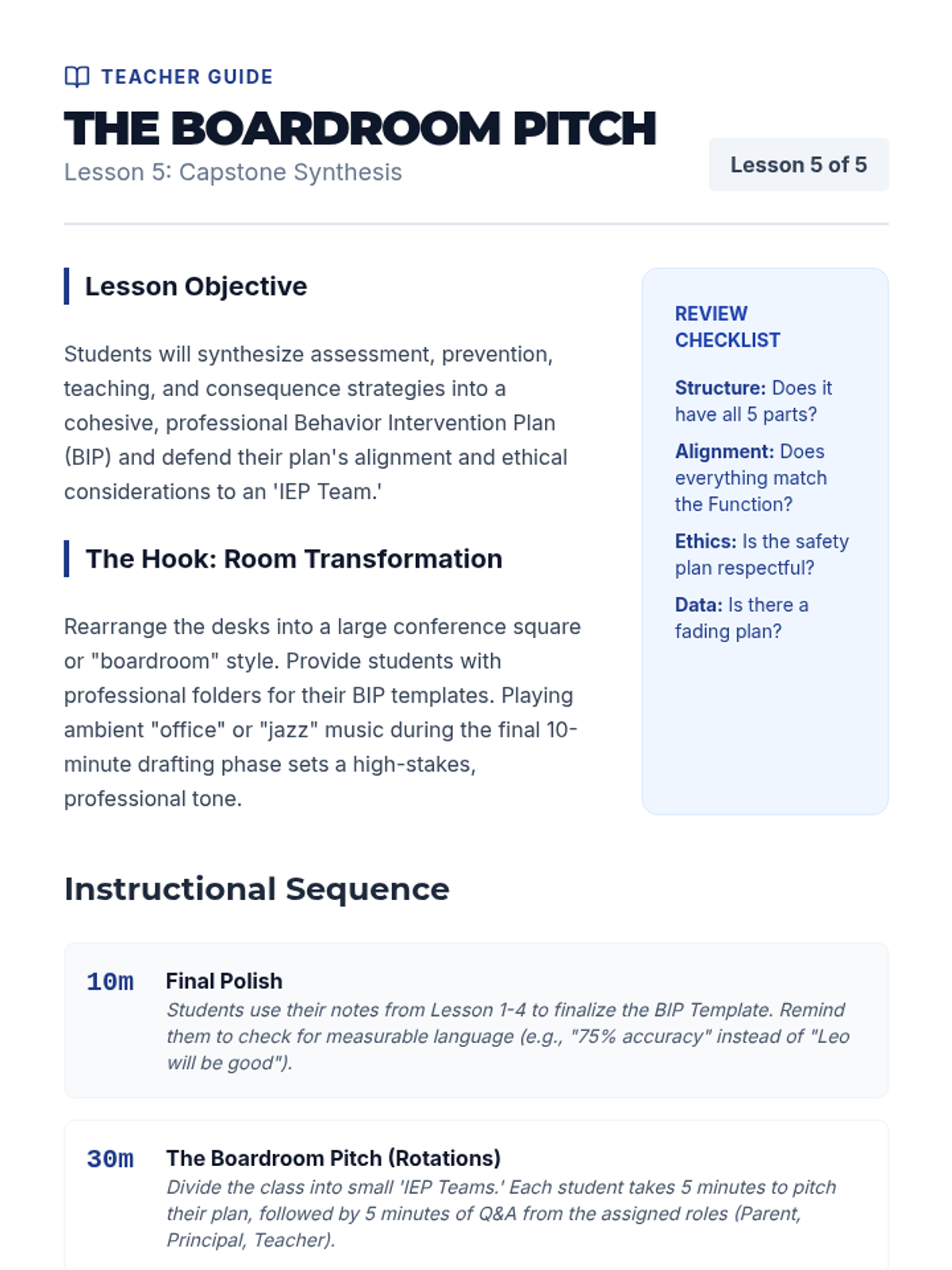
A teacher guide for the final capstone lesson, providing instructions for the boardroom pitch simulation and a grading checklist for the final BIP project.
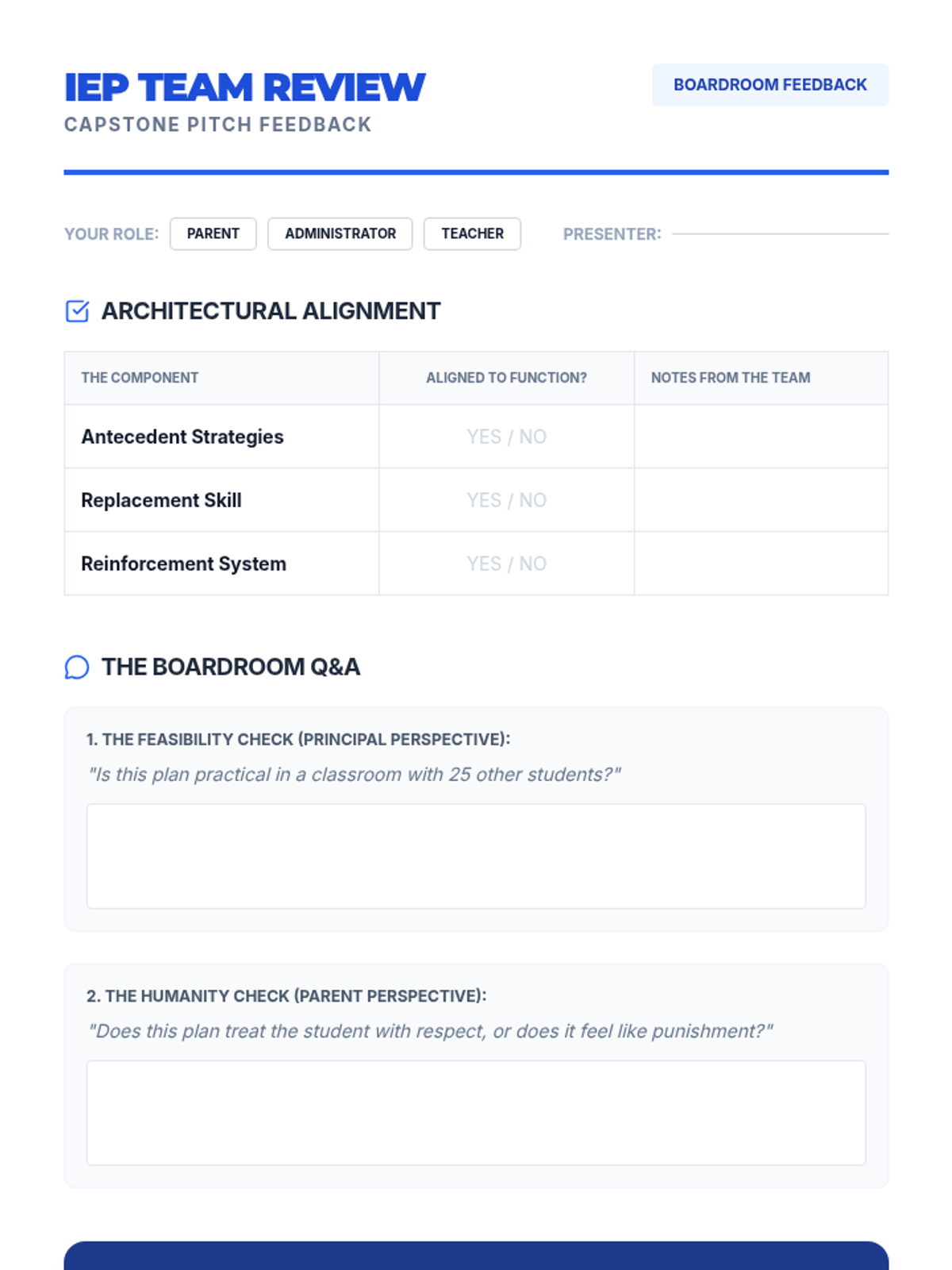
A peer review and feedback form for students acting as the 'IEP Team' during the BIP Capstone presentations, focusing on alignment, feasibility, and ethics.
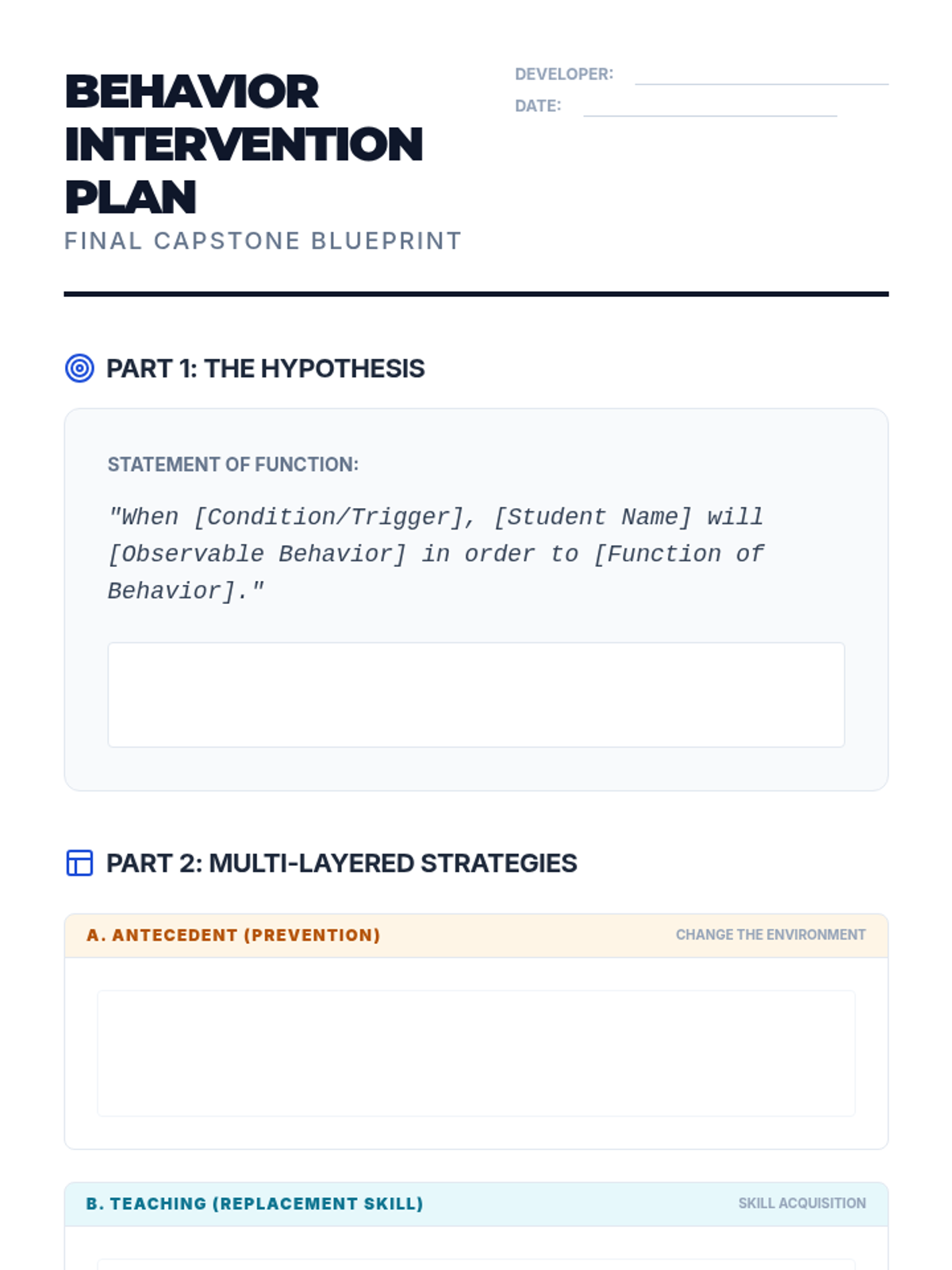
A comprehensive final project template for 11th-grade students to synthesize all components of a Behavior Intervention Plan (BIP) for a case study.
A slide deck for the culminating workshop of the BIP sequence, focusing on professional presentation, IEP team roles, and the synthesis of behavior intervention strategies.
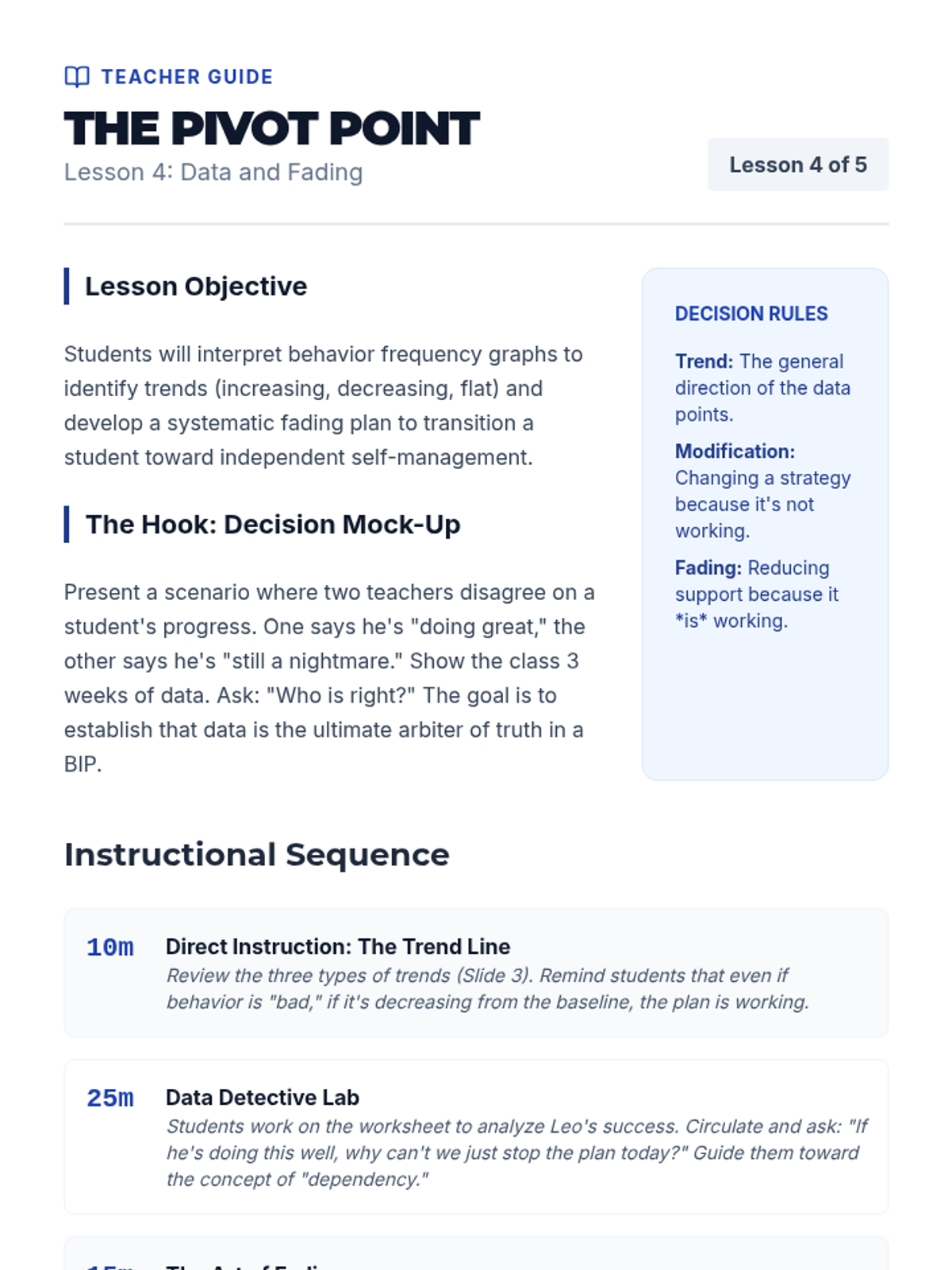
A teacher guide for Lesson 4 focusing on data-based decision making, trend analysis, and fading strategies for behavioral supports.
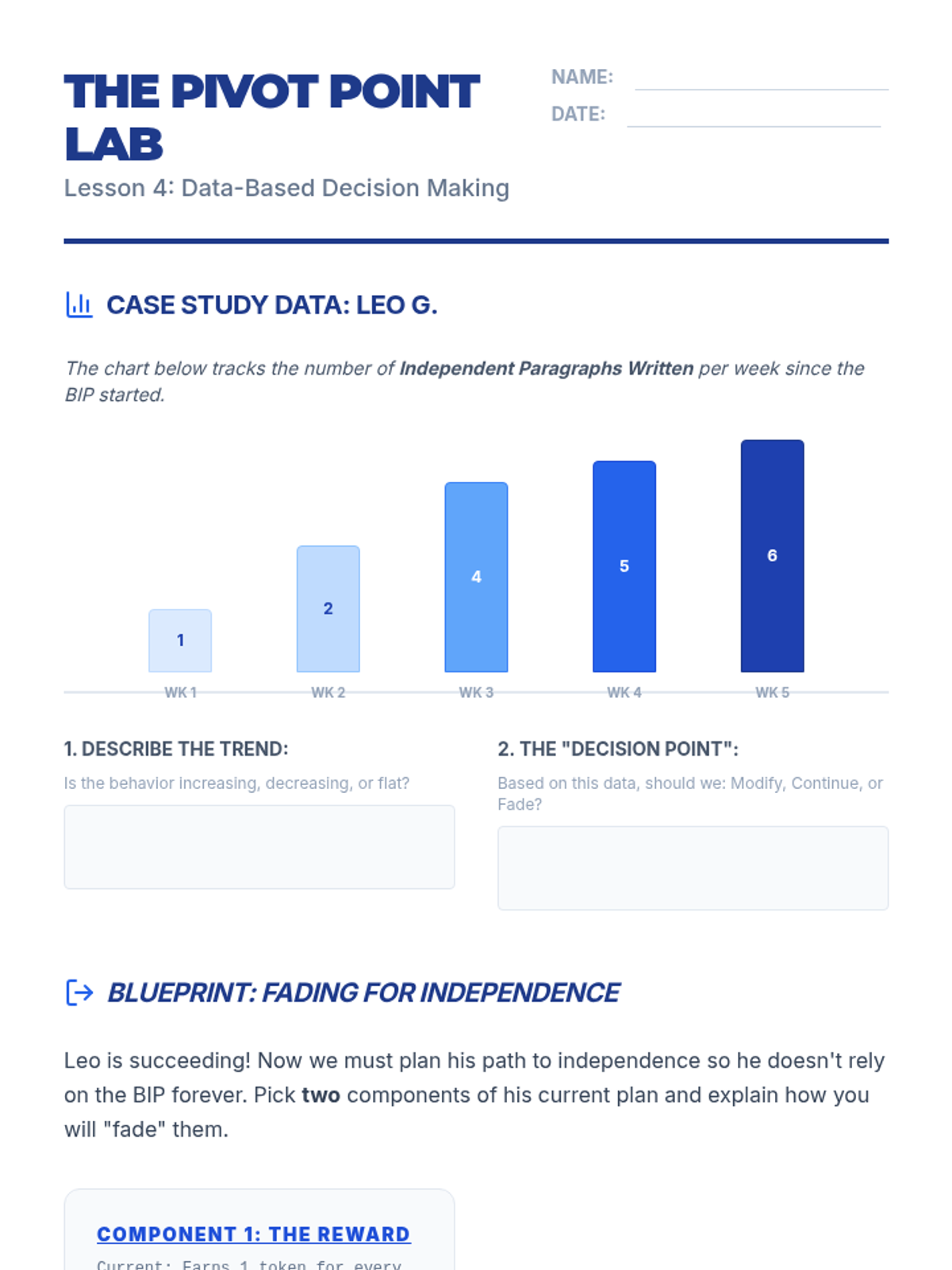
A worksheet for students to analyze behavior data trends and develop a systematic fading plan for a case study.
A slide deck for 11th-grade students on data-based decision making, covering trend analysis, interpreting graphs, and strategies for fading behavioral supports.
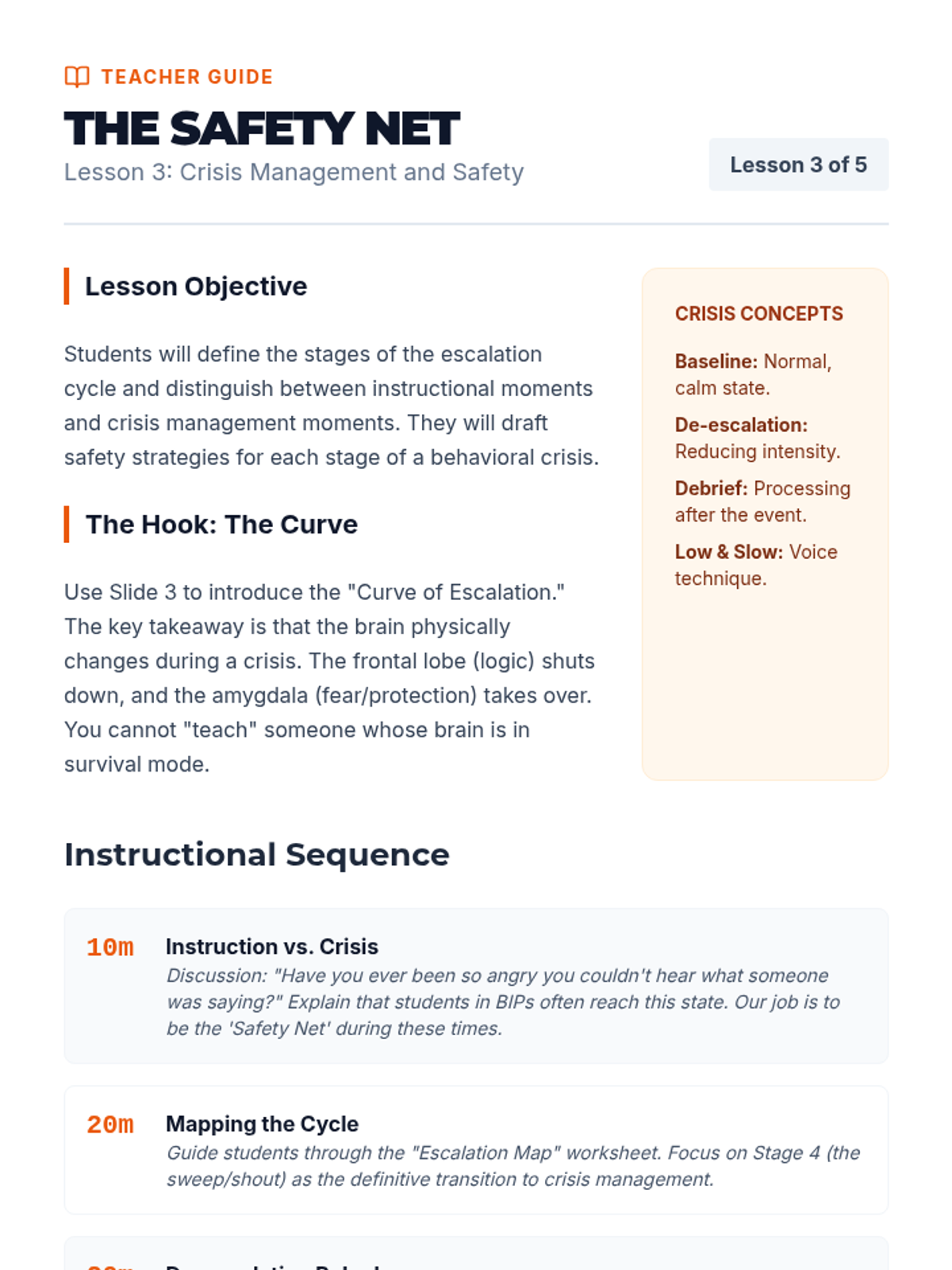
A teacher guide for Lesson 3 focusing on crisis management, the escalation cycle, and de-escalation techniques.
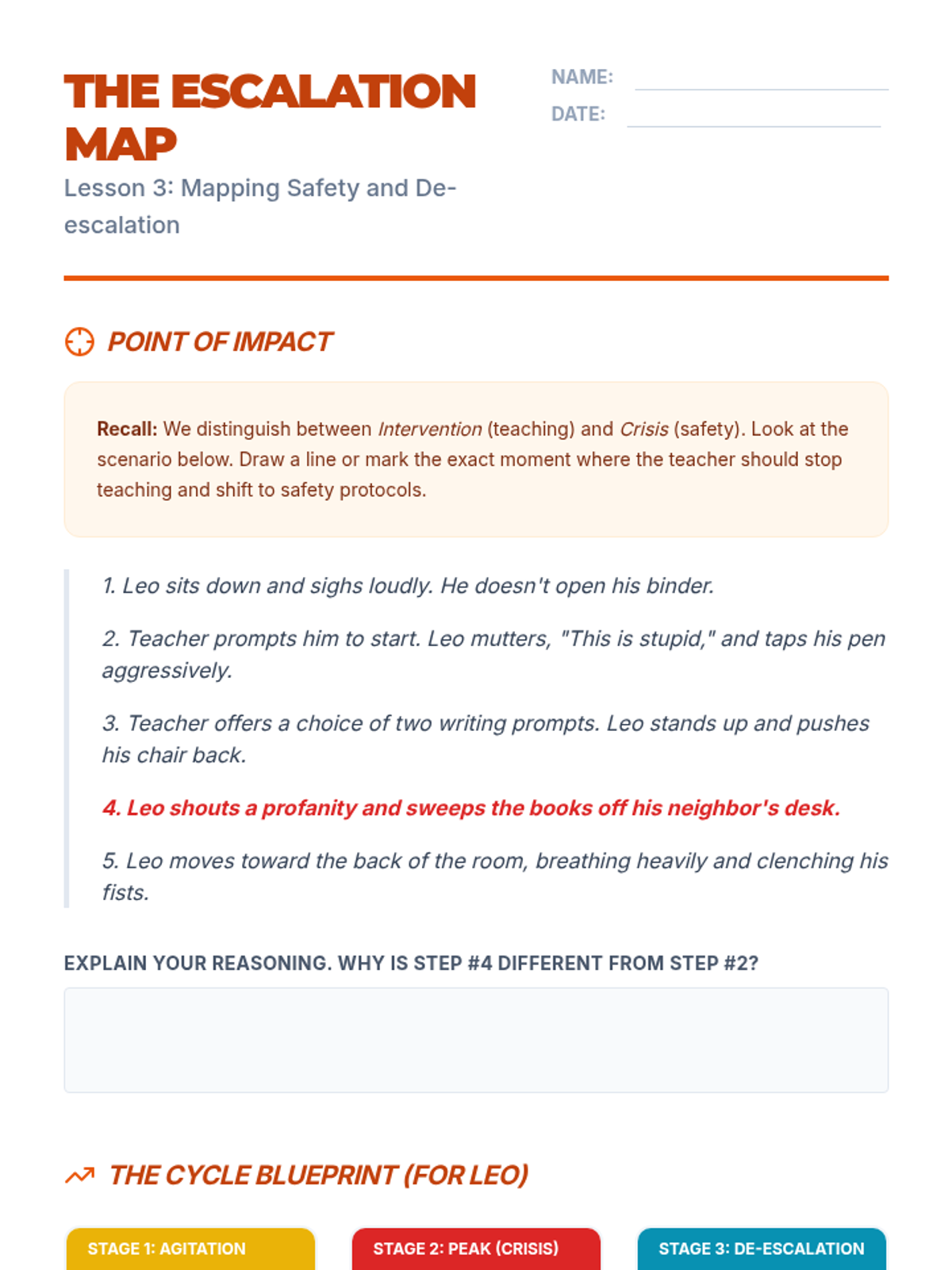
A worksheet for the "The Safety Net" lesson where students identify the transition from instruction to crisis and map the escalation cycle for a case study.
A slide deck for 11th-grade students on crisis management, covering the escalation cycle, the difference between intervention and crisis, and de-escalation strategies.