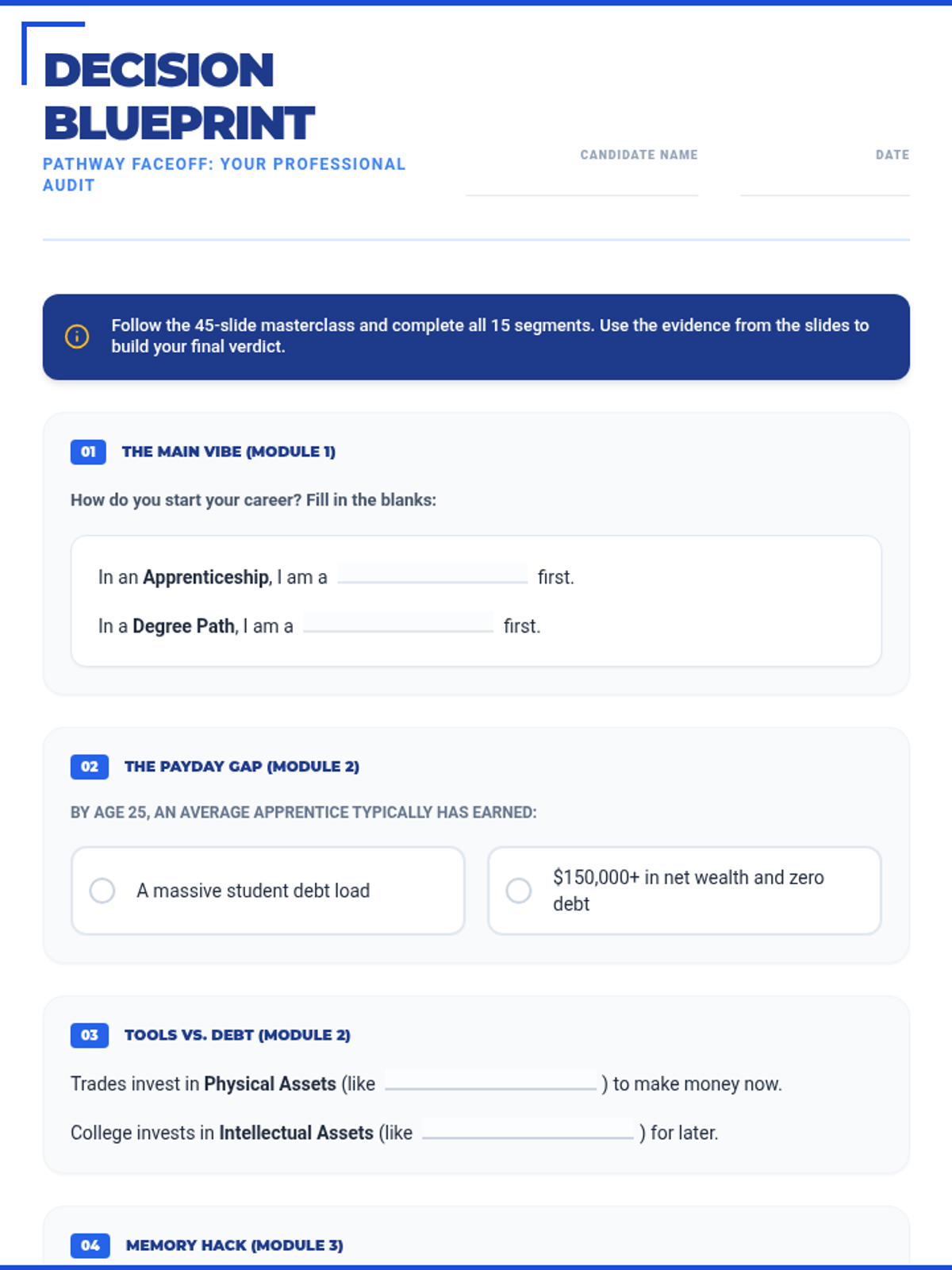
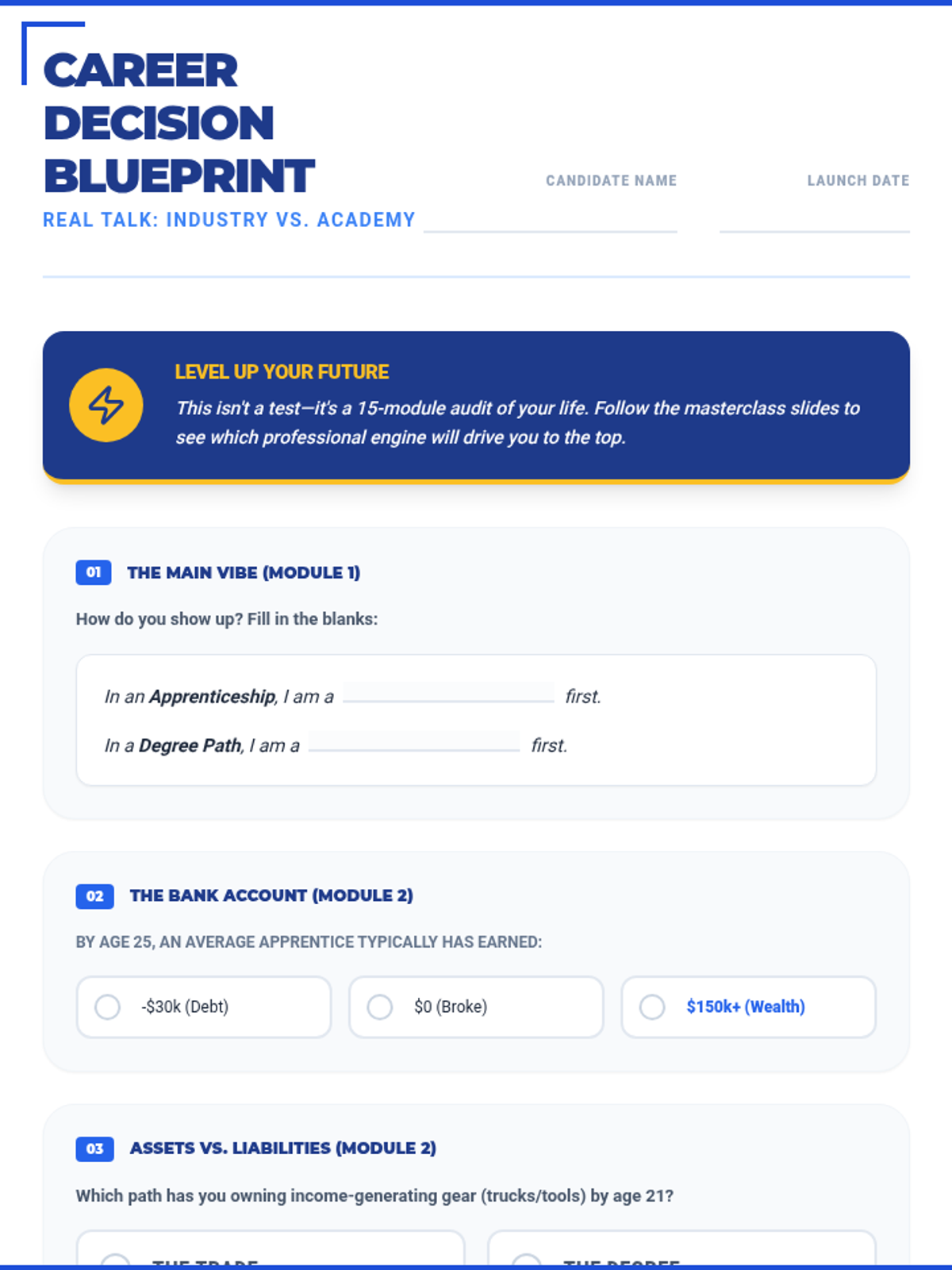
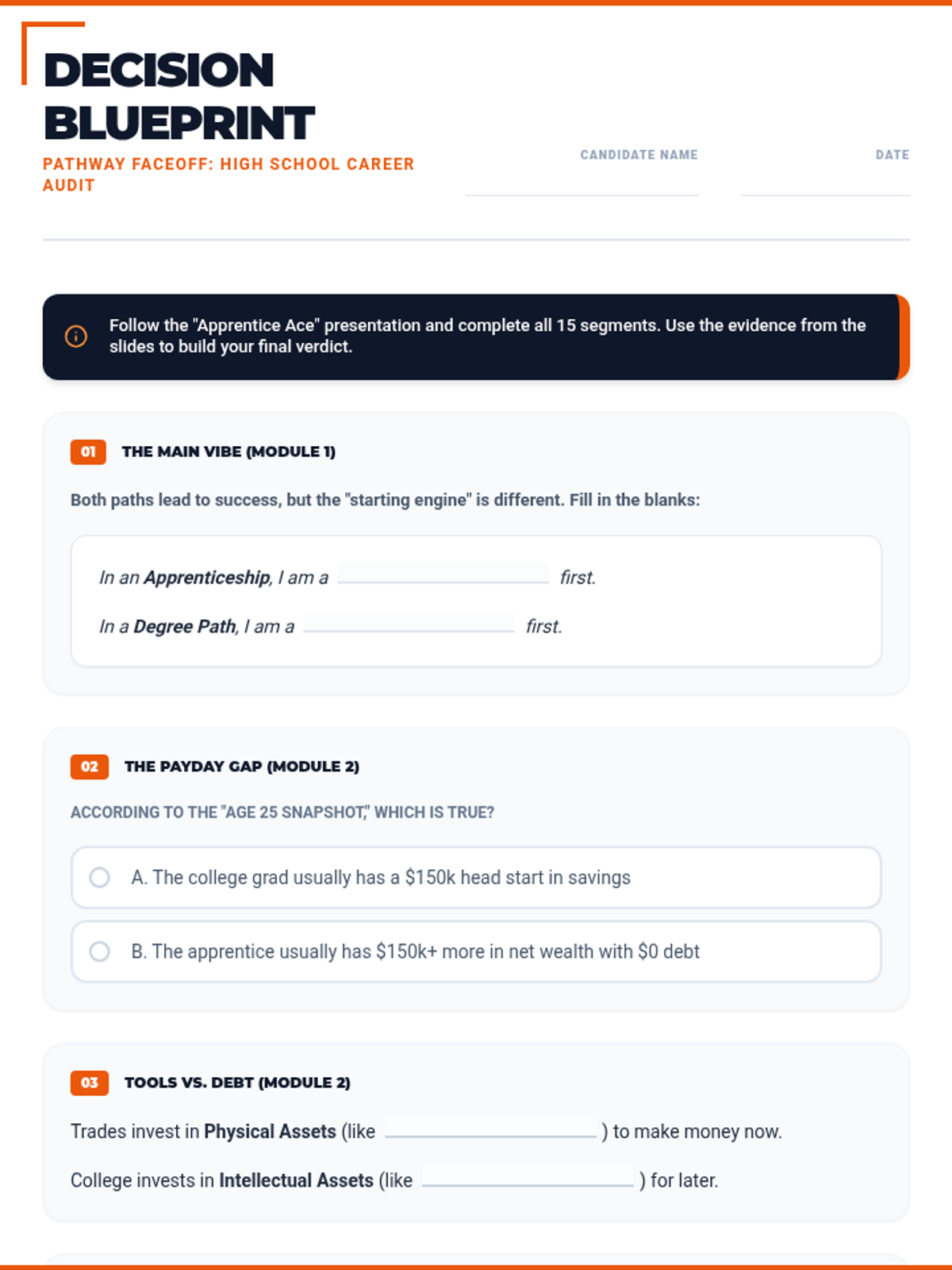
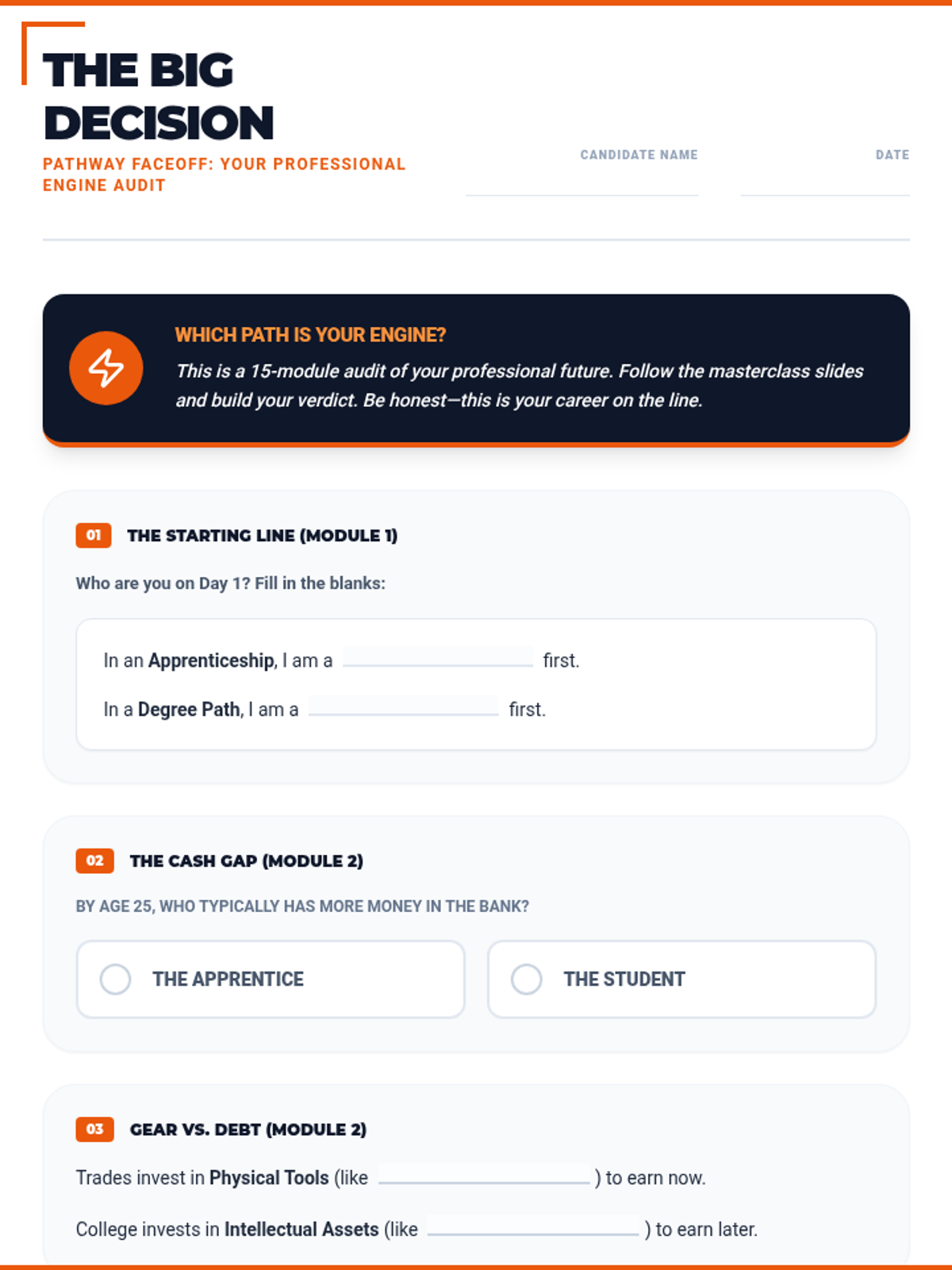
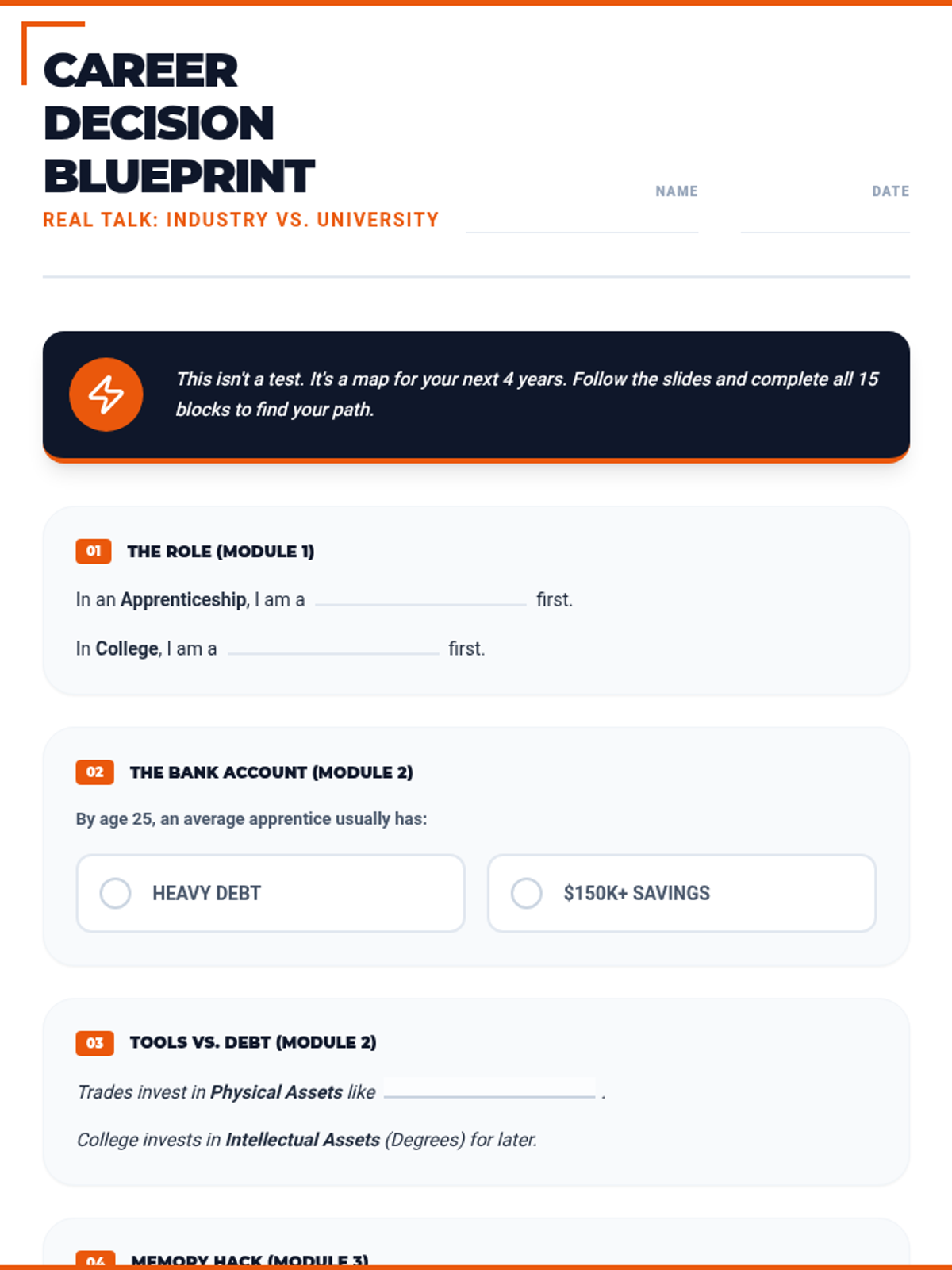
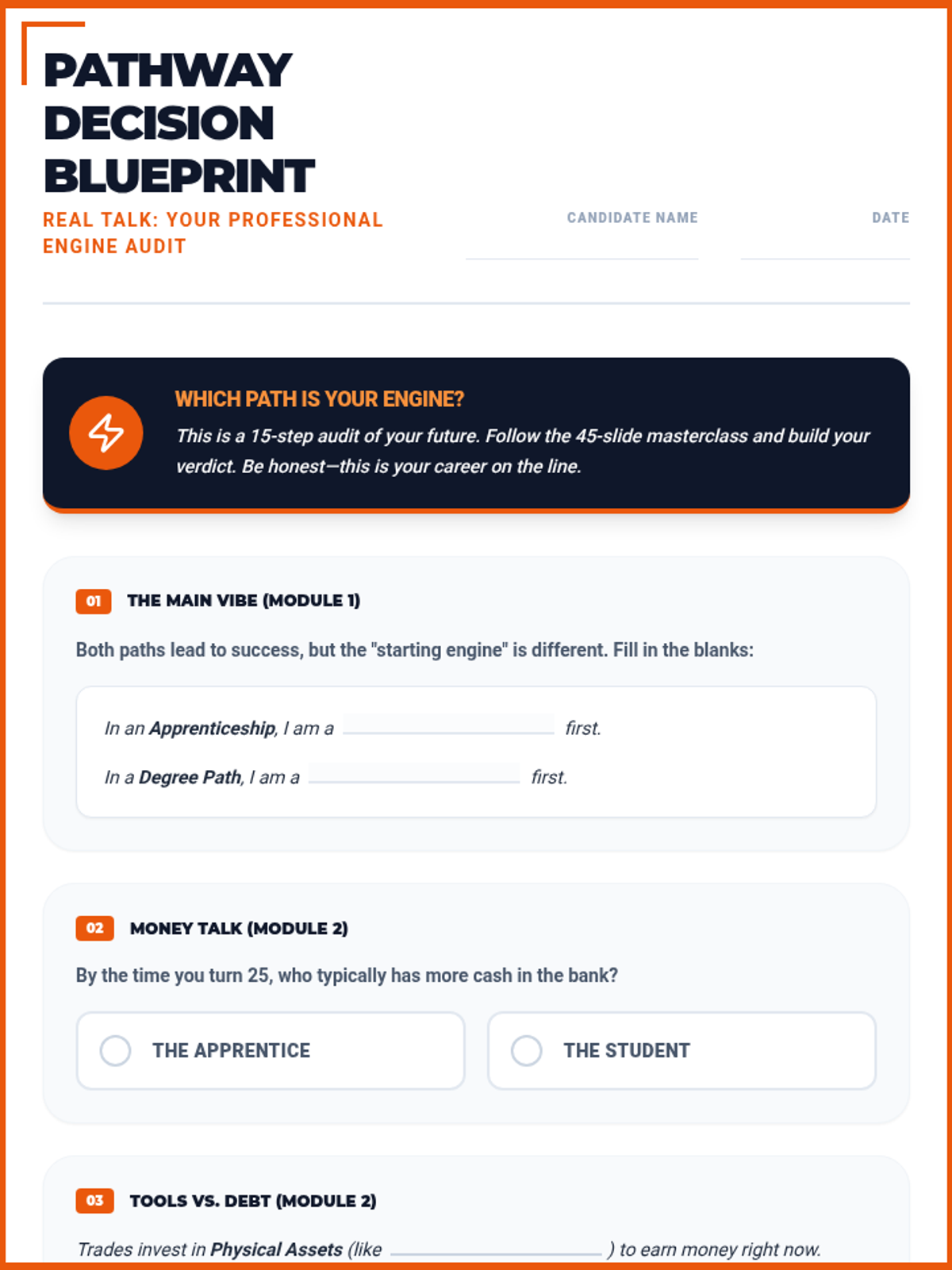
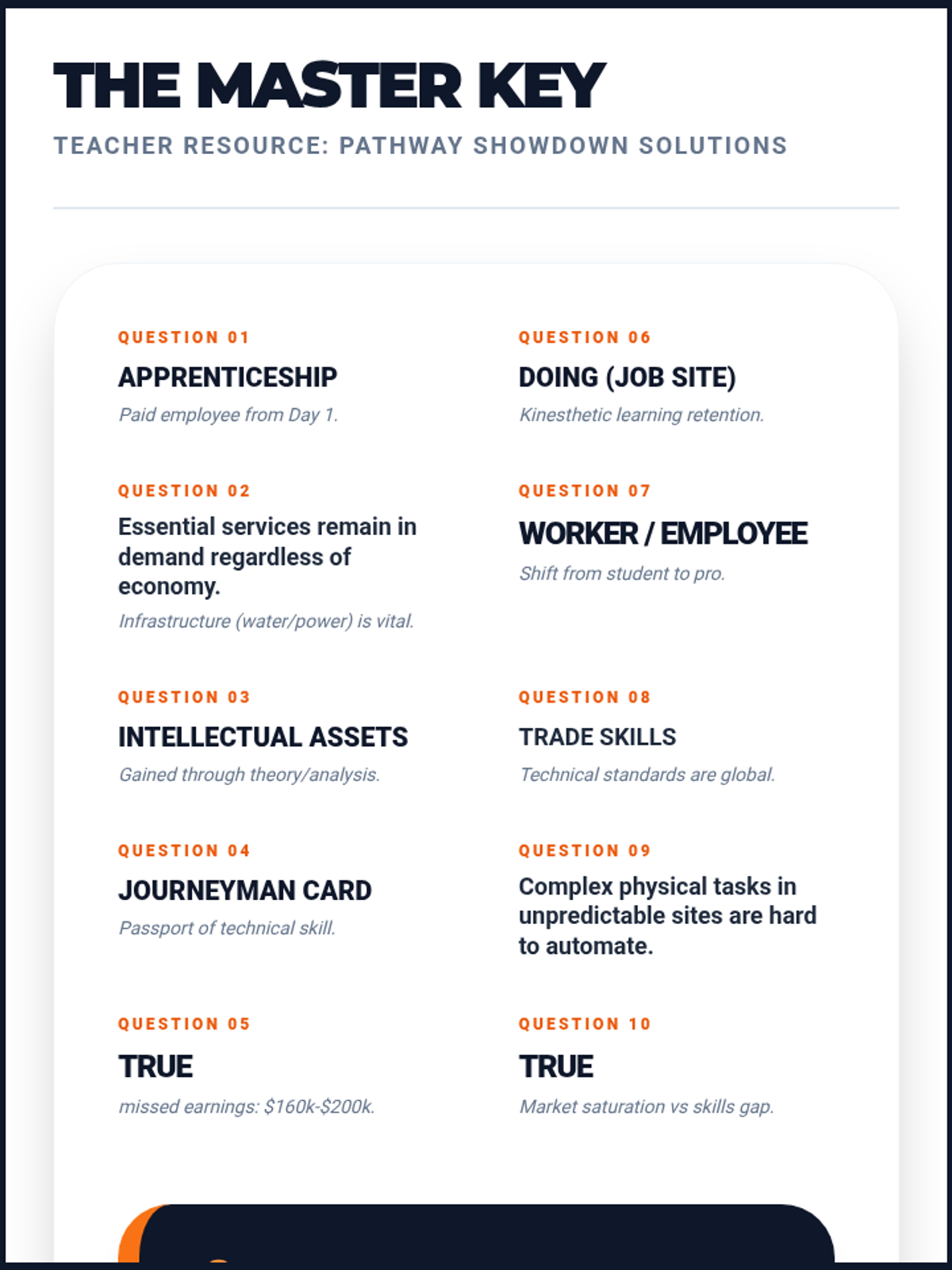
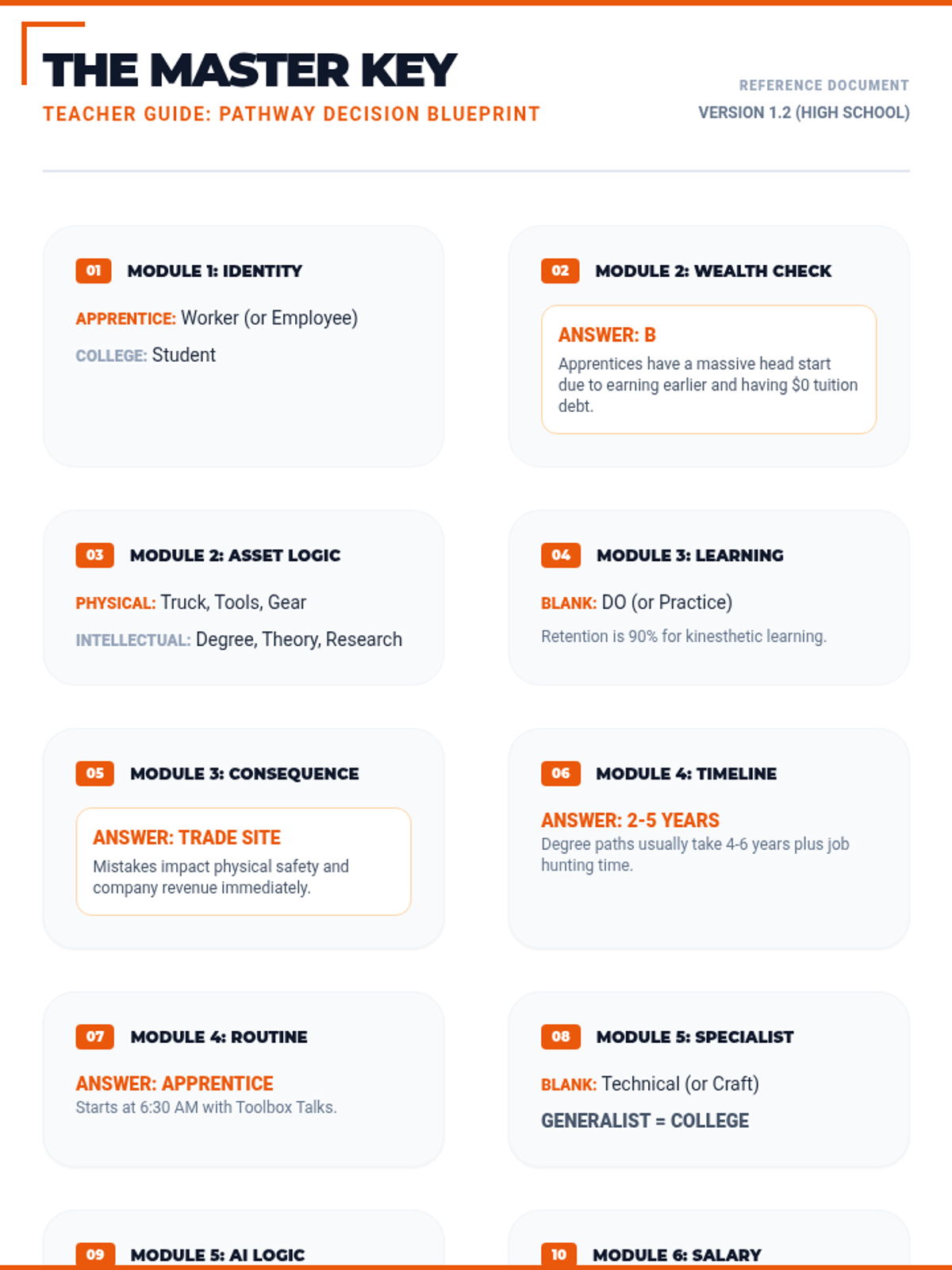
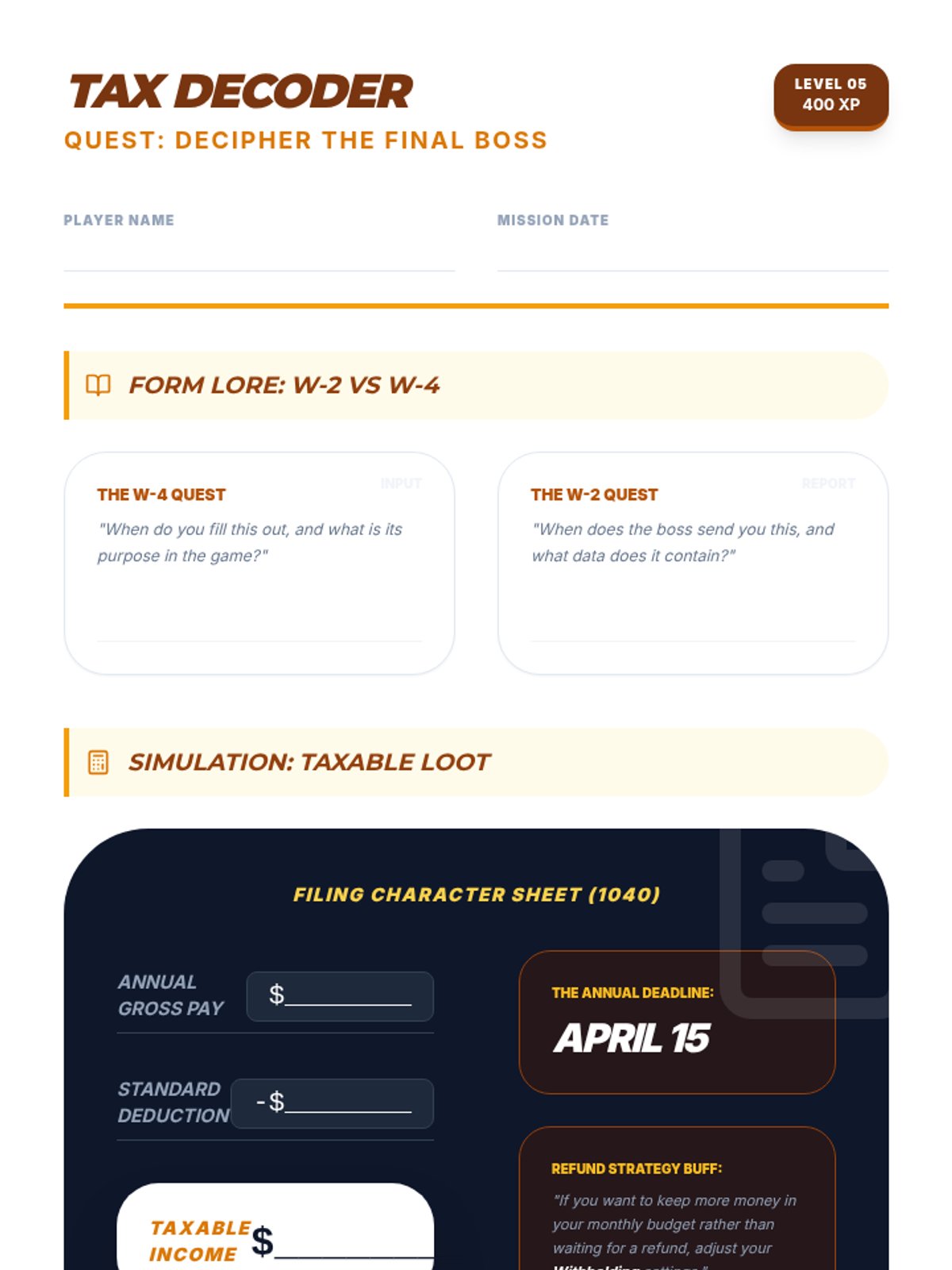
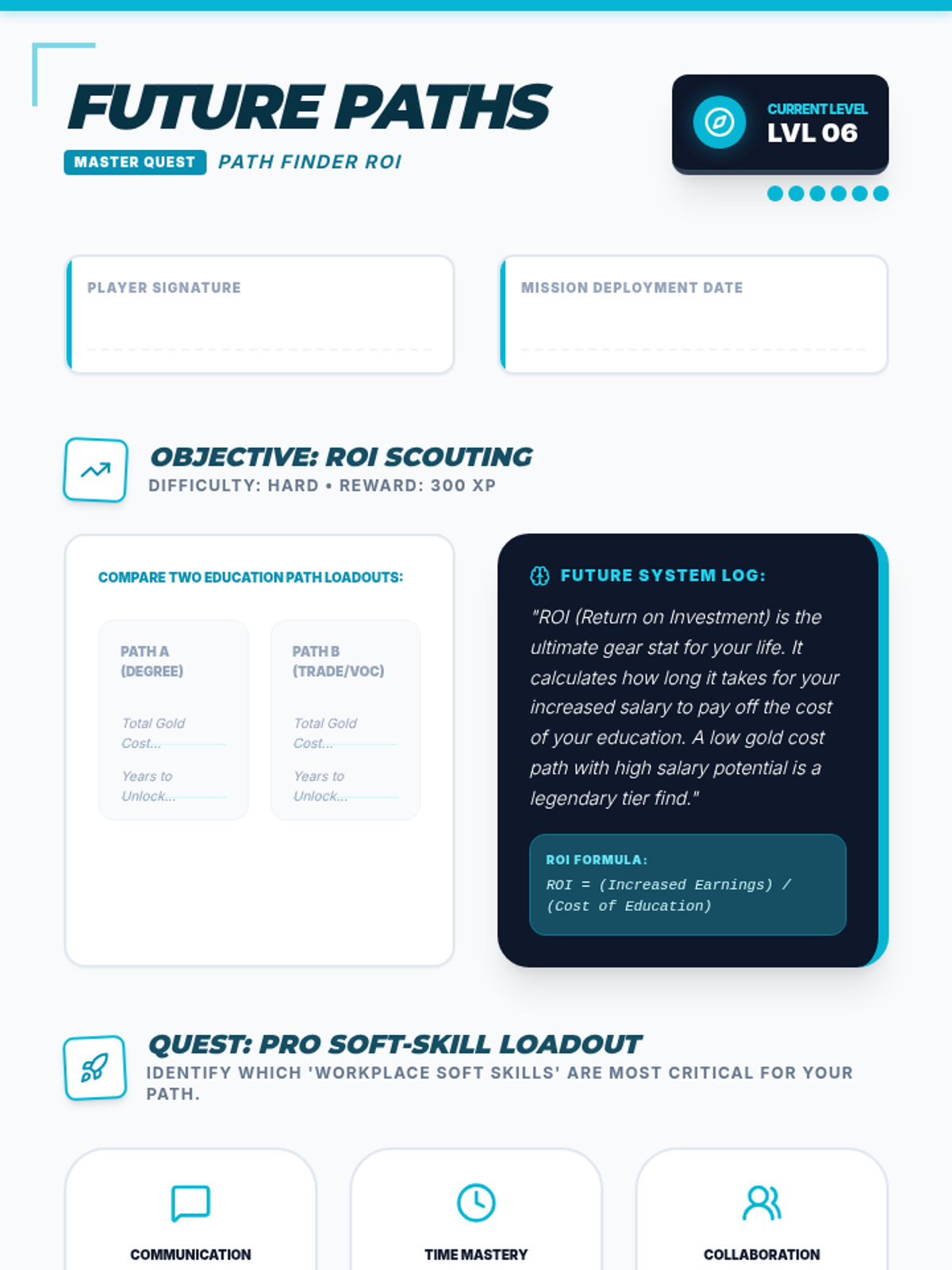
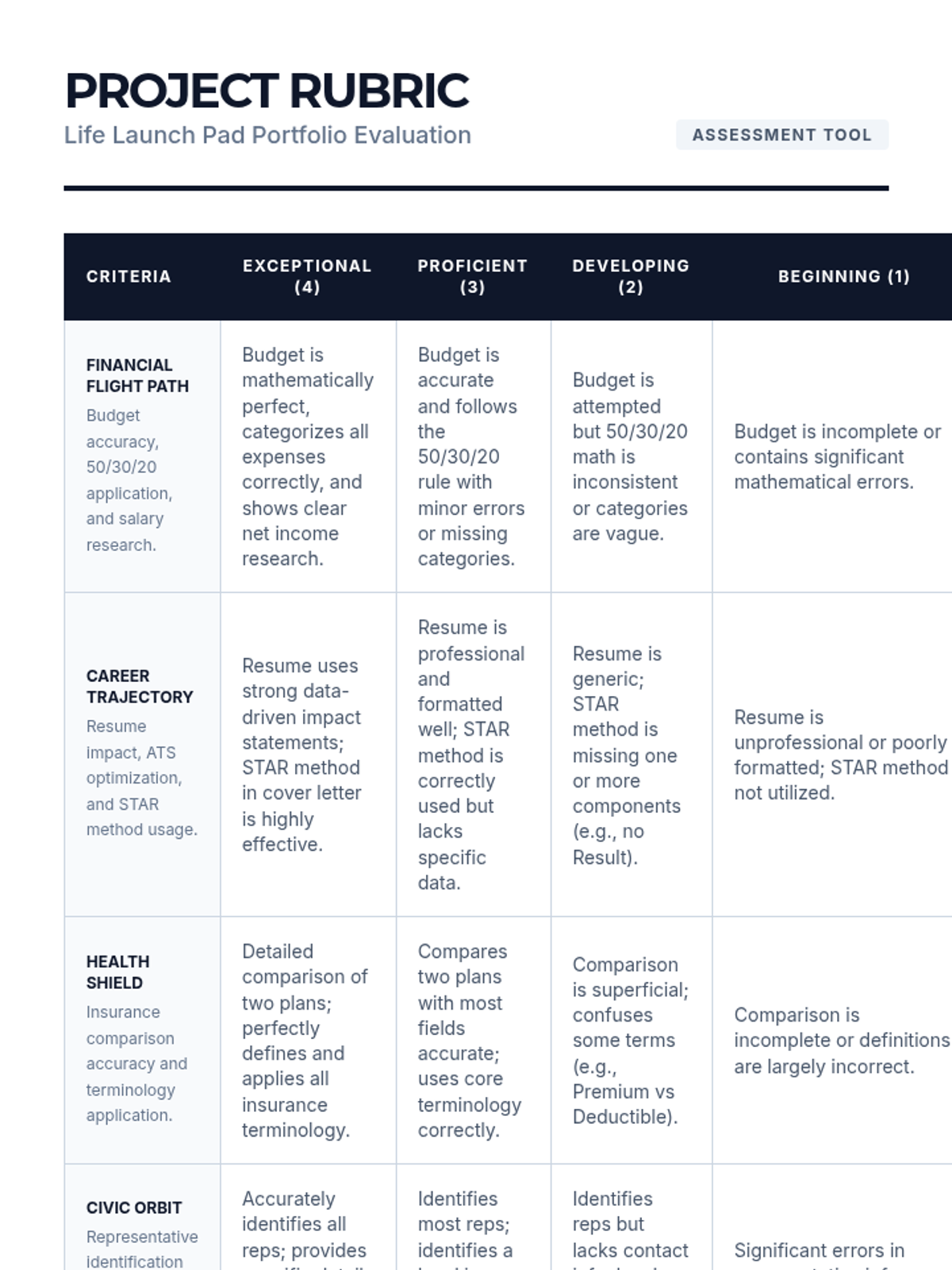
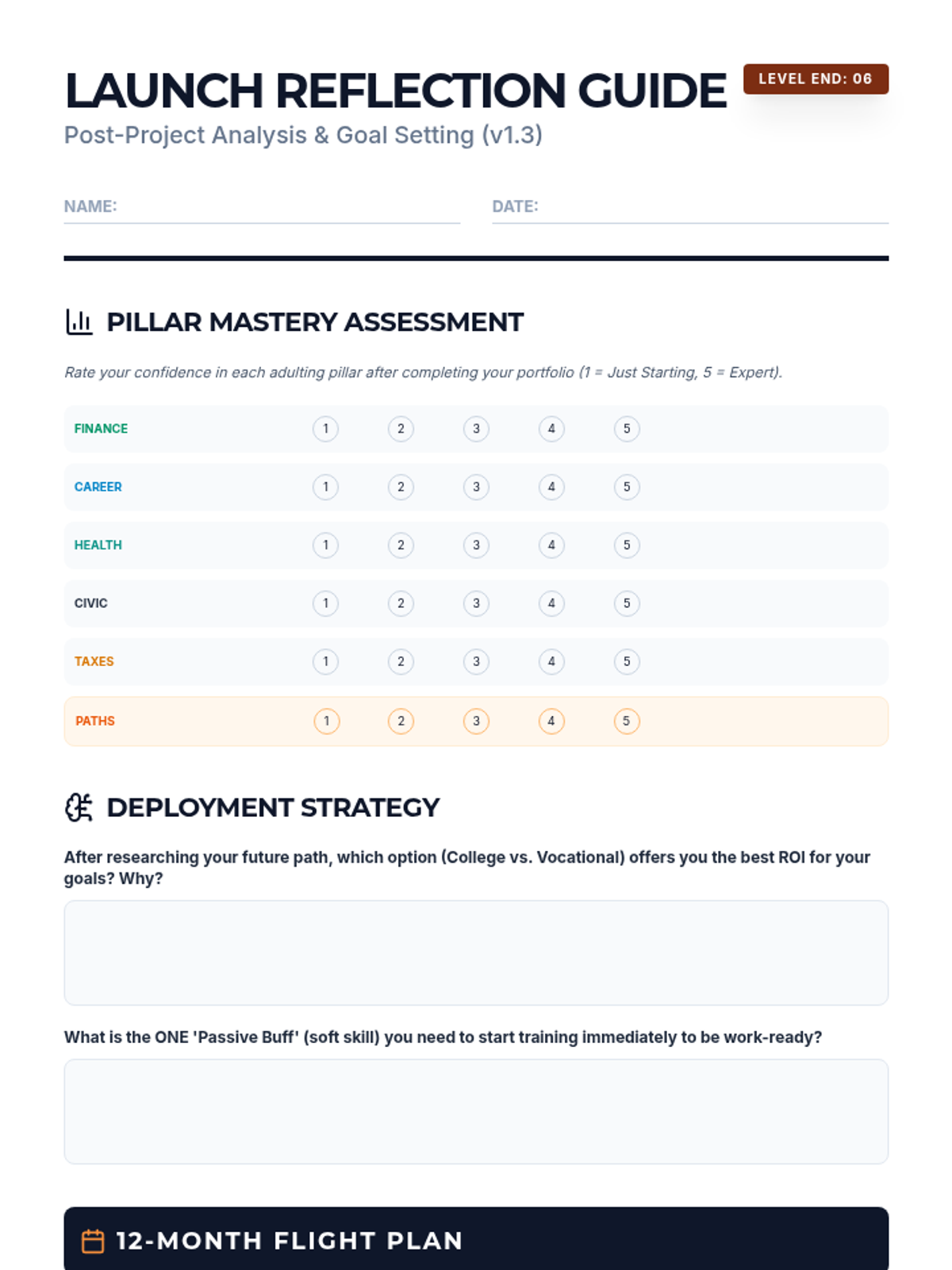
College selection, application workflows, and financial aid navigation including FAFSA and scholarship acquisition. Builds skills in personal statement writing and career exploration to align post-secondary choices with long-term professional goals.
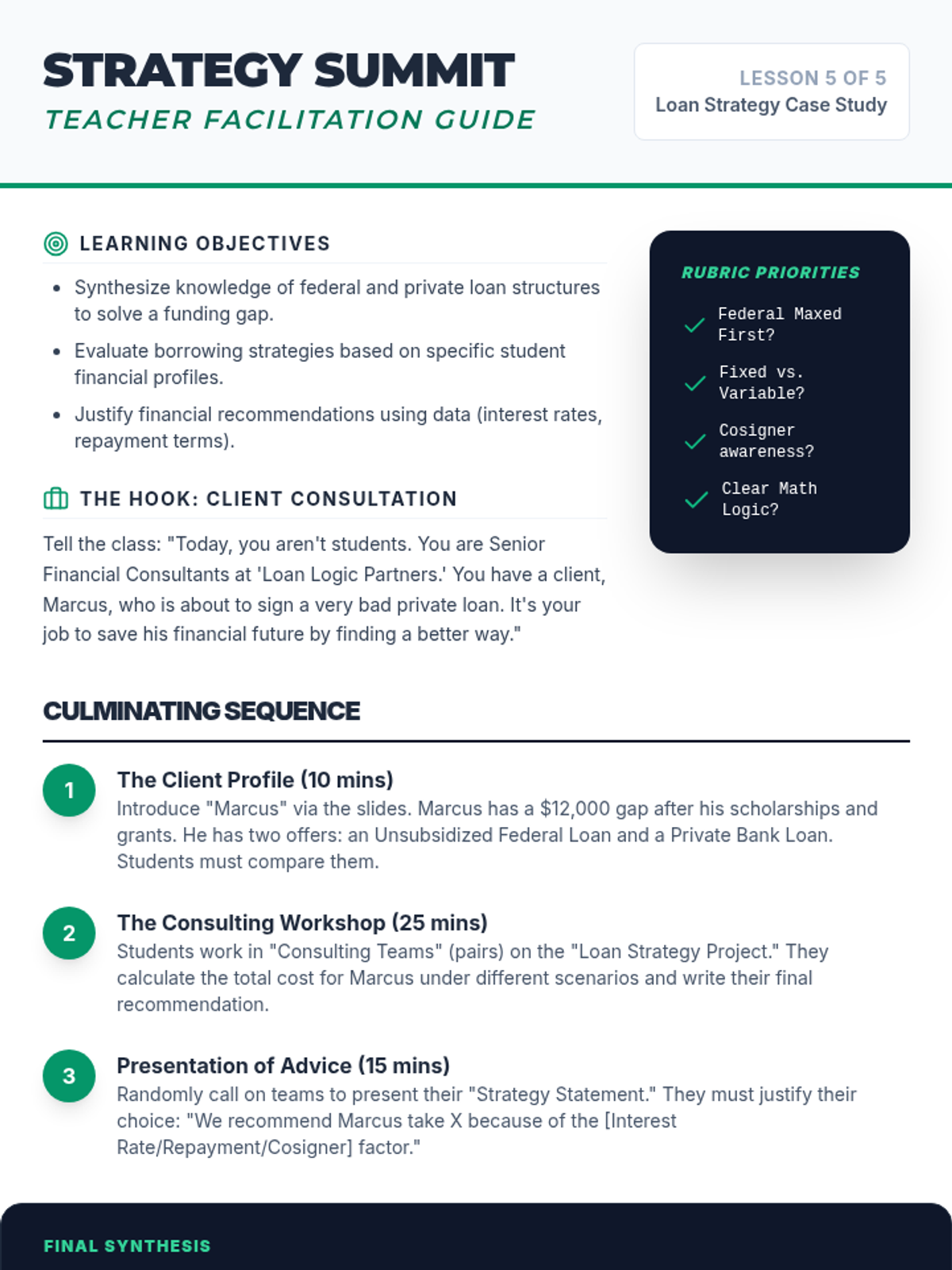
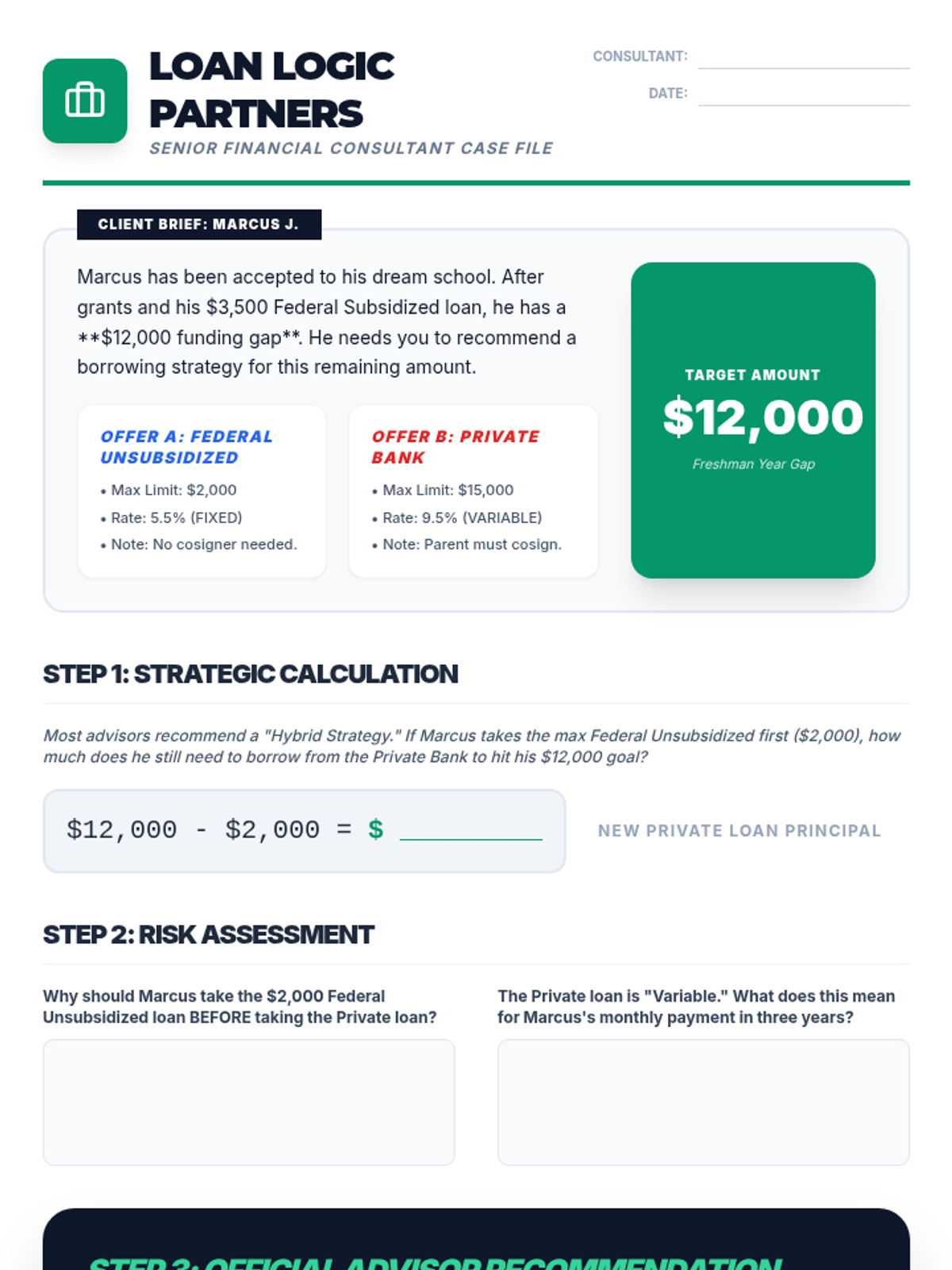
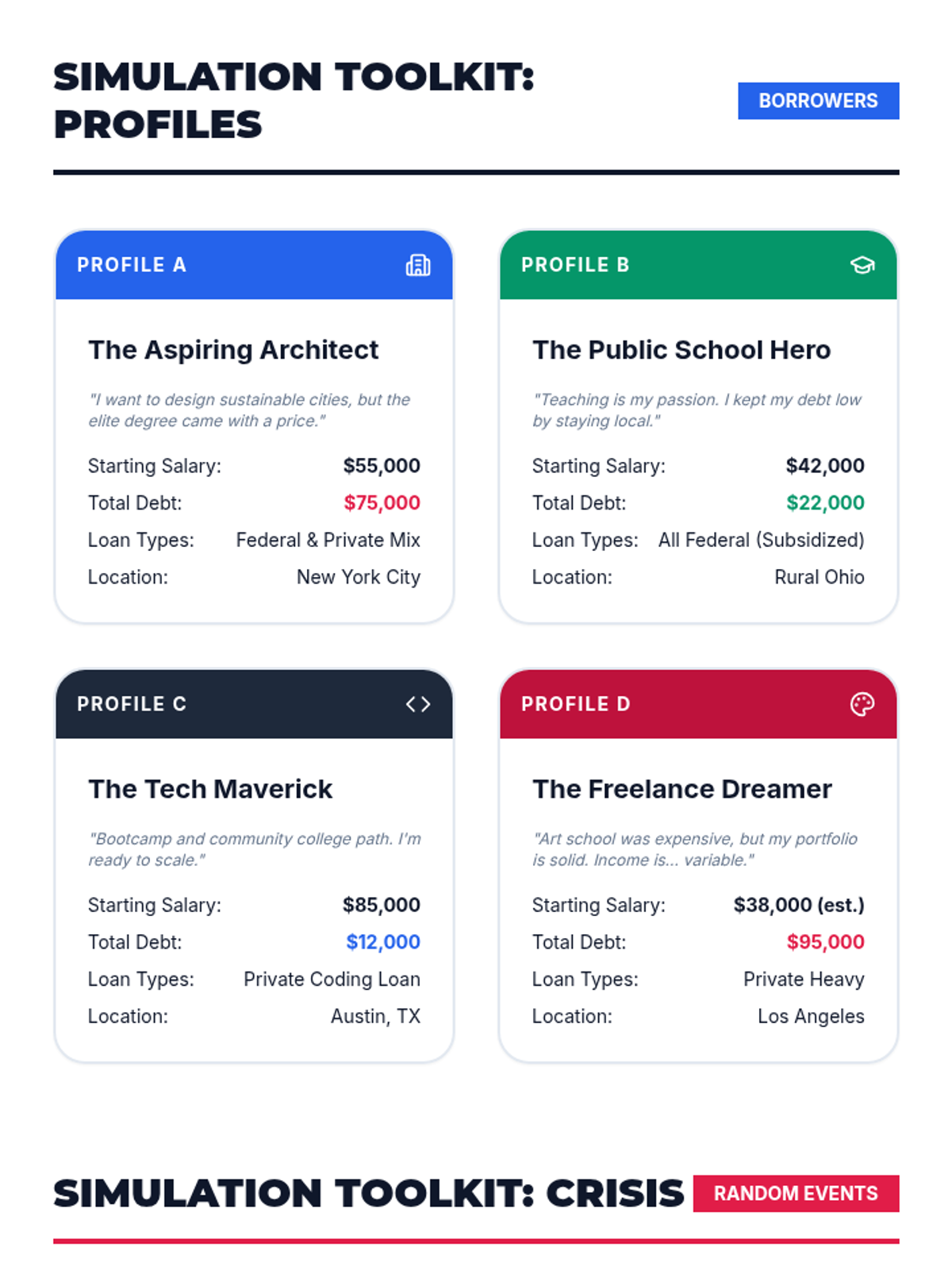
Students act as financial advisors for fictional high school seniors, recommending a mix of federal and private loans based on specific profiles.
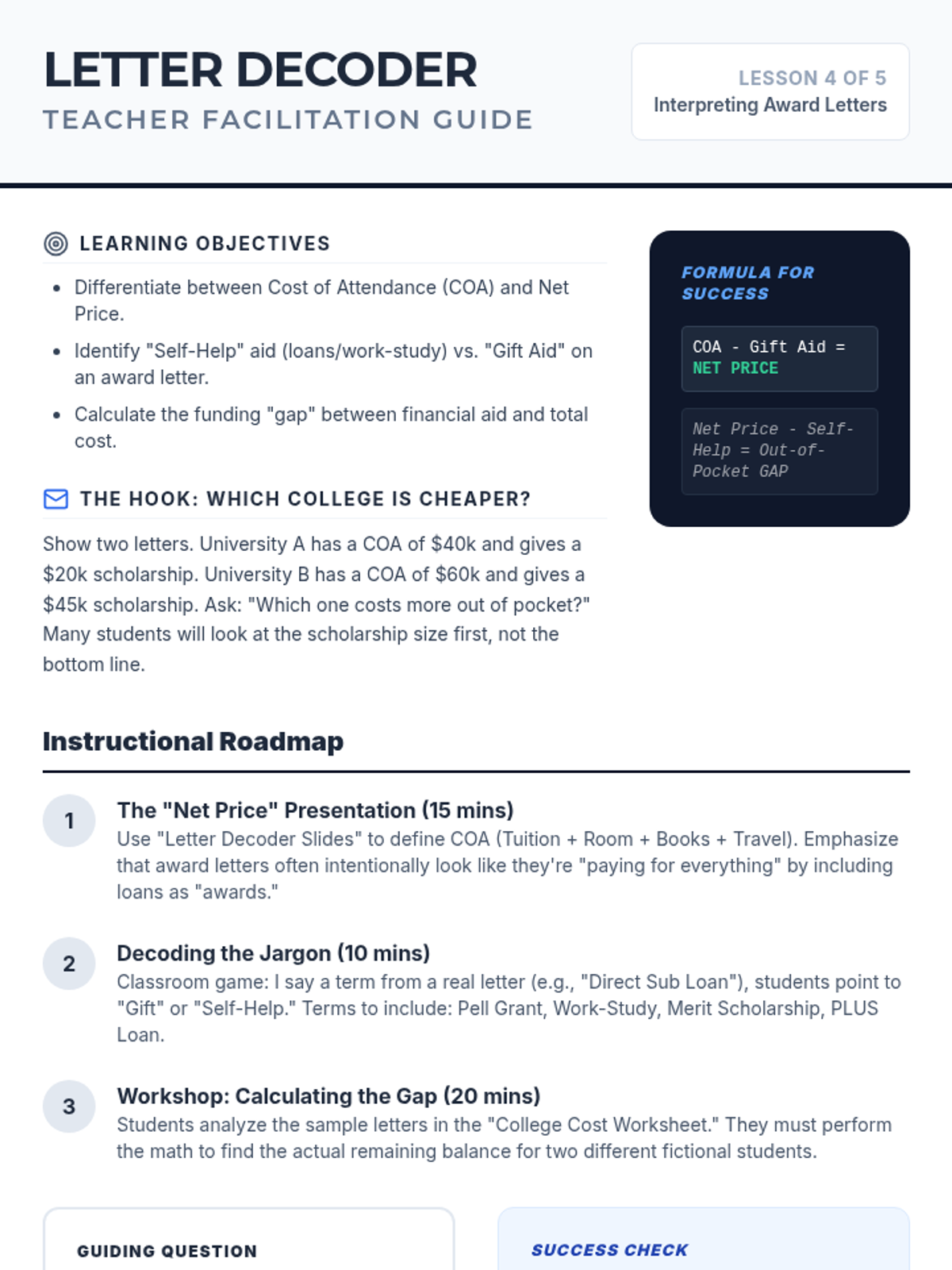
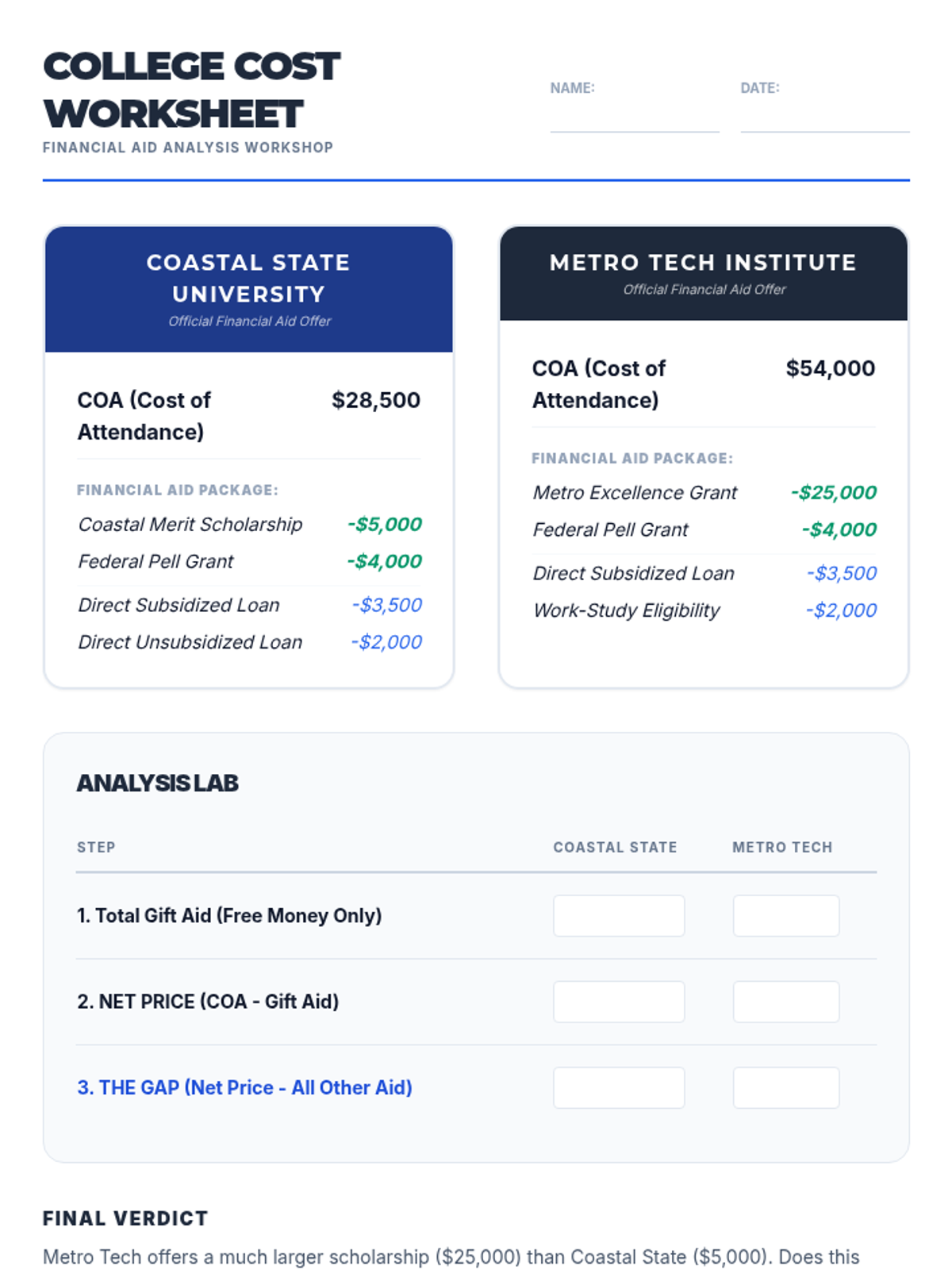
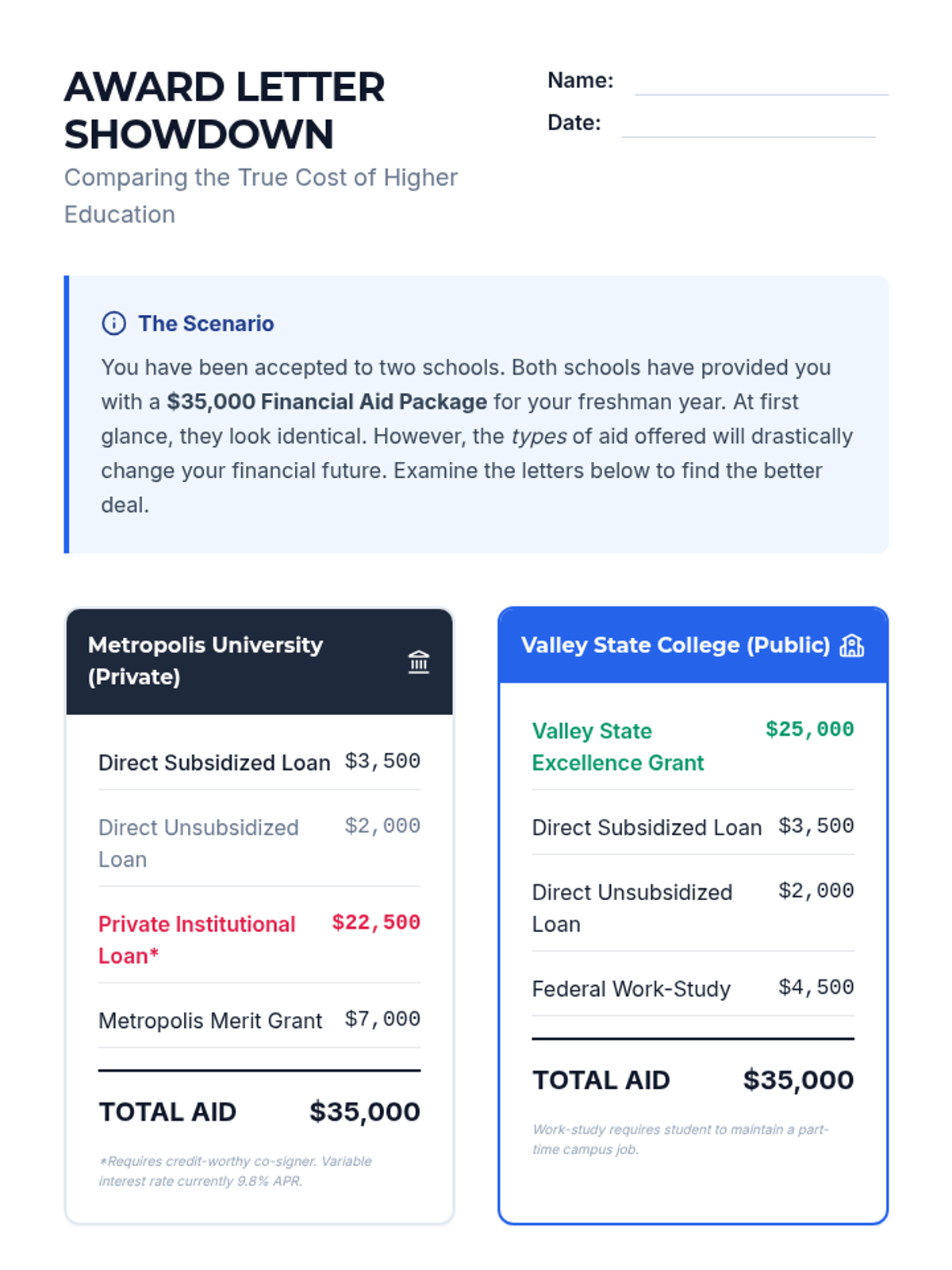
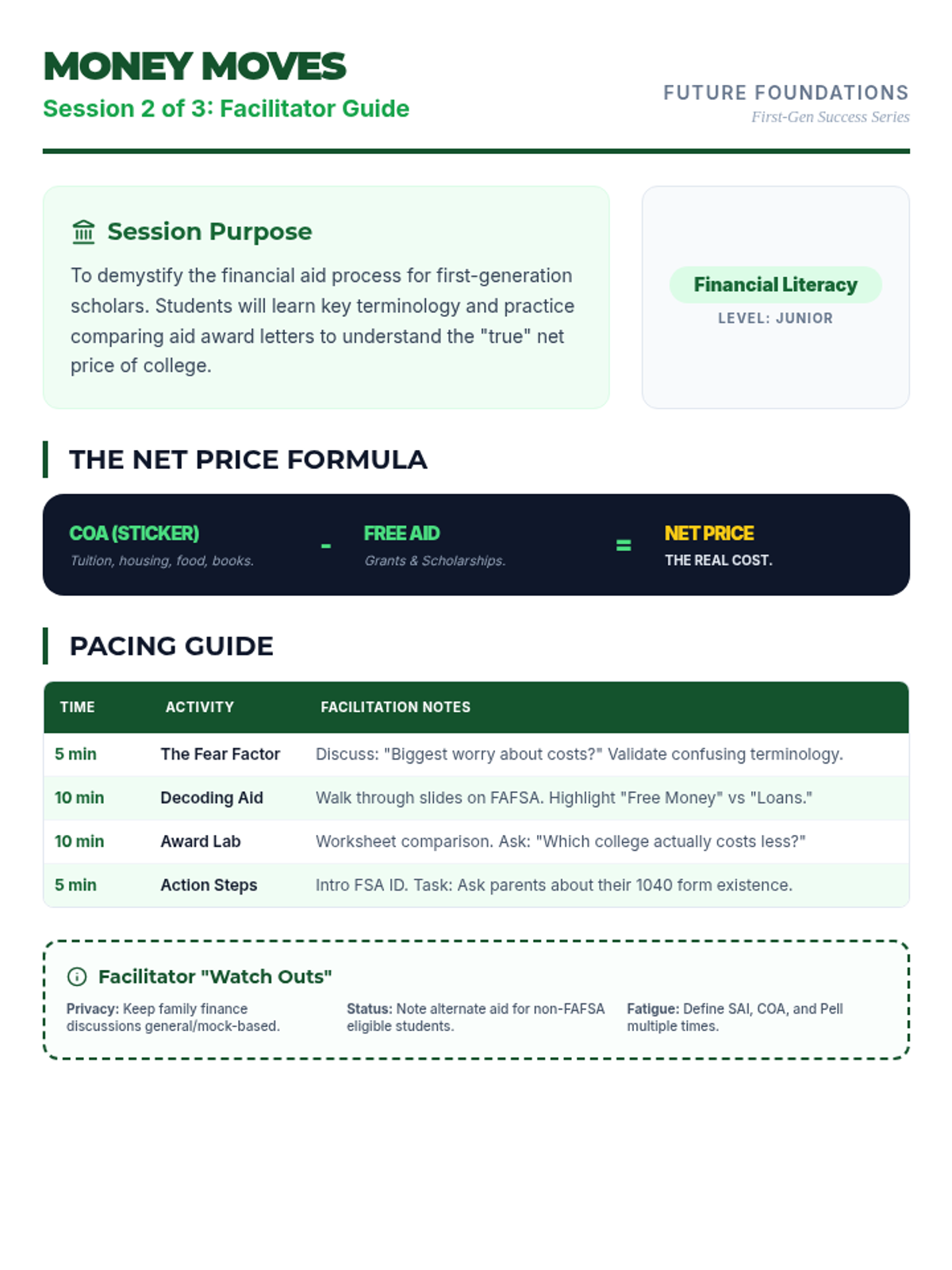
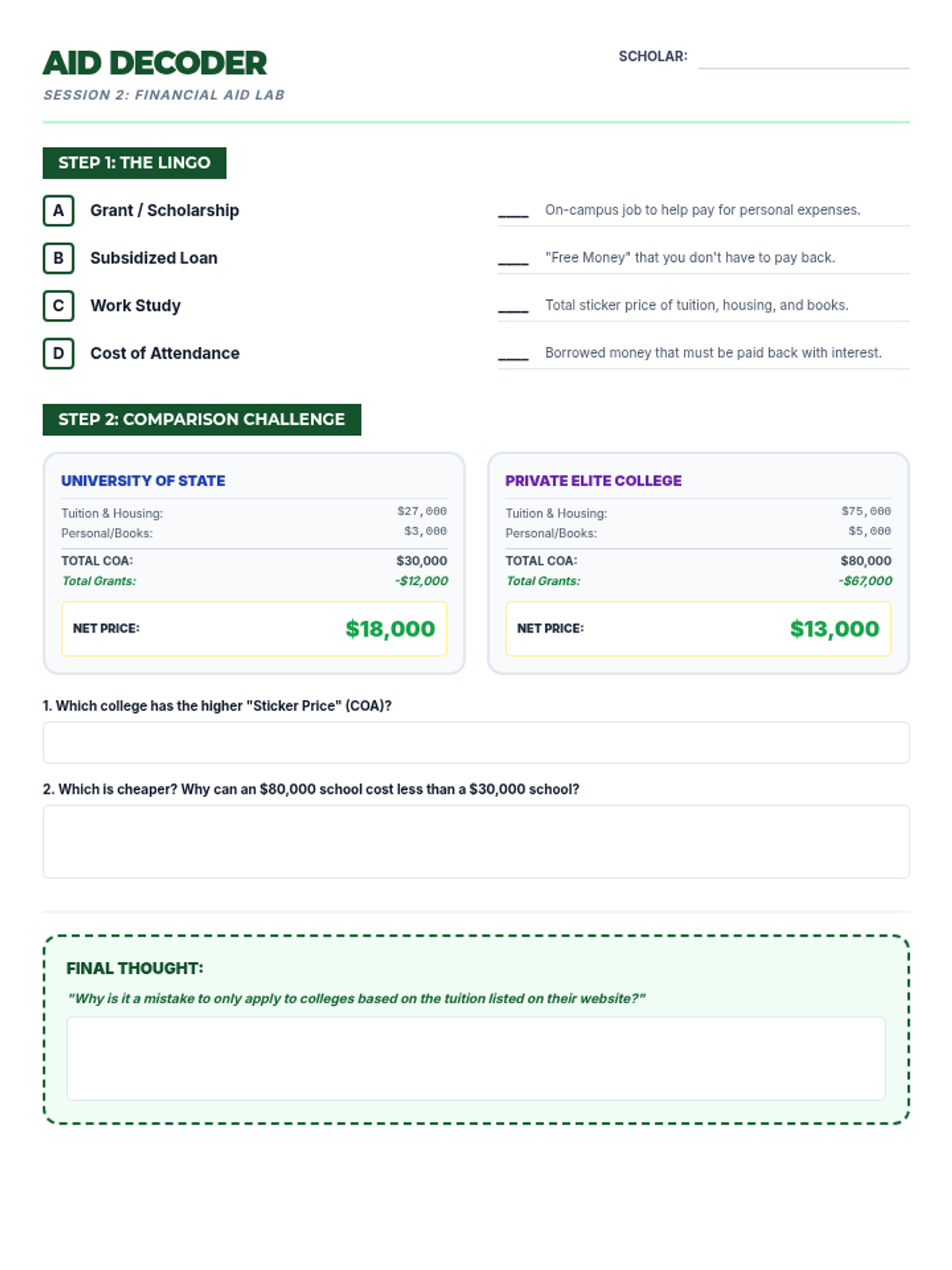
Using sample award letters, students practice identifying the 'net price' and separating loans from grants to determine the true cost of attendance.
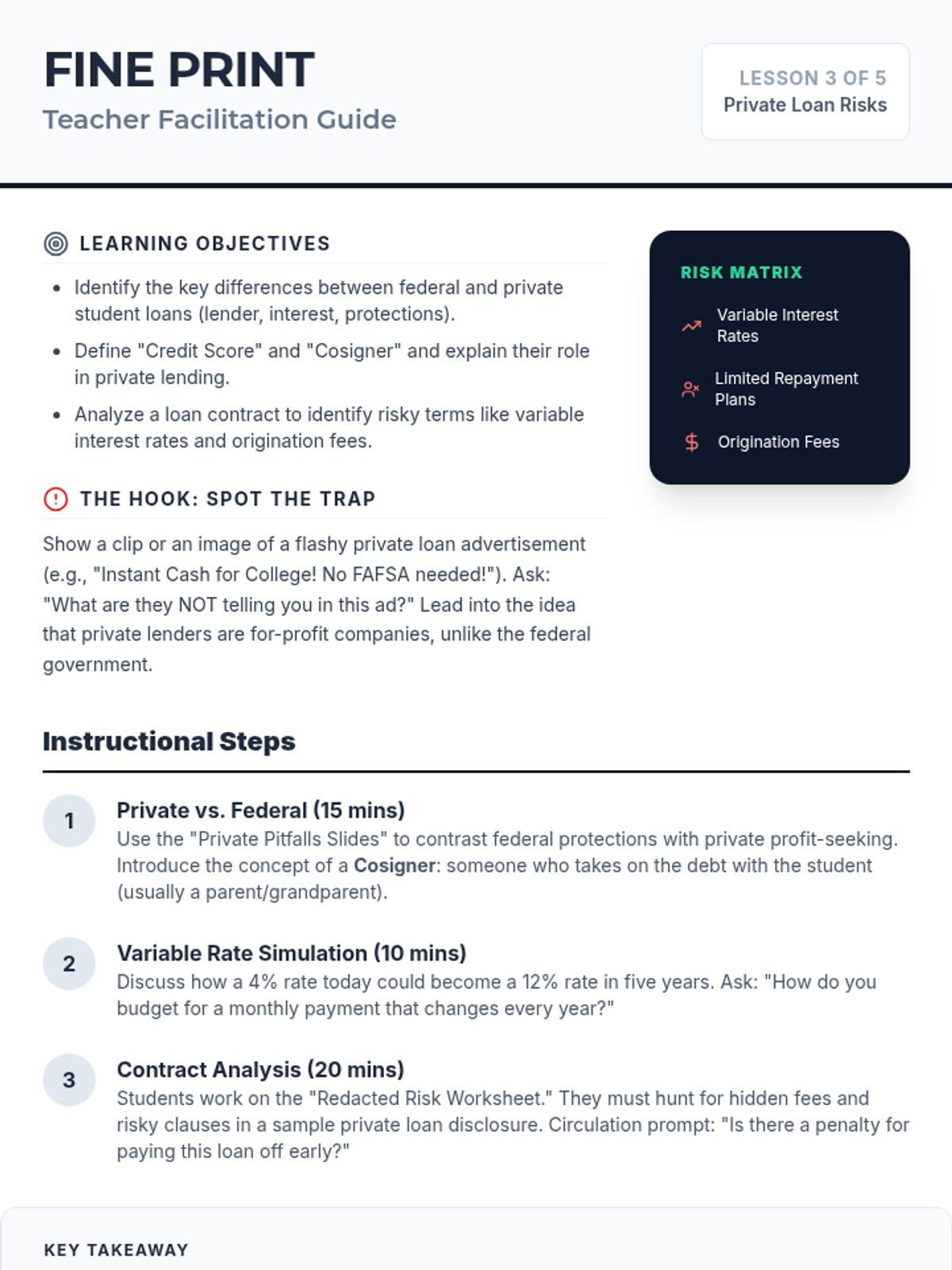
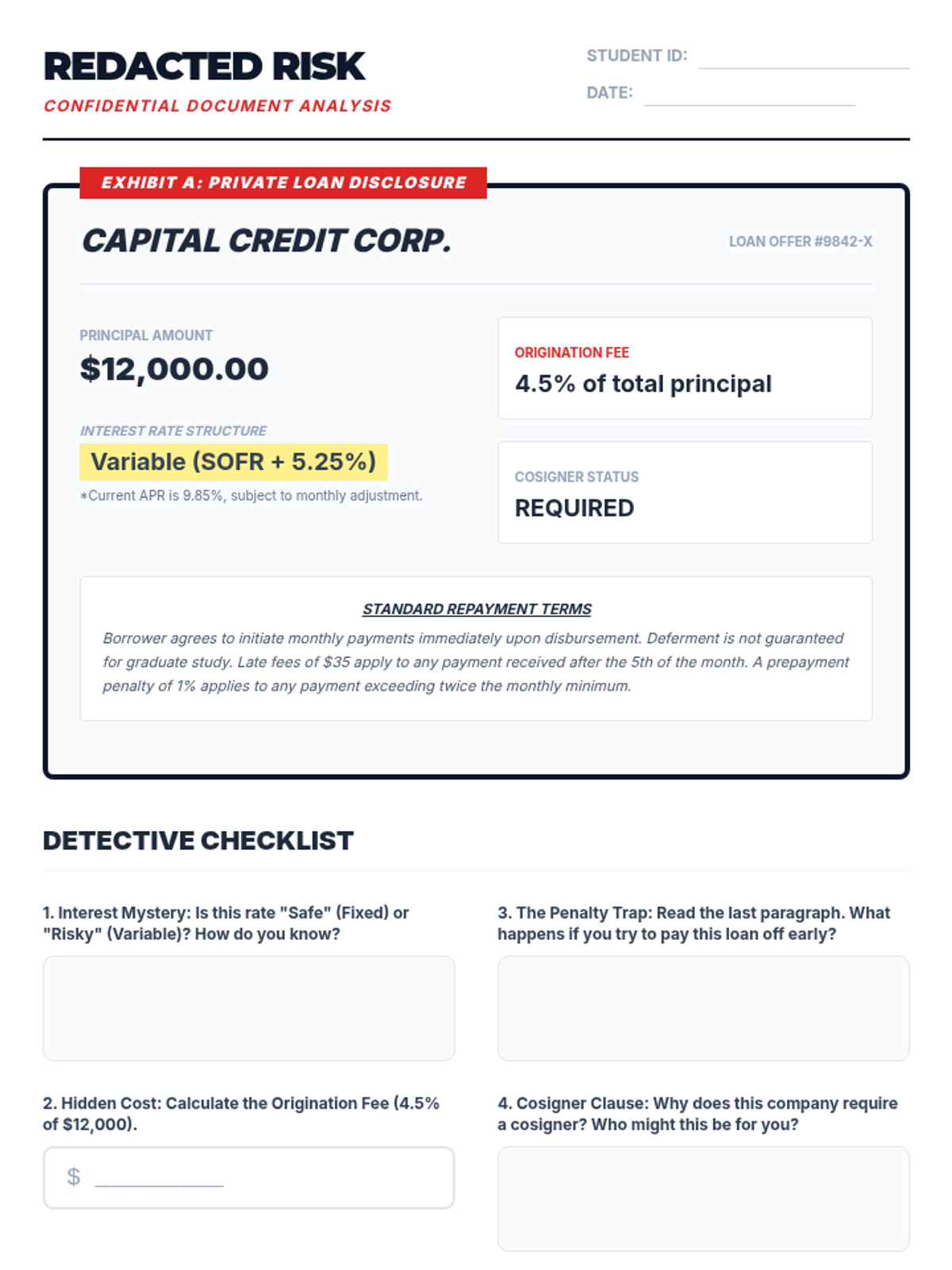
Students investigate the landscape of private student loans, examining the role of credit scores, cosigners, and variable versus fixed interest rates.
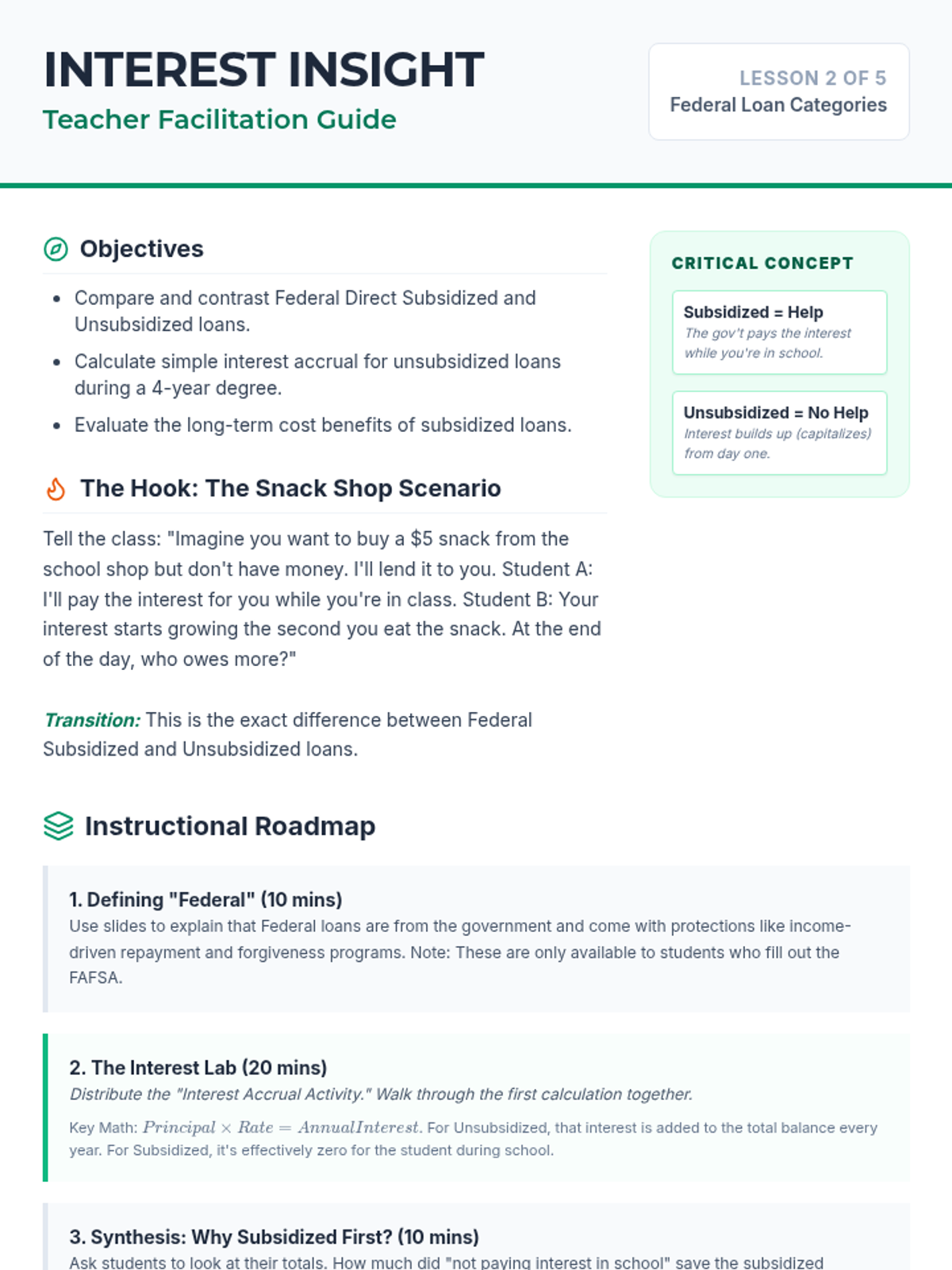
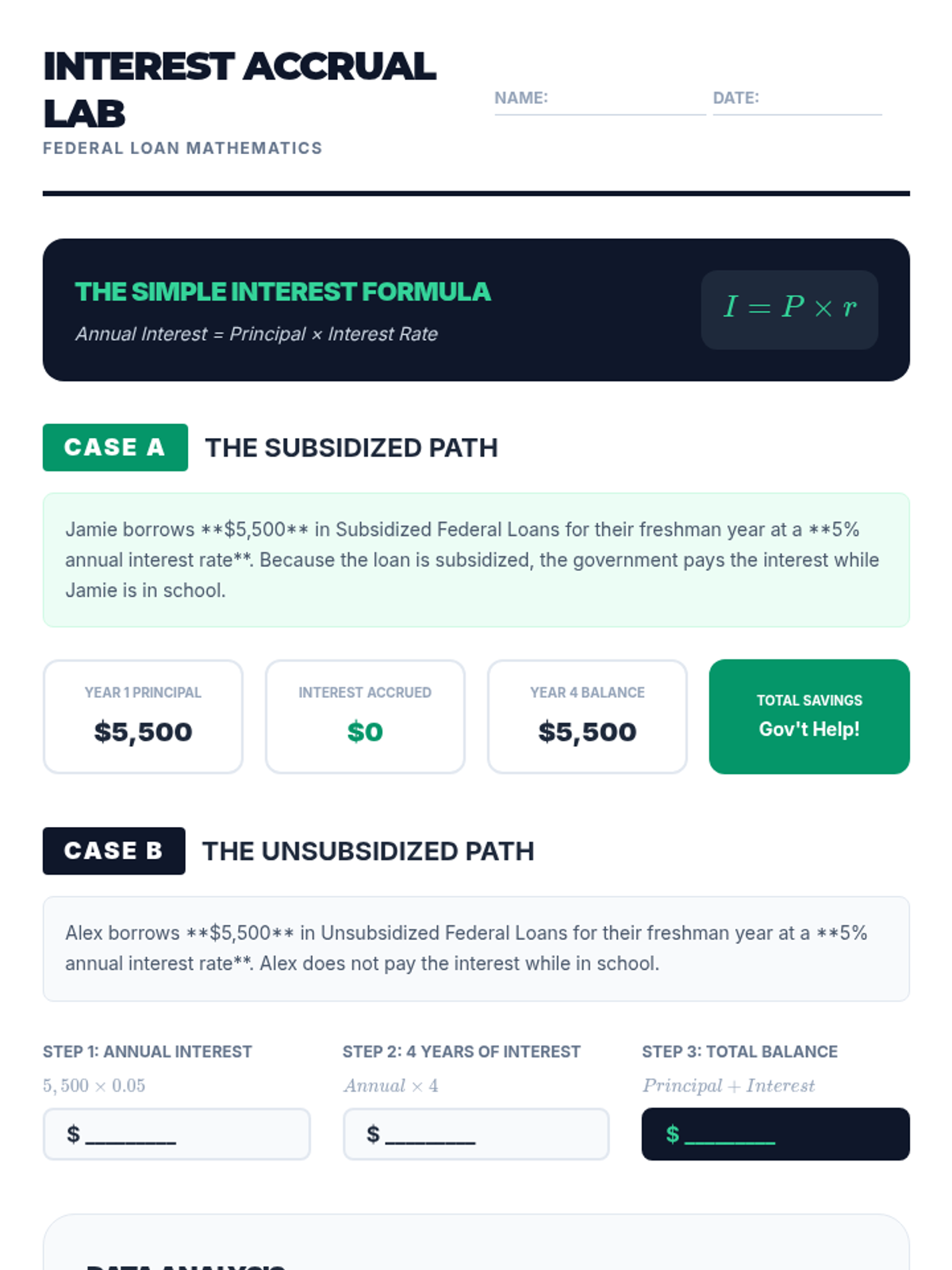
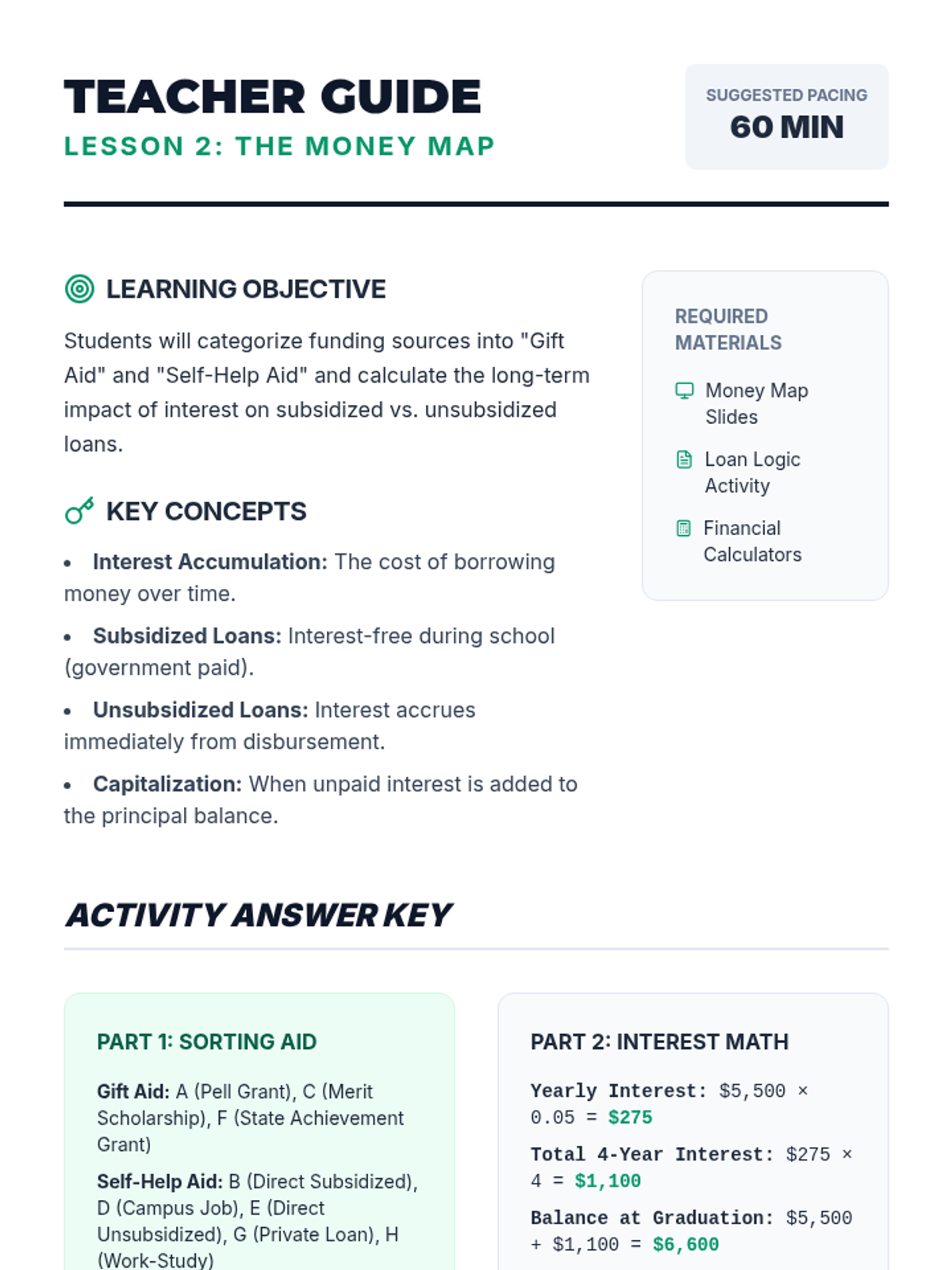
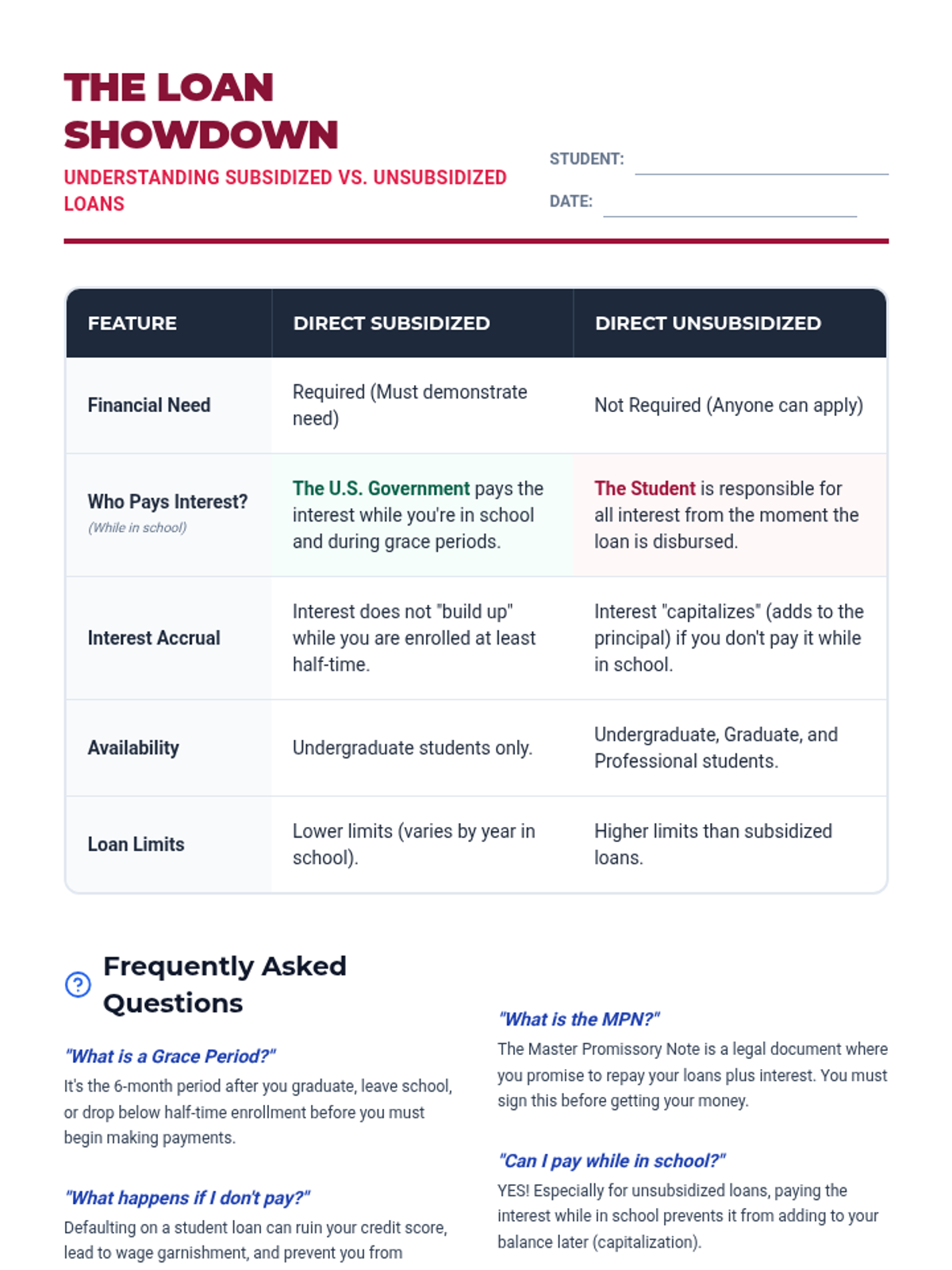
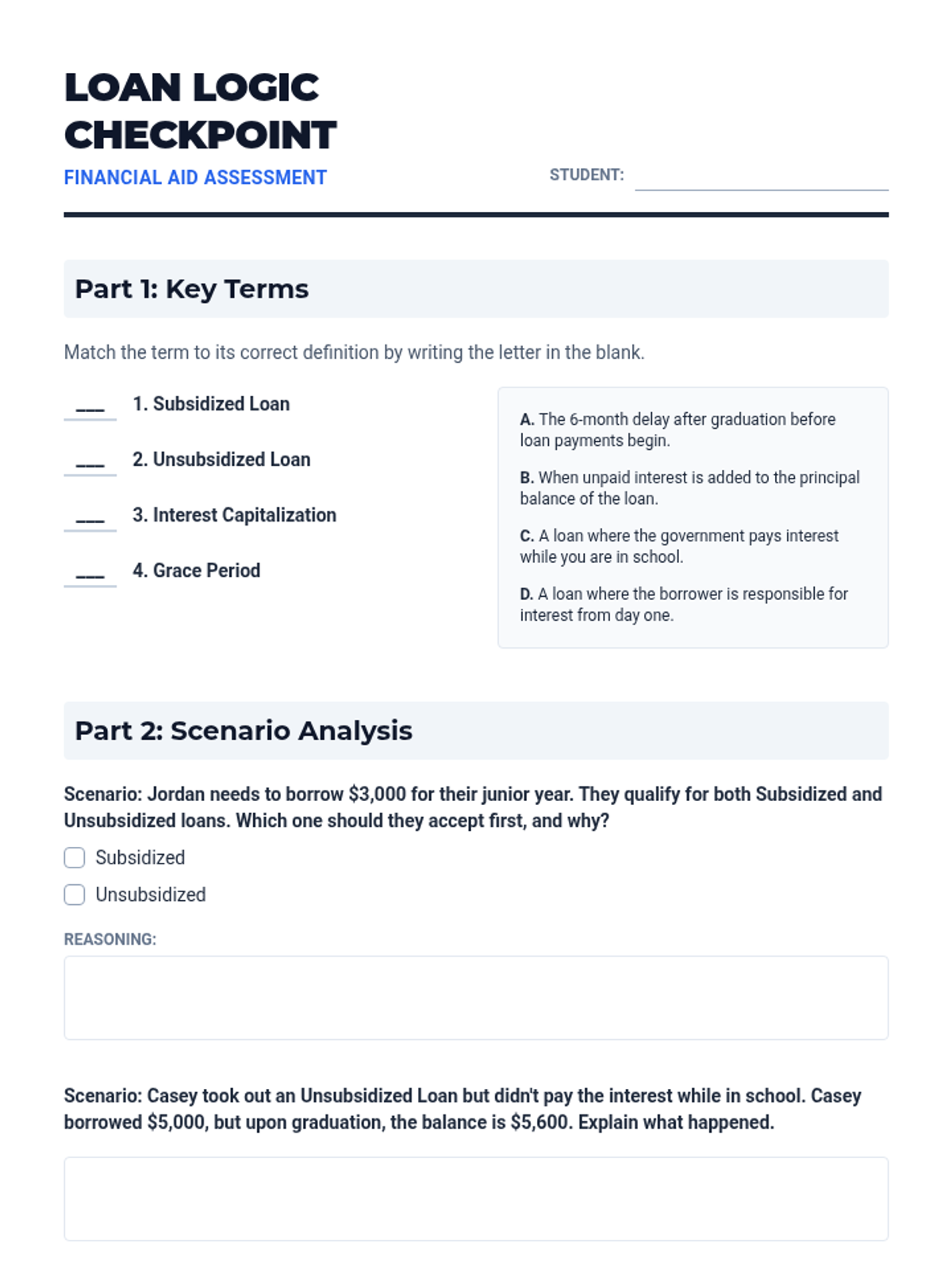
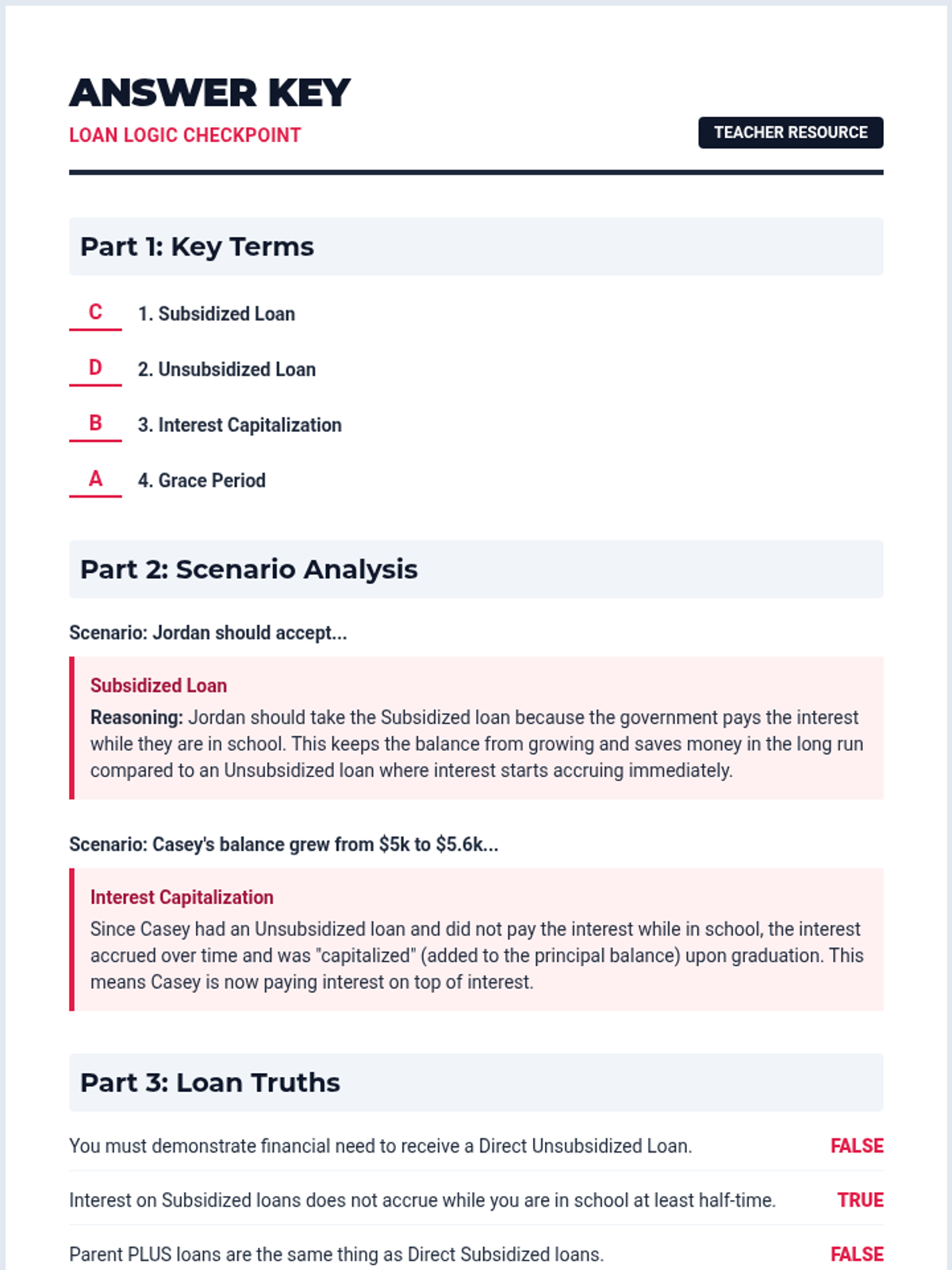
This lesson focuses on the Federal Direct Loan program, clarifying the difference between Subsidized and Unsubsidized loans and calculating interest accrual.
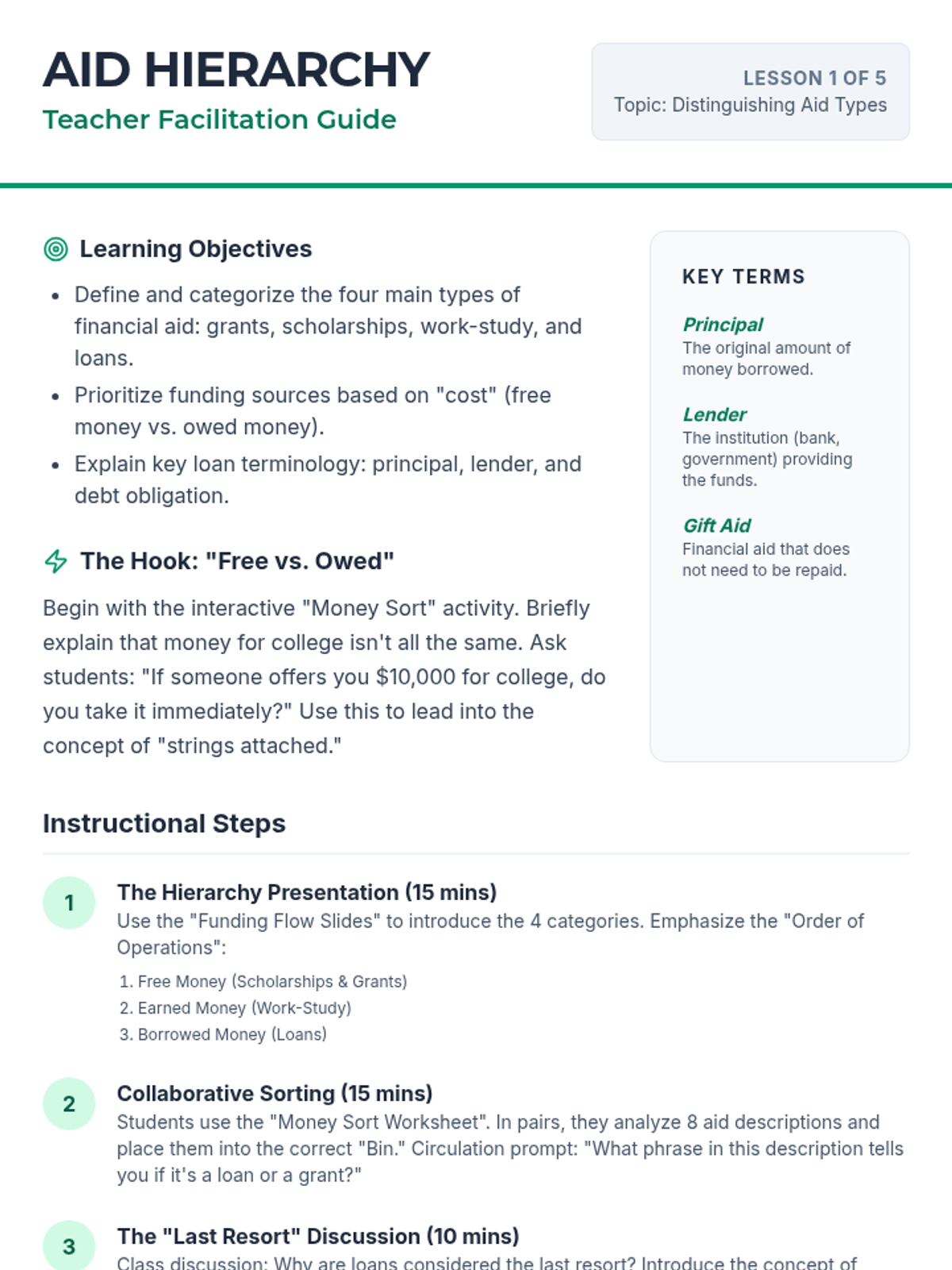
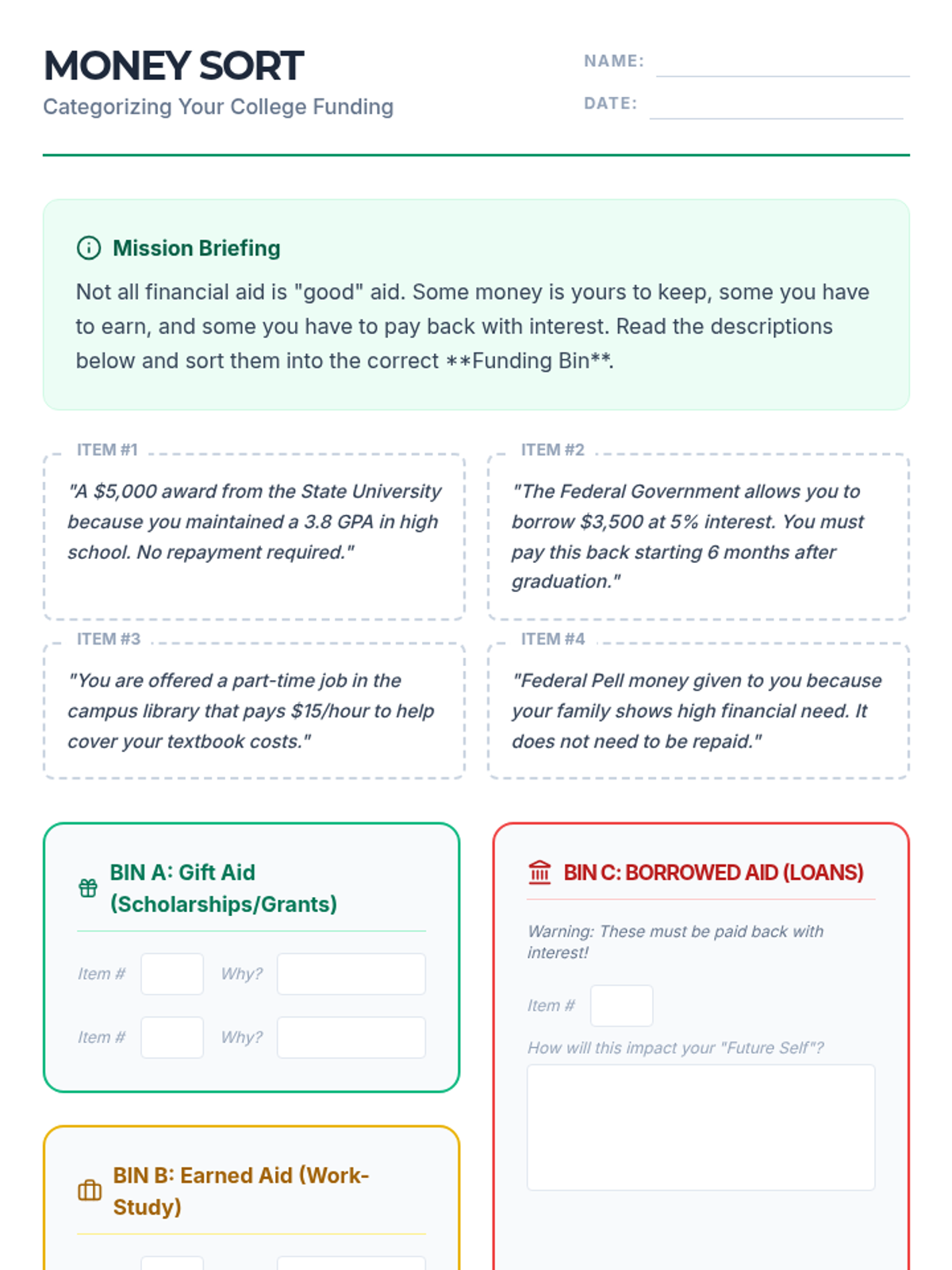
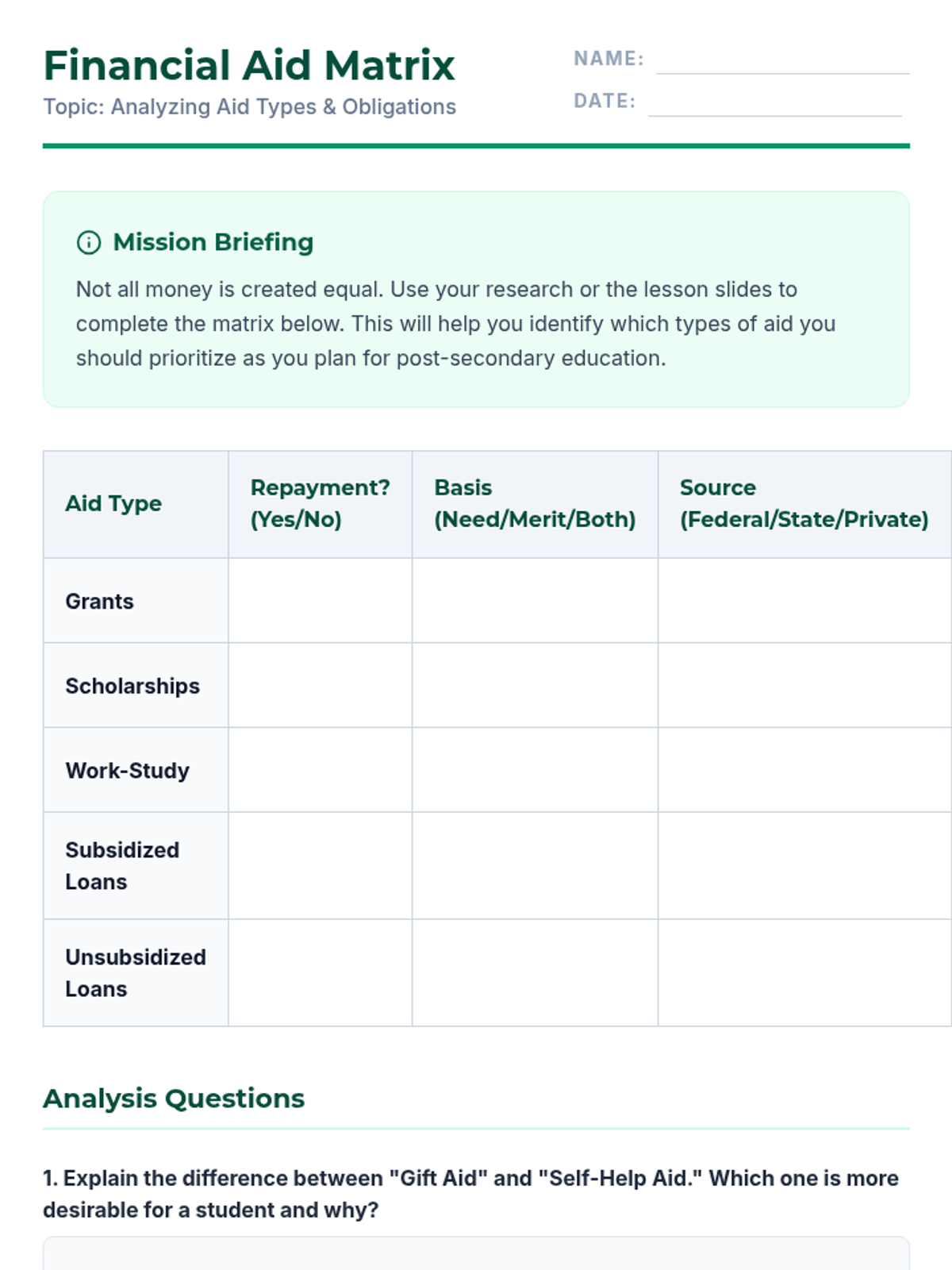
Students explore the hierarchy of funding higher education, categorizing grants, scholarships, work-study, and loans. They analyze why loans should be the last resort and define key terminology.
Students synthesize their knowledge in a complex simulation, managing loan strategies through life events and crisis scenarios.
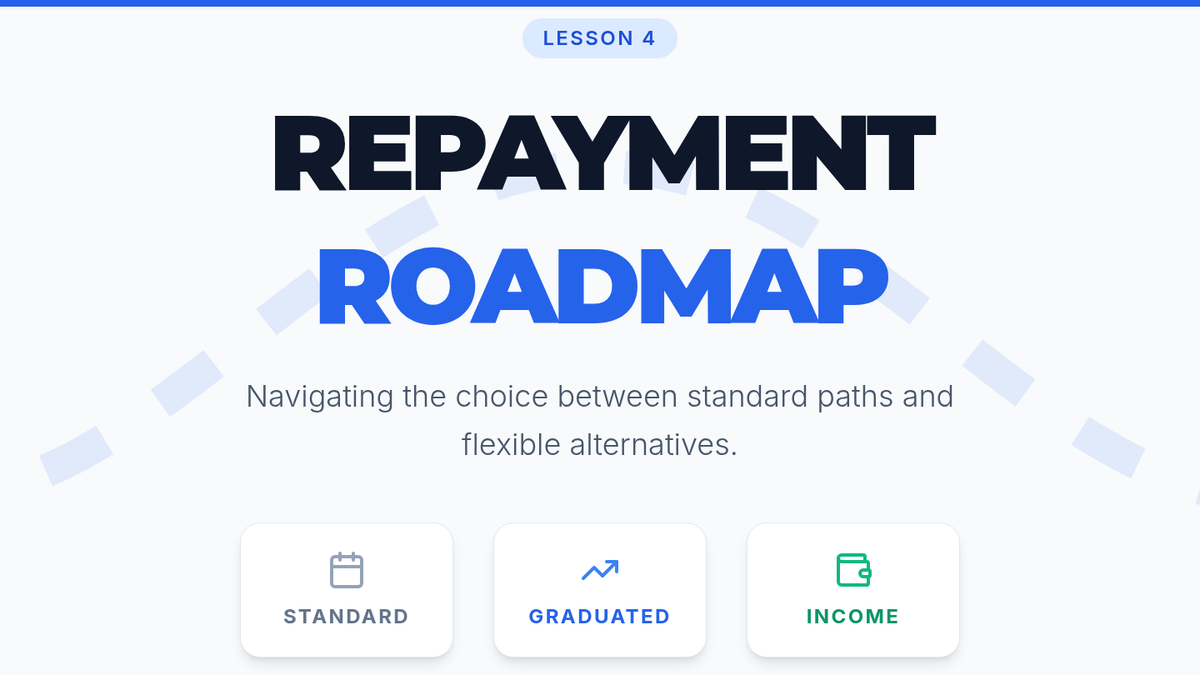
Students analyze various federal repayment plans and amortization schedules to understand how different choices affect monthly payments and total interest.
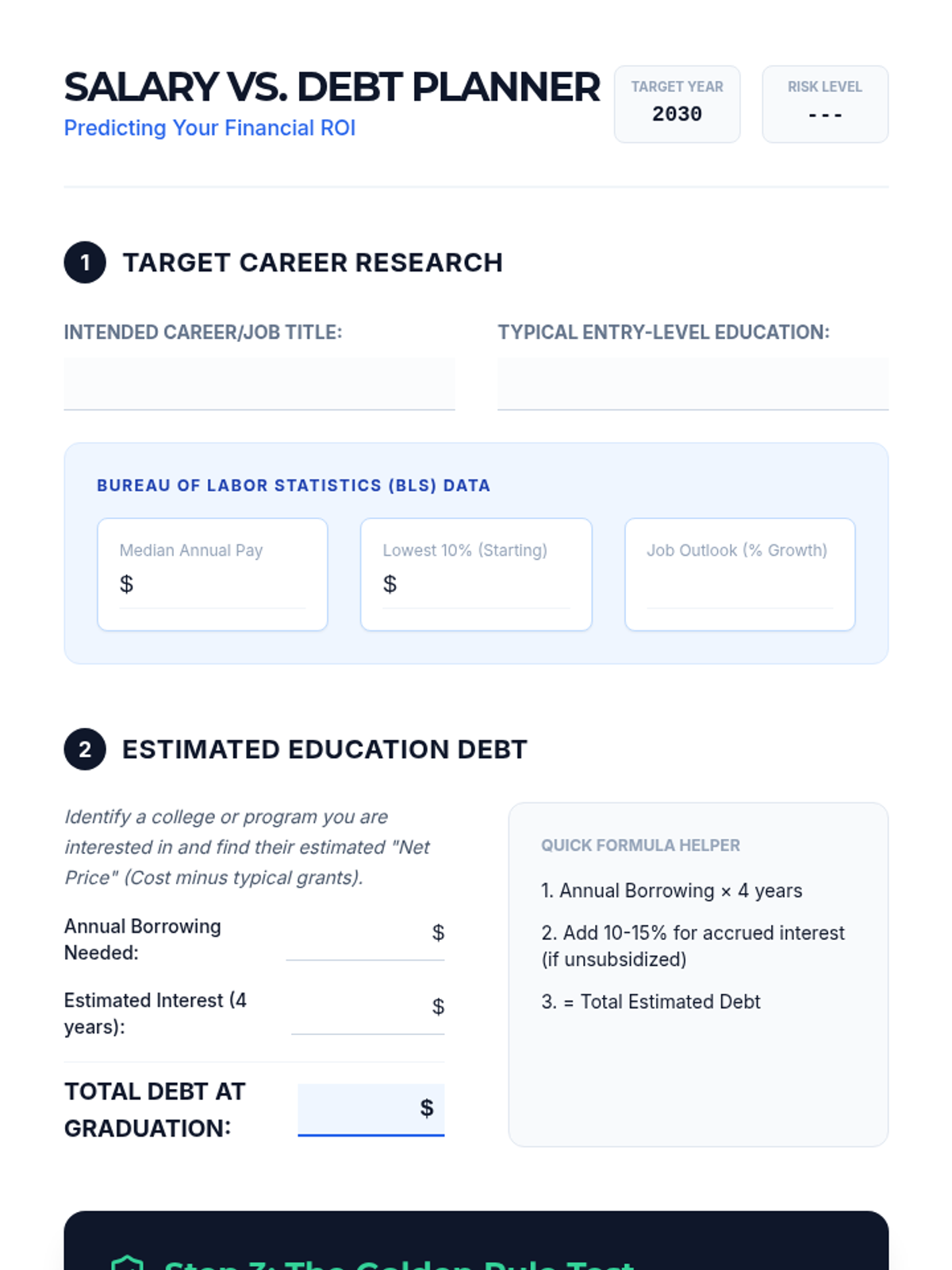
Students research career salaries and apply debt-to-income rules of thumb to evaluate the return on investment for their post-secondary choices.
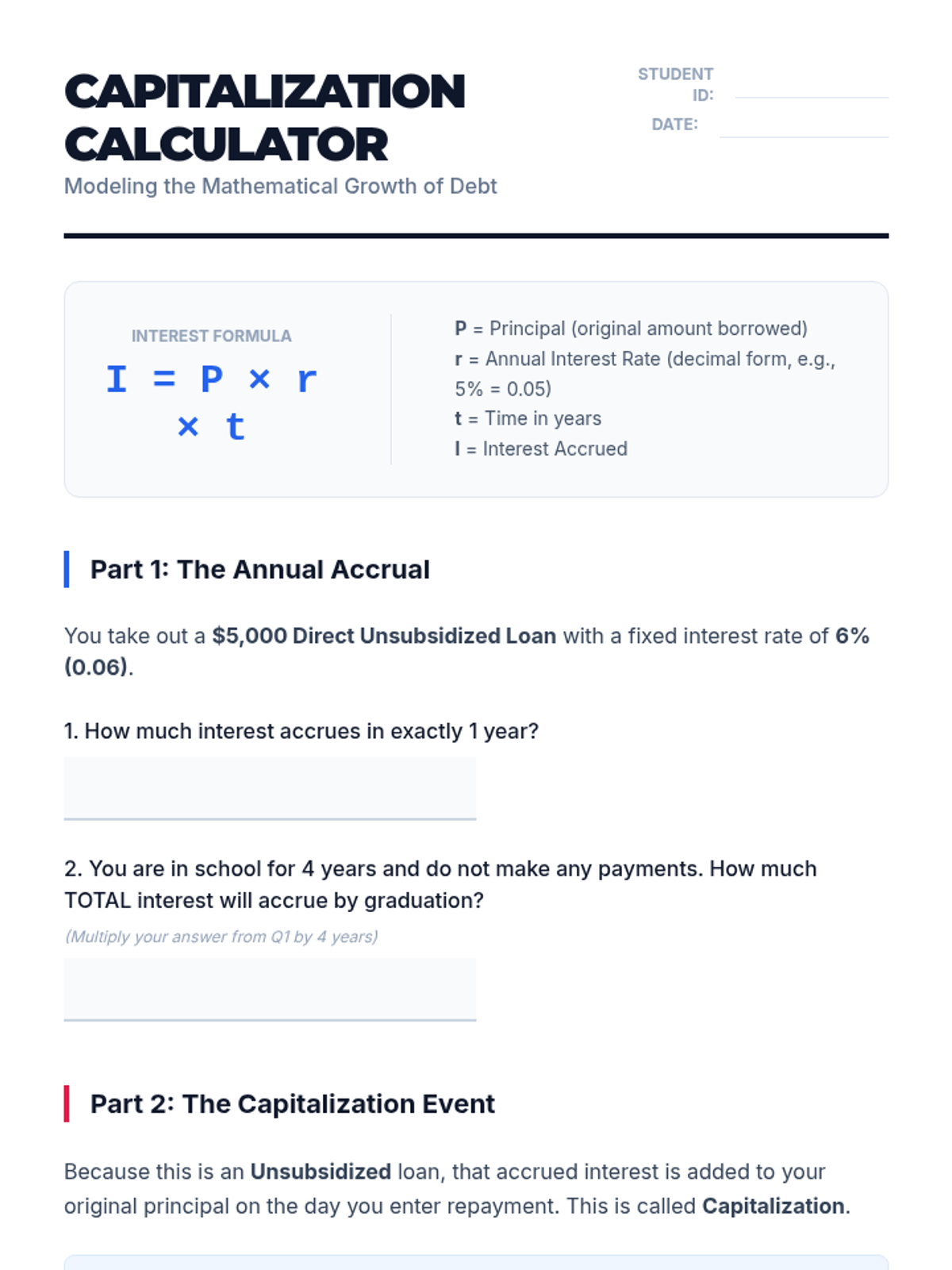
Students master the math behind interest rates, capitalization, and the total cost of borrowing, visualizing how deferment impacts their final balance.
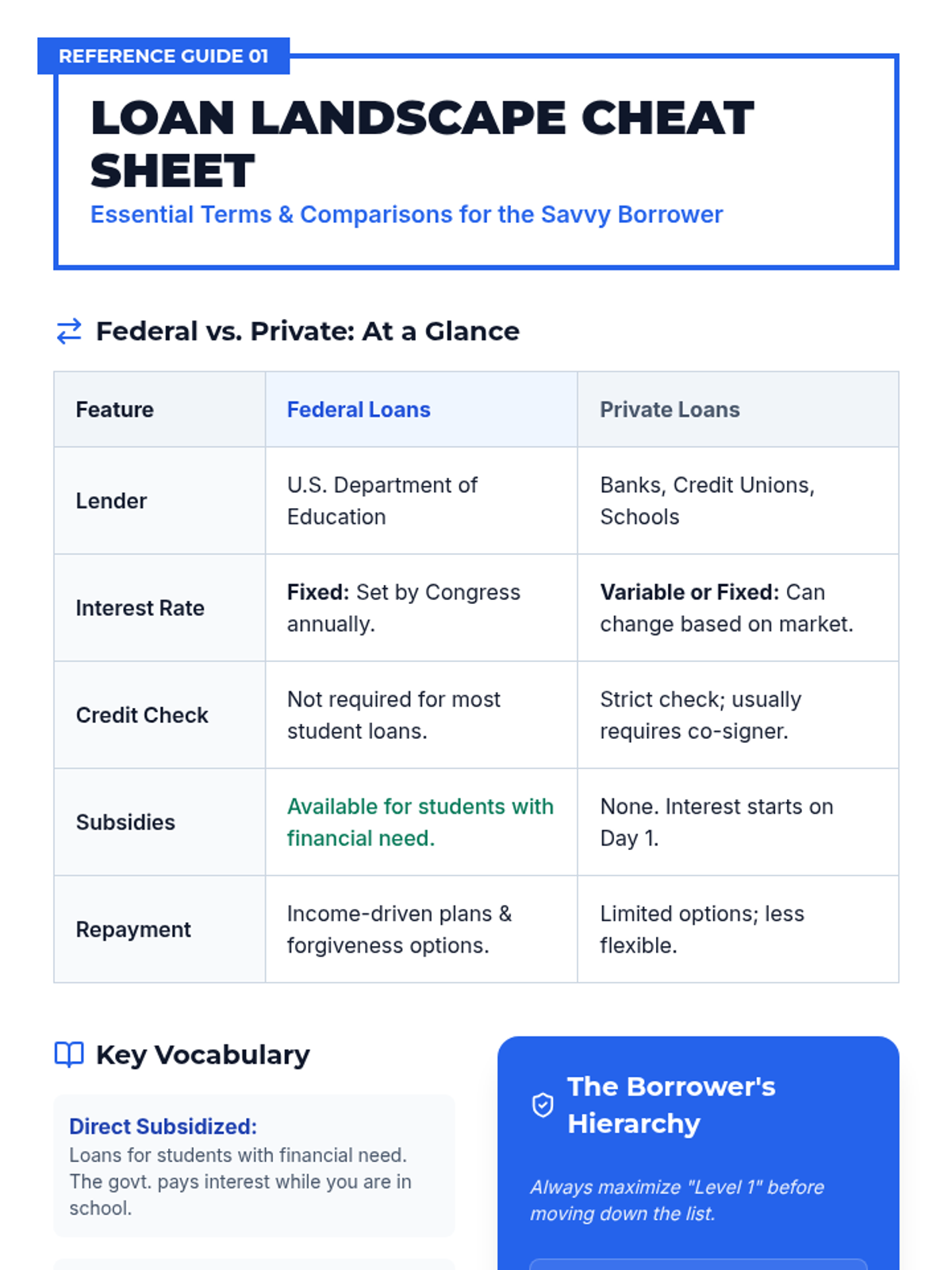
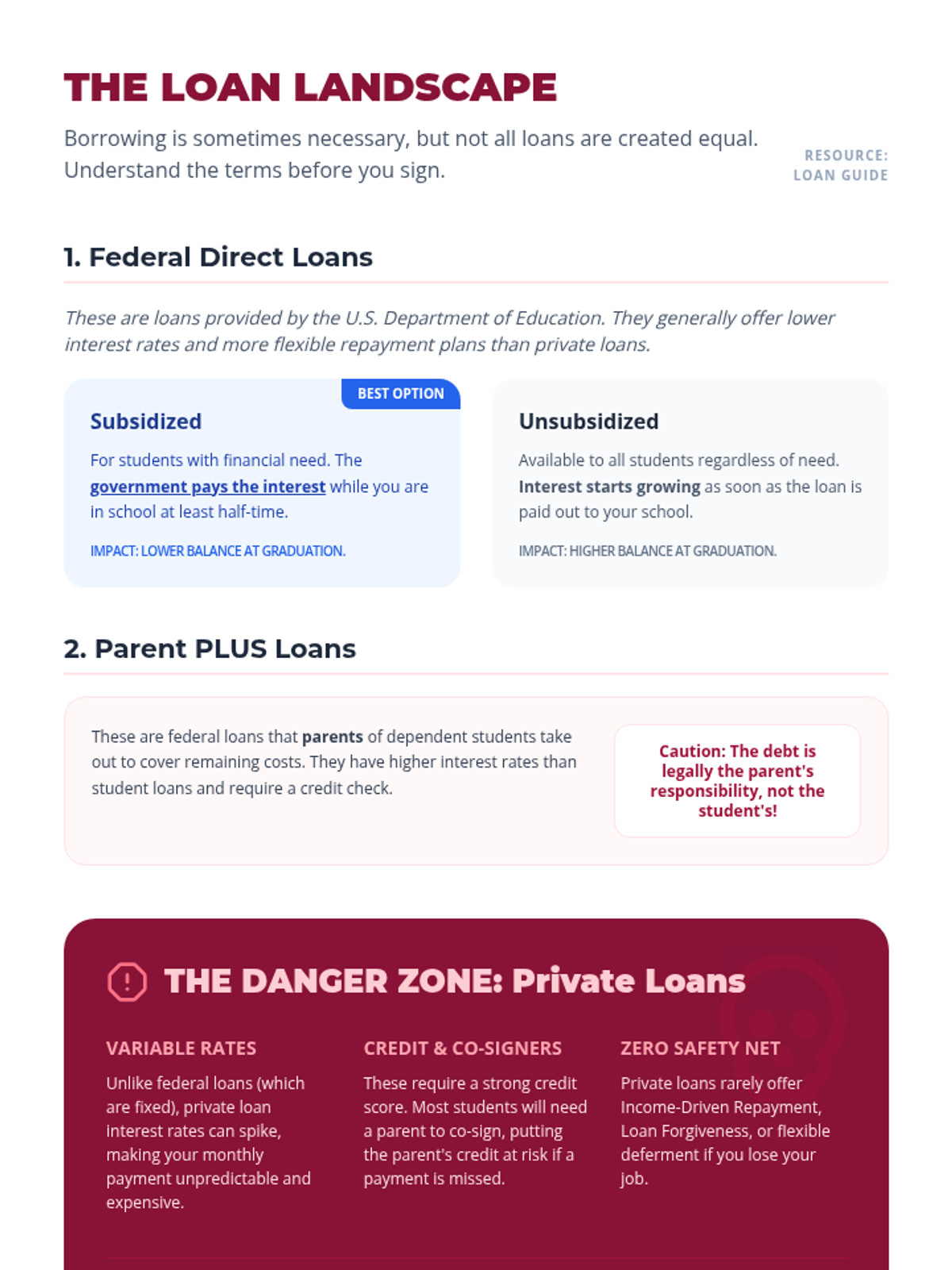
Students compare federal and private student loans, identify different loan types in financial aid award letters, and analyze the benefits and risks of various funding sources.
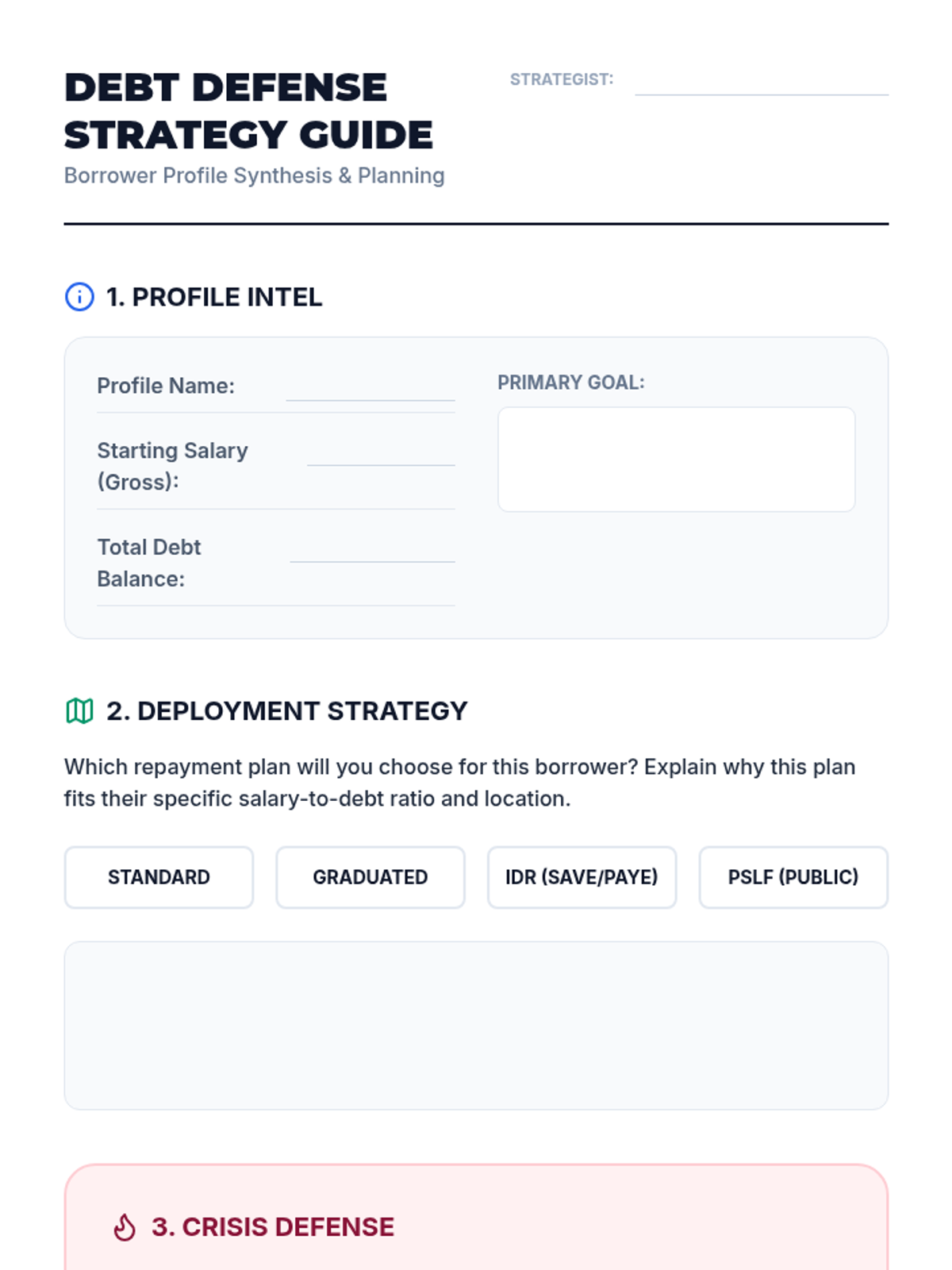
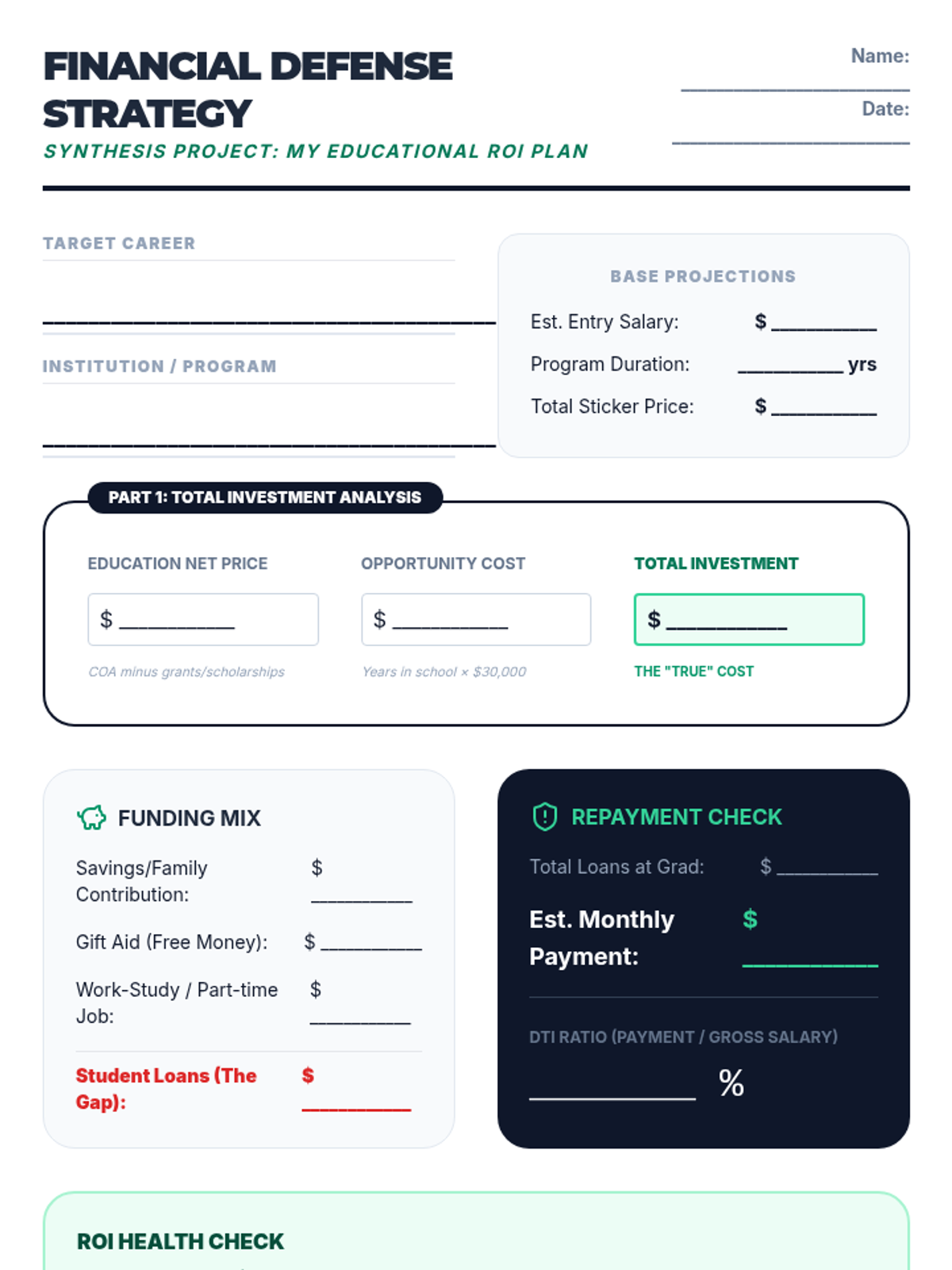
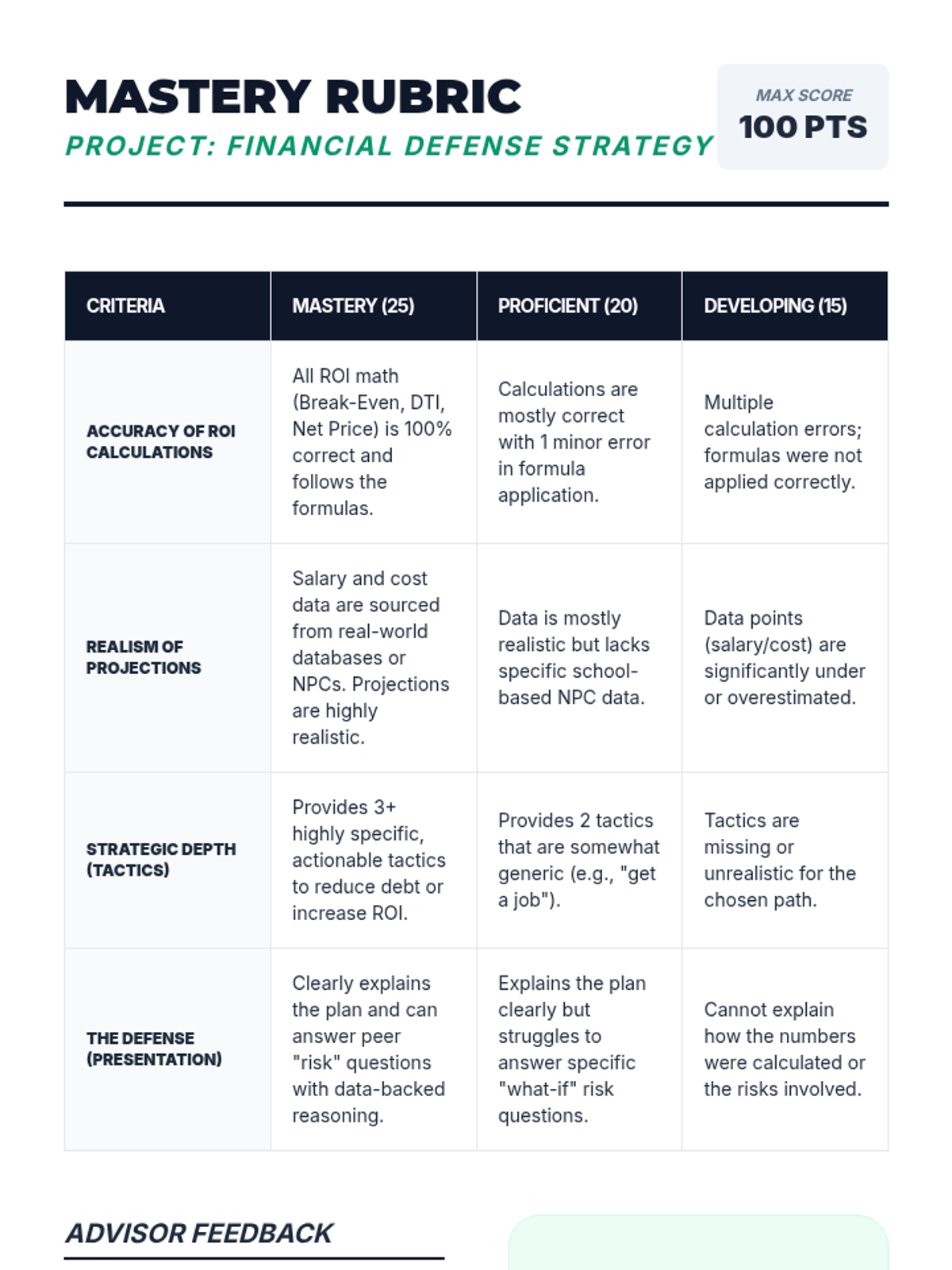
Students synthesize their learning into a final "Financial Defense" plan that outlines costs, aid, debt projections, and repayment strategies for a specific career path.
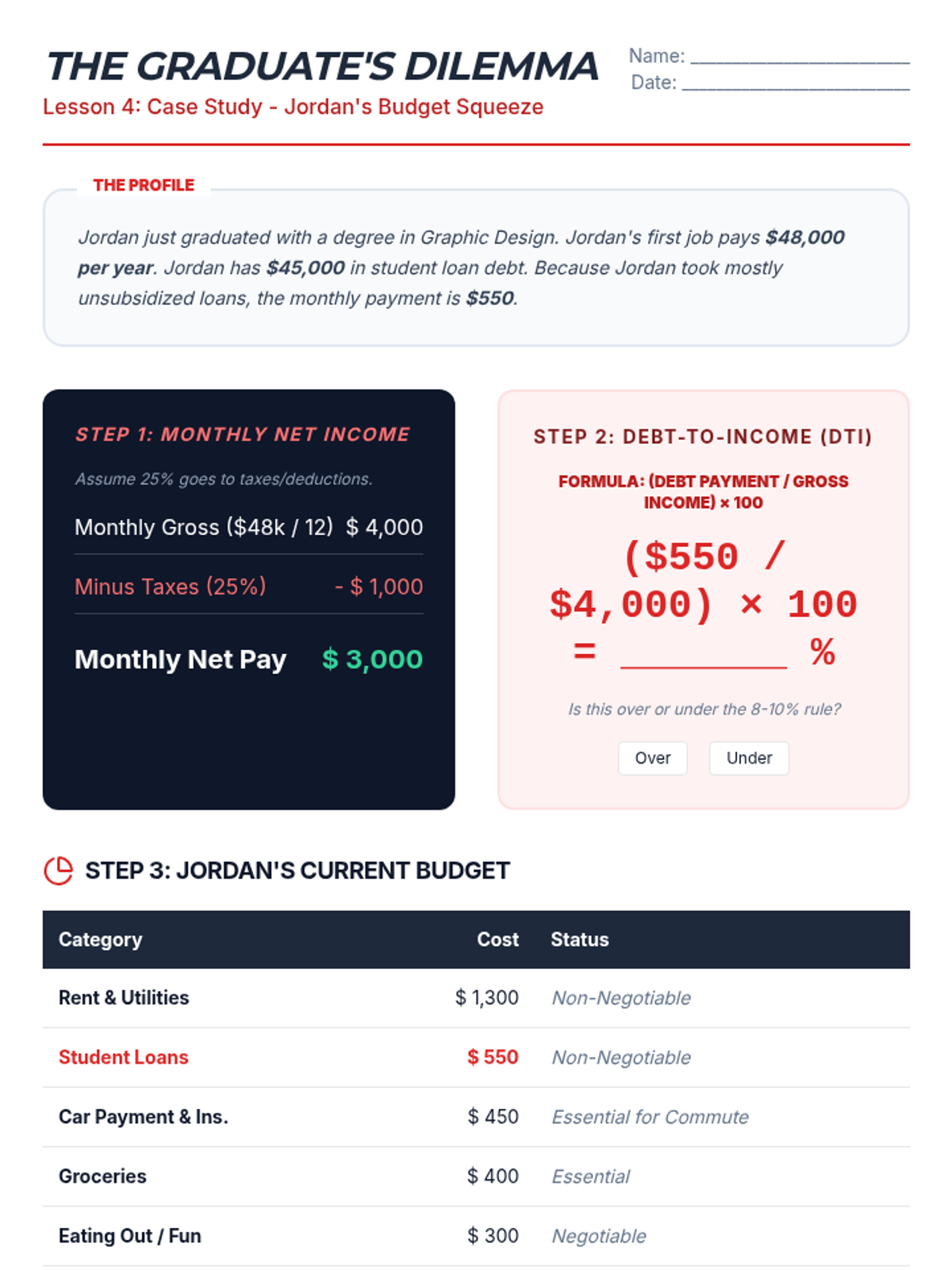
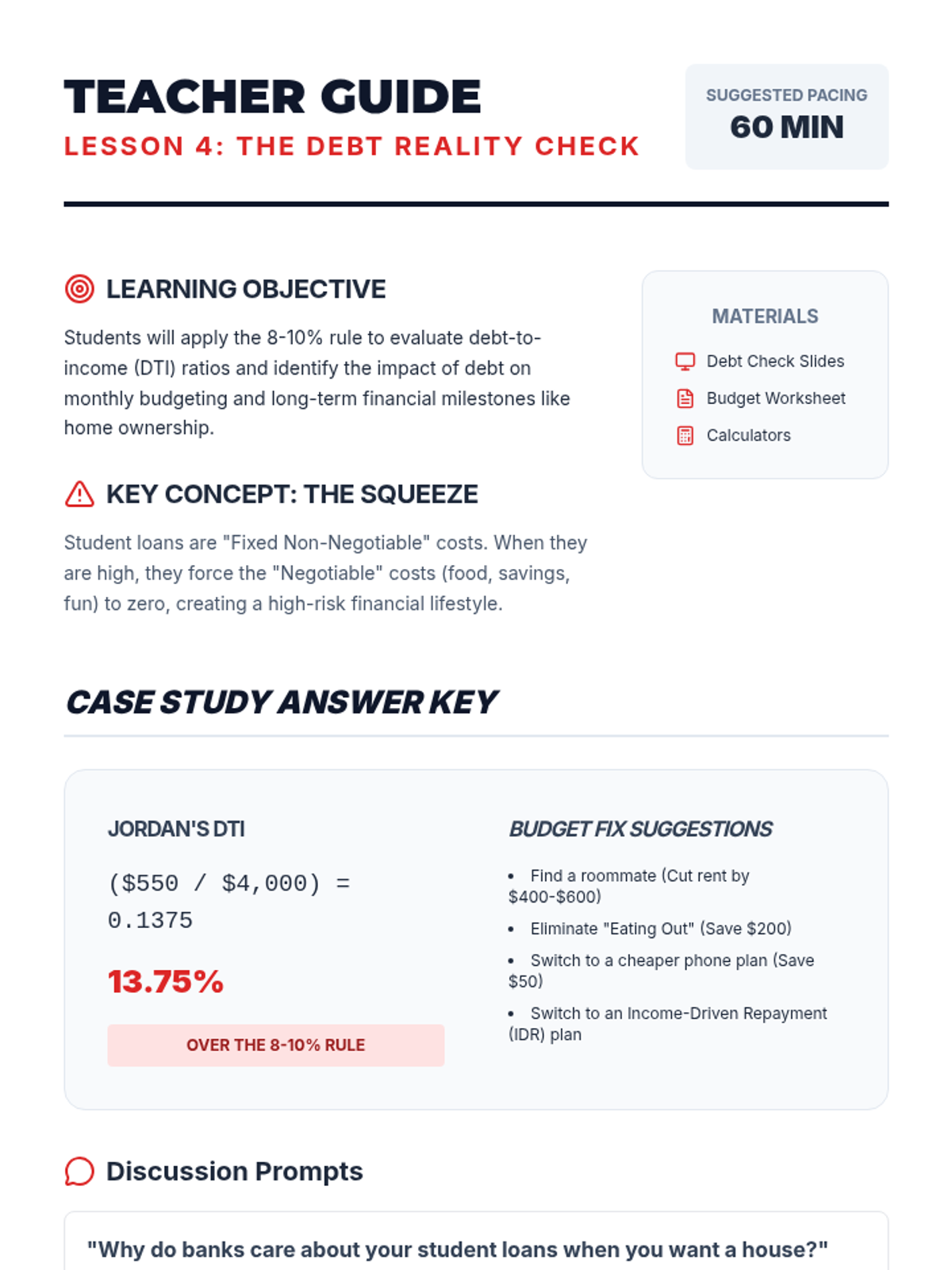
Students apply the 8-10% rule to analyze debt-to-income ratios and explore how student loan debt impacts future financial decisions like housing and lifestyle.
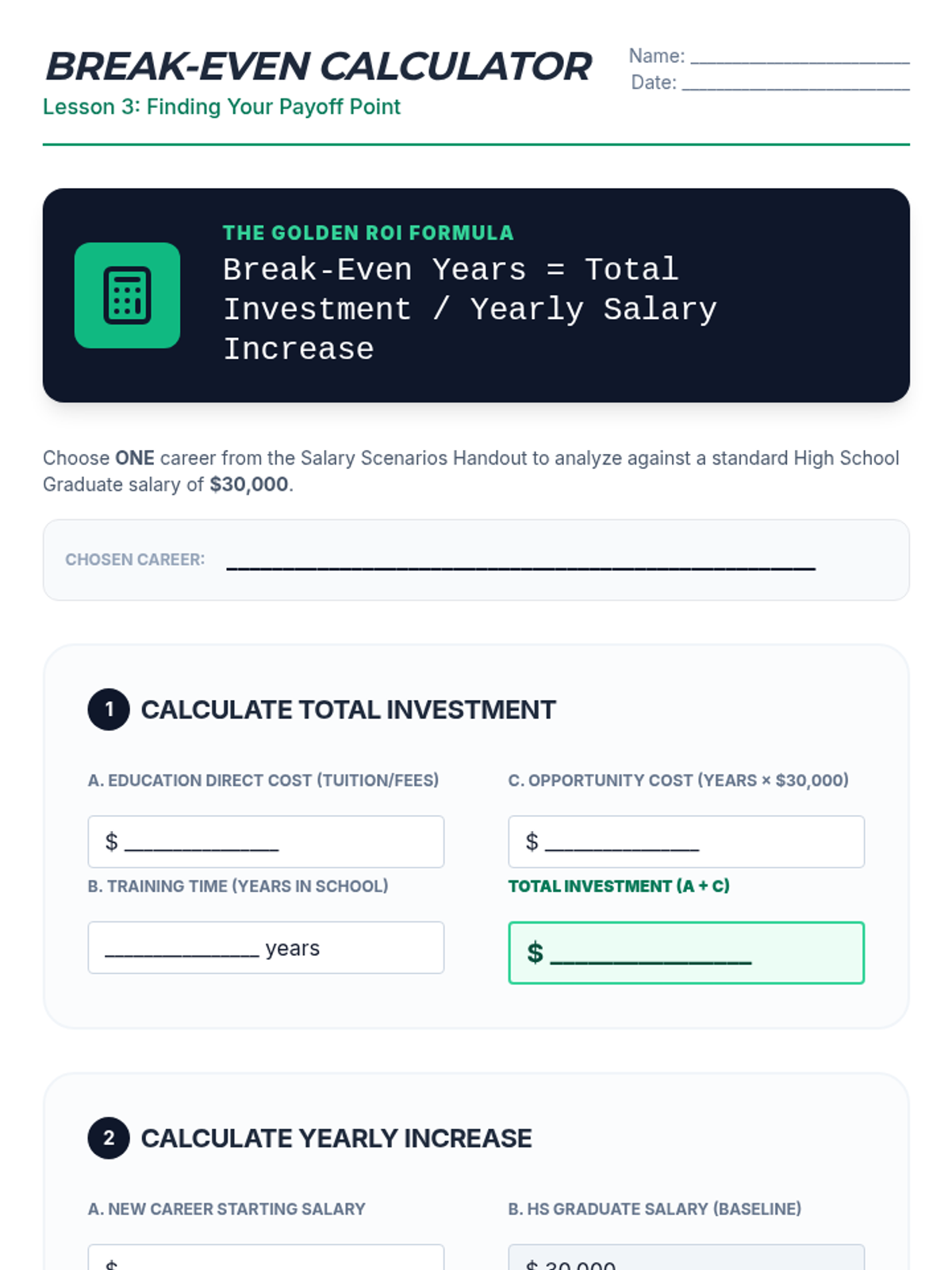
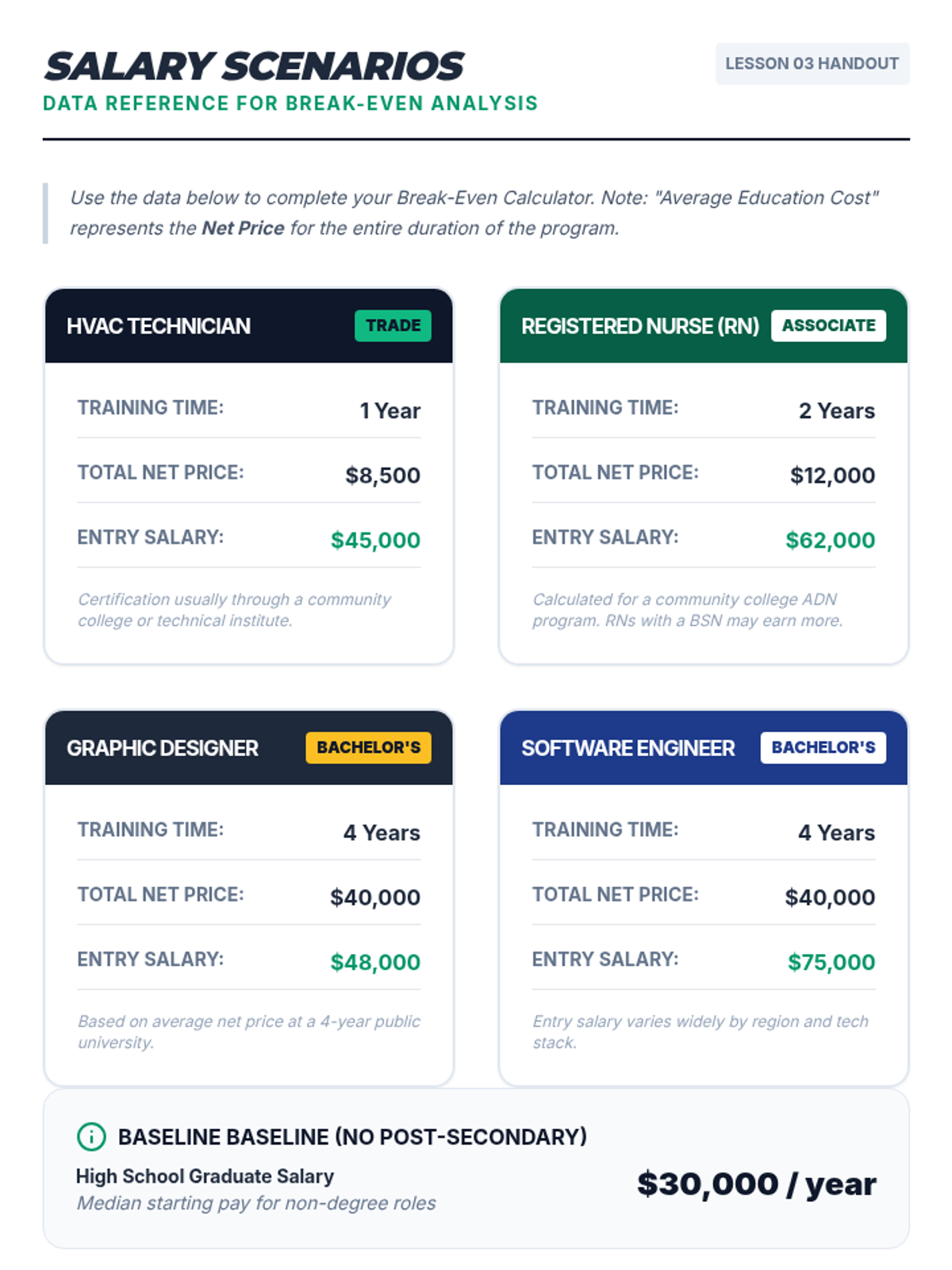
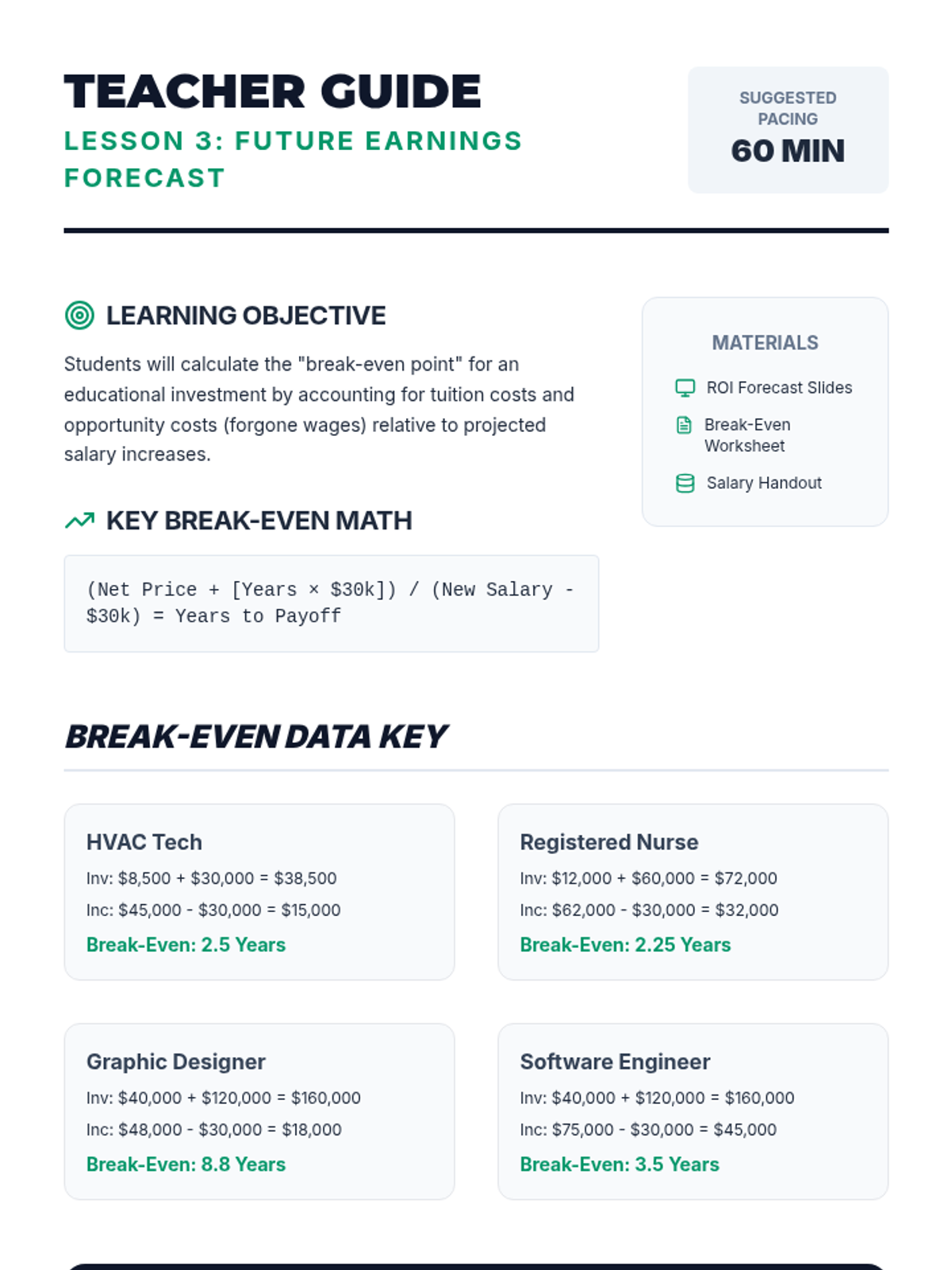
Learners research entry-level salaries and calculate opportunity costs to determine the break-even point for their educational investment.
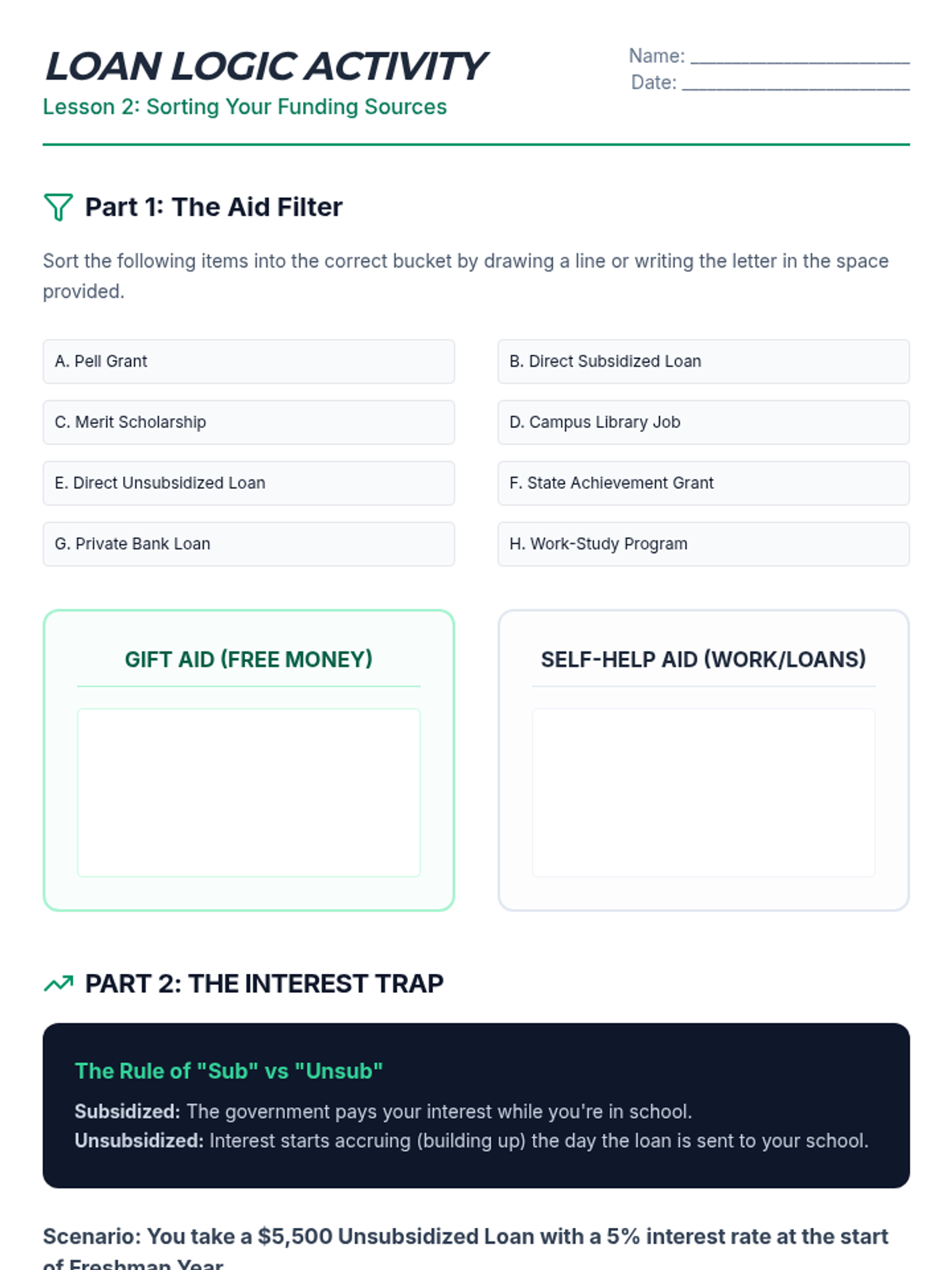
Students differentiate between various funding sources like grants, scholarships, and loans, while simulating financial aid applications and calculating interest accumulation.
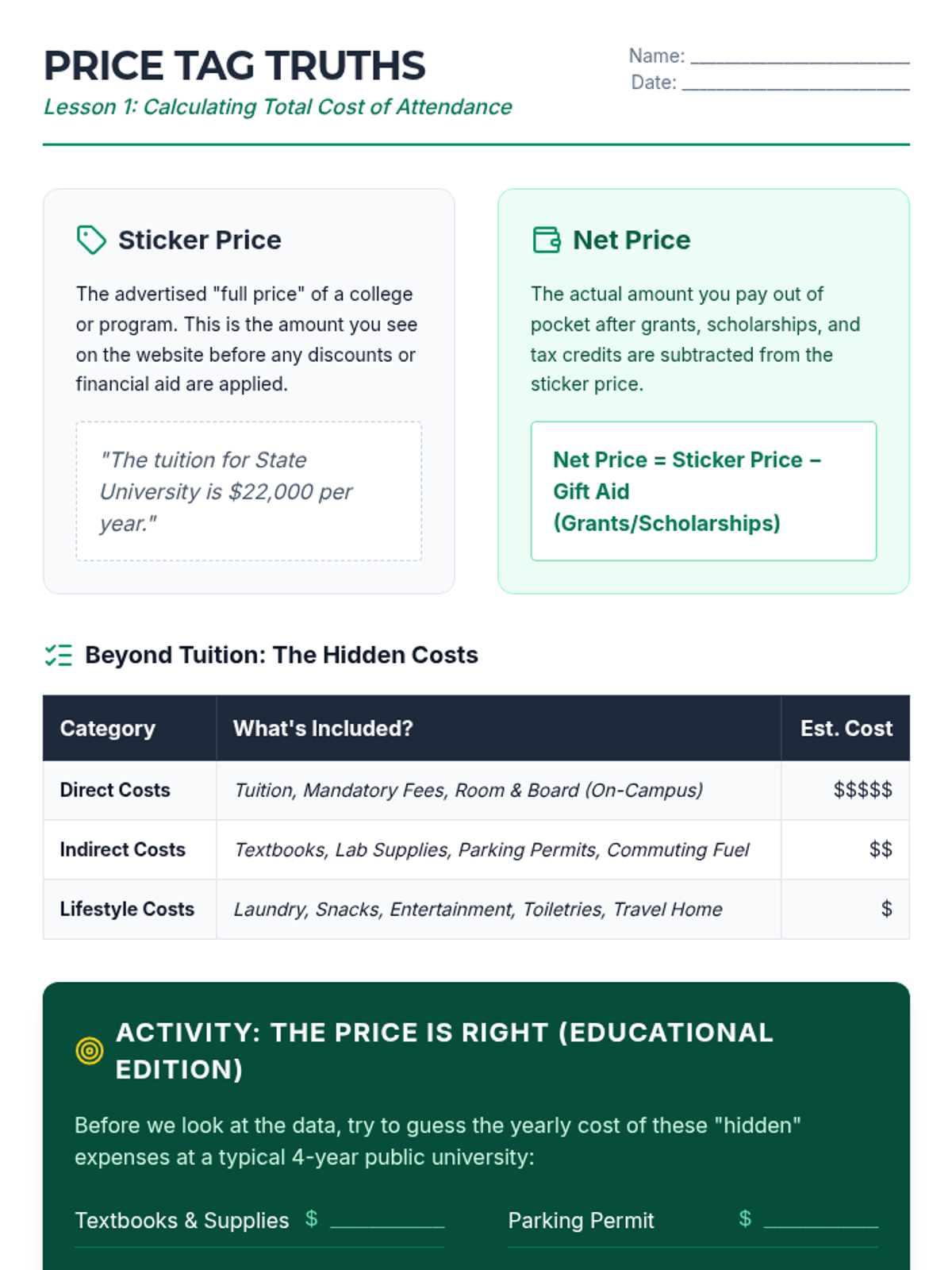
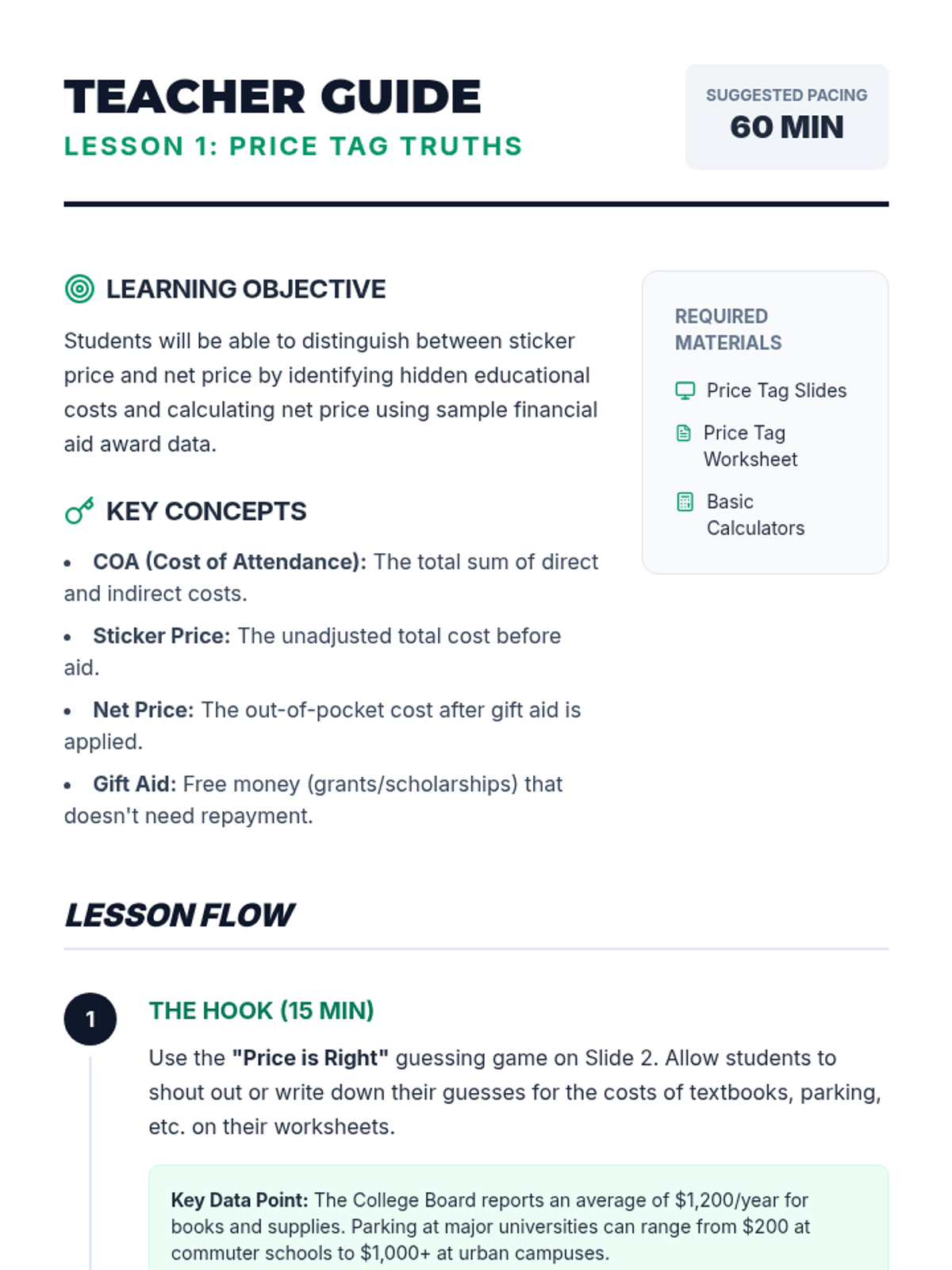
Students identify hidden costs of education beyond tuition to understand the difference between sticker price and net price. they use sample award letters and fee schedules to construct a realistic total cost of attendance.
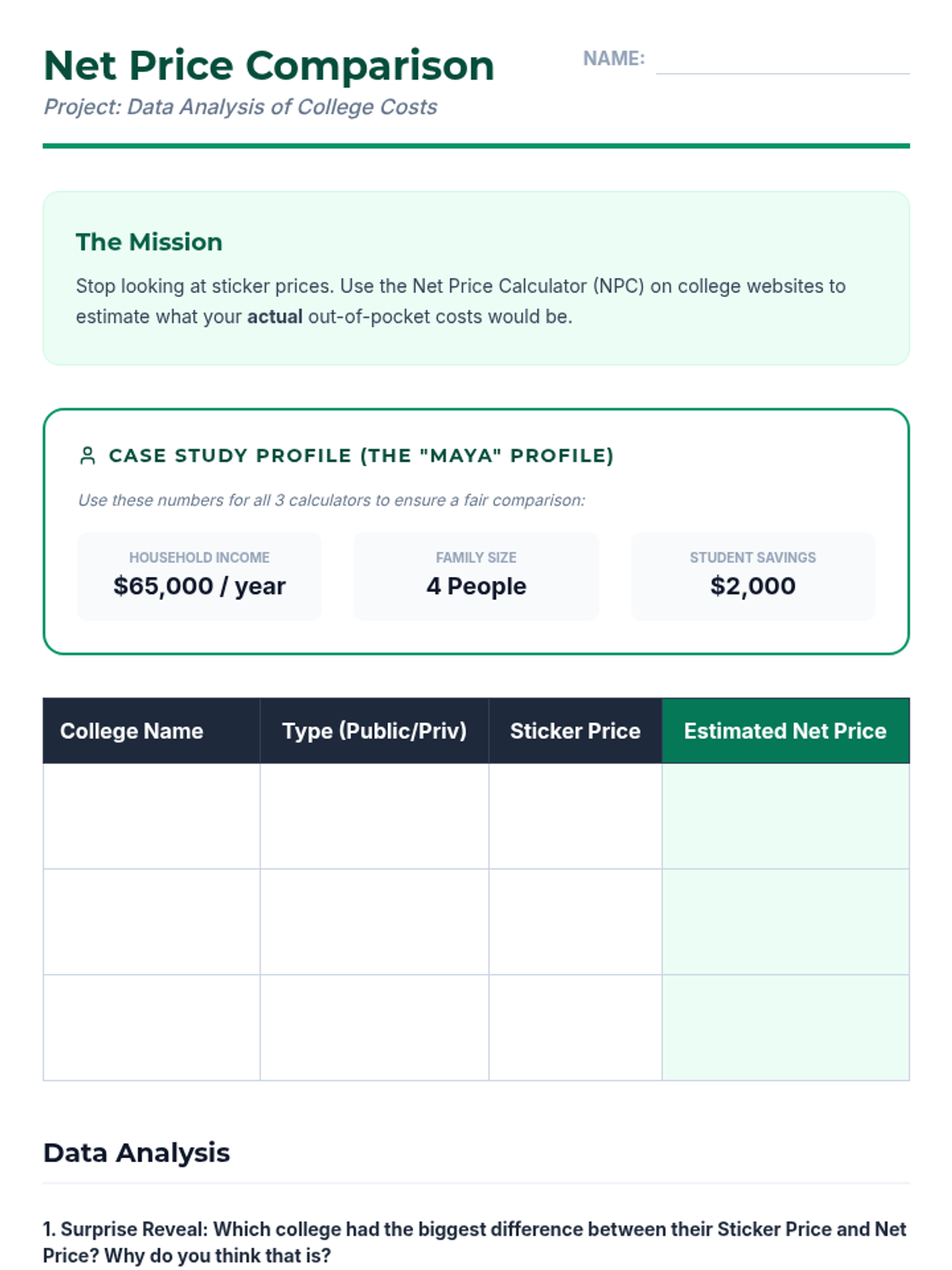
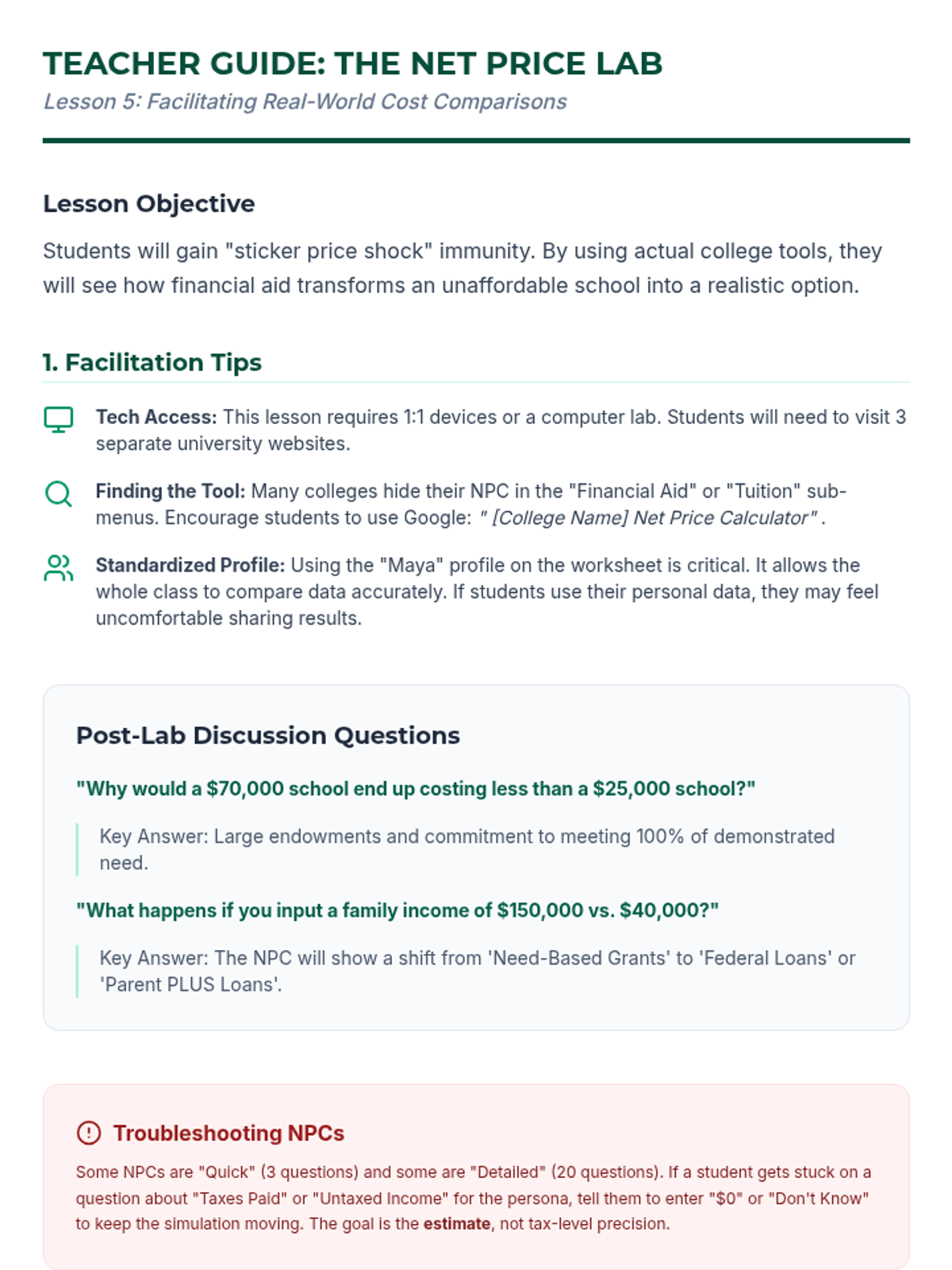
Students use Net Price Calculators to move beyond the 'sticker price' of colleges. They compare three institutions to understand how aid affects the final bill.
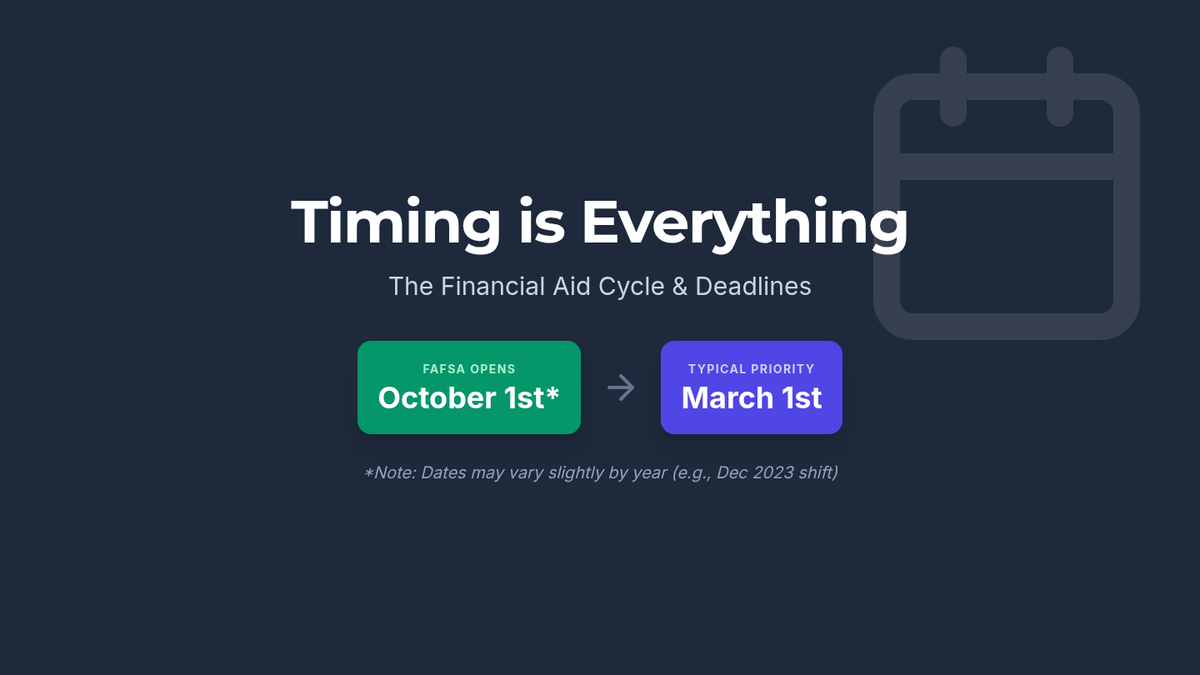
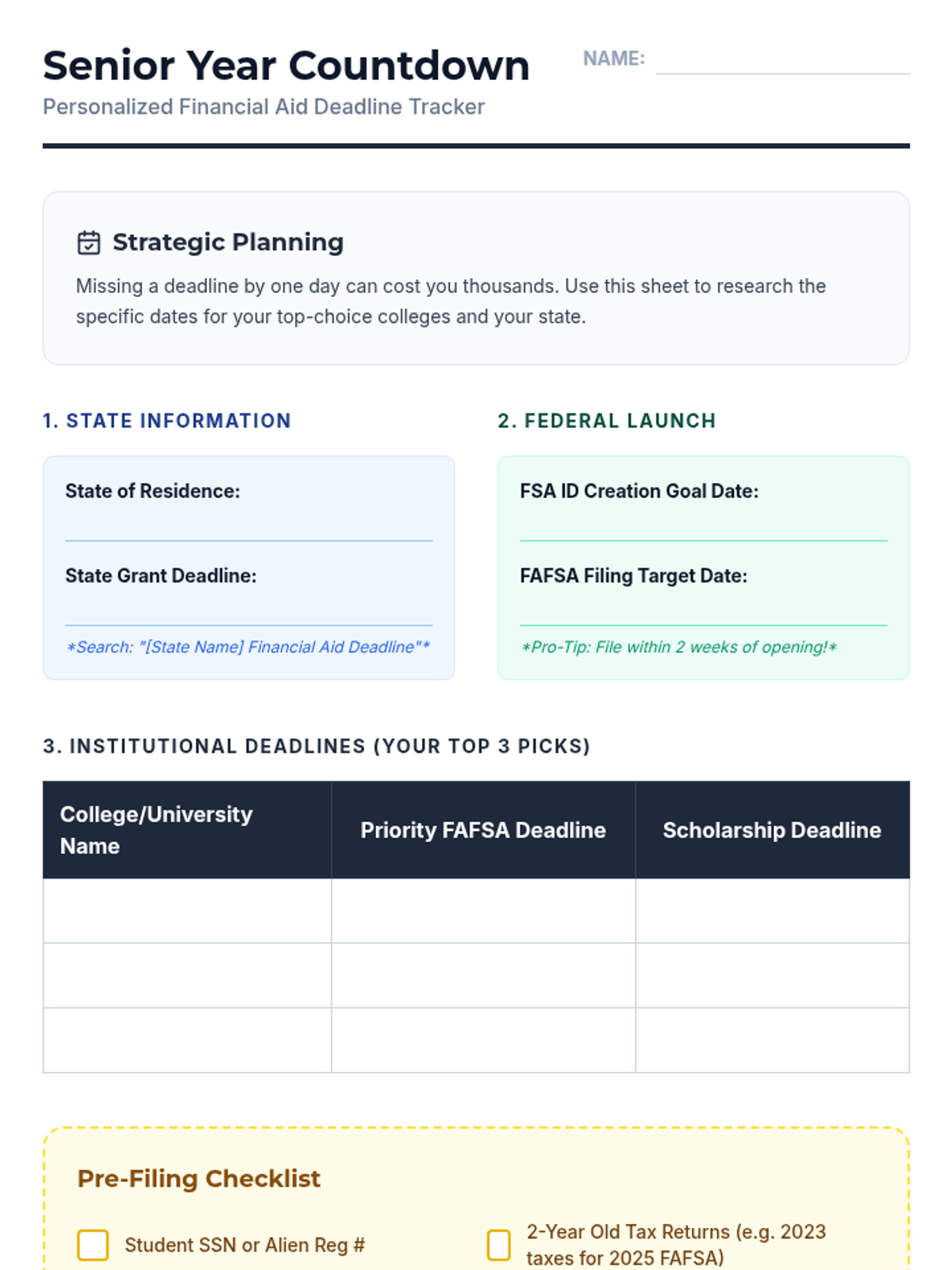
Mapping the critical dates of the financial aid cycle. Students learn the importance of federal, state, and institutional deadlines and create a personalized senior year timeline.
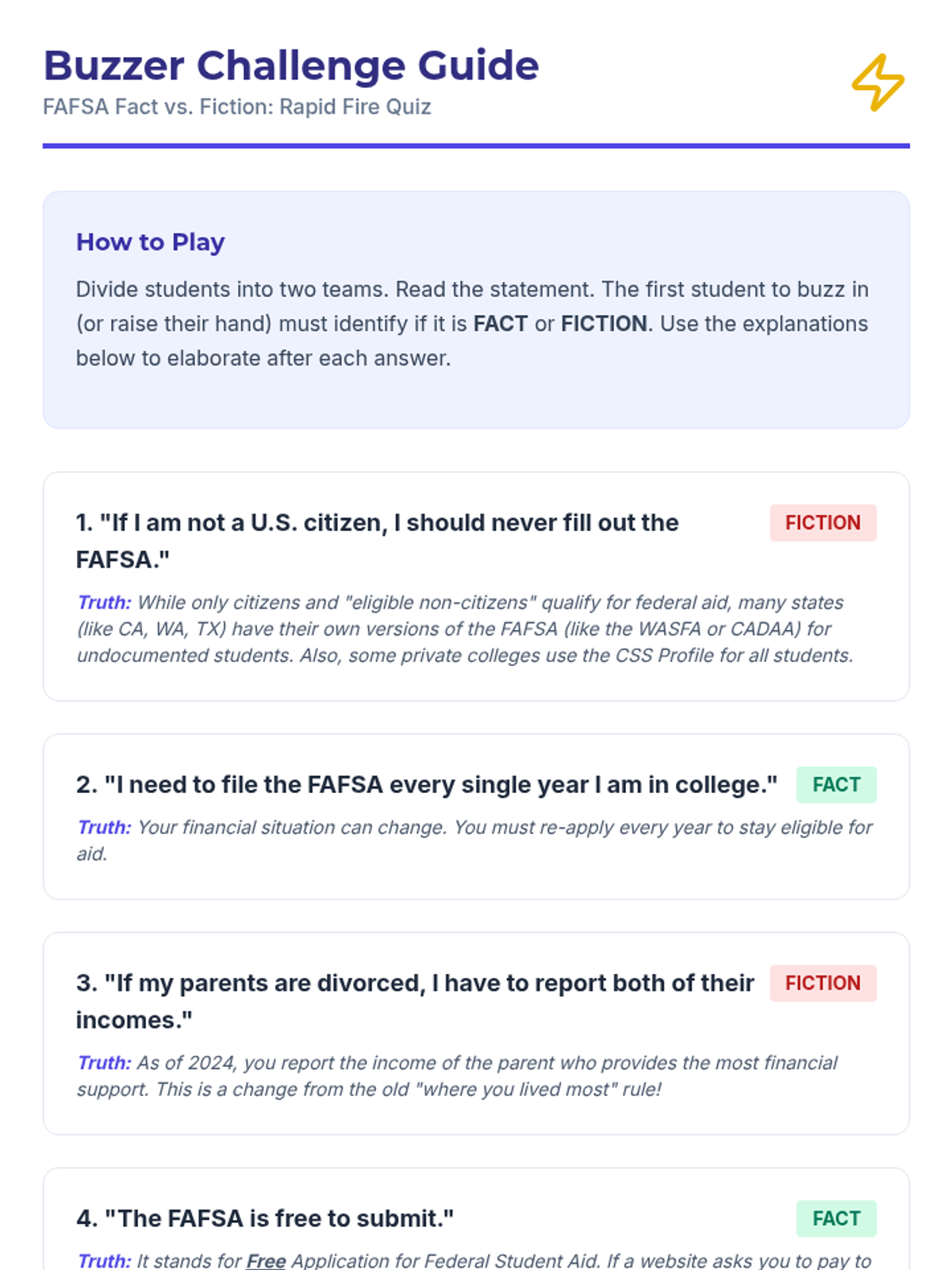
Students investigate and debunk common misconceptions about the FAFSA and federal aid eligibility. The lesson focuses on why every student should file, regardless of family income.
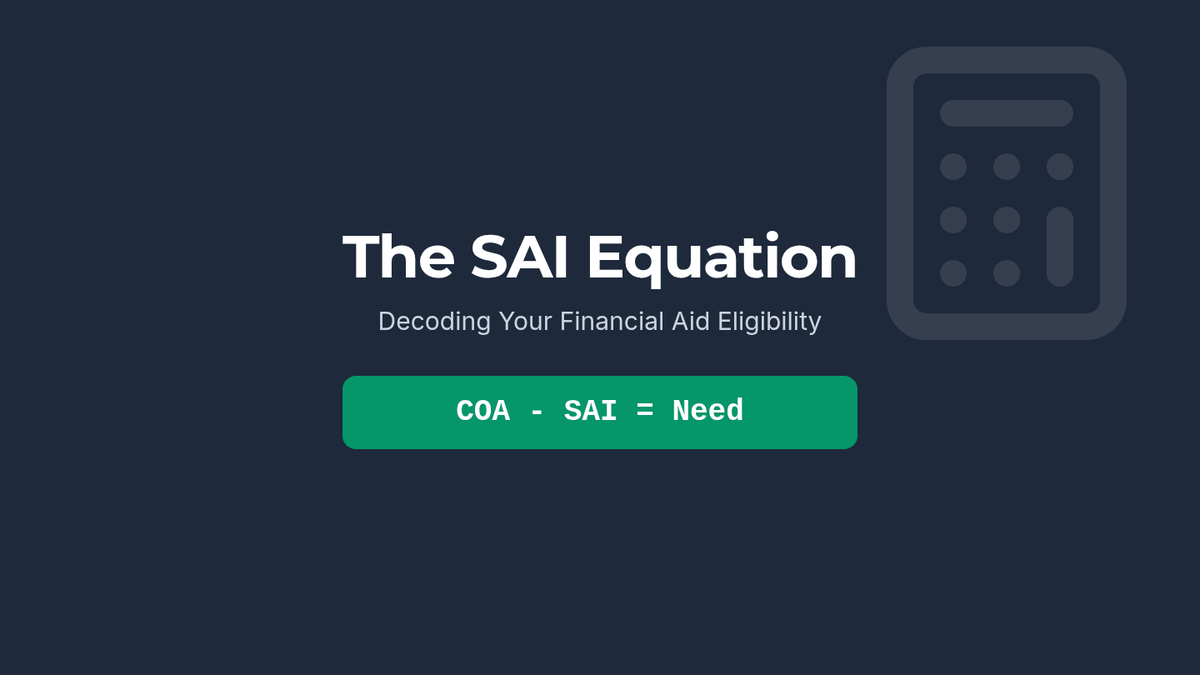
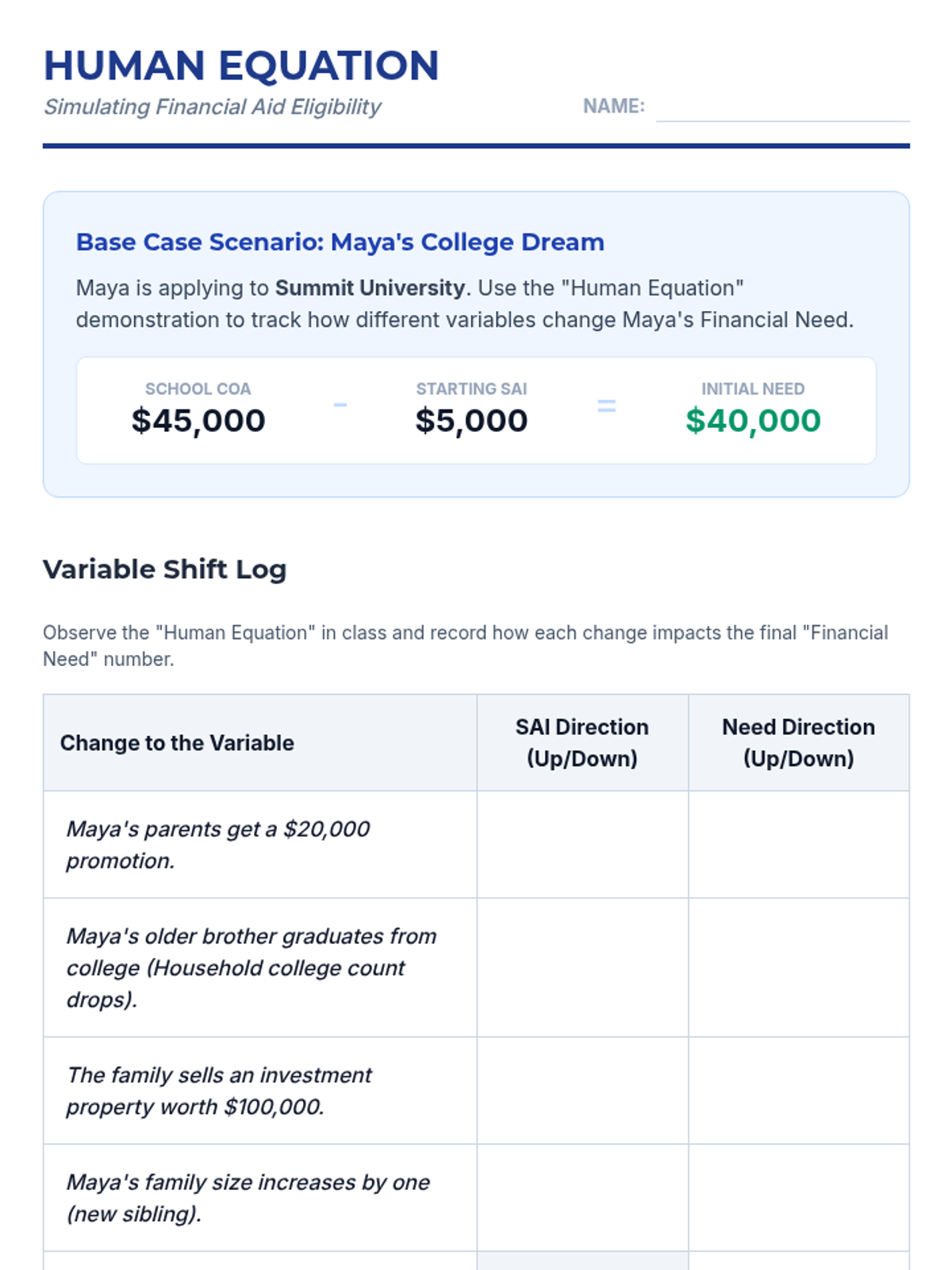
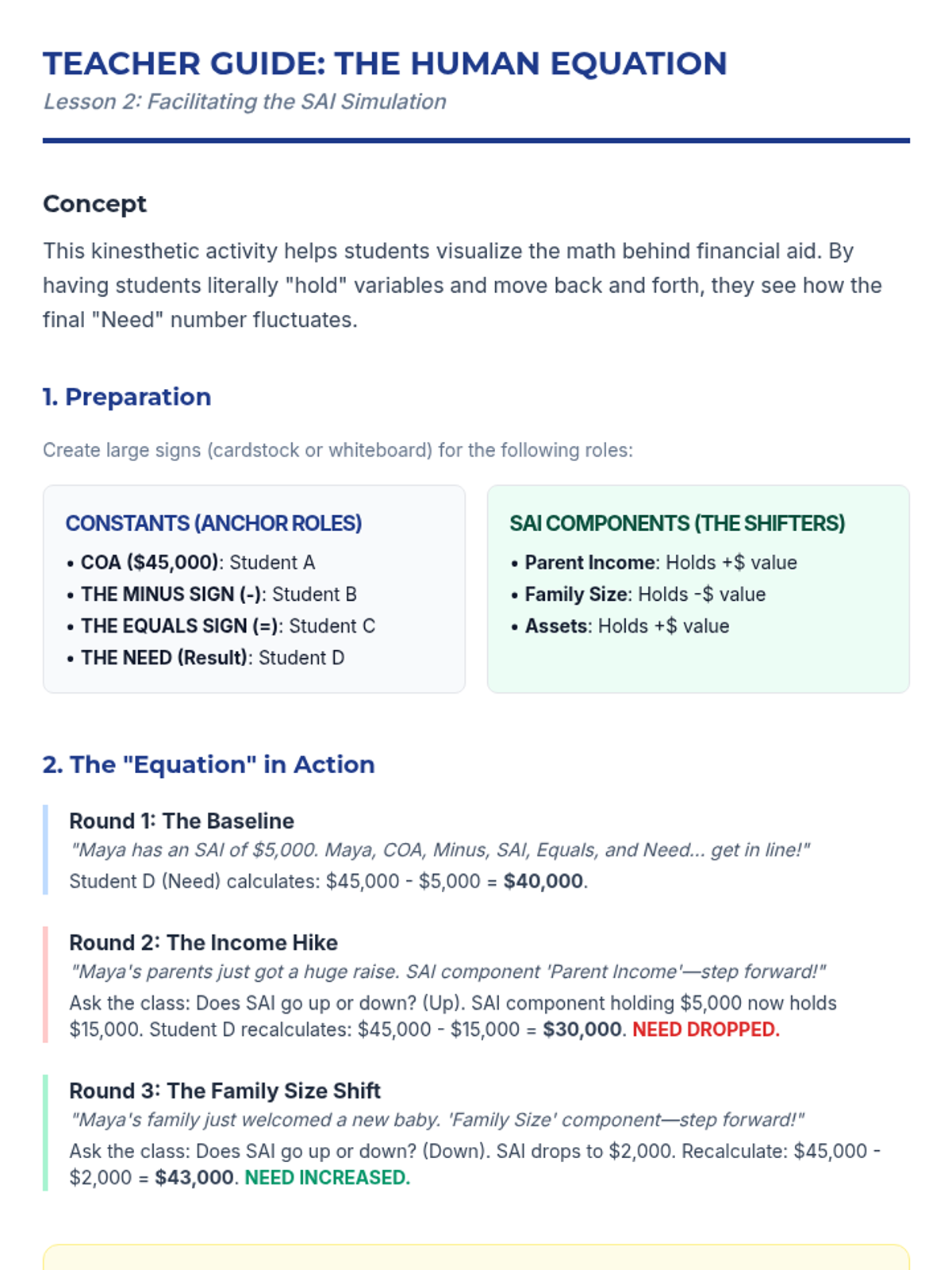
An introduction to the FAFSA and the core financial aid formula: COA - SAI = Need. Students analyze how income and assets impact the Student Aid Index.
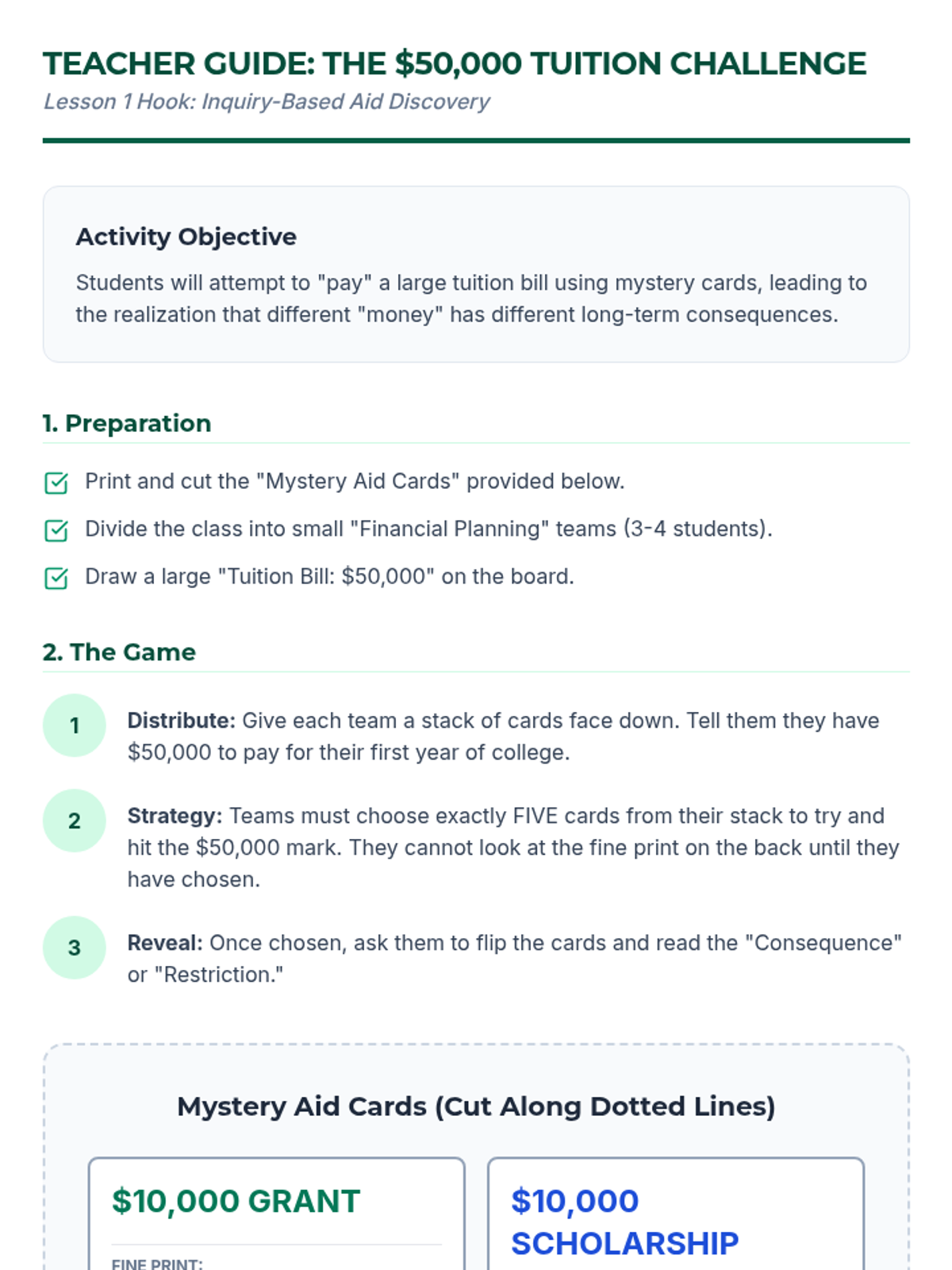
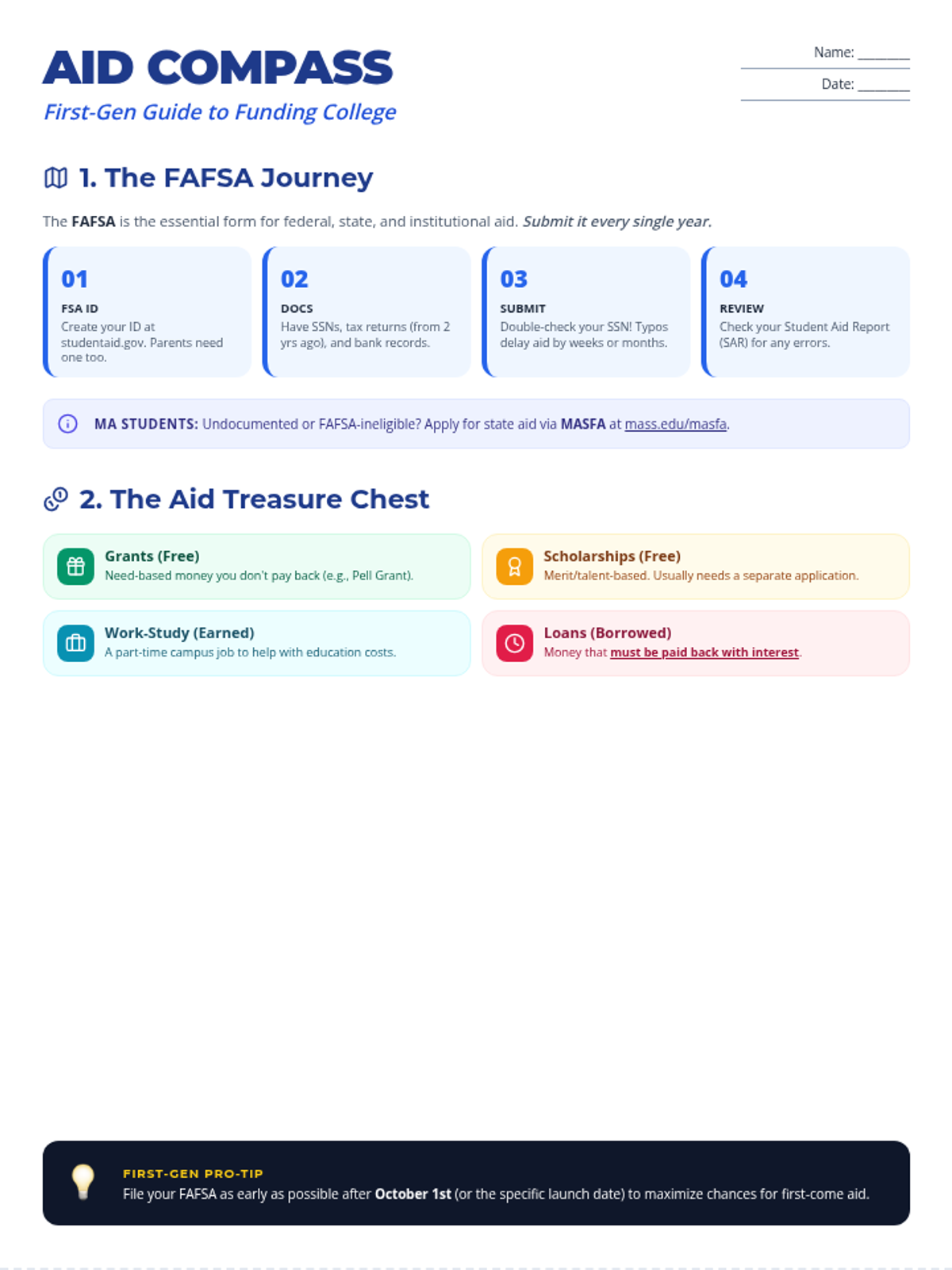
Students explore and categorize the four primary types of financial aid: grants, scholarships, work-study, and loans. They analyze the pros and cons of each, focusing on repayment obligations.
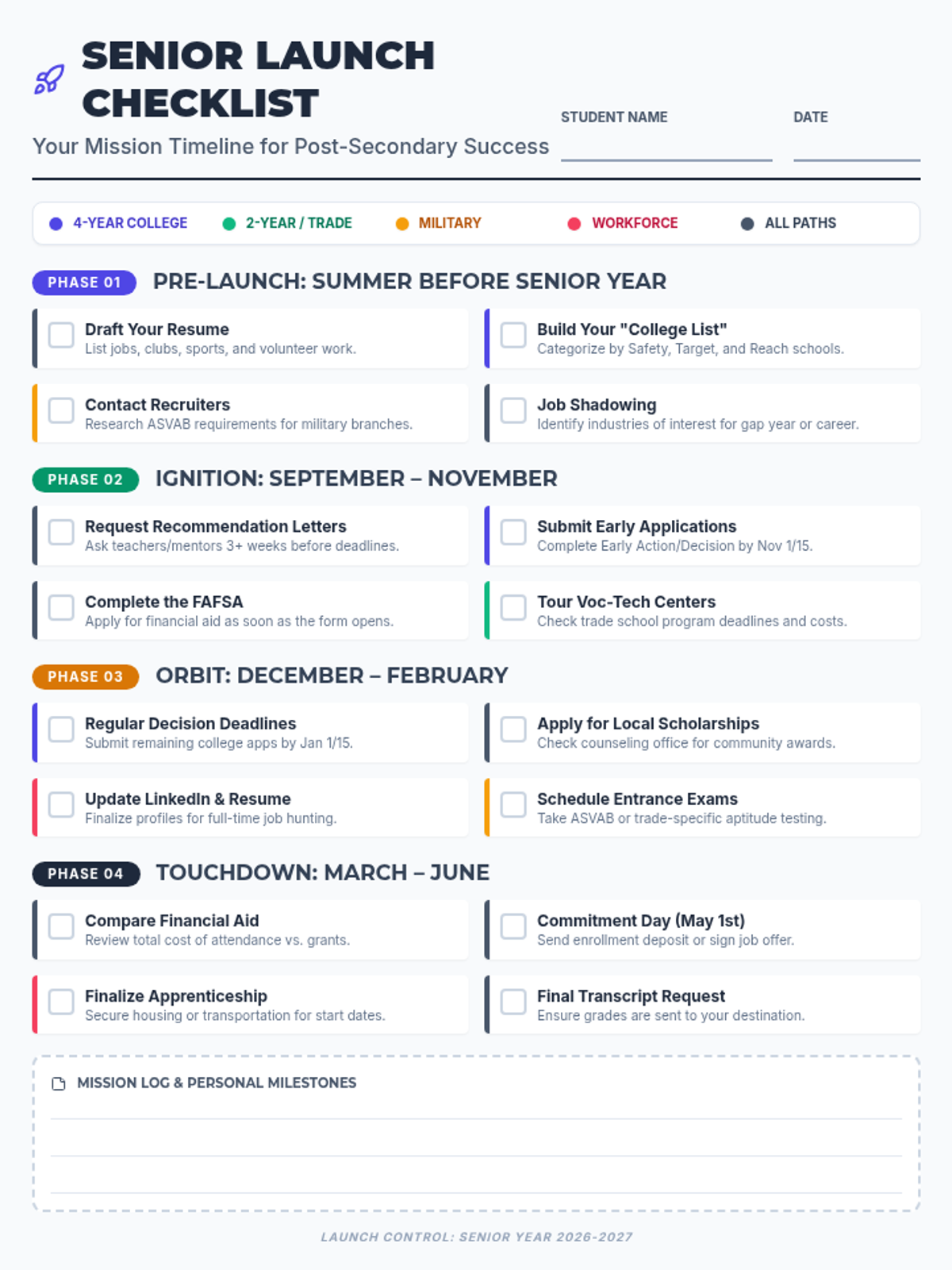
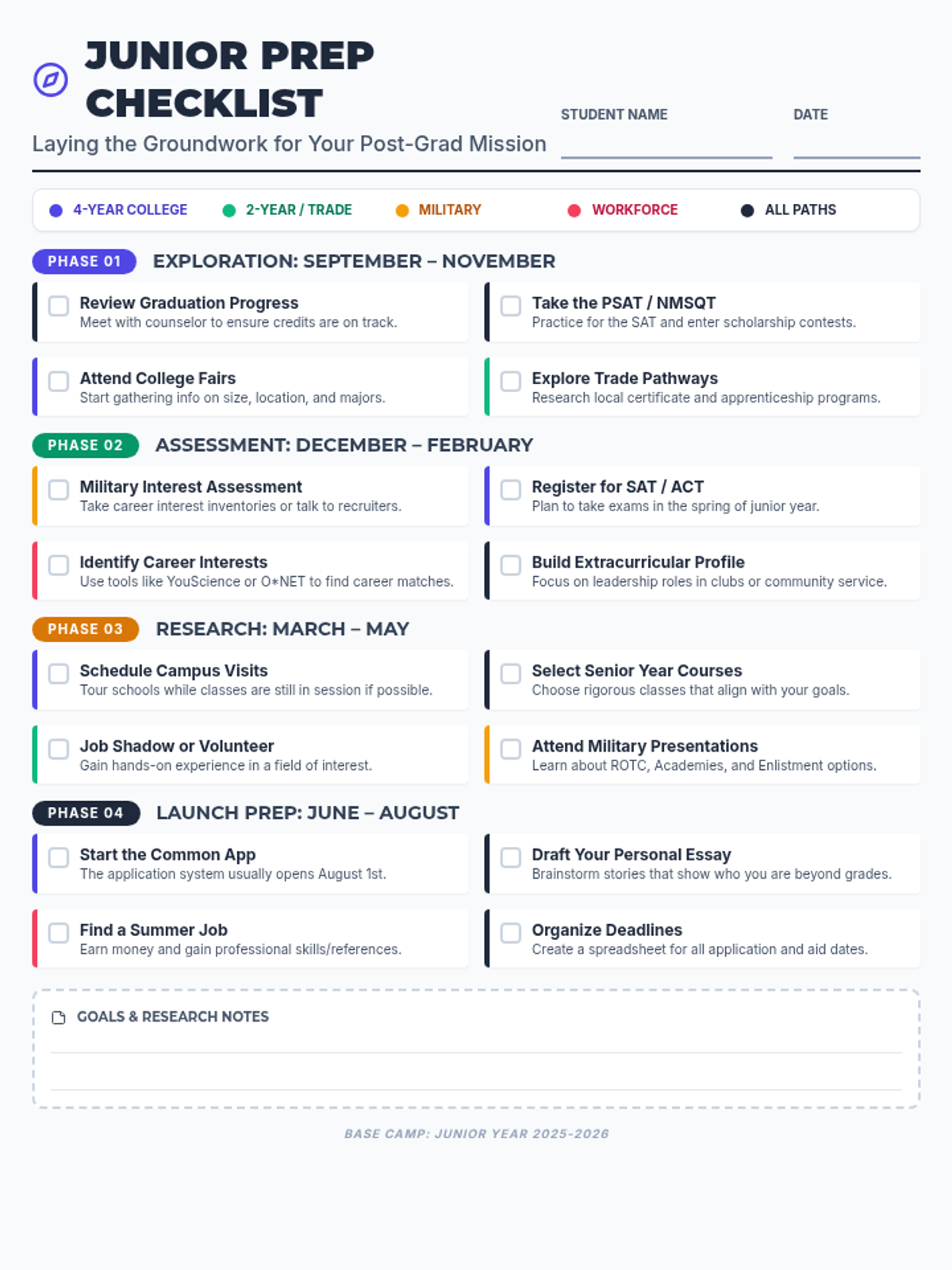
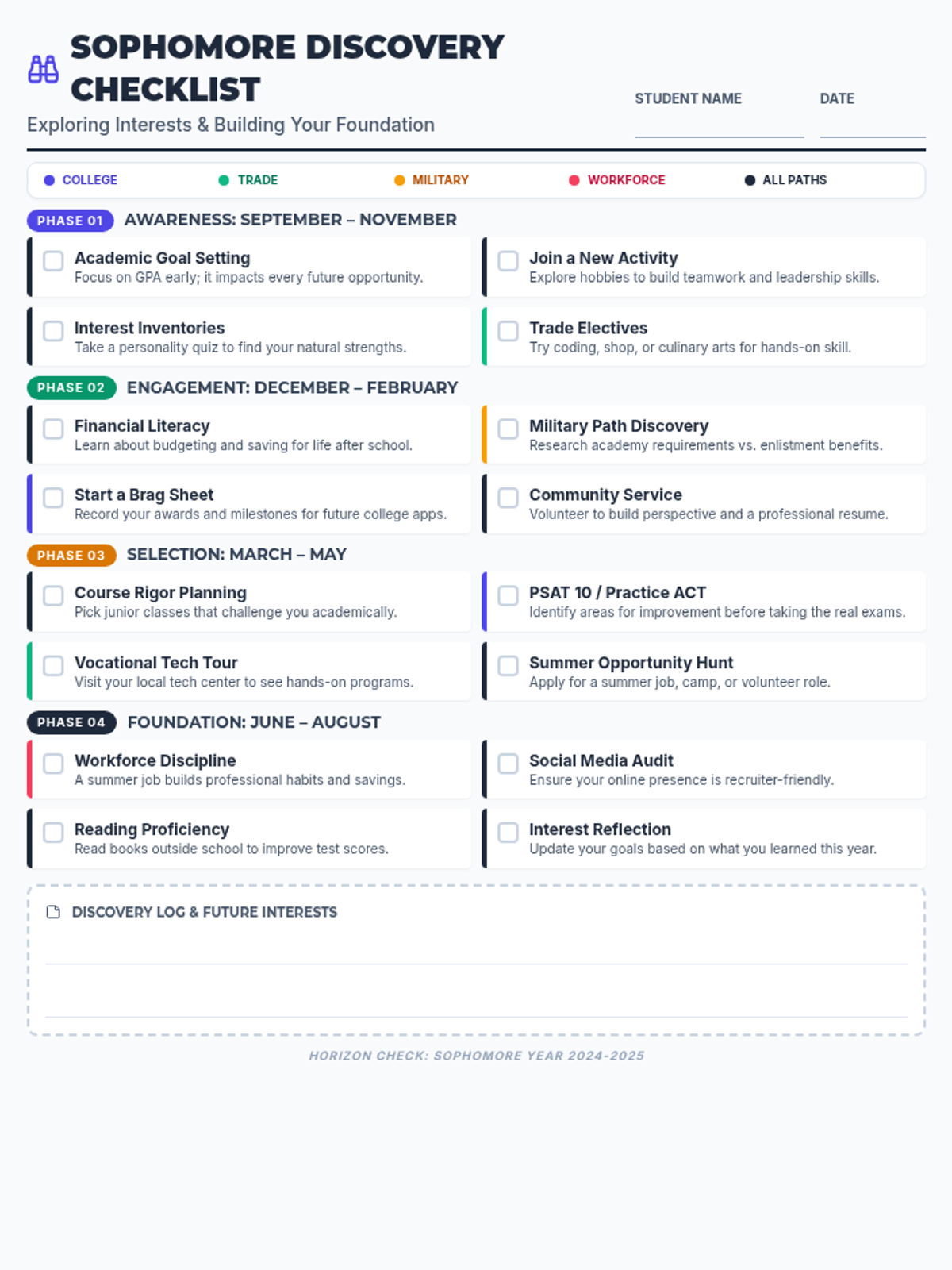
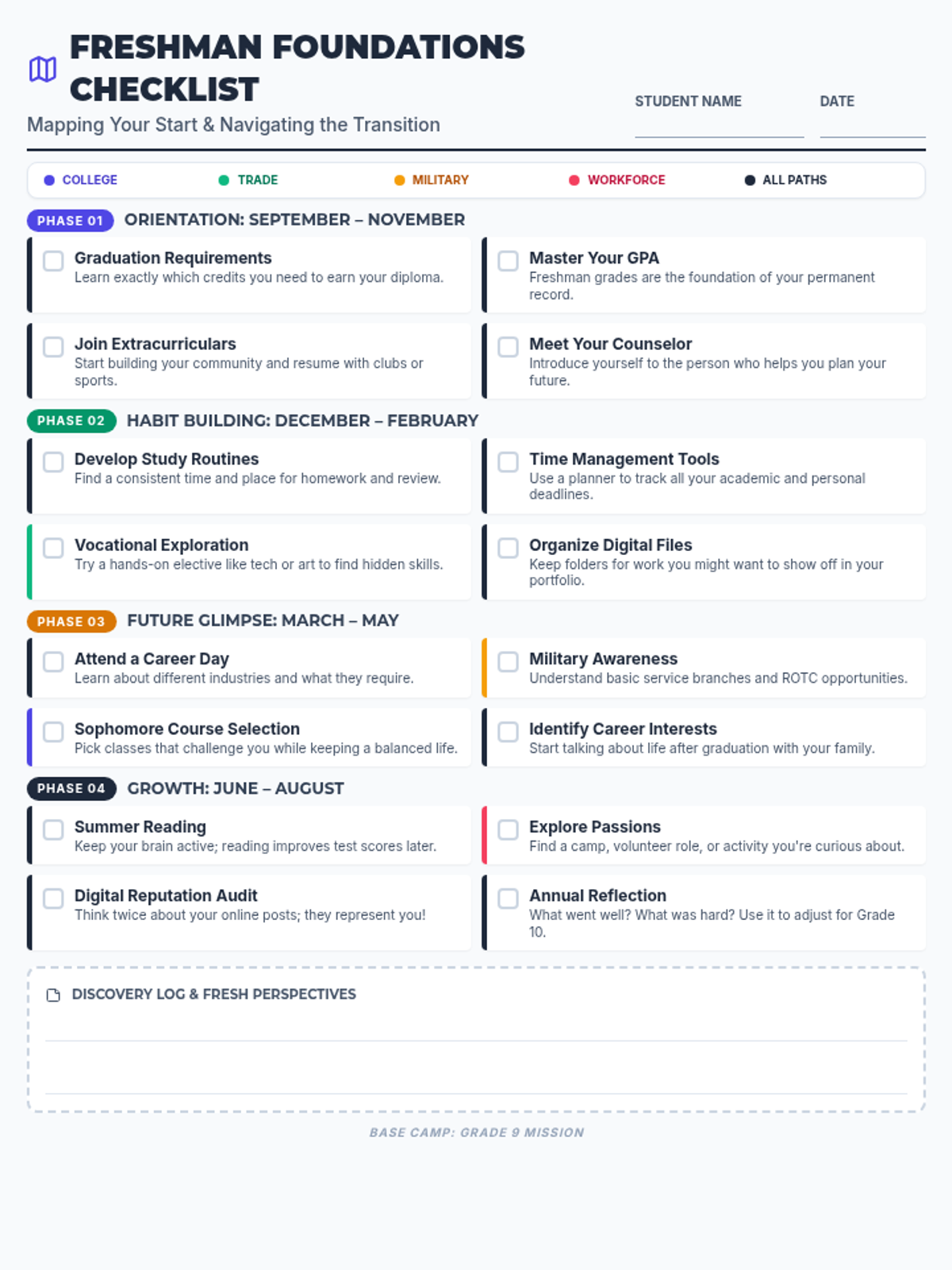
A collection of visual checklists and organizers to help high school students navigate the complex transition to post-secondary life, covering college, trade schools, military, and the workforce.
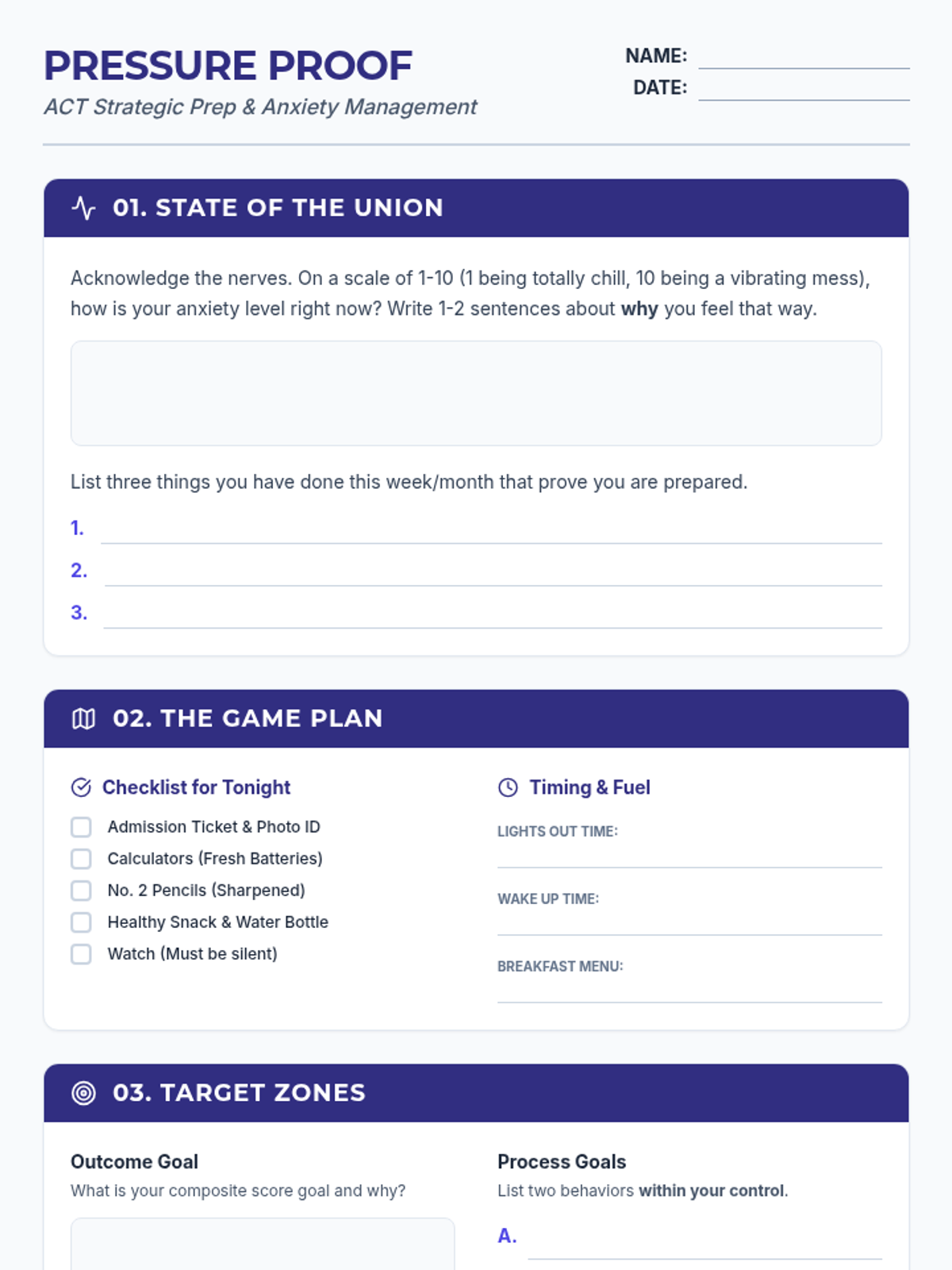
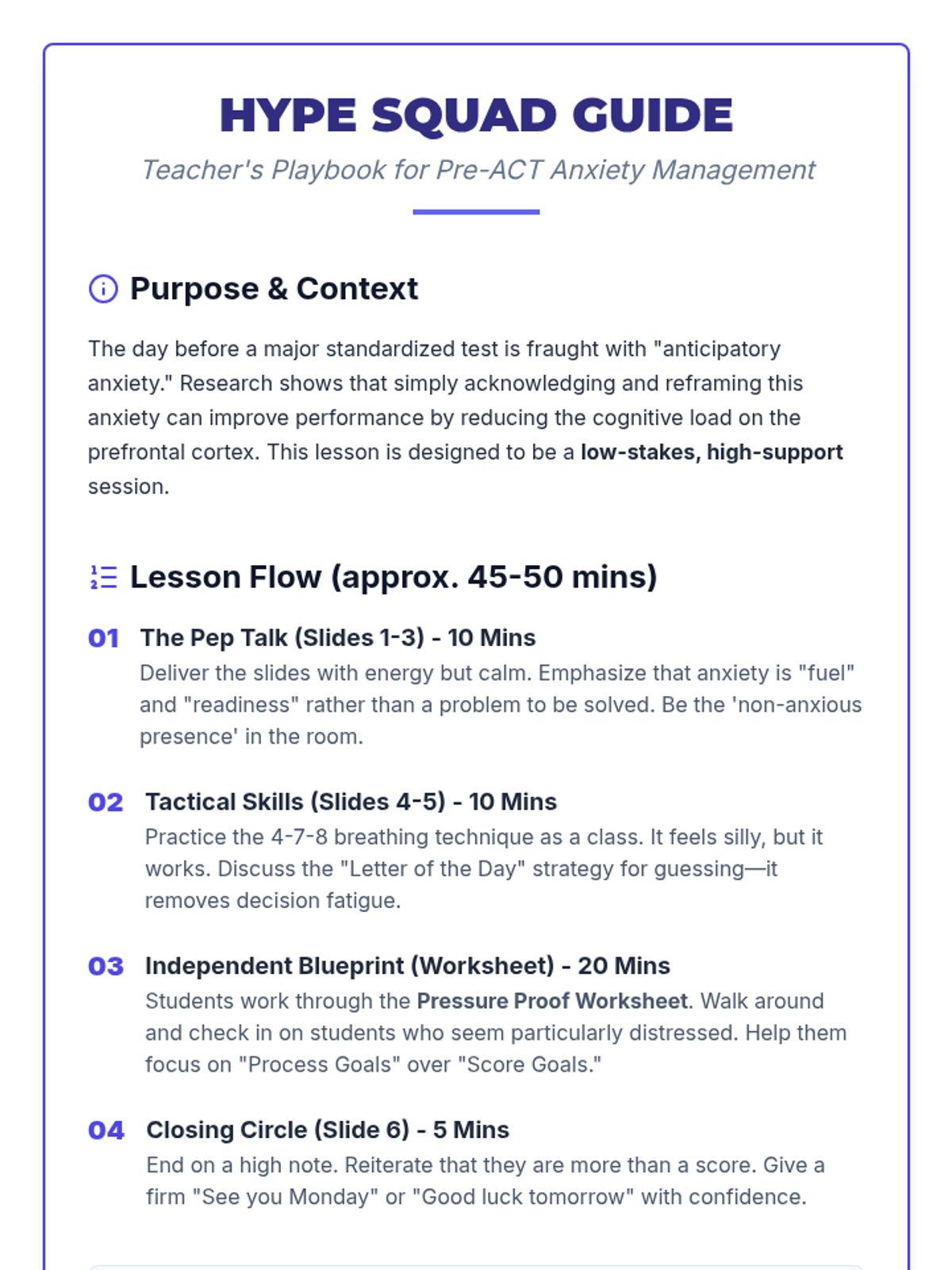
A high-impact session focused on calming pre-test nerves, solidifying morning-of logistics, and setting personal process goals for the ACT.
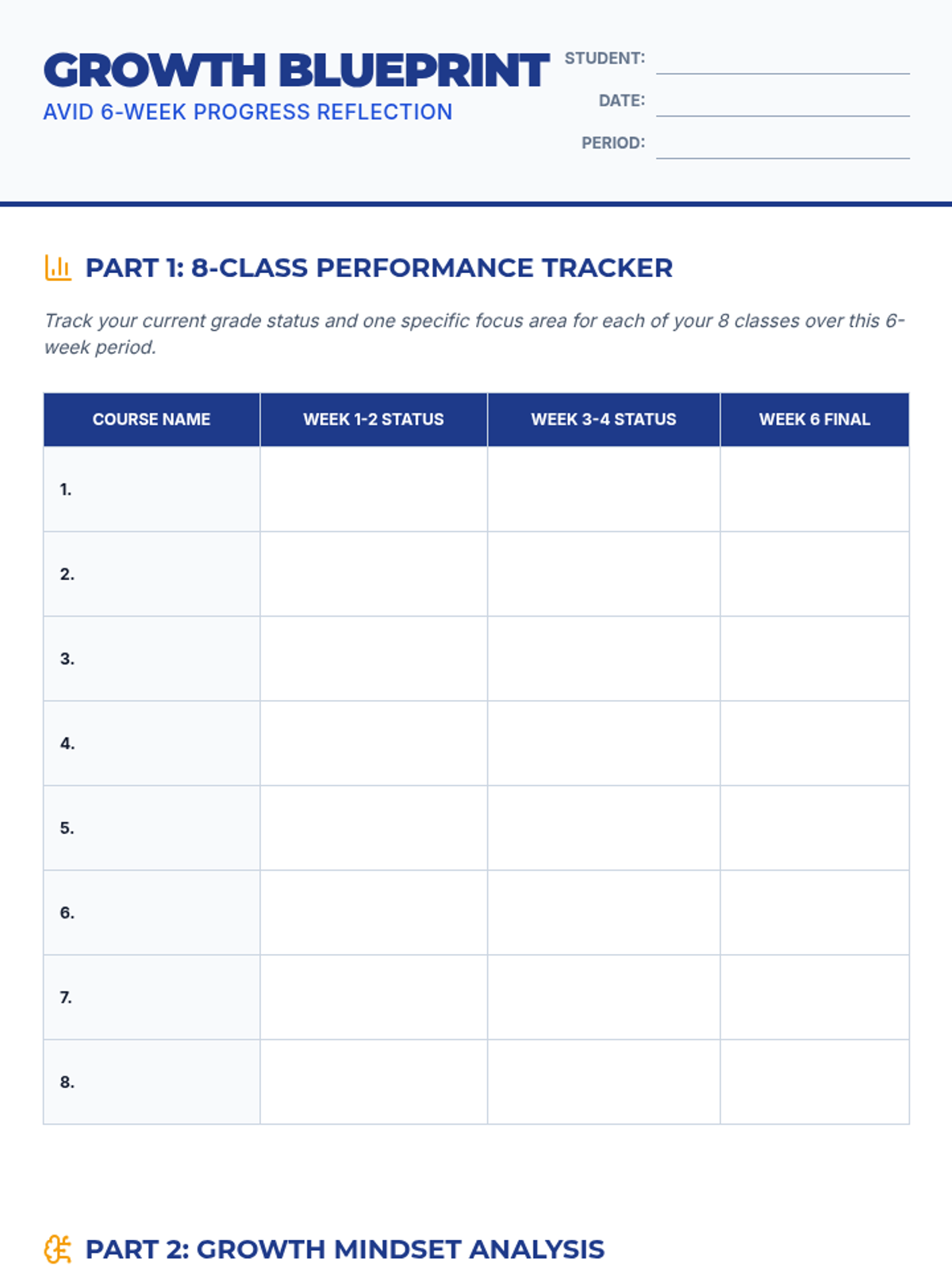
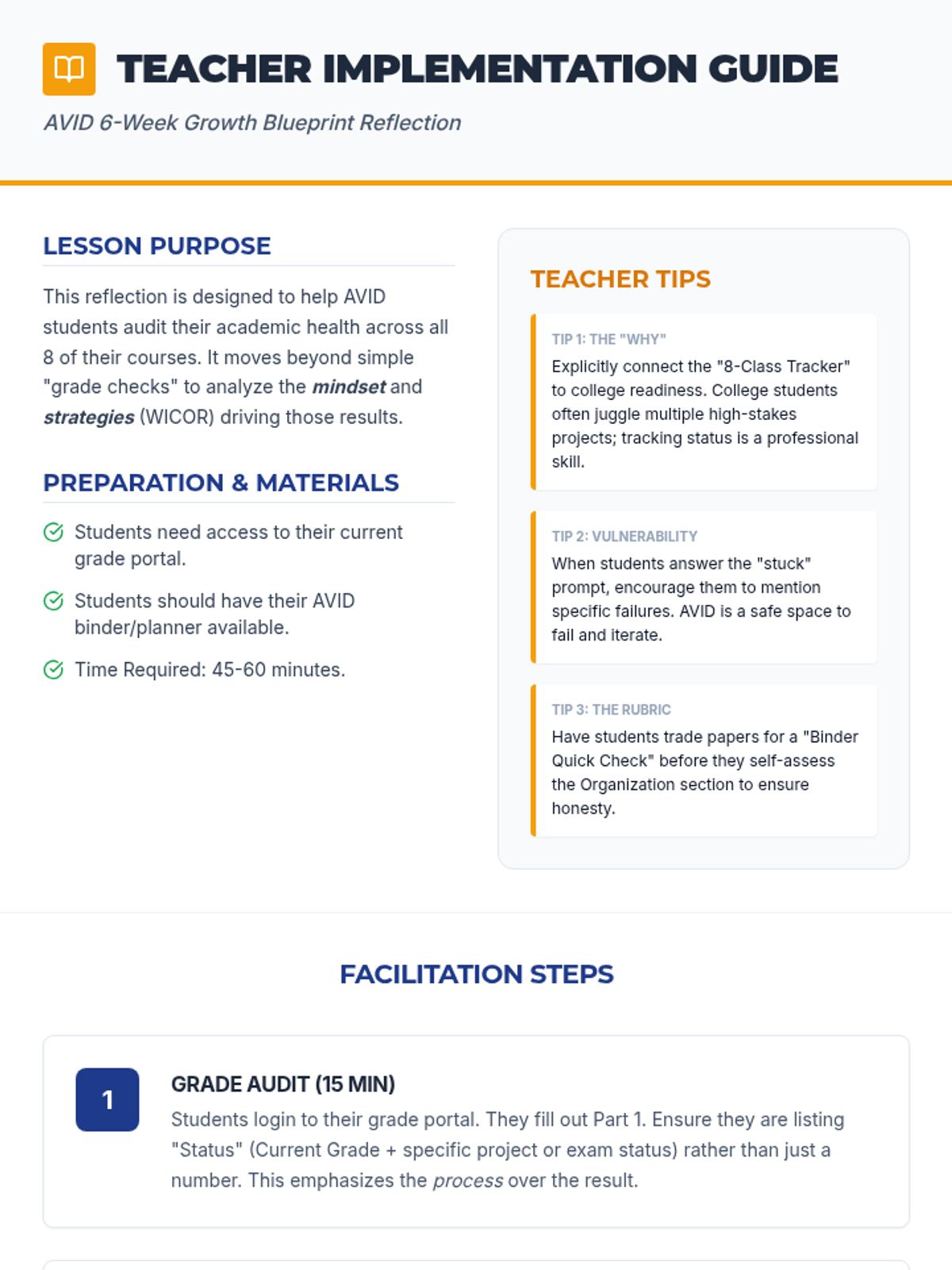
A comprehensive 6-week reflection unit for AVID students to evaluate their academic progress across 8 classes using growth mindset principles and the WICOR framework.
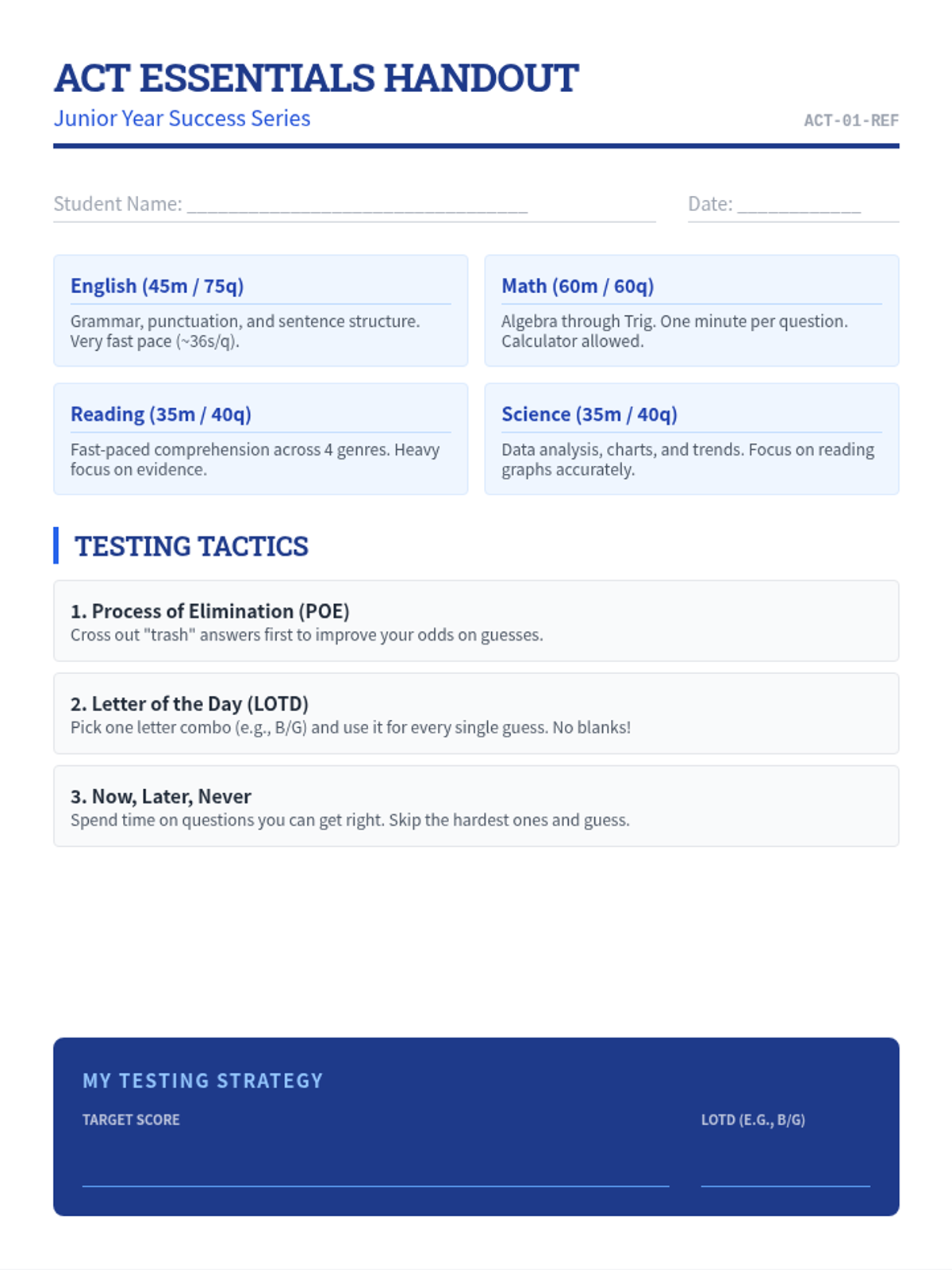
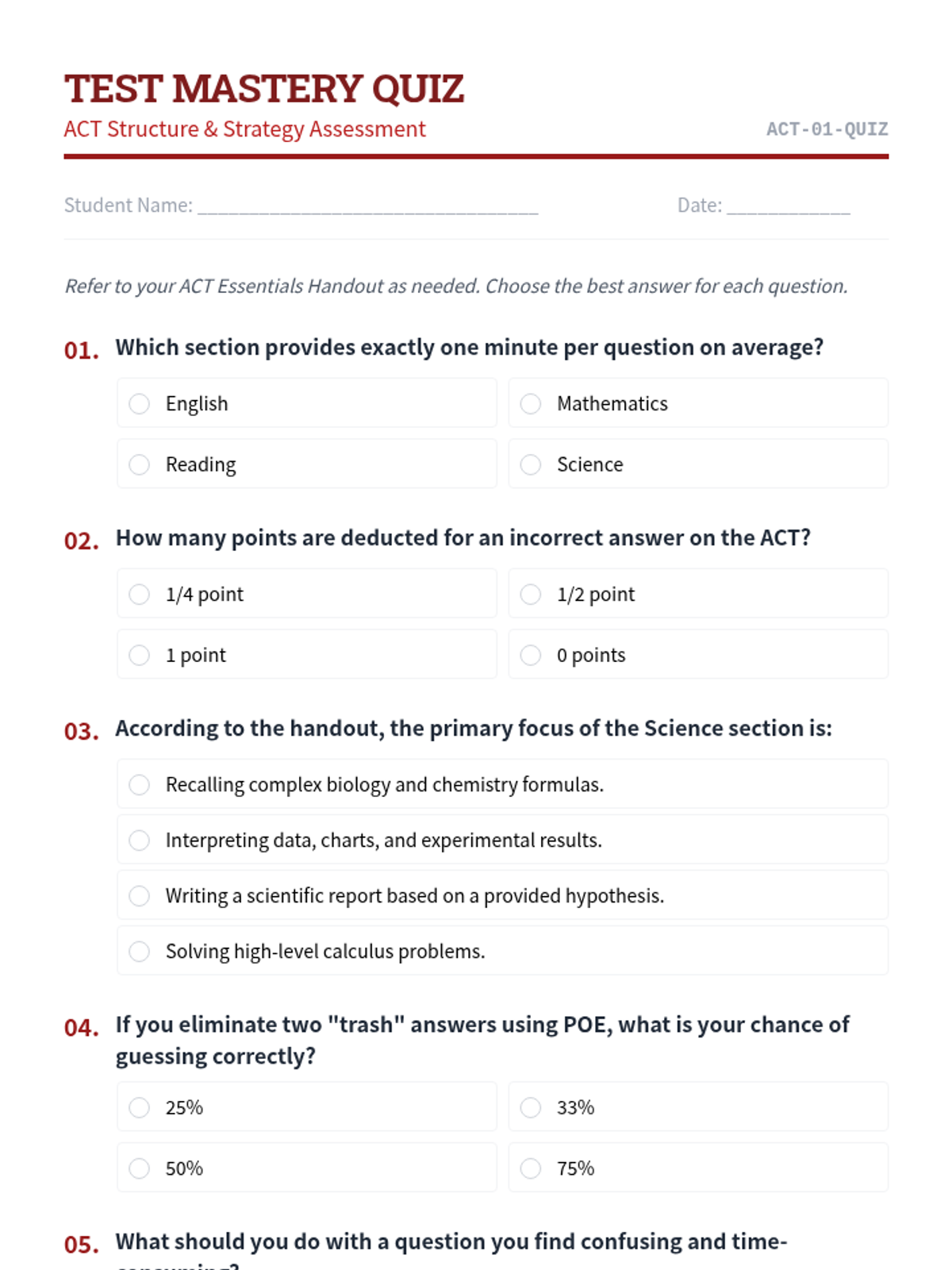
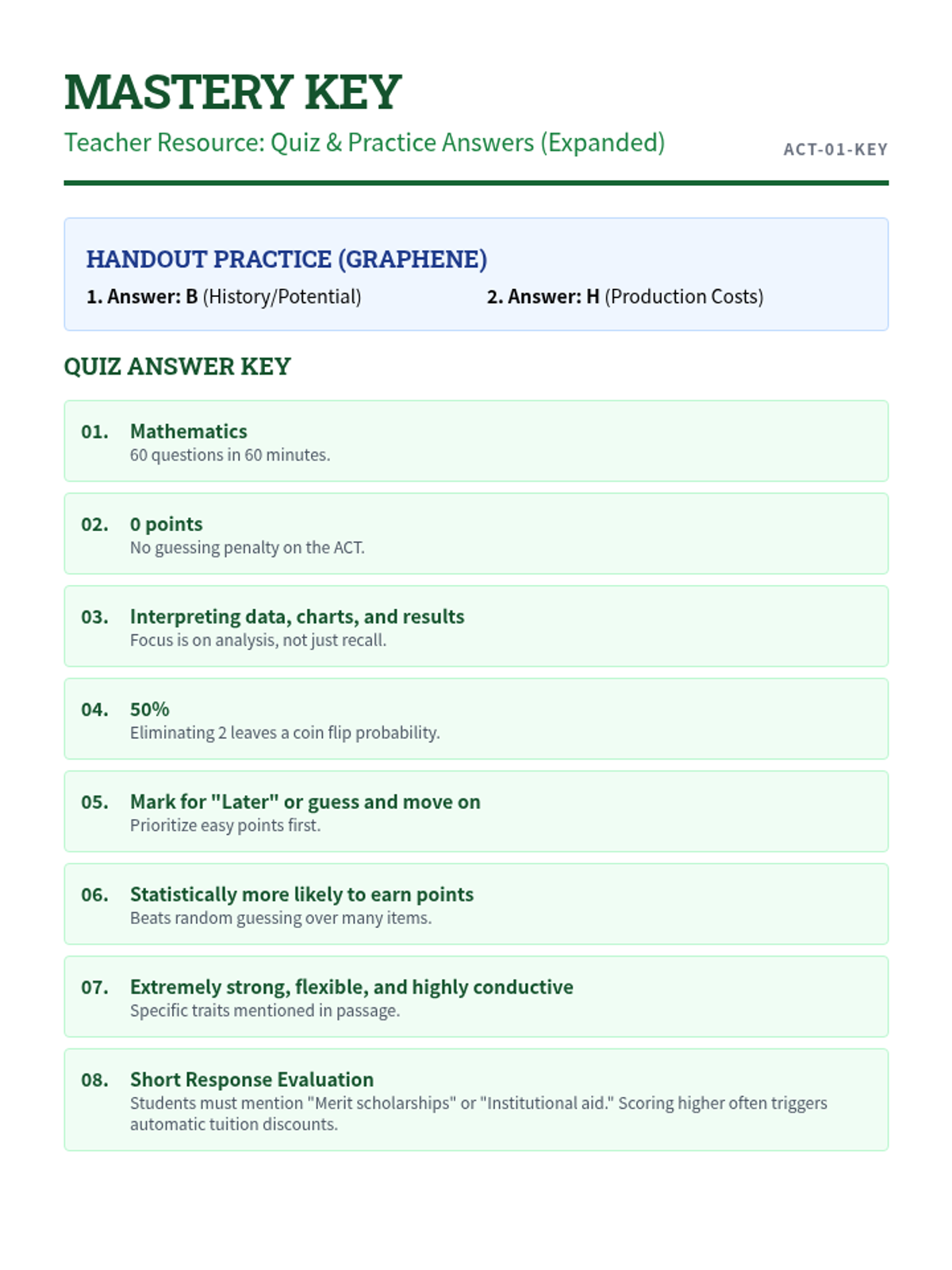
A comprehensive introduction to the ACT for juniors, focusing on section structure, scoring importance, and foundational test-taking strategies.
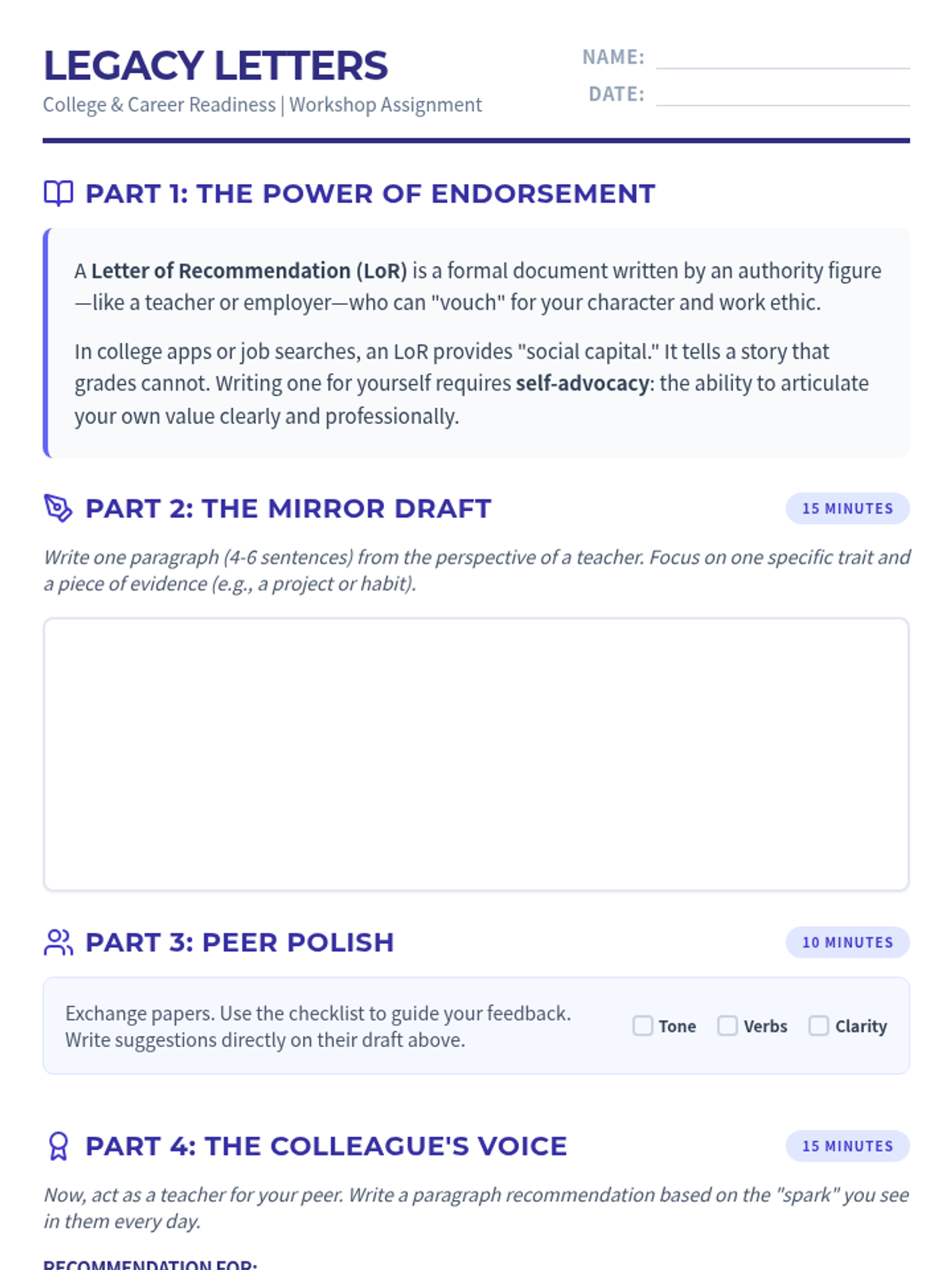
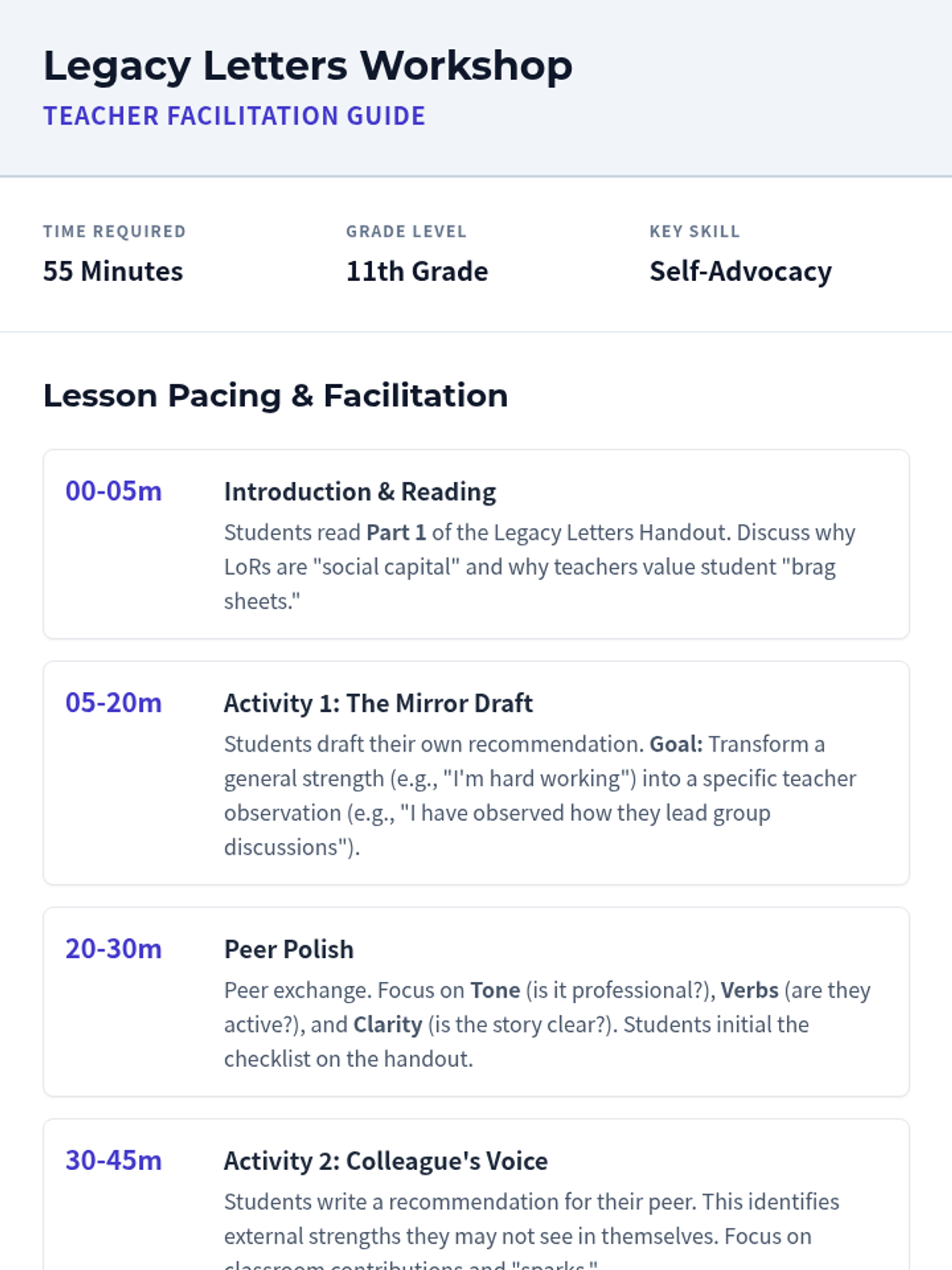
A 55-minute lesson designed for 11th-grade students to practice self-advocacy and professional writing by drafting letters of recommendation from multiple perspectives. Students explore the purpose of endorsements, practice peer editing, and reflect on their personal strengths.
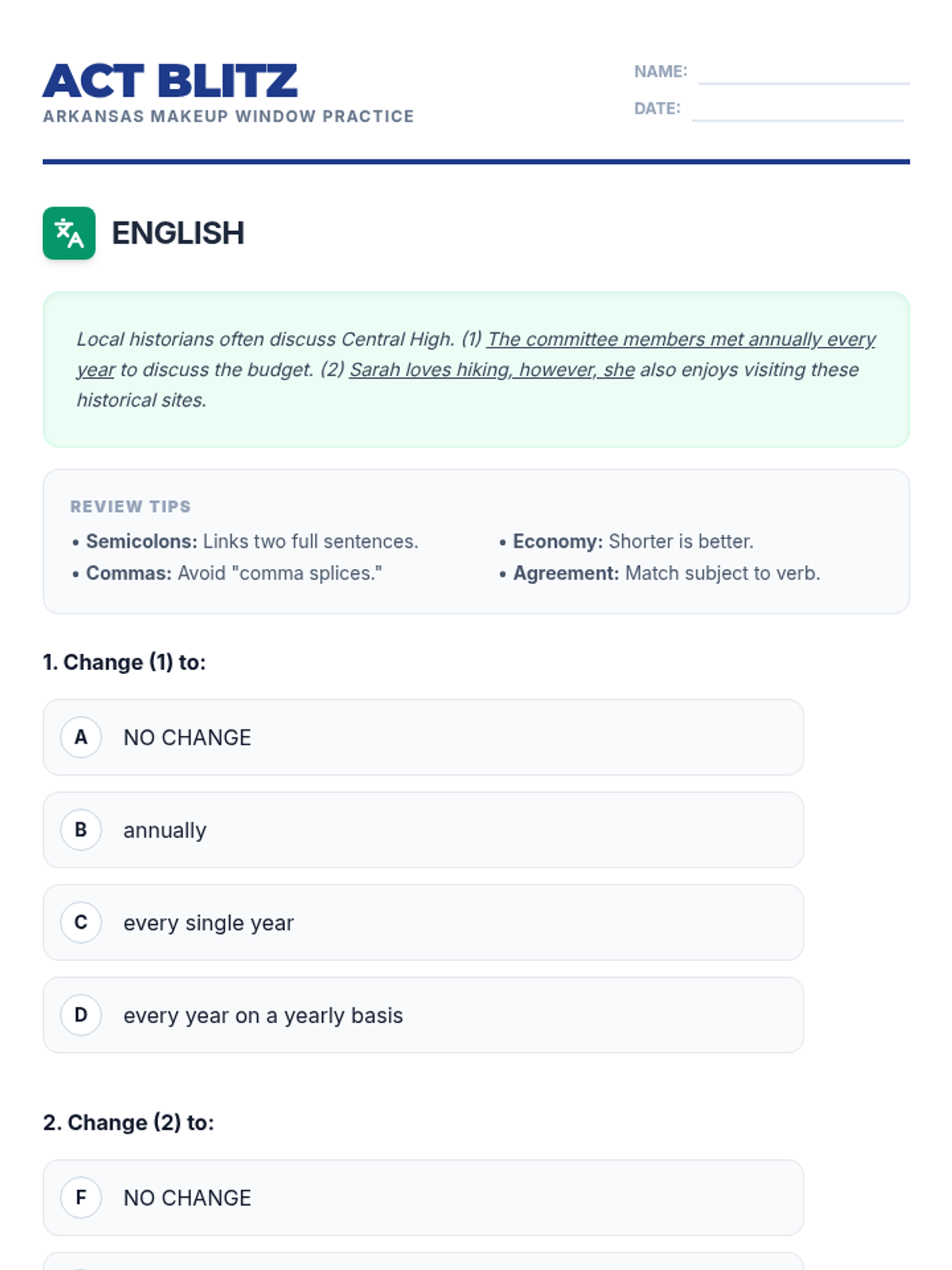
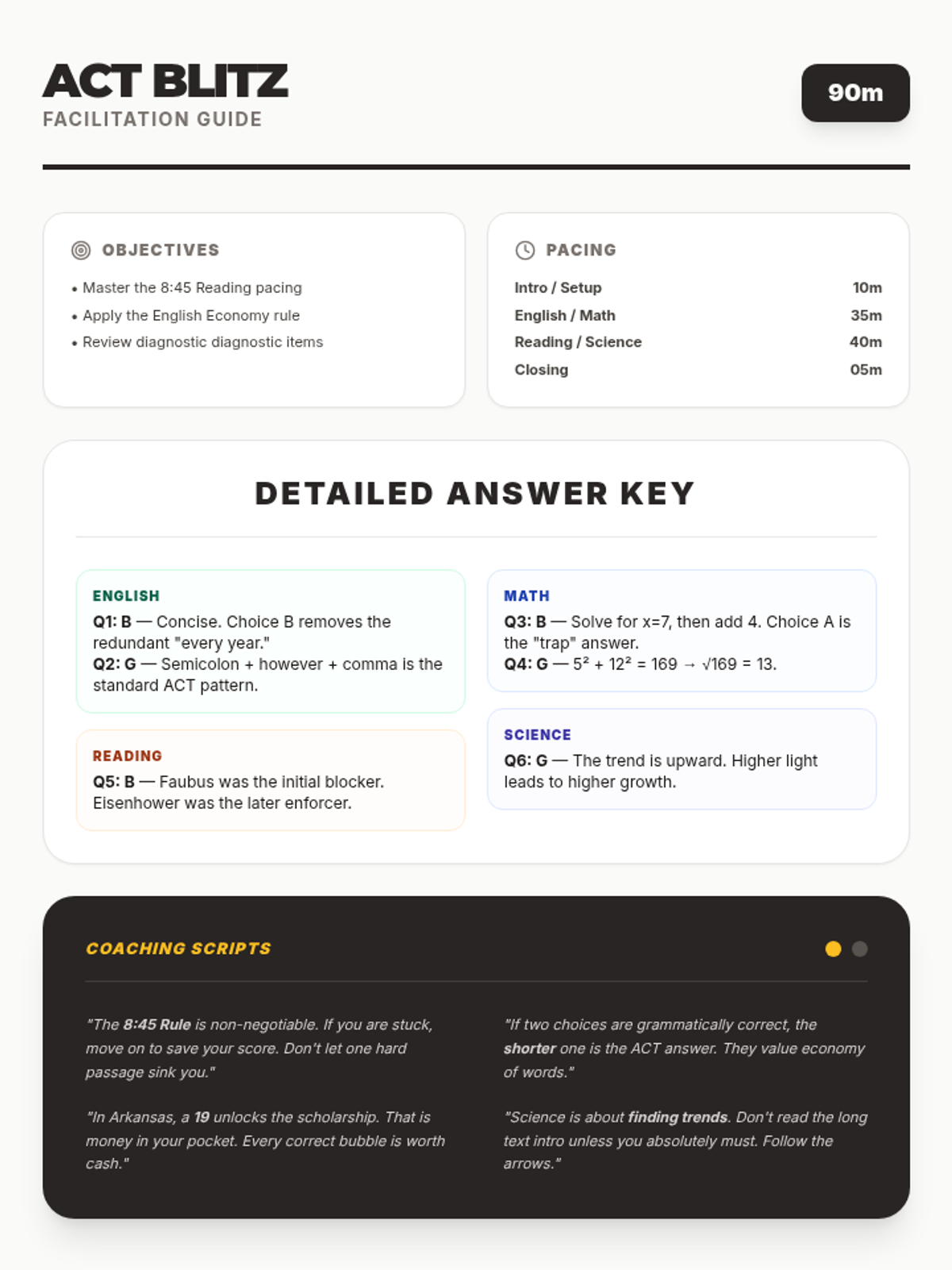
A comprehensive ACT prep review lesson designed for Arkansas 11th graders preparing for the April makeup window. Covers core strategies and practice for English, Math, Reading, and Science sections.
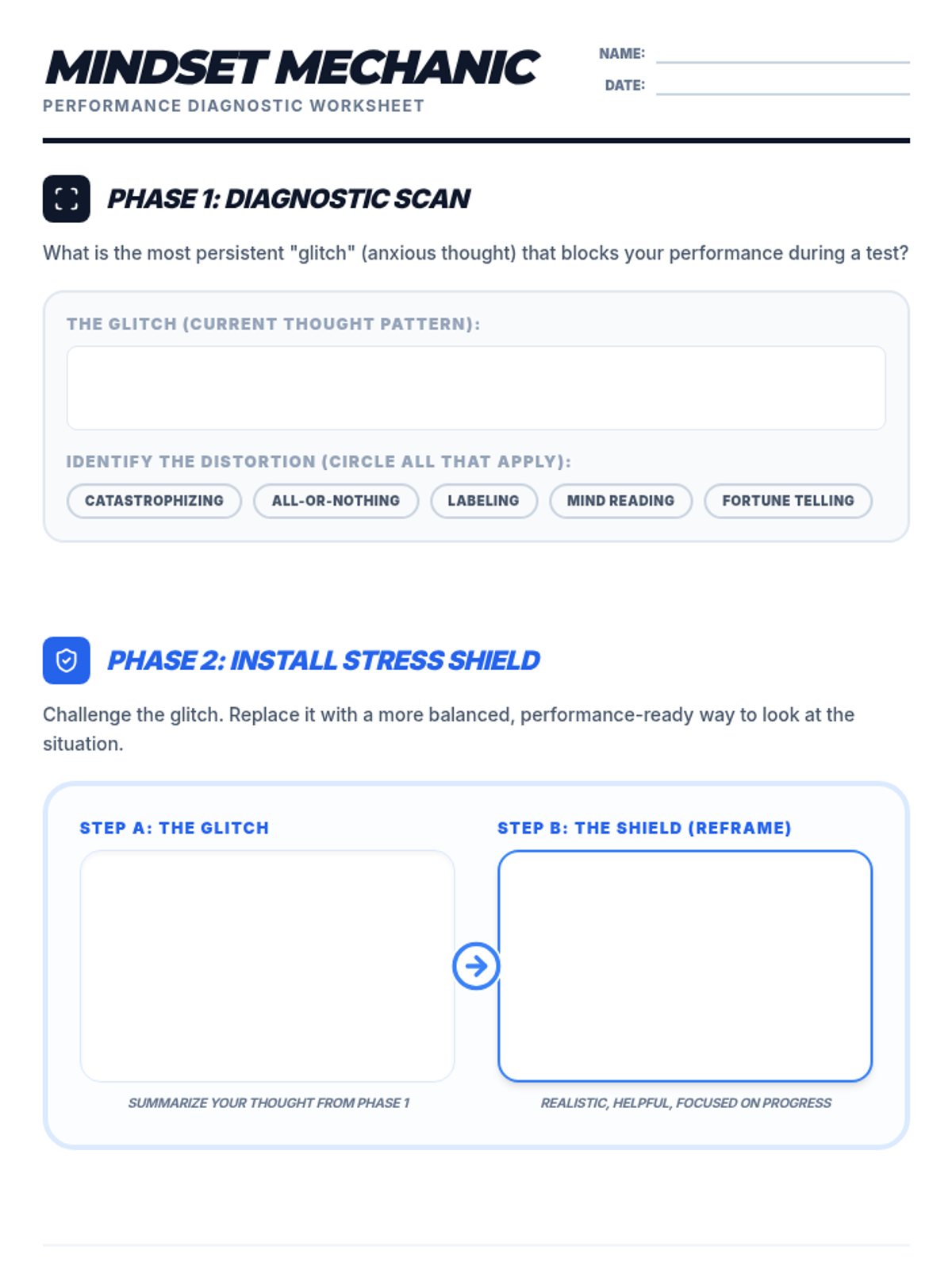
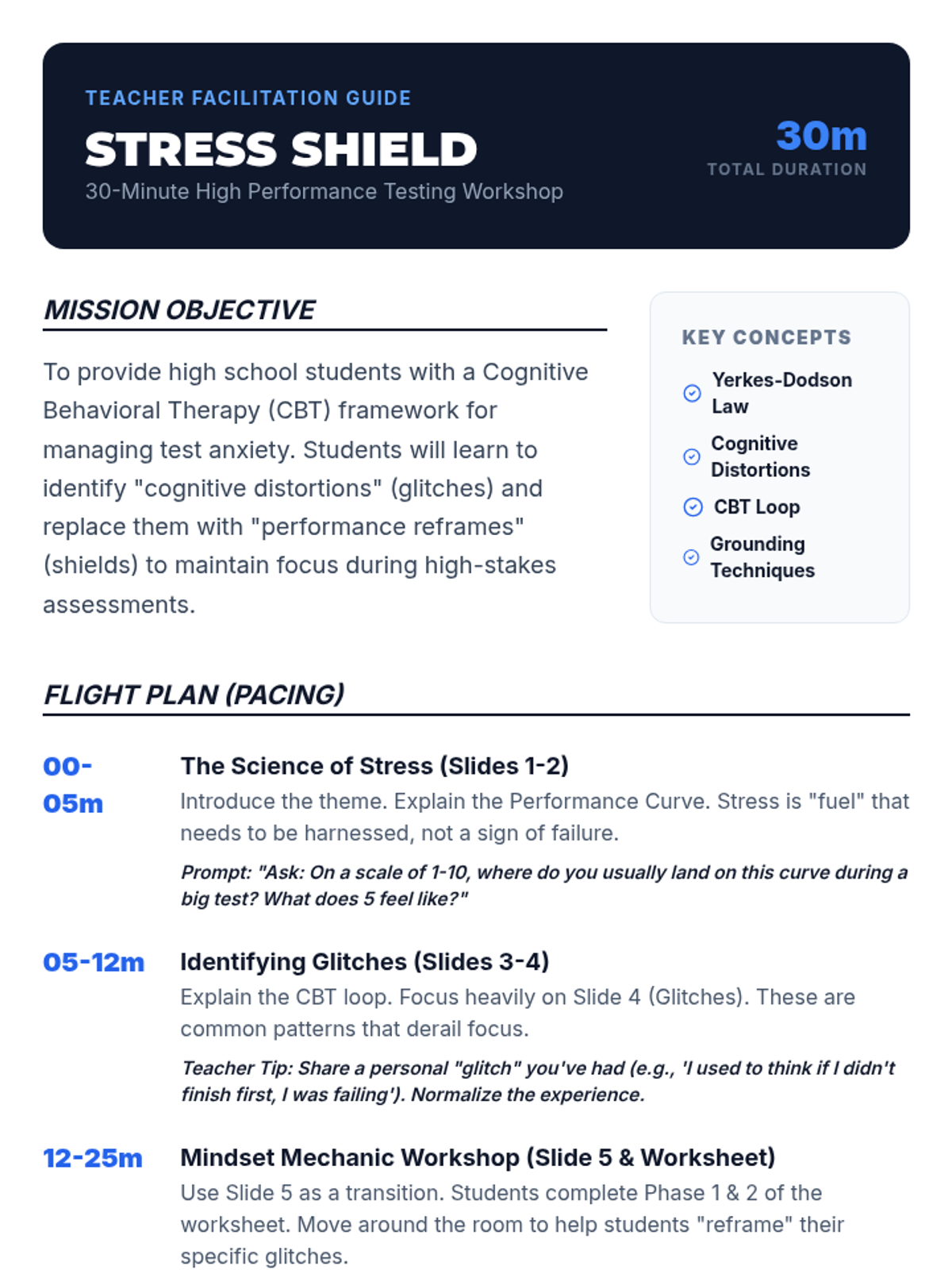
A fast-paced, high-impact 30-minute lesson designed to give high school students practical CBT-based tools to manage test anxiety and optimize performance on standardized assessments.
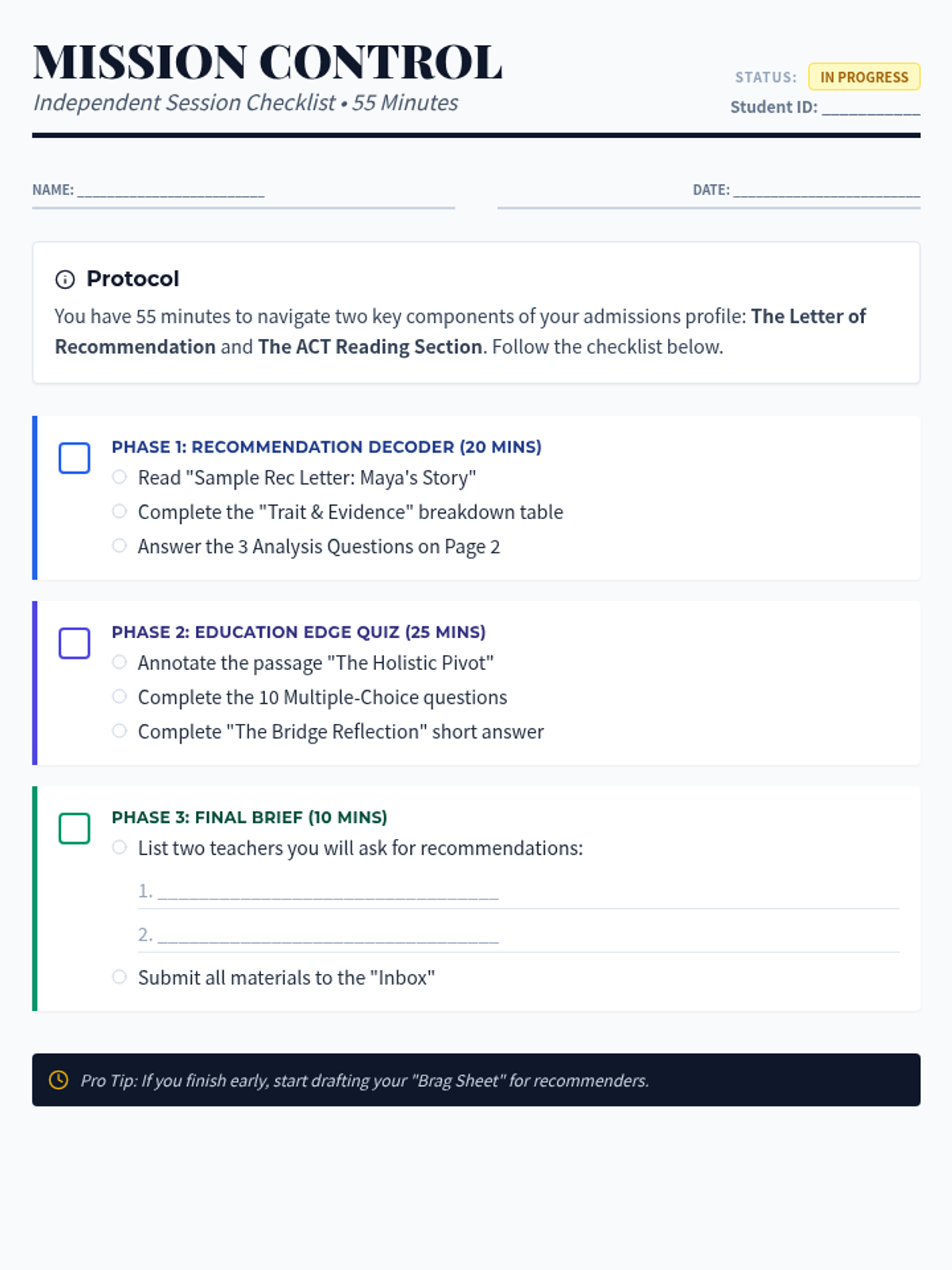
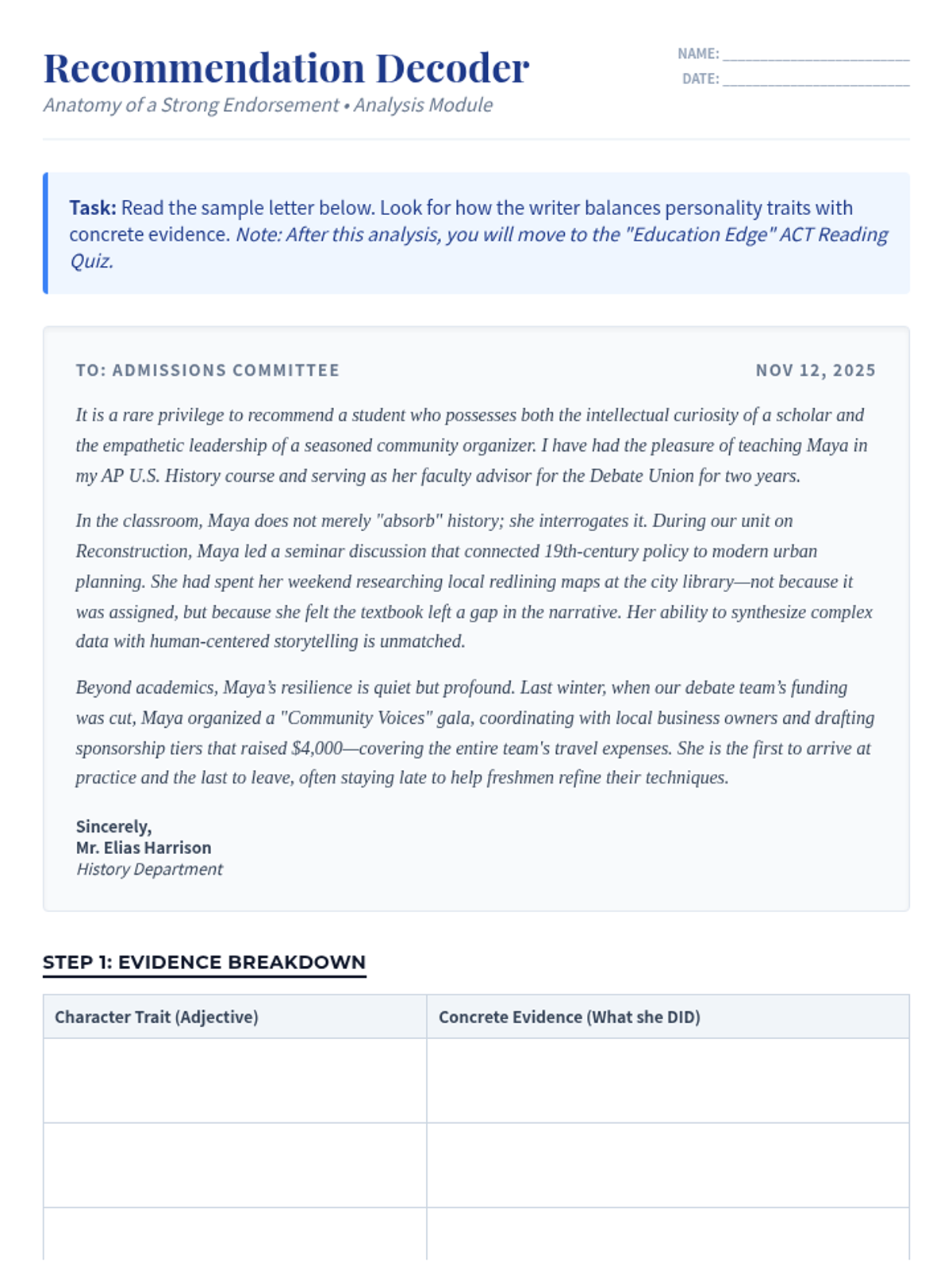
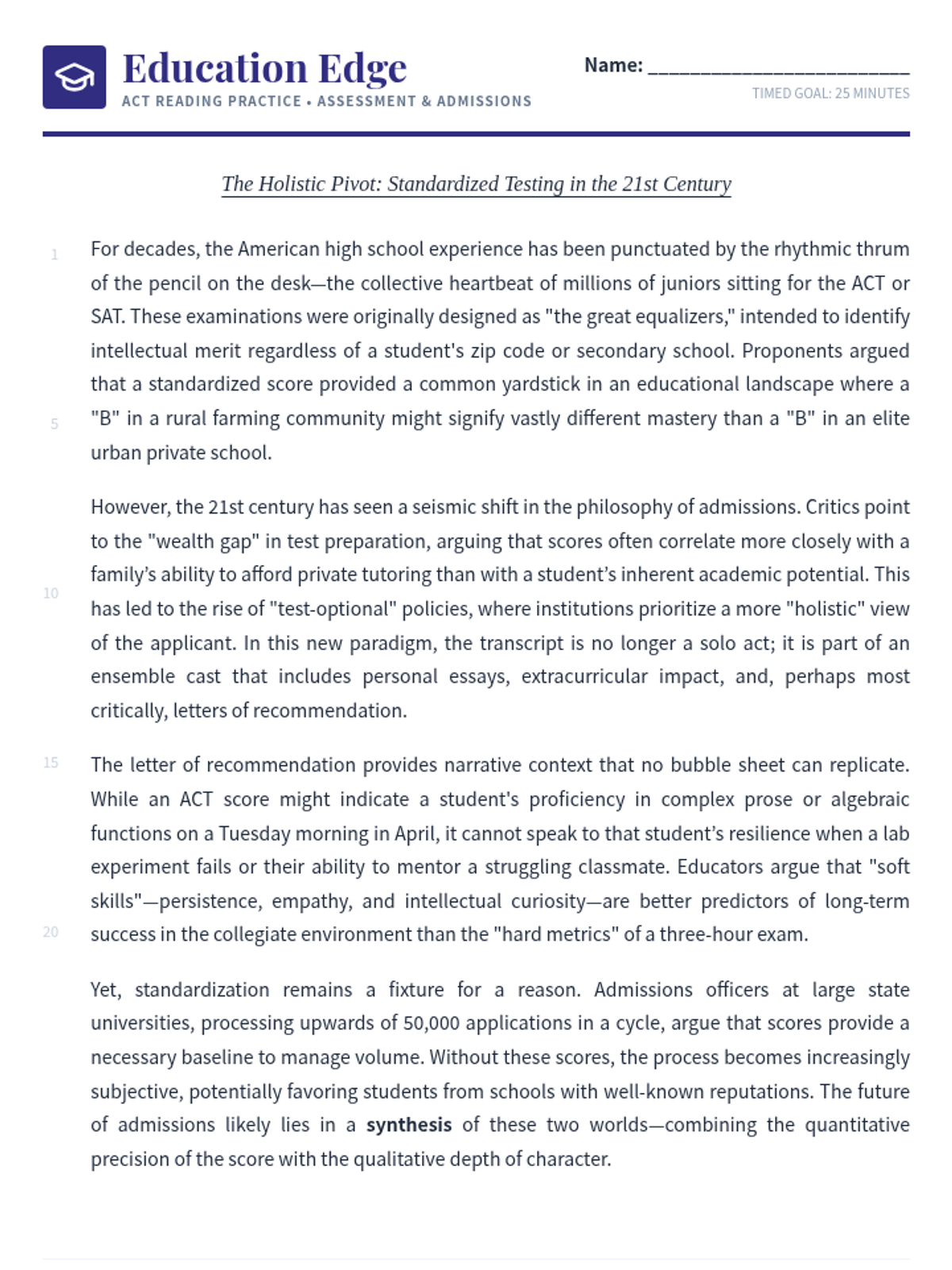
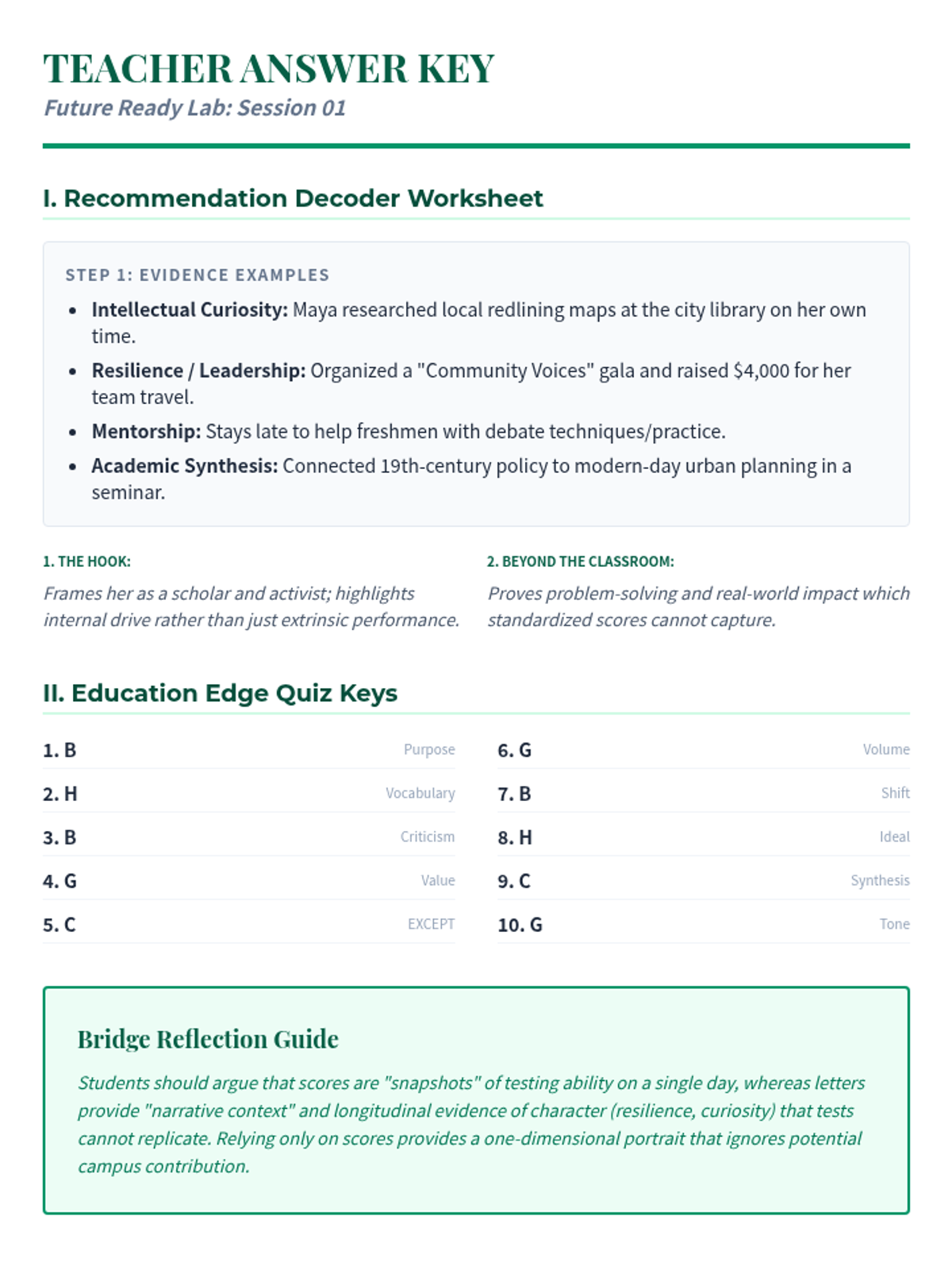
A 55-minute independent session where 11th graders analyze the anatomy of a strong recommendation letter and practice ACT-style reading comprehension on the topic of educational assessment.
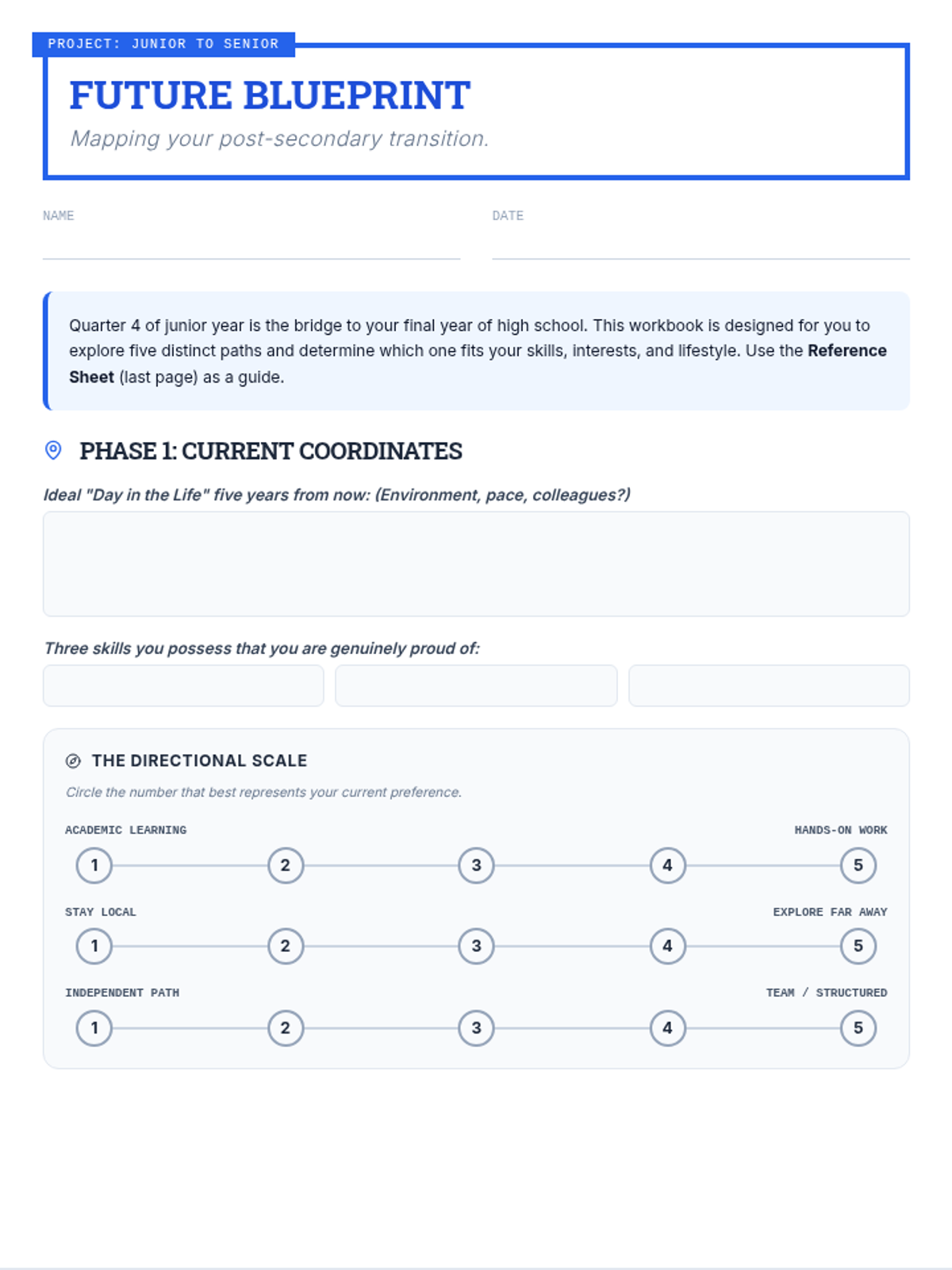
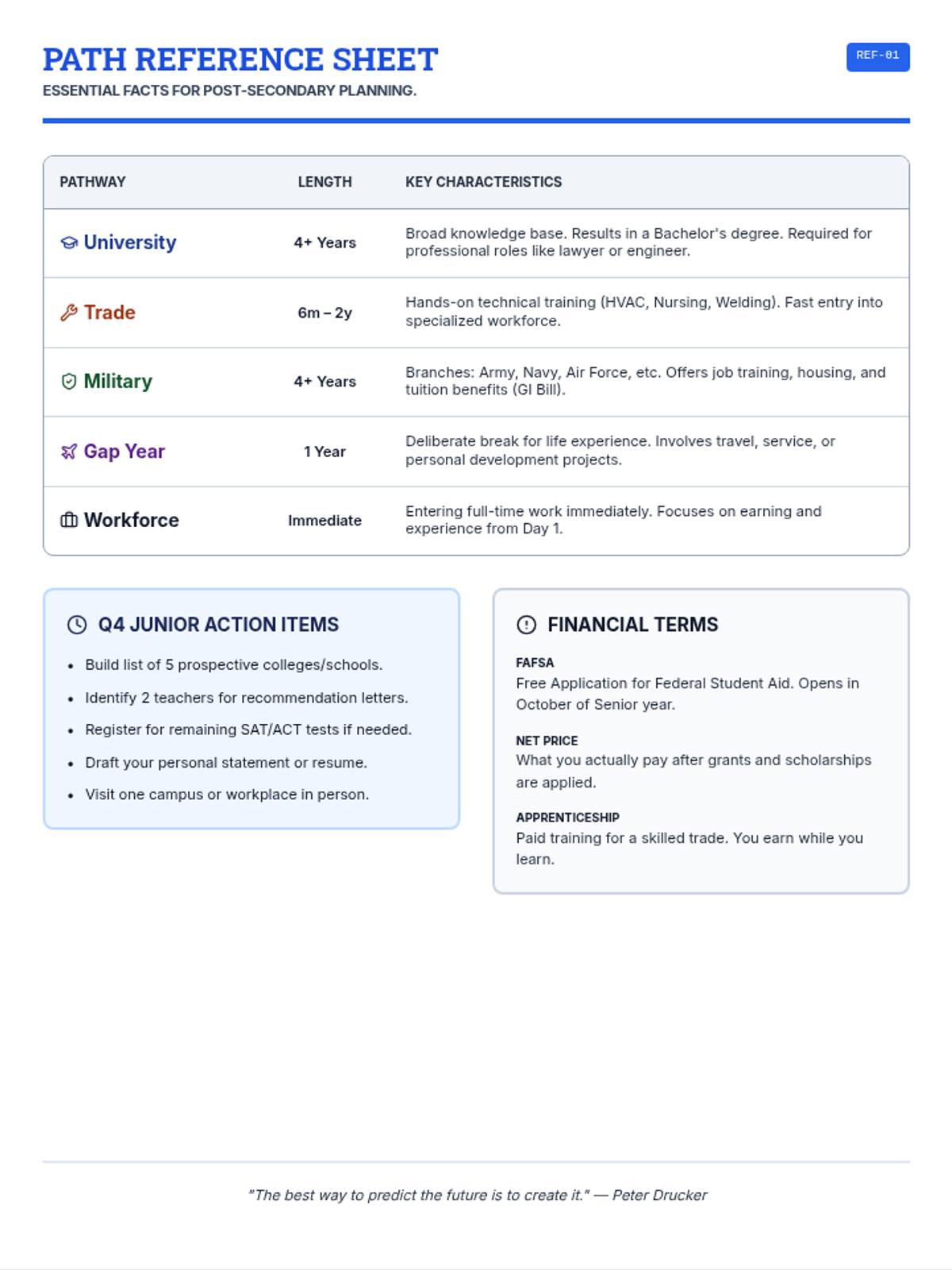
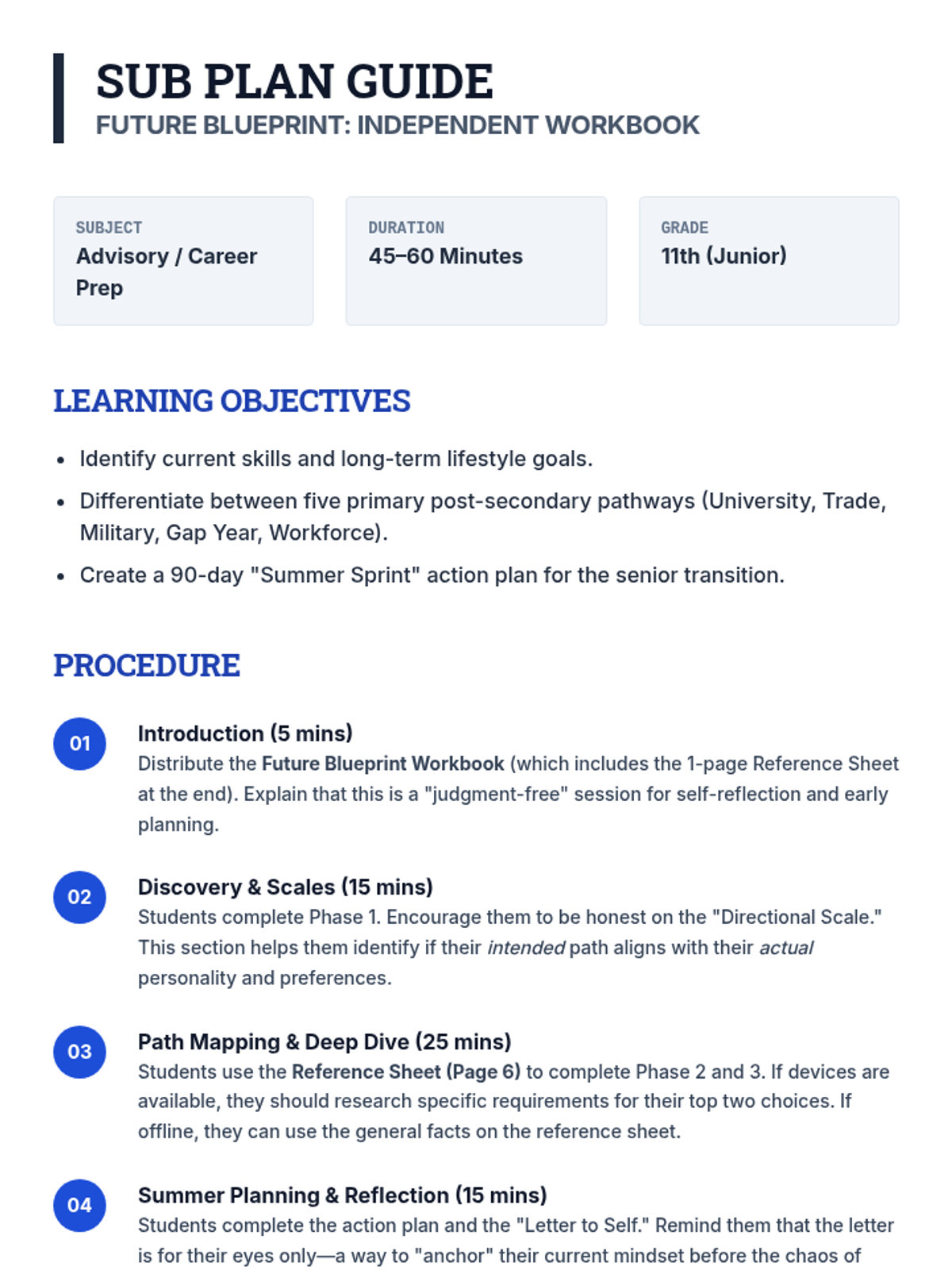
An independent student workbook and guide designed for late-junior year students to explore post-secondary paths, including university, trade school, military, gap years, and the workforce, while planning their transition to senior year.
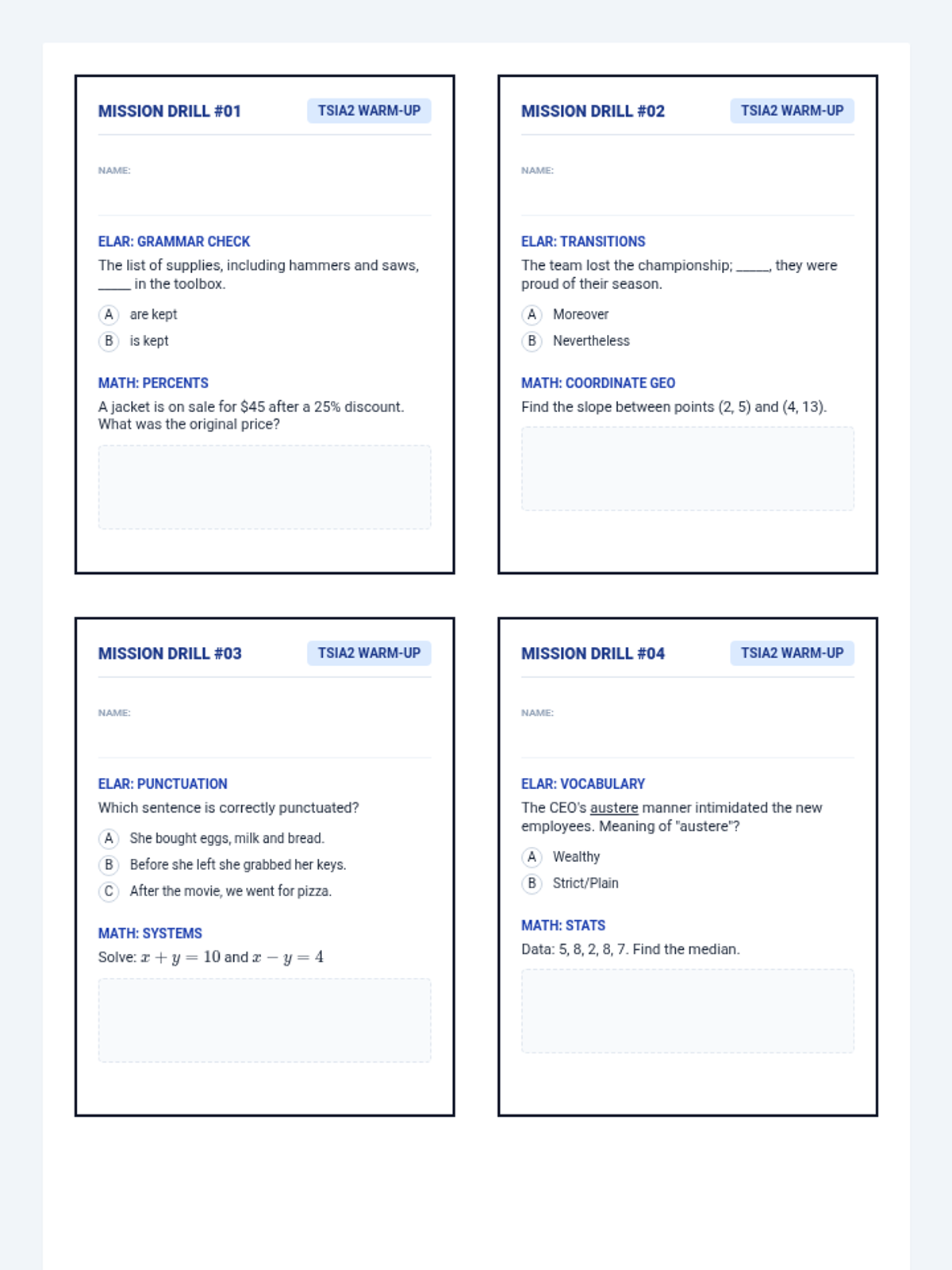
Short, focused practice sessions to reinforce concepts and track progress.
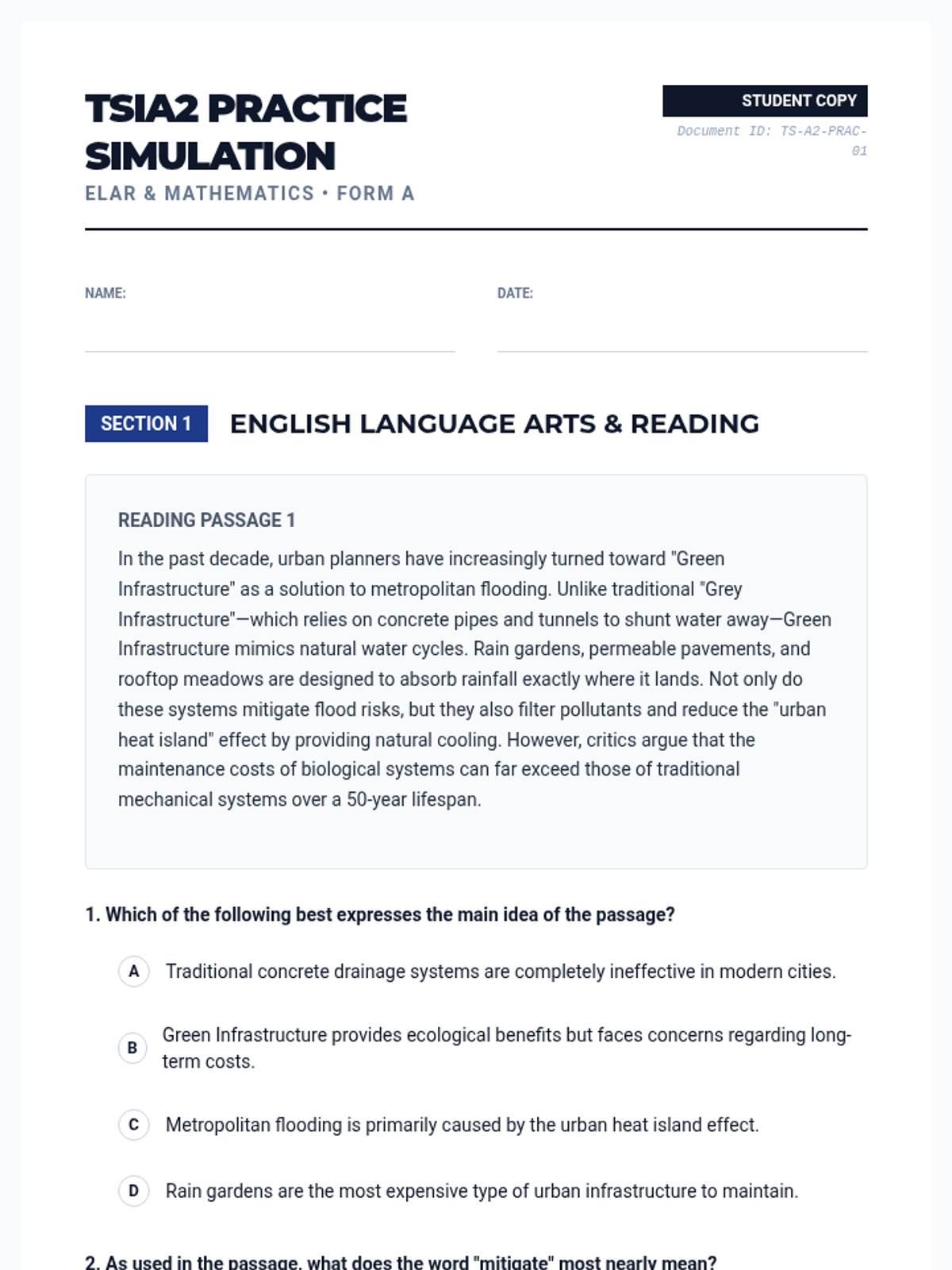
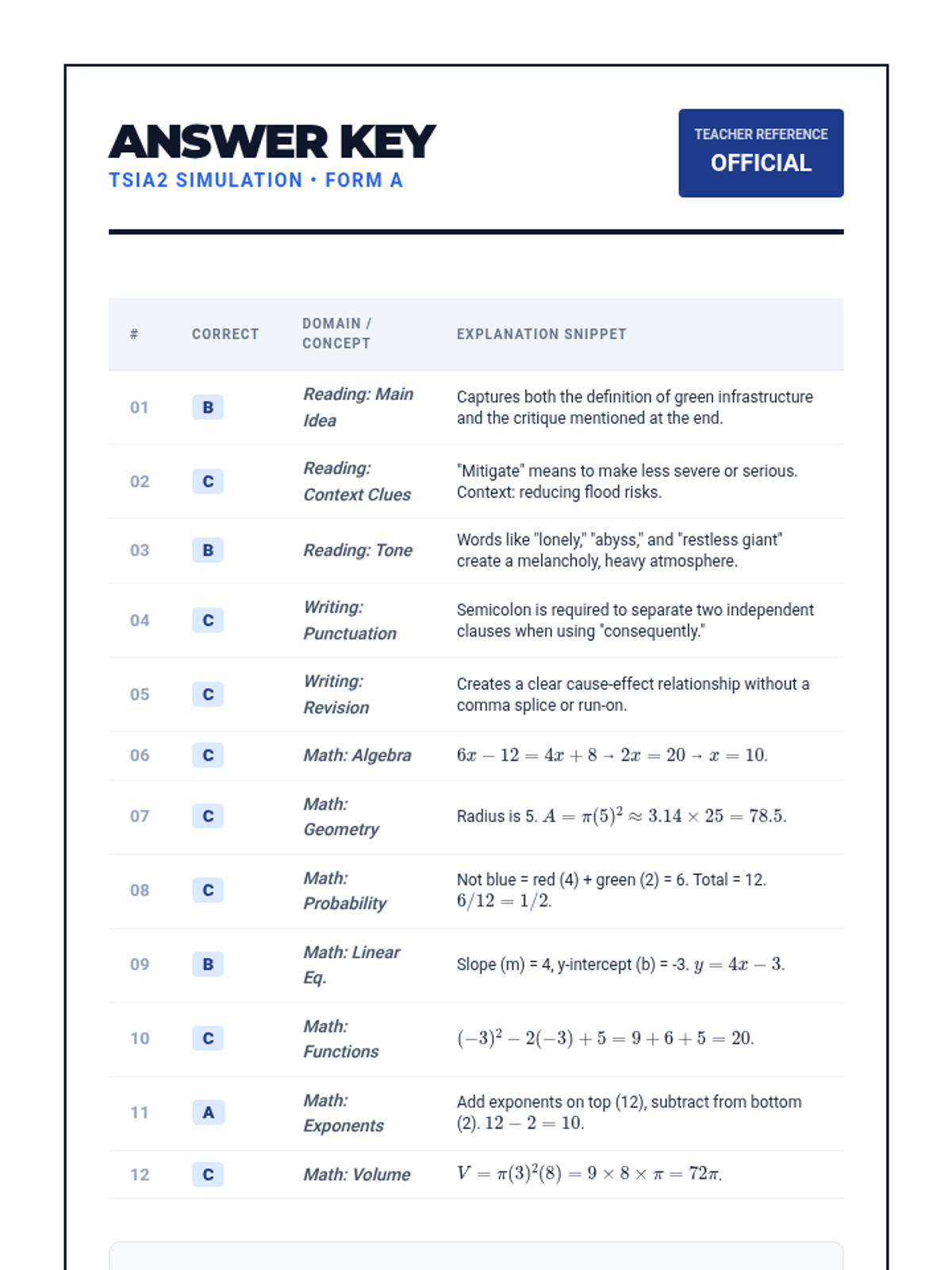
A full-length simulated testing experience to build stamina and assess readiness.
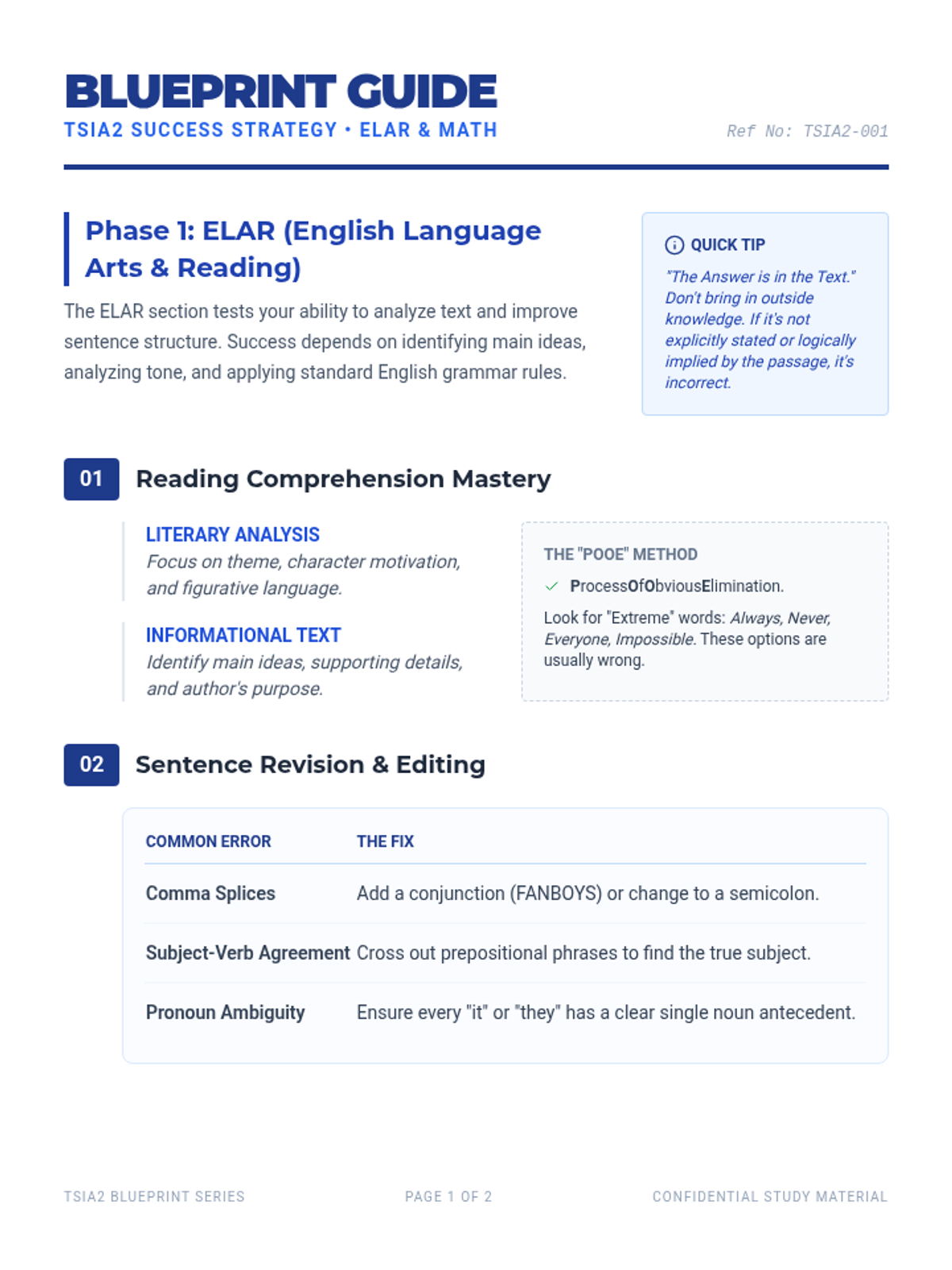
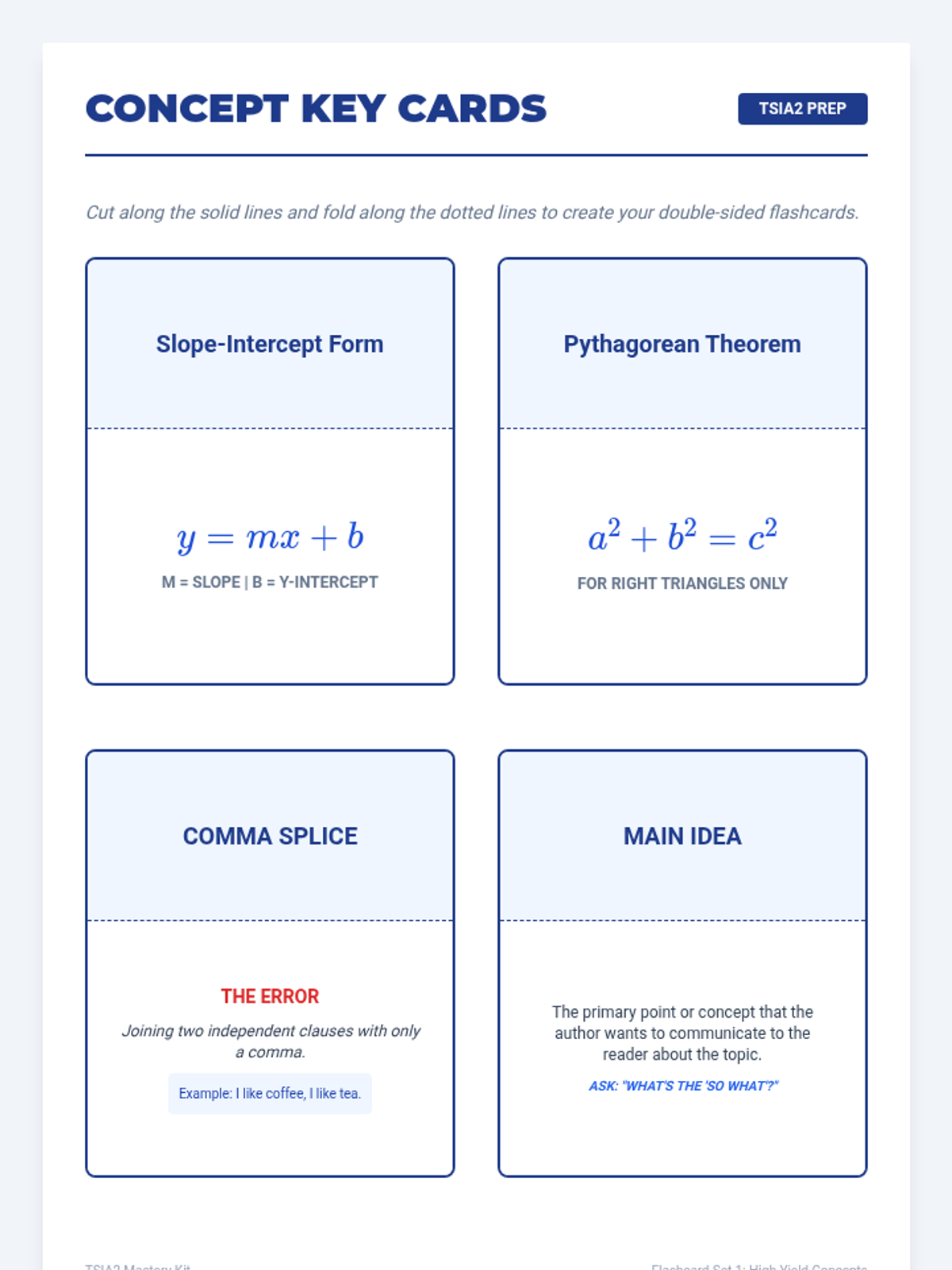
Foundational strategies and key concepts for both ELAR and Math sections of the TSIA2.
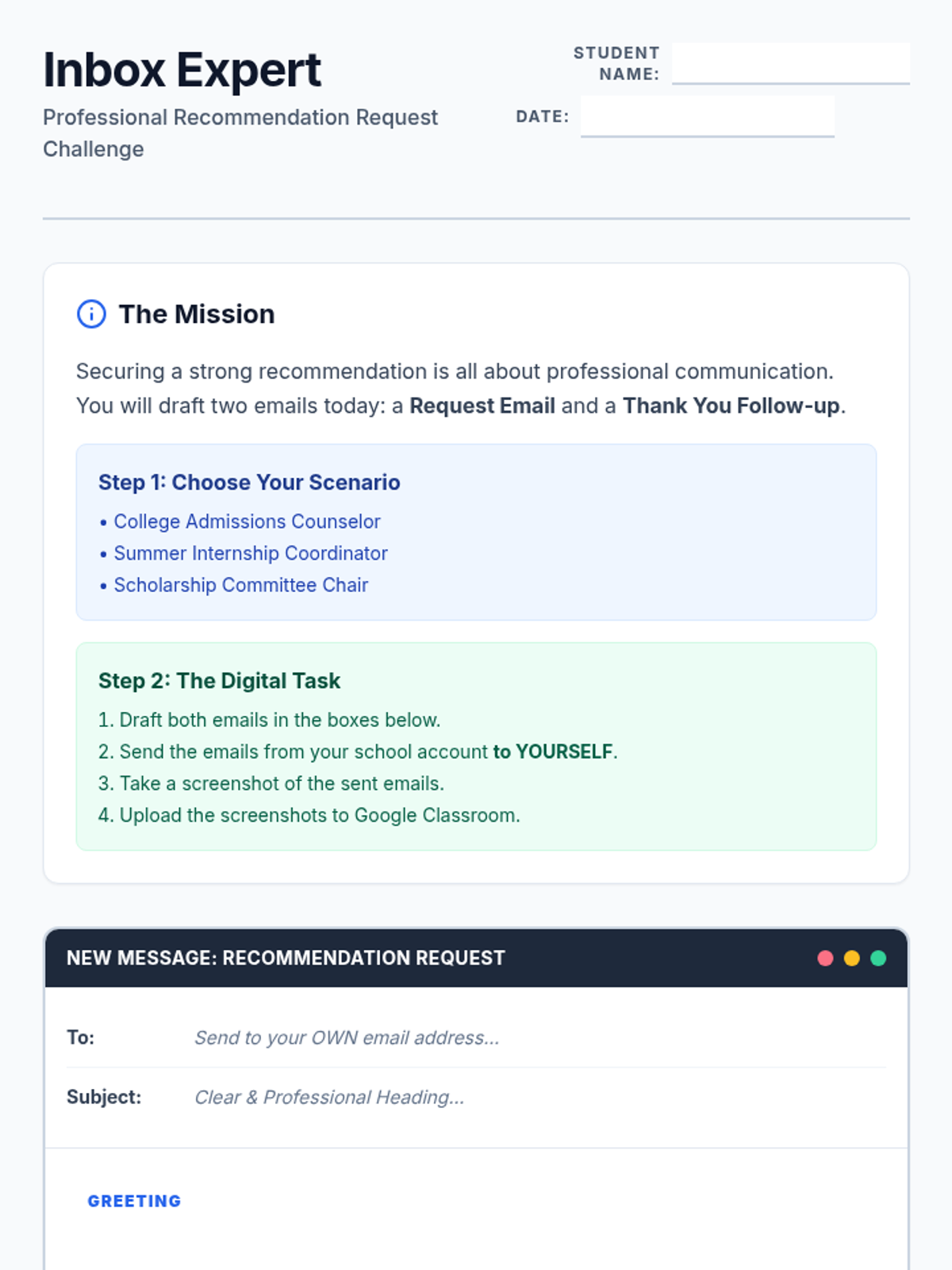
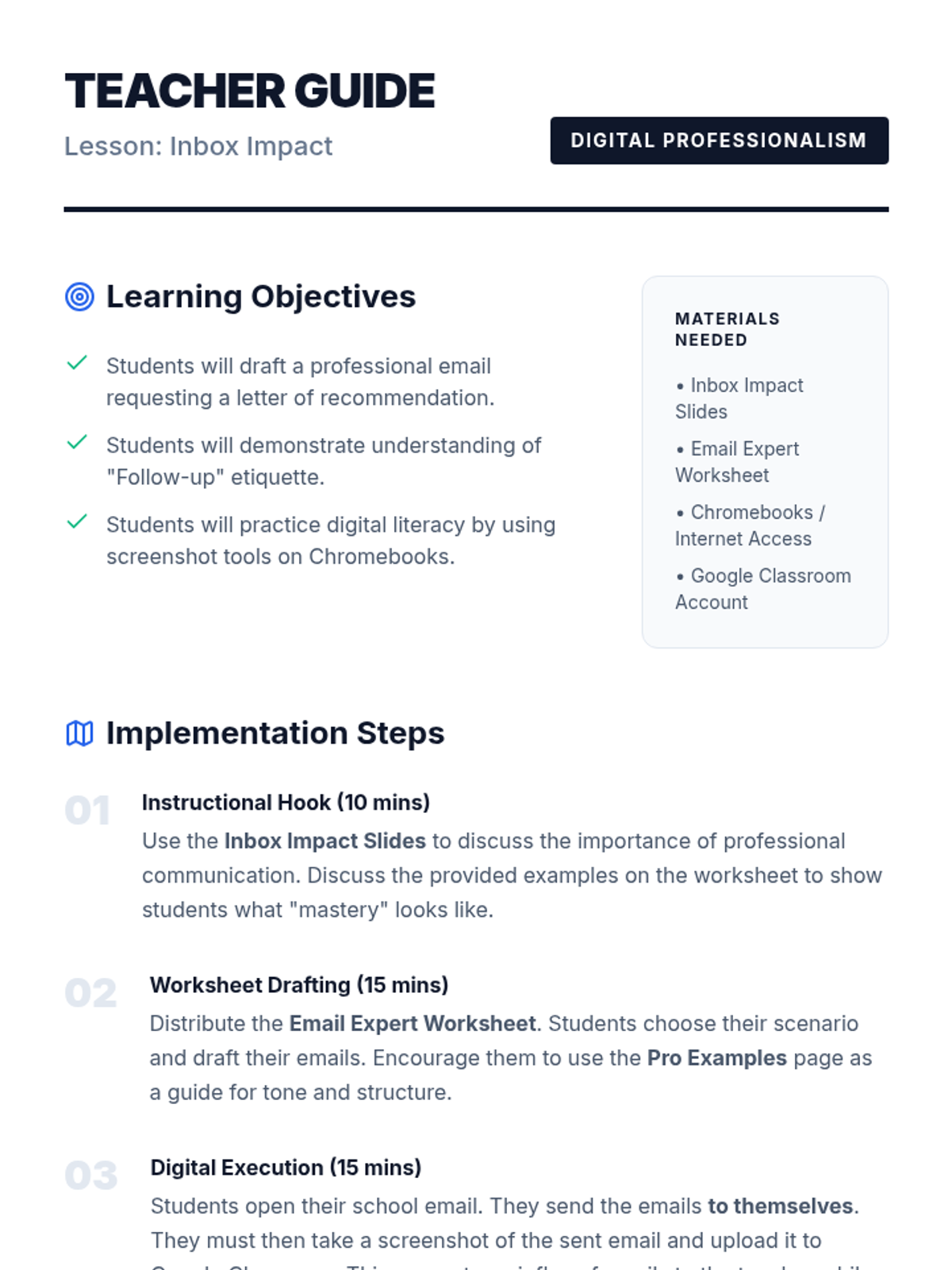
A lesson on drafting and sending professional emails to request letters of recommendation for college, internships, or scholarships. Students learn proper email etiquette, structure, and follow-up procedures.
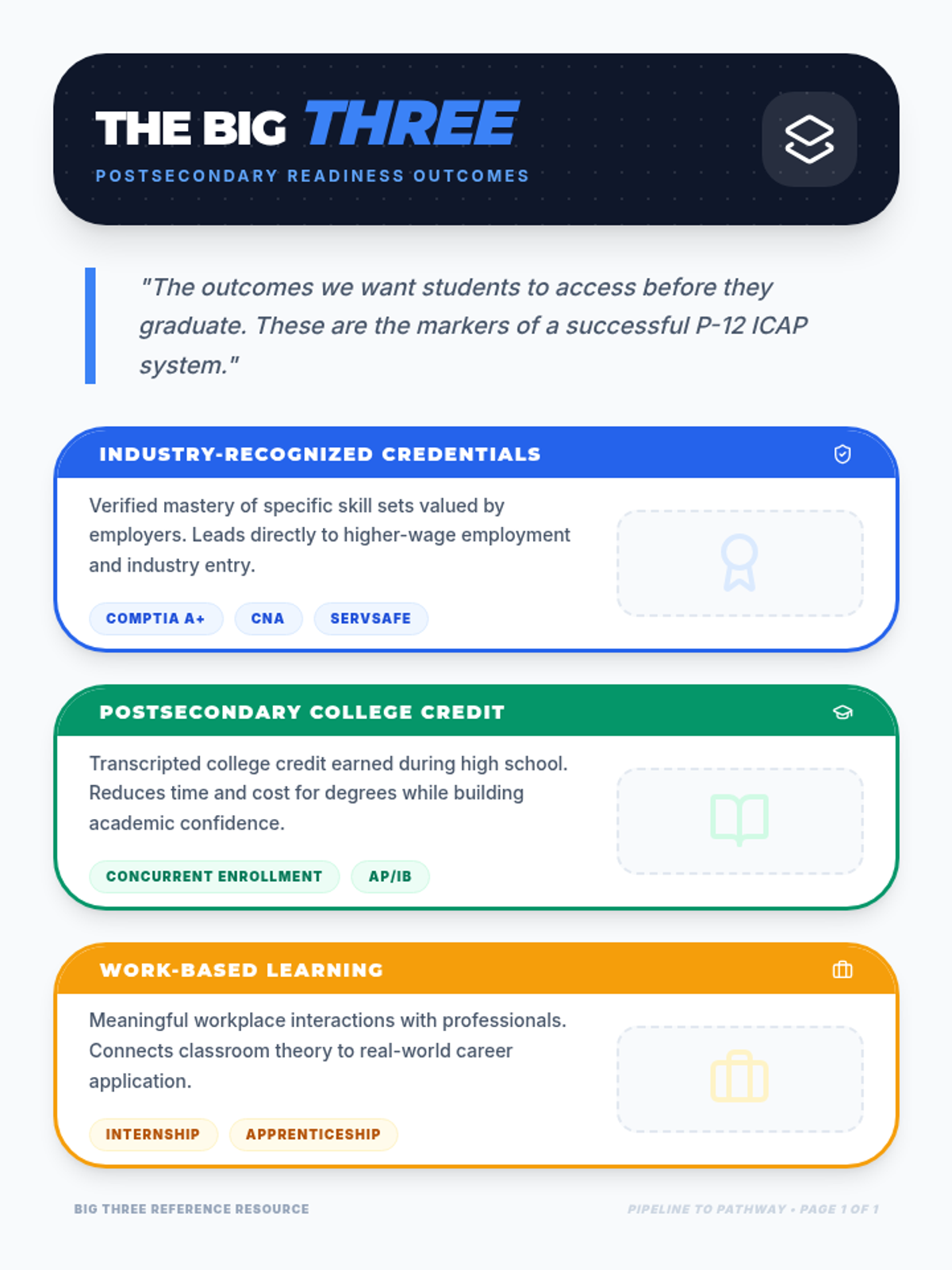
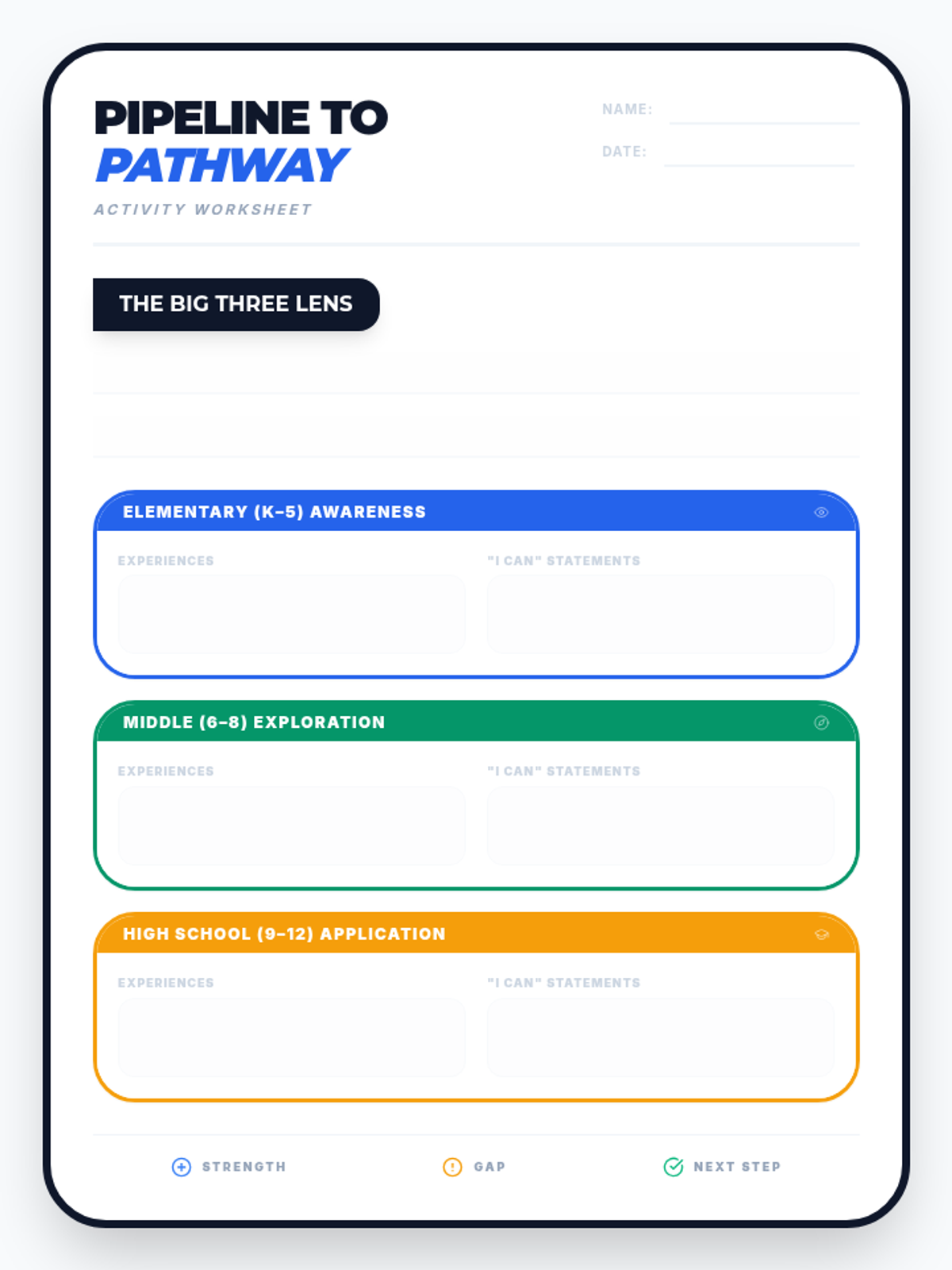
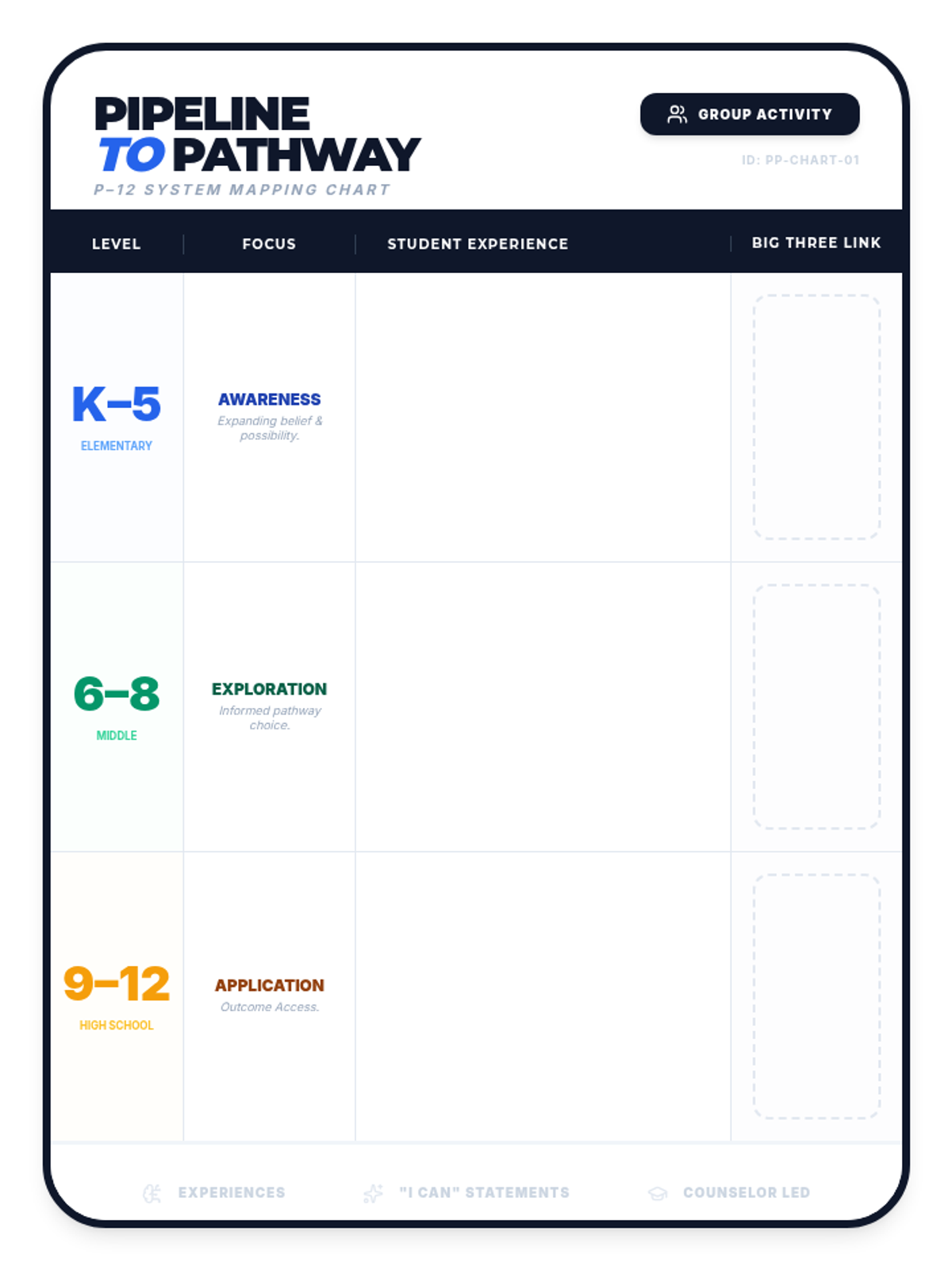
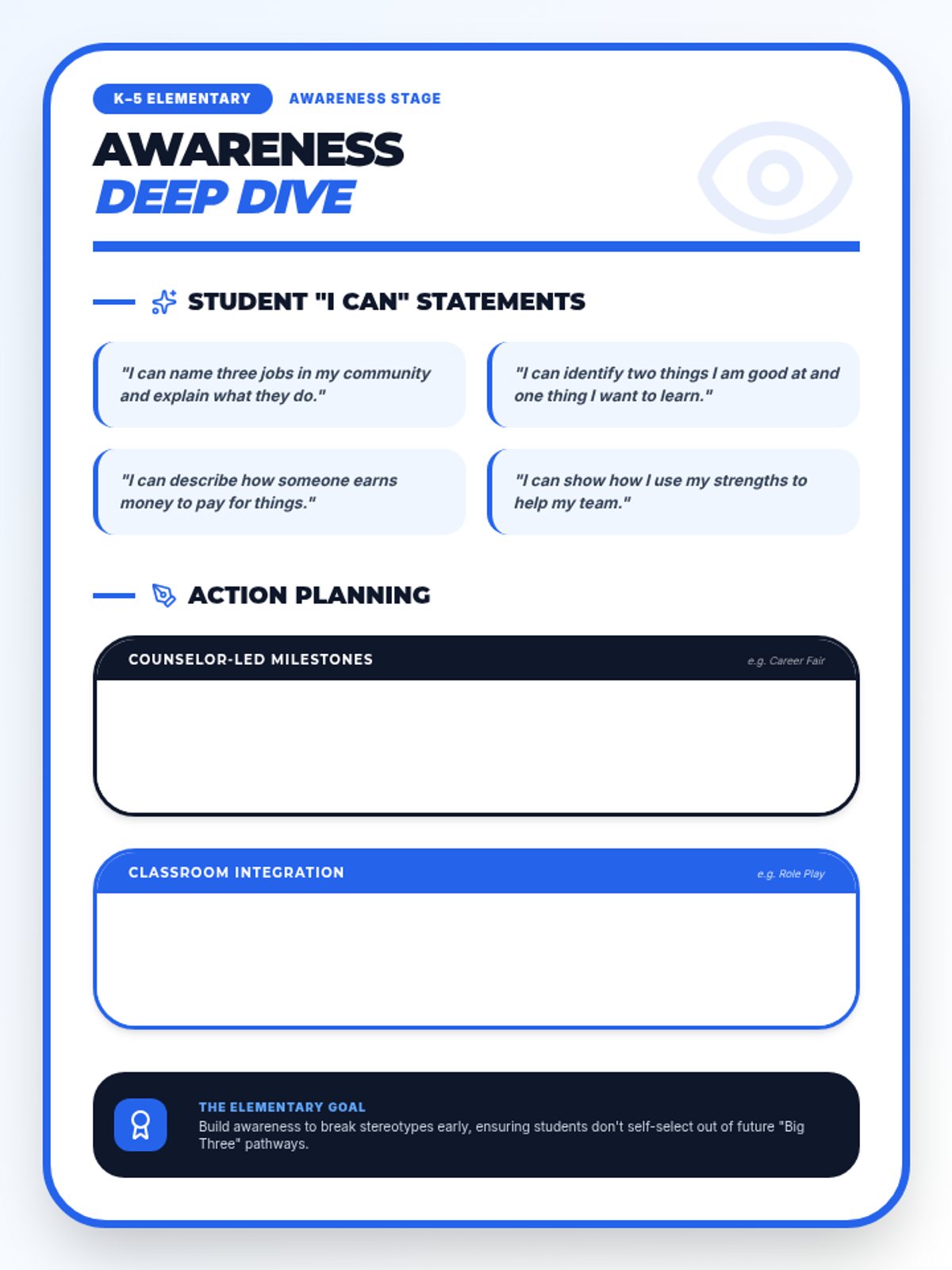
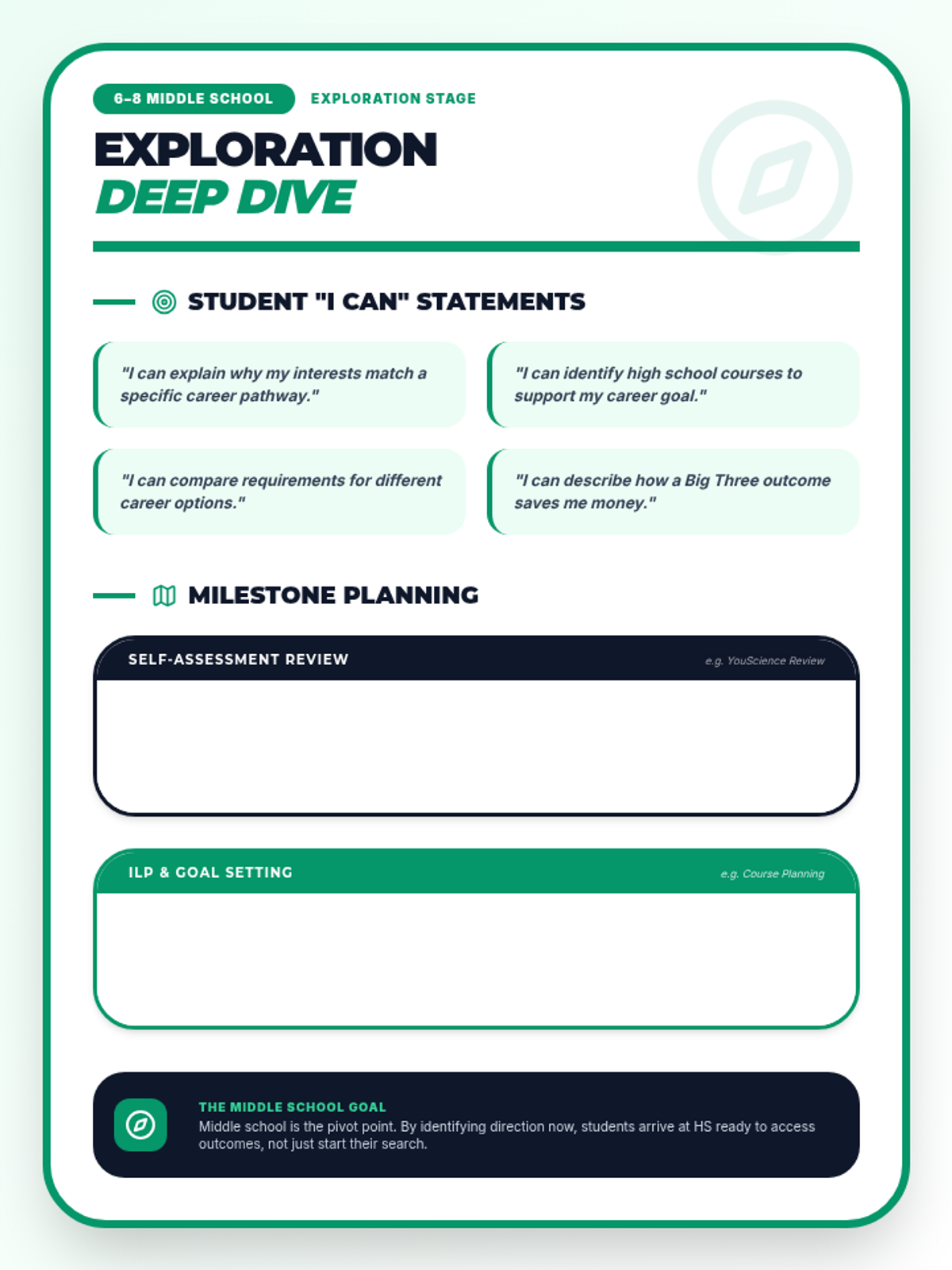
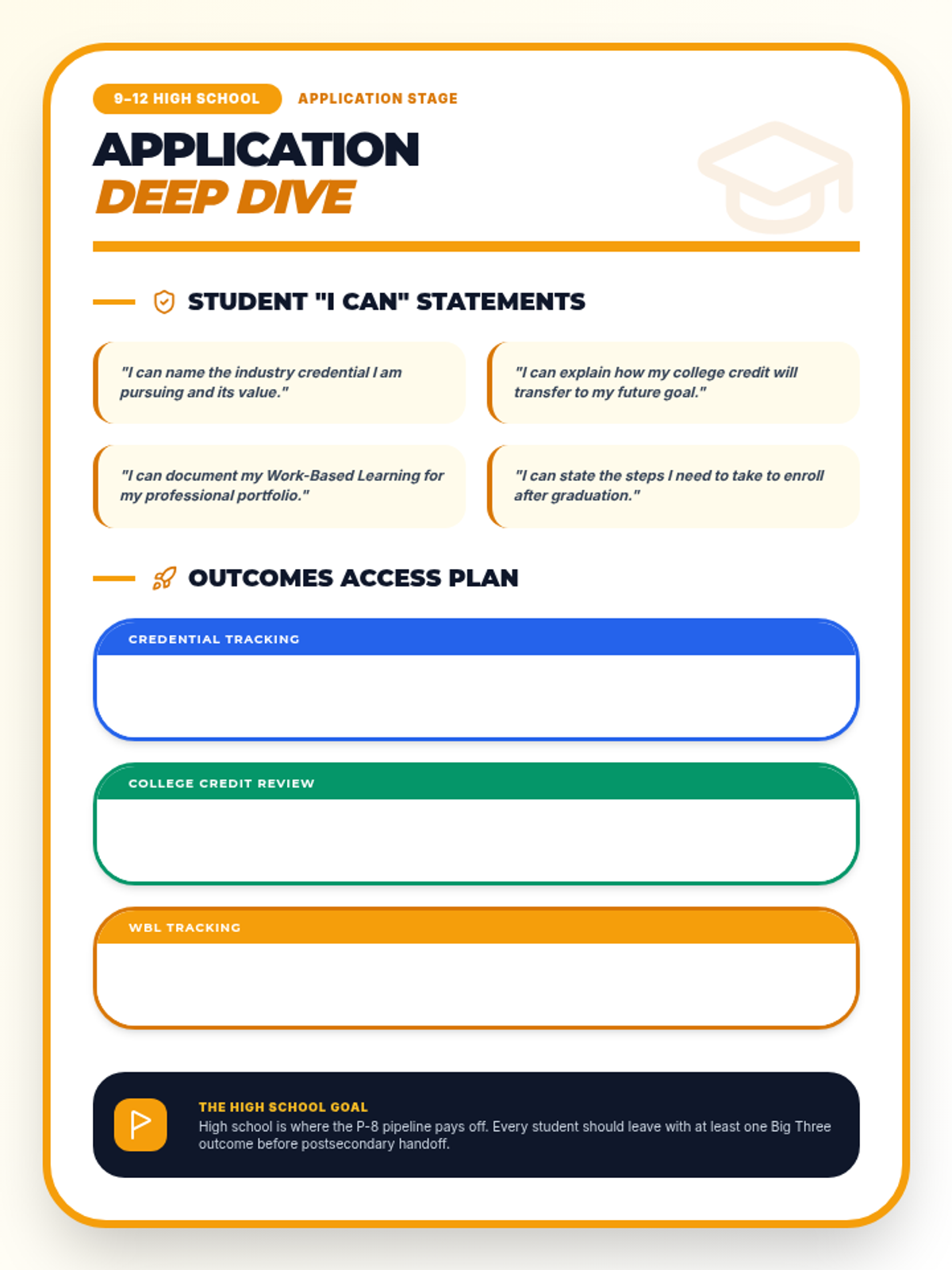
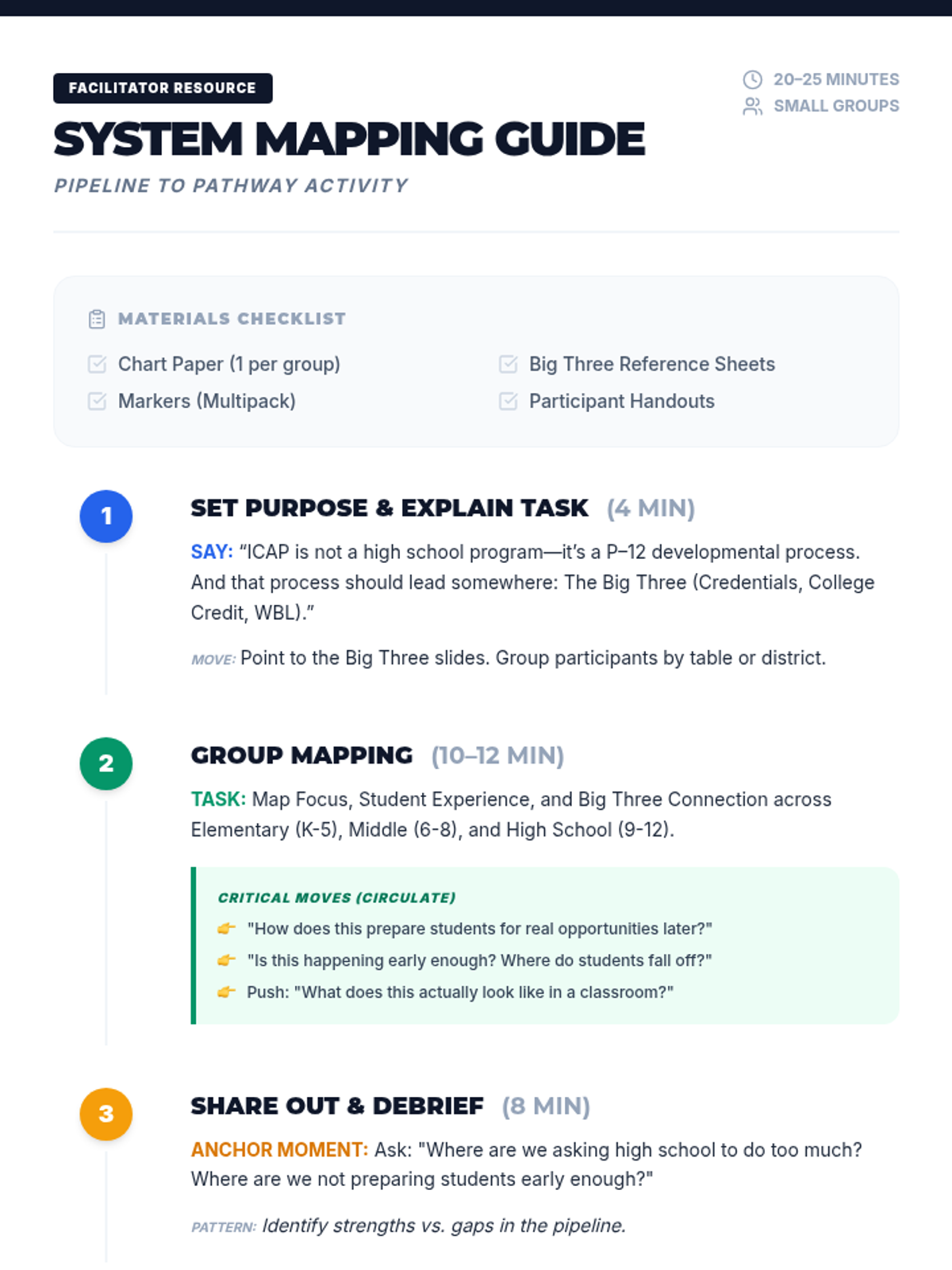
A collaborative workshop session where educators map out the developmental stages of a student's journey from elementary awareness to high school application and outcome access.
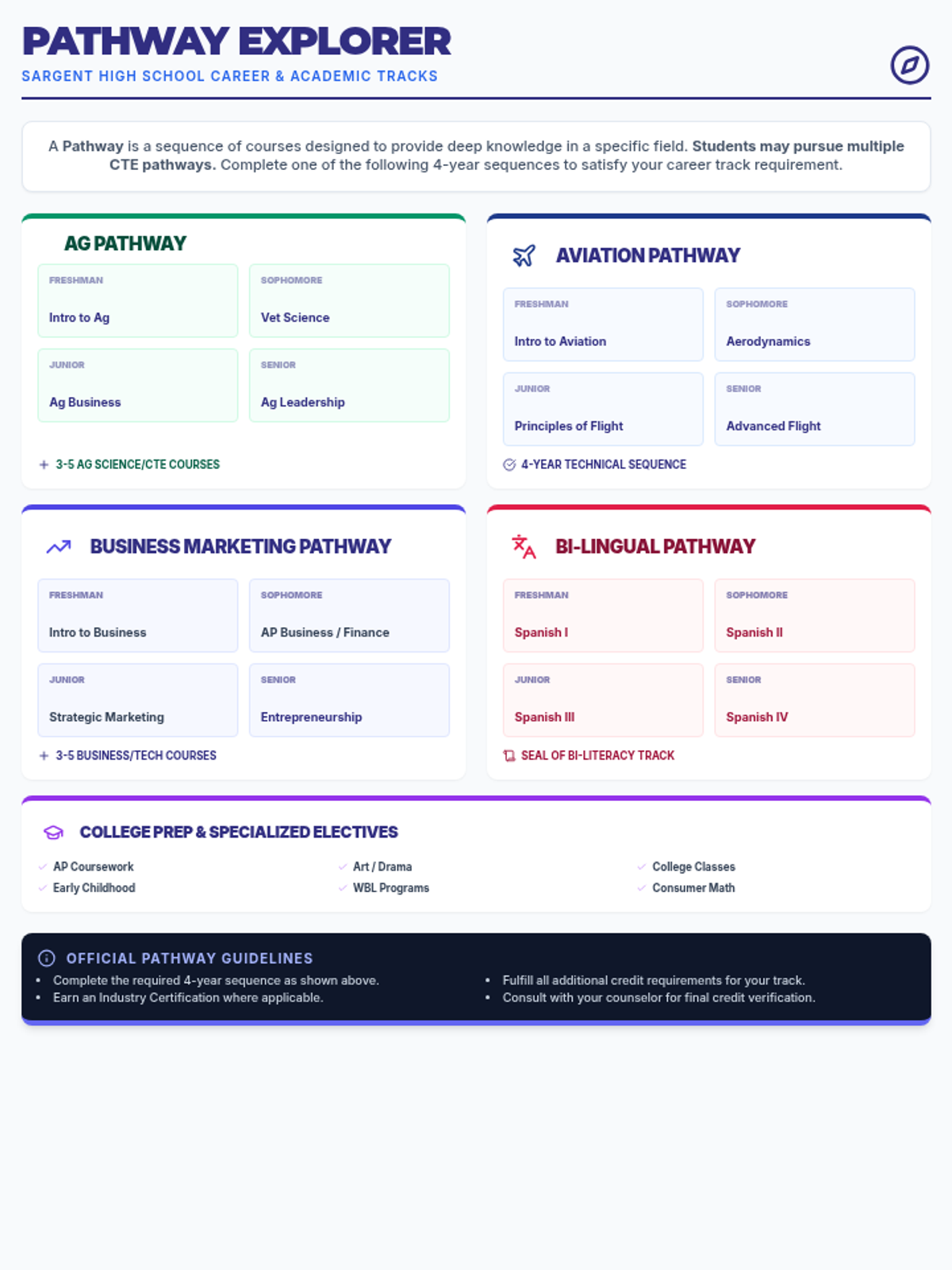
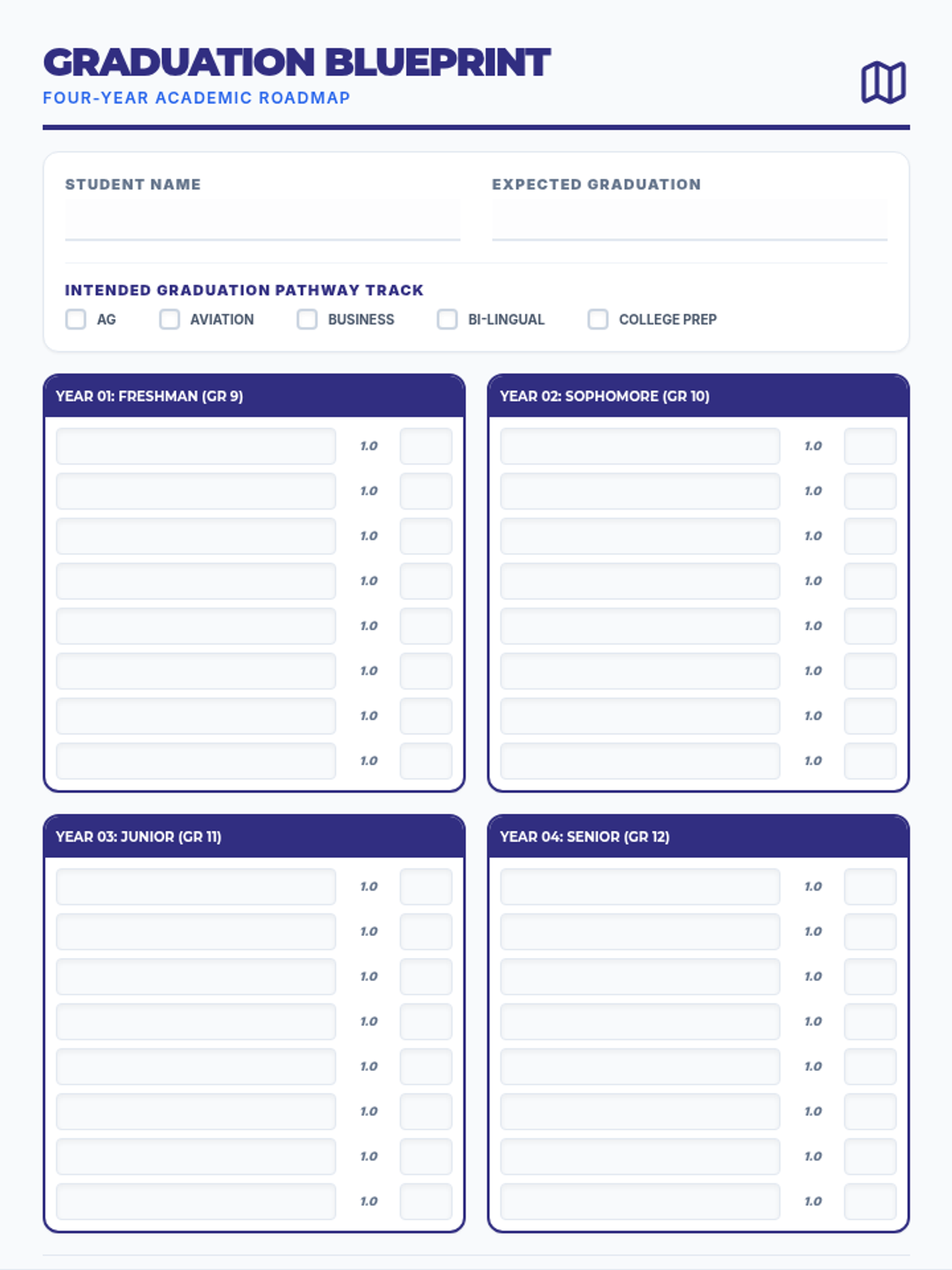
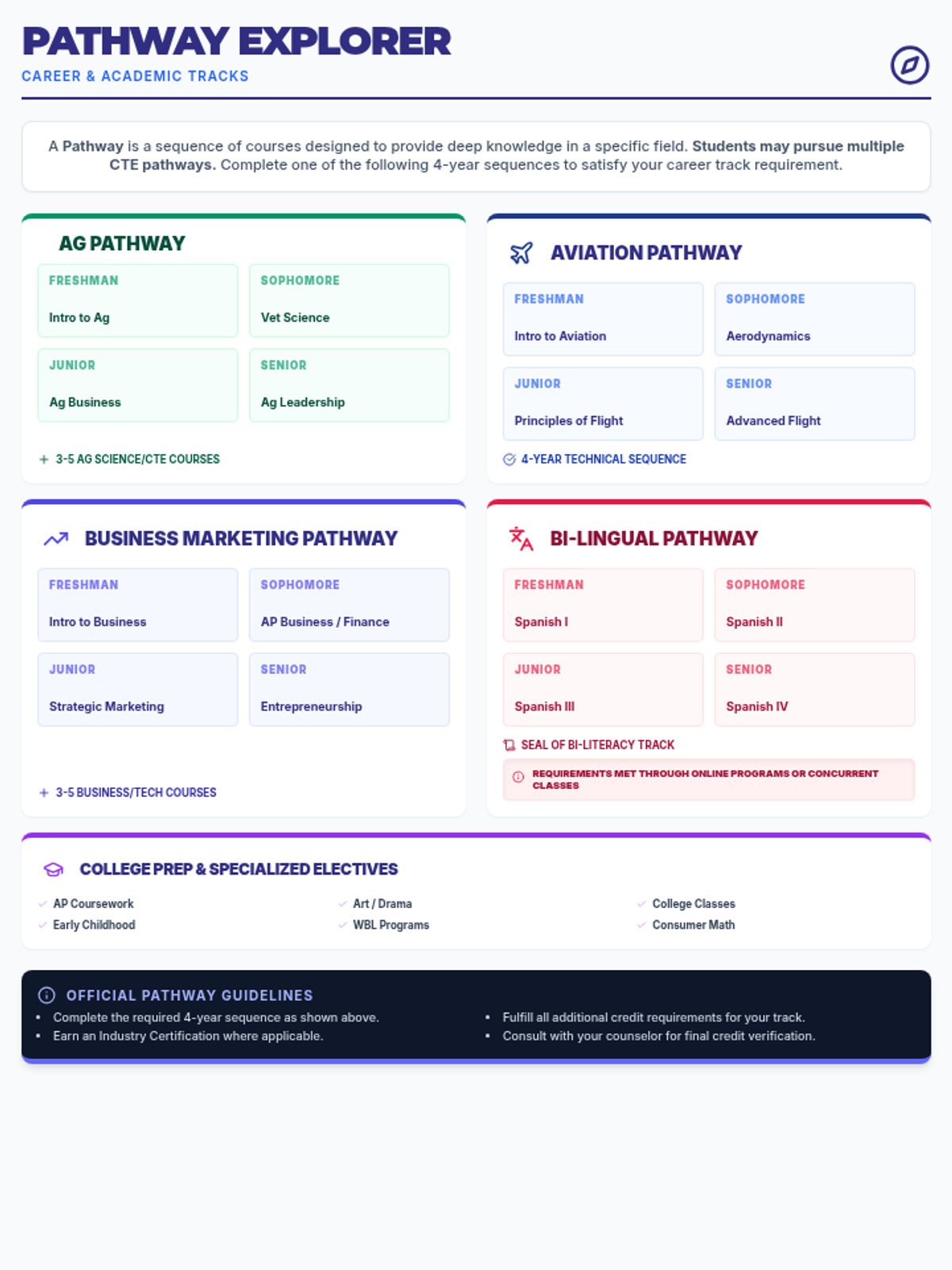
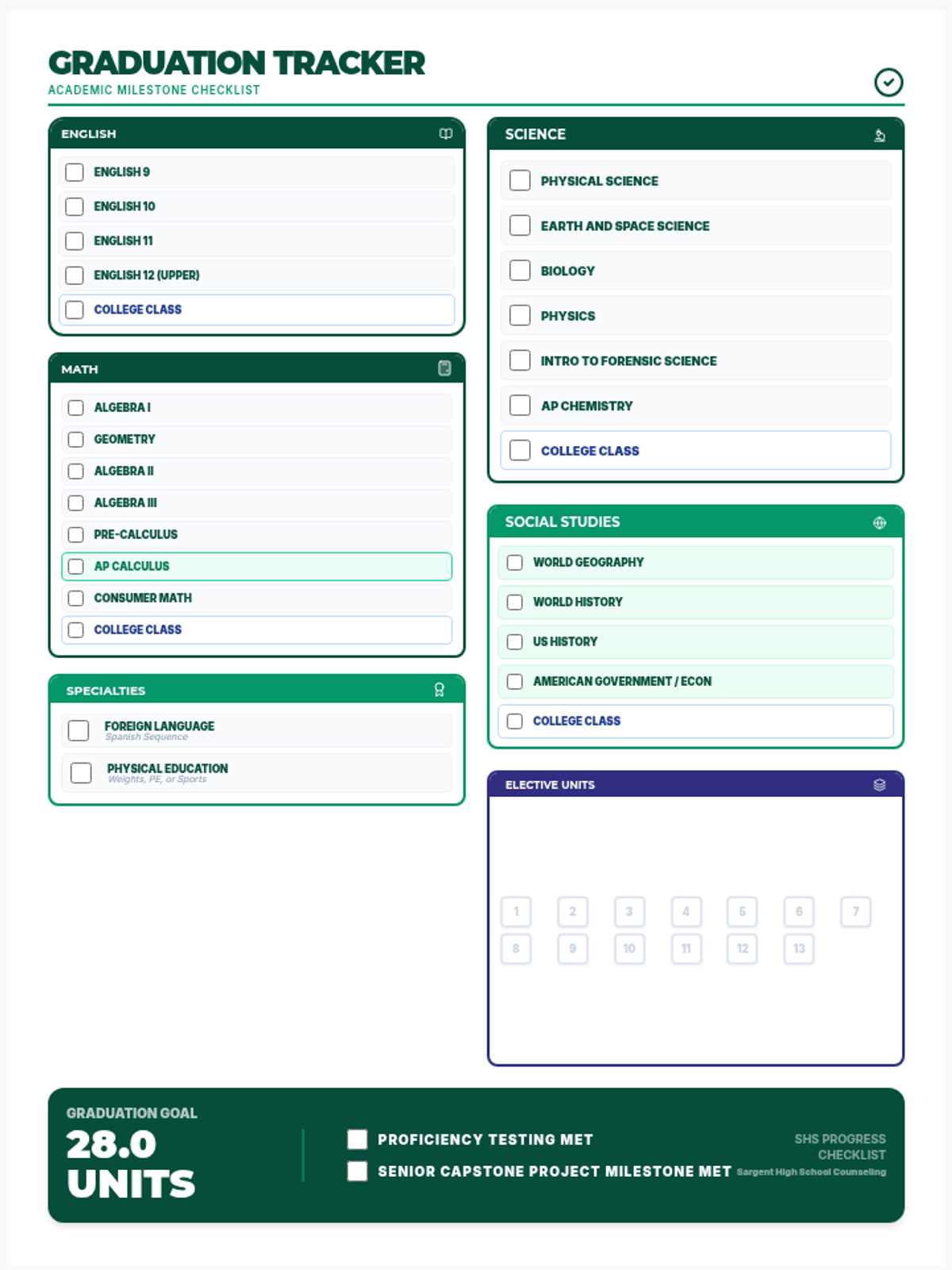
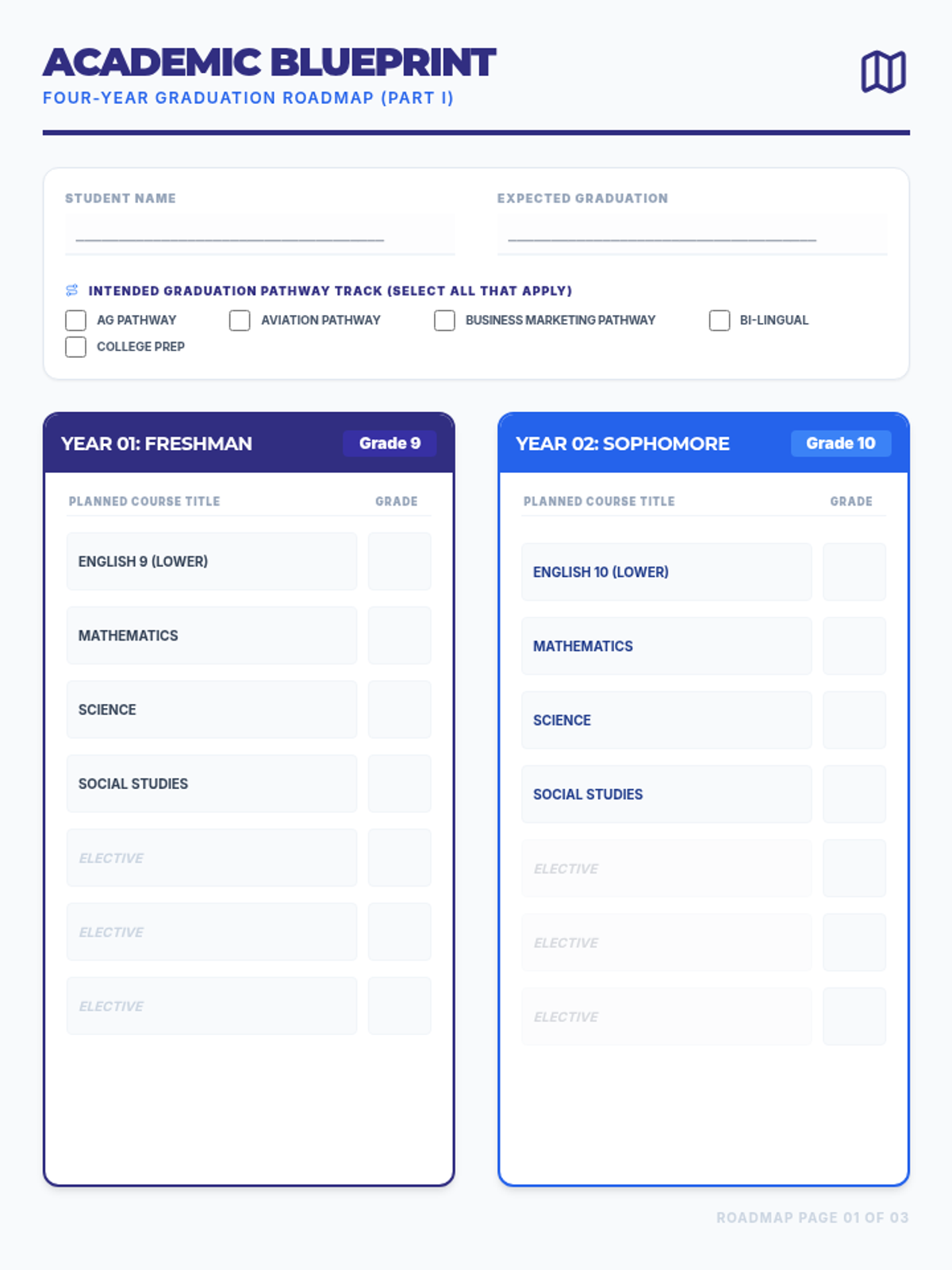
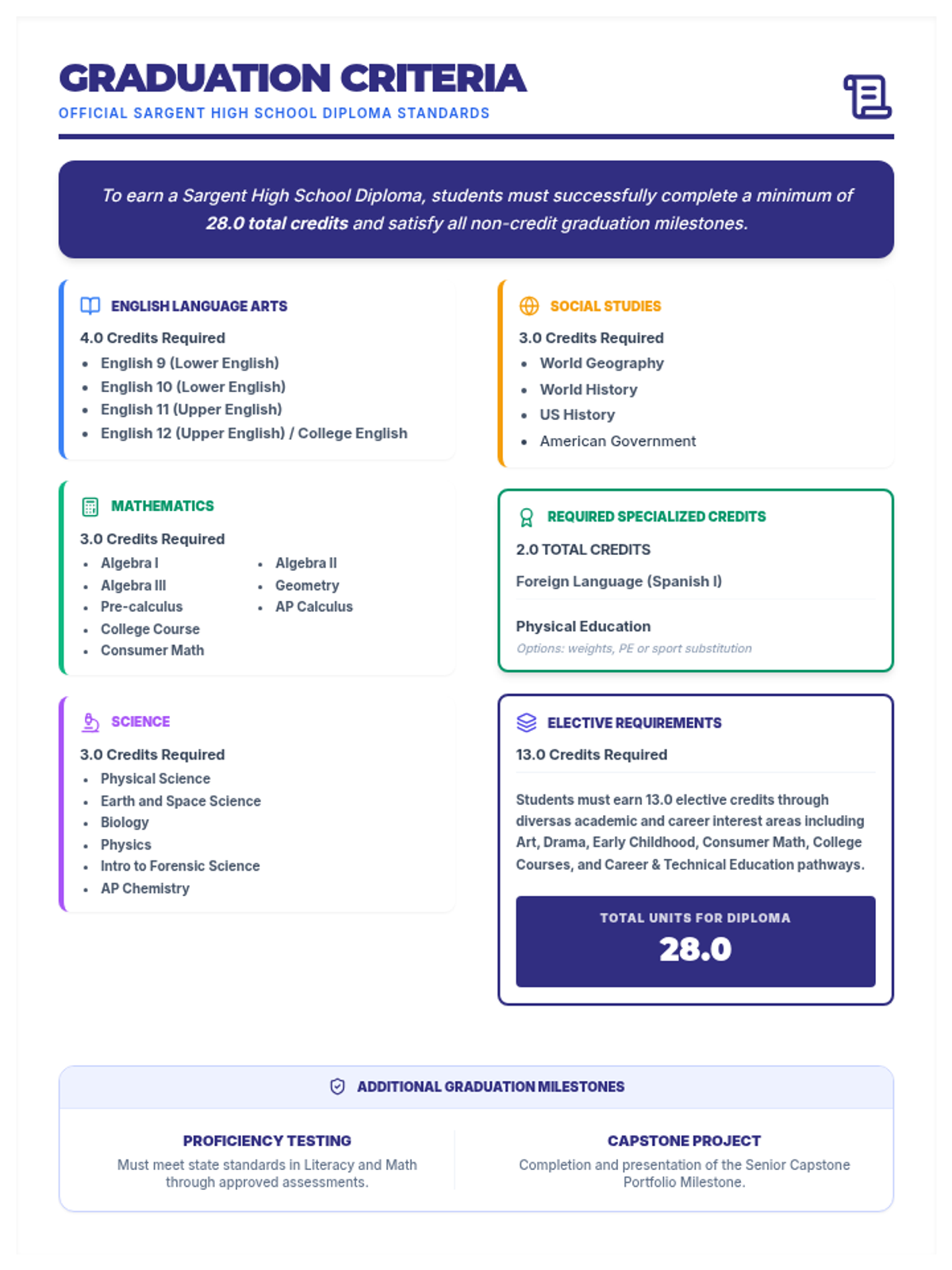
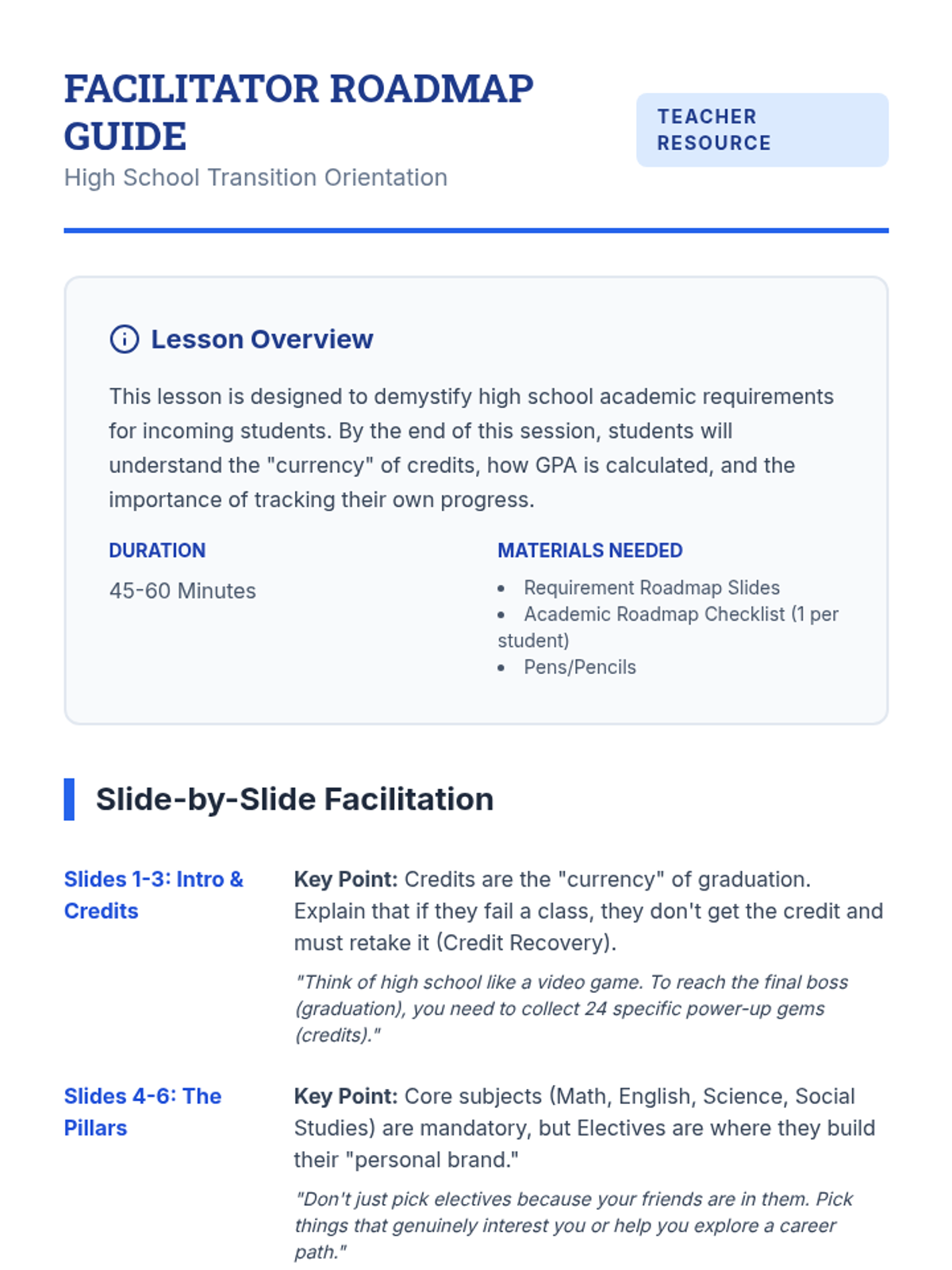
A comprehensive suite of academic planning tools designed for high school students to map out their graduation requirements and future career paths with their school counselor.
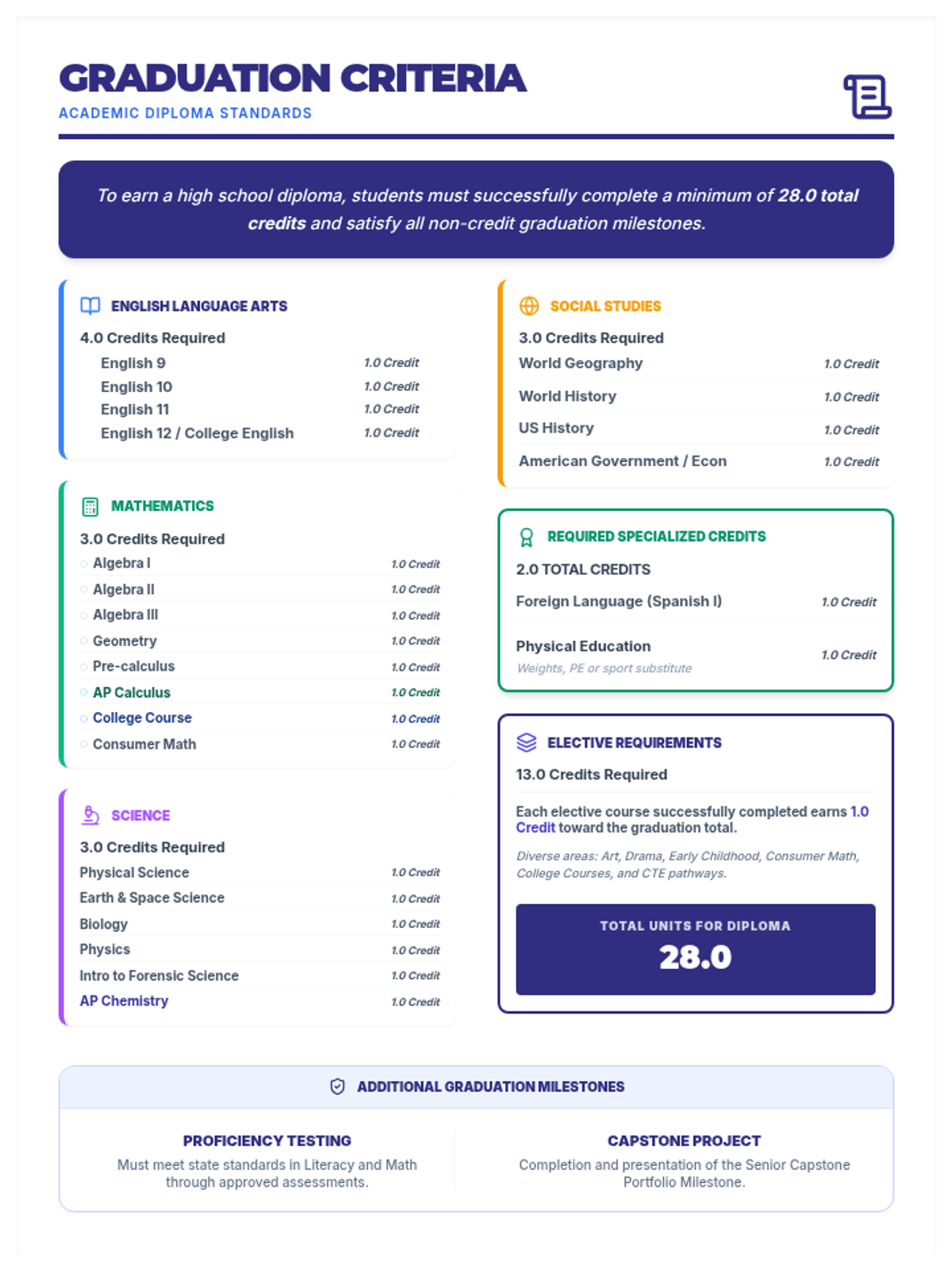
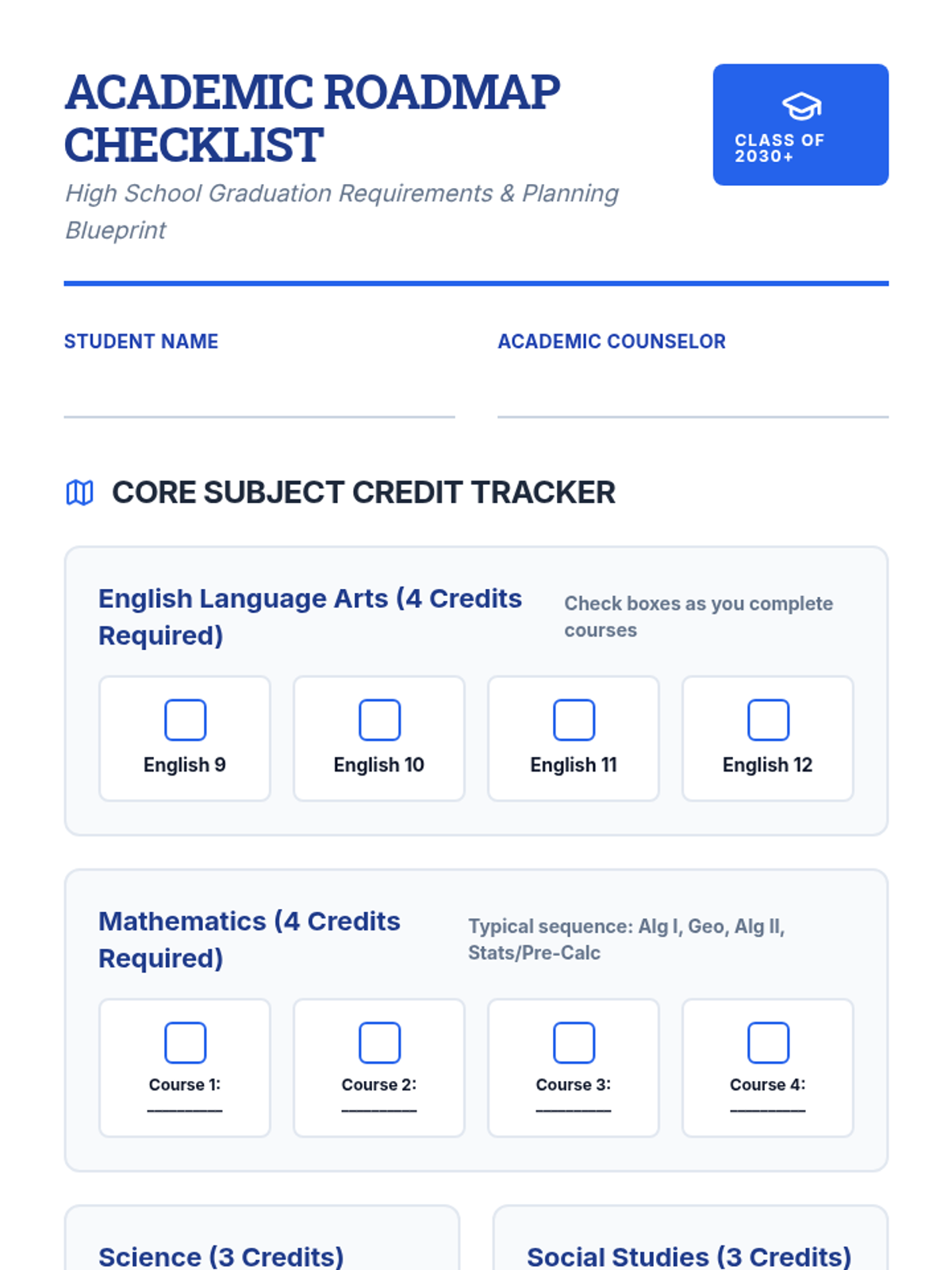
A comprehensive guide to high school graduation requirements and academic planning for transitioning students. Includes a visual presentation and a printable tracking checklist.
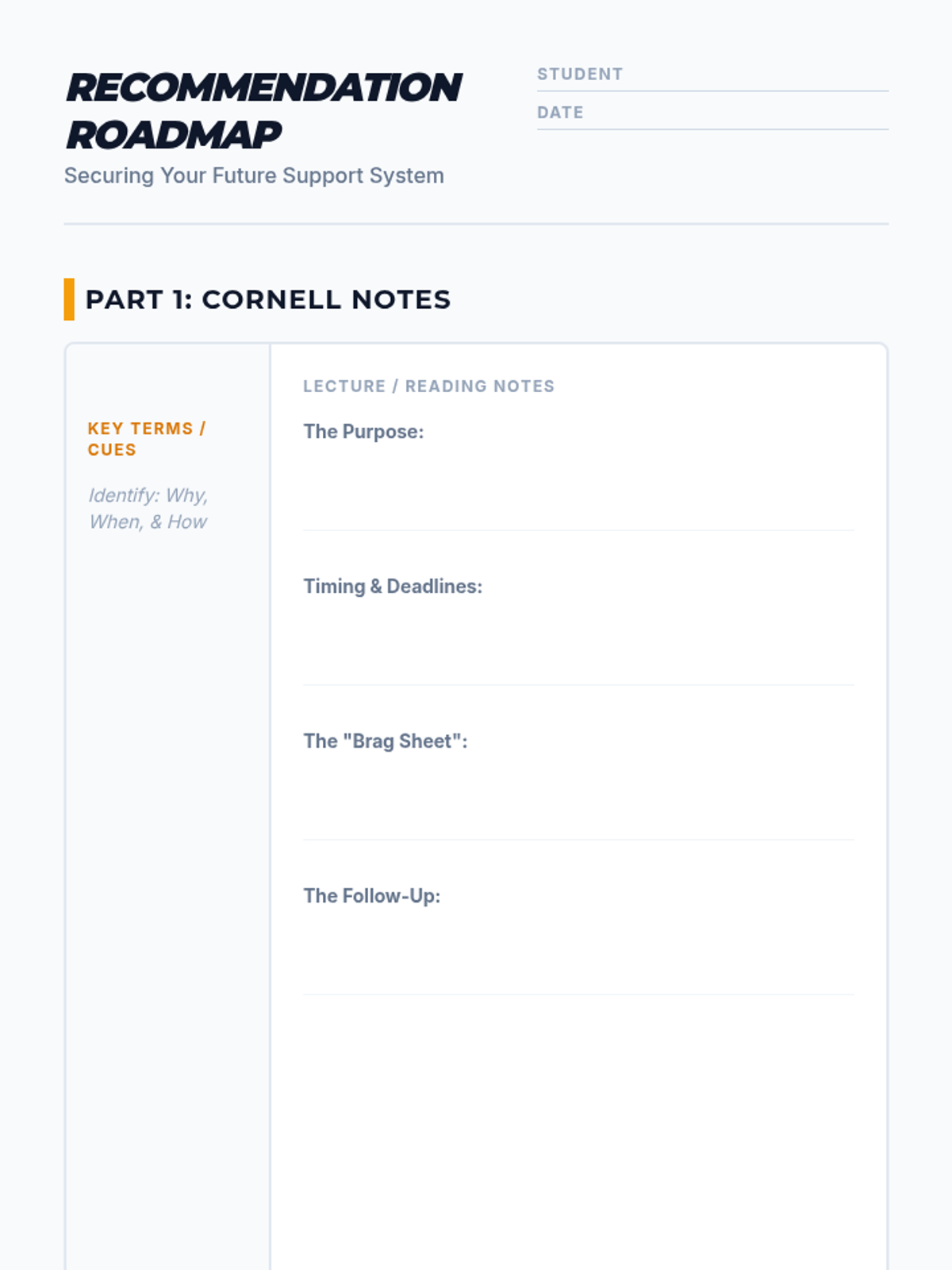
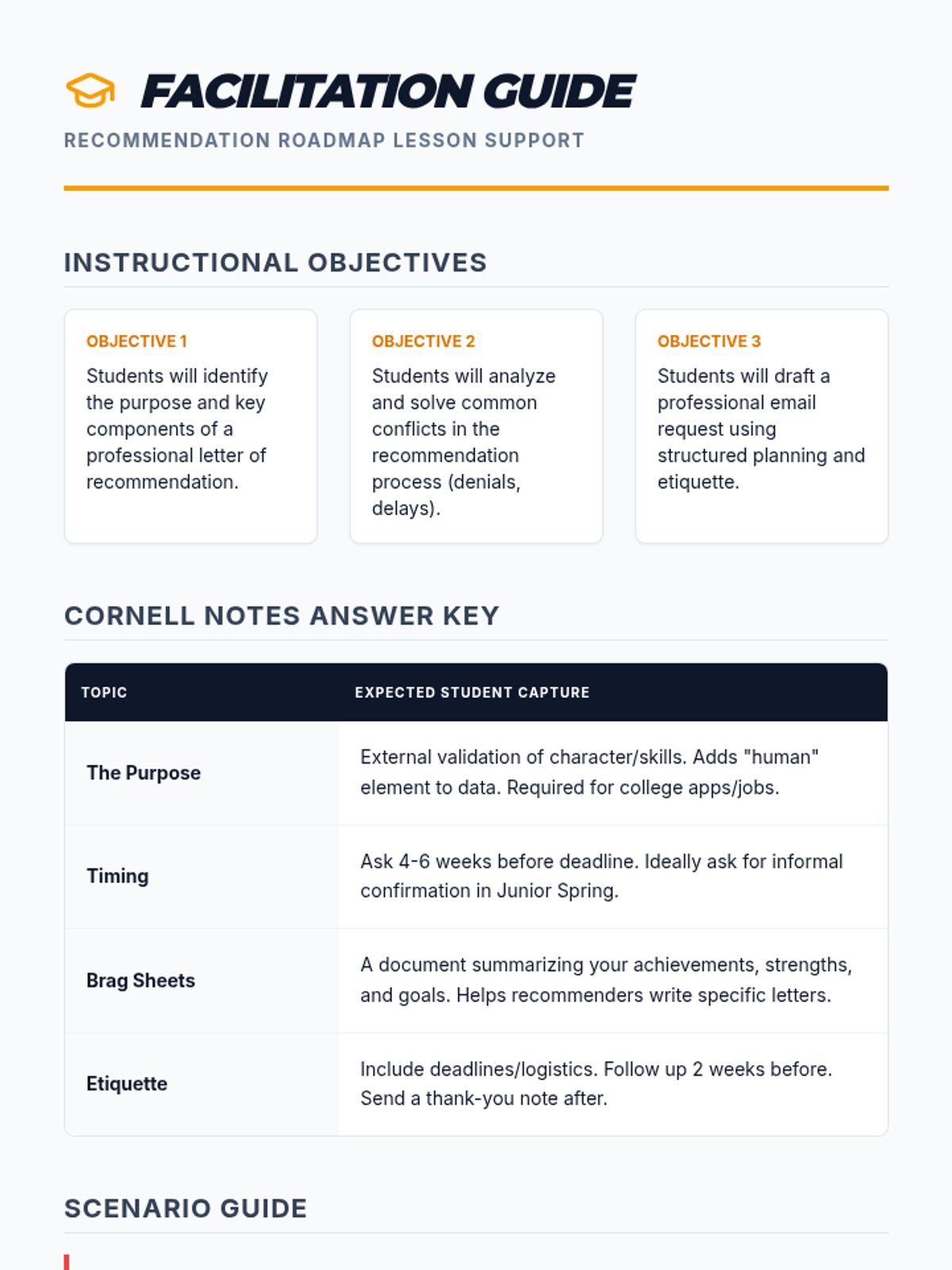
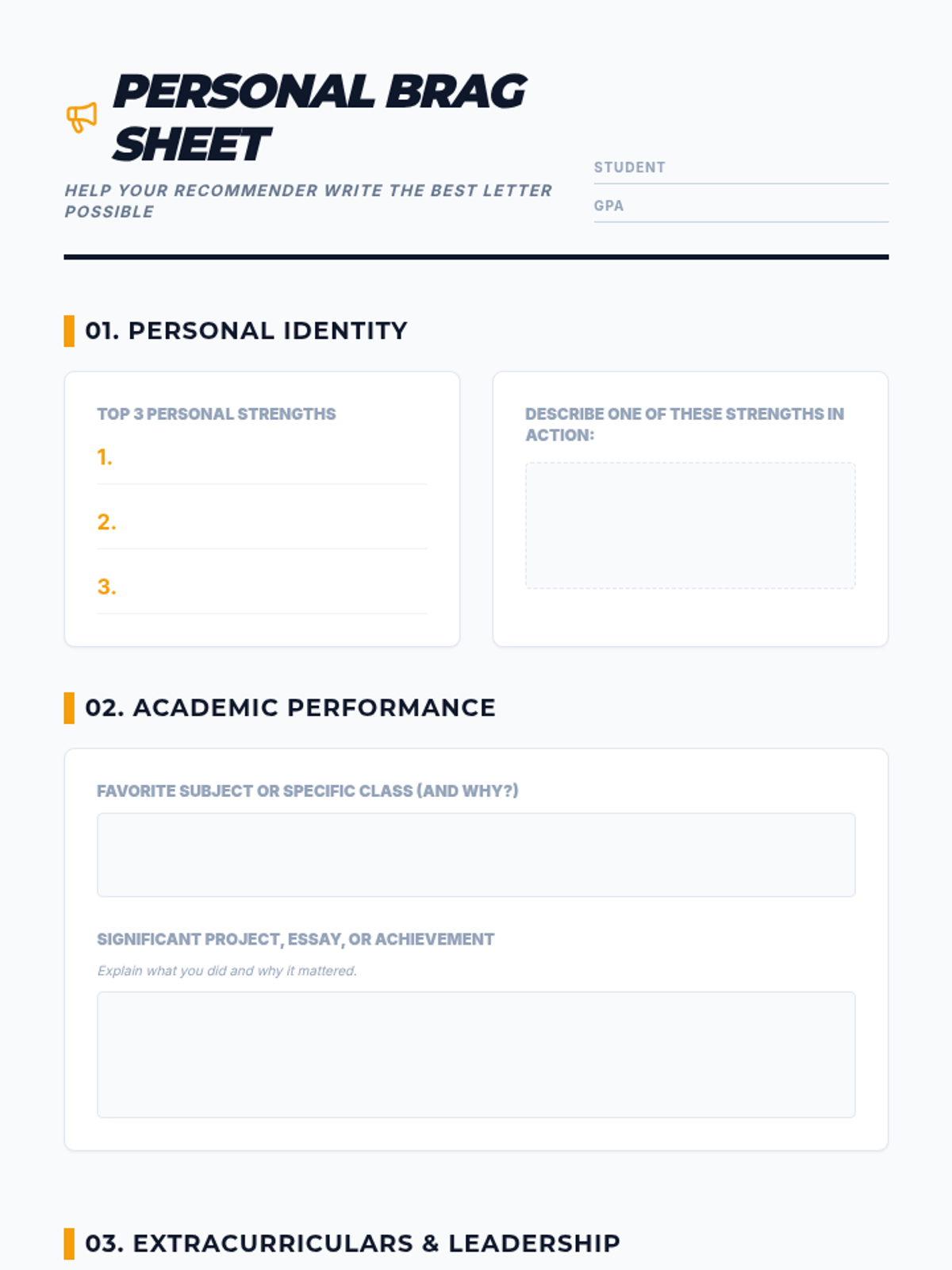
A comprehensive lesson teaching students how to strategically plan, request, and manage letters of recommendation for college and career applications.
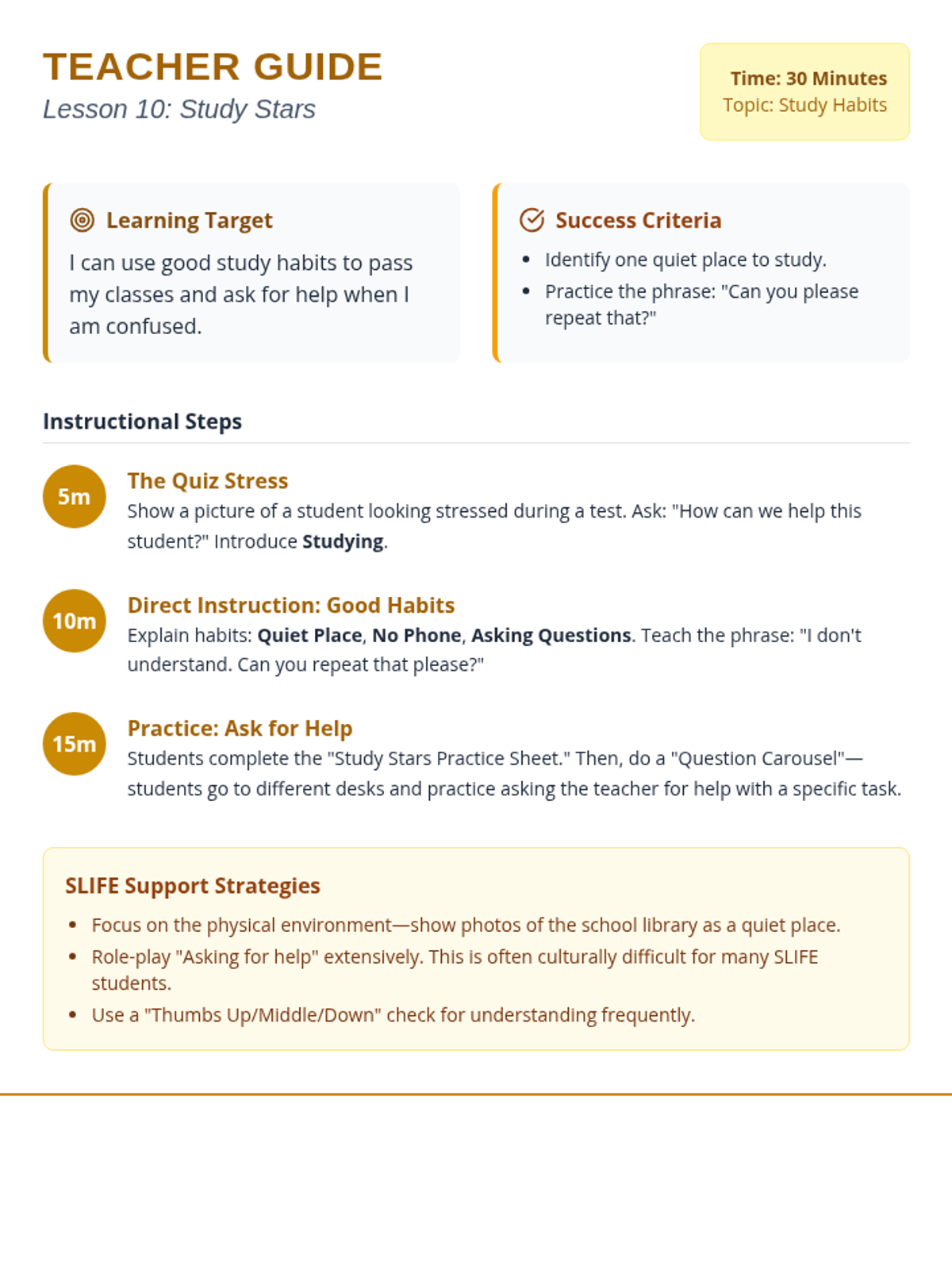
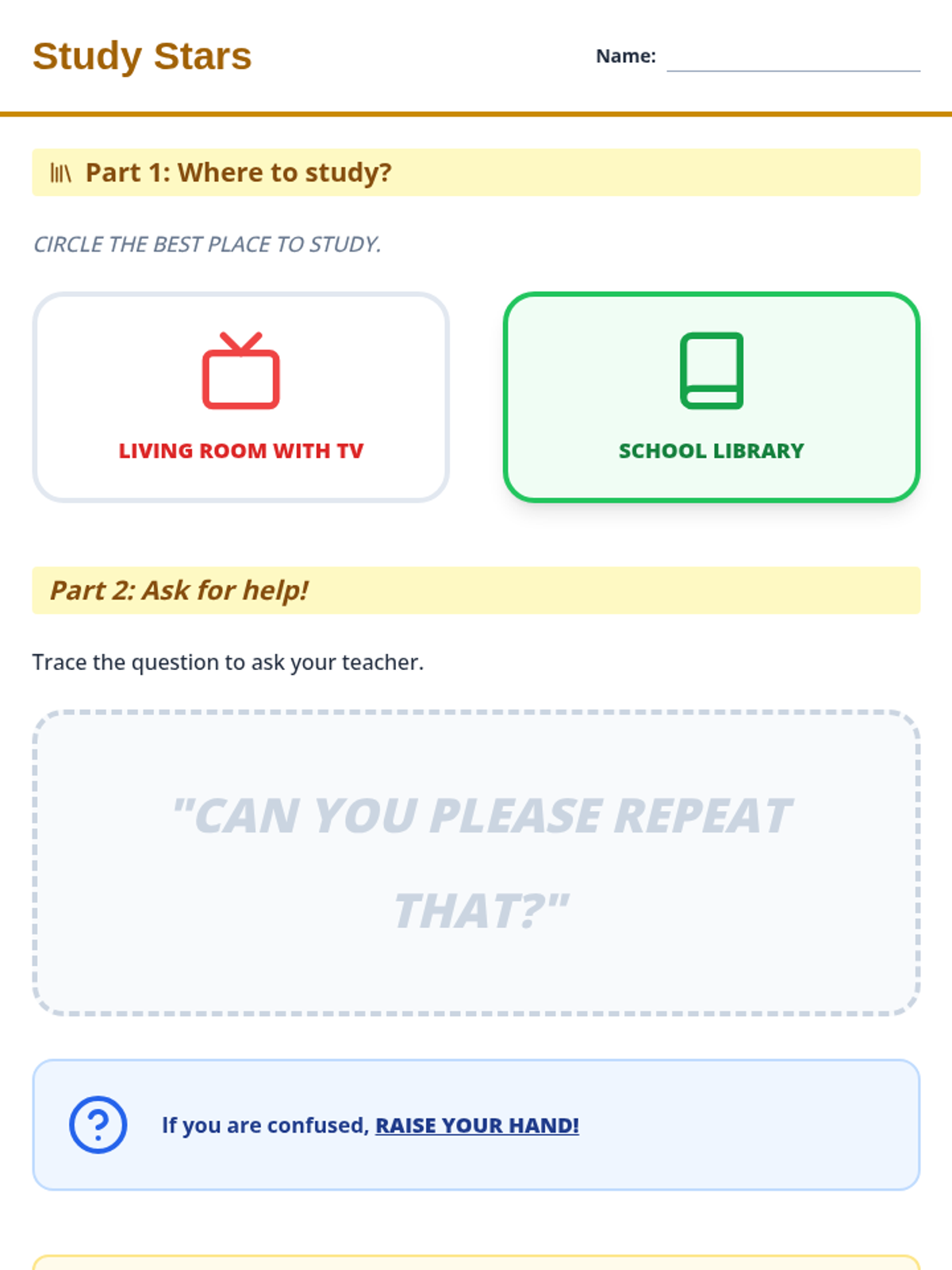
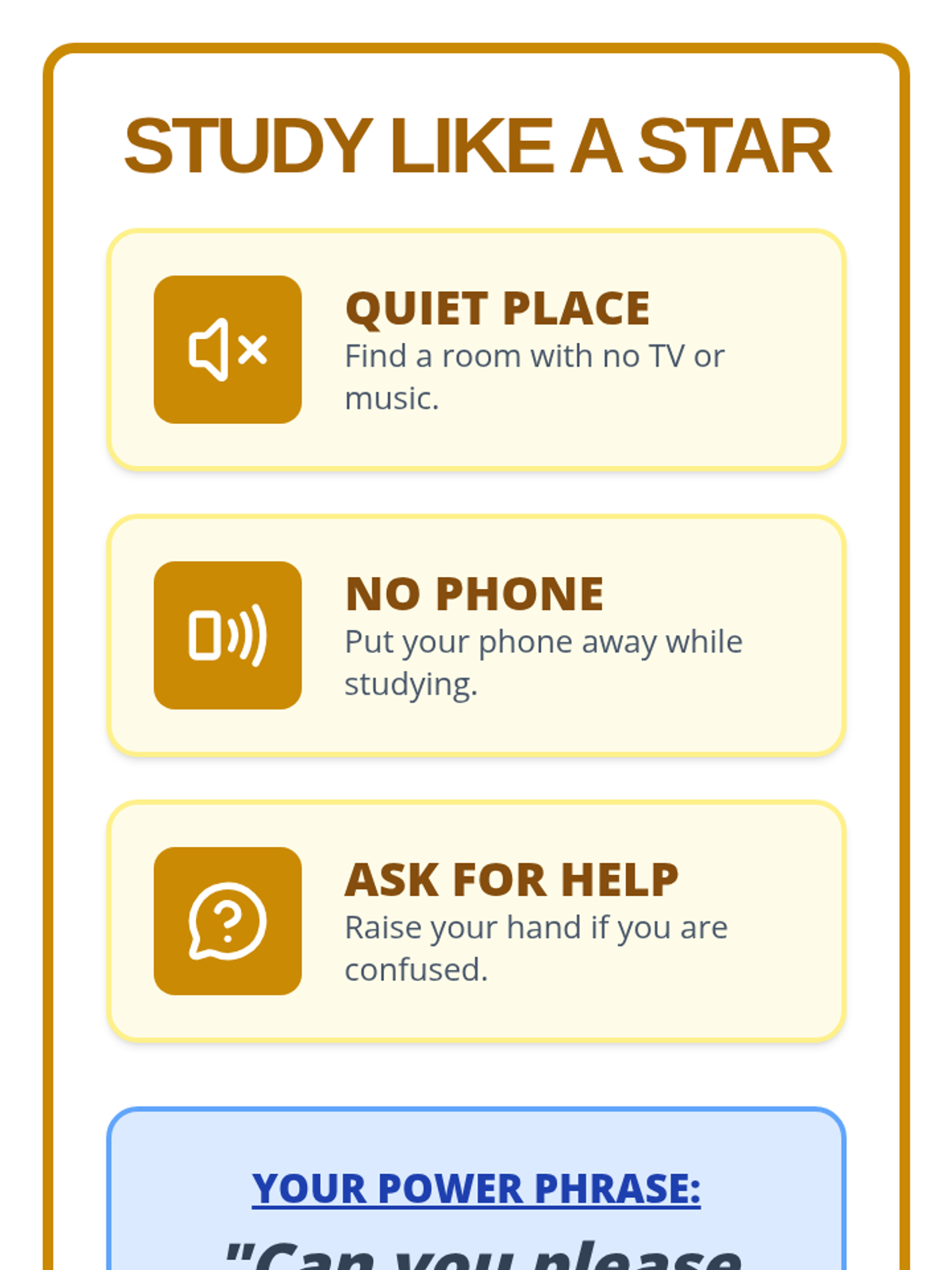
Essential study habits, organizational skills, and phrases for asking for clarification.
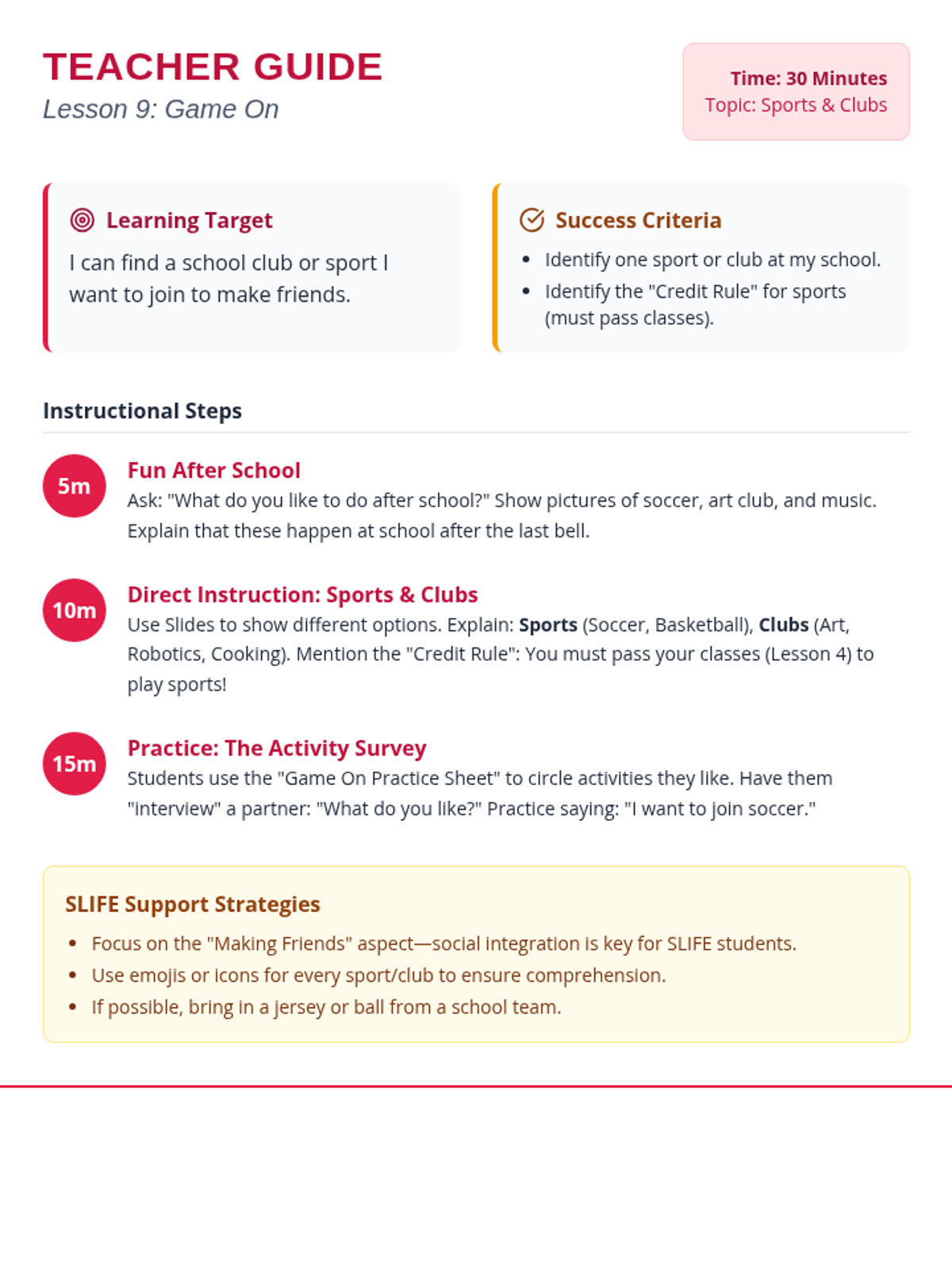
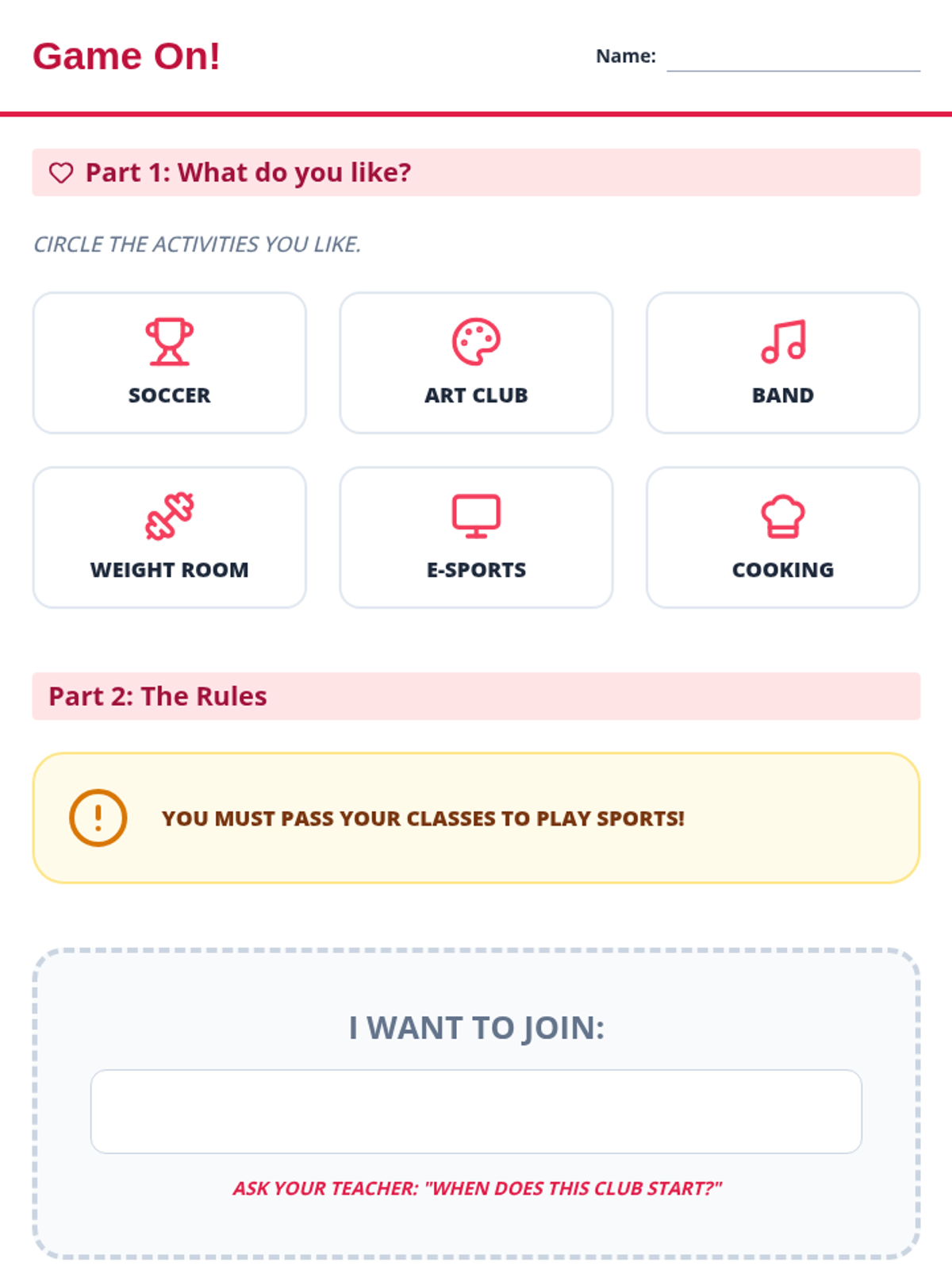
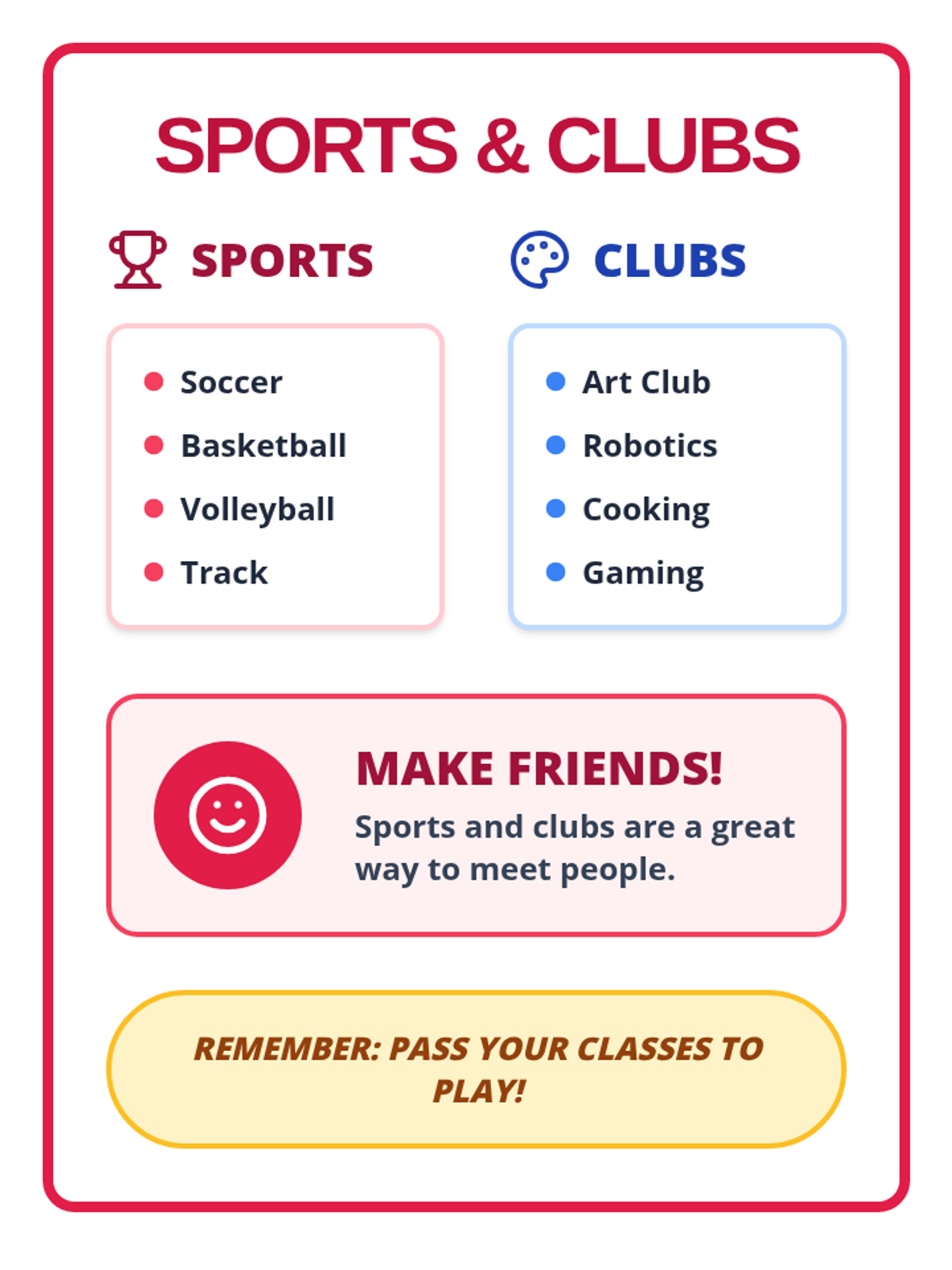
Exploring sports, clubs, and extracurricular activities to build community.
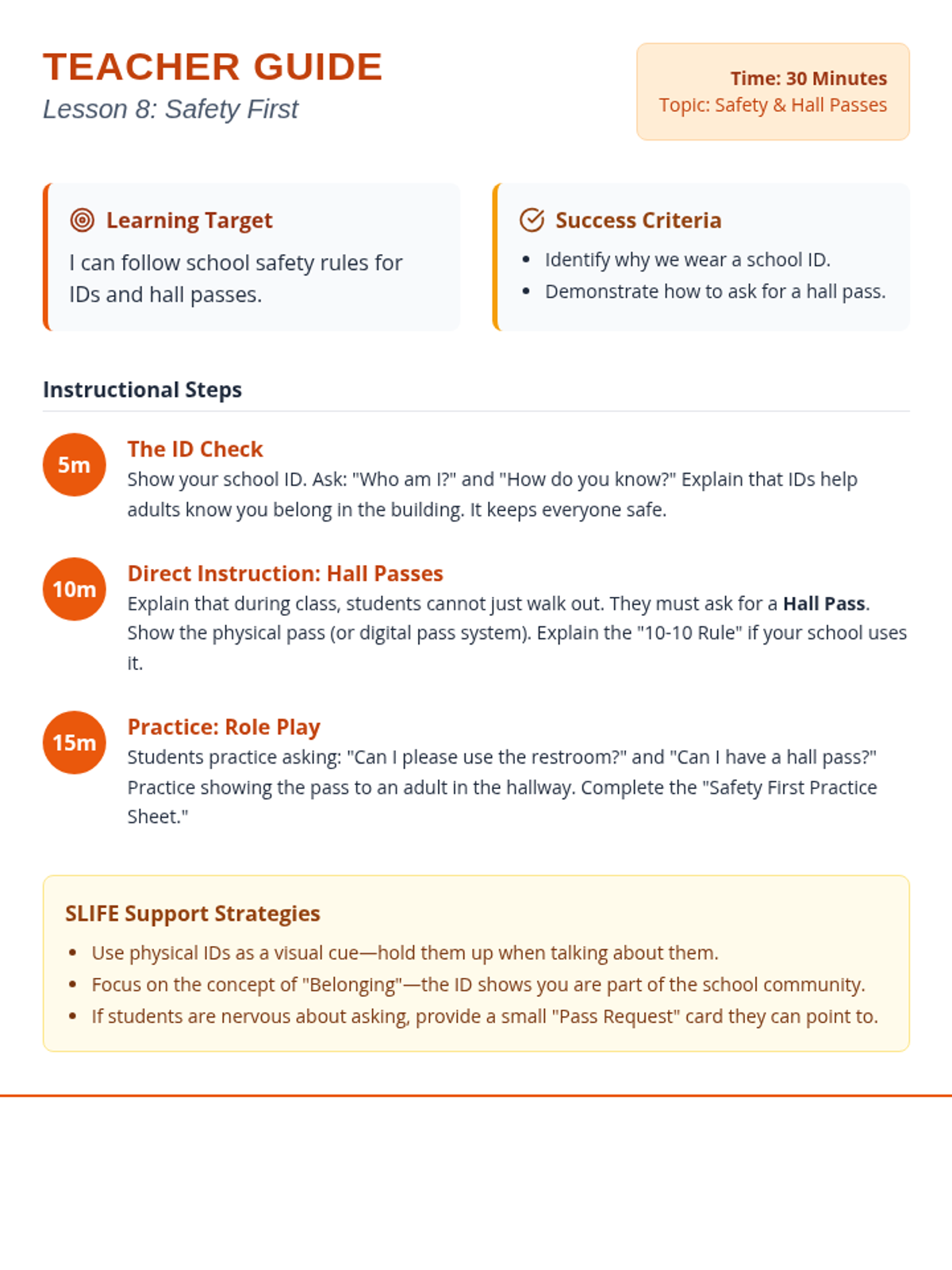
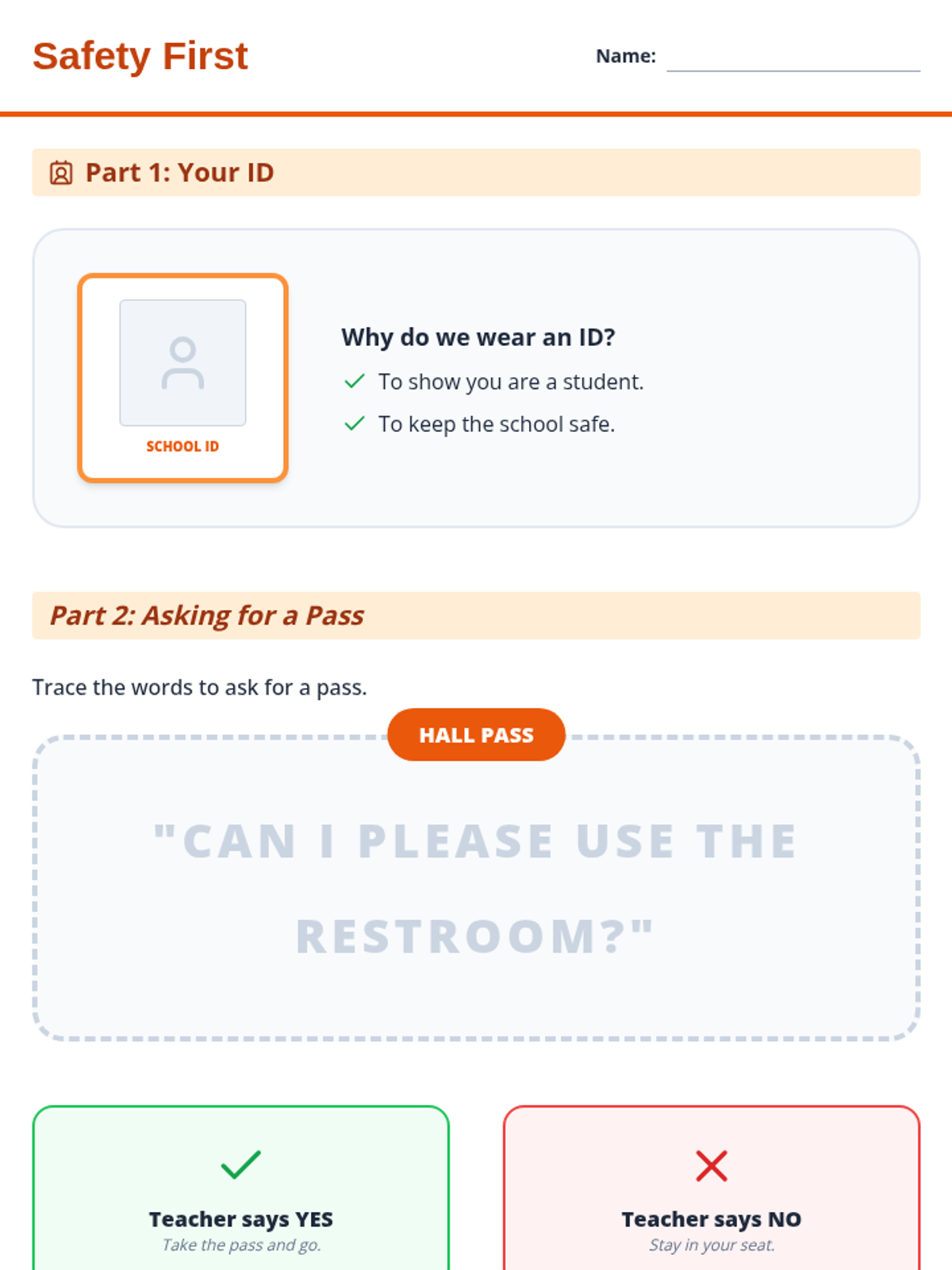
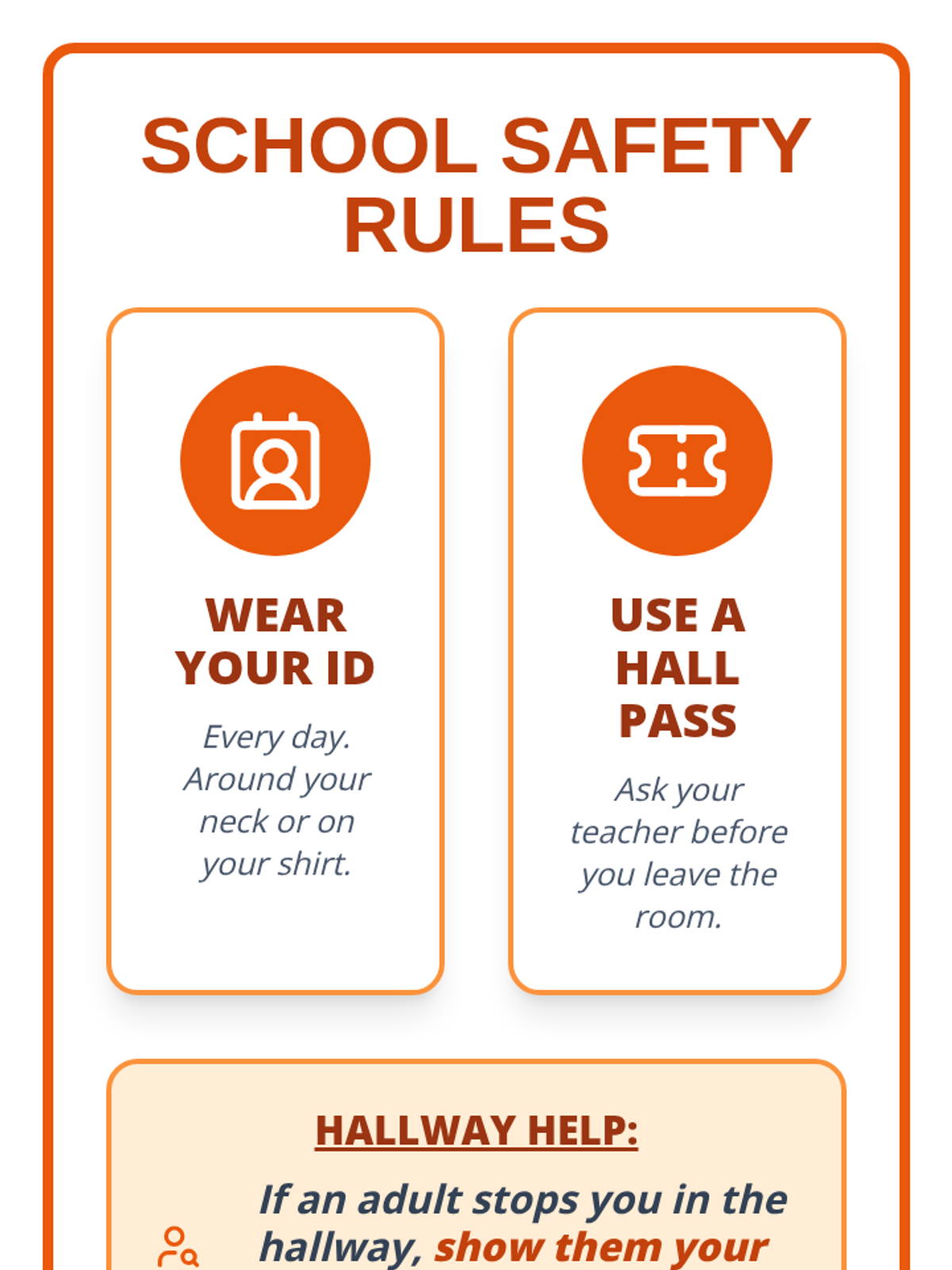
Understanding school safety protocols, ID requirements, and hall pass procedures.
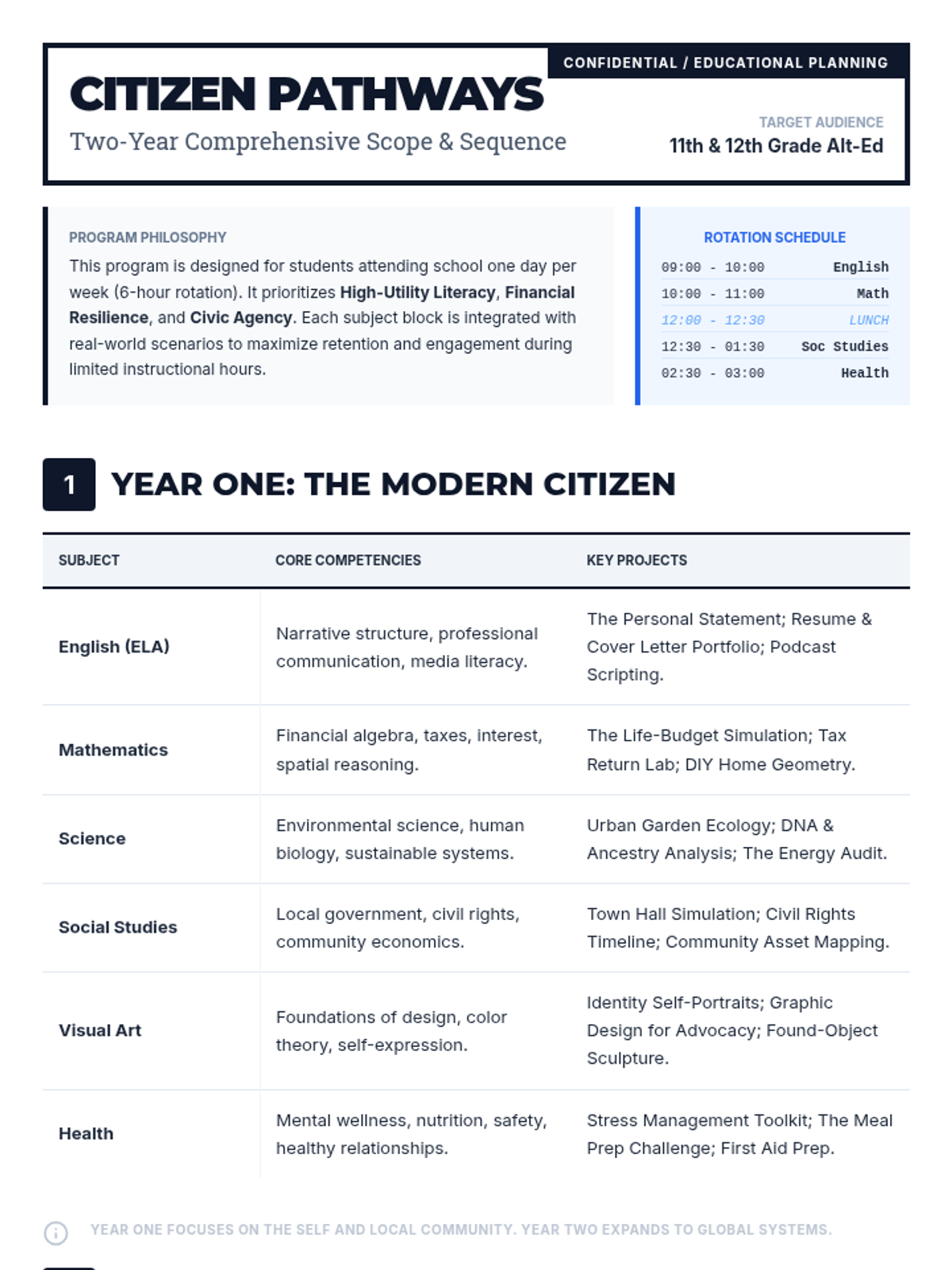
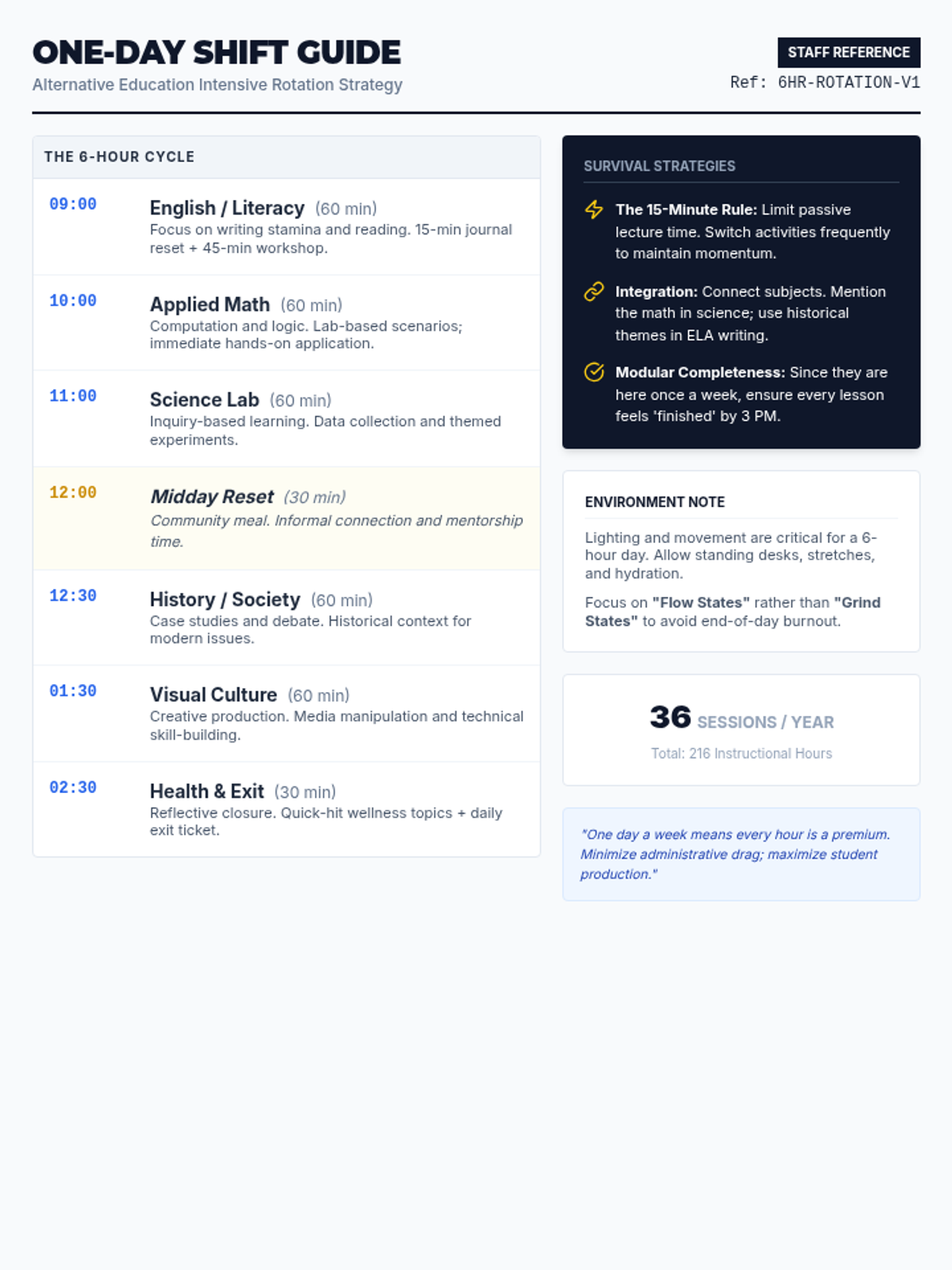
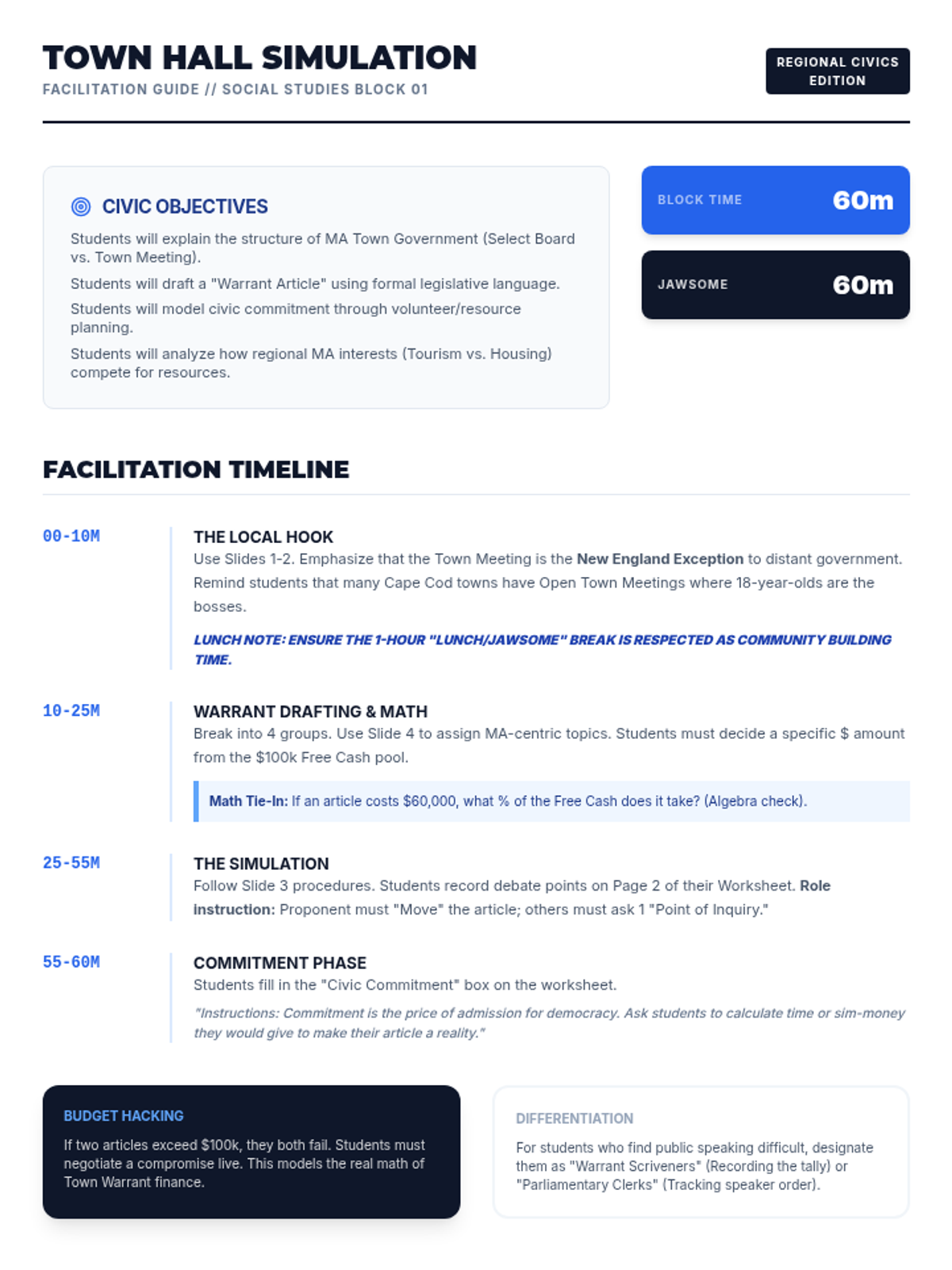
The first year of the program focuses on establishing the 'Modern Citizen,' emphasizing local community involvement, personal financial management, and foundational health and expression.
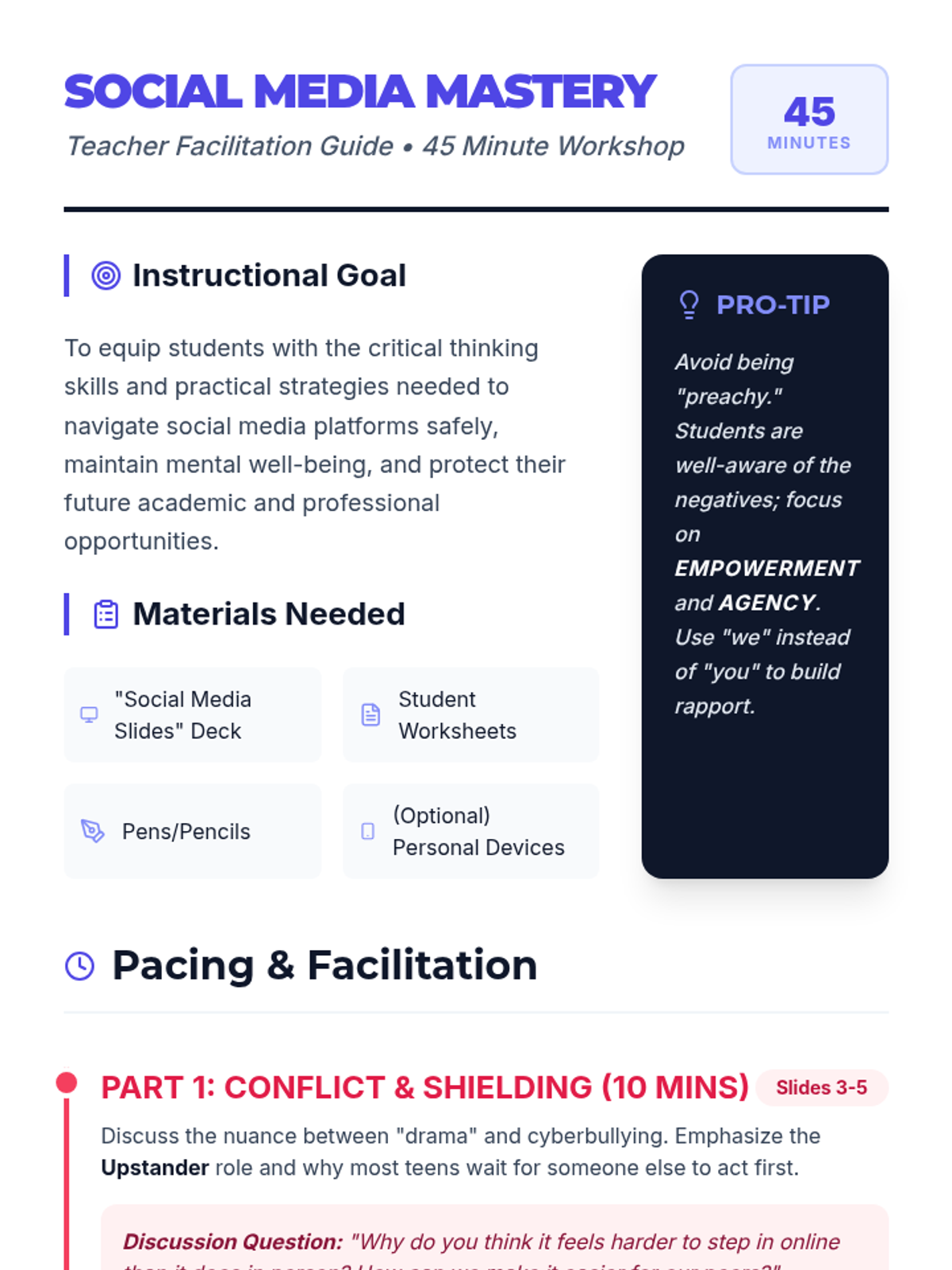
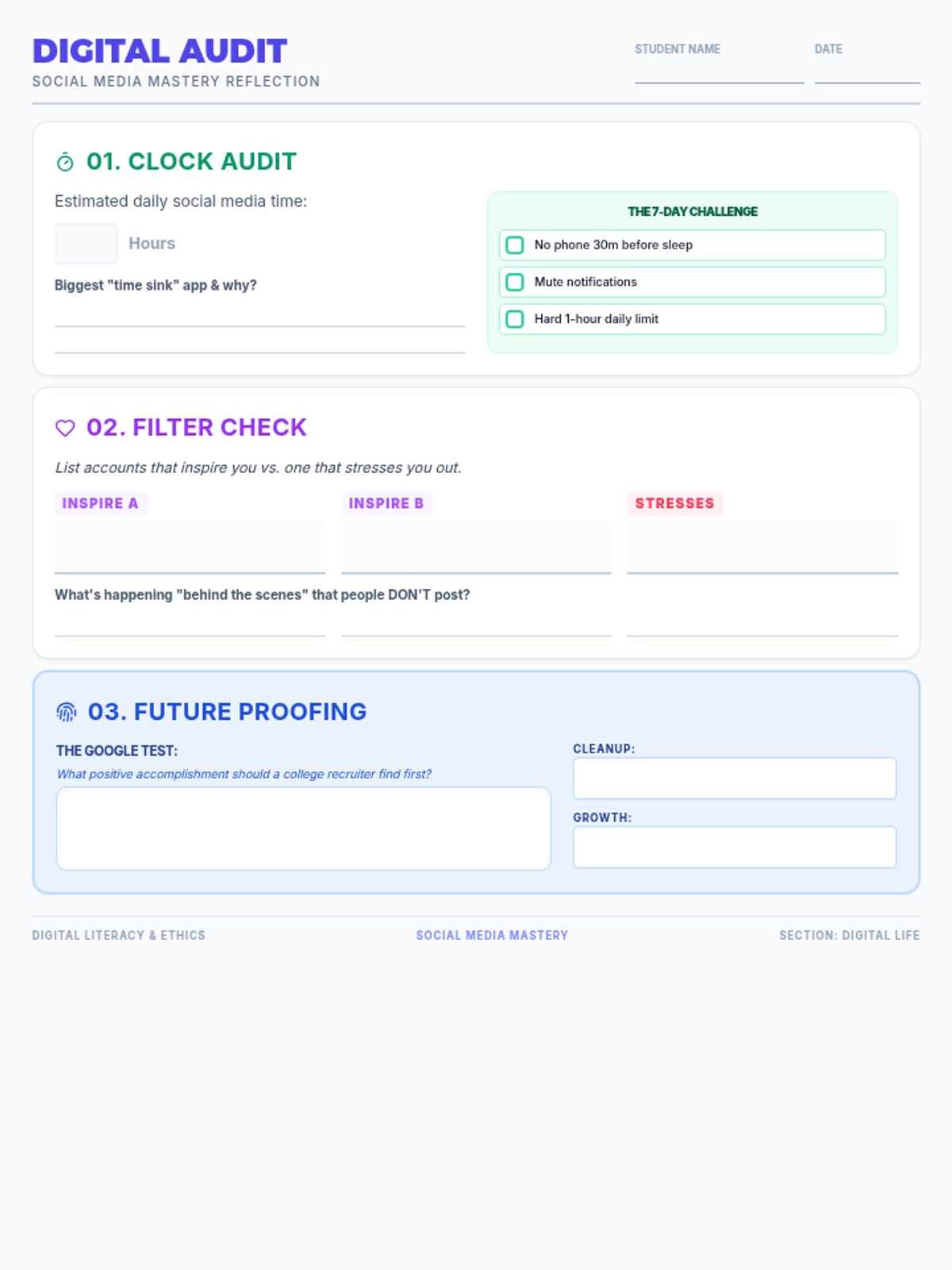
A comprehensive 45-minute lesson covering the critical pillars of responsible social media use, including digital citizenship, mental well-being, and future-proofing one's online presence.
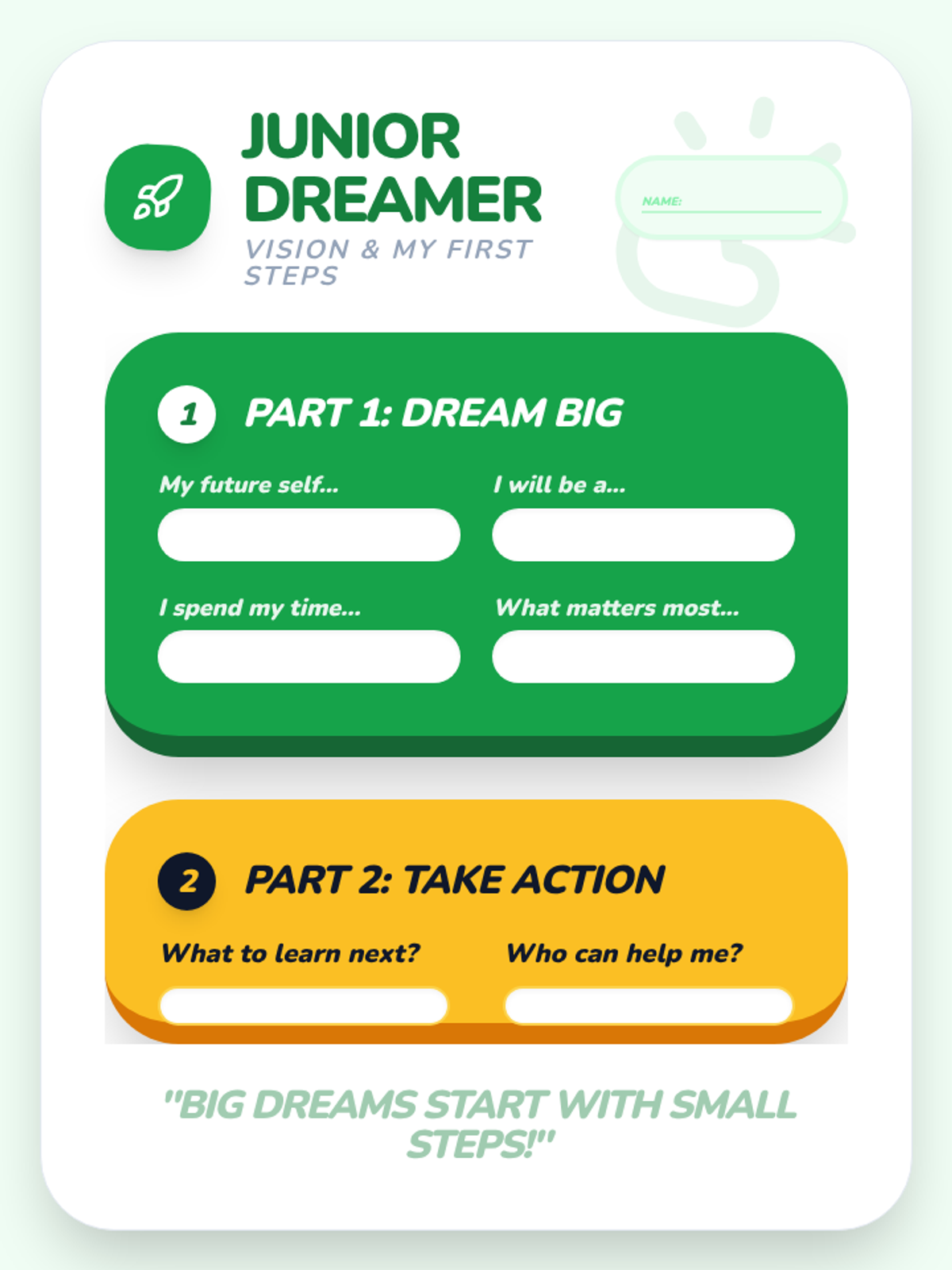
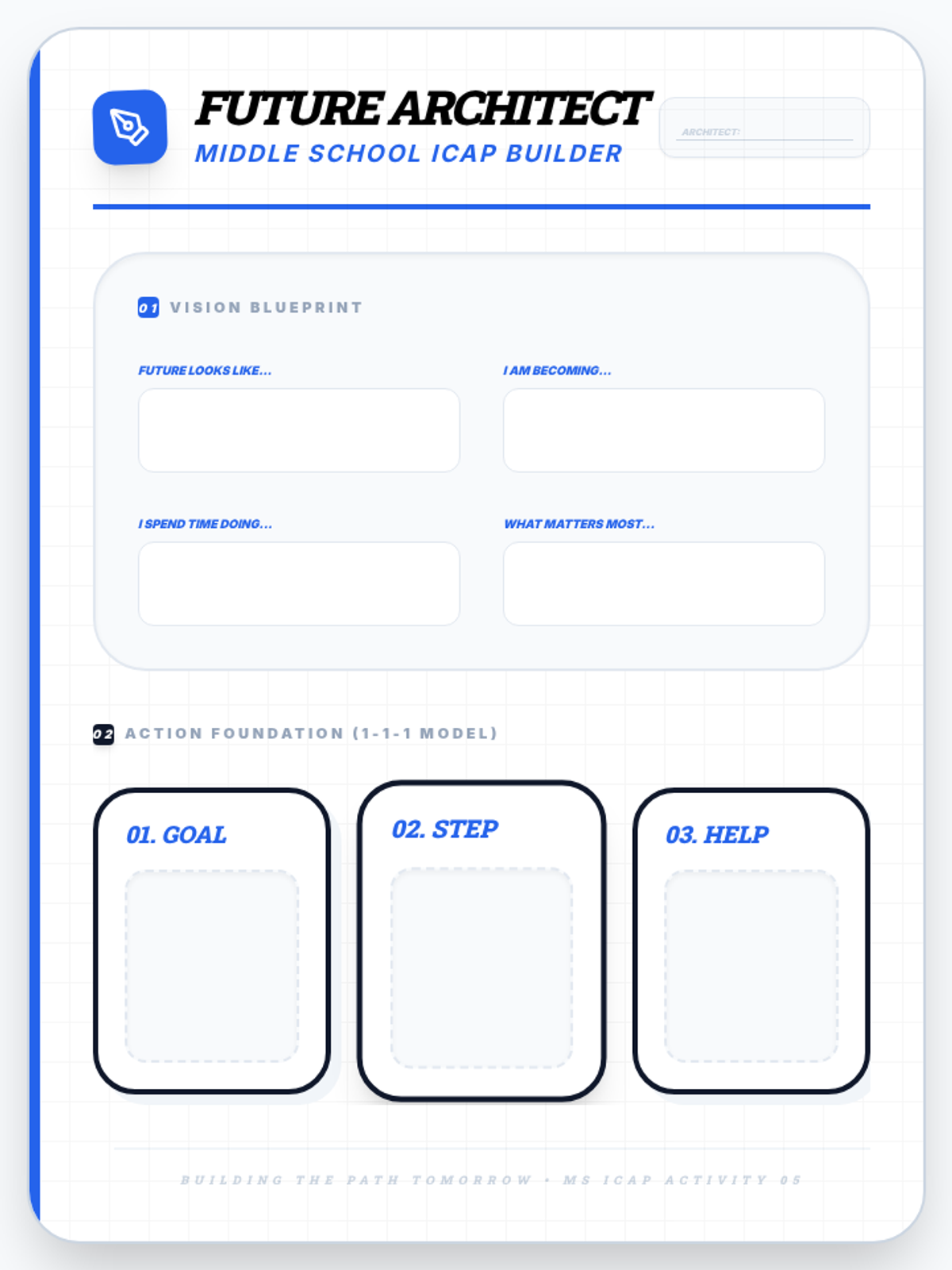
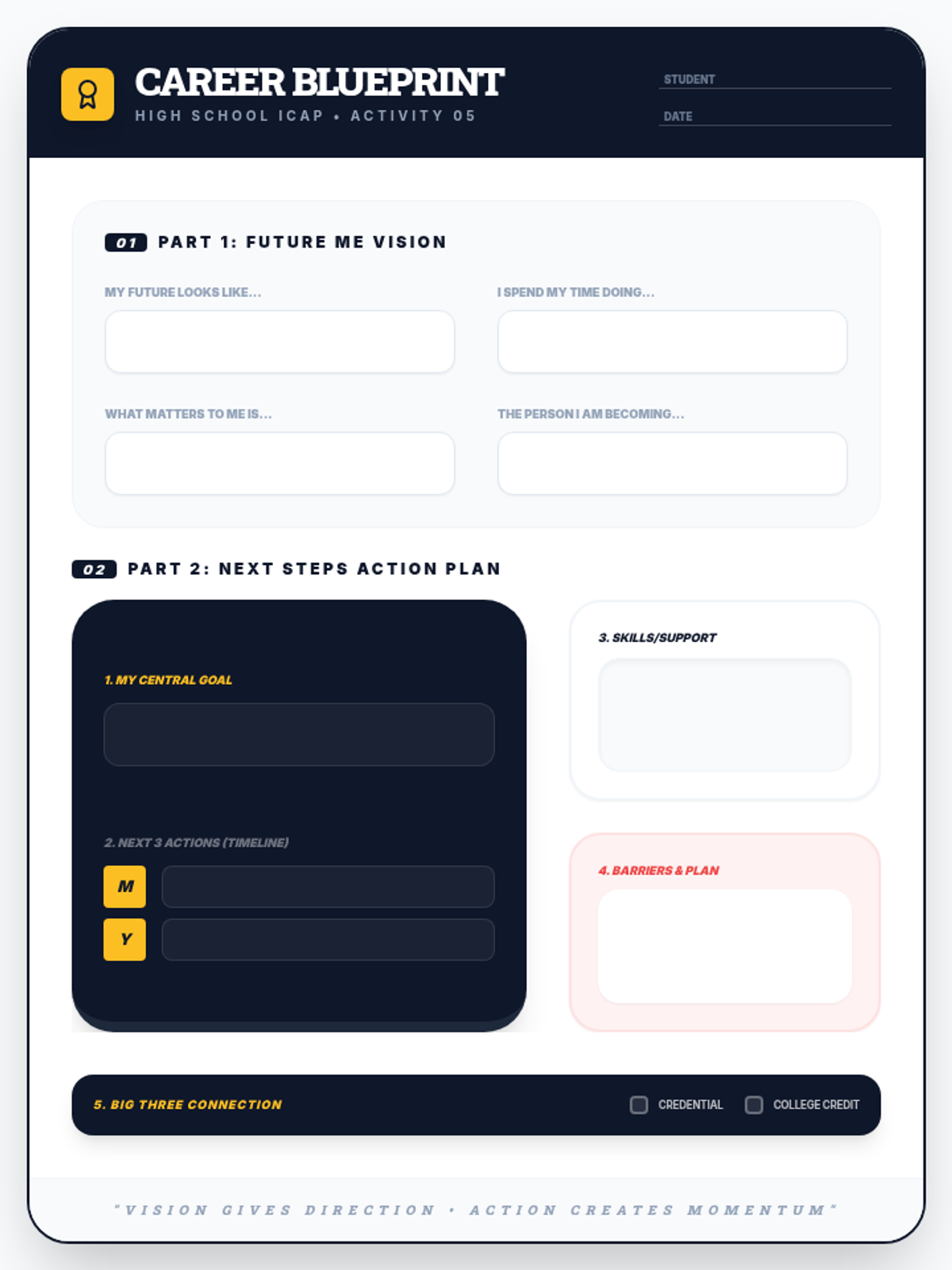
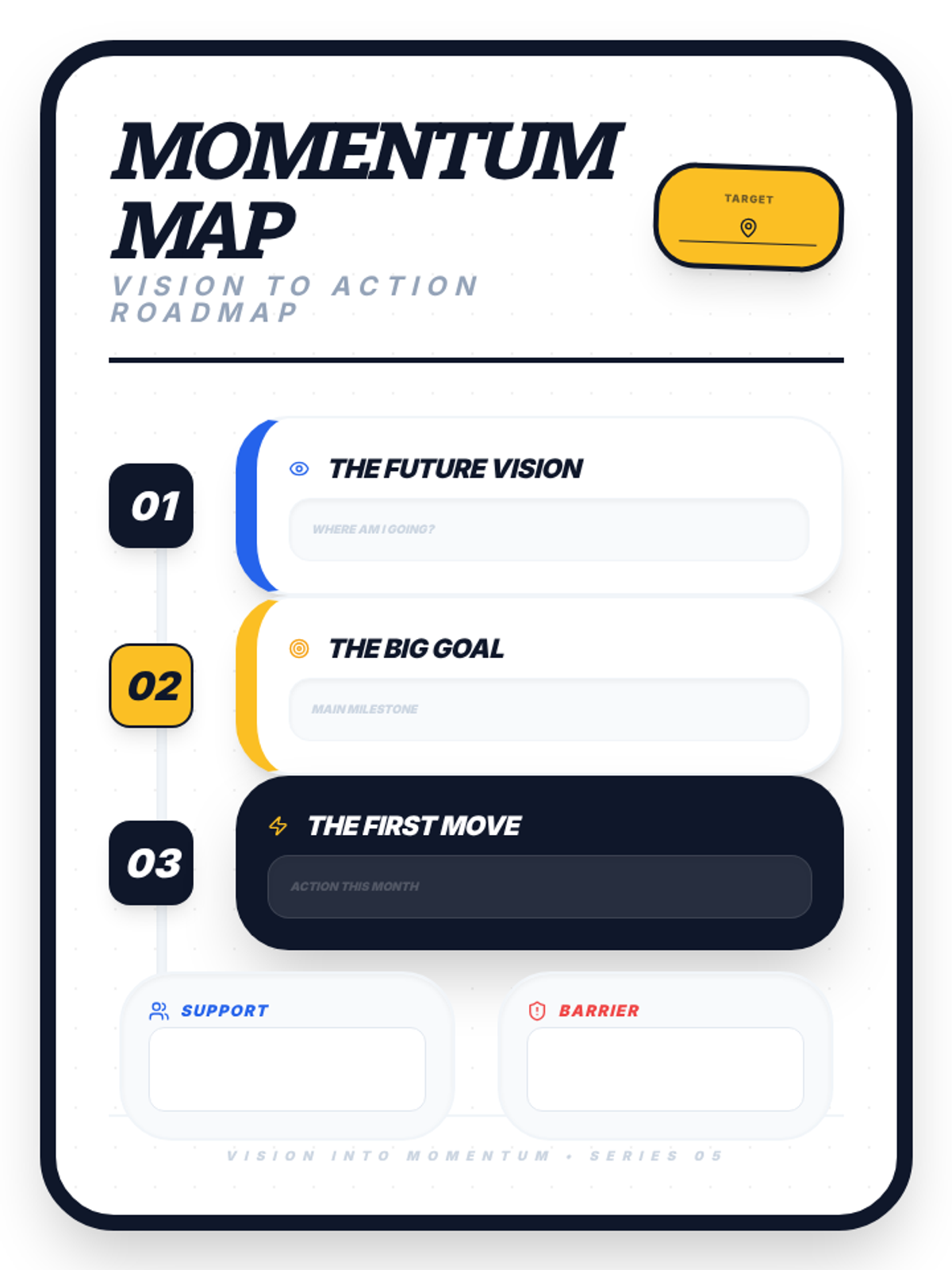
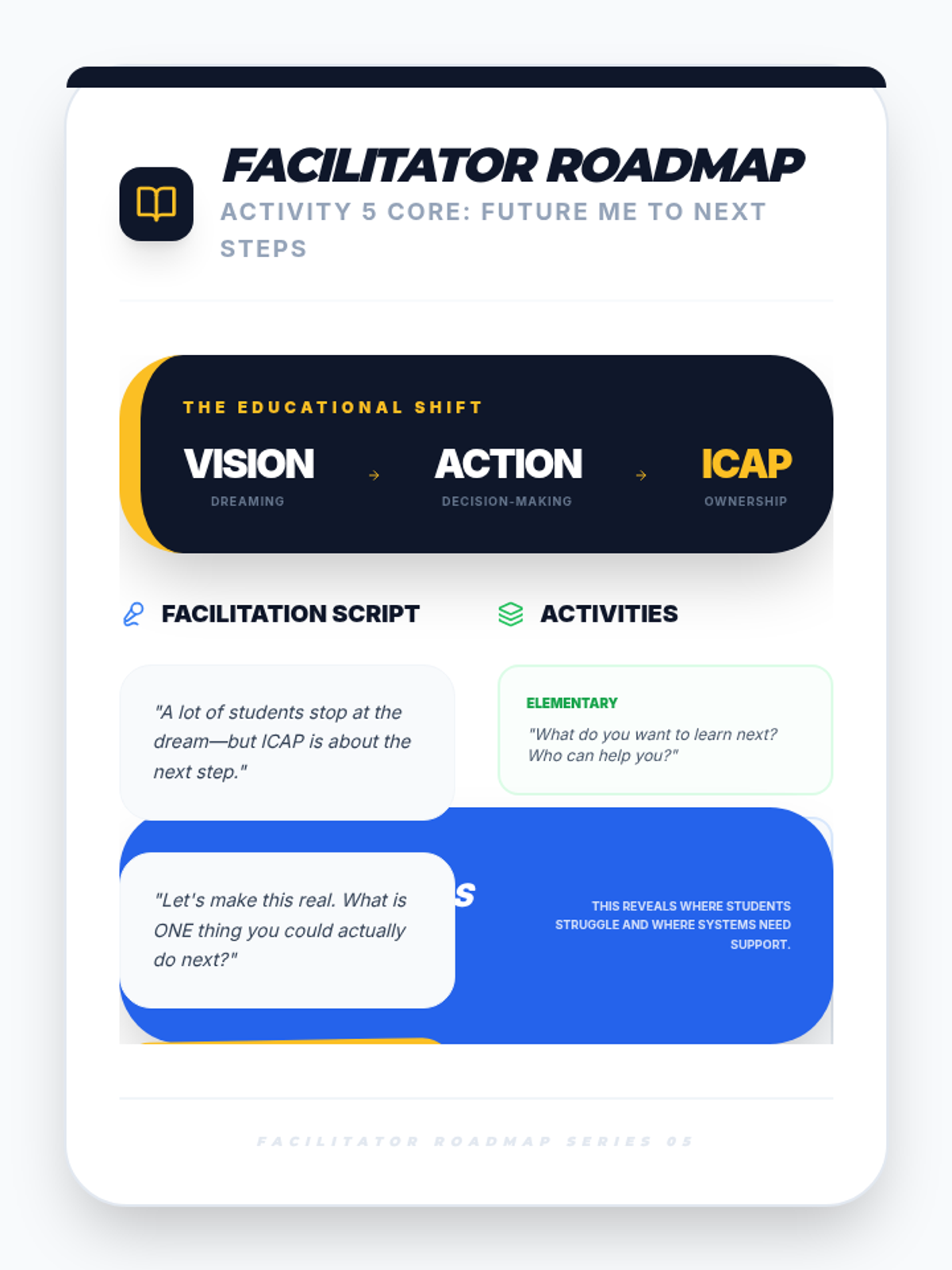
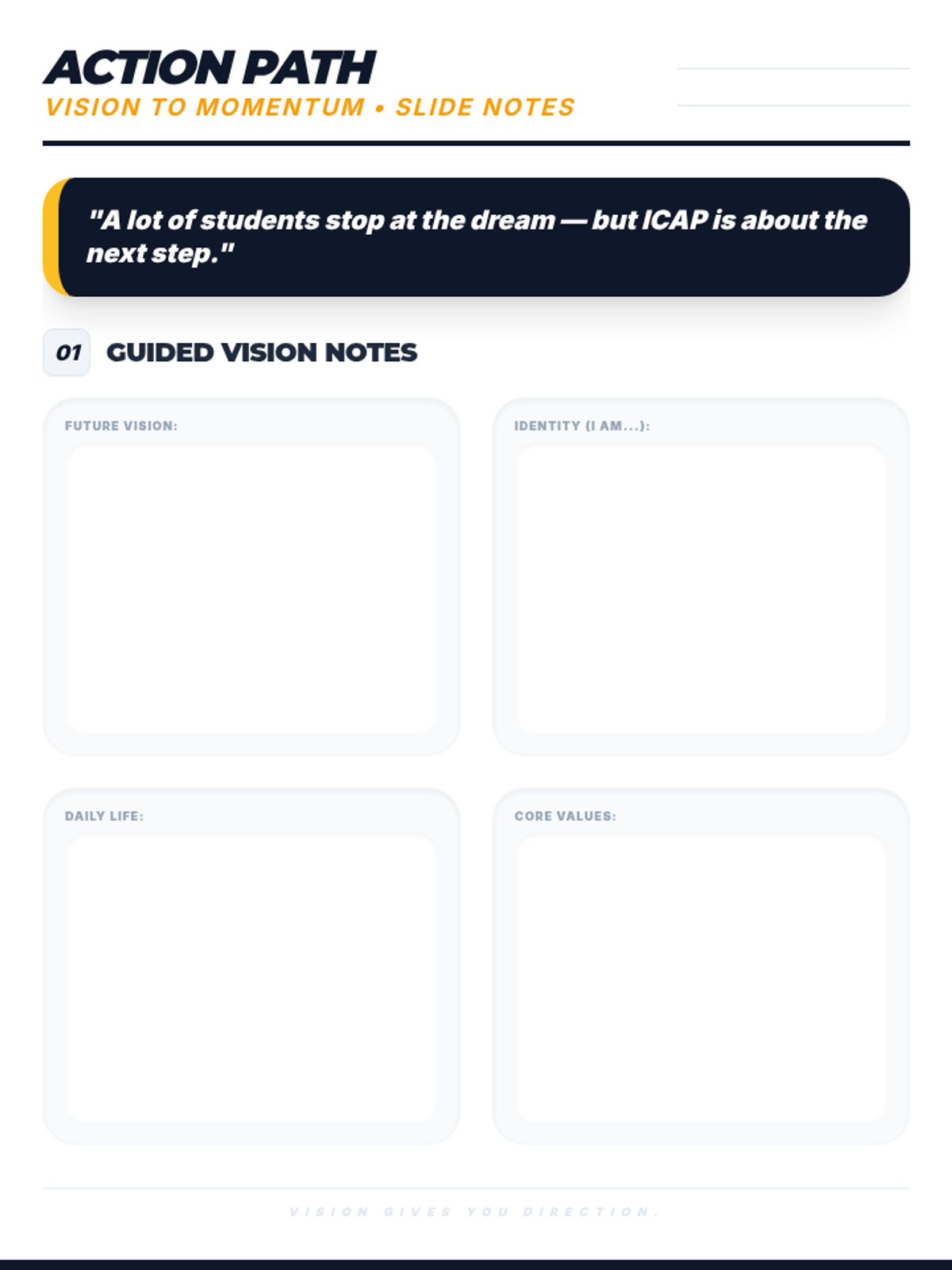
A transition-focused lesson that moves students from personal vision to concrete action steps through the ICAP framework, tailored for Elementary, Middle, and High School levels.
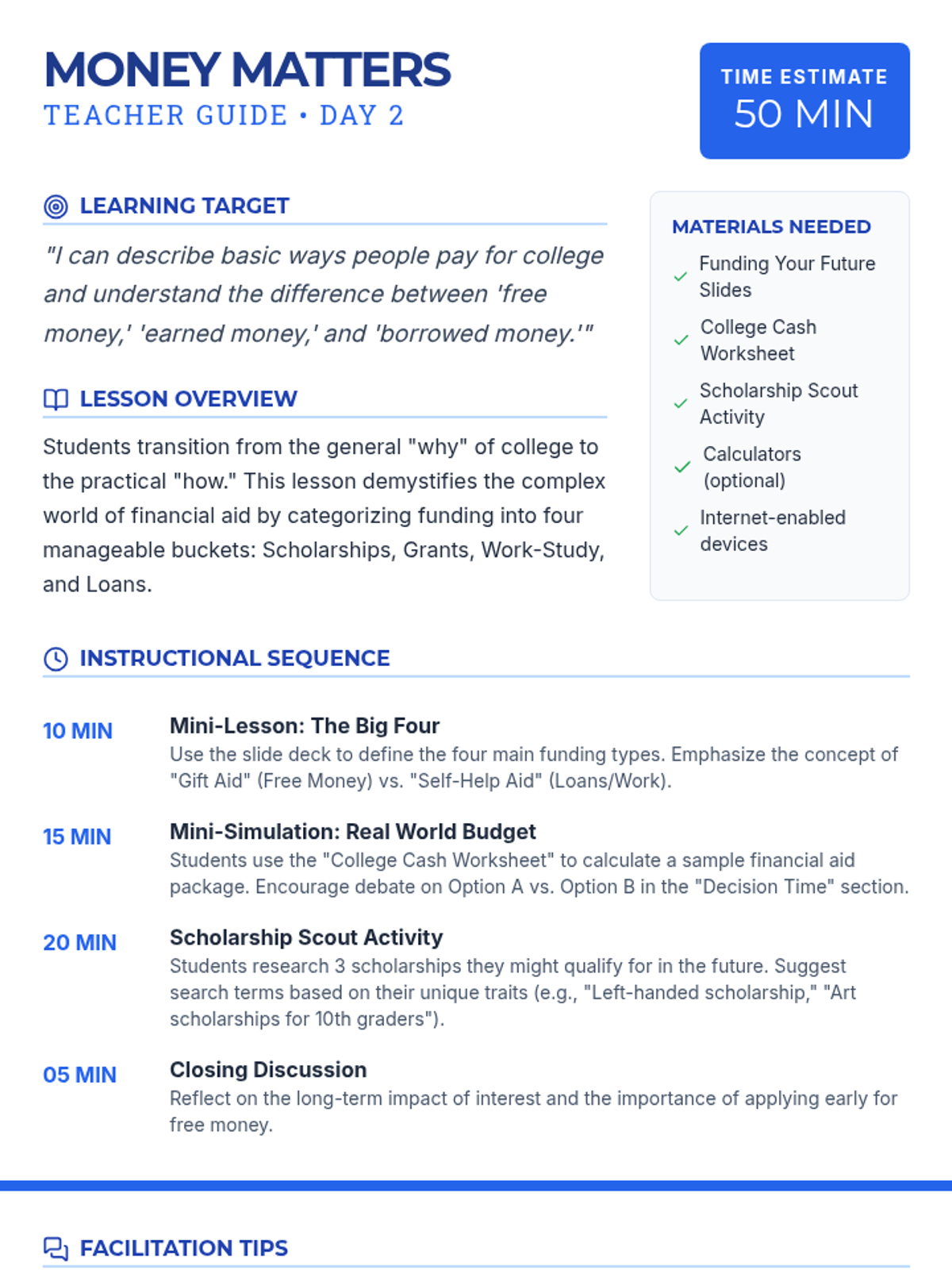
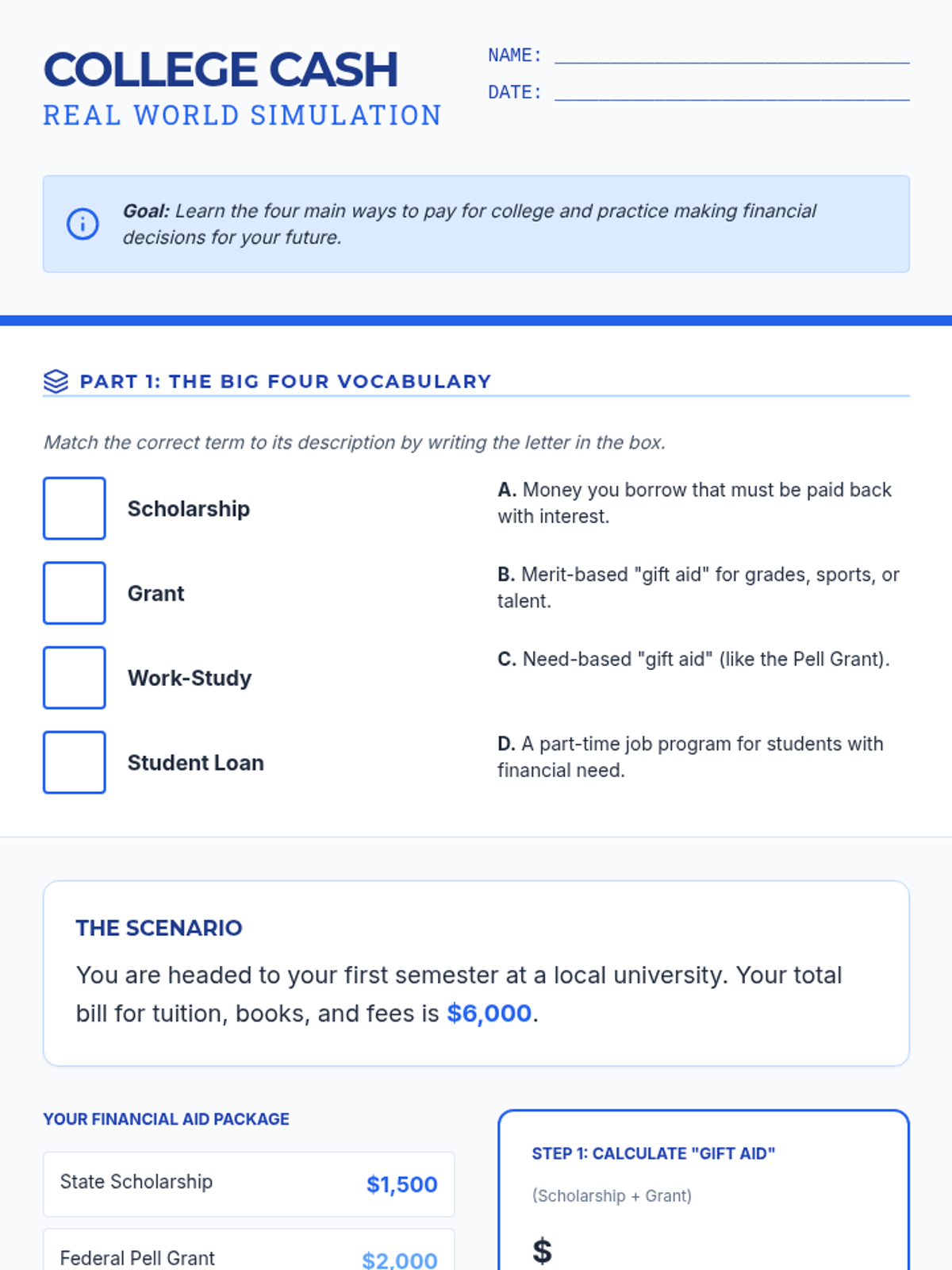
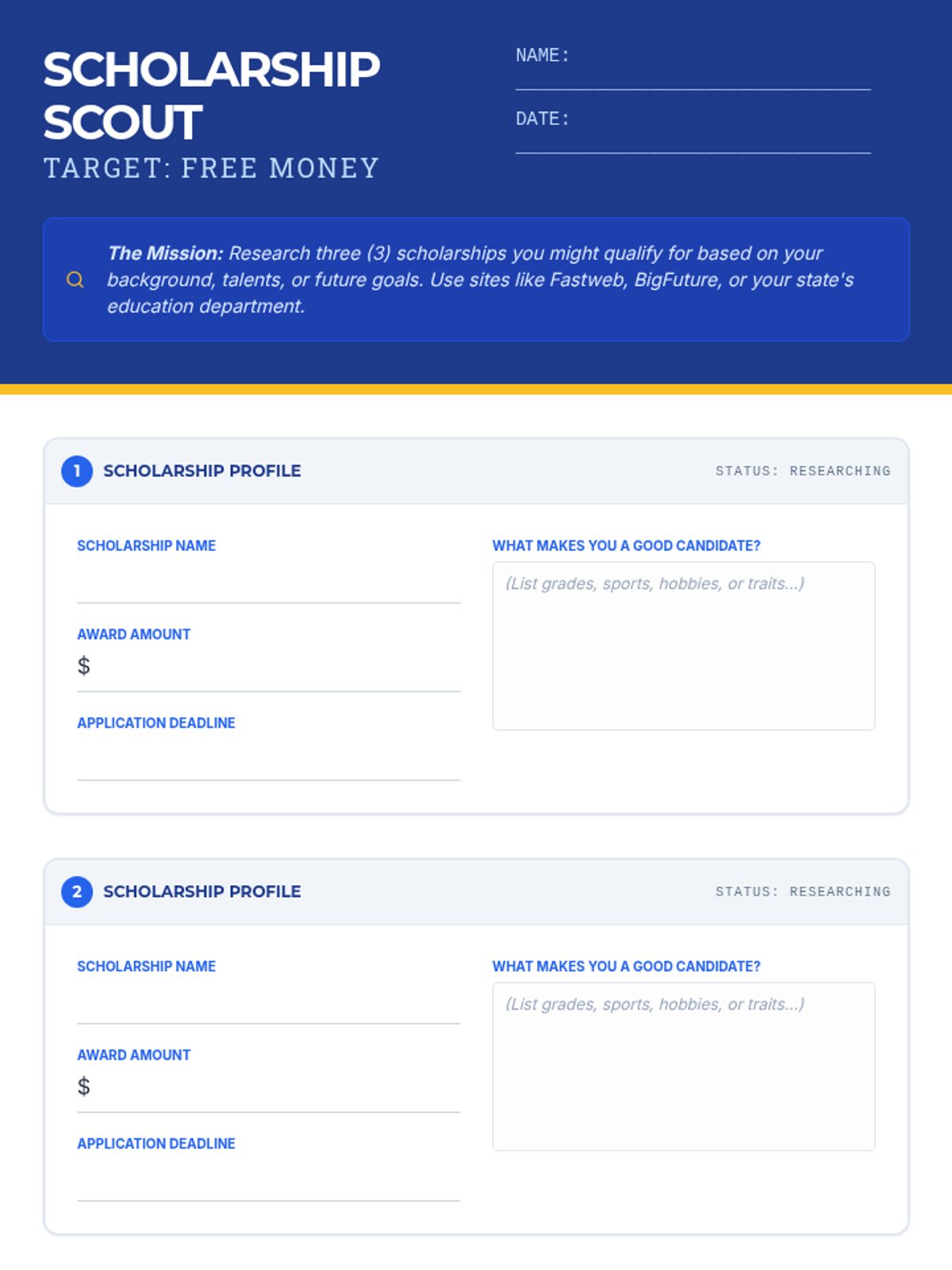
A lesson covering the four main ways to pay for college: scholarships, grants, work-study, and loans, featuring a budget simulation and a scholarship research activity.
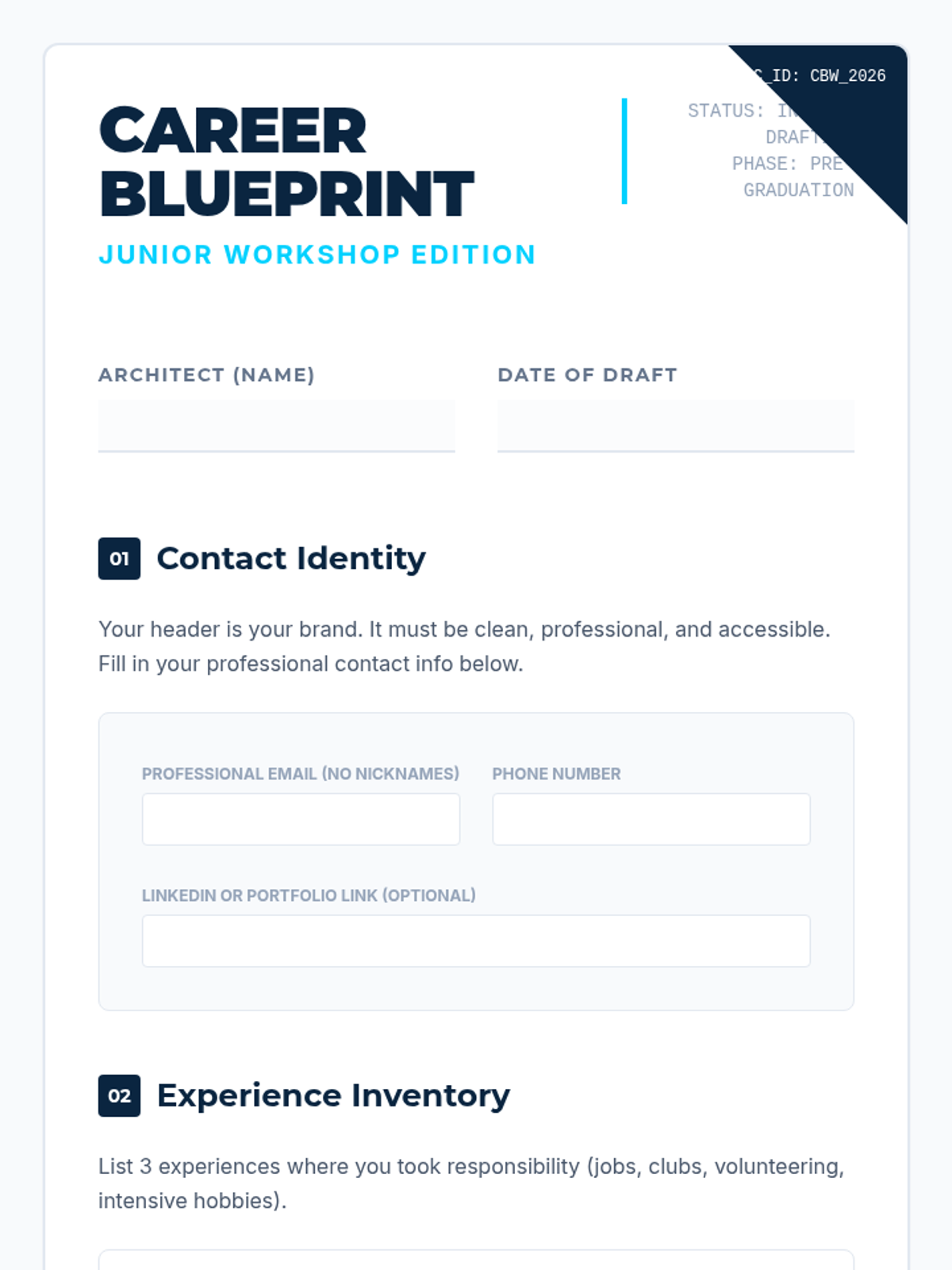
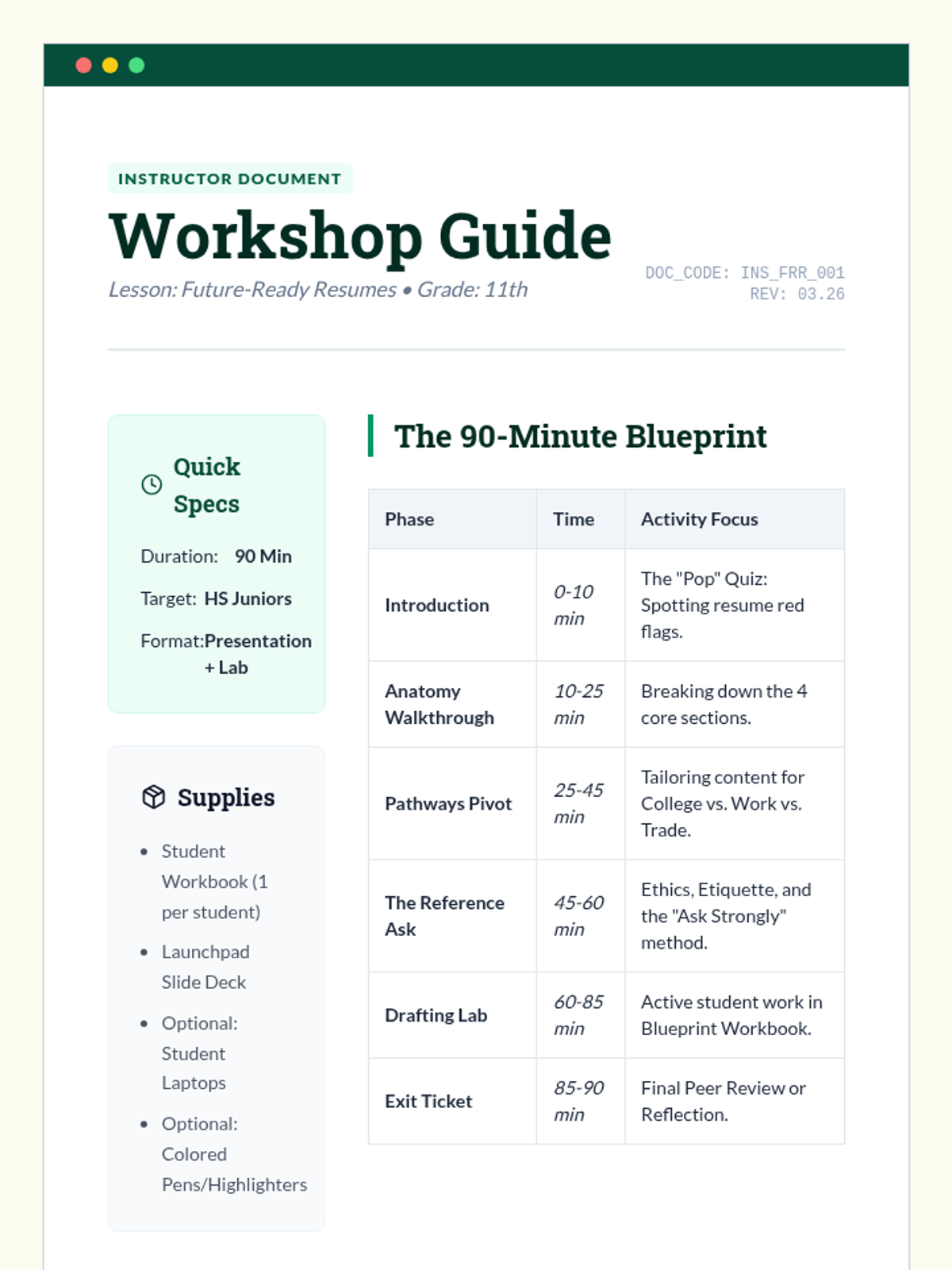
A 90-minute workshop designed for high school juniors to master the art of resume building for college, work, and vocational paths, while learning the professional etiquette of securing strong reference letters.
Outlines the steps to take after receiving acceptance letters, including deposits, orientation, and housing, concluding with a reflection journal.
Guides students through the application timeline, components of a college application, and the admissions review process.
Focuses on financial literacy, including FAFSA/ORSAA, scholarship hunting, and decoding financial aid award letters.
Covers the different types of colleges (2-year vs. 4-year, public vs. private), debunks common academic myths, and sets expectations for the college experience.
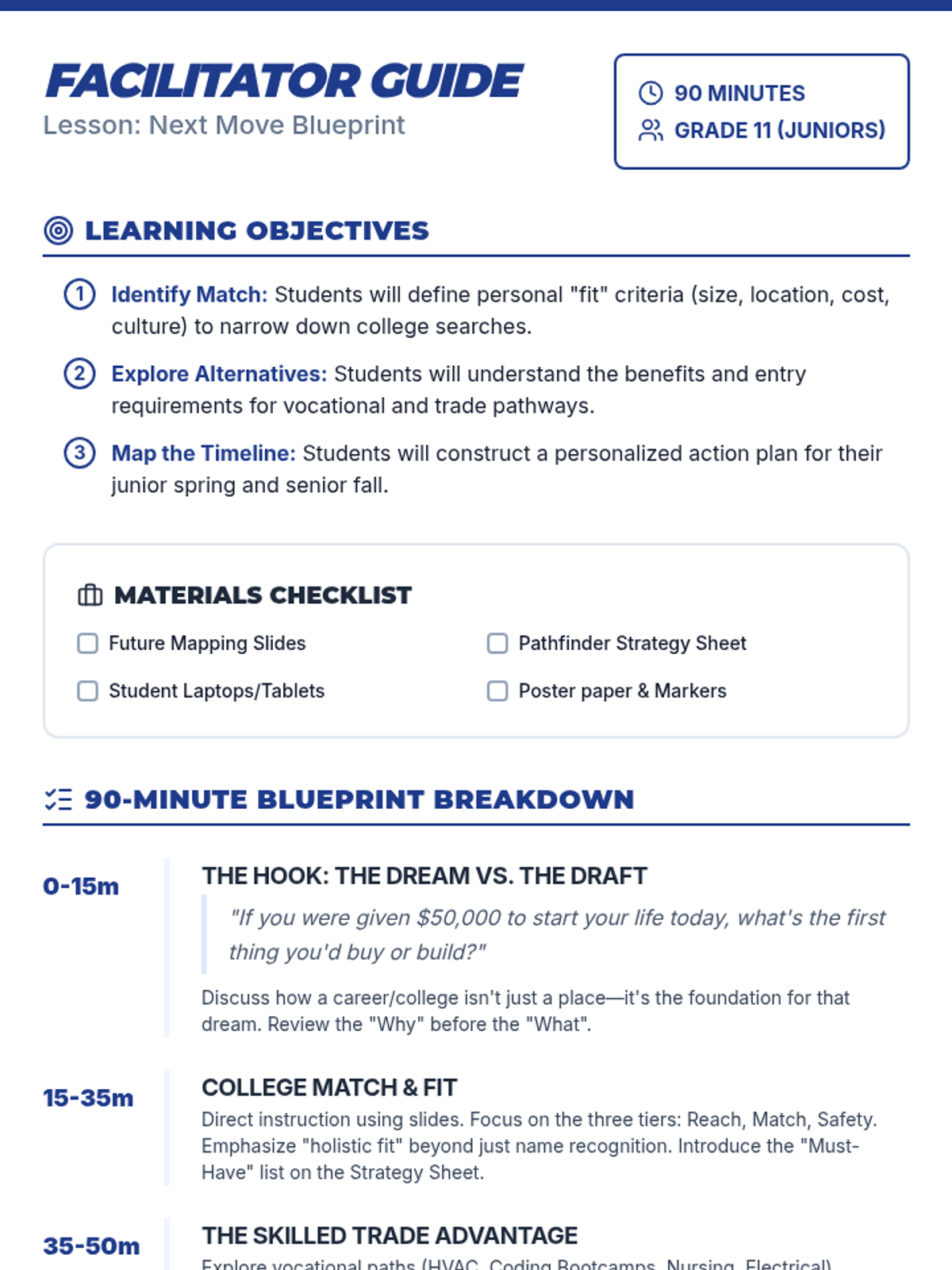
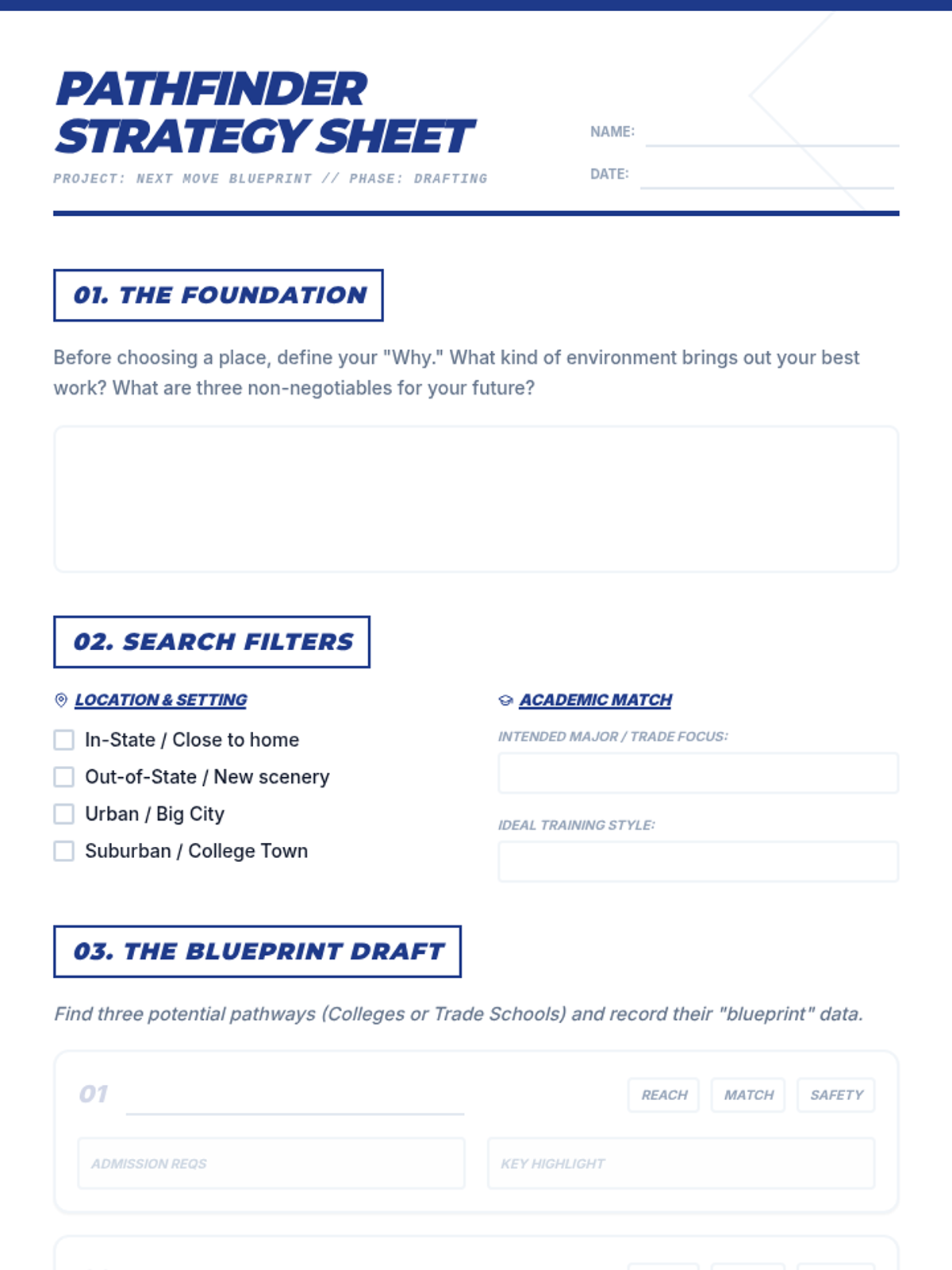
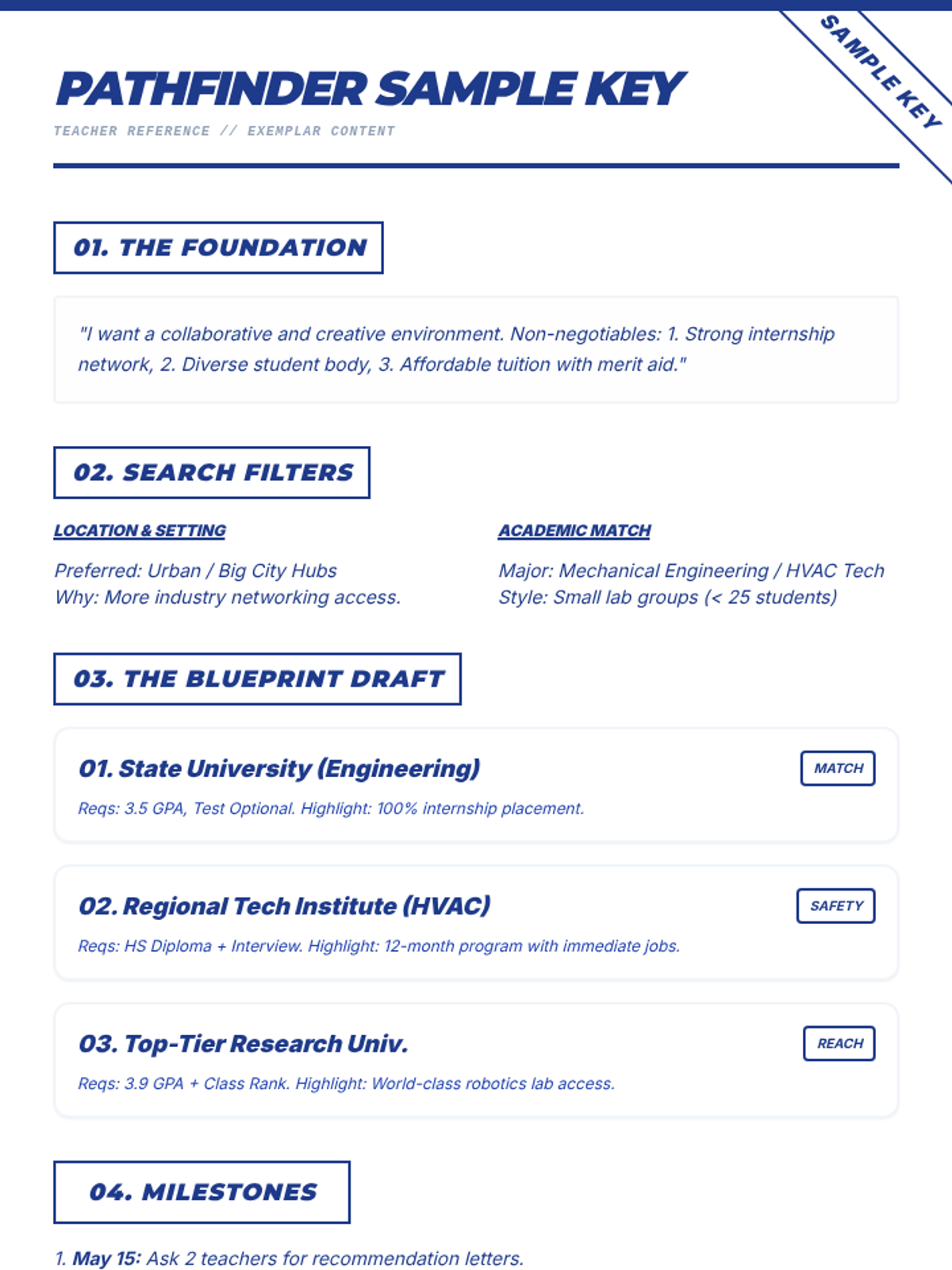
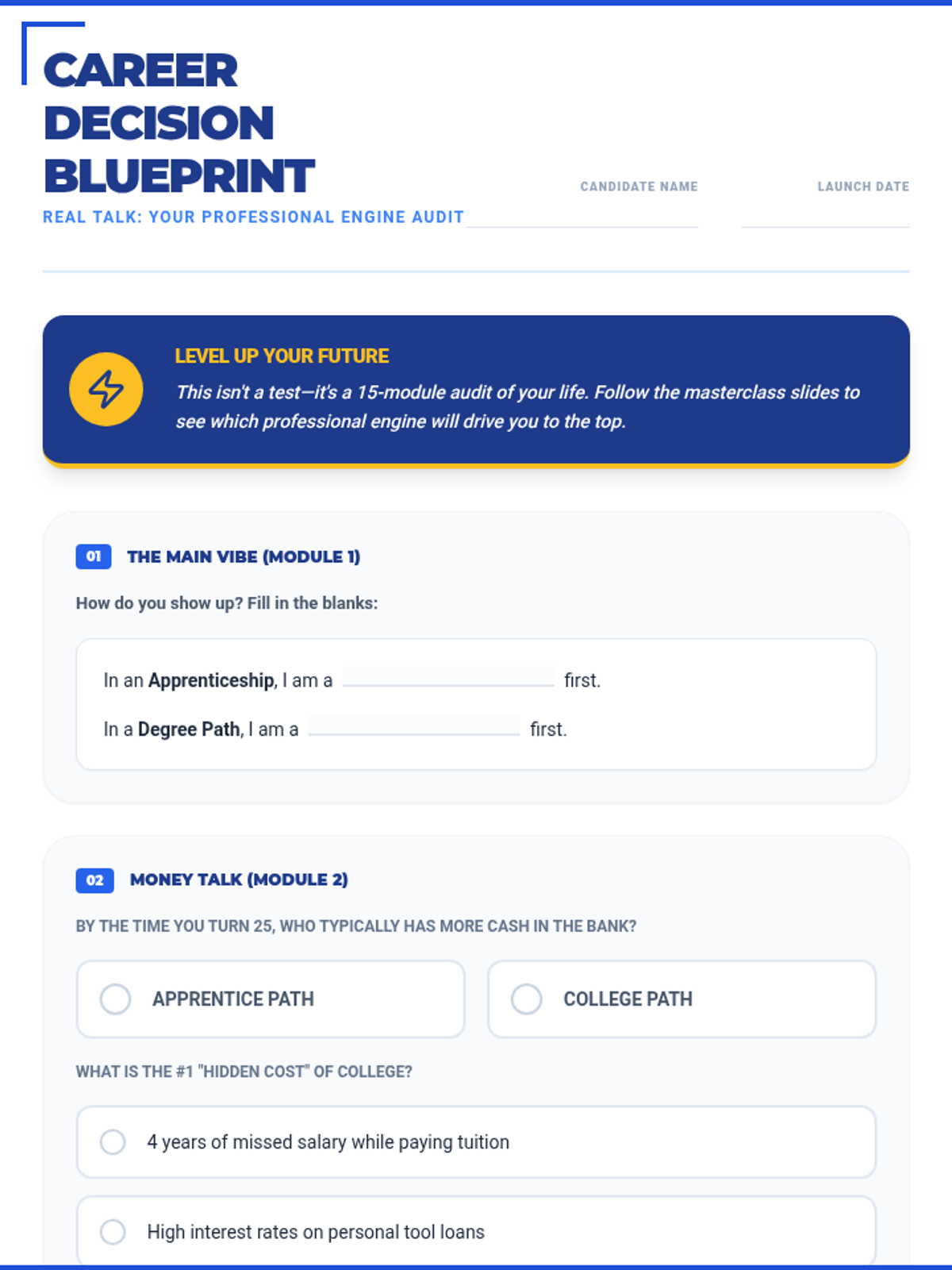
A comprehensive 90-minute lesson designed for high school juniors to explore college matches, vocational pathways, and the application timeline using a 'blueprint' theme for future planning.
Master the transition from student to professional. This lesson covers workplace etiquette and the application process through engaging puzzles and reflective self-assessments.
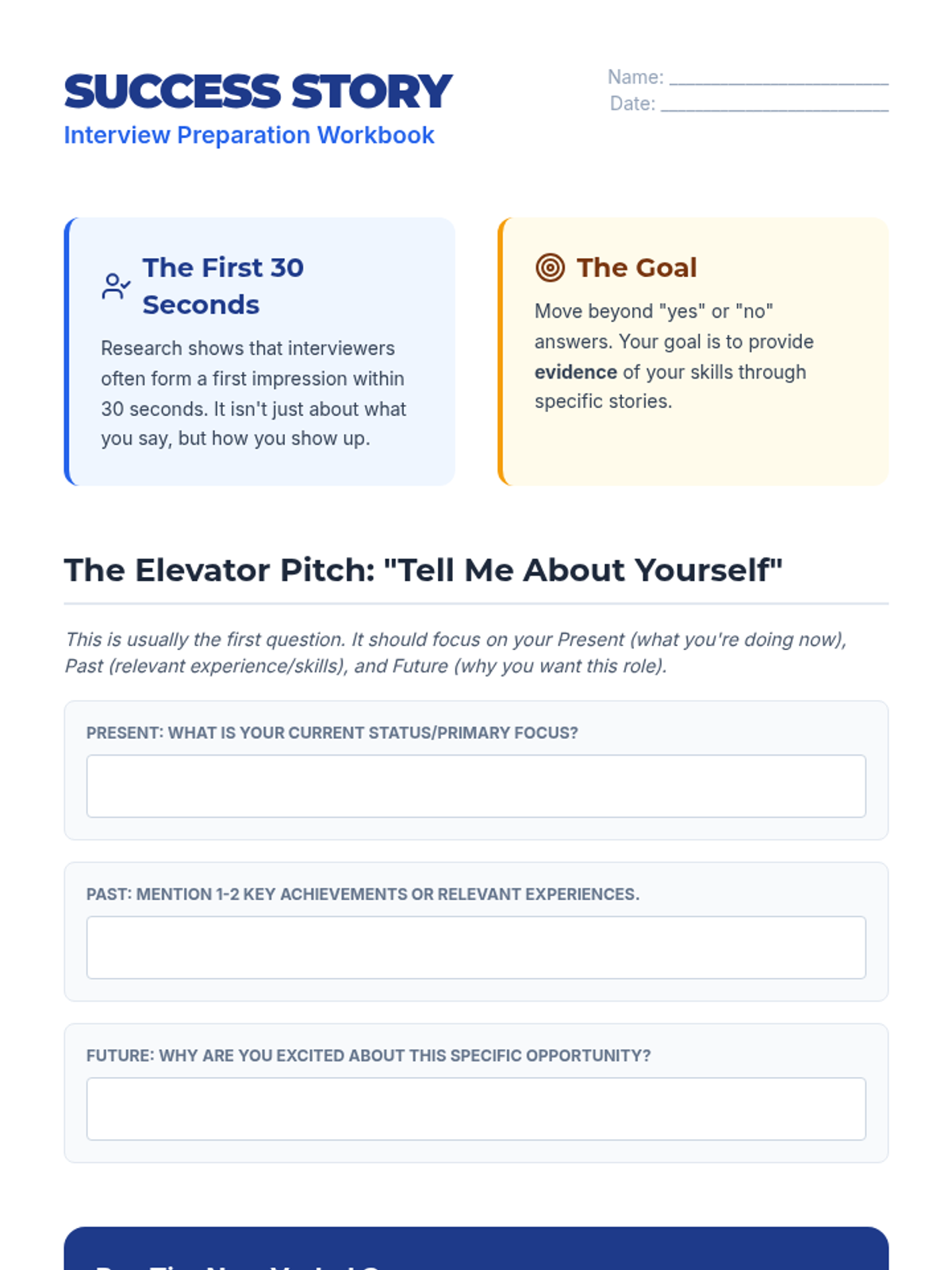
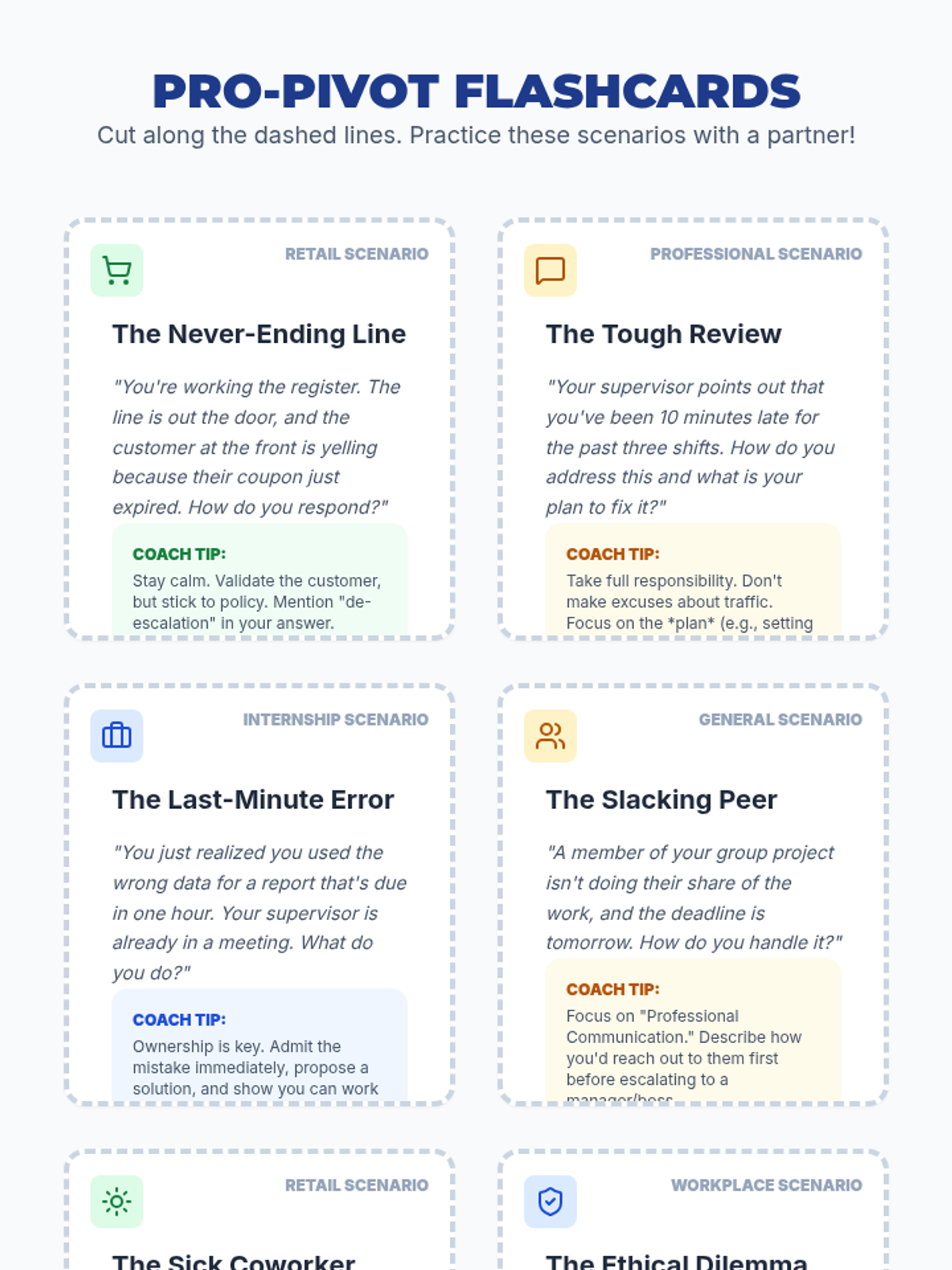
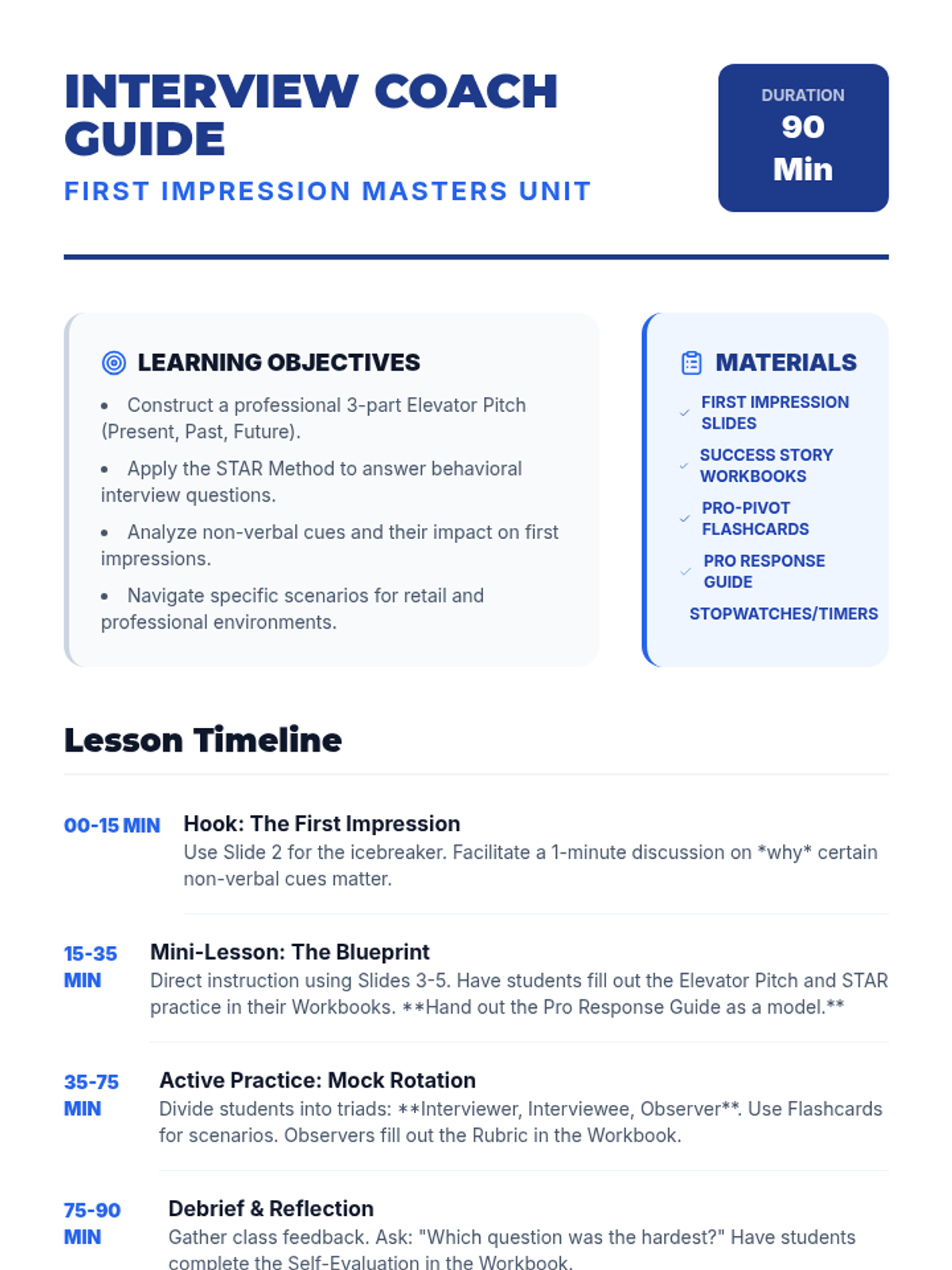
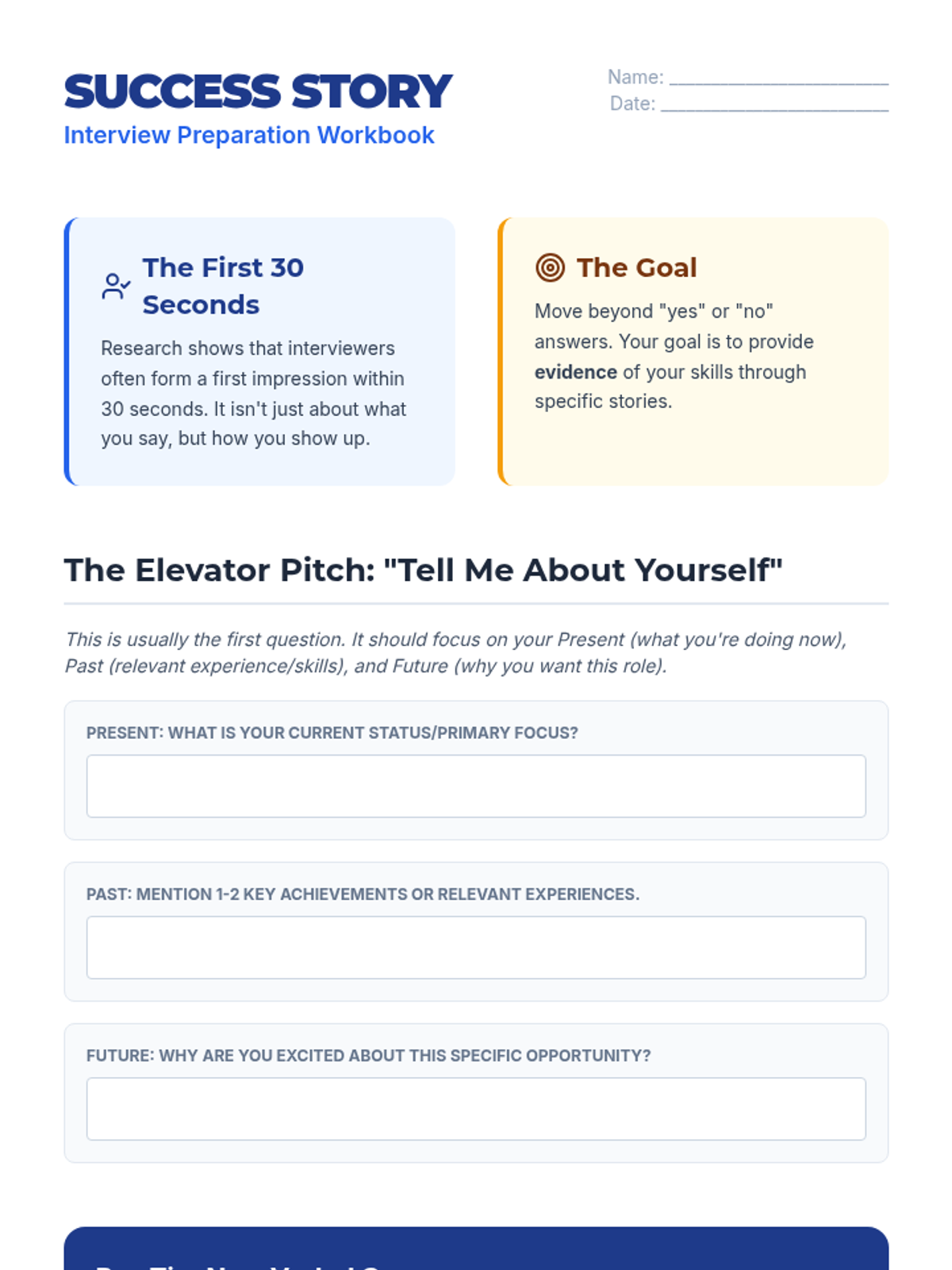
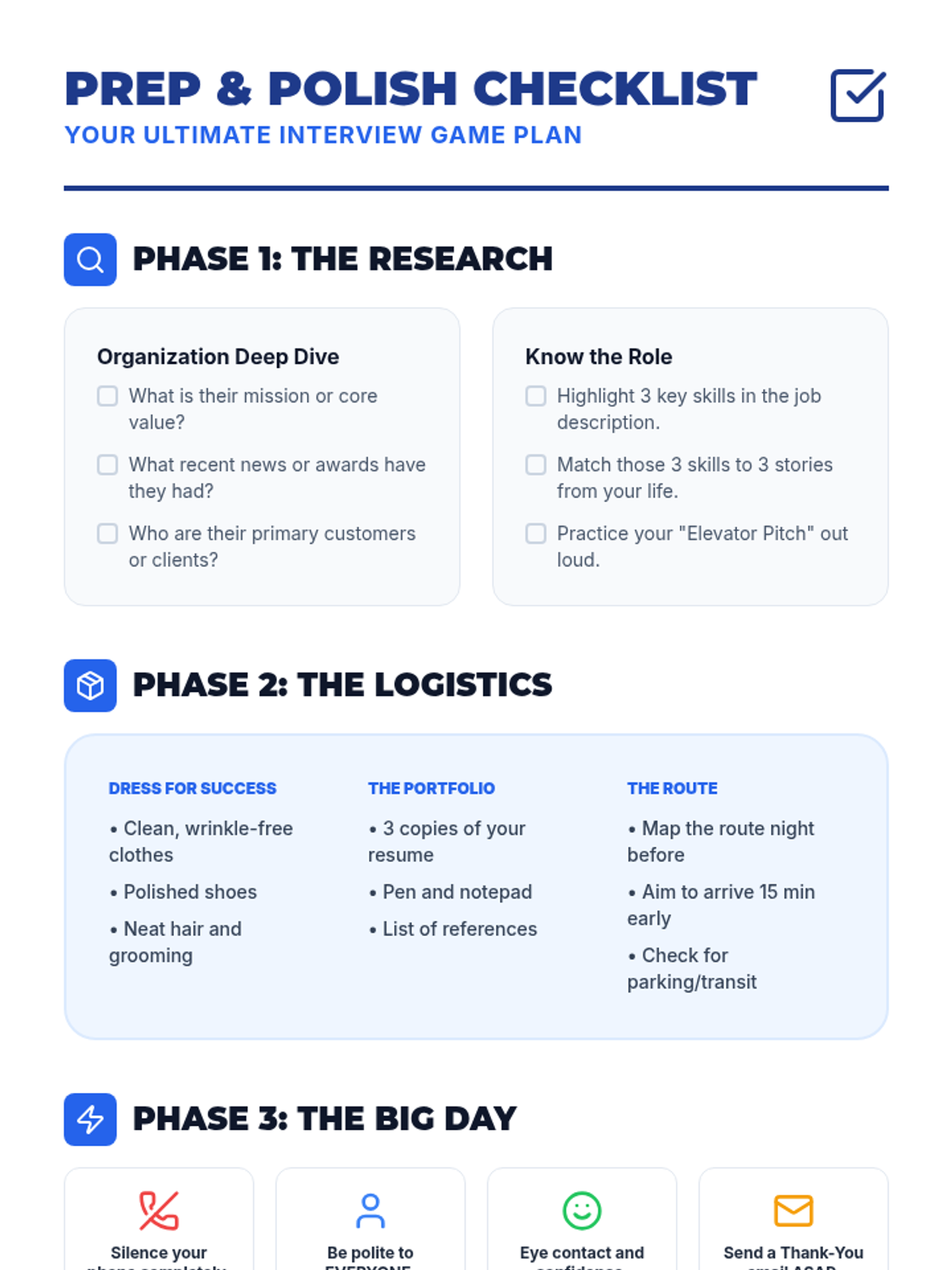
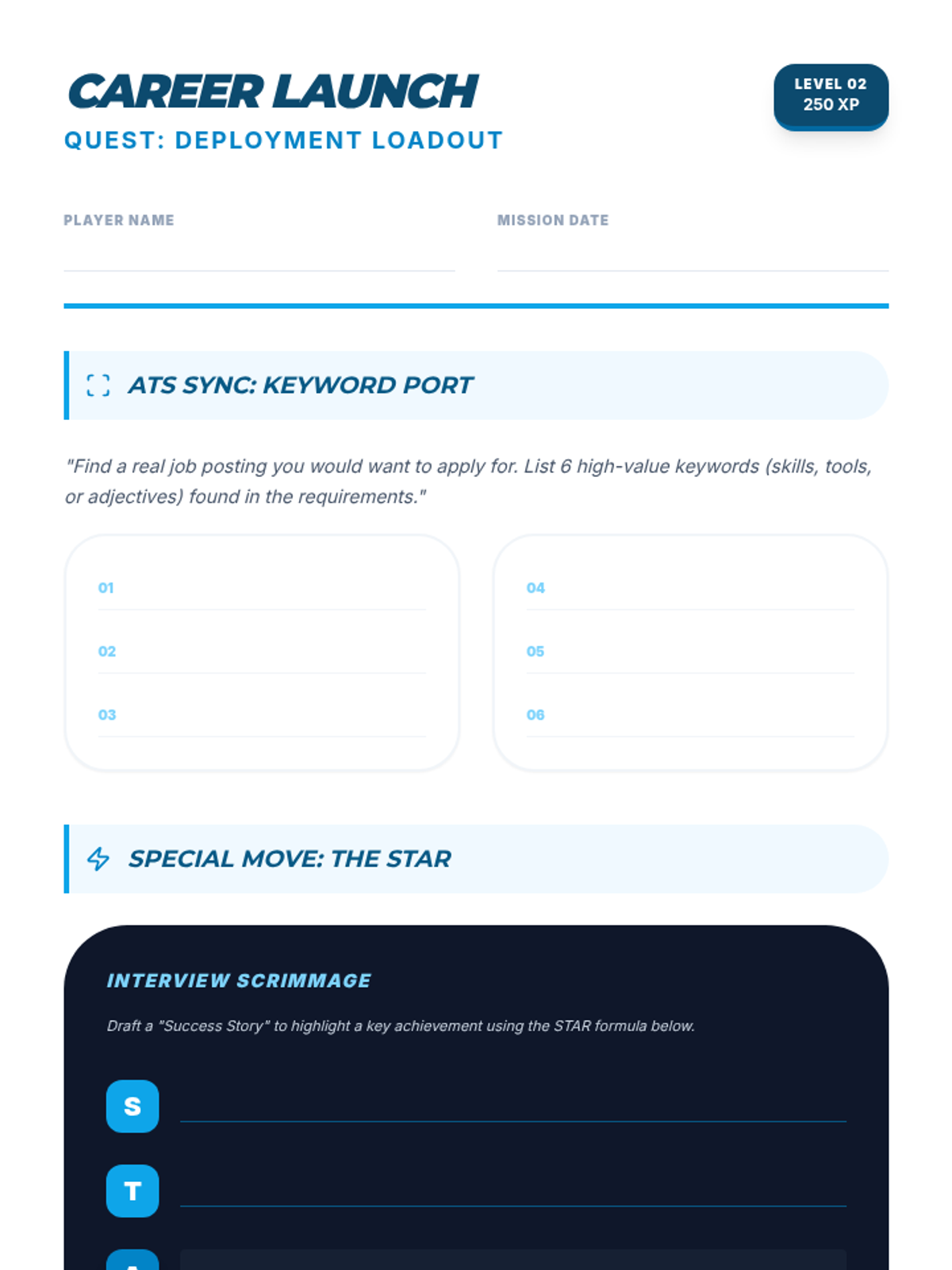
A comprehensive guide to mastering entry-level and academic interviews through the STAR method, practical scenarios, and self-reflection. Students will build a portfolio of stories to demonstrate their skills to future employers and admissions officers.
Consolidating resources and creating a concrete, personalized safety plan for life after graduation.
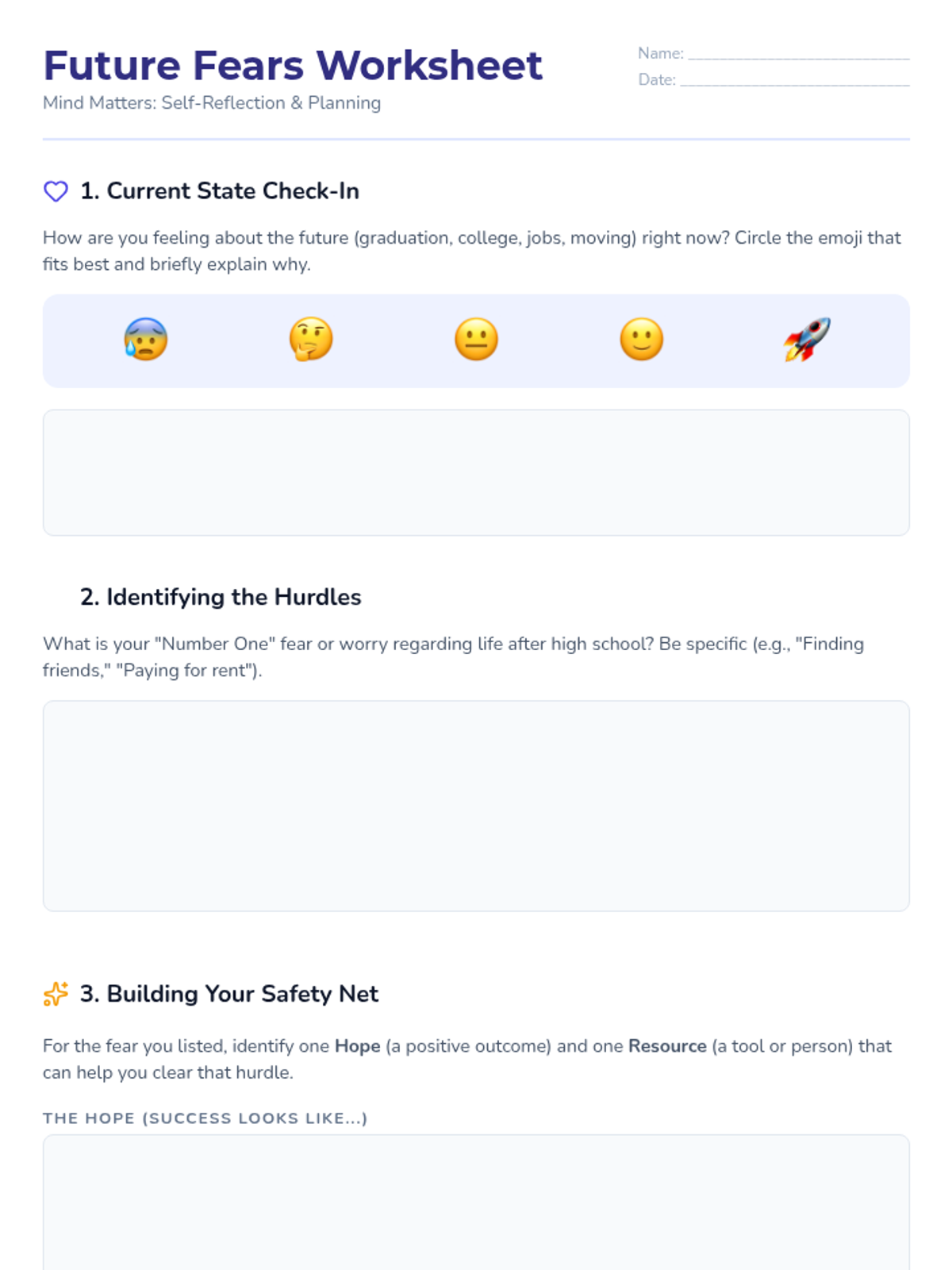
An interactive workshop day where students map out personal hurdles and the resources needed to clear them.
Specifically addressing the psychological challenges of leaving high school and the loss of routine.
An exploration of depression symptoms, breaking stigma, and how to support friends in crisis.
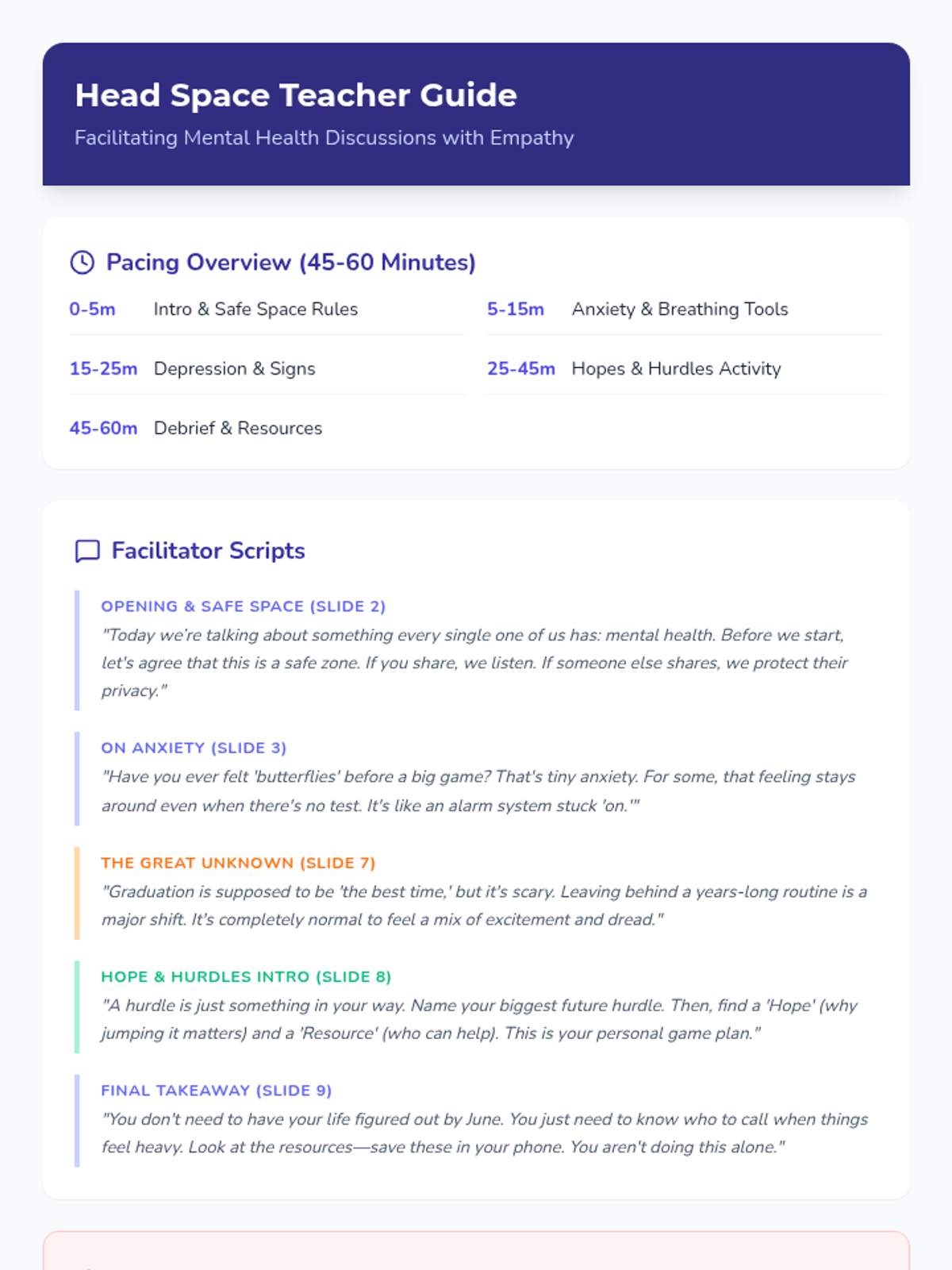
A comprehensive lesson on mental health awareness focusing on anxiety, depression, and the transition from high school, featuring a guided presentation and self-reflection activities.
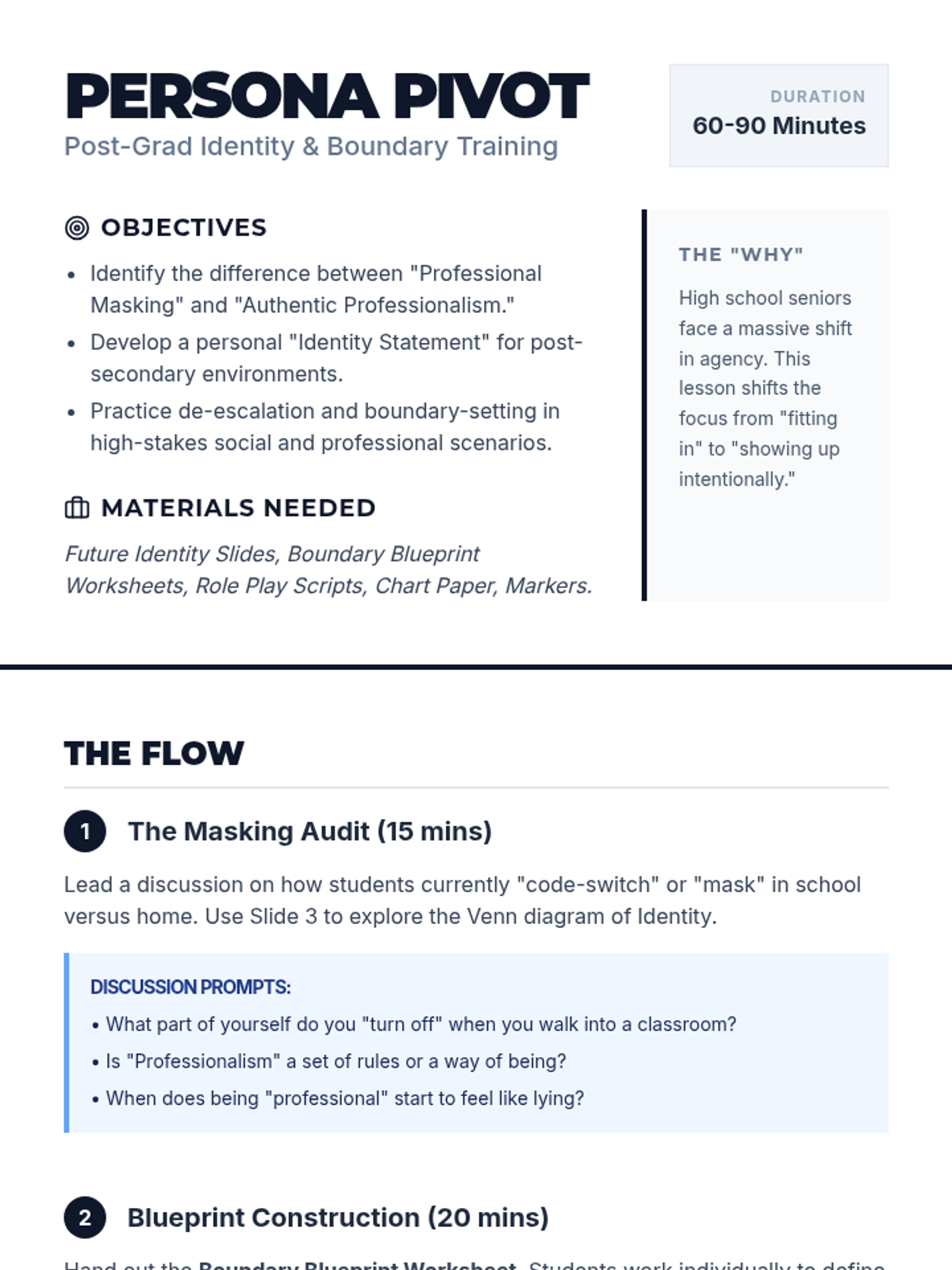
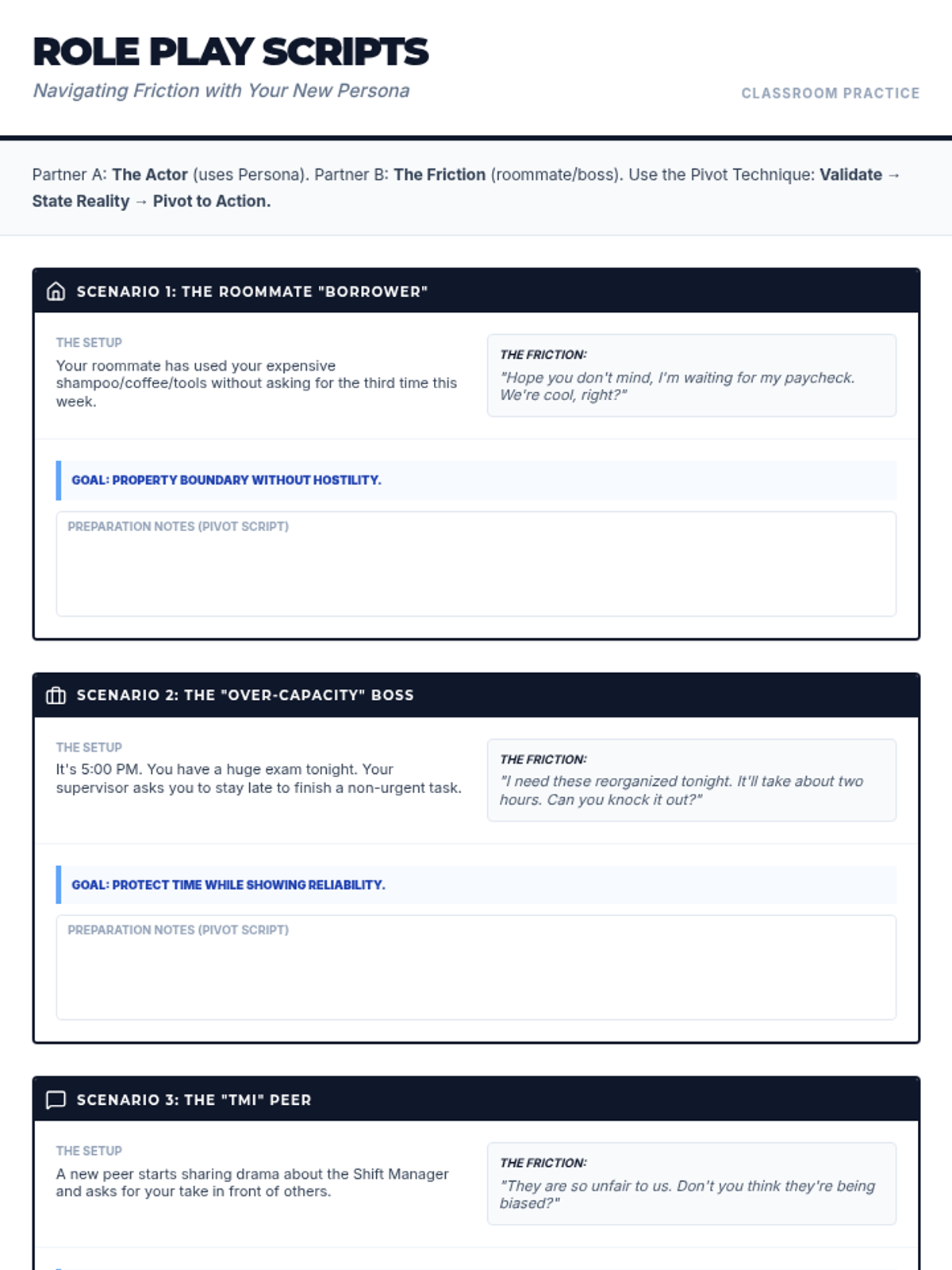
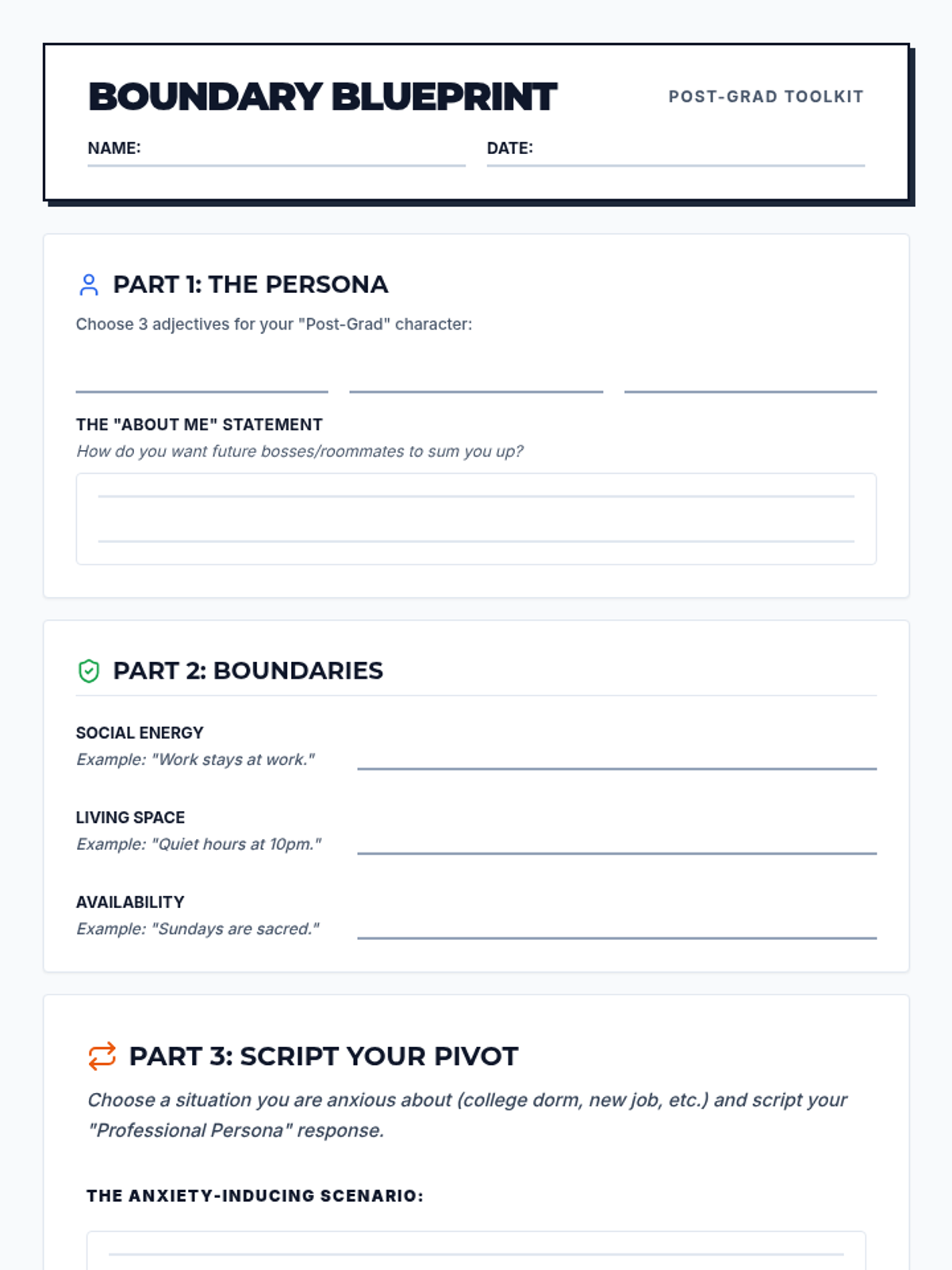
A lesson designed to help high school seniors navigate the transition to post-secondary life by developing a professional yet authentic identity and practicing difficult interpersonal conversations.
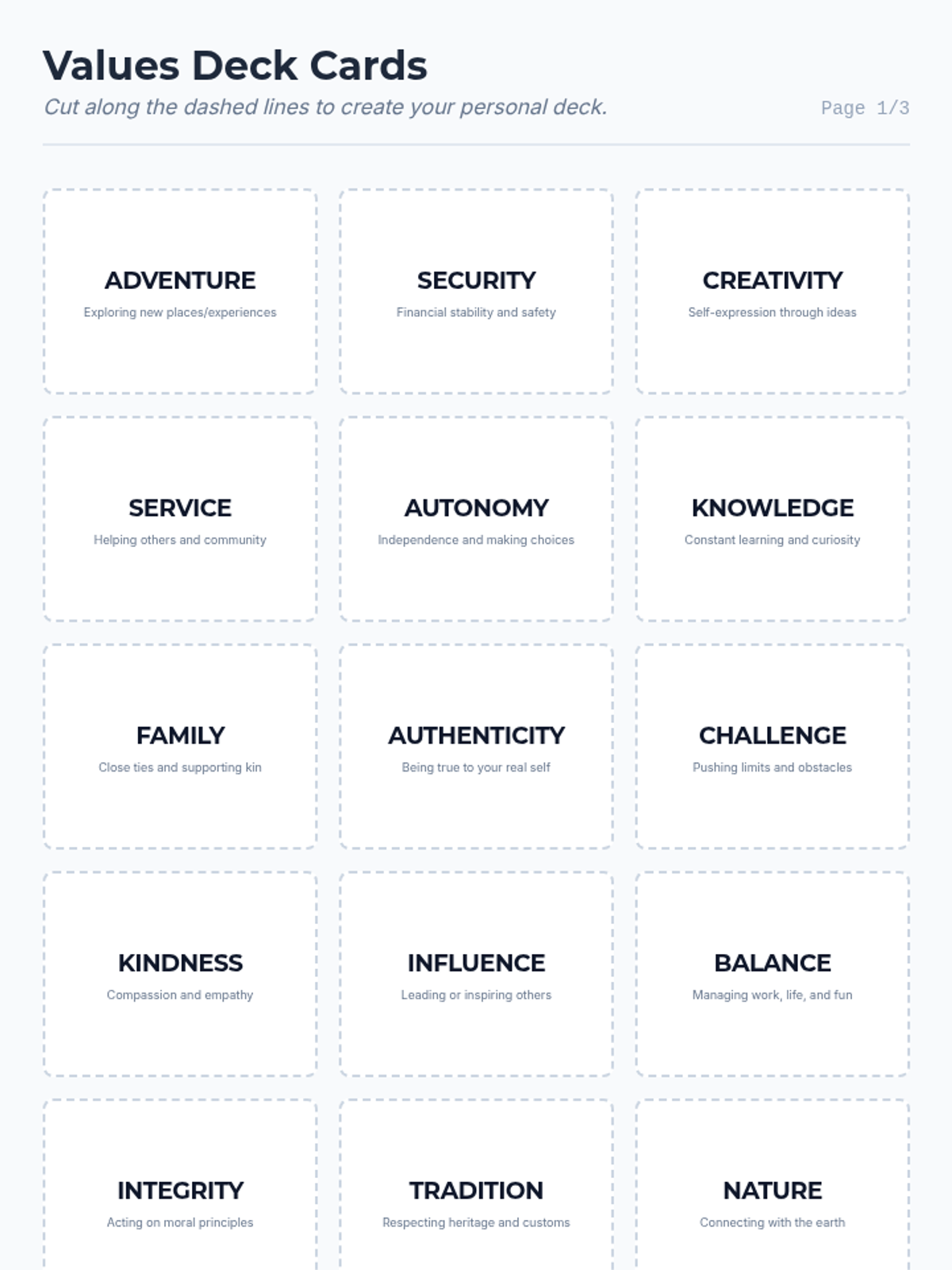
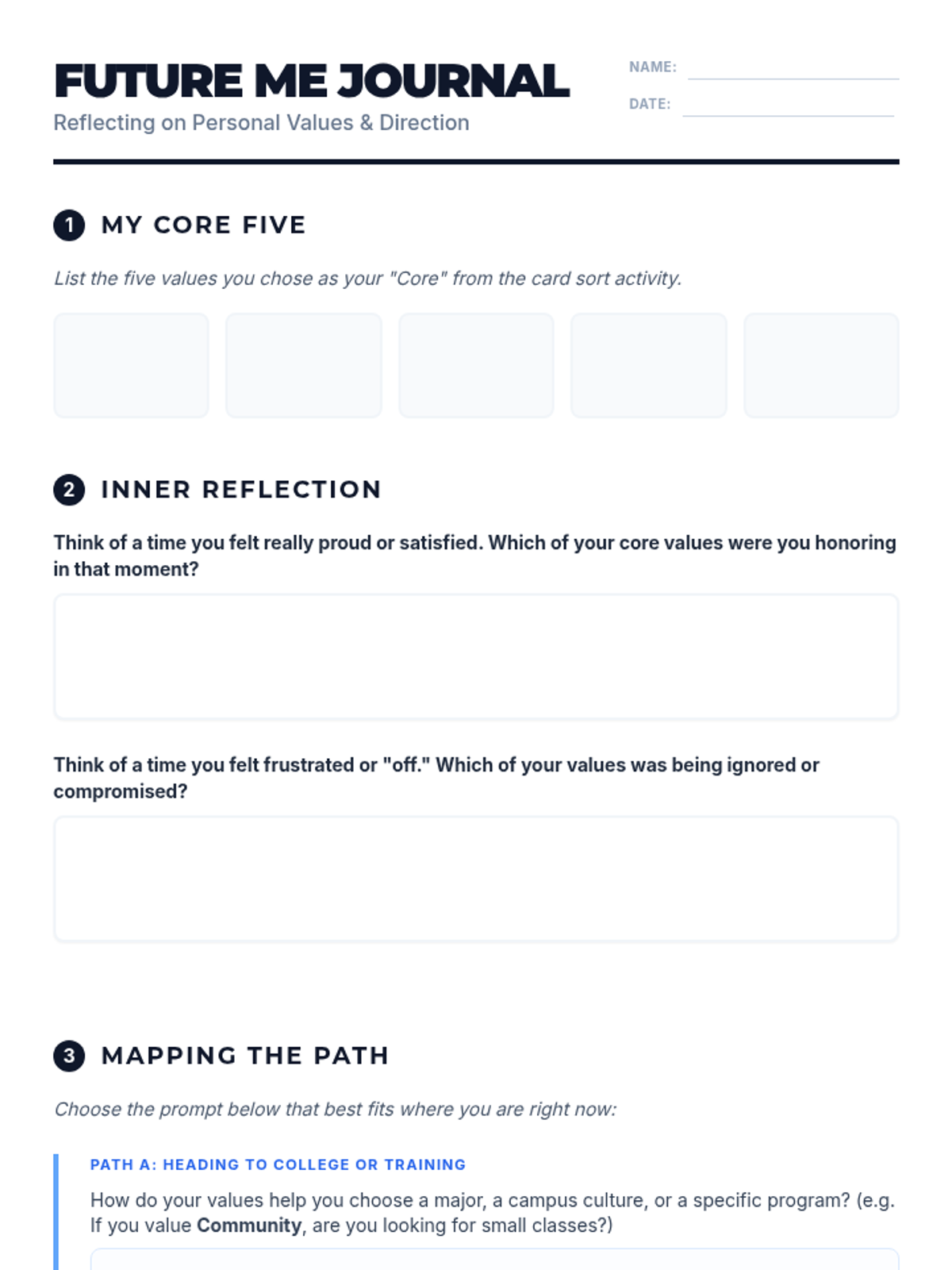
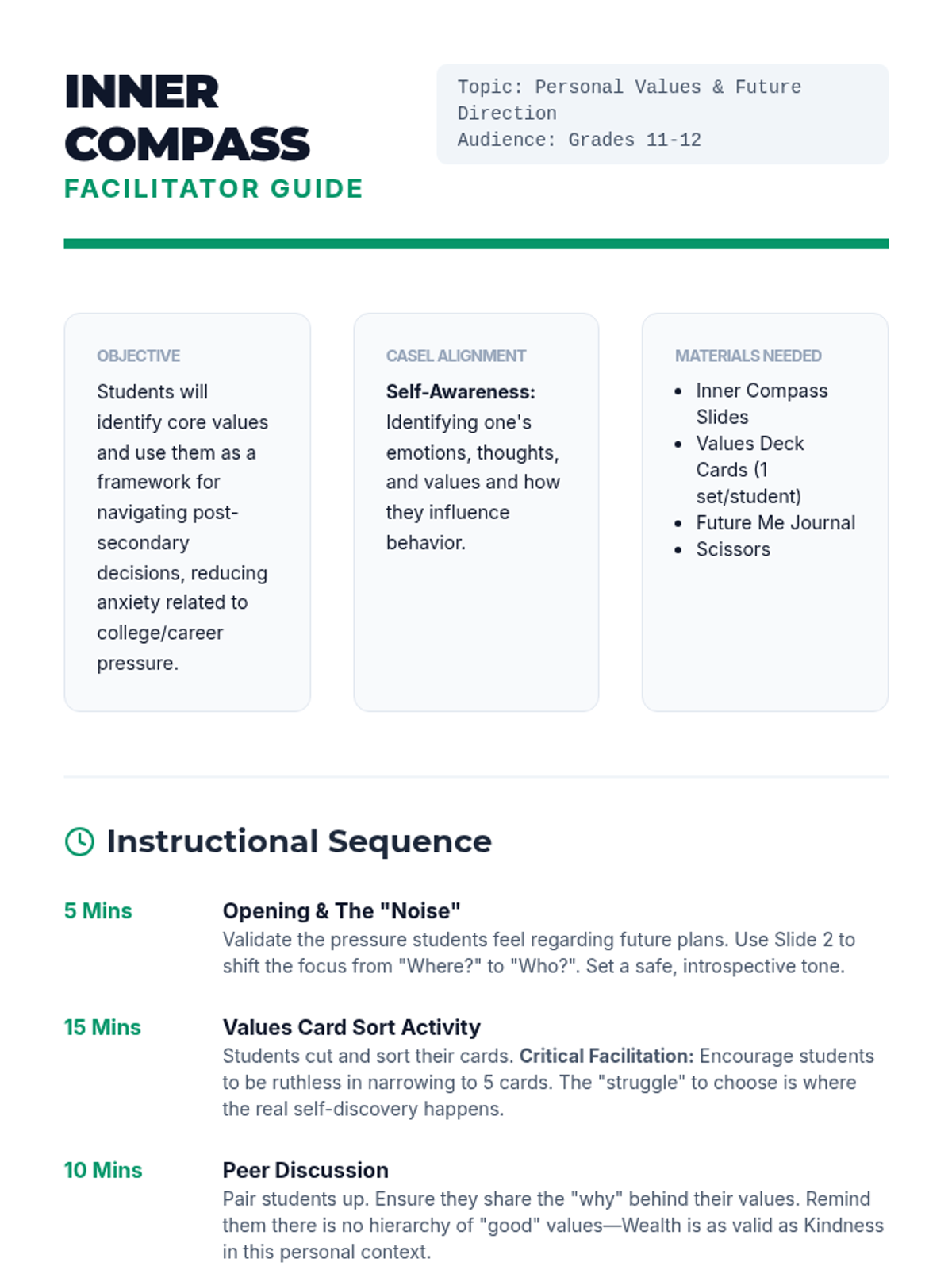
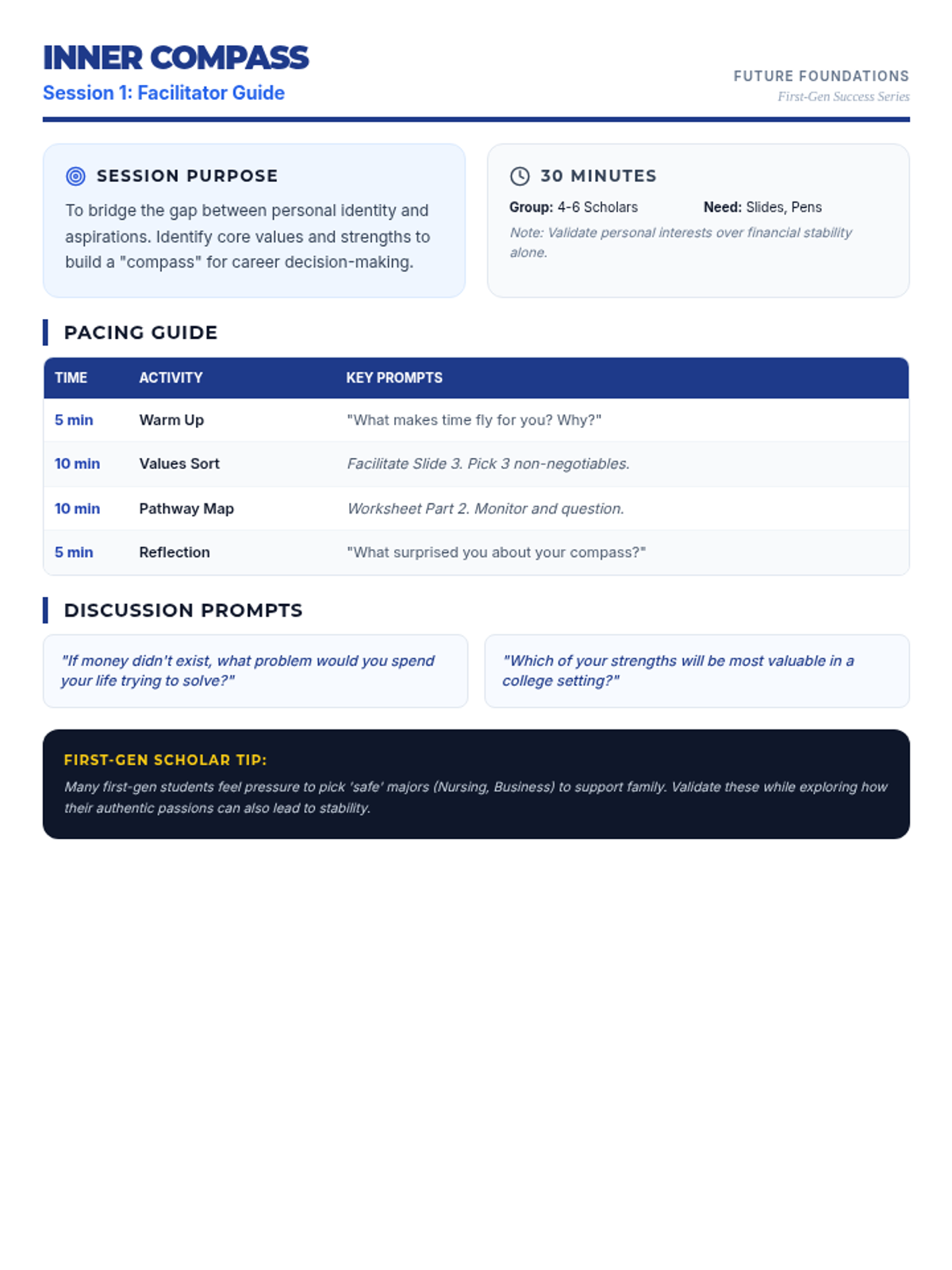
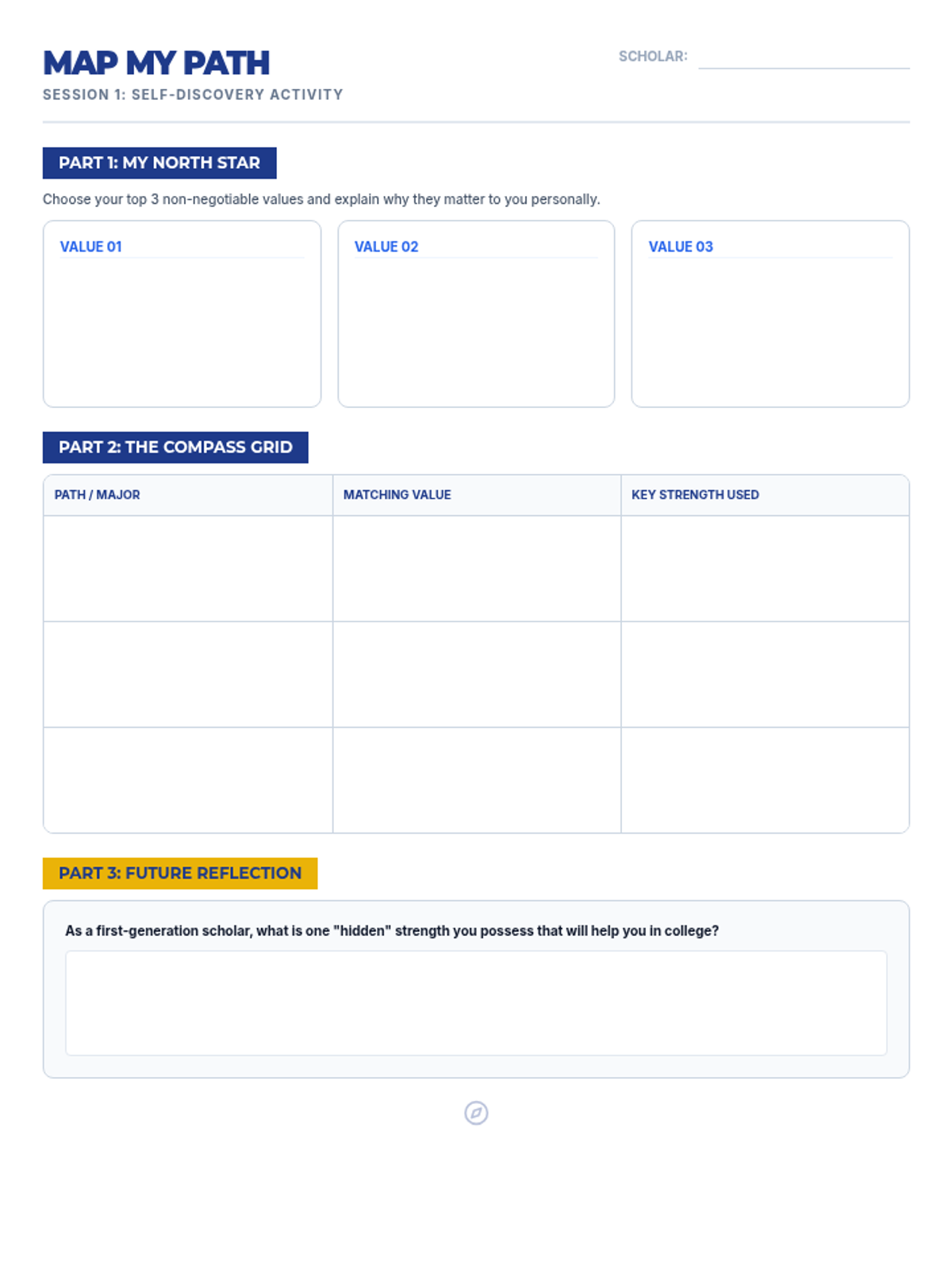
An introspective lesson for high school juniors and seniors to explore their core values and personal identity beyond academic and career pressure. Includes a values card sort, reflective writing, and peer discussion aligned to CASEL self-awareness standards.
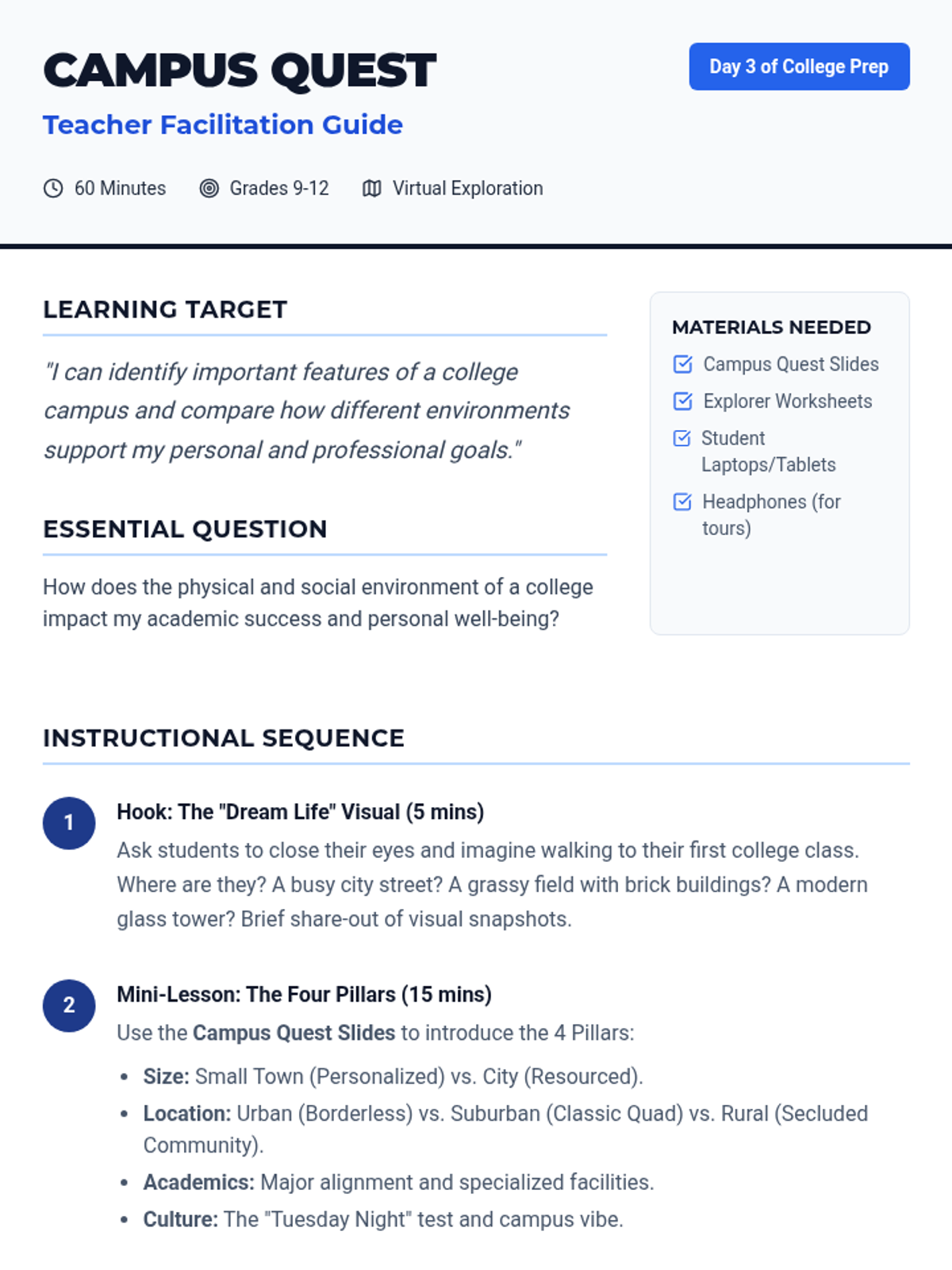
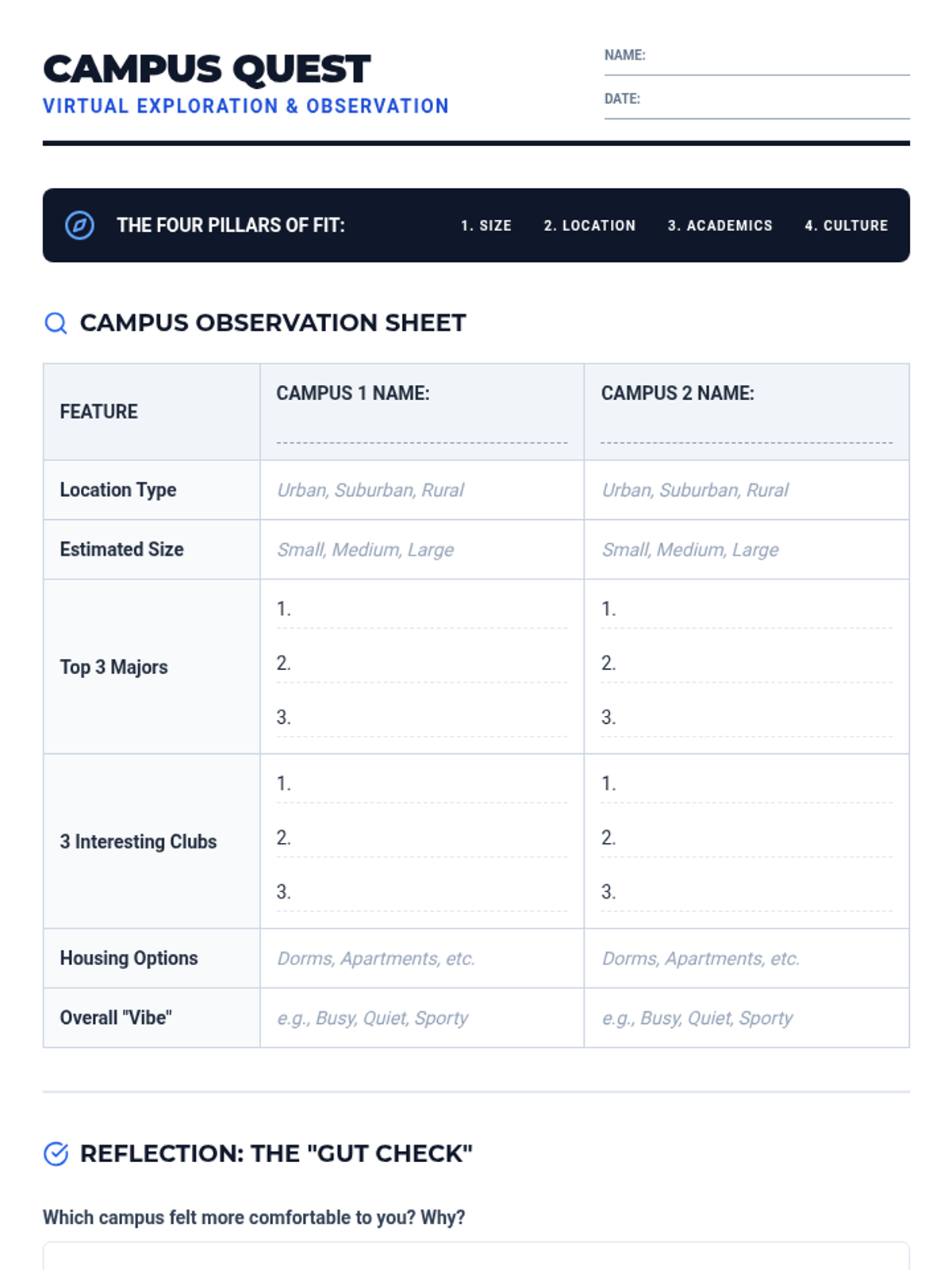
A lesson focused on exploring college campuses virtually to identify key features such as size, location, and culture to find the right fit for personal and professional goals.
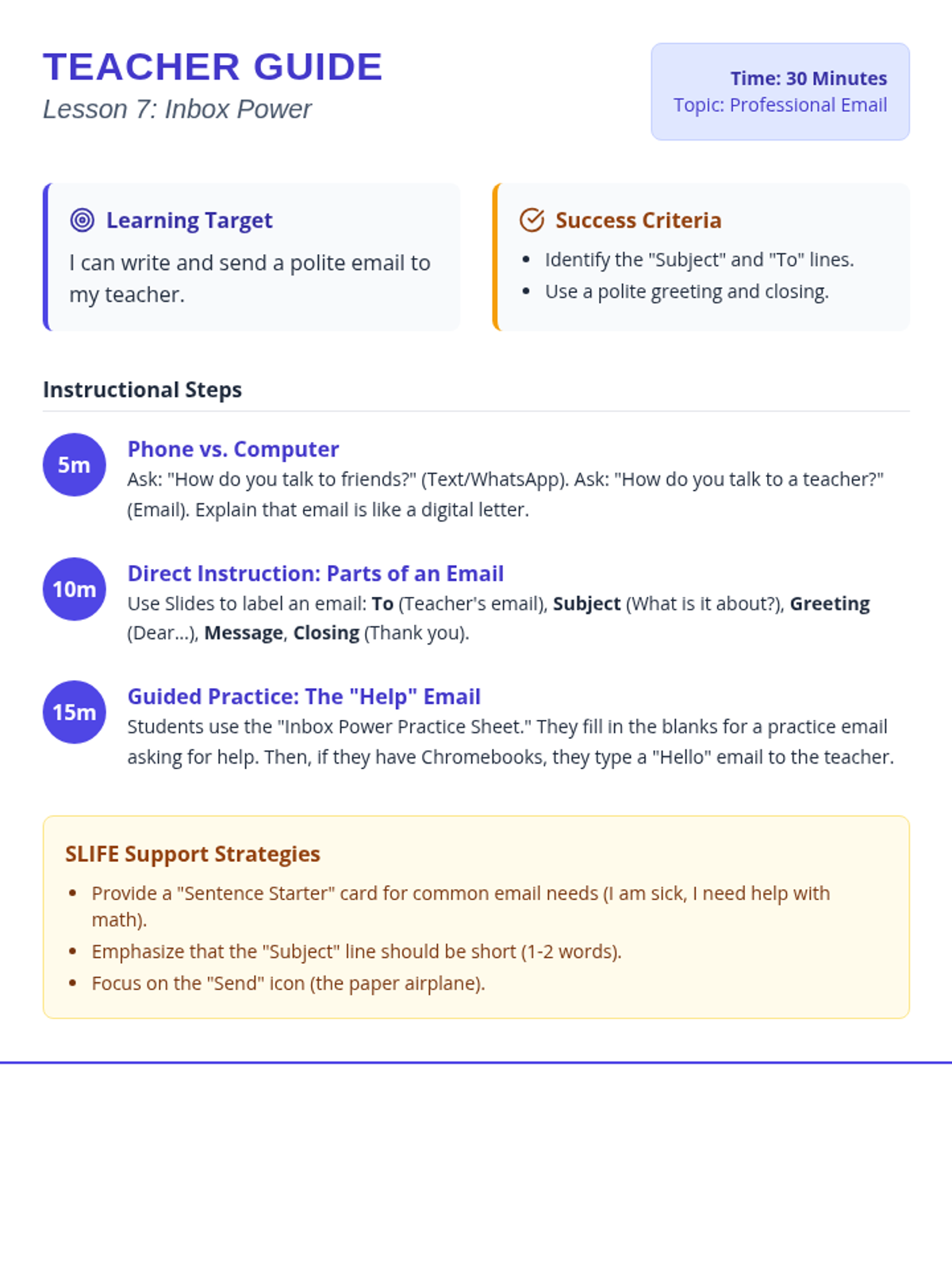
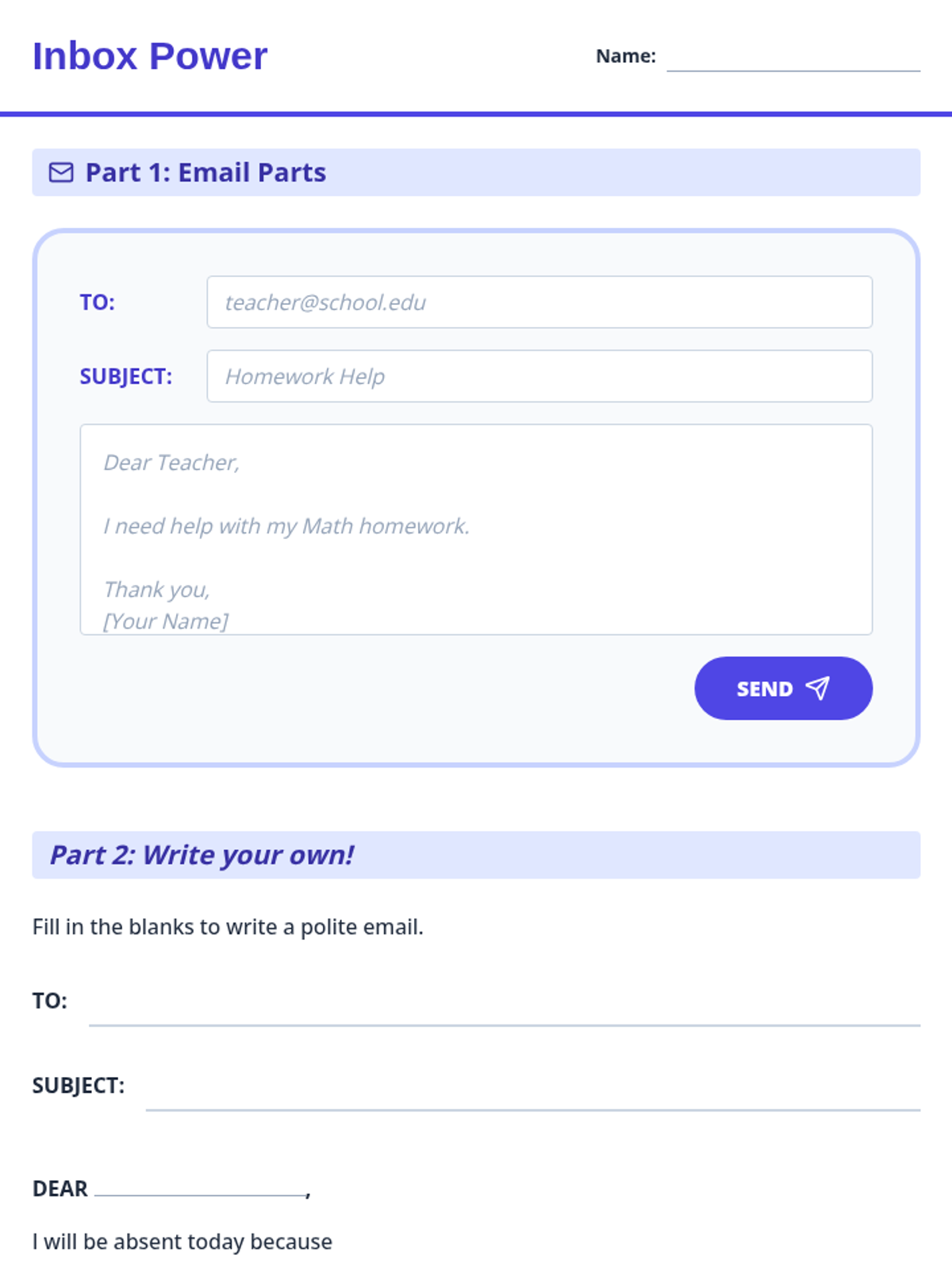
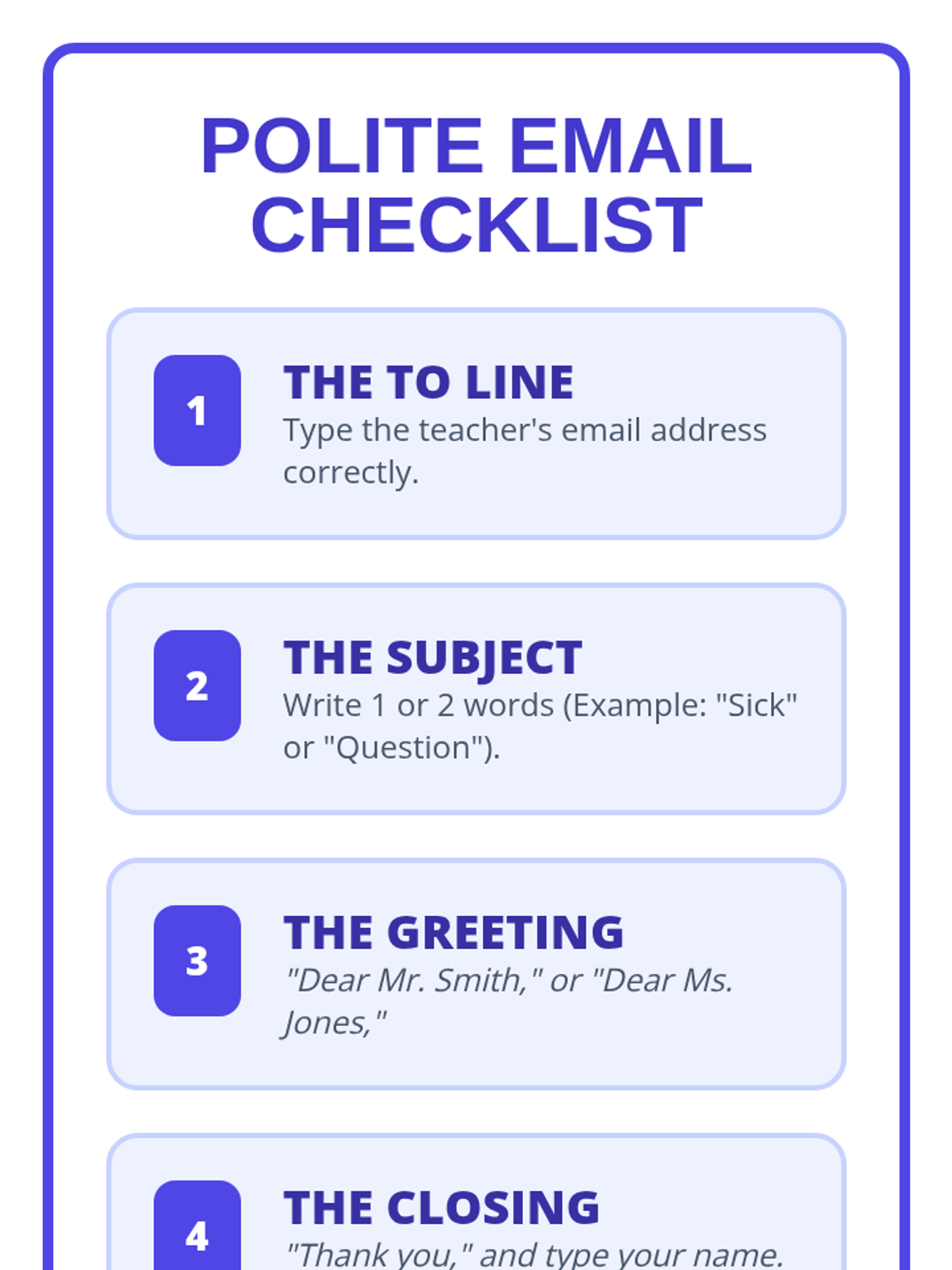
Step-by-step guidance on writing and sending a professional email to a teacher.
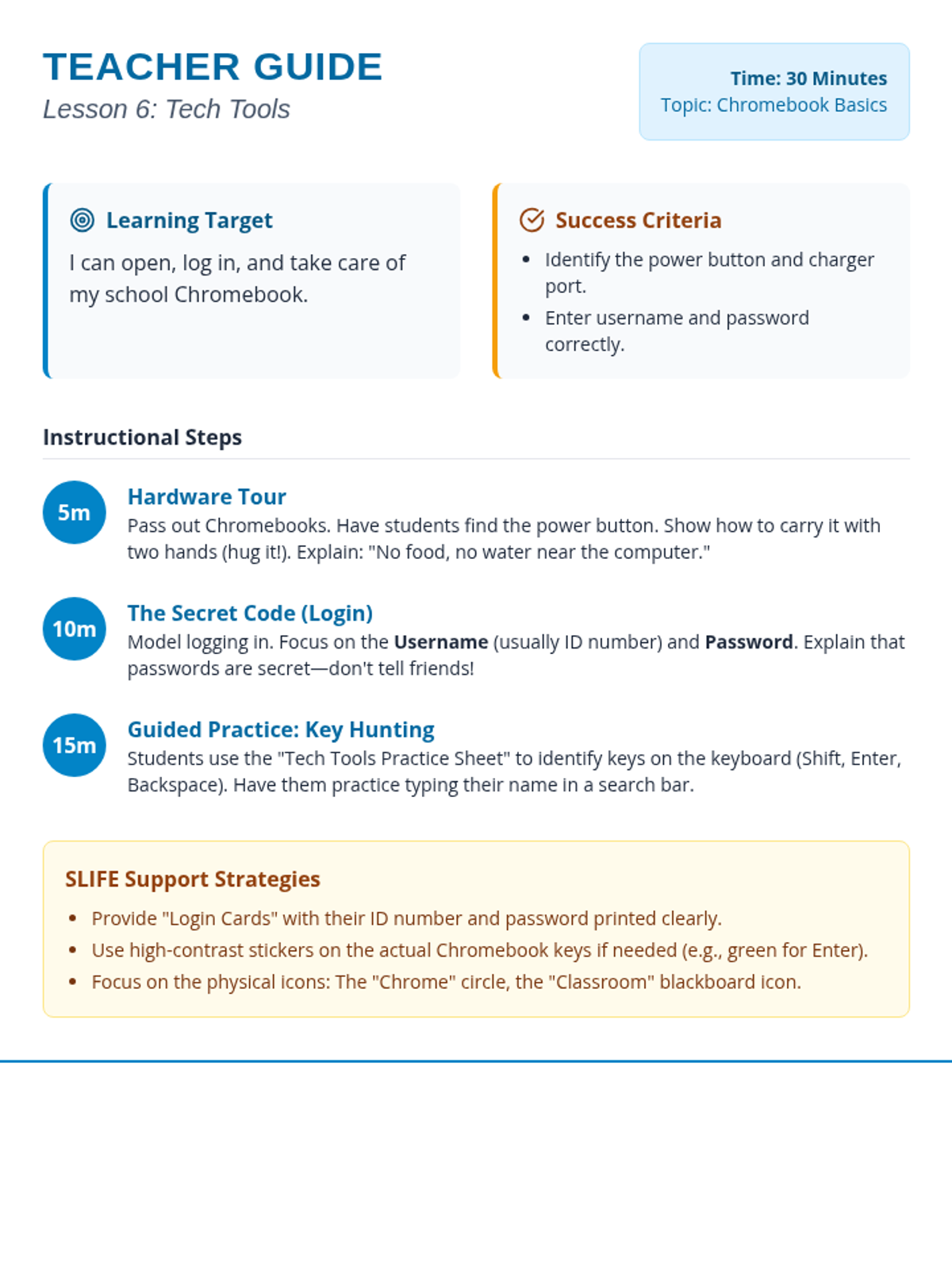
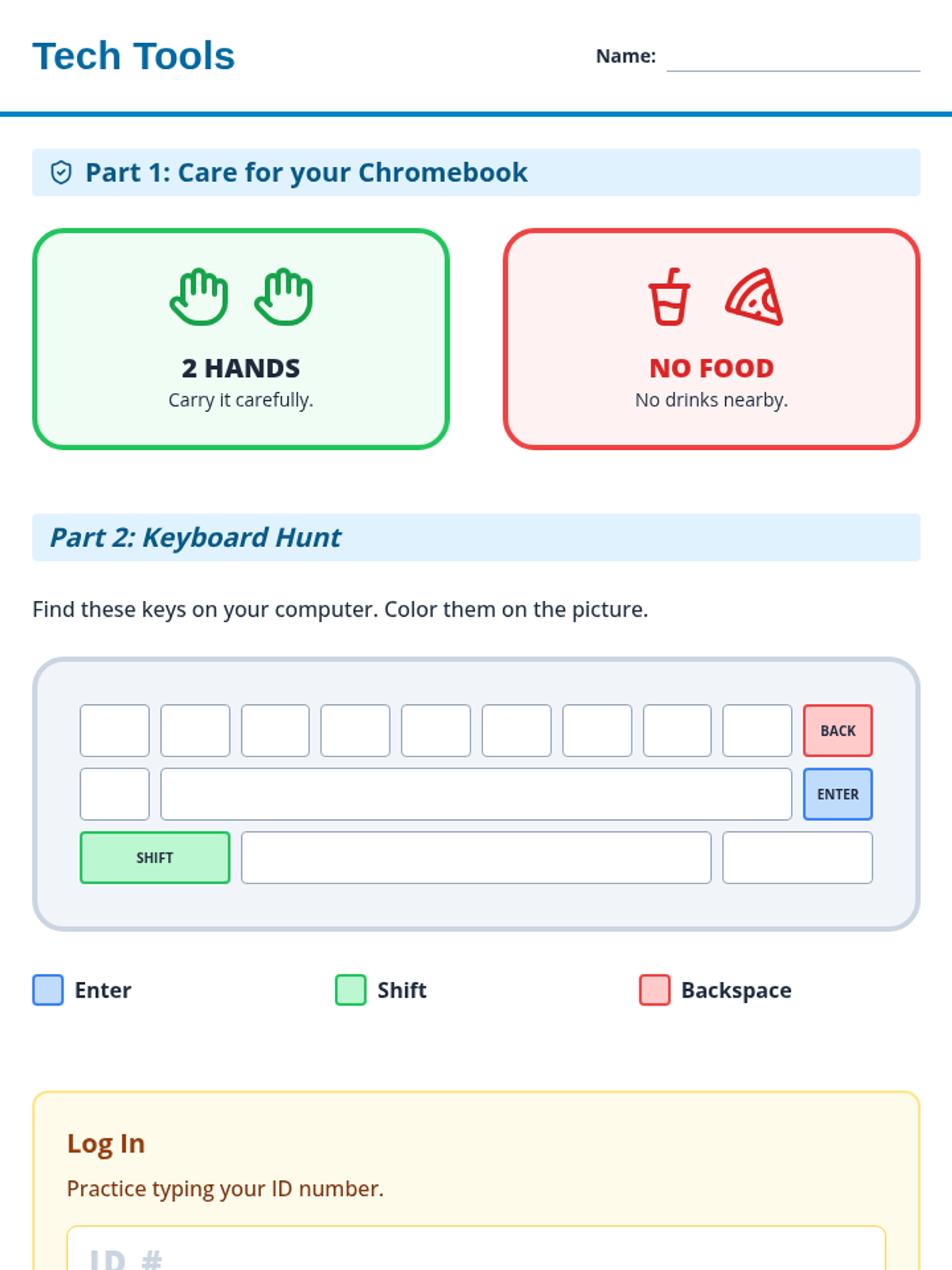
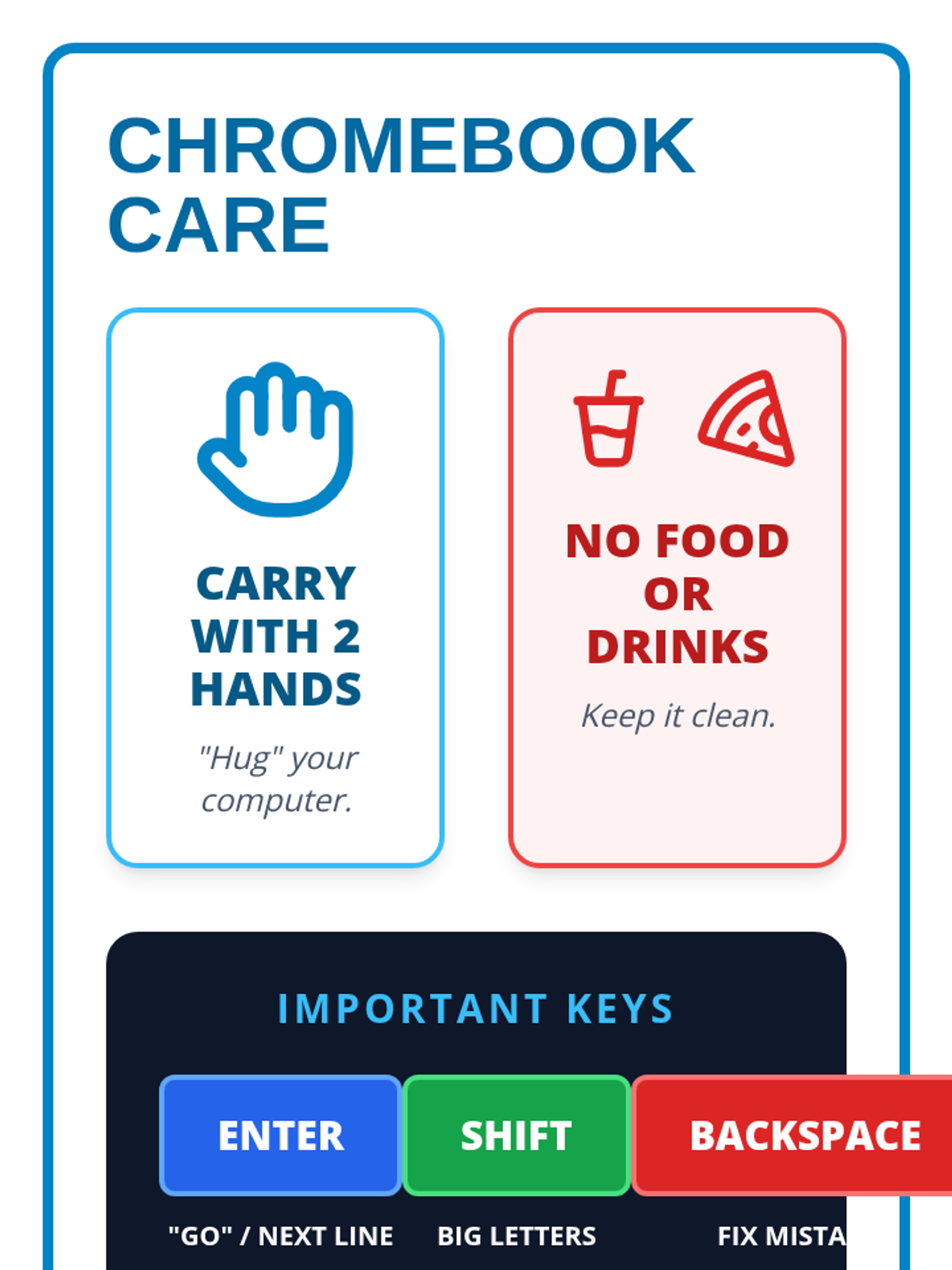
Basic Chromebook operation, including logging in, hardware care, and keyboard basics.
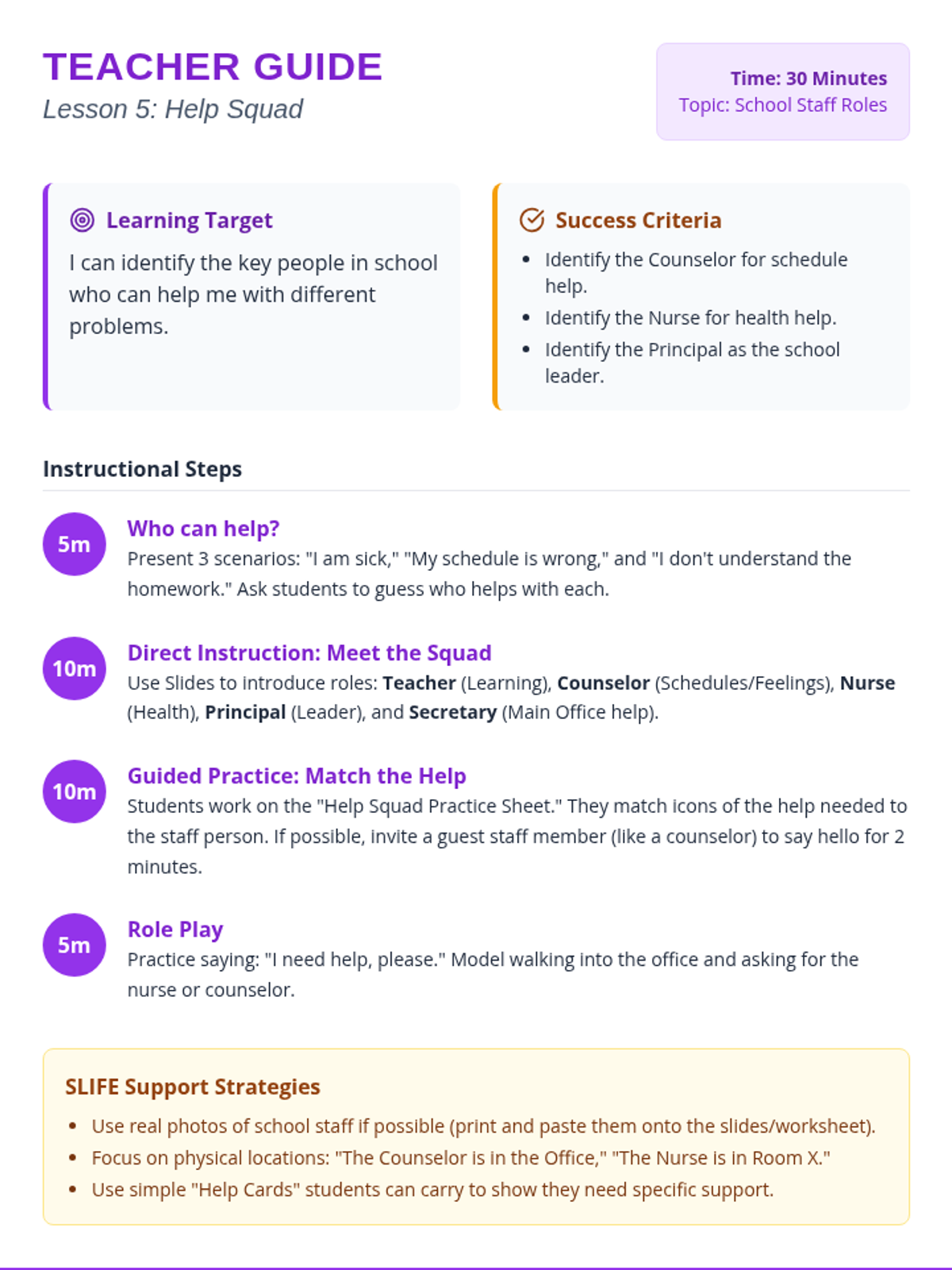
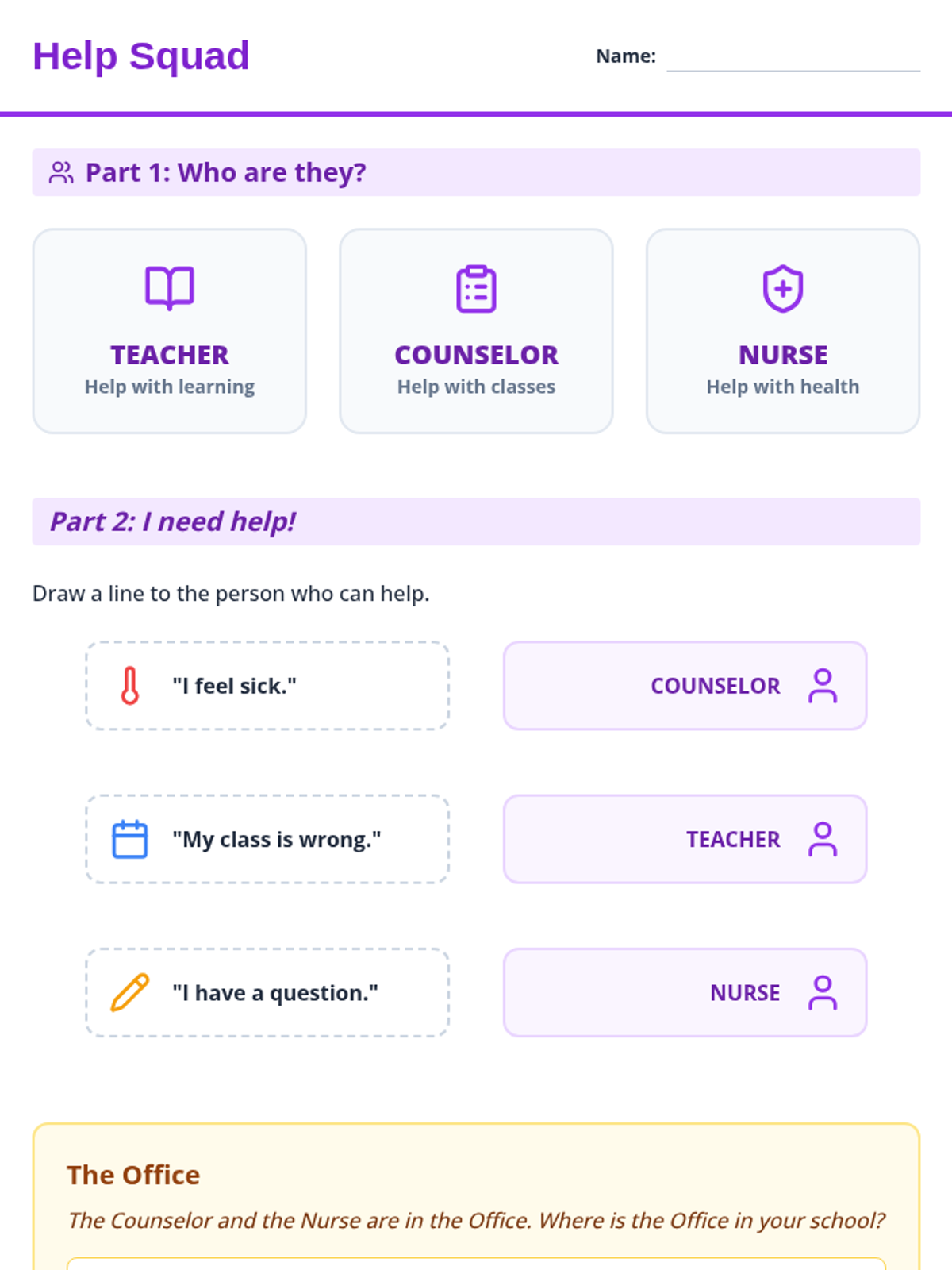
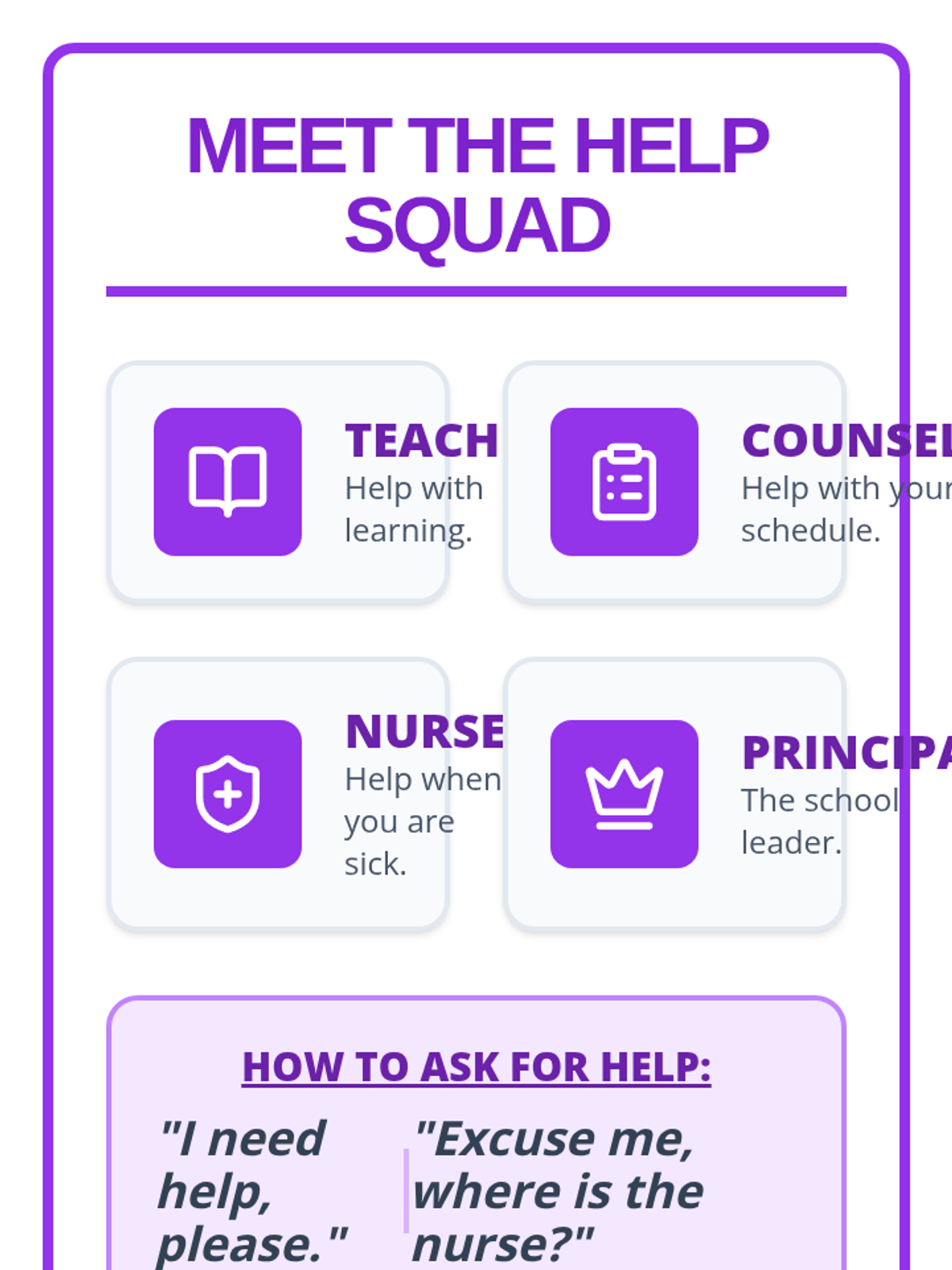
Identifying key school staff members and understanding their roles in supporting students.
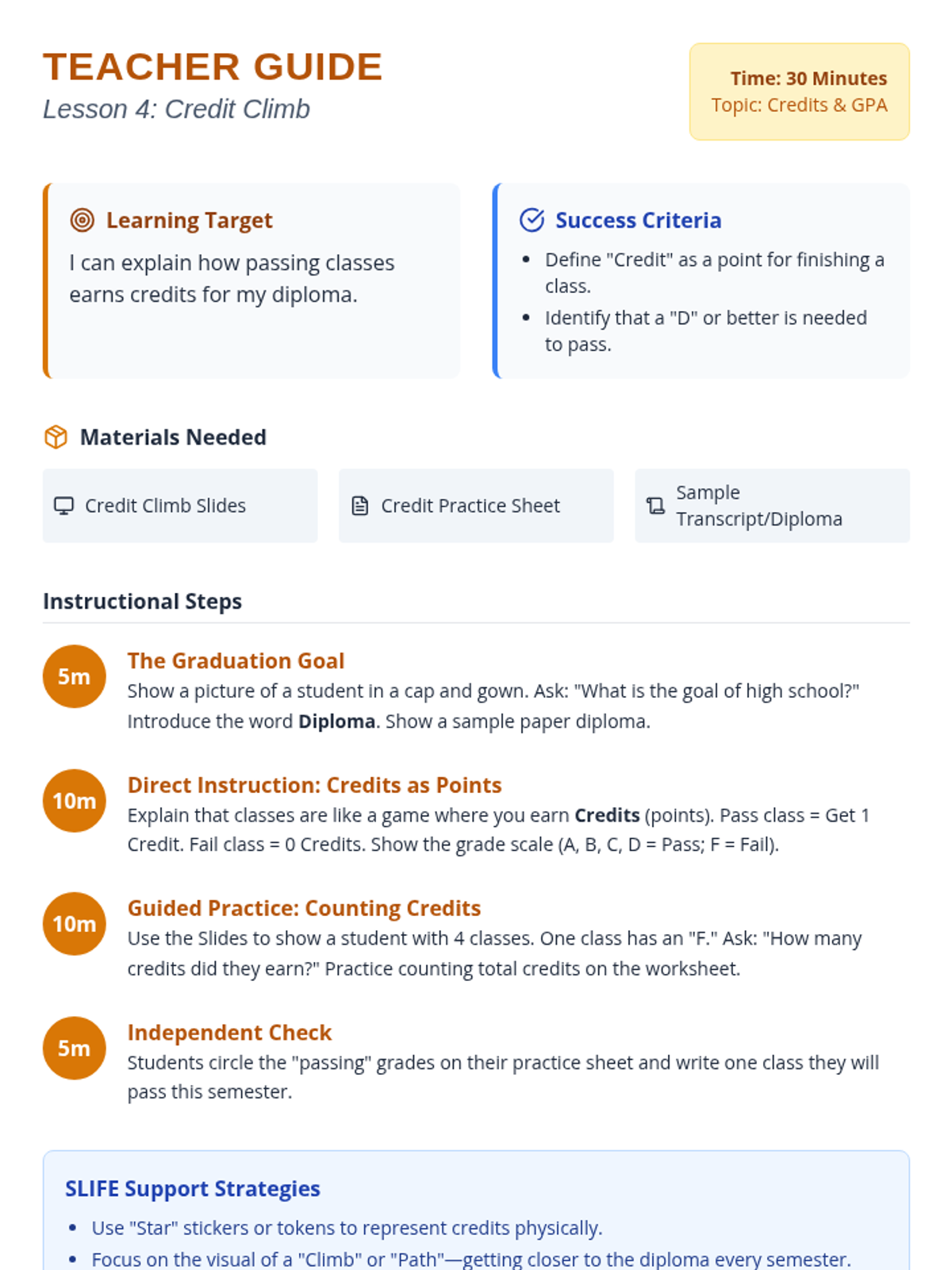
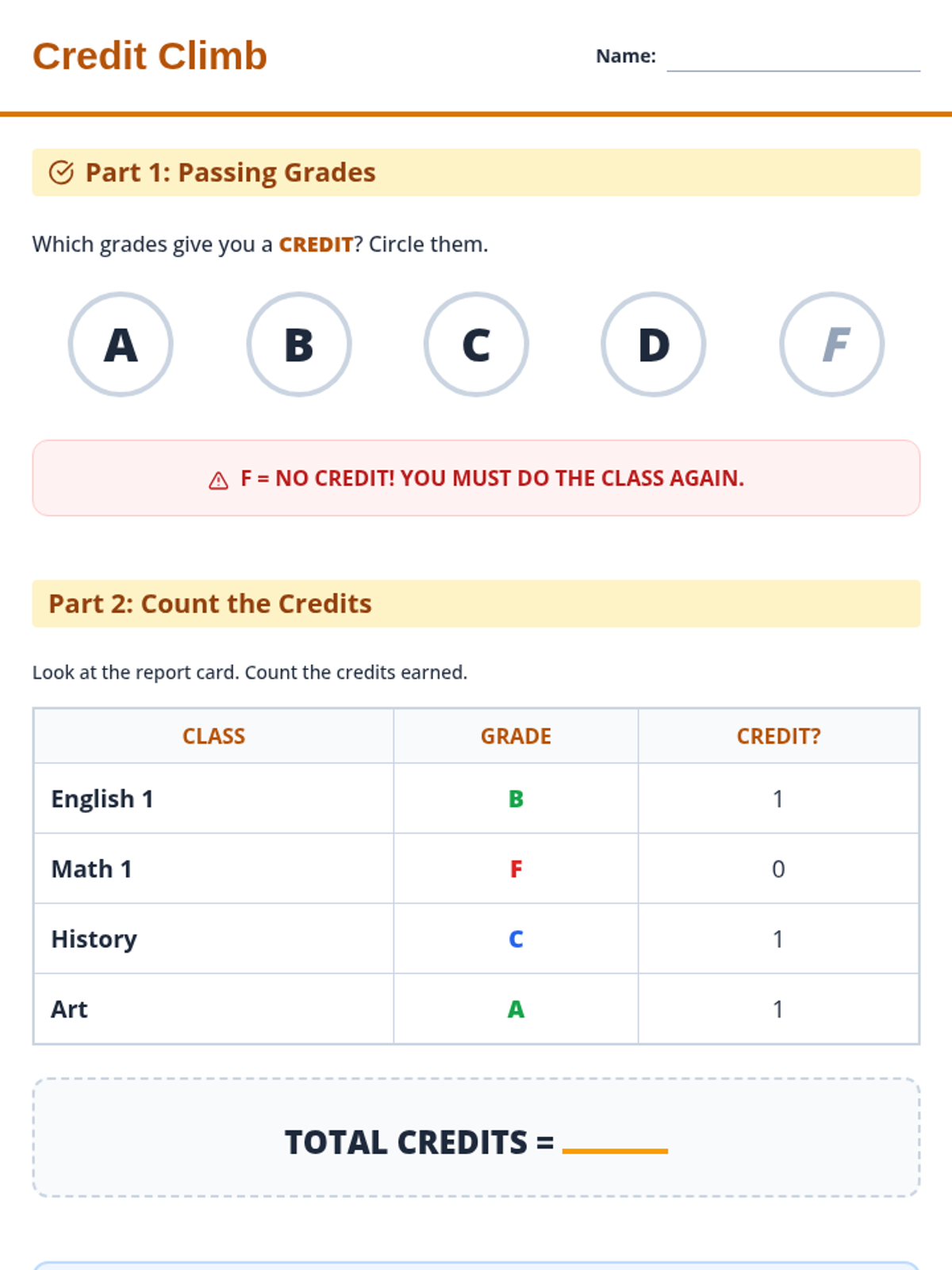
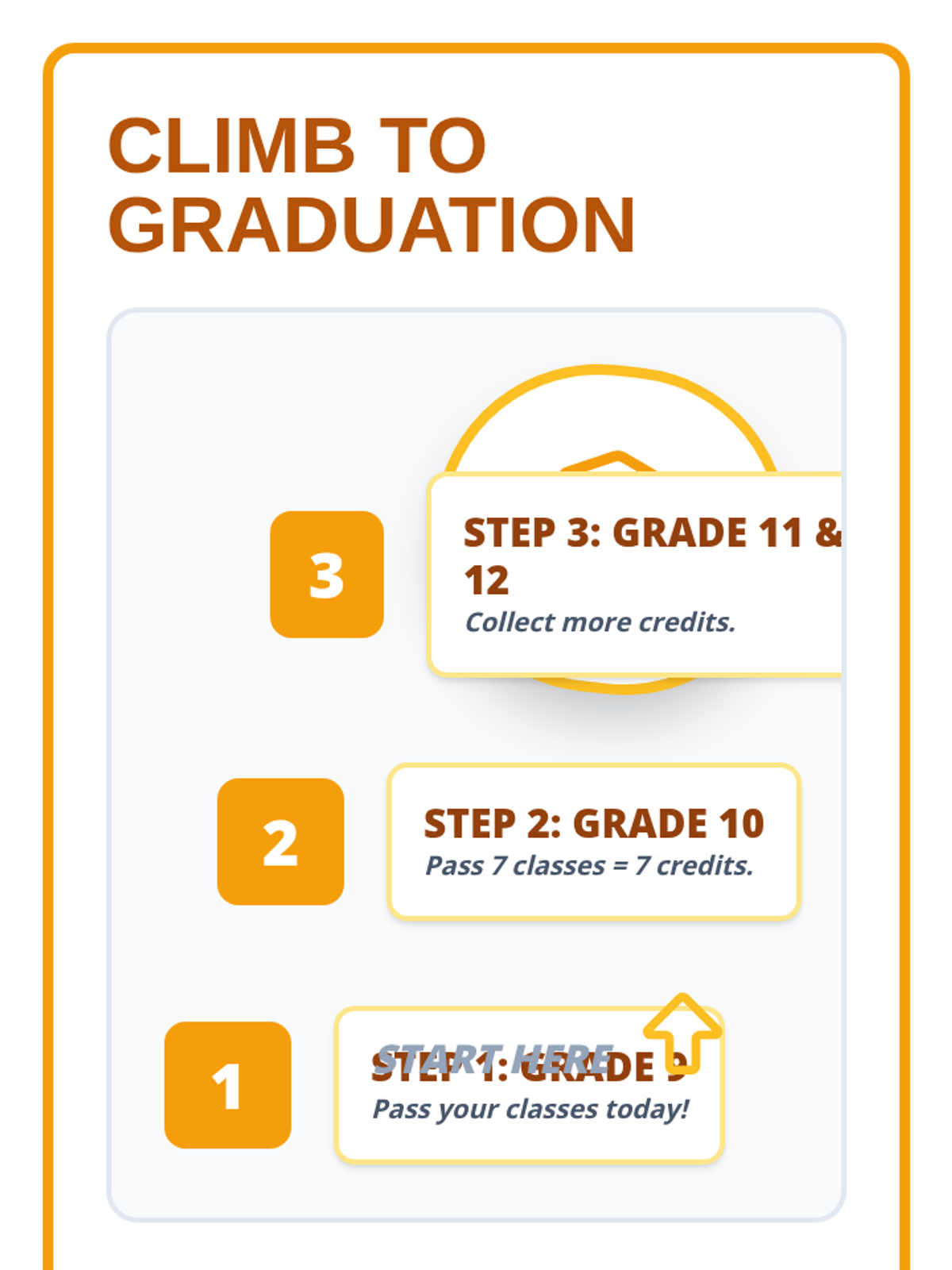
An introduction to earning credits, GPA basics, and the path to a high school diploma.
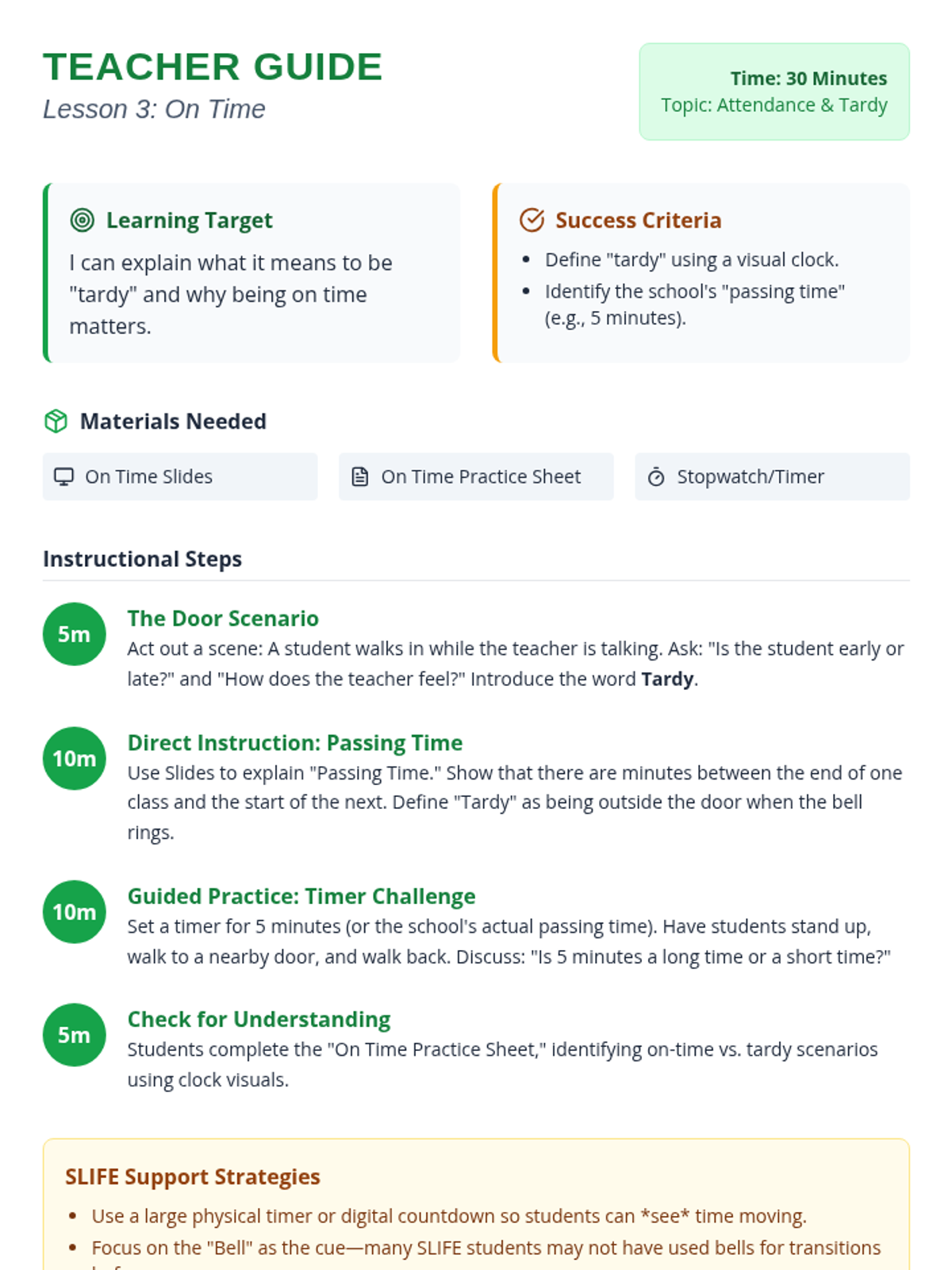
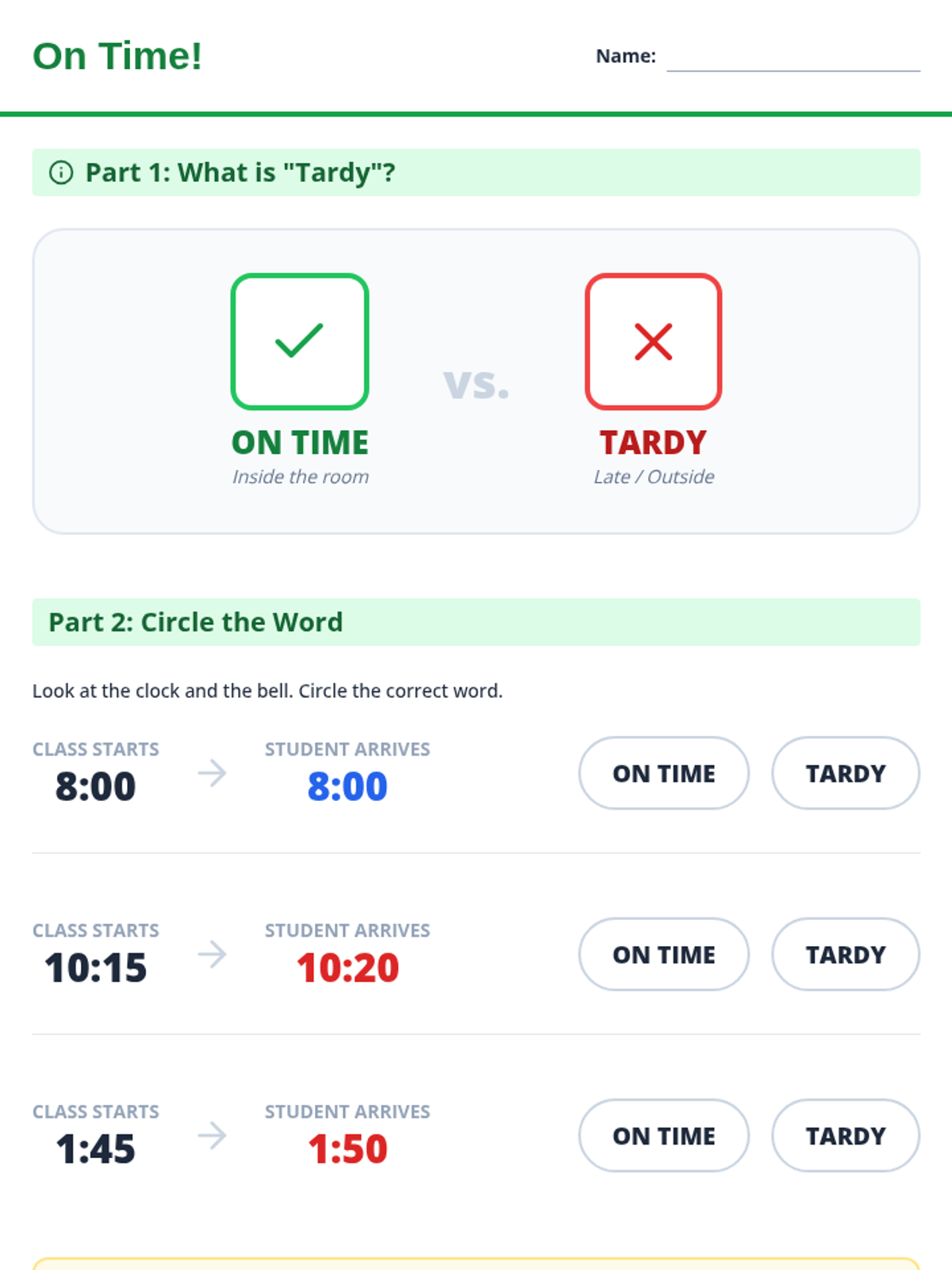
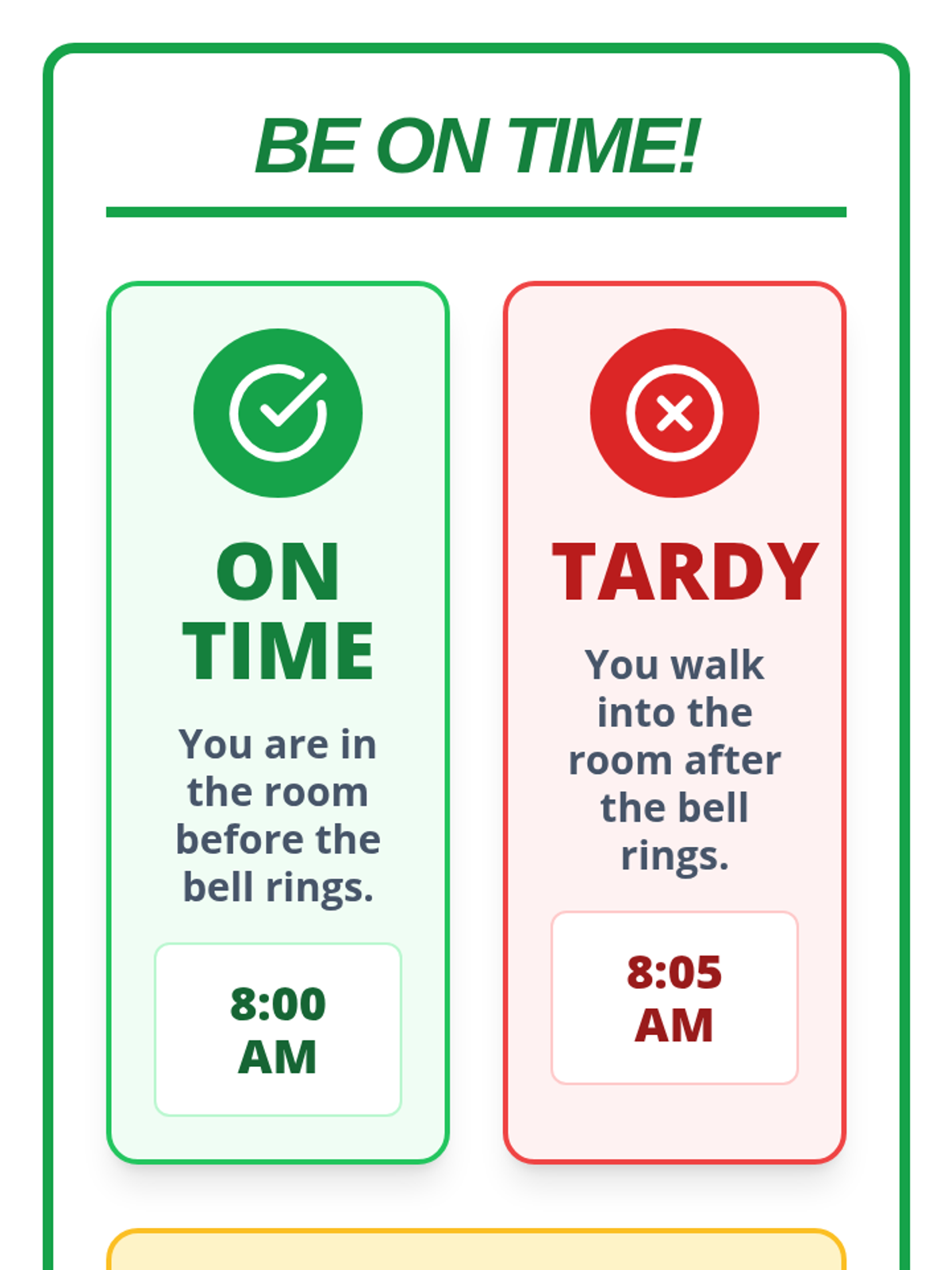
Students explore the importance of attendance and the definition of being tardy.
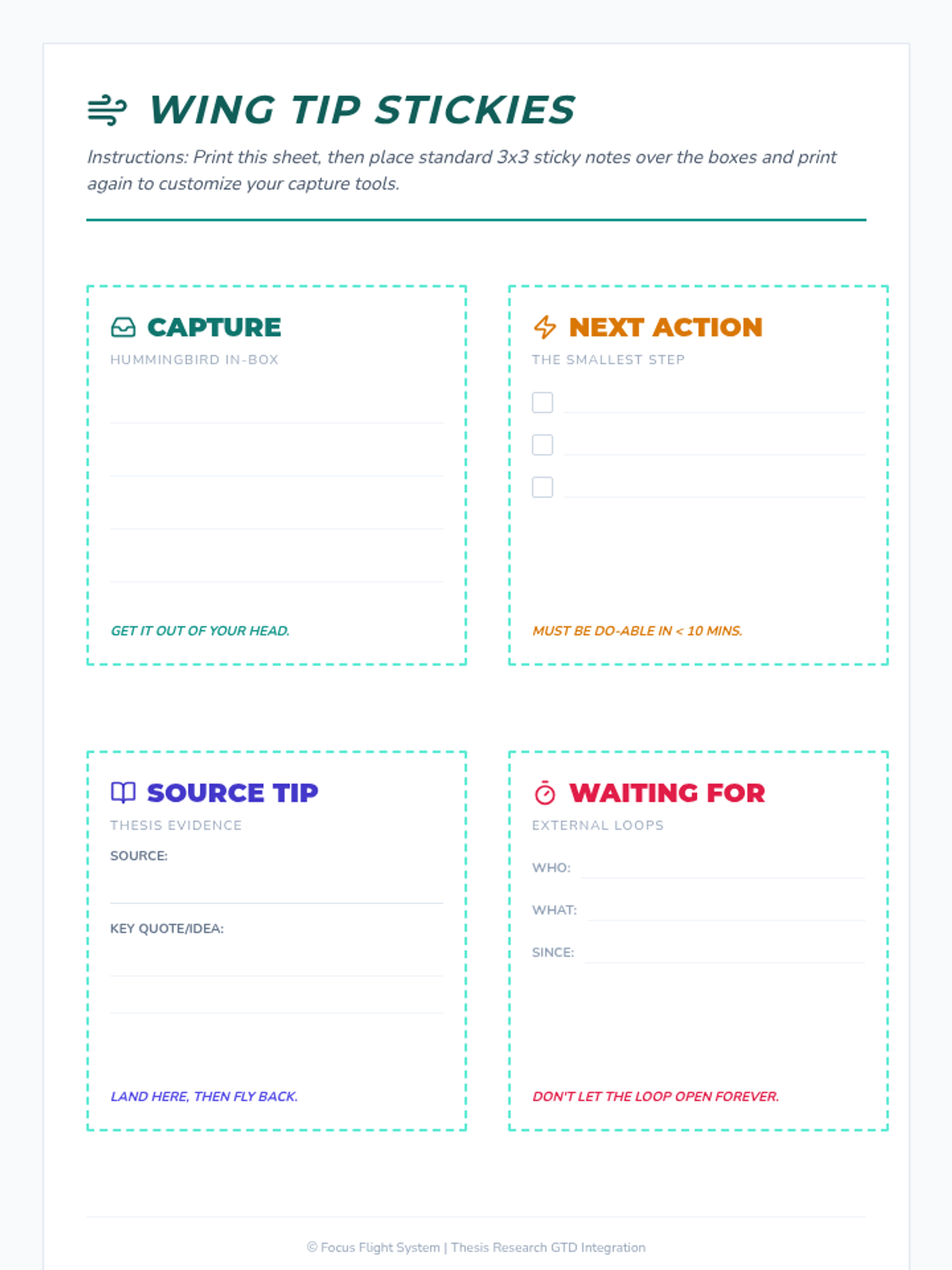
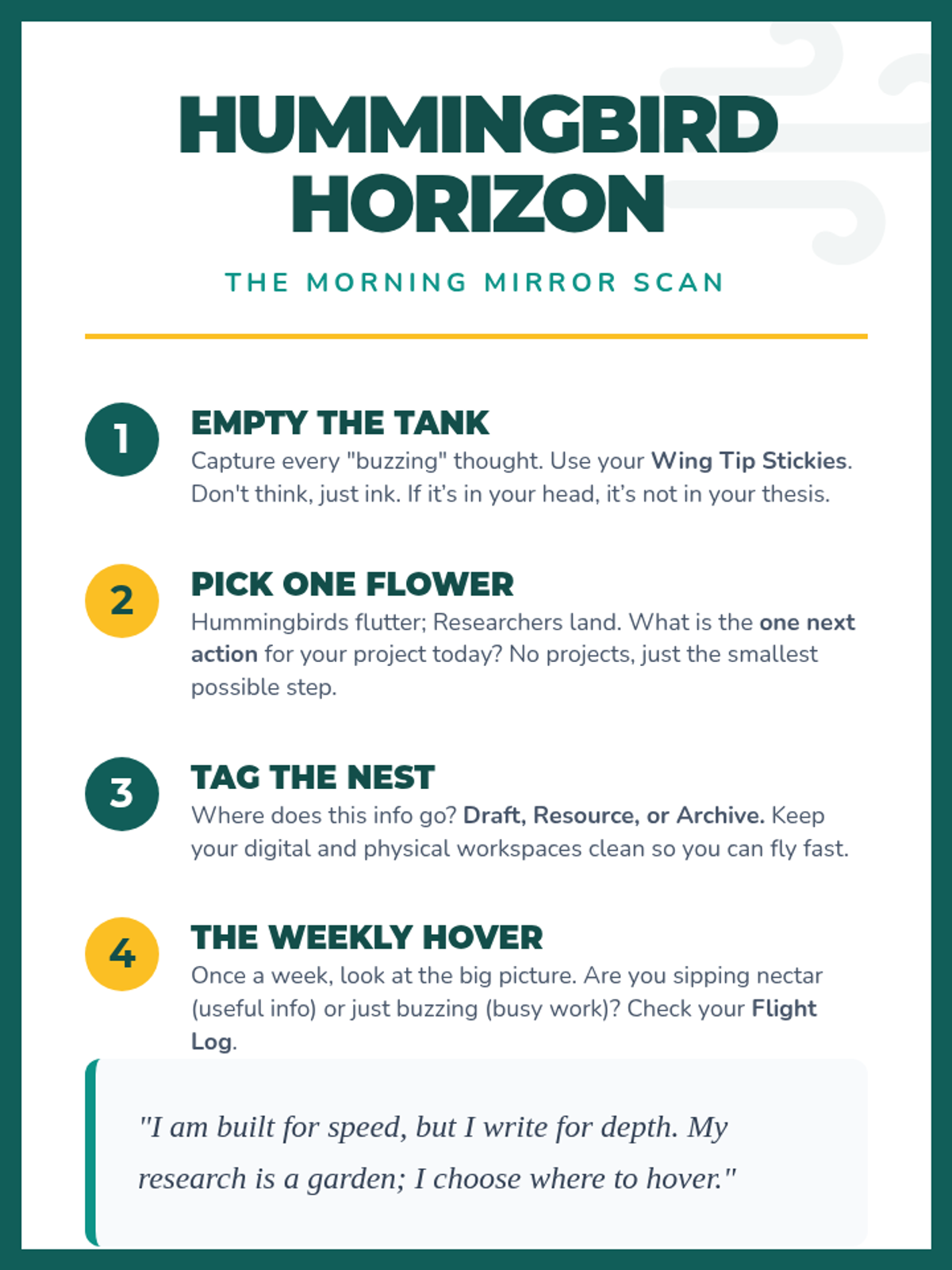
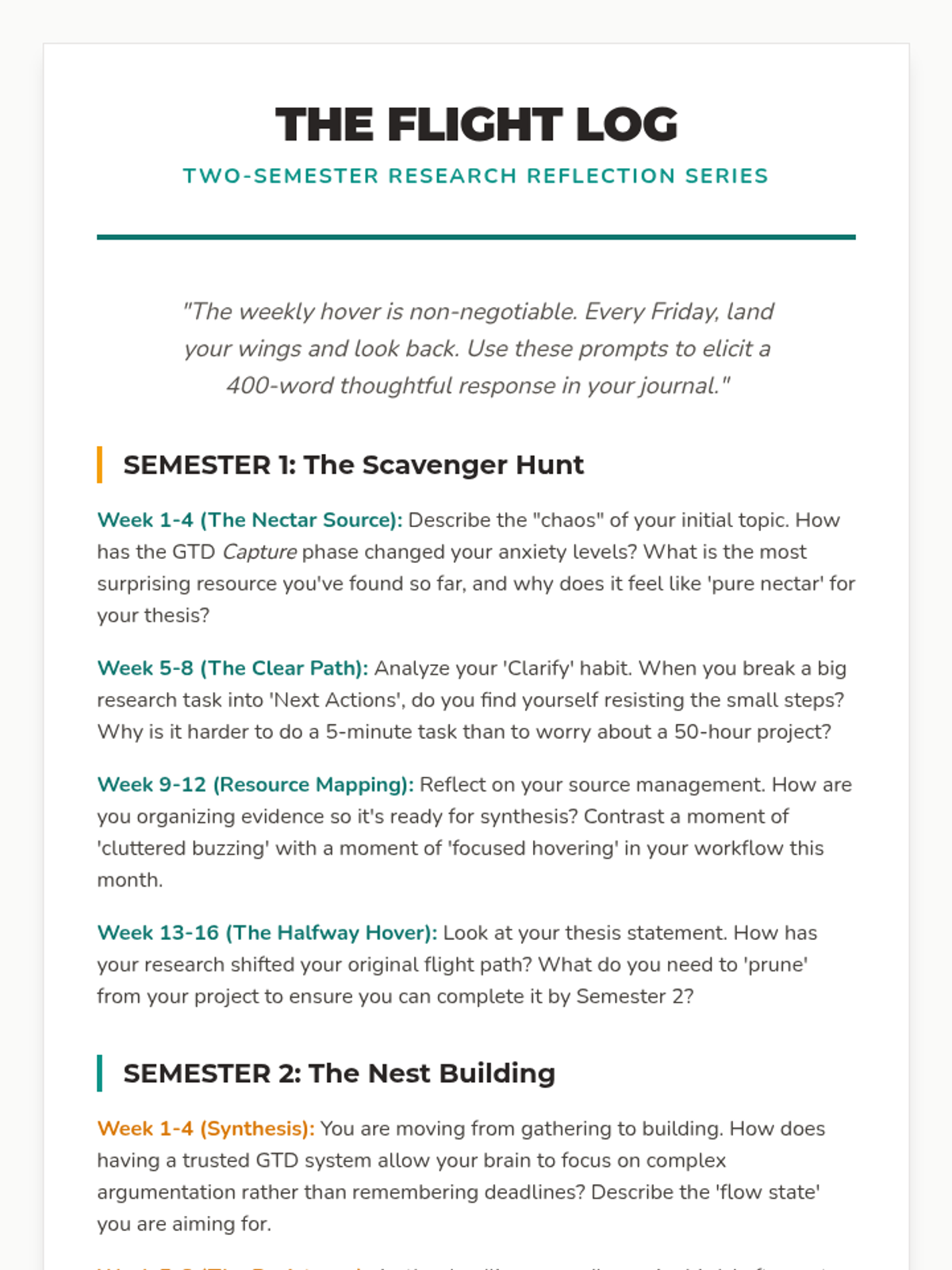
This lesson provides the foundational tools for the Focus Flight system: quick-capture sticky notes, a visual mindset poster, and structured reflection prompts to support a two-semester research thesis.
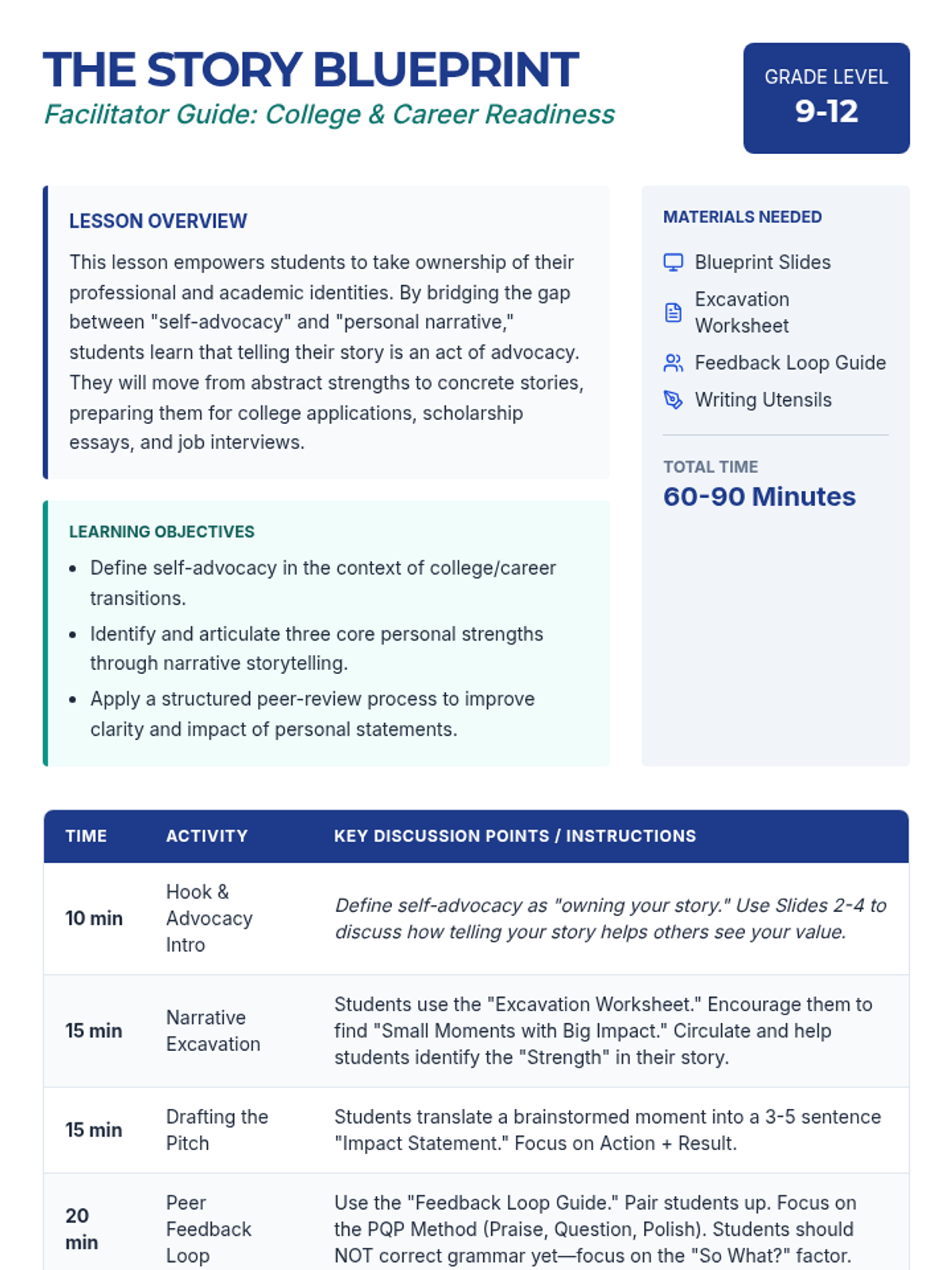
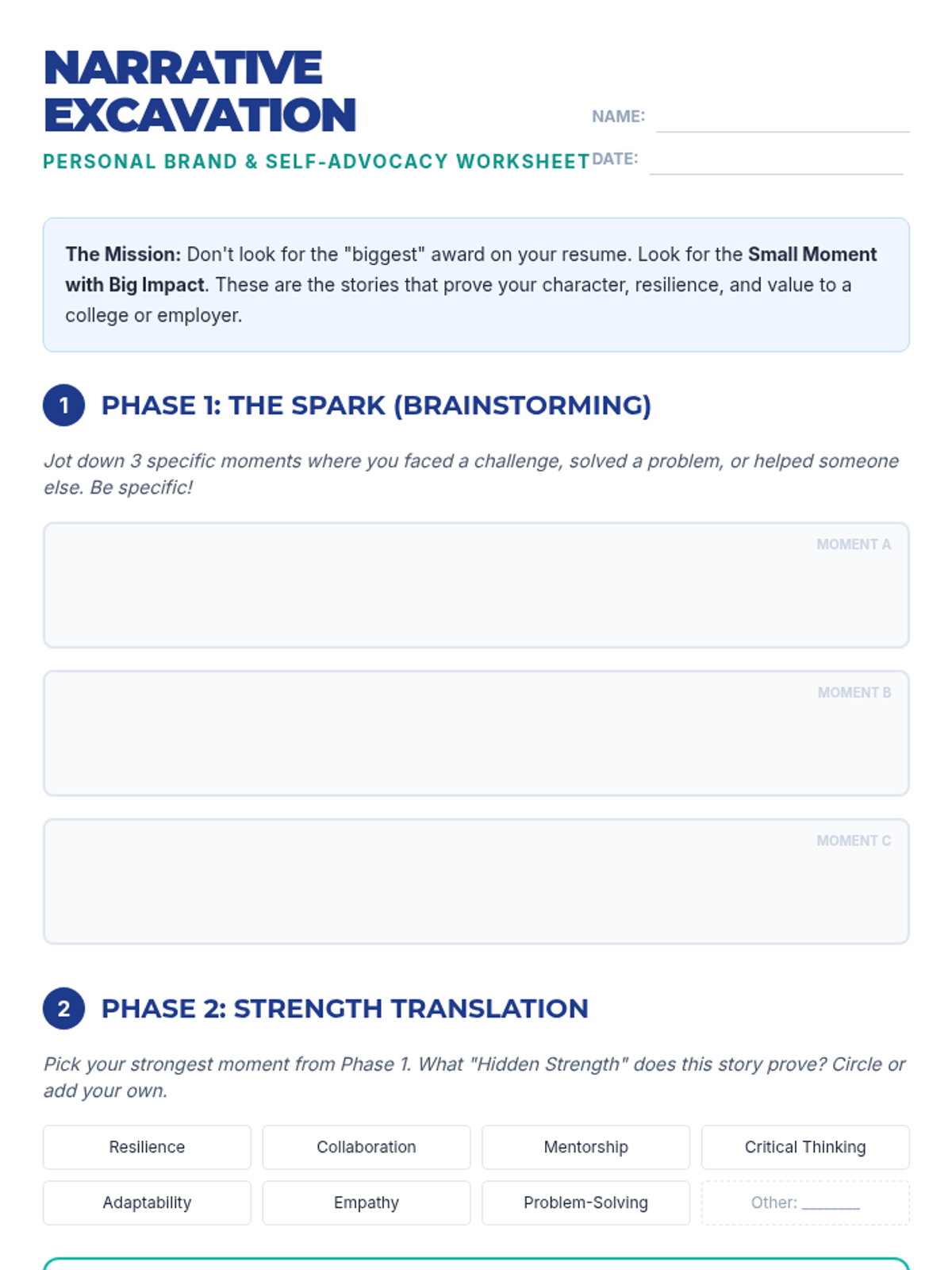
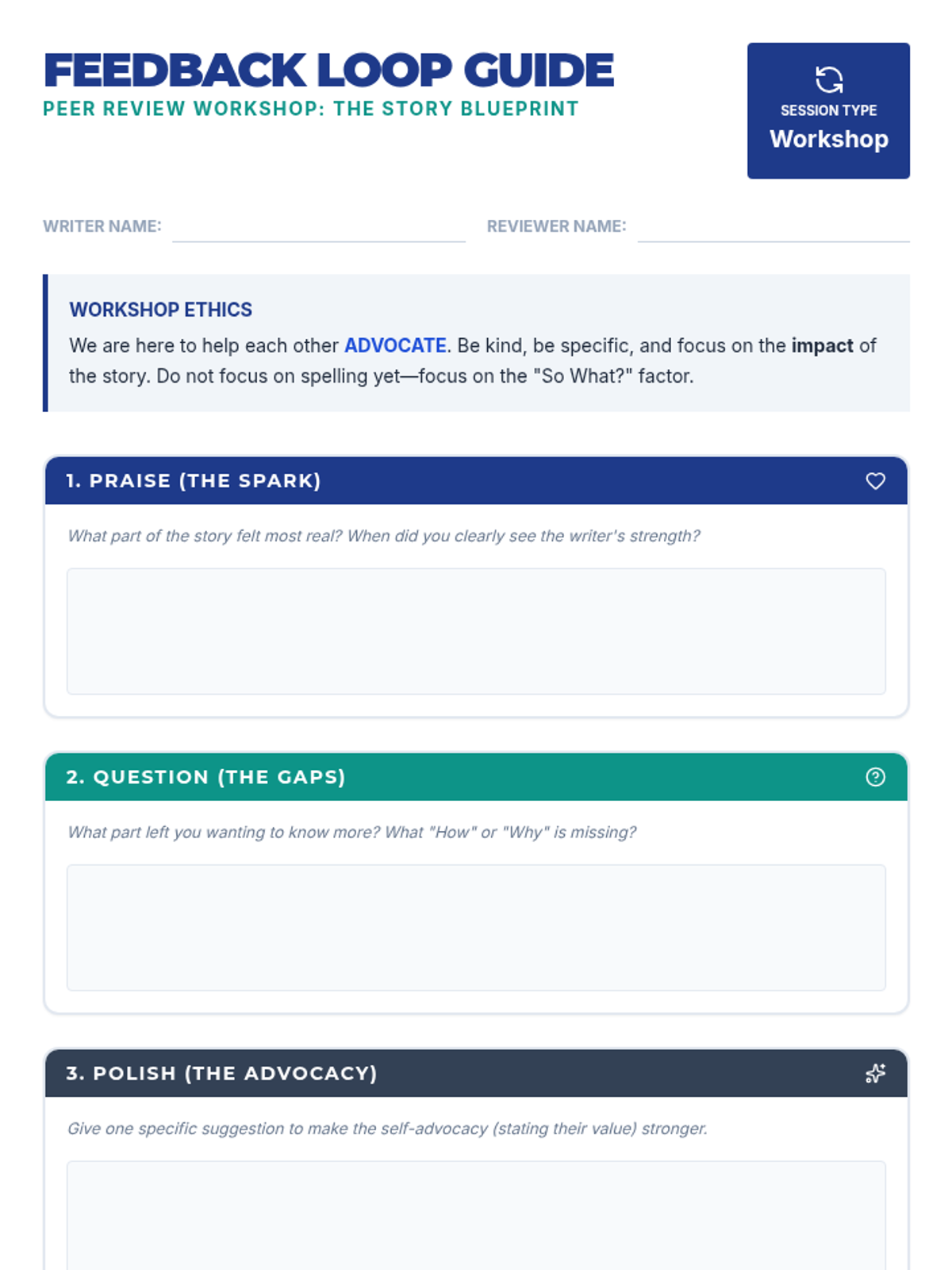
A high school counseling lesson focused on developing a personal brand through self-advocacy and narrative writing. Students learn to articulate their strengths and provide constructive feedback to peers.
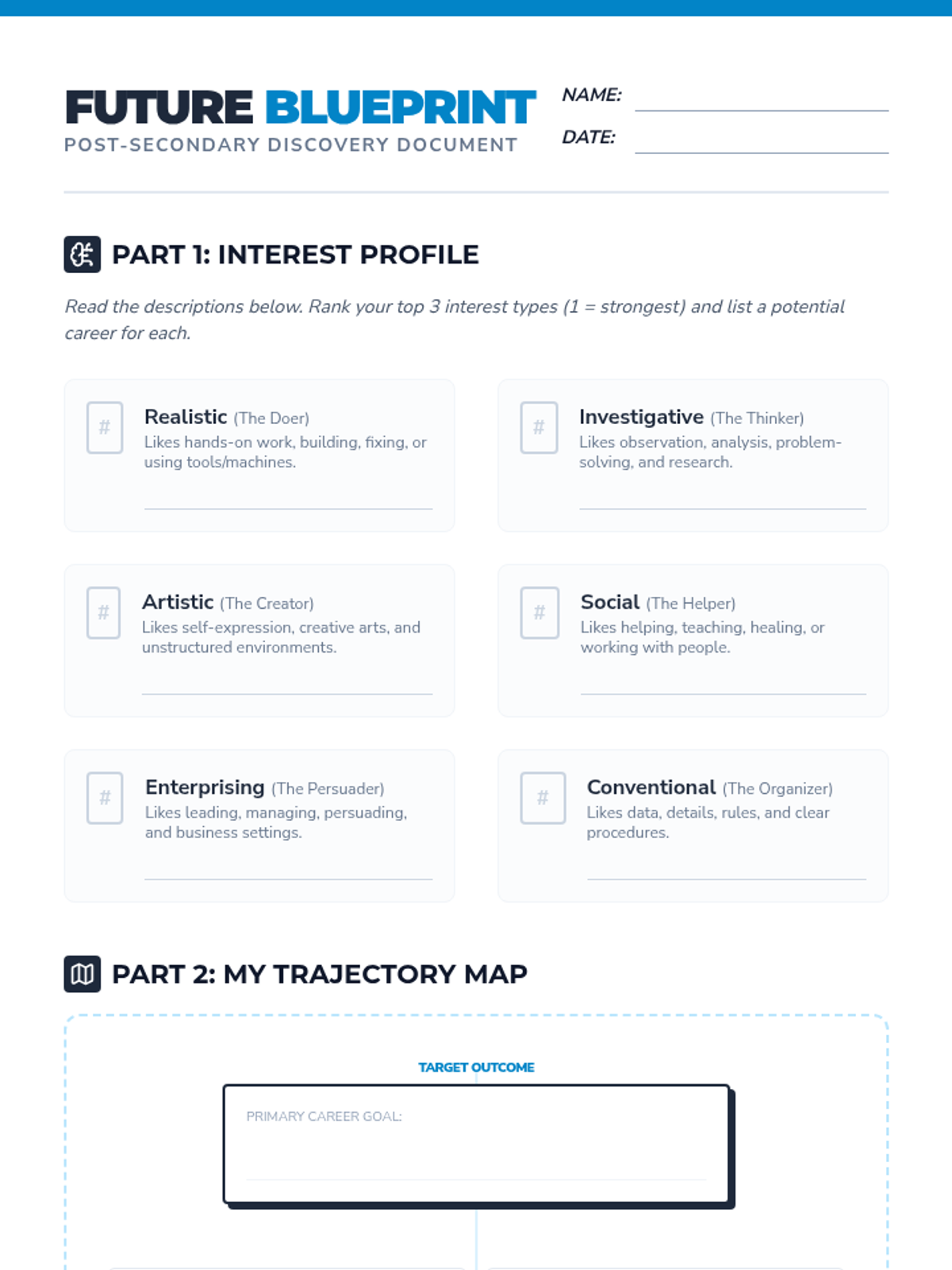
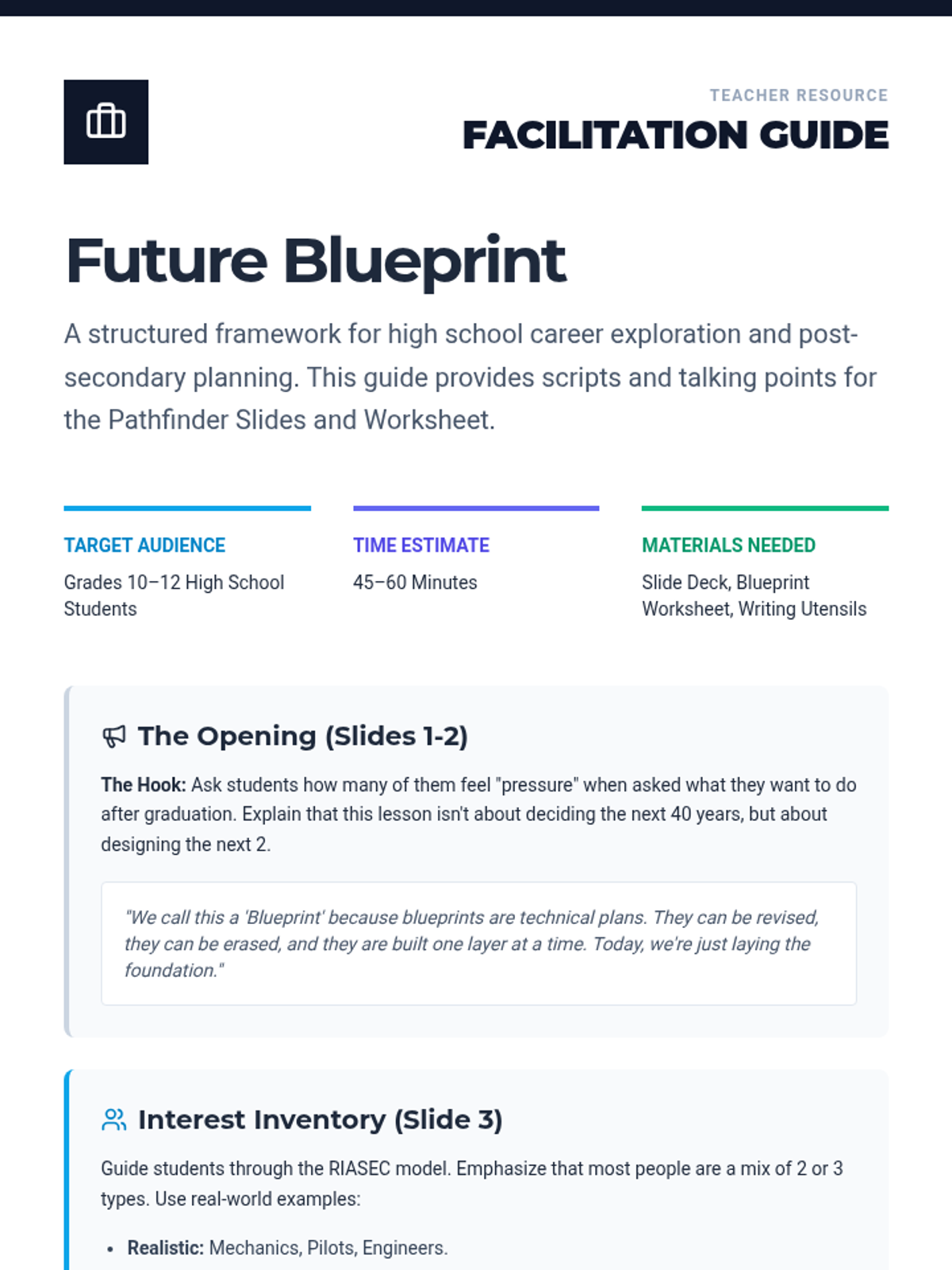
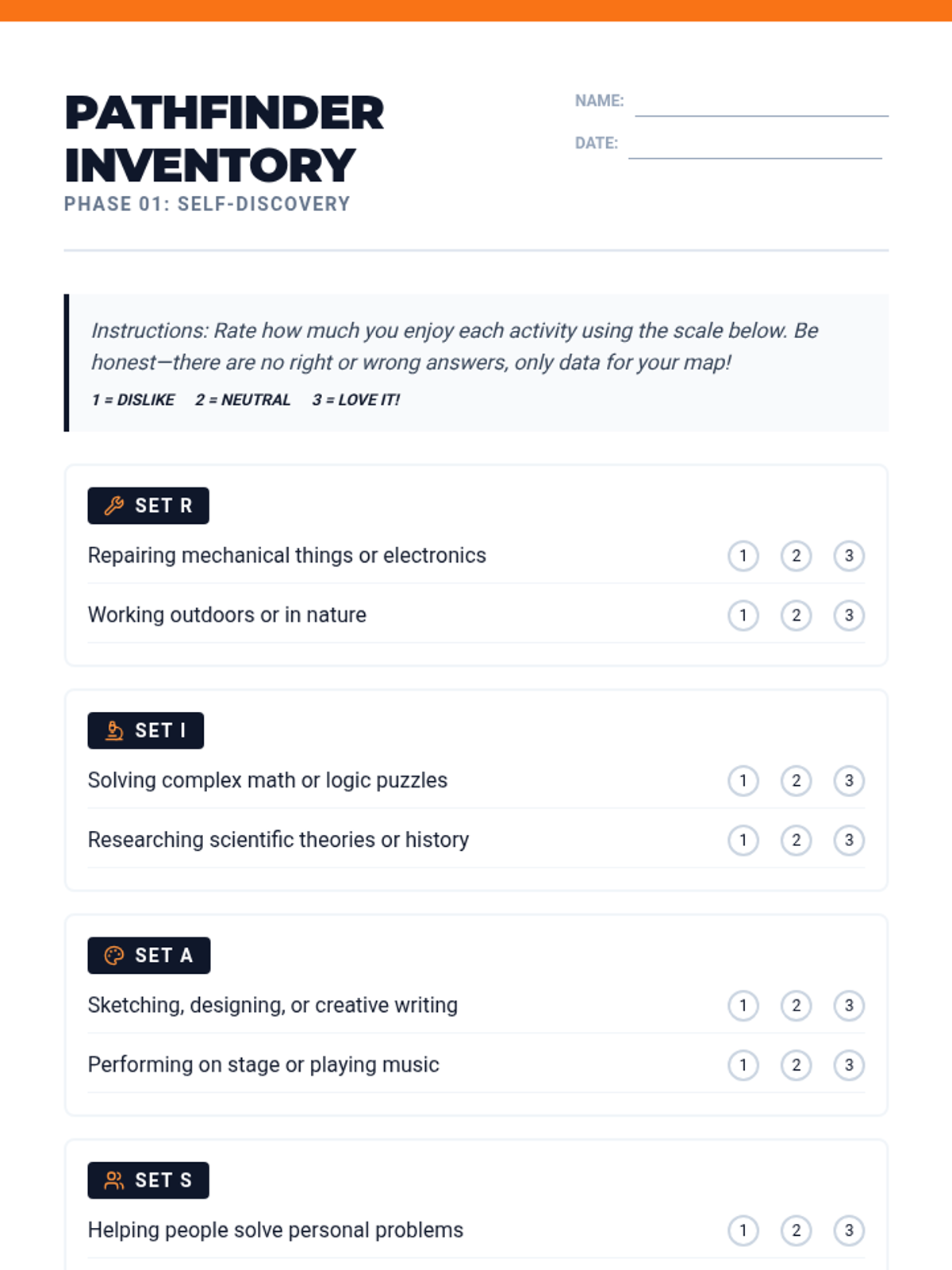
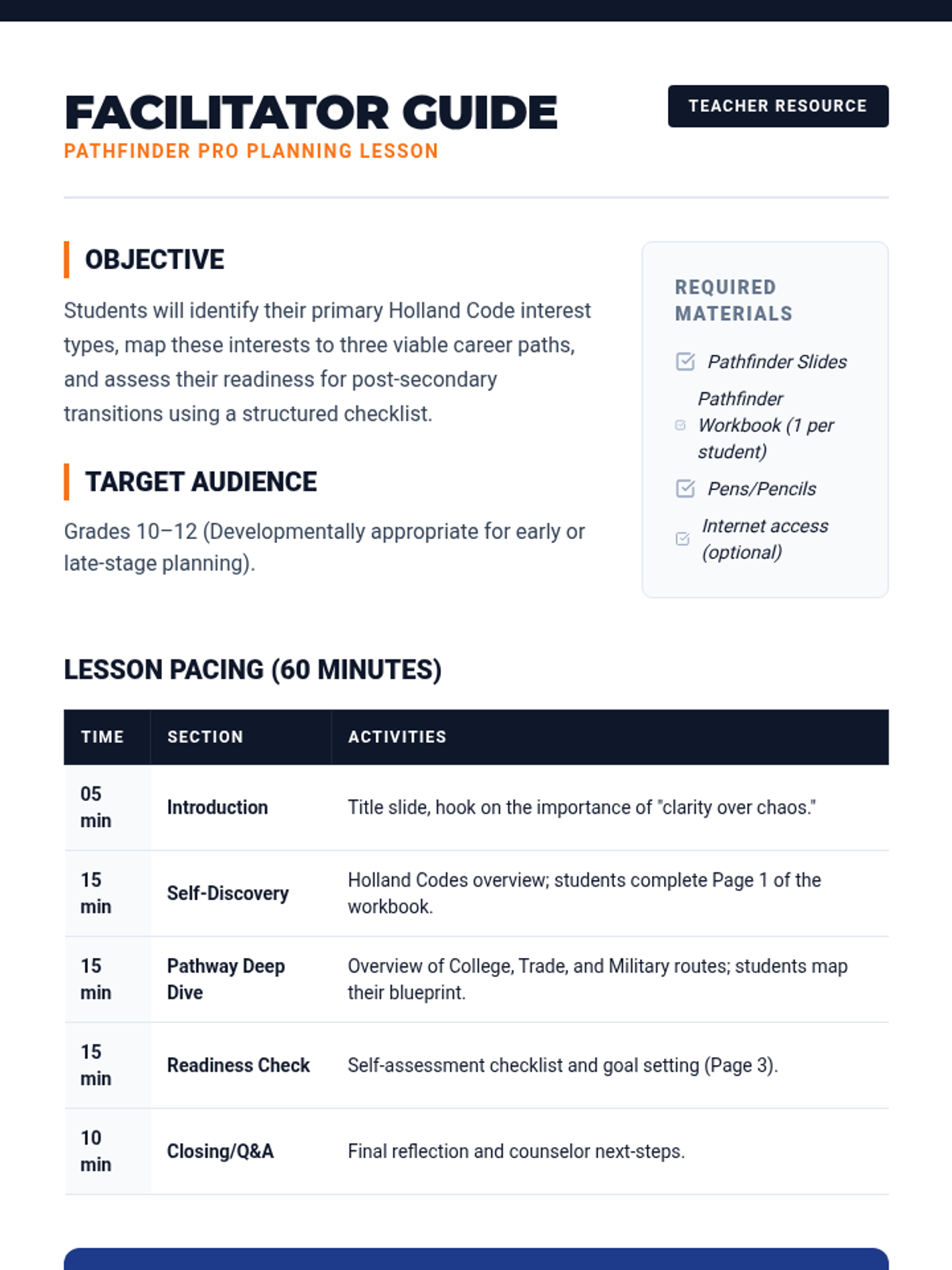
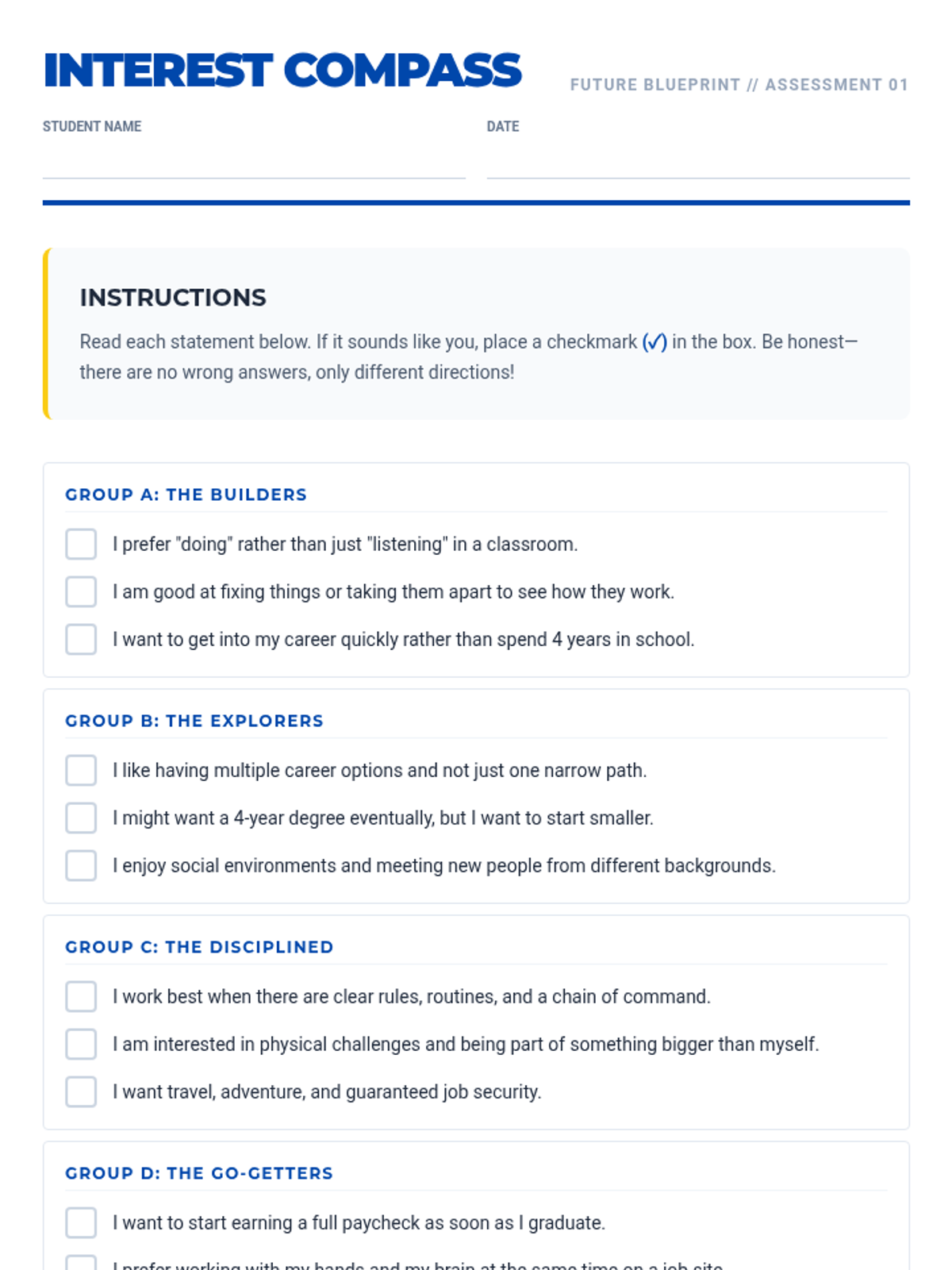
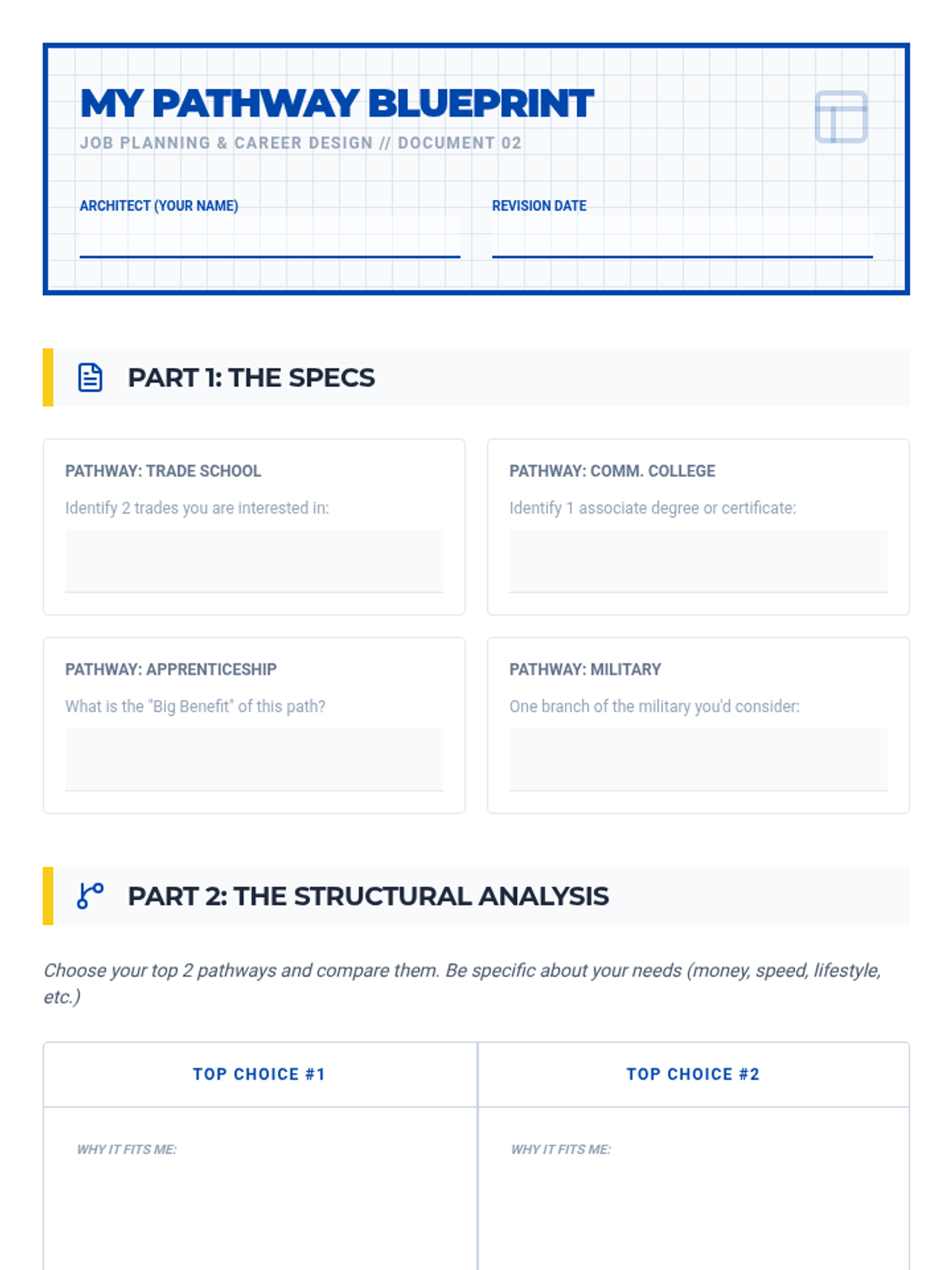
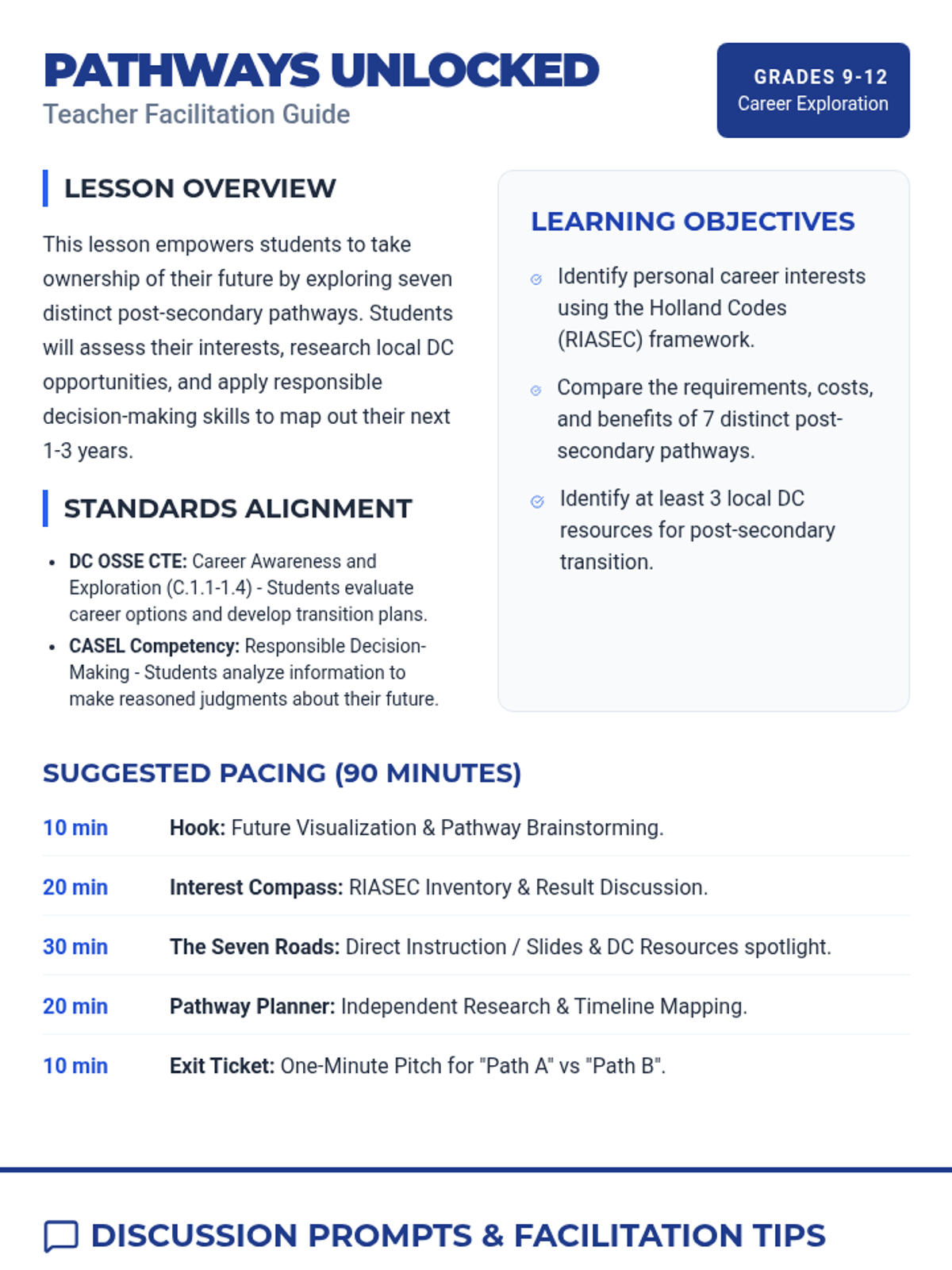
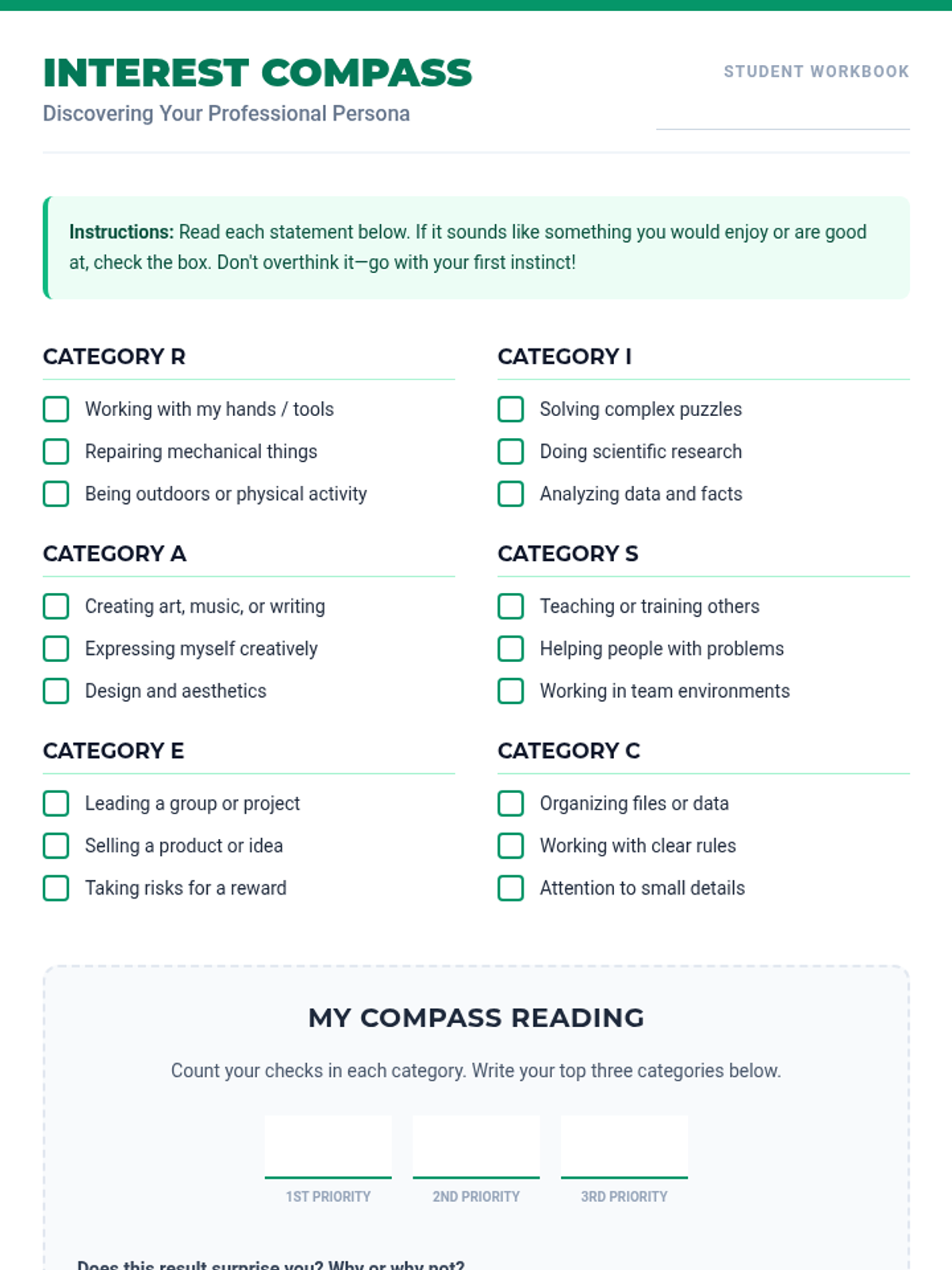
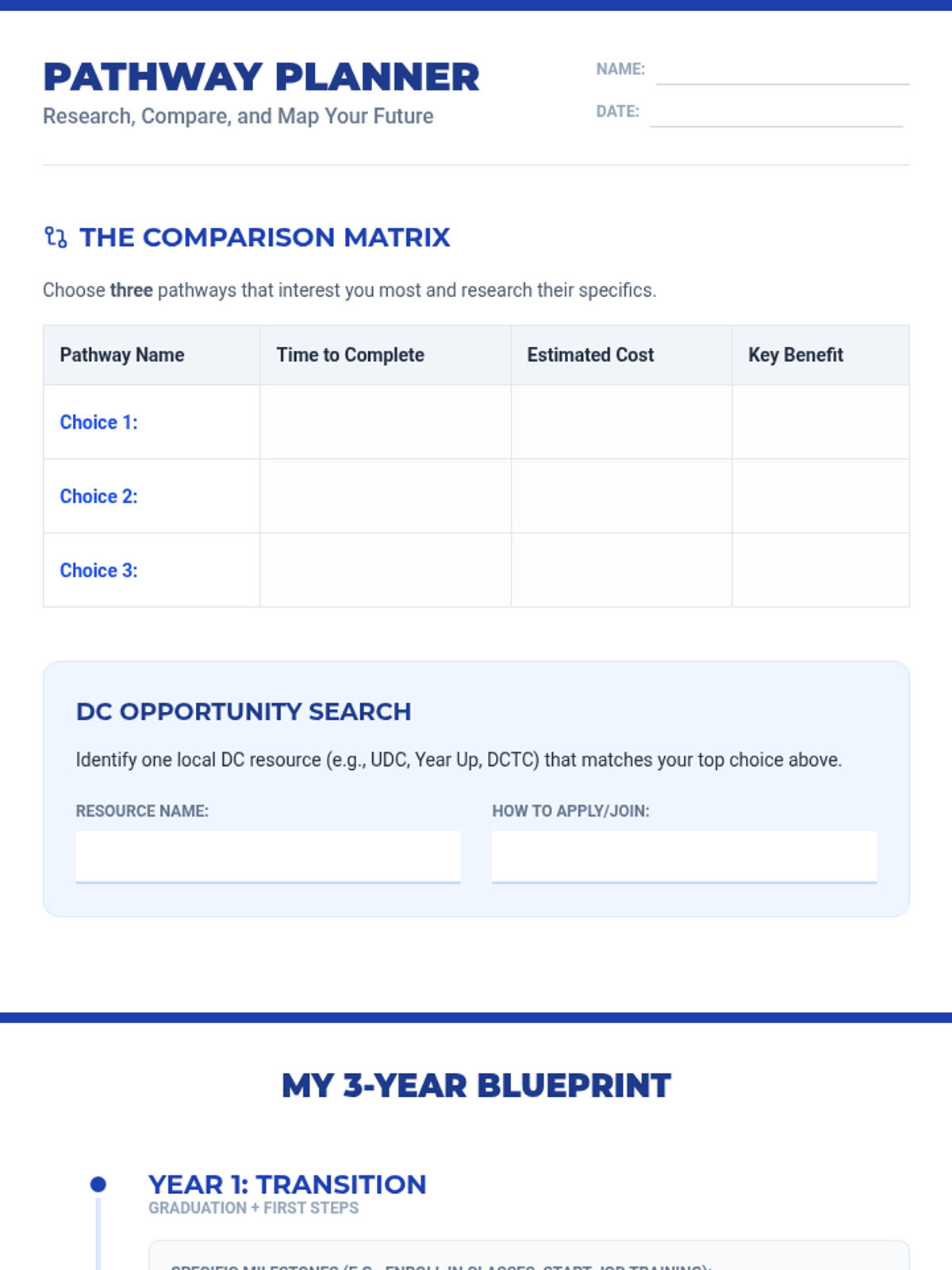
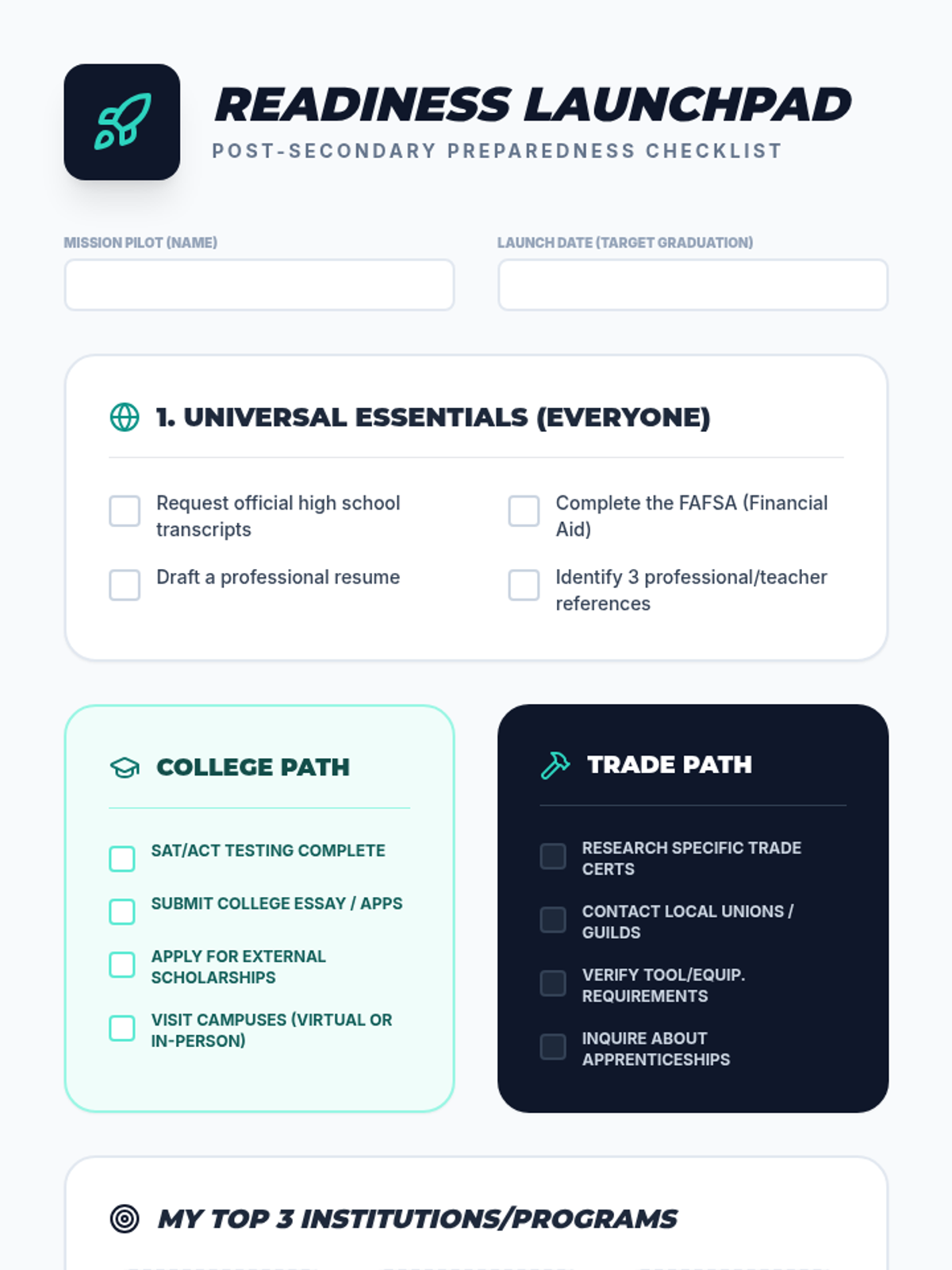
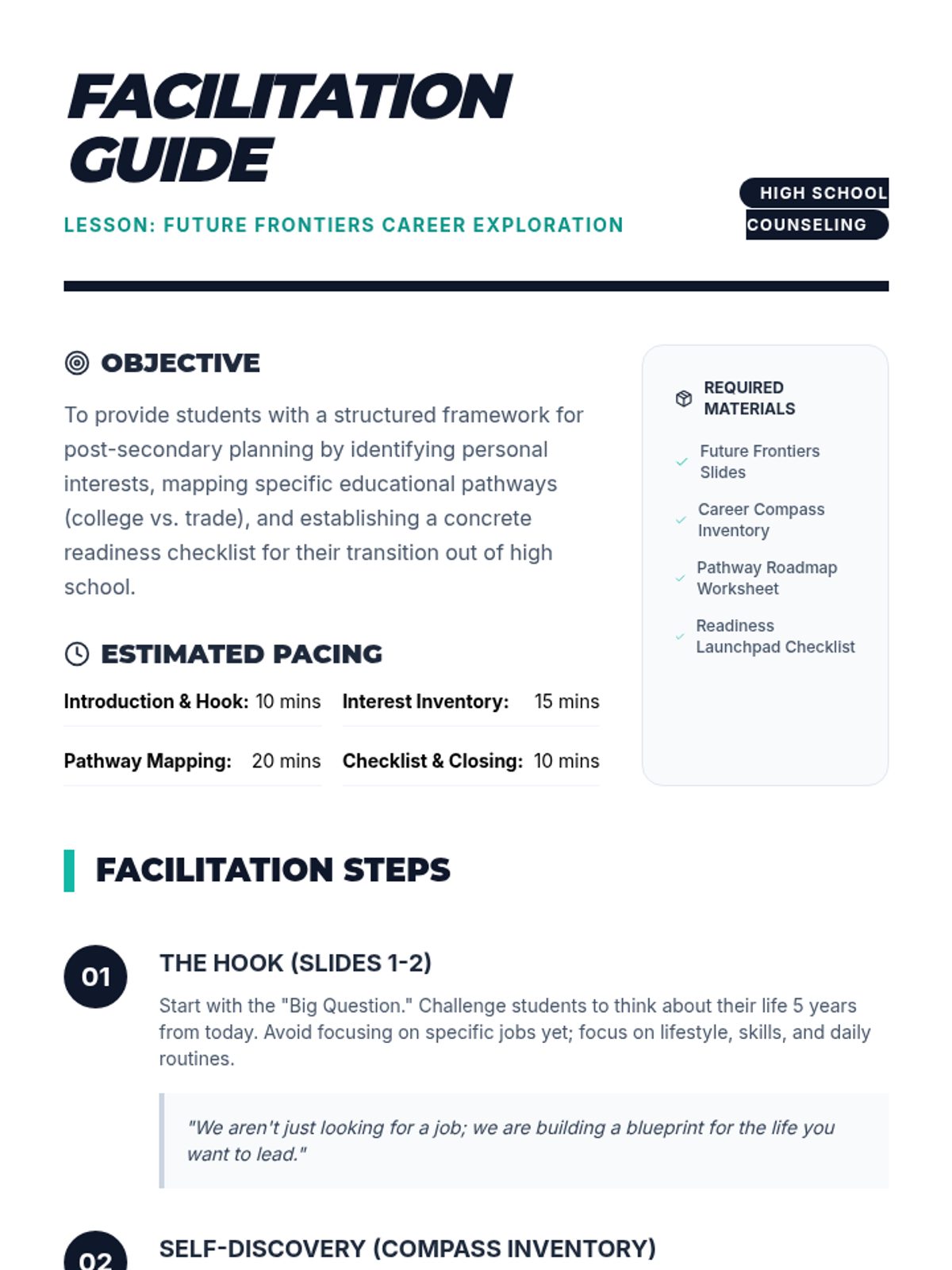
A comprehensive career exploration and post-secondary planning lesson for high school students, featuring interest assessments, pathway mapping, and readiness checklists.
A comprehensive career exploration lesson designed to help high school students identify their interests, map potential career pathways, and track their readiness for post-secondary education or vocational training.
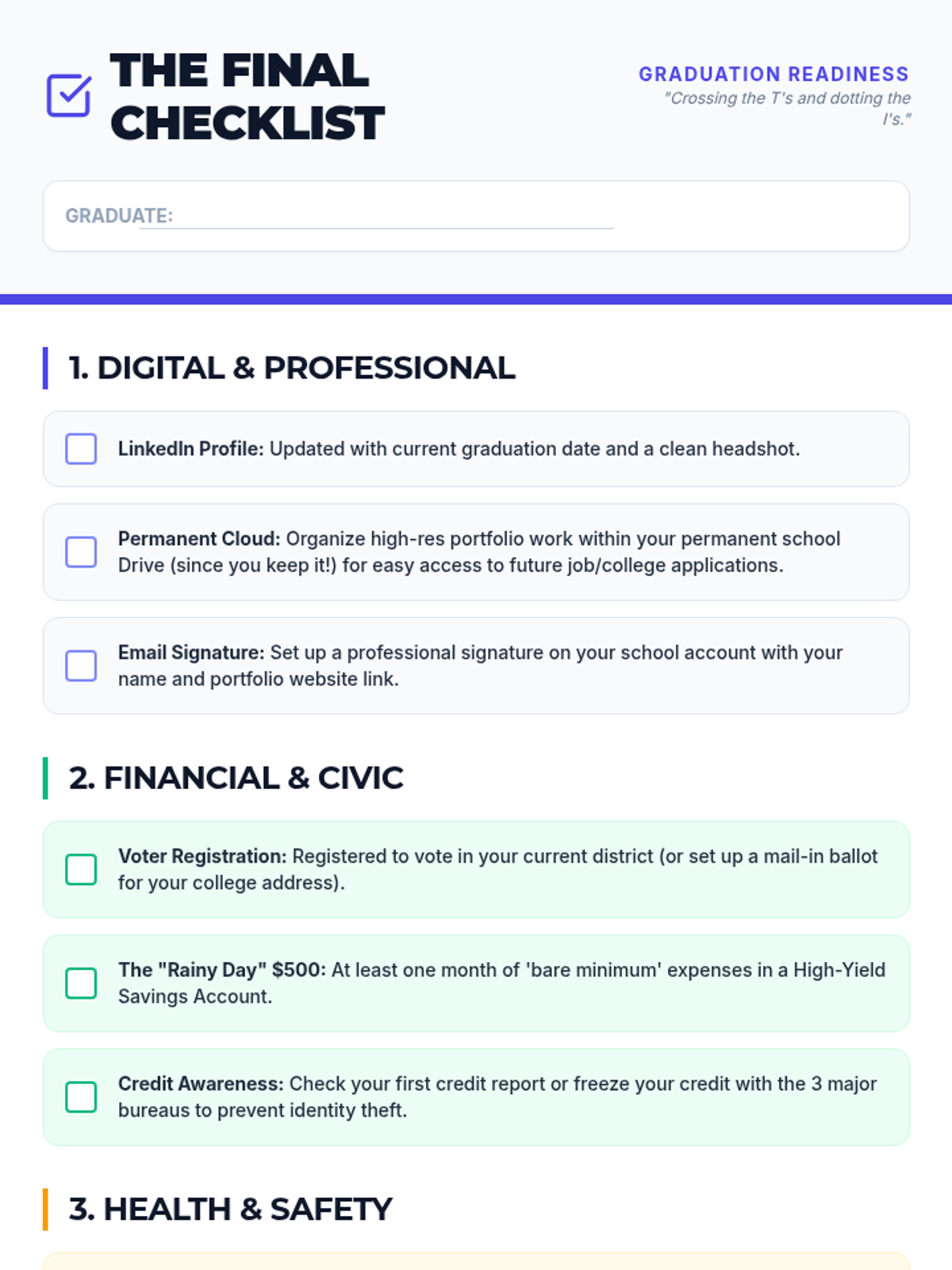
A comprehensive final review and logistics checklist for high school seniors, covering voter registration, insurance cards, professional email signatures, and emergency contact updates.
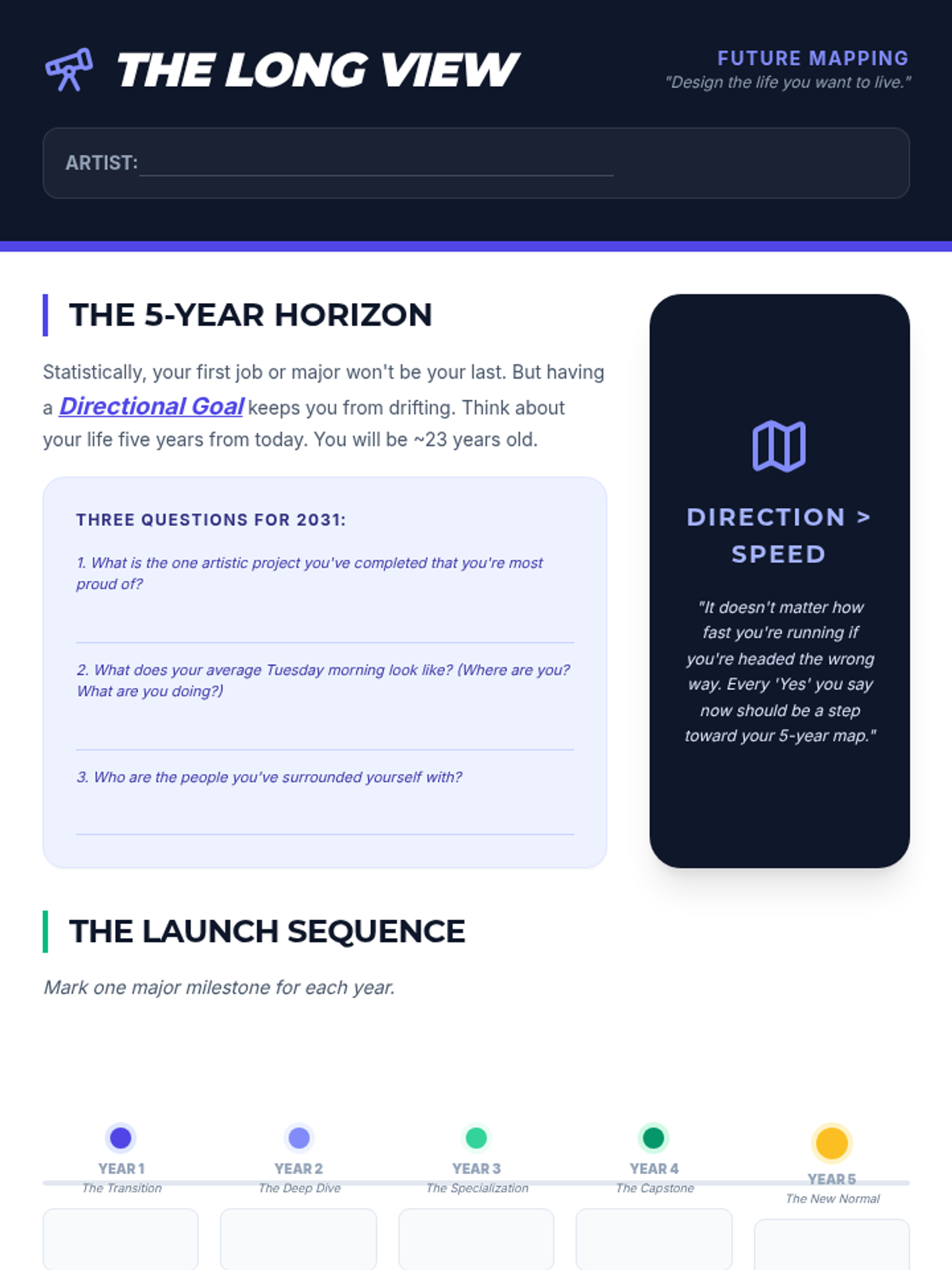
Guides students through a long-term goal-setting exercise, helping them map out professional and personal milestones for their first five years after high school using a visual timeline approach.
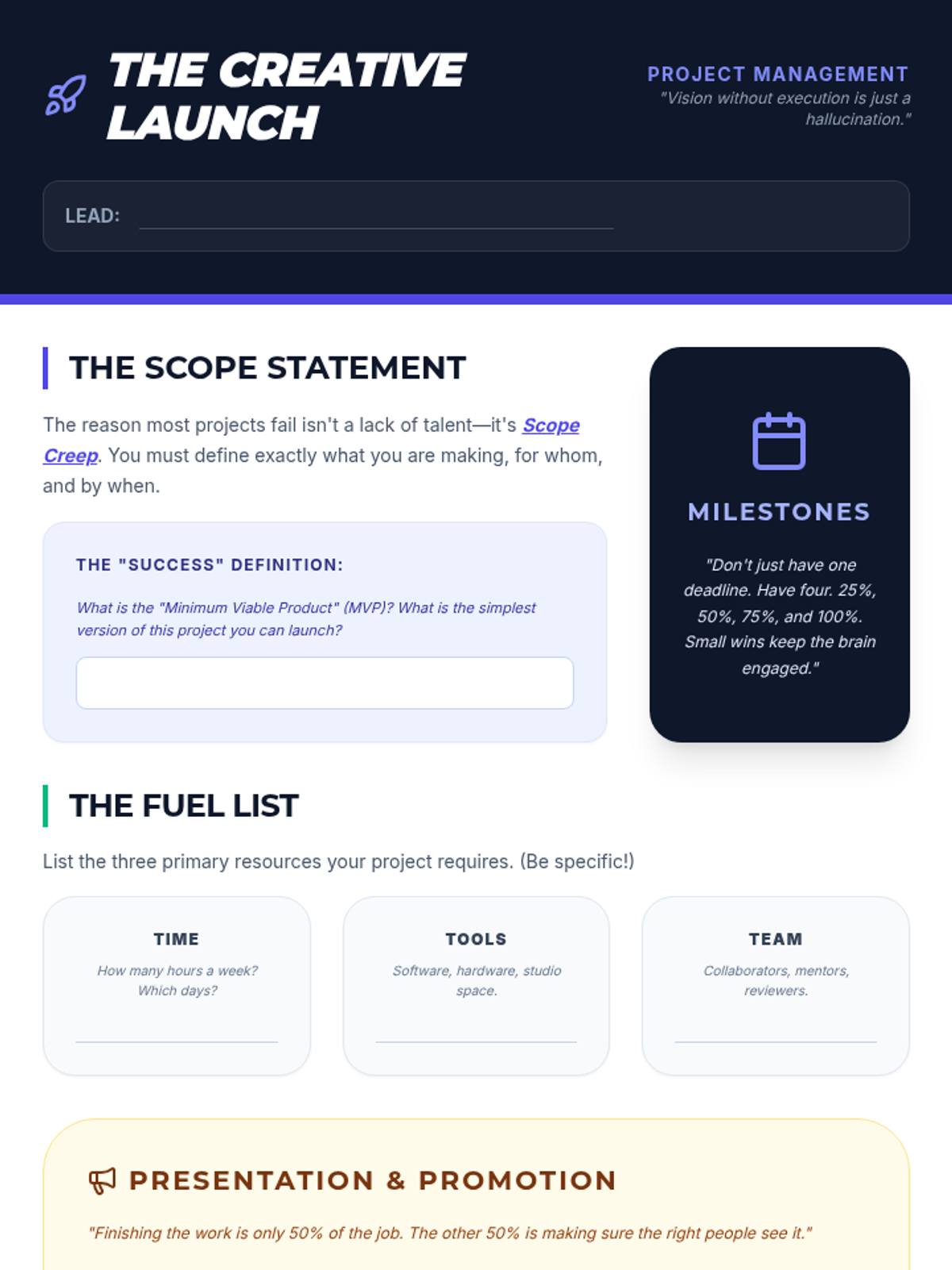
Teaches students how to plan, execute, and document a significant creative project, focusing on milestones, resource management, and the art of the 'Launch.'
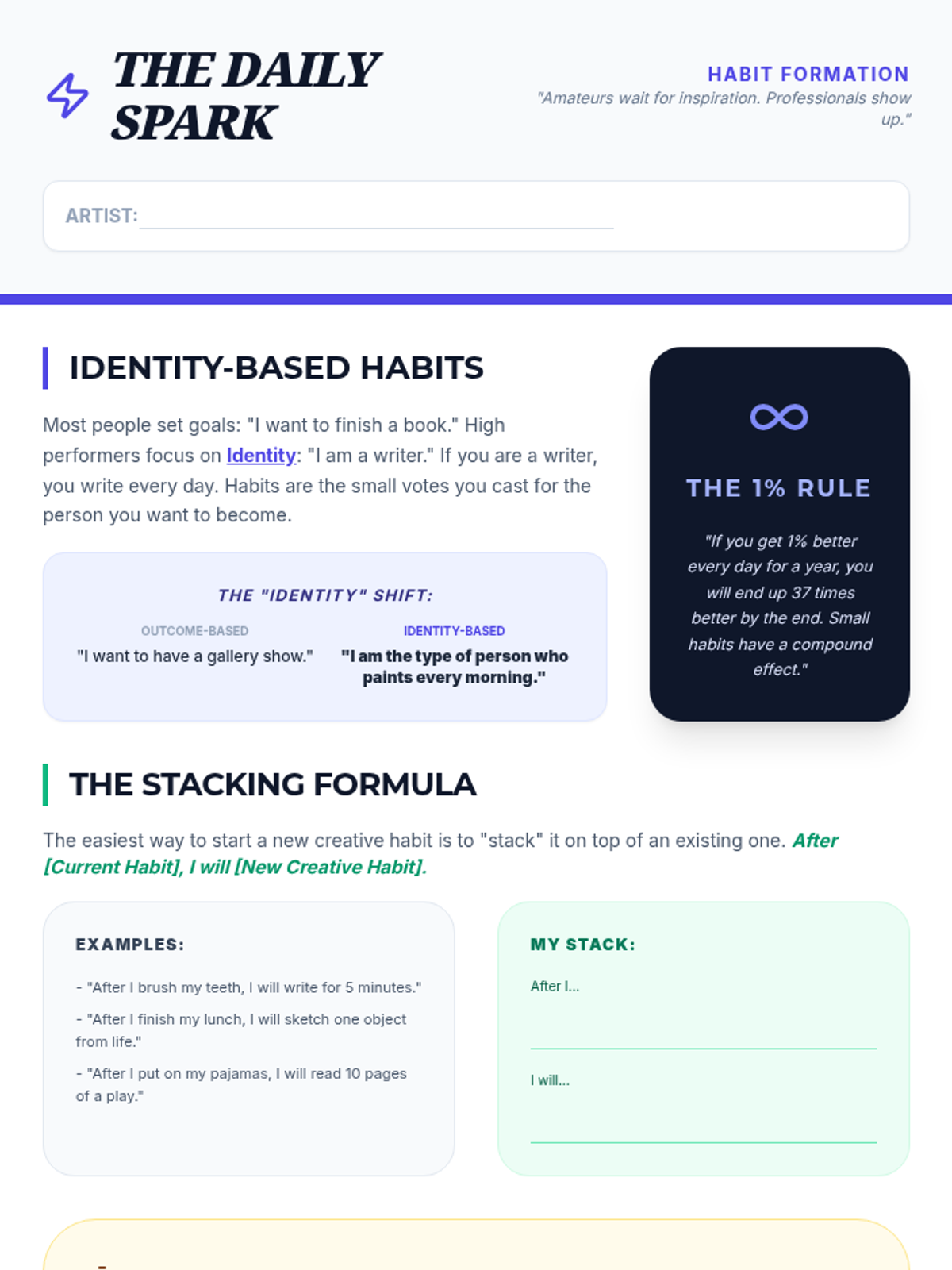
Teaches students how to build and maintain a sustainable artistic practice through small, consistent habits, focusing on the 'Atomic Habits' method for creative output.
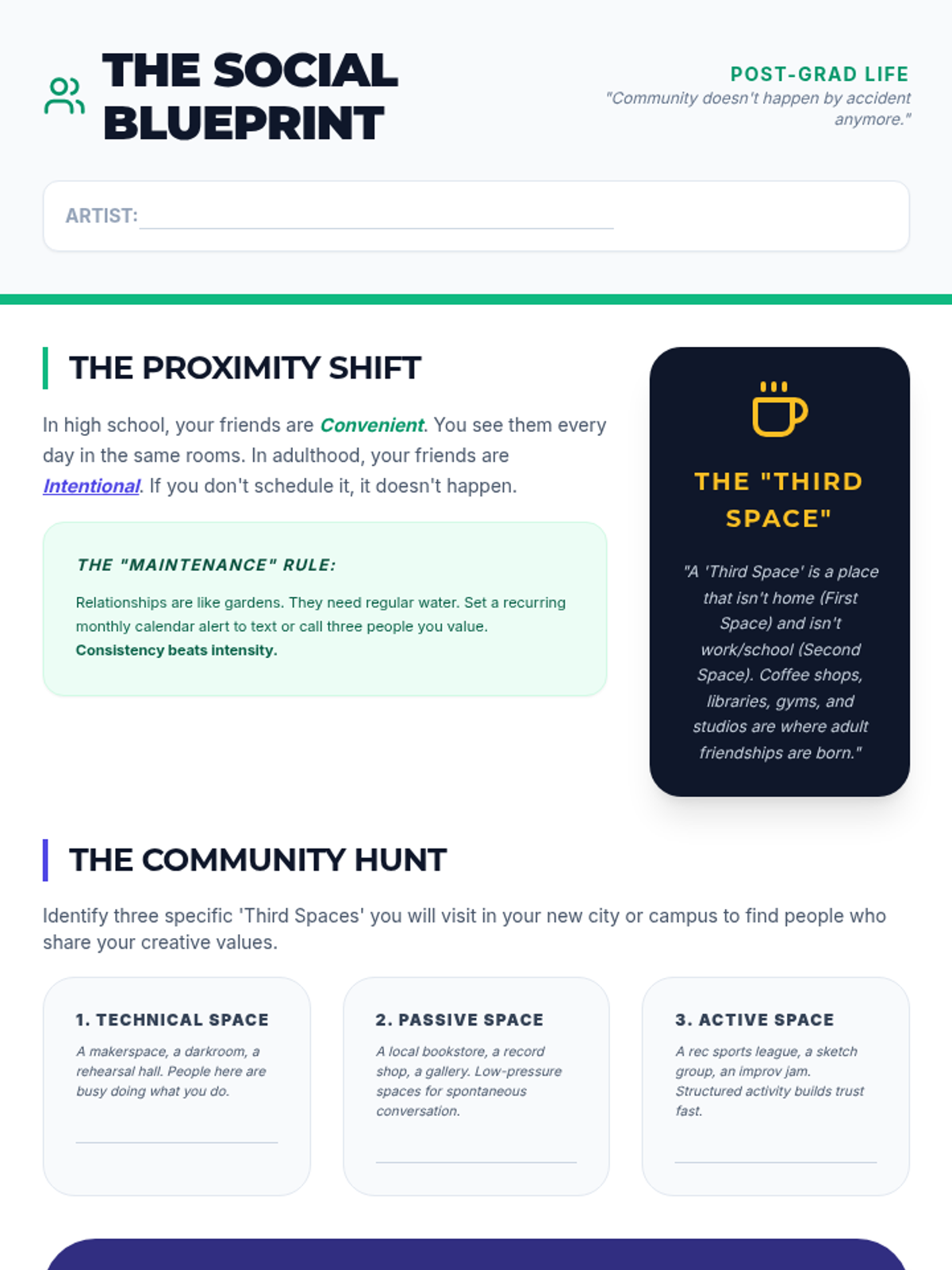
Explores the intentional effort required to build and maintain community as an adult, teaching students how to find 'third spaces' and manage the transition of high school friendships.
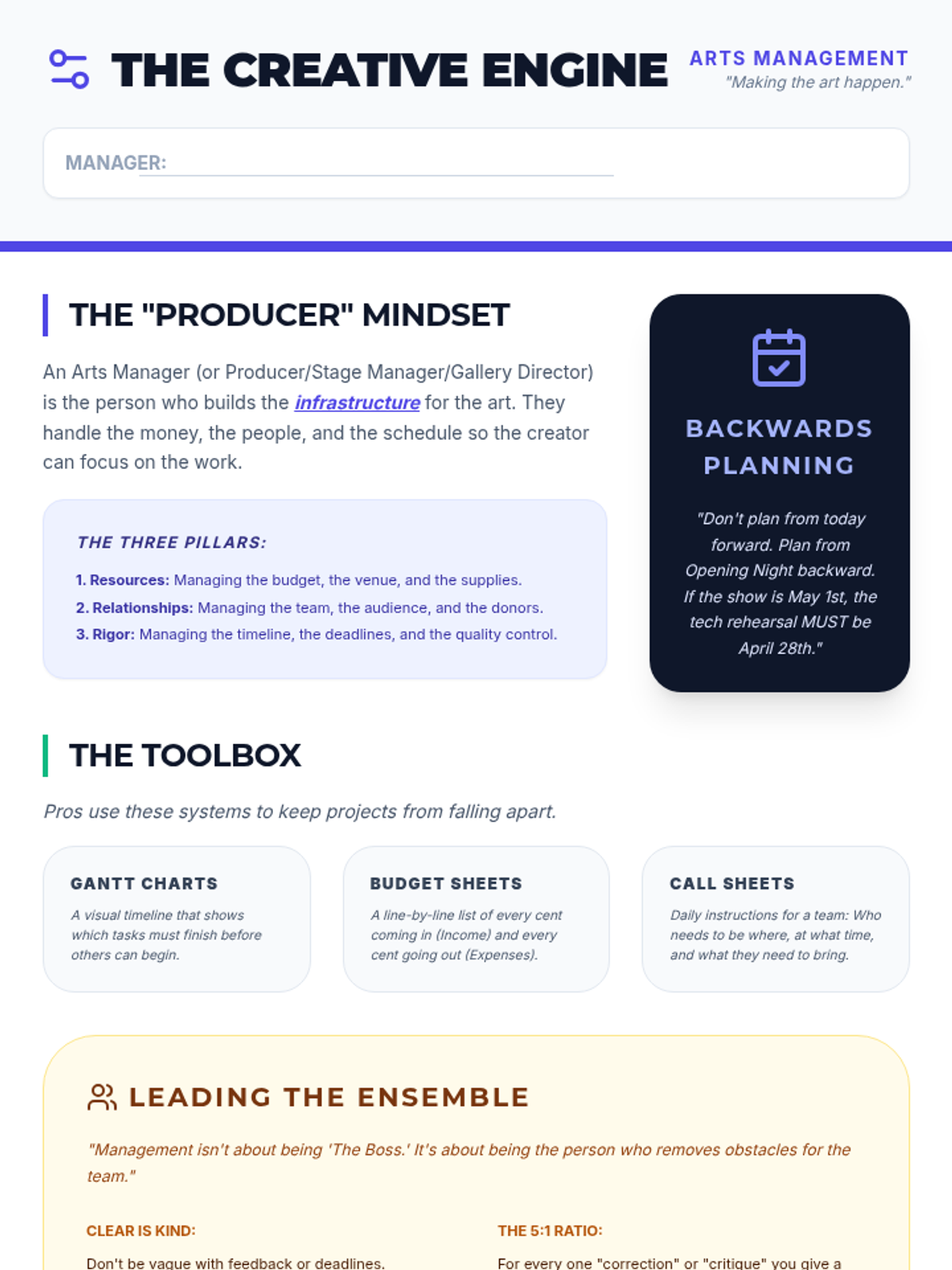
Introduces students to the fundamental skills of arts management, including production scheduling, team leadership, and basic project budgeting for creative endeavors.
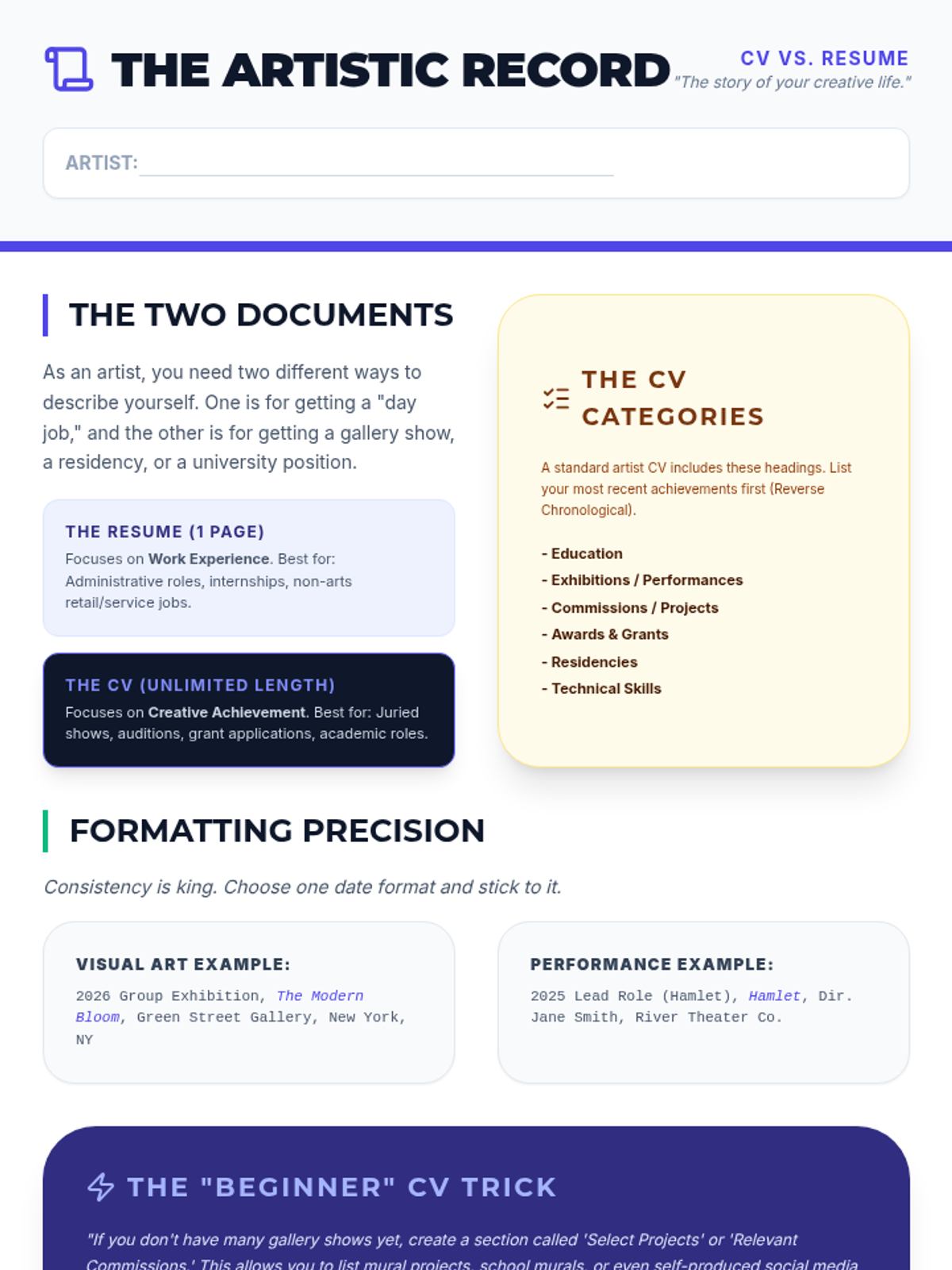
Differentiates between a standard job resume and a creative Curriculum Vitae (CV), teaching students how to list exhibitions, performances, awards, and technical commissions.
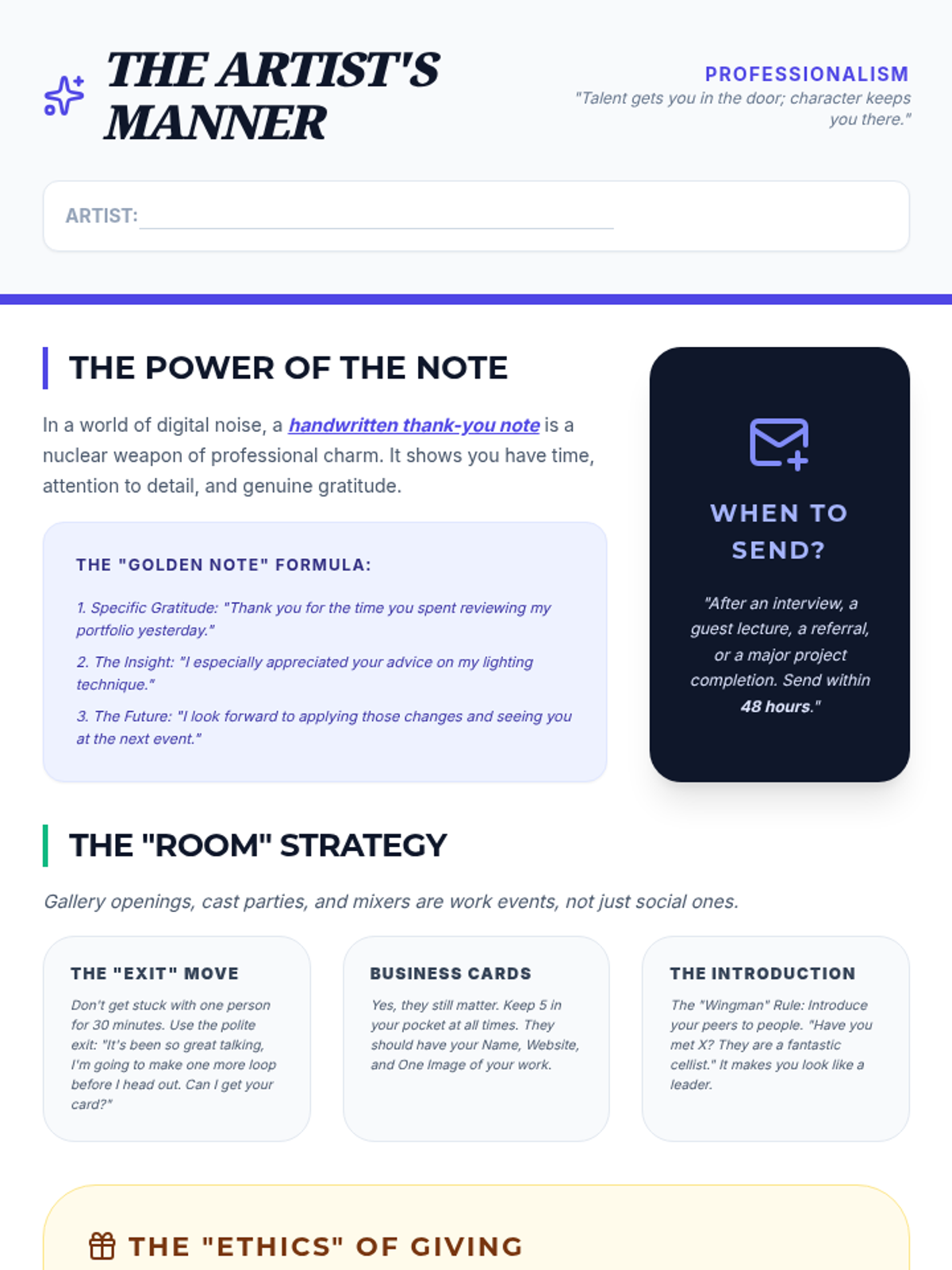
Teaches students the behavioral standards of the creative industries, including the art of the thank-you note, networking event protocols, and professional gift-giving ethics.
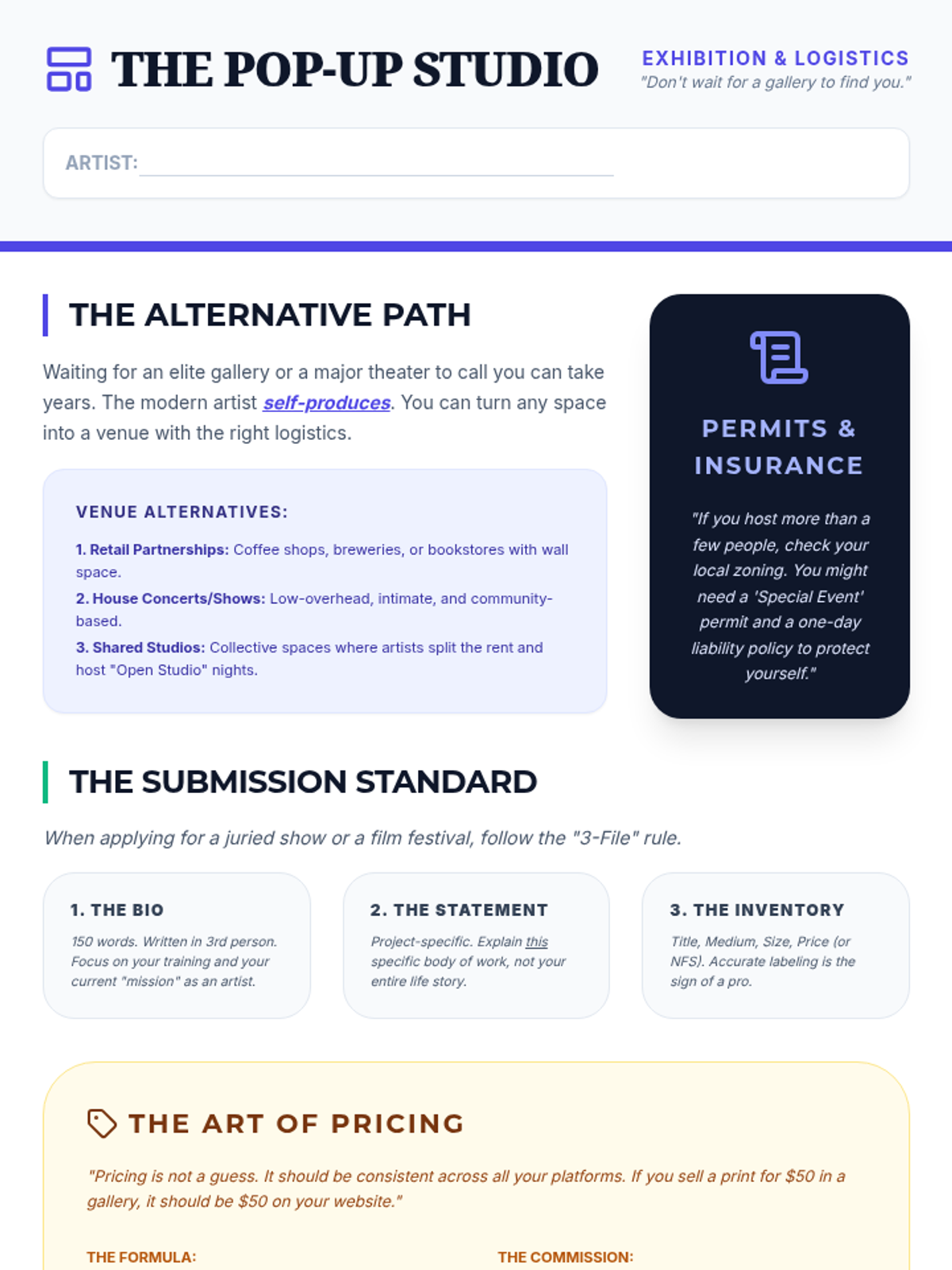
Teaches students the logistics of self-producing exhibitions and performances, covering DIY spaces, permit basics, and how to create a professional 'call for entry' submission.
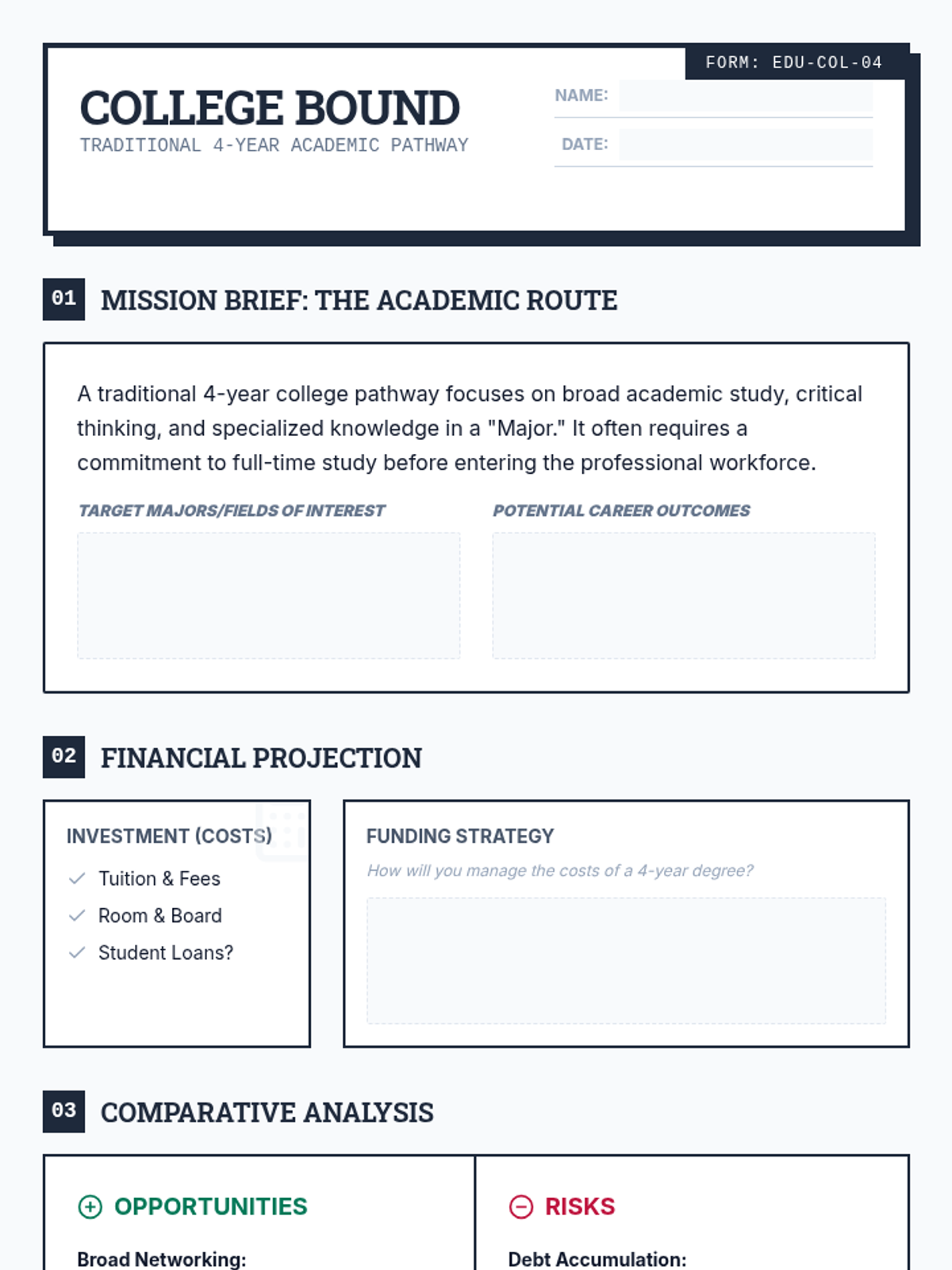
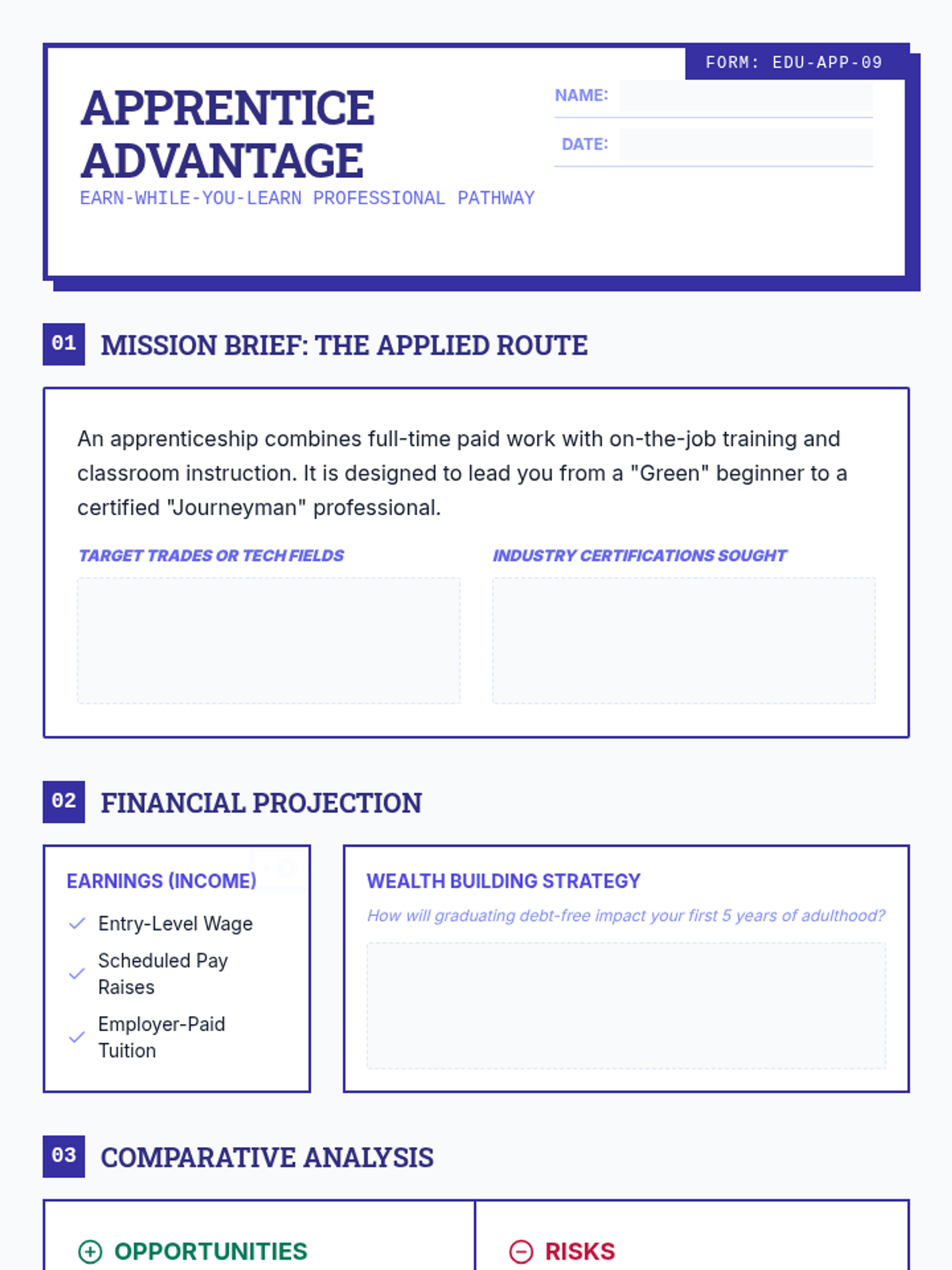
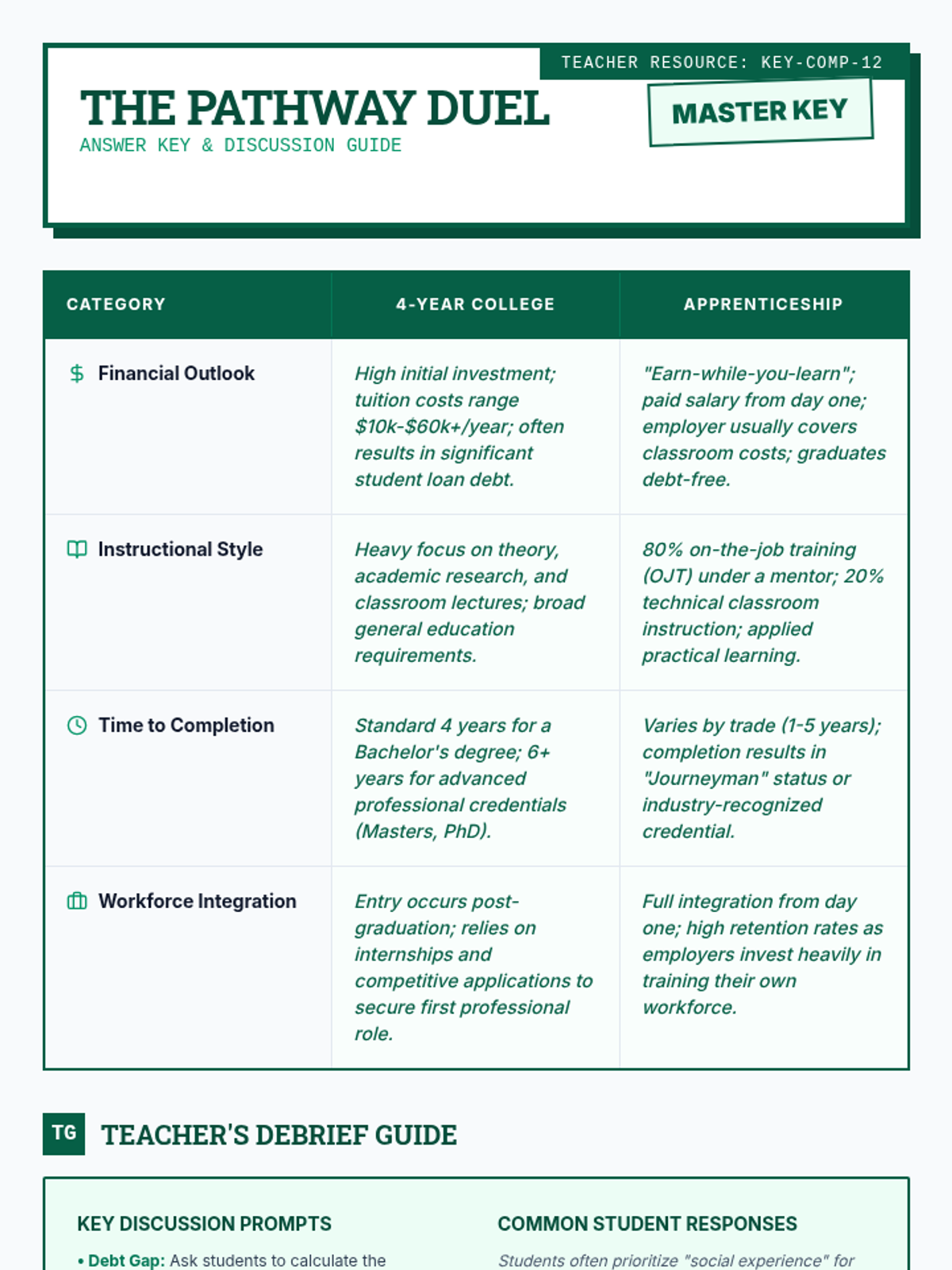
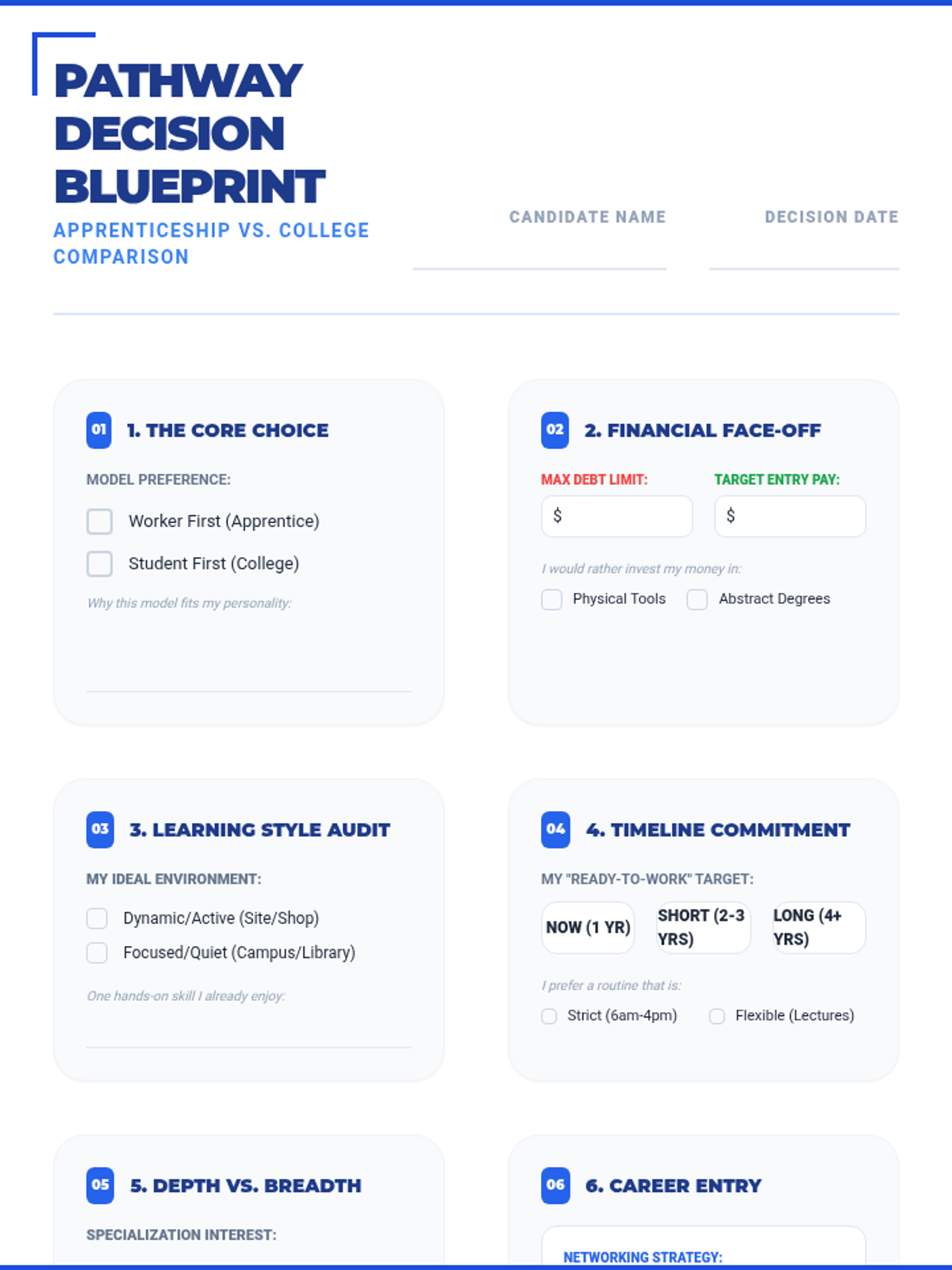
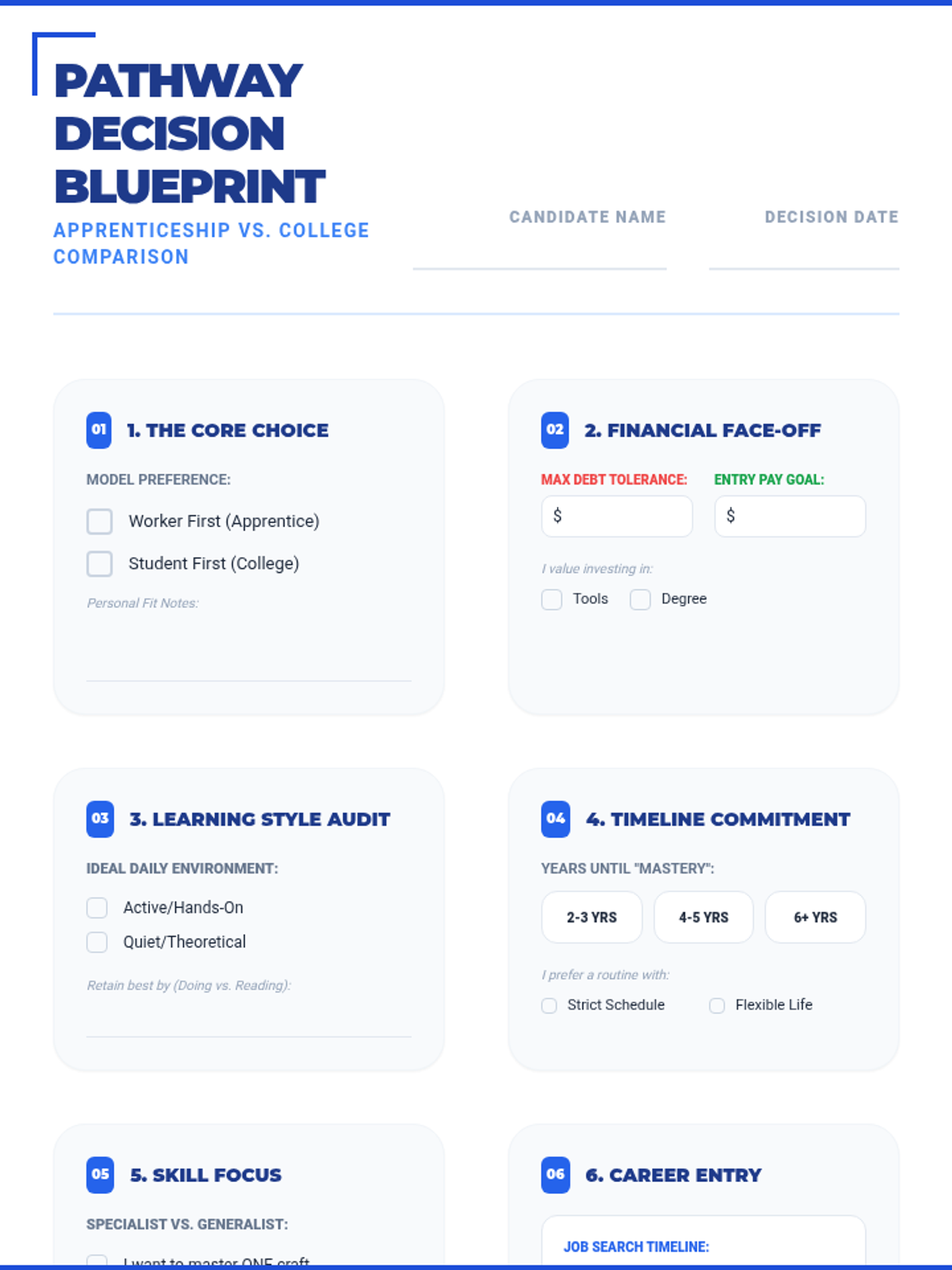
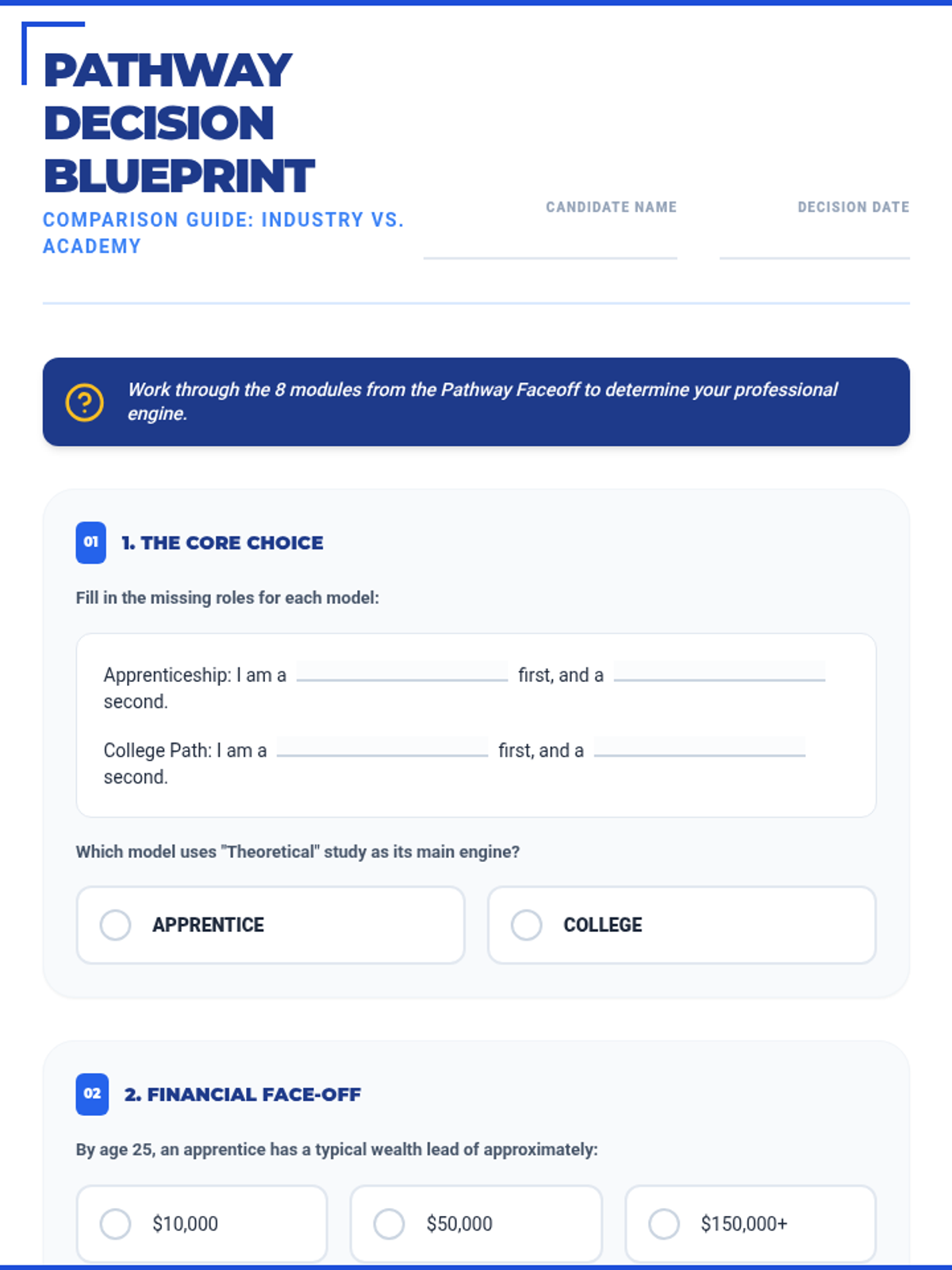
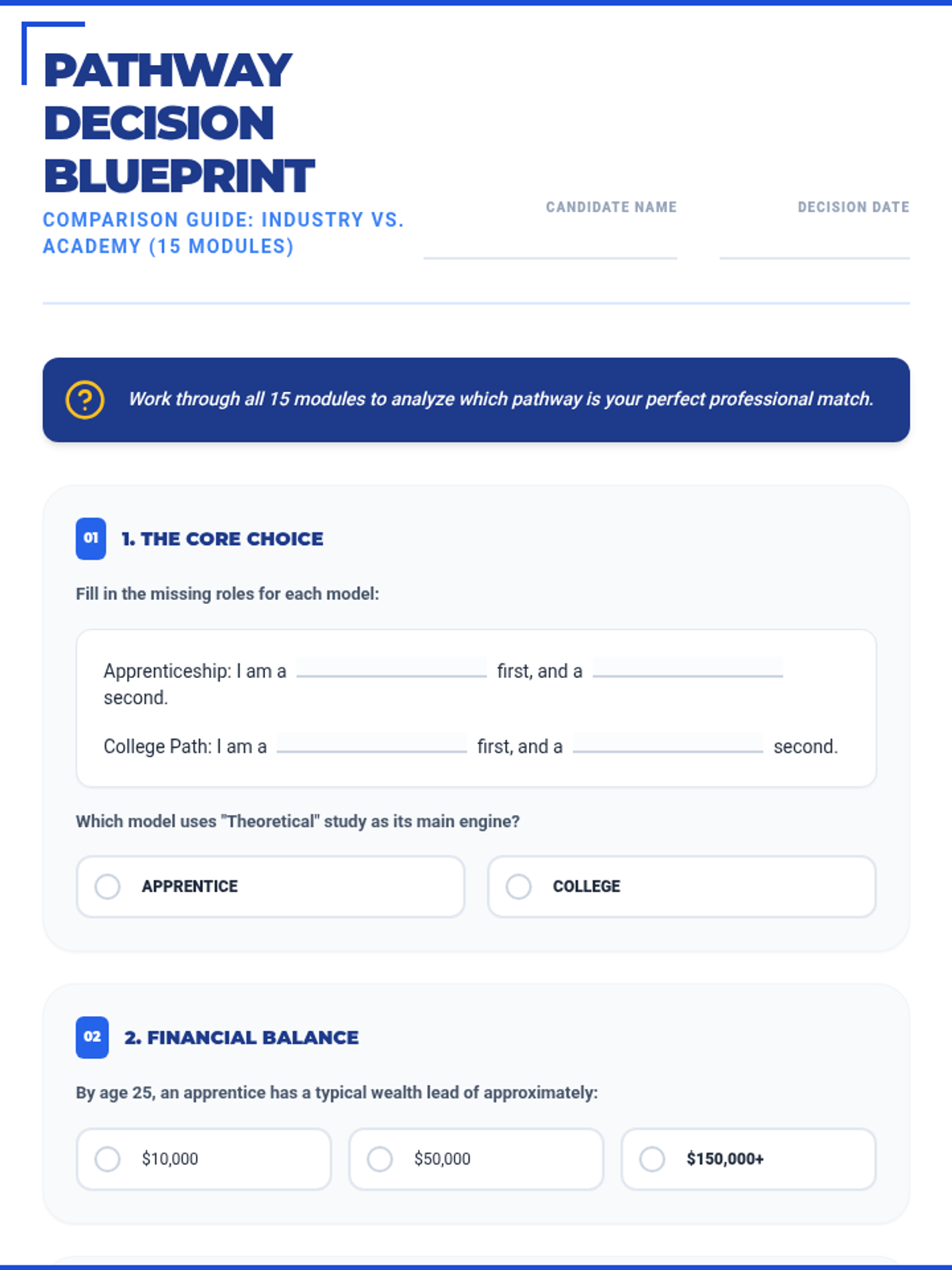
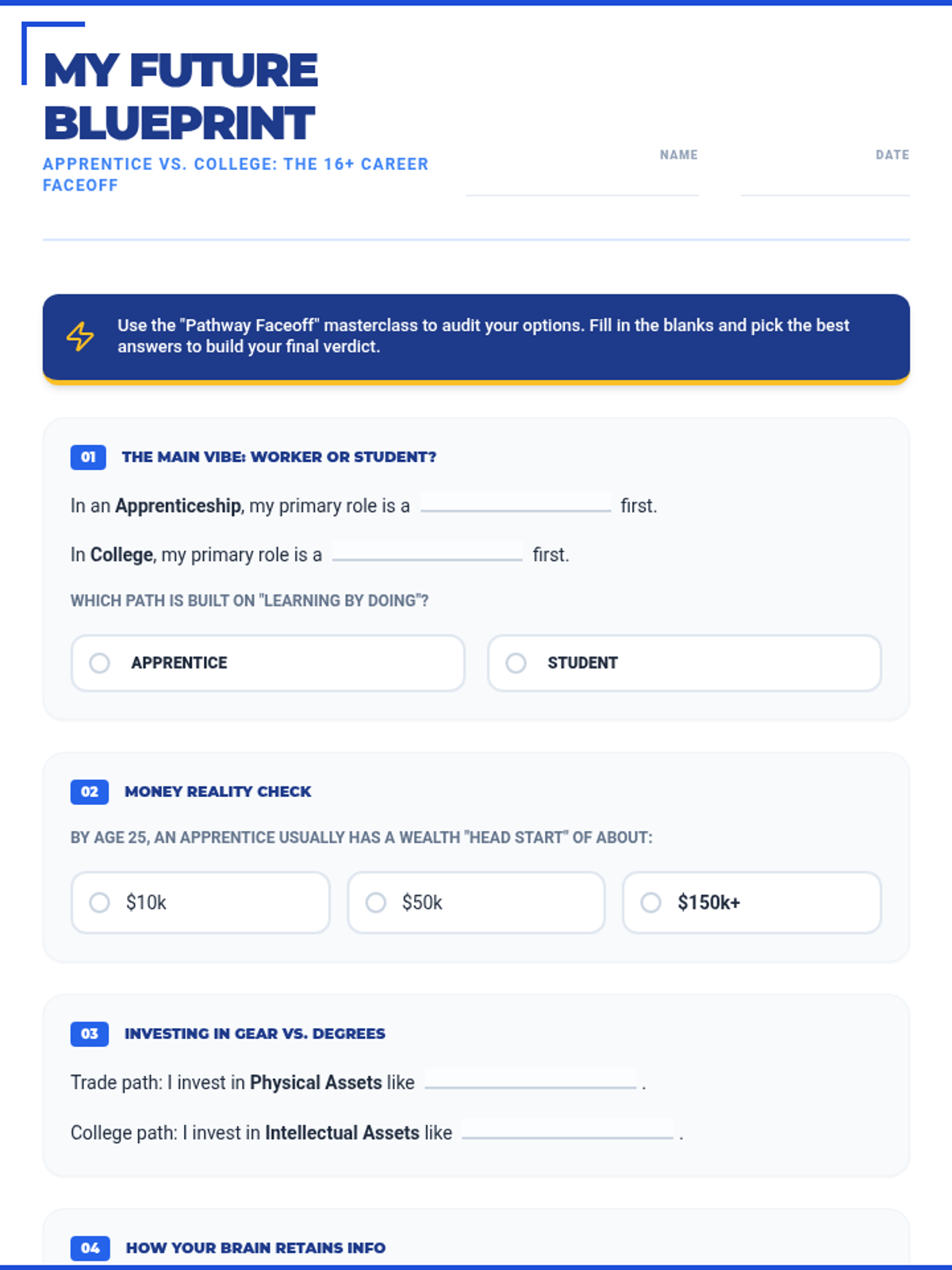
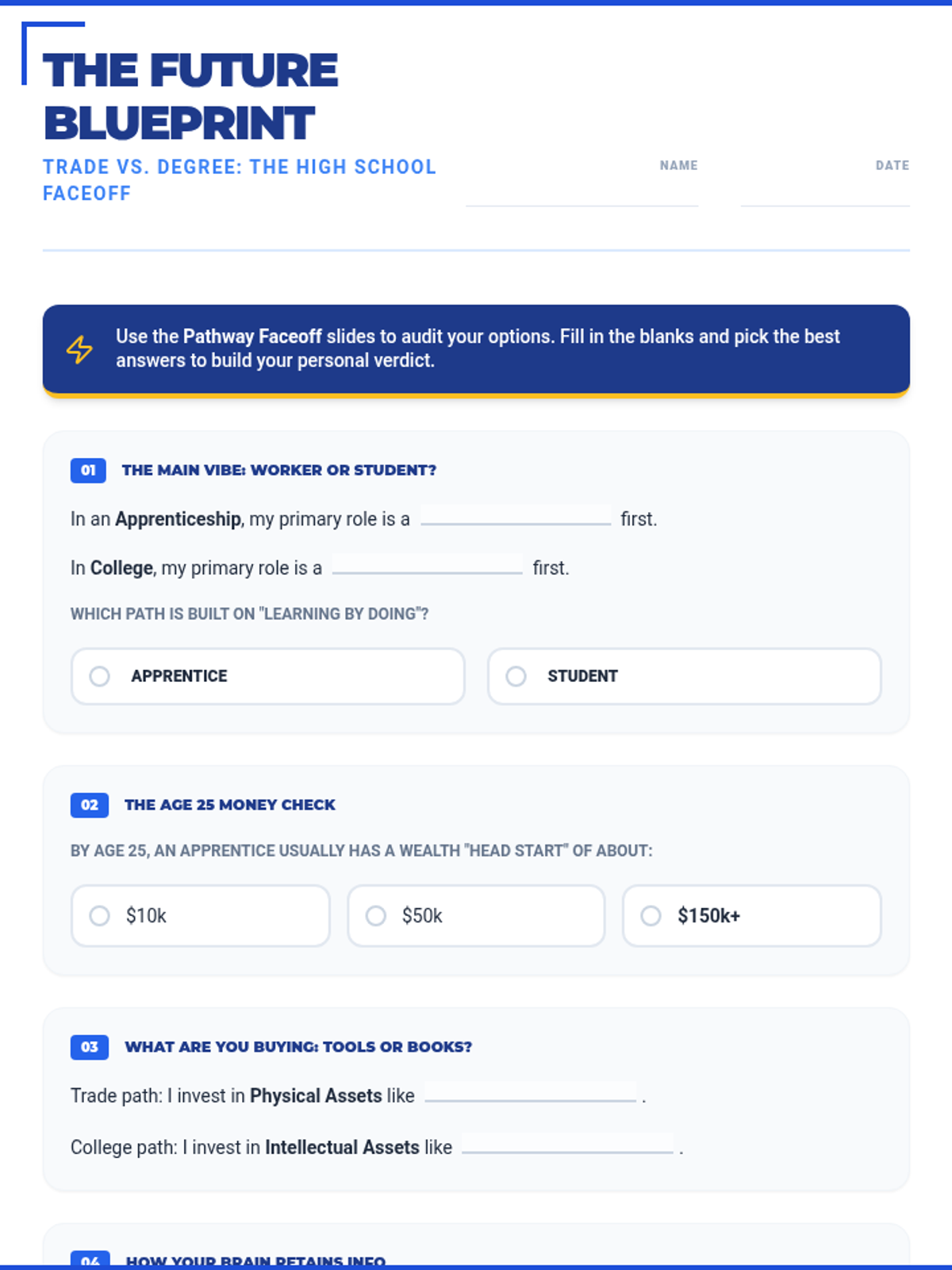
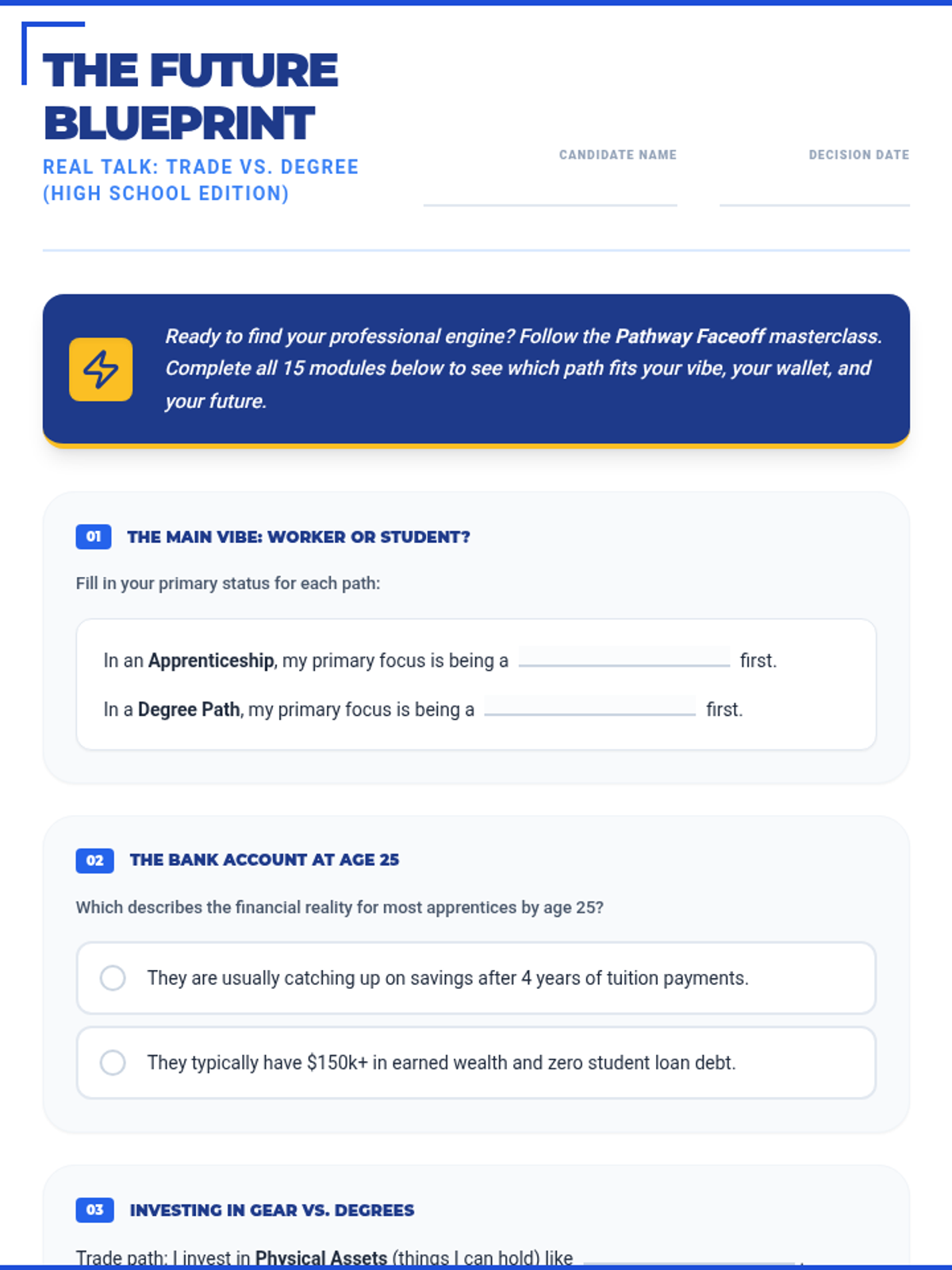
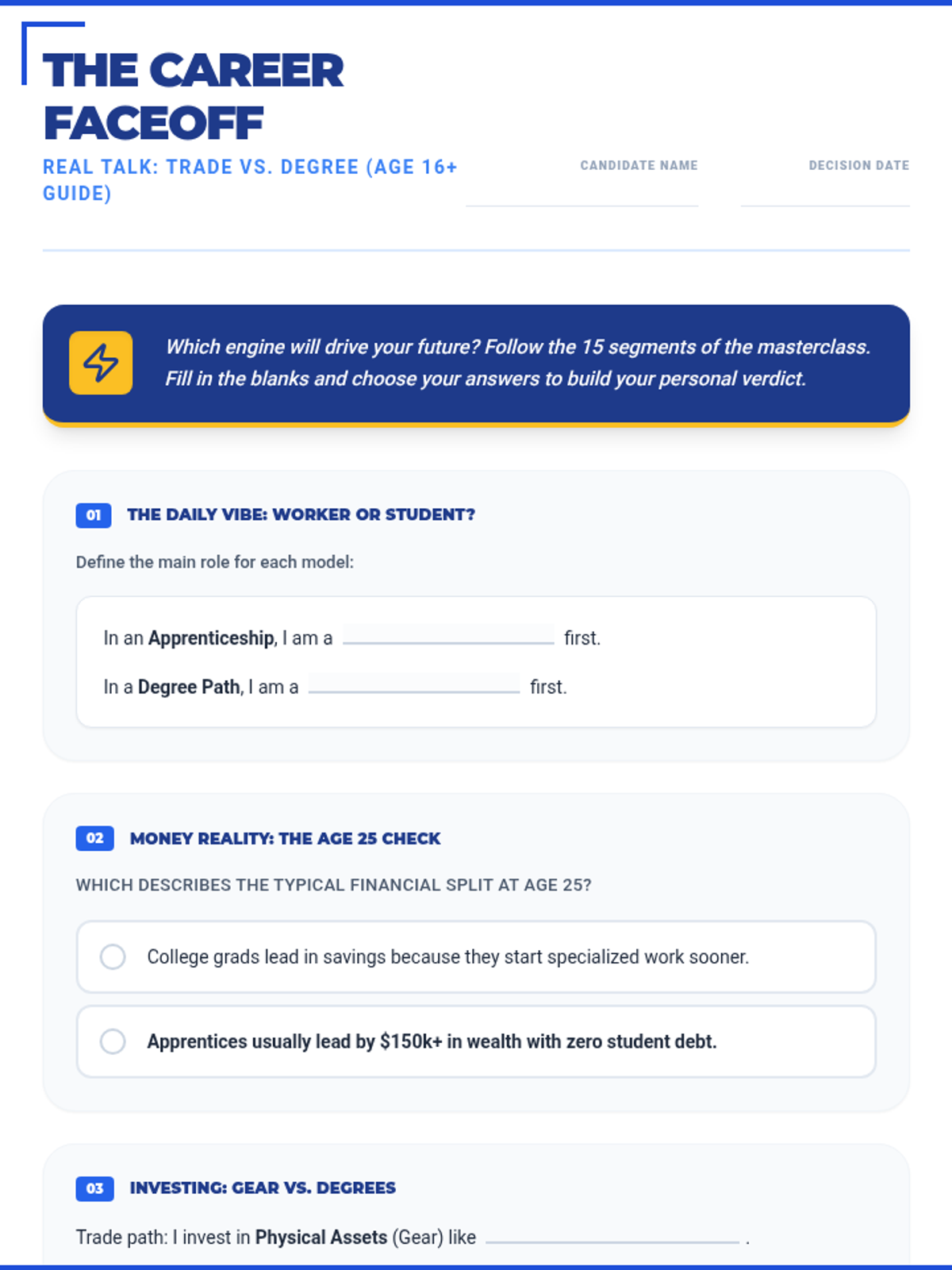
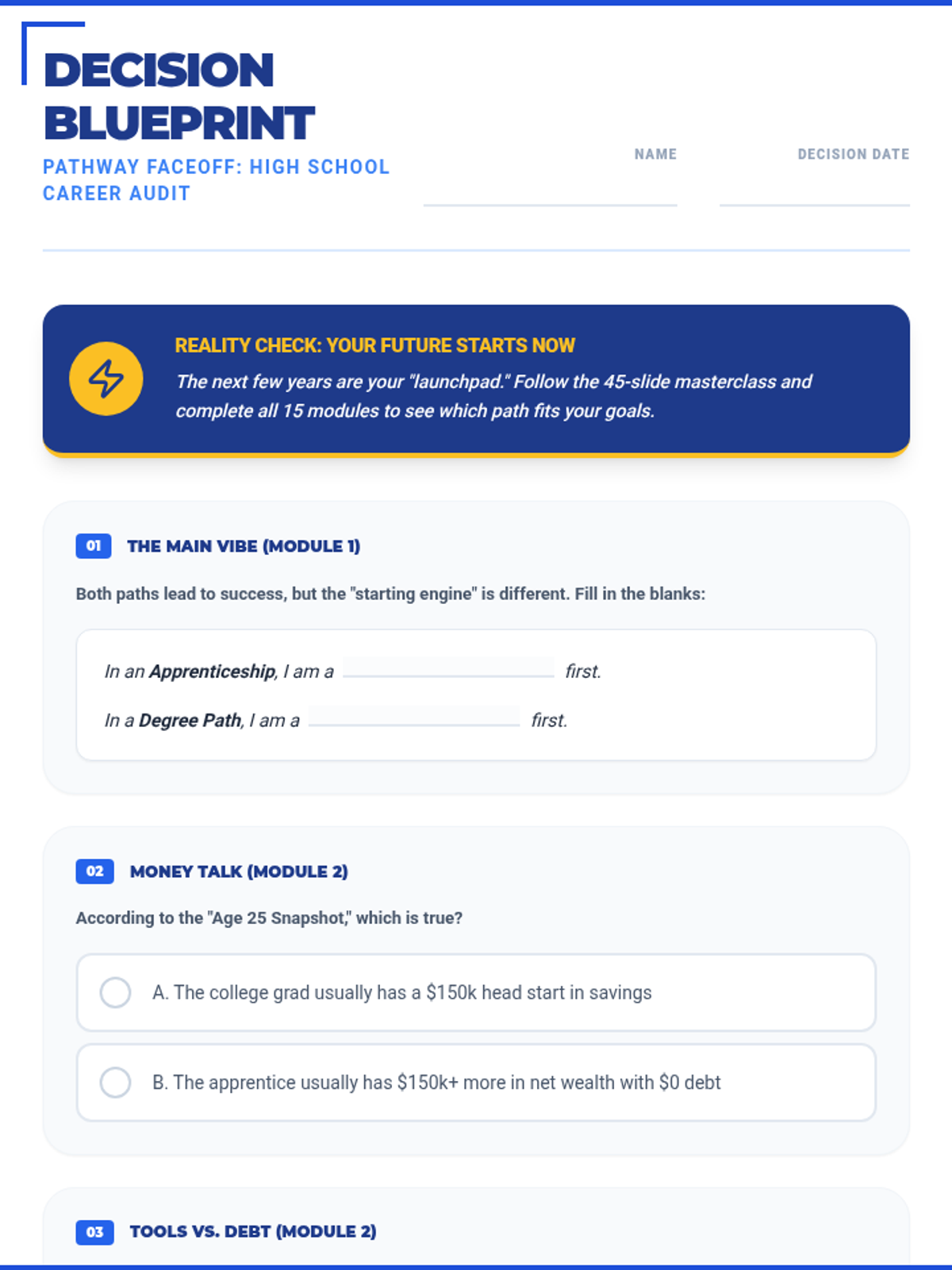
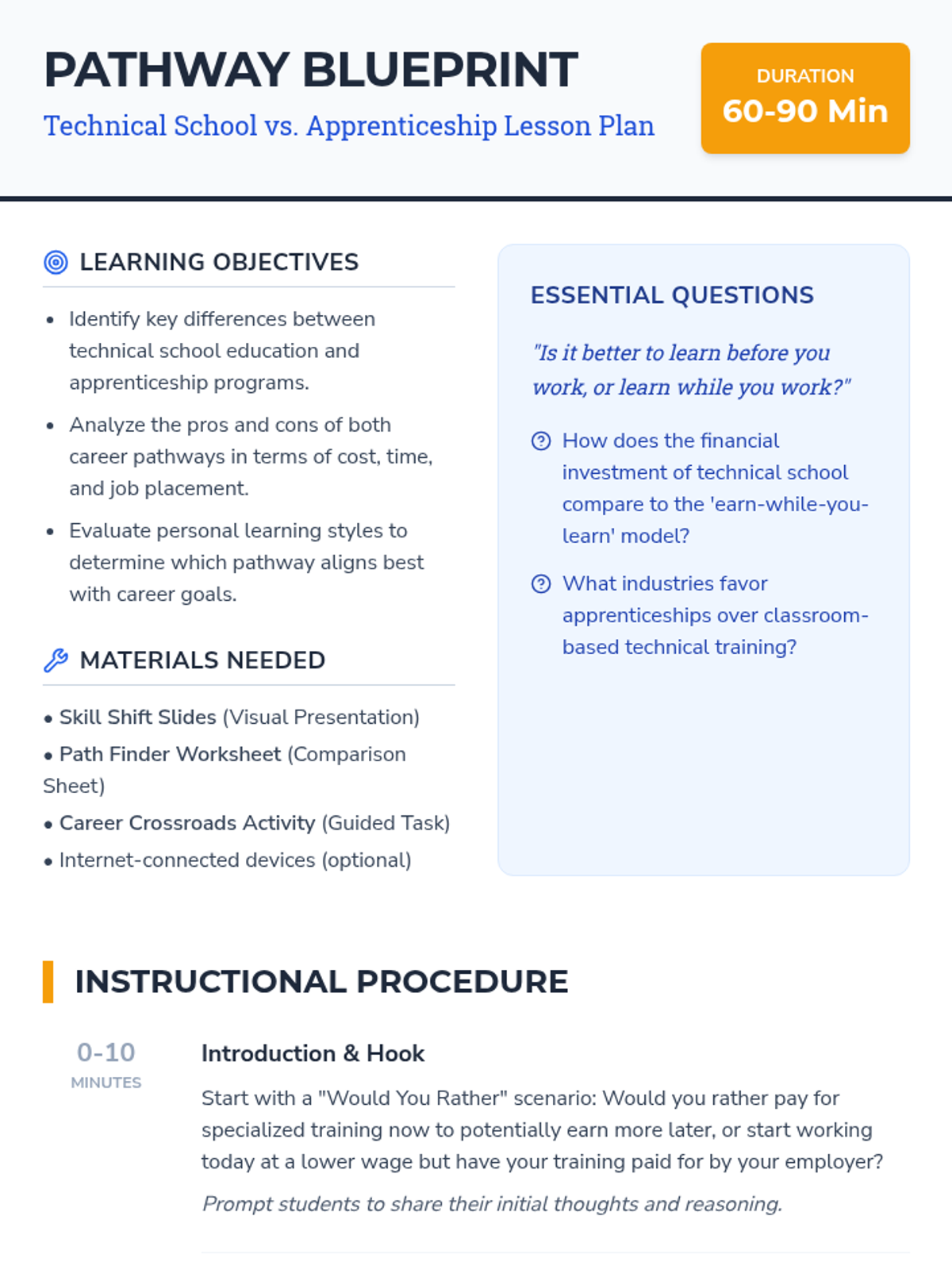
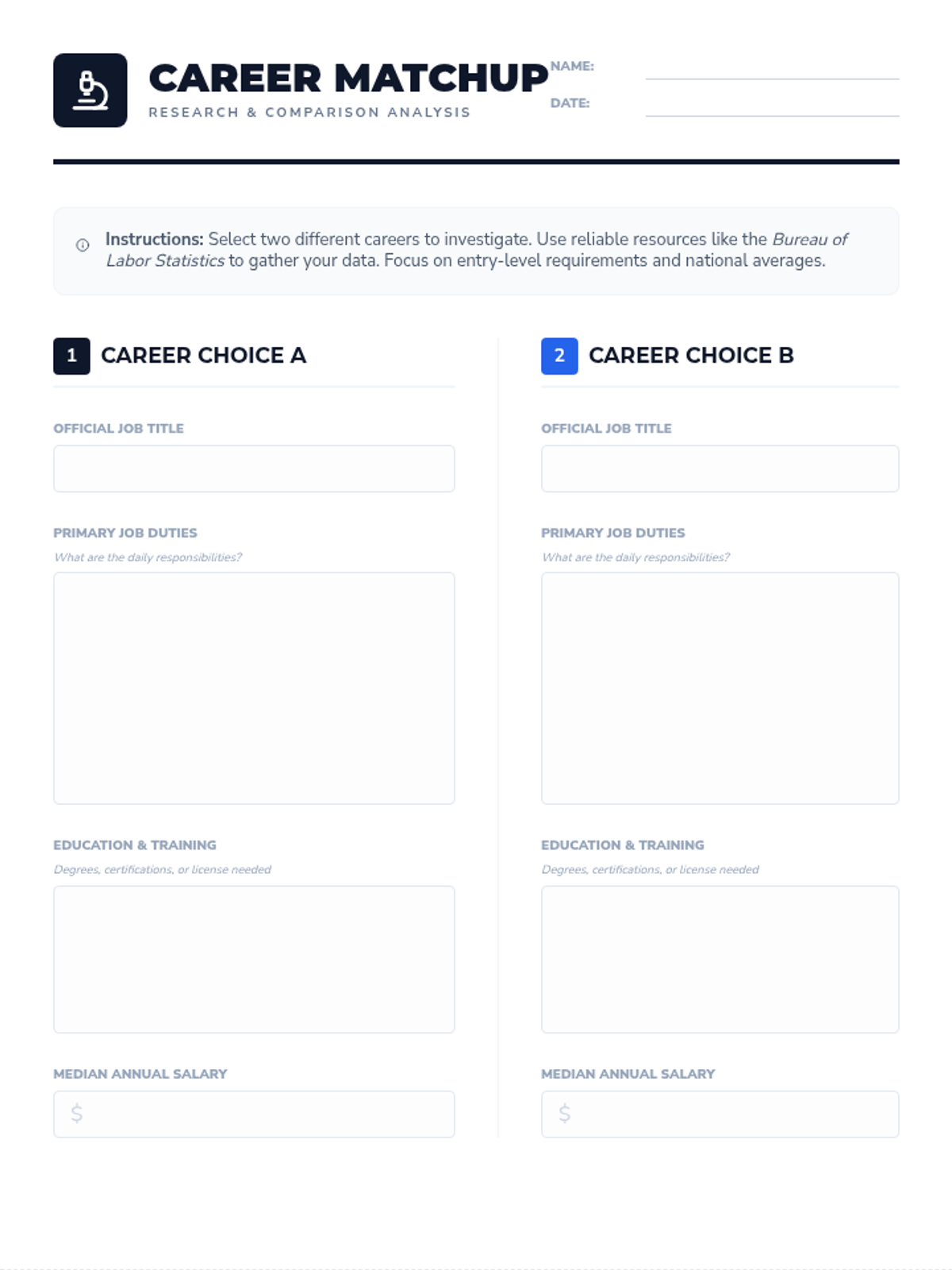
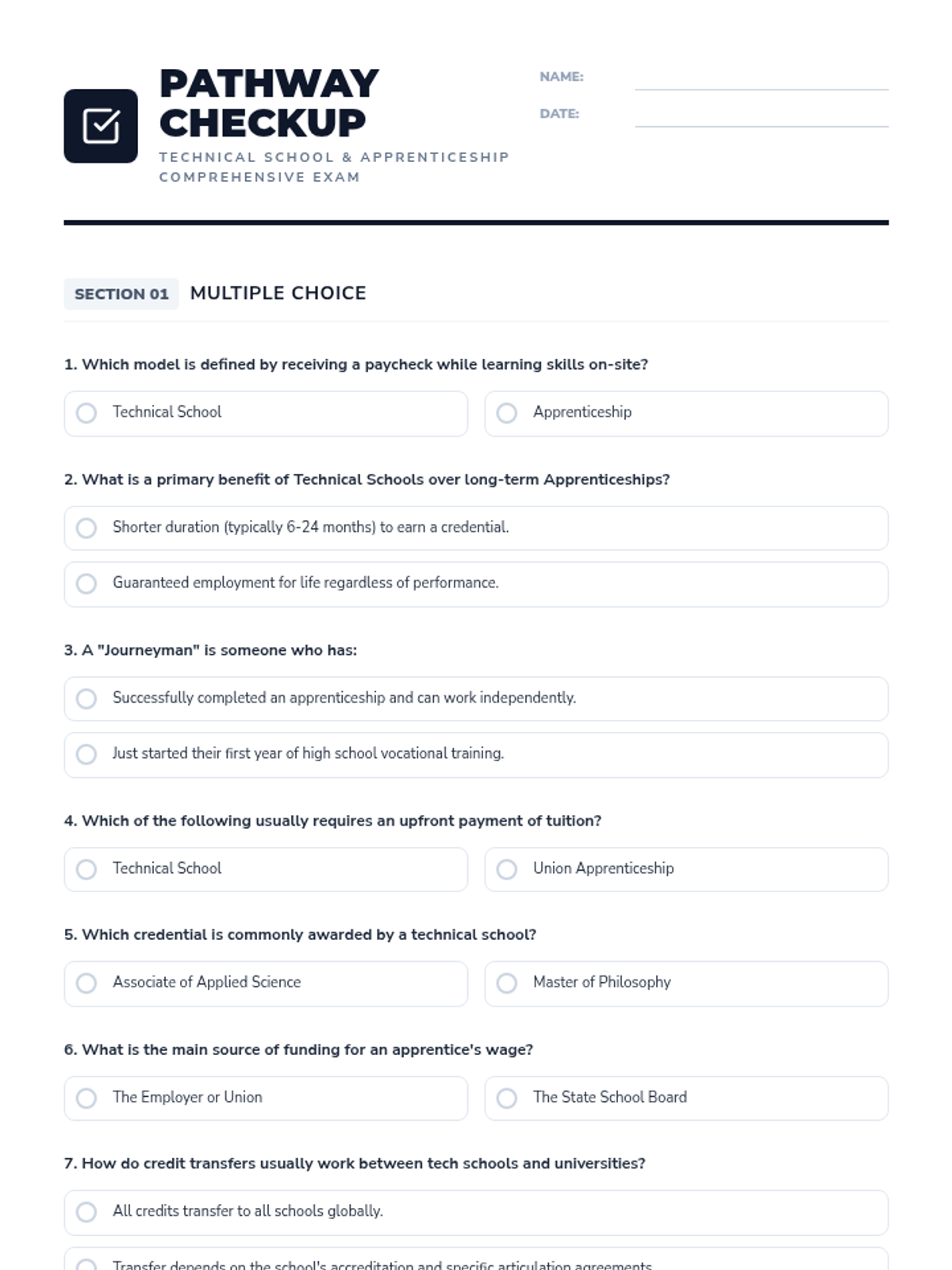
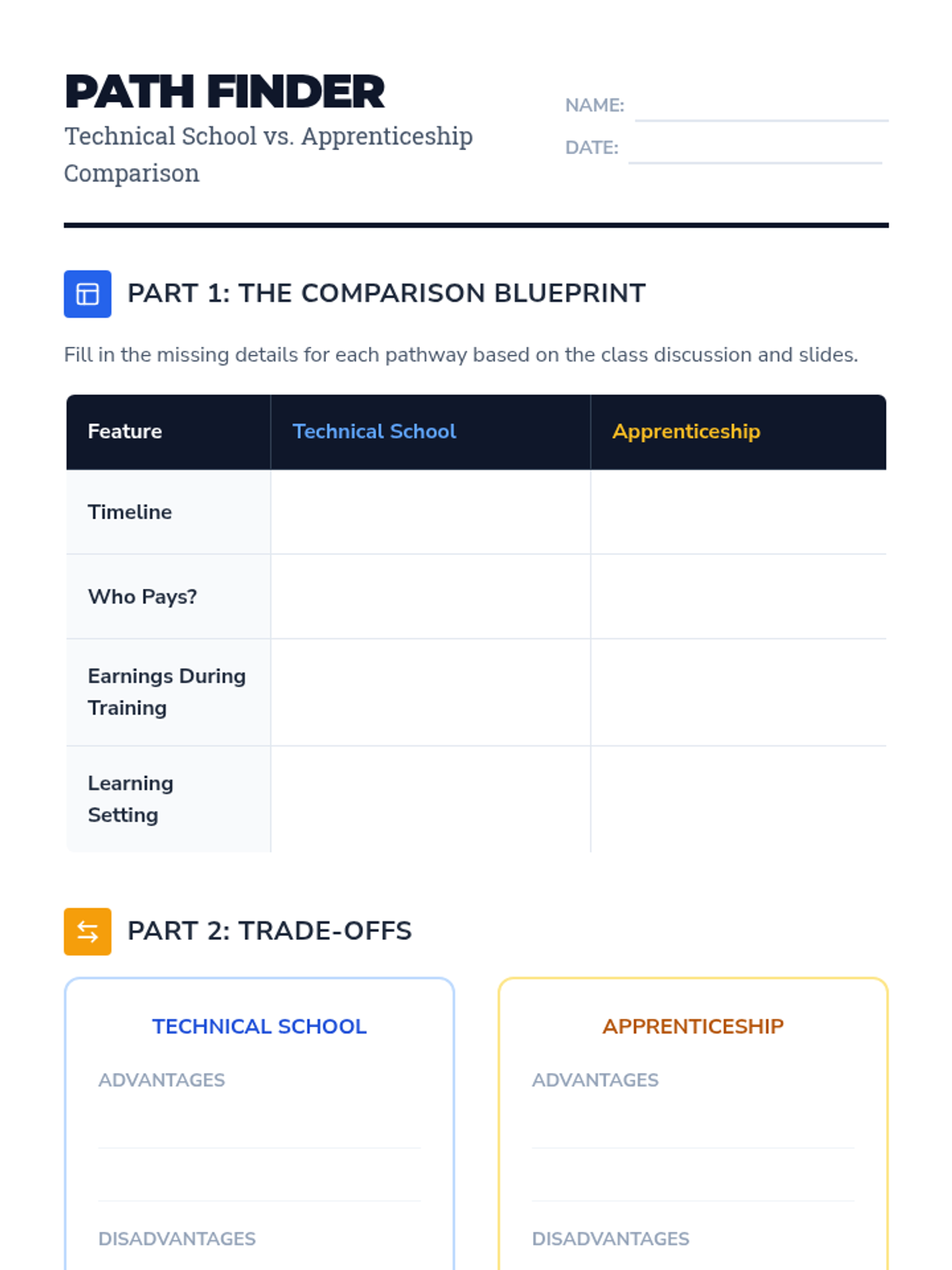
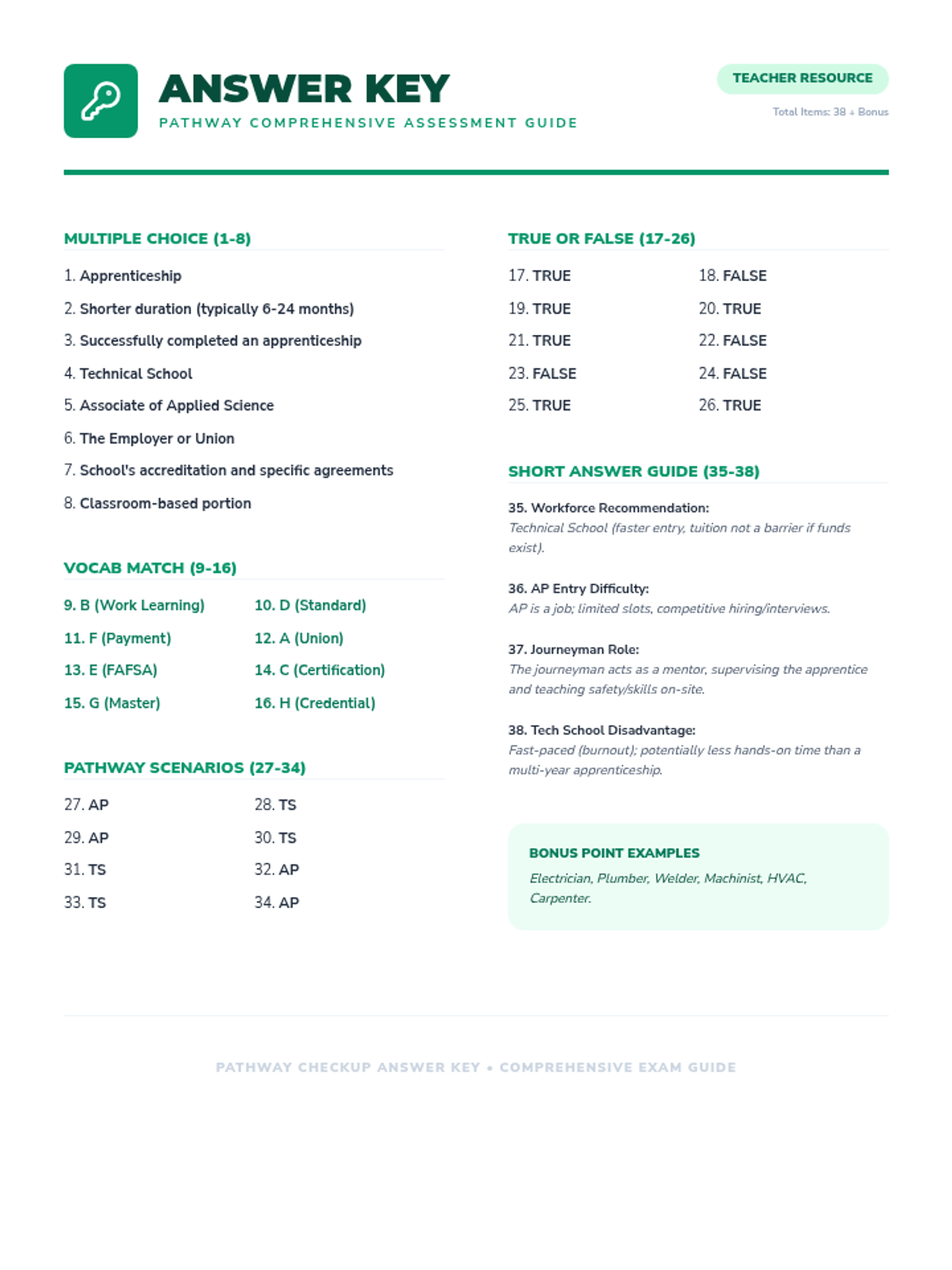
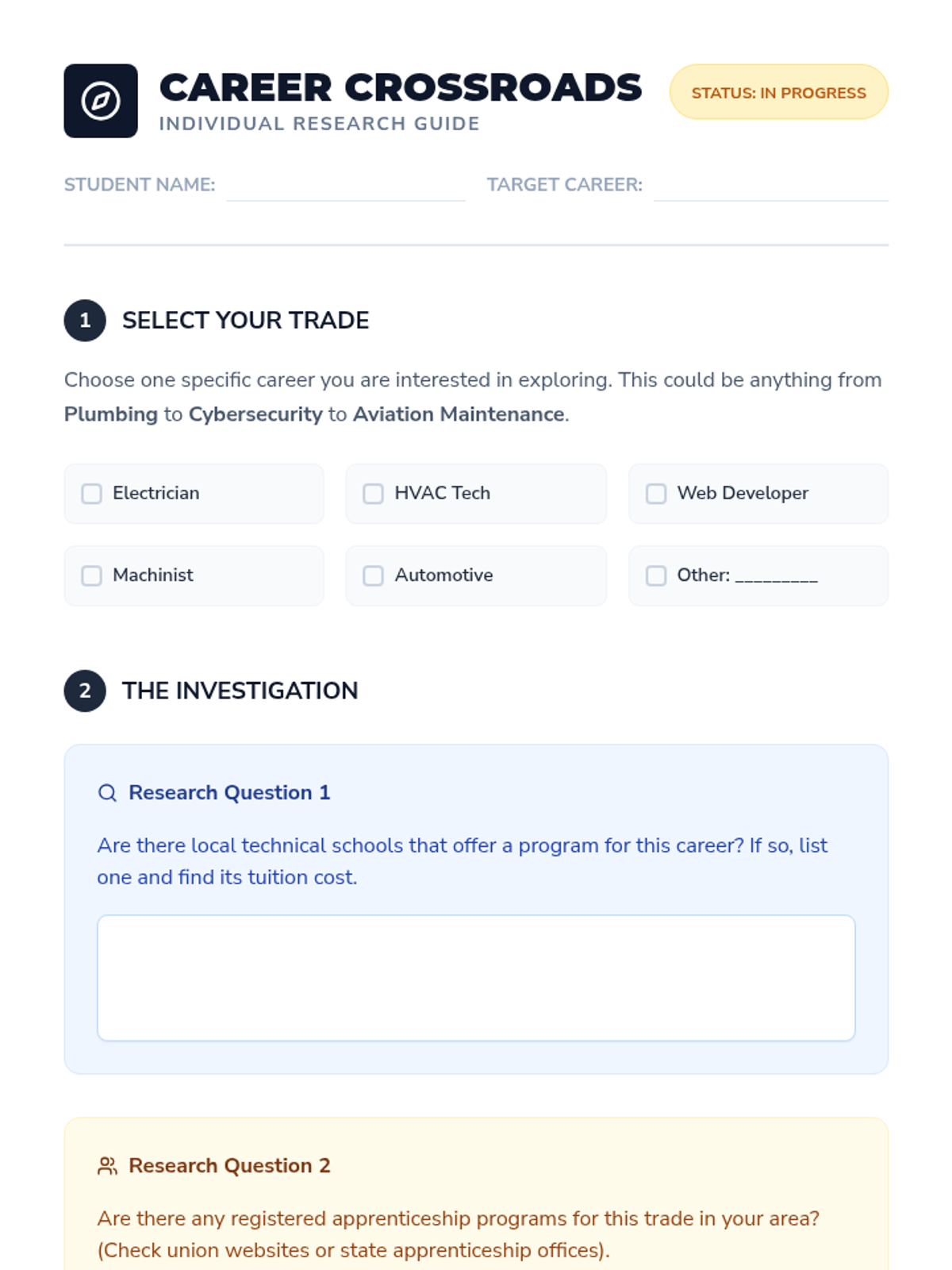
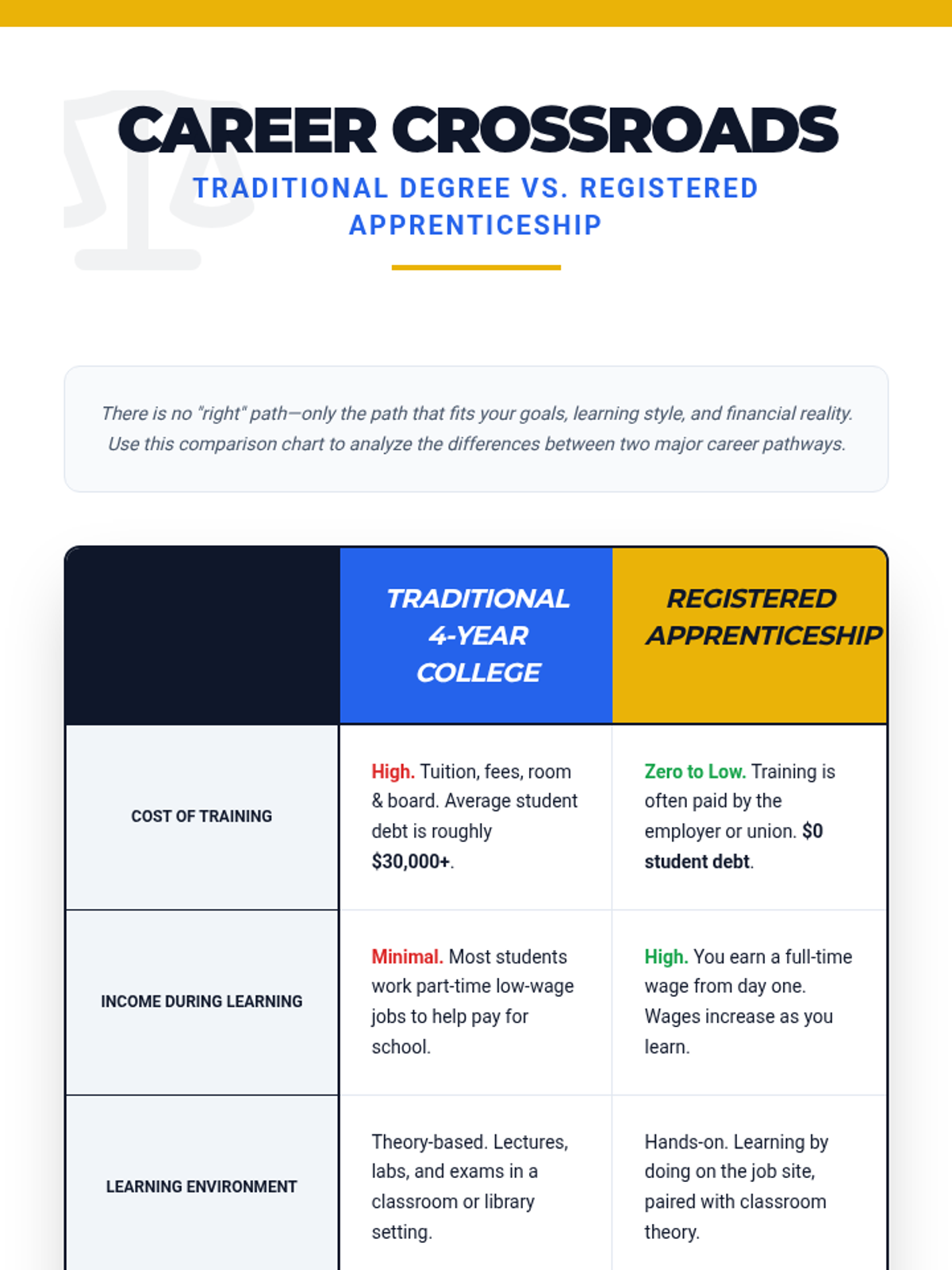
A comprehensive lesson exploring the differences, benefits, and drawbacks of technical schools and apprenticeships to help students navigate post-secondary options.
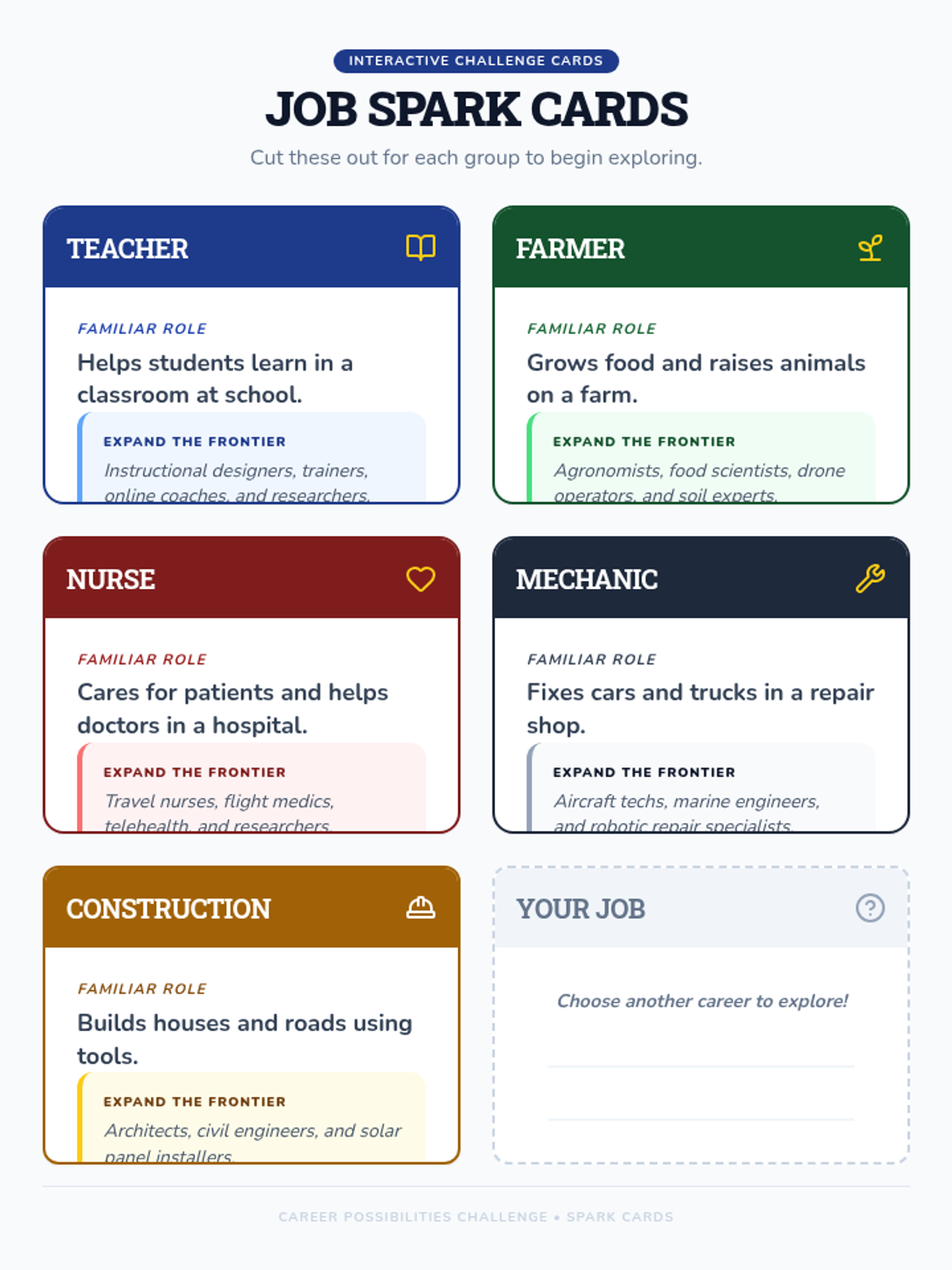
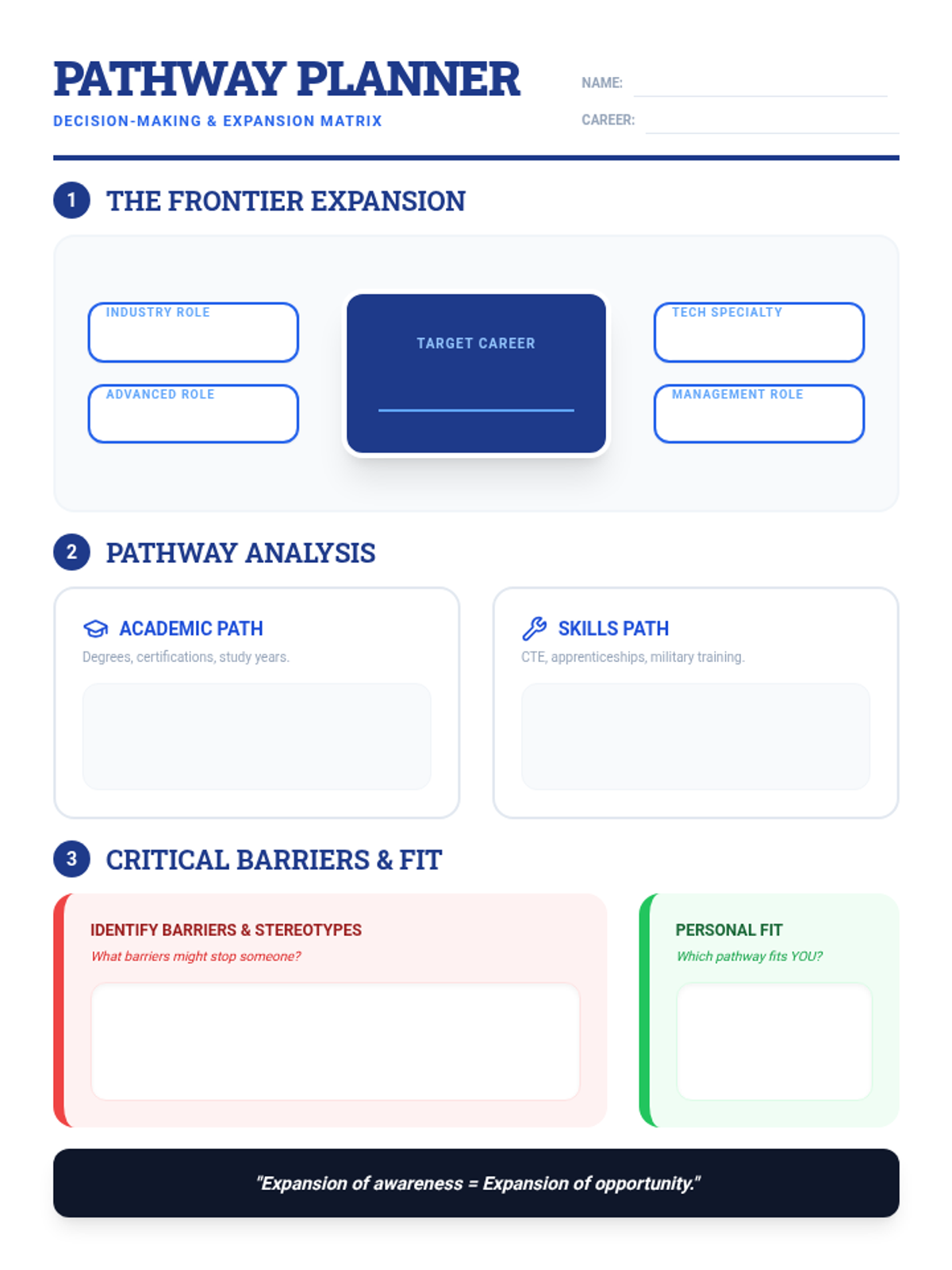
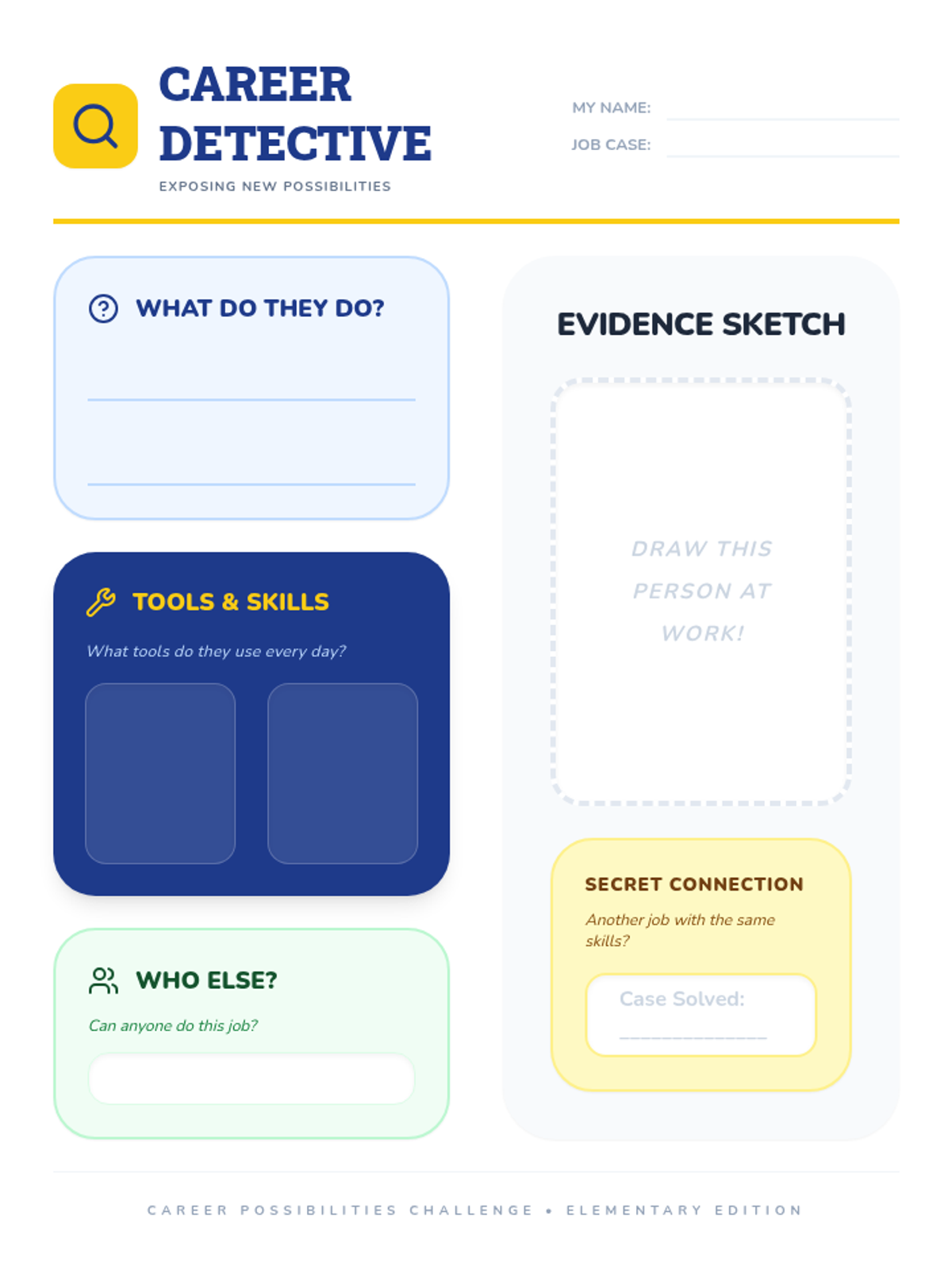
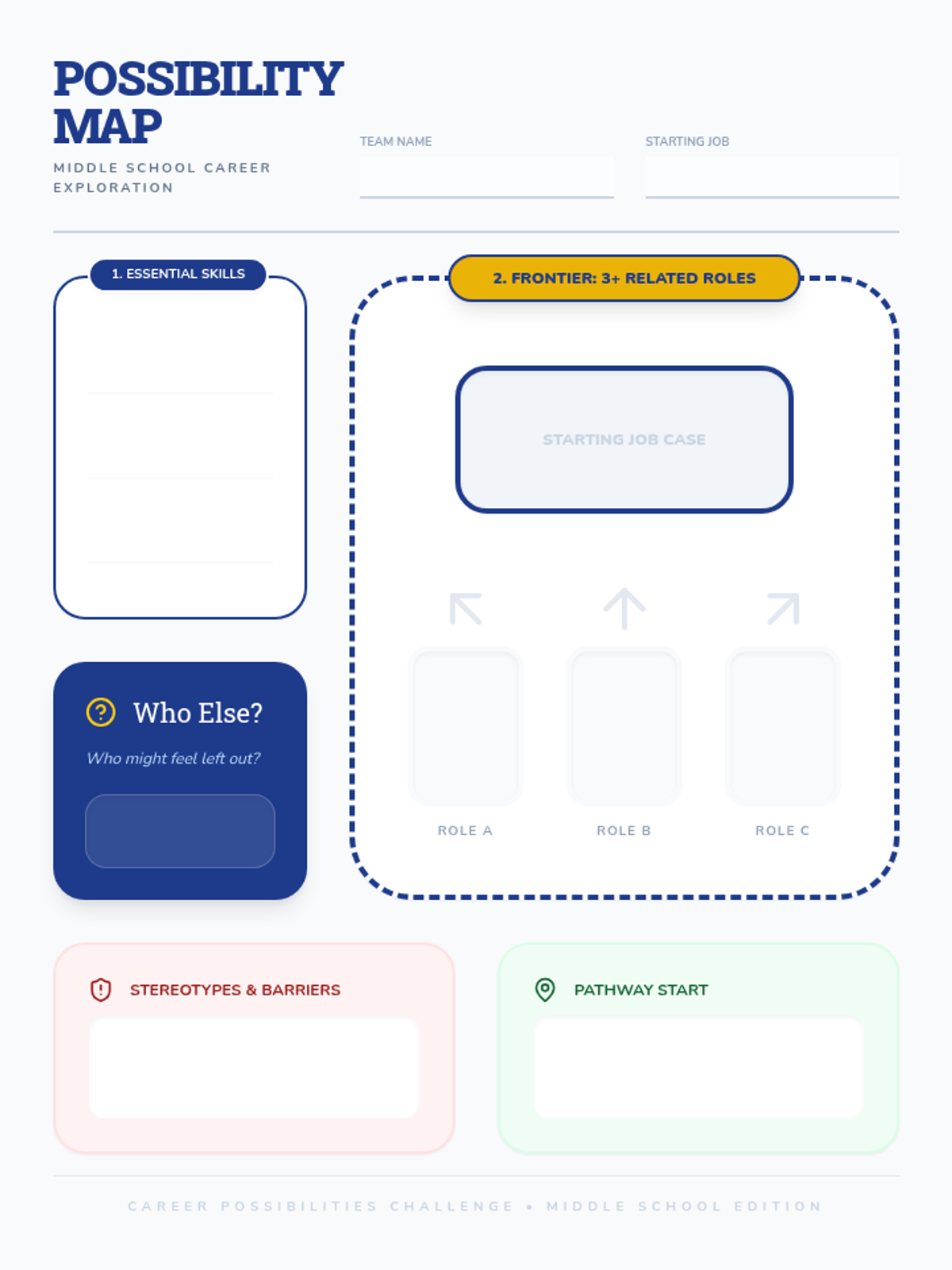
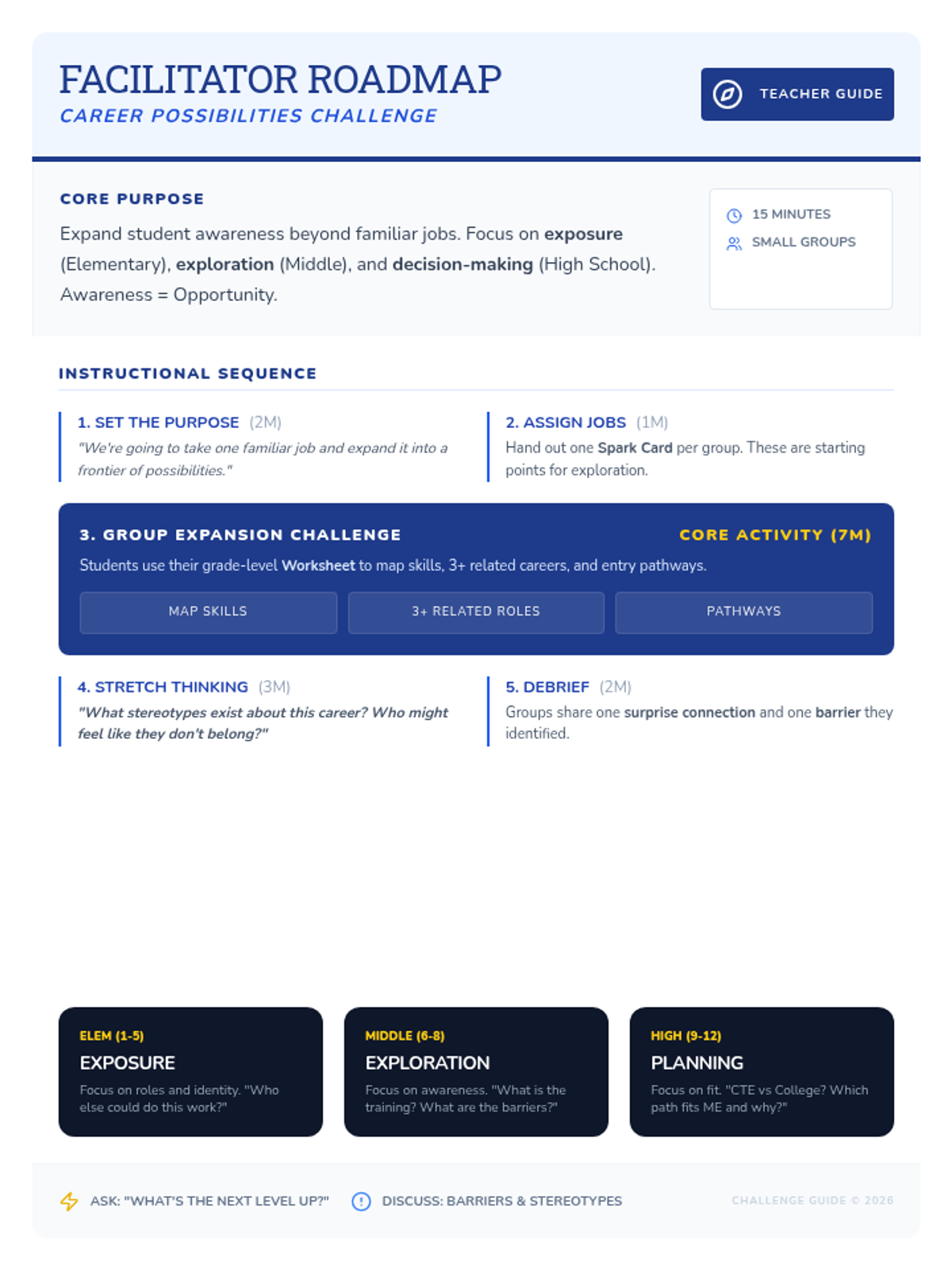
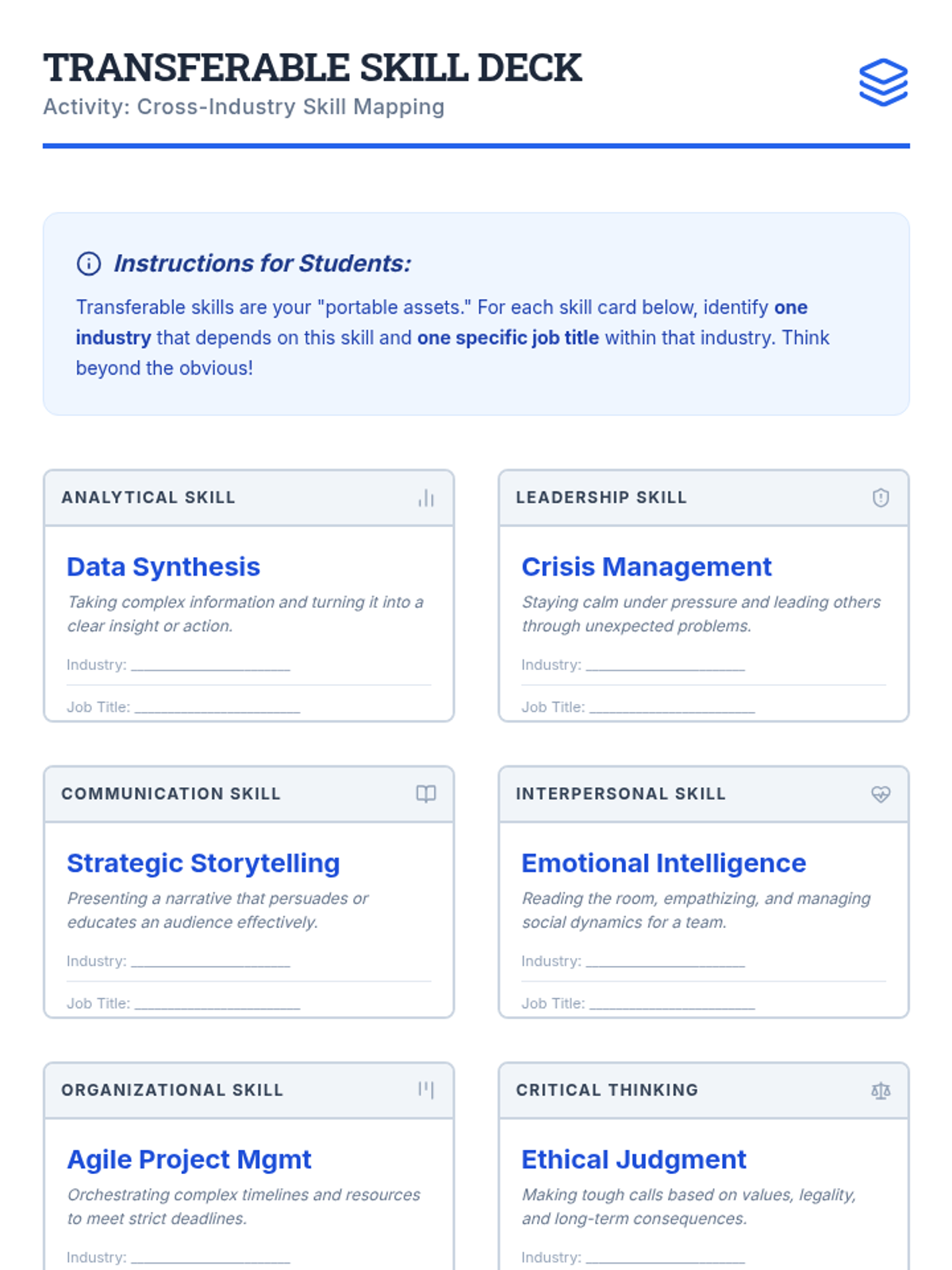
A fast-paced, interactive activity where students expand their understanding of familiar careers into broader industry pathways and explore the skills and steps needed to reach them.
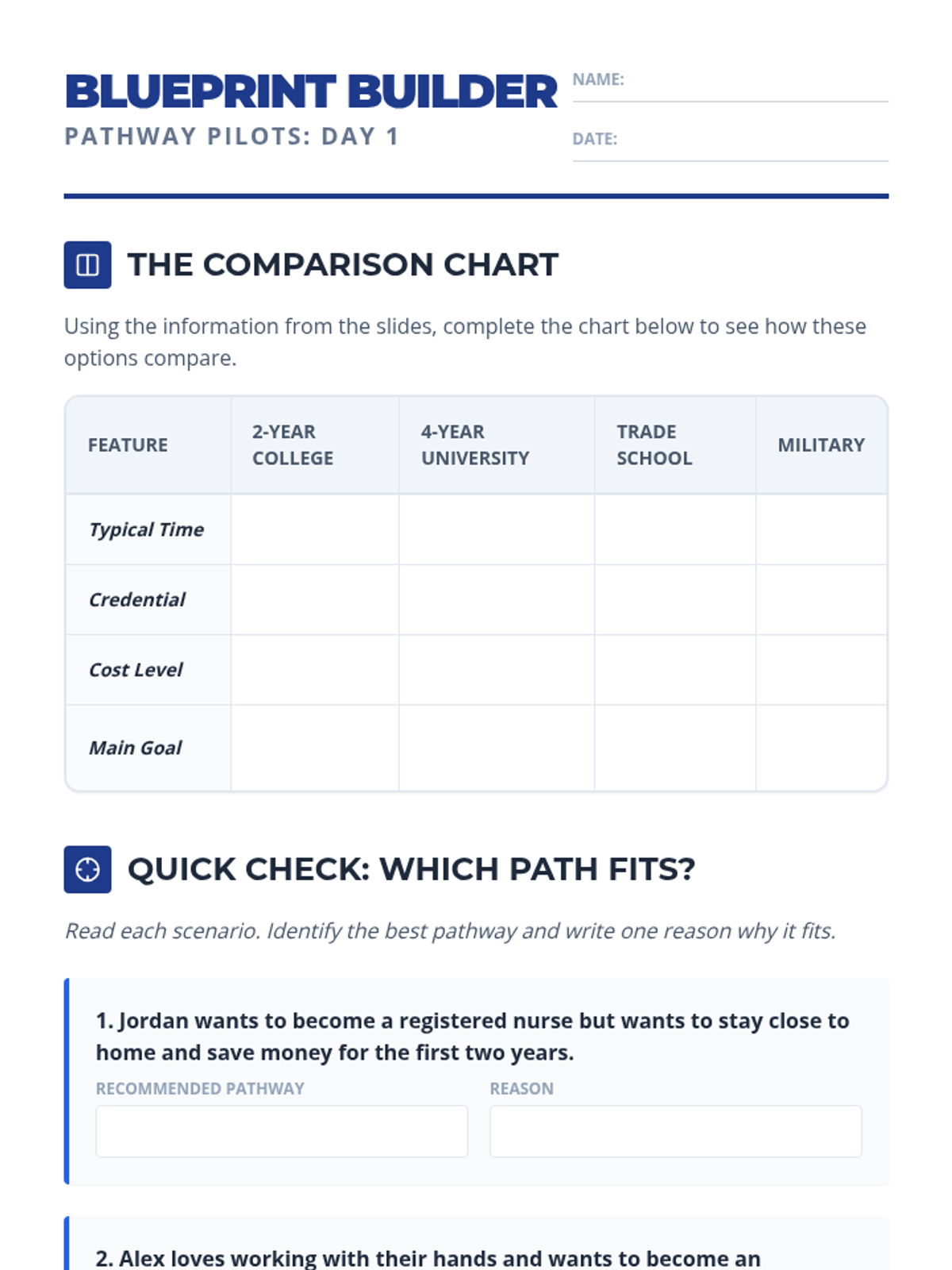
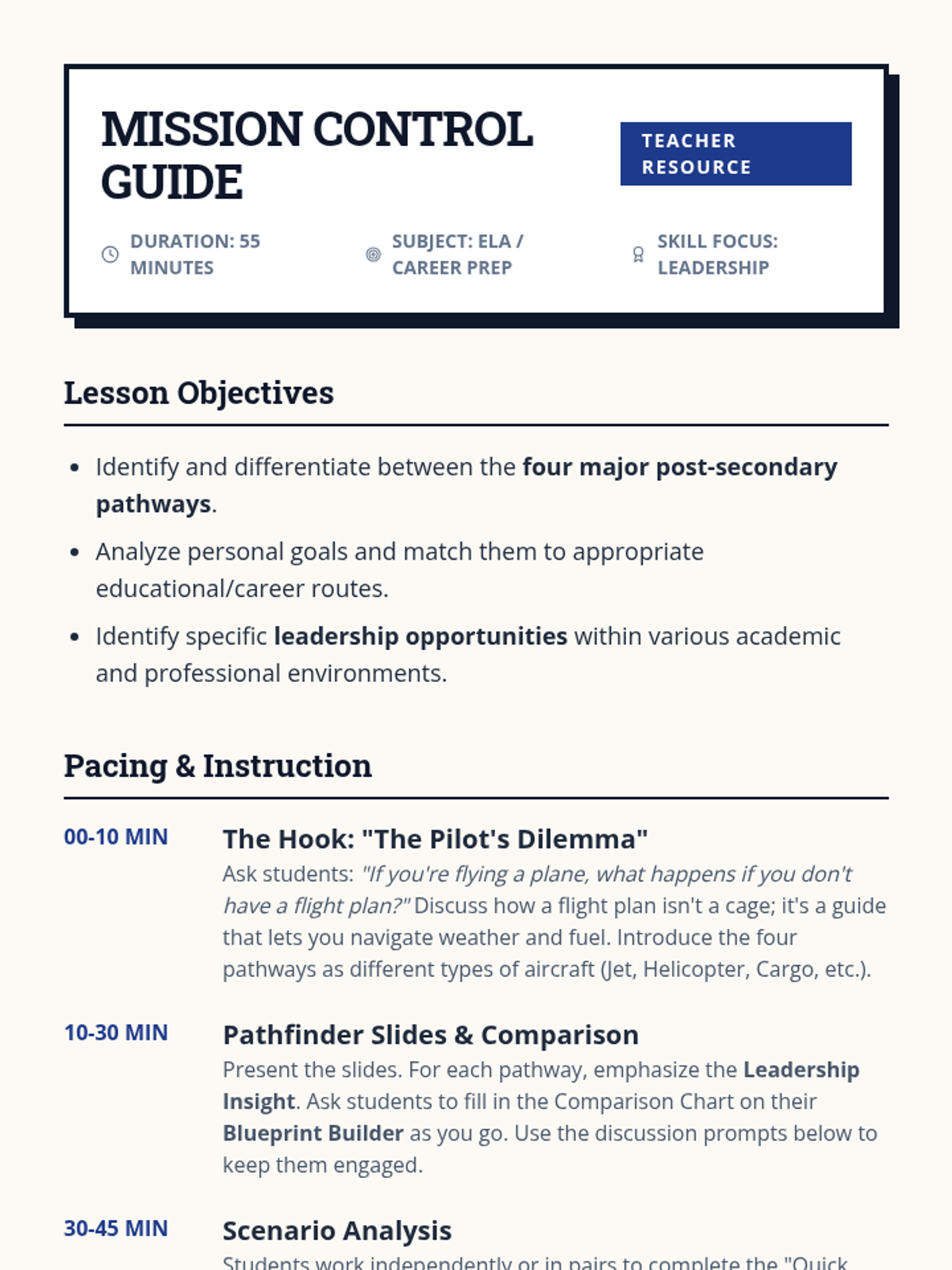
An introductory lesson exploring four major post-secondary pathways (2-year, 4-year, trade, and military) through the lens of leadership and personal goals. Students will compare options and analyze scenarios to find their best fit.
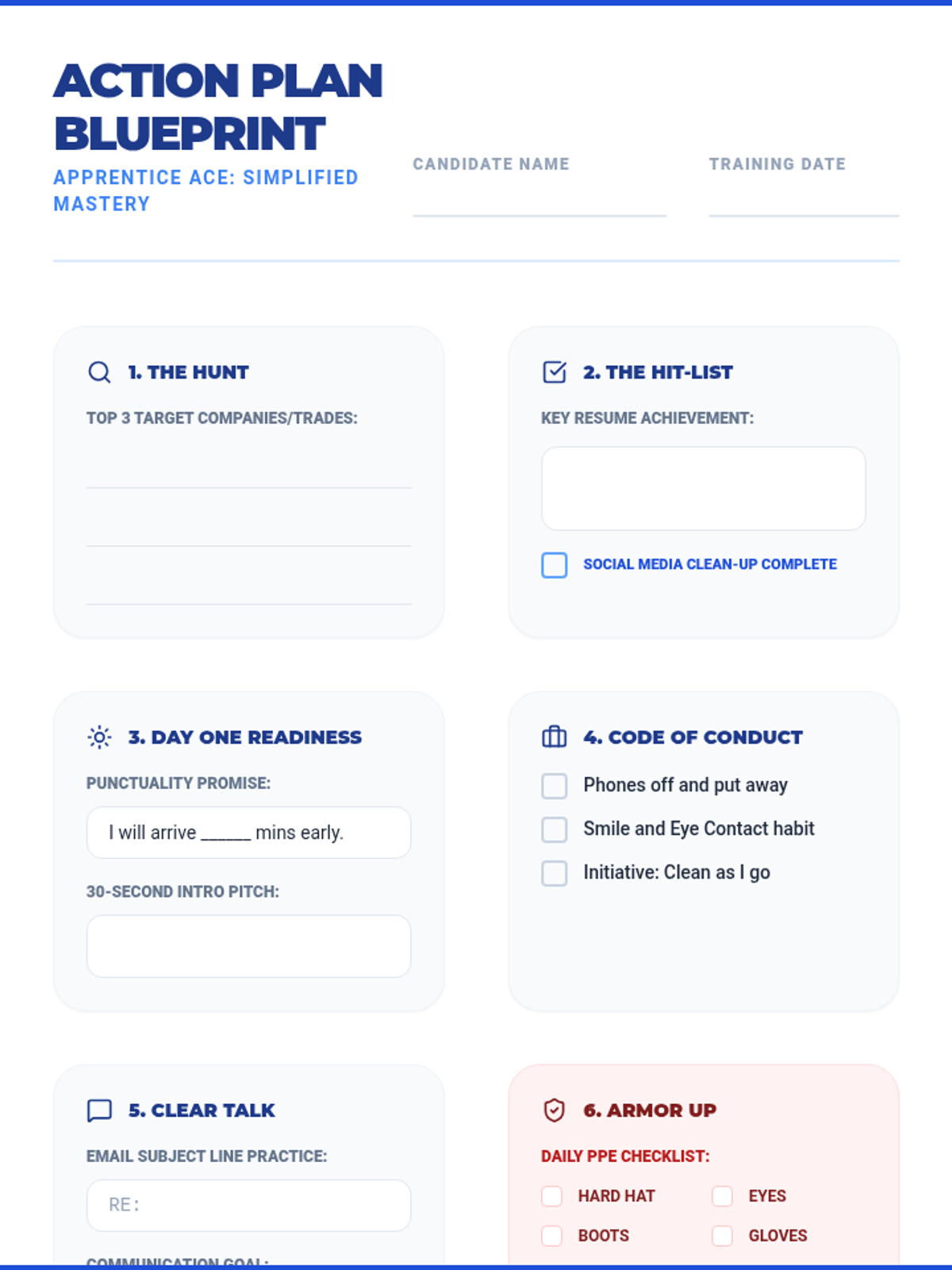
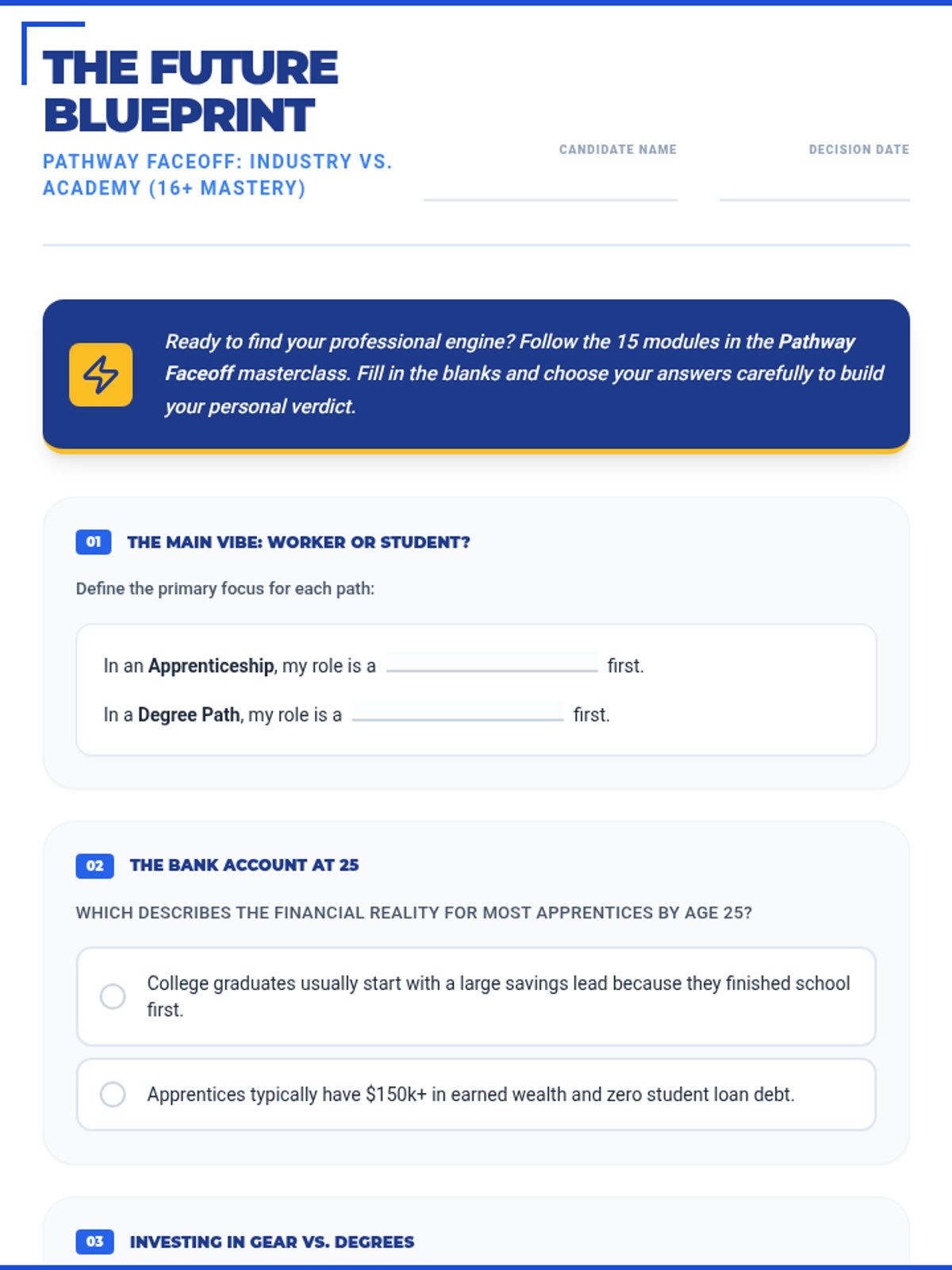
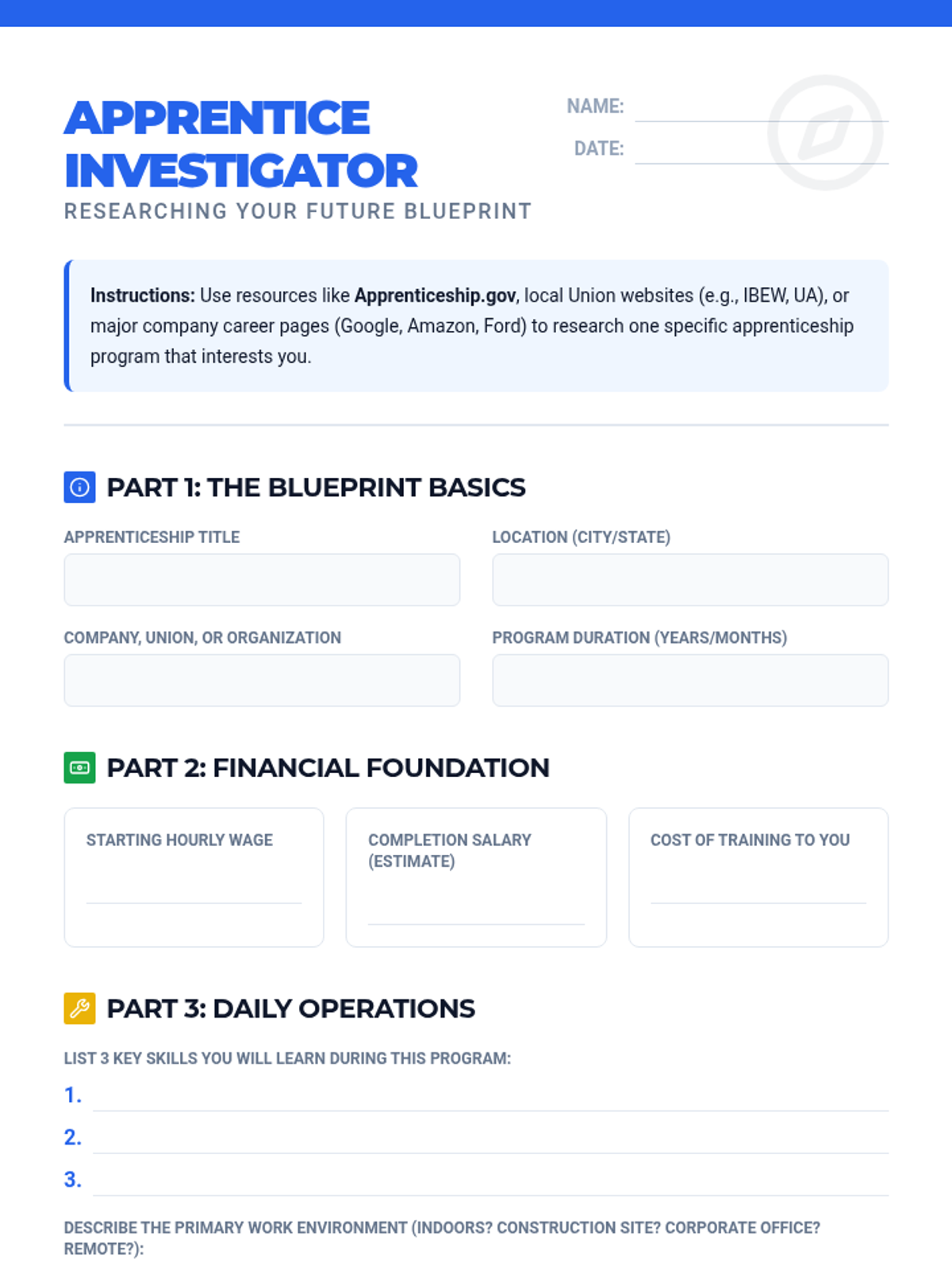
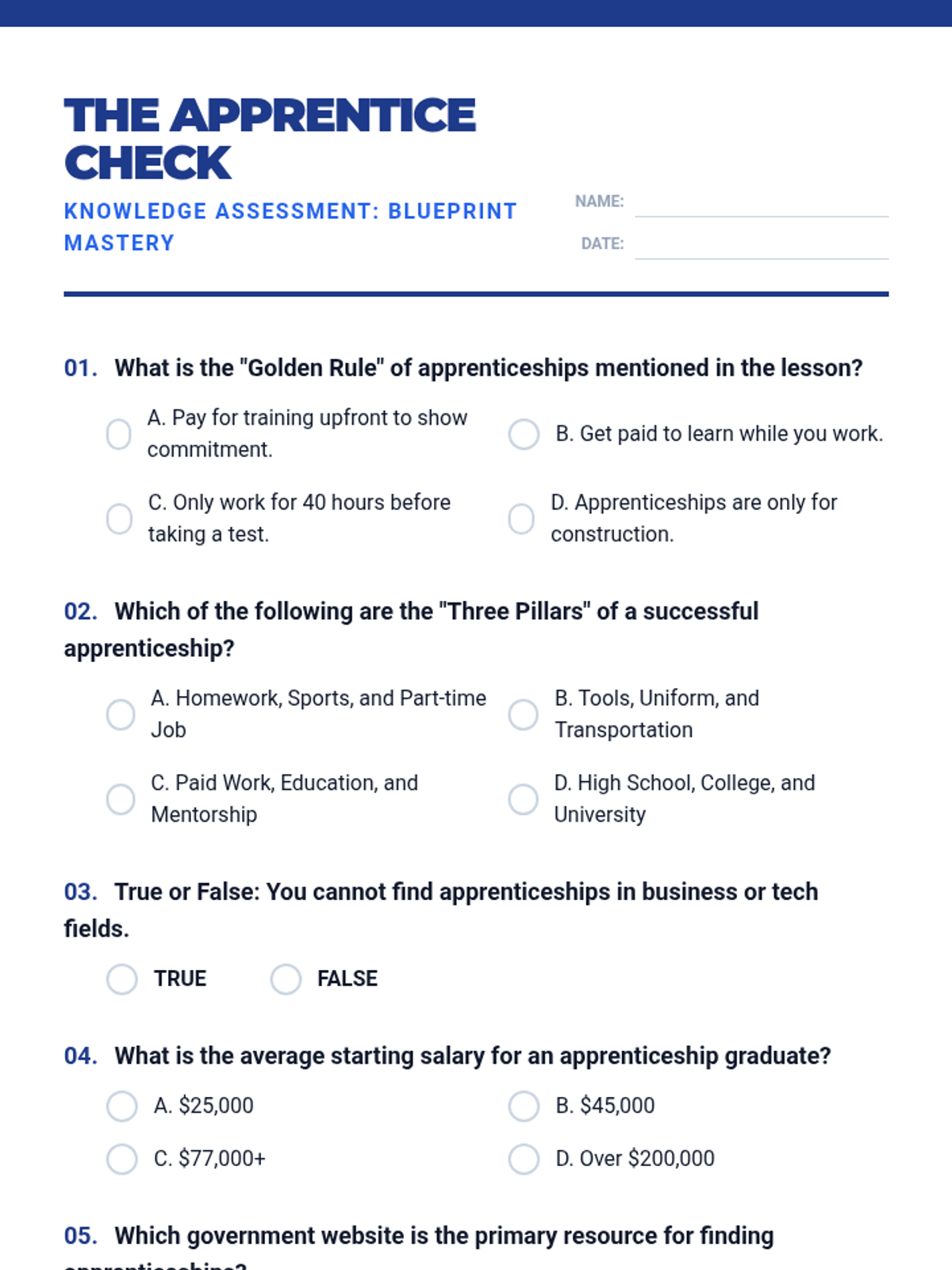
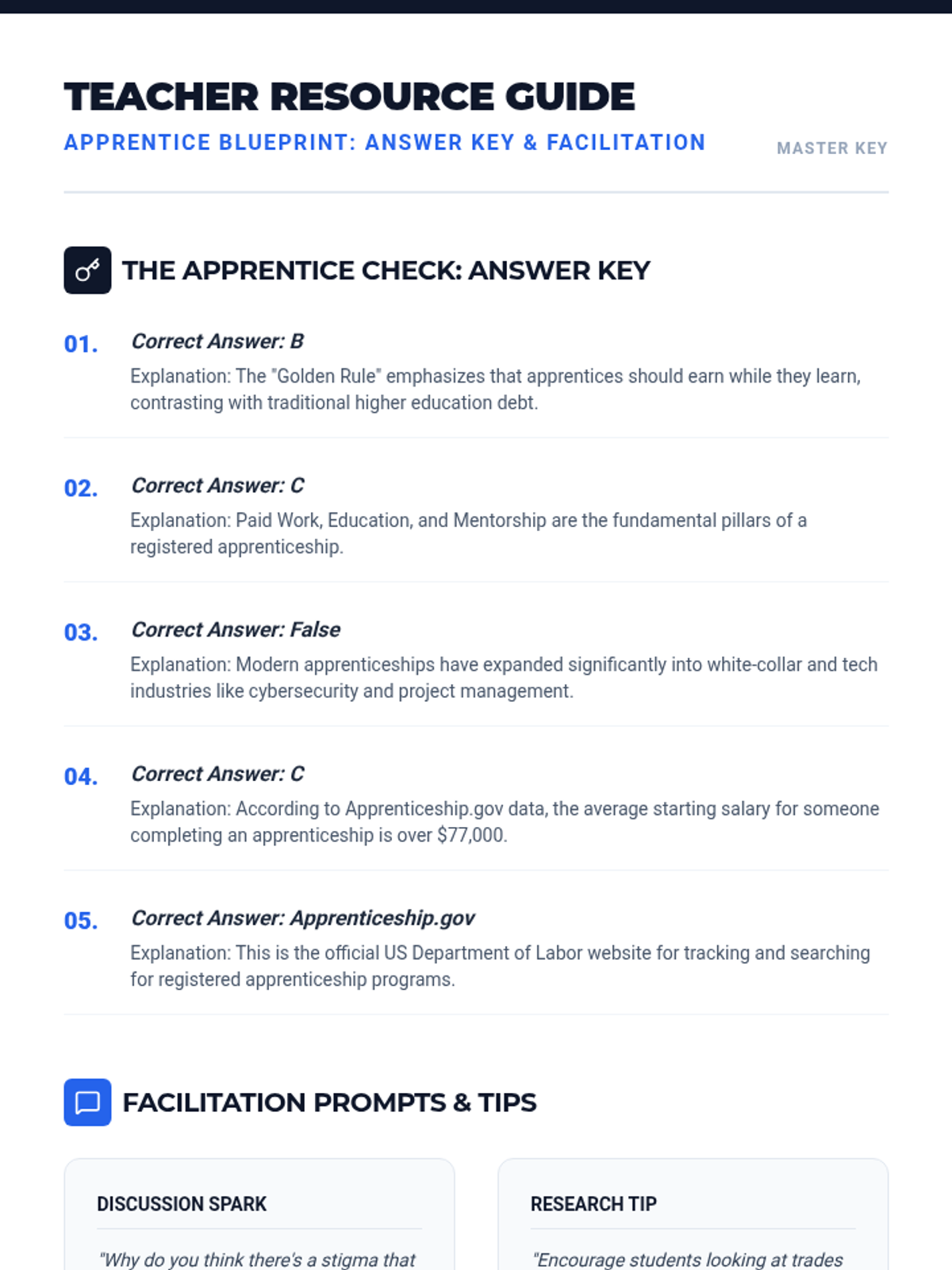
A comprehensive guide to understanding, finding, and securing apprenticeships in trades, business, and high-growth industries. This lesson covers the definition, benefits, and practical steps to starting a career through an apprenticeship.
Prepares 12th graders for the transition to professional life, focusing on finalizing credentials and bridging Work-Based Learning into post-secondary success.
Guides 11th graders through the practicalities of Internships and Apprenticeships, focusing on preparation and the application process.
Engages 10th graders in exploring Industry-Recognized Credentials (IRCs) and Pre-Apprenticeships as steps toward specialized career pathways.
Introduces 9th graders to the core concepts of Work-Based Learning, focusing on Project-Based Learning and School-Based Enterprises to build initial interest and awareness.
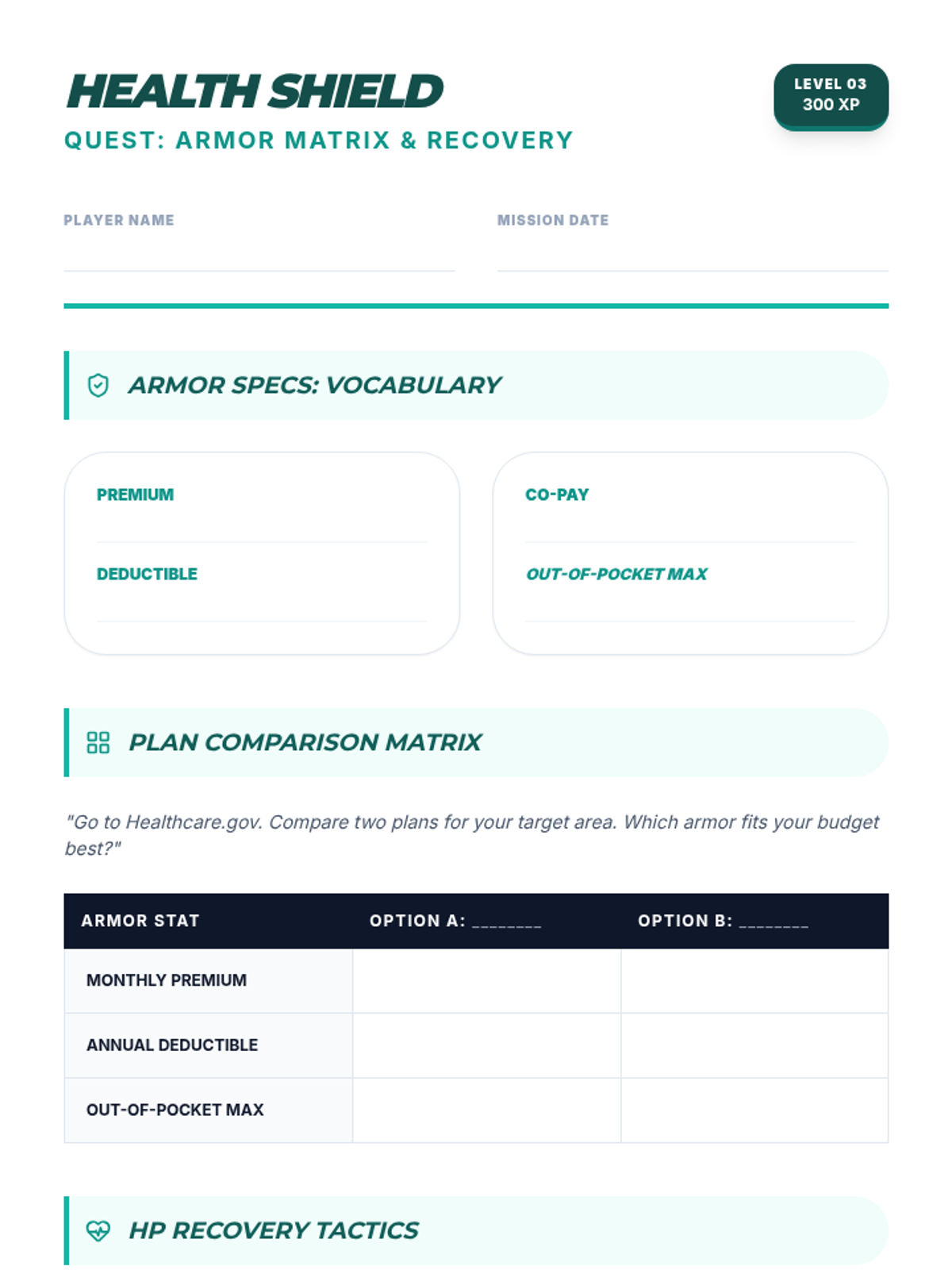
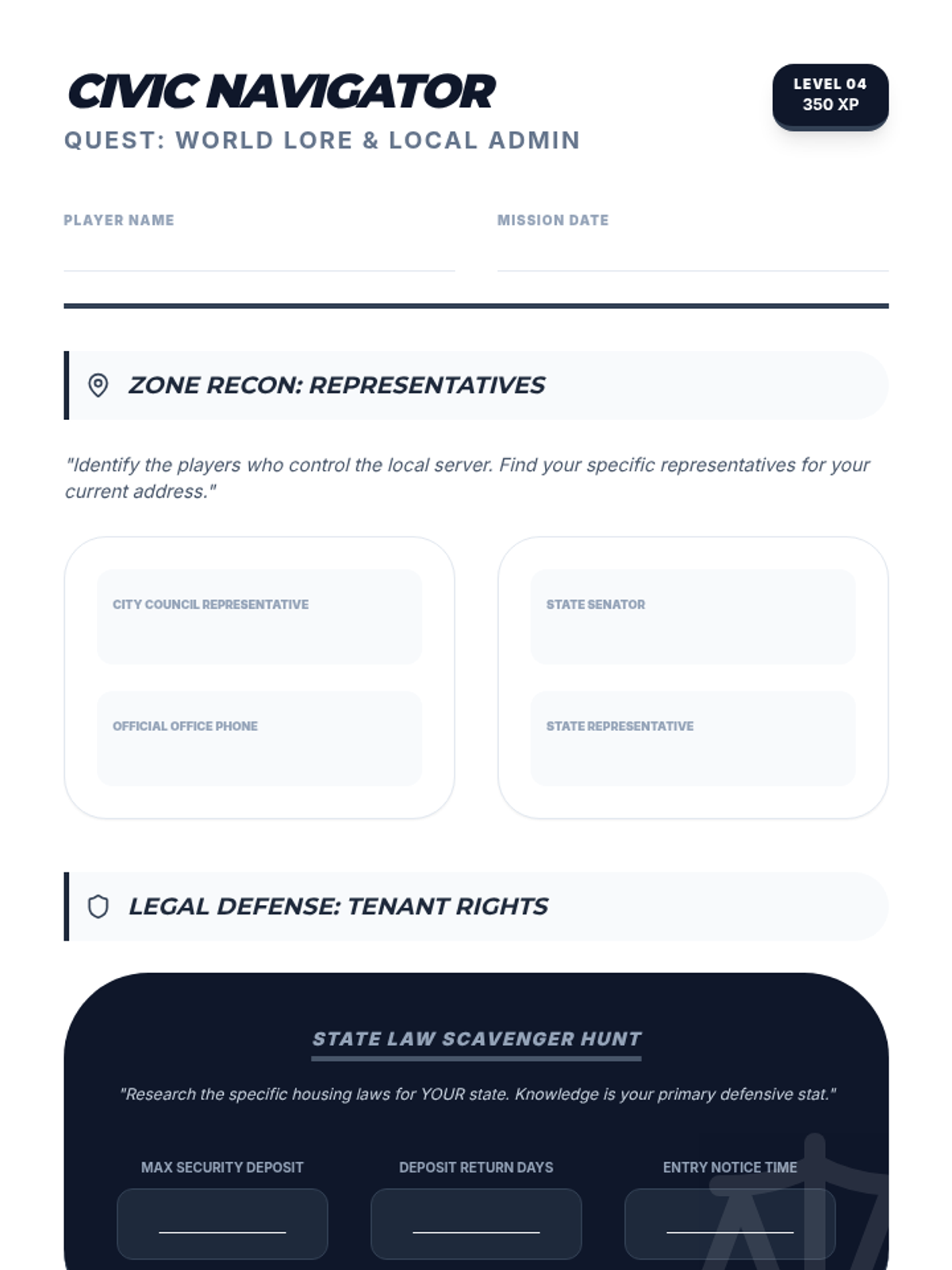
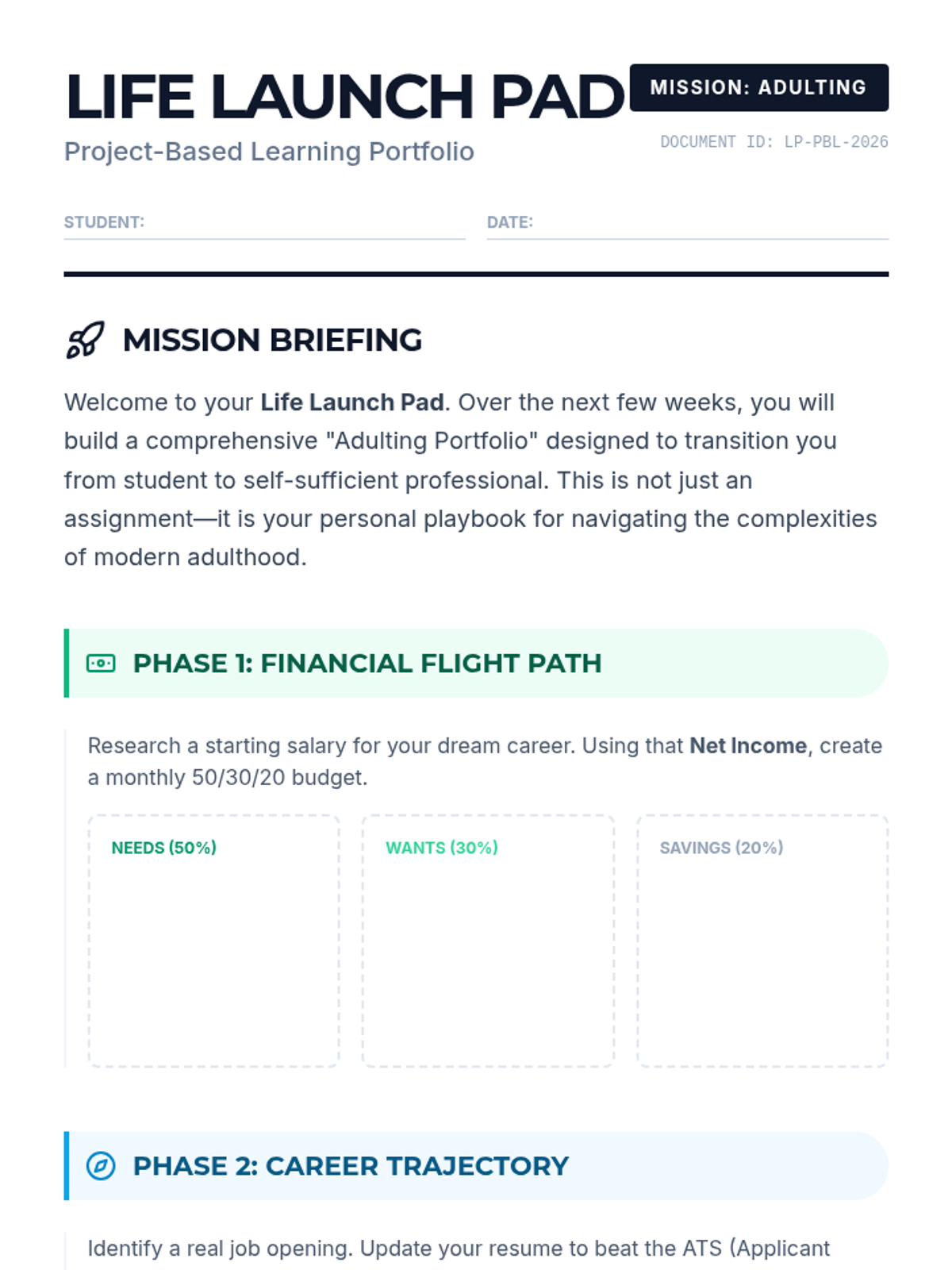
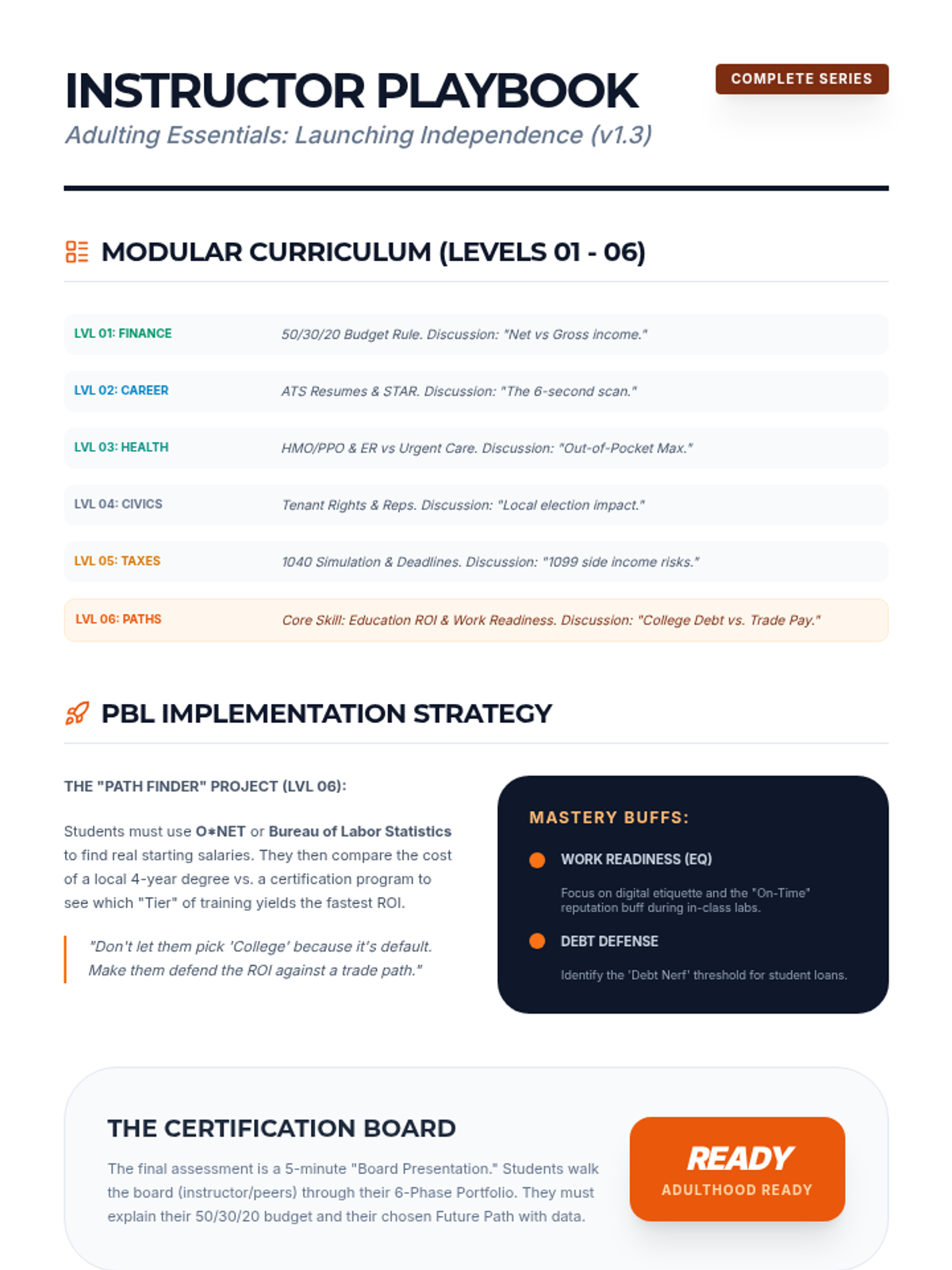
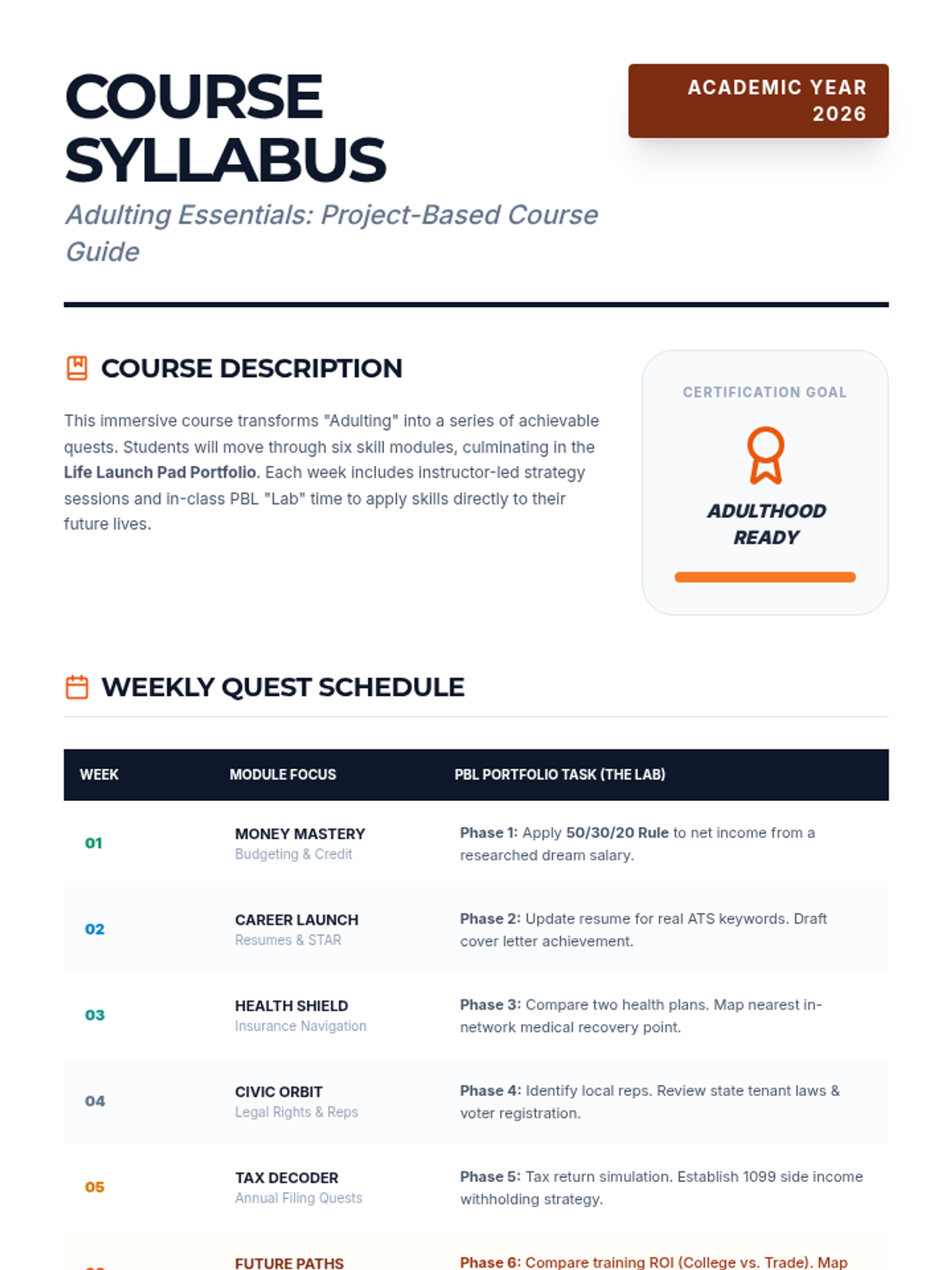
A comprehensive guide to essential adulting skills covering financial literacy, career development, health navigation, and civic responsibilities.
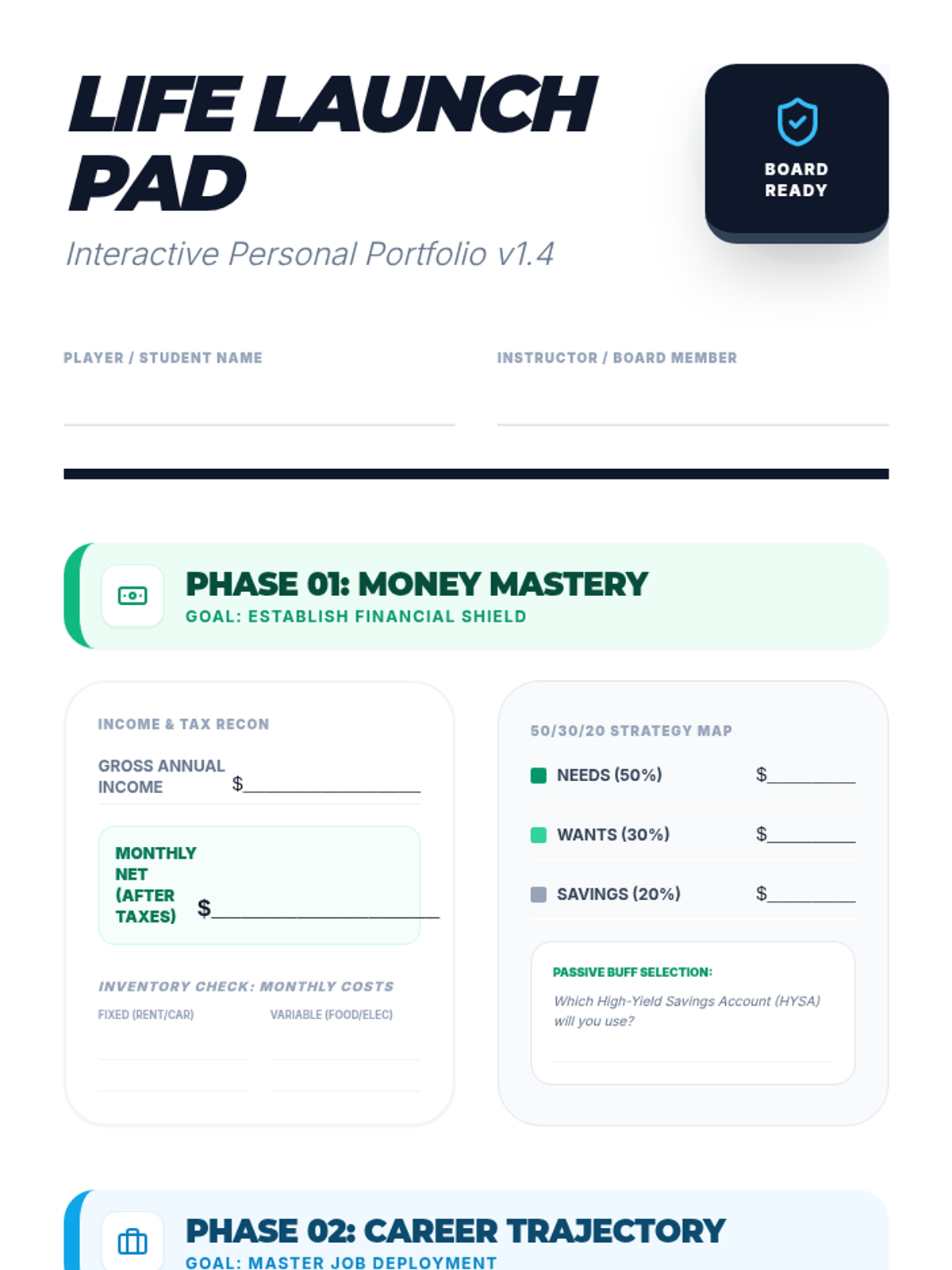
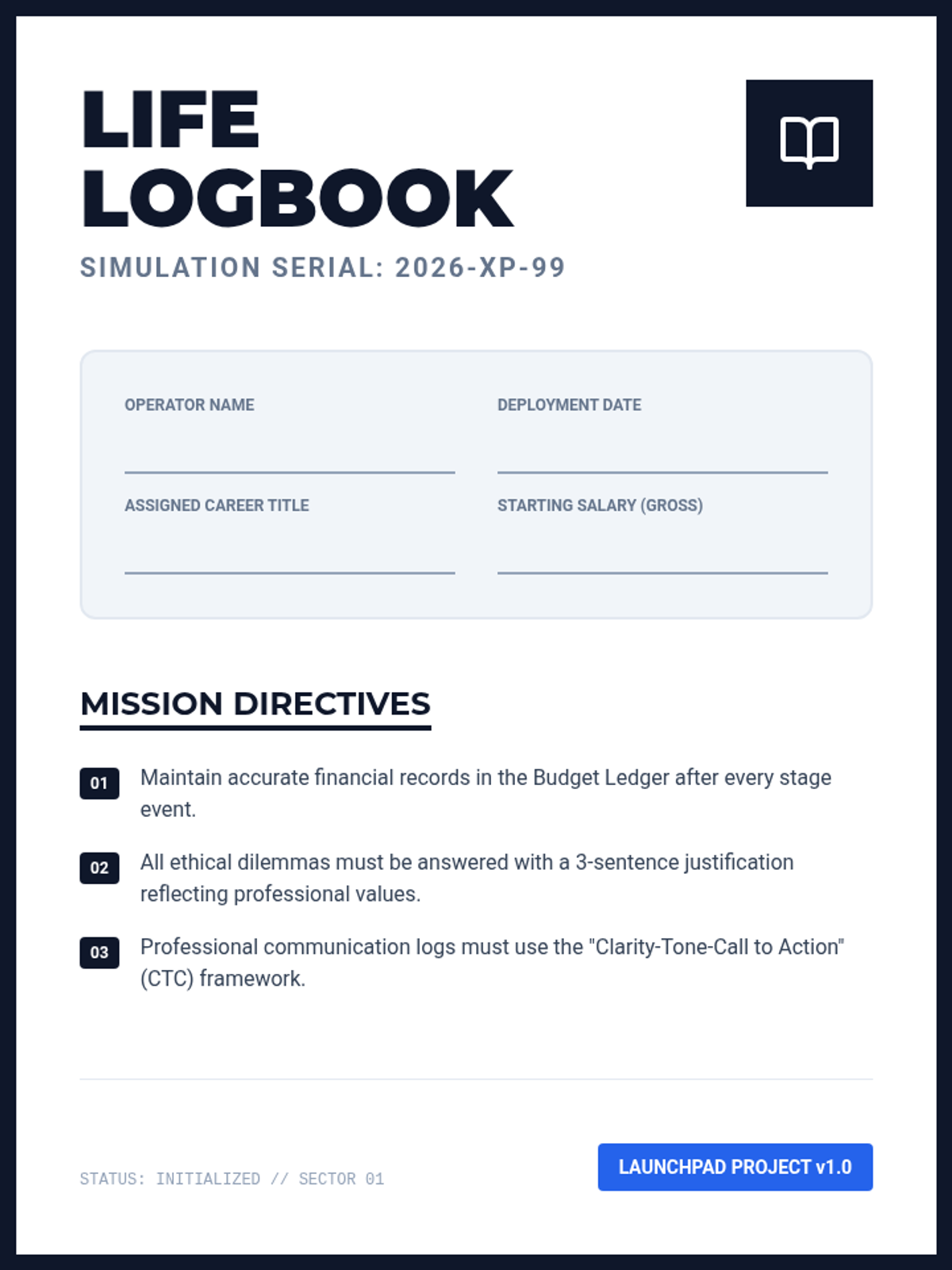
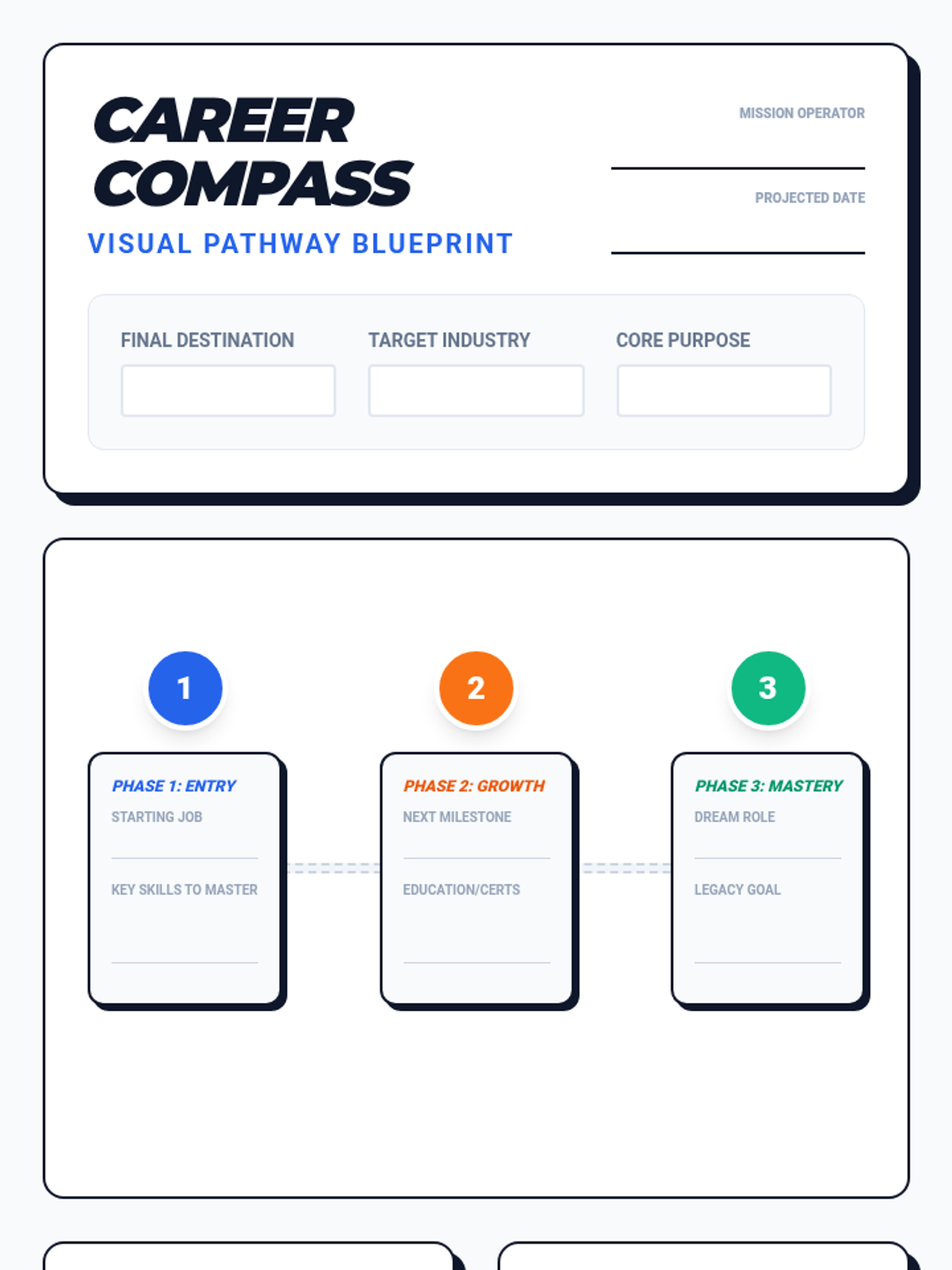
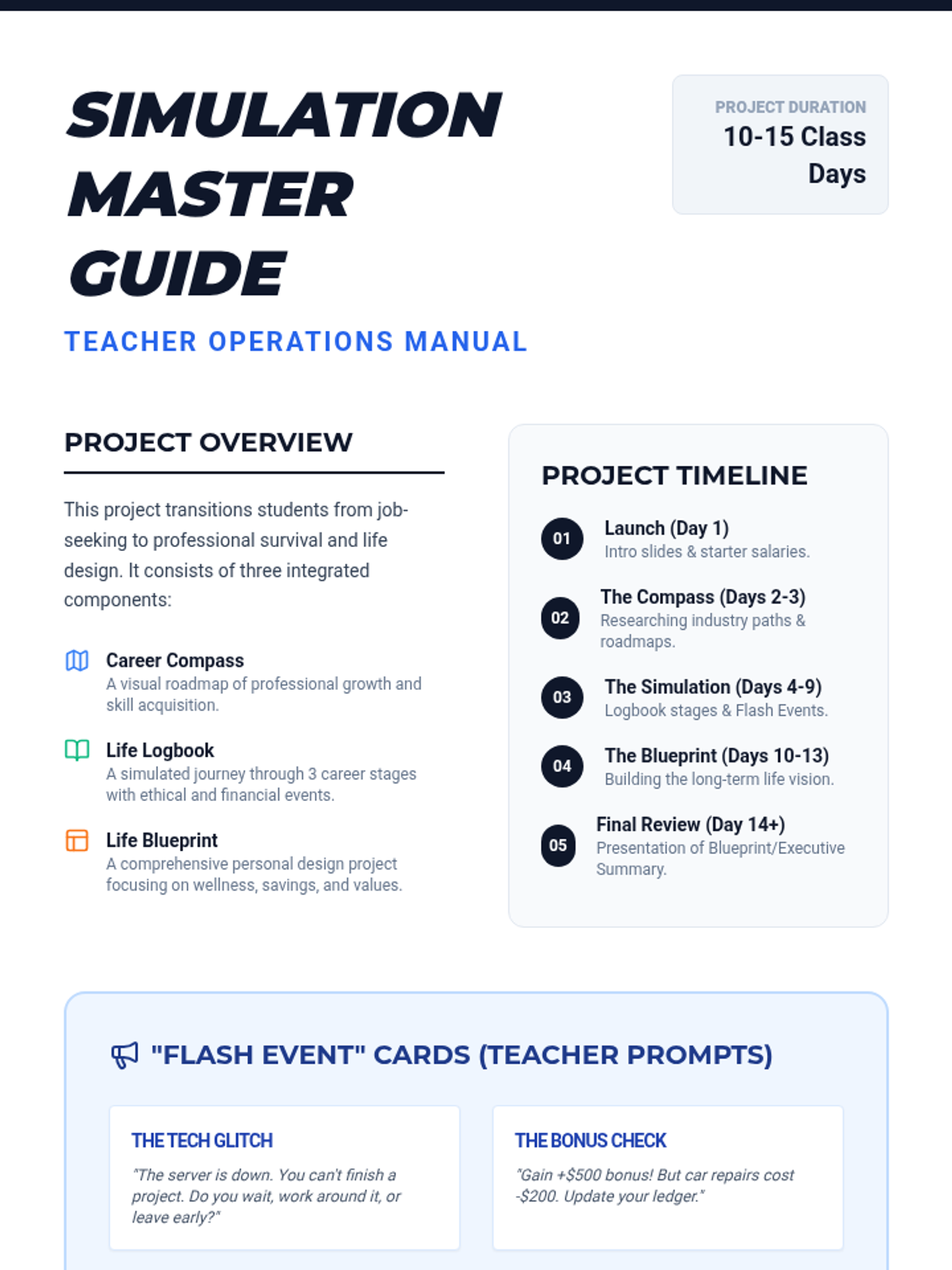
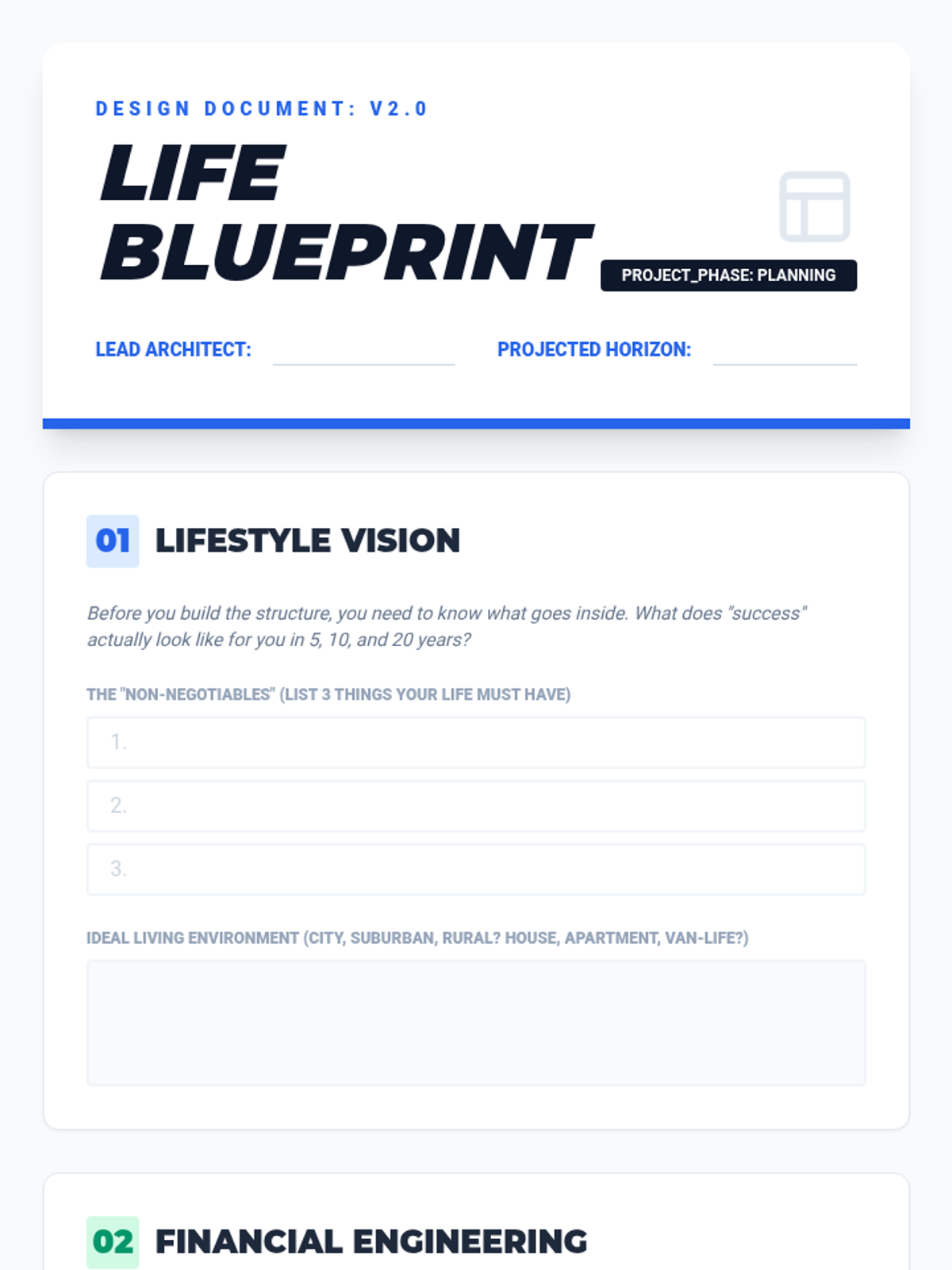
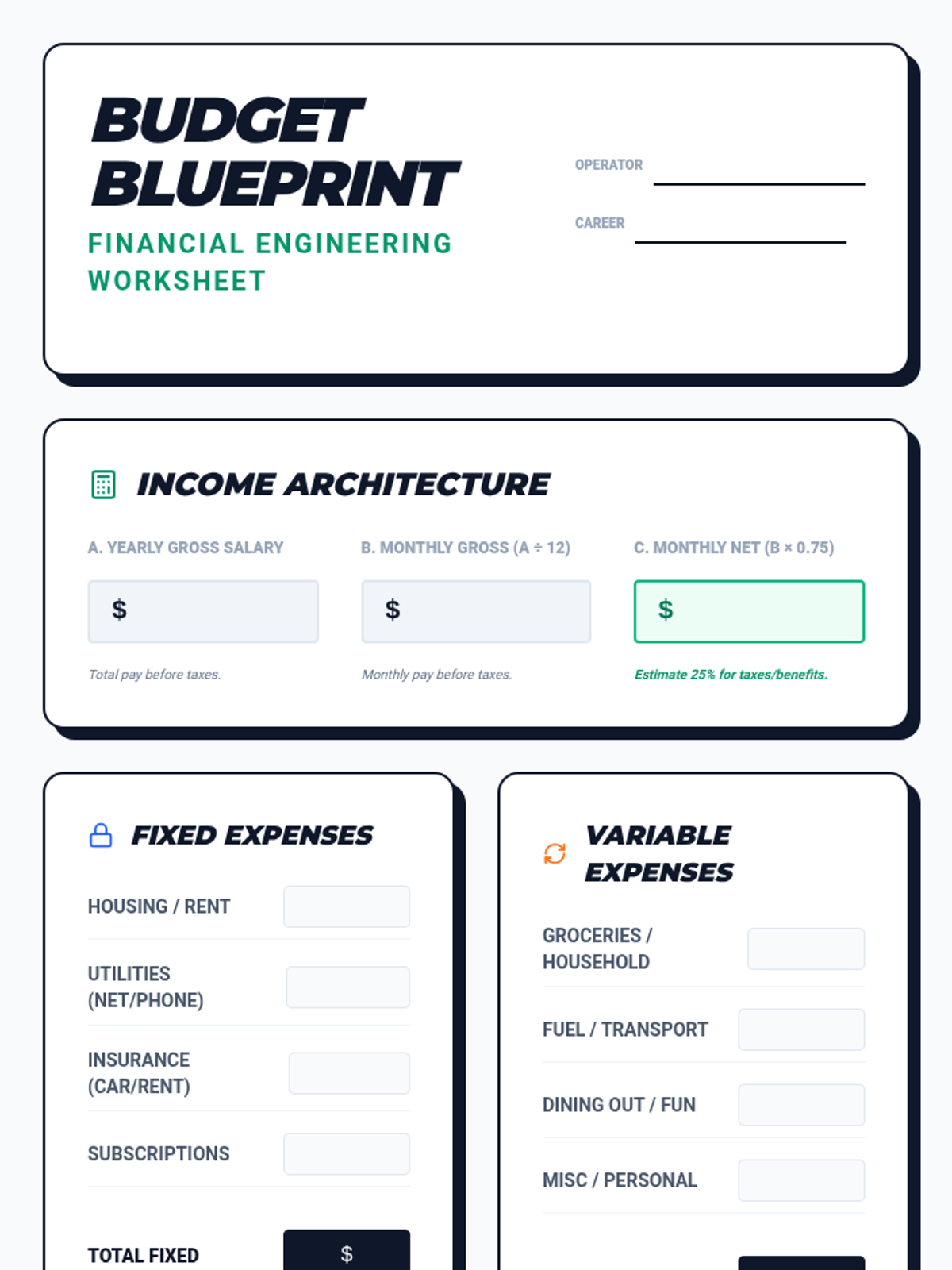
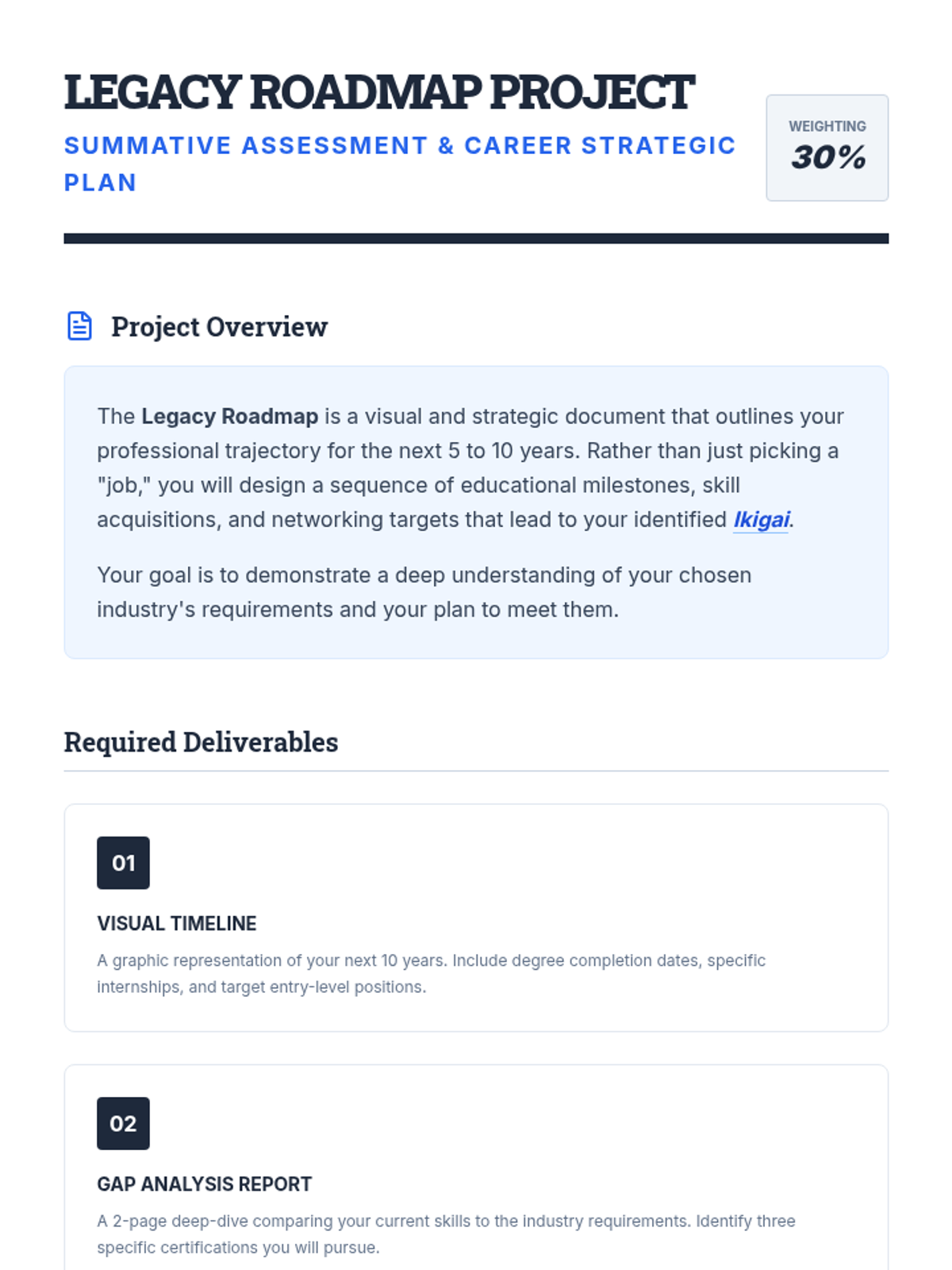
A project-based simulation where students create a long-term career roadmap and manage a multi-stage life logbook, practicing workplace ethics and professional communication in real-world scenarios.
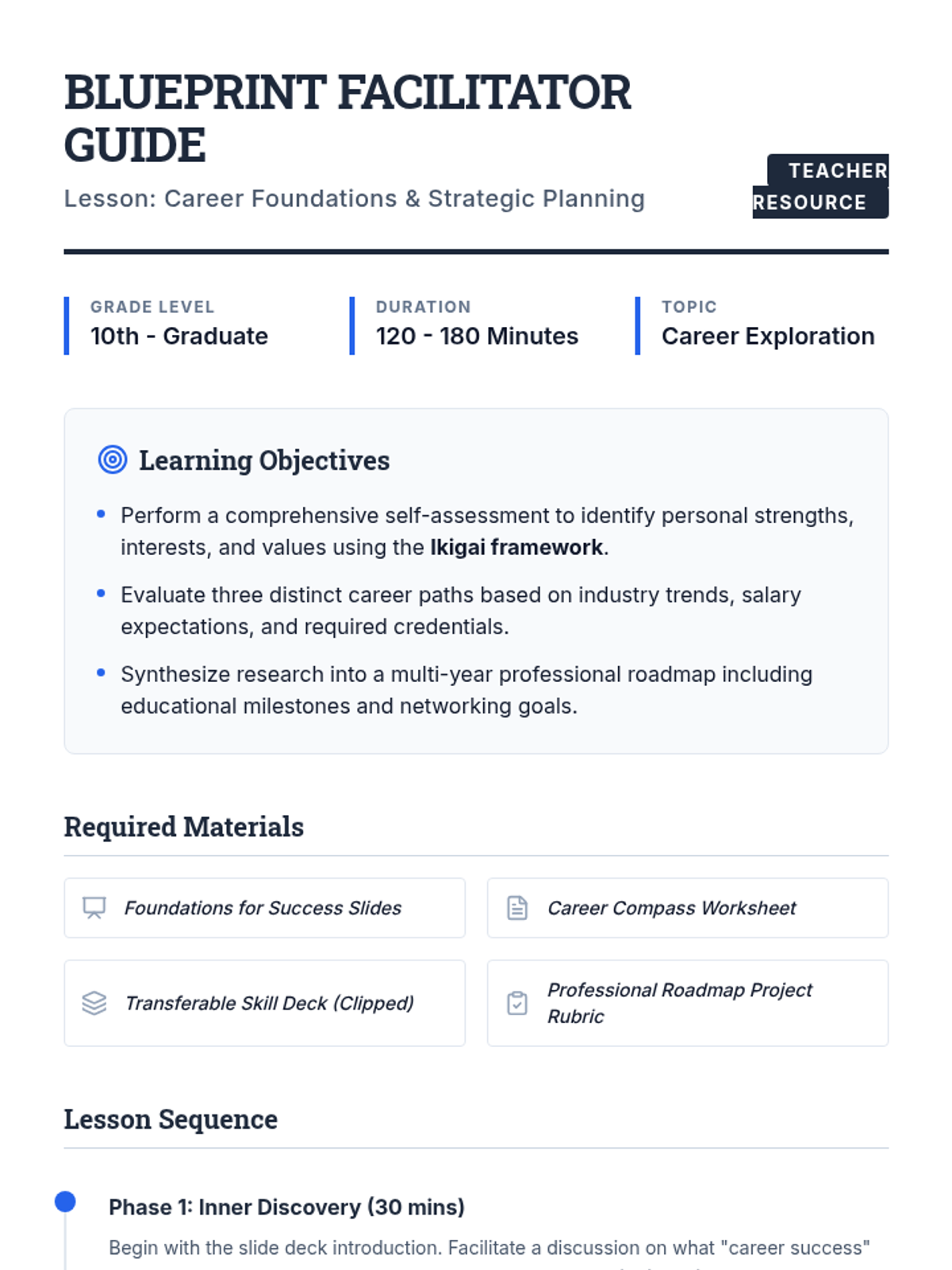
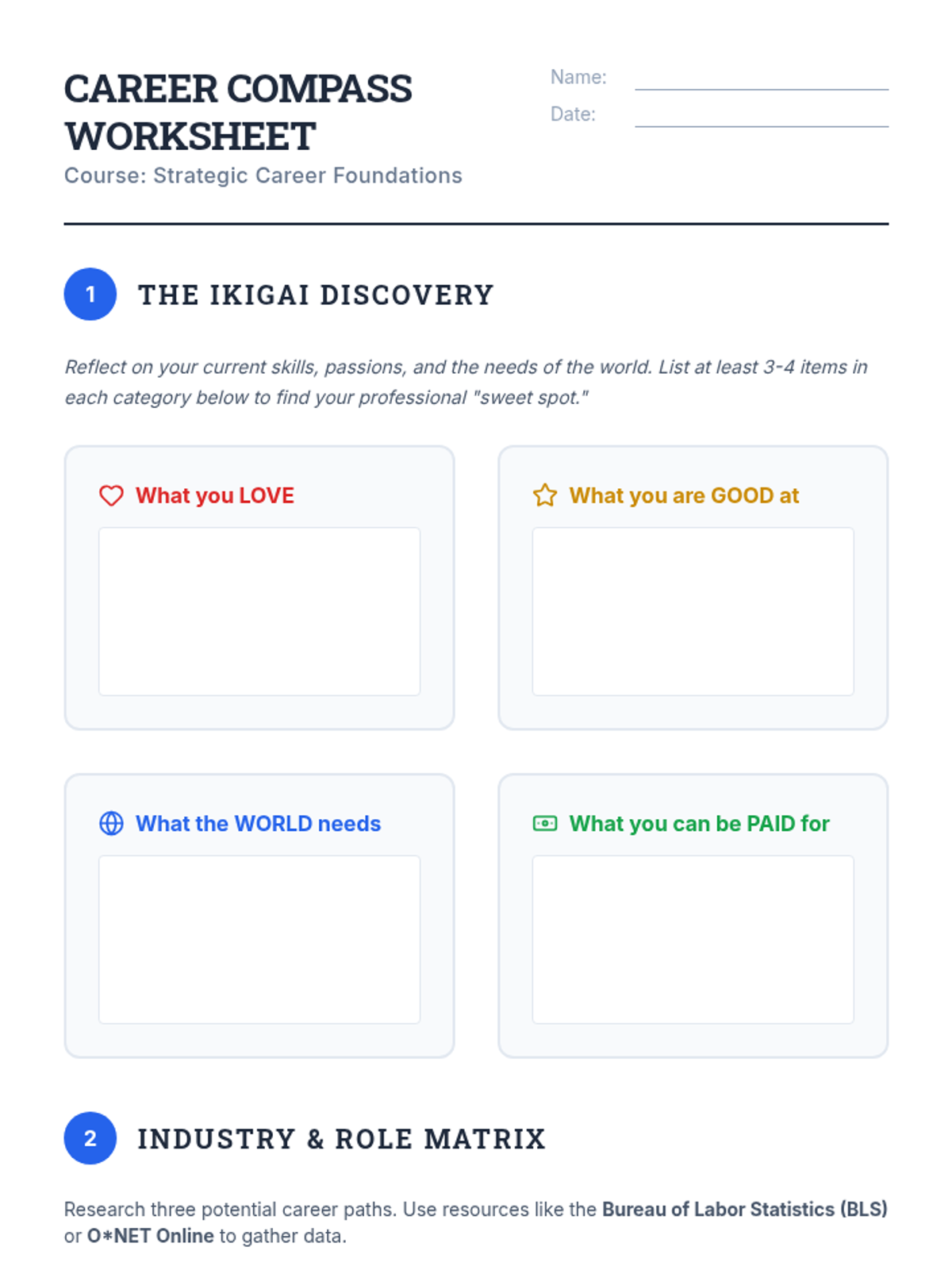
A comprehensive guide for students to bridge the gap between their current skills and future professional goals through self-assessment and strategic research. Students will identify their 'Ikigai', research industries, and map out educational requirements for their chosen path.
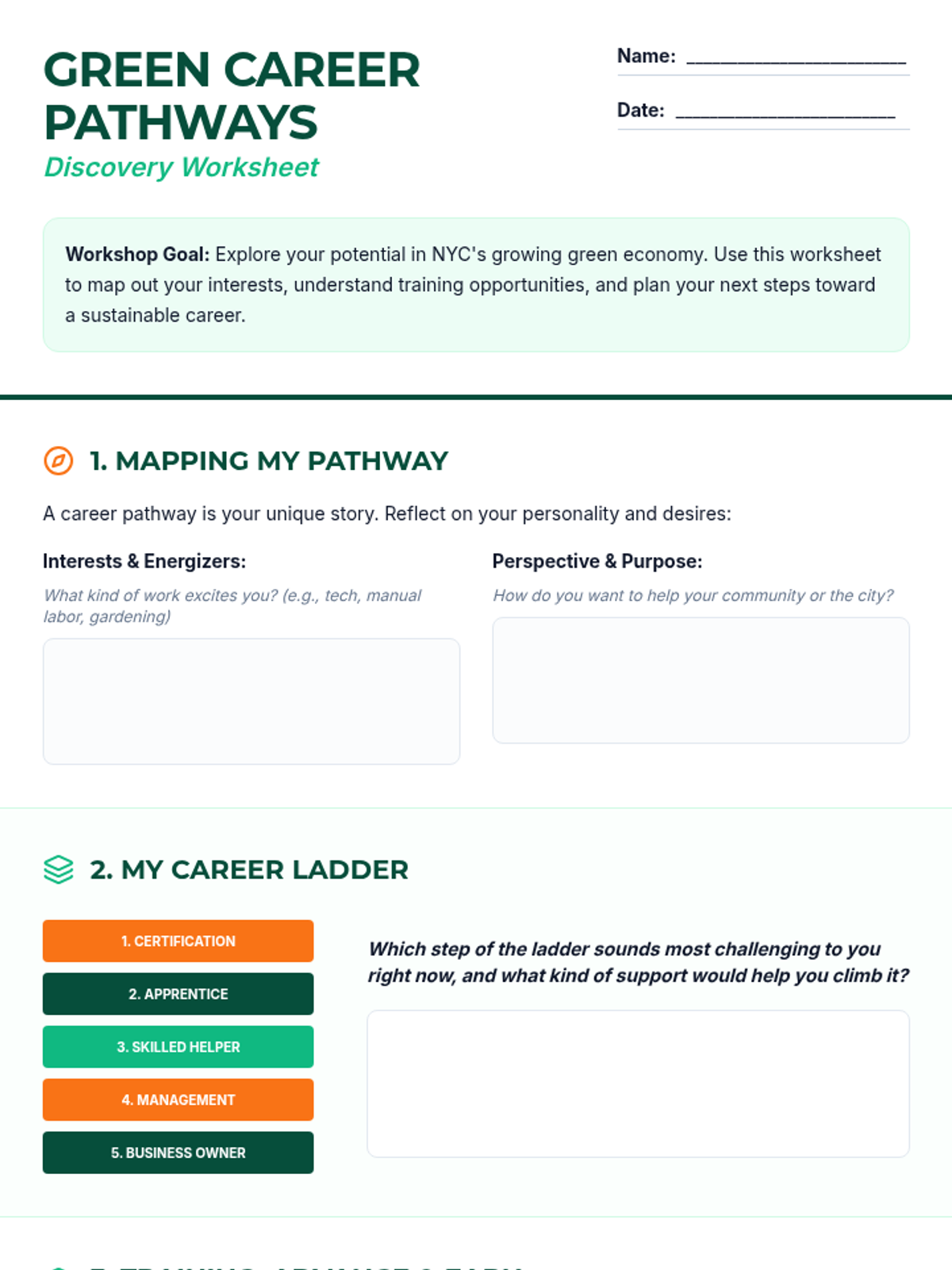
A comprehensive exploration of post-secondary options tailored for alternative education students, focusing on practical career pathways like trade schools, apprenticeships, and direct workforce entry.
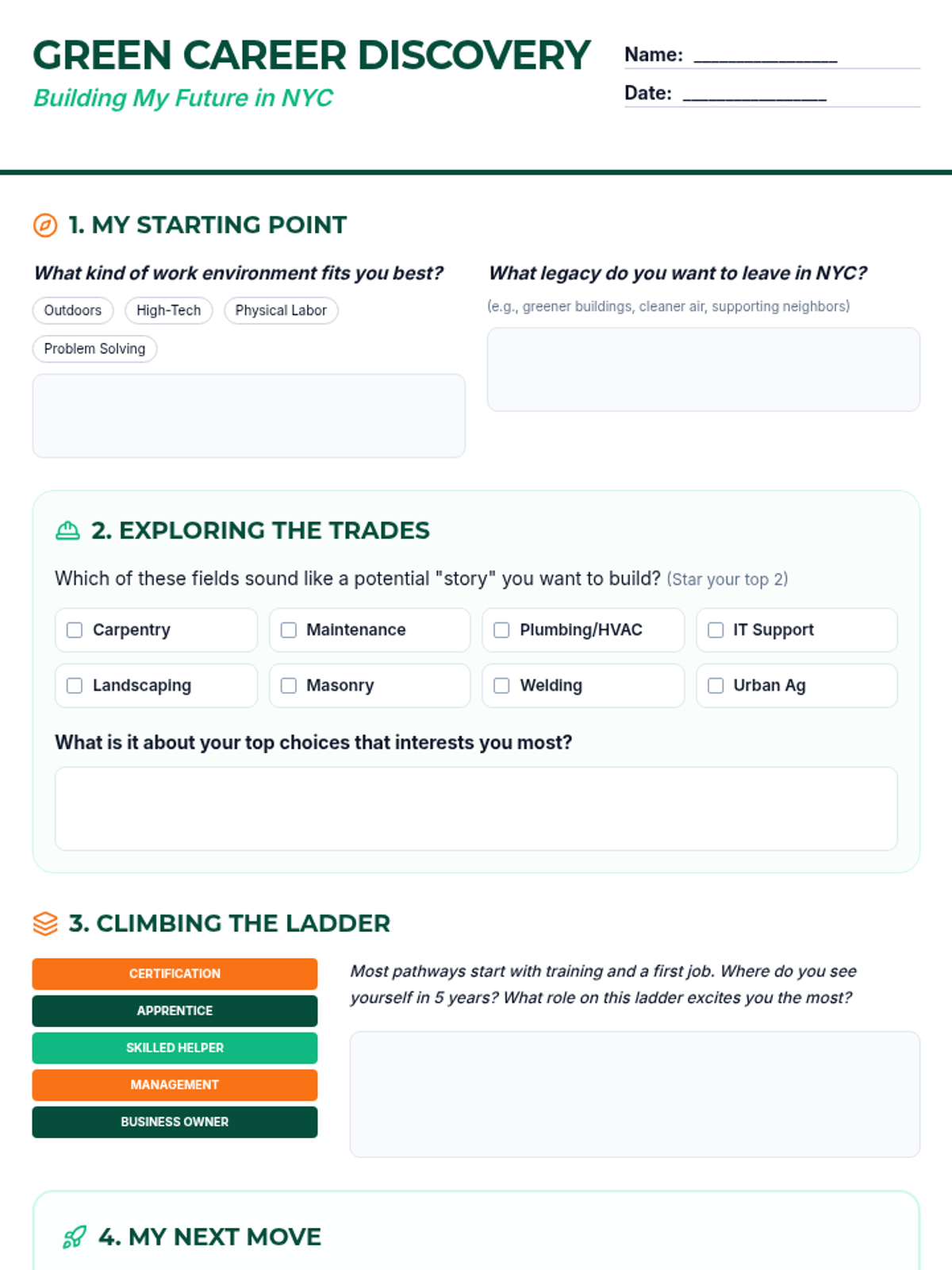
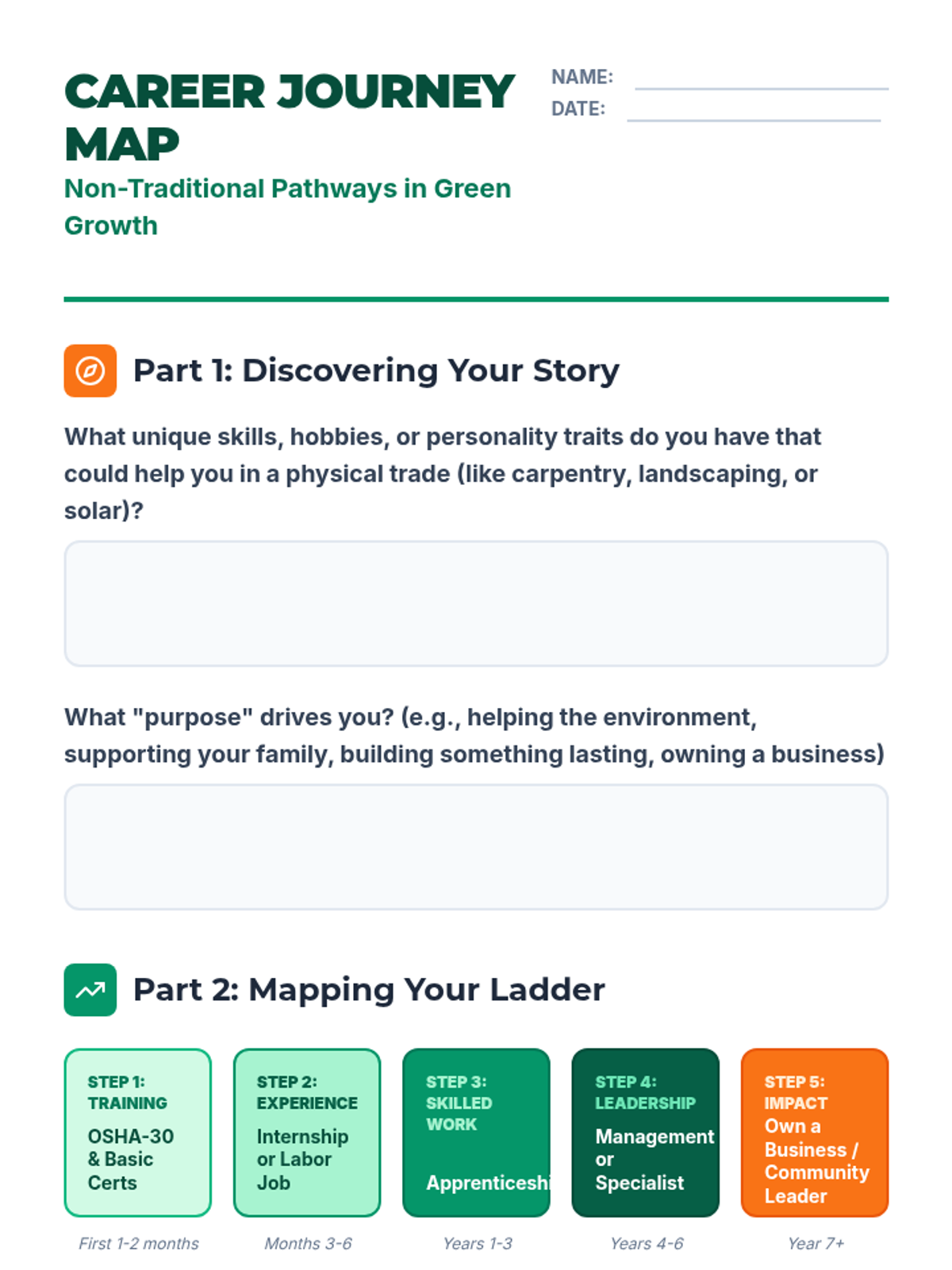
A presentation exploring non-traditional career pathways in green construction and the trades, focusing on NYC's climate initiatives and training opportunities.
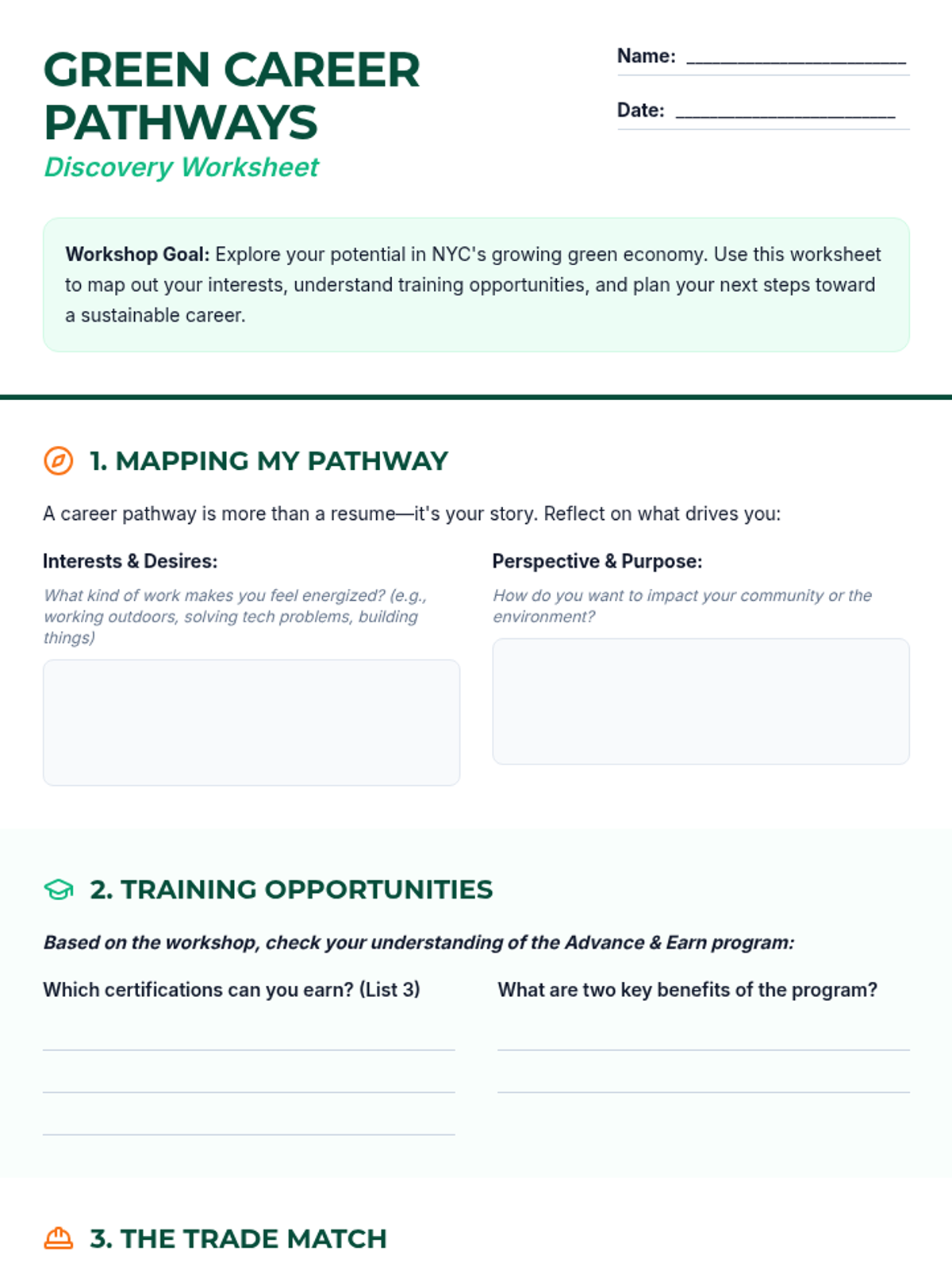
A workshop for young adults and teenagers exploring non-traditional career pathways in green construction and sustainable agriculture, focusing on NYC climate initiatives and local training programs.
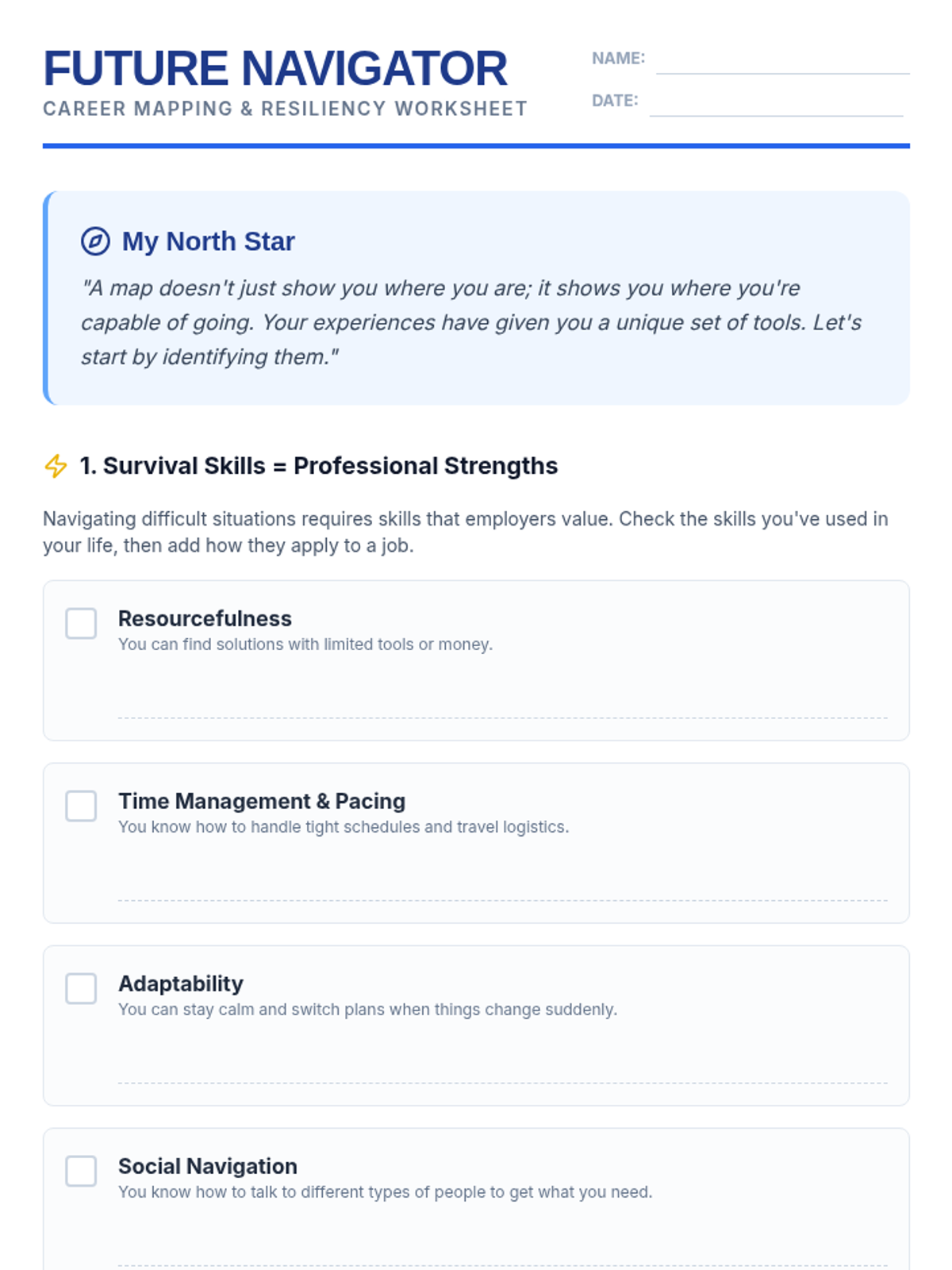
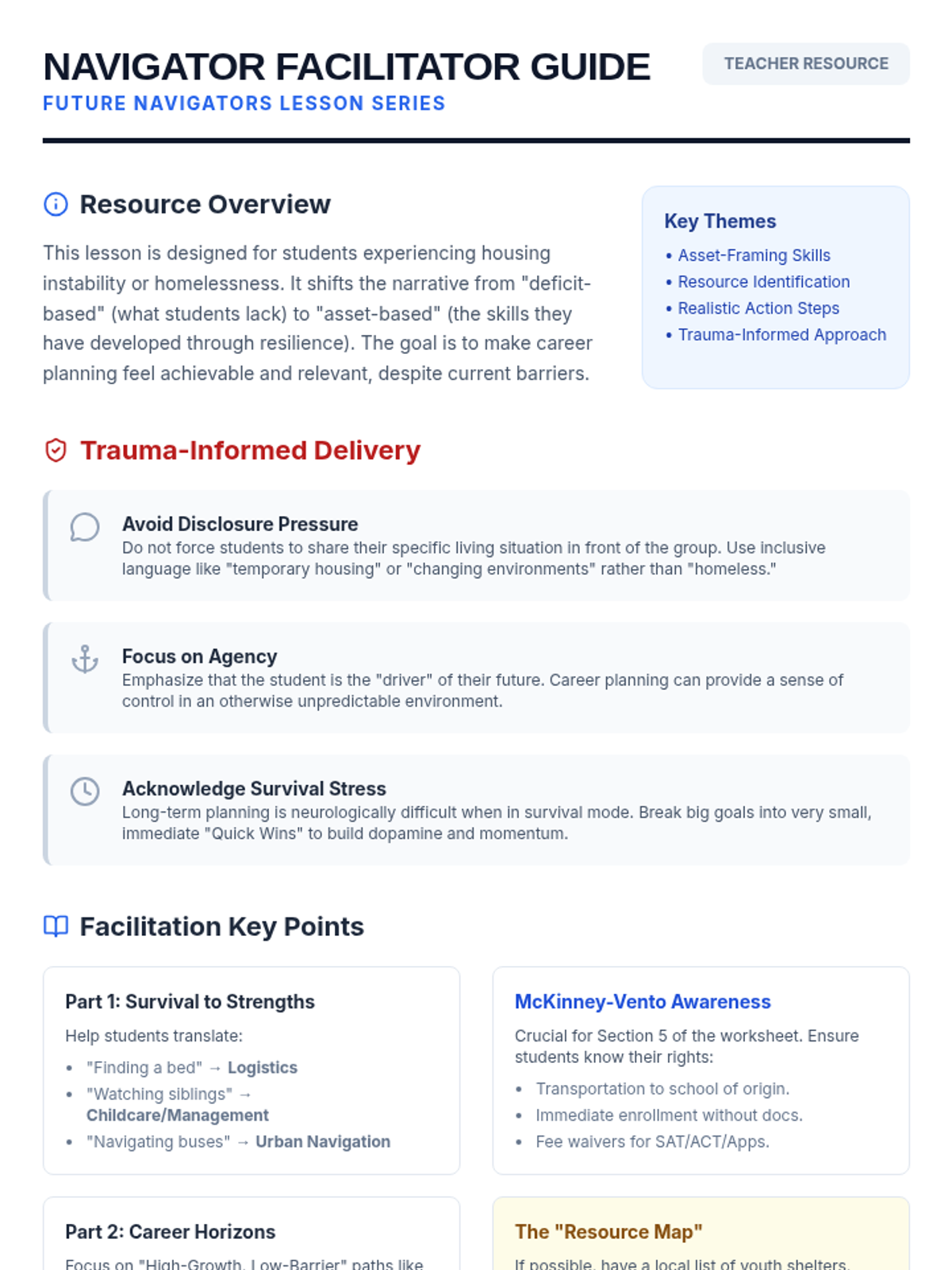
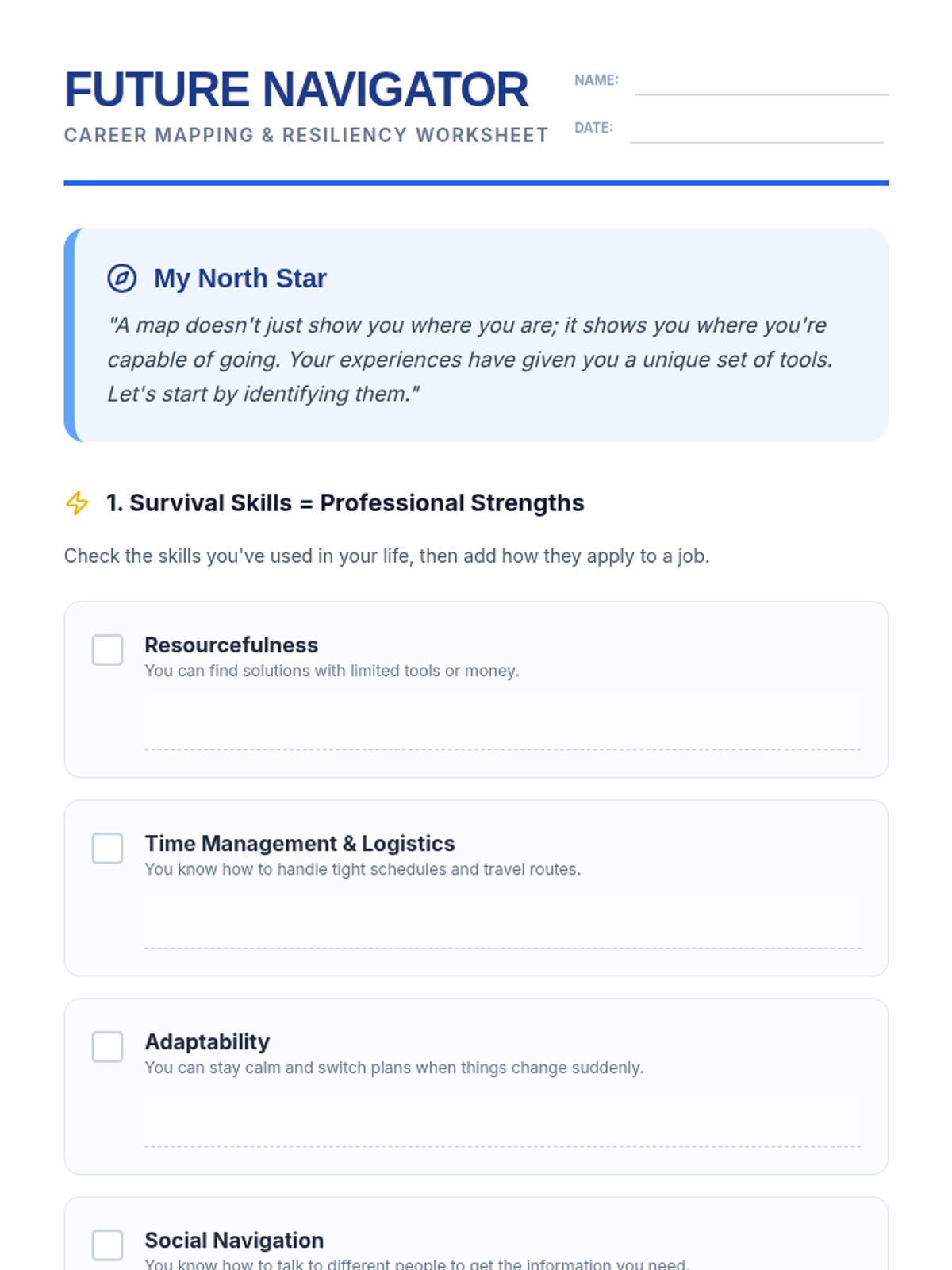
A comprehensive career planning resource designed for high school students experiencing housing instability, focusing on identifying transferable skills, setting achievable goals, and navigating community resources.
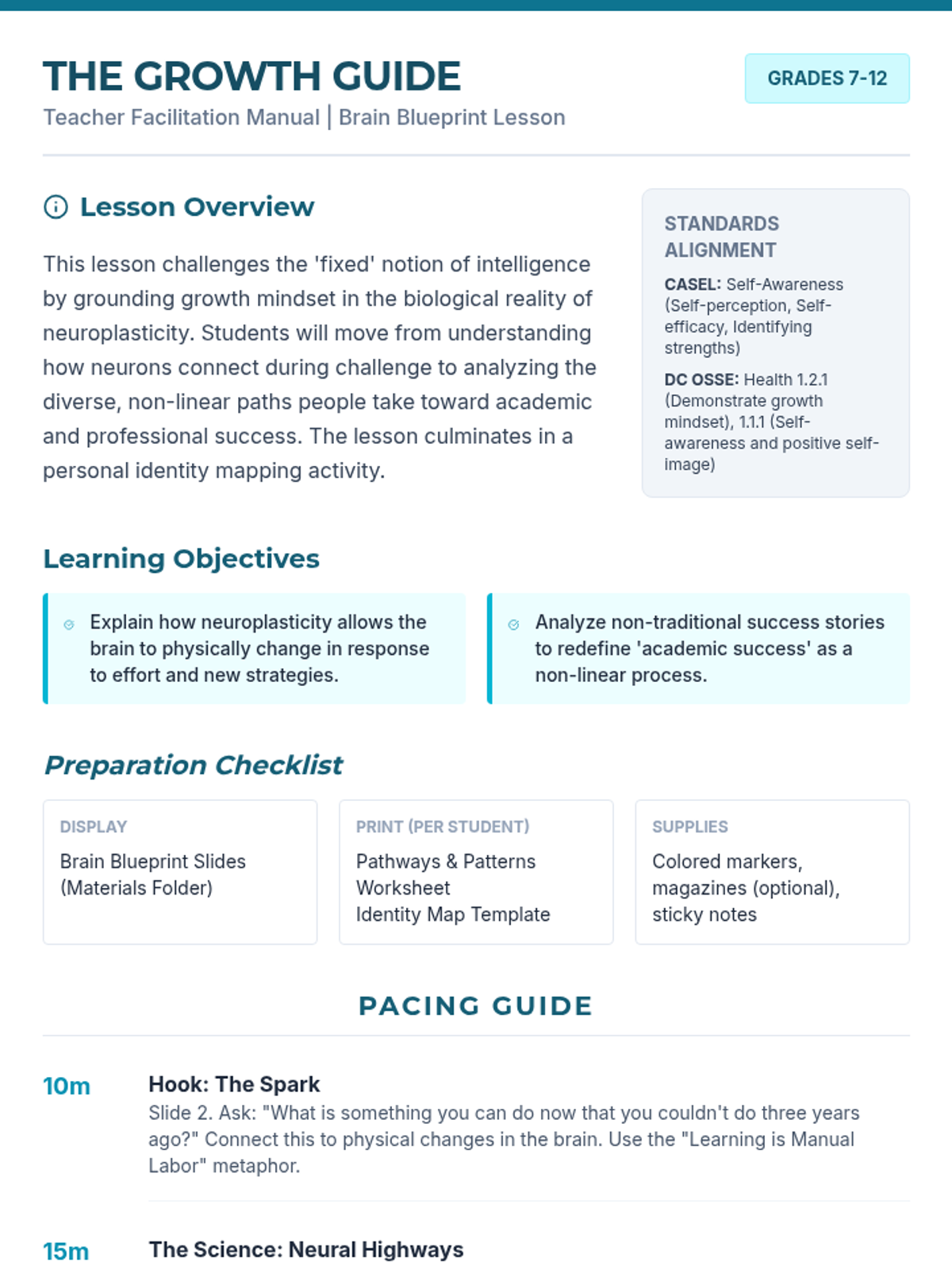
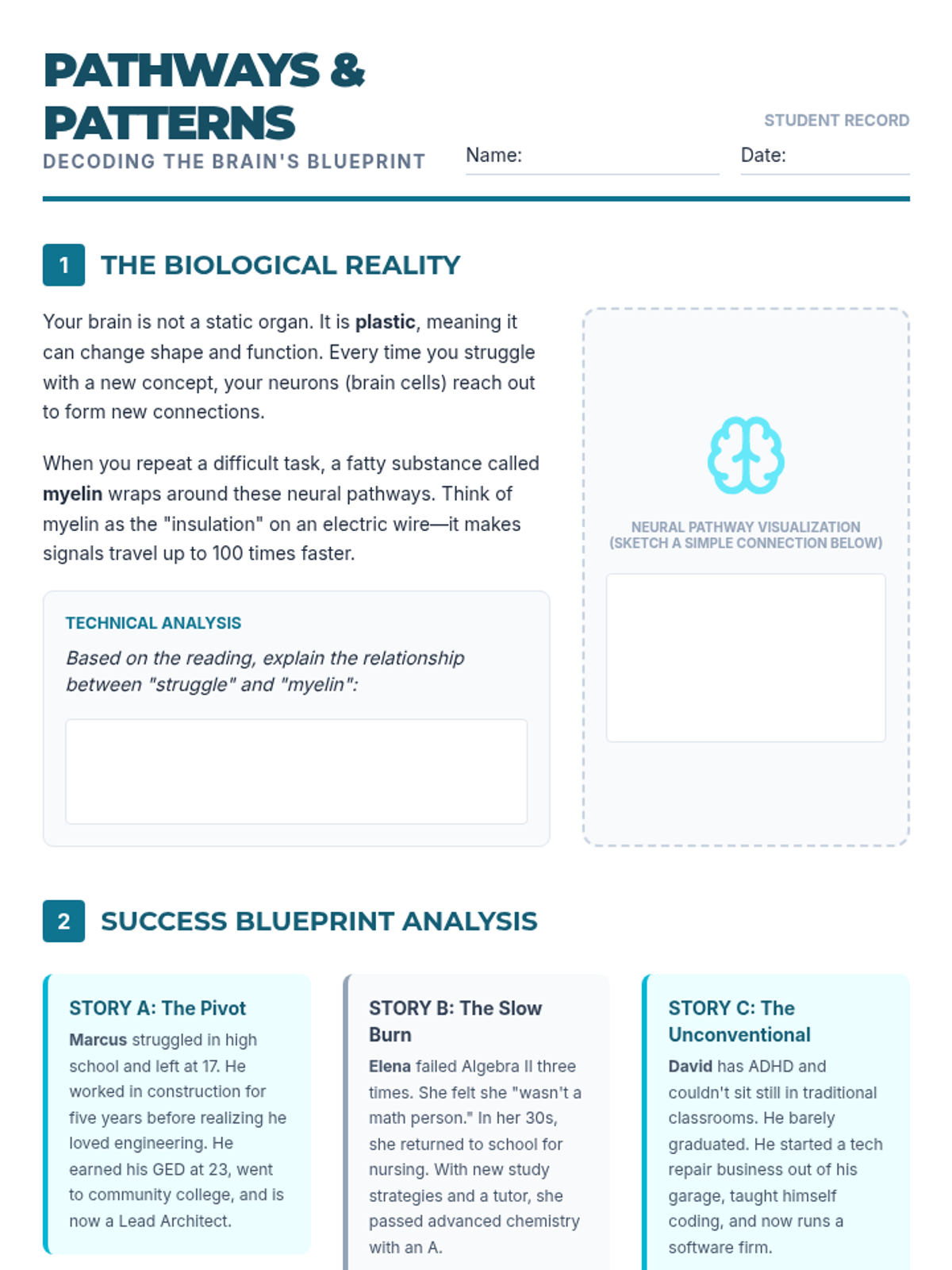
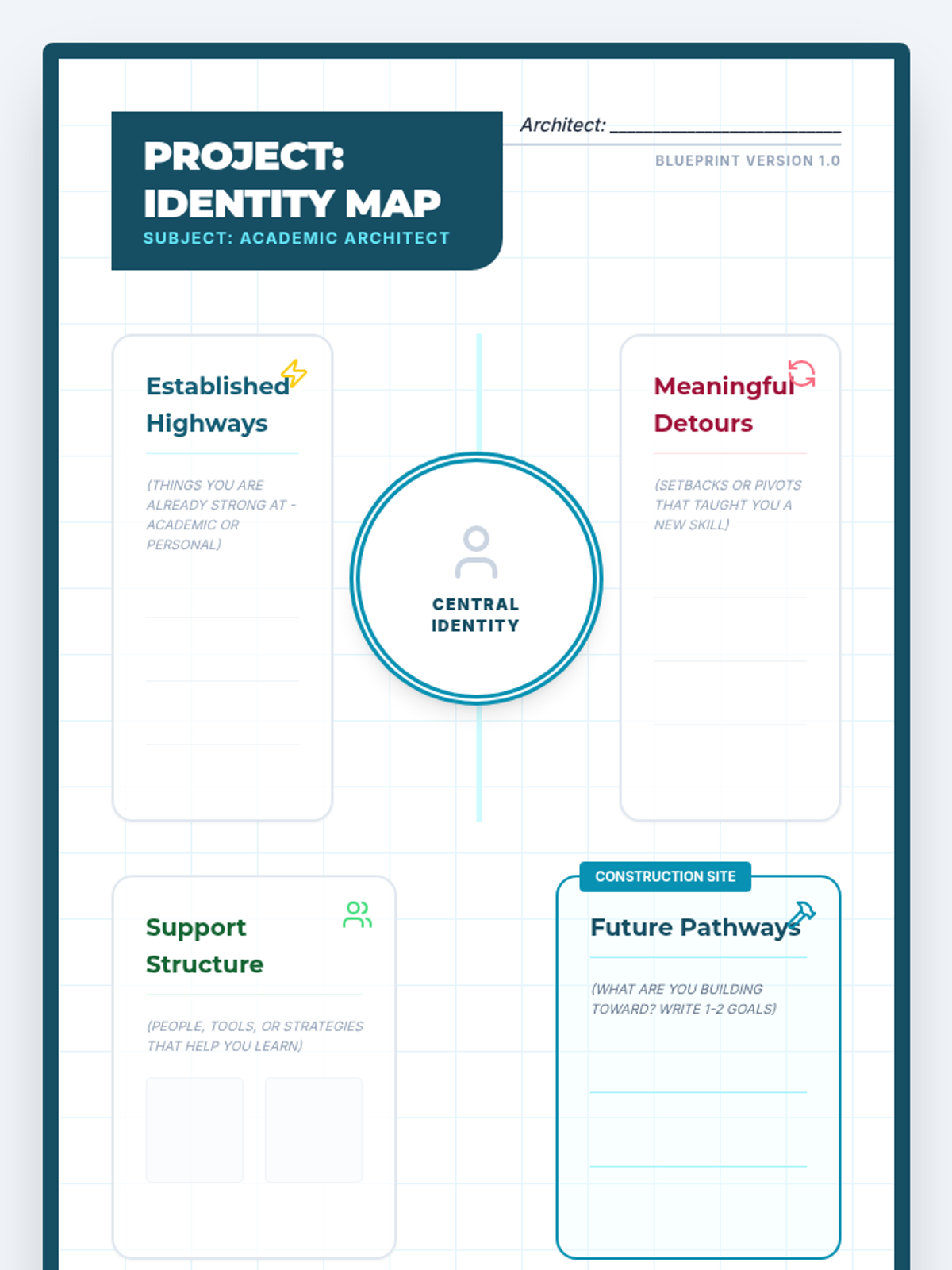
A high school lesson exploring the science of neuroplasticity and diverse academic journeys to build a robust, growth-oriented identity. Students move from the biological 'how' of learning to personal reflection on their own strengths and non-traditional paths to success.
A comprehensive career exploration lesson for high schoolers to research and compare diverse post-secondary pathways, from university to apprenticeships, with a focus on DC-specific opportunities.
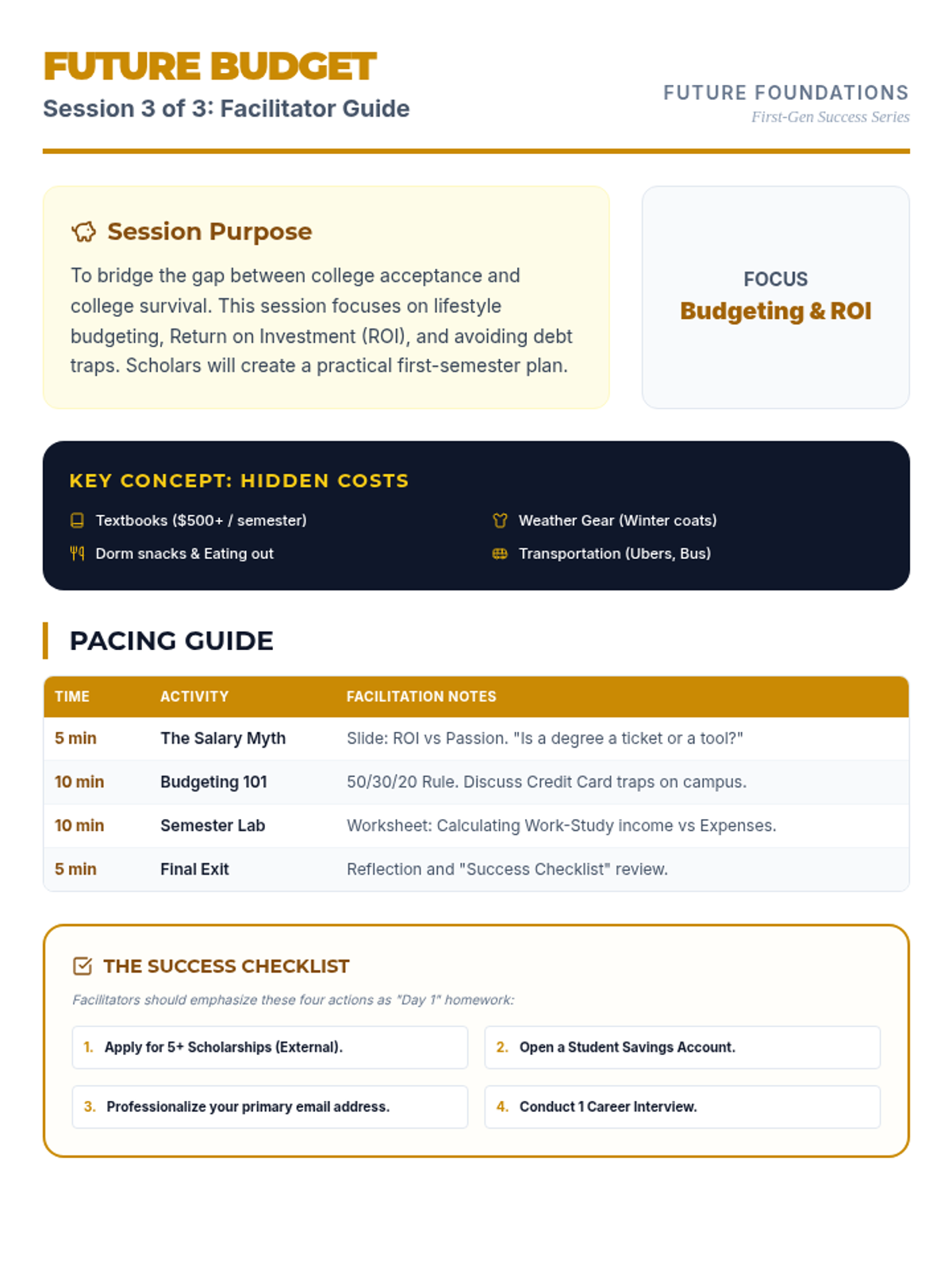
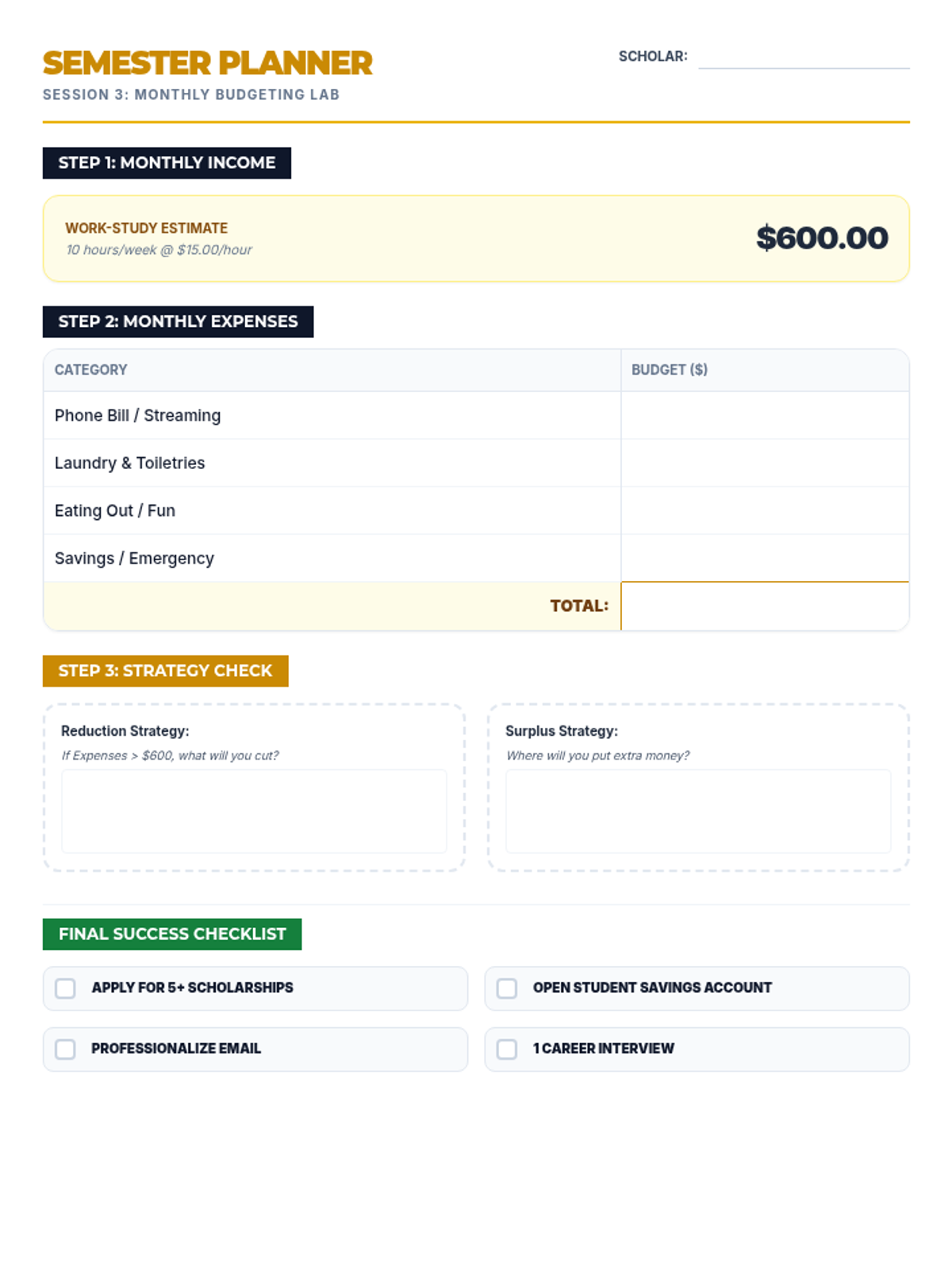
Students learn practical budgeting skills for college life and analyze the long-term financial implications of different educational and career choices.
An introduction to the complex world of college financing, focusing on financial aid terminology, types of aid, and understanding the total cost of attendance.
Students explore their personal values, strengths, and interests to identify career paths that align with their authentic selves.
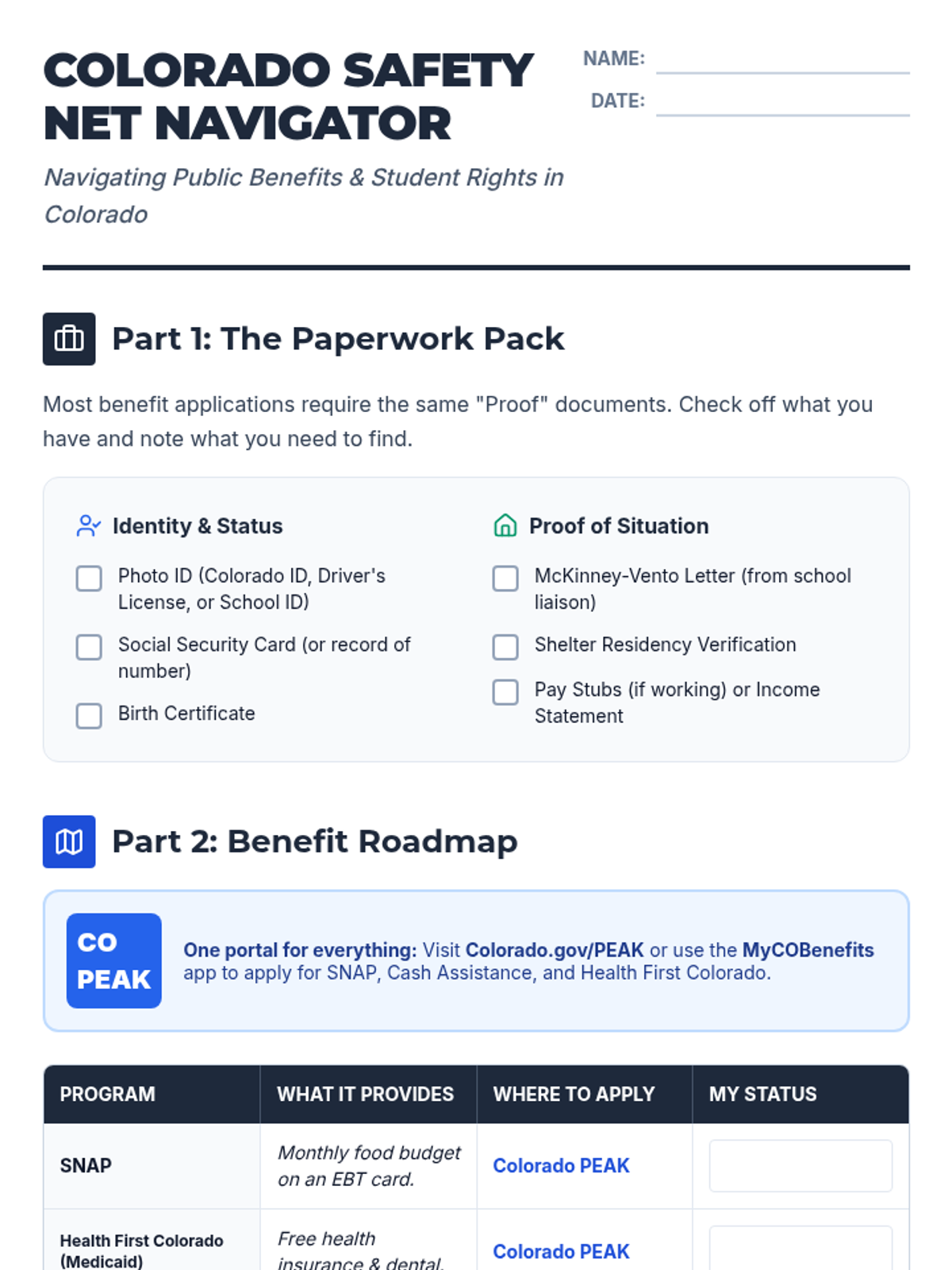
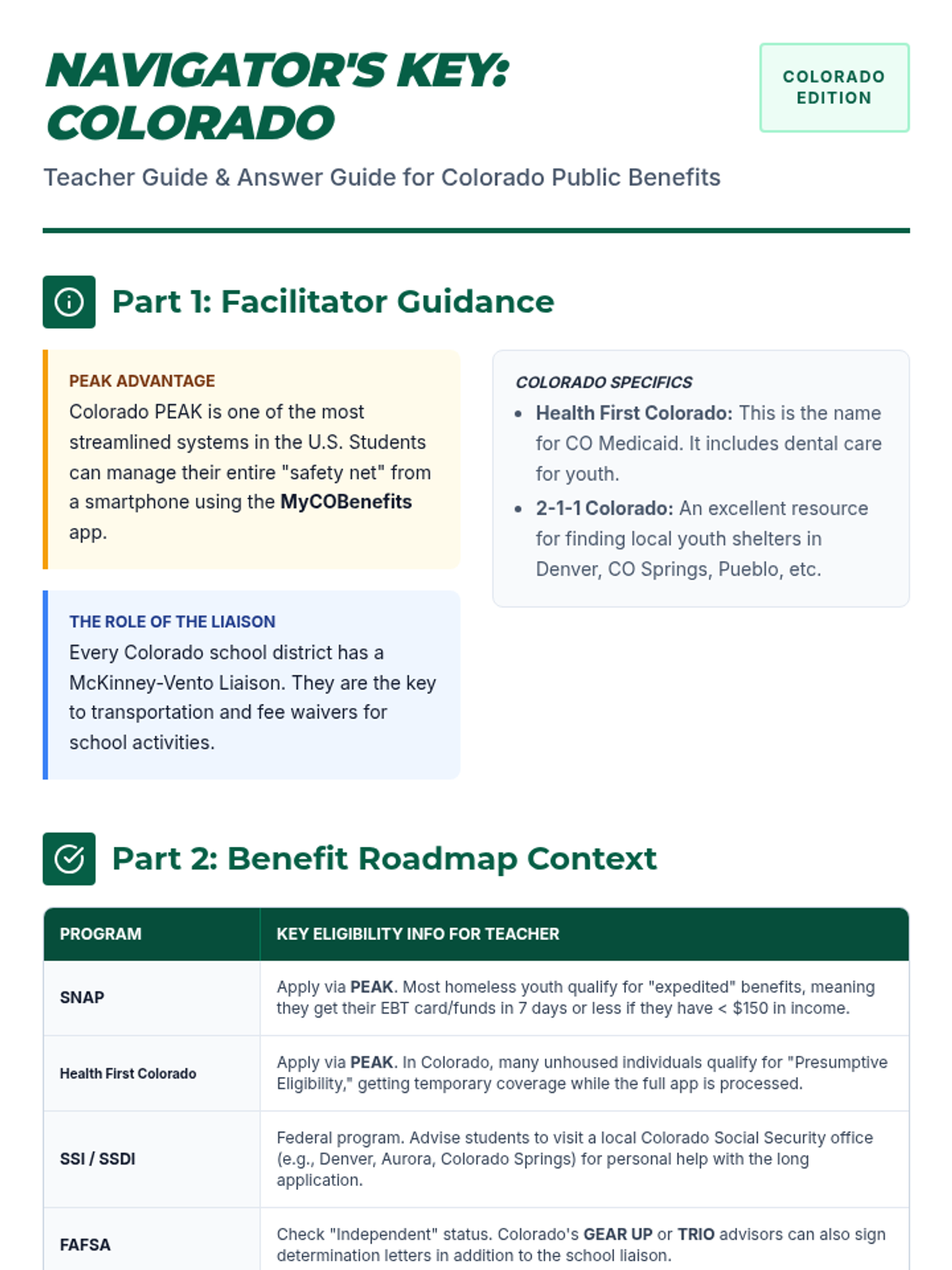
A comprehensive lesson designed to help homeless high school students navigate complex public benefit systems, understand their rights under McKinney-Vento, and manage the documentation required for stability and post-secondary success.
This lesson covers the essential components of college financial aid, focusing on the differences between gift aid, work-study, and loans, with a deep dive into federal loan structures.
A comprehensive lesson for first-generation students on navigating financial aid, including the FAFSA process, understanding aid types, and decoding award letters.
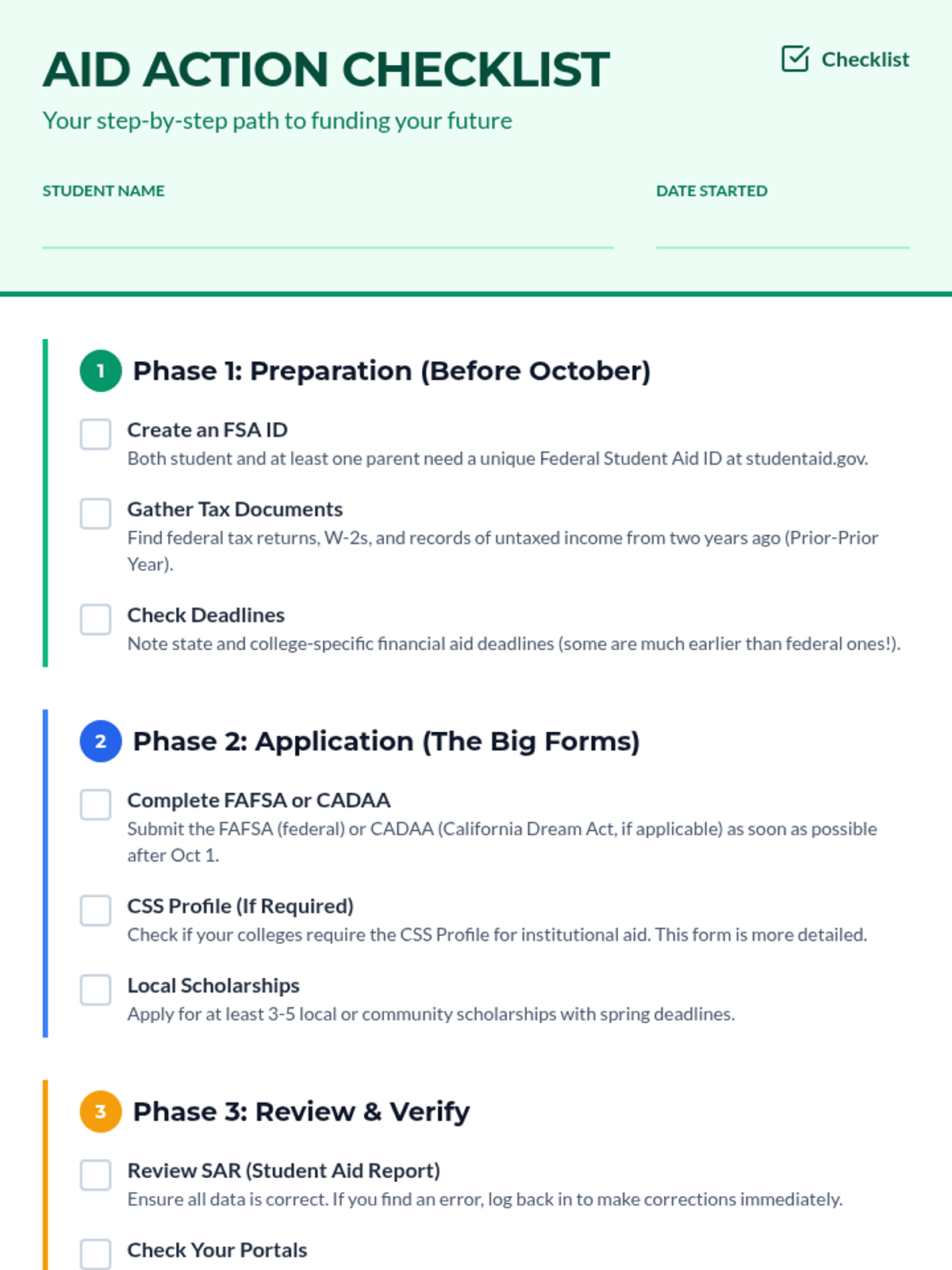
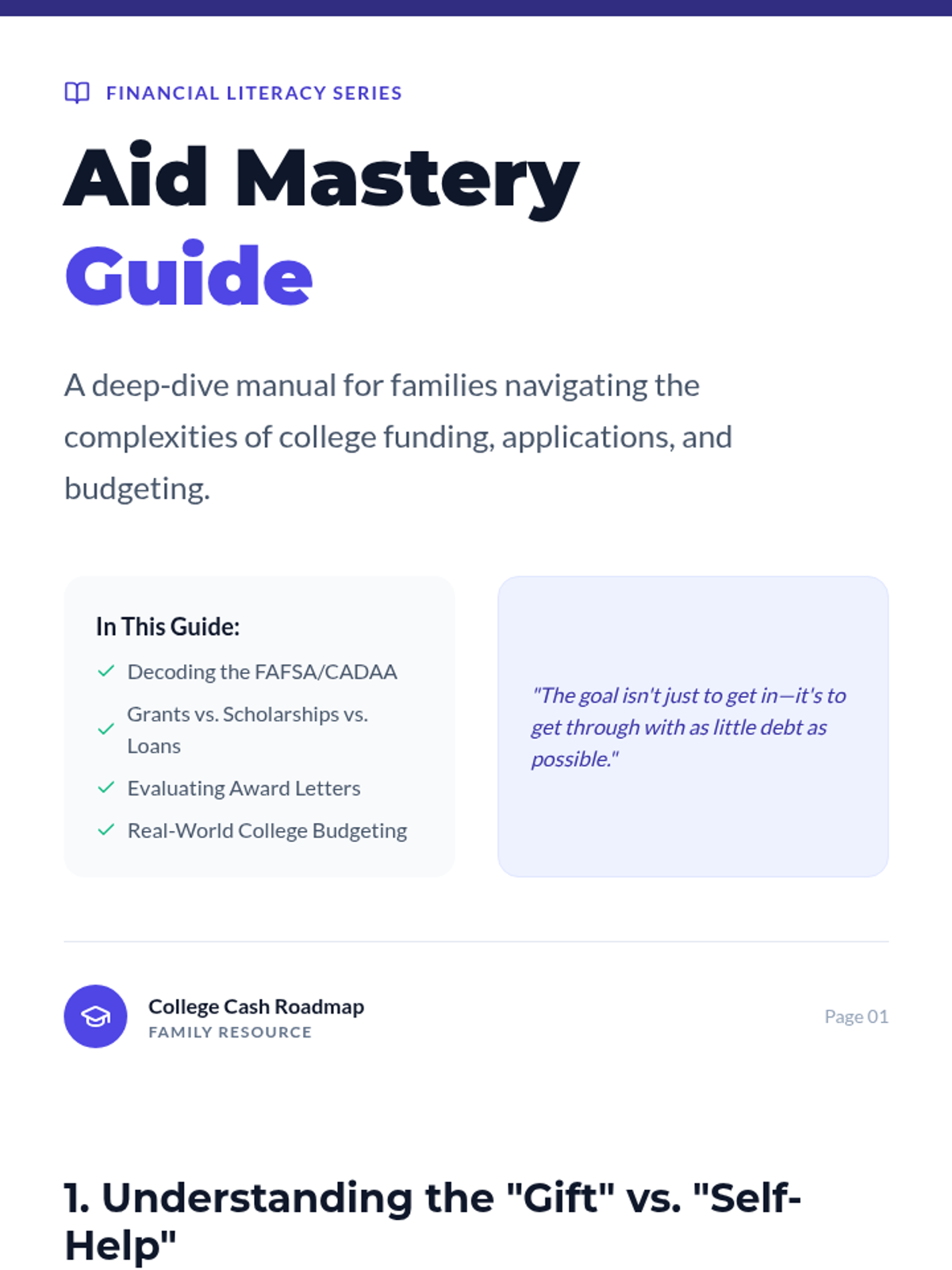
A comprehensive guide and checklist designed to help families navigate the financial aid process, from FAFSA completion to evaluating award letters and budgeting for college costs.
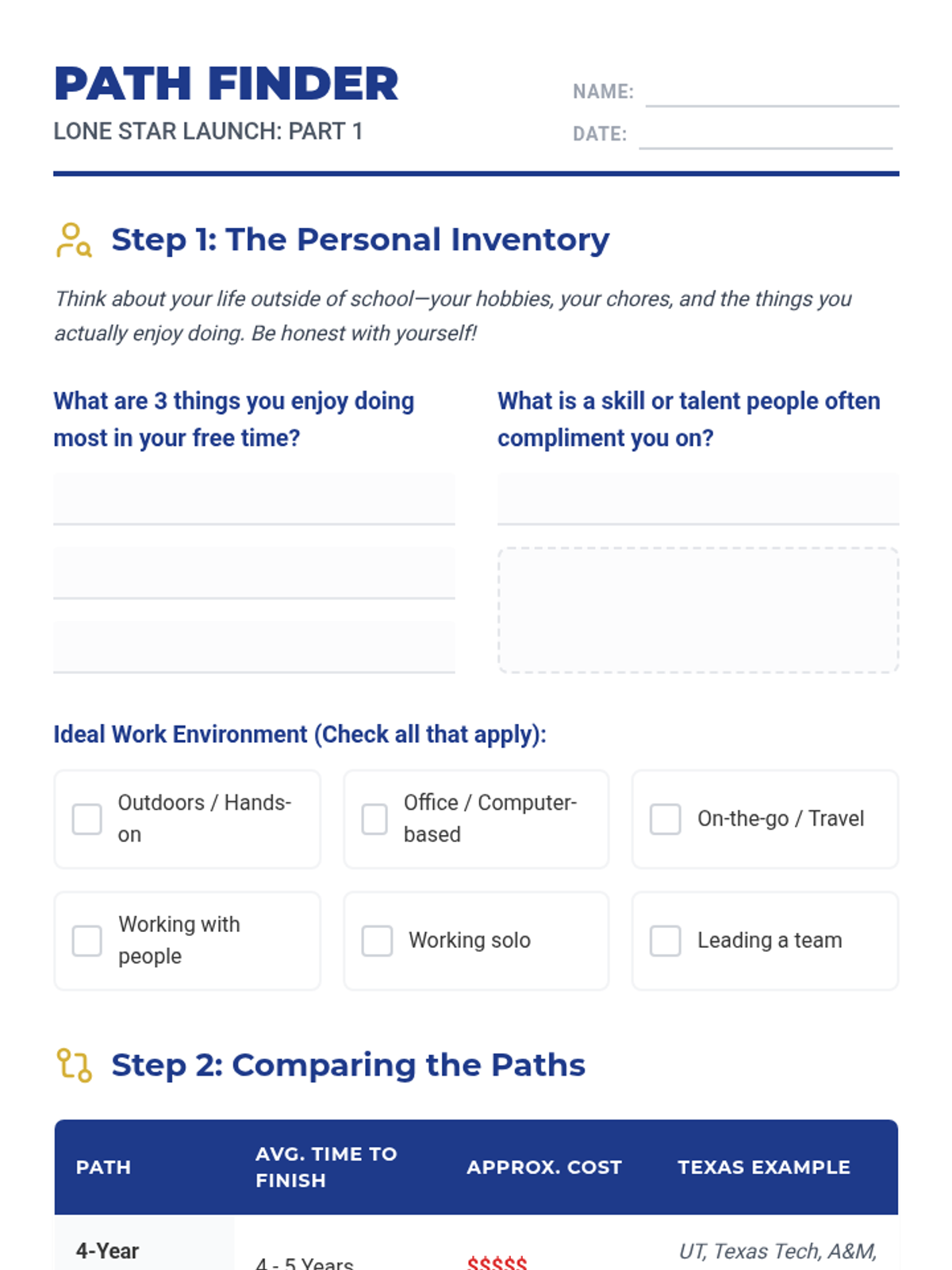
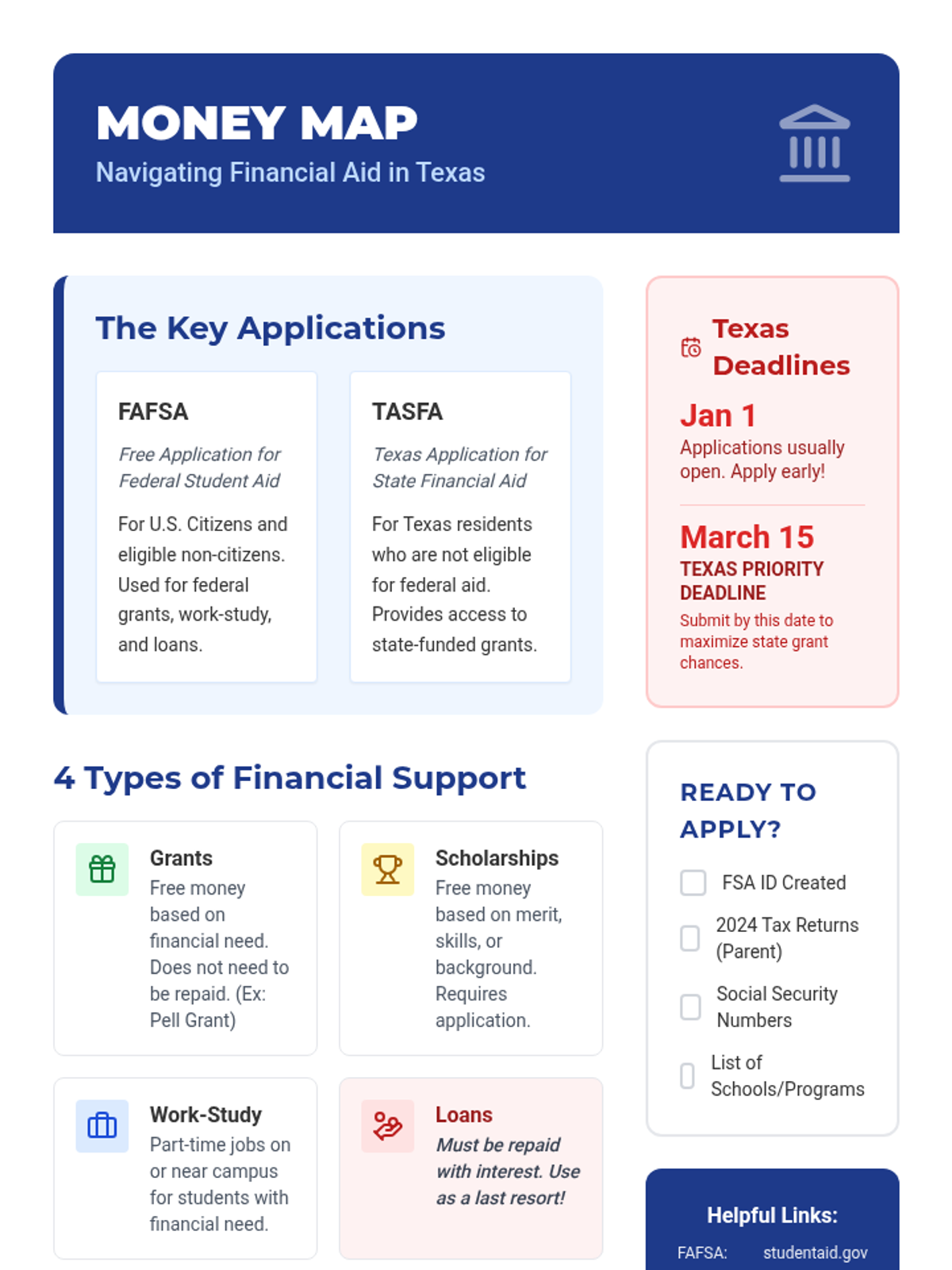
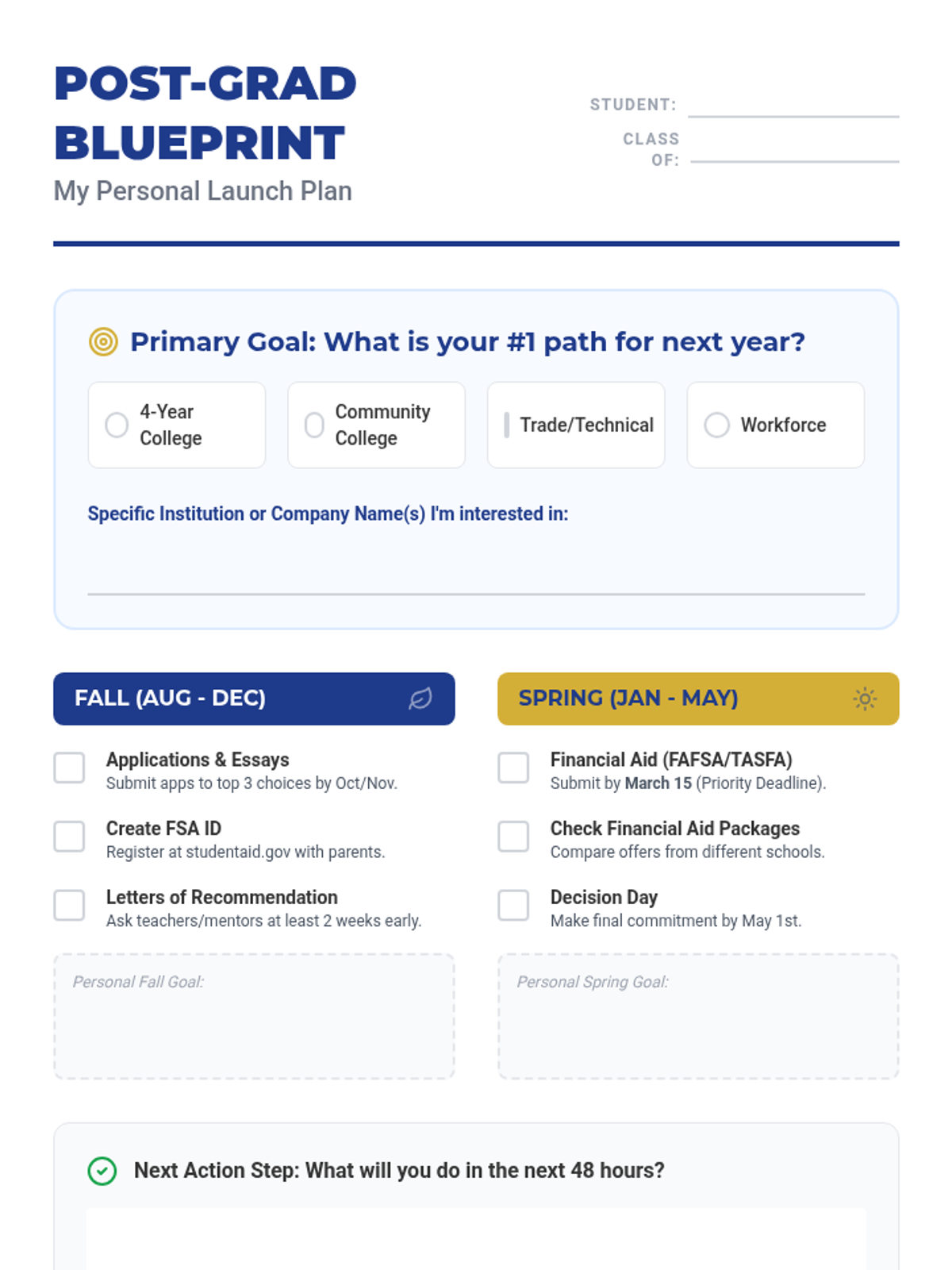
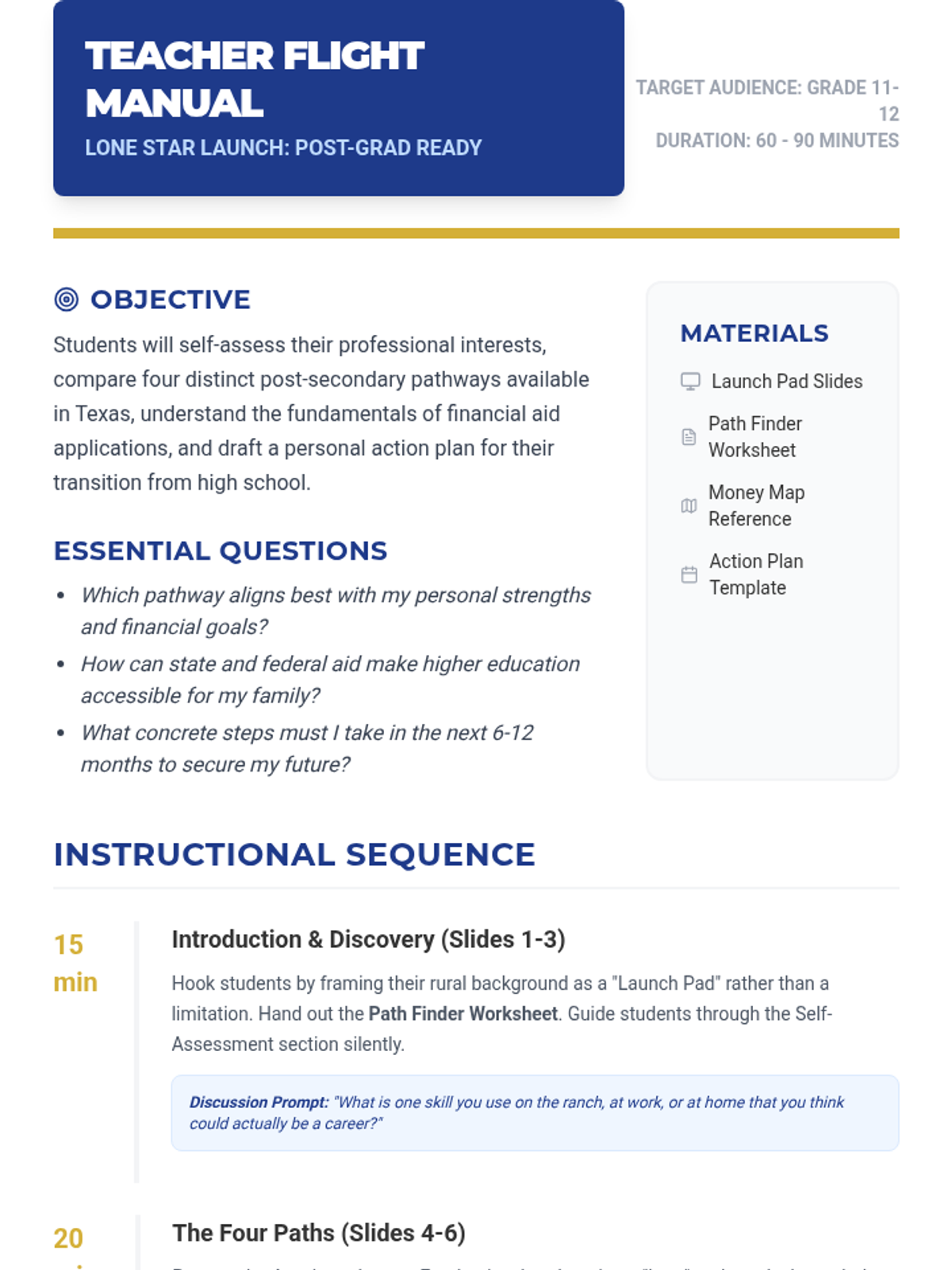
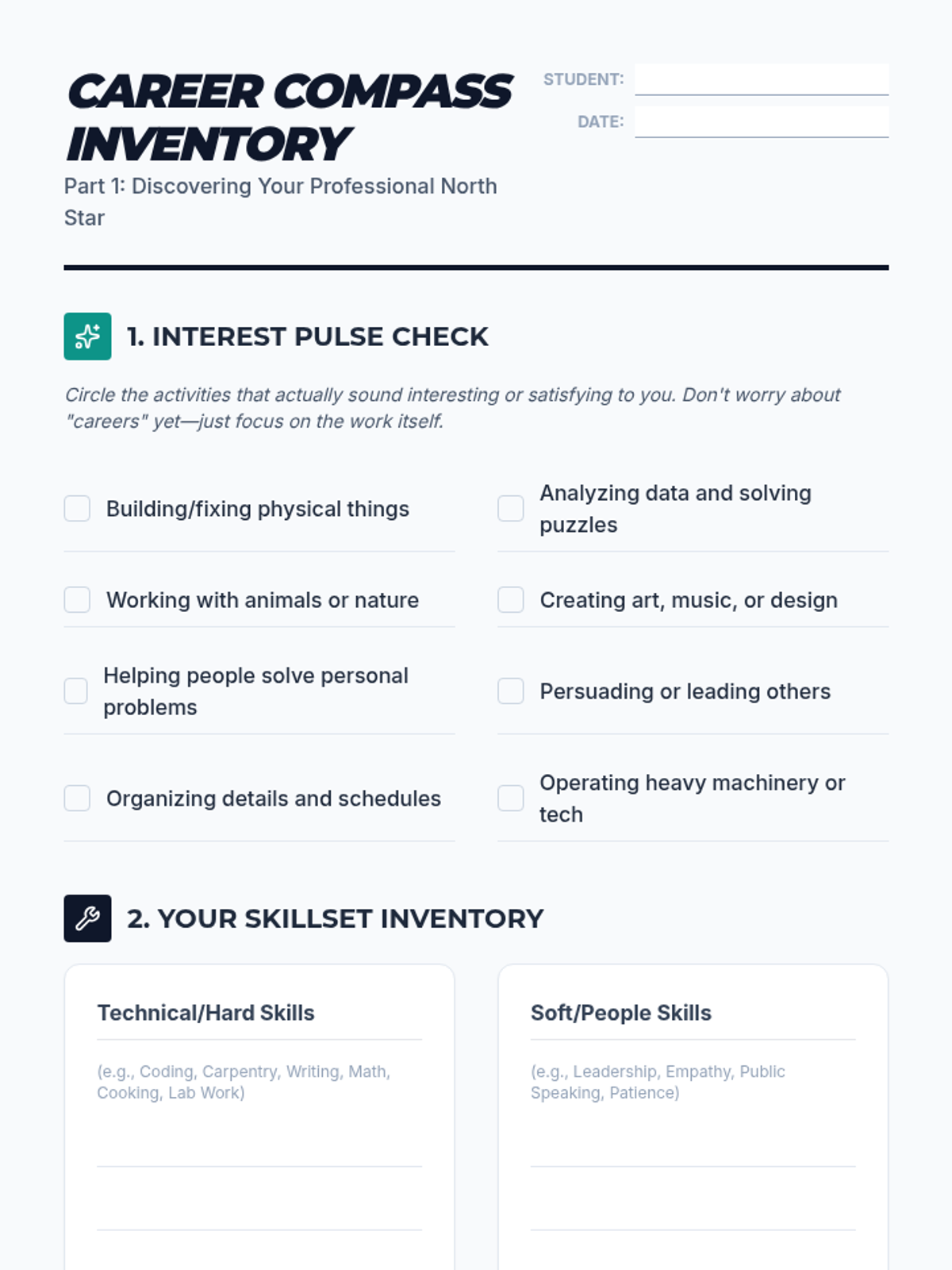
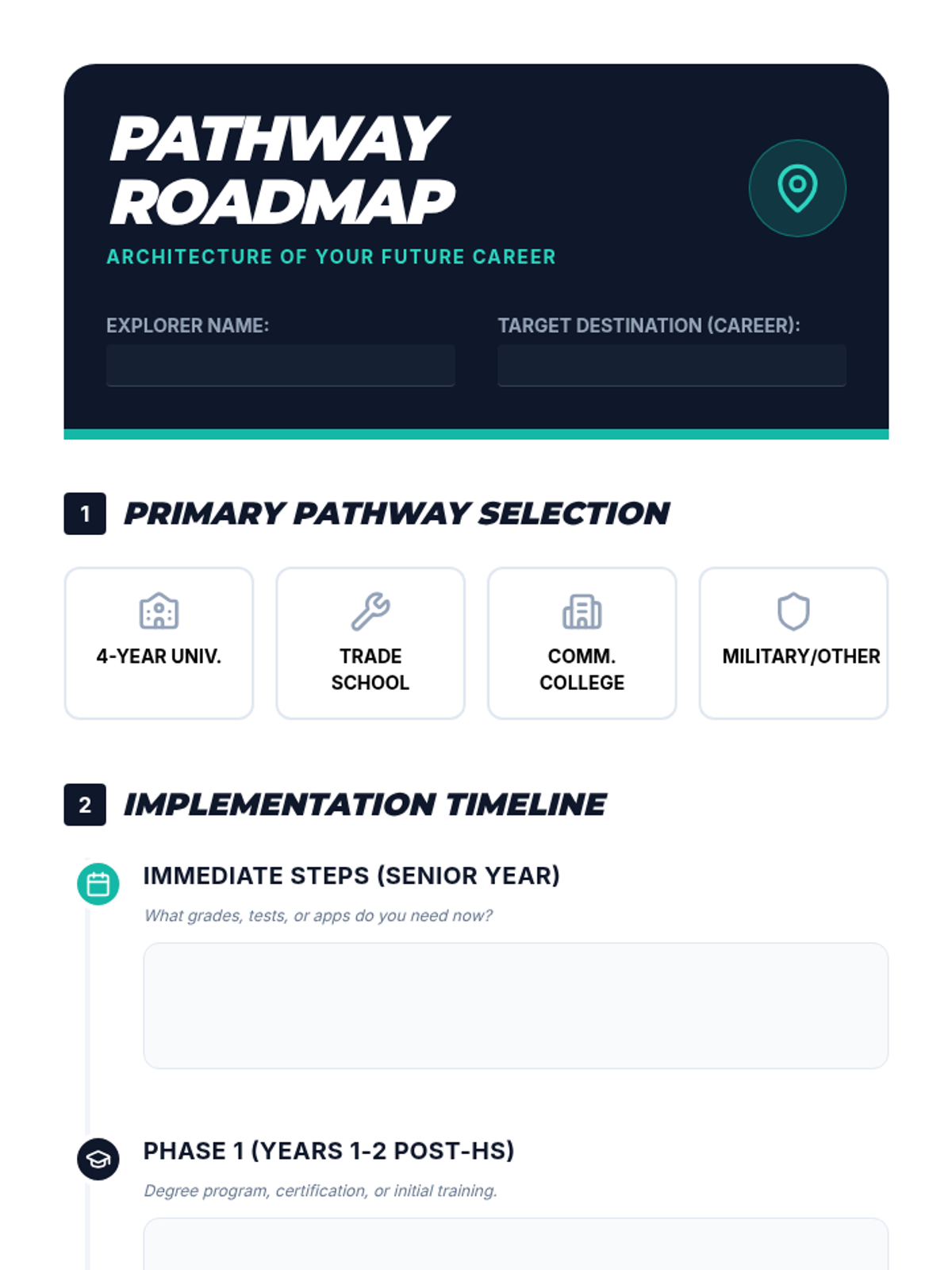
A comprehensive college and career readiness lesson designed for rural Texas high school students. It covers self-assessment, path comparison, financial aid, and actionable planning to ensure every student has a clear route after graduation.
A comprehensive career exploration lesson for high schoolers, focusing on identifying interests, mapping career pathways, and preparing for post-secondary transitions through college or trade schools.
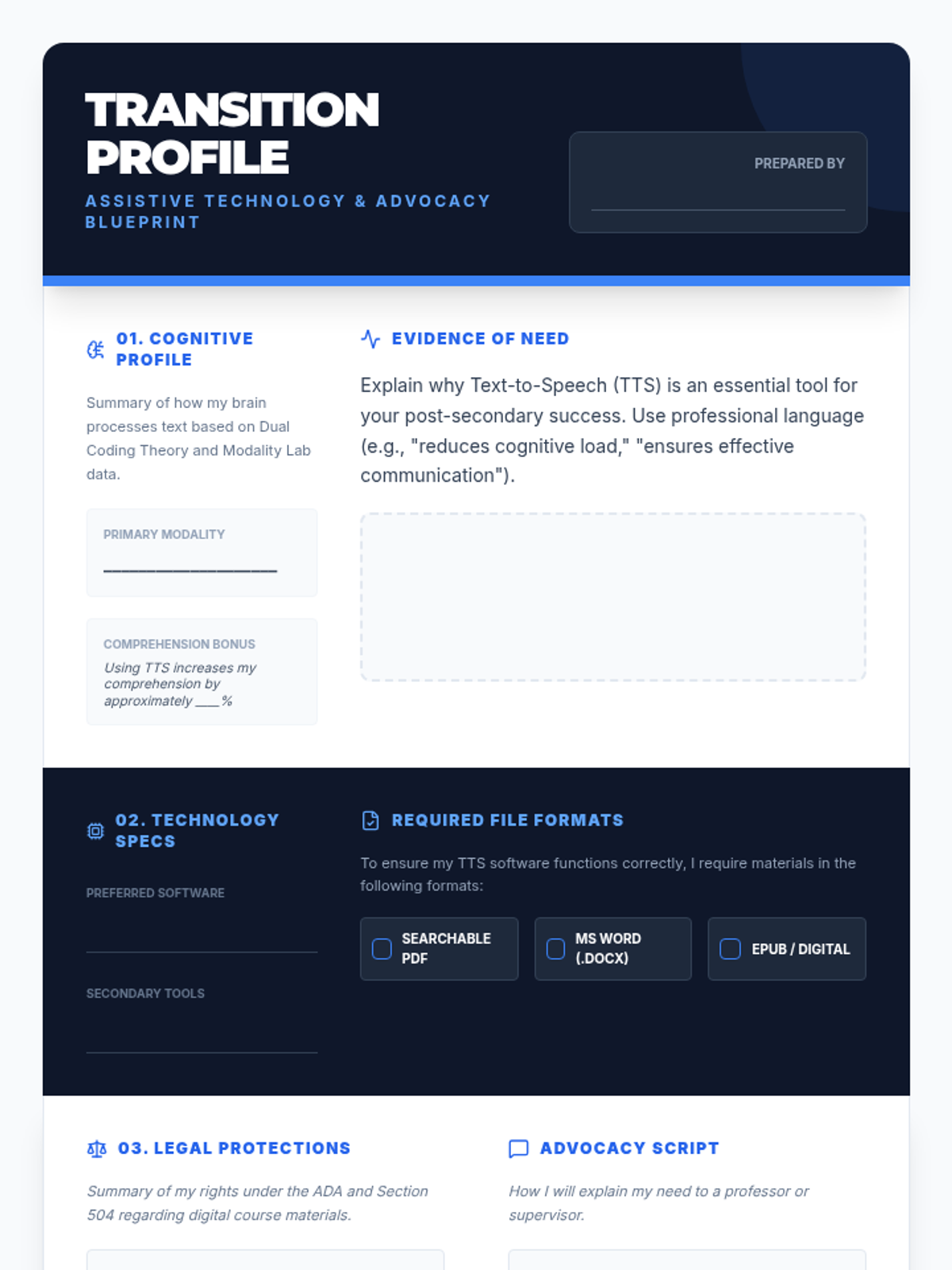
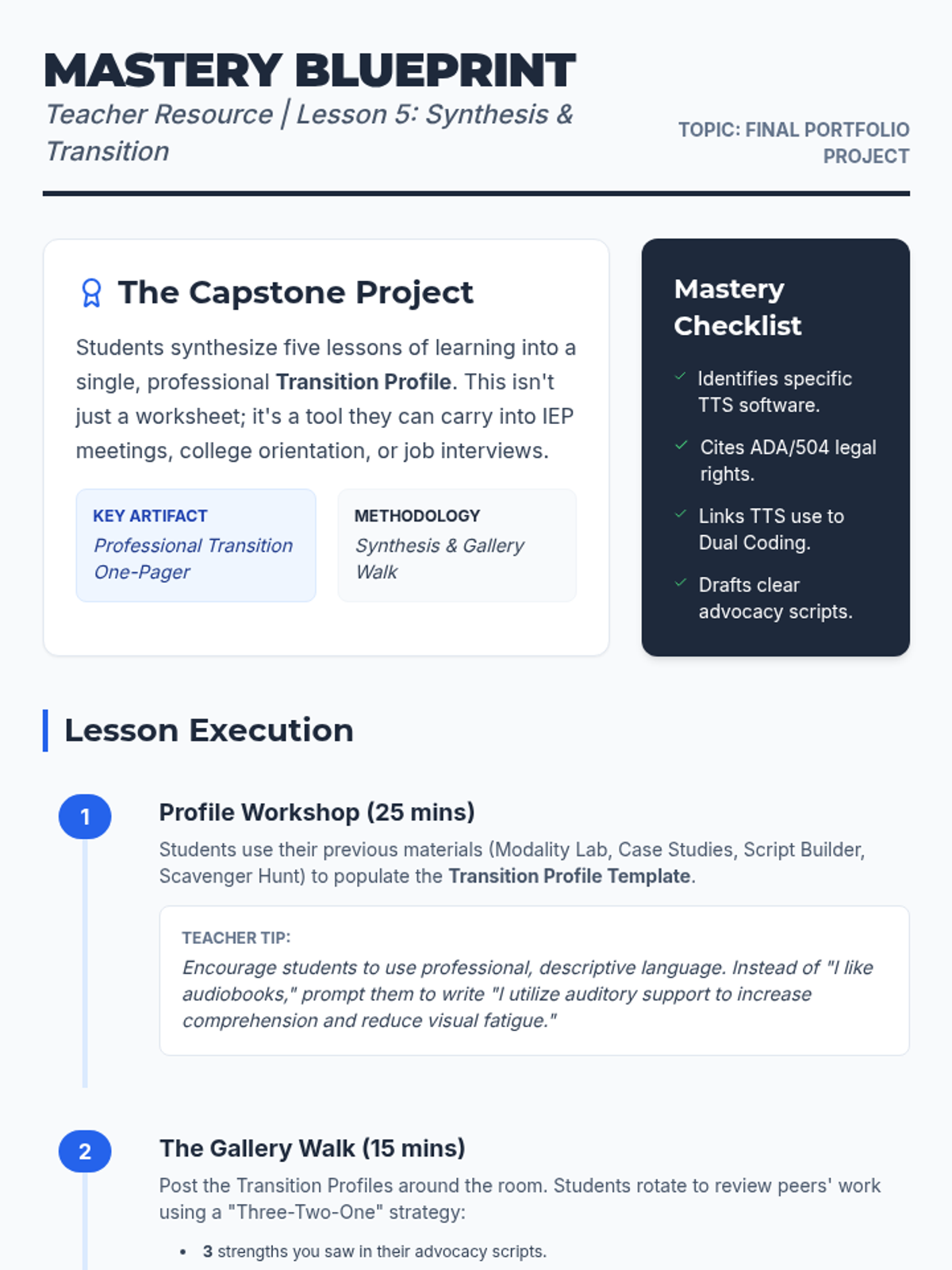
Students synthesize their learning into a professional transition one-pager that summarizes their specific assistive technology needs and legal rights.
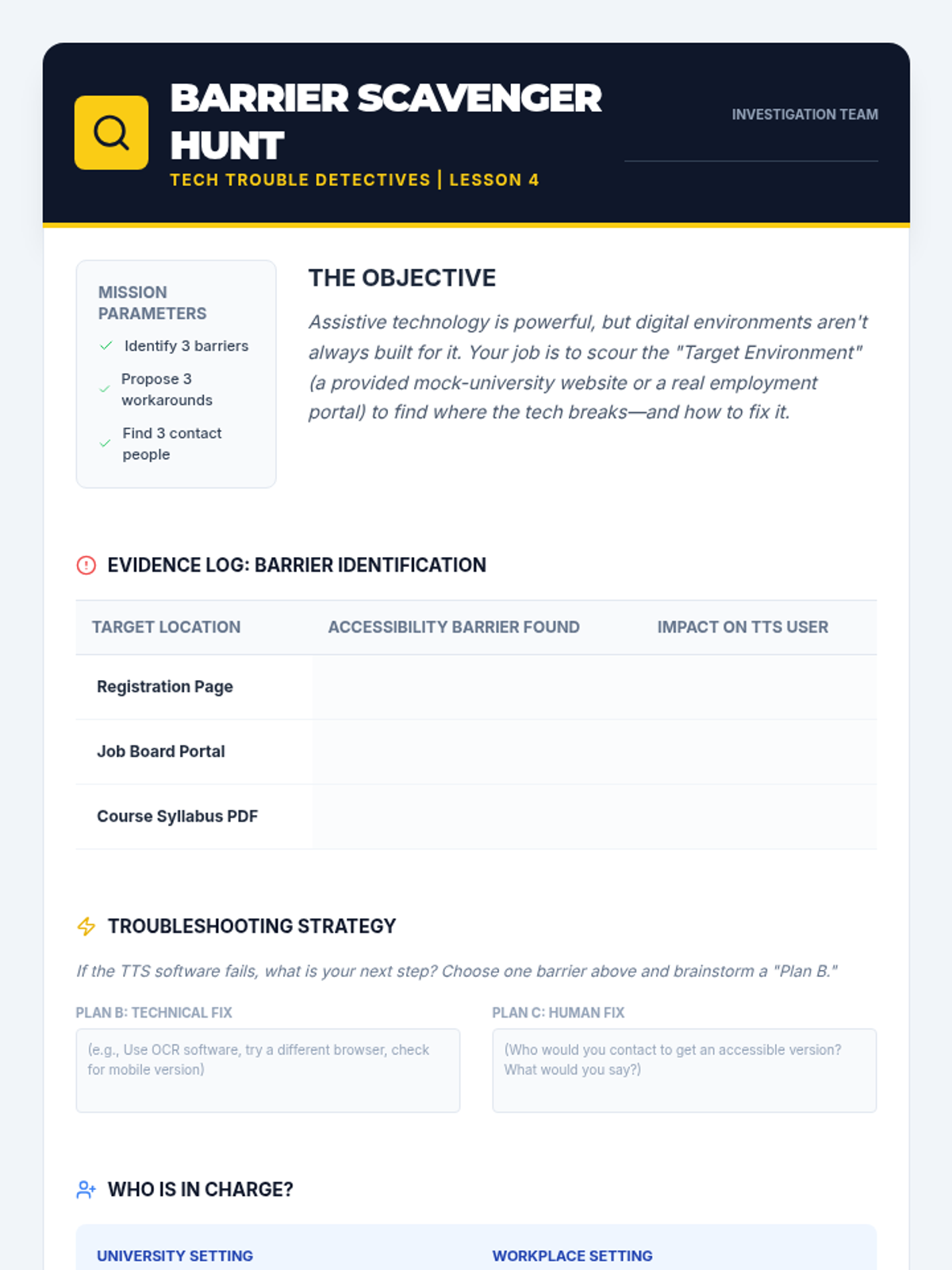
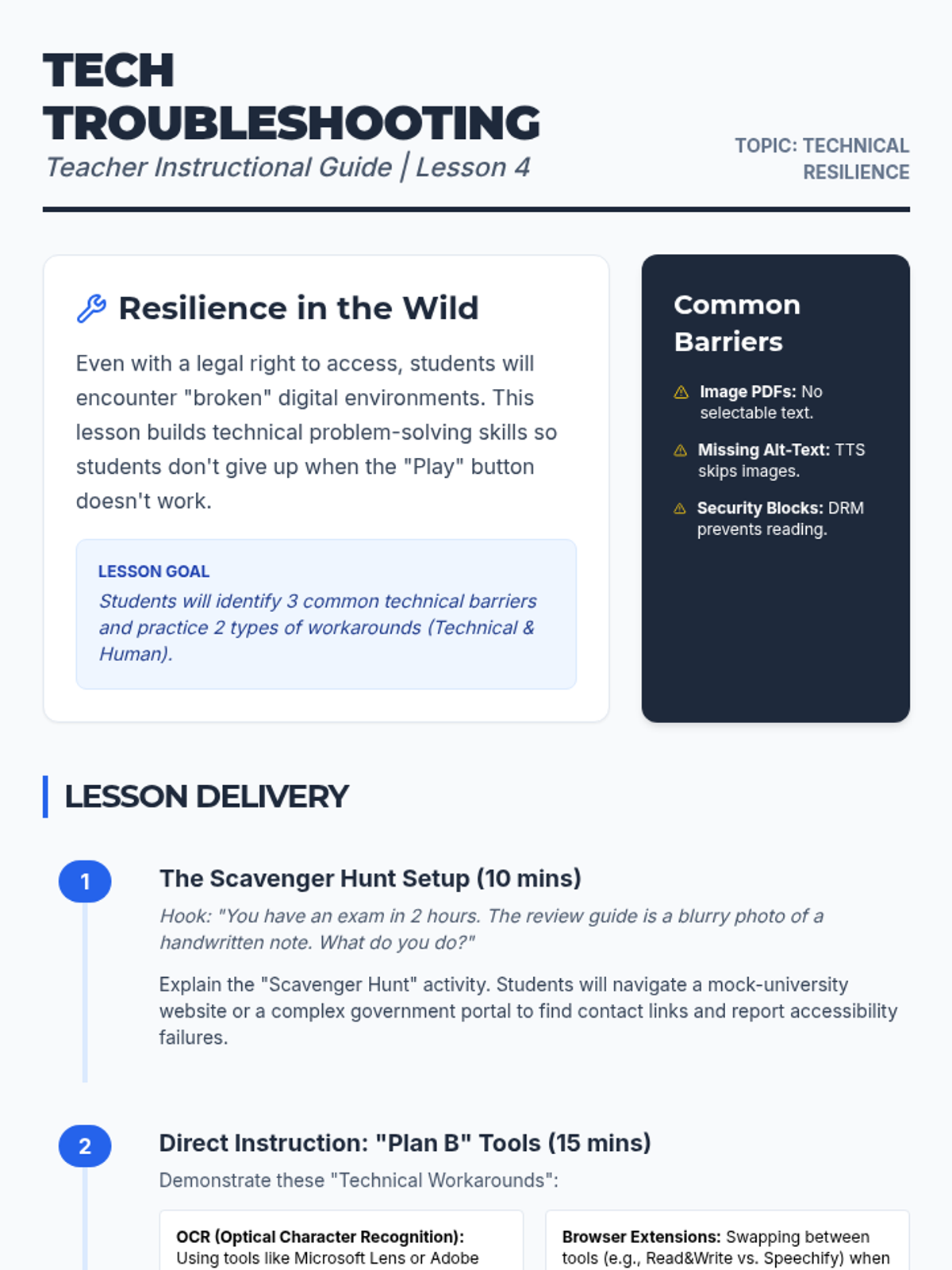
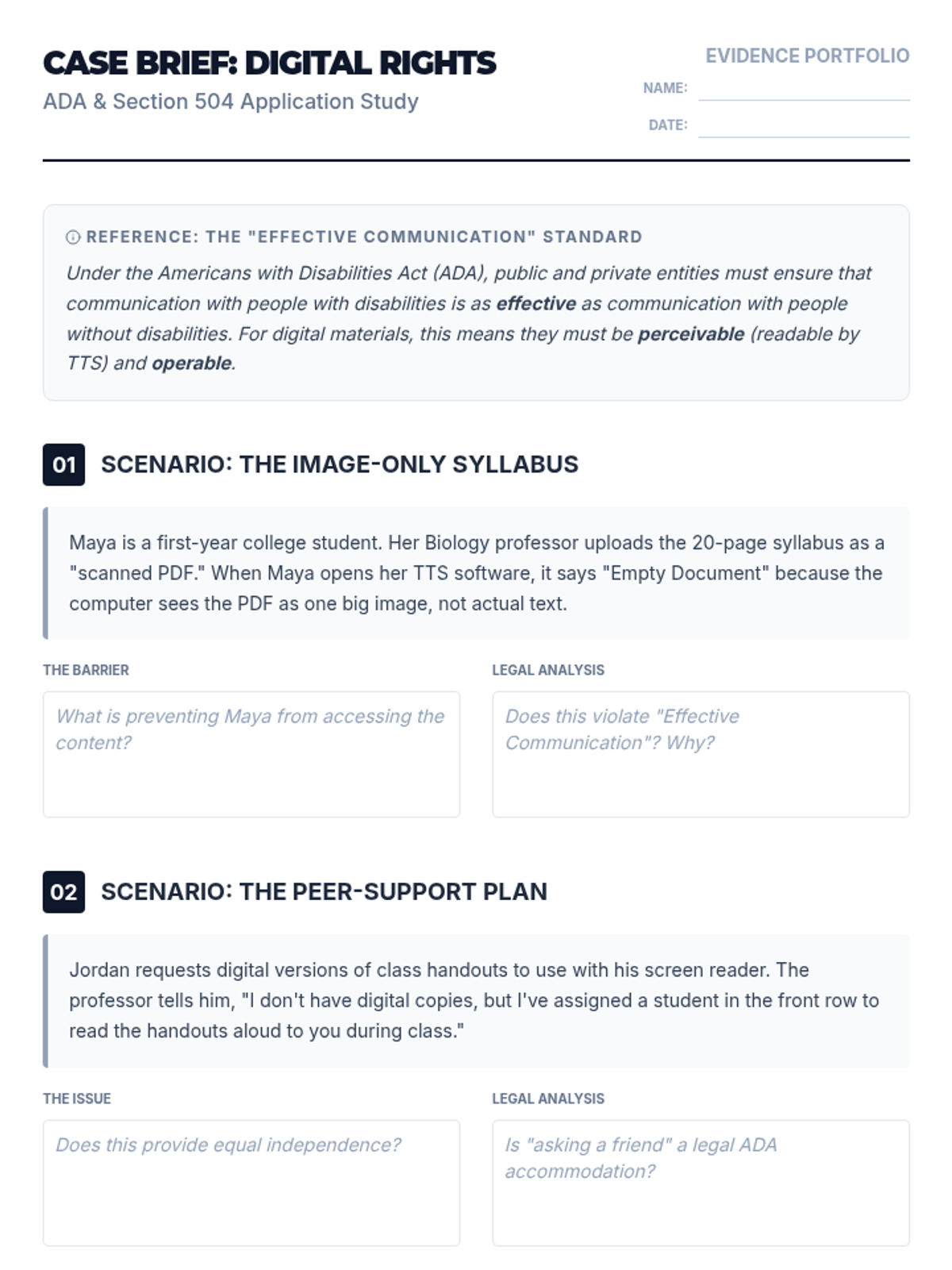
Practical troubleshooting for digital barriers, including identifying inaccessible files and finding technical workarounds or contact persons.
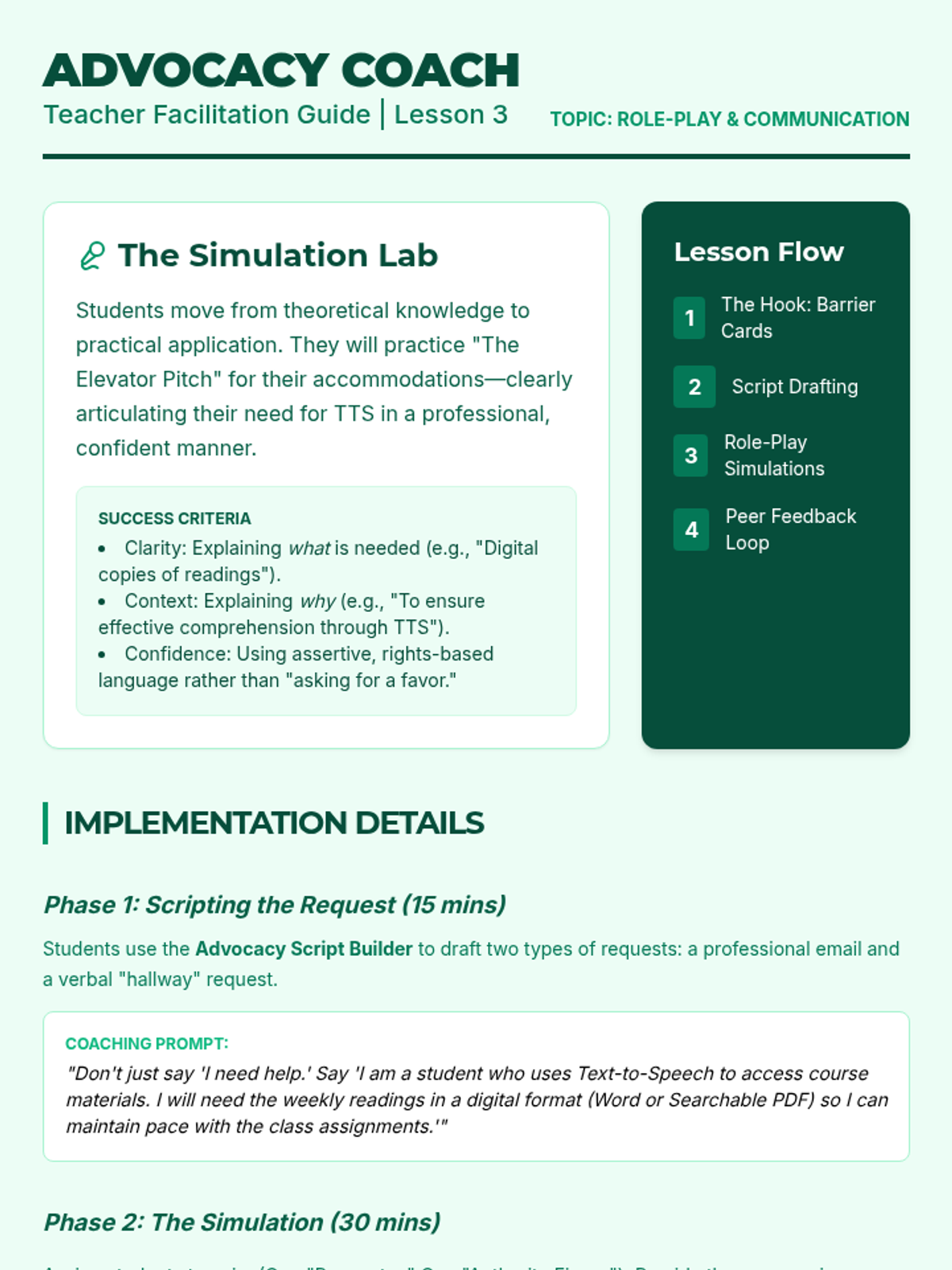
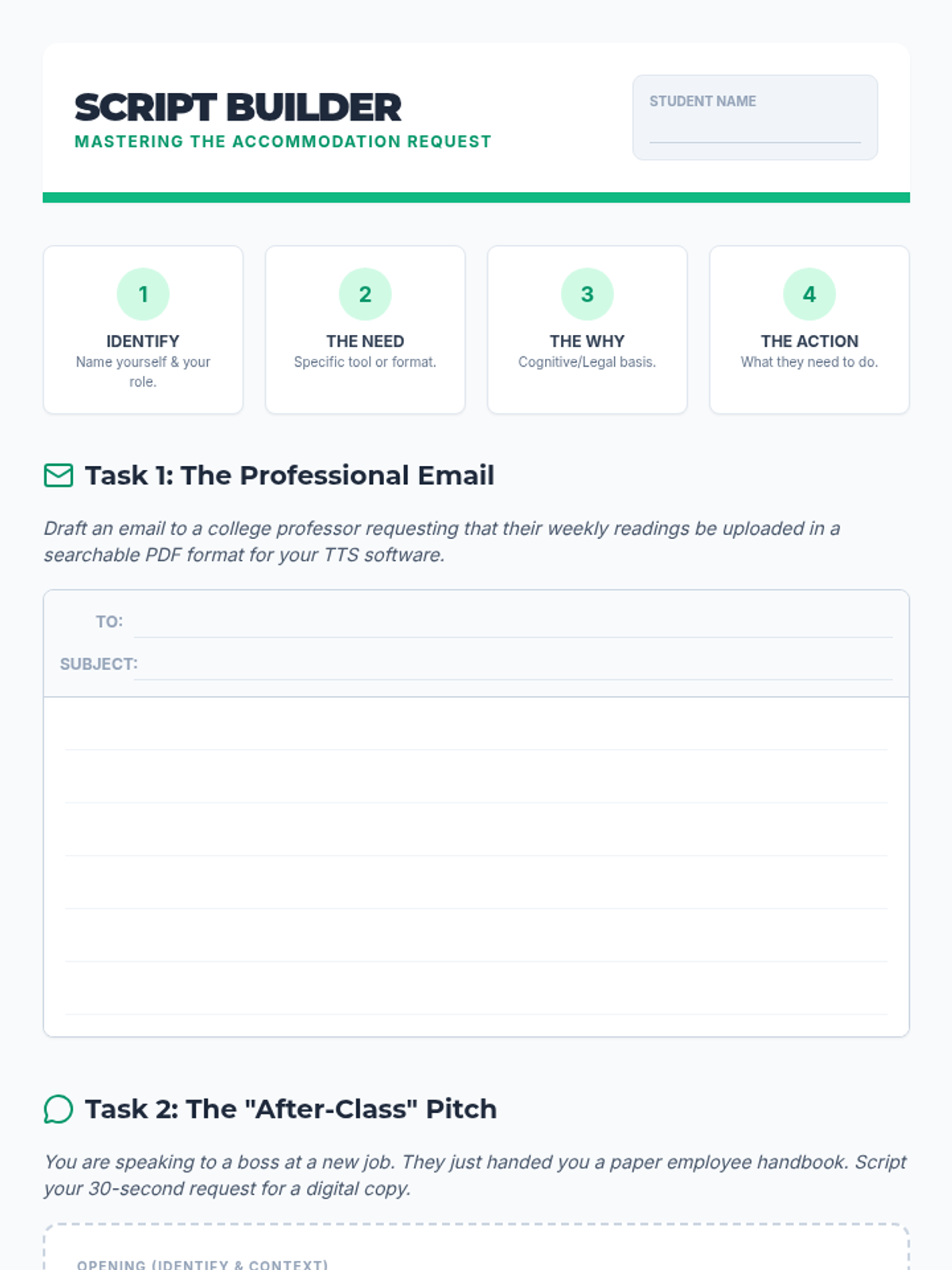
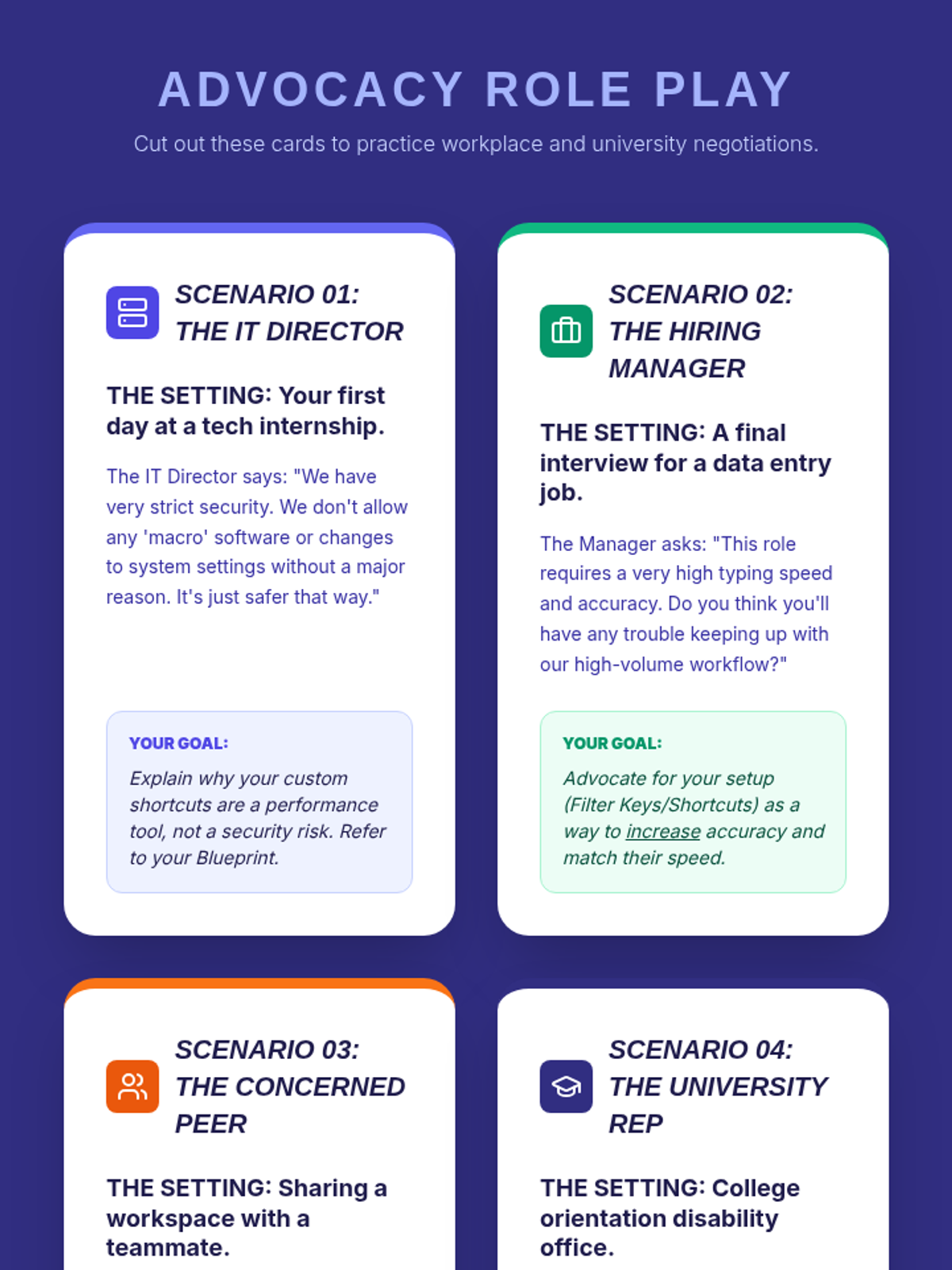
Students practice professional communication and self-advocacy by simulating requests for accommodations in college and workplace settings.
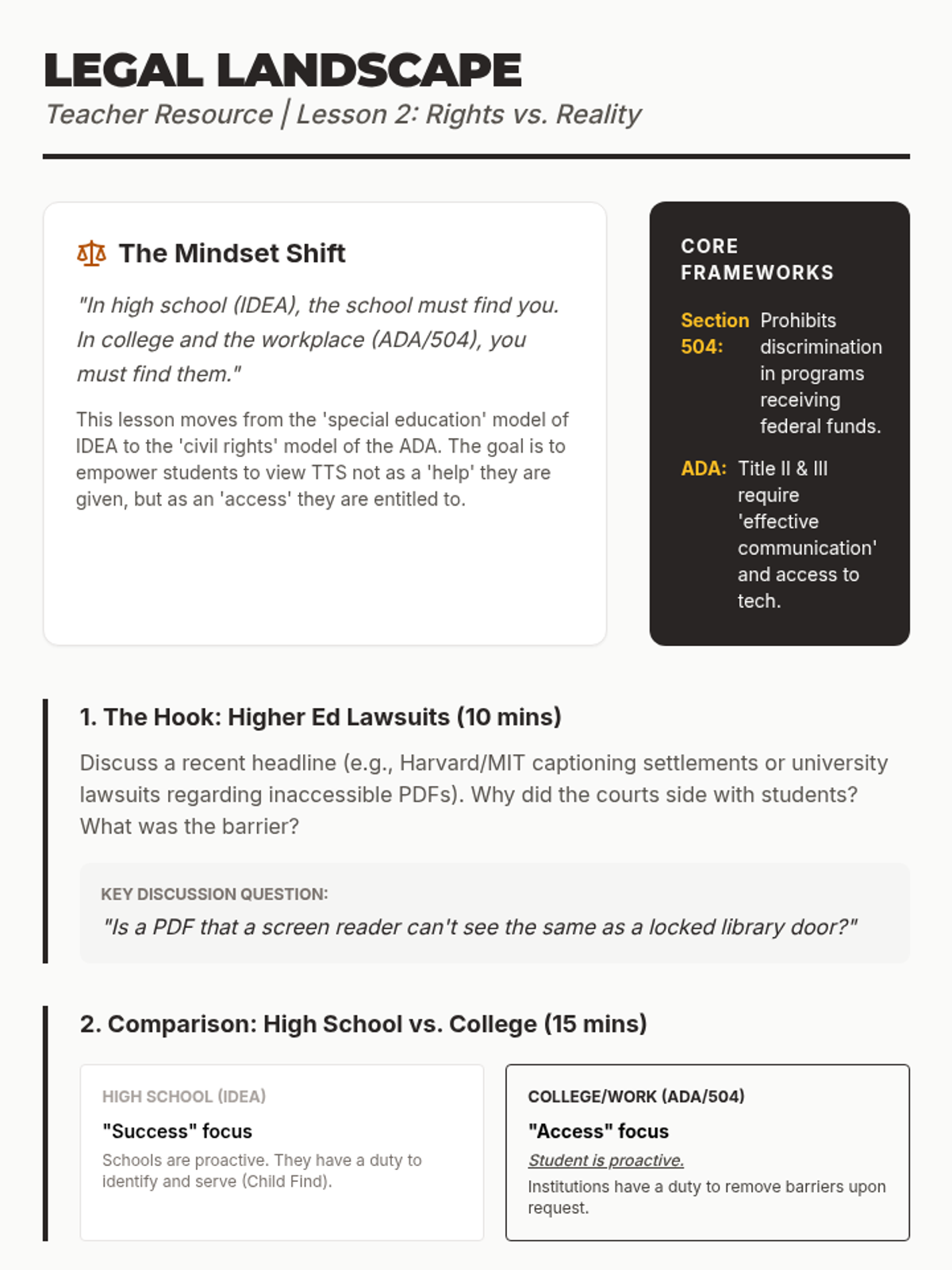
A deep dive into the legal frameworks of the ADA and Section 504 as they apply to digital accessibility in higher education and the workplace.
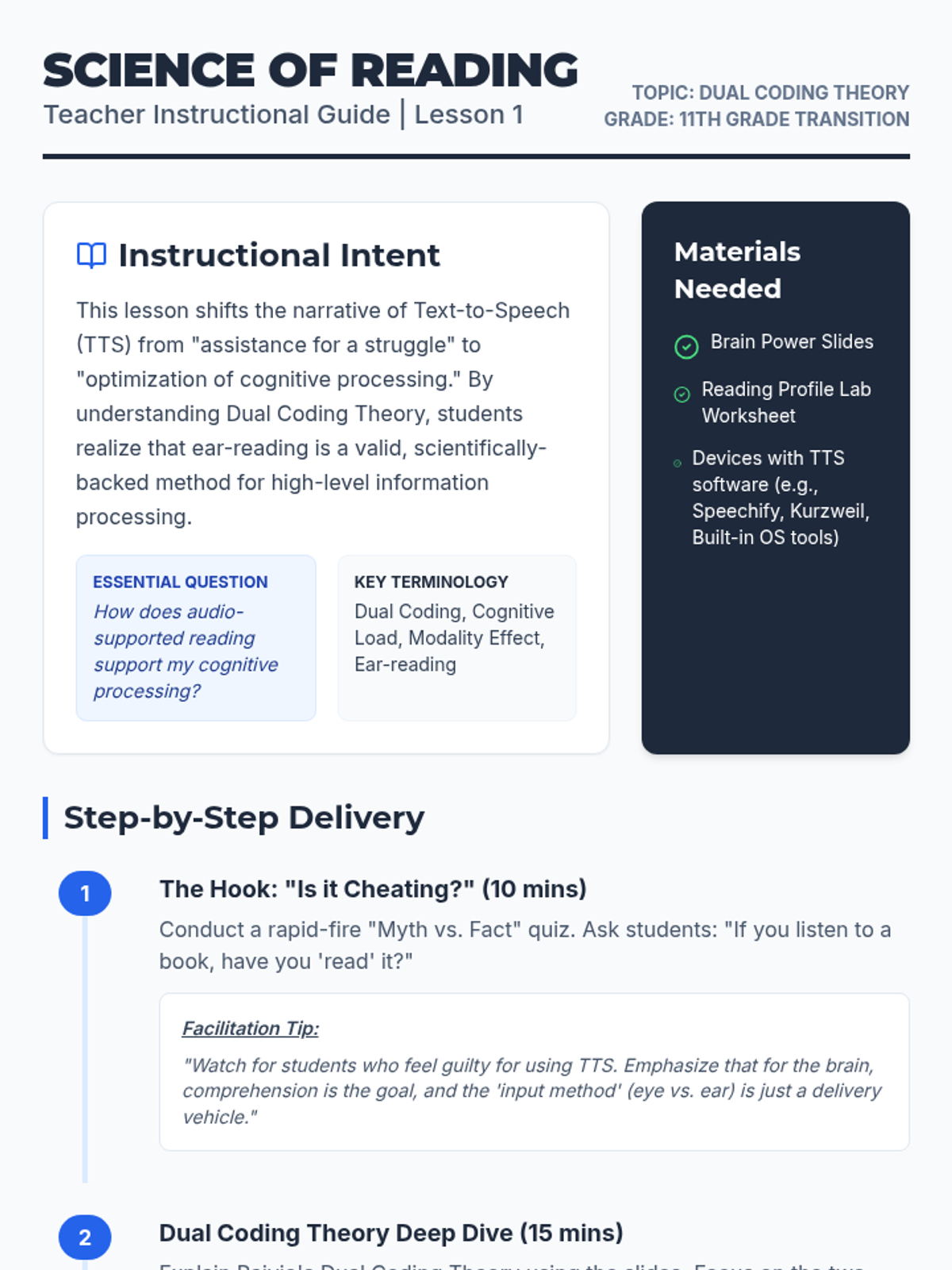
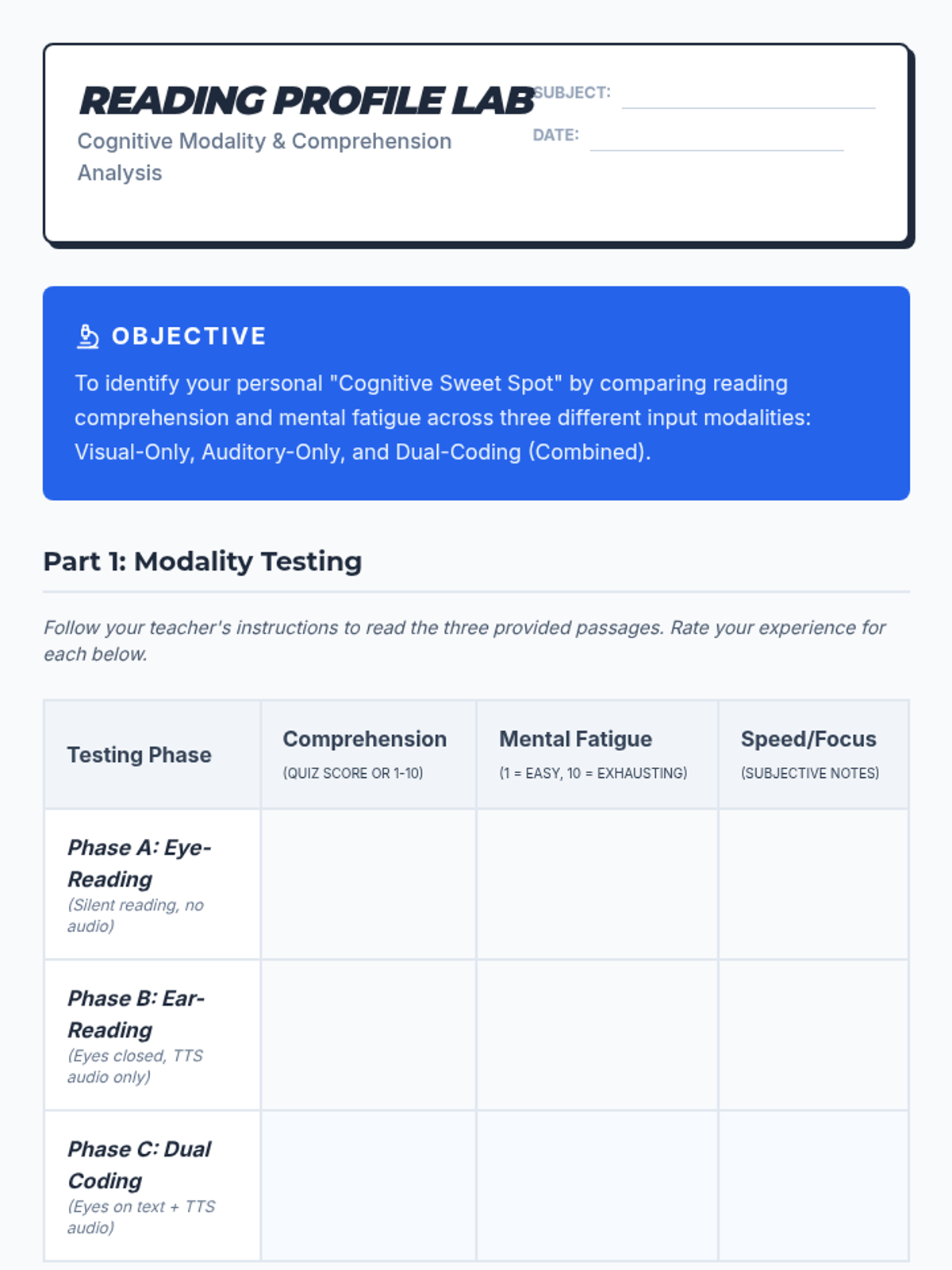
Students explore Dual Coding Theory and analyze their personal reading data to understand how eye-reading and ear-reading interact to improve comprehension and reduce fatigue.
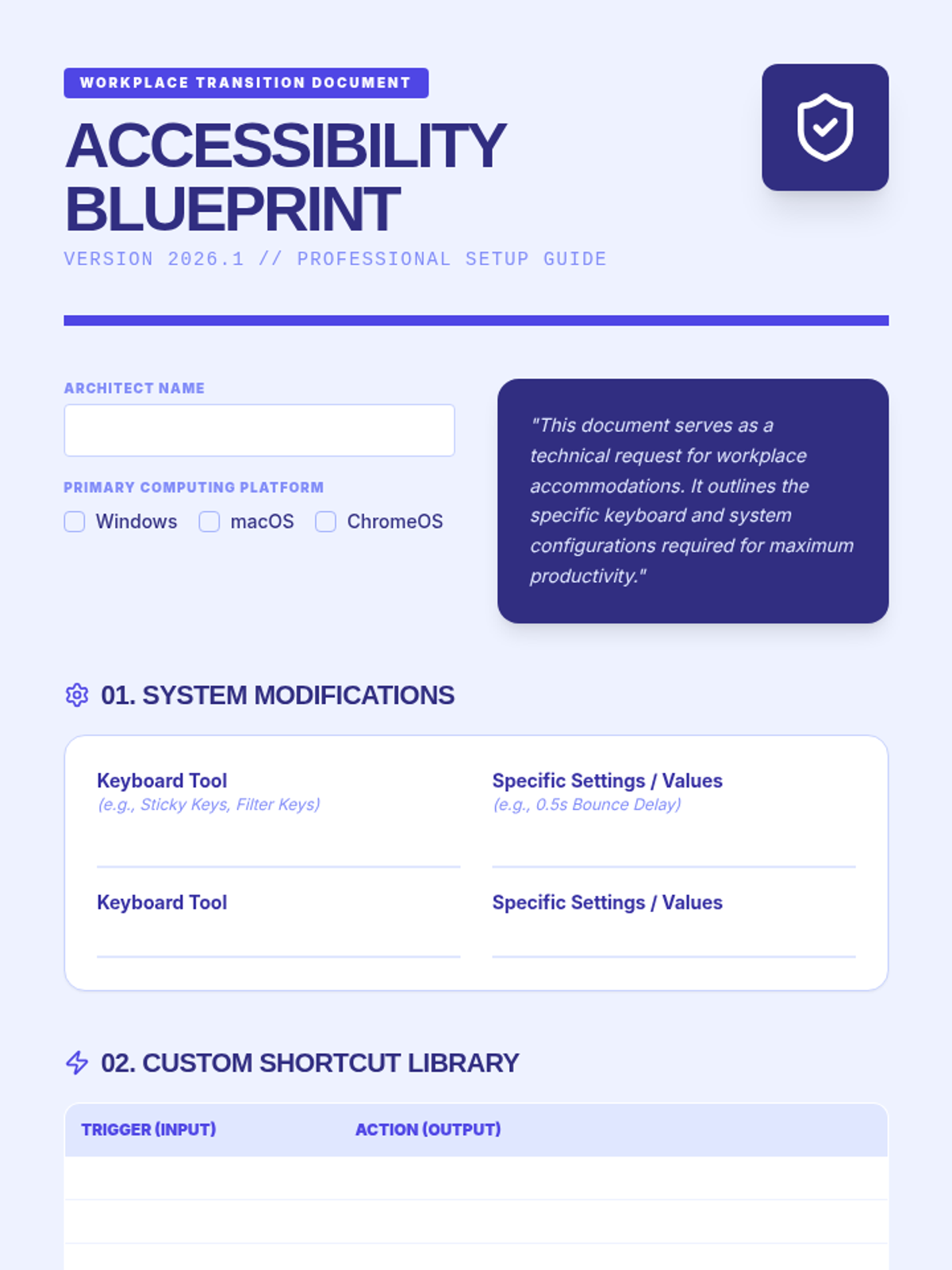
The capstone lesson where students create a personalized 'Accessibility Blueprint' and practice advocating for their specific technical setup in a workplace or university environment.
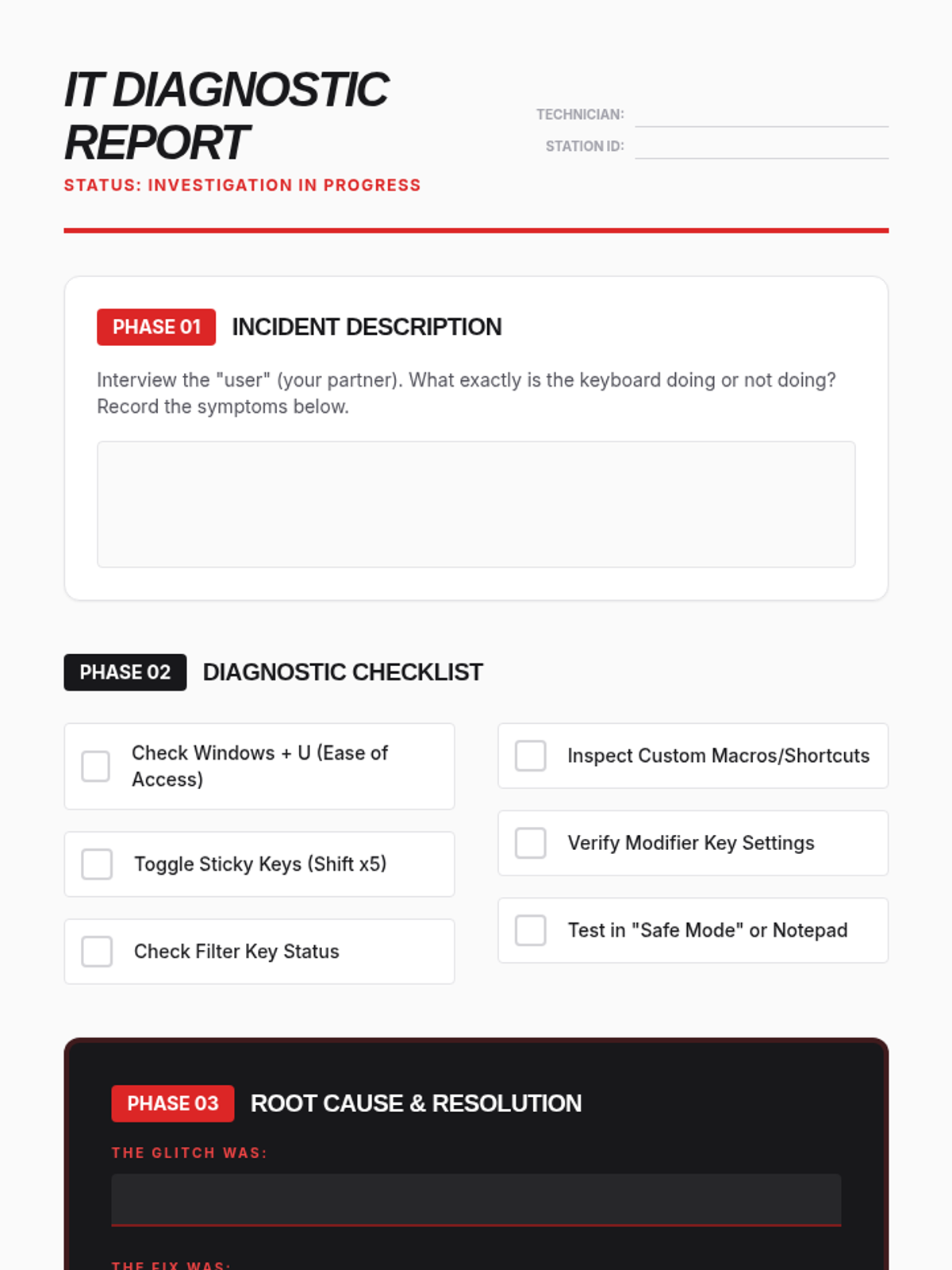
A technical problem-solving lesson where students diagnose and resolve shortcut conflicts or system errors, using help menus and resetting accessibility settings.
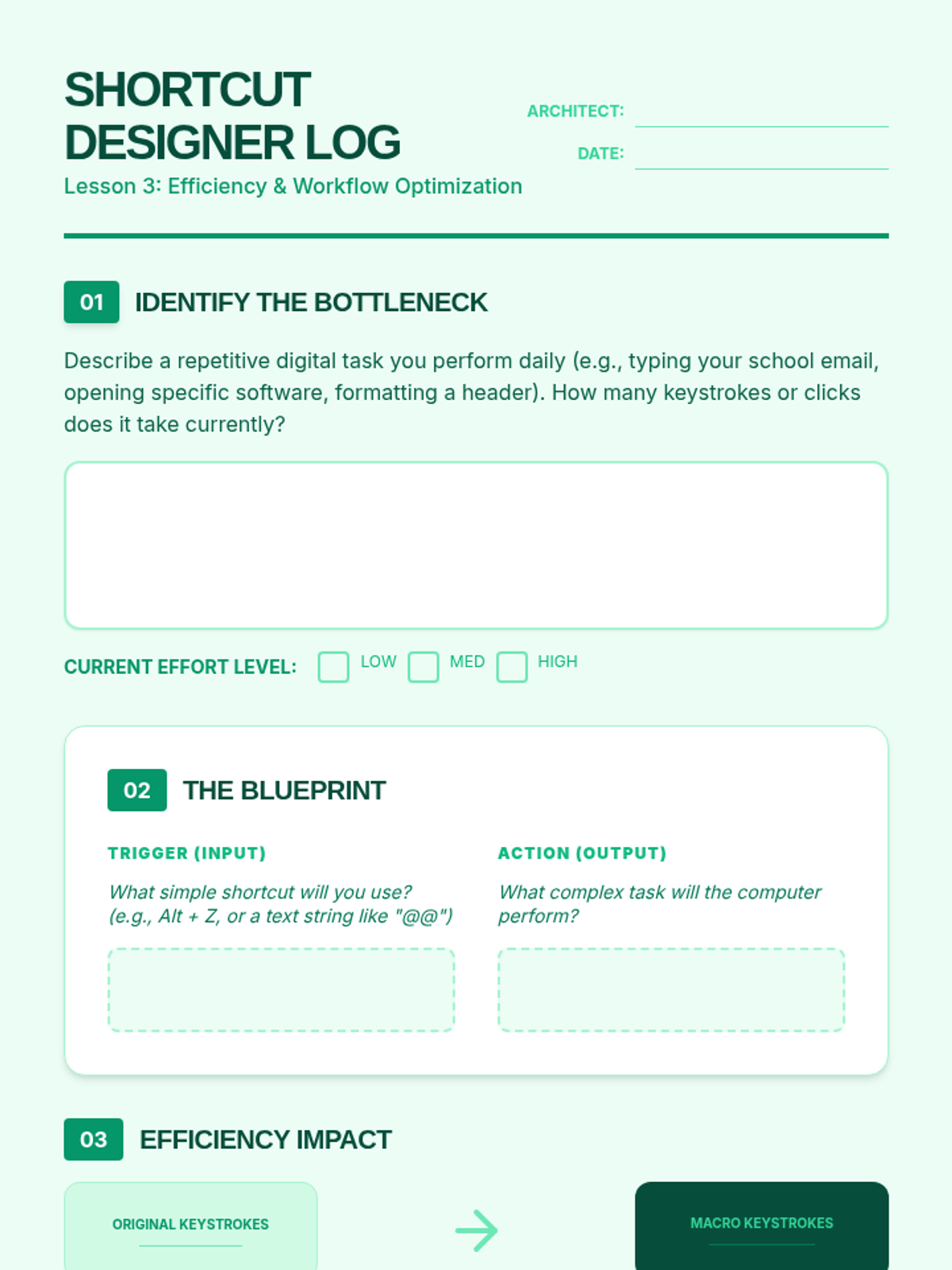
Students learn to create and implement custom keyboard shortcuts and macros for frequently used tasks, focusing on workflow optimization and reducing repetitive strain in a professional context.
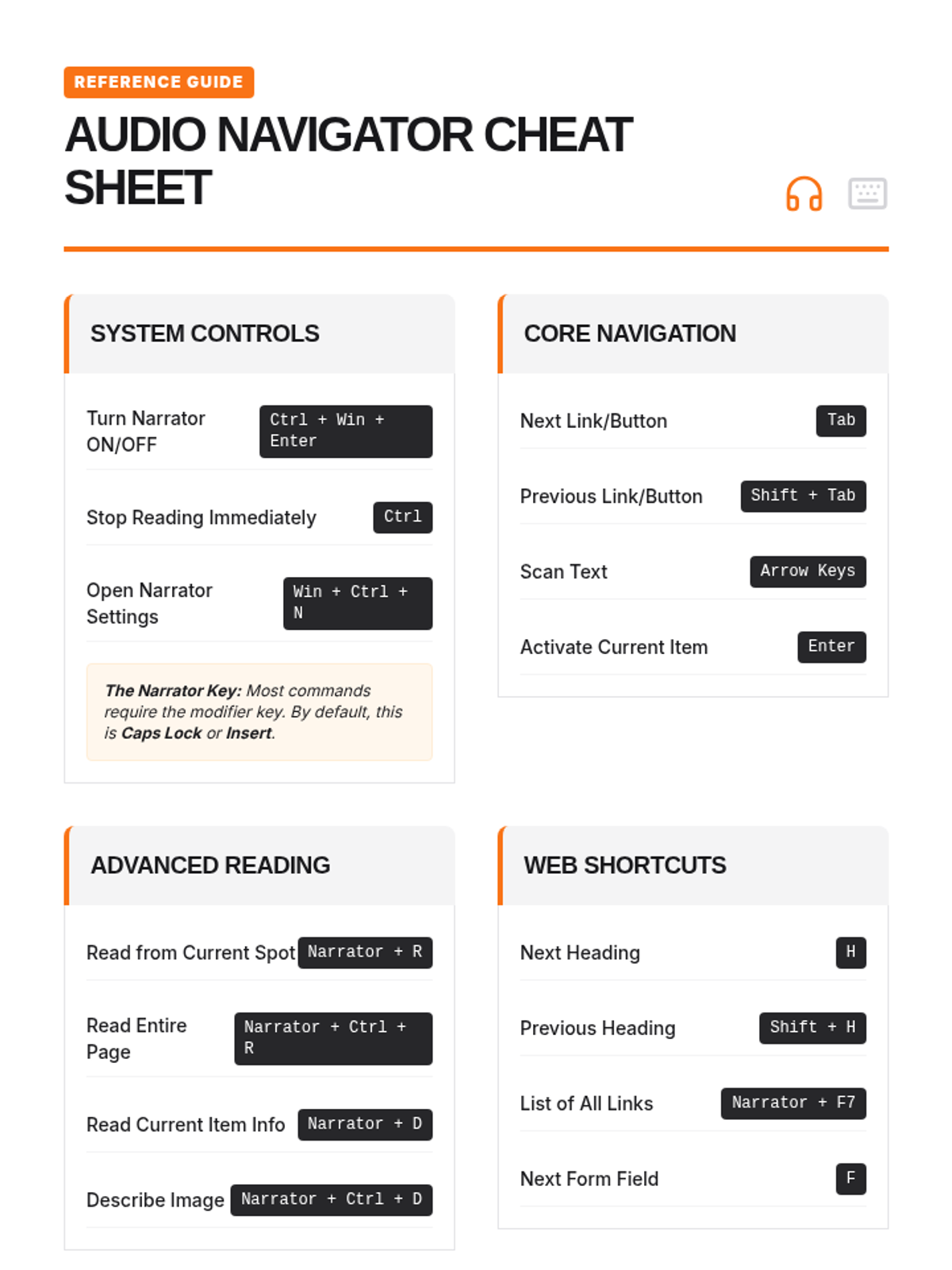
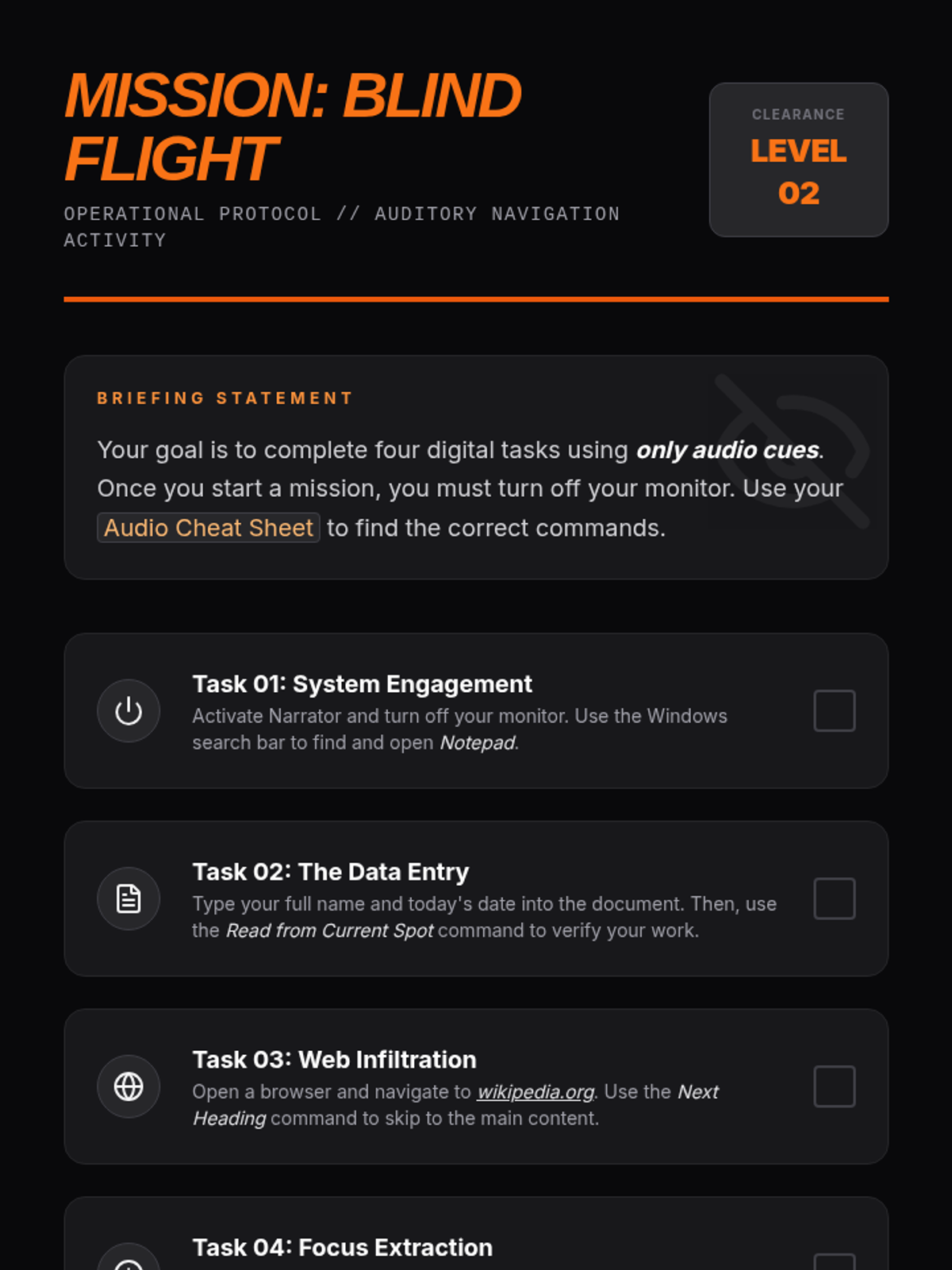
Covers the modifier keys and navigation commands for screen readers (Narrator/VoiceOver), focusing on how keyboard navigation provides an alternative interface for focus tracking and content consumption.
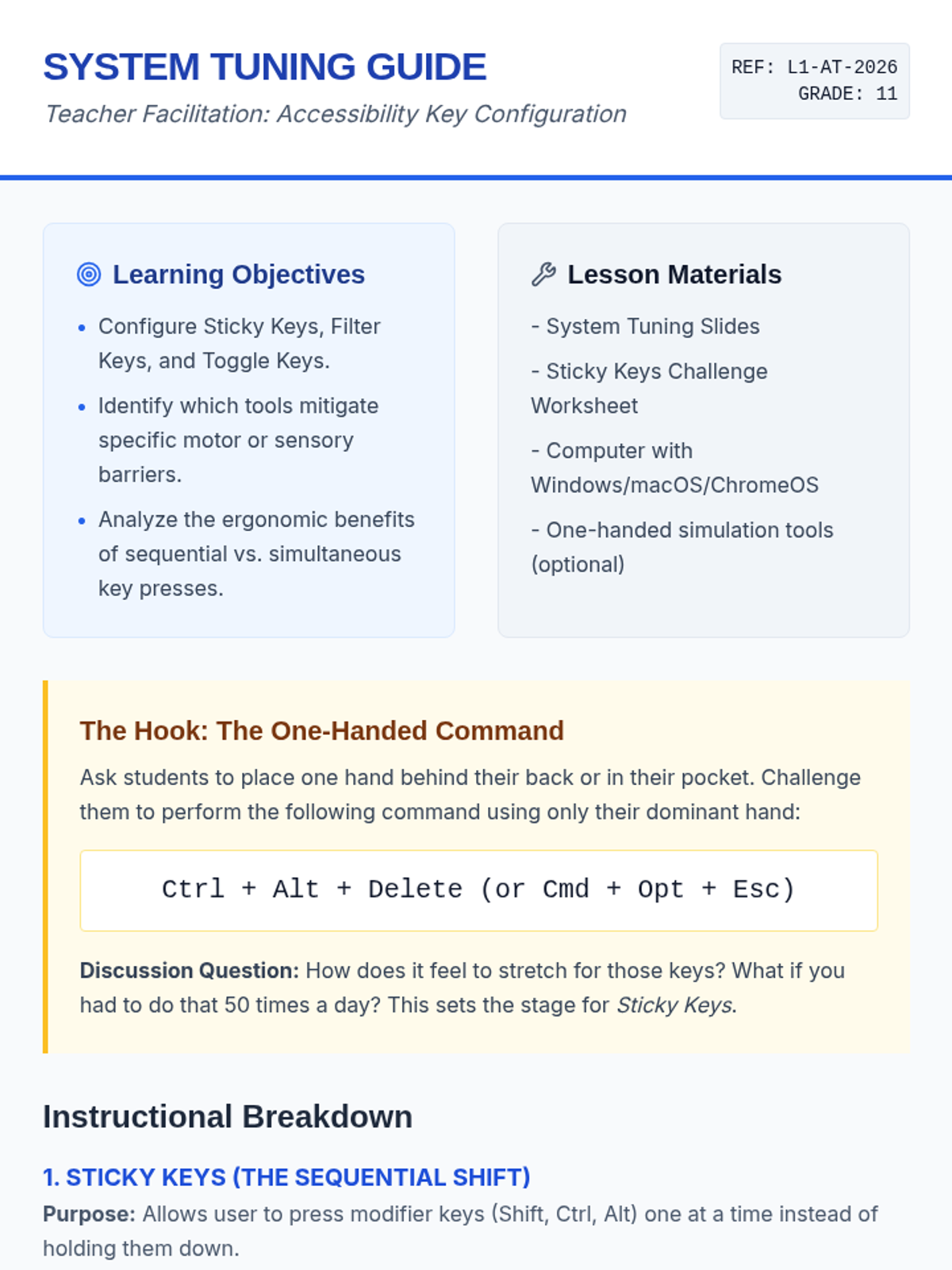
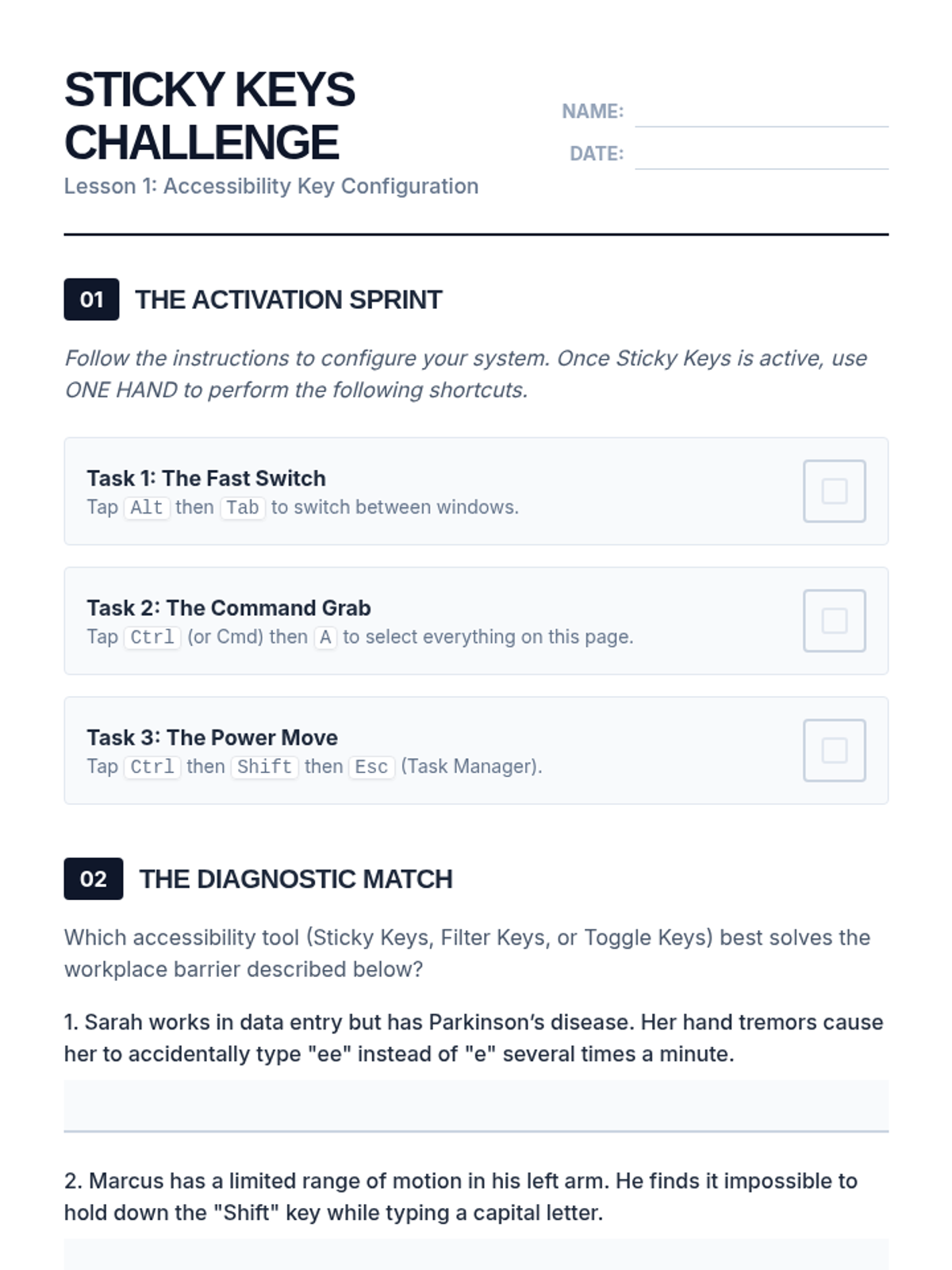
Students explore the Ease of Access center to configure Sticky Keys, Filter Keys, and Toggle Keys, learning how these modifications reduce physical strain and enable multi-key shortcuts with minimal movement.
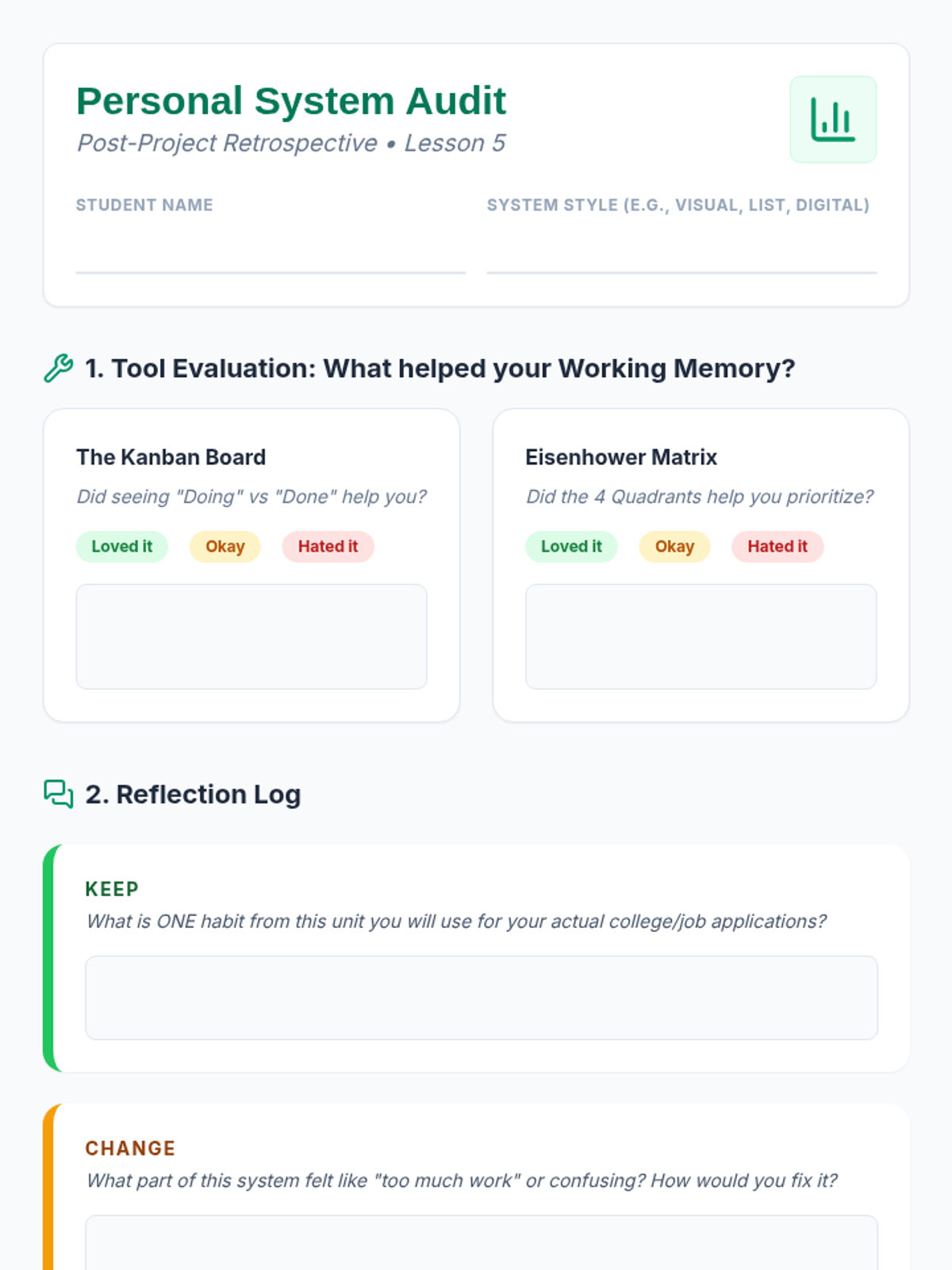
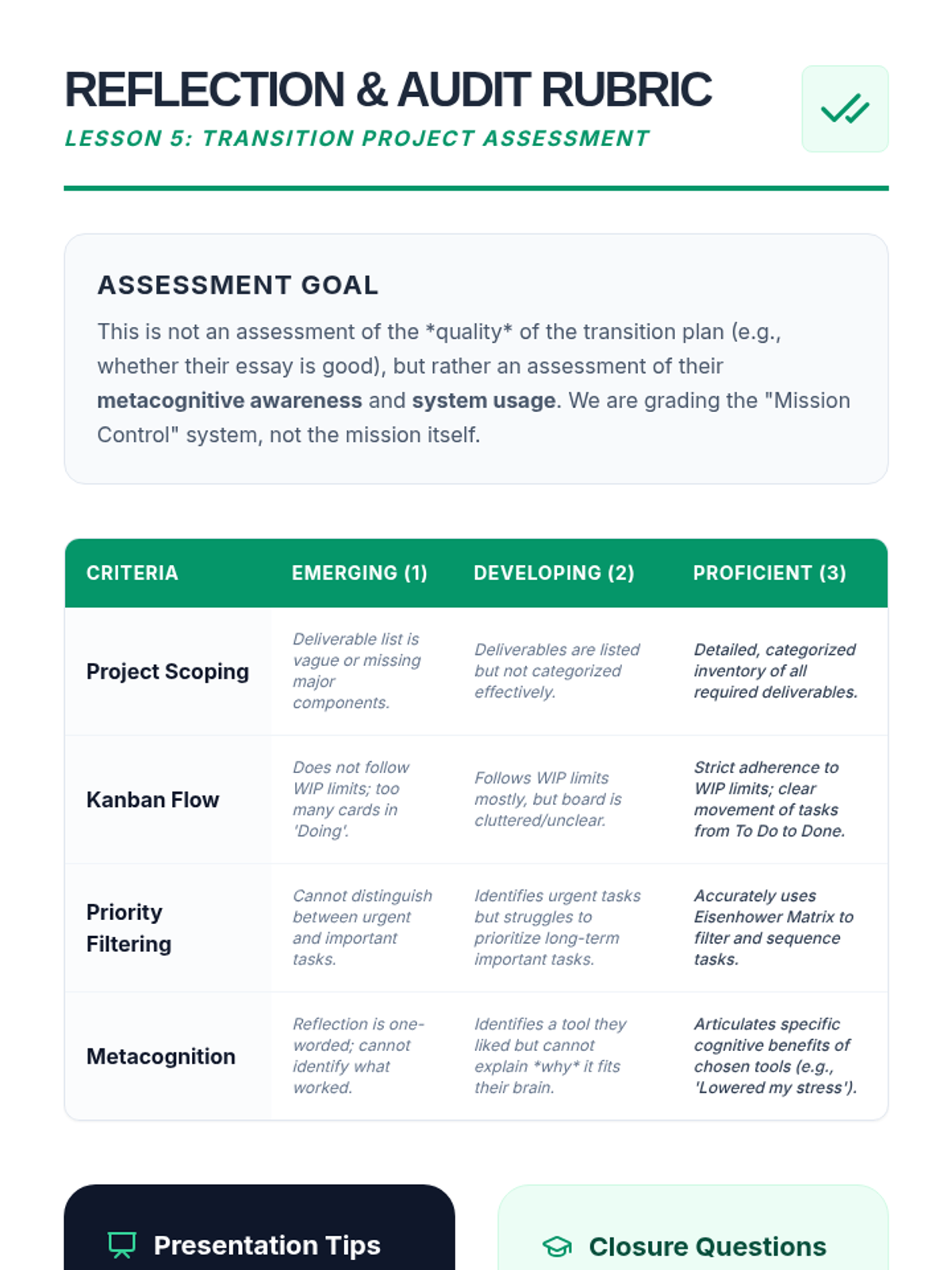
Students conduct a project retrospective to evaluate their systems and identify personal cognitive strengths.
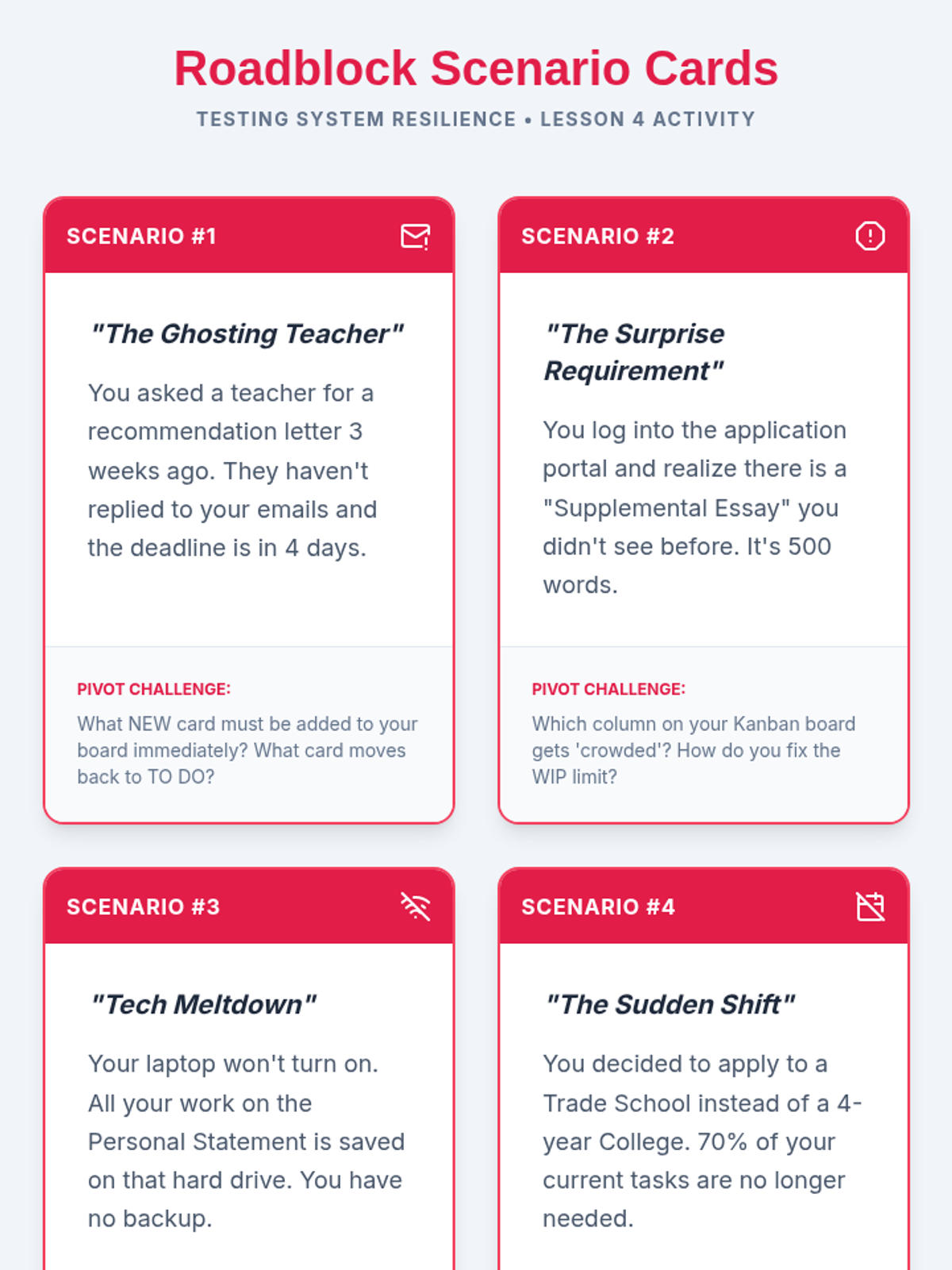
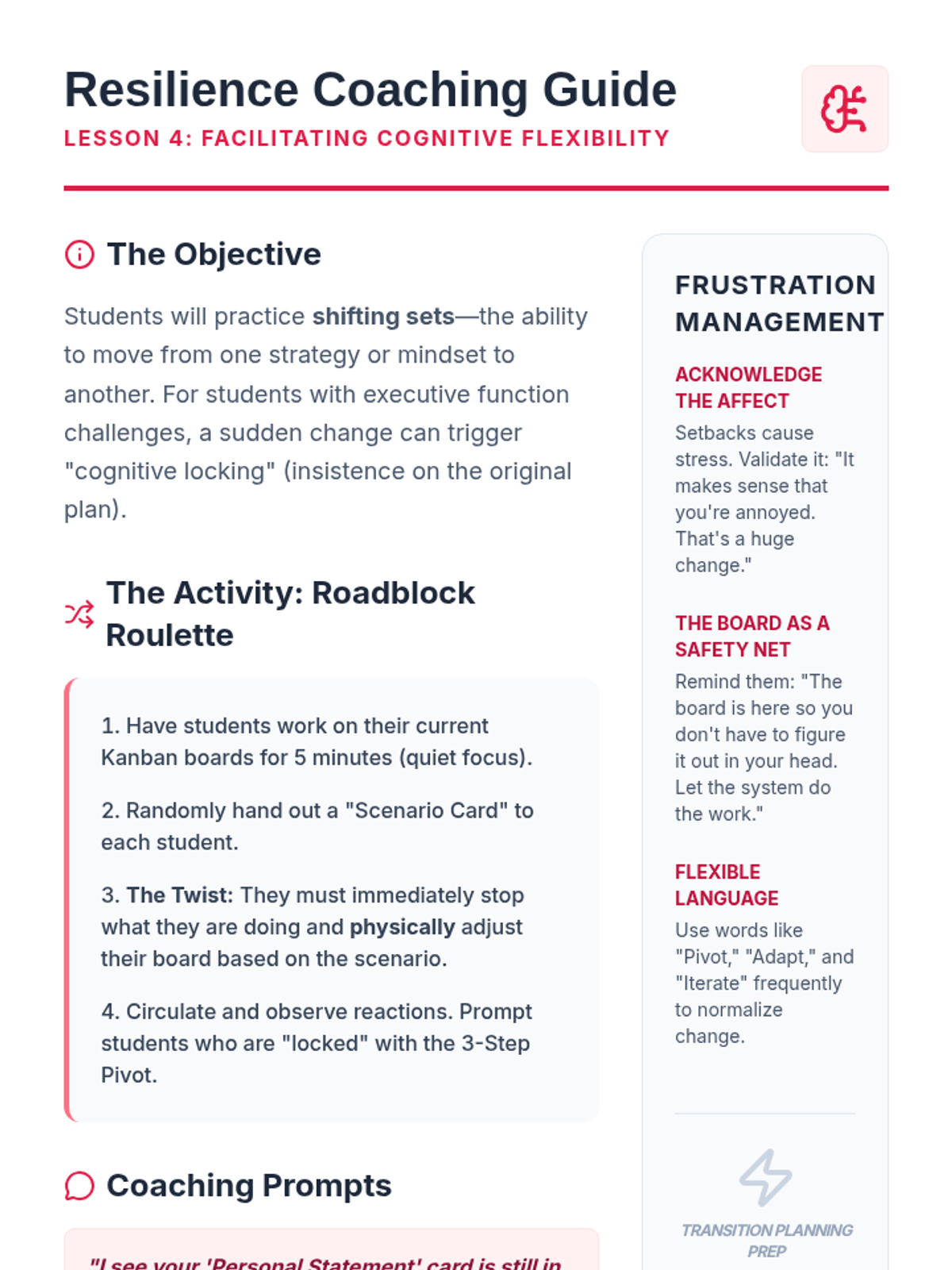
Students practice cognitive flexibility by role-playing setbacks and adjusting their project boards in response to new information.
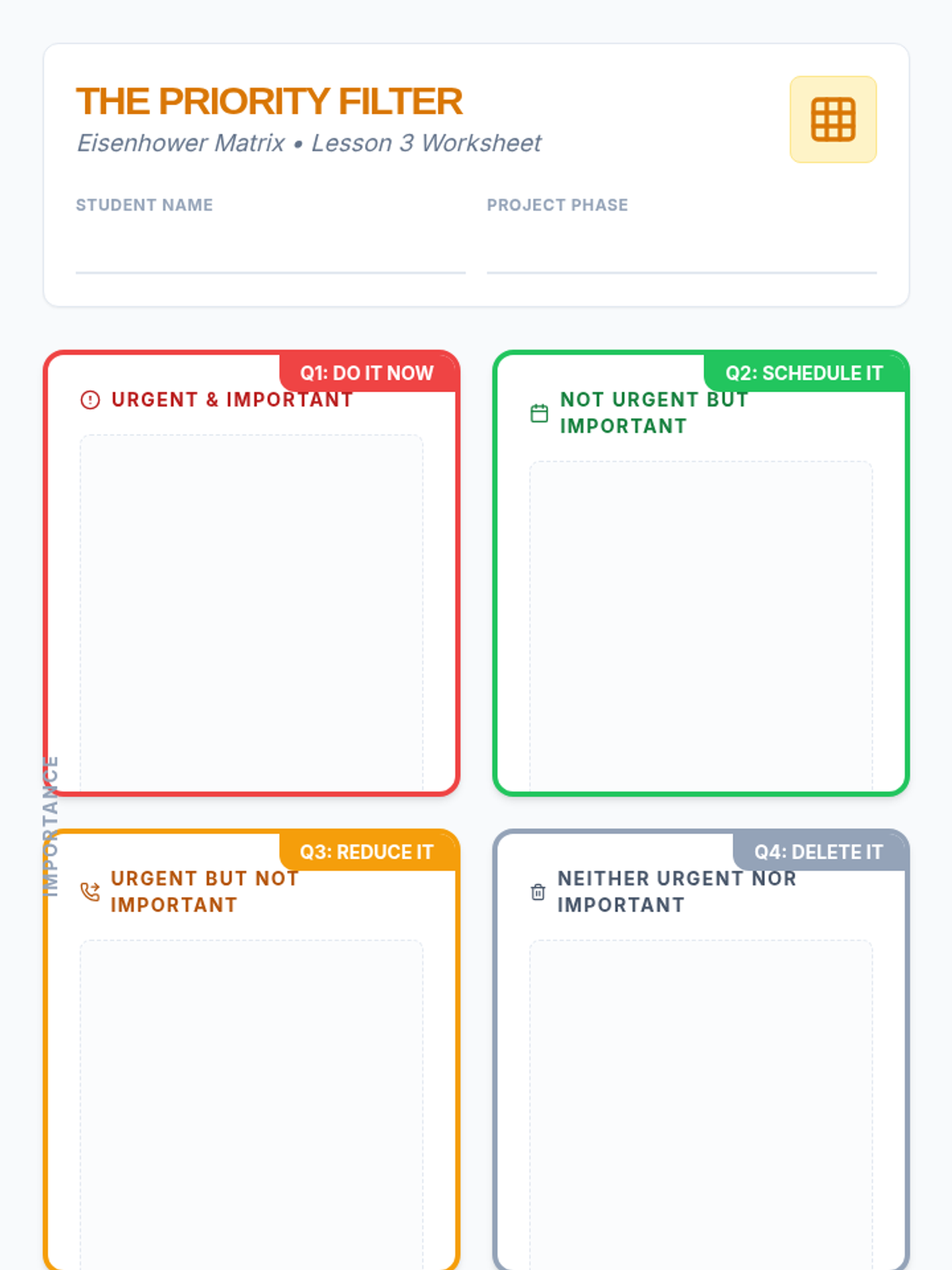
Students use the Eisenhower Matrix to distinguish between urgent and important tasks, filtering out distractions.
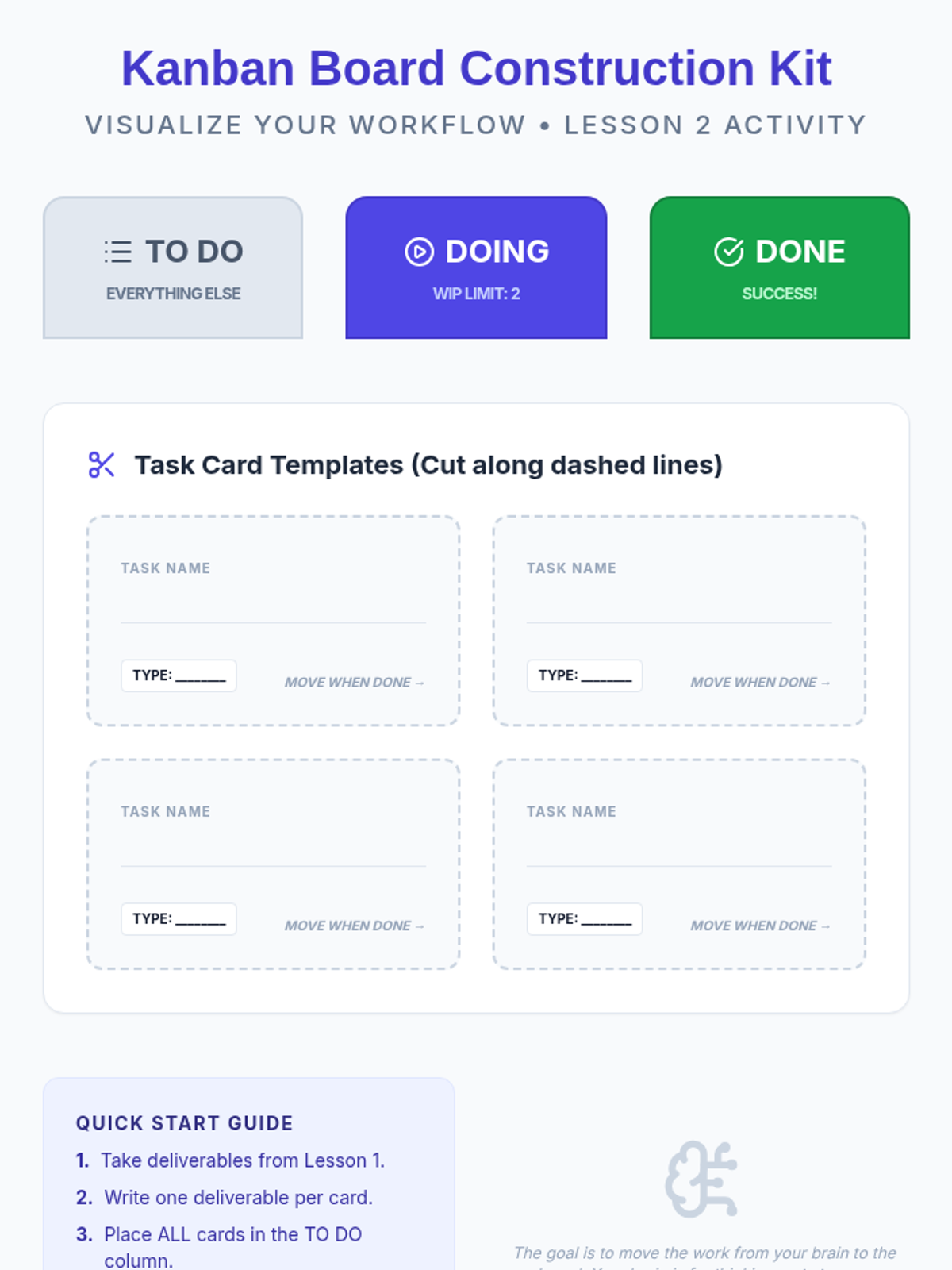
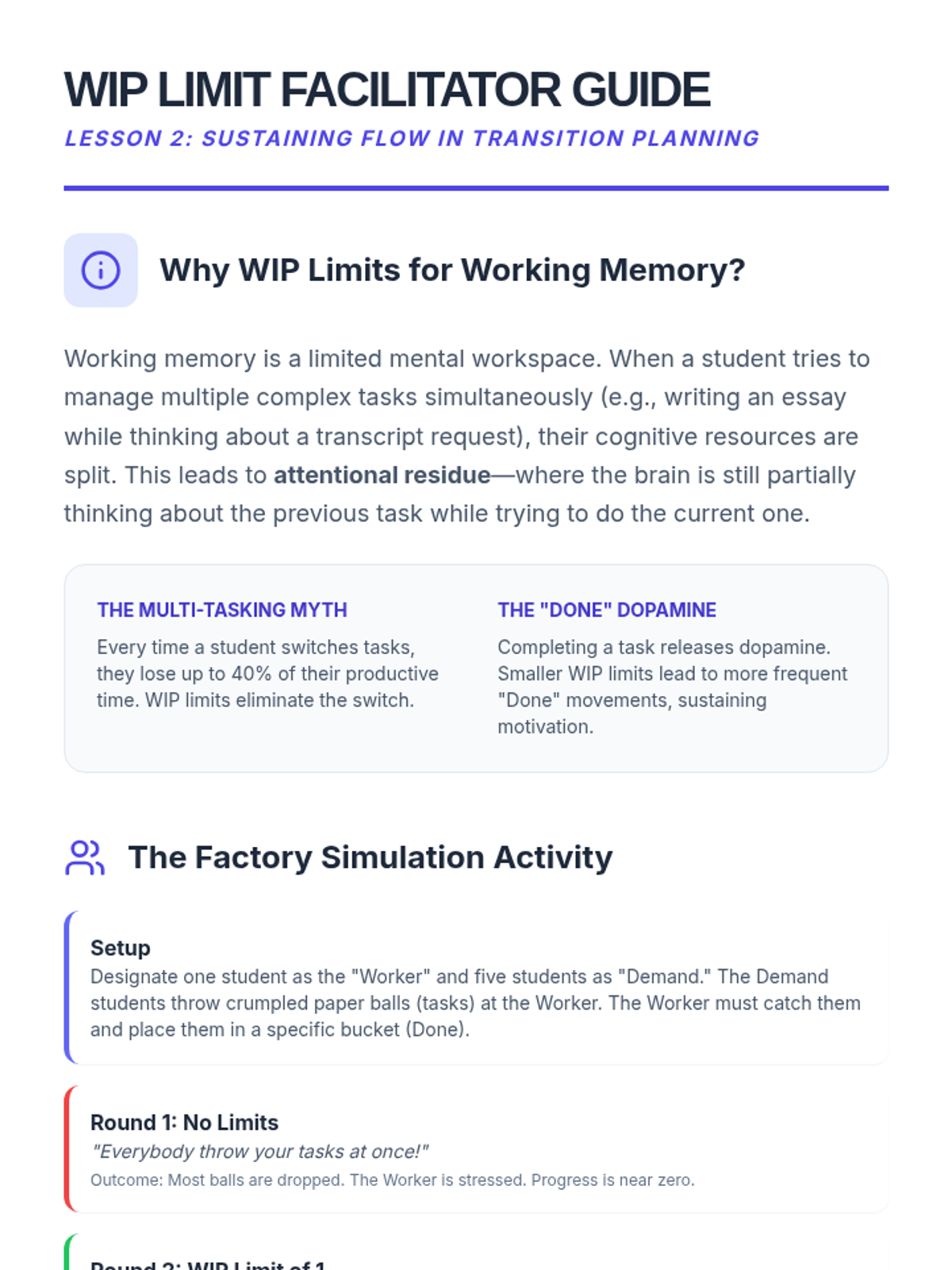
Students learn the Kanban visual management system, focusing on 'Work in Progress' (WIP) limits to support working memory capacity.
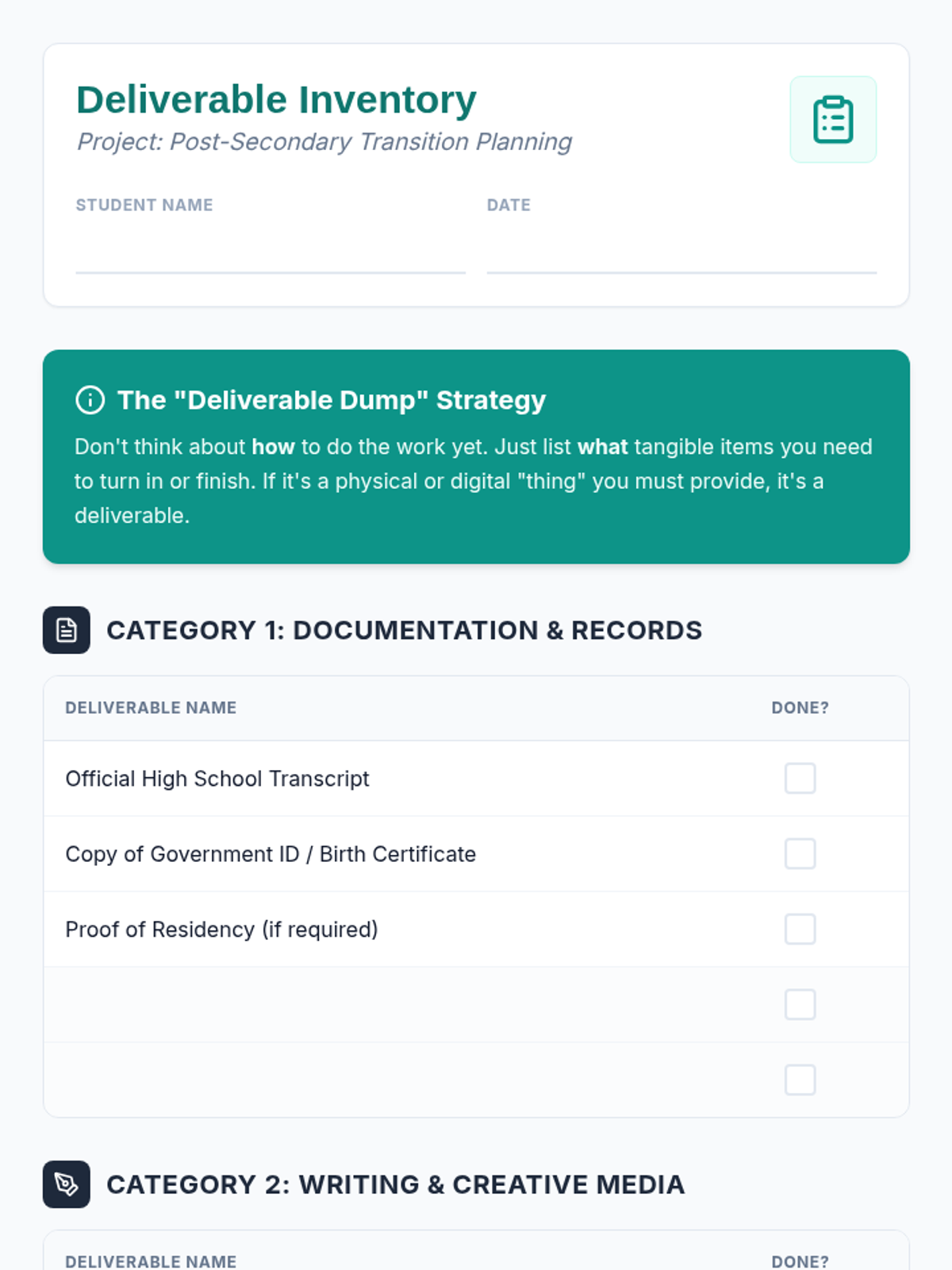
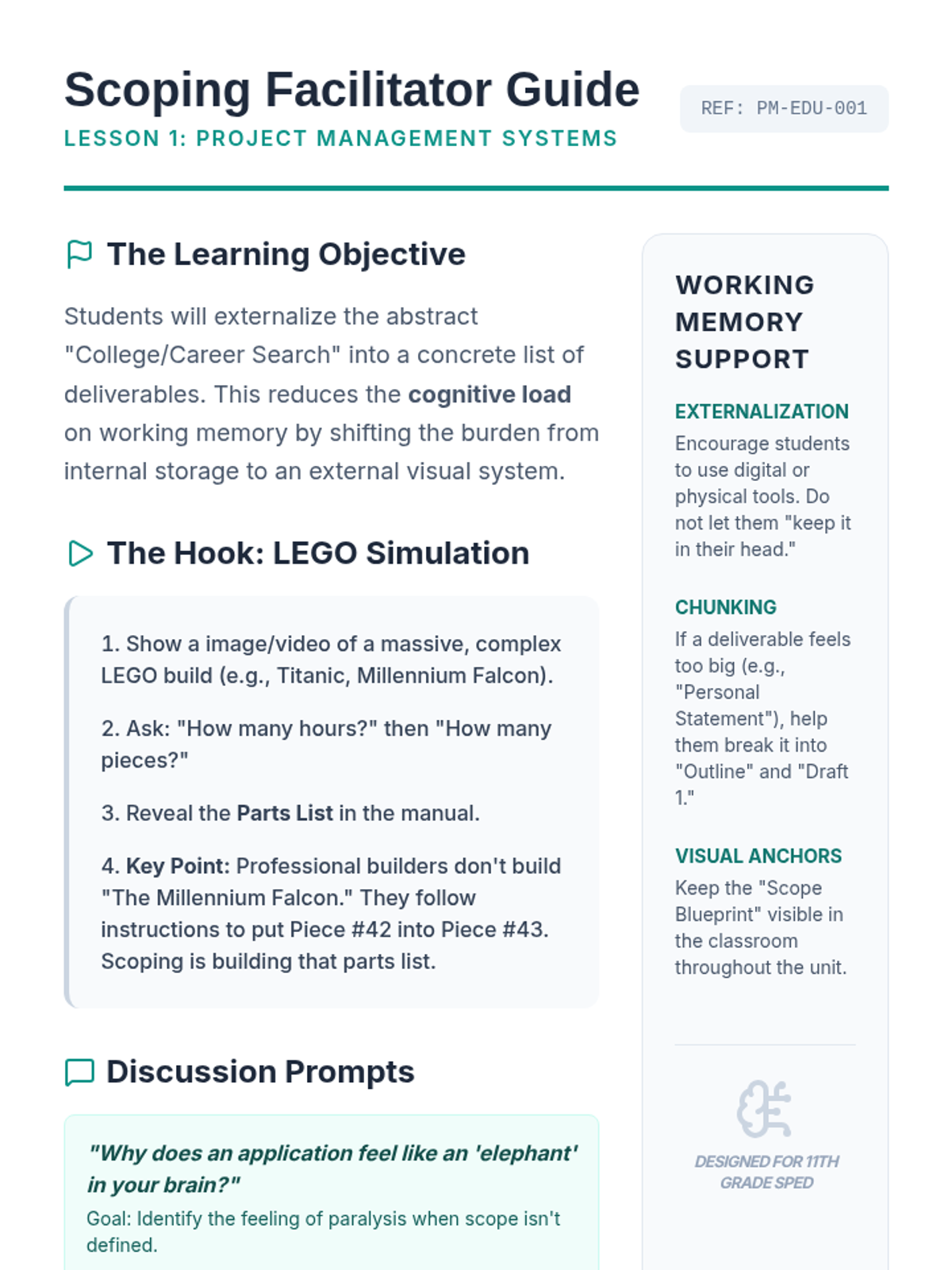
Students practice 'scoping' a project by listing deliverables for college or career applications, learning to categorize tasks to reduce cognitive overwhelm.
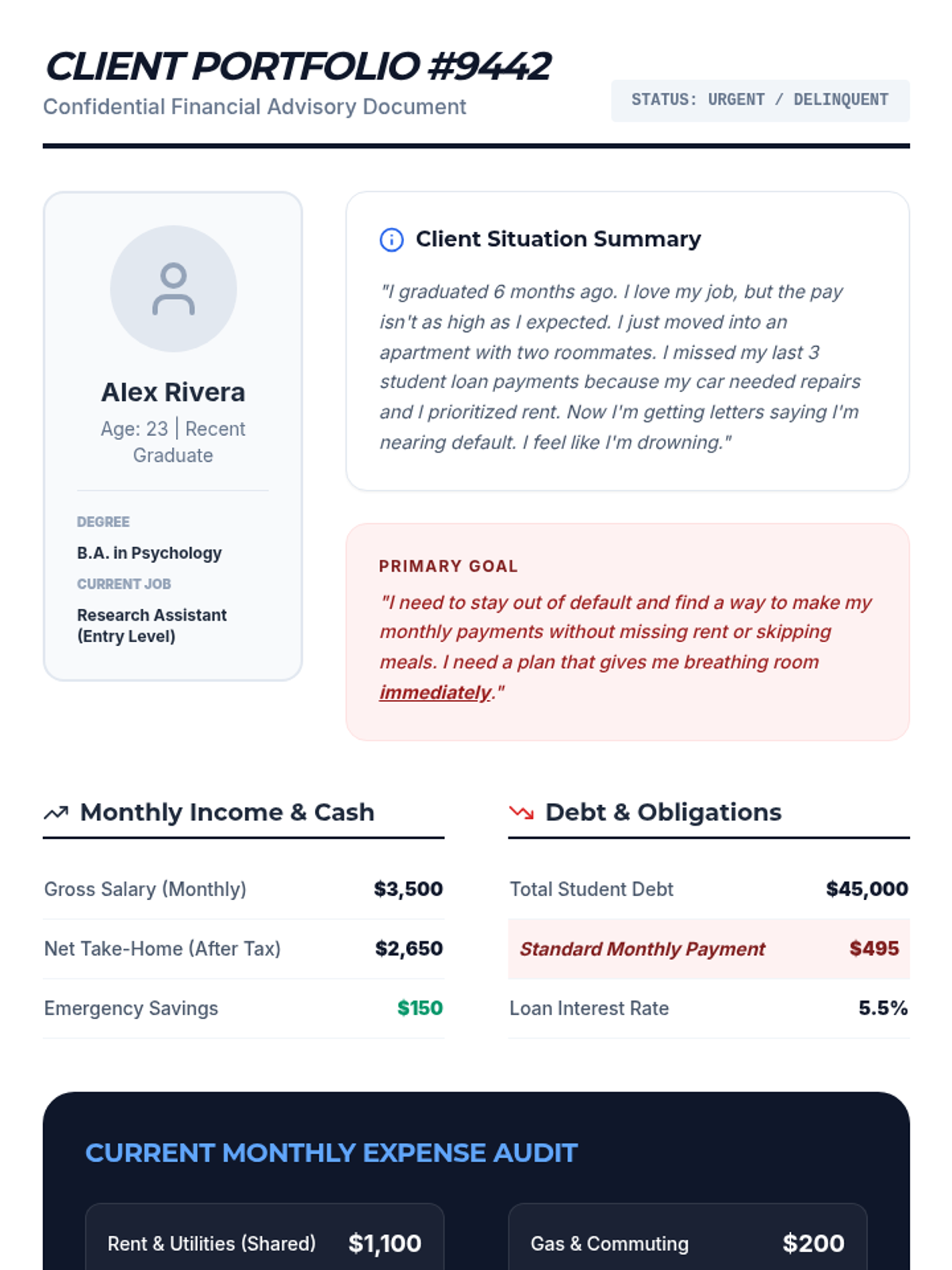
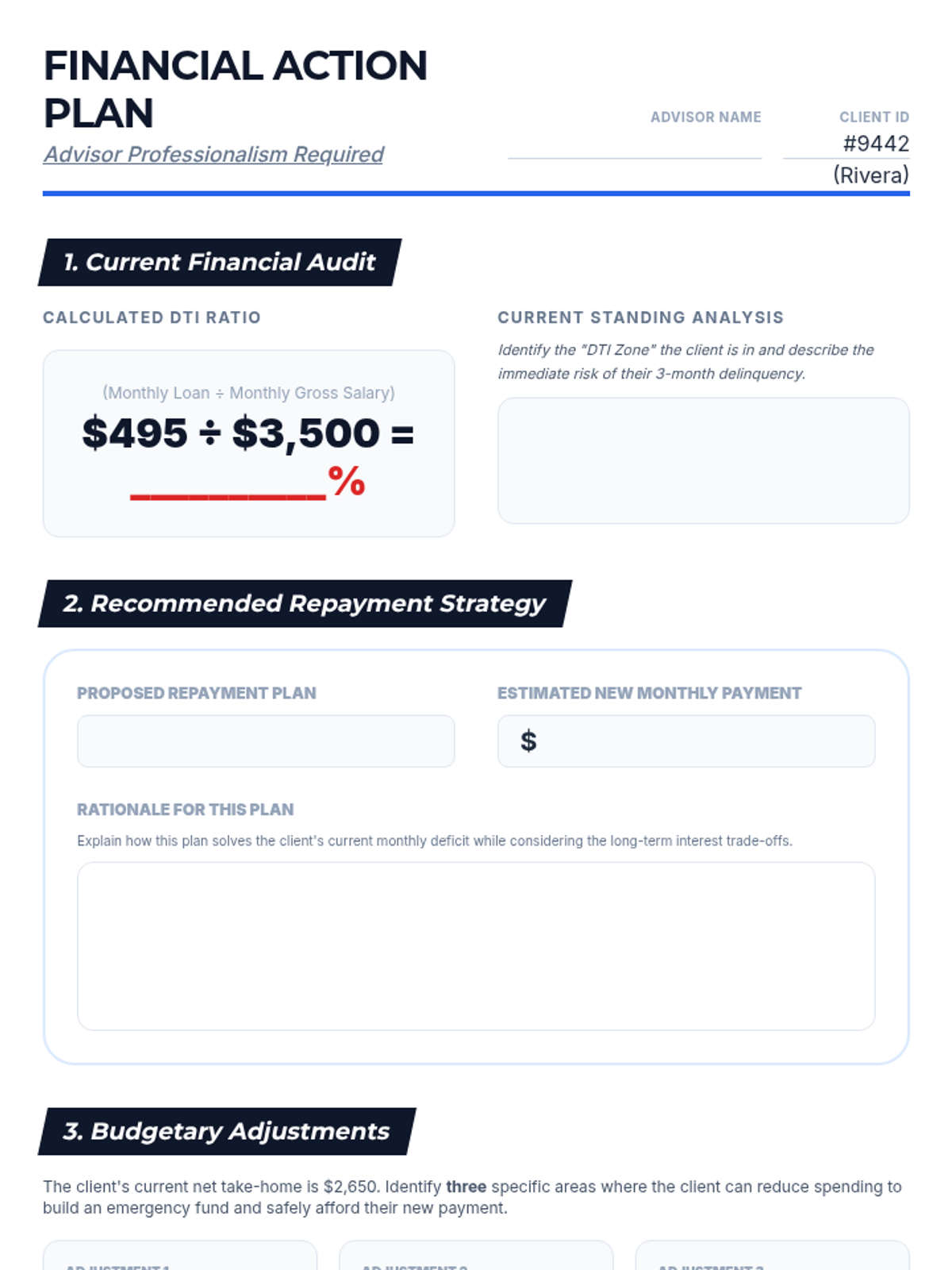
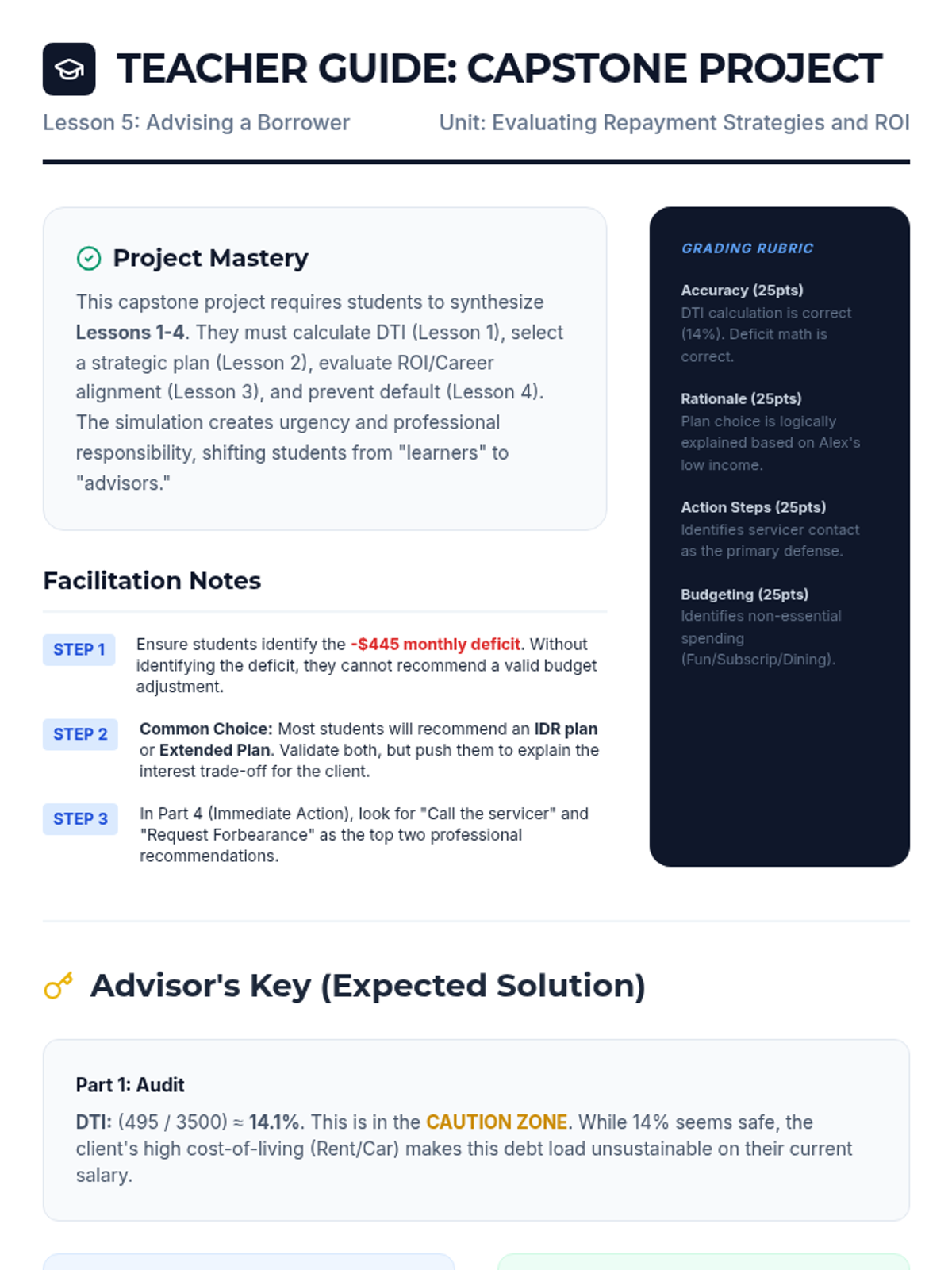
Students act as financial counselors for a detailed case study of a recent graduate struggling with payments. They analyze debt load and income to recommend a specific repayment plan and budget adjustments, producing a final 'Financial Action Plan'.
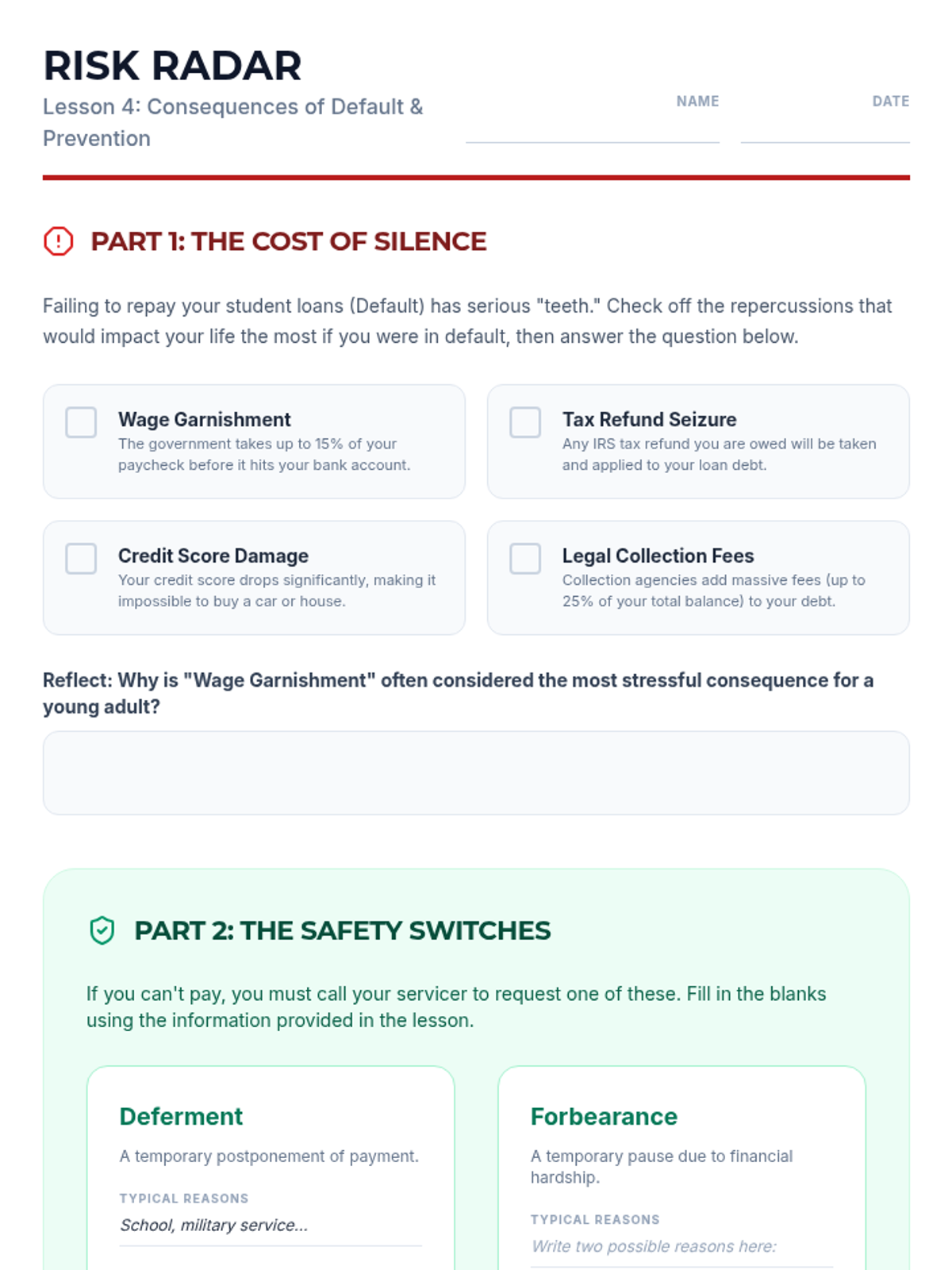
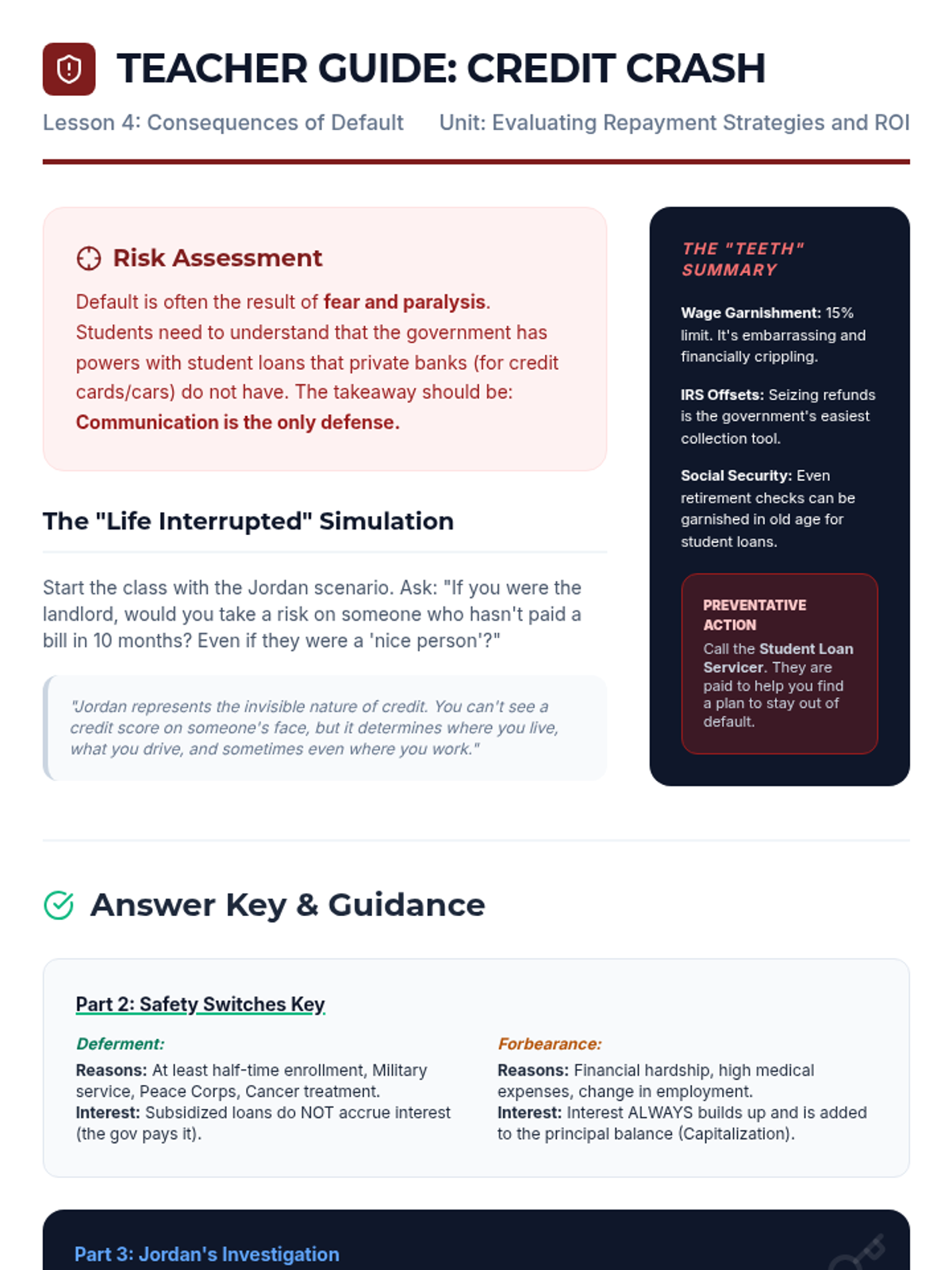
Students examine the timeline and repercussions of failing to repay student loans, including damaged credit scores, wage garnishment, and tax refund offsets. They learn the difference between postponement options and simply stopping payment.
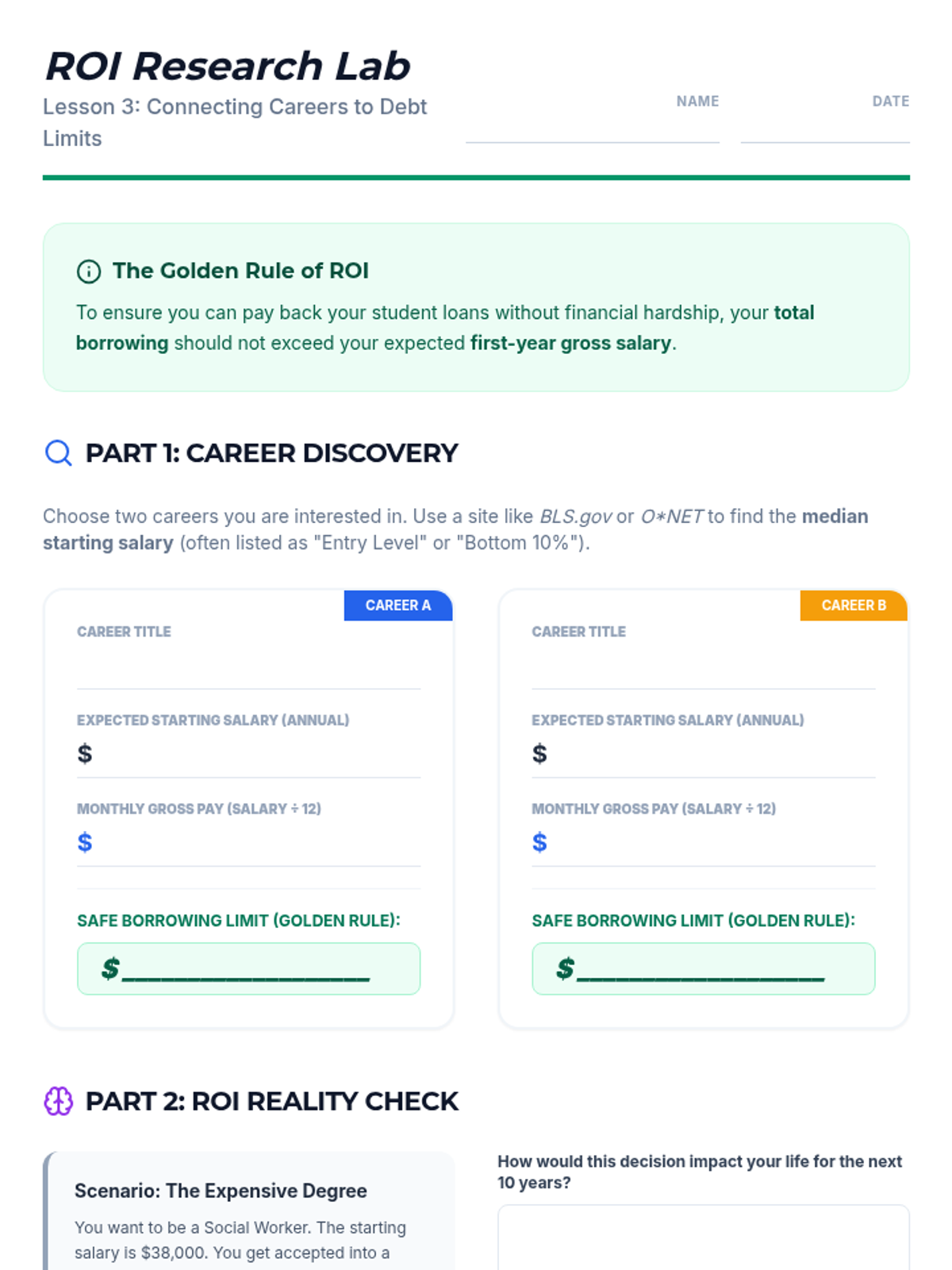
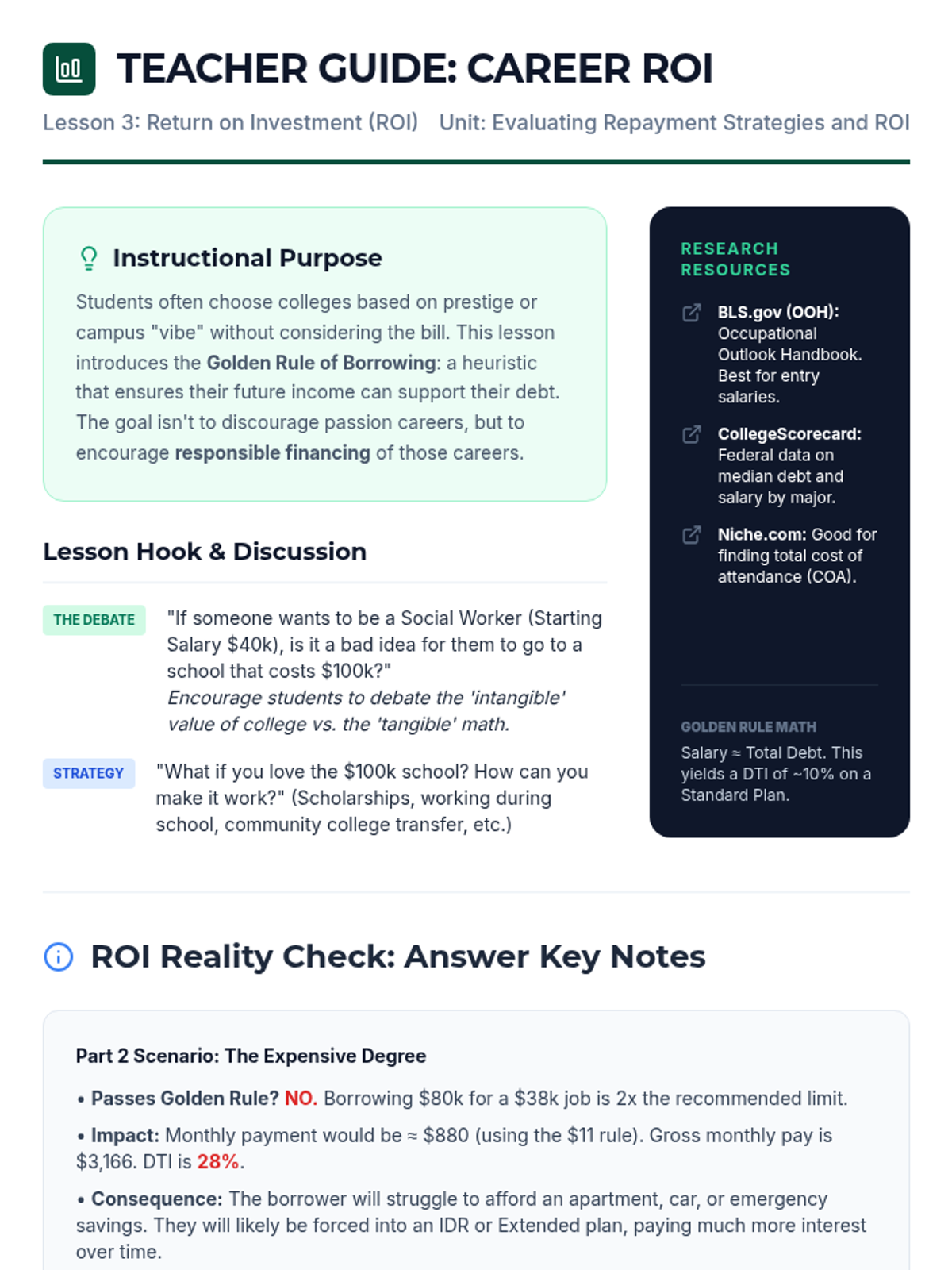
This lesson connects career aspirations with borrowing limits. Students research entry-level salaries for specific careers and calculate a safe borrowing limit based on the rule of thumb that total debt should not exceed expected first-year salary.
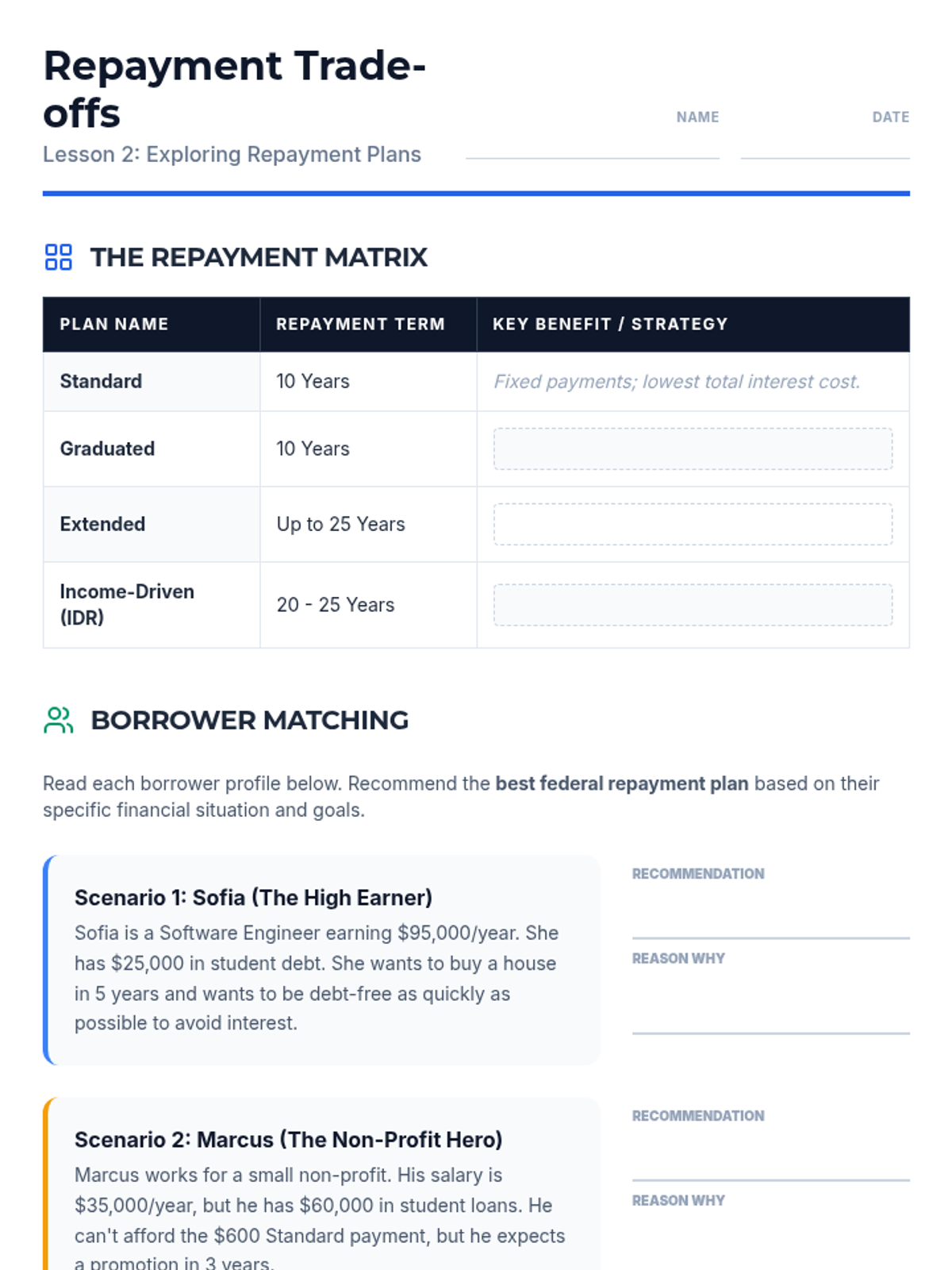
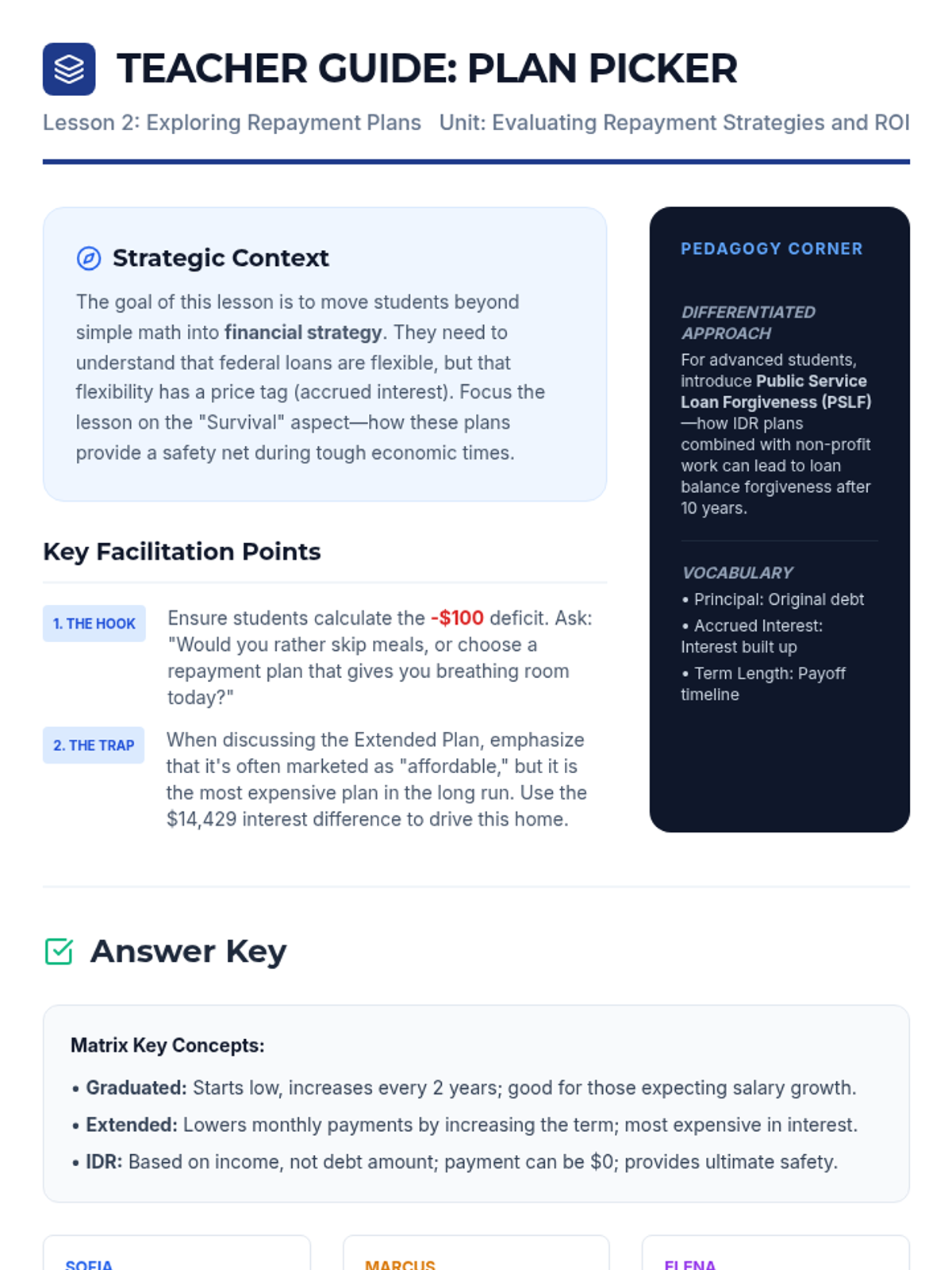
Learners investigate alternative federal repayment options, including Graduated, Extended, and Income-Driven Repayment (IDR) plans. They analyze how lowering a monthly payment often results in paying significantly more interest over the life of the loan.
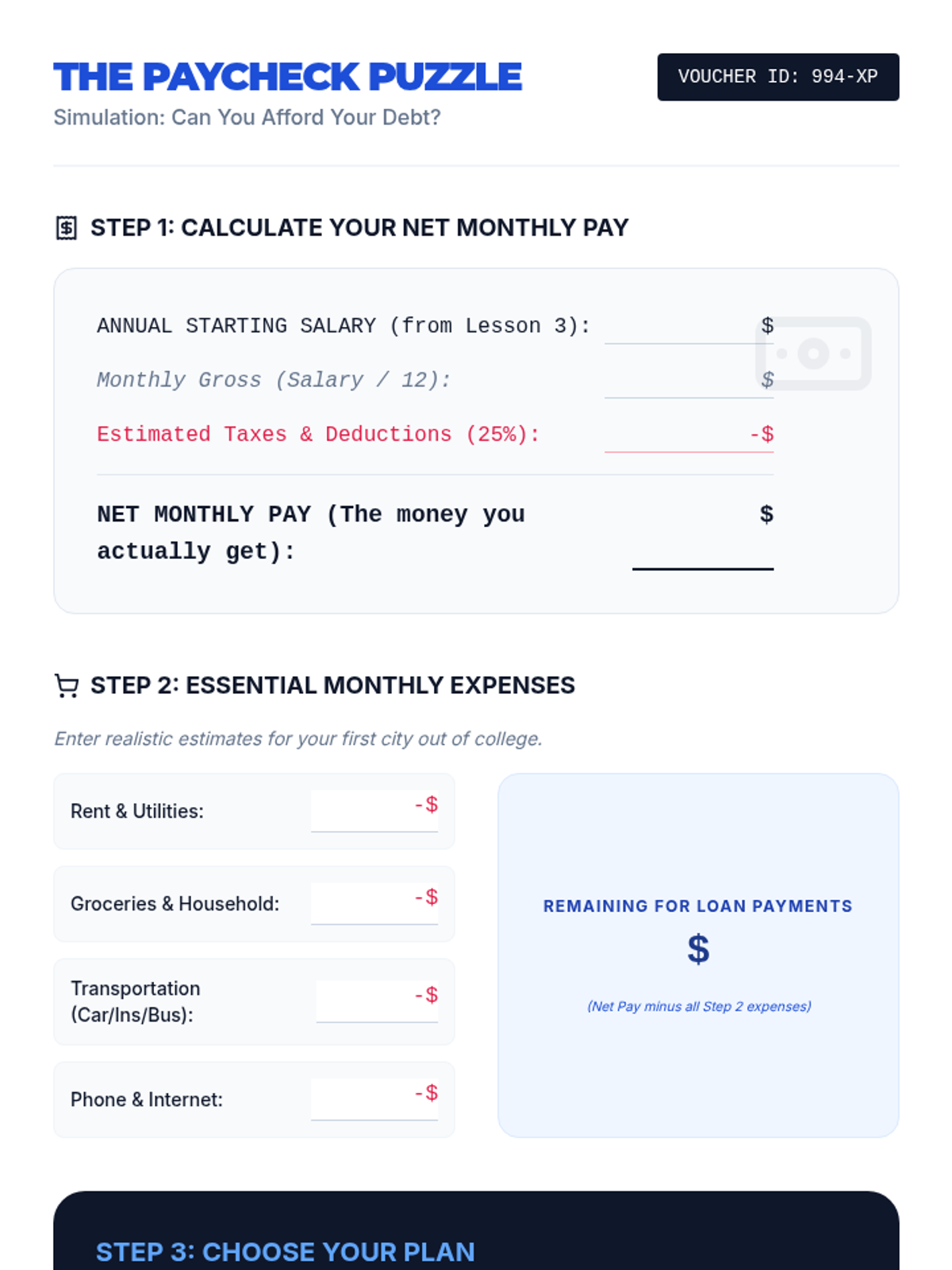
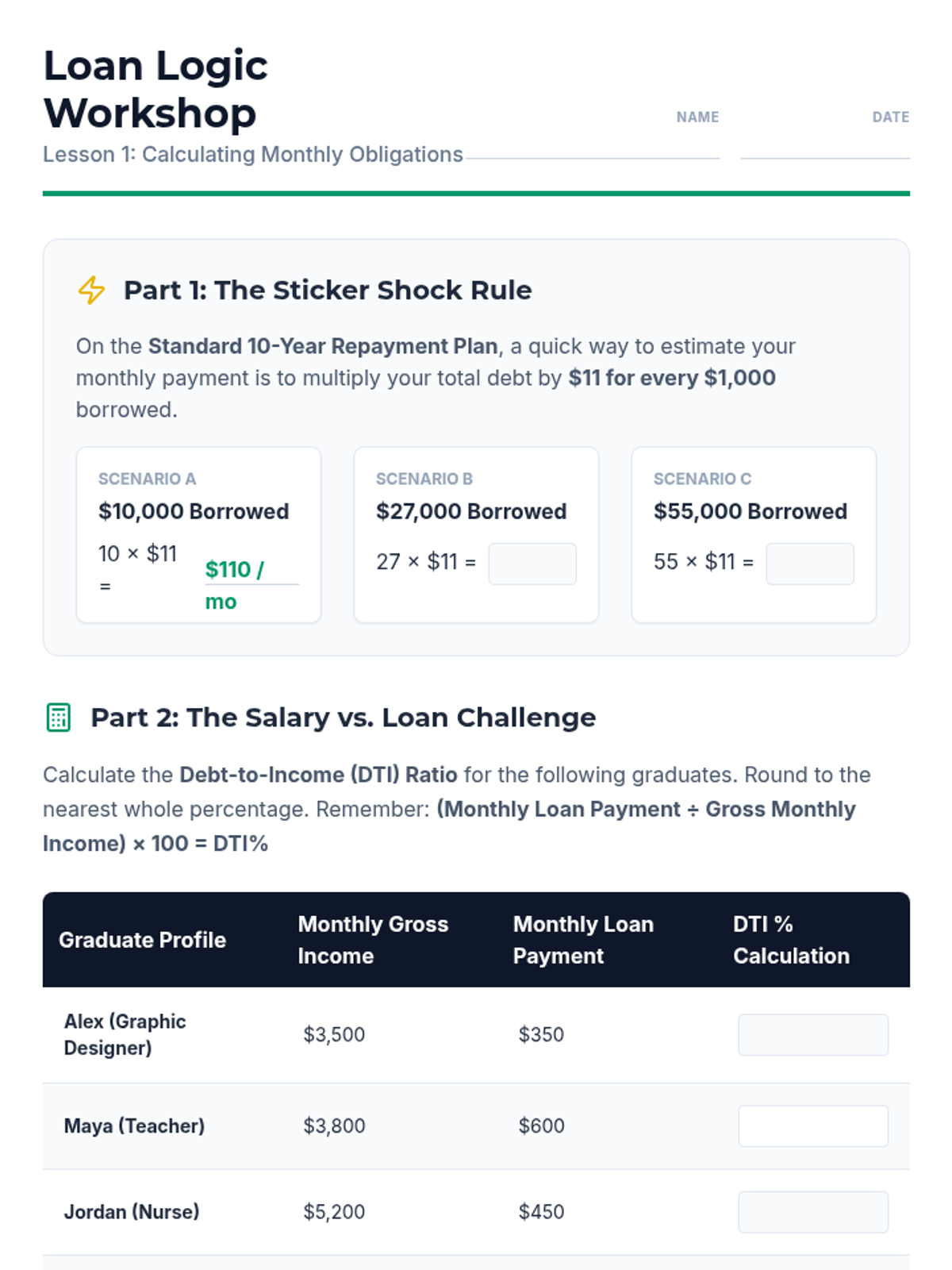
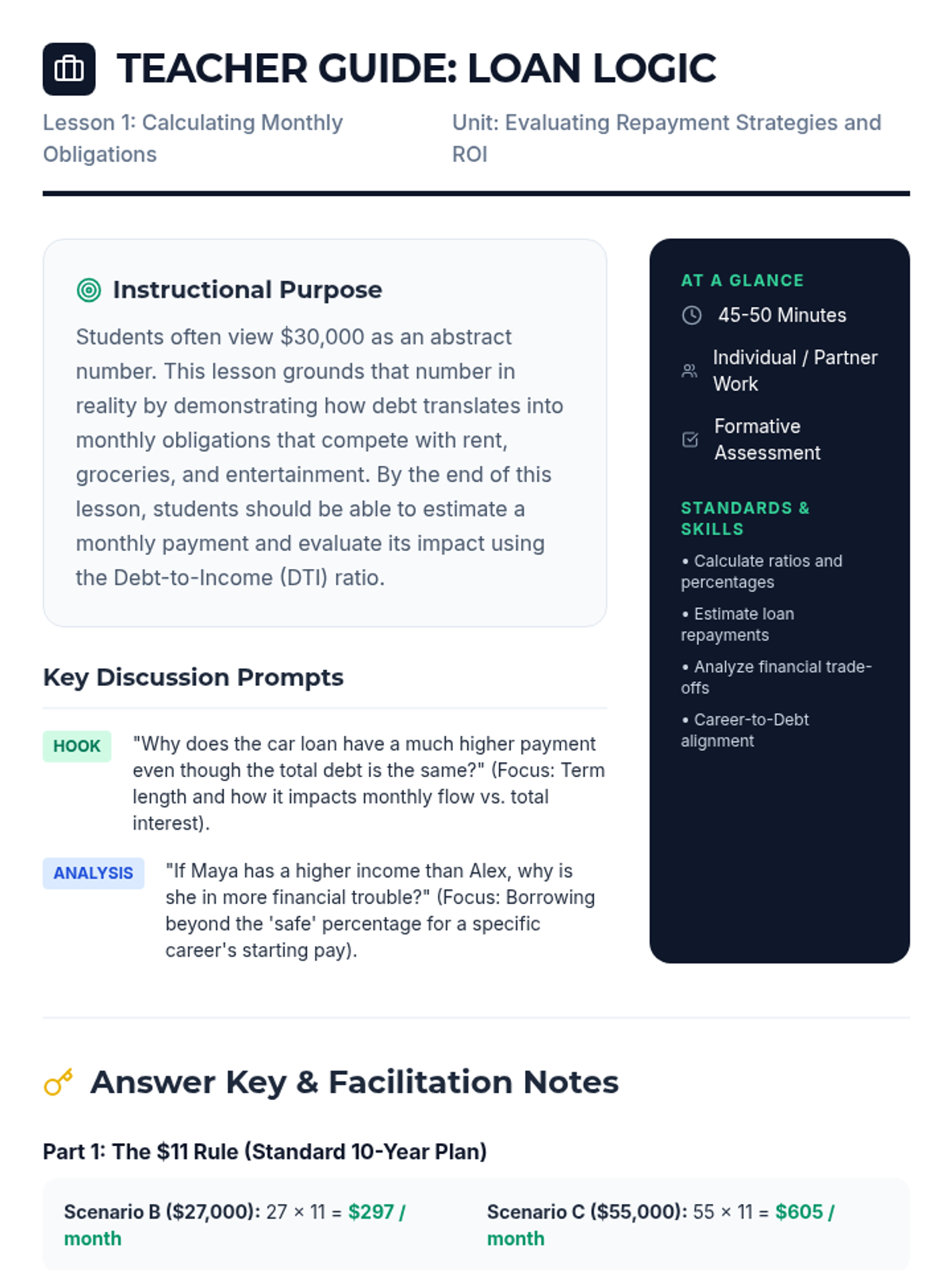
Students use the 'Standard Repayment Plan' model to calculate estimated monthly payments for various total debt amounts and compare them to entry-level salaries. This lesson introduces the concept of the debt-to-income ratio through the 'Sticker Shock' challenge.
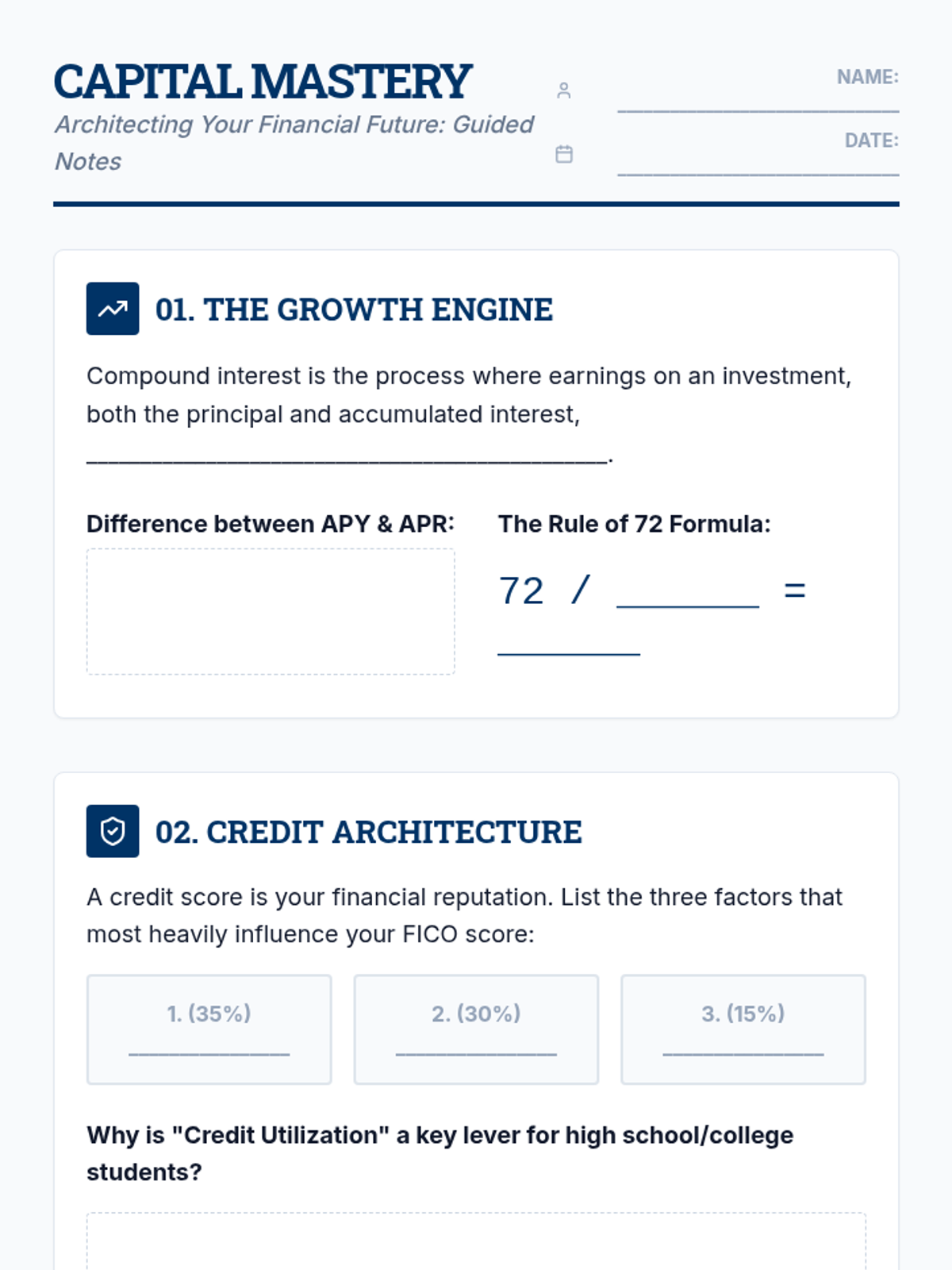
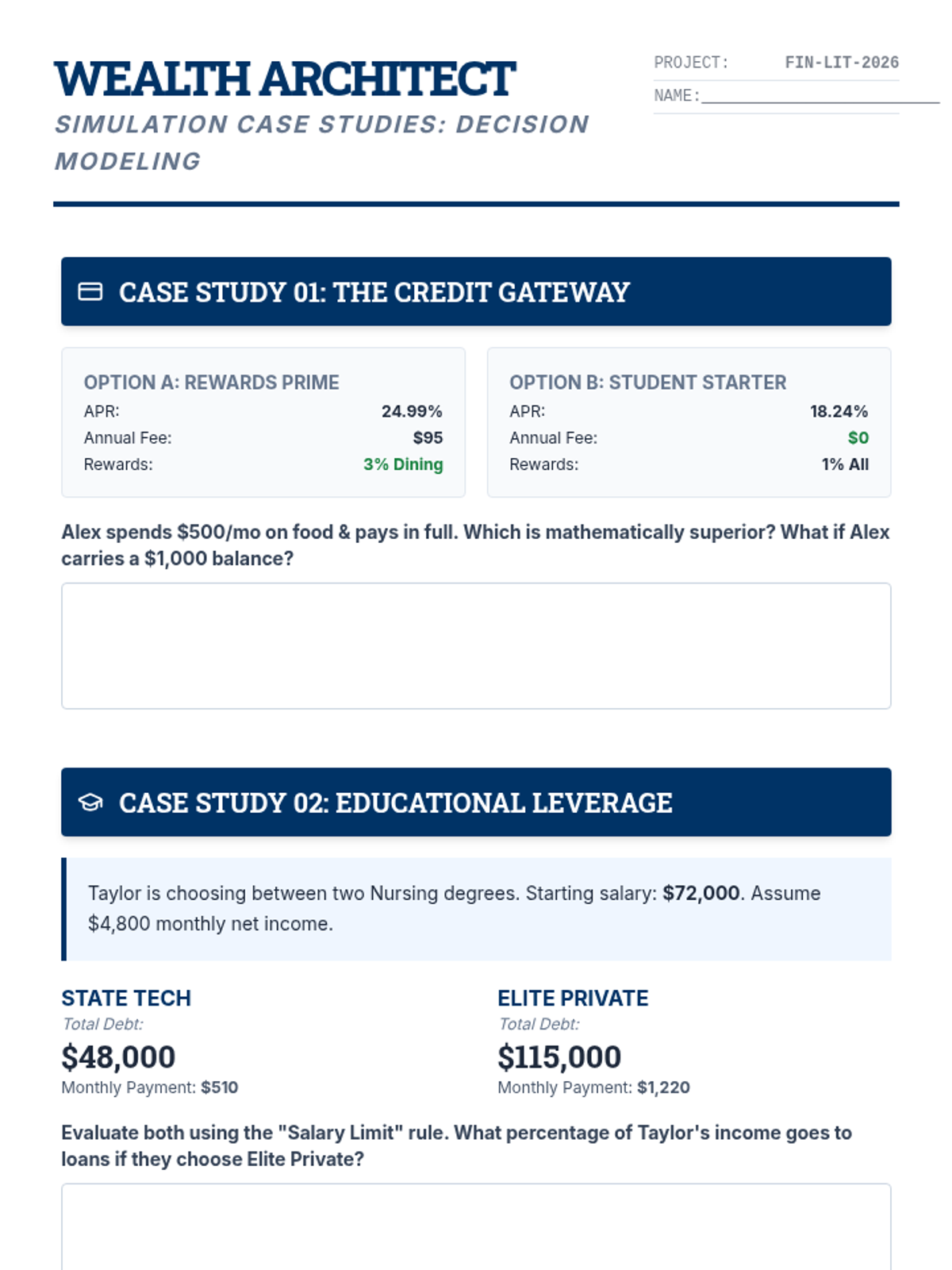
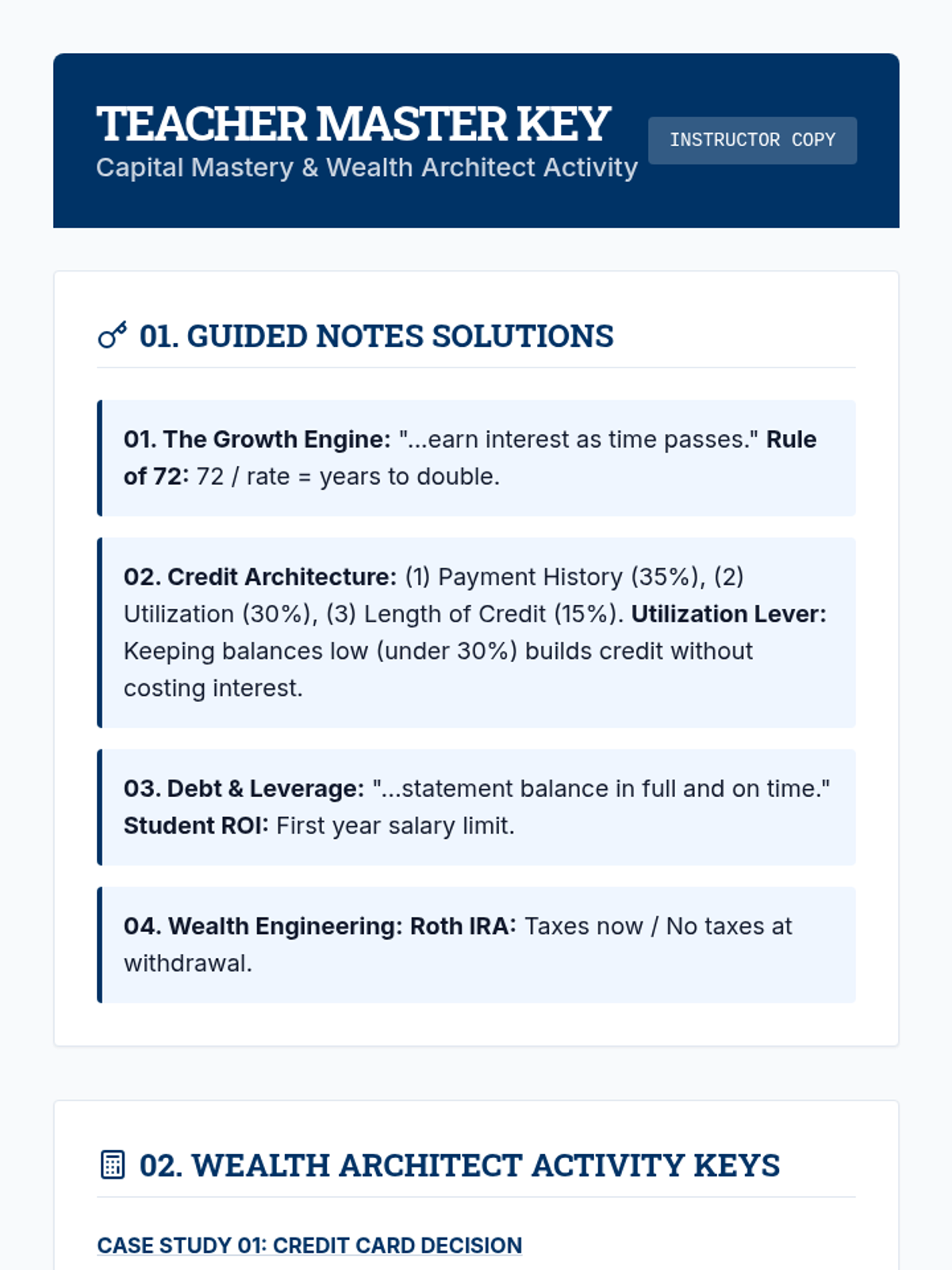
A high-level financial literacy lesson for advanced high school students, focusing on the mechanics of wealth building, credit architecture, and strategic debt management through the lens of long-term financial engineering.
Explore the foundational pillars of economics through the history of the Dust Bowl, the ethics of organ markets, and simulations of scarcity and marginal utility.
Master the mechanics of life's largest financial commitments through the history of the 30-year mortgage, the ethics of urban gentrification, and complex simulations of home ownership.
Uncover the mechanisms of risk management through the history of the Great Fire of London, the ethics of pre-existing conditions, and complex simulations of health and auto insurance.
Master the battlefield of the modern marketplace through the history of consumer protection, the ethics of planned obsolescence, and simulations of contract negotiation.
Uncover the mechanics of modern banking through historical currency crises, the ethics of fee structures, and simulations of liquidity management.
Analyze the mechanics of financial choice through historical market crashes, the ethics of credit, and complex simulations of high-stakes adult purchases.
Master the art of information gathering and source verification in the digital age through historical misinformation cases and modern research simulations.
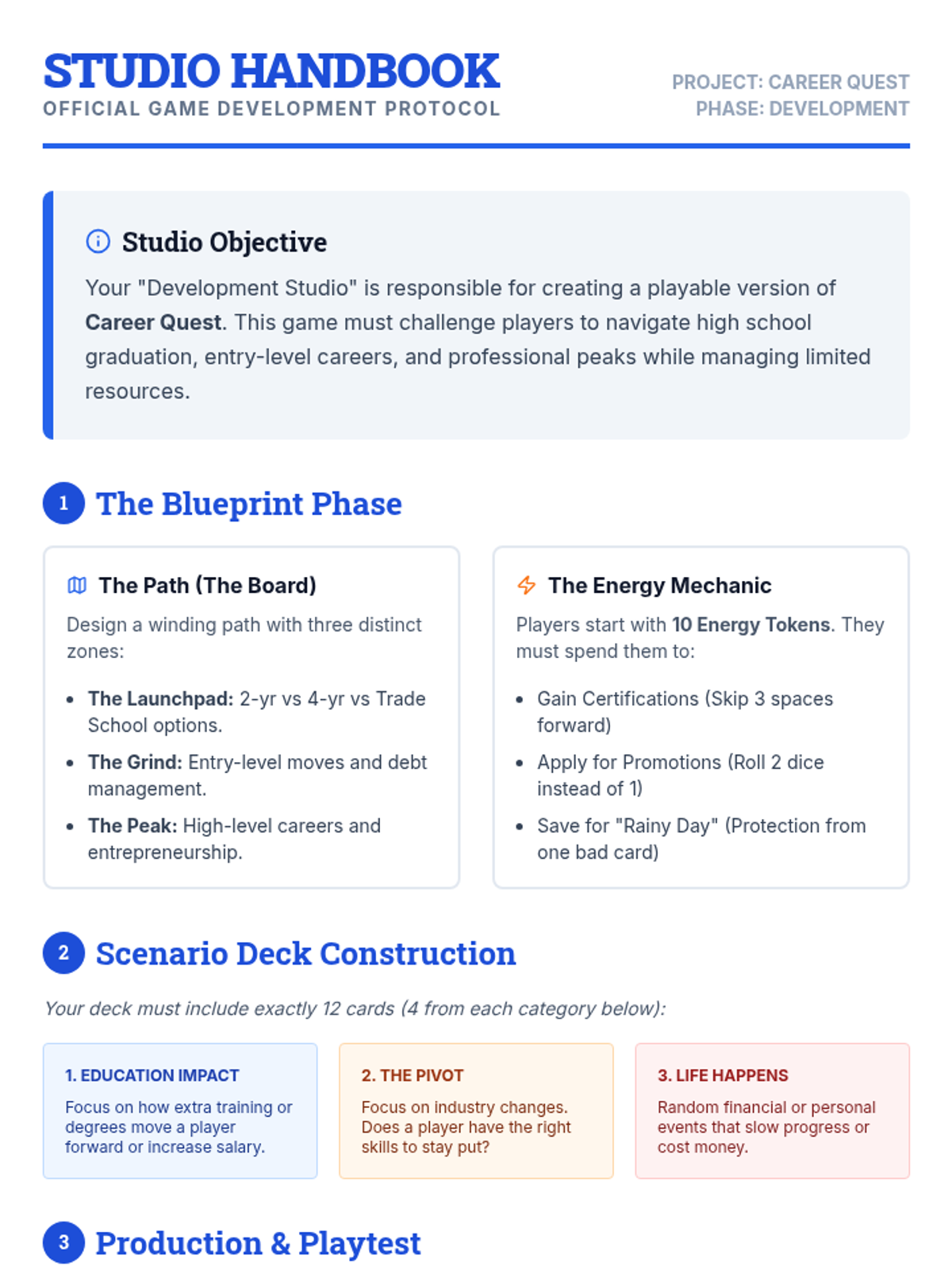
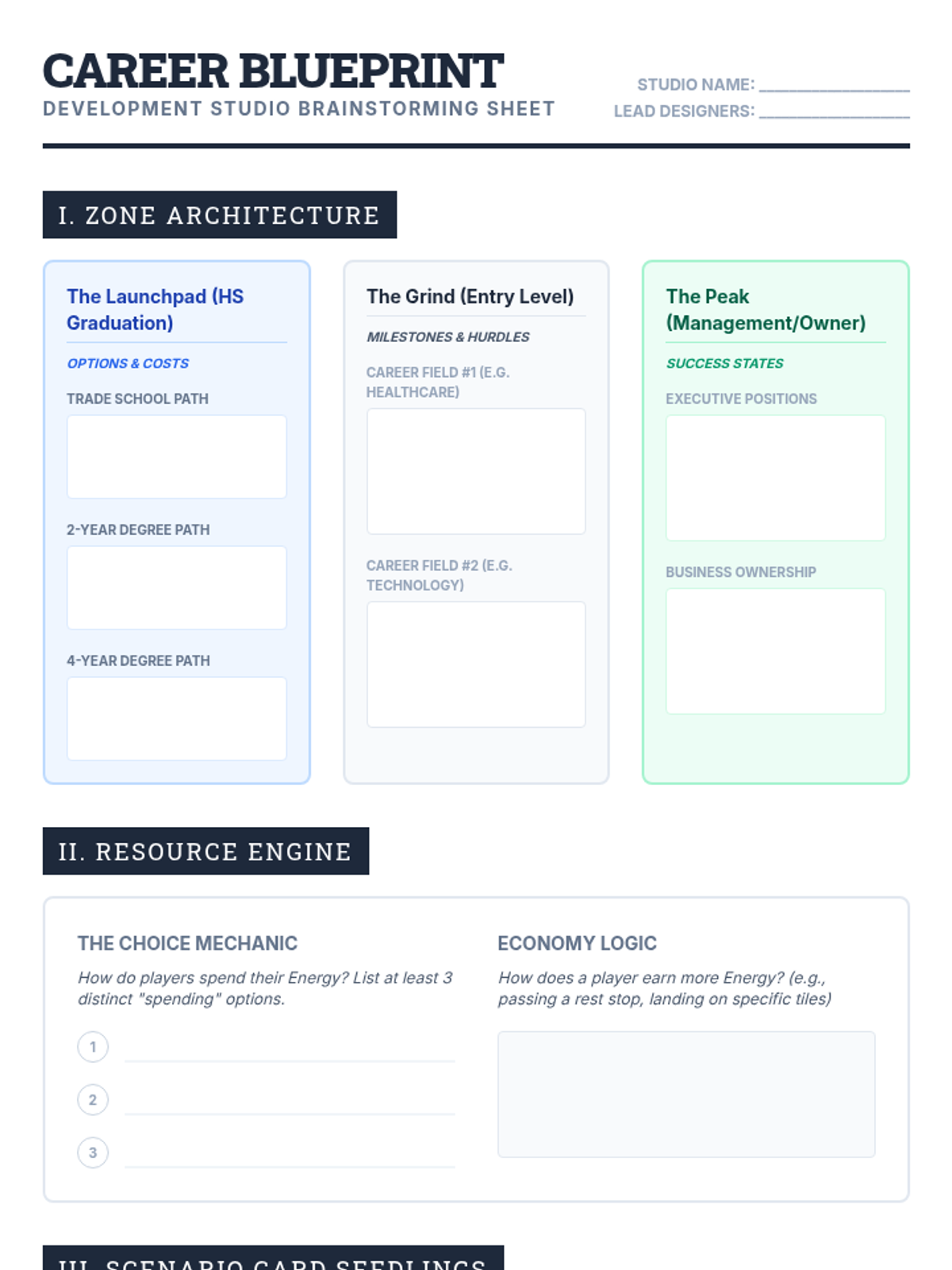
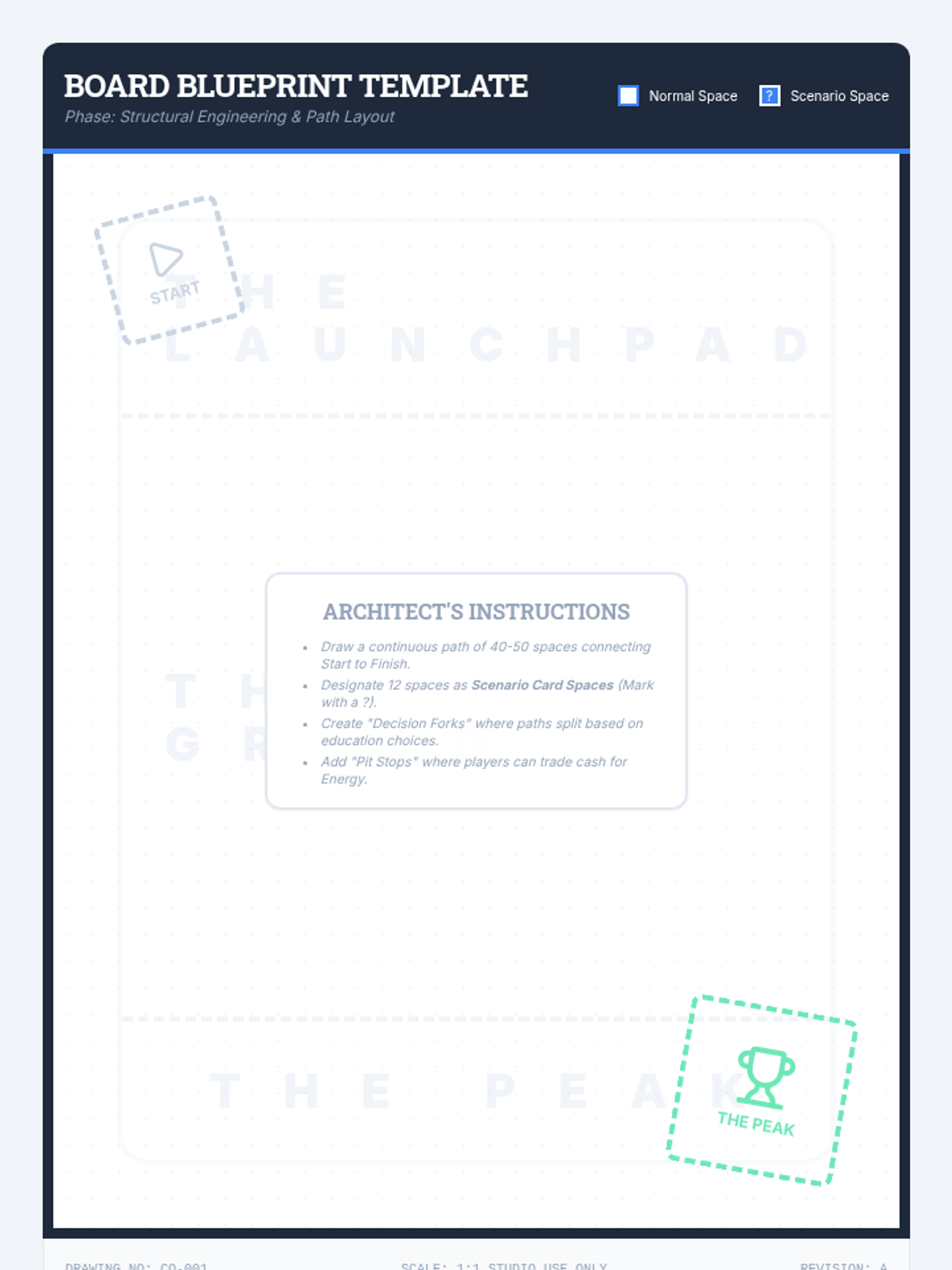
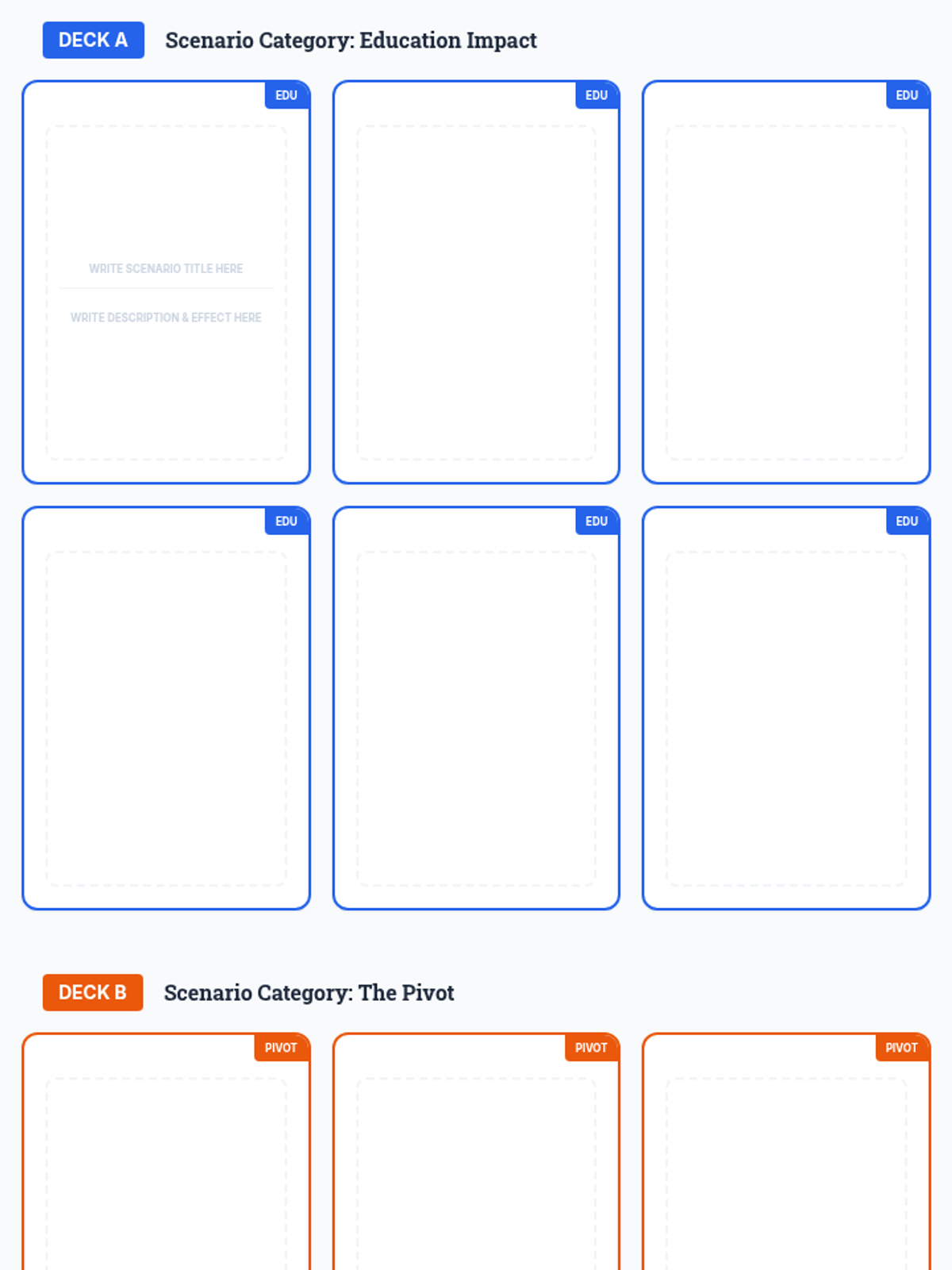
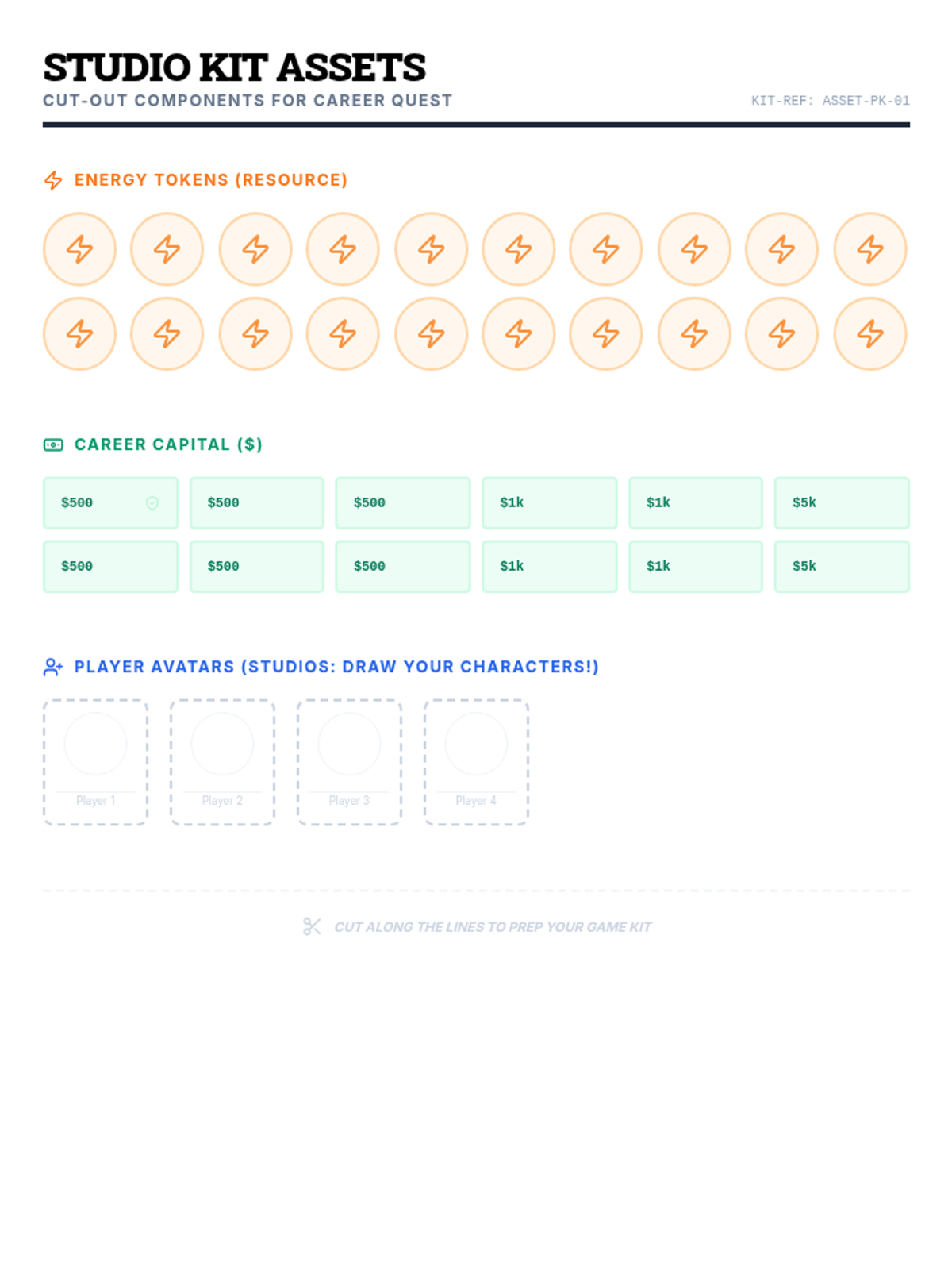
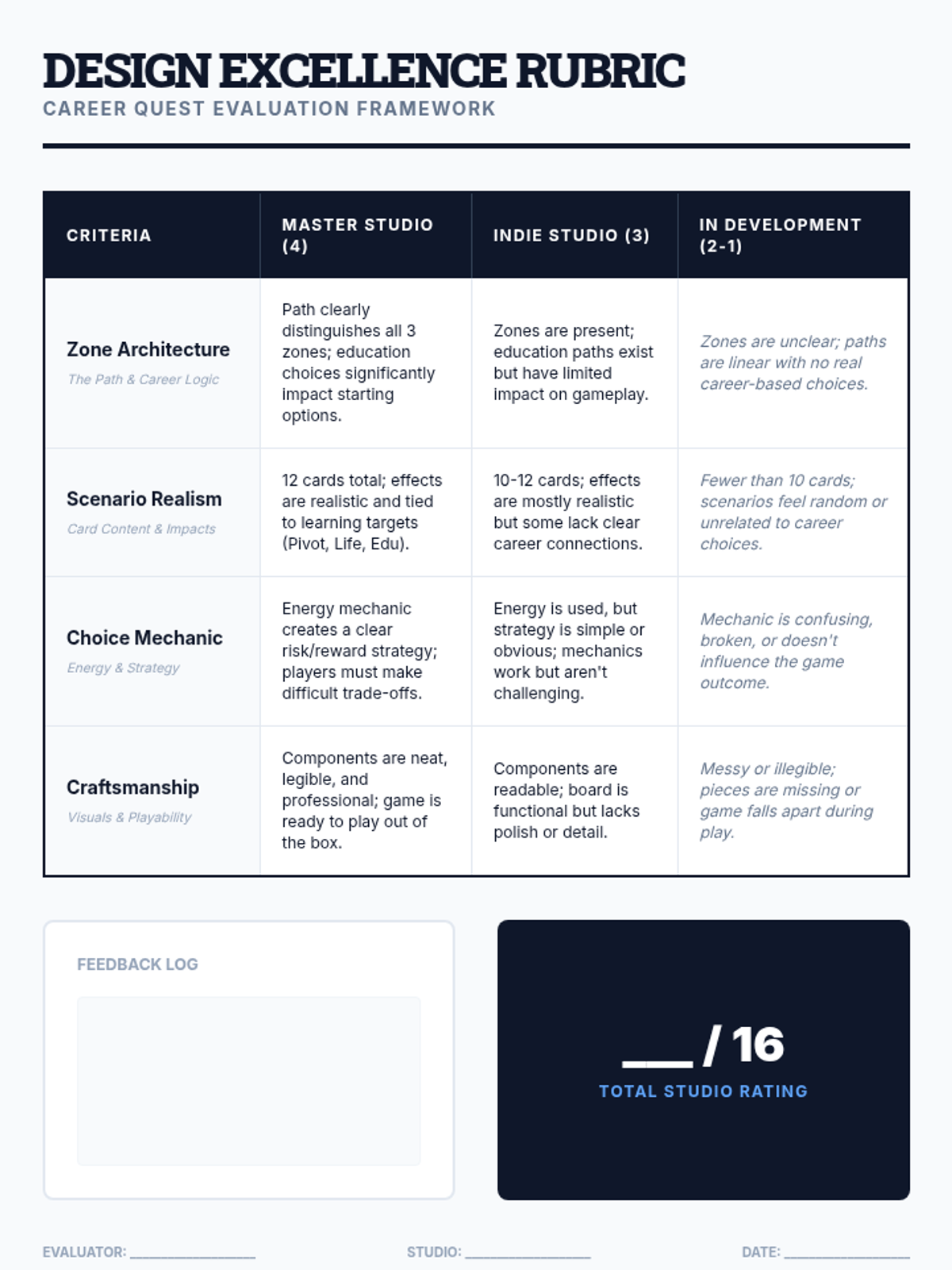
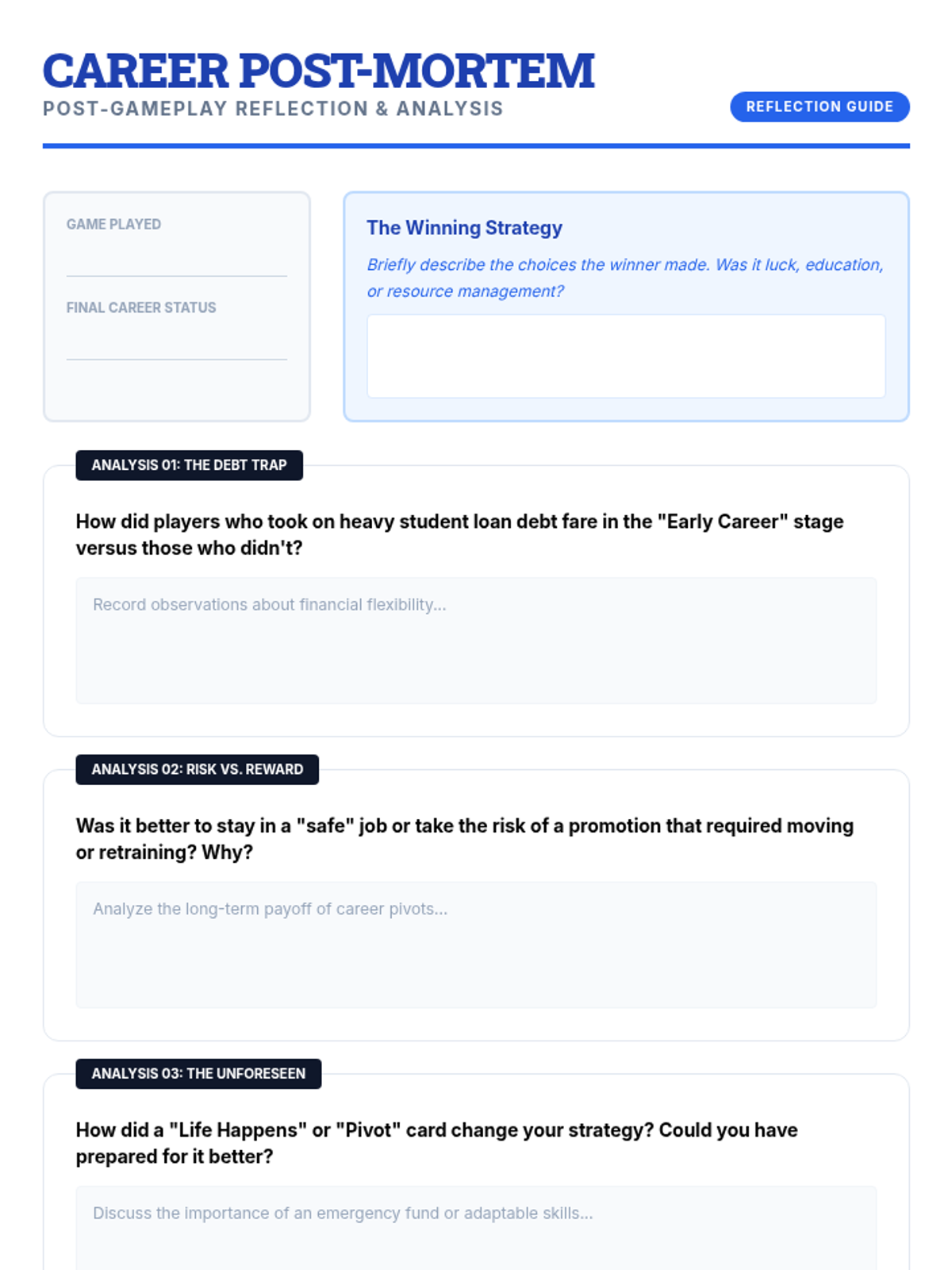
A multi-day project where students act as 'Development Studios' to design, build, and playtest their own career-themed board games, focusing on the impact of education and life choices on long-term outcomes.
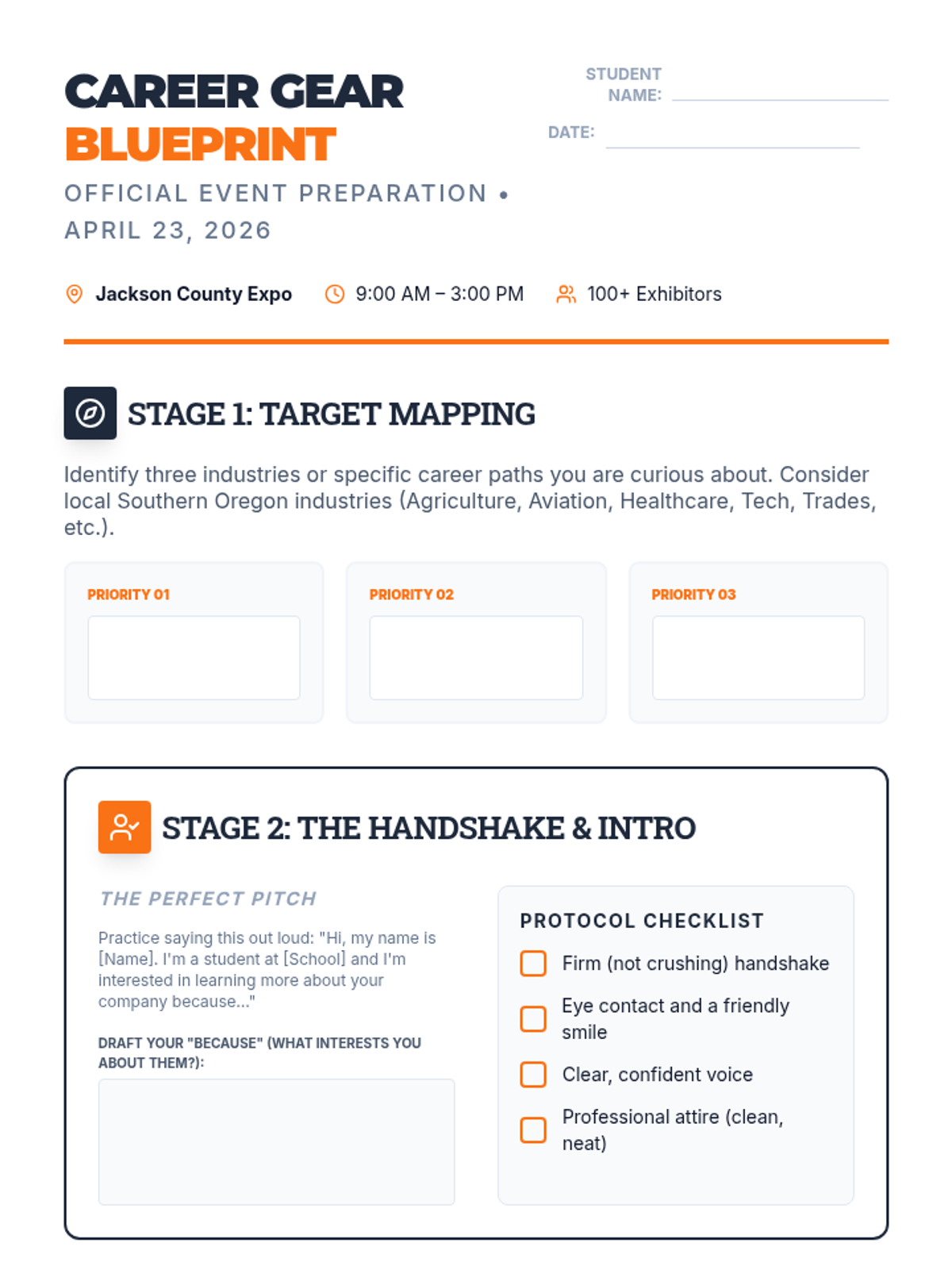
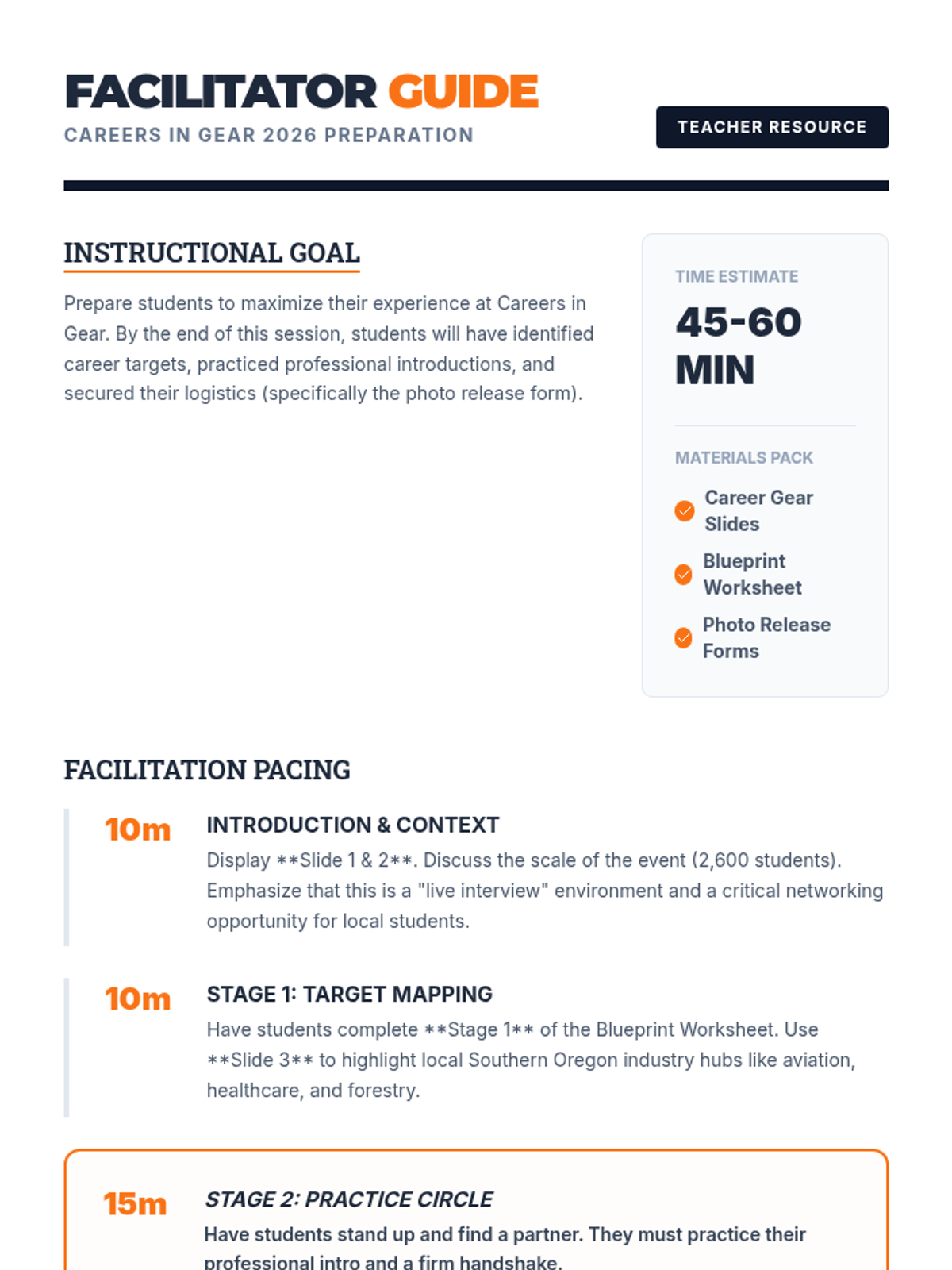
A preparation lesson for the Careers in Gear 2026 event, focusing on career interest identification, professional communication, and logistical readiness.
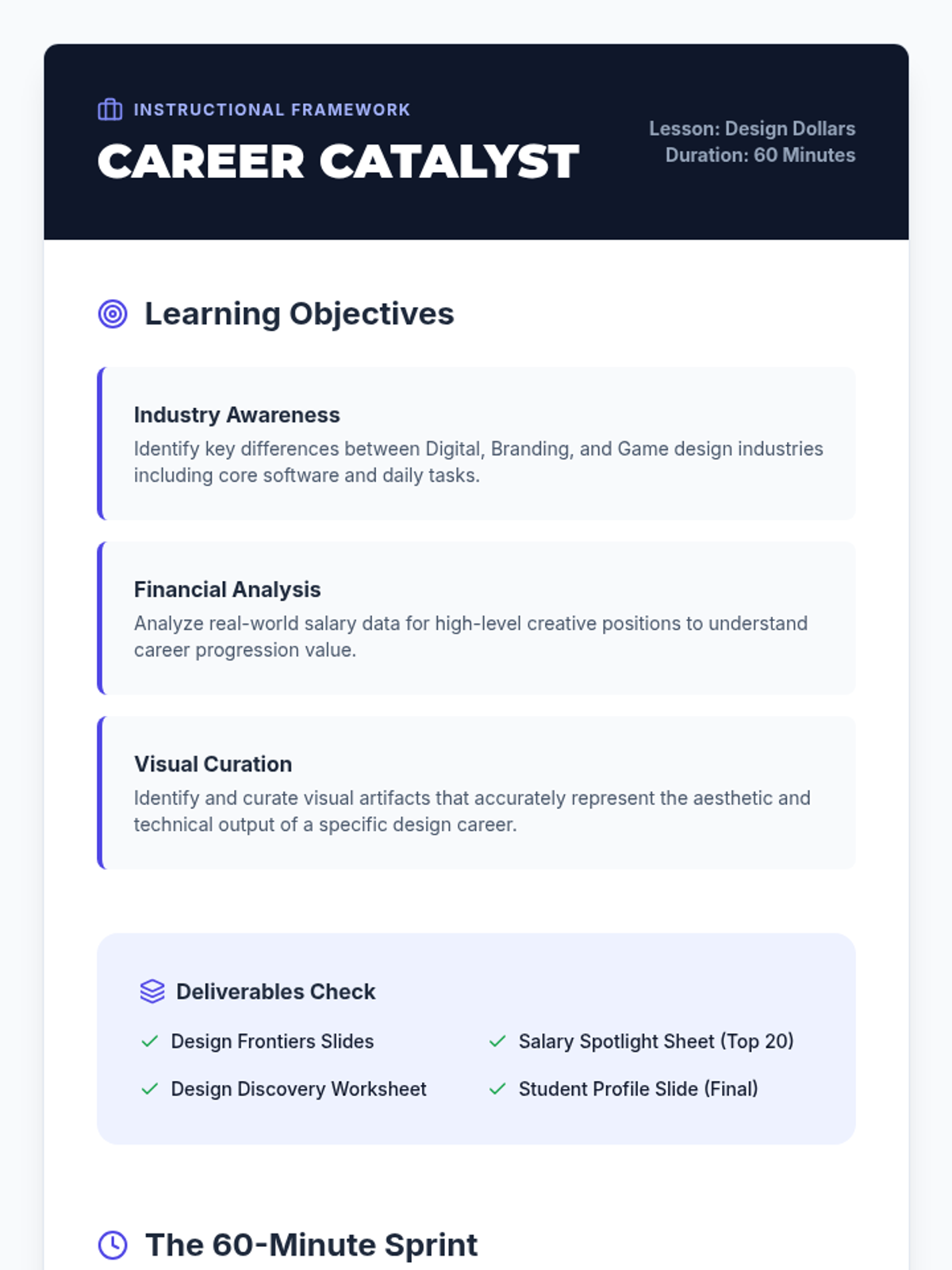
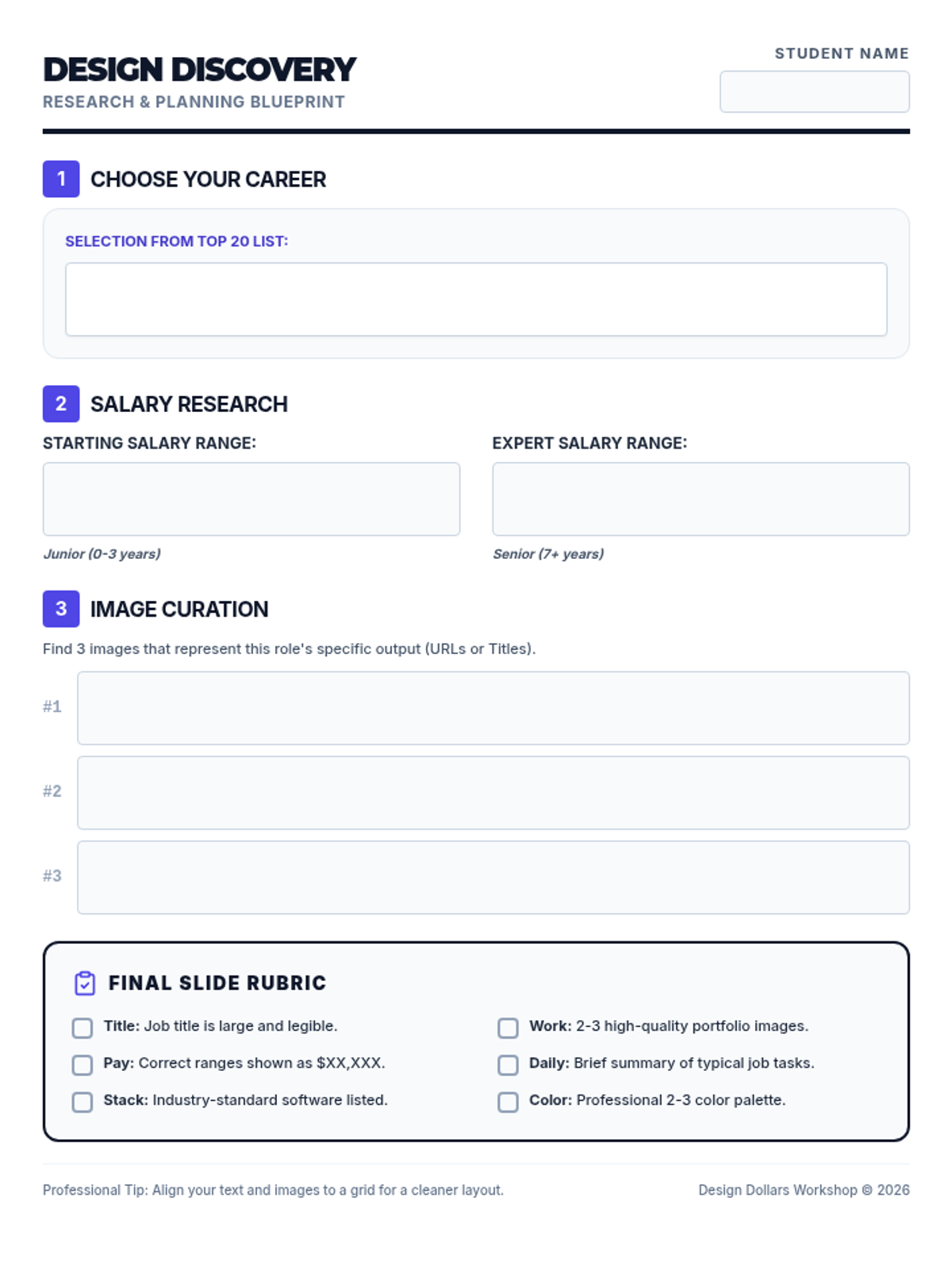
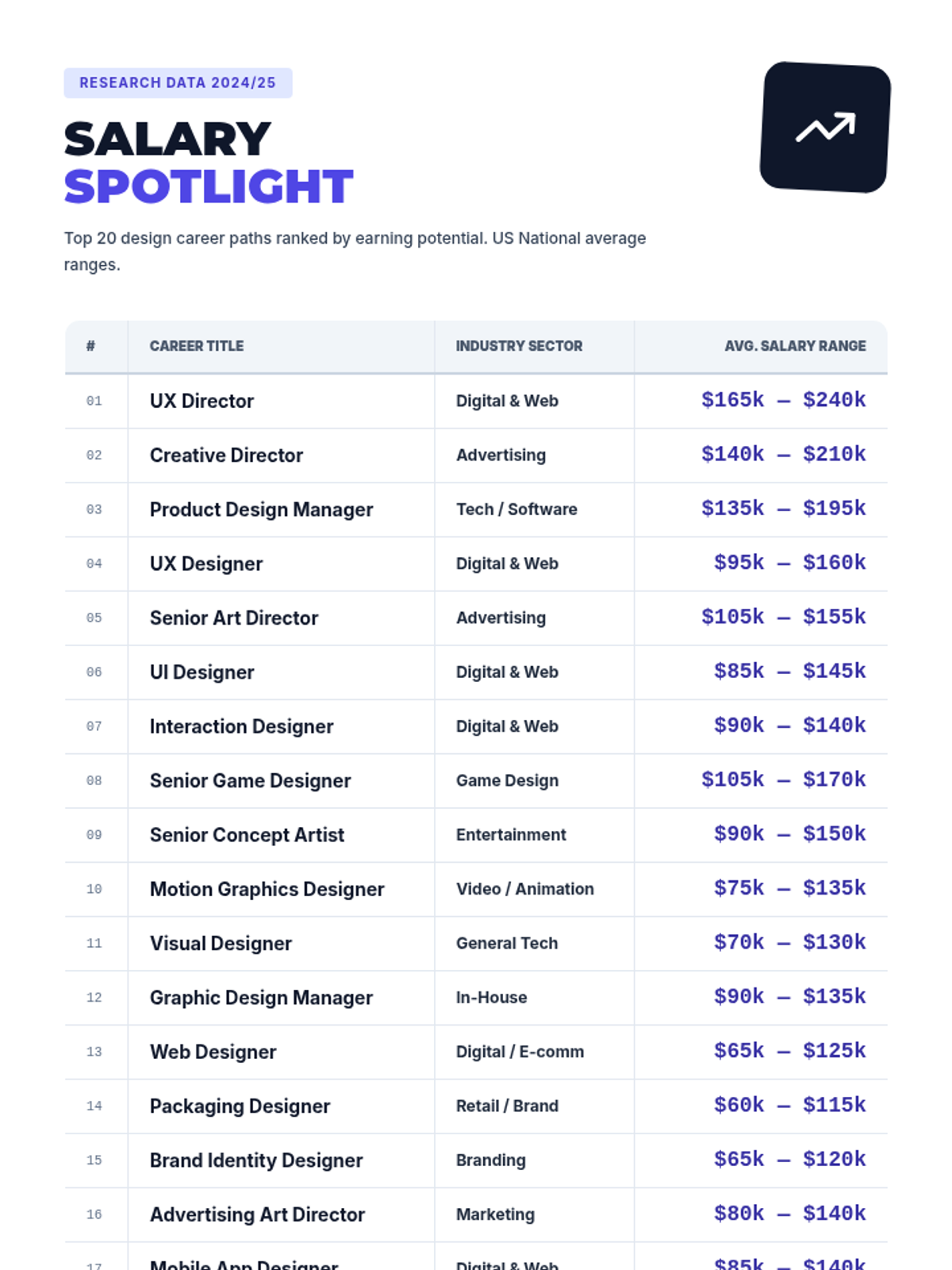
A fast-paced, 60-minute exploration of high-earning graphic design career paths, focusing on digital media, branding, and game design. Students research salary data and visual trends to create a professional industry profile slide.
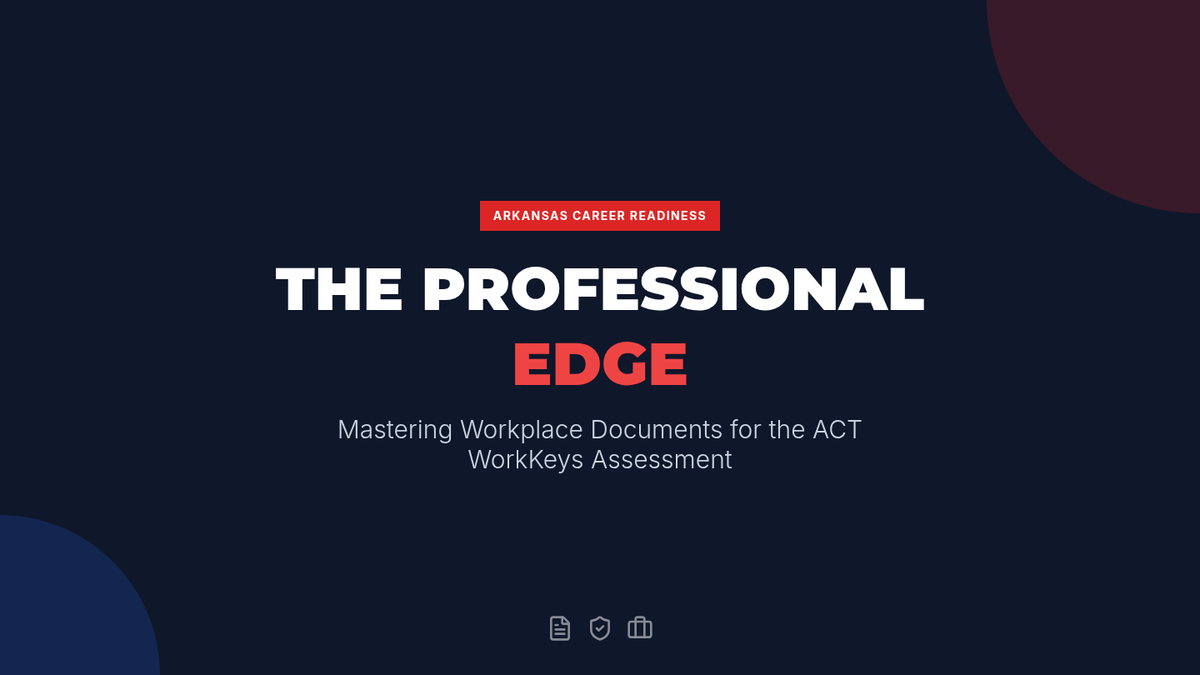
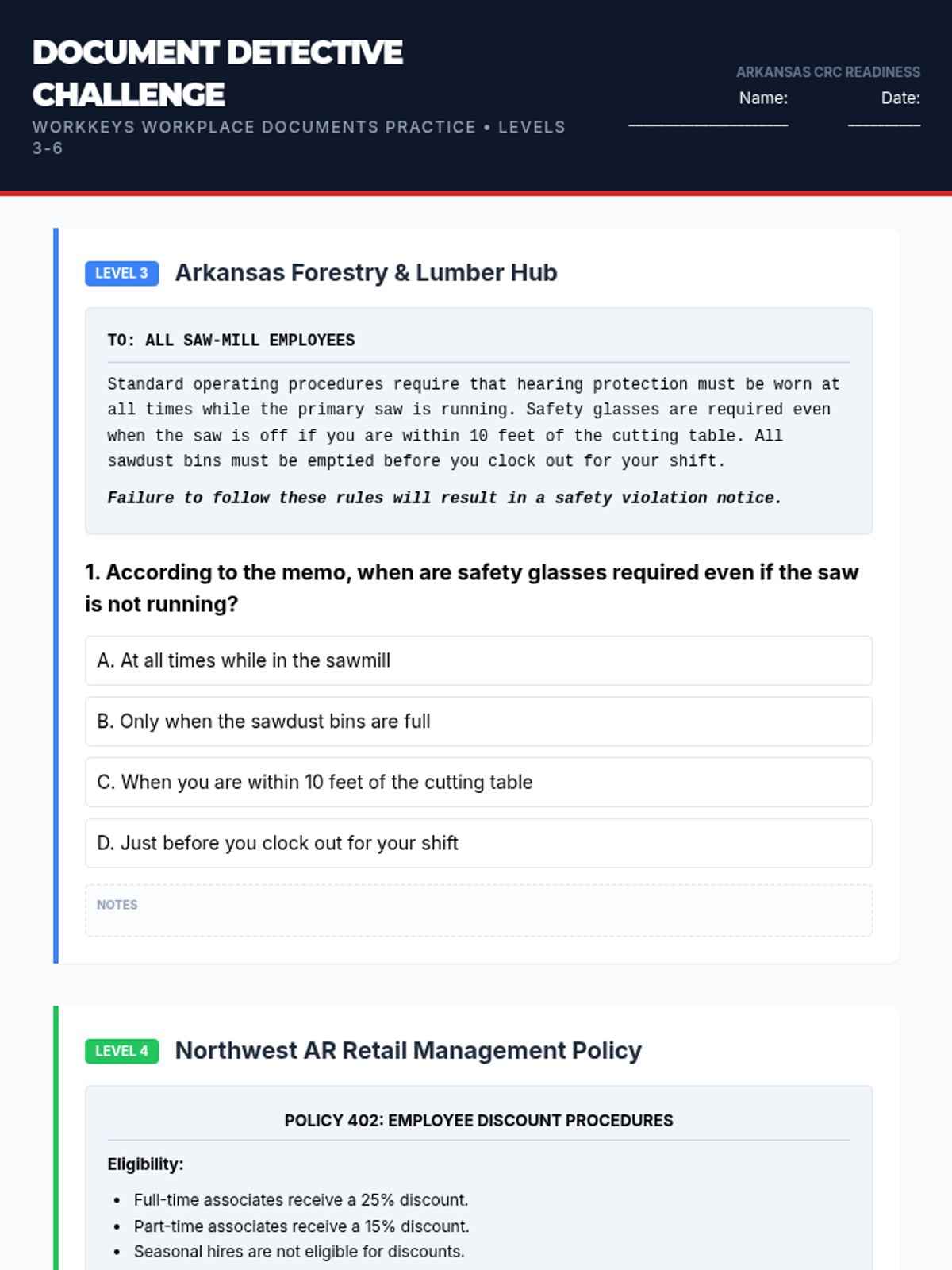
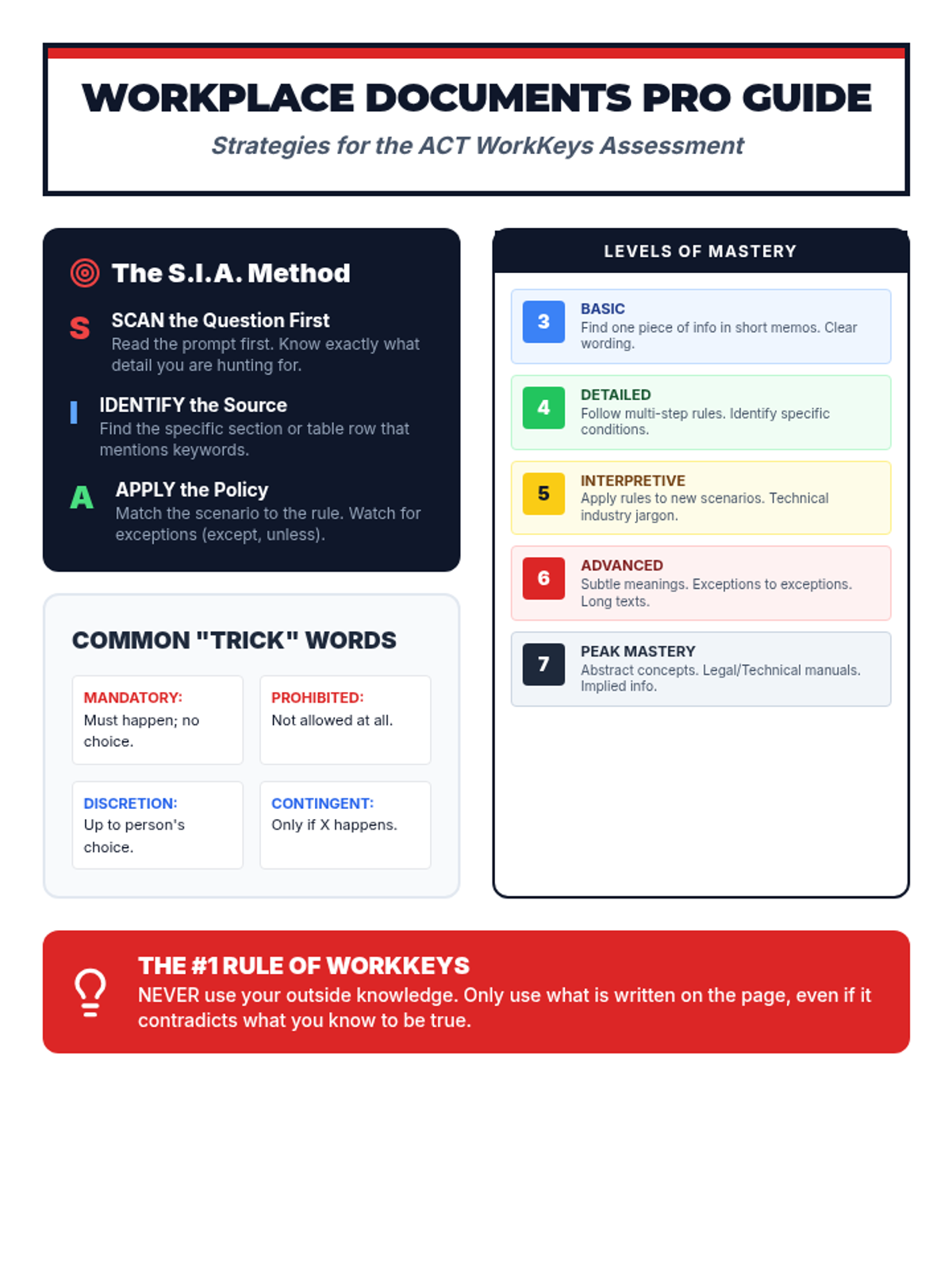
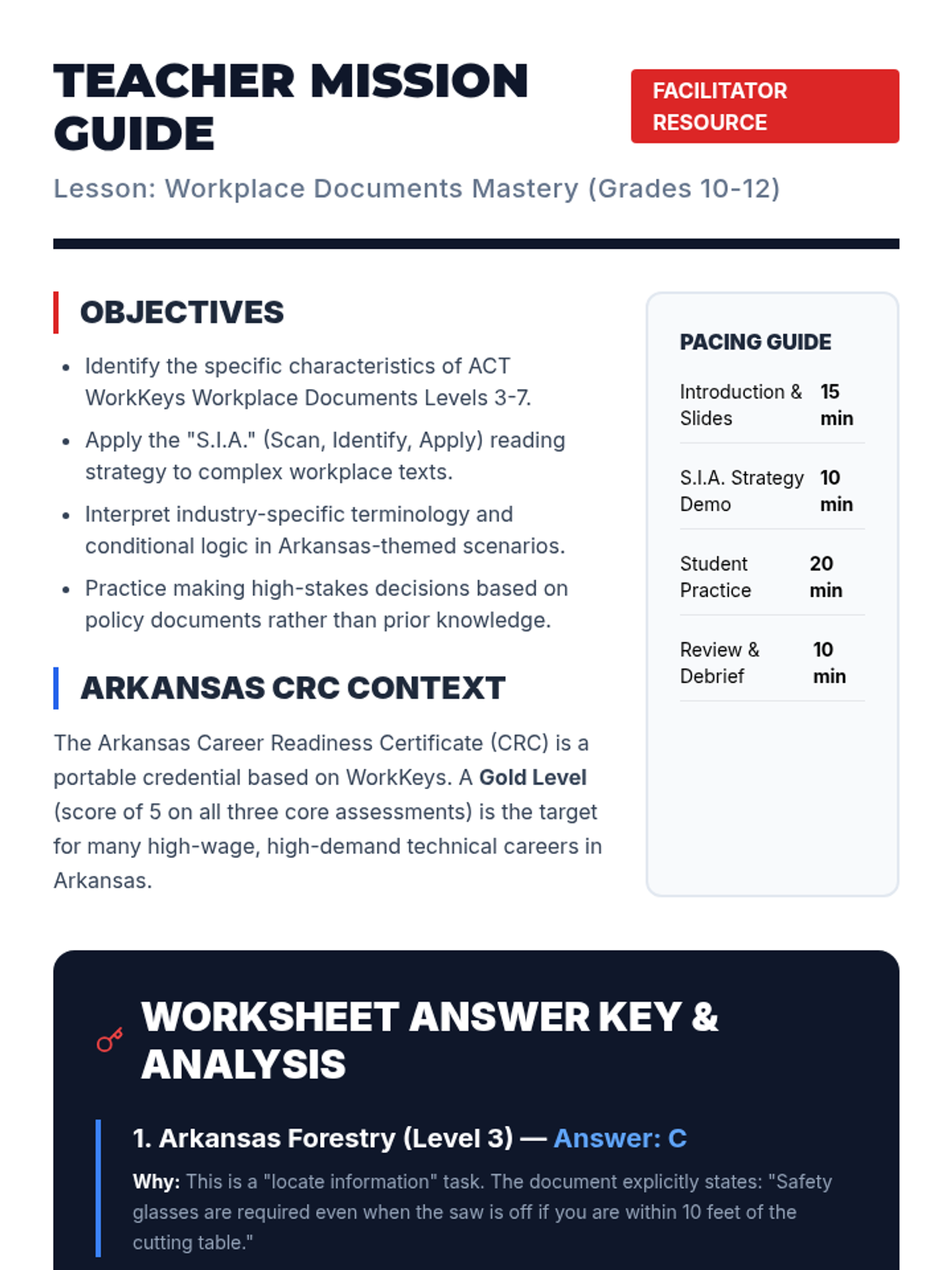
A comprehensive test preparation lesson designed to help high school students master the ACT WorkKeys Workplace Documents assessment, focusing on Levels 3-7 with real-world Arkansas industry scenarios.
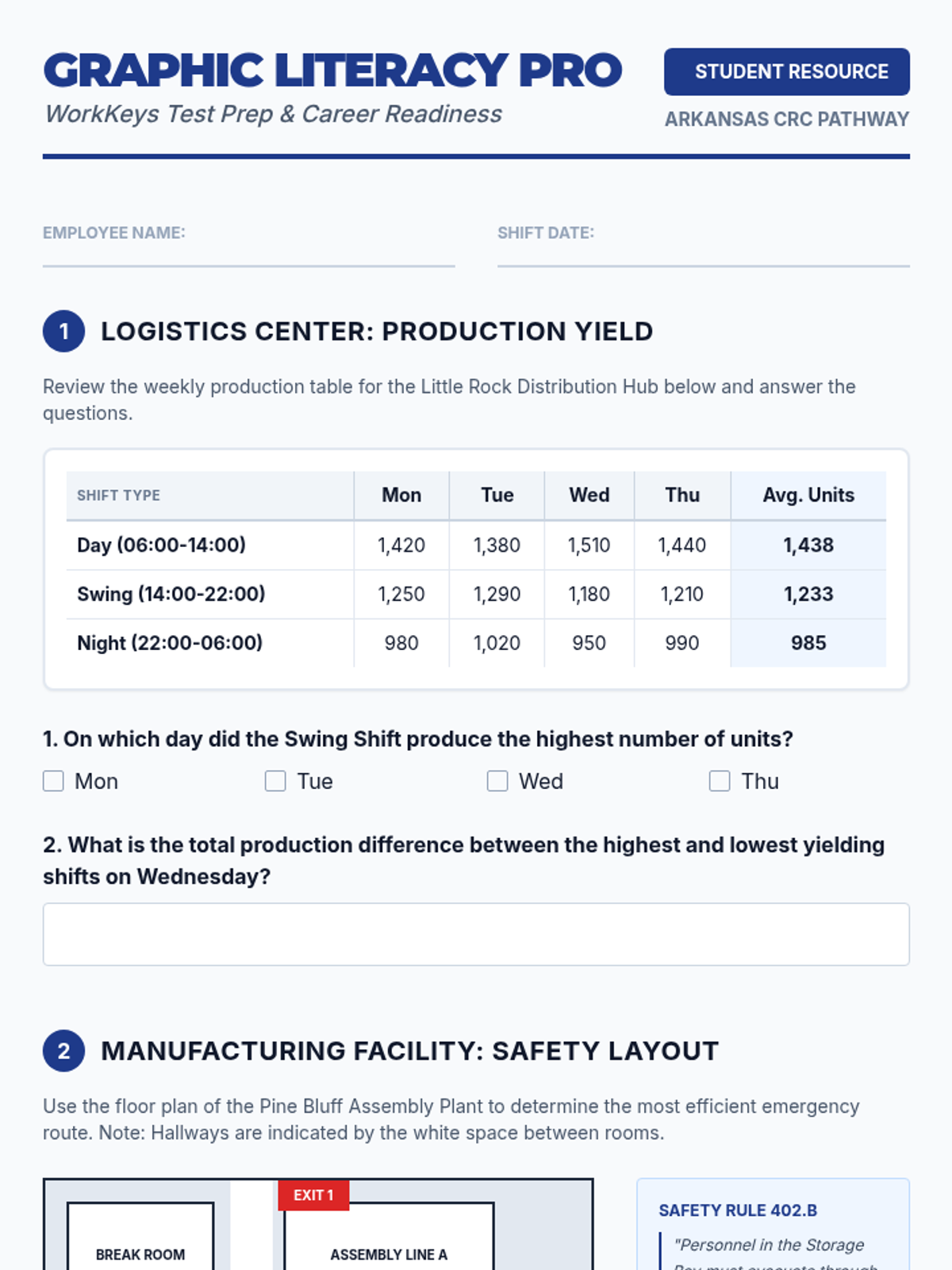
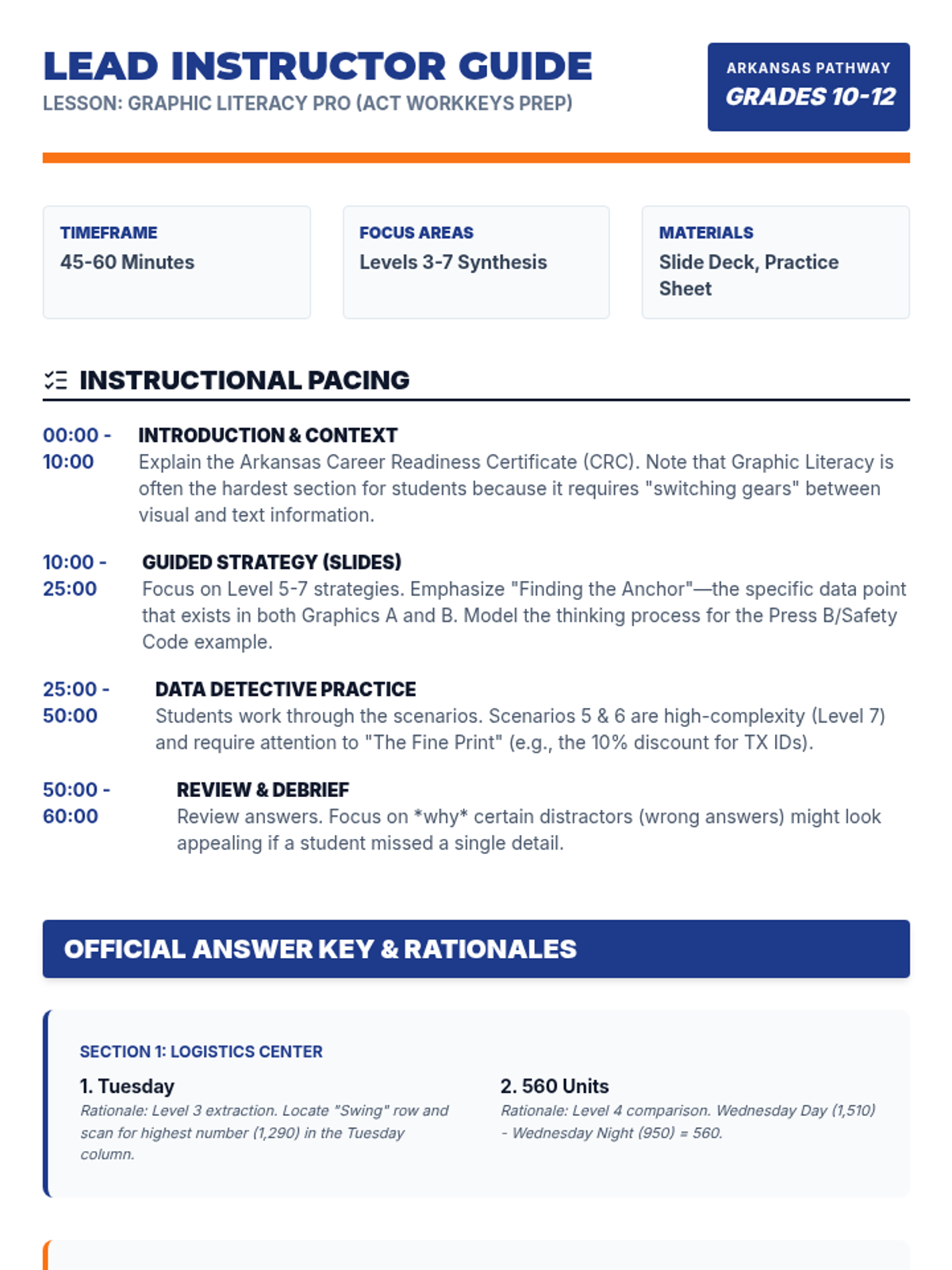
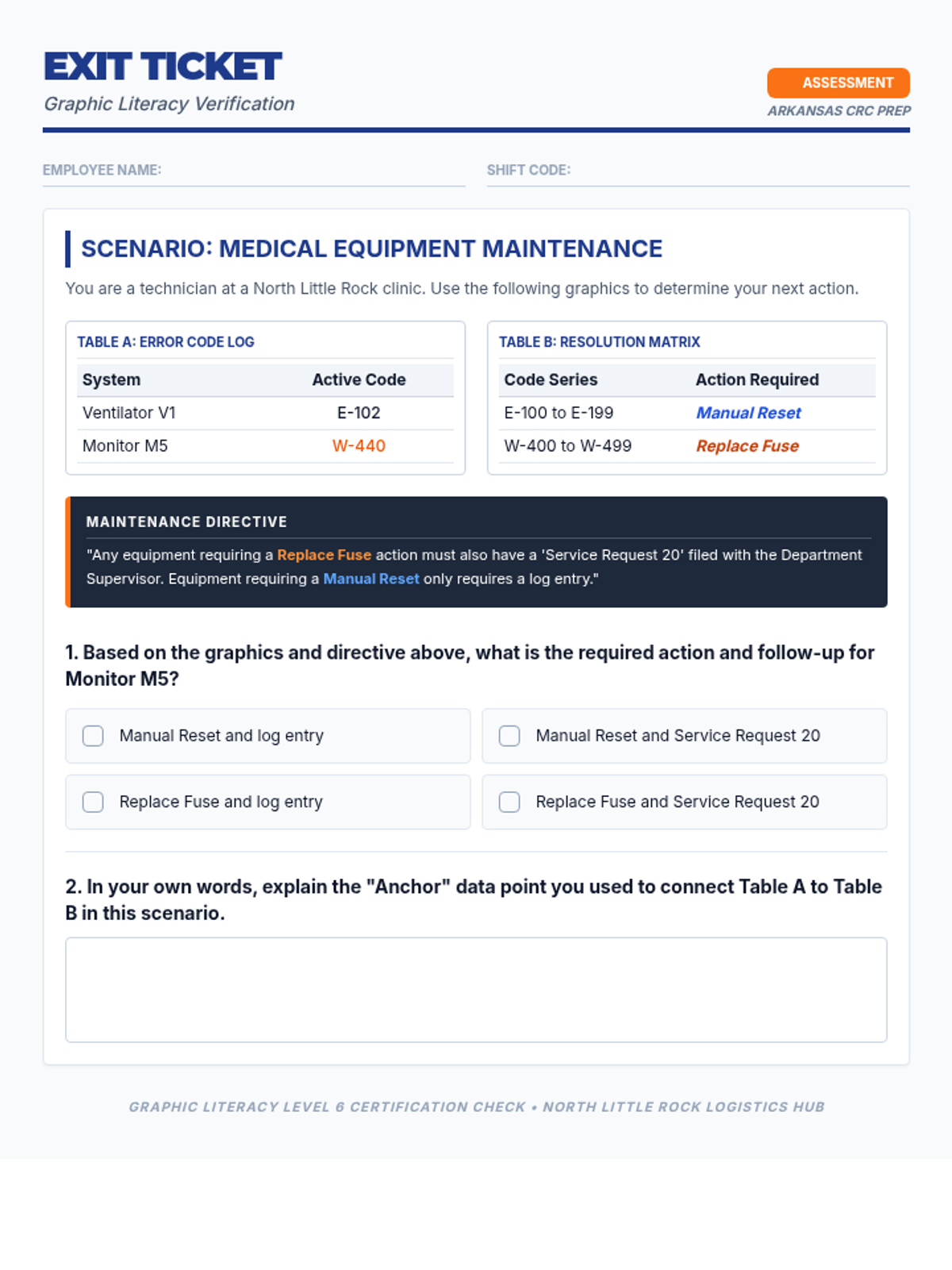
A comprehensive test prep lesson focused on the ACT WorkKeys Graphic Literacy assessment, designed for Arkansas high schoolers aiming for the Career Readiness Certificate. Students learn to extract, compare, and synthesize data from workplace-style charts, diagrams, and multi-graphic layouts.
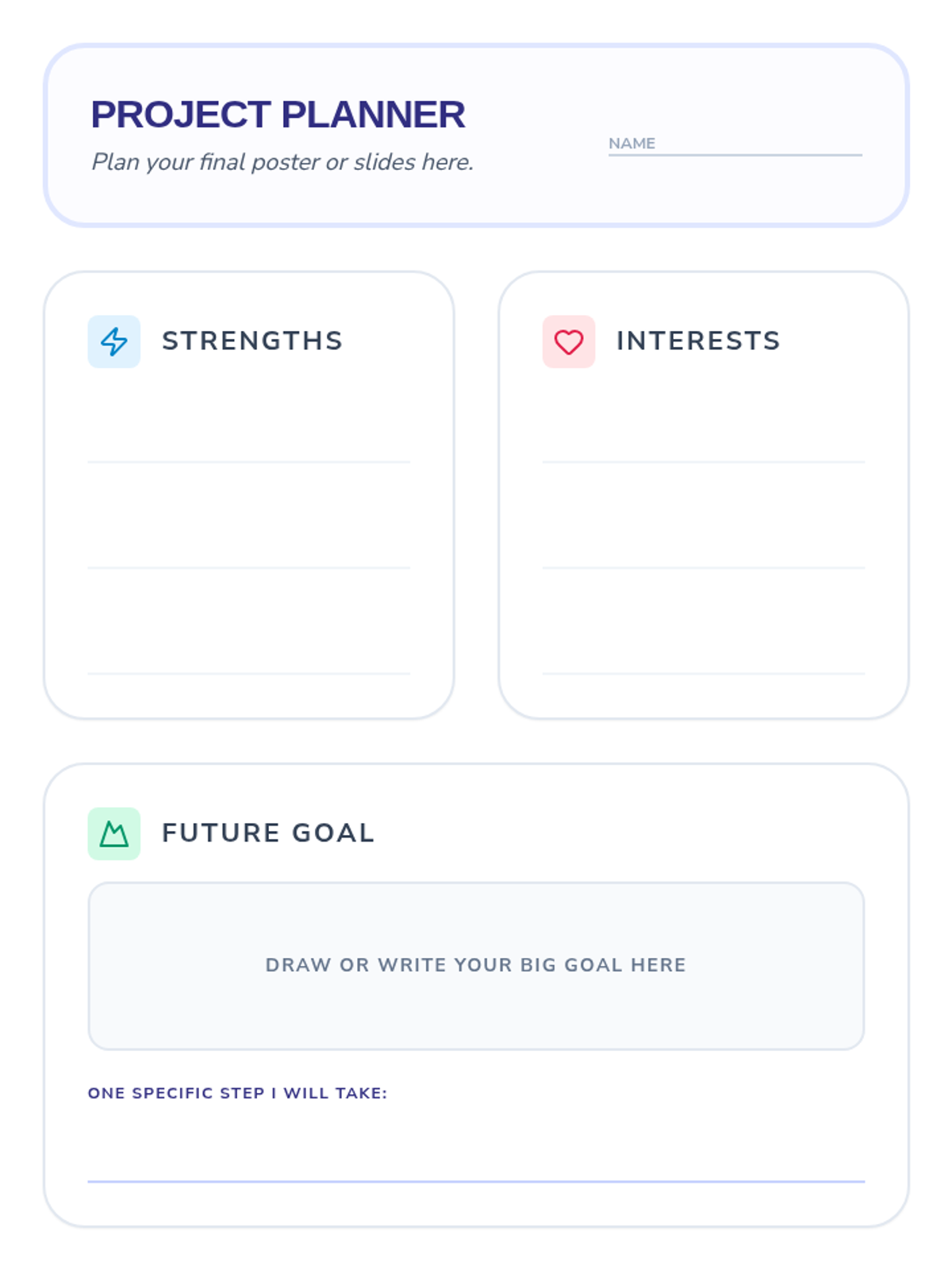
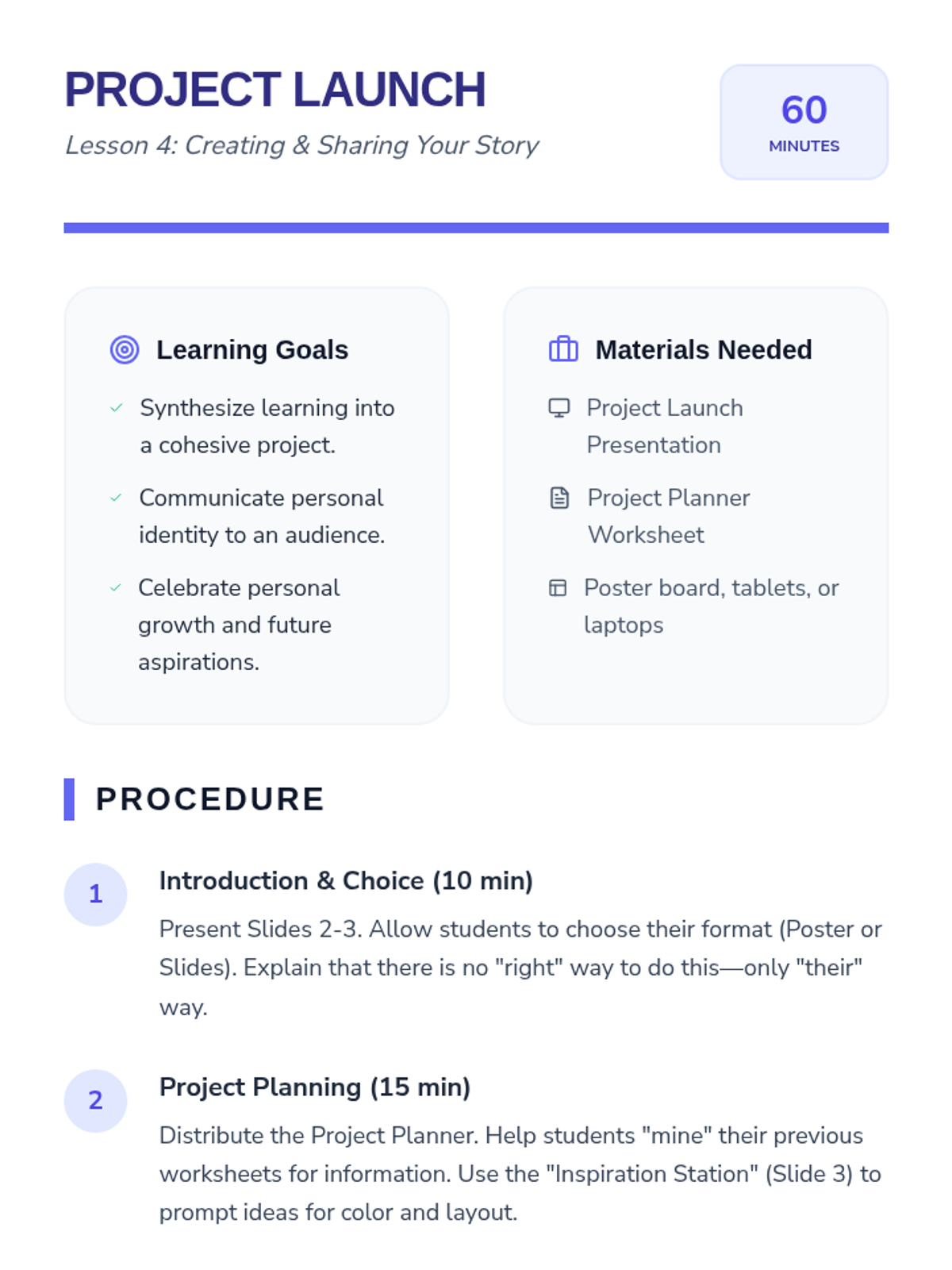
Students synthesize their learning into a final project (poster or presentation) that showcases their self-identity and future aspirations.
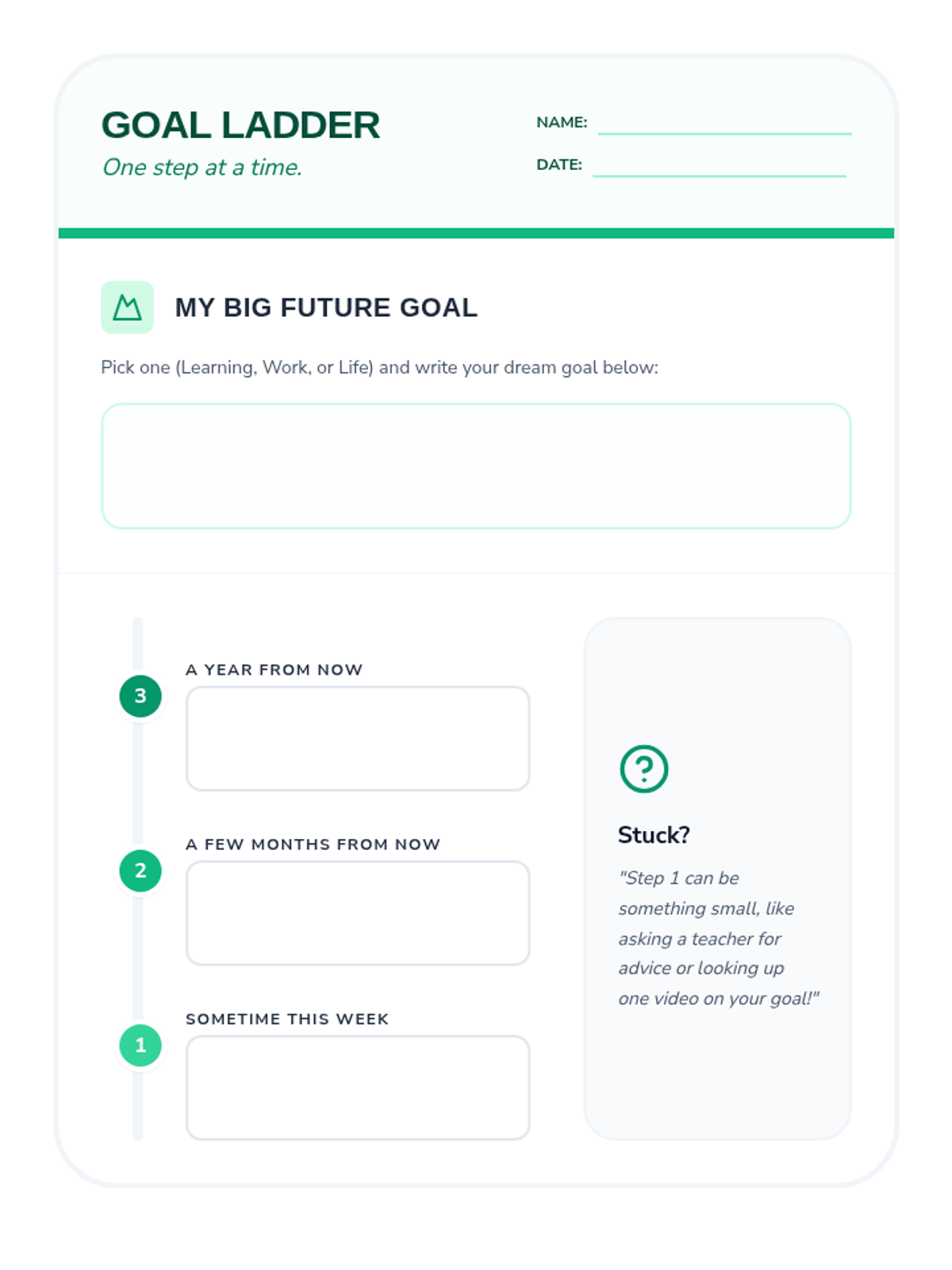
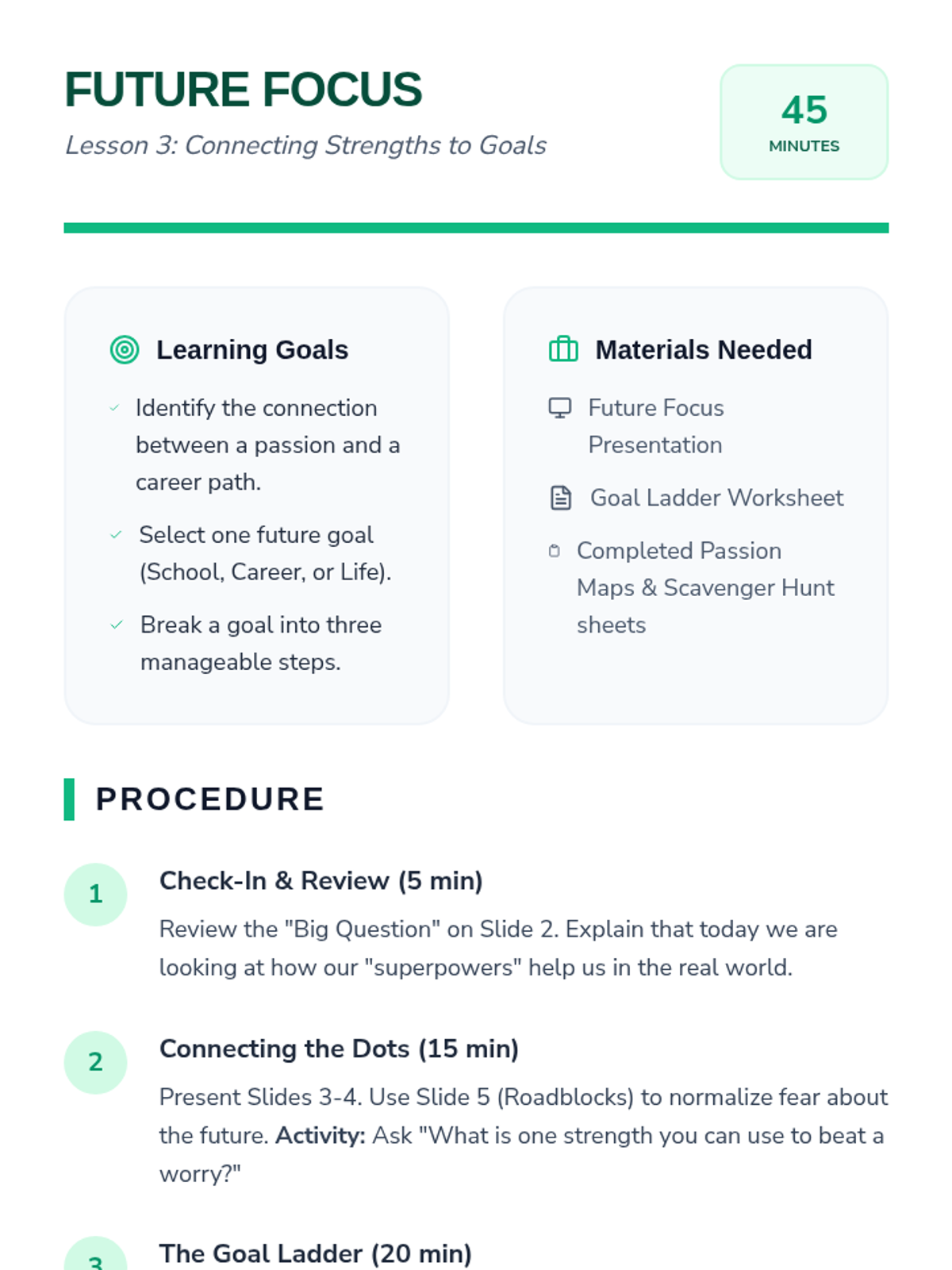
Students bridge their current strengths and interests to potential future goals in school, career, and life.
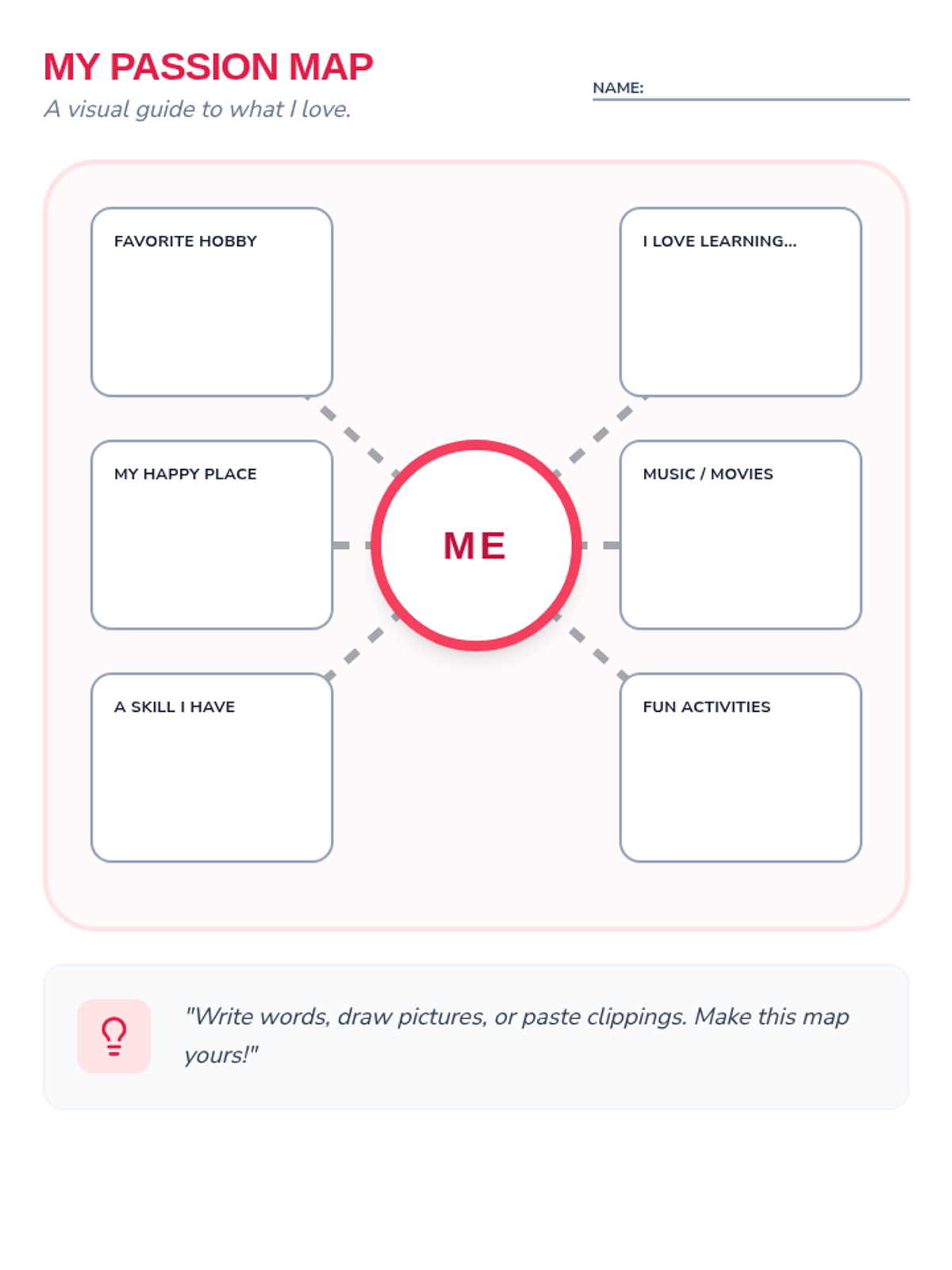
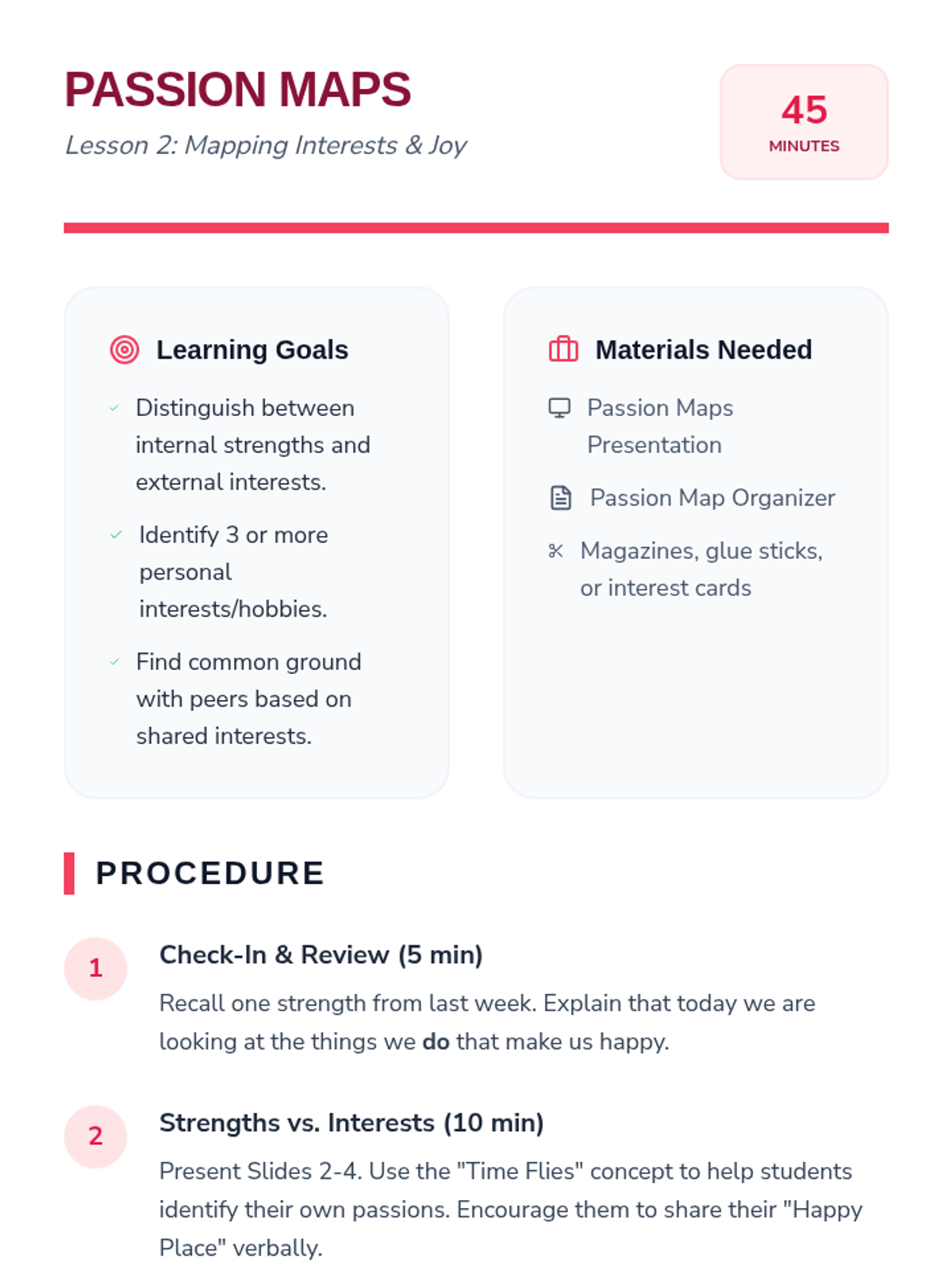
Students explore their personal interests and hobbies, connecting their passions to how they spend their time and energy.