Stop-and-think strategies, impulse management, and SMART goal setting for personal growth. Develops internal motivation, stress reduction techniques, and resilience through proactive planning and monitoring.
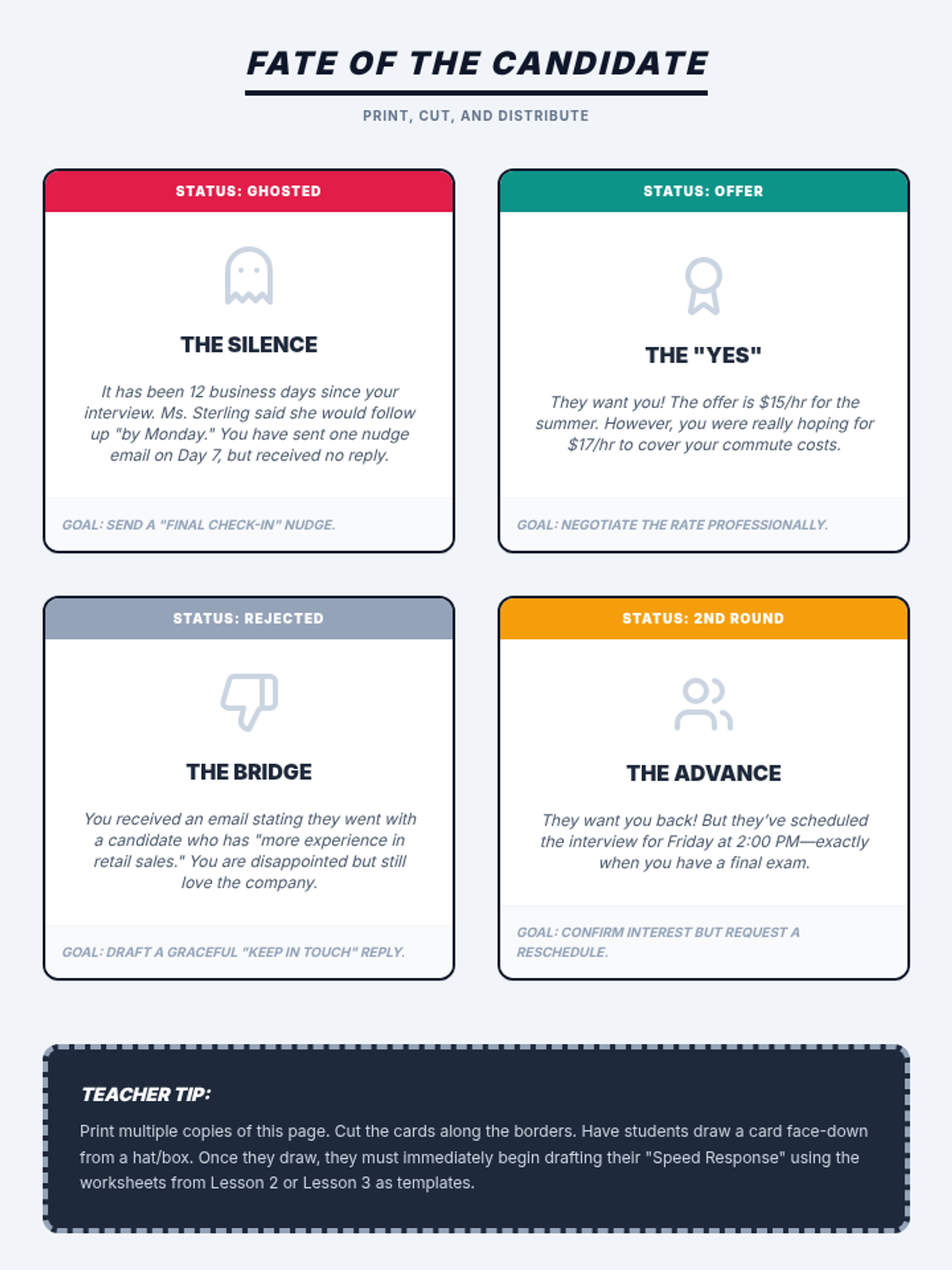
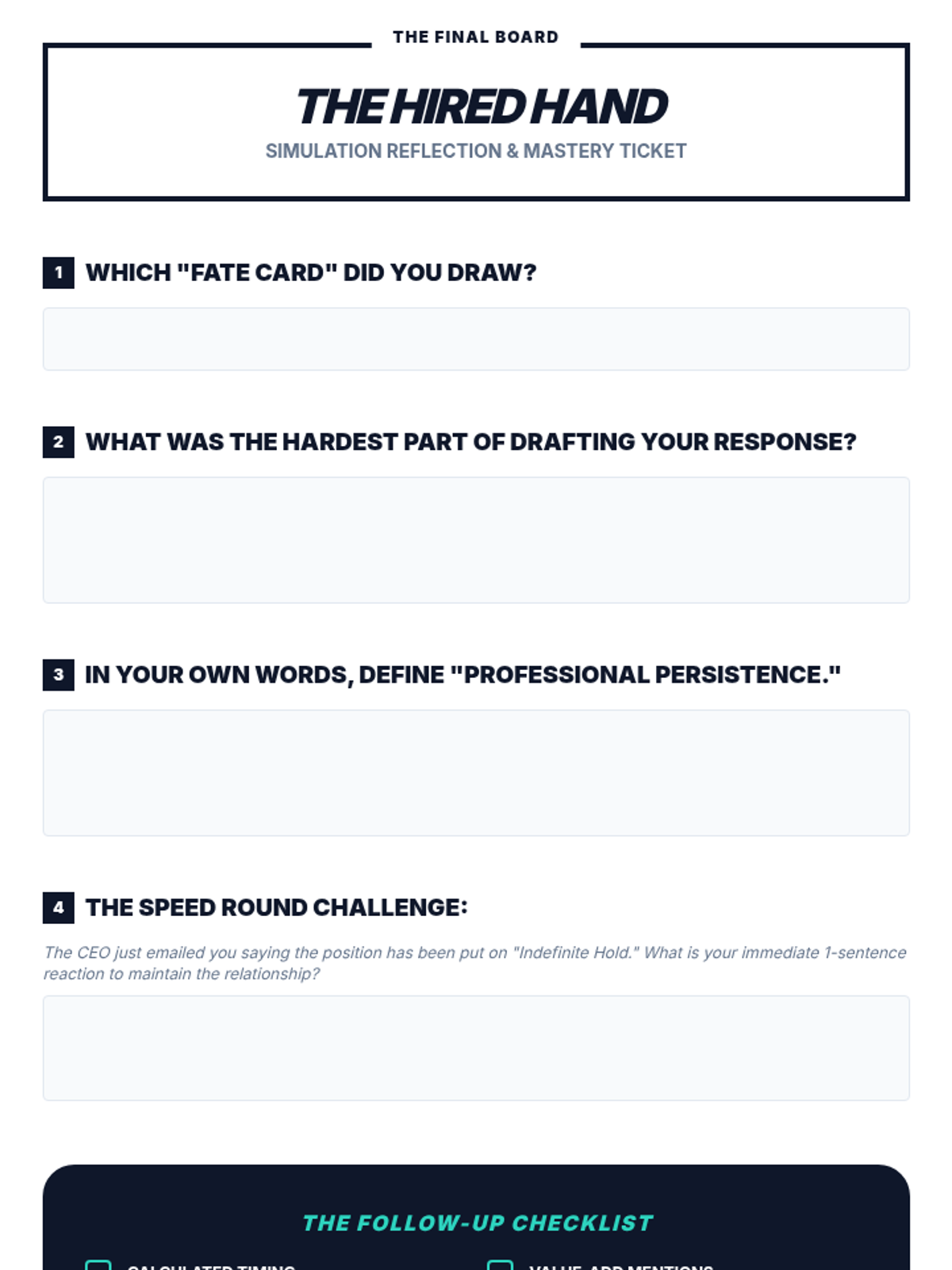
A culminating activity where students draw random 'status cards' (e.g., Ghosted, Second Interview Request, Rejection, Offer) and must instantaneously choose the correct communication template and strategy to respond.
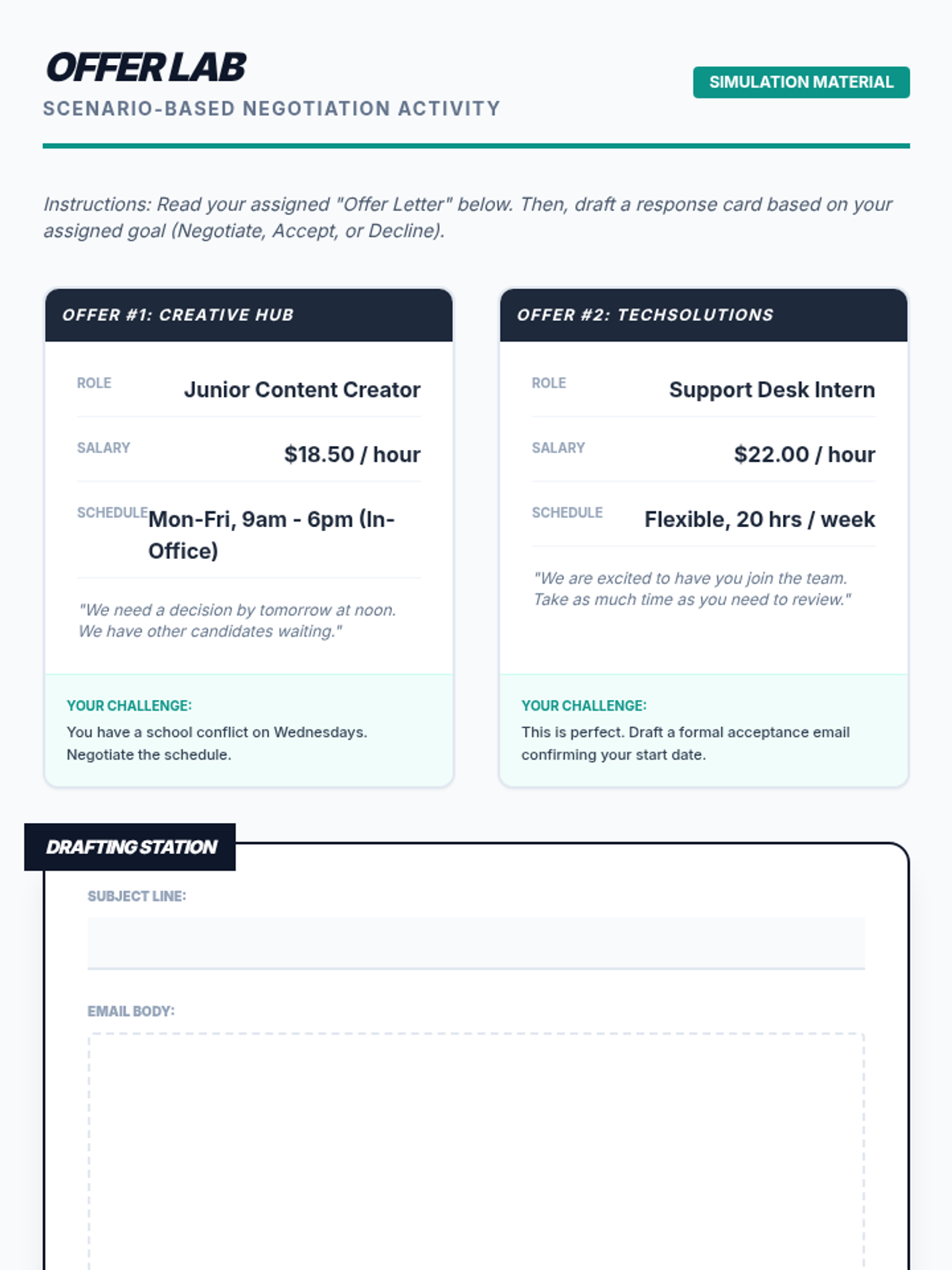
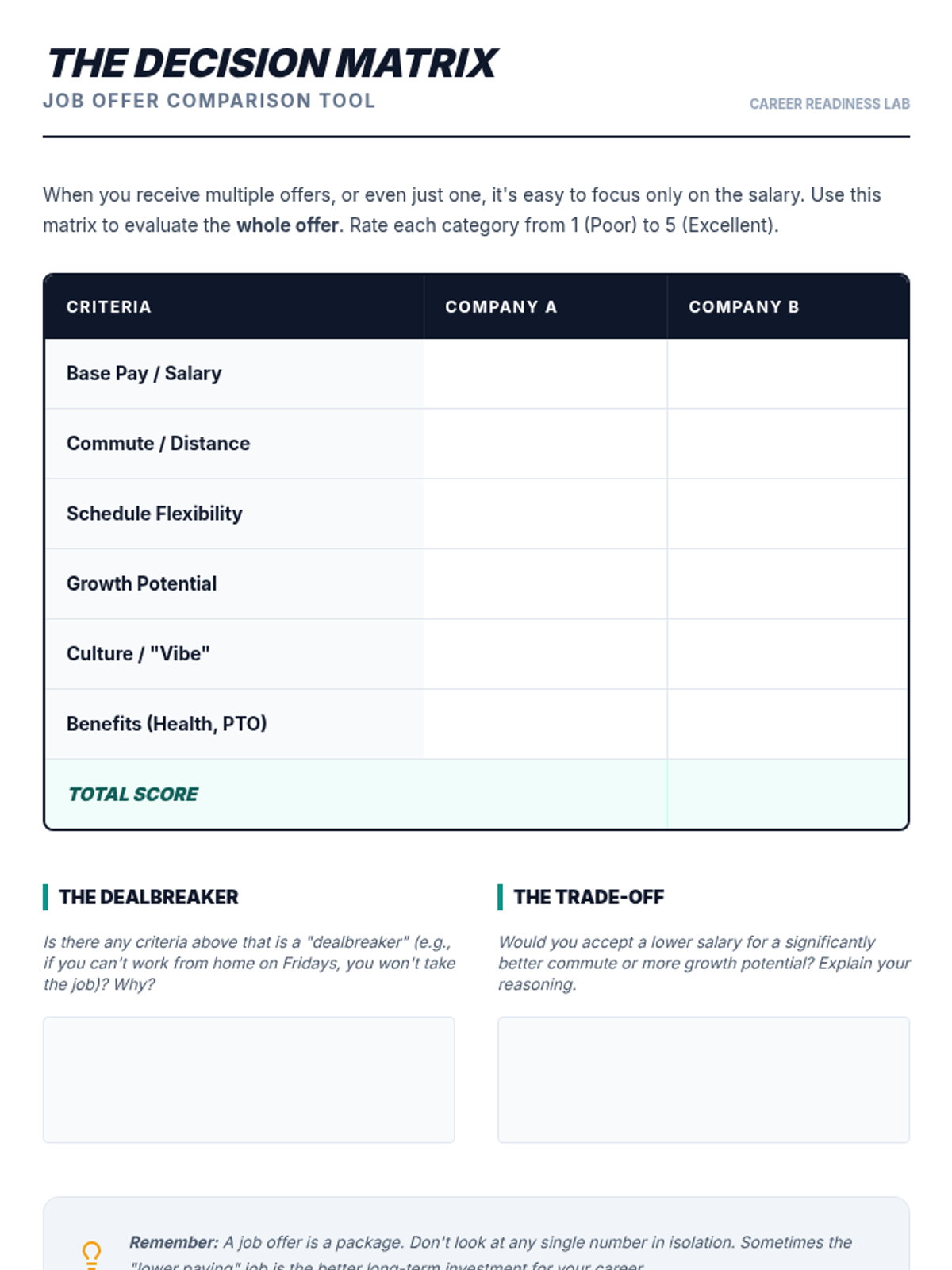
Students learn the protocol for acknowledging a job offer, asking for time to consider it, and confirming acceptance in writing. The lesson touches briefly on the format for declining an offer professionally.
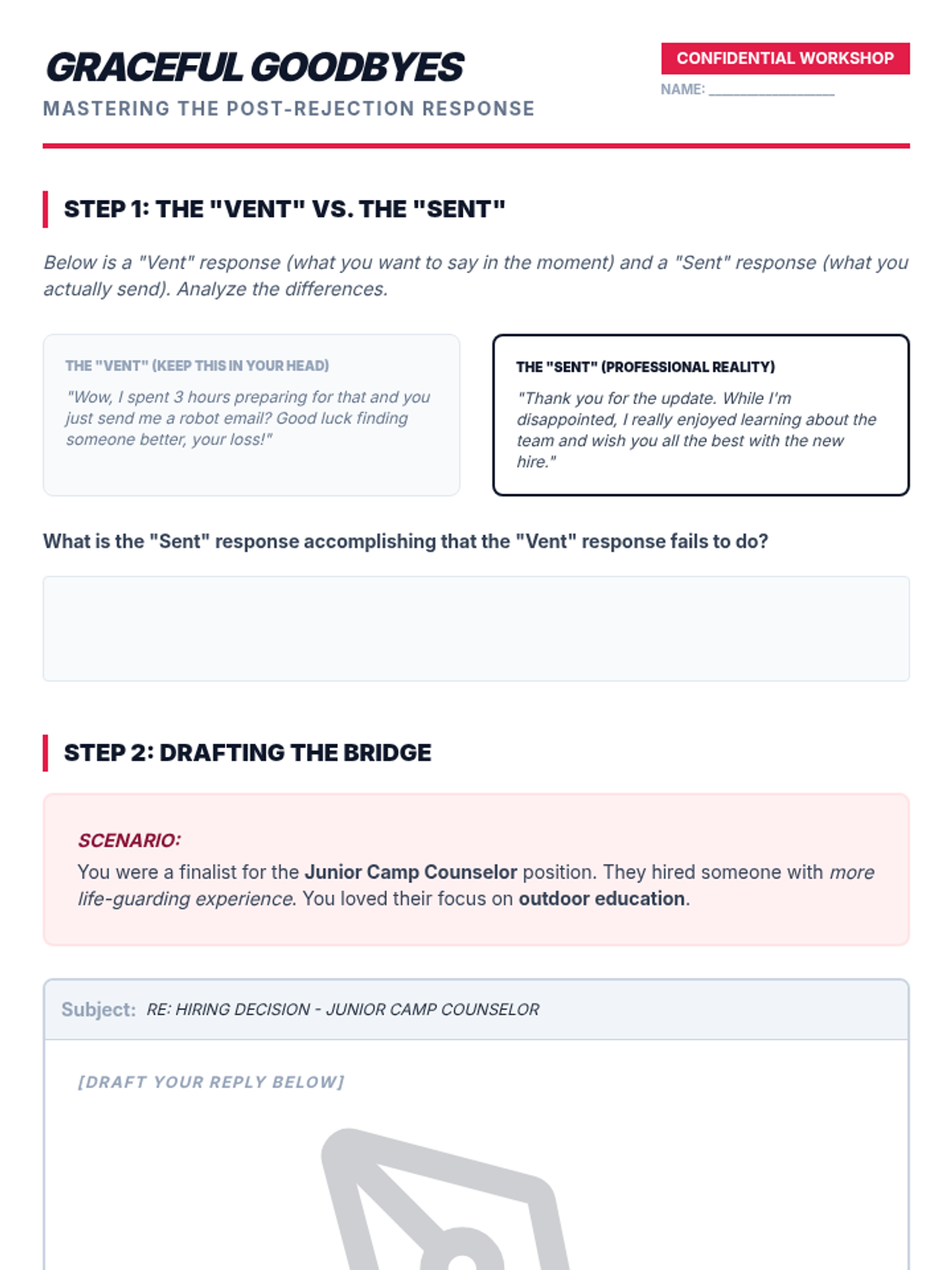
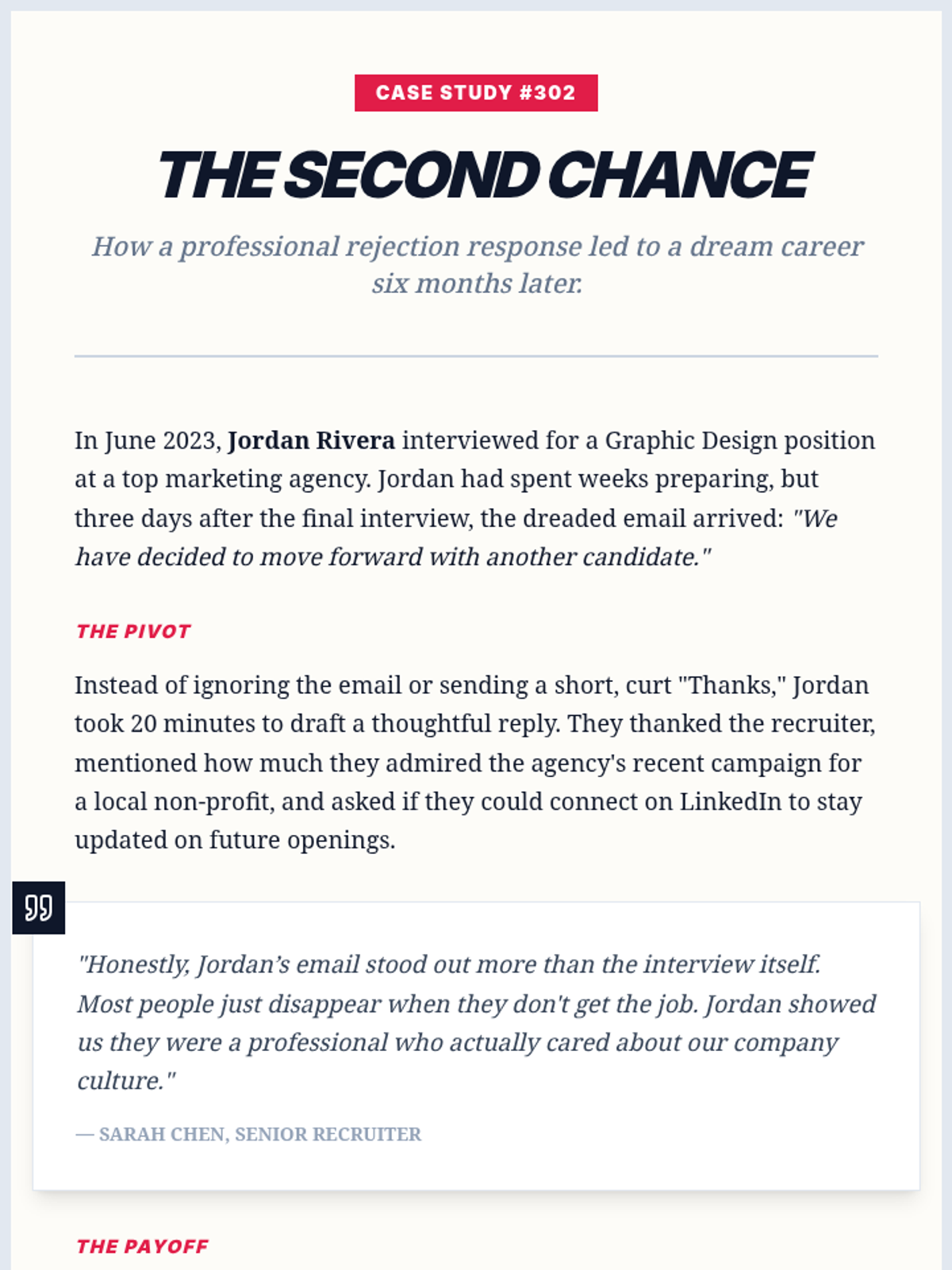
Students analyze the long-term value of responding gracefully to a rejection email, learning how to stay in a recruiter's network for future opportunities.
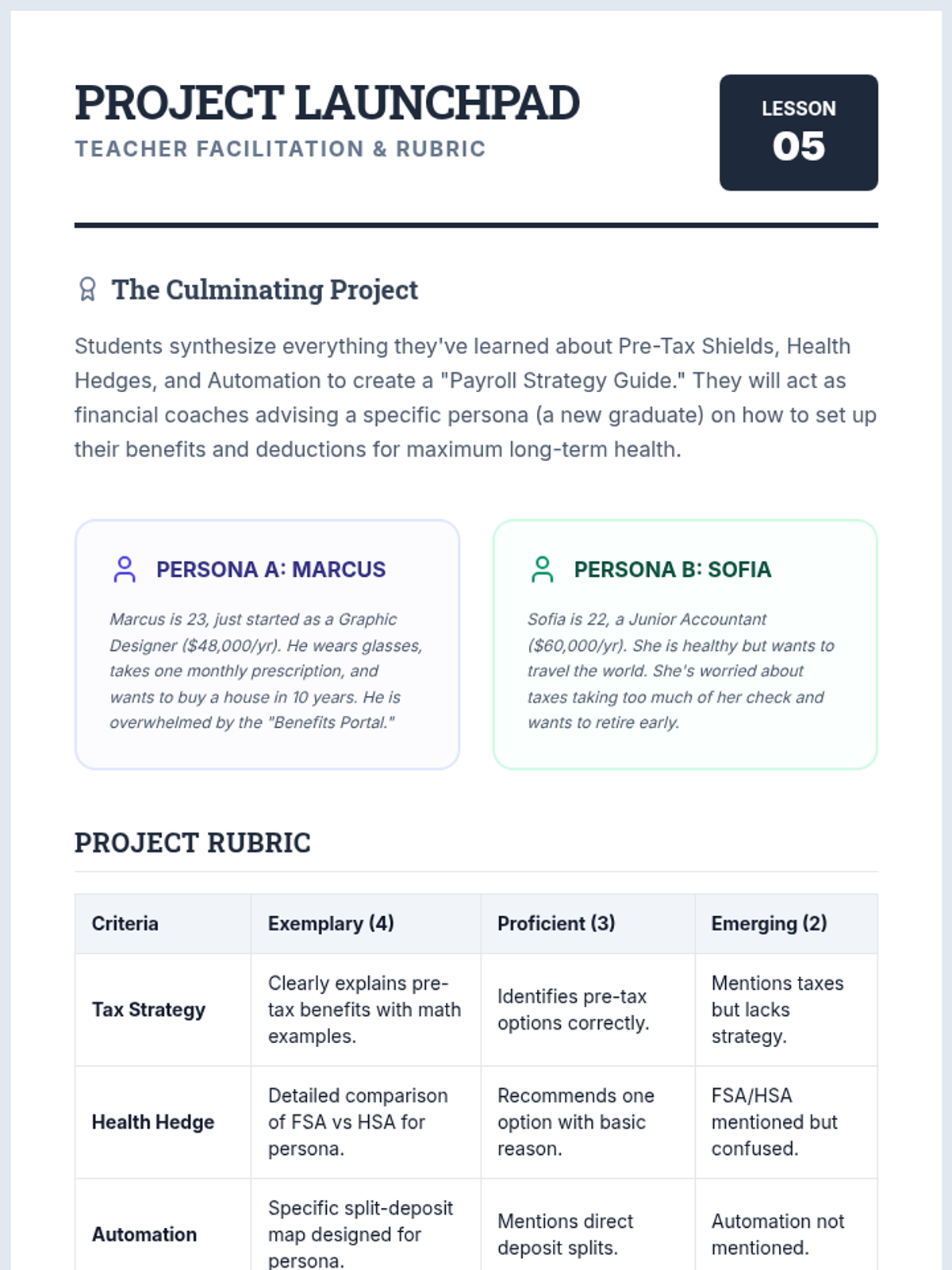
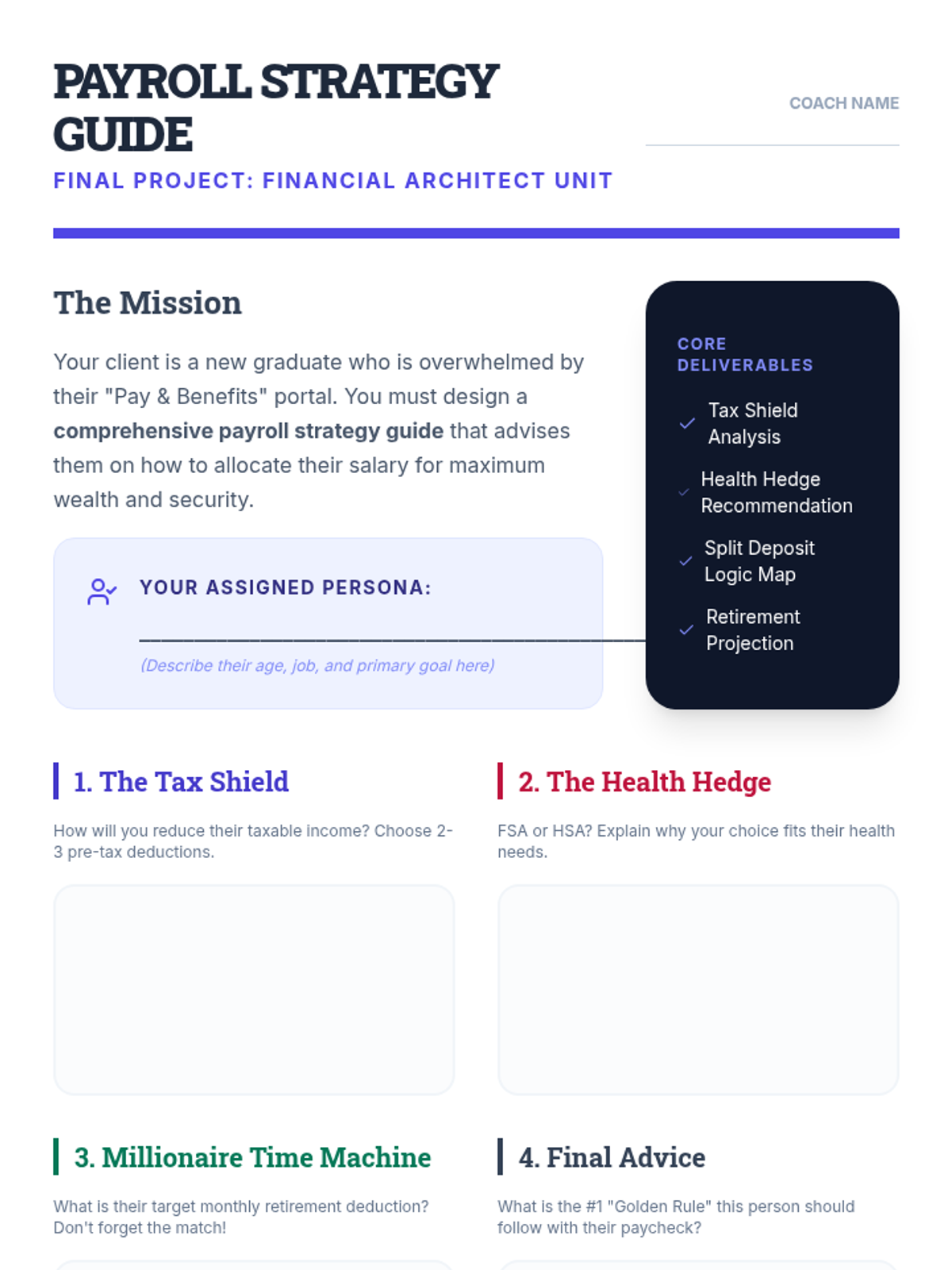
Students synthesize their knowledge to create a comprehensive payroll strategy guide for a new graduate entering the workforce.
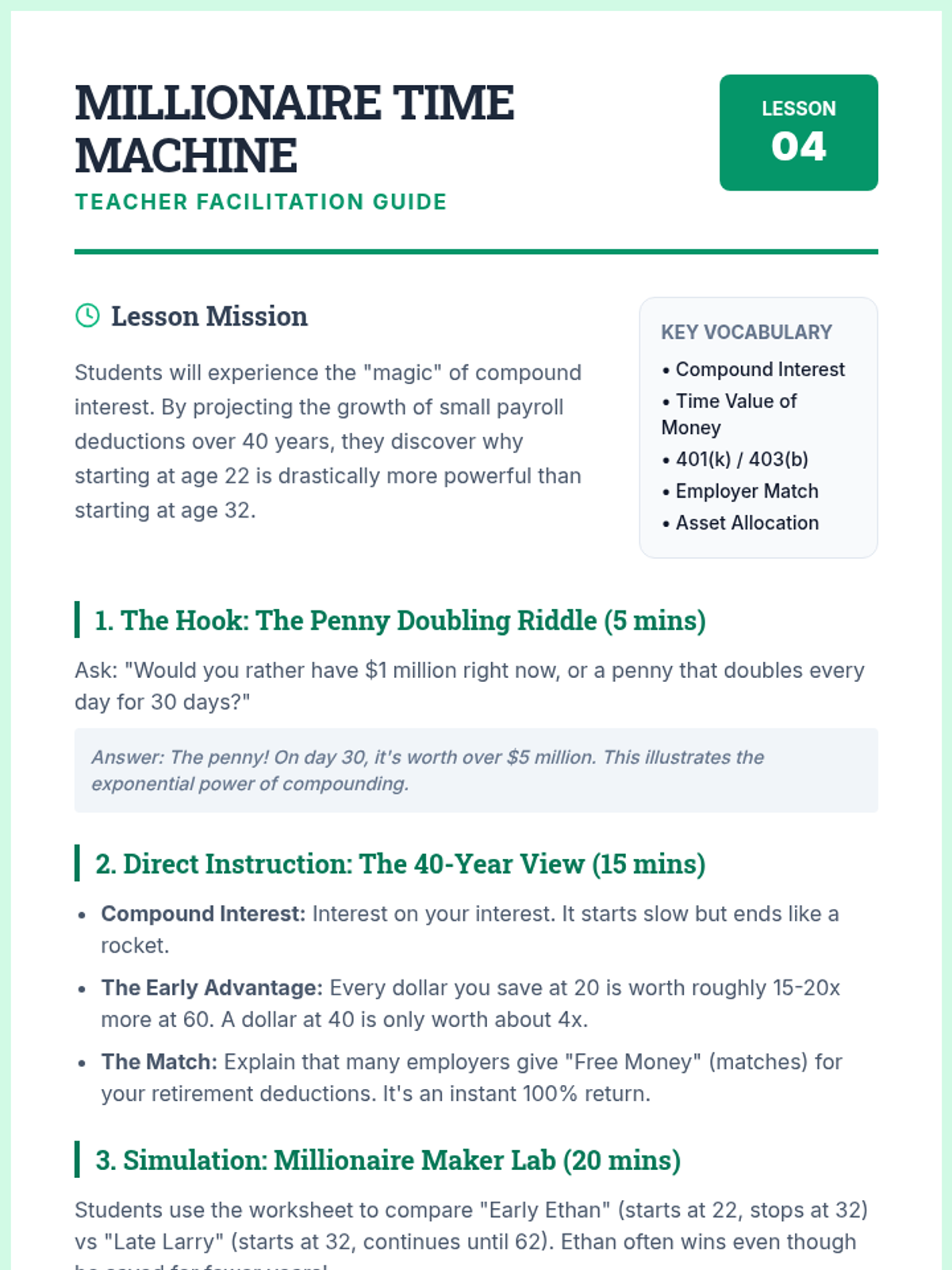
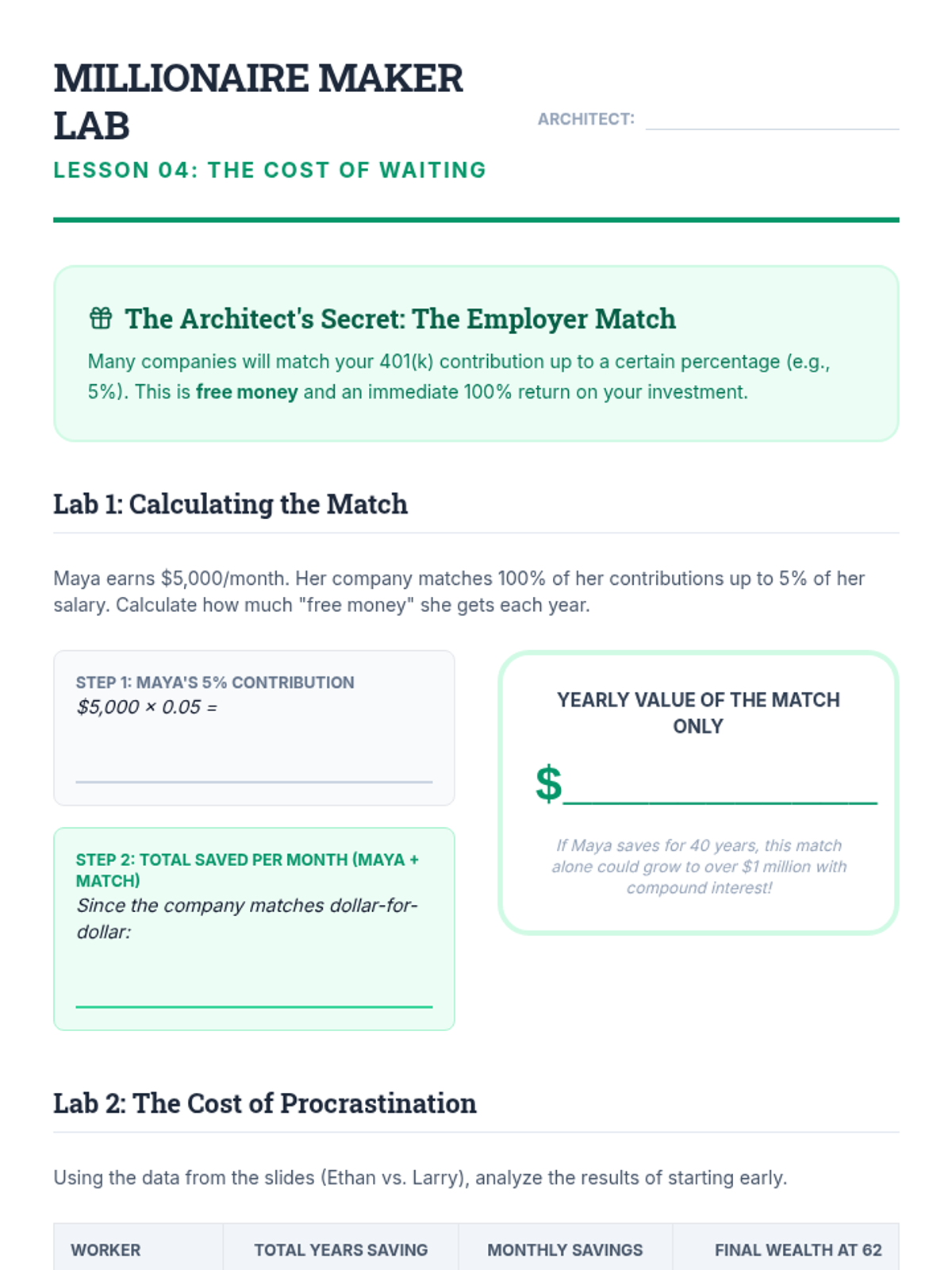
Focusing on compound interest and the time value of money, students project the long-term growth of early retirement contributions.
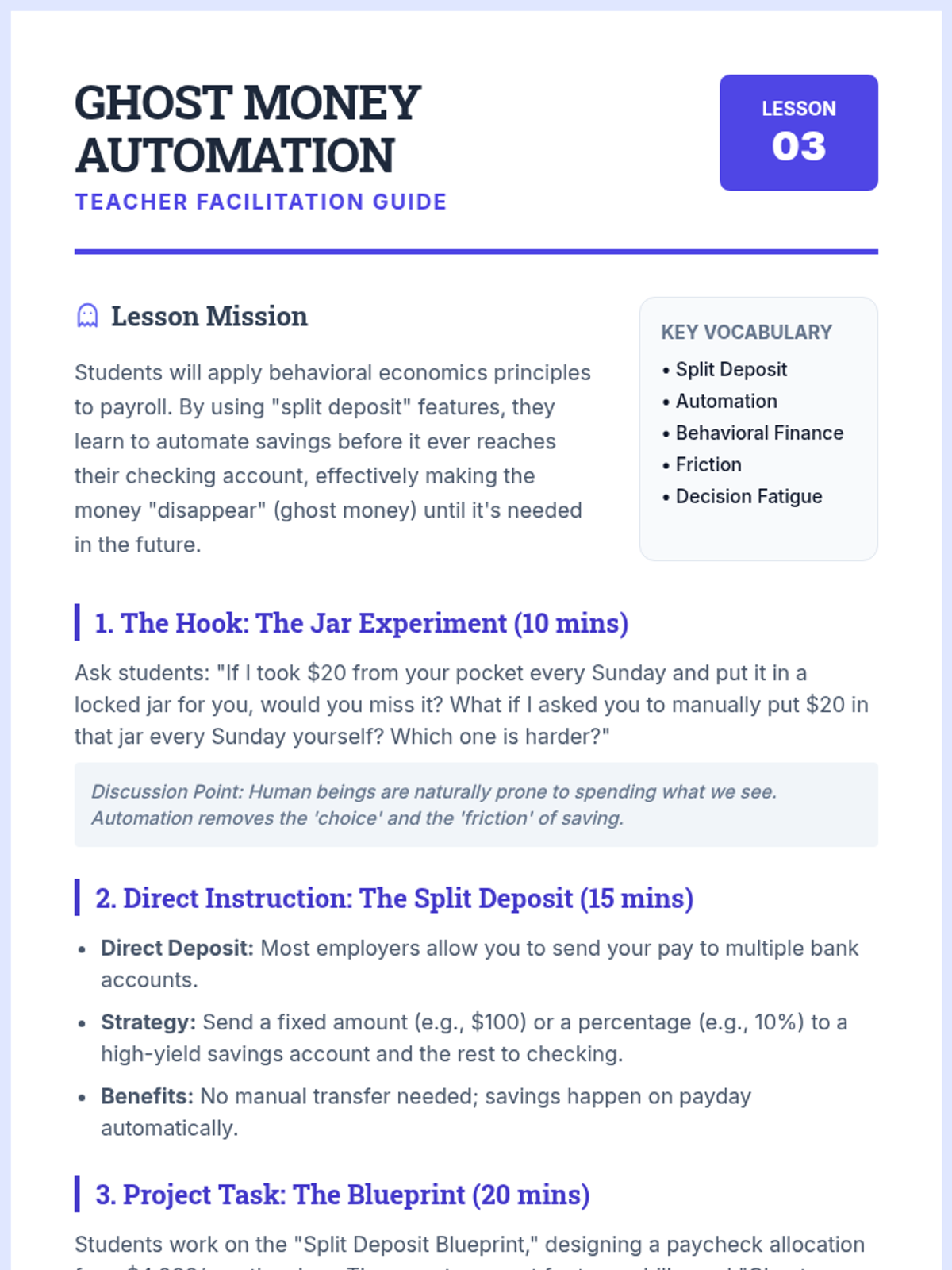
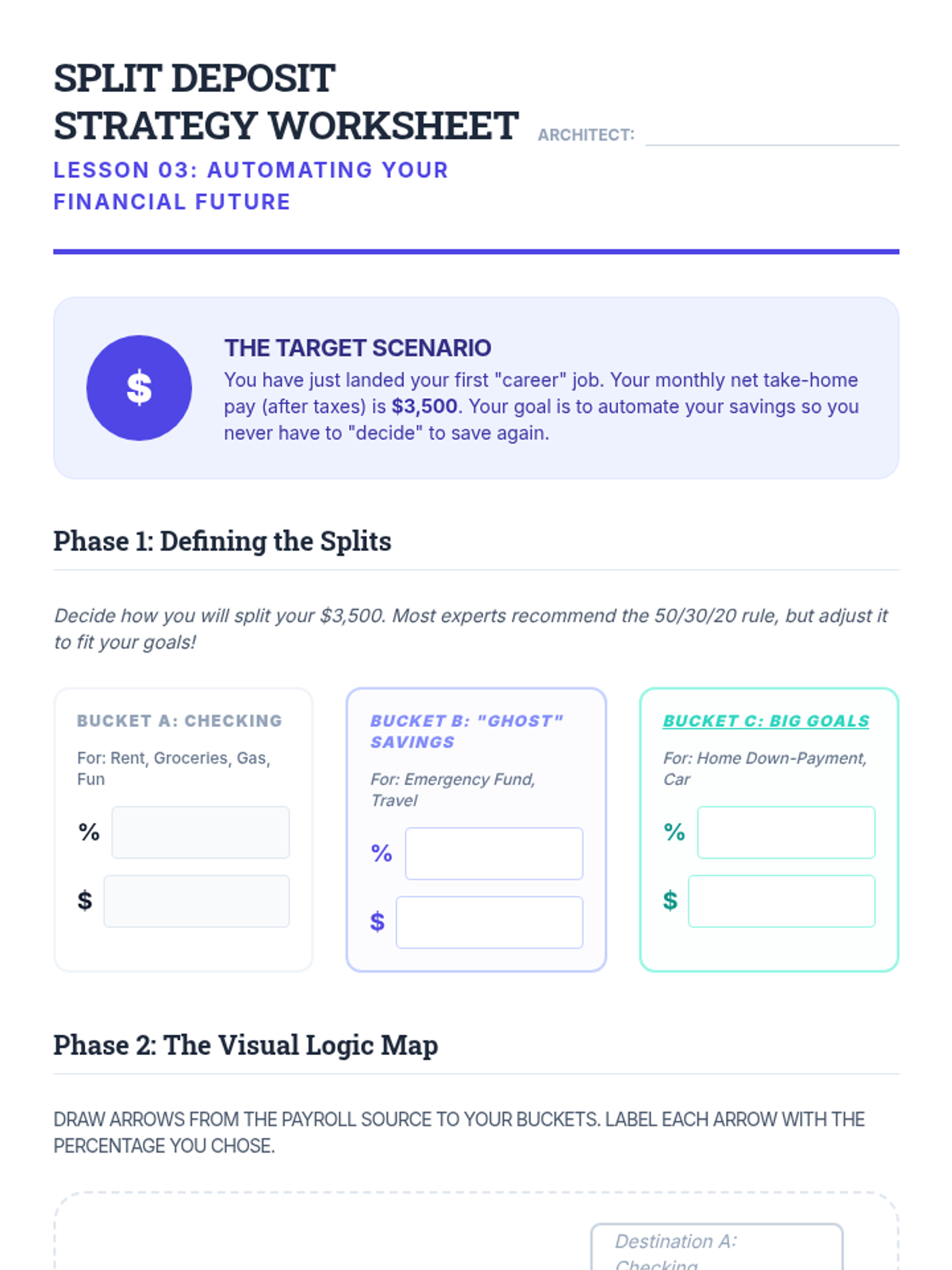
Students study behavioral economics and automation, designing split-deposit strategies to ensure consistent savings without manual effort.
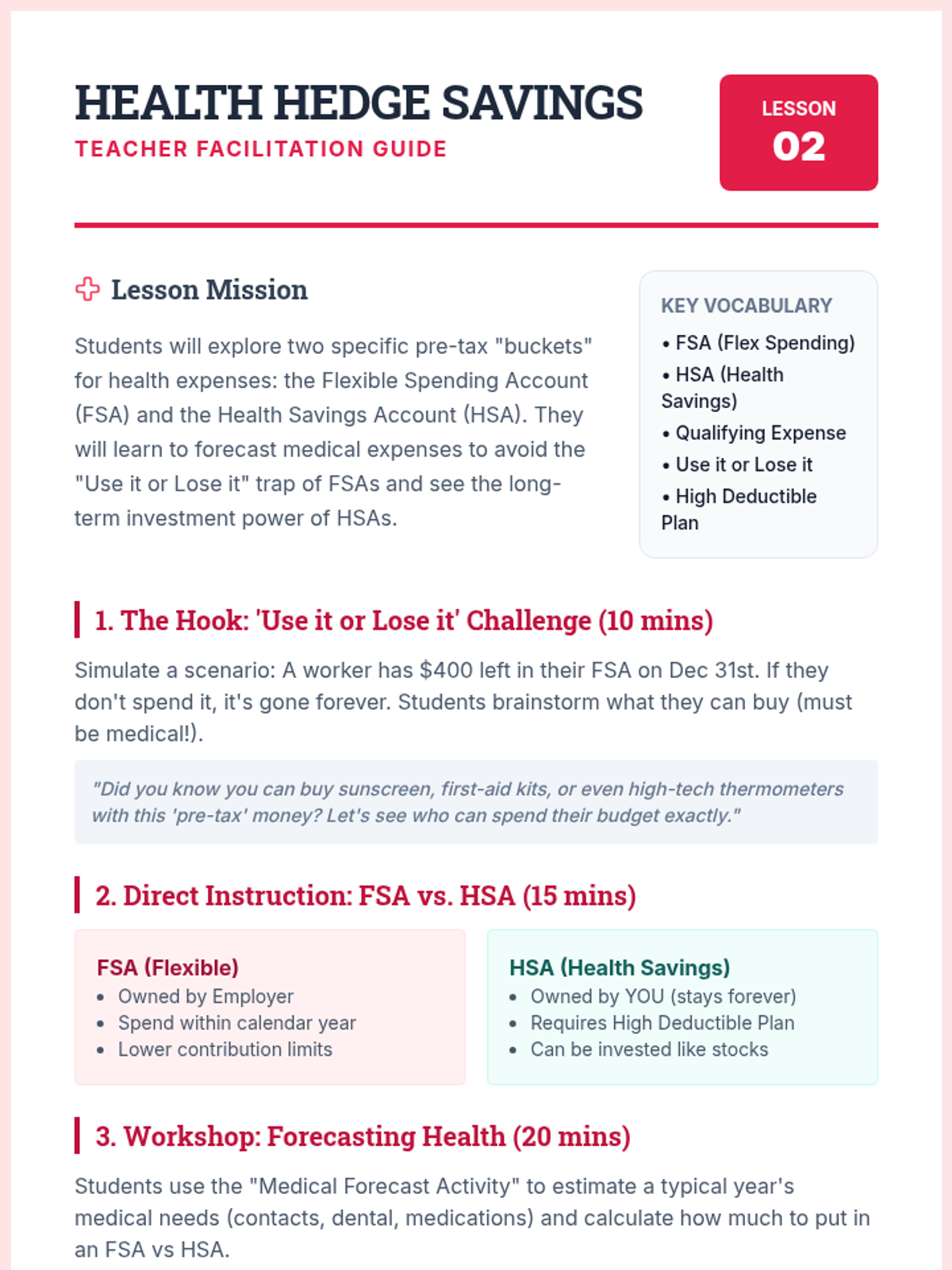
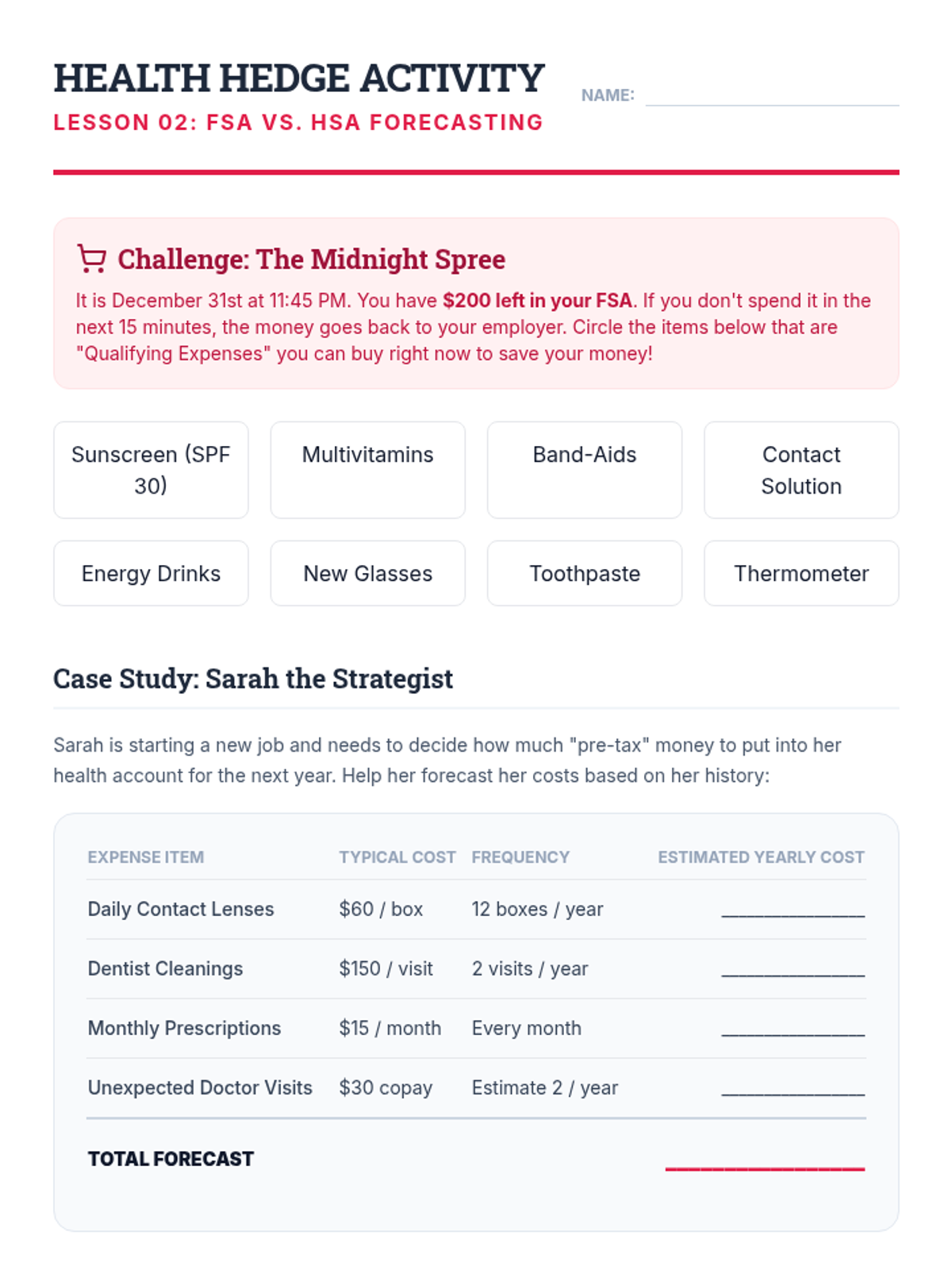
Learners explore Flexible Spending Accounts and Health Savings Accounts, analyzing how these vehicles lower healthcare costs and act as savings tools.
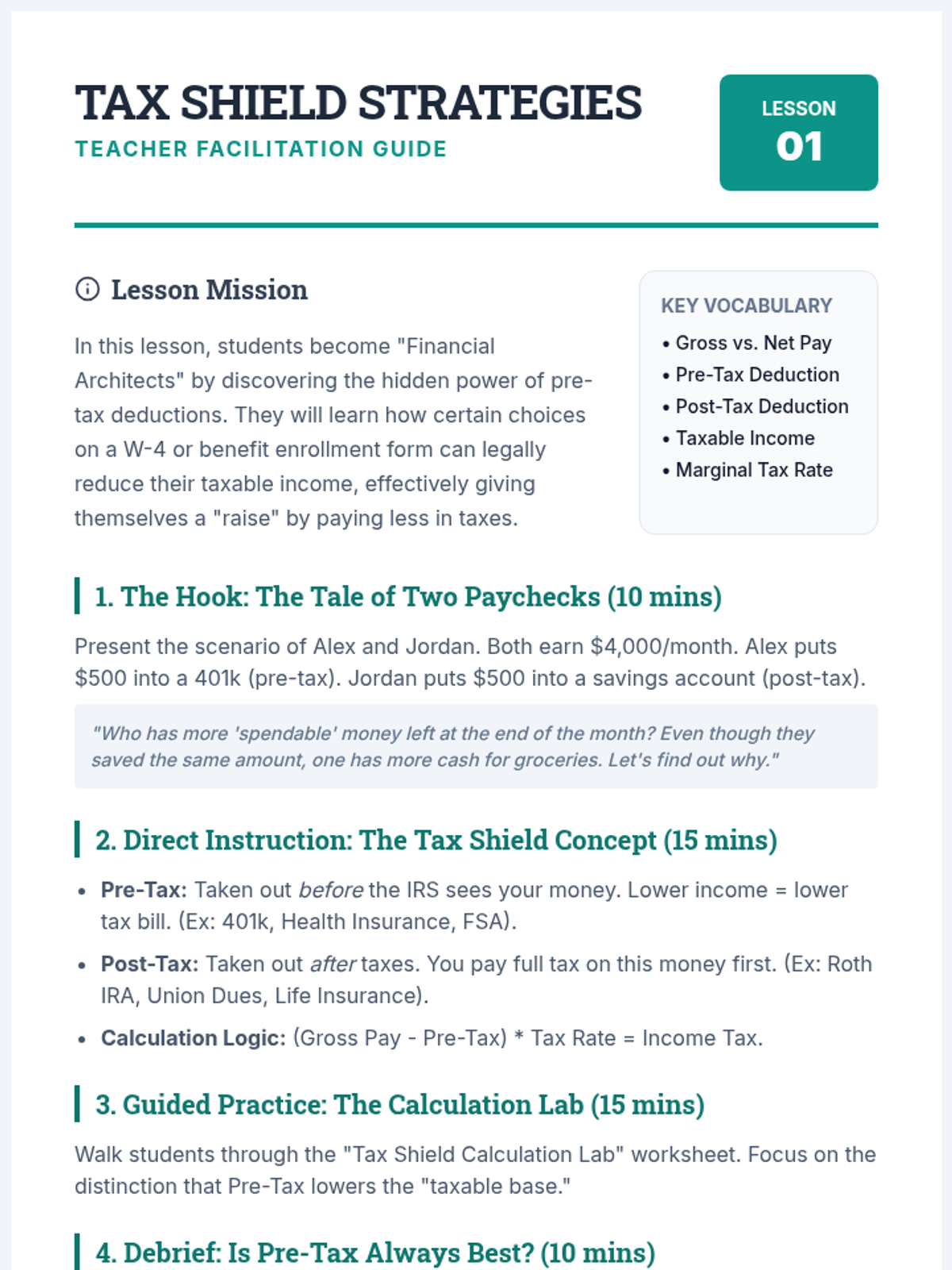
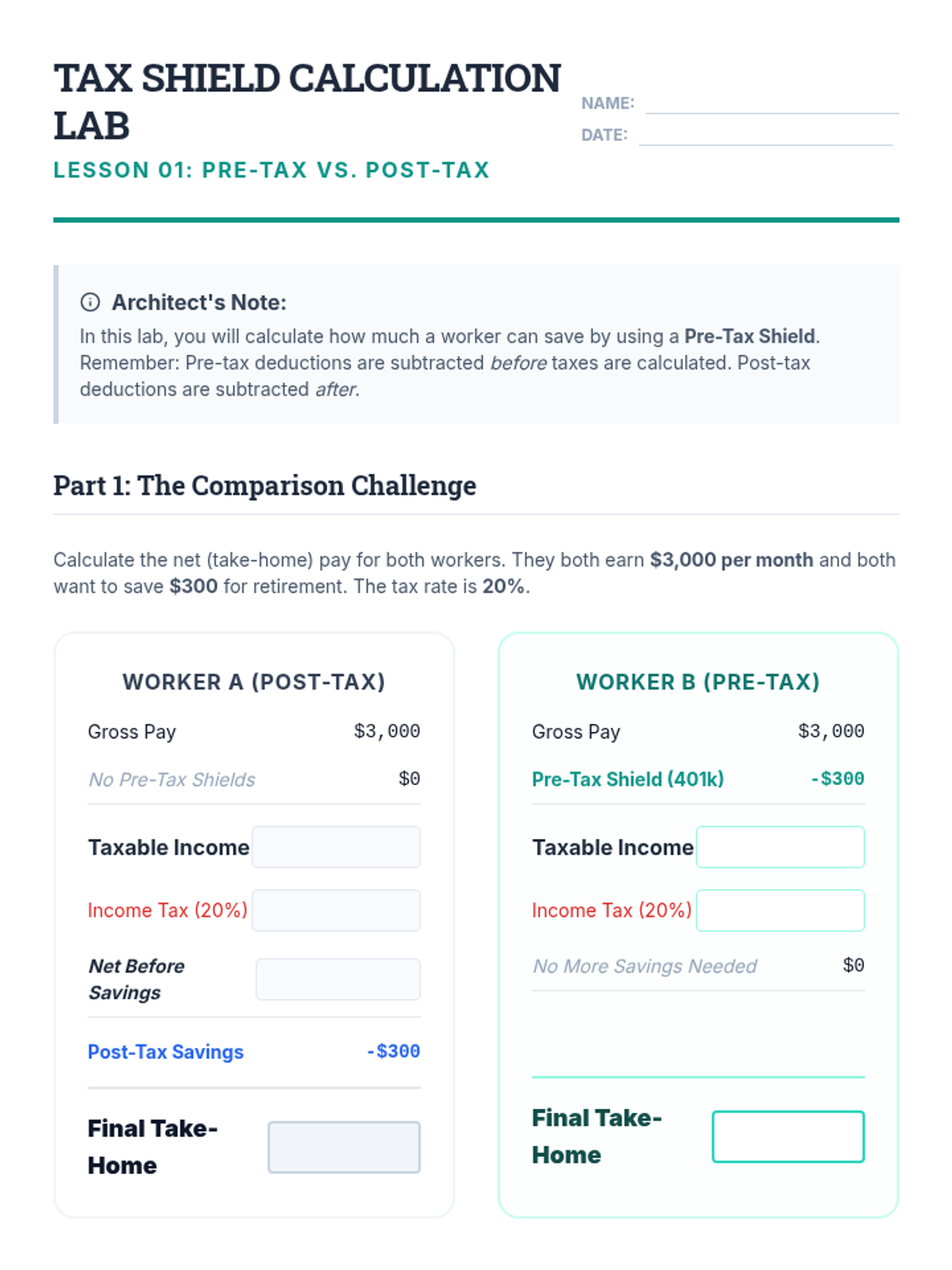
Students investigate the difference between pre-tax and post-tax deductions, calculating the tax savings benefit of using pre-tax instruments.
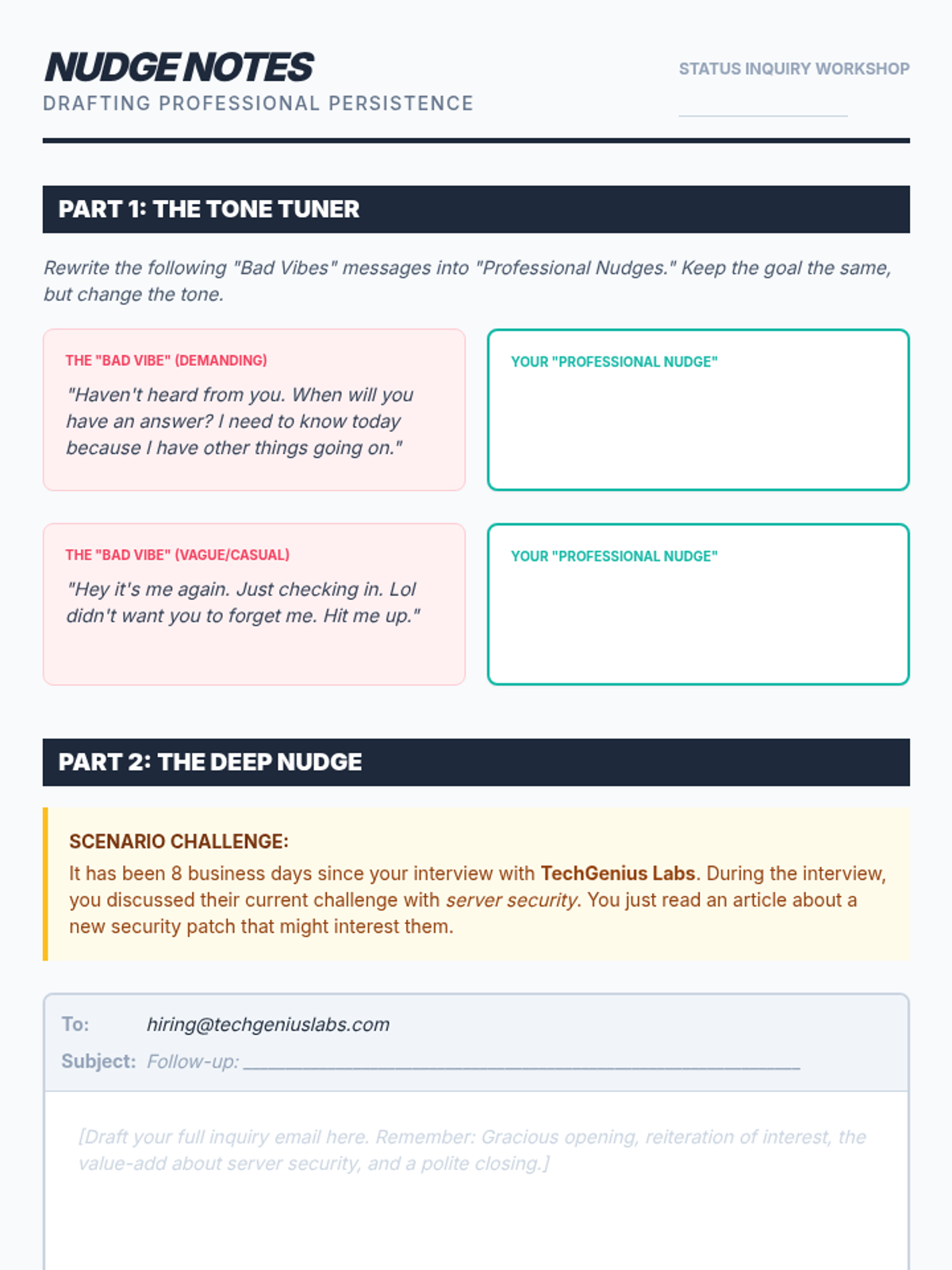
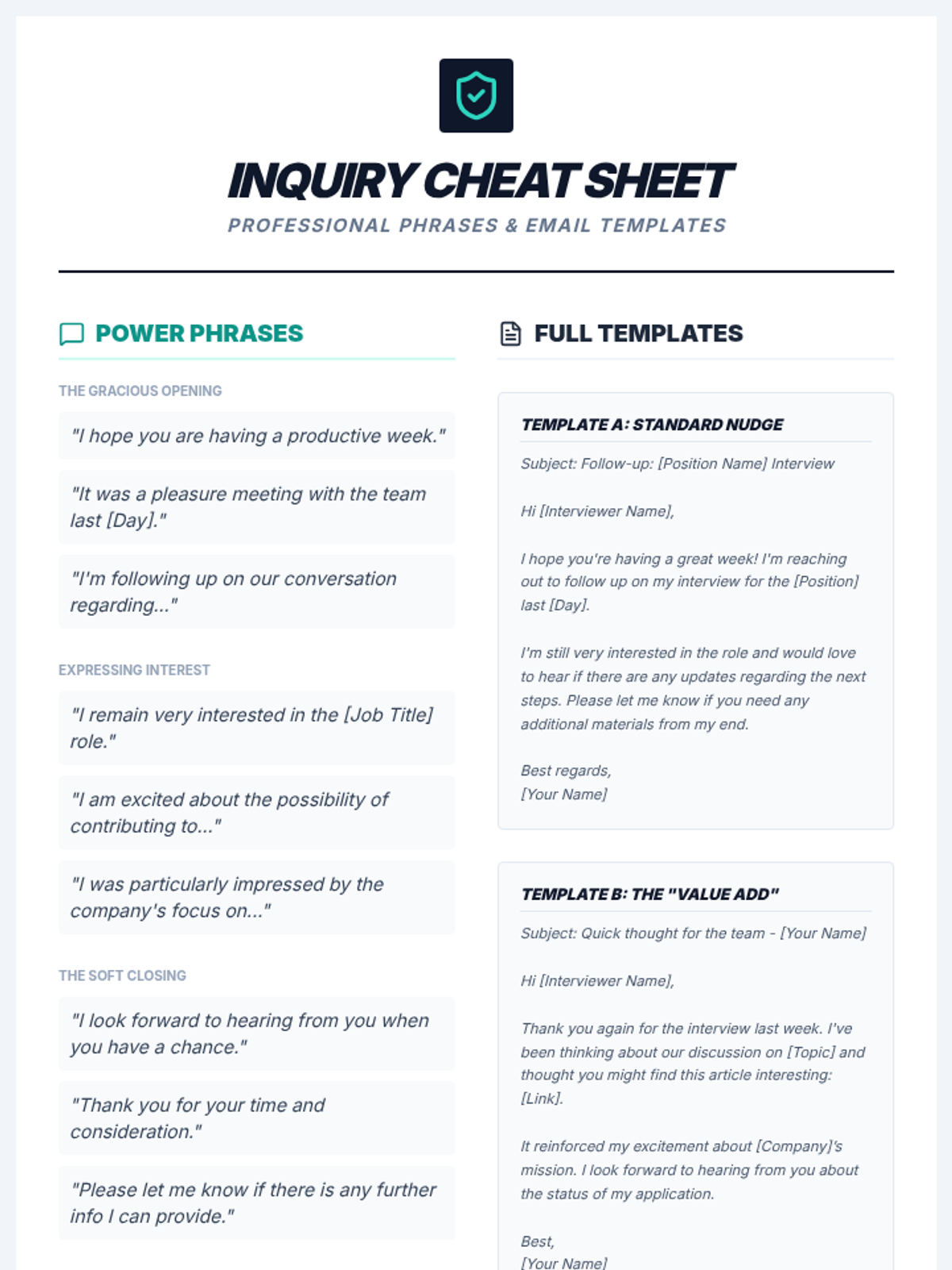
Focusing on the 'nudge' email, this lesson teaches students how to politely ask for an update. Students draft inquiries that reiterate interest and offer additional information rather than simply demanding a decision.
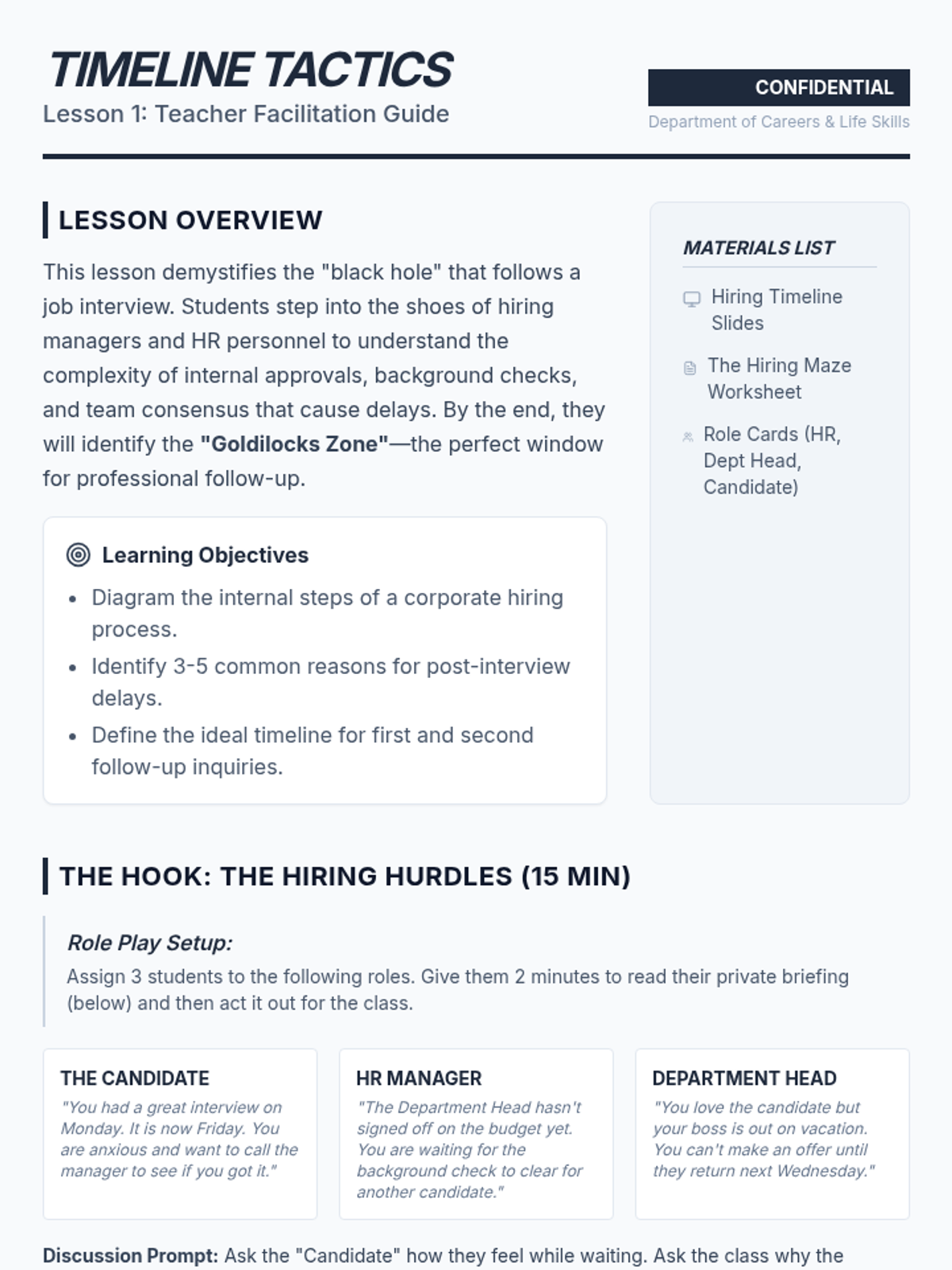
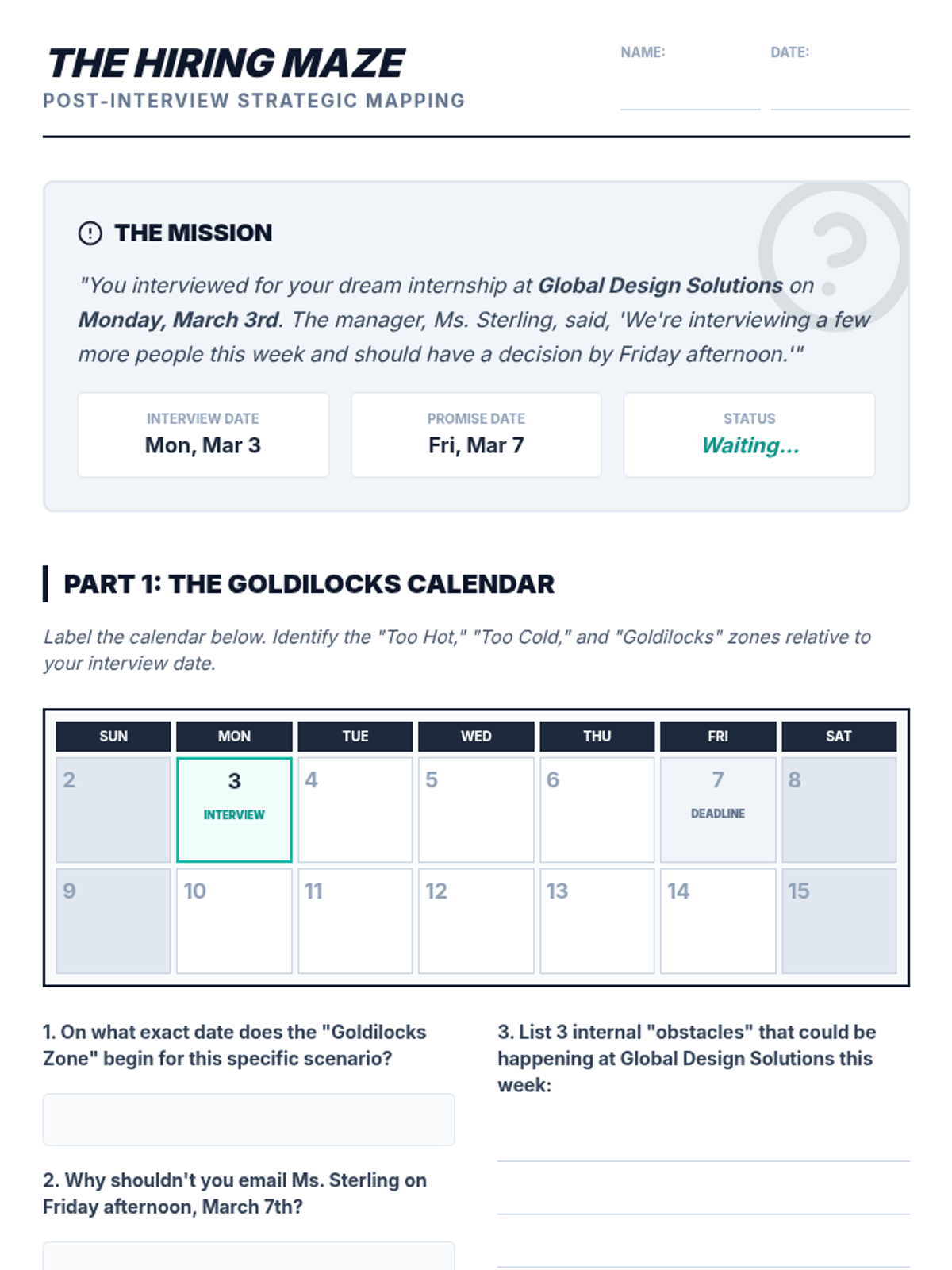
Students explore the typical hiring lifecycle from the employer's perspective to understand why delays happen. They create a visual timeline indicating the 'Goldilocks Zone' for follow-up.
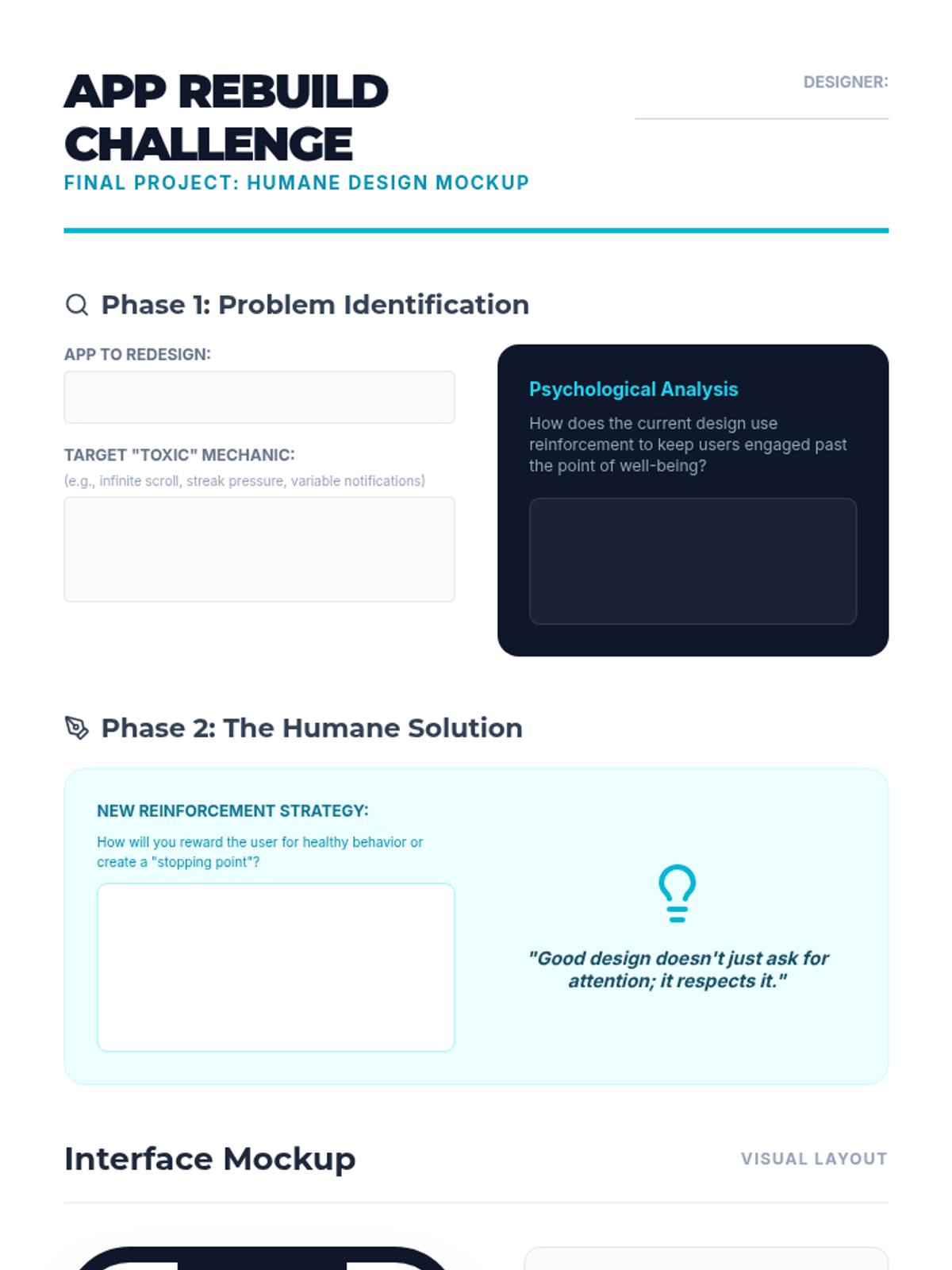
Students propose a redesign of a popular app that uses positive reinforcement to encourage healthy boundaries rather than endless consumption. They create mockups of 'humane' interfaces.
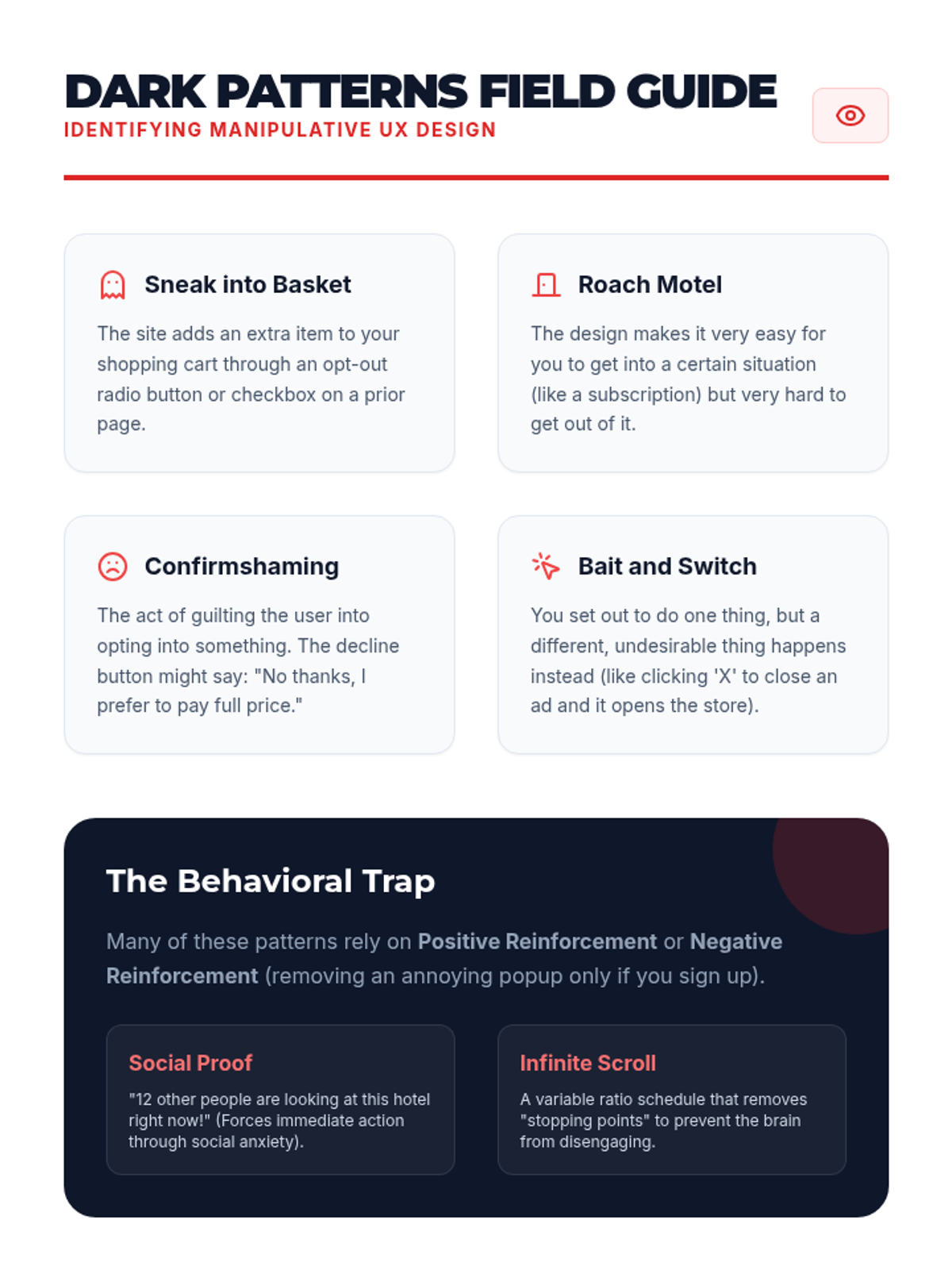
Students debate the ethics of using psychological vulnerabilities to maximize screen time. They look at 'dark patterns' in UI/UX design that exploit positive reinforcement loops.
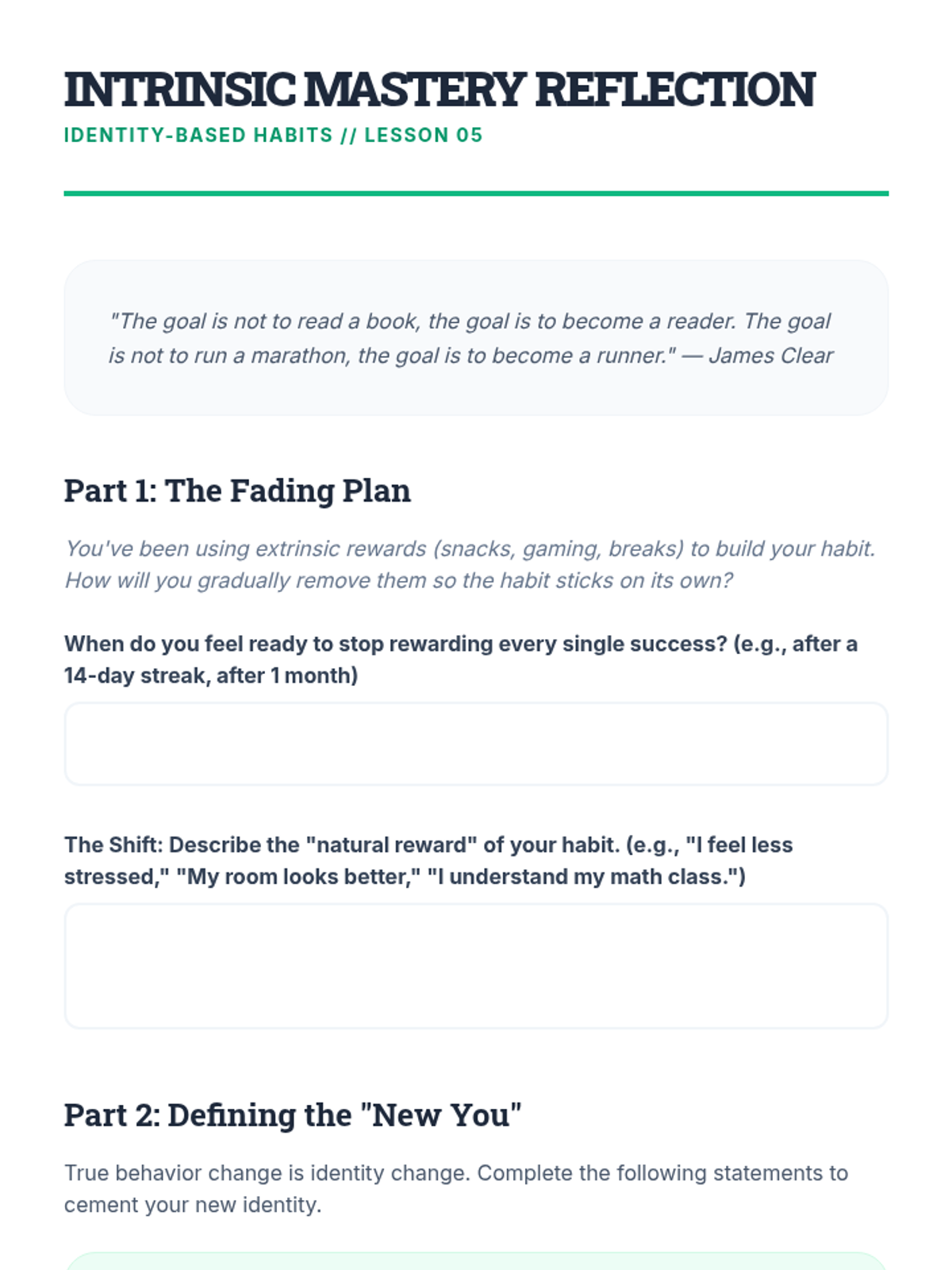
Students develop a plan to transition from artificial rewards to intrinsic motivation as their new habits become part of their identity.
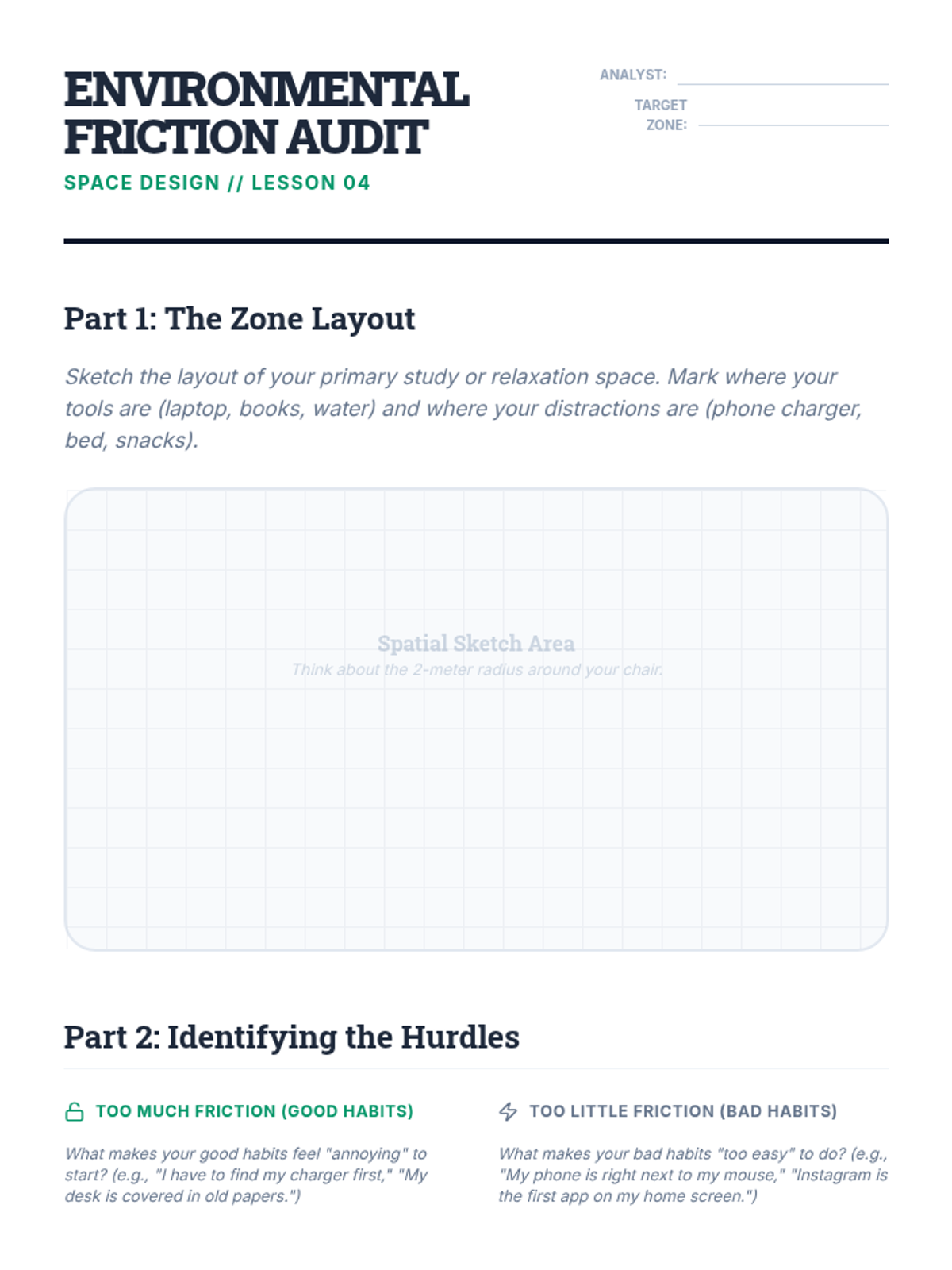
Students redesign their physical spaces to reduce friction for desired habits and increase friction for unwanted ones.
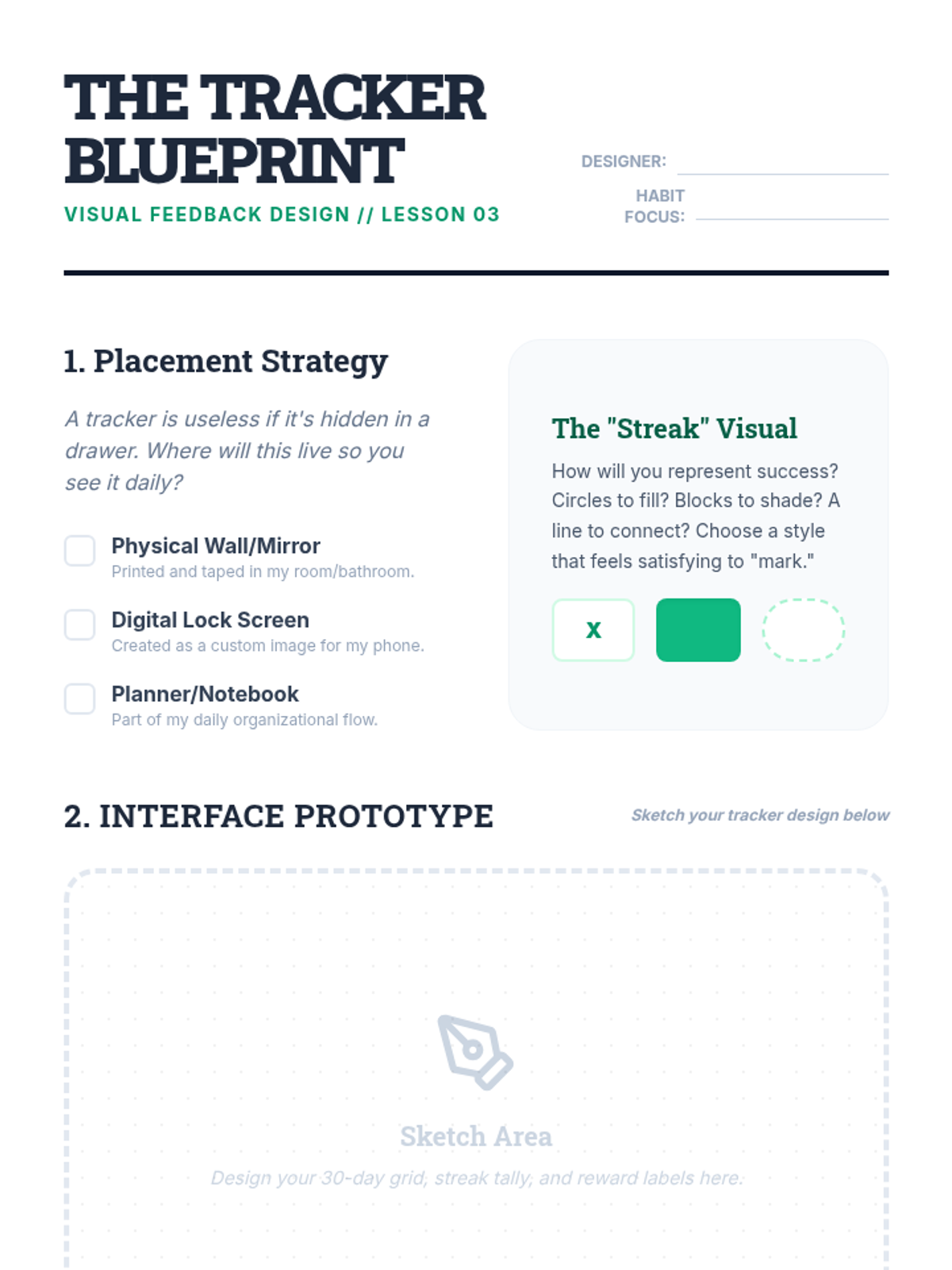
Students examine methods of tracking behavior and design a visual tracking system for a personal goal to provide immediate visual feedback.
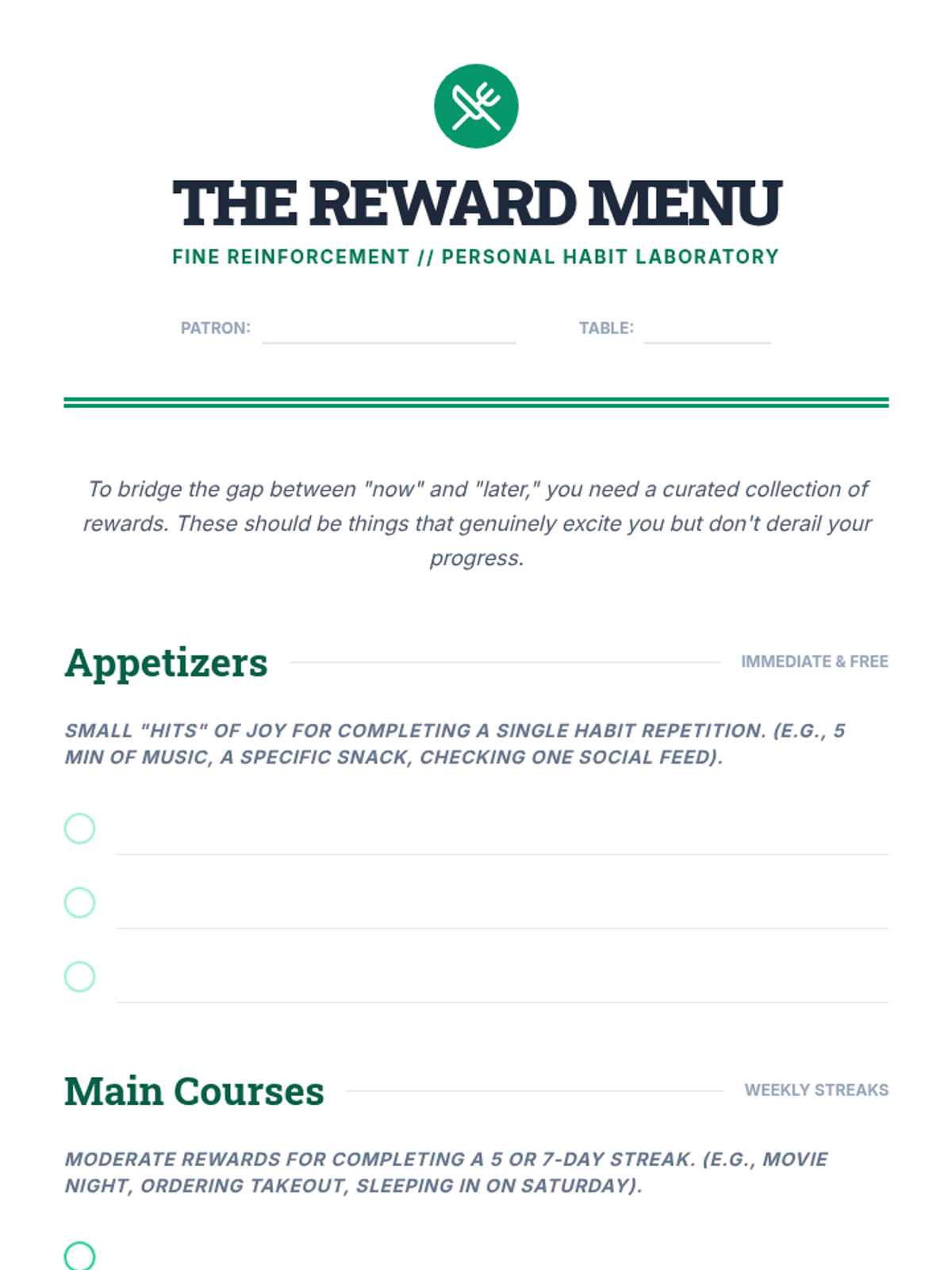
Students brainstorm immediate, low-cost positive reinforcers to bridge the gap toward long-term goals and combat temporal discounting.
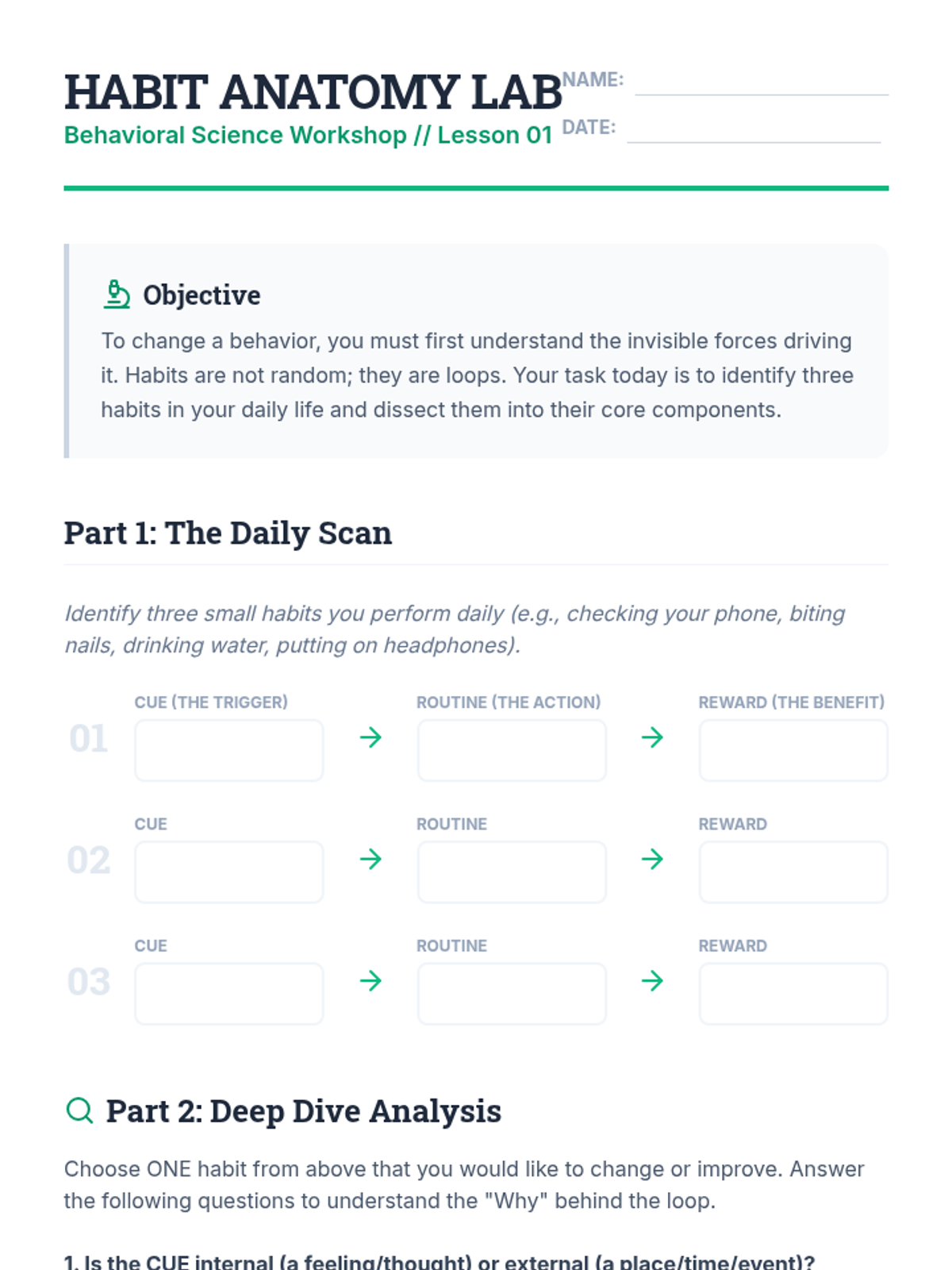
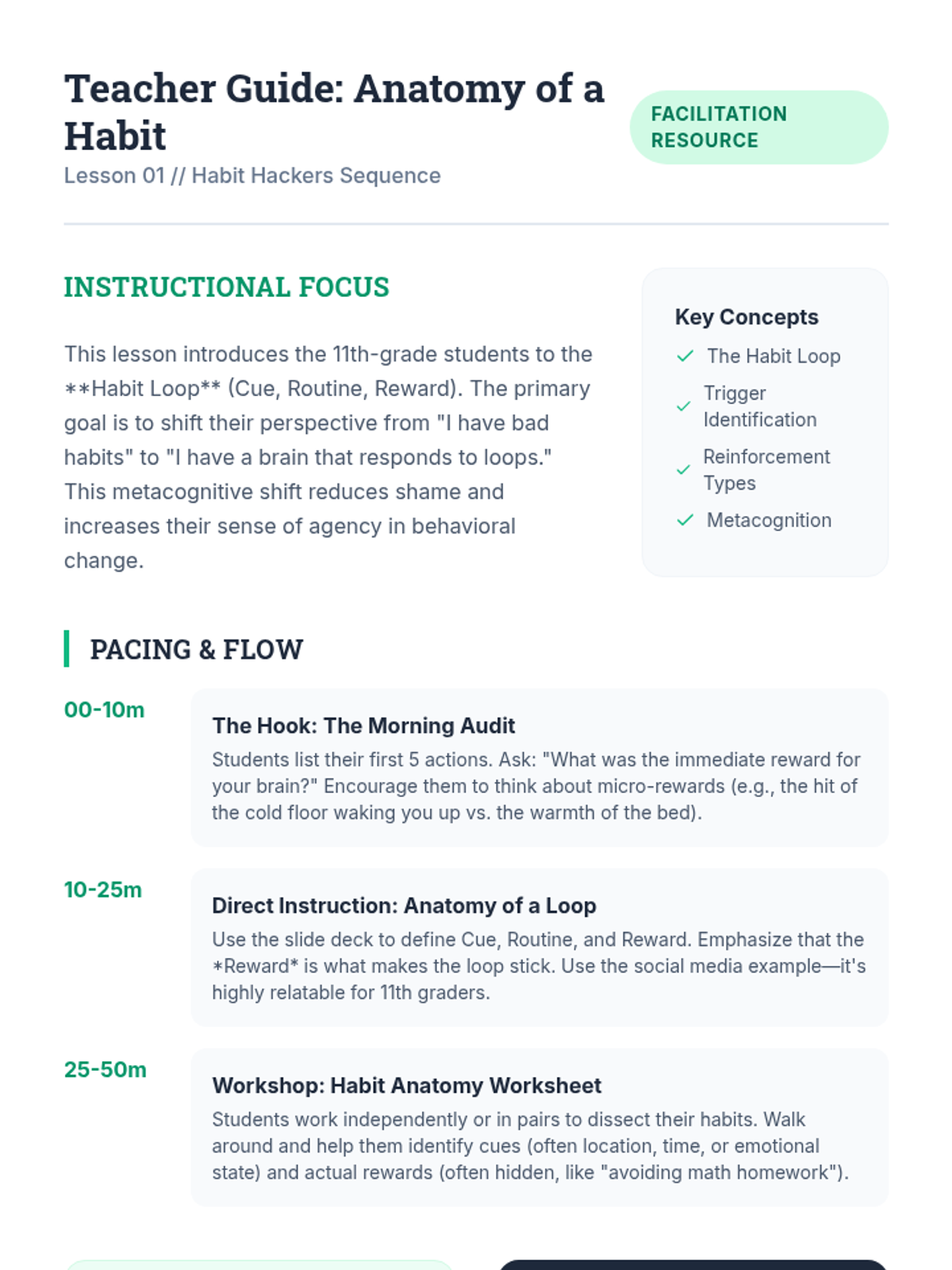
Students dissect habits into three components: Cue, Routine, and Reward. They analyze their current daily routines to identify existing reinforcement loops that are either helpful or harmful.
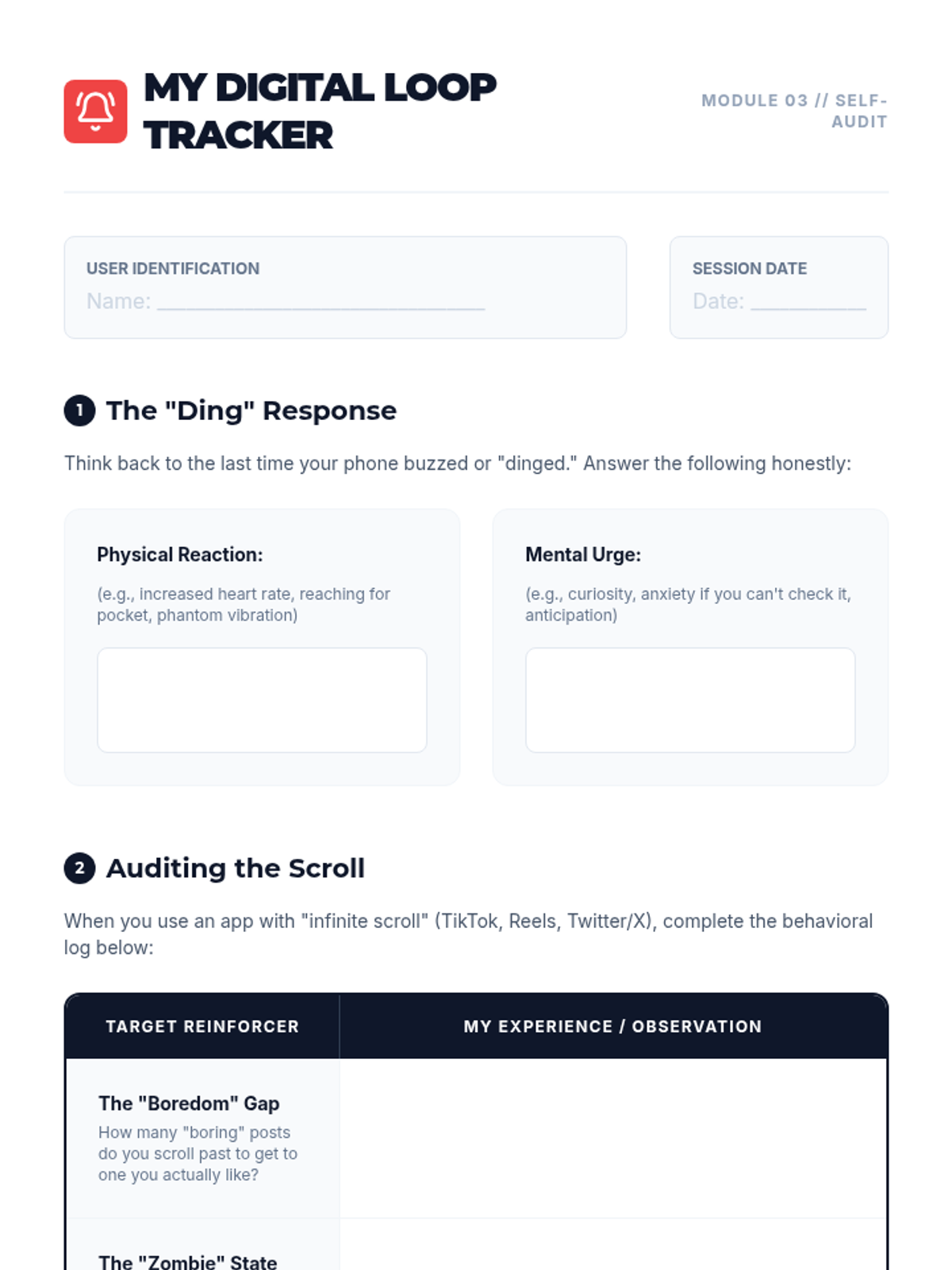
This lesson applies the concept of variable reinforcement to social media feeds (infinite scroll) and notifications. Students track their own reactions to notifications to understand the 'intermittent reward' mechanism.
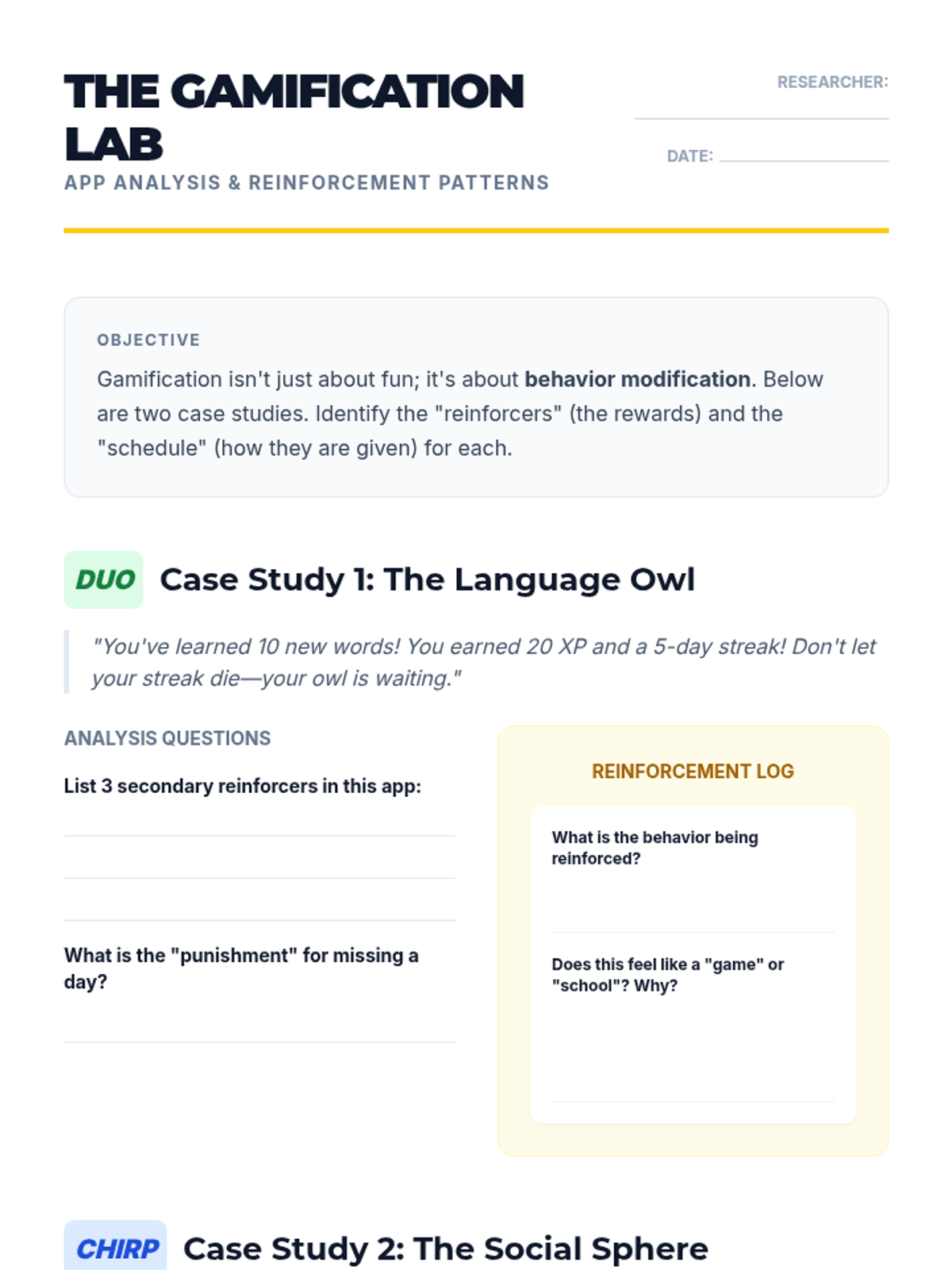
Students analyze common game elements like points, badges, and leaderboards, discussing how these digital tokens serve as conditioned reinforcers.
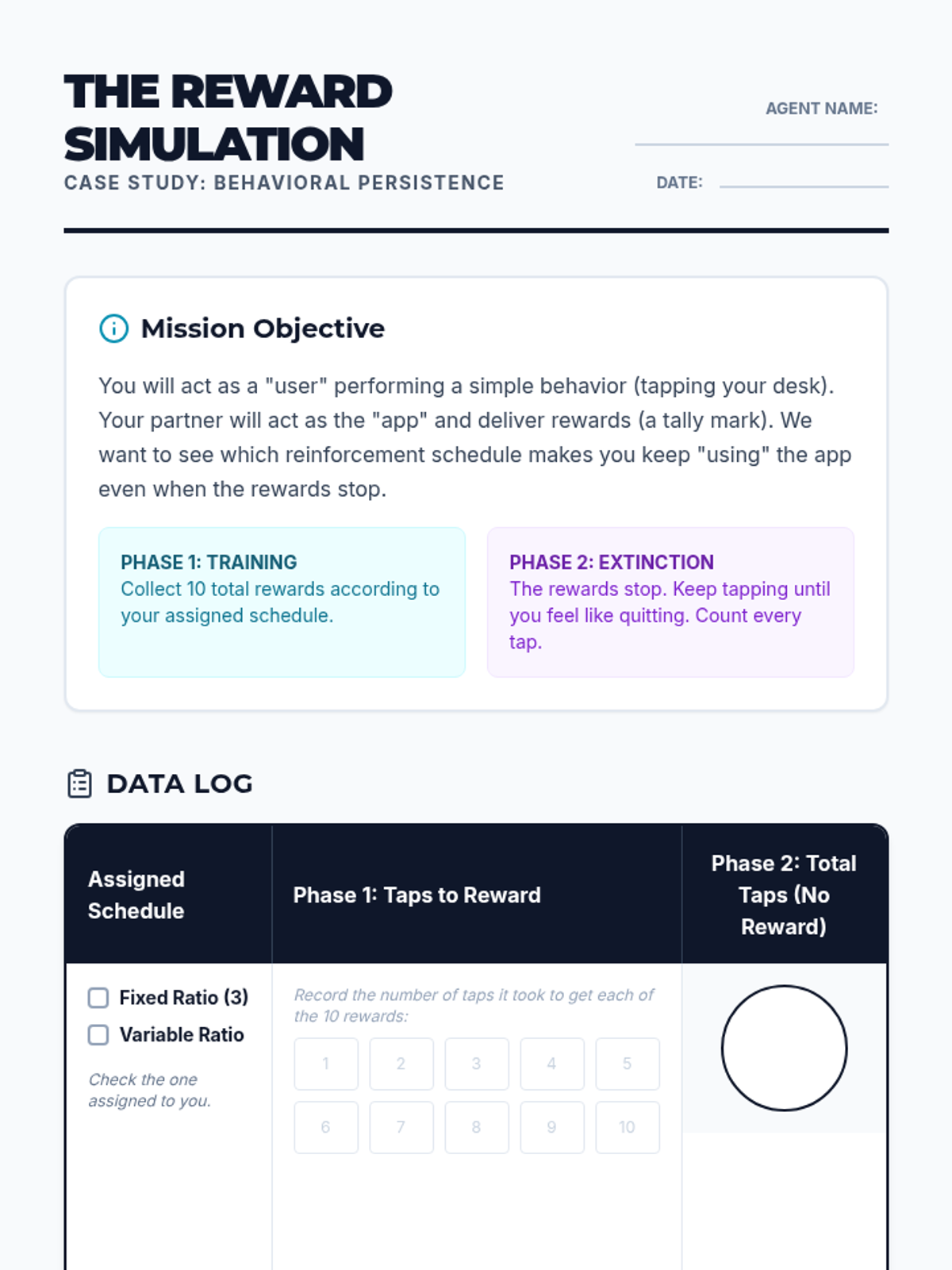
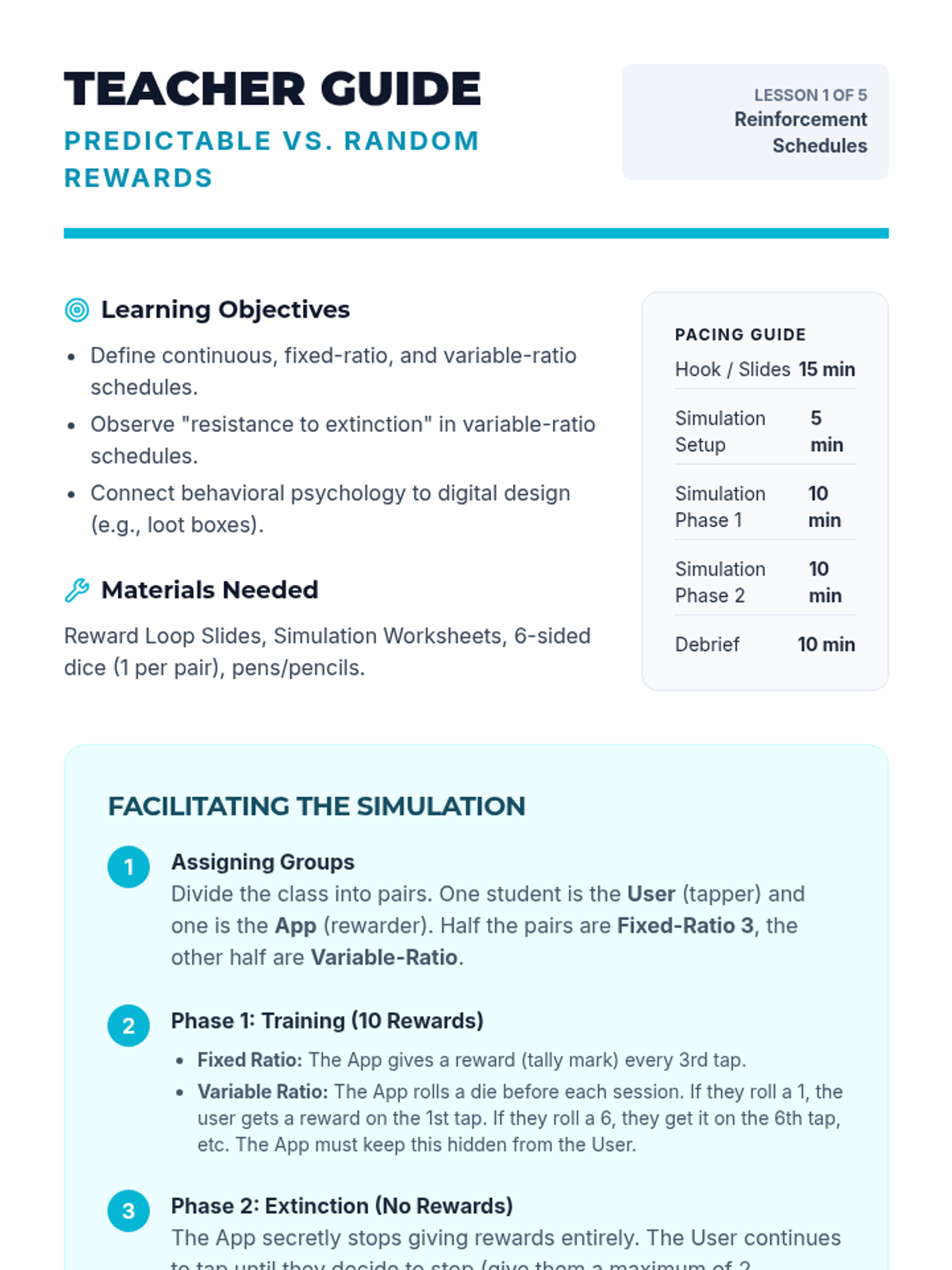
Introduction to reinforcement schedules, contrasting the predictability of fixed schedules with the persistence of variable ones.
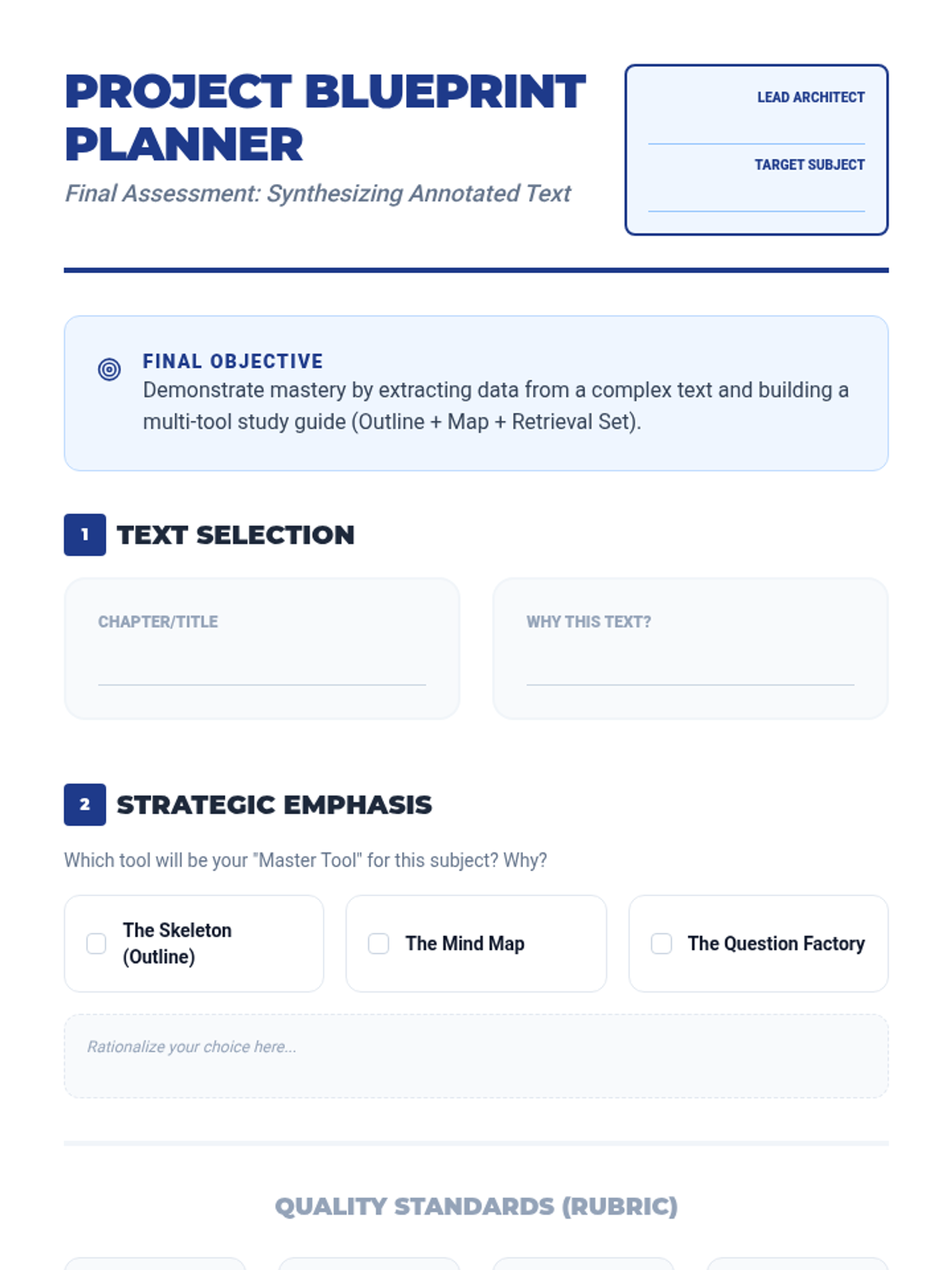
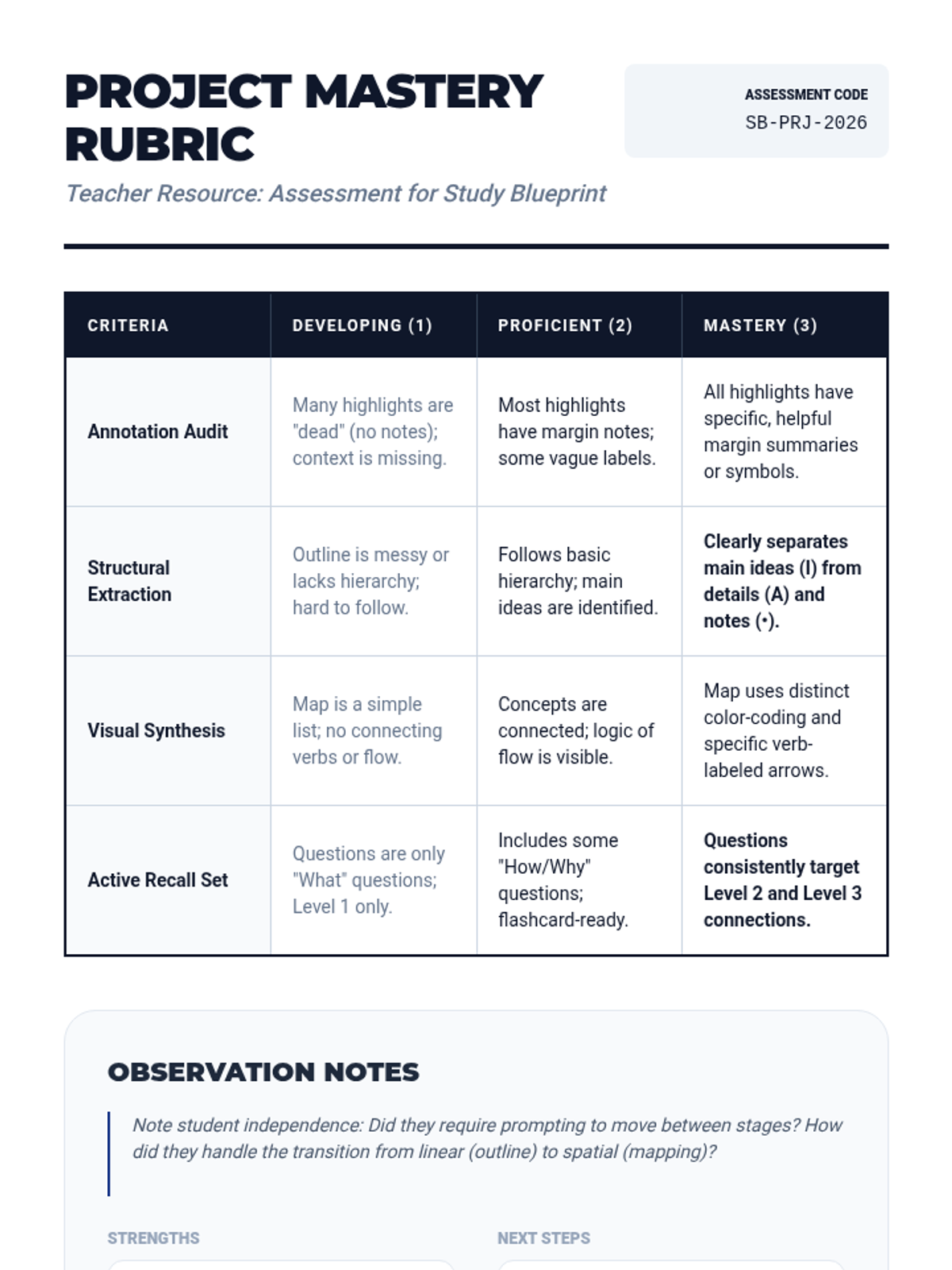
In this mastery-based project, students apply the entire workflow to a text from another class, producing a professional-grade study guide tailored to their specific learning style.
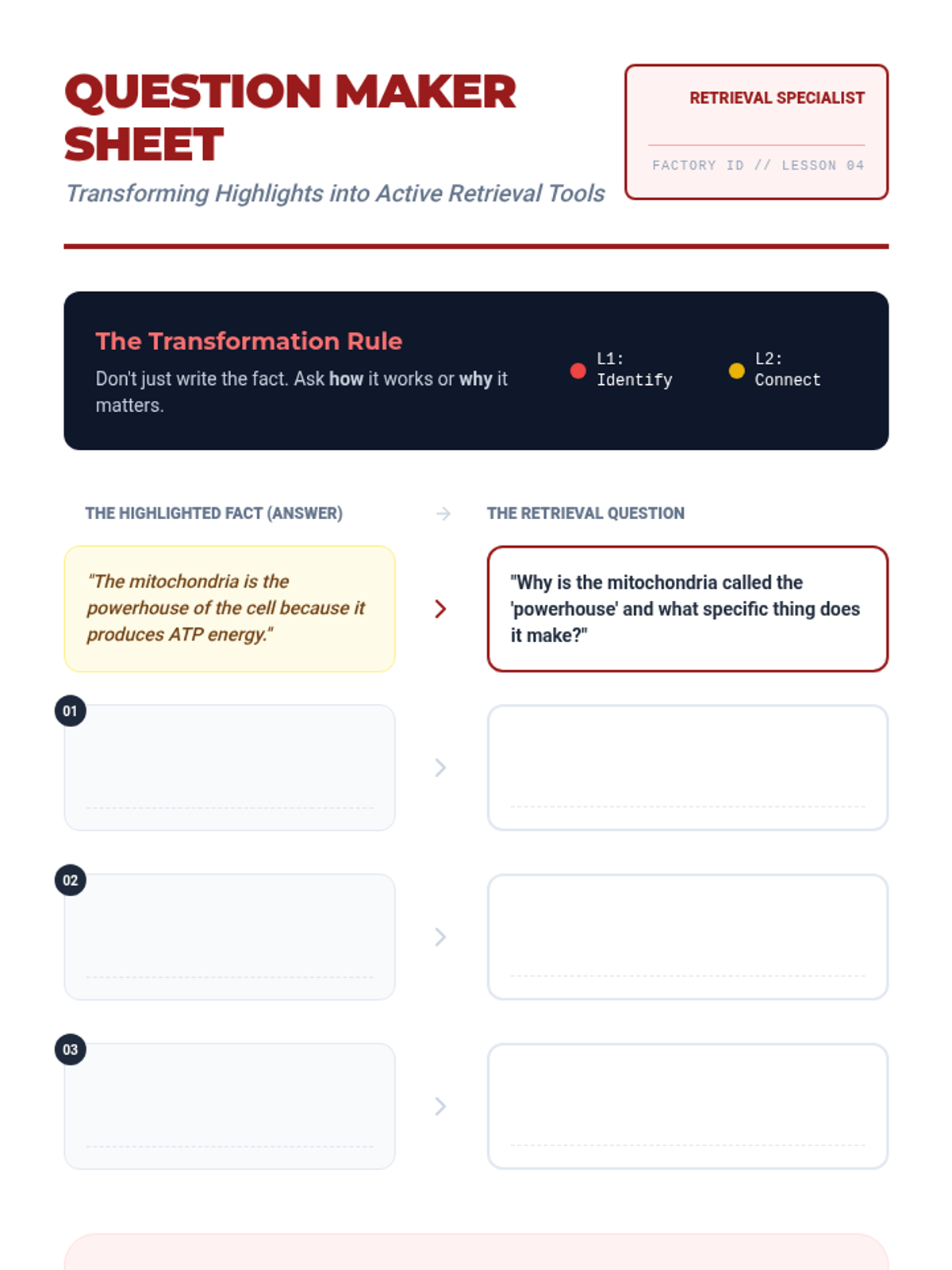
Students shift from passive re-reading to active recall by transforming their highlighted facts into high-quality retrieval questions for self-quizzing and flashcards.
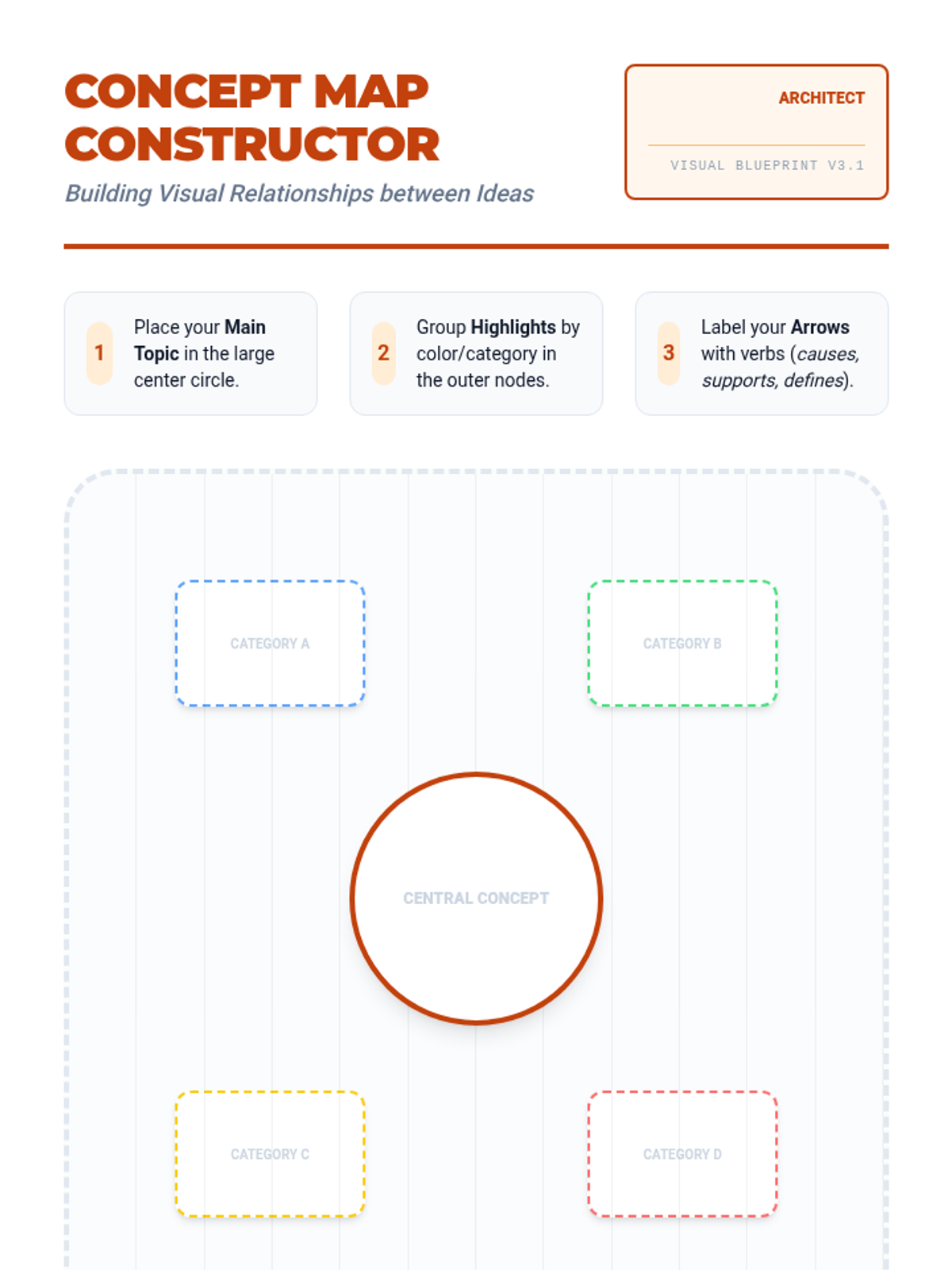
Focusing on spatial learning, students translate their categorized annotations into visual concept maps that highlight the relationships between key terms and ideas.
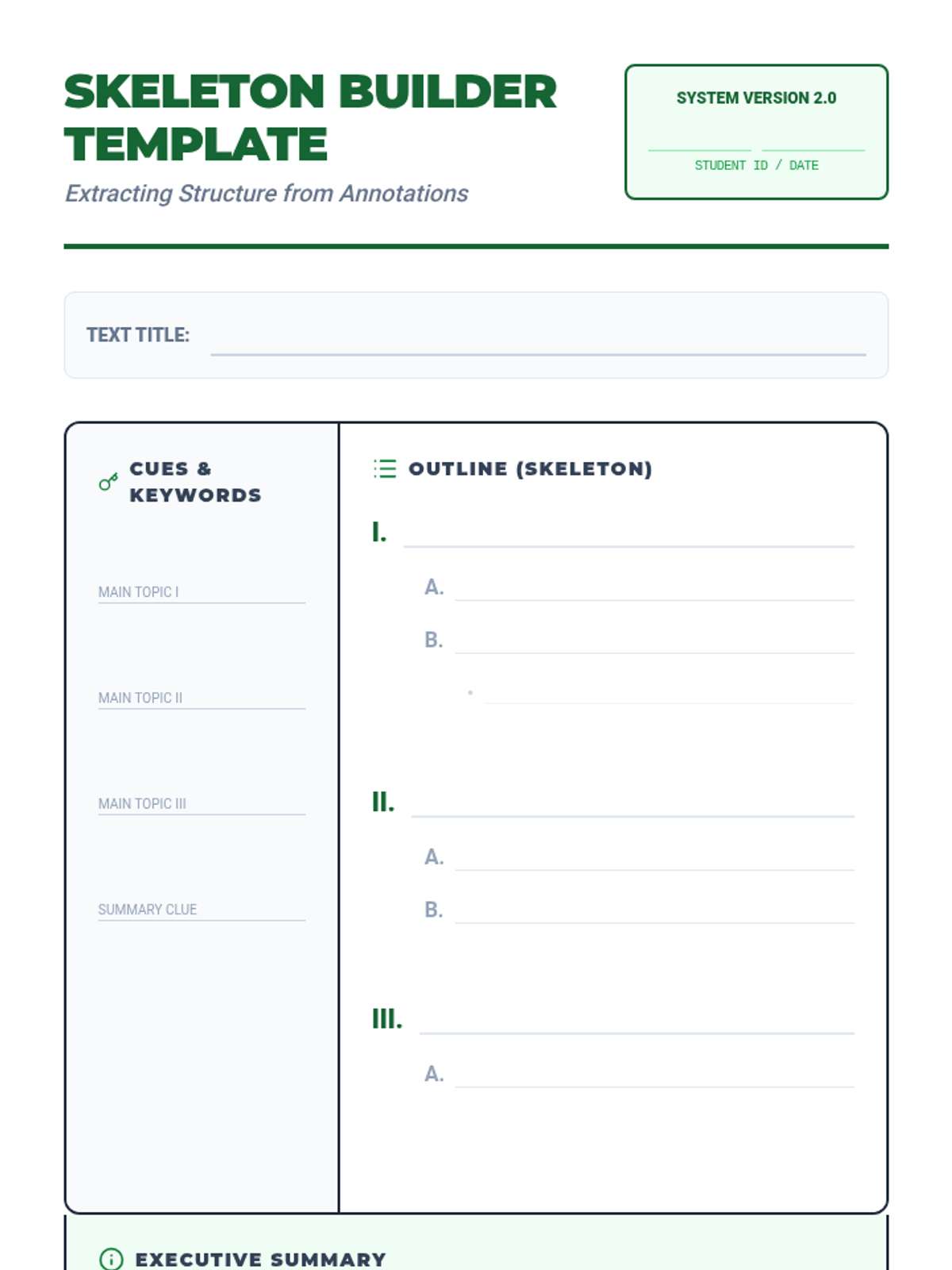
Students learn the 'Skeleton Method' to extract main ideas and supporting details from their highlights, organizing them into structured Cornell notes or topic outlines.
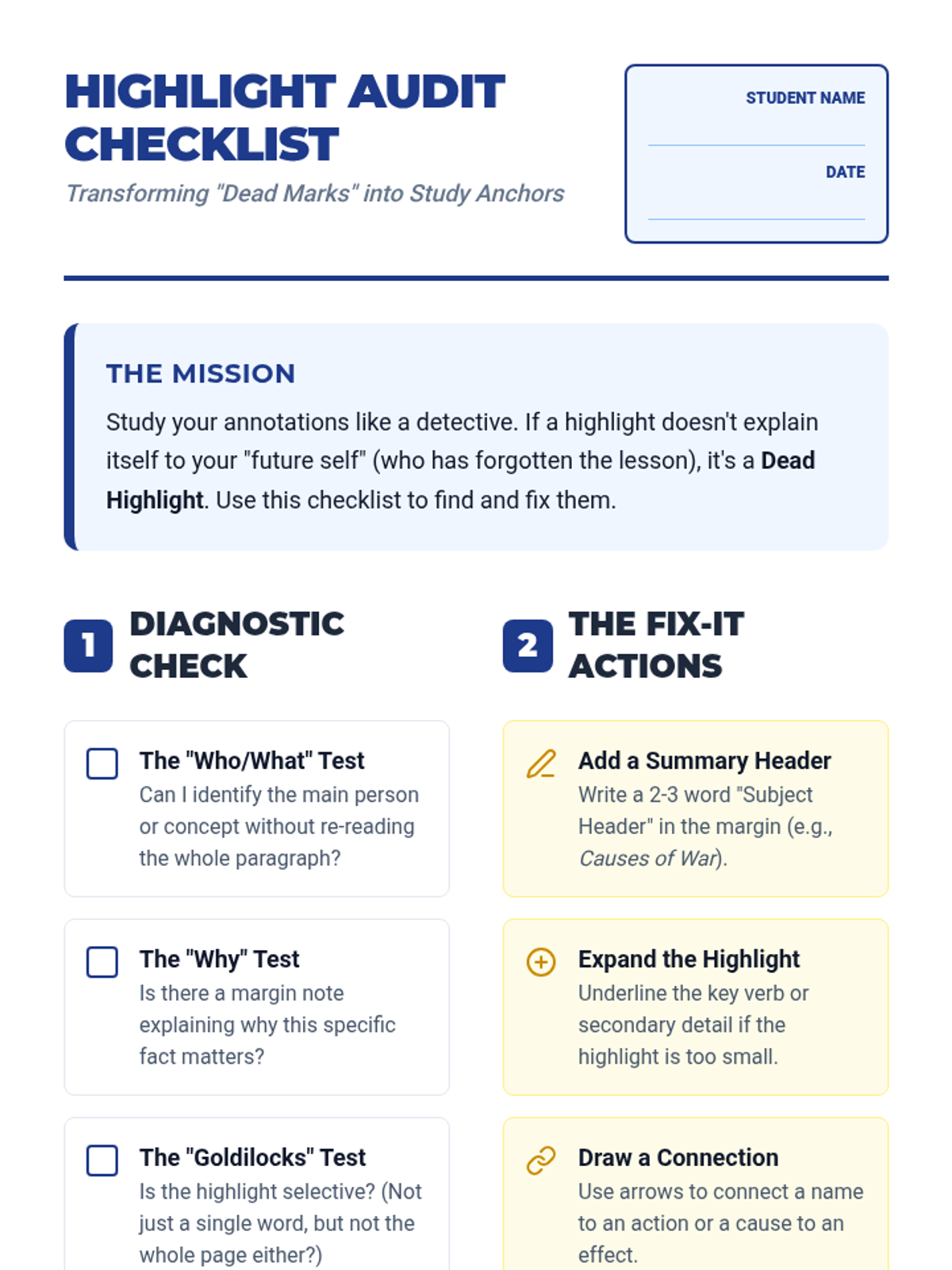
Students investigate the effectiveness of their previous annotations, identifying 'dead highlights' and learning to add meaningful context to their notes to make them useful for future review.
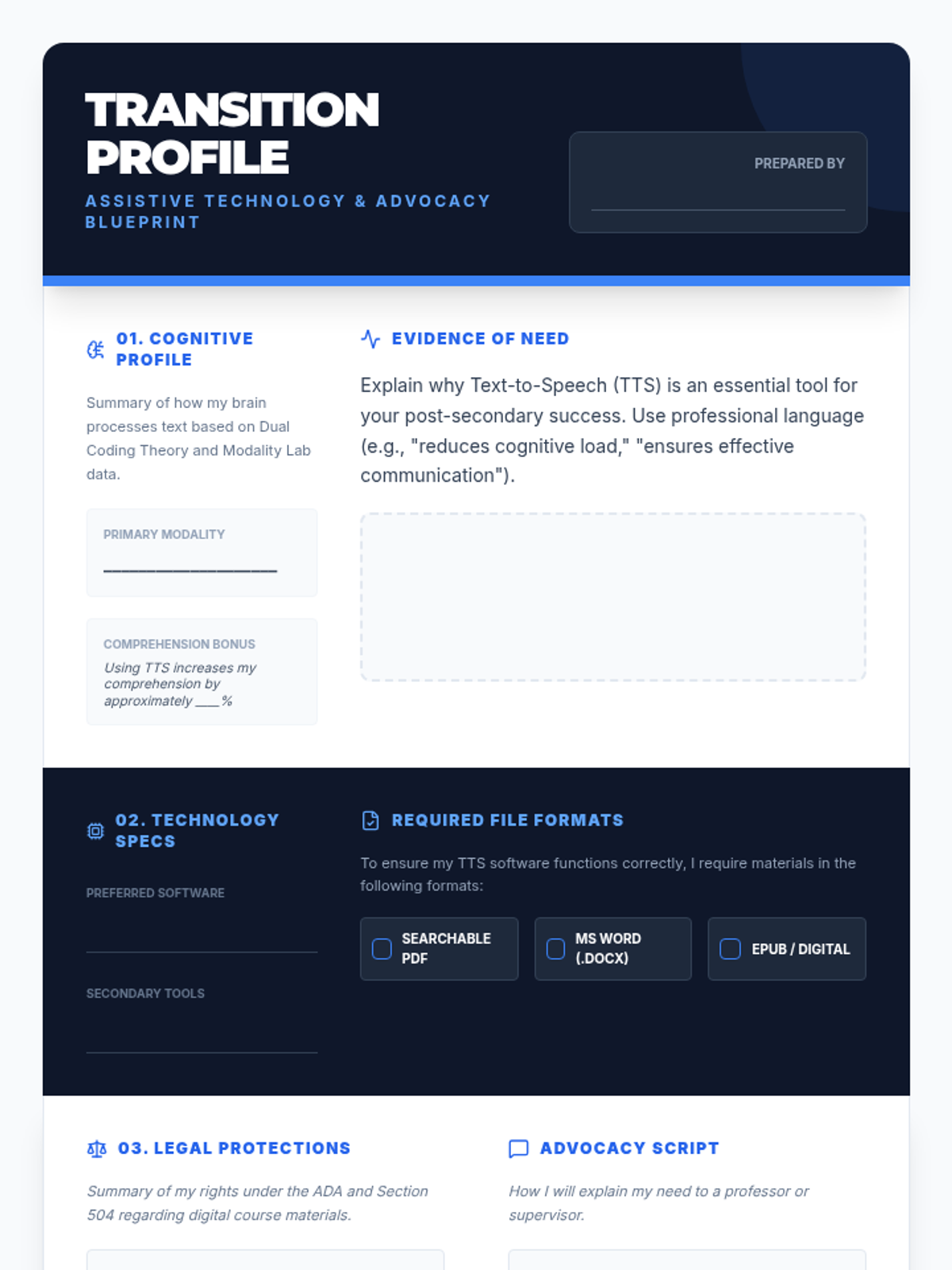
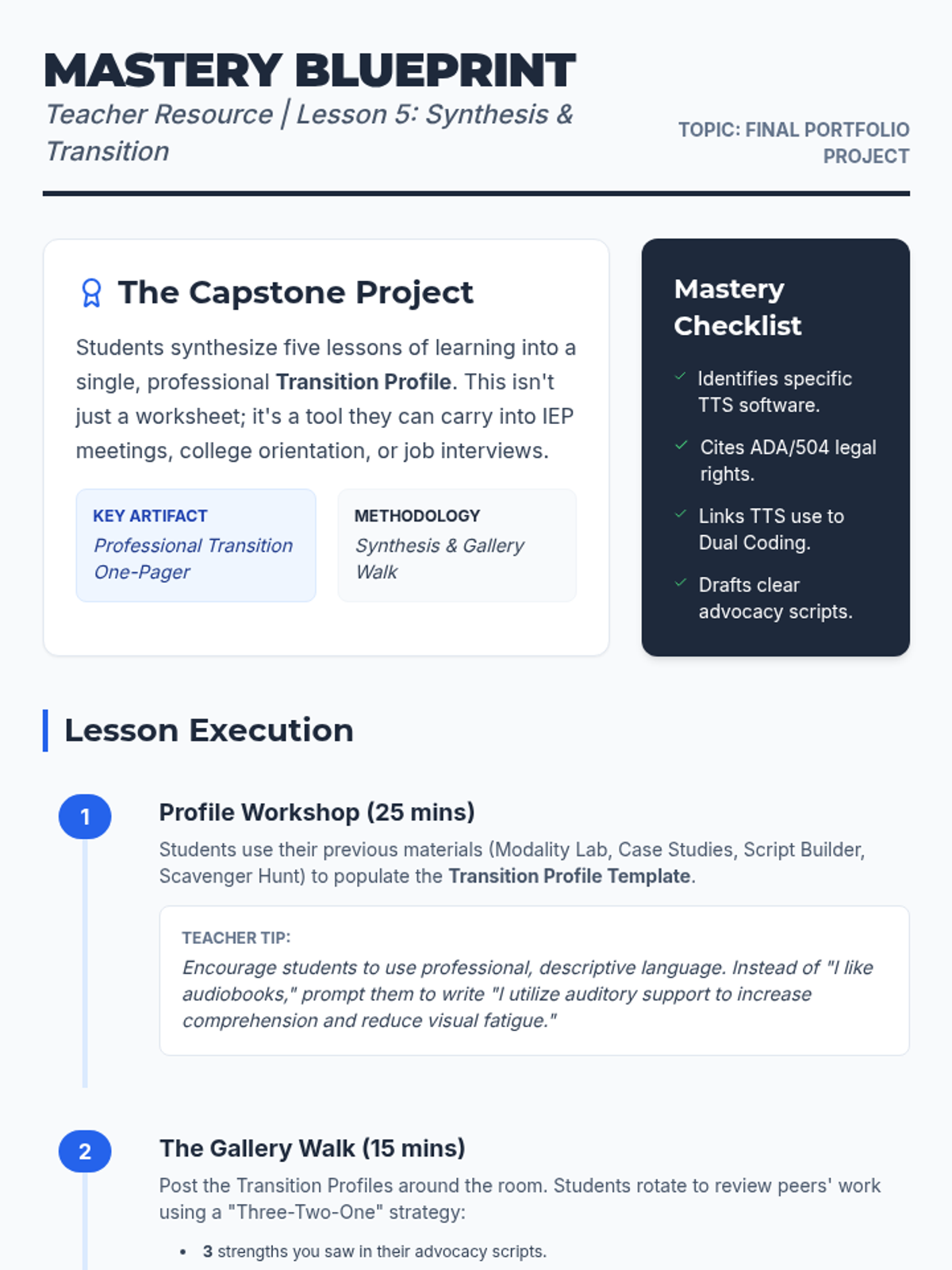
Students synthesize their learning into a professional transition one-pager that summarizes their specific assistive technology needs and legal rights.
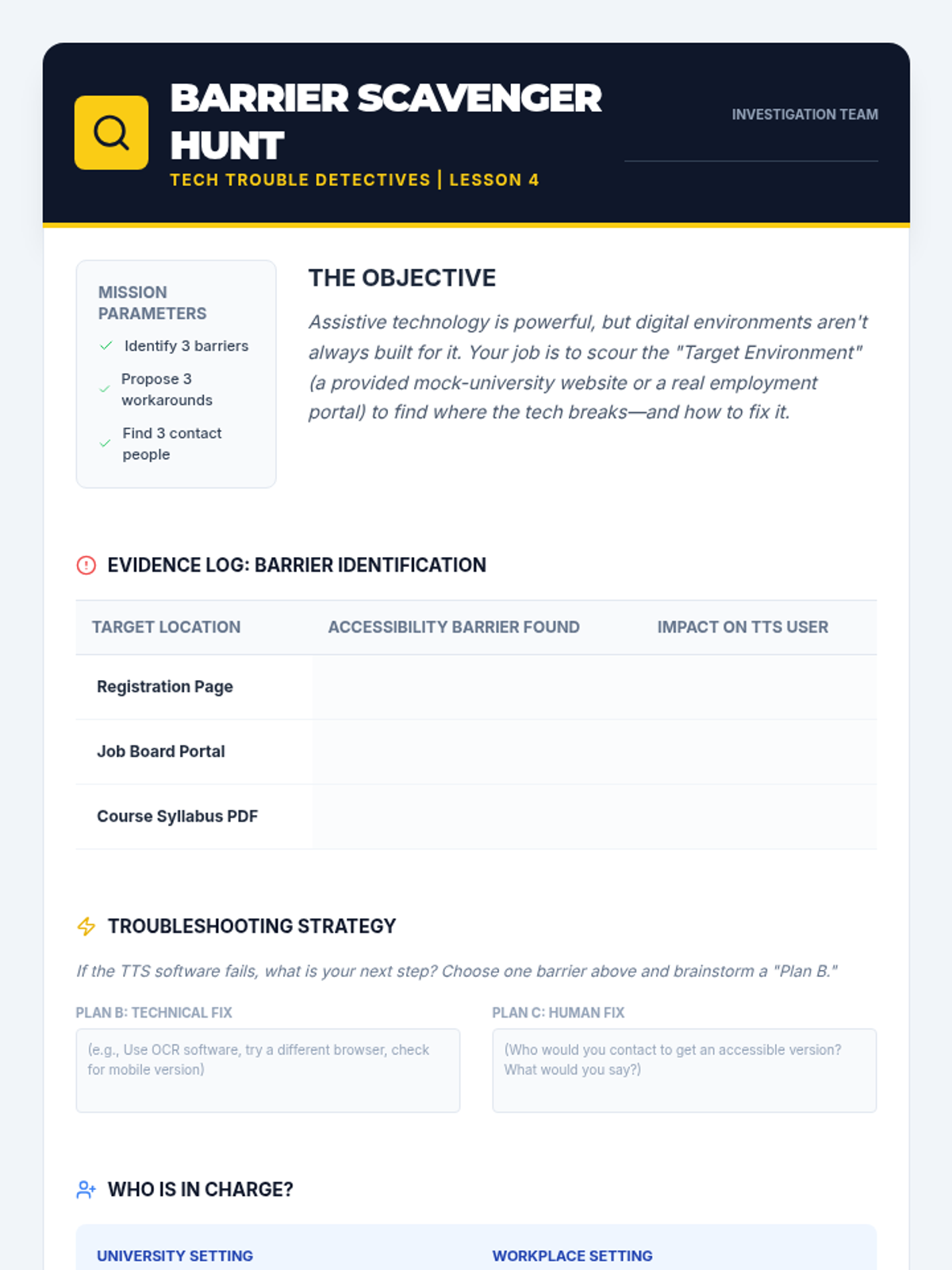
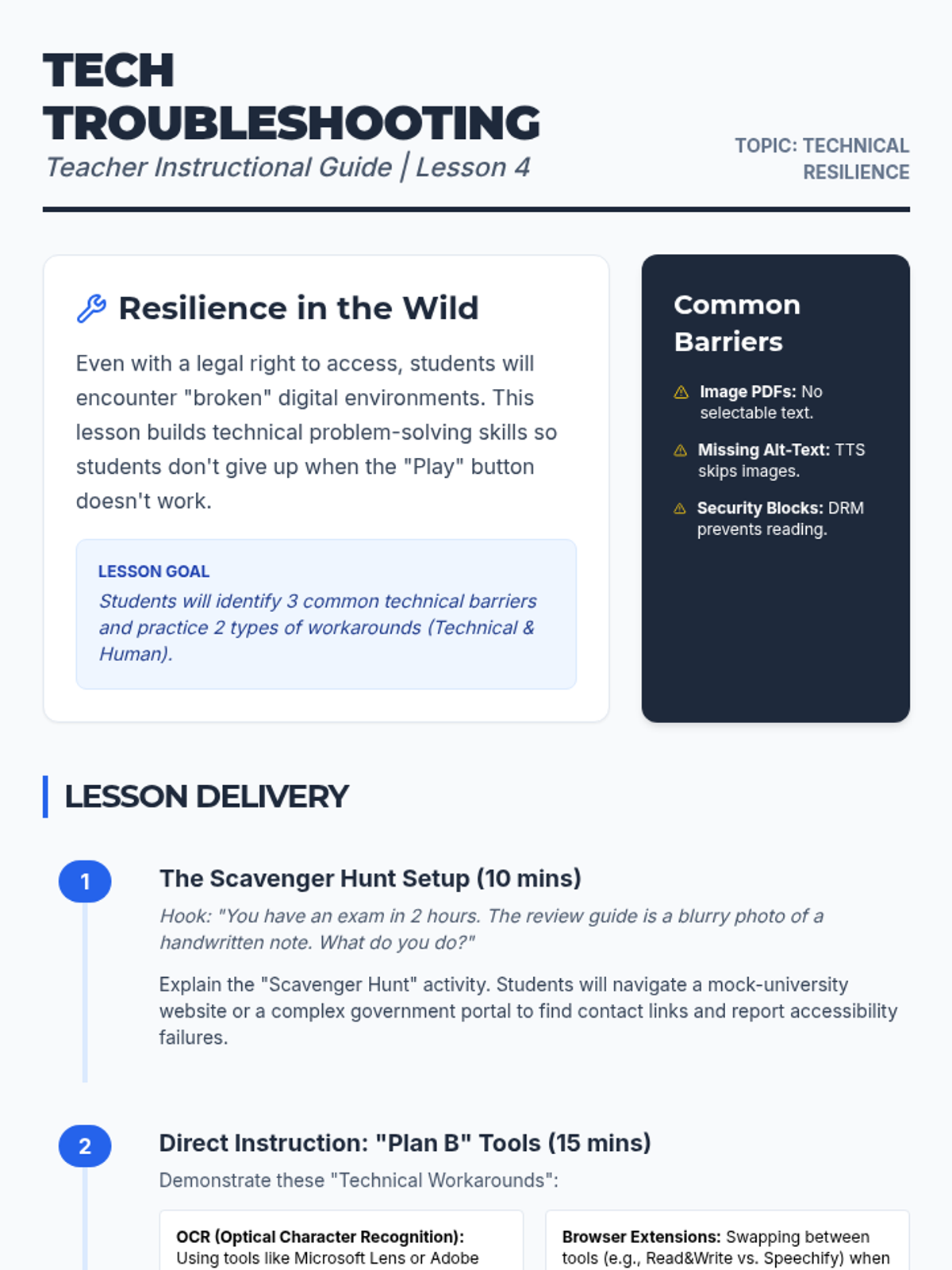
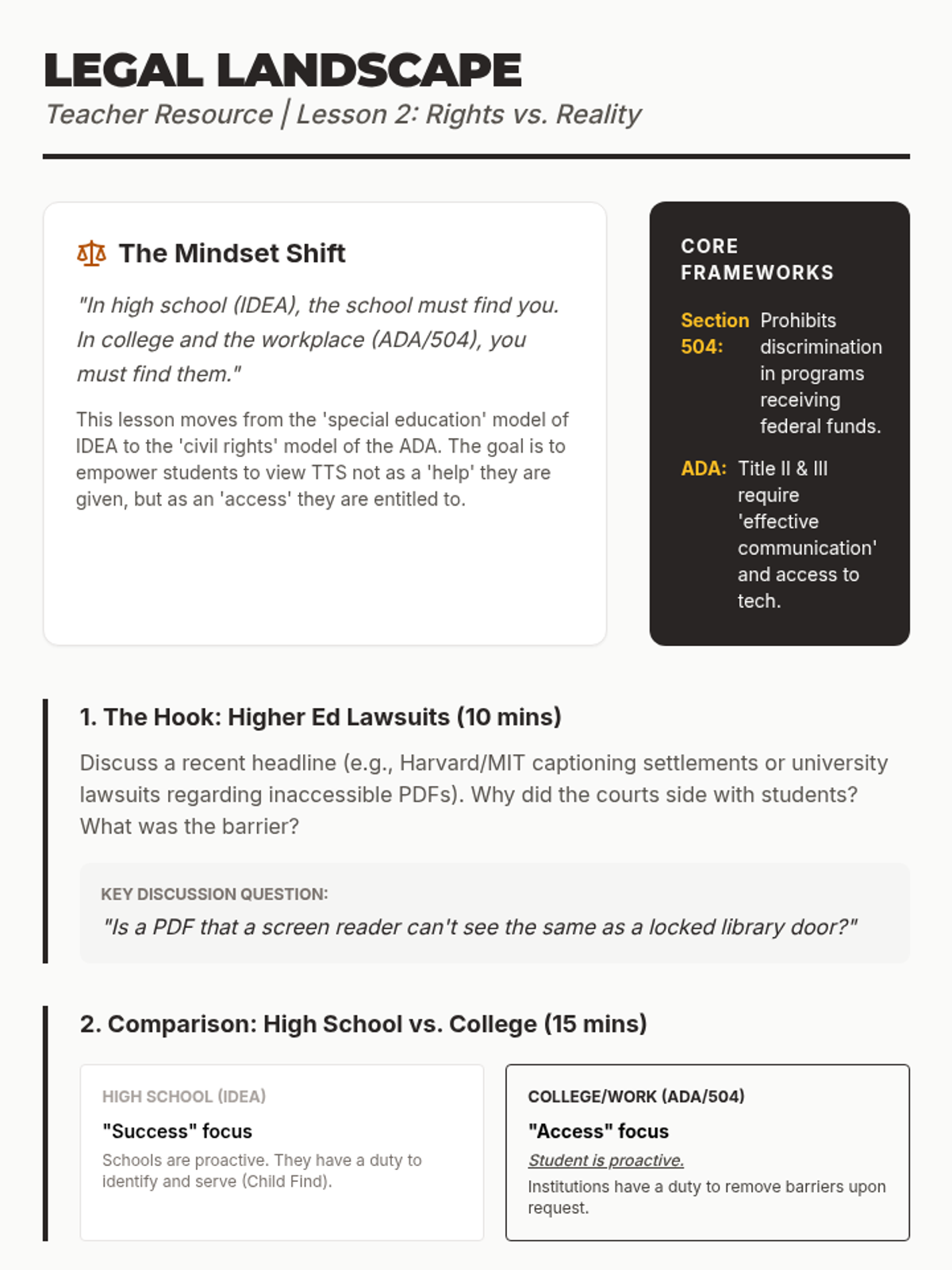
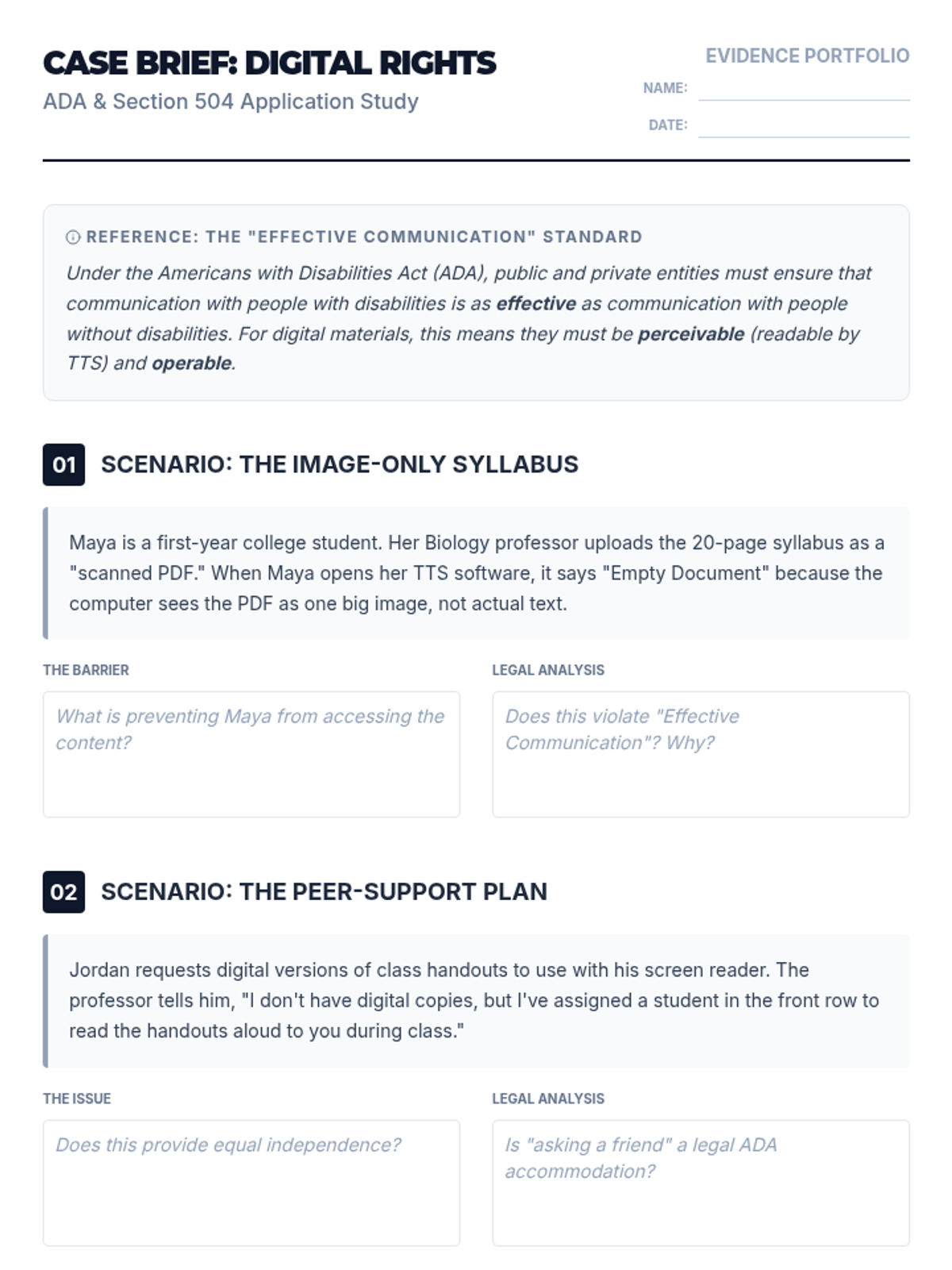
Practical troubleshooting for digital barriers, including identifying inaccessible files and finding technical workarounds or contact persons.
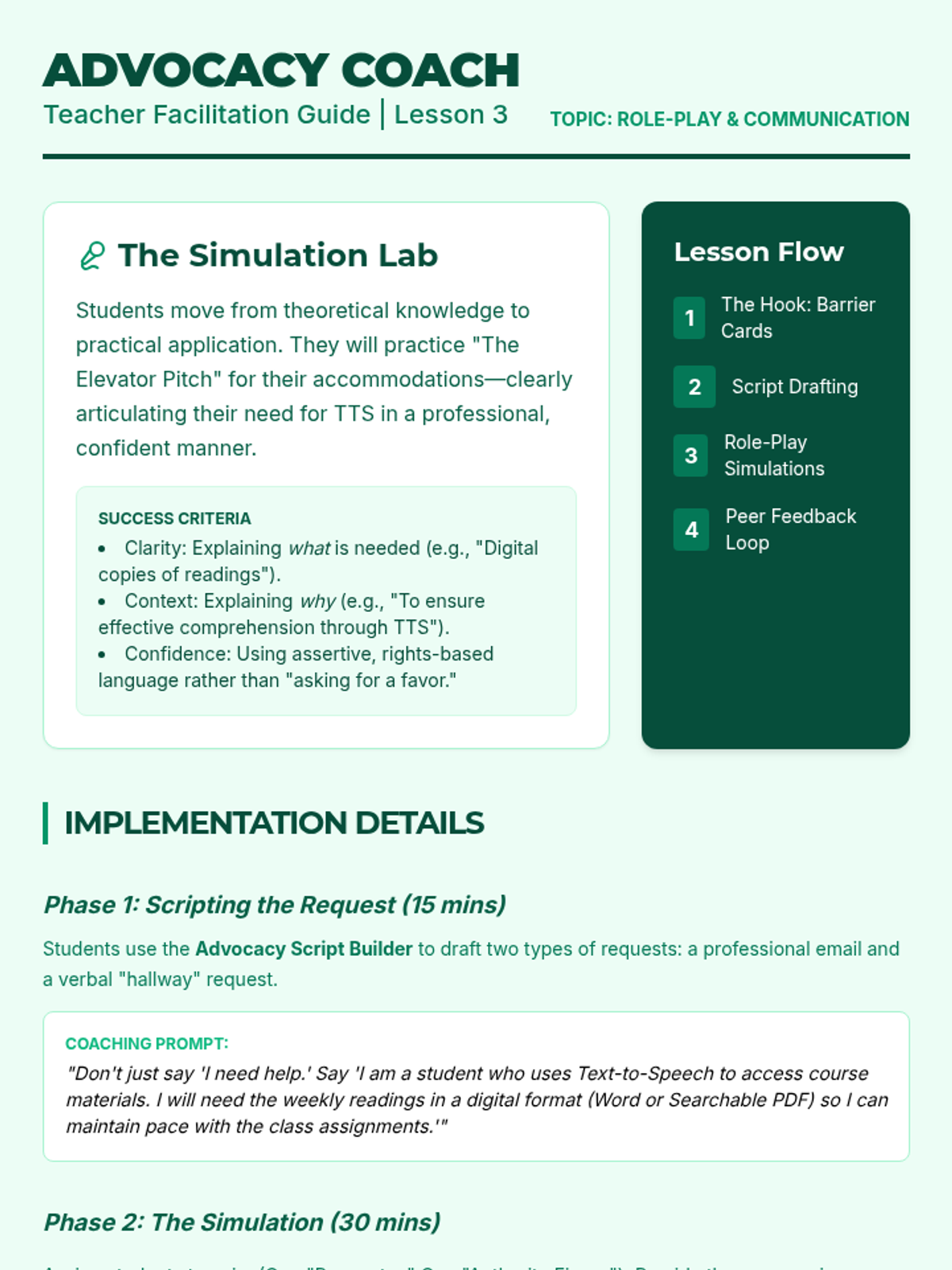
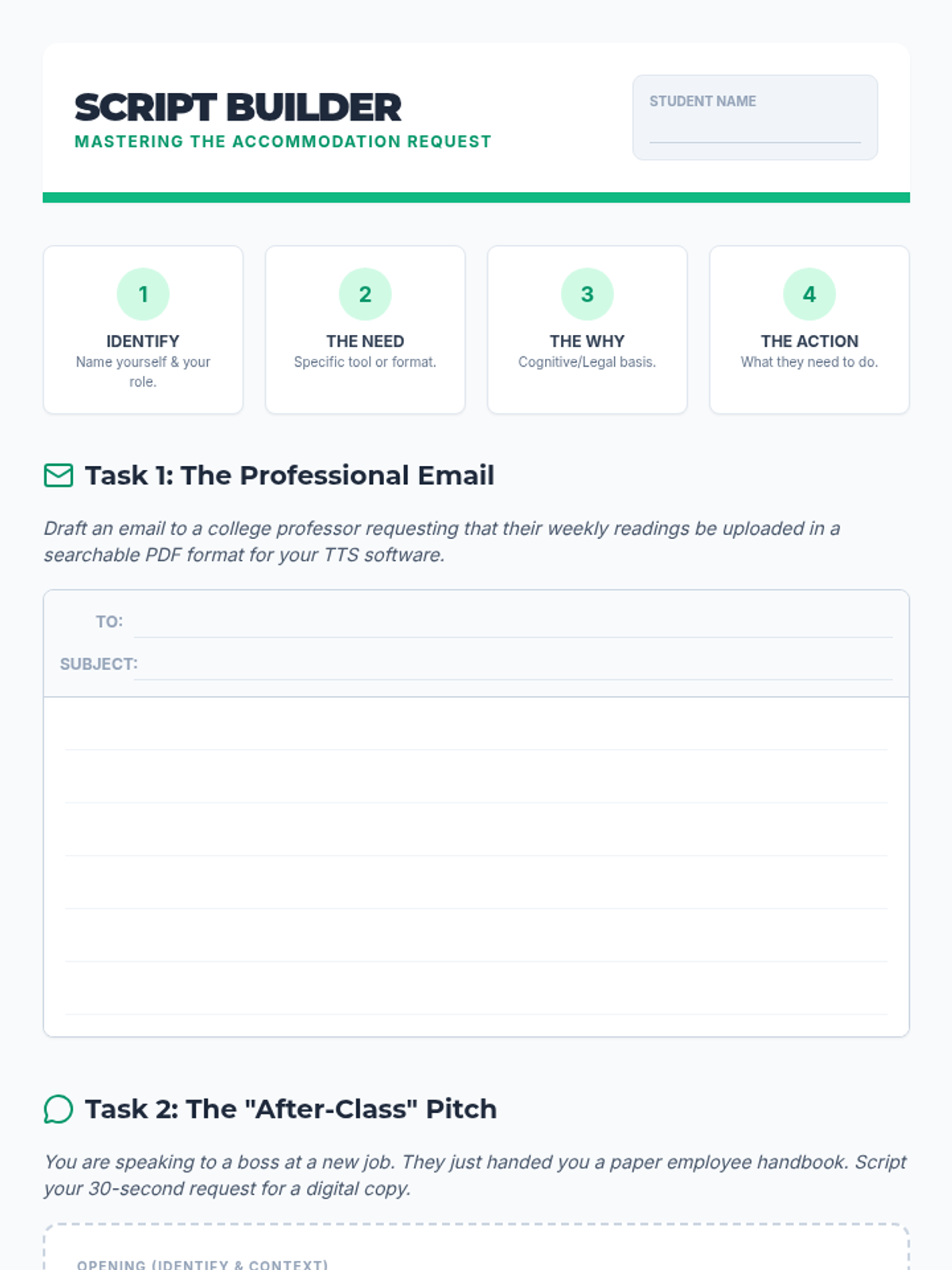
Students practice professional communication and self-advocacy by simulating requests for accommodations in college and workplace settings.
A deep dive into the legal frameworks of the ADA and Section 504 as they apply to digital accessibility in higher education and the workplace.
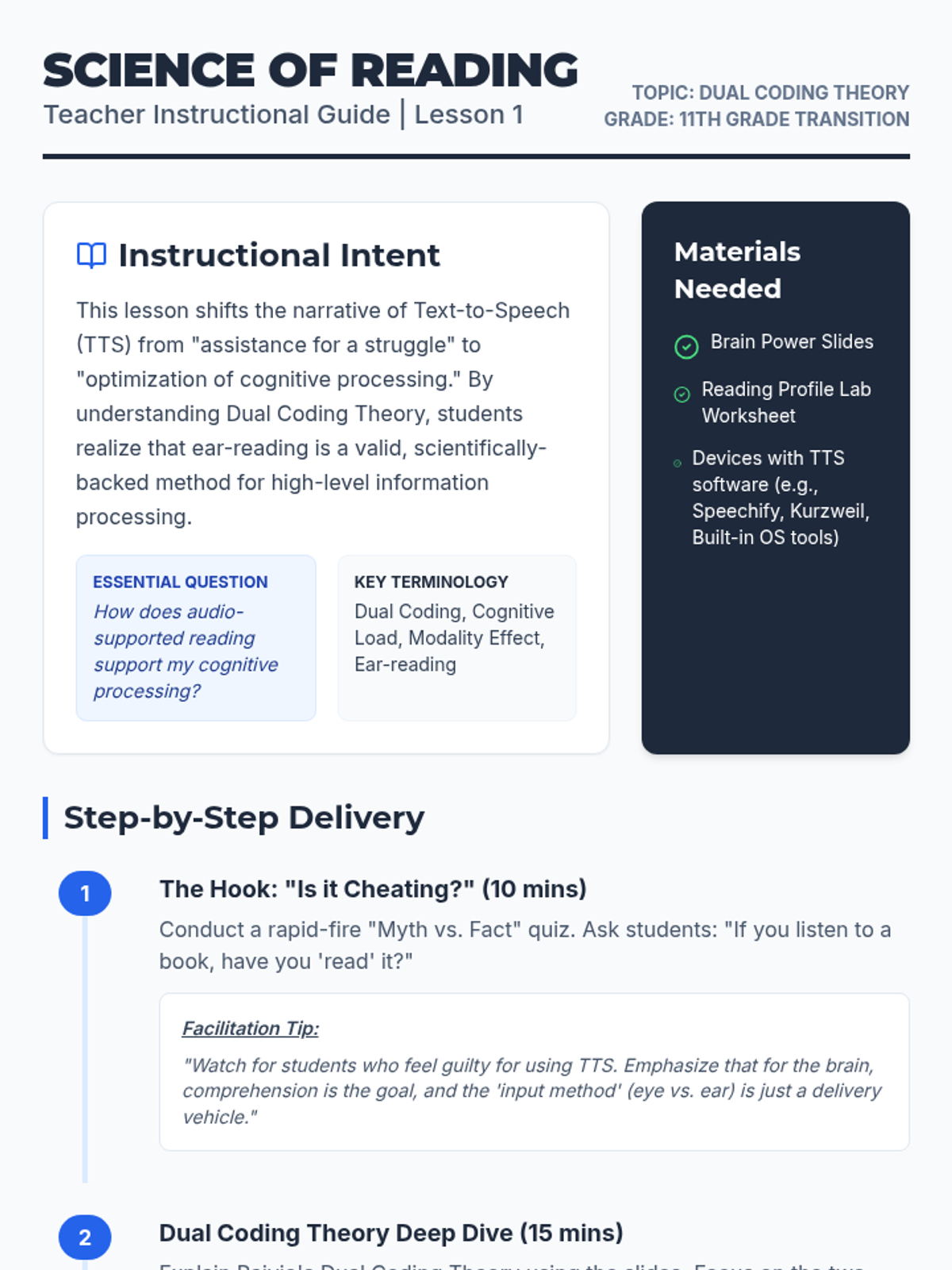
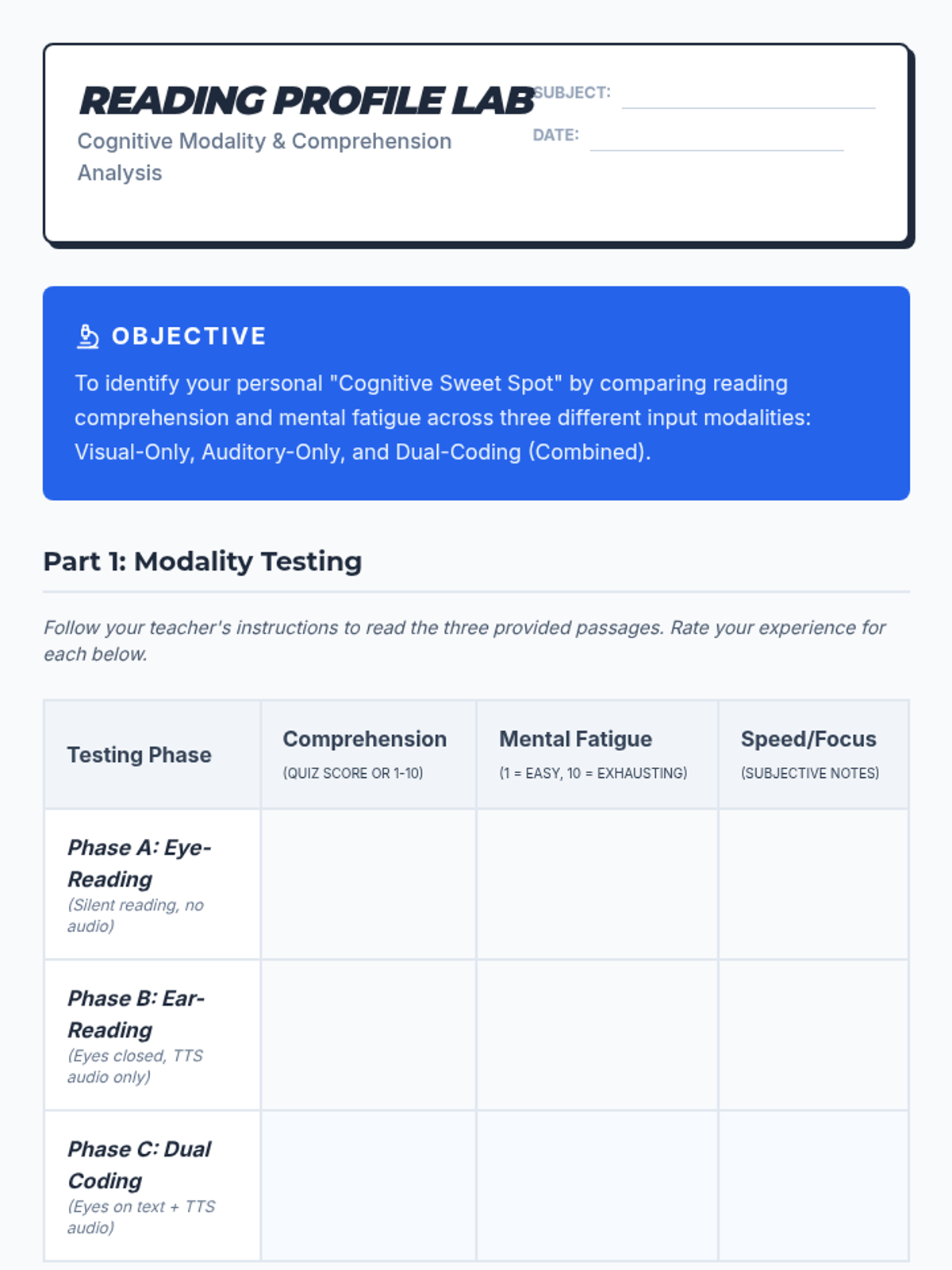
Students explore Dual Coding Theory and analyze their personal reading data to understand how eye-reading and ear-reading interact to improve comprehension and reduce fatigue.
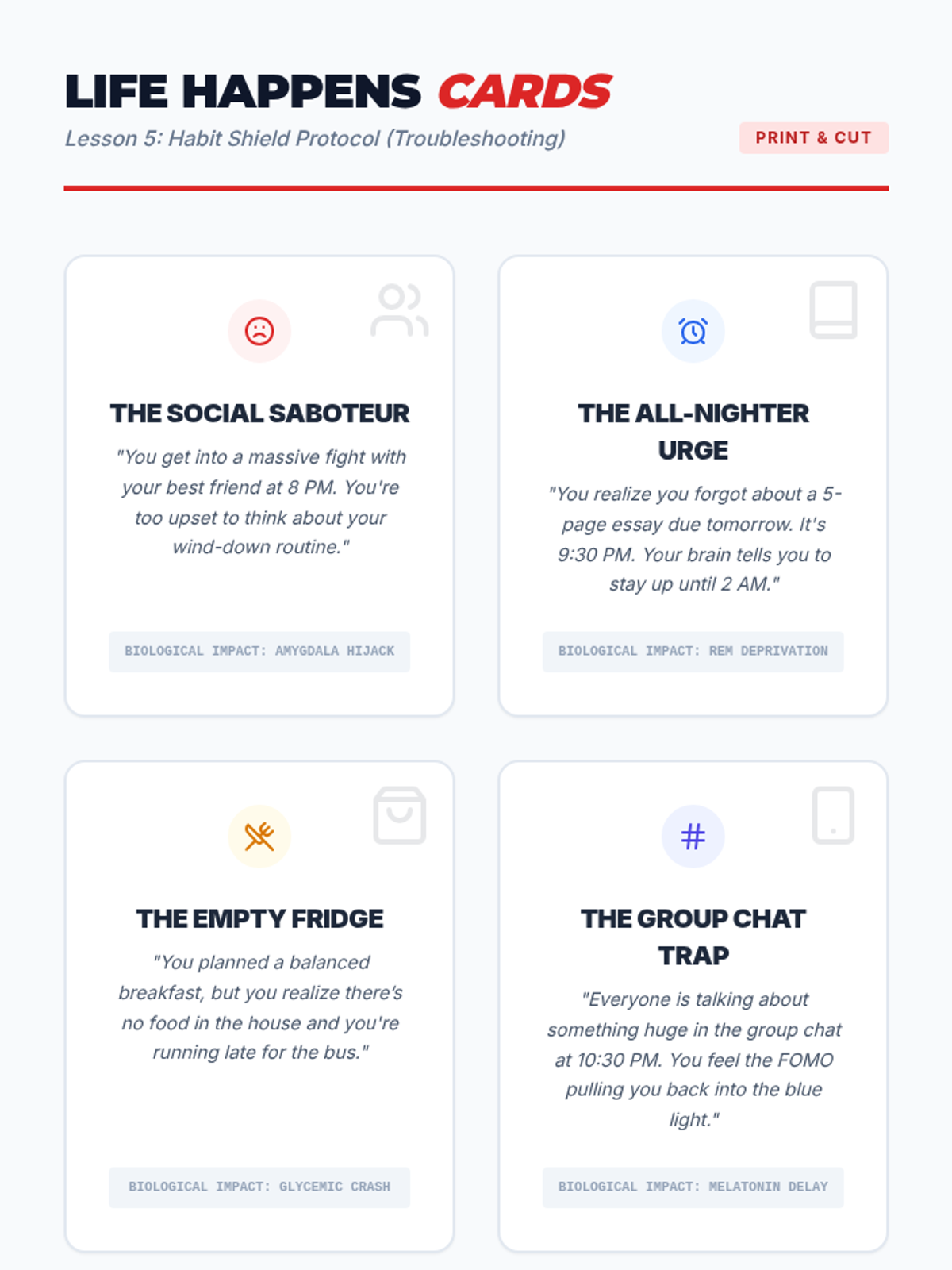
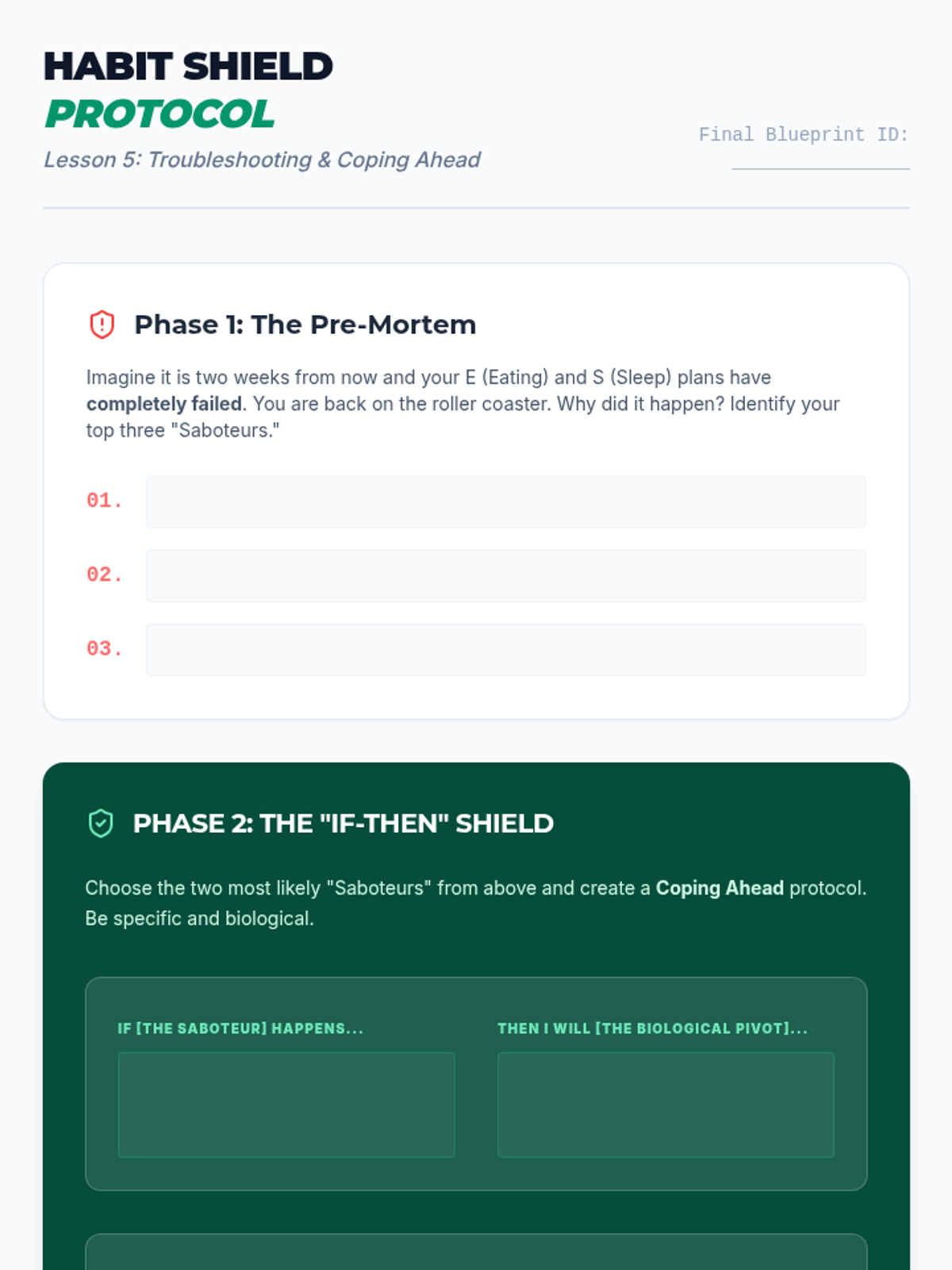
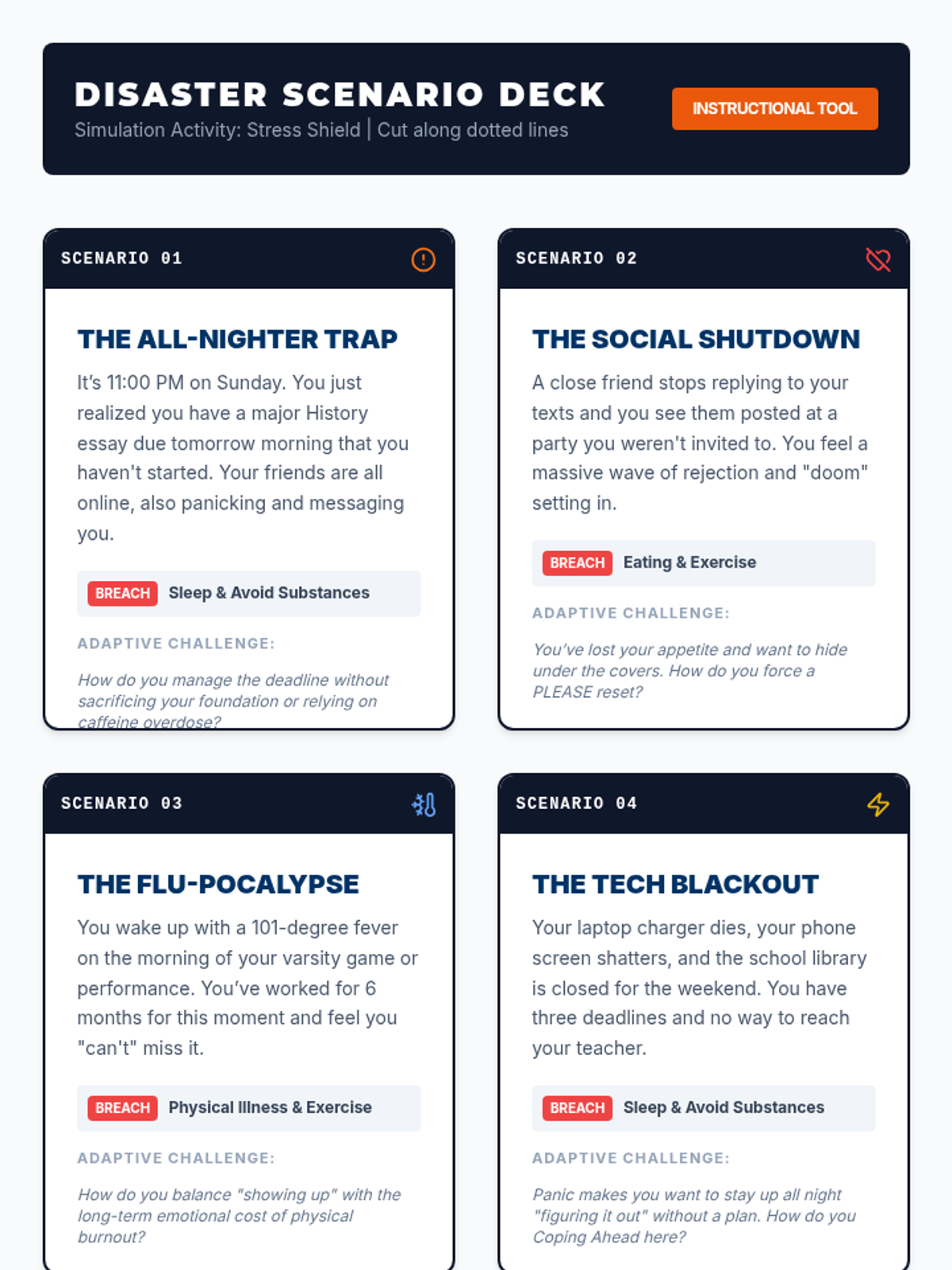
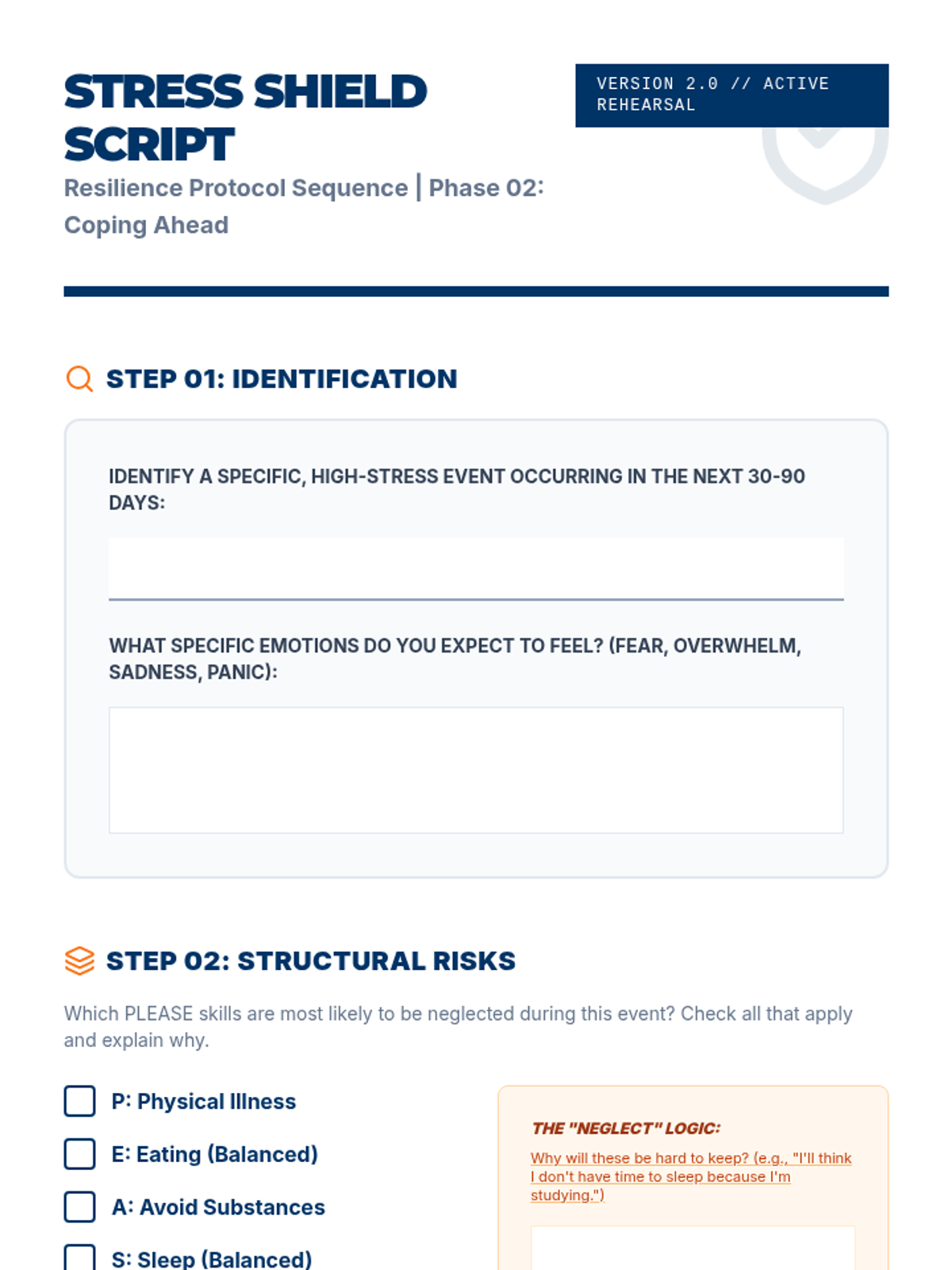
Students perform a 'pre-mortem' on their plans, using scenario cards to practice 'coping ahead' for real-world obstacles.
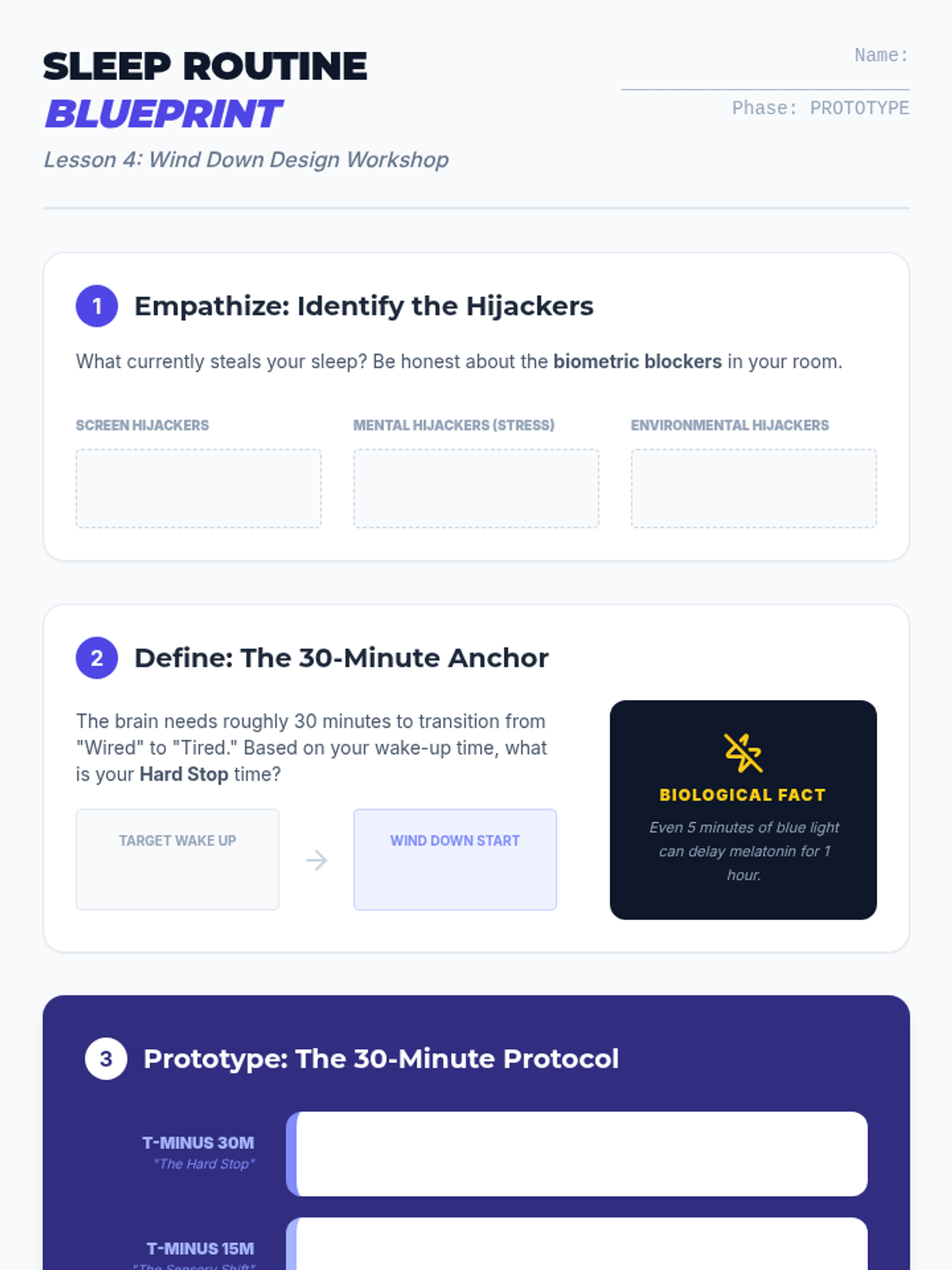
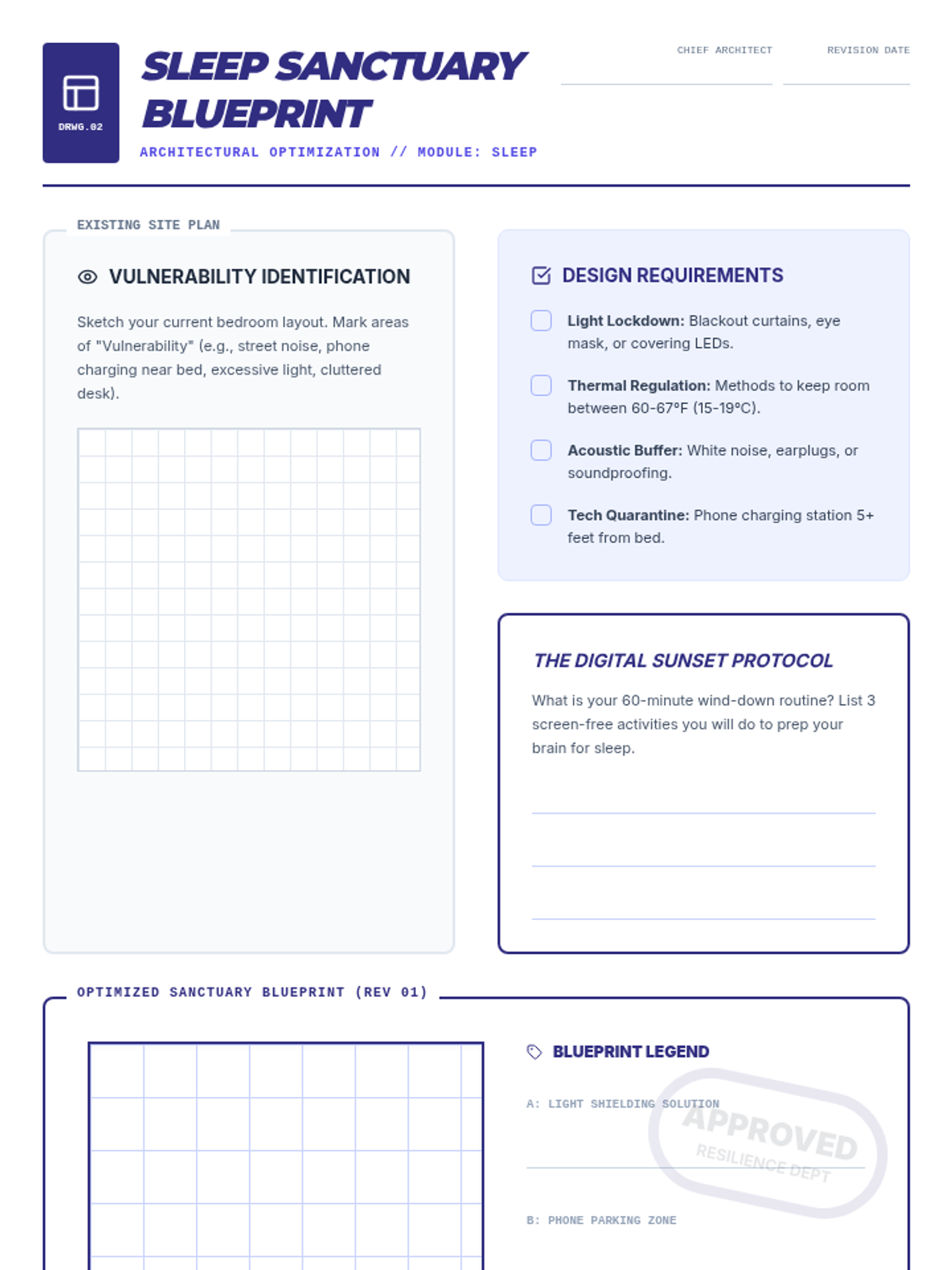
A design thinking workshop where students prototype a personalized 30-minute pre-sleep routine to manage modern distractions.
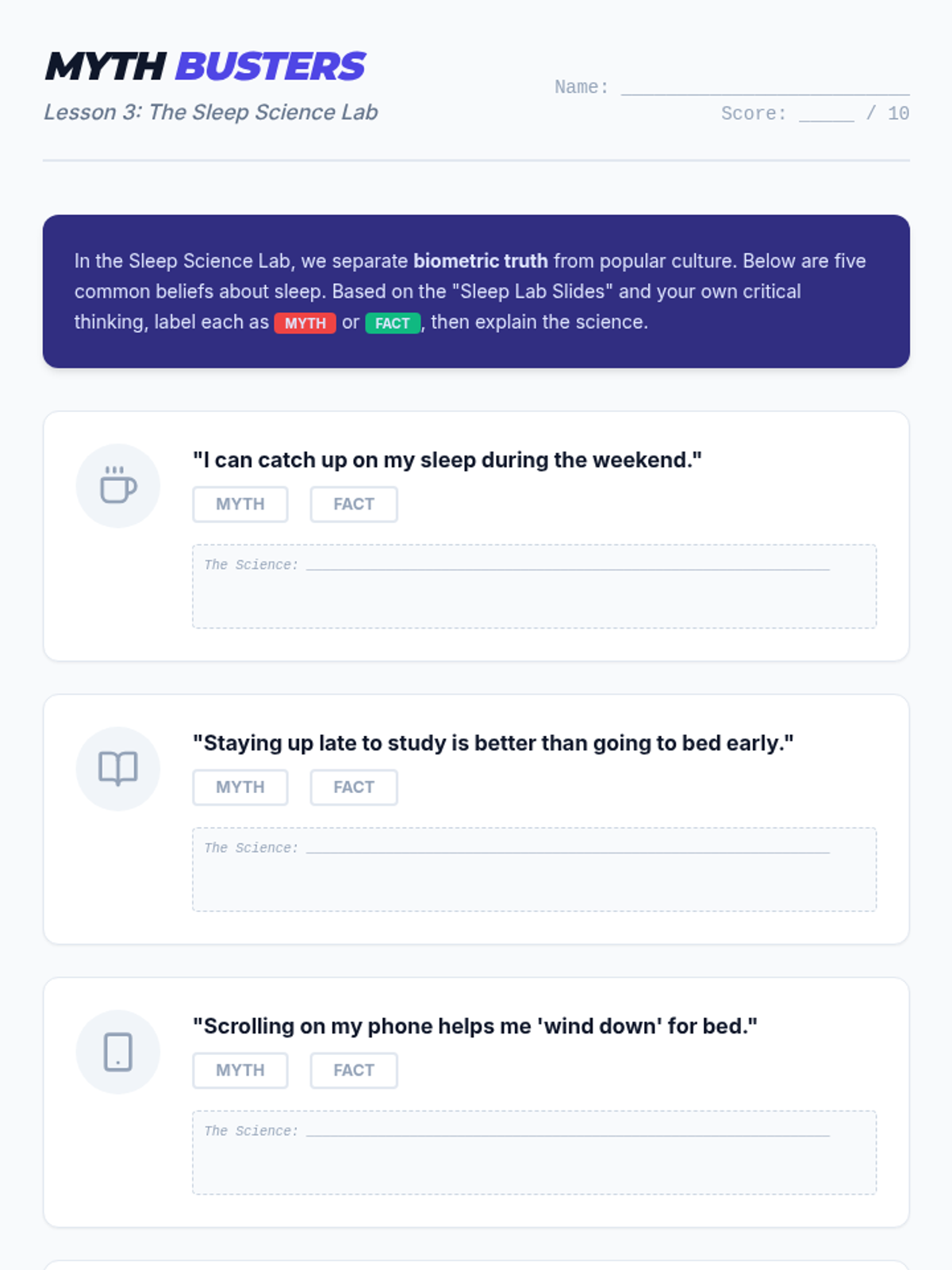
Students analyze sleep architecture, REM's role in emotional processing, and the physiological impact of sleep deprivation.
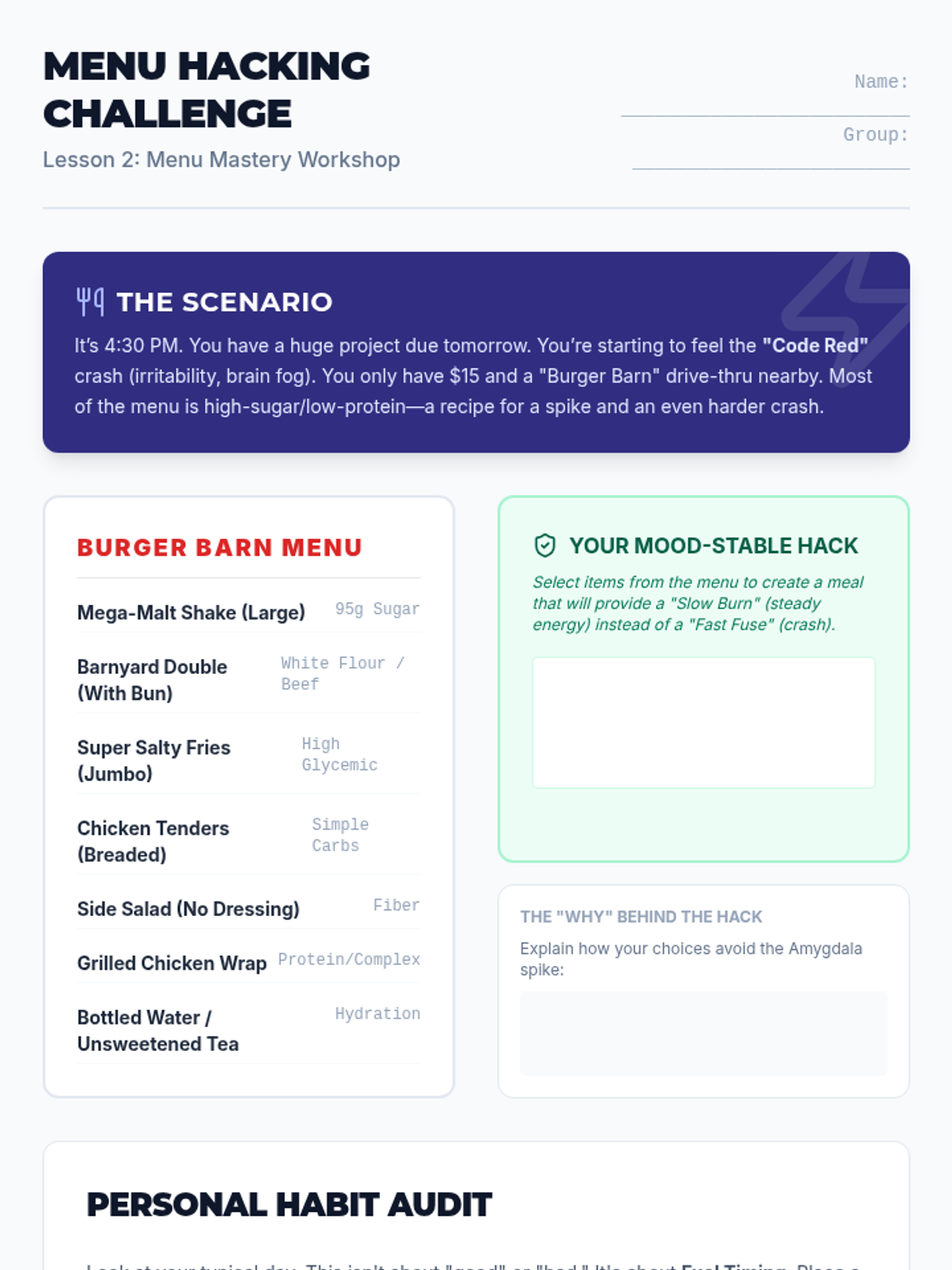
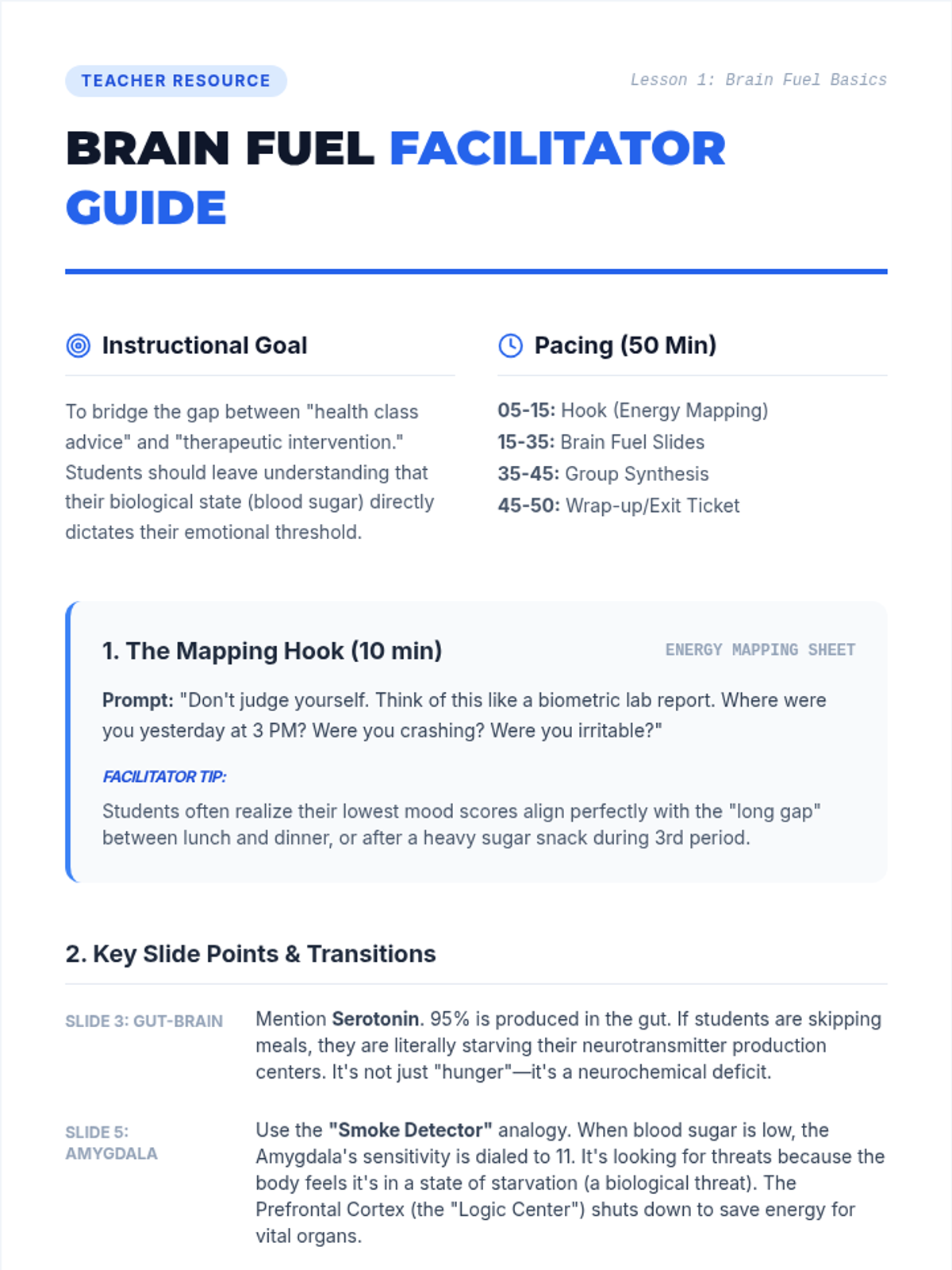
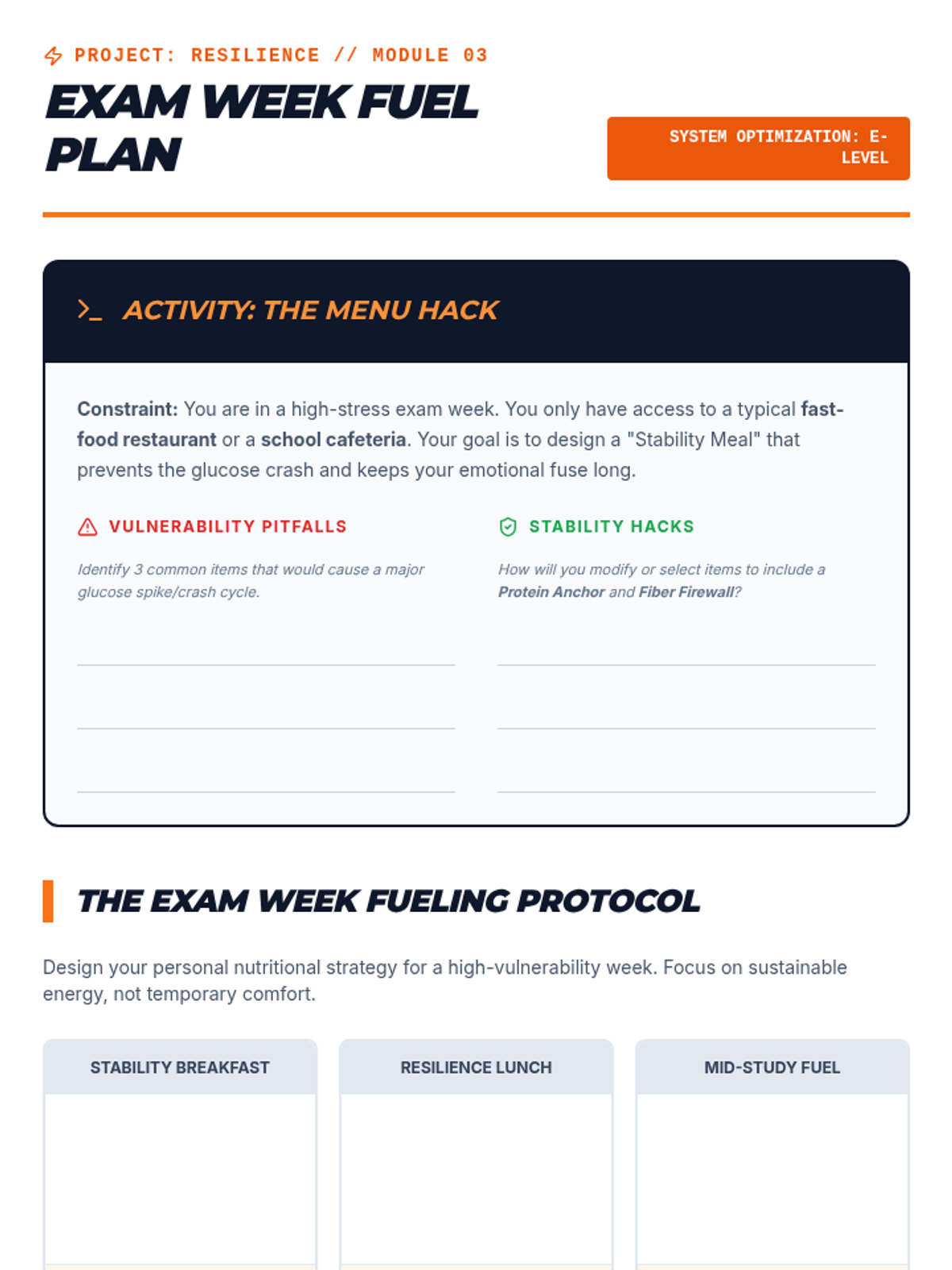
Students conduct a non-judgmental audit of eating patterns and practice 'hacking' real-world menus for mood stabilization.
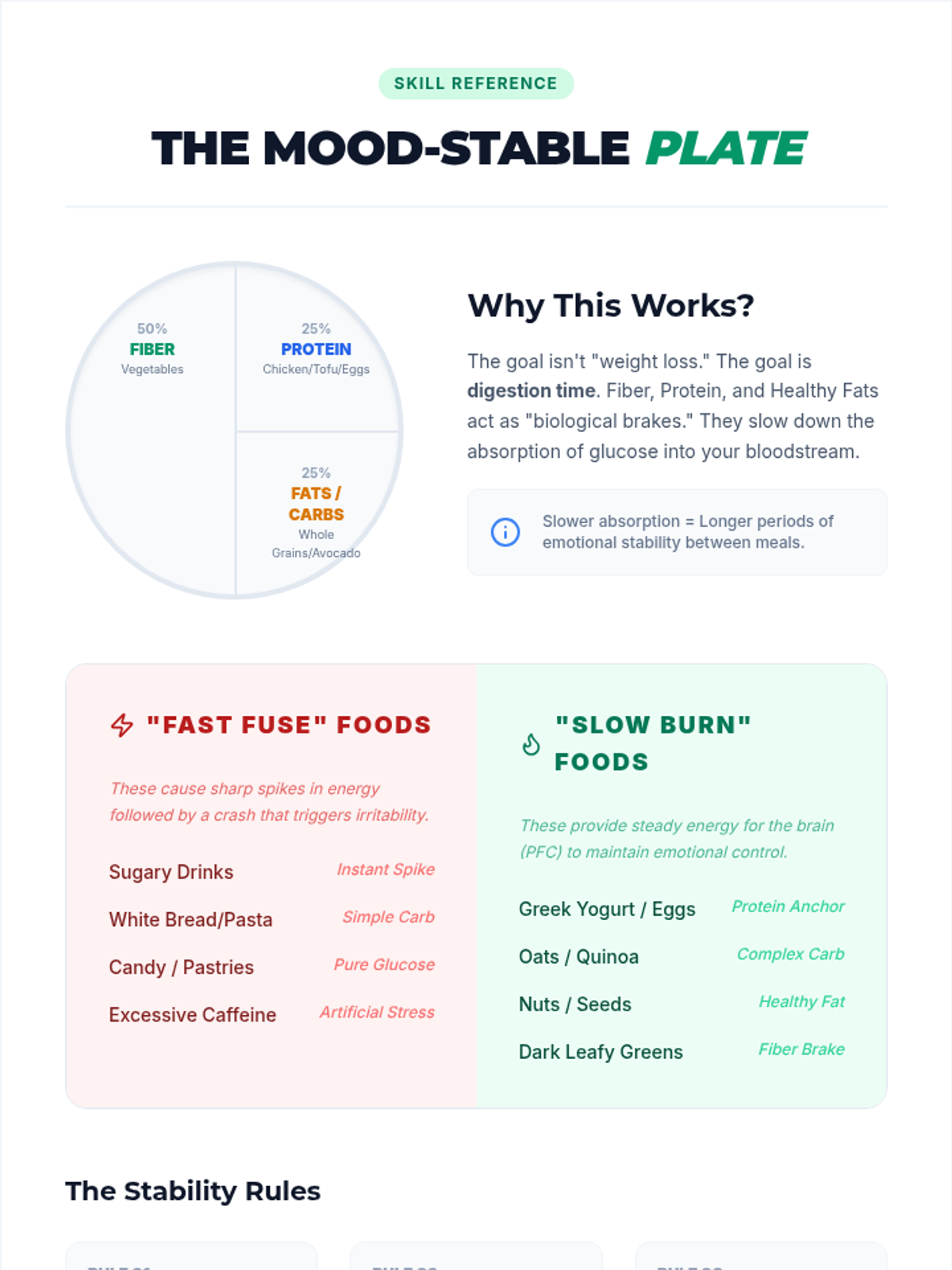
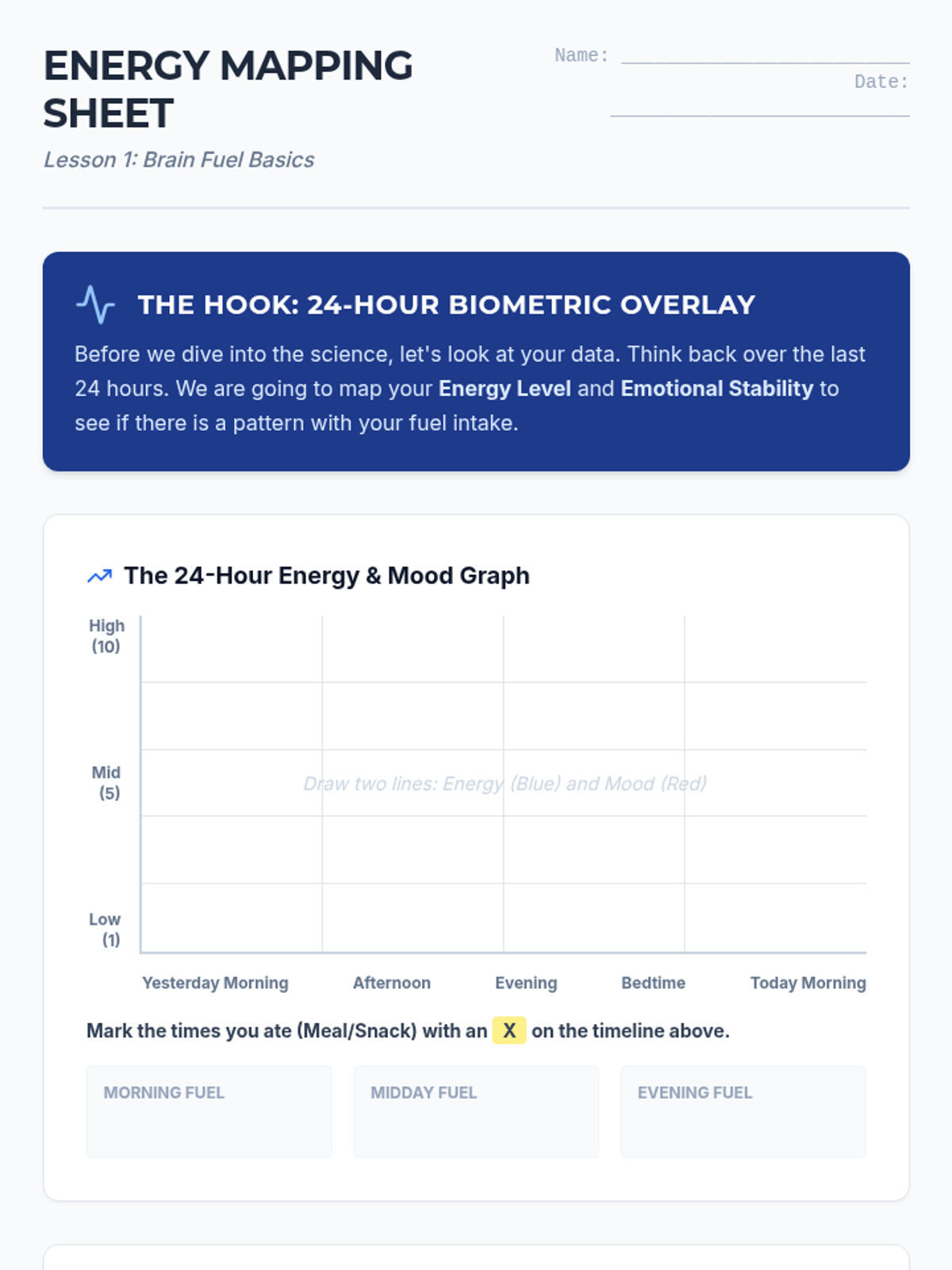
Students explore the 'E' (Eating) component by studying the gut-brain axis and how blood sugar variance impacts the amygdala and prefrontal cortex.
Students synthesize their research and audits into a final personalized PLEASE Protocol with 'if-then' contingency plans for future stressors.
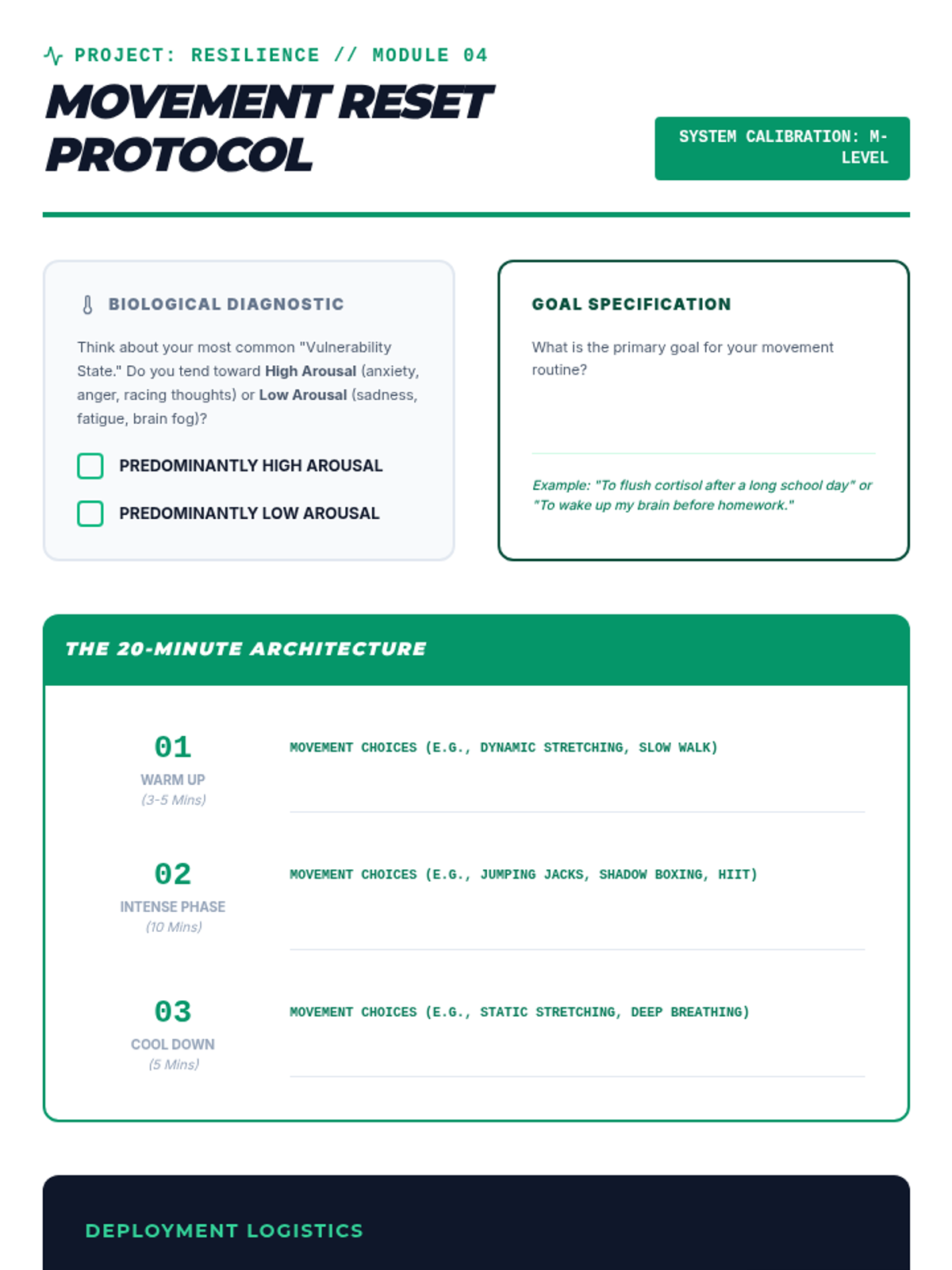
Students design a personalized '20-minute reset' movement routine focused on emotional regulation rather than competition.
Students explore the relationship between nutrition and mood stability, hacking menus to create energy-stable meal plans for high-stress periods.
Students analyze their sleep environments and routines to design an optimized 'Sleep Sanctuary' that protects the adolescent need for restorative rest.
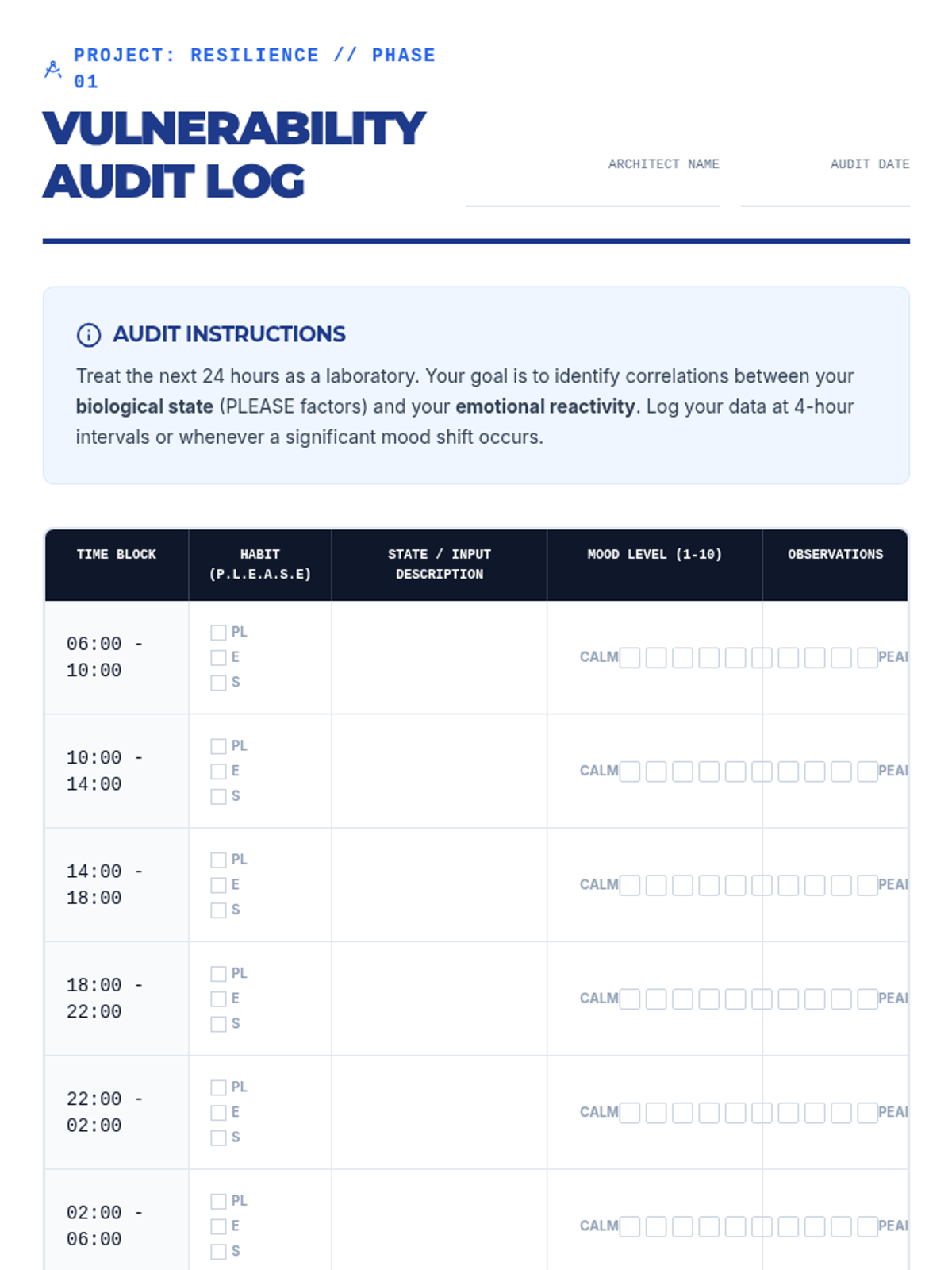
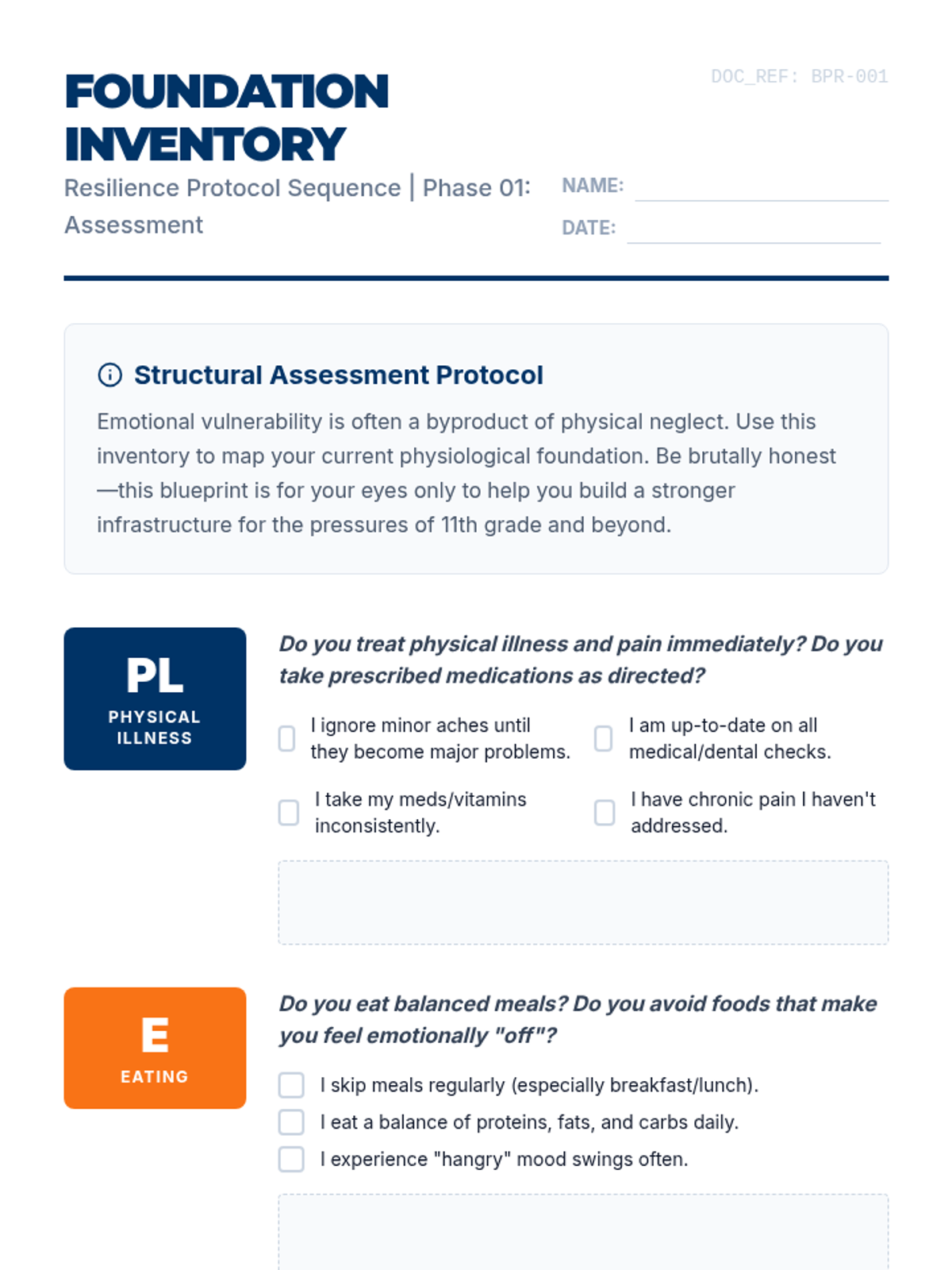
Students conduct a personal lifestyle inventory and analyze the connection between biological neglect and emotional volatility through the 'Emotion Detective' challenge.
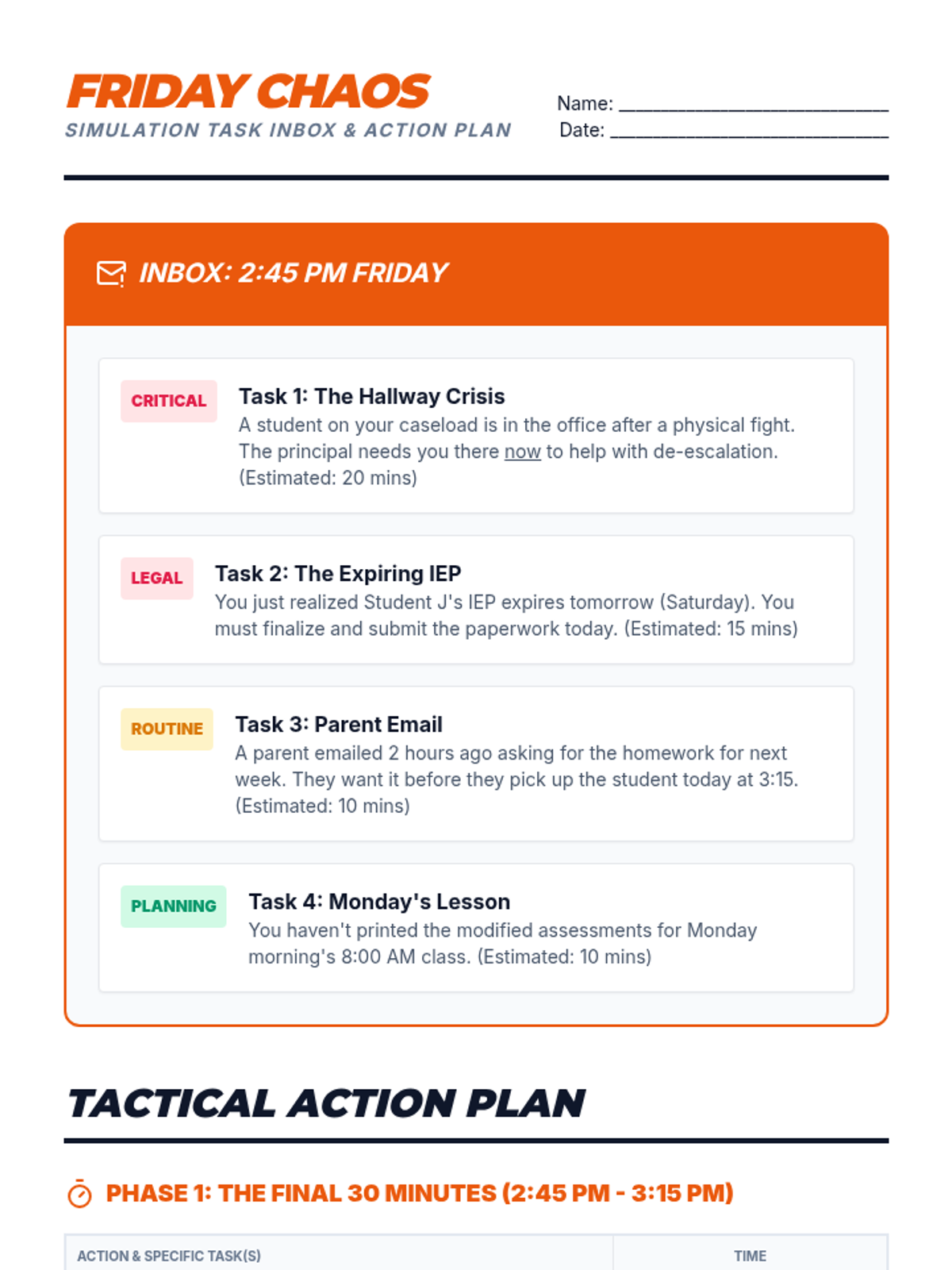
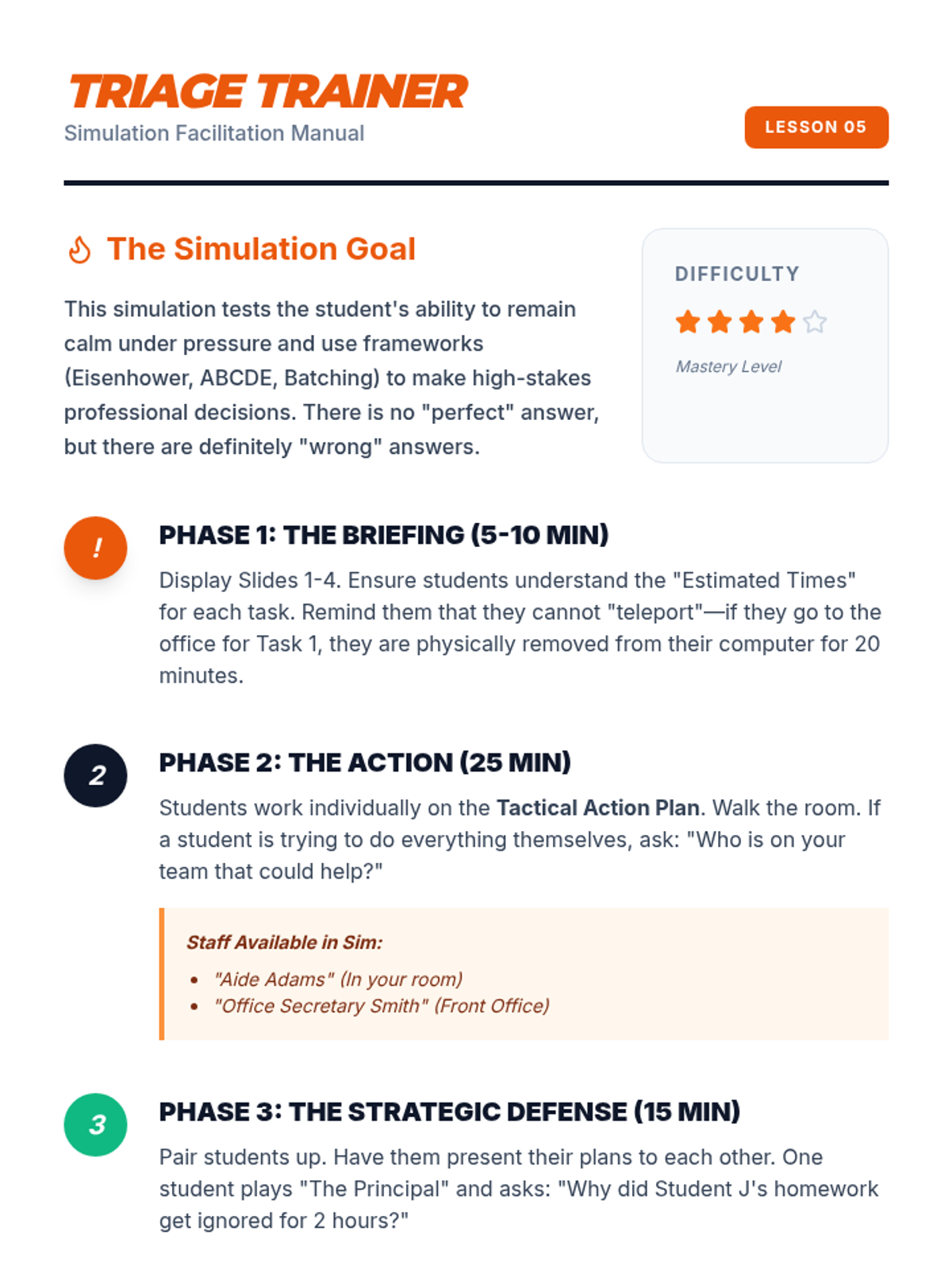
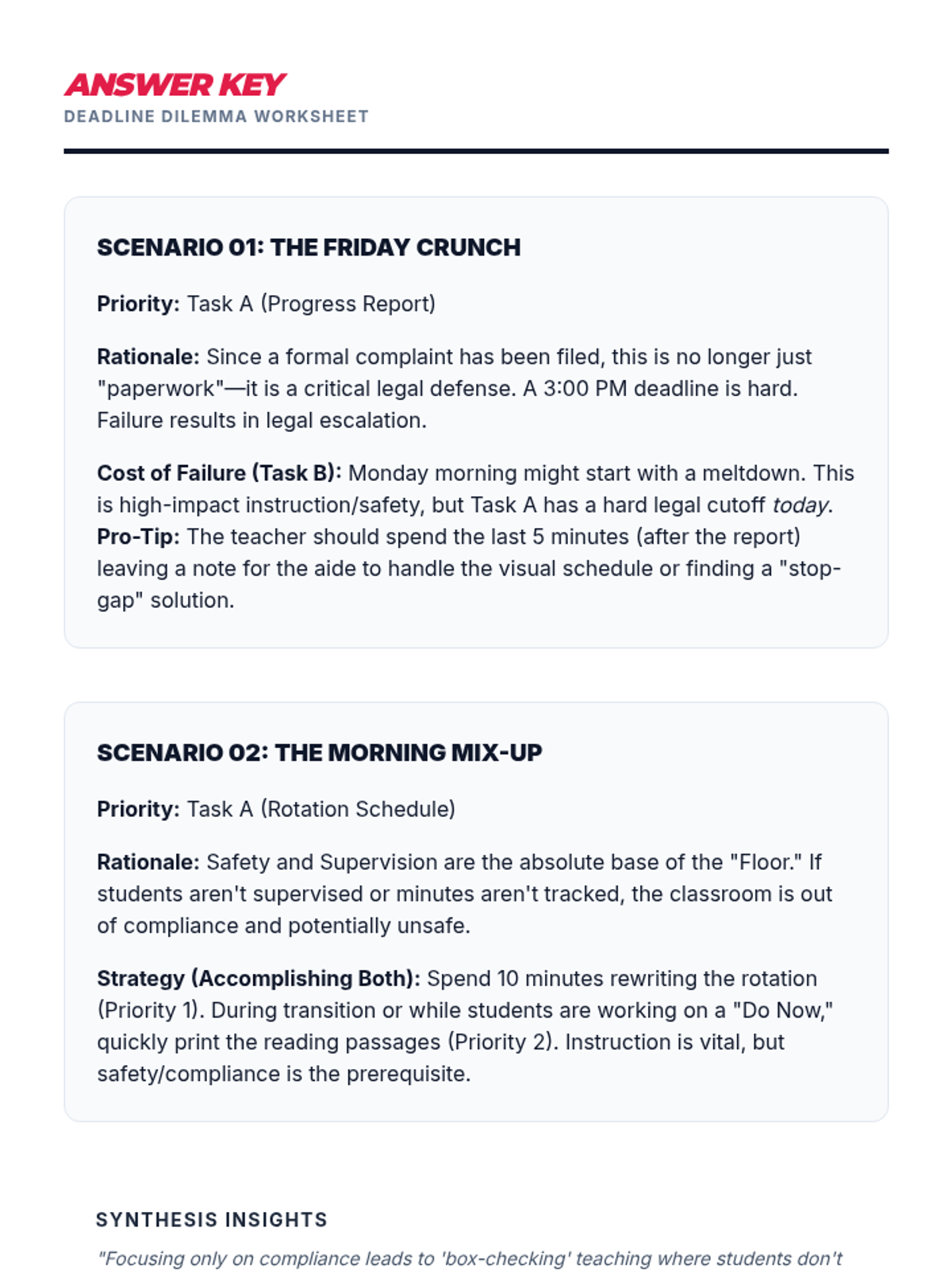
A high-pressure simulation where students must apply all learned frameworks to a 'Friday afternoon' crisis scenario, producing a strategic action plan.
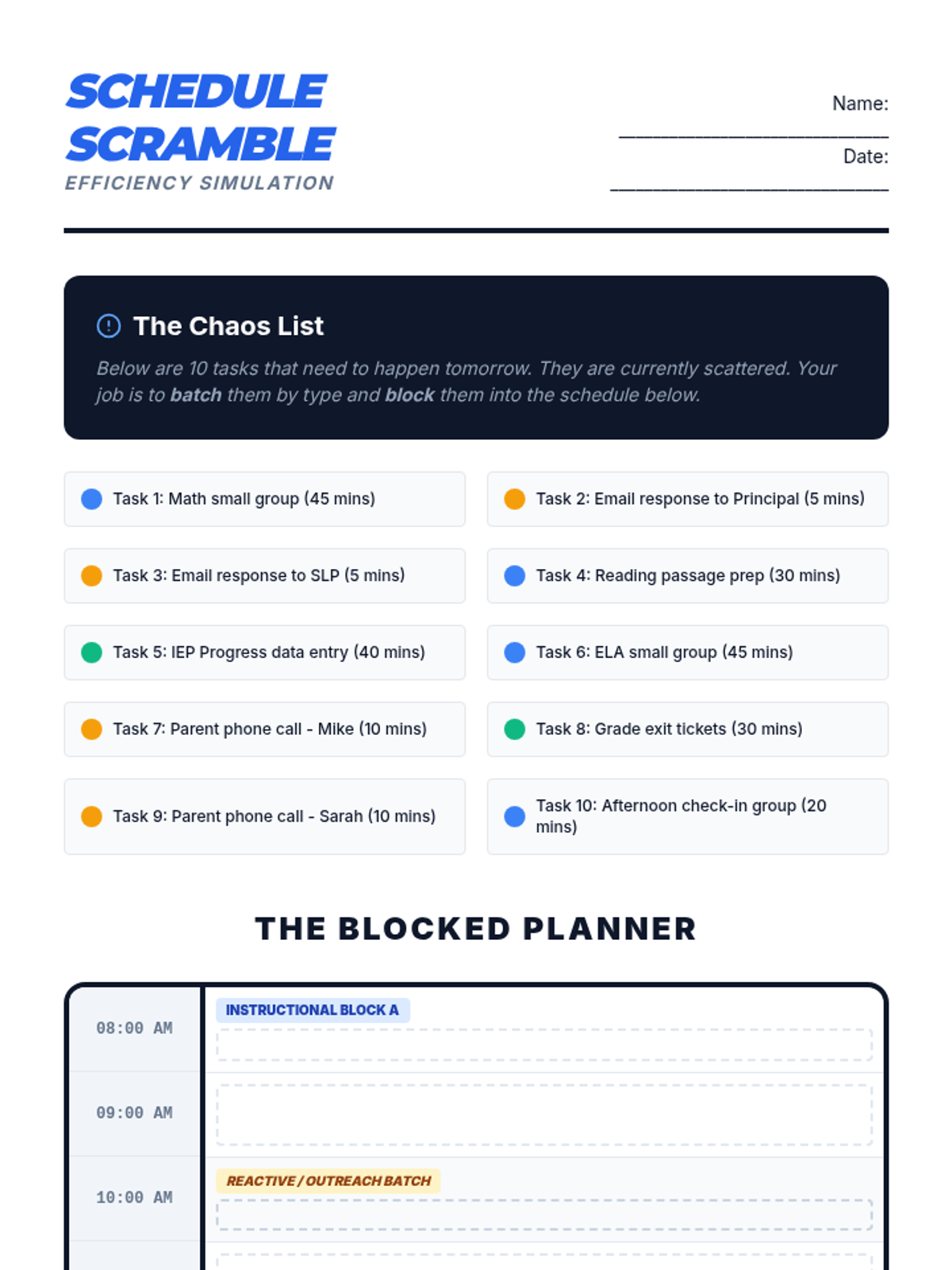
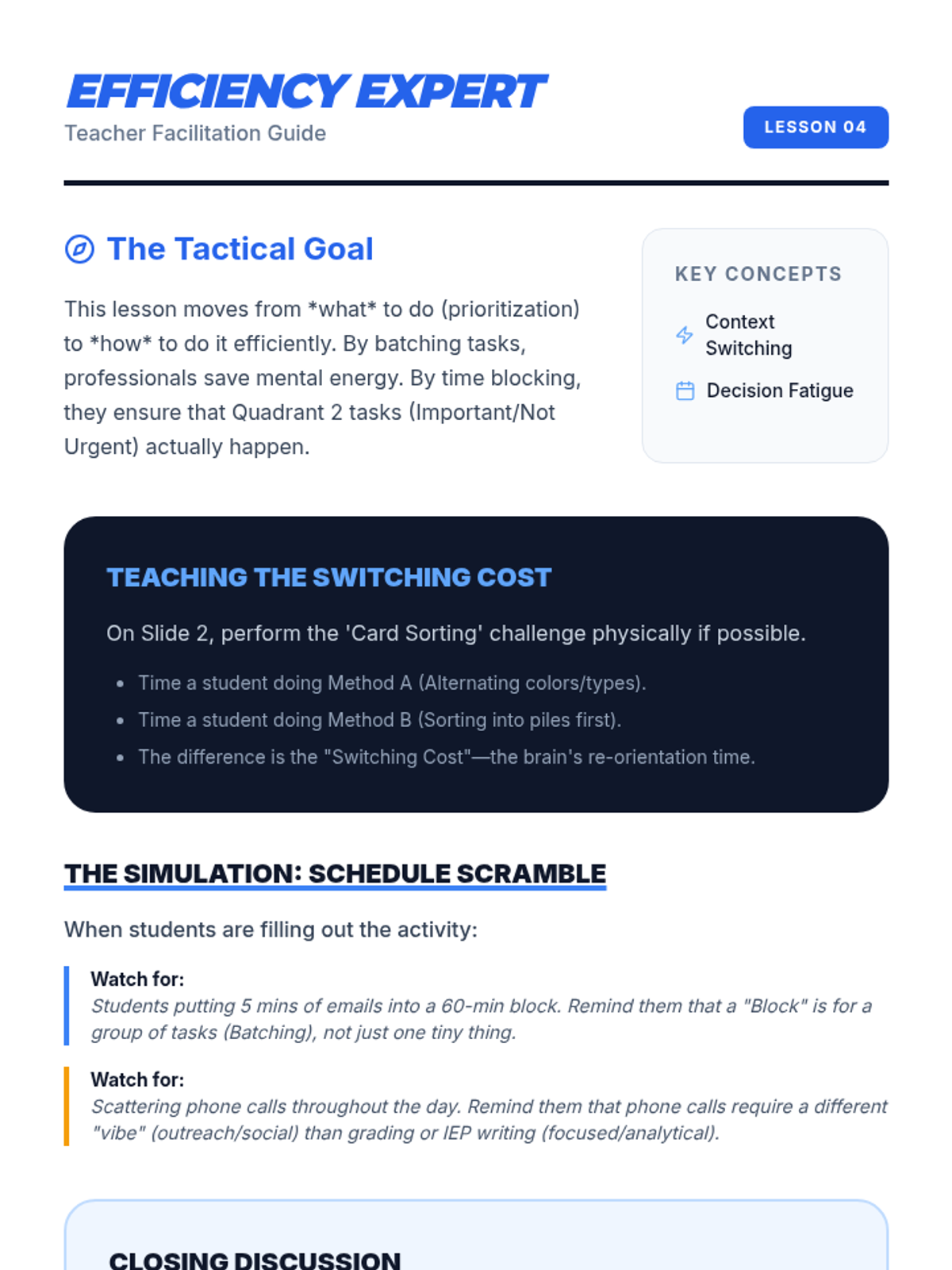
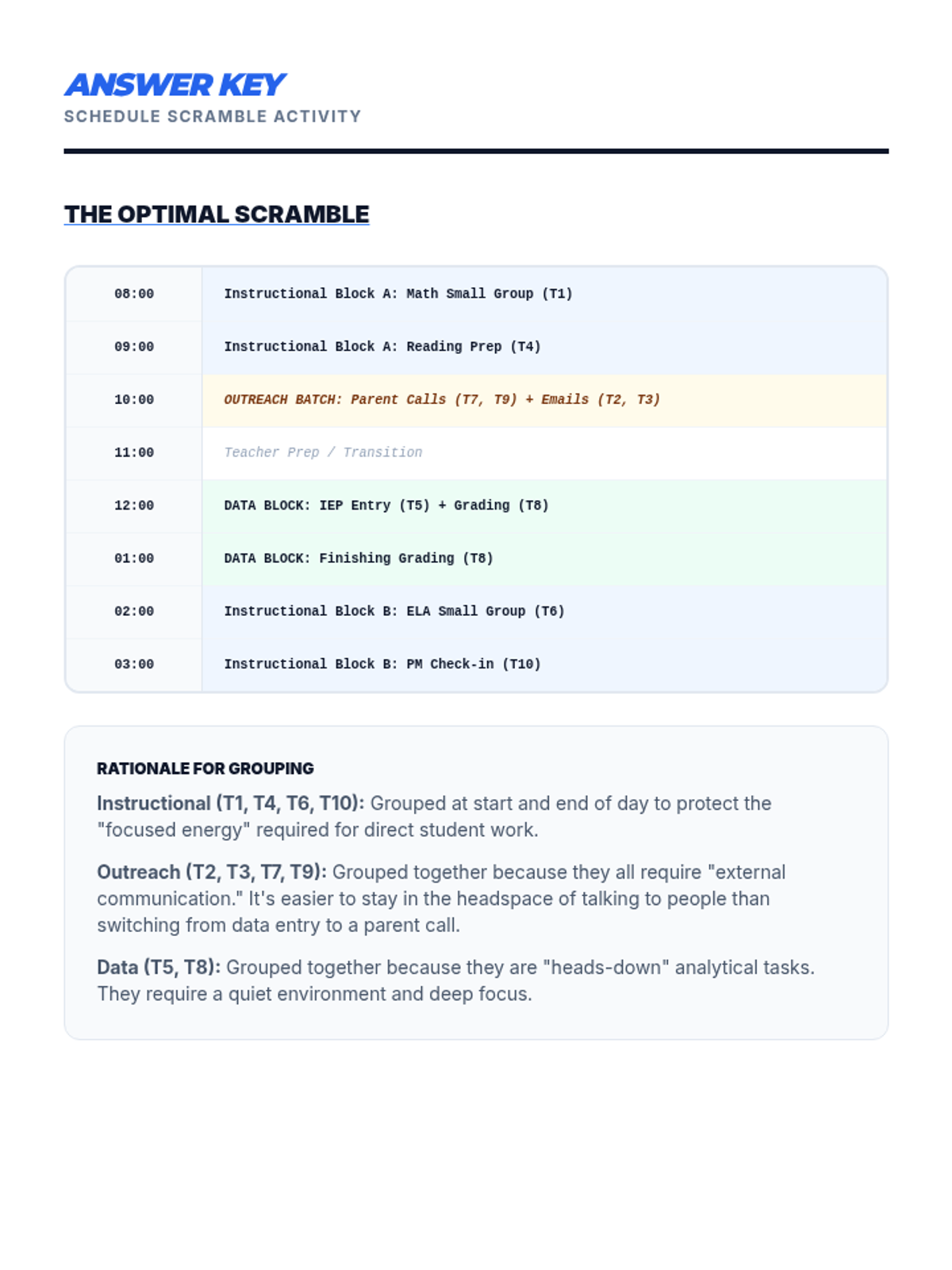
Teaches efficiency through task batching and time blocking. Students transform a chaotic, reactive schedule into a proactive, structured plan.
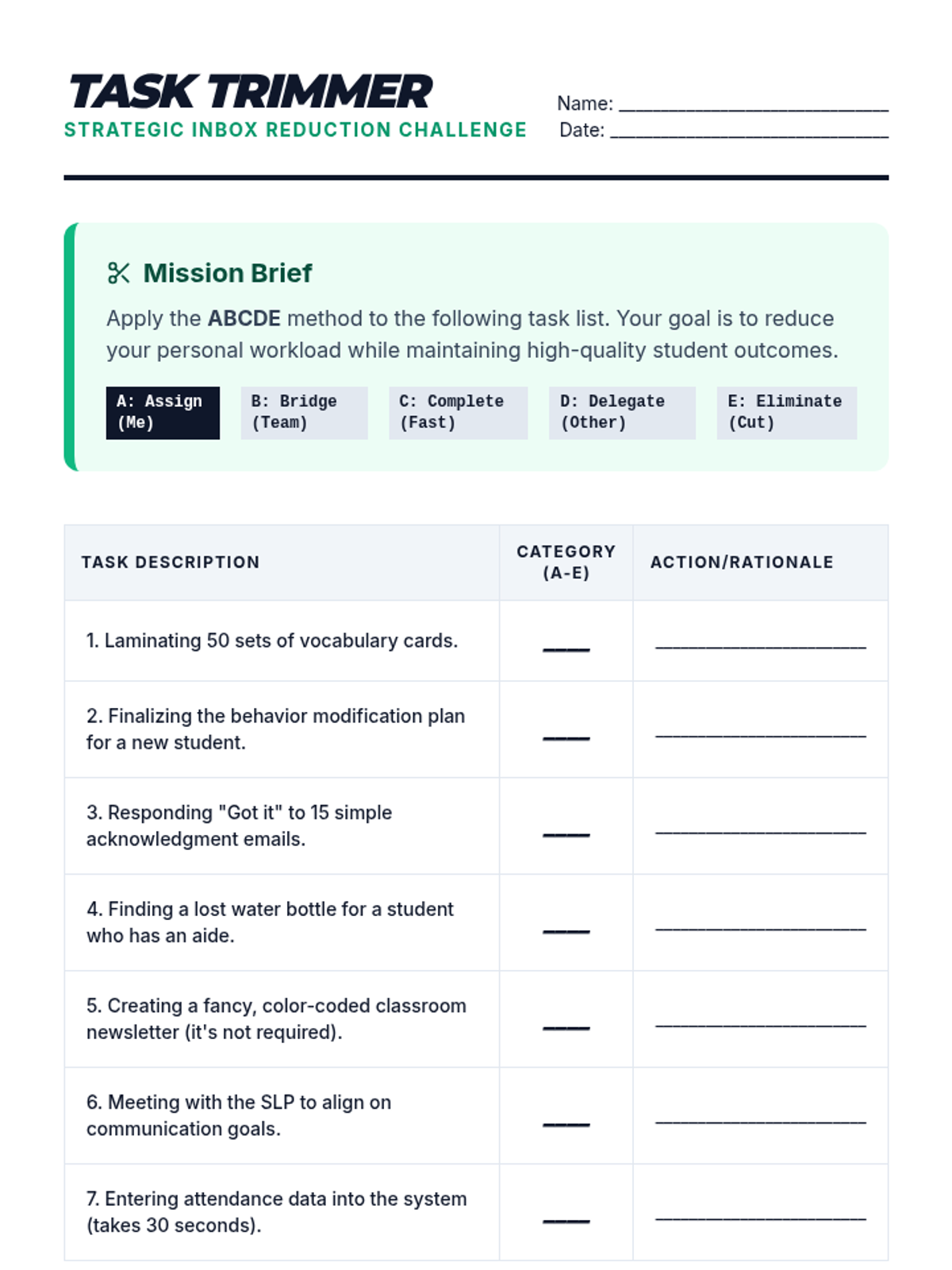
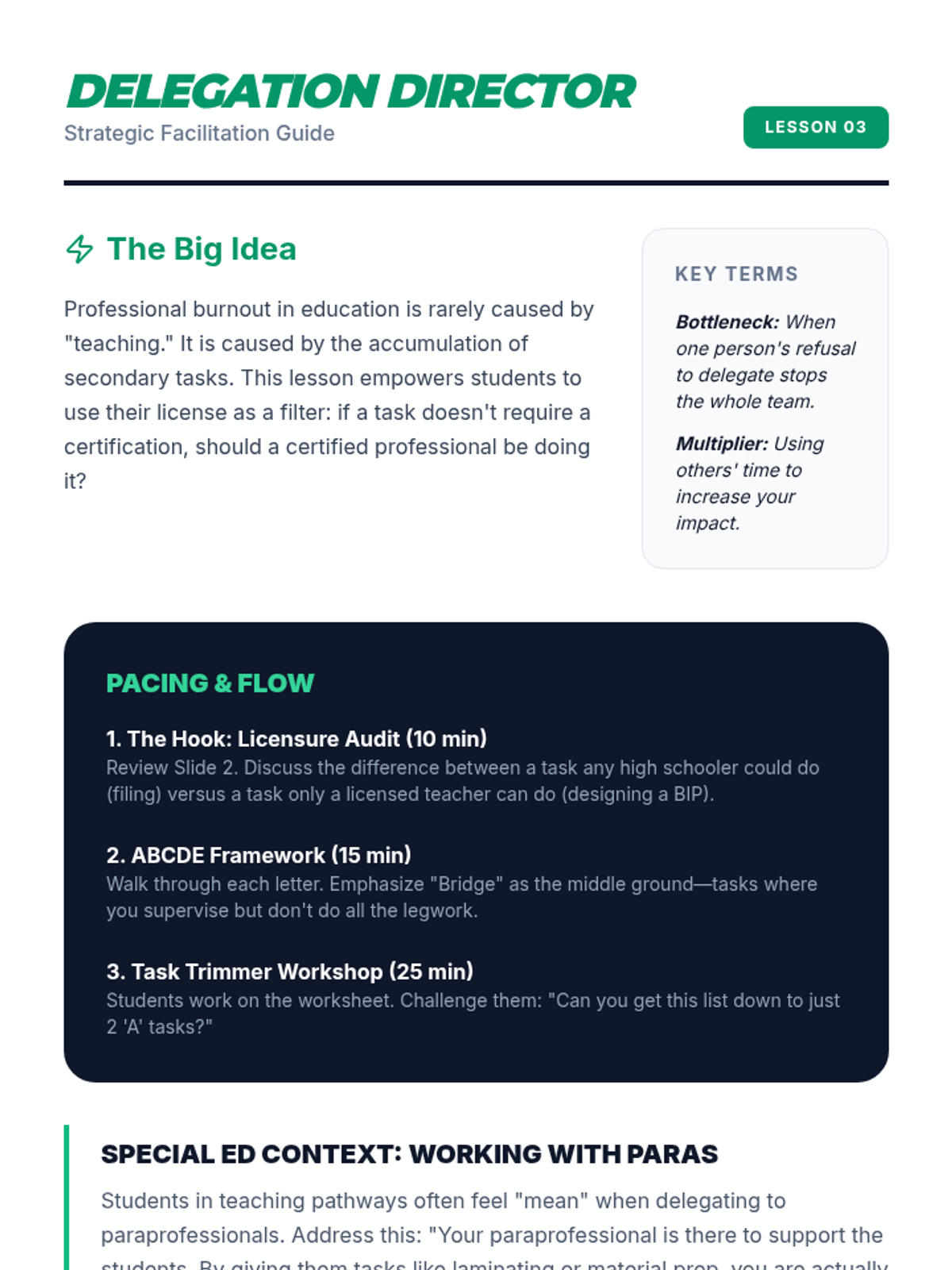
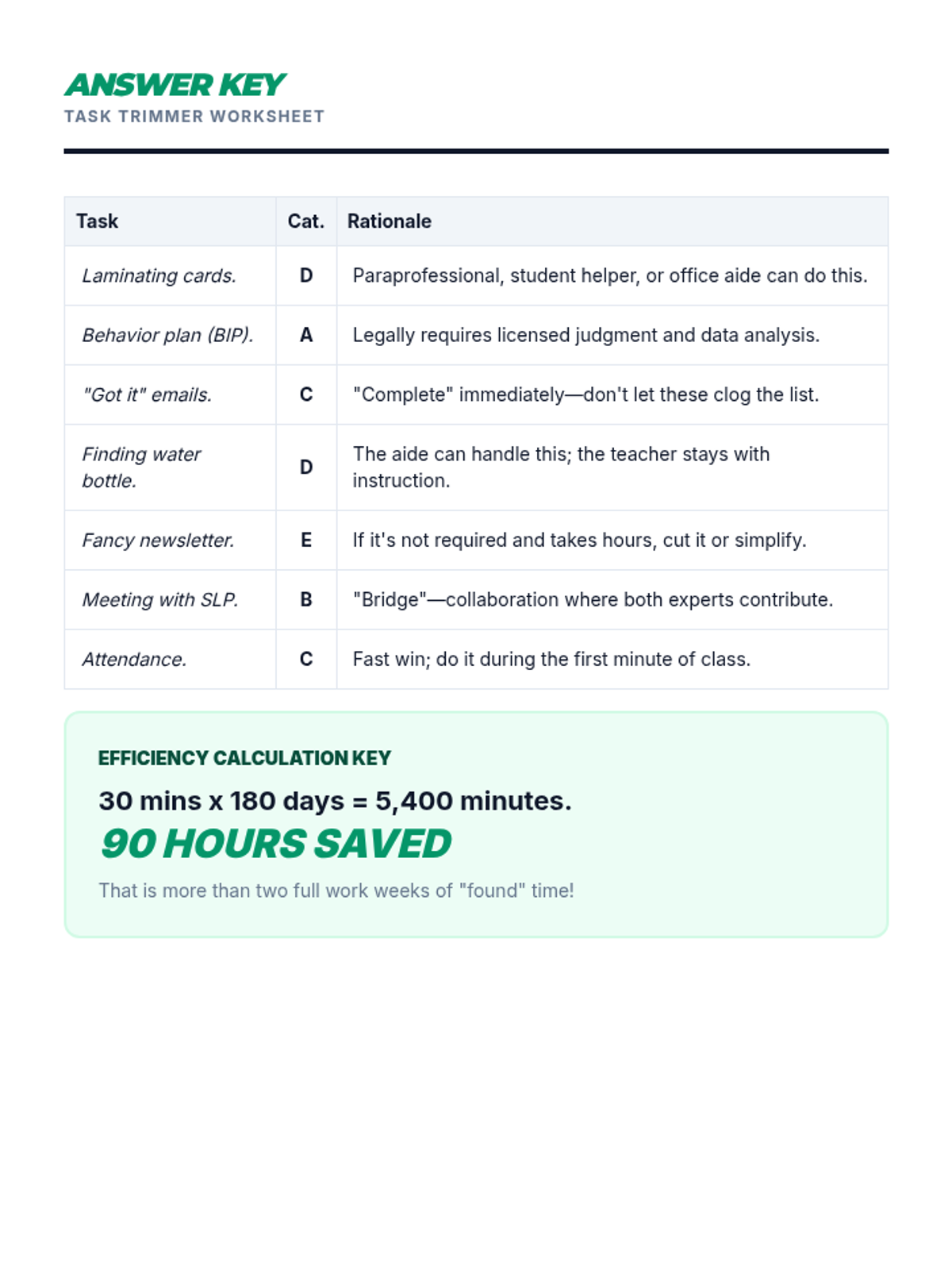
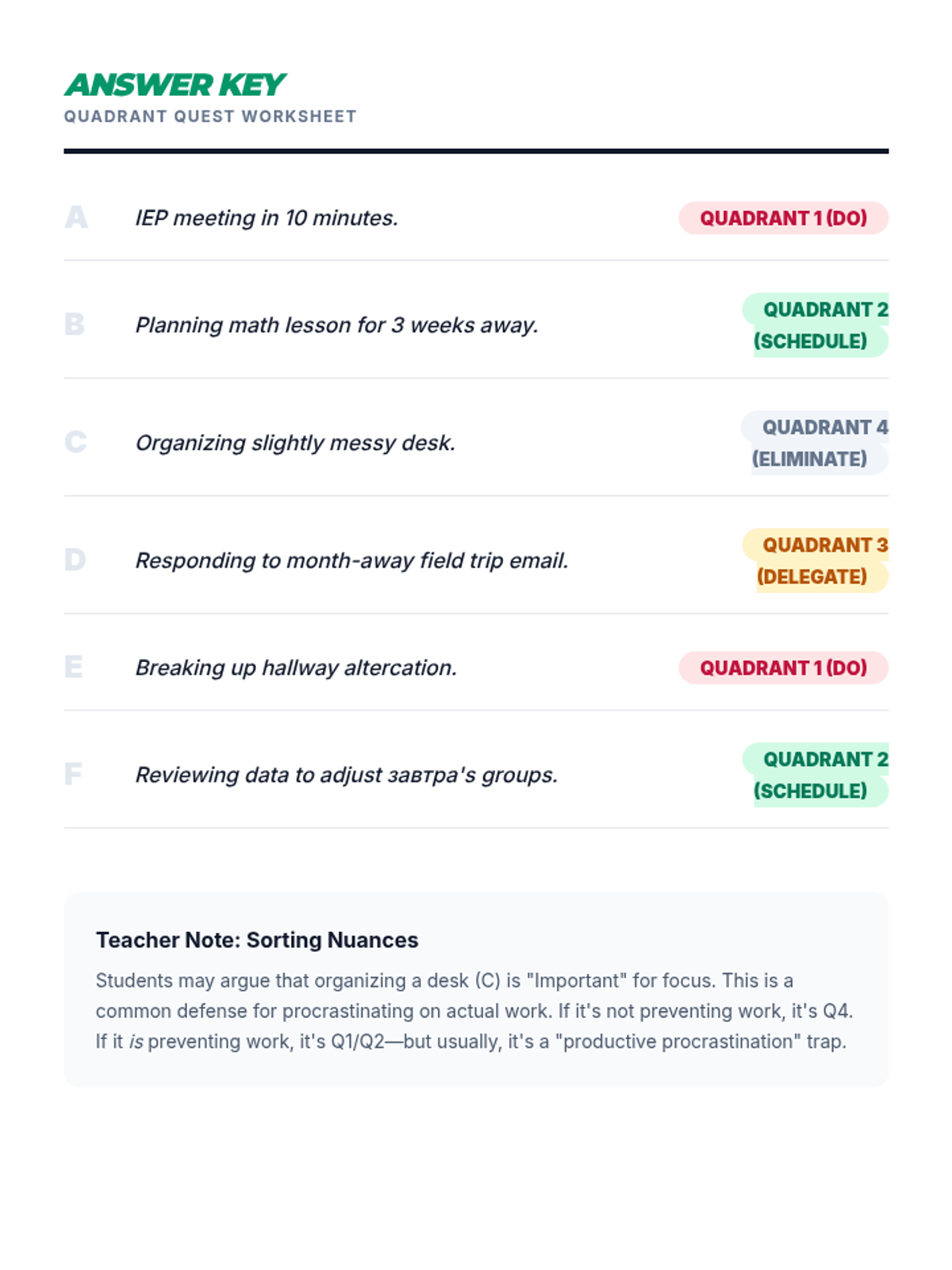
Introduces the ABCDE method for task management, with a heavy emphasis on delegation and elimination. Students learn to identify which tasks require their specific expertise and which can be shared or removed.
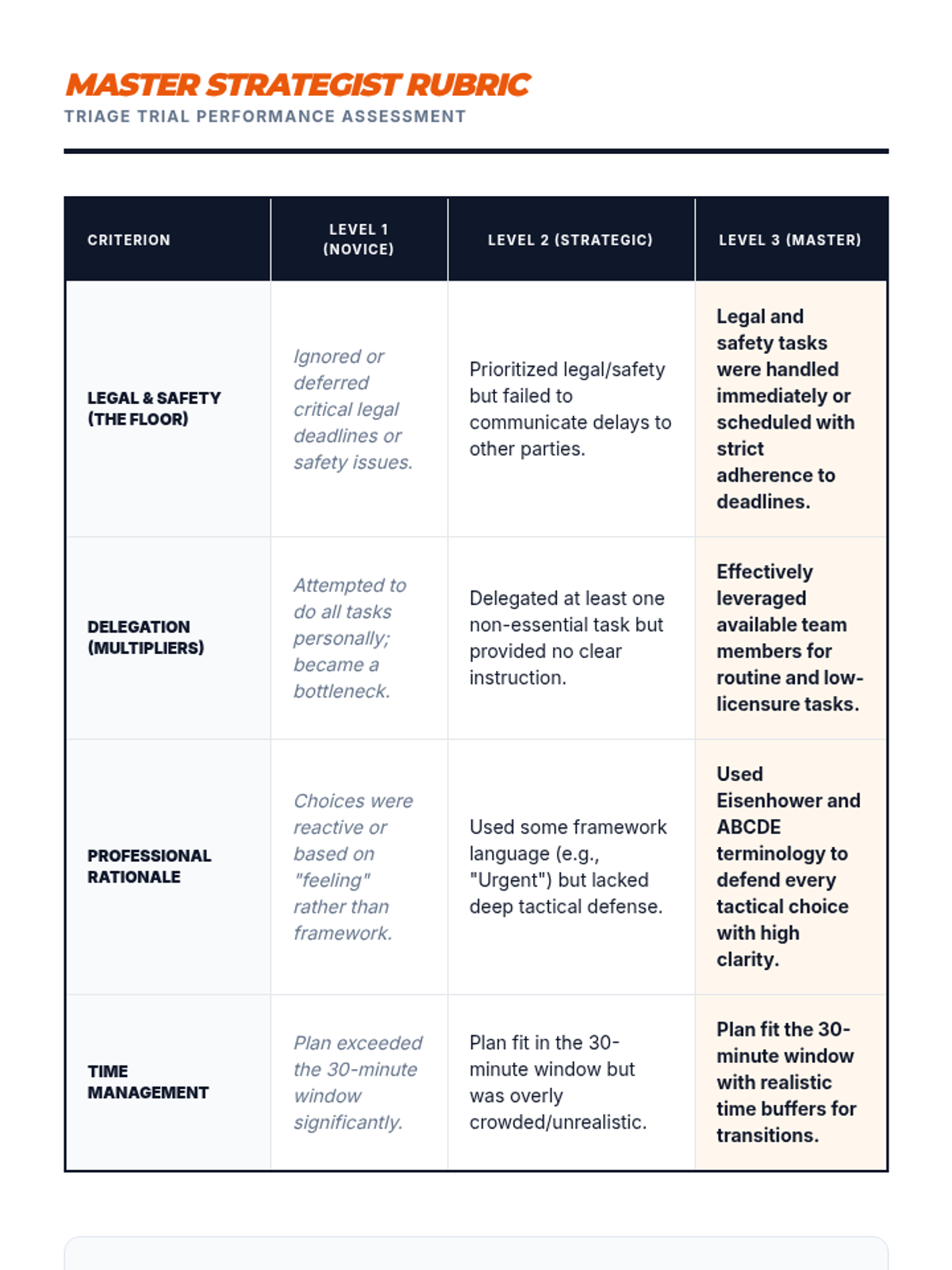
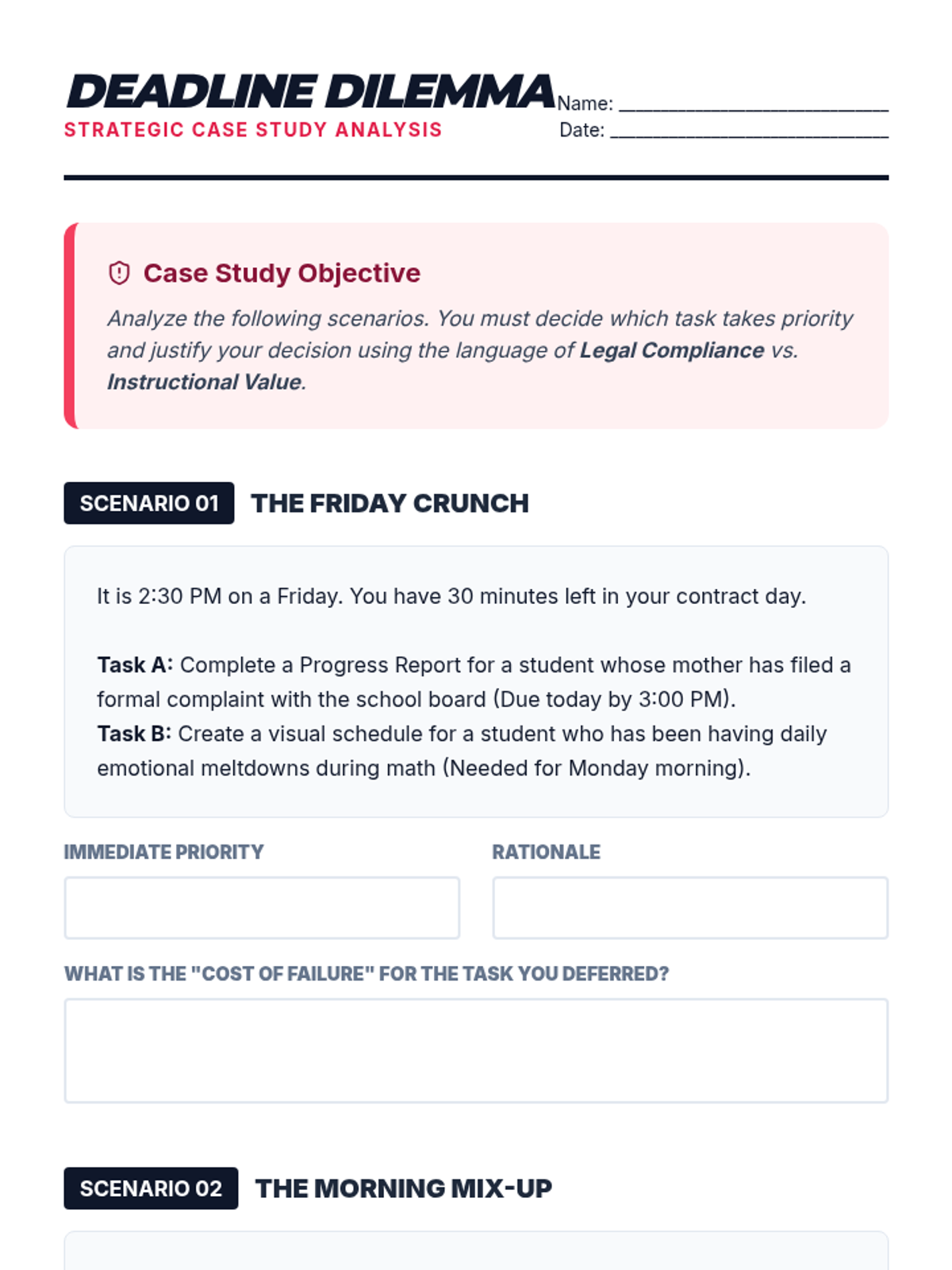
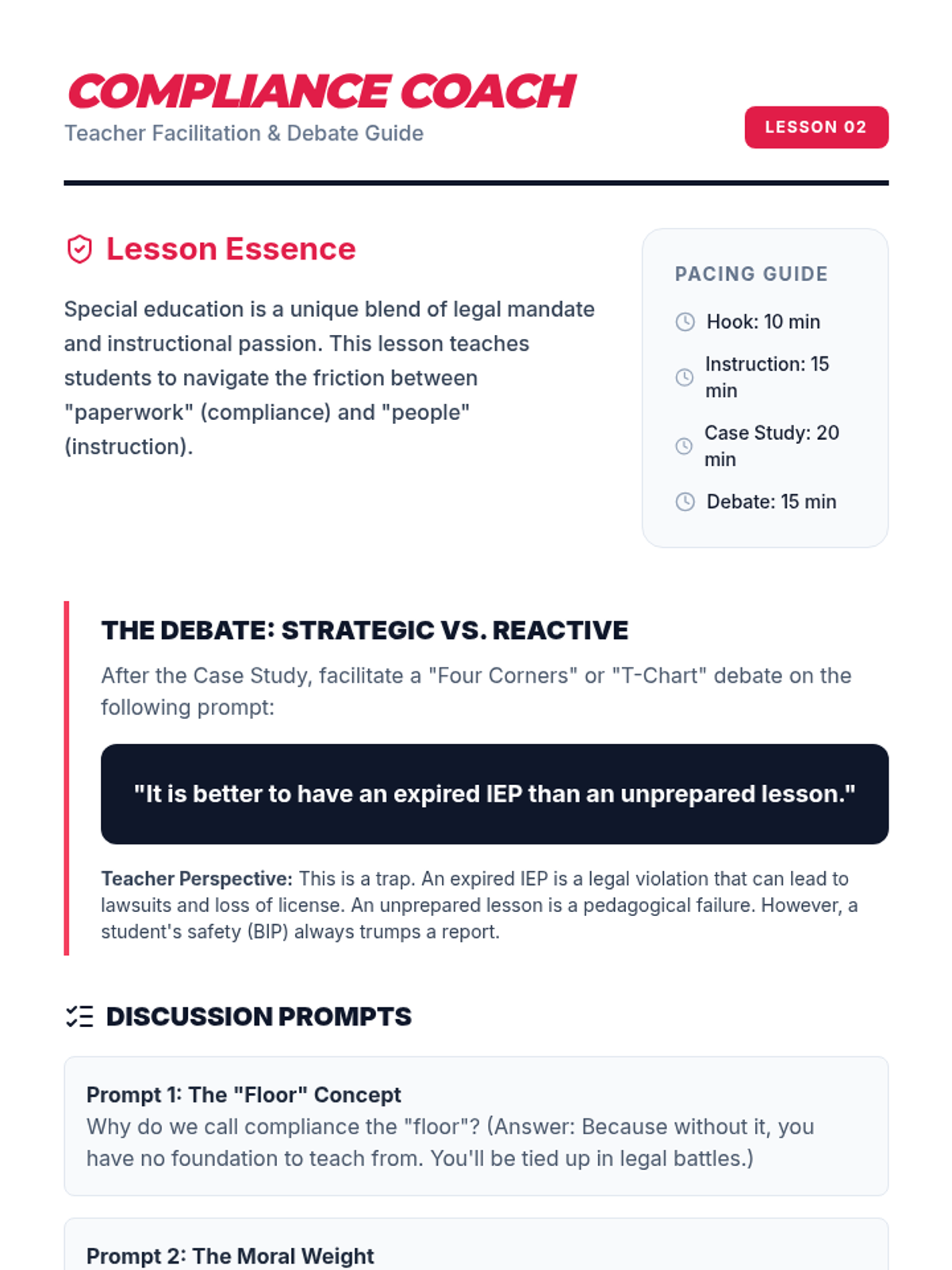
Focuses on the specific pressures of special education, teaching students to weigh legal compliance (IEPs, safety) against instructional needs. Includes a debate and case study analysis.
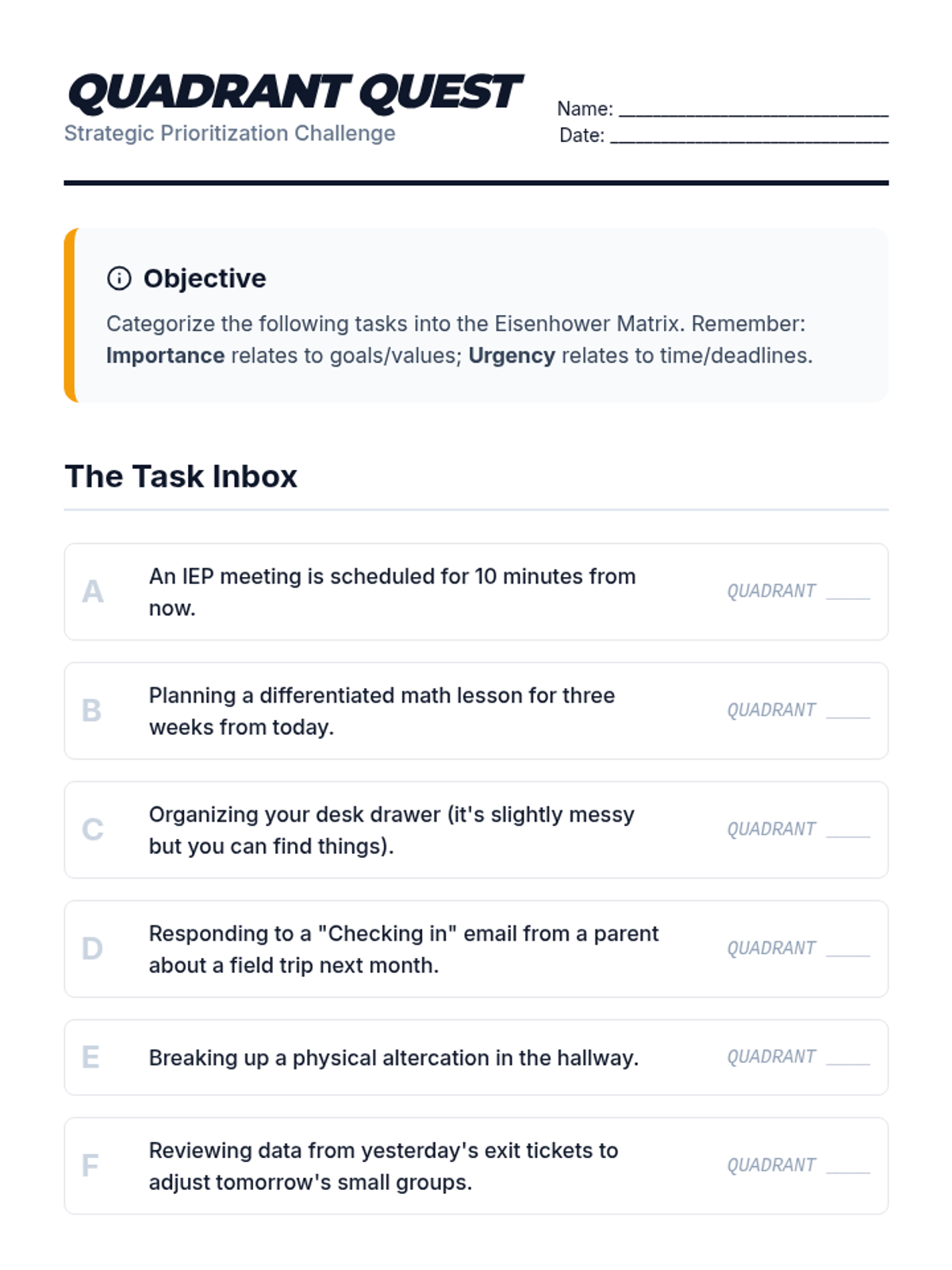
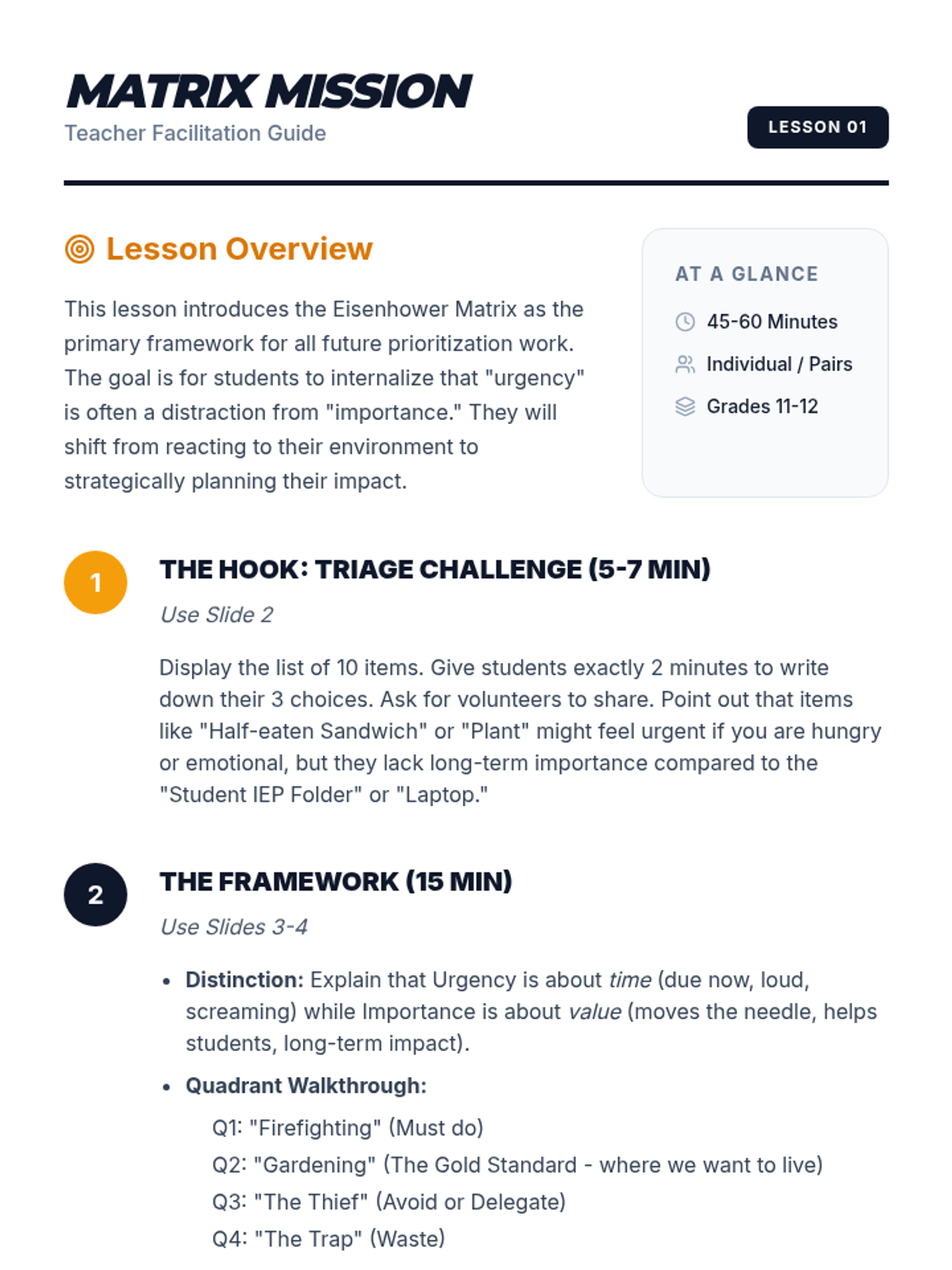
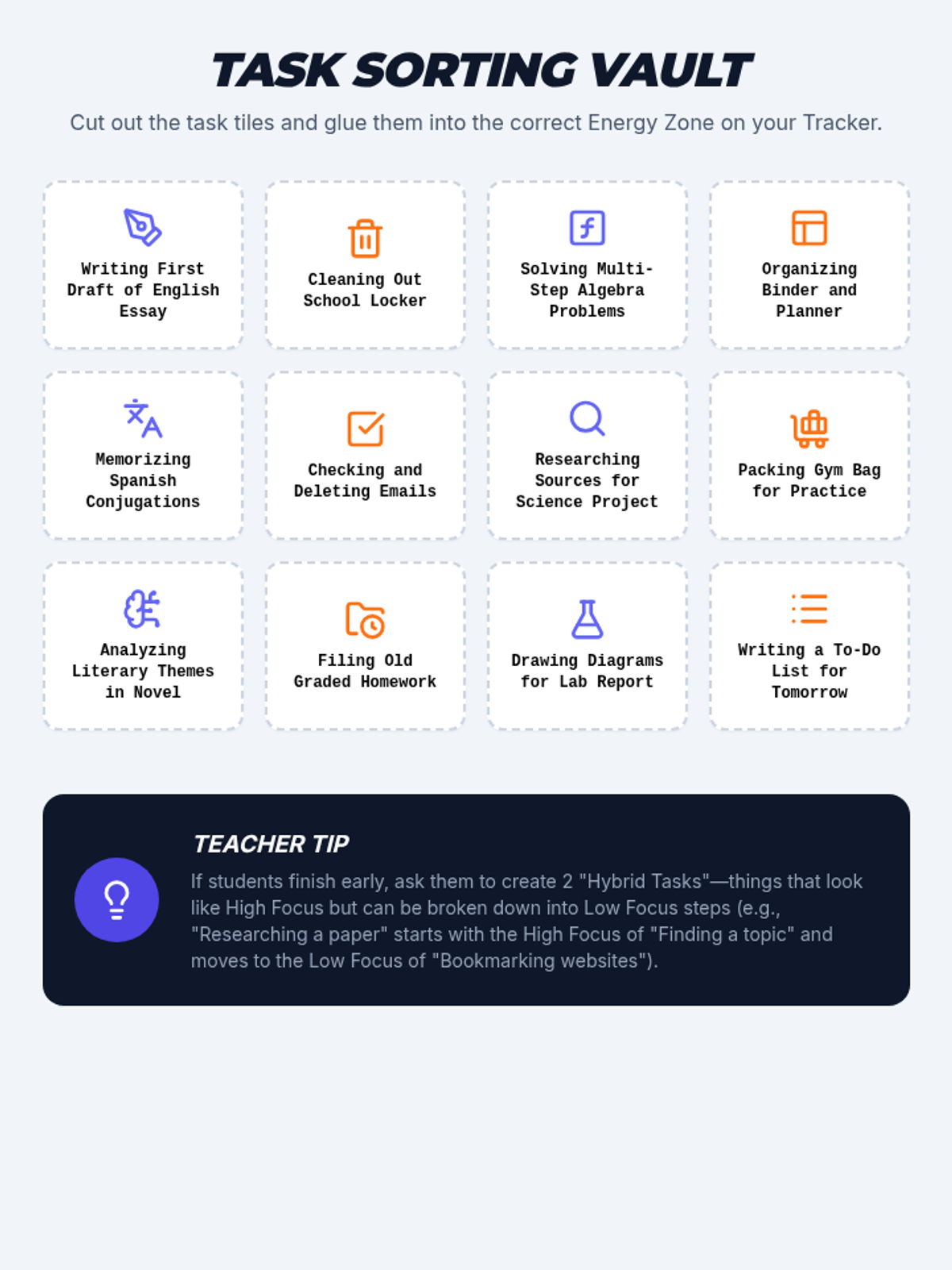
Students are introduced to the Eisenhower Matrix as a tool for categorizing tasks by urgency and importance. They practice identifying the difference between the two and sorting common school-based tasks.
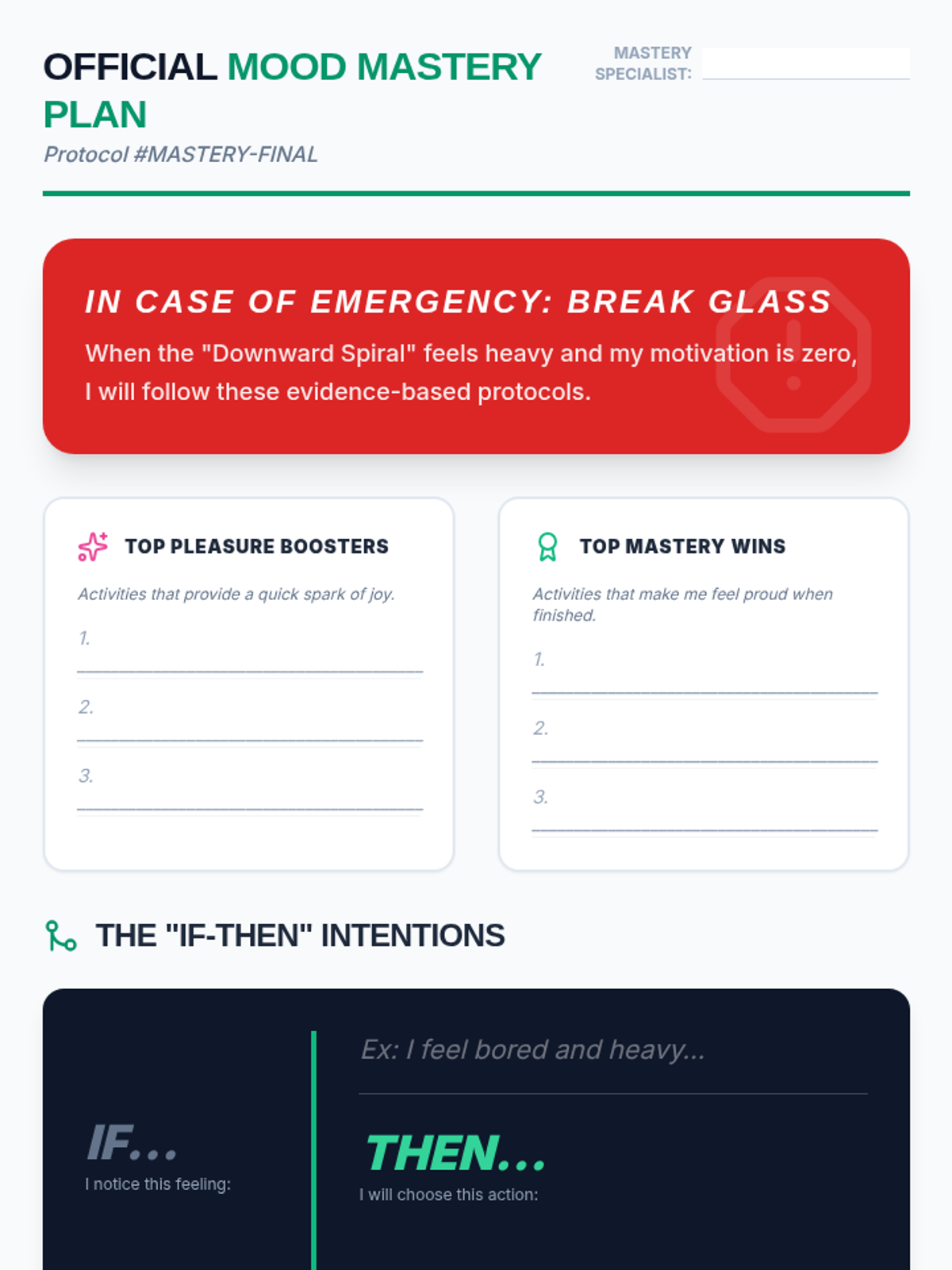
Synthesizing their learning, students create a 'Break the Glass' emergency plan for days when they feel low or anxious. They select their most effective pleasure and mastery activities and write specific implementation intentions (If I feel X, then I will do Y).
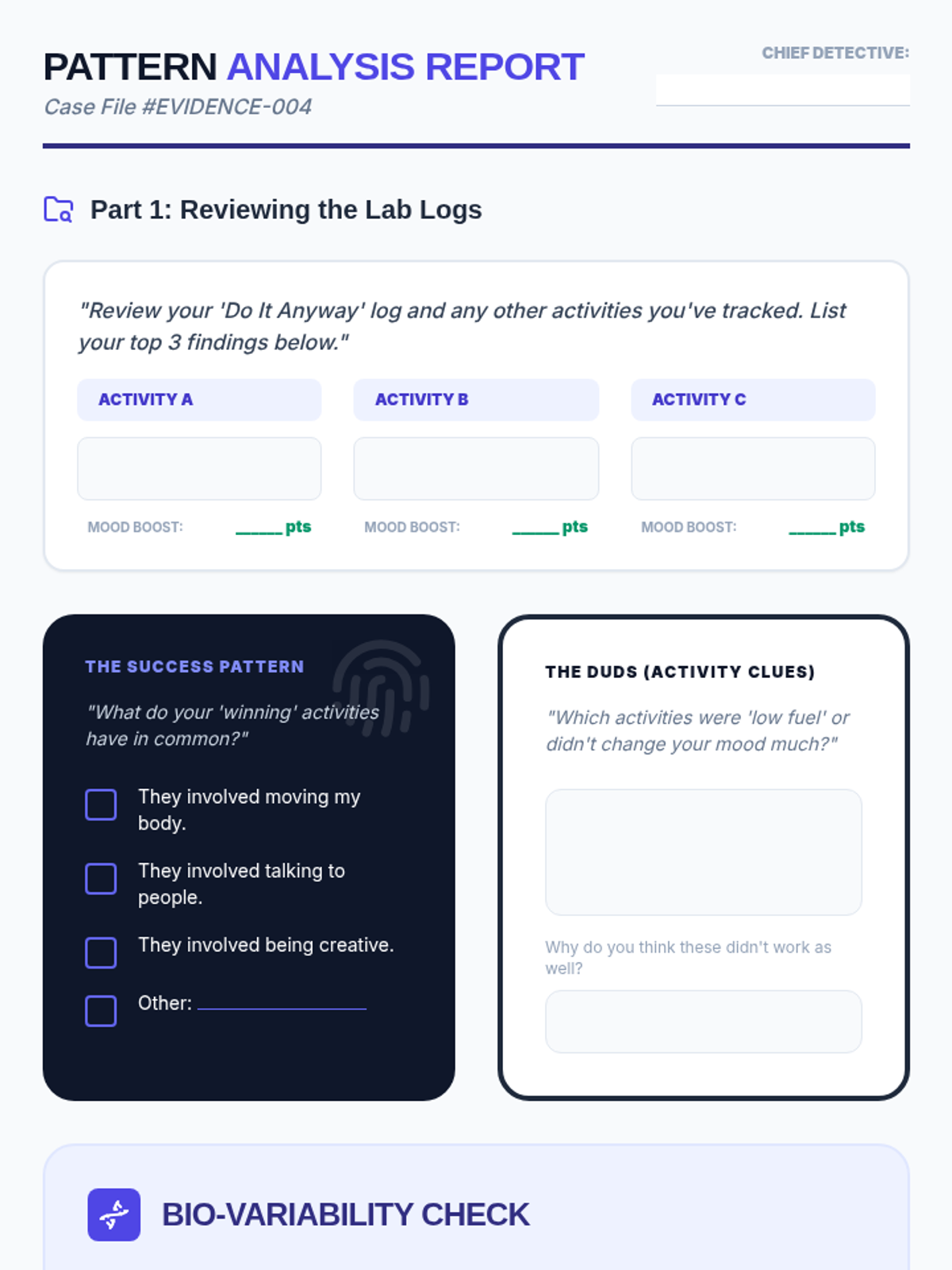
Students review the results of their personal experiments or case study data to identify patterns in how specific activities impact mood. They discuss the variability of results (what works for one person may not work for another) and begin curating their personal 'top hits' for mood improvement.
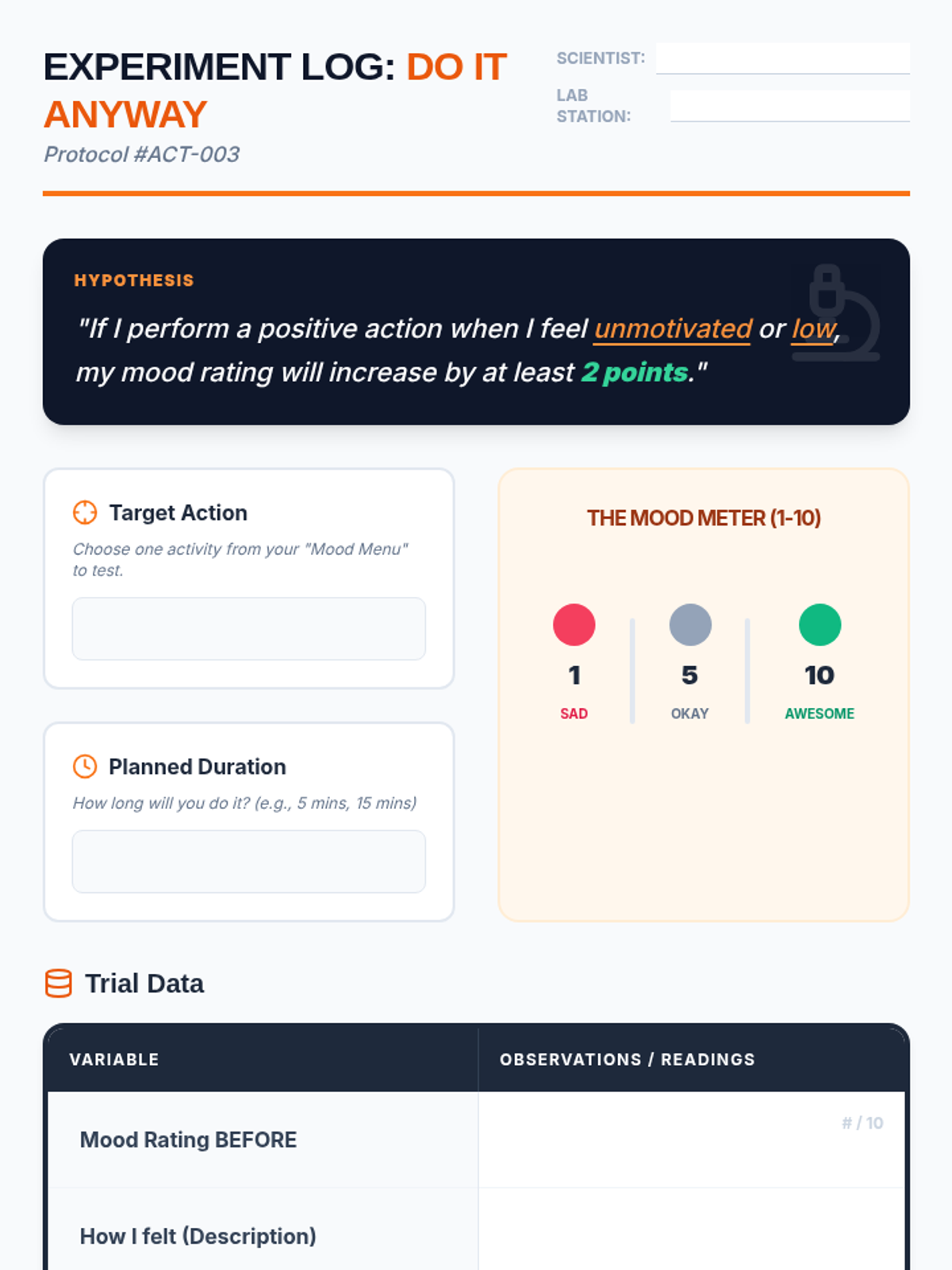
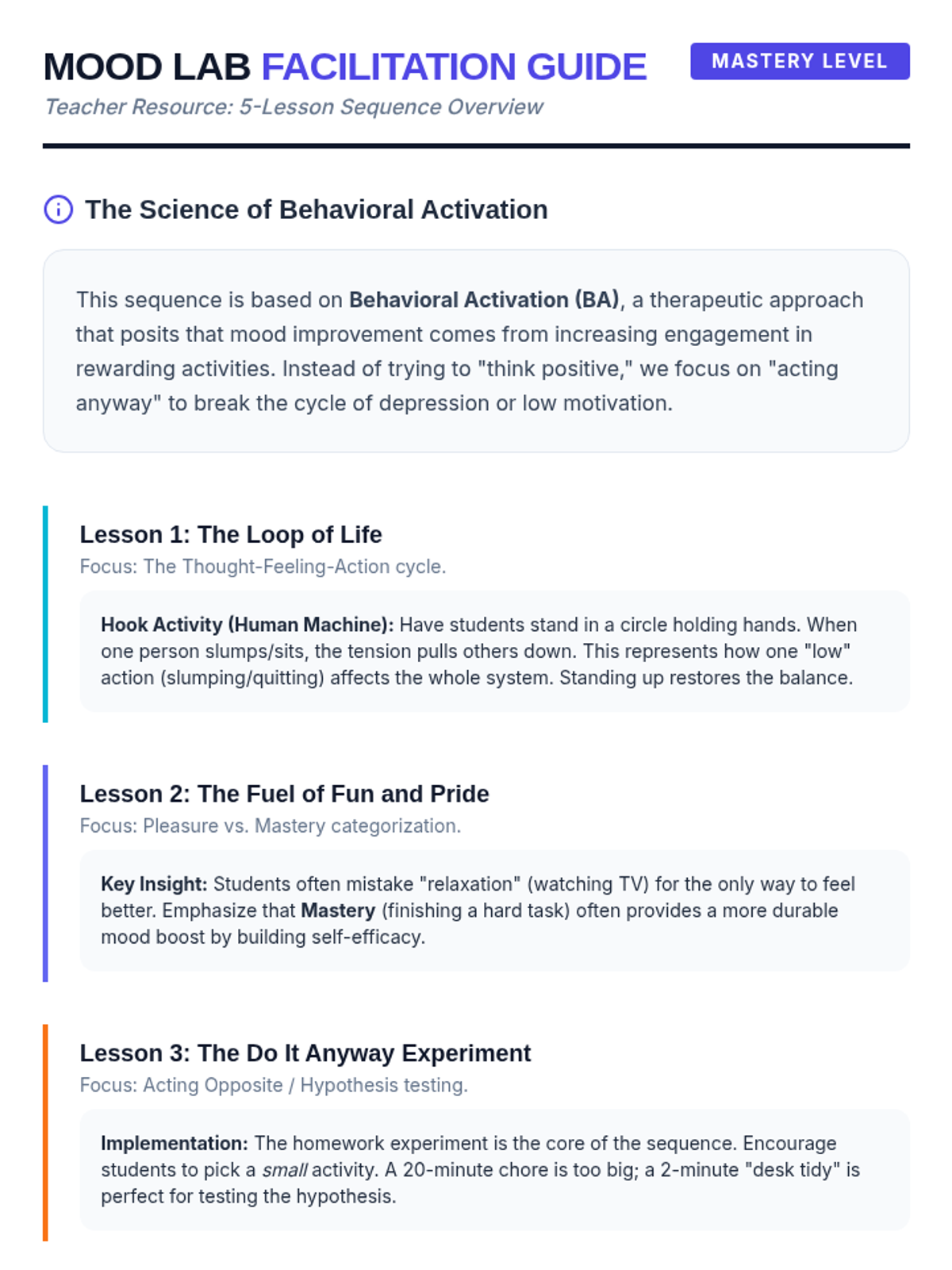
This lesson introduces the concept of 'acting opposite' to an emotion. Students design a short experiment to test the hypothesis that engaging in a positive activity—even when they don't feel like it—can improve their mood rating on a 1-10 scale. They prepare a data collection sheet for a homework experiment.
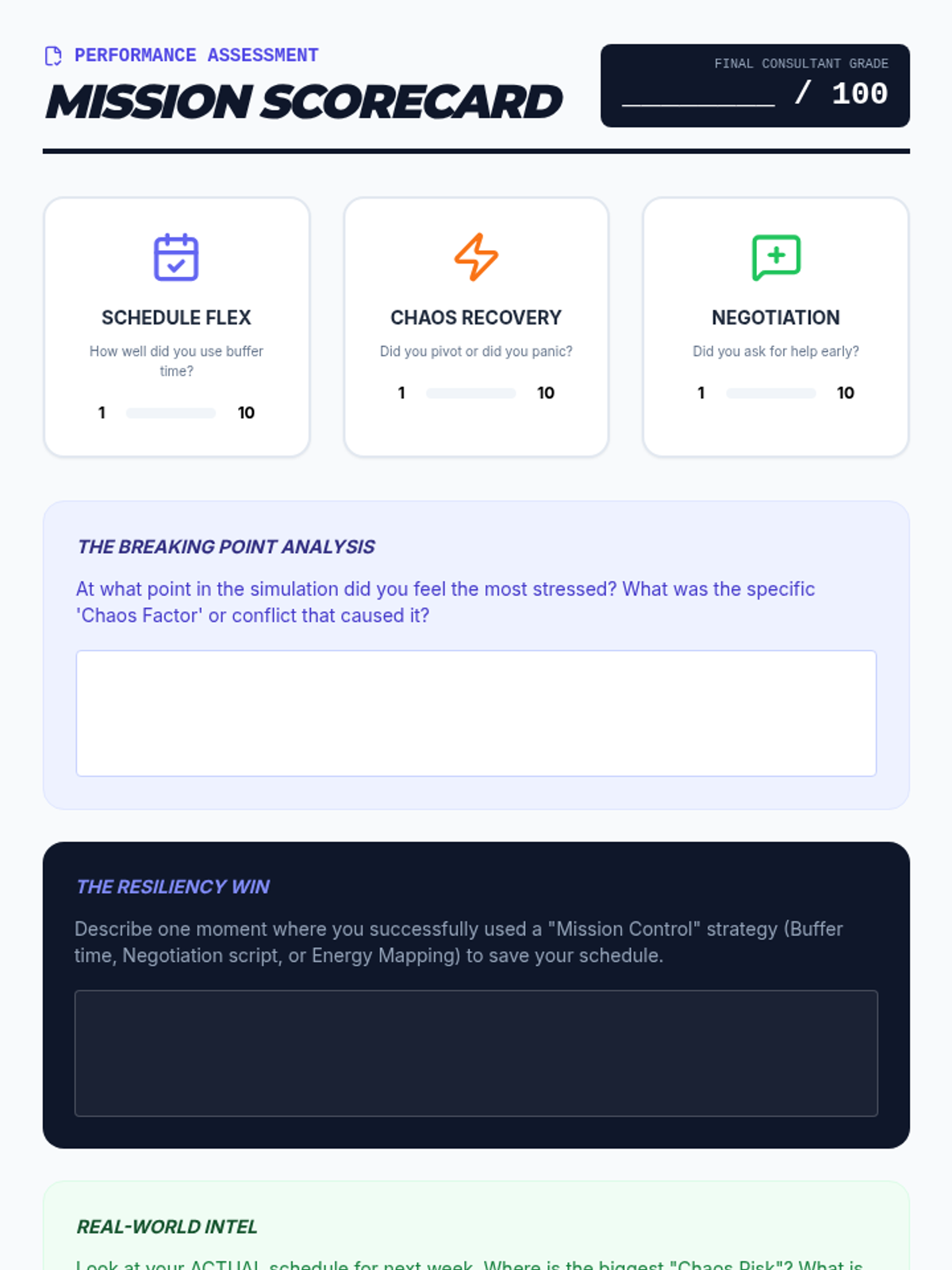
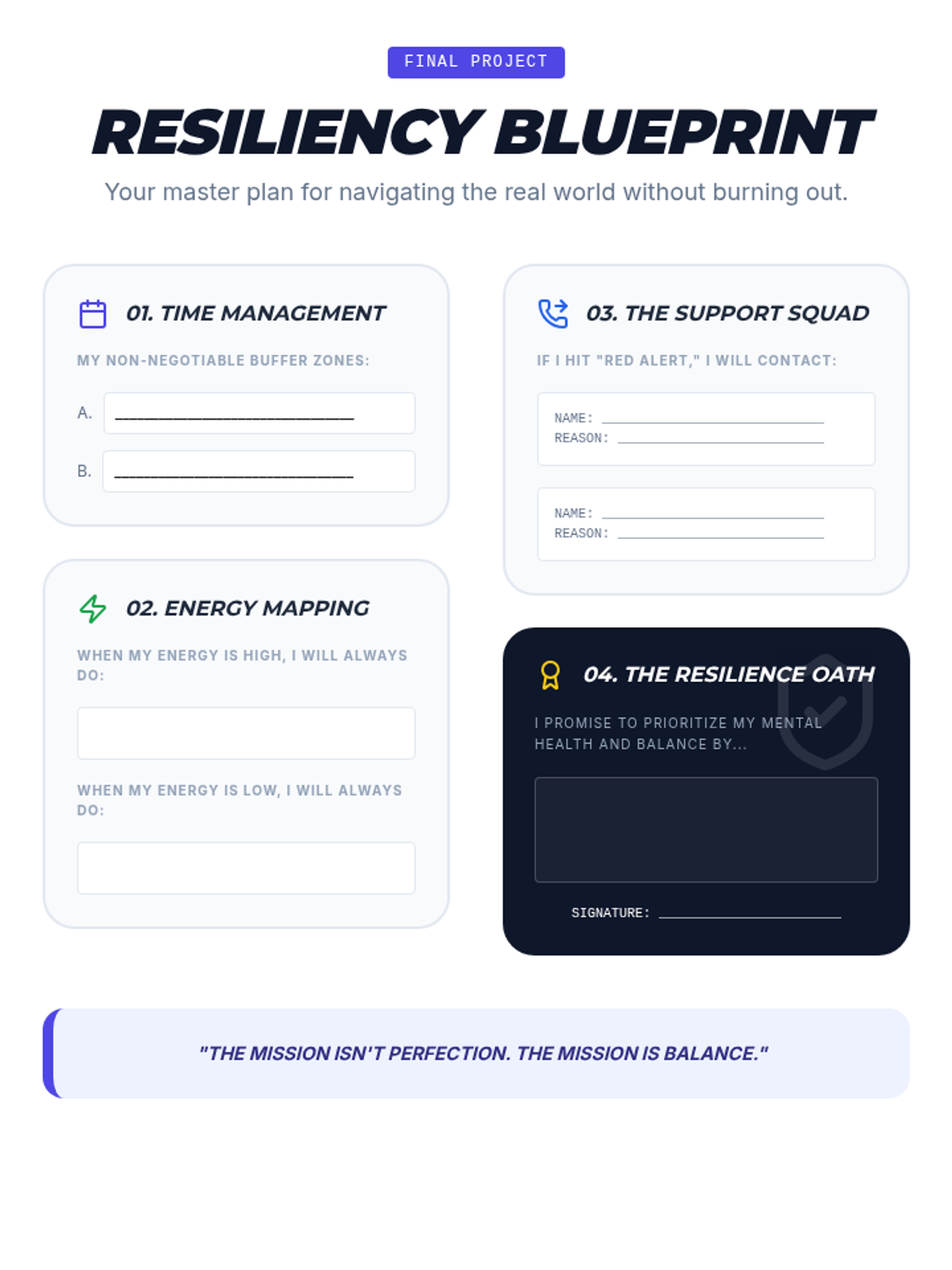
A final reflection on the simulation where students analyze their performance, identify breaking points, and create a long-term strategy for real-world balance.
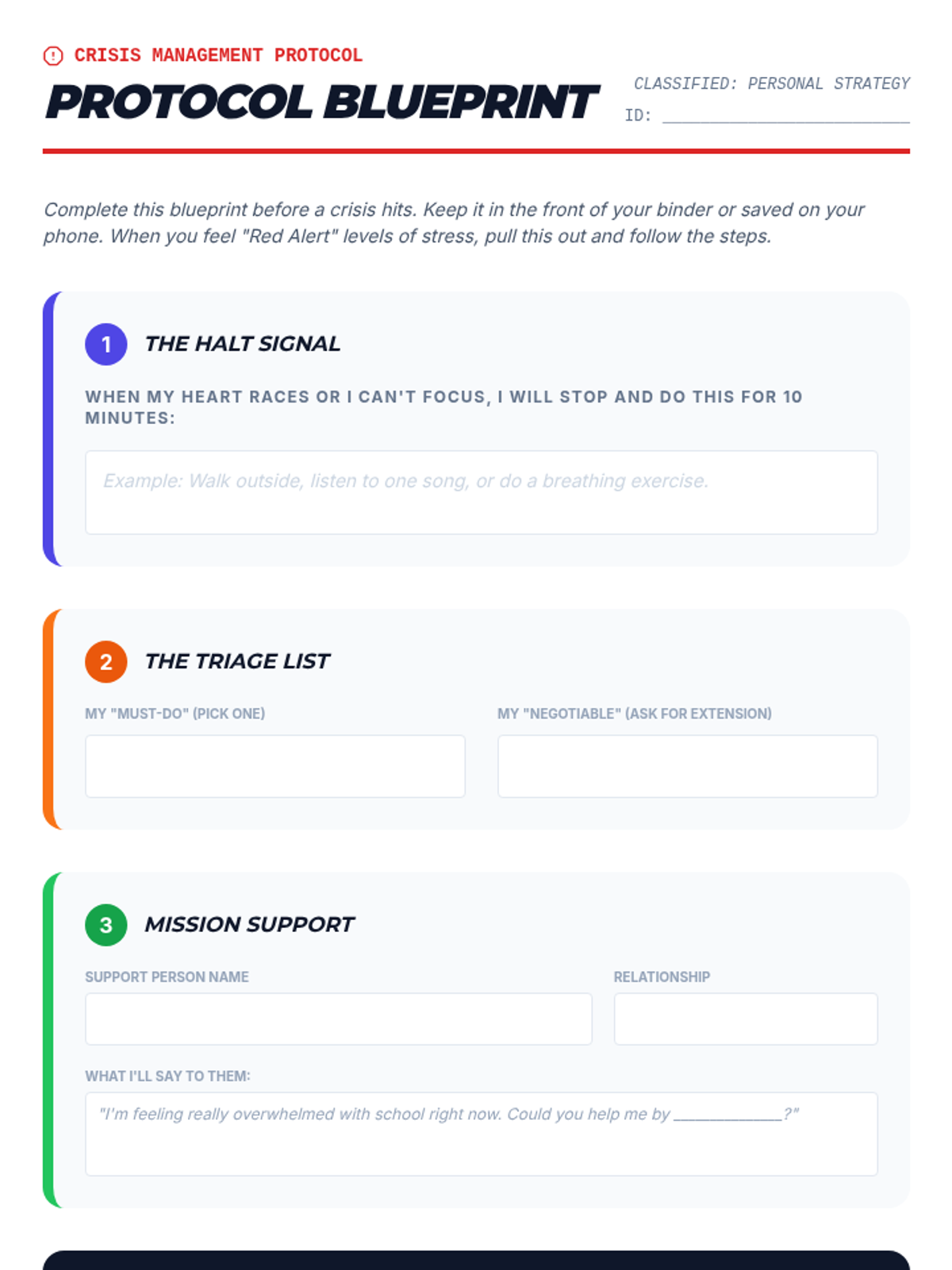
Students create a personal 'Emergency Protocol' for overwhelming situations, learning how to prioritize tasks to drop and identifying support systems for recovery.
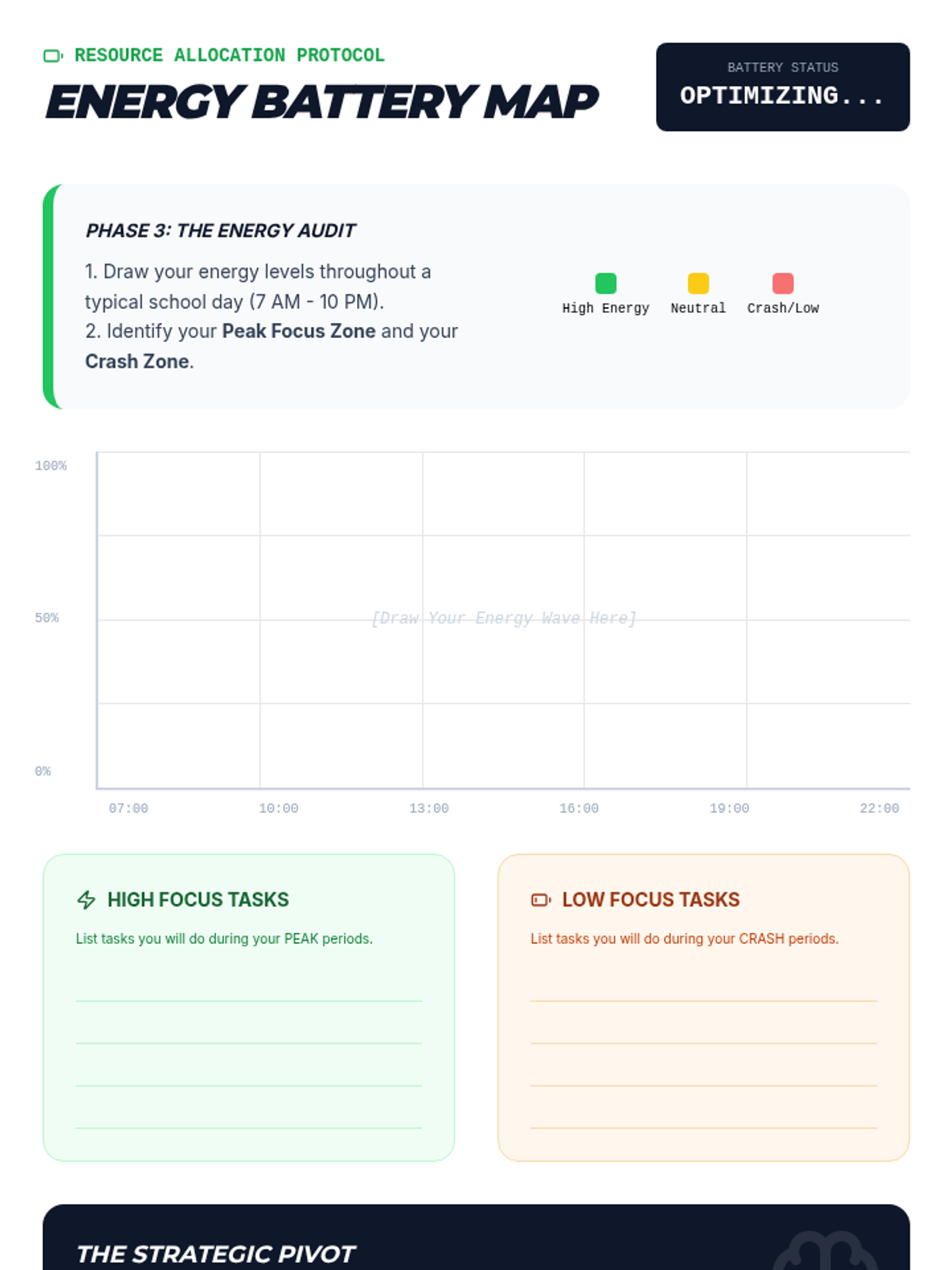
Students analyze their personal energy cycles to match high-demand tasks with high-energy periods, moving beyond simple time management to strategic resource allocation.
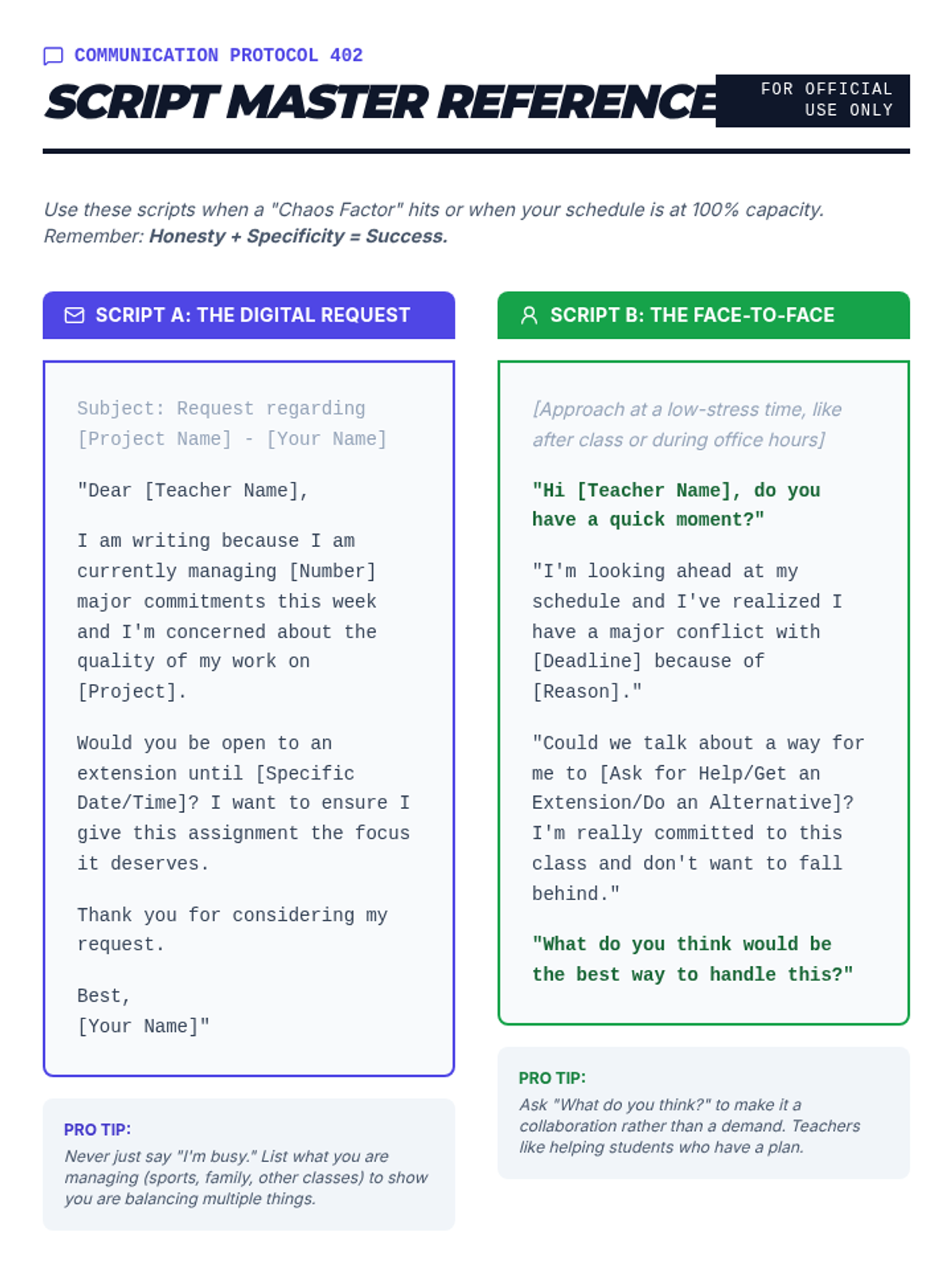
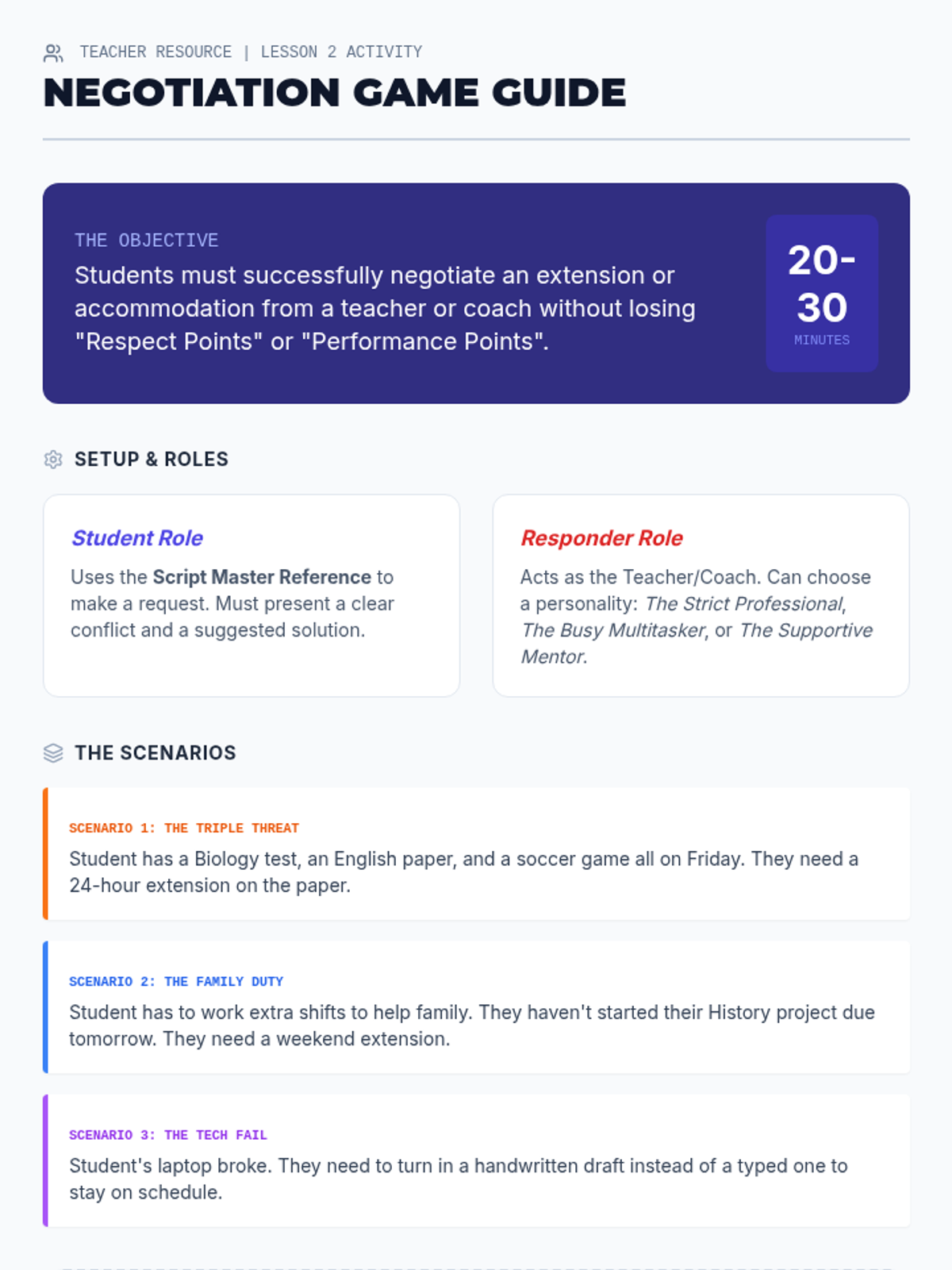
Focuses on professional communication and the distinction between hard and soft deadlines. Students practice scripts to negotiate extensions and help before a crisis occurs.
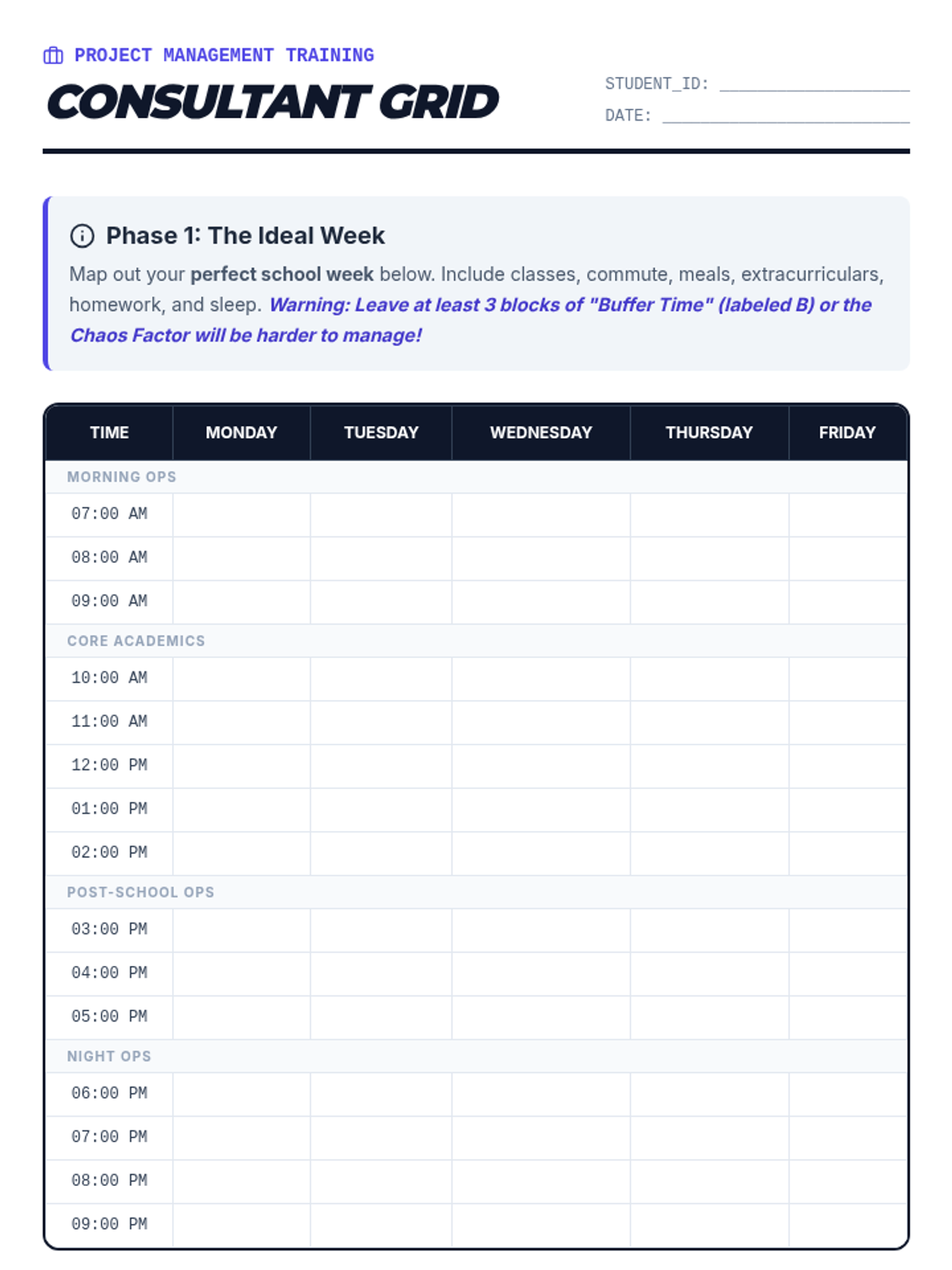
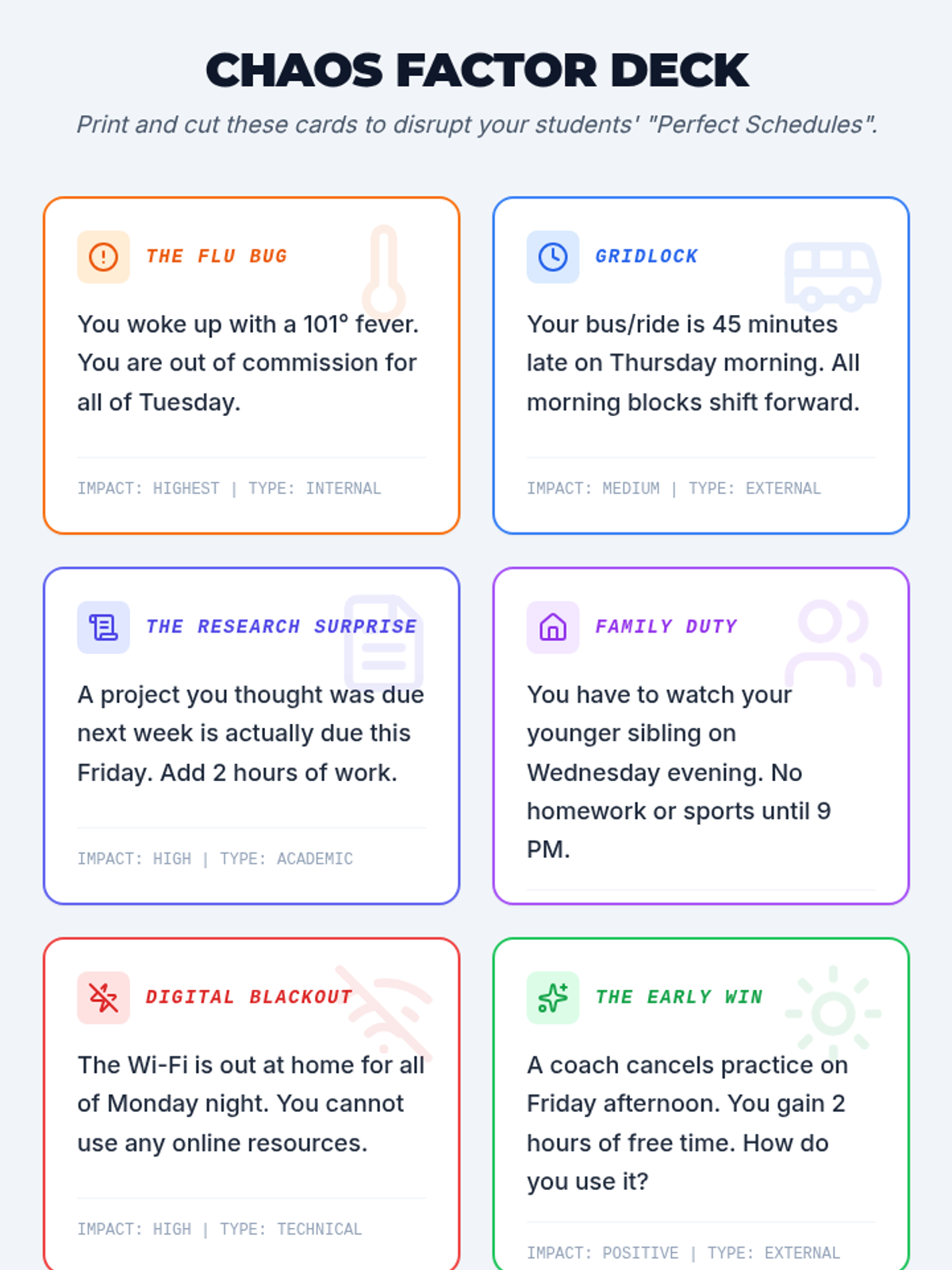
Students design an ideal weekly schedule and are immediately introduced to the 'Chaos Factor'—unpredictable life events that disrupt plans. They identify the need for buffer time and flexible scheduling.
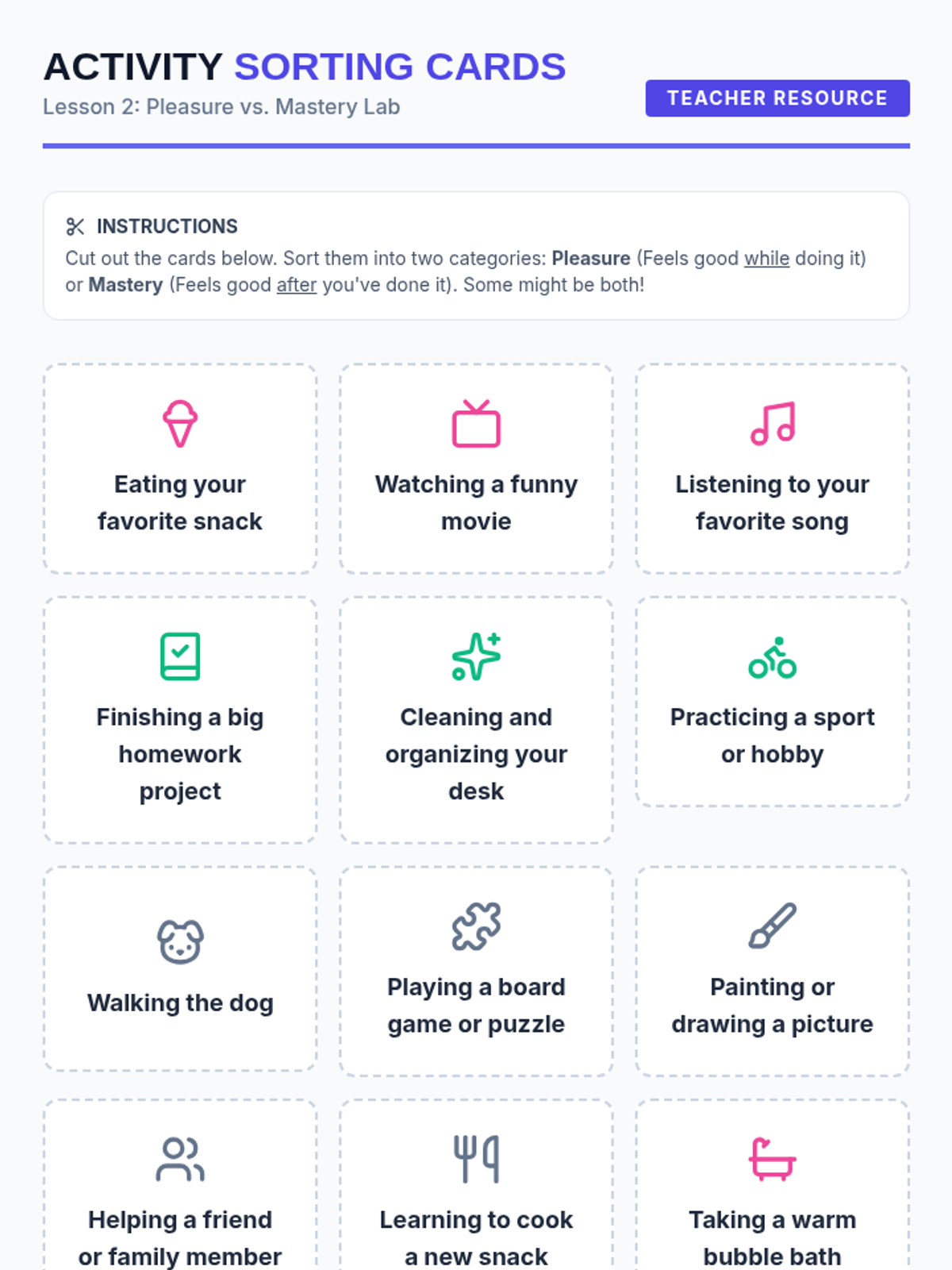
Students distinguish between activities that feel good in the moment (Pleasure) and those that make us feel accomplished (Mastery). Through a sorting workshop, they brainstorm examples for both categories, understanding that a balanced diet of experiences includes both fun and achievement.
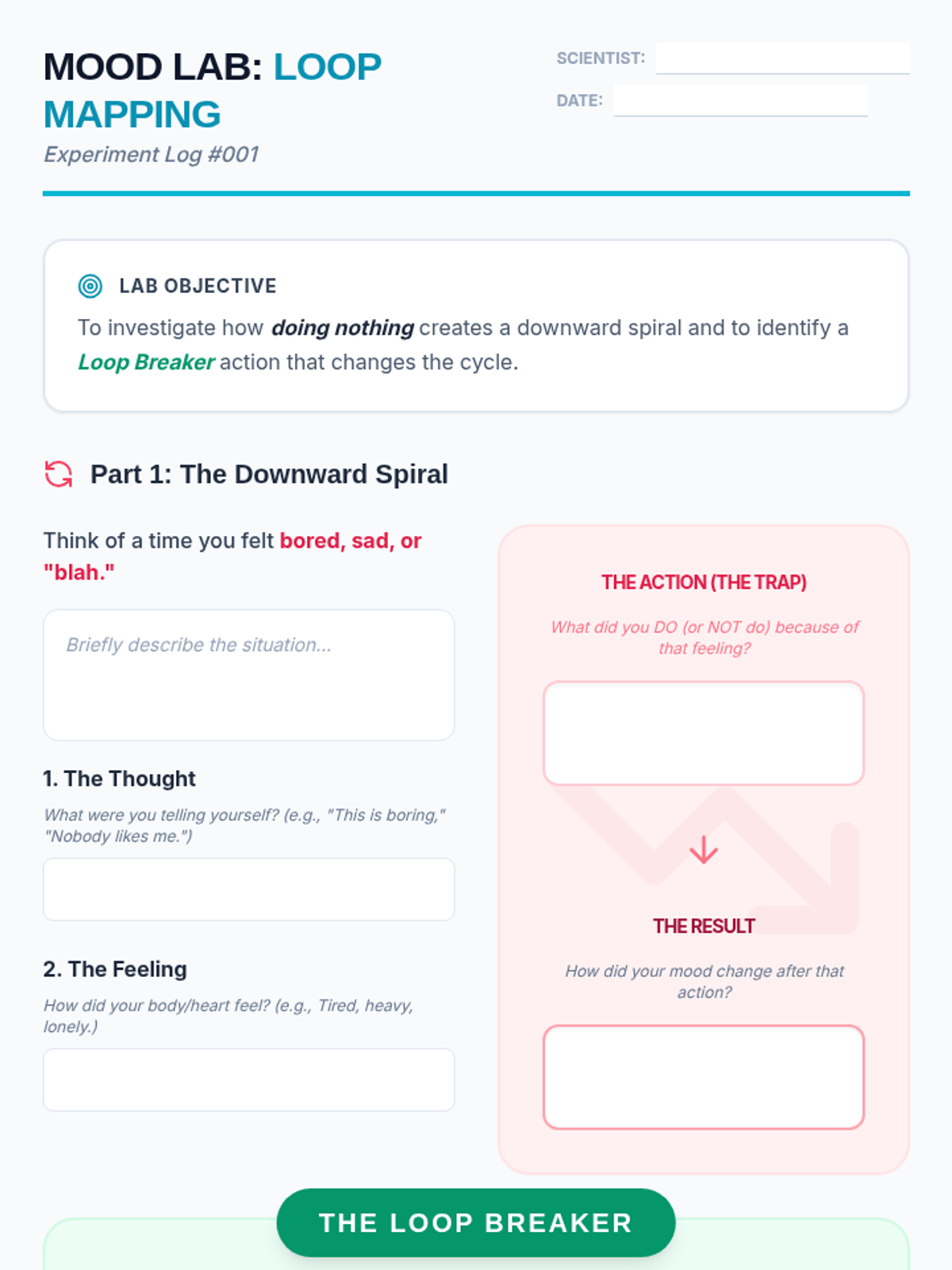
Students participate in a discussion and mapping activity to visualize the cycle between thoughts, feelings, and behaviors. They identify how doing nothing often leads to feeling worse (the downward spiral) and how small actions can reverse this.
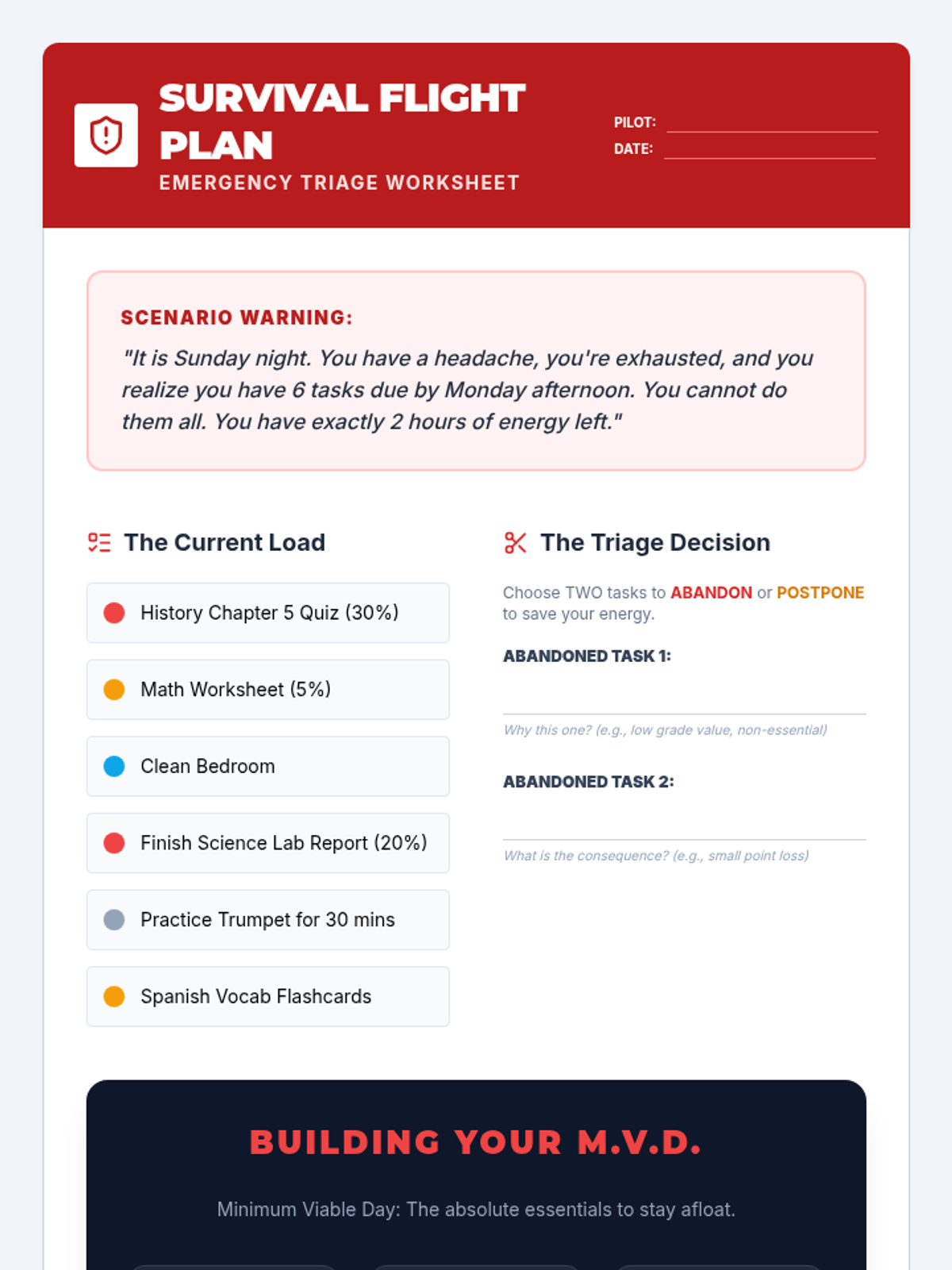
Students develop emergency 'triage' strategies and create a 'Minimum Viable Day' plan for maintaining performance during periods of high stress or illness.
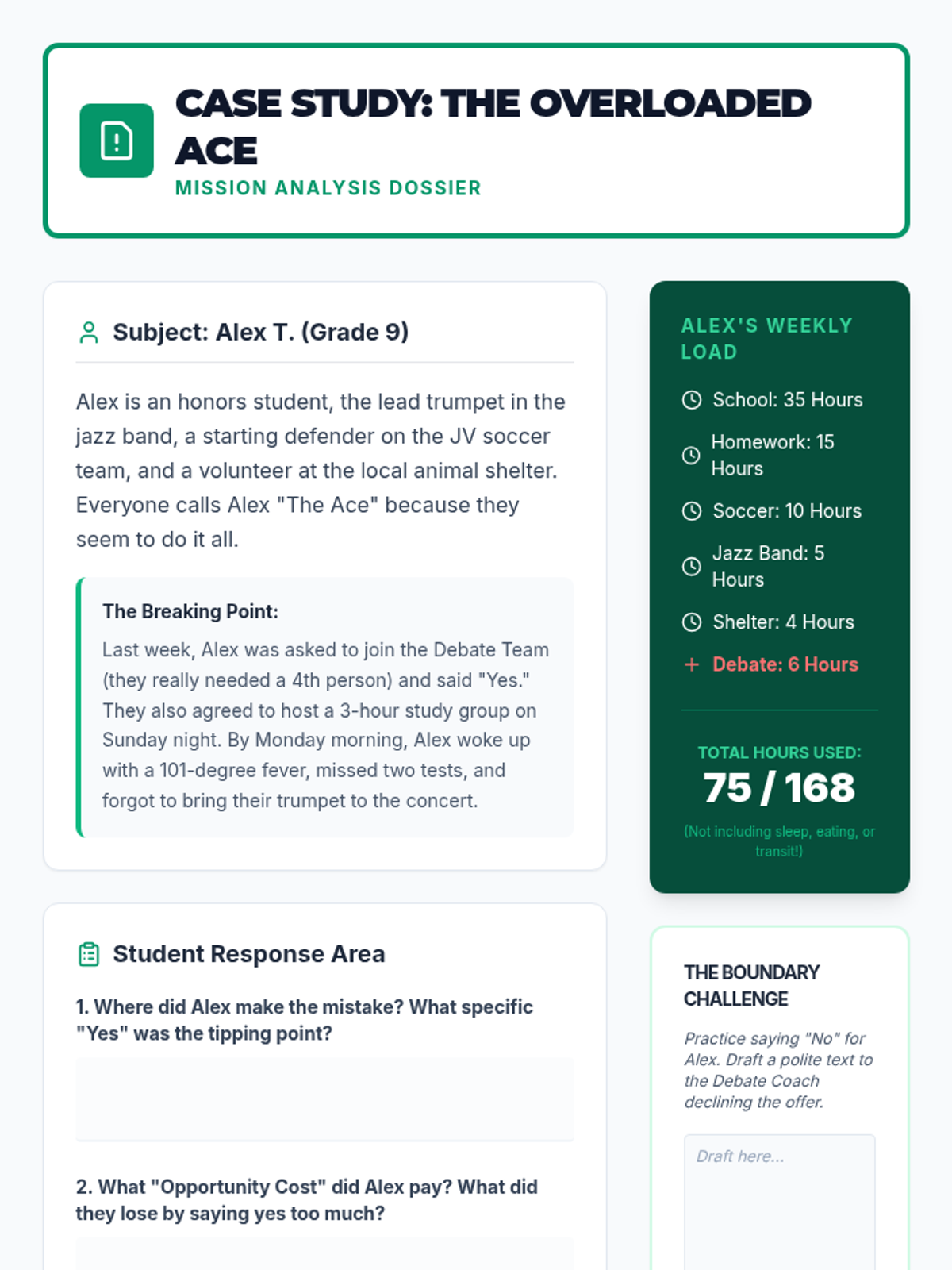
Students explore the concept of opportunity cost and practice strategies for politely but firmly declining optional commitments.
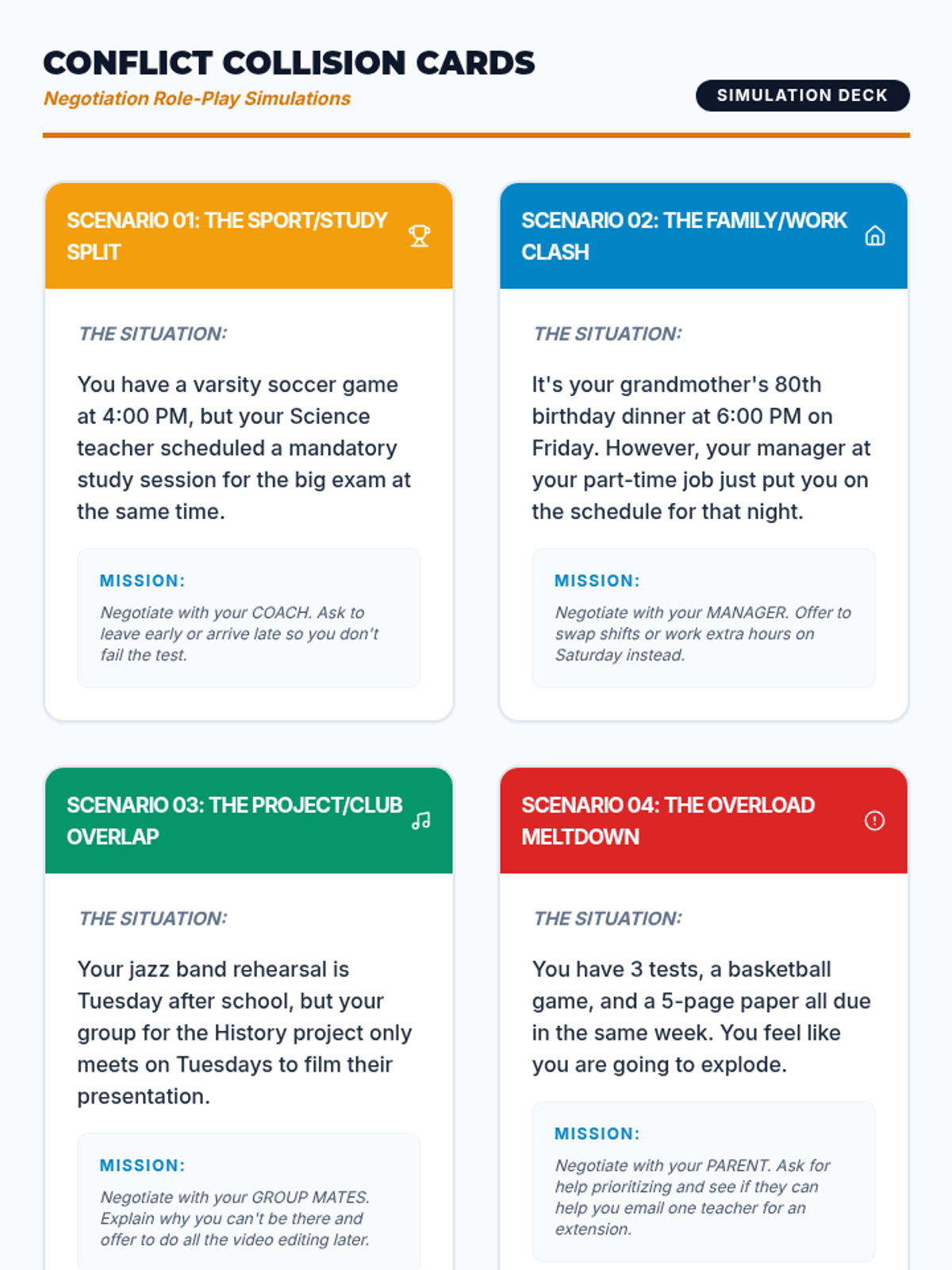
Through role-play and simulation, students practice face-to-face negotiations to resolve scheduling conflicts between multiple commitments.
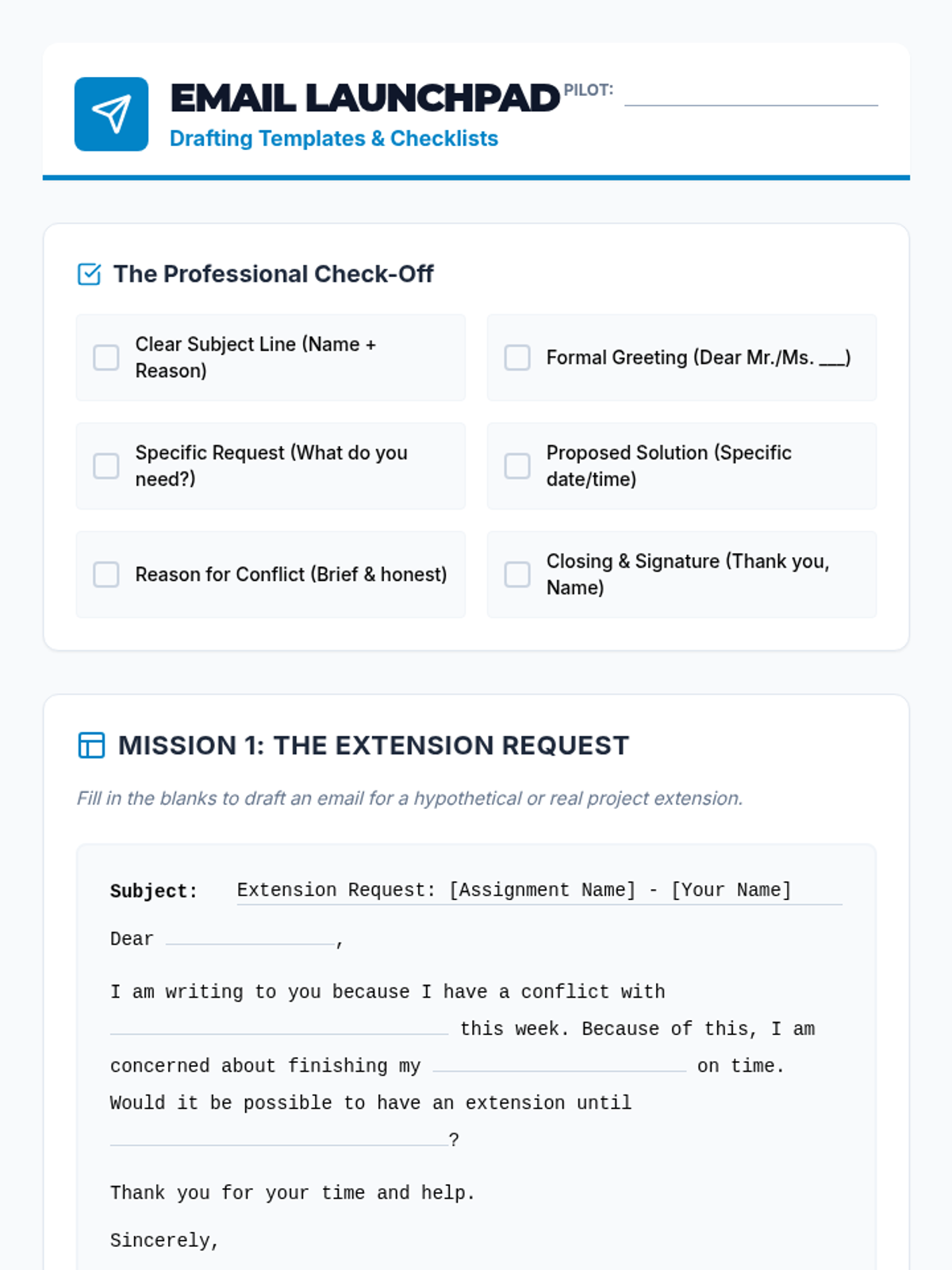
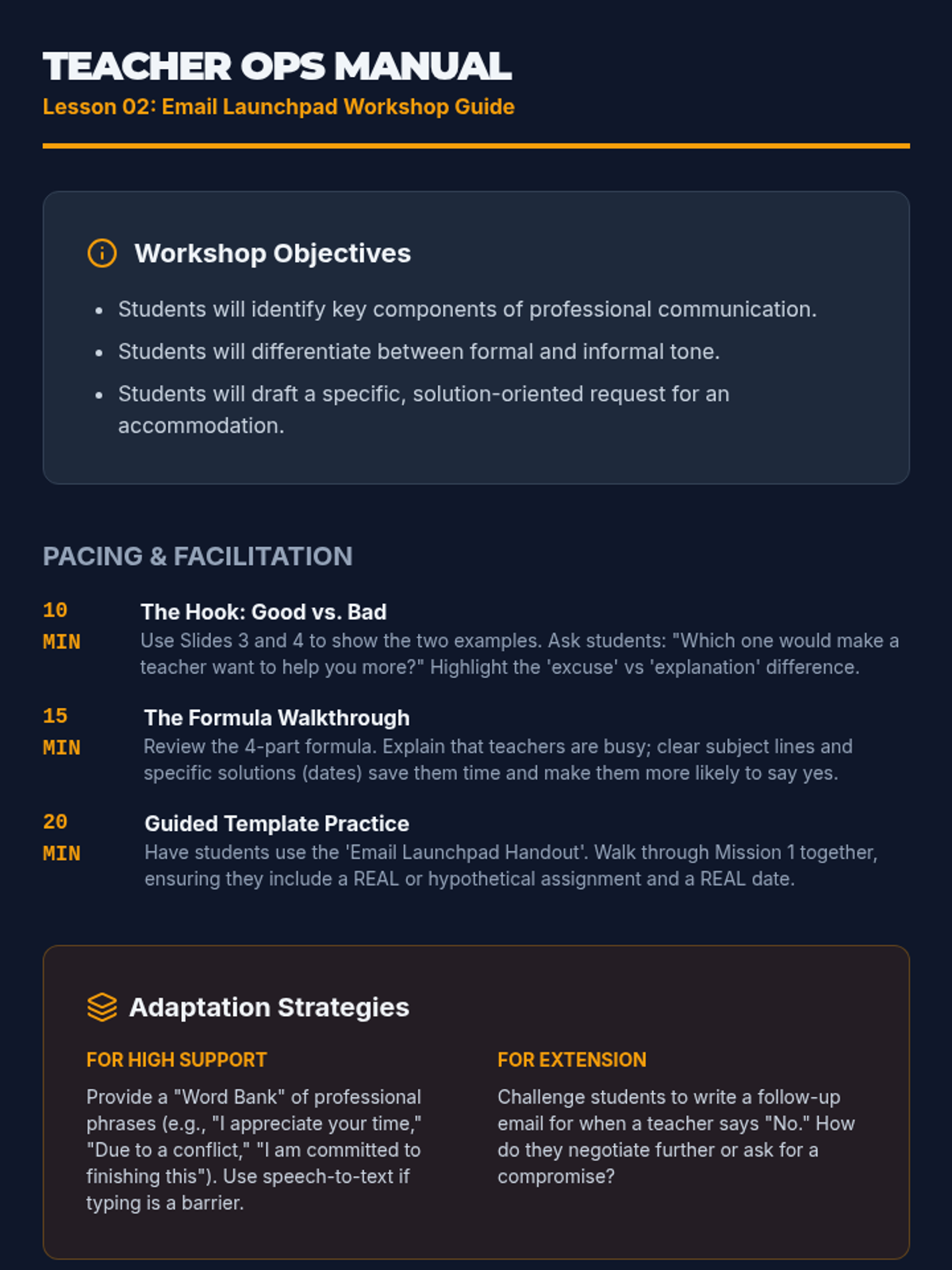
Students master the art of professional email communication, learning to draft responsible and clear requests for extensions or accommodations.
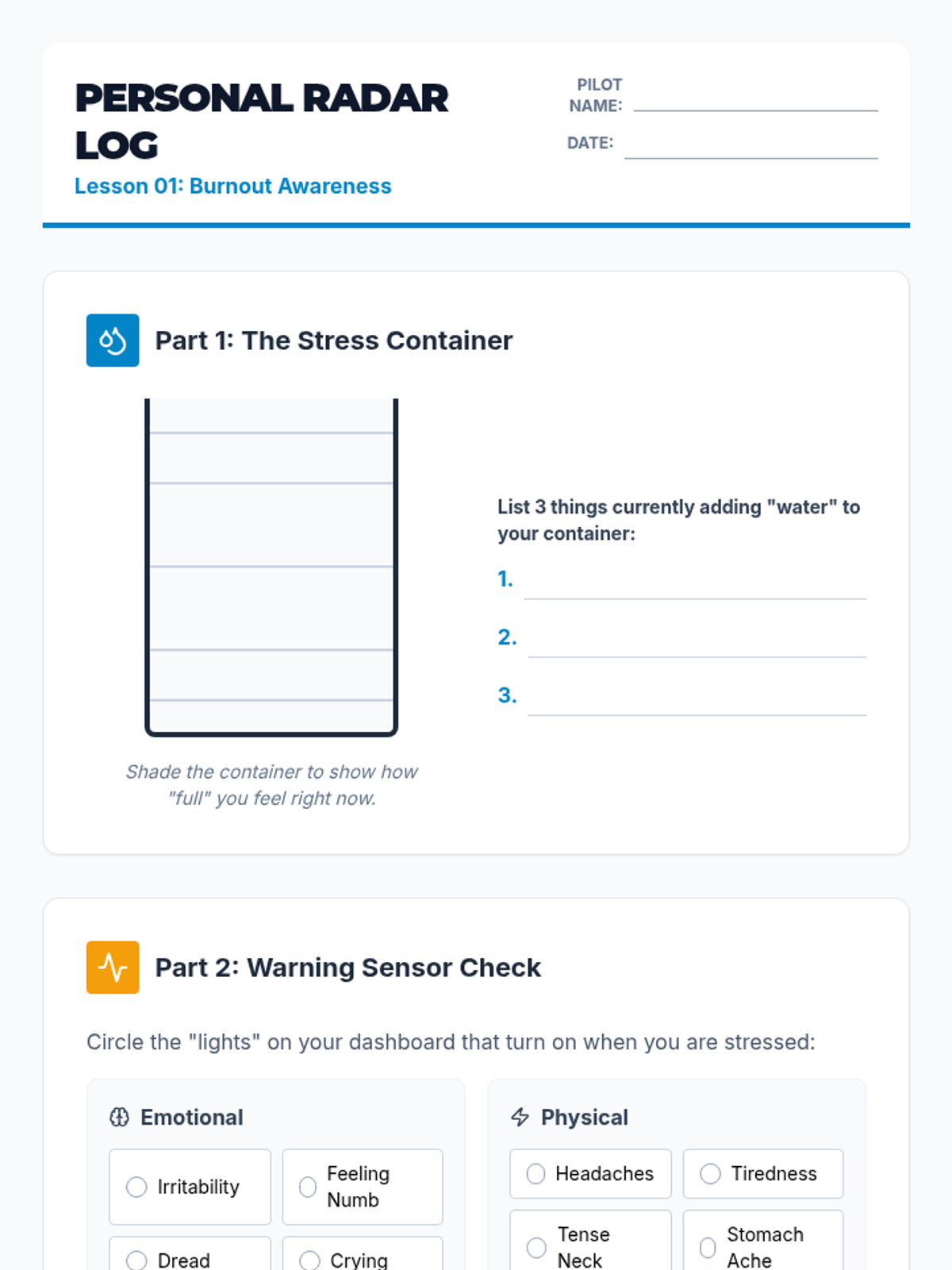
Students identify physical and emotional signs of burnout and use the 'Stress Container' visualization to understand their personal capacity and tipping points.
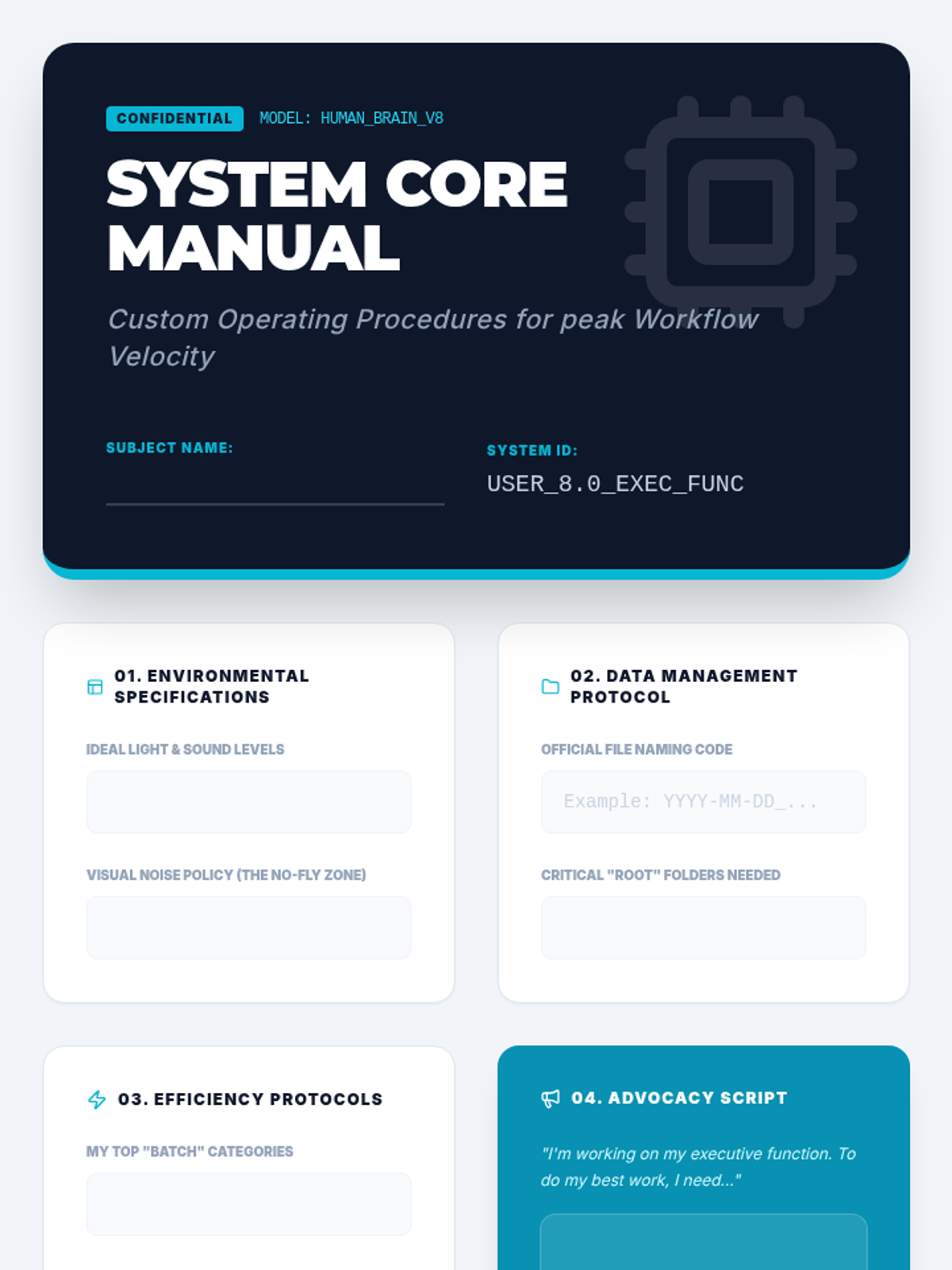
In this capstone lesson, students synthesize their learning into a 'User Manual' for their own brain. They document personalized strategies for physical, digital, and temporal organization to build self-advocacy and long-term habits.
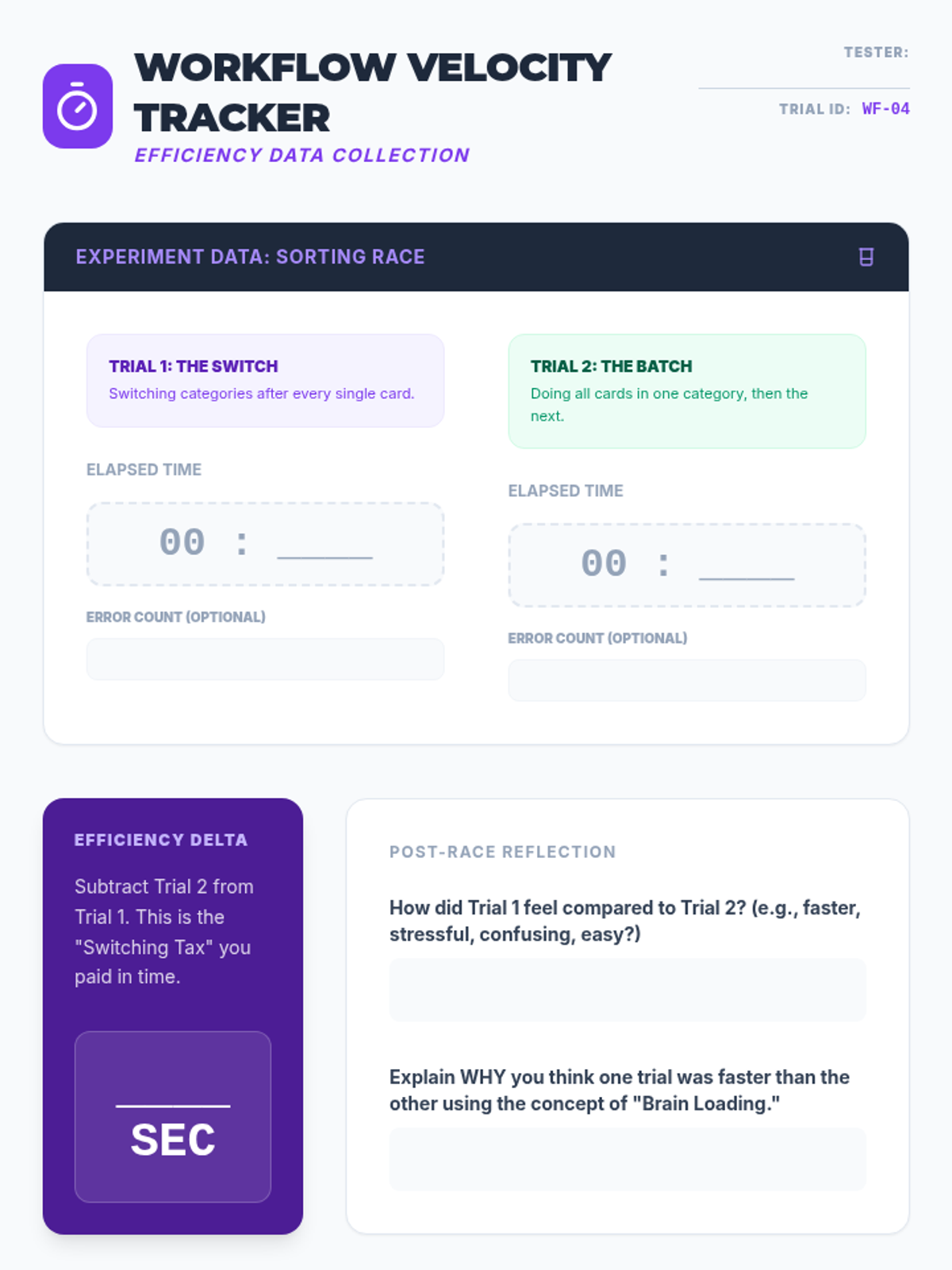
Students investigate the efficiency costs of multitasking and context switching. Through timed experiments, they compare sequential task completion with 'batching' strategies to develop more efficient workflow habits.
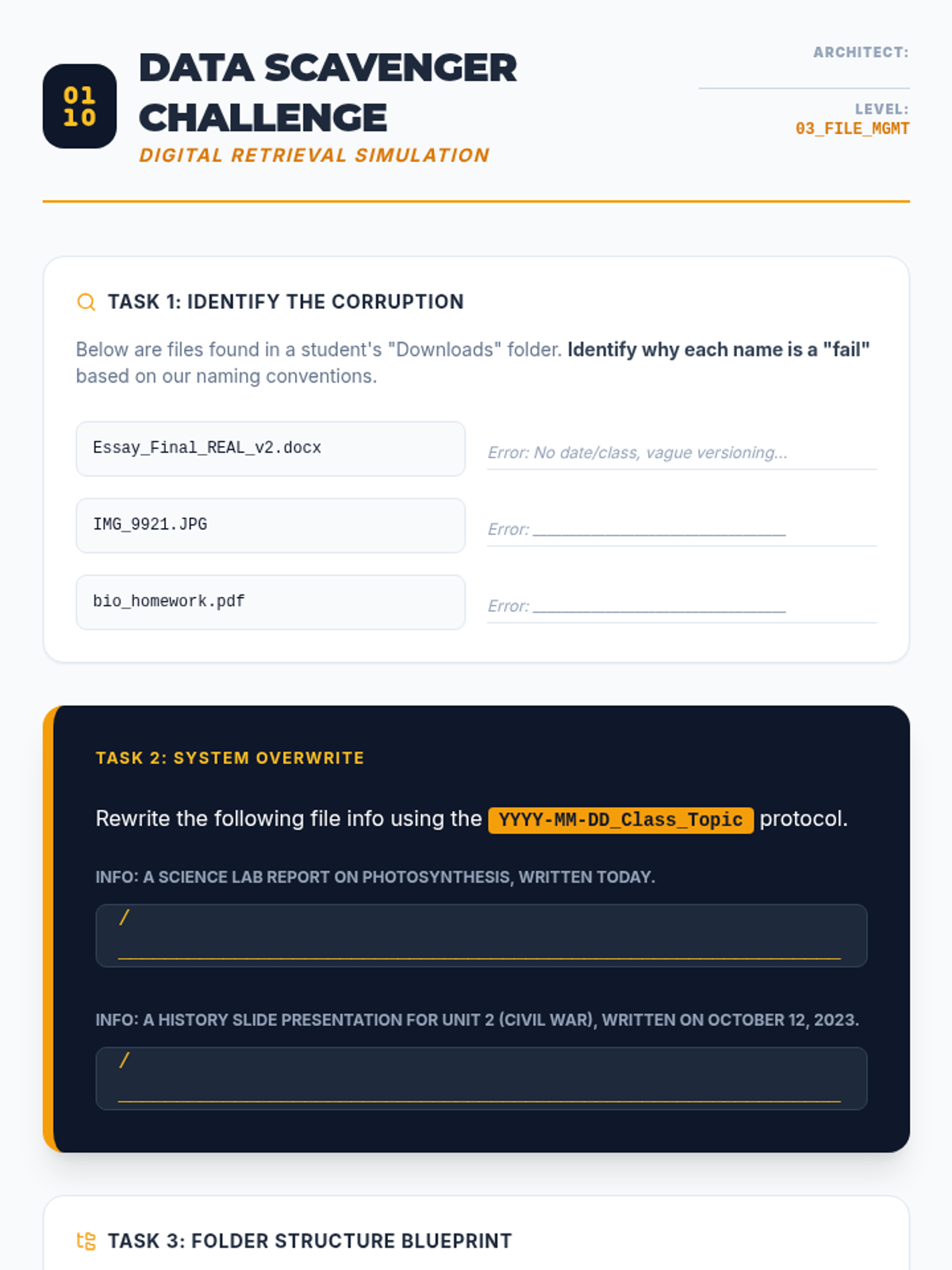
This lesson focuses on digital literacy through the lens of organization. Students learn effective file naming conventions, folder hierarchies, and inbox management strategies to prevent 'digital hoarding' and improve information retrieval speed.
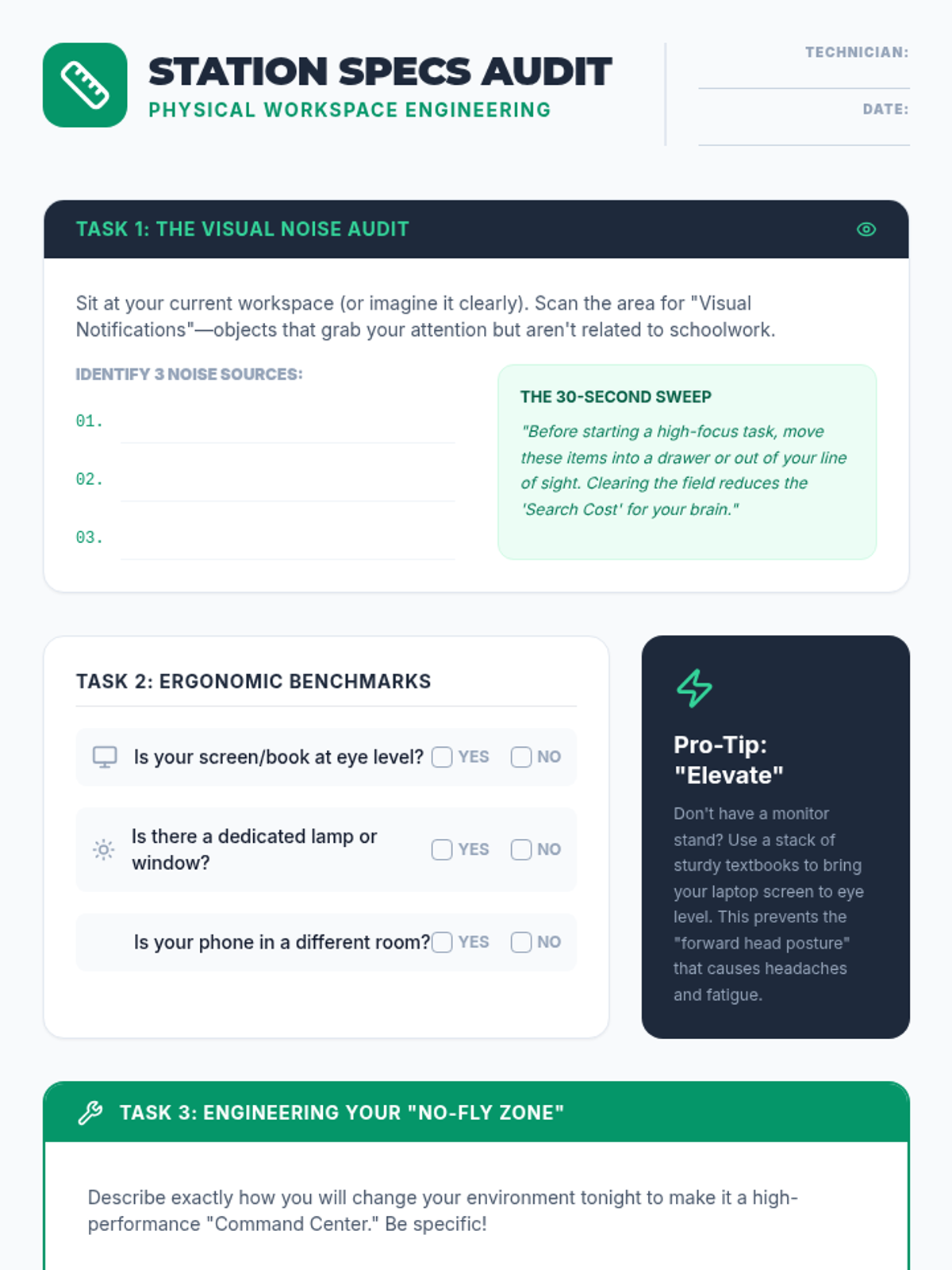
Students analyze the impact of their physical environment on focus and productivity. By auditing workspace case studies and their own study areas, they learn to design spaces that minimize distractions and optimize ergonomics.
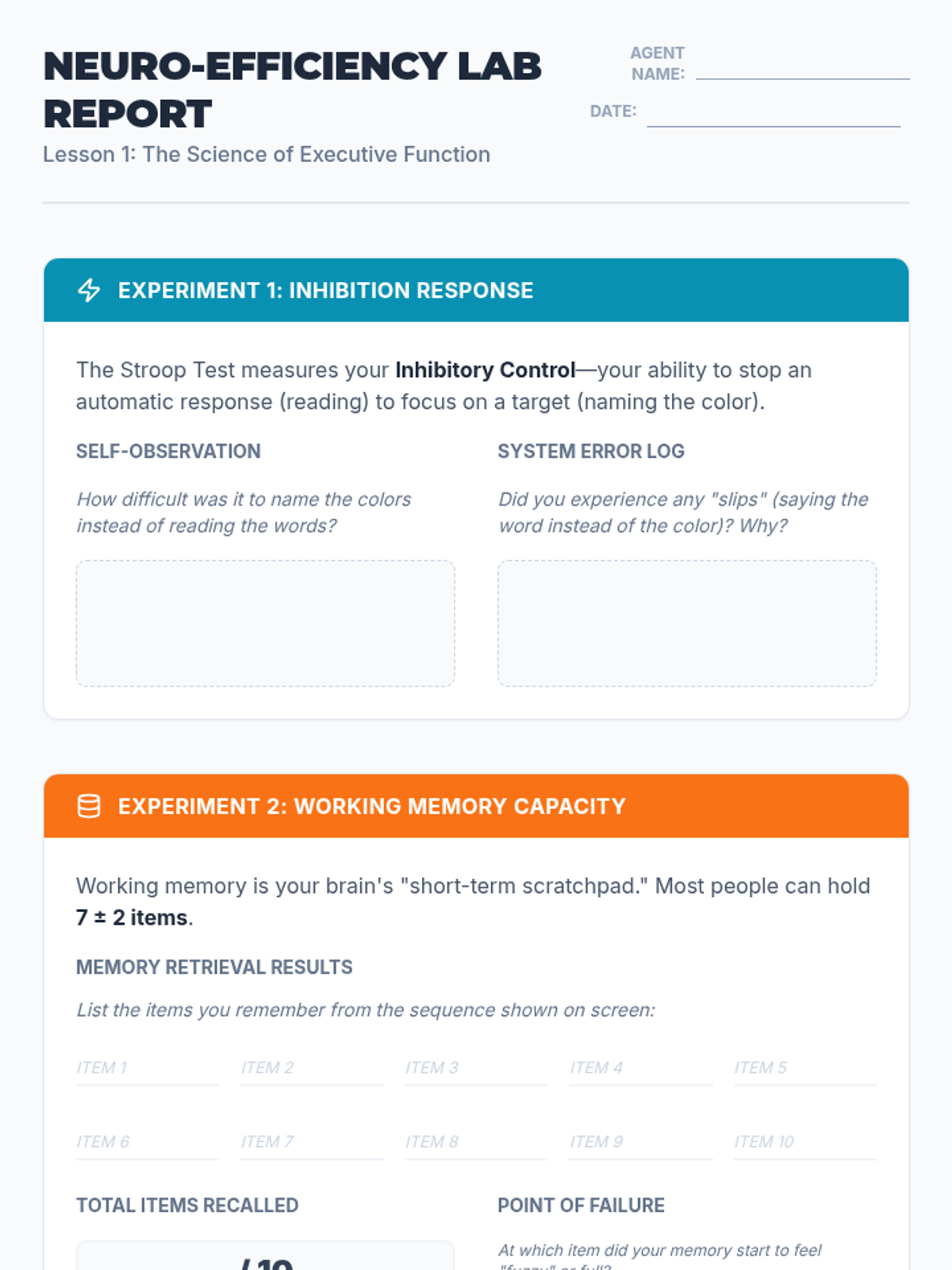
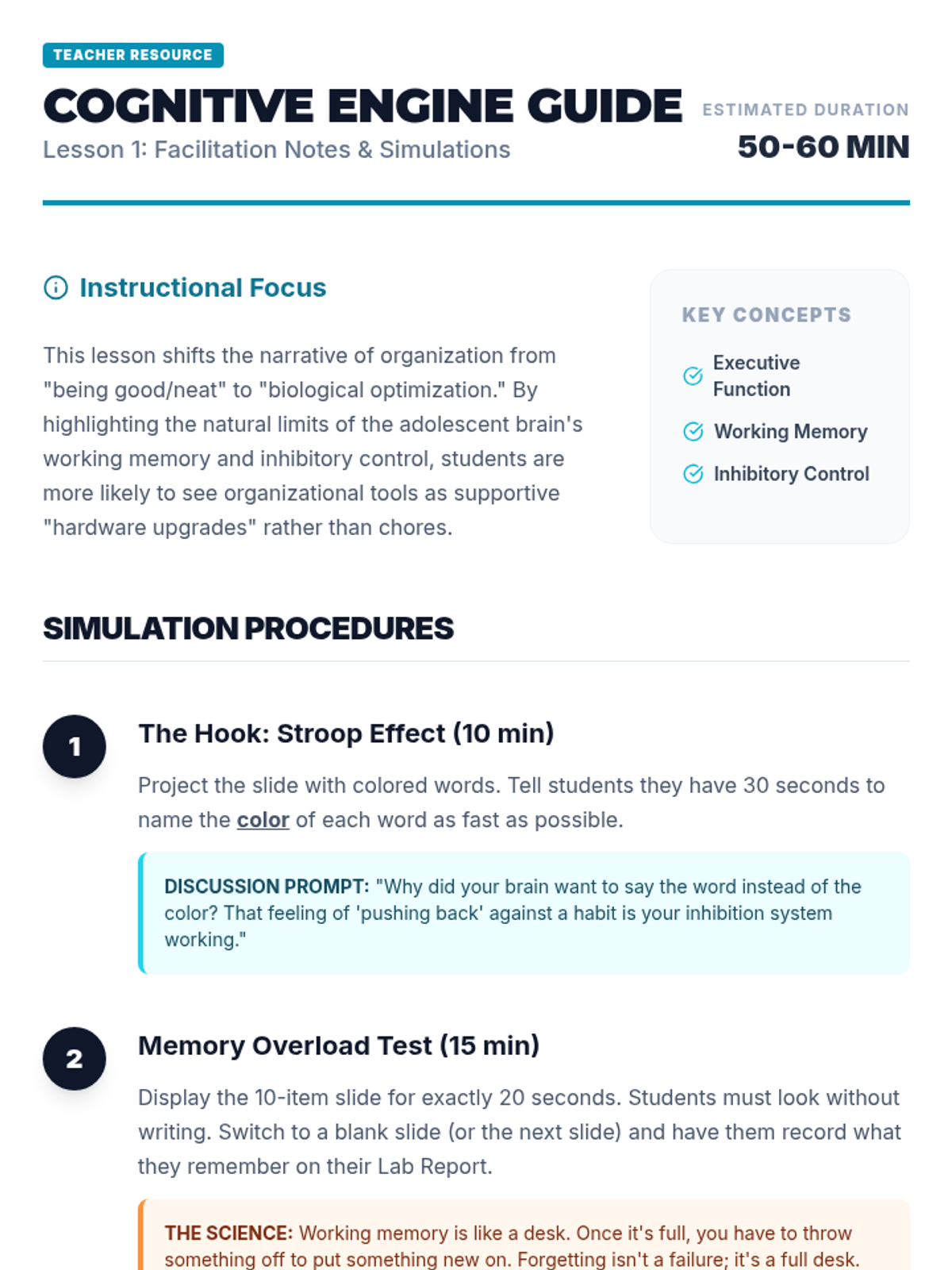
Students explore the neurological basis of executive function, focusing on working memory and inhibition. They engage in simulations like the Stroop Effect and memory overload tasks to understand why organizational systems are necessary for cognitive efficiency.
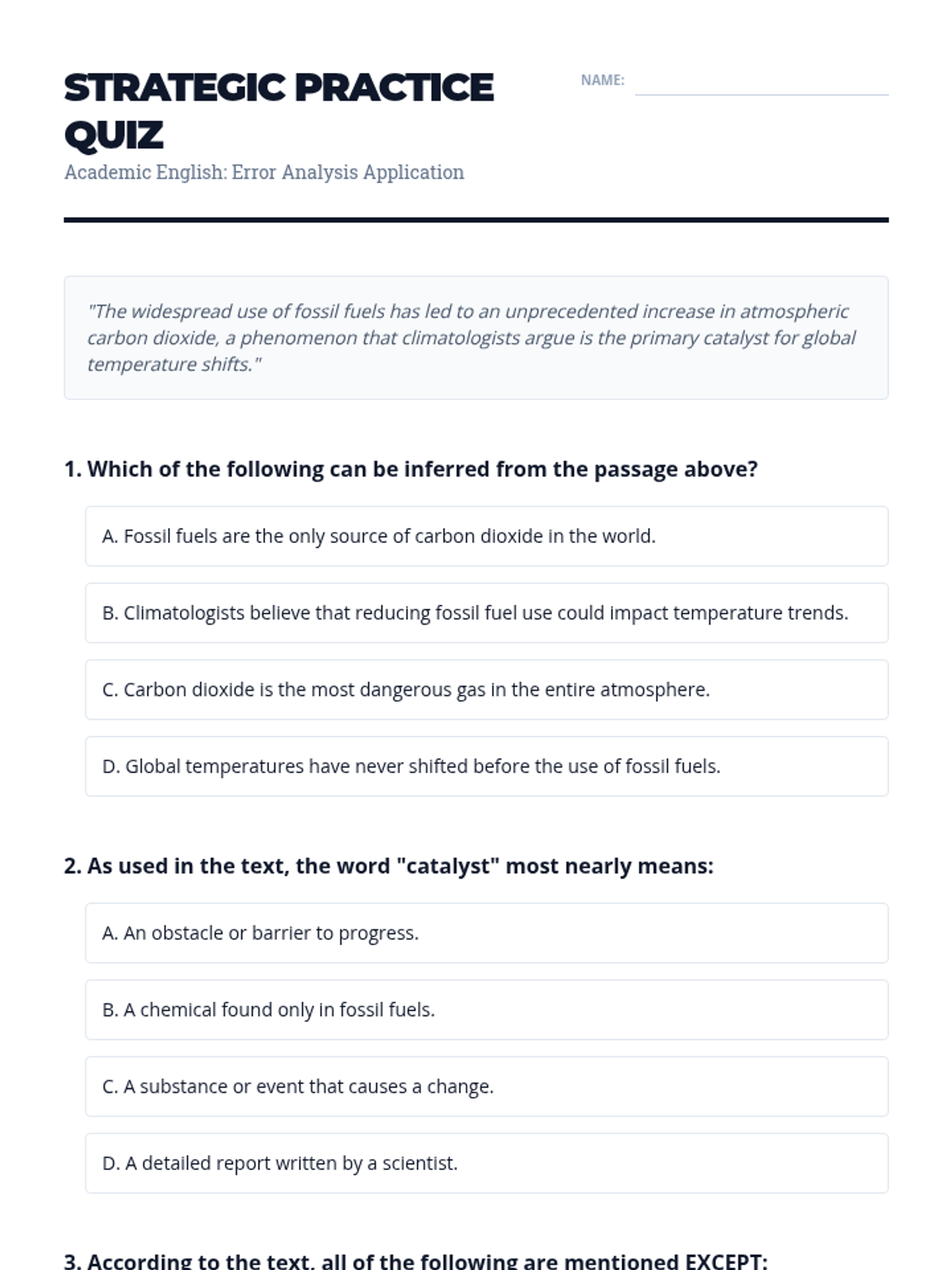
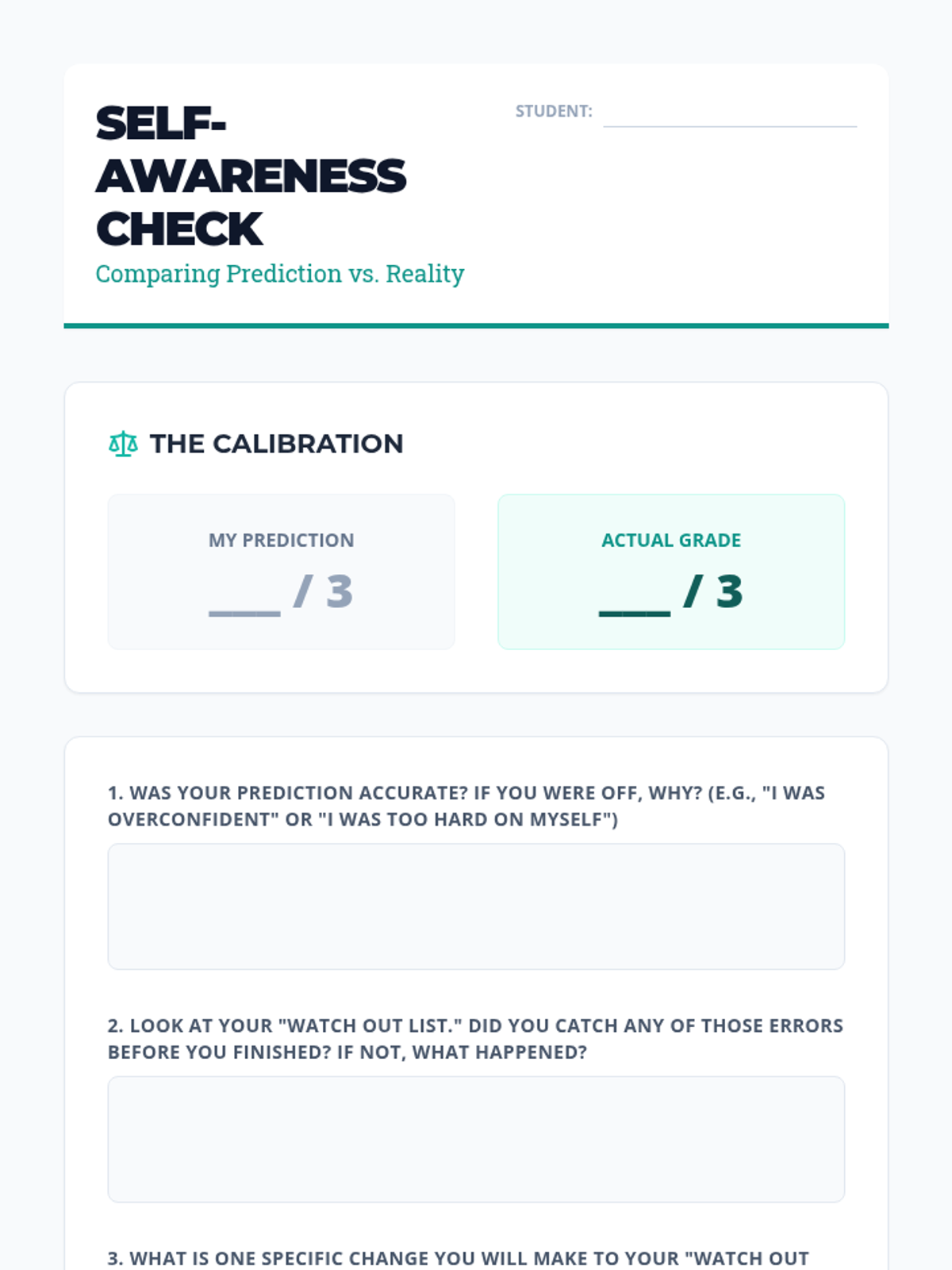
Students take a short assessment and immediately apply their error analysis protocol. They verify if their 'Watch Out' list helped them avoid previous habitual mistakes.
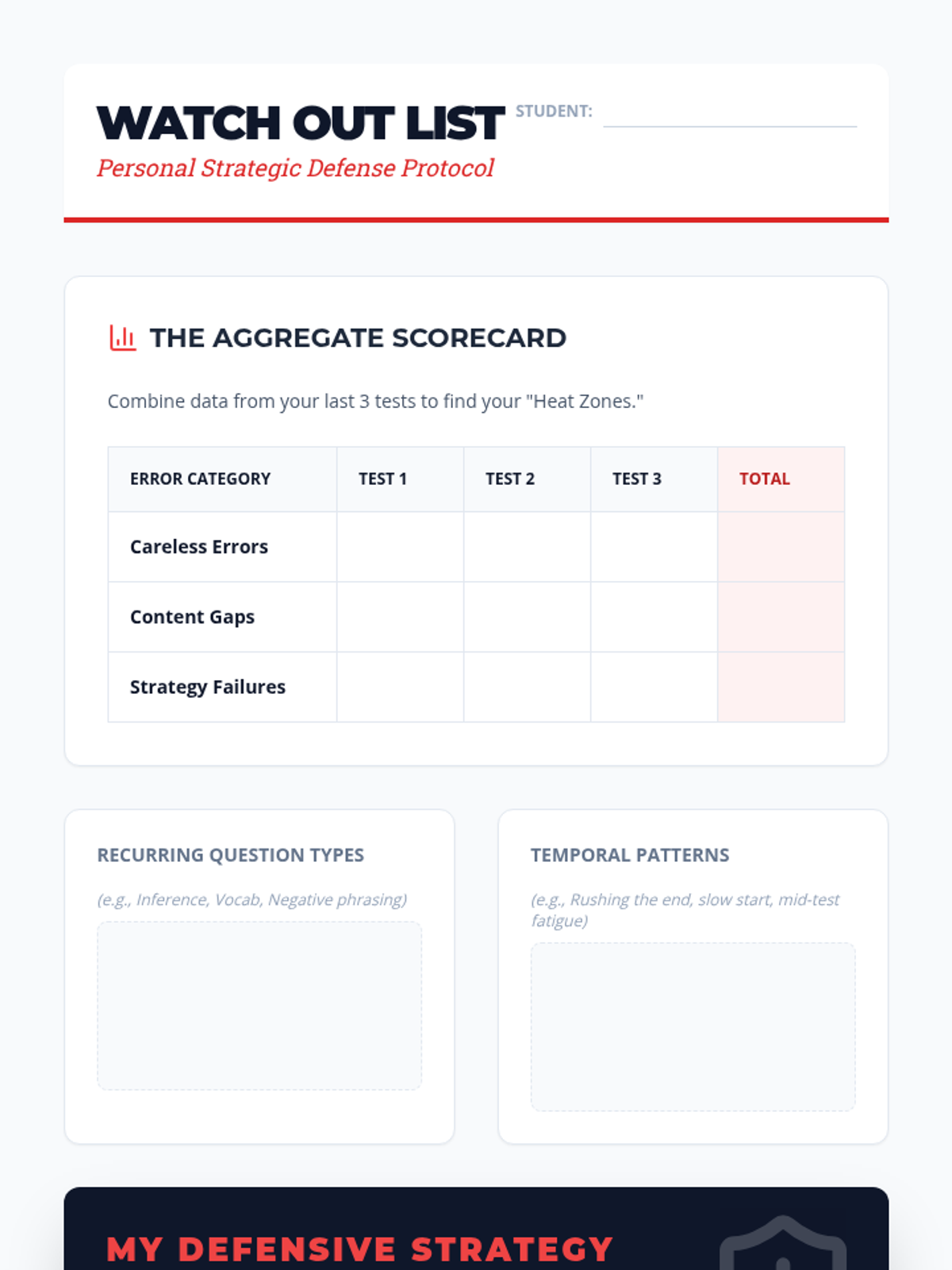
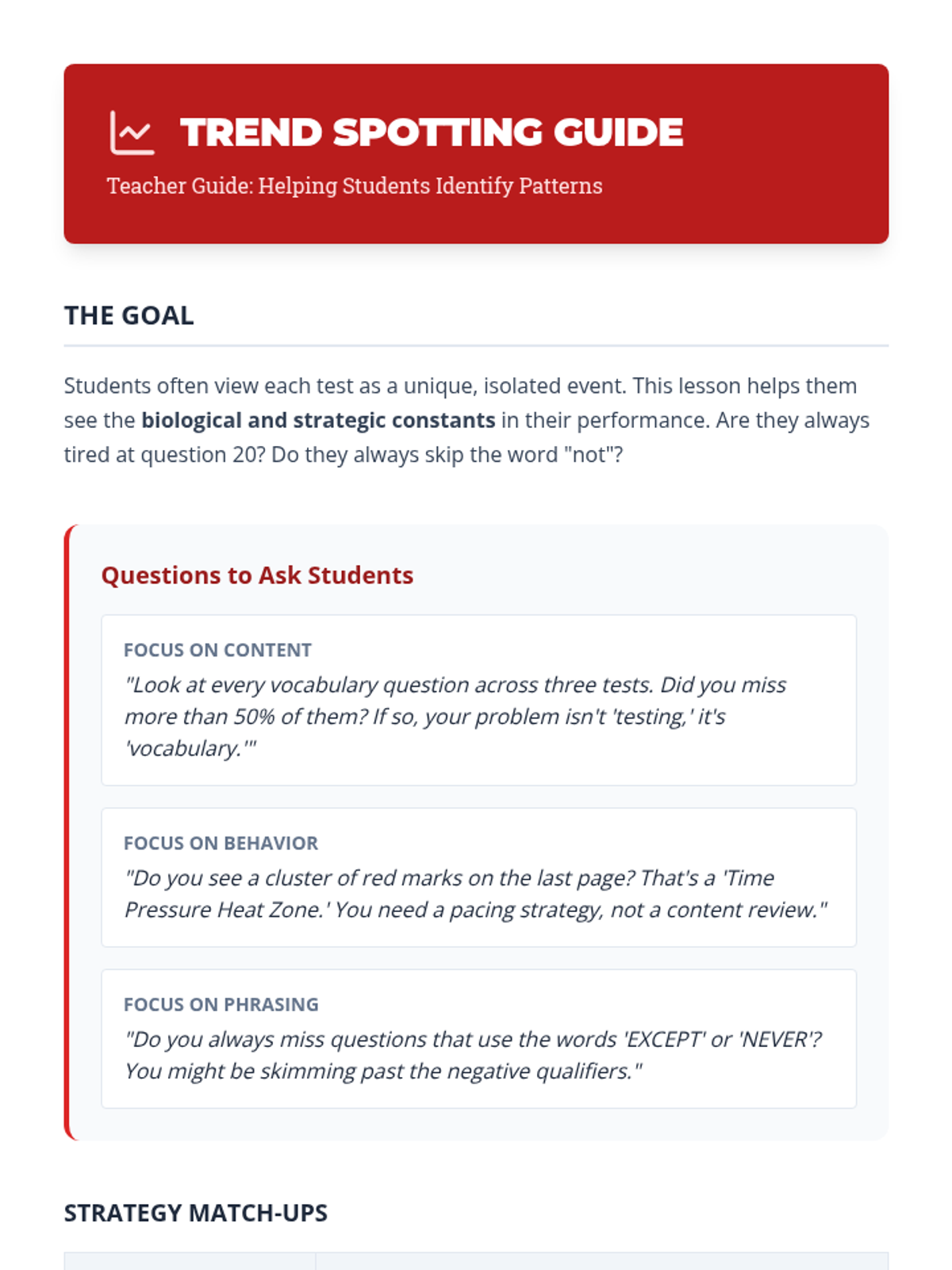
Students aggregate their error data to find personal patterns (e.g., 'I always miss inference questions' or 'I rush the last 5 minutes'). They create a personal 'Watch Out' list for future exams.
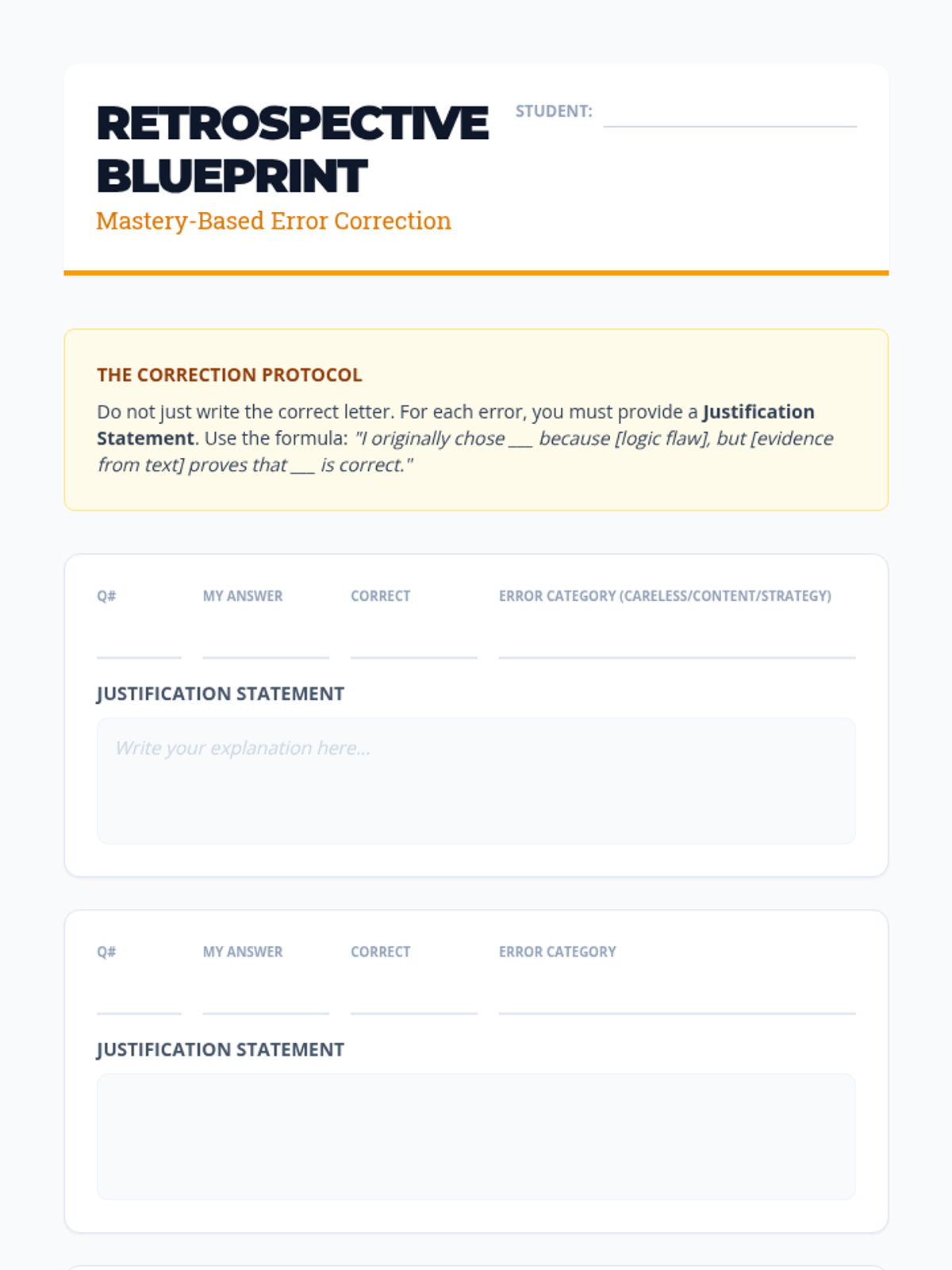
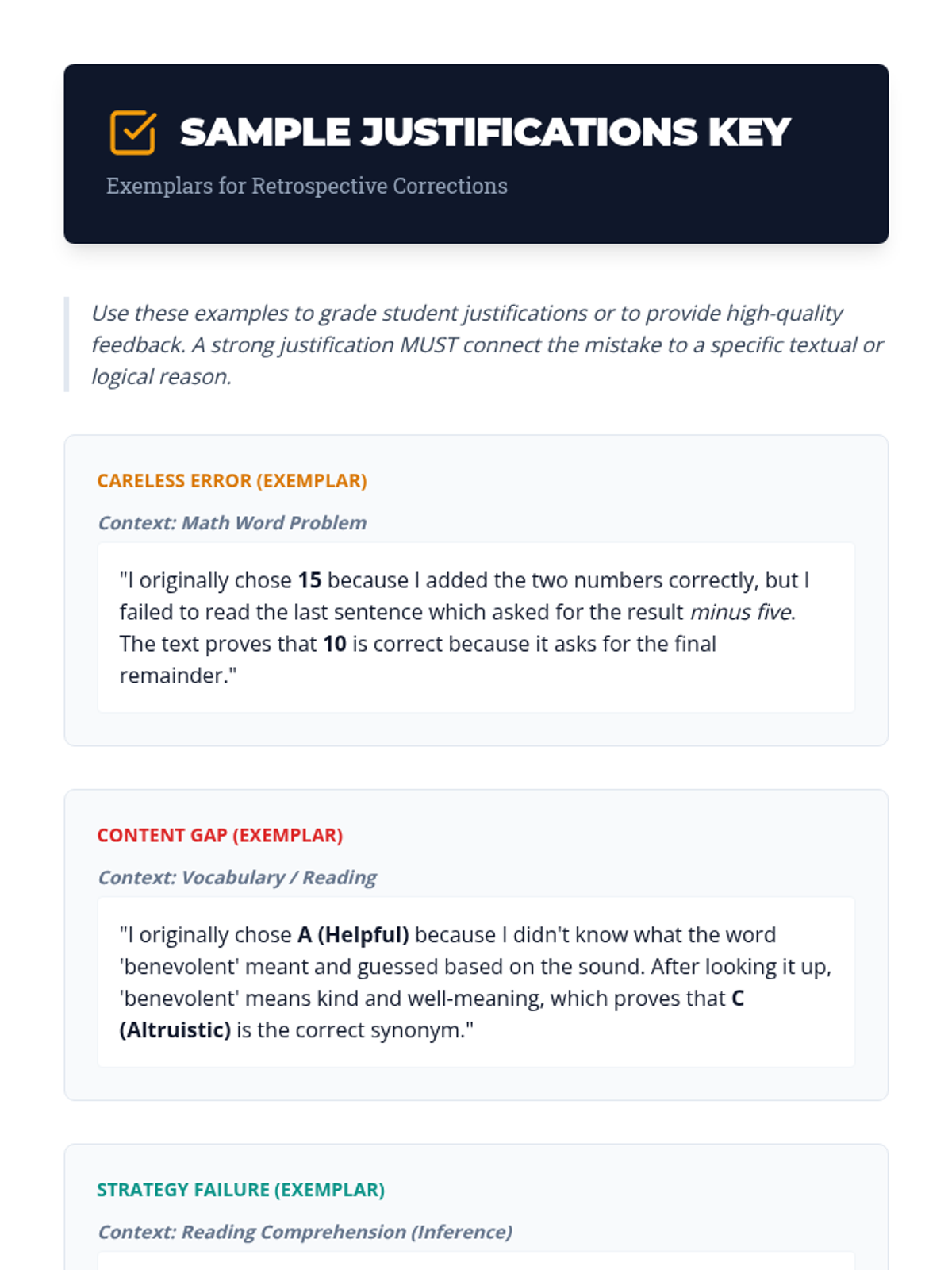
Instead of just marking correct answers, students must write a sentence explaining *why* their original answer was wrong and *why* the new answer is right. This ensures deep processing of the error.
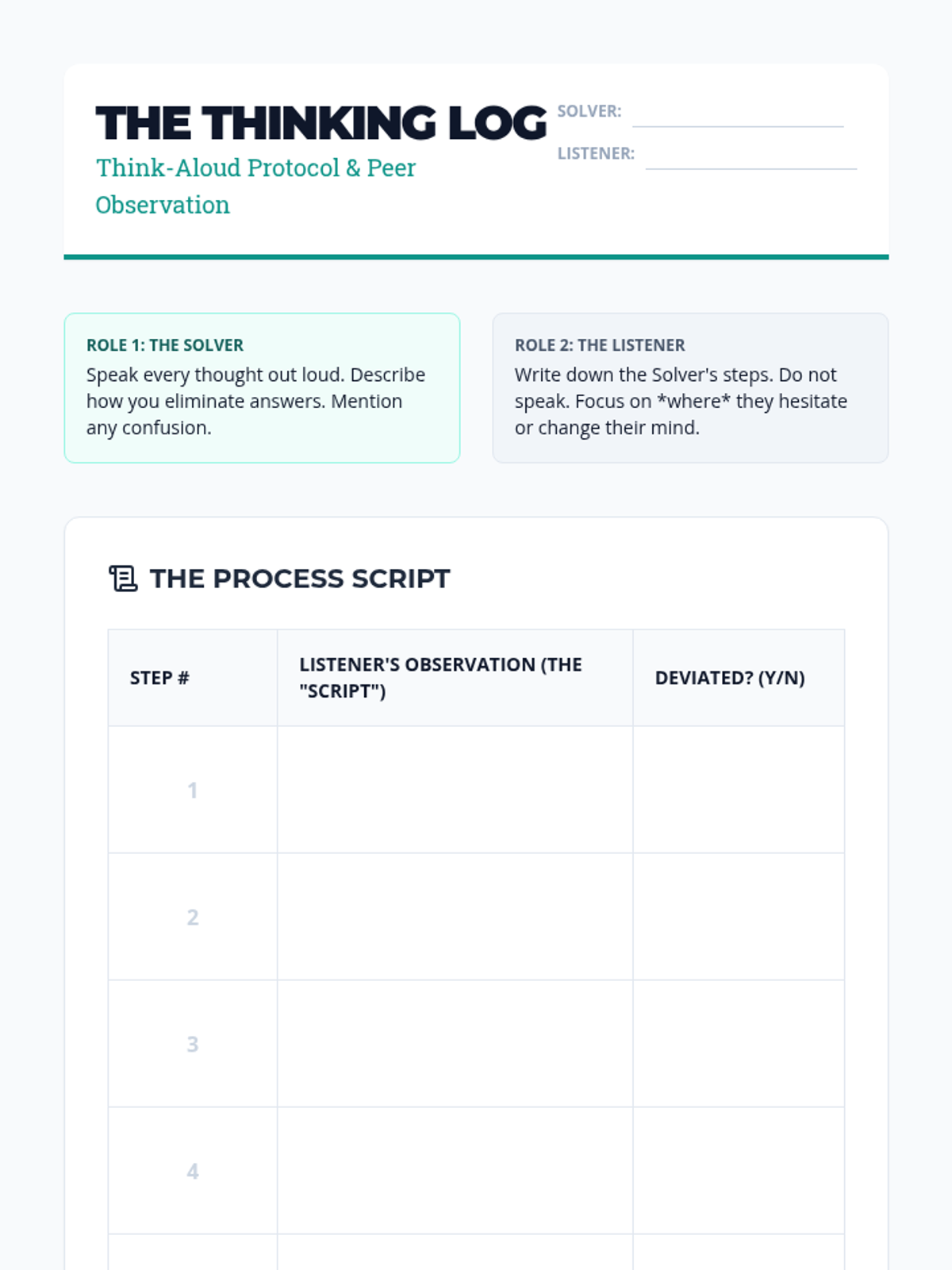
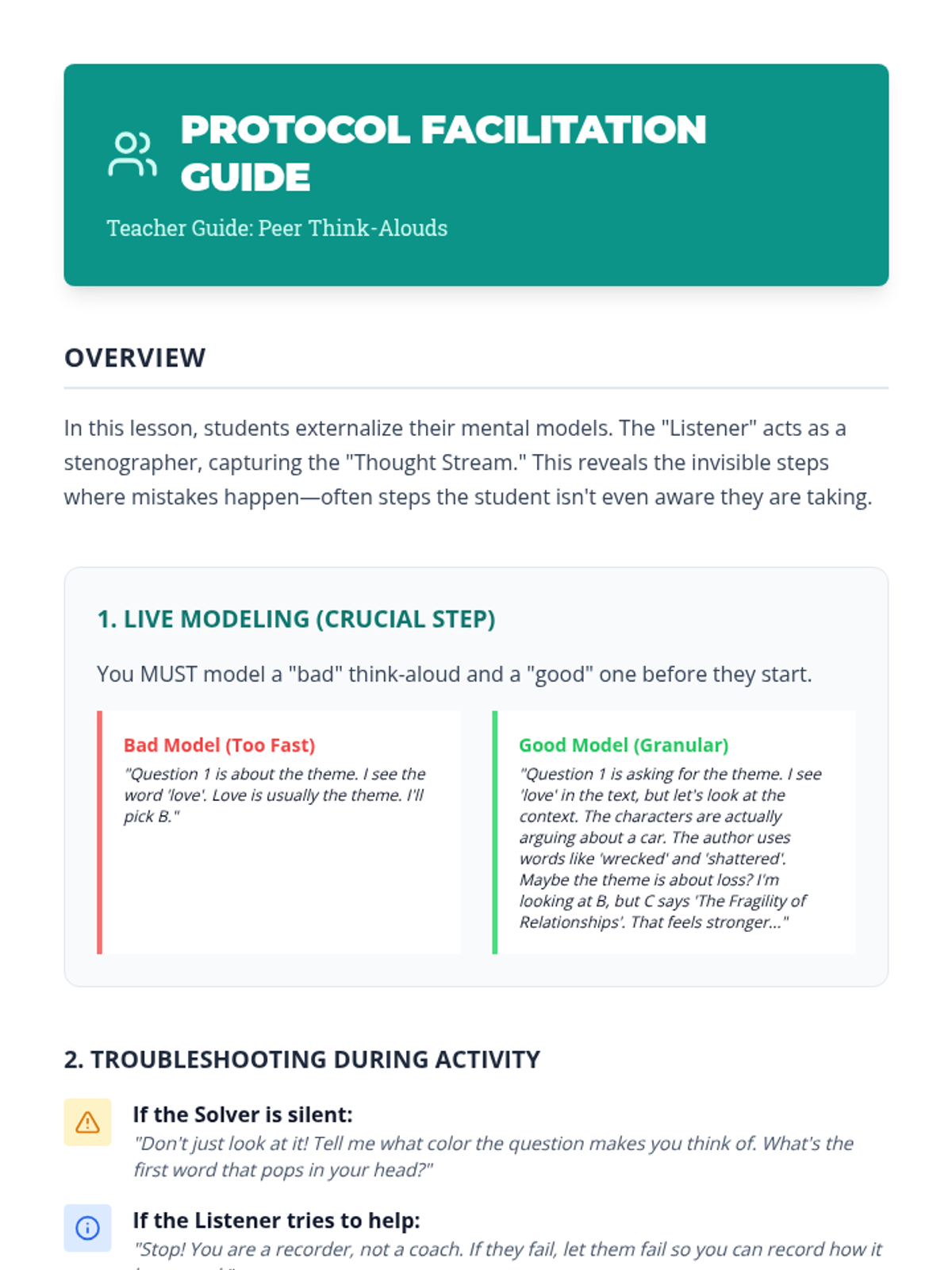
Working in pairs, students vocalize their thinking process while solving a problem while a partner records their steps. They analyze these recordings to identify where their logic deviated from the correct path.
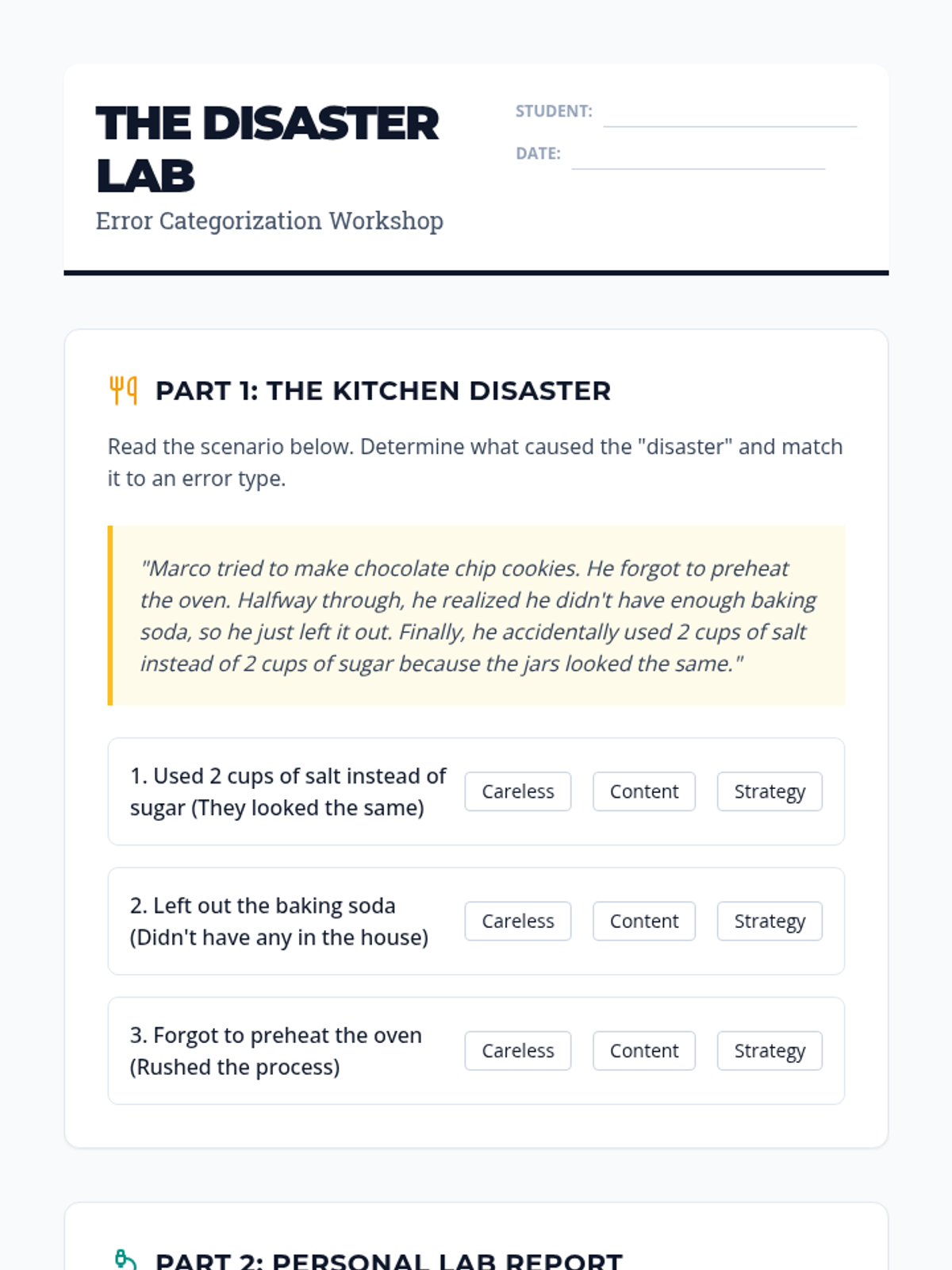
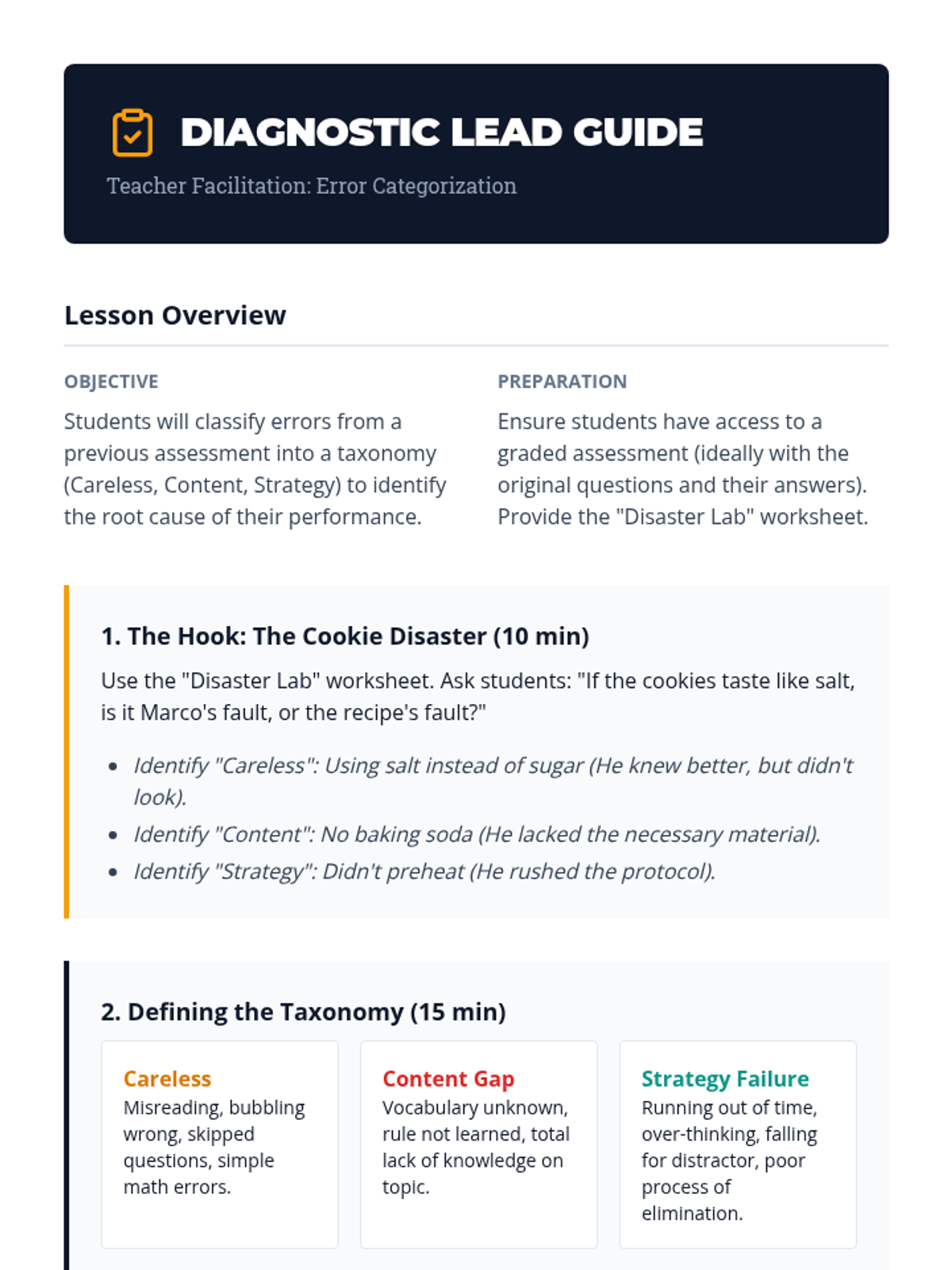
Students review a past assessment and categorize every incorrect answer as a 'Careless Error,' 'Content Gap,' or 'Strategy Failure.' This taxonomy helps them understand that not all mistakes are created equal.
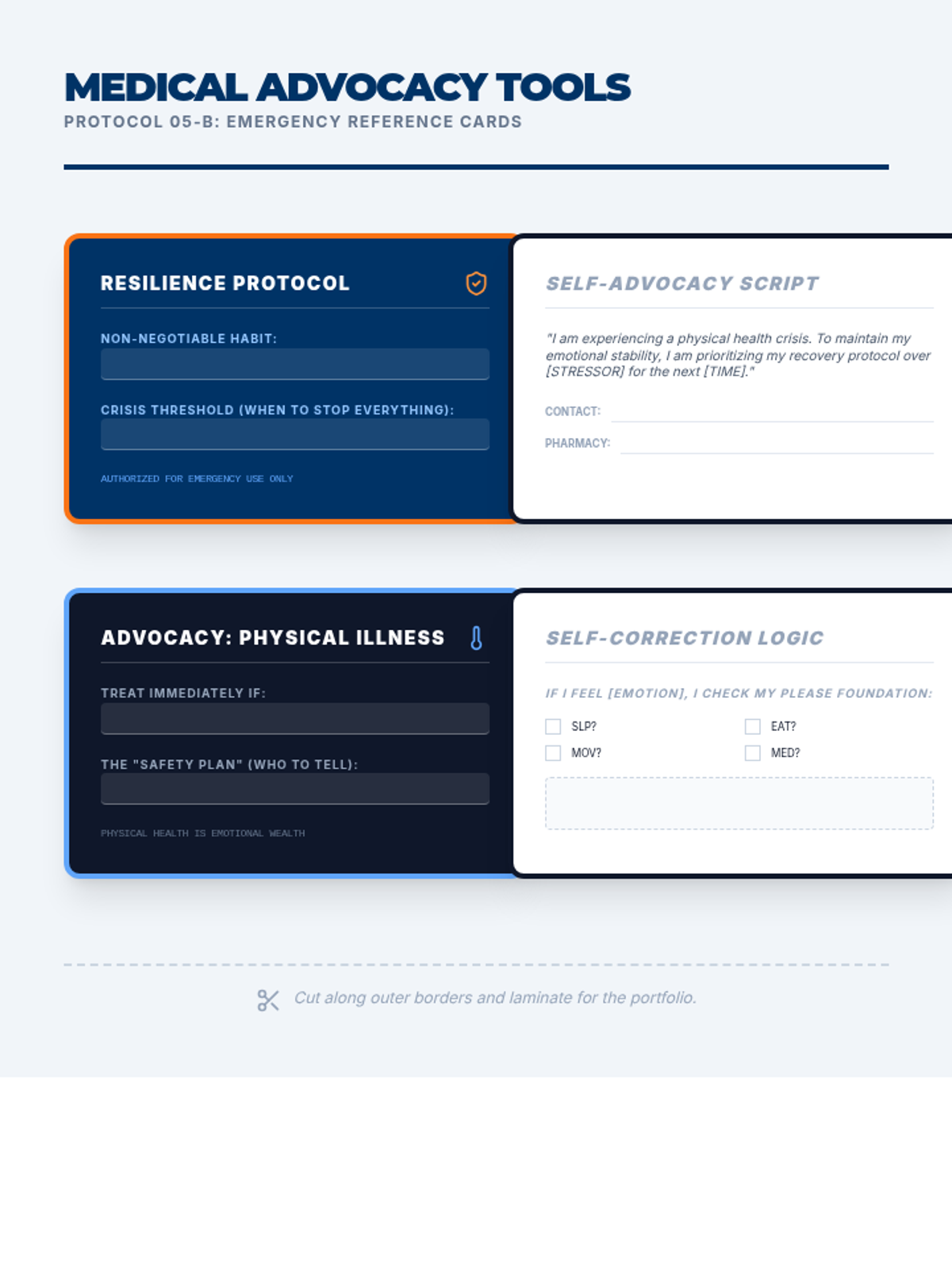
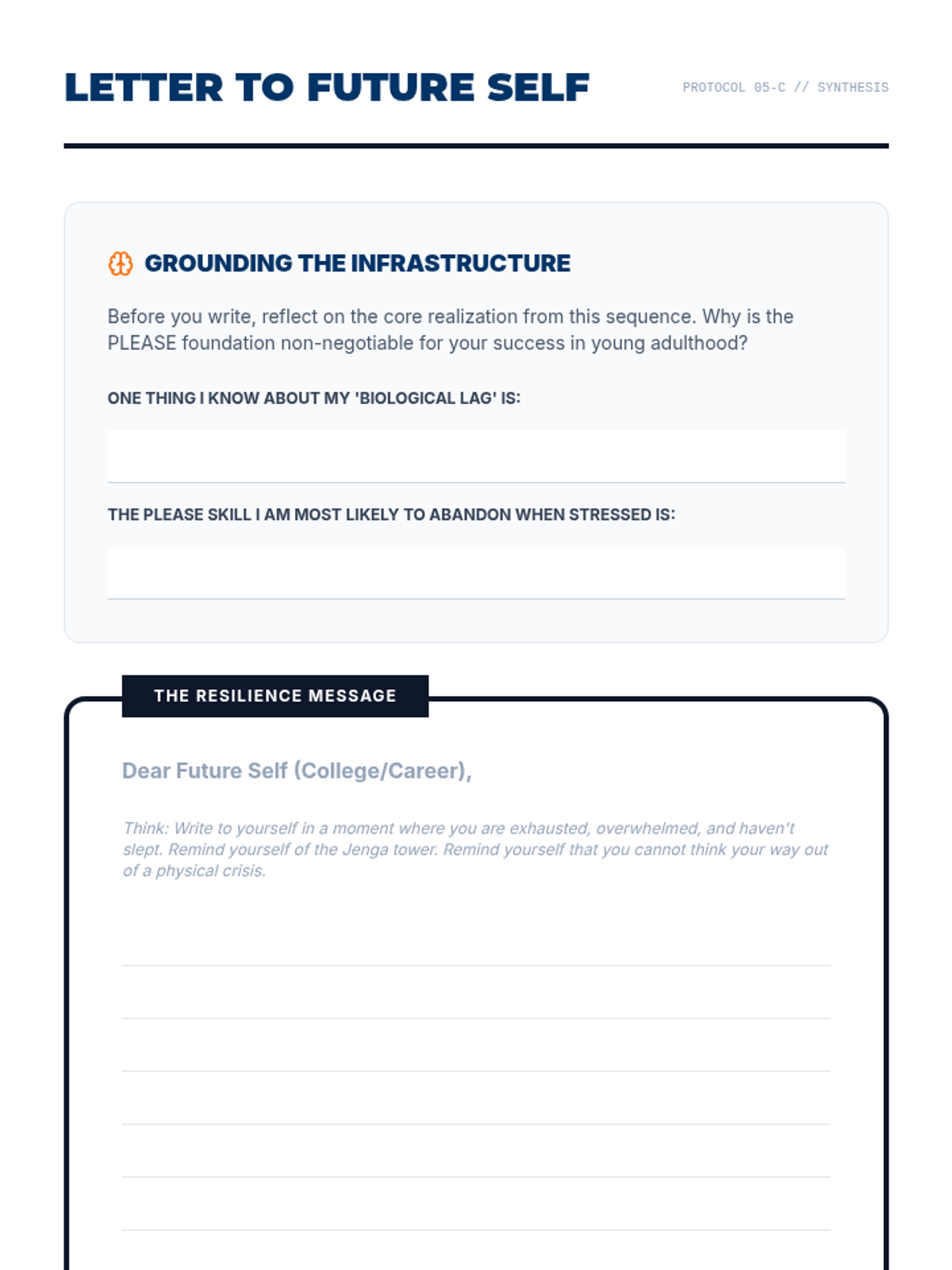
Students finalize their comprehensive PLEASE Portfolio, which includes their crisis plans, daily routines, and medical advocacy cards. They reflect on how this foundation reduces emotional vulnerability.
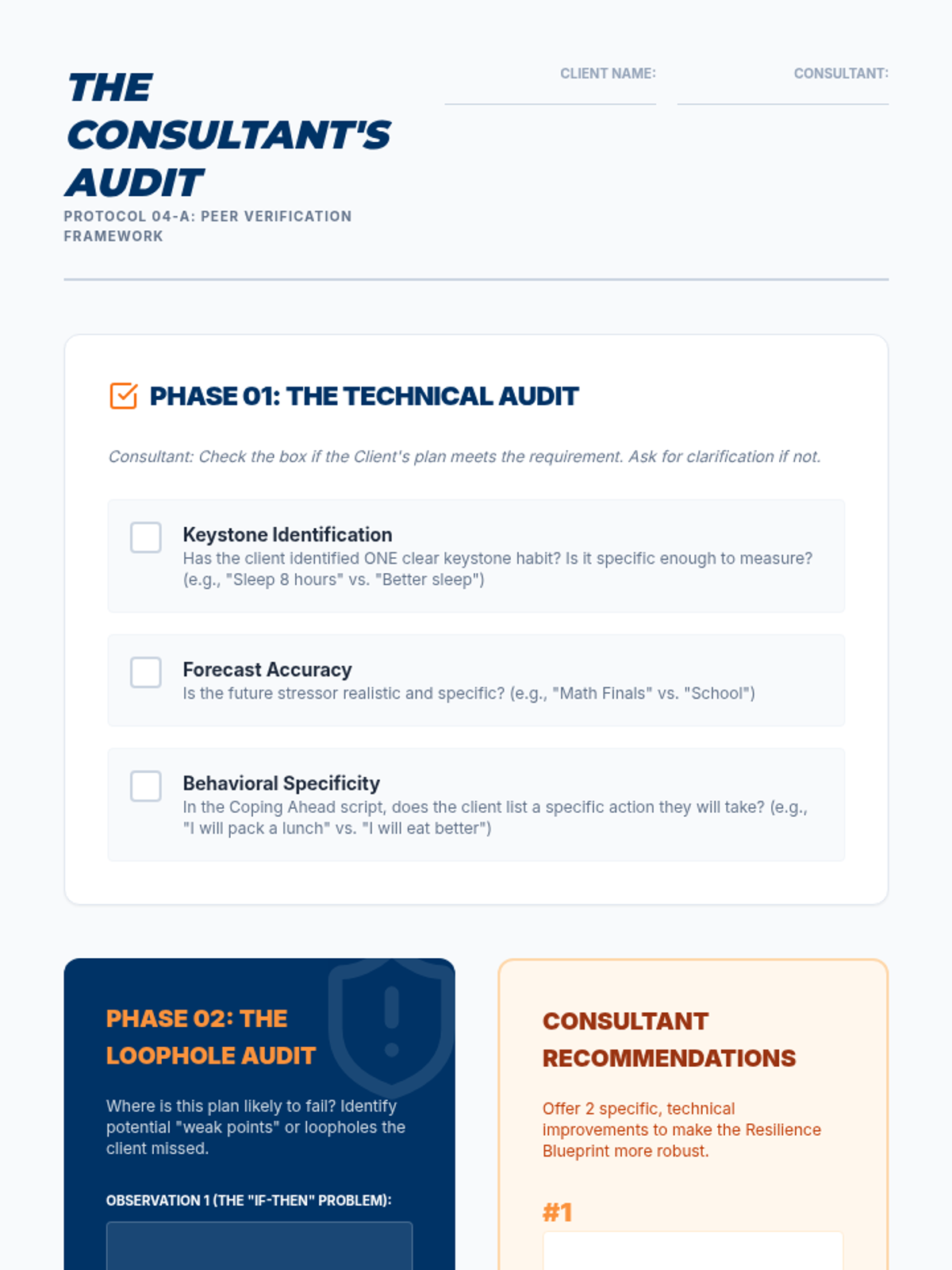
Students work in consultancy groups to review each other's PLEASE plans. They offer feedback on feasibility and loopholes, practicing how to support peers in healthy behaviors.
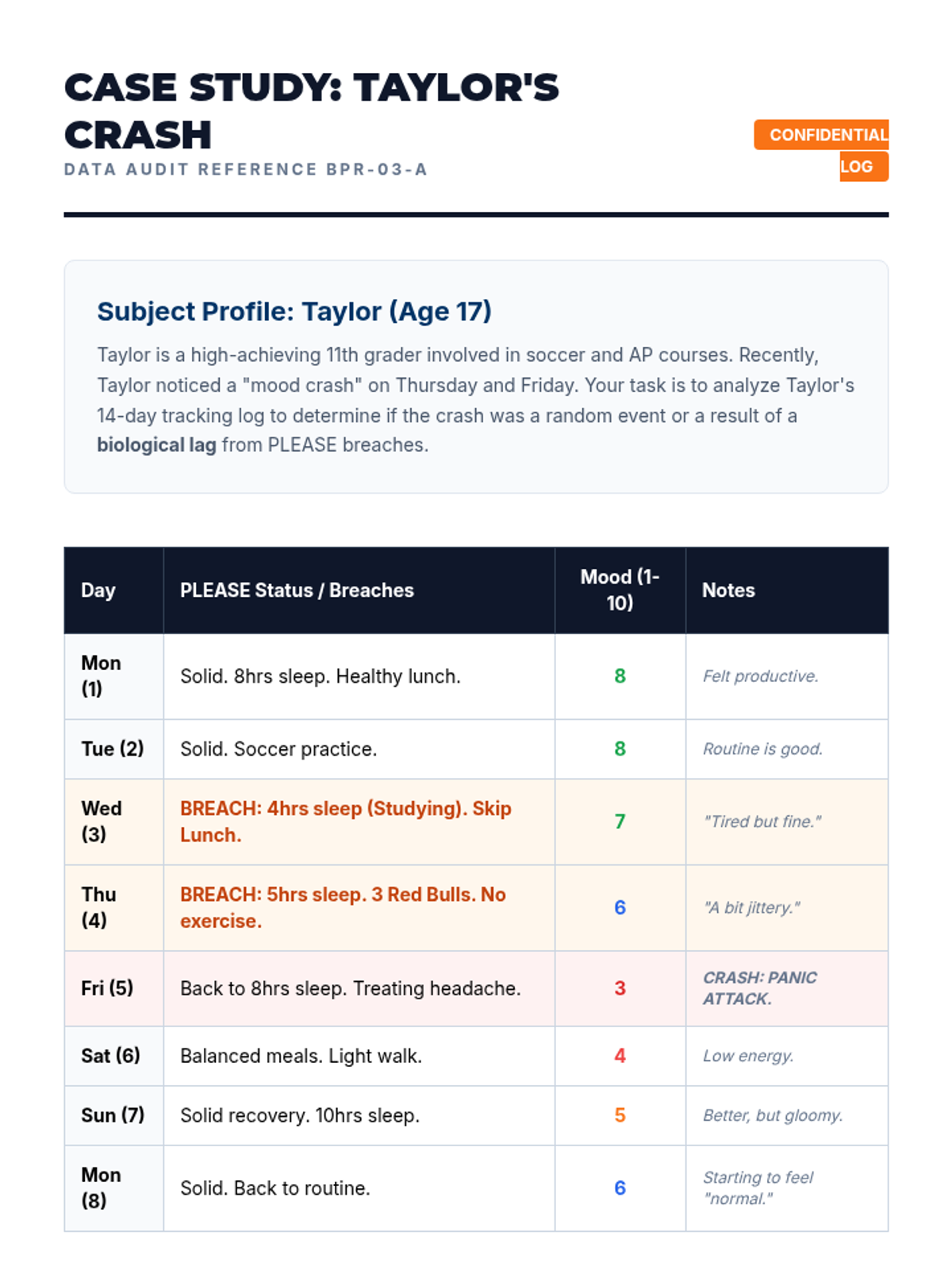
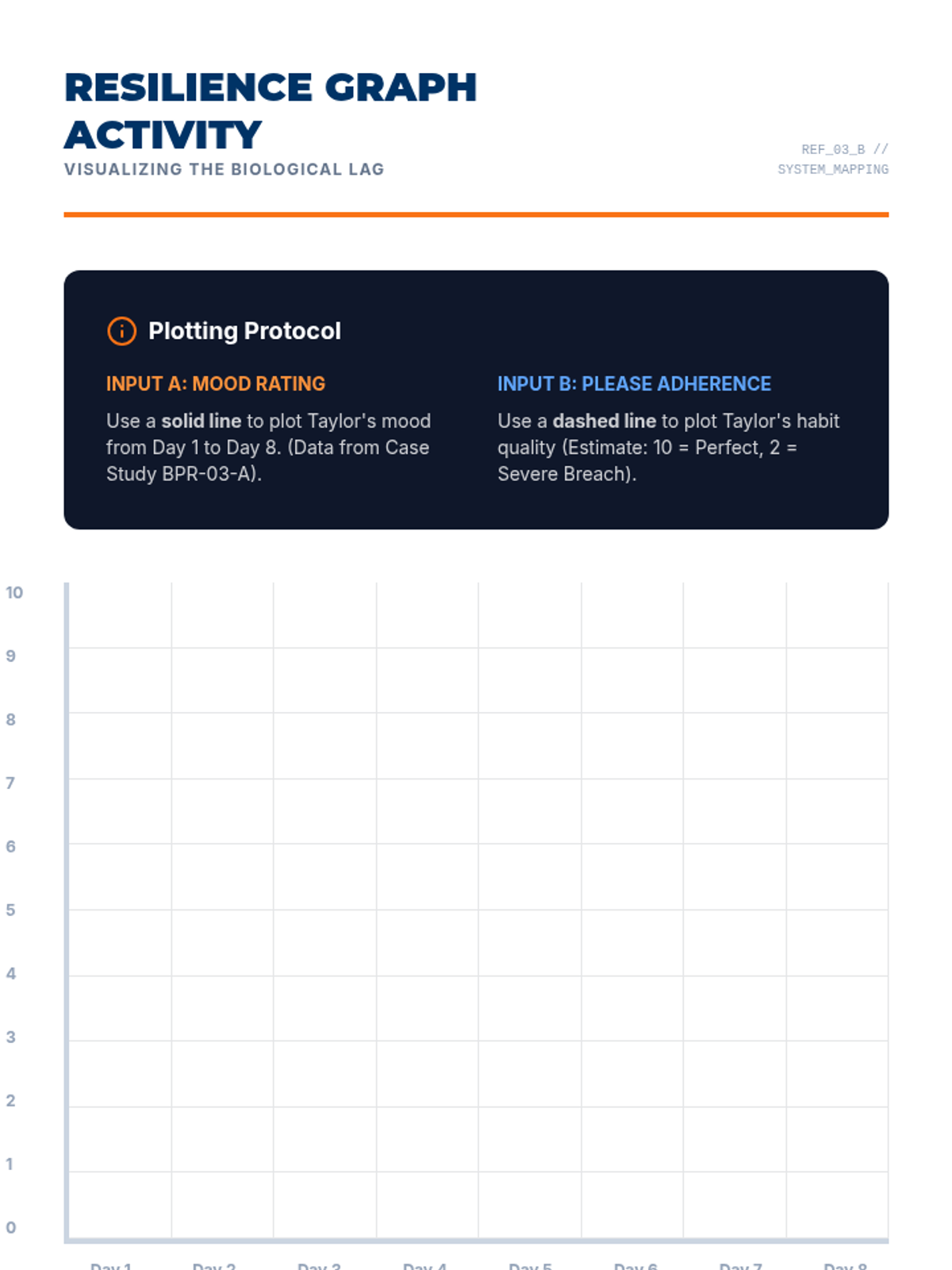
Students interpret hypothetical or personal tracking data to see the lag time between behavior change and mood improvement. They learn to manage expectations regarding how quickly the PLEASE skills work.
Students learn the DBT skill of 'Coping Ahead' to maintain their PLEASE foundation during future high-stress events. They practice adapting their resilience protocols to 'Disaster Scenarios'—unexpected life events that threaten their stability.
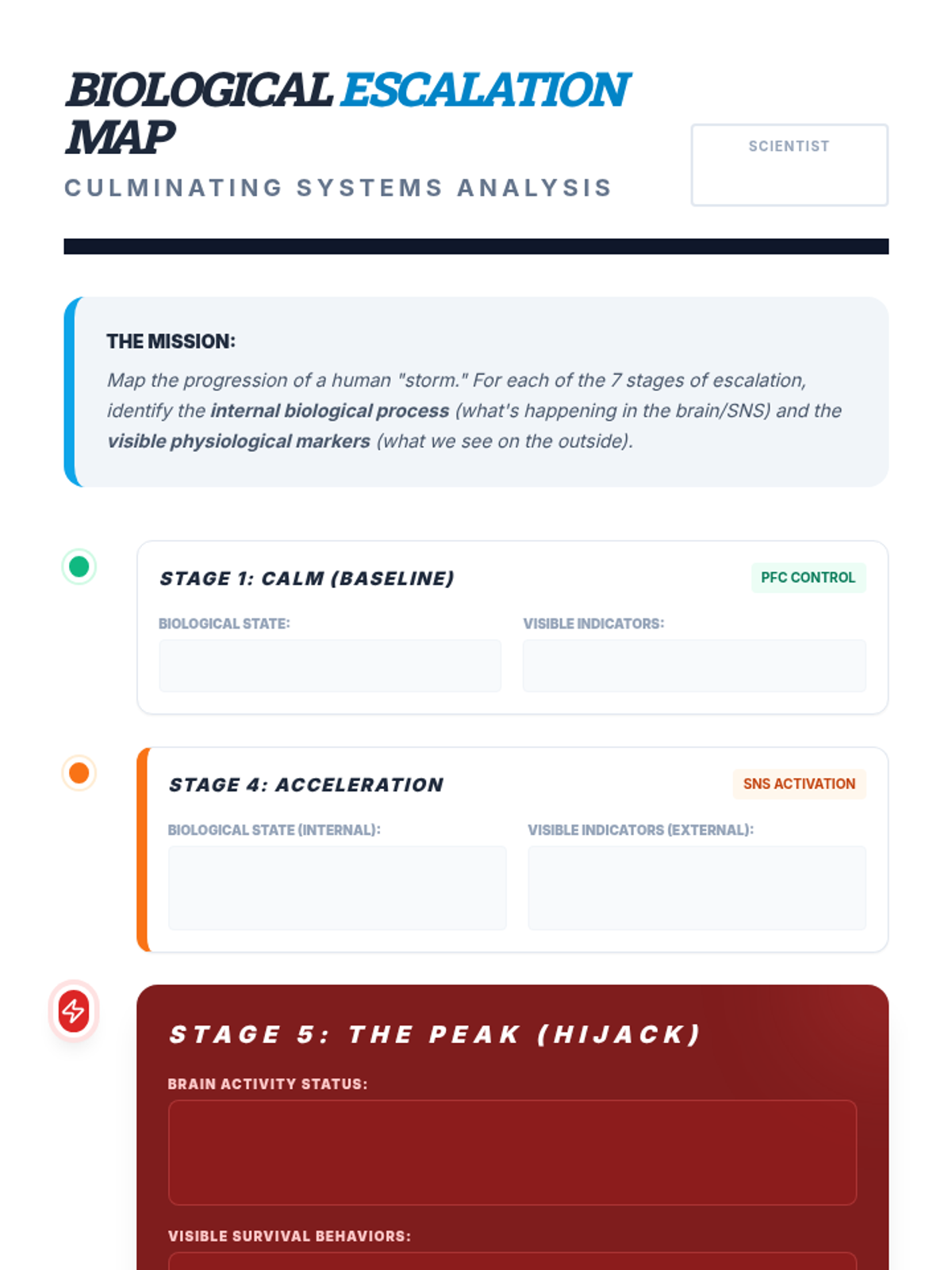
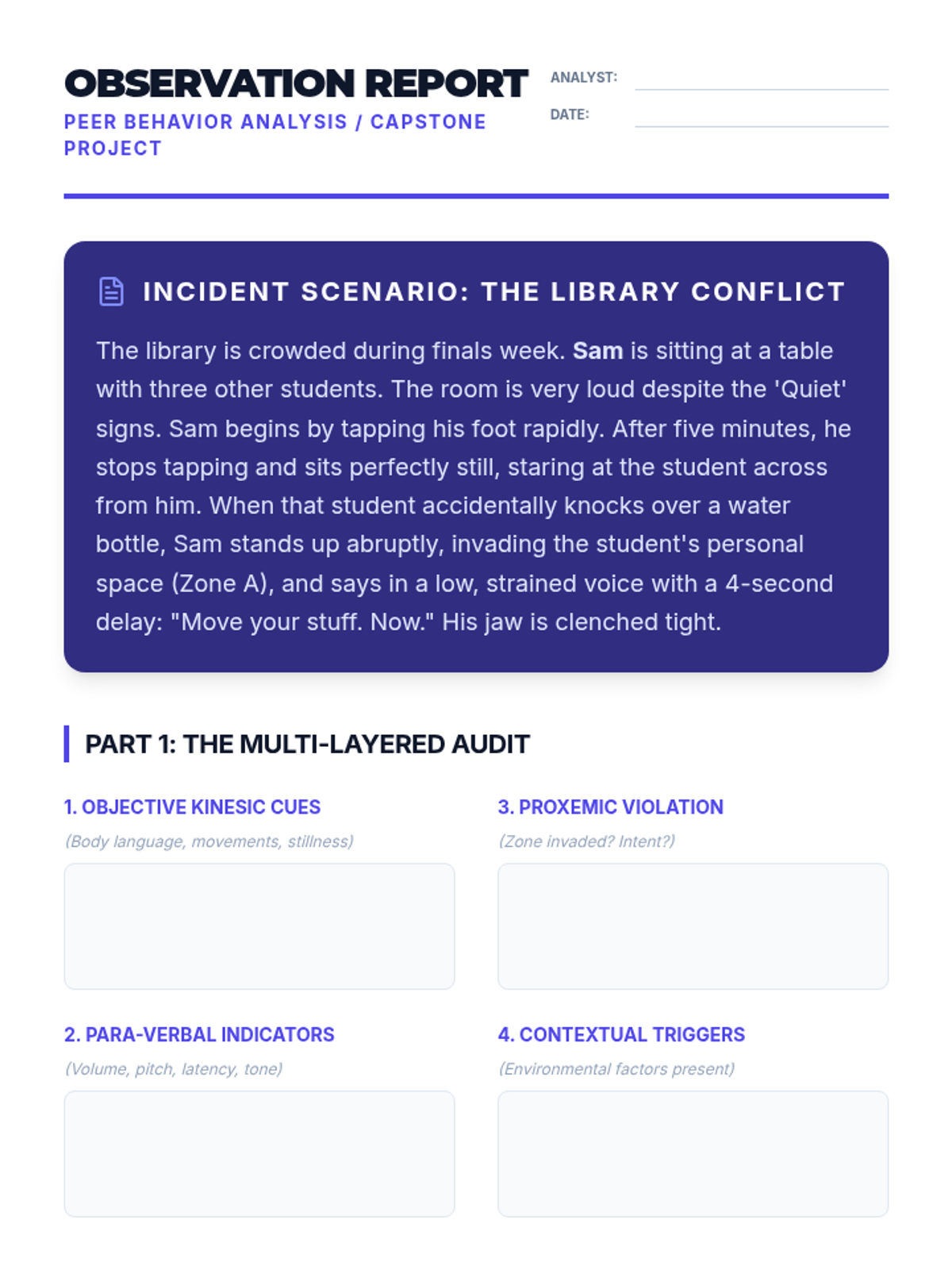
Students create a timeline or flowchart that correlates the seven stages of behavior escalation (Calm, Trigger, Agitation, Acceleration, Peak, De-escalation, Recovery) with specific physiological markers.
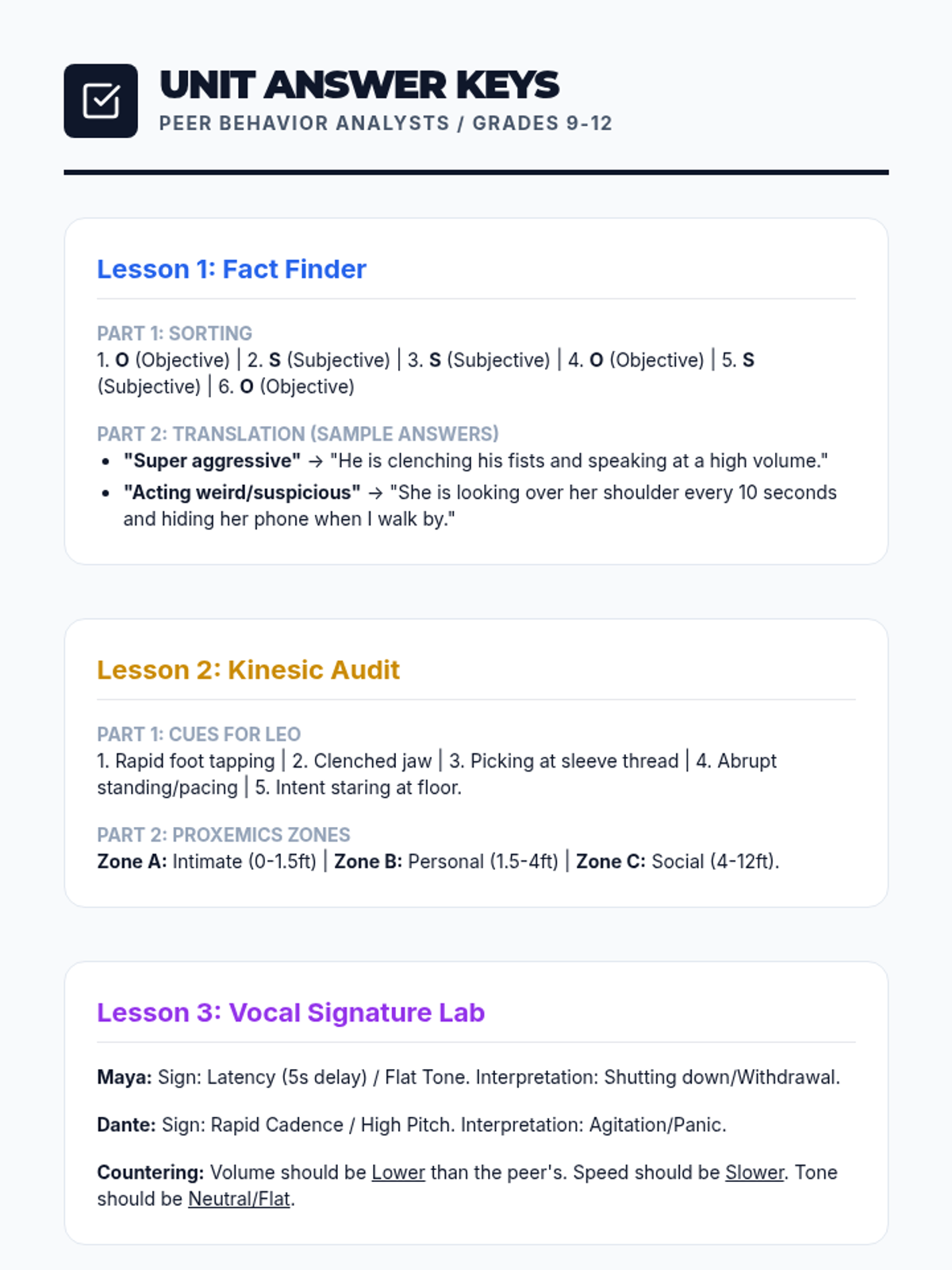
Students synthesize their observation skills to analyze full scenarios, identifying how environmental triggers (noise, crowds) combine with behavioral cues to predict escalation.
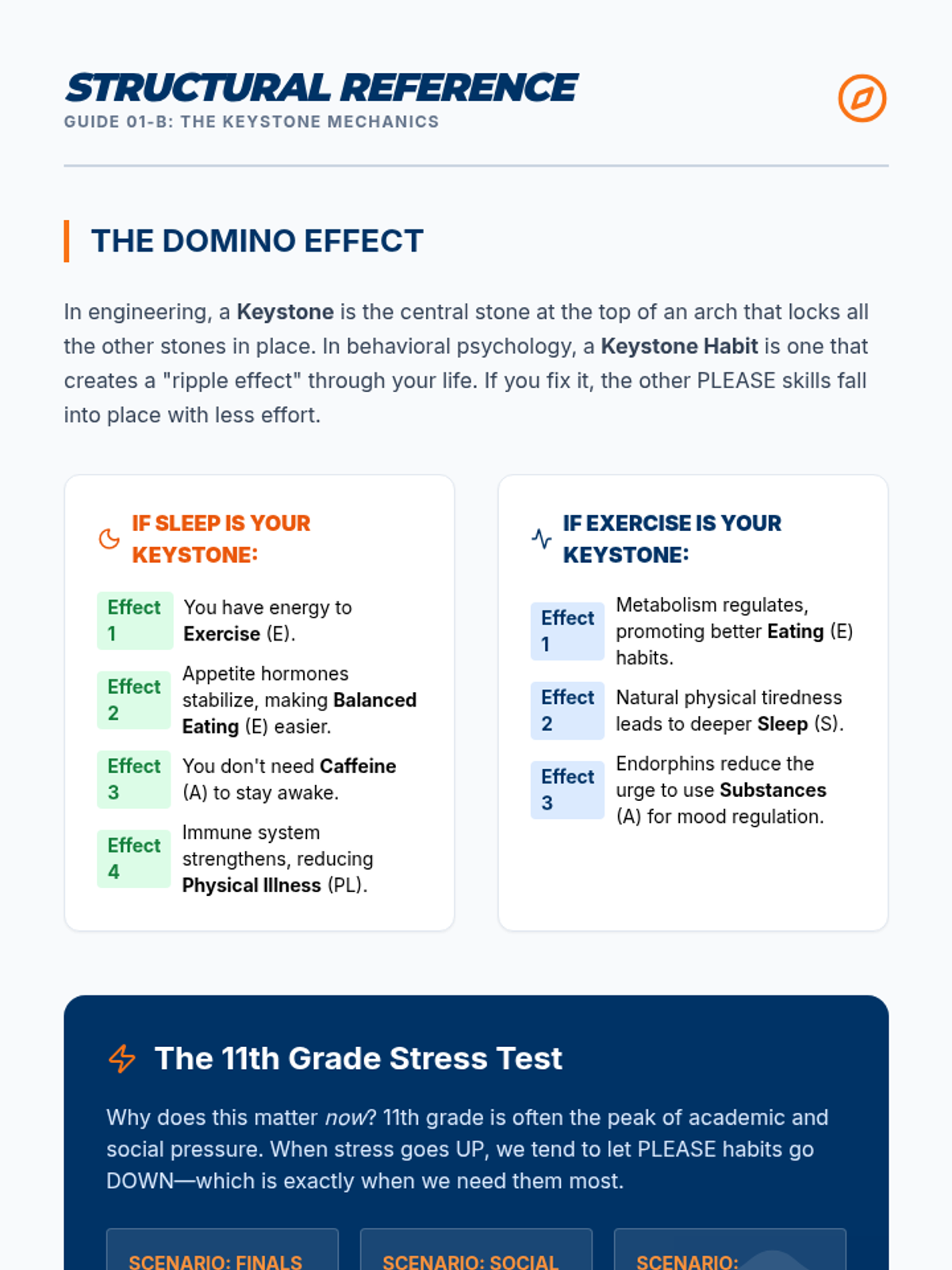
Students conduct a deep-dive inventory of their current PLEASE habits and identify a 'Keystone Habit'—the central pillar that supports their overall emotional stability. Using the Jenga analogy, students explore how physical health directly impacts emotional resilience.
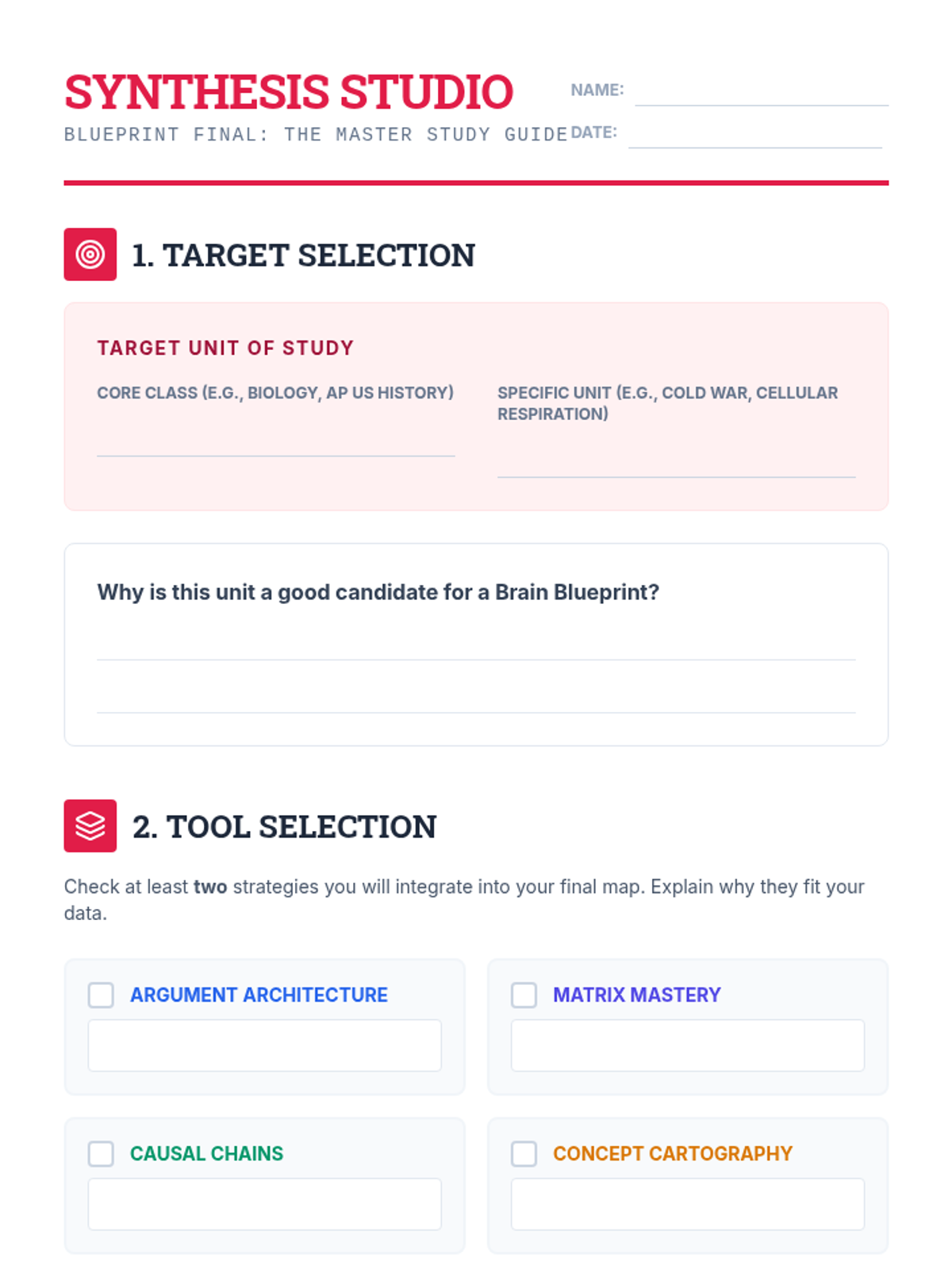
Students synthesize a current unit of study from one of their core classes into a single page 'cheat sheet' or infographic, applying all previous visual strategies to externalize memory demands.
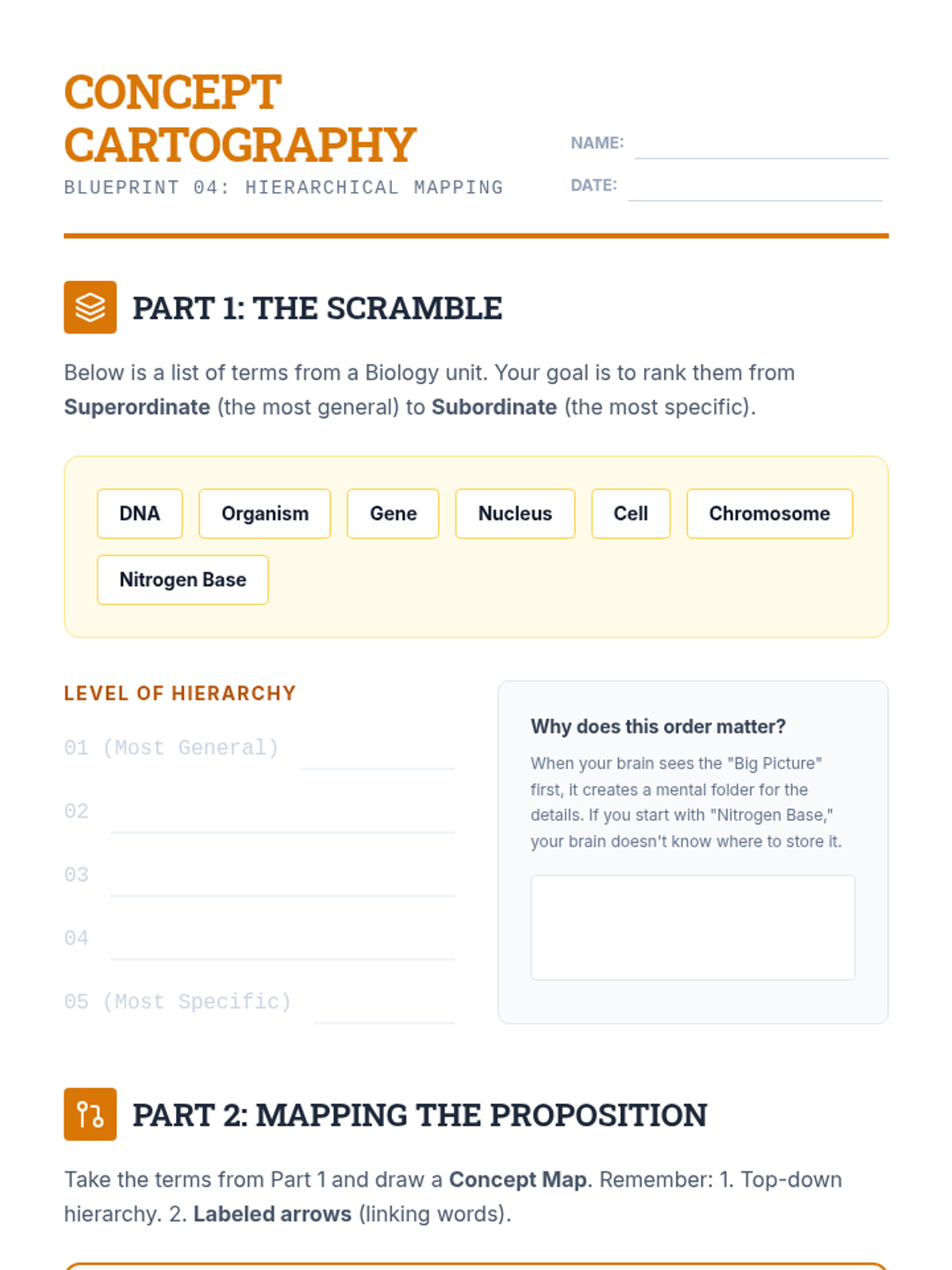
Students learn the difference between mind maps and hierarchical concept maps, focusing on linking words that explain the relationship between nodes and practicing the restructuring of linear notes into spatial formats.
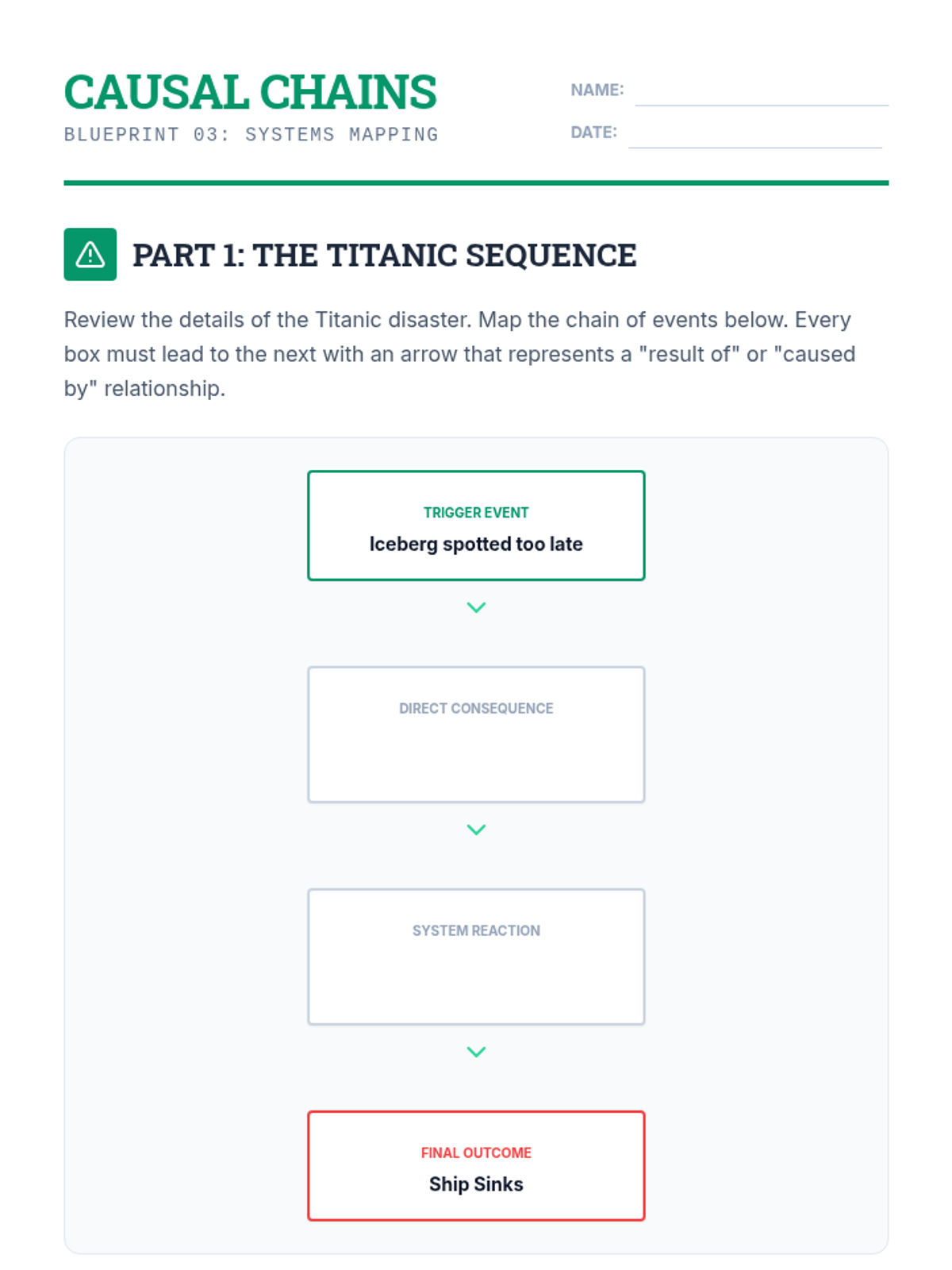
Students create flowcharts that demonstrate complex causal chains, focusing on using visual arrows and connectors to represent relationships and sequences rather than just static facts.
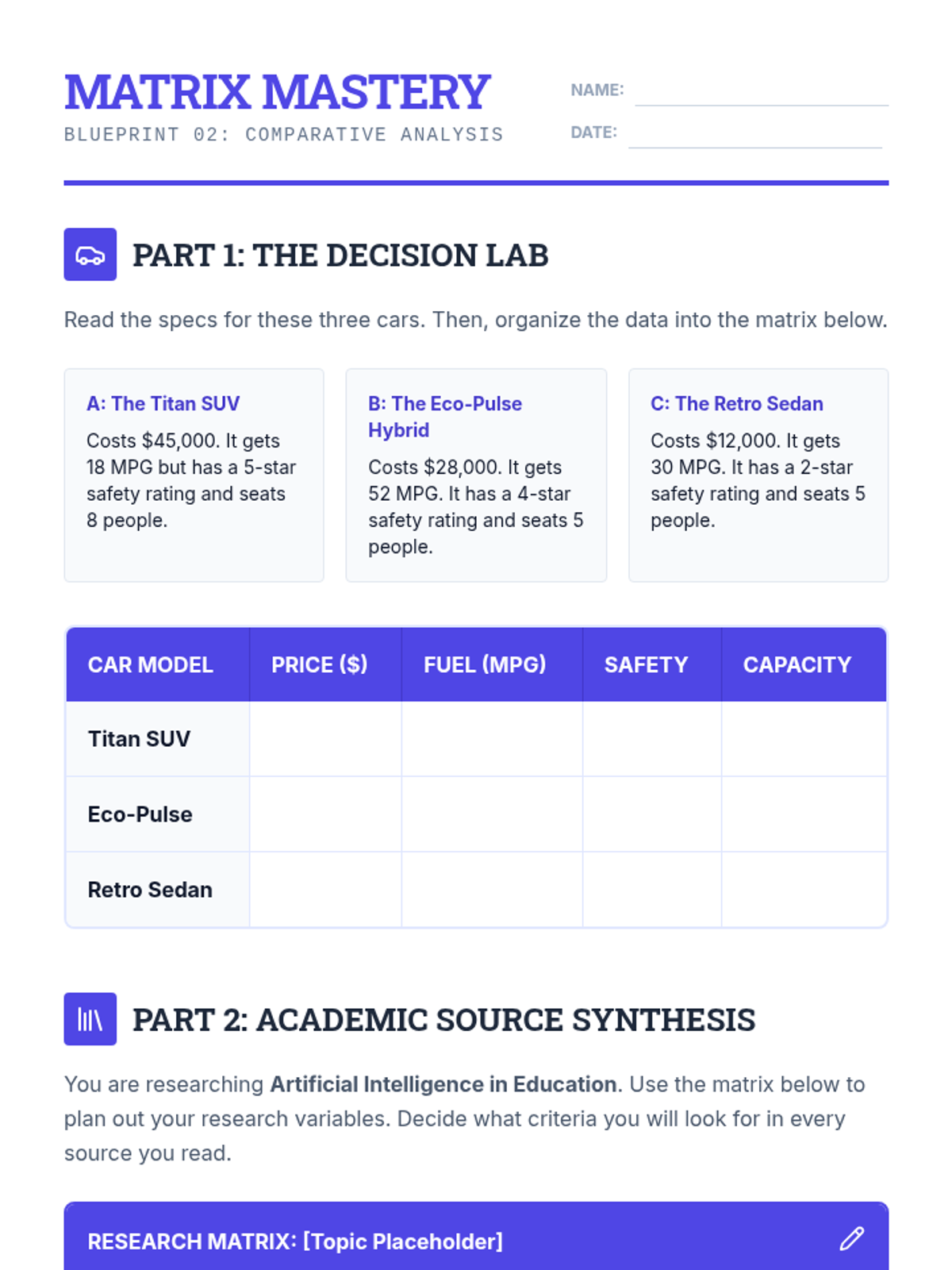
Students practice using matrix organizers to compare and contrast variables across multiple subjects or sources to facilitate lateral thinking and memory retrieval.
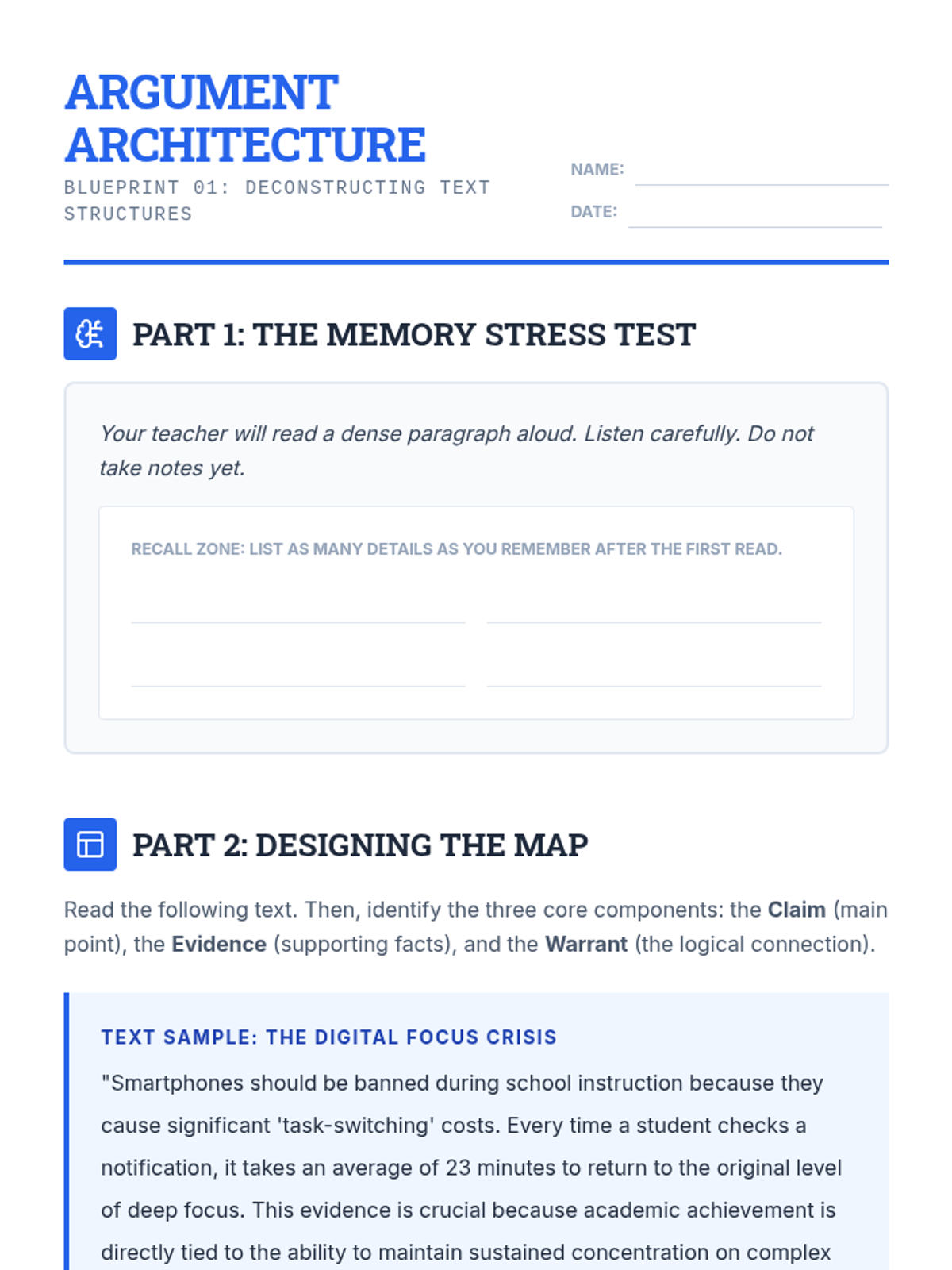
Students learn to identify the claim, evidence, and warrant in persuasive texts and map them using argument diagrams, focusing on visual hierarchy to reduce memory load.
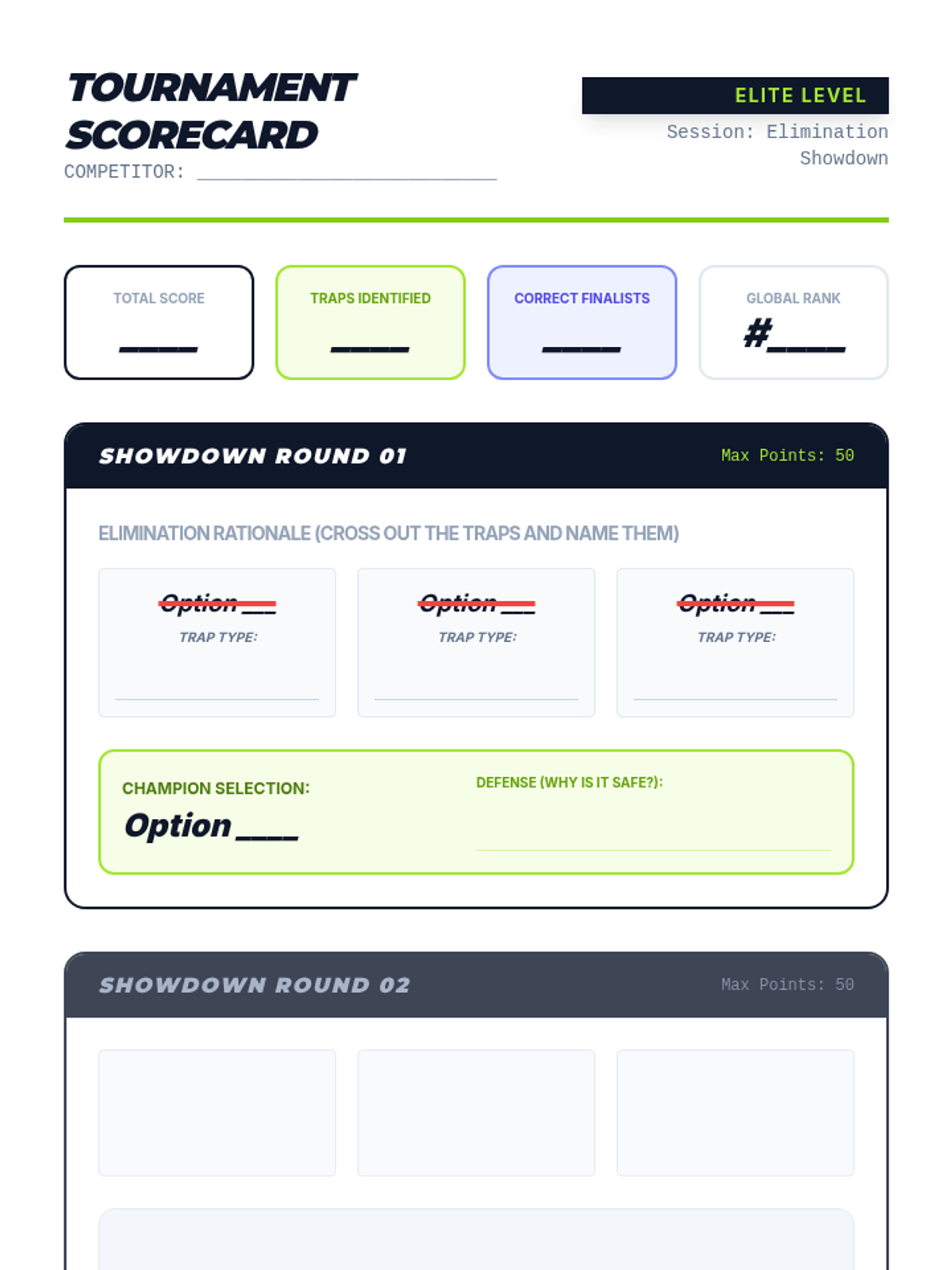
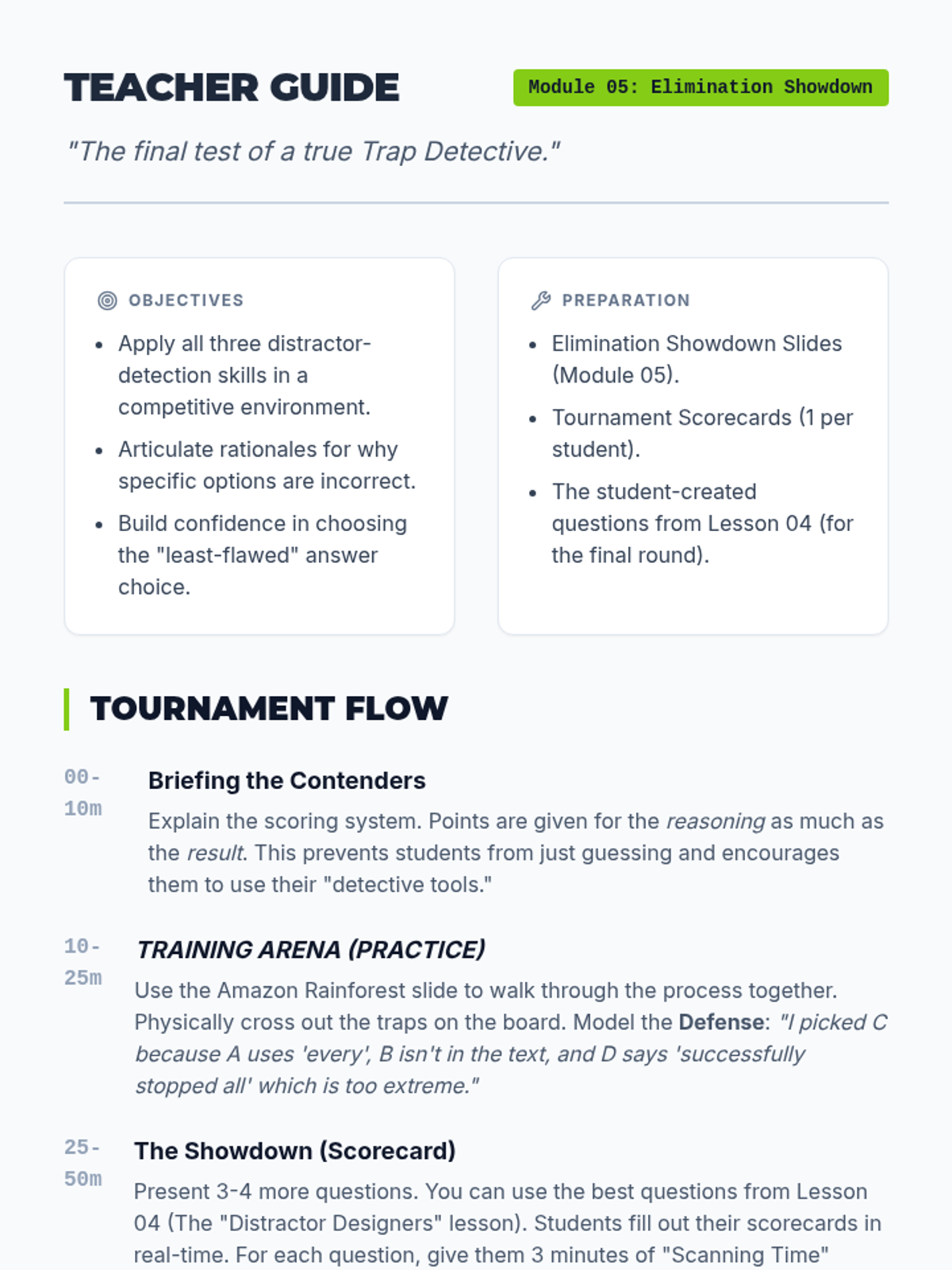
A competitive review tournament where students physically eliminate distractors with a rationale. Points are awarded for identifying specific trap types before selecting the correct answer.
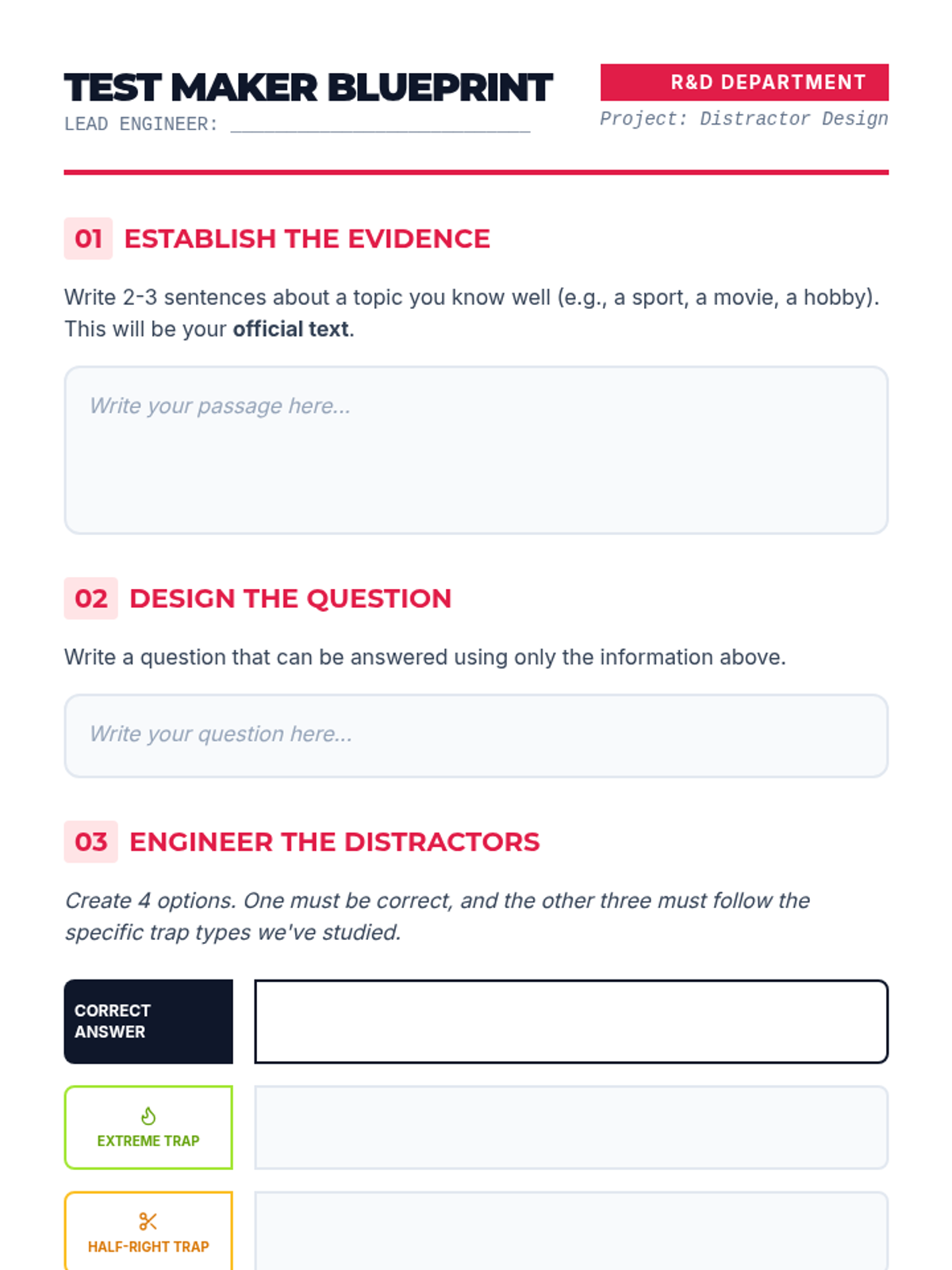
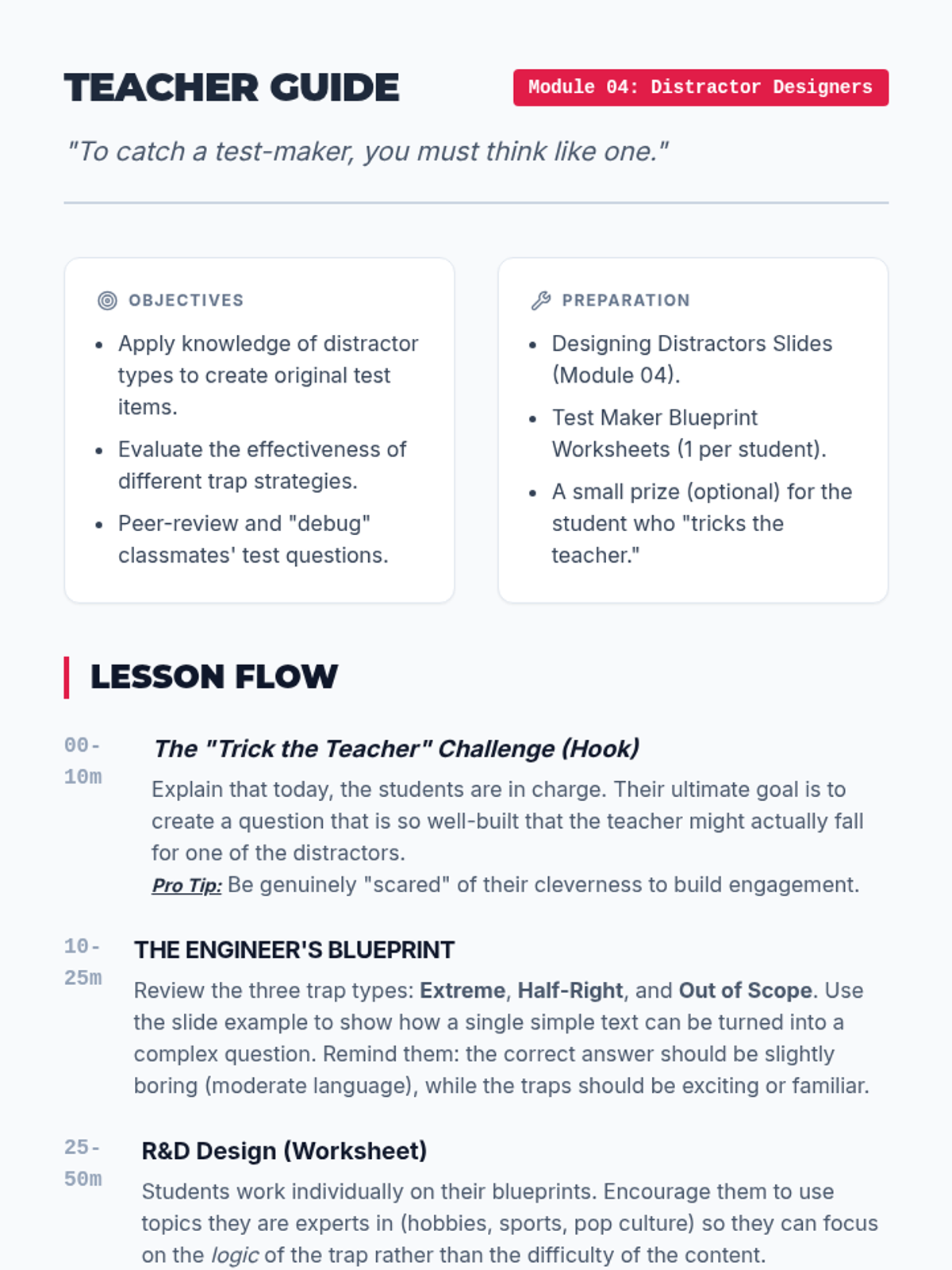
Students become test-makers by writing their own multiple-choice questions with deliberate traps. This role-reversal helps them internalize the logic behind distractor construction.
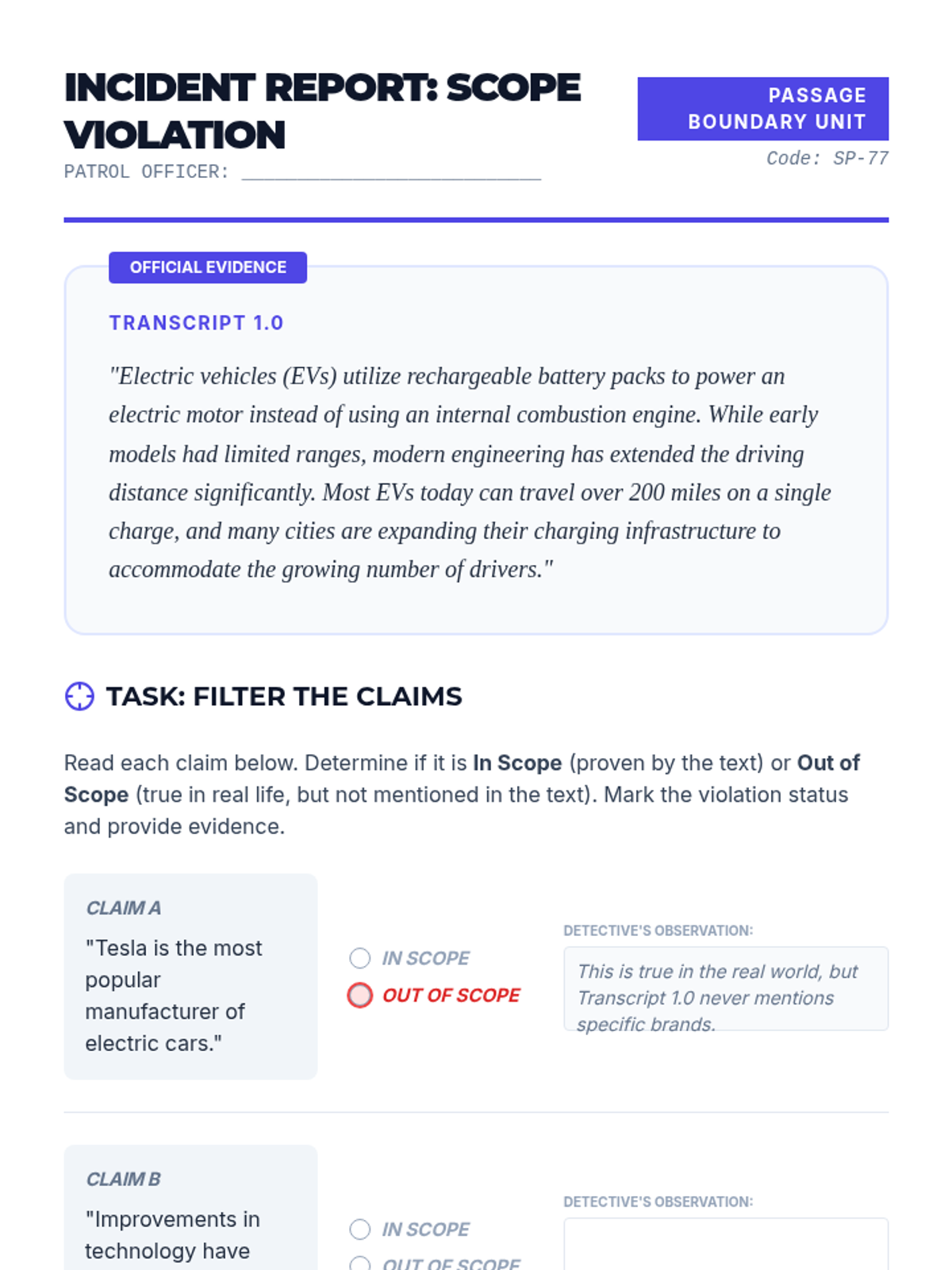
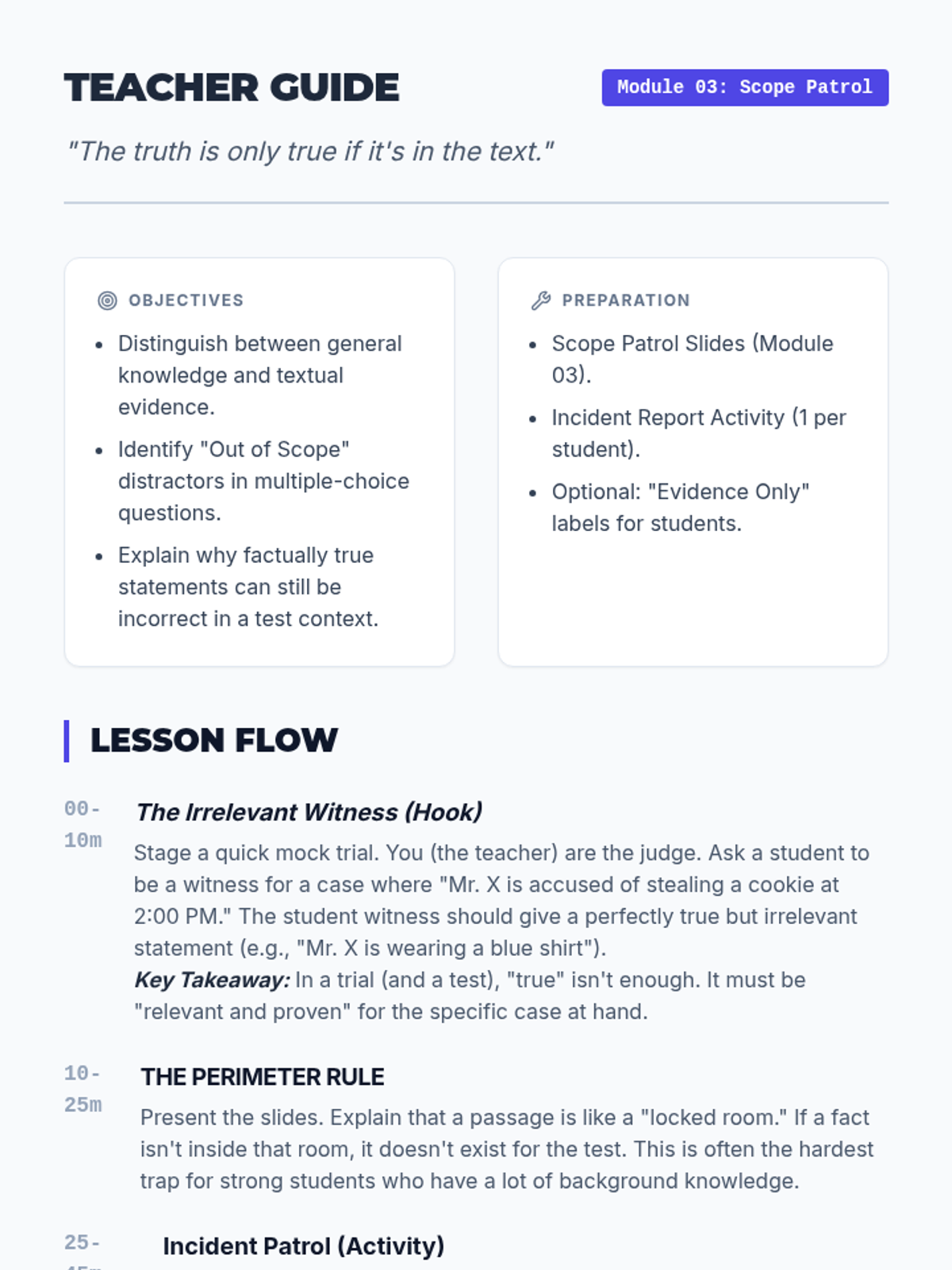
Students identify statements that are factually true in the real world but are not supported by the specific text provided. The focus is on maintaining evidence-based focus within the scope of the passage.
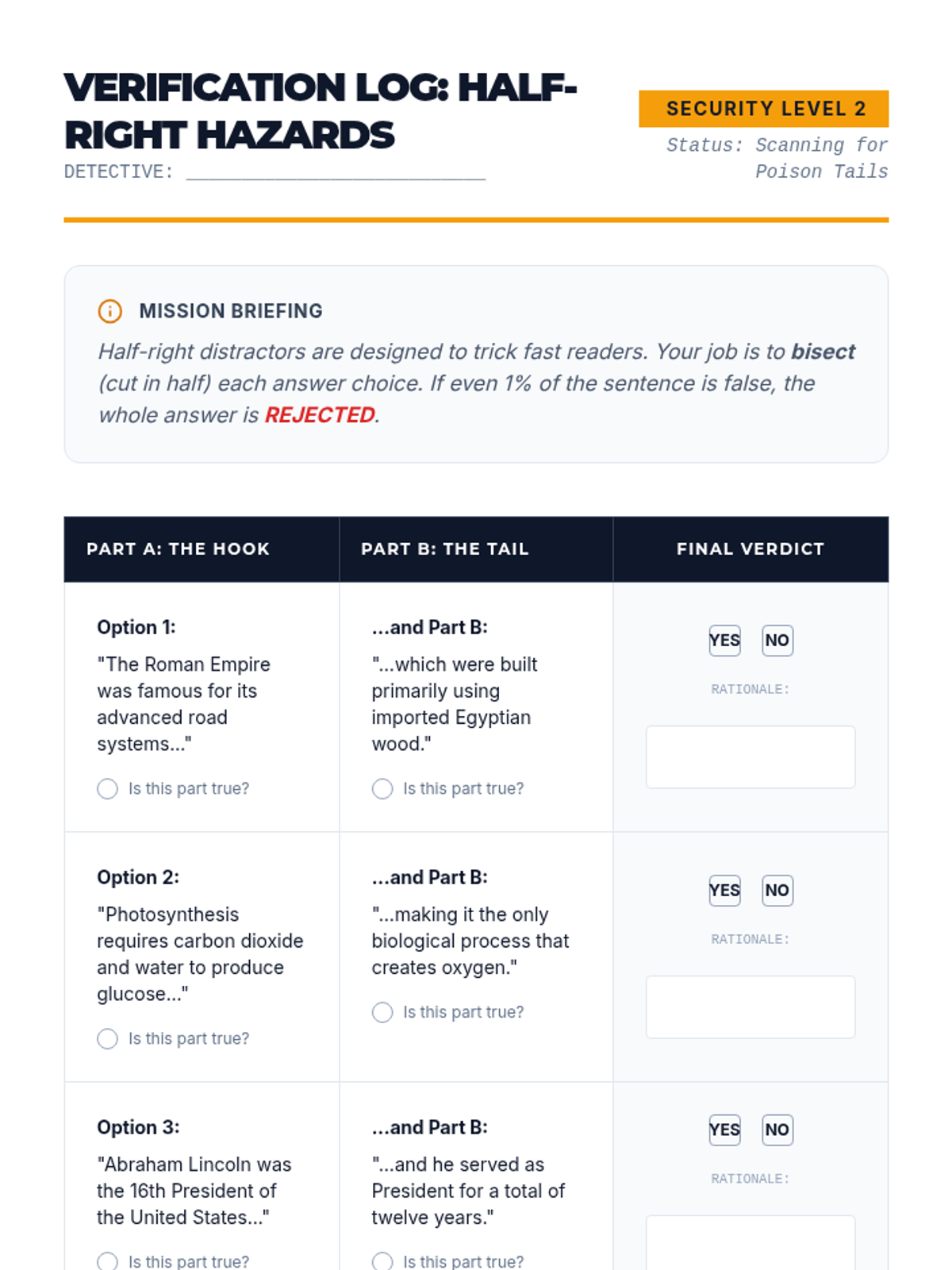
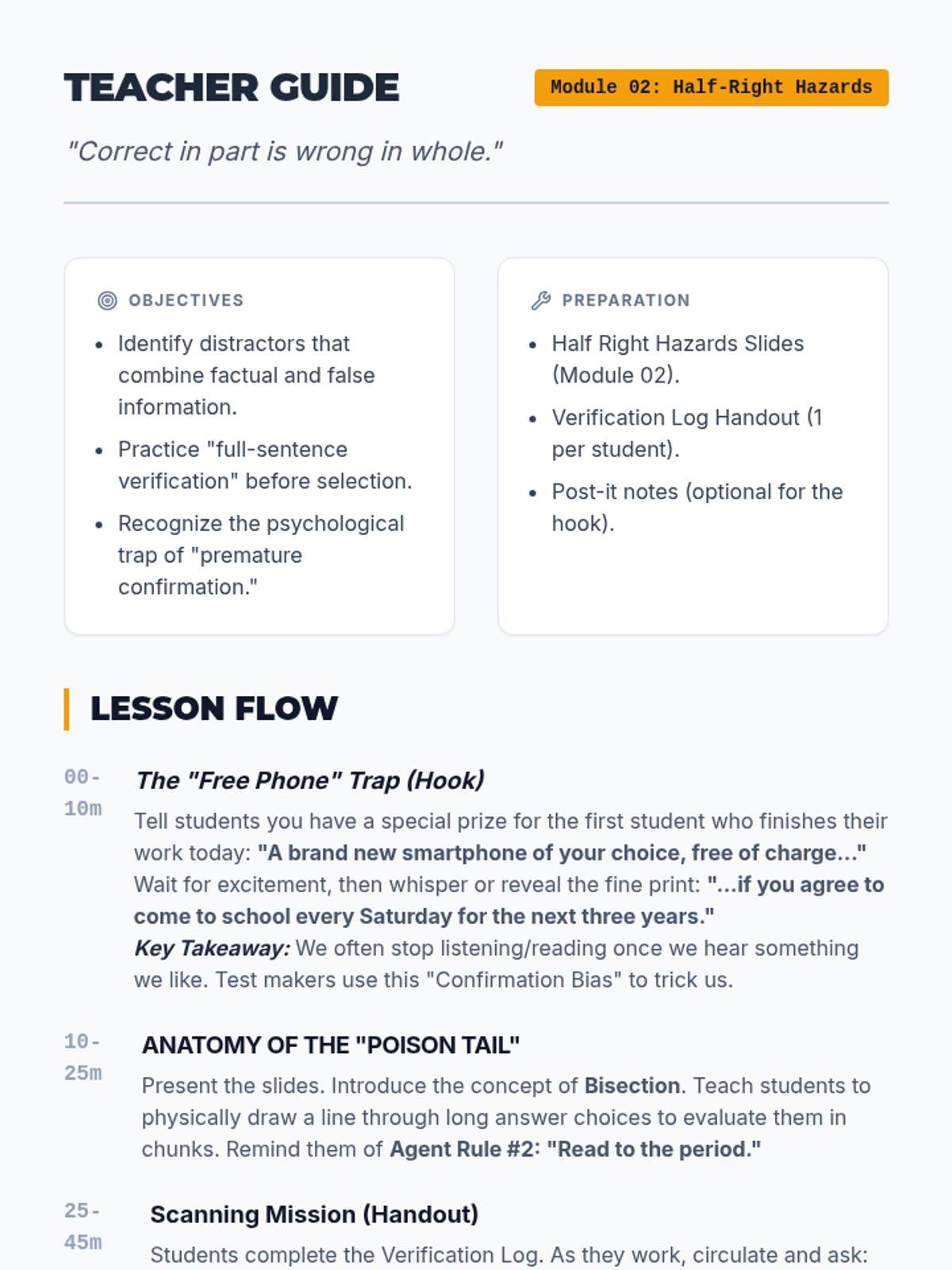
Learners analyze options that are partially correct but ultimately false. This lesson emphasizes the importance of reading every word of an answer choice to catch subtle inaccuracies.
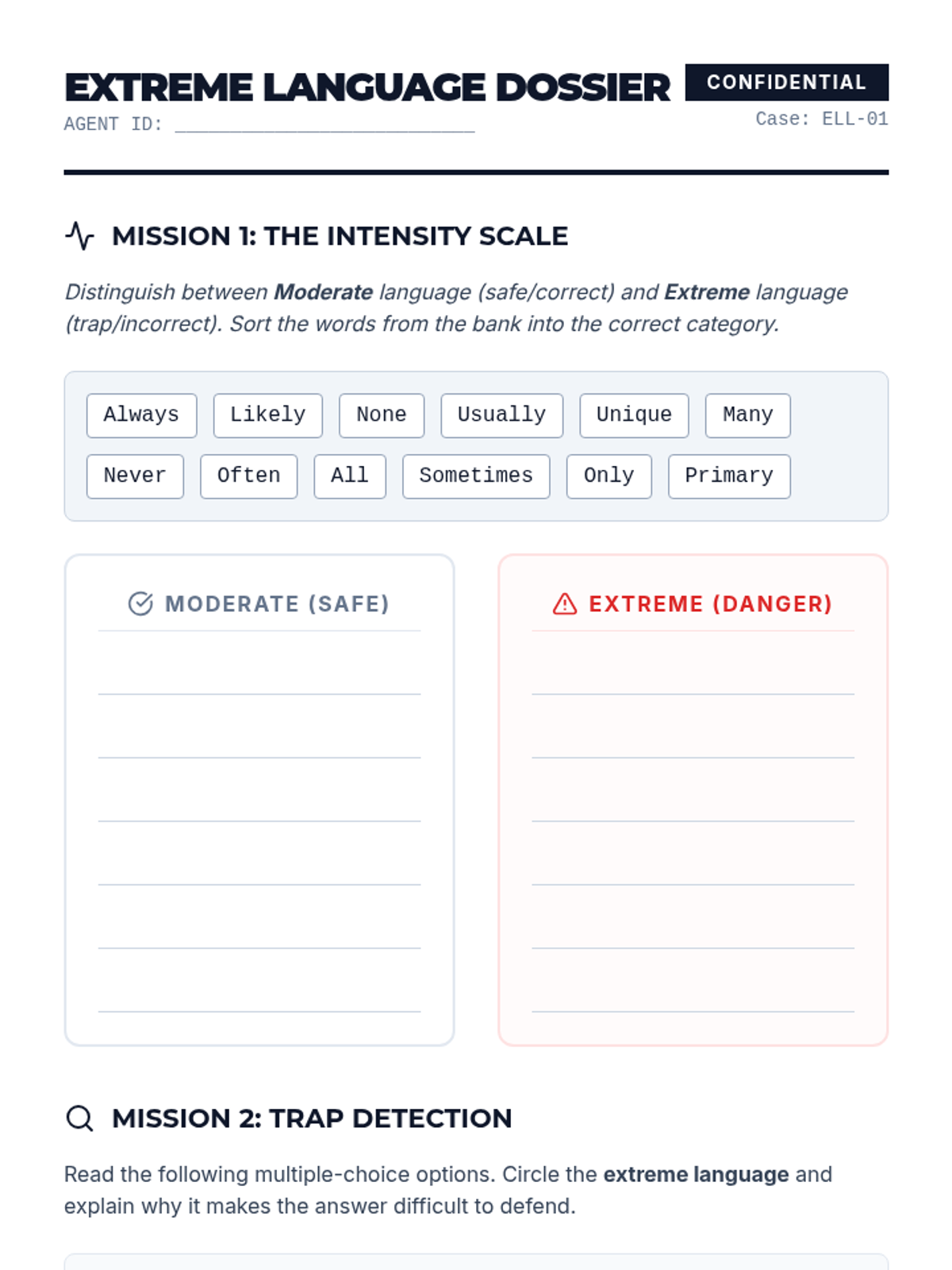
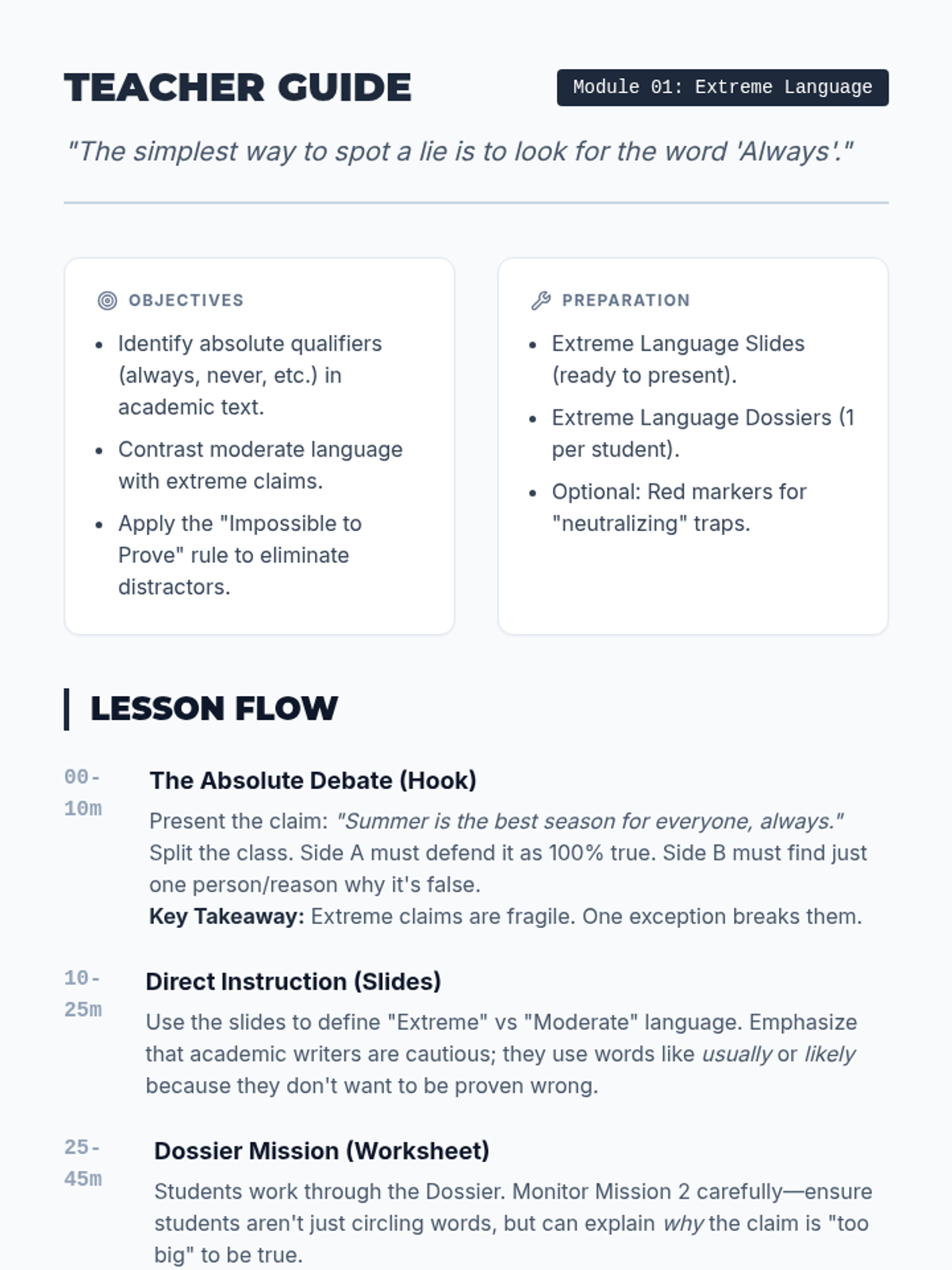
Students learn to identify absolute qualifiers like 'always' and 'never' that signal incorrect answers. They practice categorizing statements by their degree of intensity to evaluate their validity in a test context.
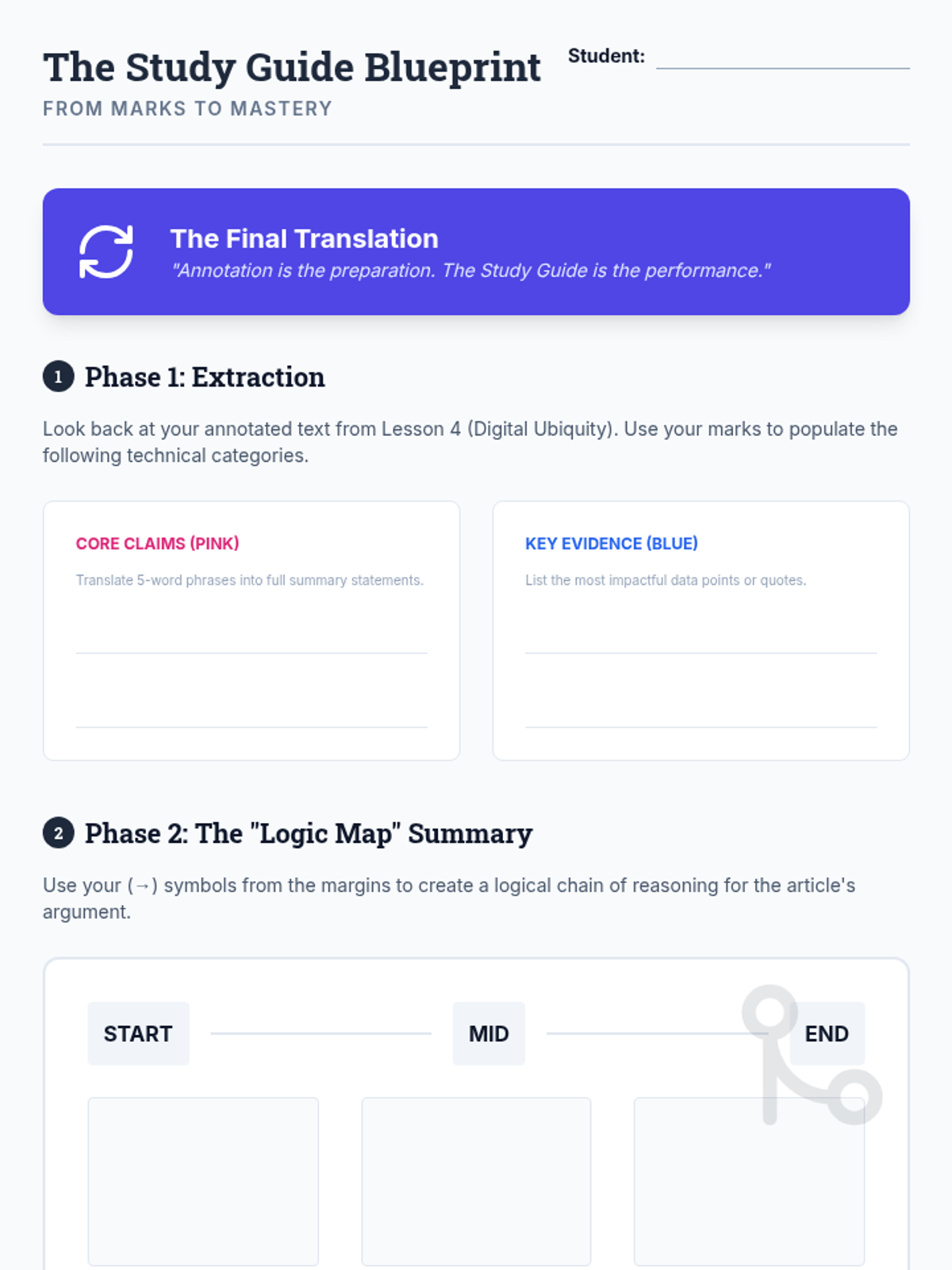
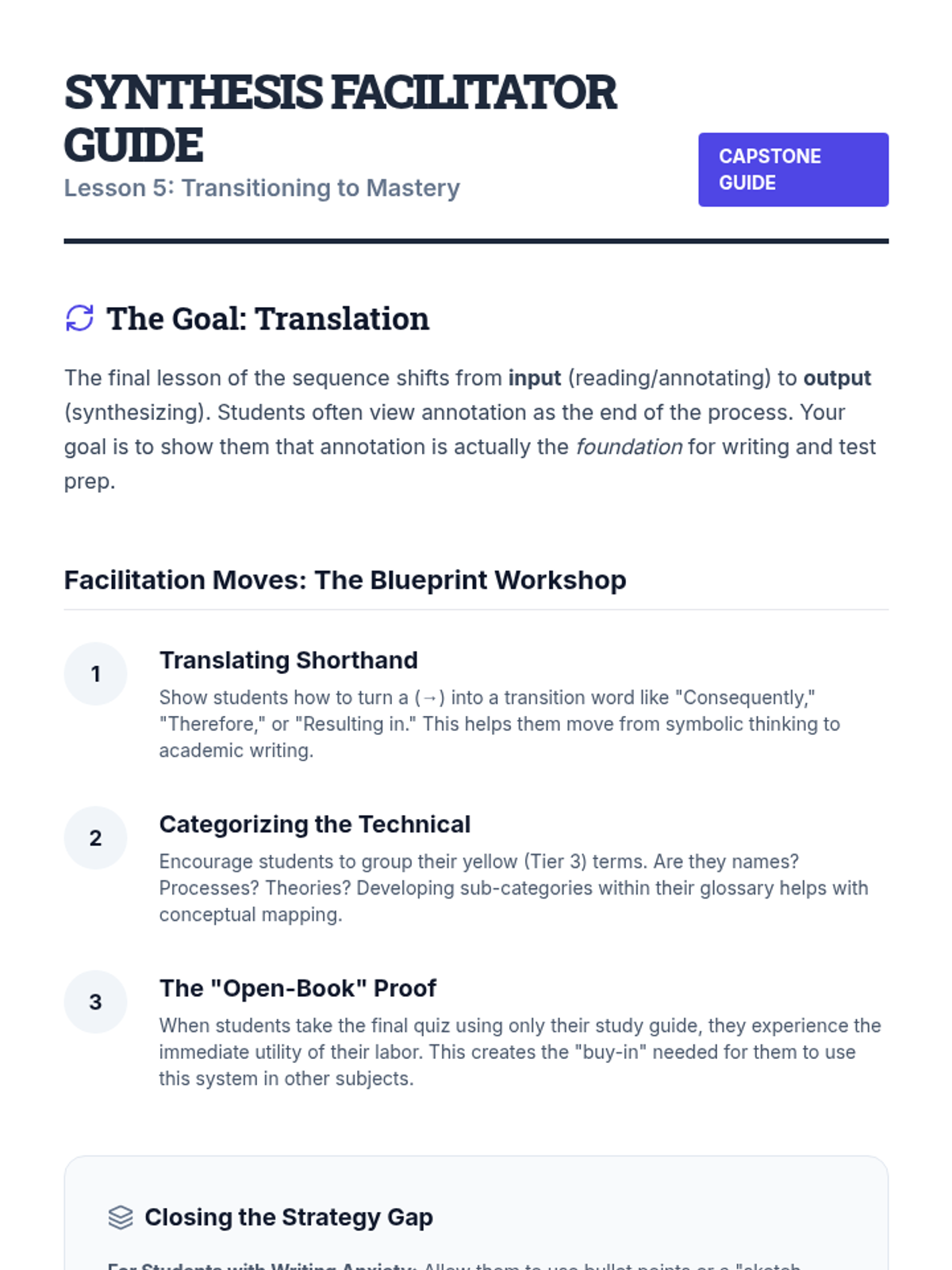
Students learn how to extract their highlighted and annotated notes to create a concise study guide or summary, translating visual codes back into written statements for effective review.
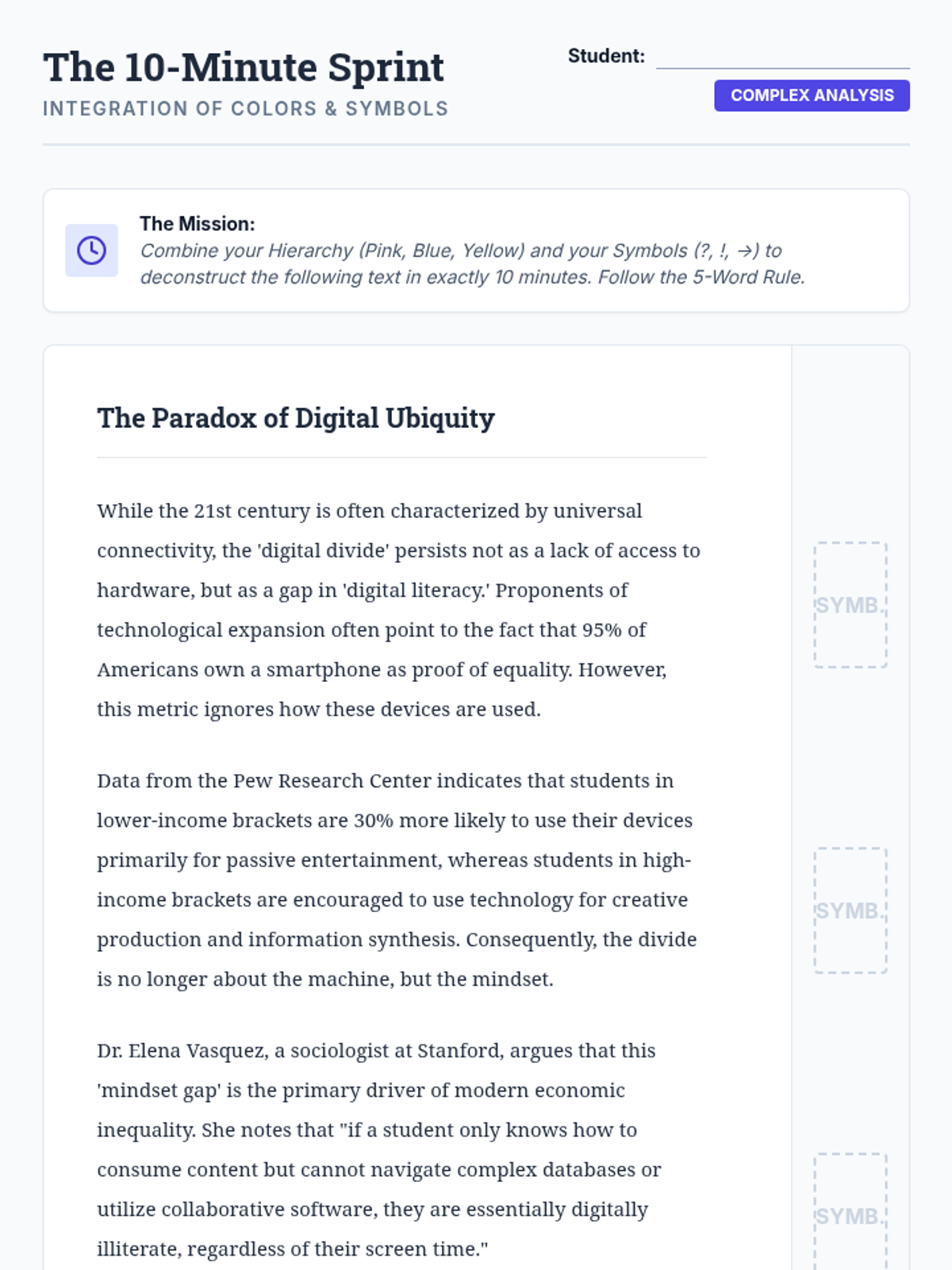
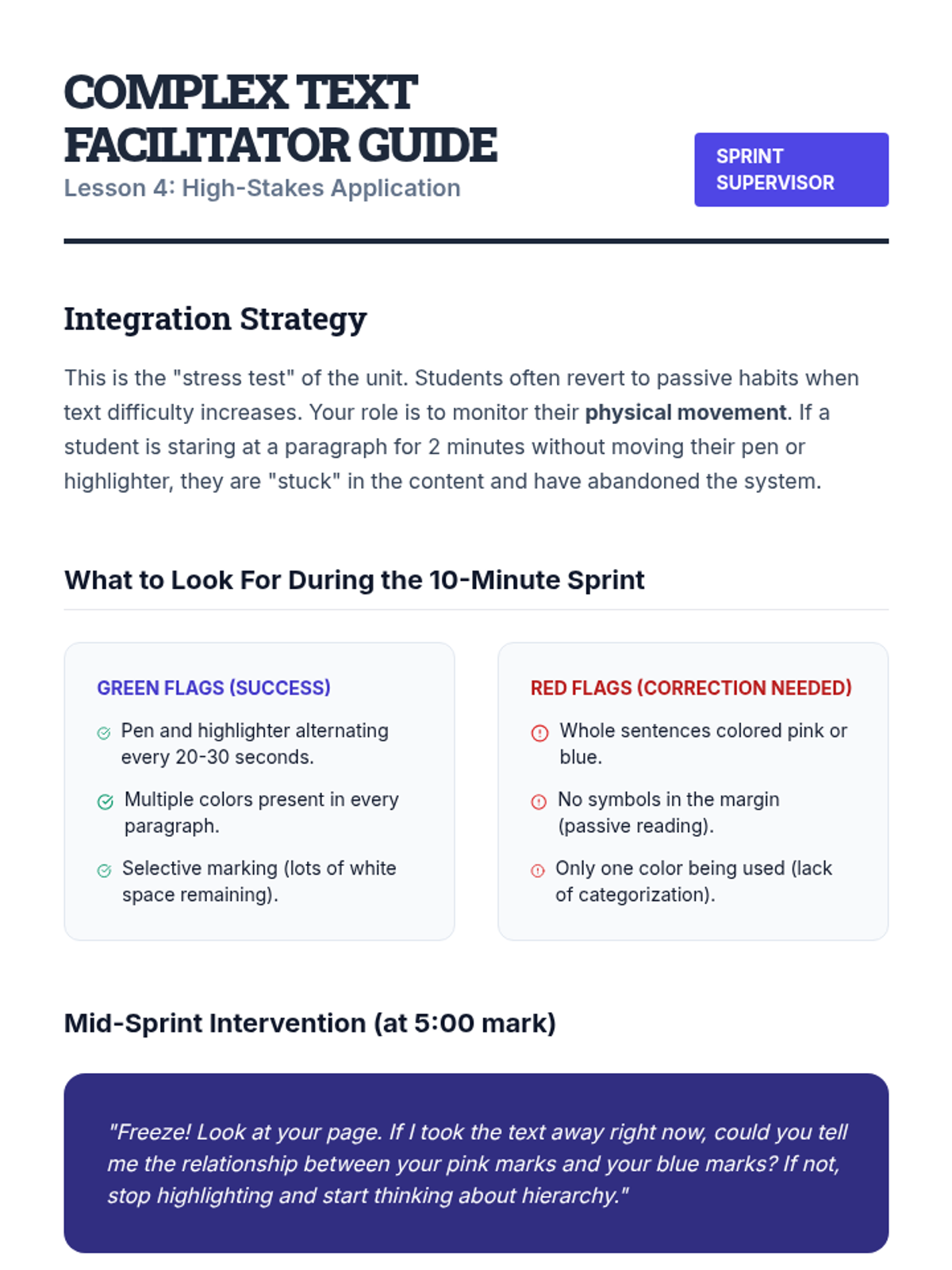
Students combine their color hierarchy and symbol systems to annotate a full-length, college-level journal article, focusing on isolating the author's thesis and tracing evidence under time constraints.
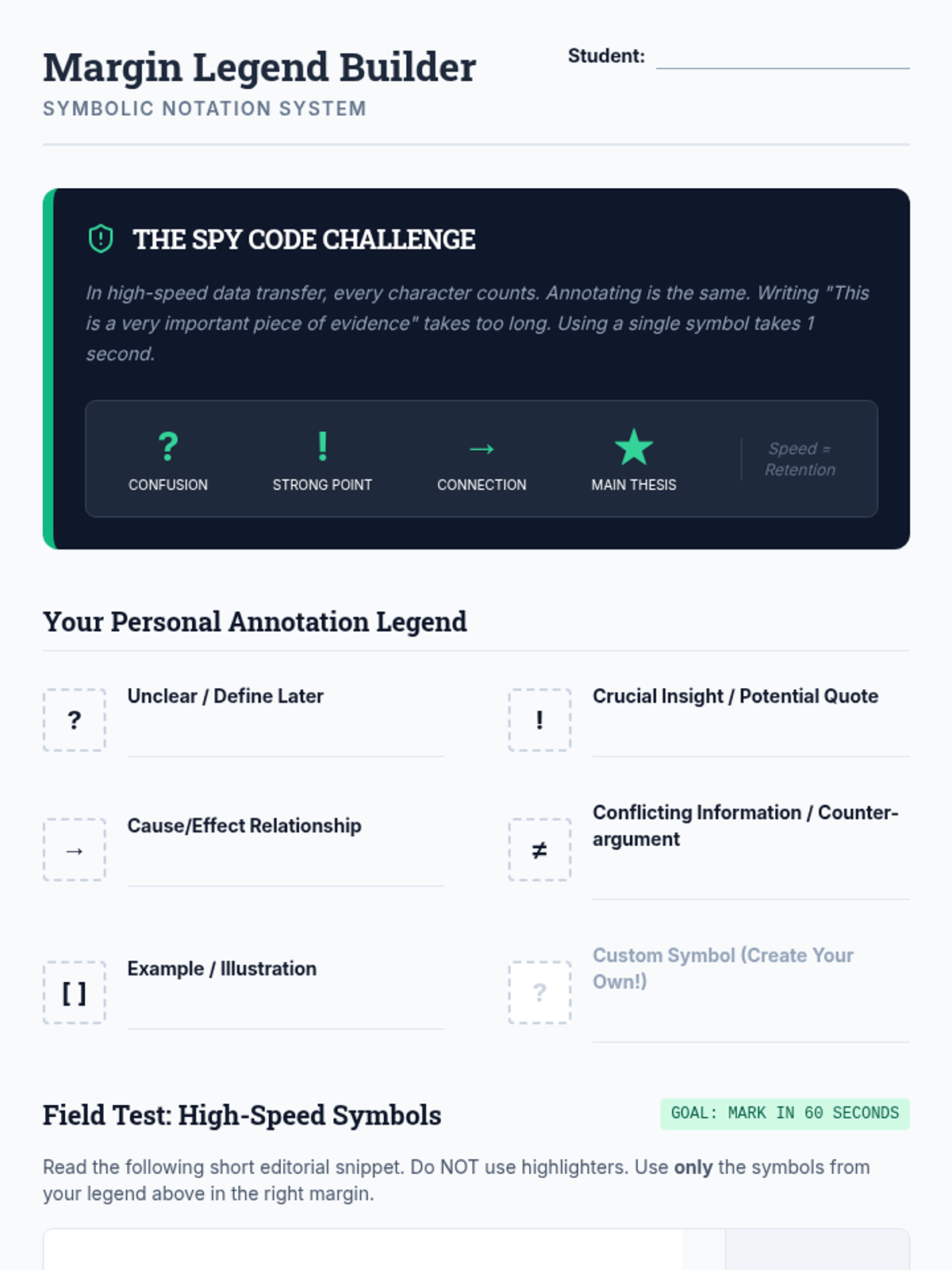
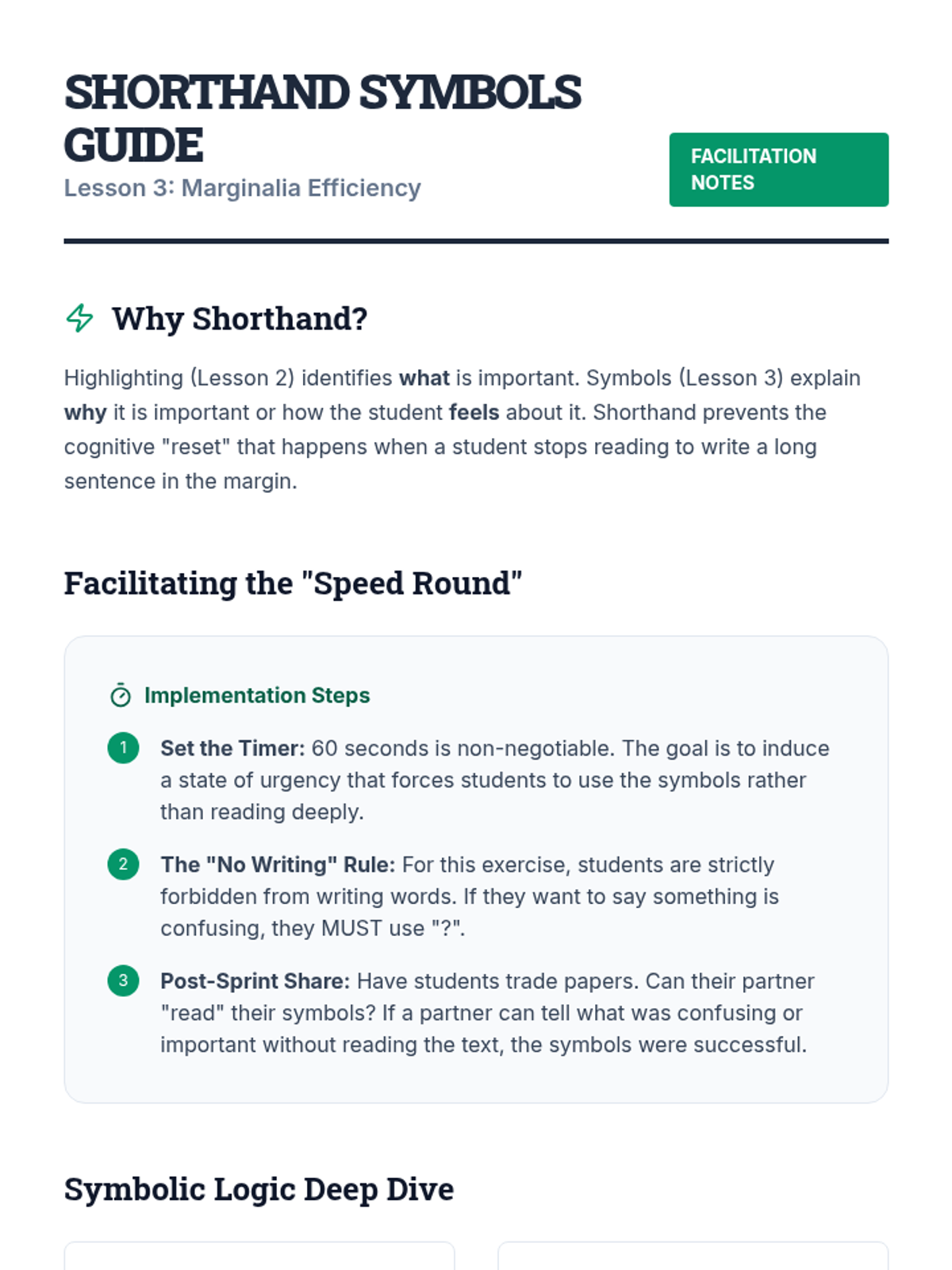
Focuses on marginalia using symbols to track student reactions and logical flow. Students create a personal legend of symbols to mark confusion, agreement, or causality without cluttering the text.
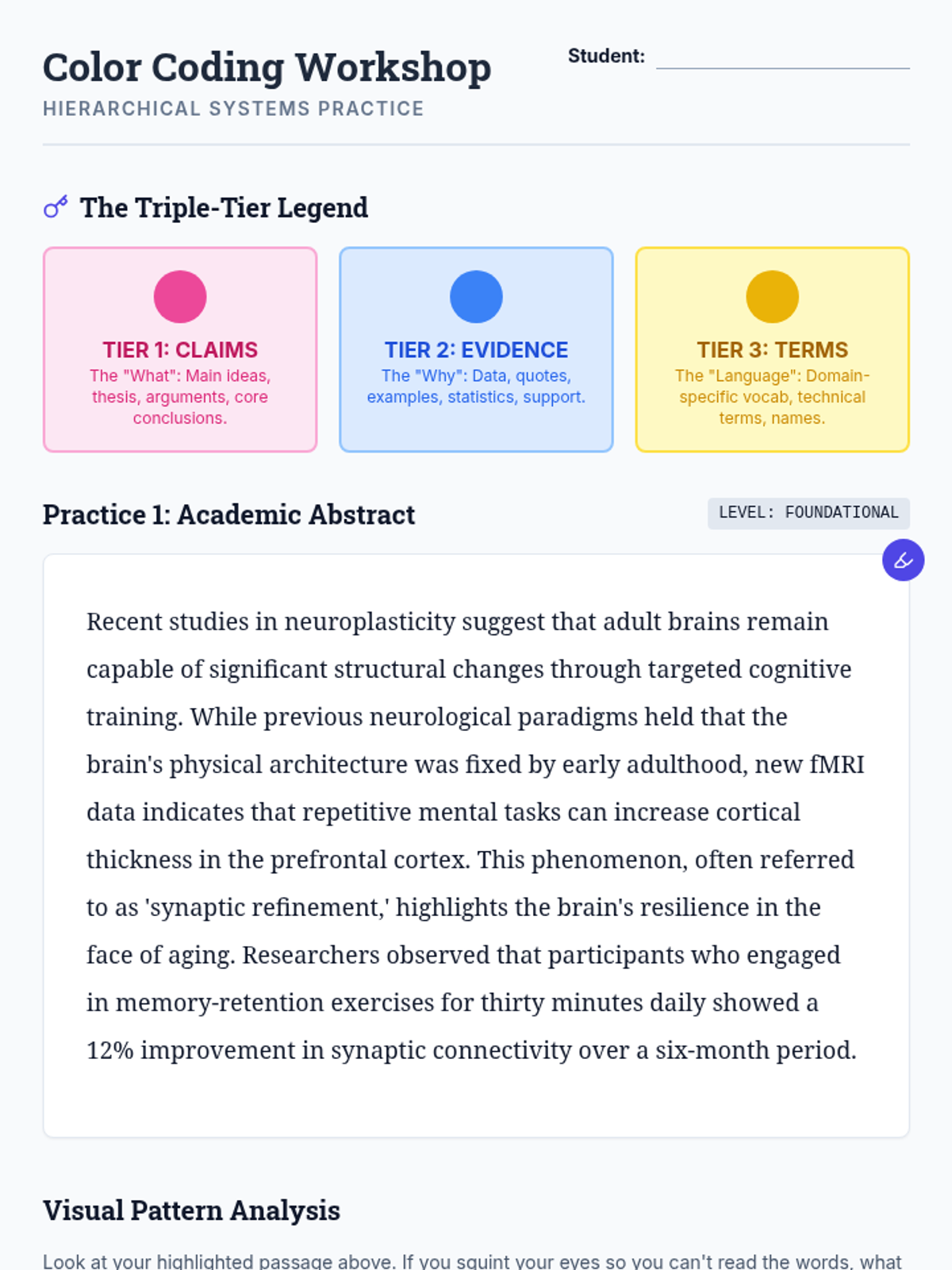
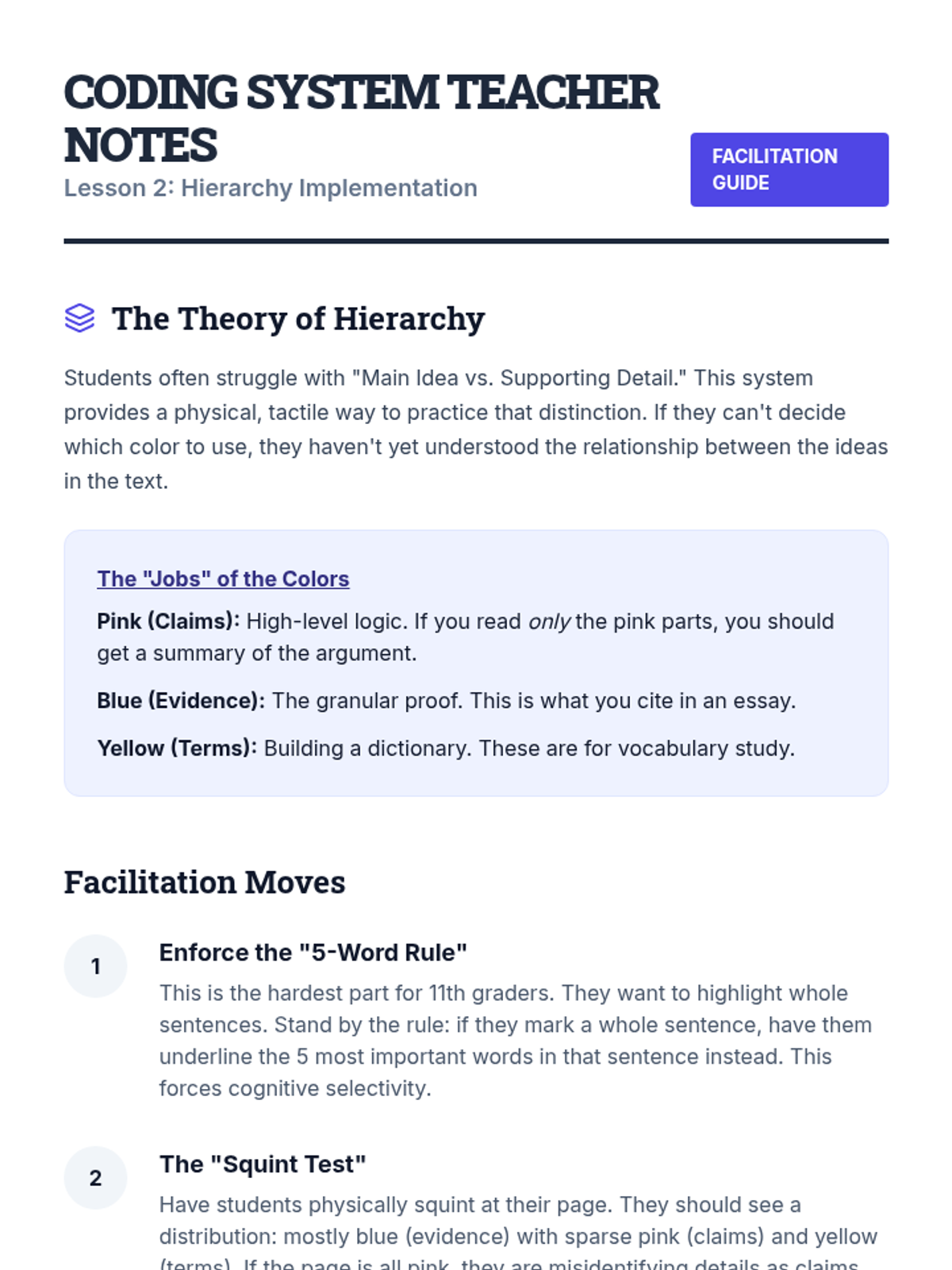
Learners are introduced to a three-color hierarchy system to categorize text elements: claims, evidence, and vocabulary. They practice this system on short, dense academic abstracts to ensure precision and visual structure.
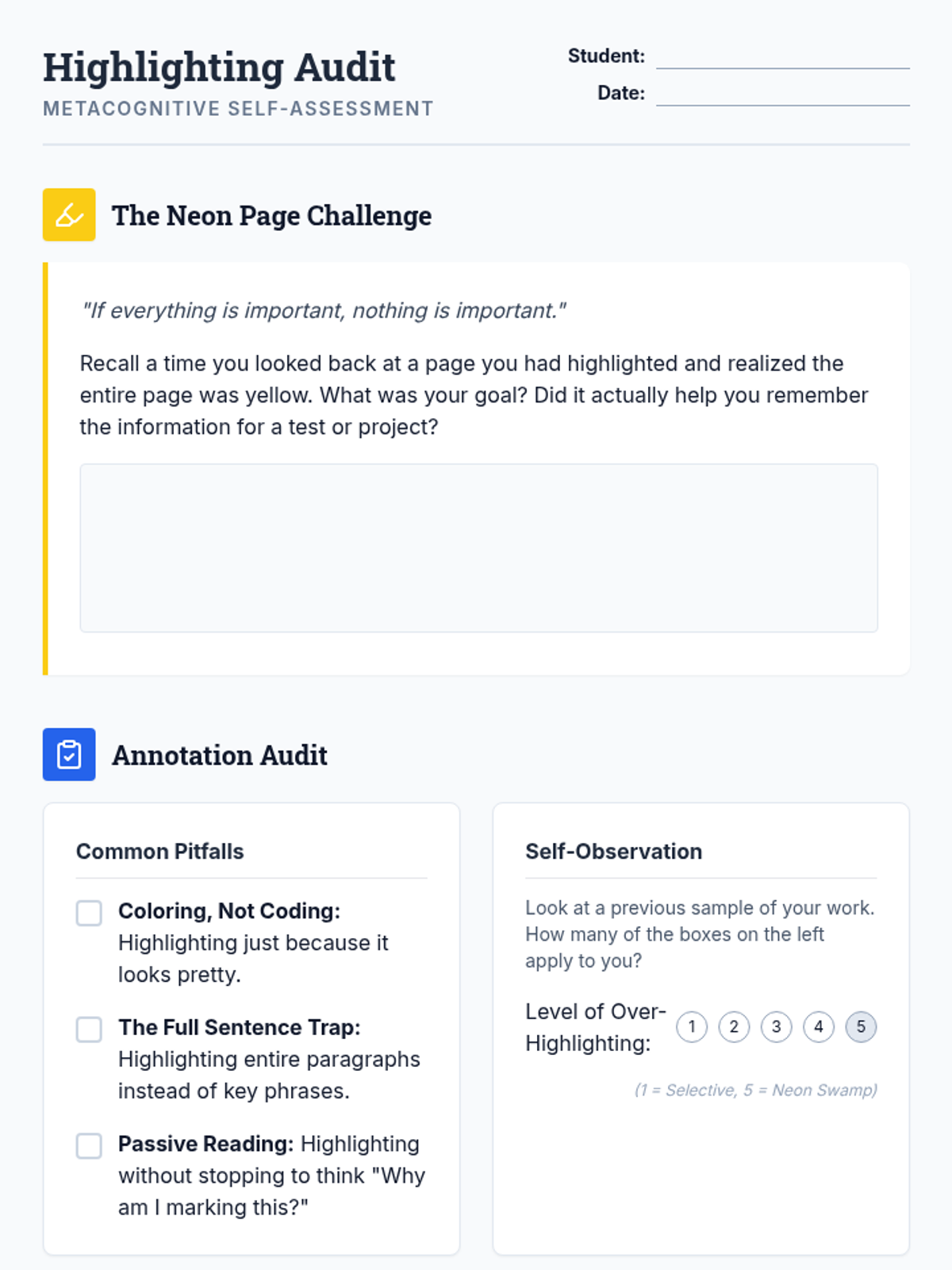
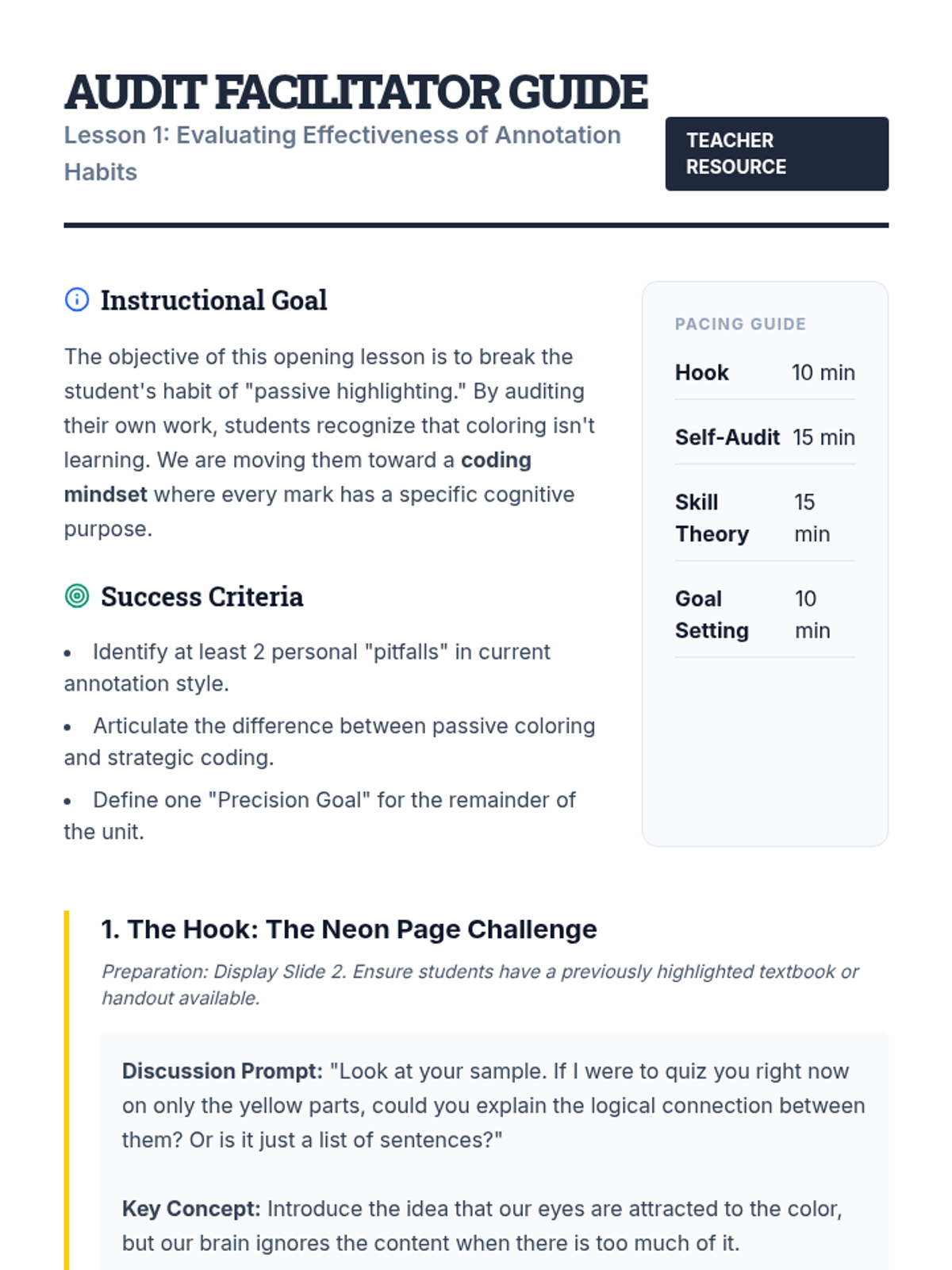
Students conduct an audit of their previous reading notes and highlighting samples to identify common pitfalls like 'over-highlighting' or passive reading. They analyze the difference between decorative coloring and cognitive coding, establishing a baseline for improvement.