Active listening, assertive expression, and boundary-setting strategies for interpersonal success. Develops proficiency in conflict mediation, cooperative teamwork, and the cultivation of healthy romantic and platonic connections.
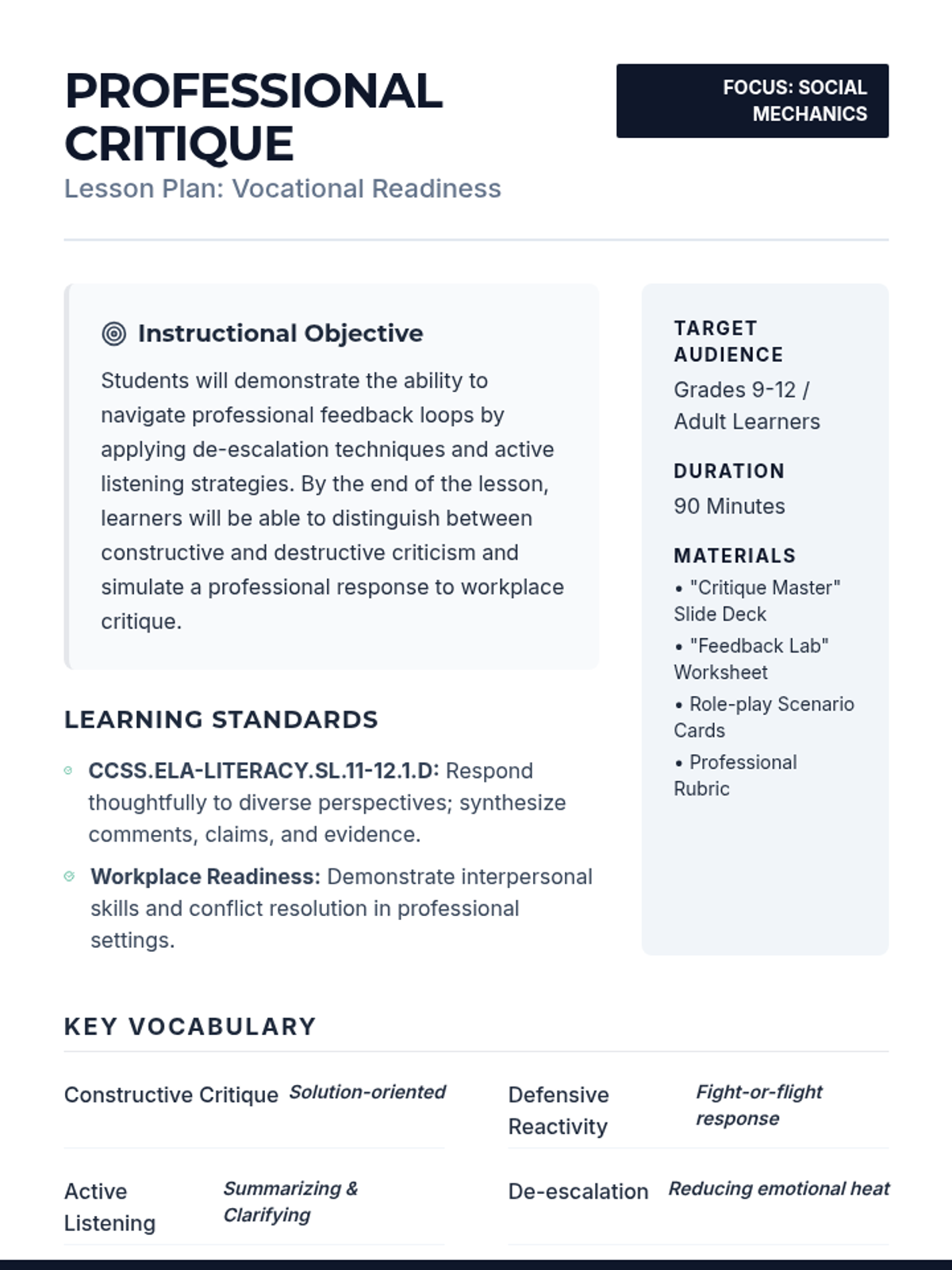
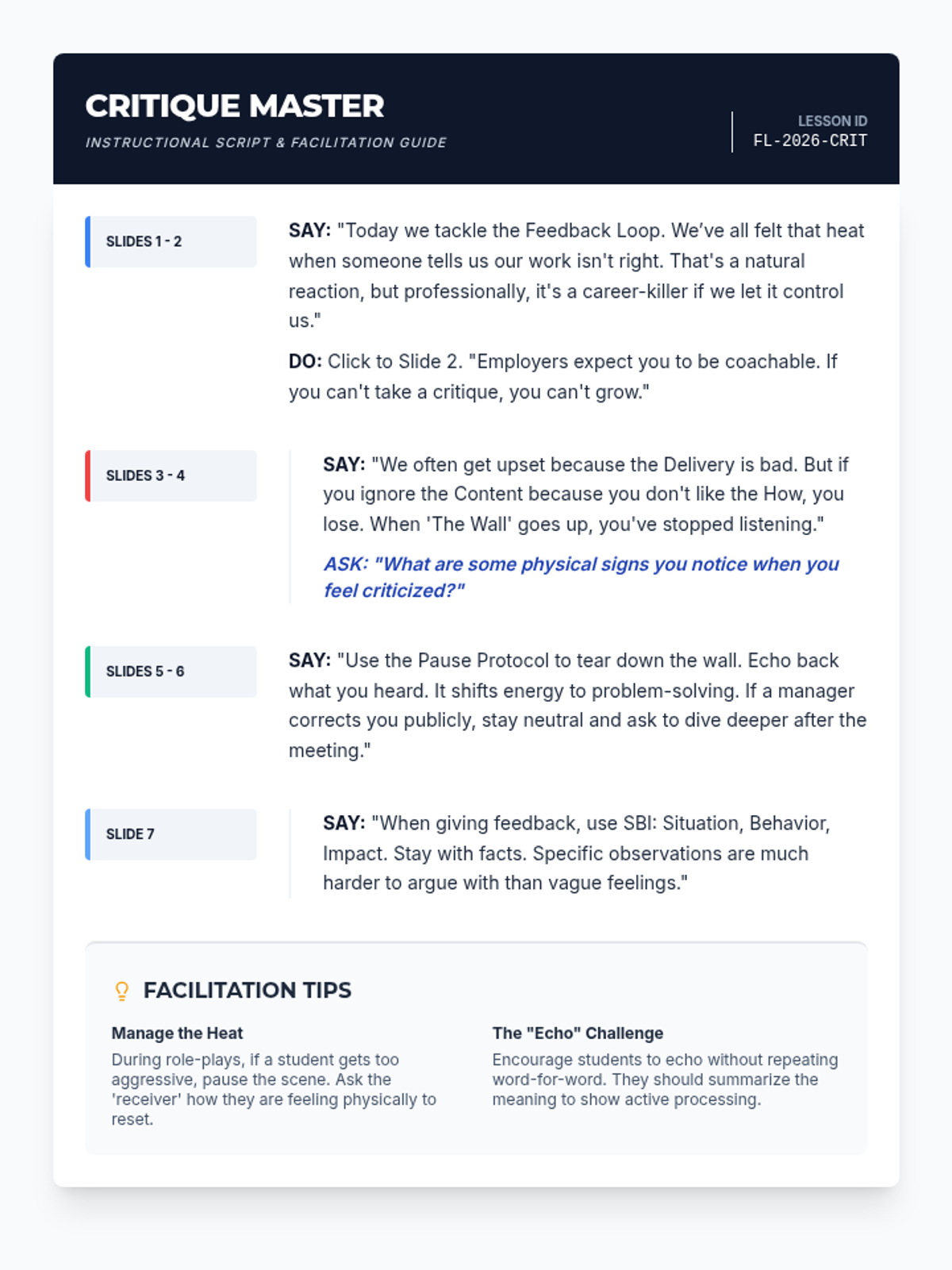
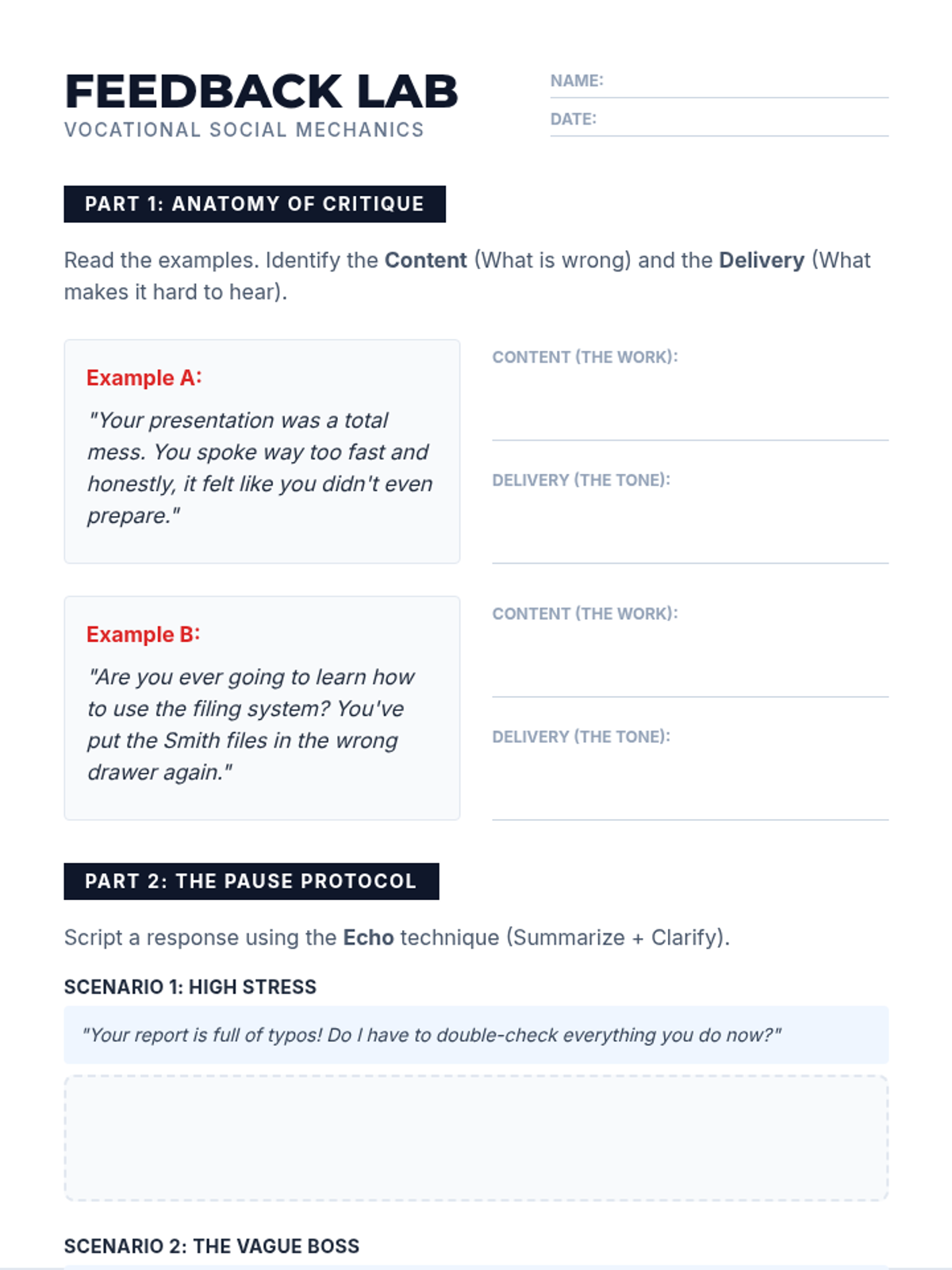
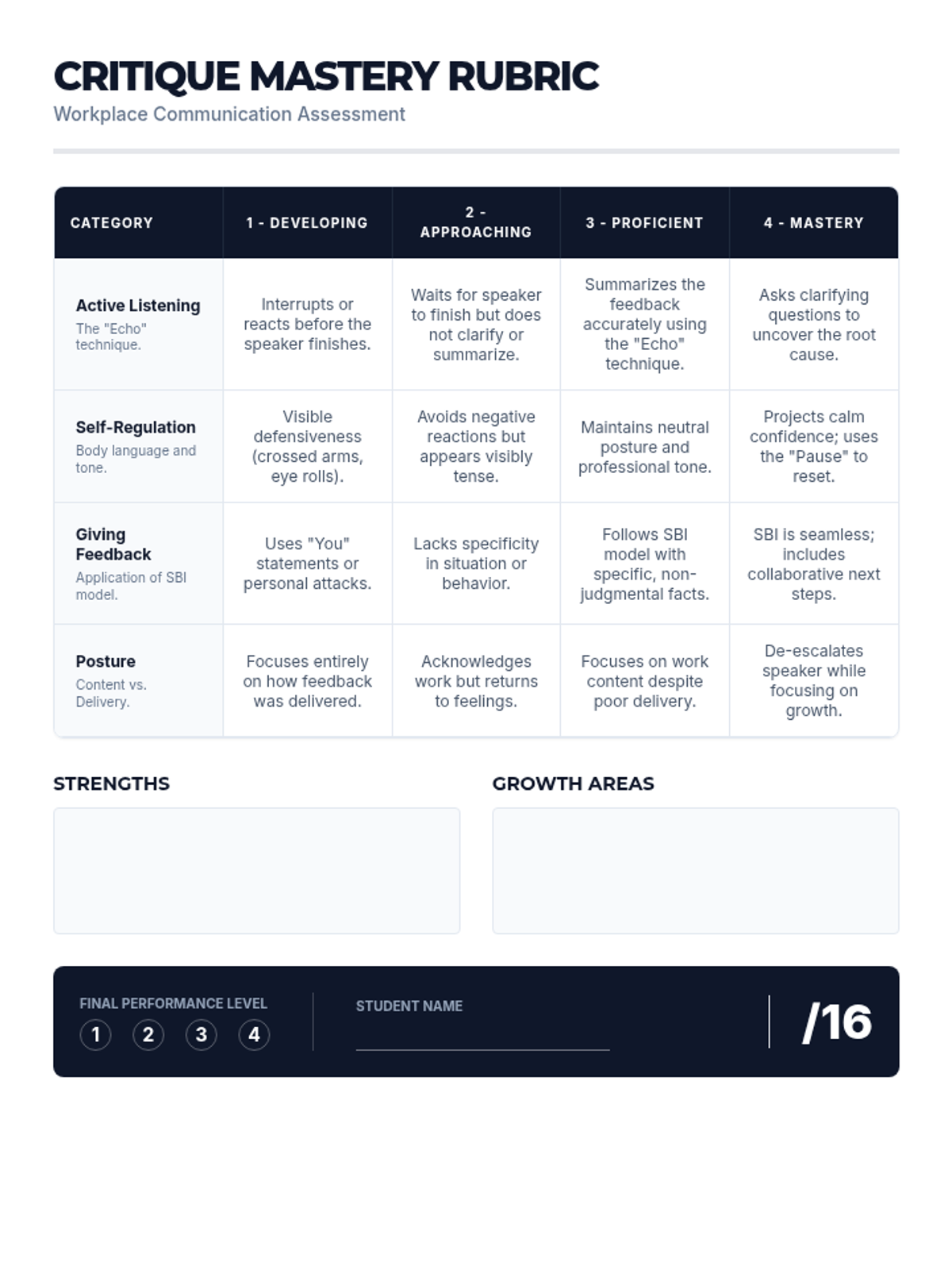
This lesson prepares students for the social complexities of workplace feedback, focusing on active listening, de-escalation techniques, and professional growth.
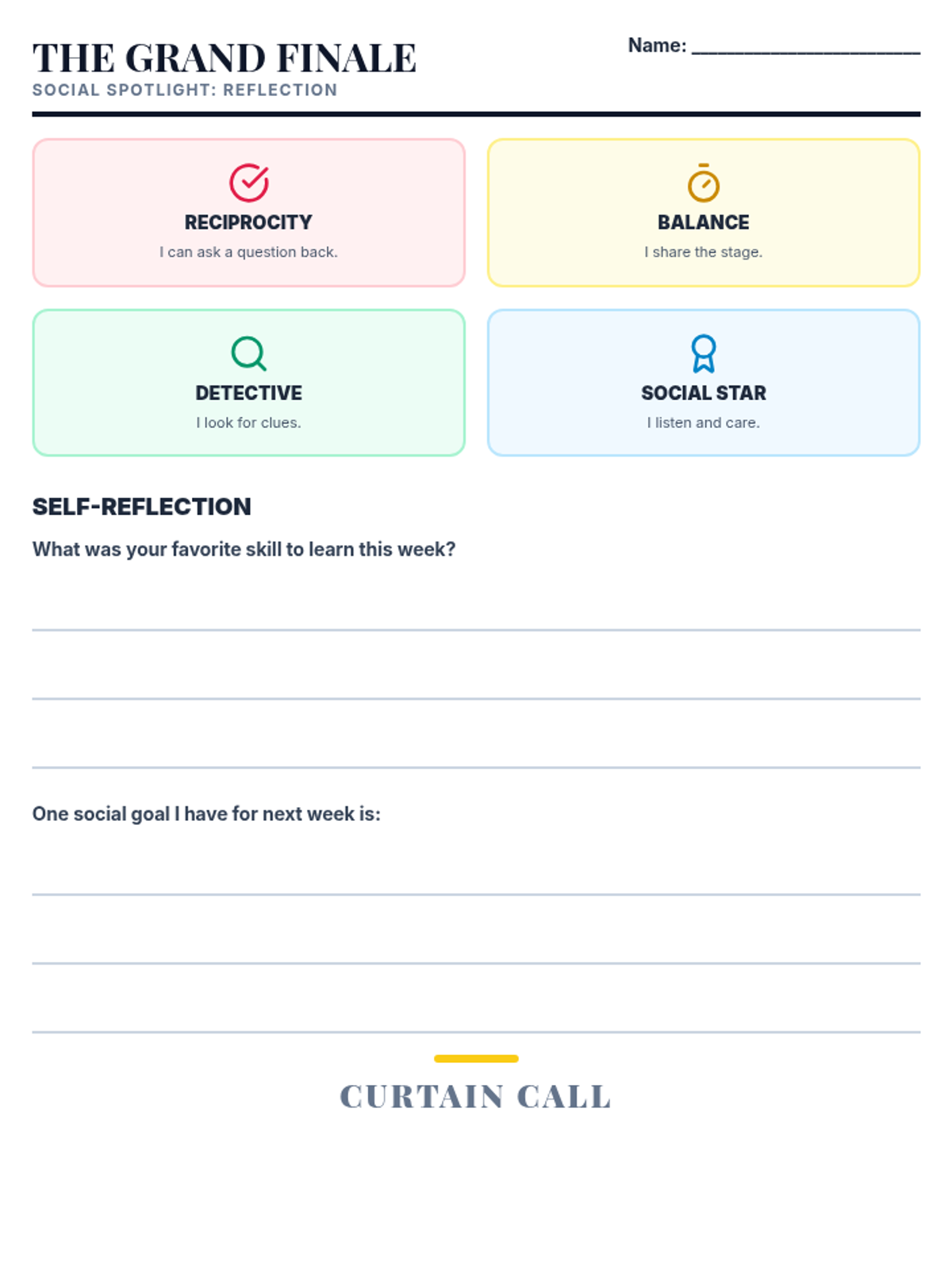
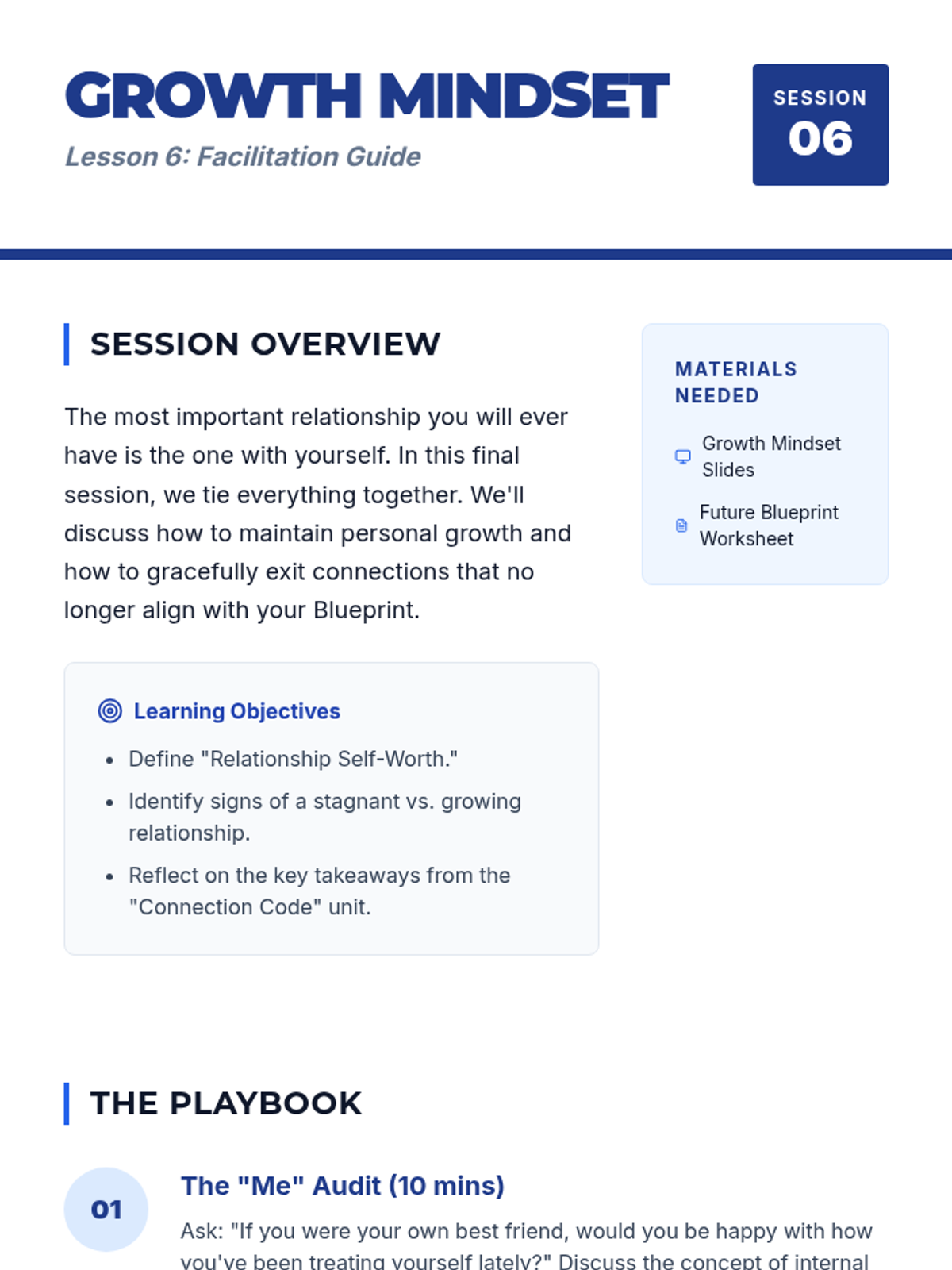
Review of all skills and a final reflection on social growth through the unit.
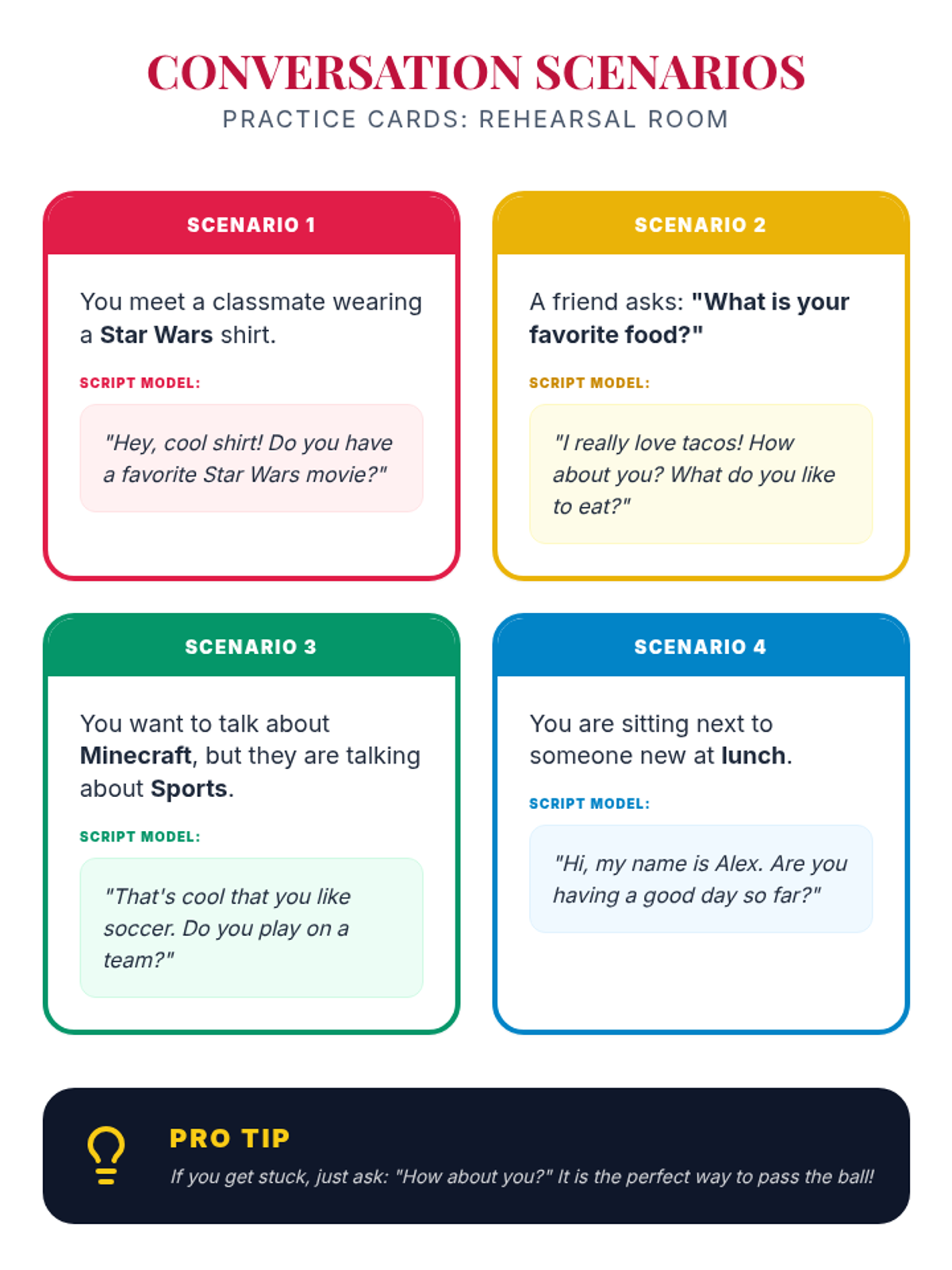
Guided practice sessions using role-play cards to simulate real-world social scenarios.
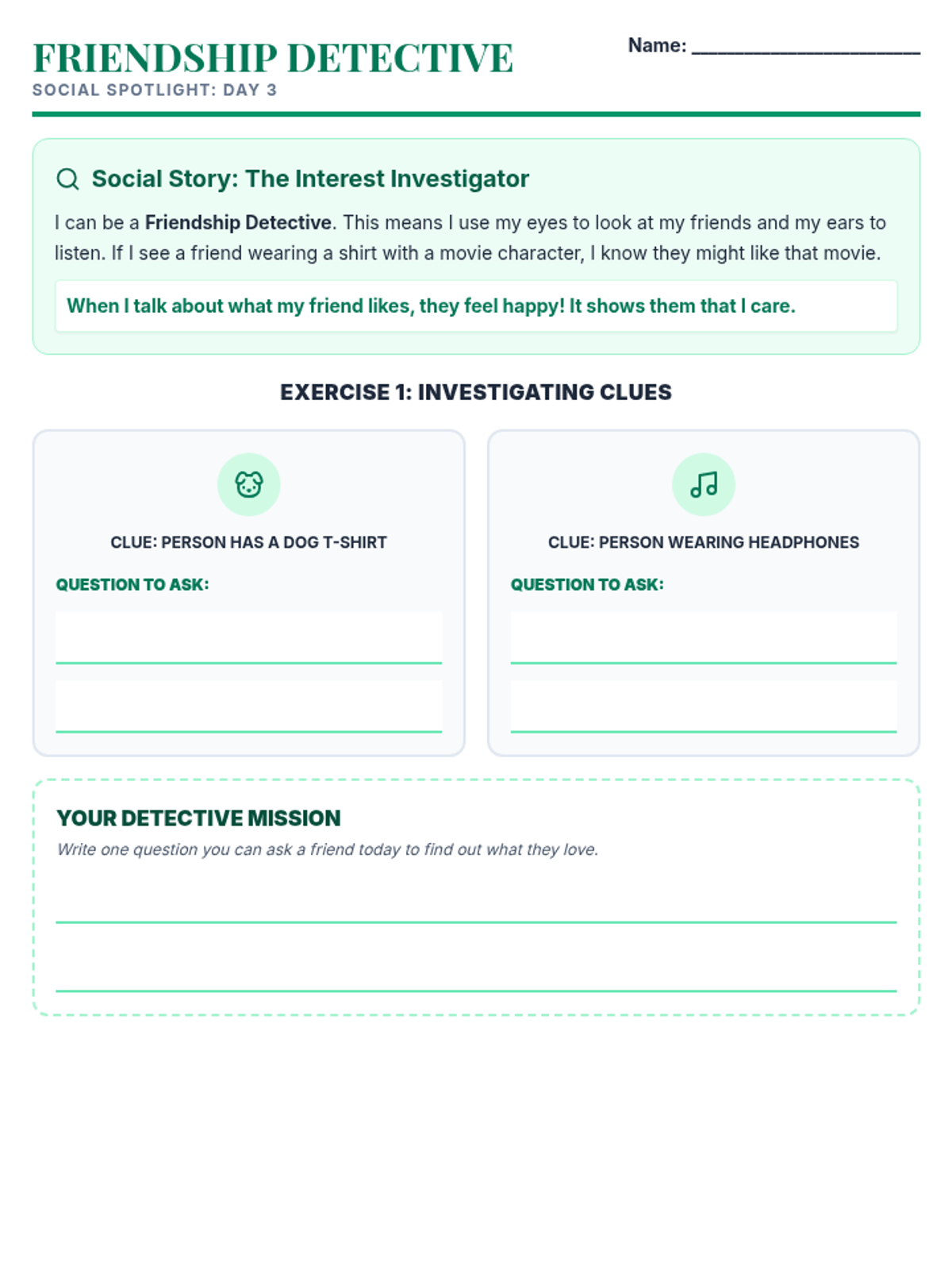
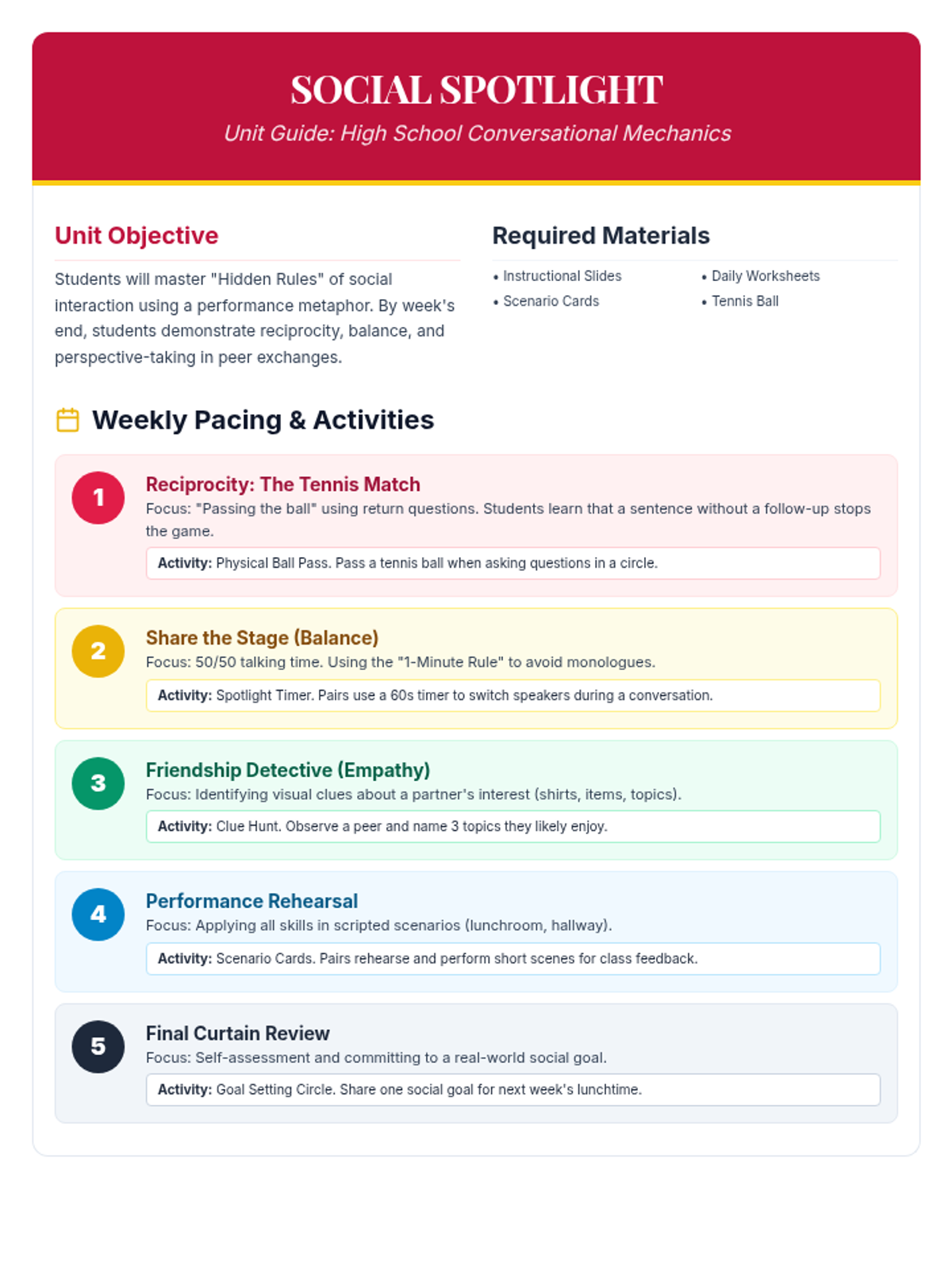
Developing perspective-taking skills to identify and discuss the interests of others during a conversation.
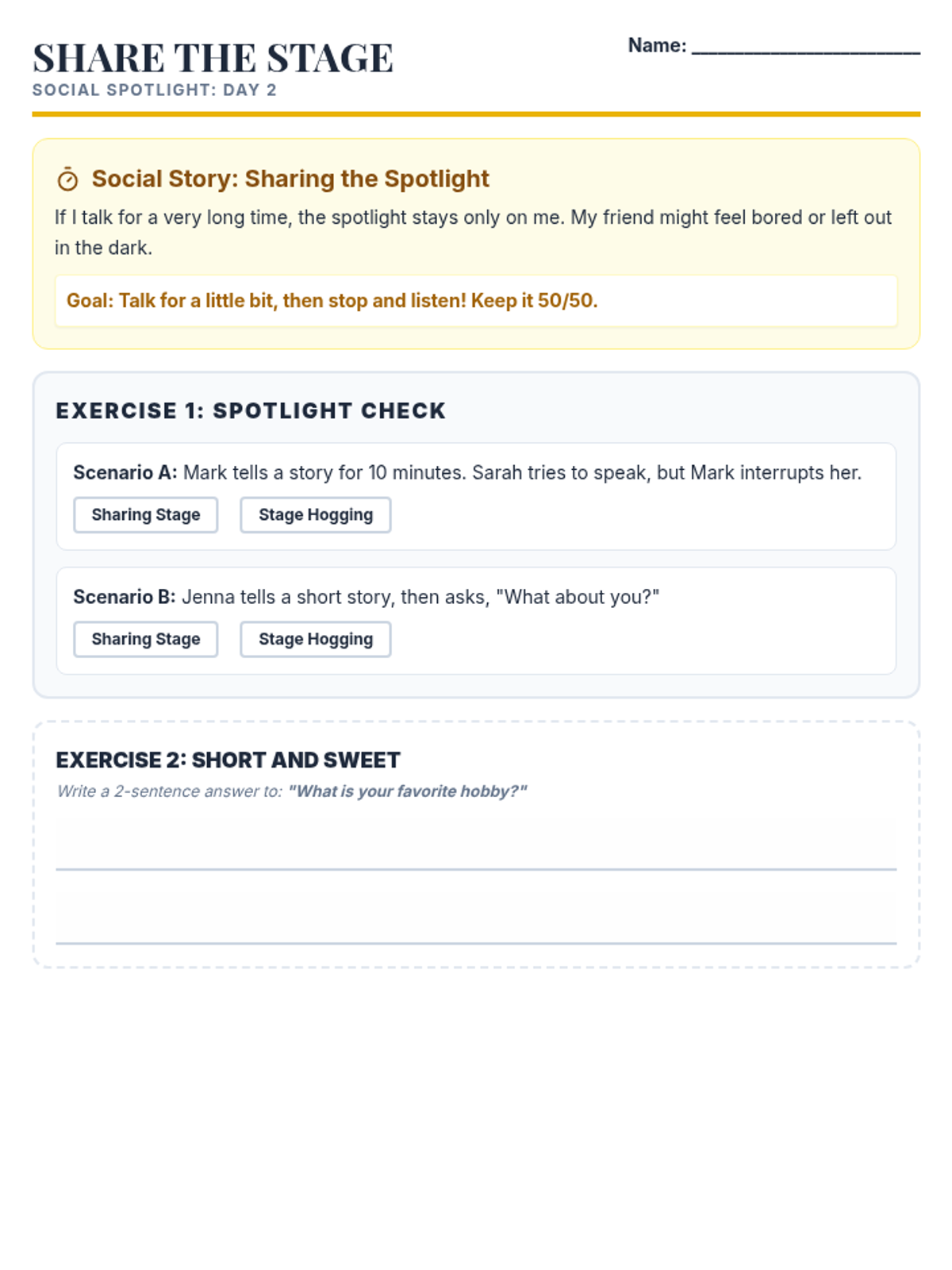
Focusing on the 'Talking Timer' concept to ensure students understand how to share the floor and avoid 'monologuing'.
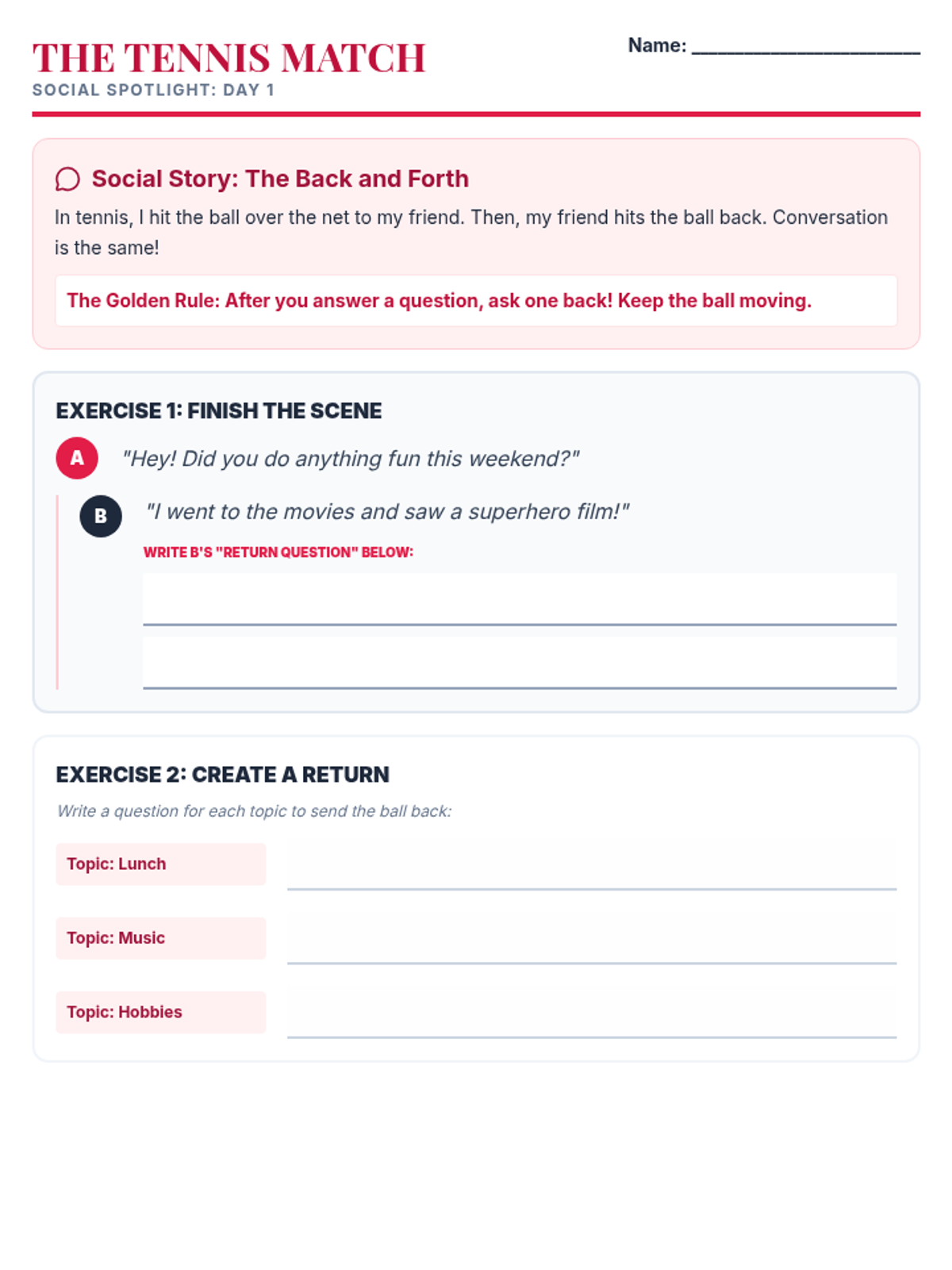
Introduction to reciprocal conversations using the metaphor of a tennis match to visualize the 'back-and-forth' flow.
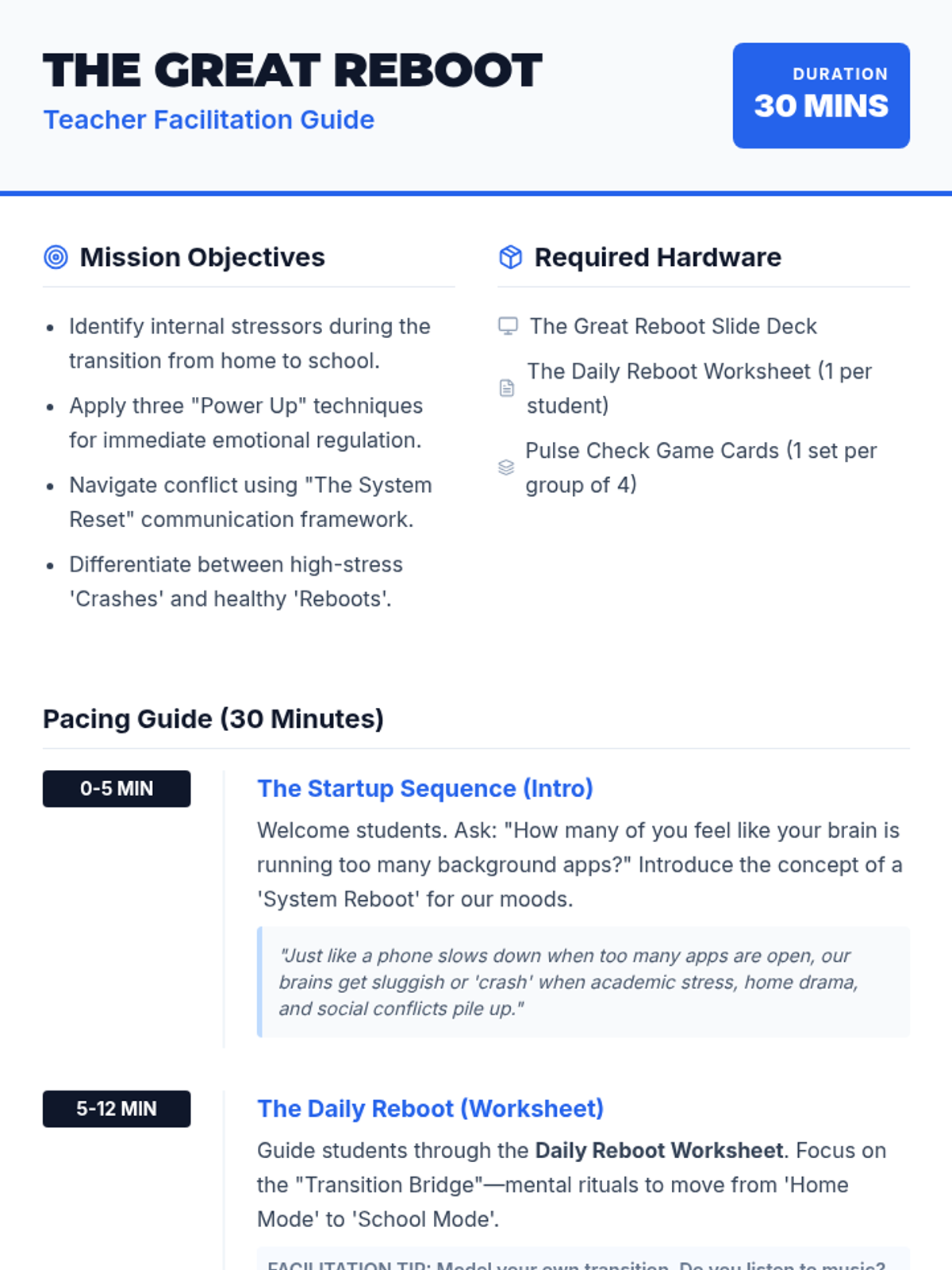
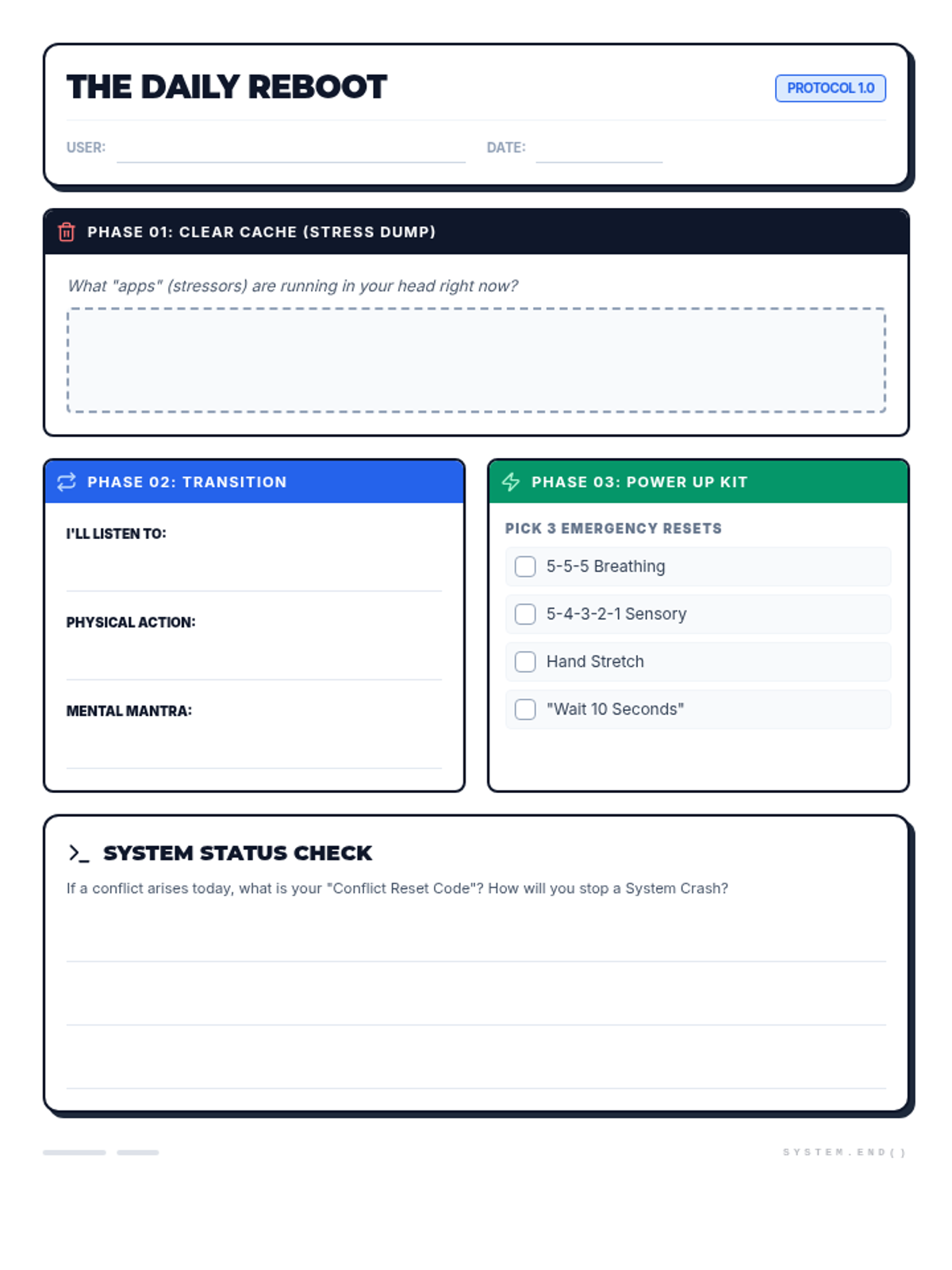
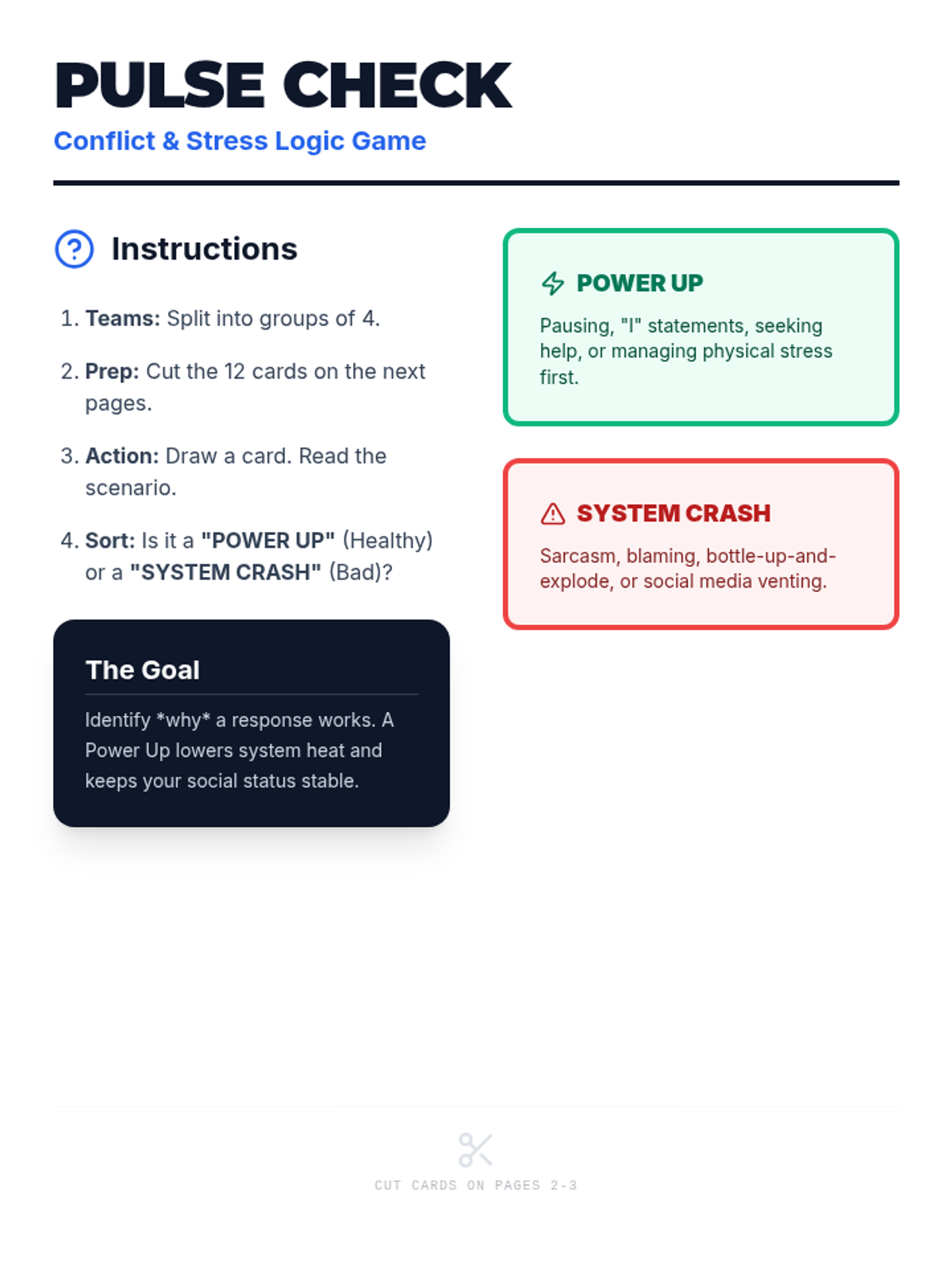
A high-energy, 30-minute social-emotional learning lesson designed for high schoolers. Students learn to navigate academic stress, resolve conflicts, and master the transition from home to school using 'The Great Reboot' framework.
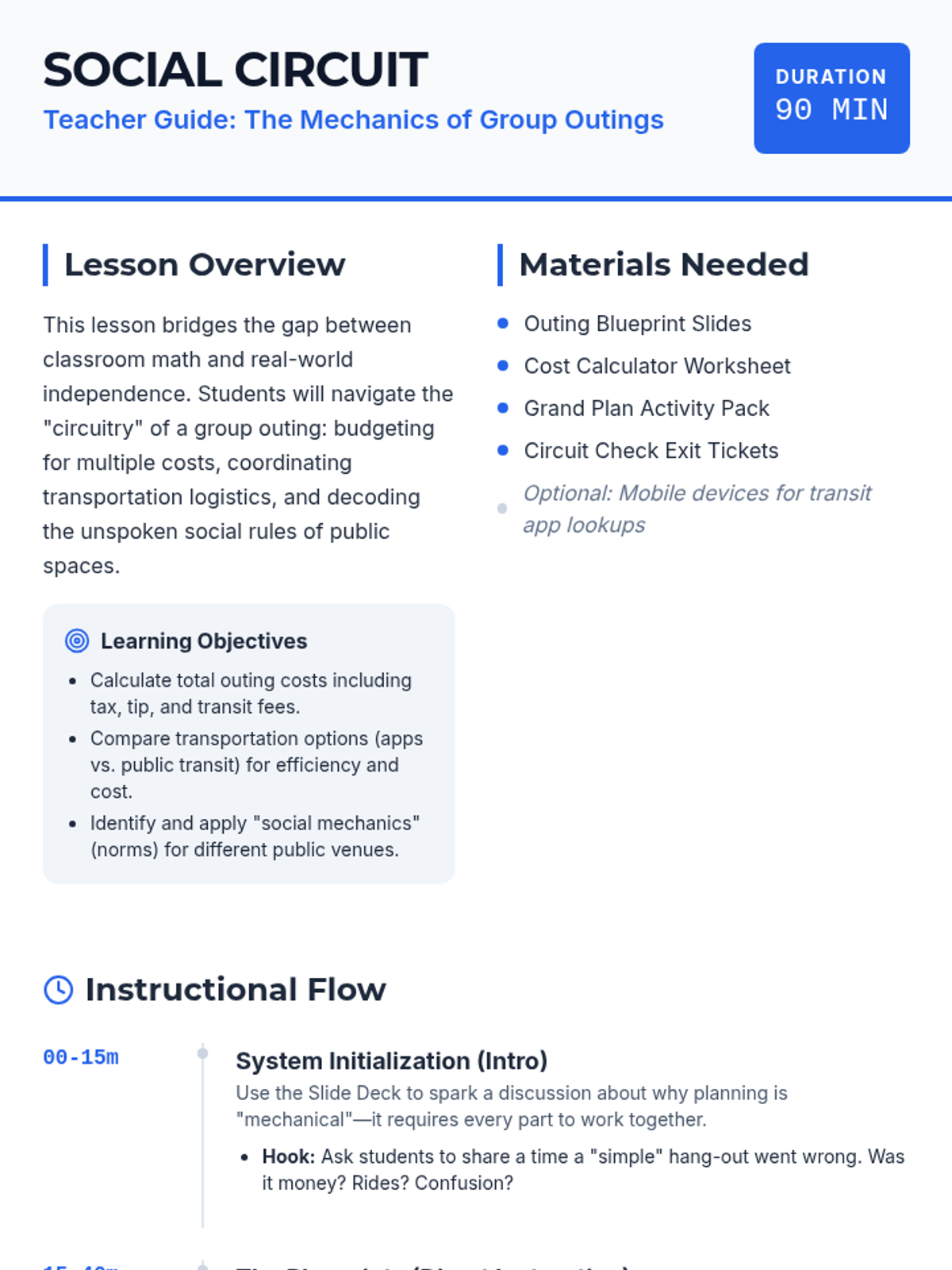
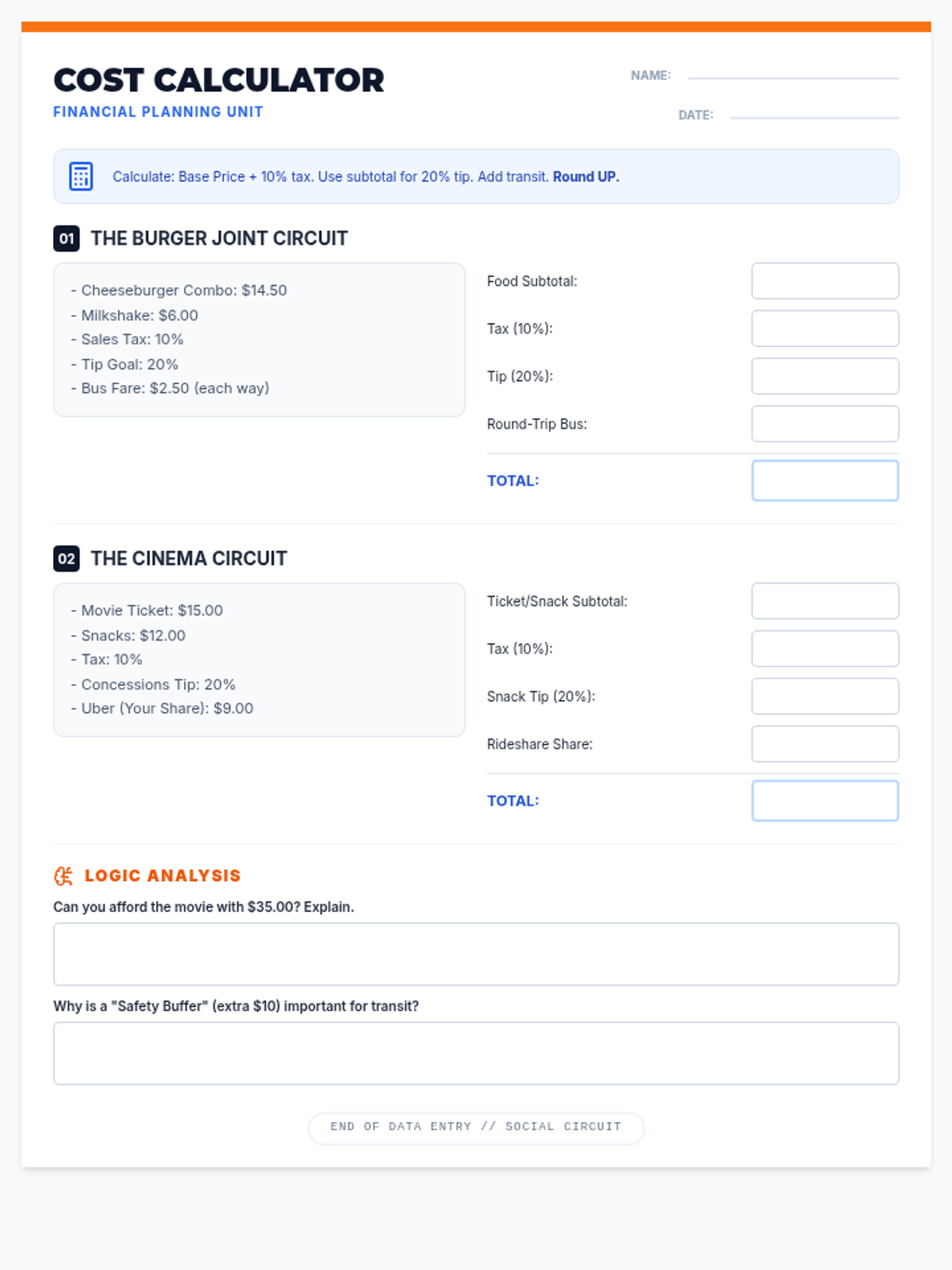
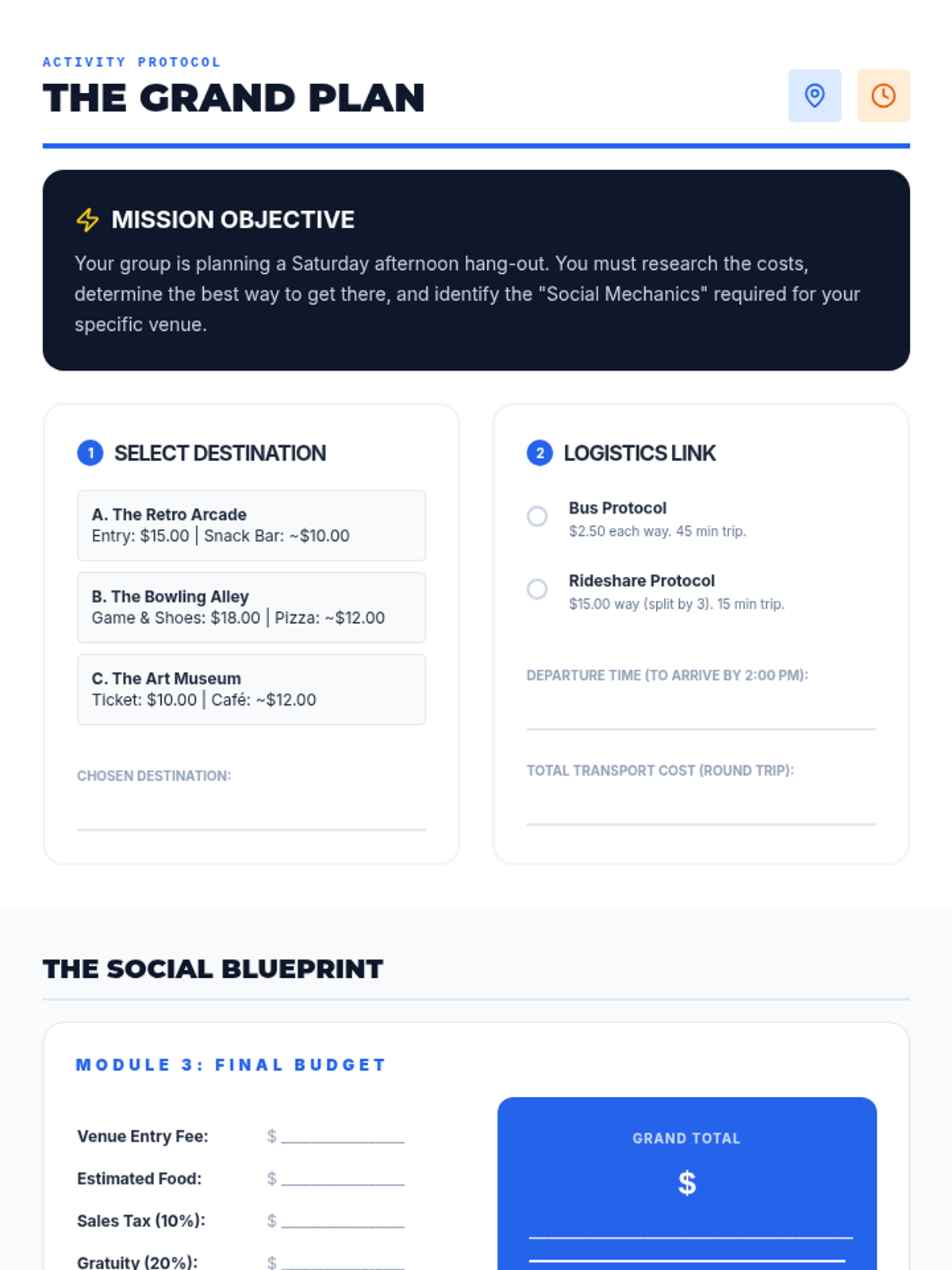
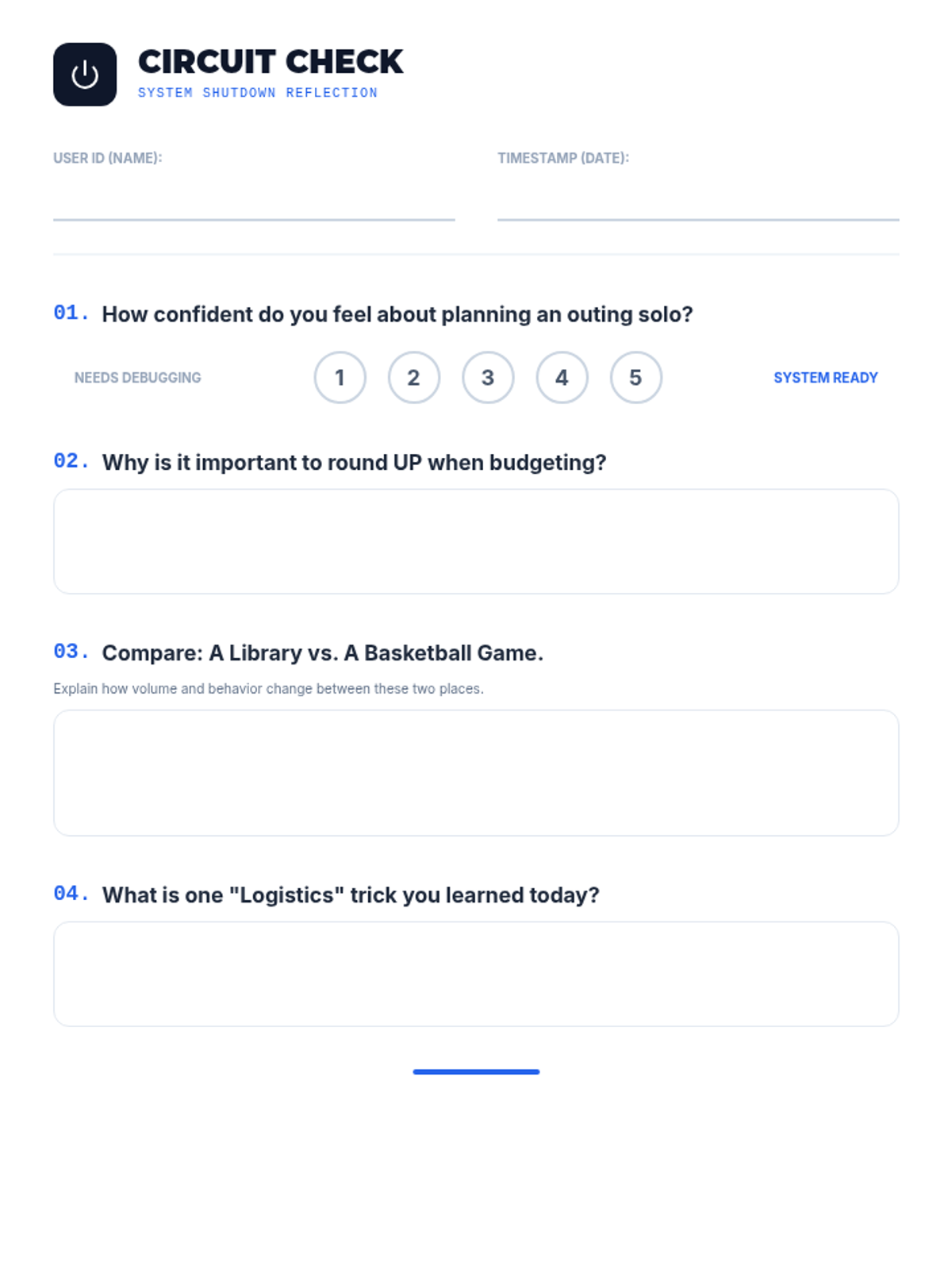
A practical guide for students to master the logistics of social outings, covering budgeting, transit coordination, and social etiquette to build post-graduation independence.
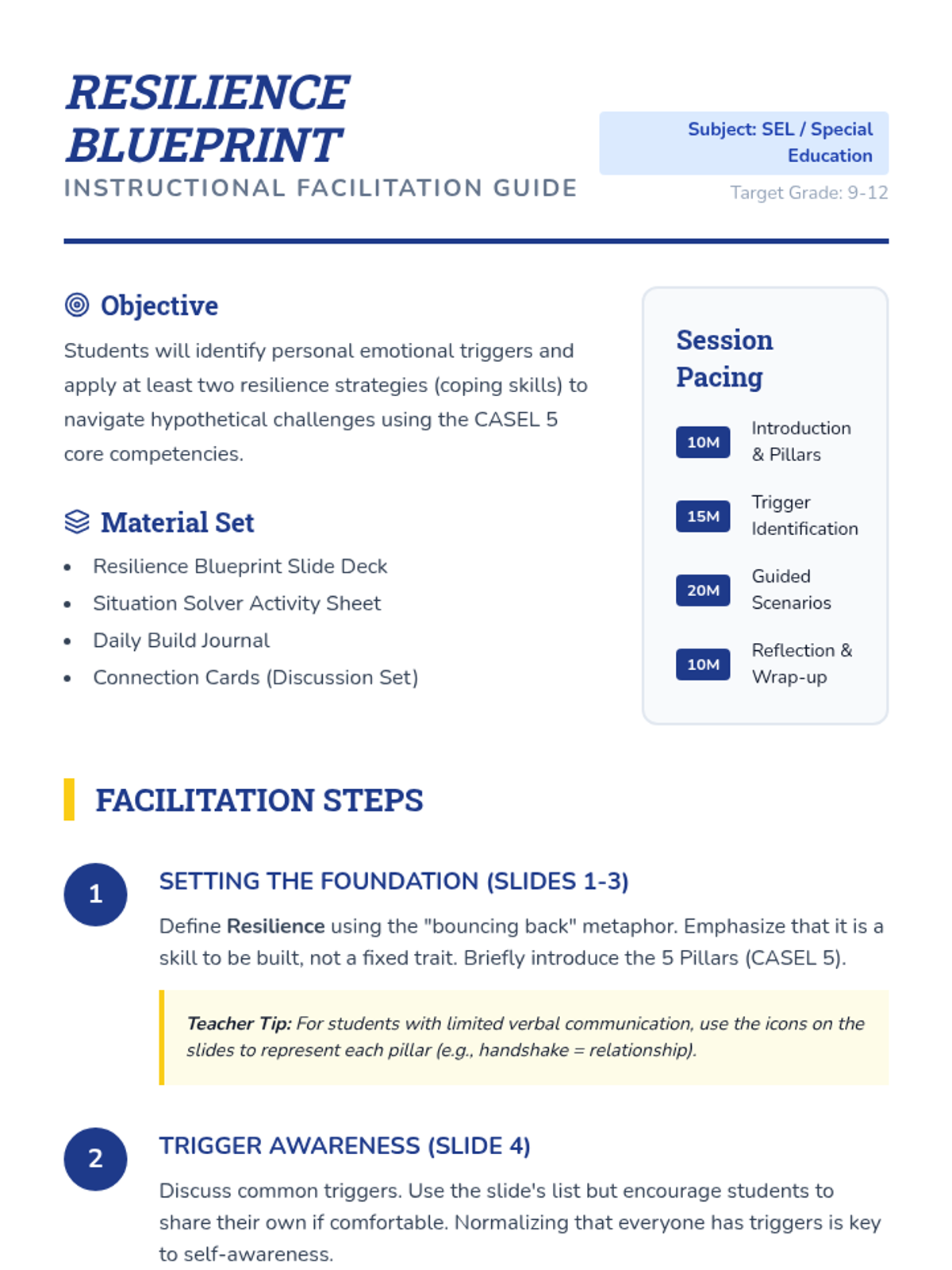
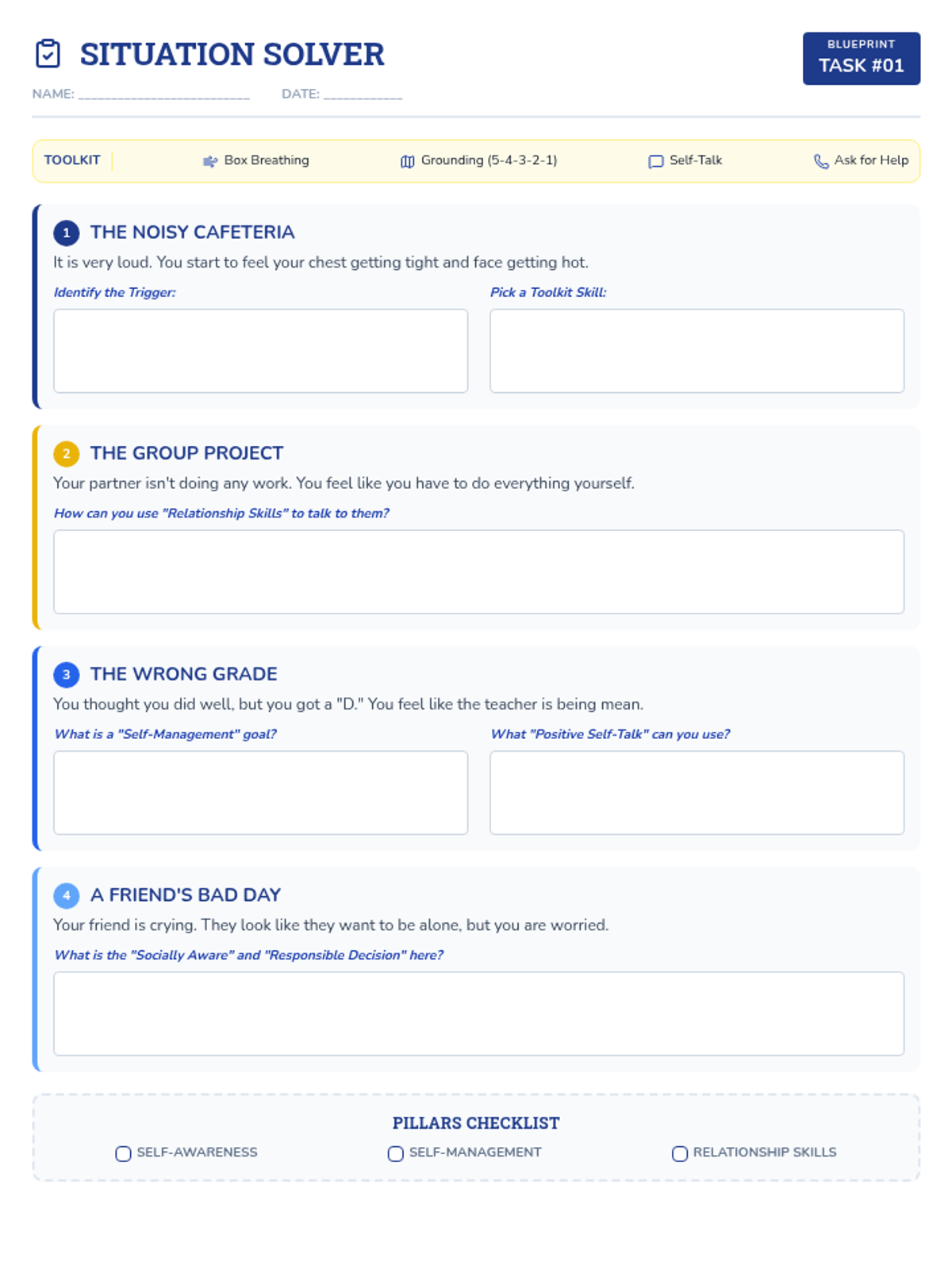
This lesson focuses on building the five core SEL competencies through a 'Blueprint' metaphor, helping high school students in special education develop resilience, self-awareness, and relationship skills. Students will explore emotional triggers, coping strategies, and responsible decision-making through guided instruction and interactive reflection.
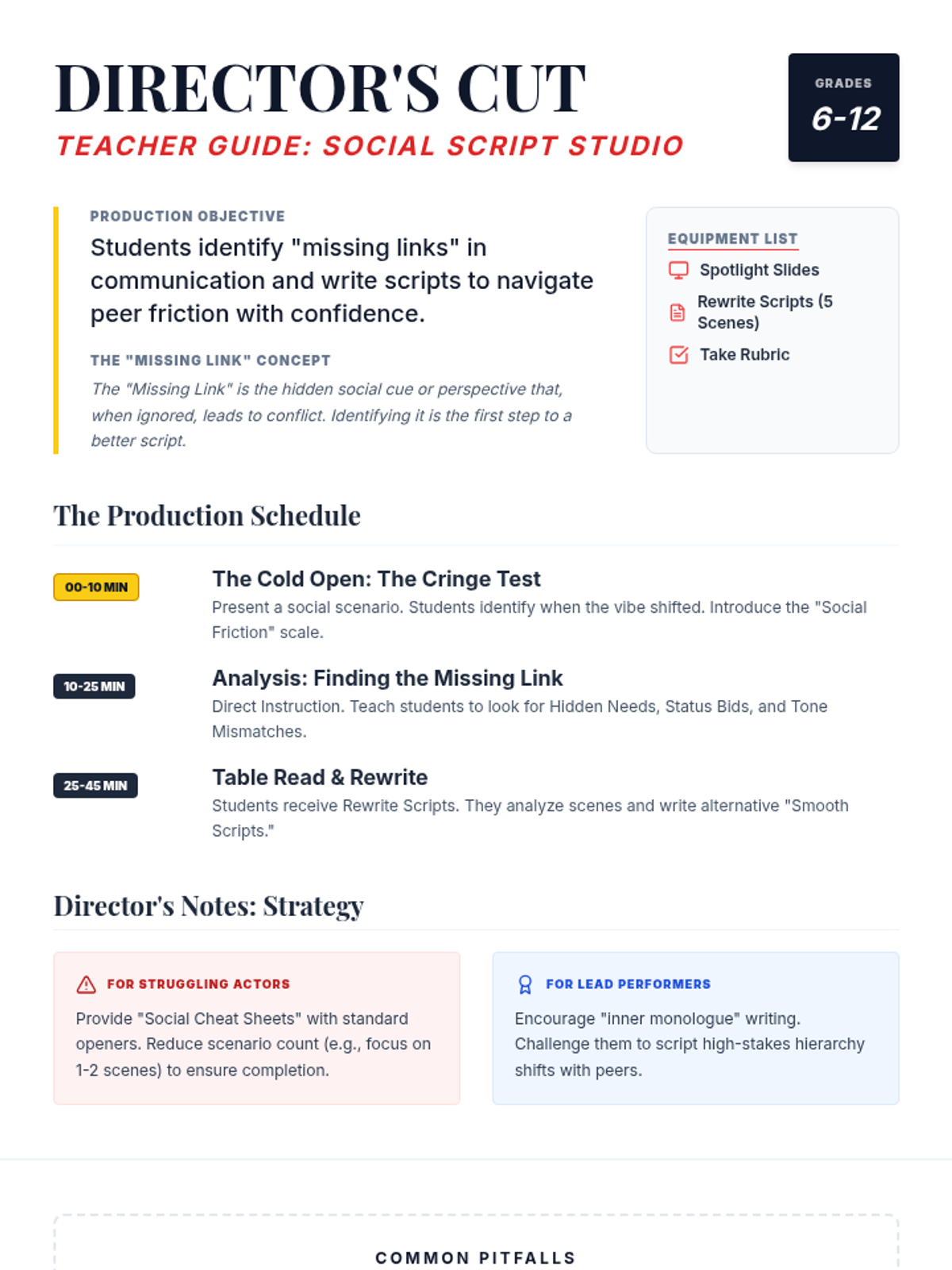
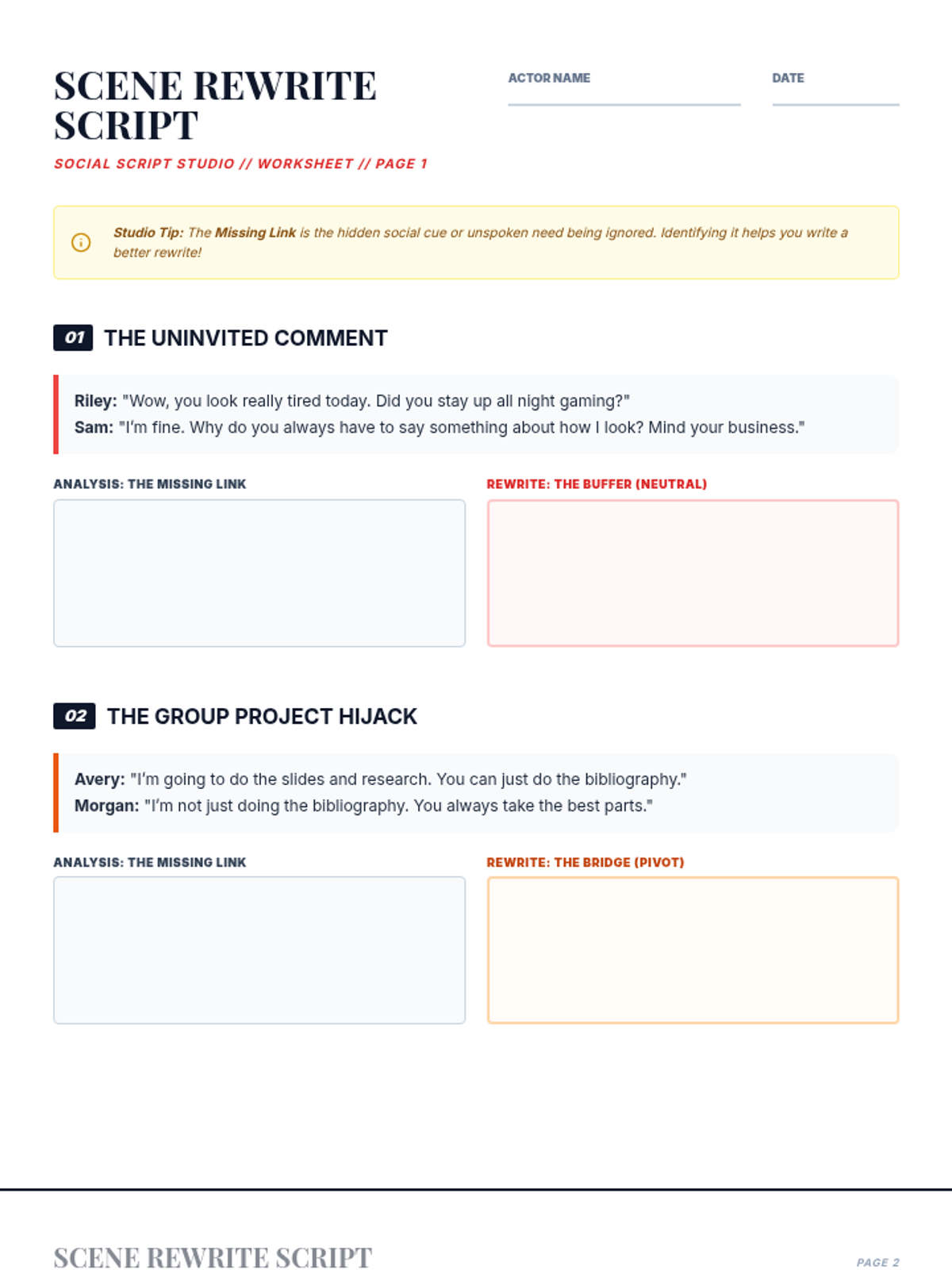
A social skills lesson for middle and high school students focused on analyzing social interactions, identifying communication gaps, and rehearsing alternative responses to peer conflict.
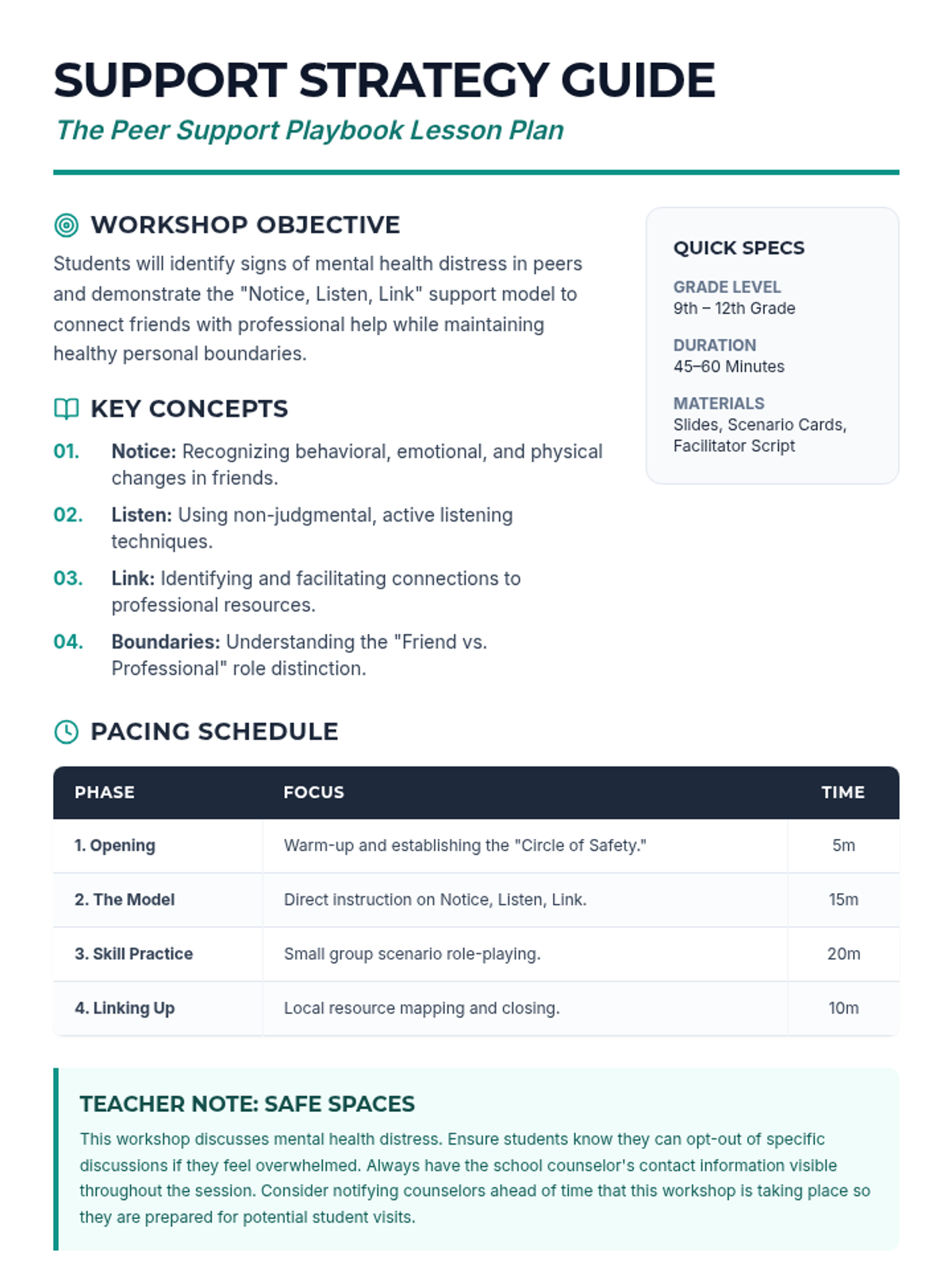
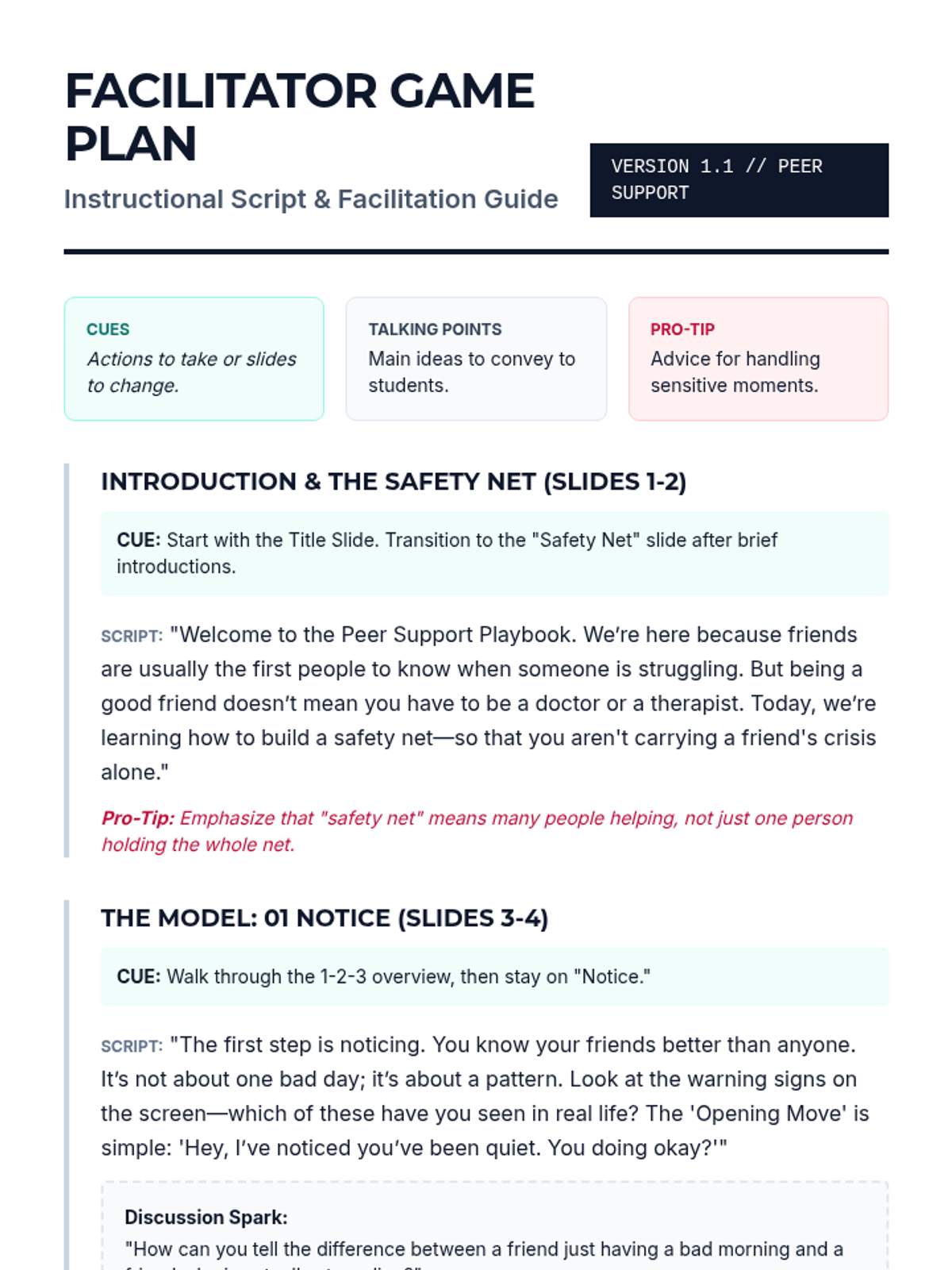
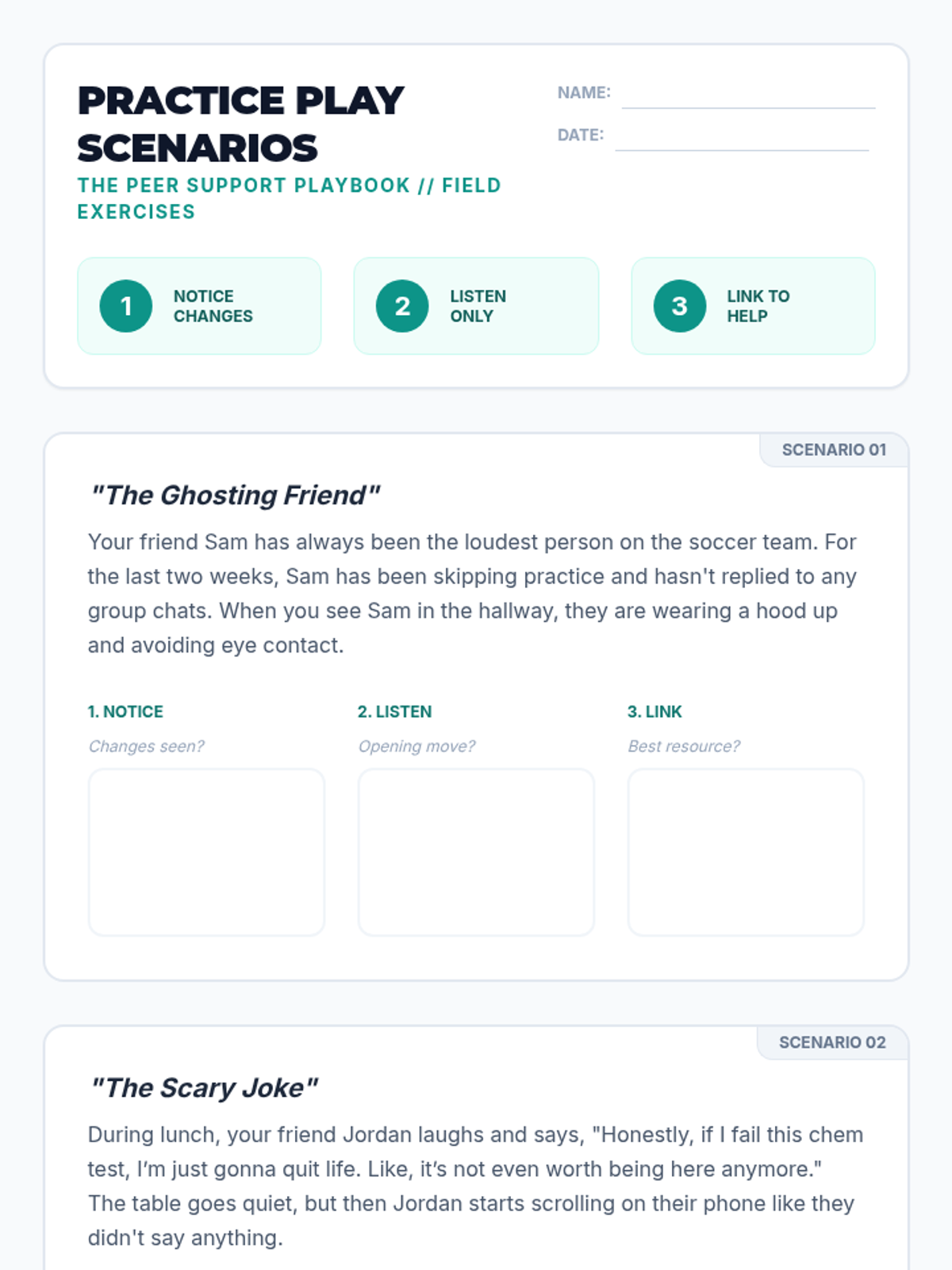
A mental health literacy workshop for high schoolers that teaches the 'Notice, Listen, Link' model for supporting peers in distress while emphasizing personal boundaries and professional referrals.
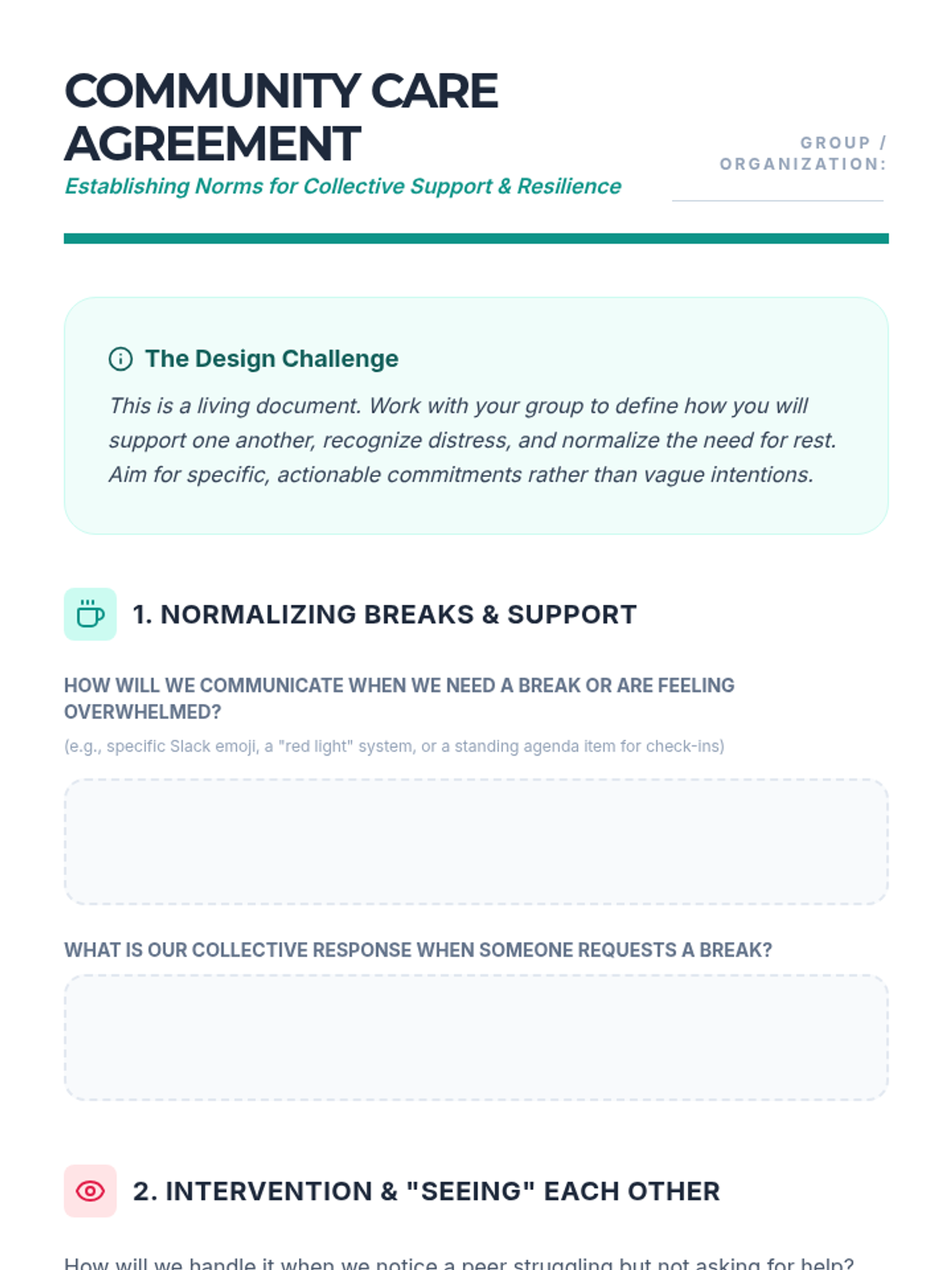
The sequence concludes with students designing a 'Community Care Agreement' to establish norms for mutual support and collective rest in their own communities.
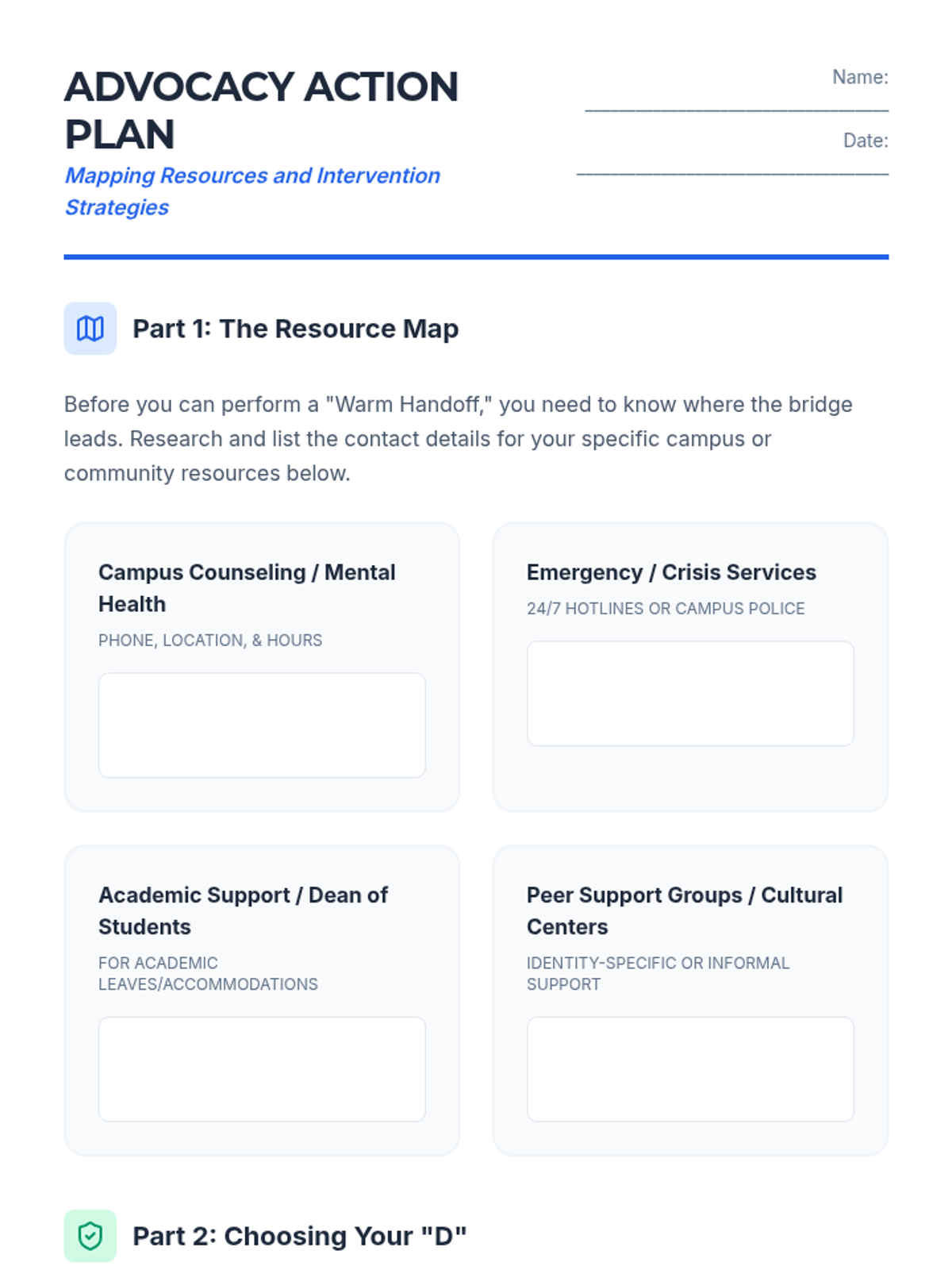
This lesson teaches specific bystander intervention strategies to bridge the gap between noticing distress and connecting a peer to resources.
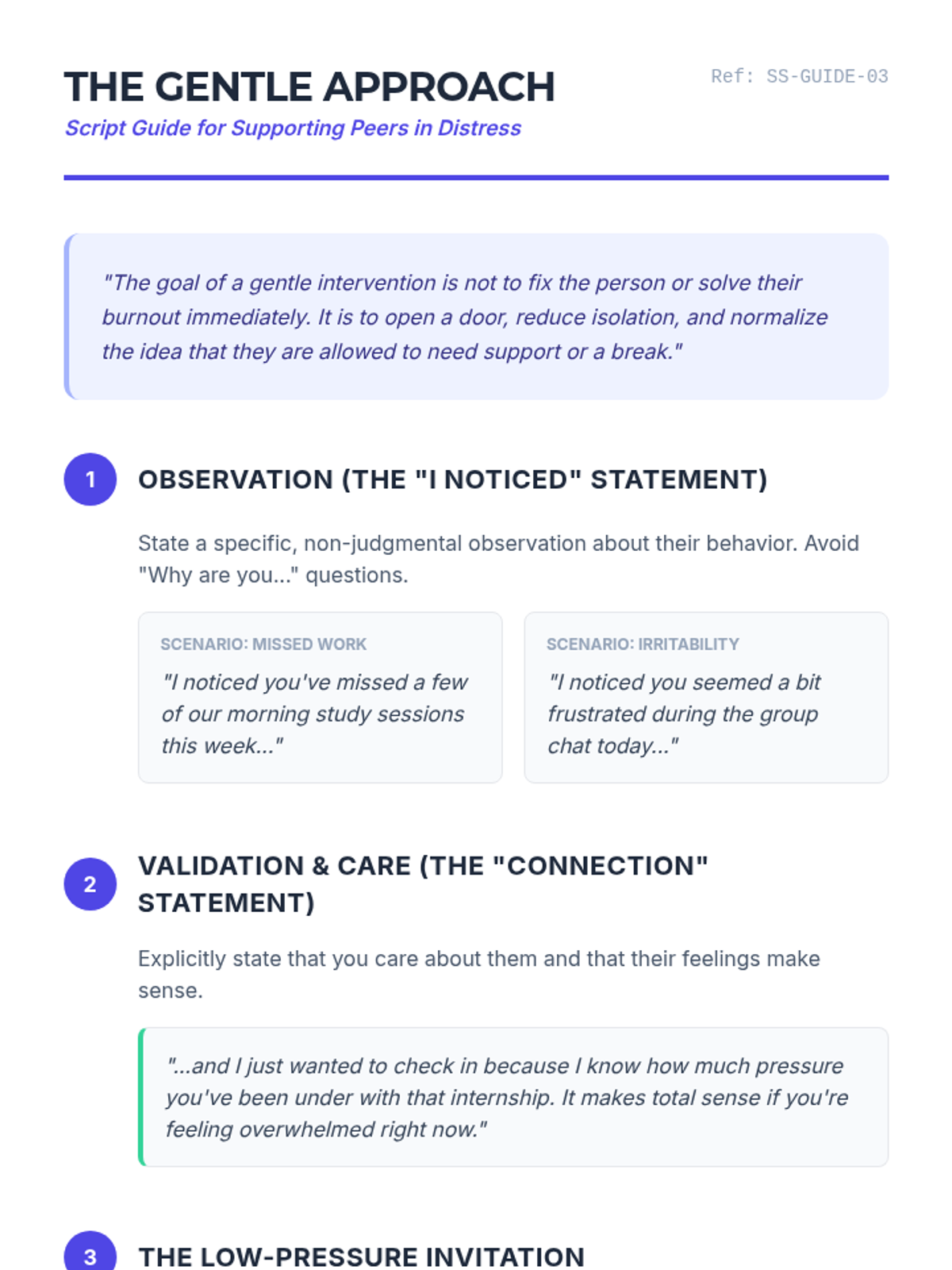
Students learn to identify subtle behavioral and non-verbal signs of distress in their peers and practice gentle intervention strategies.
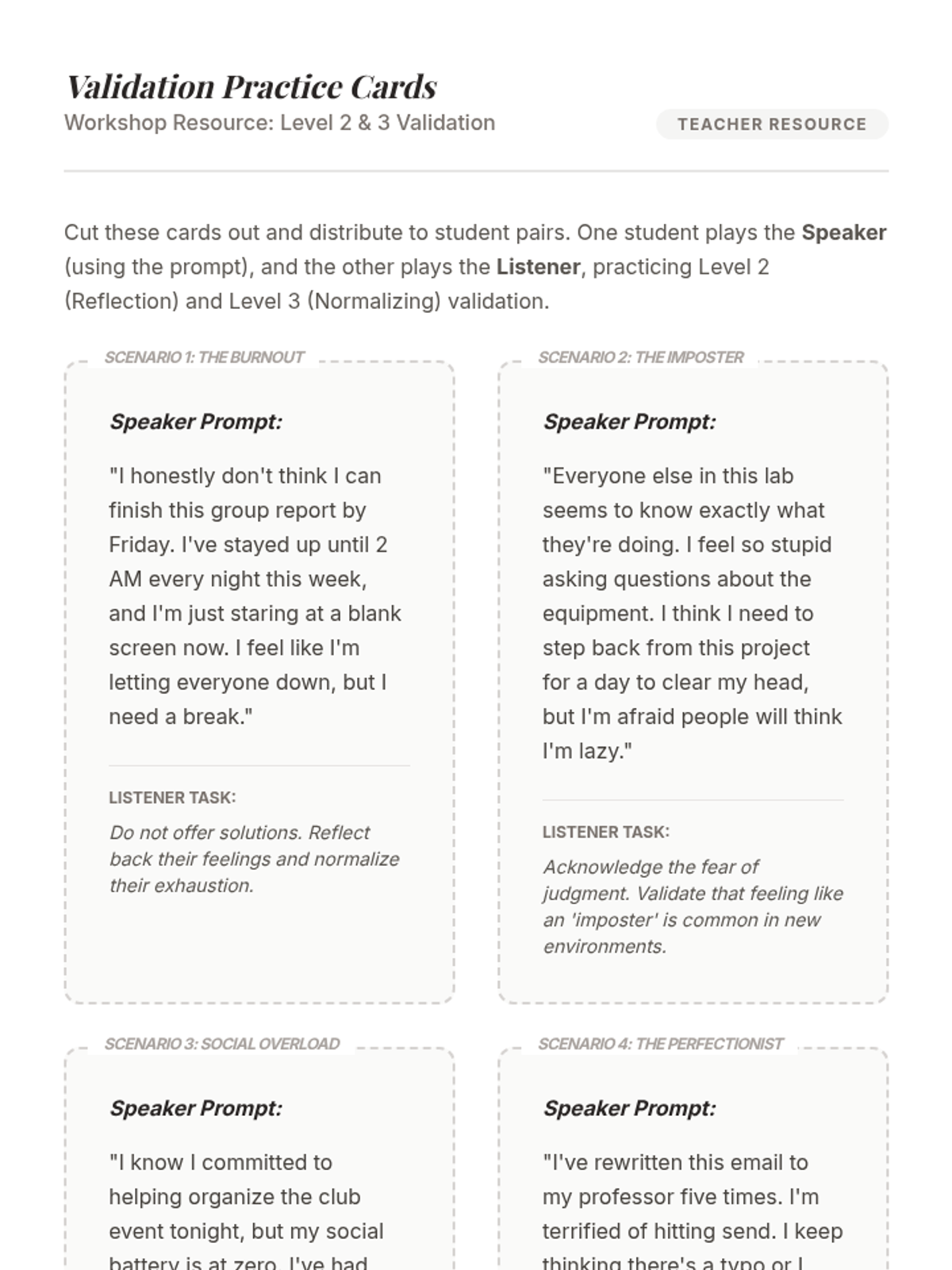
A workshop focusing on the listening skills required to support peers, emphasizing validation over immediate problem-solving.
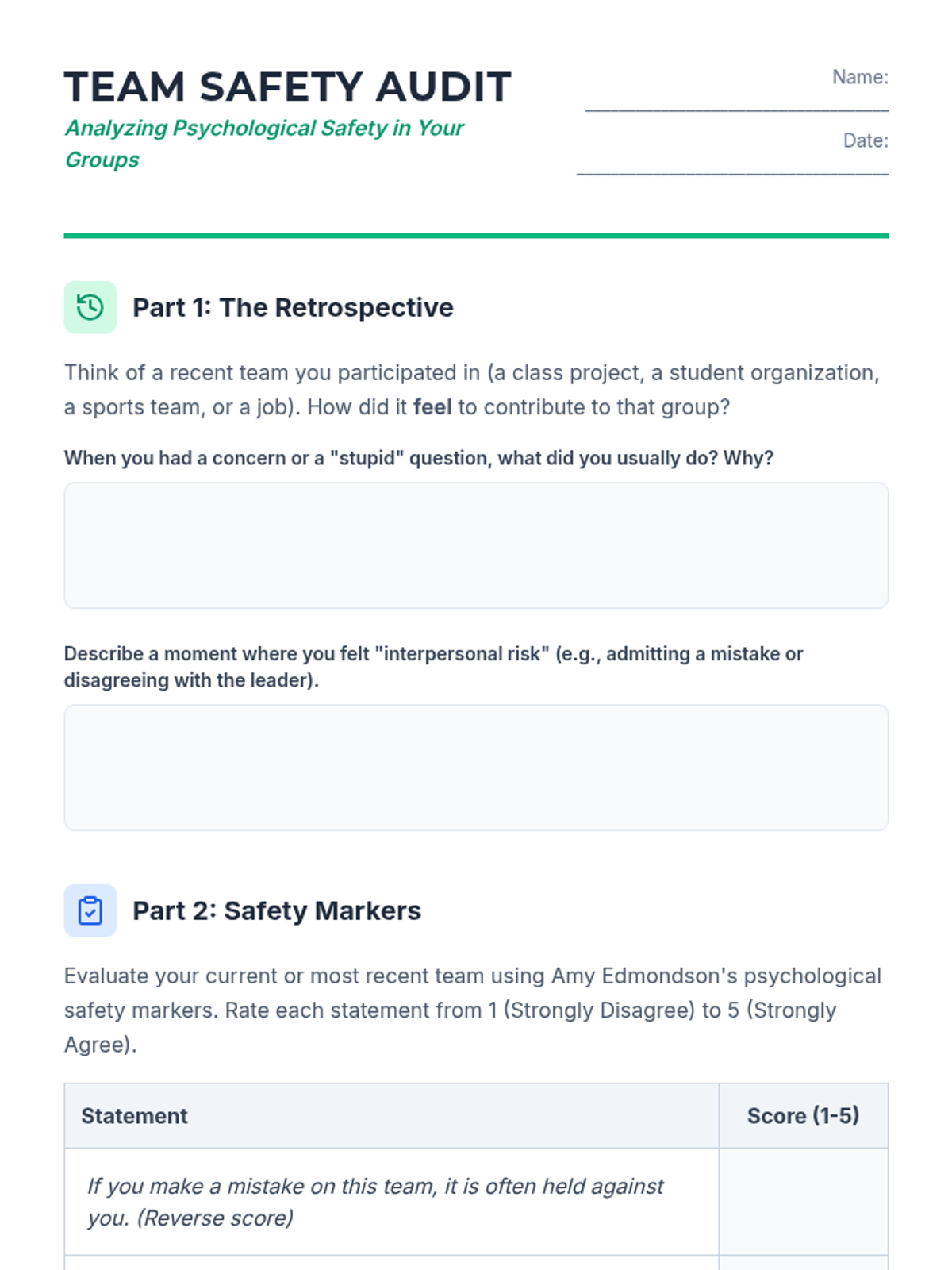
Students define psychological safety and analyze its impact on team performance, using Google's 'Project Aristotle' as a primary case study.
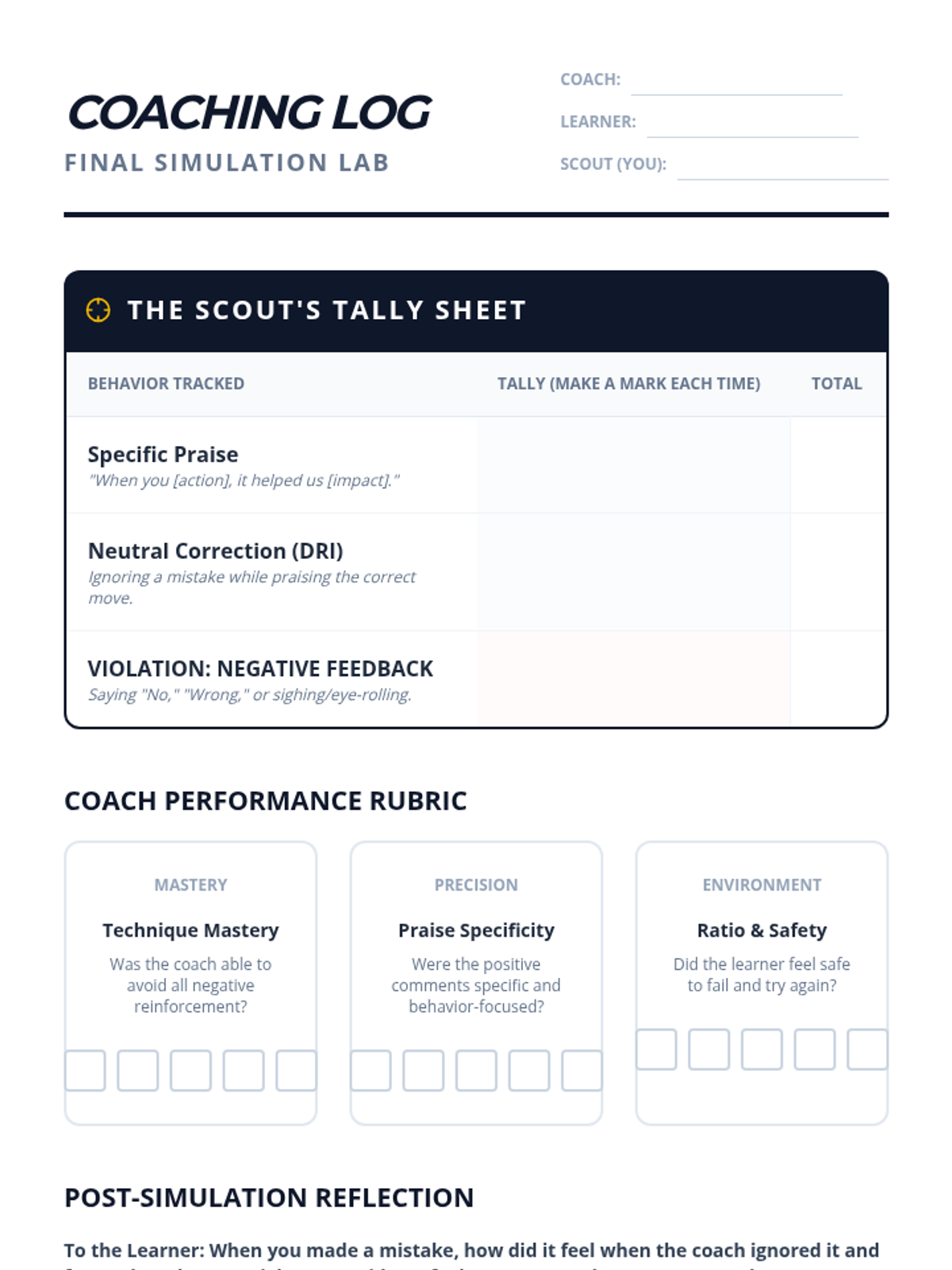
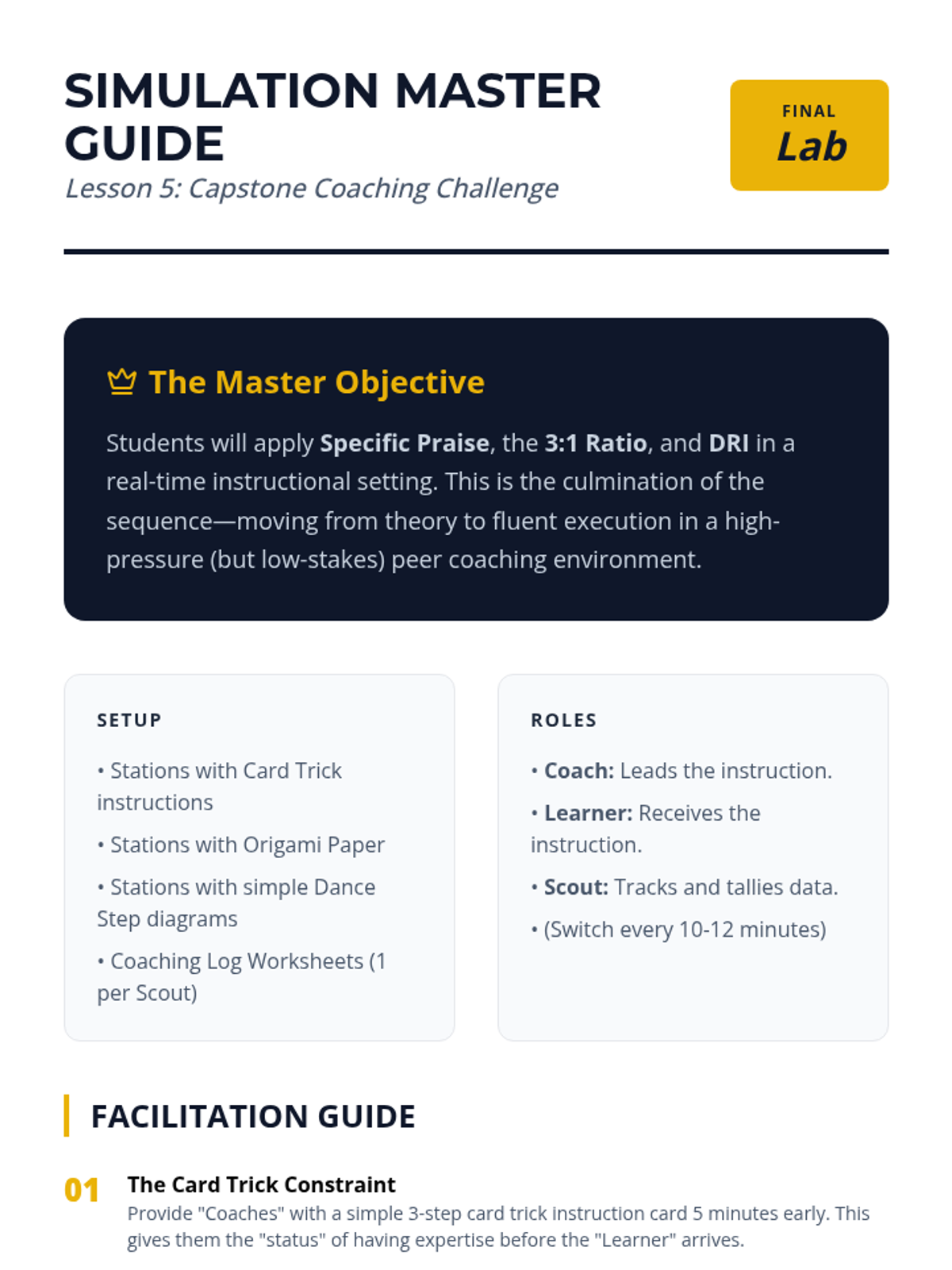
In small groups, students take turns role-playing a coach or team lead helping a peer master a new skill. They must use the reinforcement techniques learned to guide the learner to success.
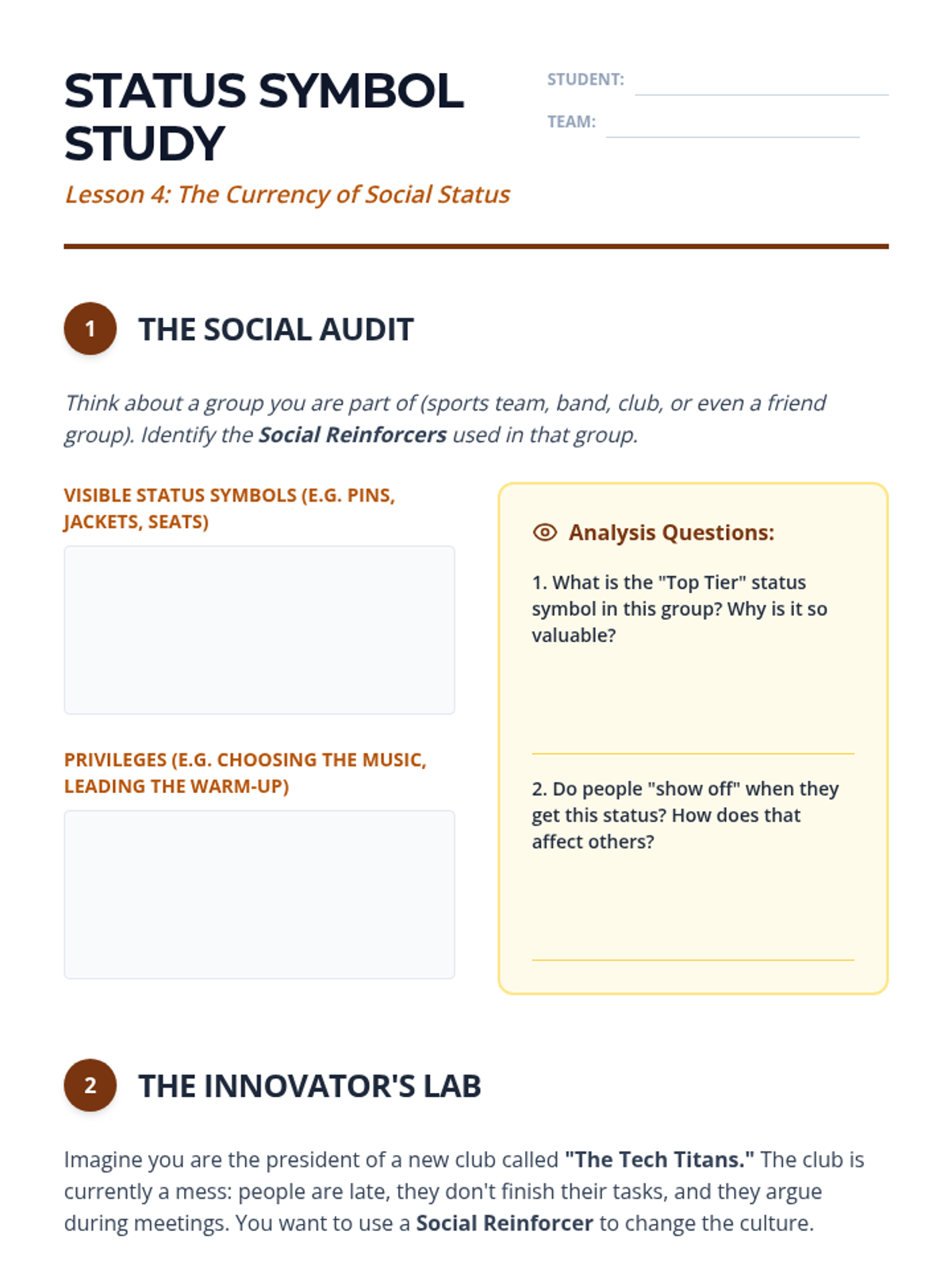
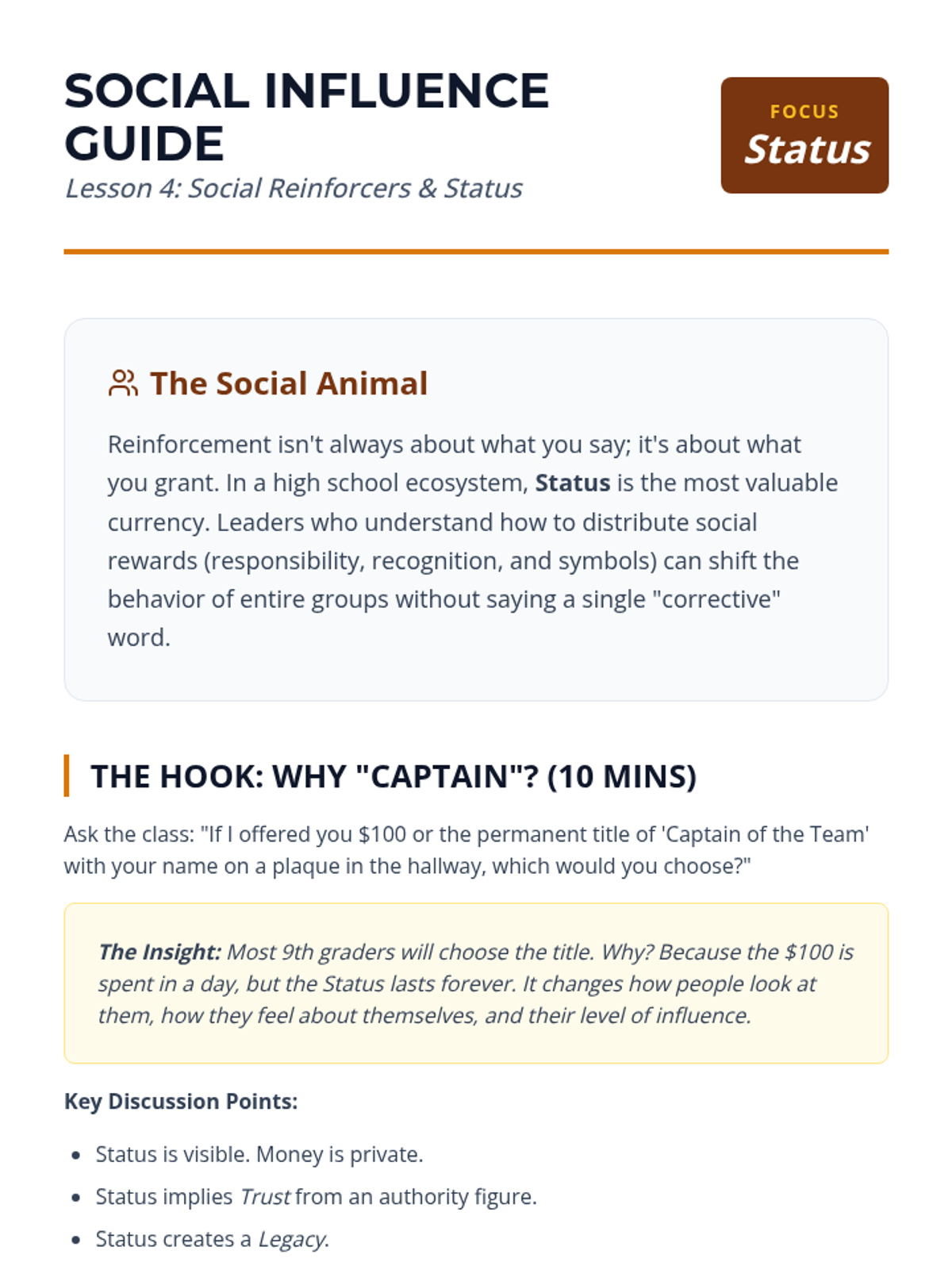
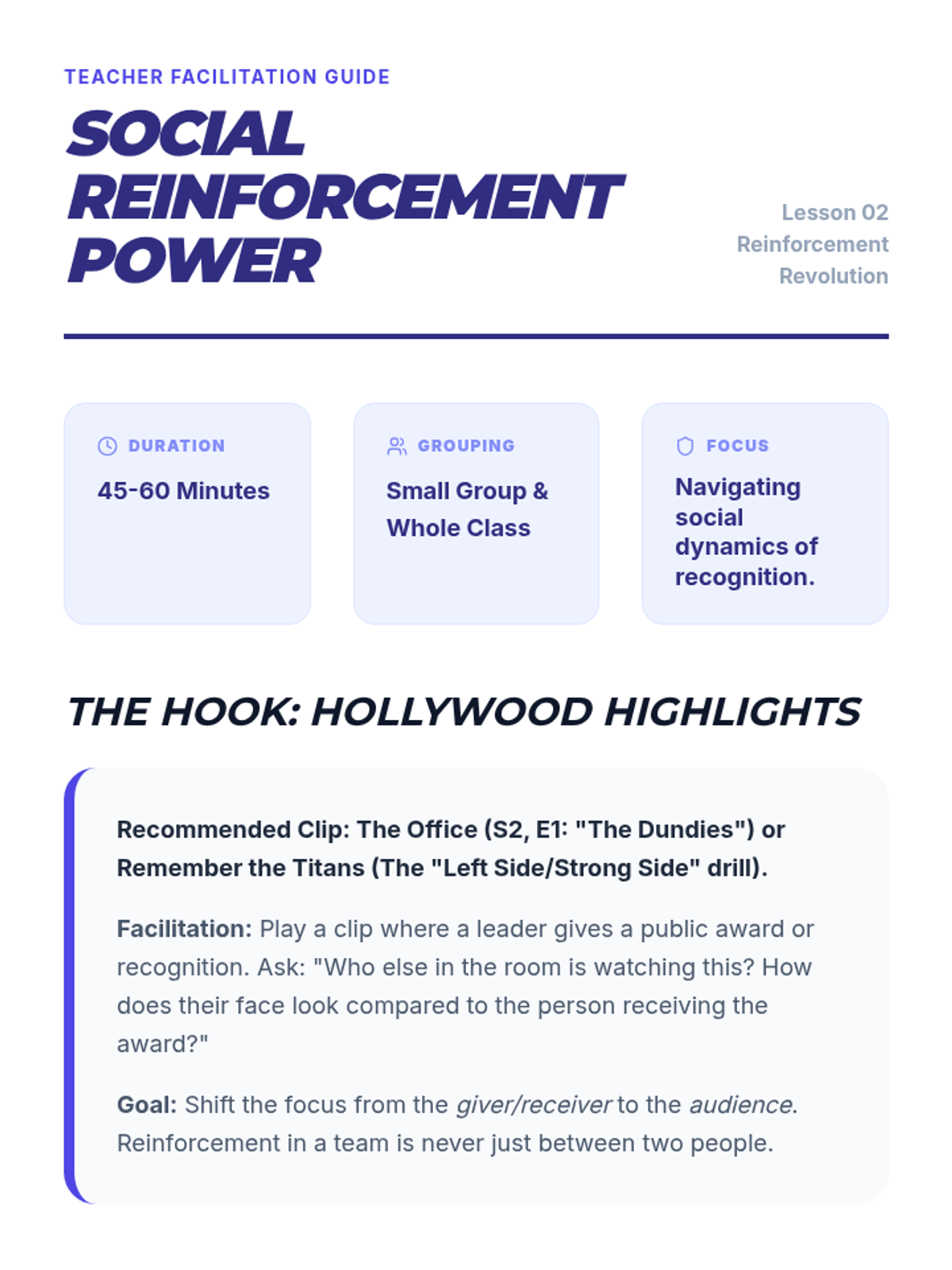
This lesson examines non-verbal and social rewards, such as public recognition or increased responsibility. Students discuss how social status acts as a powerful reinforcer in high school settings.
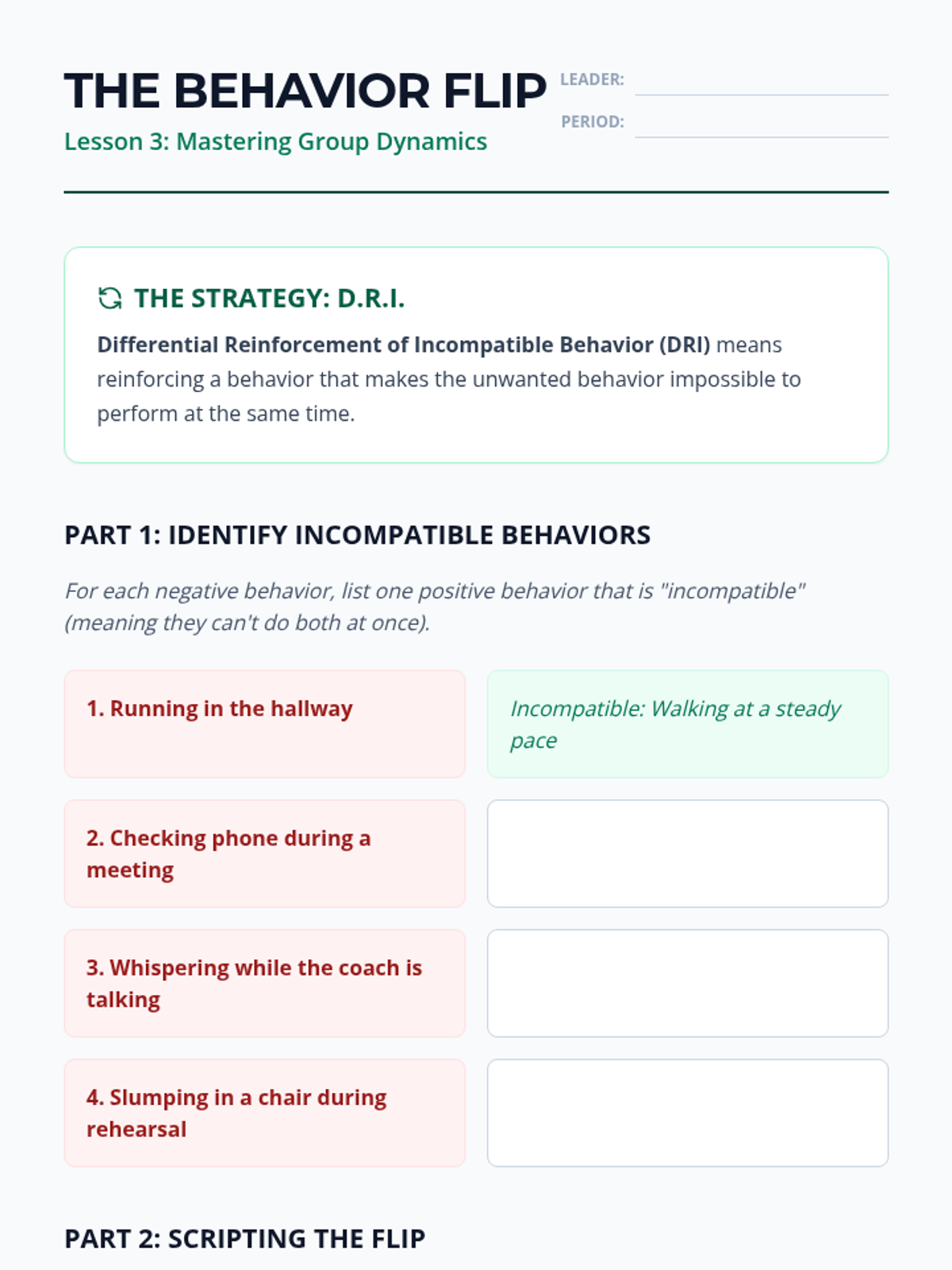
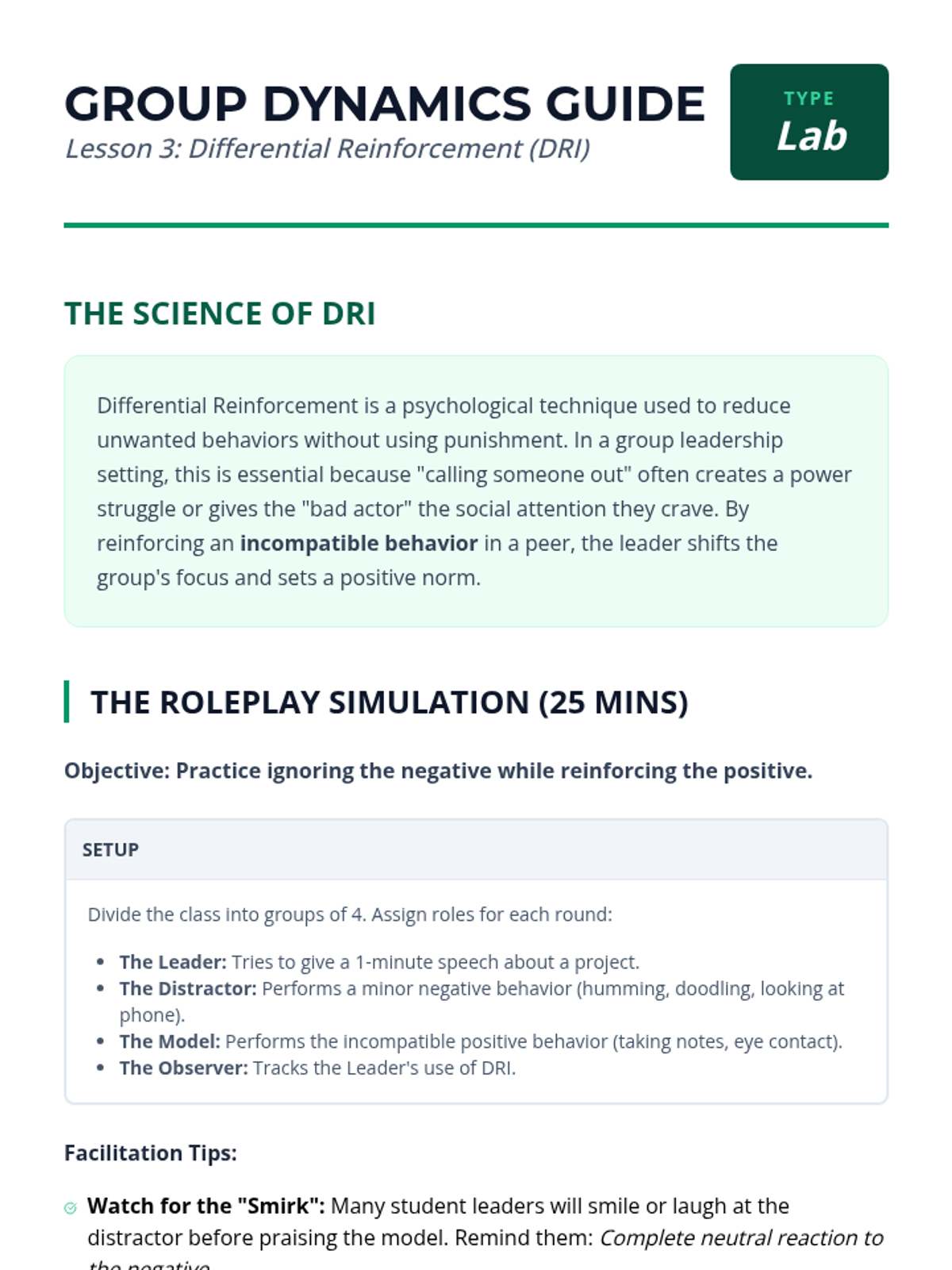
Students learn how to reduce unwanted behavior in a group by reinforcing incompatible, positive behaviors (ignoring the interruption while praising the hand-raising).
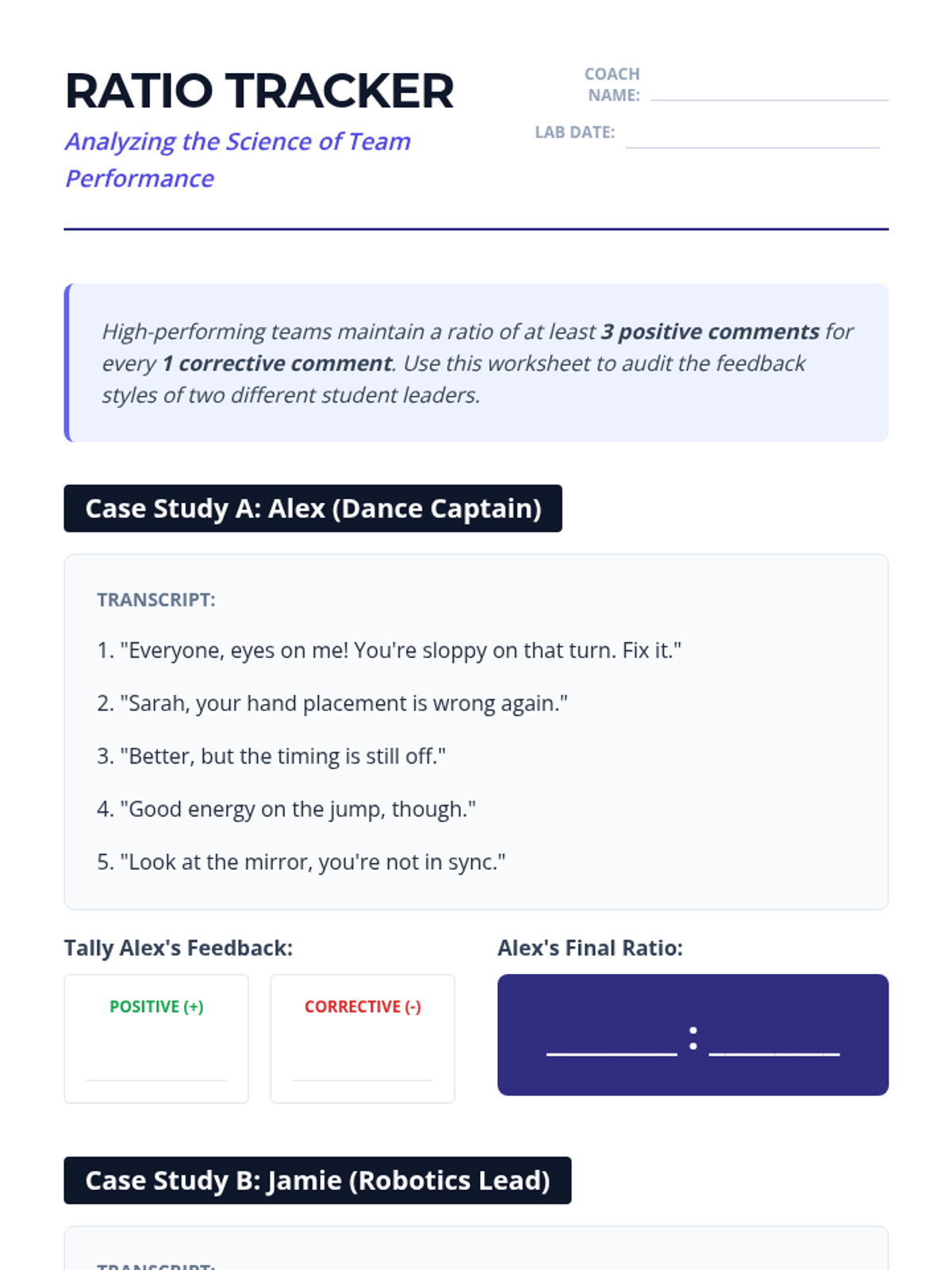
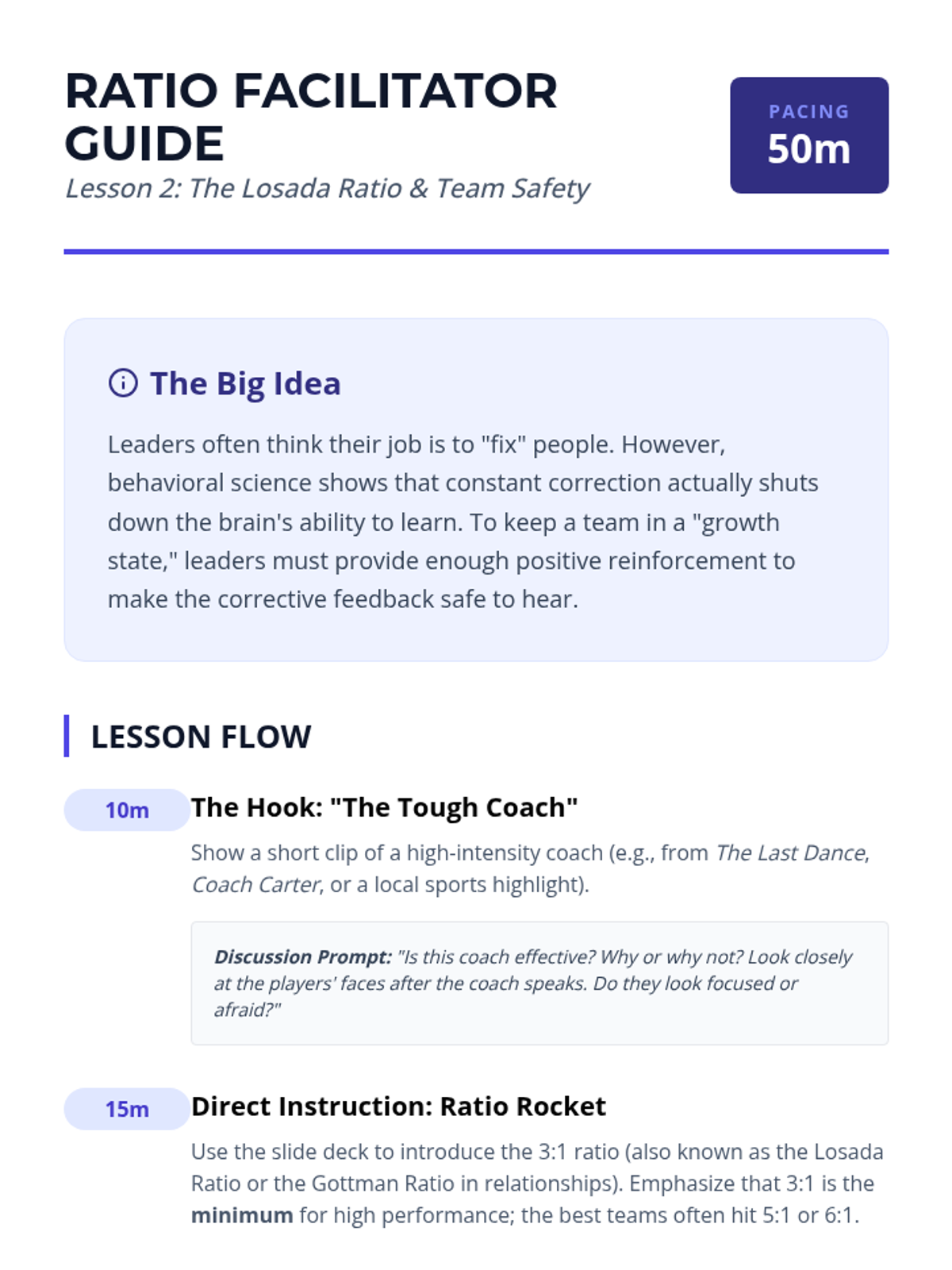
Students explore the concept of the 'Losada Ratio' and analyze how a high ratio of positive to negative feedback influences team performance and psychological safety.
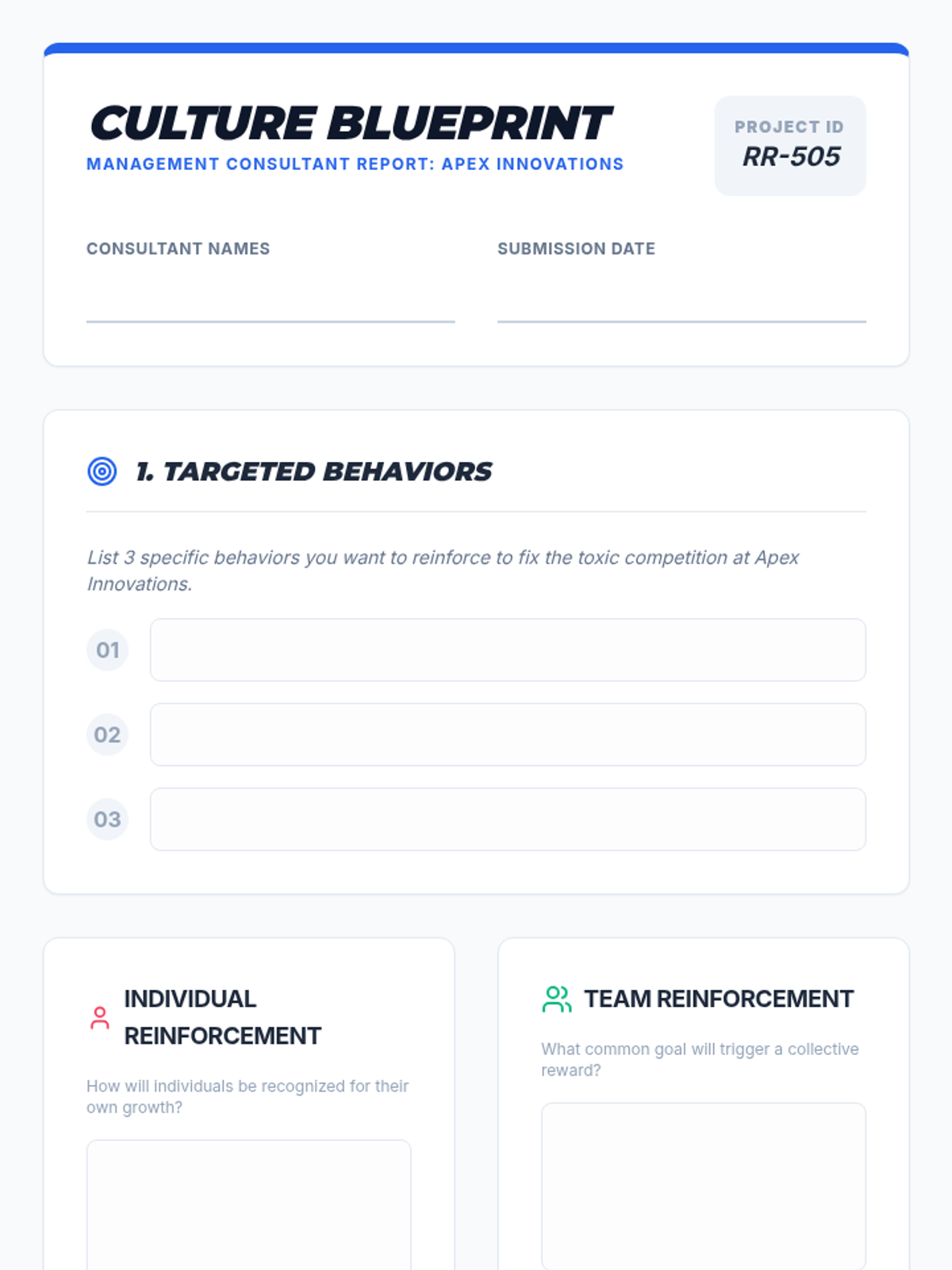
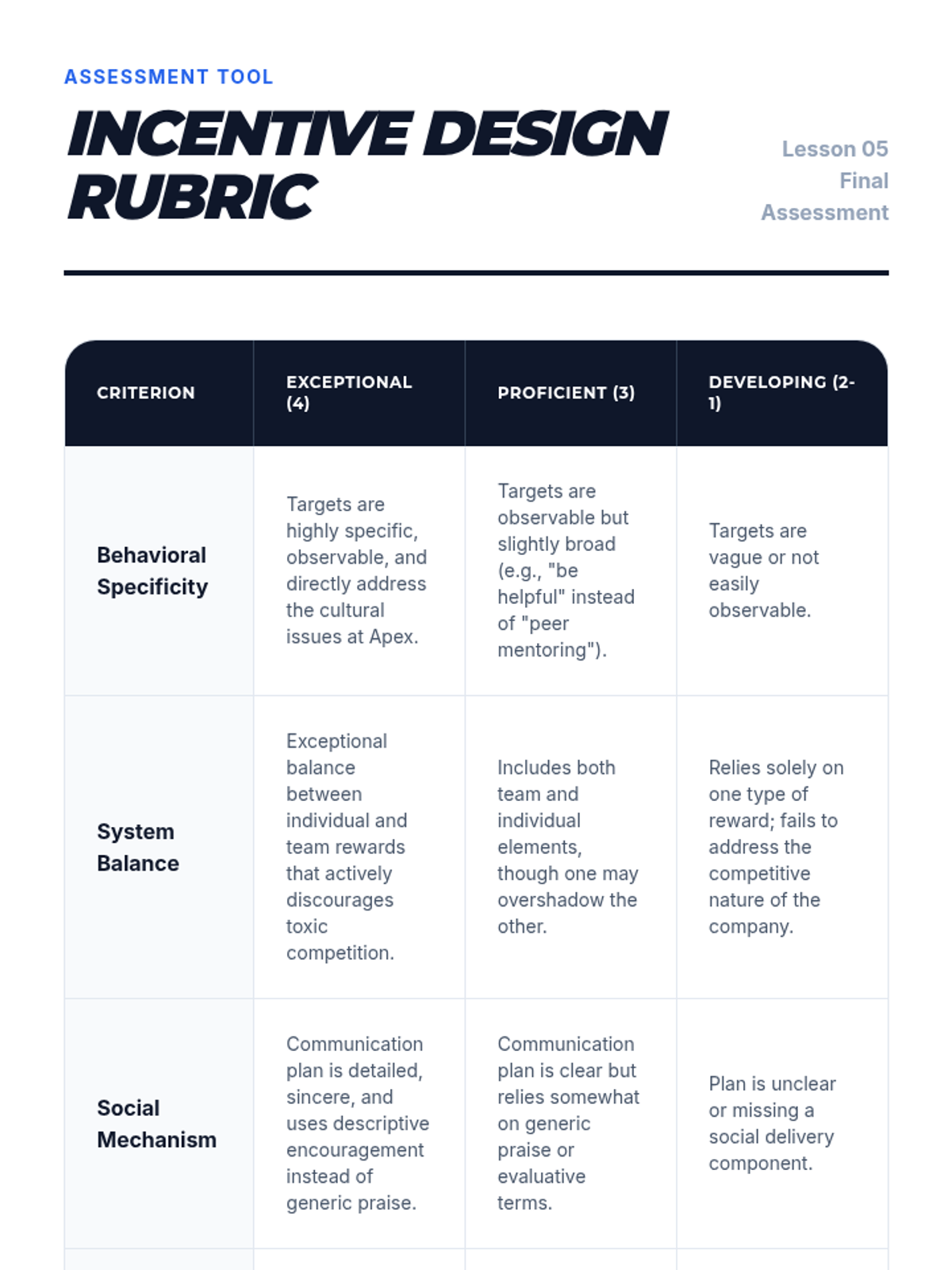
In this culminating activity, students act as management consultants designing a reinforcement system for a struggling organization, balancing individual rewards with team goals.
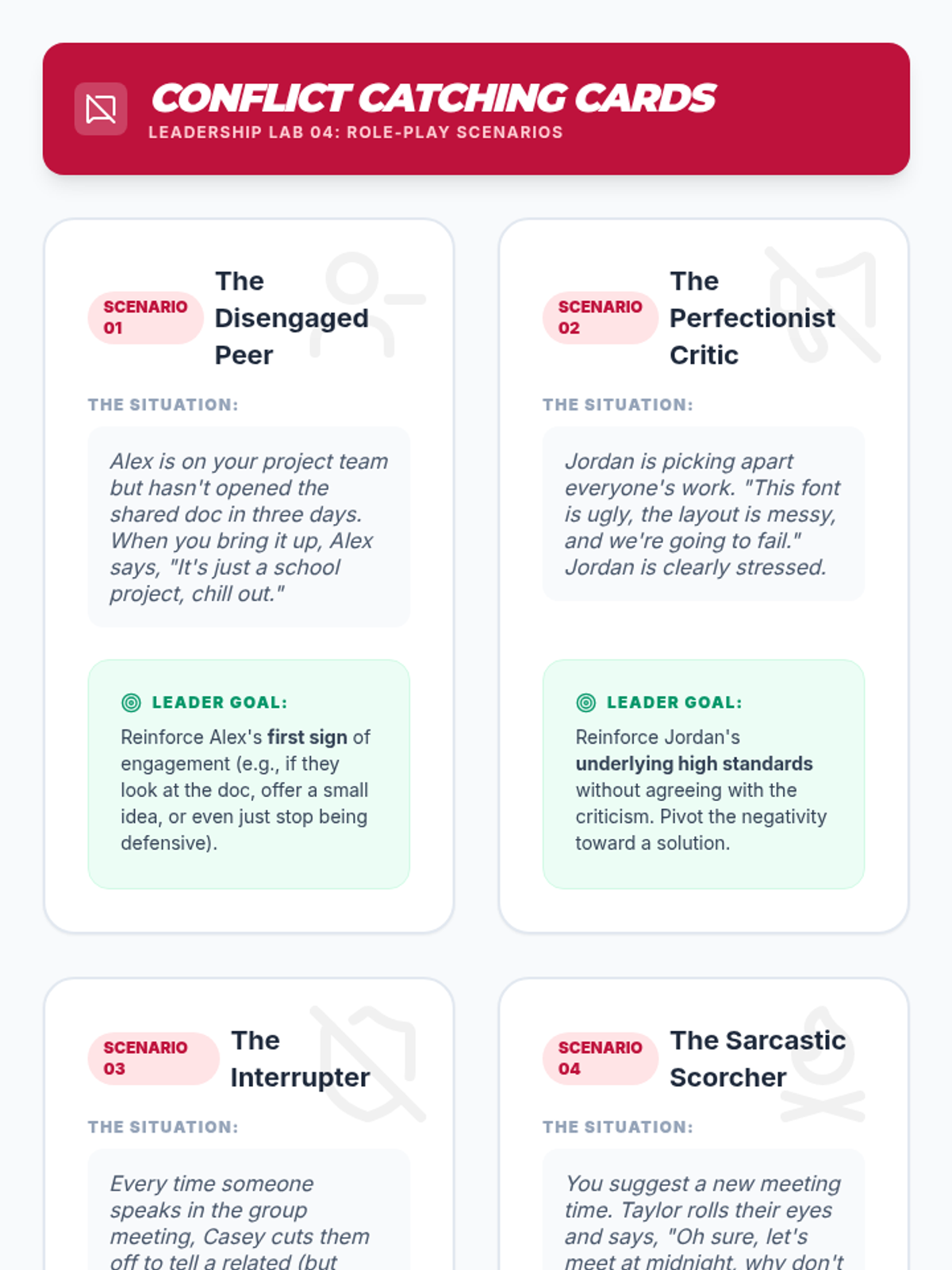
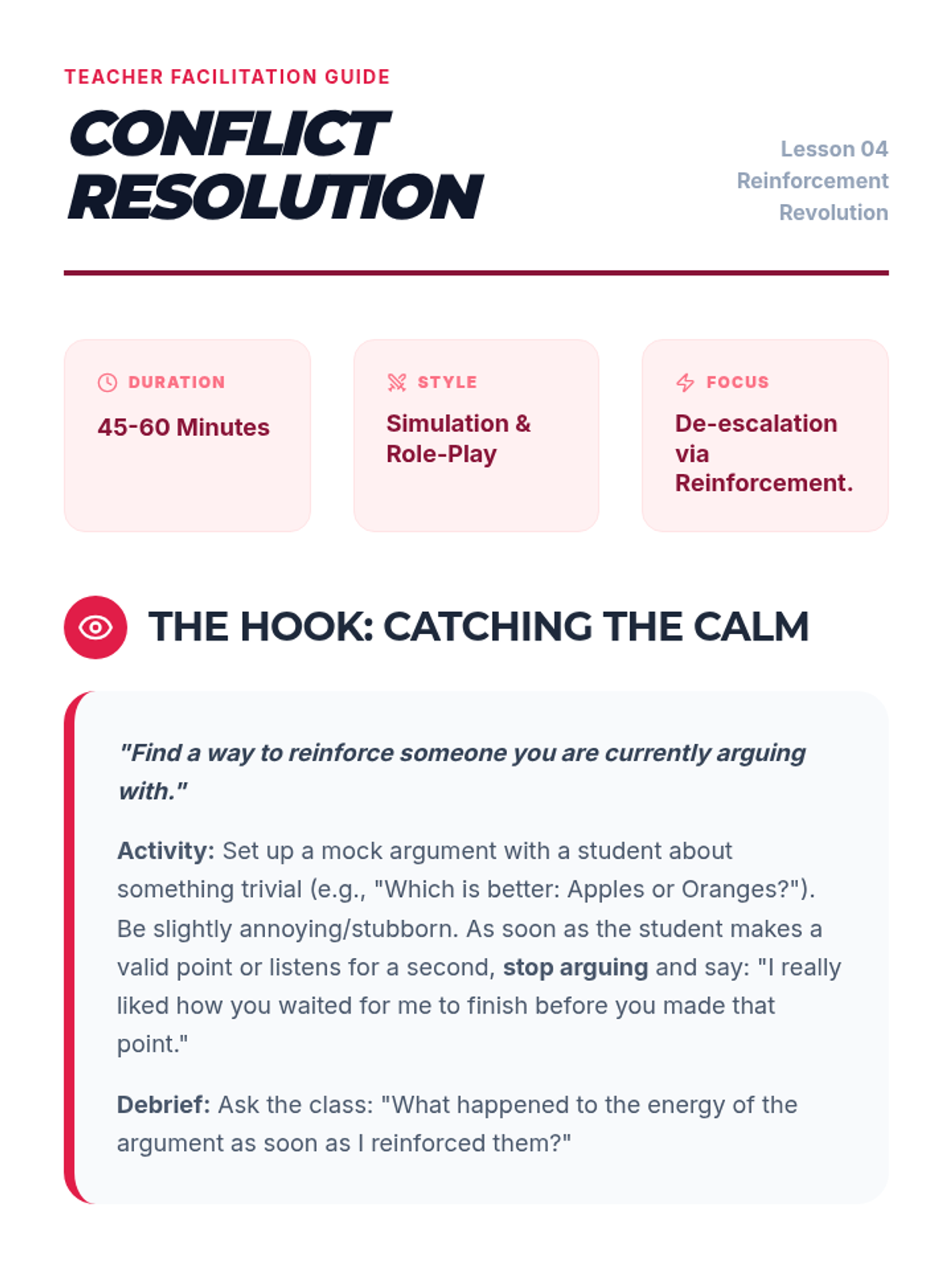
Students investigate how to use positive reinforcement to de-escalate conflict and reinforce cooperative behavior in stressful leadership situations.
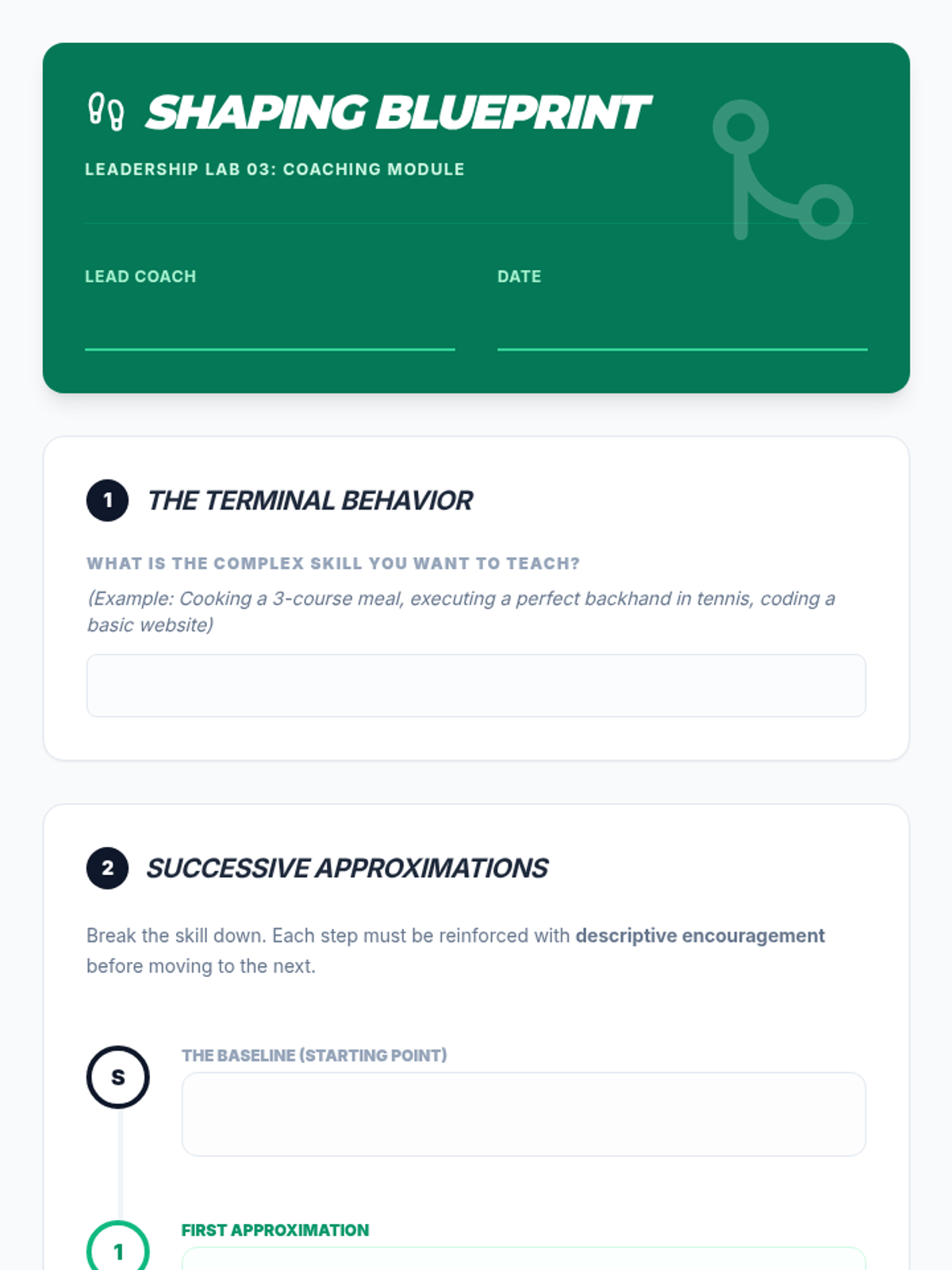
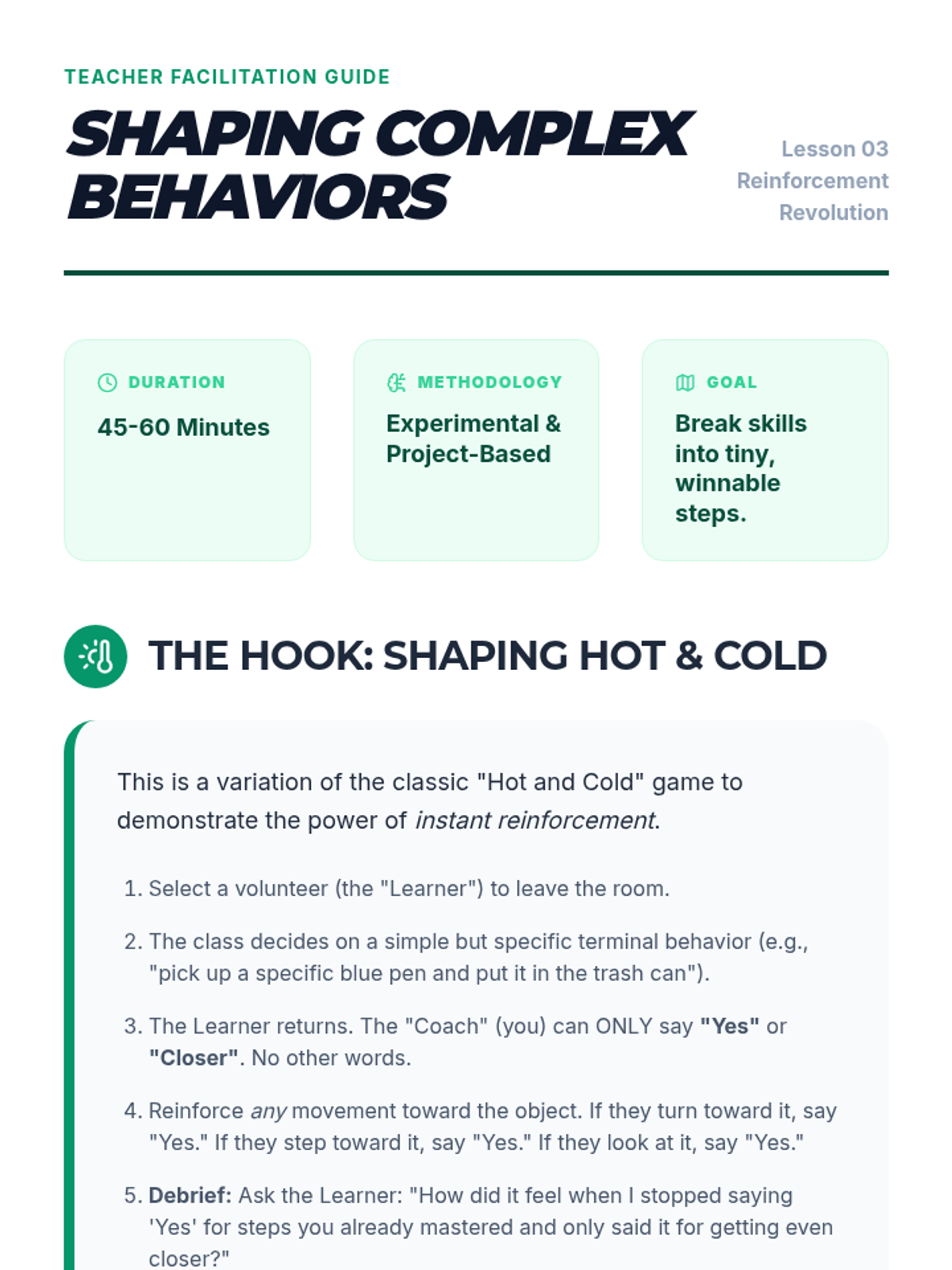
Students learn the technique of 'shaping'—reinforcing successive approximations of a desired complex behavior. They plan how they would teach a peer a new skill by rewarding small steps rather than waiting for perfection.
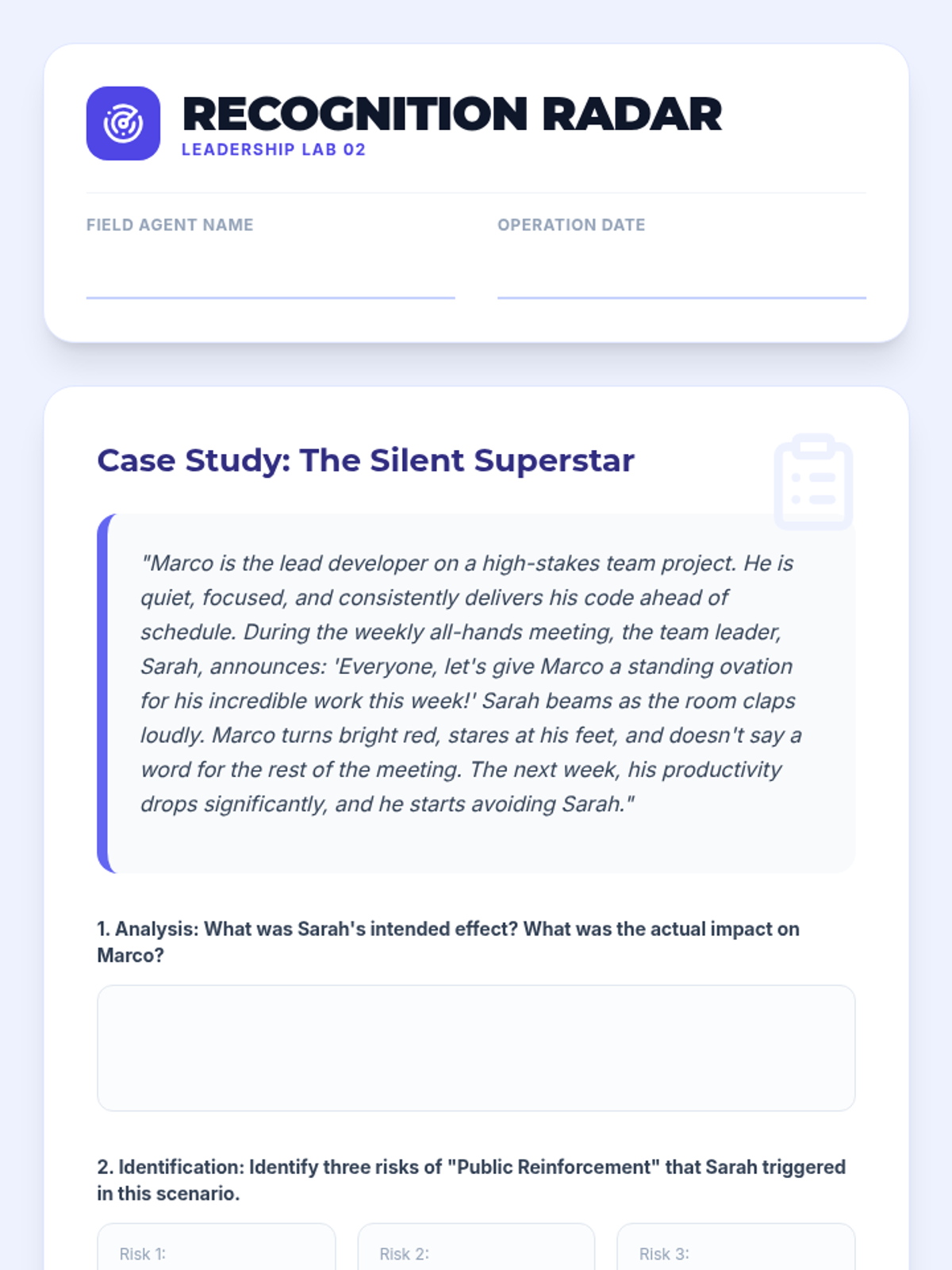
This lesson looks at social recognition as a powerful motivator in teams and groups. Students analyze case studies of workplace or sports team cultures and explore how public vs. private recognition affects individuals differently.
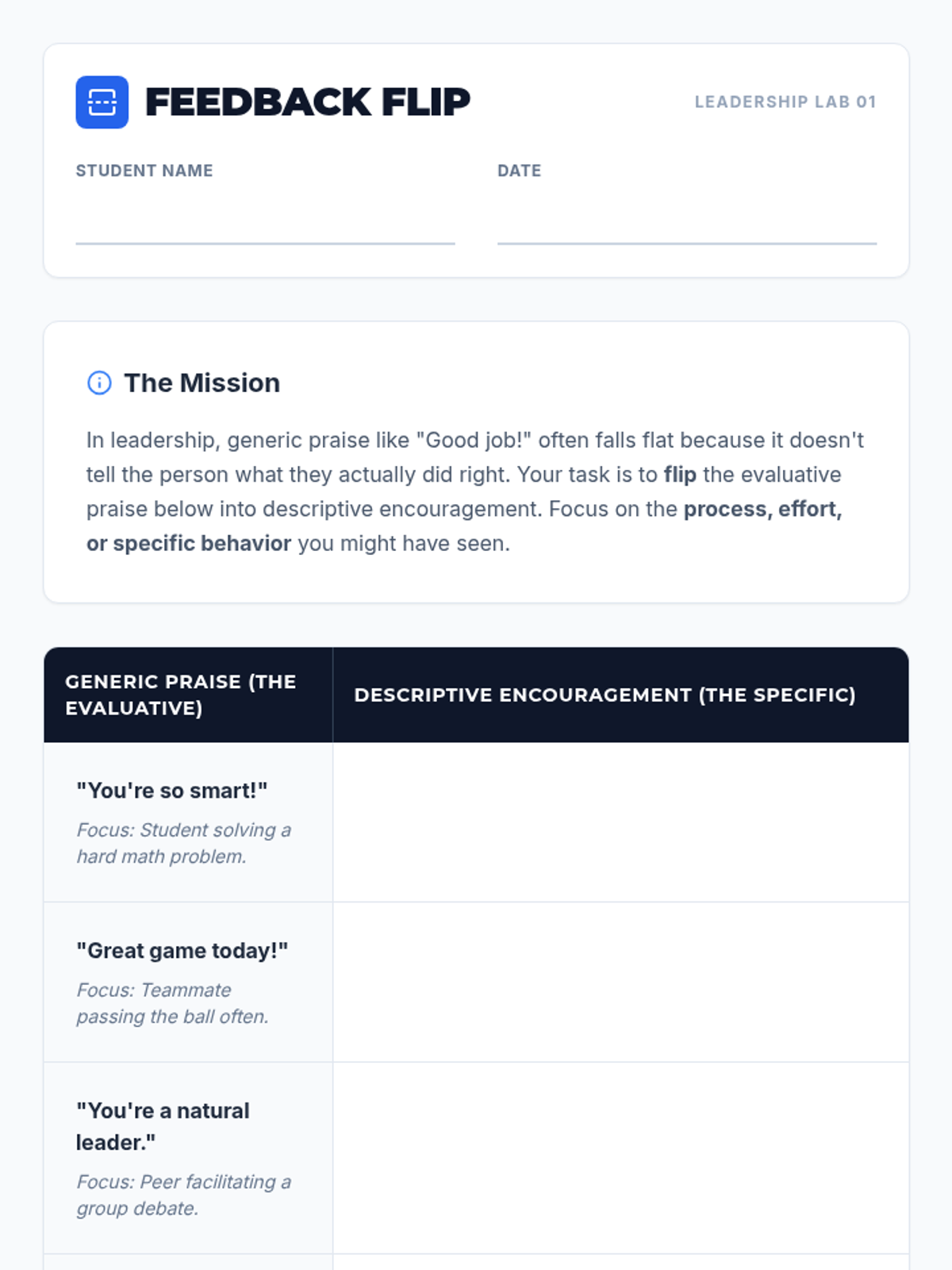
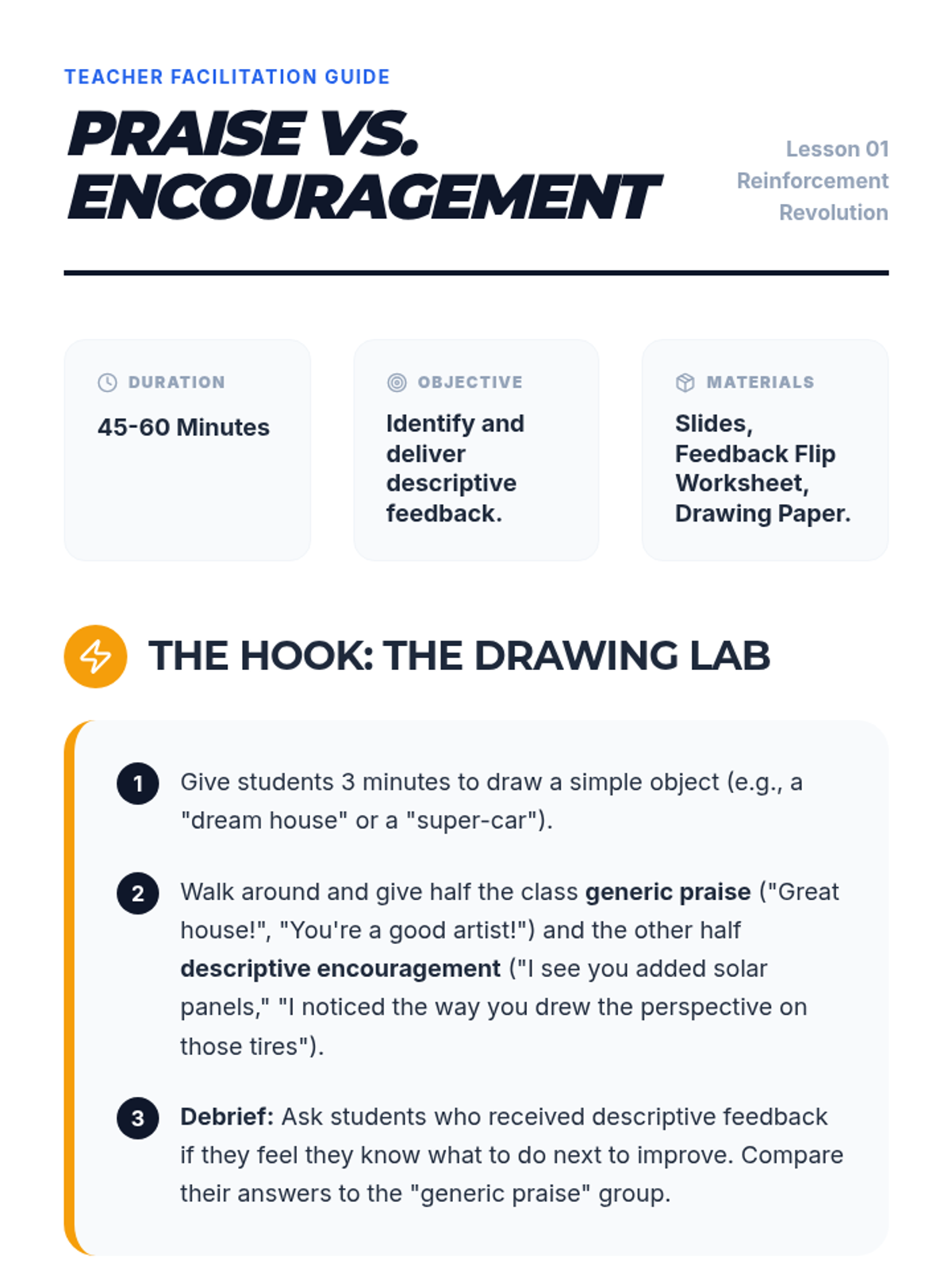
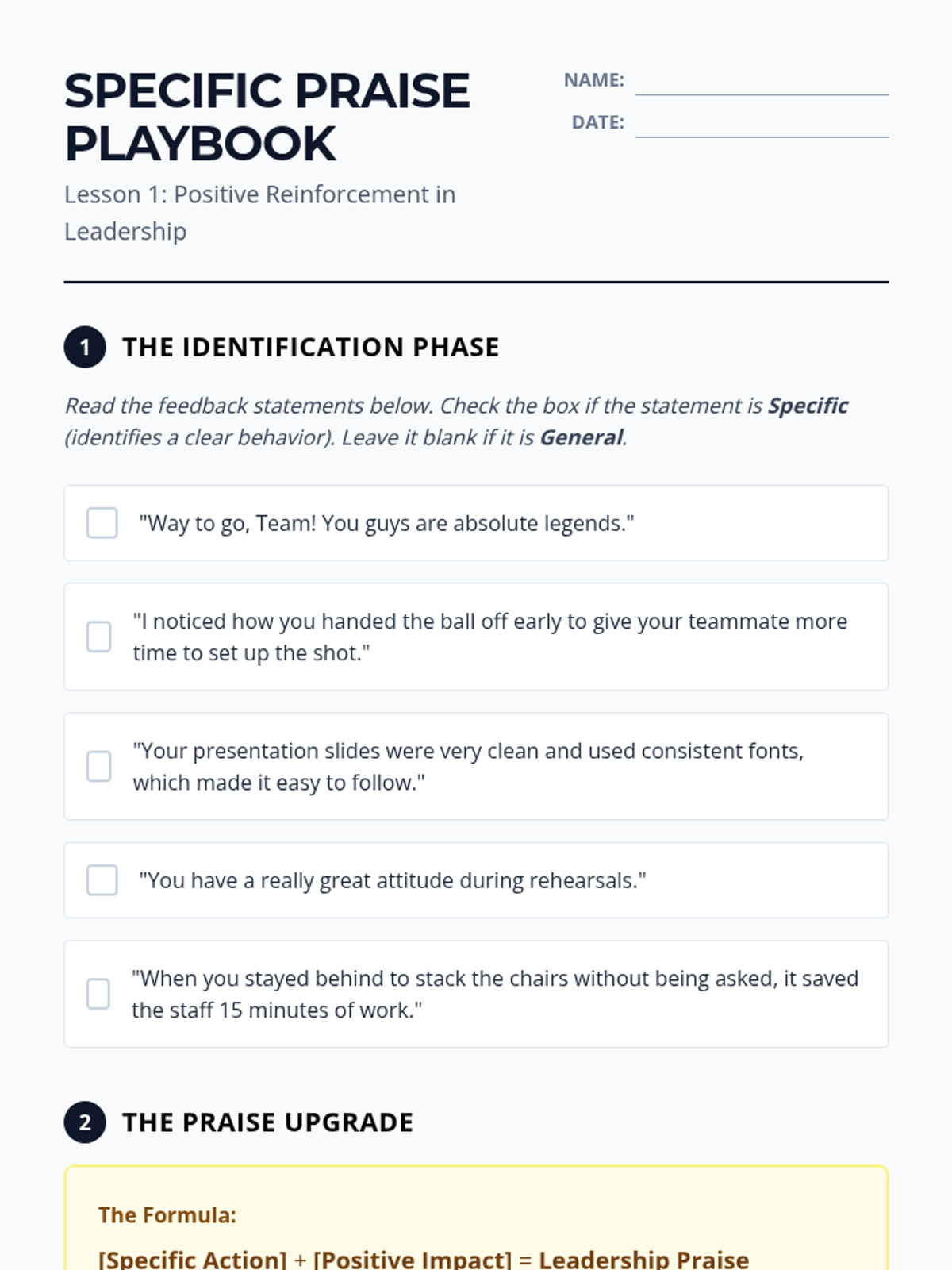
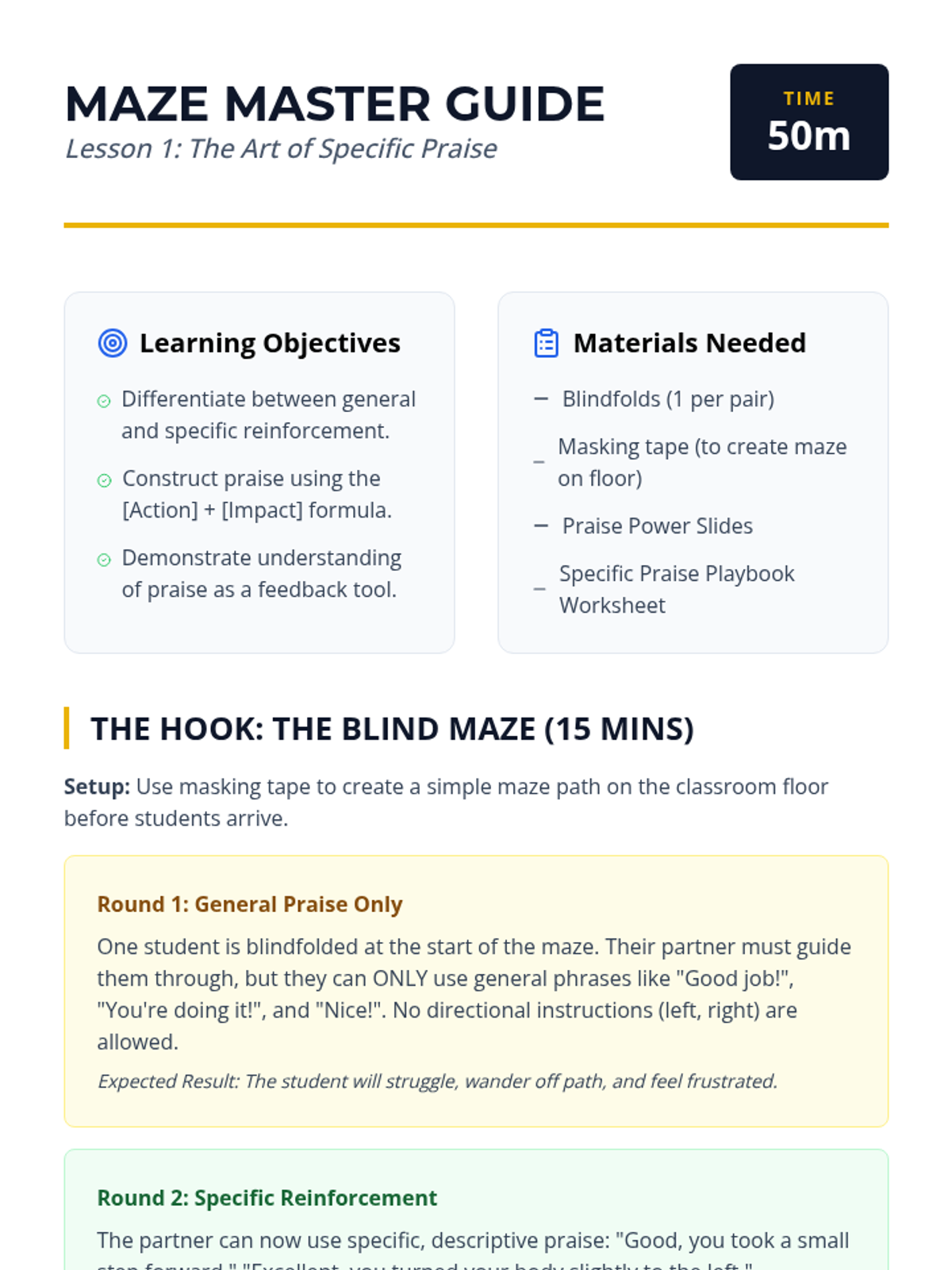
Students distinguish between evaluative praise ('Good job') and descriptive encouragement ('I noticed you organized the files by date'). They practice converting generic compliments into specific, behavior-focused reinforcement that provides actionable feedback.
Students learn to move beyond generic 'good job' feedback to specific, behavior-focused praise that reinforces exact actions.
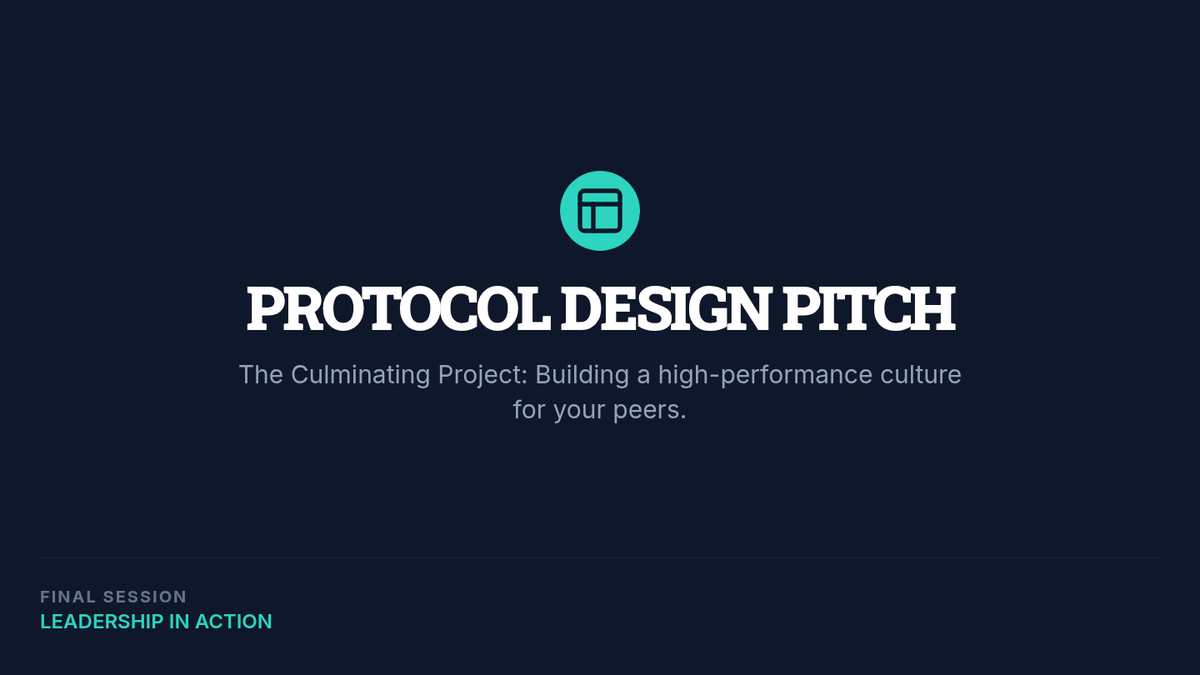
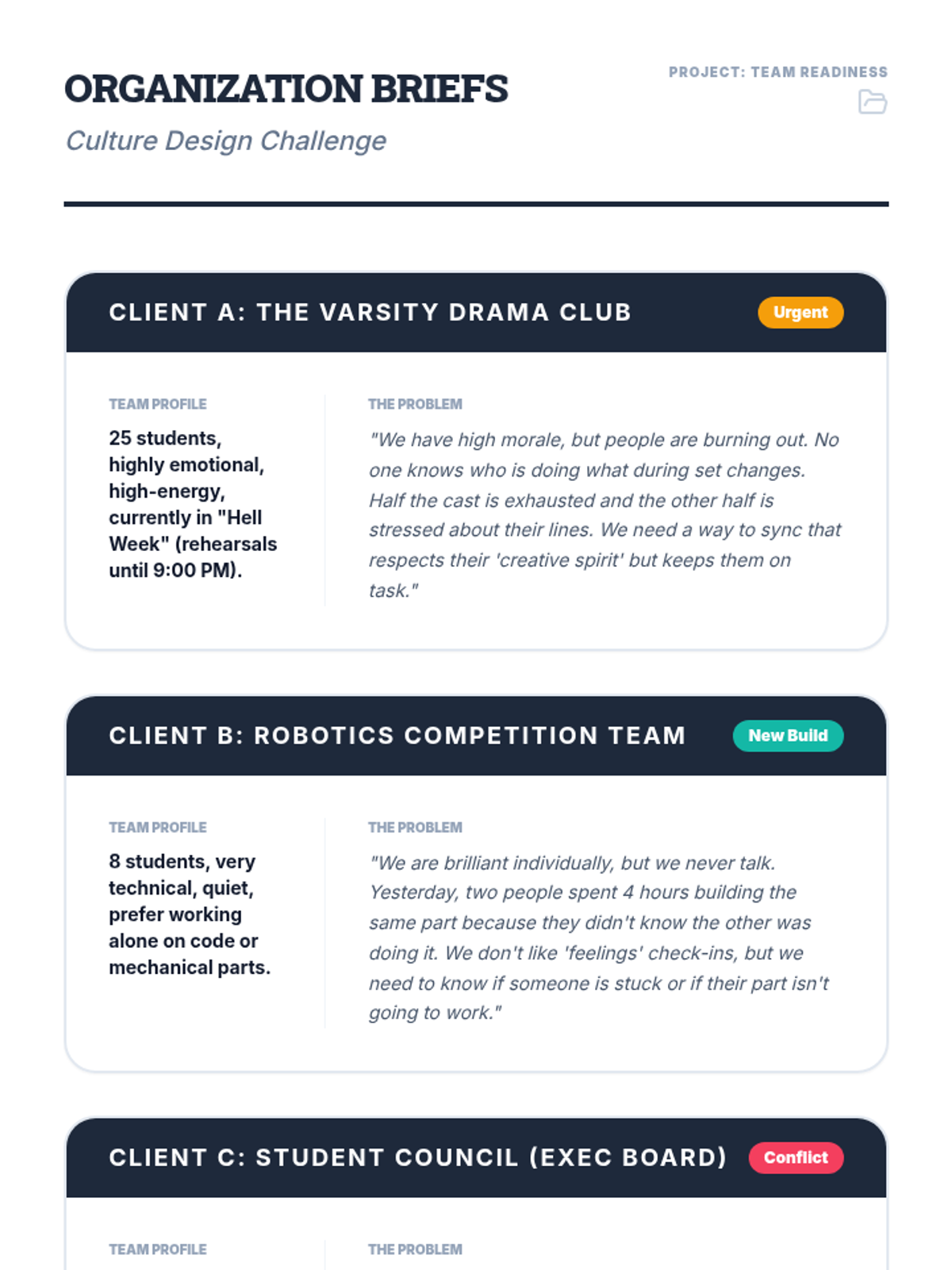
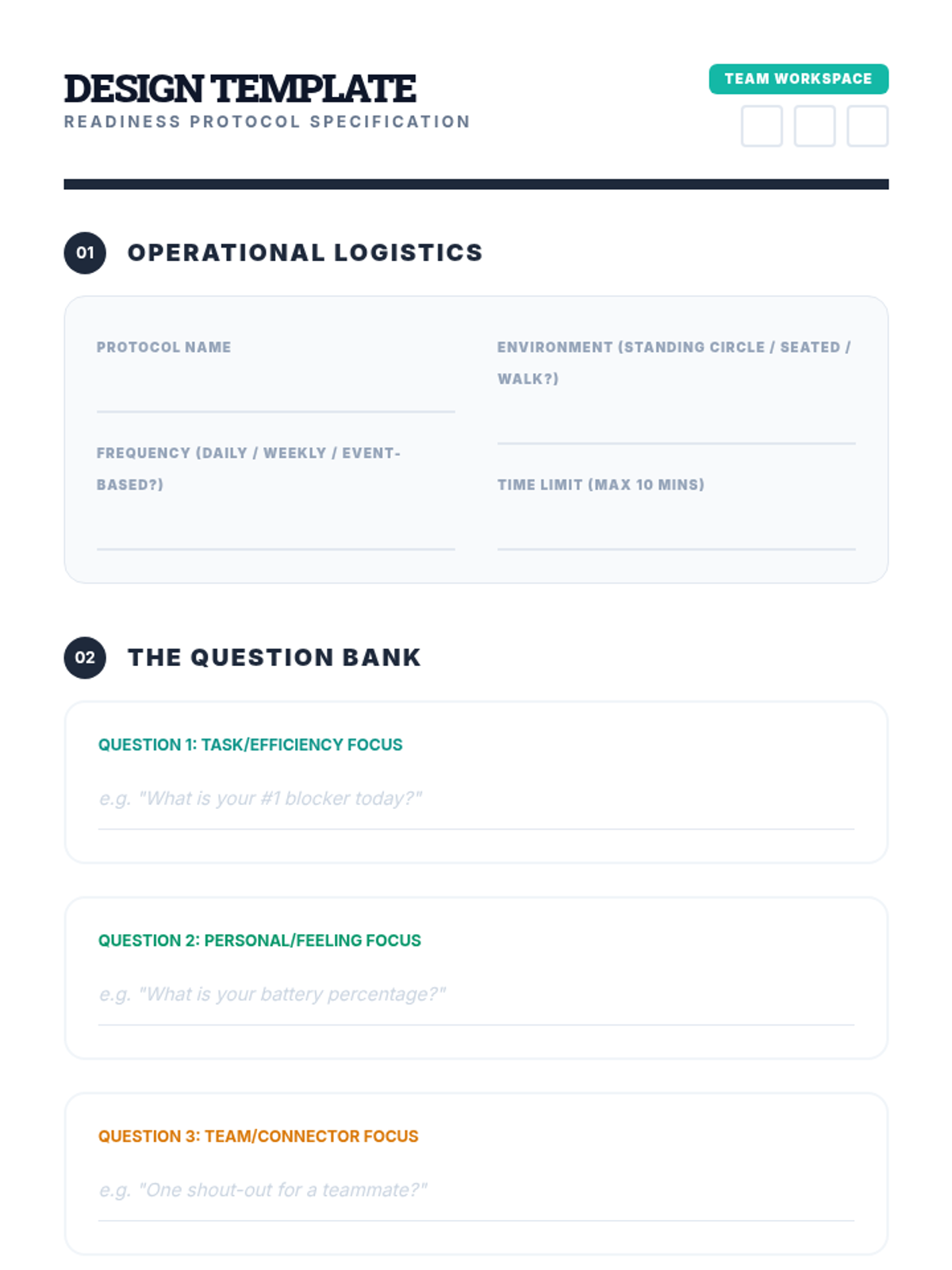
In this culminating project, students work in small groups to design a comprehensive check-in system for a specific student organization (e.g., Student Council, Football Team, Drama Club). They pitch their protocol, explaining how it fits the specific culture and needs of that group while ensuring emotional support.
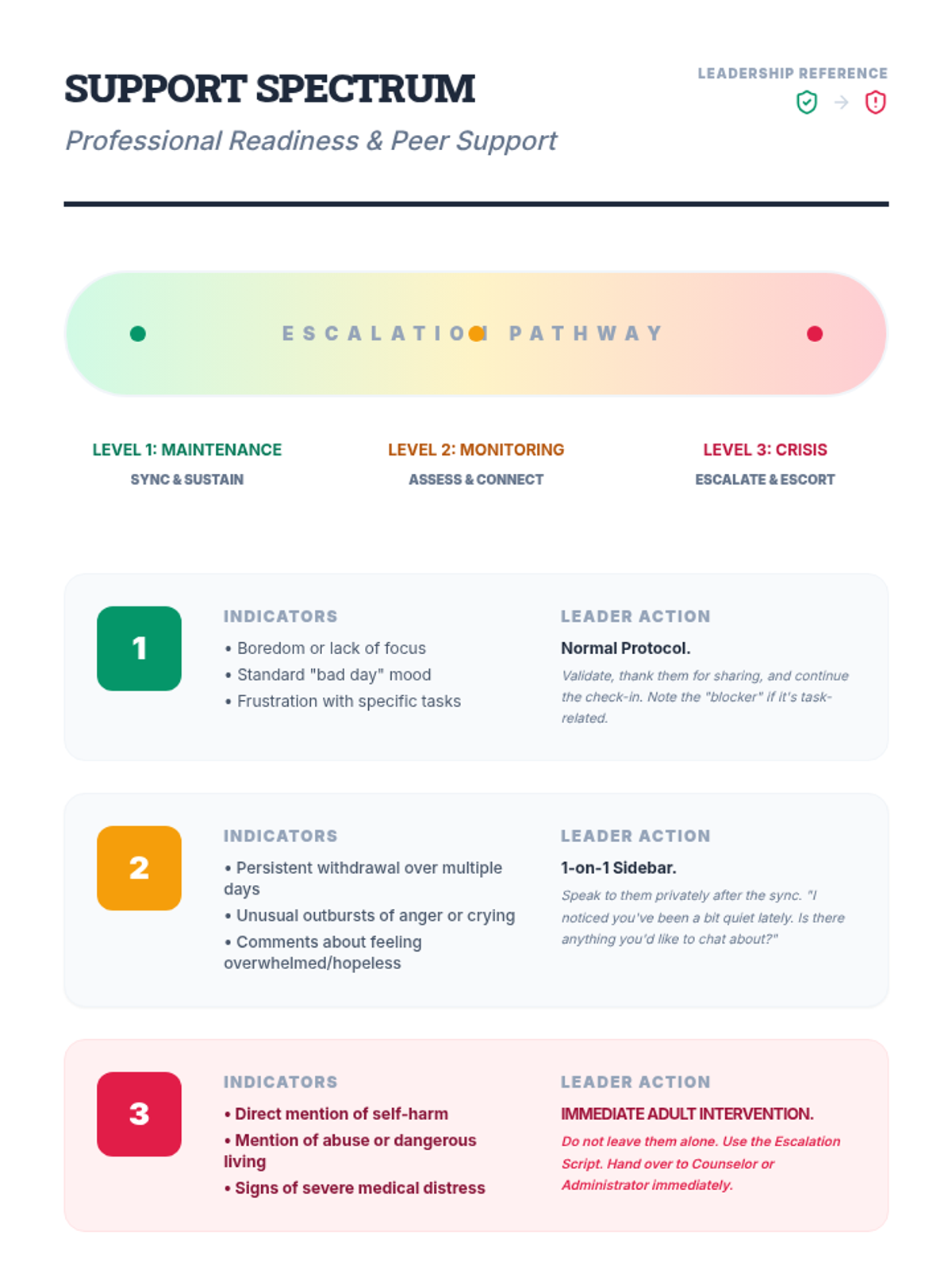
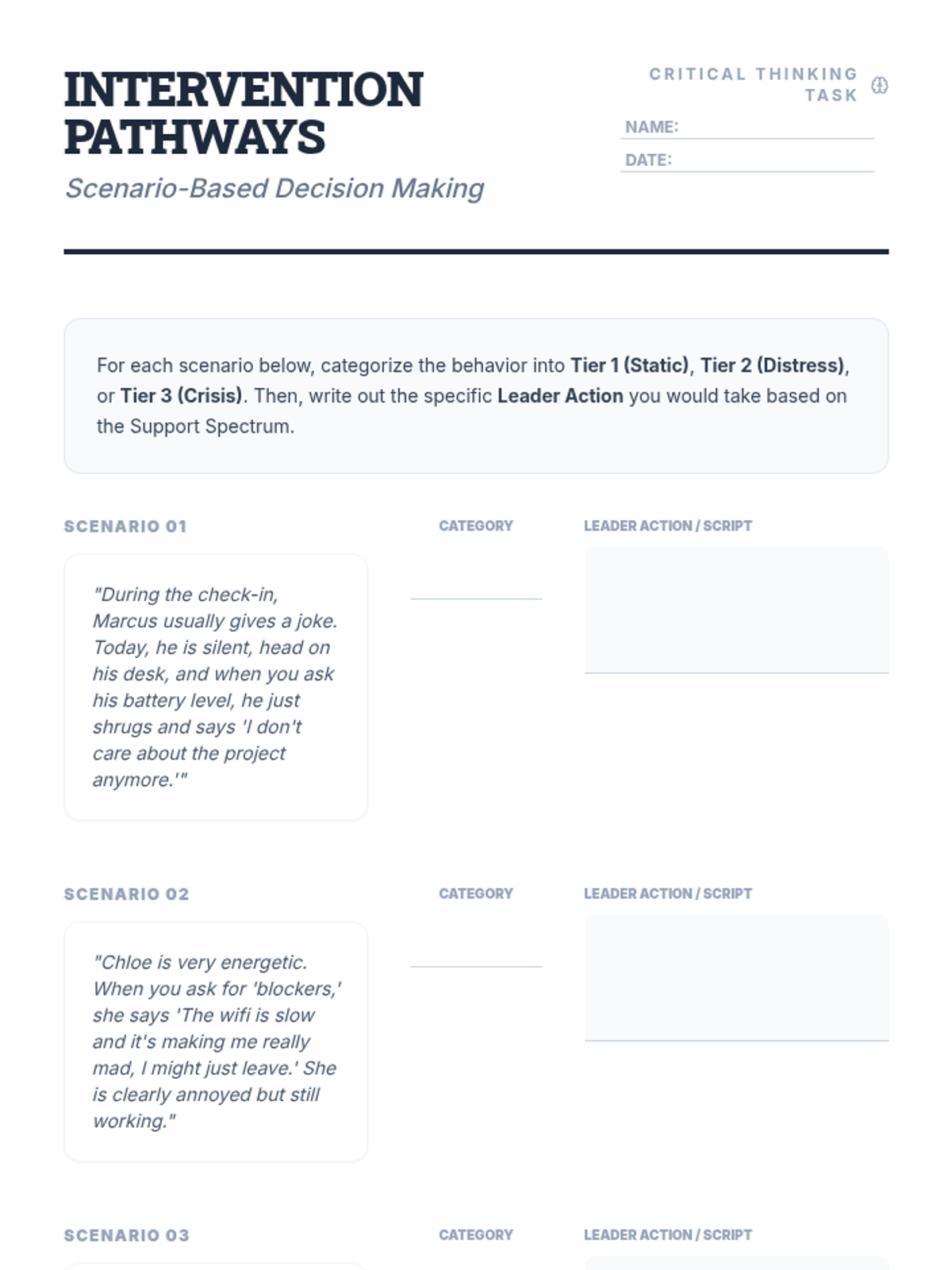
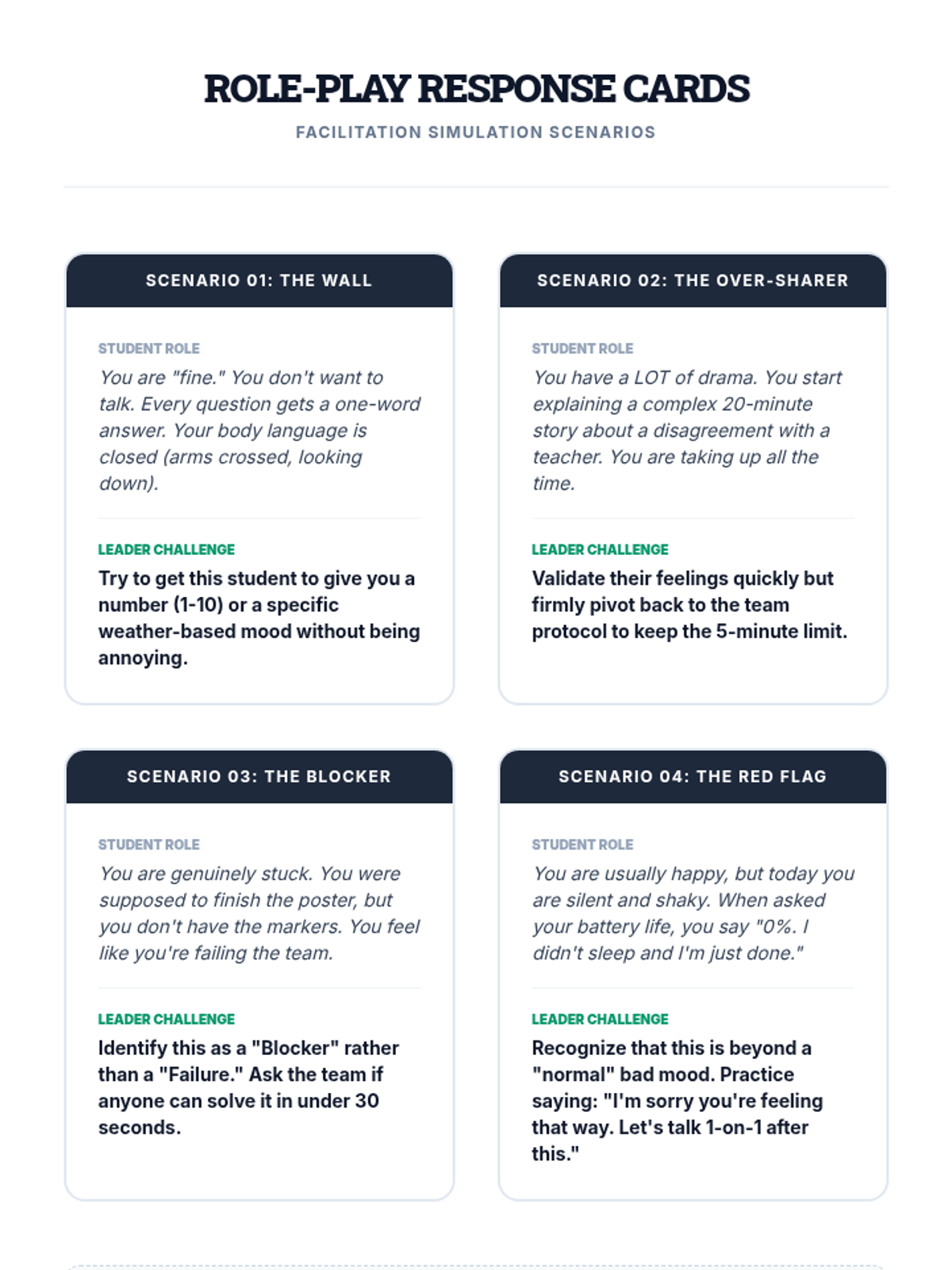
Students learn how to recognize behavioral indicators that require escalation or support beyond a simple check-in. They study the difference between a bad mood and a crisis, learning professional boundaries and the appropriate pathways for referring a peer to a counselor or administrator.
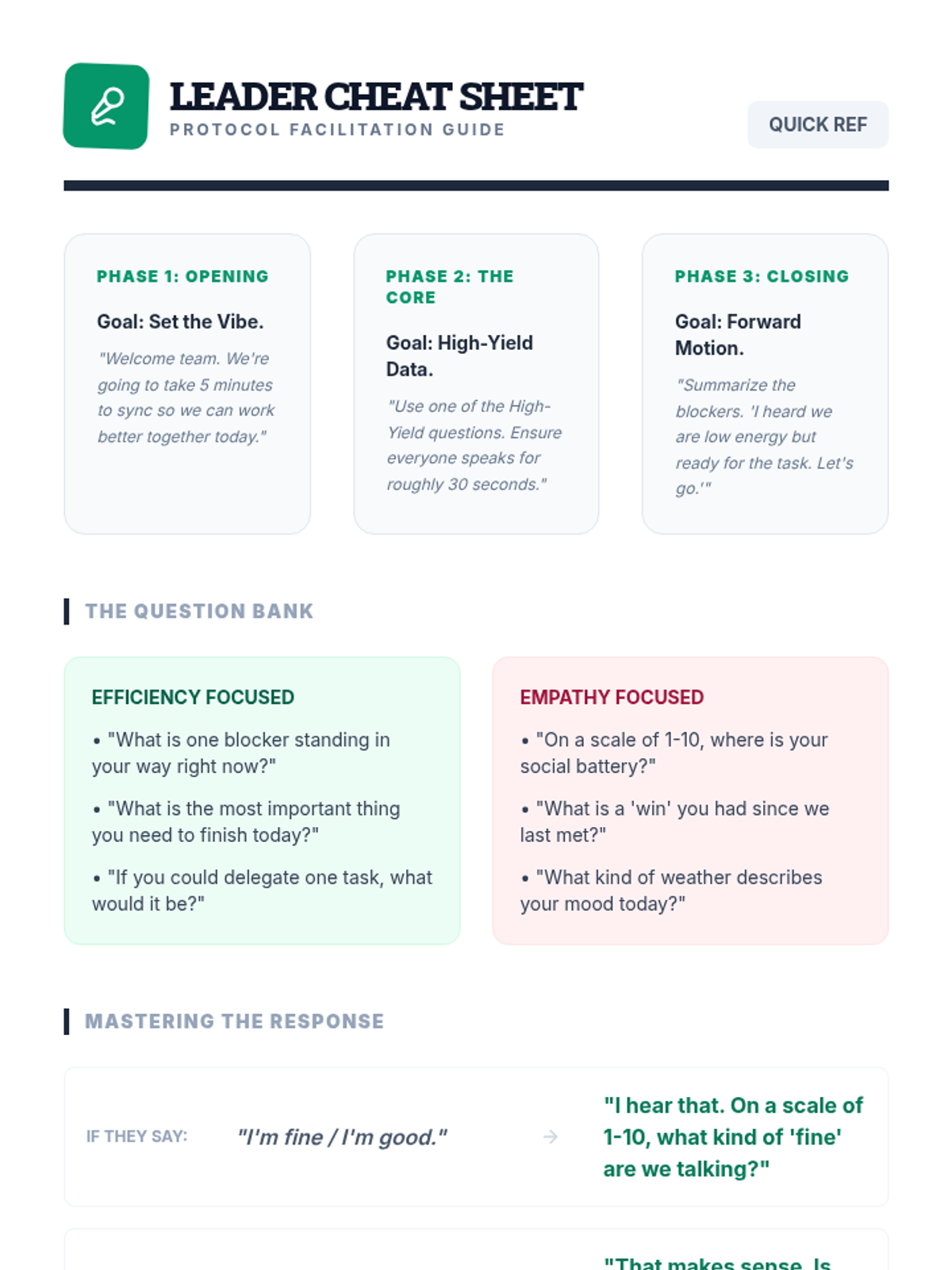
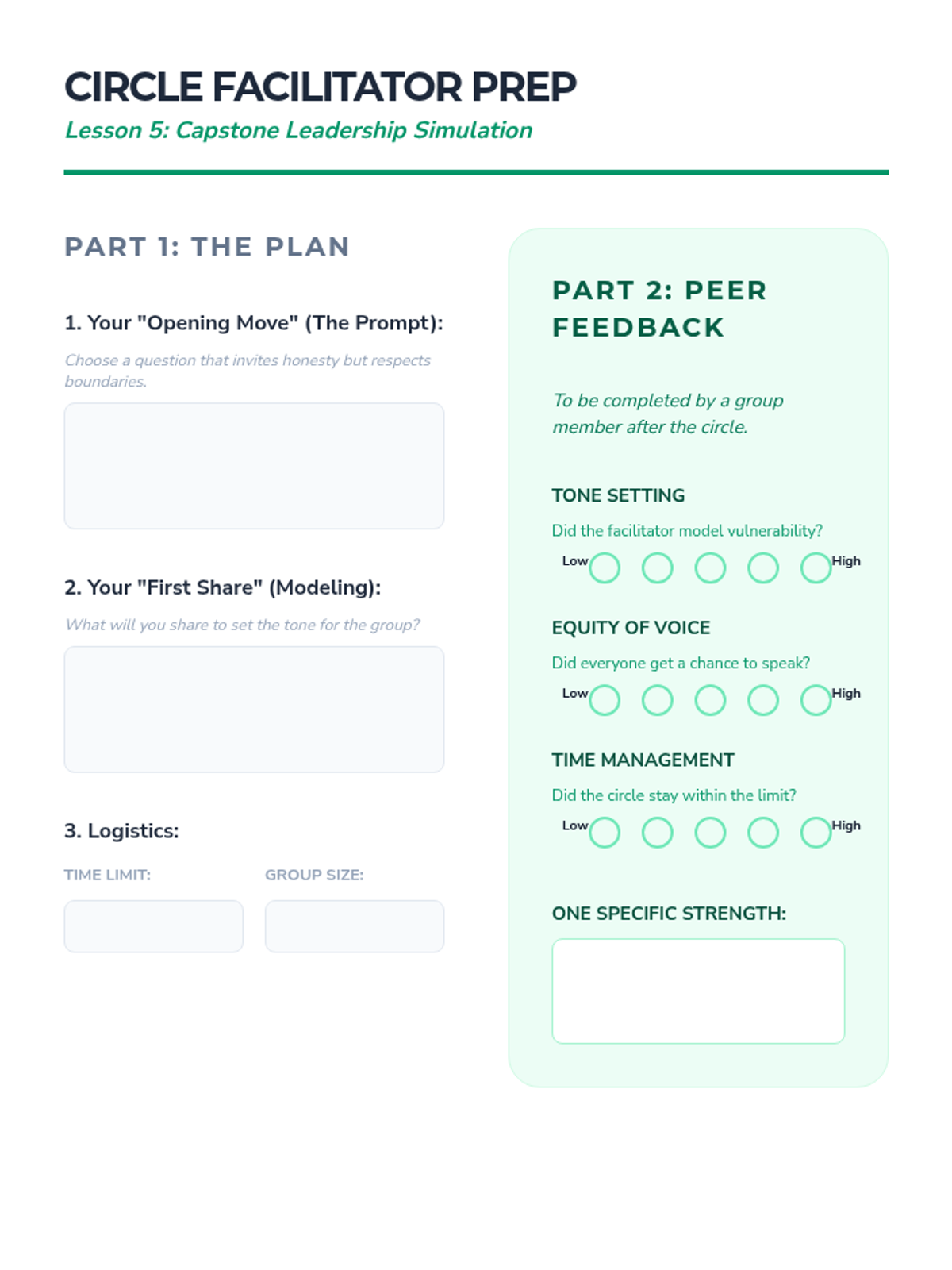
Focusing on leadership, this lesson teaches students how to lead a check-in routine. They learn specific questioning techniques that encourage honesty without overstepping boundaries, and practice active listening skills to validate peers' feelings without necessarily trying to 'fix' them immediately.
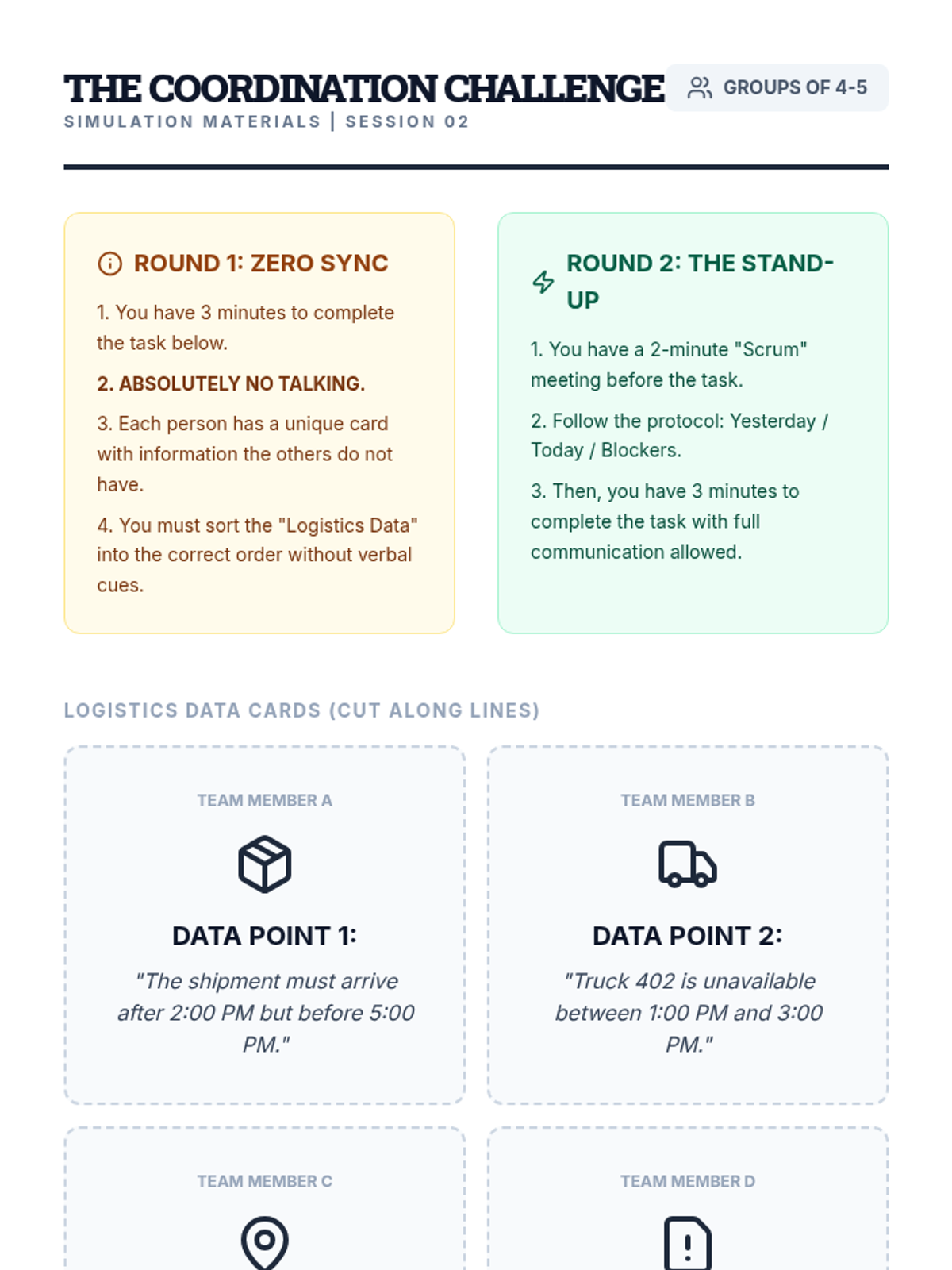
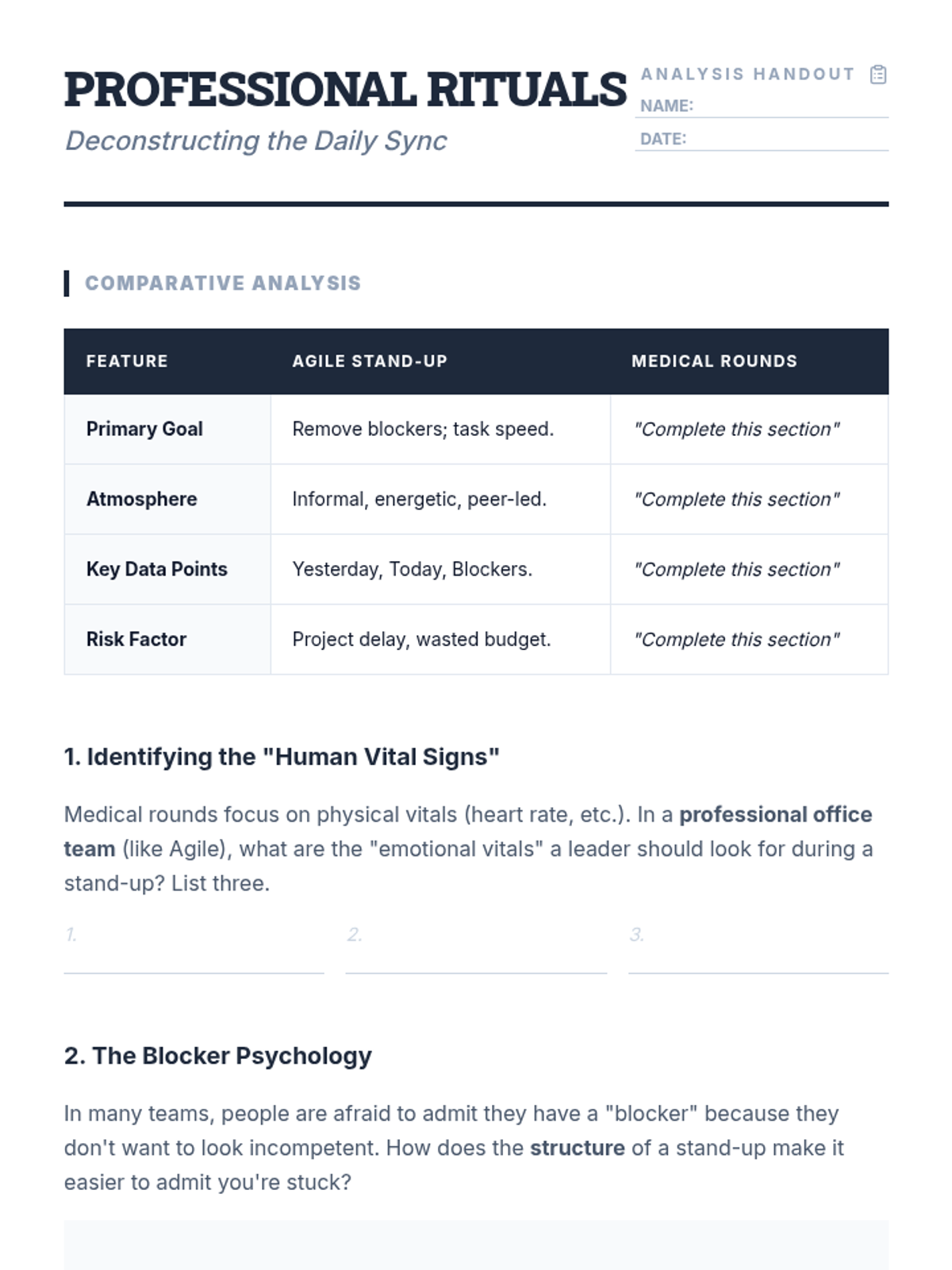
Students examine real-world check-in models, specifically the 'Scrum' or 'Agile' stand-up meeting and medical rounds. They deconstruct these rituals to understand how they balance efficiency (time limits) with human connection (emotional state assessment) and obstacle identification.
Students take turns leading a structured group check-in, applying all learned skills to manage time, ensure equity of voice, and set the tone. Afterwards, the class debriefs the effectiveness of the facilitation. This final step solidifies their role as leaders capable of maintaining group behavioral health.
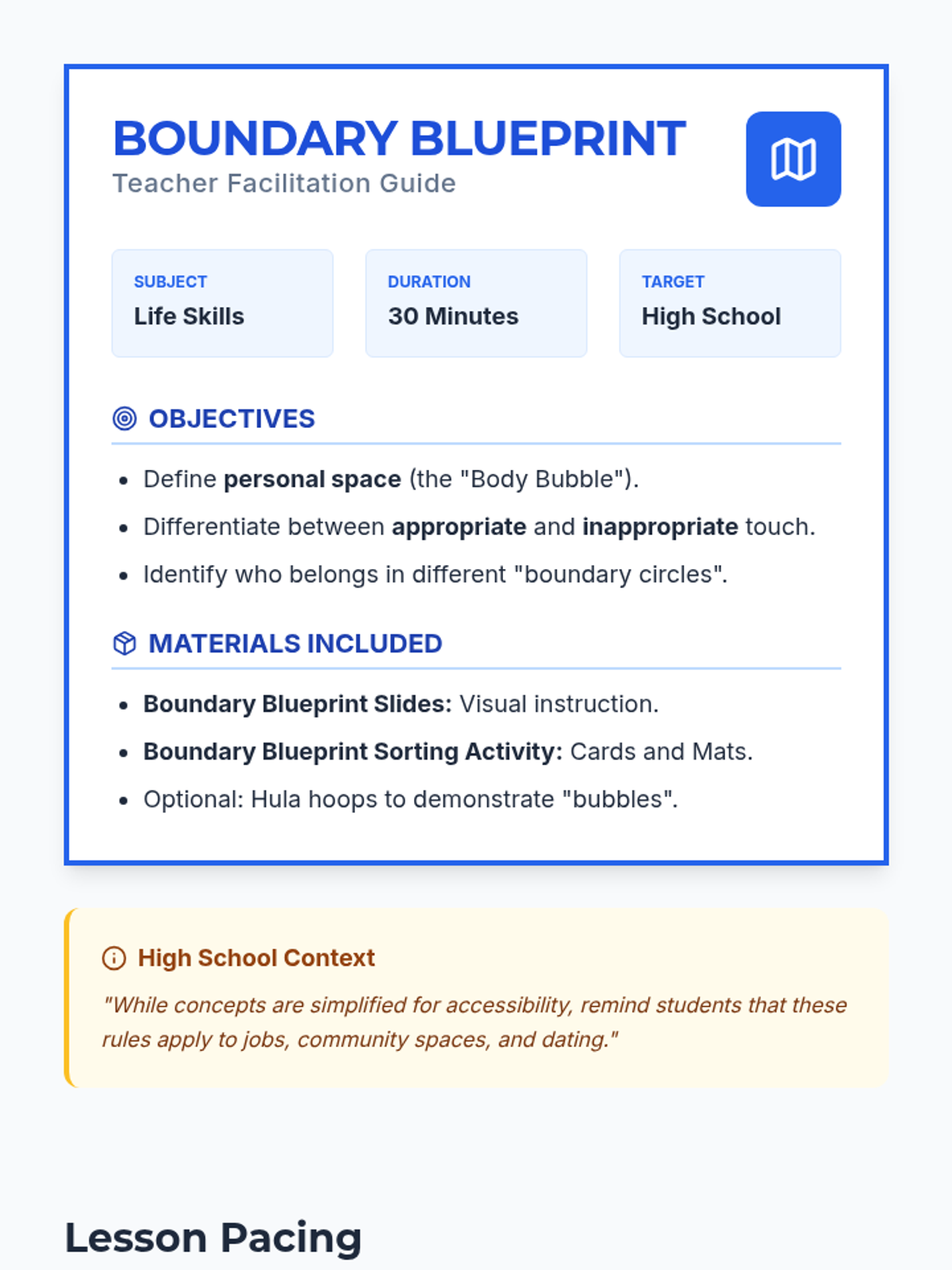
A 30-minute Social Emotional Learning lesson for high school life skills students focusing on understanding personal boundaries, personal space, and identifying appropriate versus inappropriate physical contact using a 'Boundary Blueprint' framework.
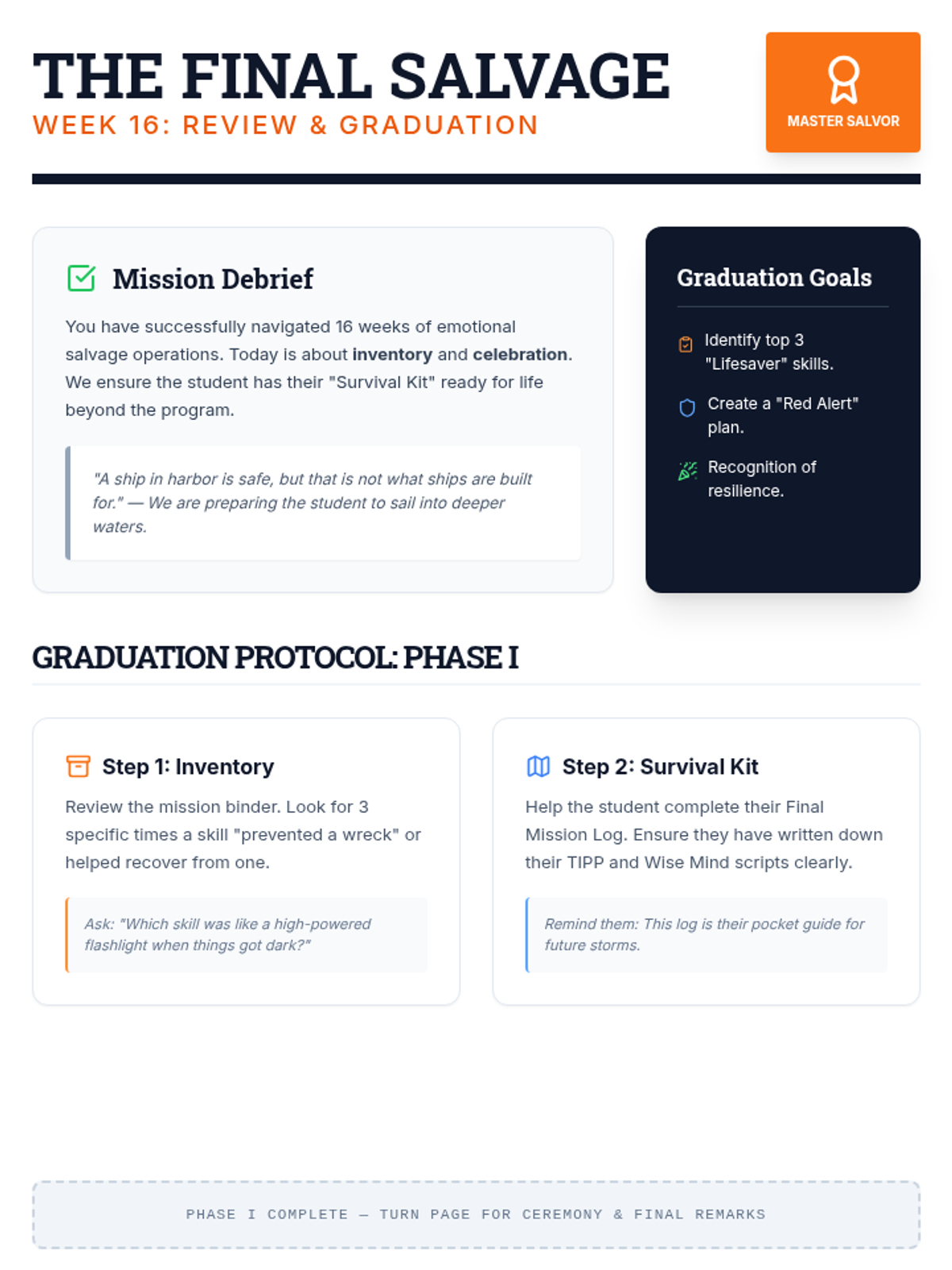
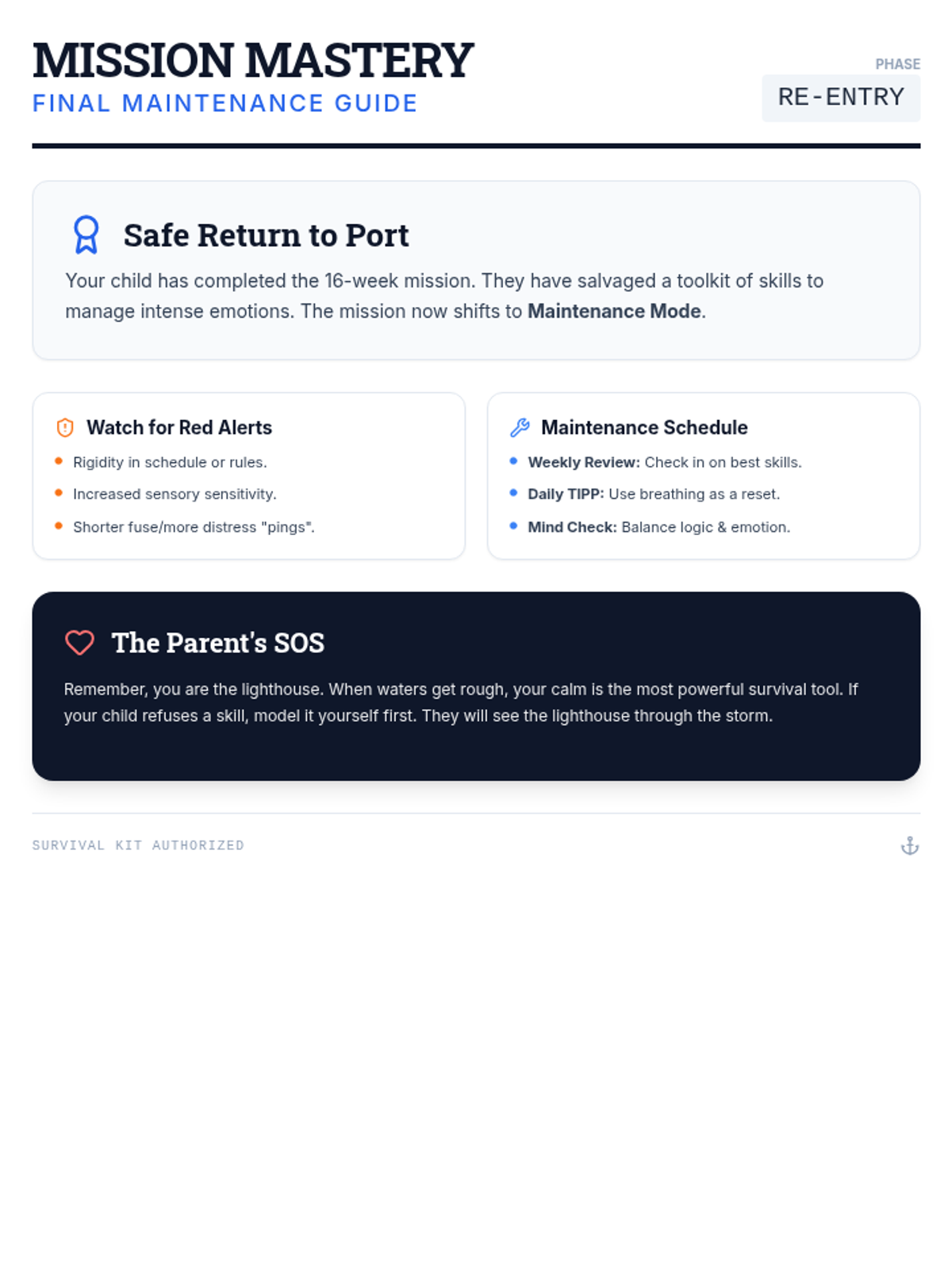
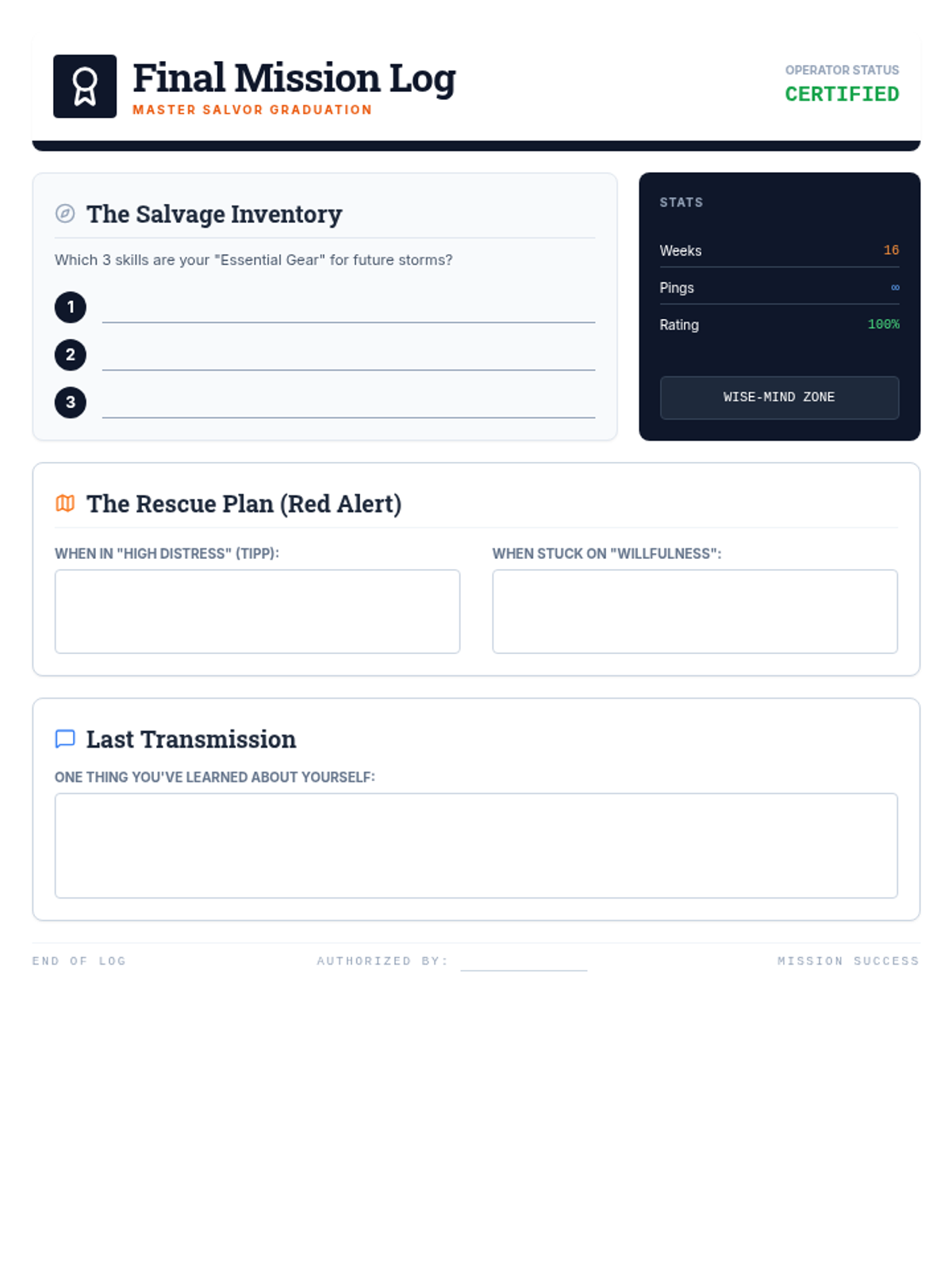
Comprehensive review and graduation from the Survival and Salvage DBT program.
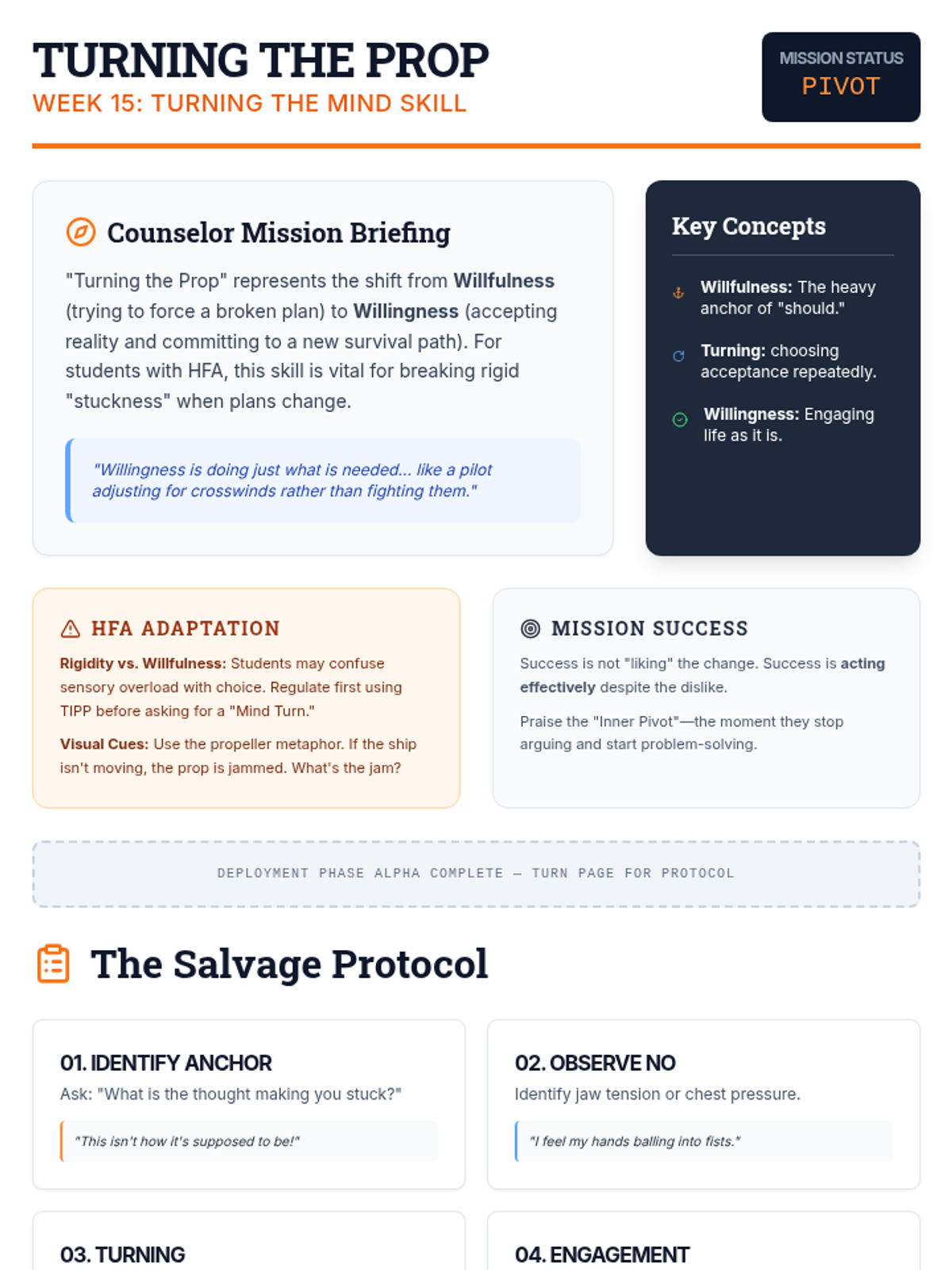
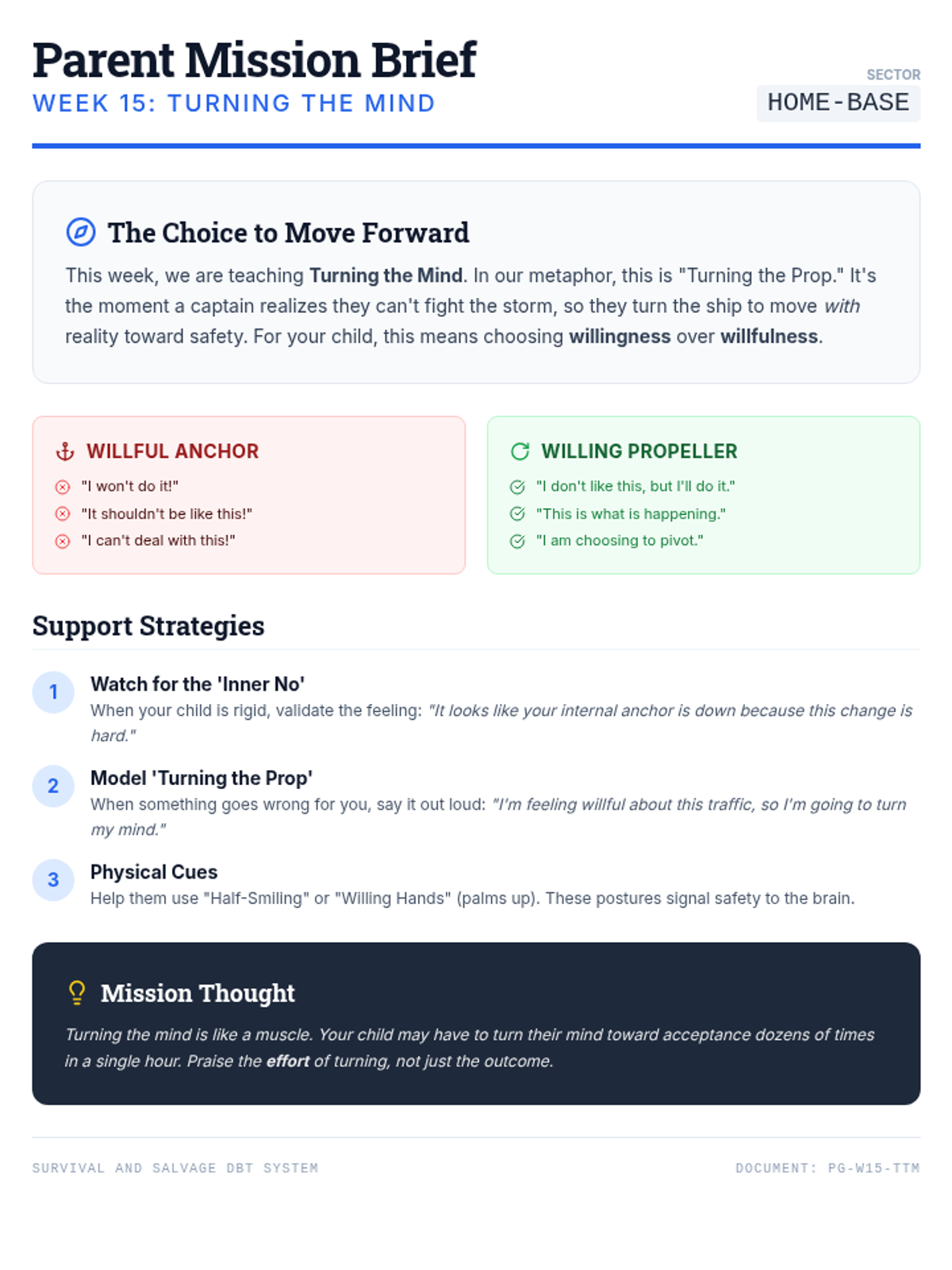
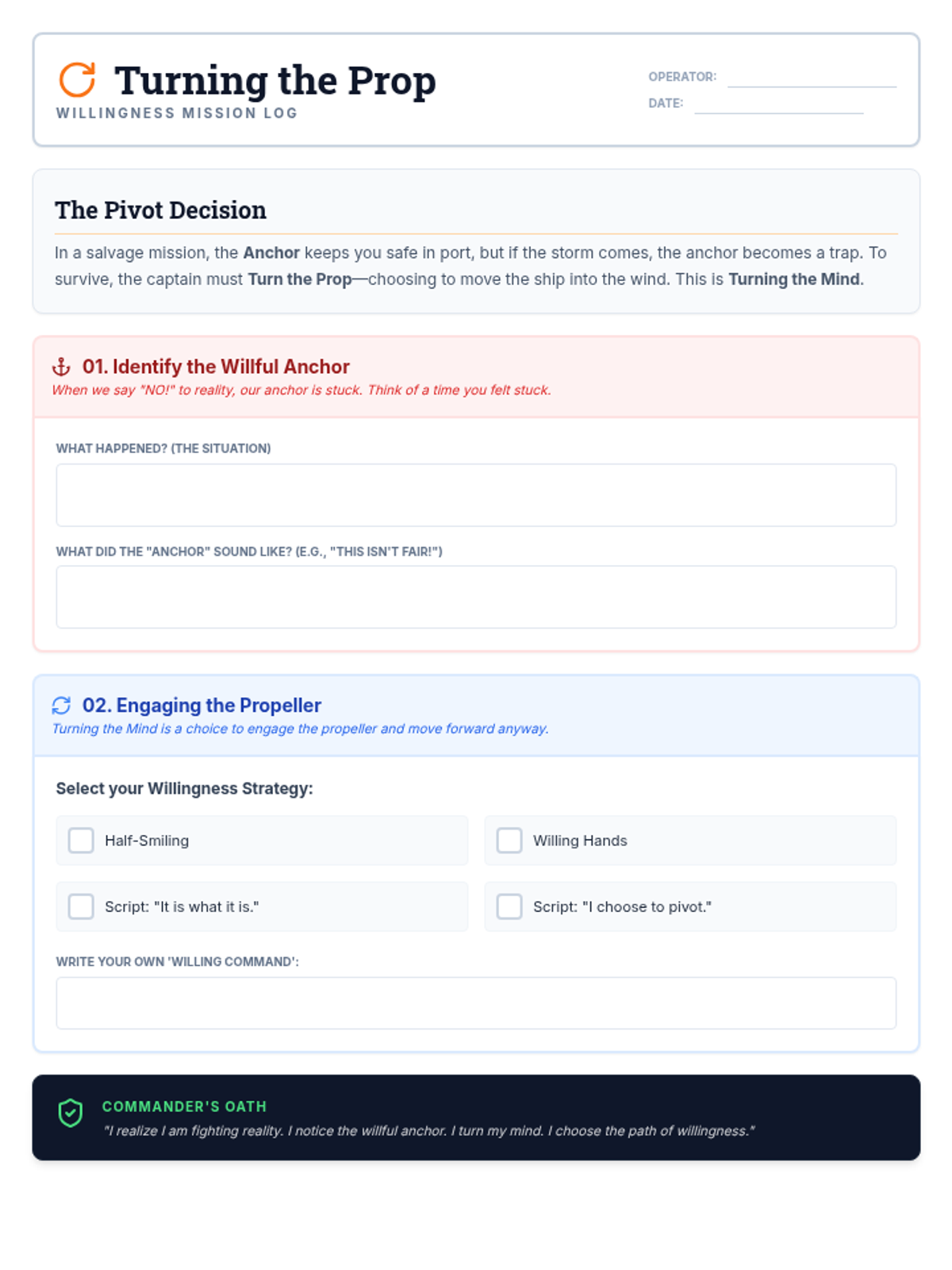
Committing to a new path (Turning the Mind) using the decision to pivot from salvage to survival.
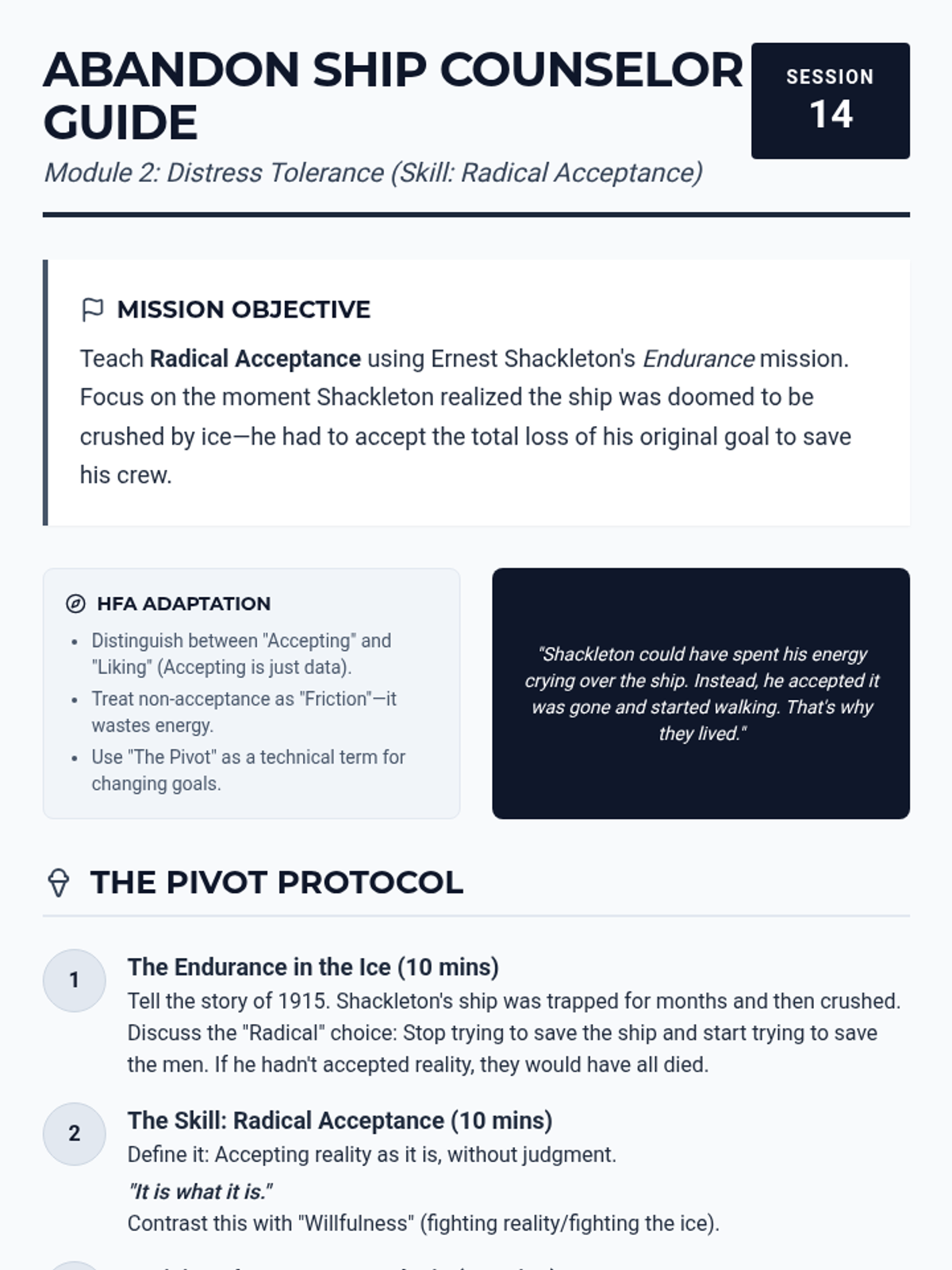
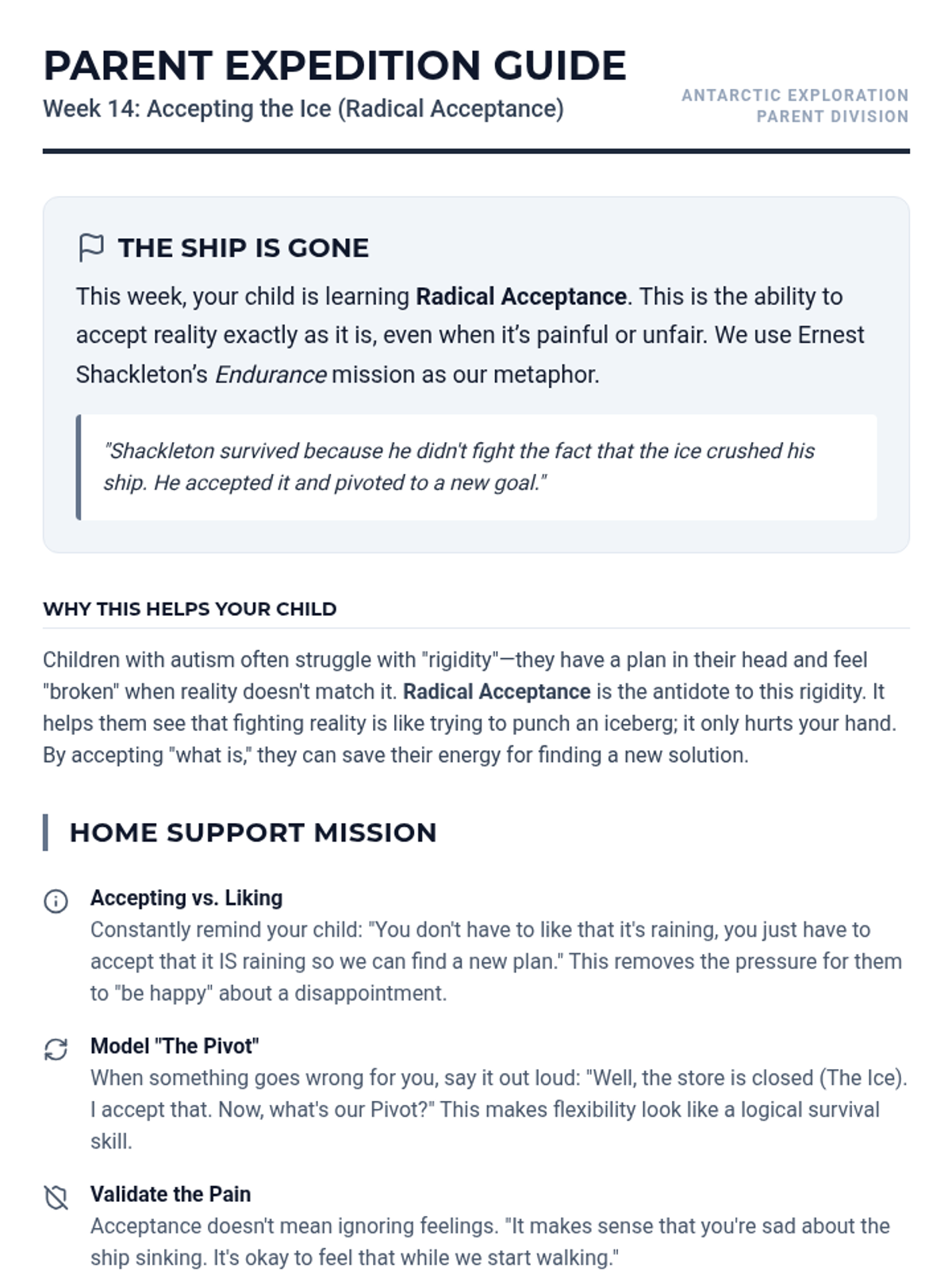
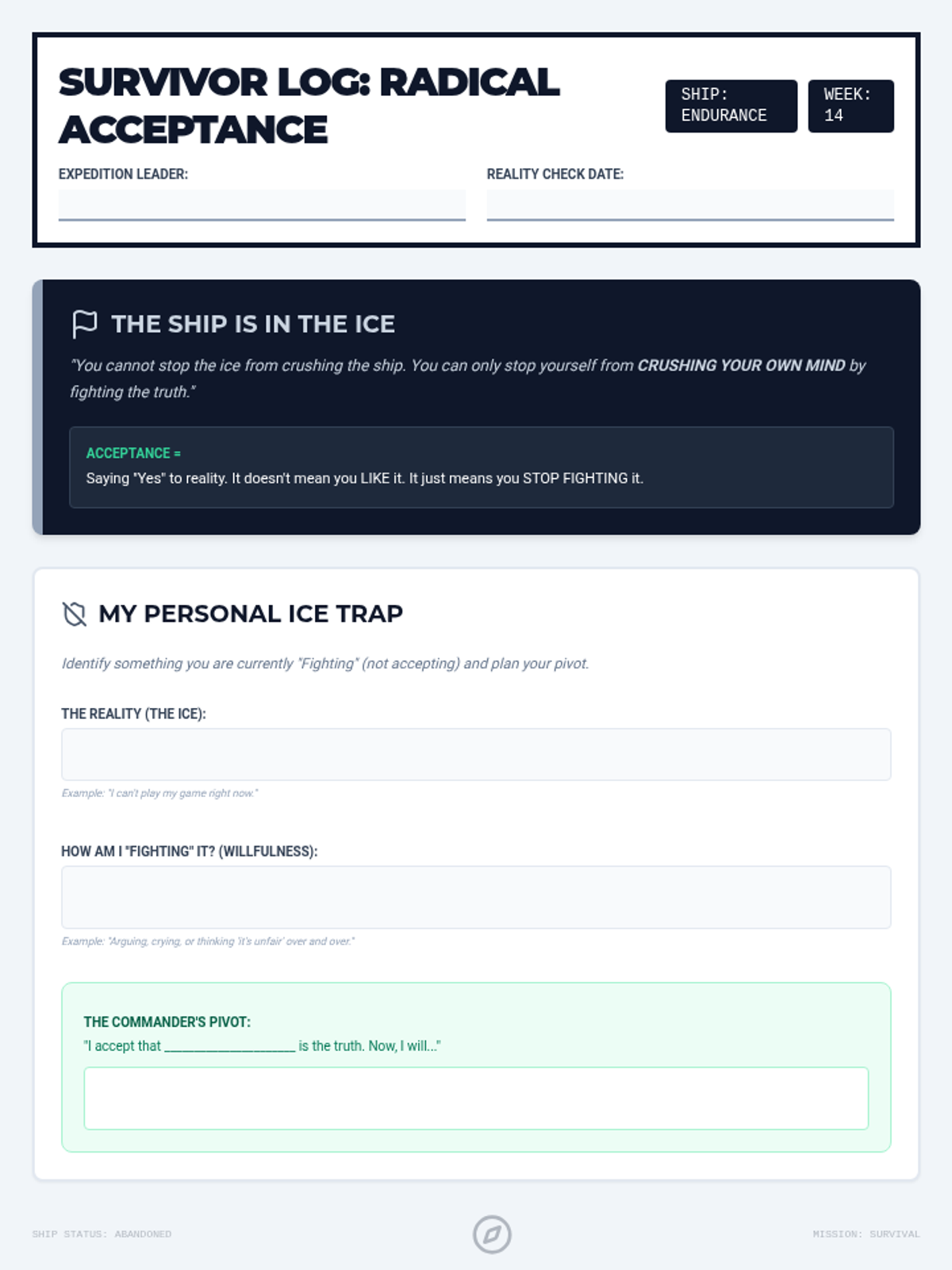
Accepting reality without judgment (Radical Acceptance) using Shackleton's Endurance survival story.
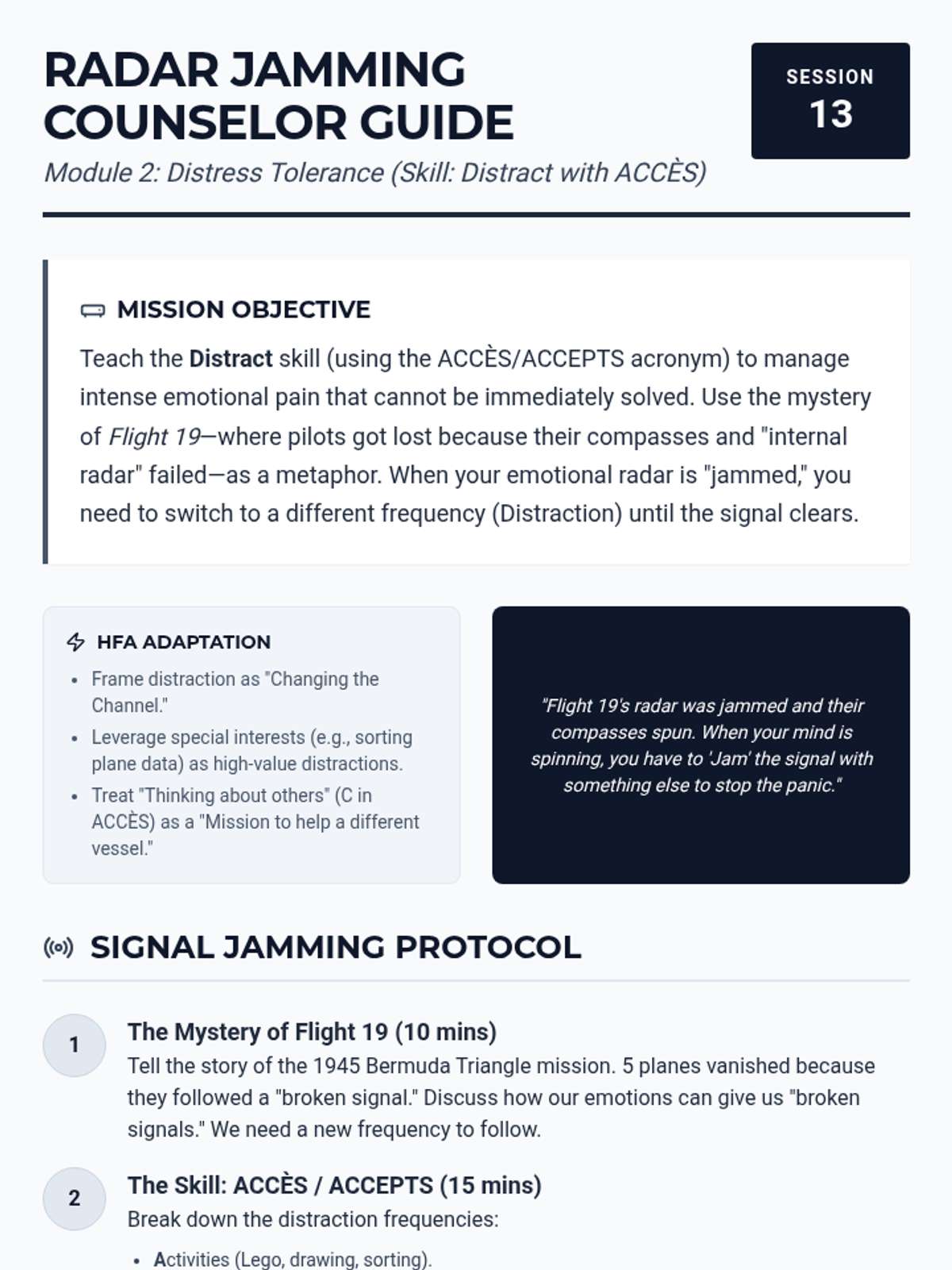
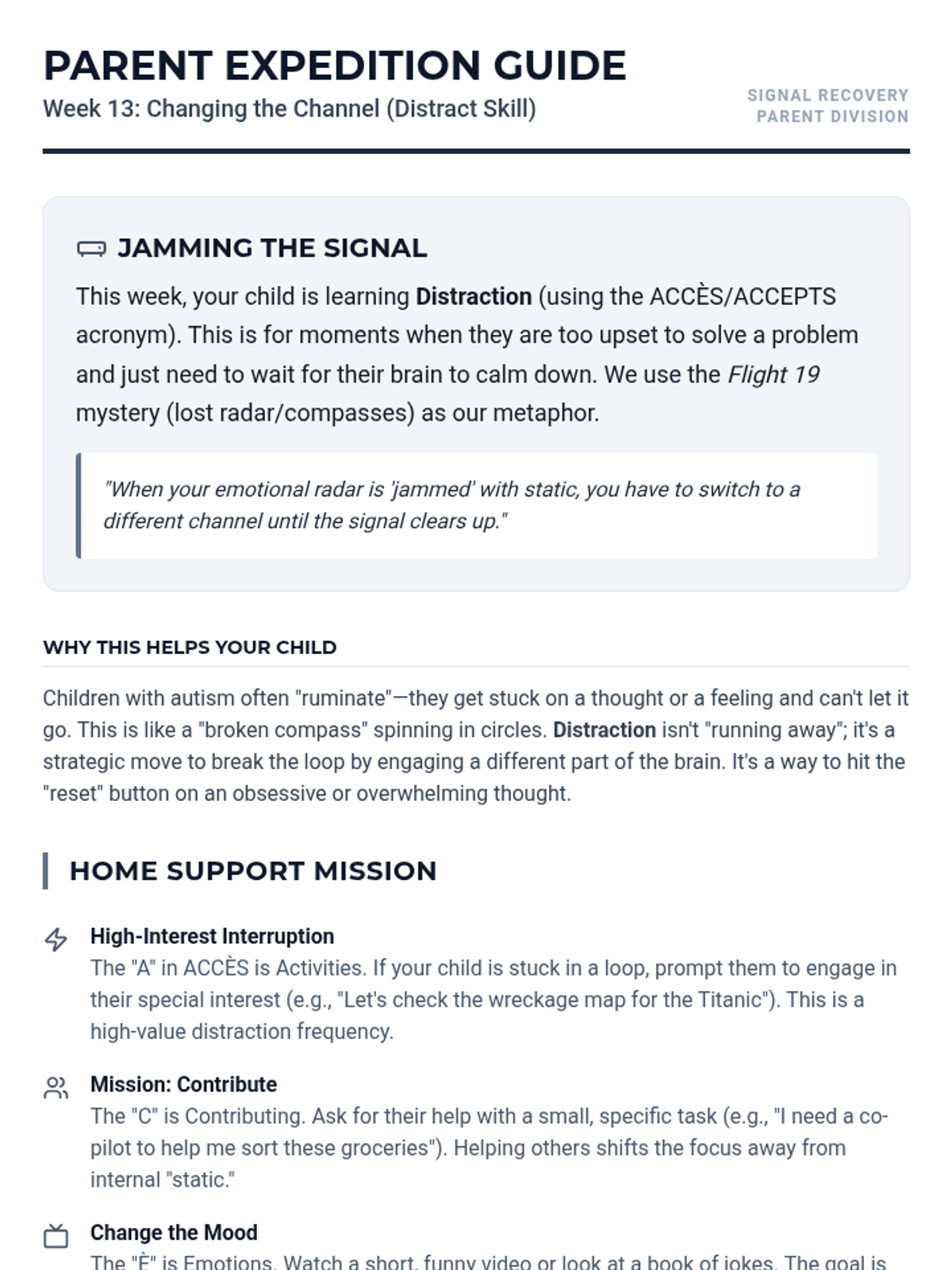
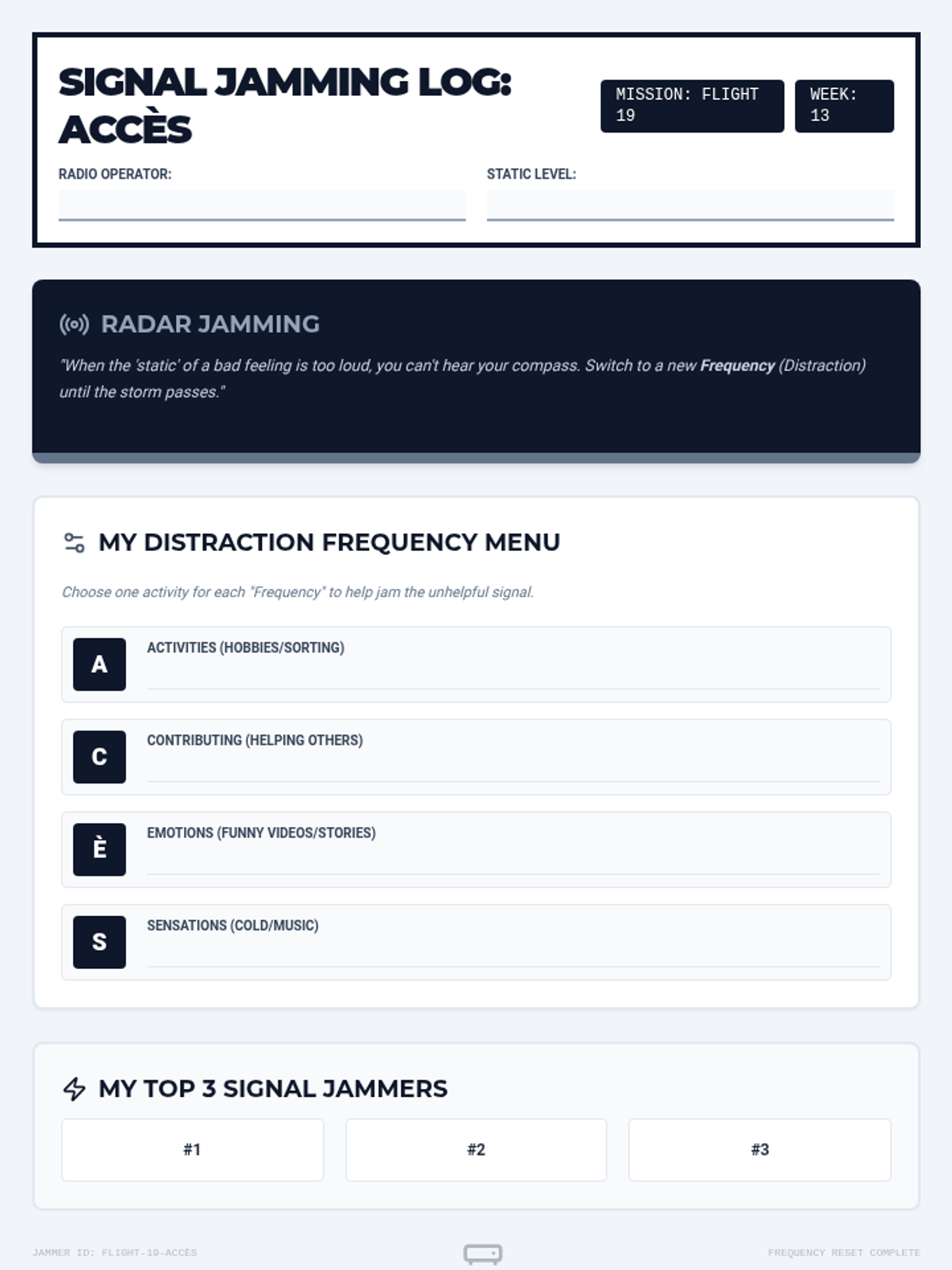
Using distraction and ACCÈS skills to manage distress, using the radar jamming metaphors of the Flight 19 mystery.
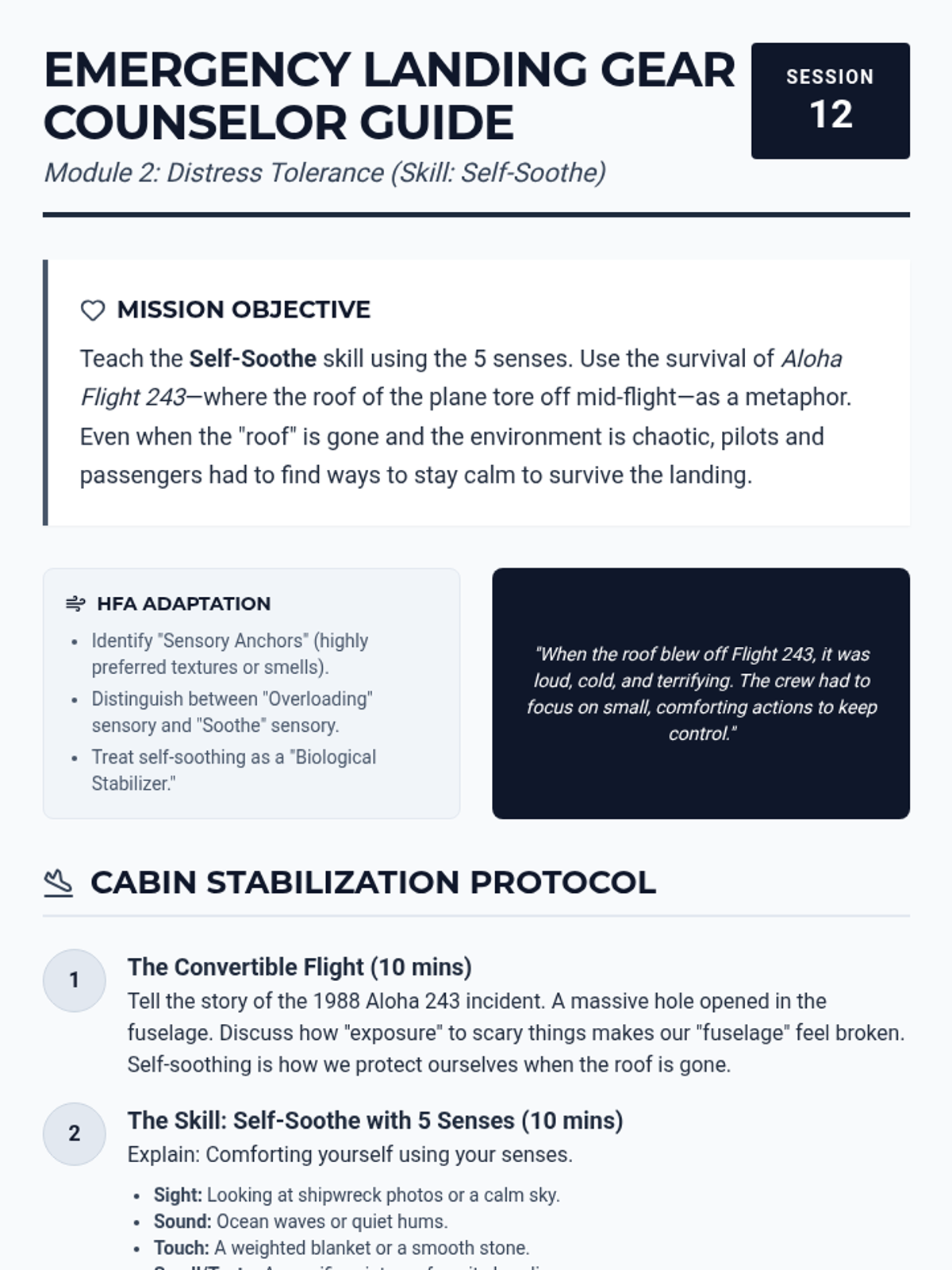
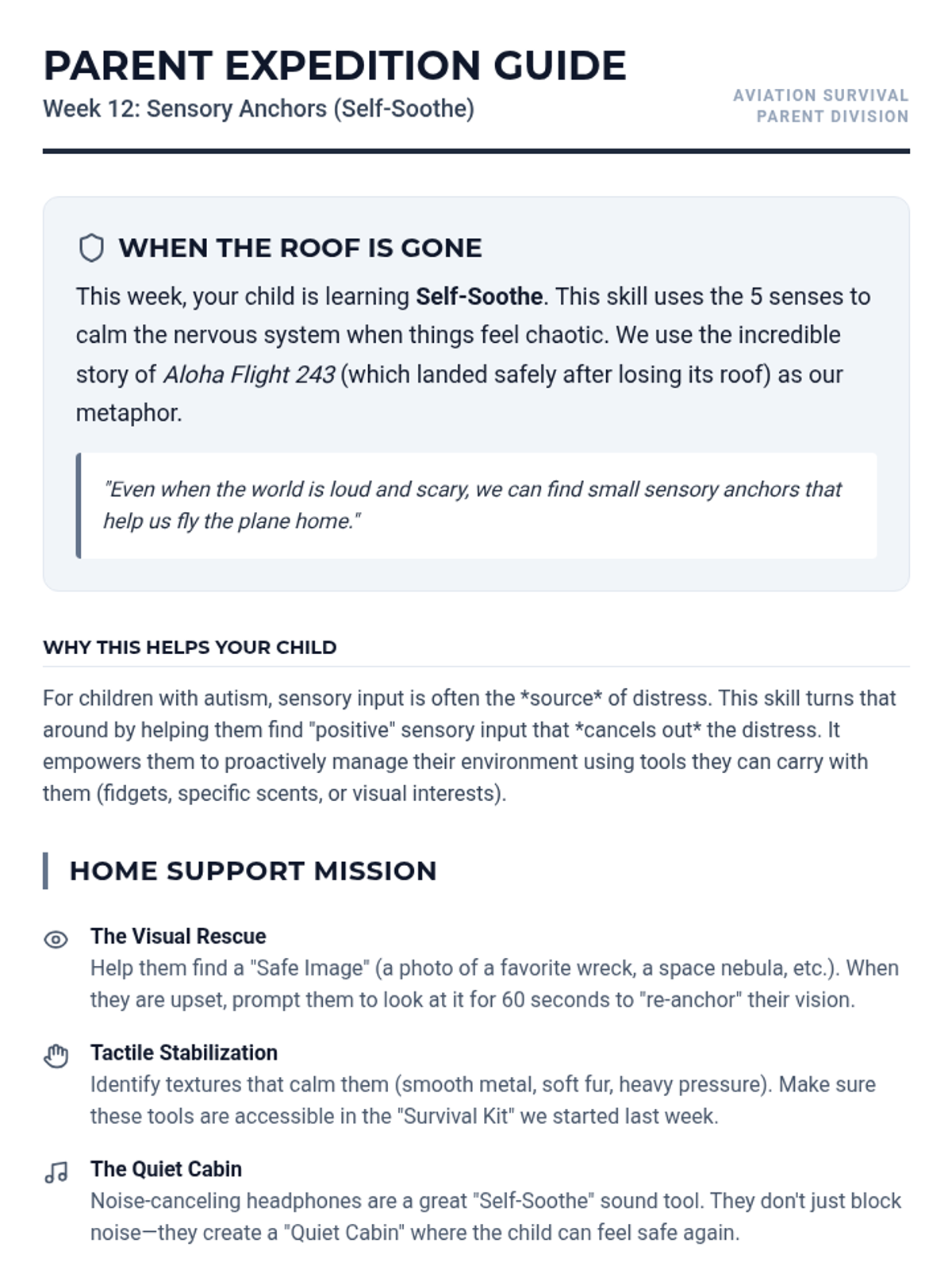
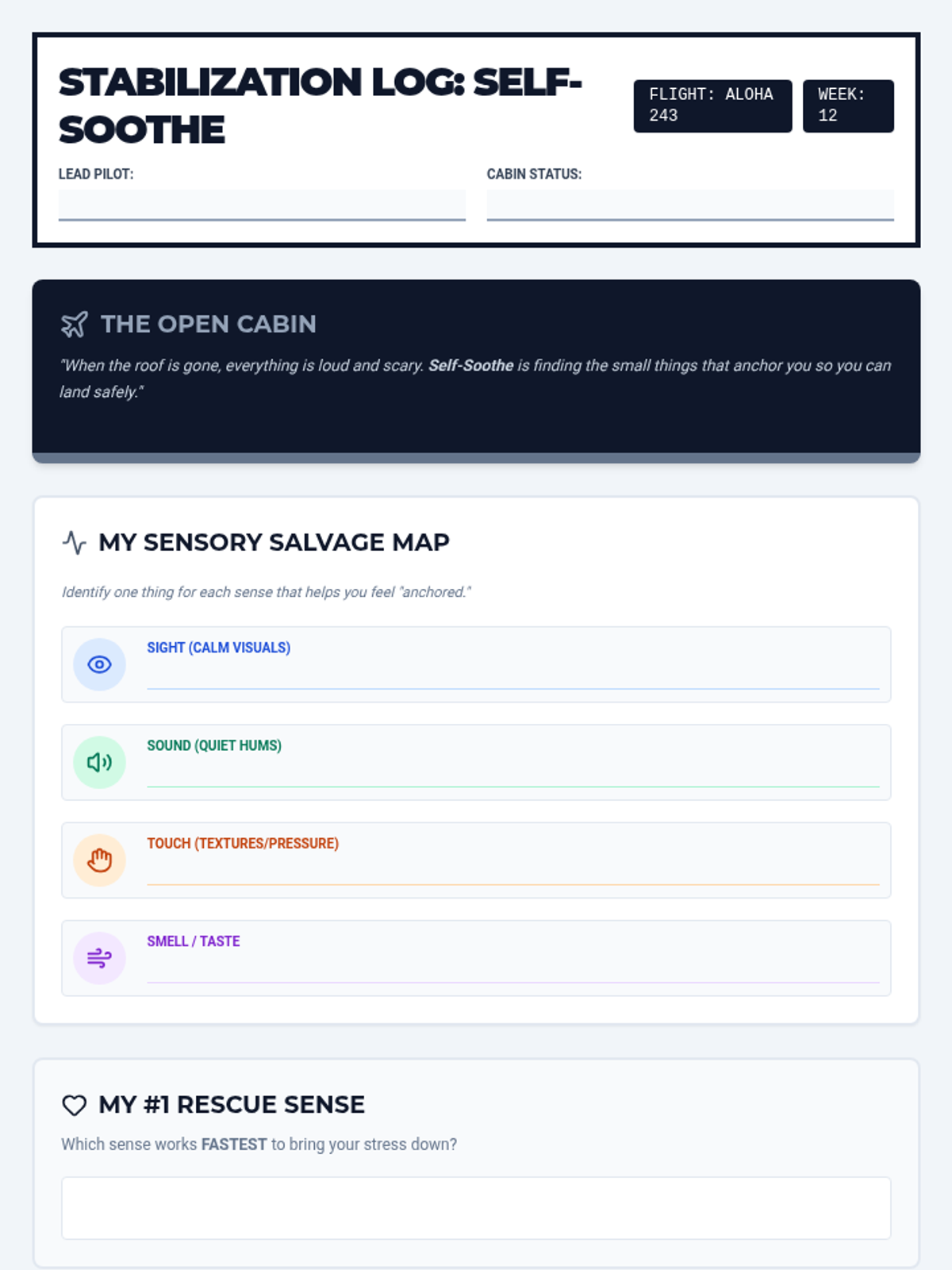
Developing self-soothing techniques (Self-Soothe) using the survival of Aloha Flight 243 after losing its roof.
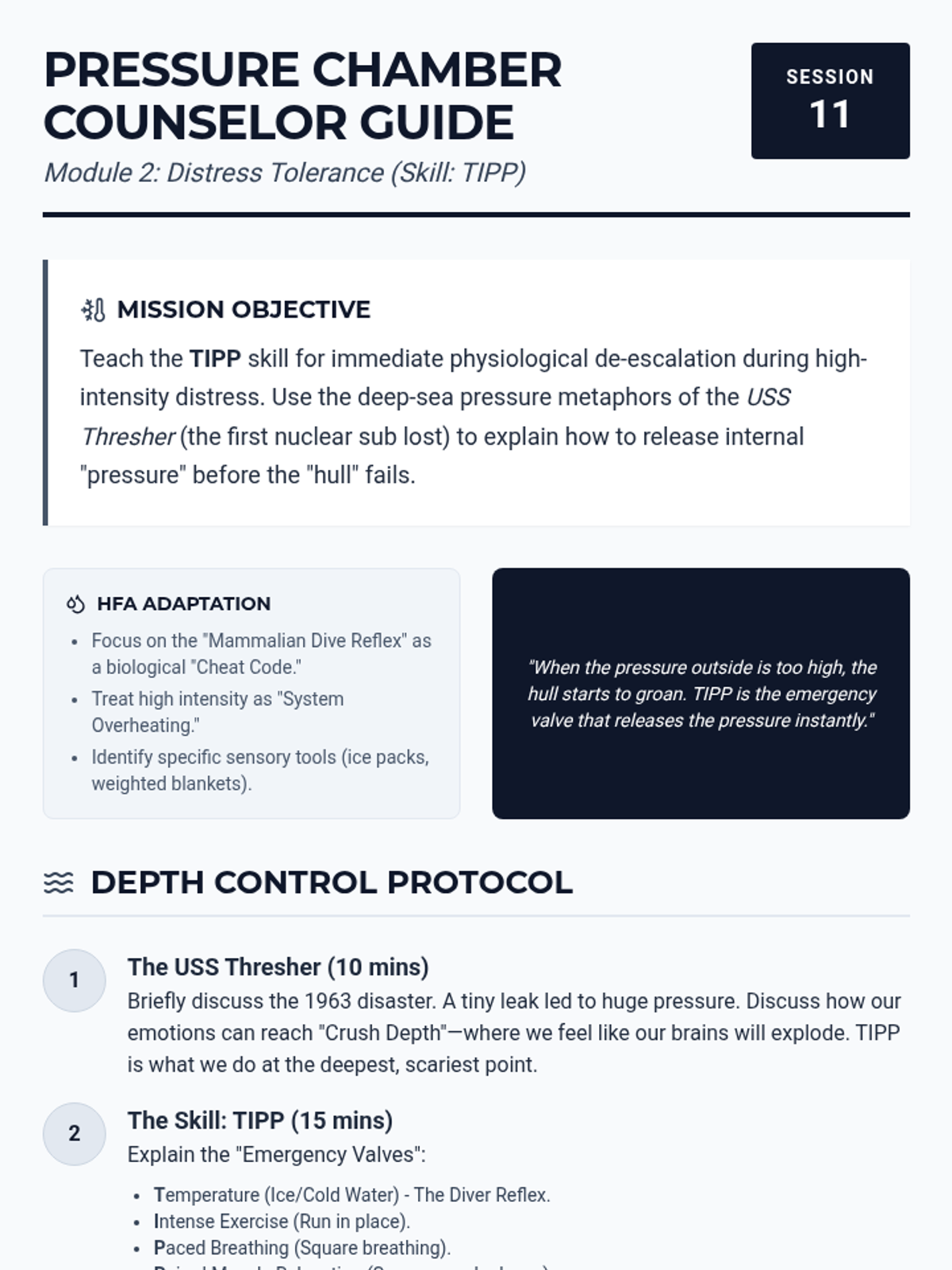
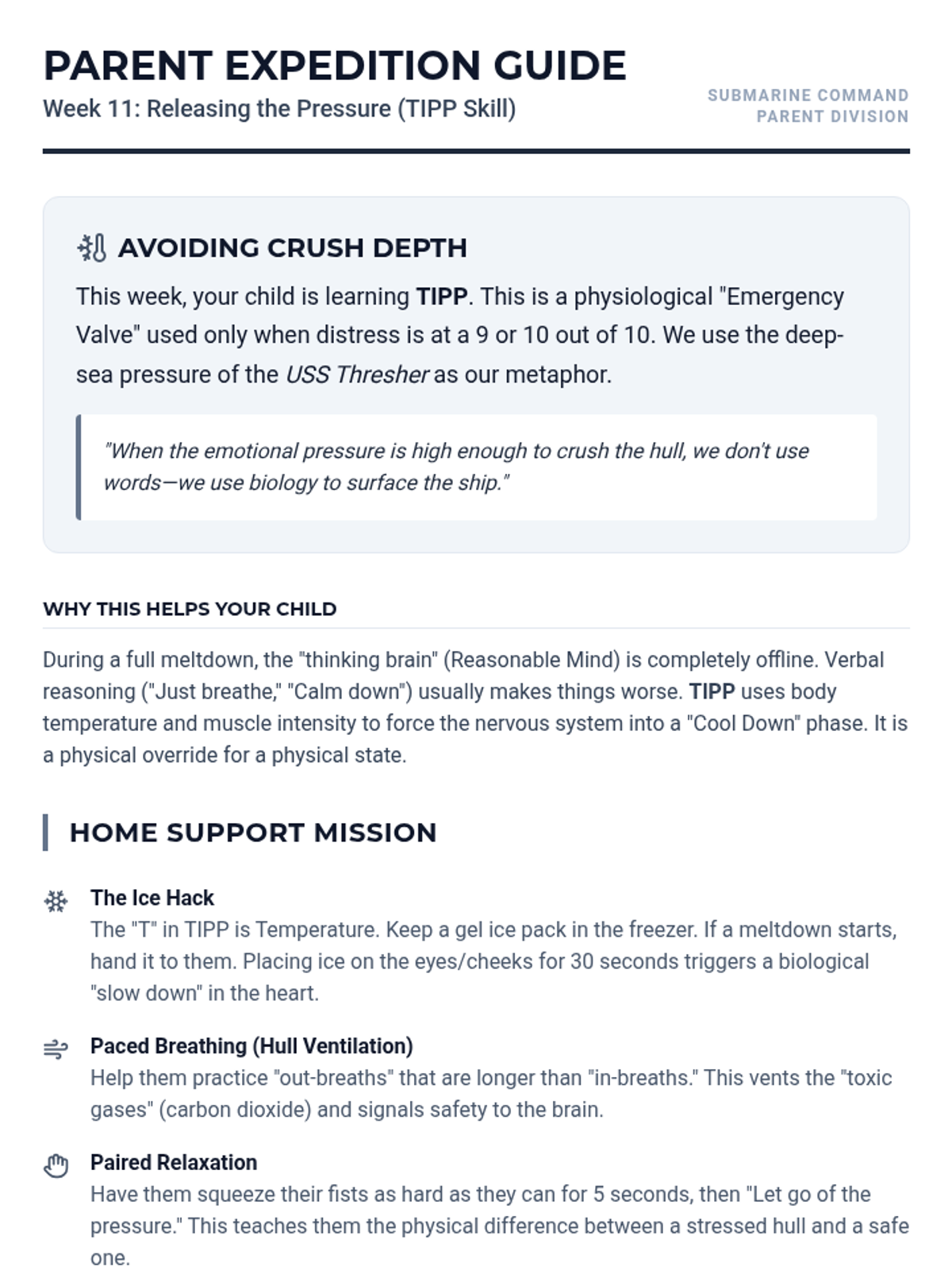
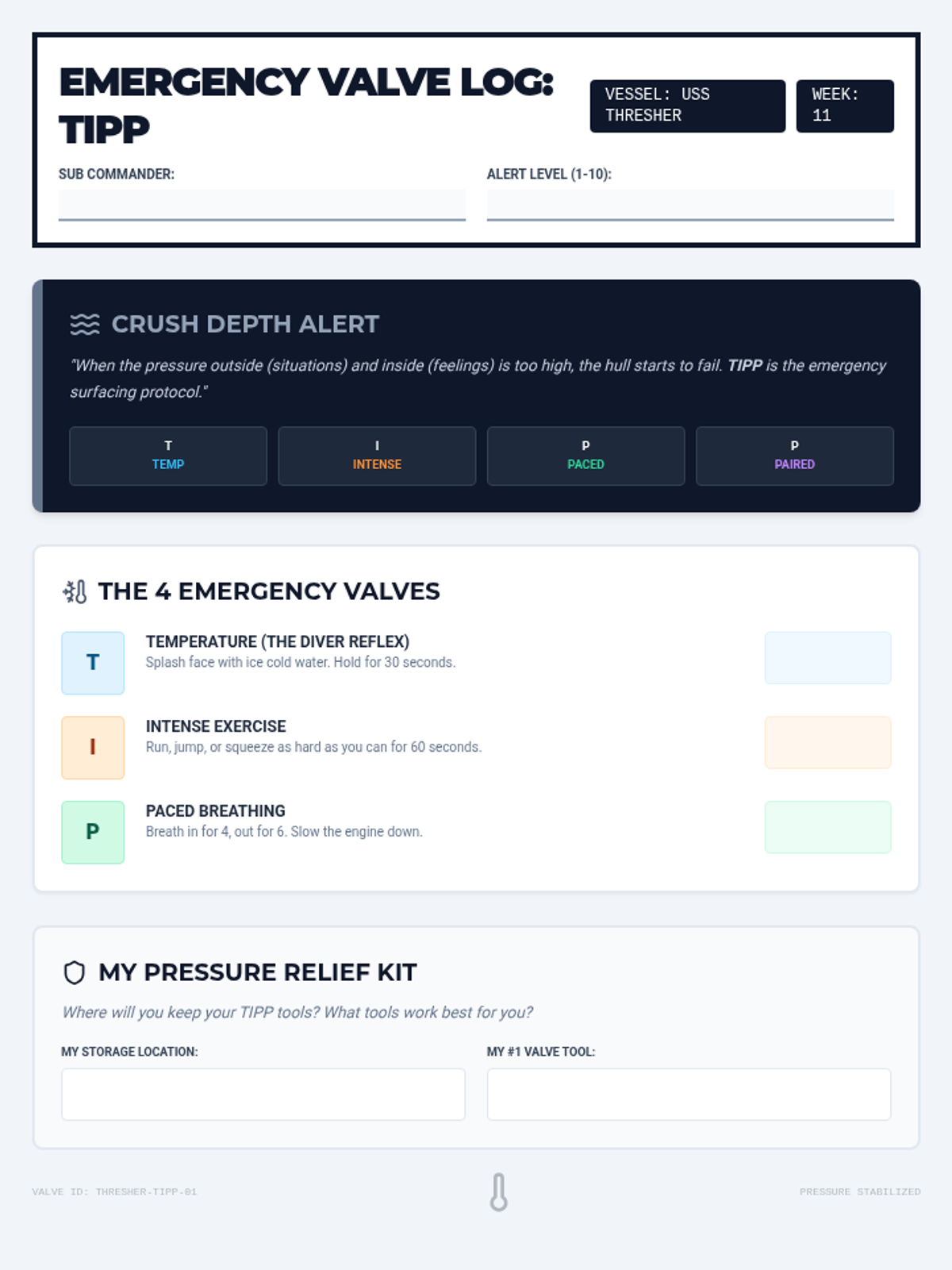
Using the TIPP skill for high-intensity distress, using the deep-sea pressure metaphors of the USS Thresher.
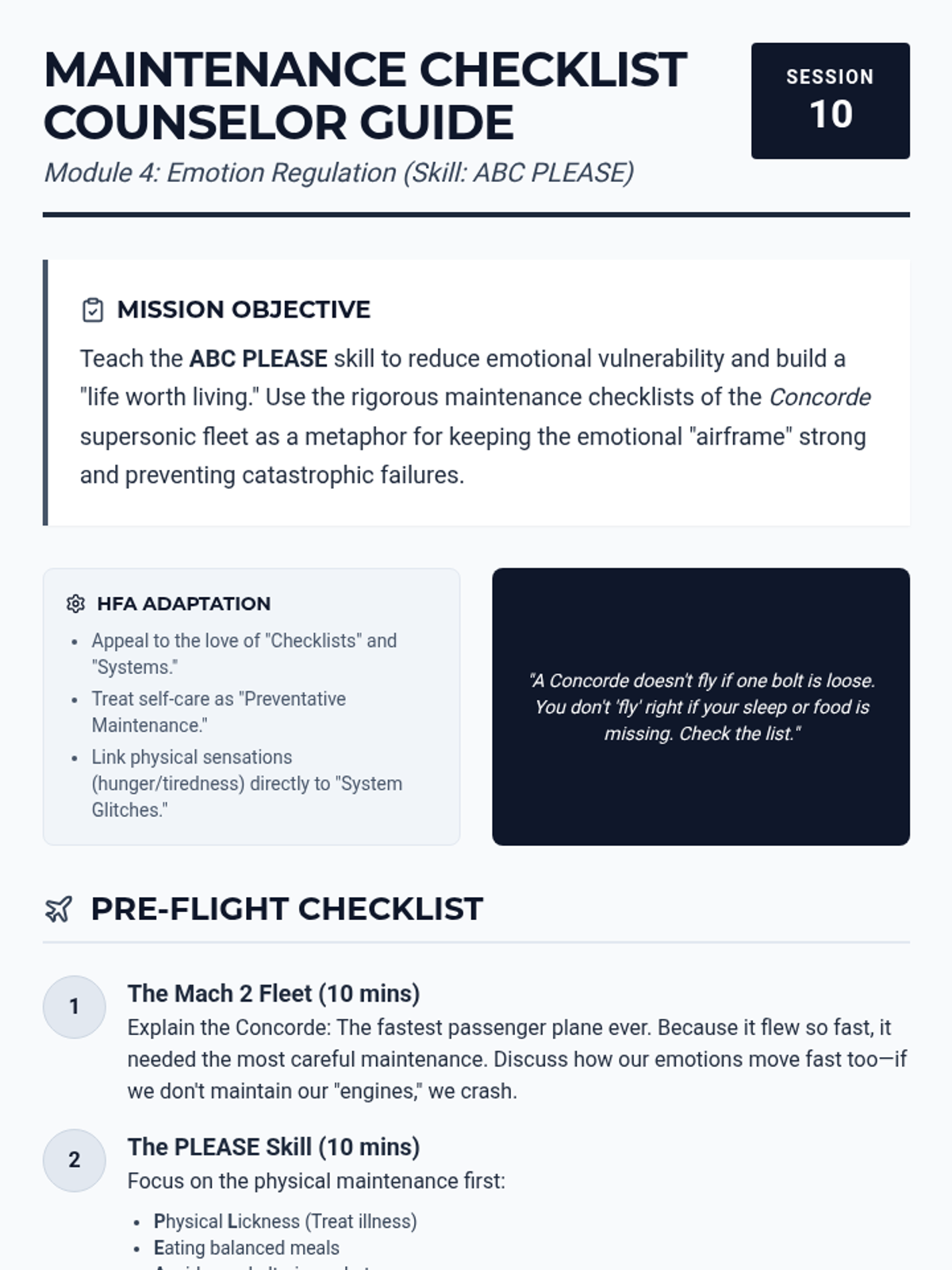
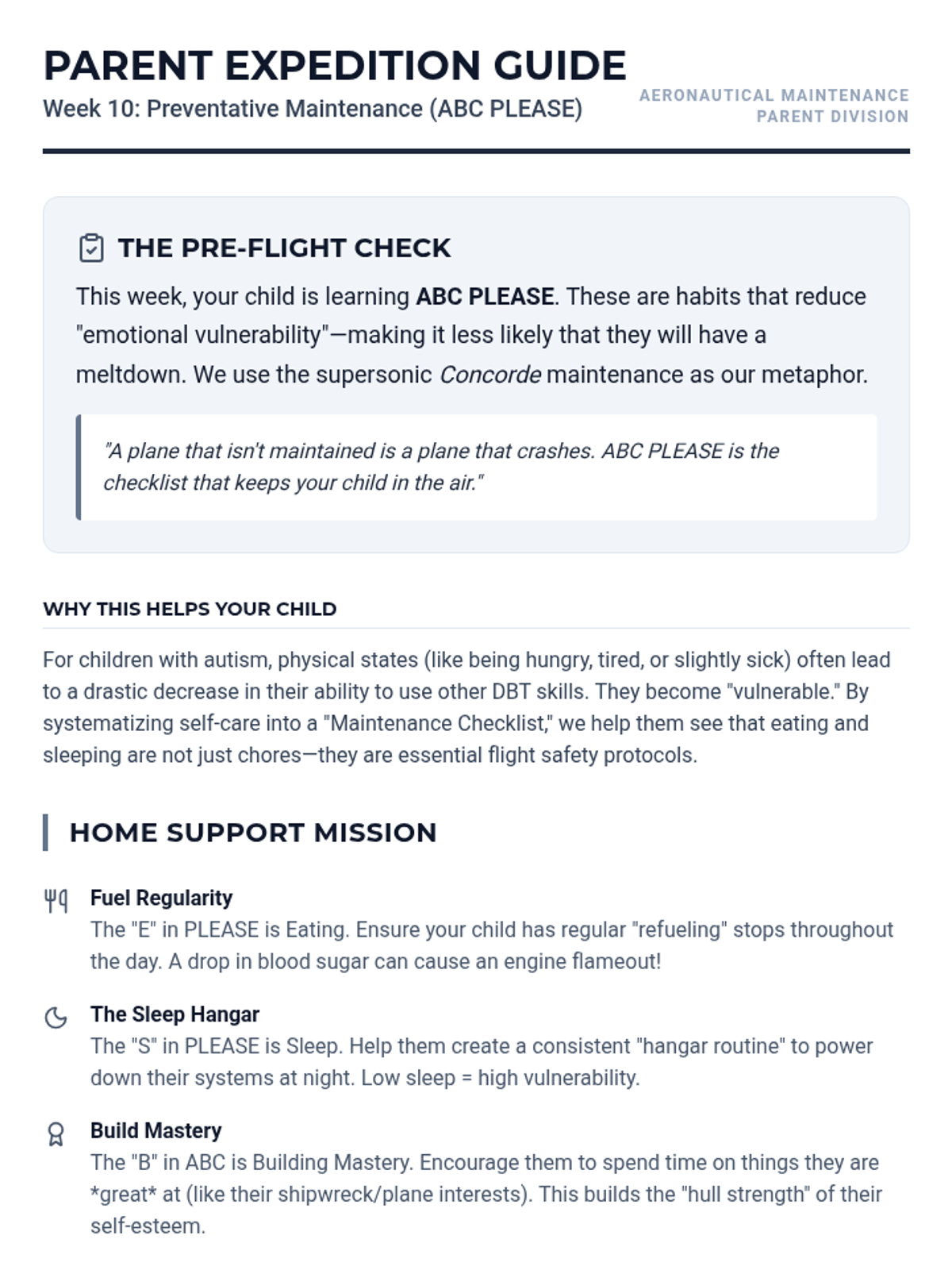
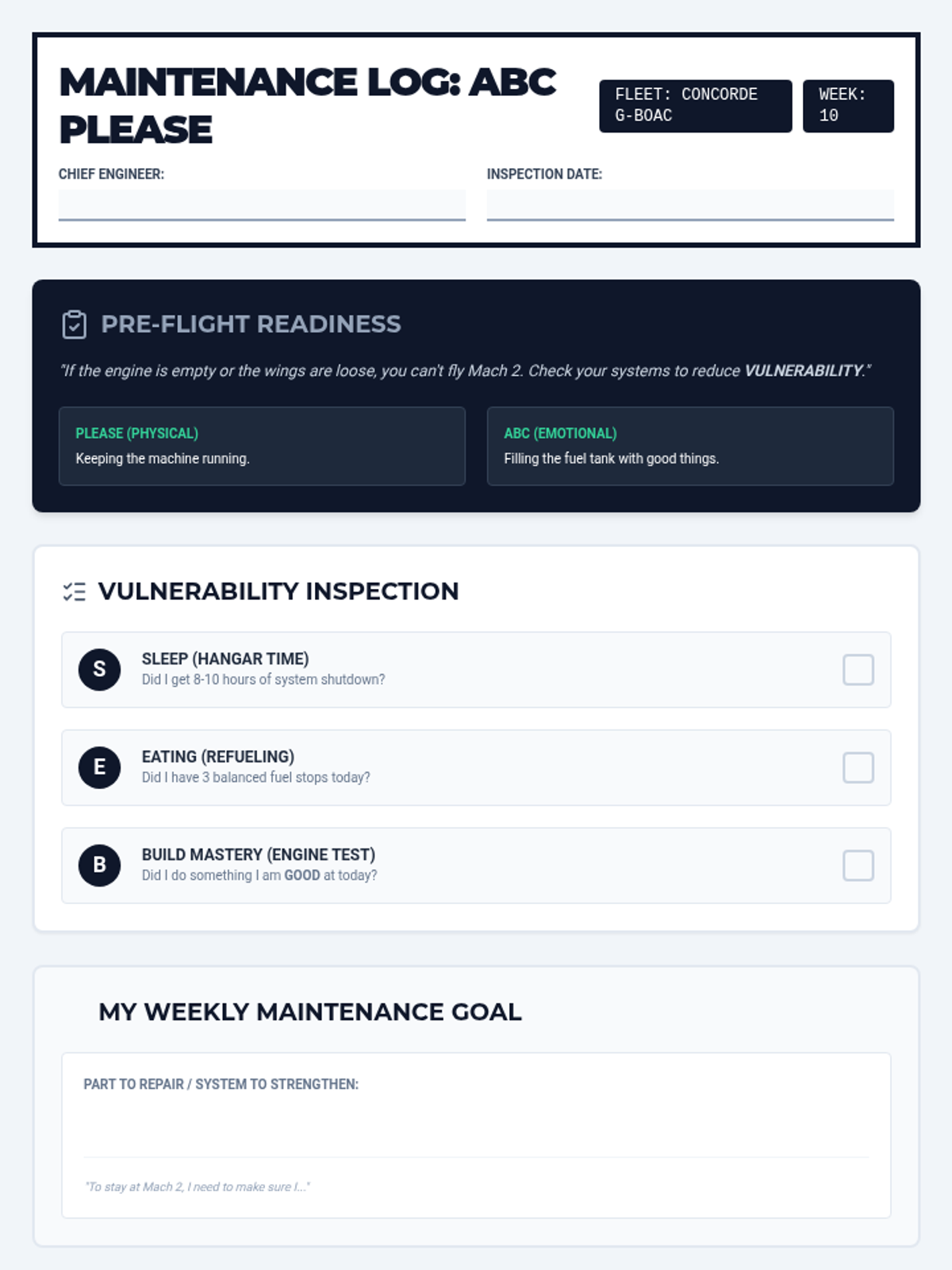
Reducing emotional vulnerability (ABC PLEASE) using the maintenance checklists of the Concorde fleet.
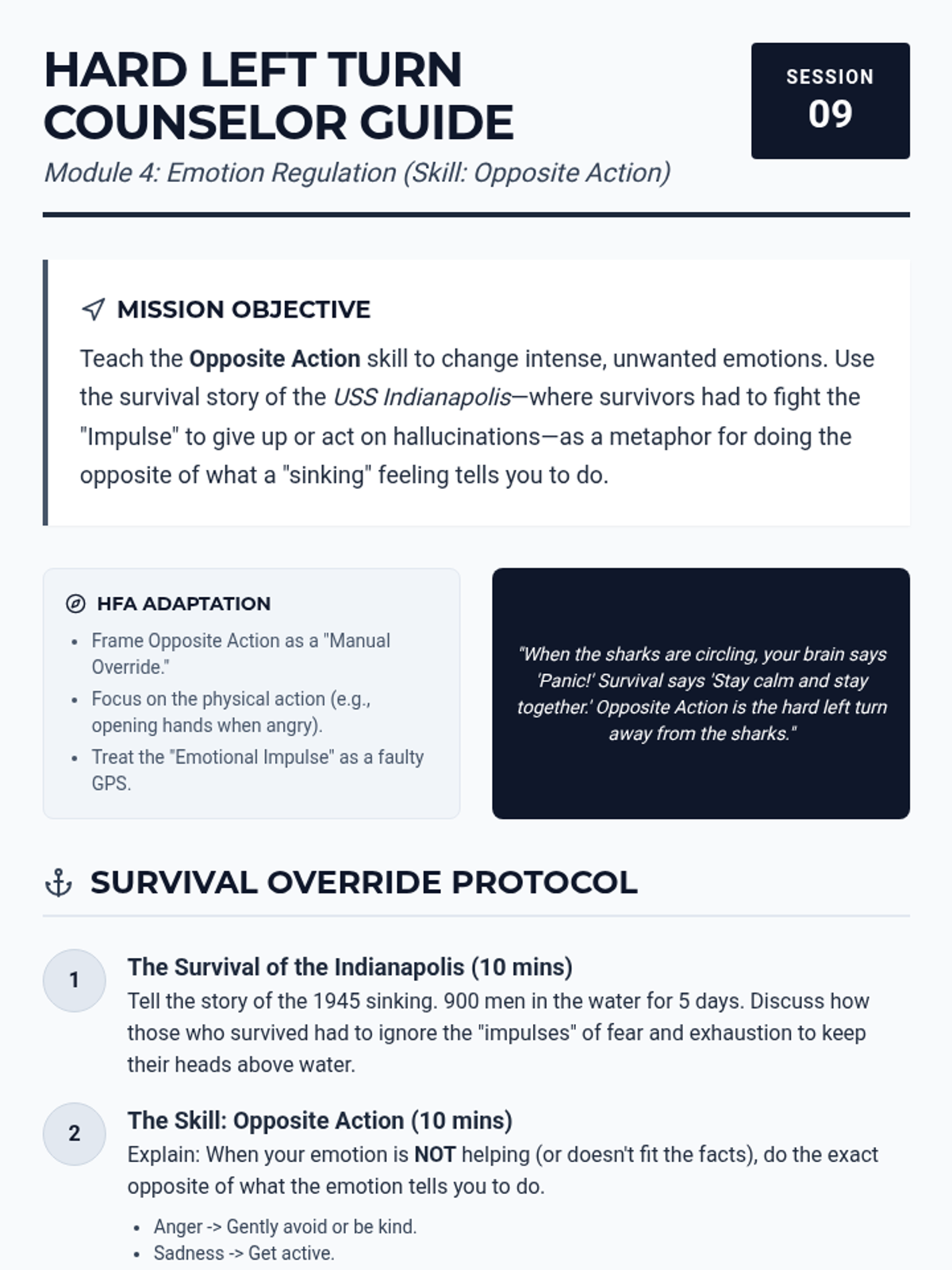
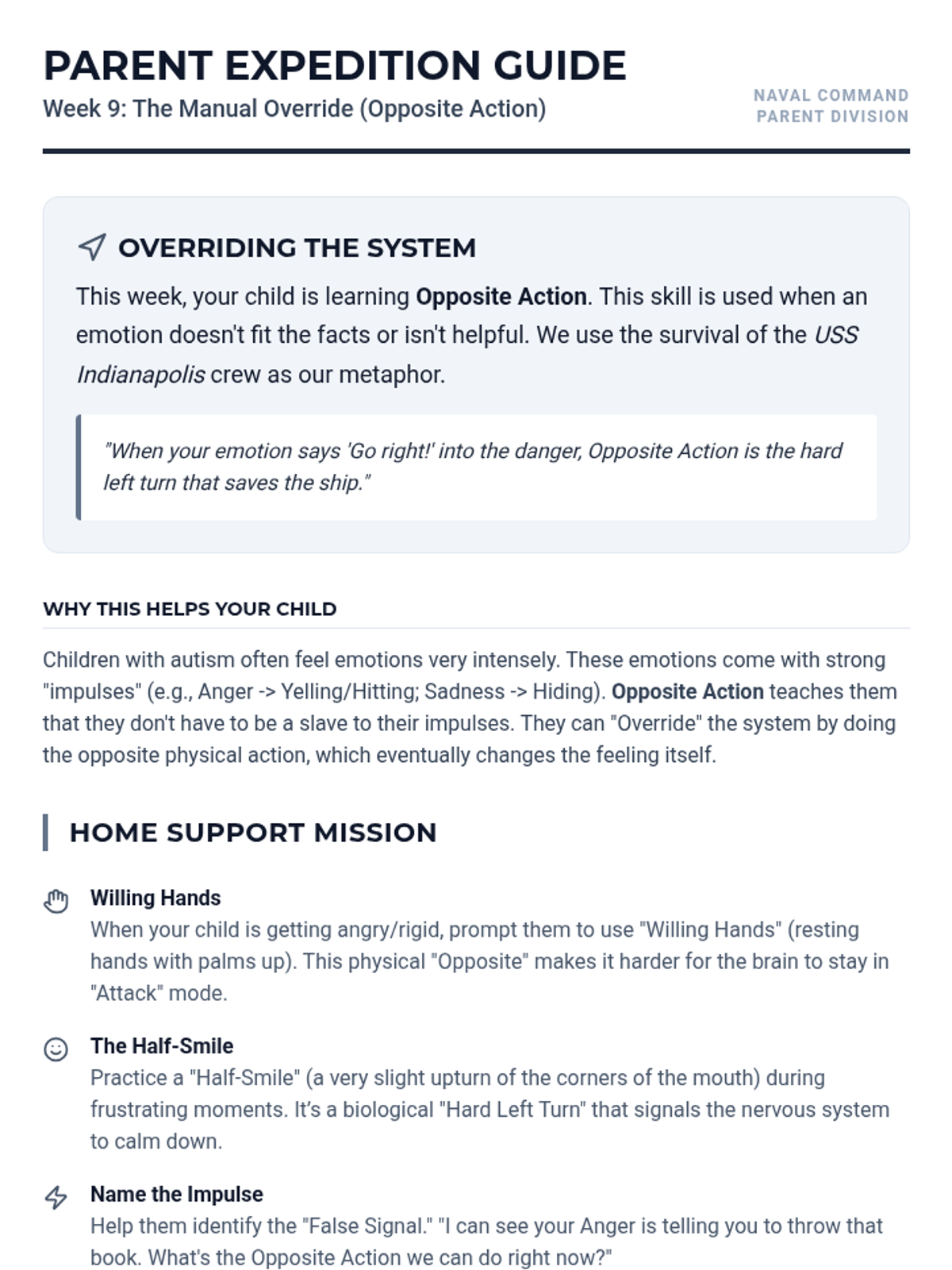
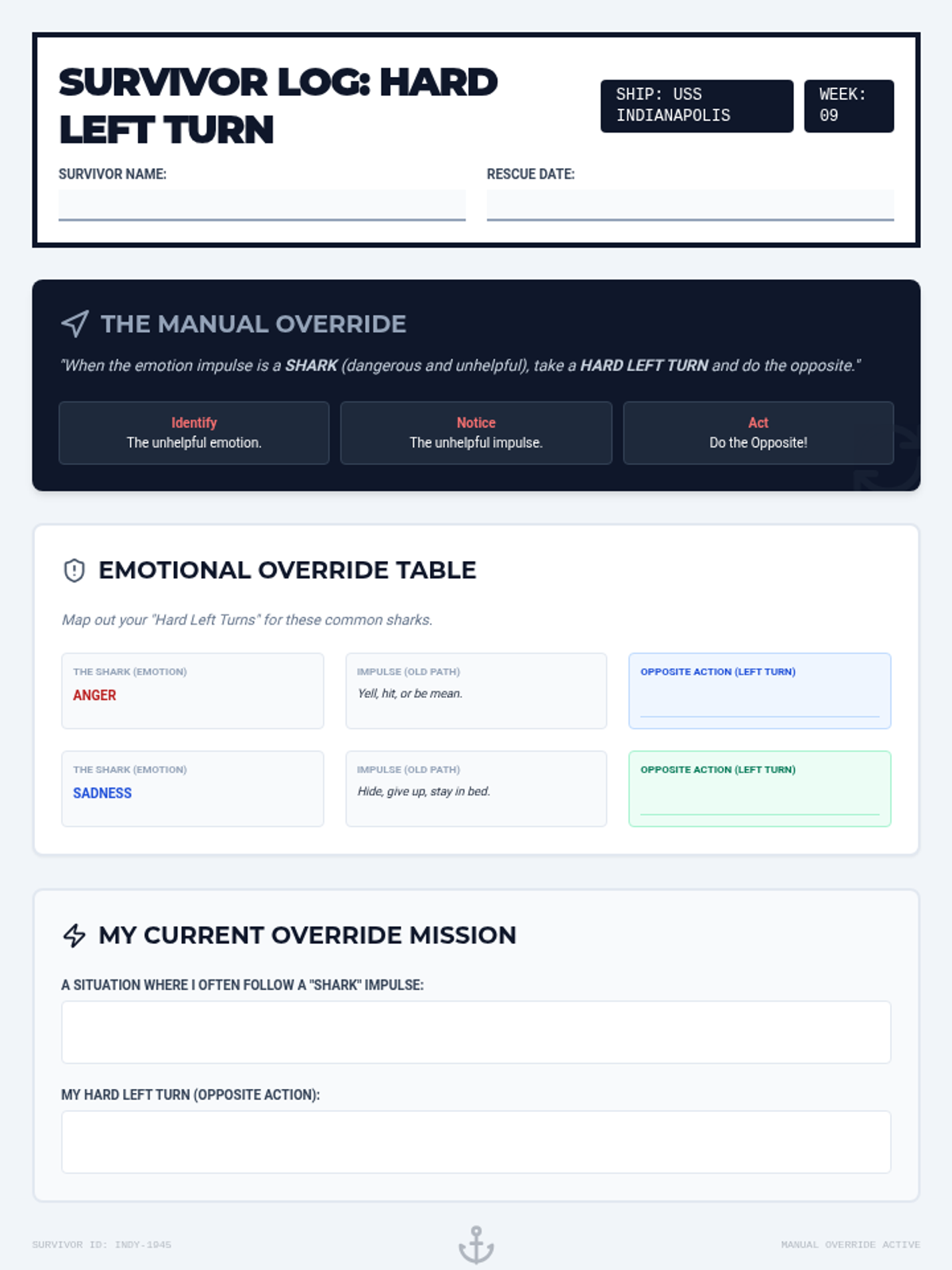
Practicing Opposite Action for intense emotions using the survival story of the USS Indianapolis.
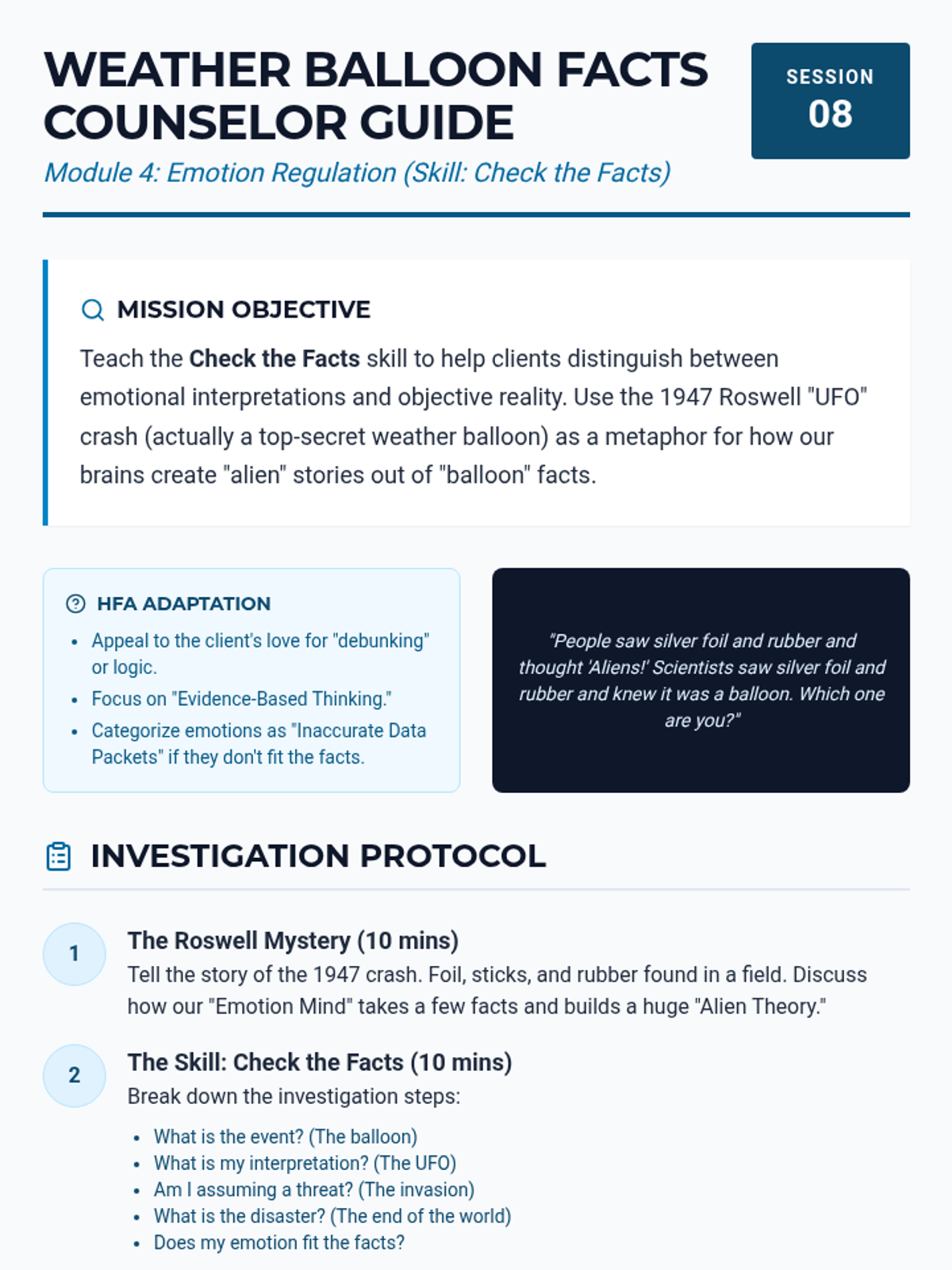
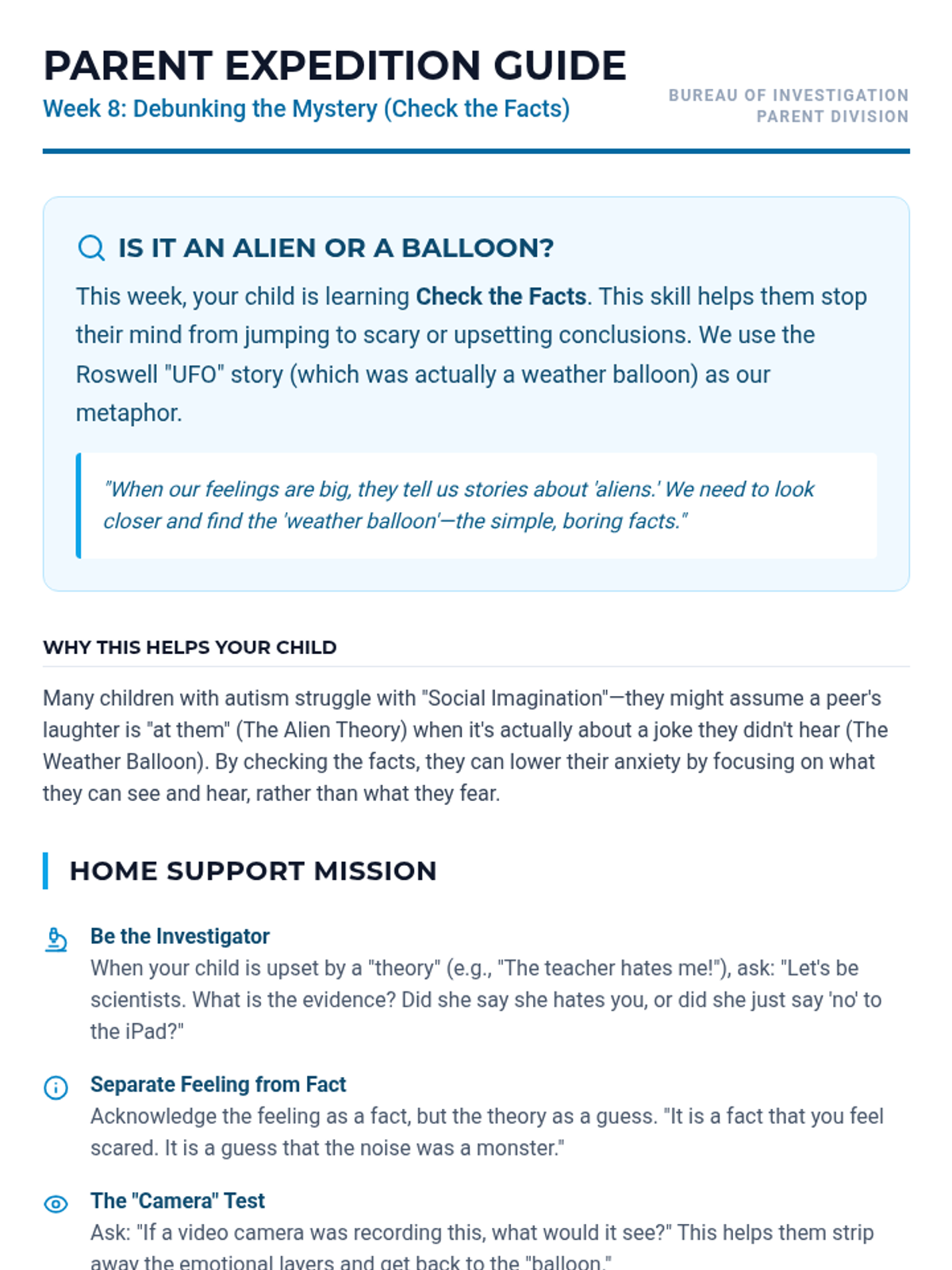
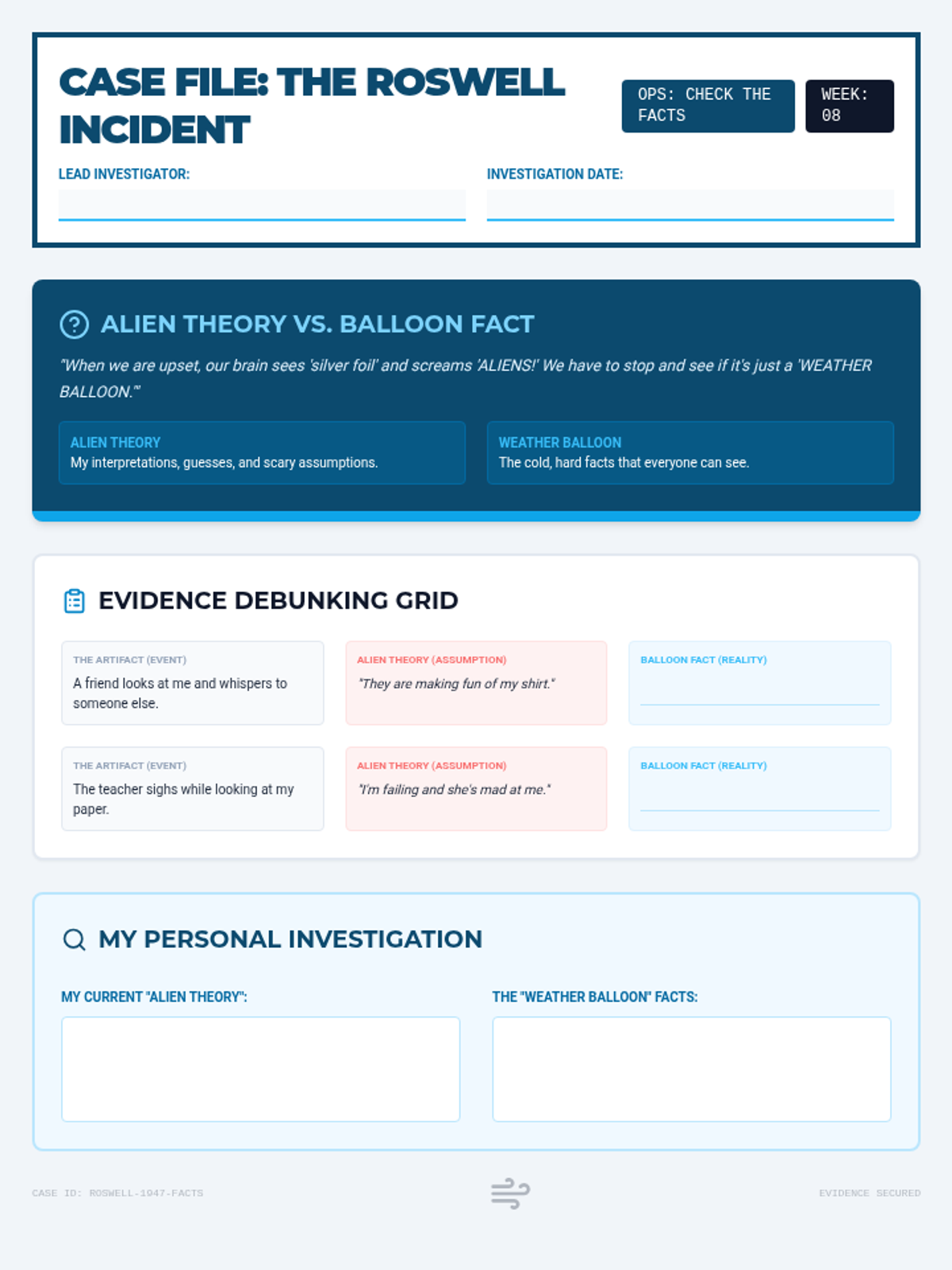
Distinguishing between facts and emotions (Check the Facts) using the investigation of the Roswell 'crash' and other weather balloon incidents.
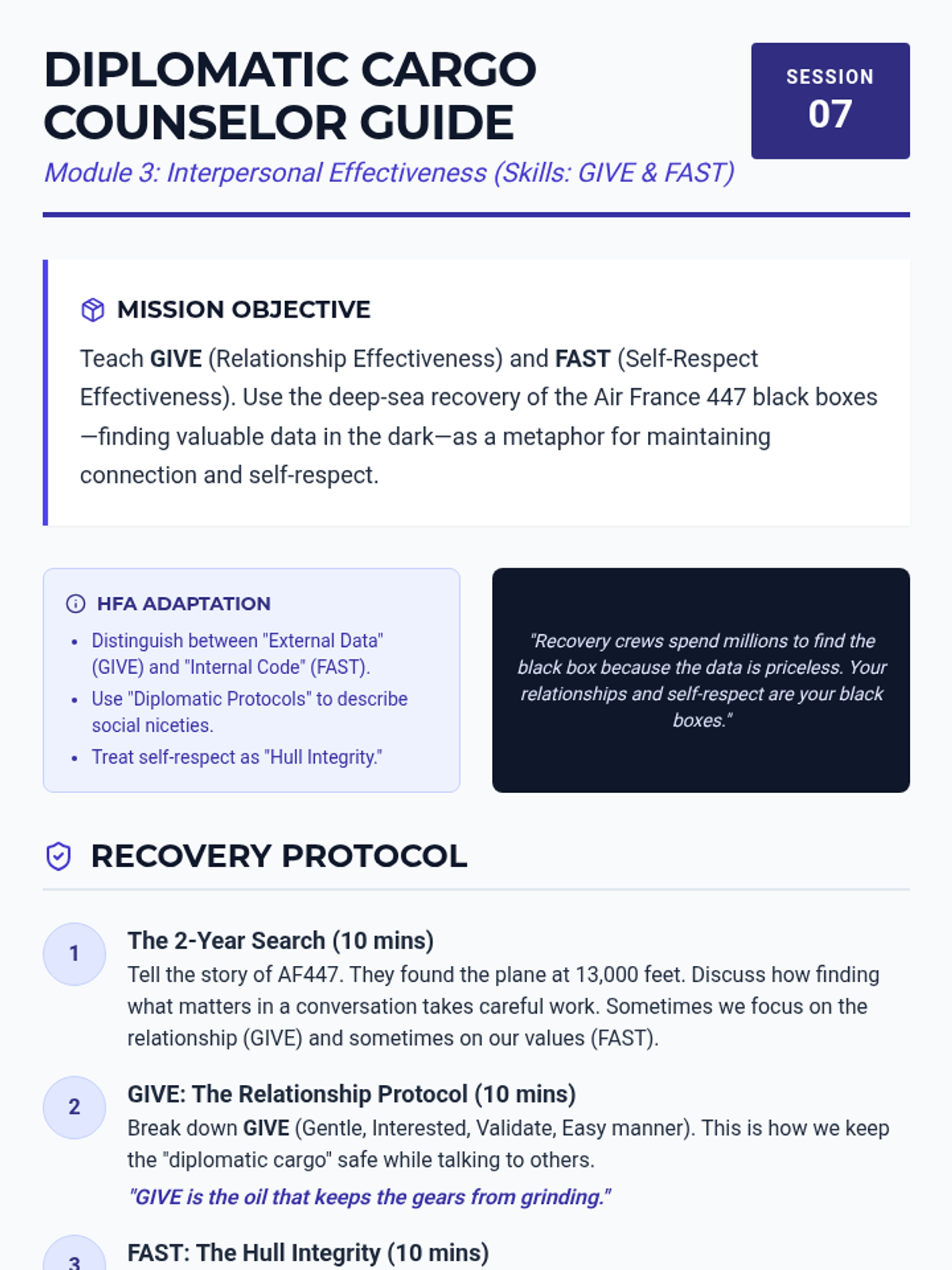
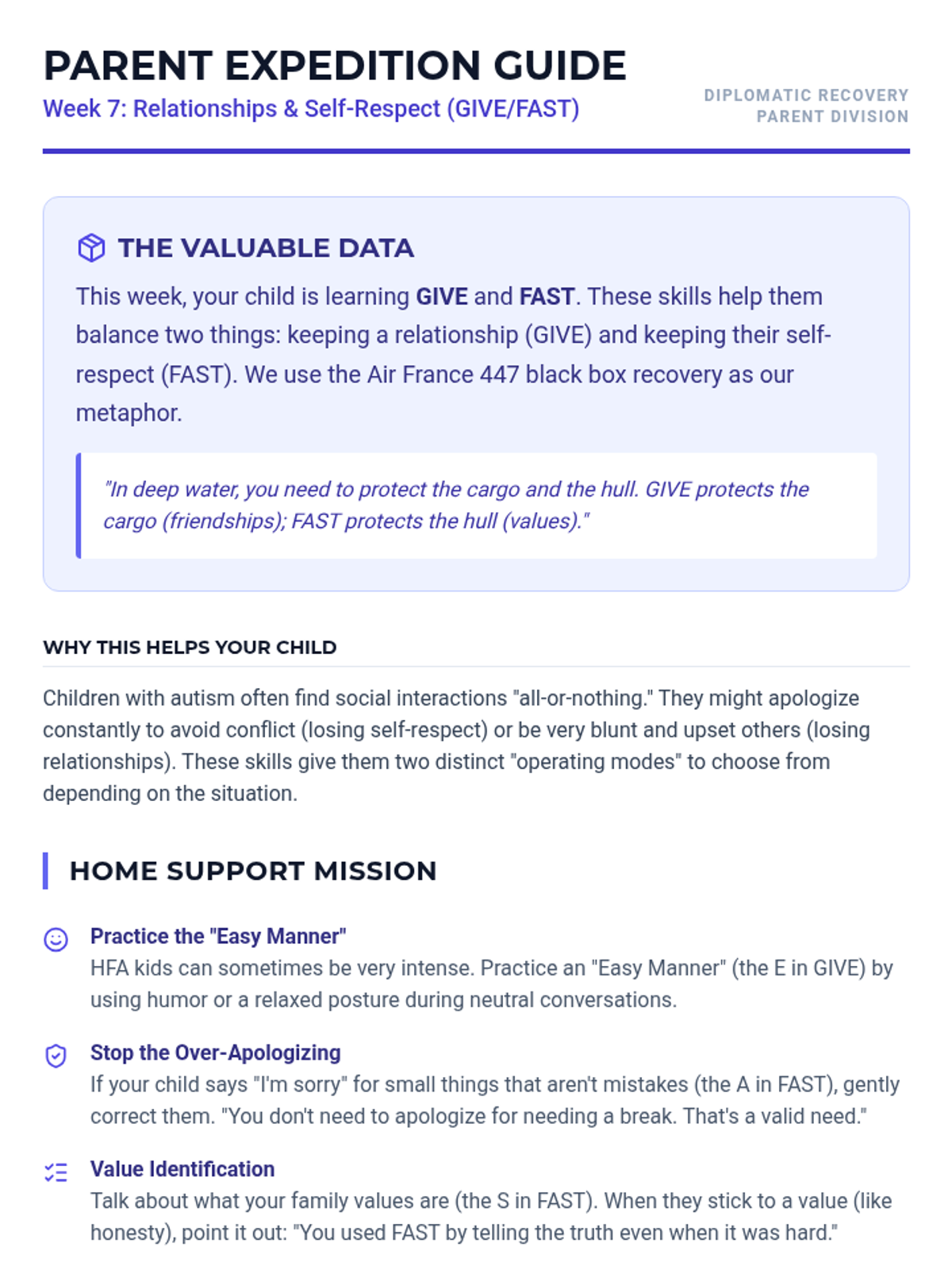
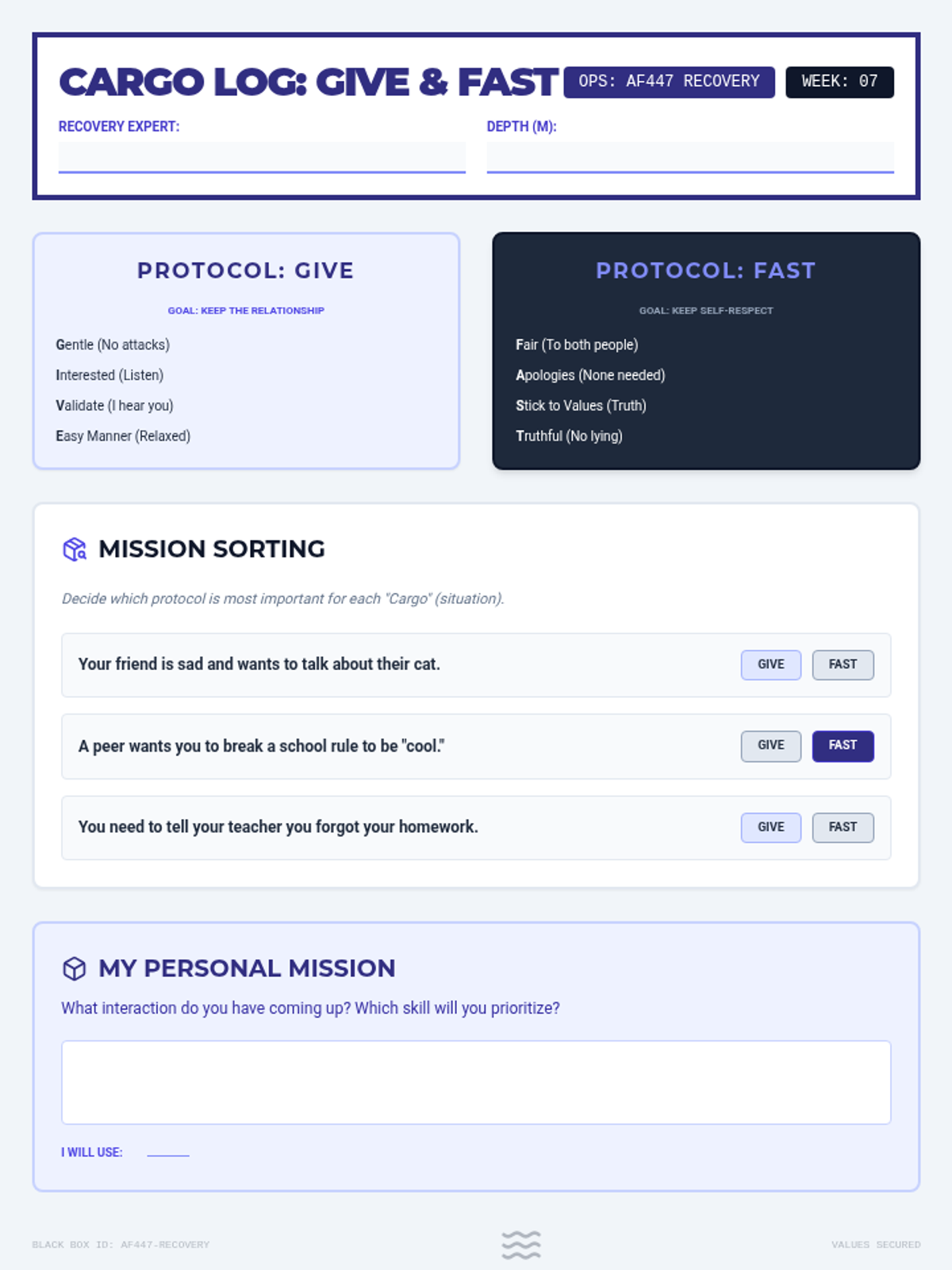
Focusing on the GIVE and FAST skills for maintaining relationships and self-respect, using the black box recovery of Air France 447 as a metaphor for retrieving valuable connection data.
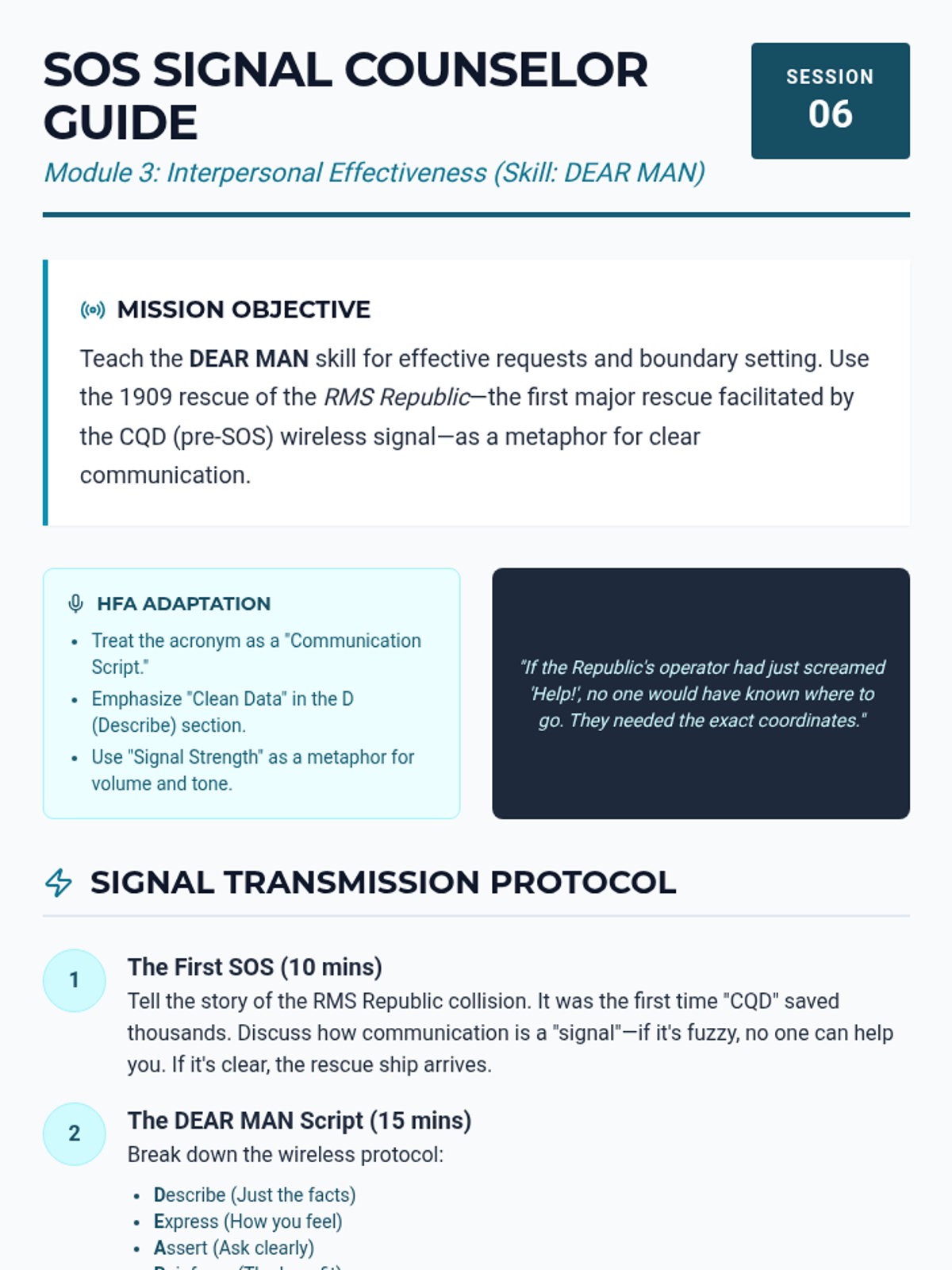
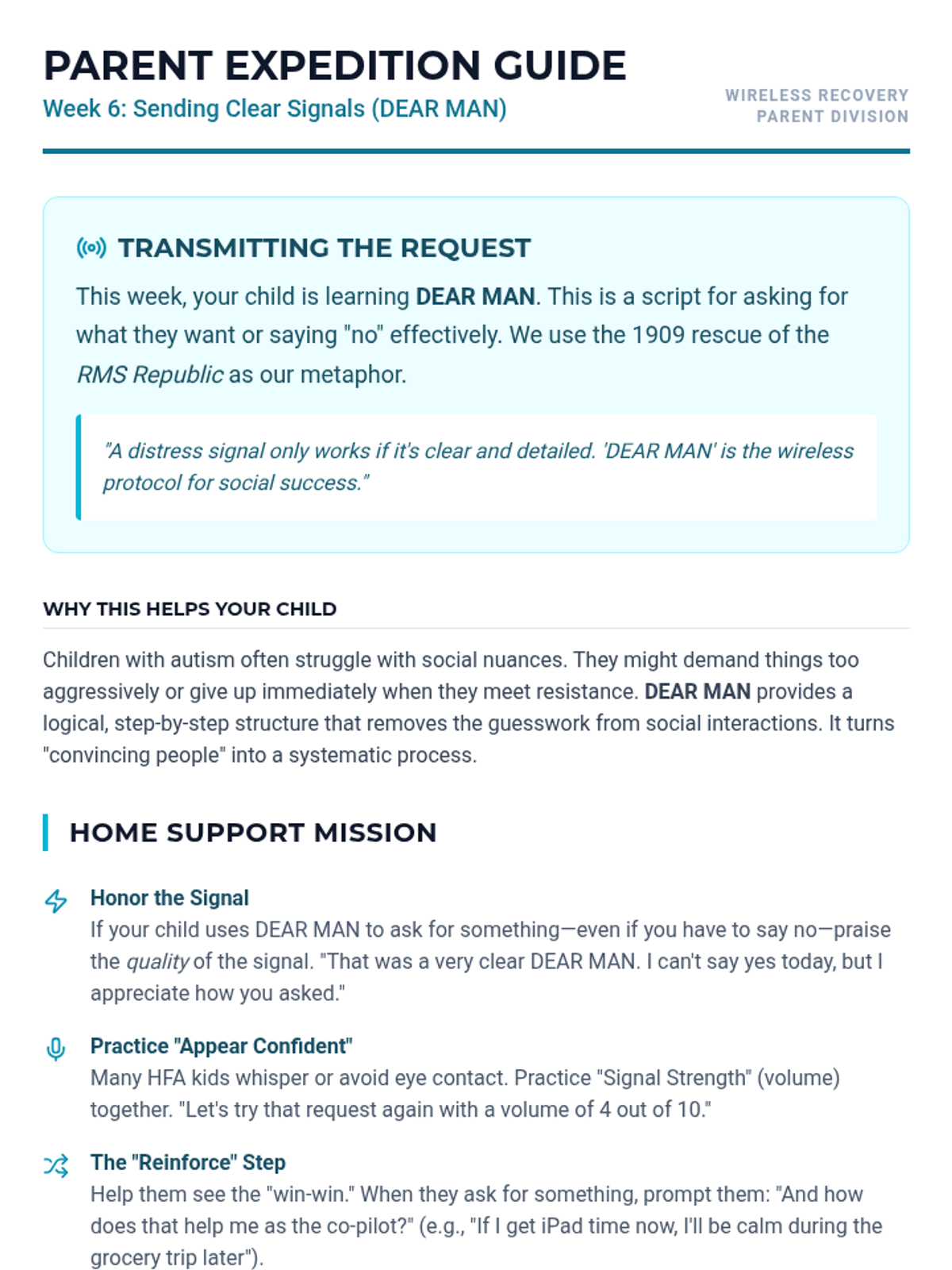
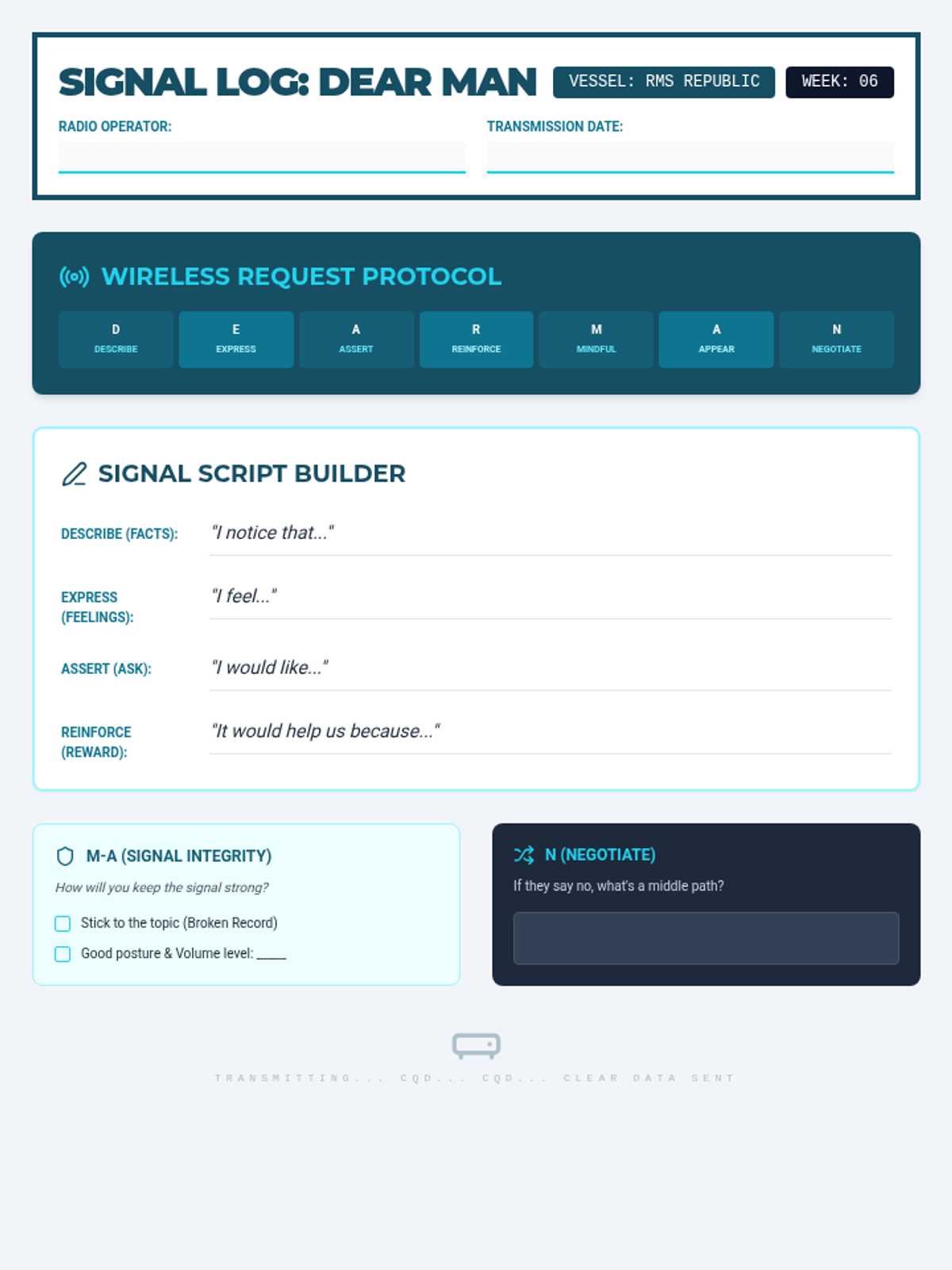
Mastering the DEAR MAN skill for effective requests and boundary setting, using the SOS signals of the RMS Republic as a metaphor for clear communication.
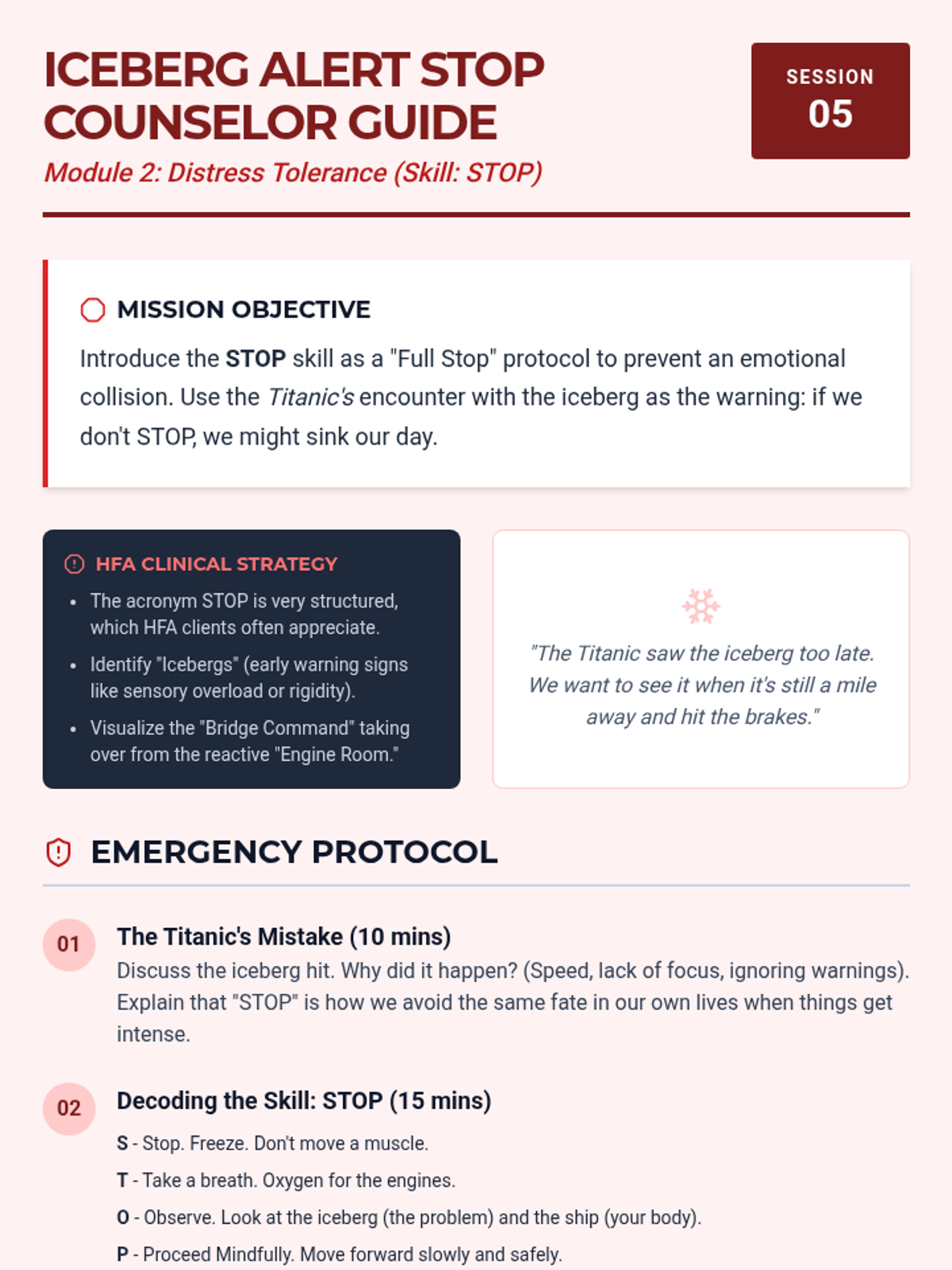
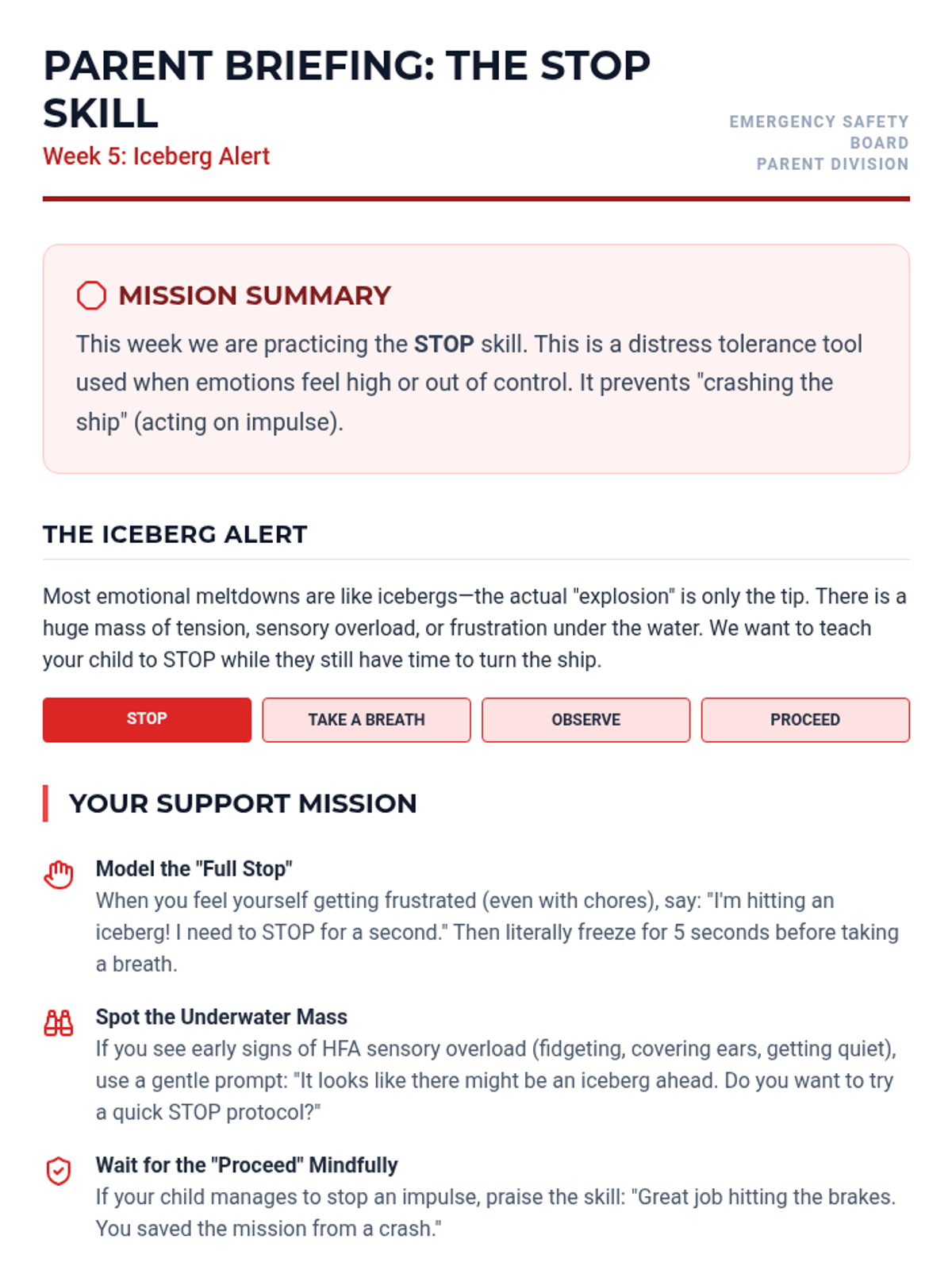
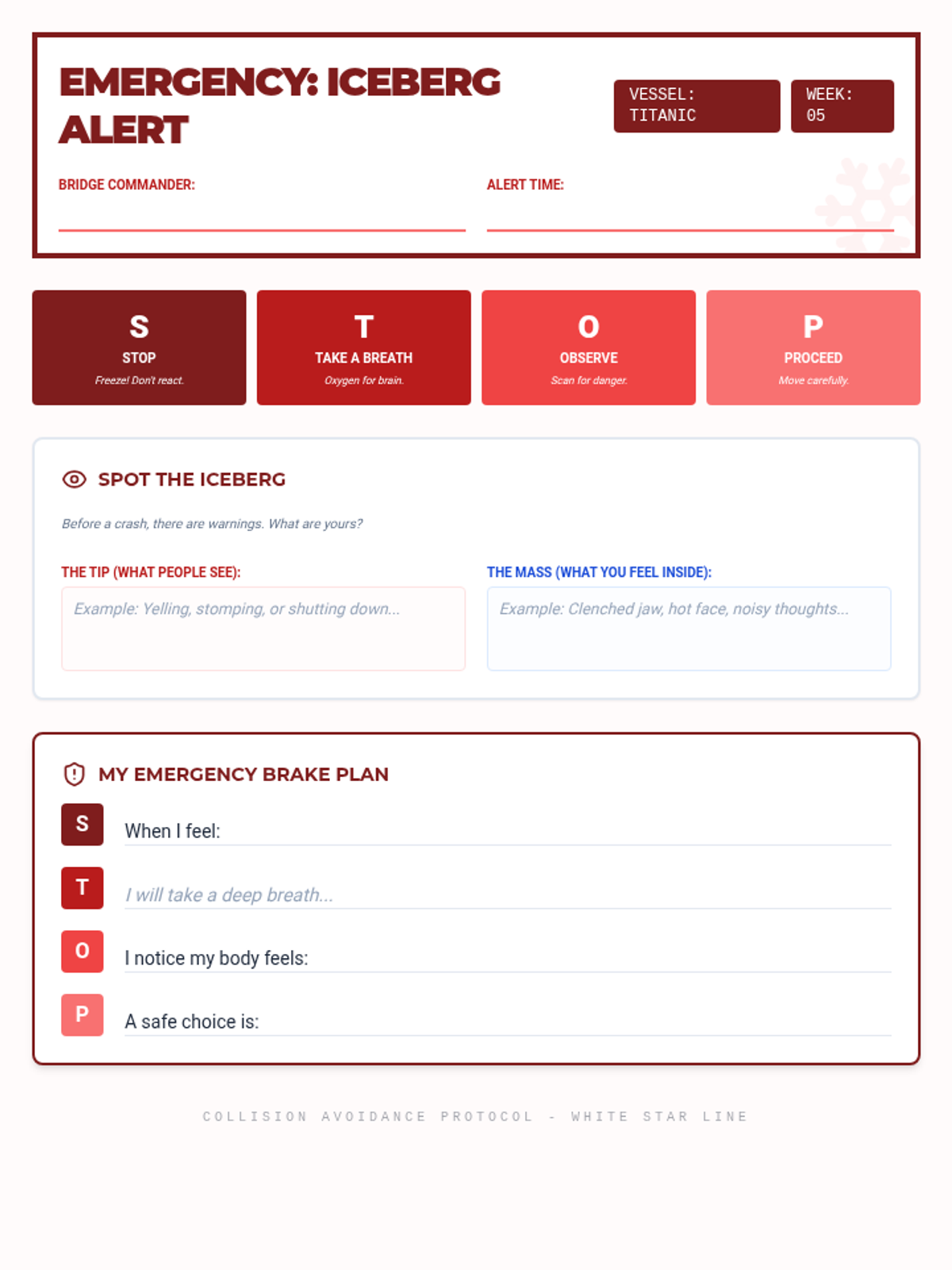
Using the STOP skill to prevent 'emotional icebergs' from sinking the day.
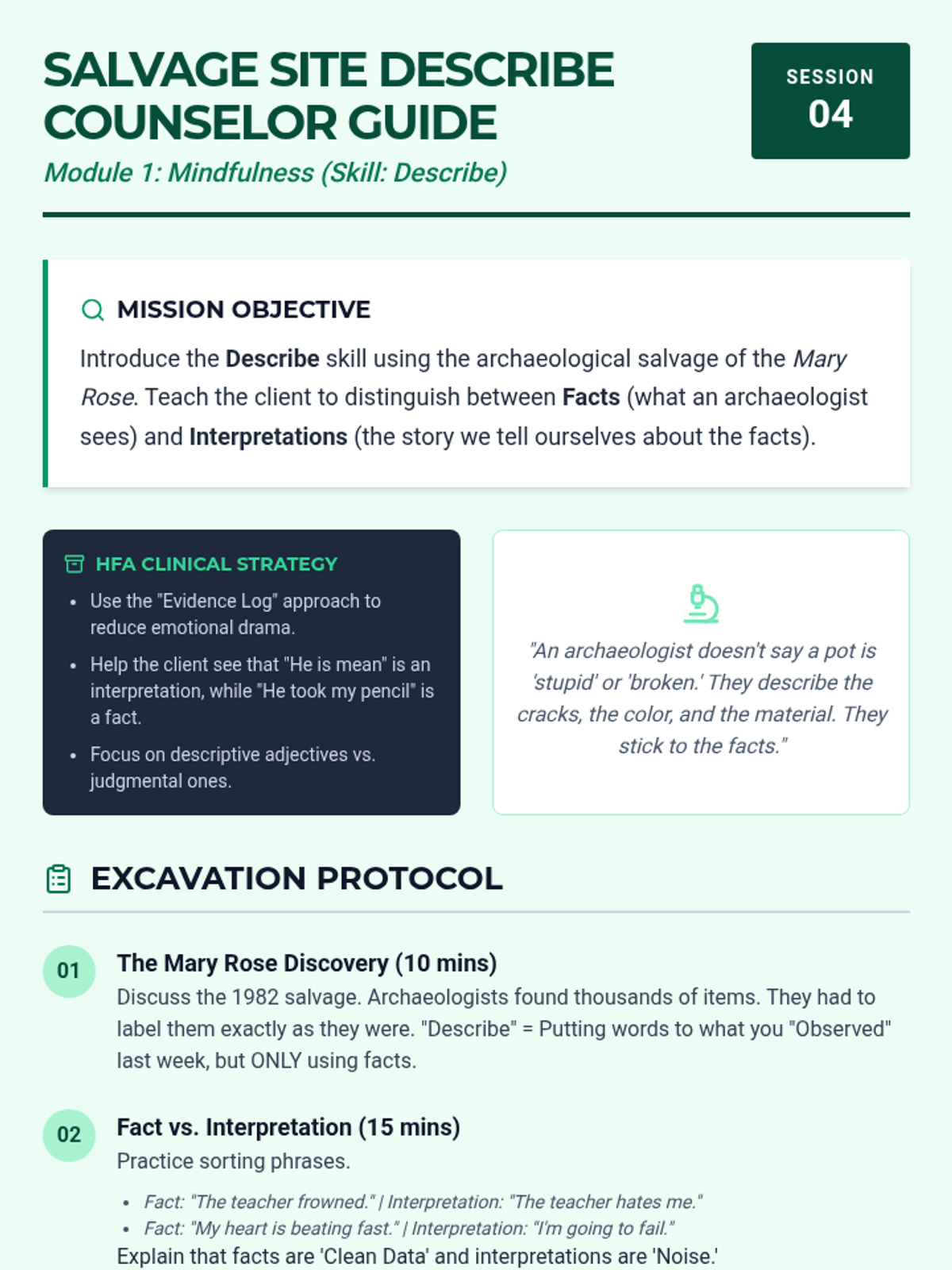
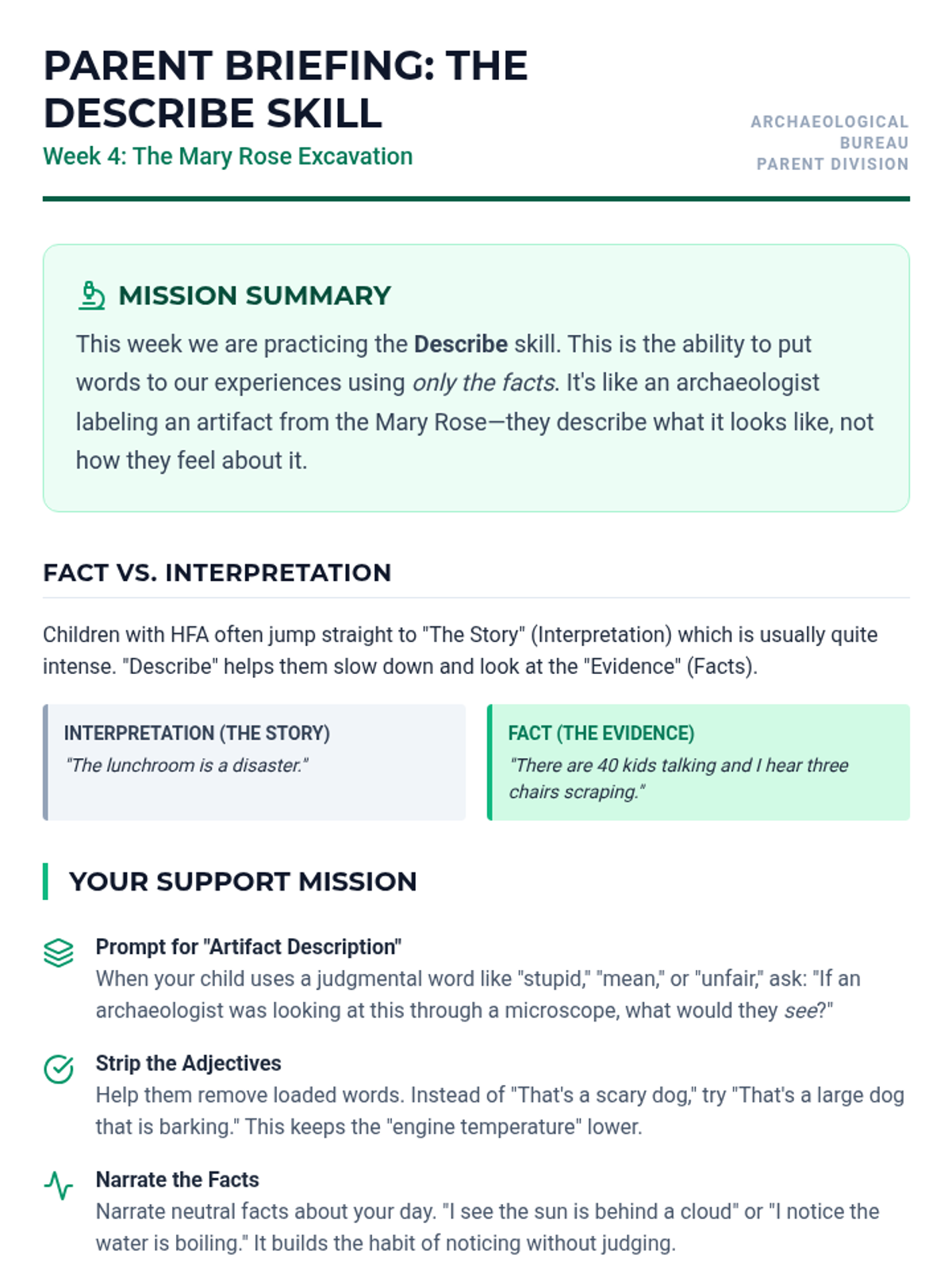
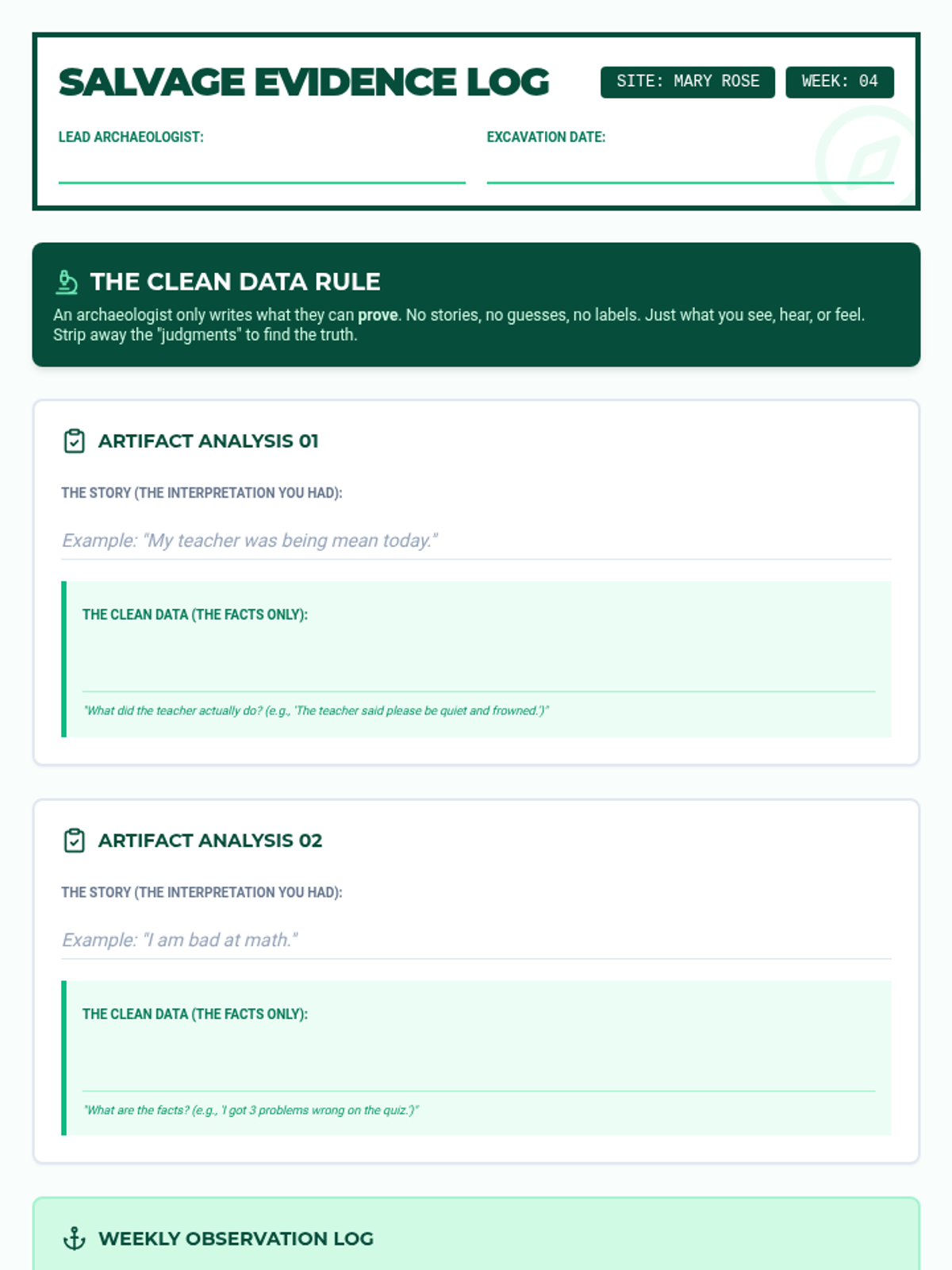
Distinguishing facts from interpretations (Describe skill) using the archaeological evidence of the Mary Rose shipwreck.
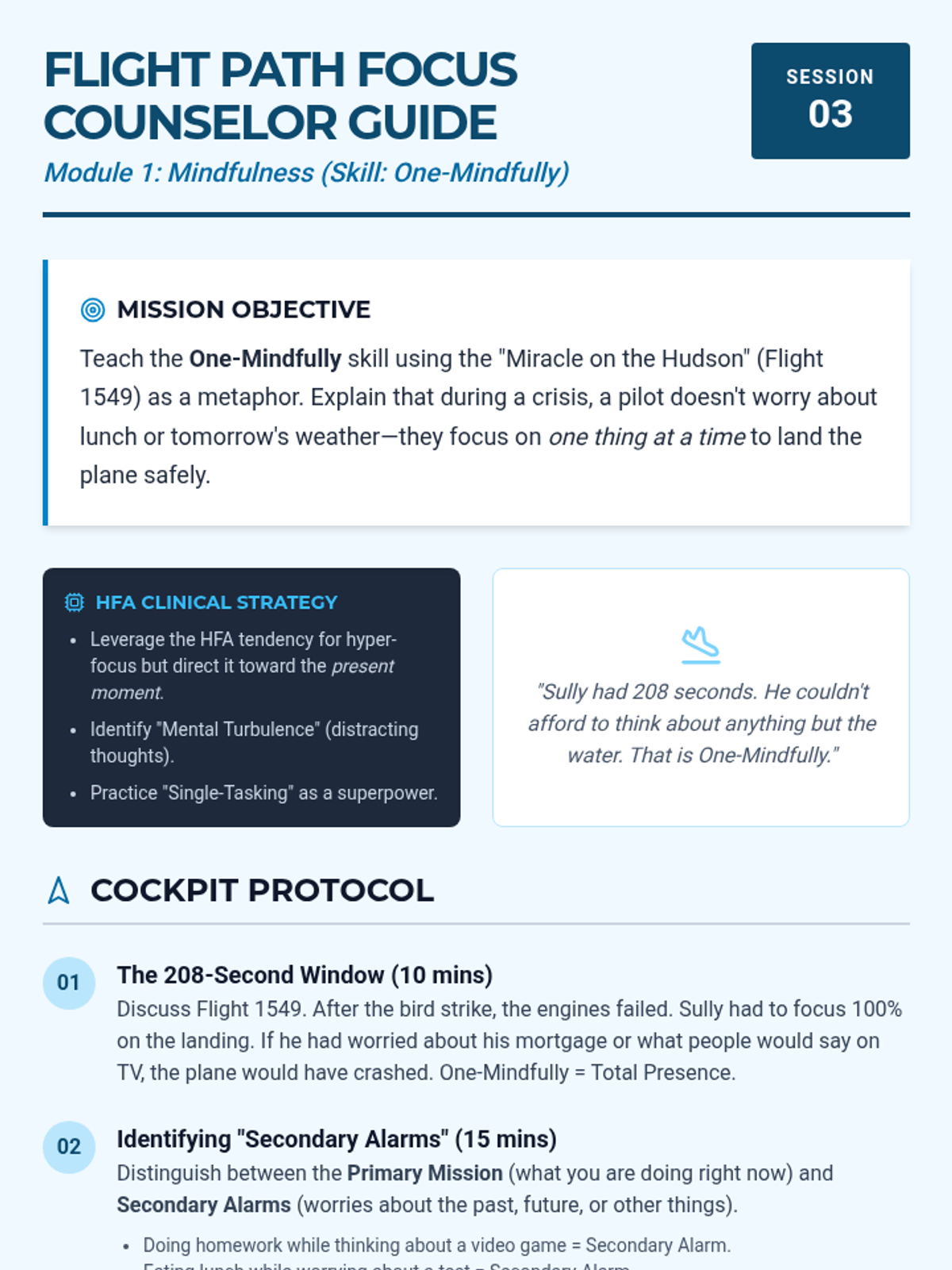
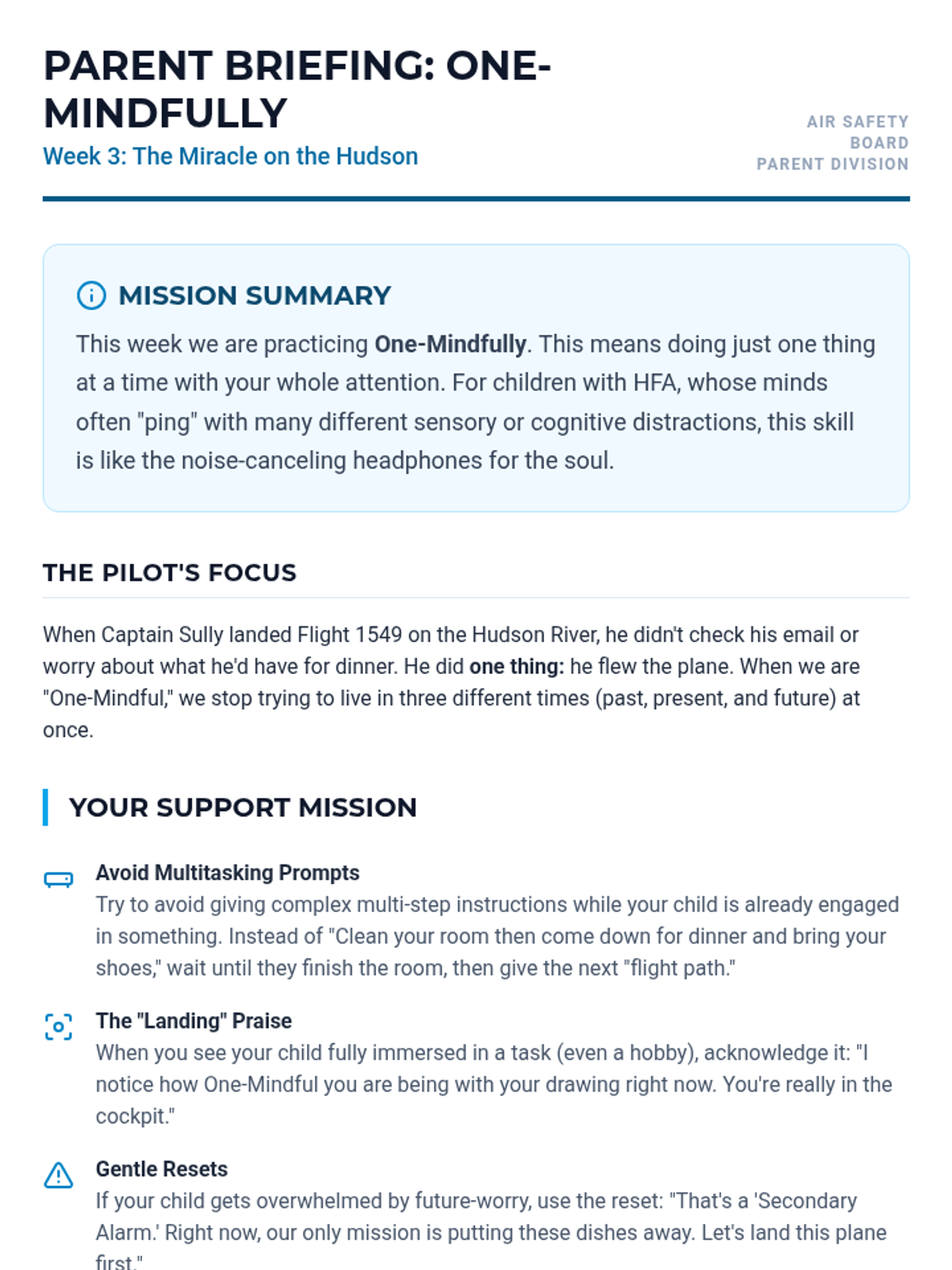
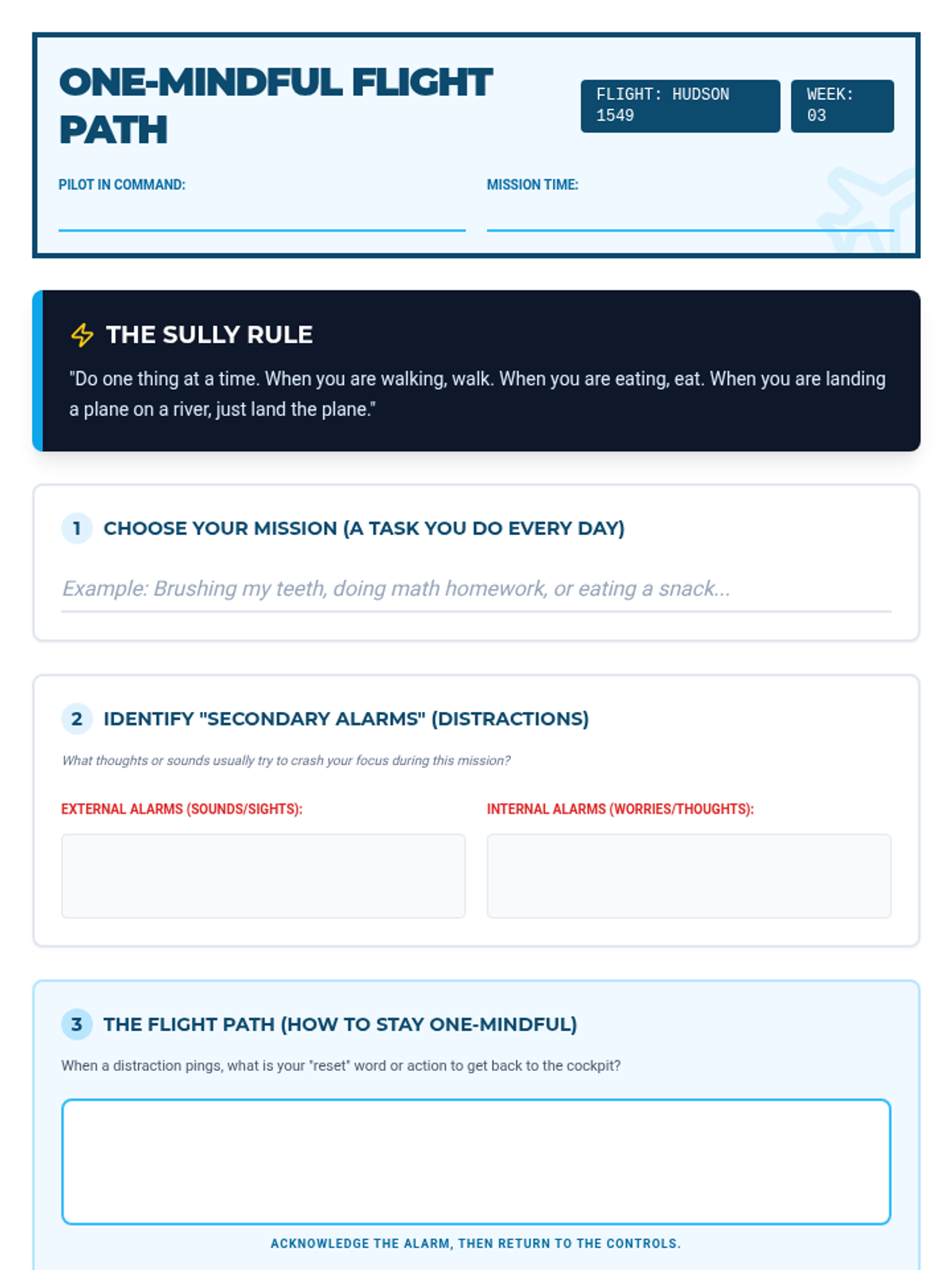
Focusing on 'One-Mindfully' using the intense focus required during the Miracle on the Hudson (Flight 1549) landing.
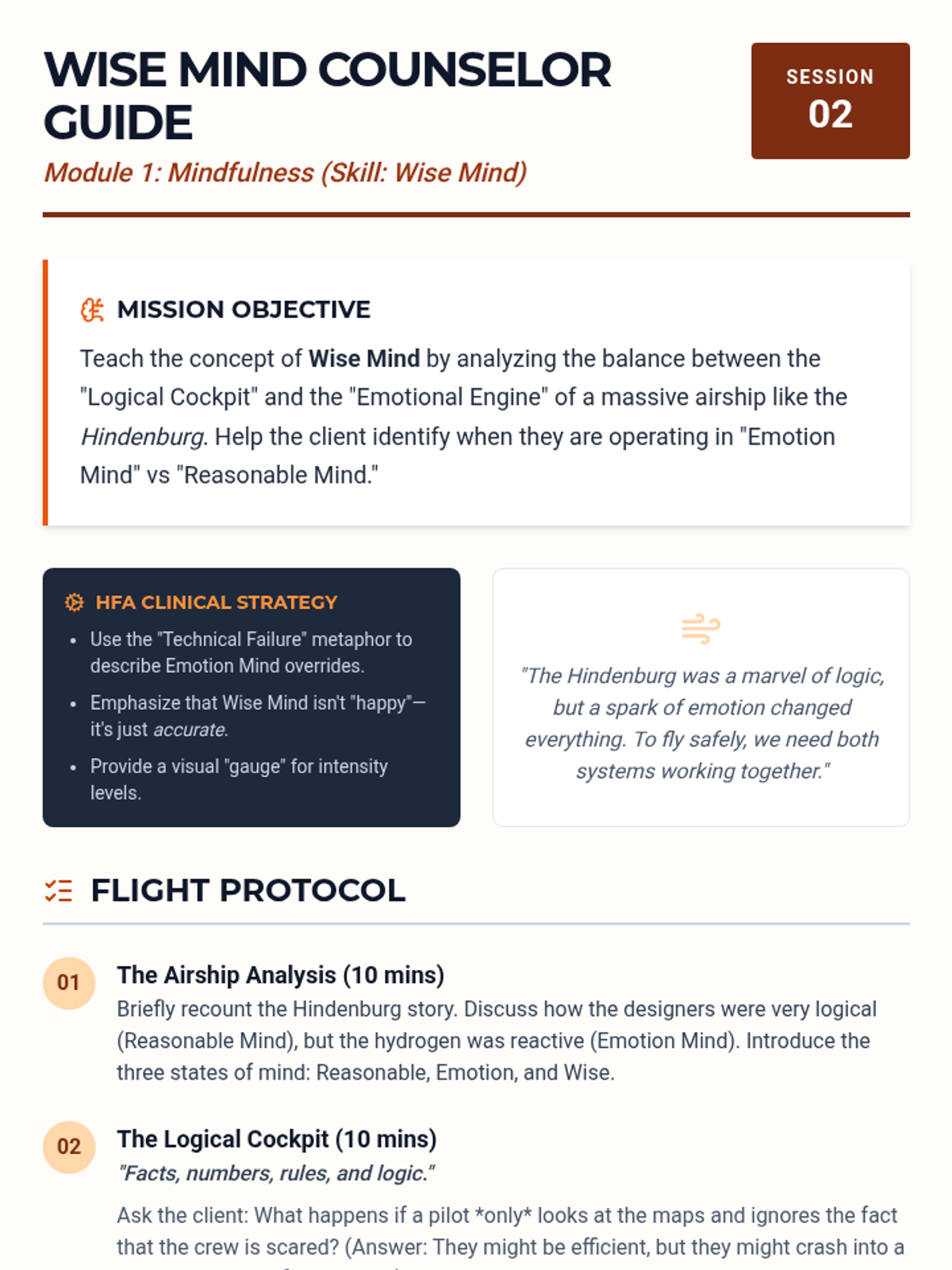
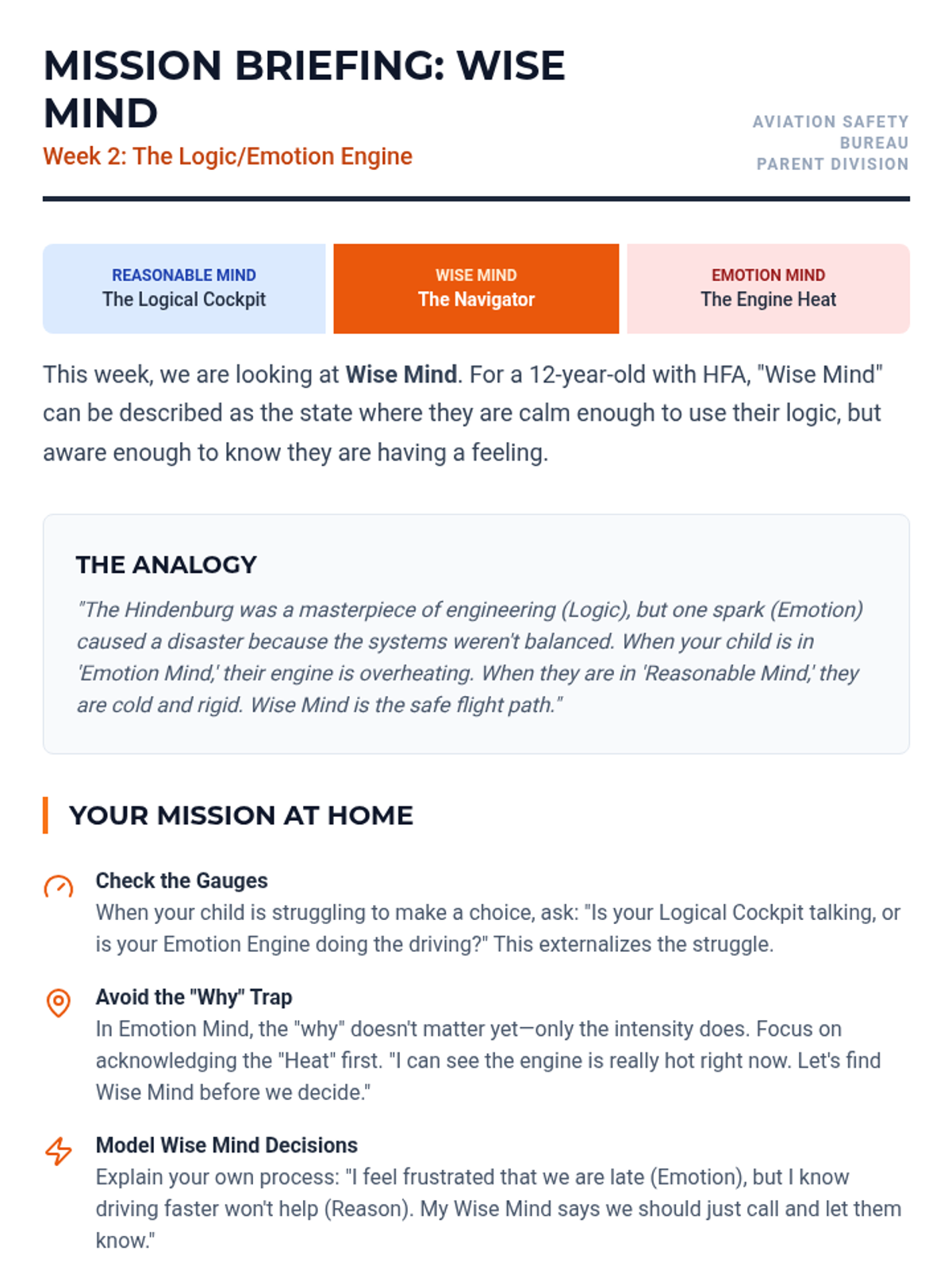
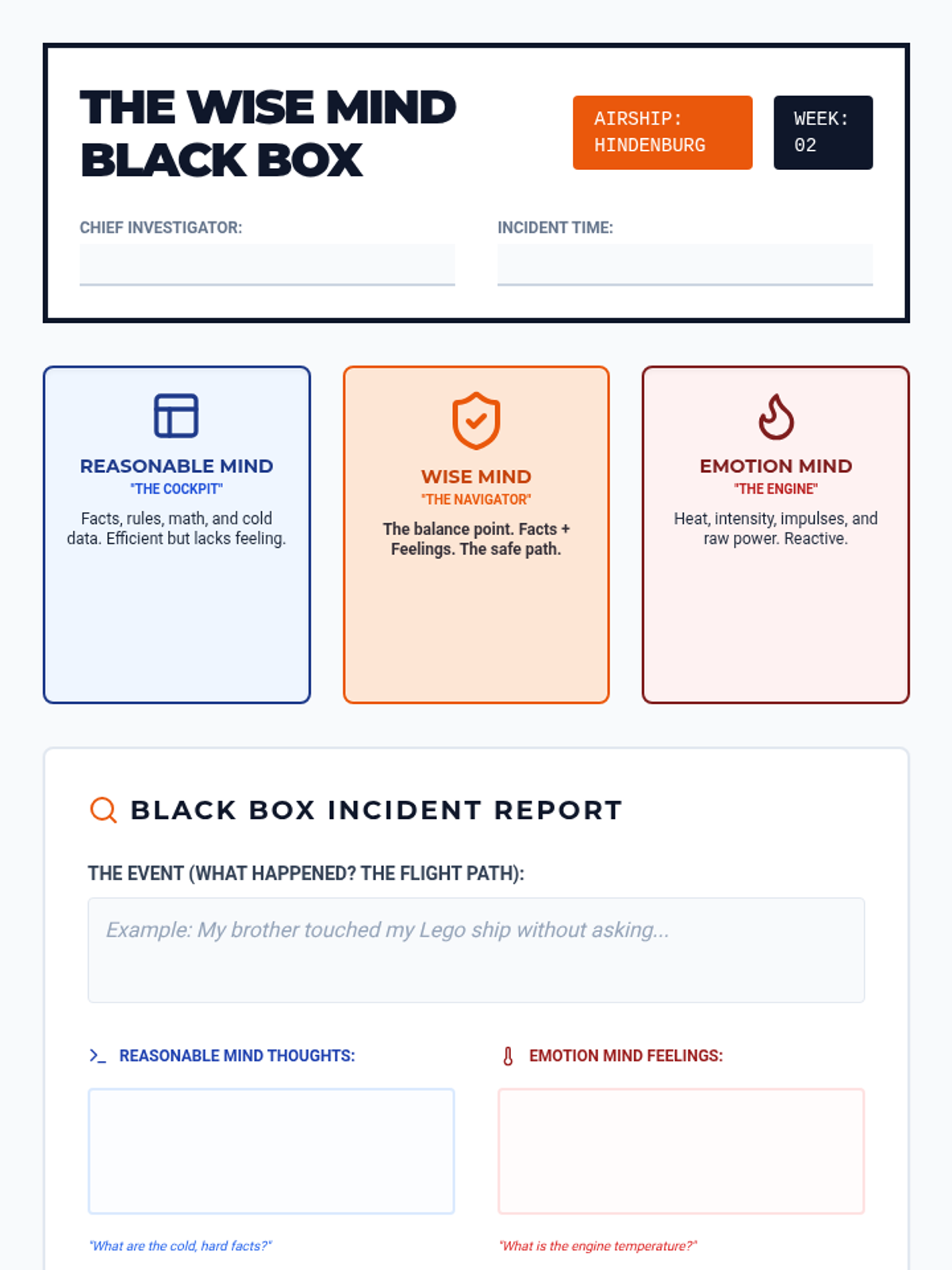
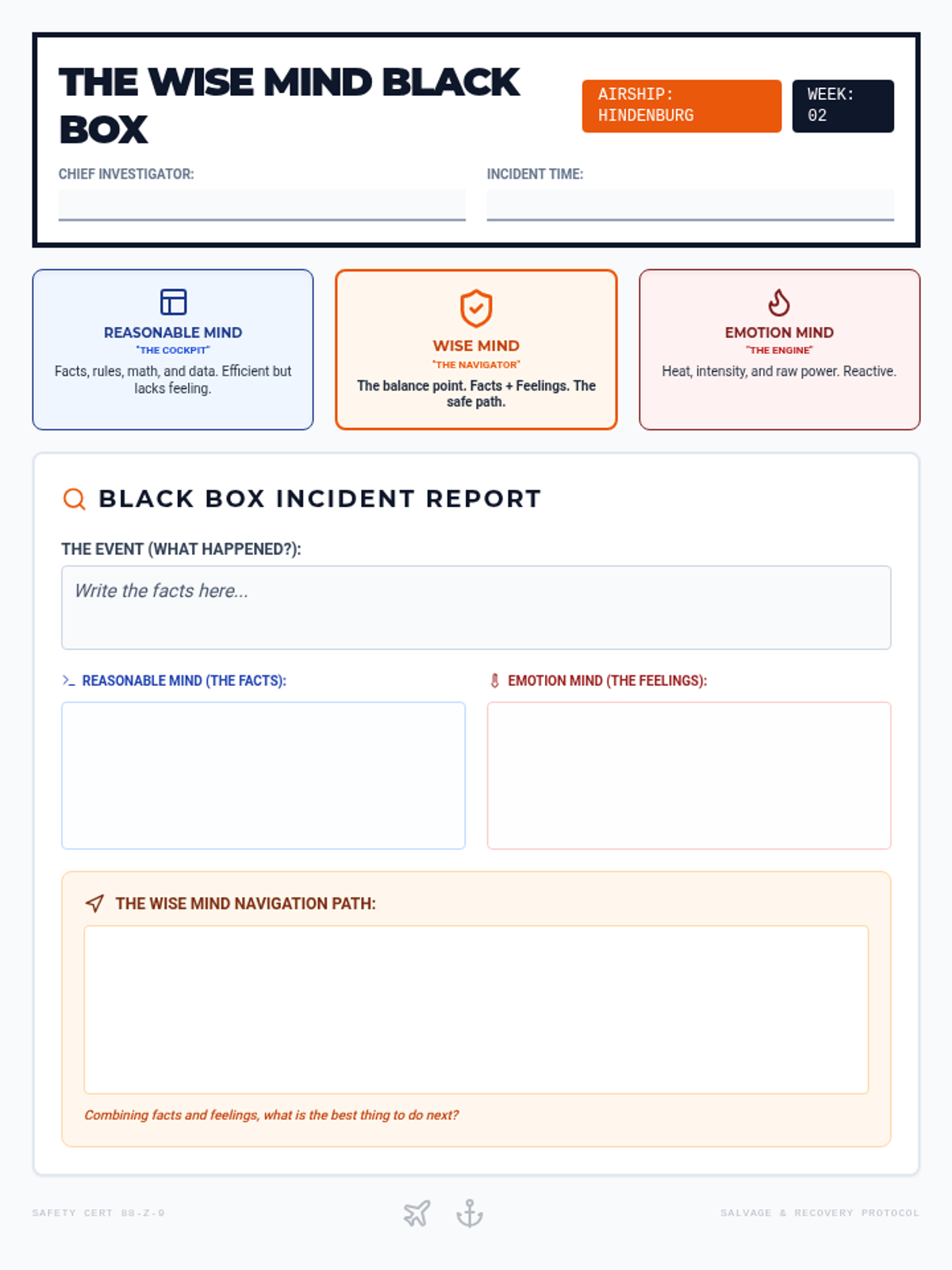
Understanding Wise Mind through the lens of the Hindenburg disaster, balancing the 'Logical Cockpit' with the 'Emotional Engine.'
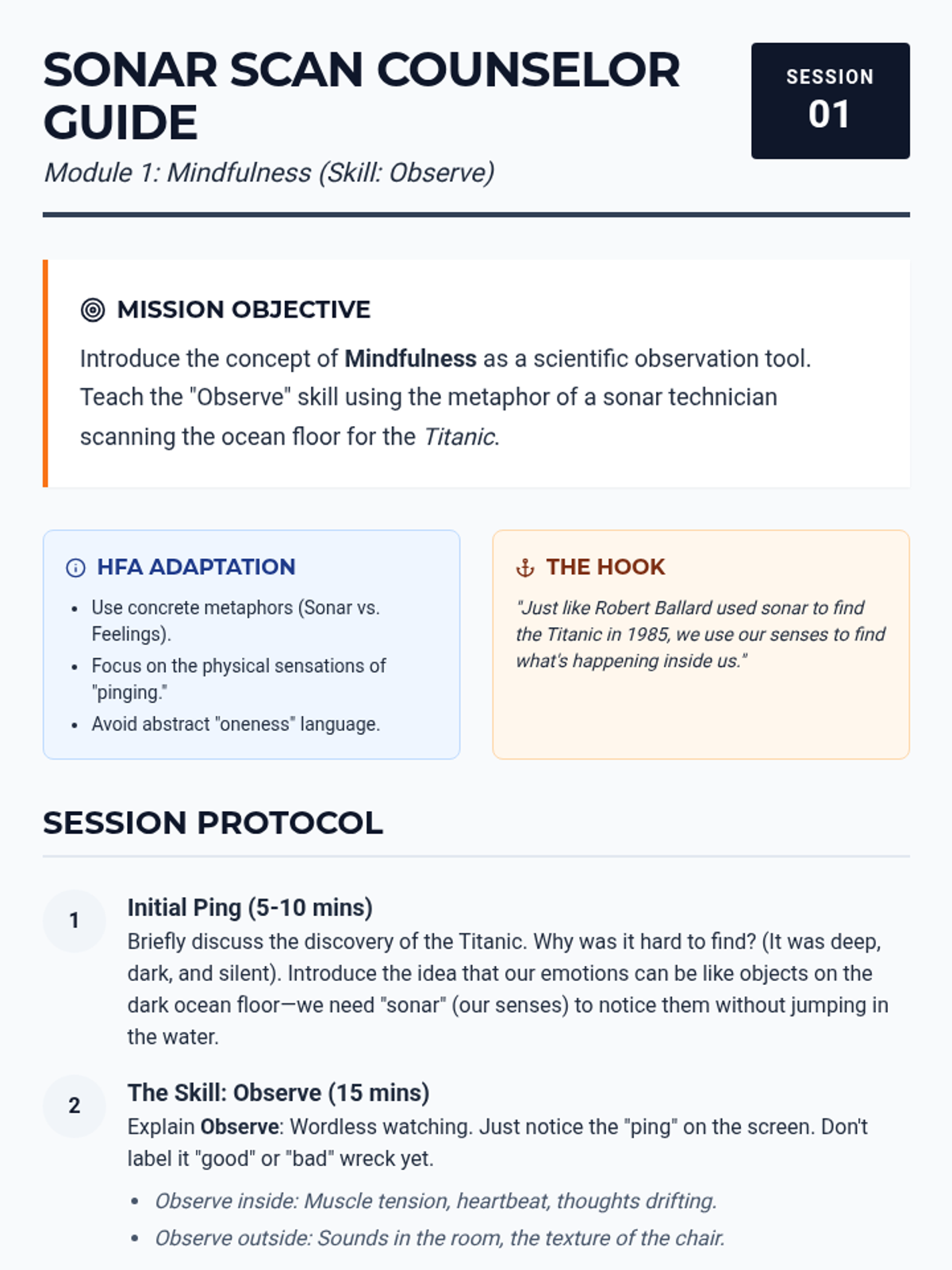
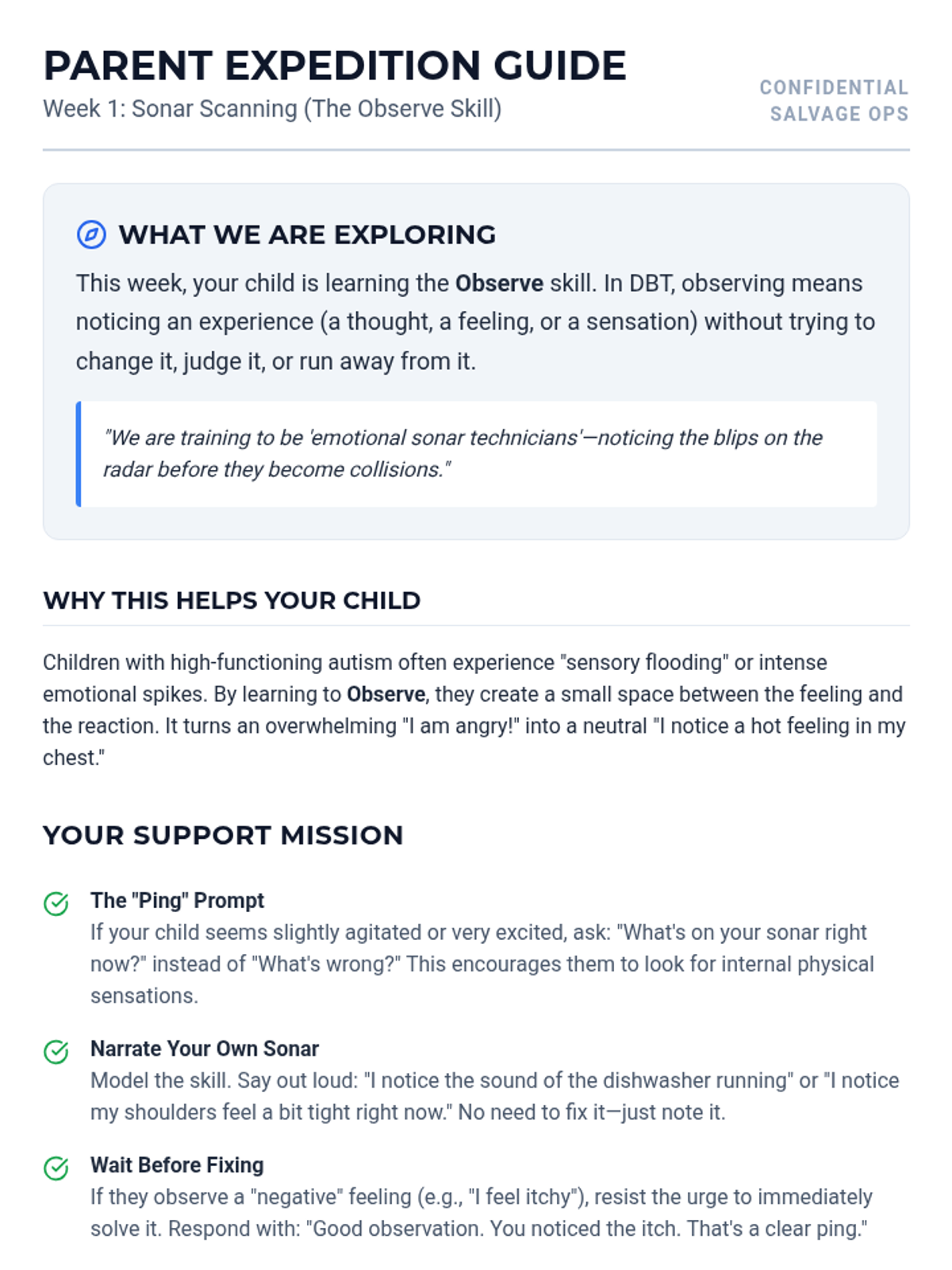
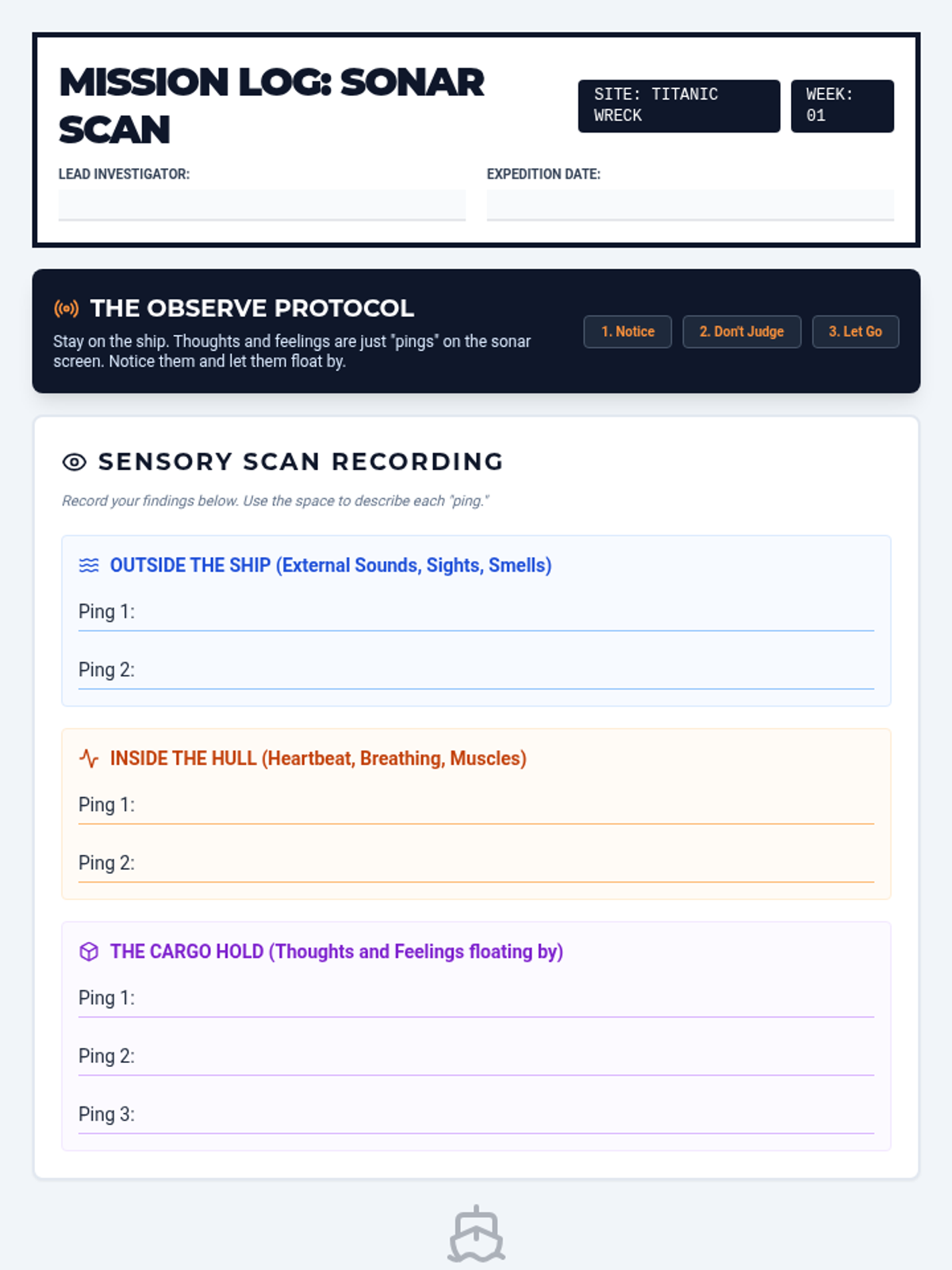
Introduction to mindfulness and the "Observe" skill using the sonar search for the Titanic as a metaphor for noticing internal and external experiences without judgment.
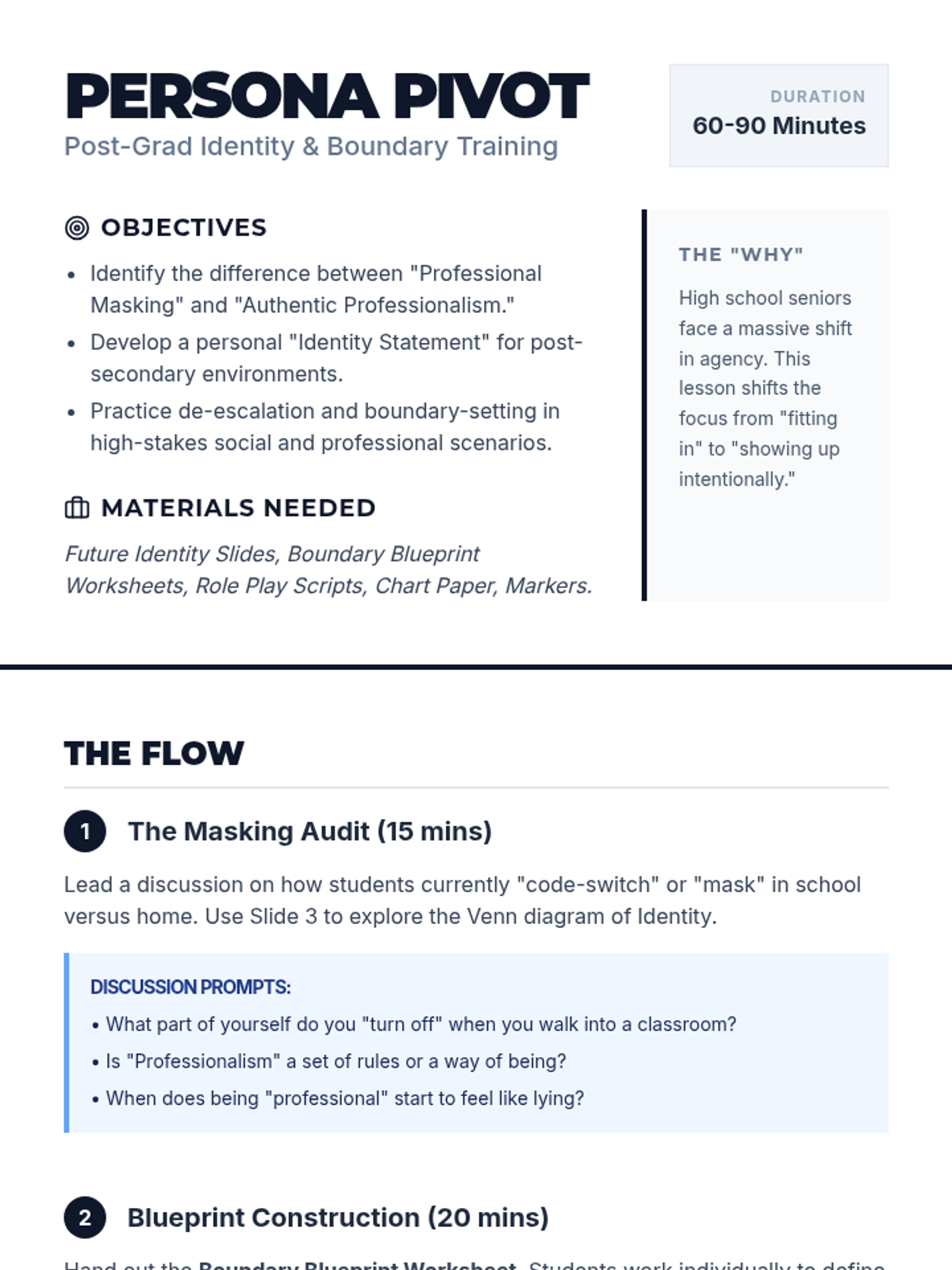
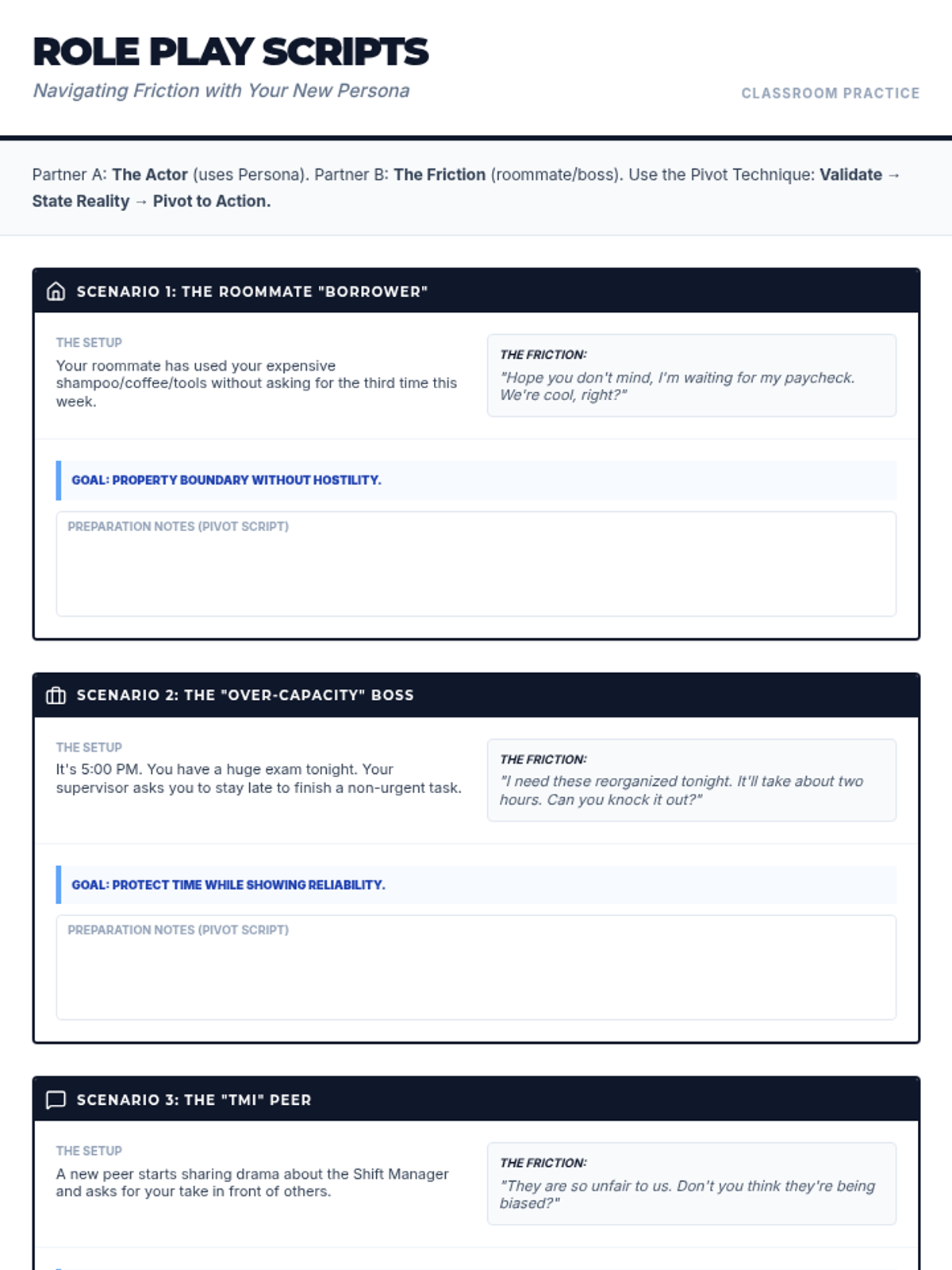
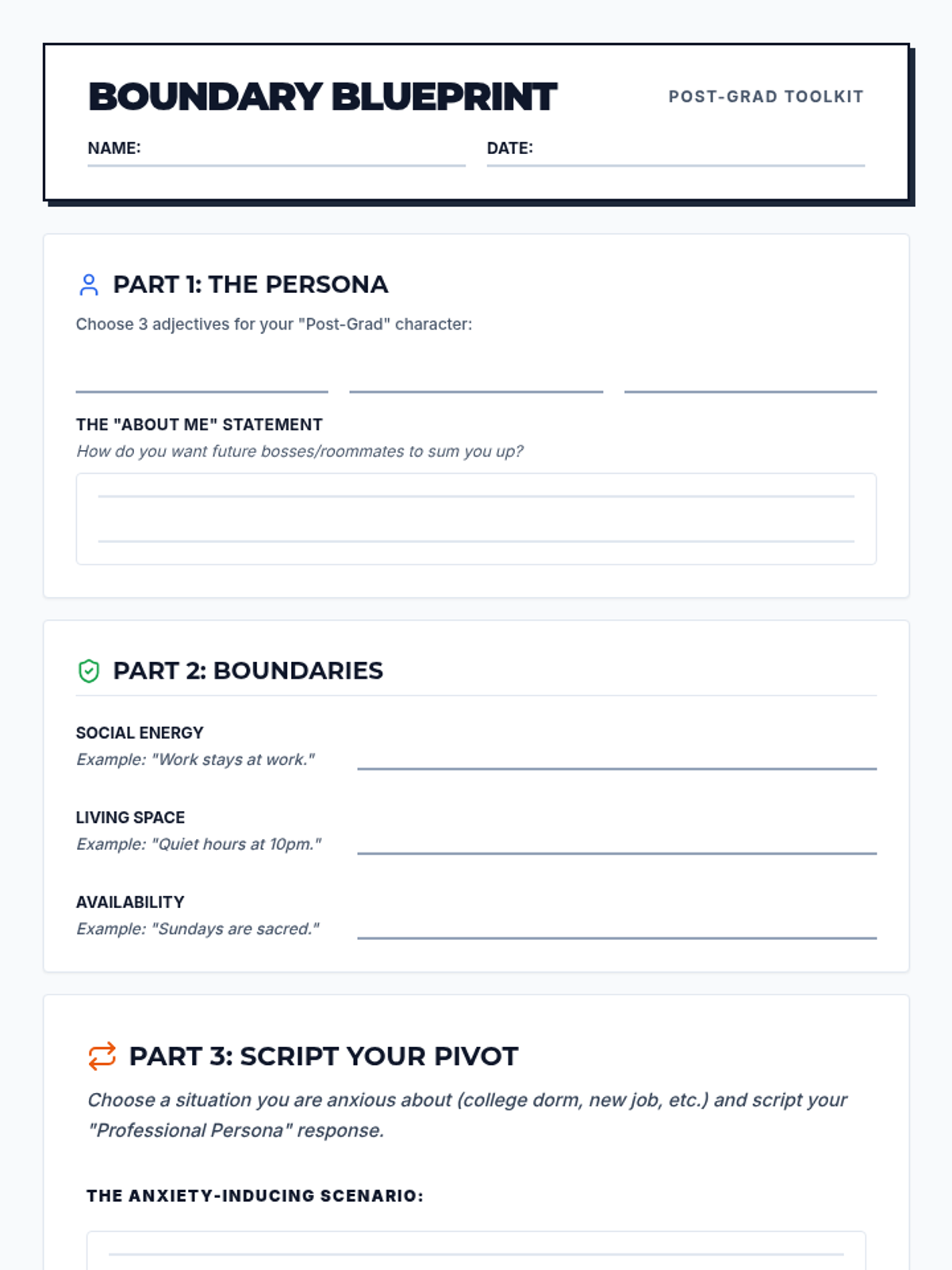
A lesson designed to help high school seniors navigate the transition to post-secondary life by developing a professional yet authentic identity and practicing difficult interpersonal conversations.
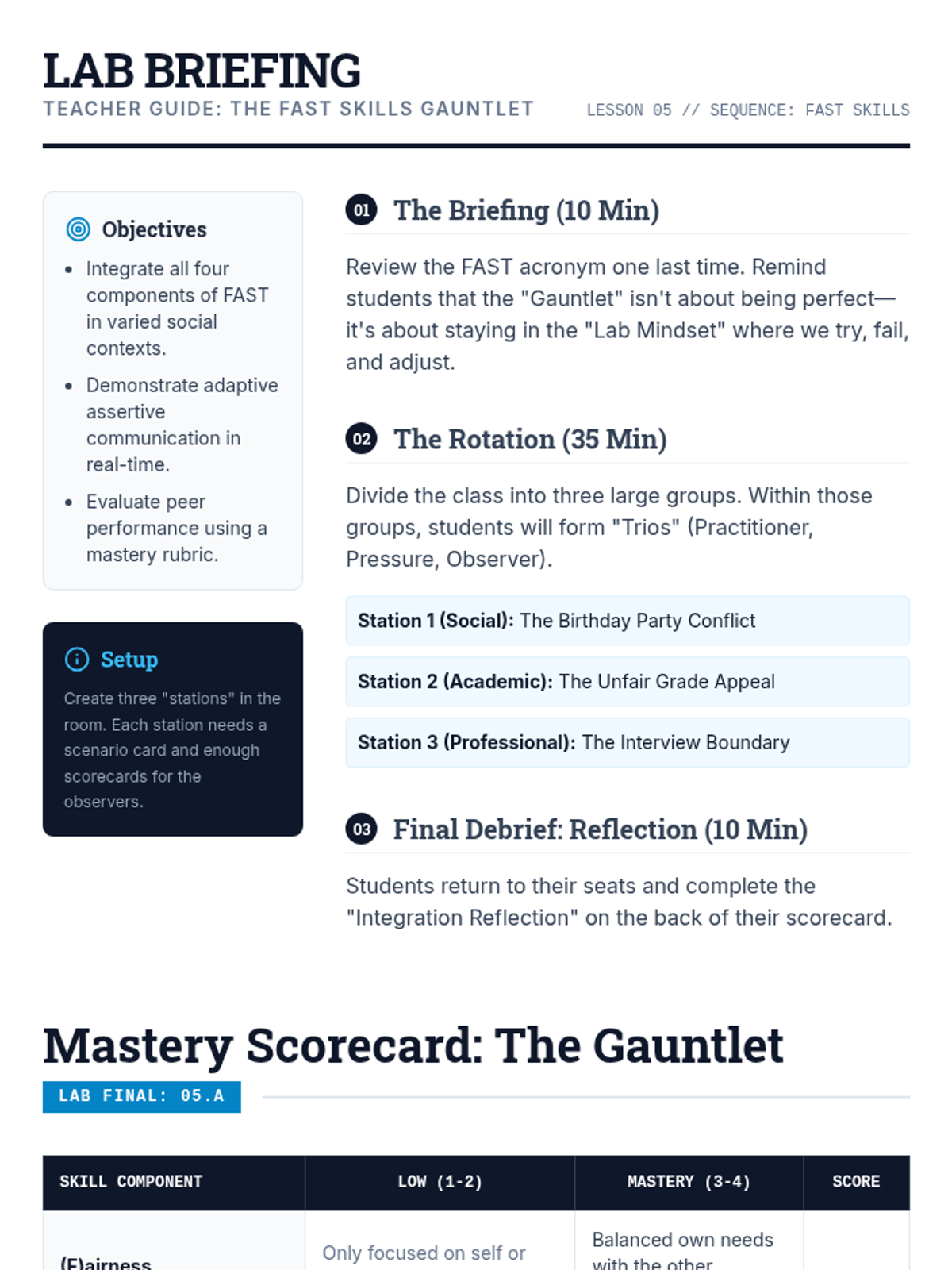
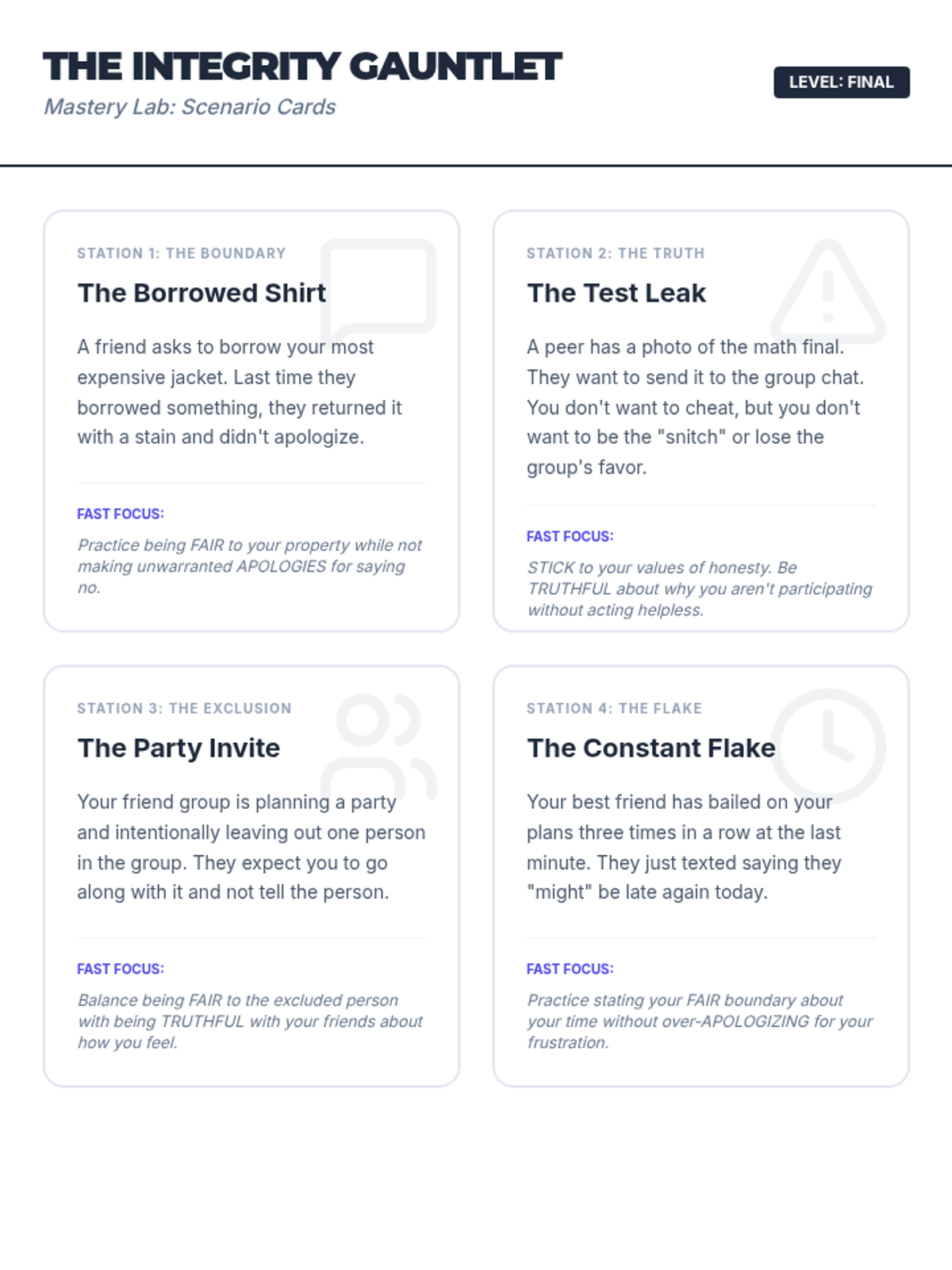
A final mastery-based assessment where students rotate through three 'Gauntlet' stations to apply all FAST skills in academic, social, and professional contexts.
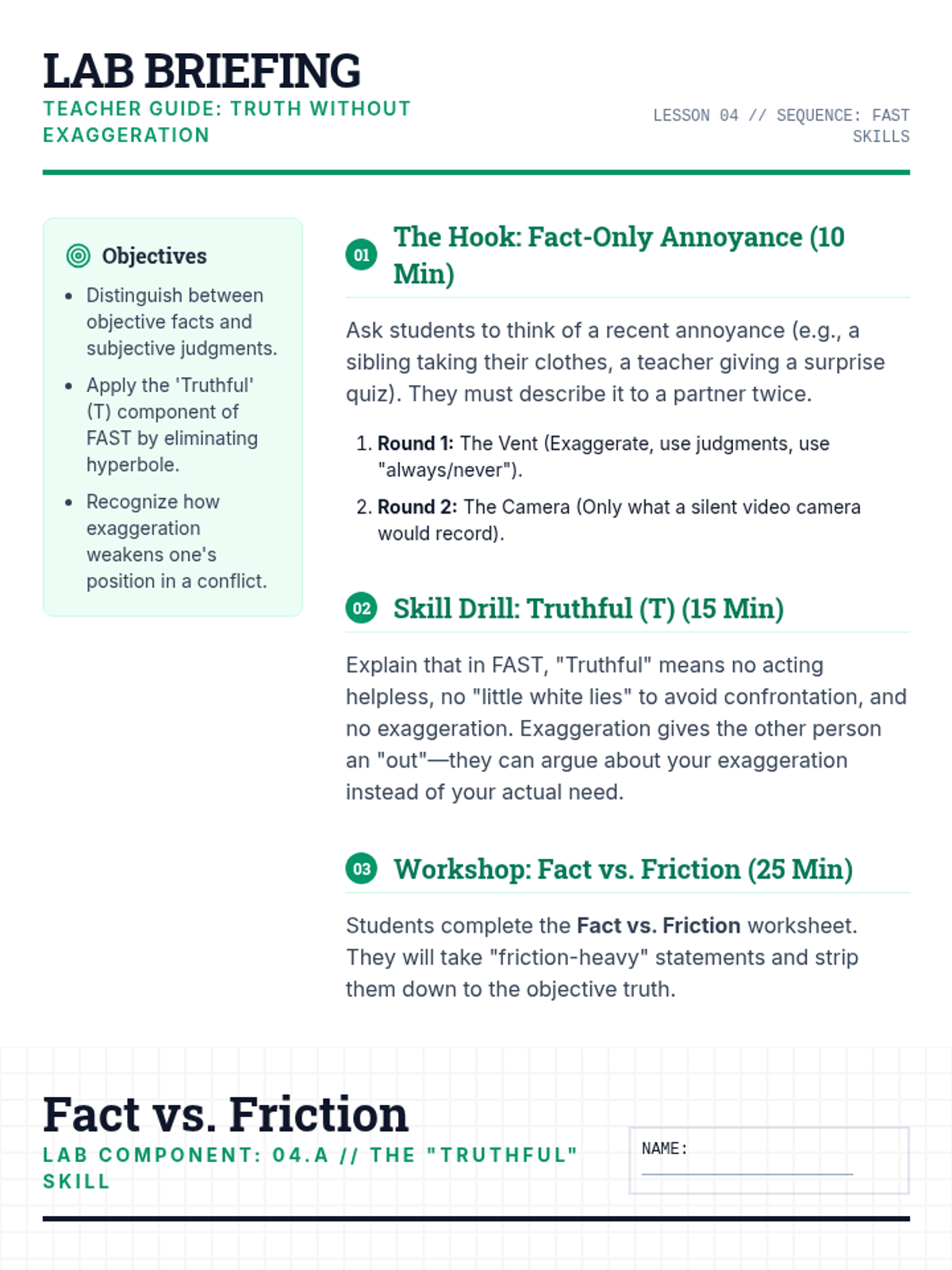
A skill-building workshop centered on the 'Truthful' component of FAST, teaching students to communicate difficult situations using objective facts rather than exaggerations.
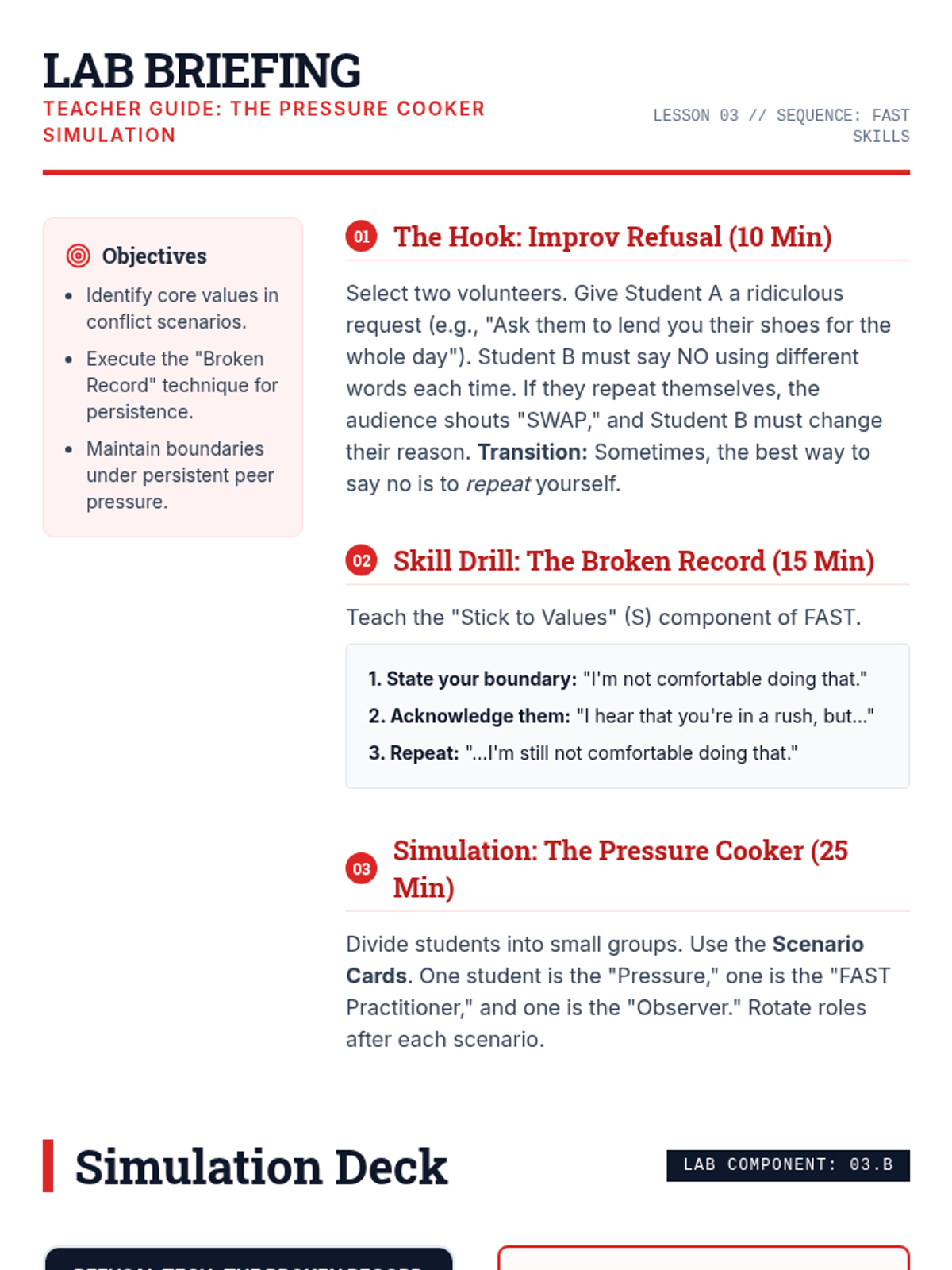
A simulation-heavy lesson focusing on 'Sticking to Values' through refusal skills and the 'broken record' technique in high-pressure social scenarios.
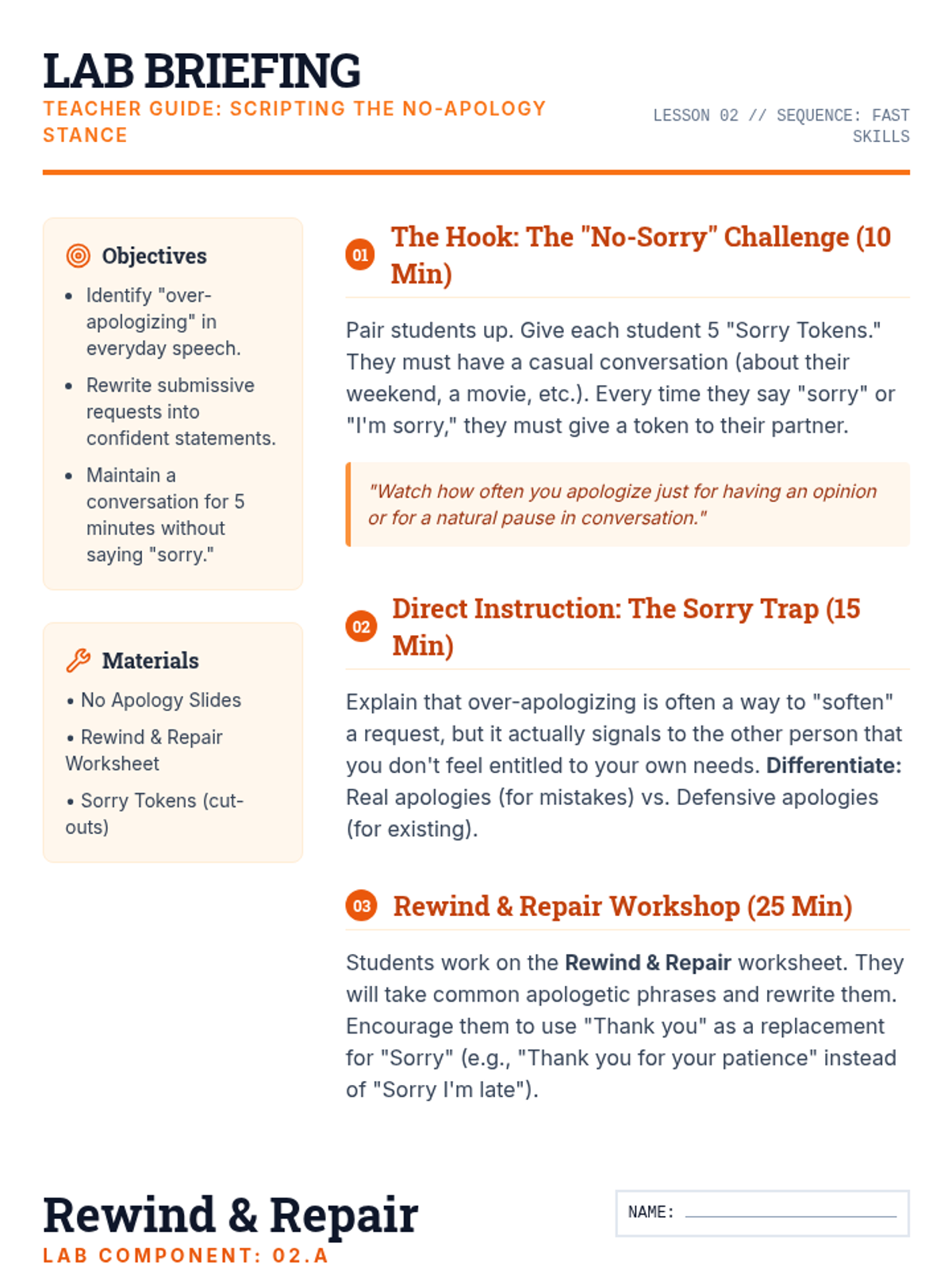
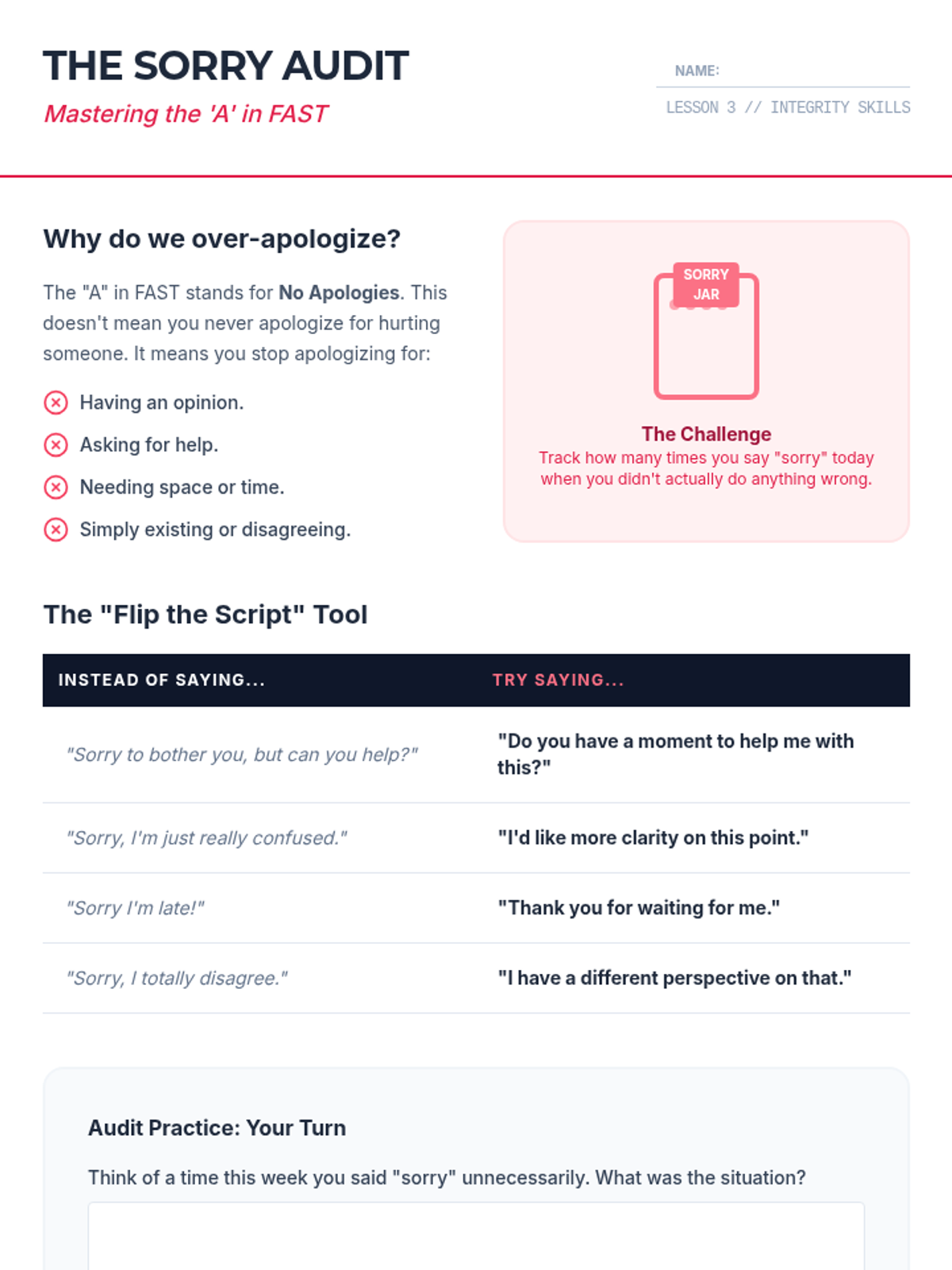
A workshop focused on the 'No Apologies' skill, where students rewrite dialogue to eliminate unnecessary over-apologizing and practice confident communication.
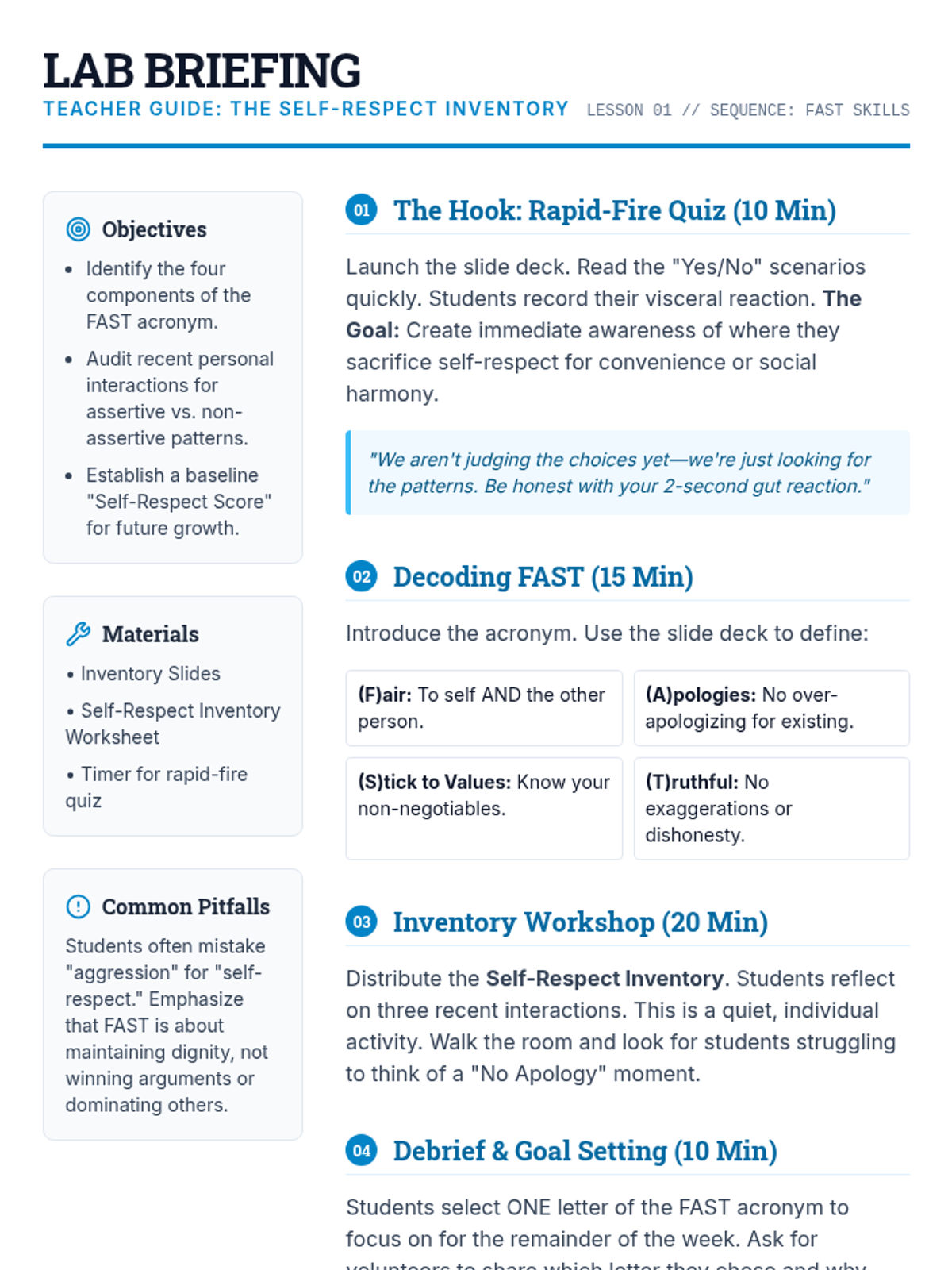
Students audit their recent social interactions to identify patterns of passivity or aggression and set personal growth goals for specific FAST skills.
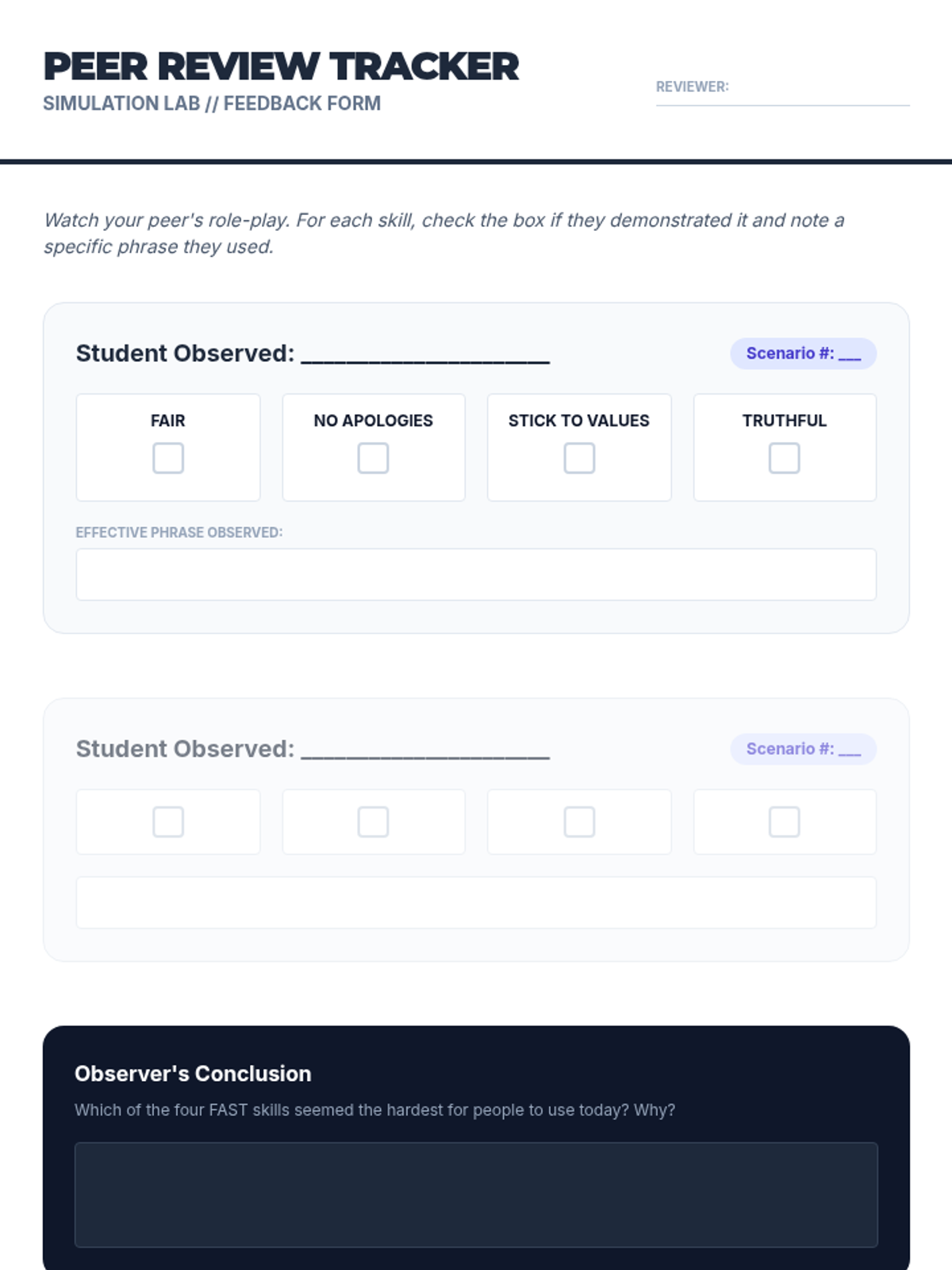
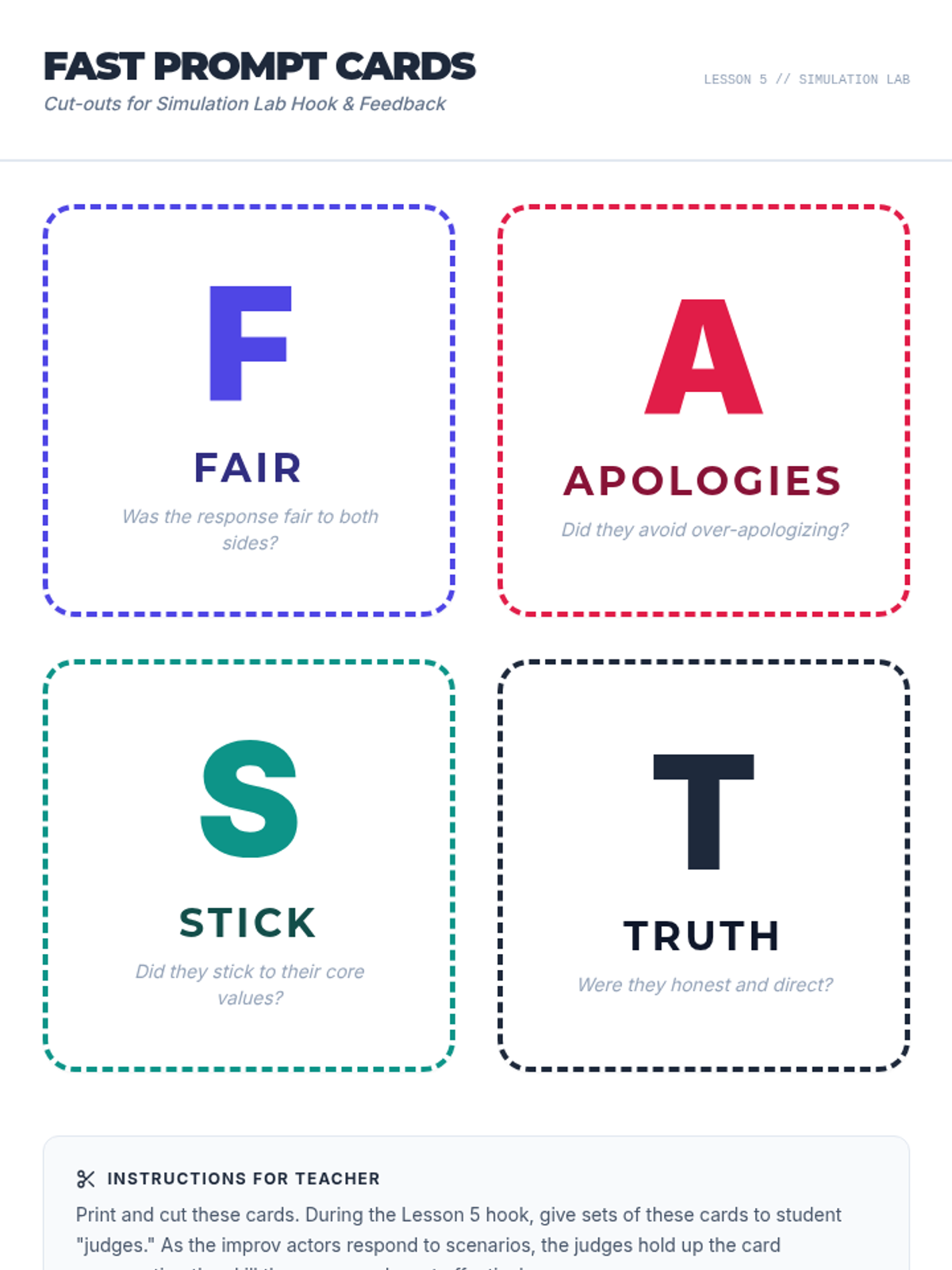
A culminating simulation where students apply the full FAST framework to real-world 9th-grade dilemmas through role-play and peer feedback.
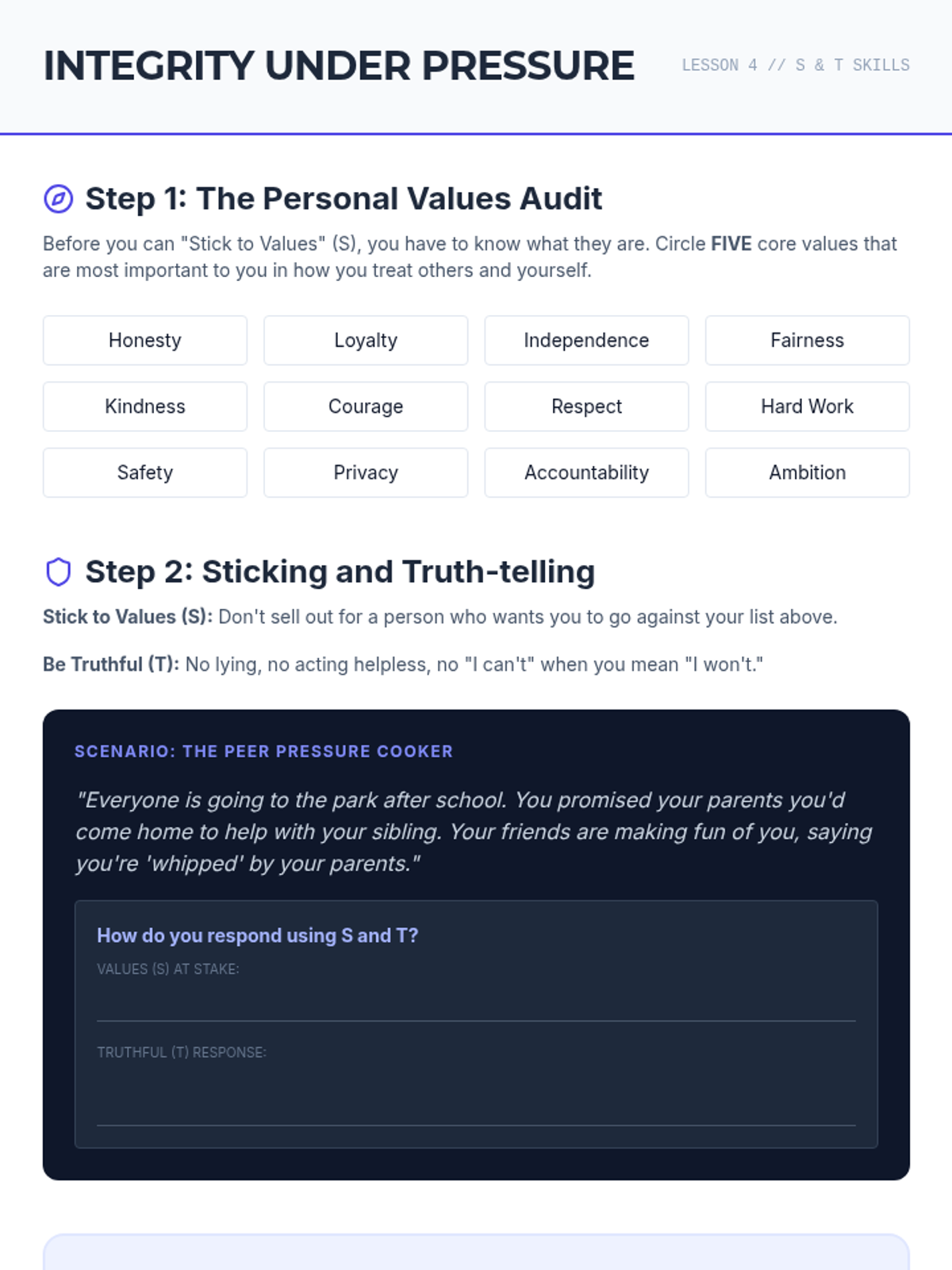
Students identify their personal core values and practice 'Sticking to values' and being 'Truthful' (S and T in FAST) even when under social pressure.
Students analyze the habit of over-apologizing and learn to replace unwarranted 'sorries' with assertive statements or expressions of gratitude, focusing on the 'A' in FAST.
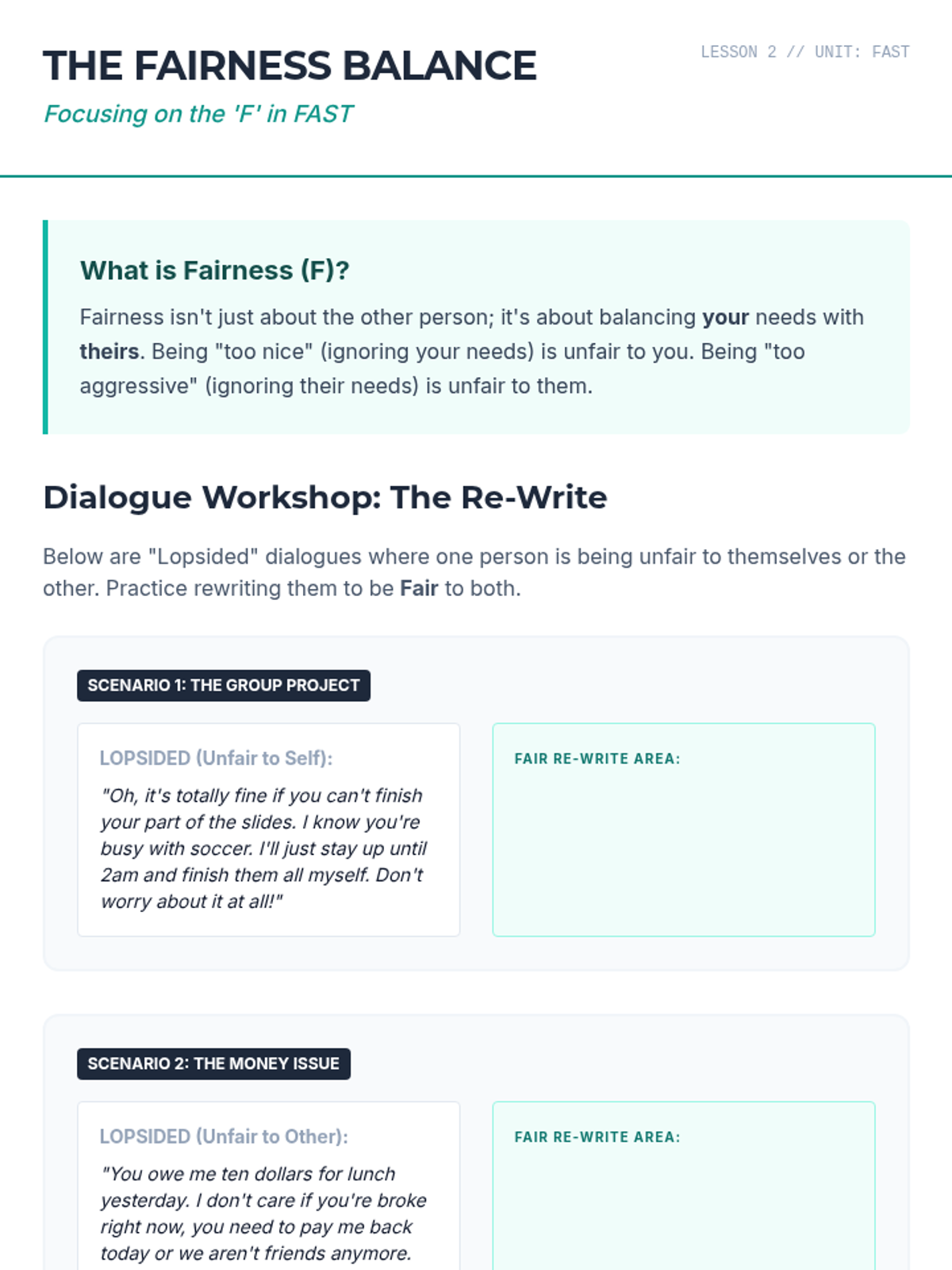
Focusing on the 'F' in FAST, students learn to balance their own needs with the needs of others. They practice rewriting one-sided communication into fair exchanges.
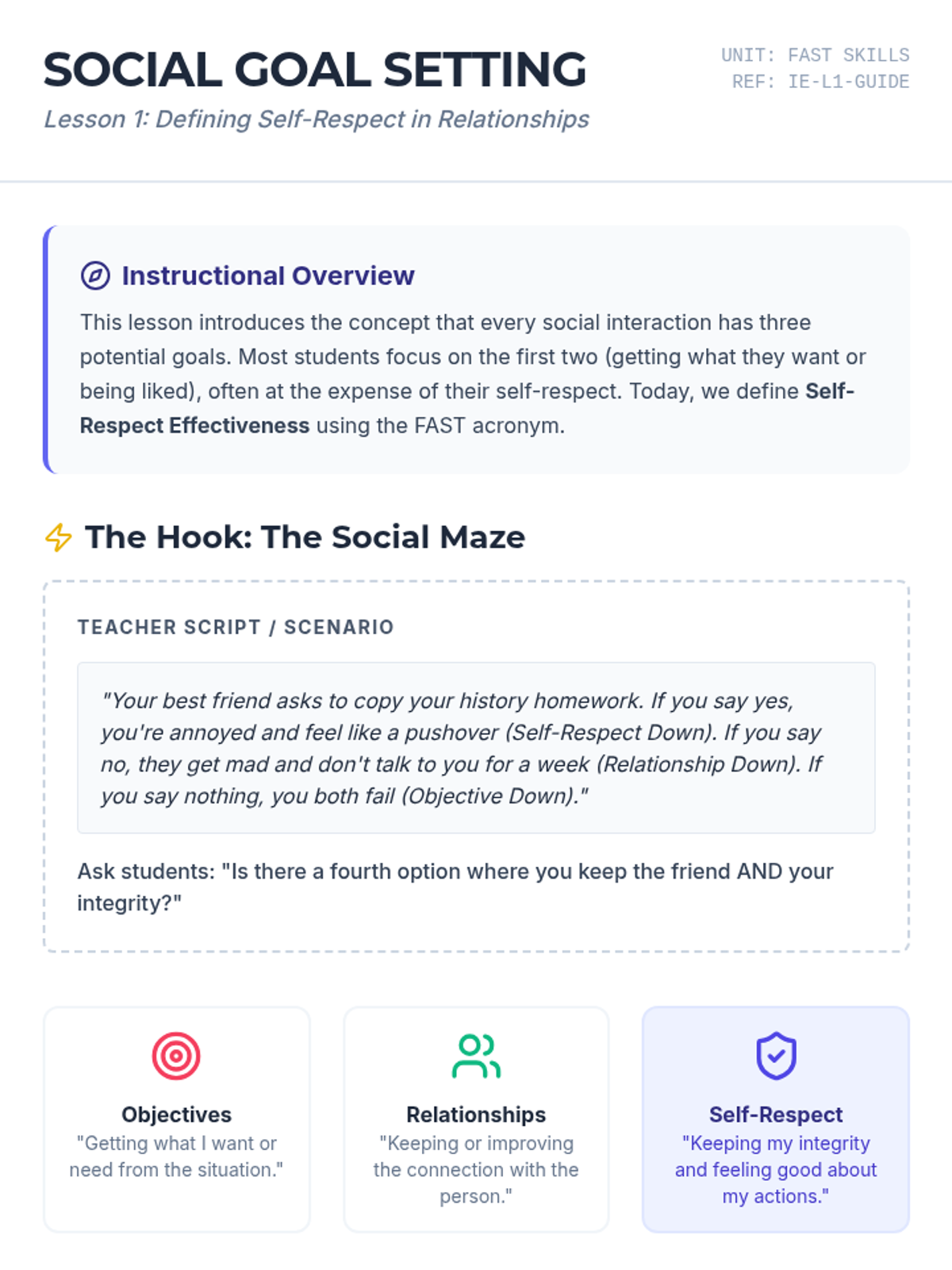
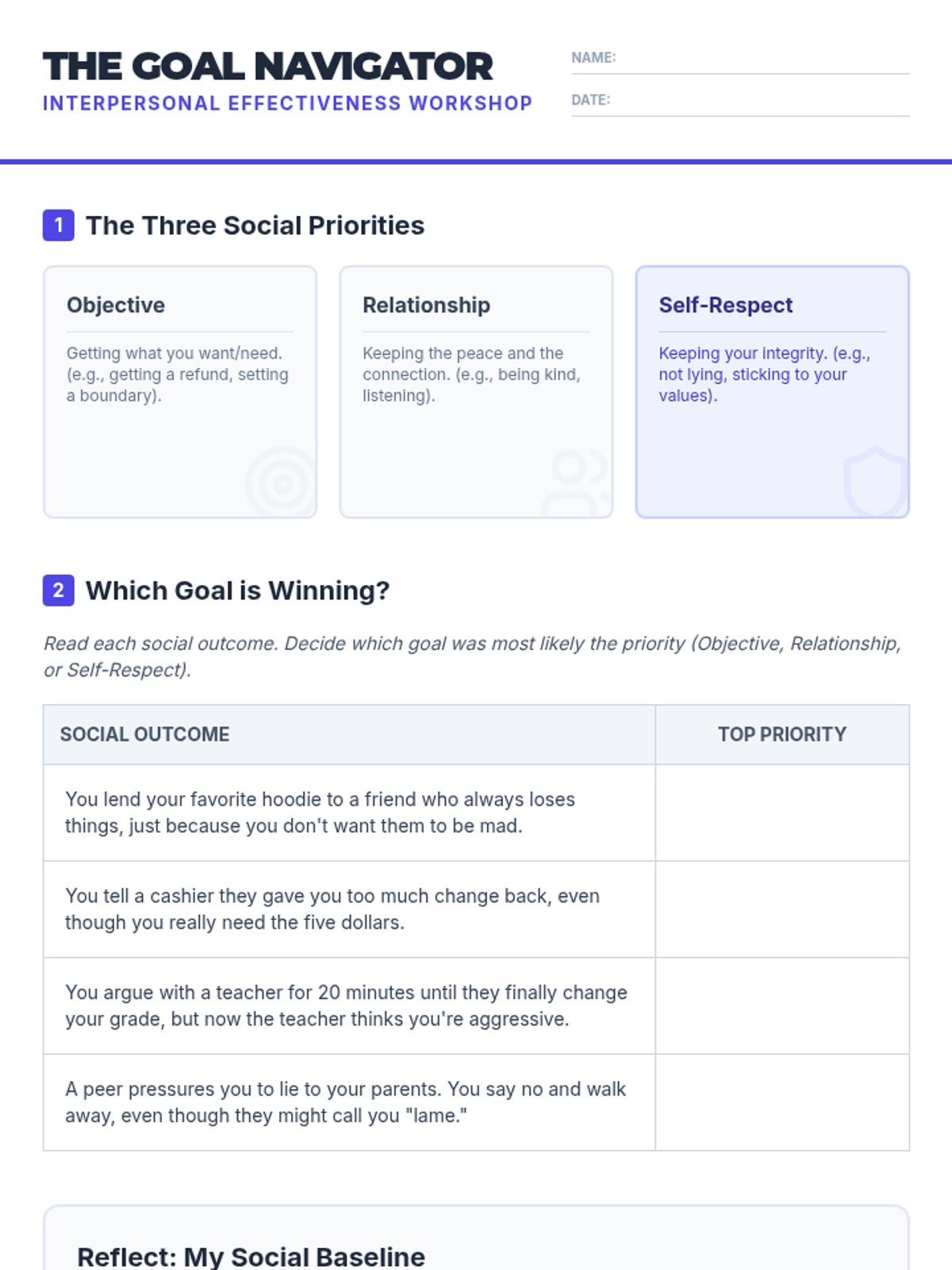
Students distinguish between the three main goals of interpersonal effectiveness: getting what you want, keeping the relationship, and keeping self-respect. They learn why self-respect (FAST) is often the missing piece in conflict resolution.
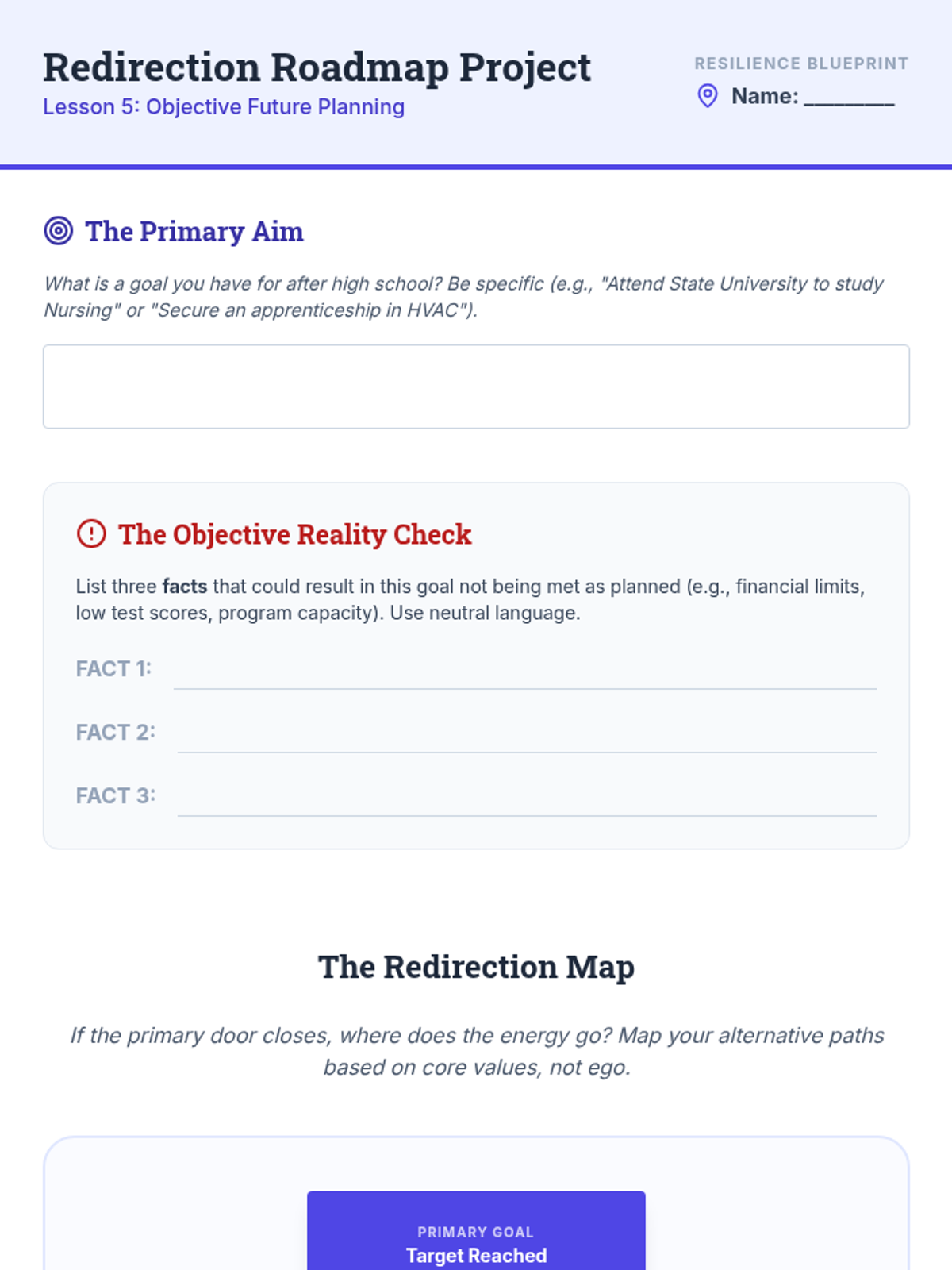
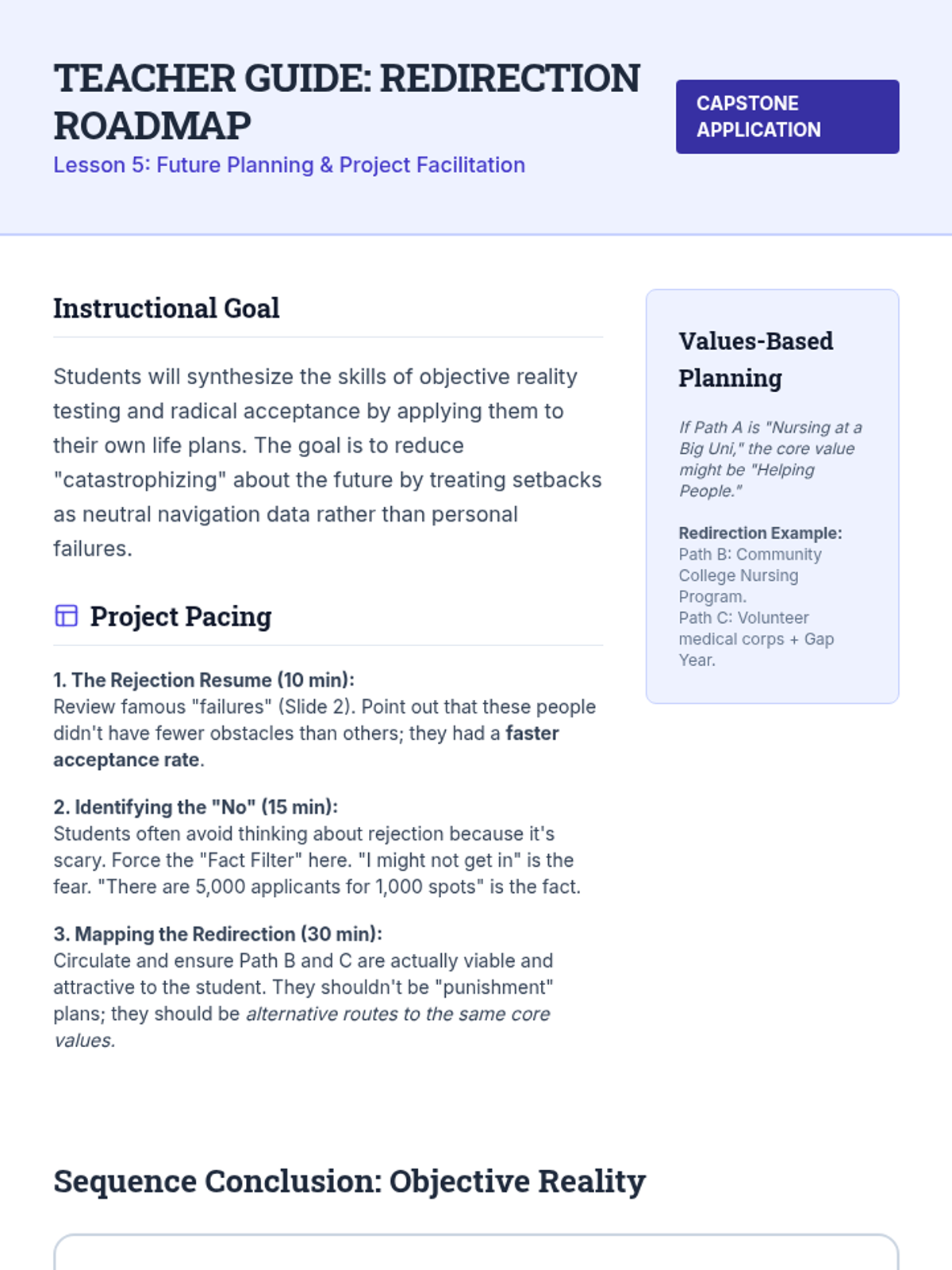
Students create a resilience-based future plan, reframing potential rejections as redirects and developing objective flowcharts for goal-setting.
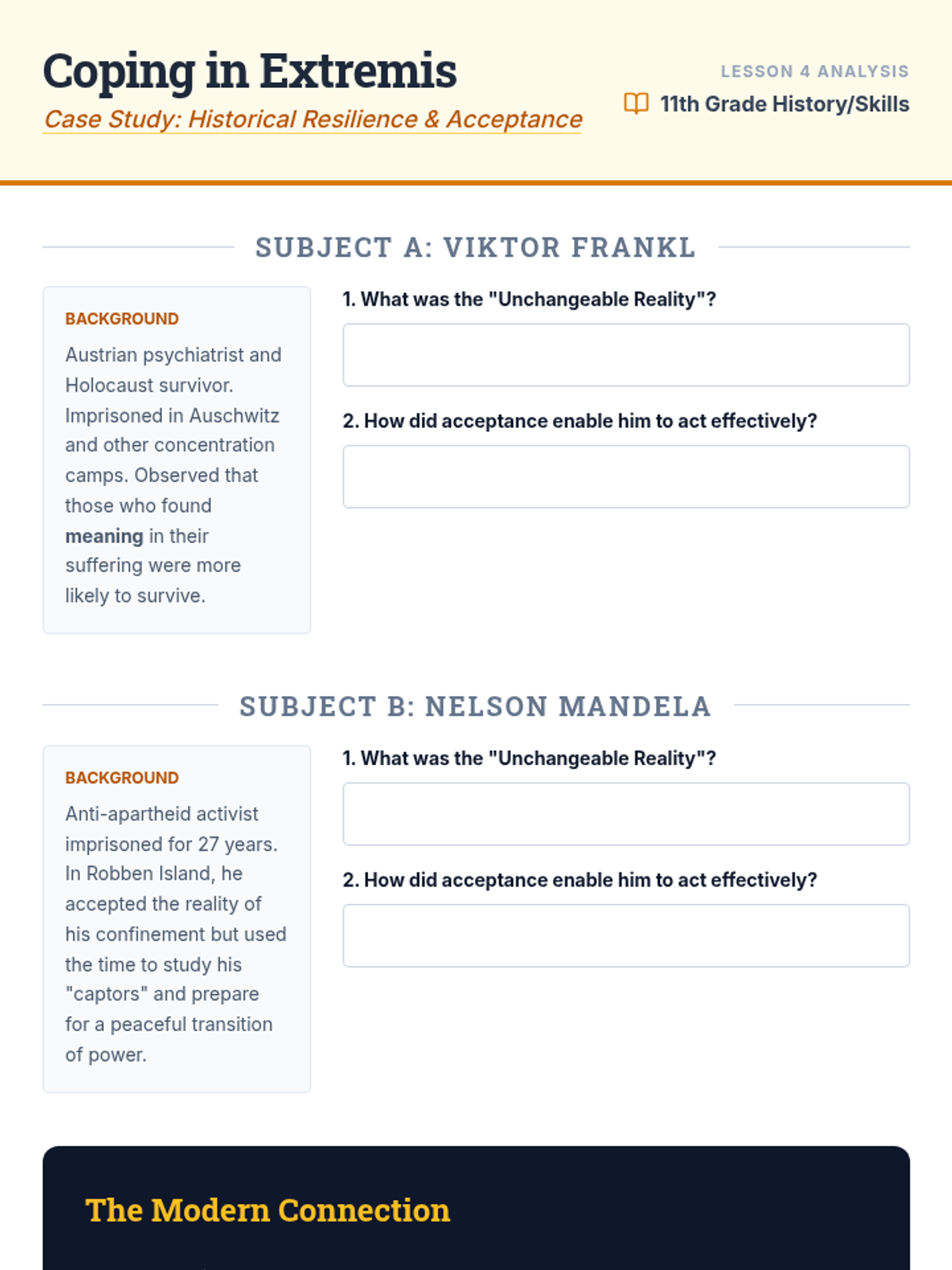
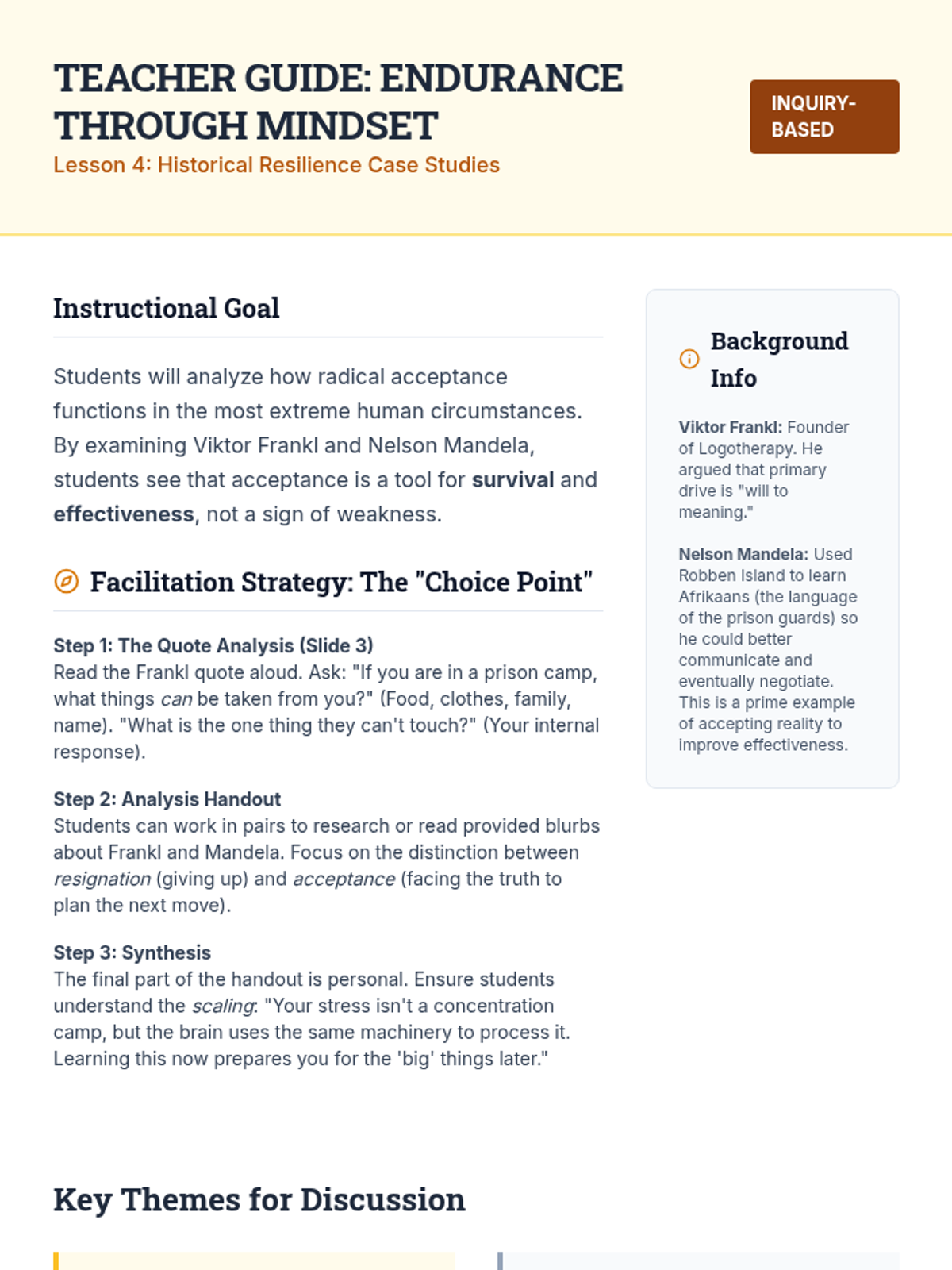
An analysis of historical figures who used acceptance and attitude-shifting to survive and thrive in extreme circumstances.
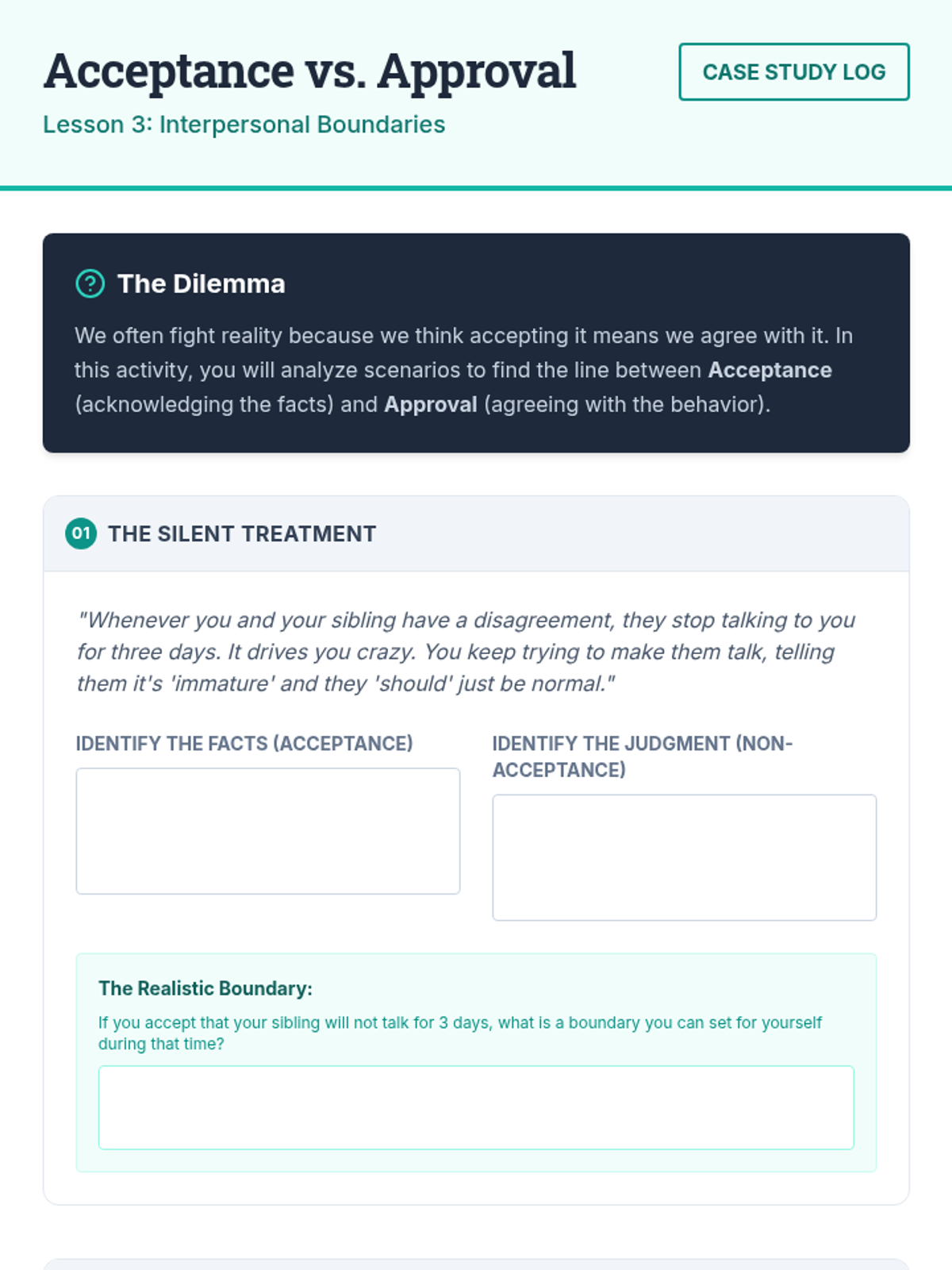
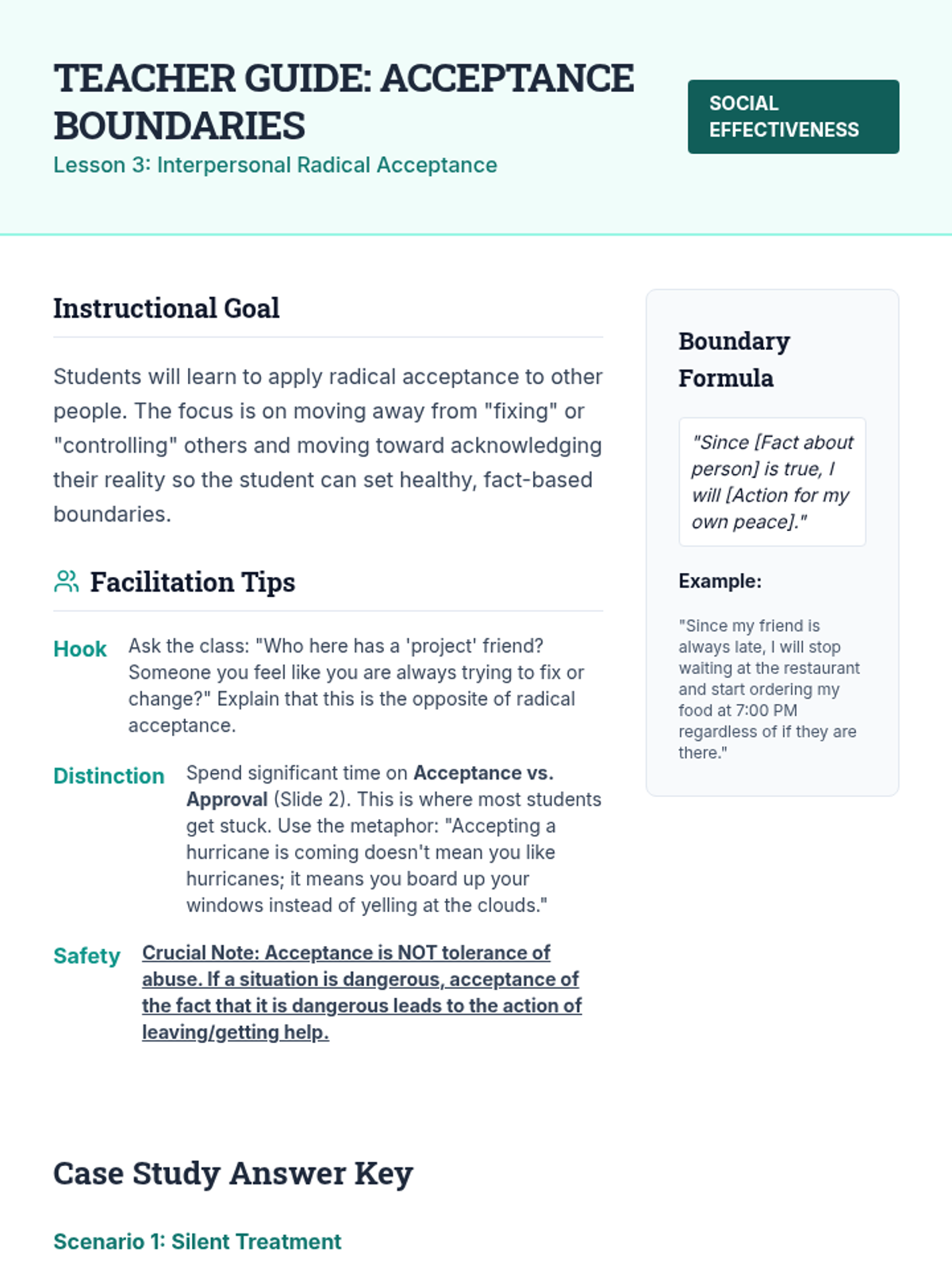
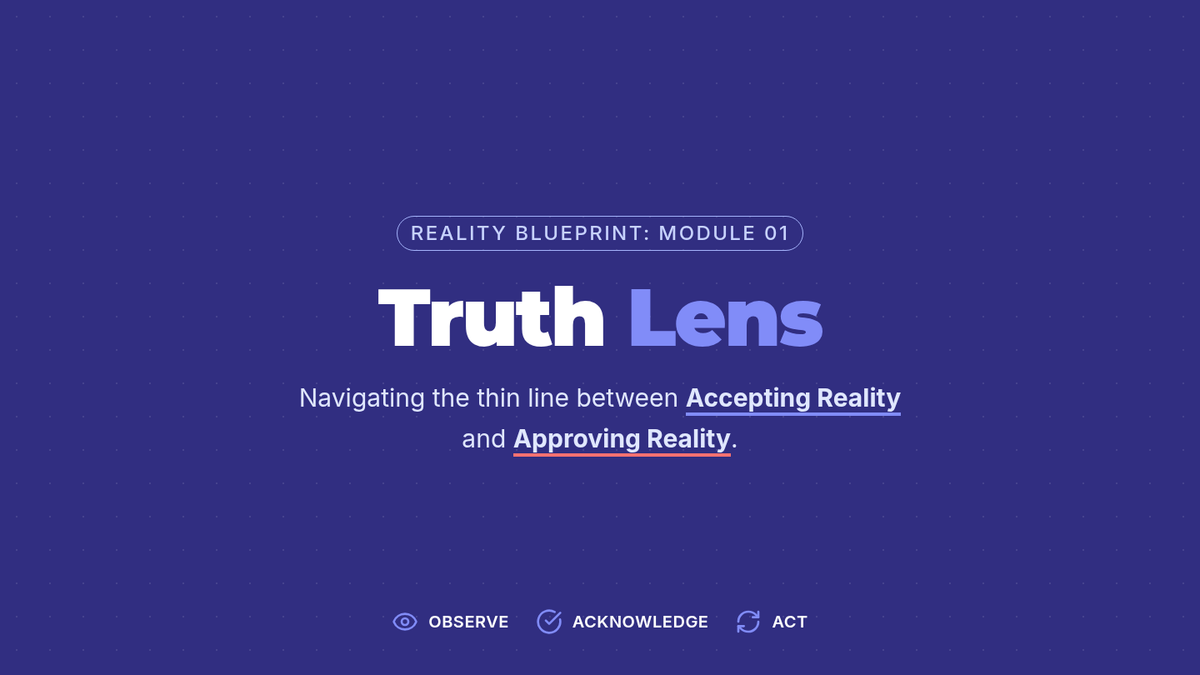
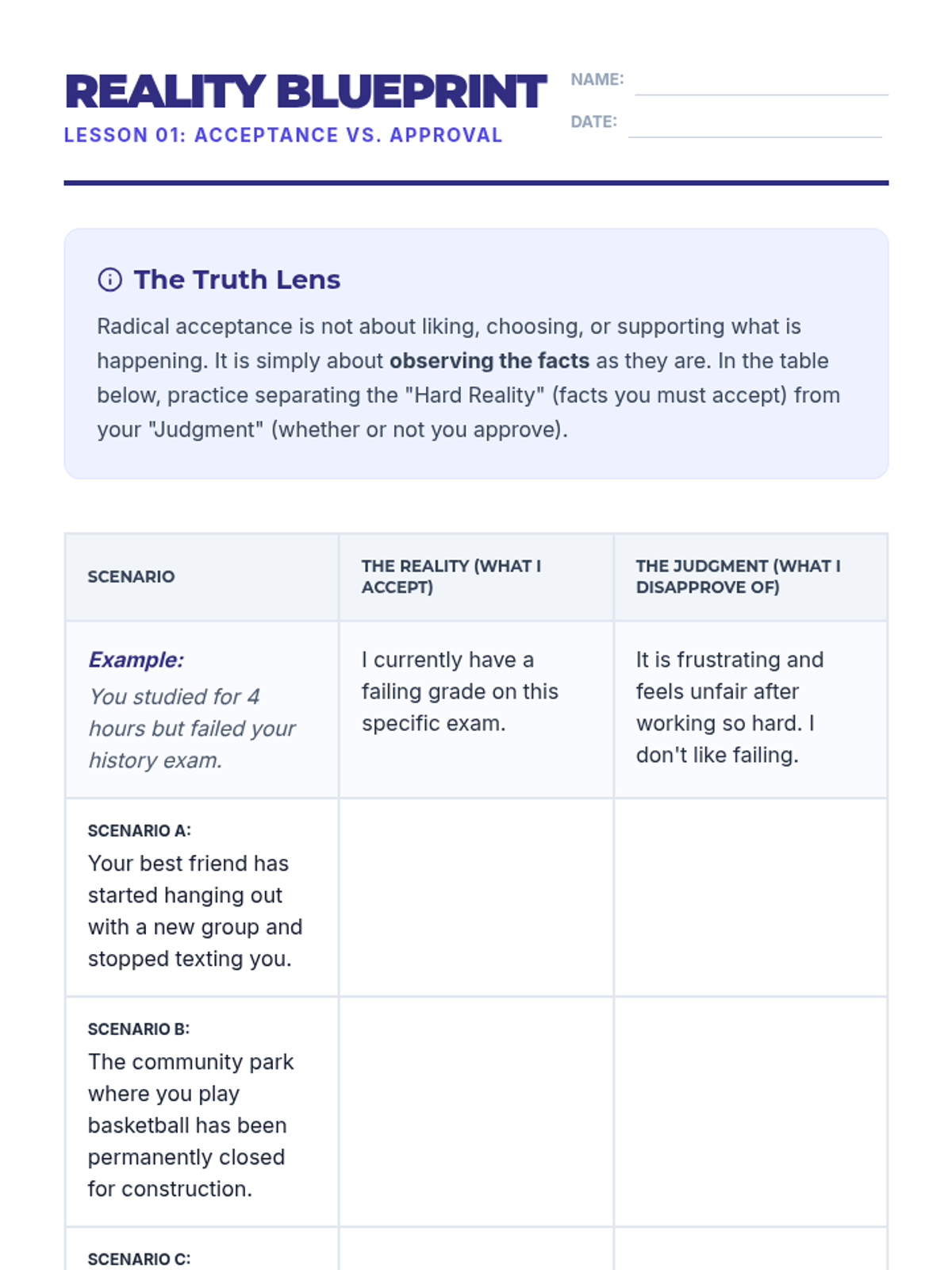
Students apply radical acceptance to interpersonal dynamics, learning the distinction between accepting a situation and approving of it.
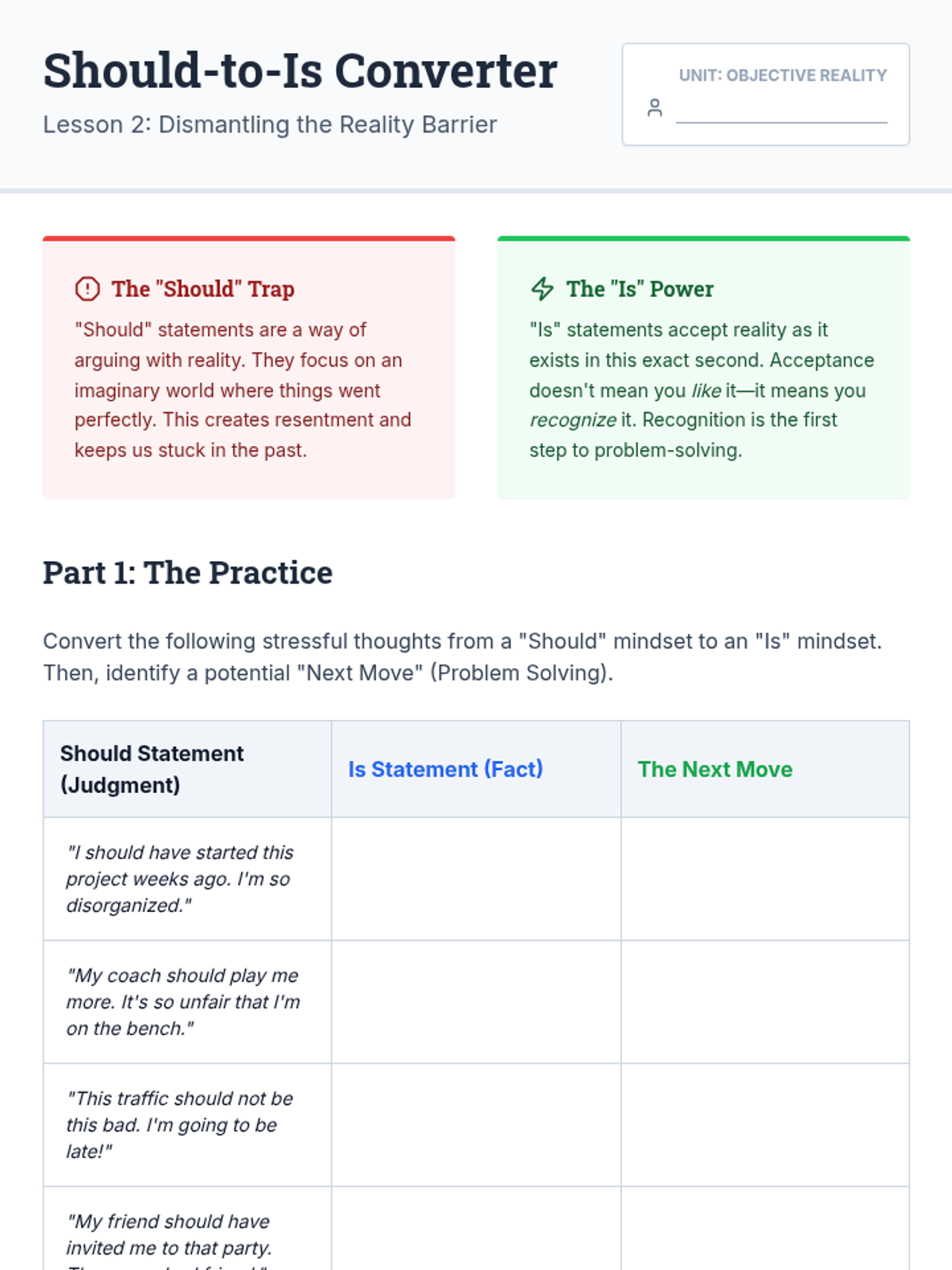
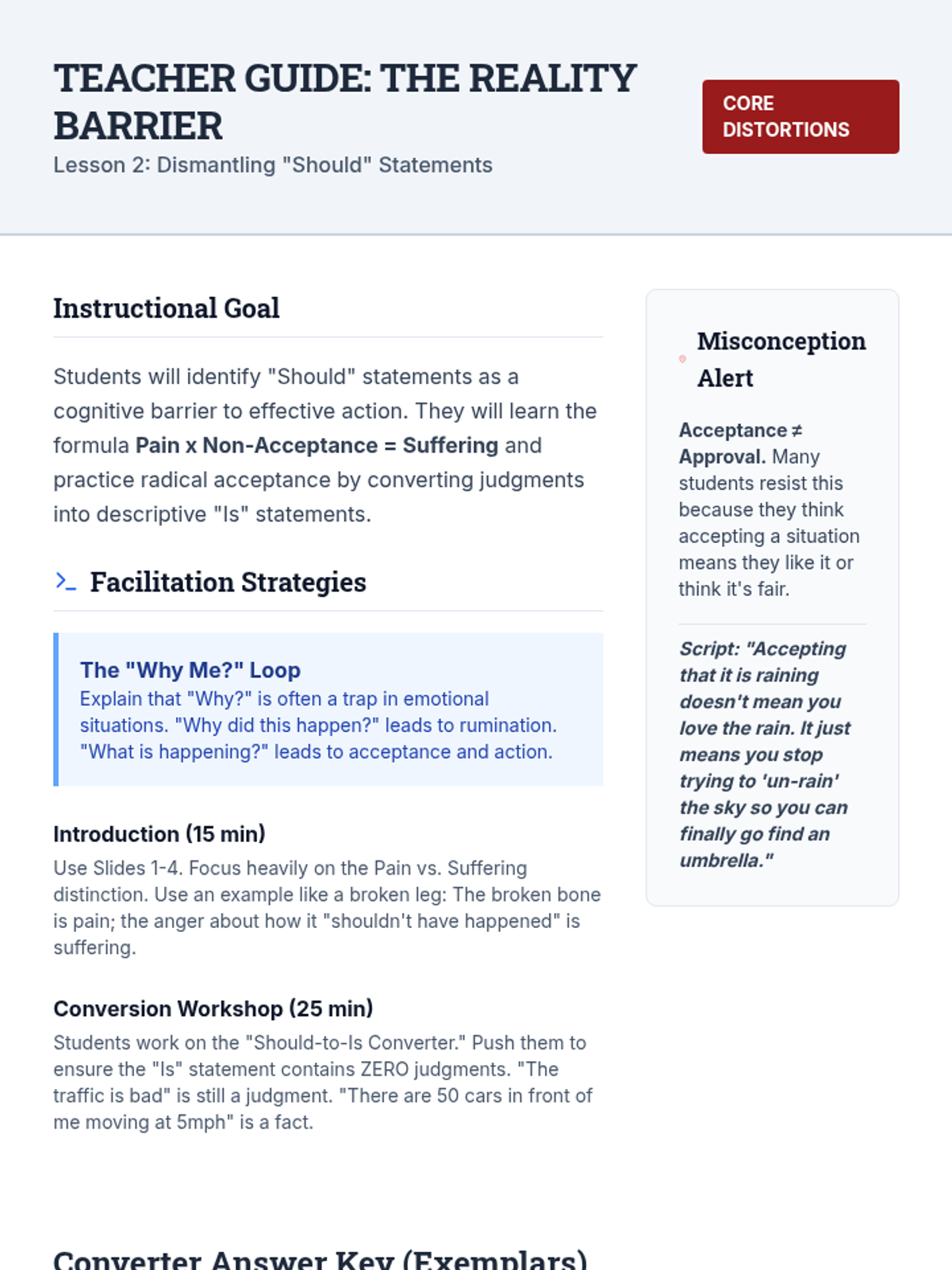
This lesson explores how 'should' statements create a barrier to problem-solving and how converting them to 'is' statements promotes radical acceptance.
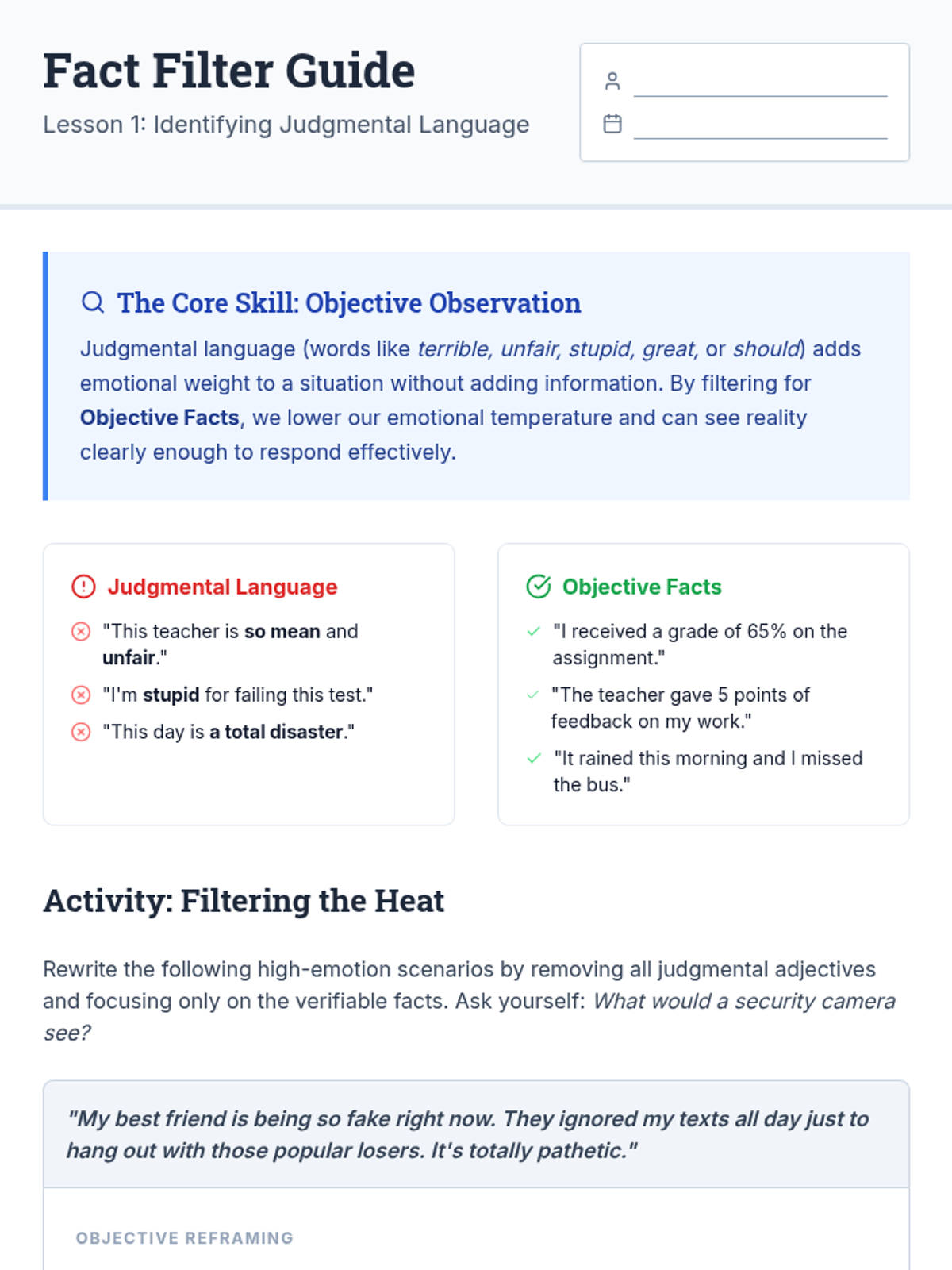
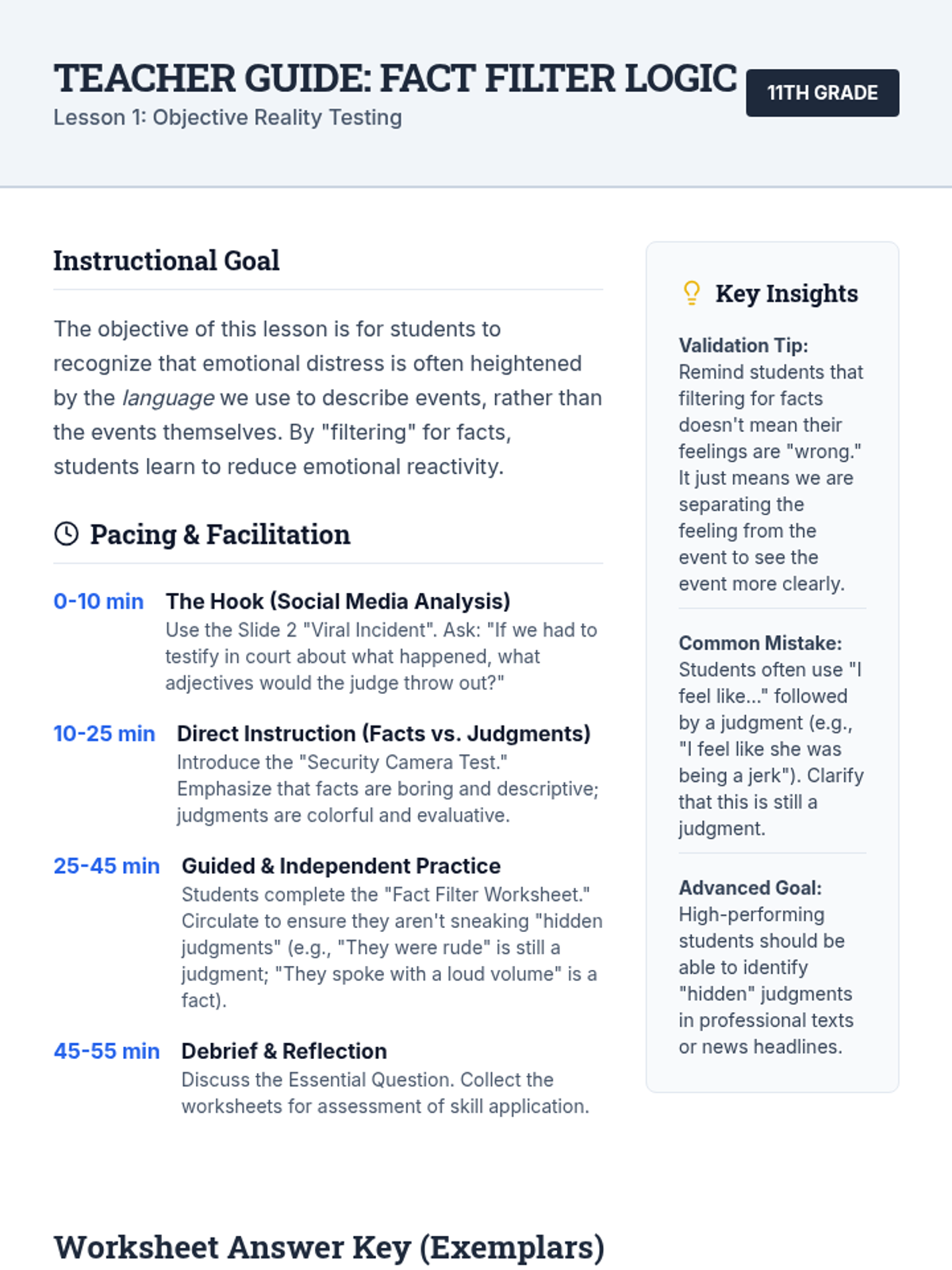
Students analyze the difference between judgmental language and objective facts, practicing how to strip away evaluative adjectives to reduce emotional distress.
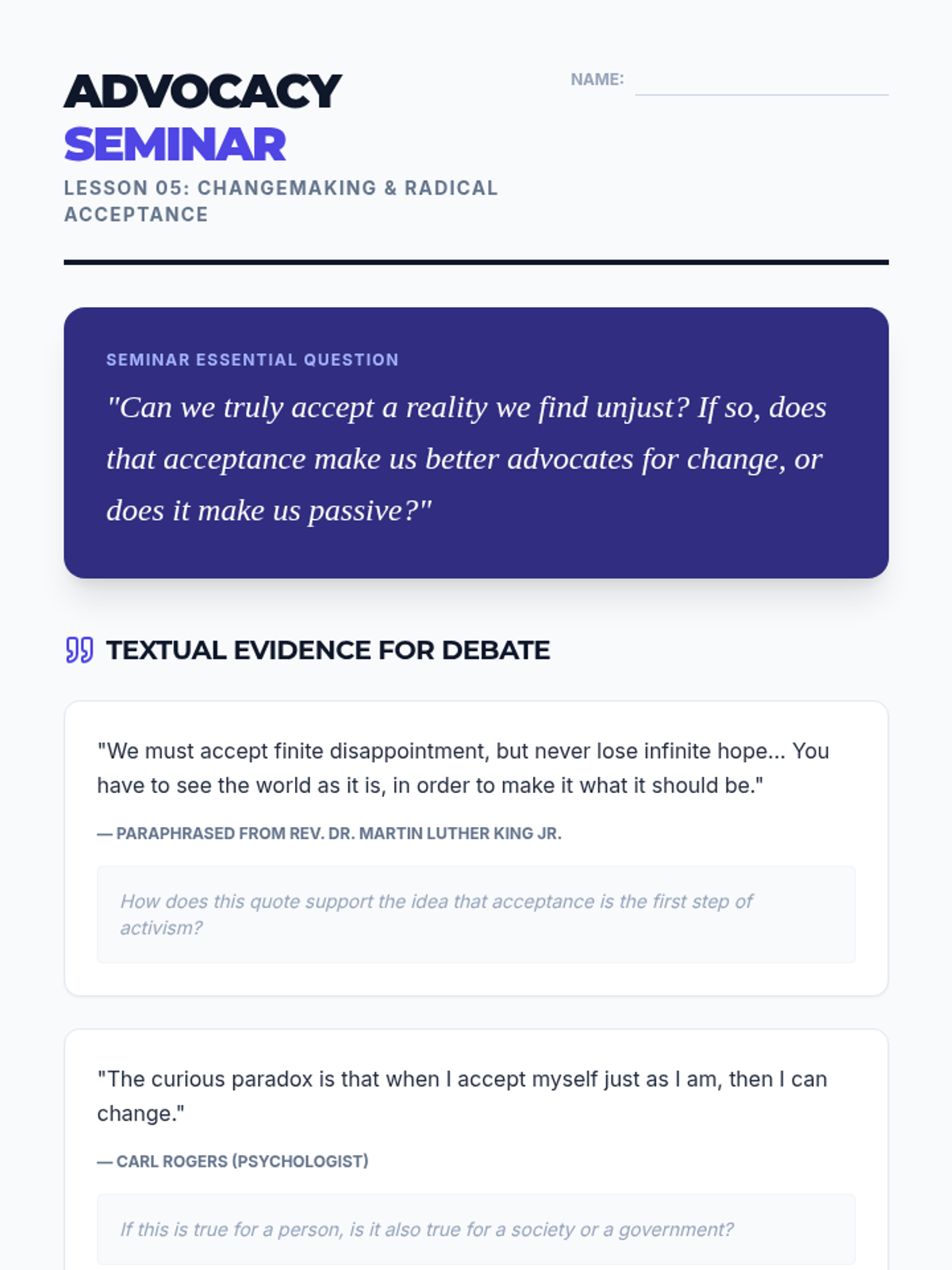
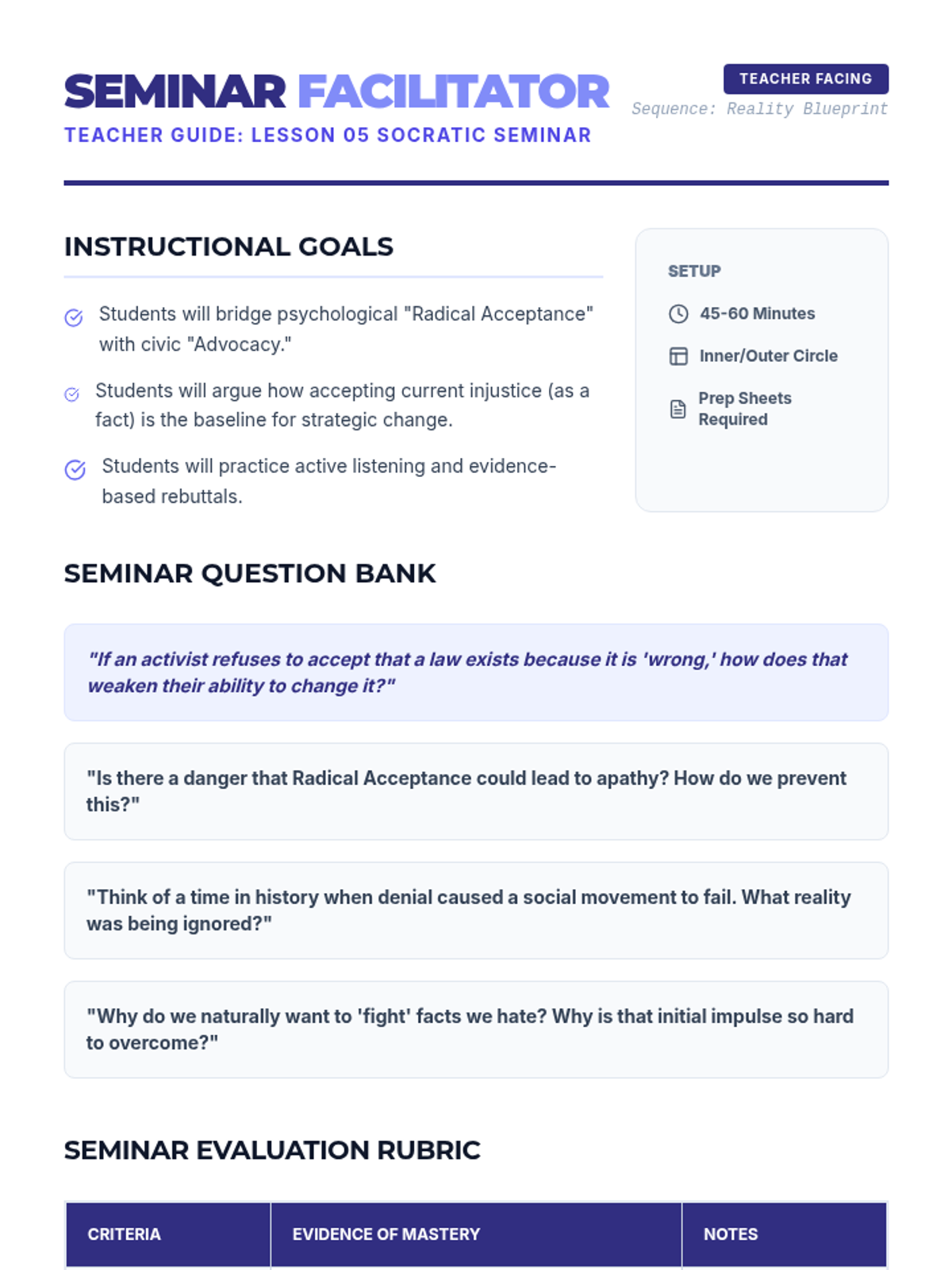
Students participate in a Socratic seminar debating how changemakers use radical acceptance. They discuss how activists must accept the current state of injustice in order to strategically dismantle it.
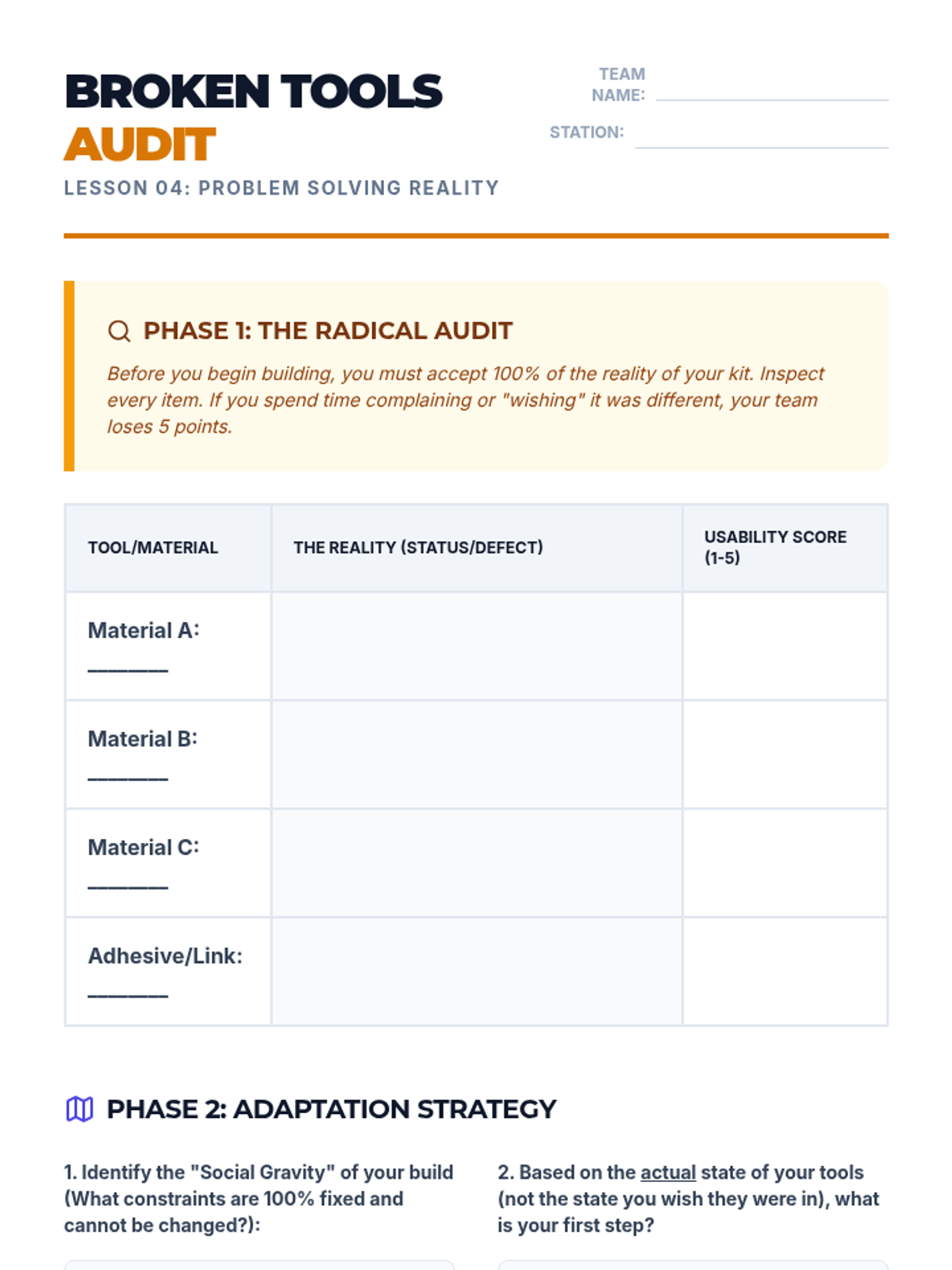
Students engage in a logic puzzle or escape room scenario where the clues require acknowledging an unfortunate reality. This reinforces that effective change can only happen after the current state is fully acknowledged.
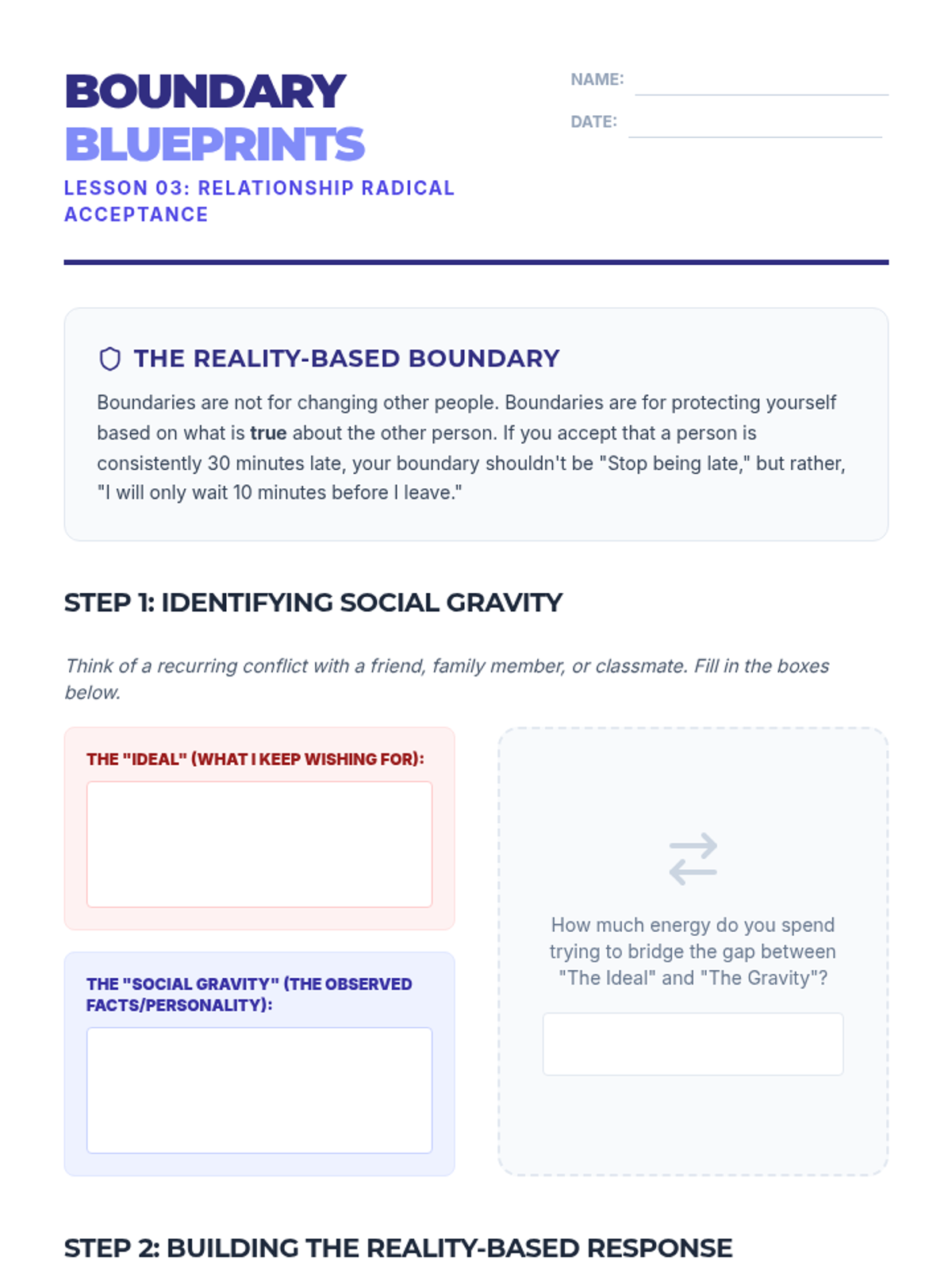
Focusing on social dynamics, students explore how to accept others' behaviors without necessarily tolerating abuse or mistreatment. The lesson focuses on accepting that we cannot control others, only our responses.
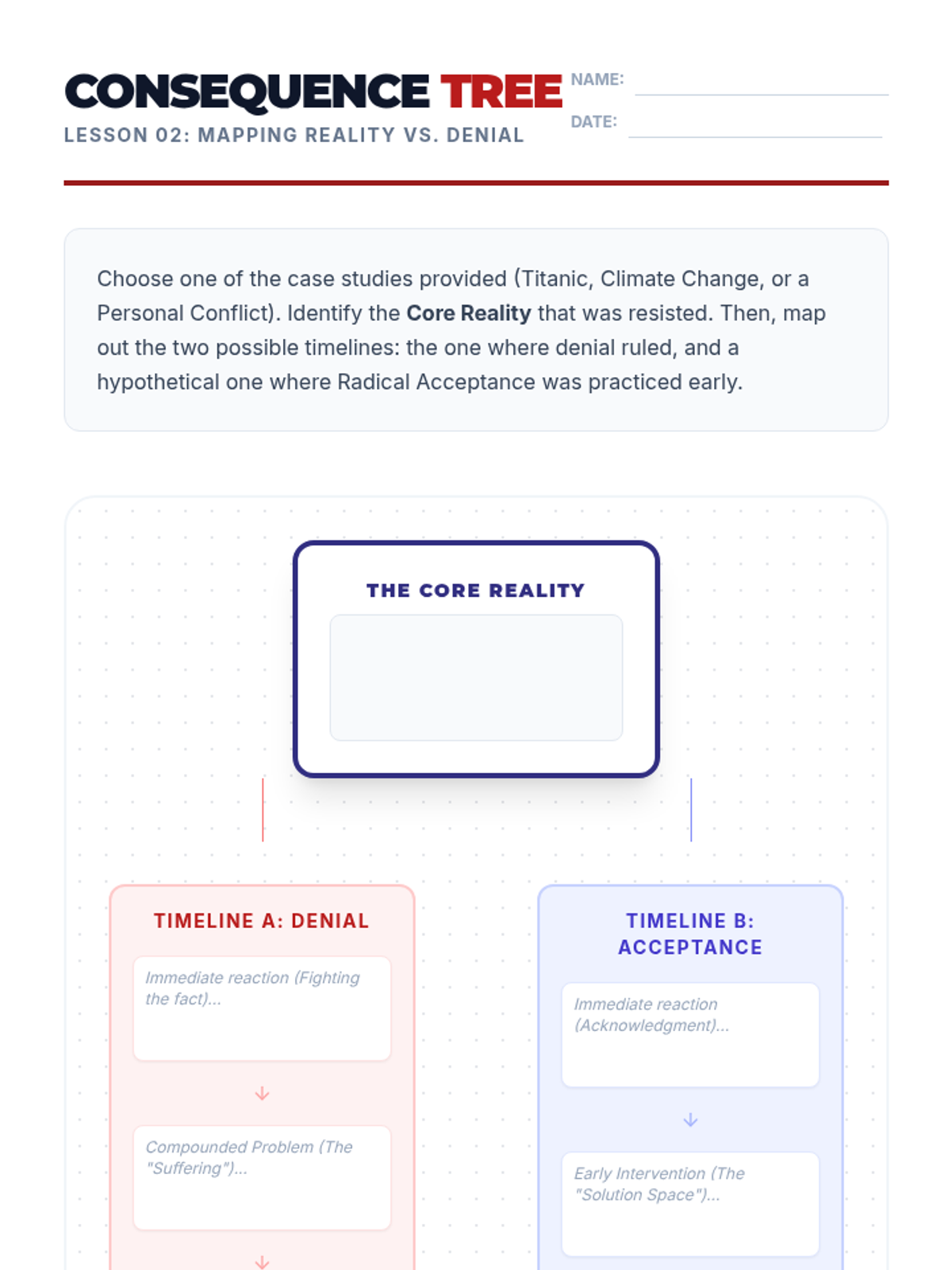
Students analyze historical or fictional case studies where characters refused to accept reality, leading to compounded problems. They map out the 'consequence tree' of denial versus the hypothetical outcome of early acceptance.
Students dissect the crucial distinction between acknowledging a fact (acceptance) and liking that fact (approval). Through Venn diagrams and scenario analysis, they clarify that one can accept a failing grade or a broken friendship without judging it as 'good.'
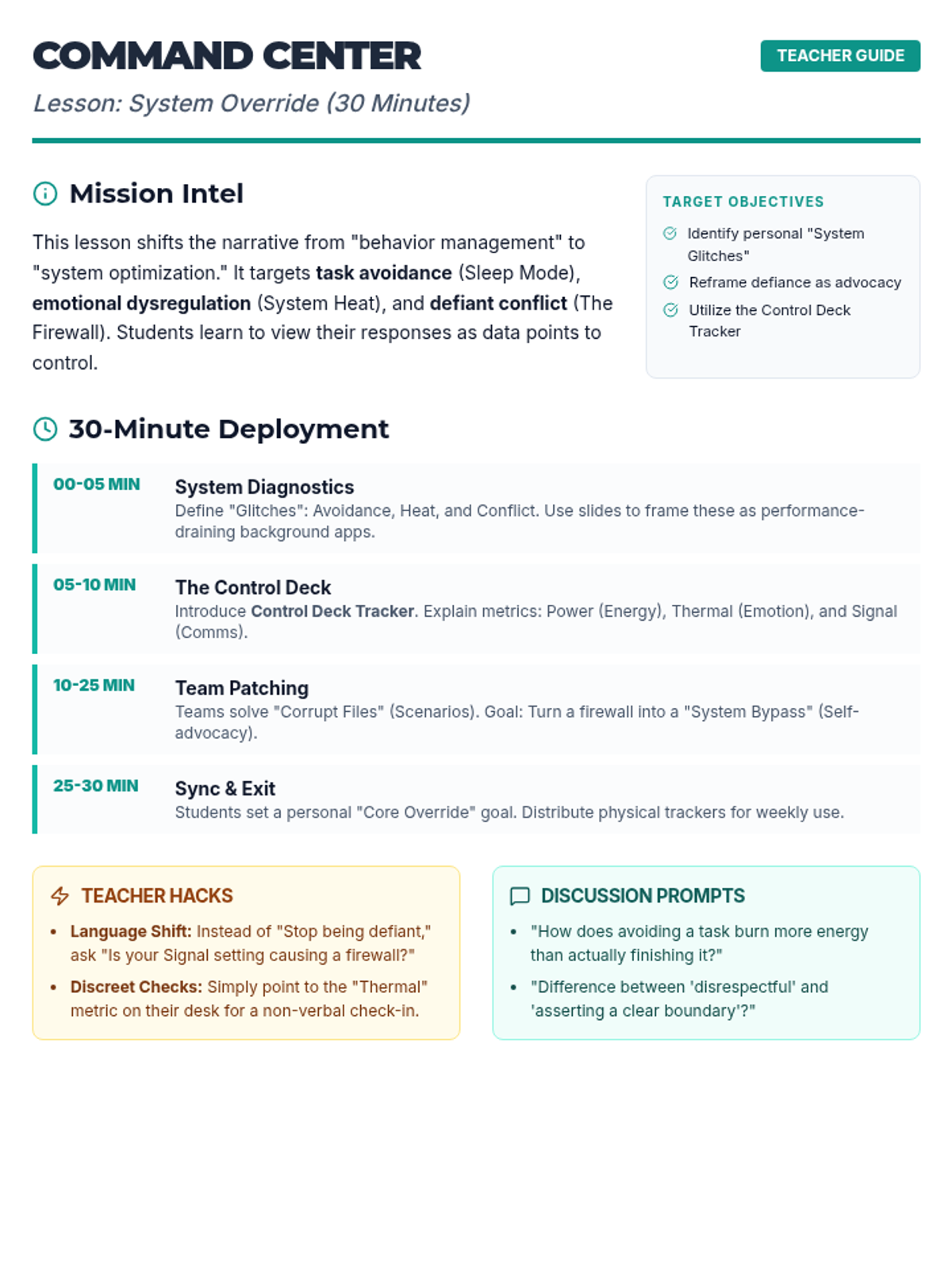
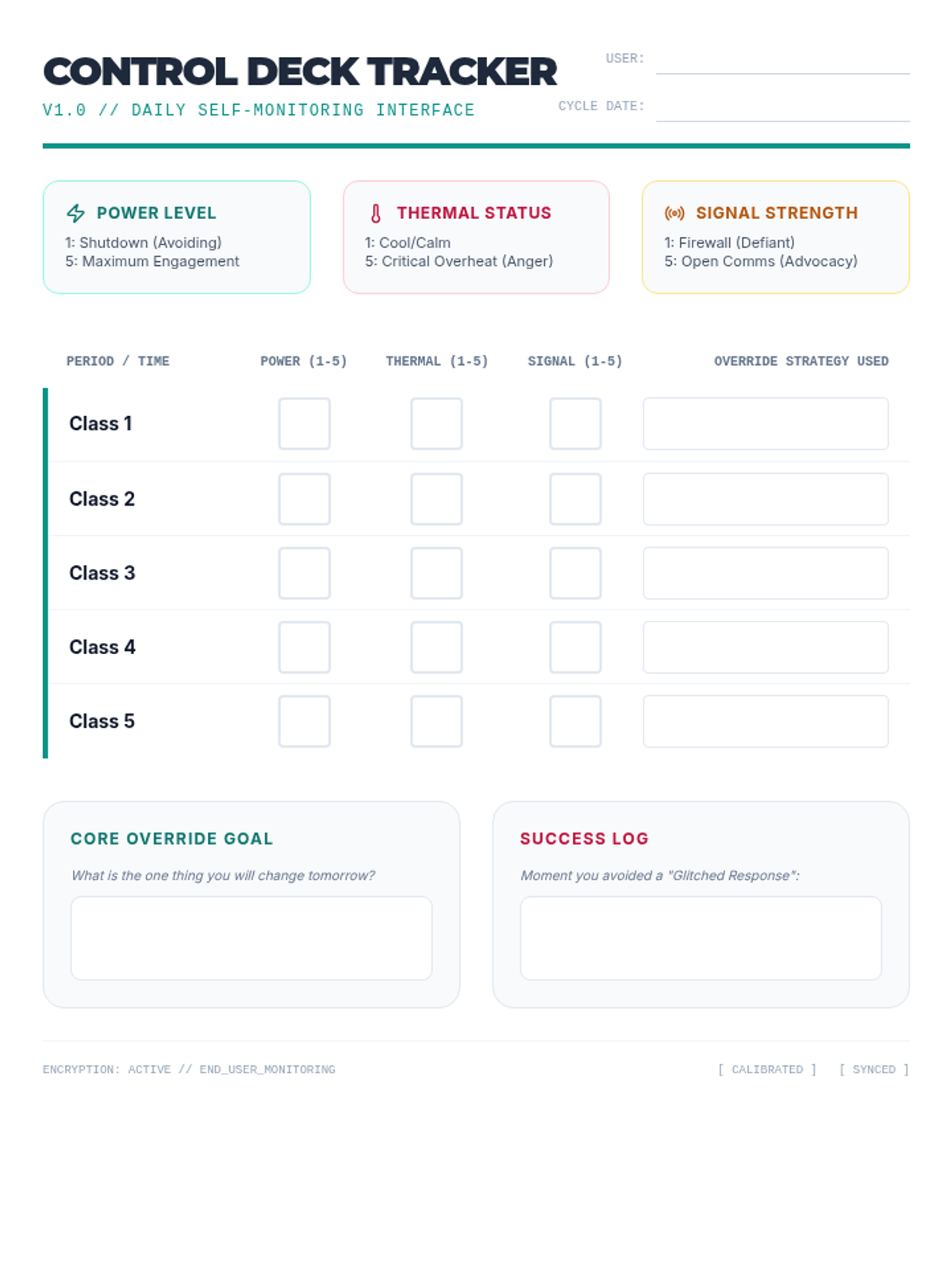
A high-impact lesson designed for high schoolers to master self-regulation and task management through a 'systems interface' lens, focusing on turning defiance into self-advocacy.
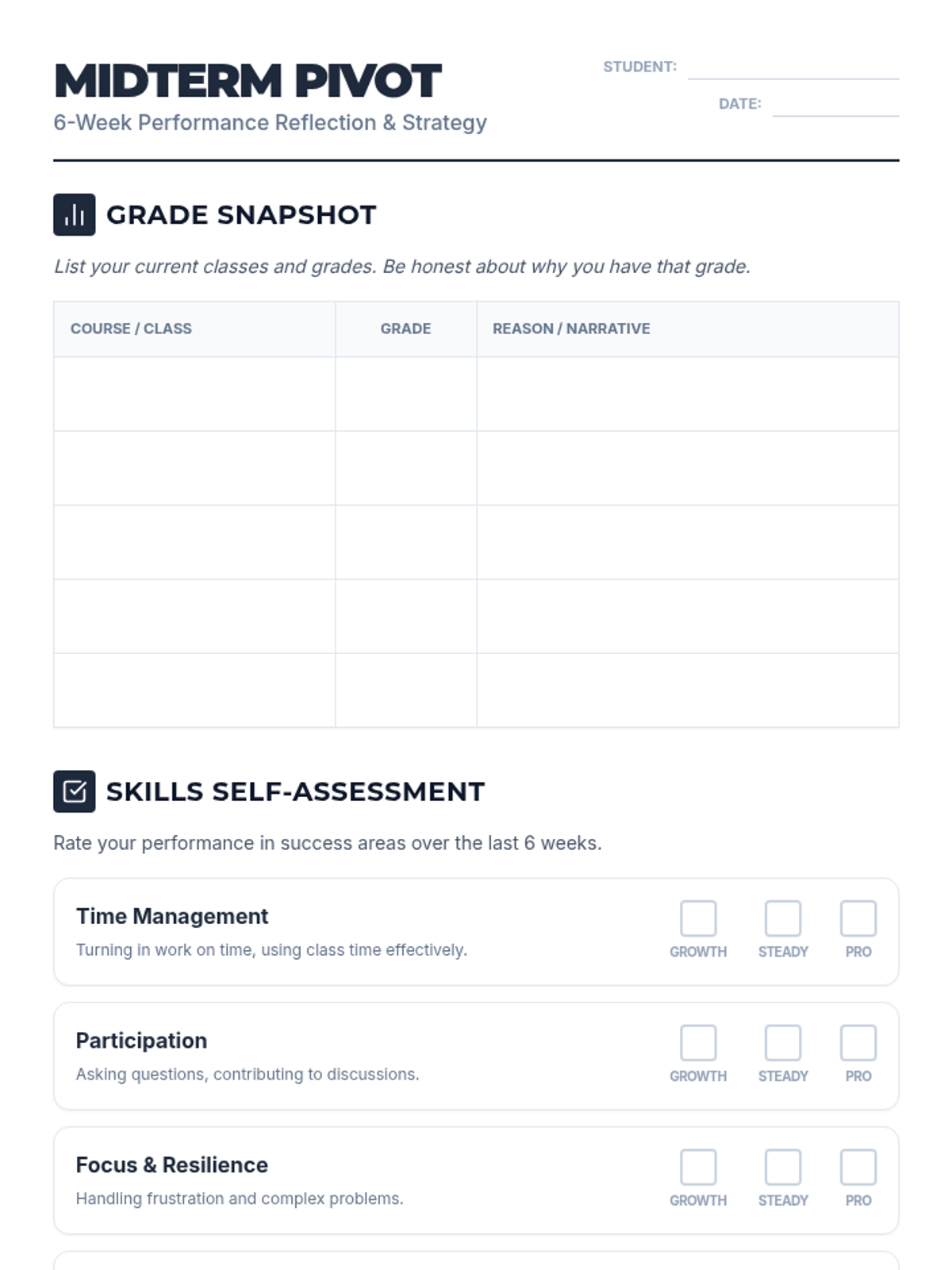
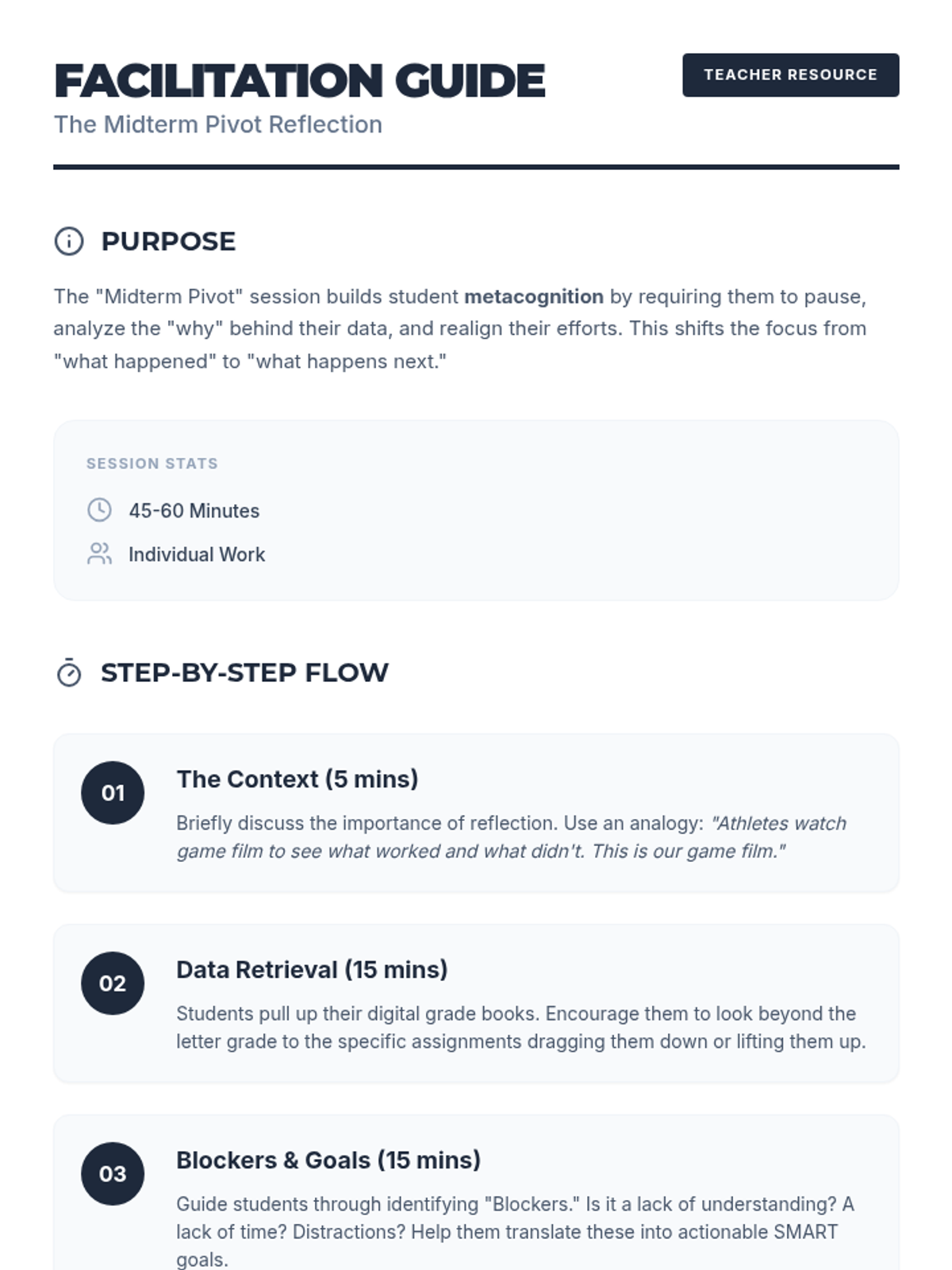
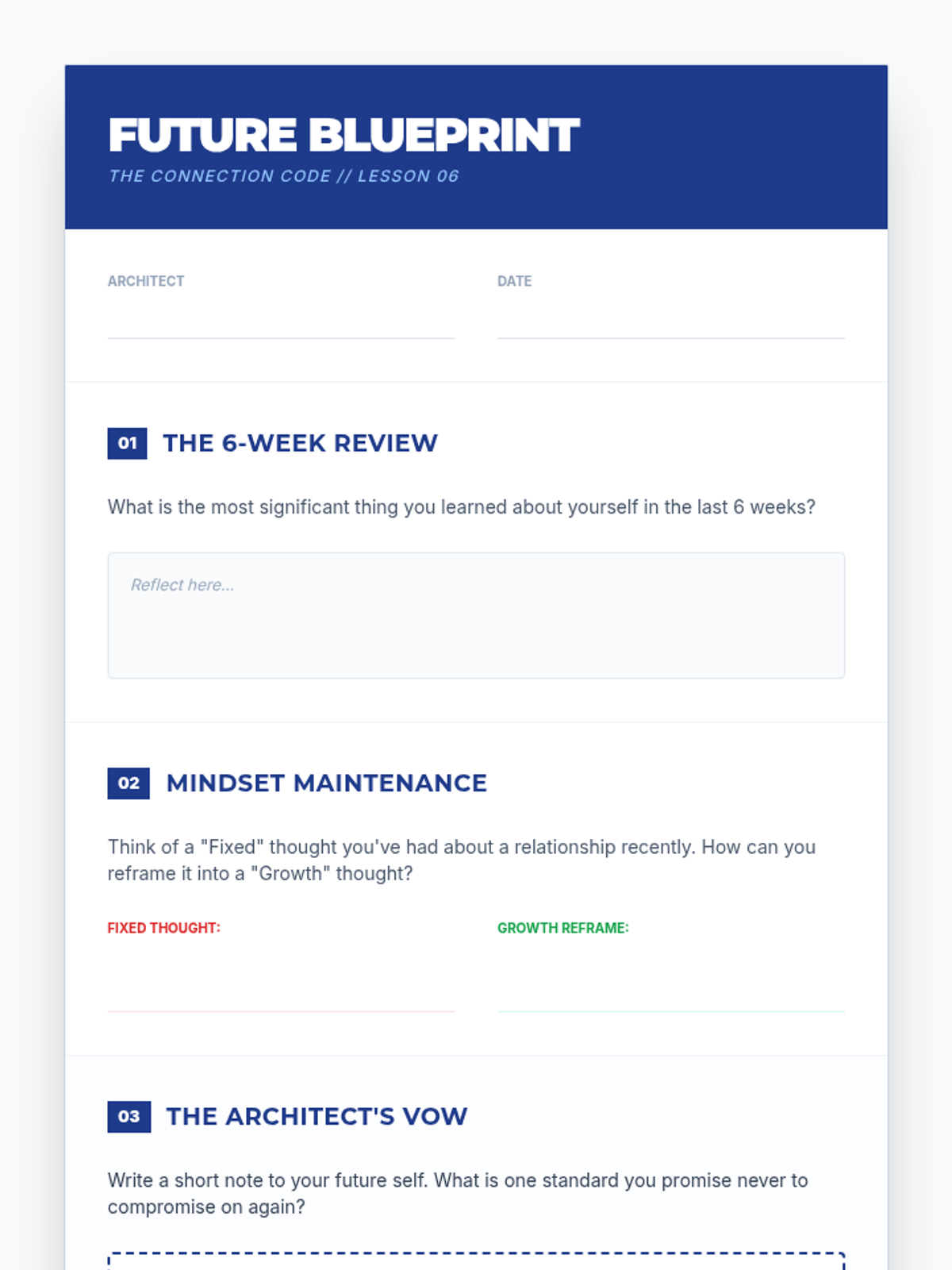
A structured reflection lesson designed to help students analyze their performance over the past six weeks, identify growth areas, and set actionable goals for the next cycle.
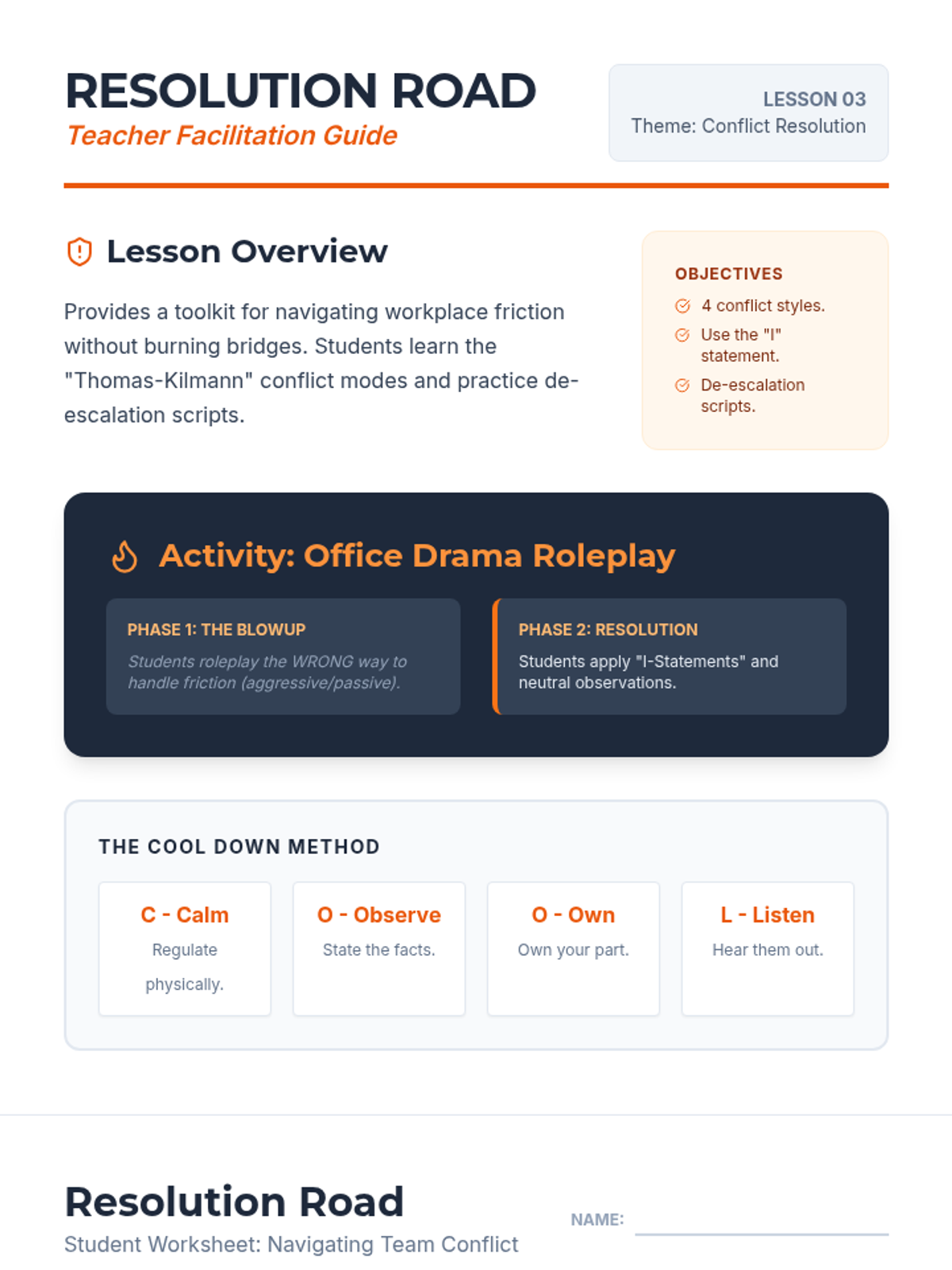
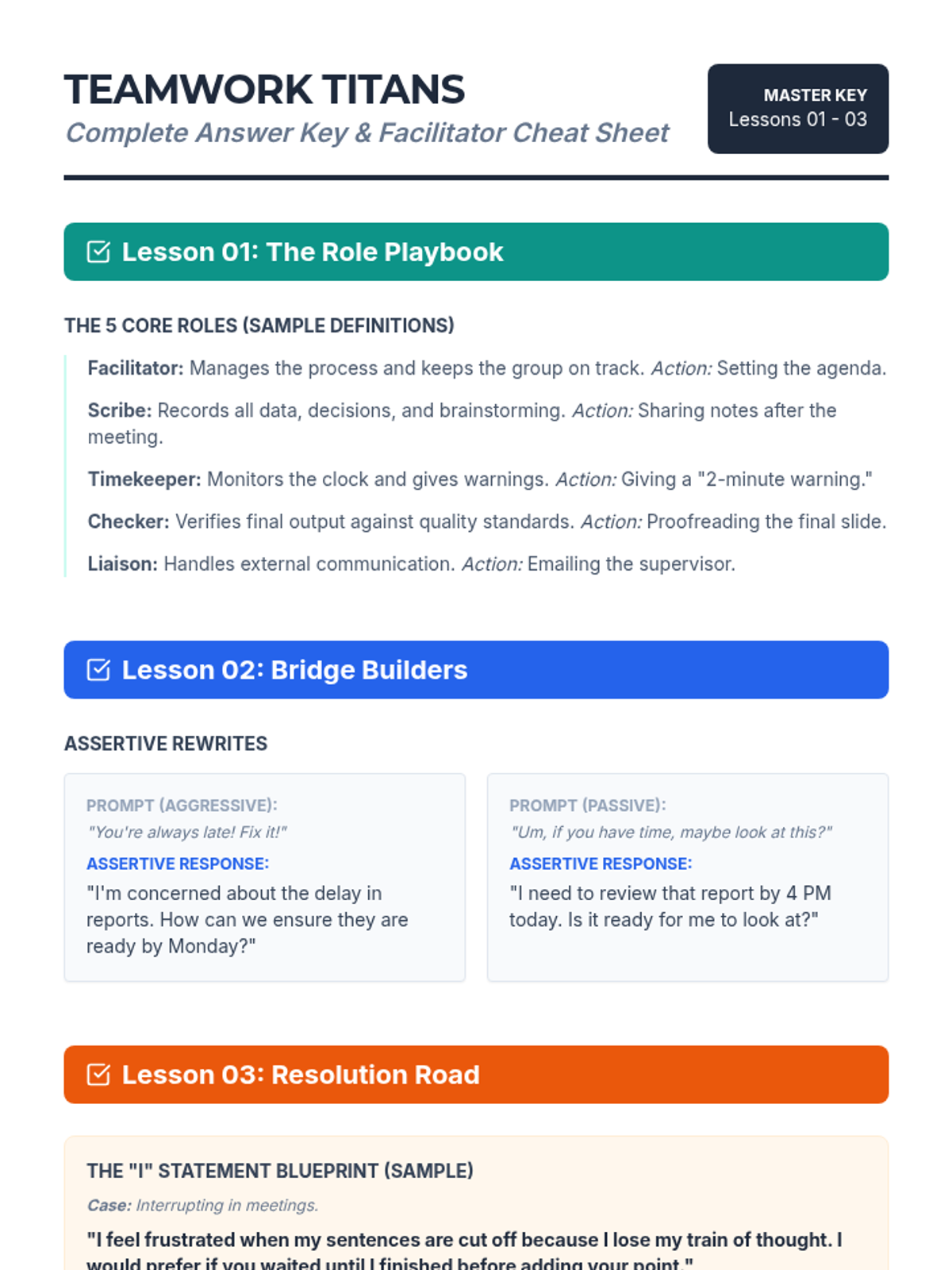
Explores techniques for identifying, de-escalating, and resolving workplace conflicts to maintain a productive and positive team environment.
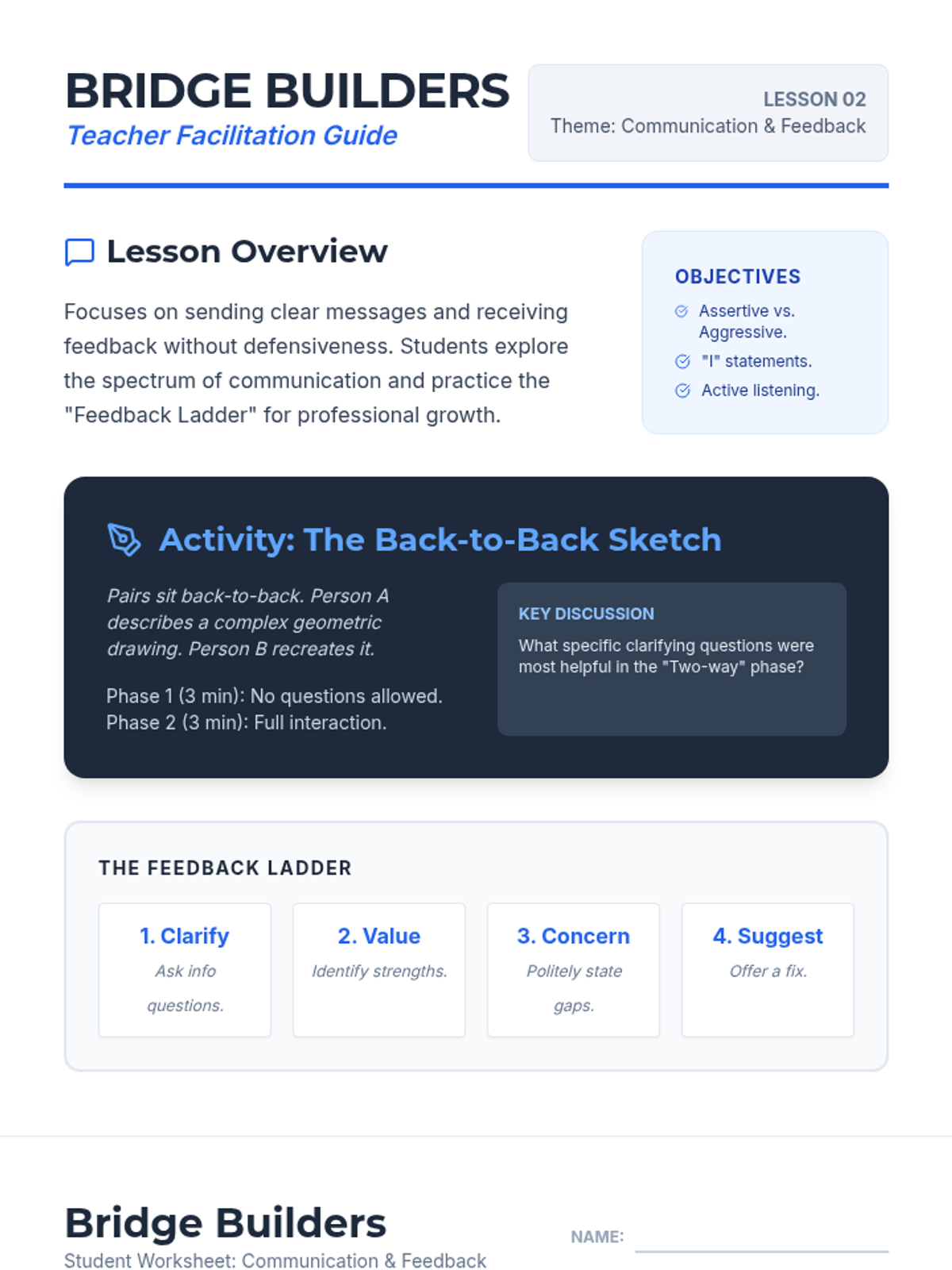
Covers strategies for clear workplace communication and the art of giving and receiving constructive feedback with a growth mindset.
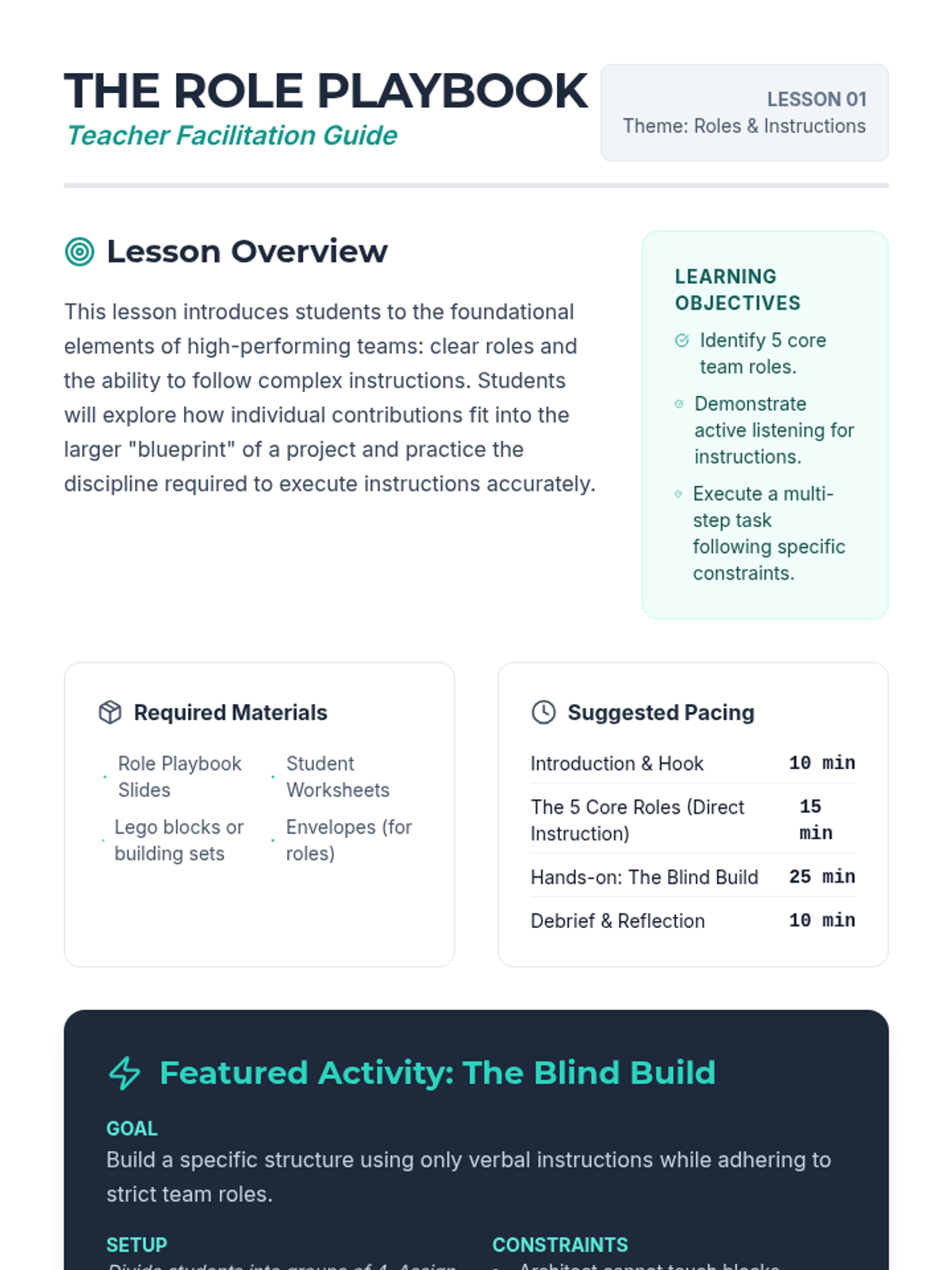
Focuses on understanding how different roles contribute to team success and the importance of following and giving clear instructions in a professional setting.
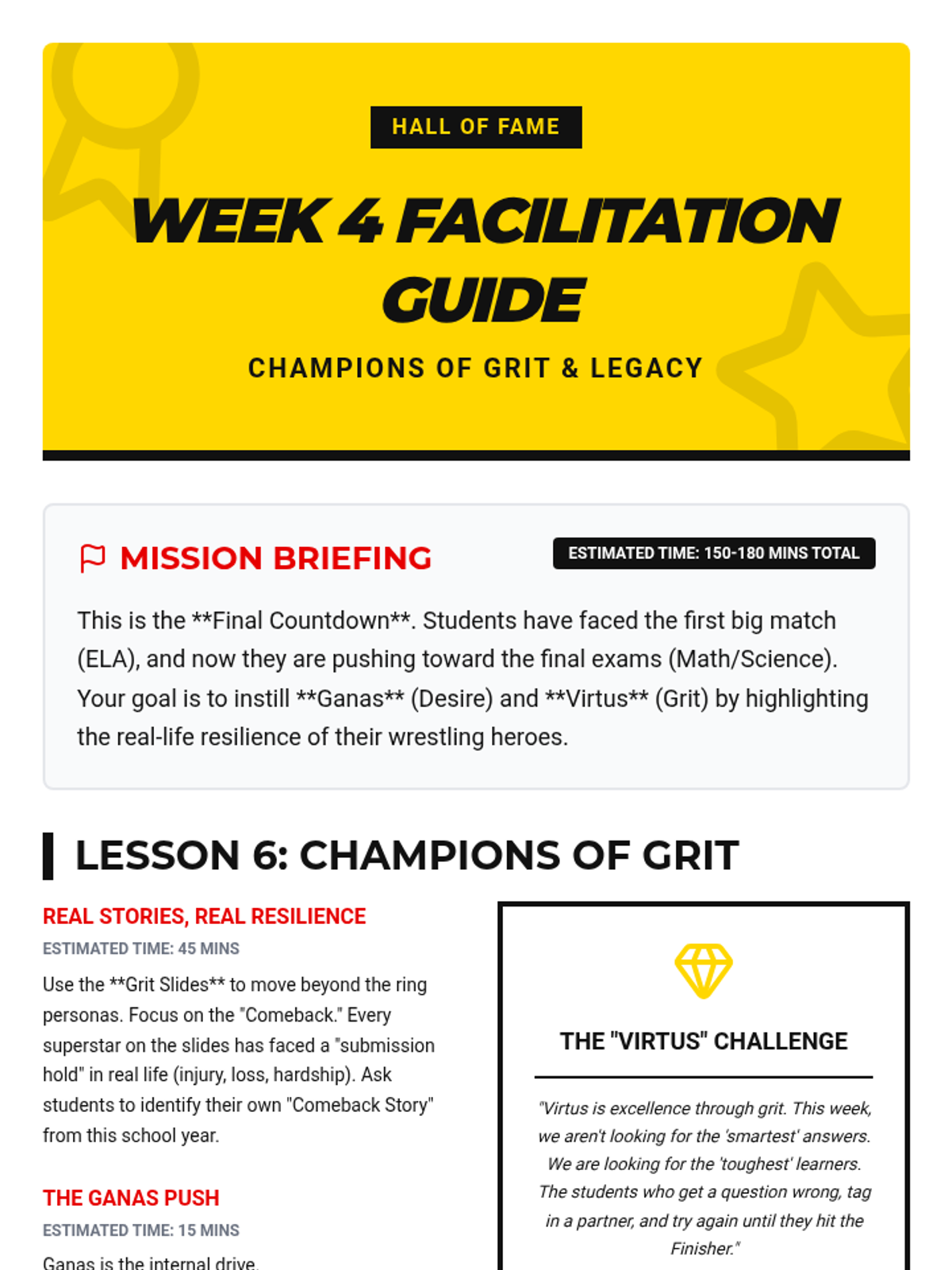
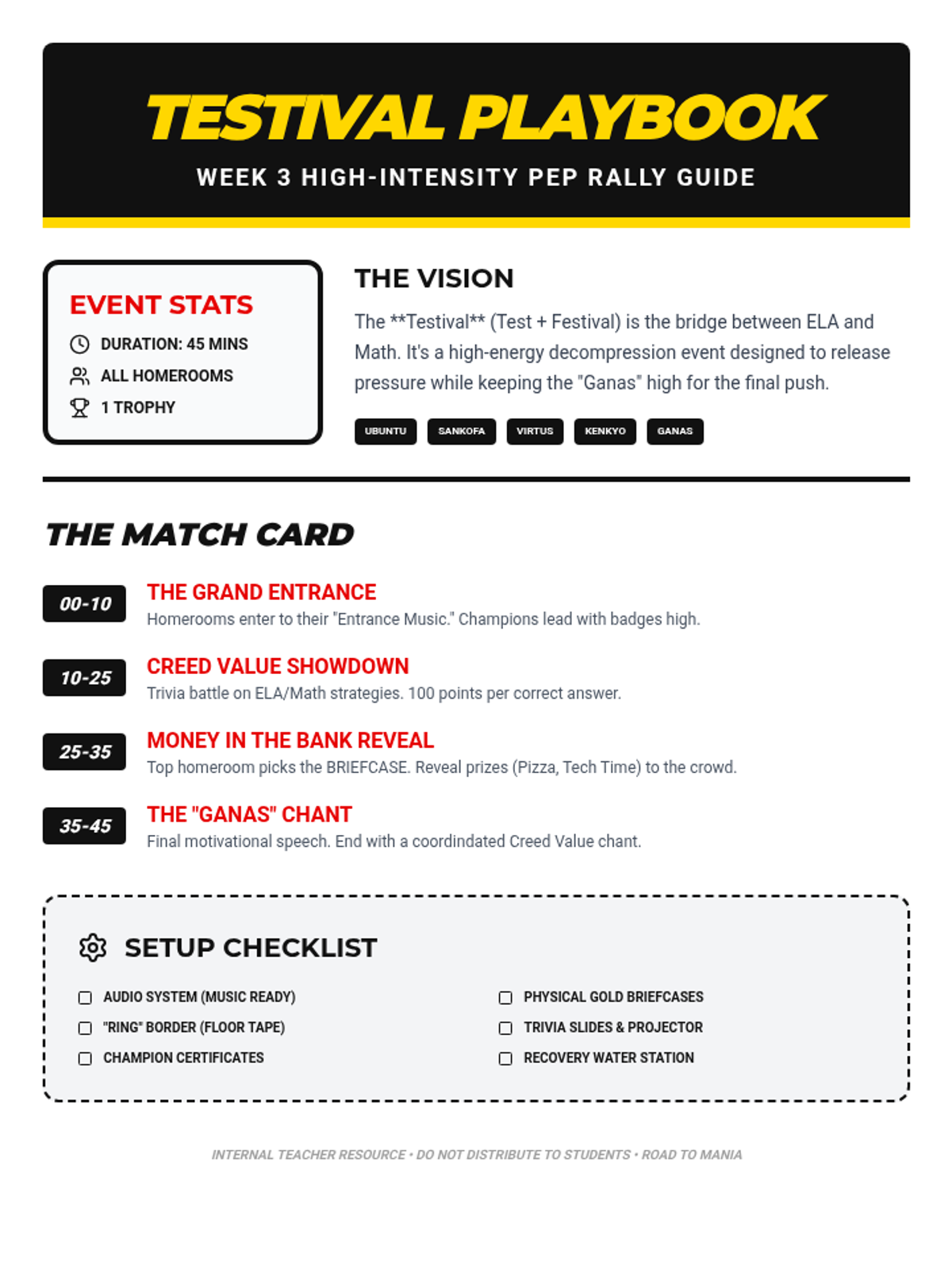
Examining real-life challenges faced by WWE stars to inspire resilience, grit, and the 'Ganas' required for the final push.
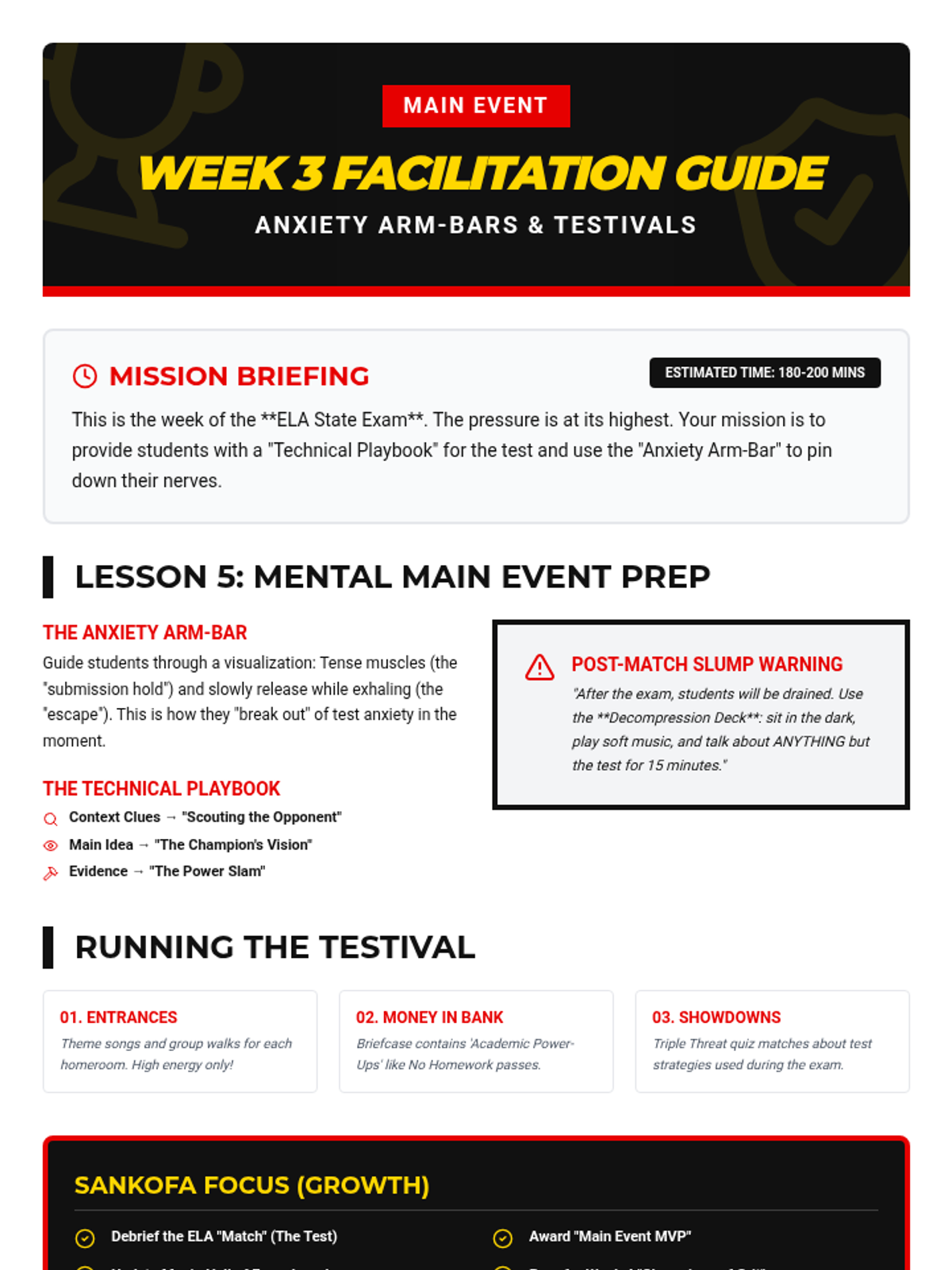
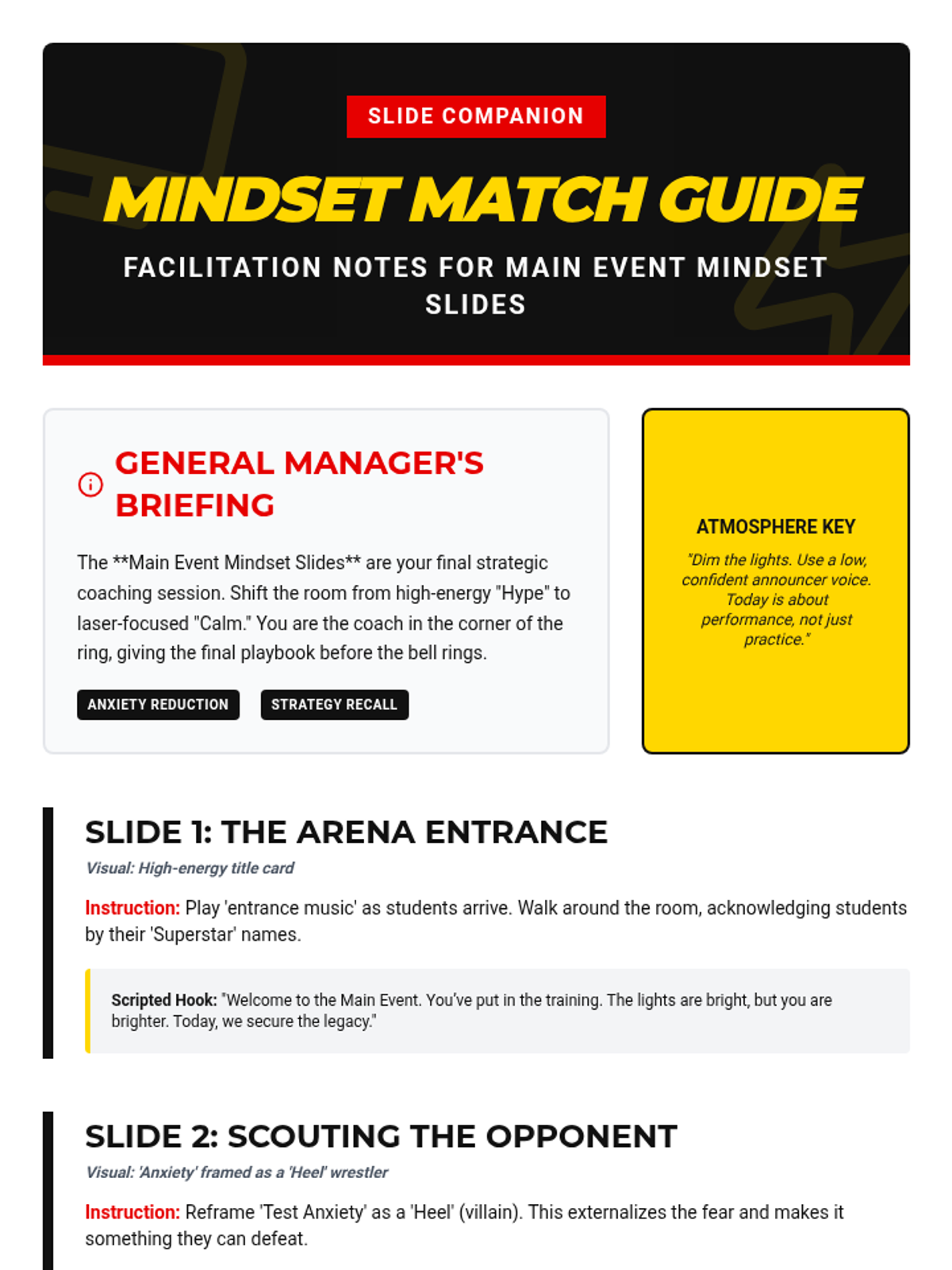
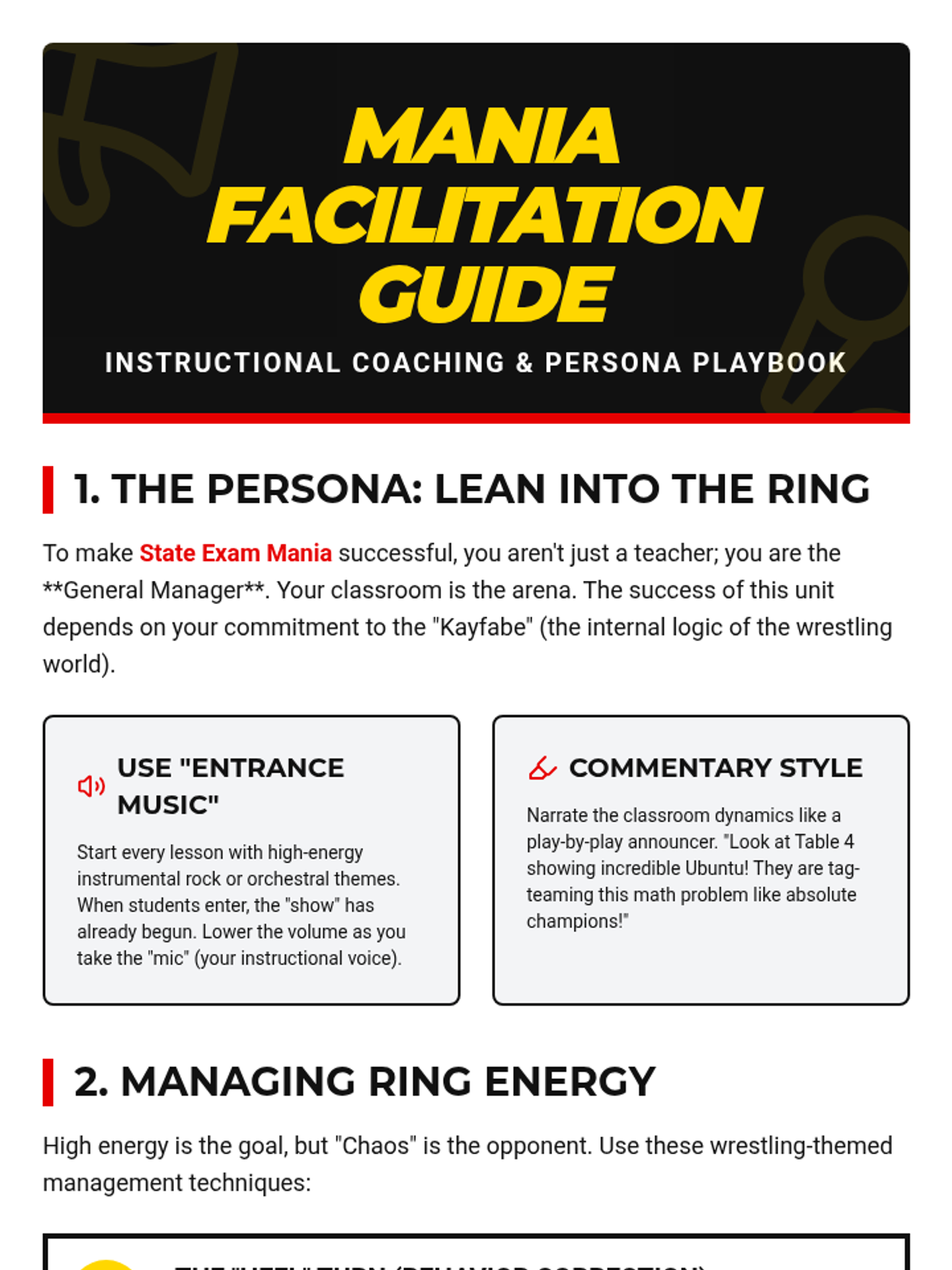
Addressing test anxiety and ELA state exam preparation, including decompression strategies to stay 'main event' ready.
A high-energy activity focusing on inclusivity and celebrating different ways of thinking and 'wrestling' with challenges.
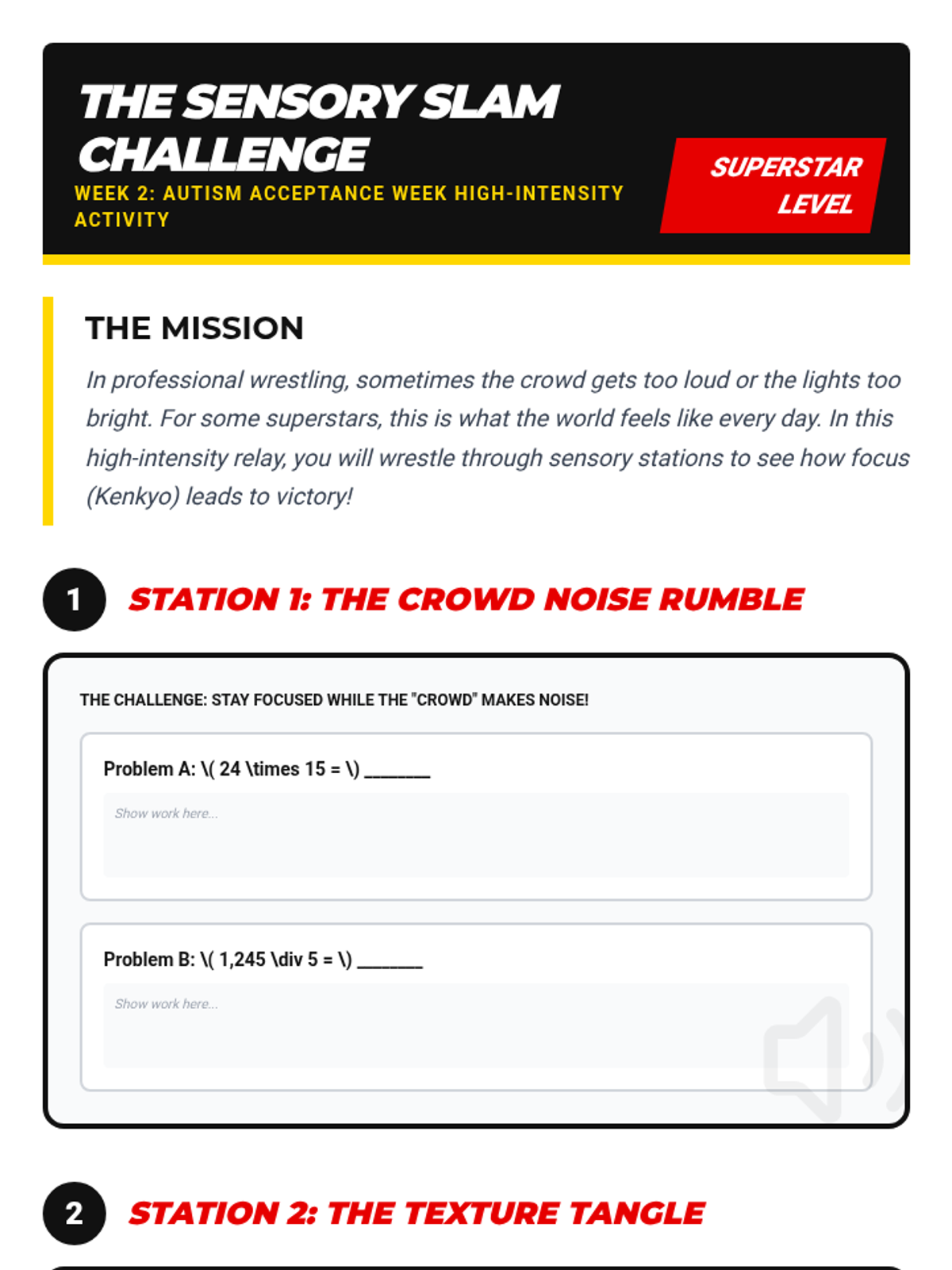
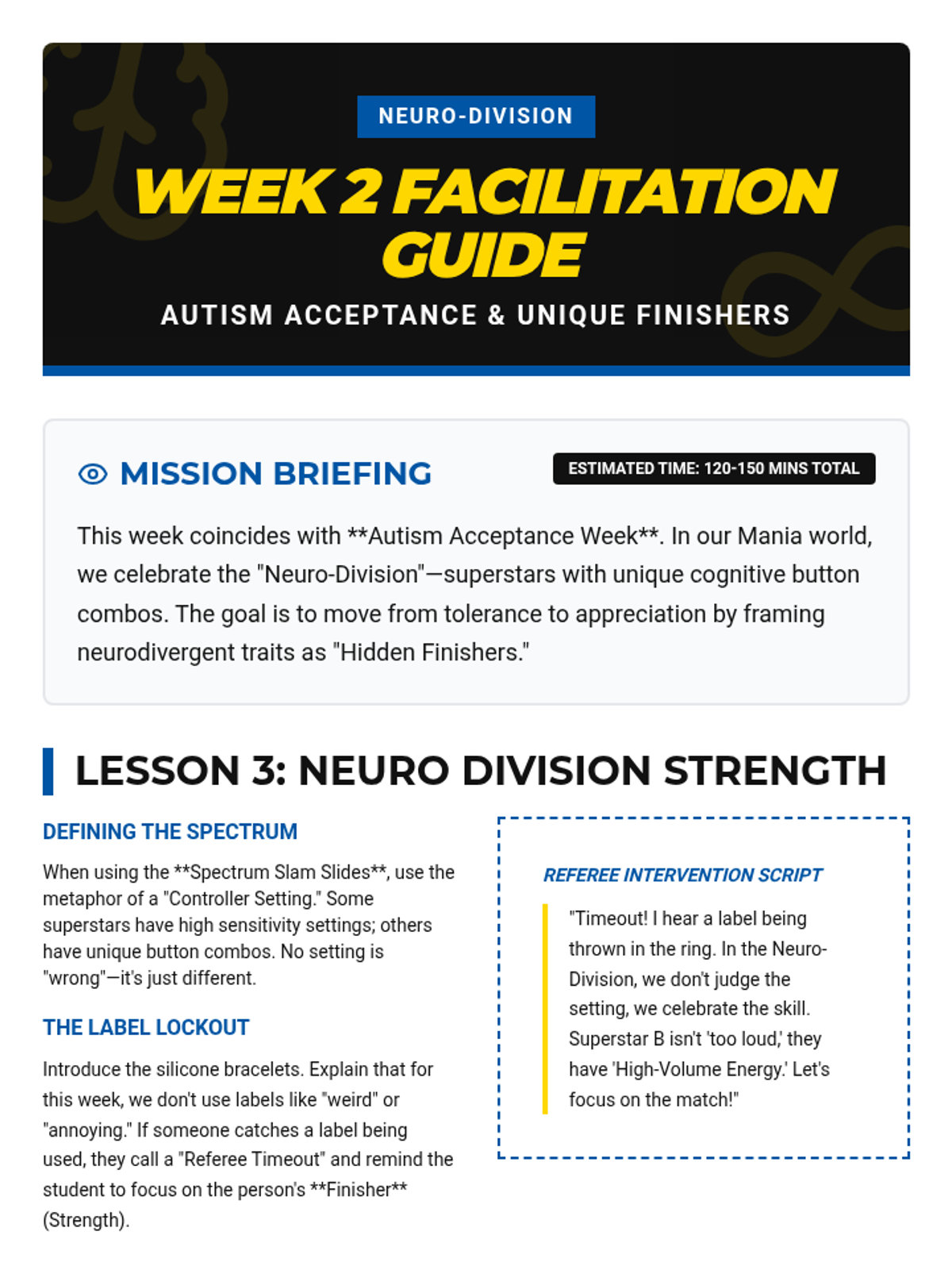
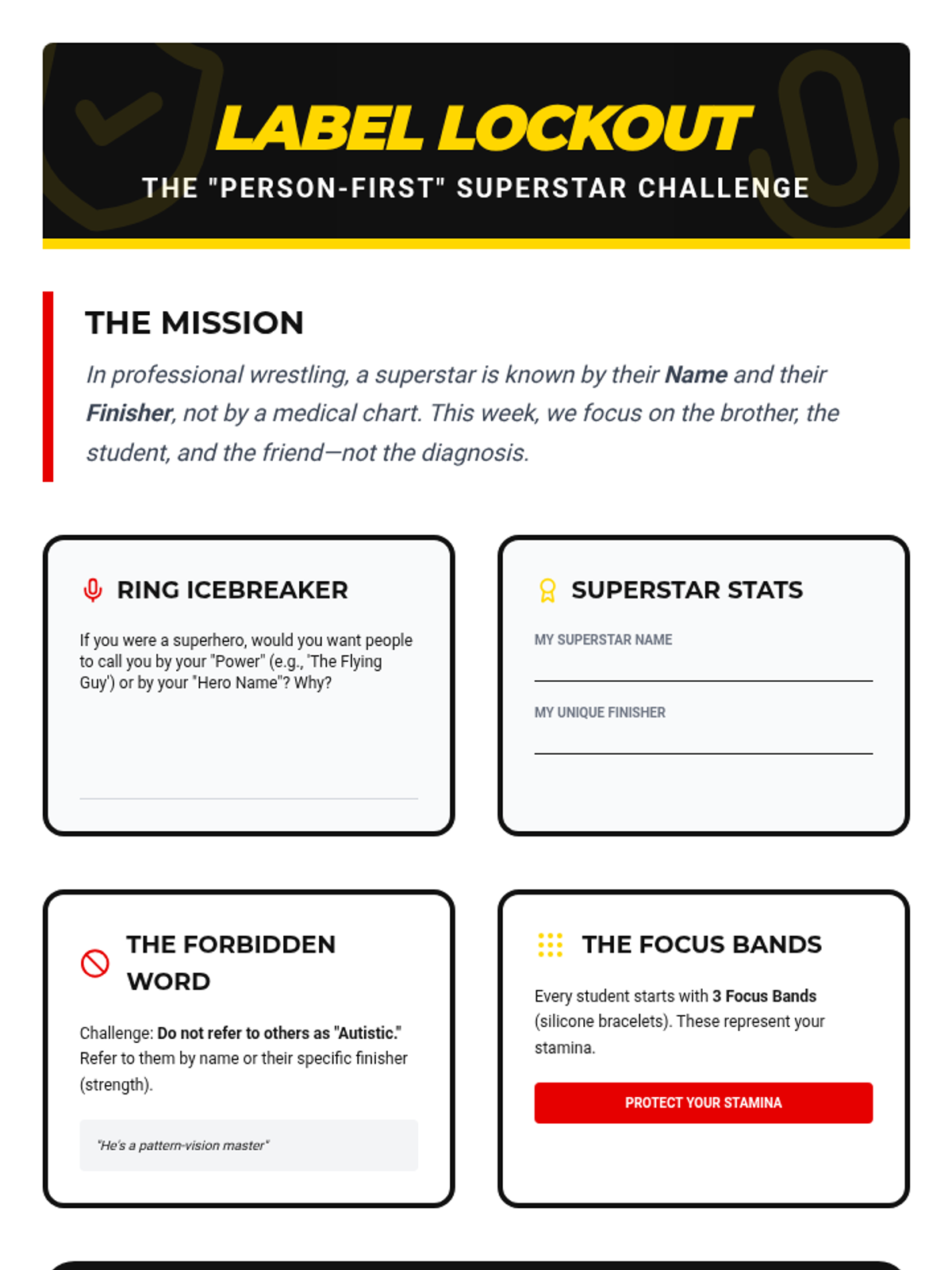
The first of two activities celebrating Autism Acceptance Week, highlighting the unique 'finishers' and strengths of neurodivergent individuals.
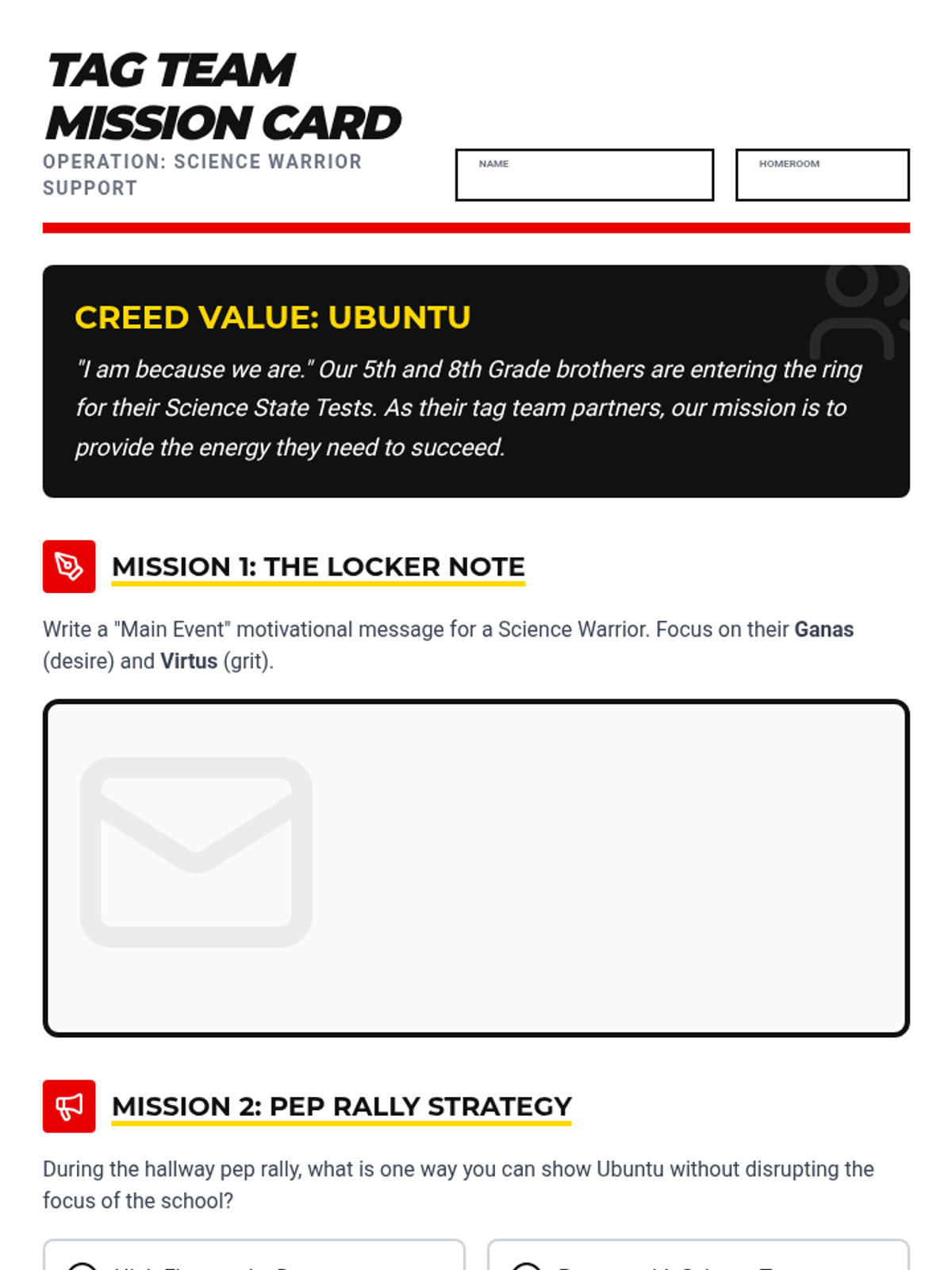
Focus on the Creed Value of Ubuntu and brotherhood, preparing students to support their peers during science test pep rallies.
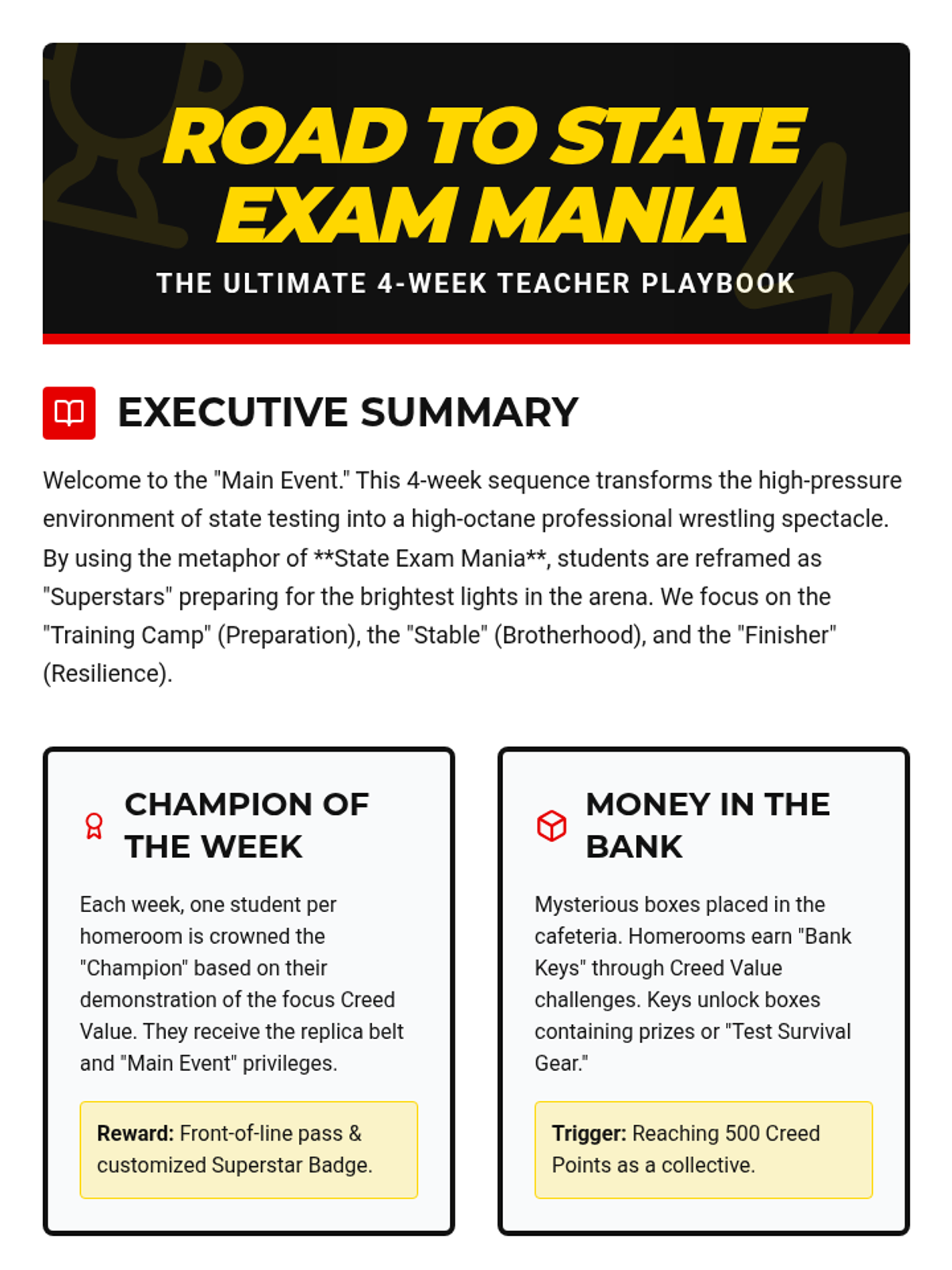
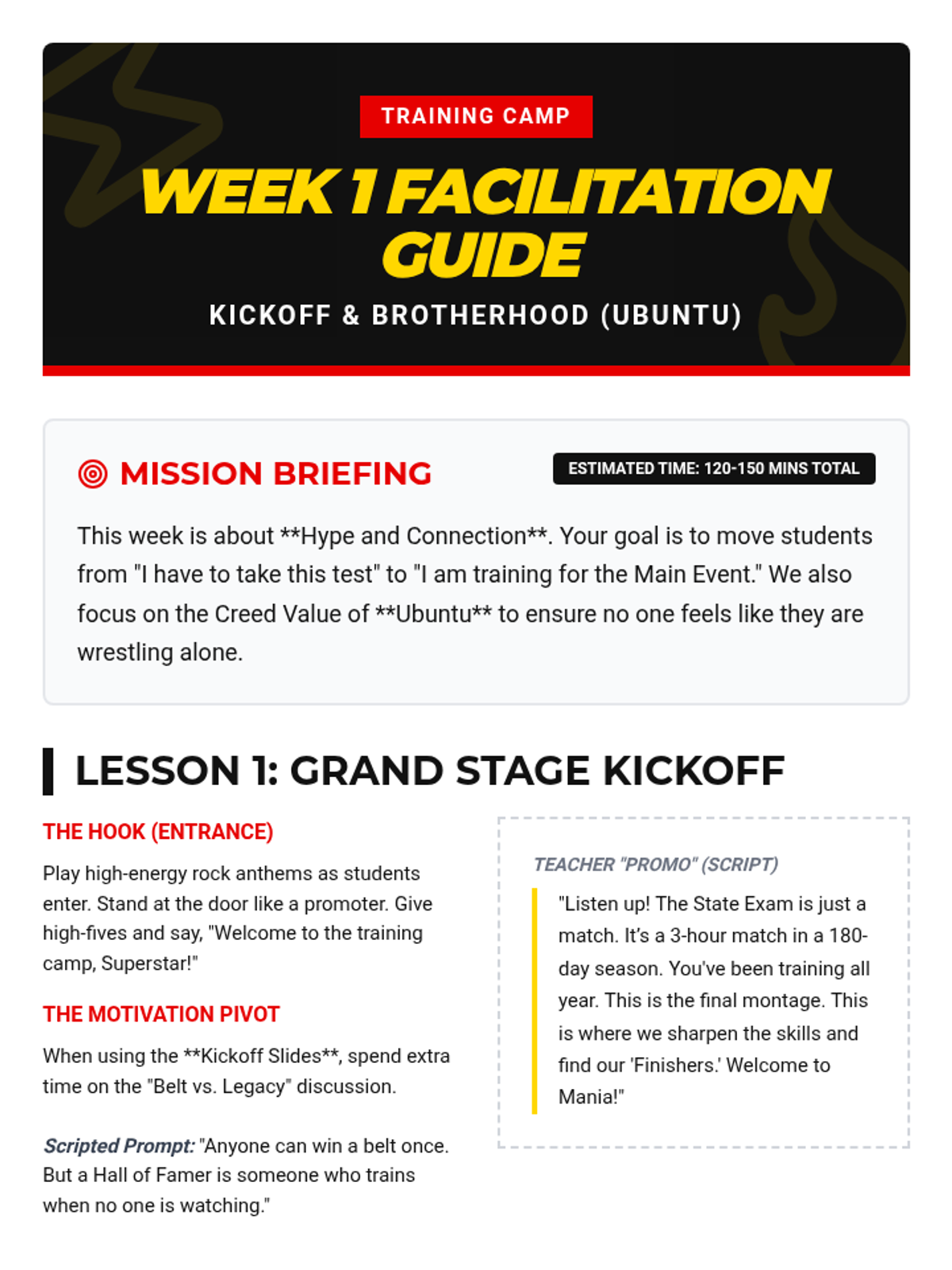
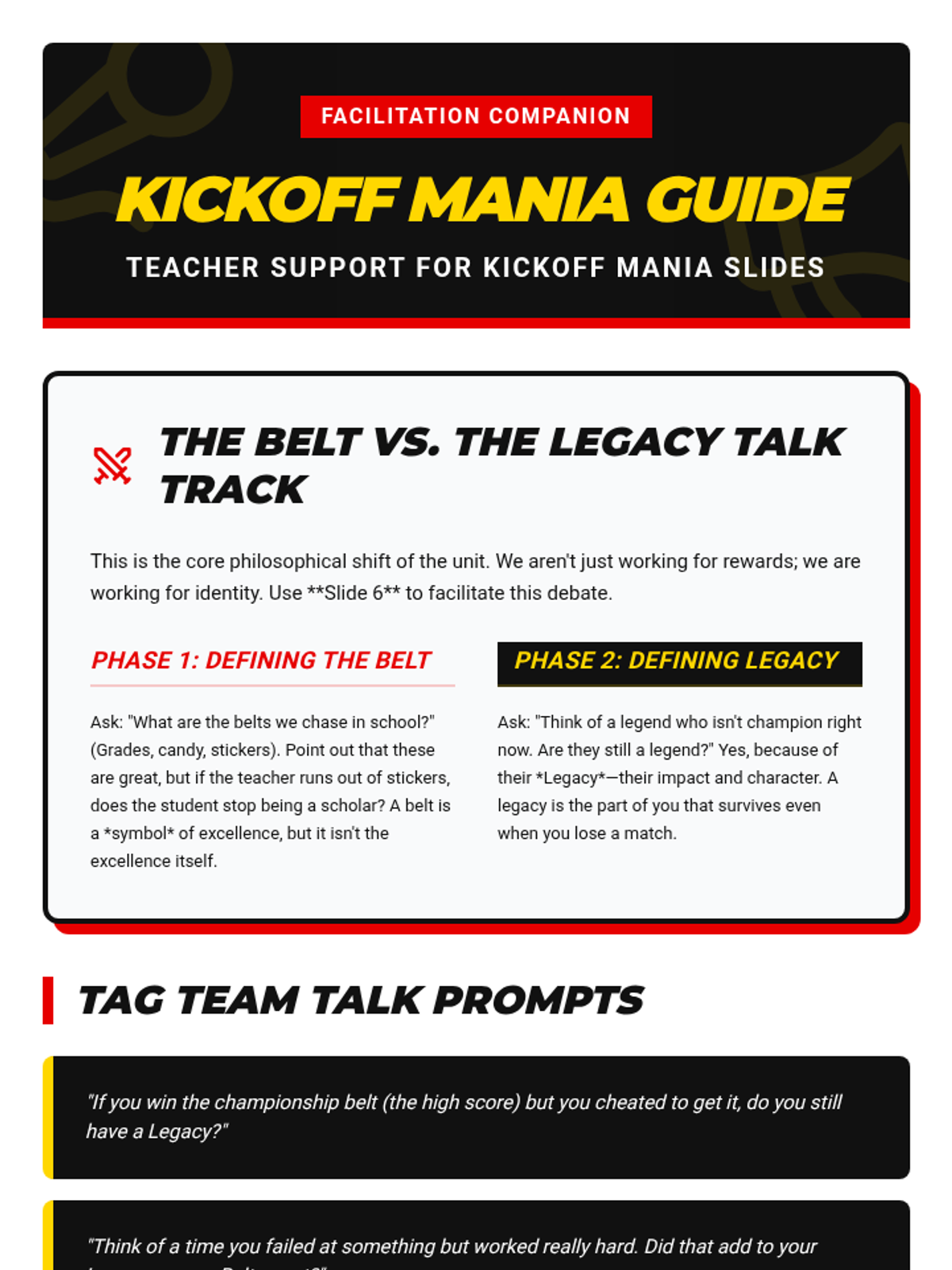
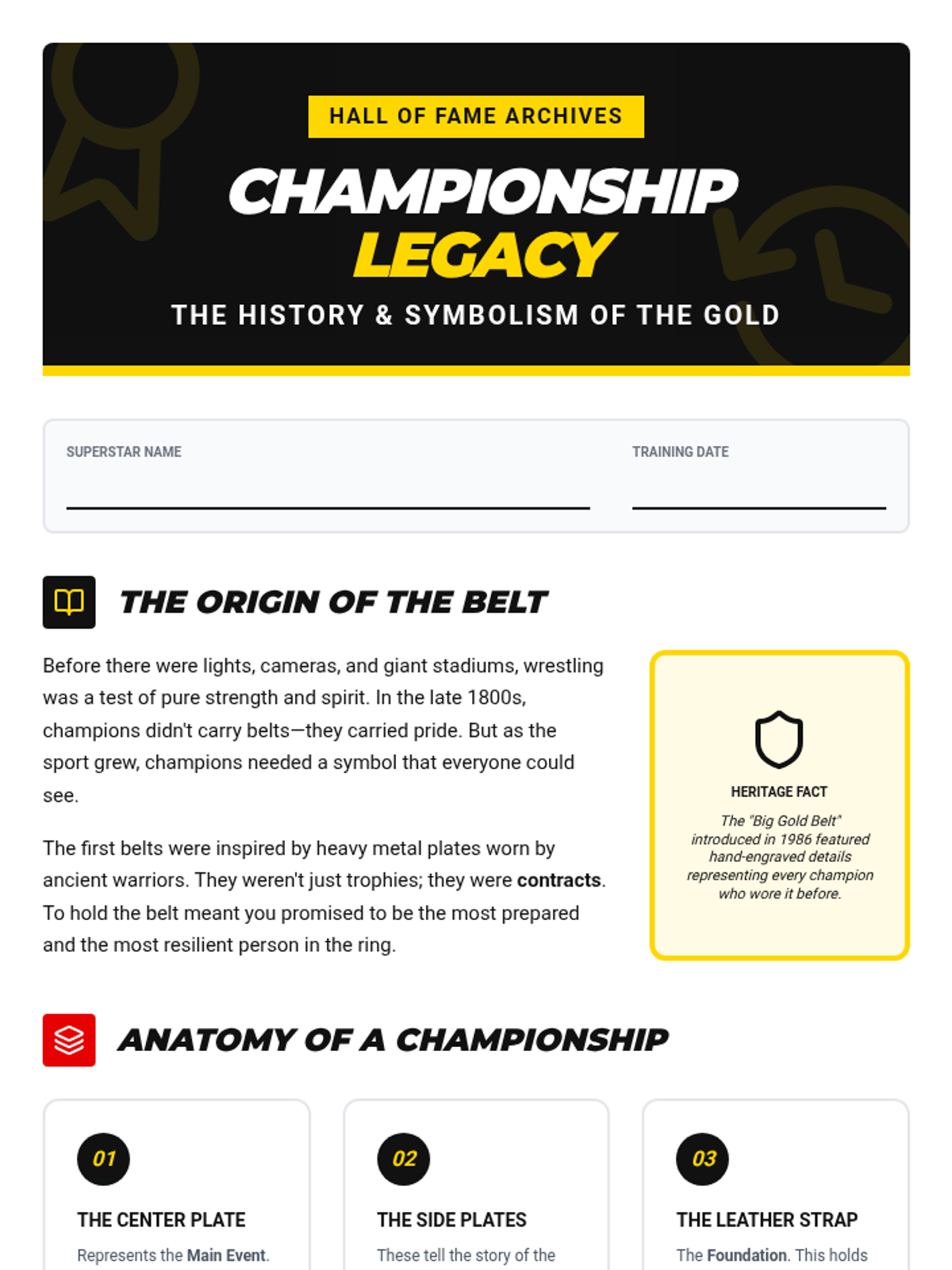
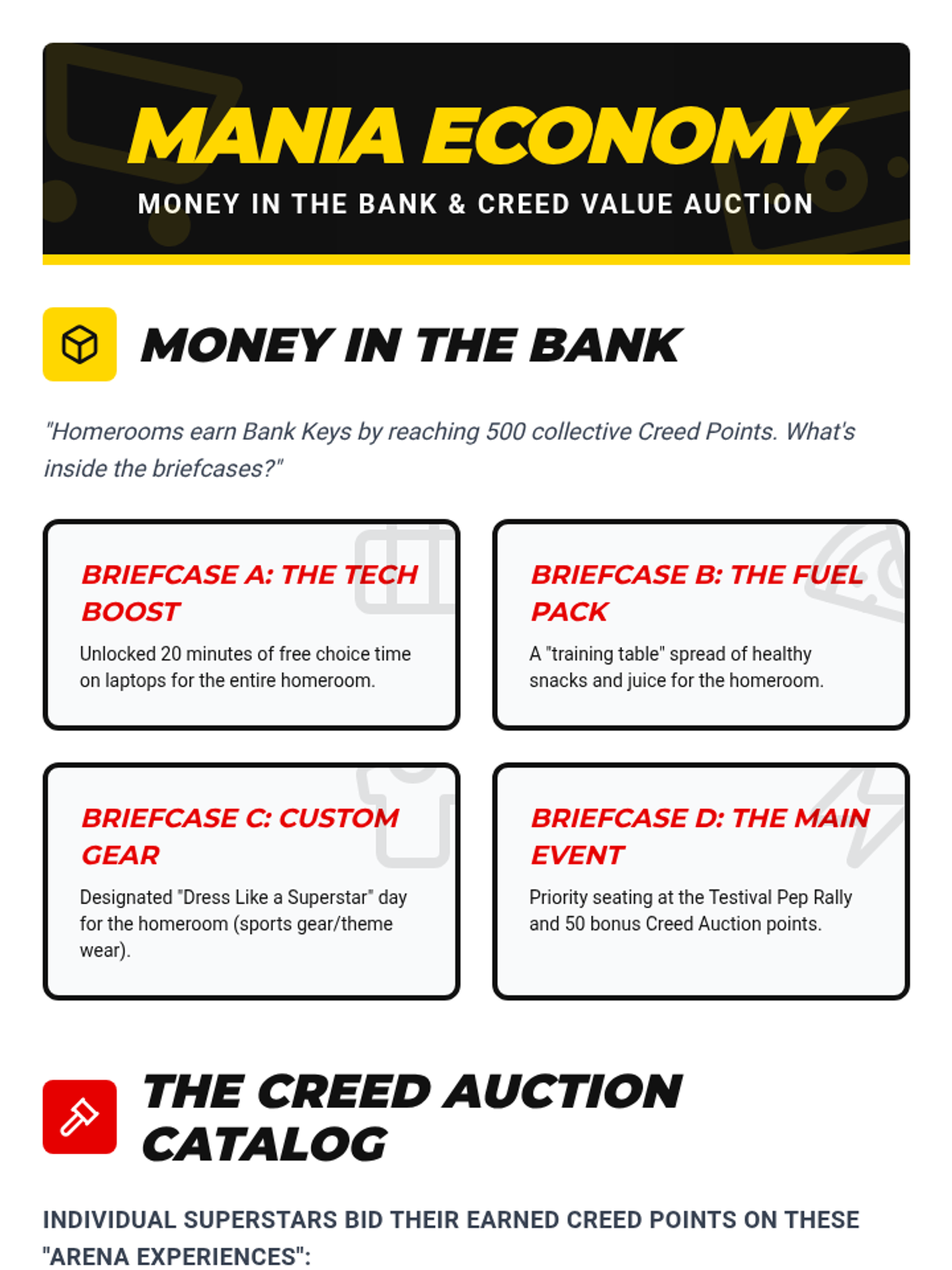
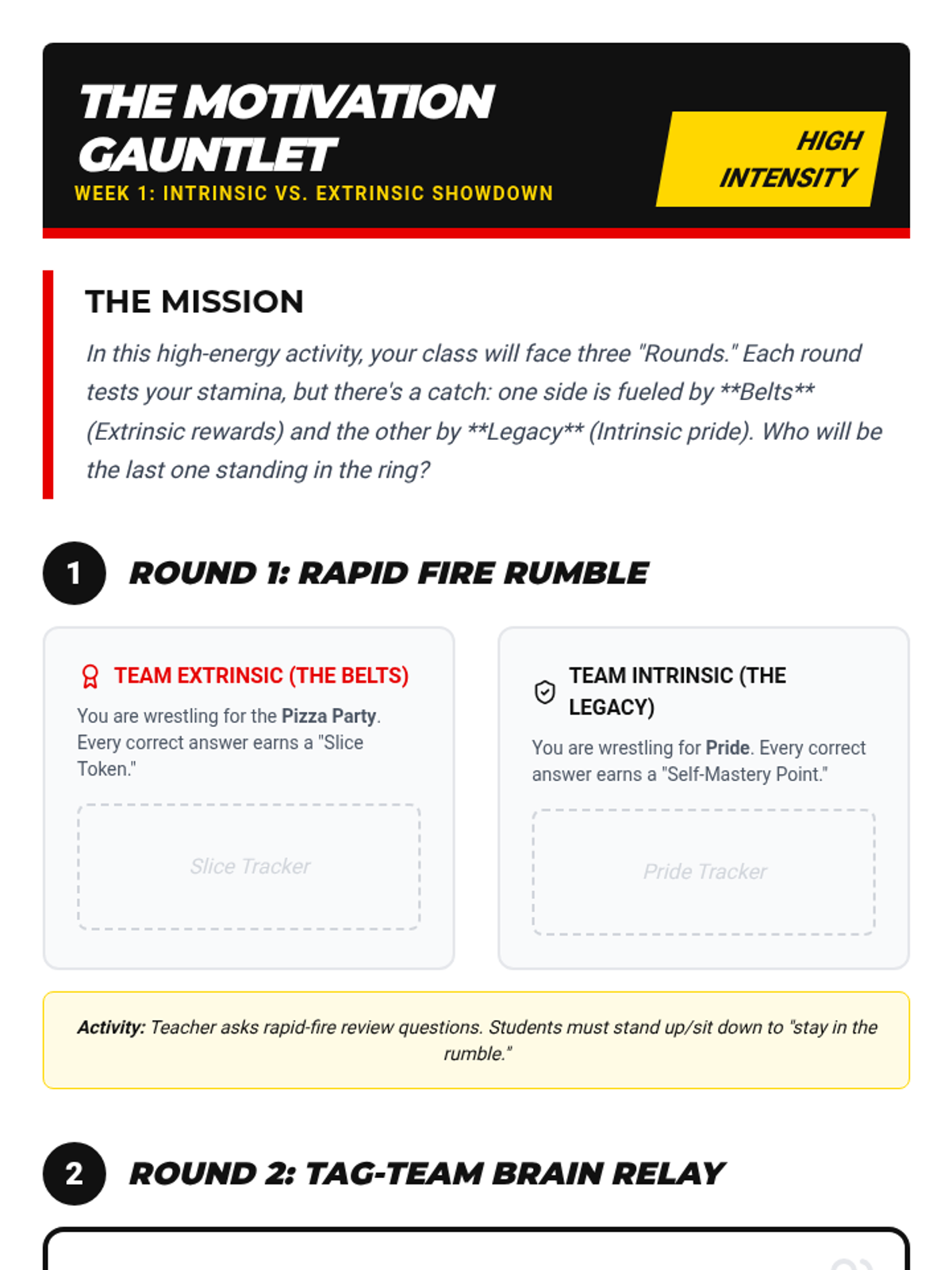
Introduce the 'State Exam Mania' theme, focusing on the difference between intrinsic and extrinsic motivation using the metaphor of championship belts vs. personal legacy.
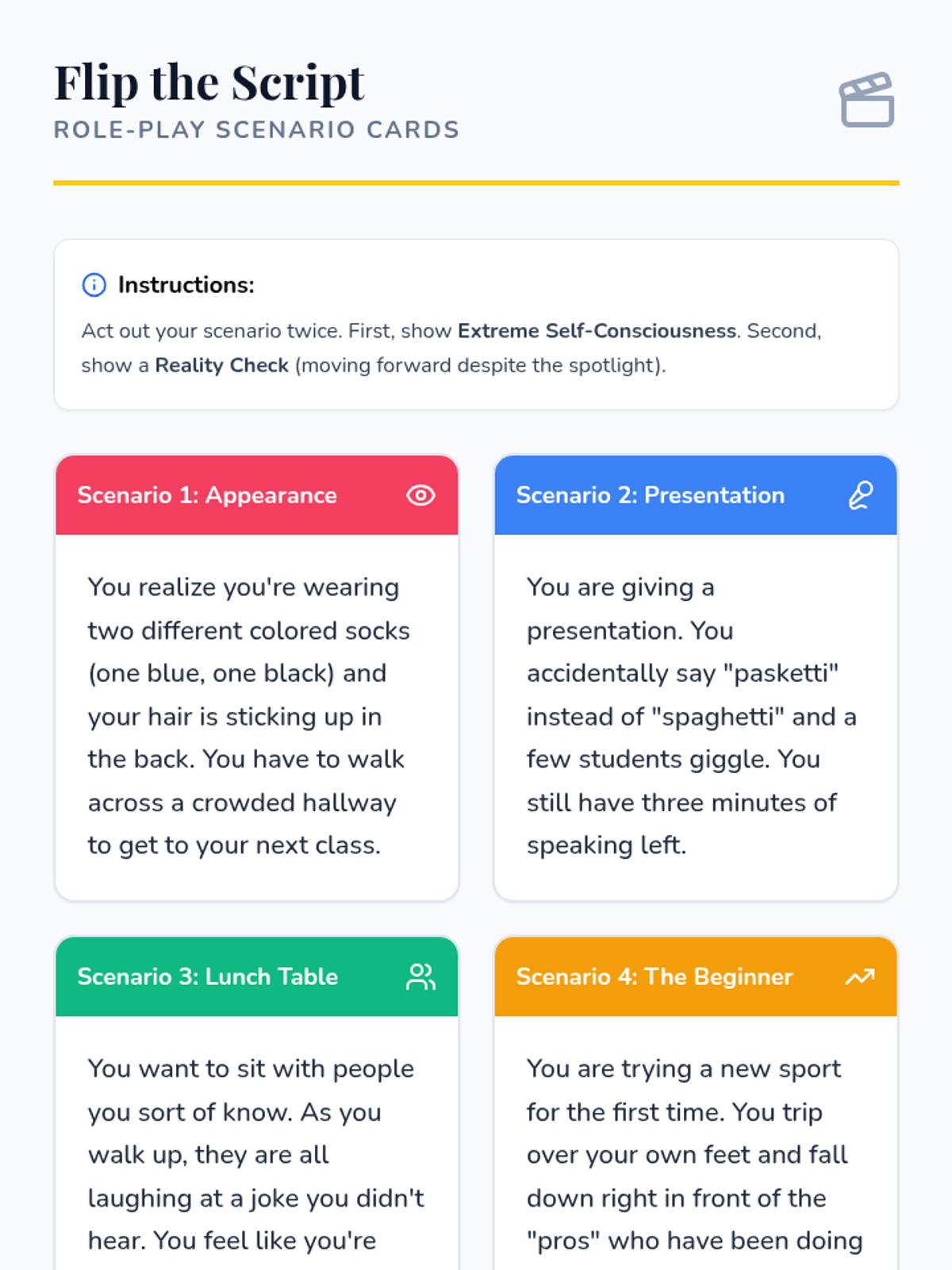
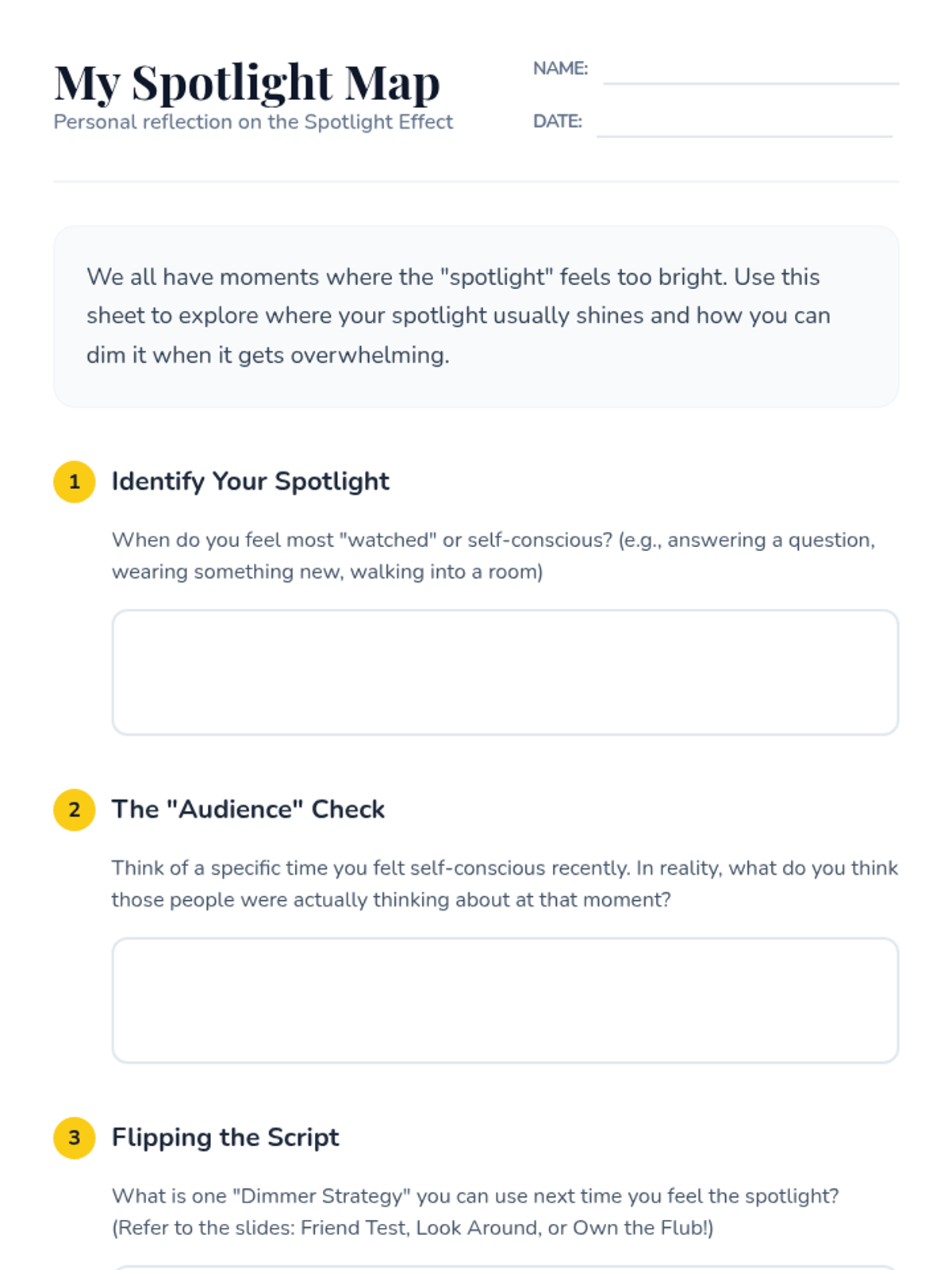
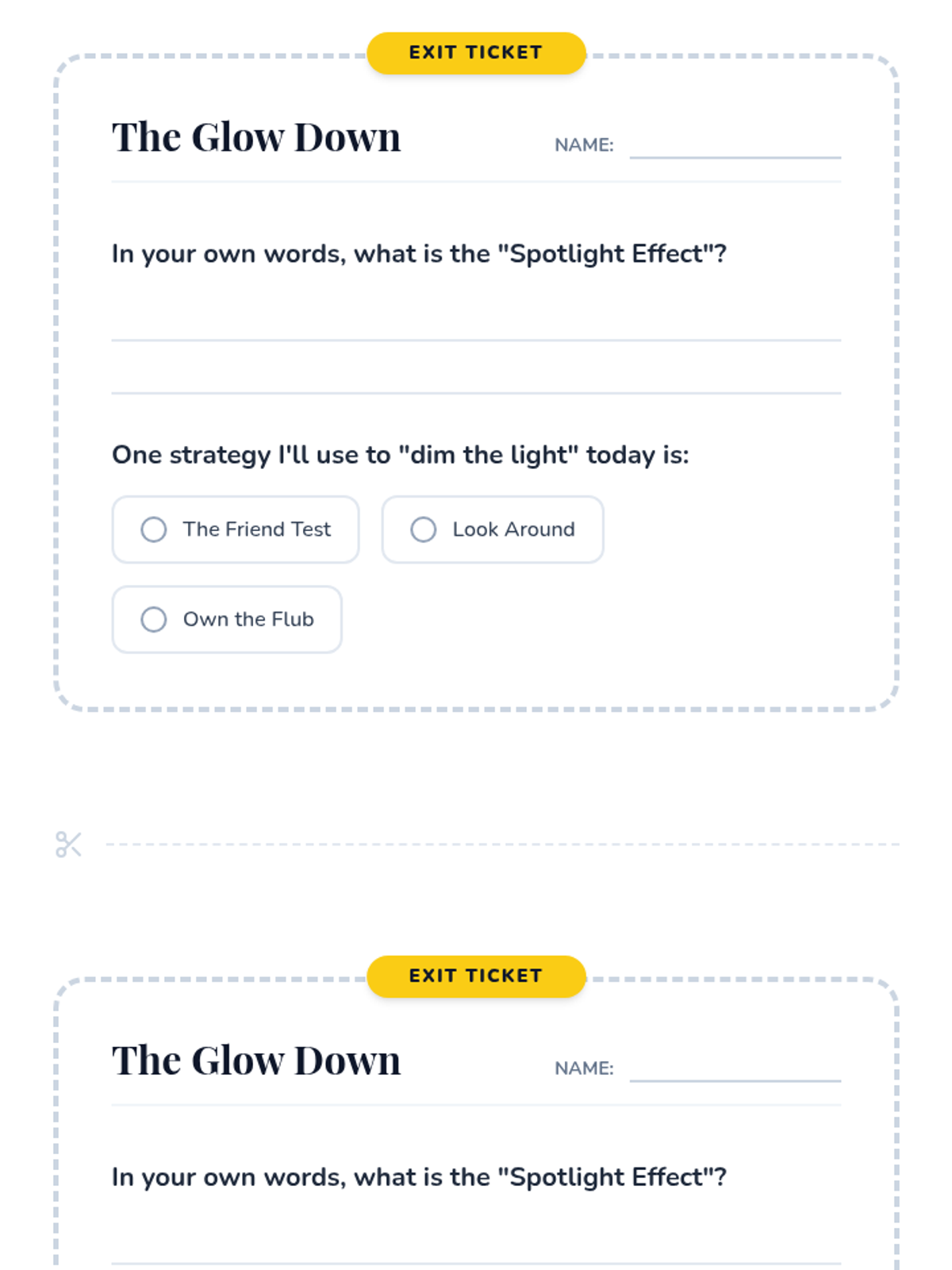
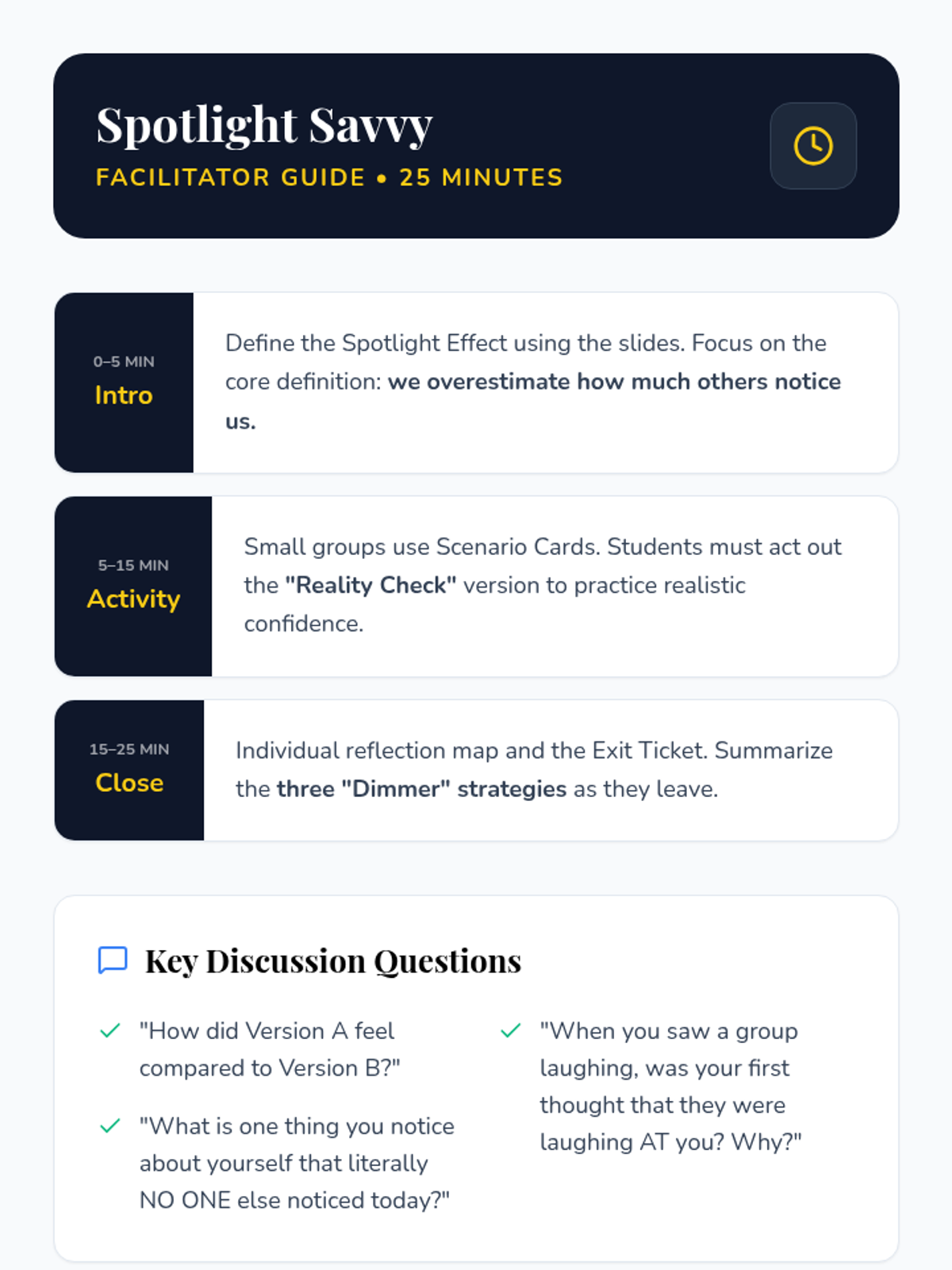
A 25-minute lesson on overcoming the 'Spotlight Effect' and reducing self-consciousness across social, physical, and performance-based situations. Students explore why we feel watched and practice 'flipping the script' through scenario-based role-play.
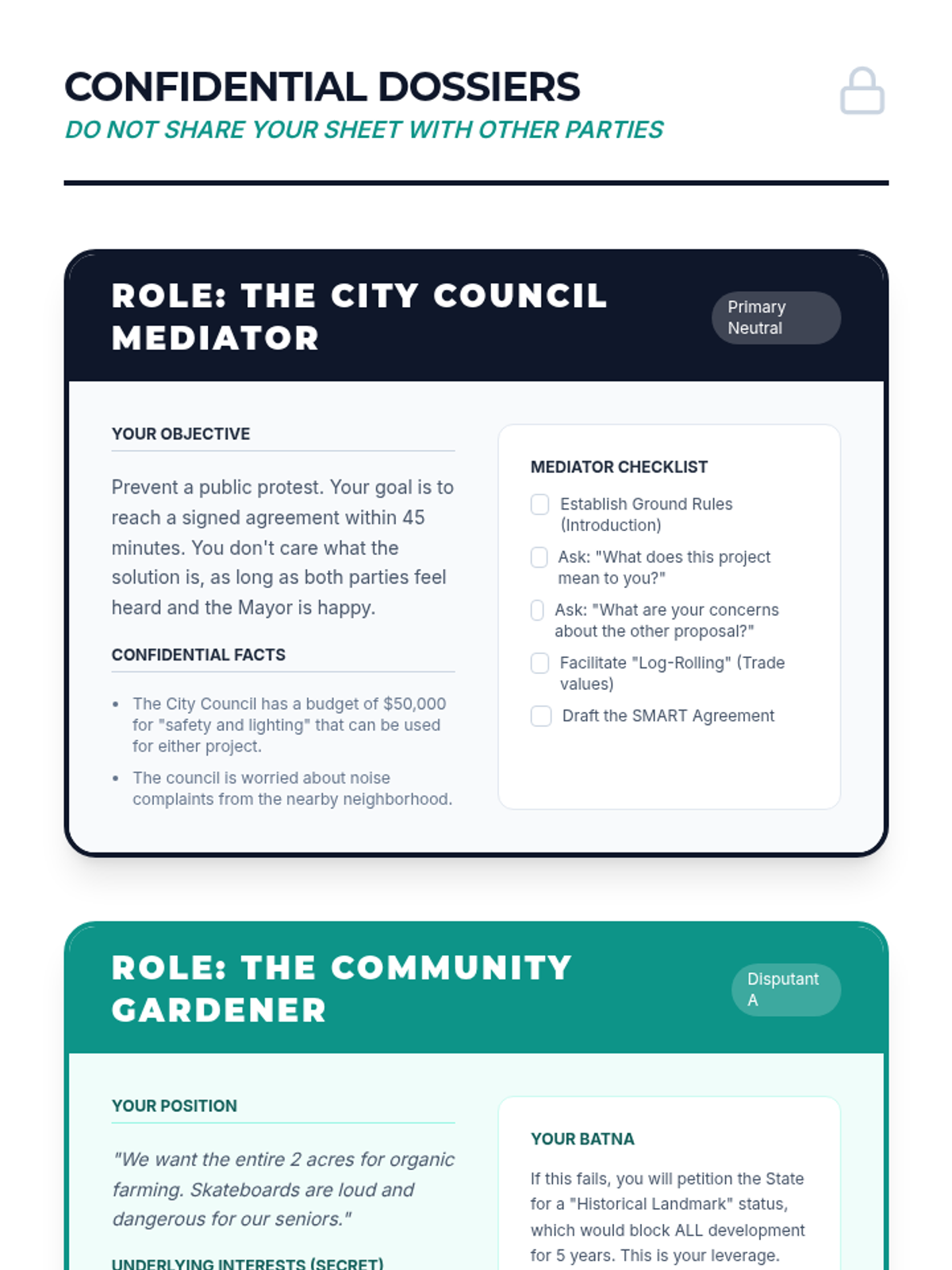
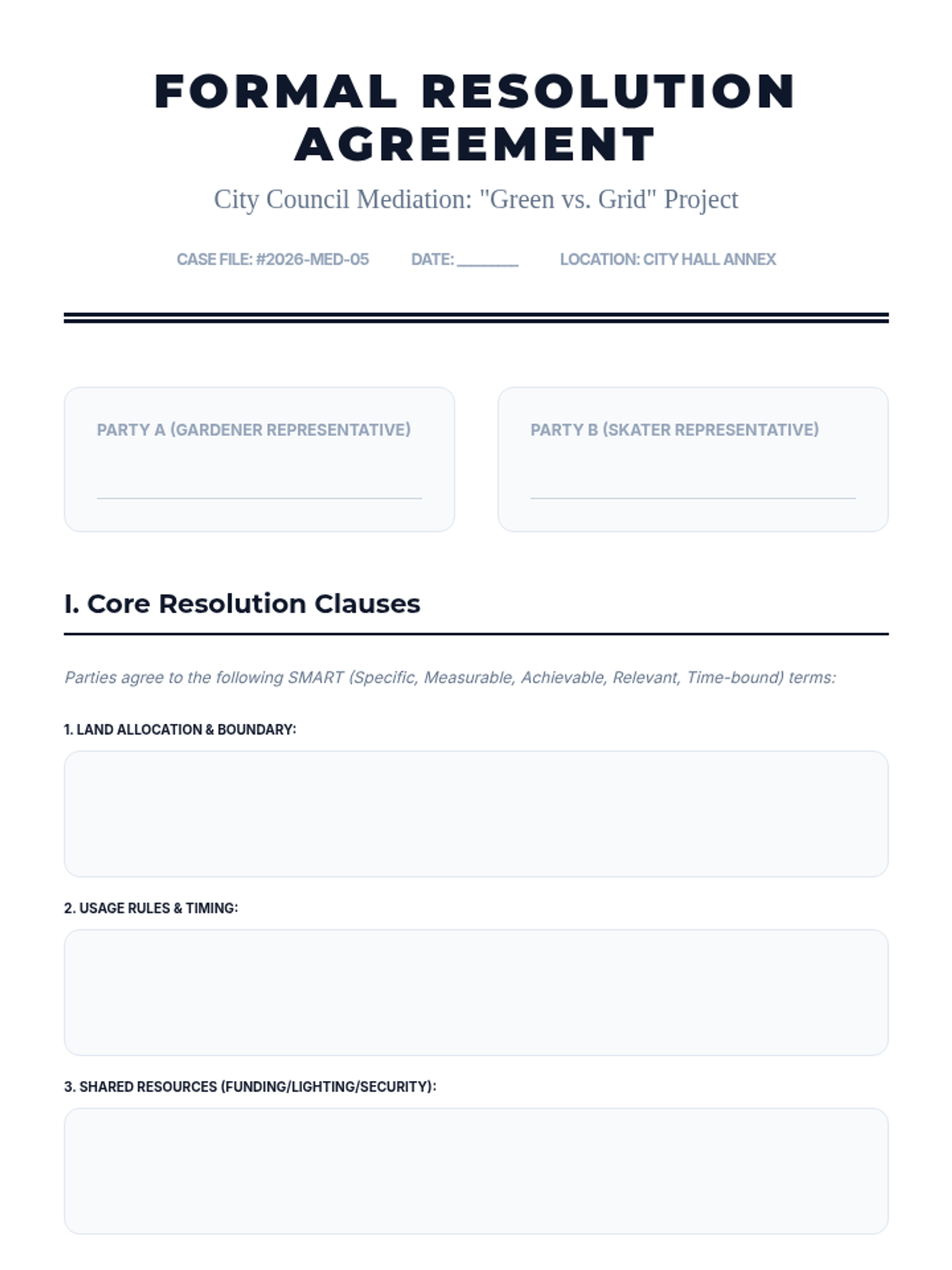
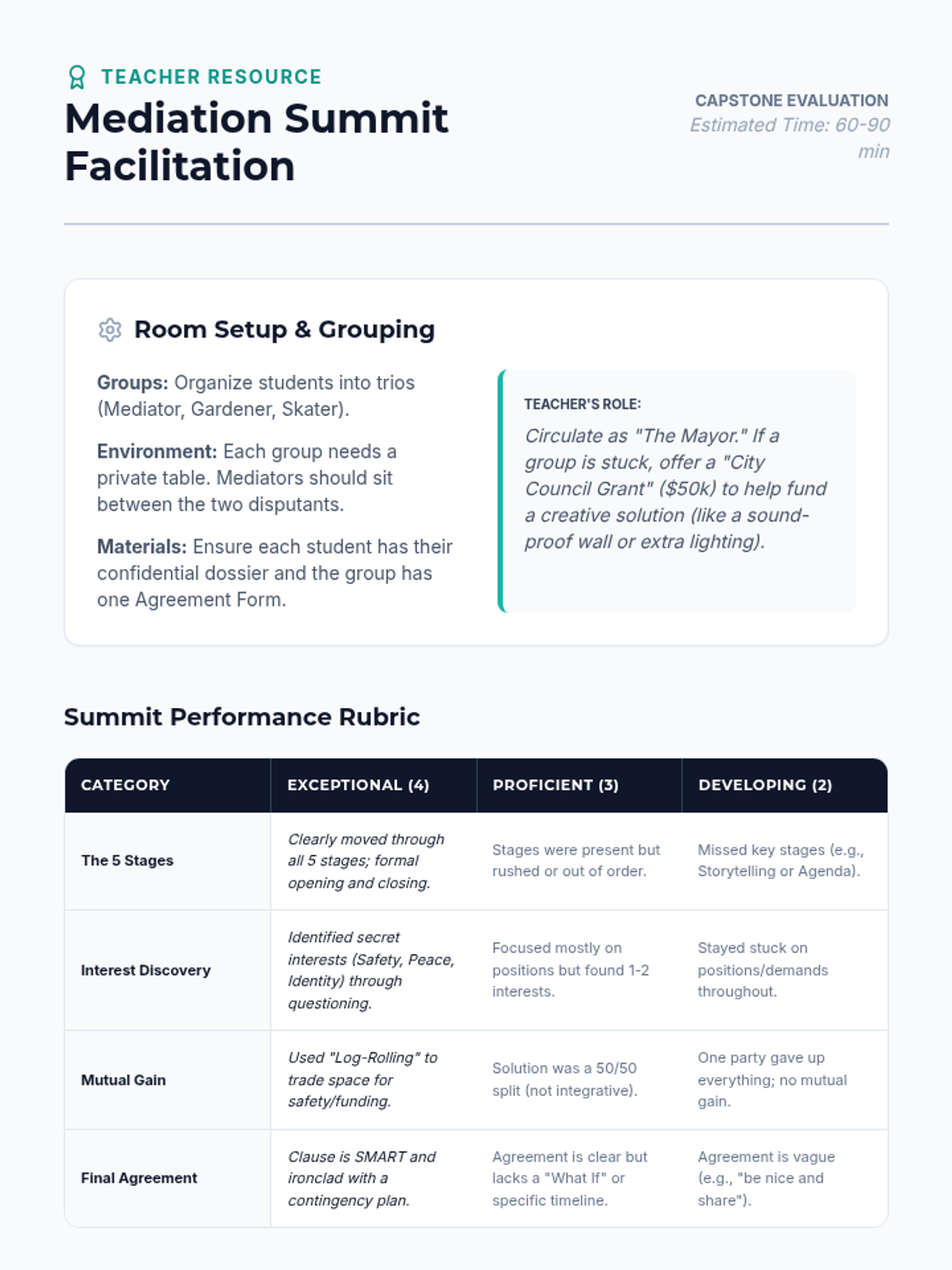
Students assume roles of mediators and disputants in a complex, multi-party dispute scenario (e.g., a land use dispute or school policy change). Mediators must facilitate the process, uncover interests, help generate options, and finalize a written agreement. The lesson focuses on synthesizing all previous frameworks into a cohesive professional performance.
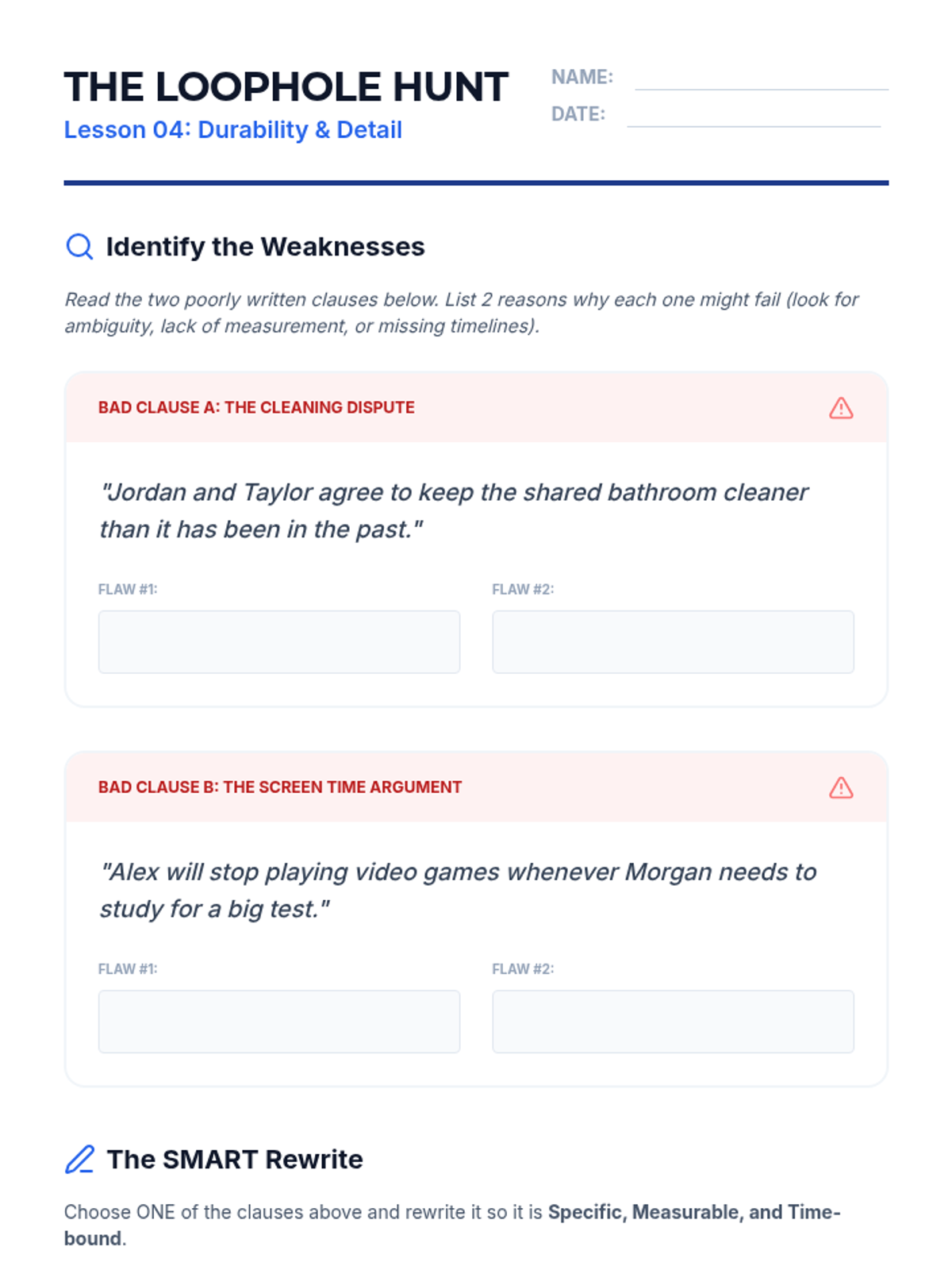
Resolving the conflict is only half the battle; writing a durable agreement is the rest. Students learn the components of a SMART agreement (Specific, Measurable, Achievable, Relevant, Time-bound) in a conflict context. They review failed contracts or treaties to identify loopholes and ambiguity, then practice drafting ironclad resolution clauses.
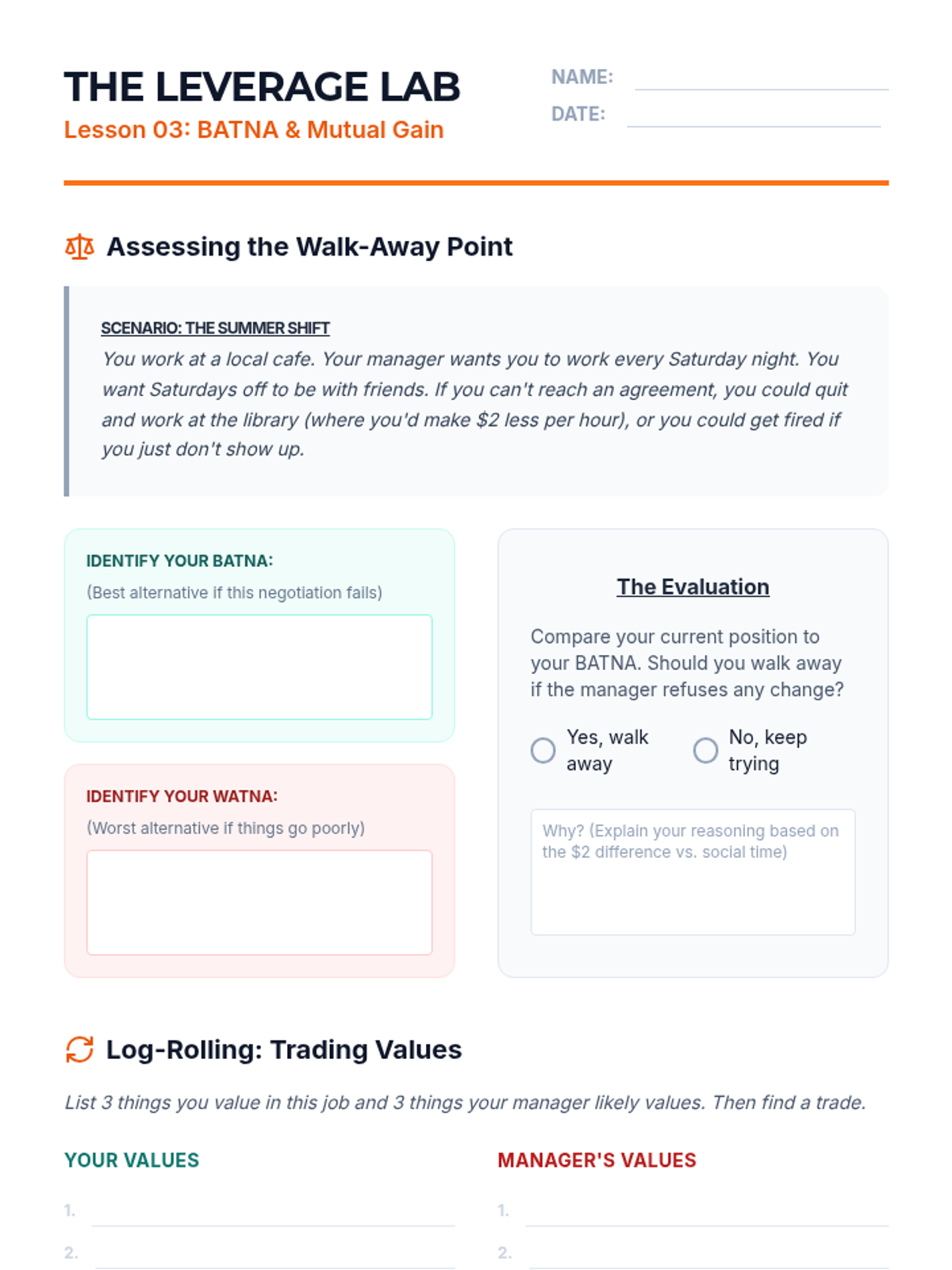
Students practice brainstorming techniques designed to break deadlocks. They learn about BATNA (Best Alternative to a Negotiated Agreement) and WATNA (Worst Alternative) to assess leverage. The class engages in exercises to expand the 'pie' rather than just dividing it, finding creative solutions that satisfy multiple interests.
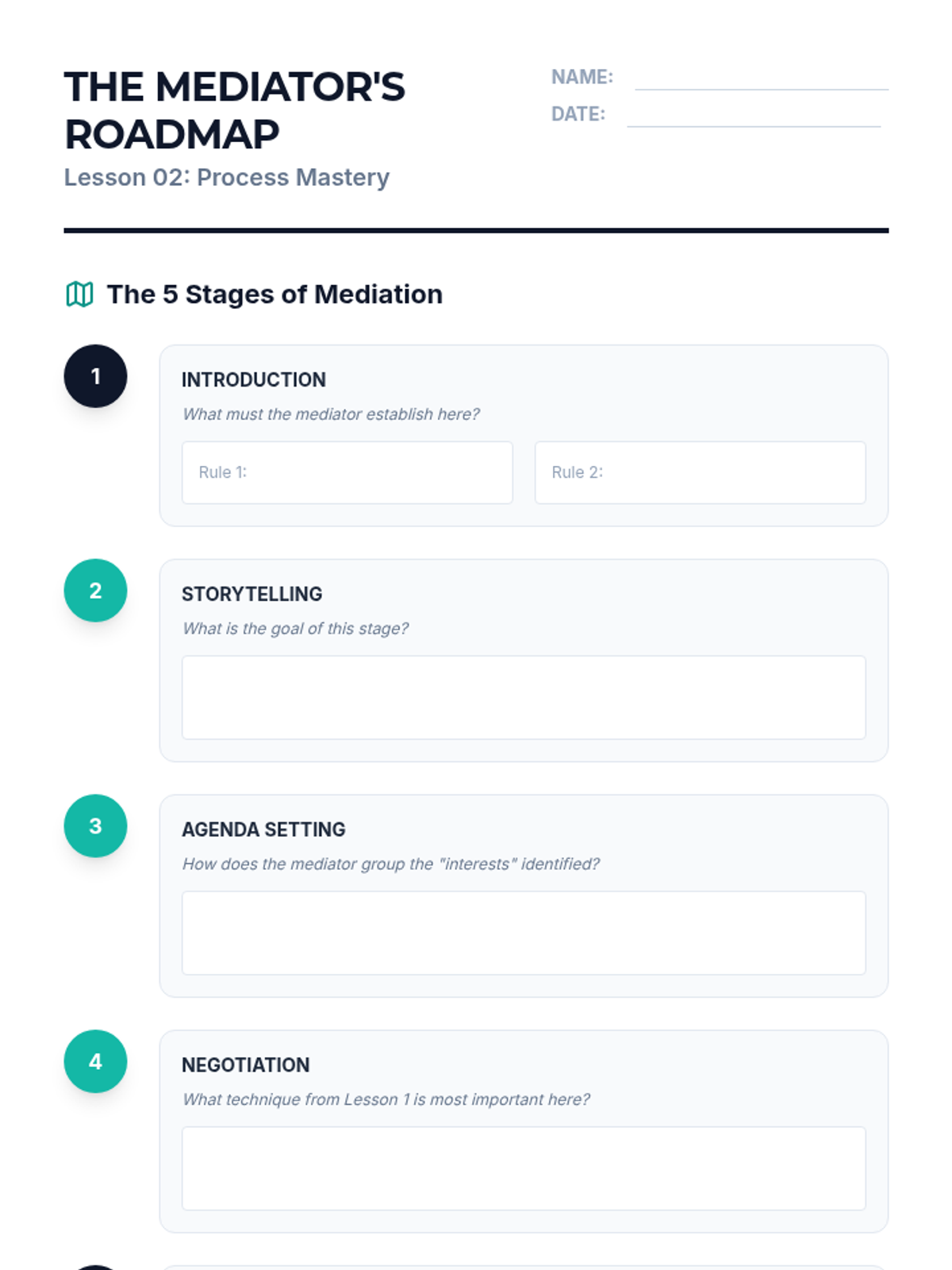
This lesson outlines the formal stages of mediation: Introduction, Storytelling, Agenda Setting, Negotiation, and Agreement. Students learn the procedural responsibilities of a mediator to maintain safety and order. They create visual flowcharts of the process to understand how to guide disputants from chaos to order.
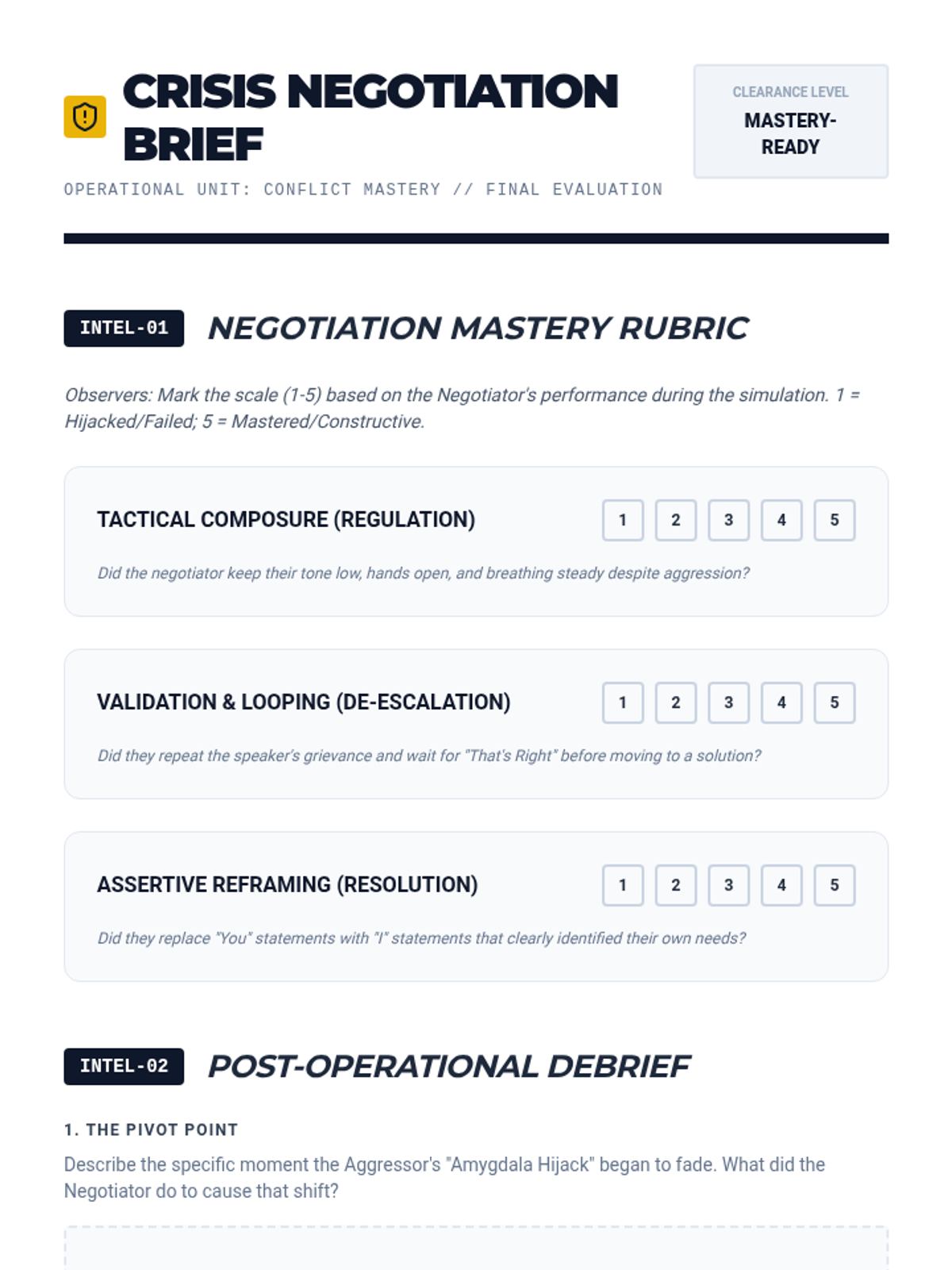
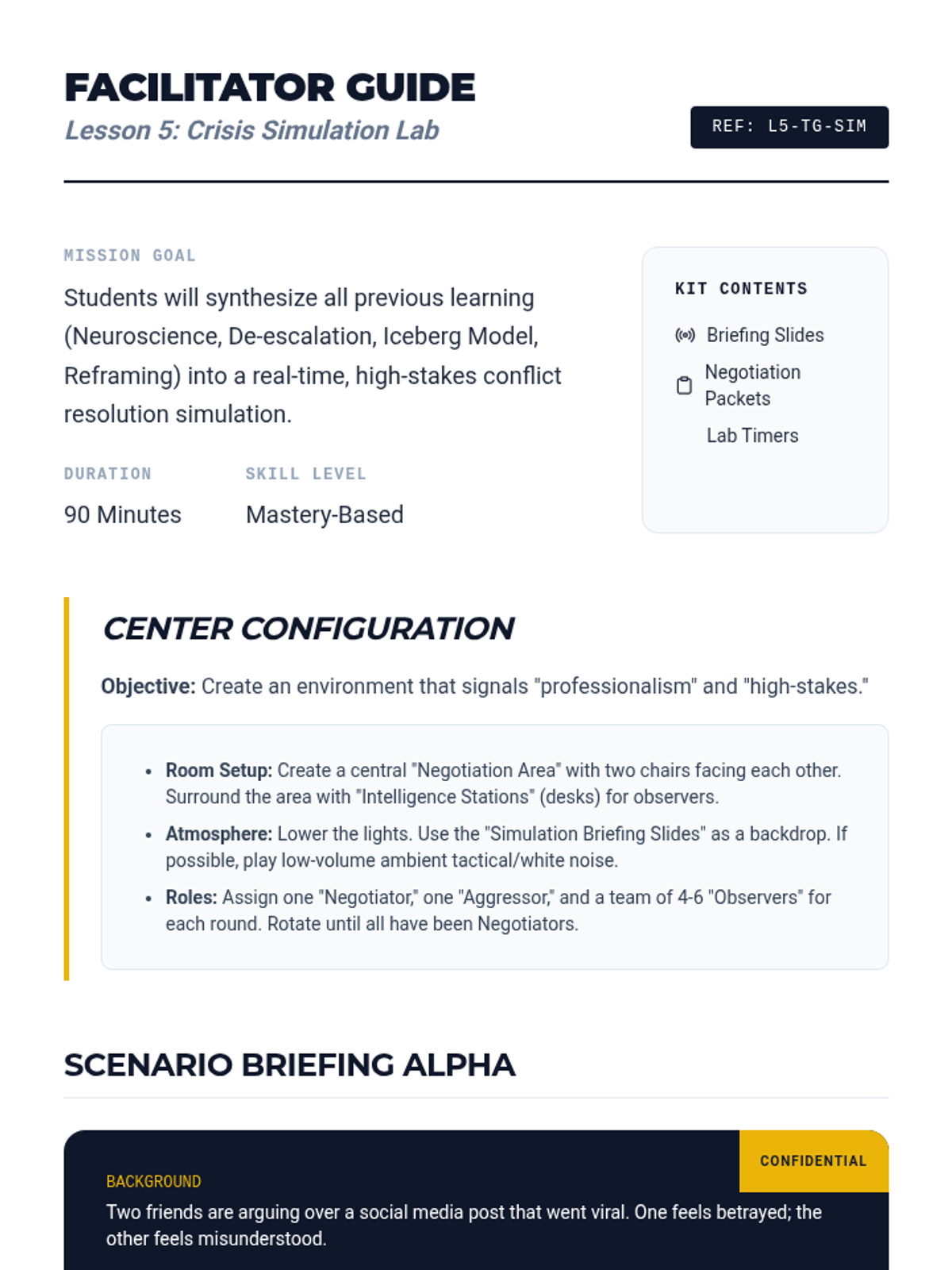
A culminating simulation lab where students apply all learned skills to resolve a high-stakes interpersonal dispute.
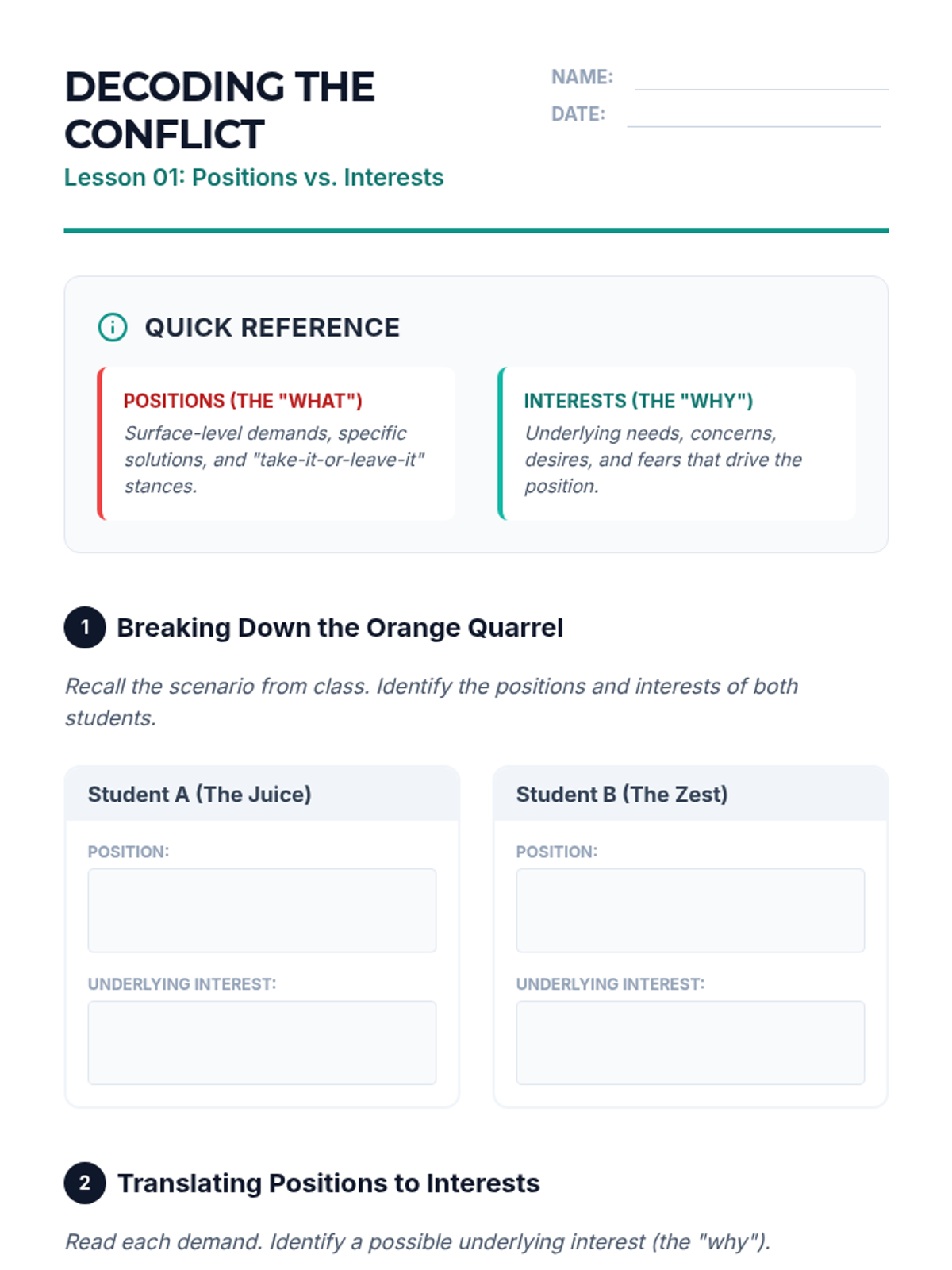
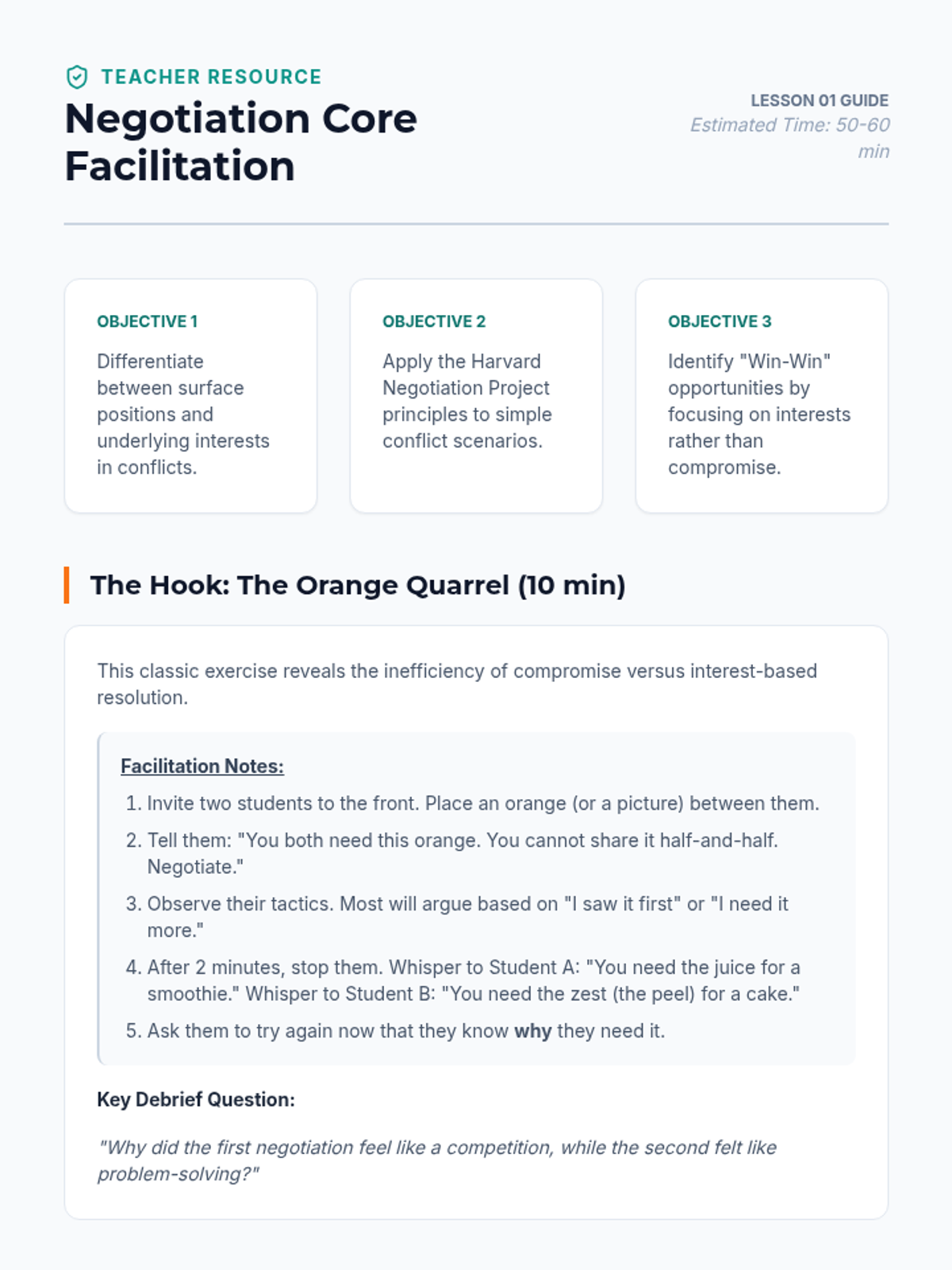
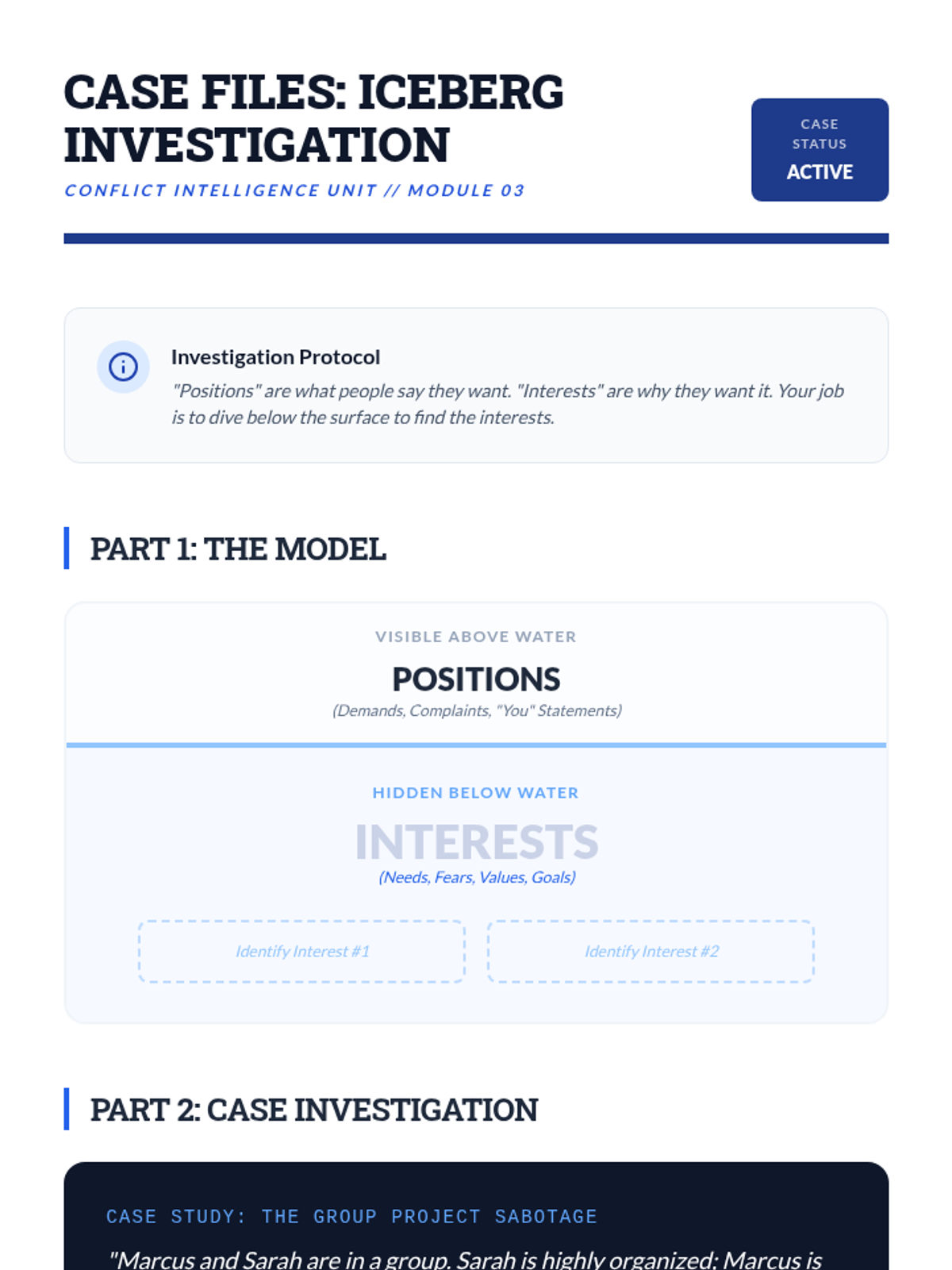
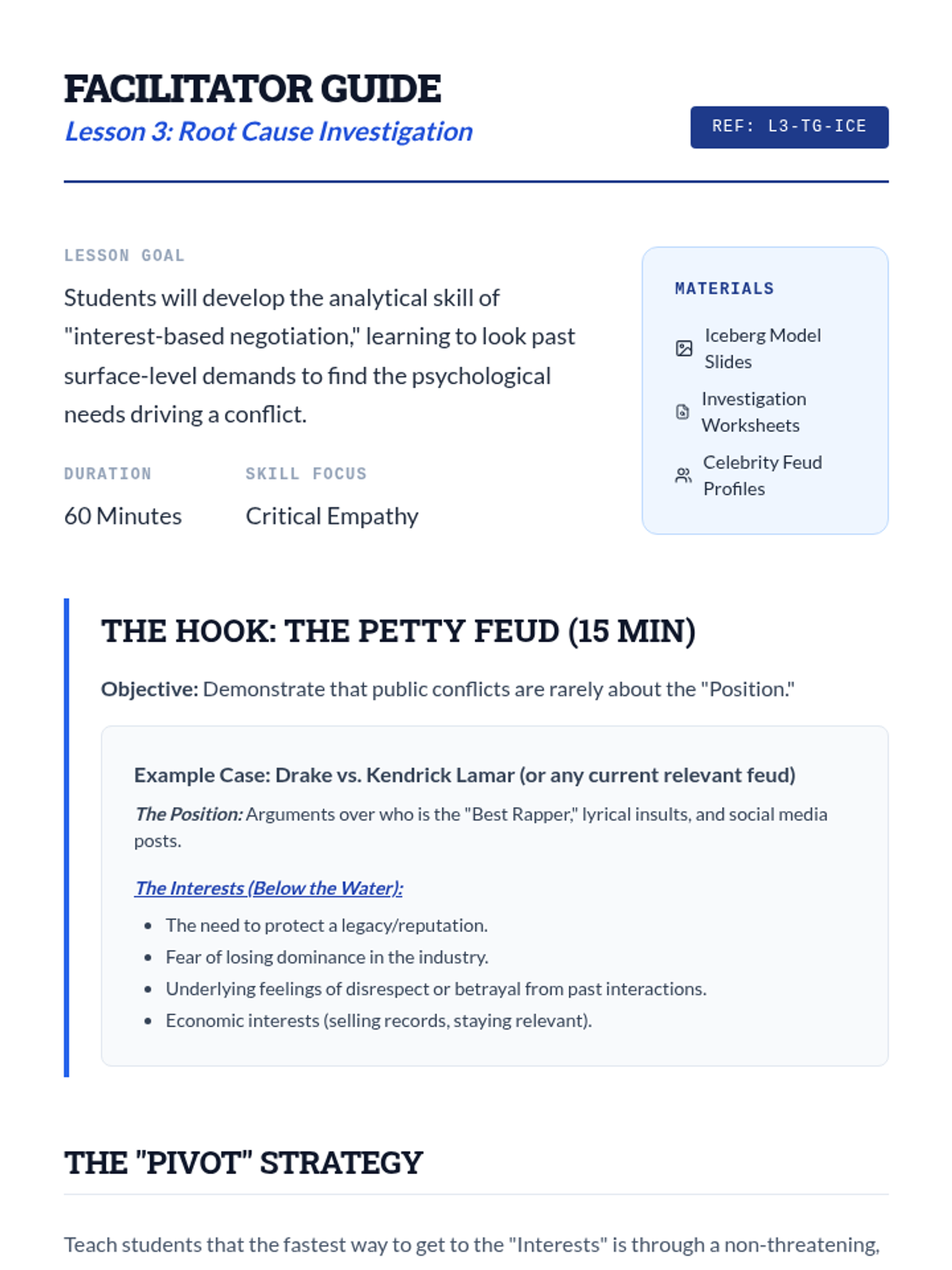
Students learn to distinguish between surface-level positions and underlying interests using the Harvard Negotiation Project model. The lesson introduces Interest-Based Negotiation (IBN) through the classic 'Orange Quarrel' scenario and case study analysis.
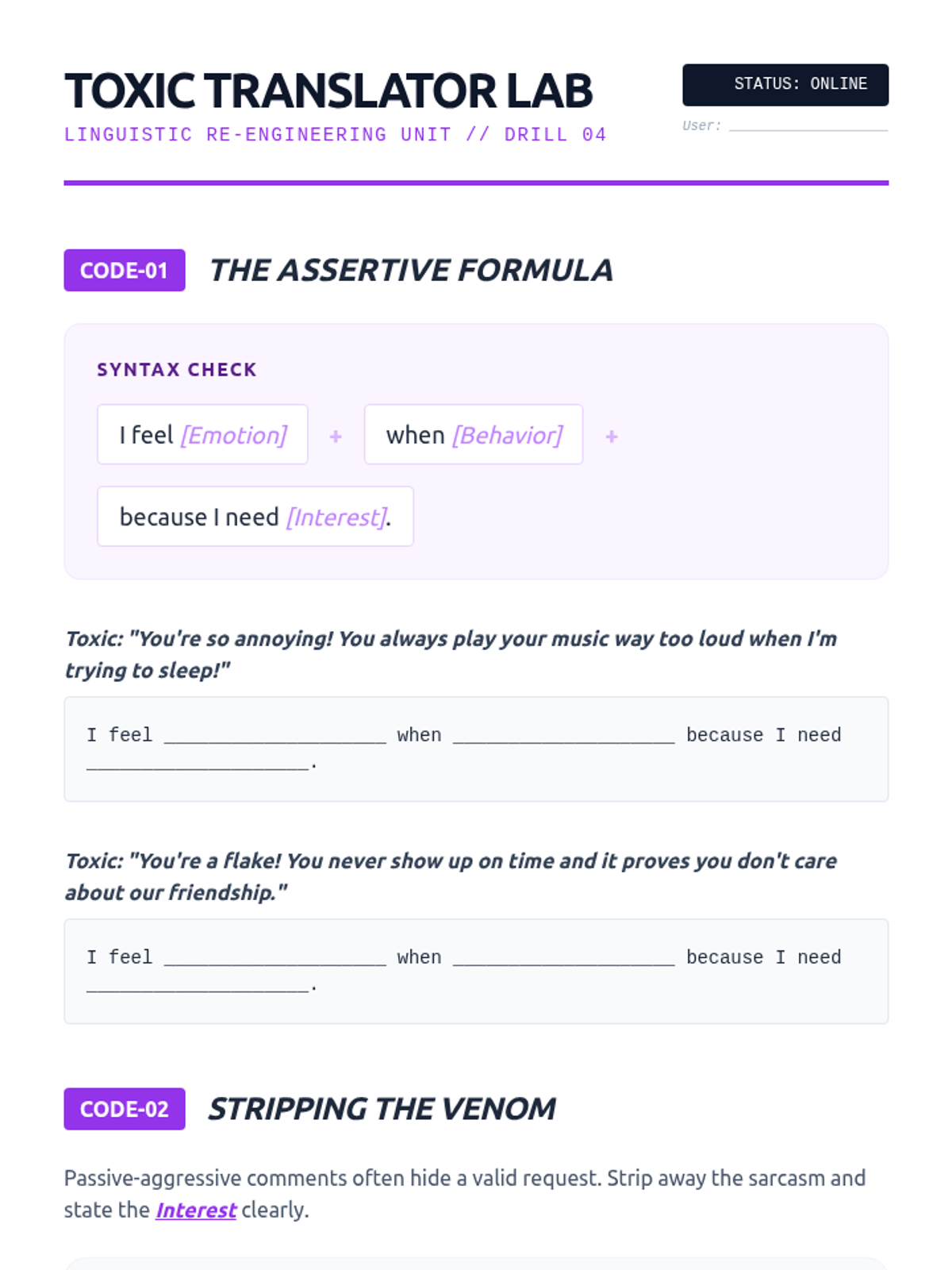
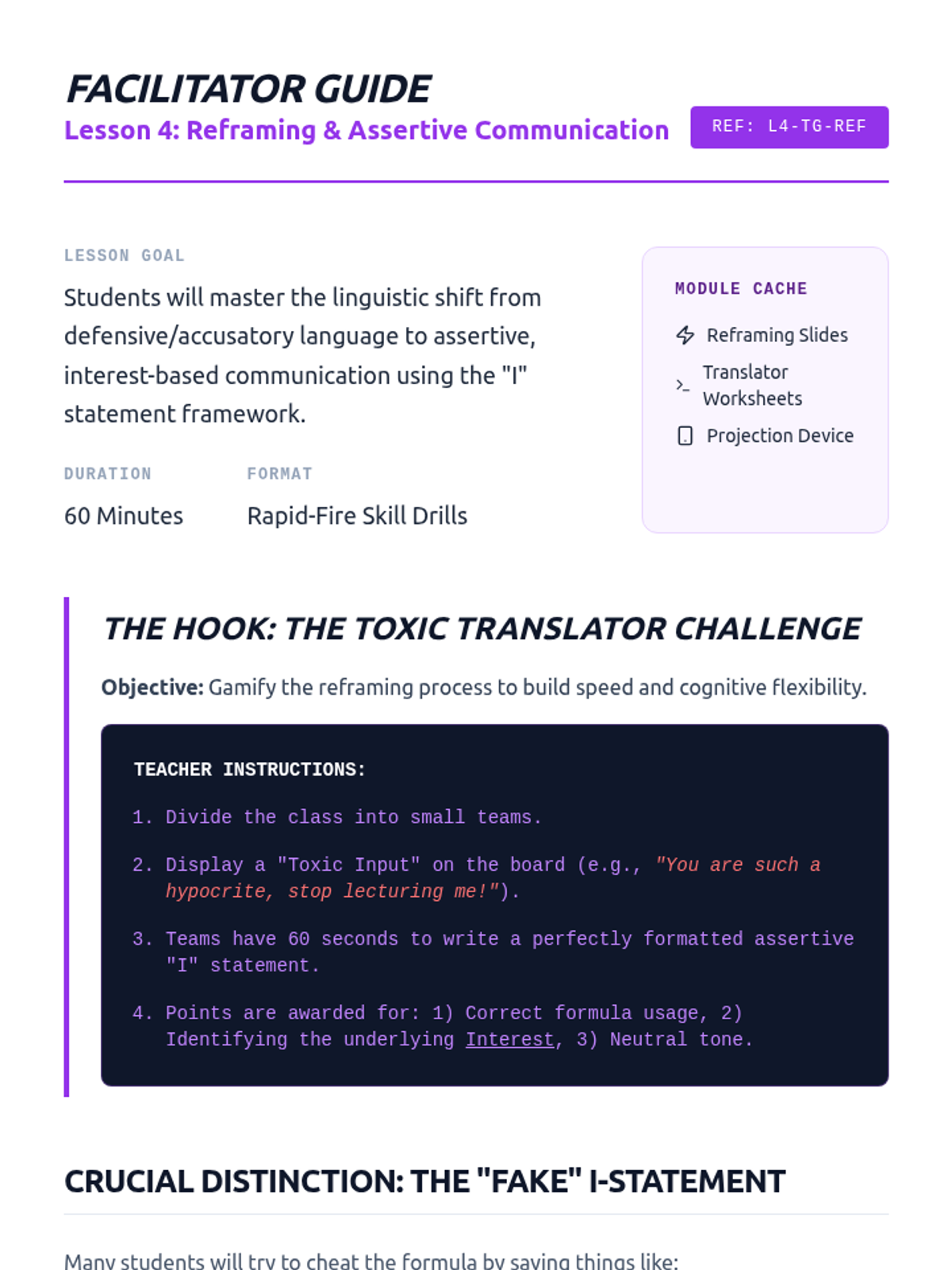
Students master the art of 'I' statements and reframing aggressive language into neutral, problem-solving dialogue.
Using the Iceberg Model, students analyze underlying needs and fears driving conflicts beyond surface-level arguments.
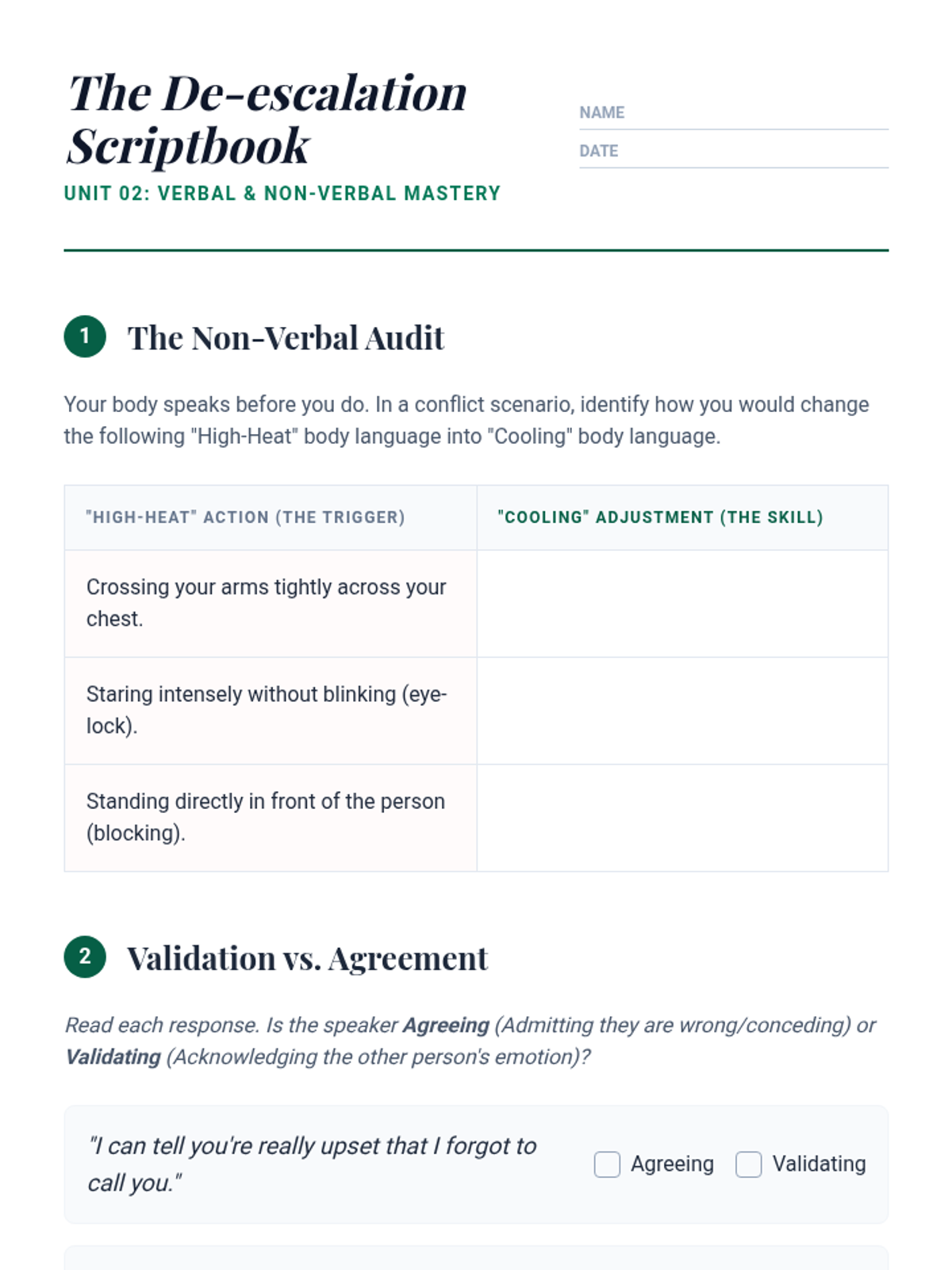
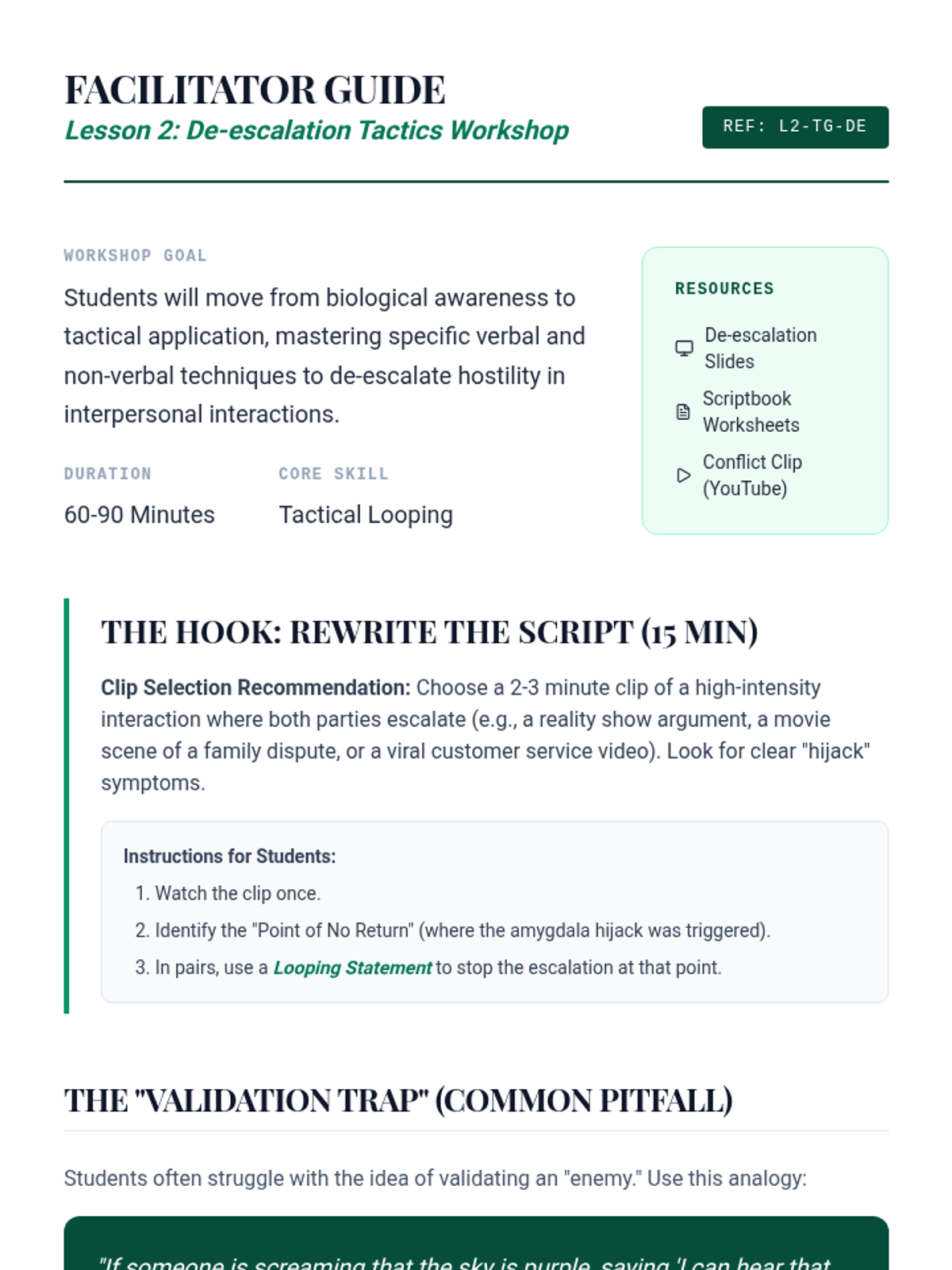
Focuses on verbal and non-verbal techniques for lowering emotional temperature, including tone, body language, and 'looping'.
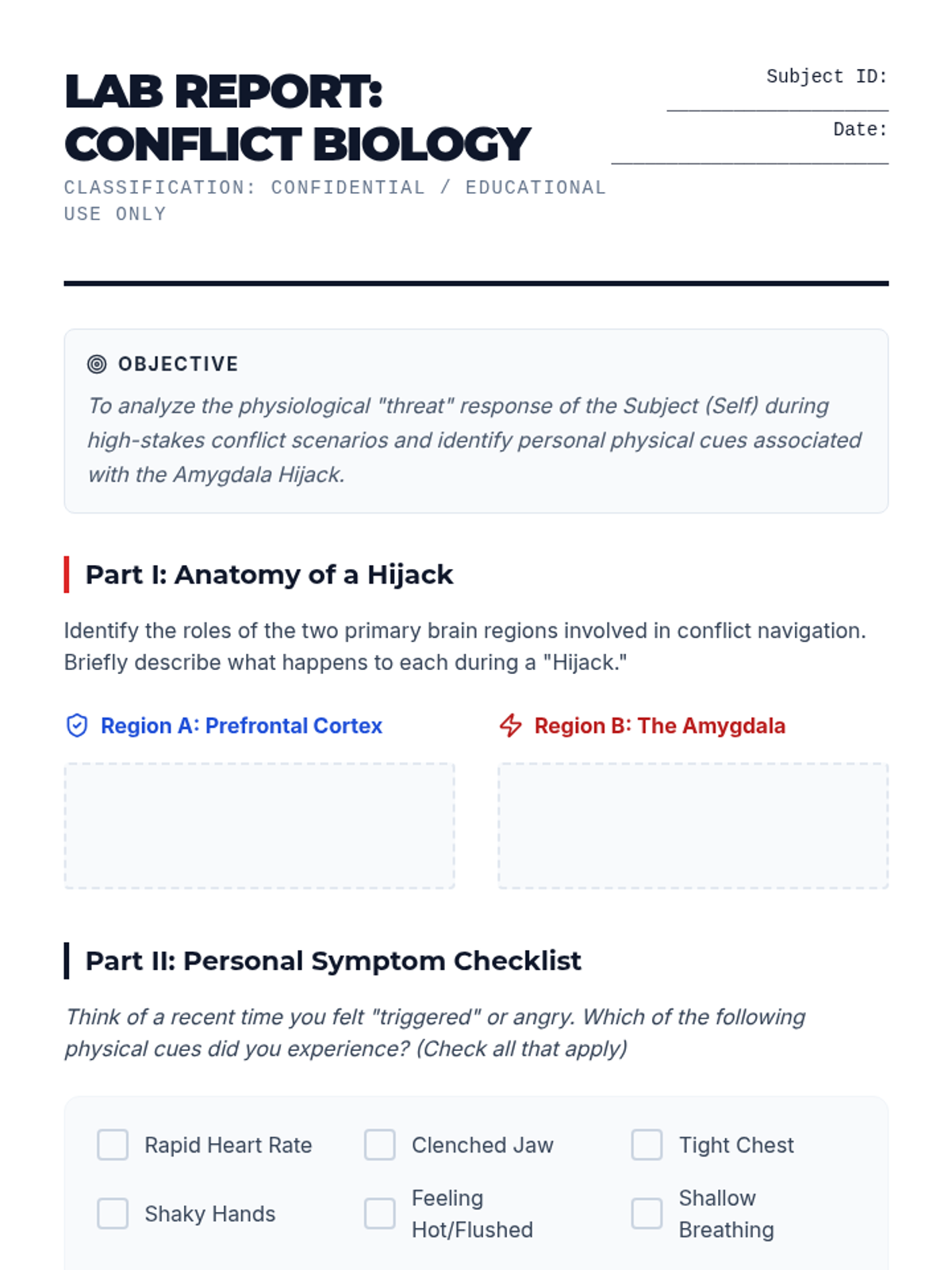
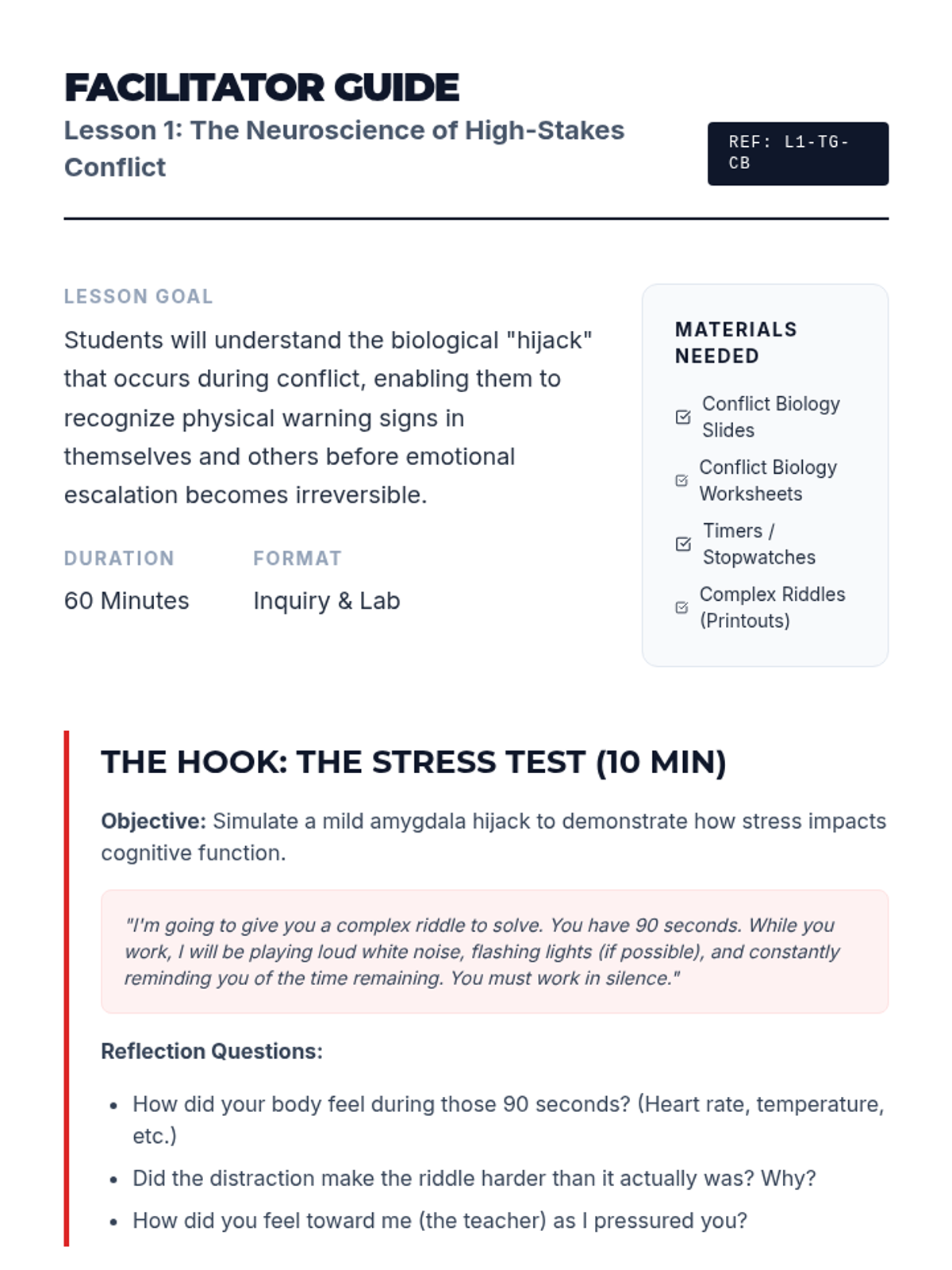
Students investigate the physiological responses to conflict, focusing on the amygdala hijack and physical cues of escalating emotions.
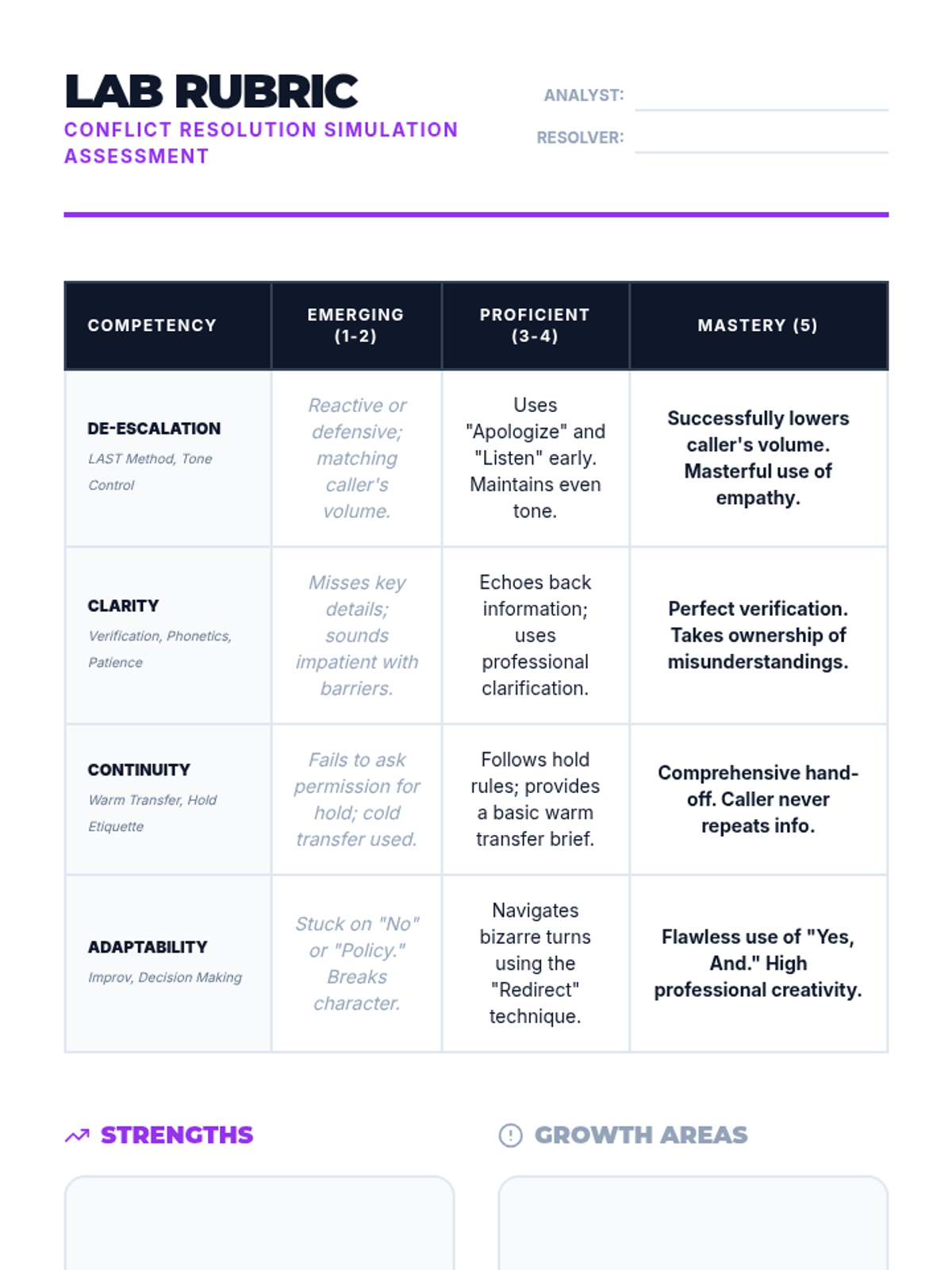
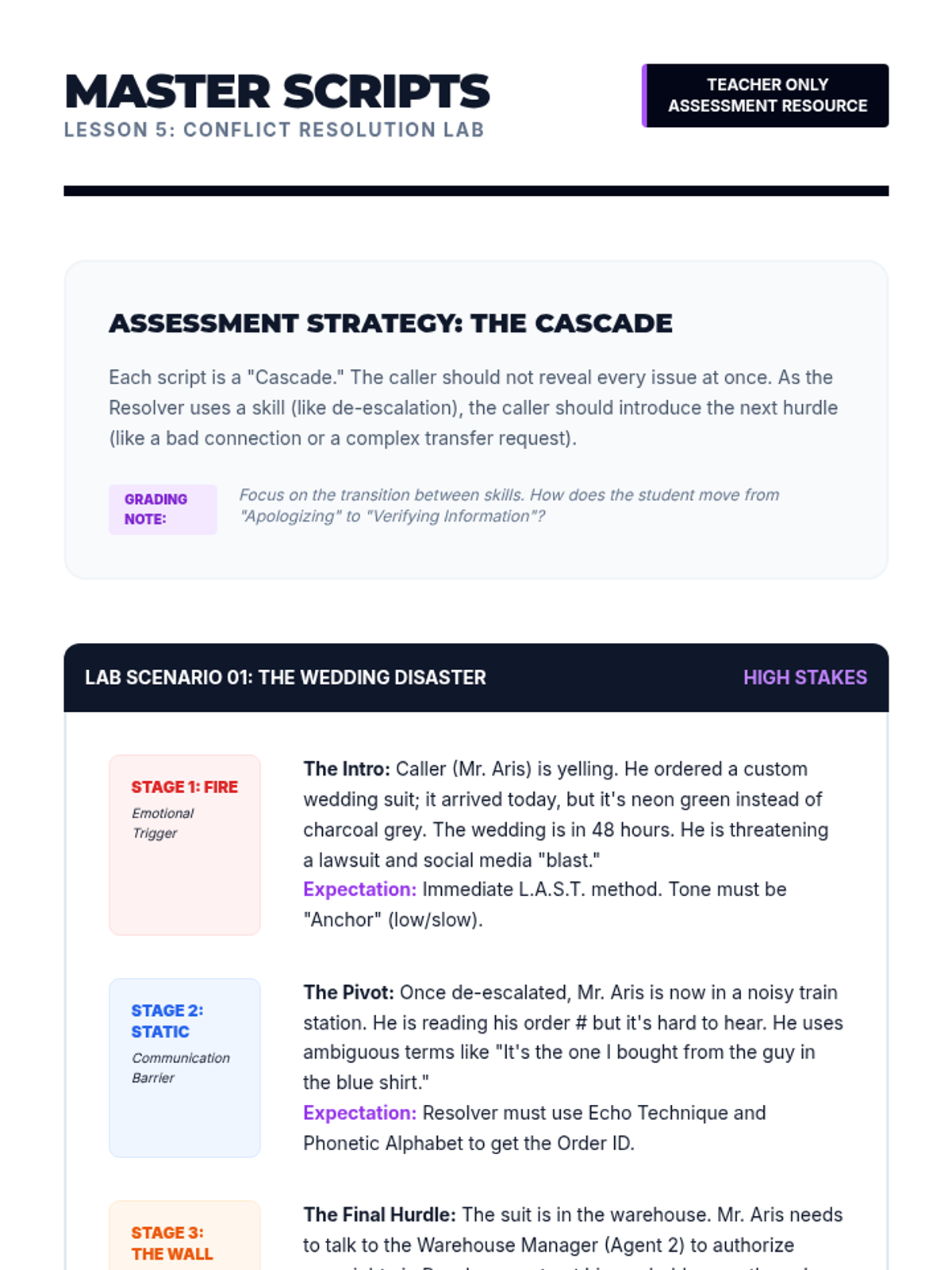
A culminating simulation lab where students apply all learned skills to resolve complex, multi-stage professional conflicts.
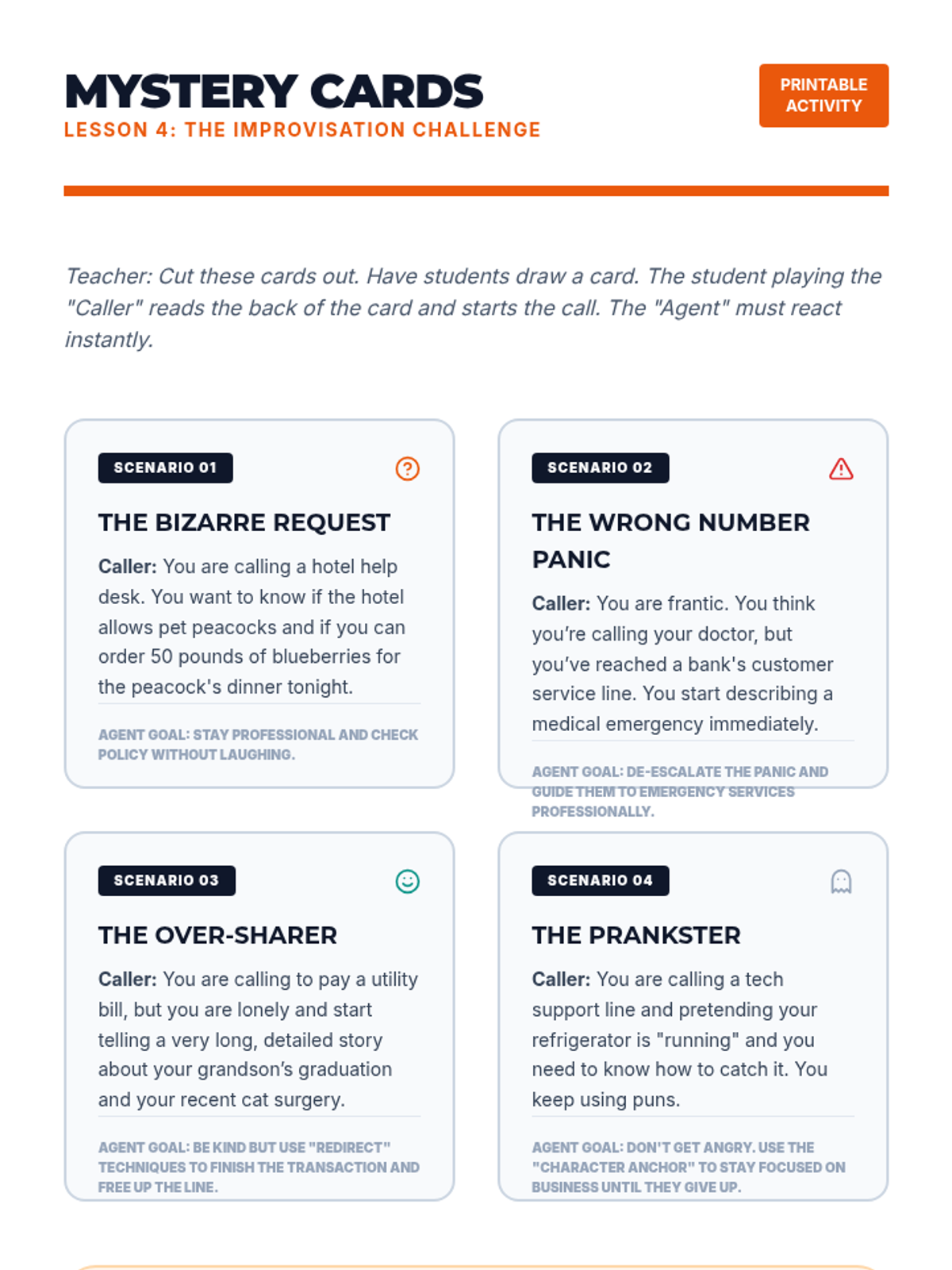
Students practice thinking on their feet through randomized, unscripted scenarios to build adaptability and professional judgment.
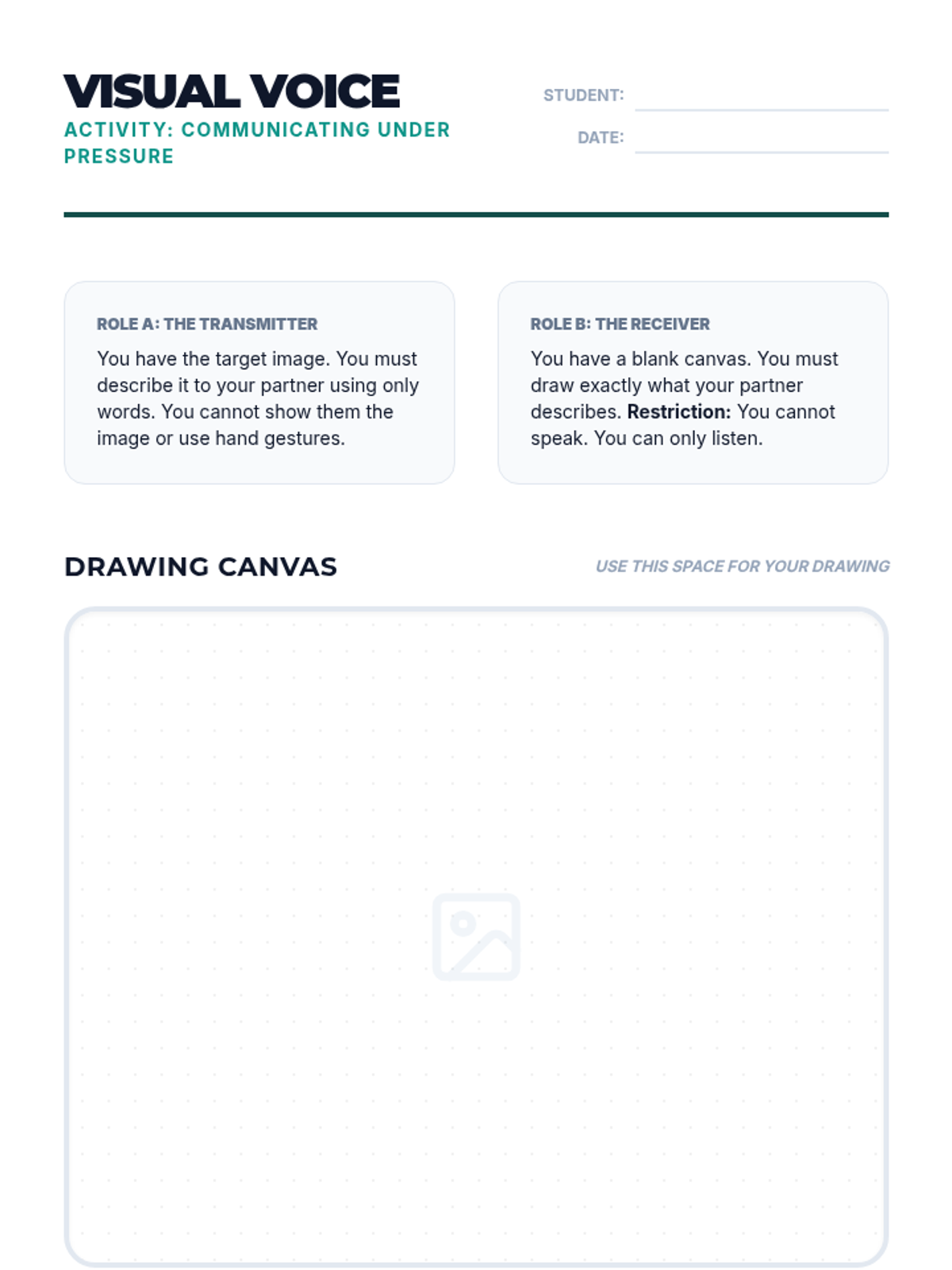
Teaches techniques for asking clarifying questions and managing language barriers without compromising professionalism or patience.
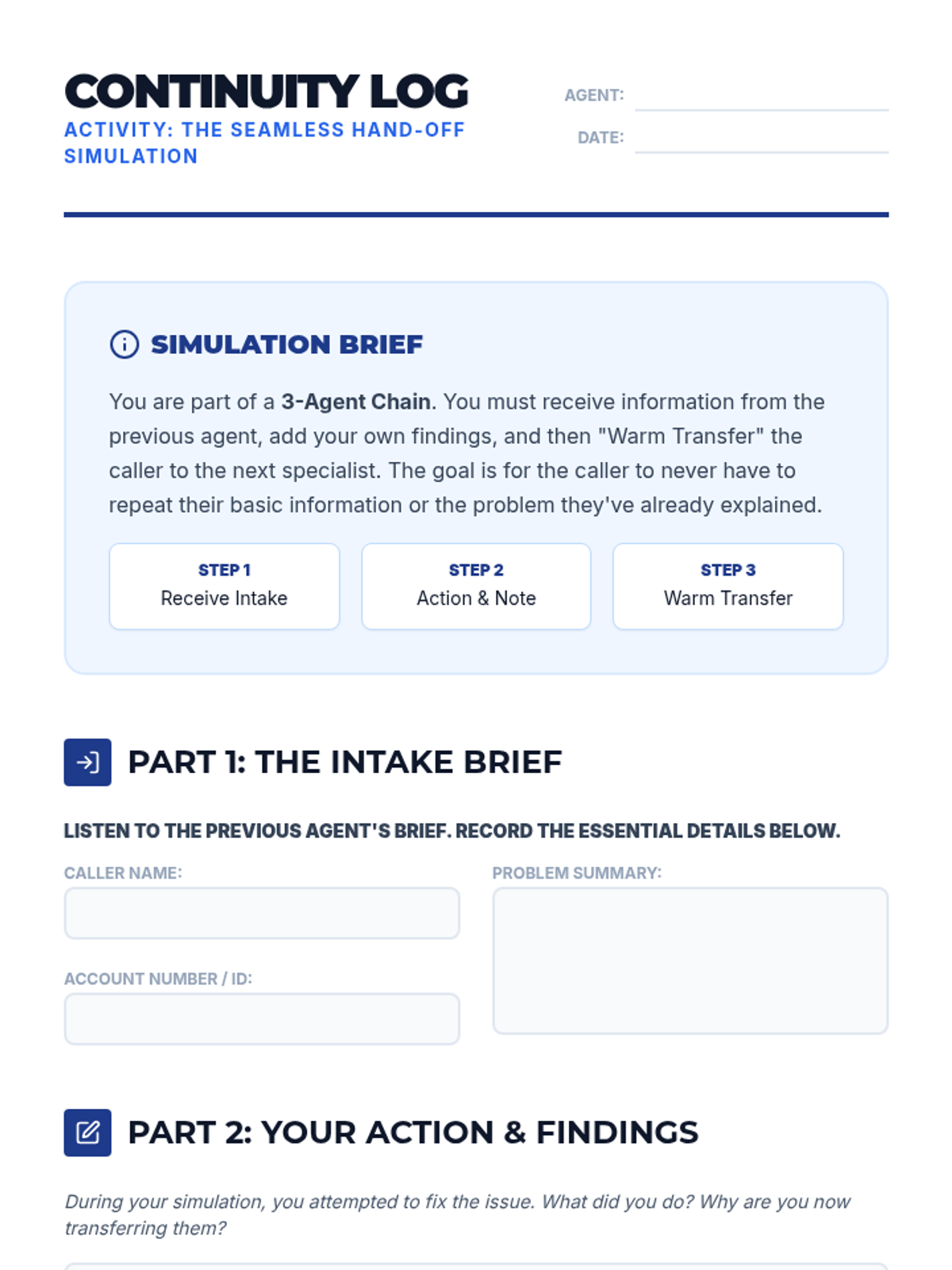
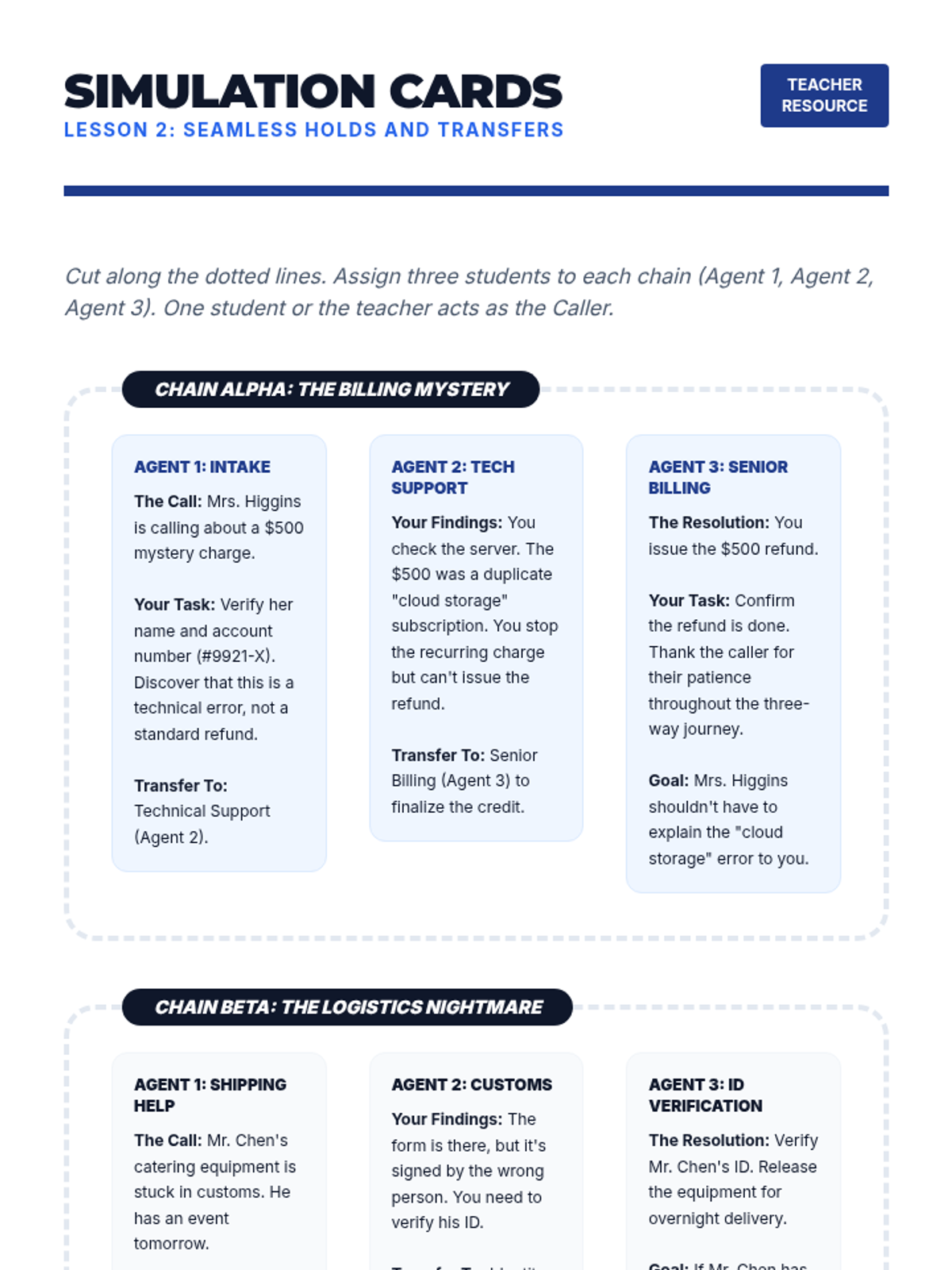
Focuses on the mechanics of professional holds and warm transfers to minimize caller frustration and ensure continuity.
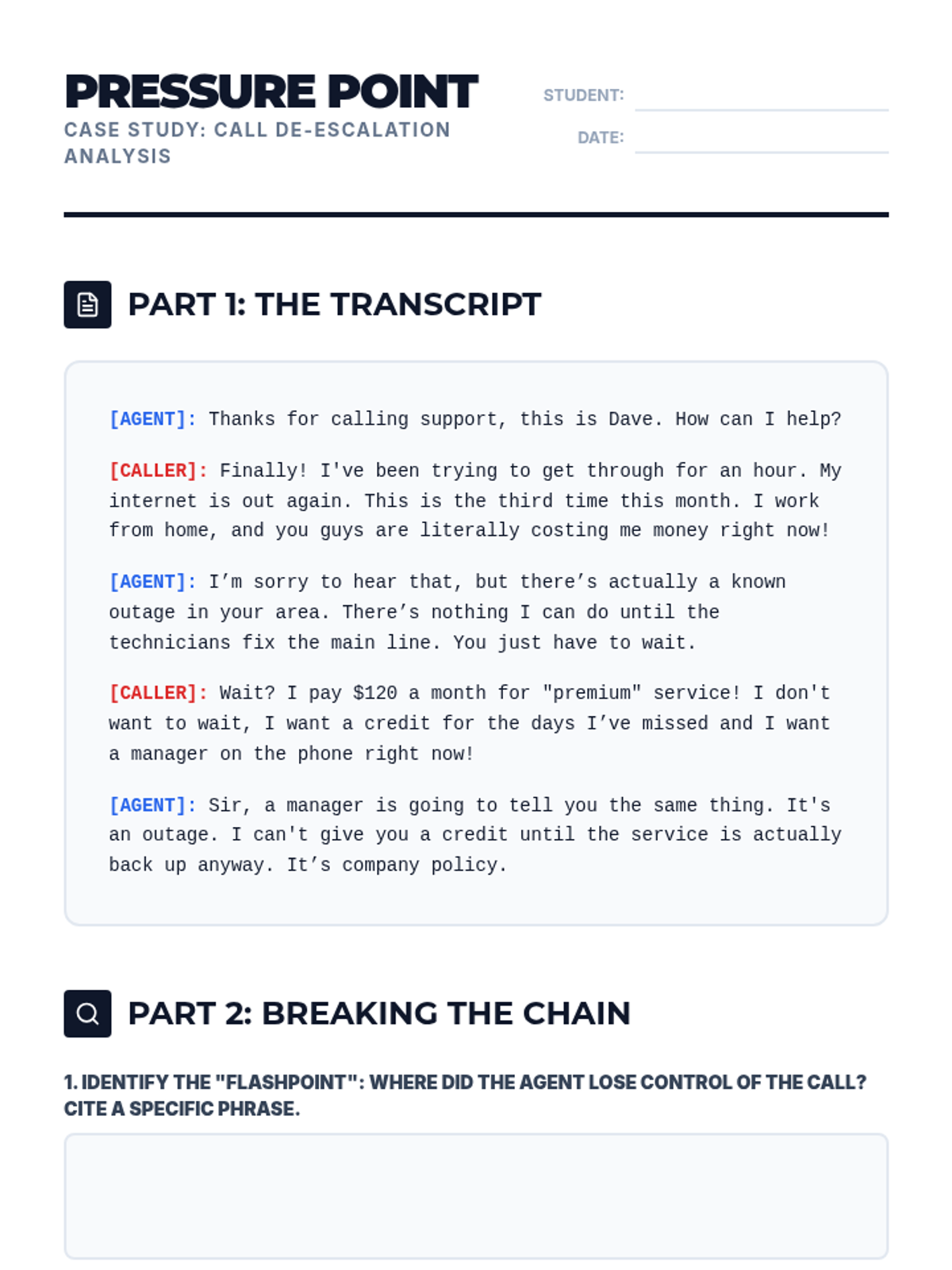
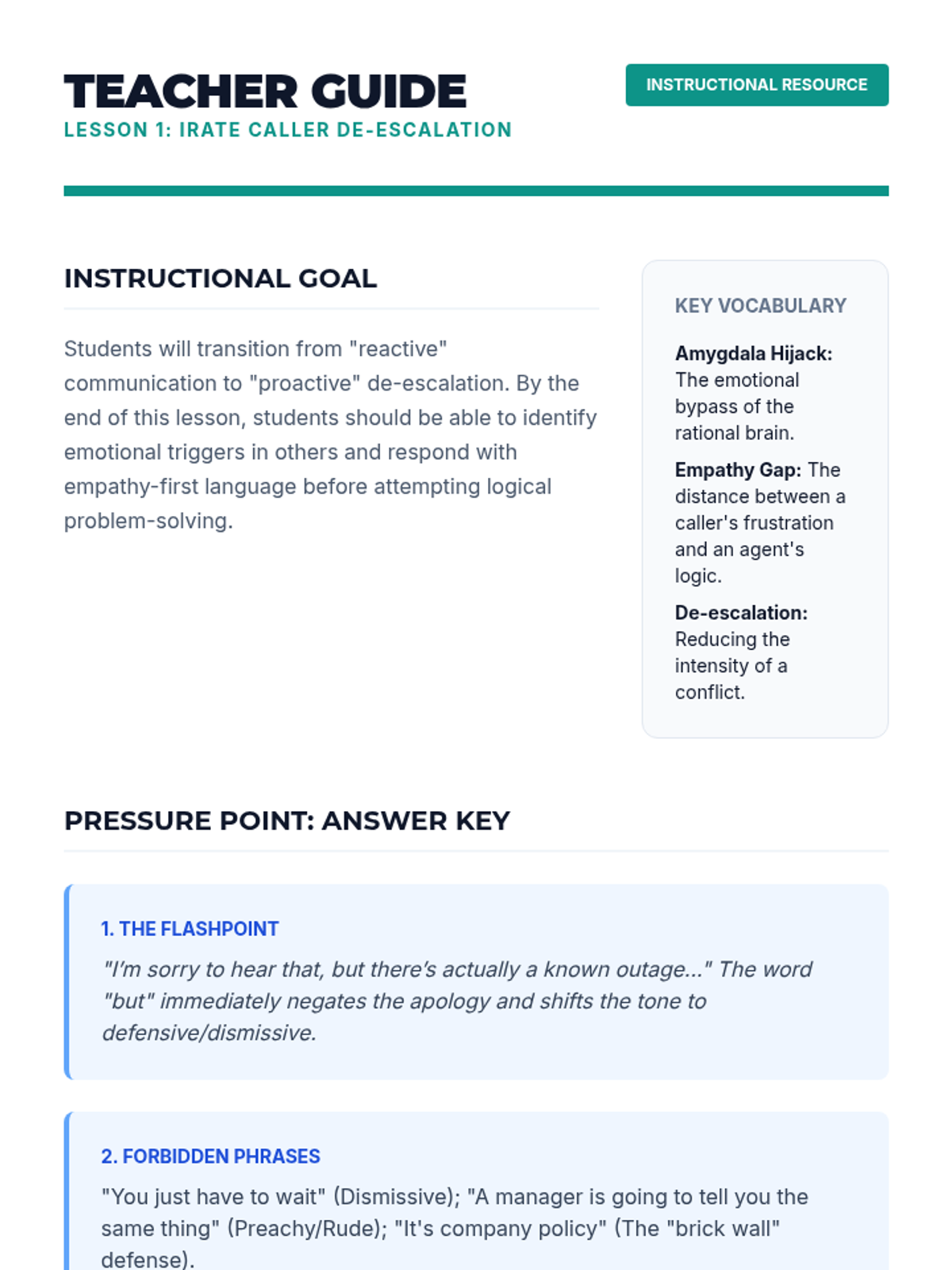
Students master the L.A.S.T. method (Listen, Apologize, Solve, Thank) to de-escalate irate callers and maintain professional control.
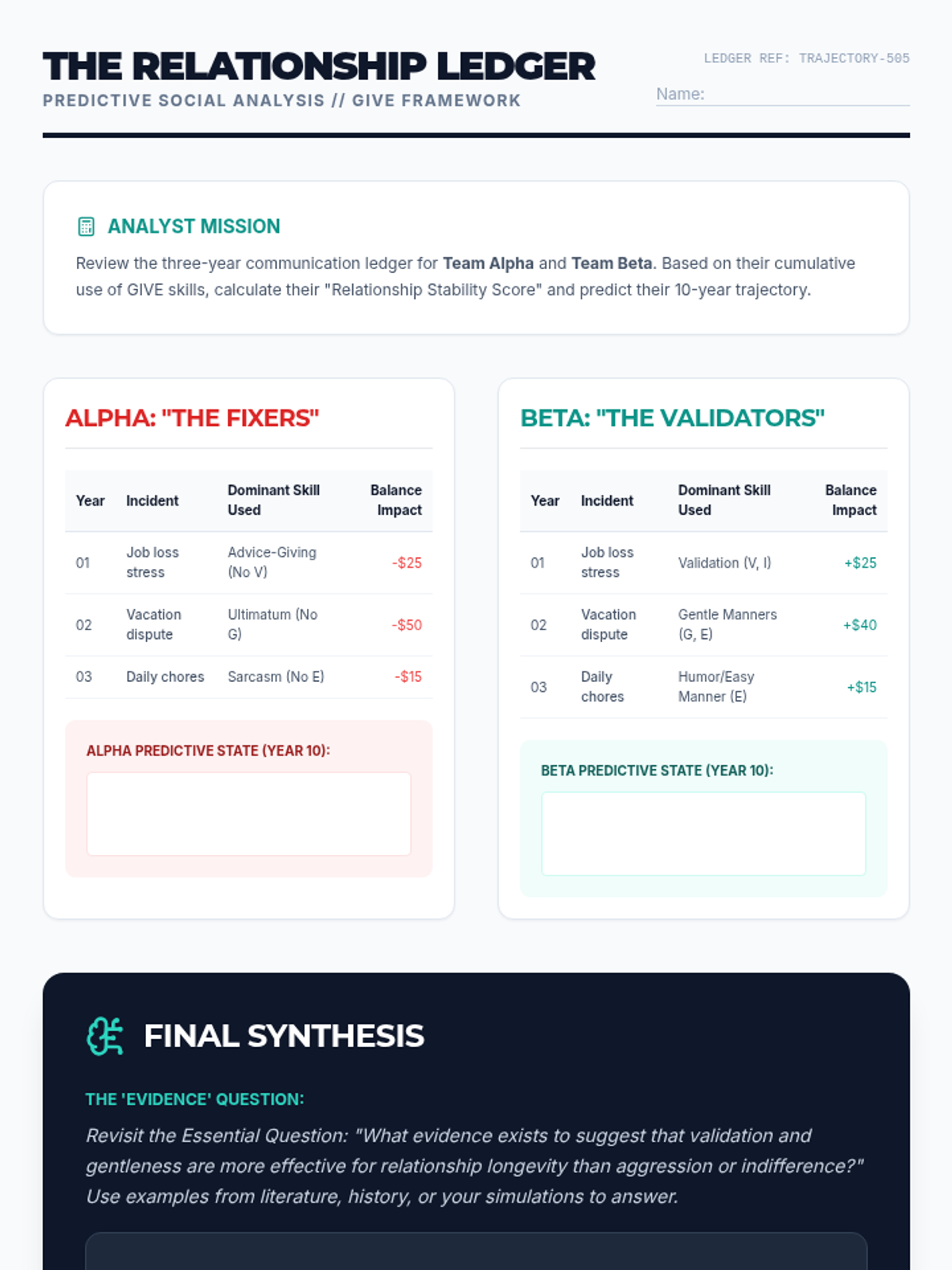
An exploration of the 'Relationship Bank Account' concept, where students predict the long-term trajectories of relationships based on cumulative communication habits.
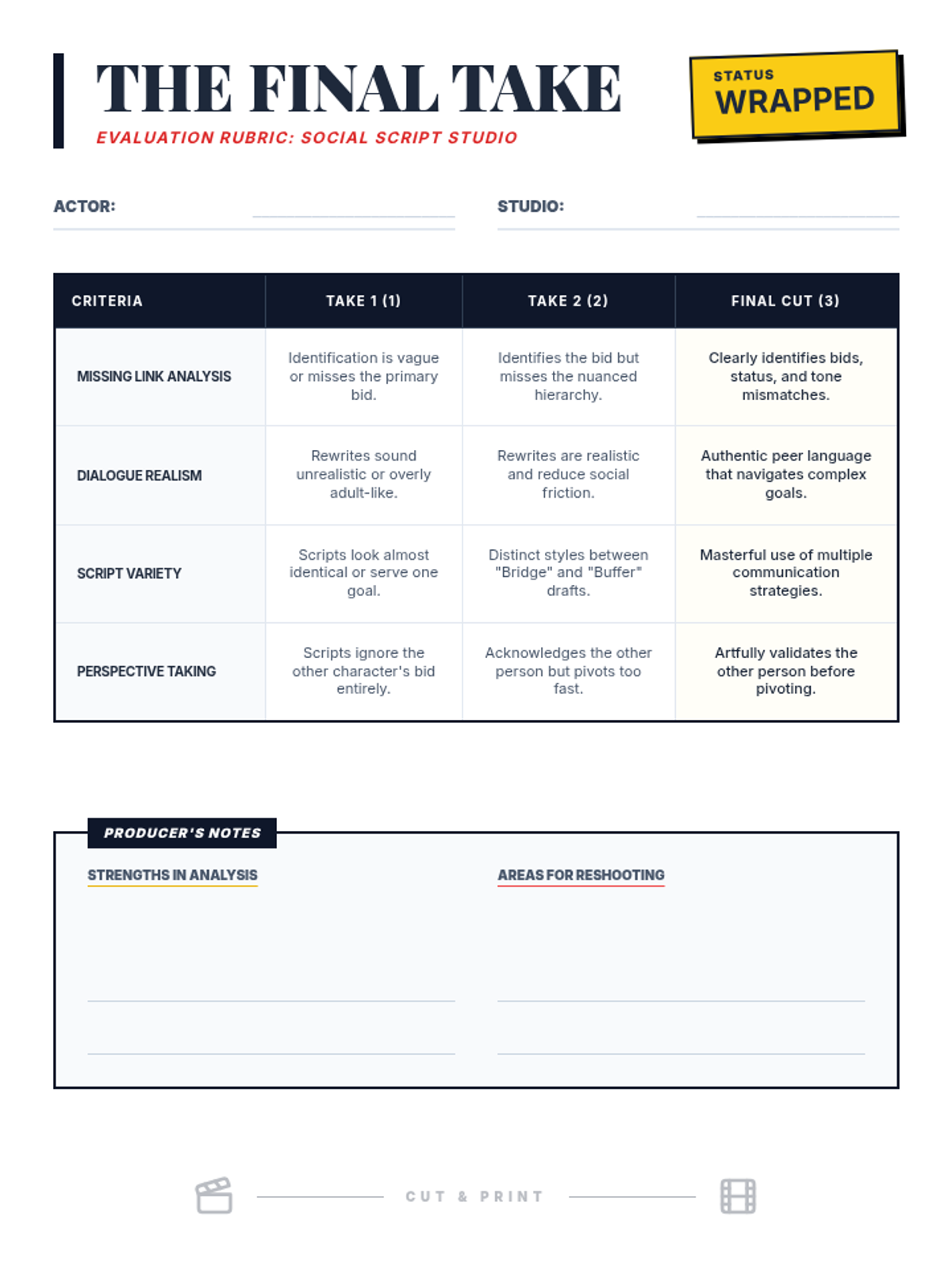
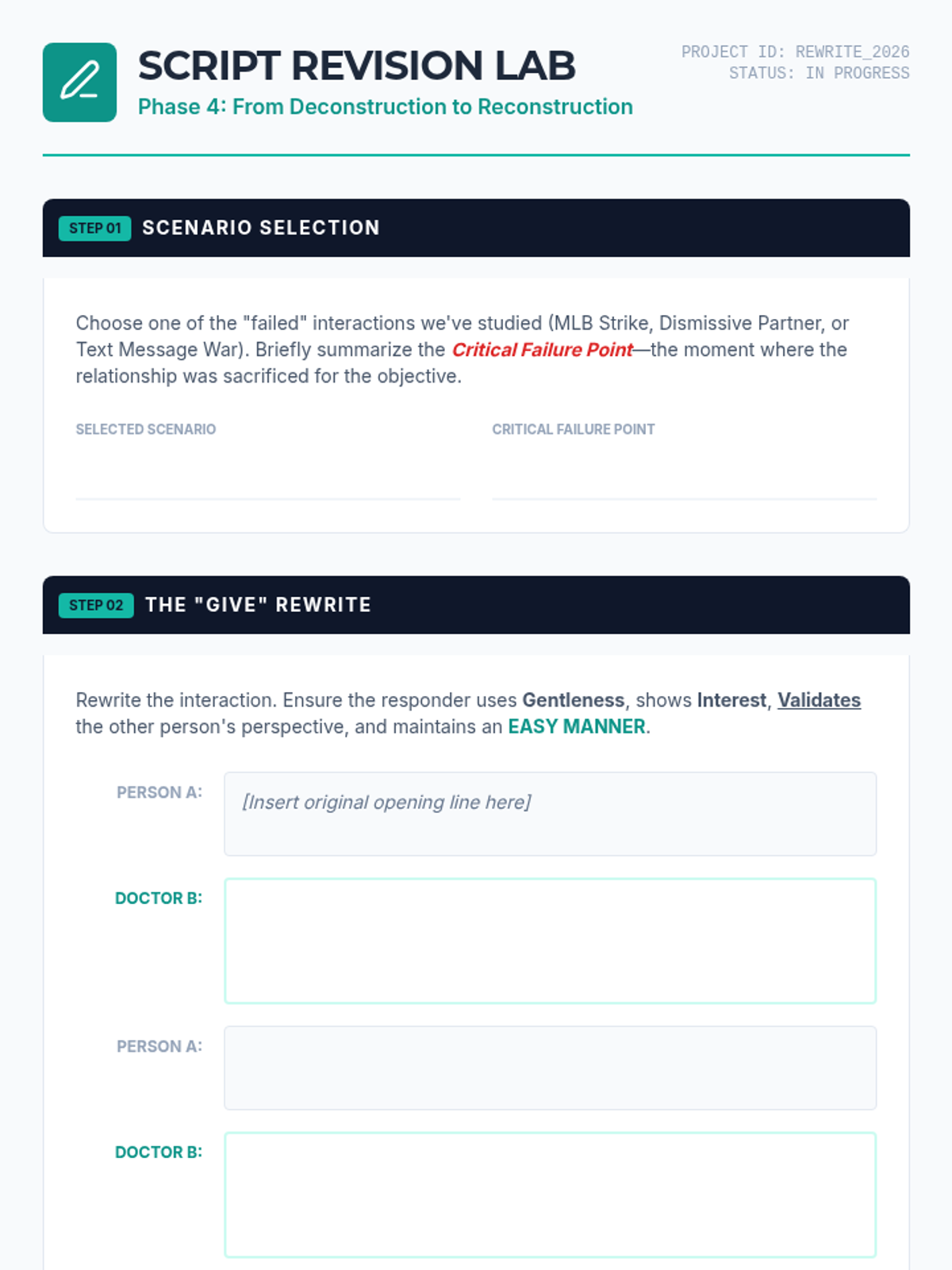
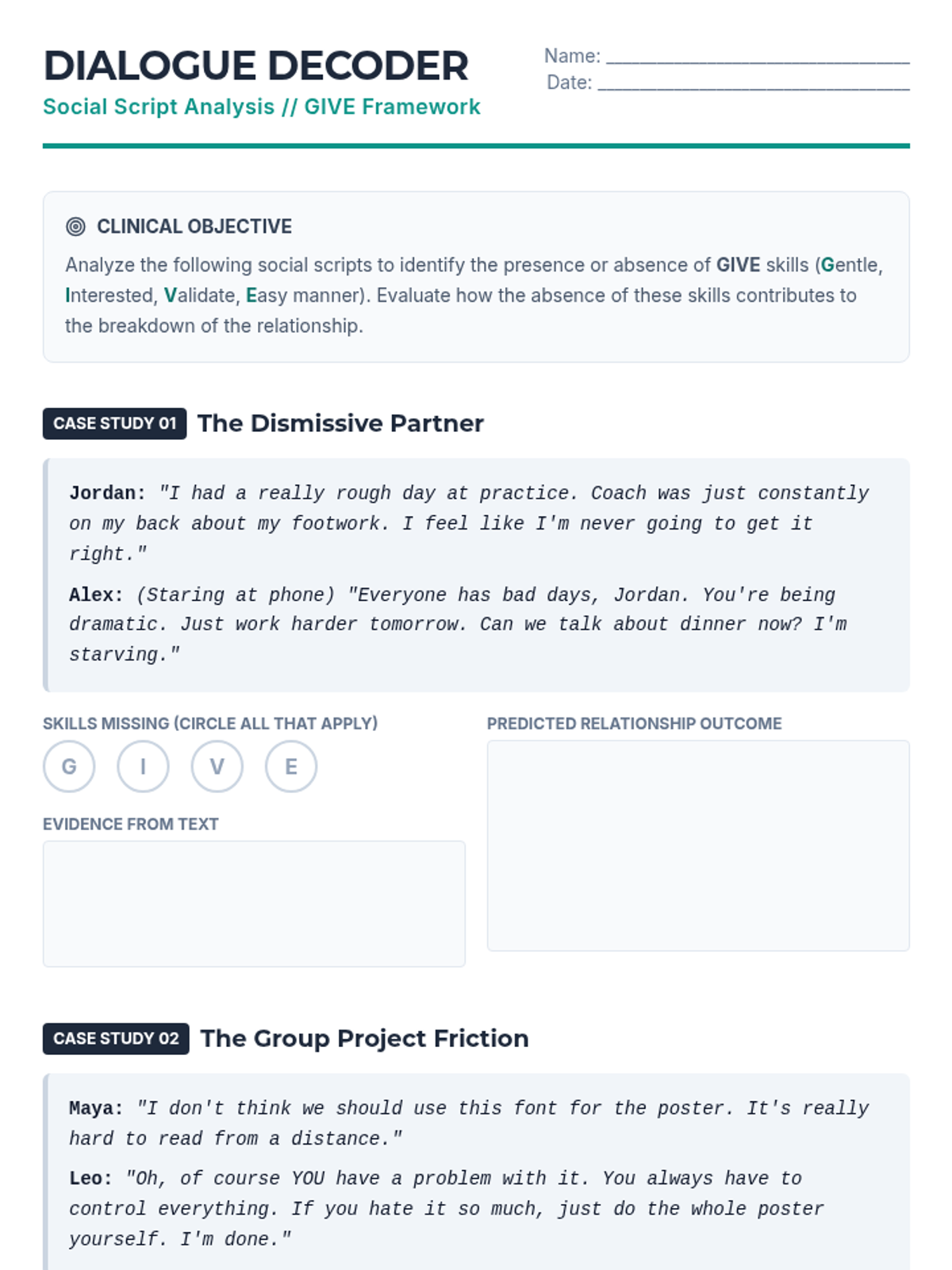
Students act as 'script doctors' to rewrite failed interactions and simulate the new versions to observe shifts in social dynamics.
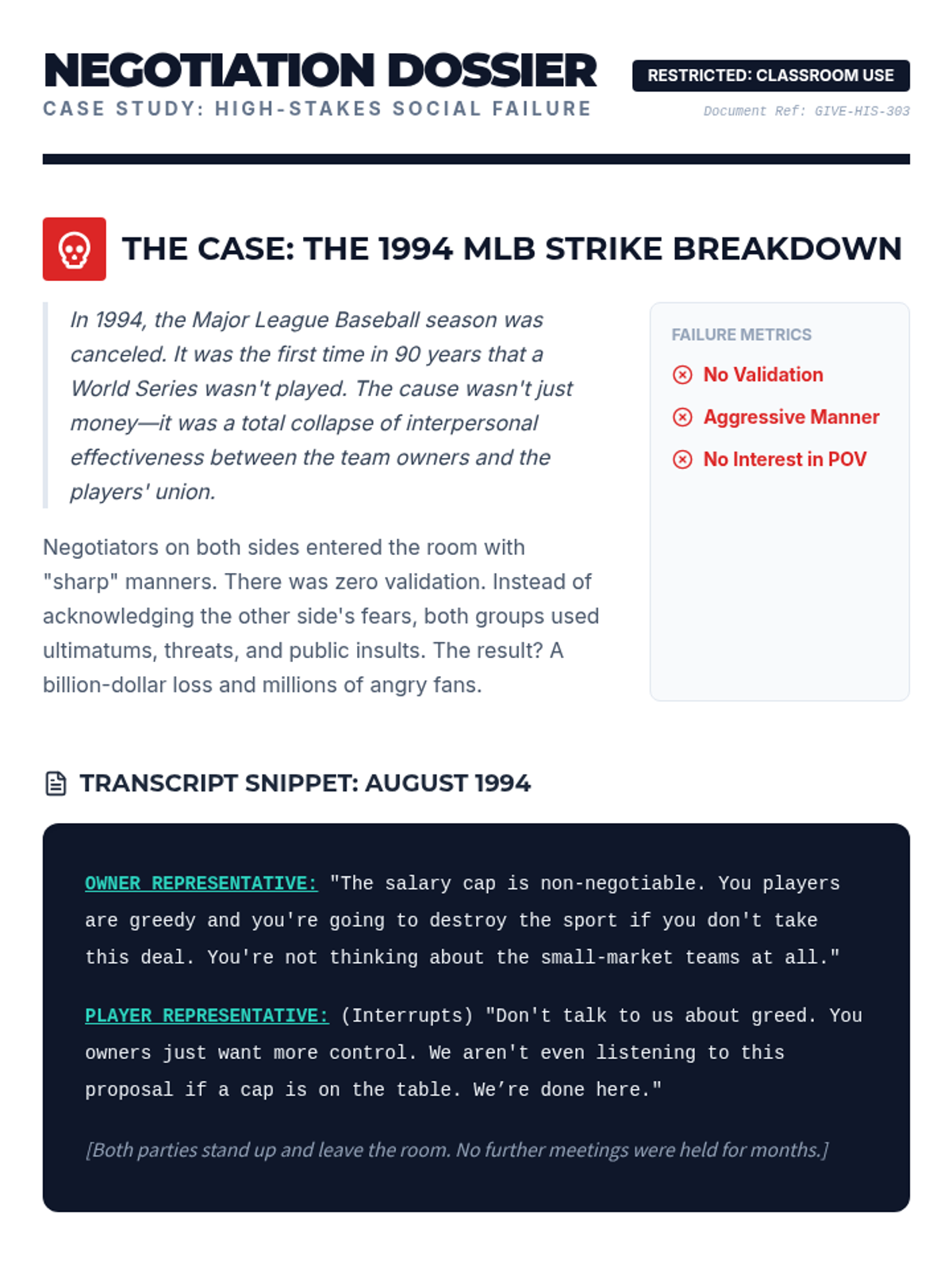
Students examine historical negotiations and public debates that failed due to a lack of interpersonal effectiveness, exploring the high stakes of missing validation.
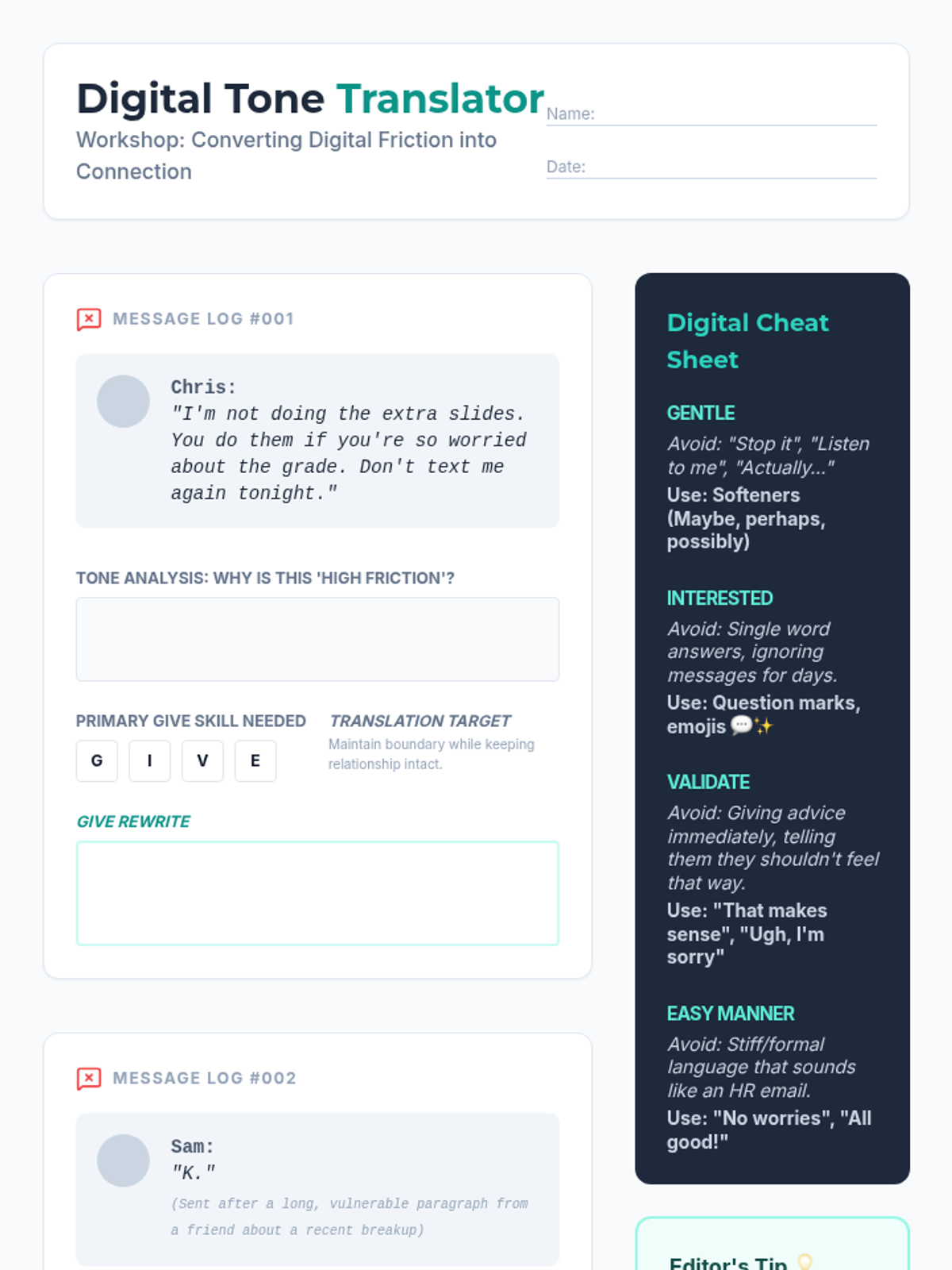
A focus on the nuances of digital communication, where students translate aggressive or cold text messages into GIVE-compliant versions while maintaining the core message.
Students analyze dialogue from literature and media to identify the presence or absence of GIVE skills, identifying 'relationship-destroying' behaviors through textual analysis.
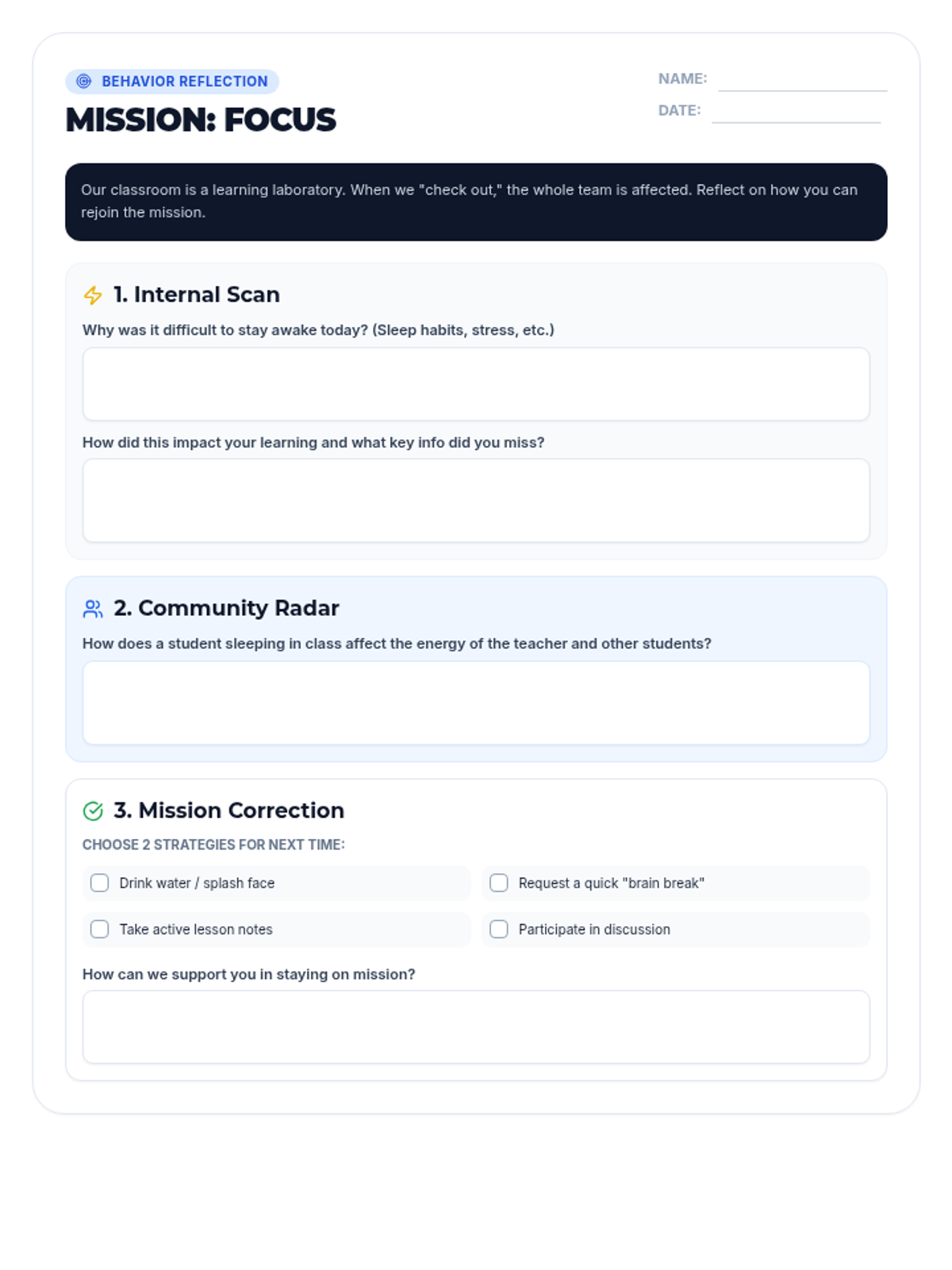
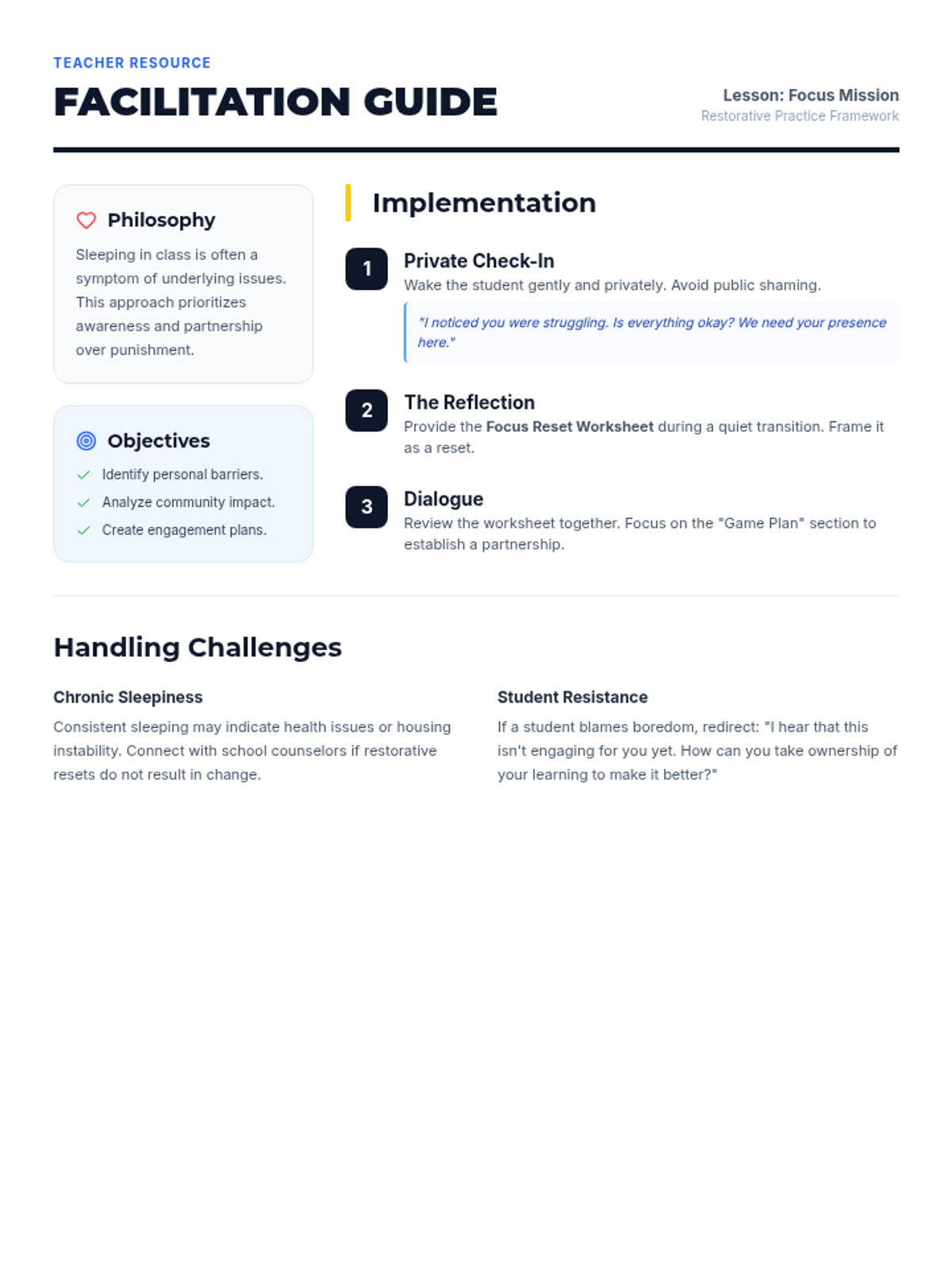
A restorative lesson designed to help students understand the importance of staying awake and engaged in class, focusing on personal success and classroom community respect.
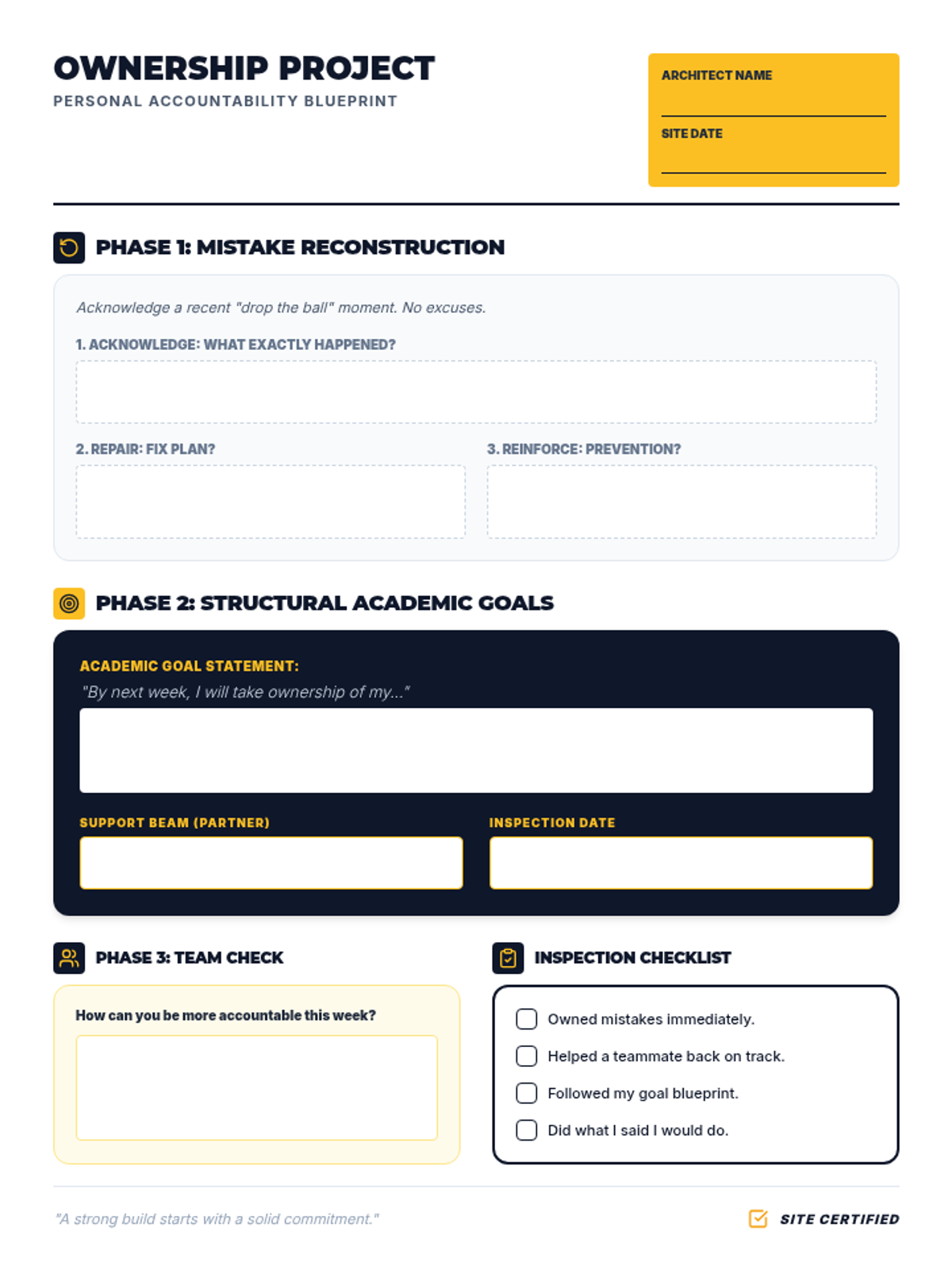
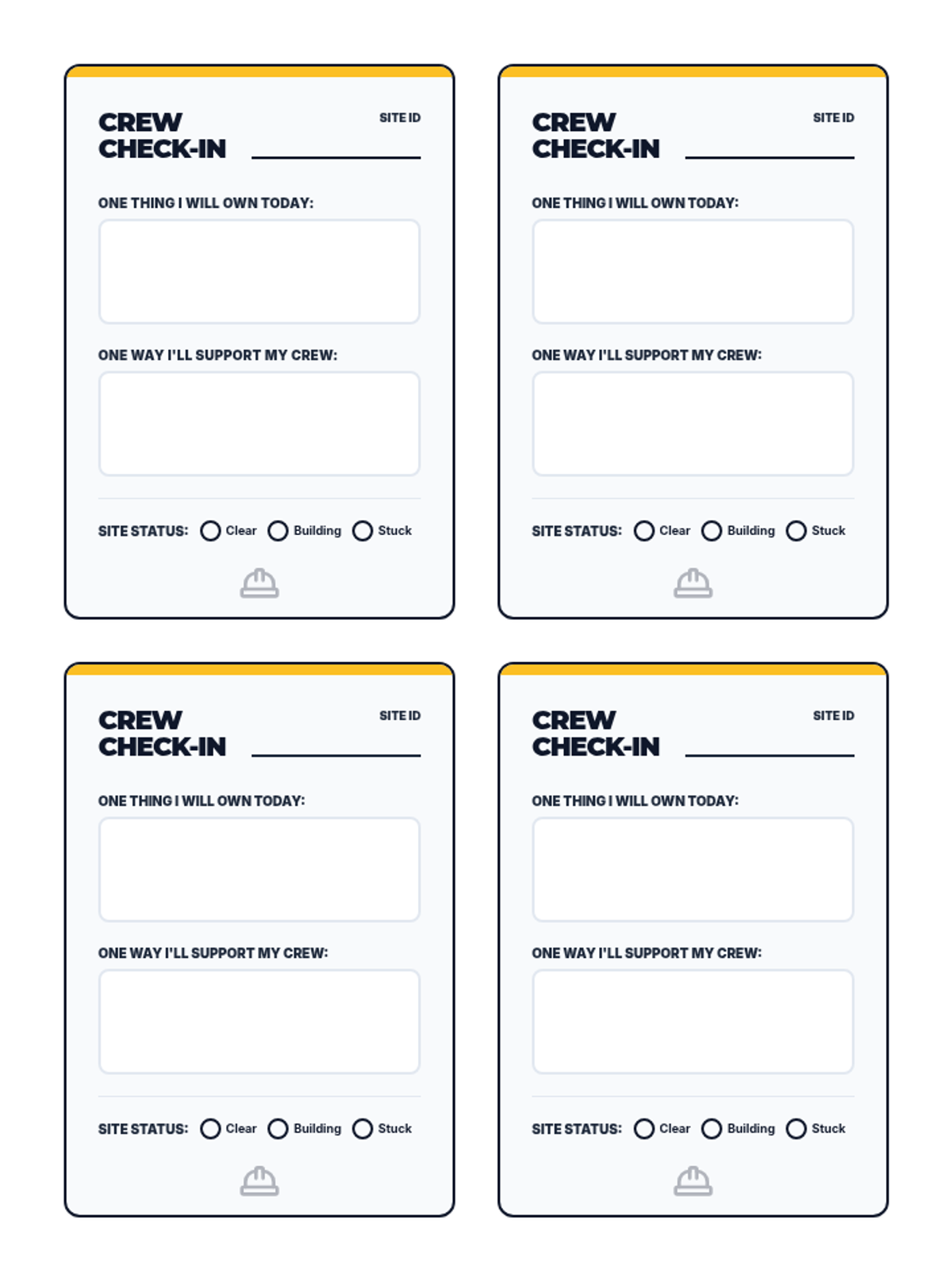
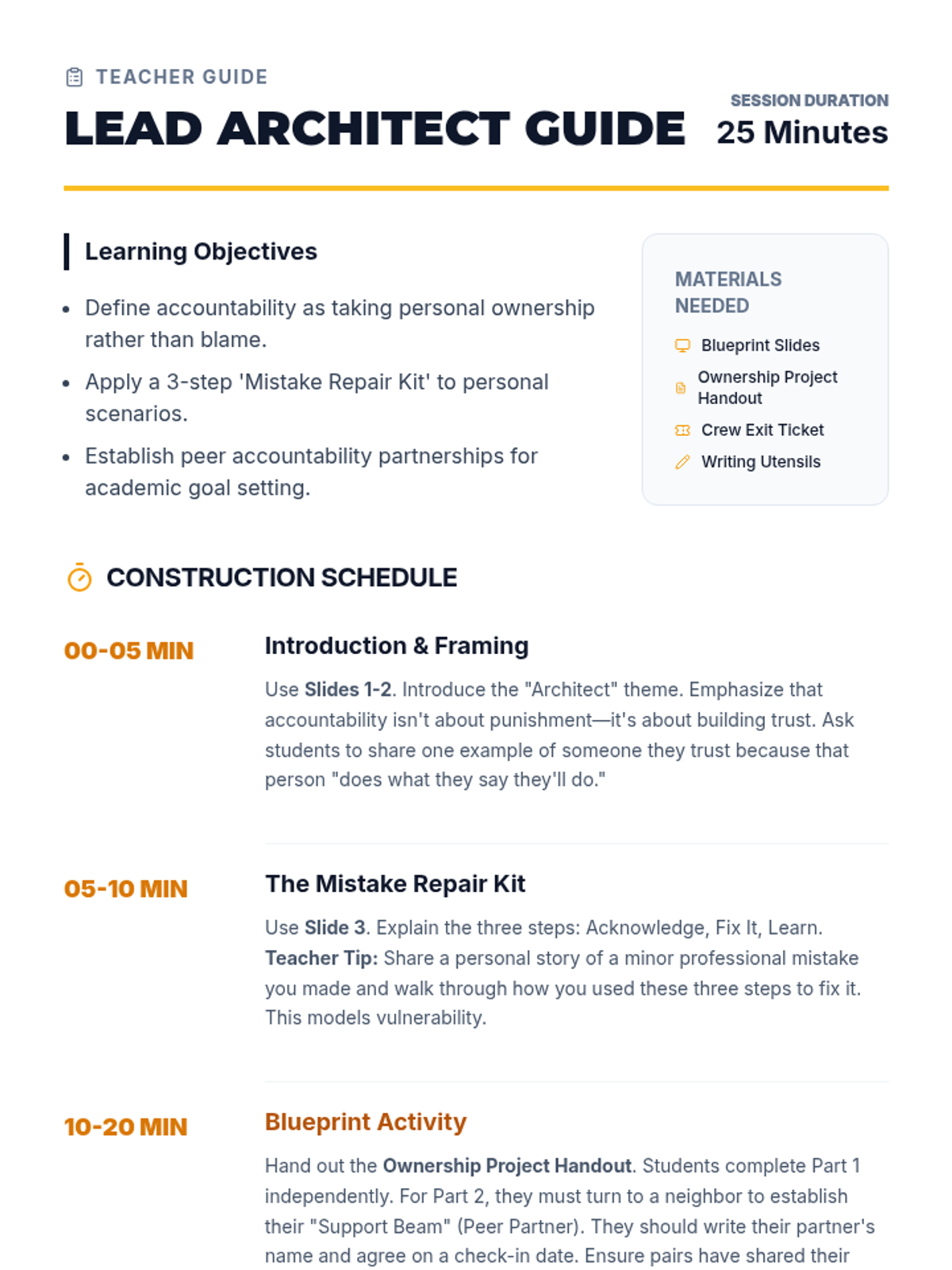
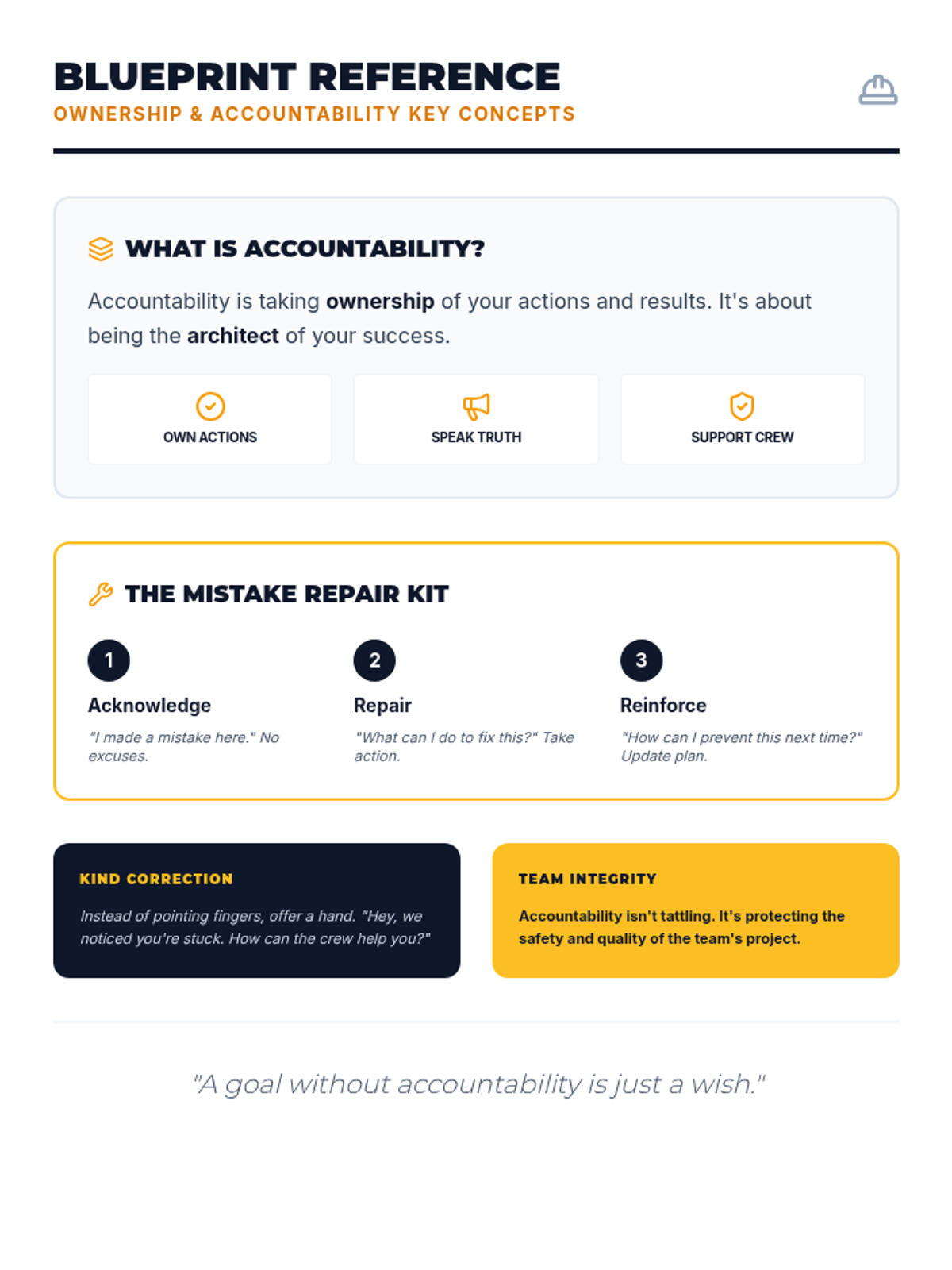
A fast-paced, high-impact 25-minute lesson focusing on the pillars of accountability: owning mistakes, supporting peers, and setting concrete academic goals. Students take on the role of 'Accountability Architects' to build a stronger classroom culture.
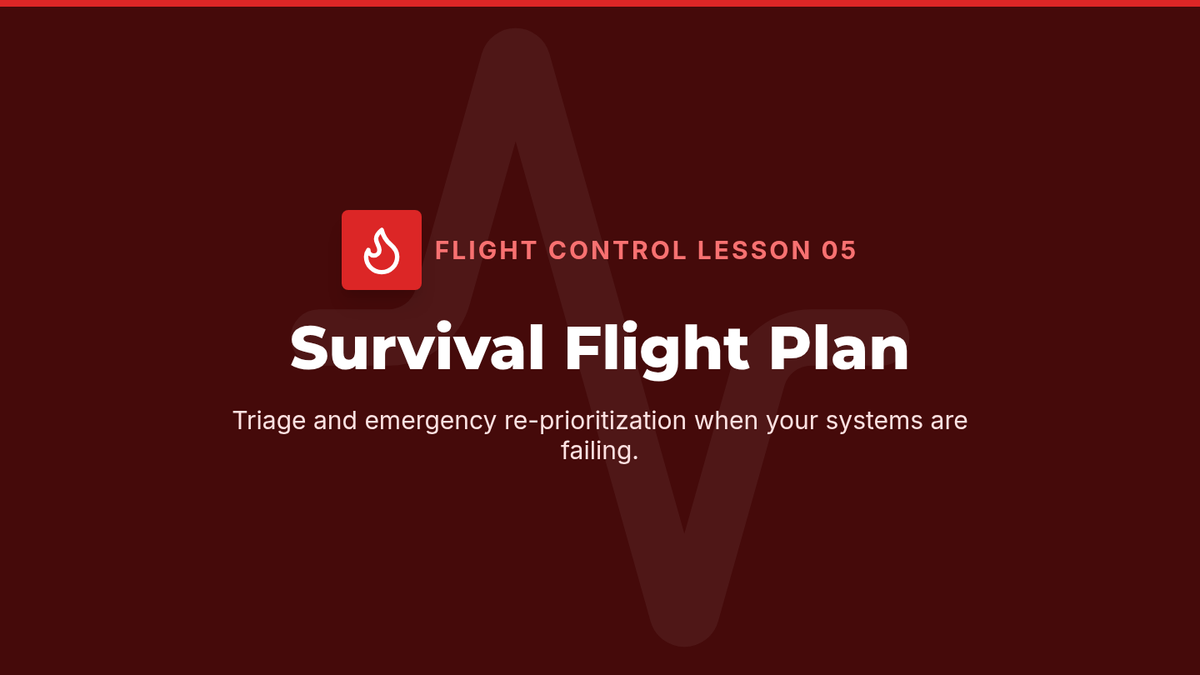
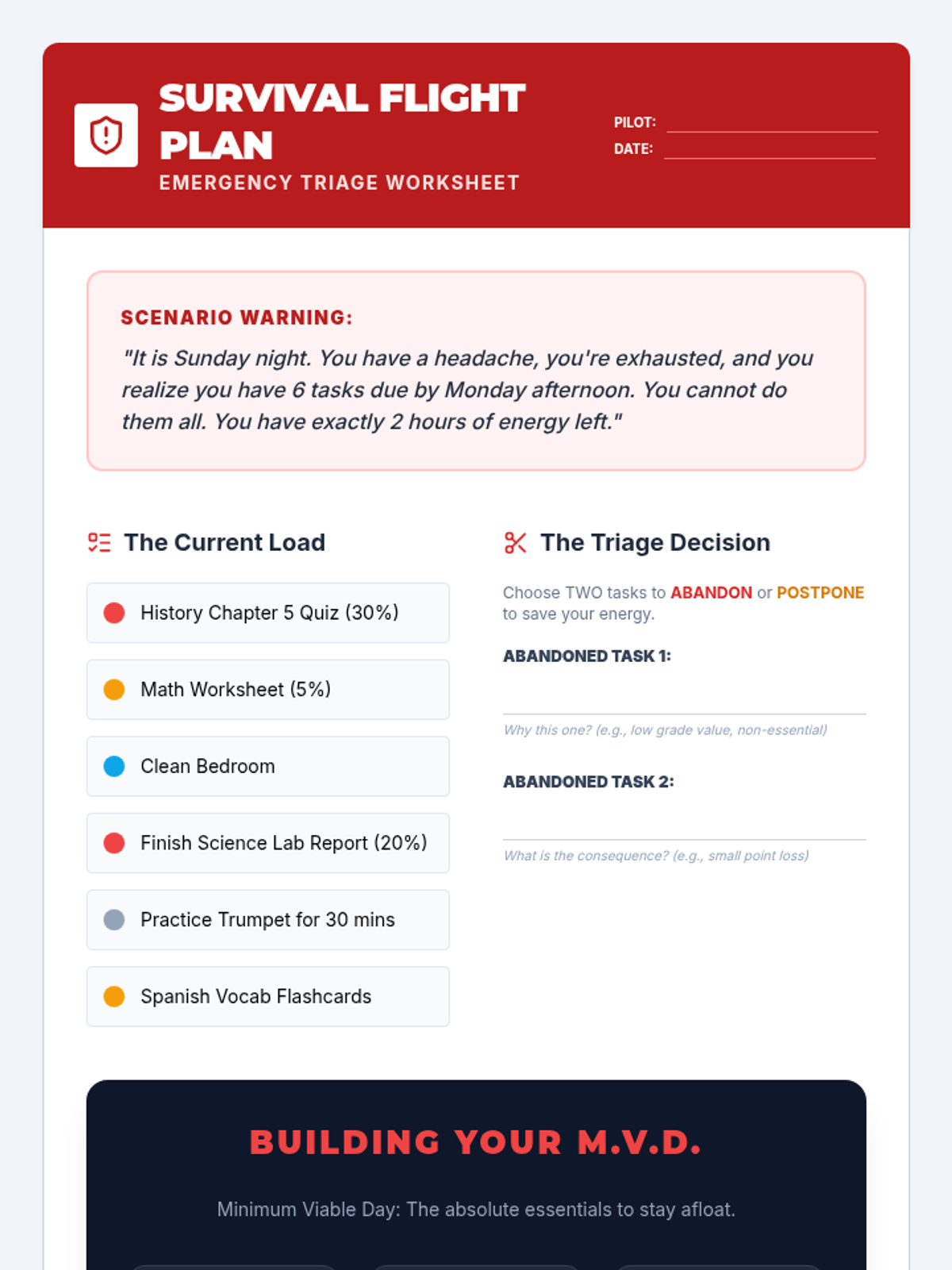
Students develop emergency 'triage' strategies and create a 'Minimum Viable Day' plan for maintaining performance during periods of high stress or illness.
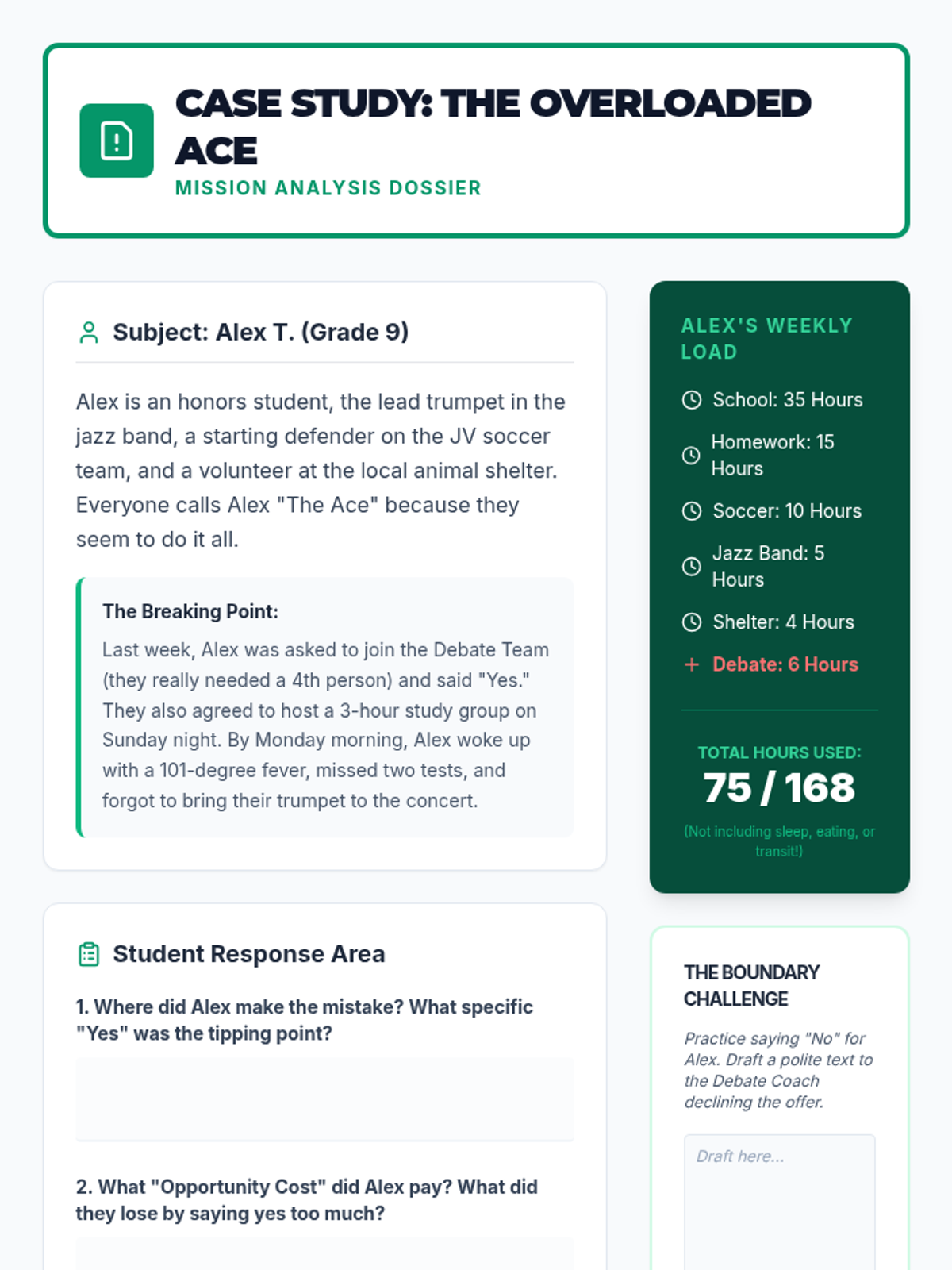
Students explore the concept of opportunity cost and practice strategies for politely but firmly declining optional commitments.
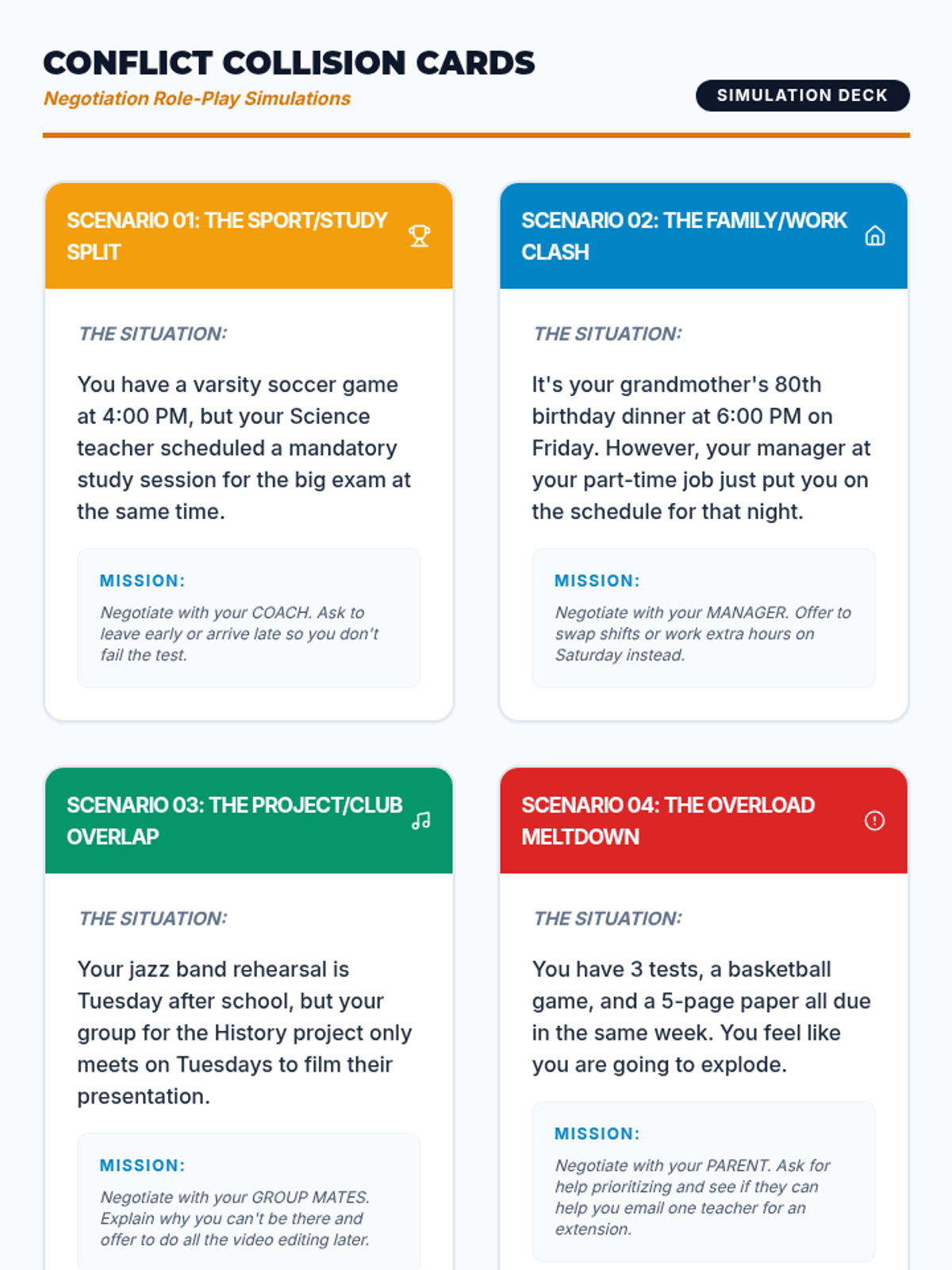
Through role-play and simulation, students practice face-to-face negotiations to resolve scheduling conflicts between multiple commitments.
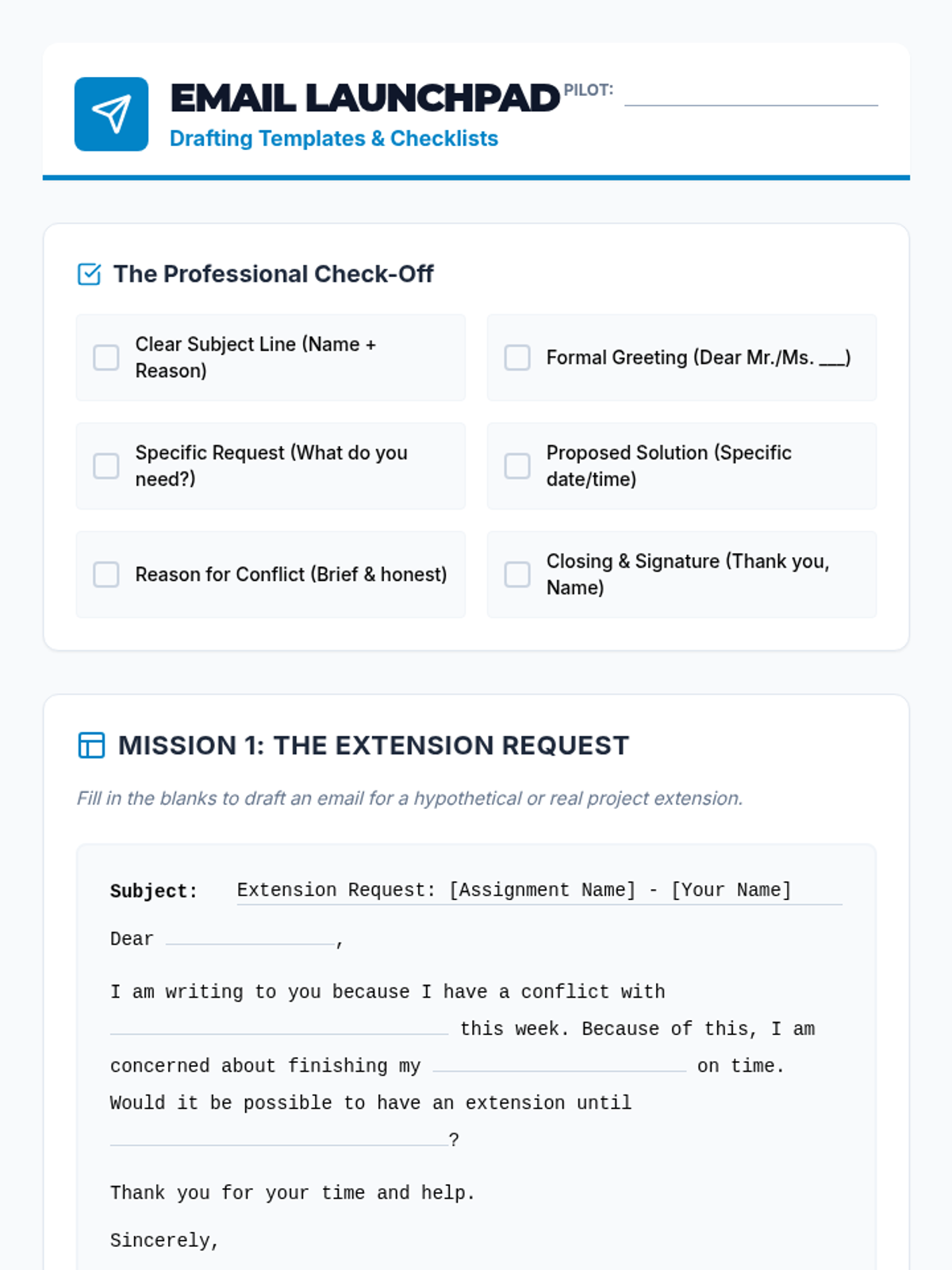
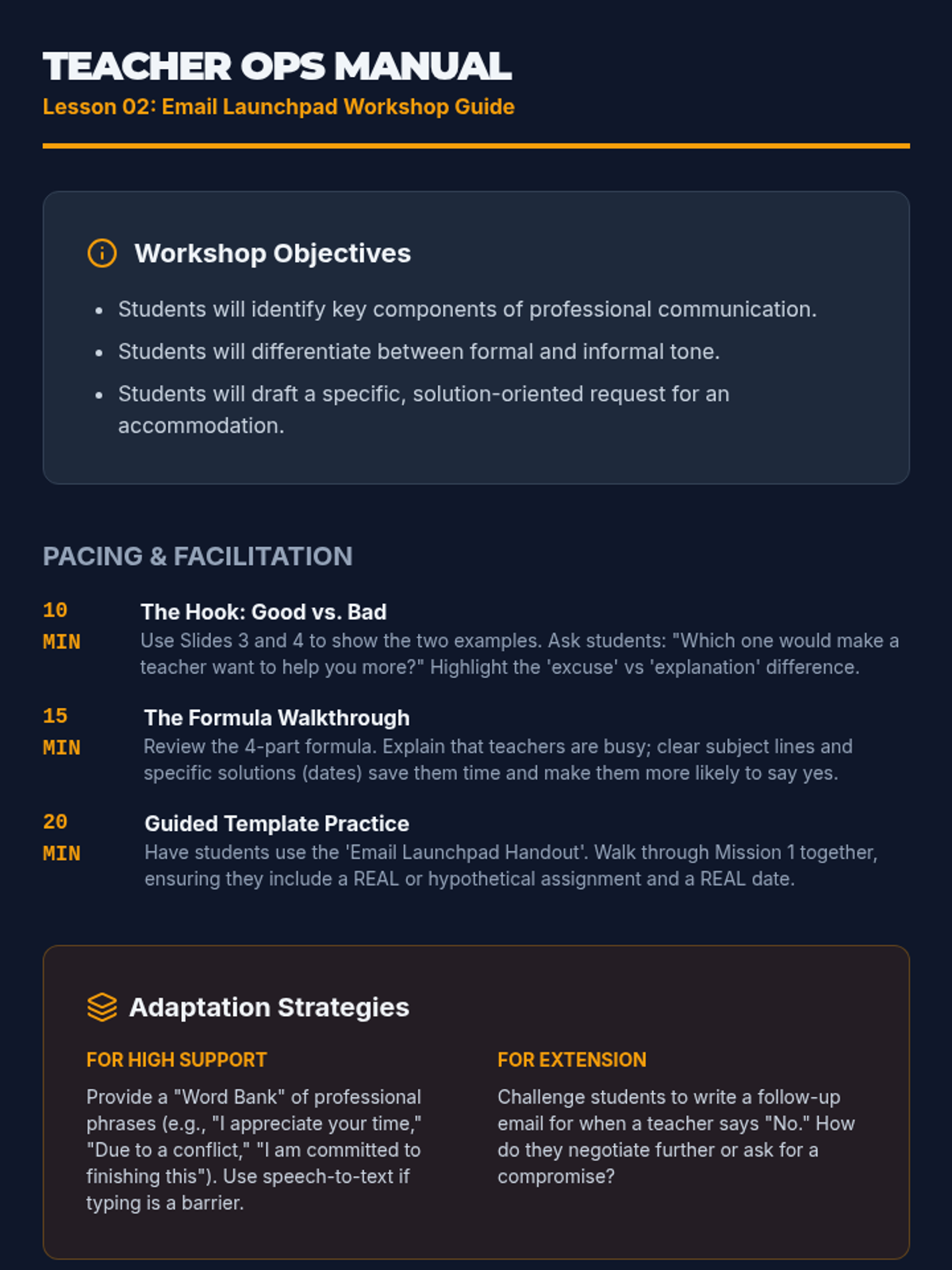
Students master the art of professional email communication, learning to draft responsible and clear requests for extensions or accommodations.
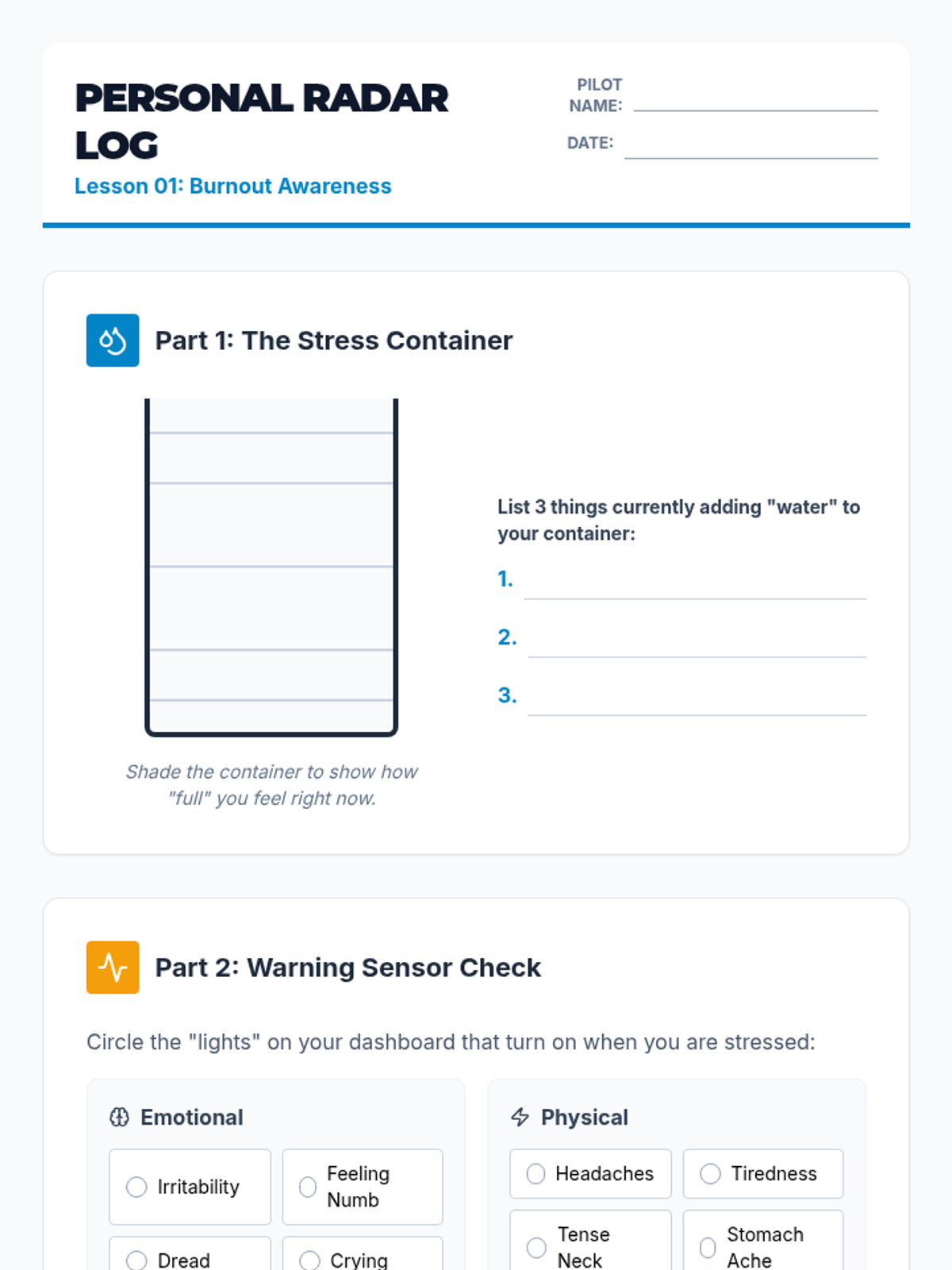
Students identify physical and emotional signs of burnout and use the 'Stress Container' visualization to understand their personal capacity and tipping points.
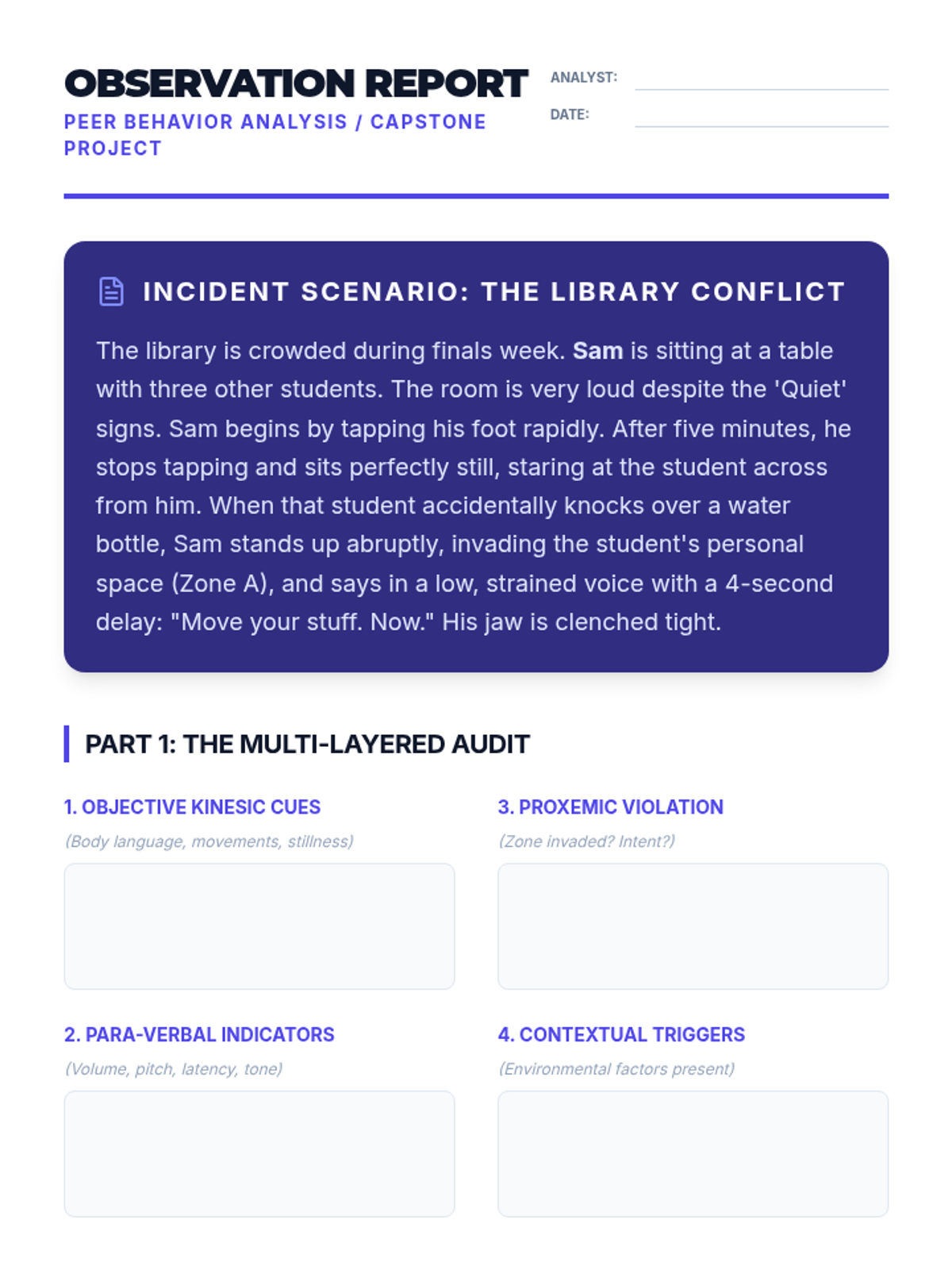
Students synthesize their observation skills to analyze full scenarios, identifying how environmental triggers (noise, crowds) combine with behavioral cues to predict escalation.
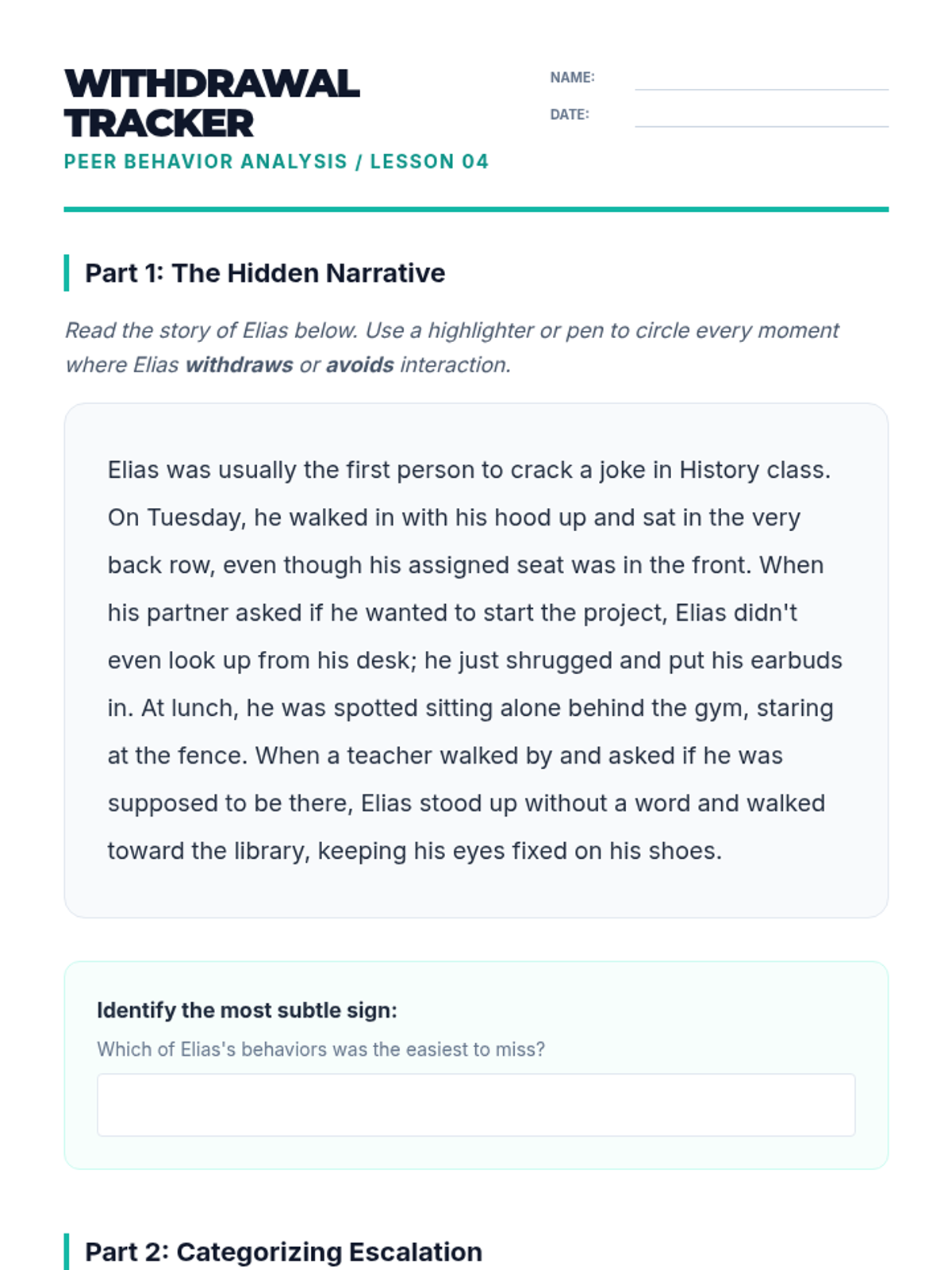
Students learn to identify 'implosive' escalation—withdrawal, shutting down, or avoiding eye contact—and discuss how these quiet signs can be precursors to explosive behavior.
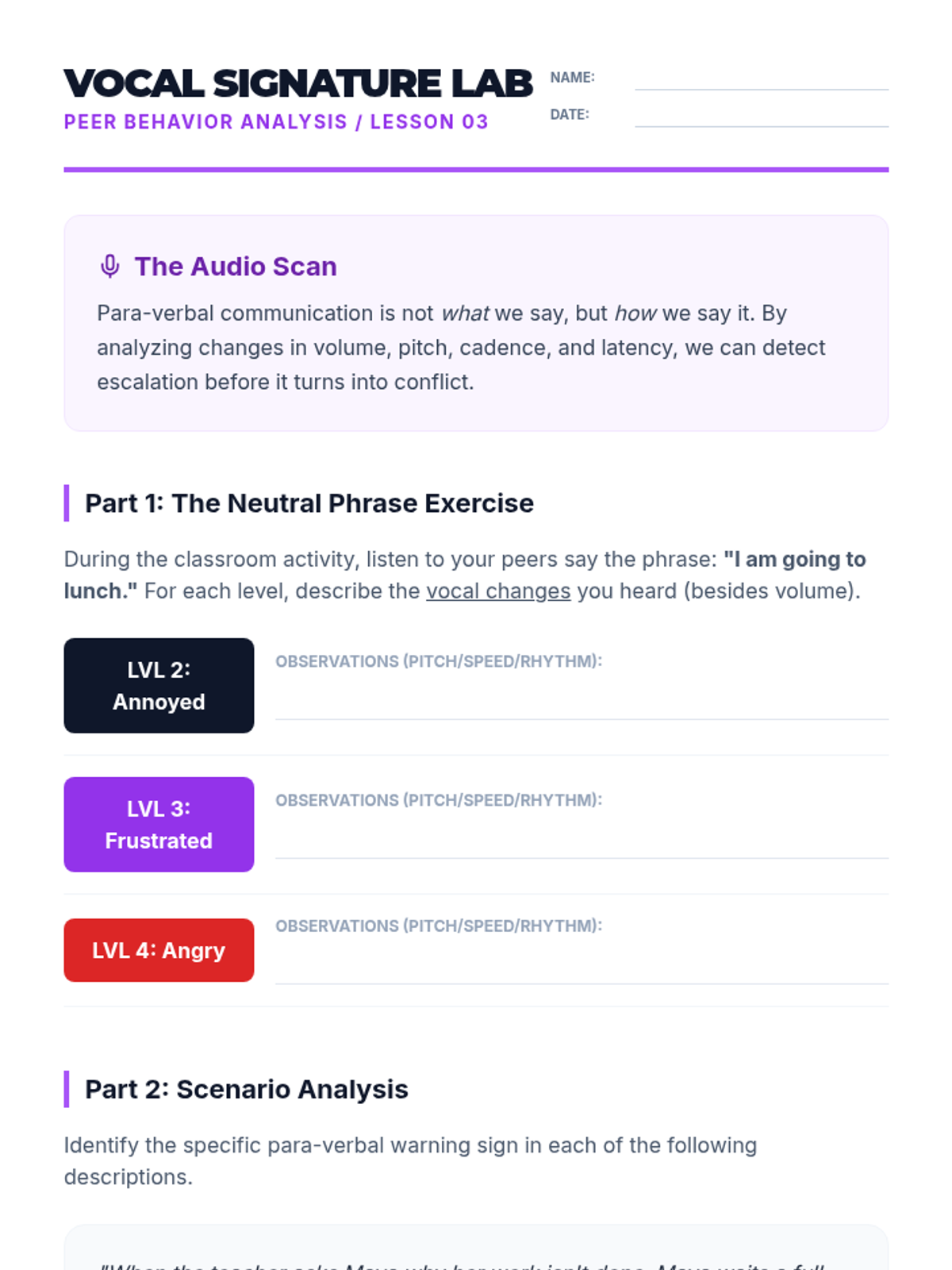
Students examine the vocal components of escalation, including changes in pitch, speed, volume, and latency of response.
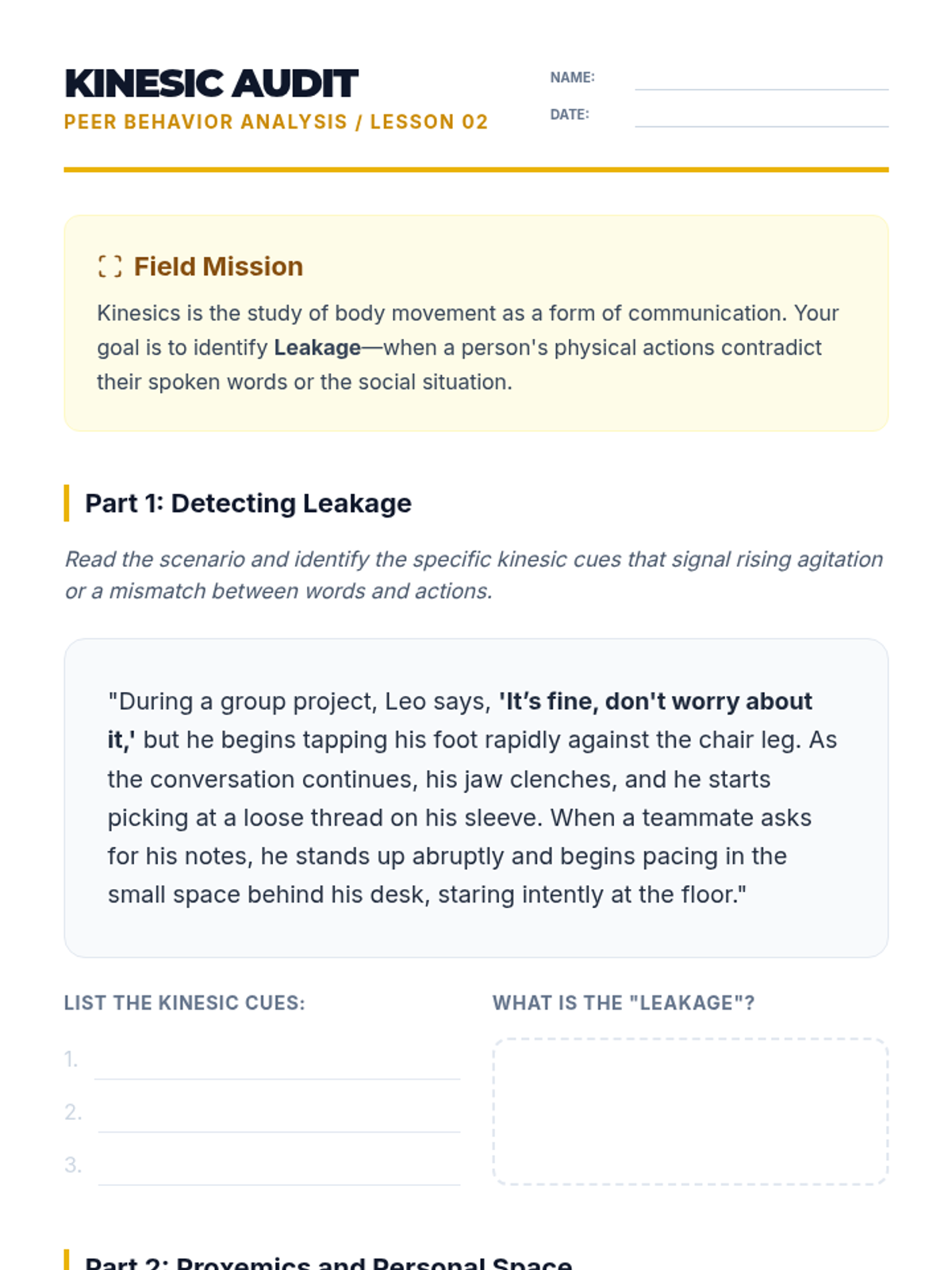
Focuses on gross motor movements that signal agitation and identifying 'leakage'—when body language contradicts spoken words.
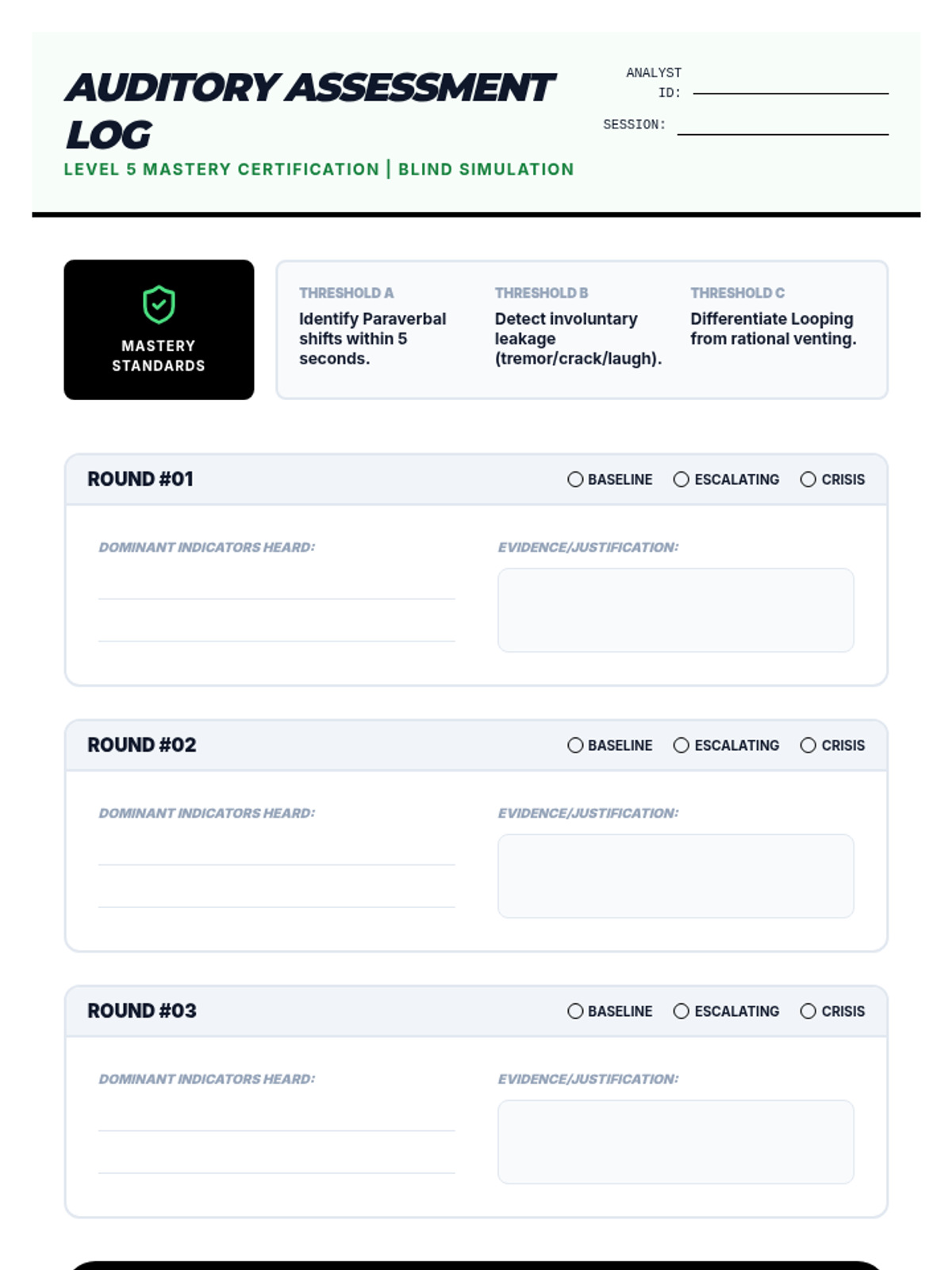
A mastery-based simulation where students assess emotional states based solely on auditory cues in a controlled environment.
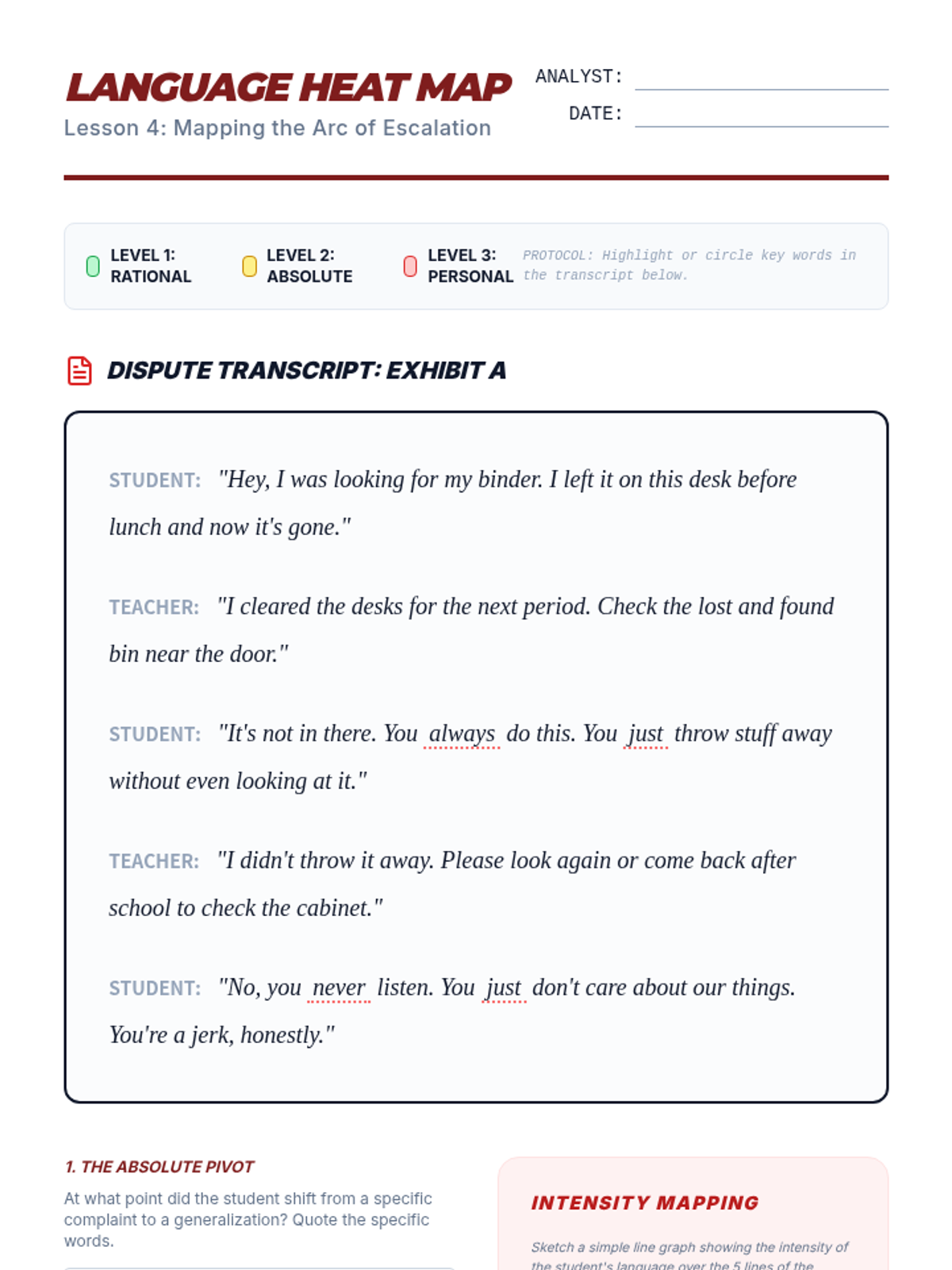
Students track the shift from logical language to emotional generalizations and personal attacks during a verbal dispute.
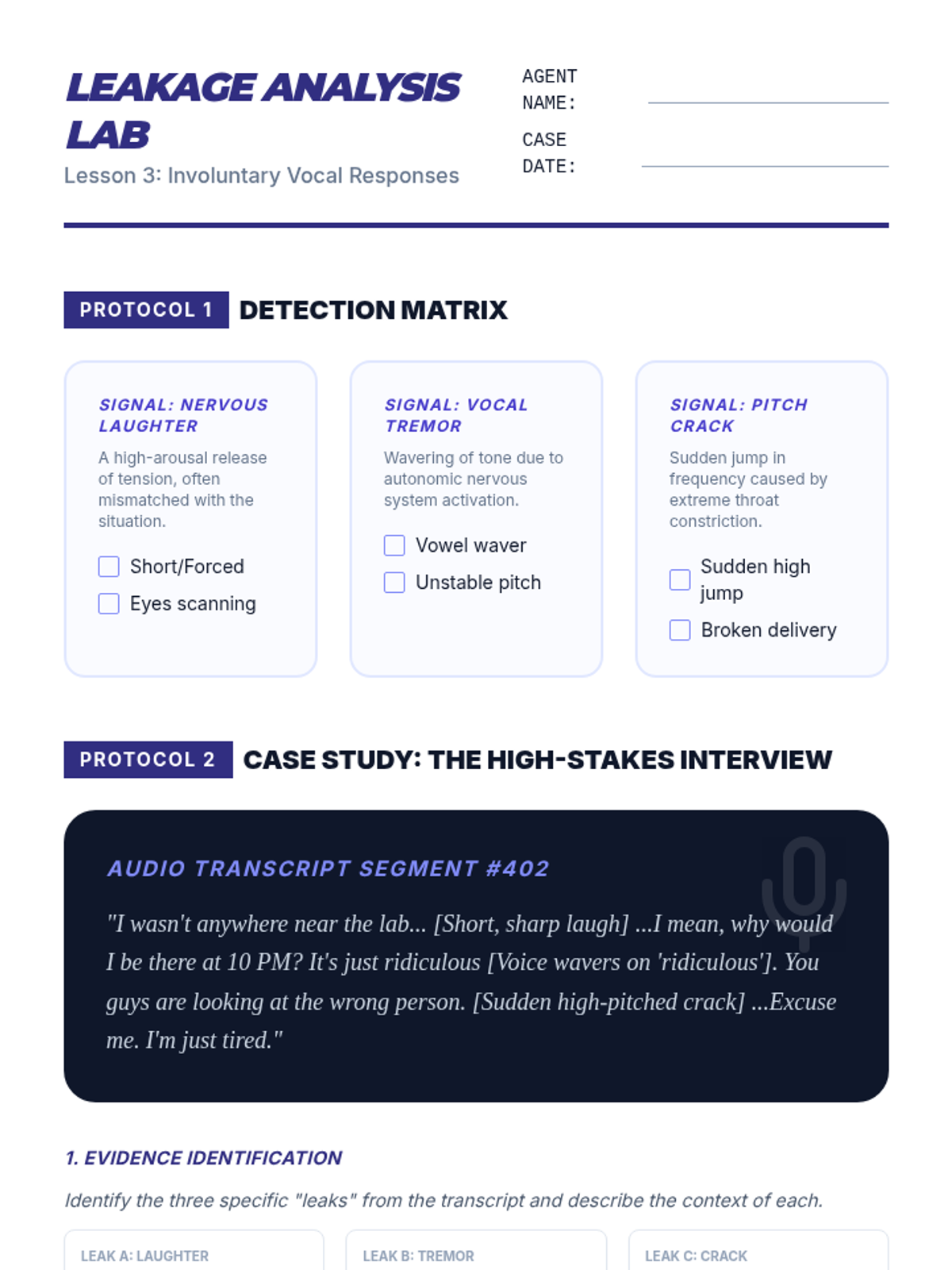
An examination of involuntary vocal responses such as tremors, cracking, and nervous laughter as indicators of high emotional tension.
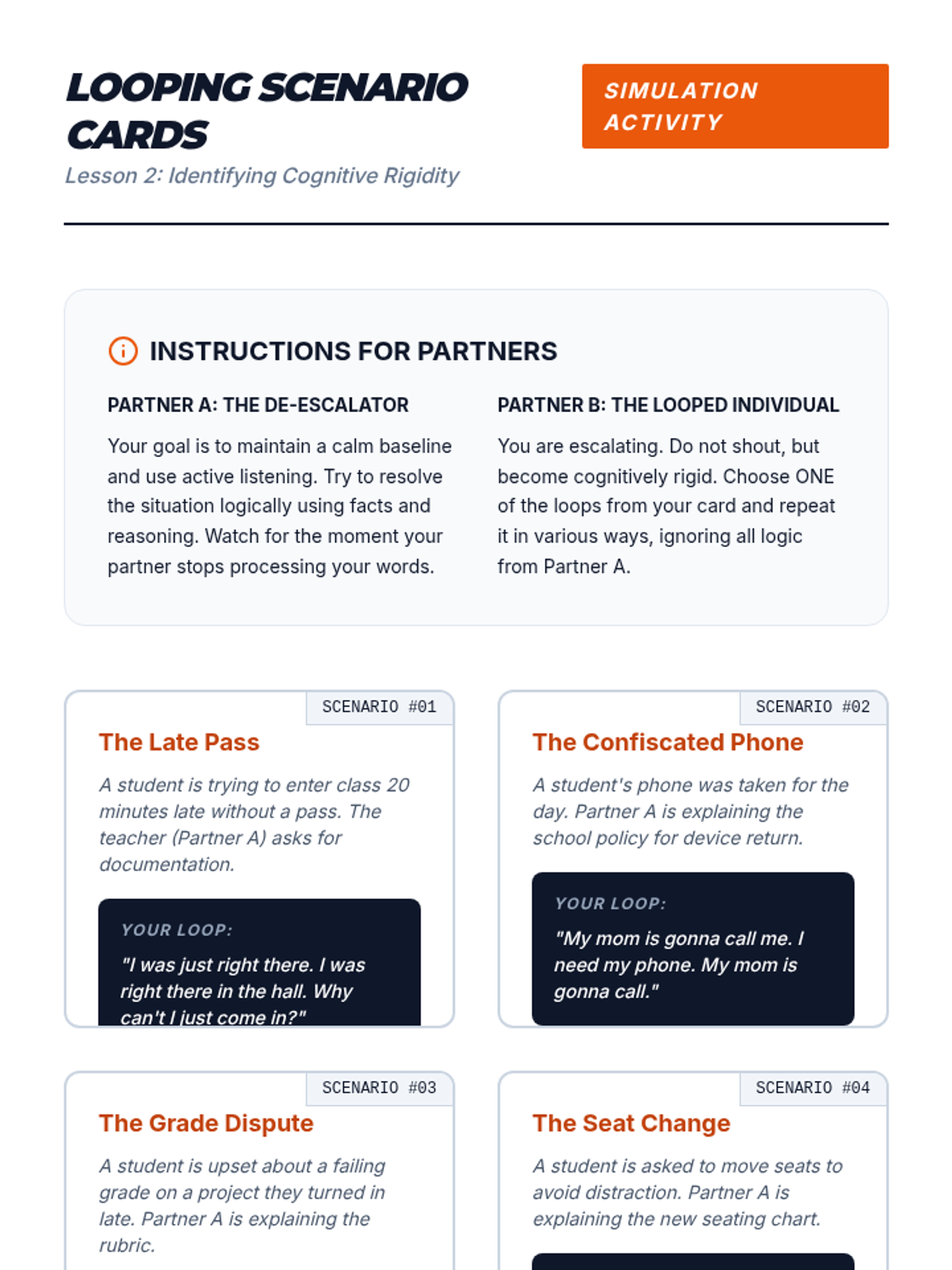
Focuses on cognitive rigidity during escalation, specifically identifying 'looping' speech patterns and repetitive questions.
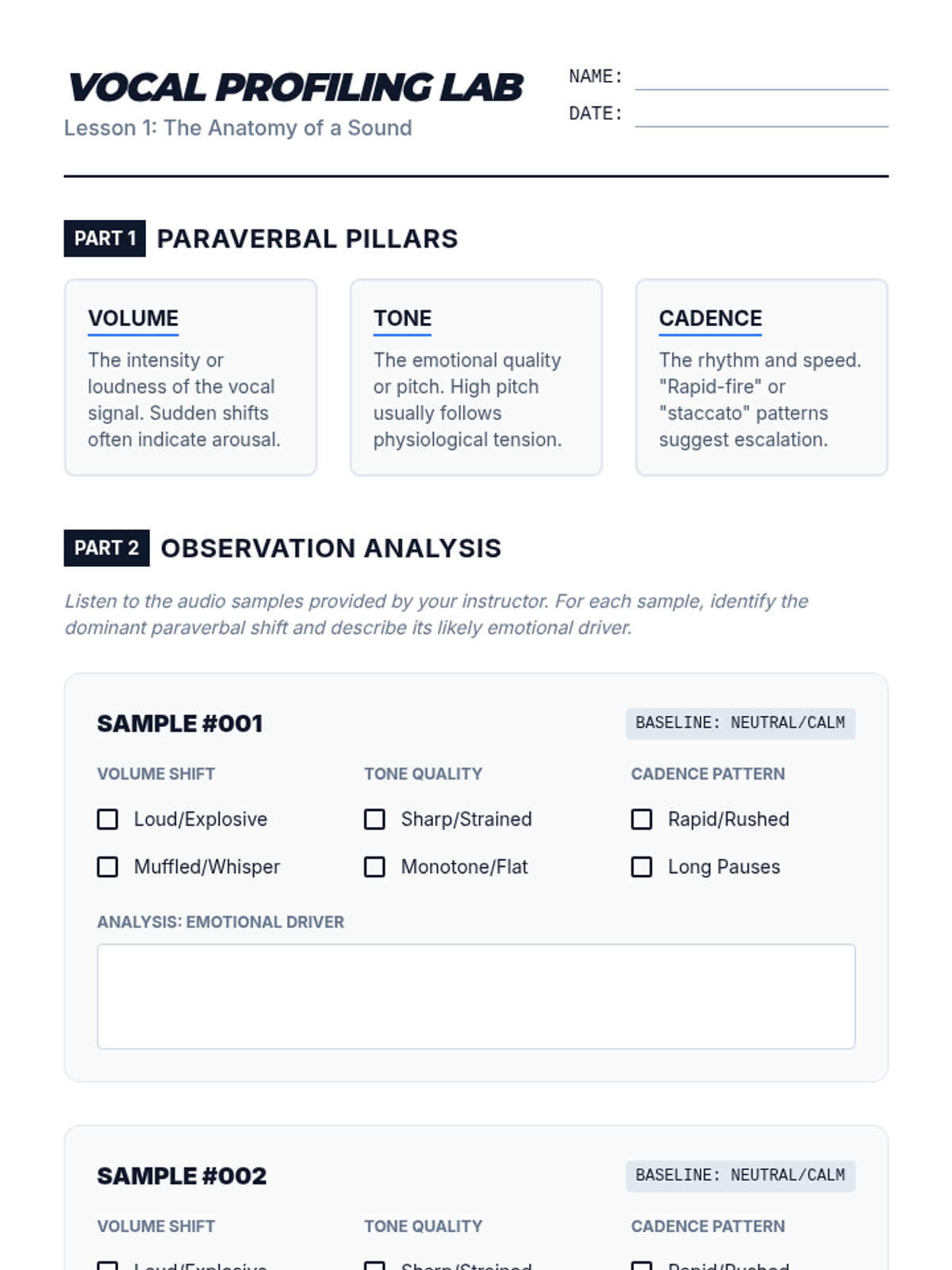
Students break down the components of paraverbal communication, learning how shifts in speed, pitch, and volume indicate sympathetic nervous system arousal.
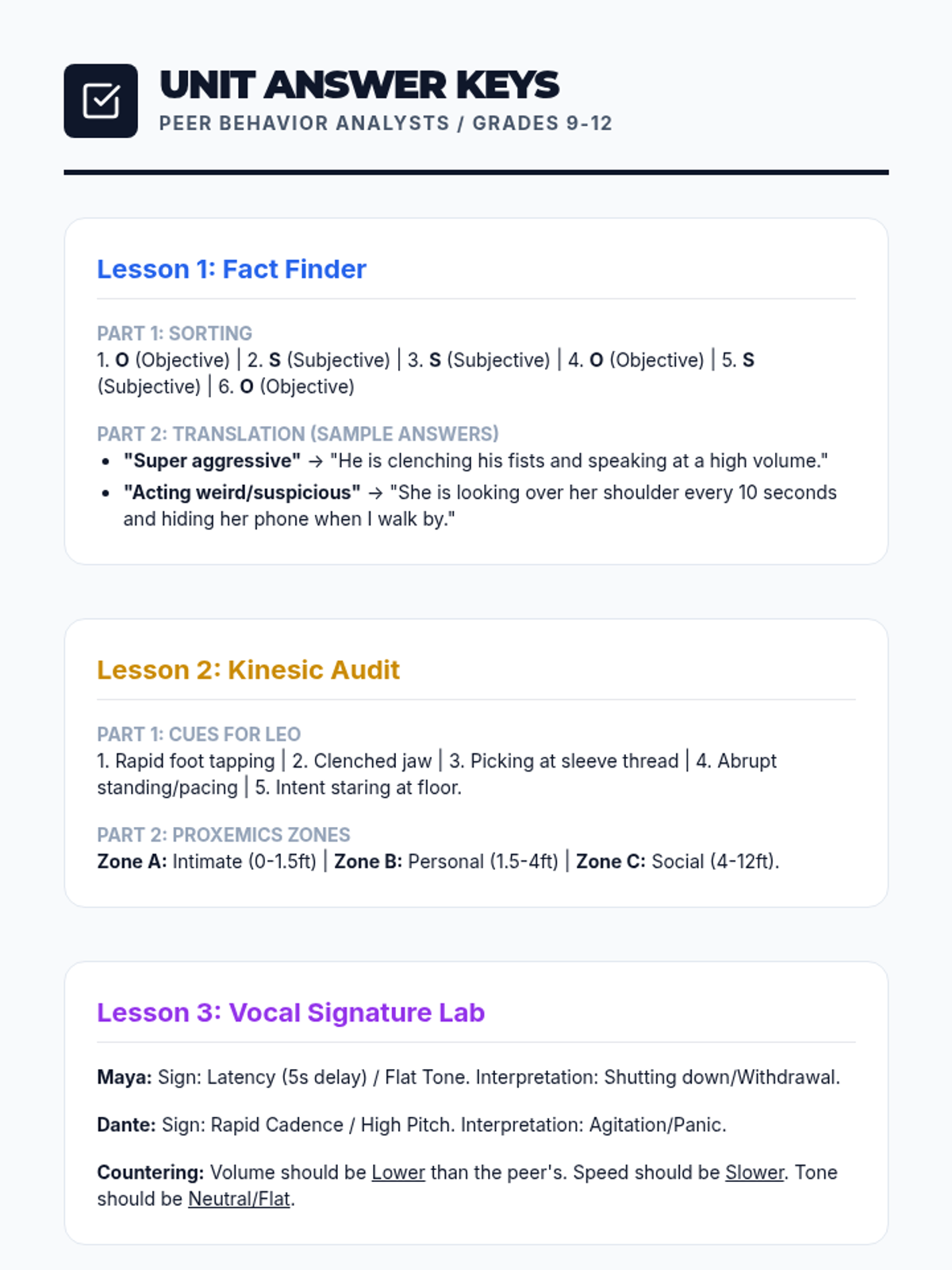
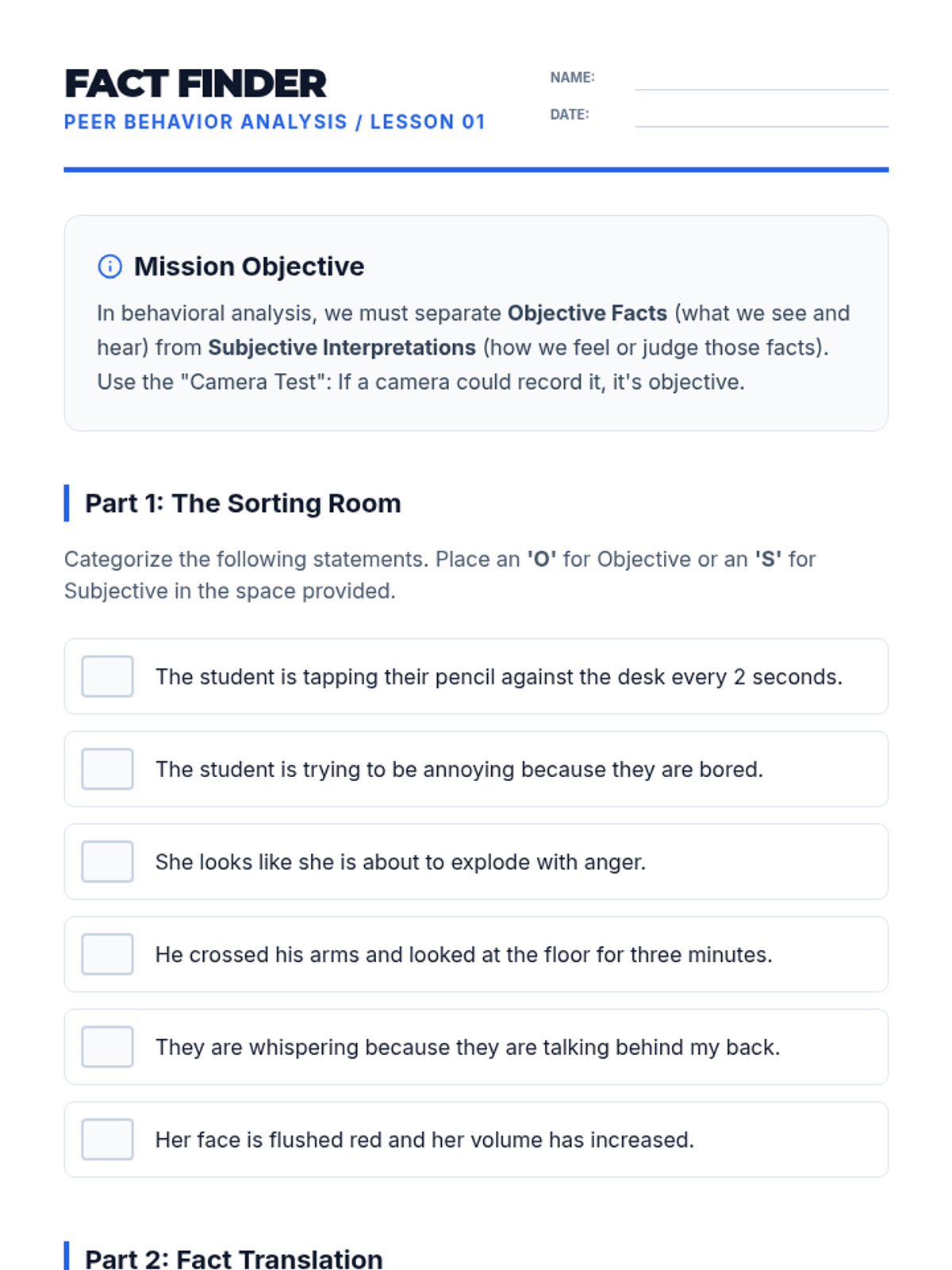
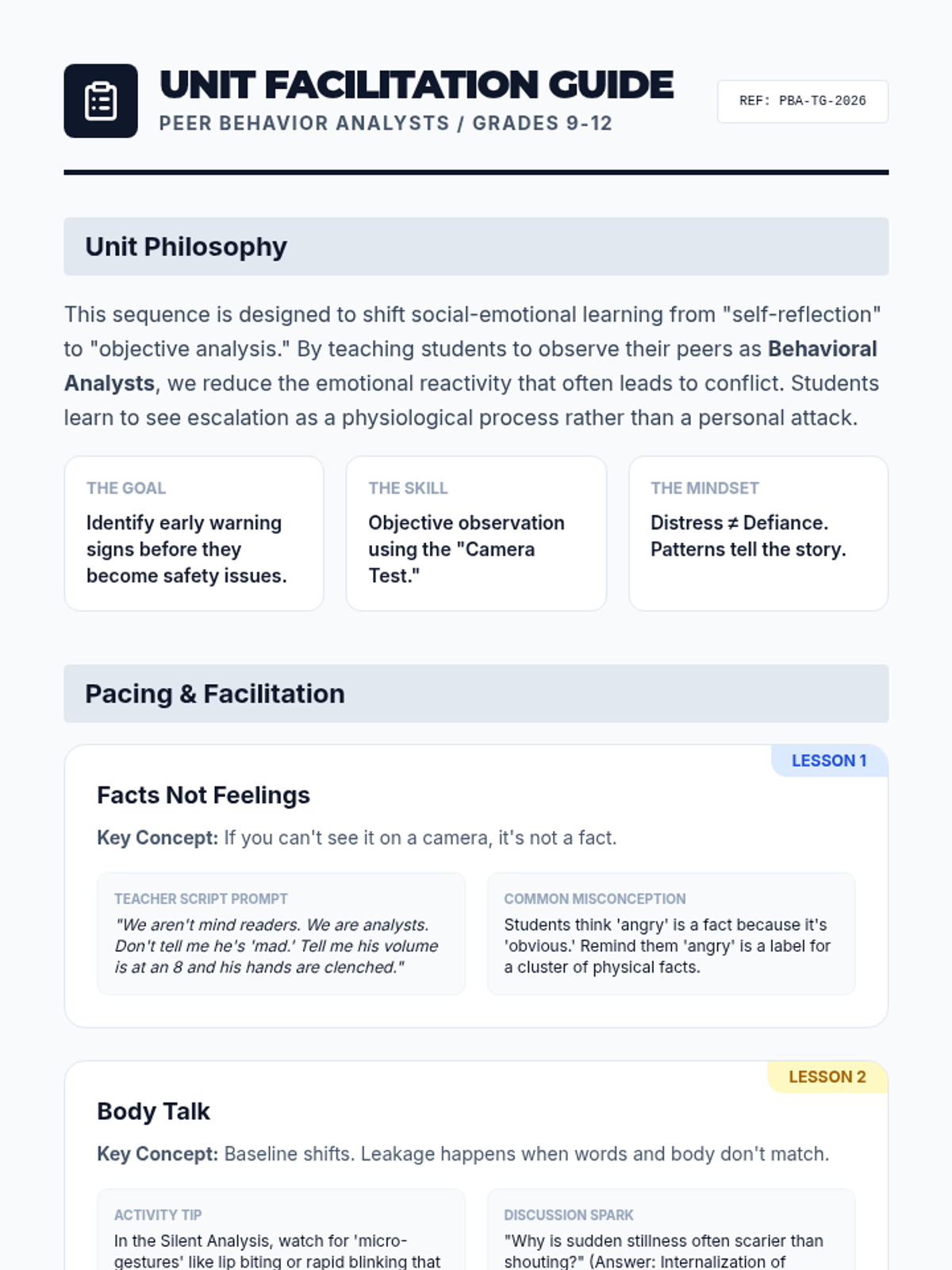
Students learn to distinguish between objective observations (facts) and subjective interpretations (opinions) to ensure accurate behavioral assessment.
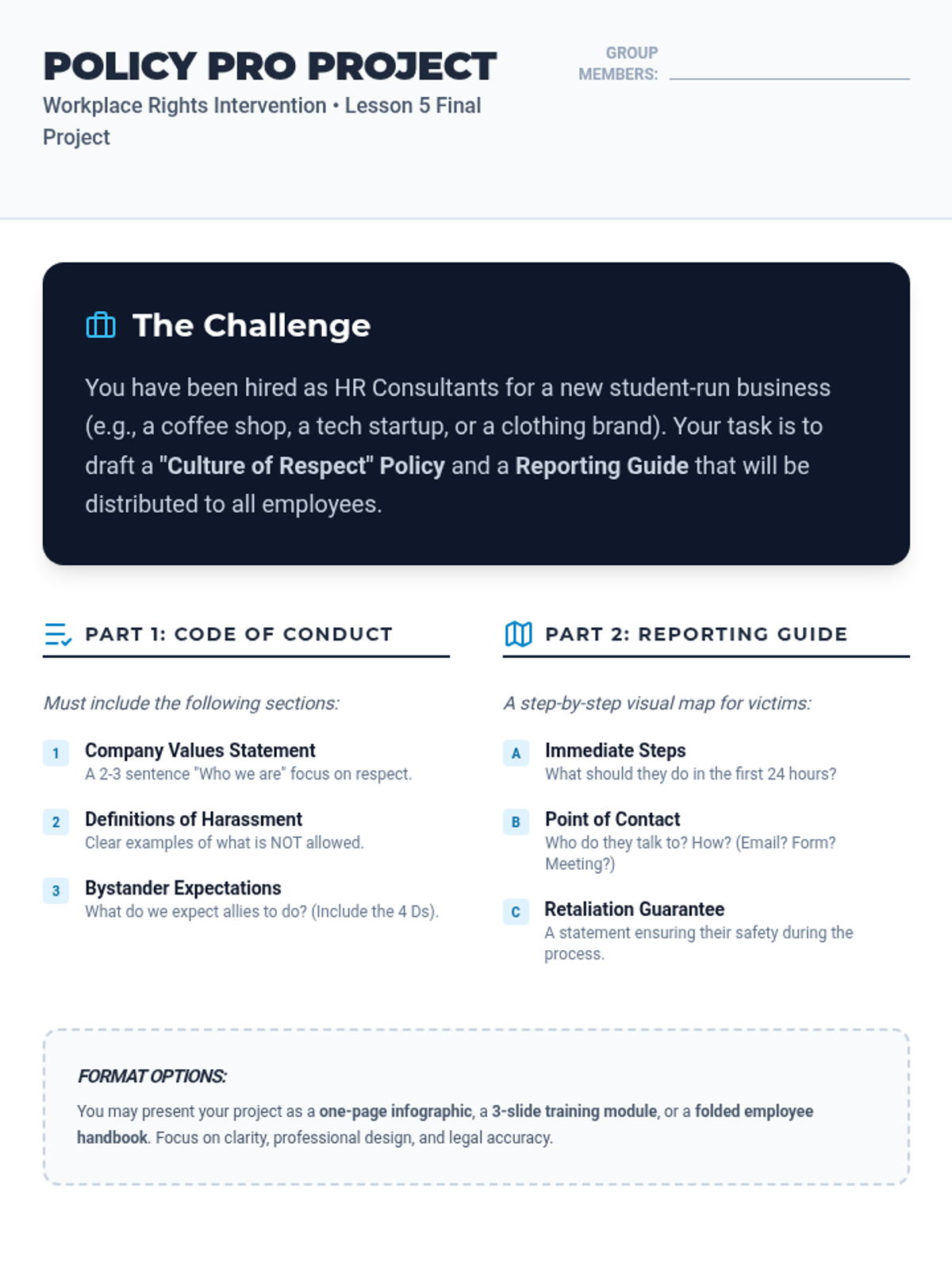
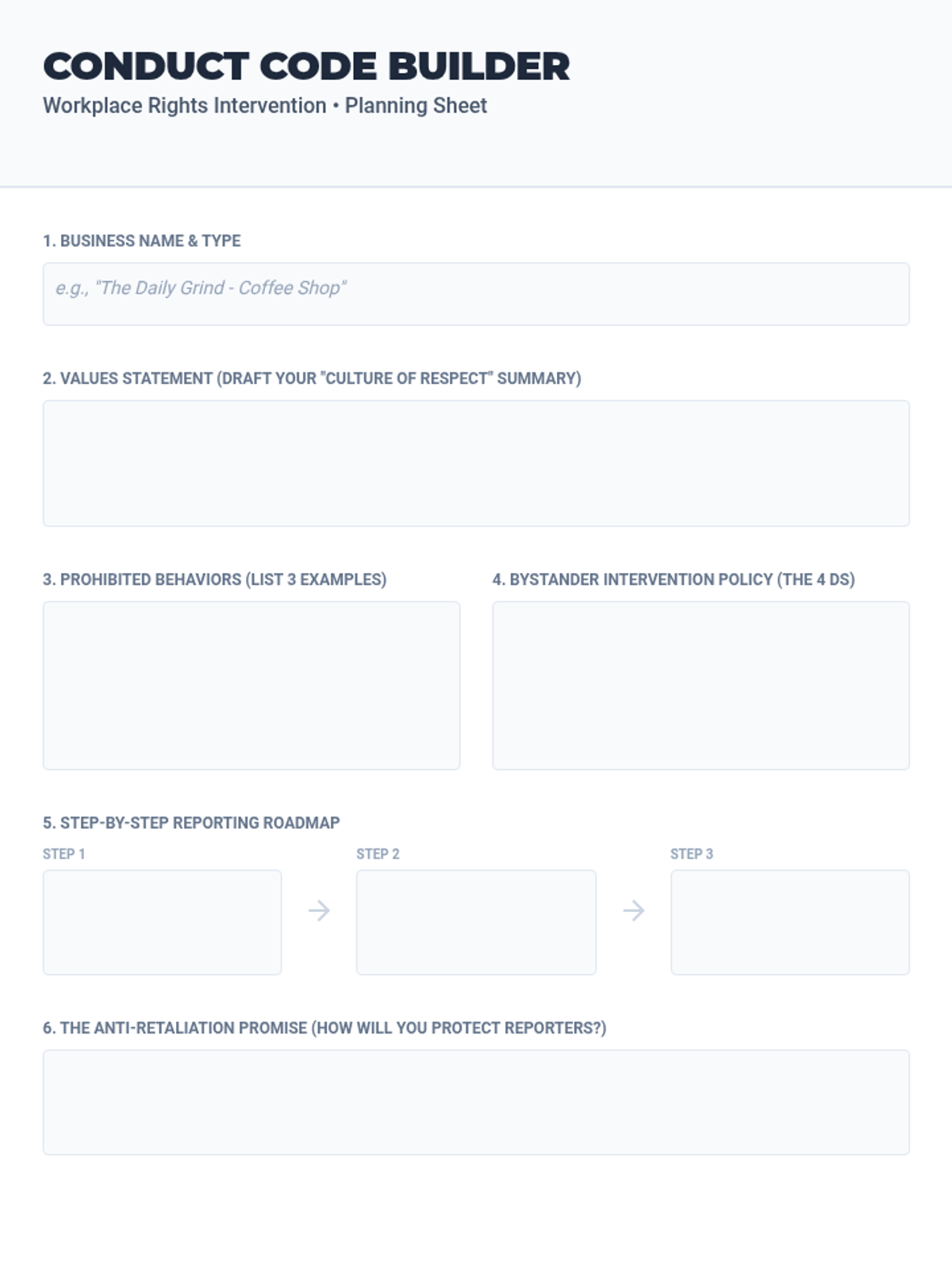
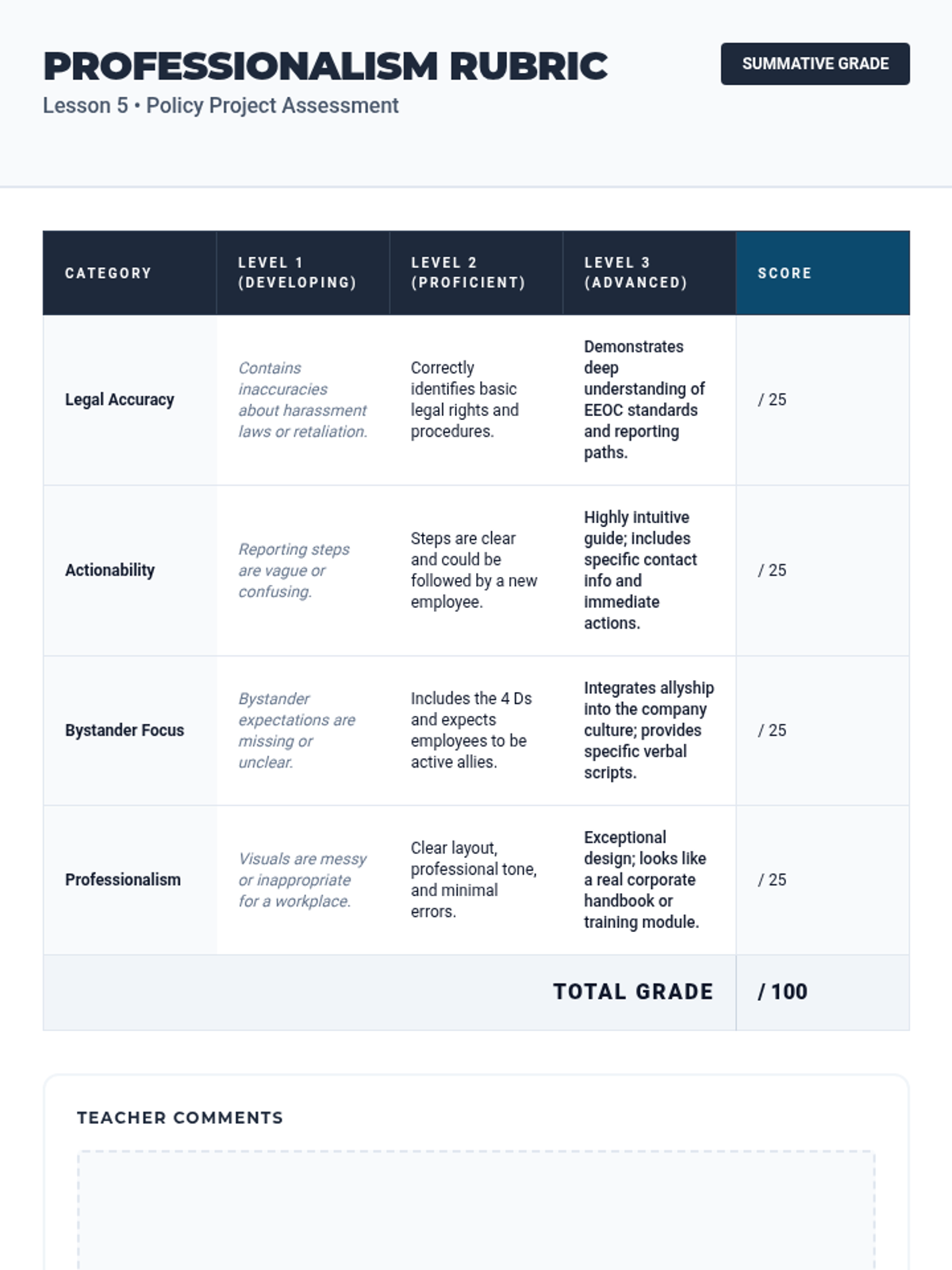
Students work in groups to draft a 'Code of Conduct' and a 'Reporting Guide' for a student-run business or organization, synthesizing all sequence concepts.
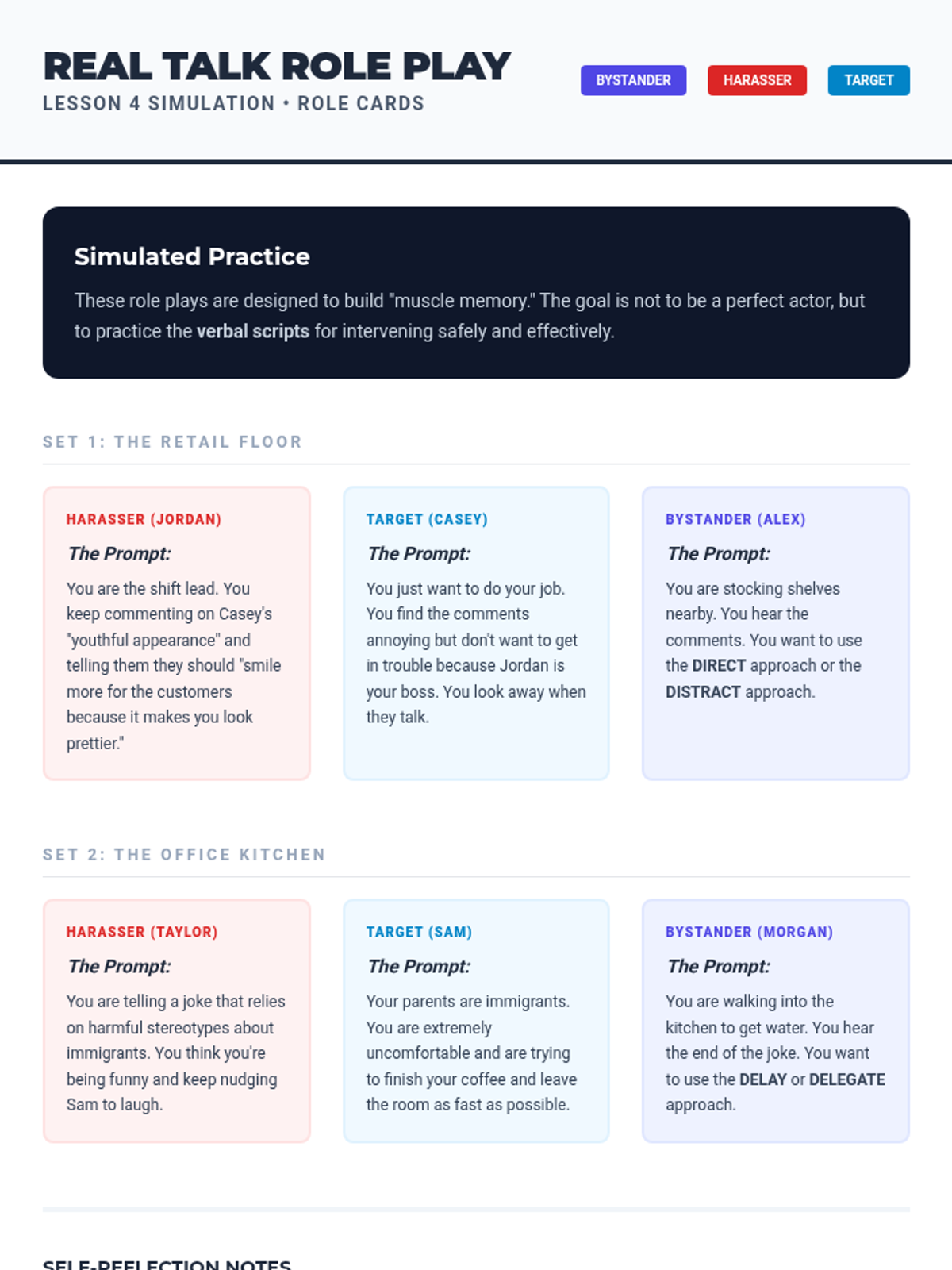
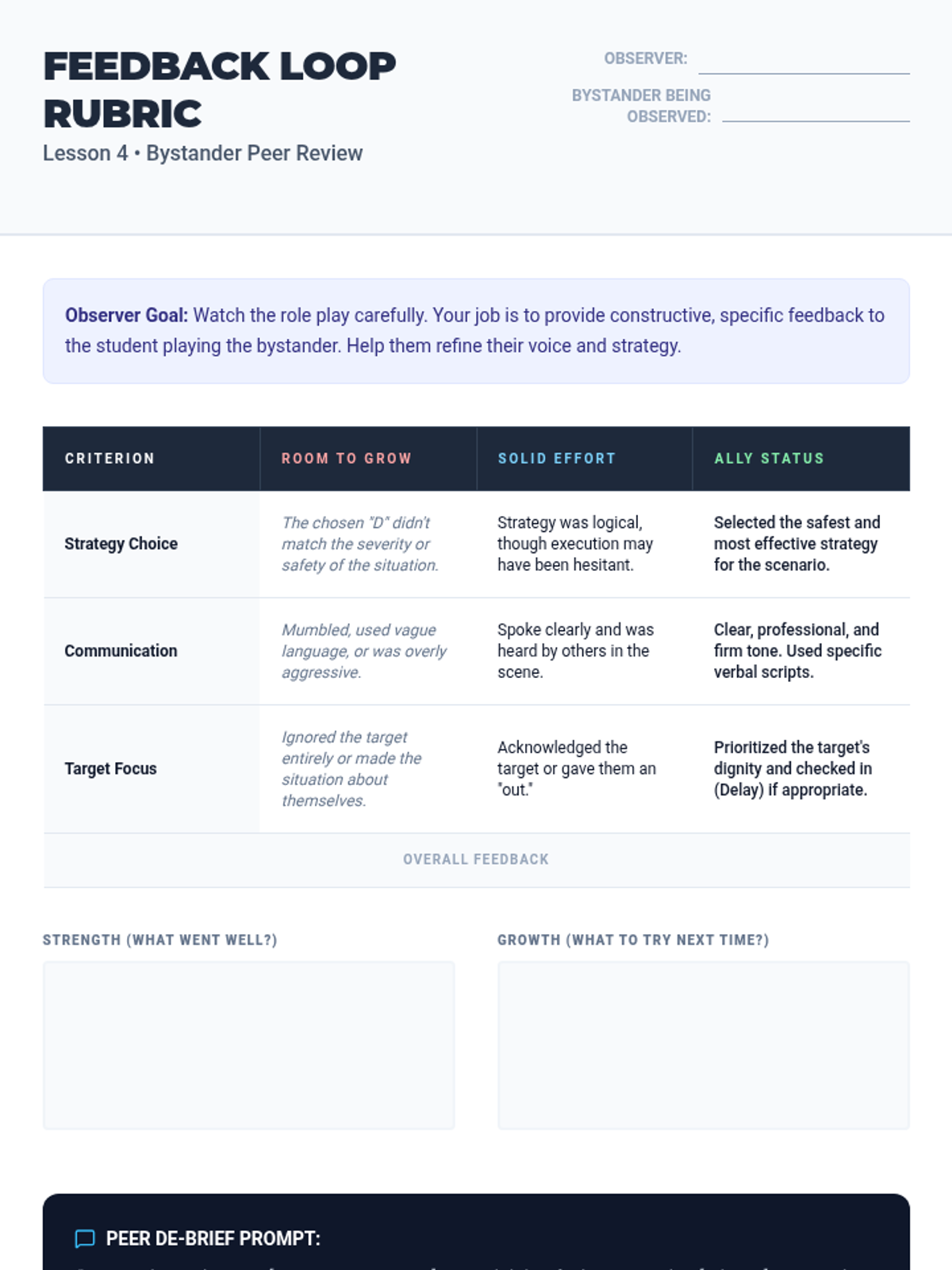
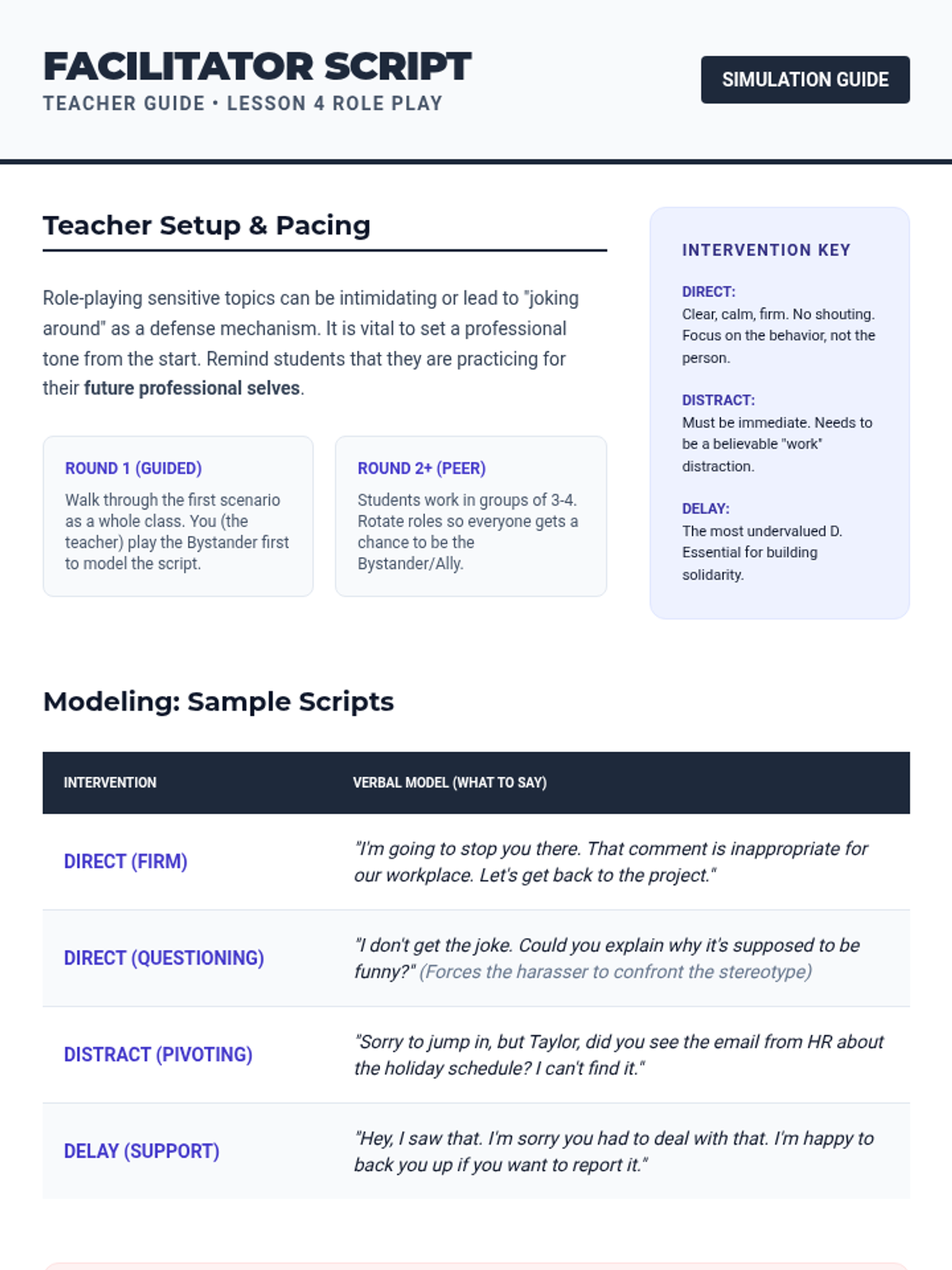
Students engage in structured role-plays to practice the intervention strategies learned. They take turns acting as the target, the harasser, and the bystander.
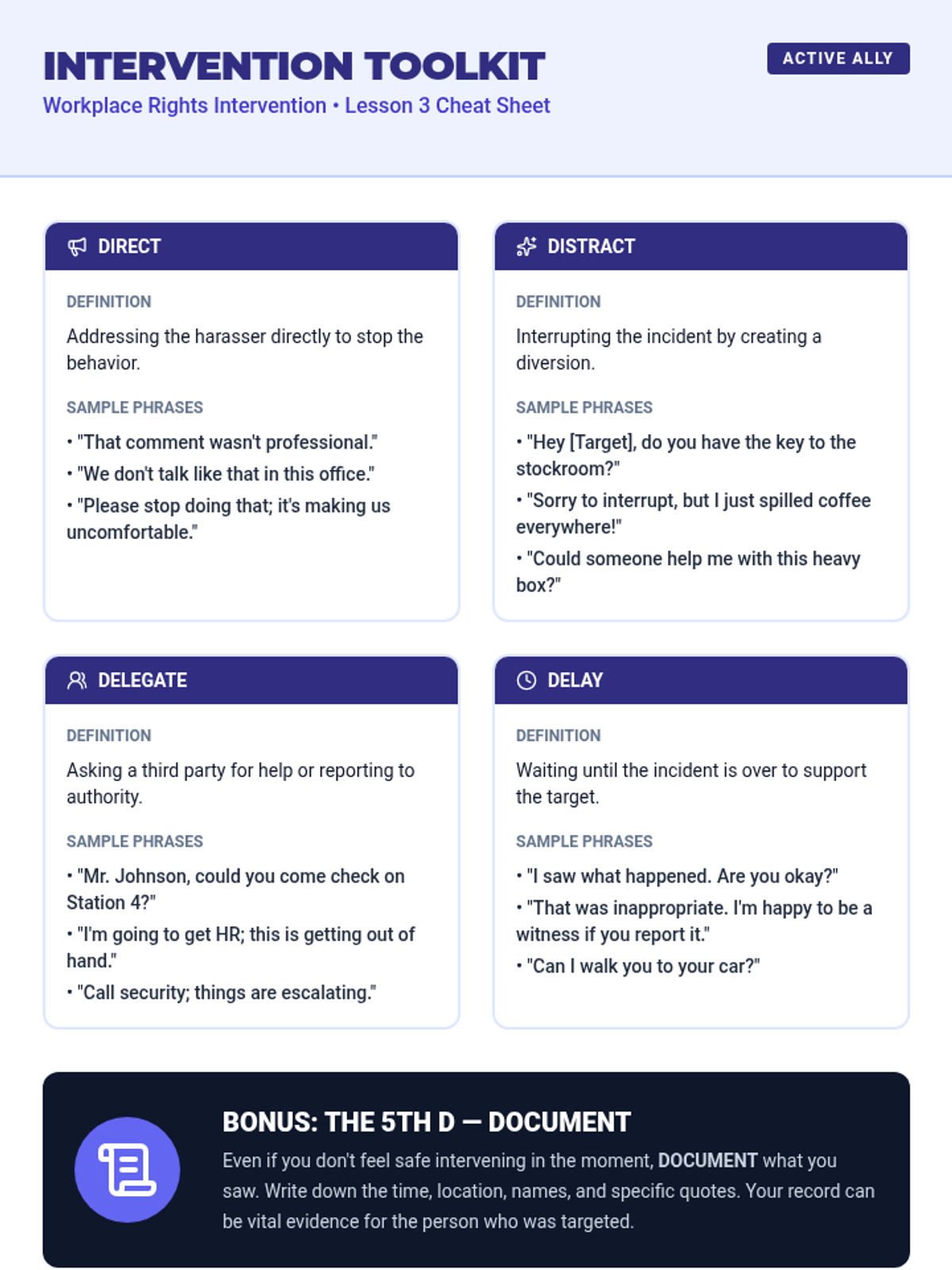
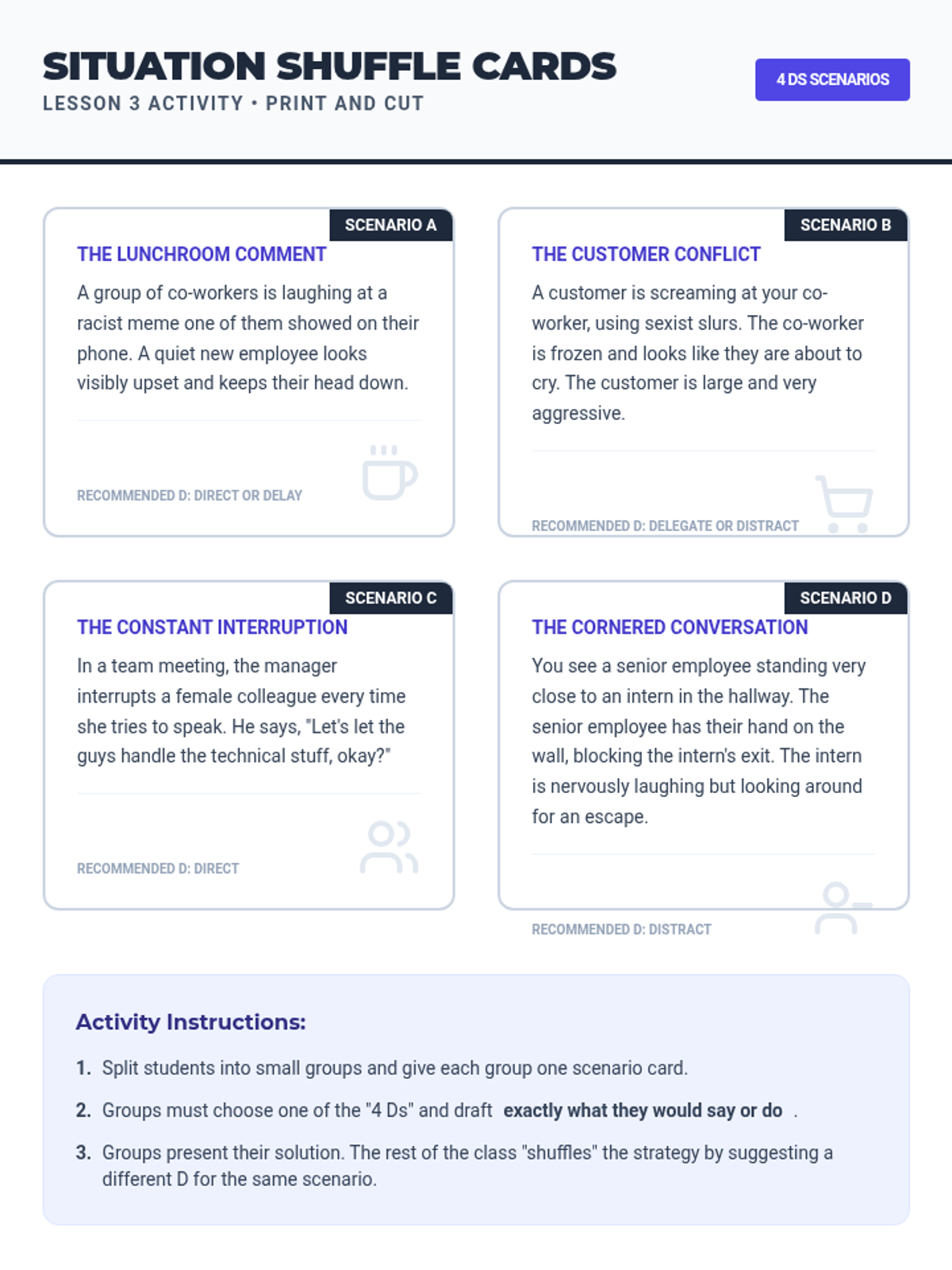
Students are introduced to the '4 Ds' of bystander intervention: Direct, Distract, Delegate, and Delay. They analyze scenarios to determine the best intervention strategy.
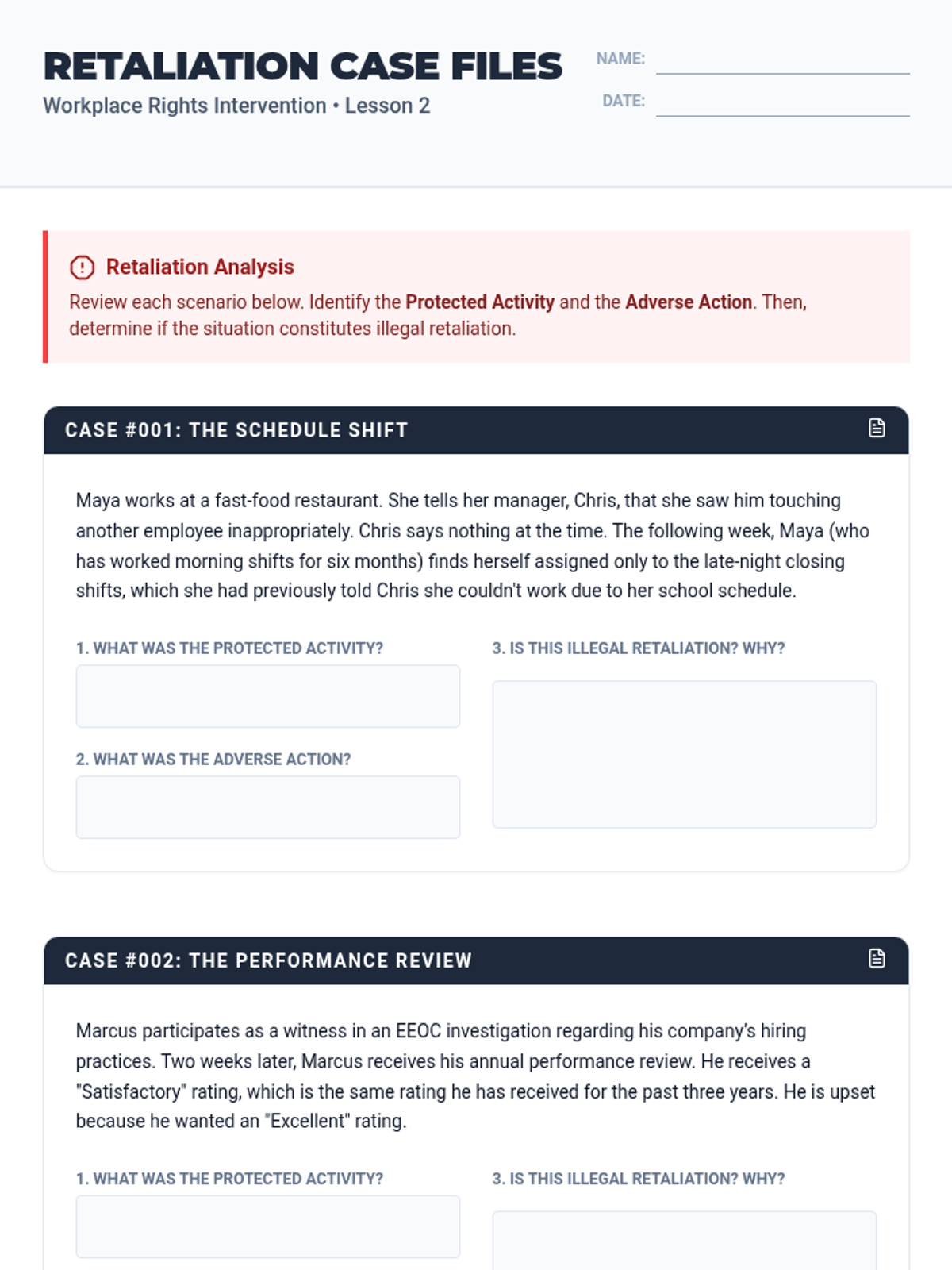
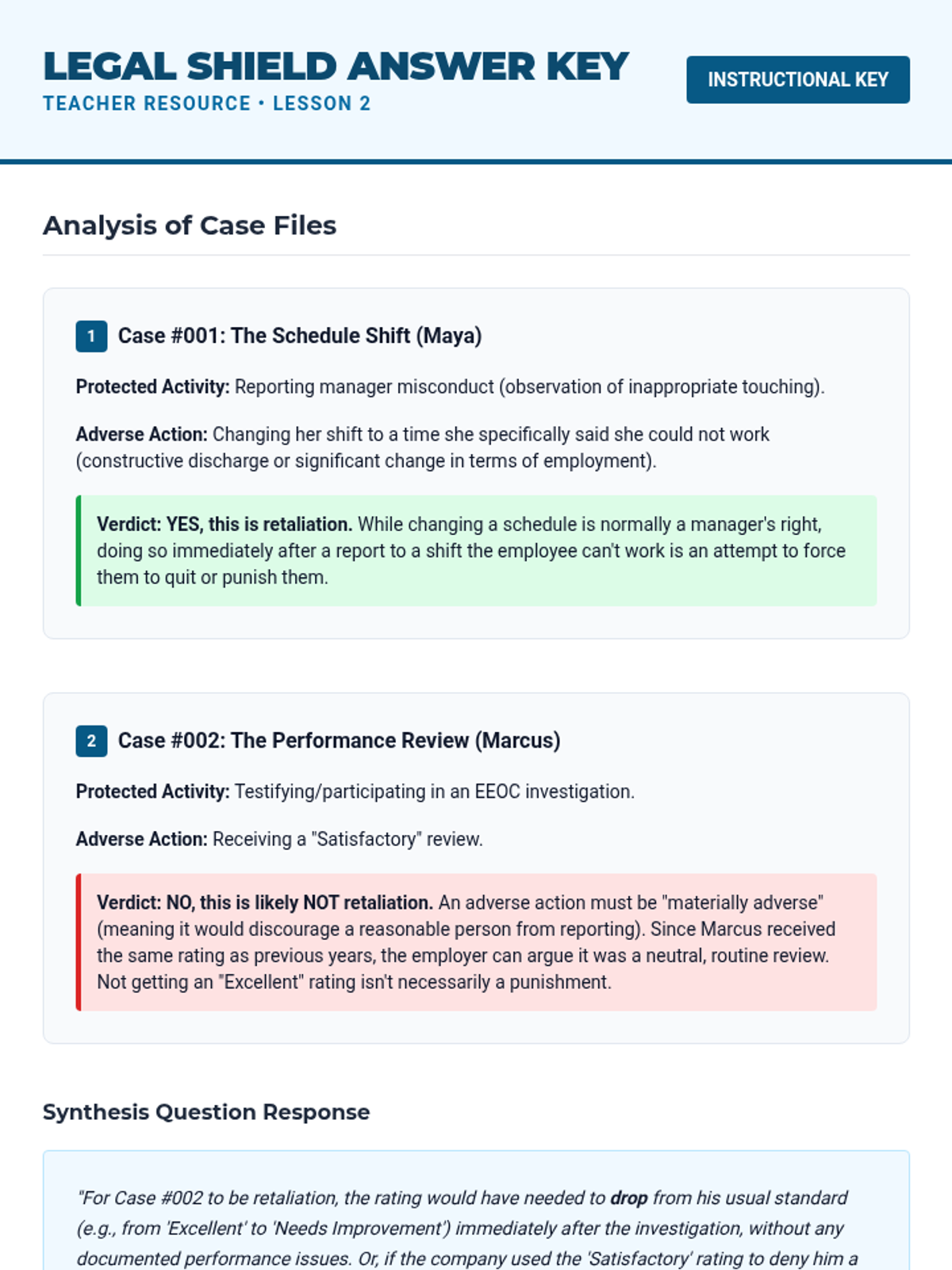
This lesson covers the legal protections for employees who report misconduct, focusing on the concept of 'retaliation' and identify which actions constitute illegal retaliation.
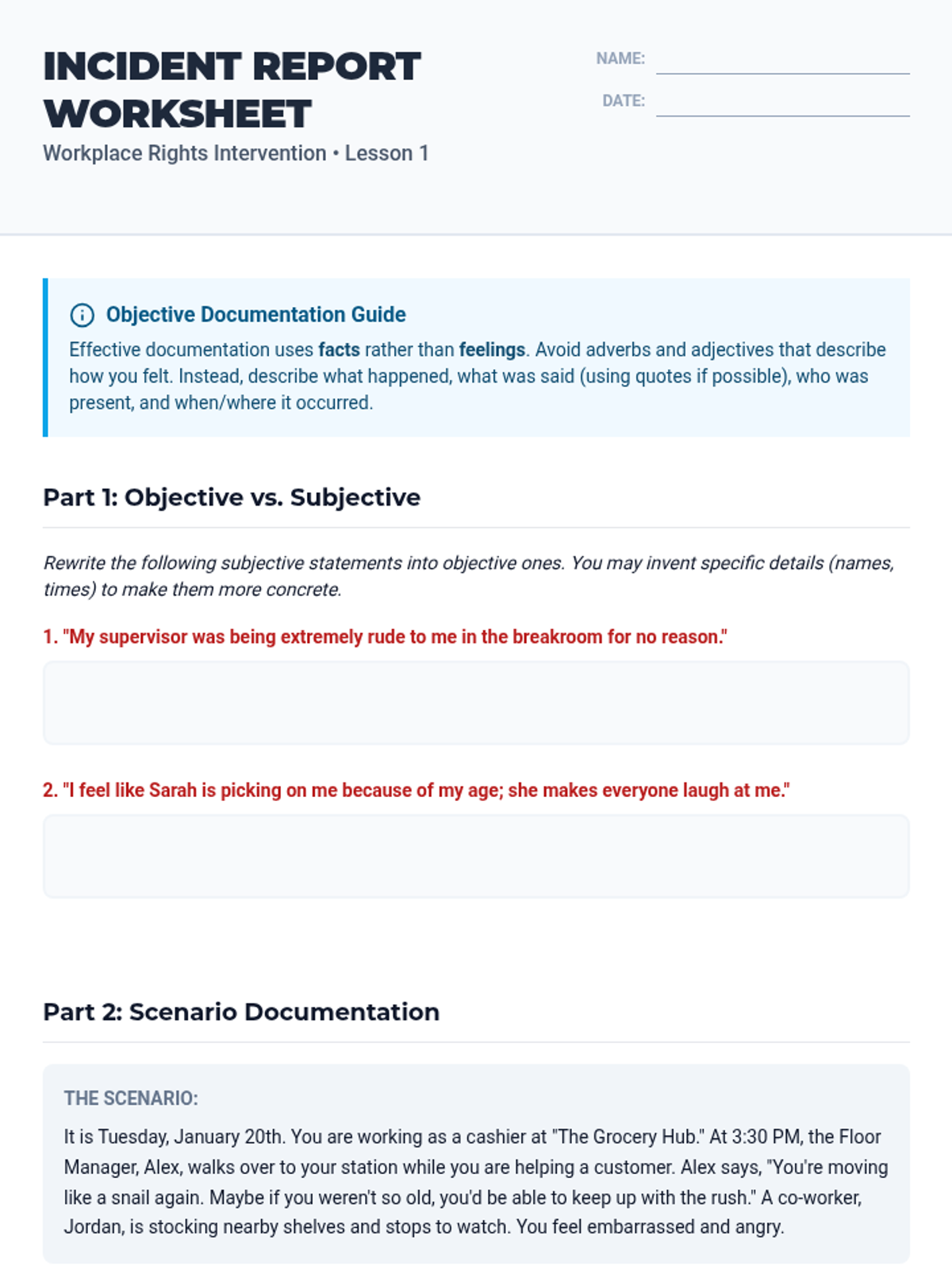
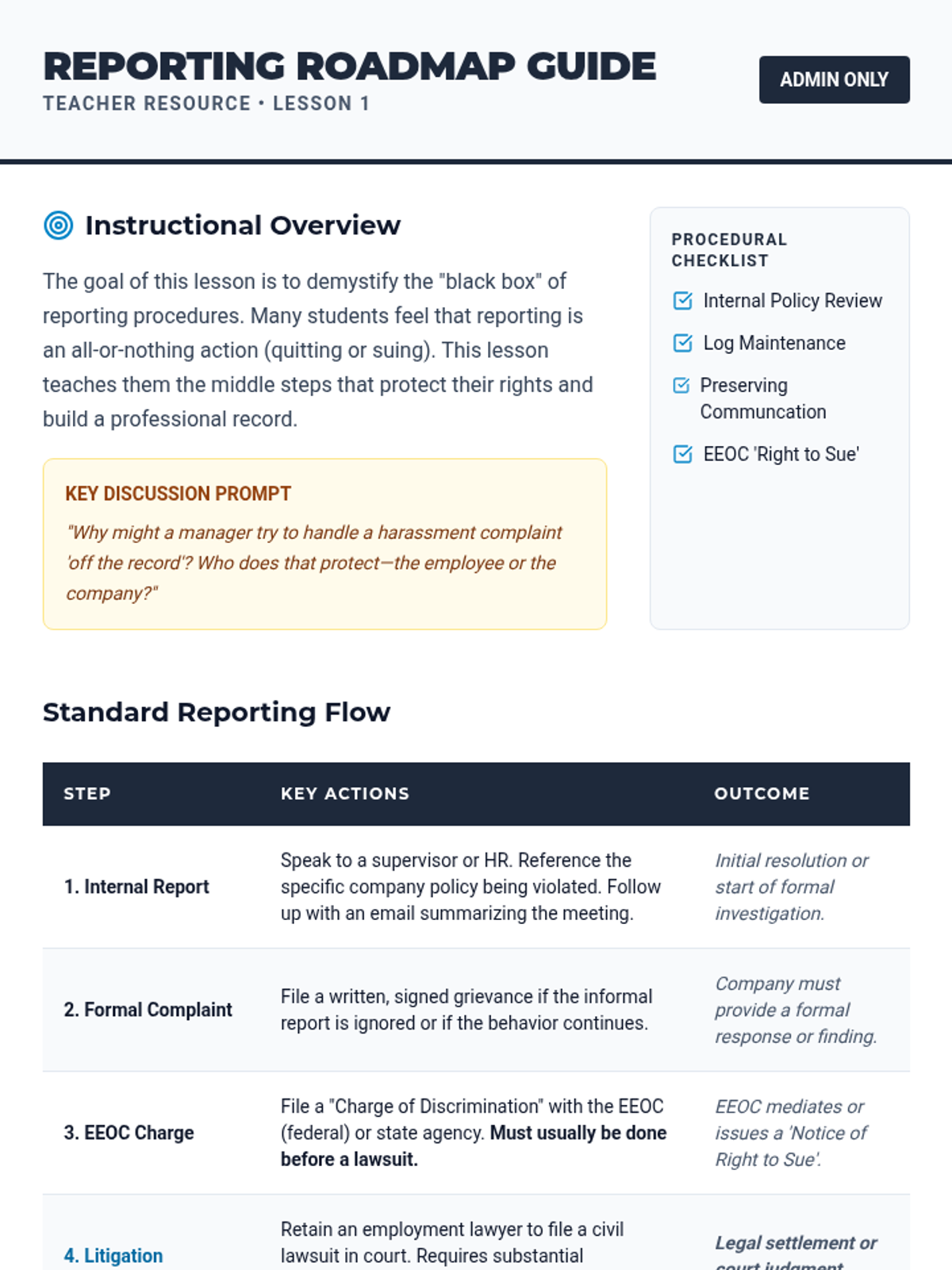
Students learn the standard procedures for reporting harassment, including internal HR complaints and external EEOC filings. They practice the skill of objective documentation.
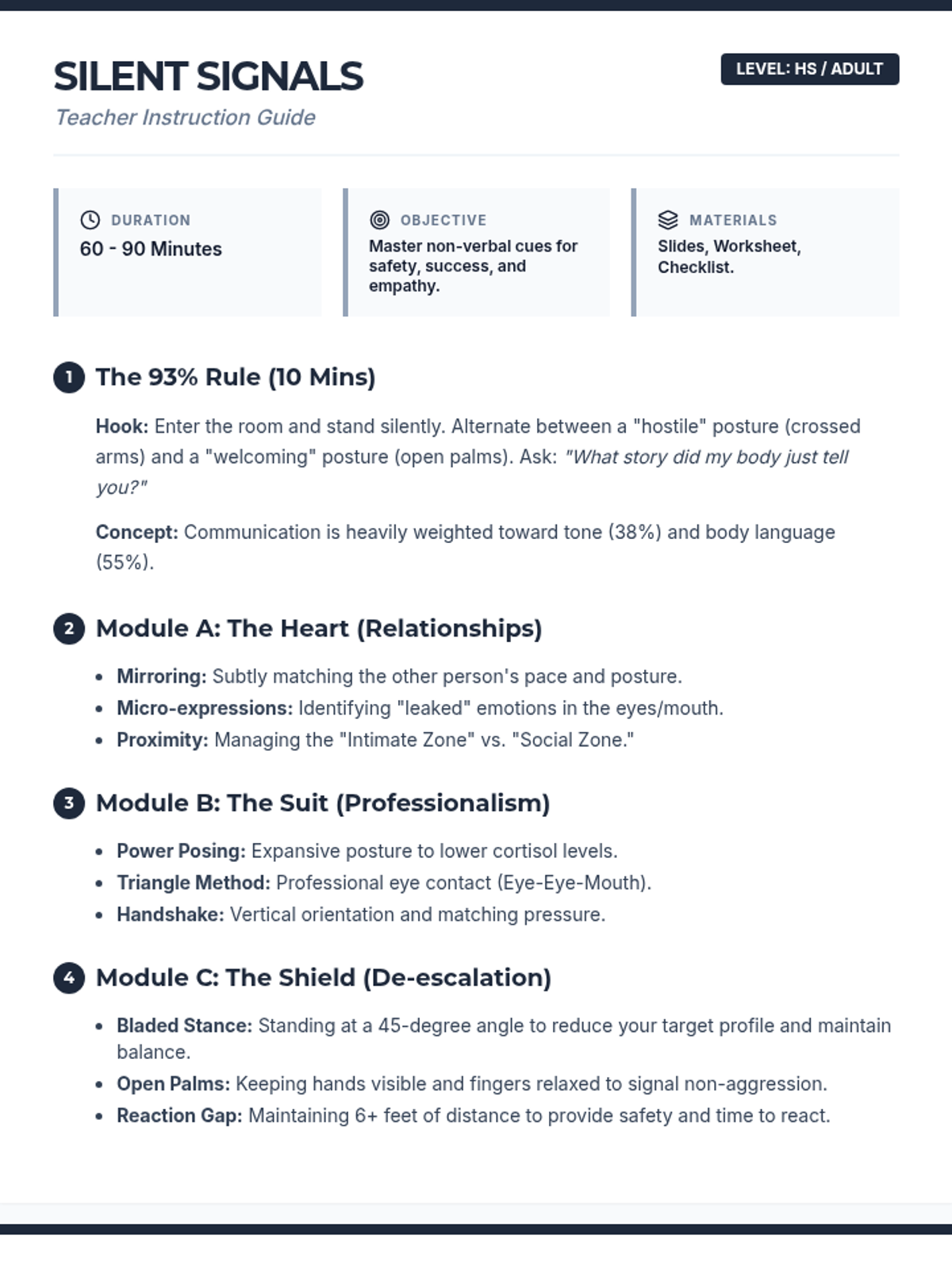
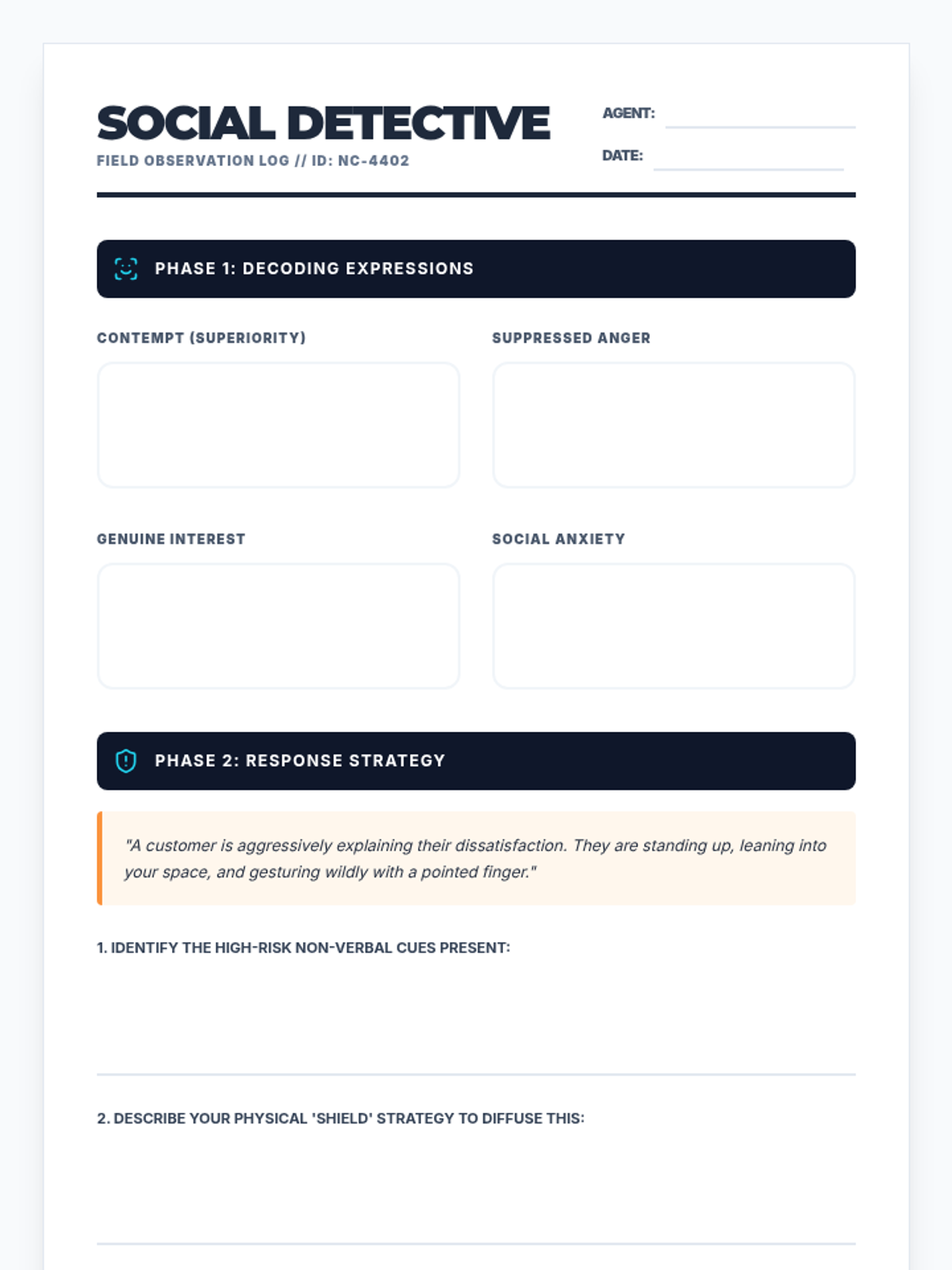
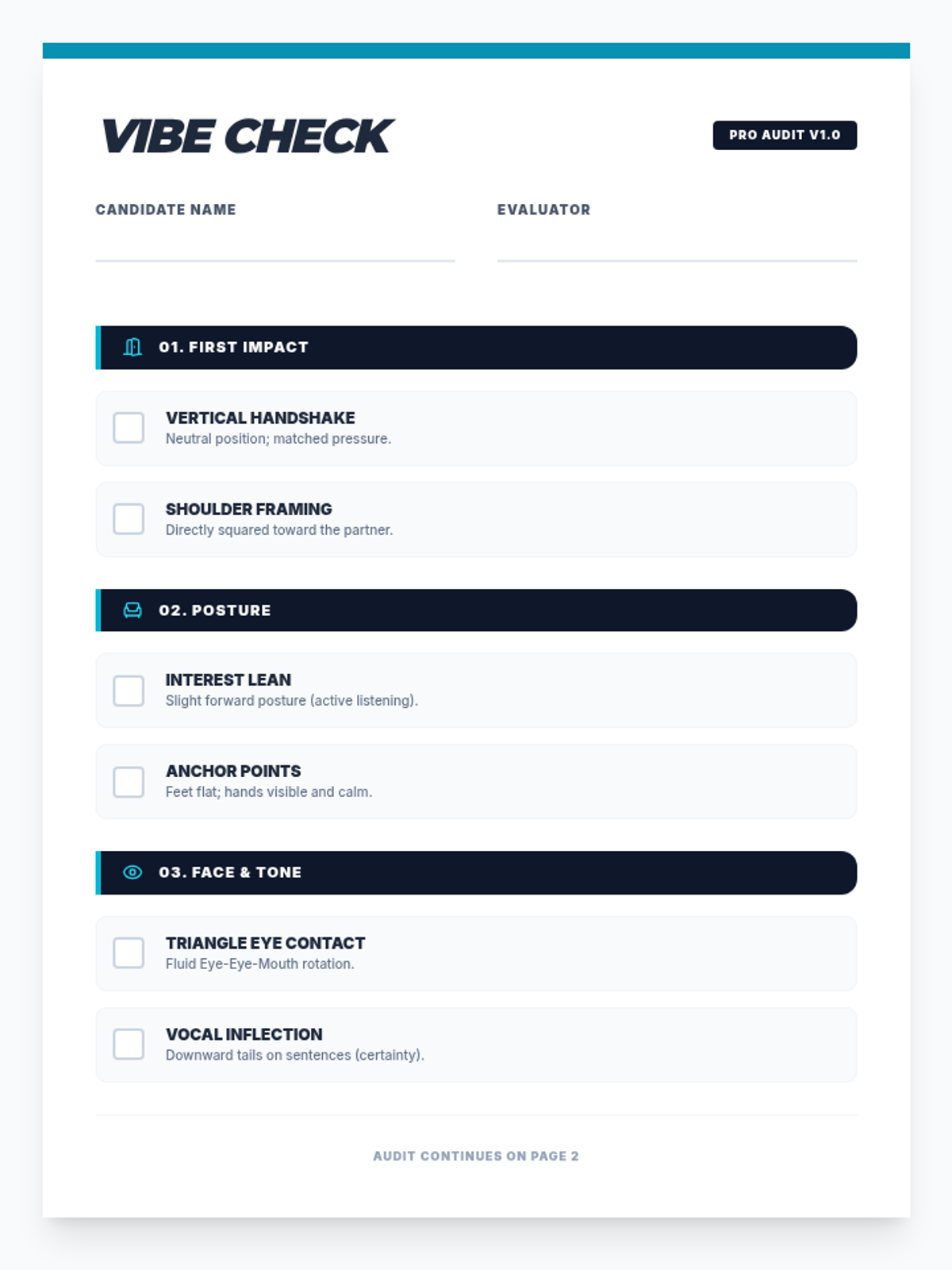
A comprehensive lesson on mastering non-verbal communication across interpersonal relationships, professional interviews, and high-stakes de-escalation scenarios. Students learn to decode 'silent signals' to improve empathy, professionalism, and safety.
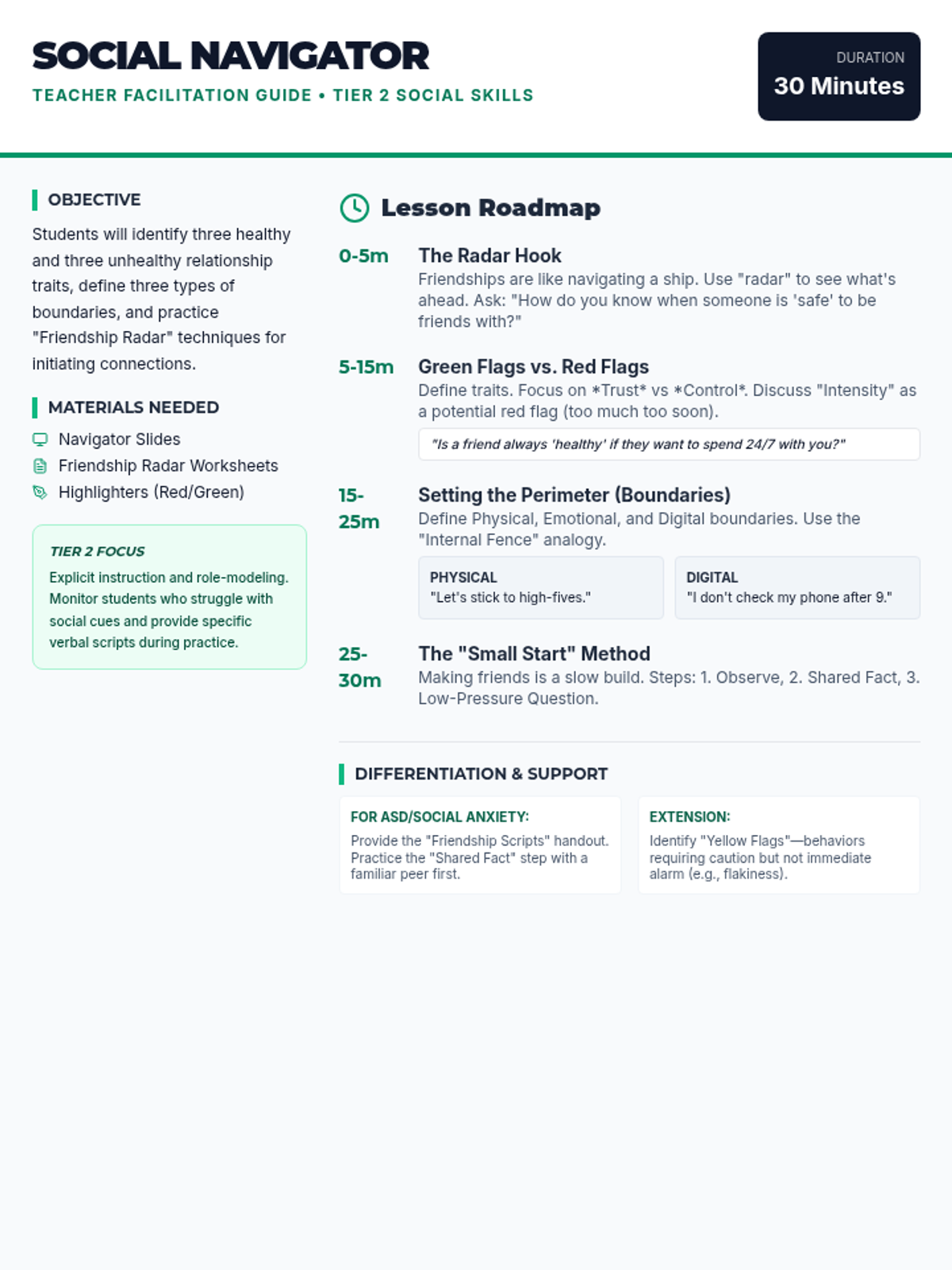
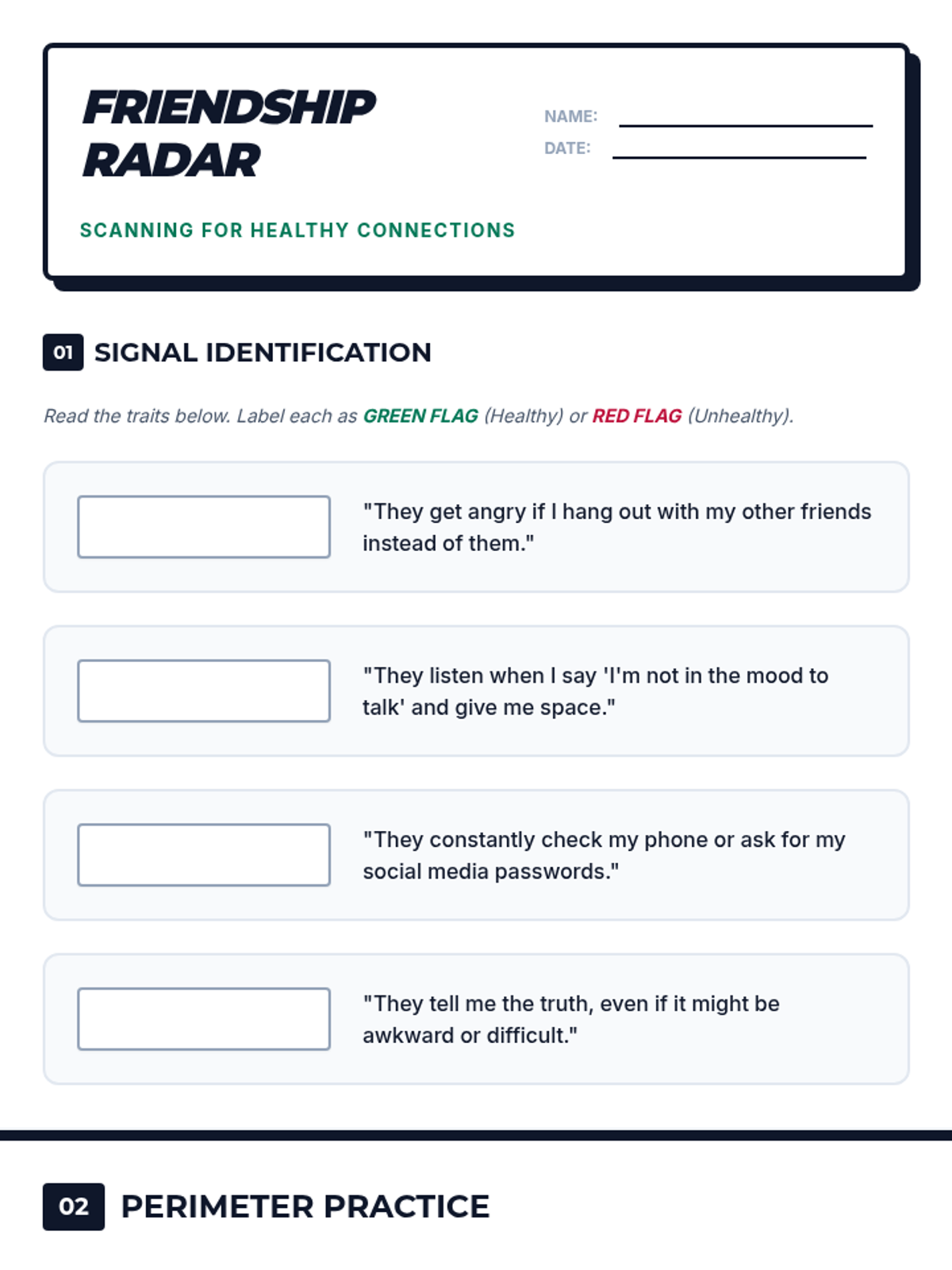
A 30-minute targeted lesson for high school students focusing on distinguishing healthy from unhealthy relationship traits, establishing personal boundaries, and the mechanics of making friends.
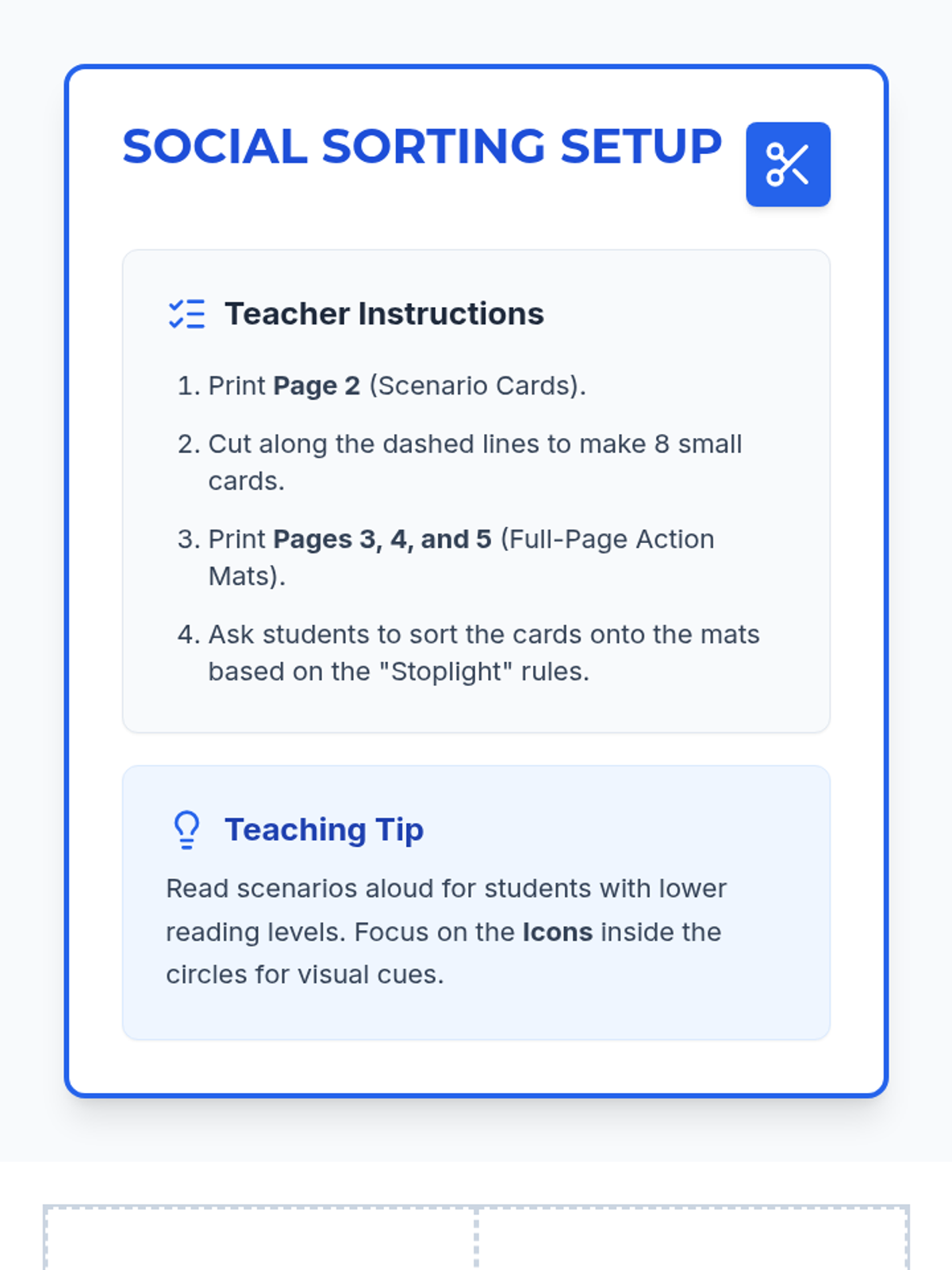
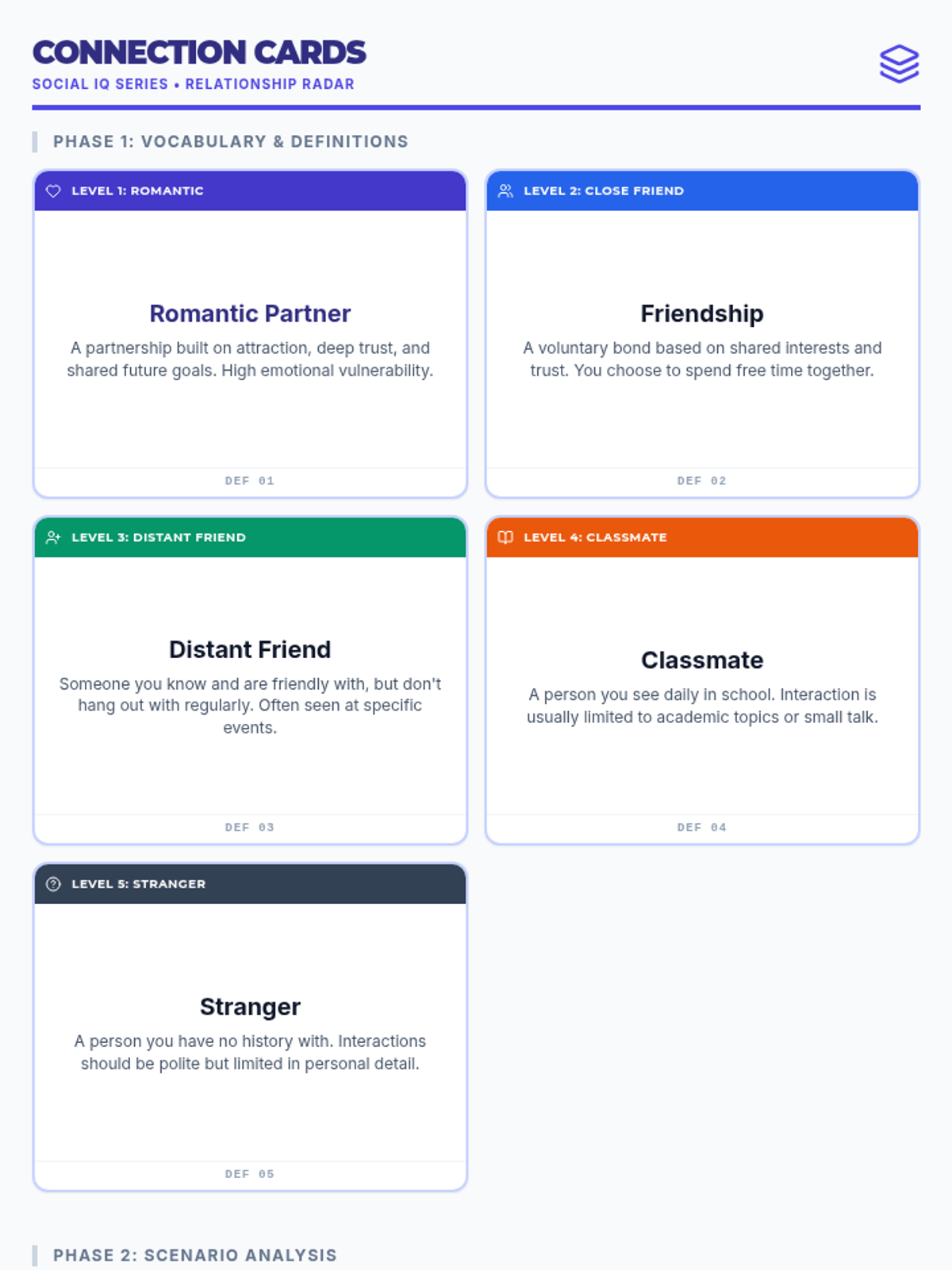
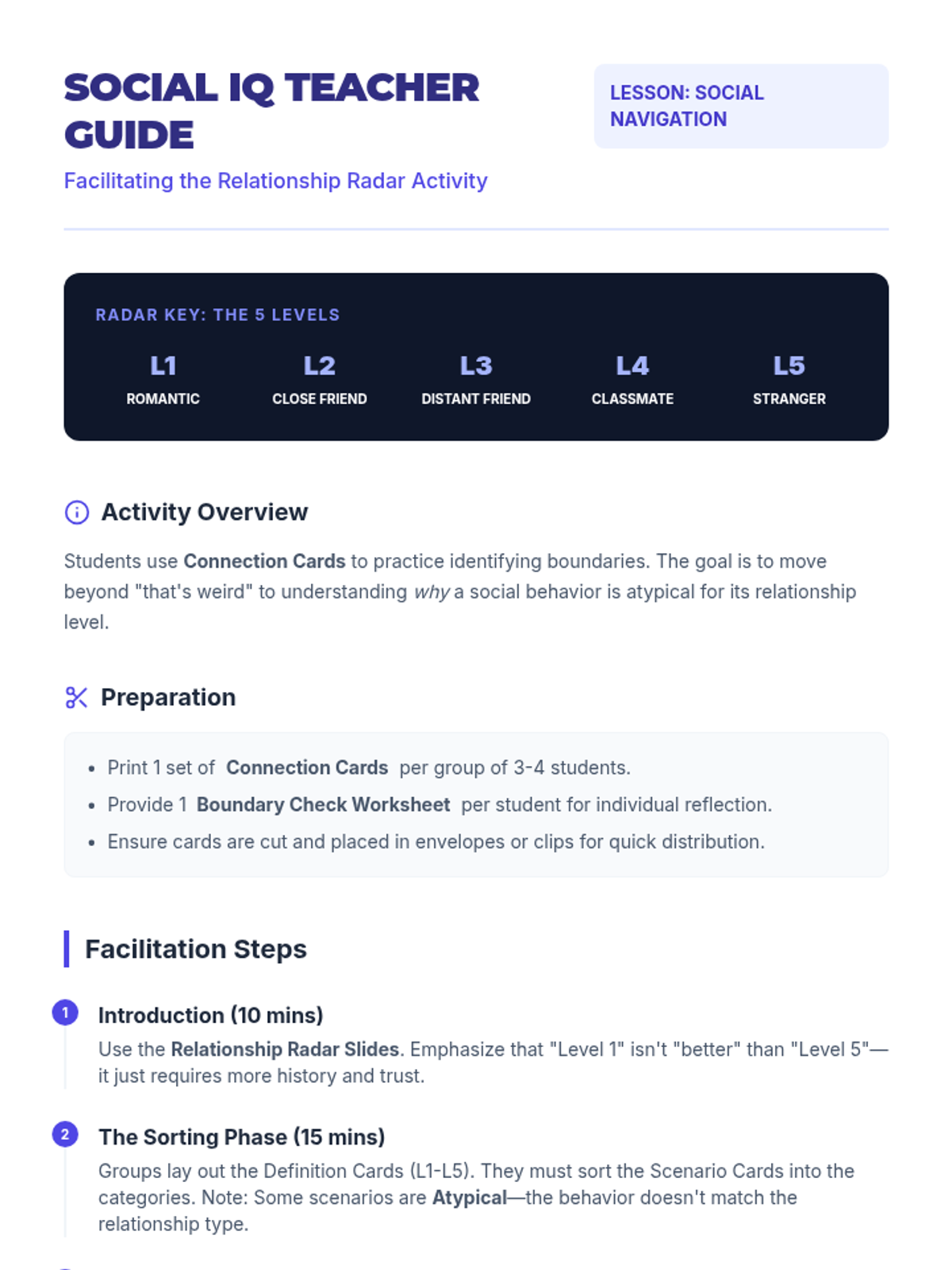
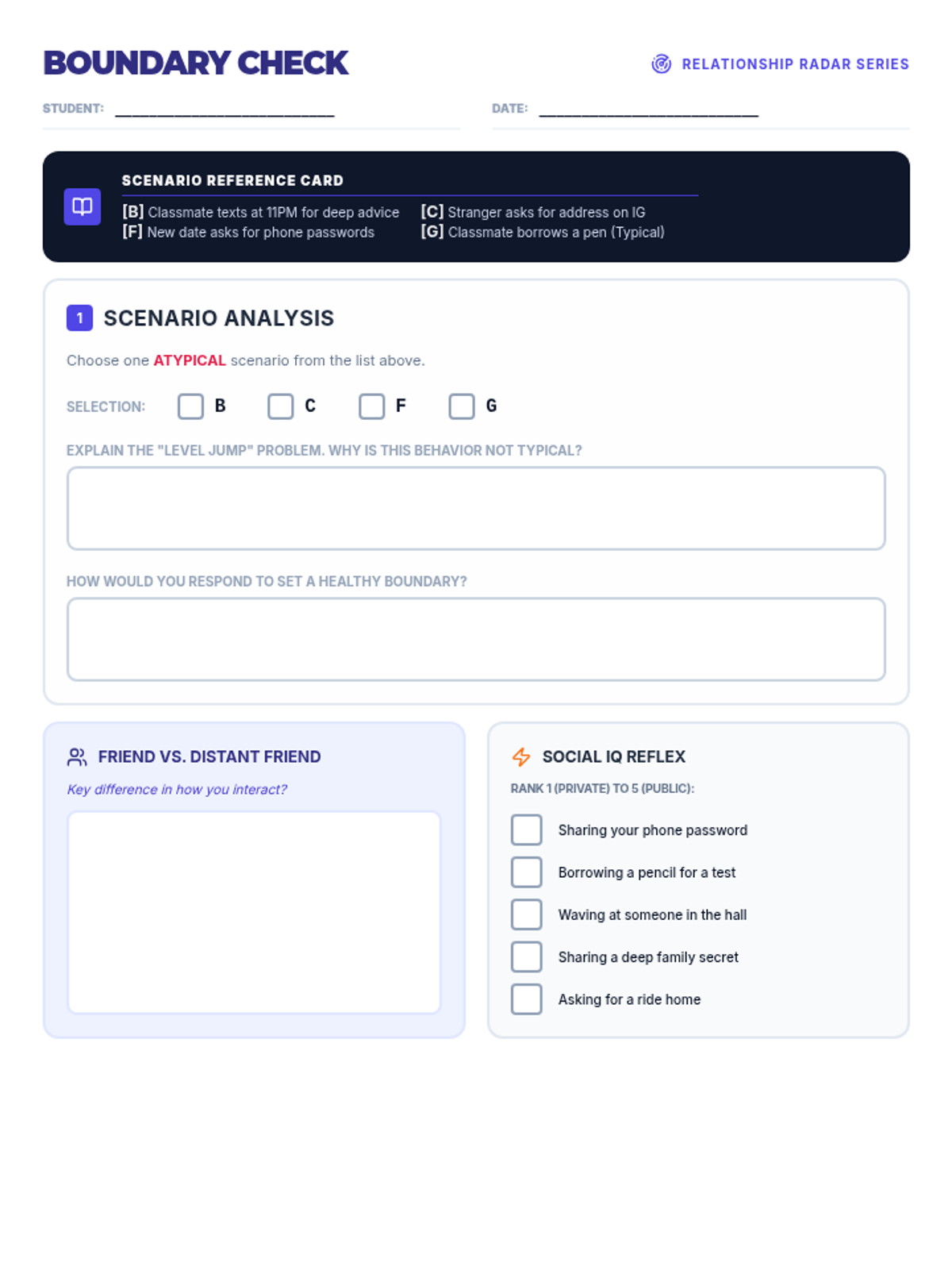
A lesson focused on identifying the boundaries and expectations of different relationship types through card-sorting activities and scenario analysis.
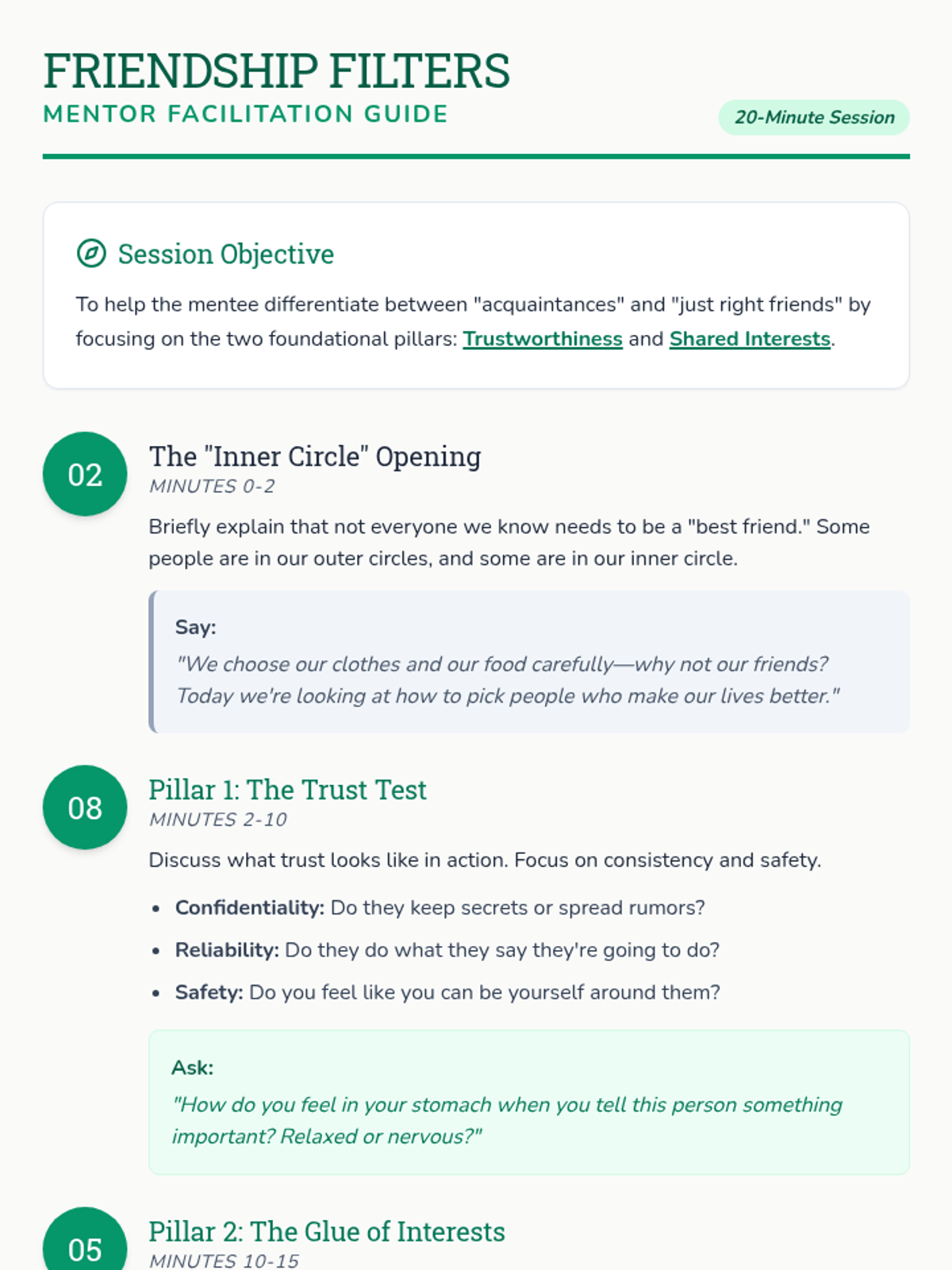
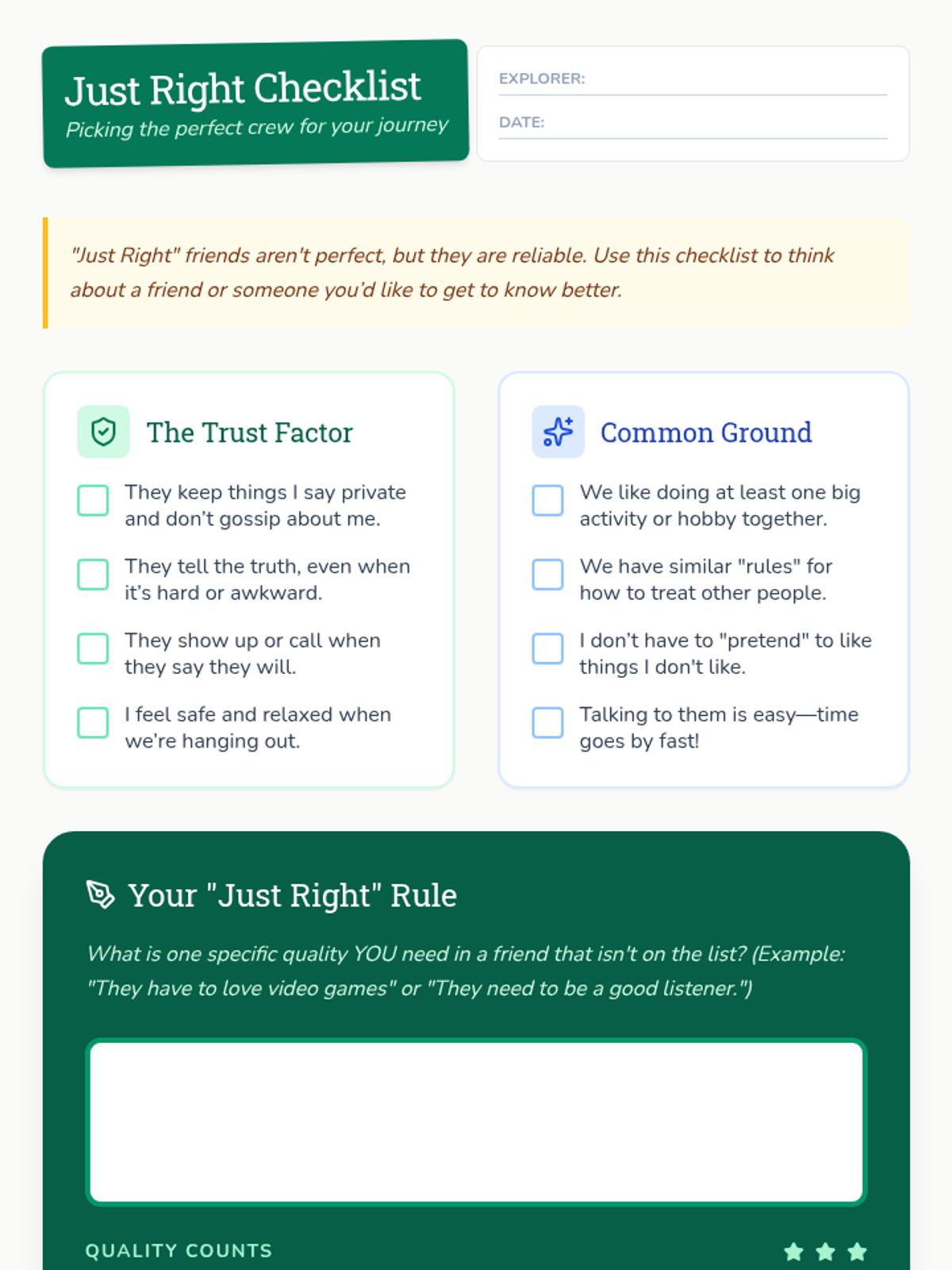
A focused 20-minute mentorship session designed to help mentees identify and cultivate high-quality friendships based on trustworthiness and shared interests.
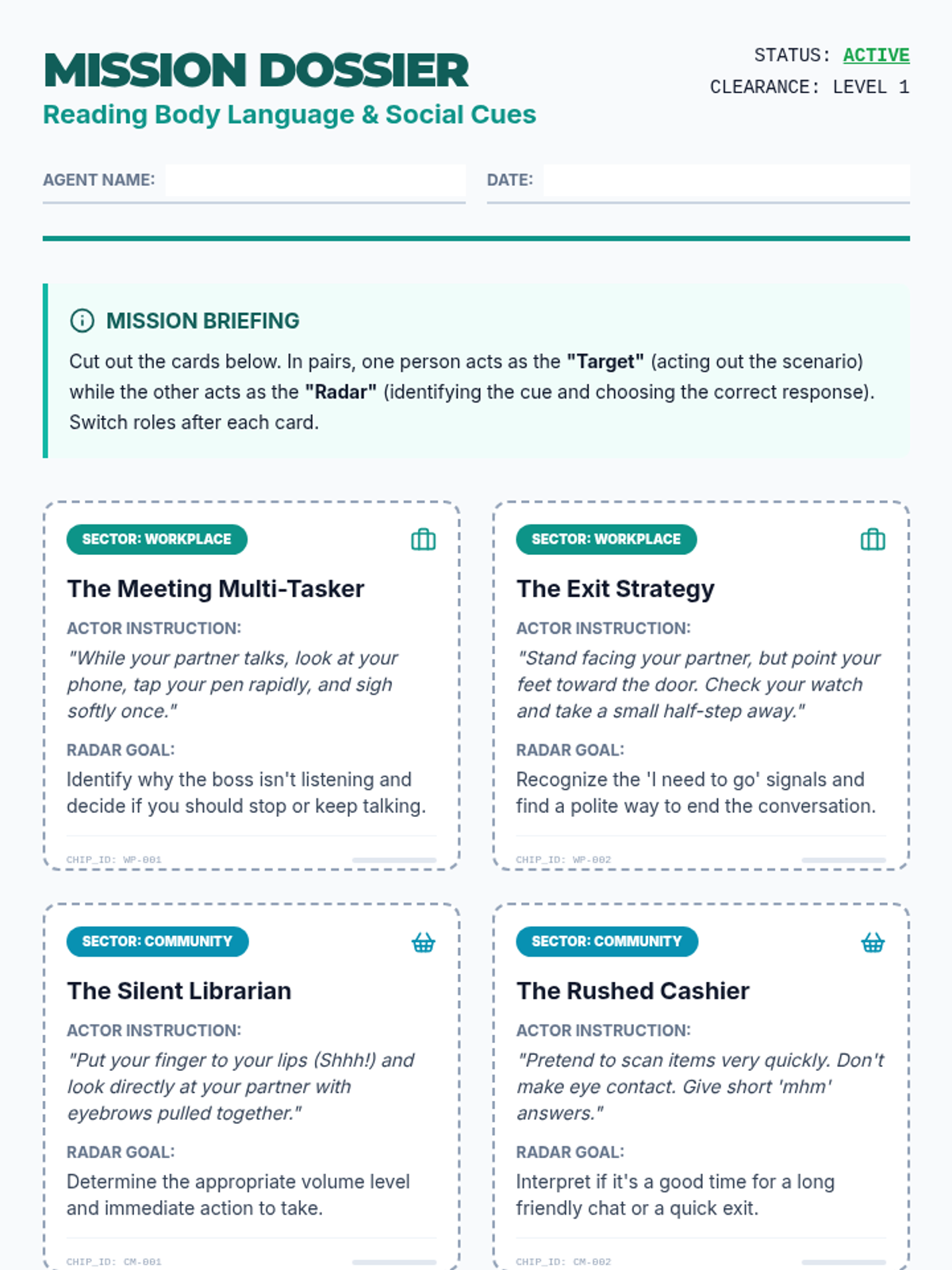
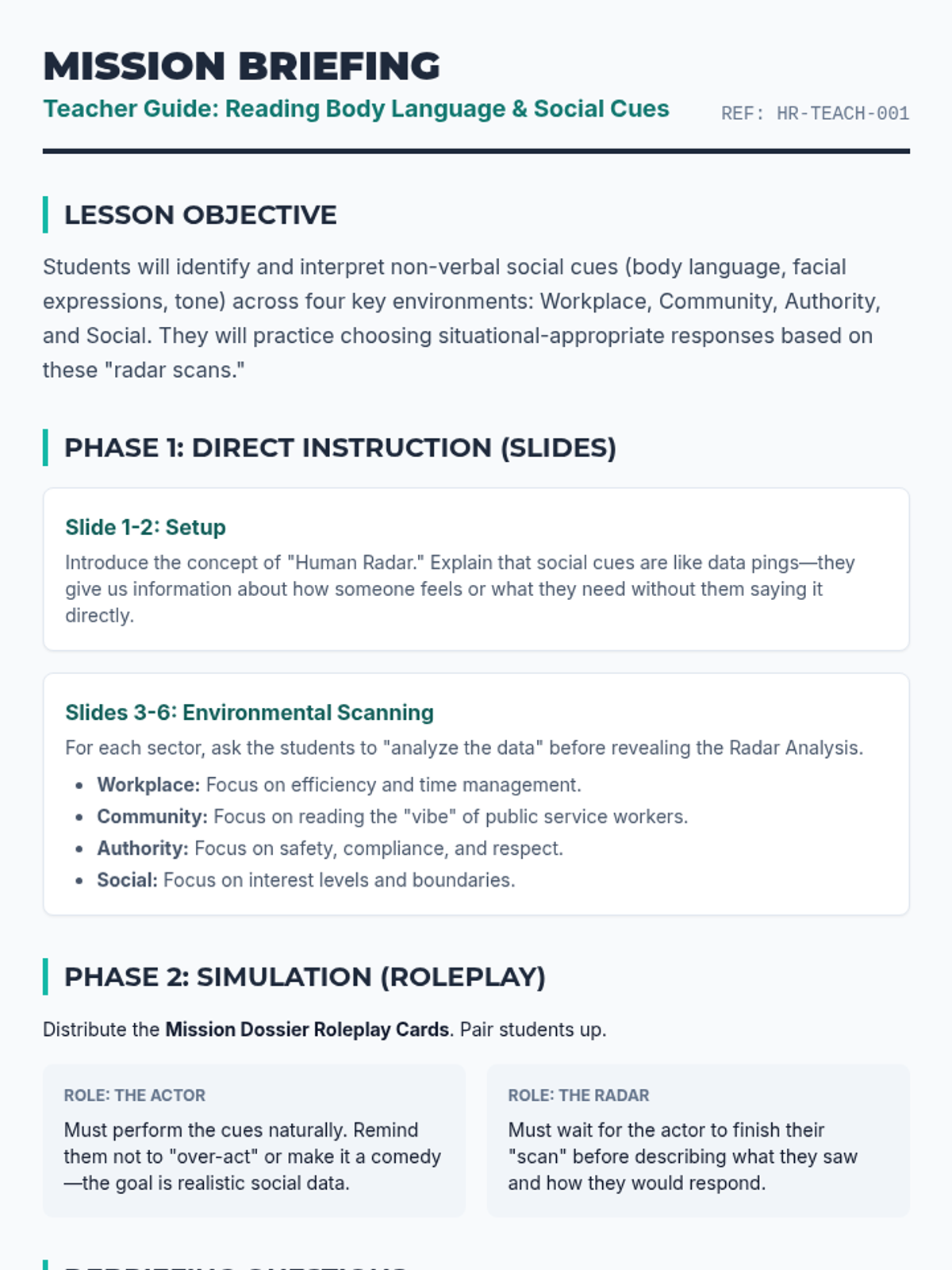
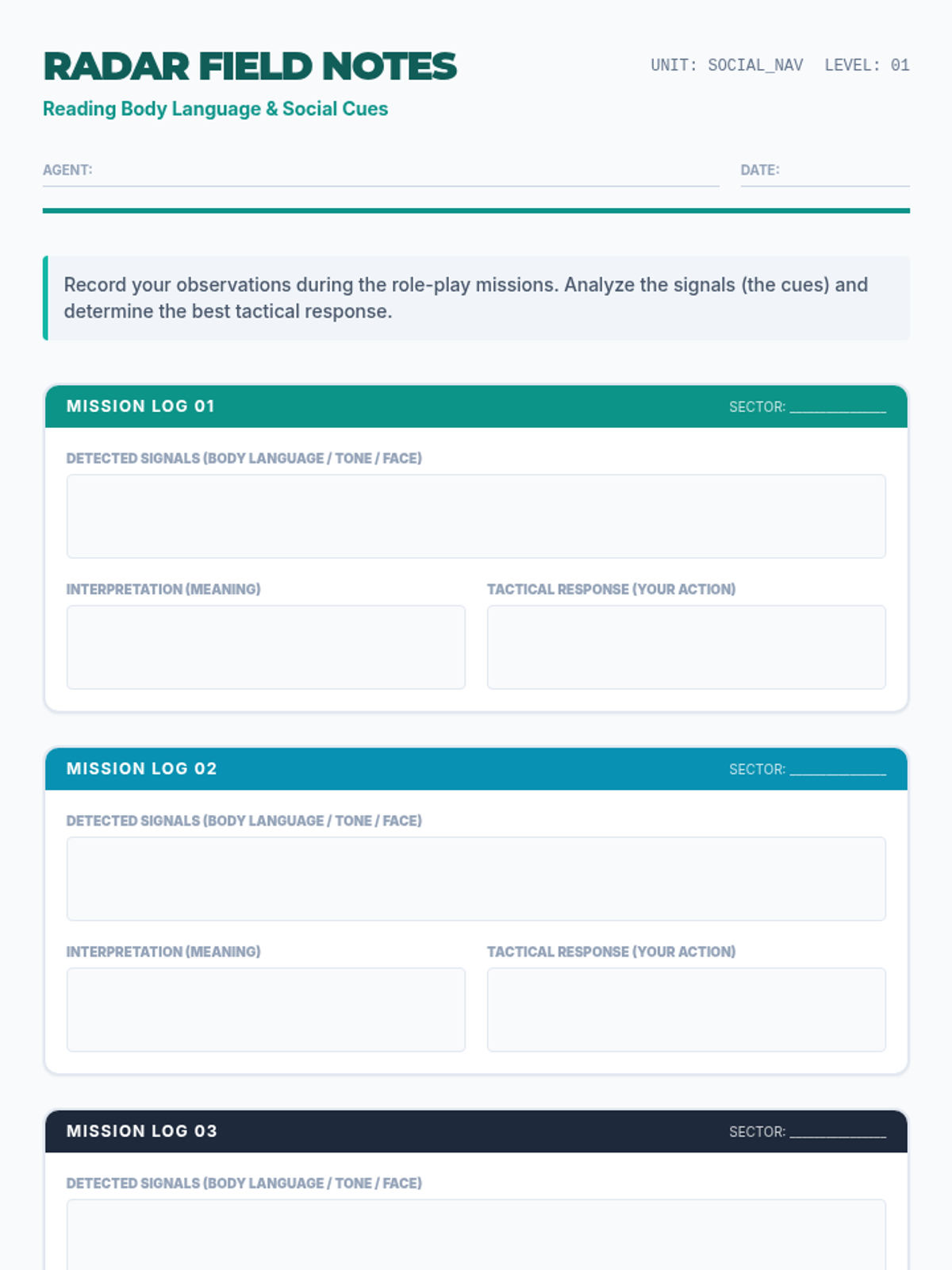
A lesson on interpreting body language and social cues across various professional and community settings. Students will learn to decode non-verbal communication and practice responding appropriately through role-play.
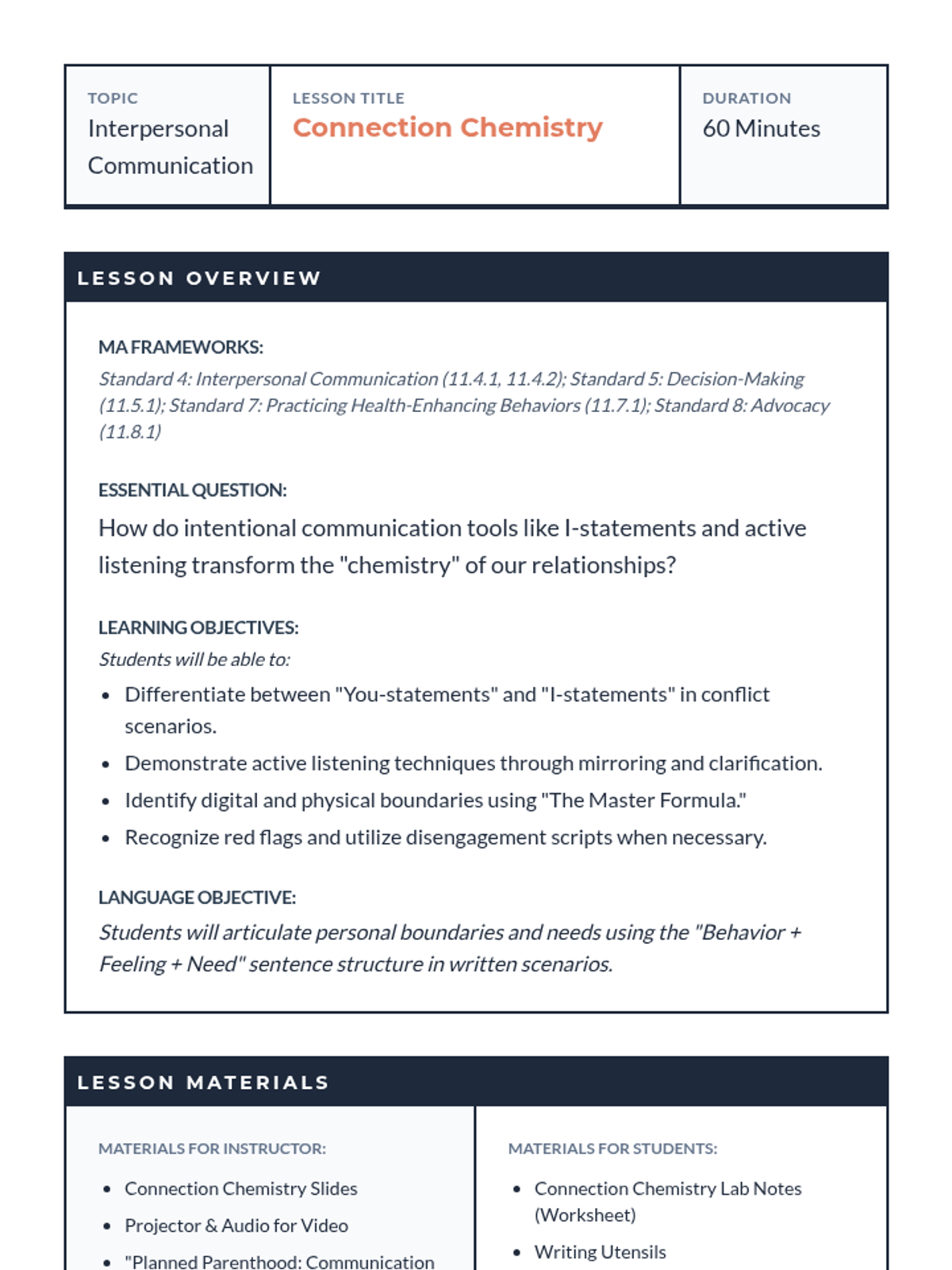
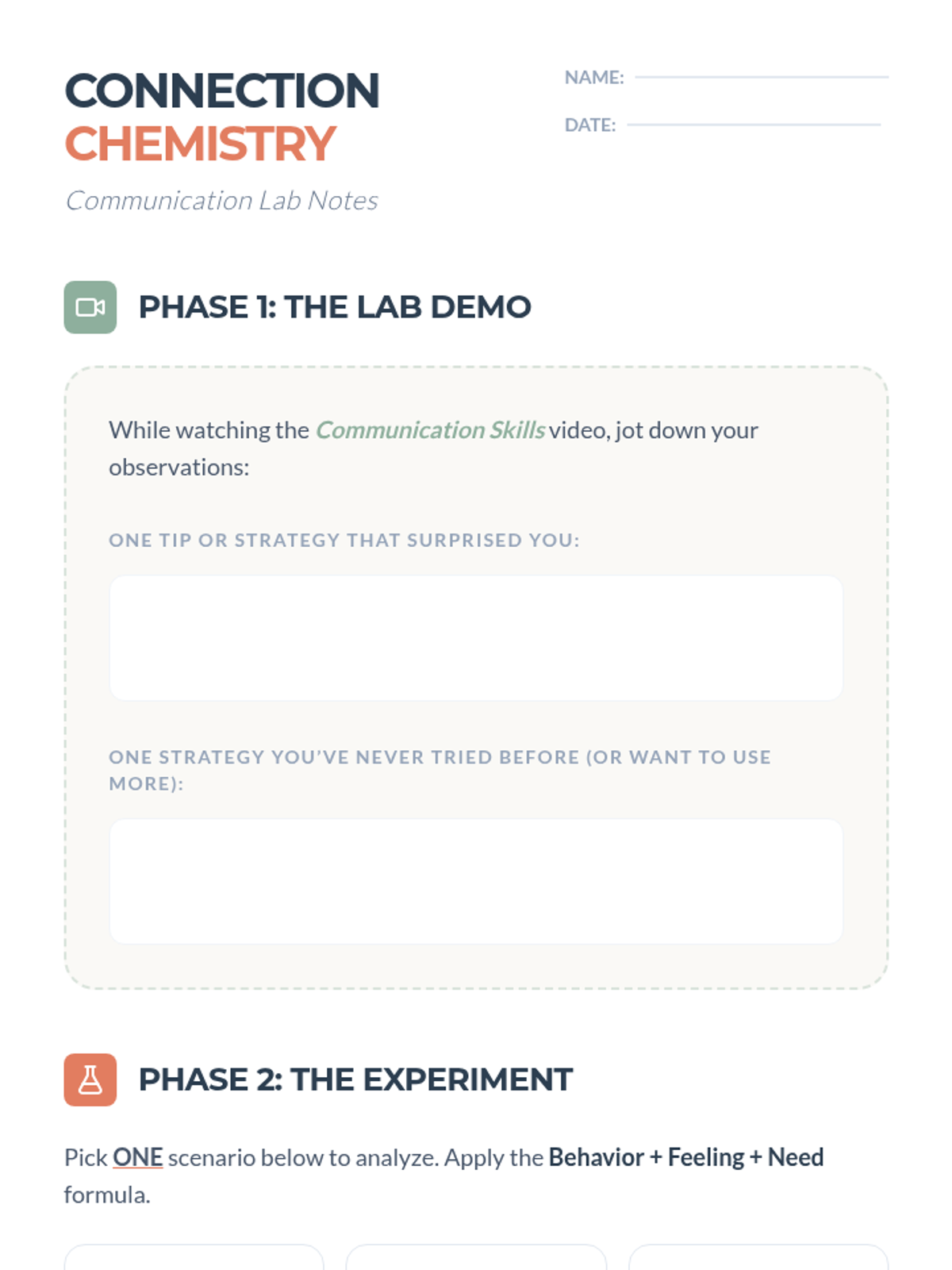
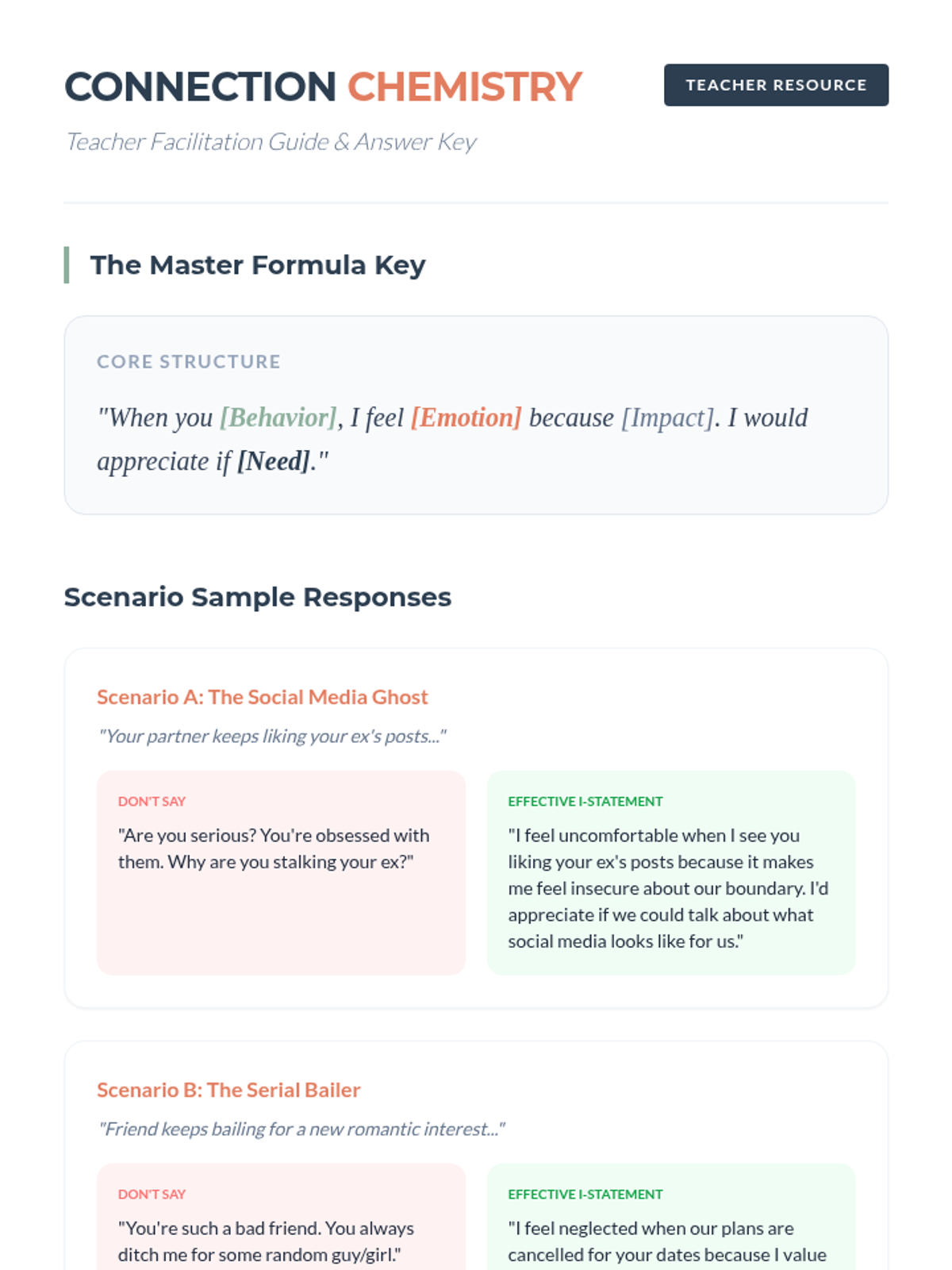
This lesson teaches high school students (grades 10-12) the practical skills of effective interpersonal communication, focusing on I-statements, active listening, boundary setting, and recognizing healthy vs. unhealthy patterns in modern contexts.
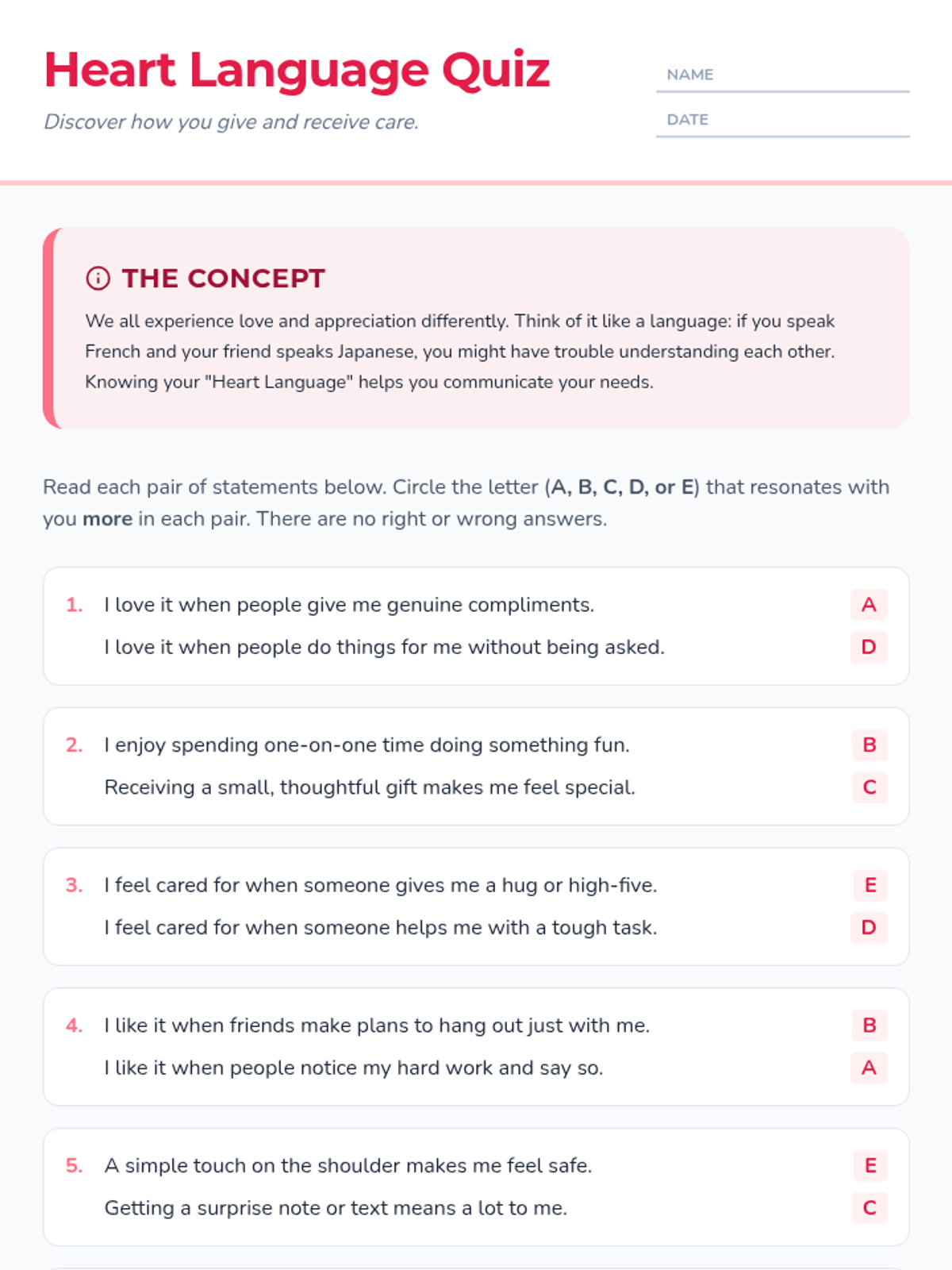
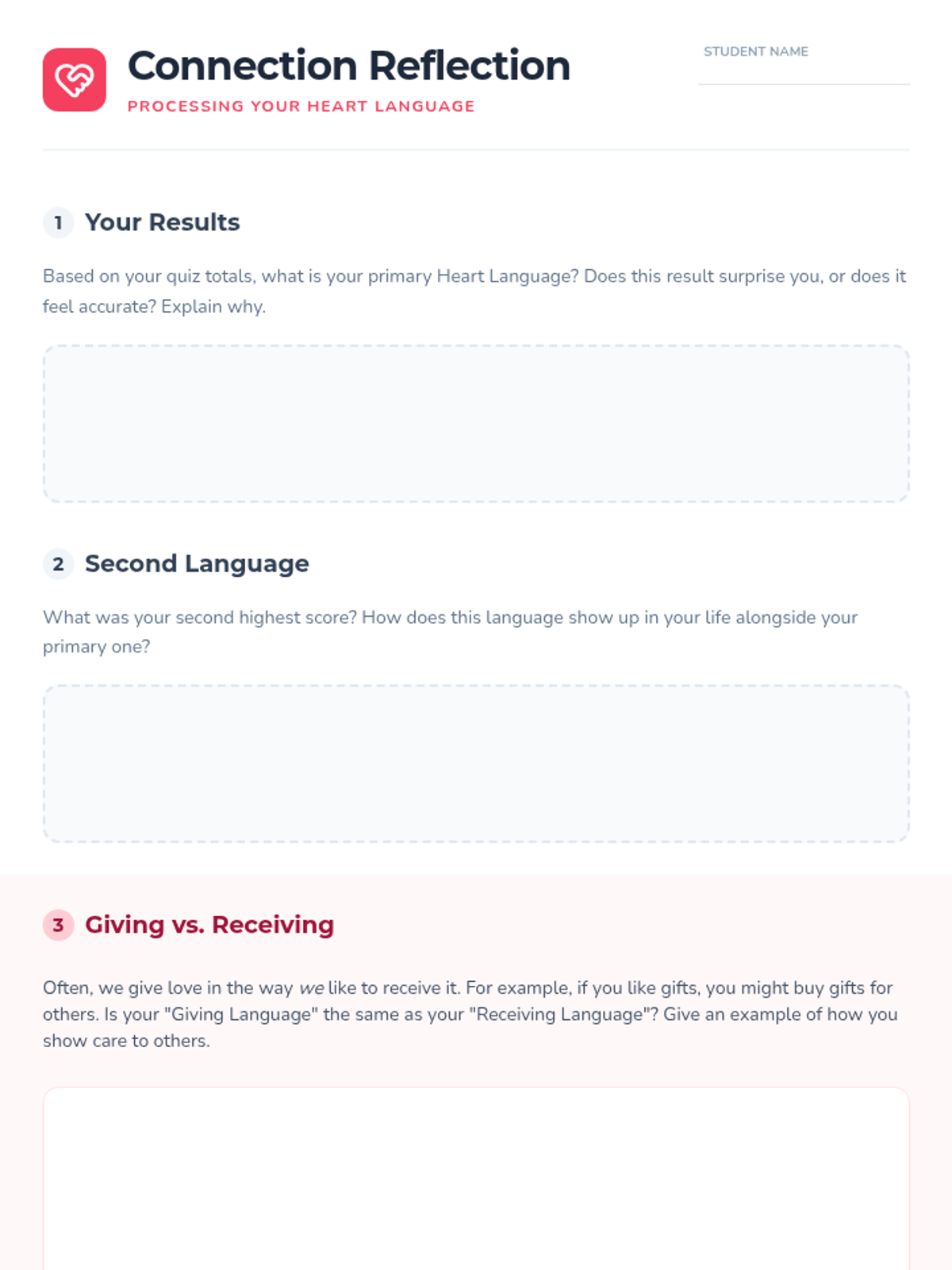
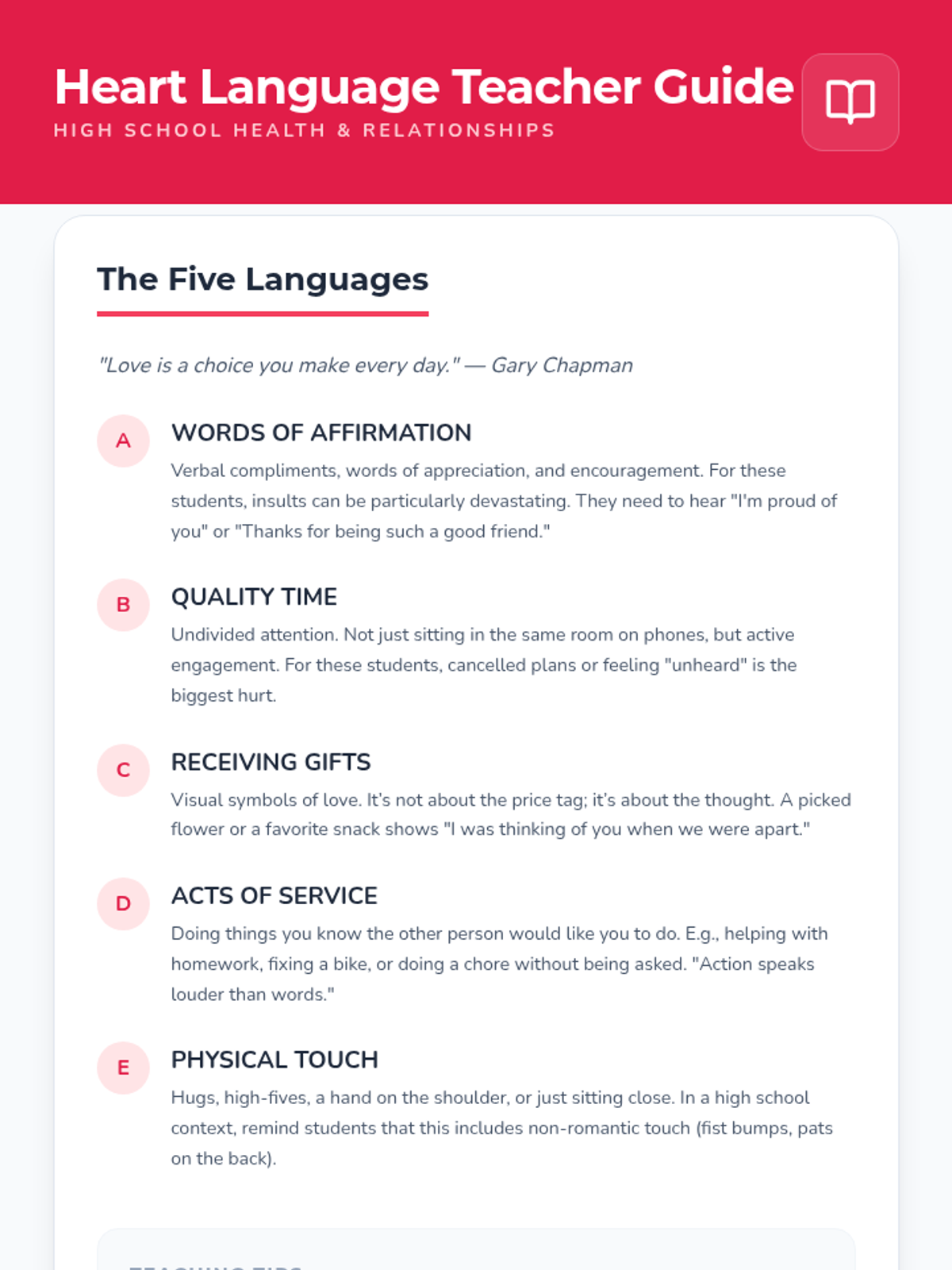
This lesson explores Gary Chapman's Five Love Languages through the lens of high school relationships, helping students identify their own needs and learn how to better support others in their lives.
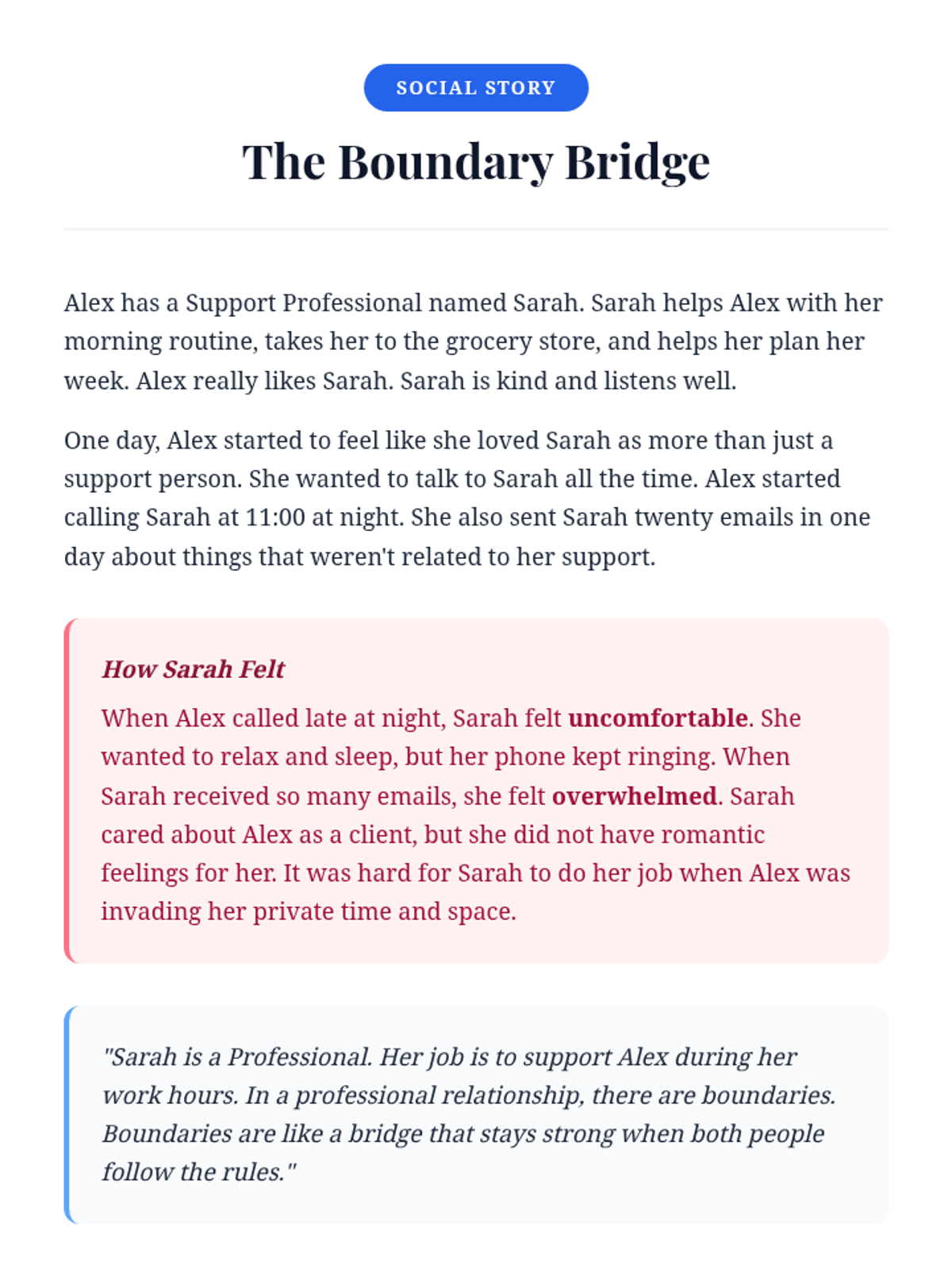
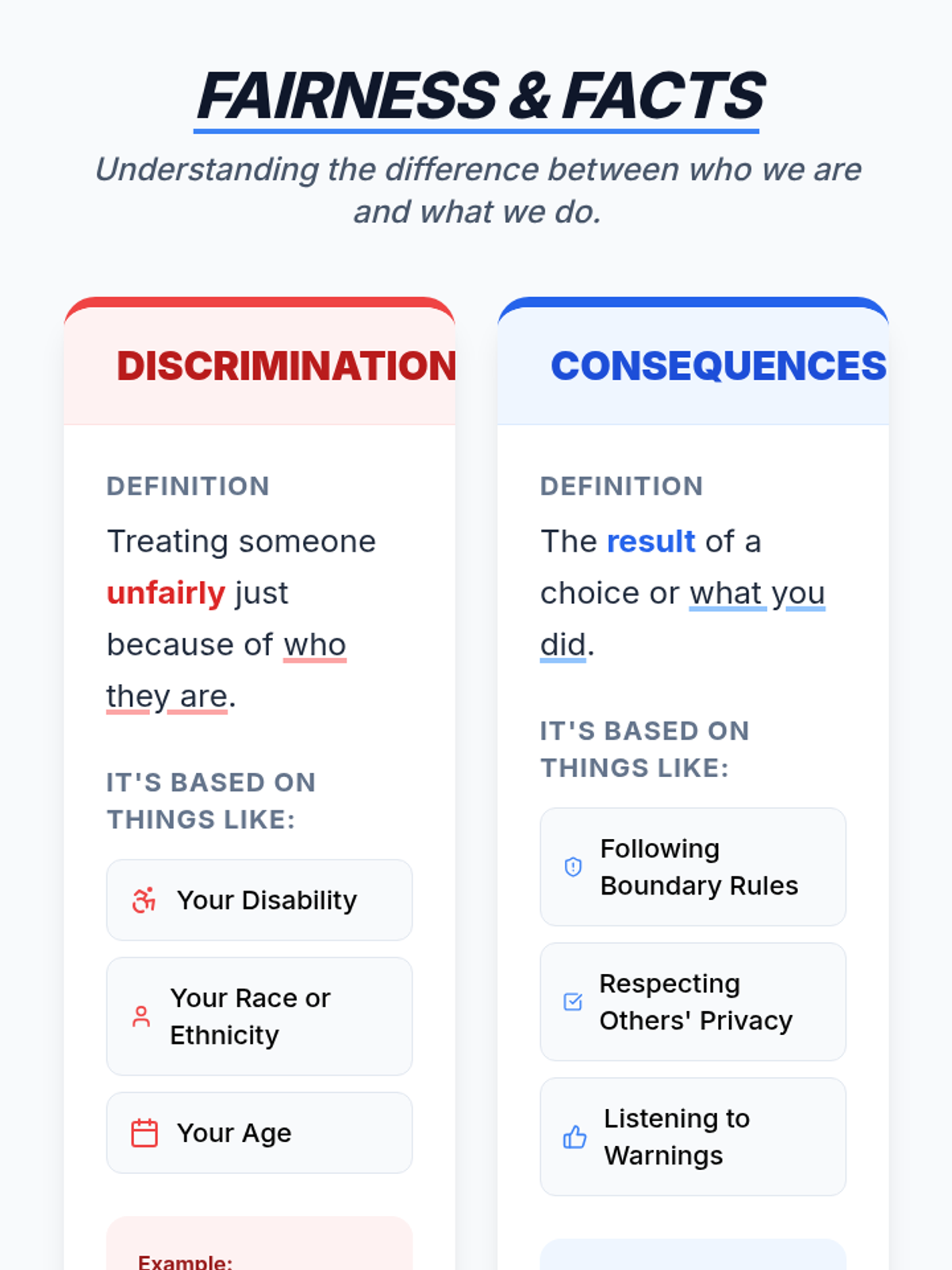
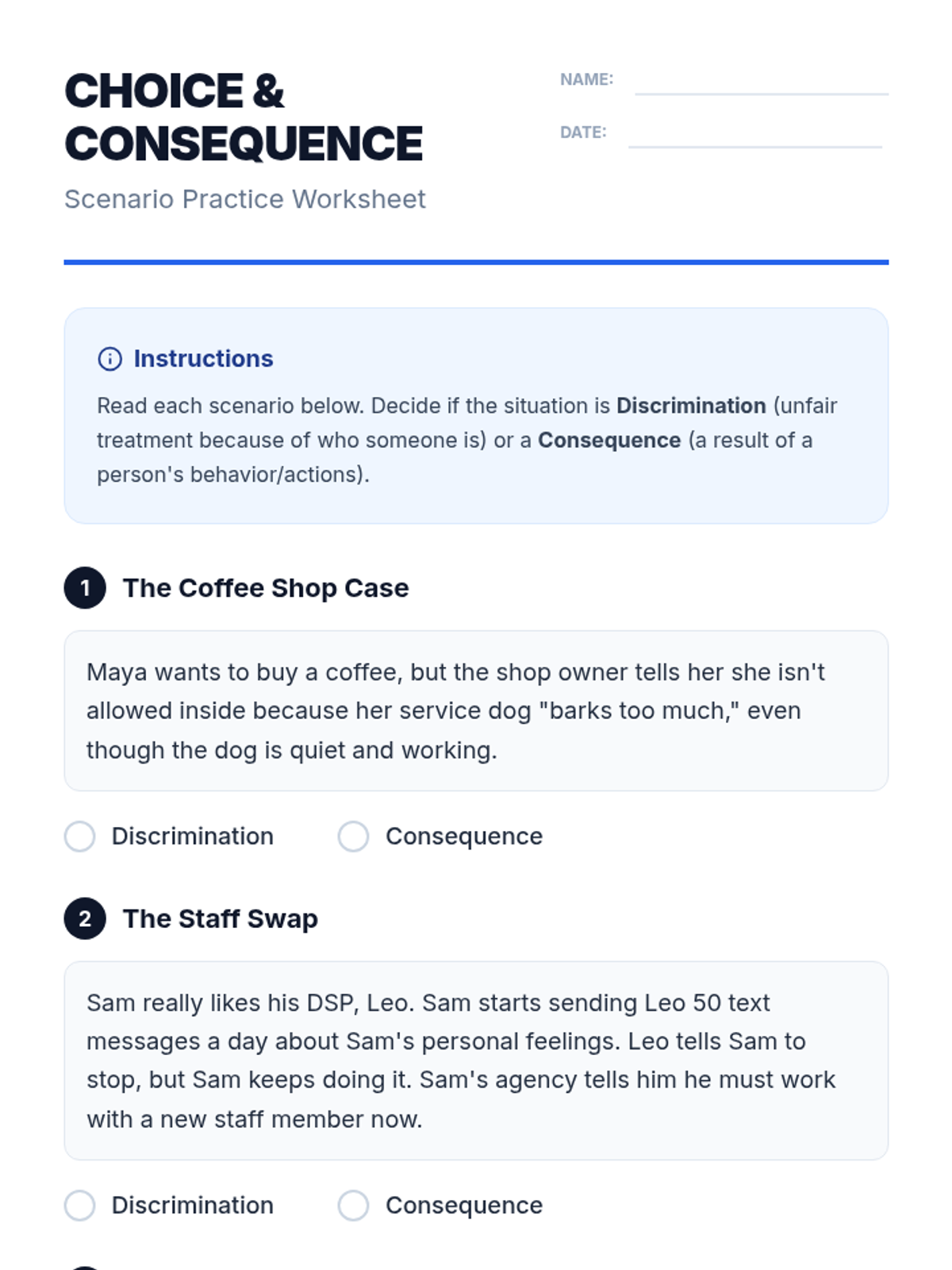
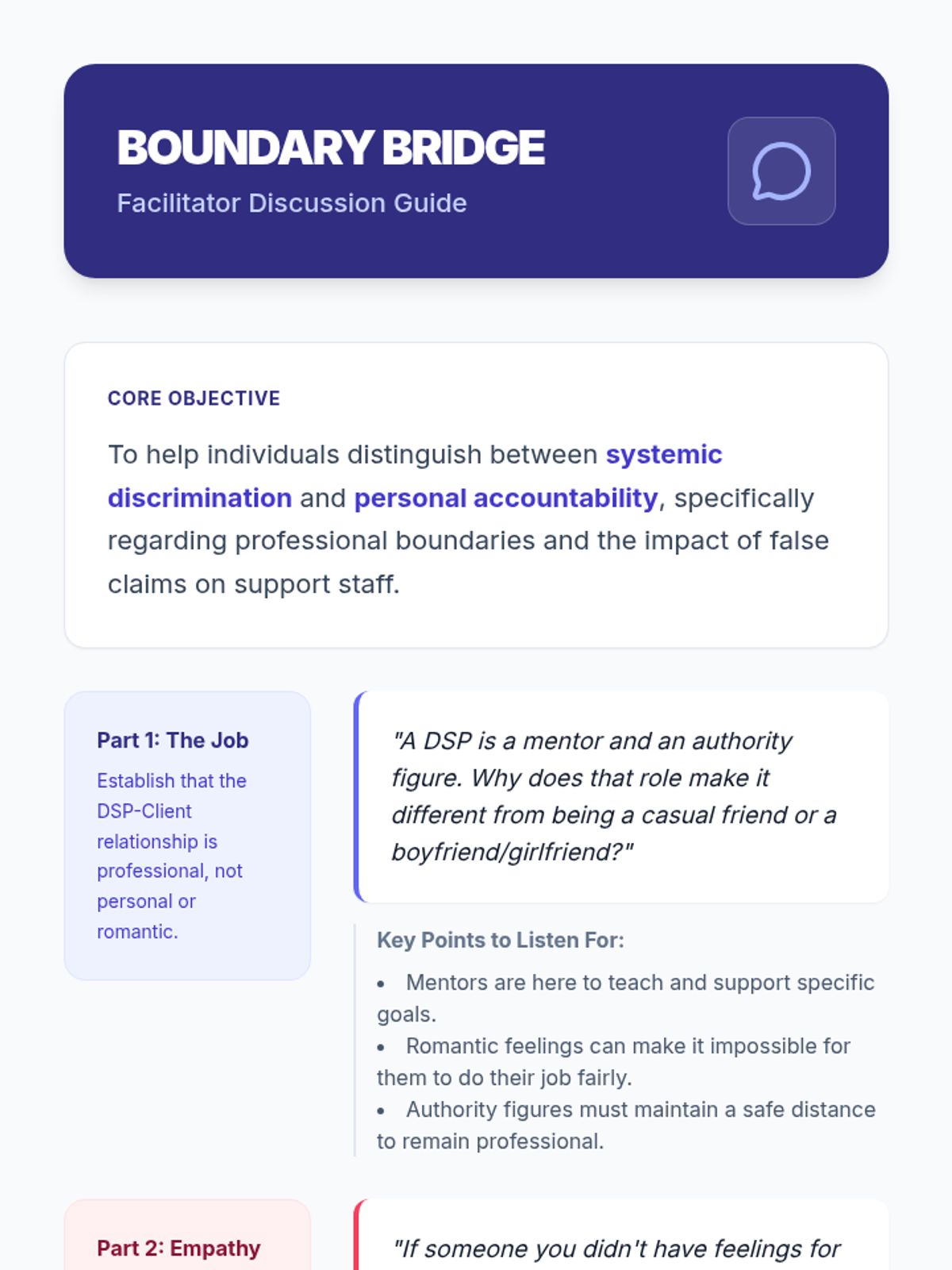
This lesson explores the definition of discrimination, the importance of professional boundaries in DSP relationships, and how actions lead to specific consequences.
Focuses on long-term goal setting and identifying personal passions. Students learn the SMART goal framework and engage in a guided visualization to plan their post-graduation paths.
Focuses on the science of stress and developing a personalized toolkit of healthy coping strategies. Students learn to differentiate between productive stress and burnout and practice immediate grounding techniques.
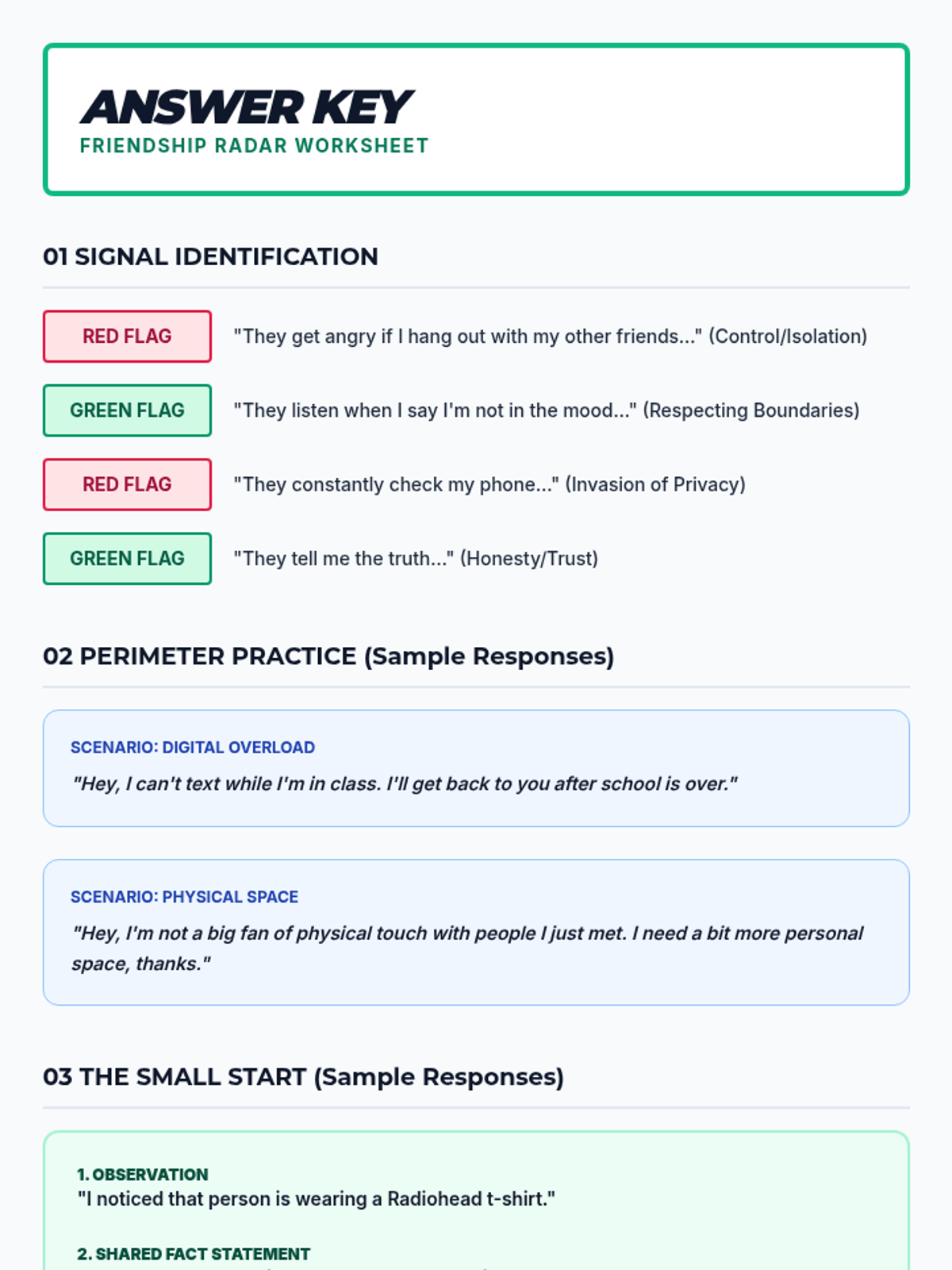
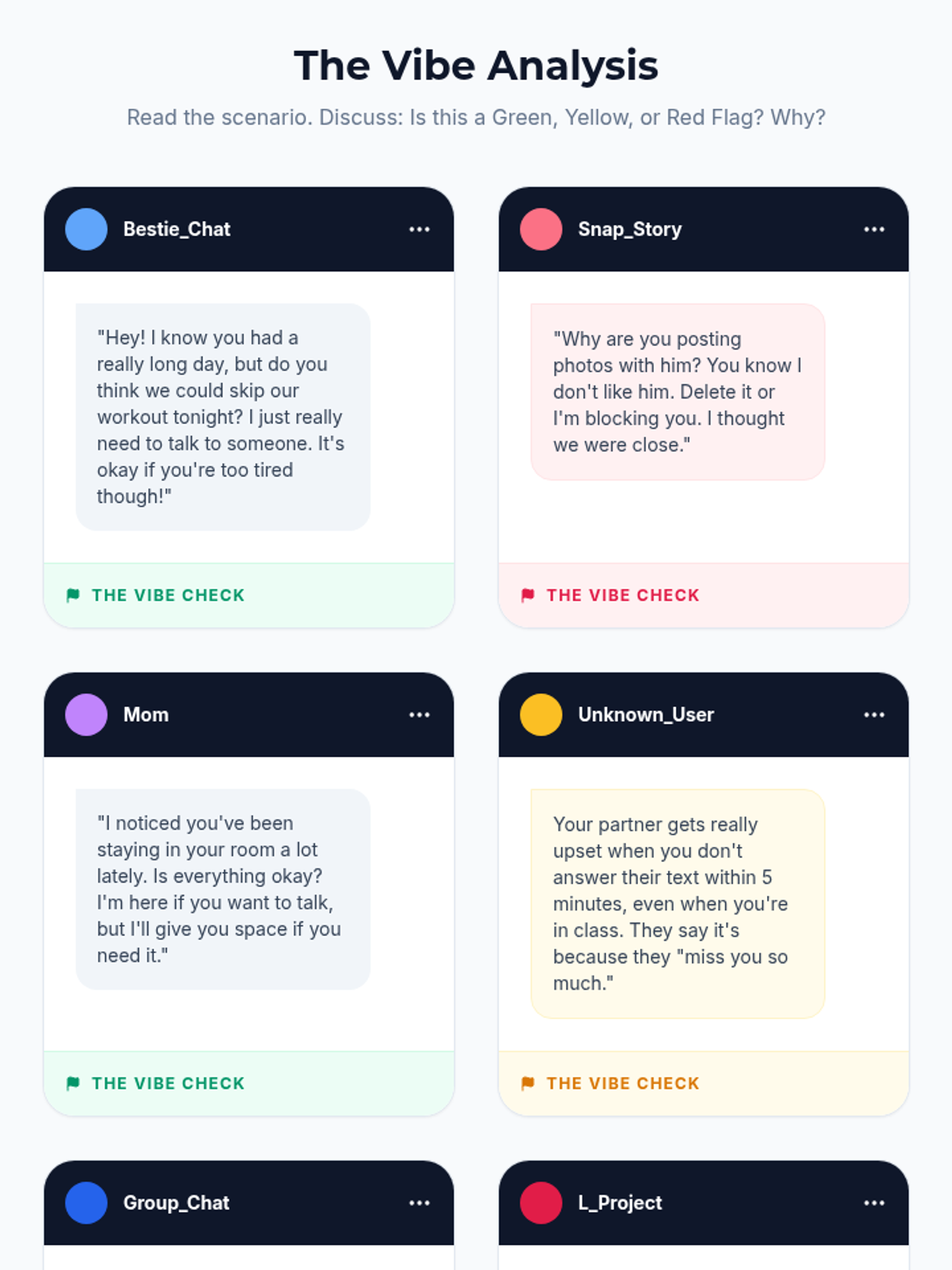
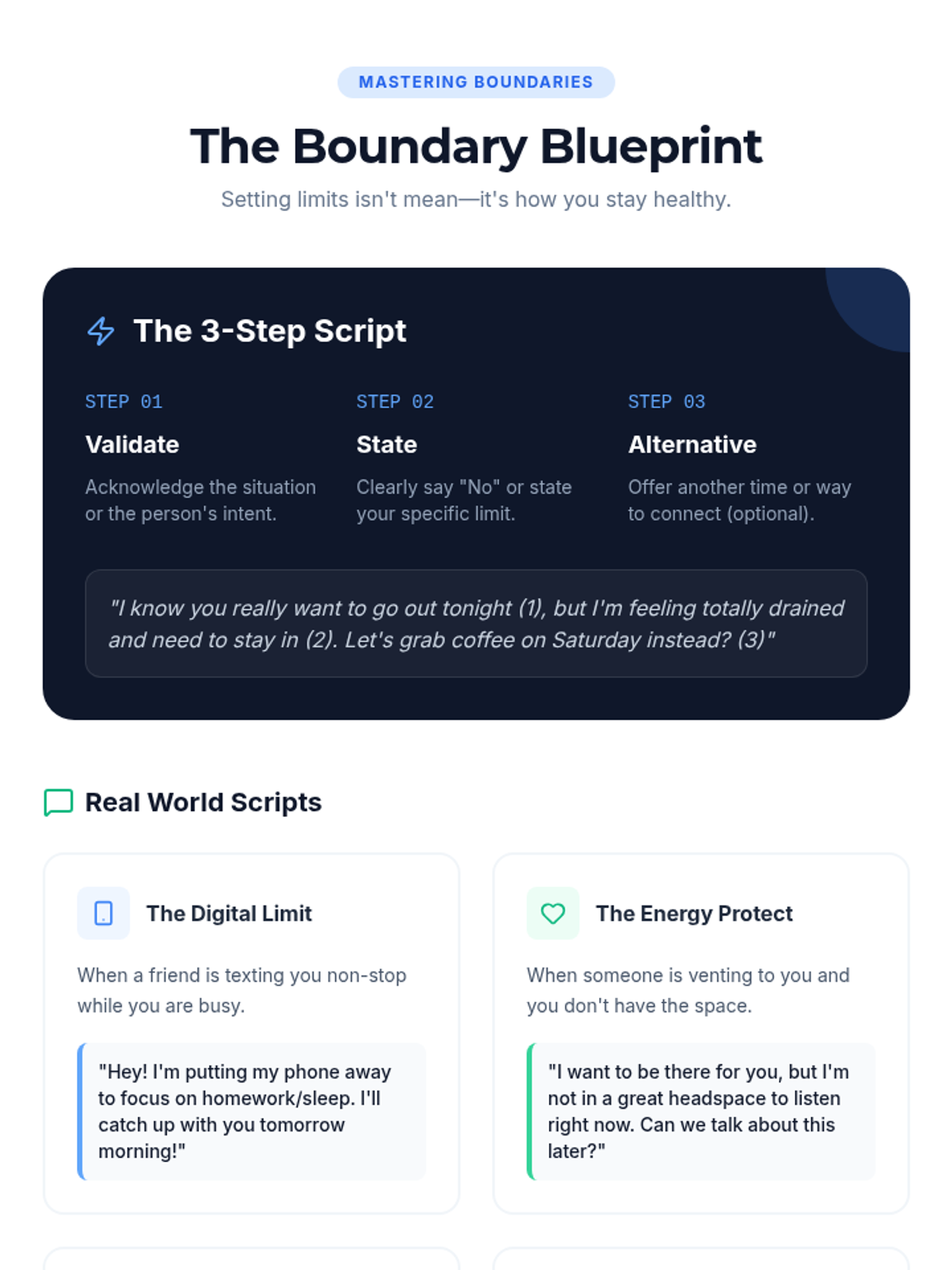
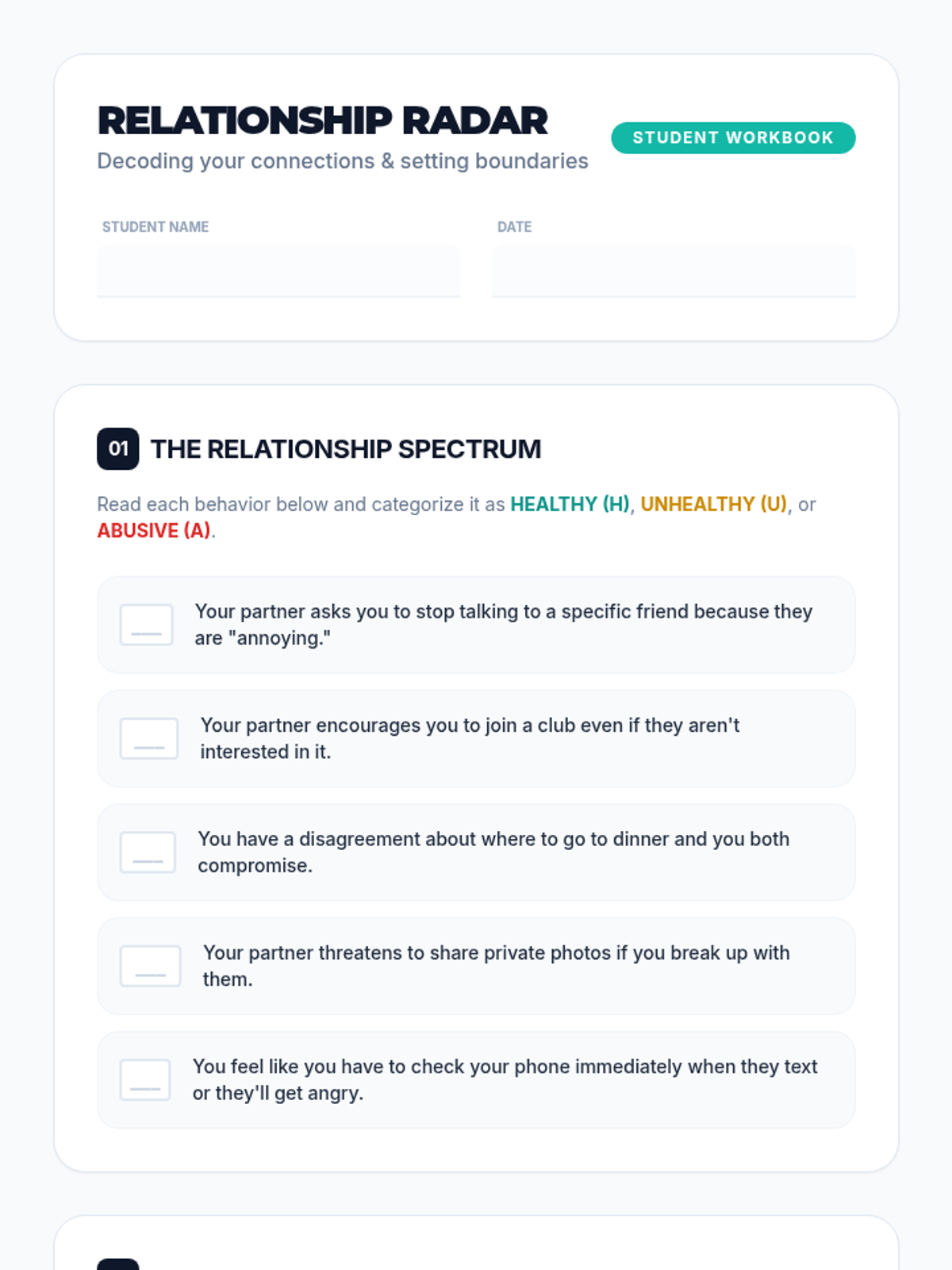
Focuses on identifying healthy and unhealthy relationship patterns. Students learn to recognize red and green flags and practice setting healthy boundaries with friends, family, and partners.
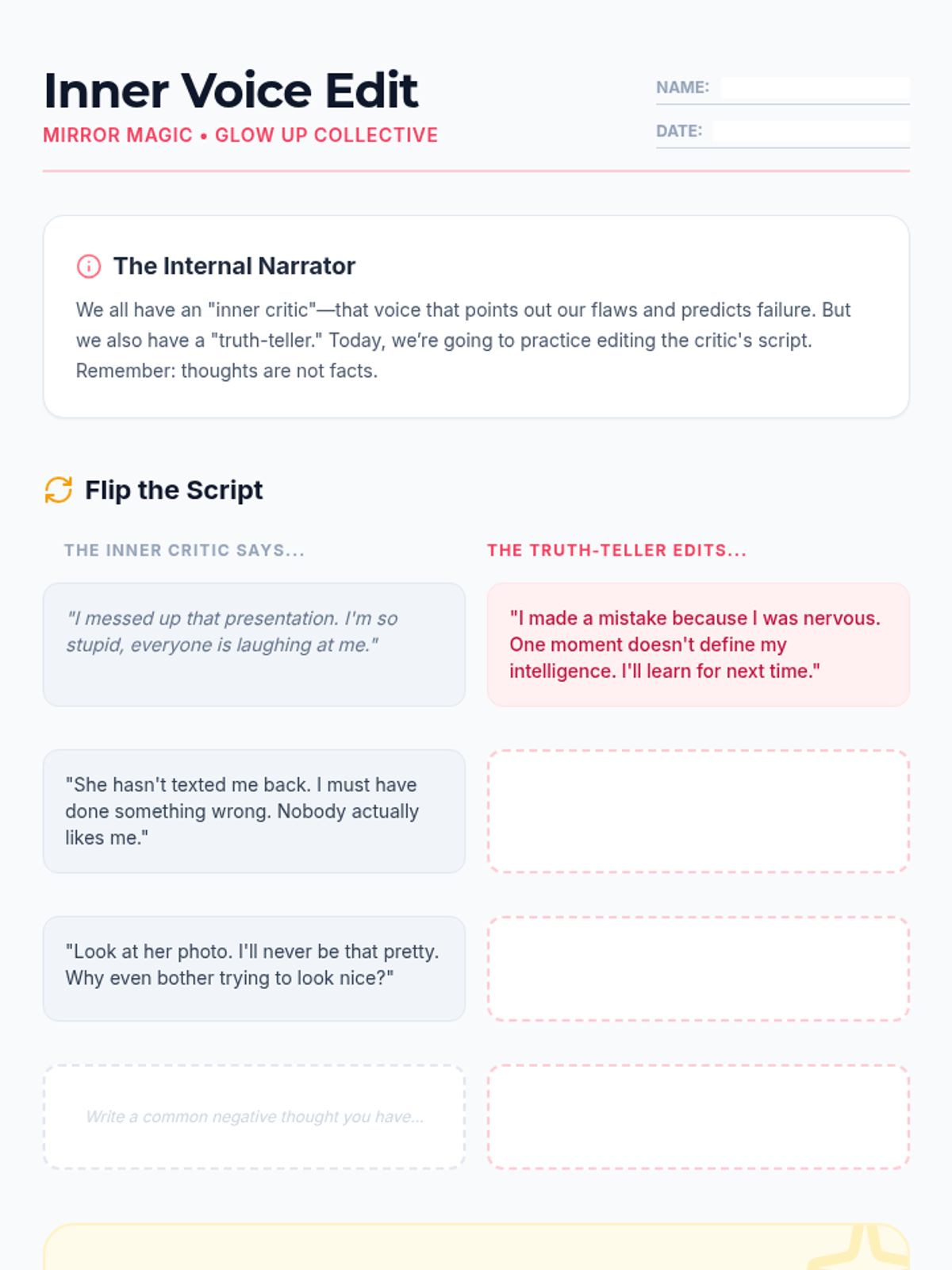
Focuses on building self-esteem by identifying personal strengths and reframing negative self-talk. Students will explore the difference between self-esteem and self-compassion through discussion and reflective activities.
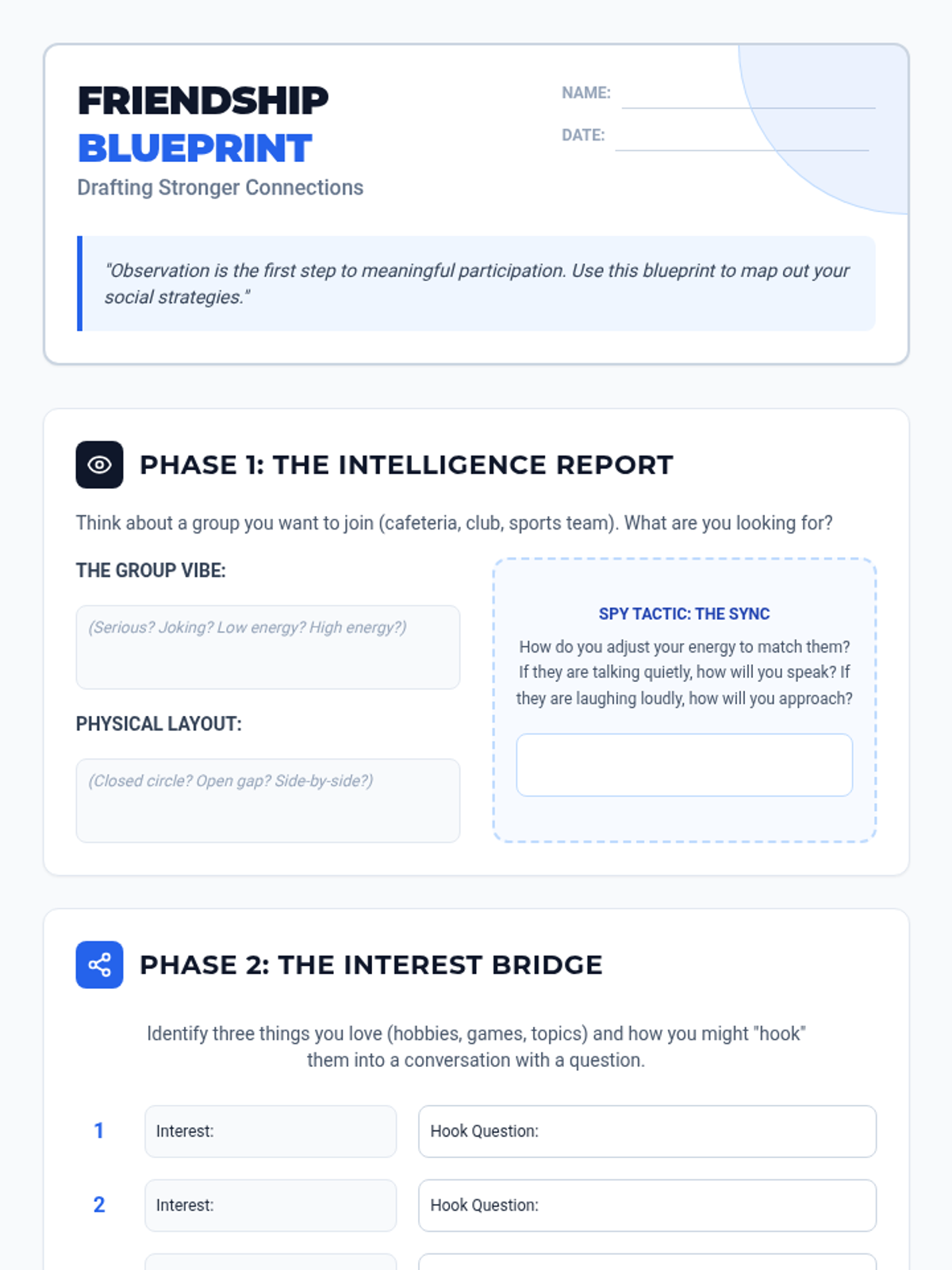
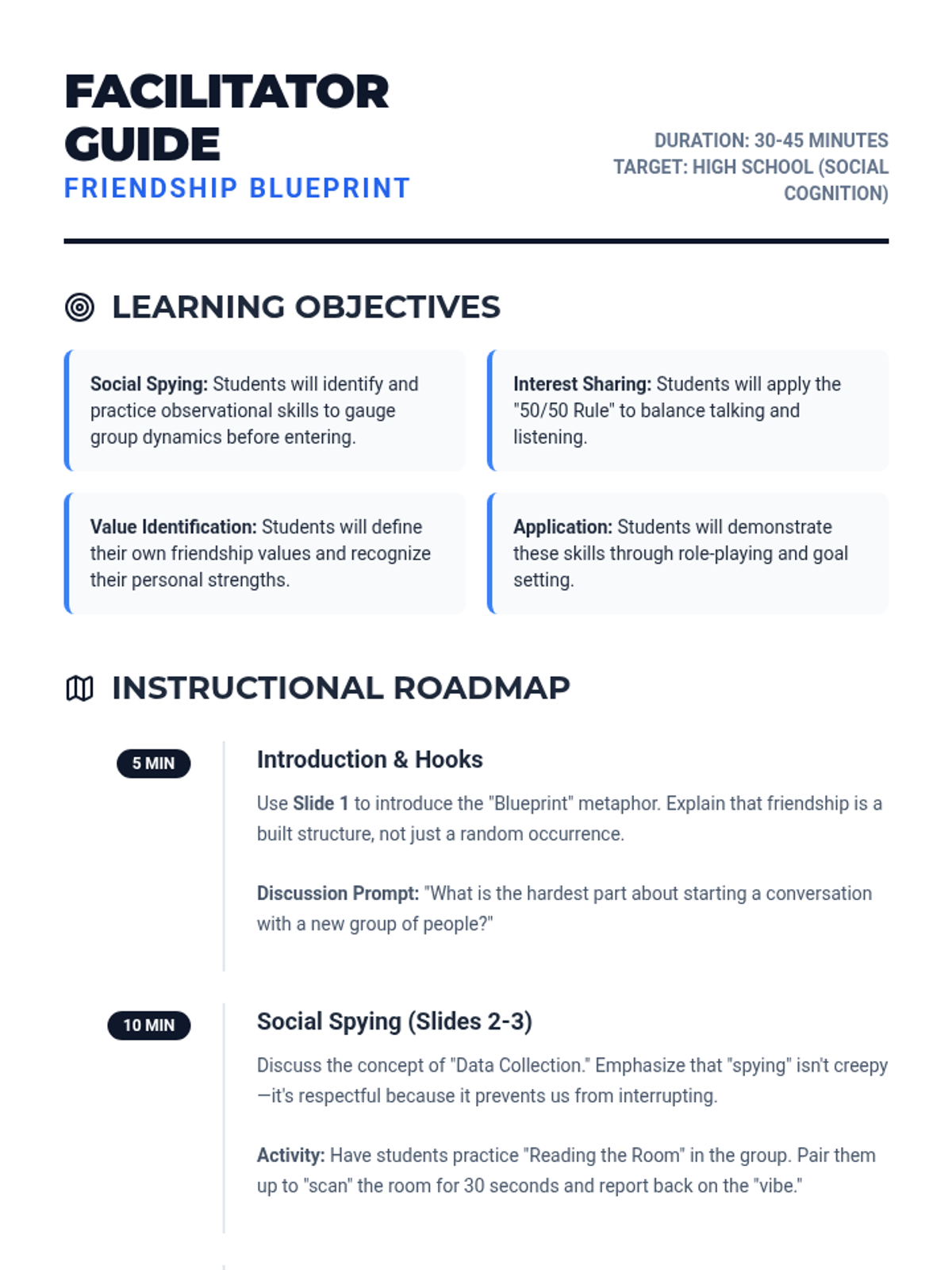
A lesson focused on developing social cognition skills for high schoolers, specifically targeting observational skills (social spying), sharing interests, and identifying personal values within friendships.
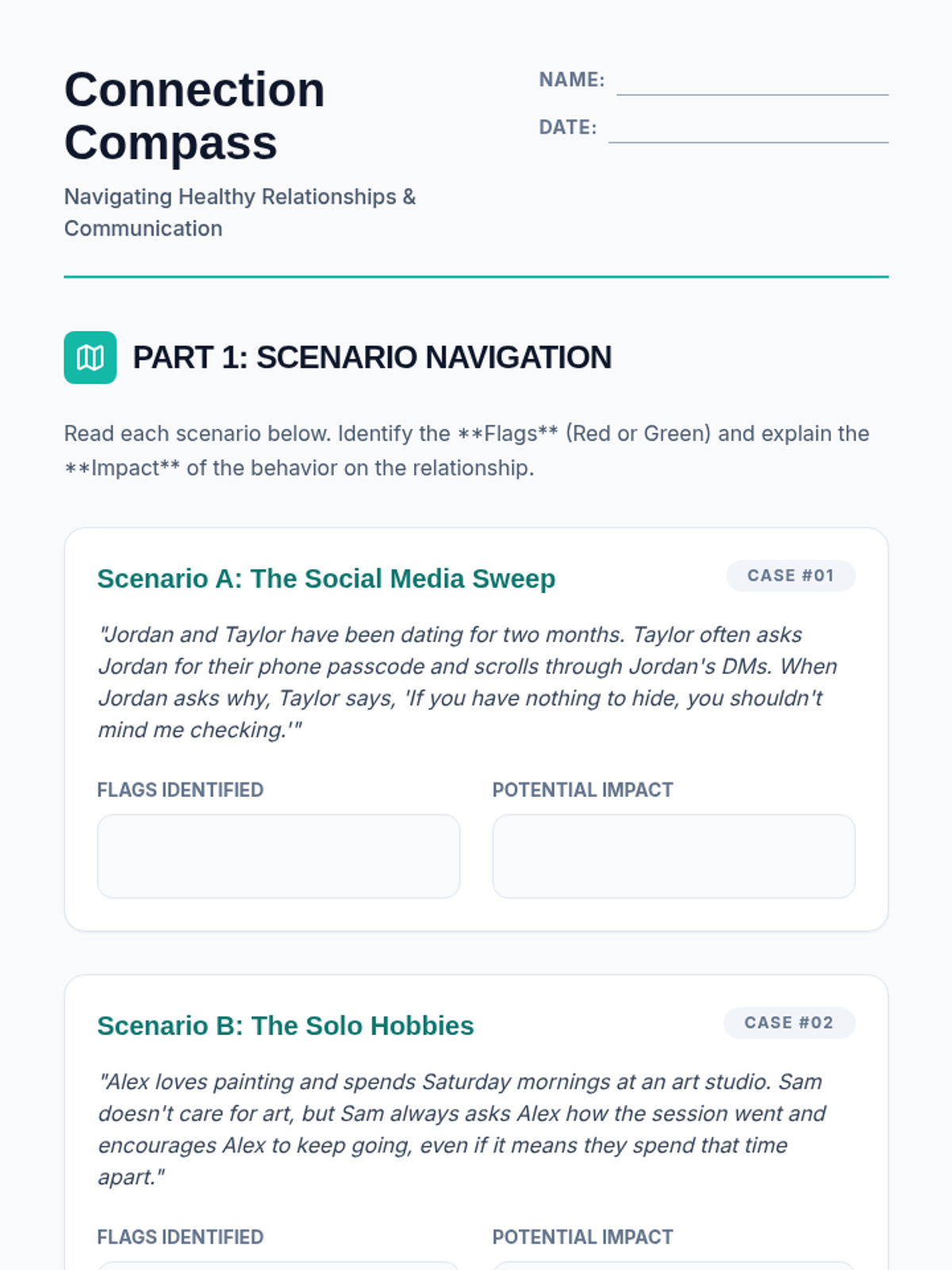
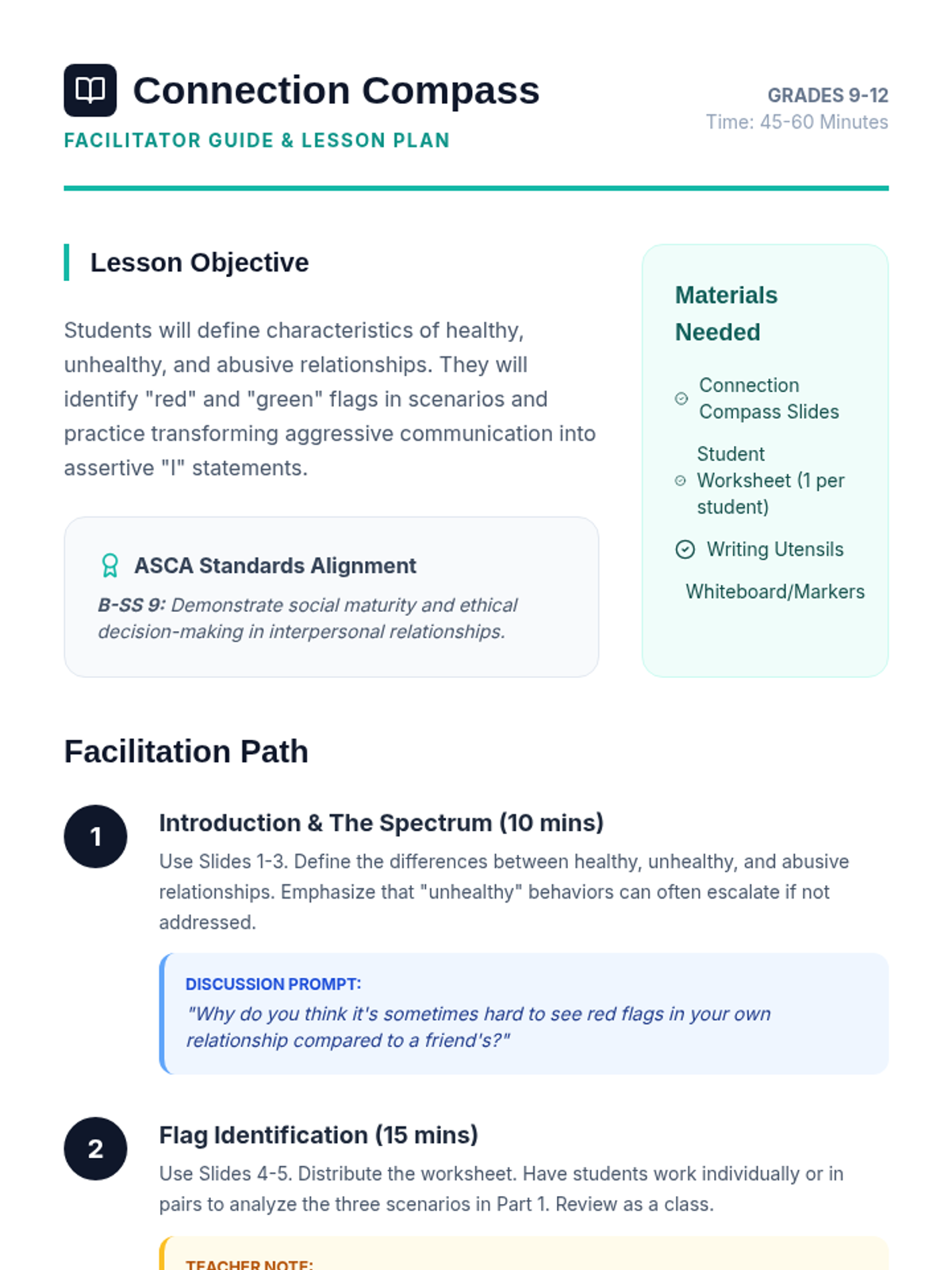
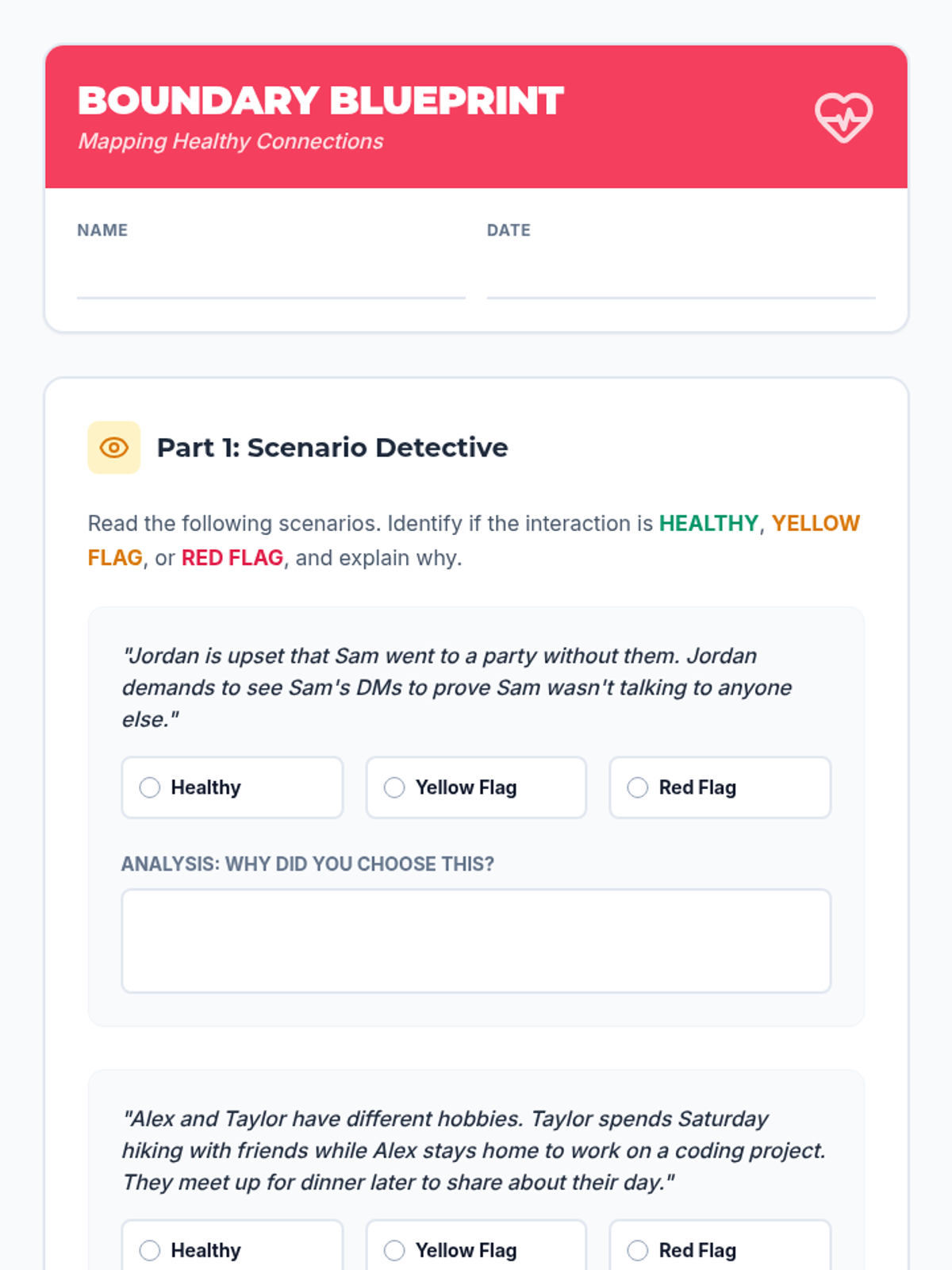
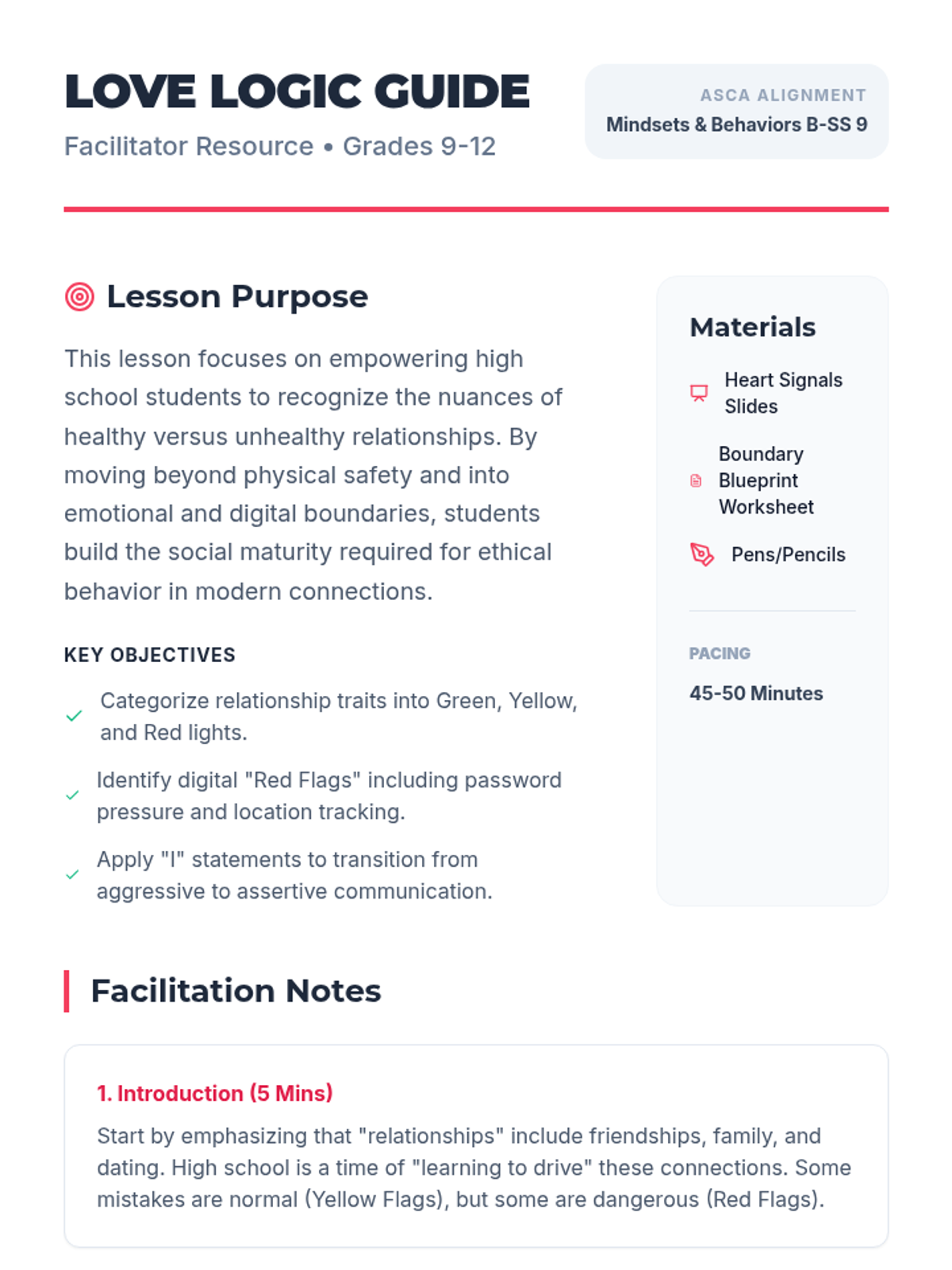
A high school counseling lesson focused on identifying red and green flags in relationships, understanding communication patterns, and applying these skills to real-world scenarios. Aligned to ASCA Mindsets & Behaviors B-SS 9.
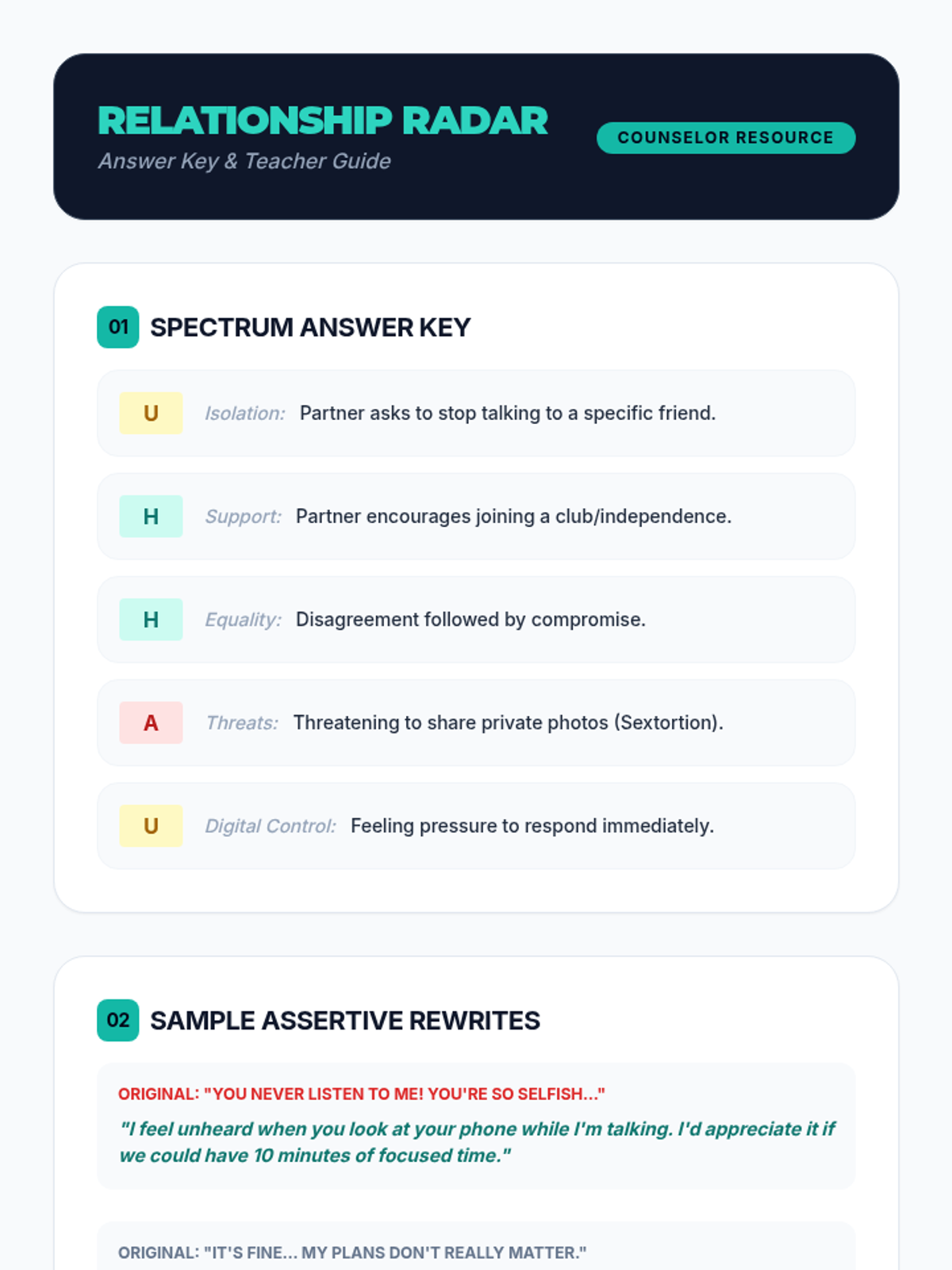
A comprehensive high school counseling lesson designed to help students distinguish between healthy and unhealthy relationship dynamics, identify red flags, and master assertive communication. Aligned with ASCA Mindsets & Behaviors B-SS 9, this lesson uses scenario-based learning to build social maturity and ethical relationship skills.
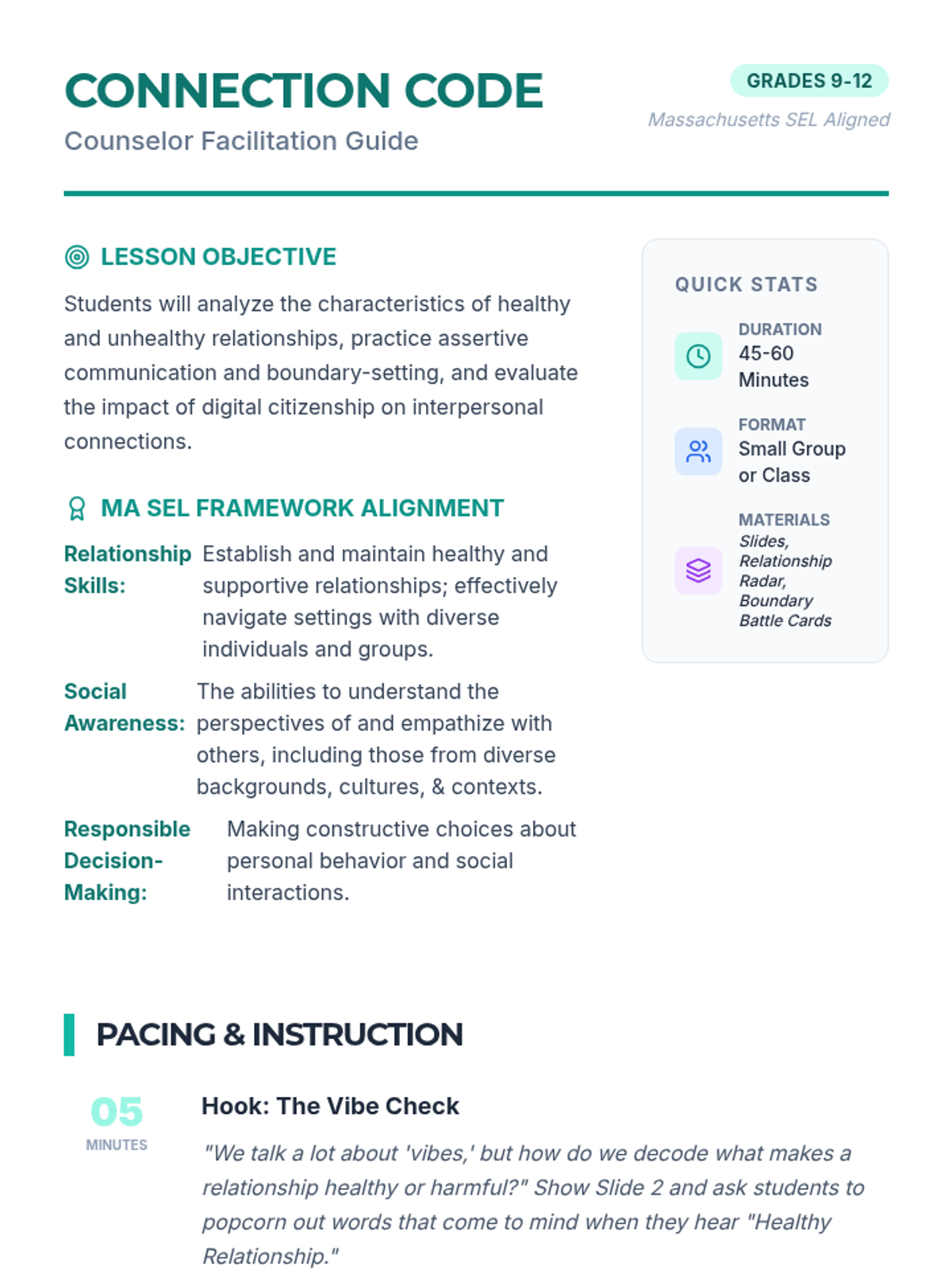
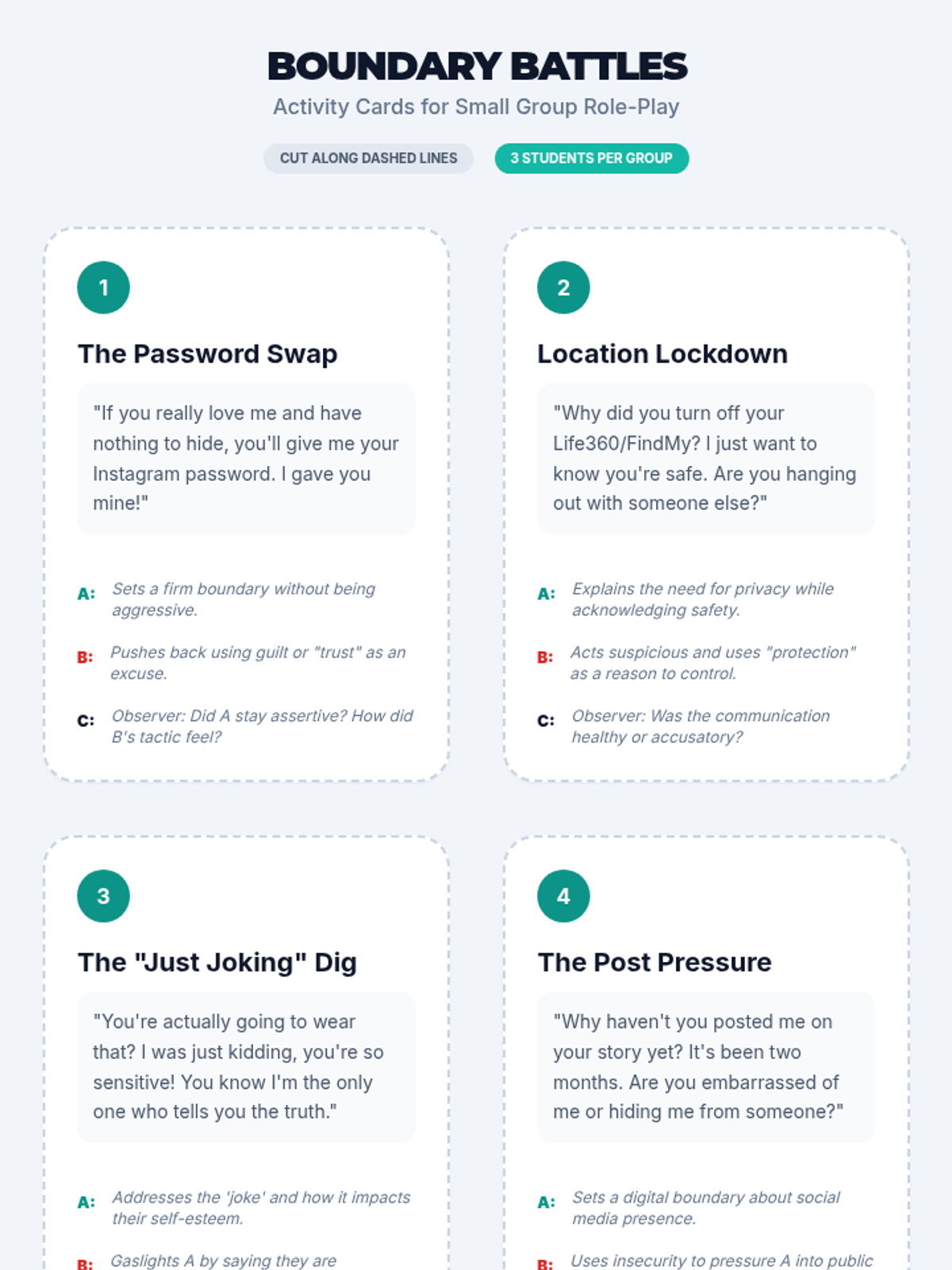
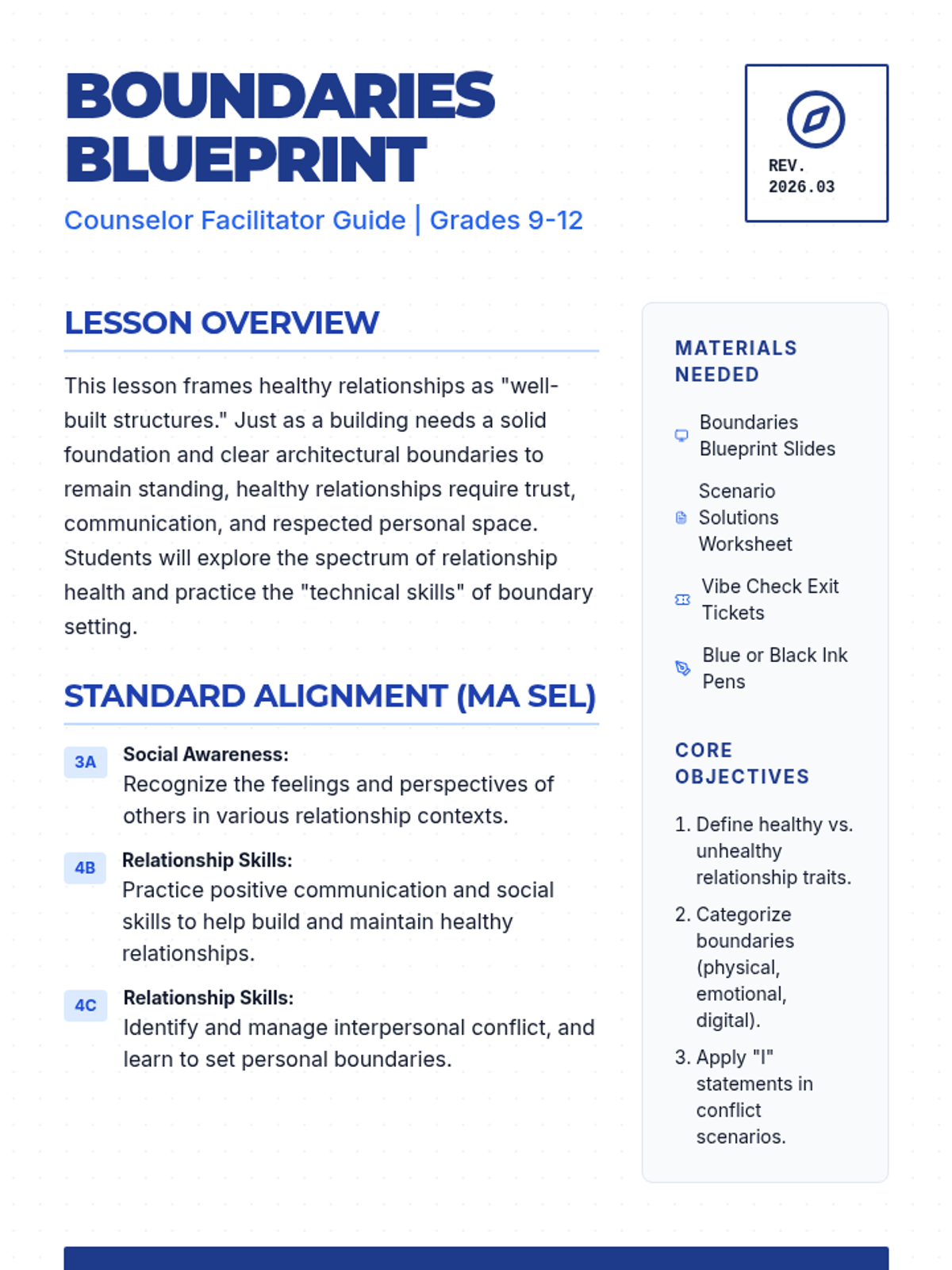
A comprehensive lesson for high school students, facilitated by counselors, focusing on identifying healthy vs. unhealthy relationship patterns, mastering communication, and navigating digital boundaries. Aligned with Massachusetts SEL Frameworks for grades 9-12.
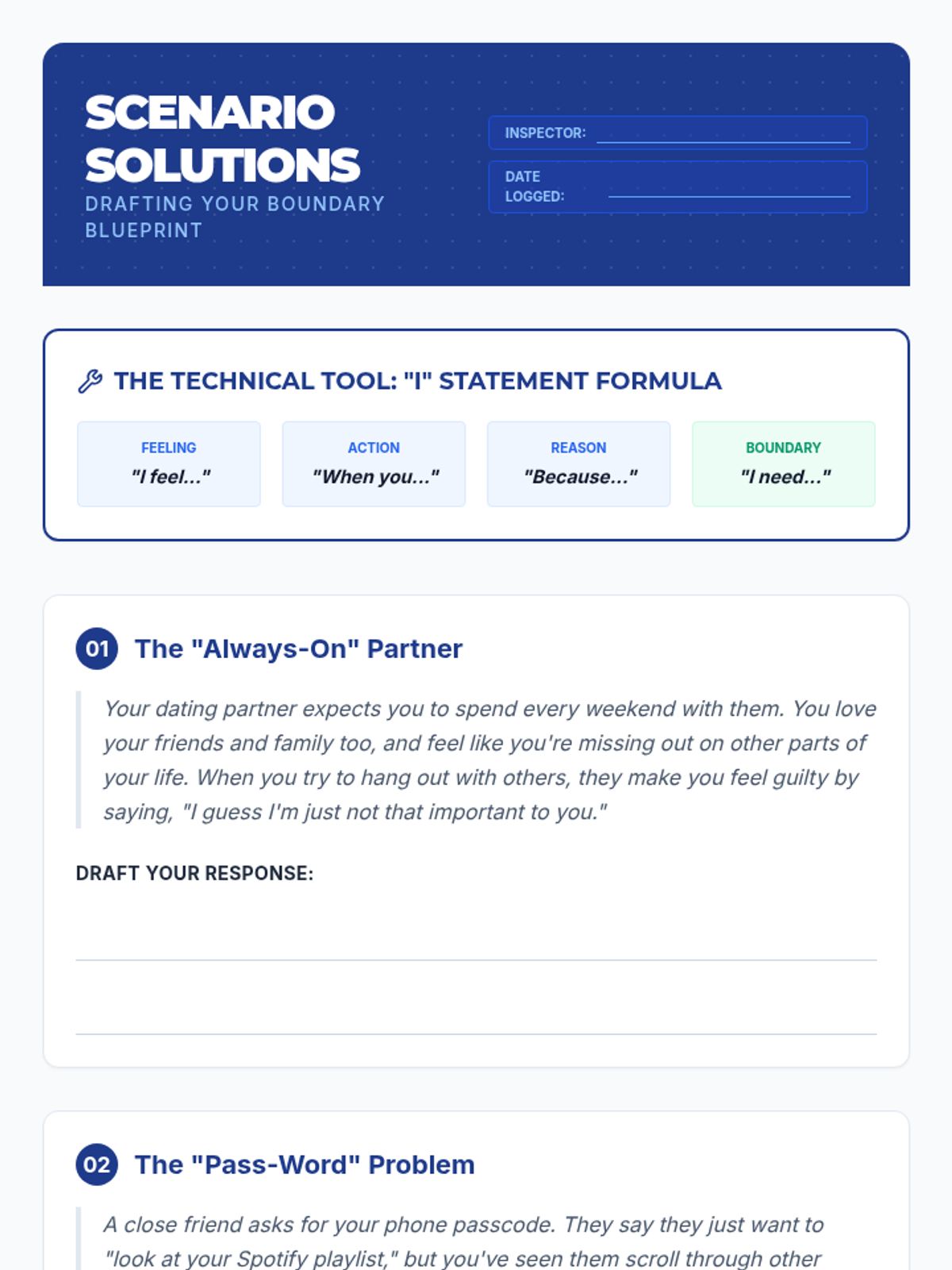
A comprehensive high school counseling lesson designed to help students navigate the complexities of healthy relationships, identify red flags, and master the art of setting and respecting personal boundaries through the lens of architectural blueprinting.
Reflects on the unit and focuses on self-love, recognizing growth, and knowing when to let go of unhealthy connections.
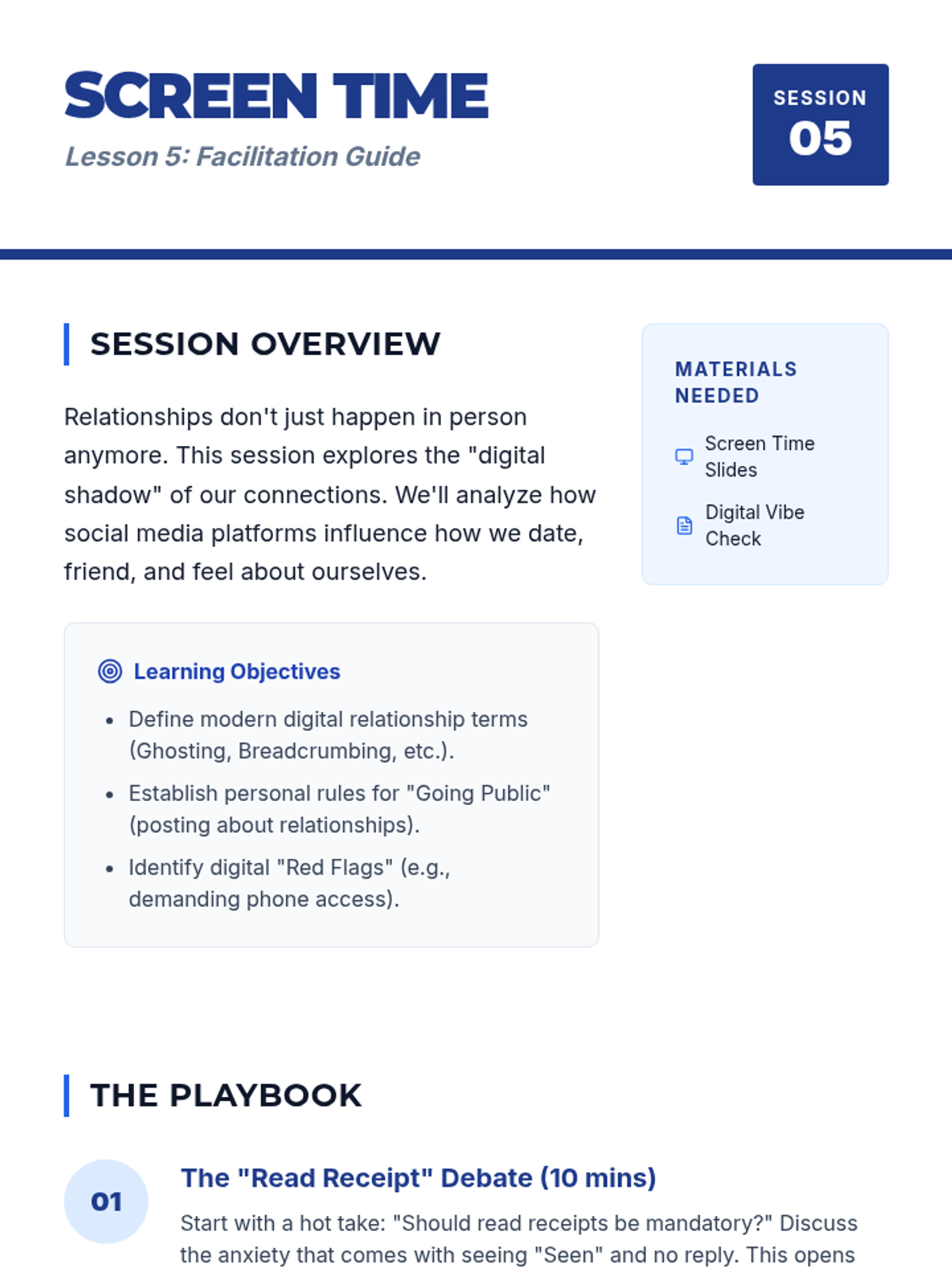
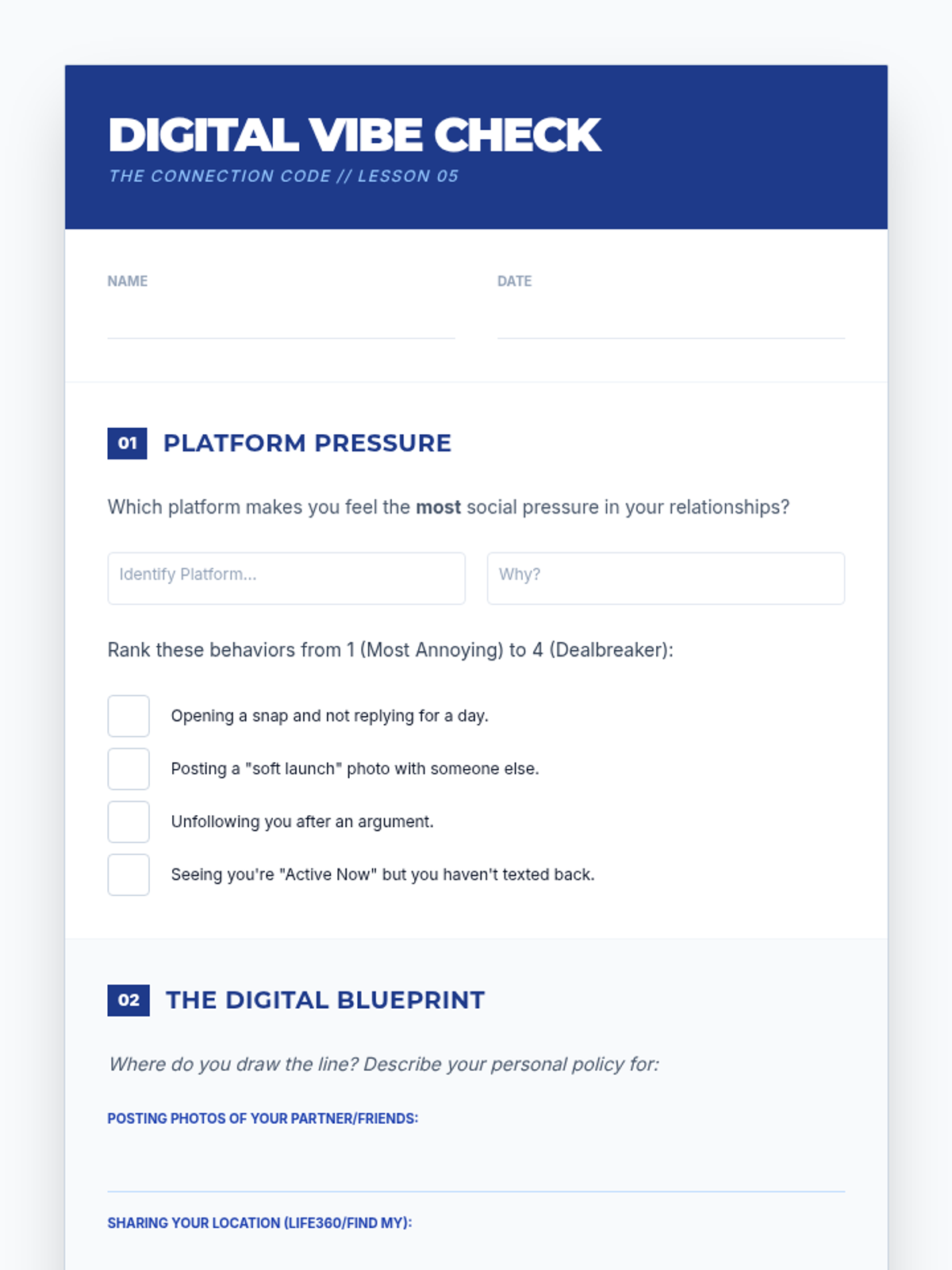
Analyzes the impact of social media on relationships, including 'breadcrumbing', 'ghosting', and digital privacy.
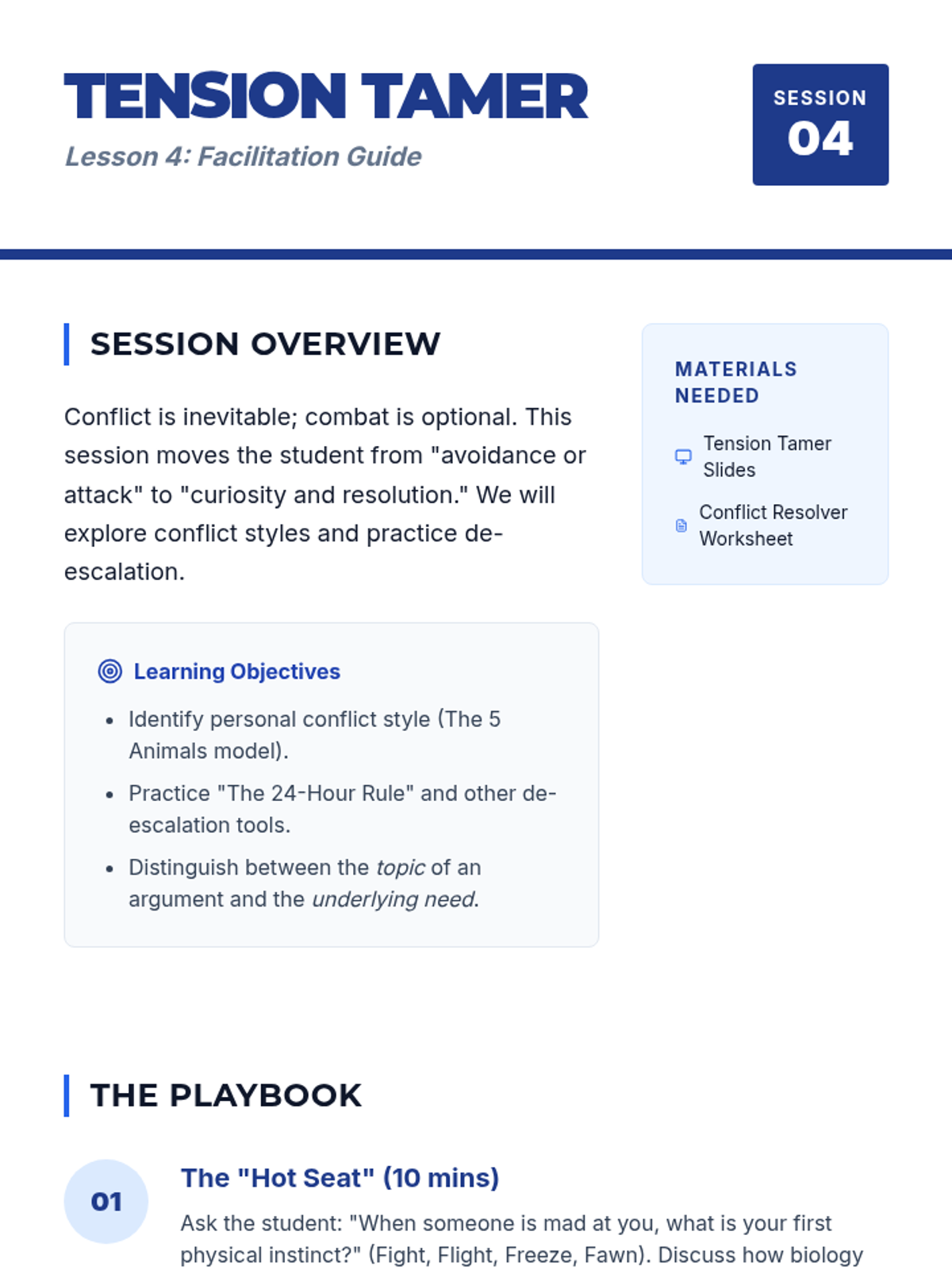
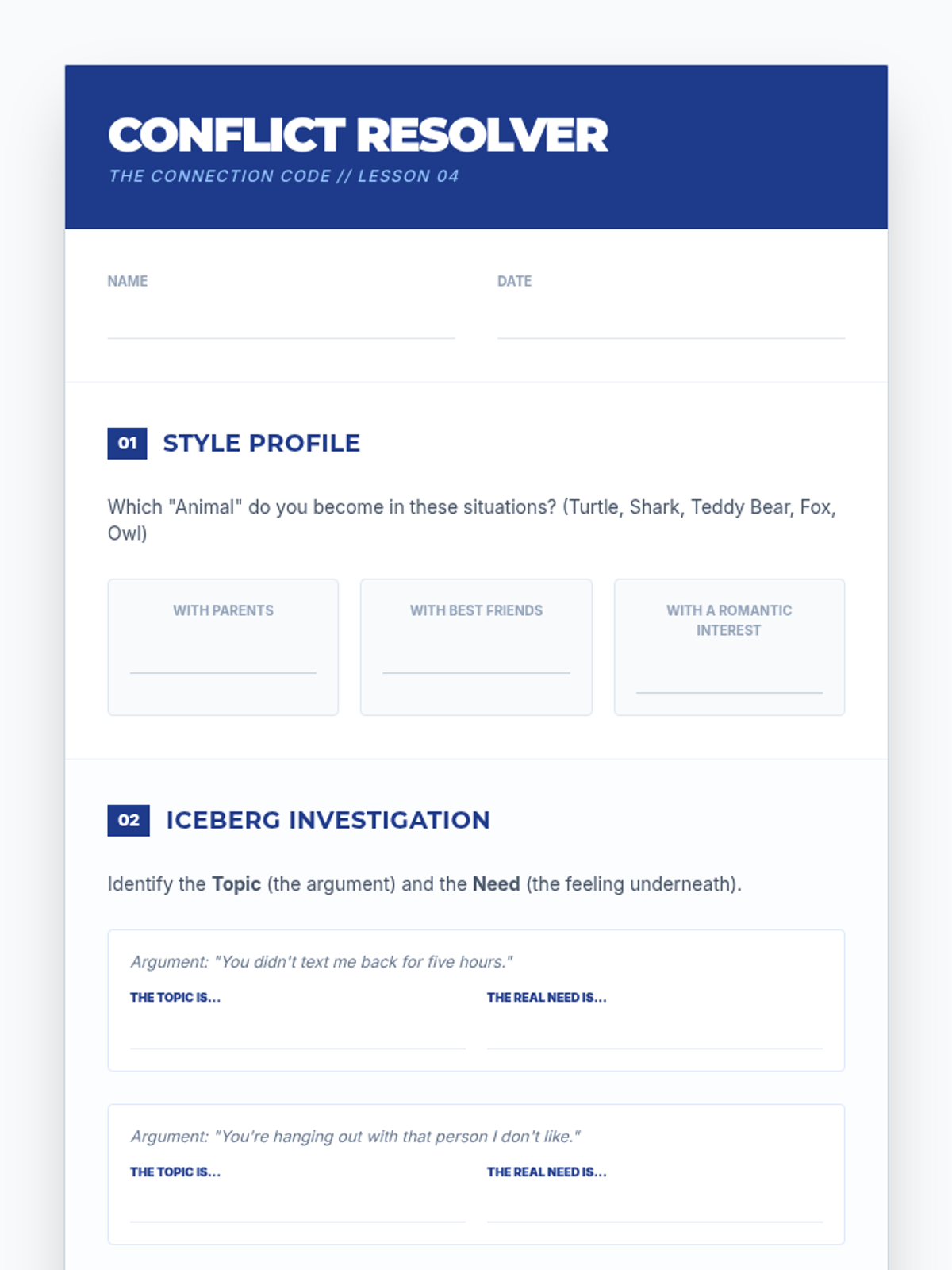
Provides tools for de-escalating arguments, understanding different conflict styles, and finding 'win-win' resolutions.
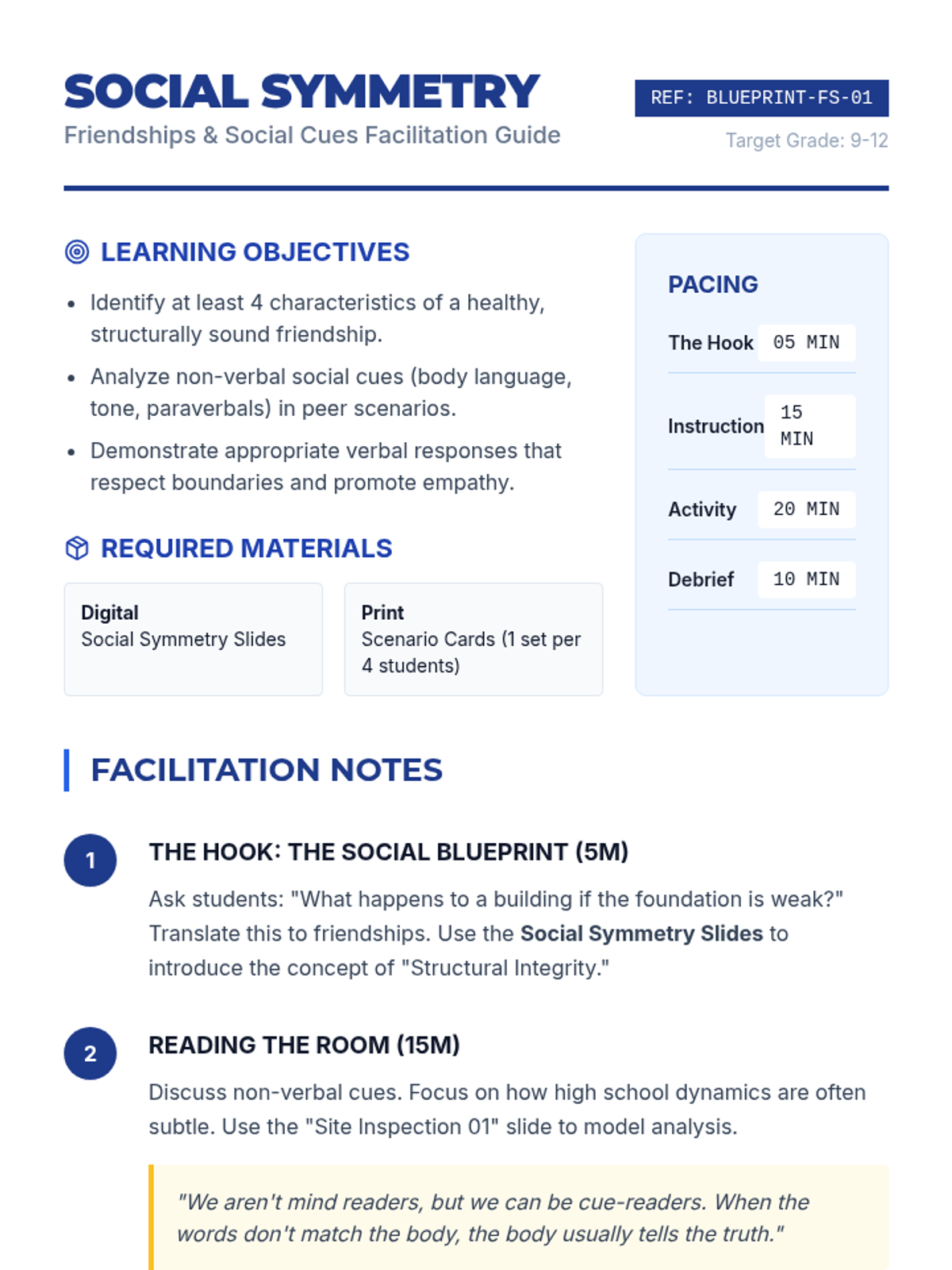
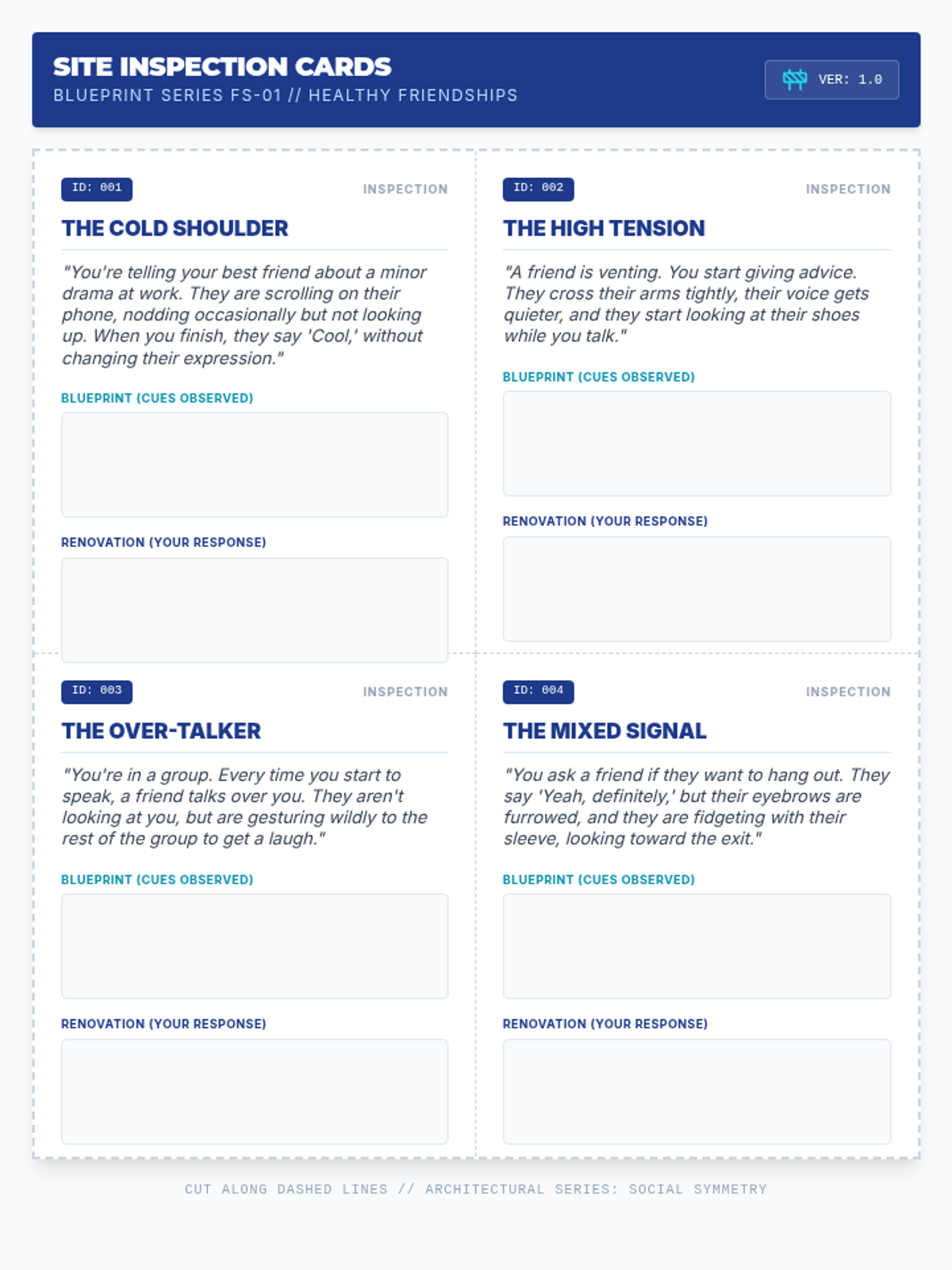
A high-school level lesson focused on navigating the complexities of friendships through the lens of social cues and healthy boundaries. Students analyze social 'blueprints' to build stronger, more empathetic connections.
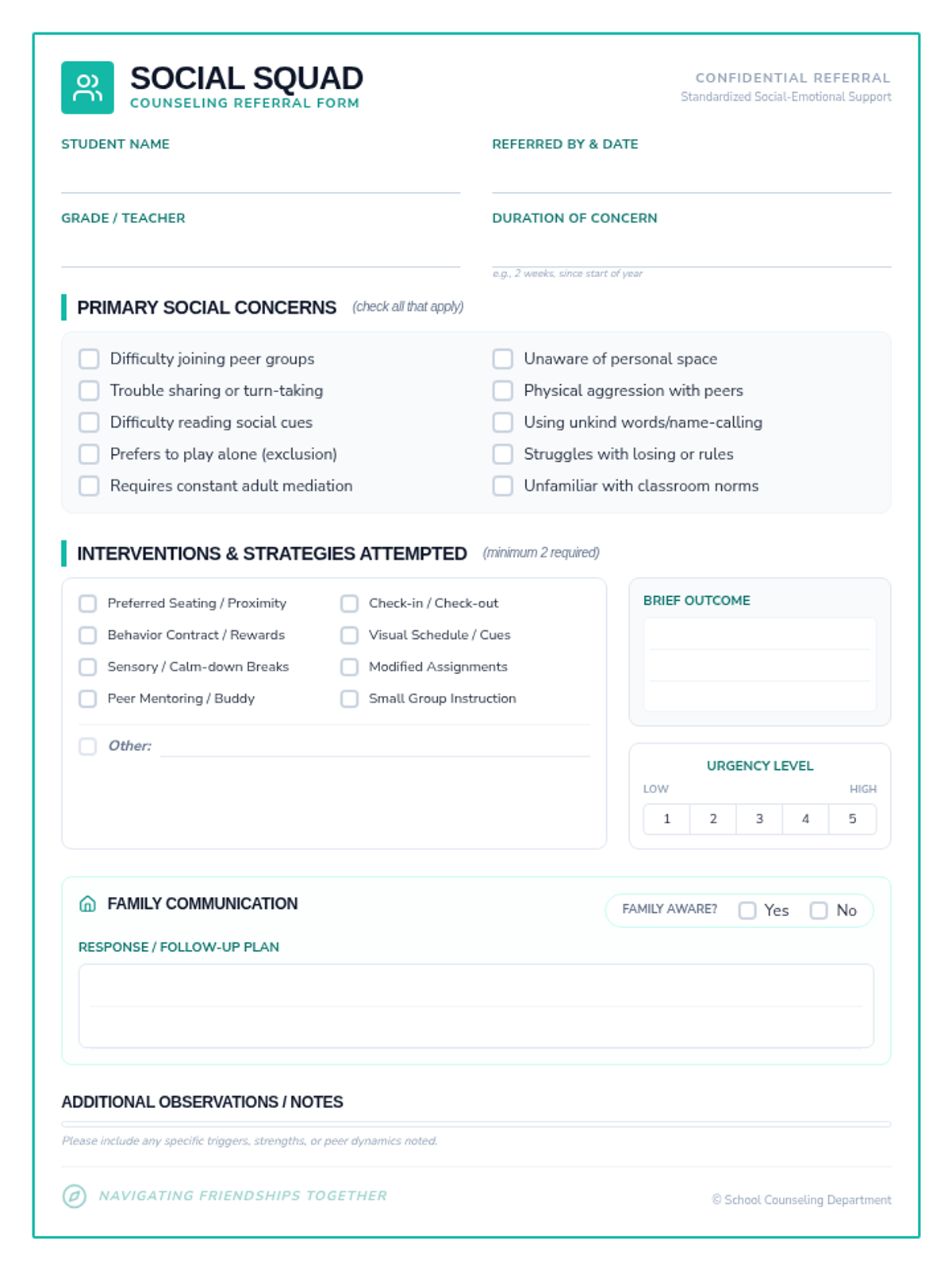
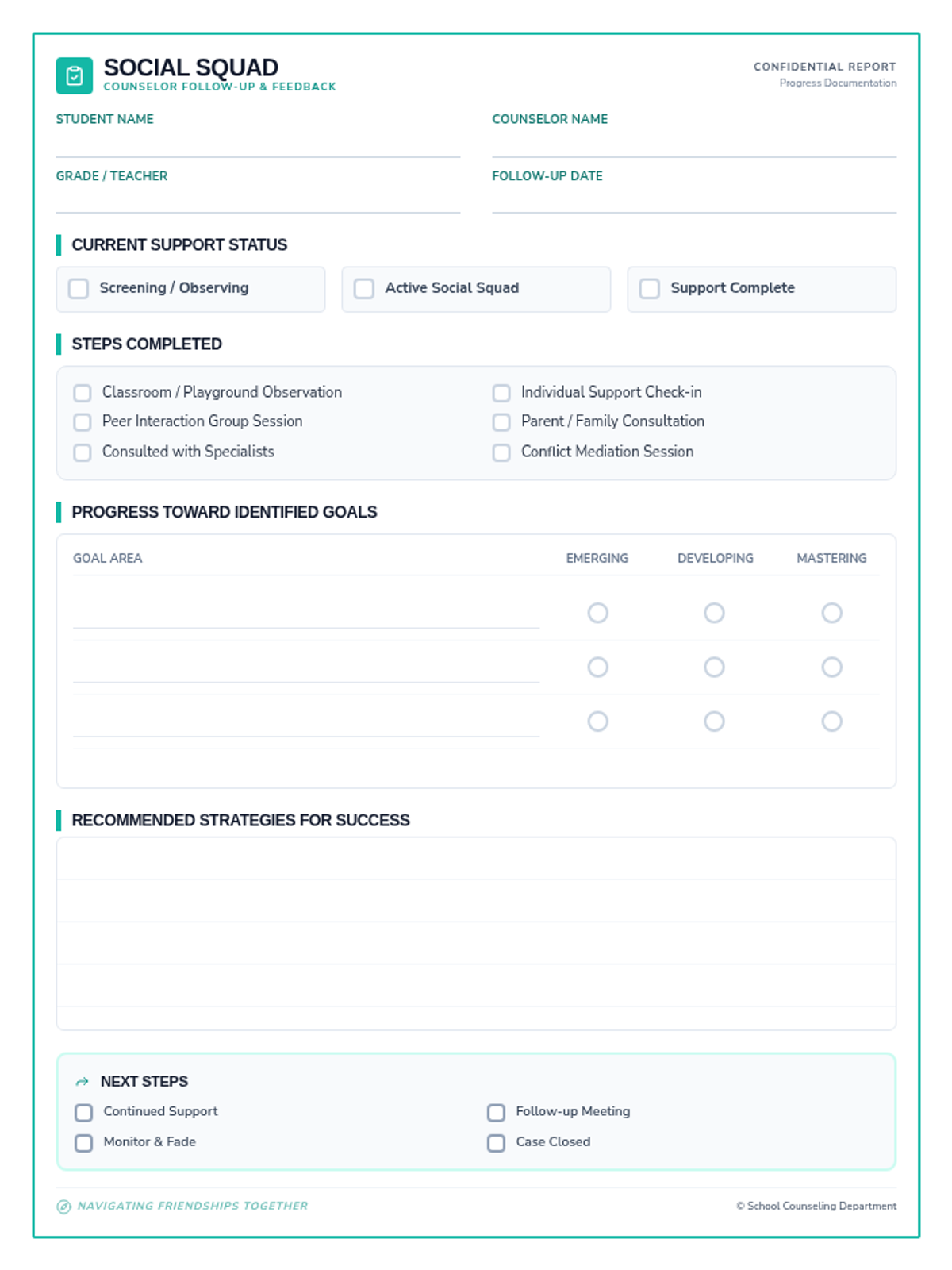
A suite of professional school counseling forms for managing student referrals, tracking progress, and providing feedback to teachers and families.
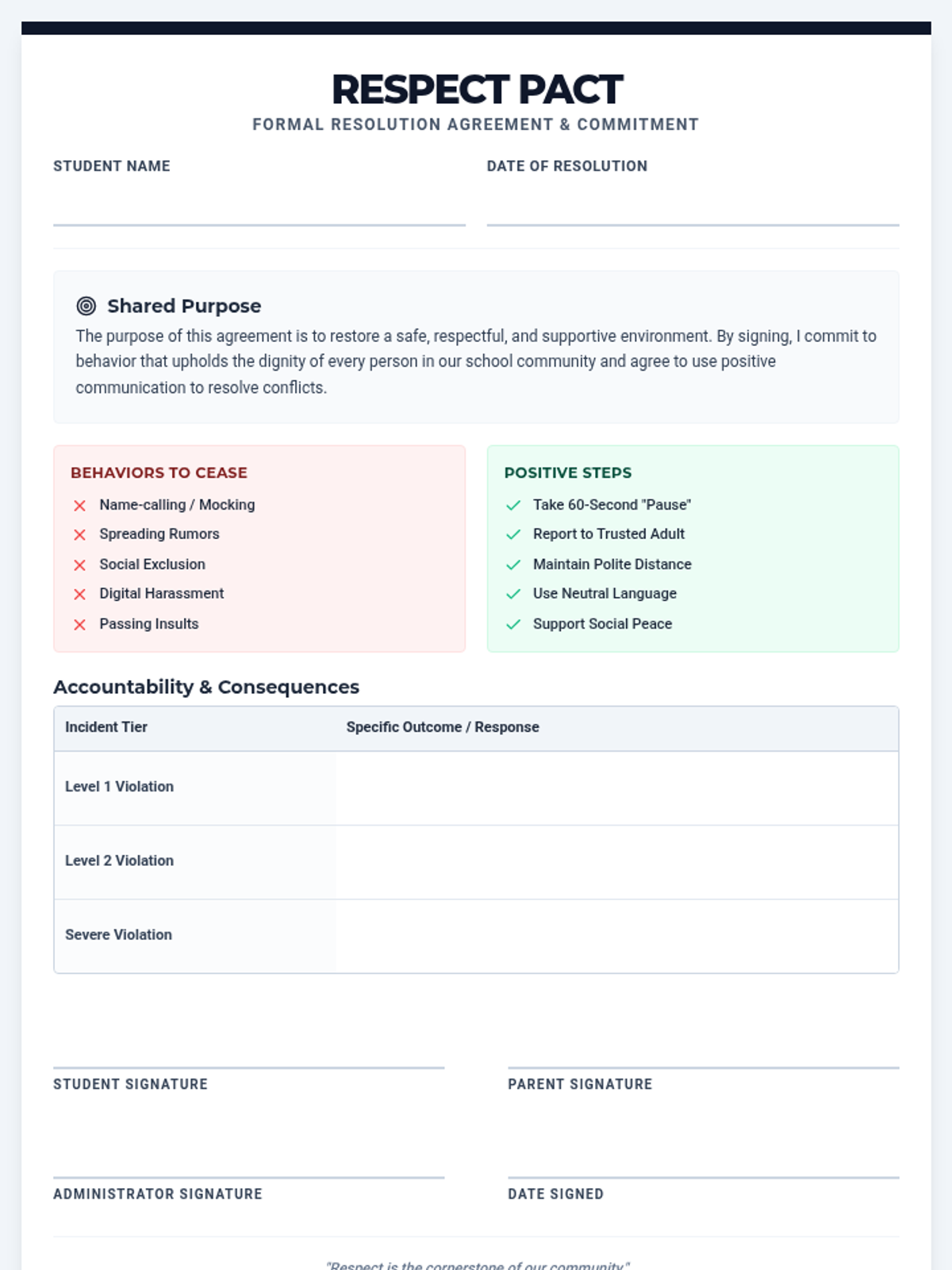
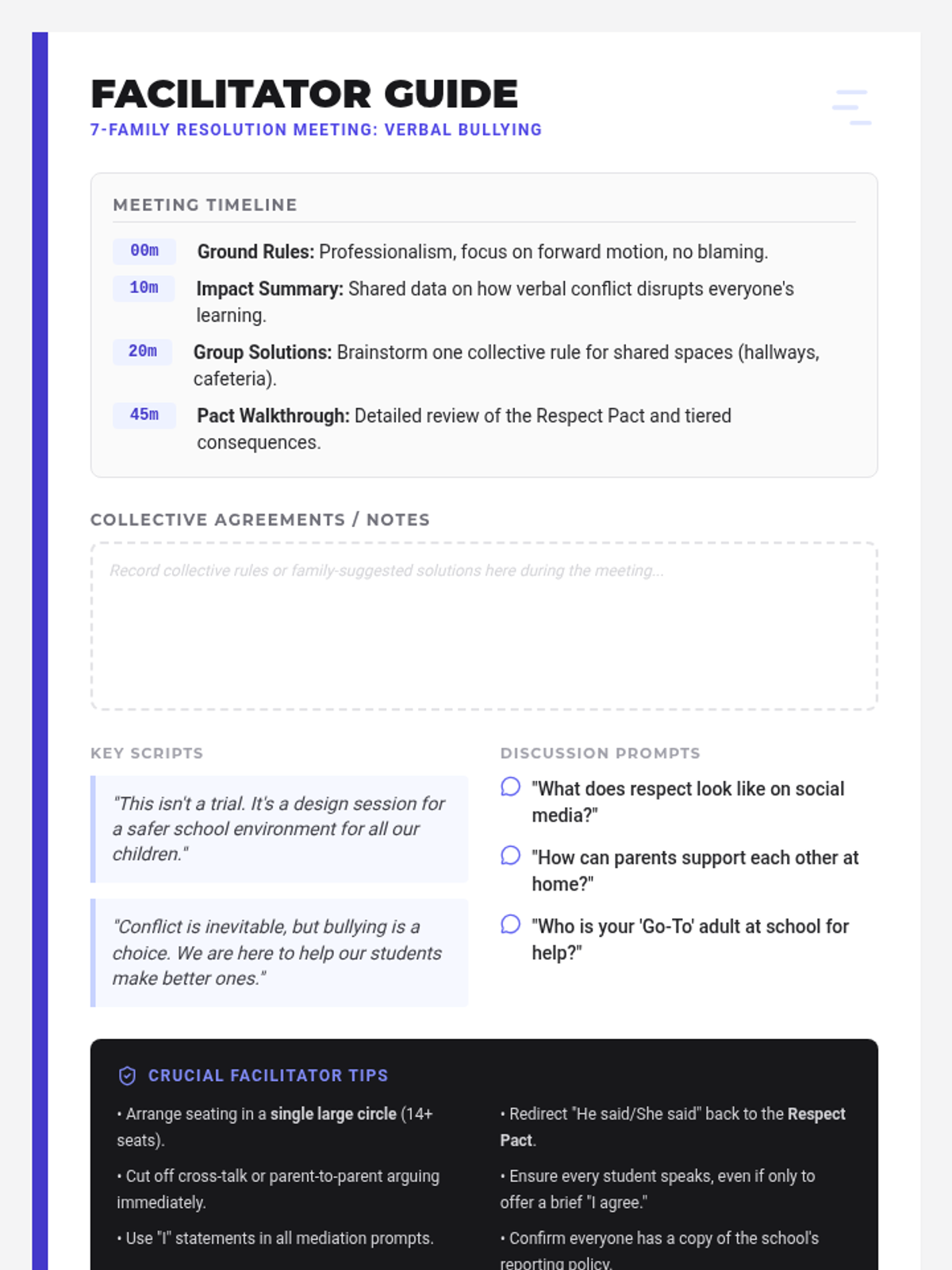
A comprehensive set of materials to facilitate a formal family meeting and establish clear behavioral expectations following a conflict involving verbal bullying.
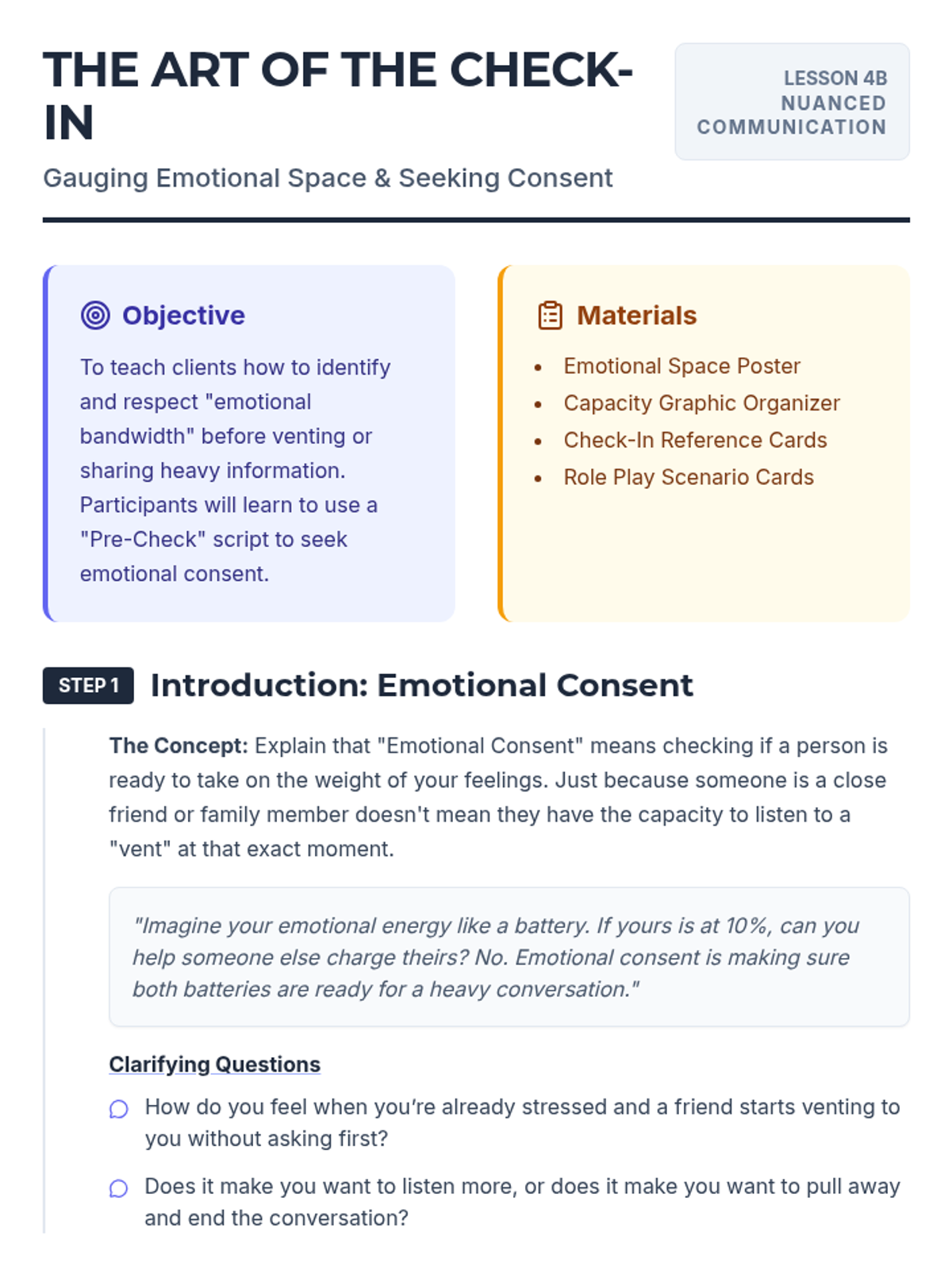
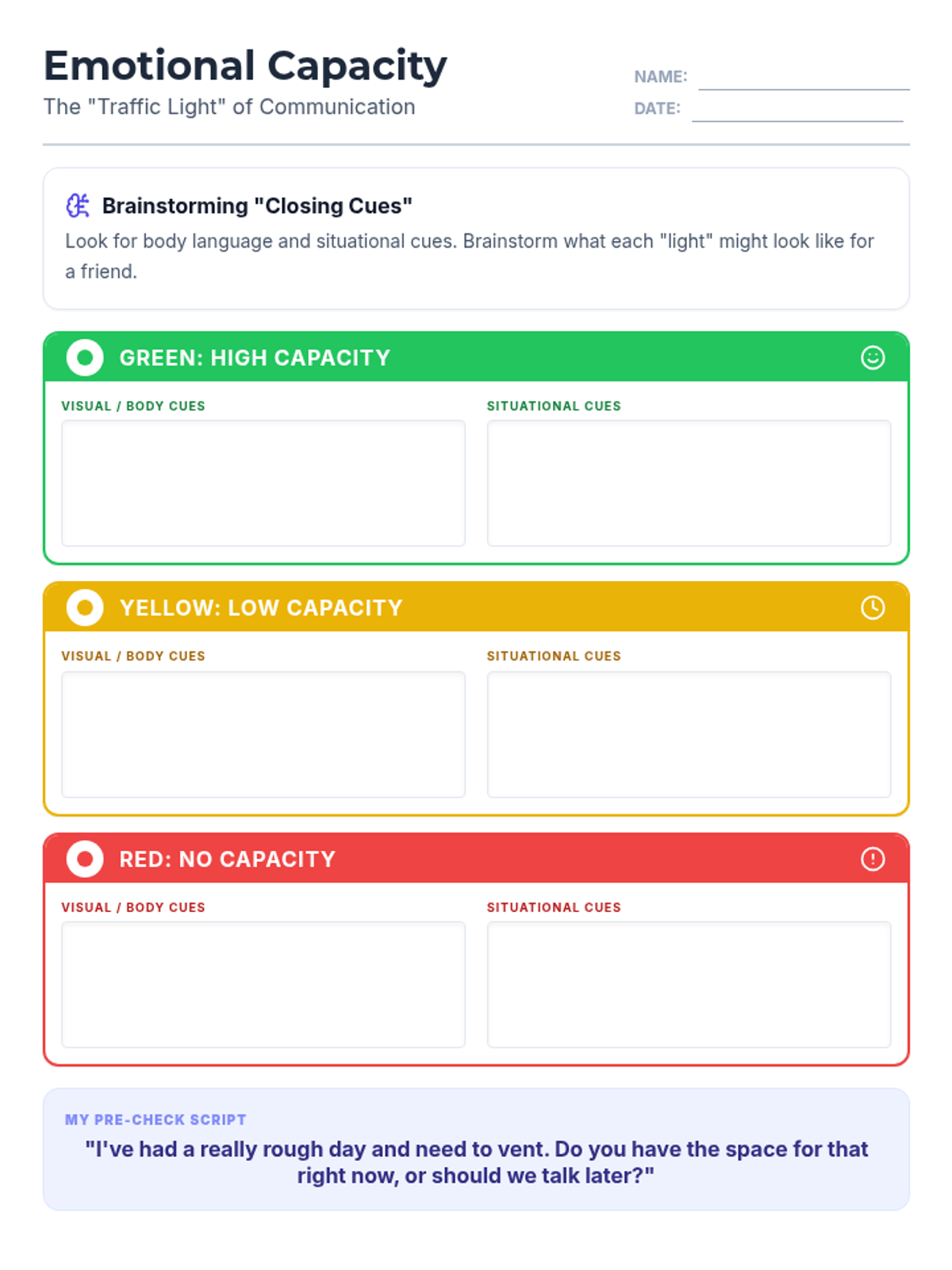
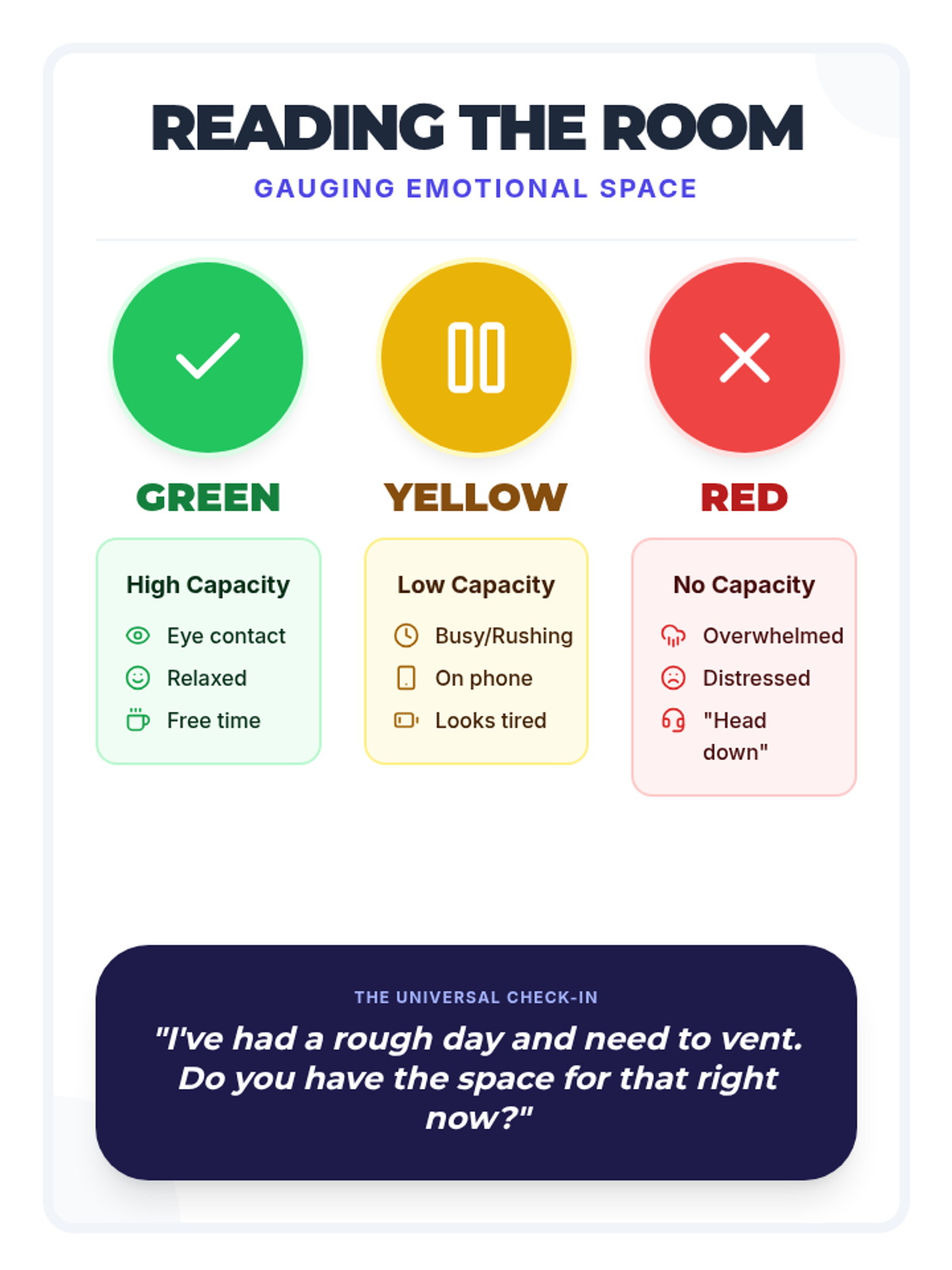
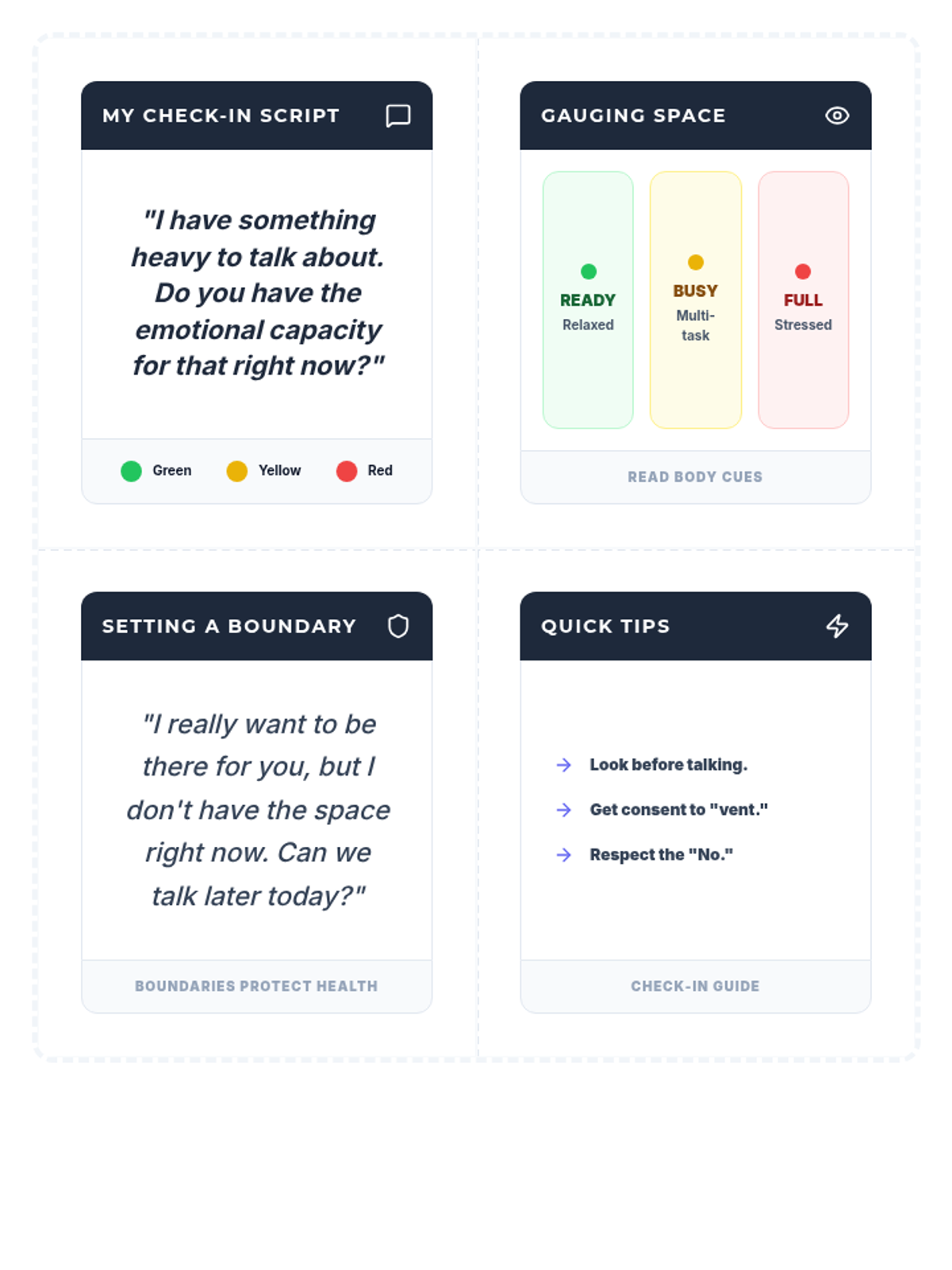
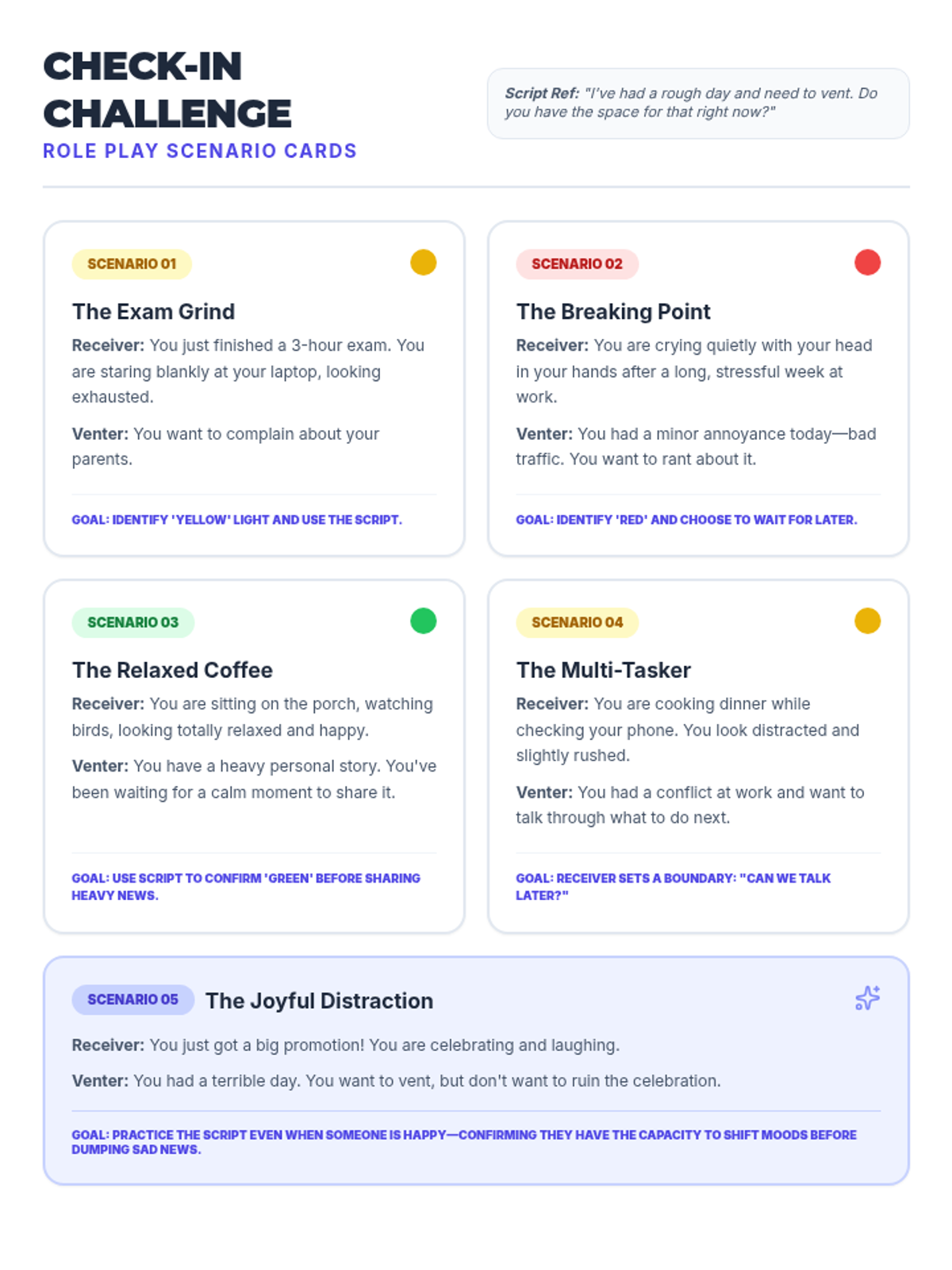
A comprehensive lesson for teens and adults on the concept of 'Emotional Consent' and learning to gauge someone's capacity before sharing heavy or stressful information.
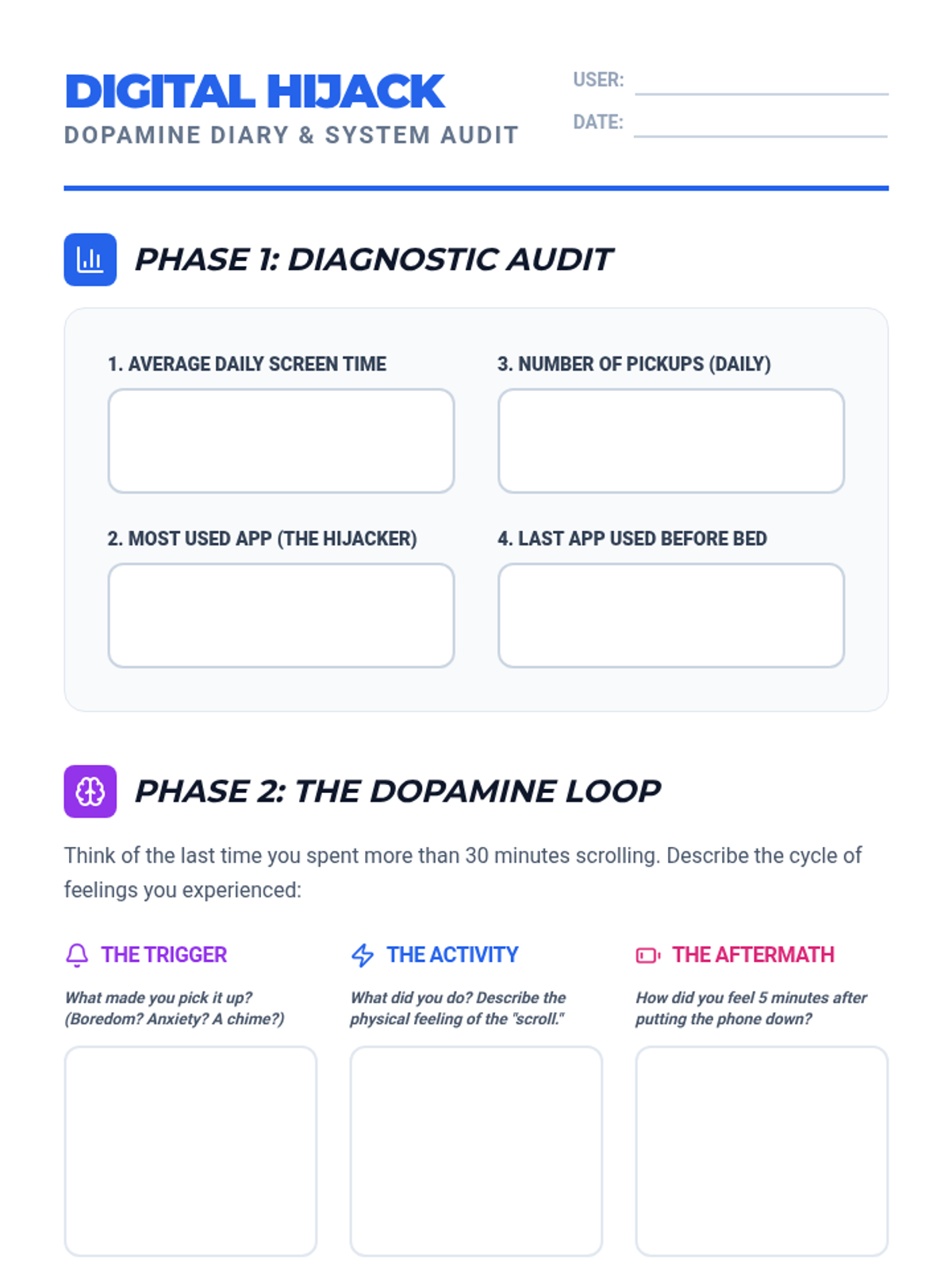
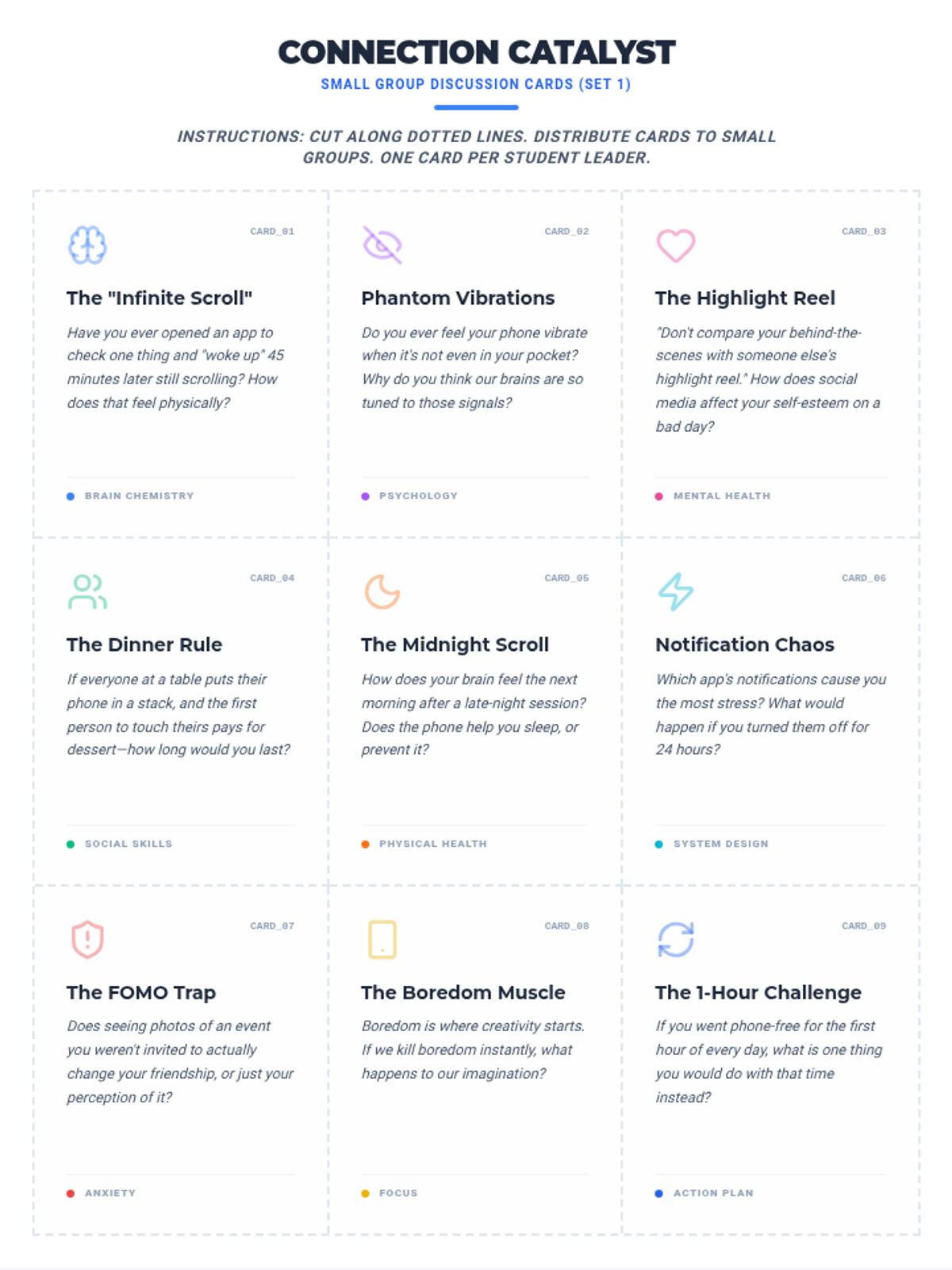
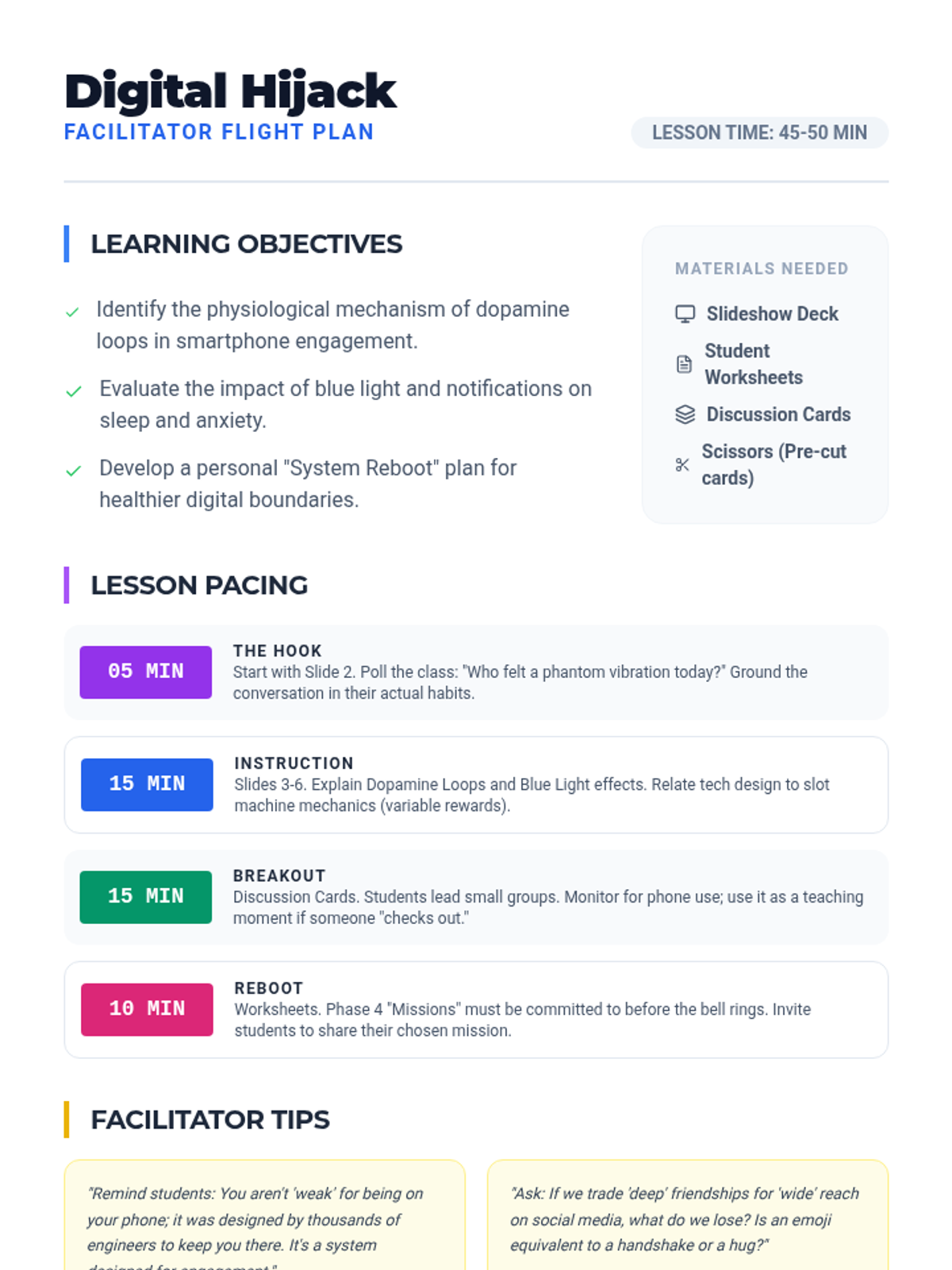
A comprehensive lesson for teenagers exploring the physiological and psychological impacts of smartphone addiction, covering dopamine loops, sleep disruption, anxiety, and social isolation.
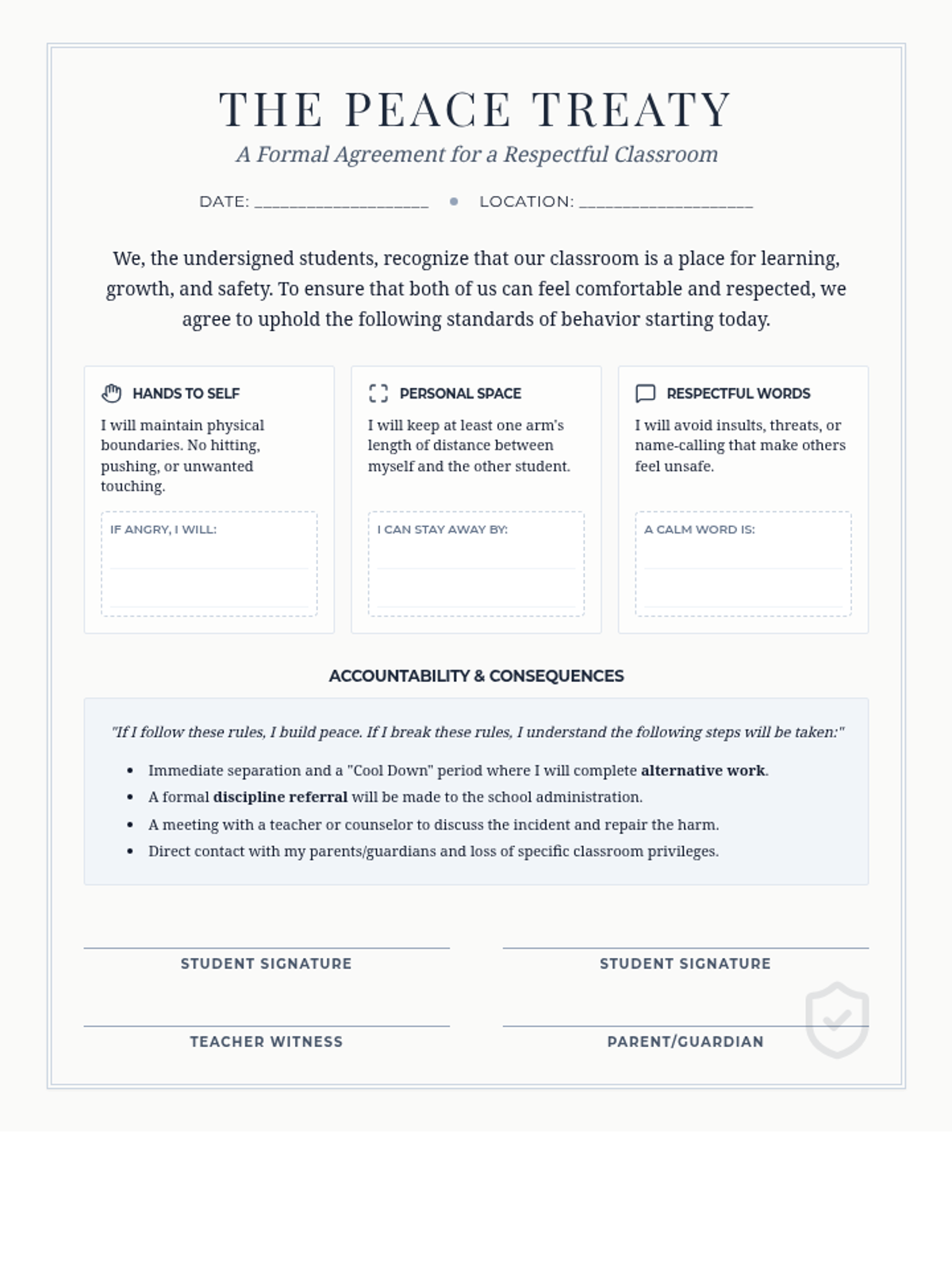
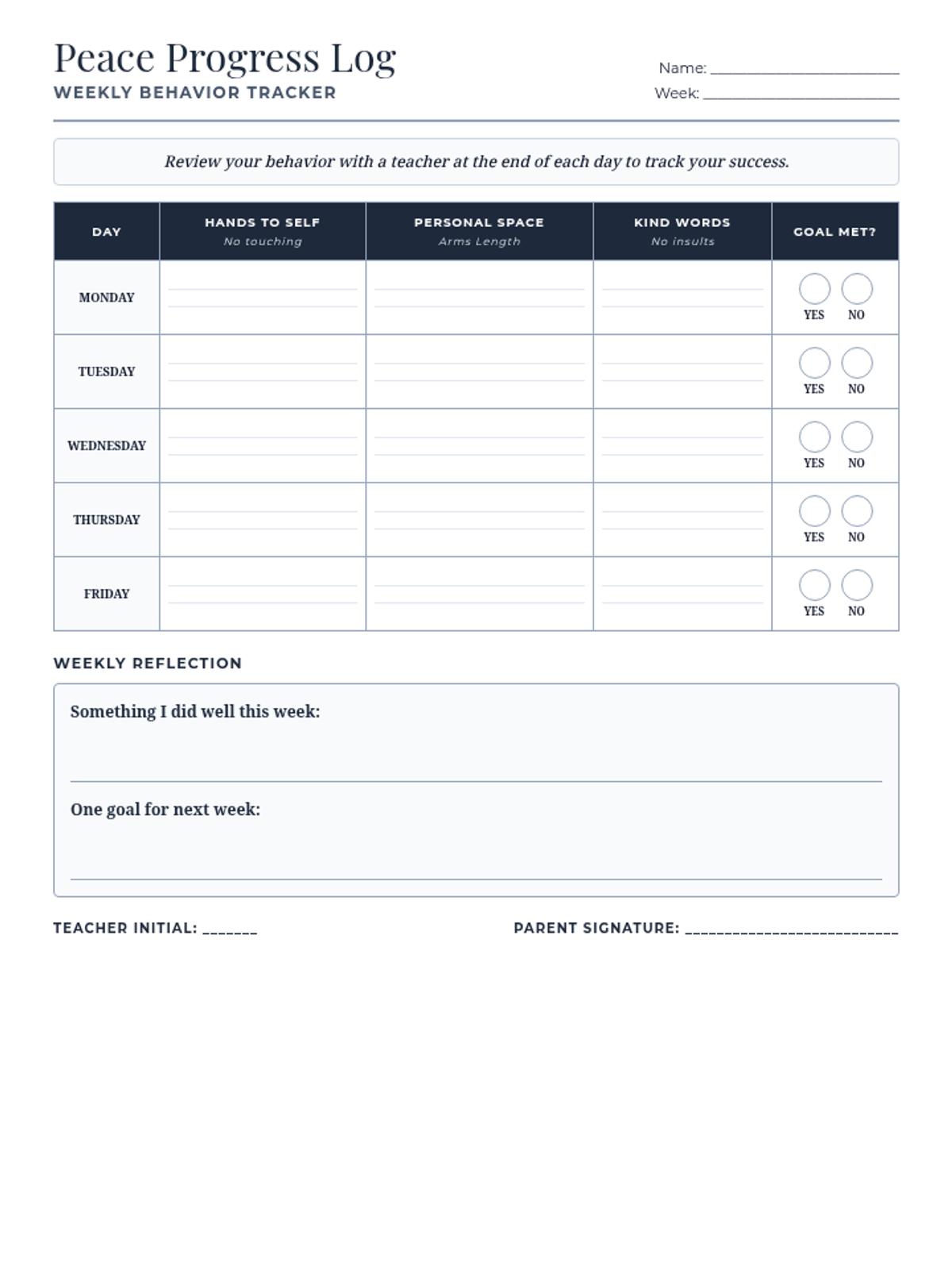
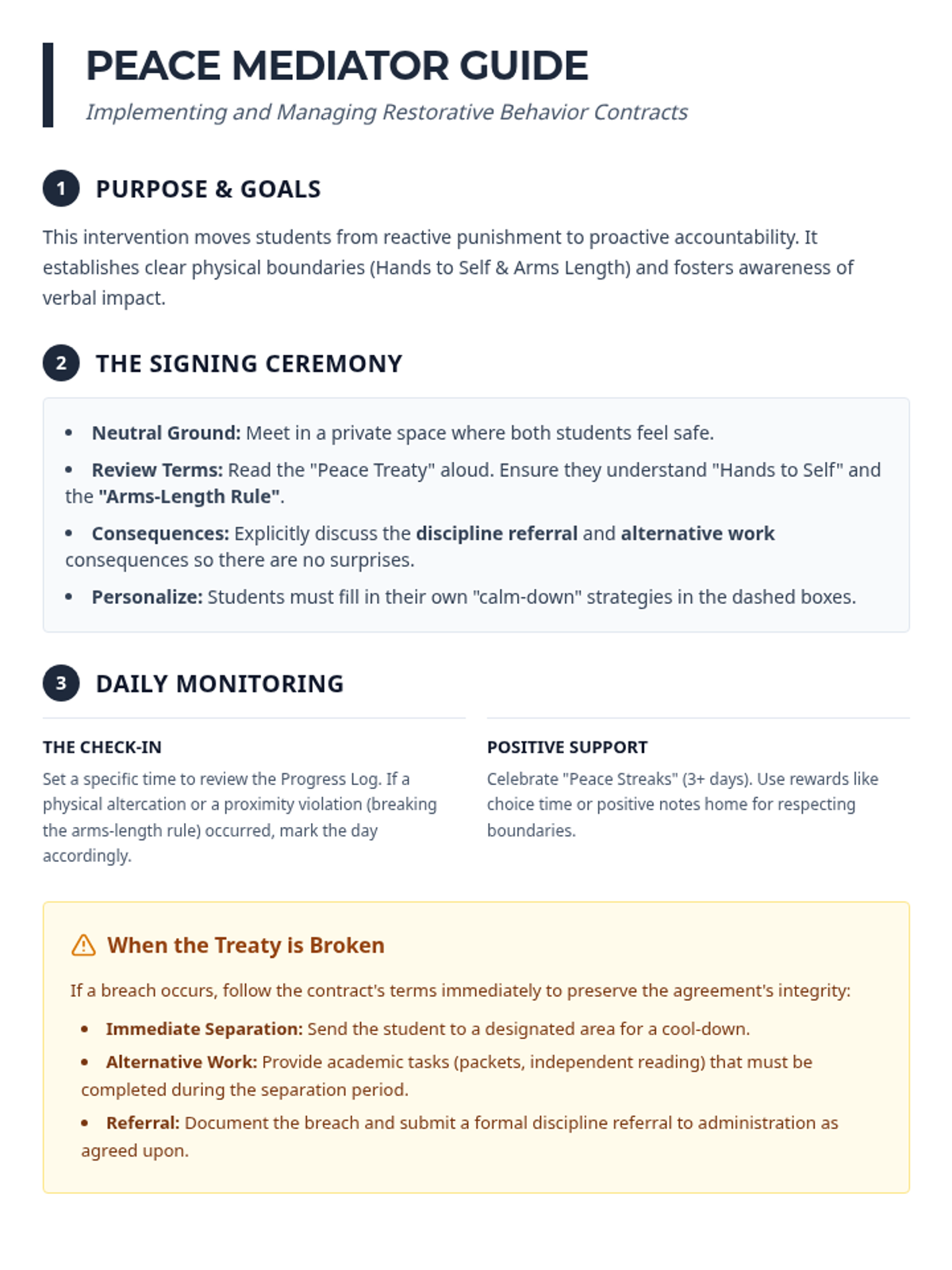
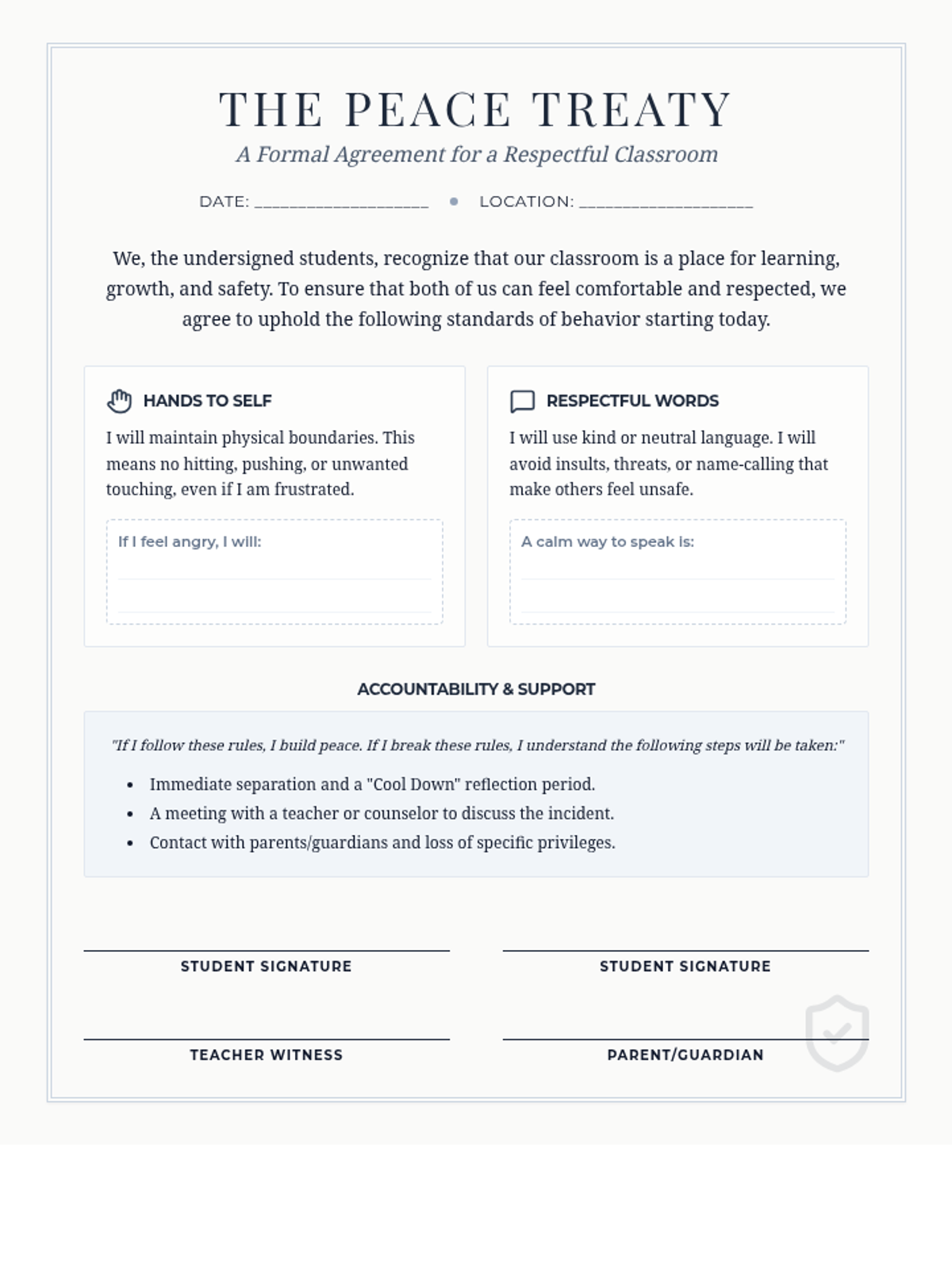
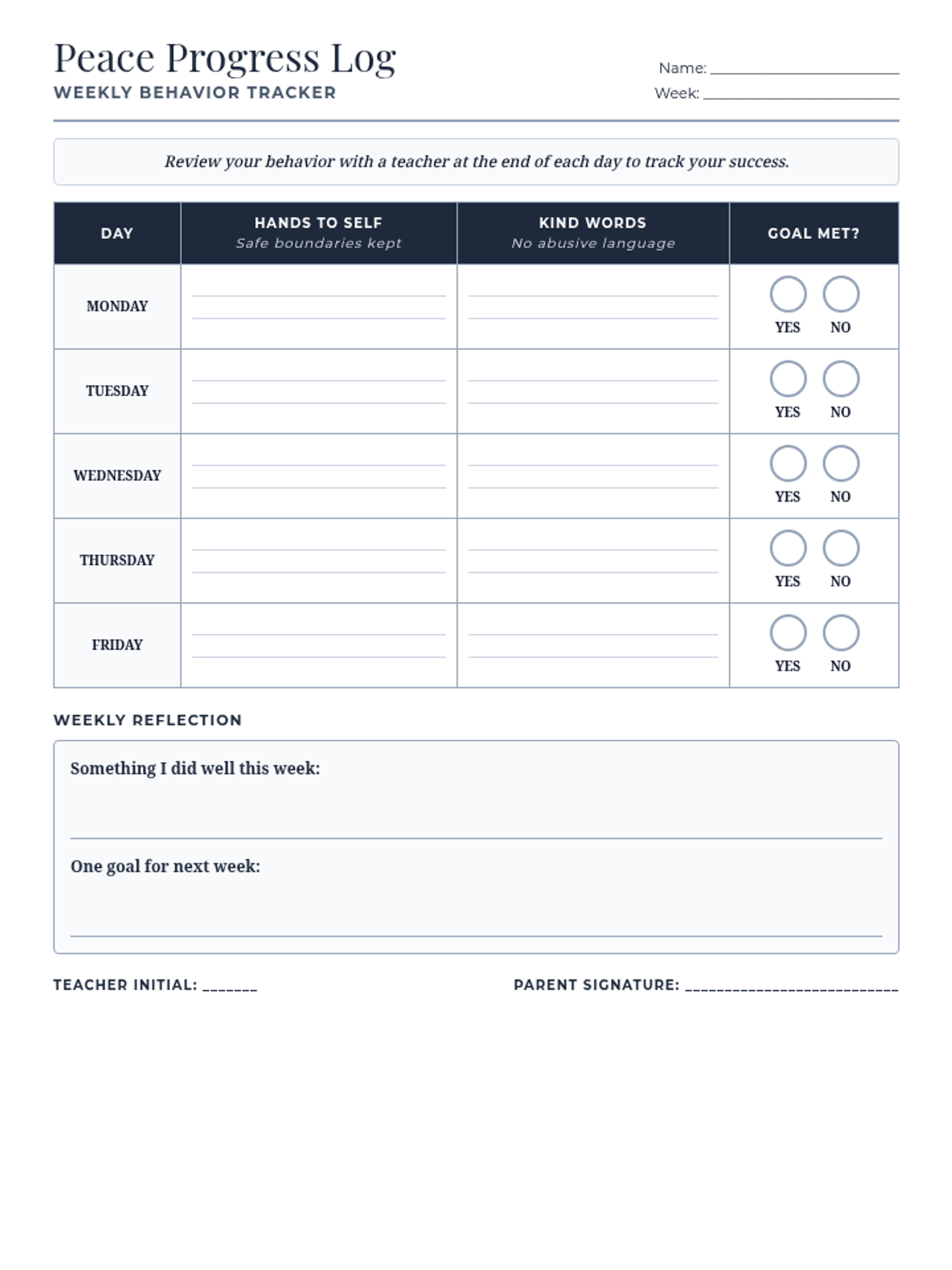
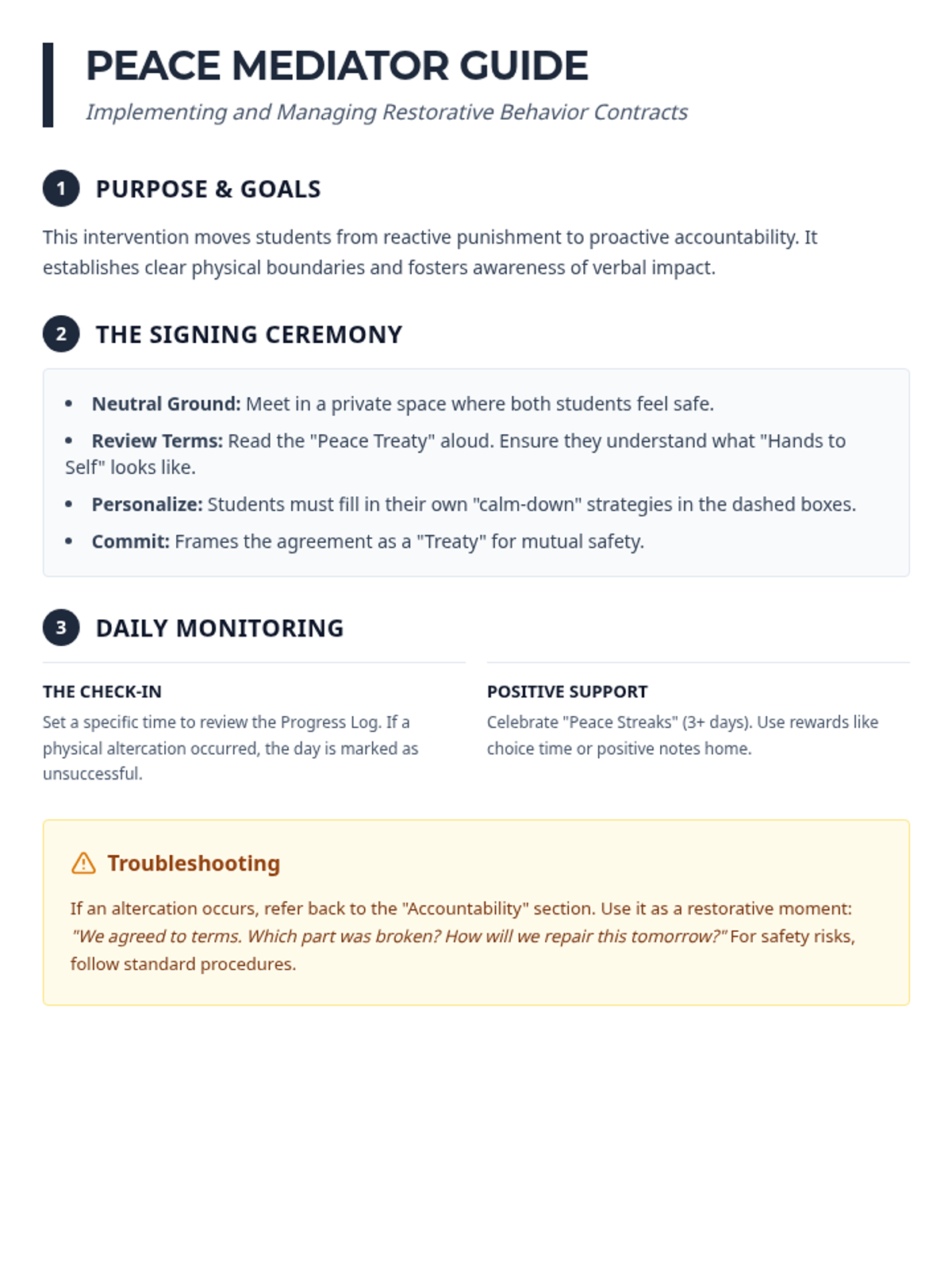
A restorative behavioral intervention focused on resolving physical conflict and verbal aggression through a formal behavior contract and daily progress tracking.
A restorative behavioral intervention focused on resolving physical conflict and verbal aggression between two students through a formal agreement and daily tracking.
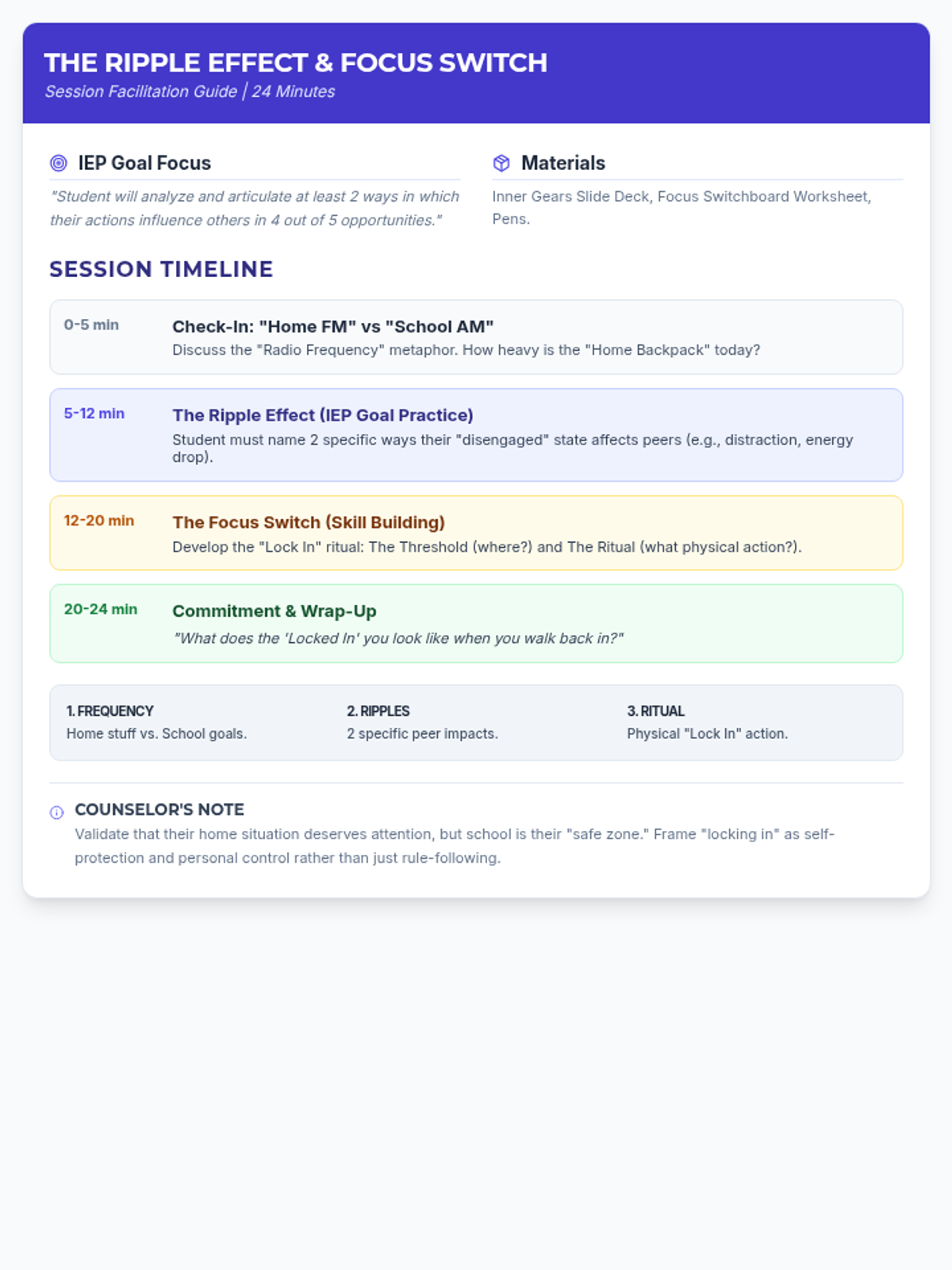
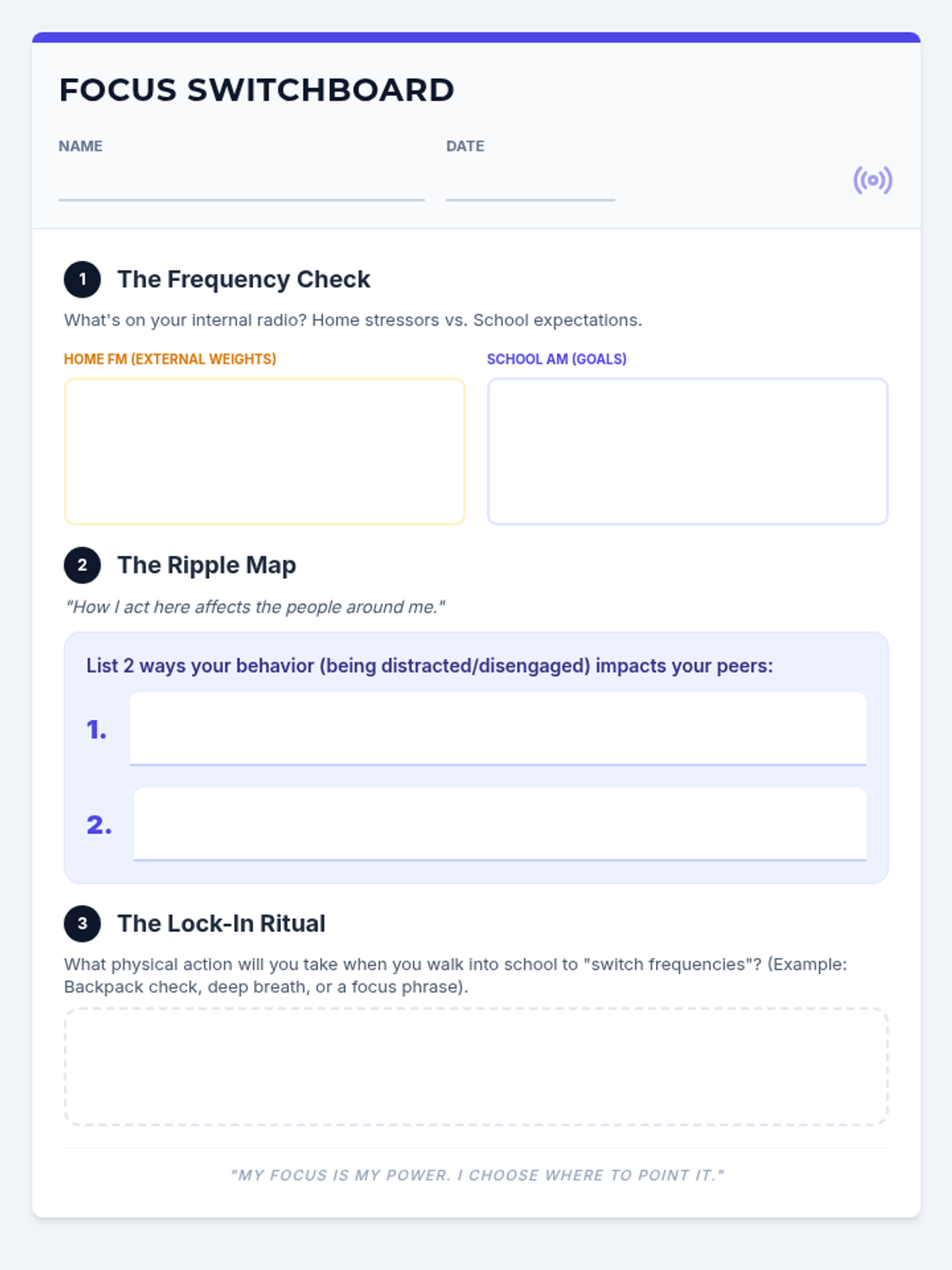
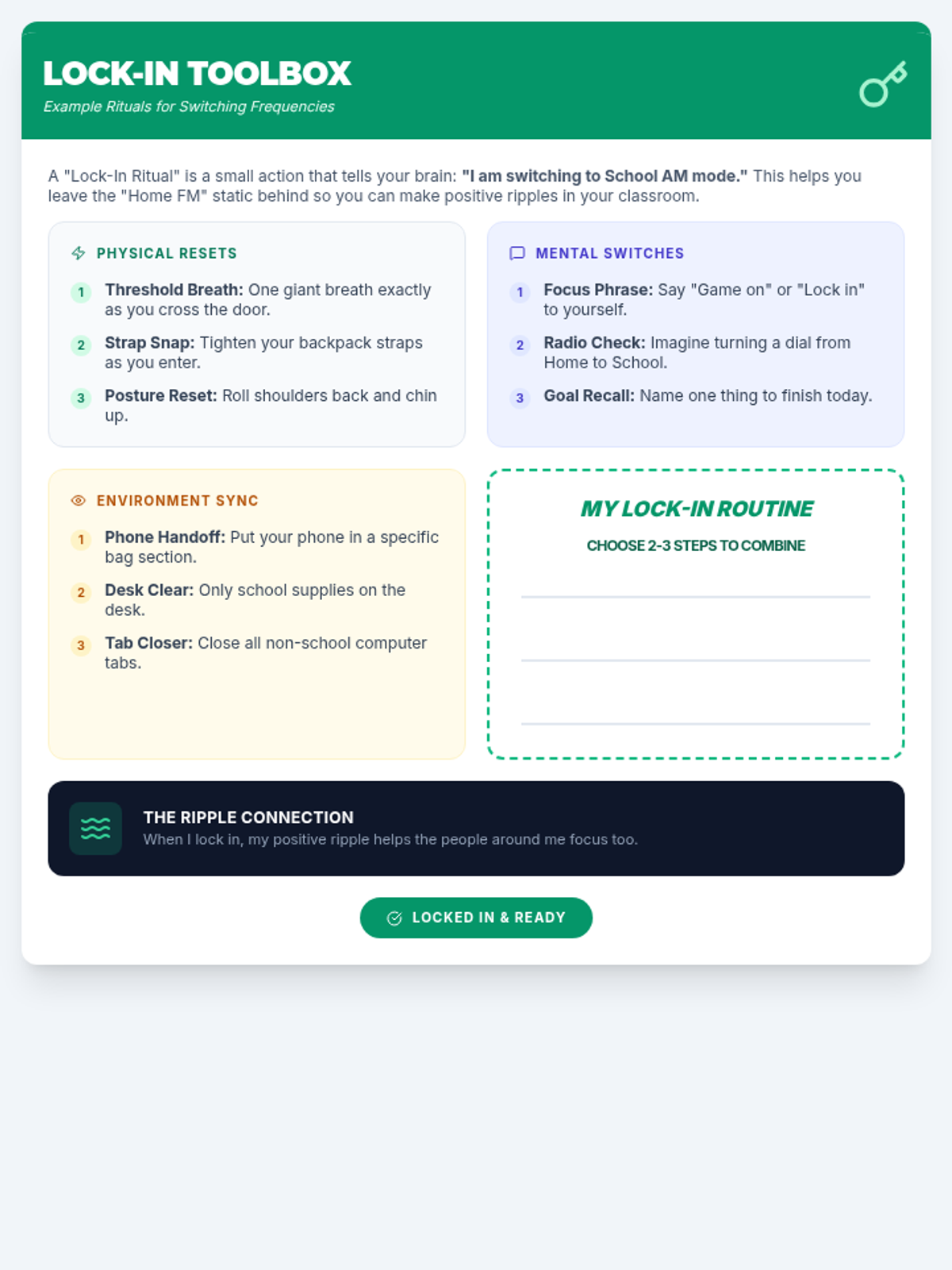
A 24-minute counseling session focused on helping a student navigate the transition from home stressors to school expectations, emphasizing the impact of their behavior on peers and developing a 'lock-in' strategy for the school day.
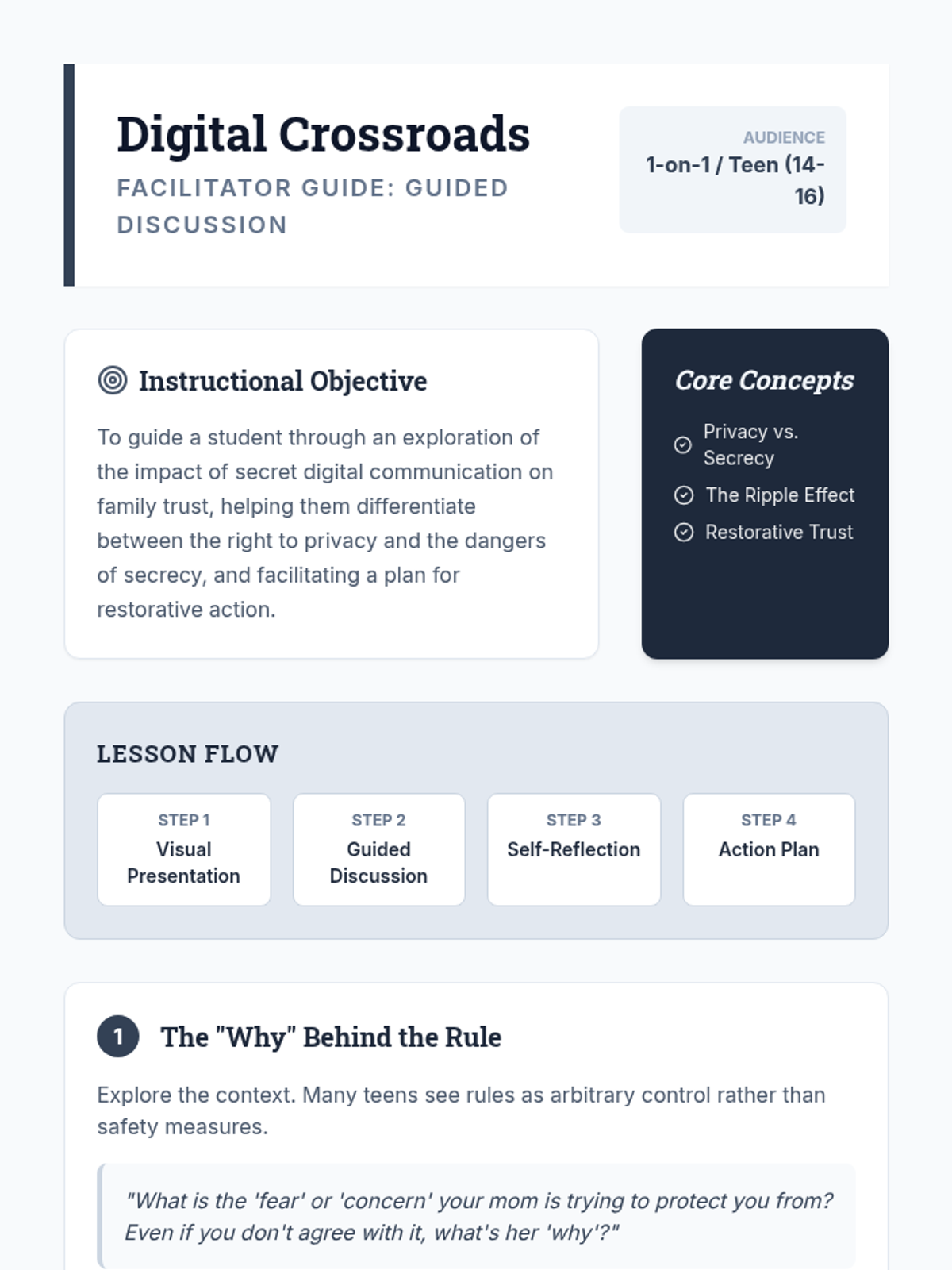
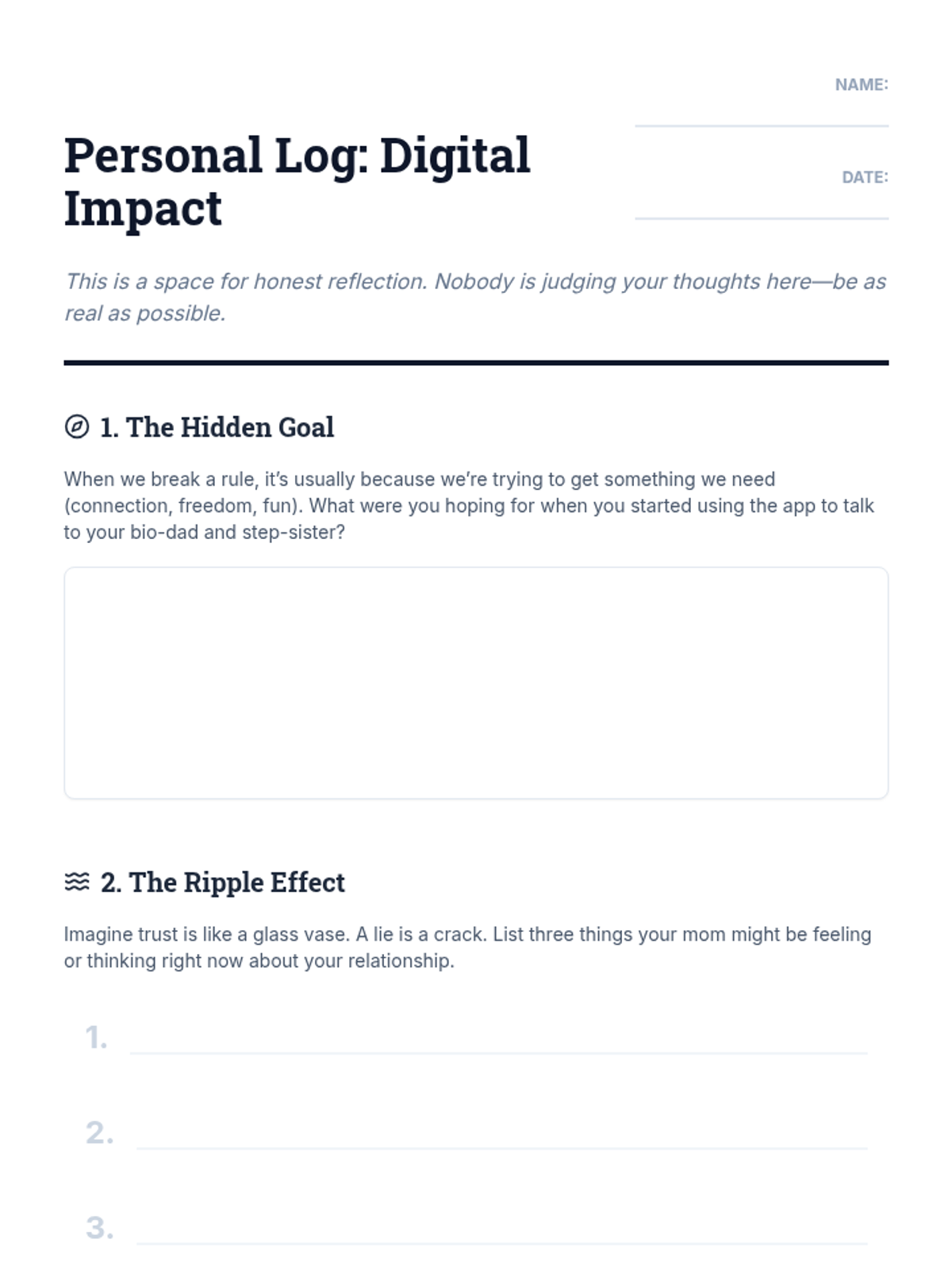
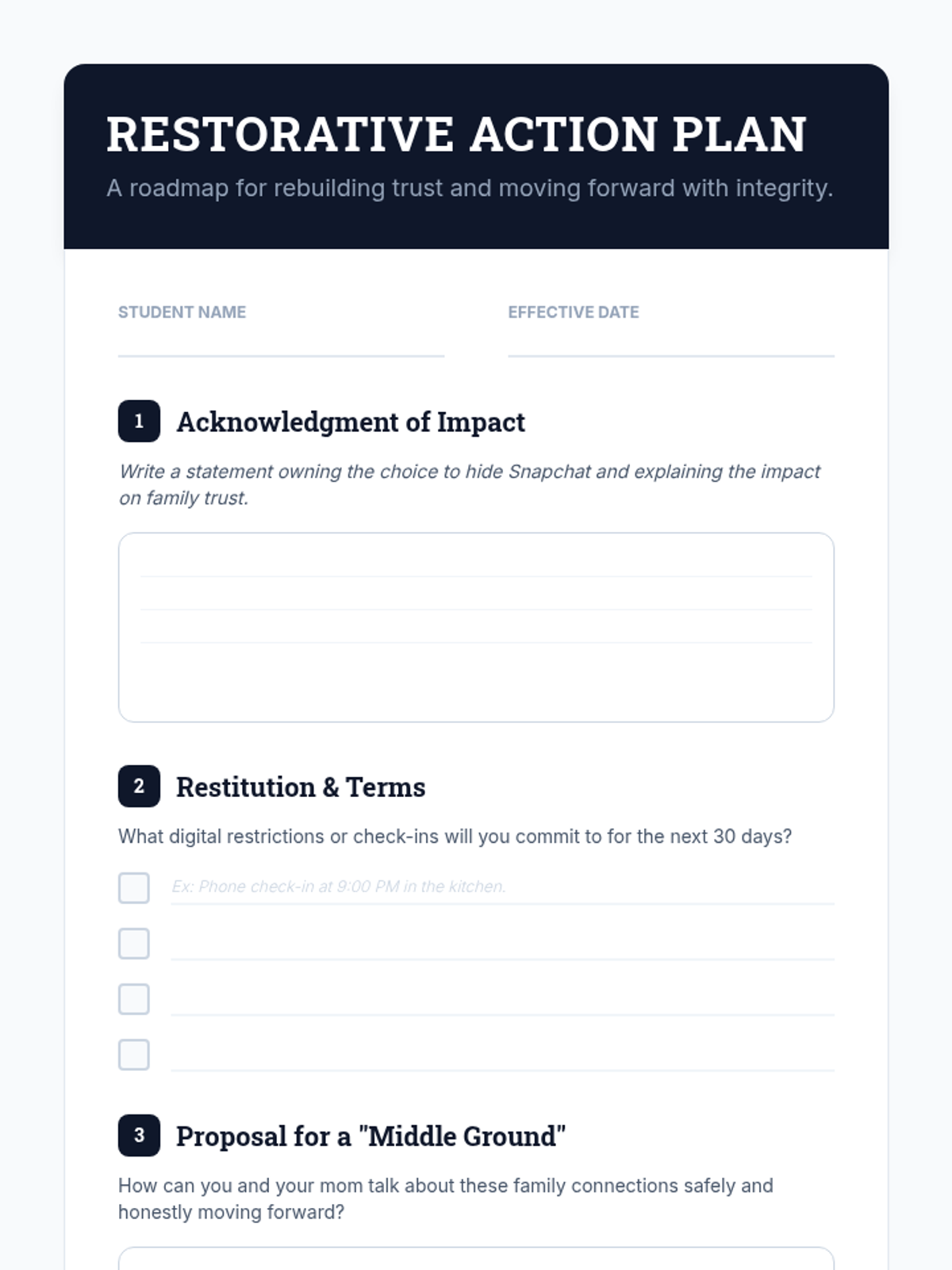
A restorative lesson designed for a teenager to navigate the complexities of digital boundaries, family trust, and secret communication. It focuses on the difference between privacy and secrecy while providing a path forward through restorative justice.
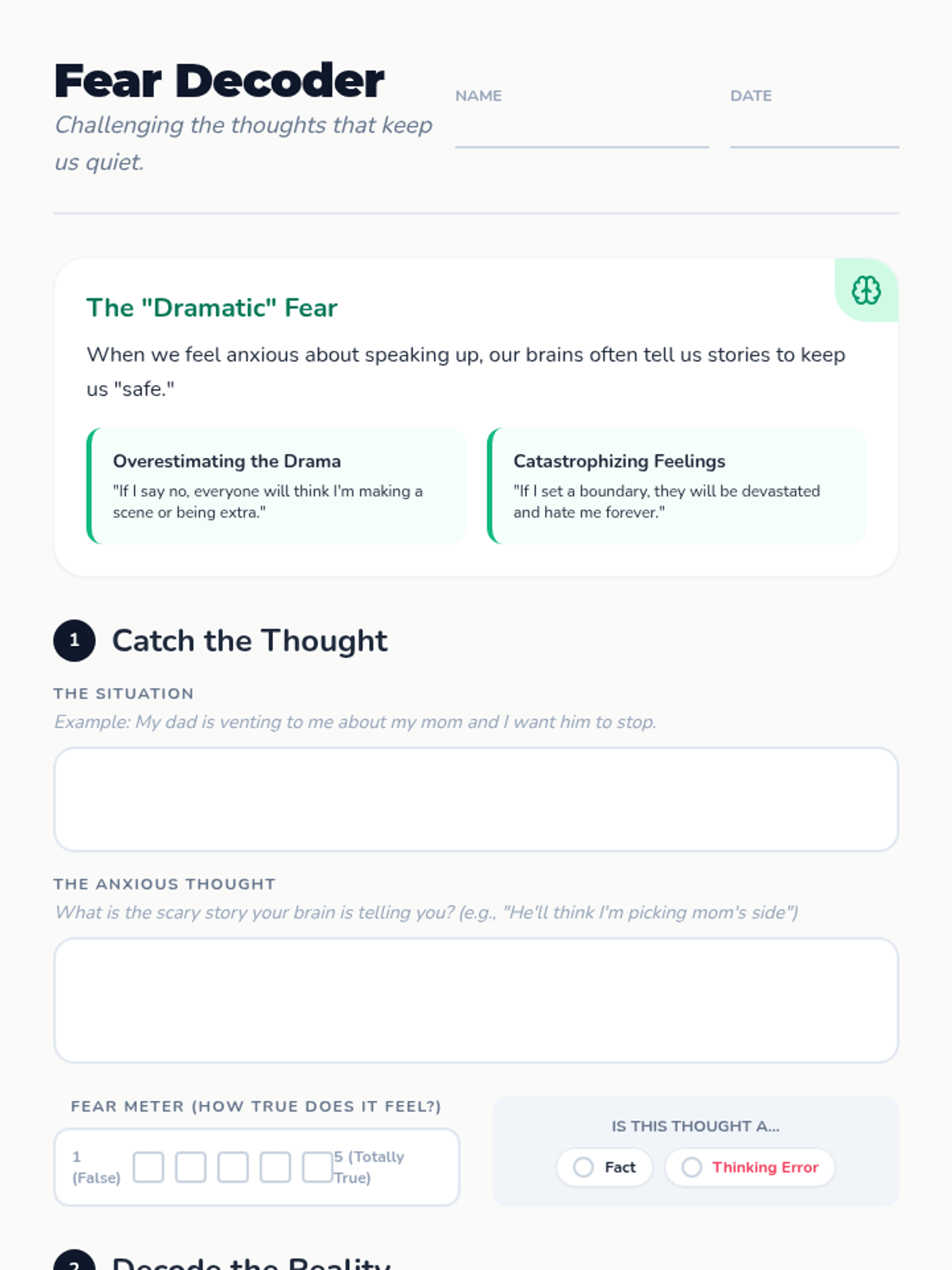
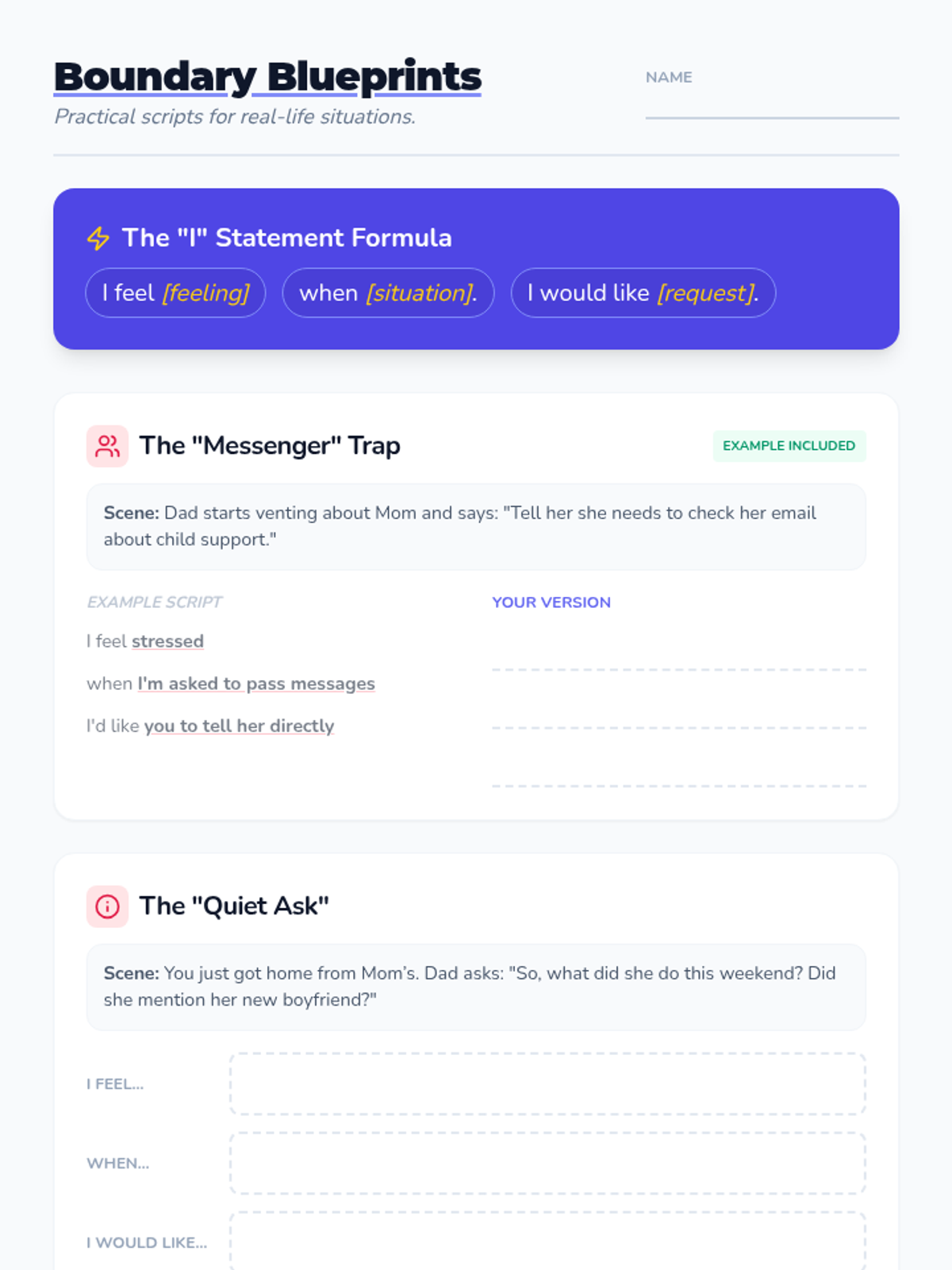
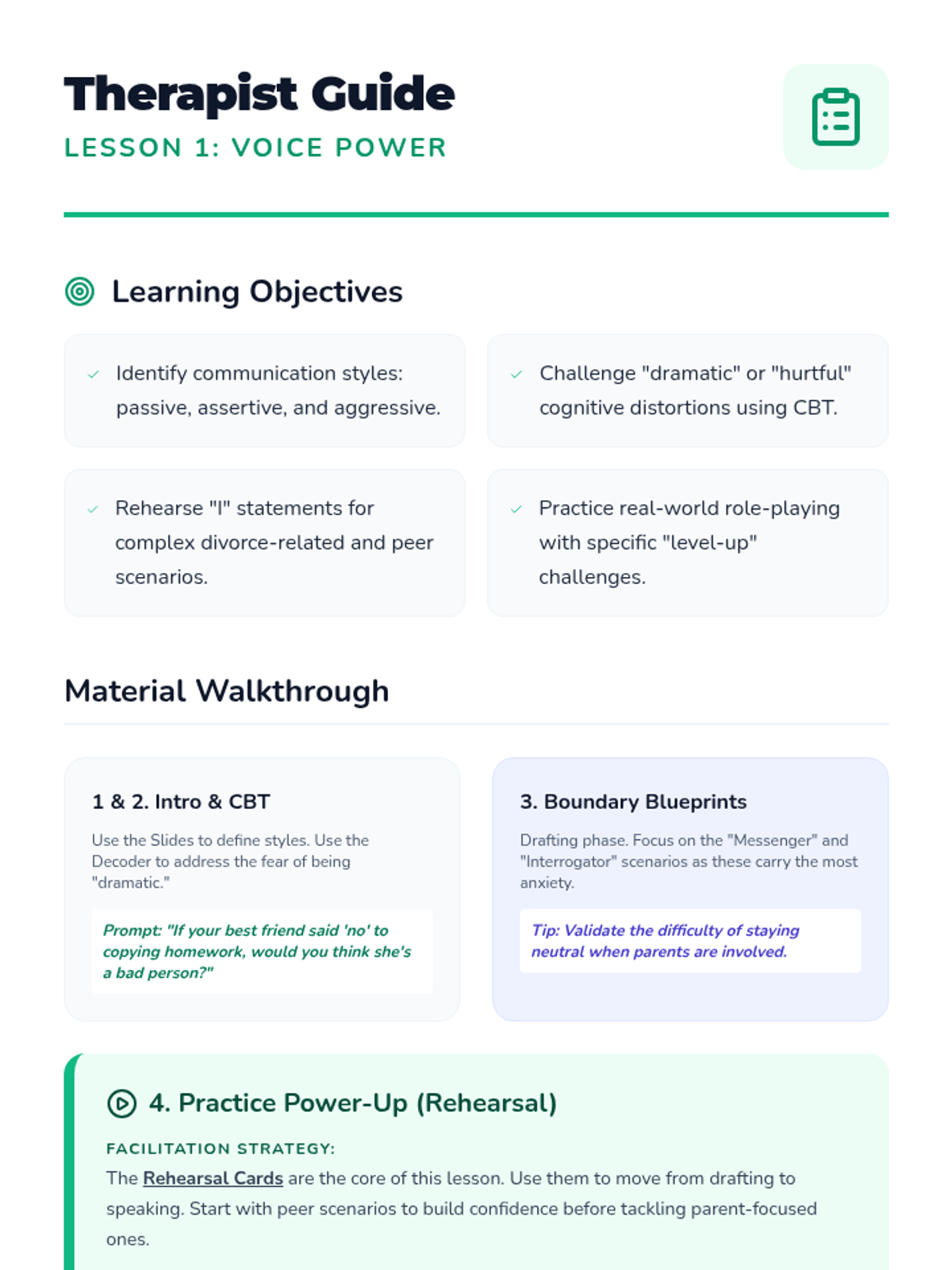
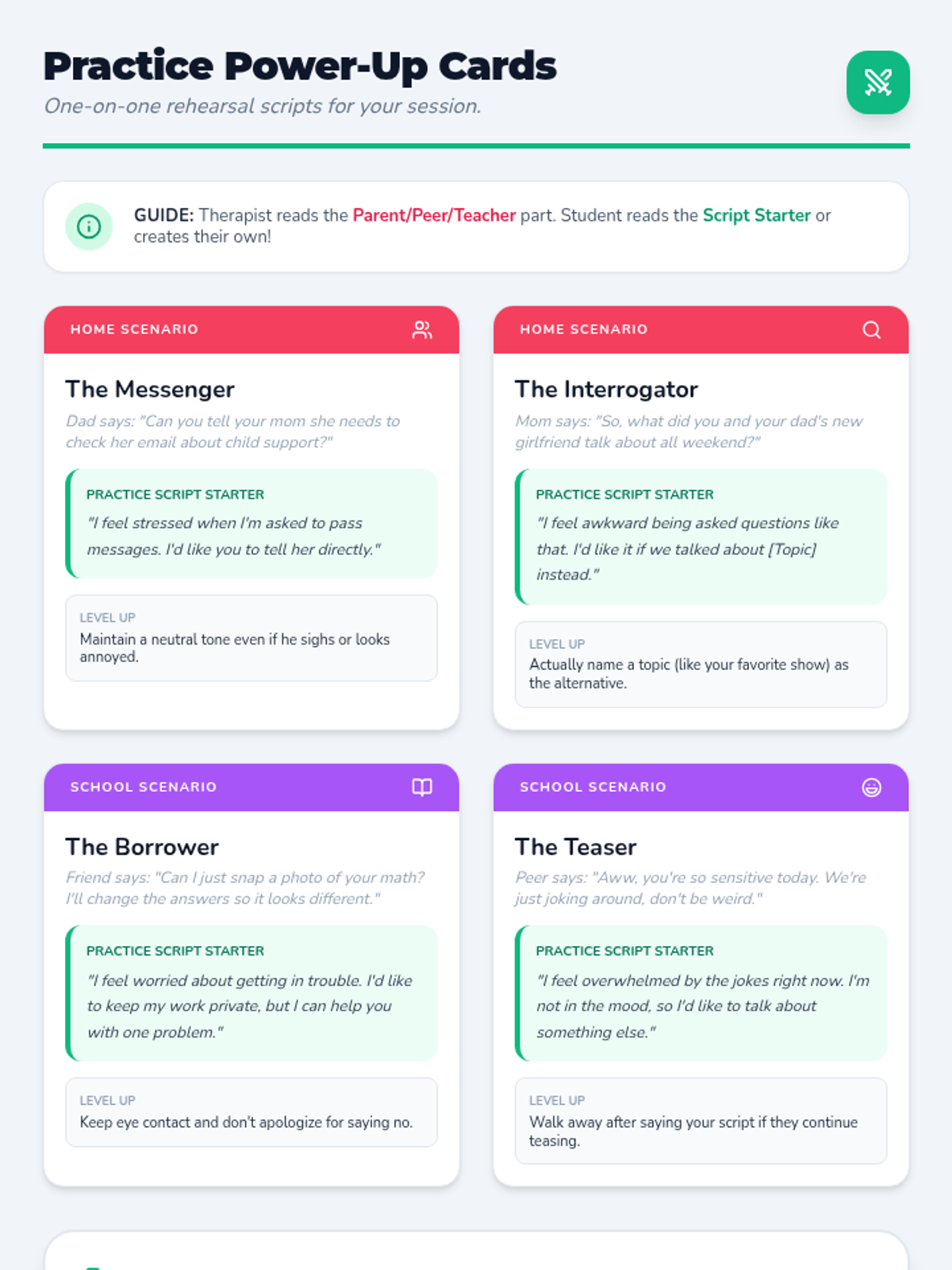
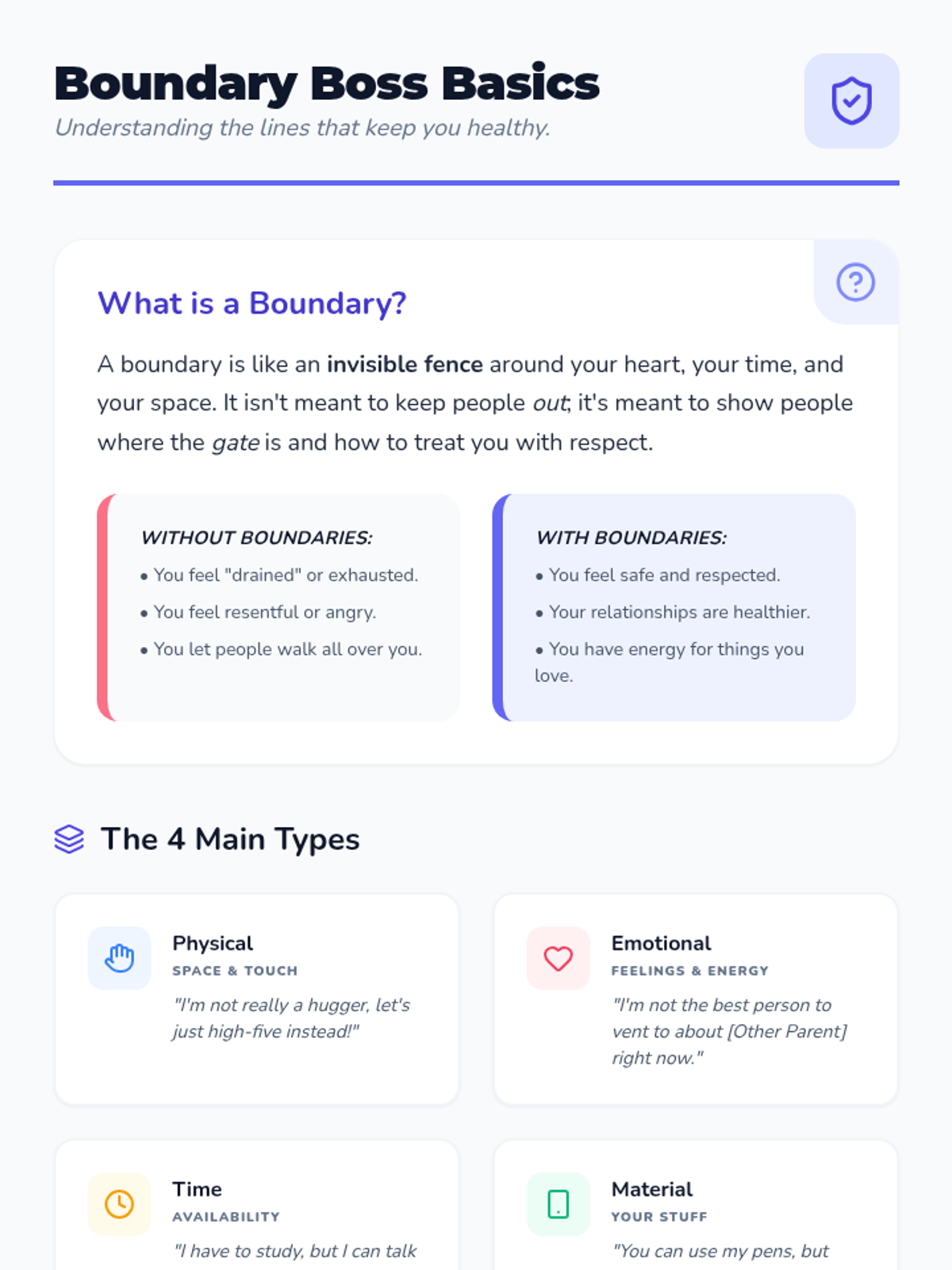
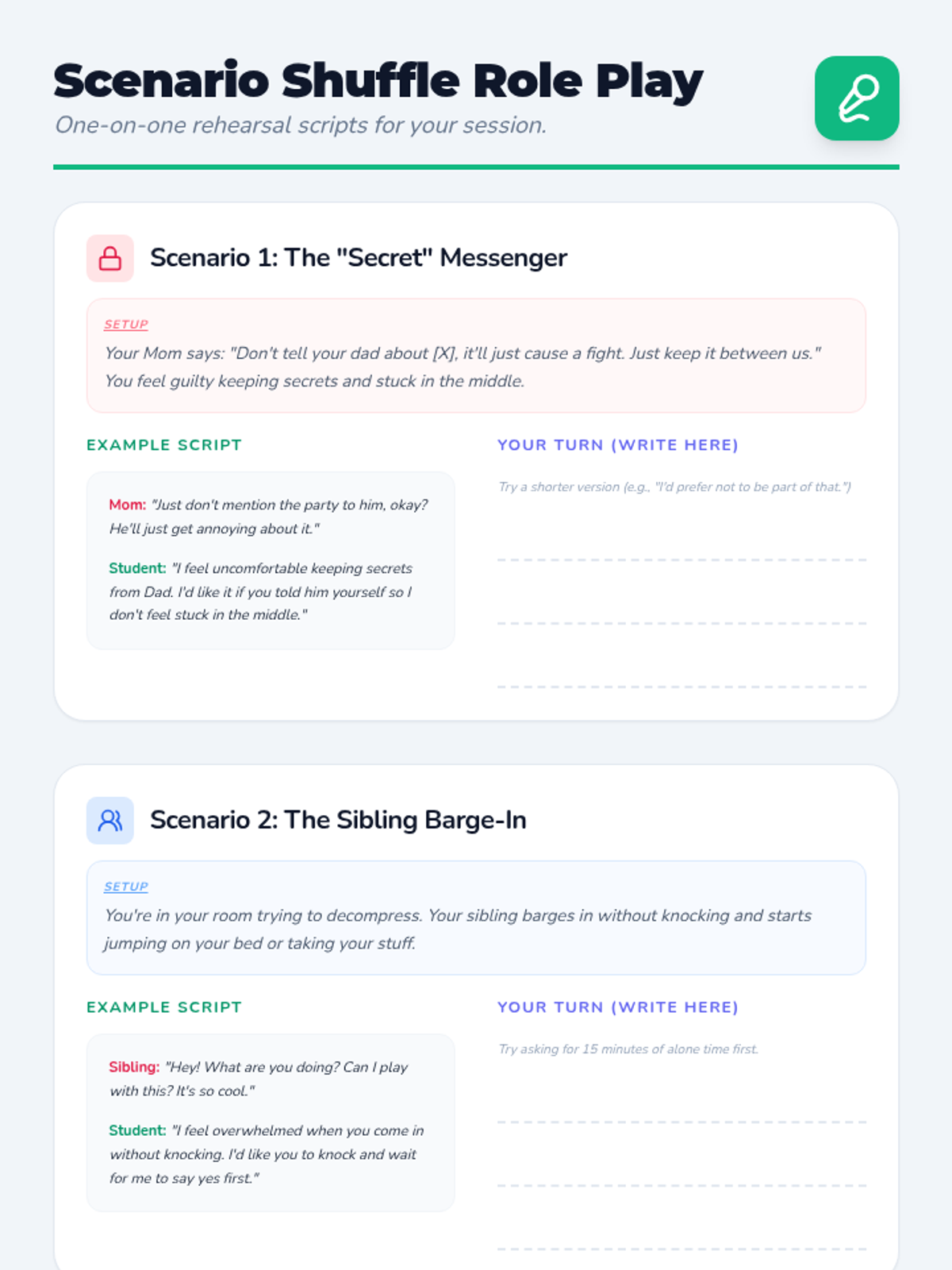
This lesson teaches an anxious 15-year-old girl how to differentiate between communication styles, challenge her fears of being 'dramatic' or 'hurting others', and develop practical scripts for handling her parents, friends, and teachers using CBT principles.
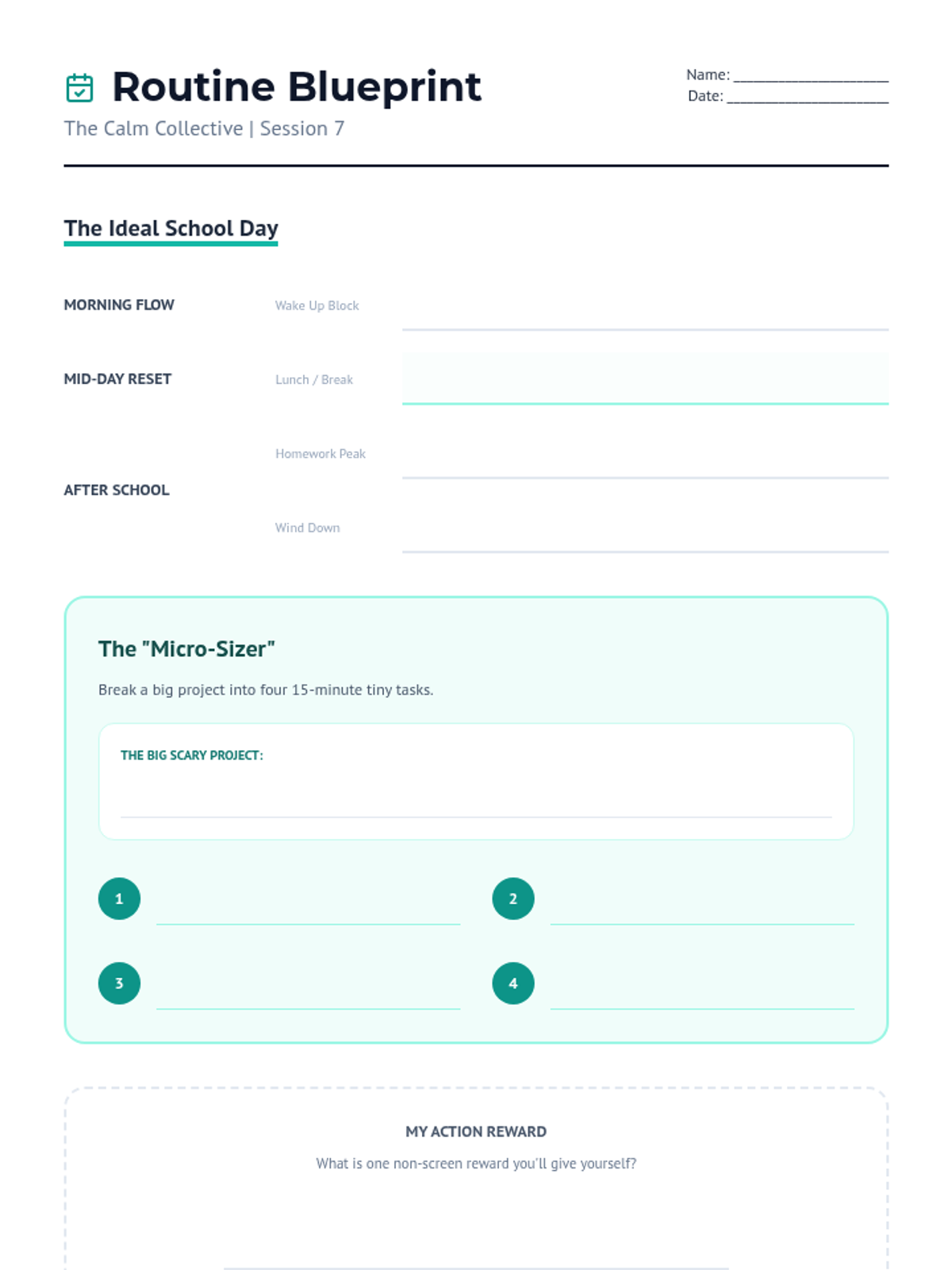
Students will apply their tools to future academic and personal stressors. This session focuses on time management, goal setting, and creating a proactive plan for high-stress periods.
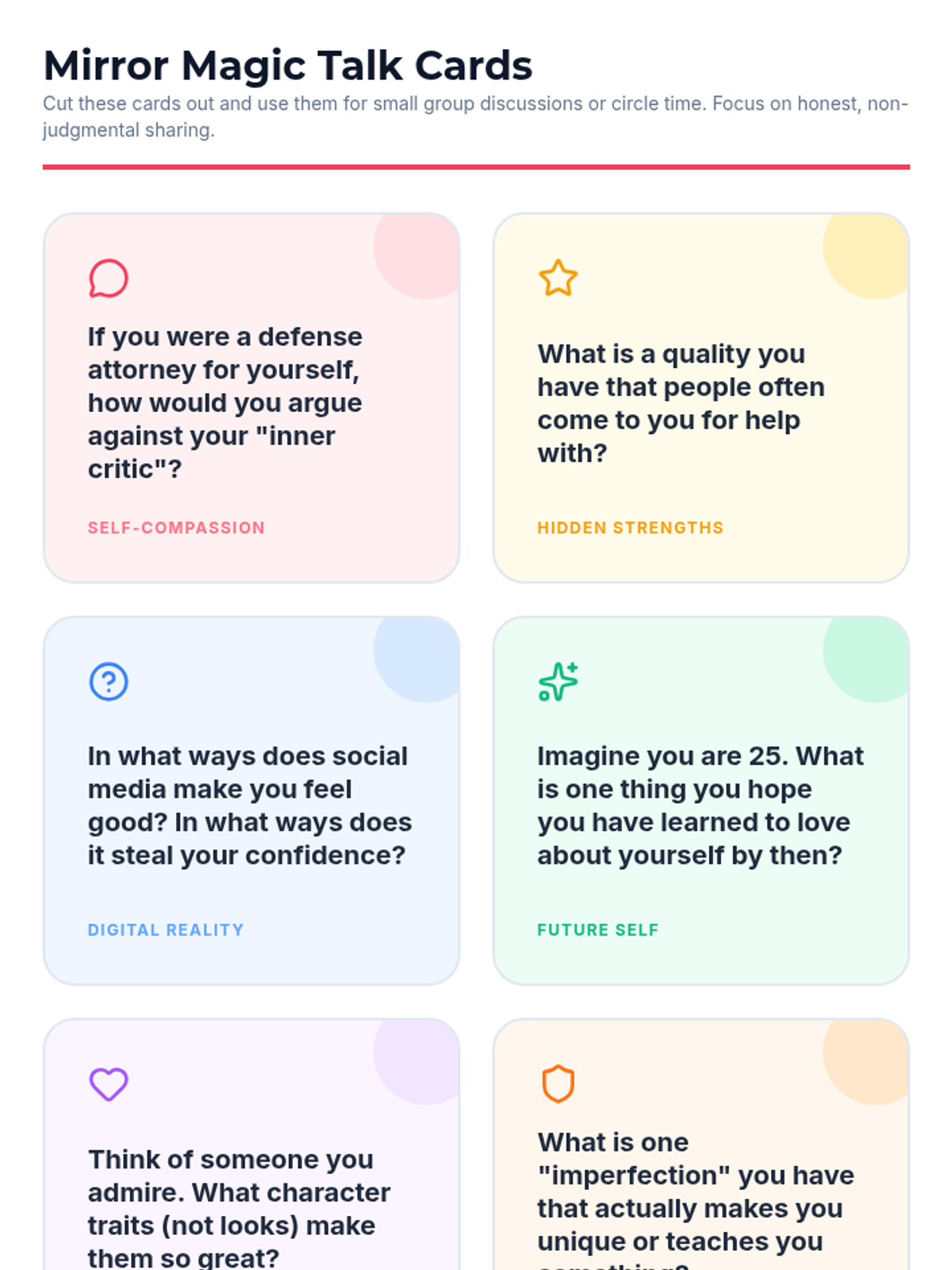
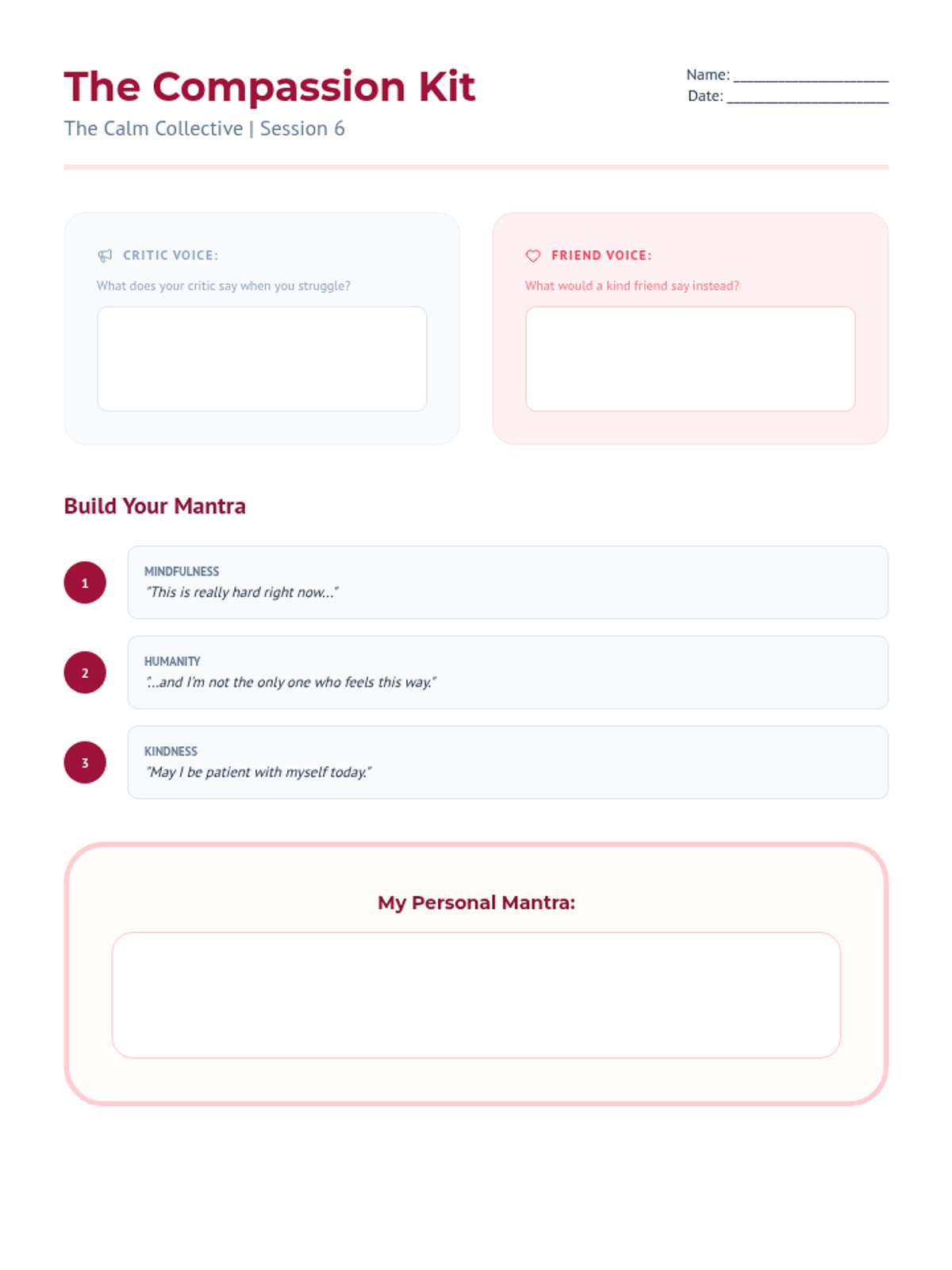
Addressing perfectionism and self-criticism, this session introduces self-compassion as a tool for resilience. Students will practice kindness toward themselves and challenge the 'inner critic'.
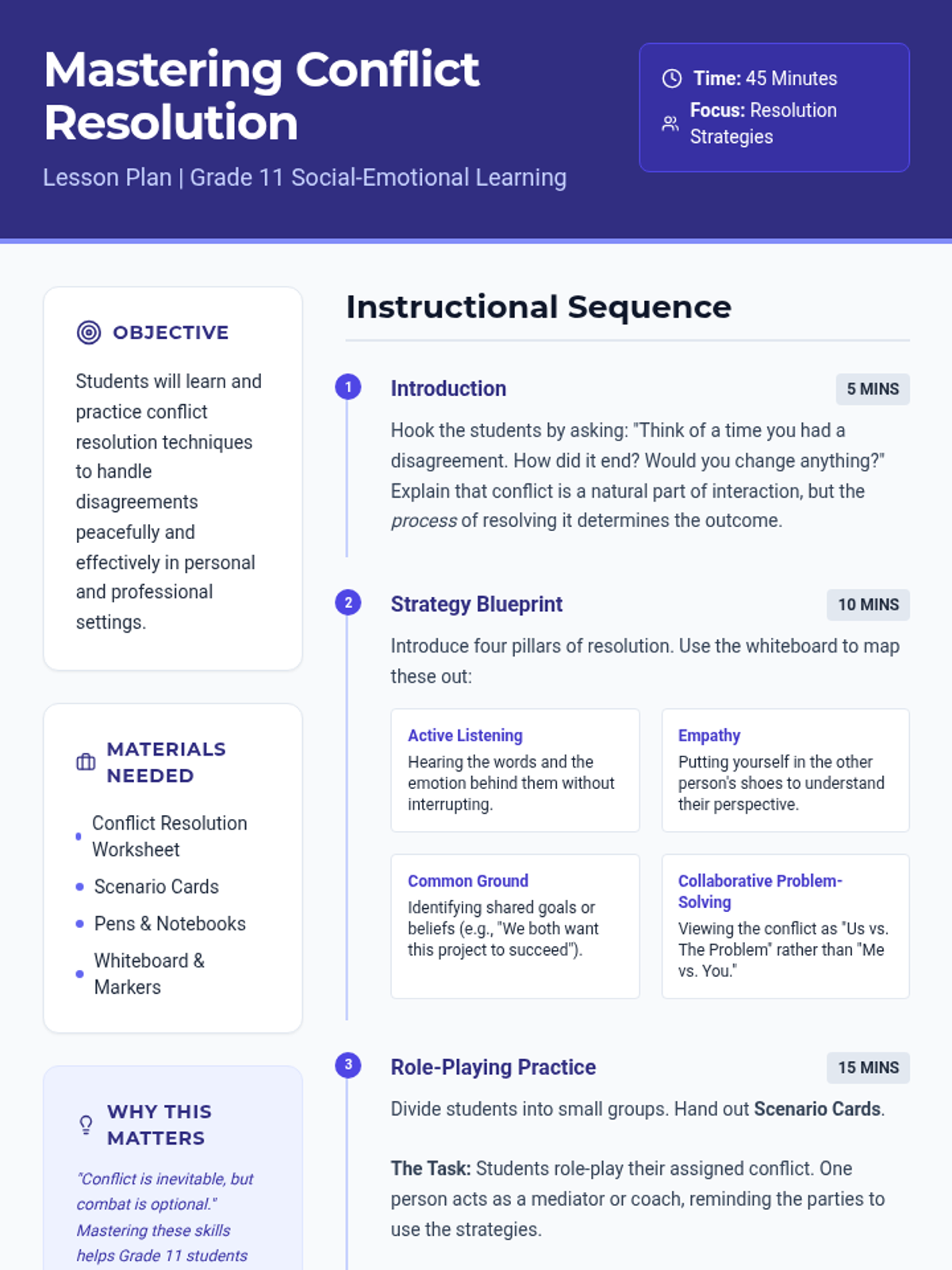
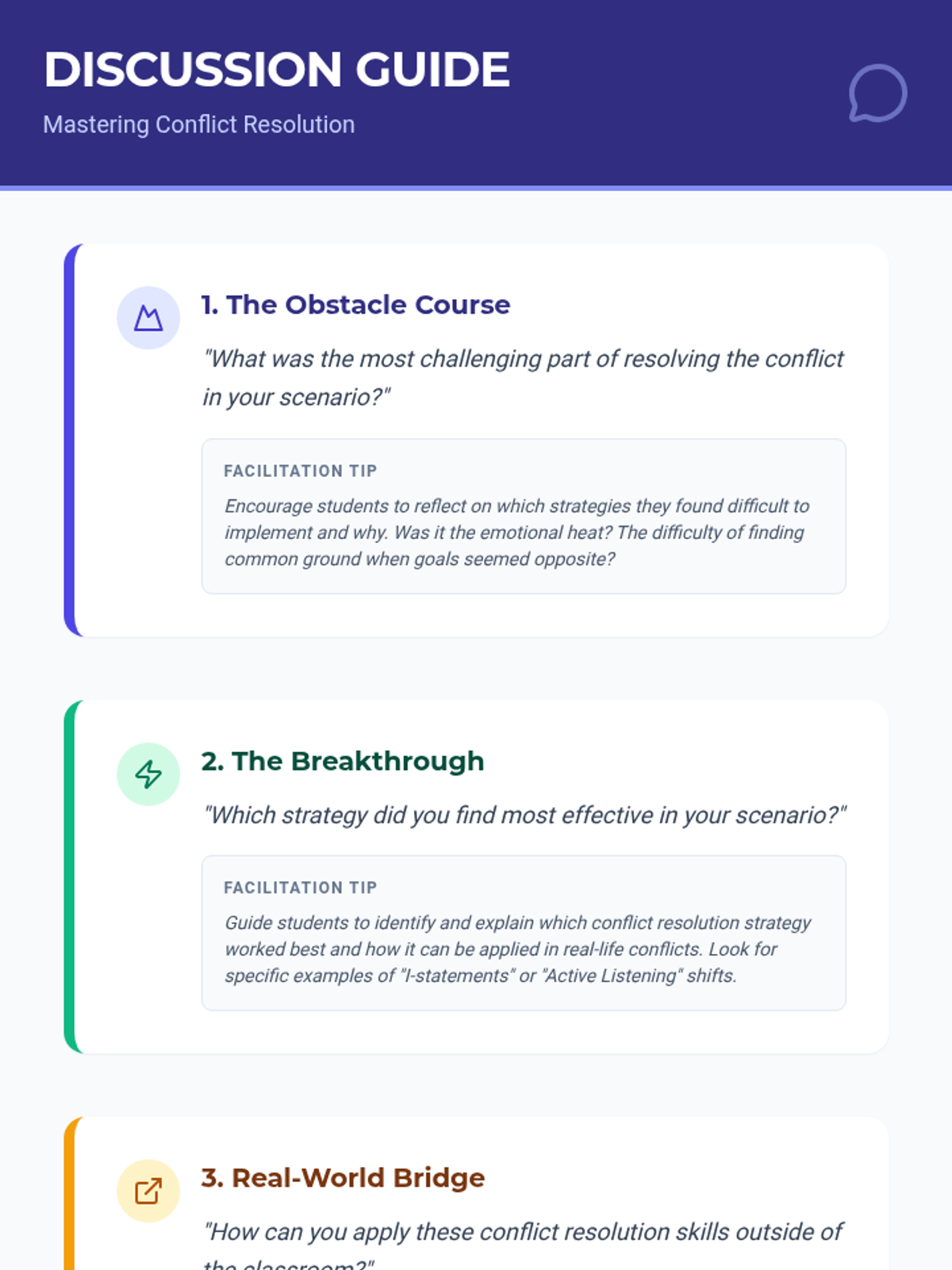
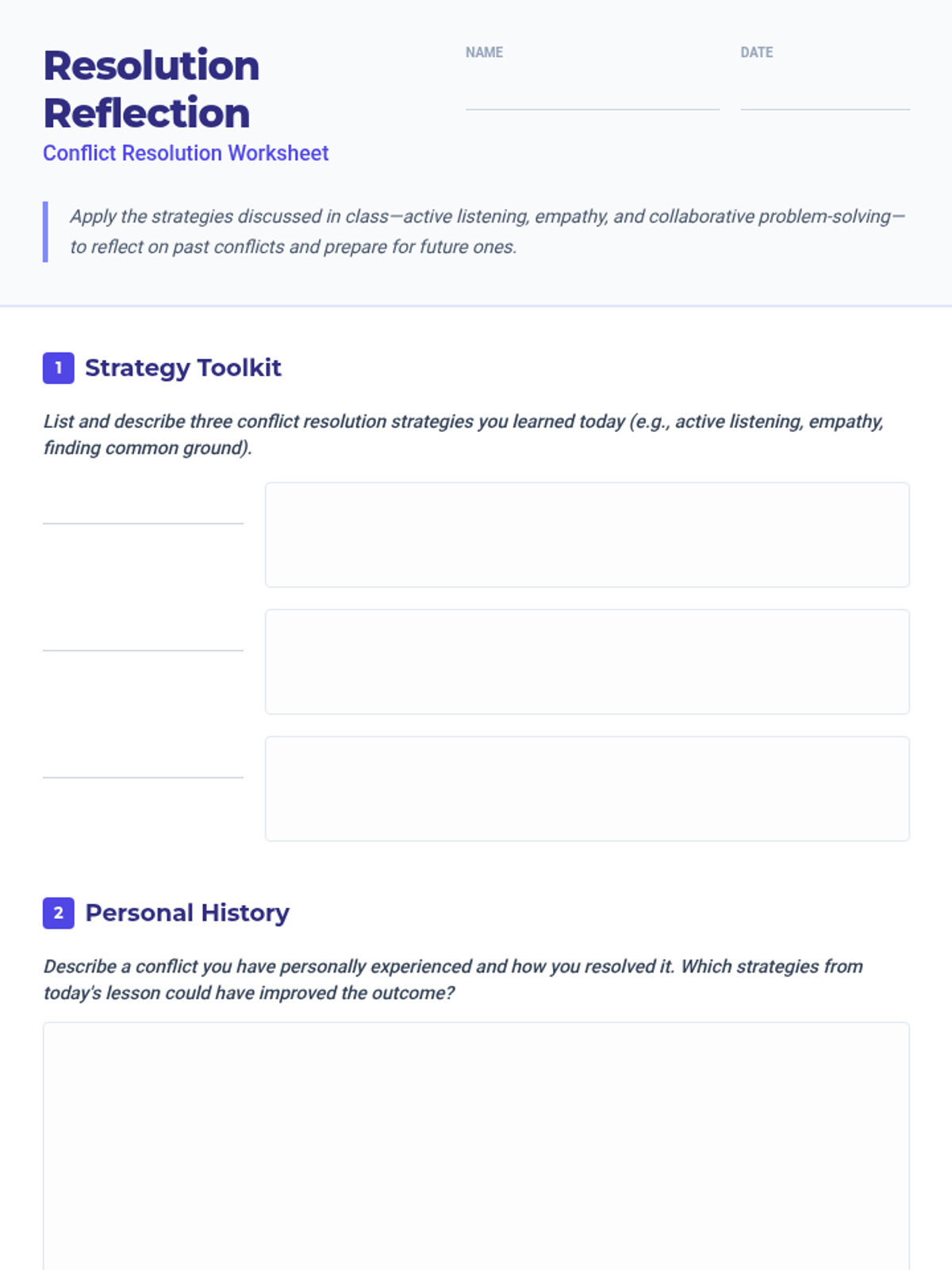
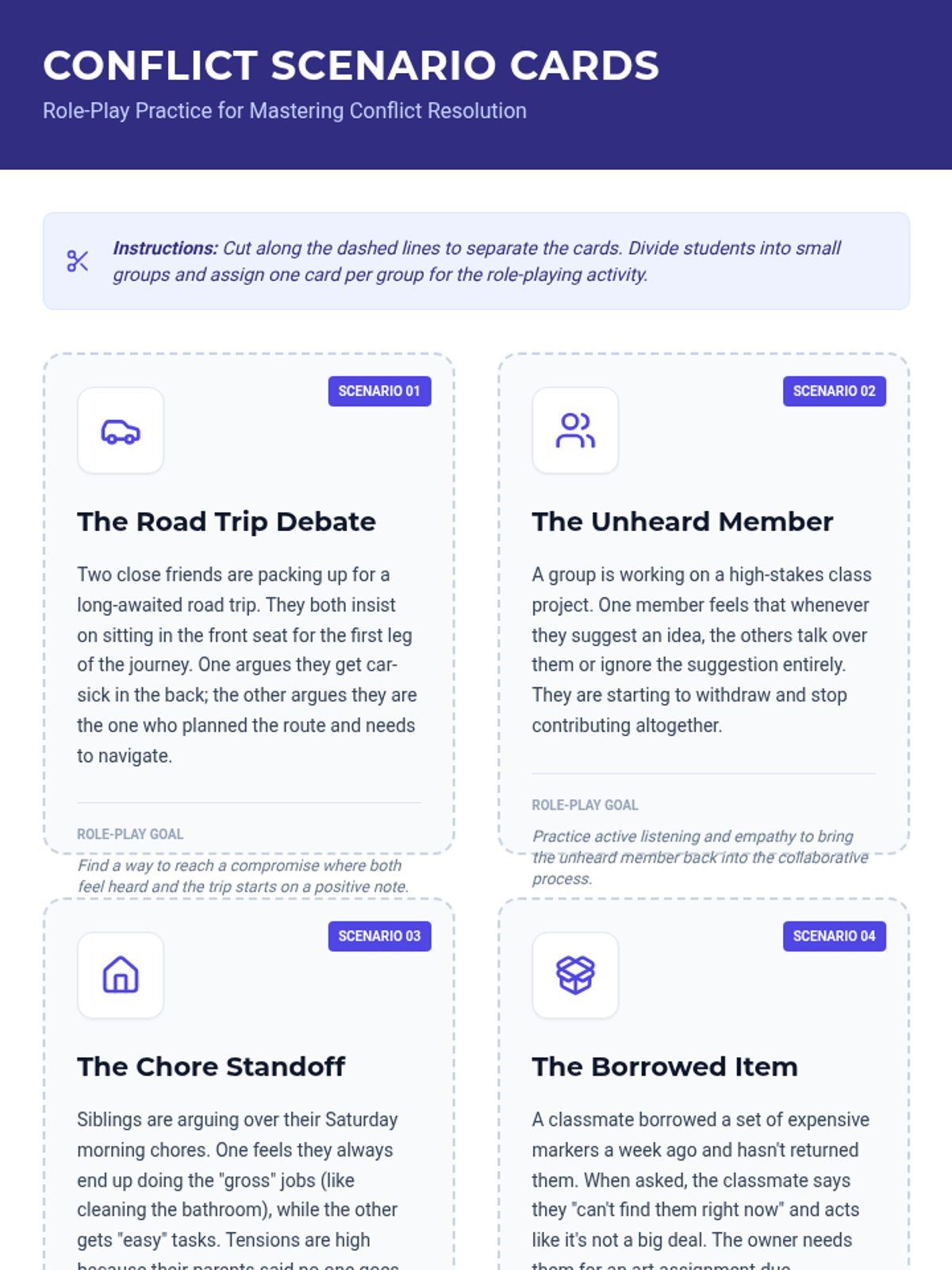
Students will learn techniques for resolving conflicts peacefully and effectively through role-playing and group discussions, focusing on communication, empathy, and problem-solving skills.
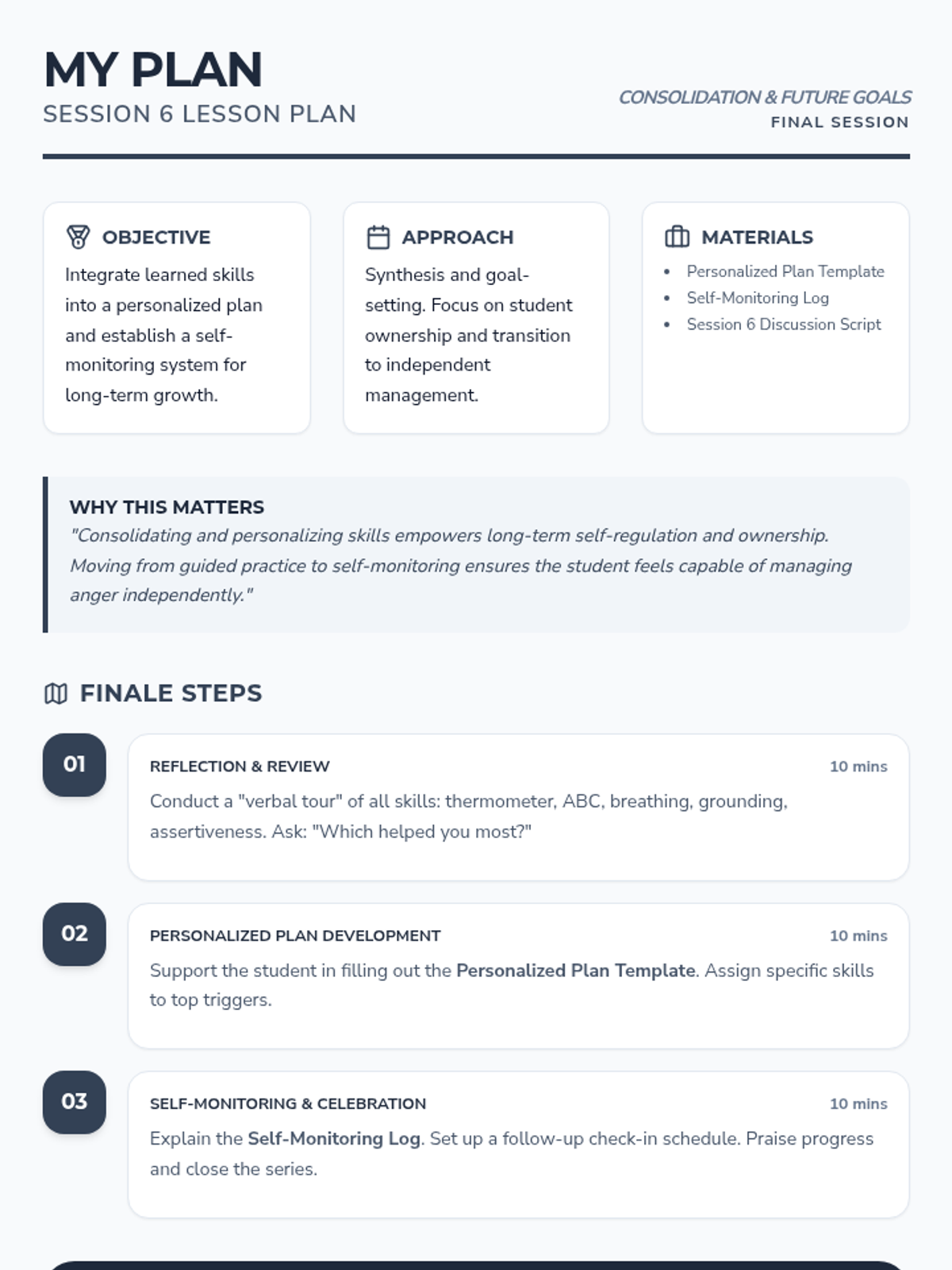
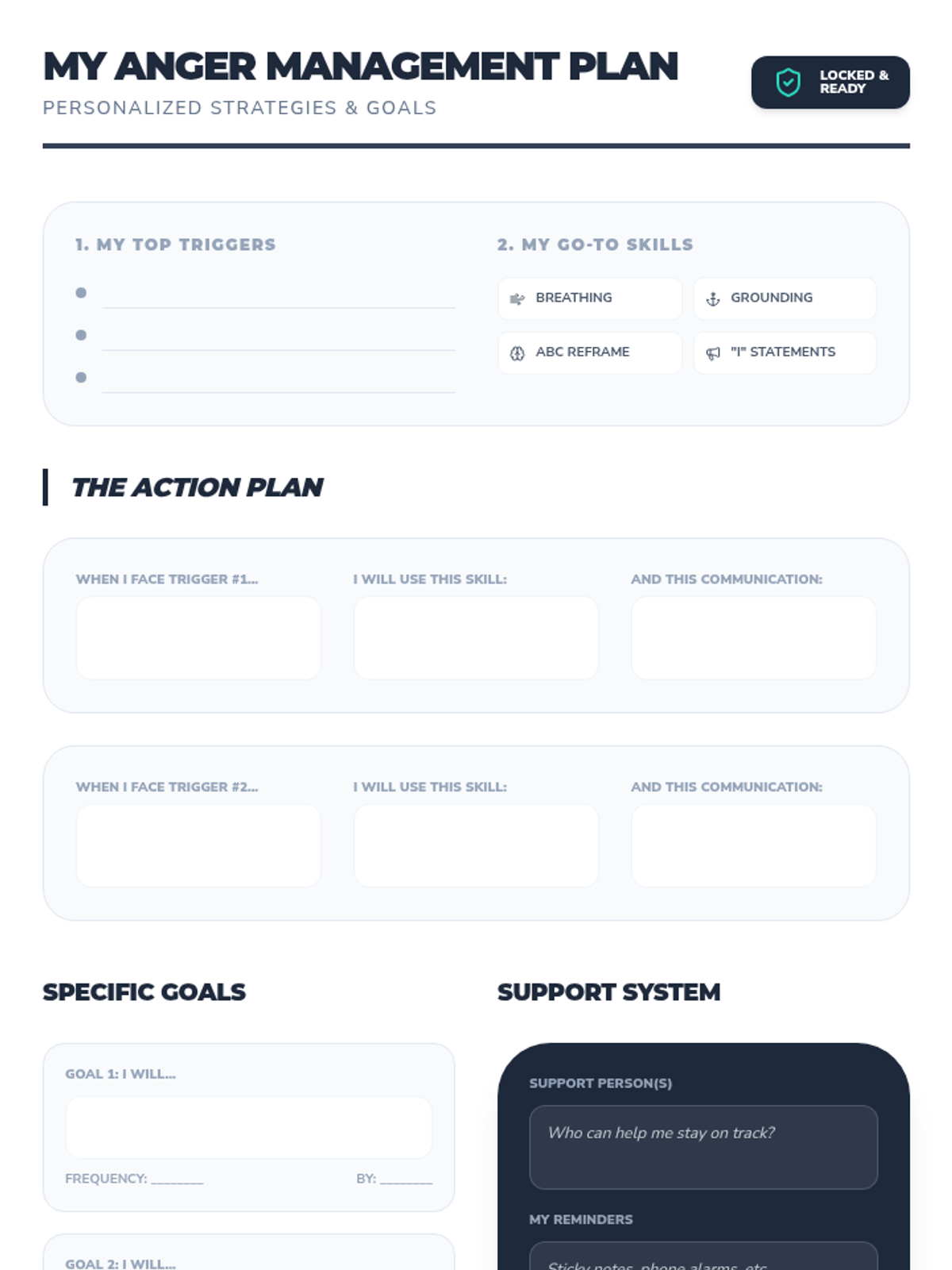
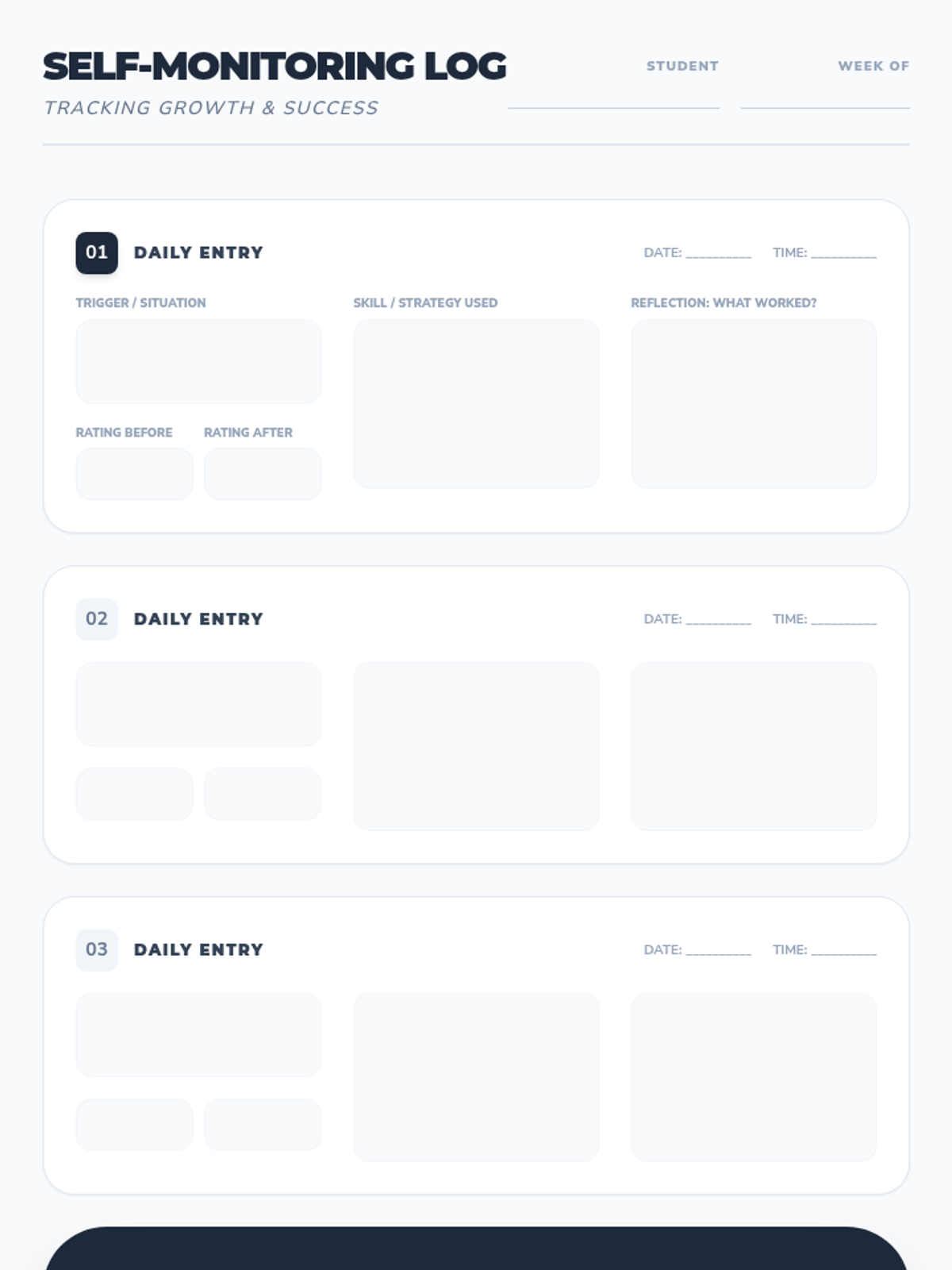
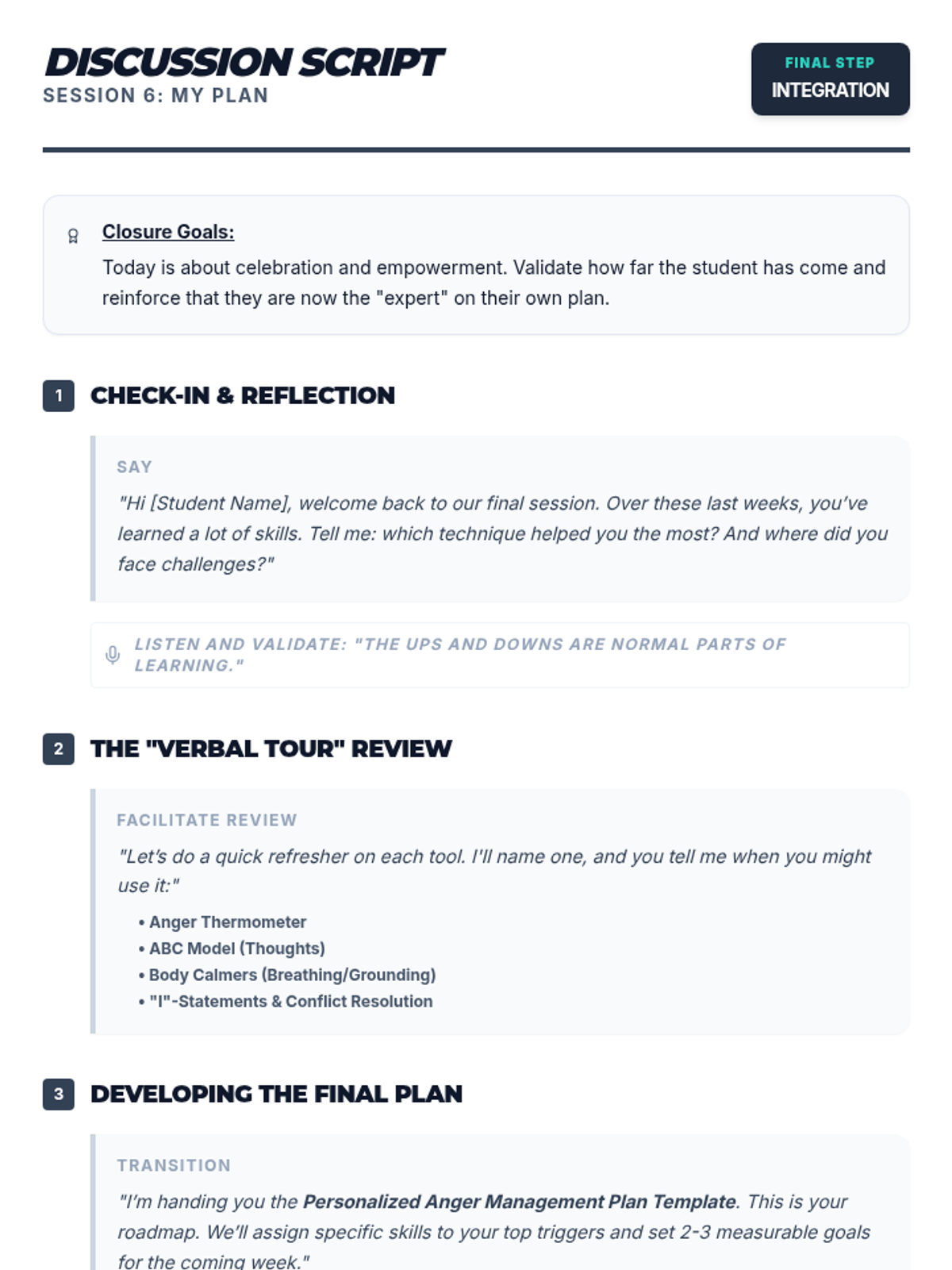
Consolidates skills into a personalized management plan and establishes a self-monitoring system for long-term success.
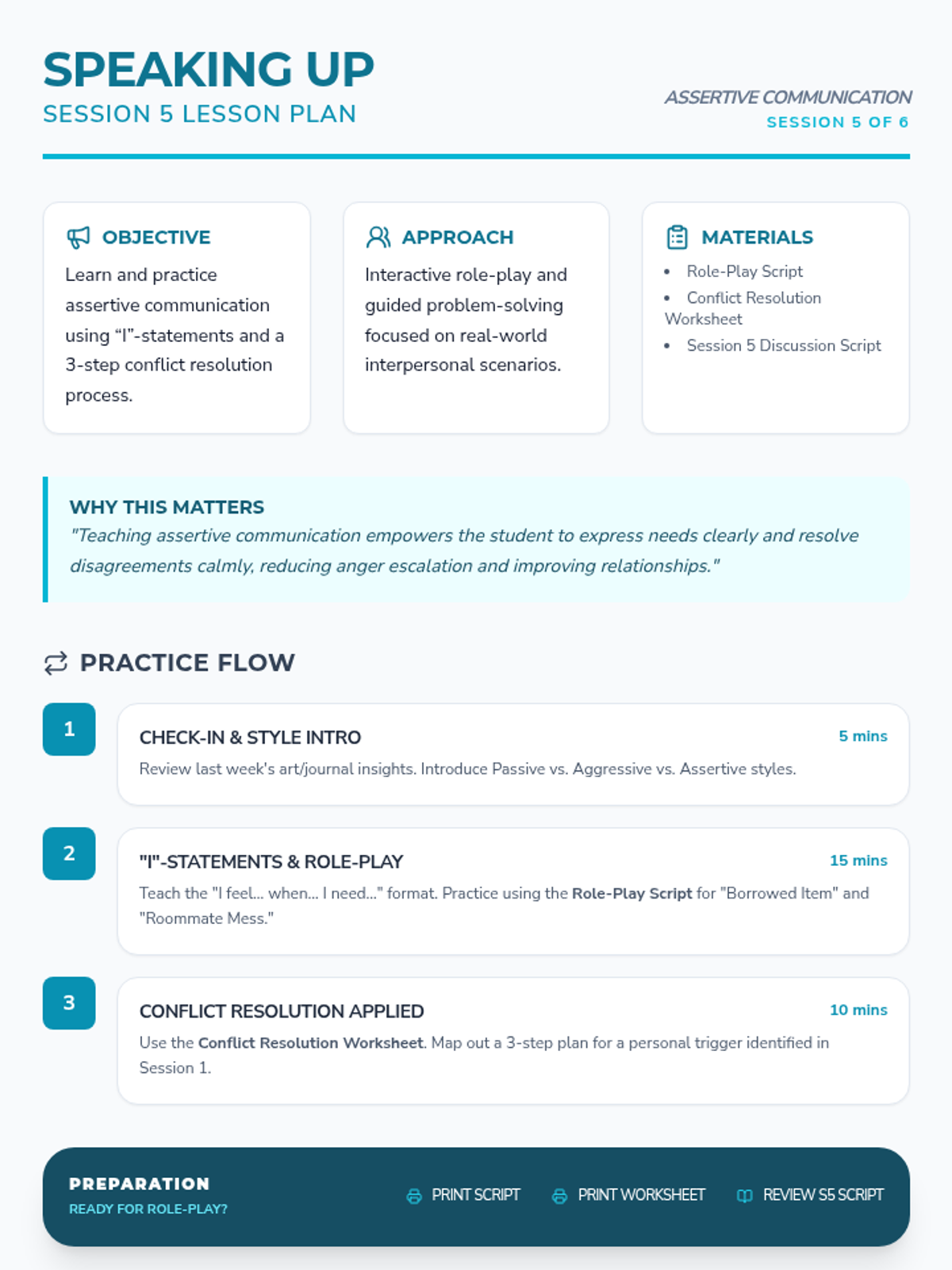
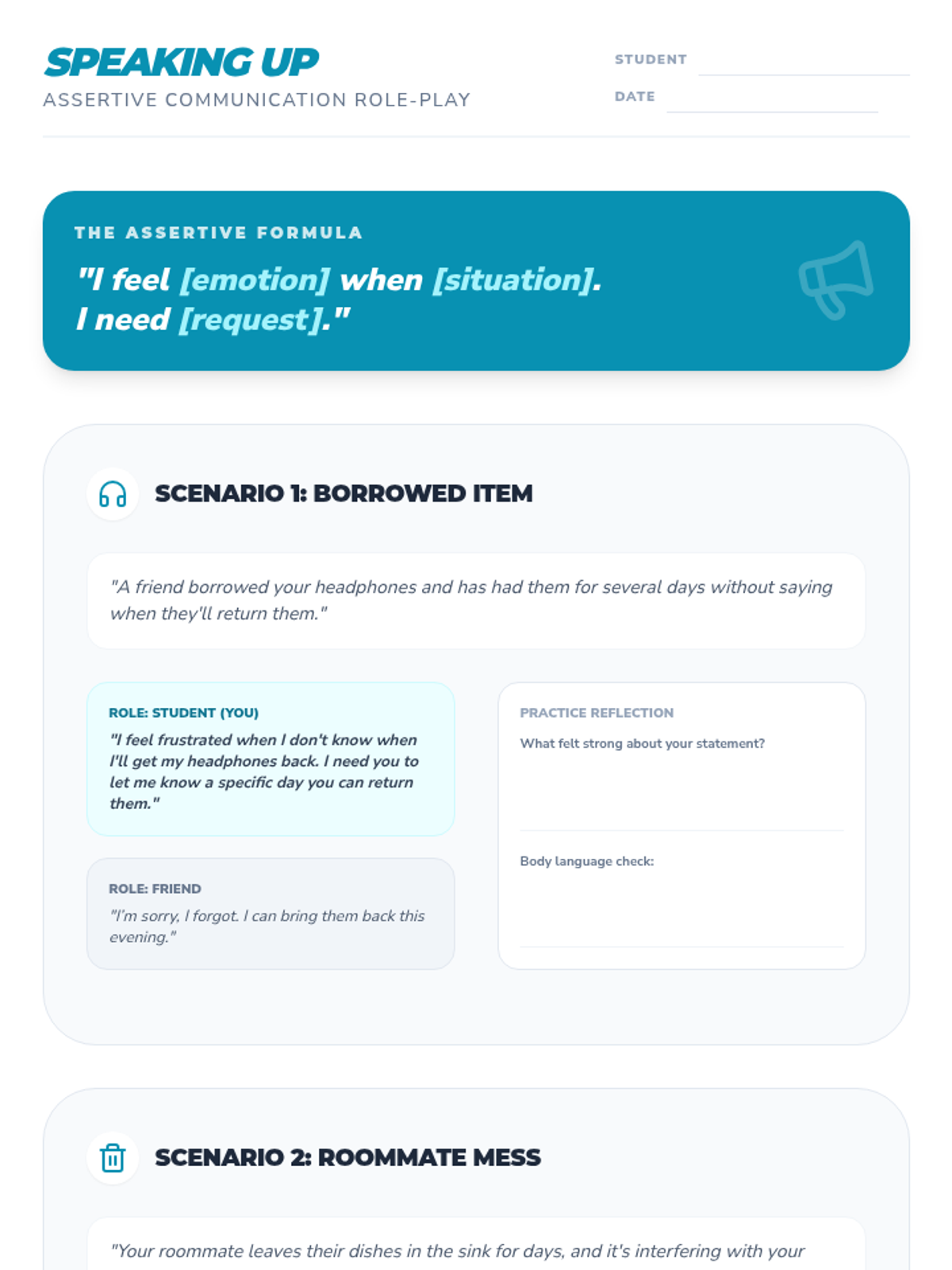
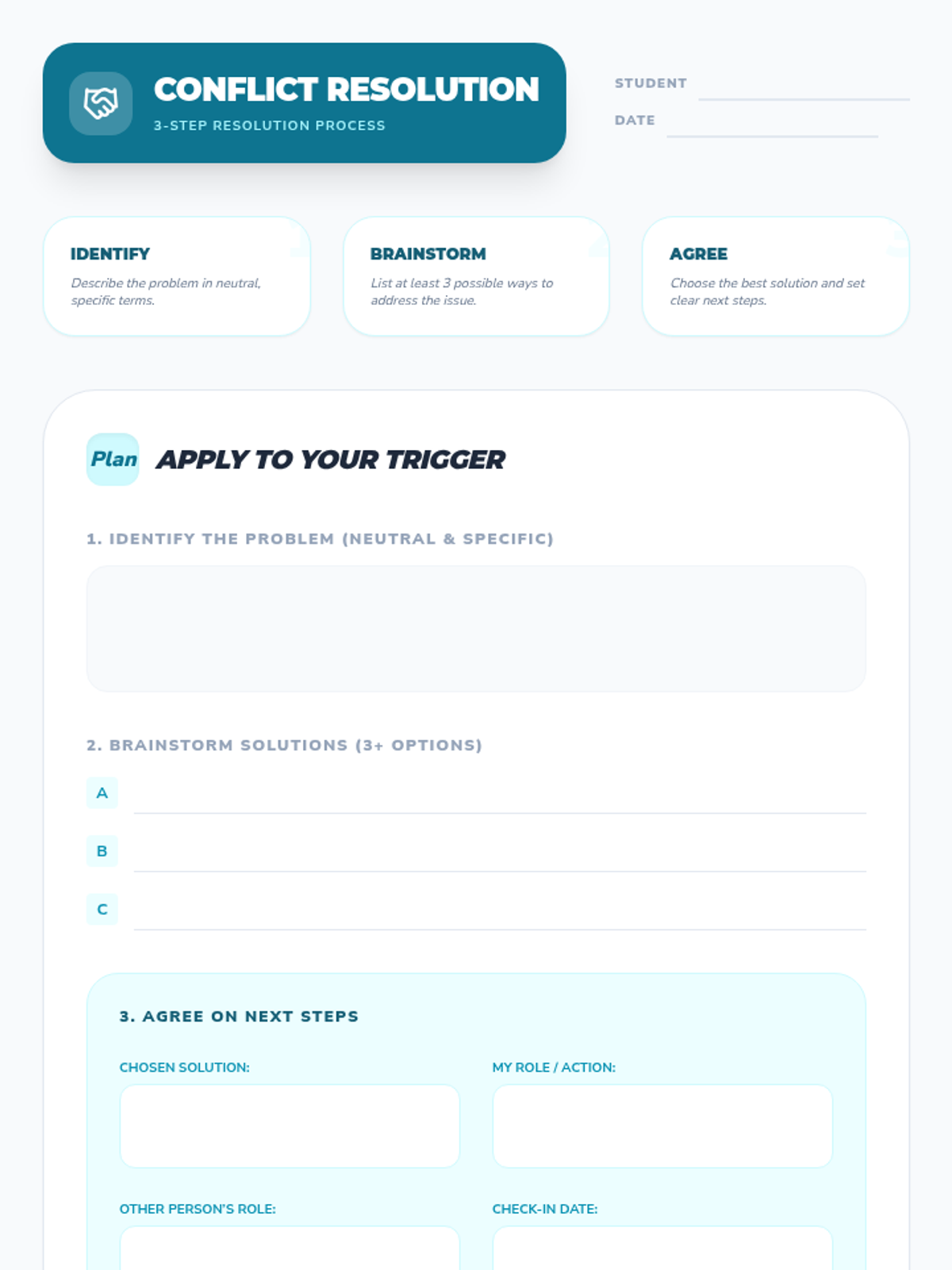
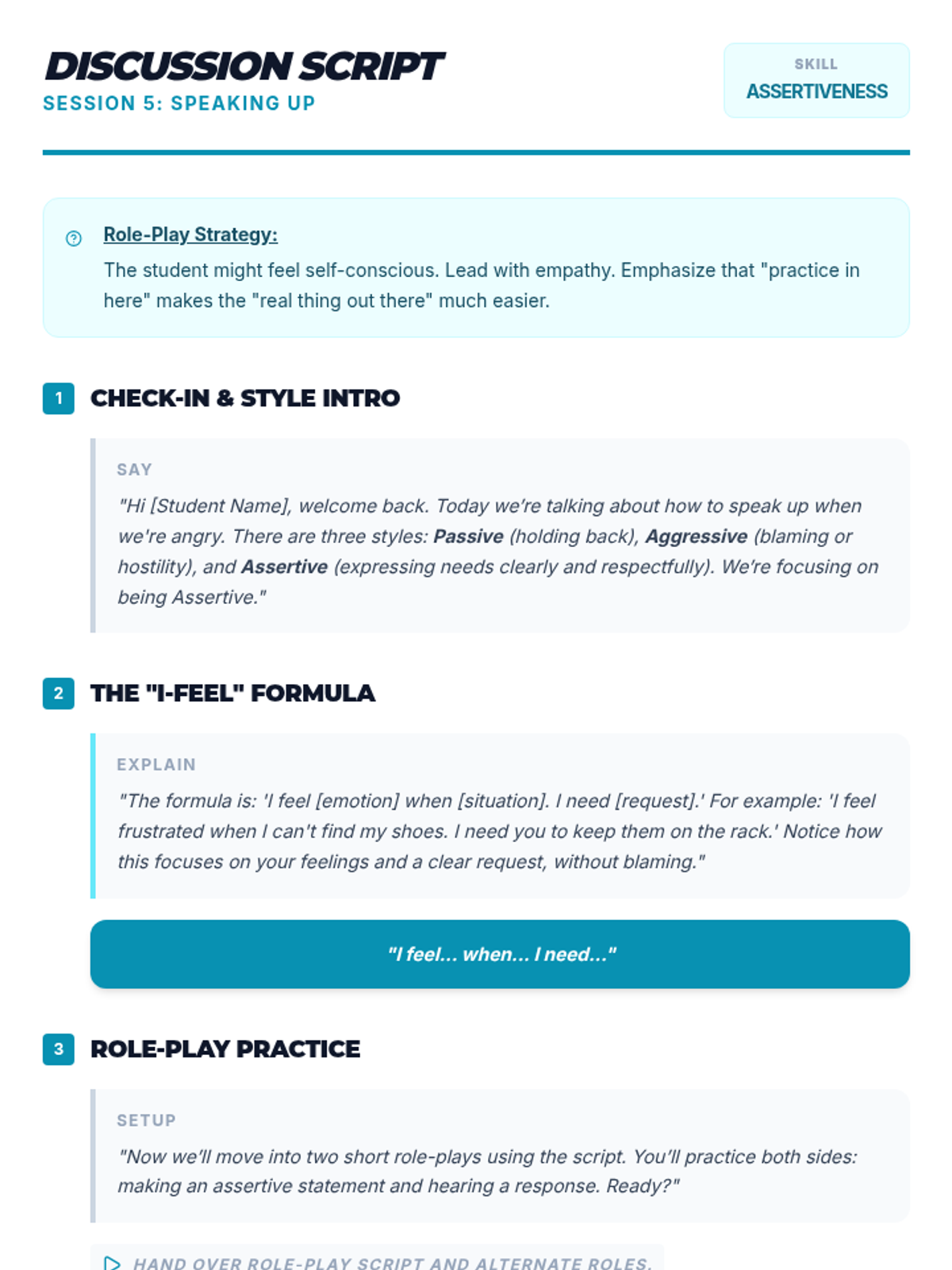
Teaches assertive communication and structured conflict resolution to help the student express needs clearly and resolve disagreements.
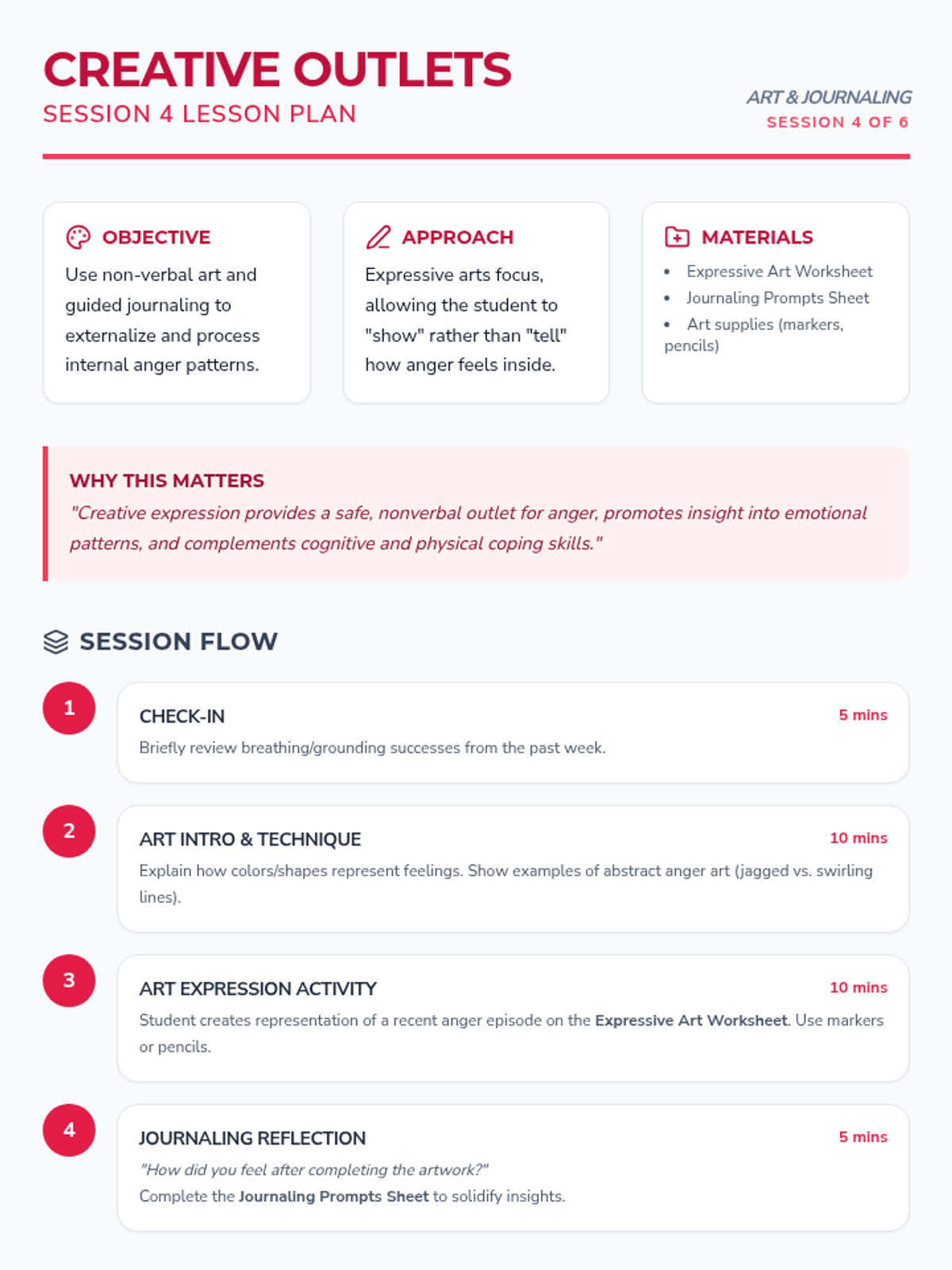
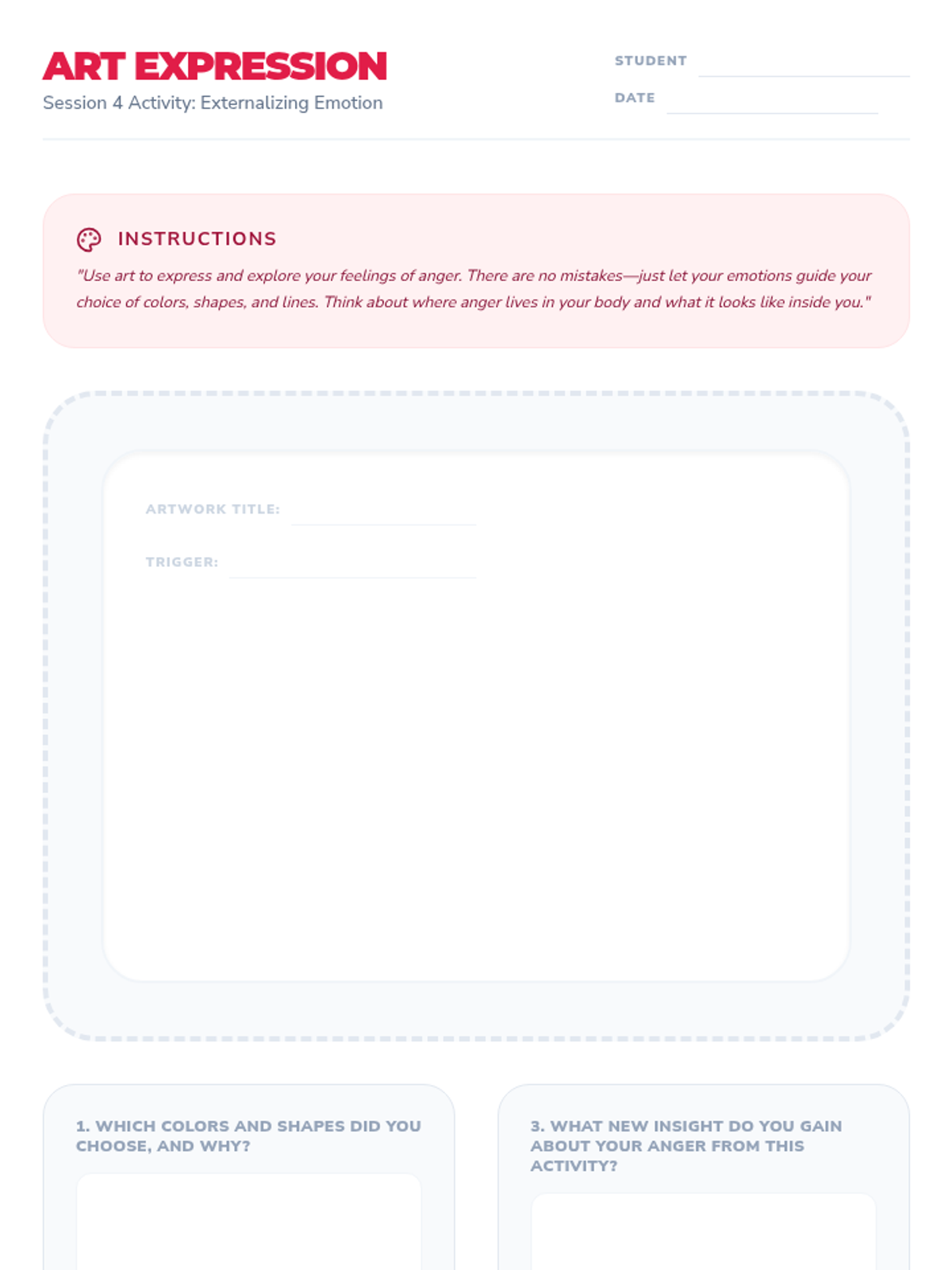
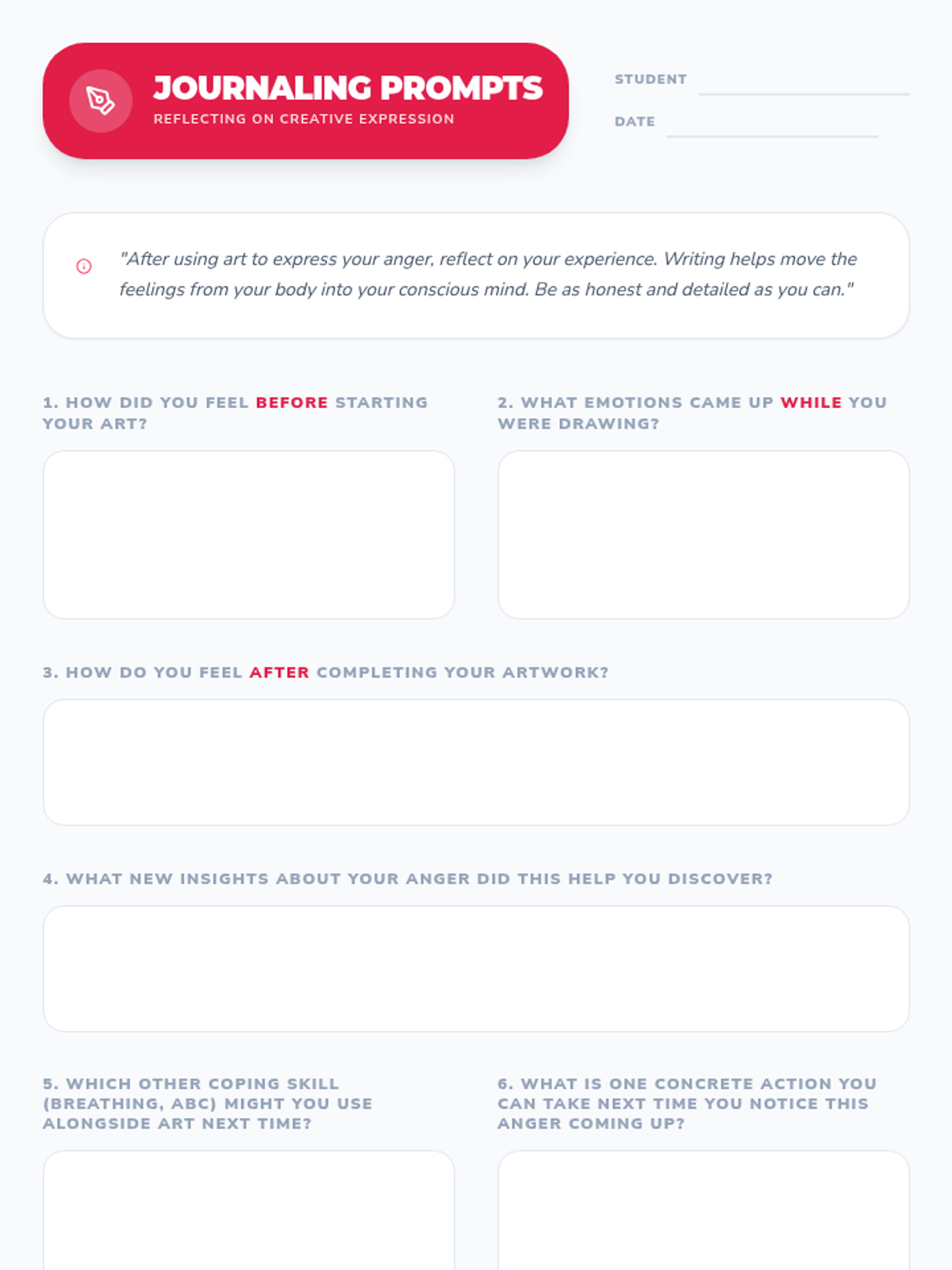
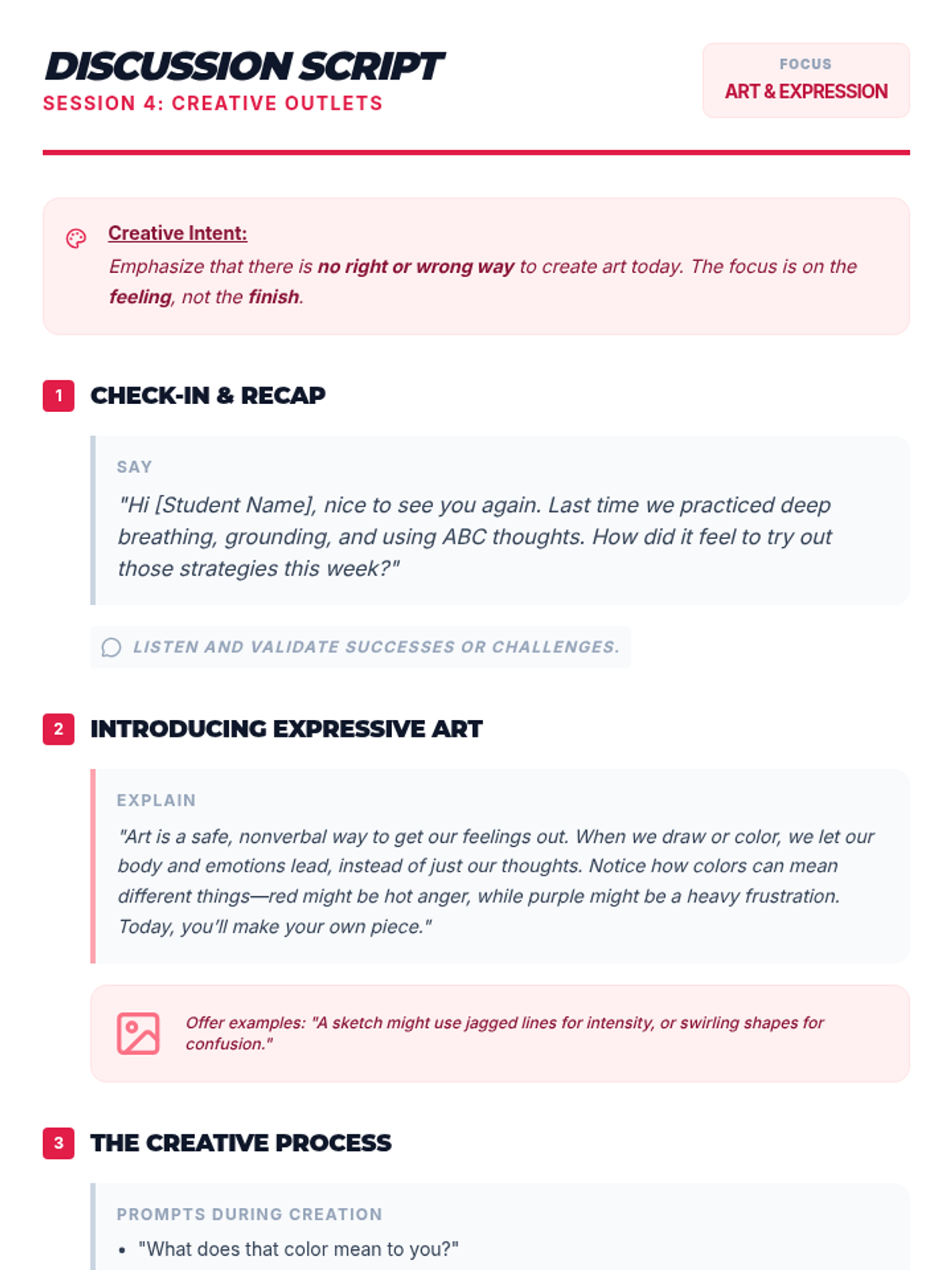
Uses art and journaling to provide non-verbal outlets for expressing and processing difficult emotions.
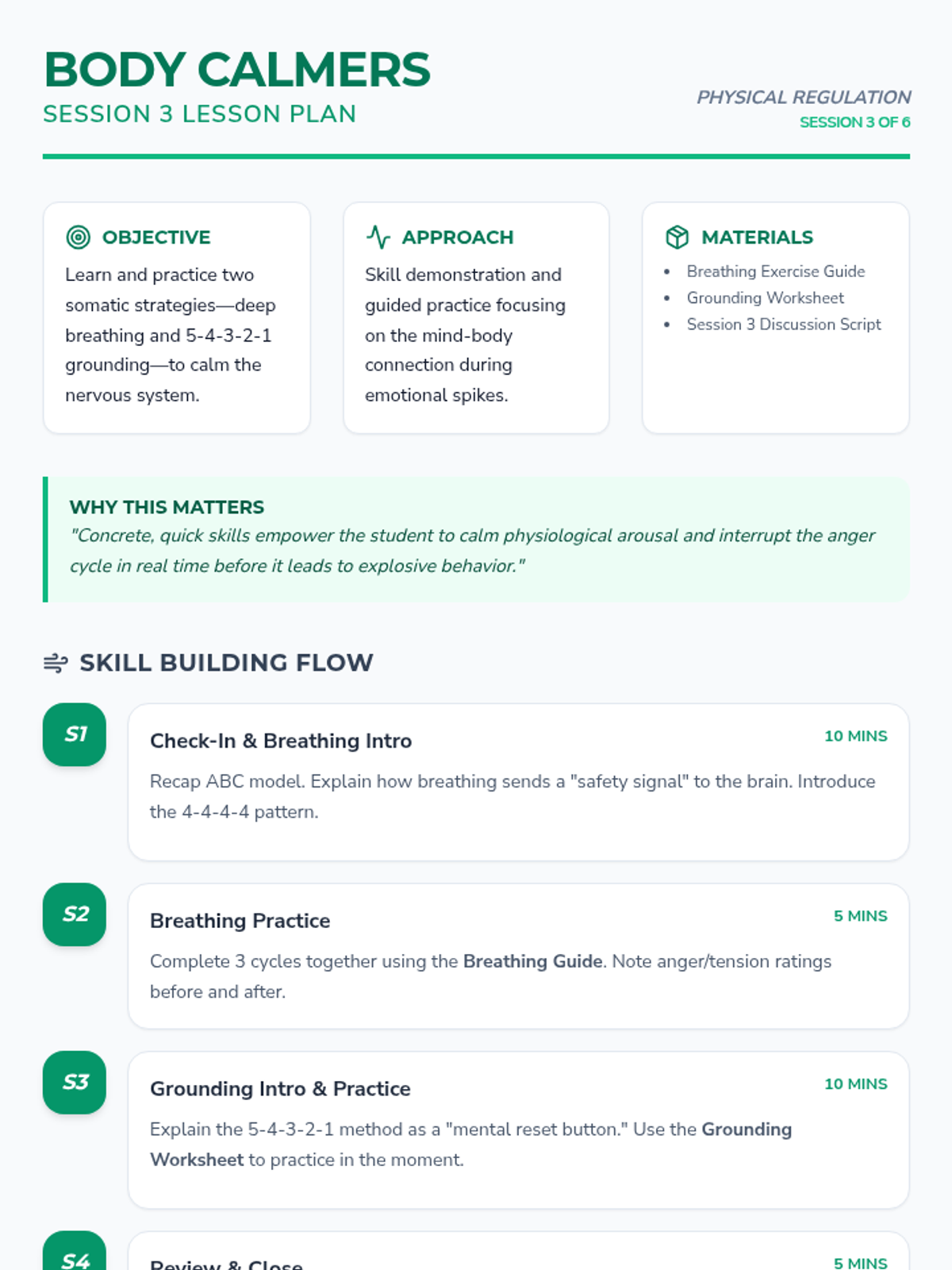
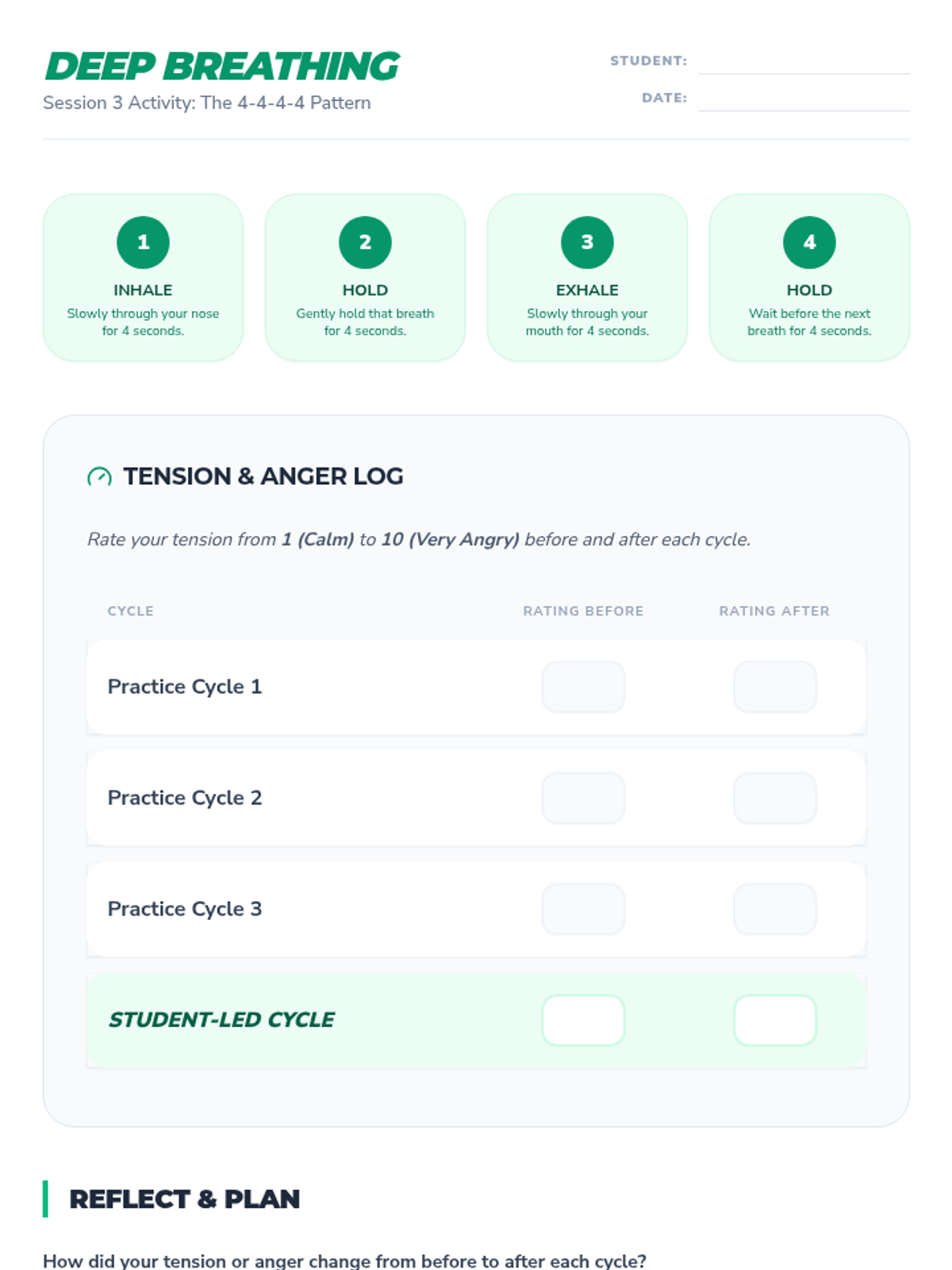
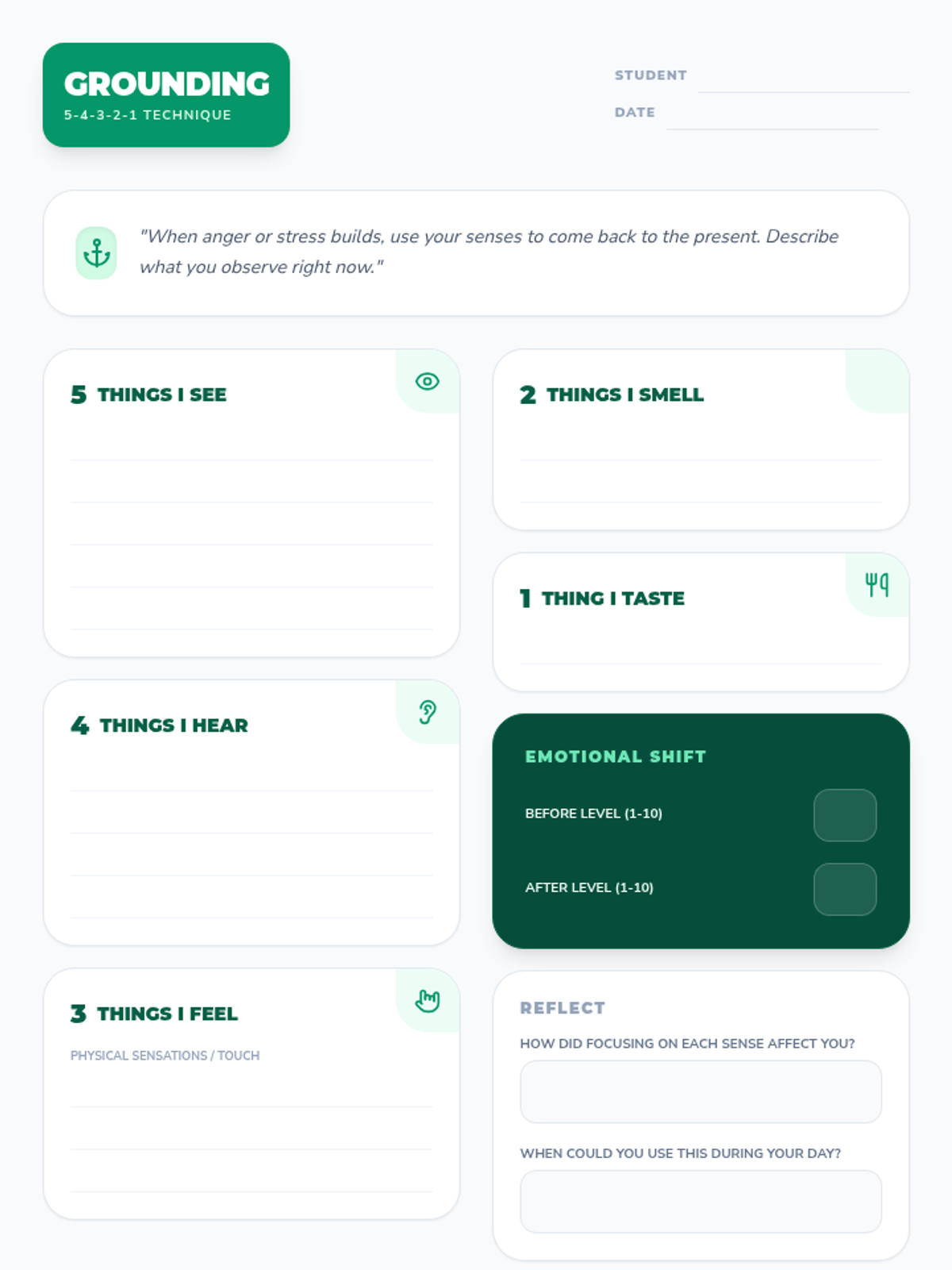
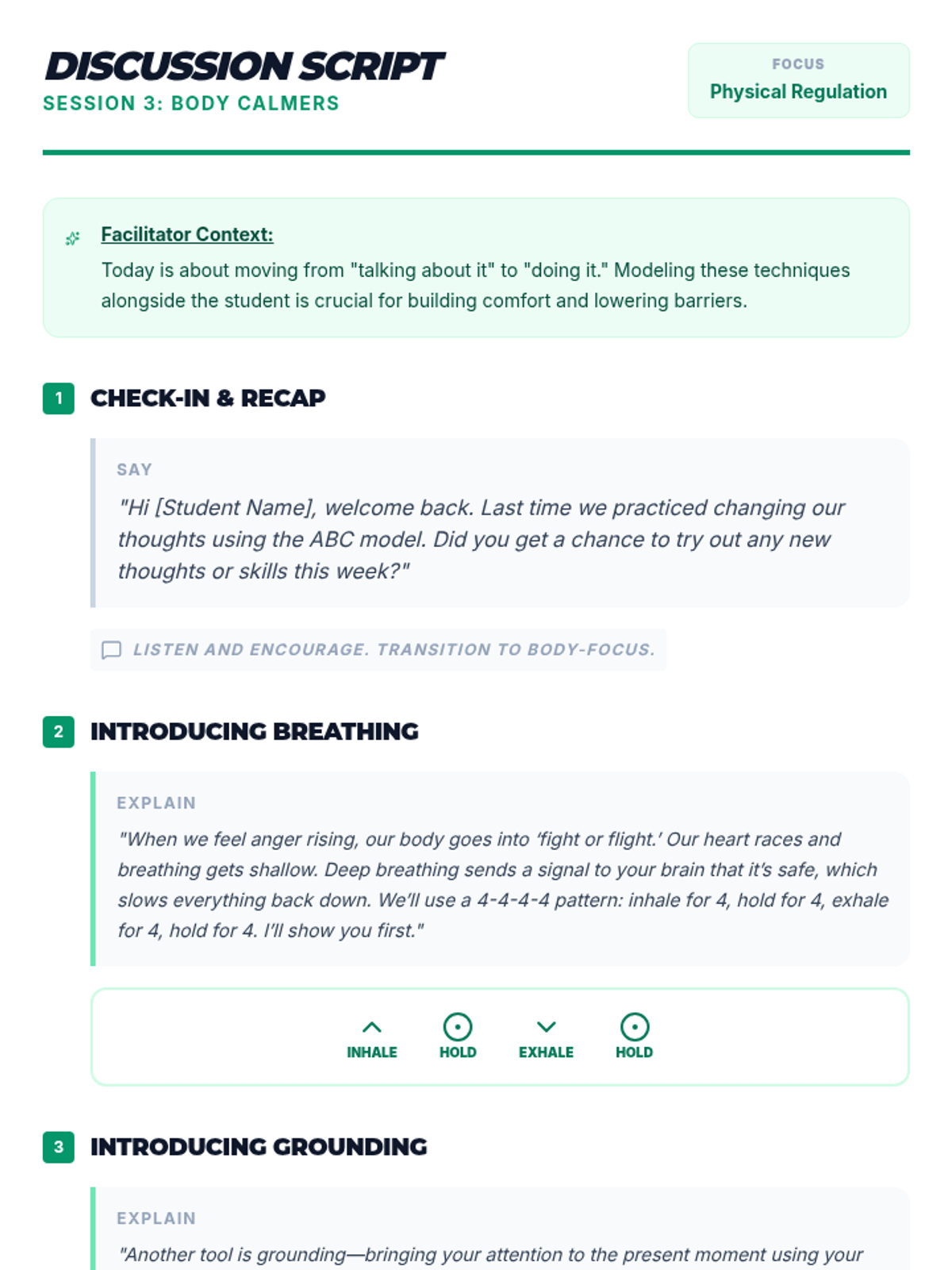
Focuses on physical regulation through deep breathing and grounding techniques to calm the nervous system during escalation.