Written and verbal communication standards for the workplace, including email etiquette, presentation delivery, and professional phone conduct. Develops collaborative skills for teamwork, constructive feedback, and efficient time management.
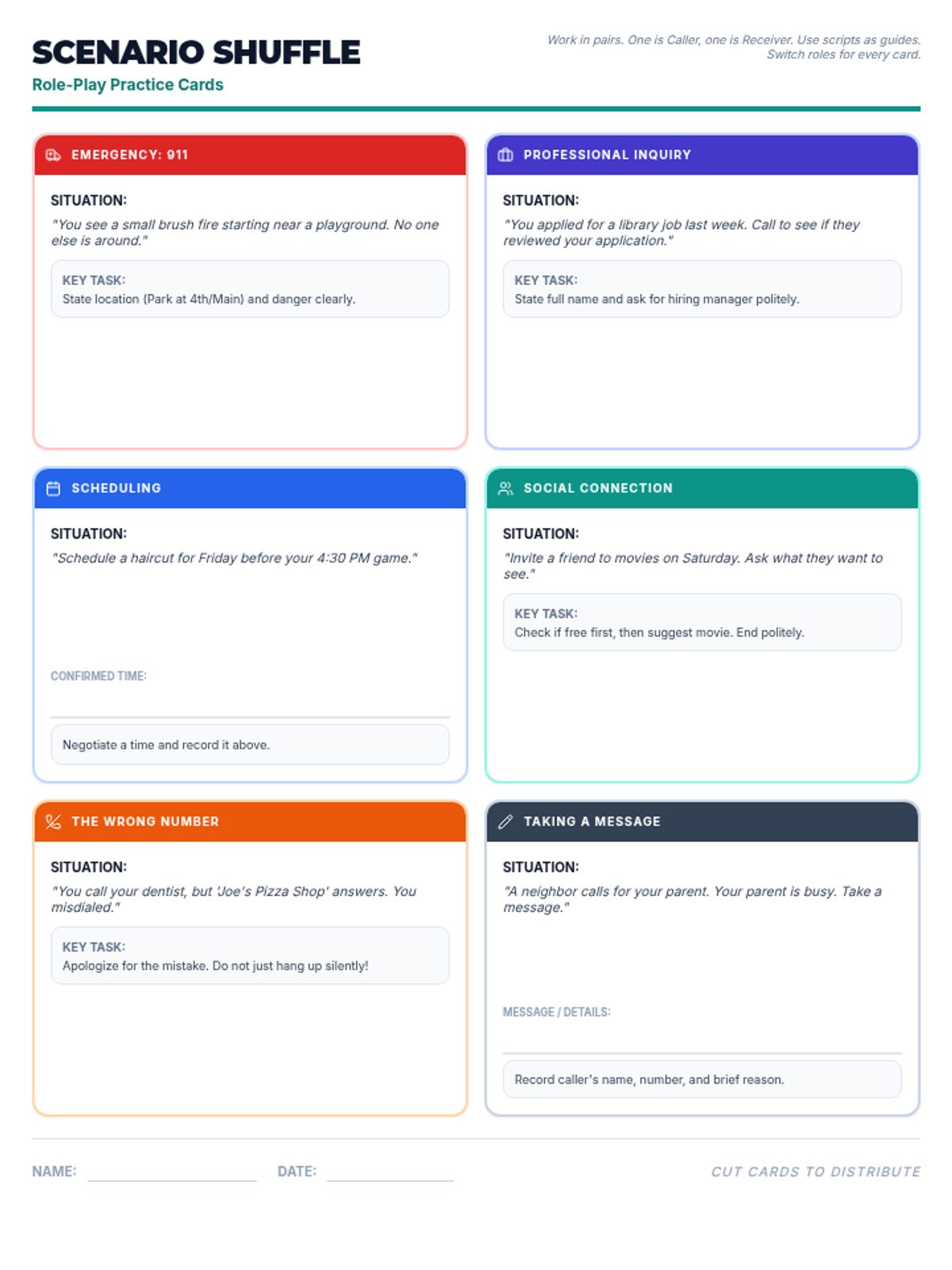
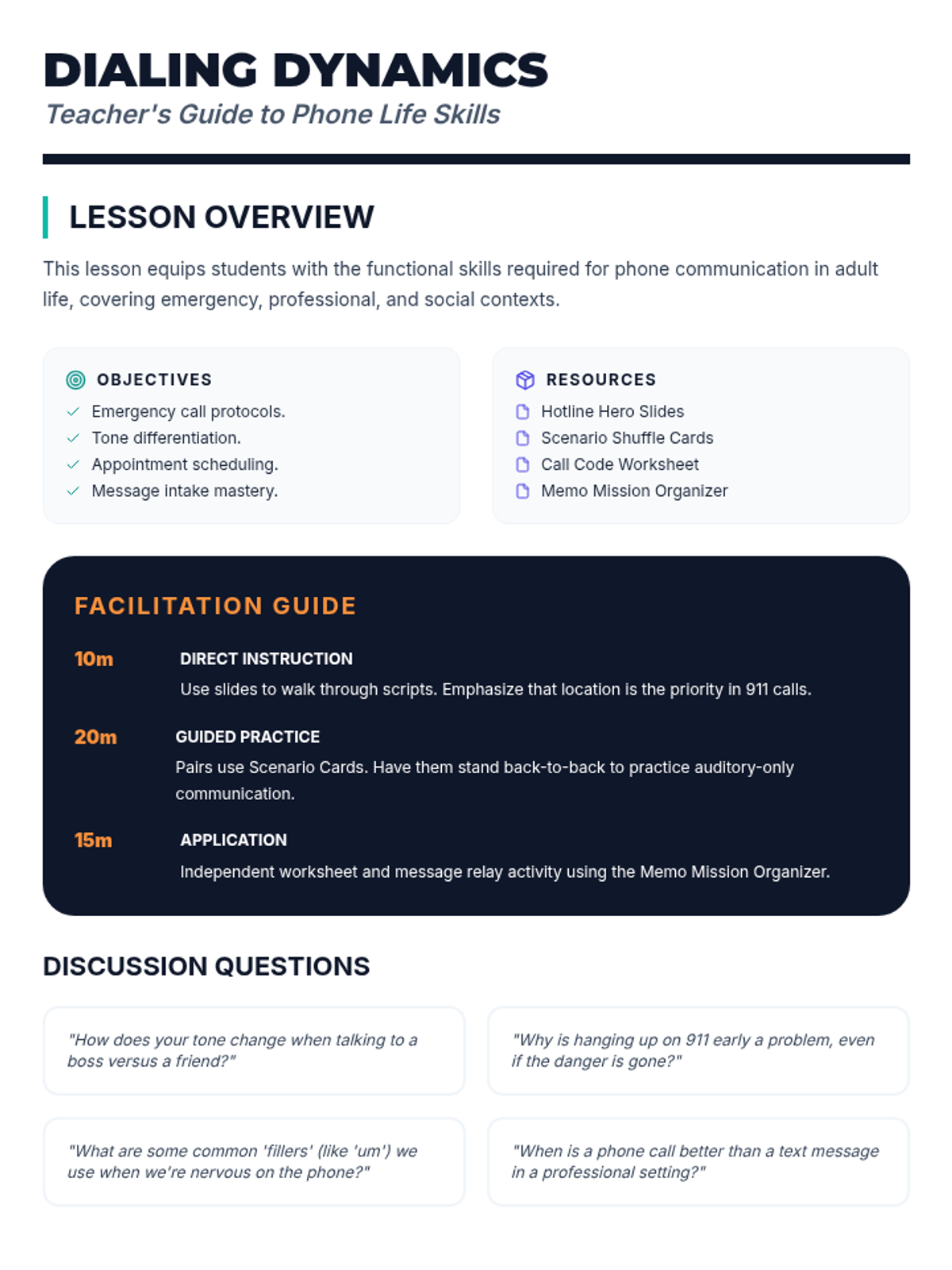
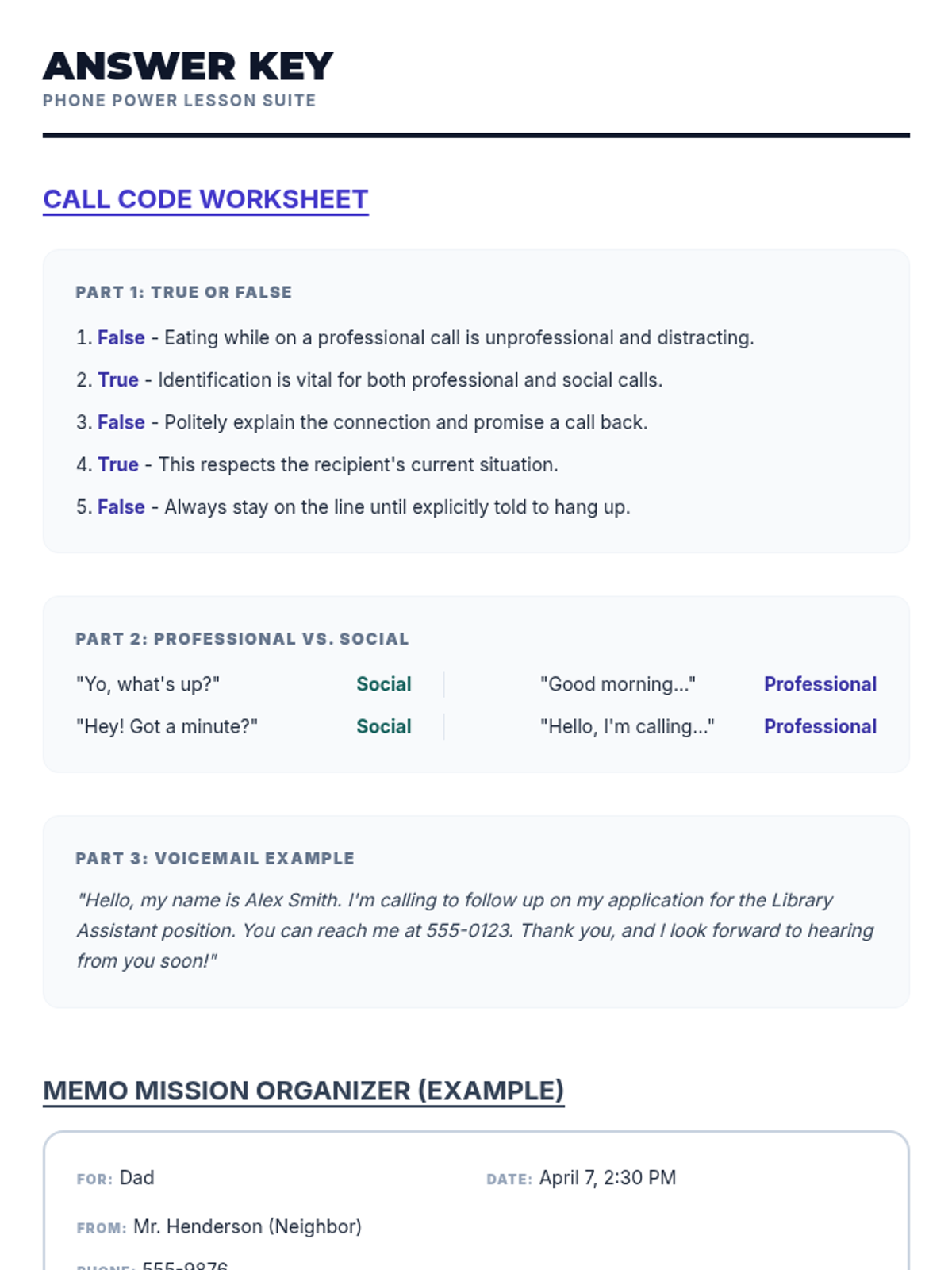
A comprehensive lesson on essential phone communication skills for high school students, covering emergency, professional, social, and scheduling calls.
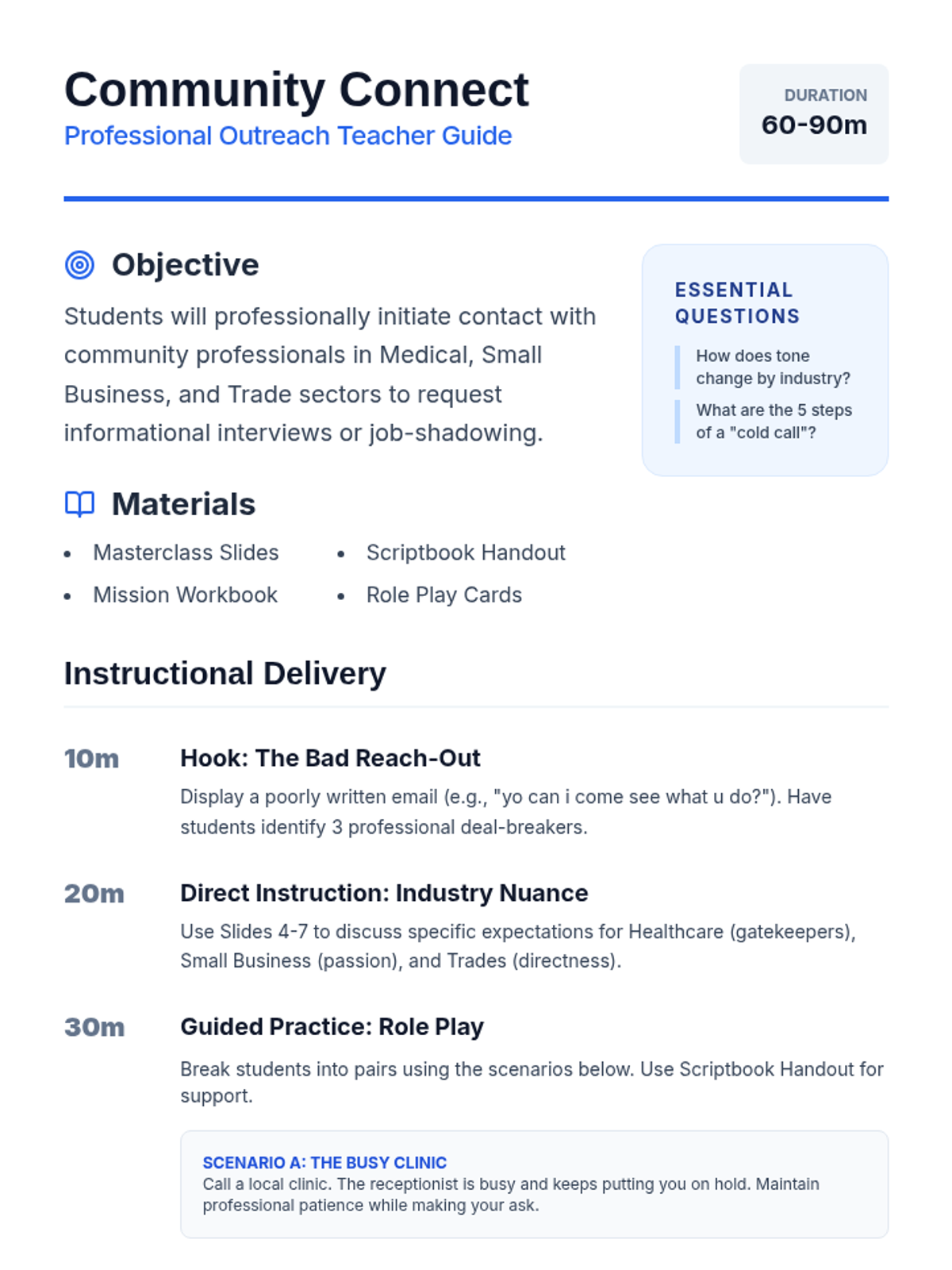
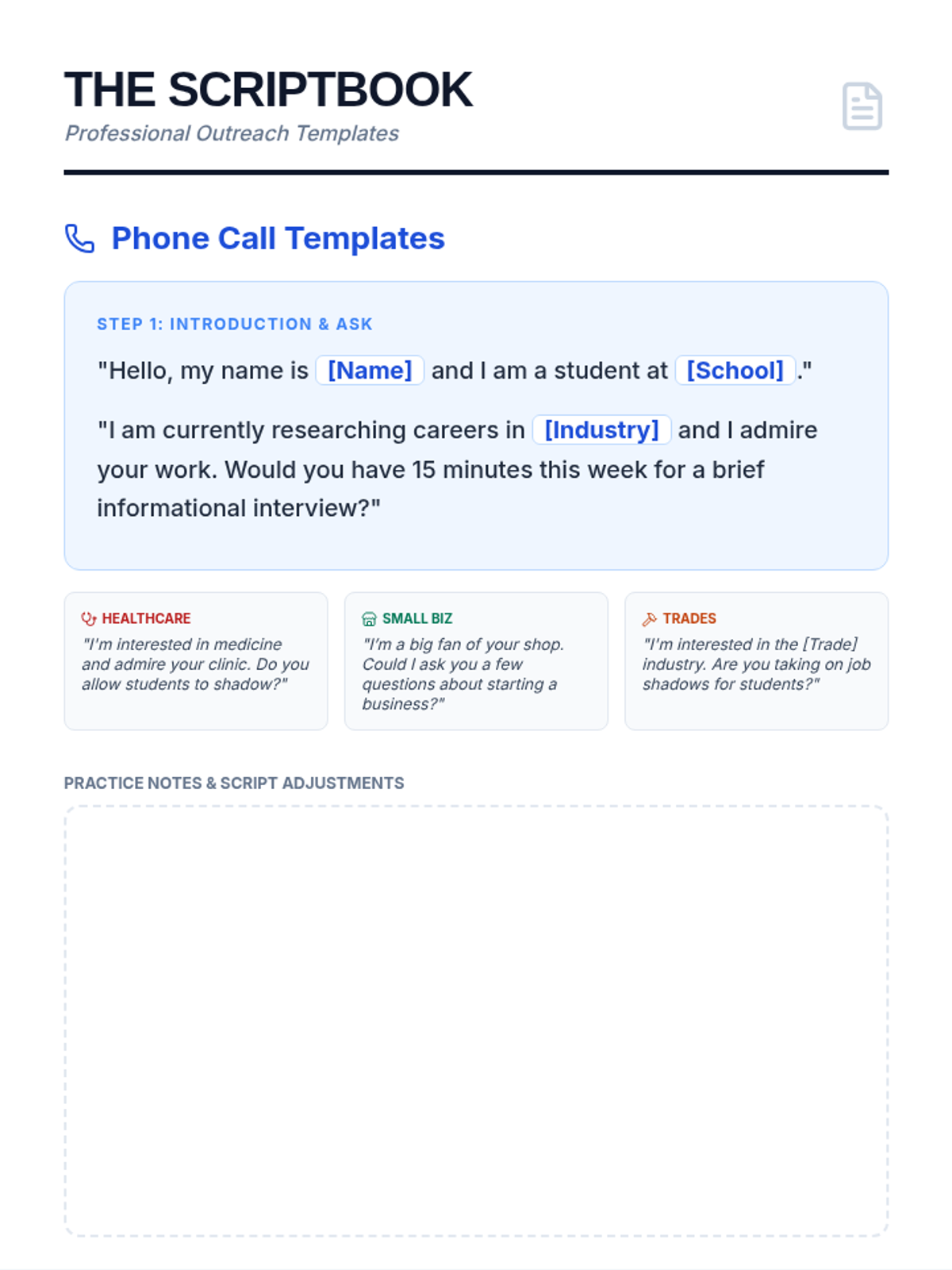
This lesson teaches high school students the essential skills for professional outreach, focusing on making appointments with community professionals in healthcare, small business, and trades through role-play and script-writing.
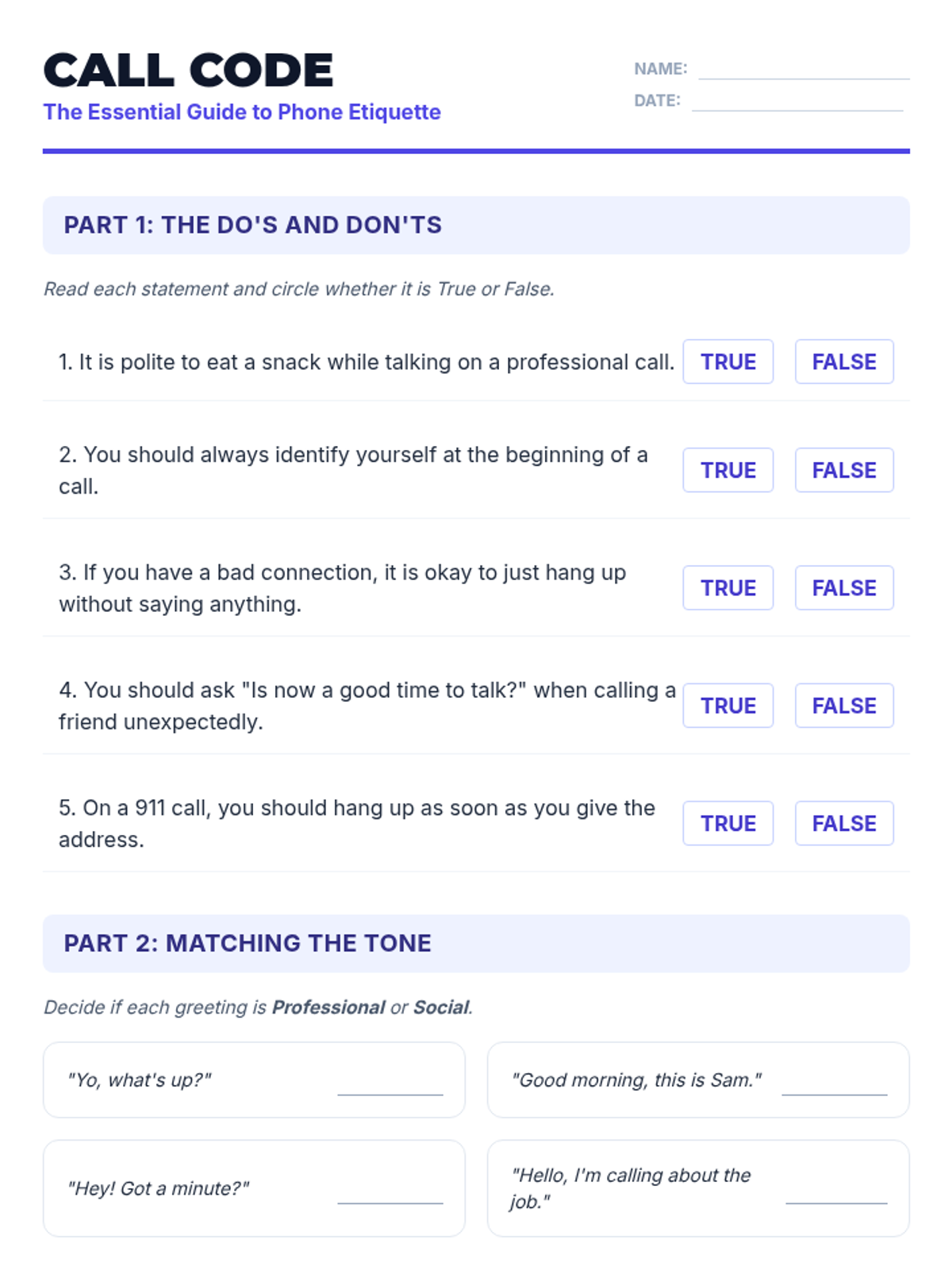
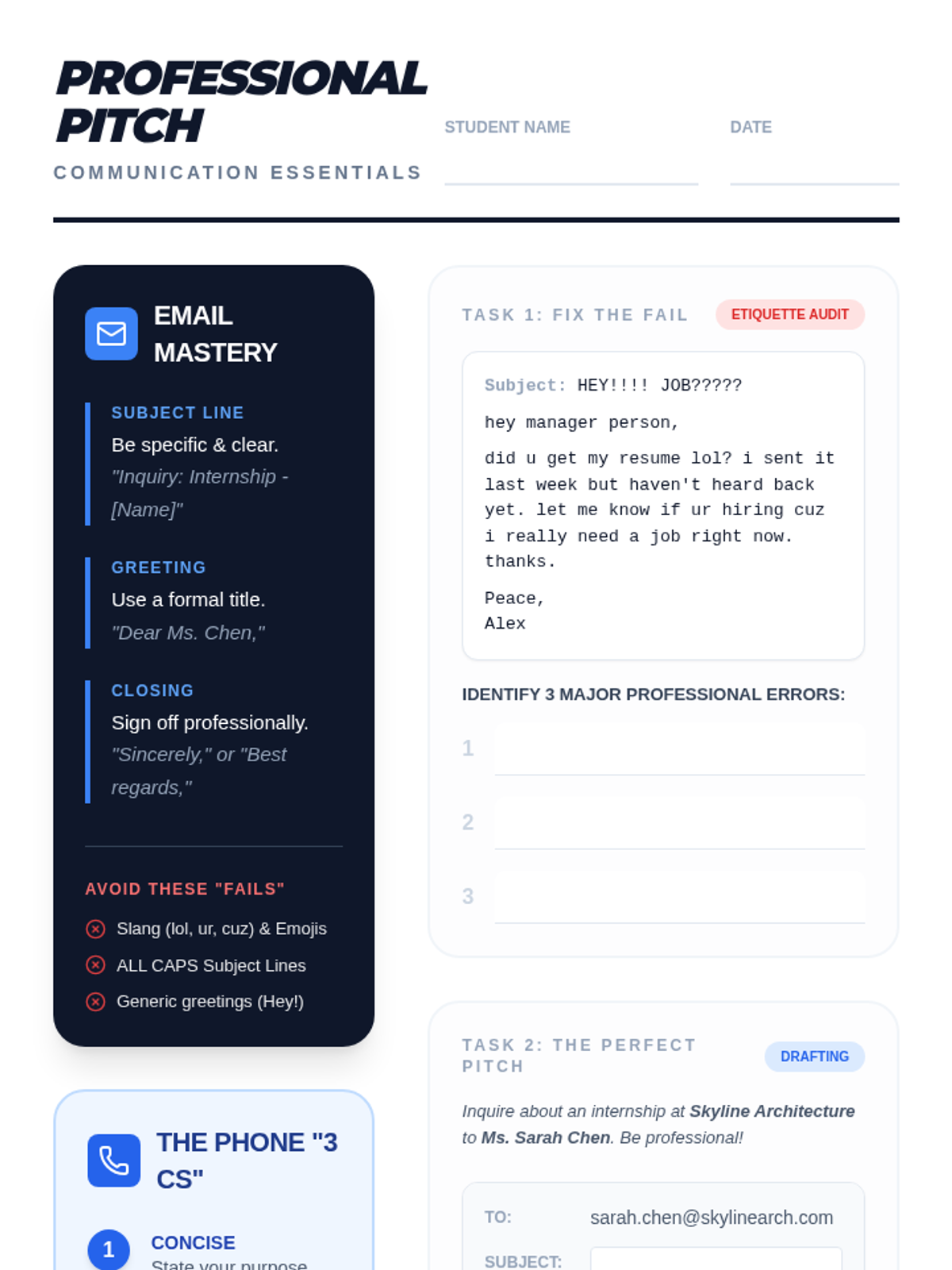
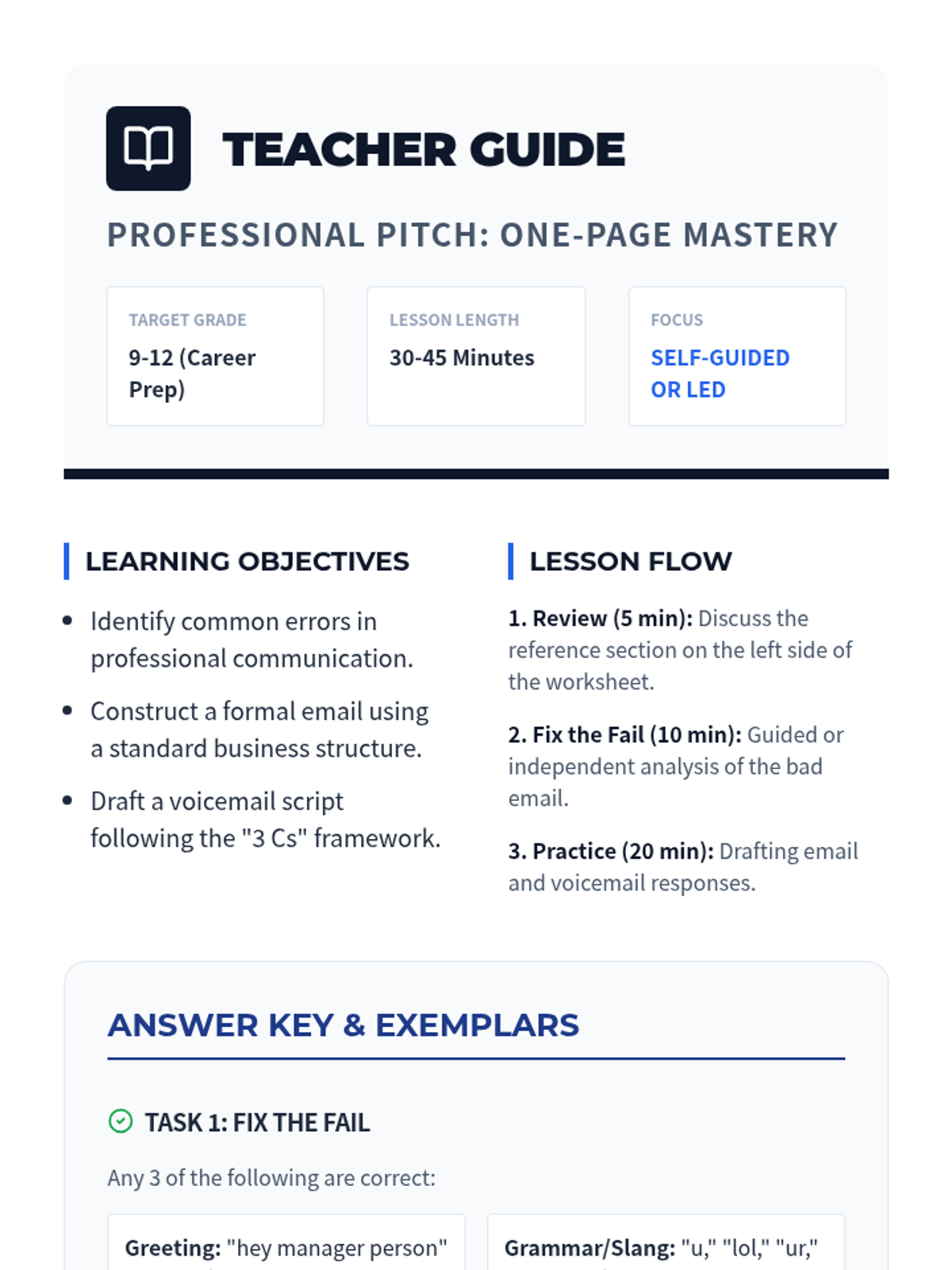
A comprehensive lesson on professional communication skills, focusing on email and phone etiquette for the workplace. Students learn the 'do's and don'ts' and practice crafting their own professional responses.
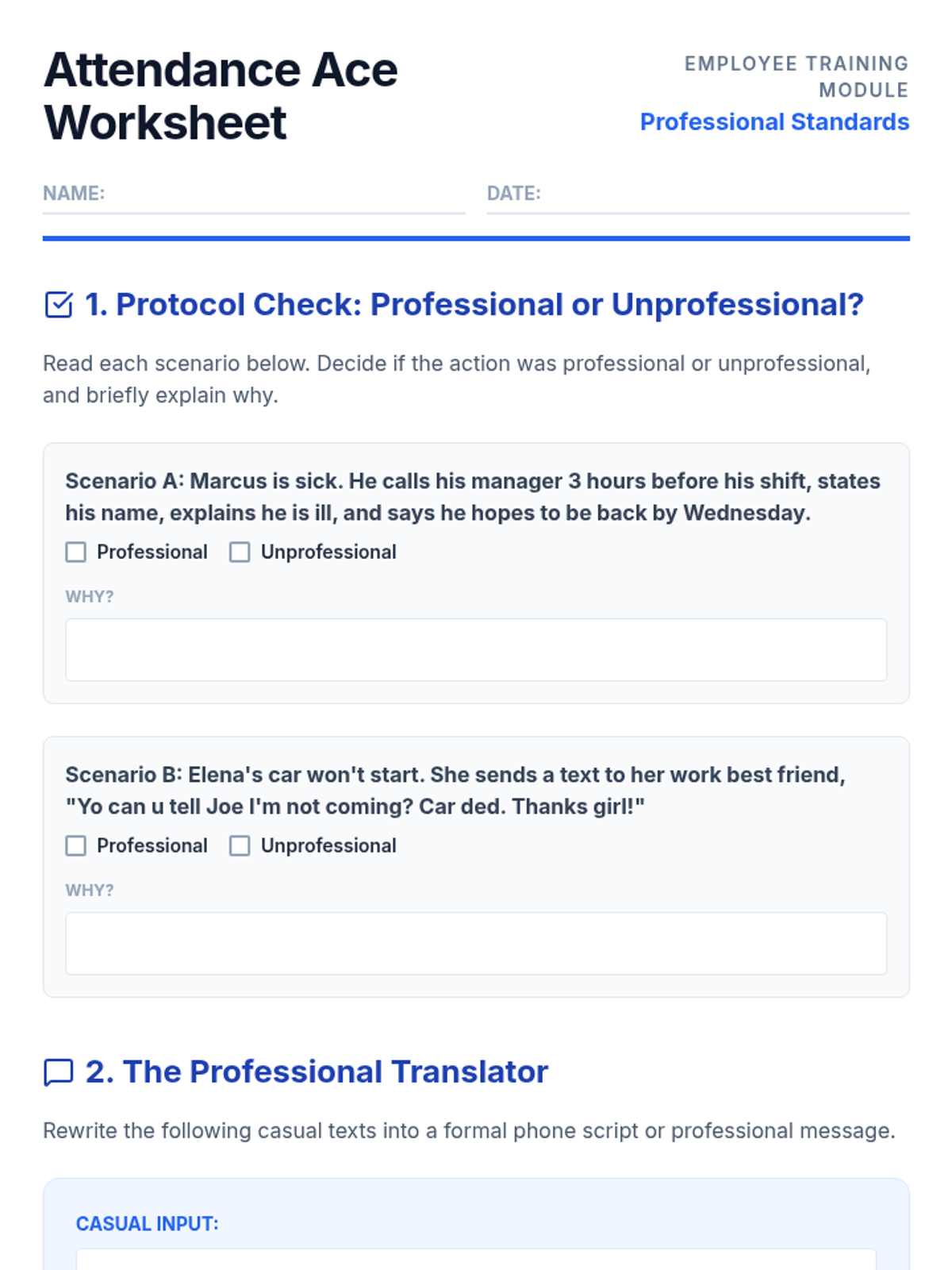
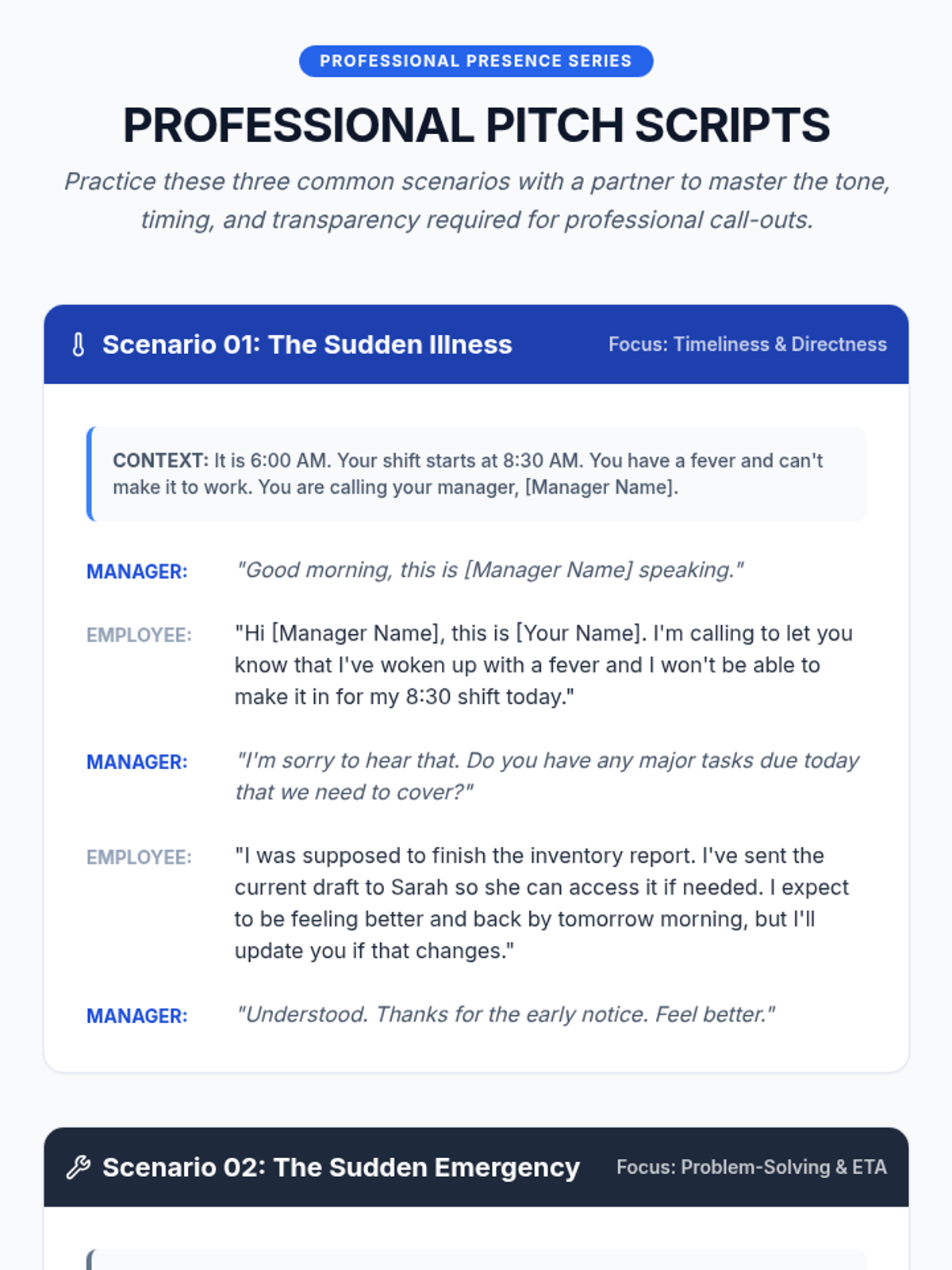
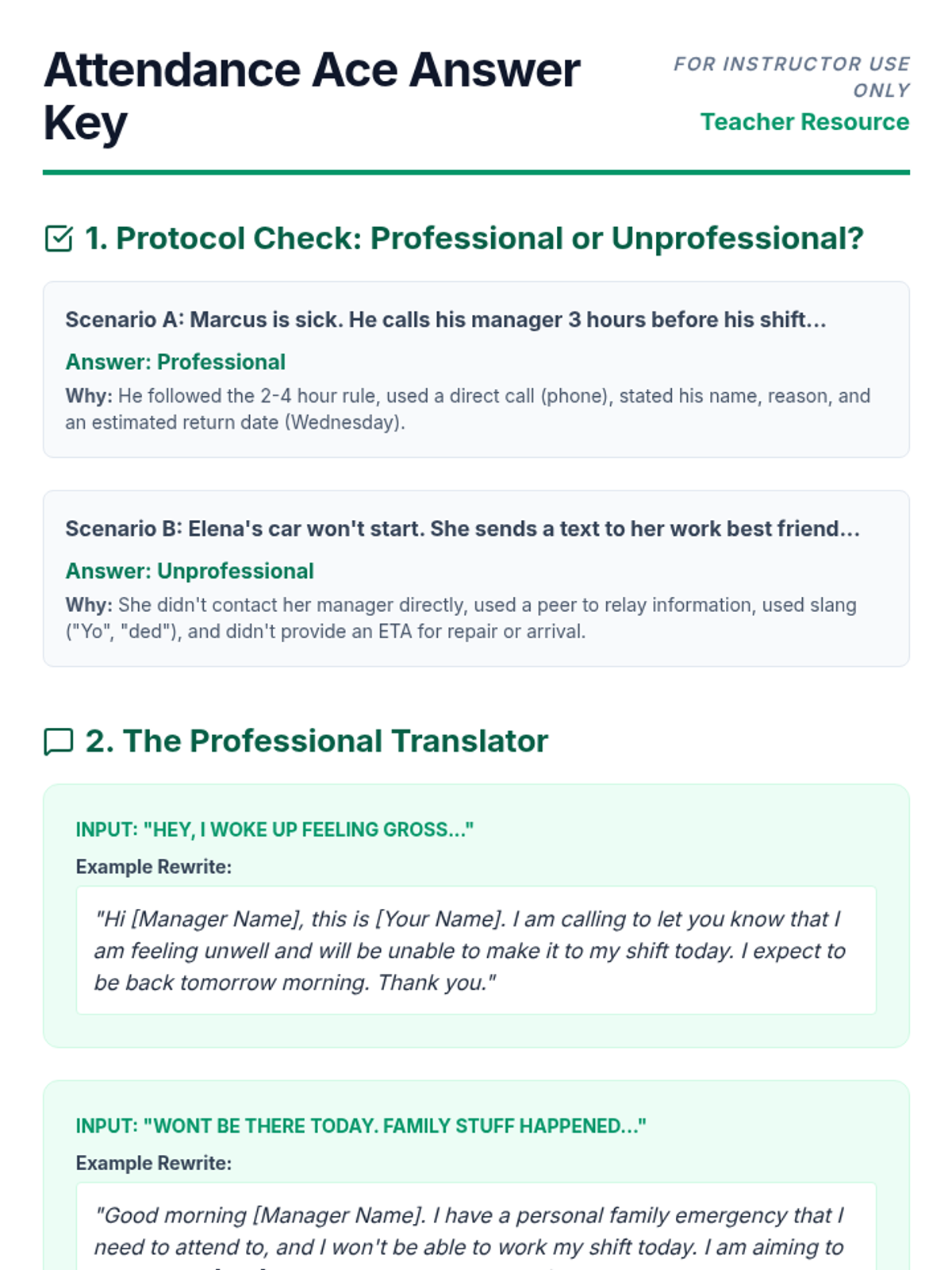
A comprehensive training module on the professional standards for calling out of work, covering etiquette, timing, and communication methods.
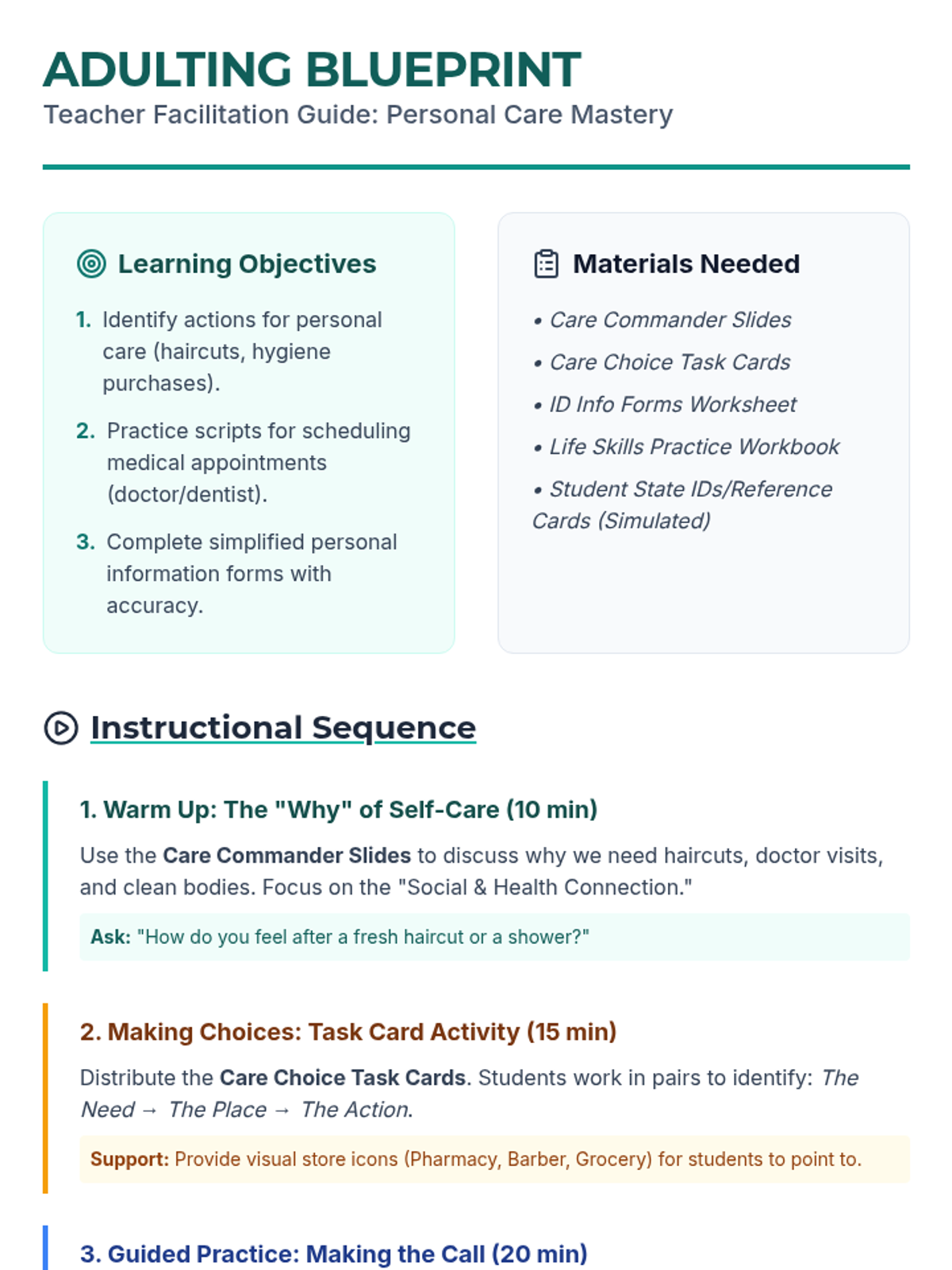
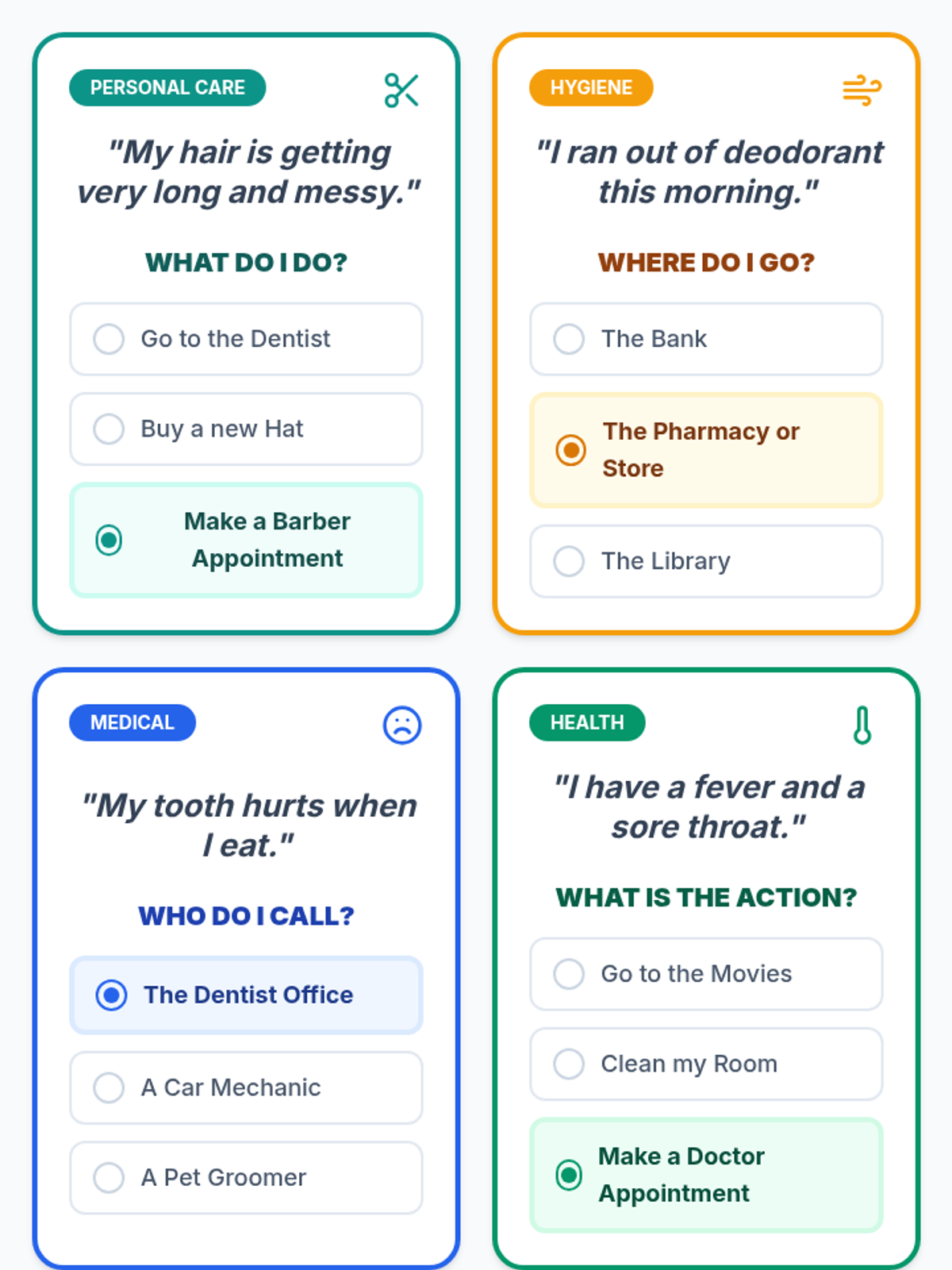
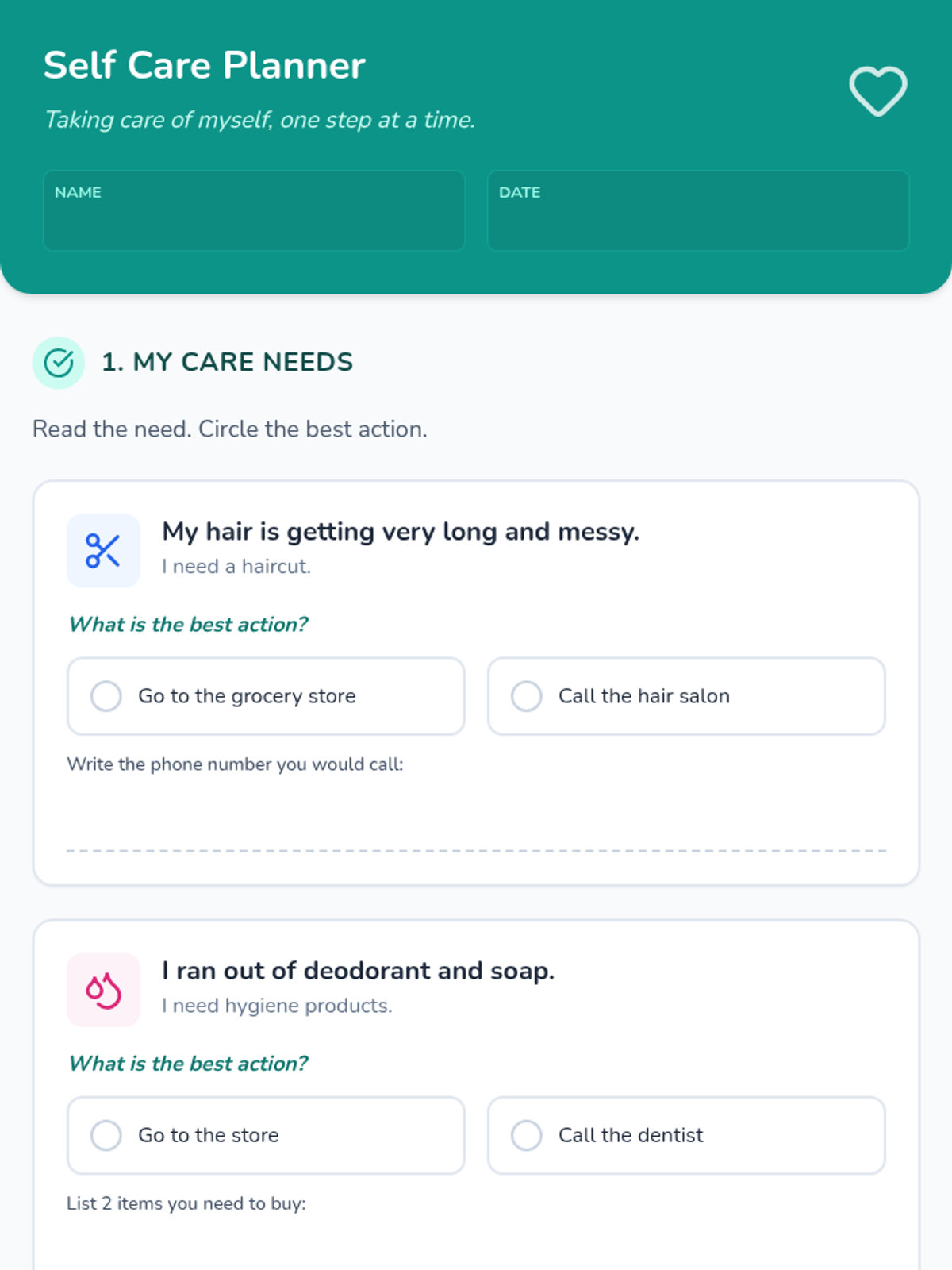
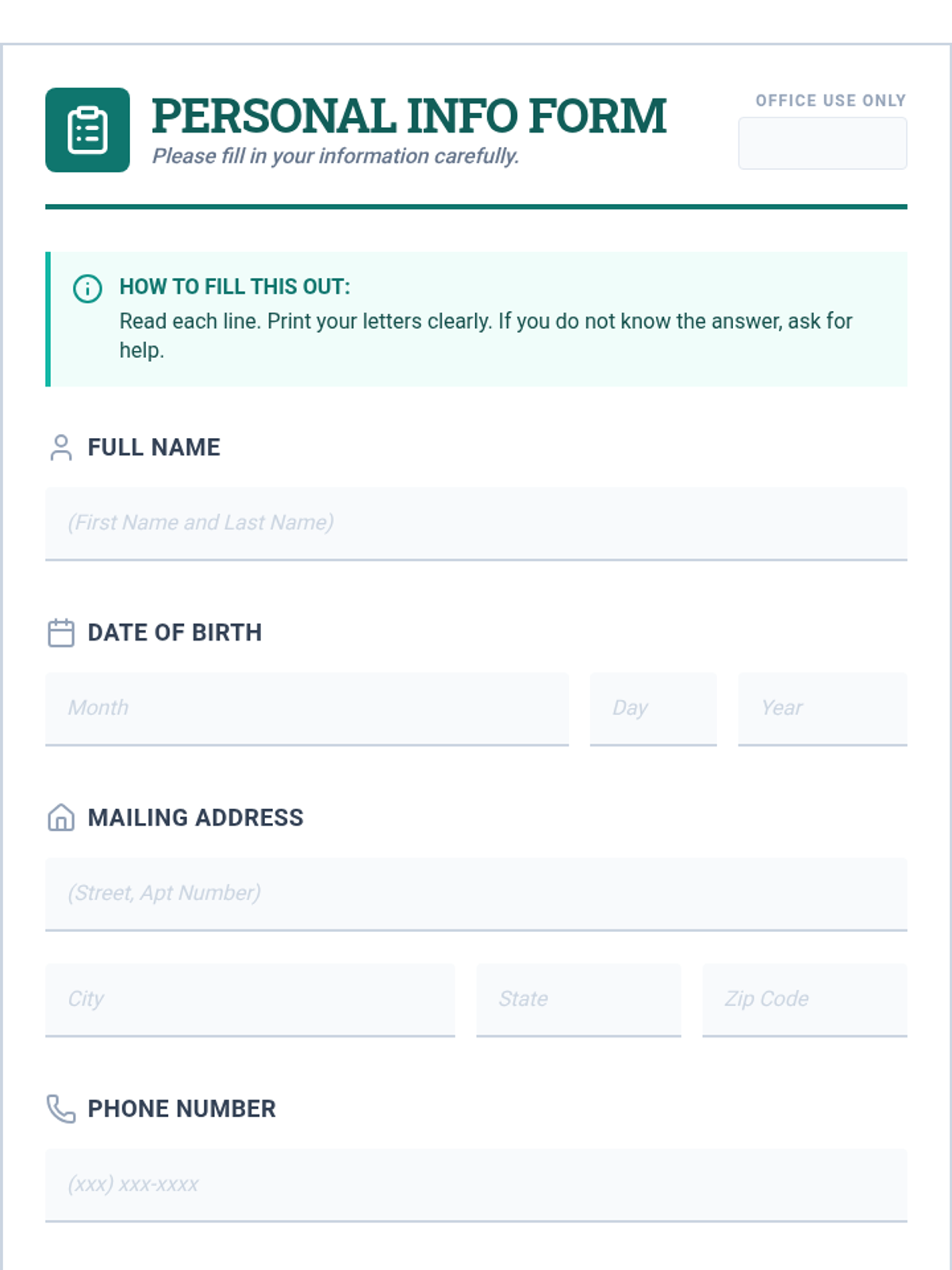
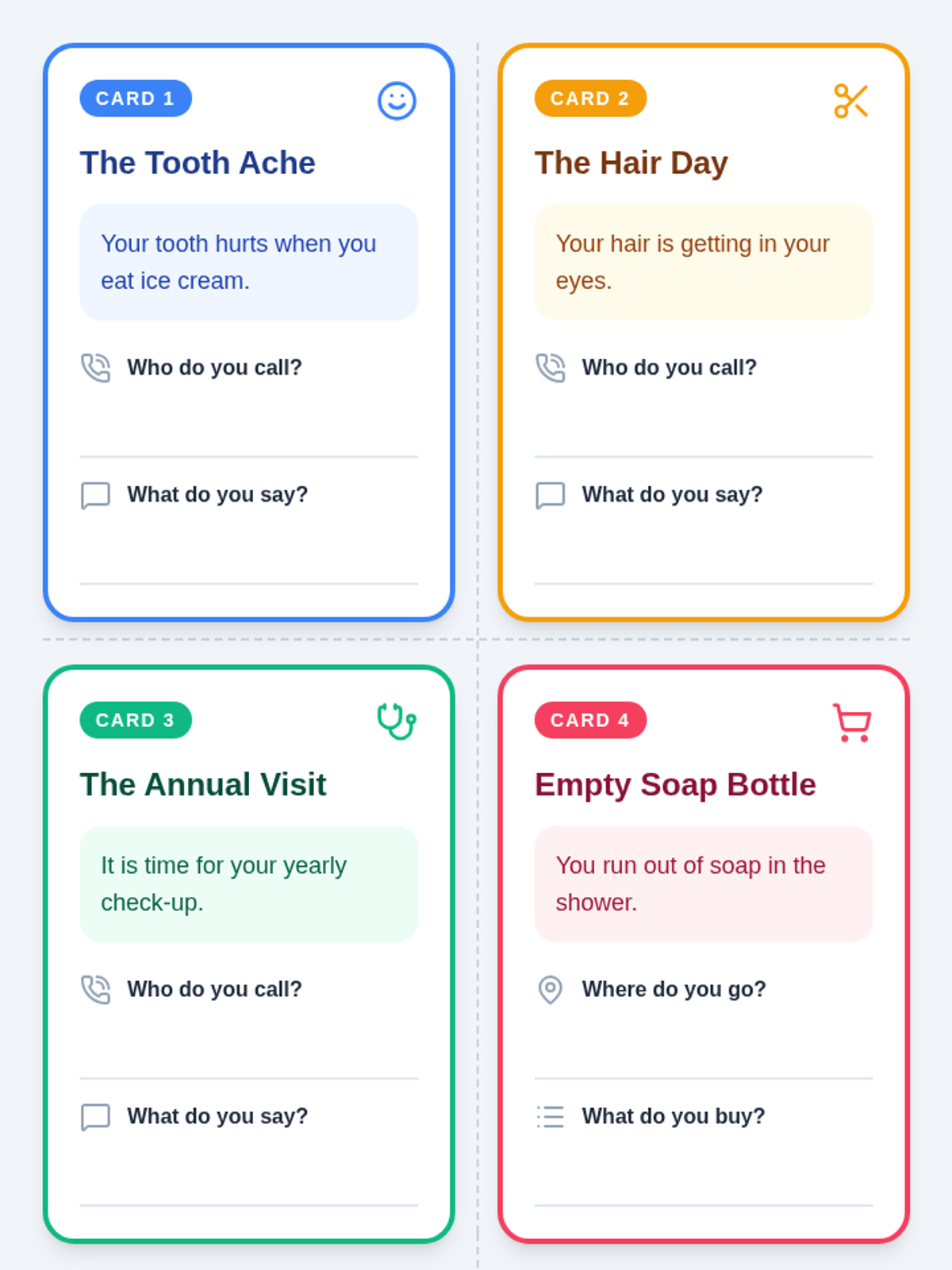
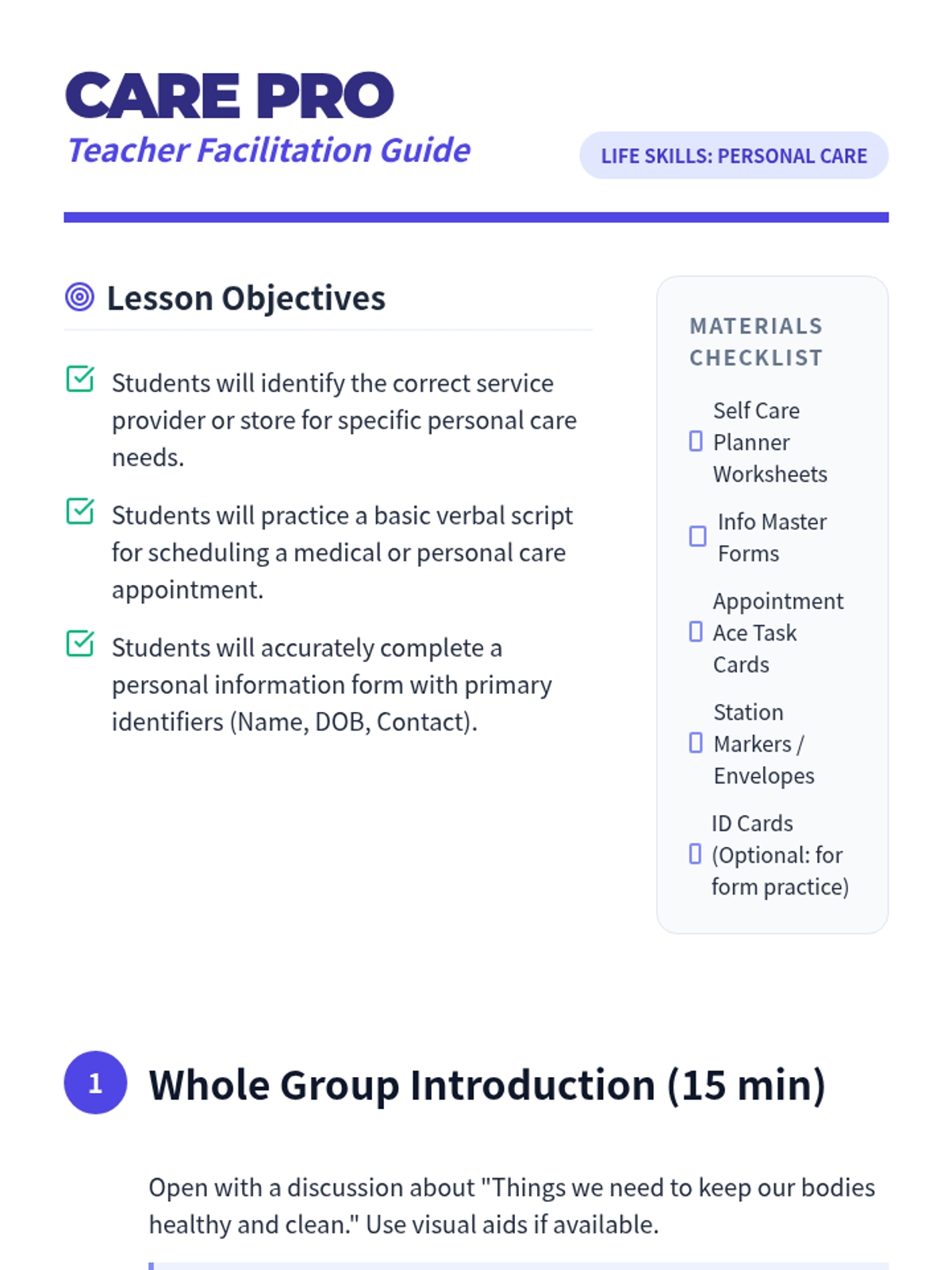
A comprehensive lesson on personal care management, including scheduling appointments, selecting hygiene products, and completing personal information forms for high school students requiring high support.
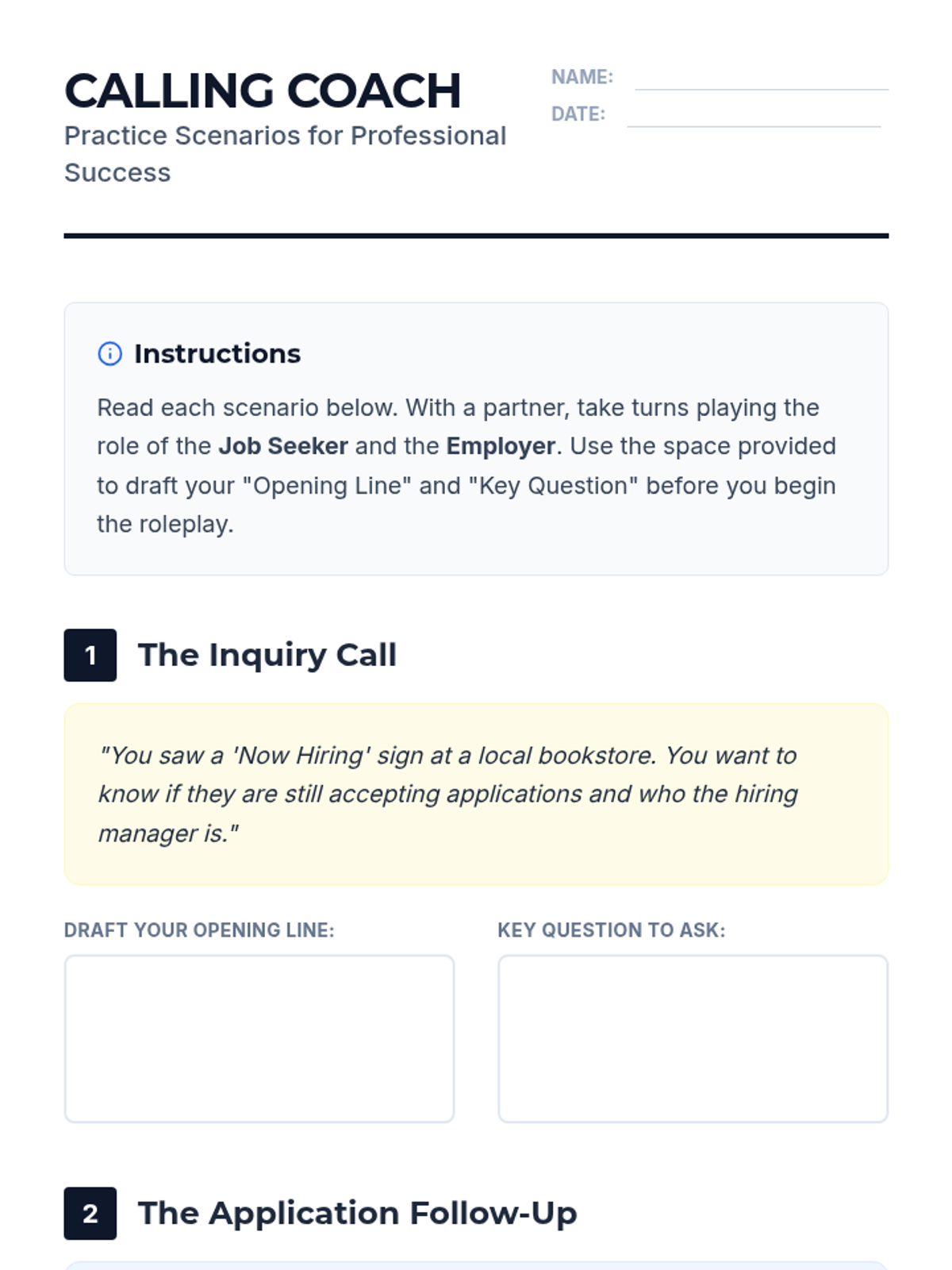
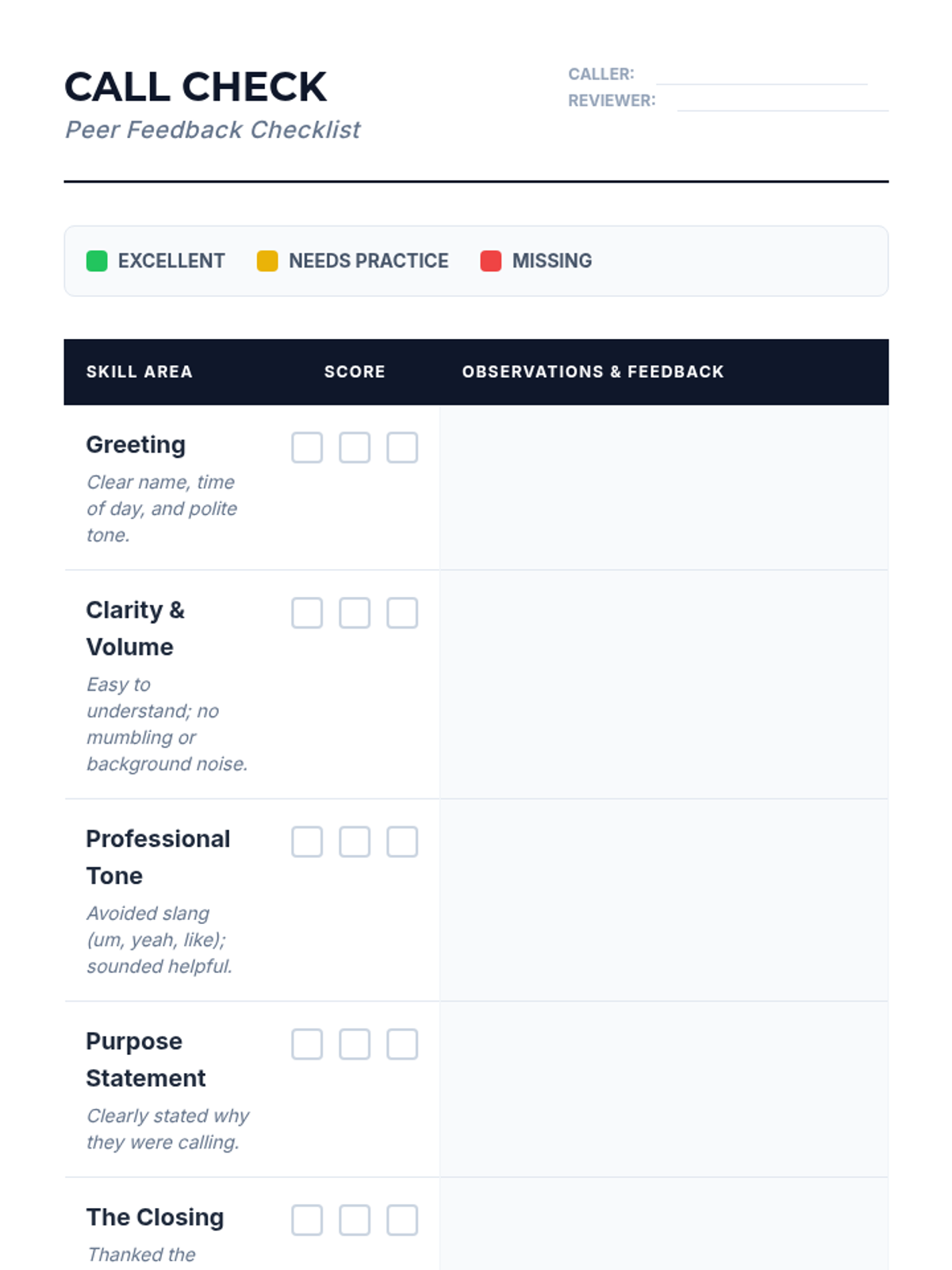
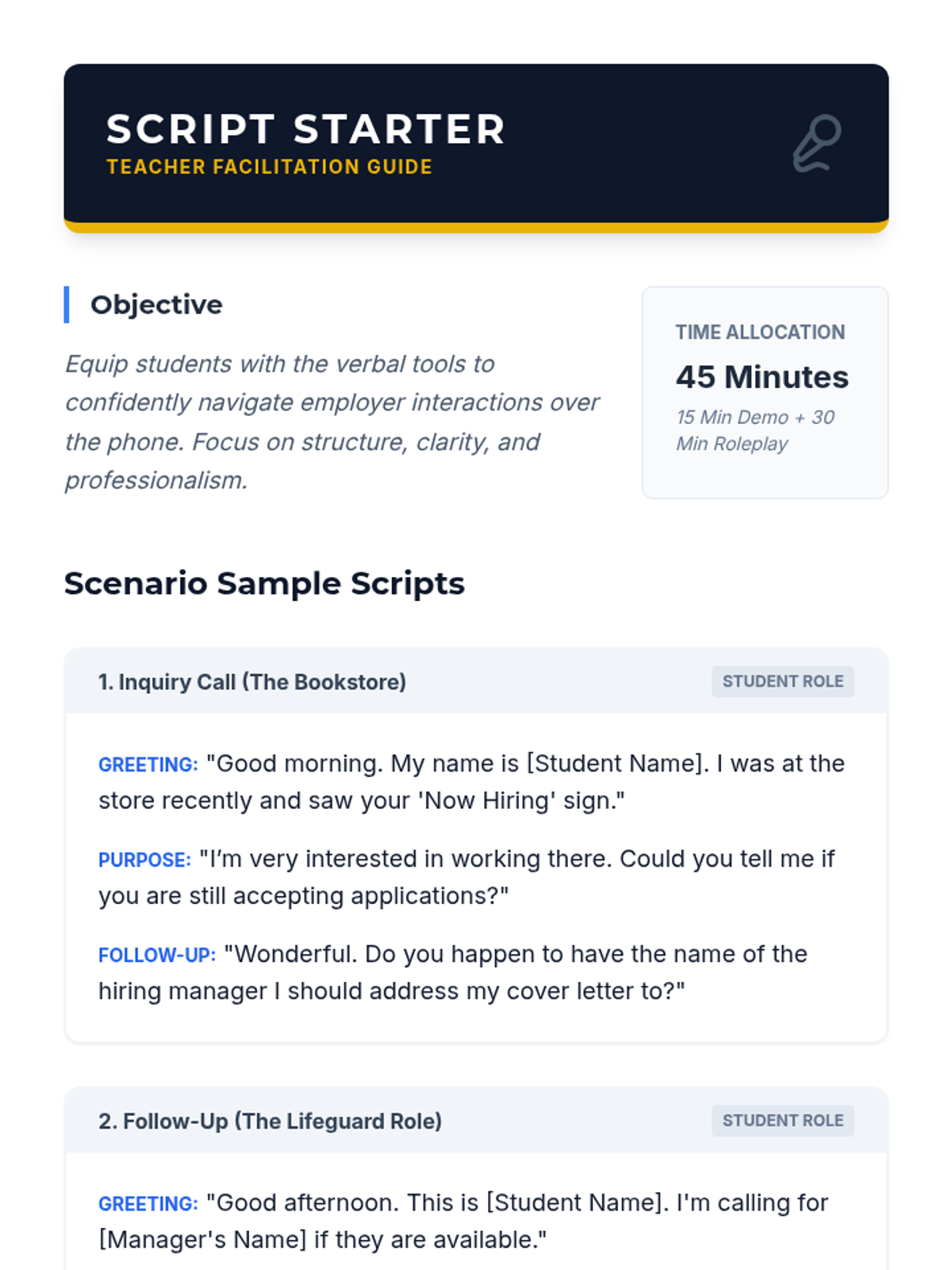
This lesson covers professional phone etiquette specifically for communicating with potential employers, focusing on preparation, tone, and specific calling scenarios.
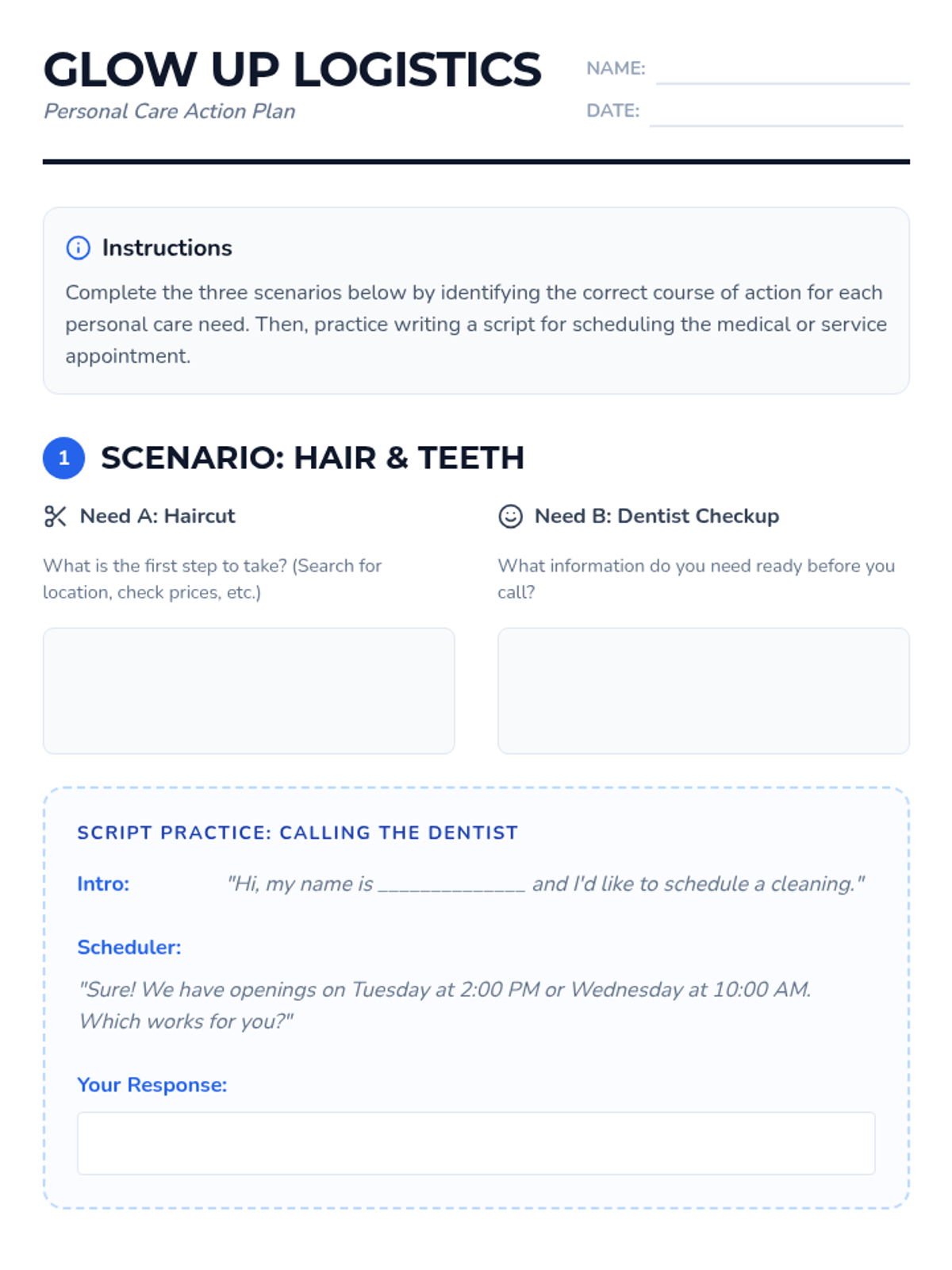
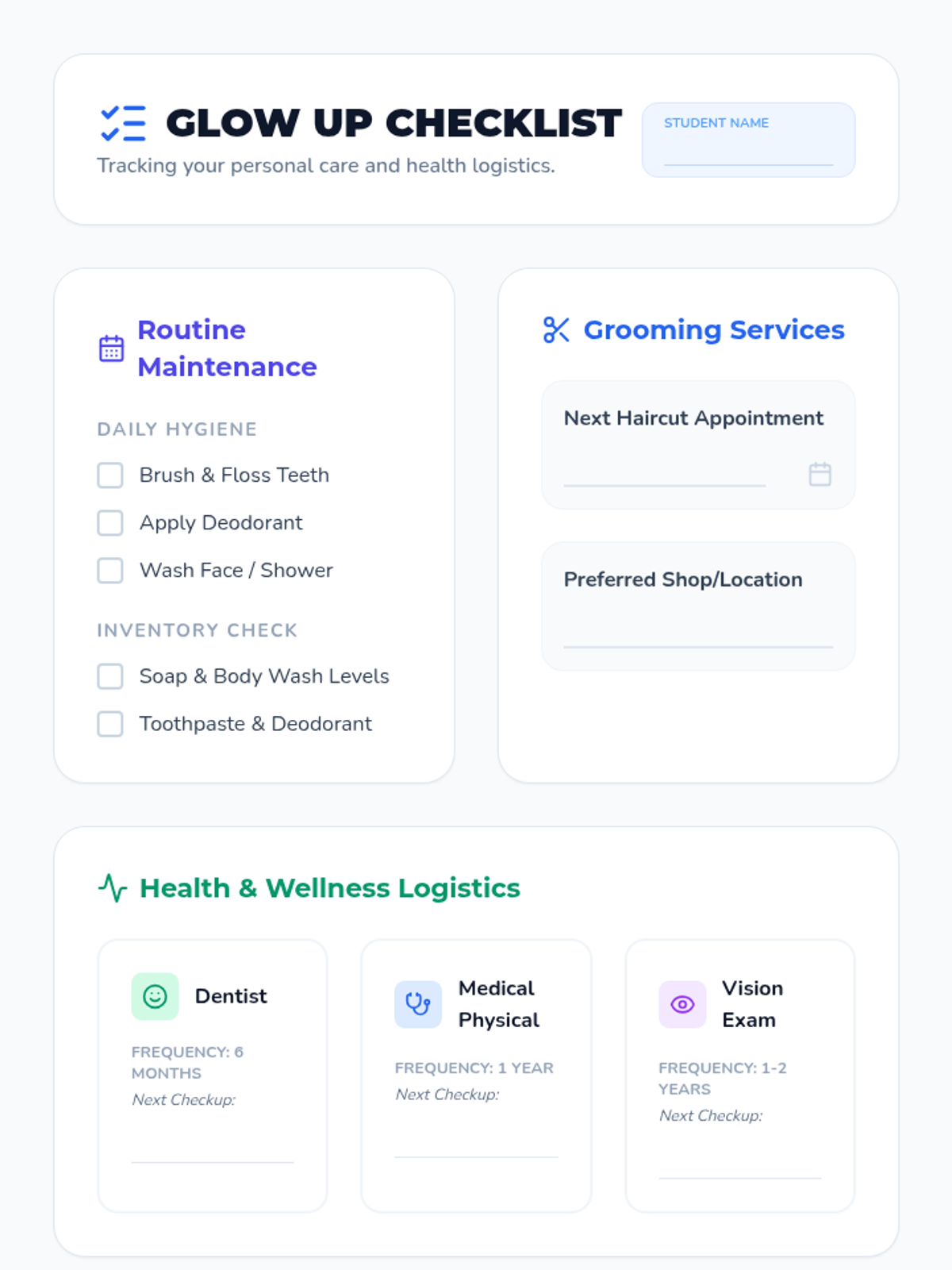
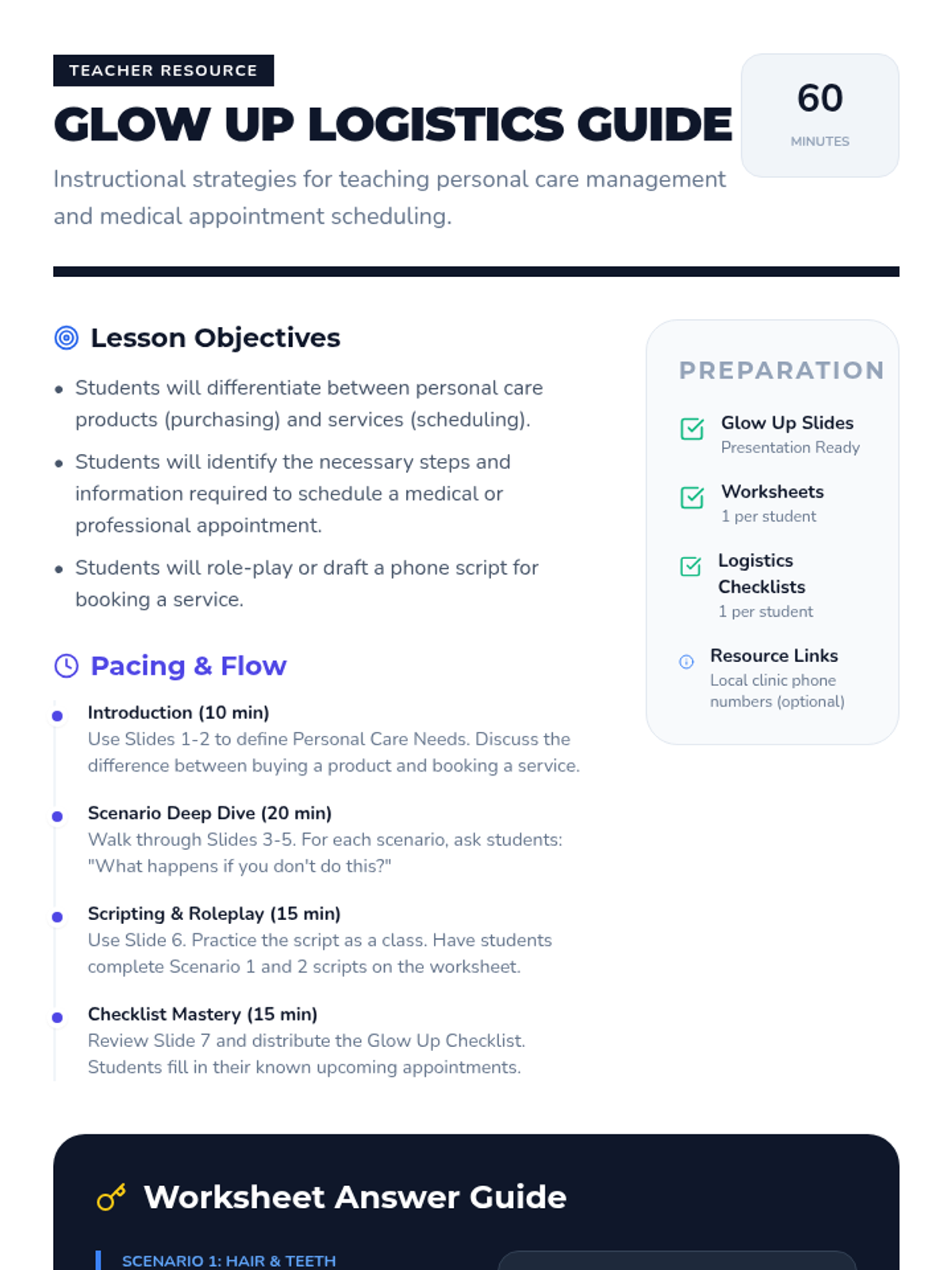
A practical lesson focused on the logistics of personal care, teaching students how to identify necessary actions for hygiene and grooming, and the specific steps to schedule medical appointments.
A practical life skills lesson focused on managing personal care needs, scheduling medical appointments, and completing essential personal information forms. Designed for Level 2 learners with simplified text and visual supports.
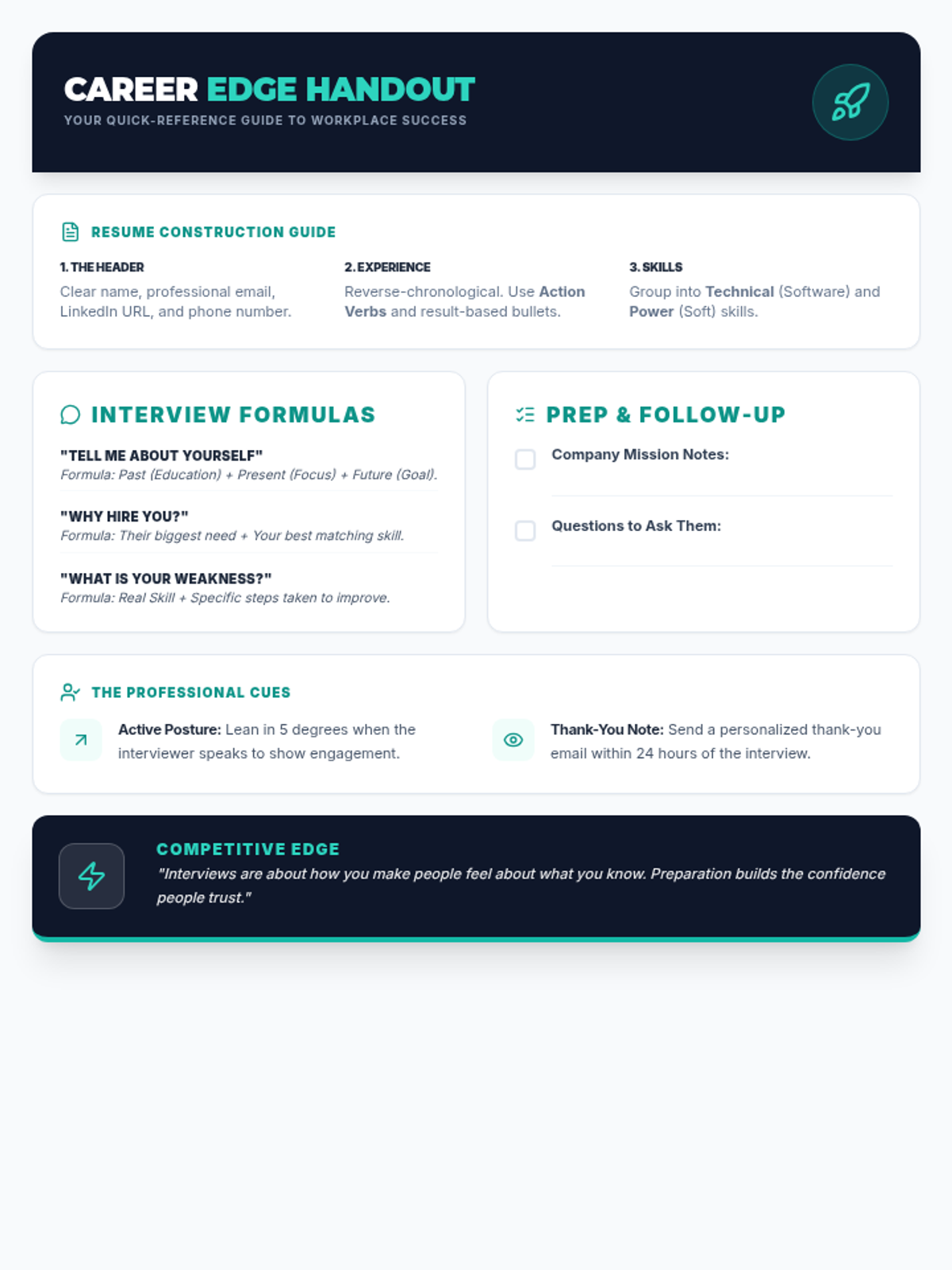
Master the transition from student to professional. This lesson covers workplace etiquette and the application process through engaging puzzles and reflective self-assessments.
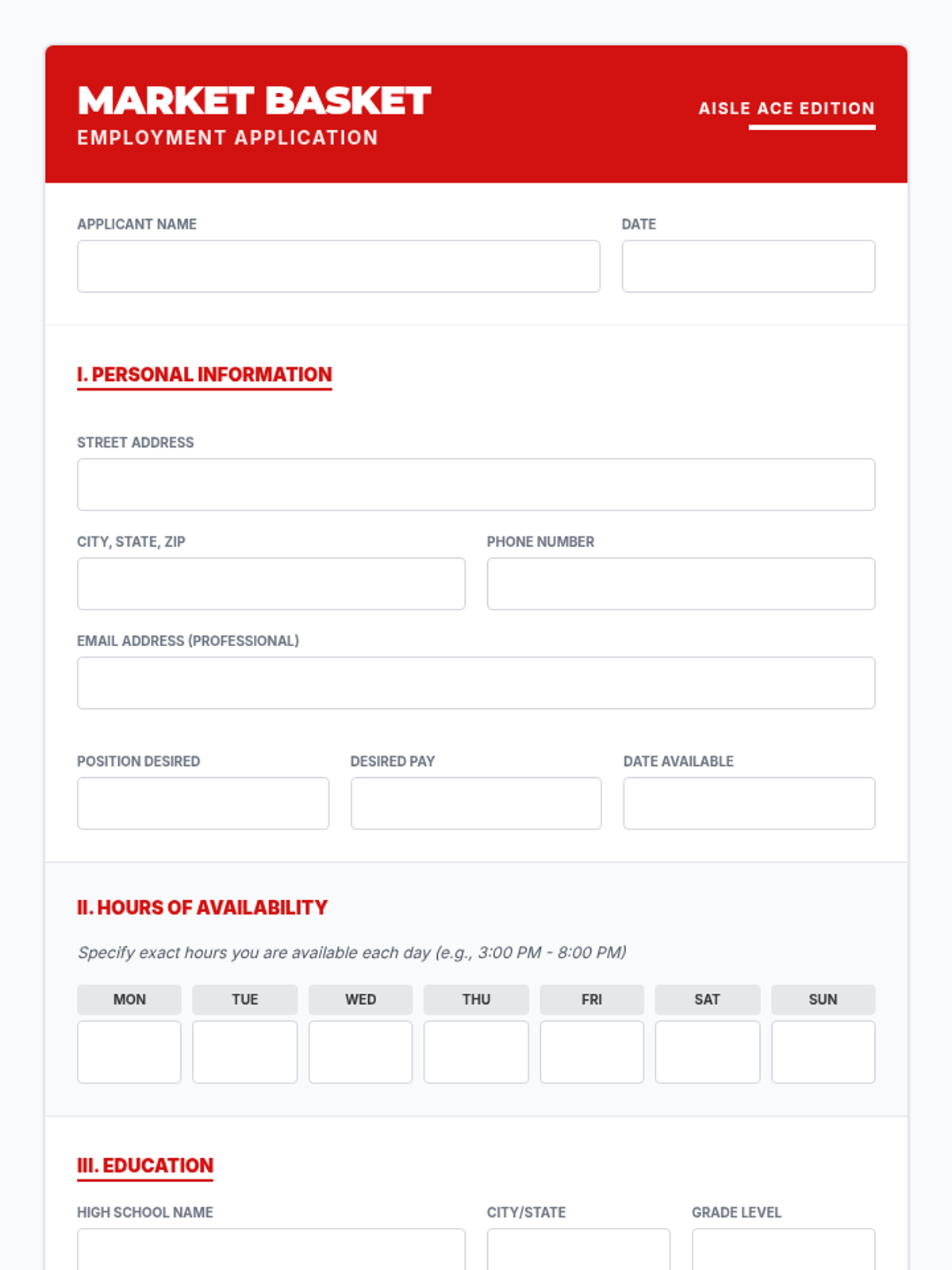
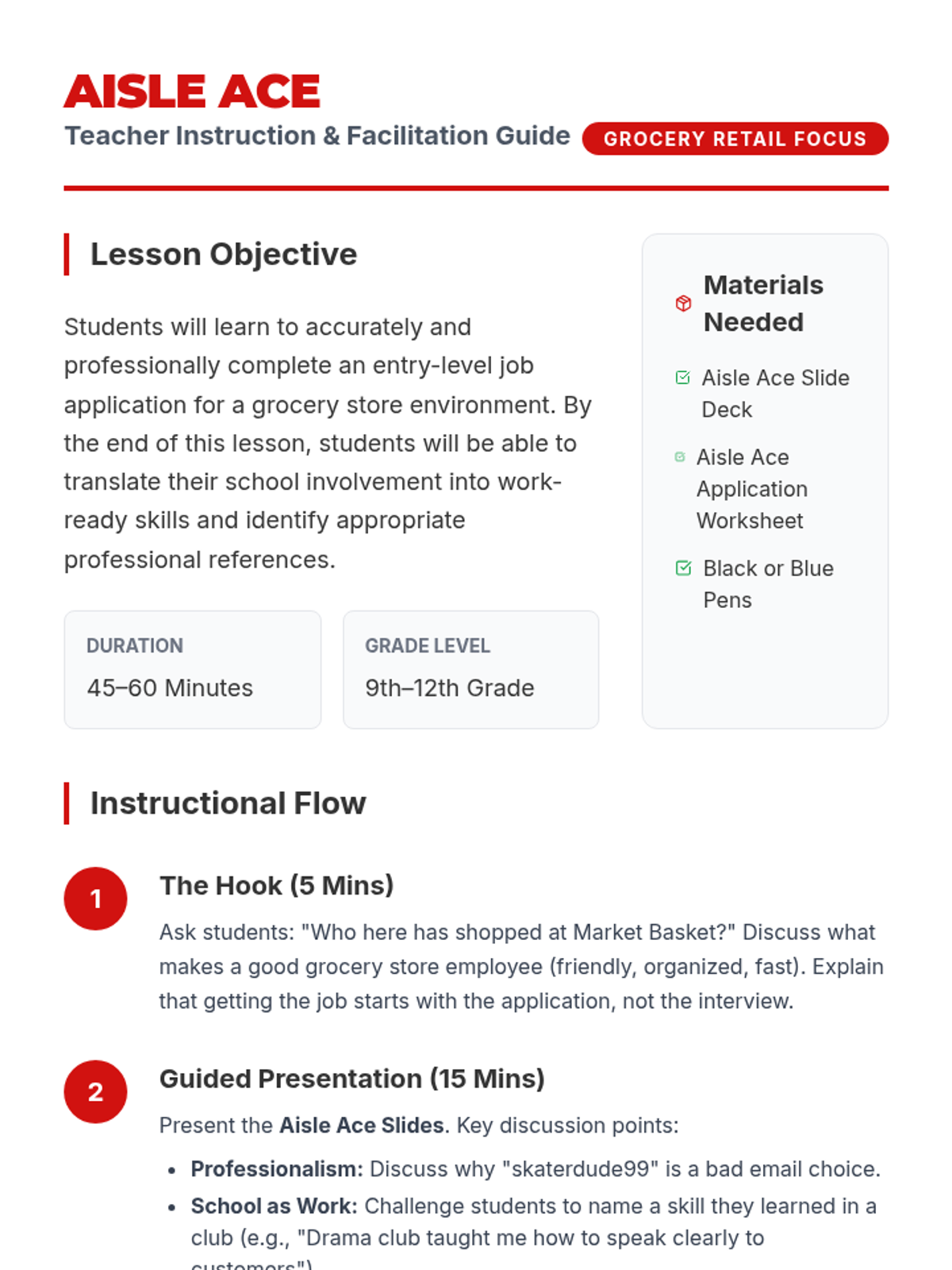
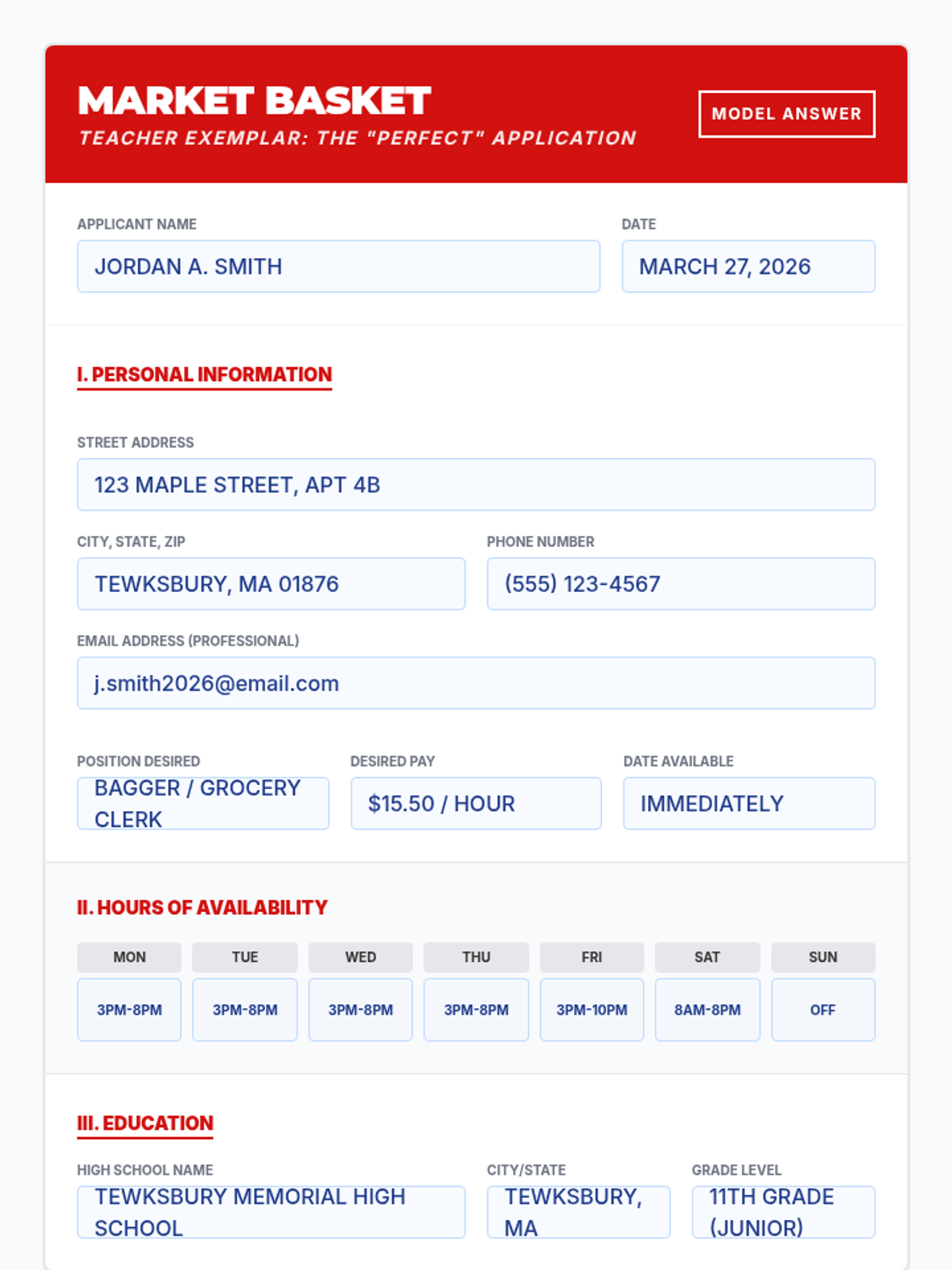
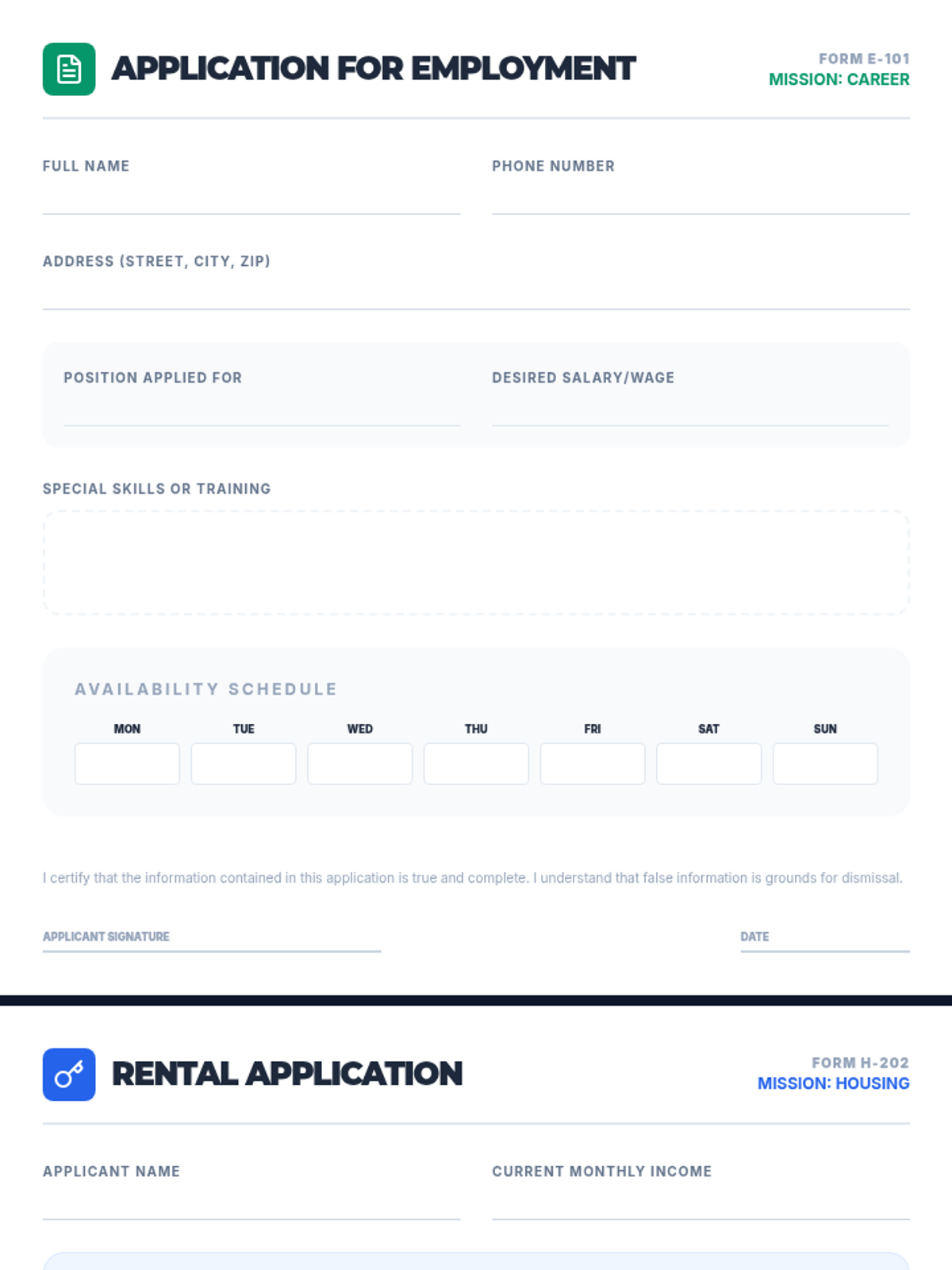
A comprehensive lesson teaching high school students how to accurately and professionally complete an entry-level job application, specifically tailored for a grocery store environment like Market Basket. Students will learn to translate school activities into relevant experience and select professional references.
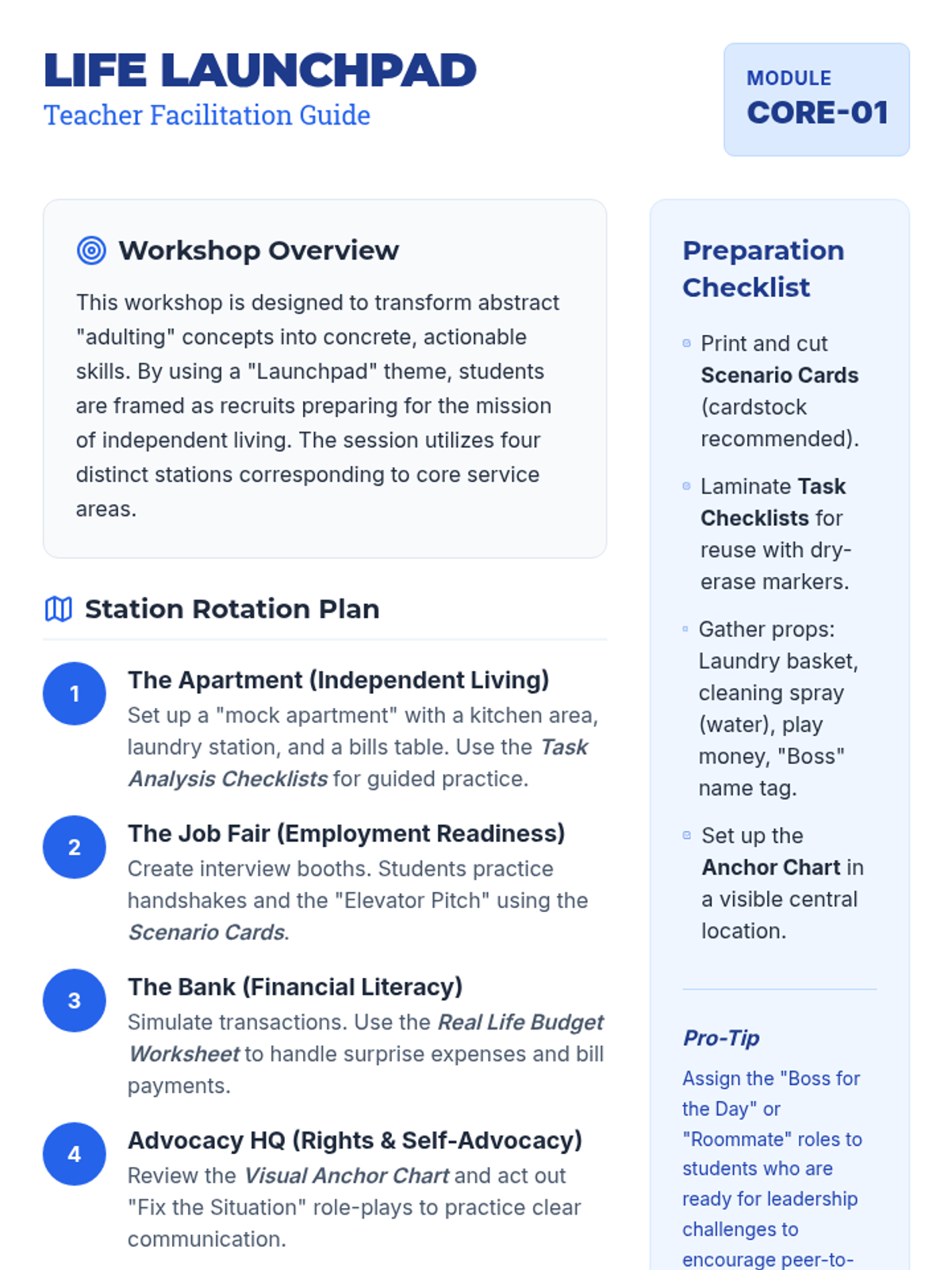
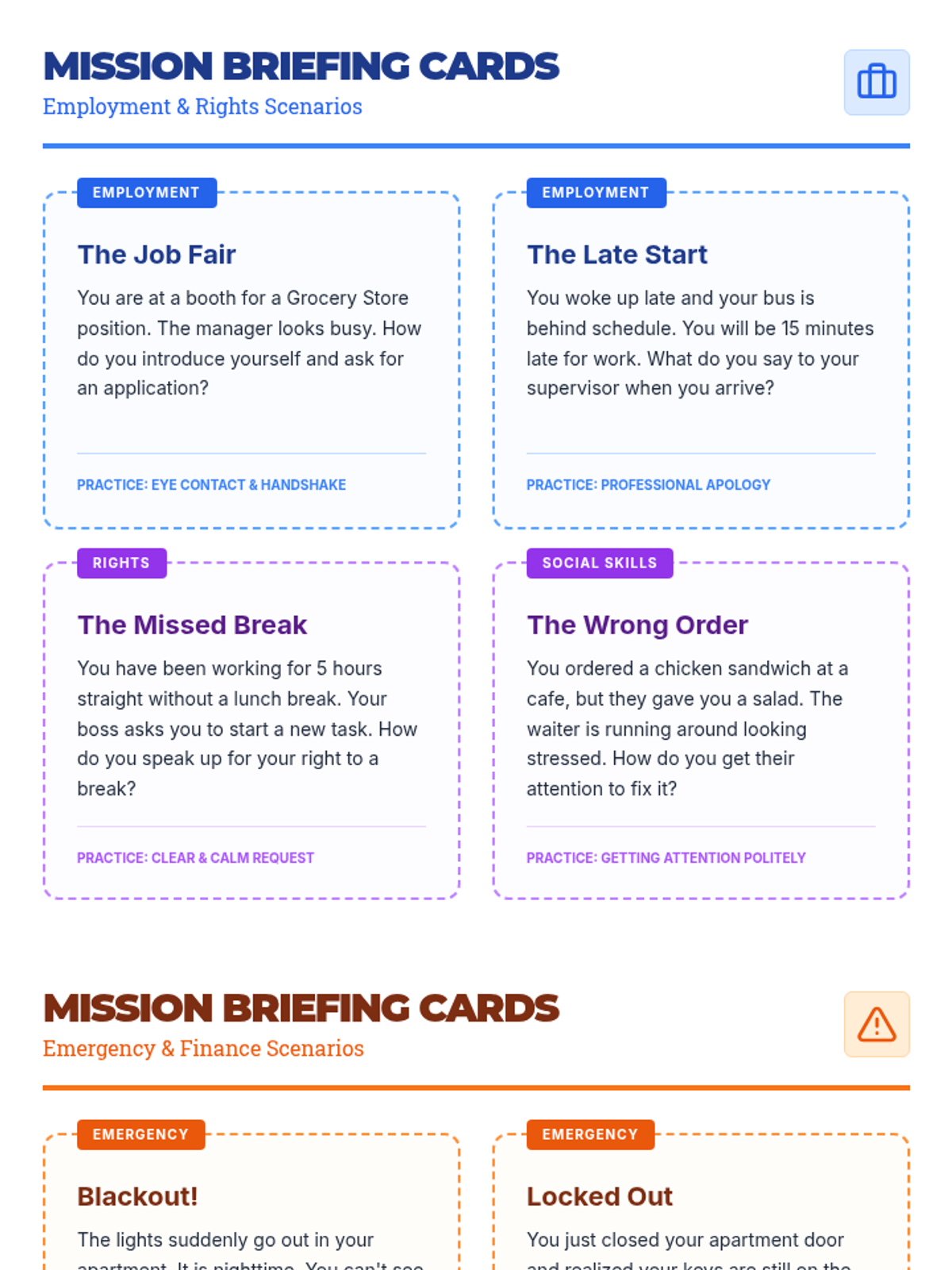
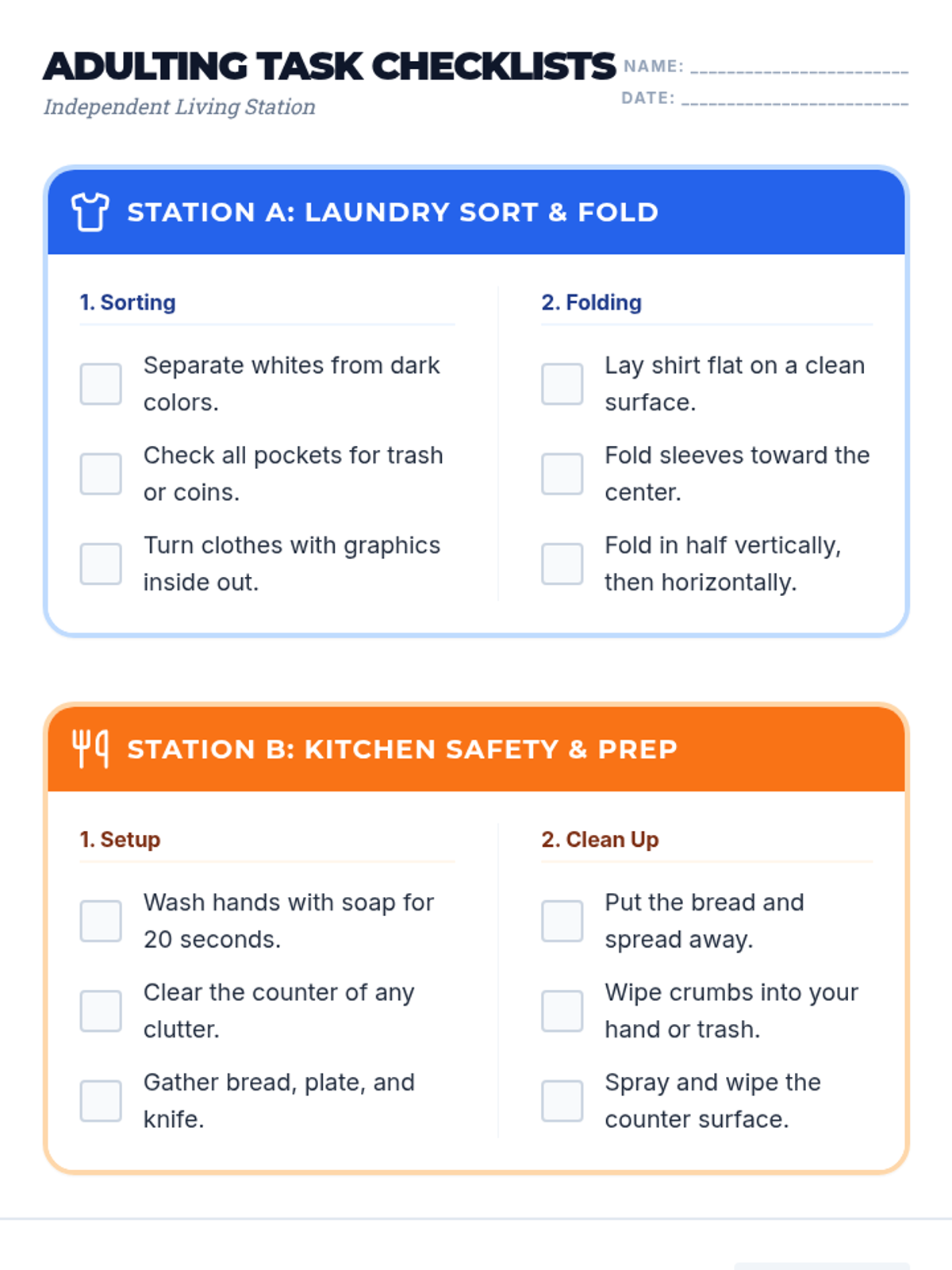
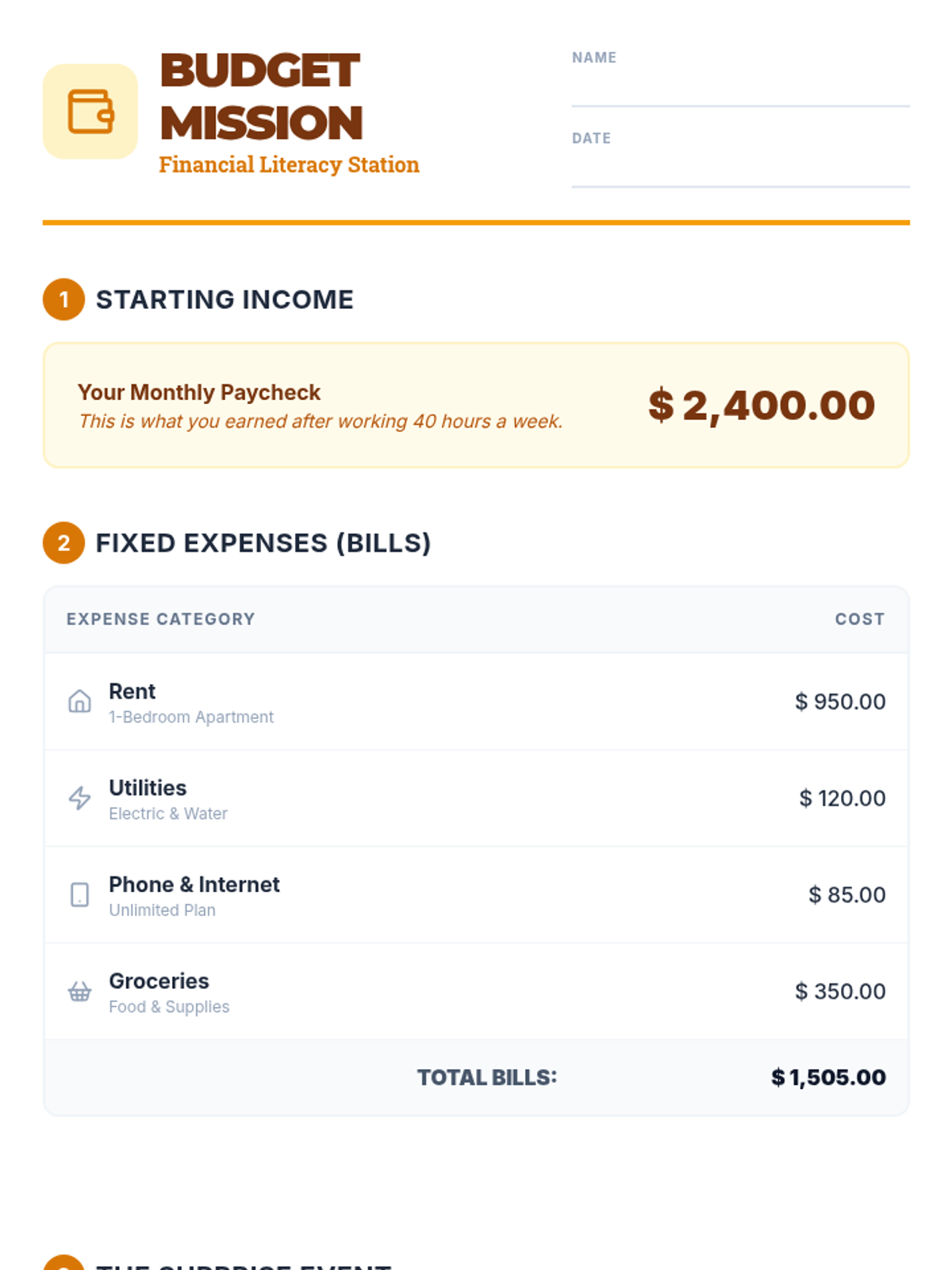
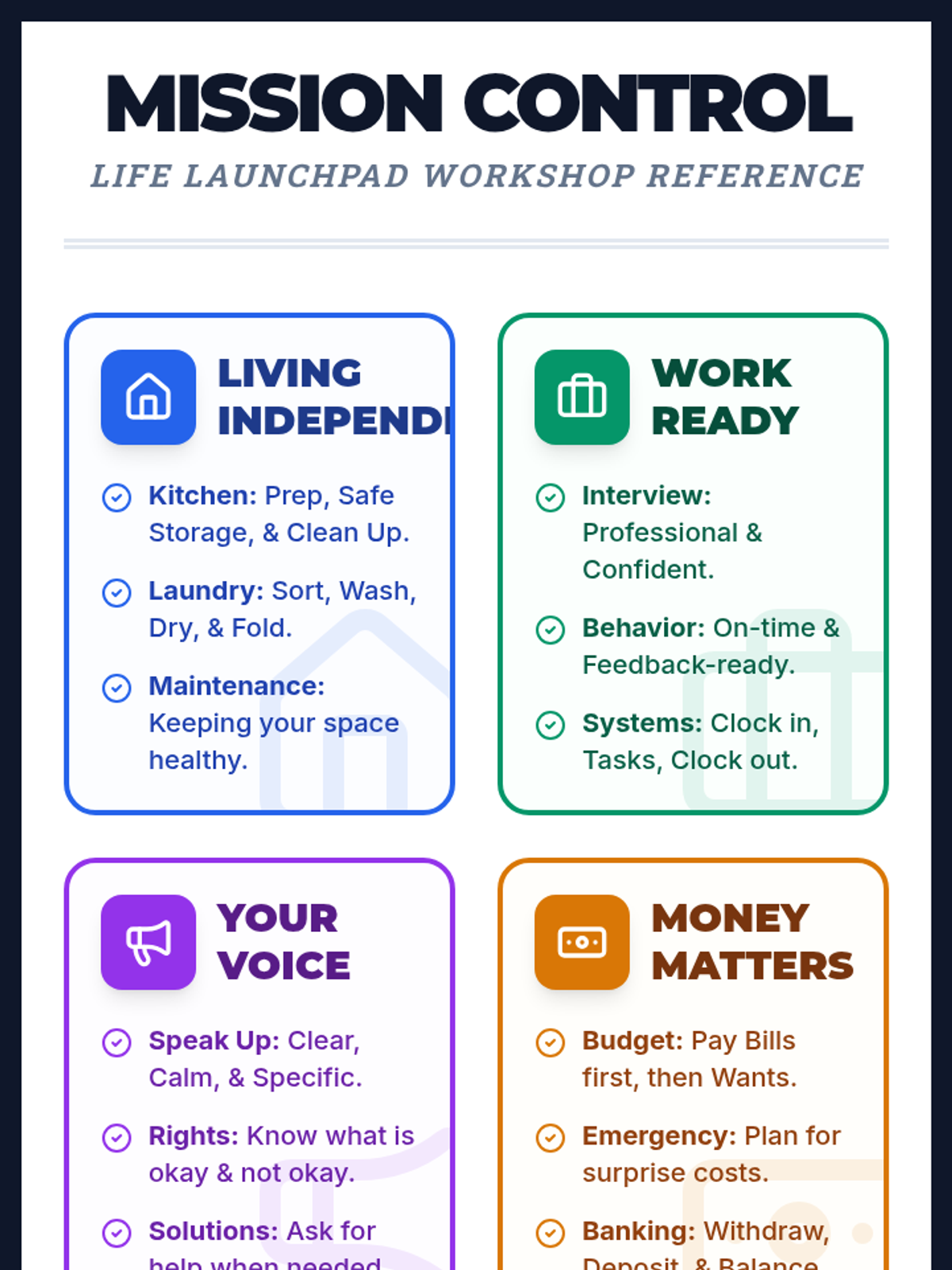
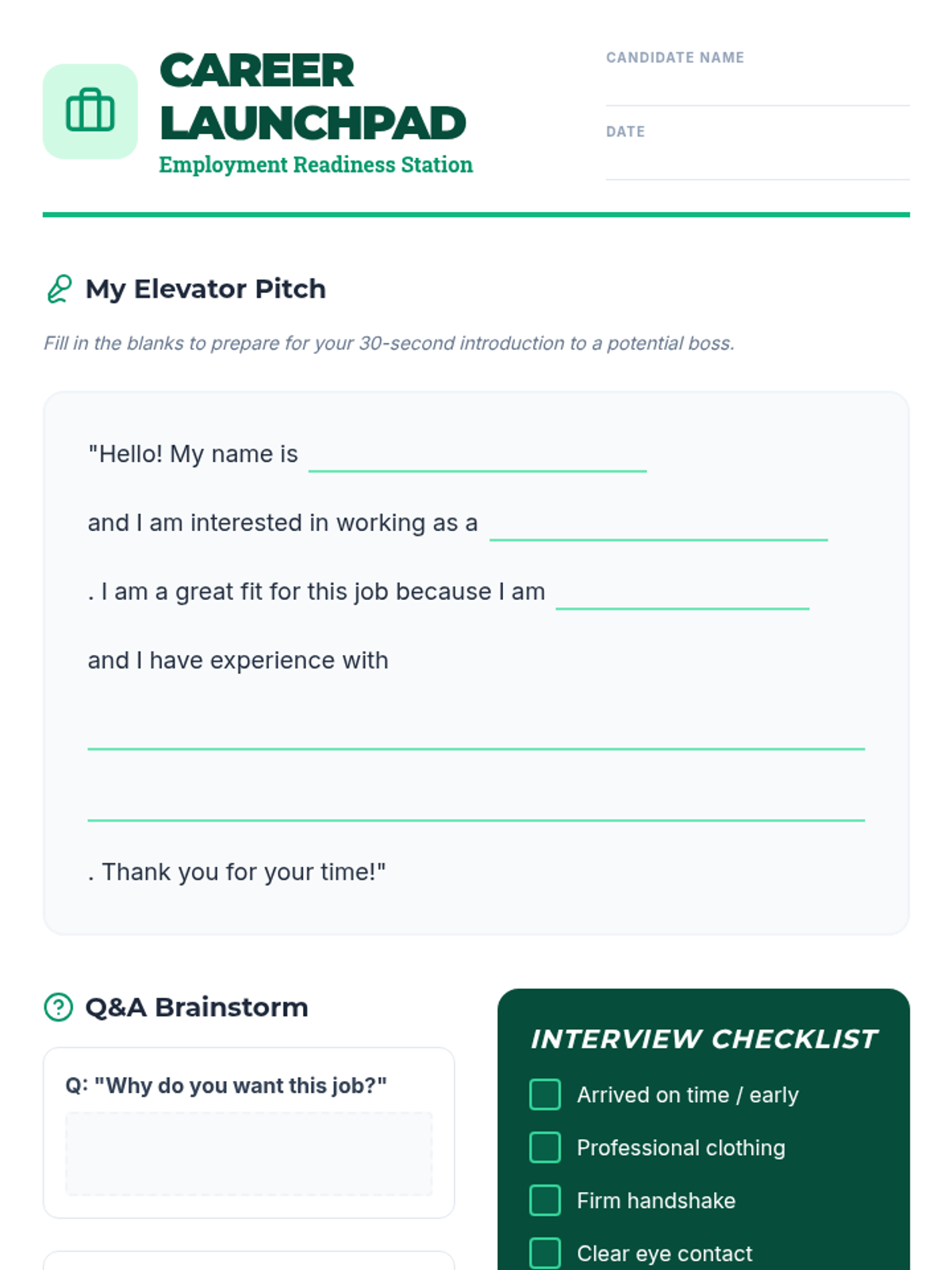
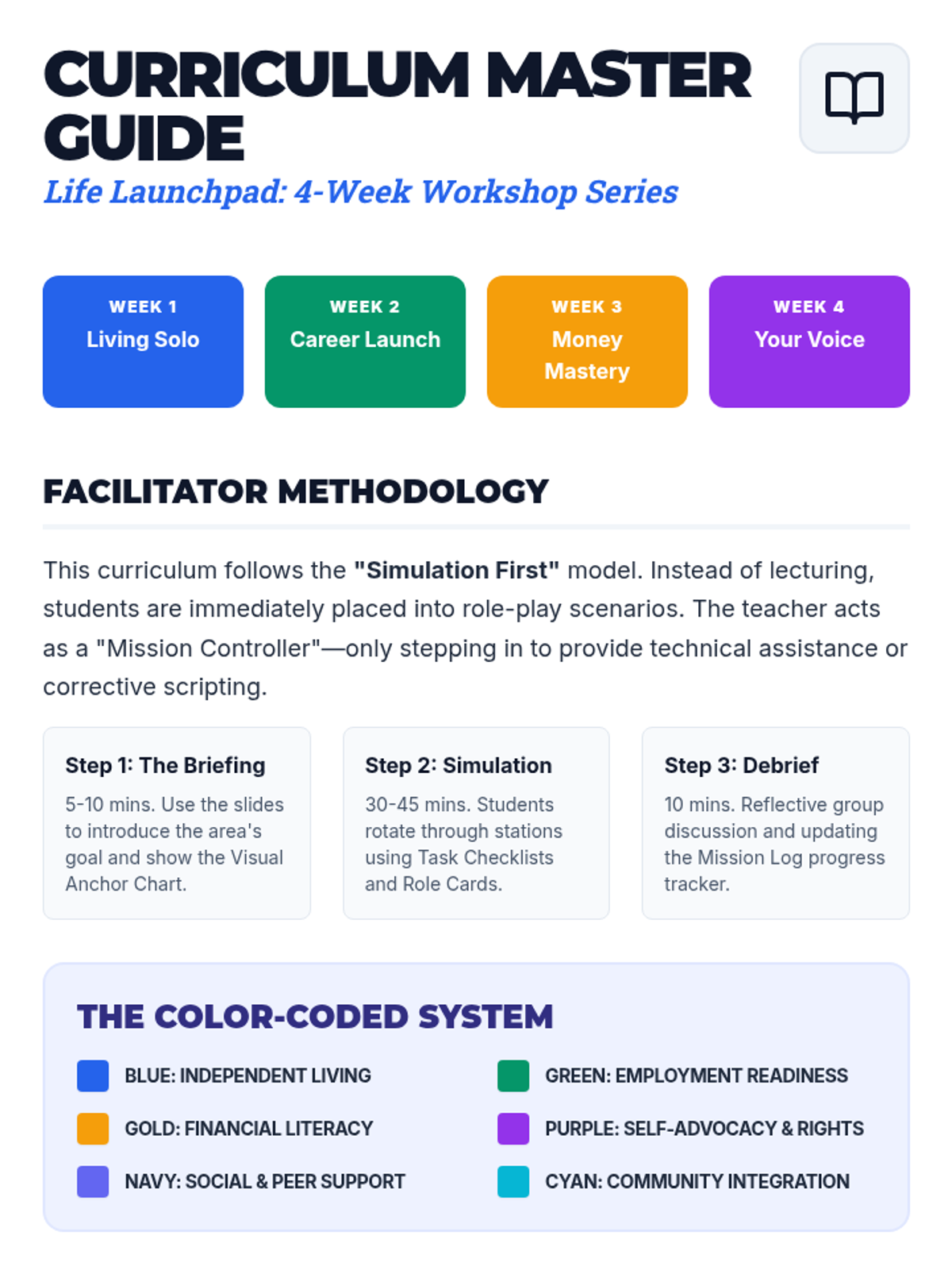
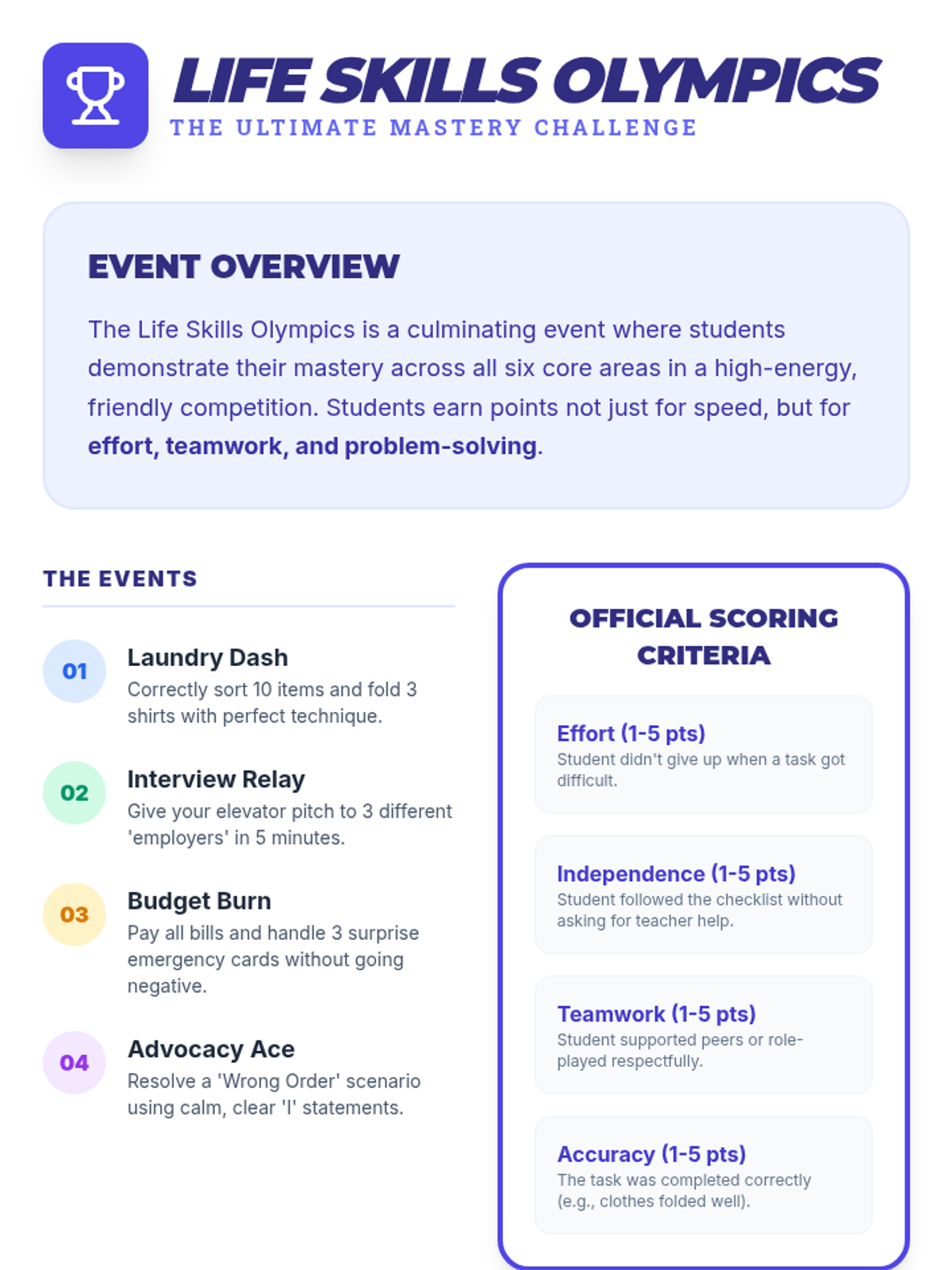
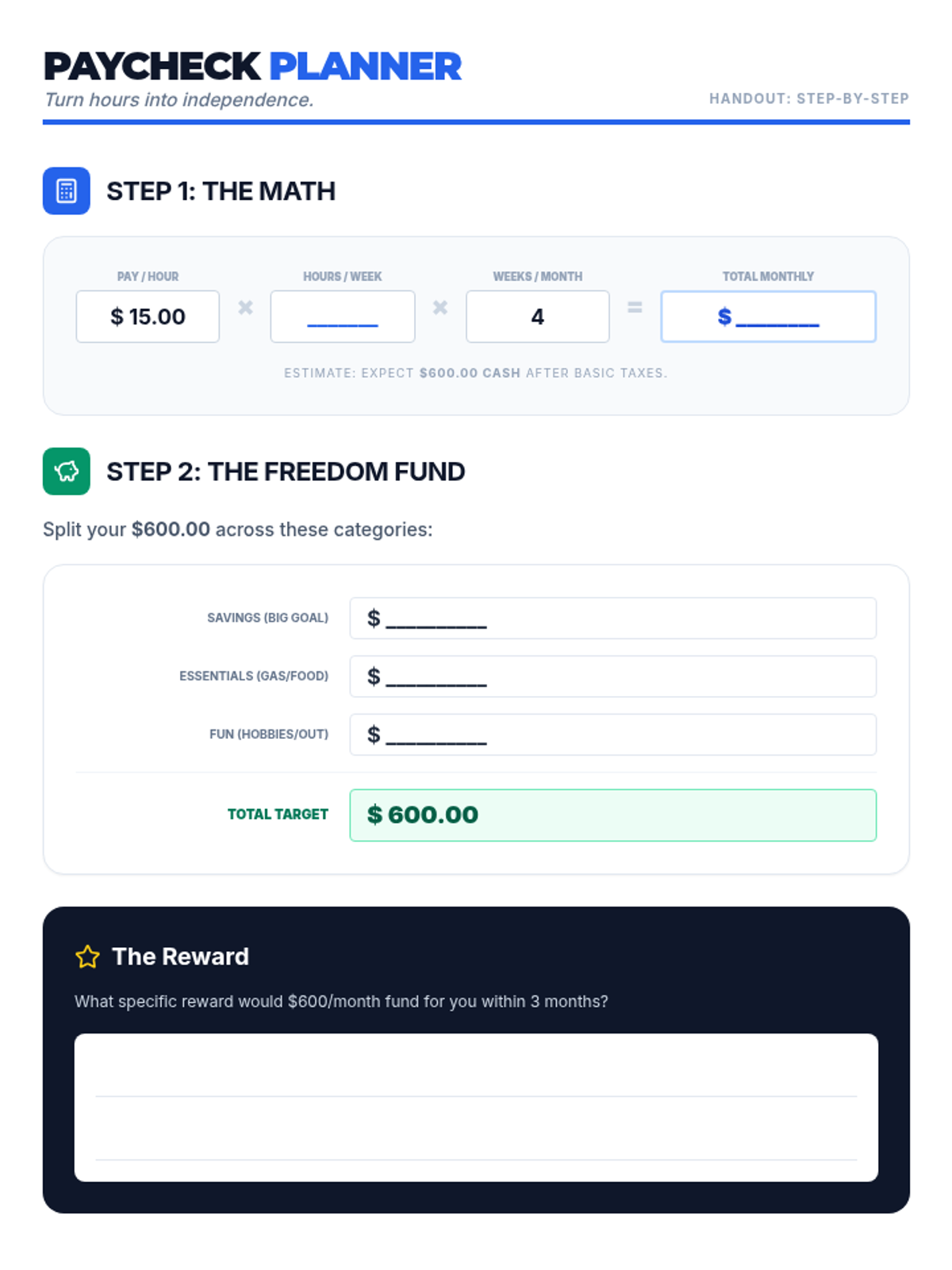
A comprehensive workshop focusing on essential adulting skills through immersive role-play, task simulations, and practical financial planning. This lesson covers Independent Living, Employment Readiness, Self-Advocacy, and Financial Literacy.
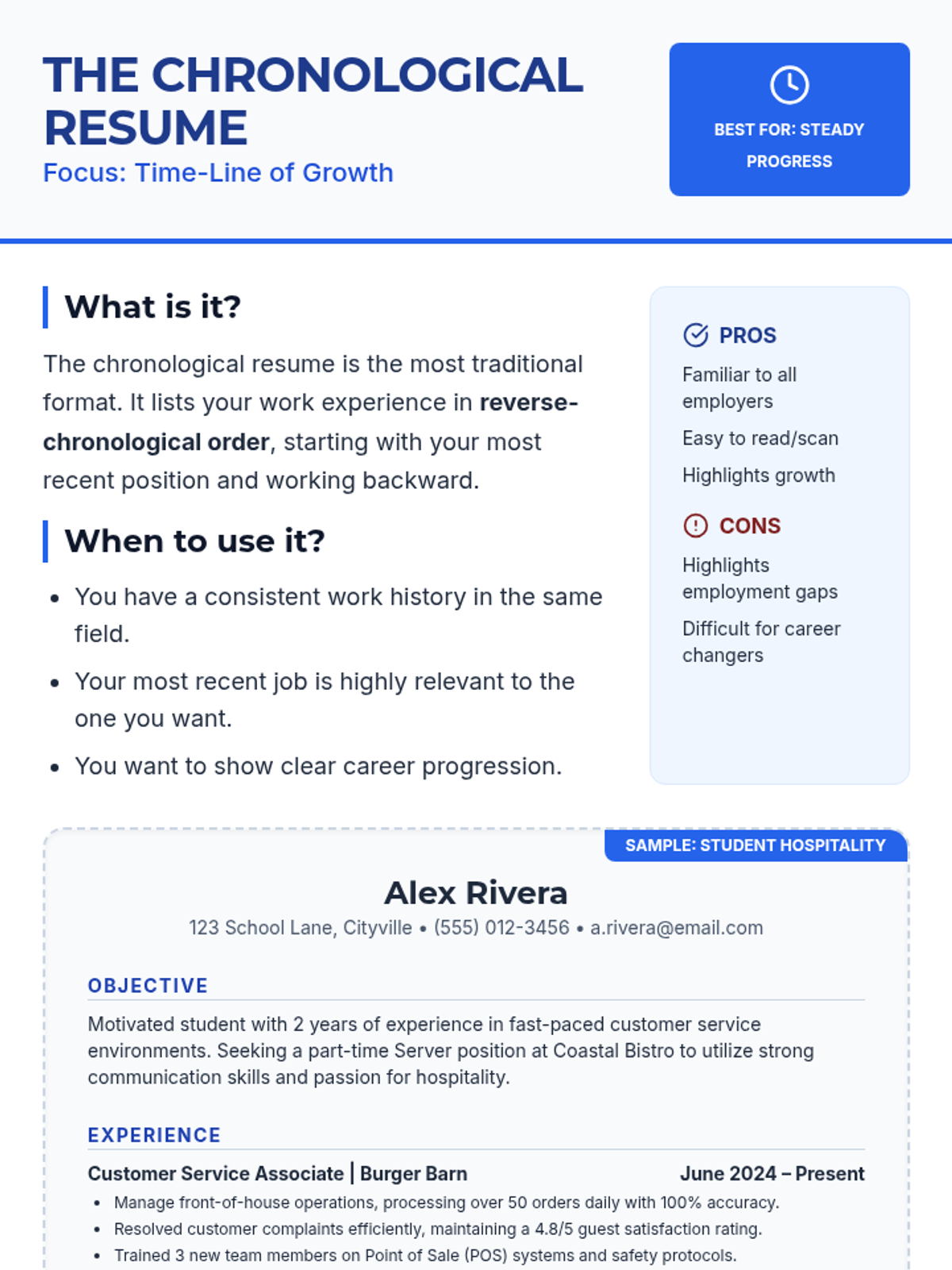
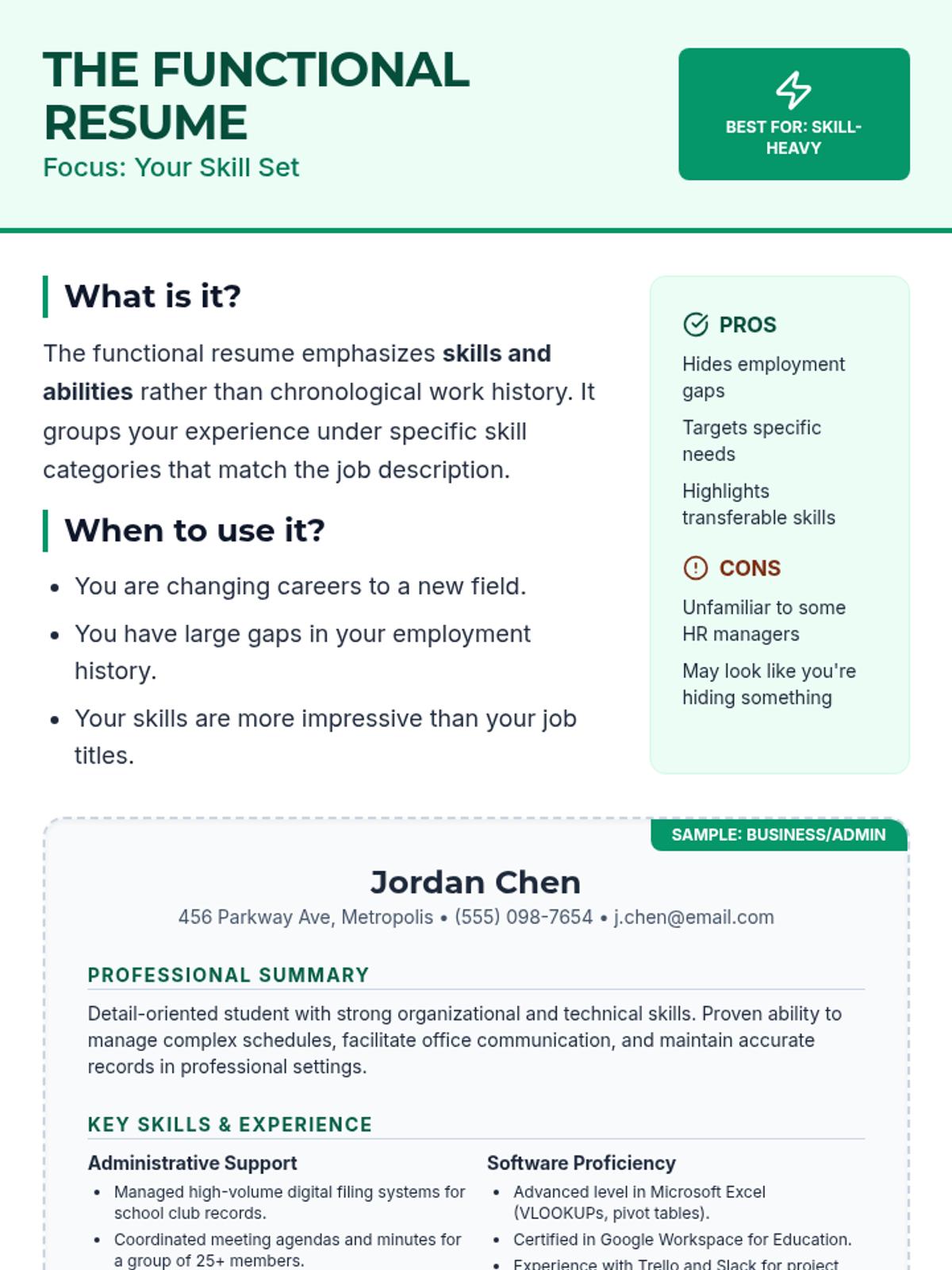
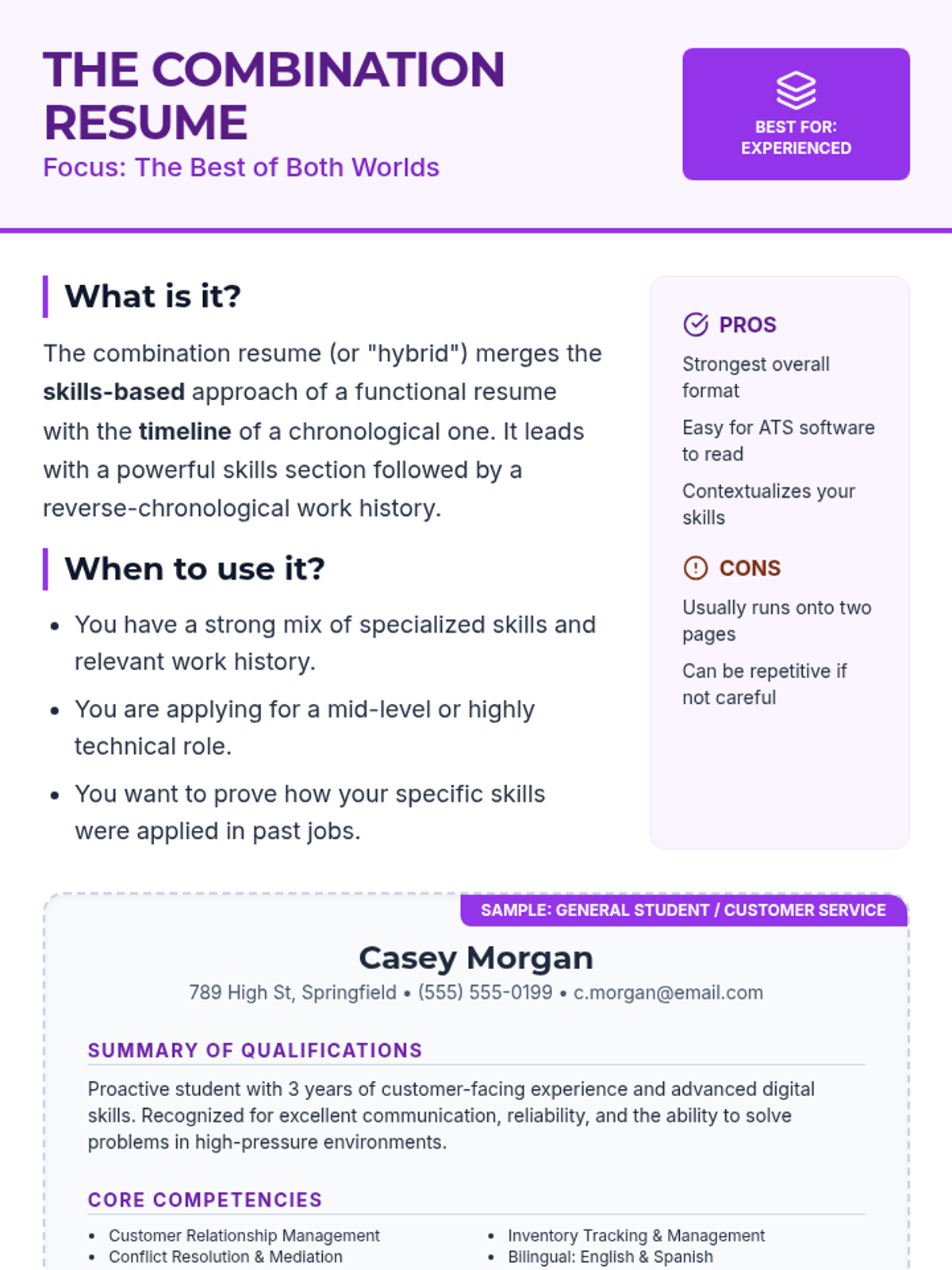
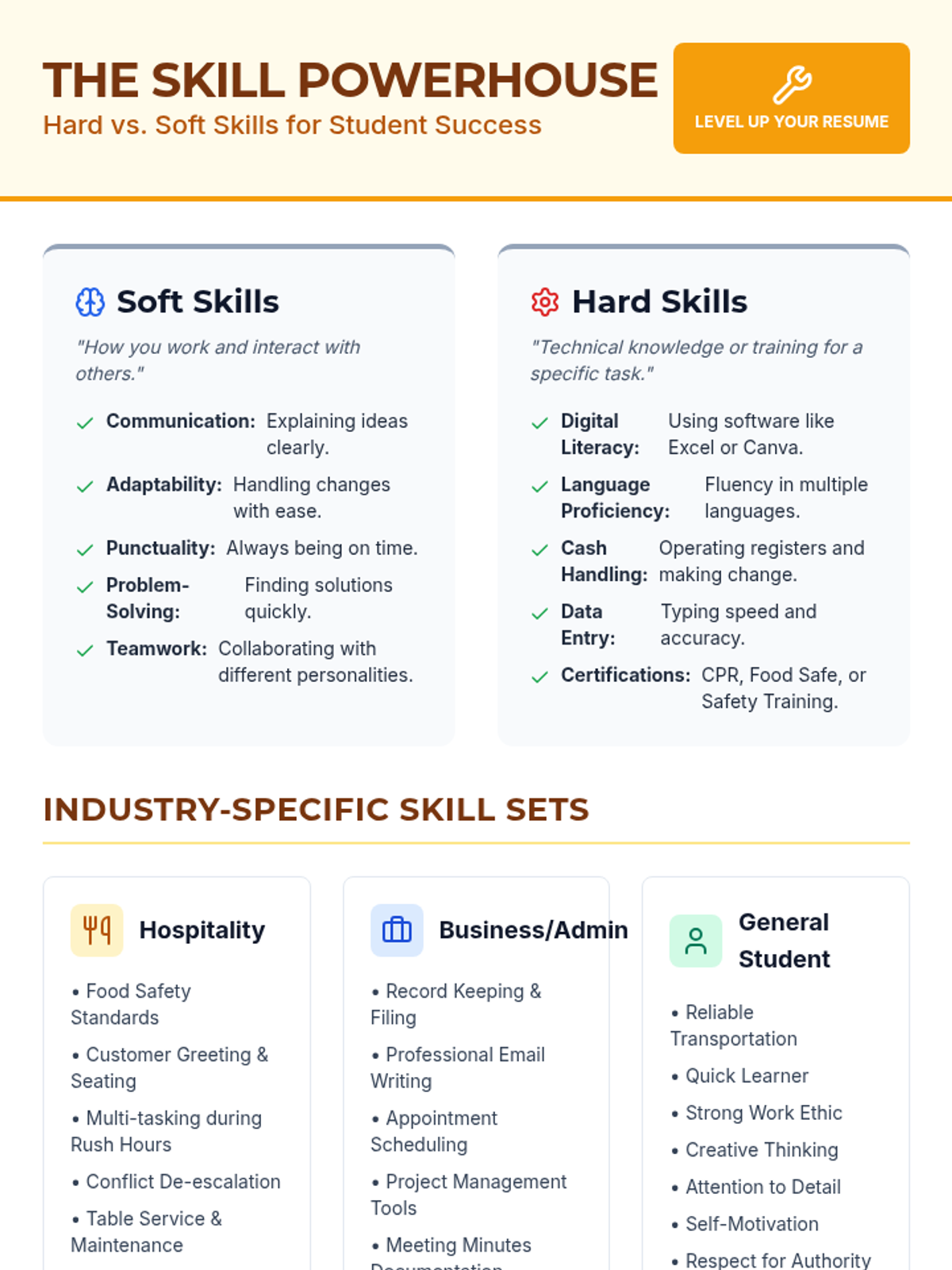
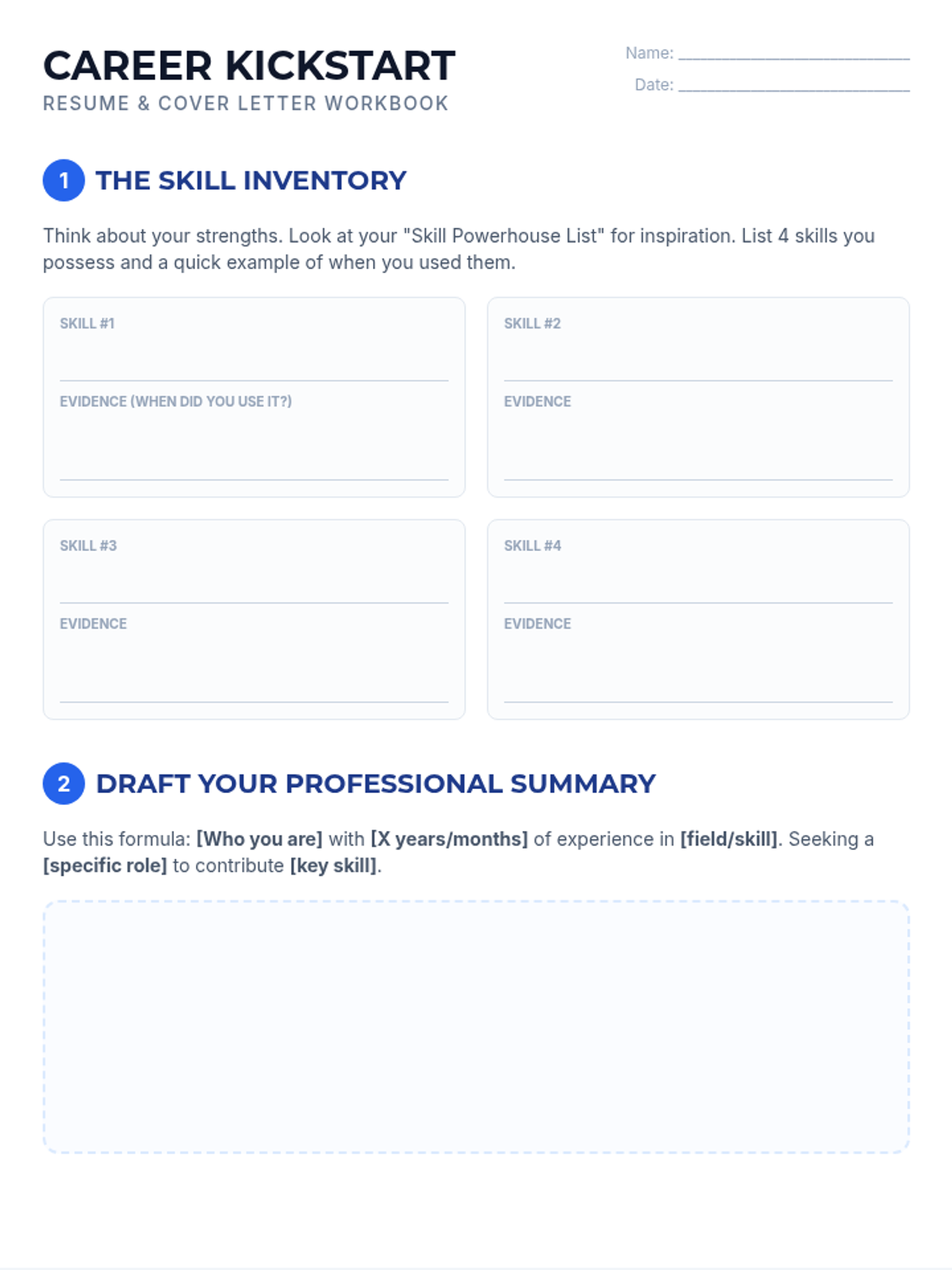
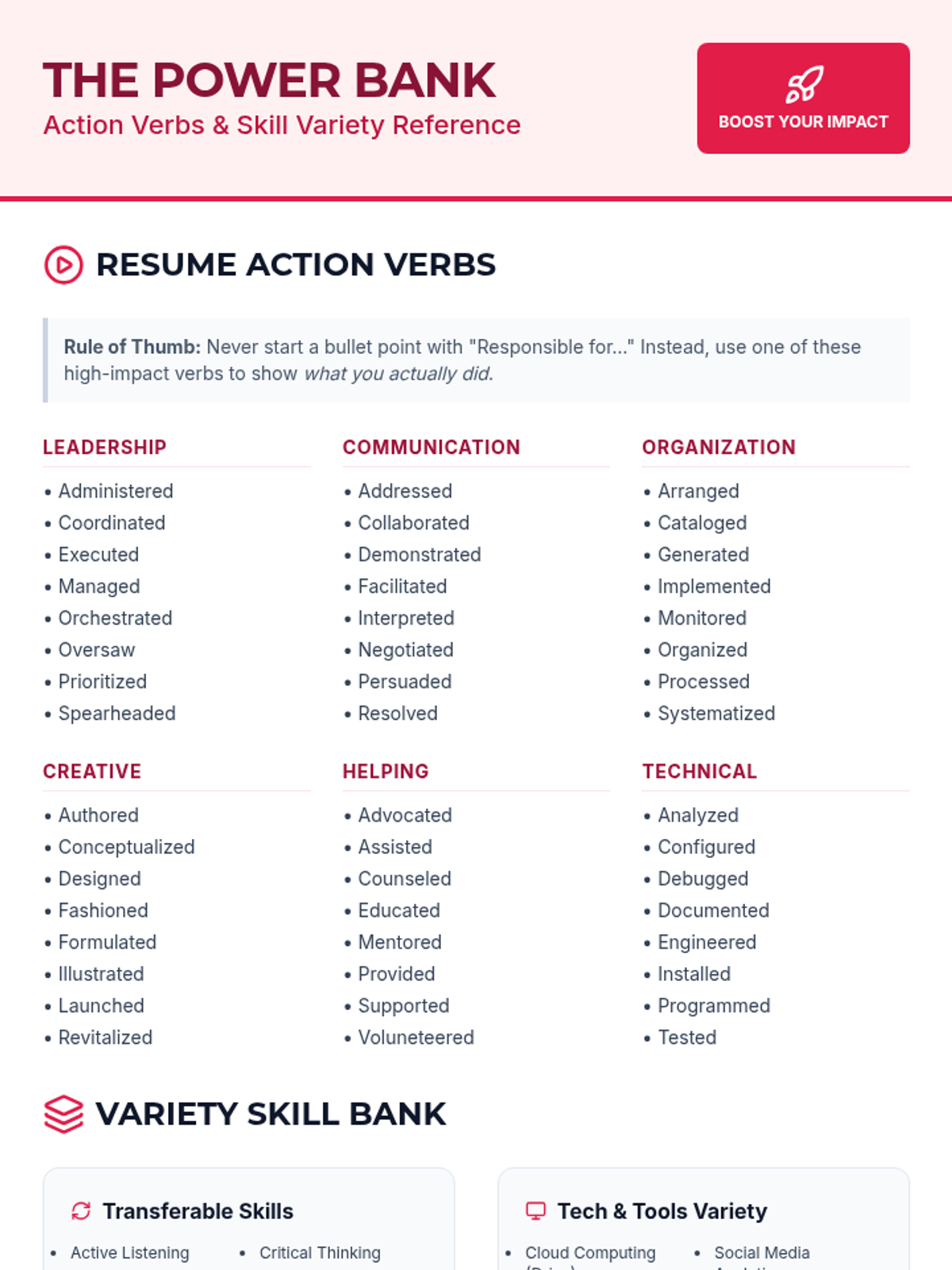
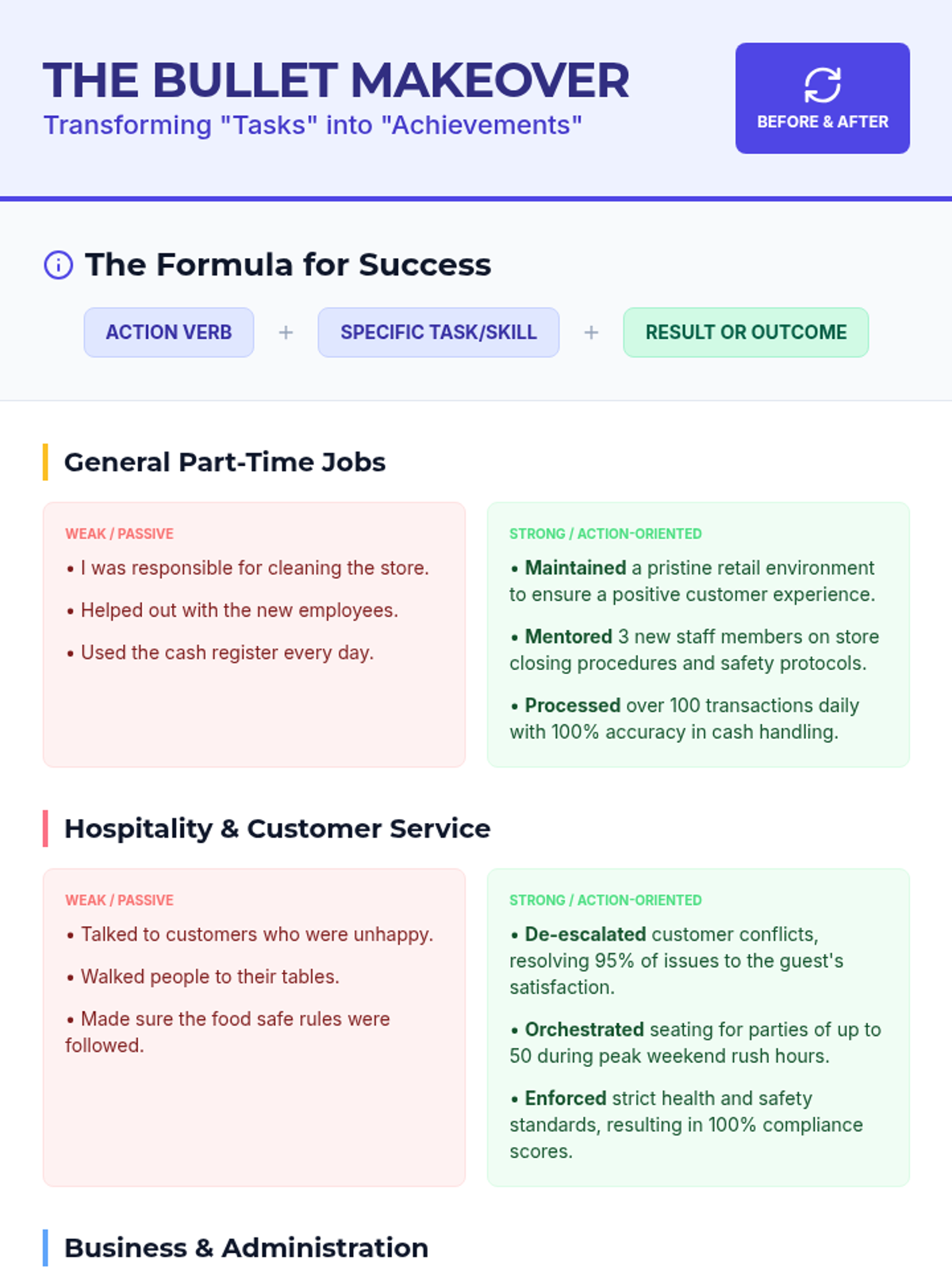
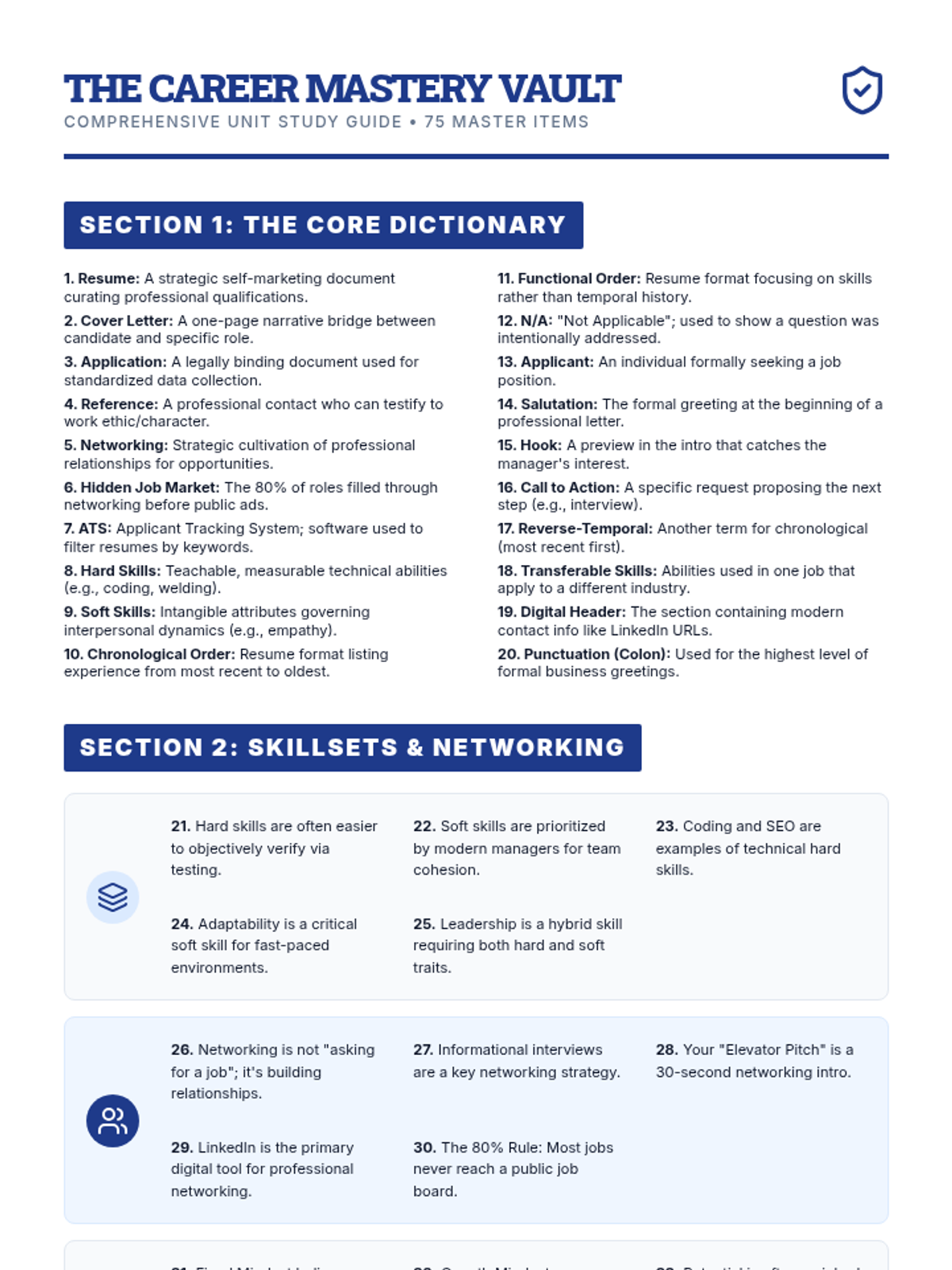
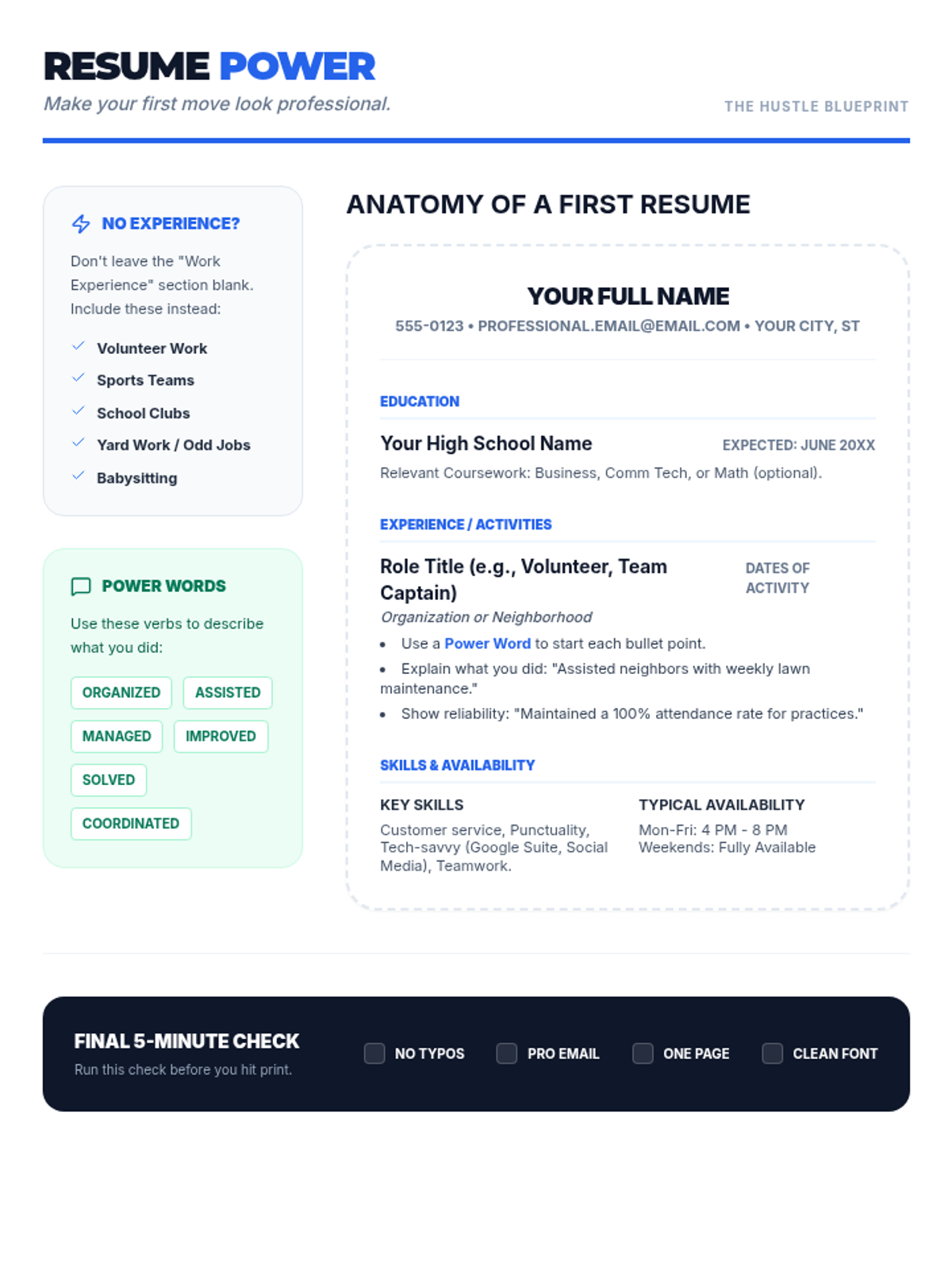
A comprehensive guide to resume writing for students and entry-level professionals, covering different resume formats, skill identification, and document templates.
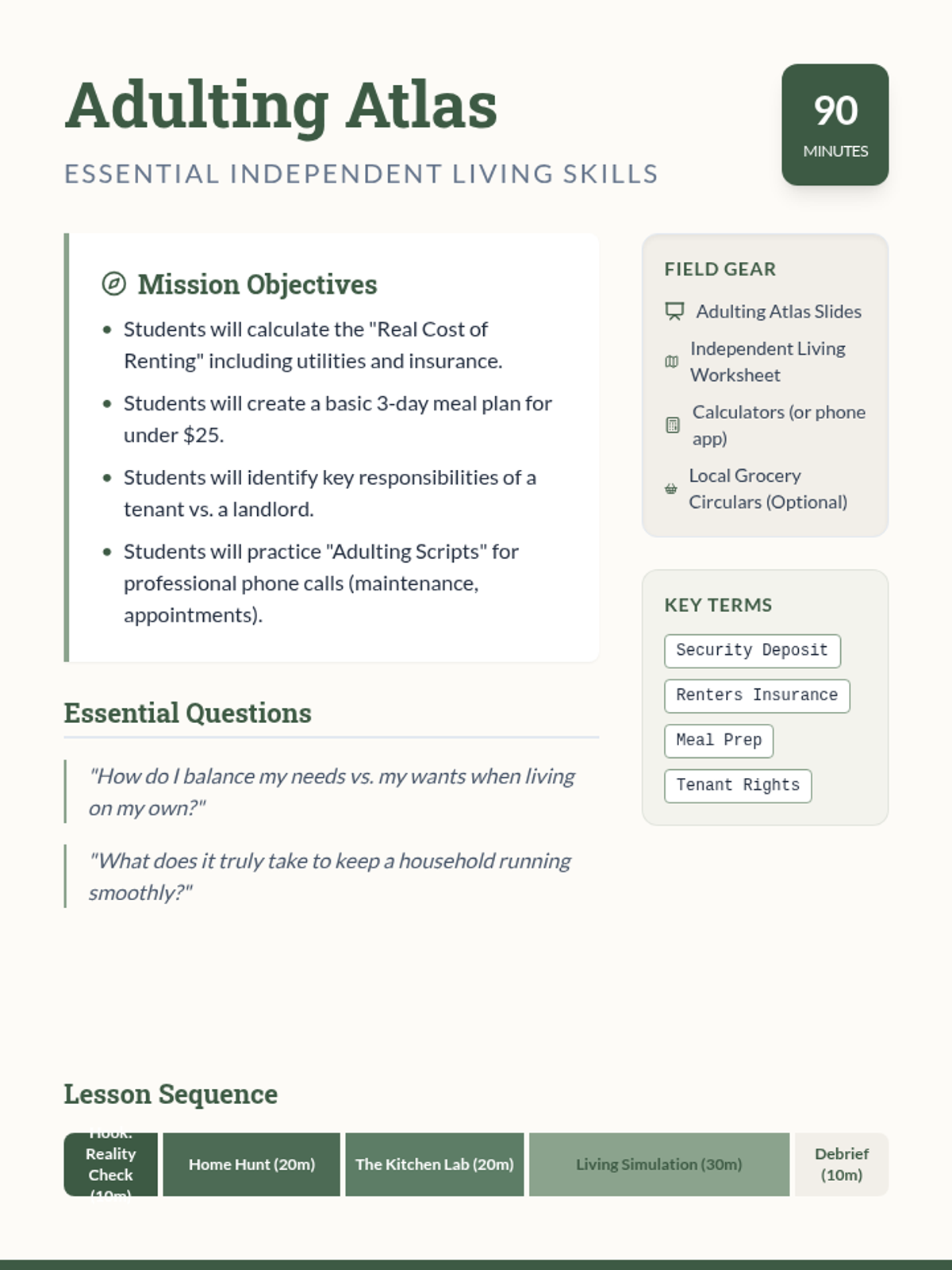
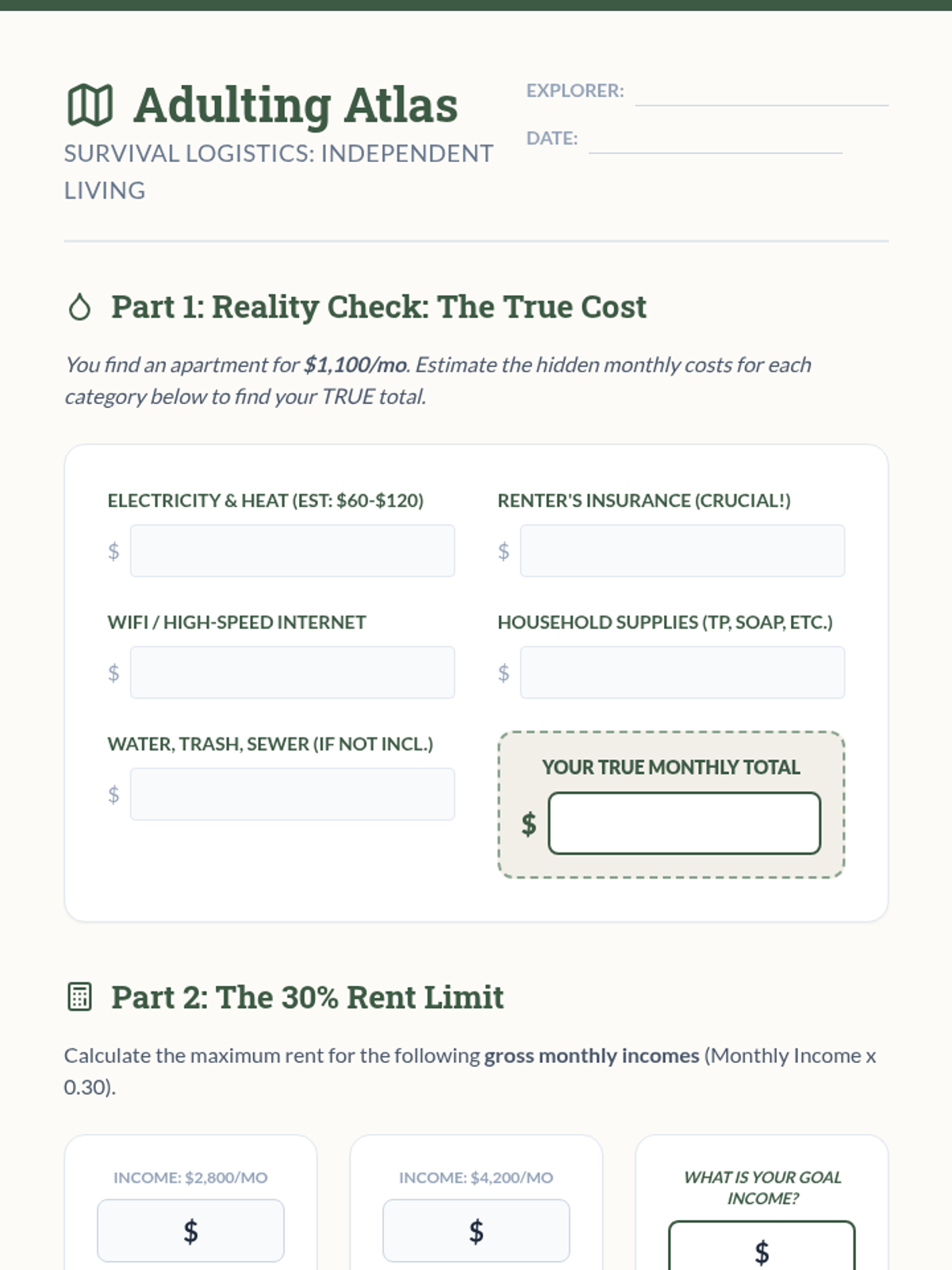
A practical guide to essential adulting skills, covering apartment hunting, basic meal planning on a budget, and navigating the 'real world' responsibilities of independent life.
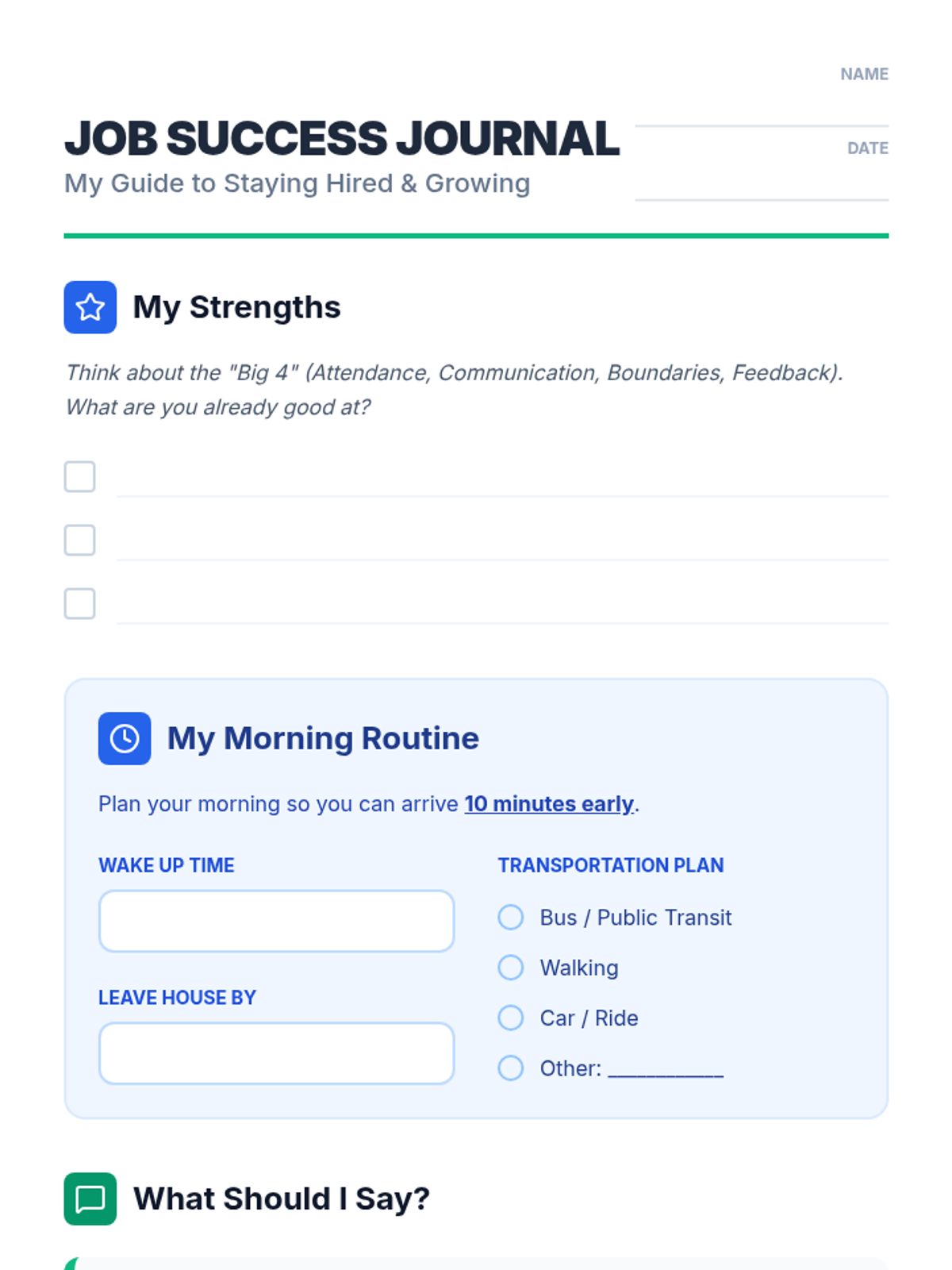
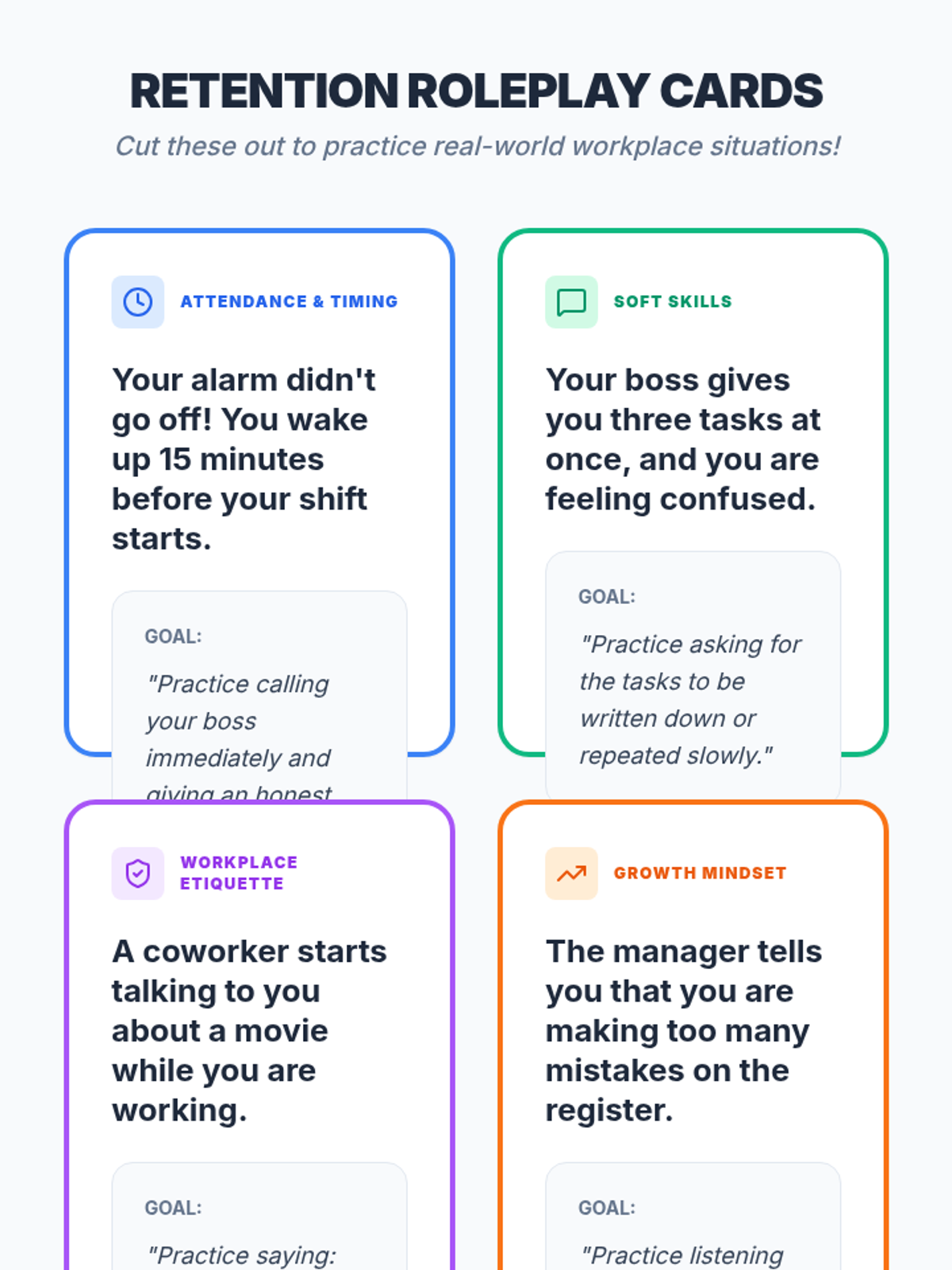
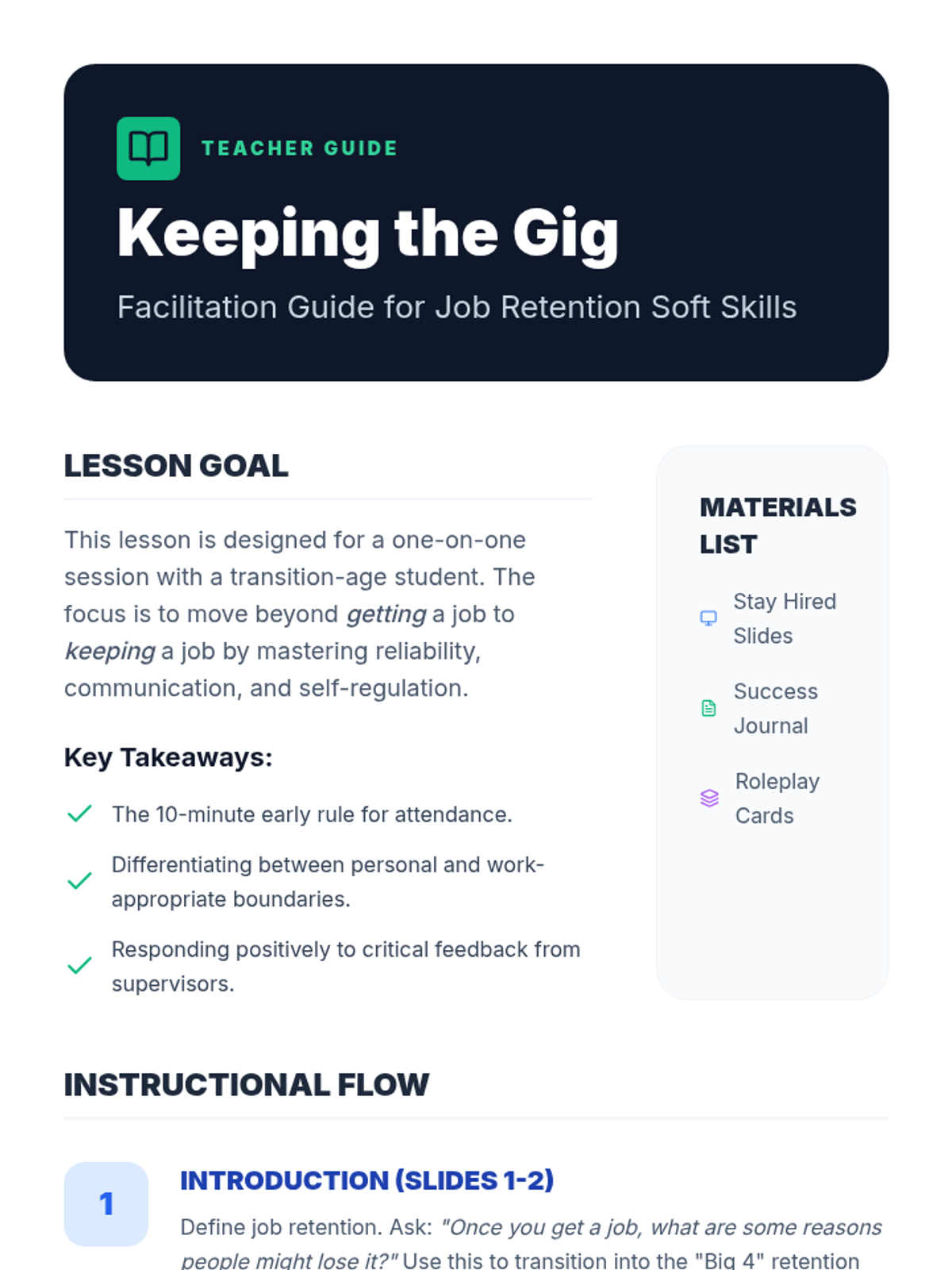
A one-on-one lesson designed for transition-age students to master the essential soft skills, time management habits, and communication strategies needed to successfully maintain employment.
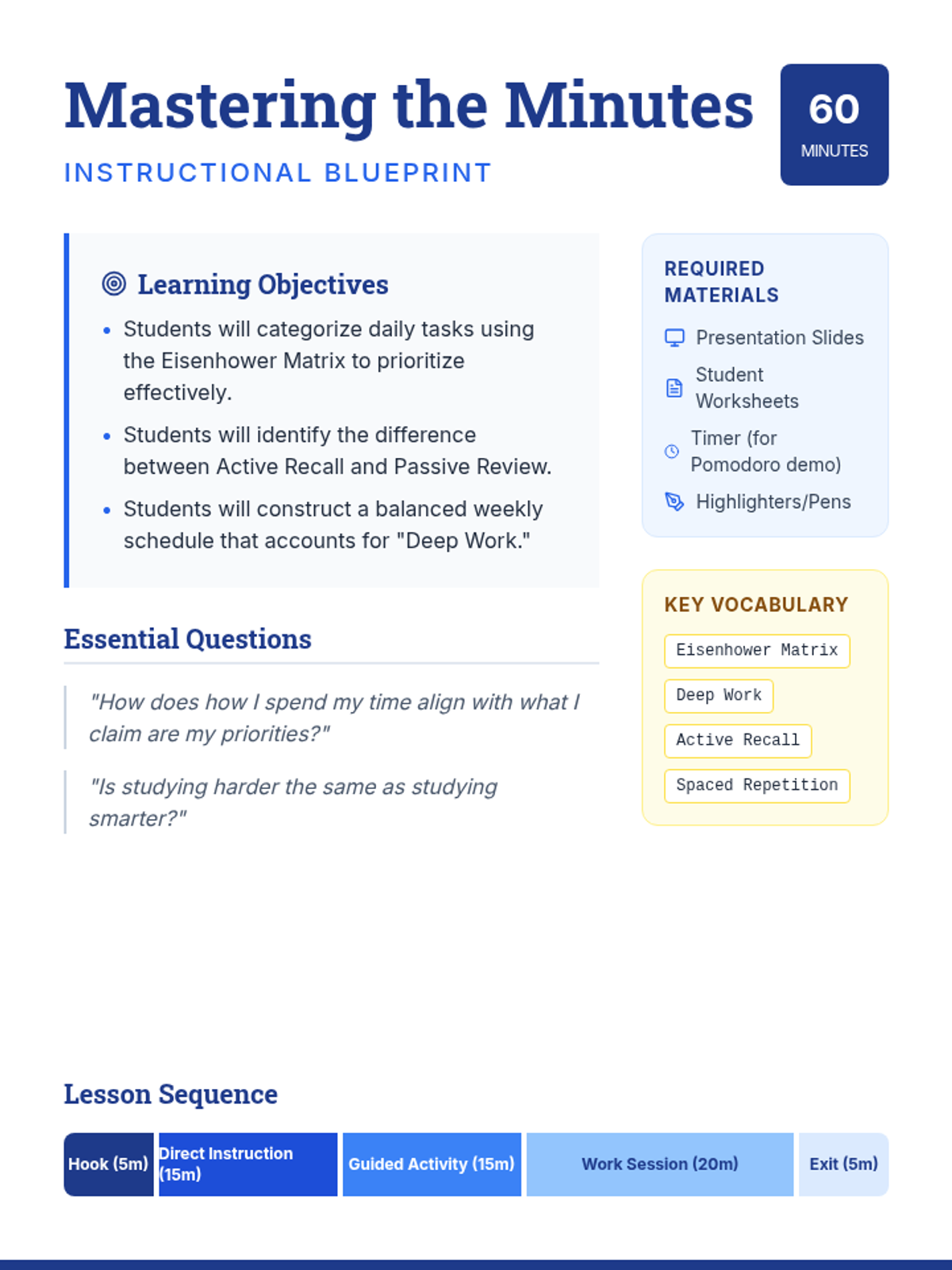
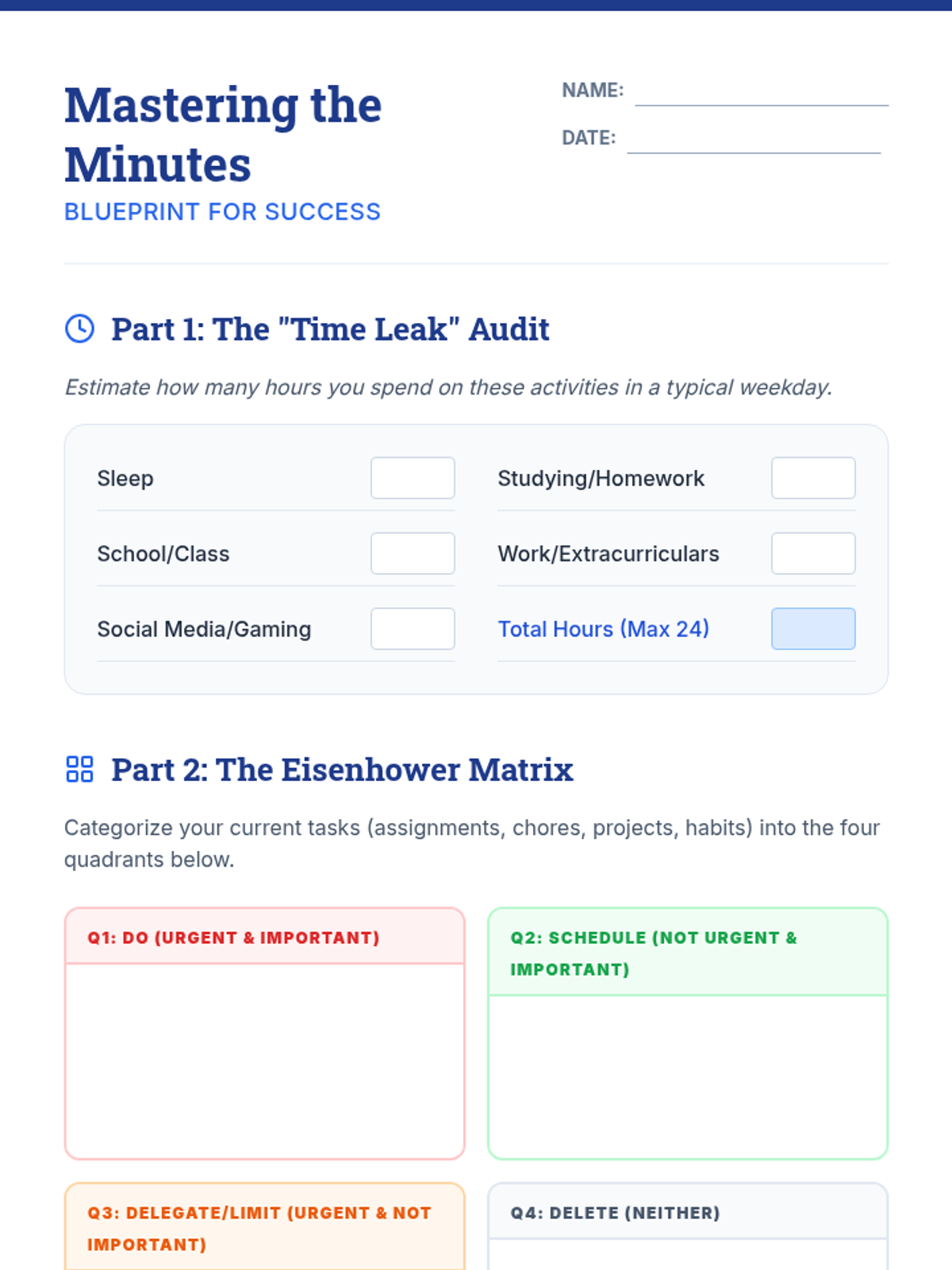
A comprehensive lesson on time management and effective study habits, focusing on prioritization, scheduling, and active study techniques to prepare students for post-secondary success.
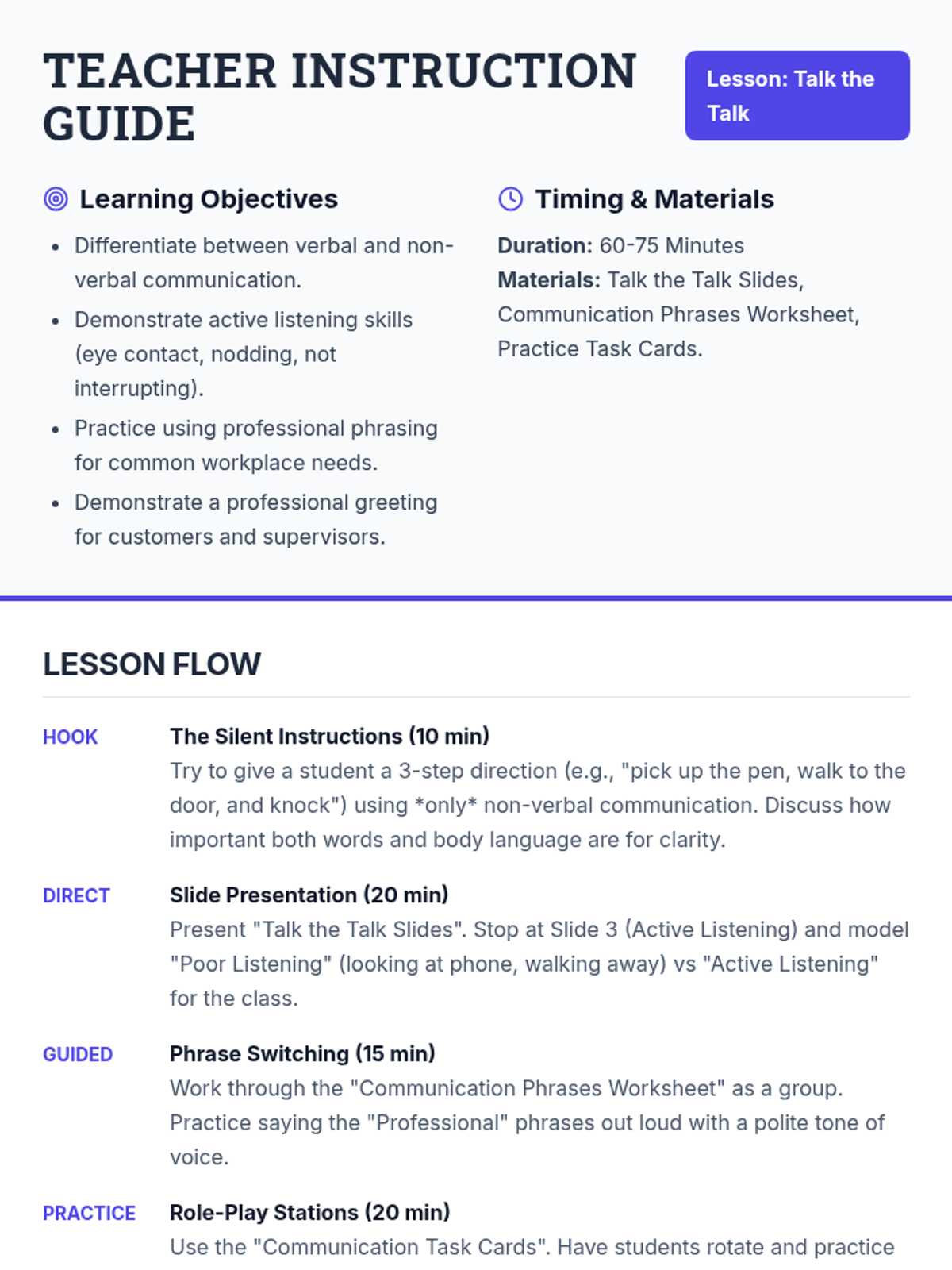
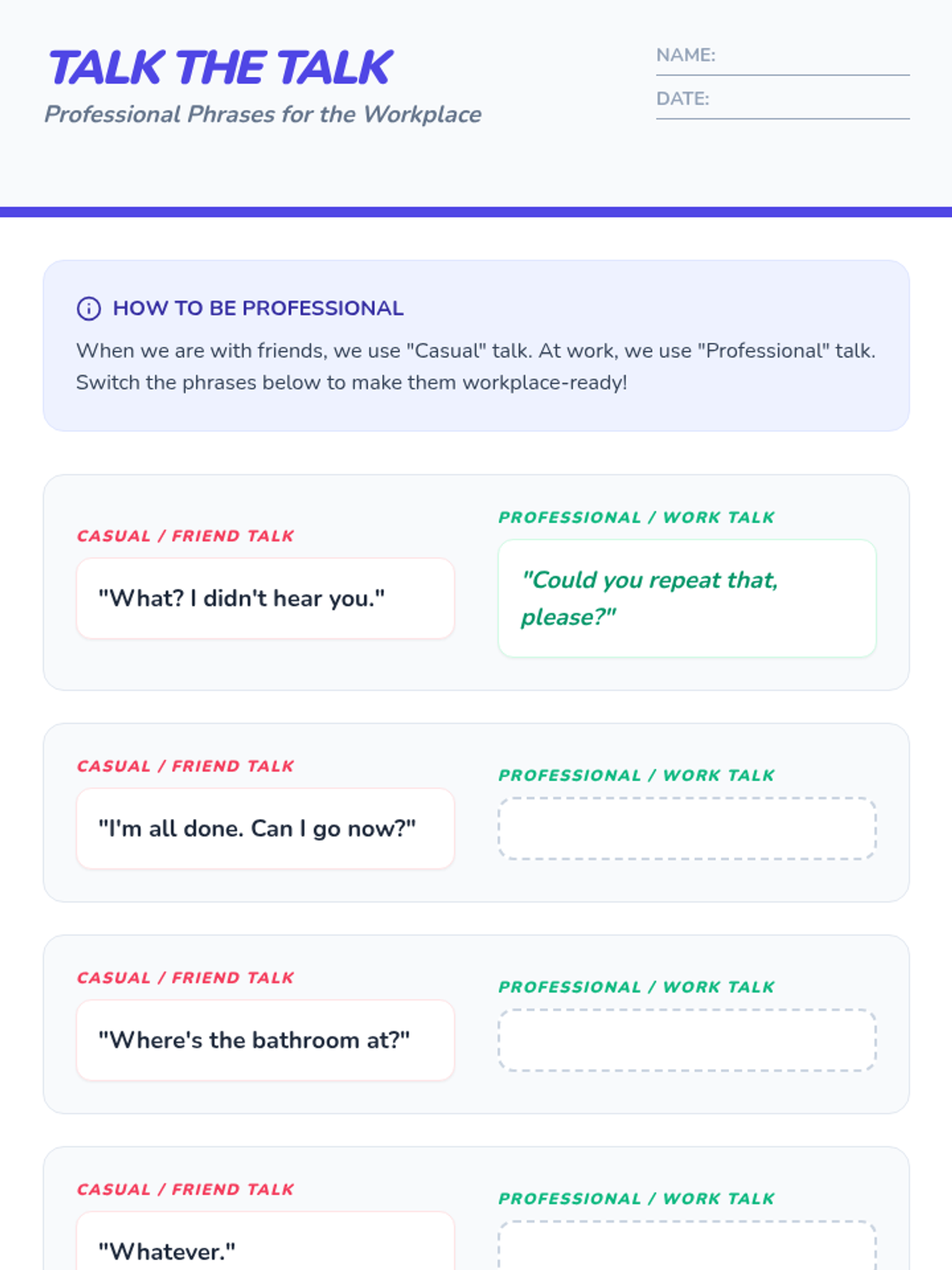
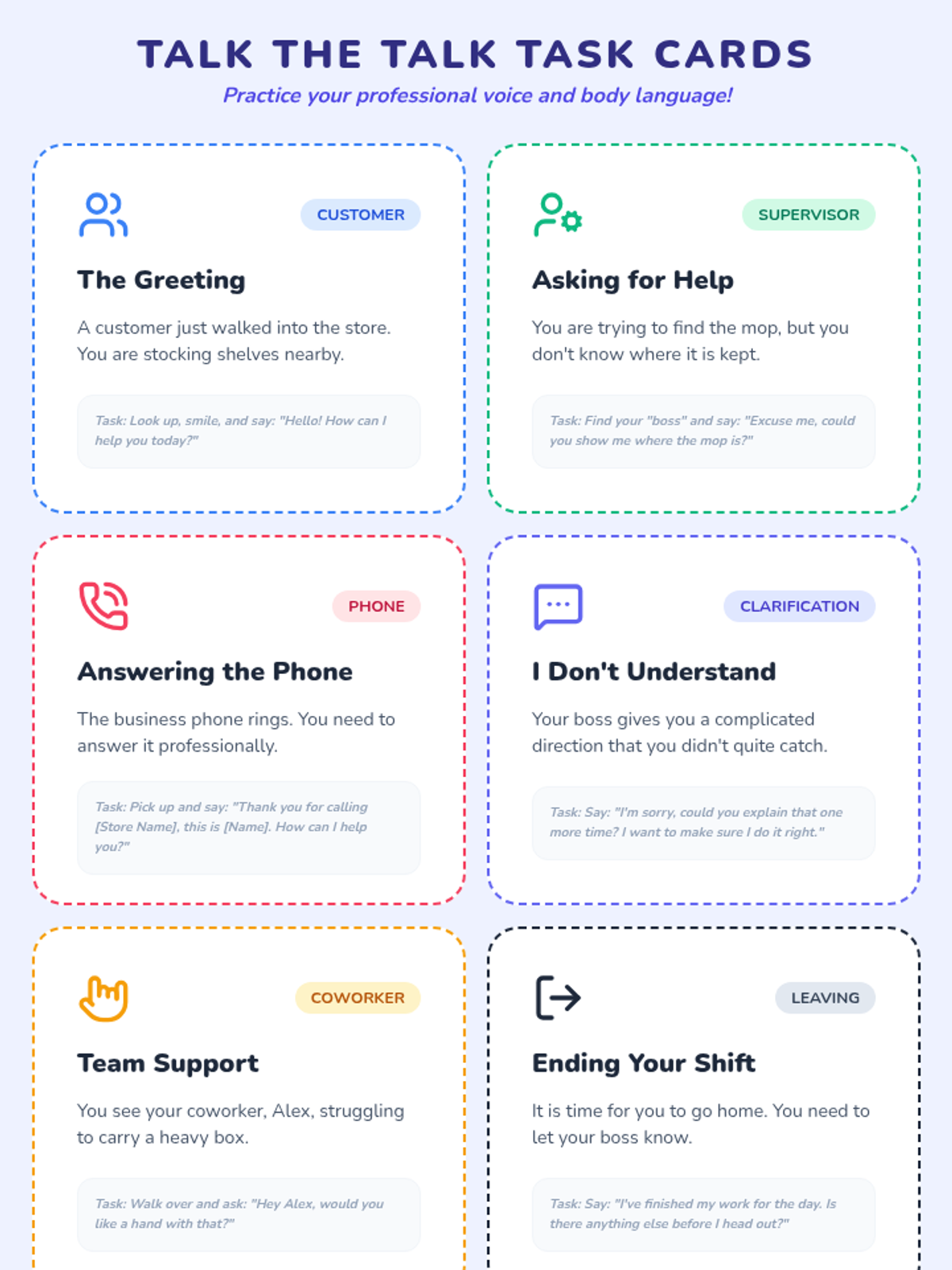
This lesson teaches students effective verbal and non-verbal communication strategies for the workplace, including active listening, professional greetings, and asking for clarification.
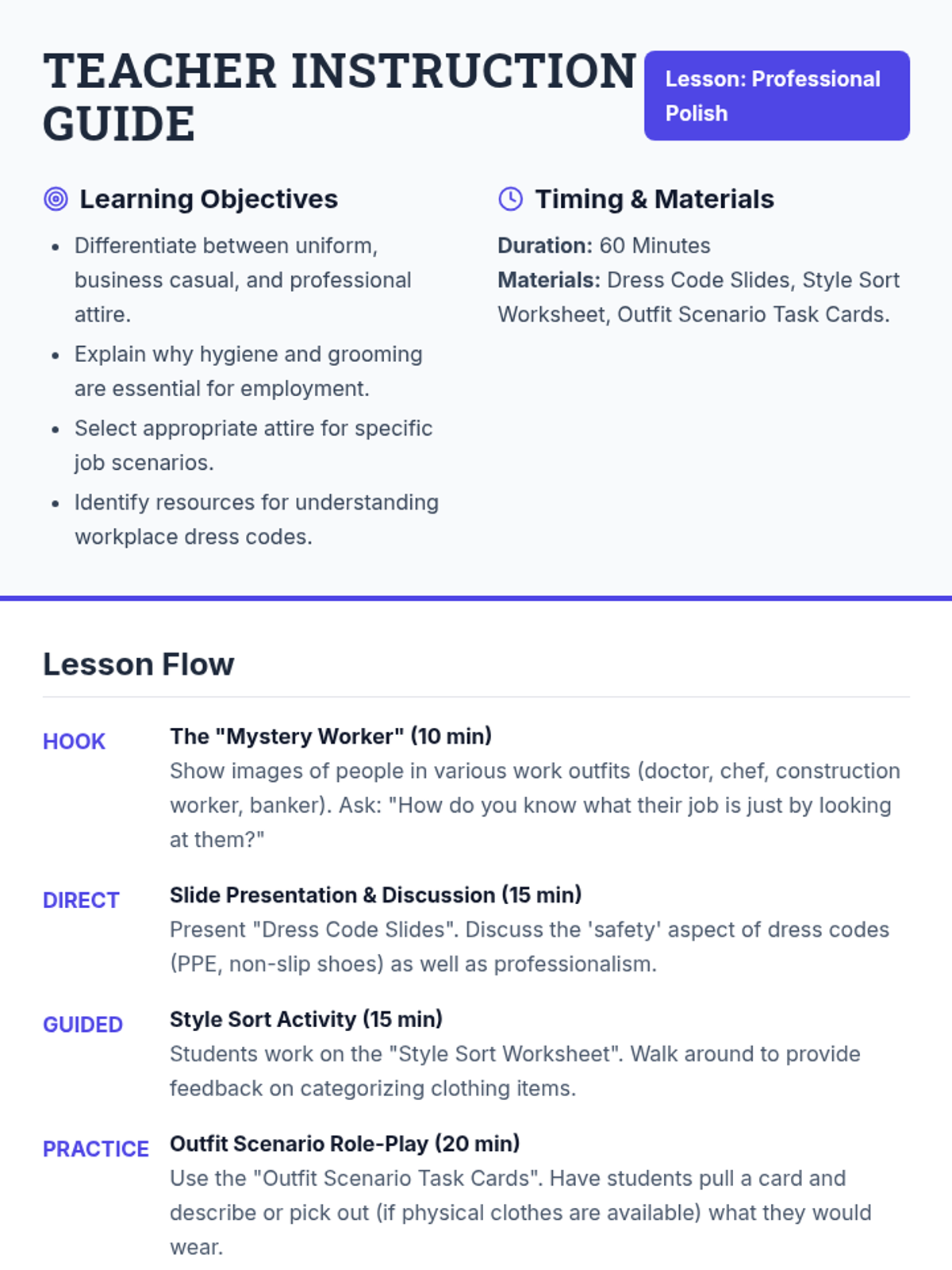
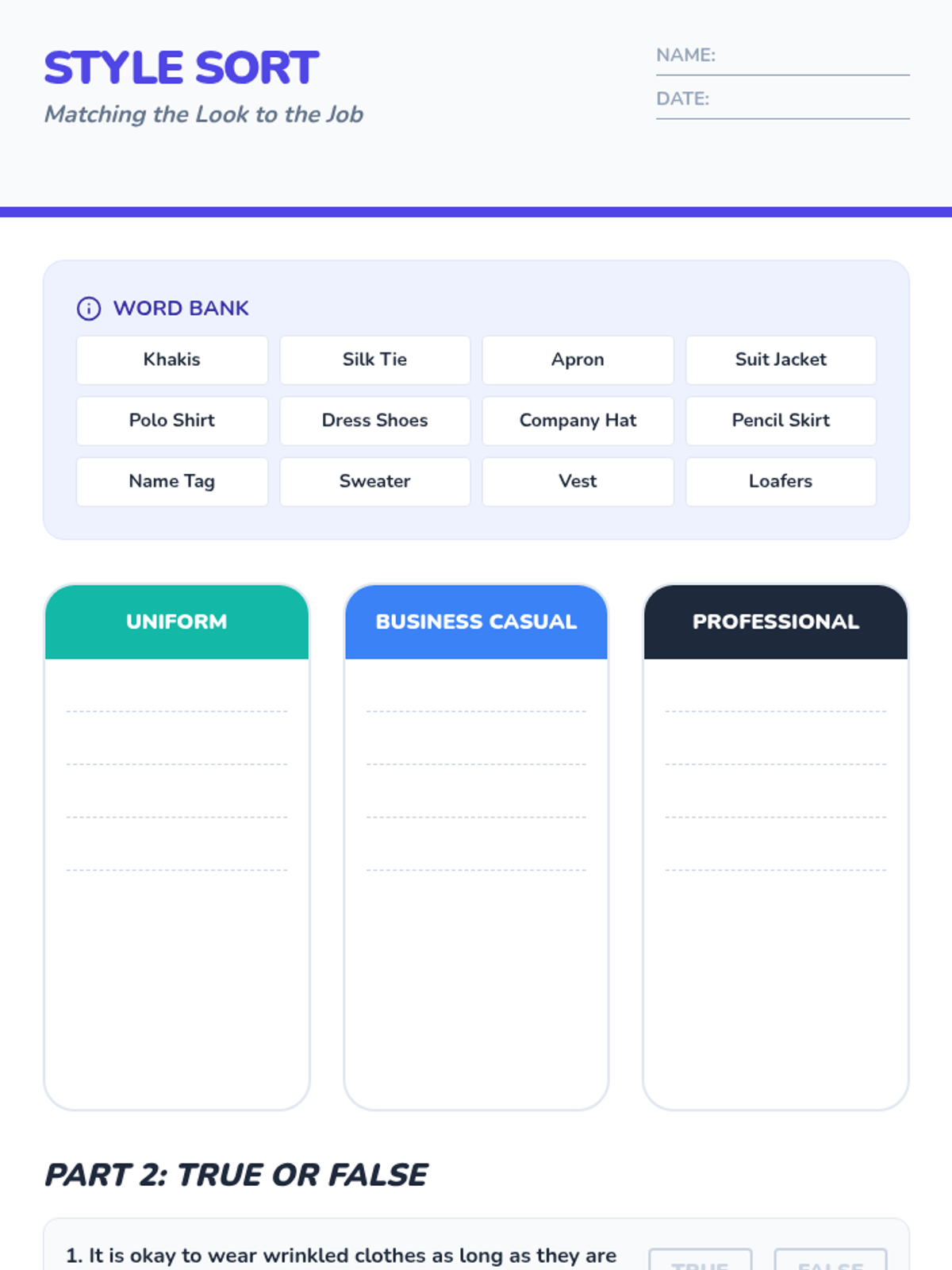
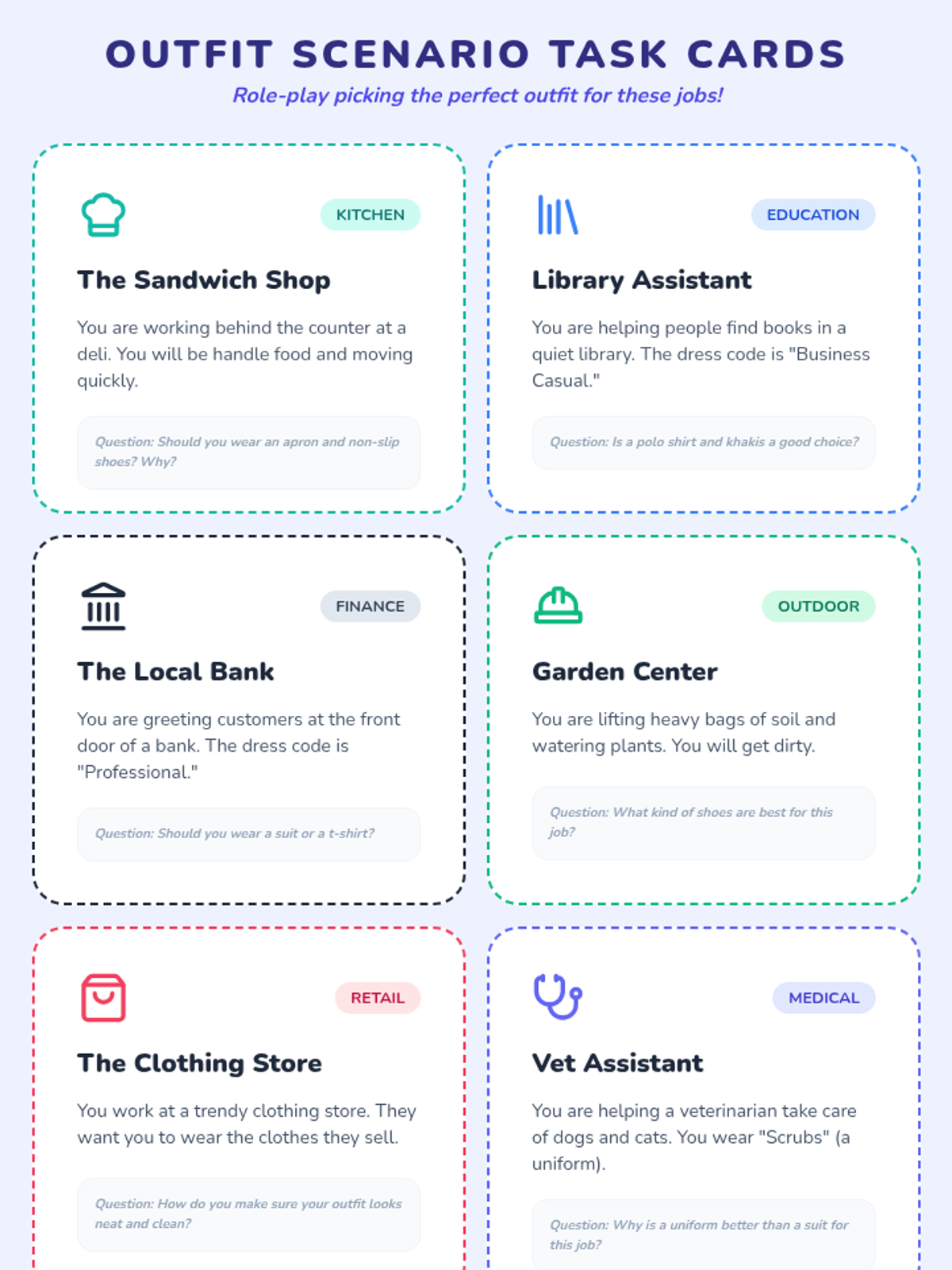
This lesson helps students understand and identify appropriate workplace attire across different industries, from uniforms to business casual.
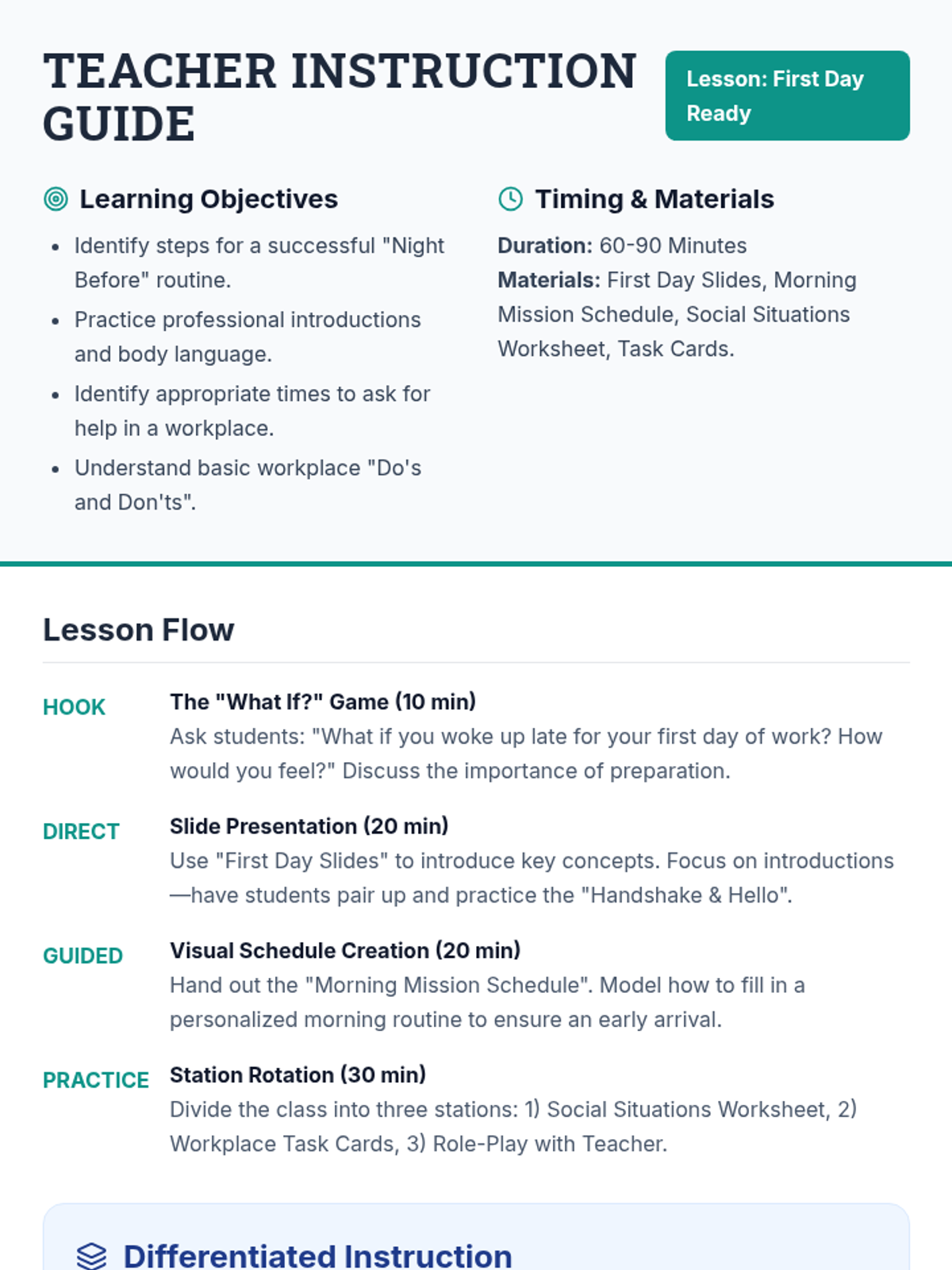
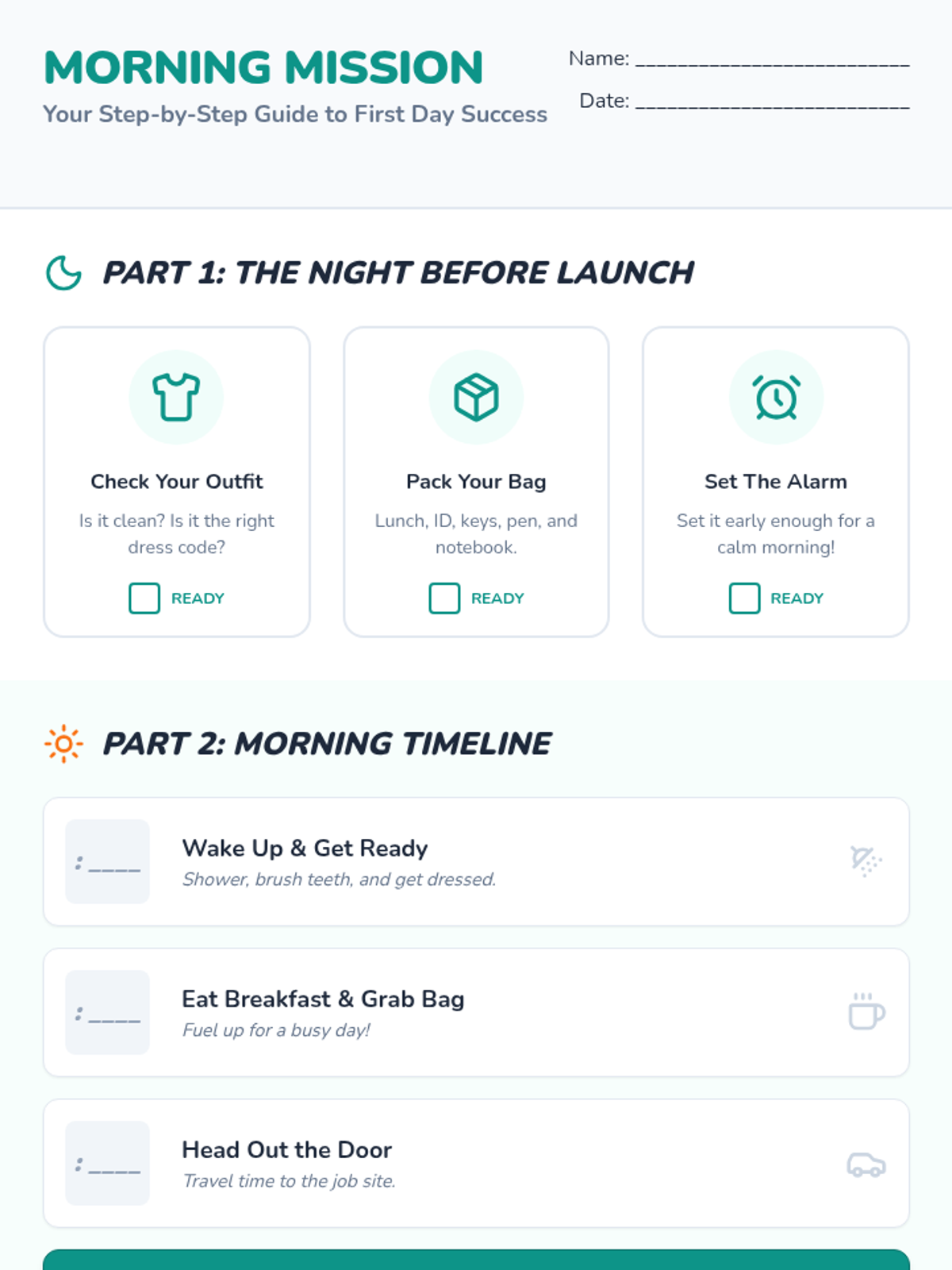
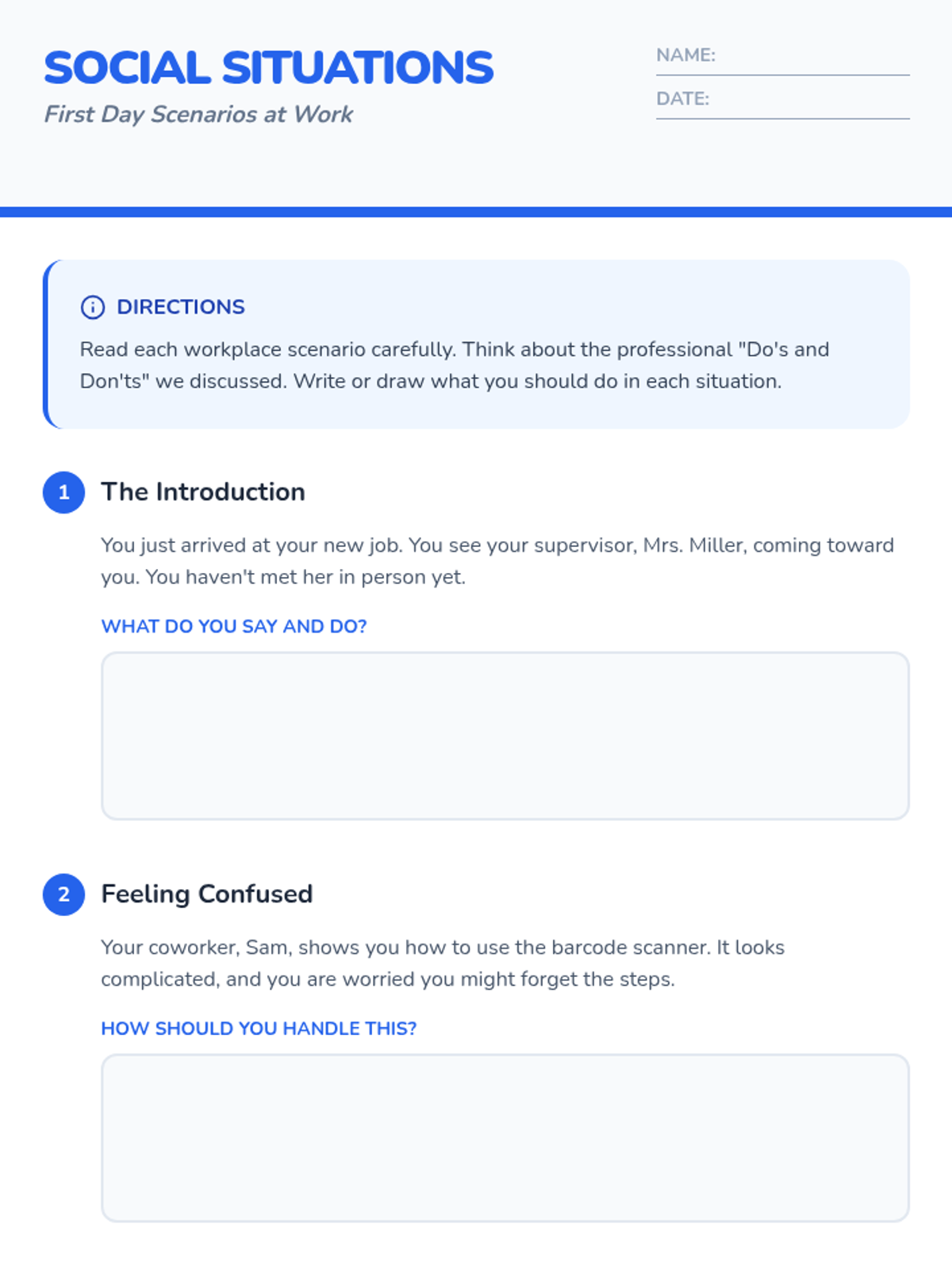
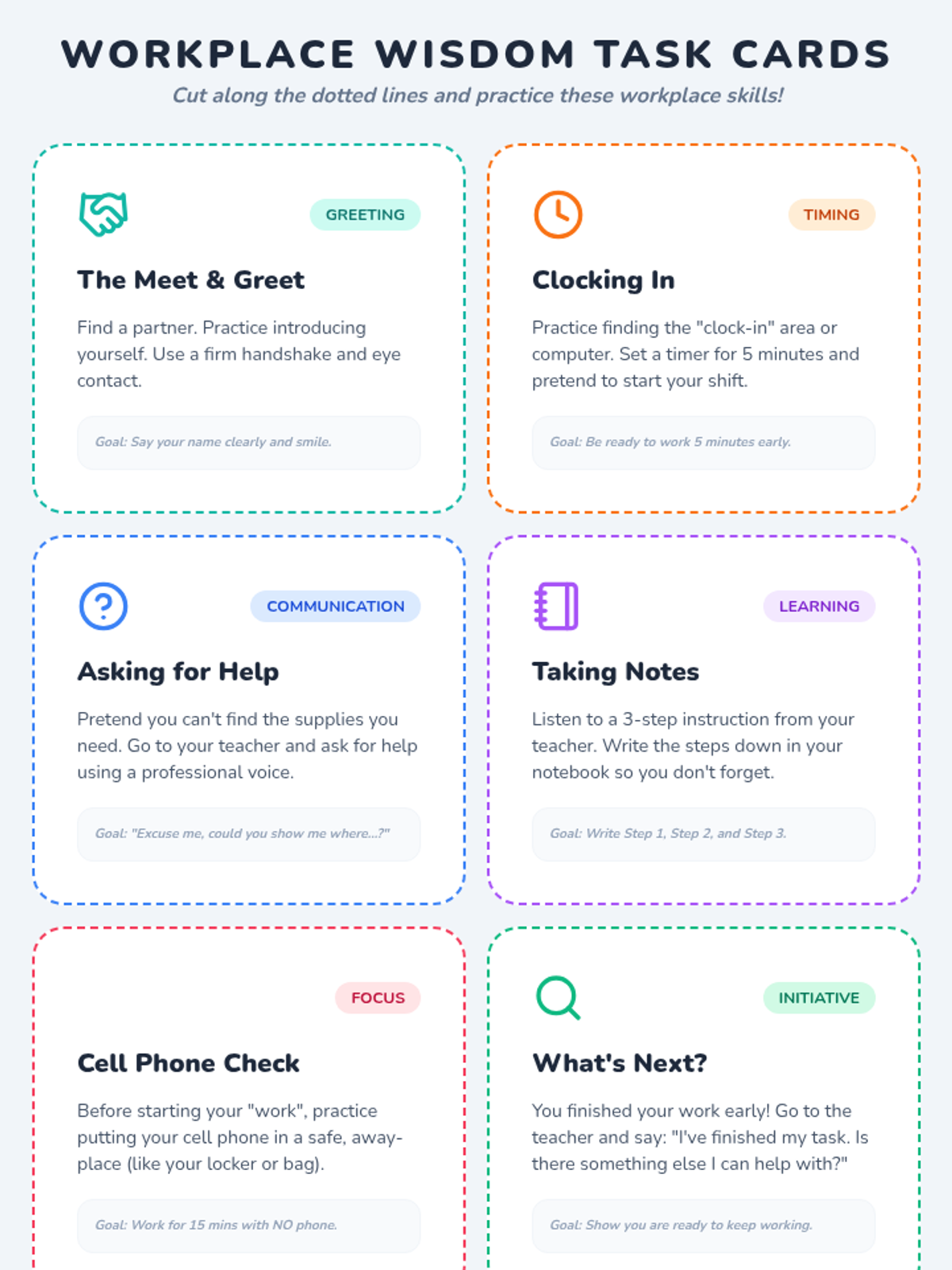
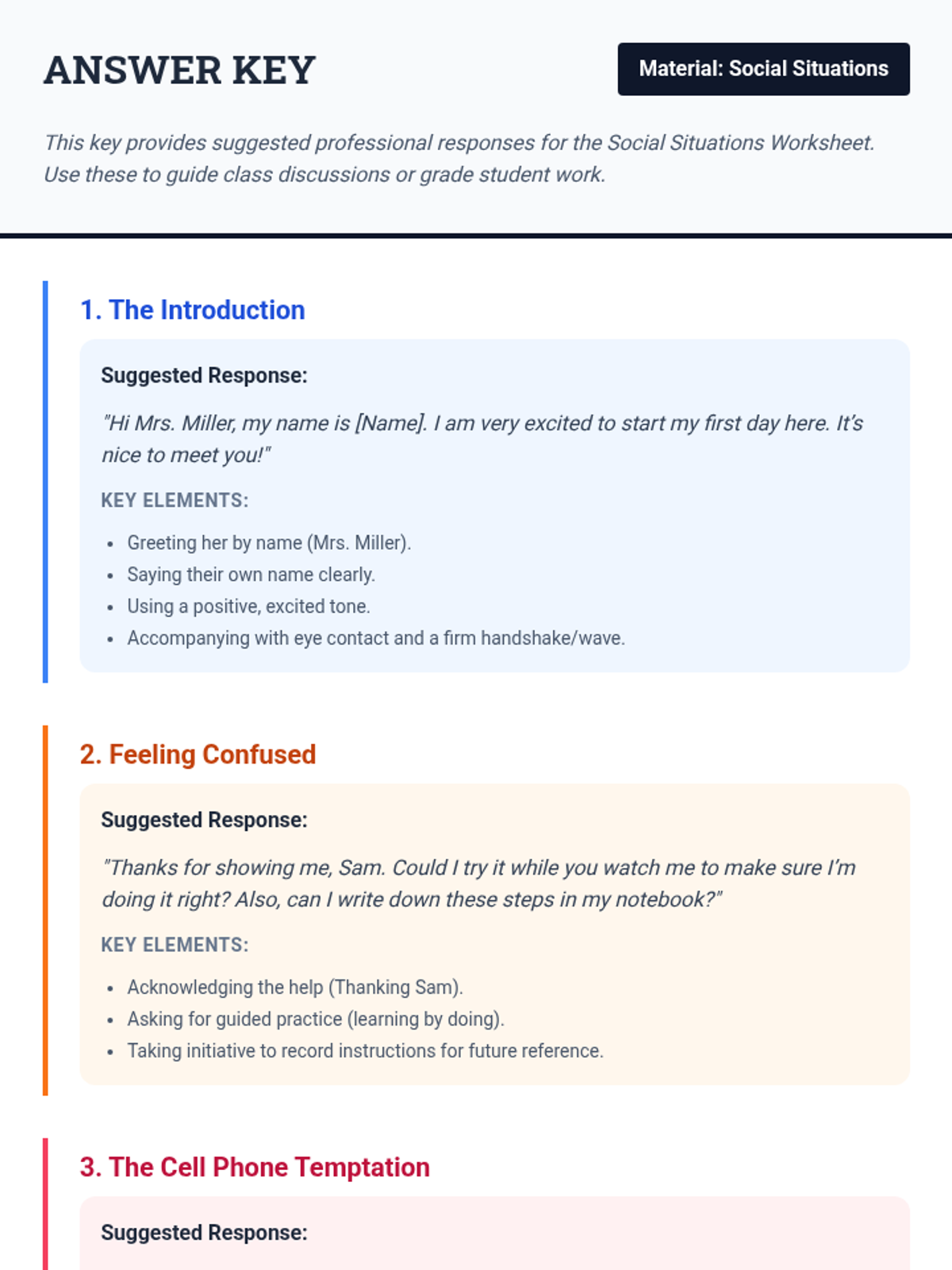
This lesson focuses on the critical first steps of starting a new job, including morning routines, professional attire, and navigating initial workplace social interactions.
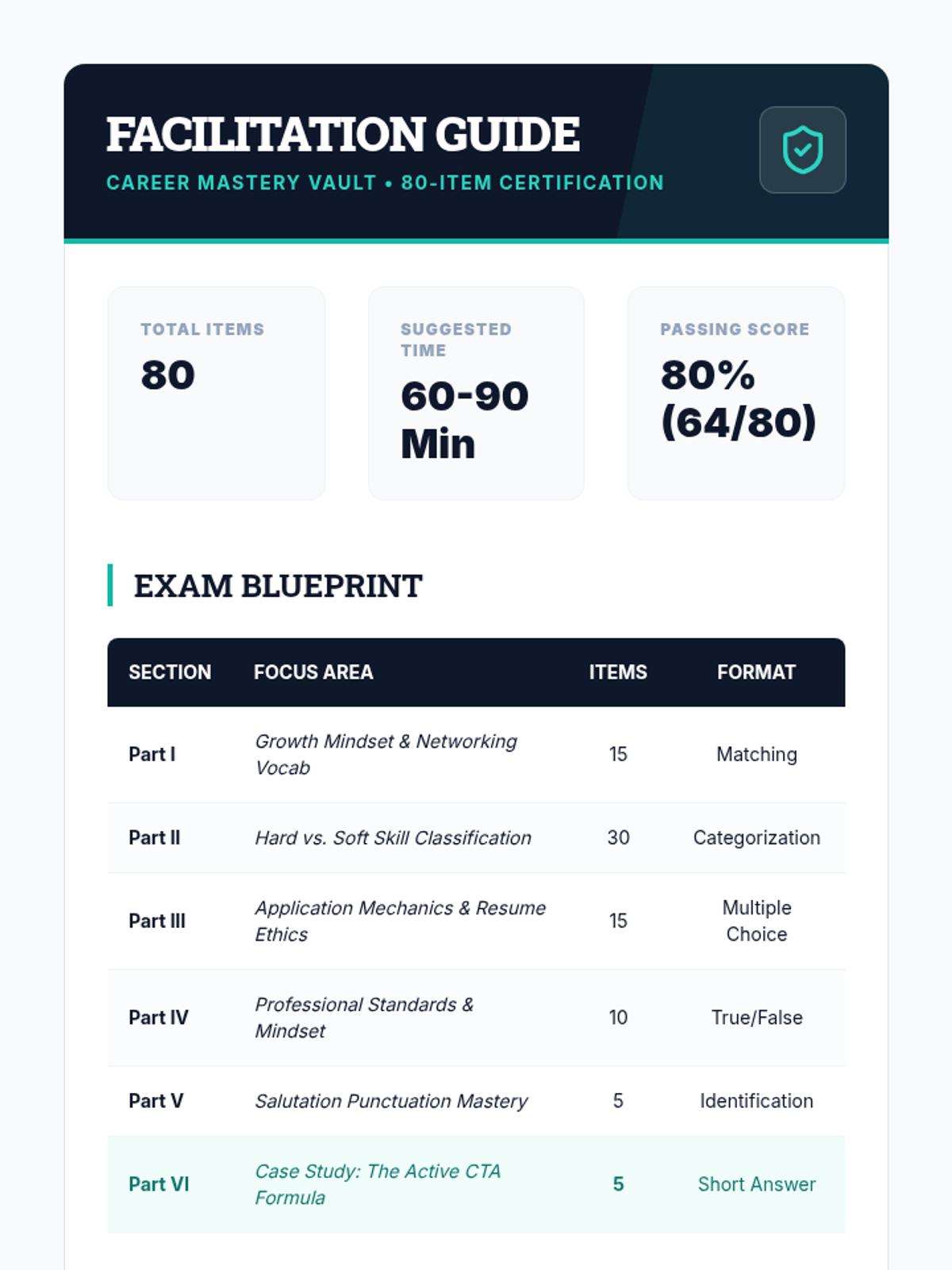
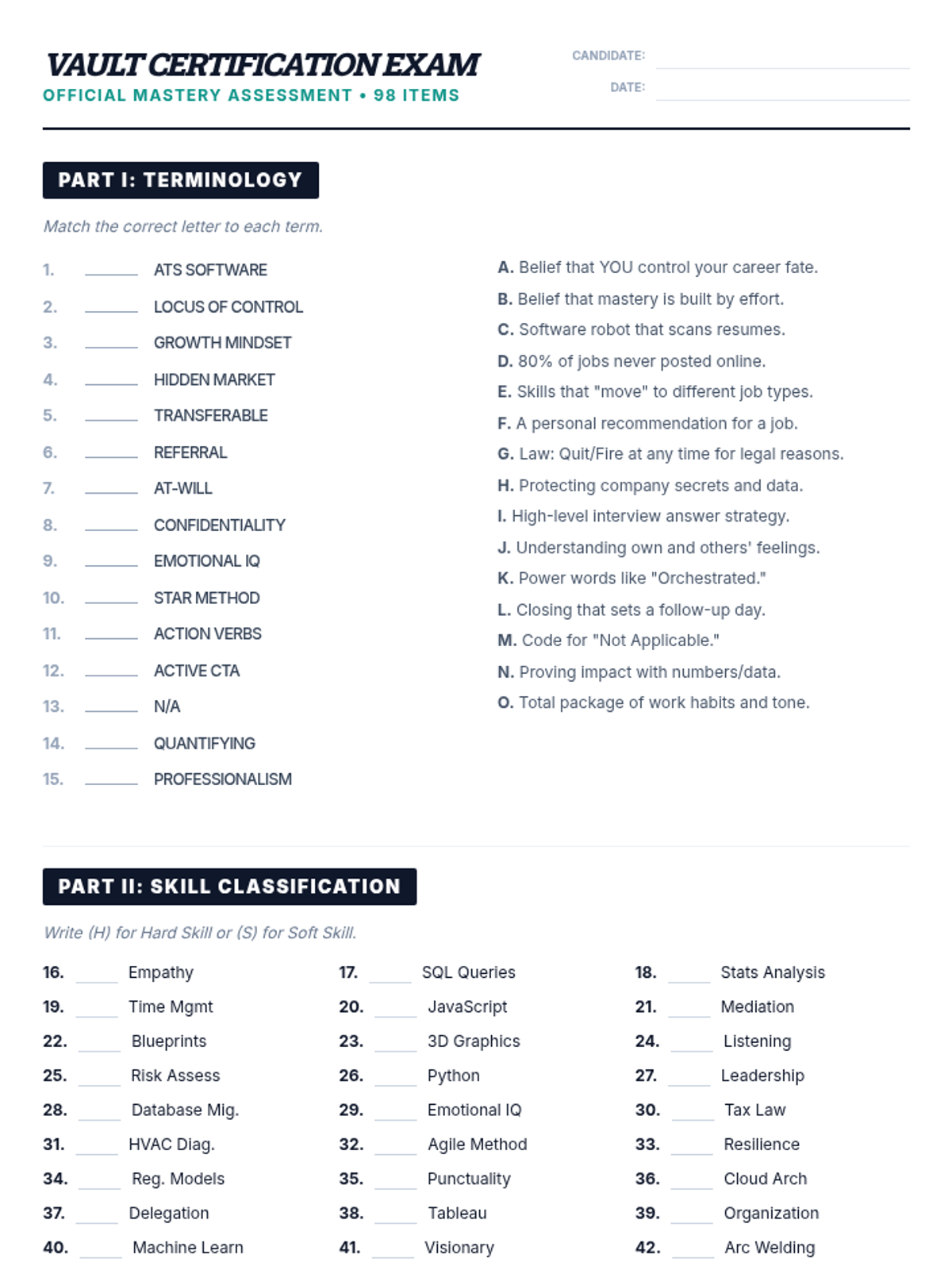
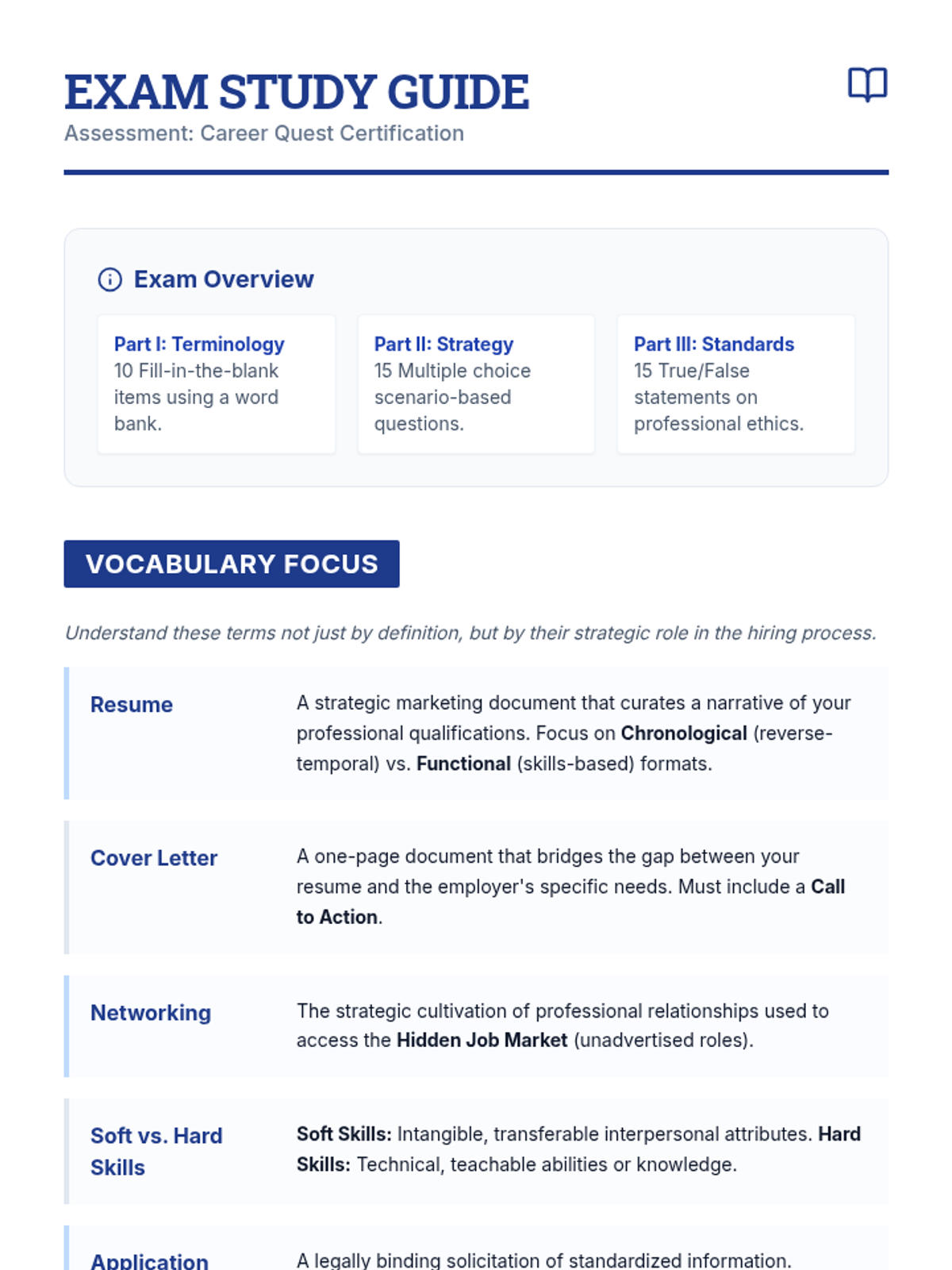
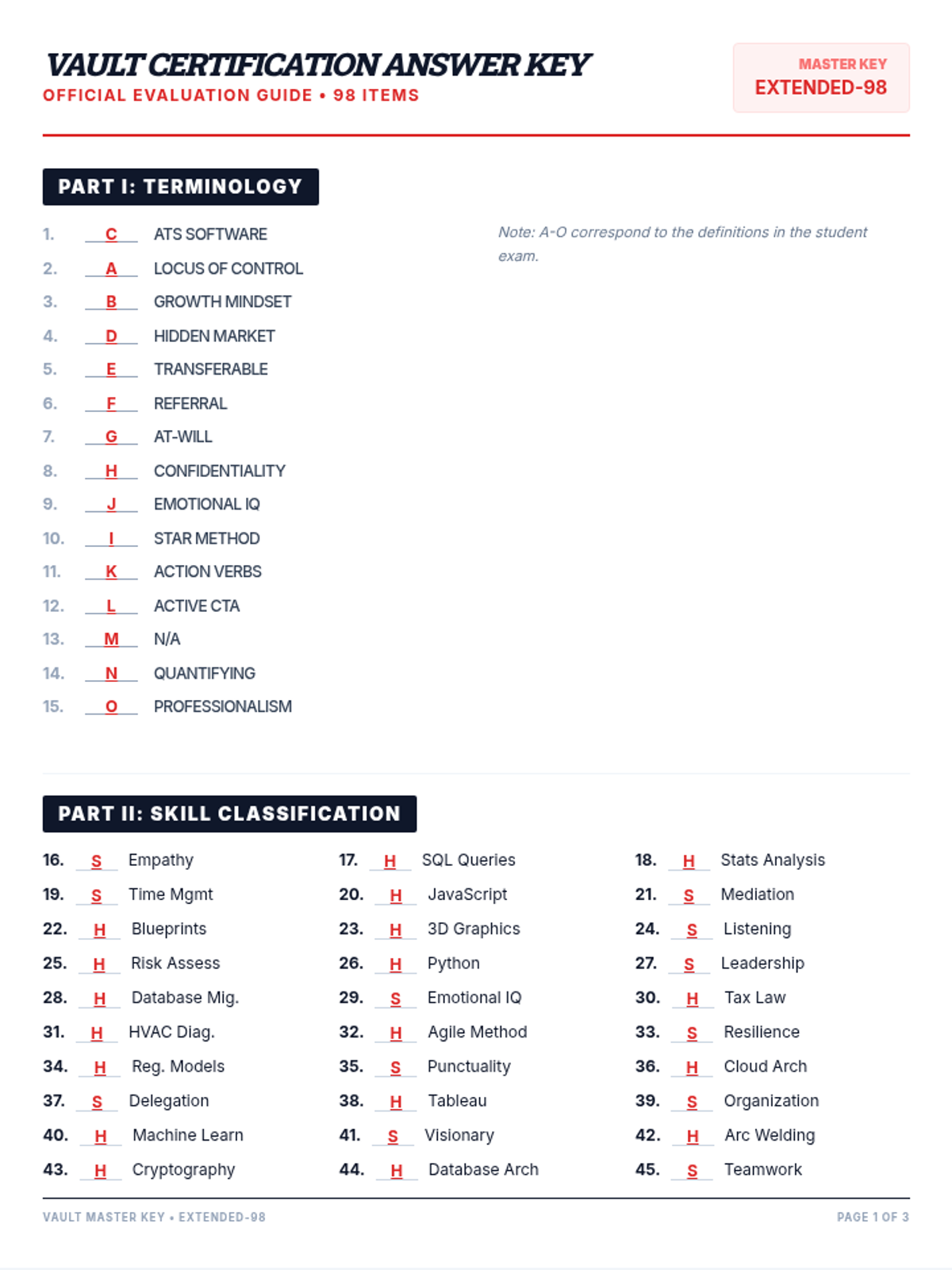
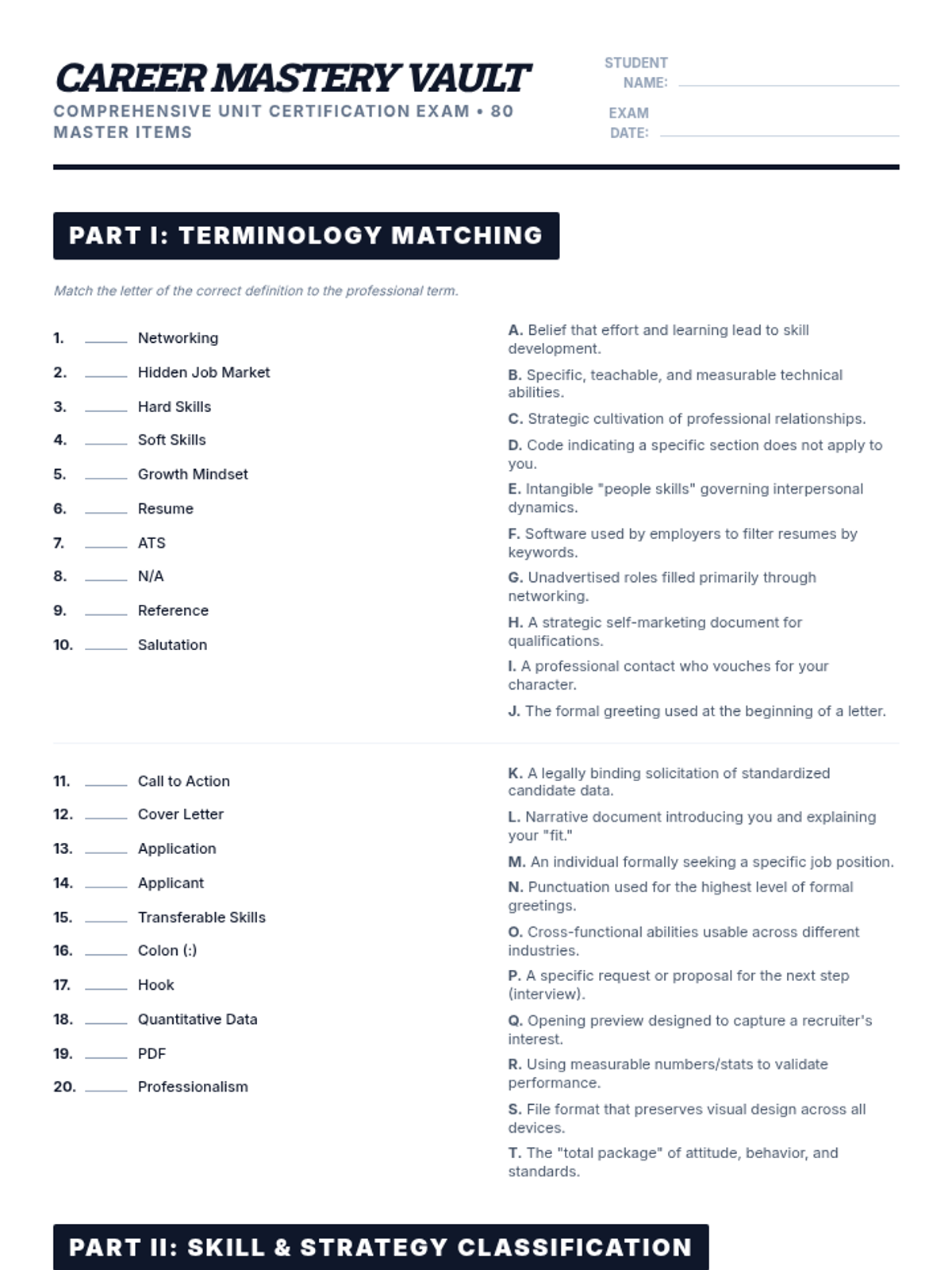
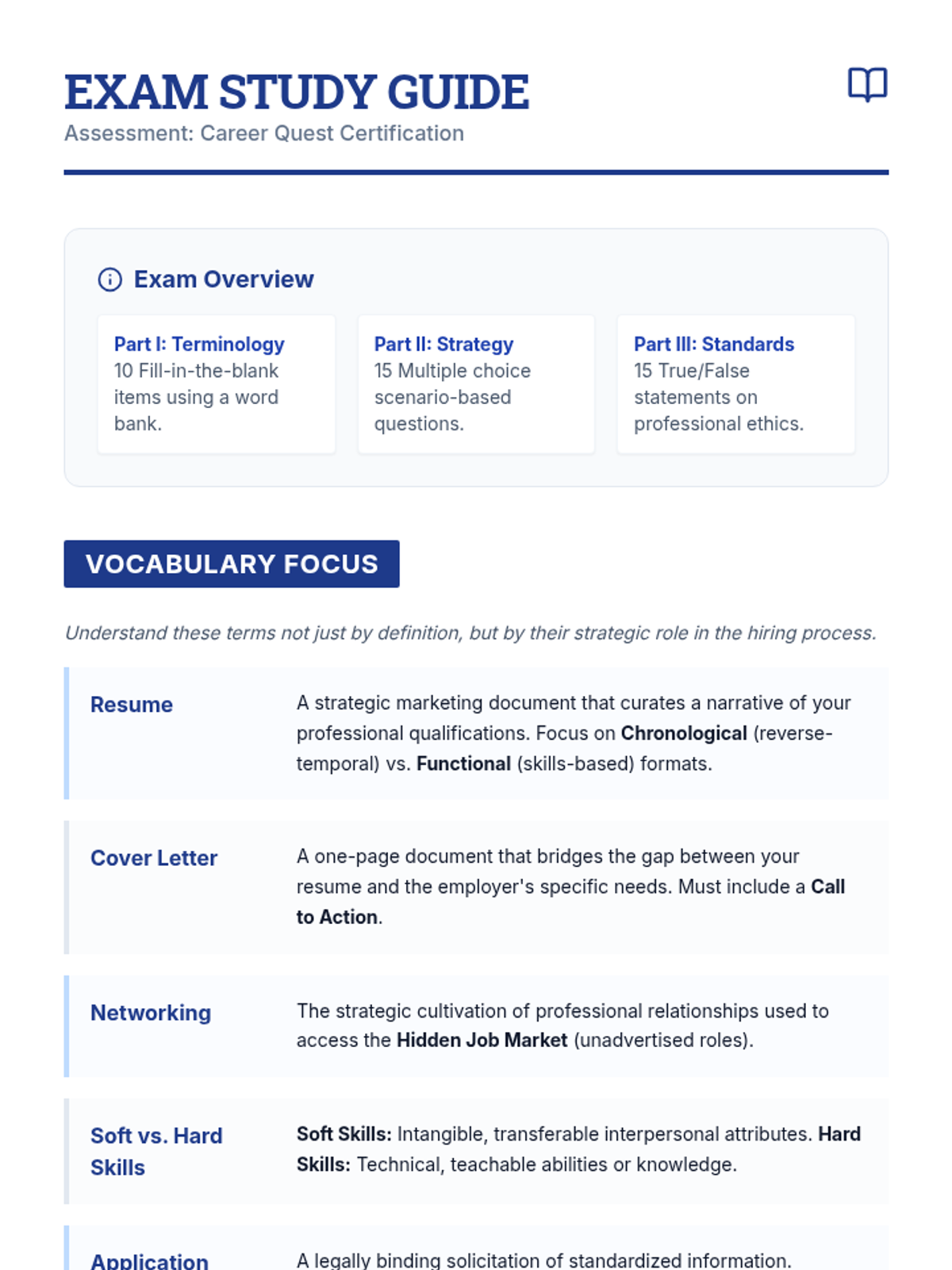
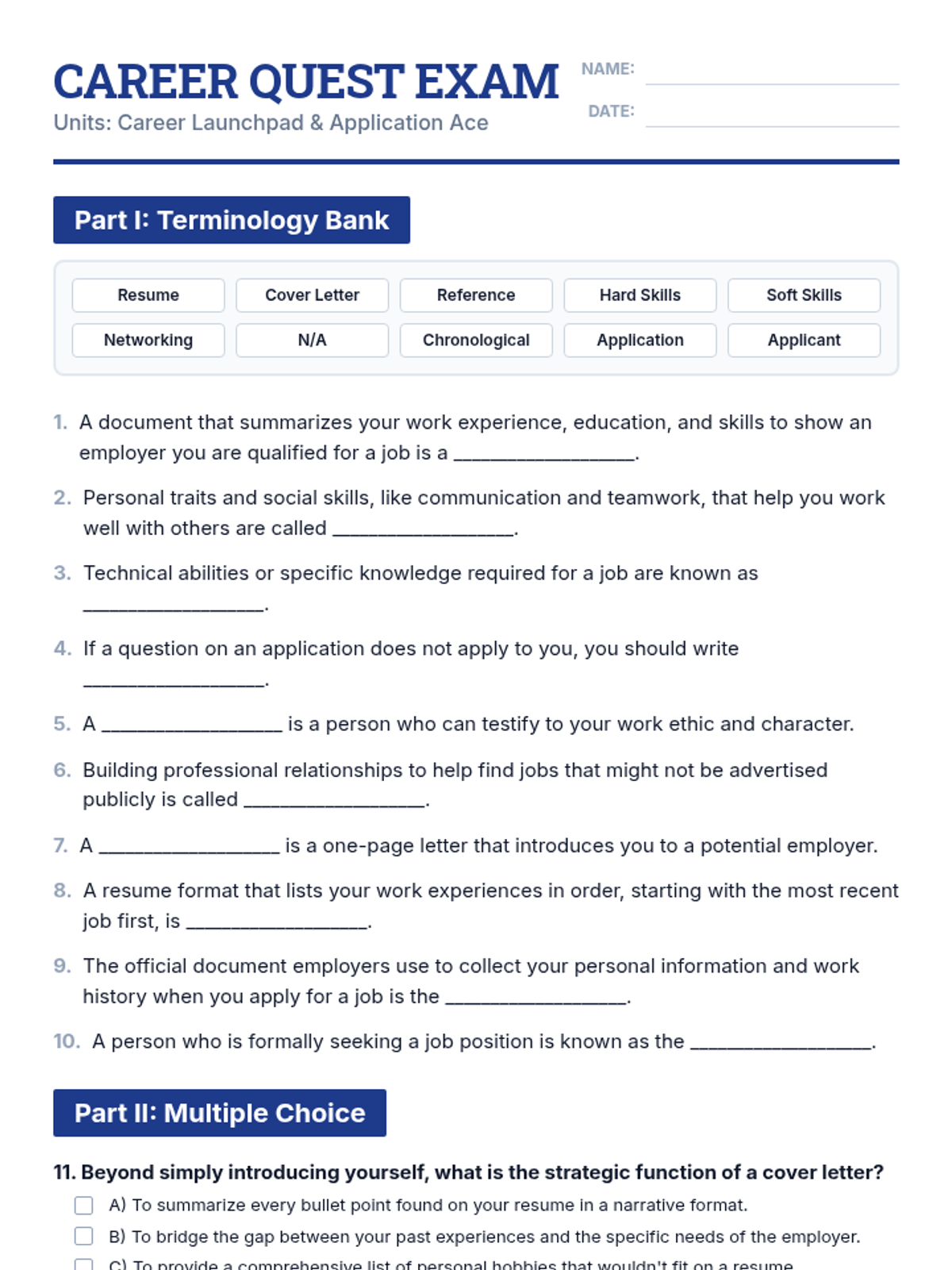
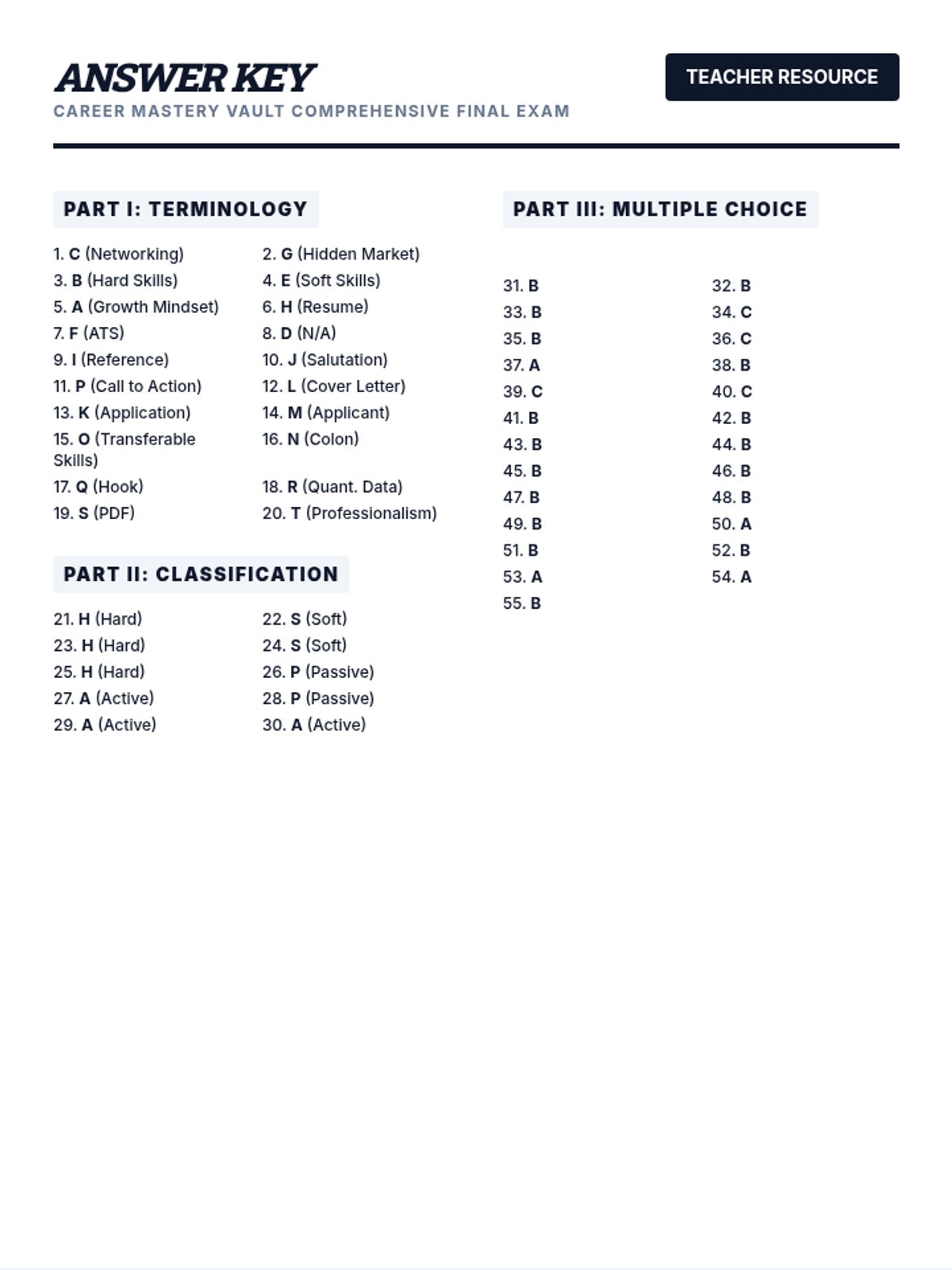
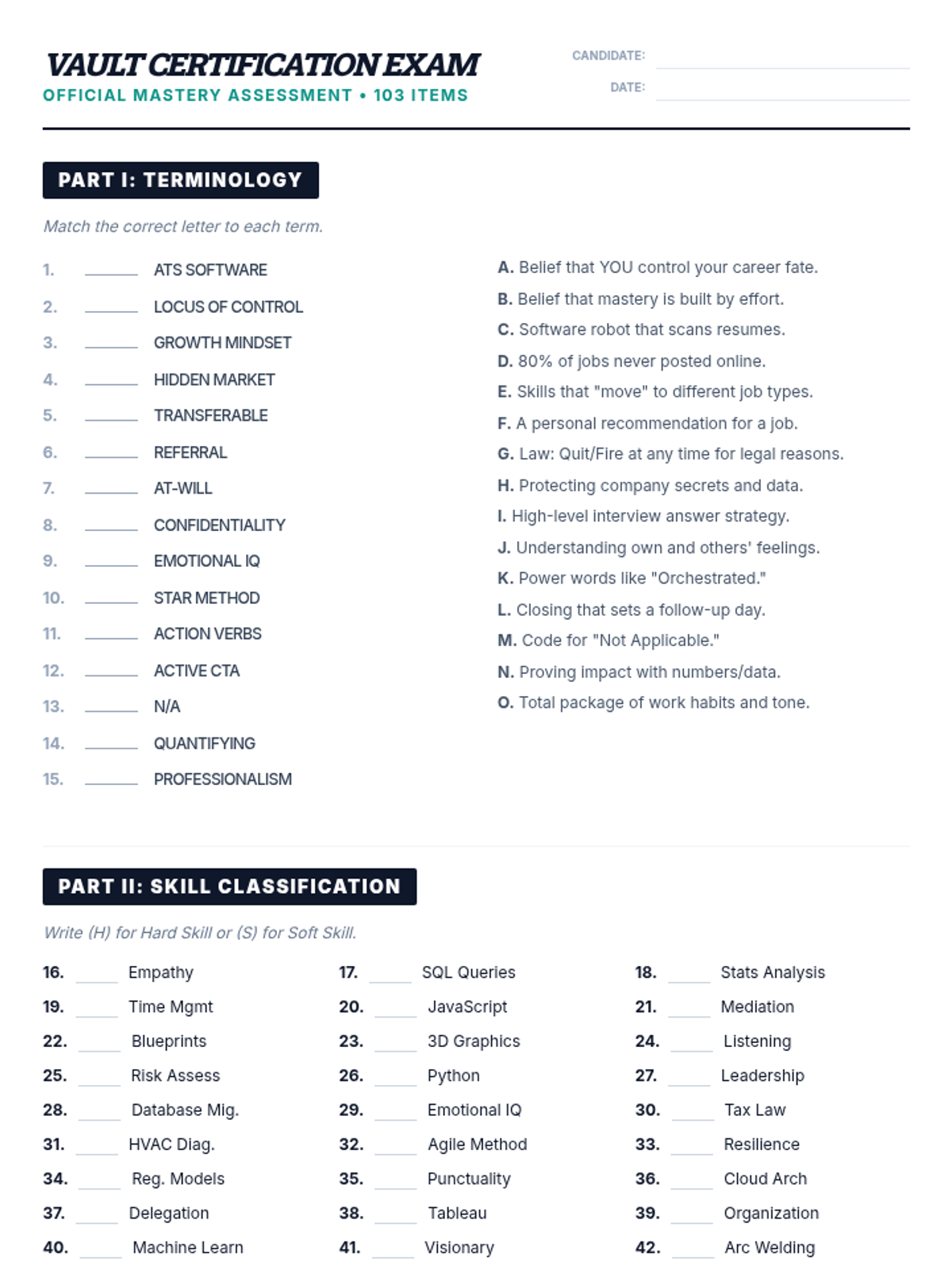
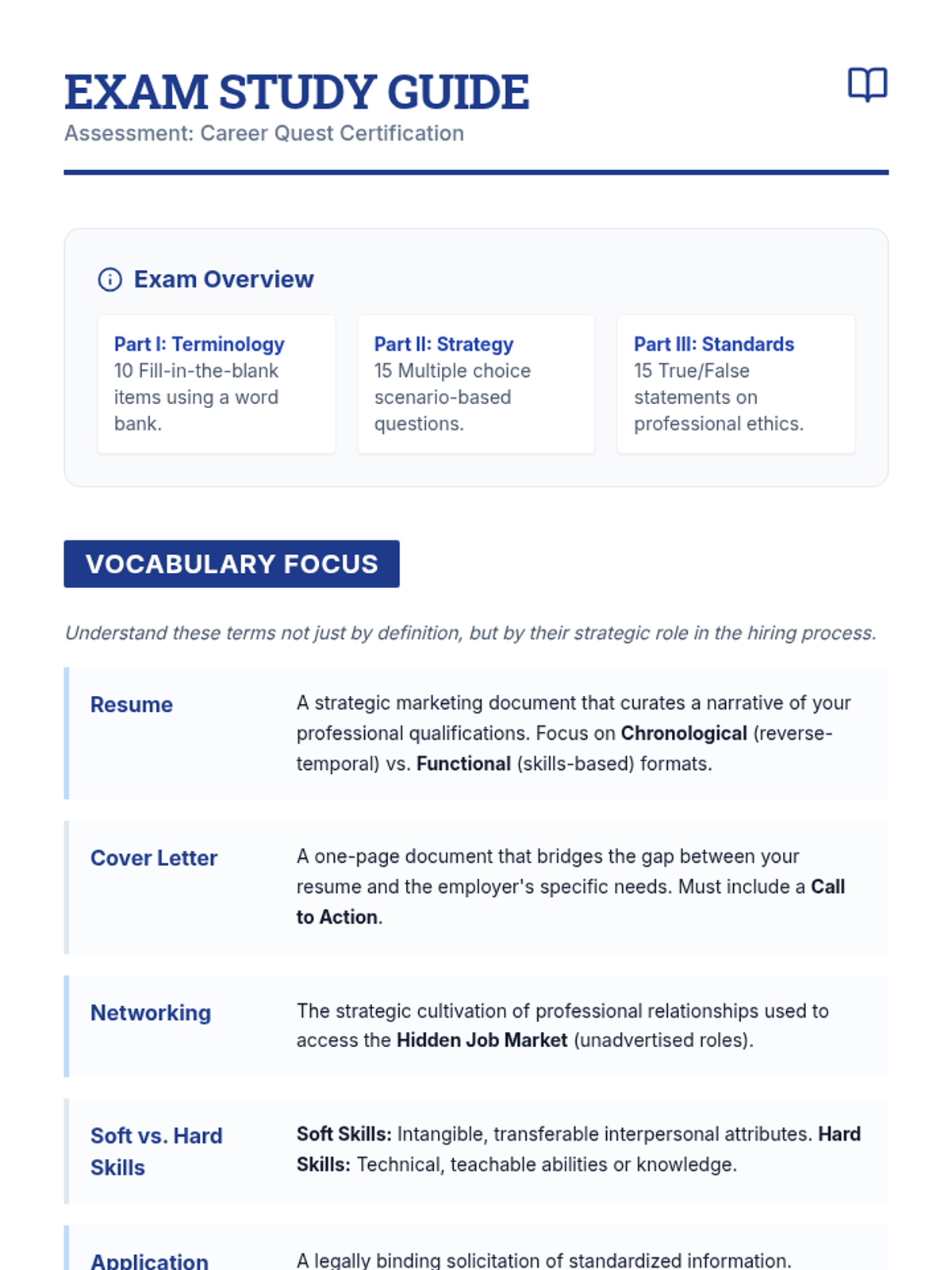
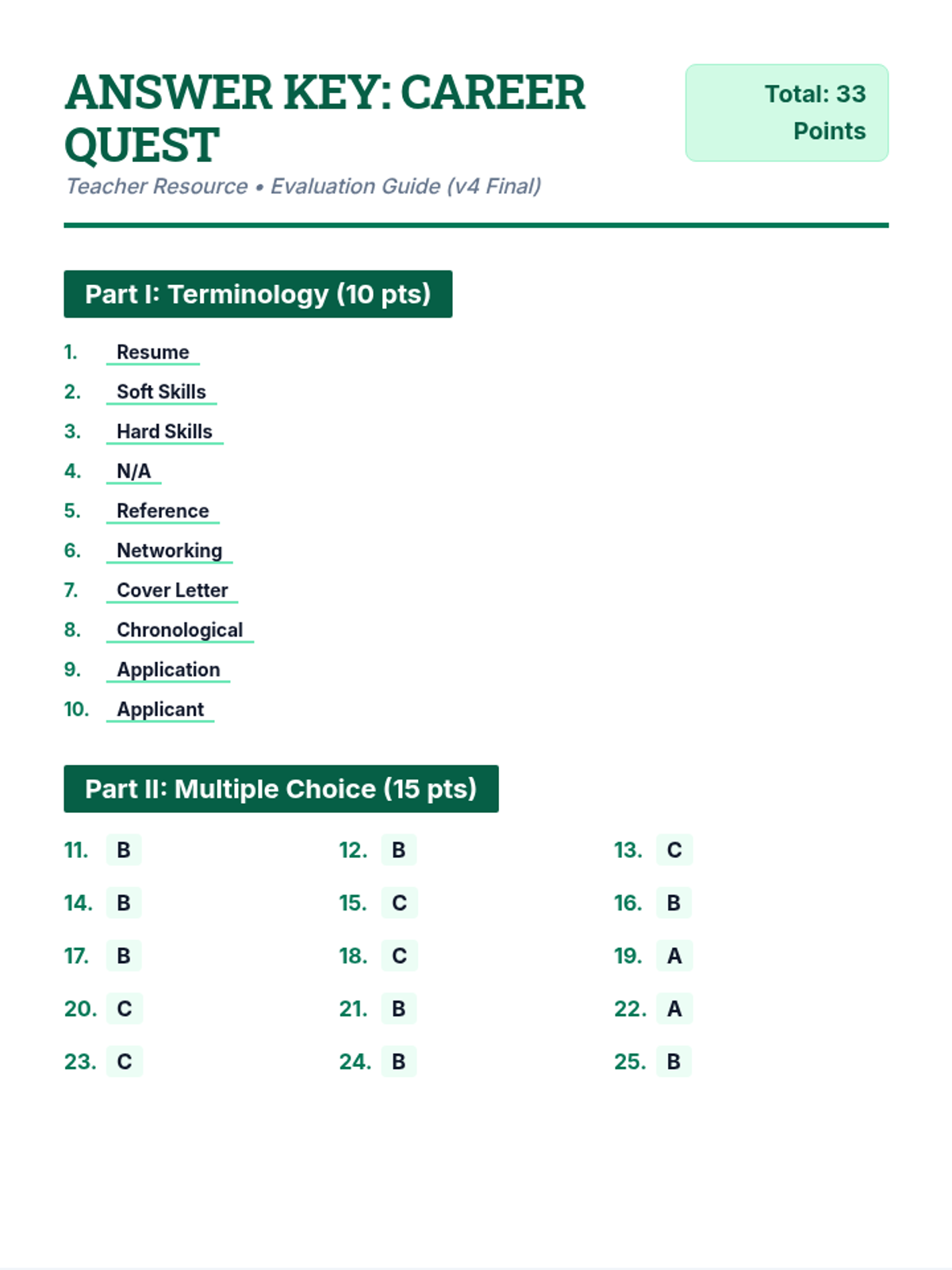
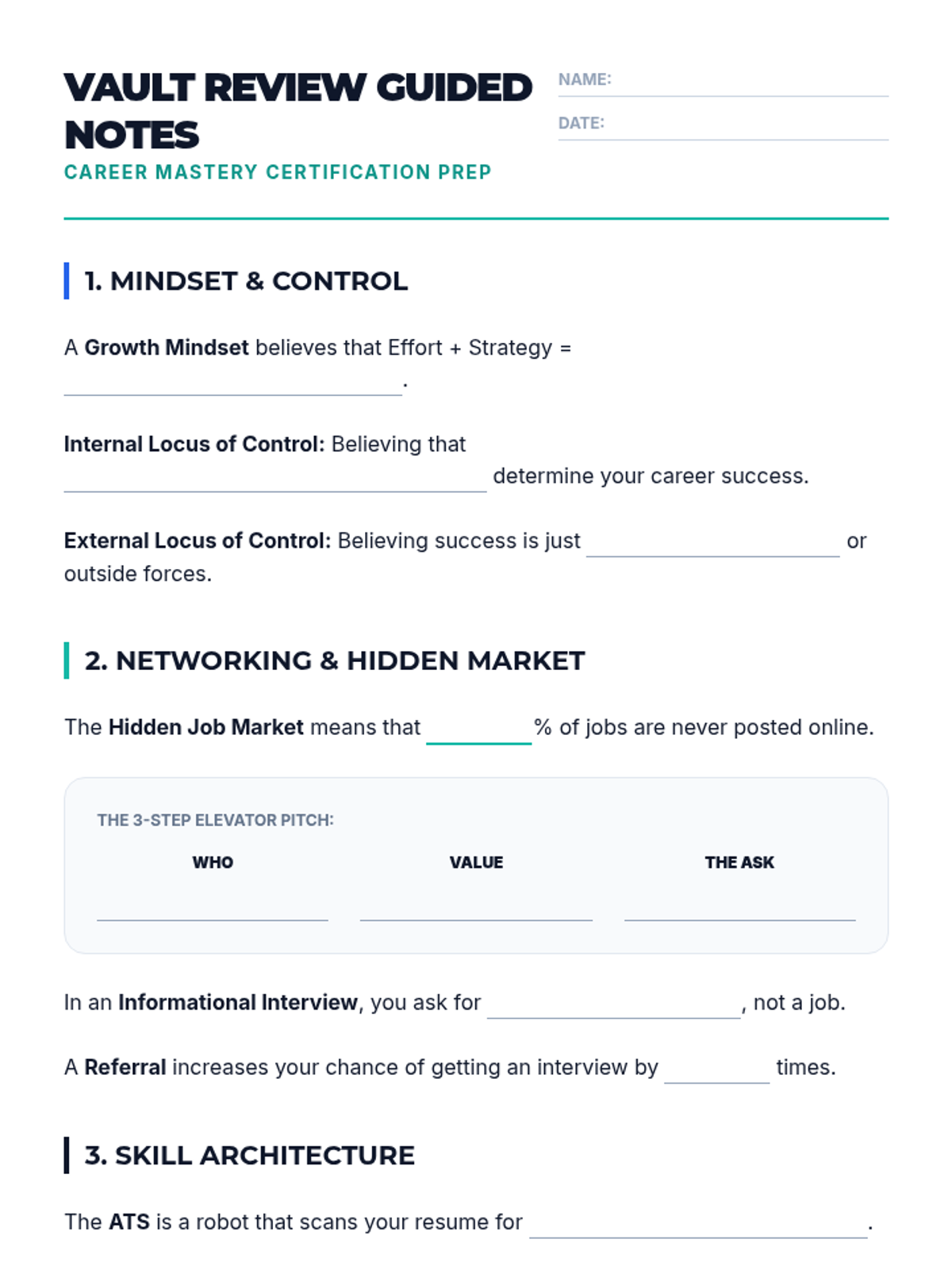
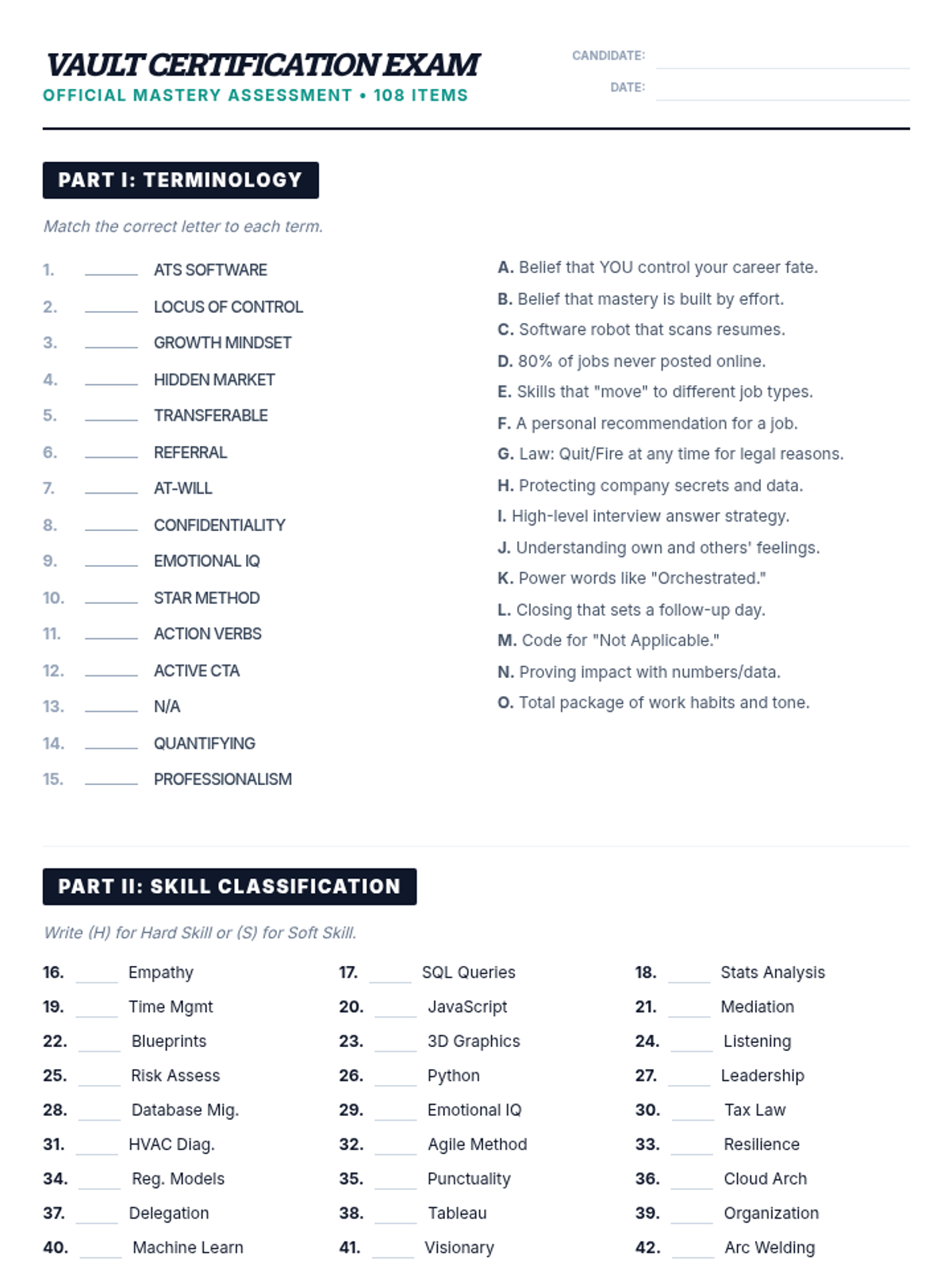
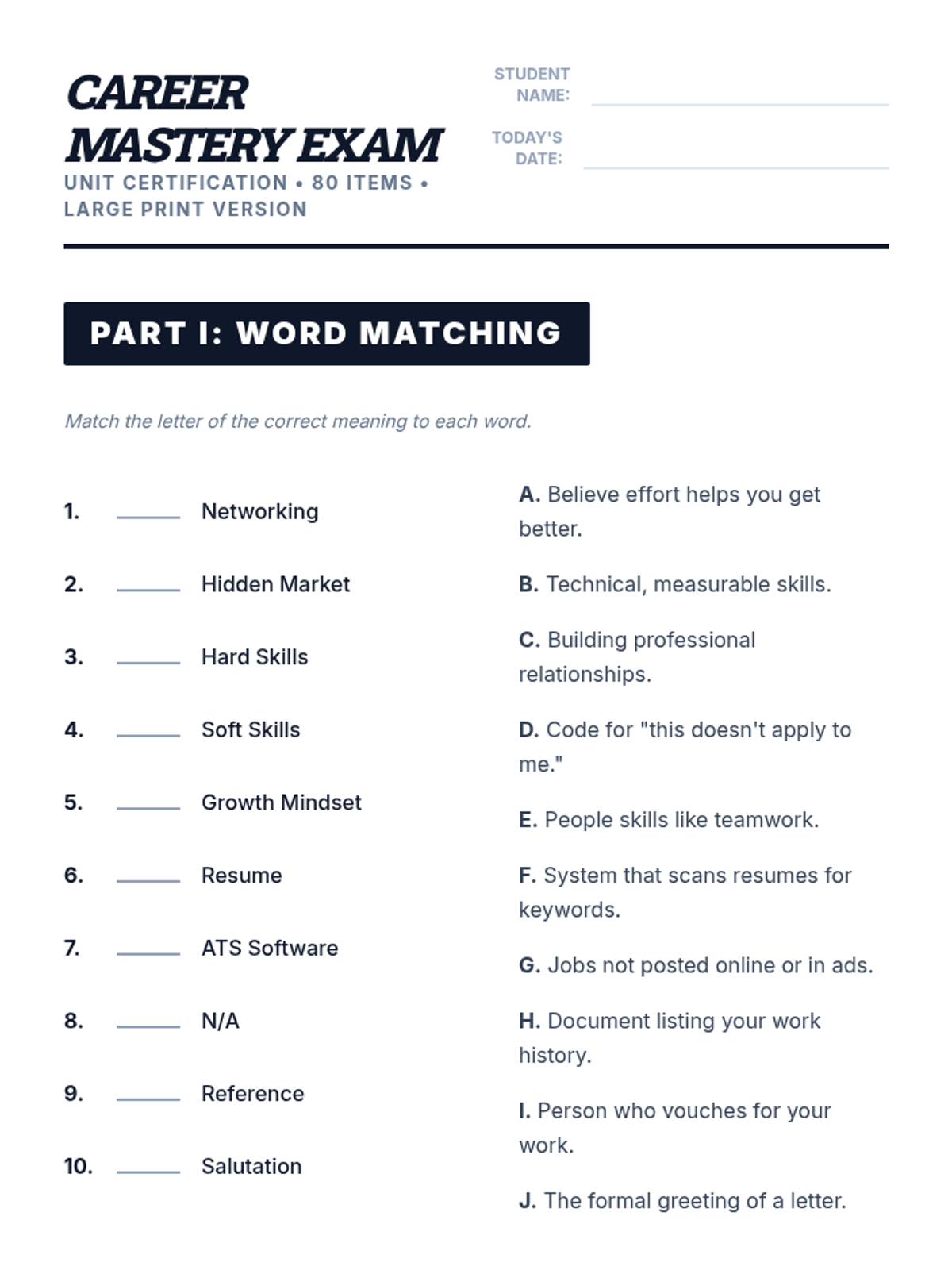
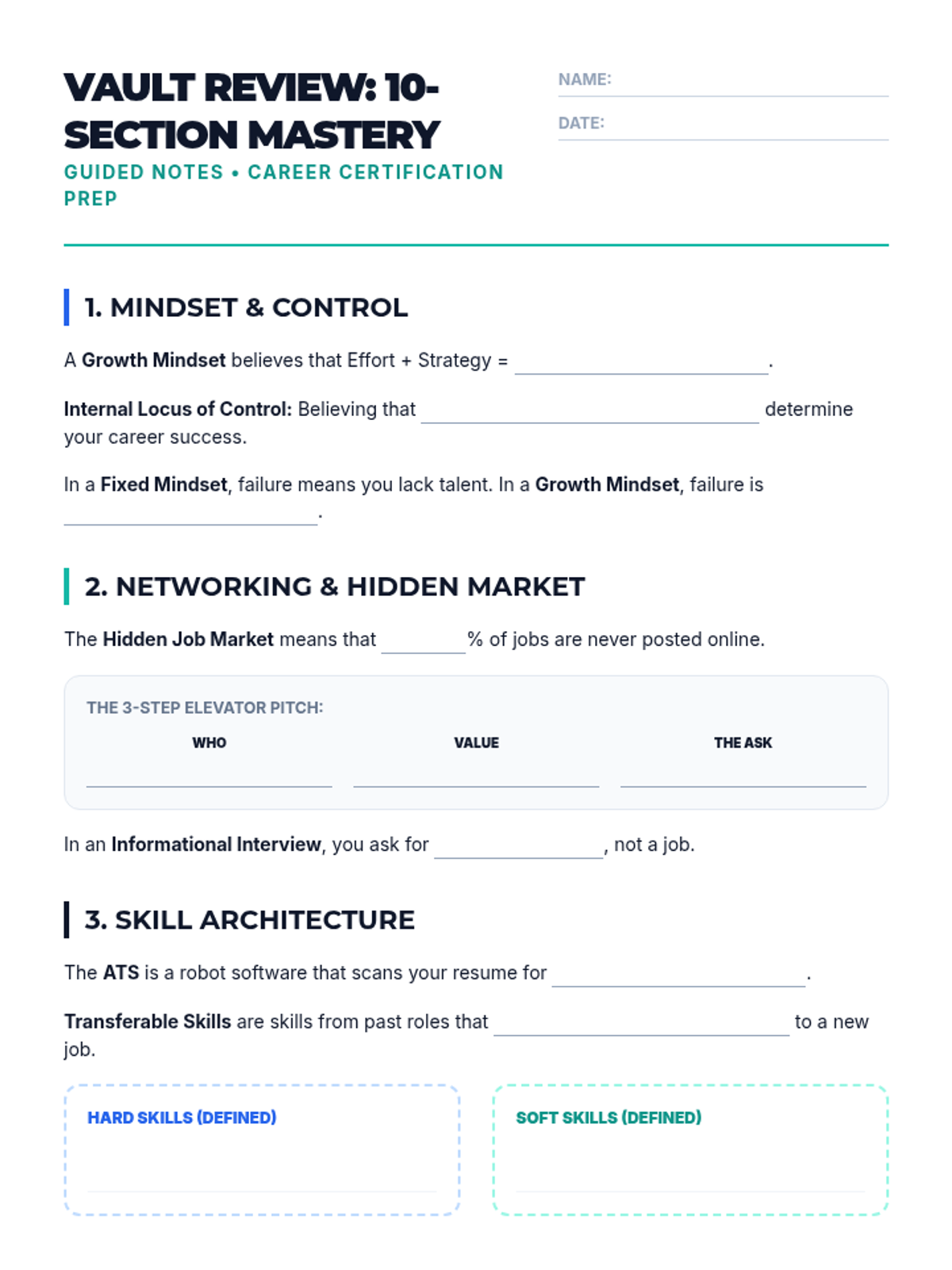
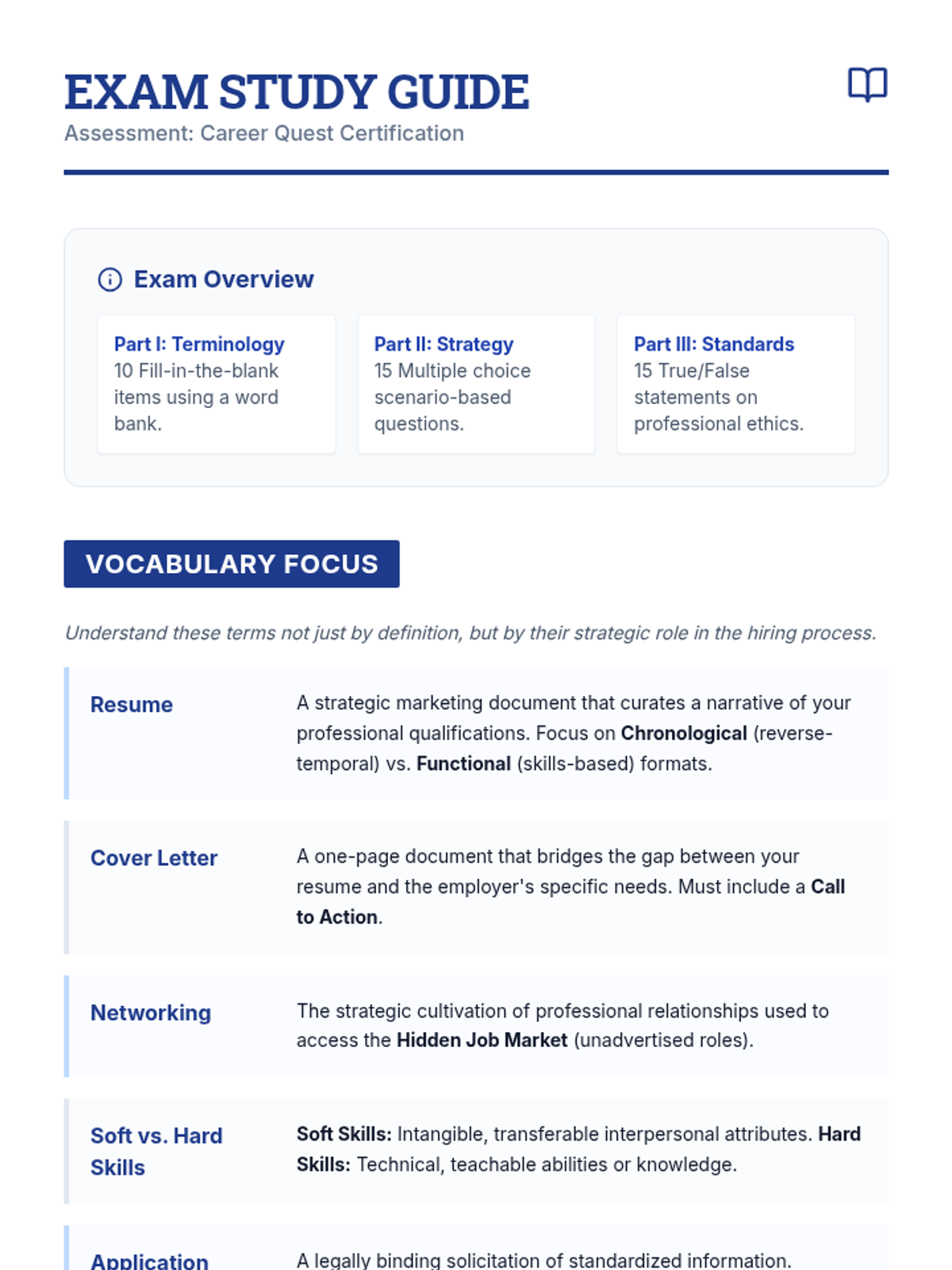
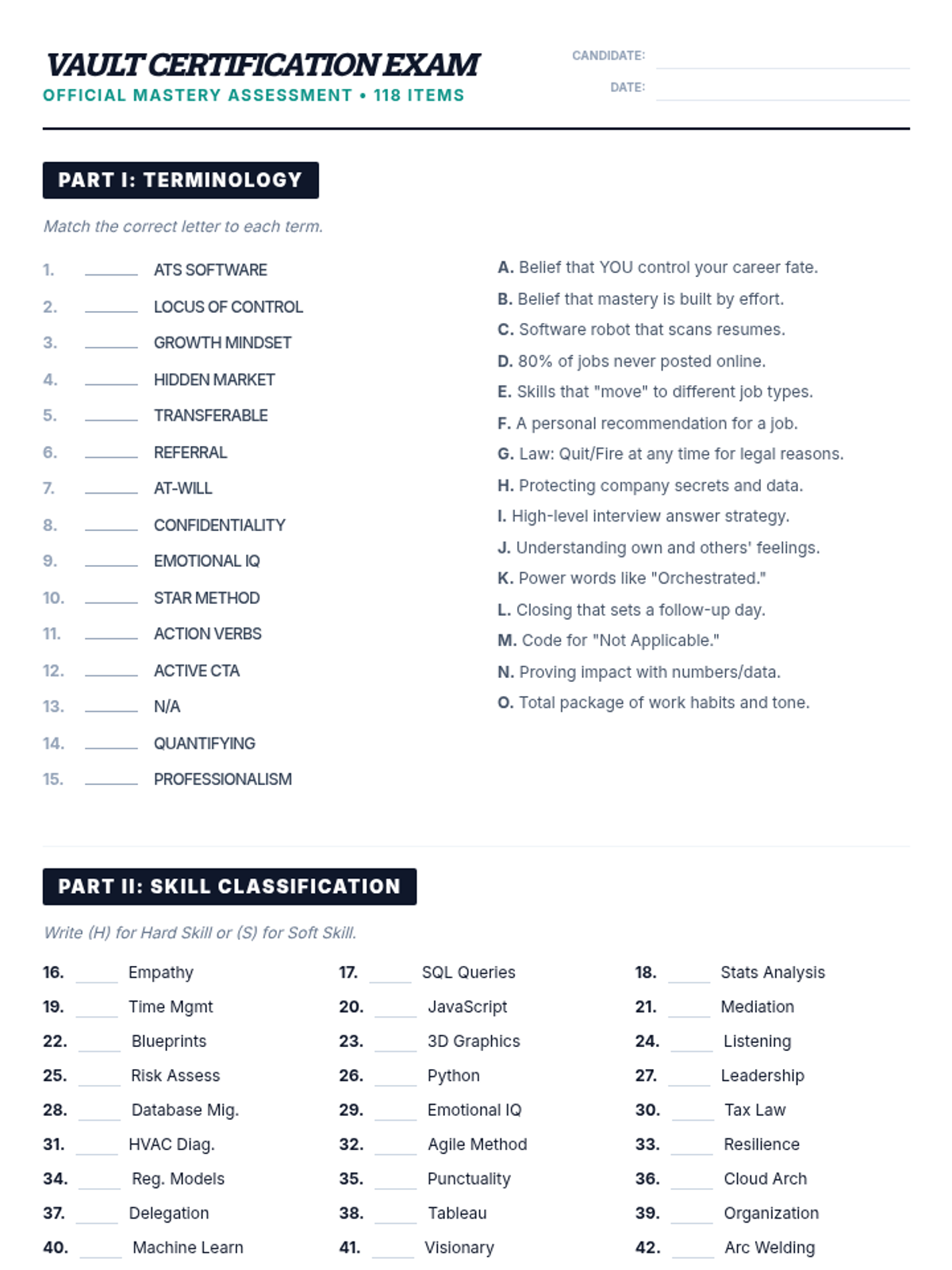
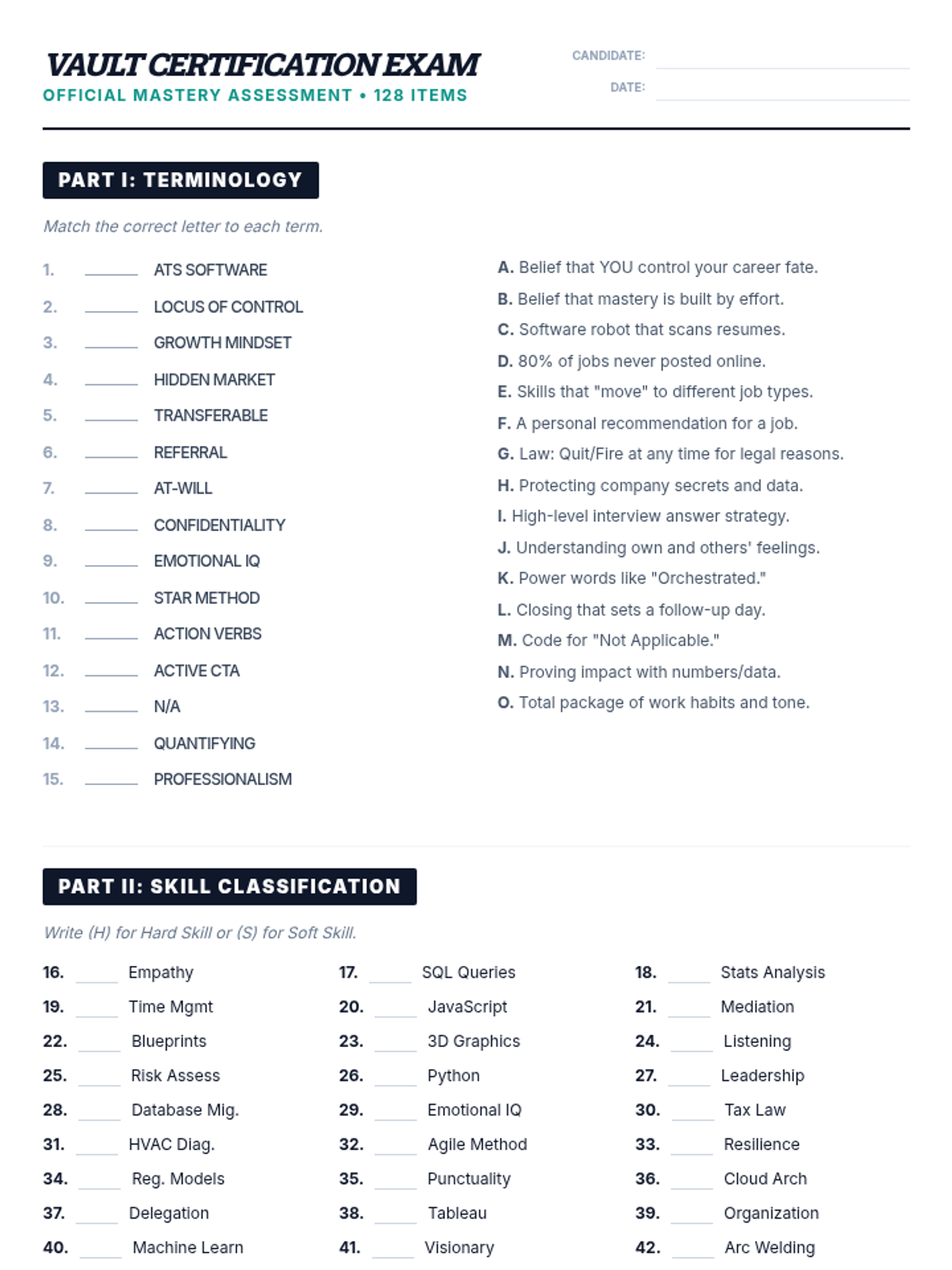
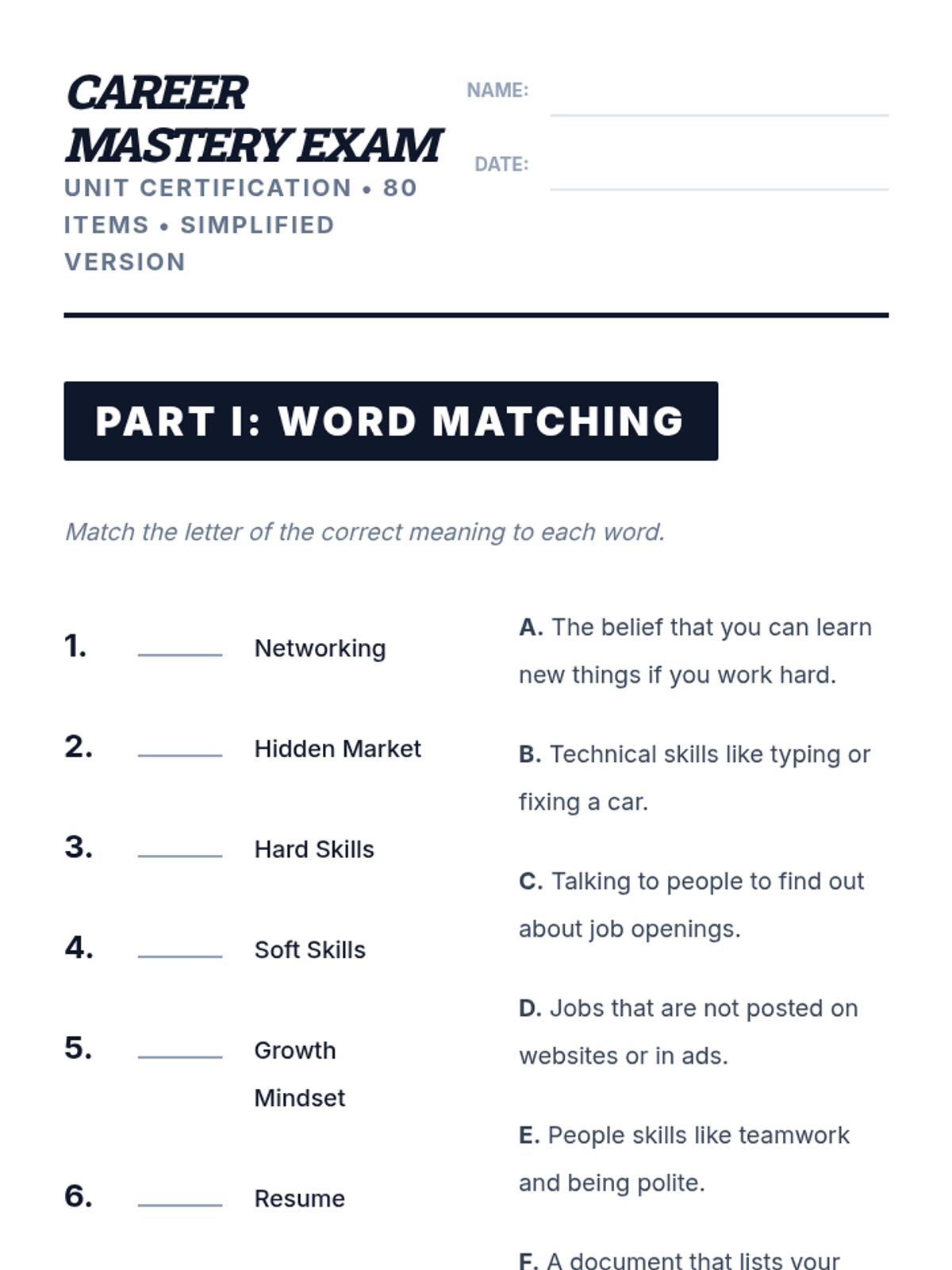
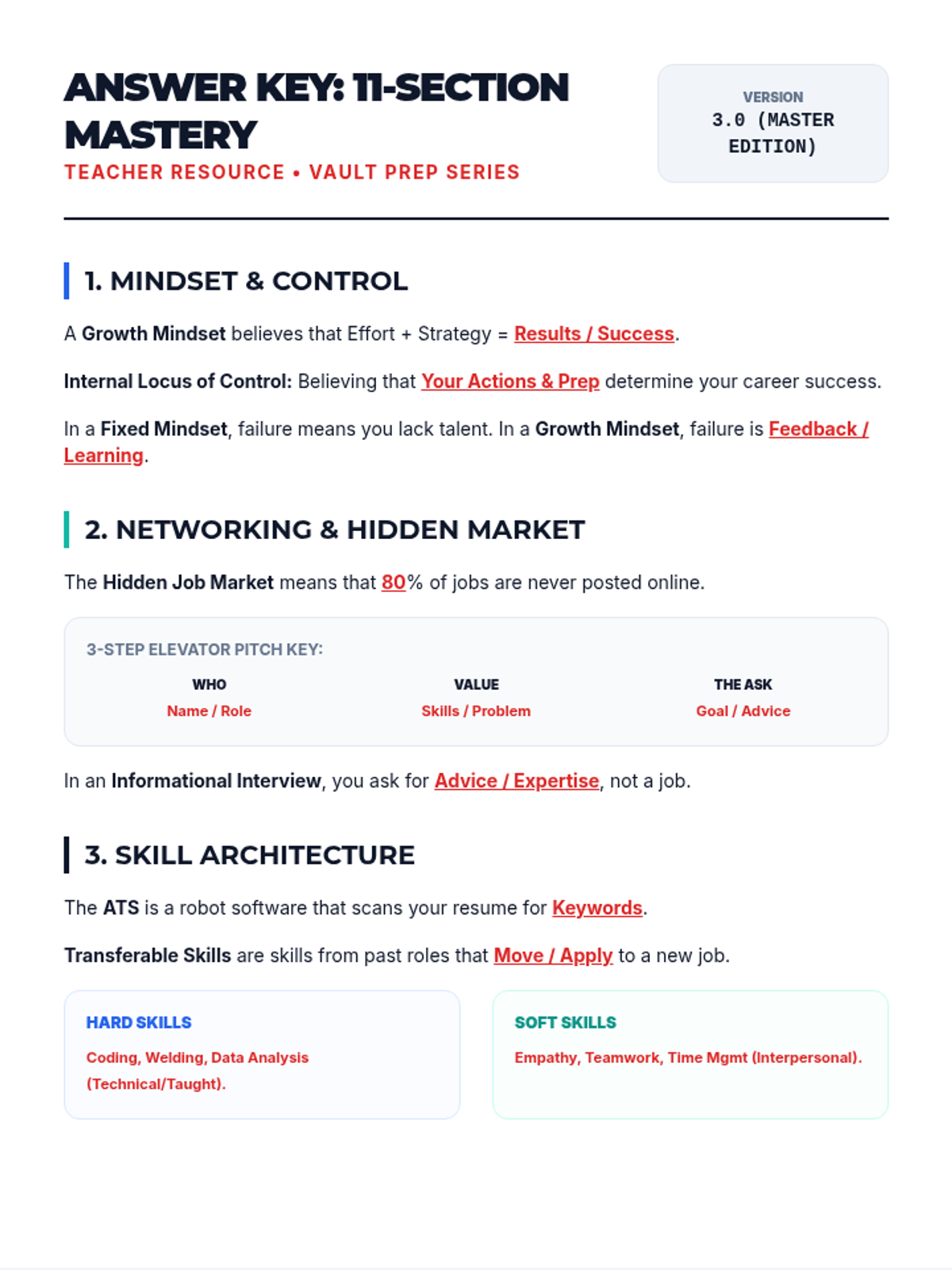
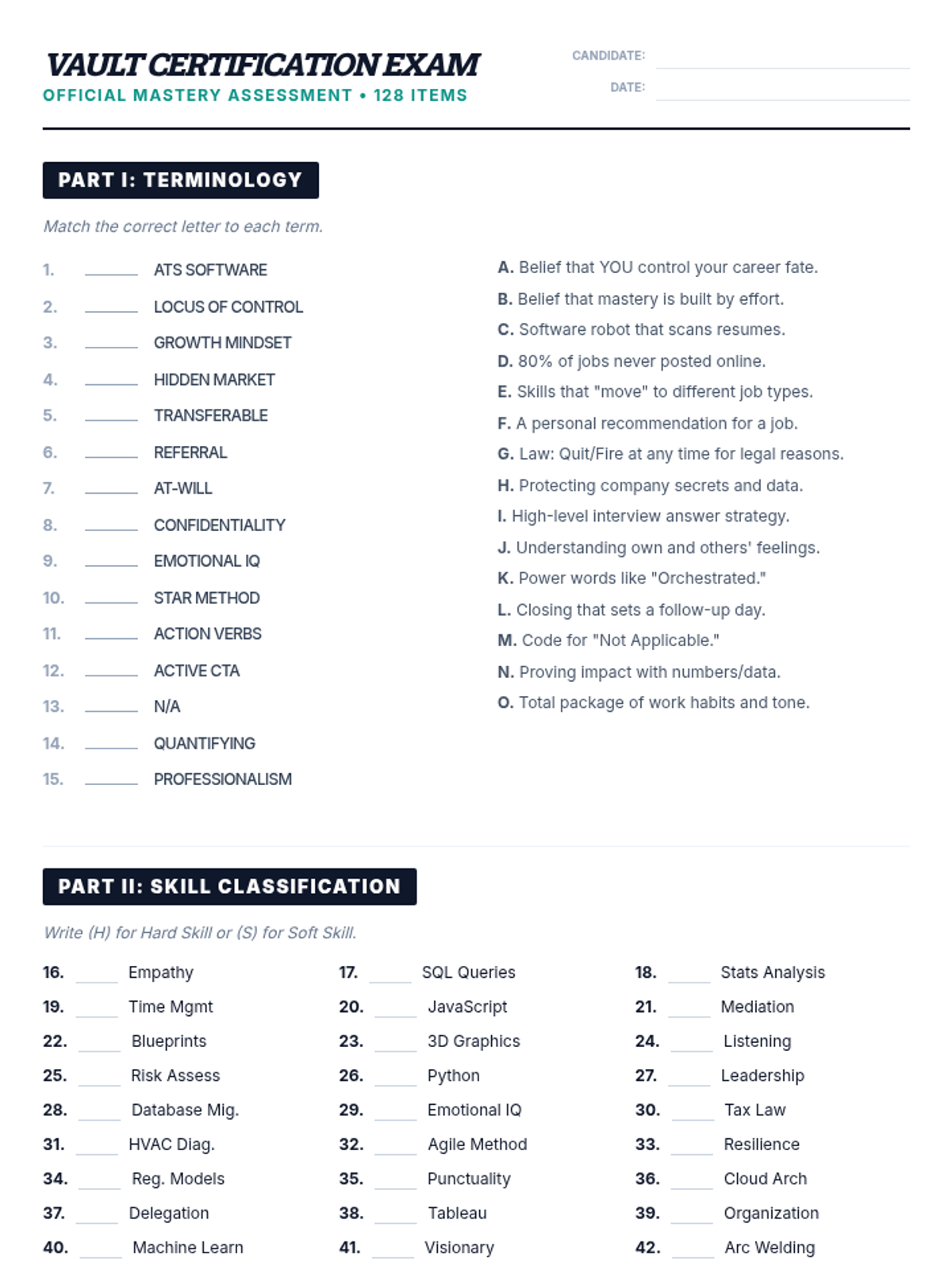
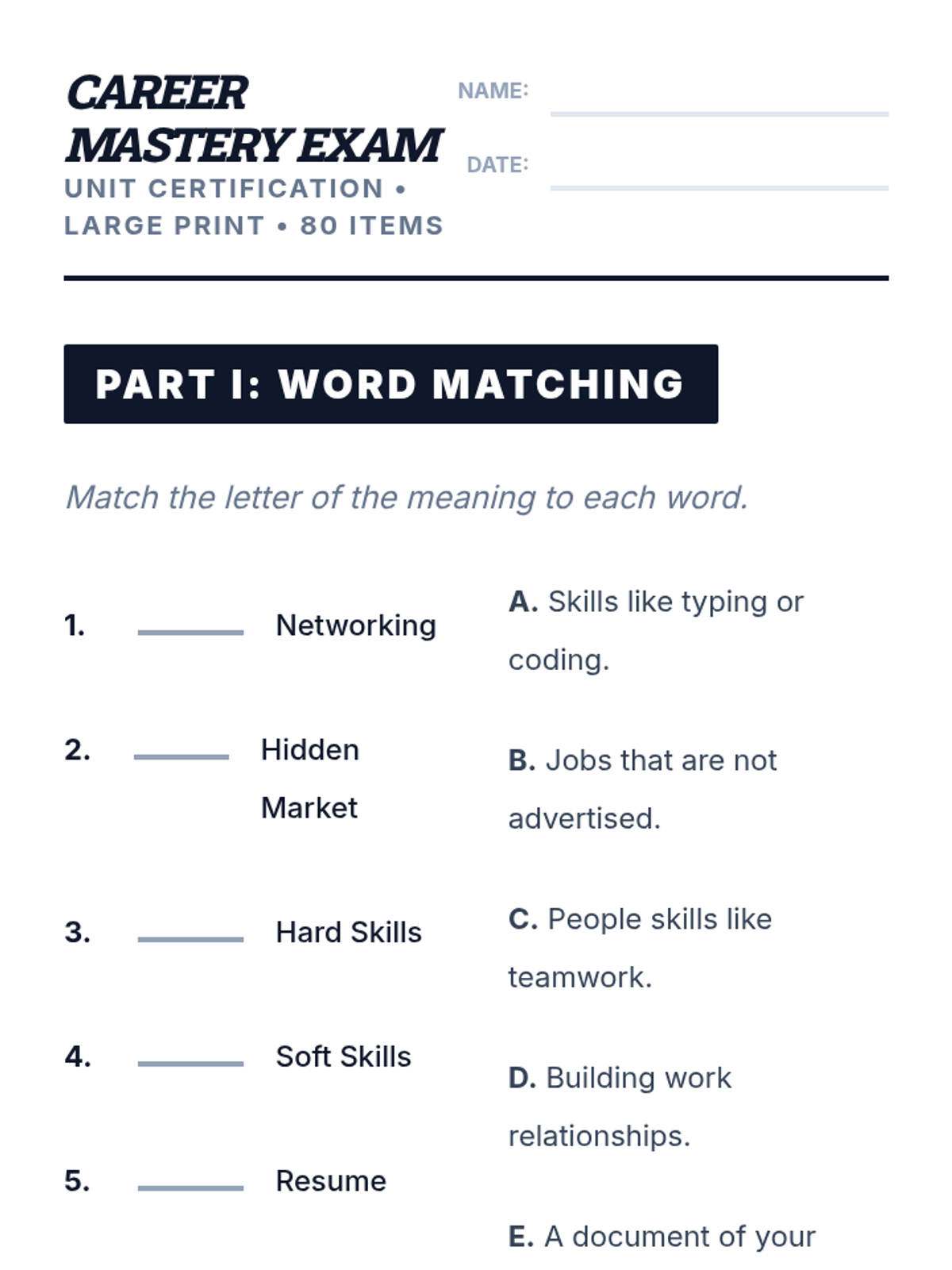
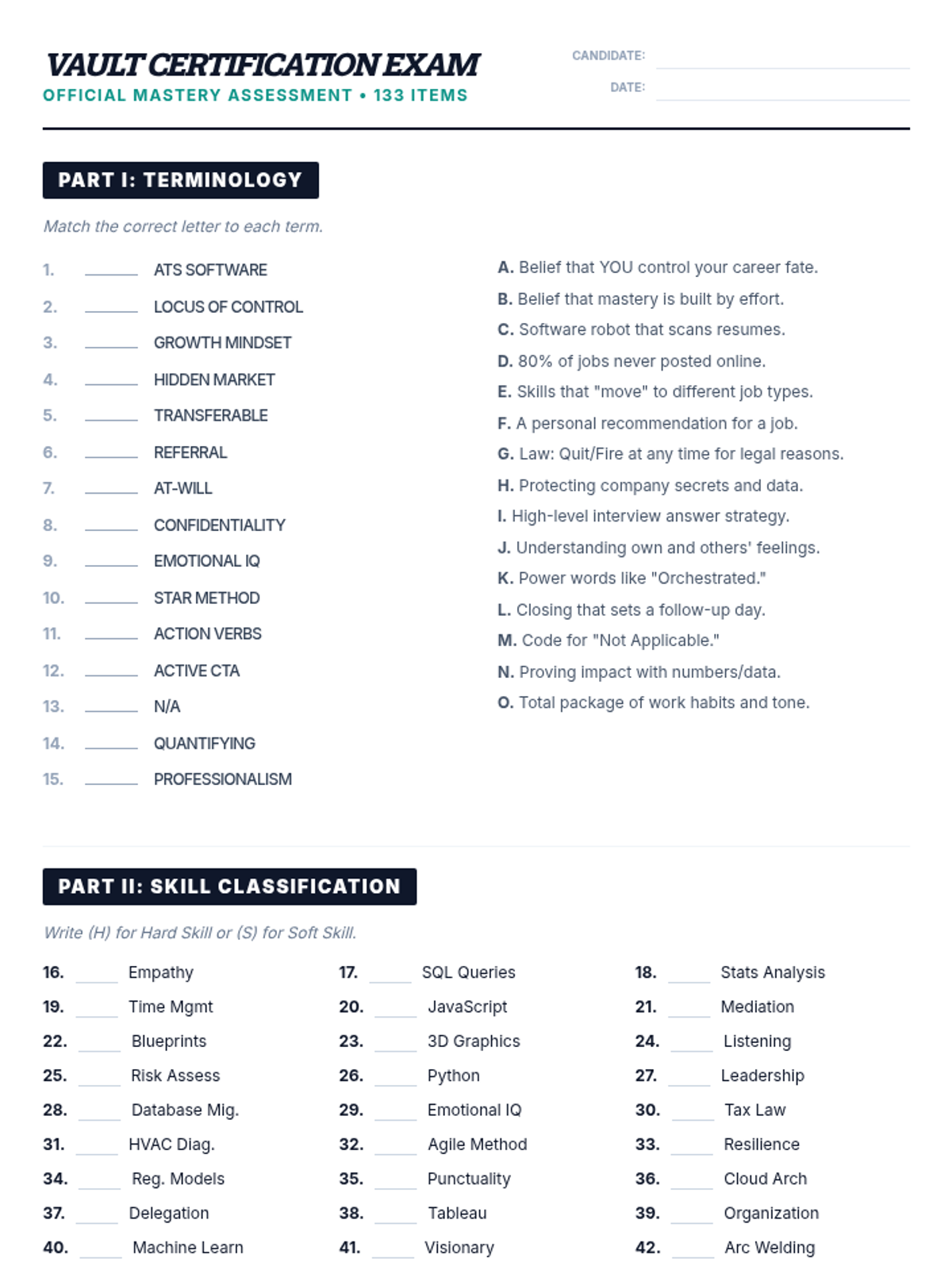
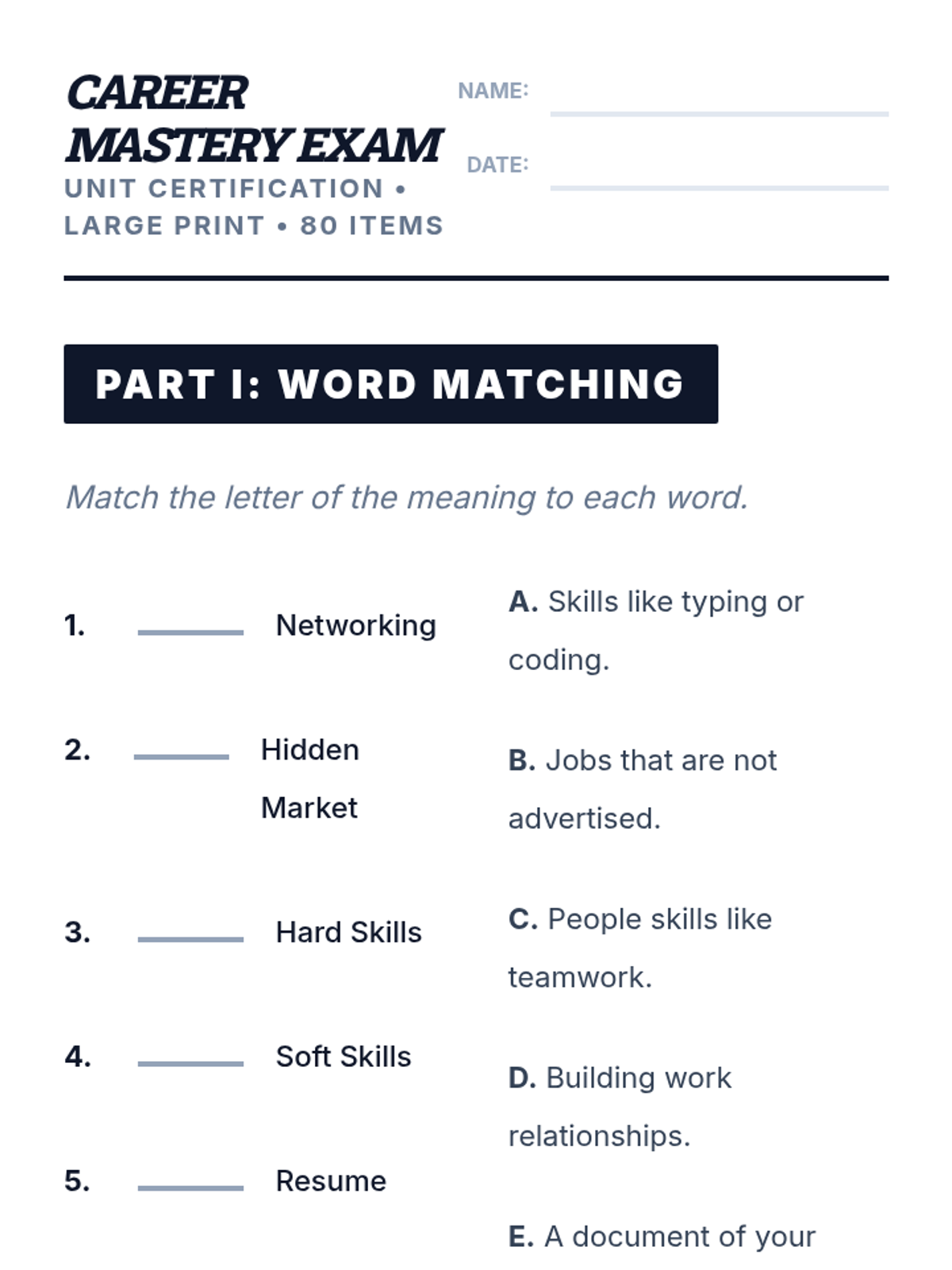
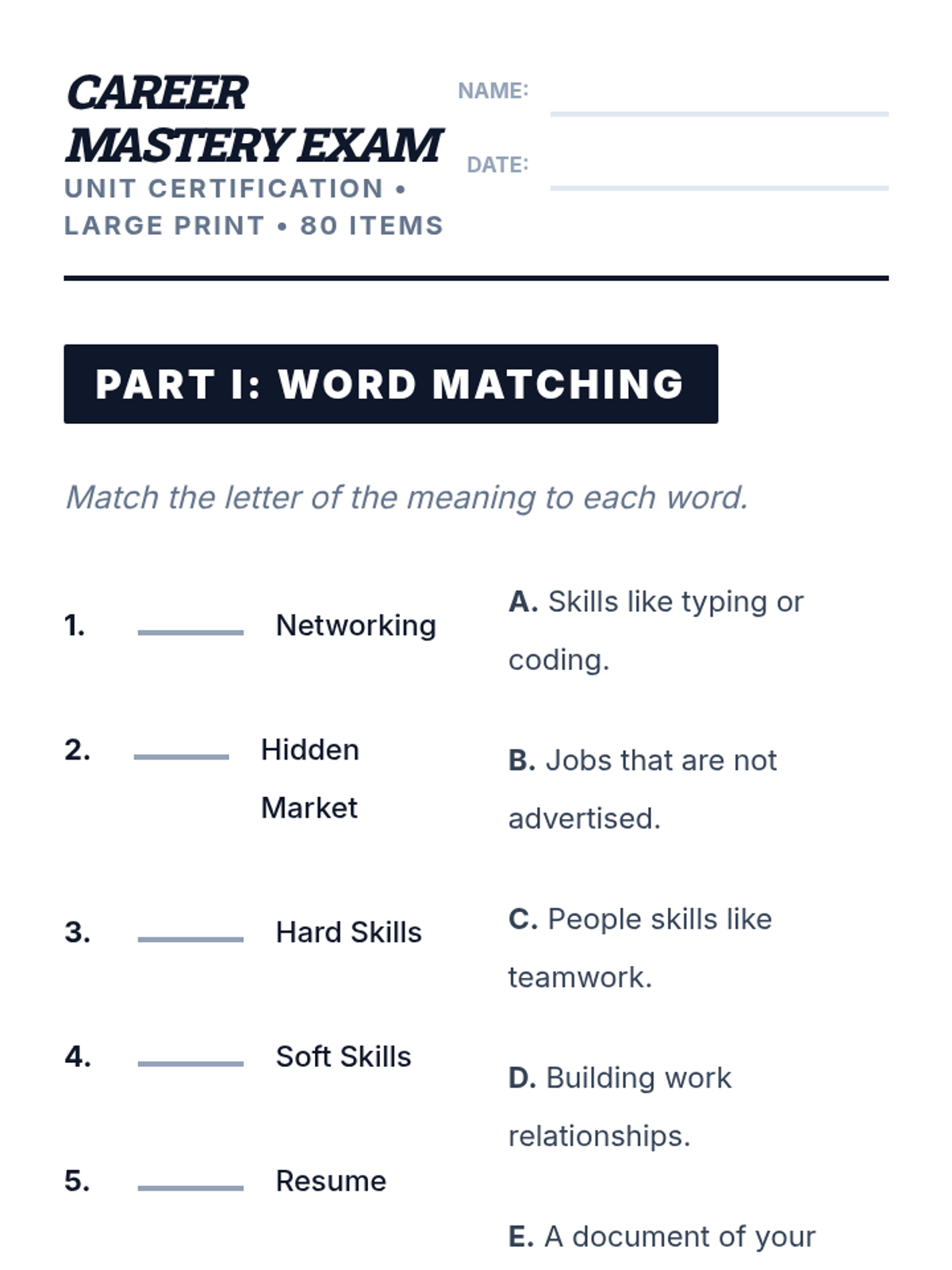
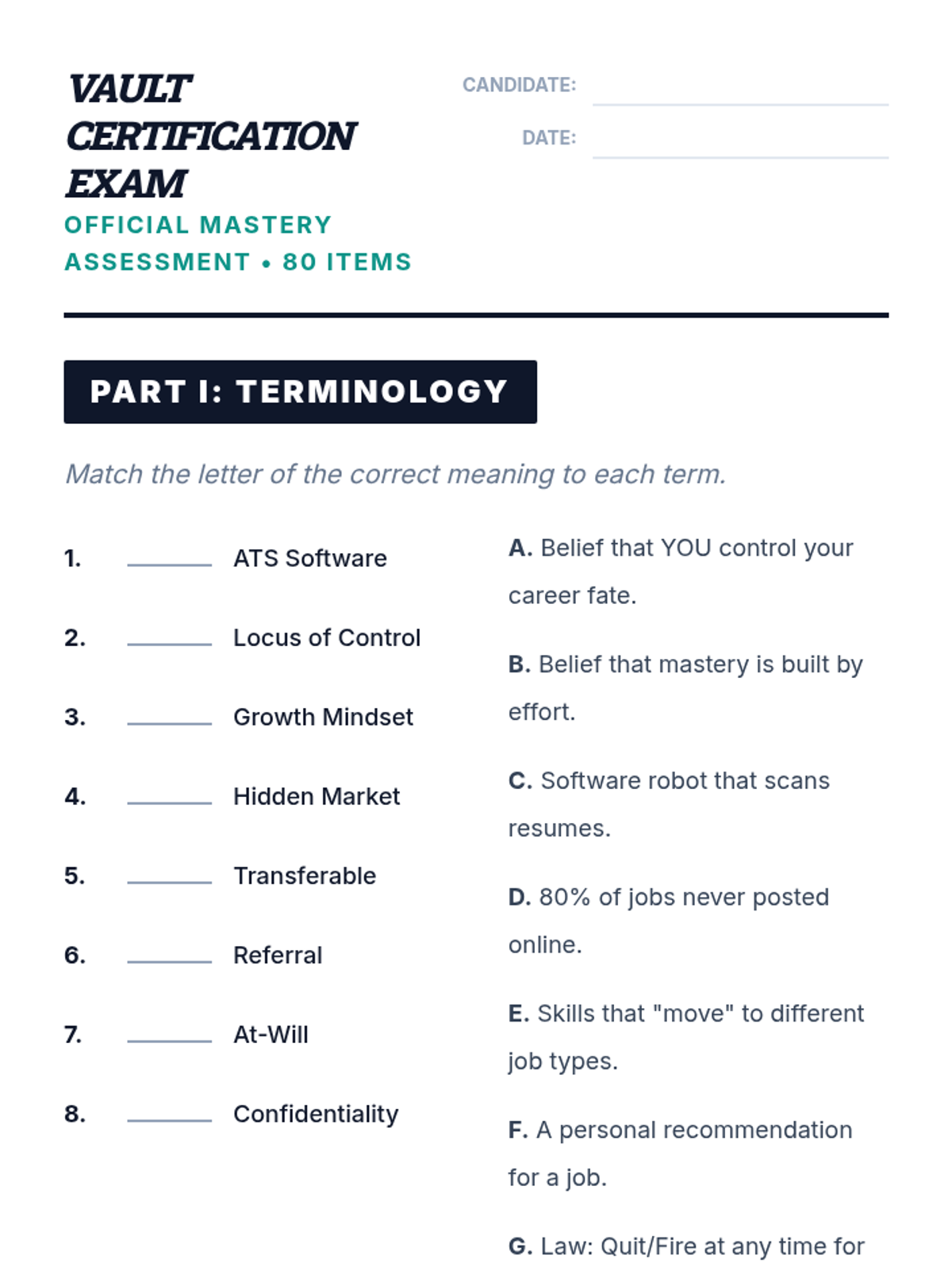
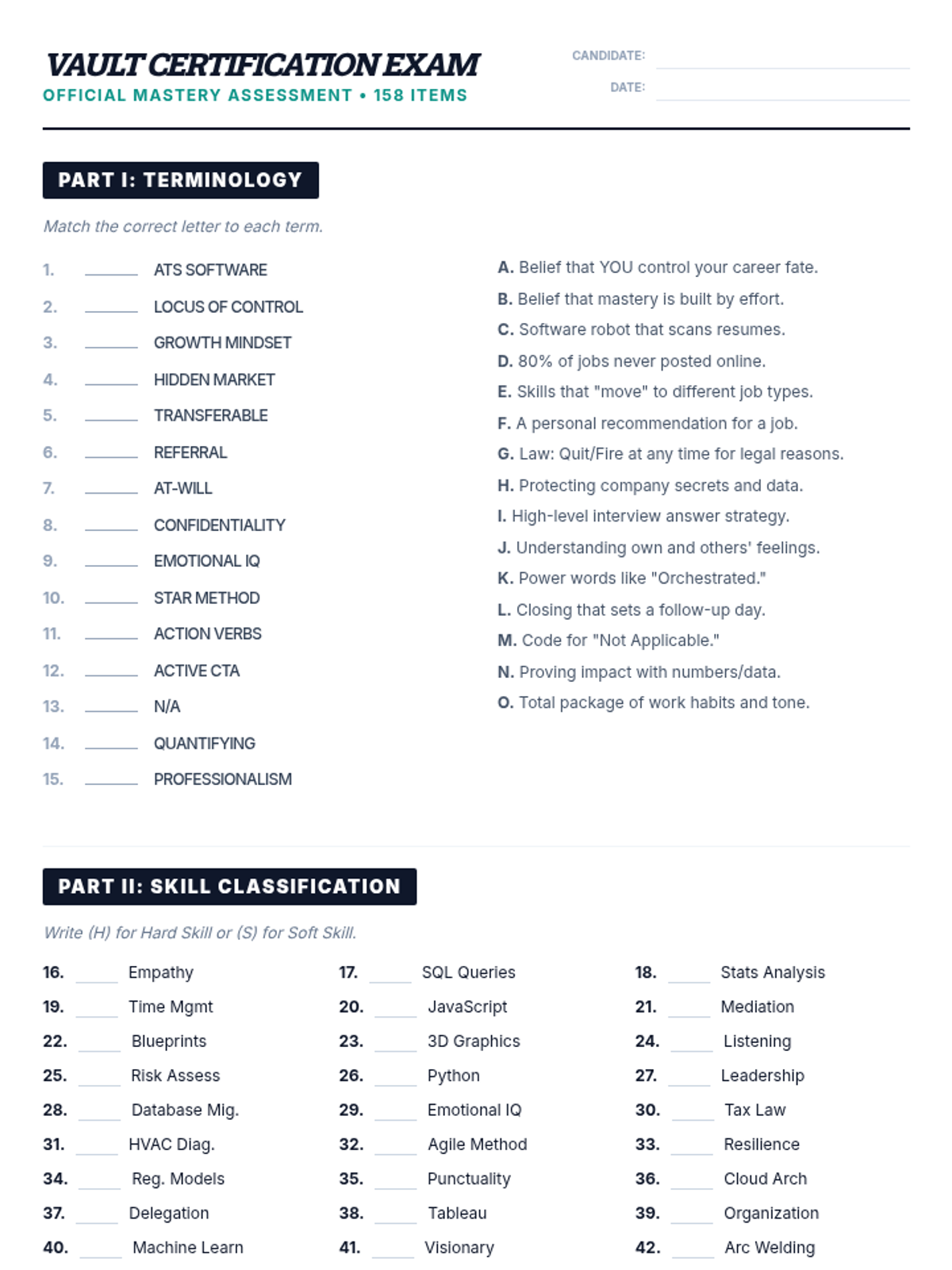
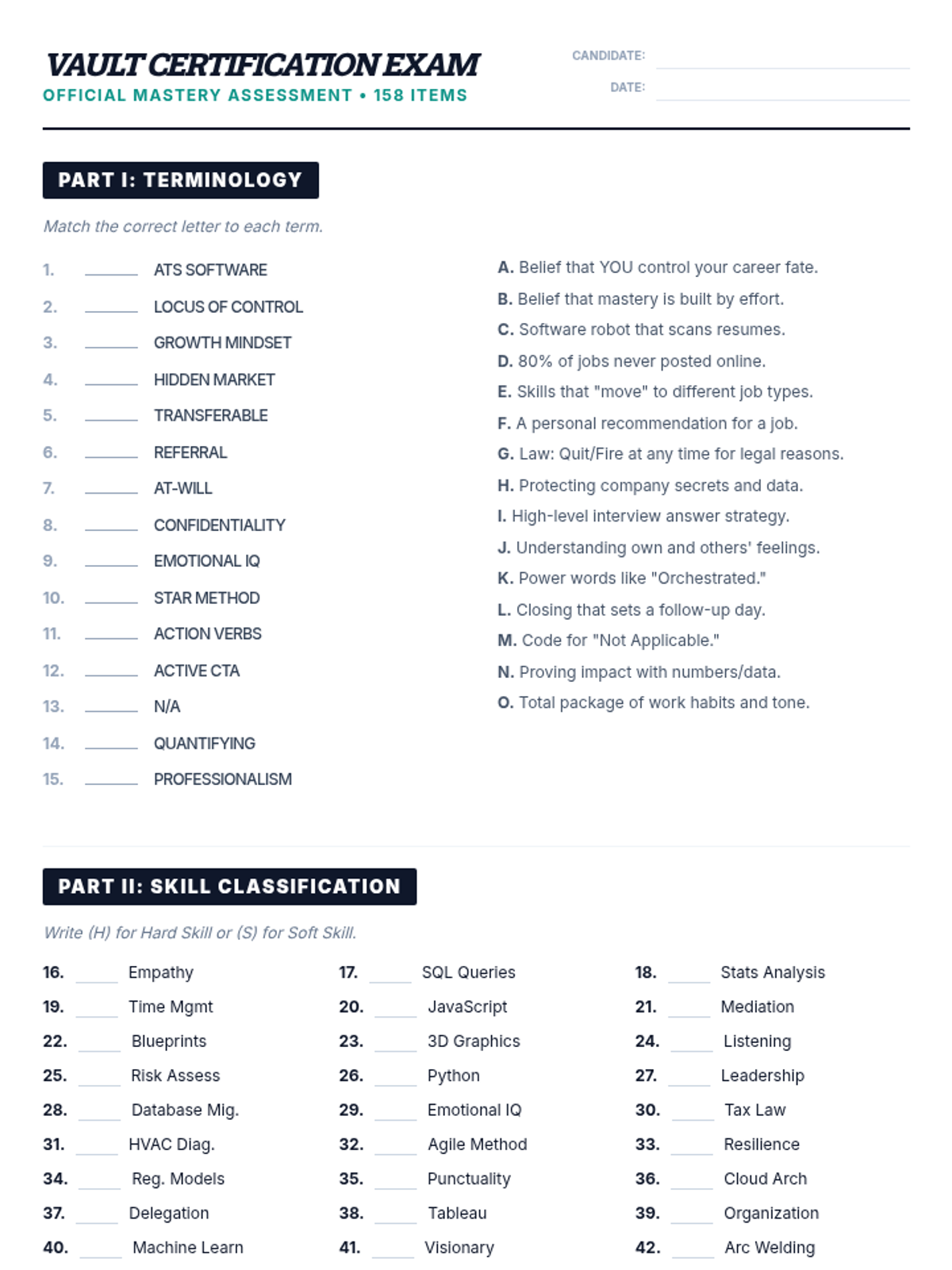
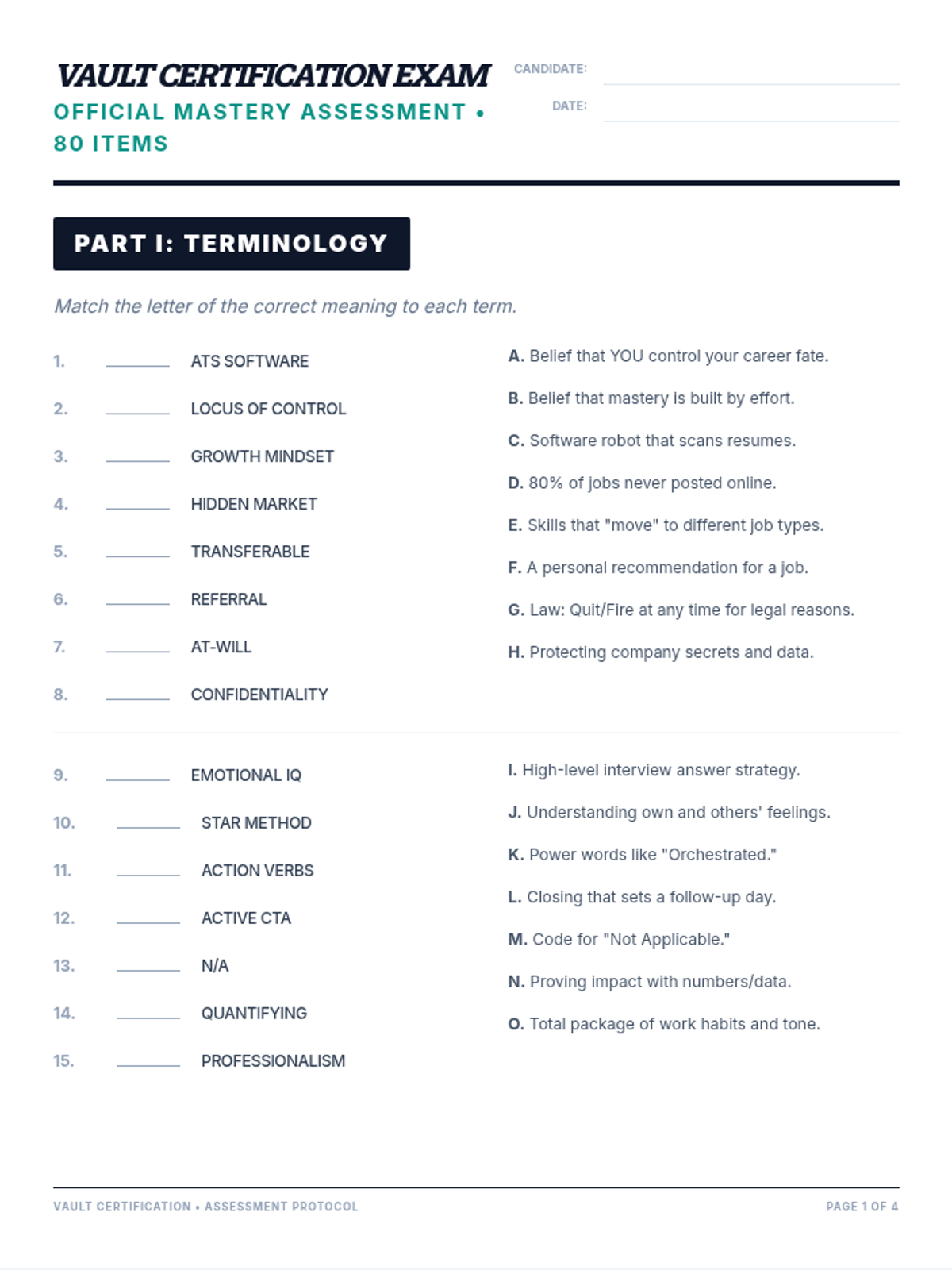
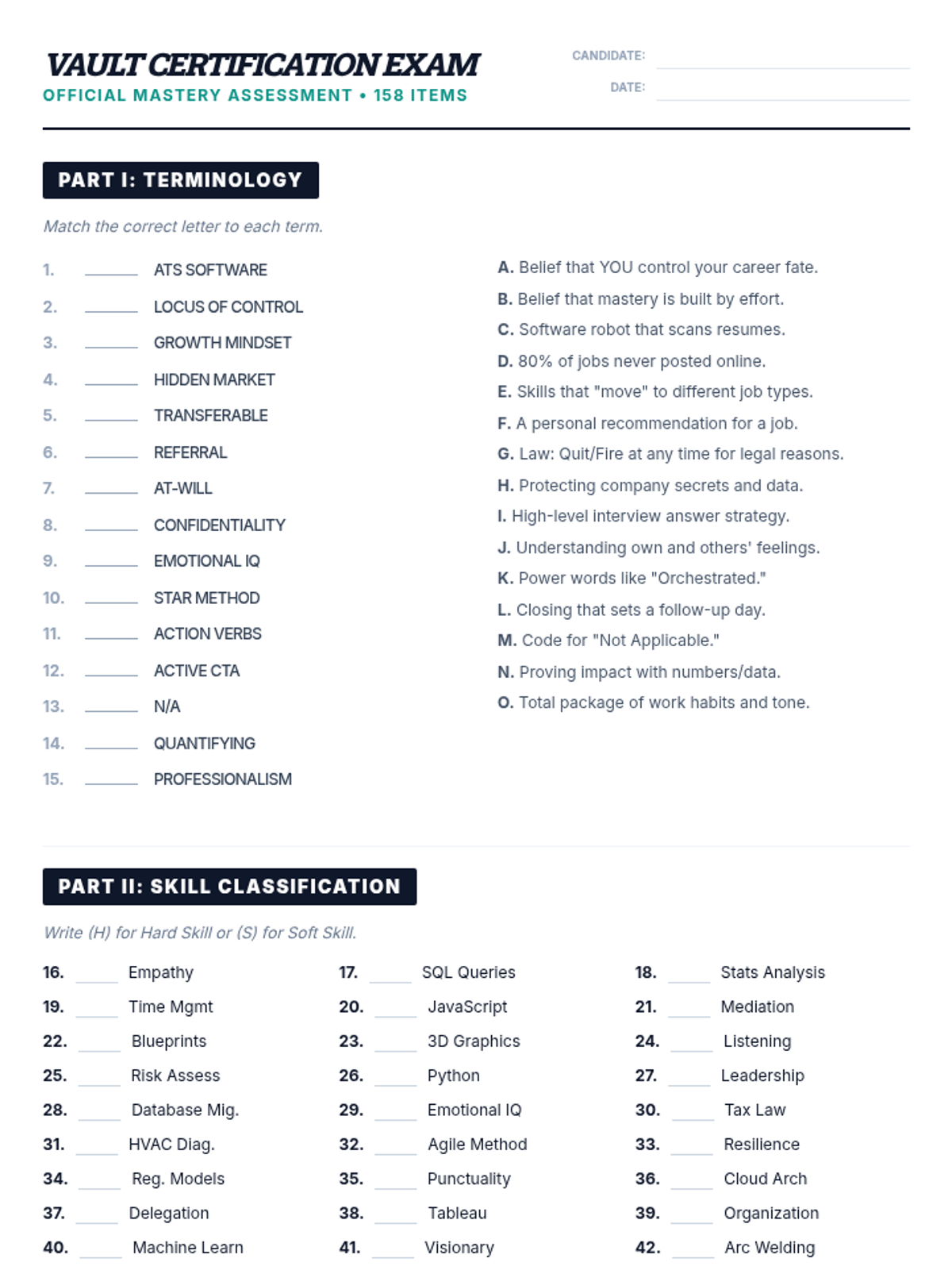
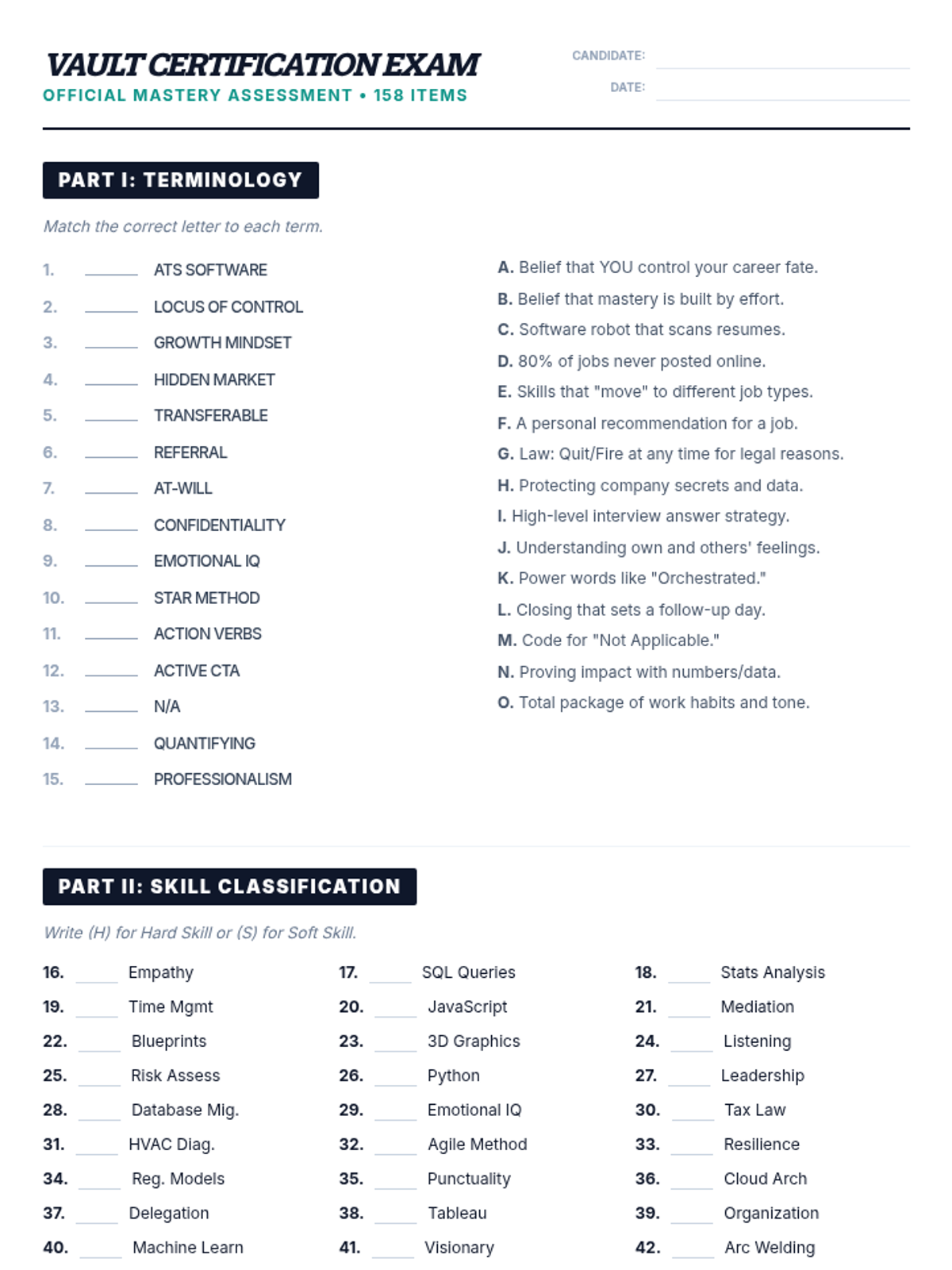
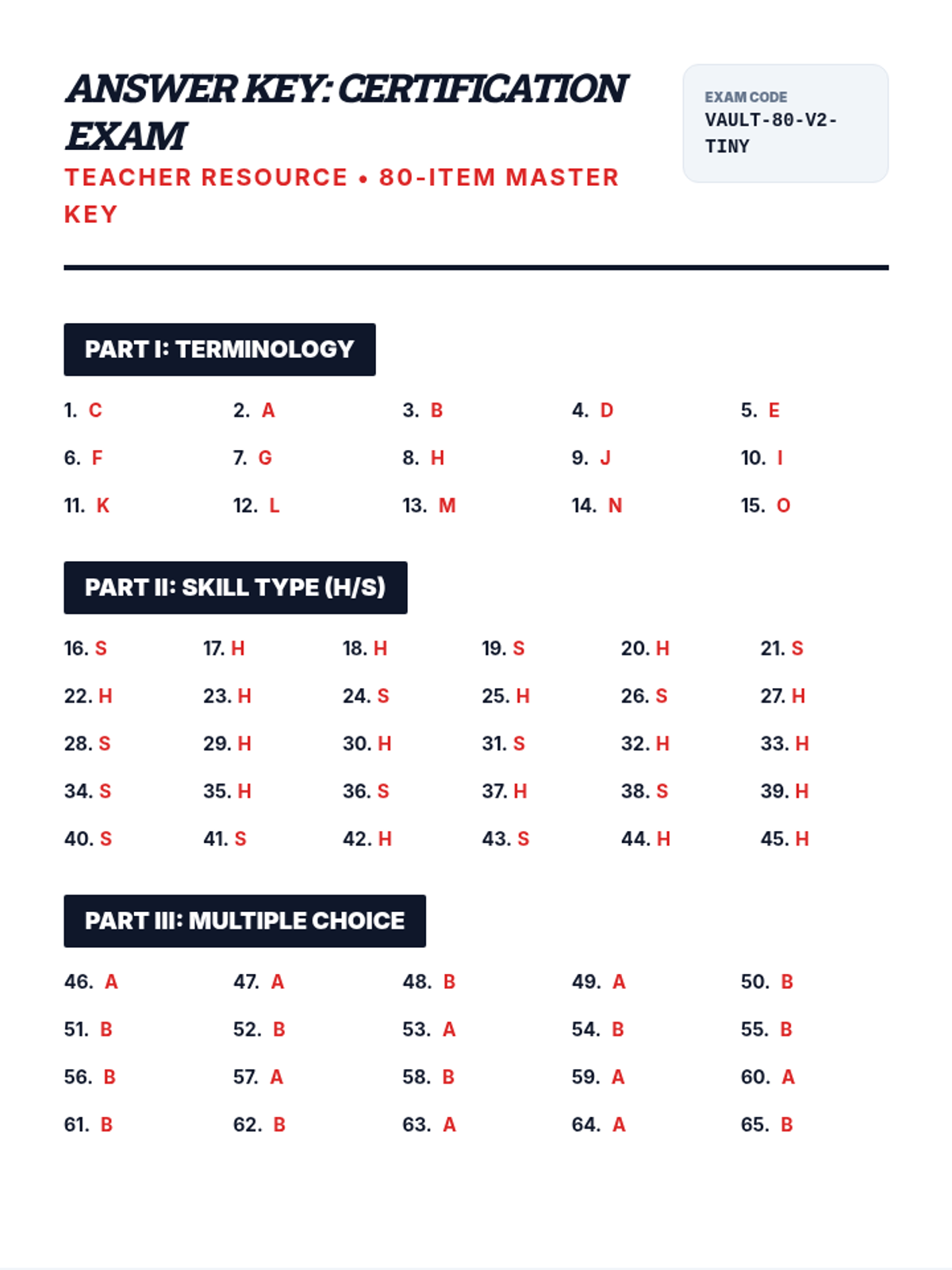
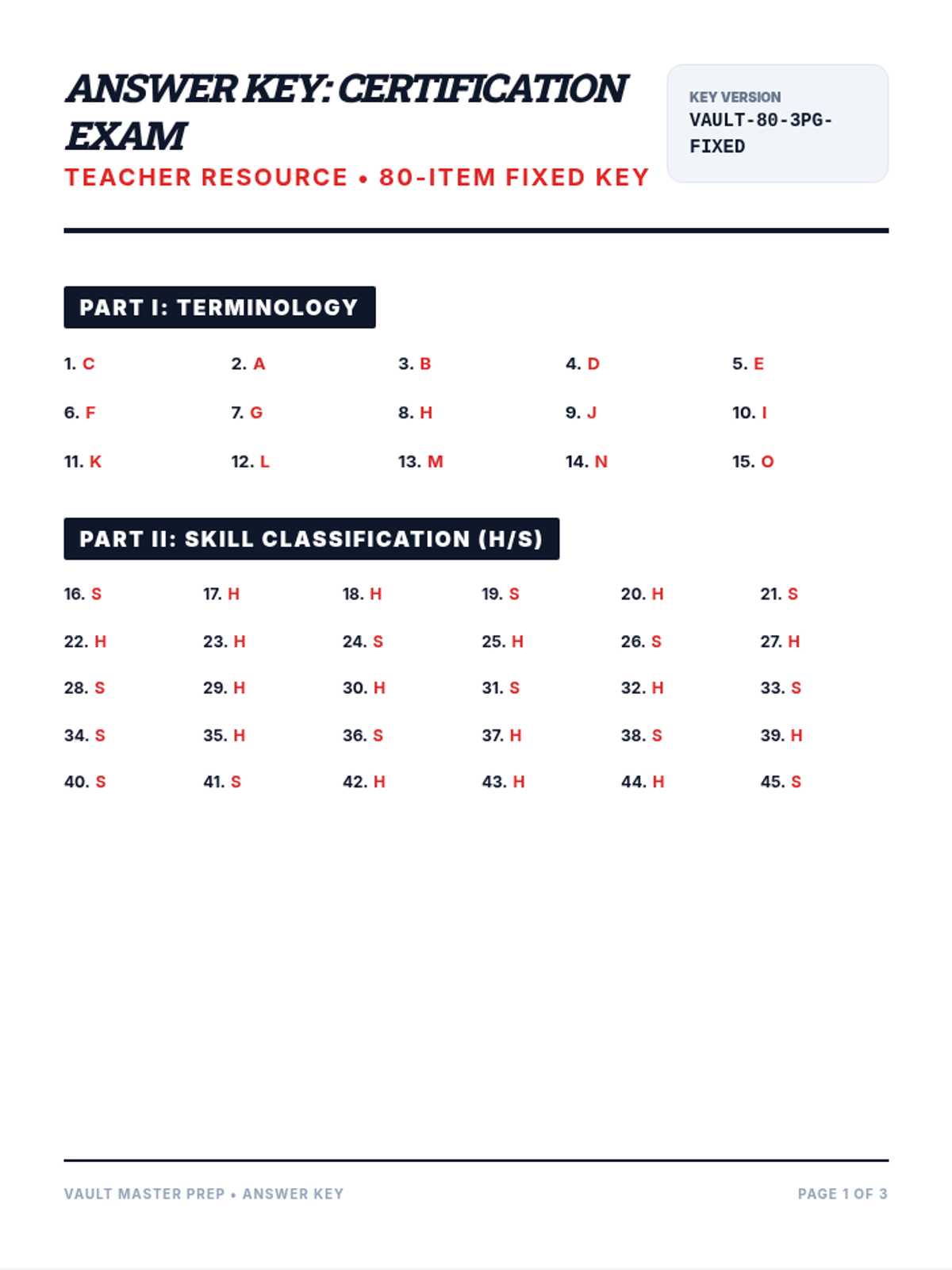
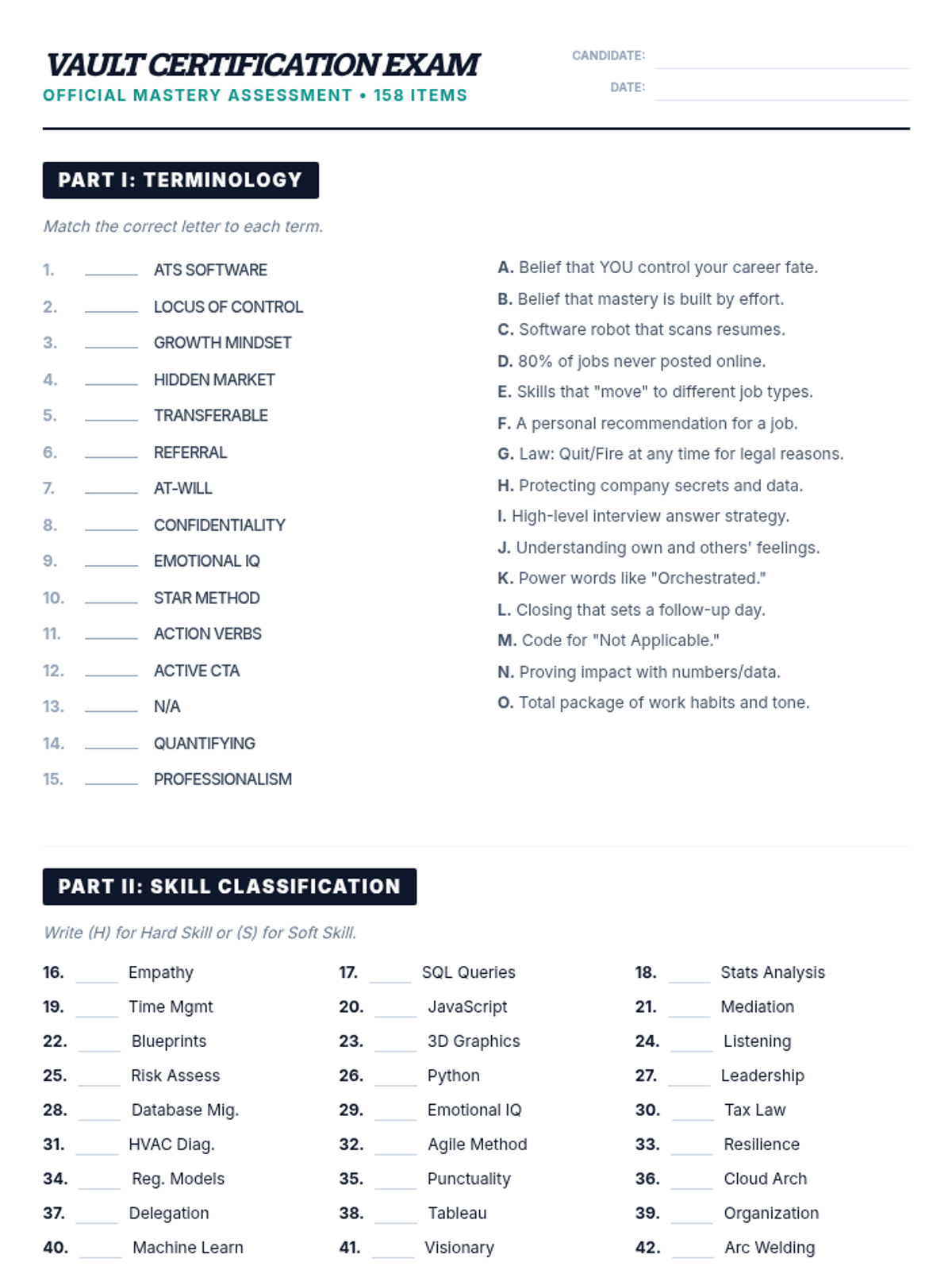
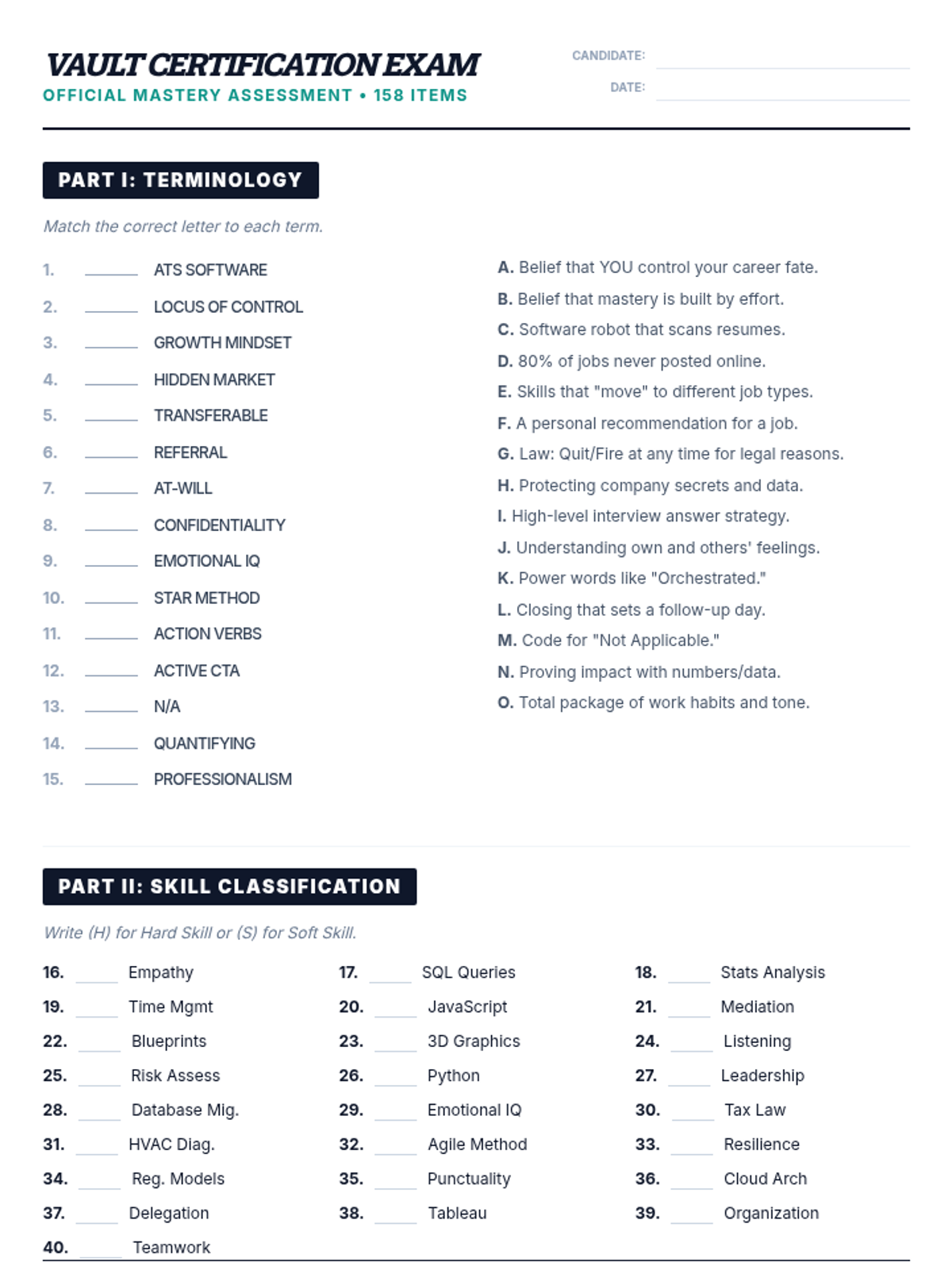
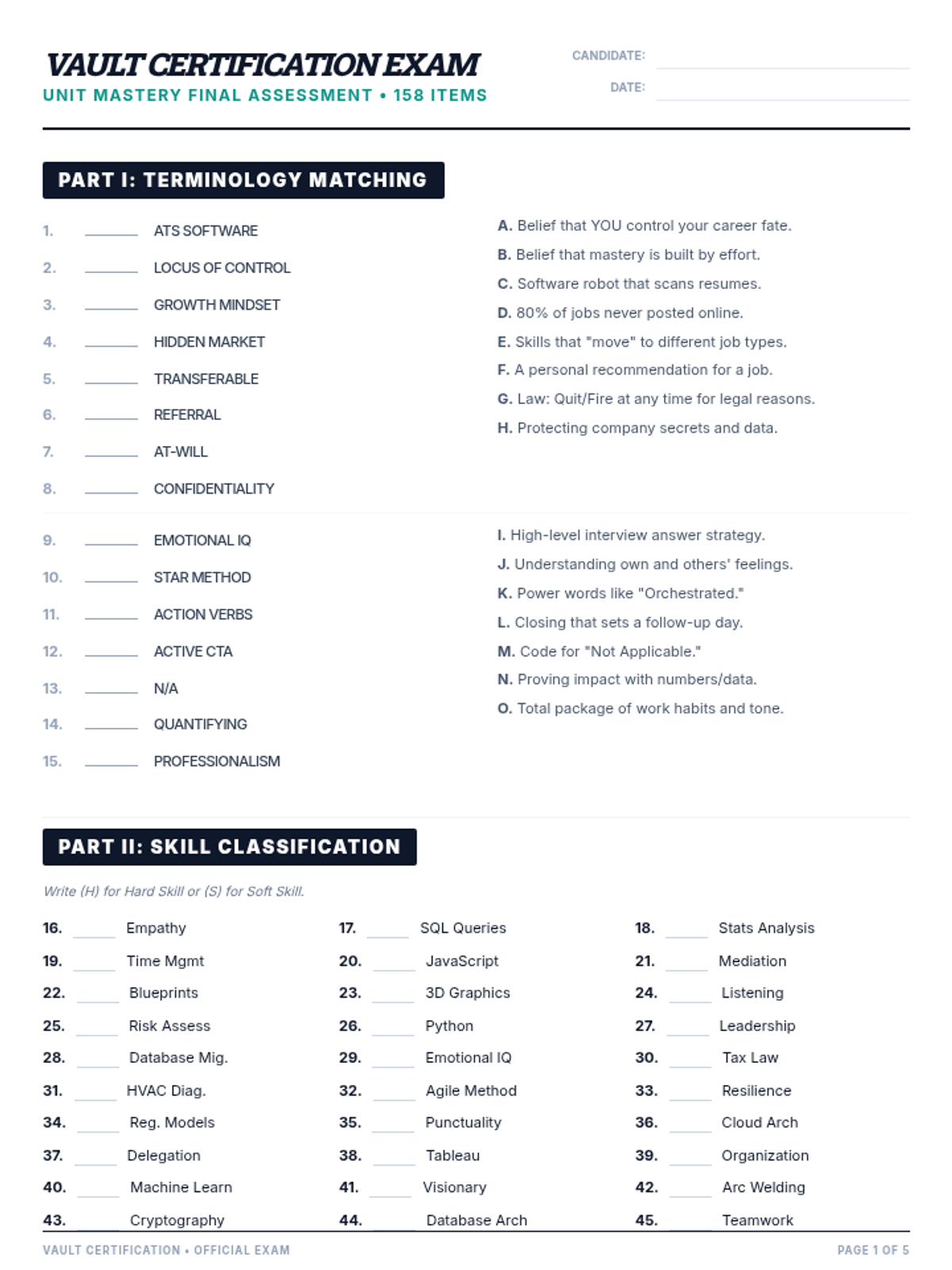
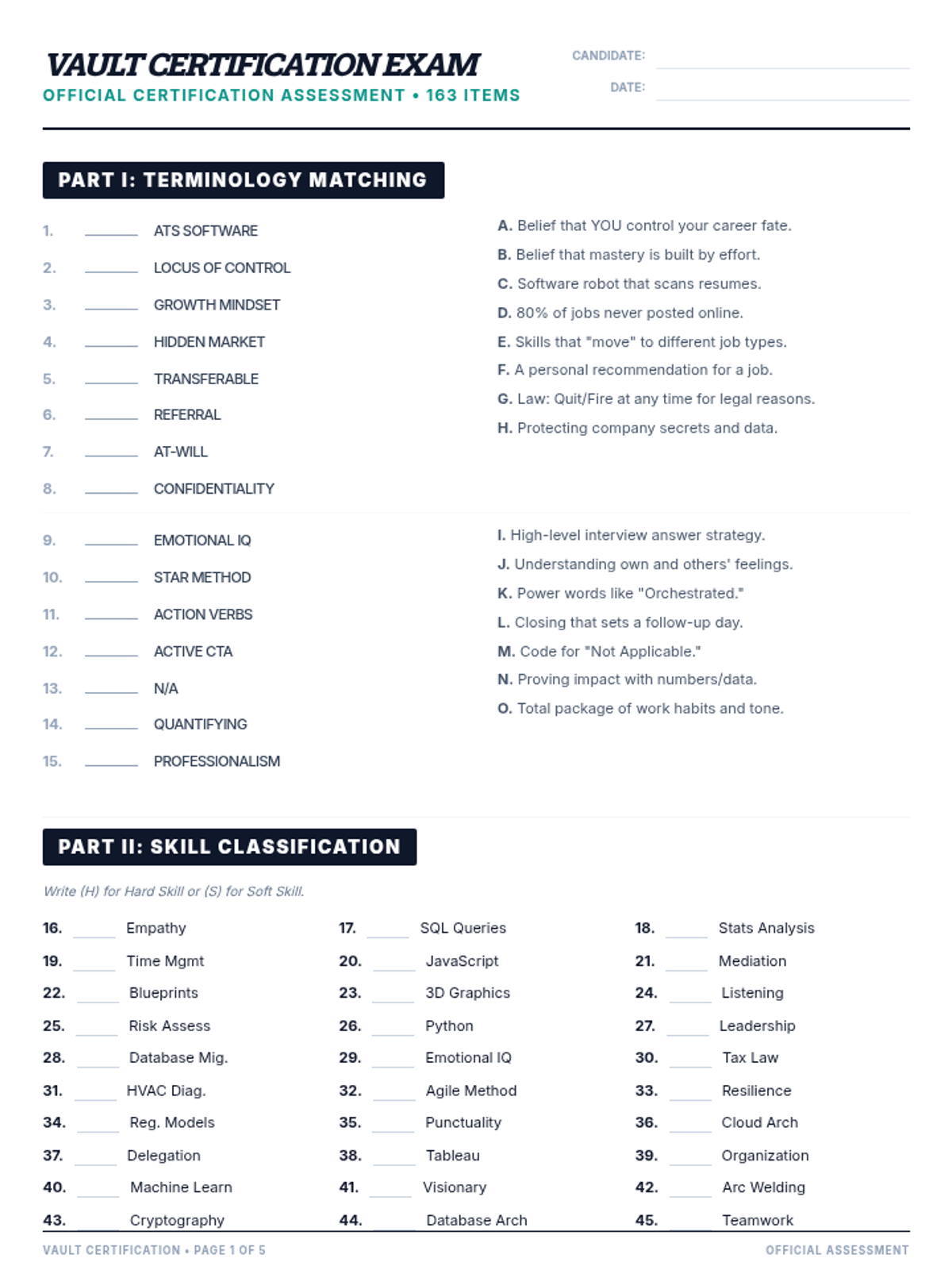
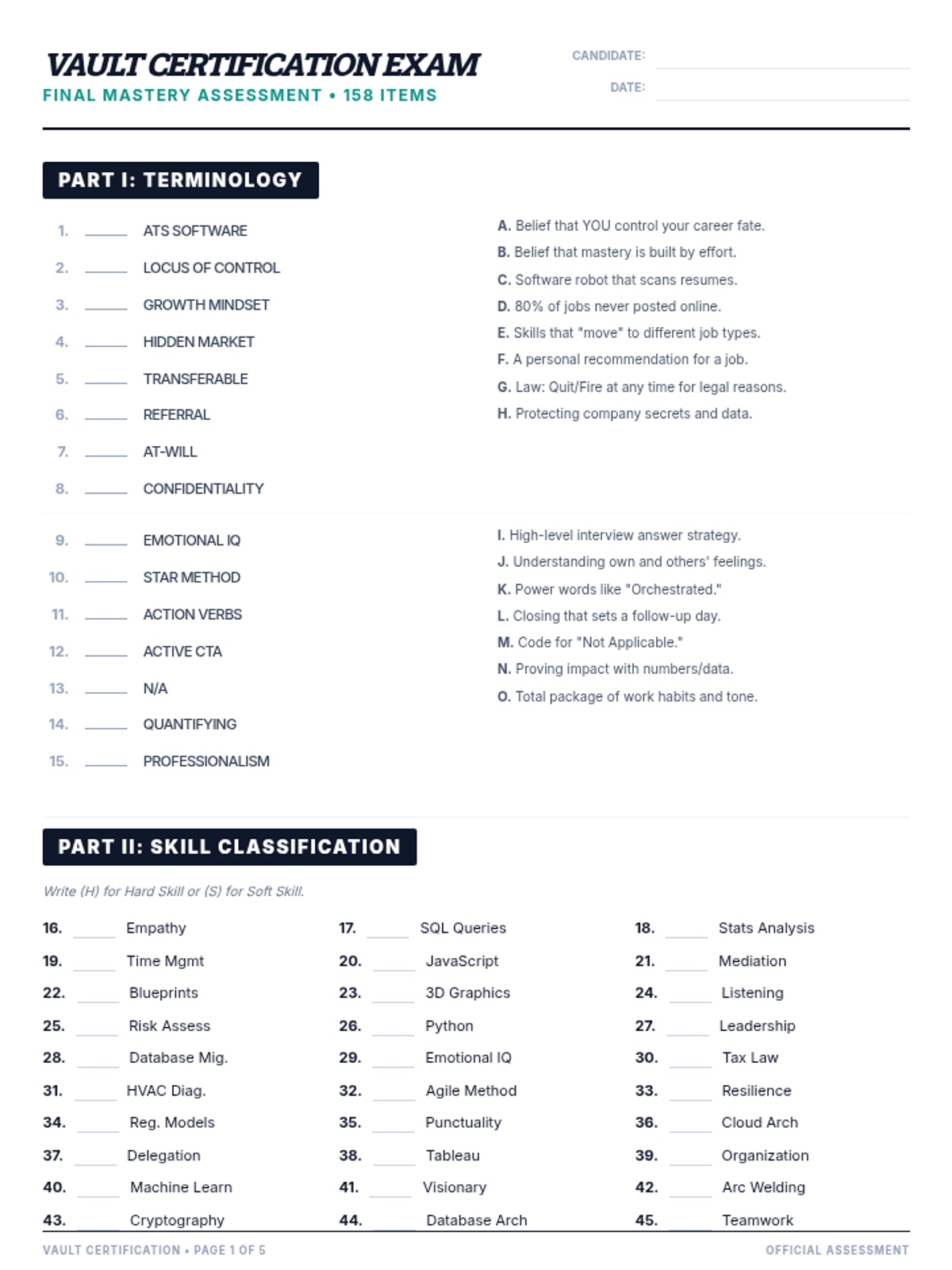
A final assessment module to evaluate student understanding of career readiness concepts and application proficiency.
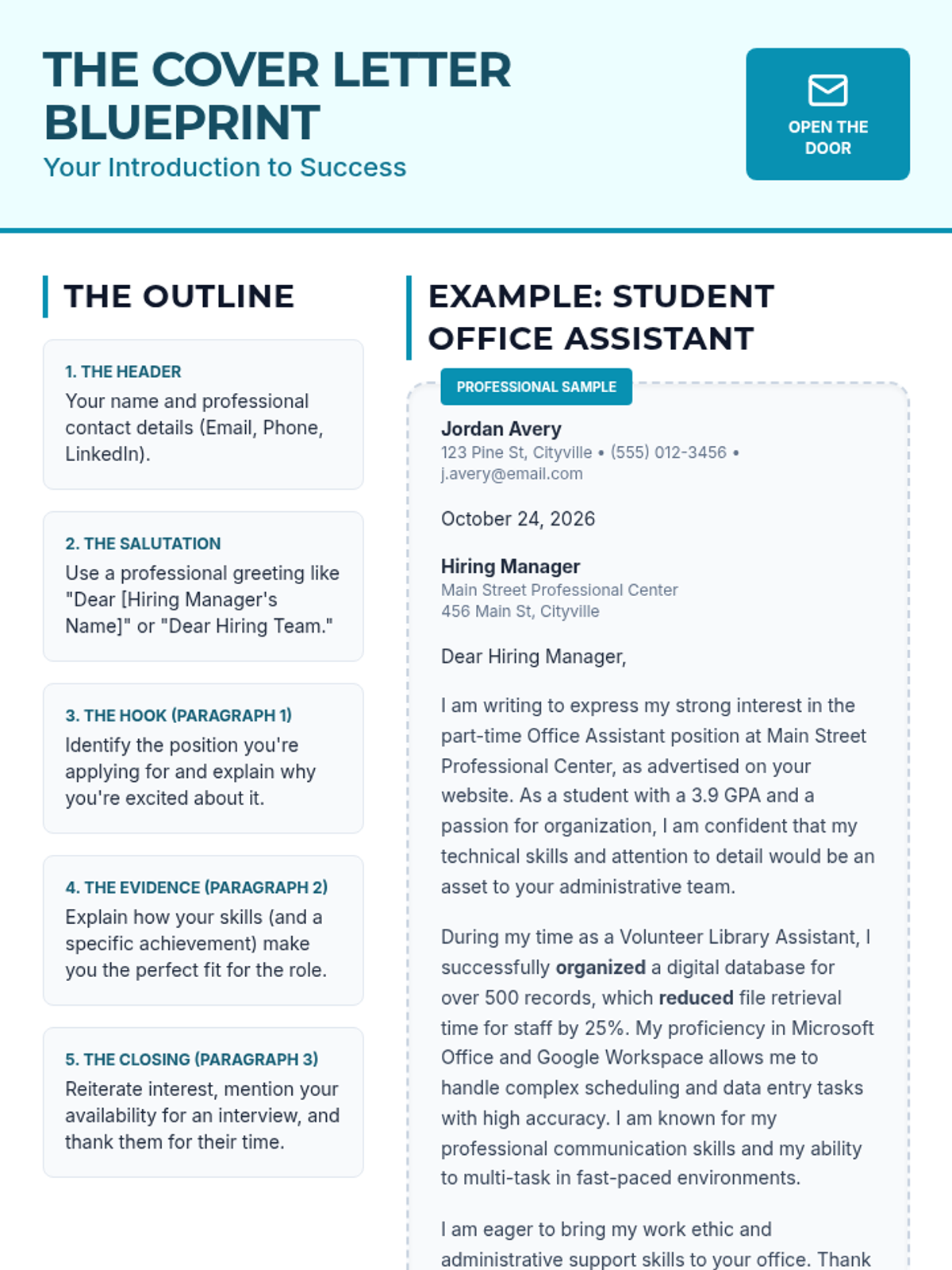
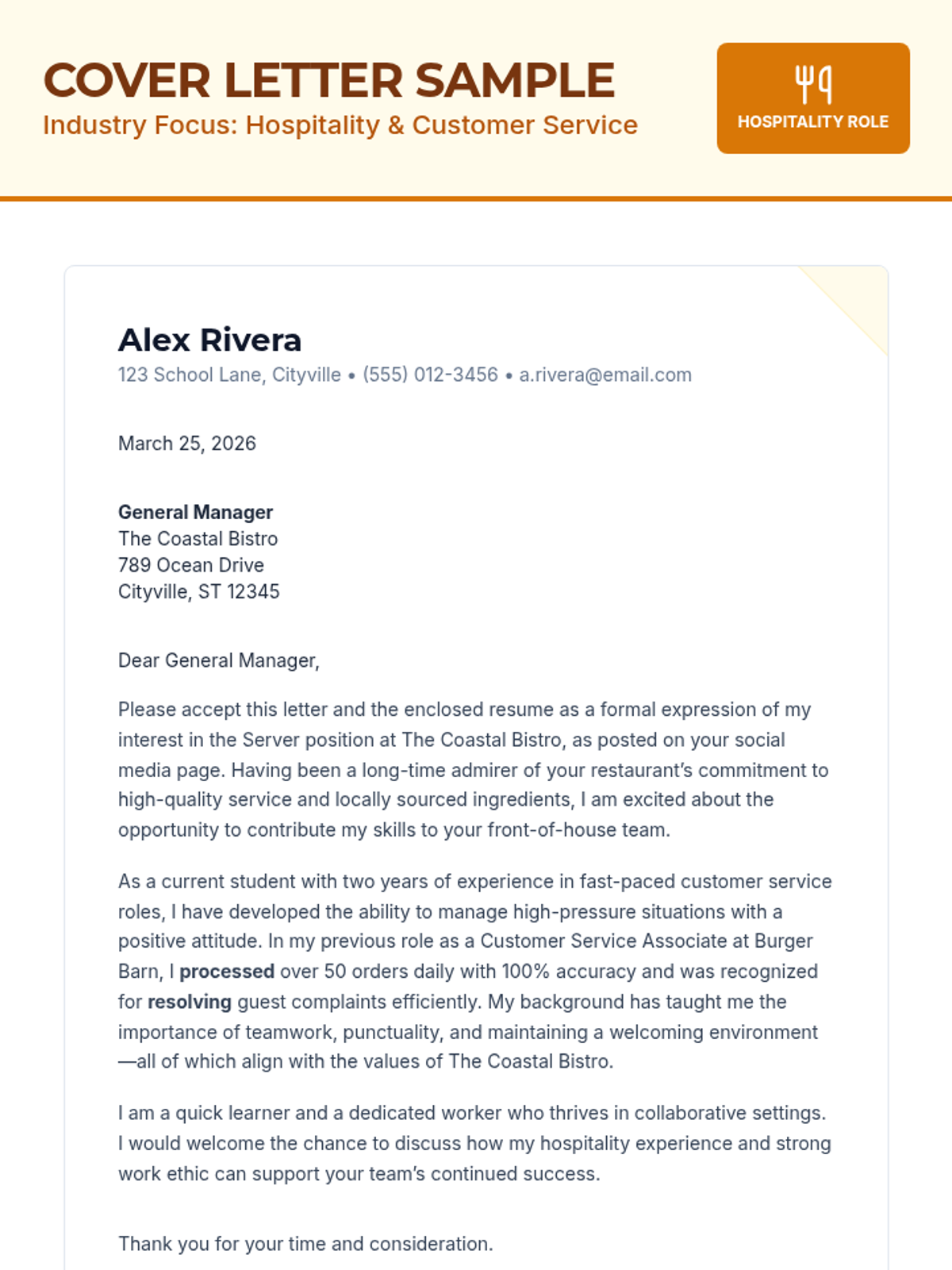
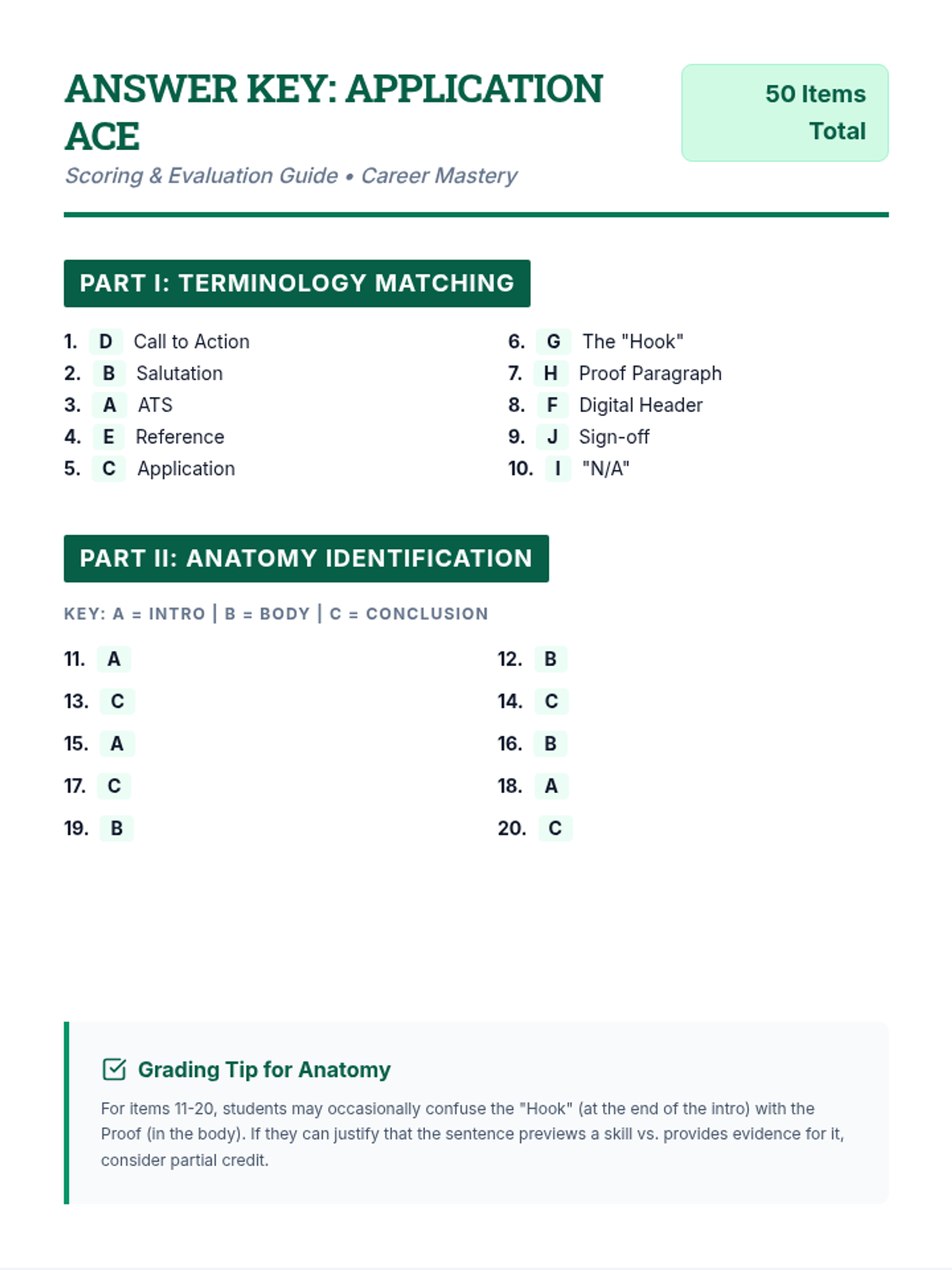
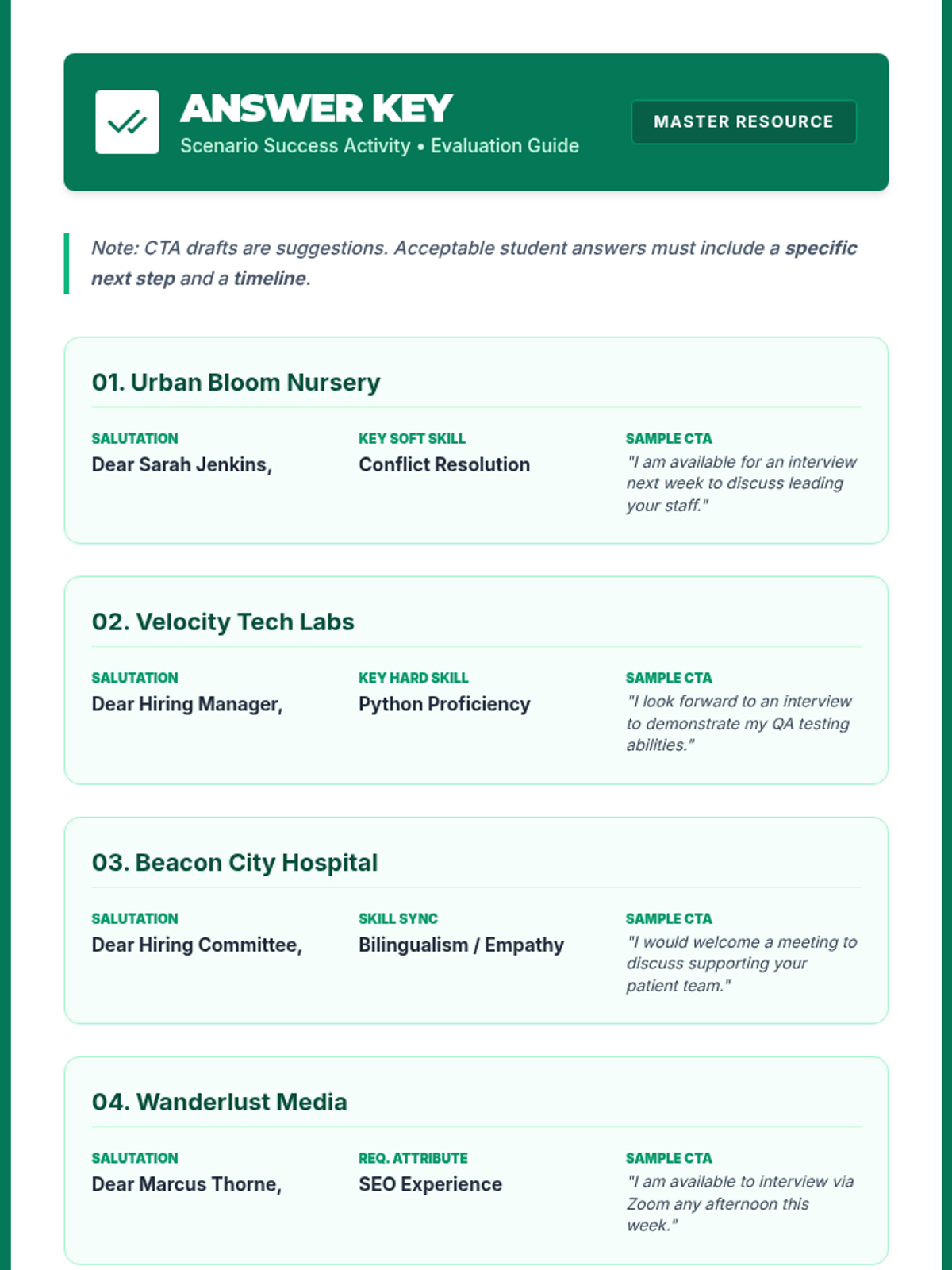
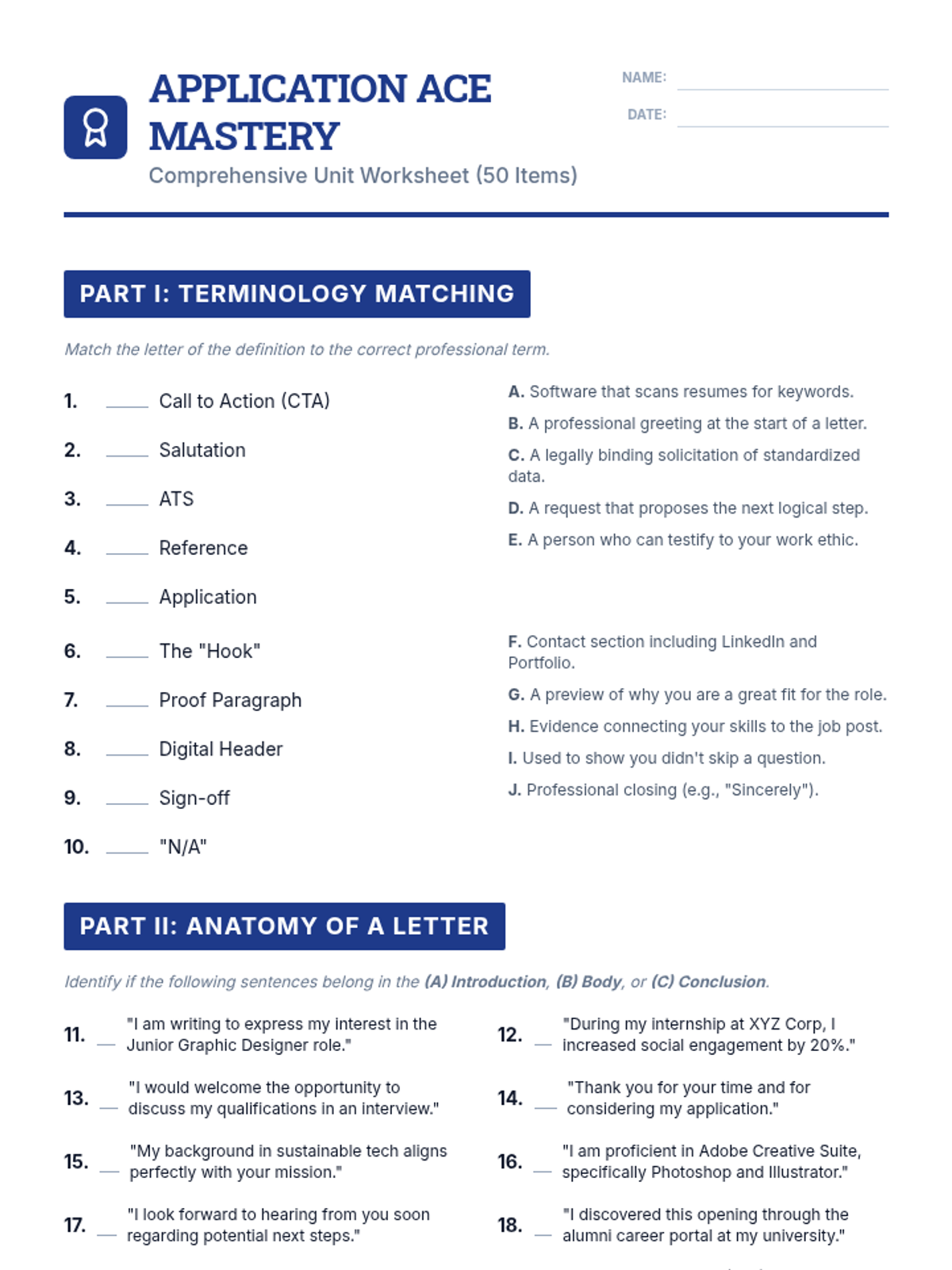
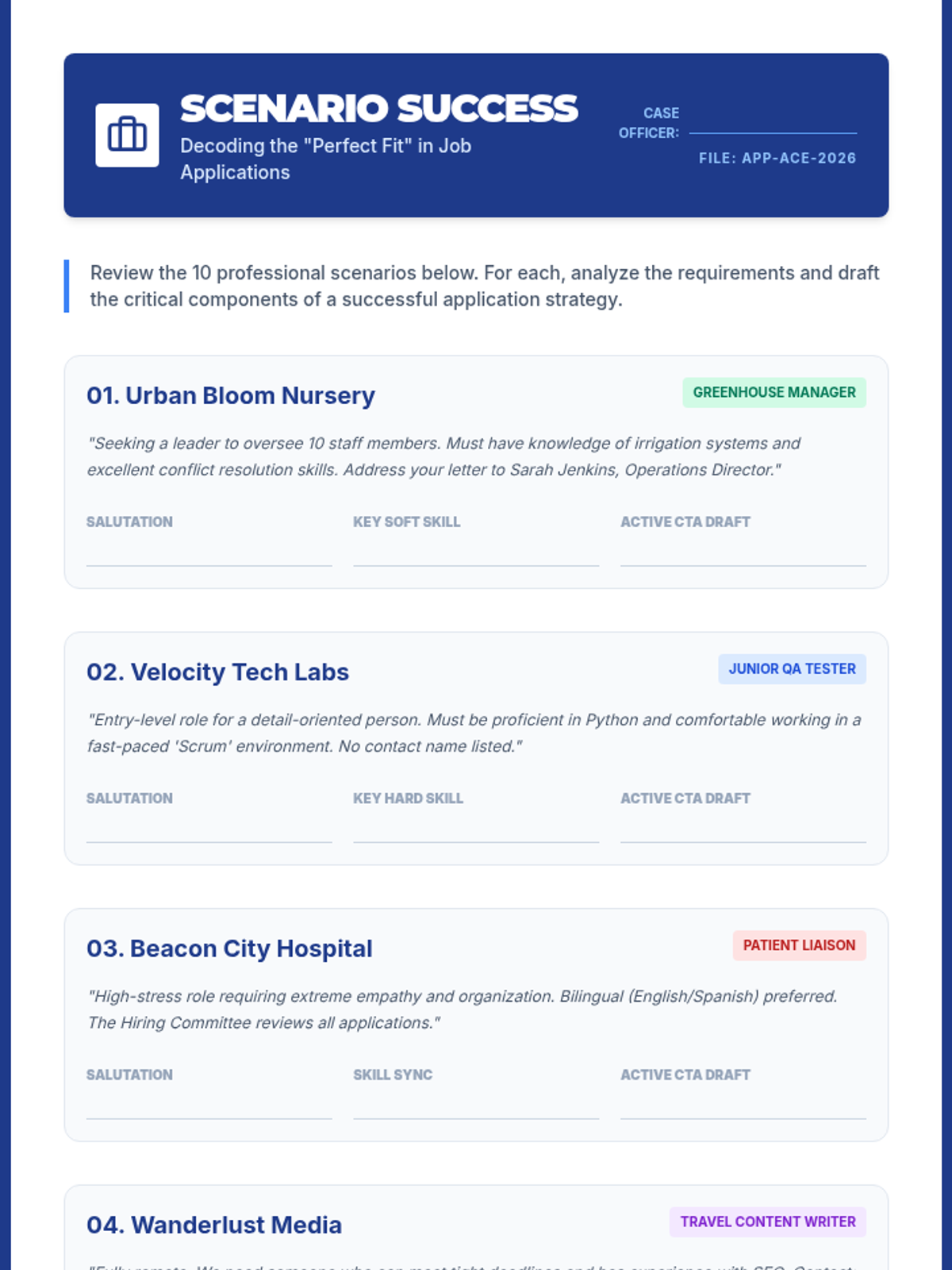
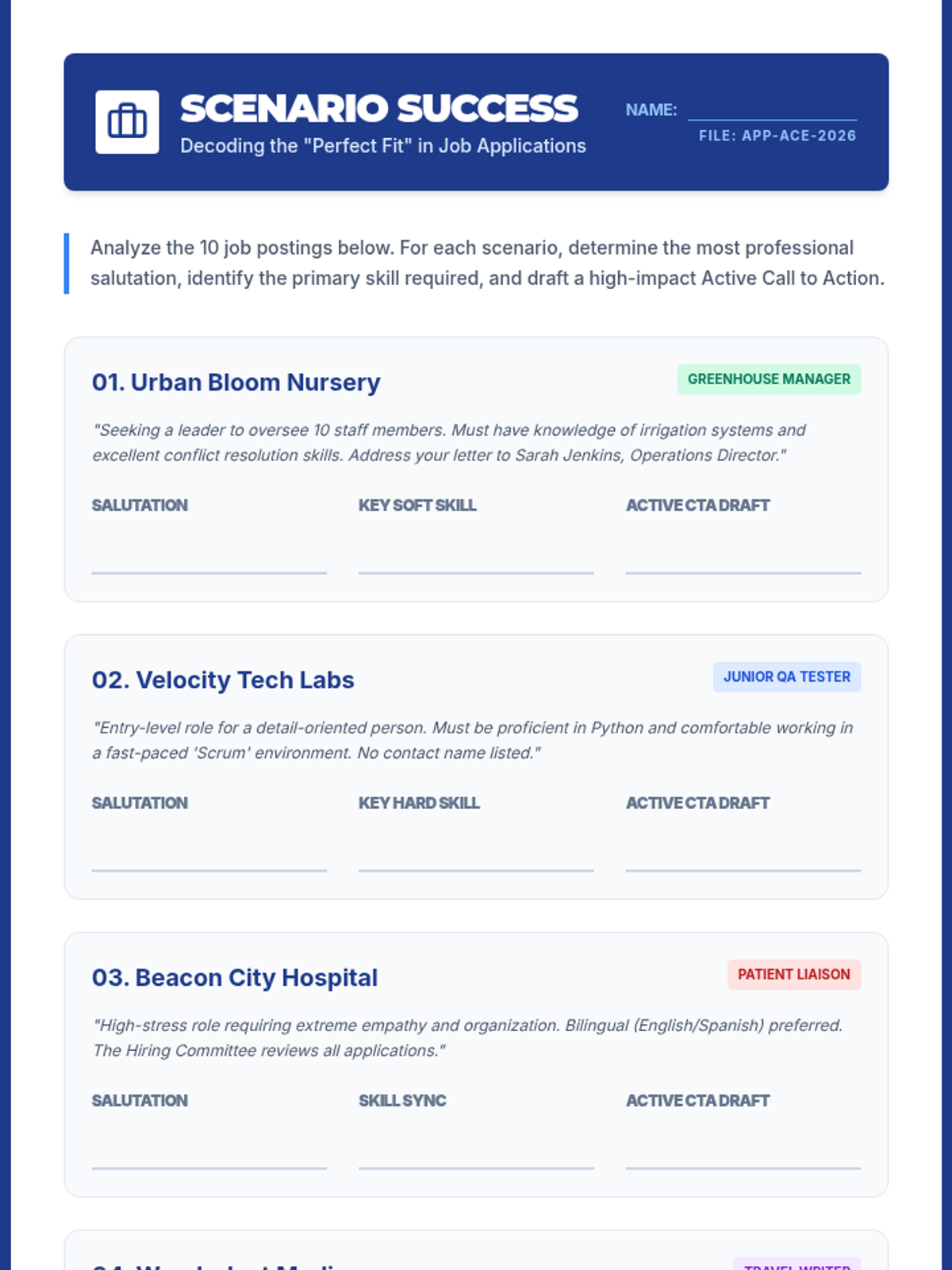
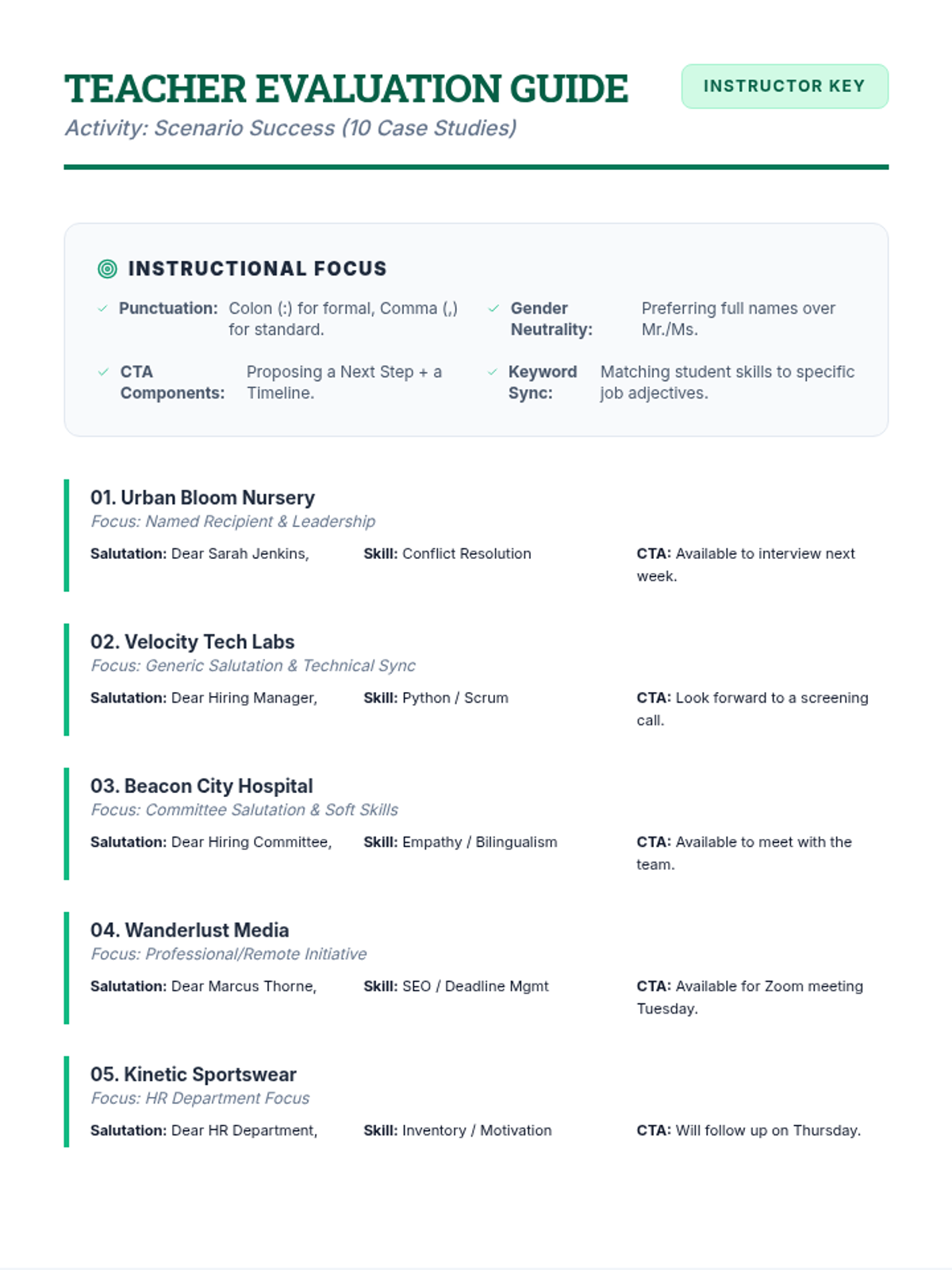
A deep dive into the mechanics of job applications, cover letter construction, and managing professional references.
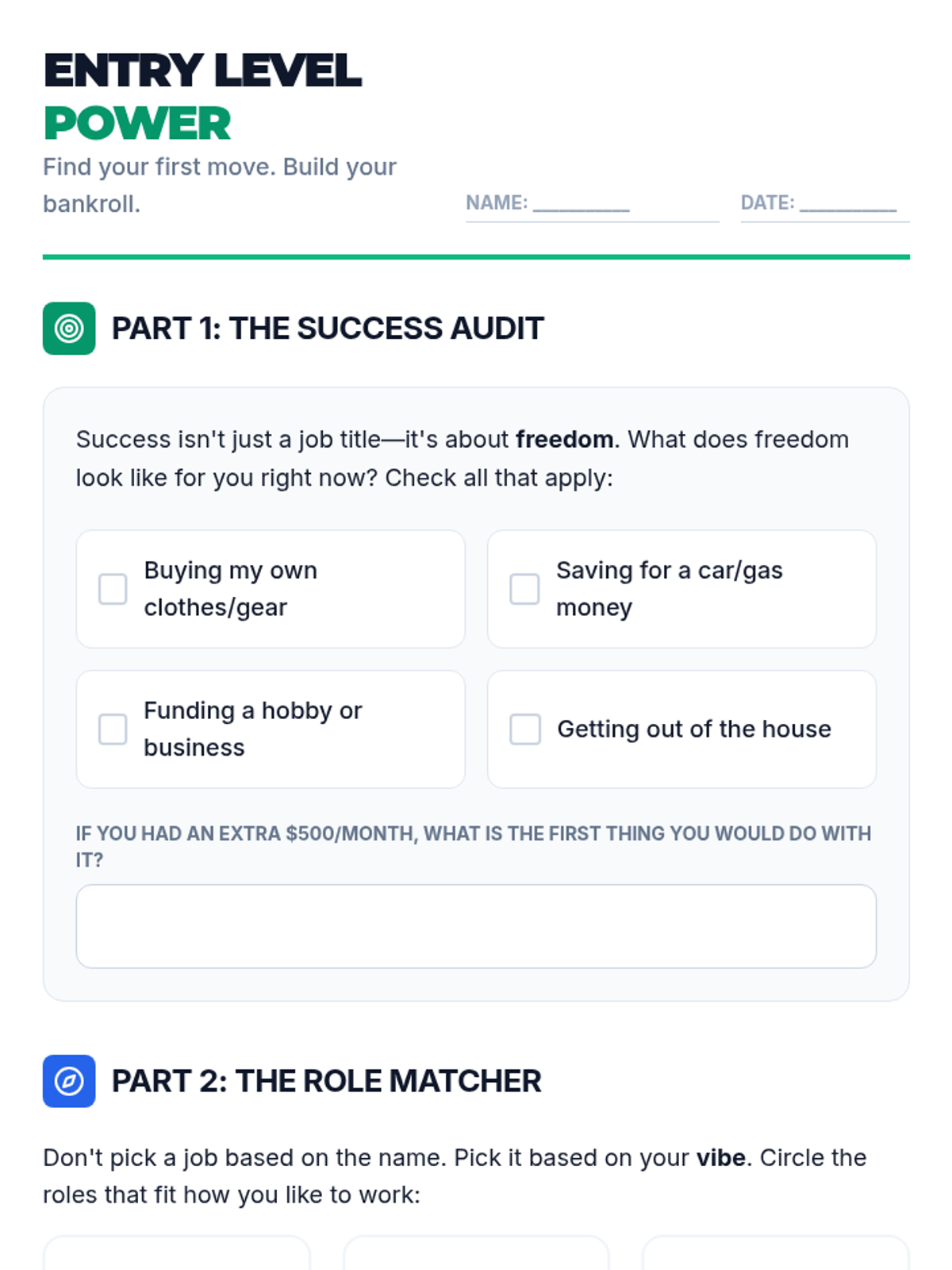
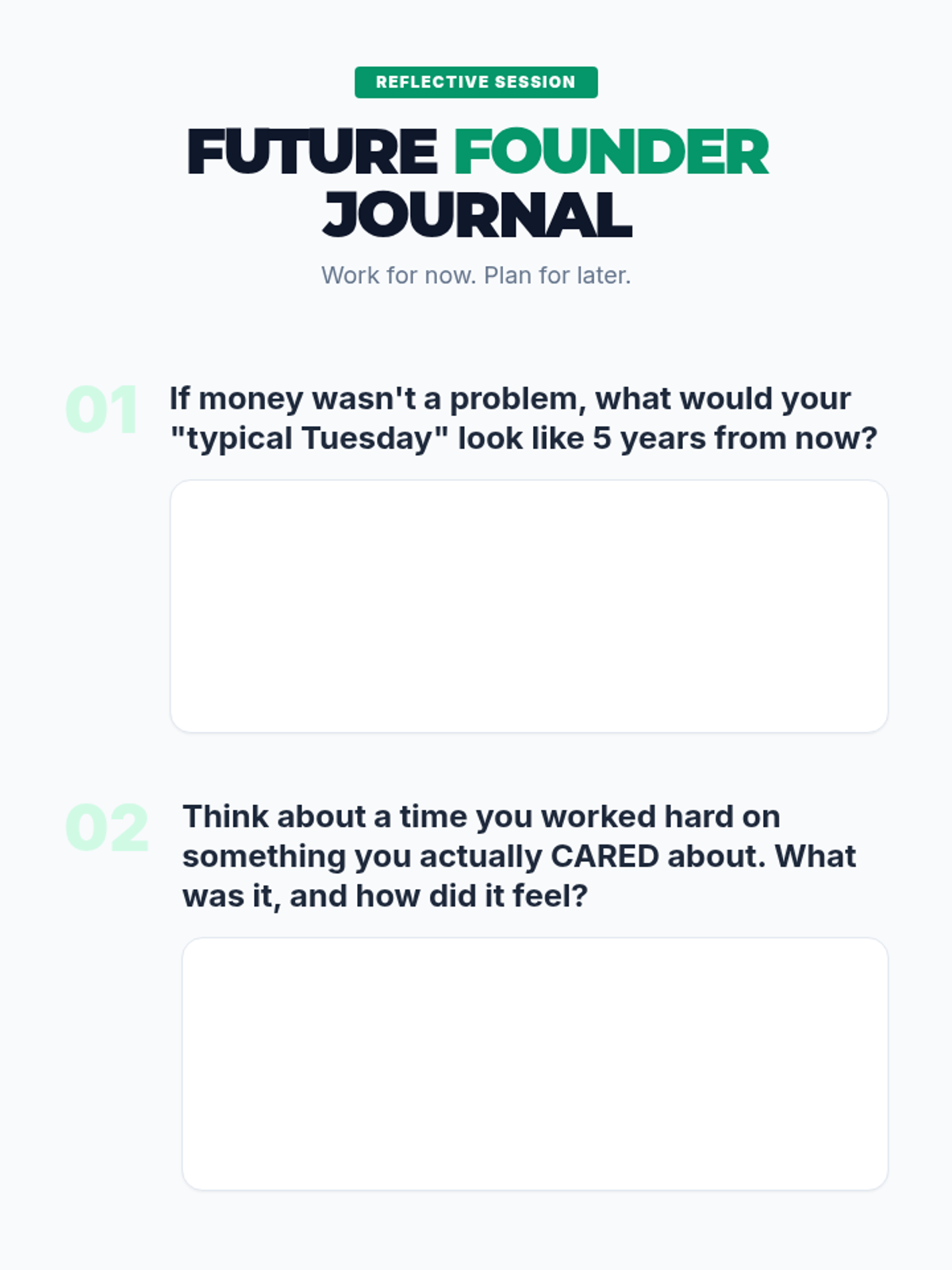
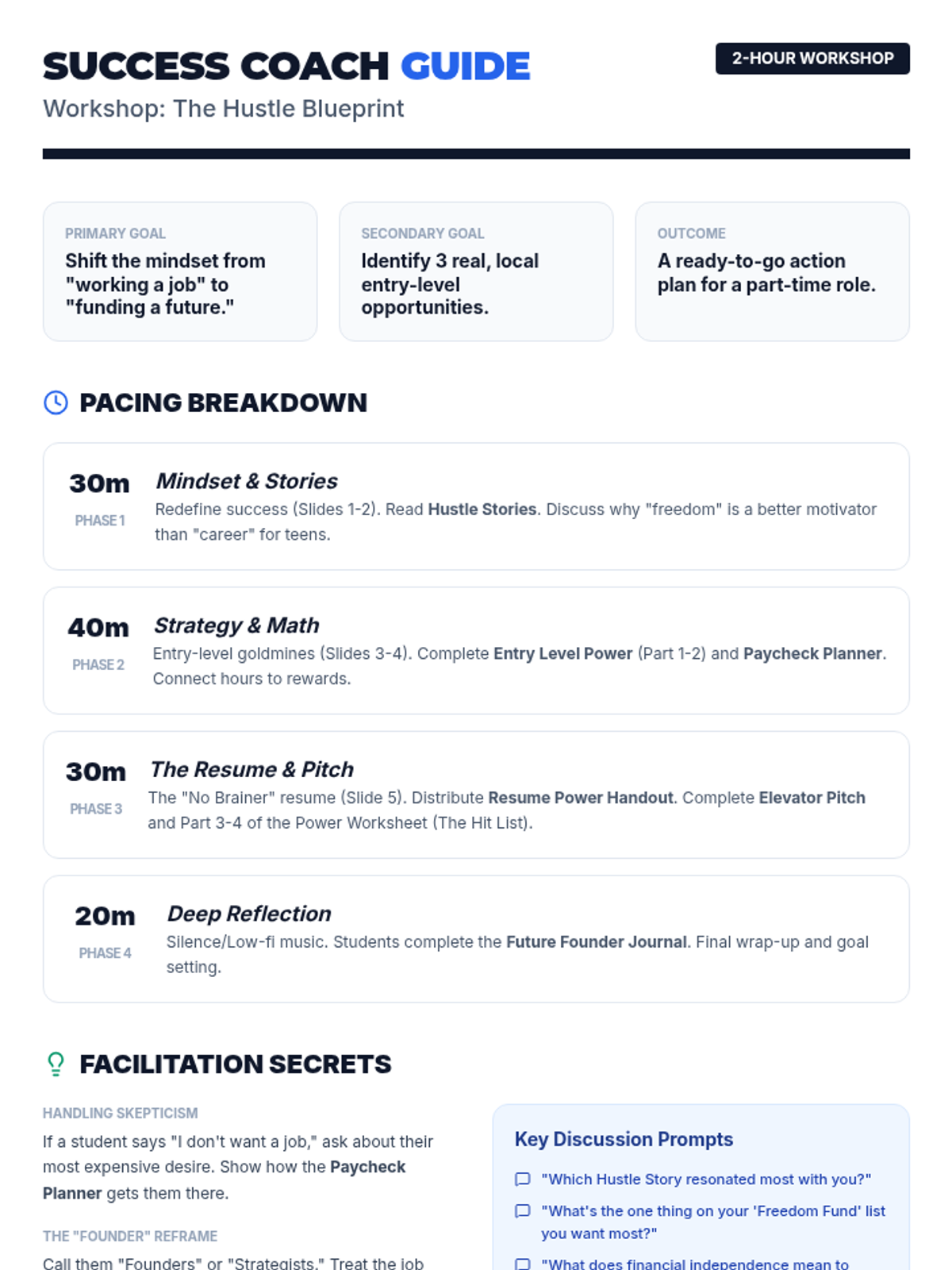
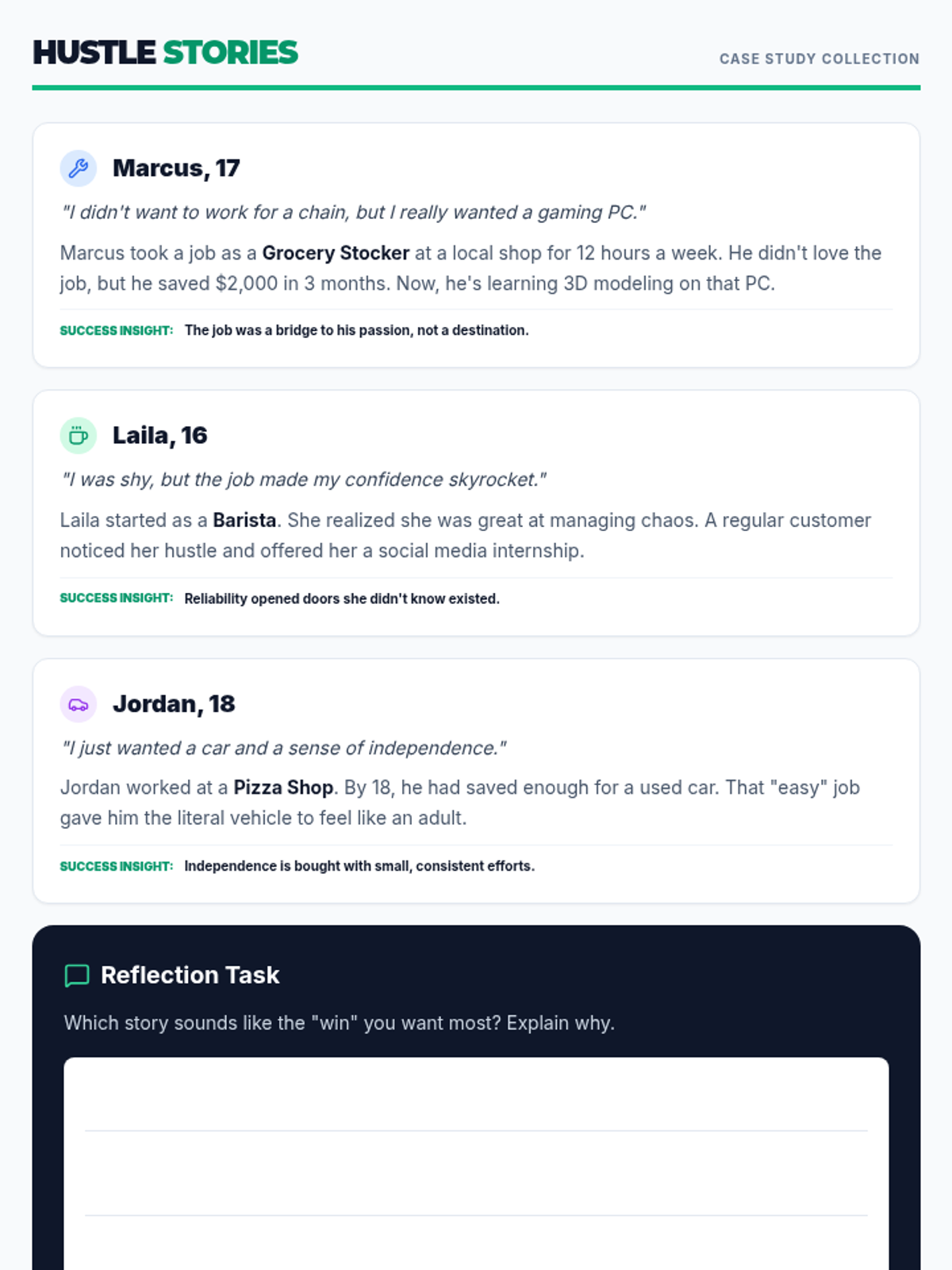
A 2-hour workshop designed for high schoolers to explore entry-level, part-time jobs as a strategic stepping stone toward personal success and independence. Students will redefine success, identify accessible roles that match their interests, and reflect on their long-term goals.
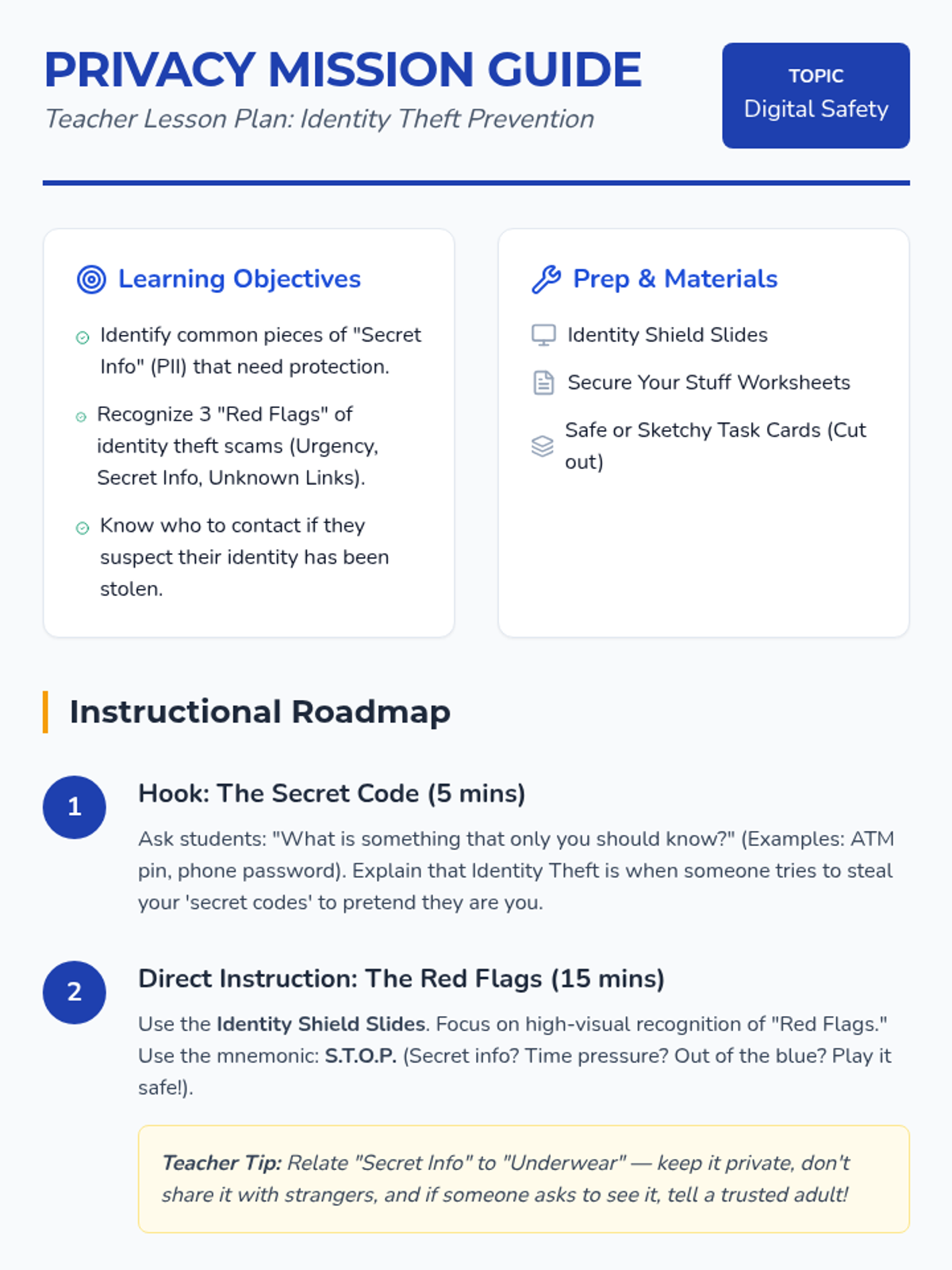
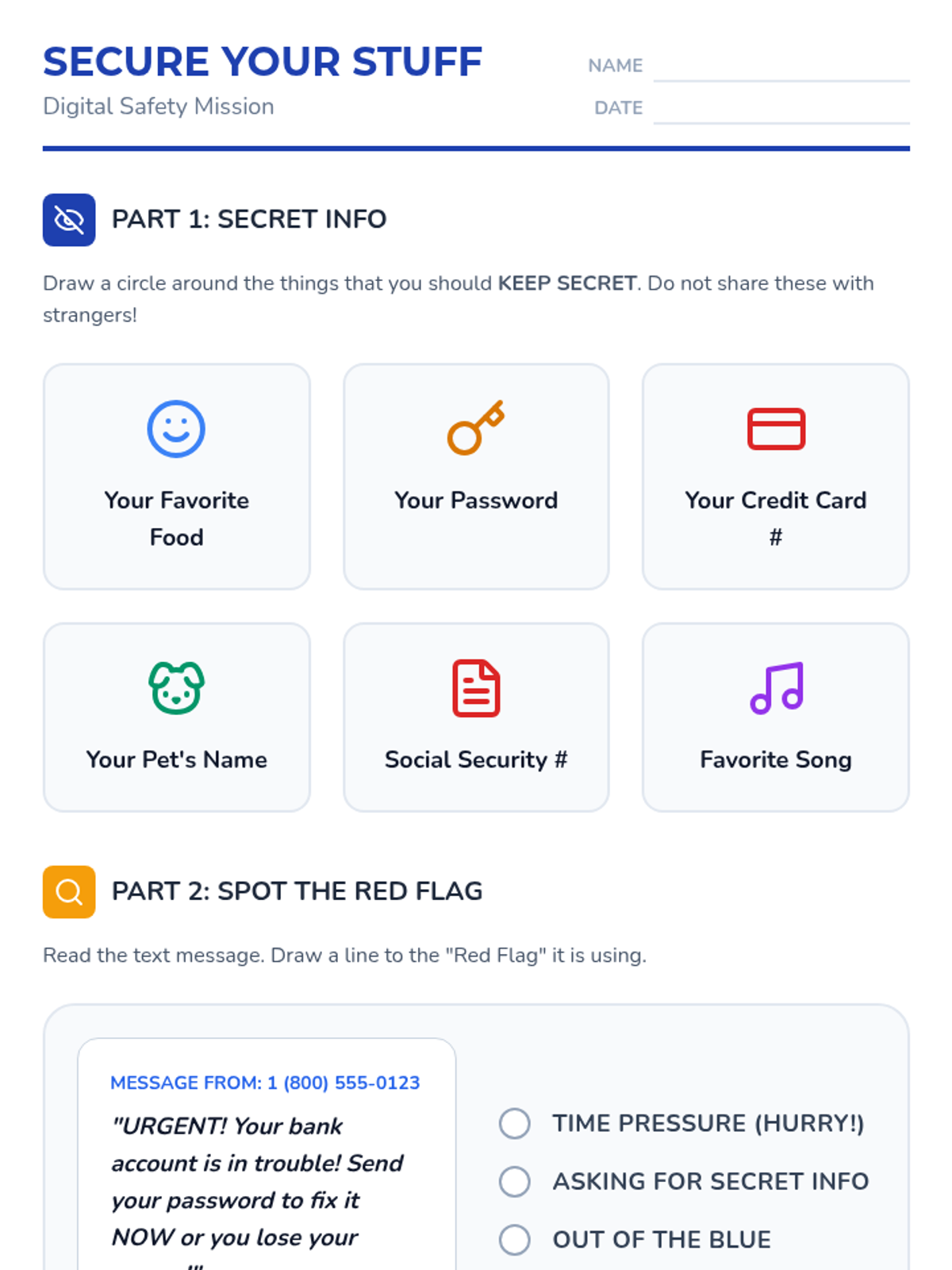
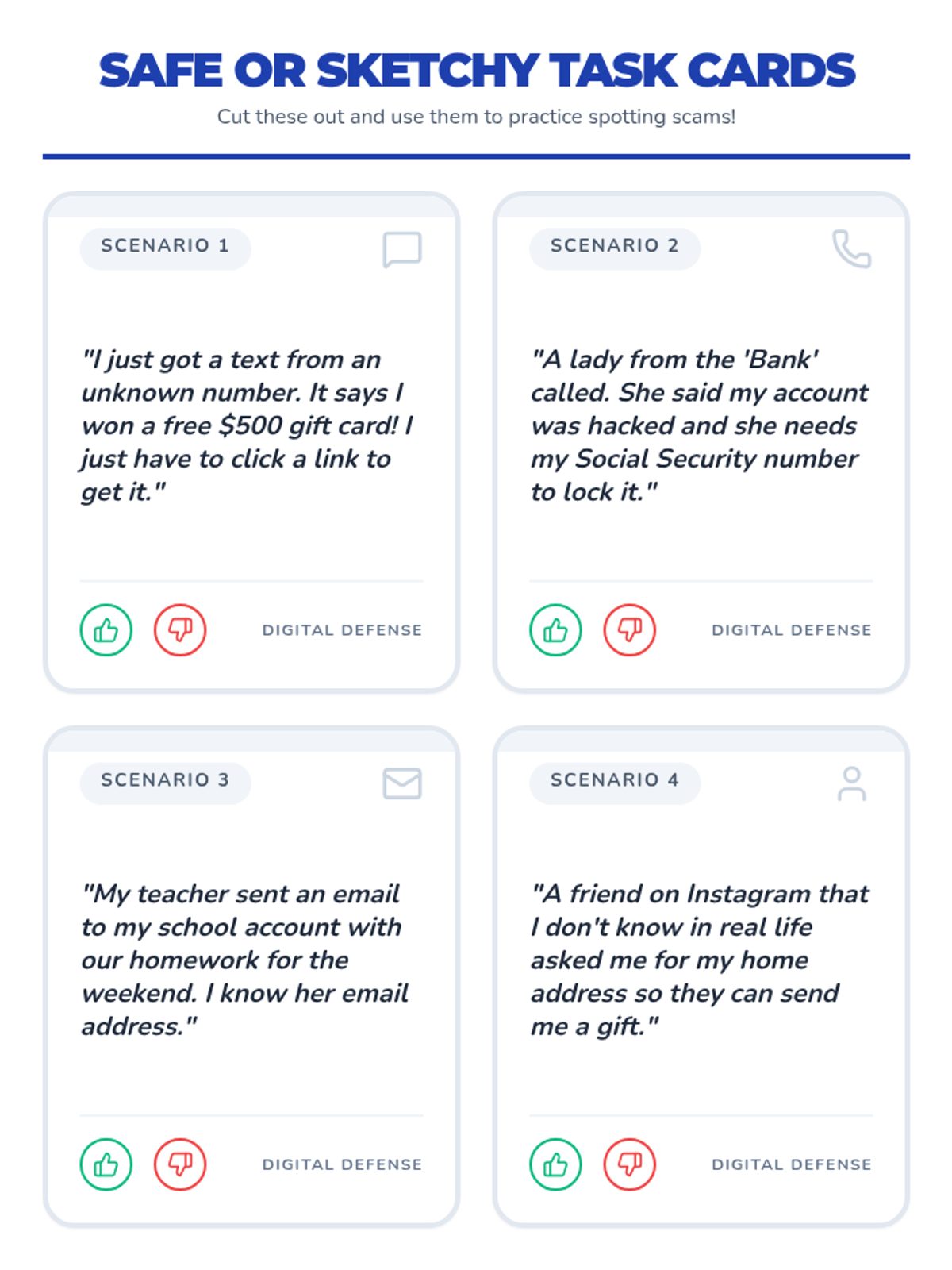
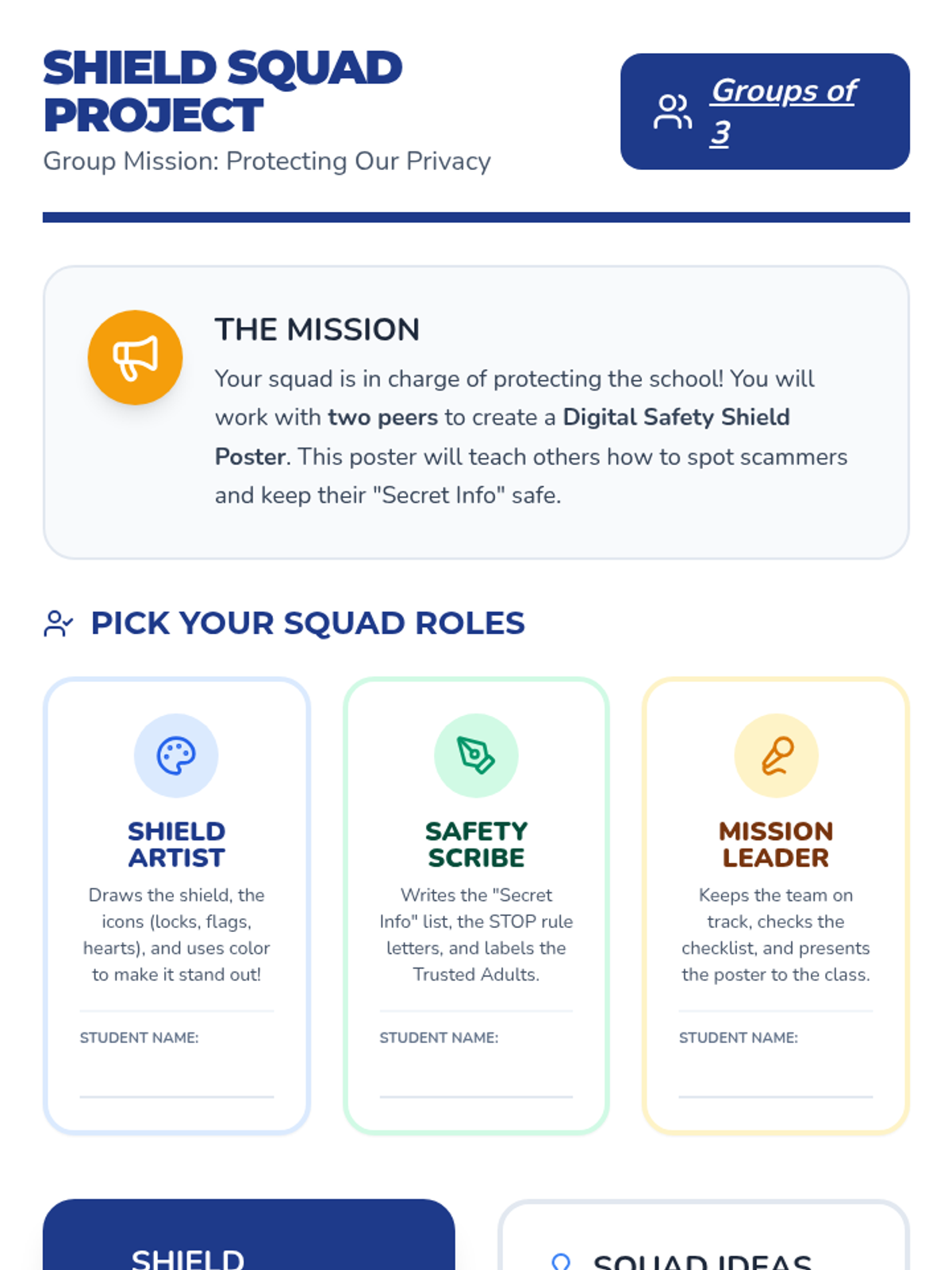
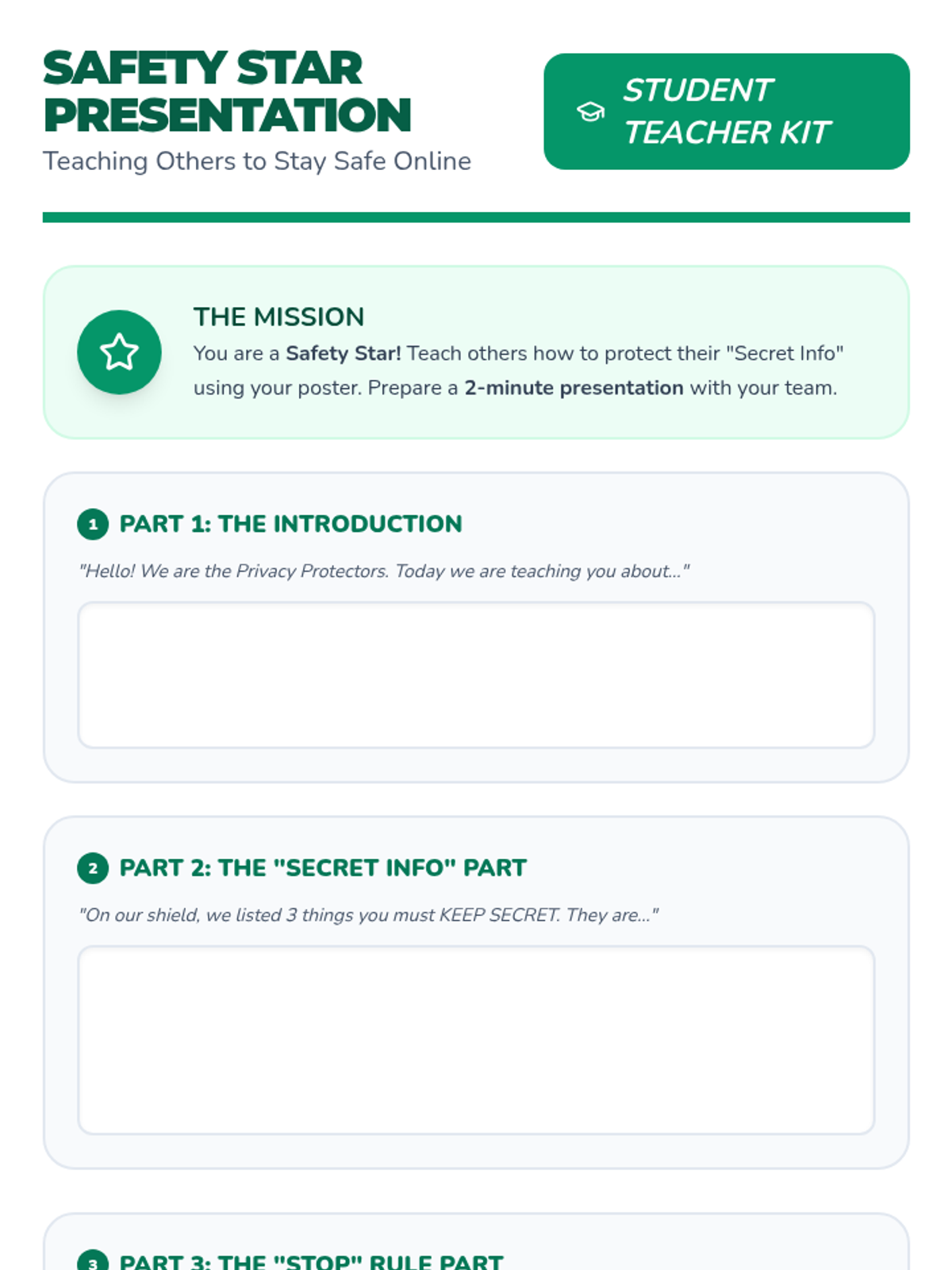
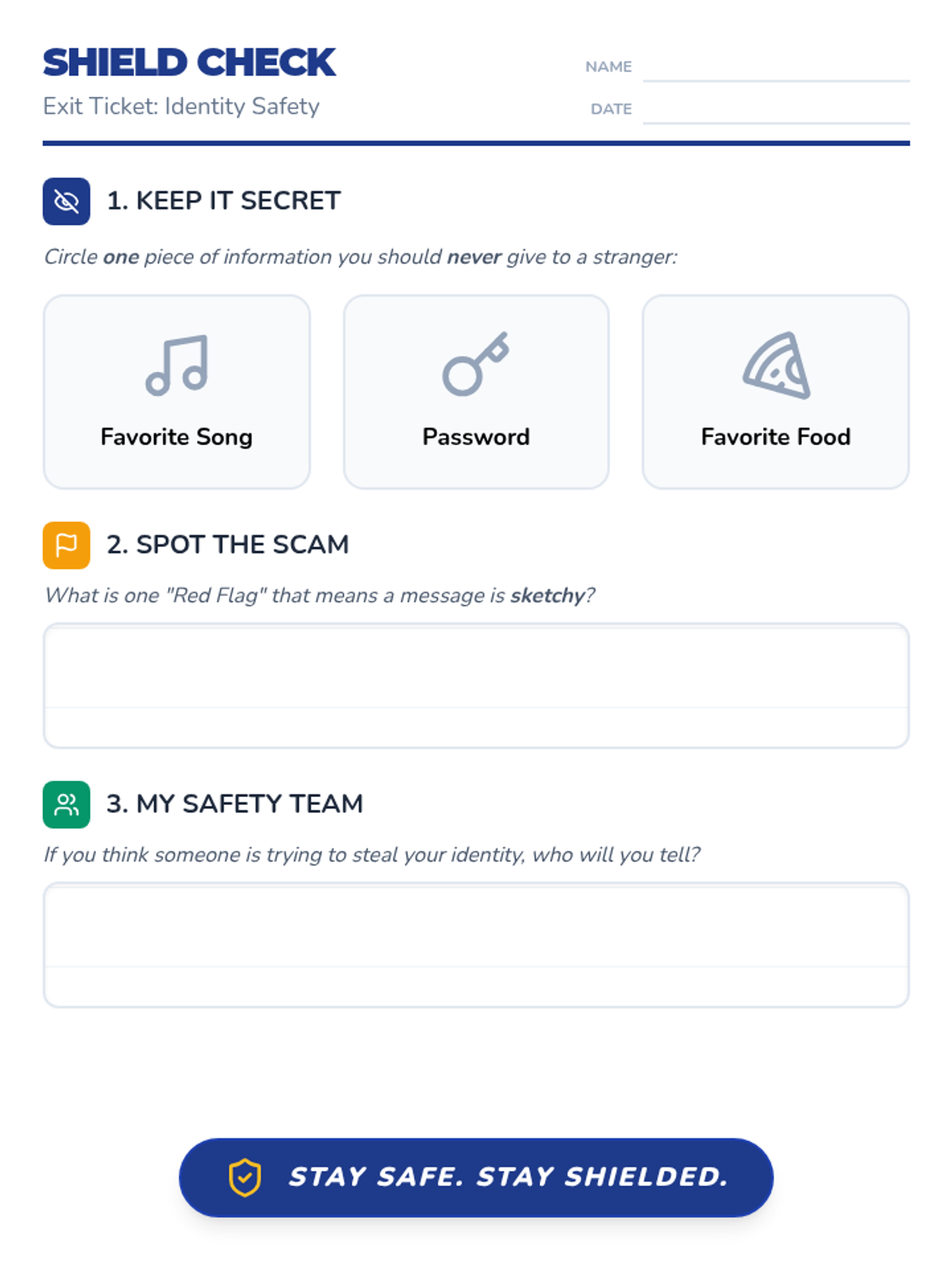
A comprehensive lesson on identity theft designed for high school special education students, focusing on recognizing red flags and protecting personal information through practical scenarios and visual aids.
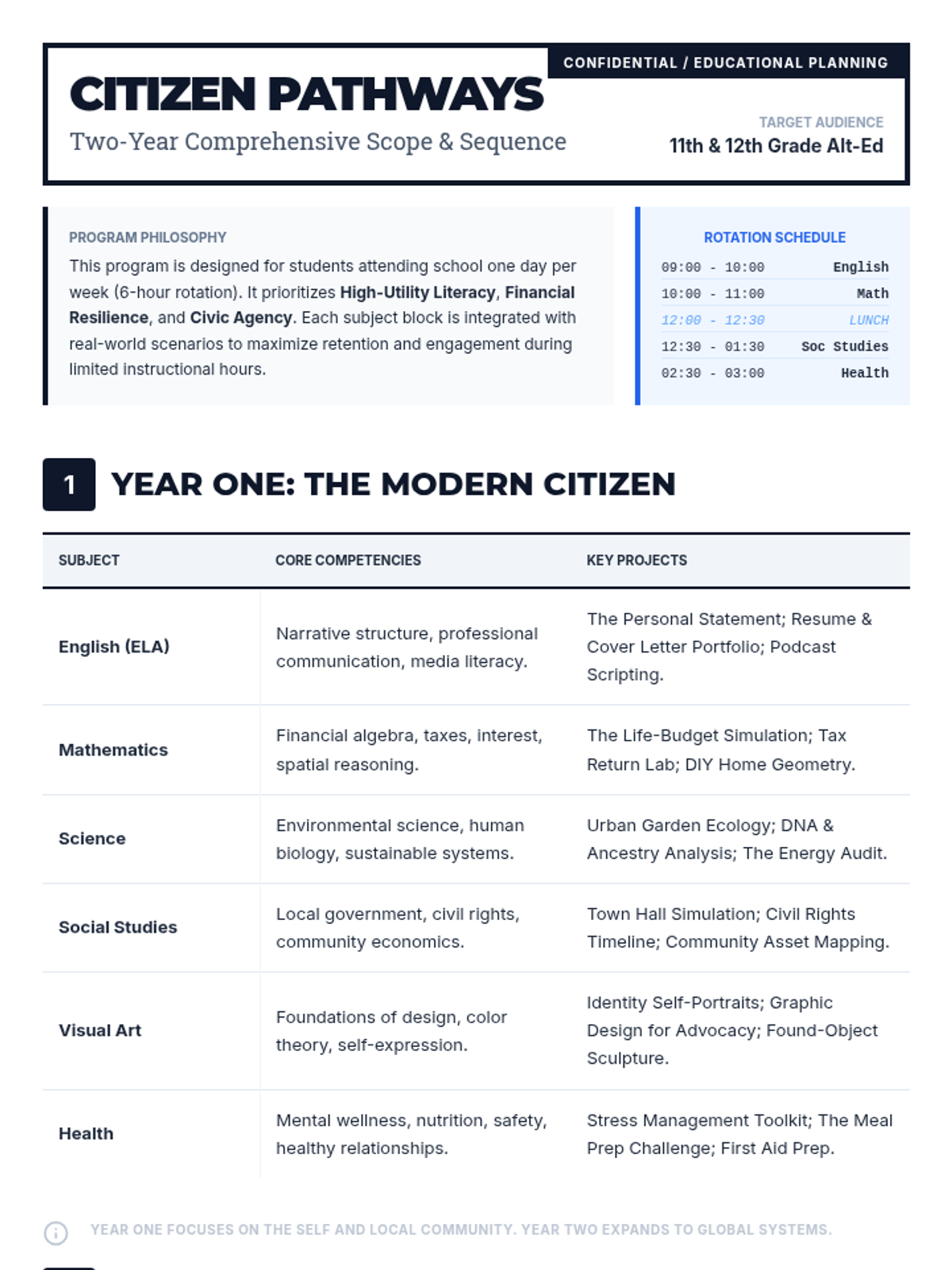
The first year of the program focuses on establishing the 'Modern Citizen,' emphasizing local community involvement, personal financial management, and foundational health and expression.
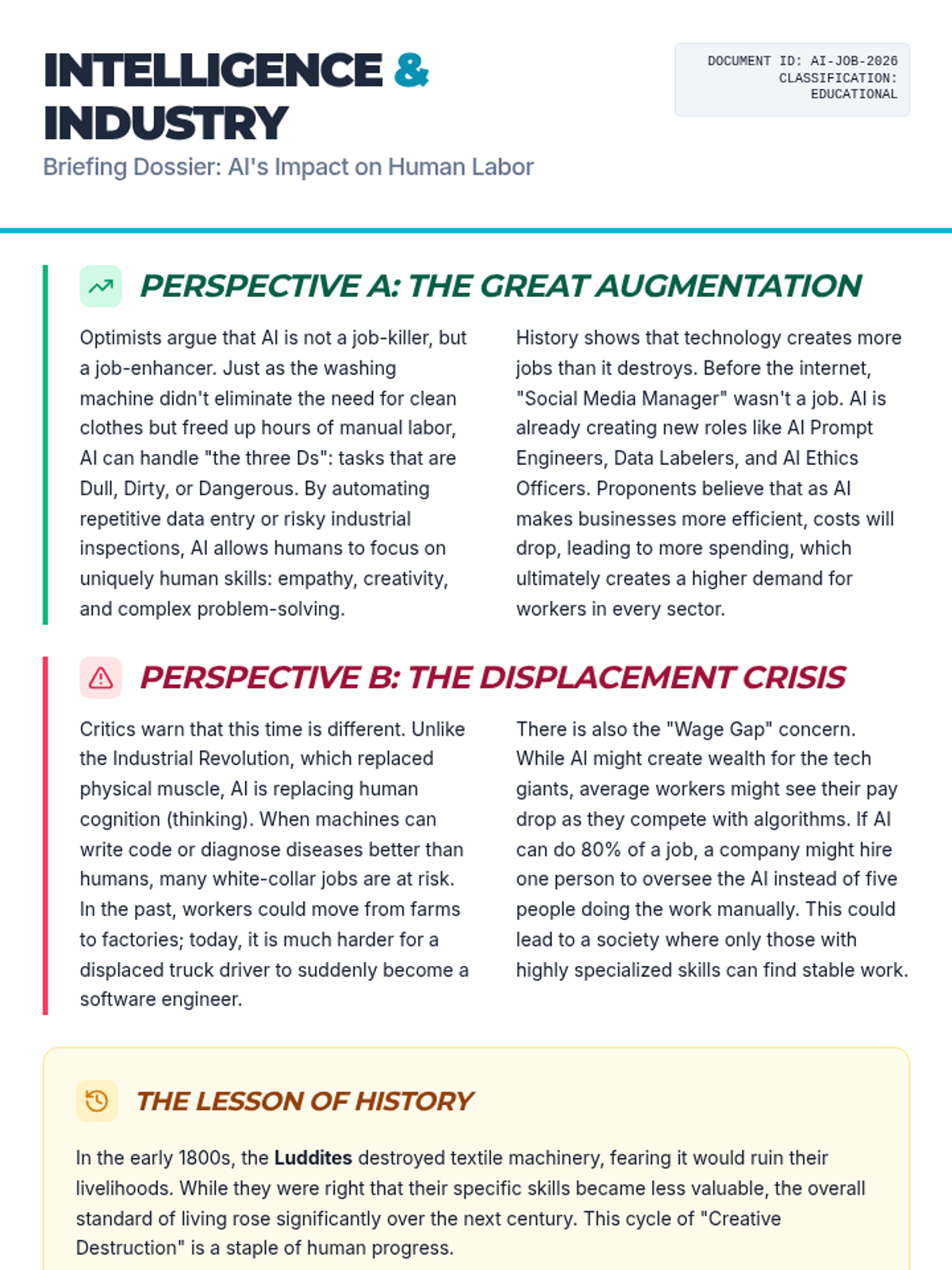
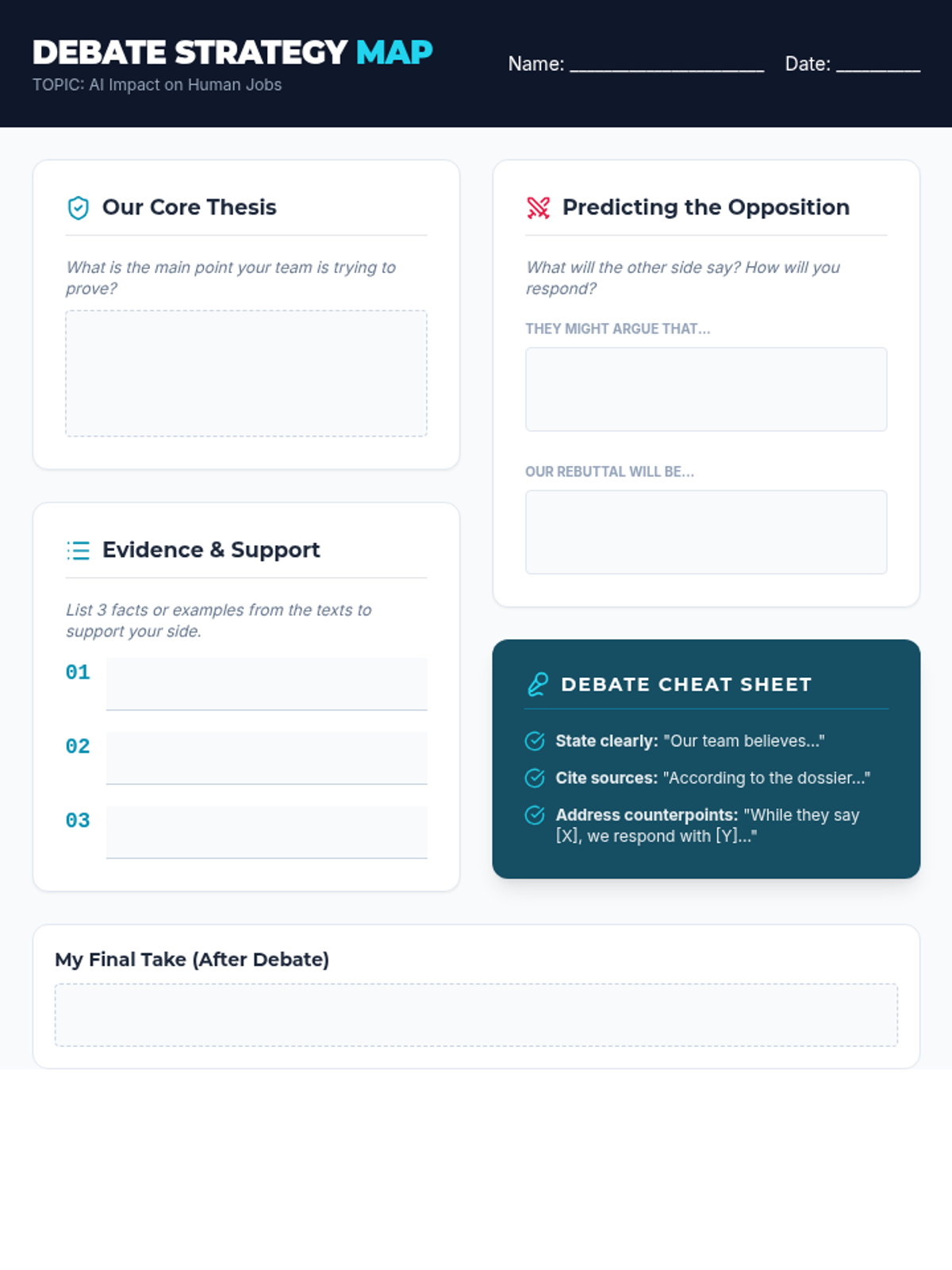
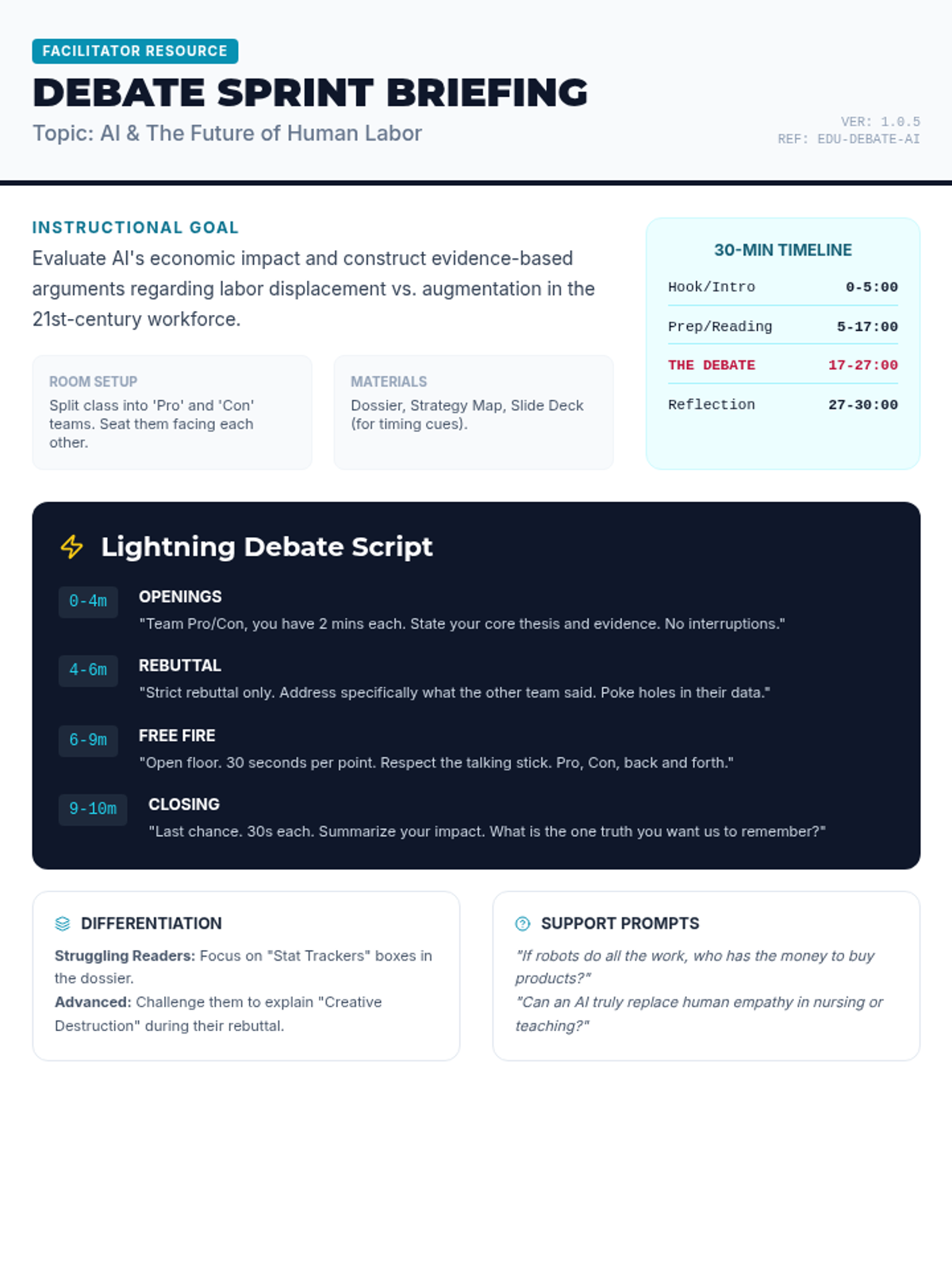
A fast-paced, 30-minute debate activity where students explore the complex impact of Artificial Intelligence on the future of human employment. Students analyze evidence, prepare arguments, and engage in a structured 'lightning' debate.
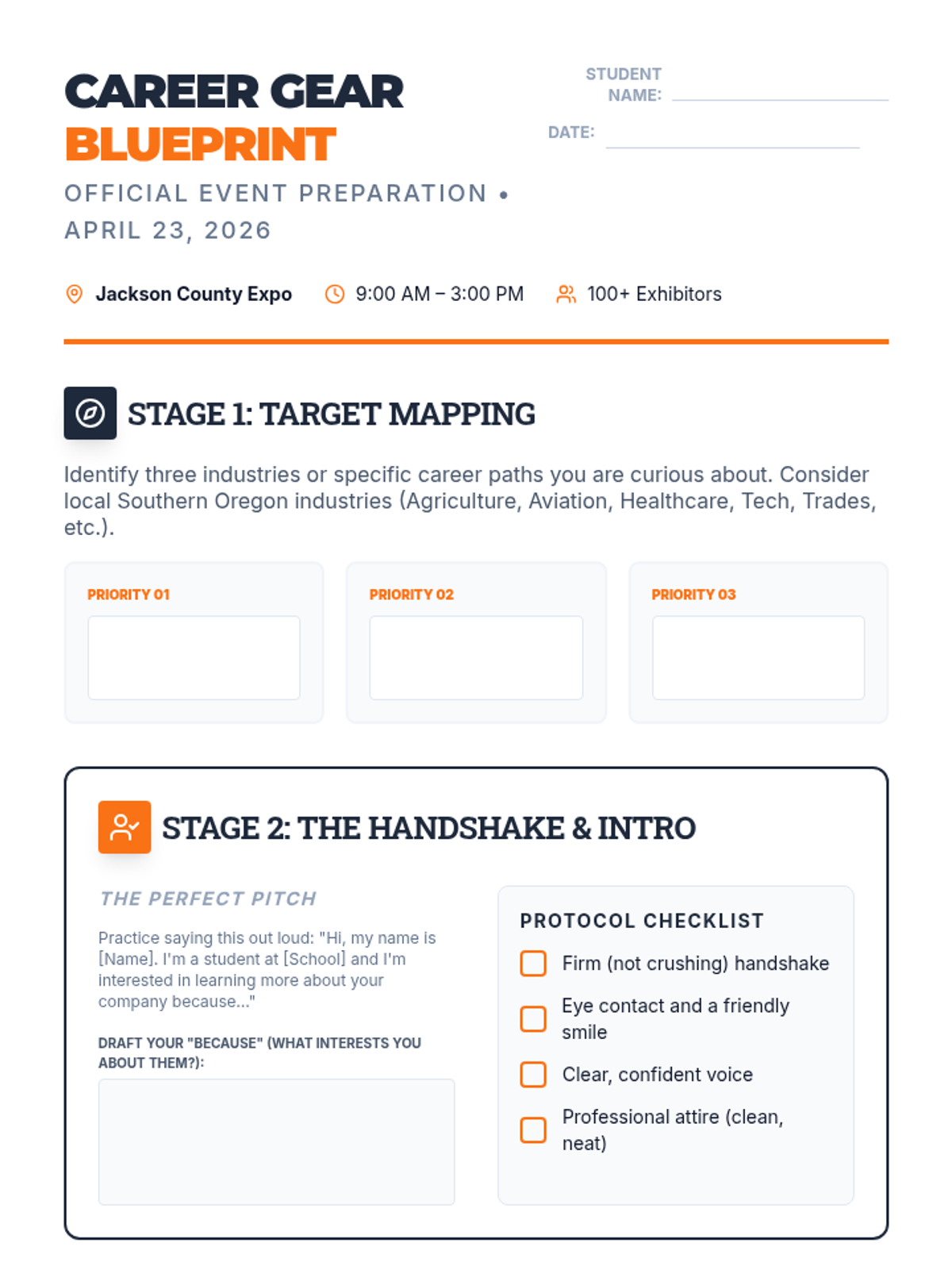
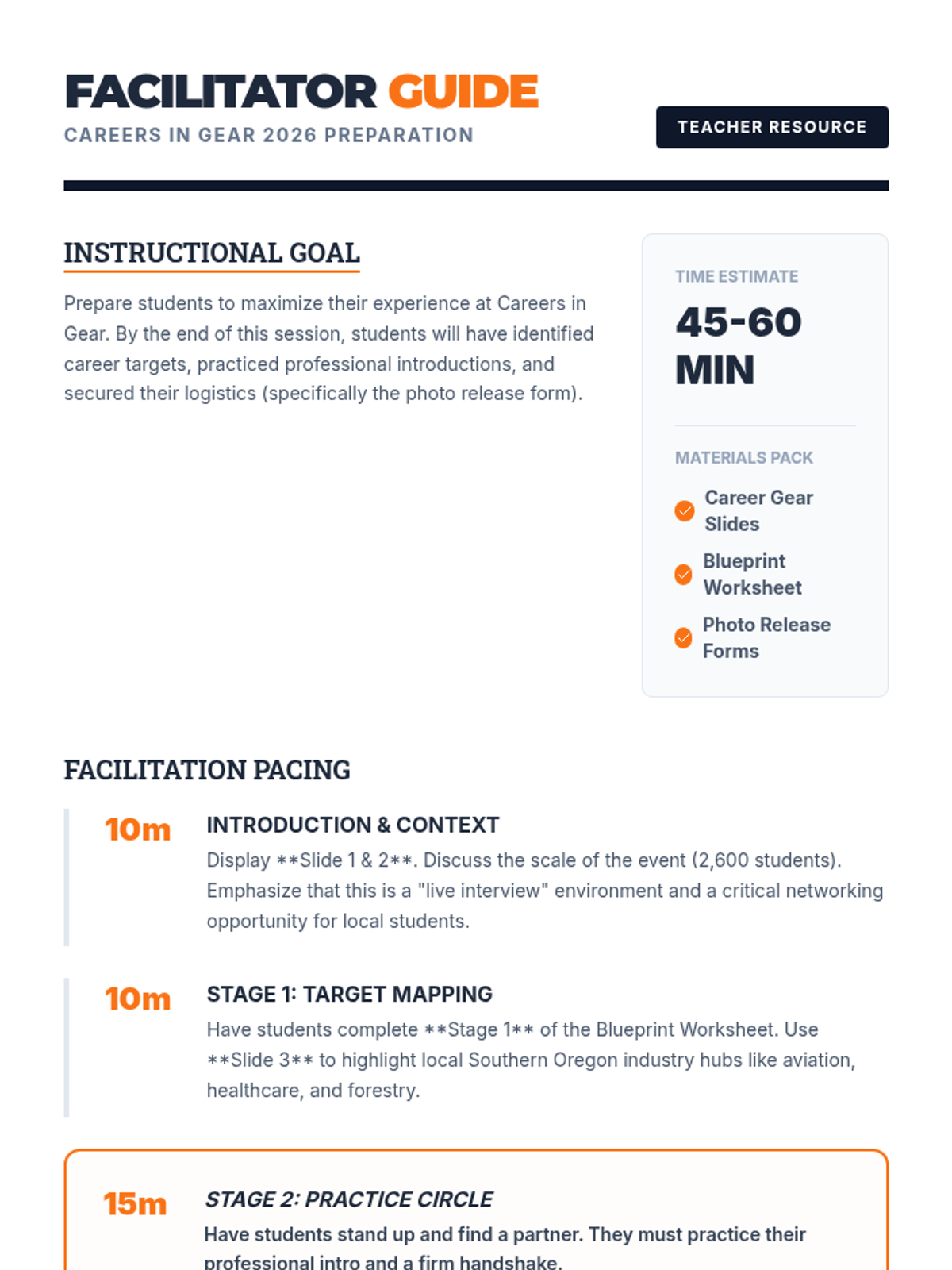
A preparation lesson for the Careers in Gear 2026 event, focusing on career interest identification, professional communication, and logistical readiness.
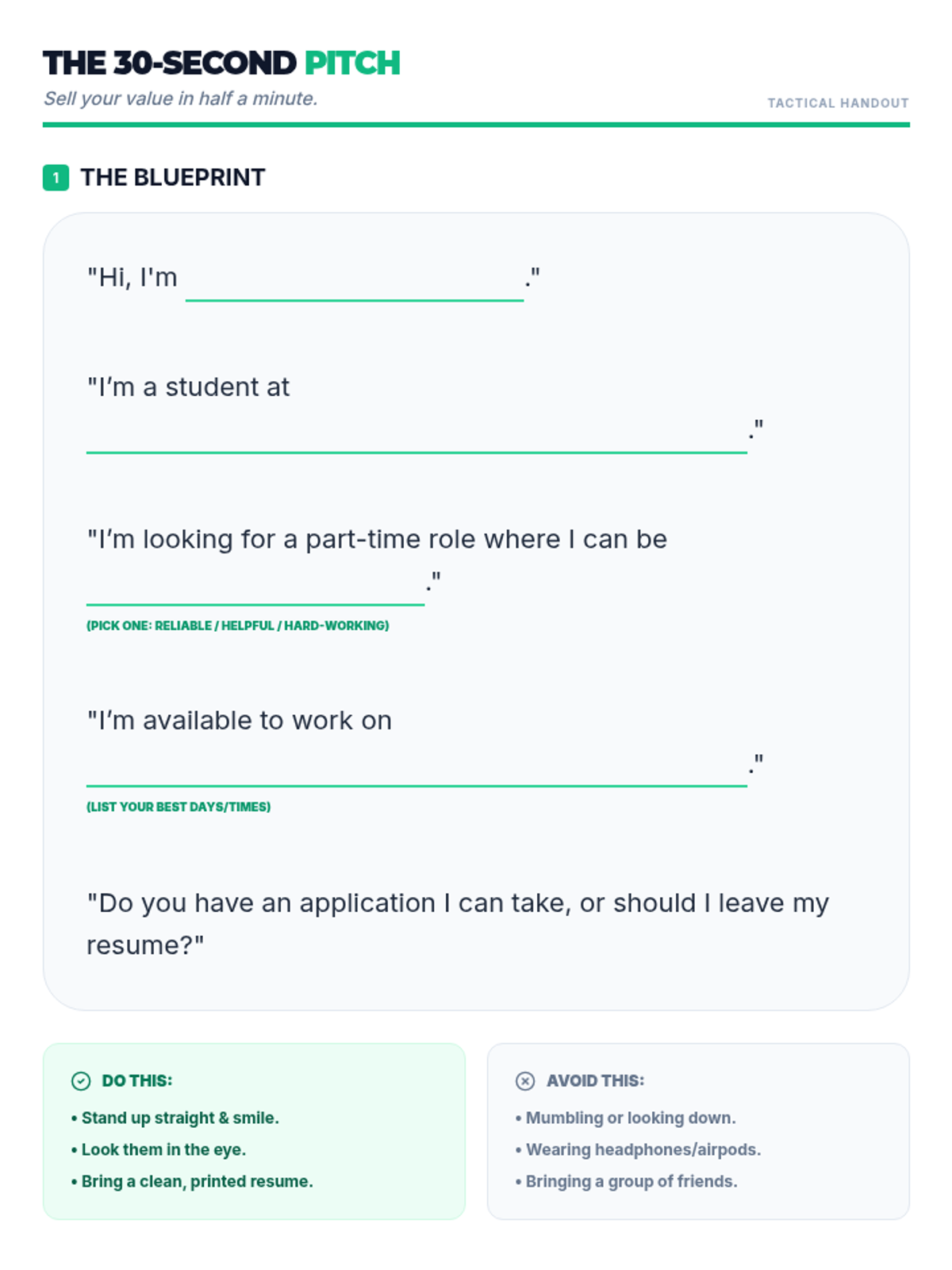
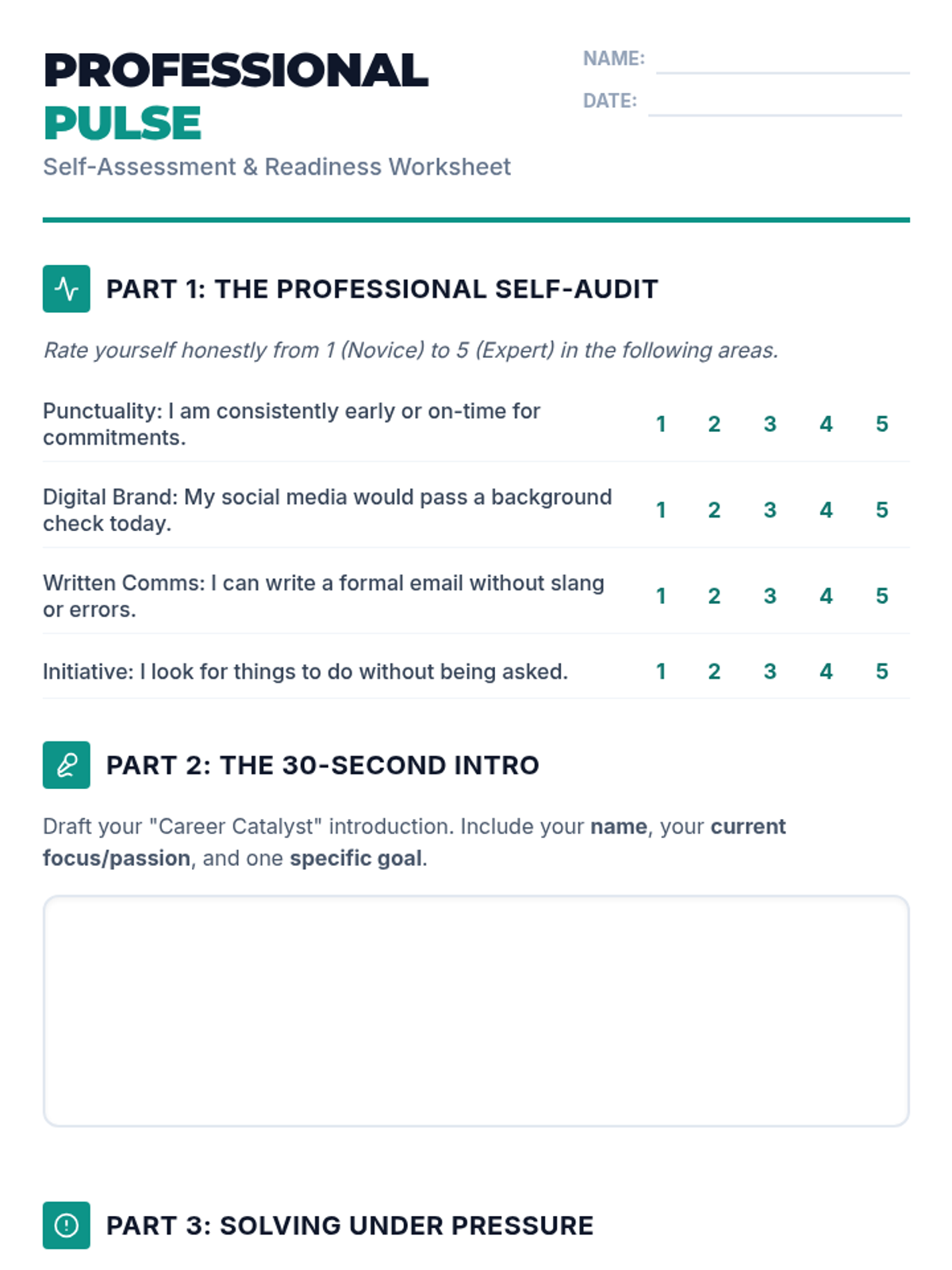
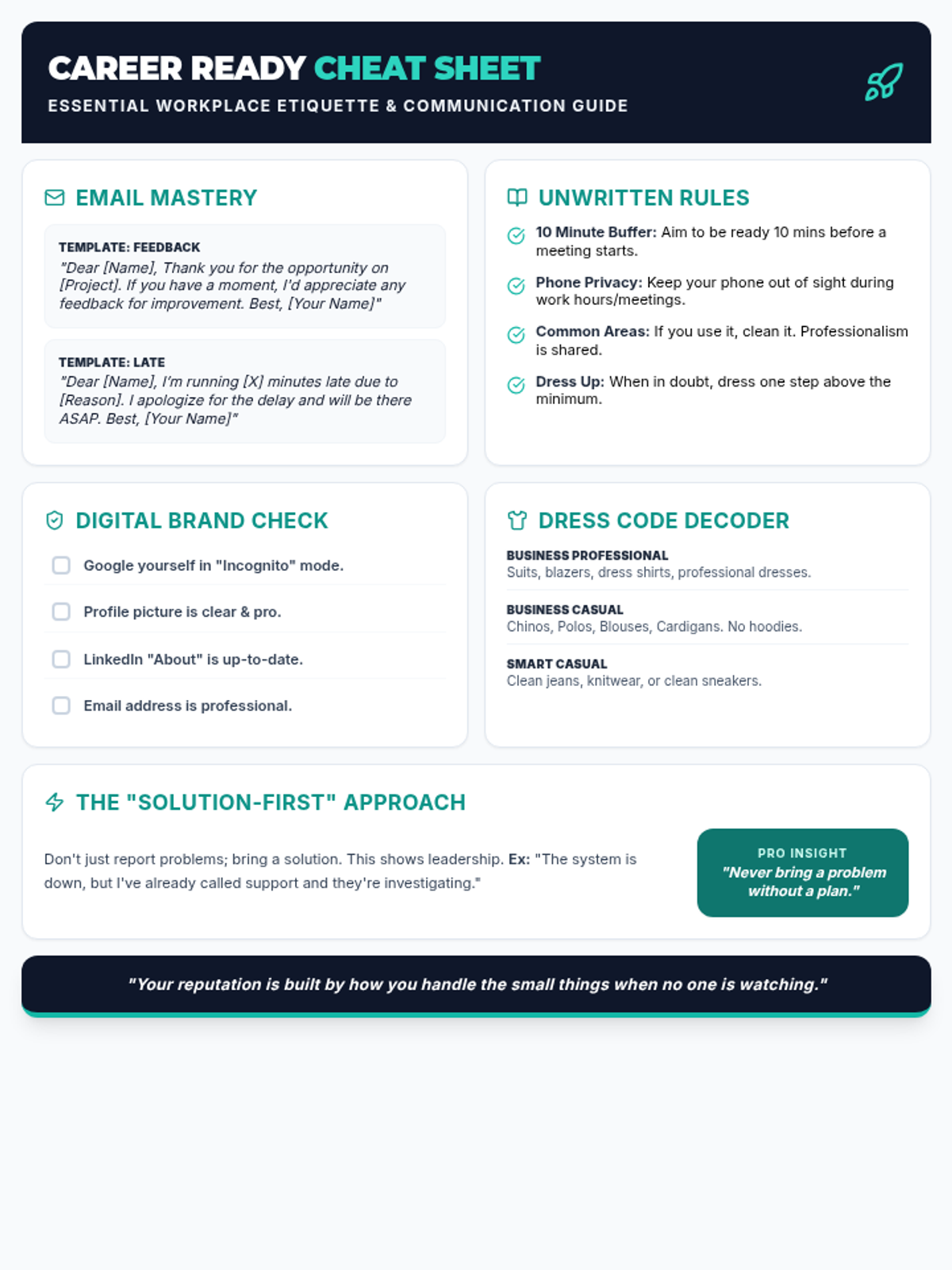
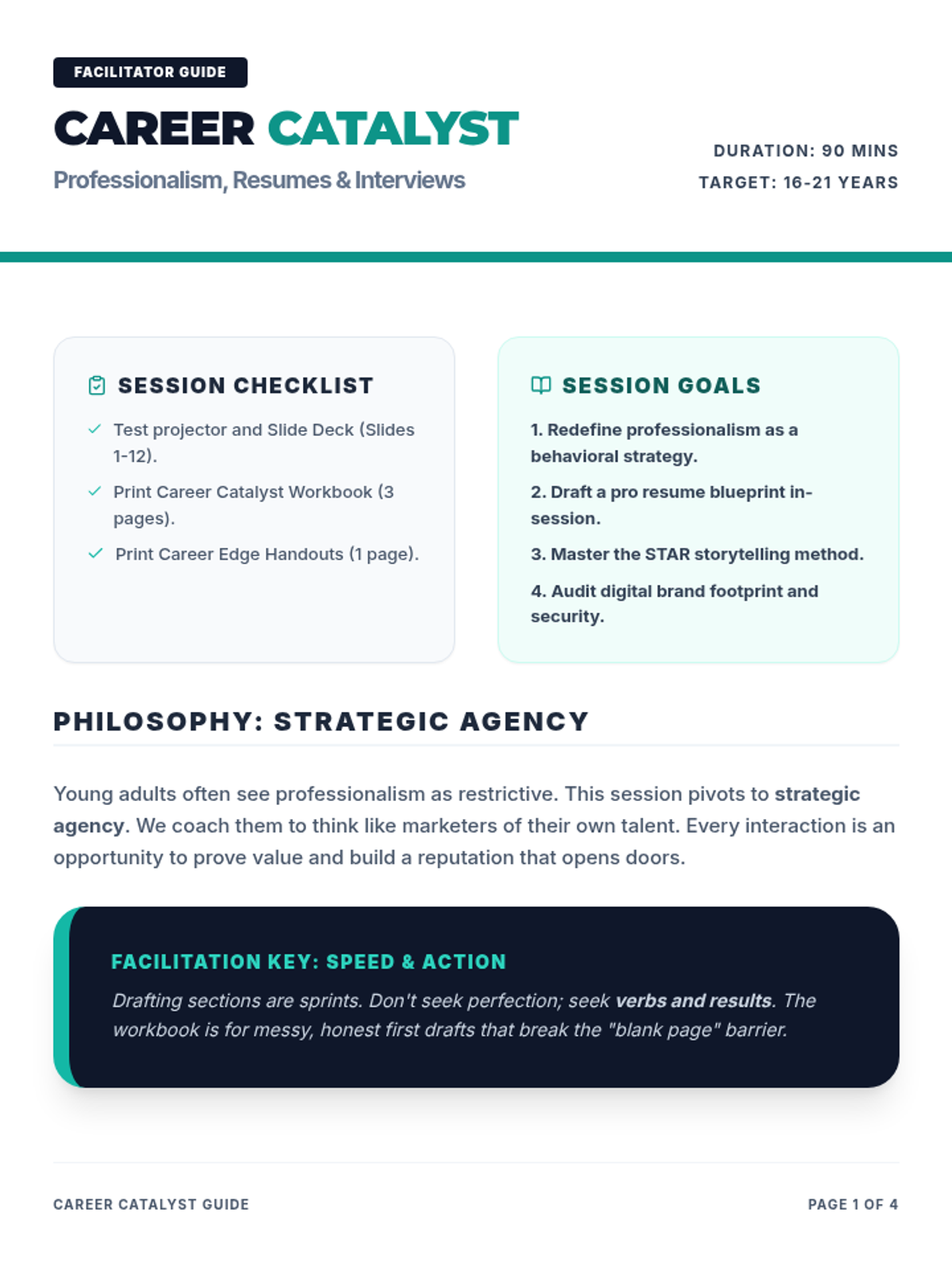
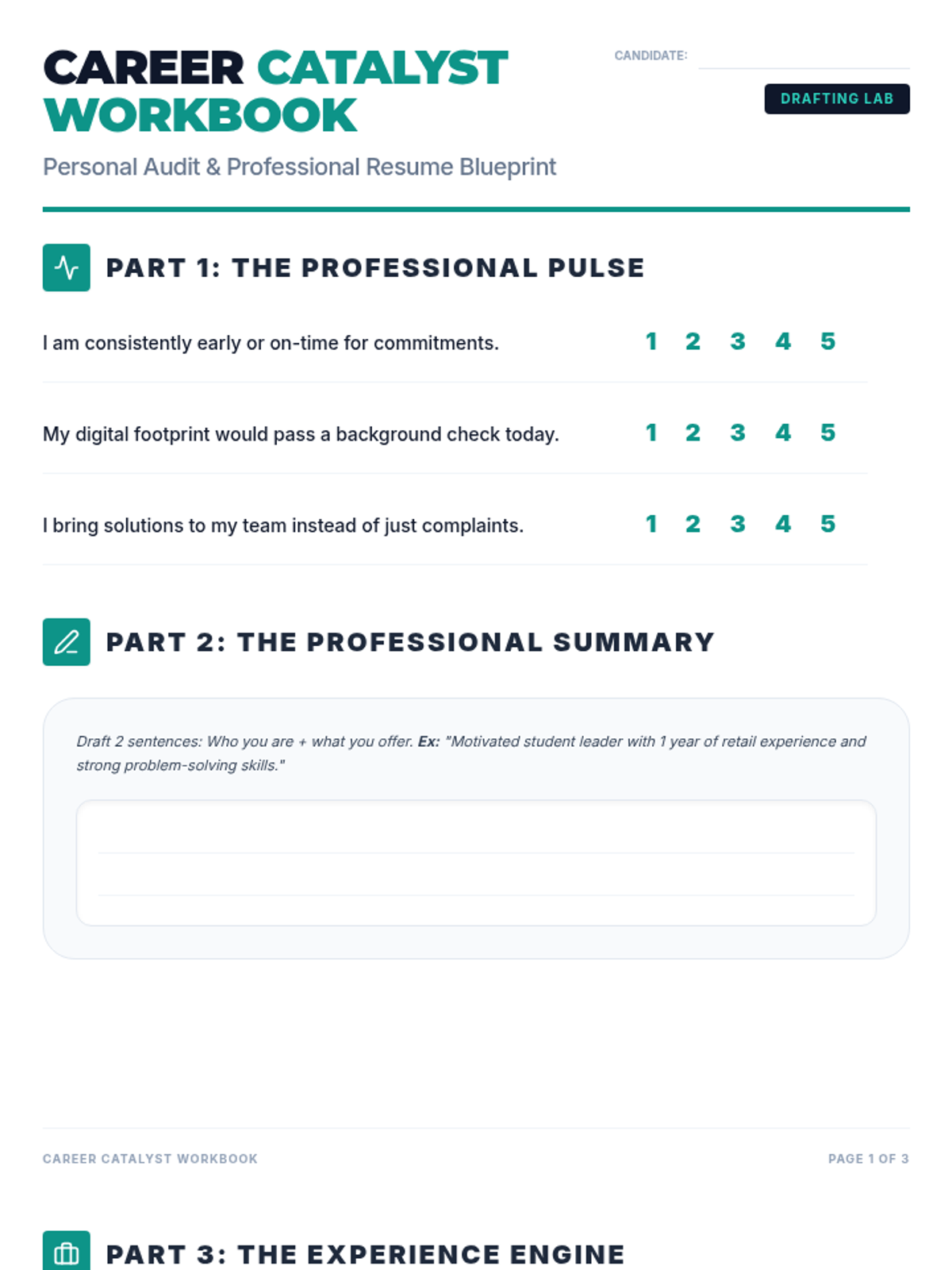
A comprehensive 90-minute session for young adults aged 16-21, focusing on the transition from student to professional through communication, reliability, and workplace etiquette.
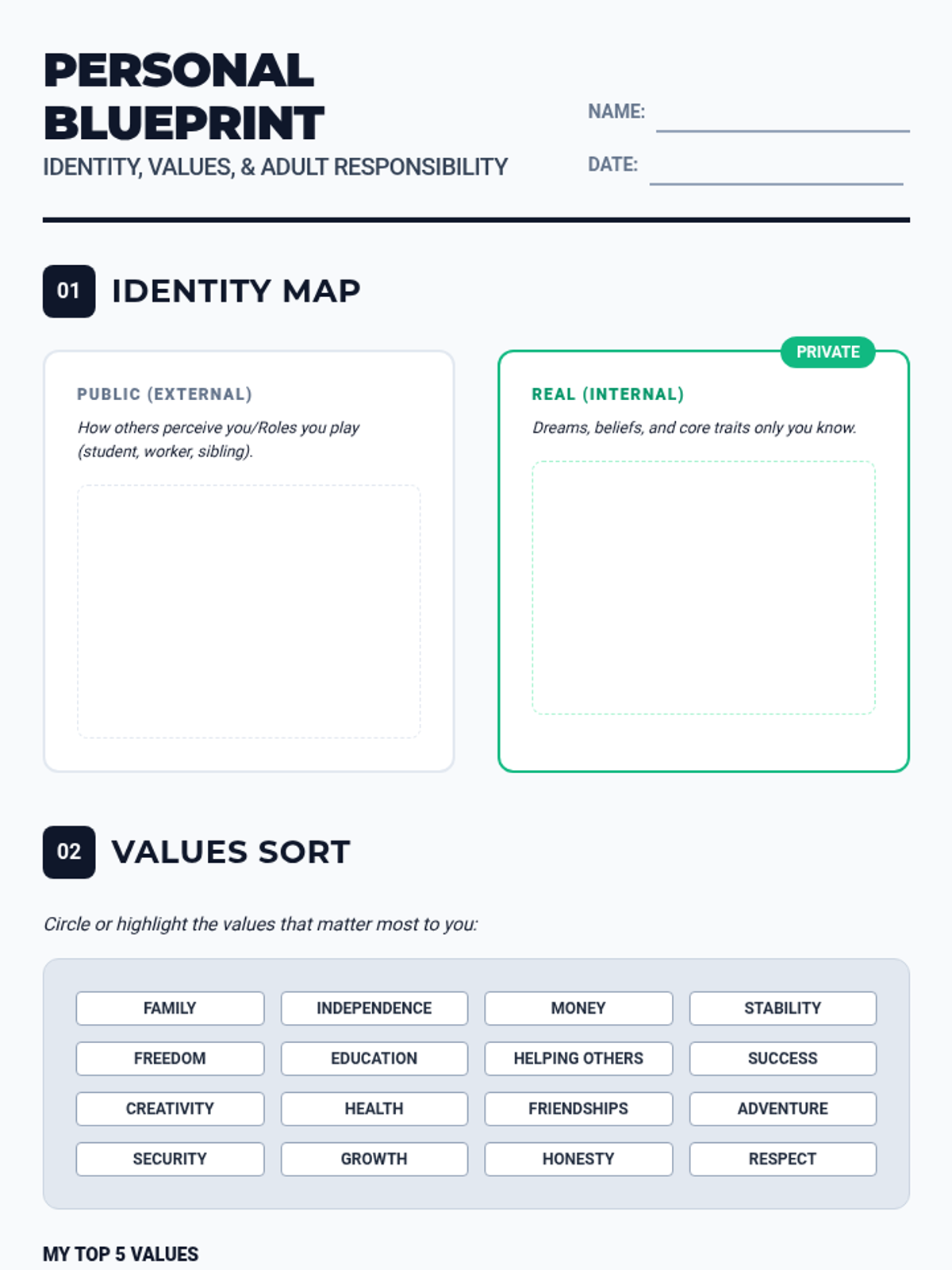
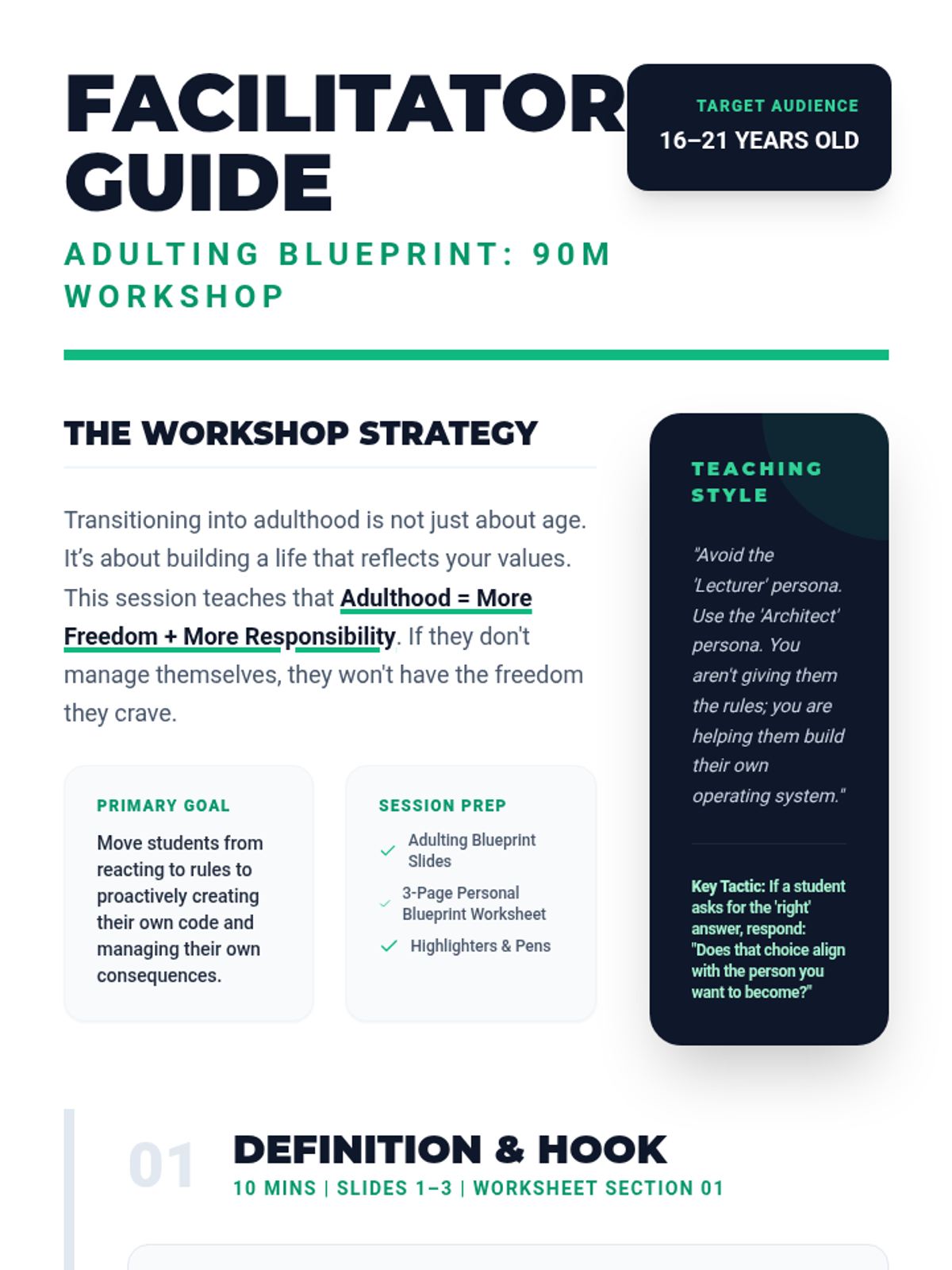
A comprehensive exploration of self-identity, personal values, and the transition into adult responsibilities for young adults aged 16-21. Students will define their core values and map out how those values influence their real-world choices and accountabilities.
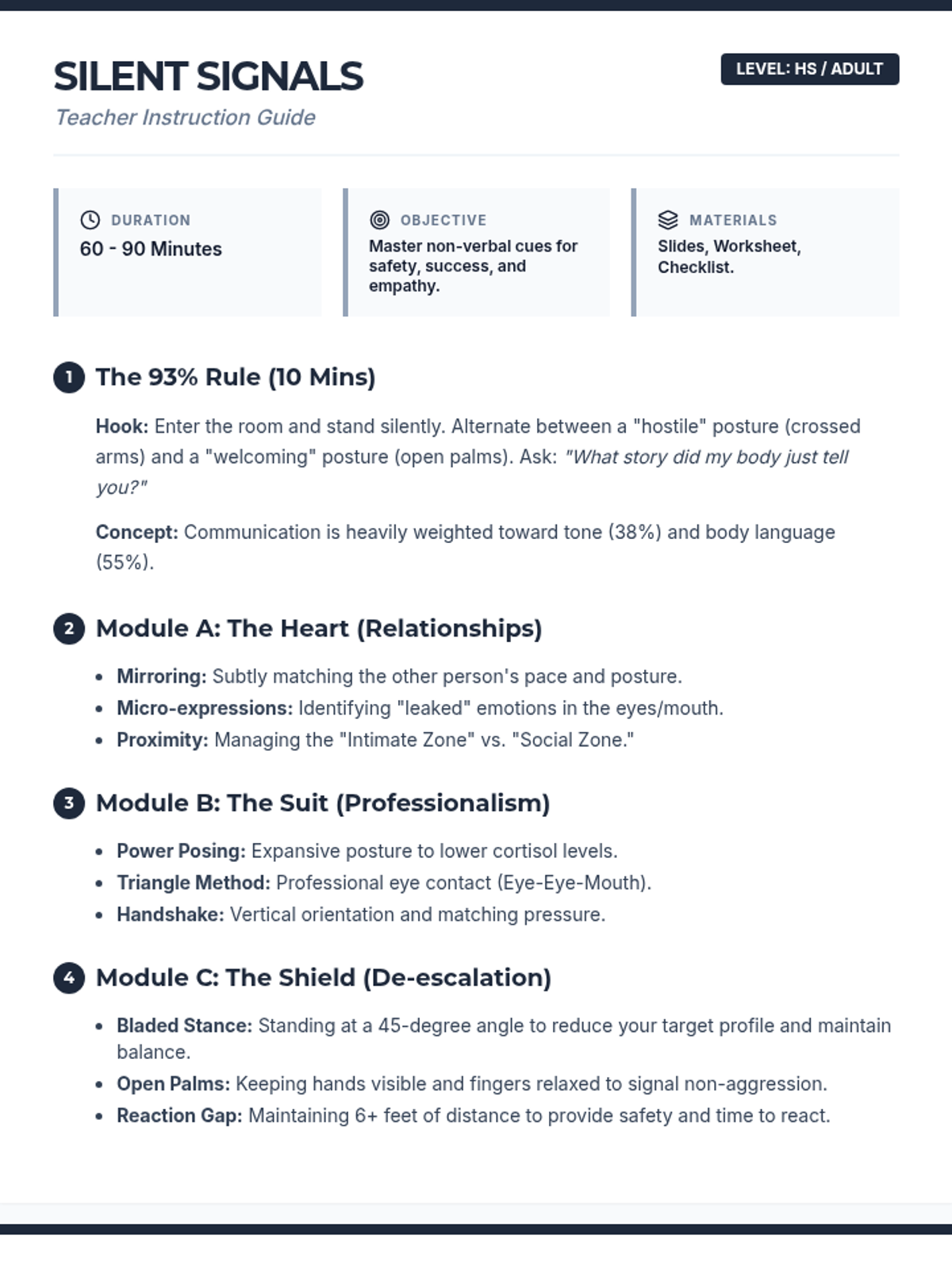
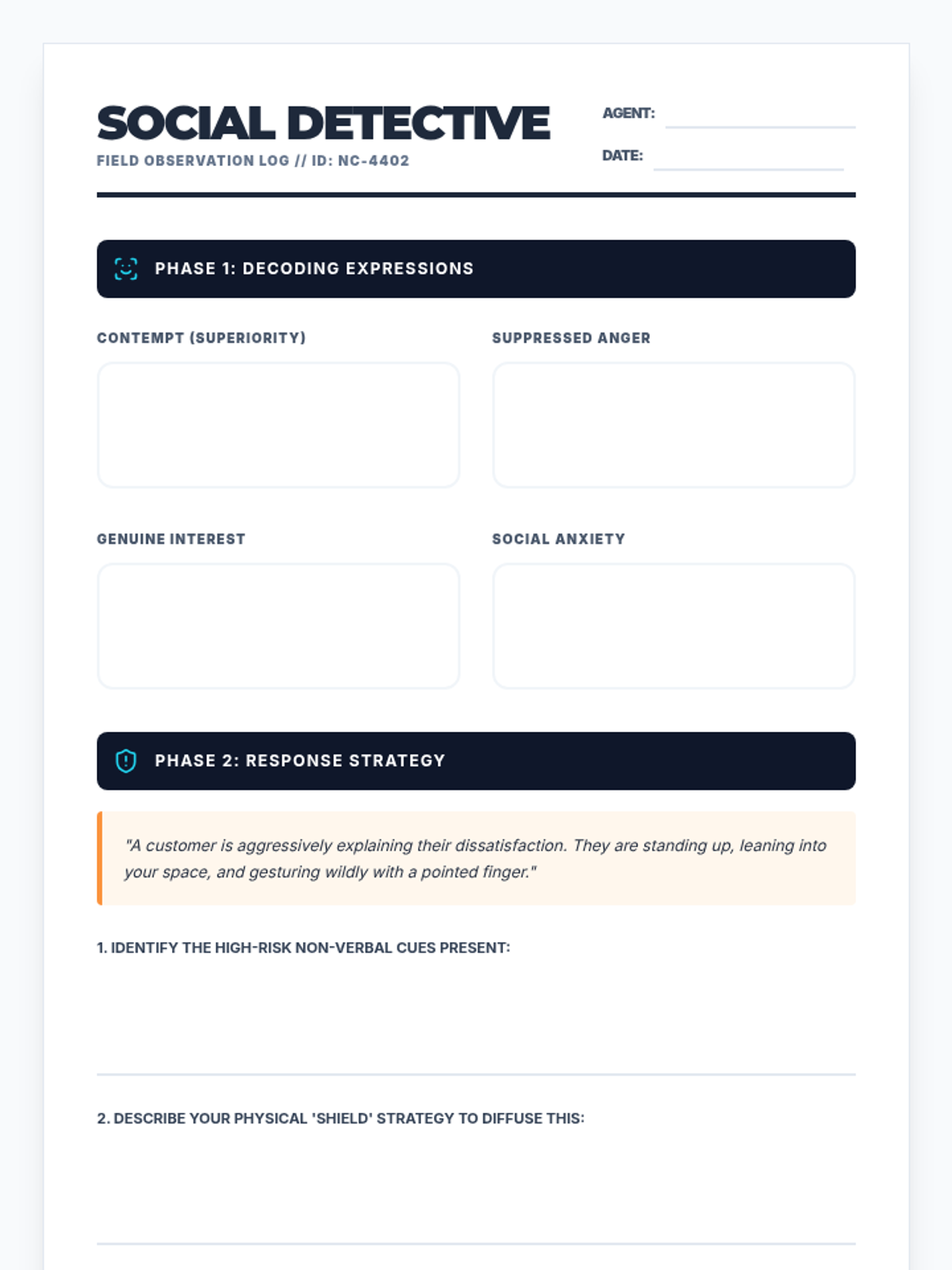
A comprehensive lesson on mastering non-verbal communication across interpersonal relationships, professional interviews, and high-stakes de-escalation scenarios. Students learn to decode 'silent signals' to improve empathy, professionalism, and safety.
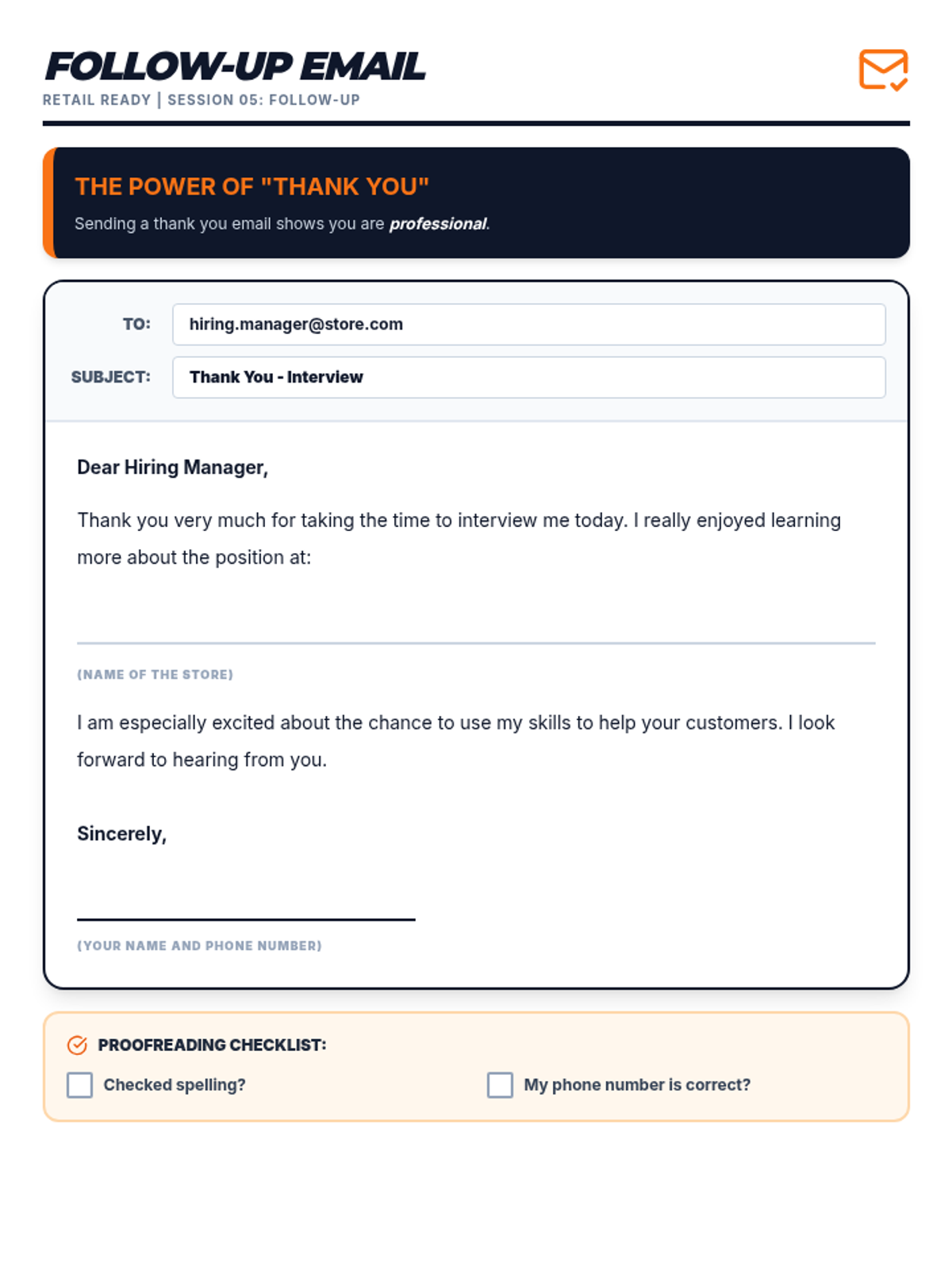
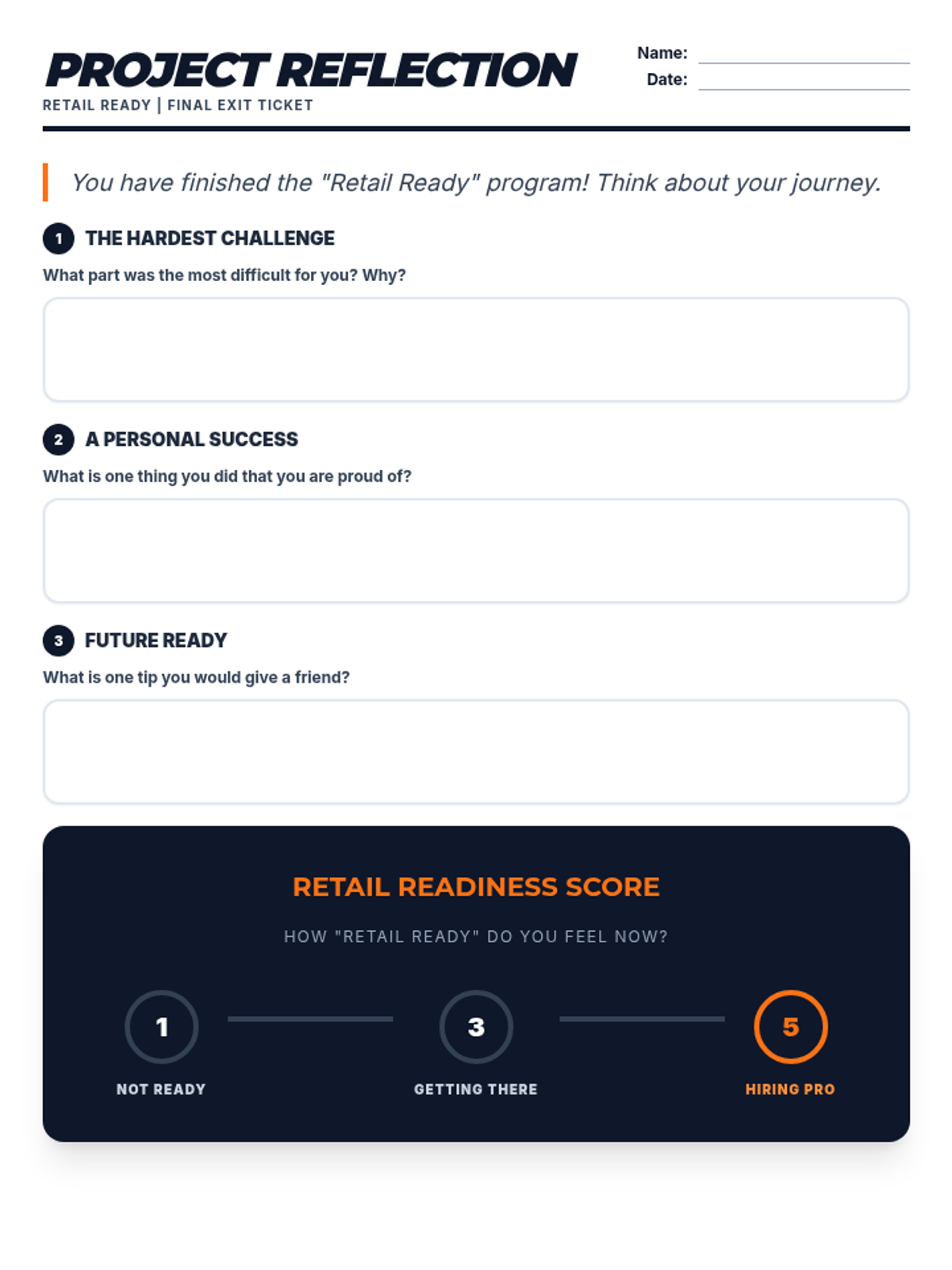
Students learn the importance of post-interview follow-up by writing thank-you emails and reflecting on their overall performance throughout the project.
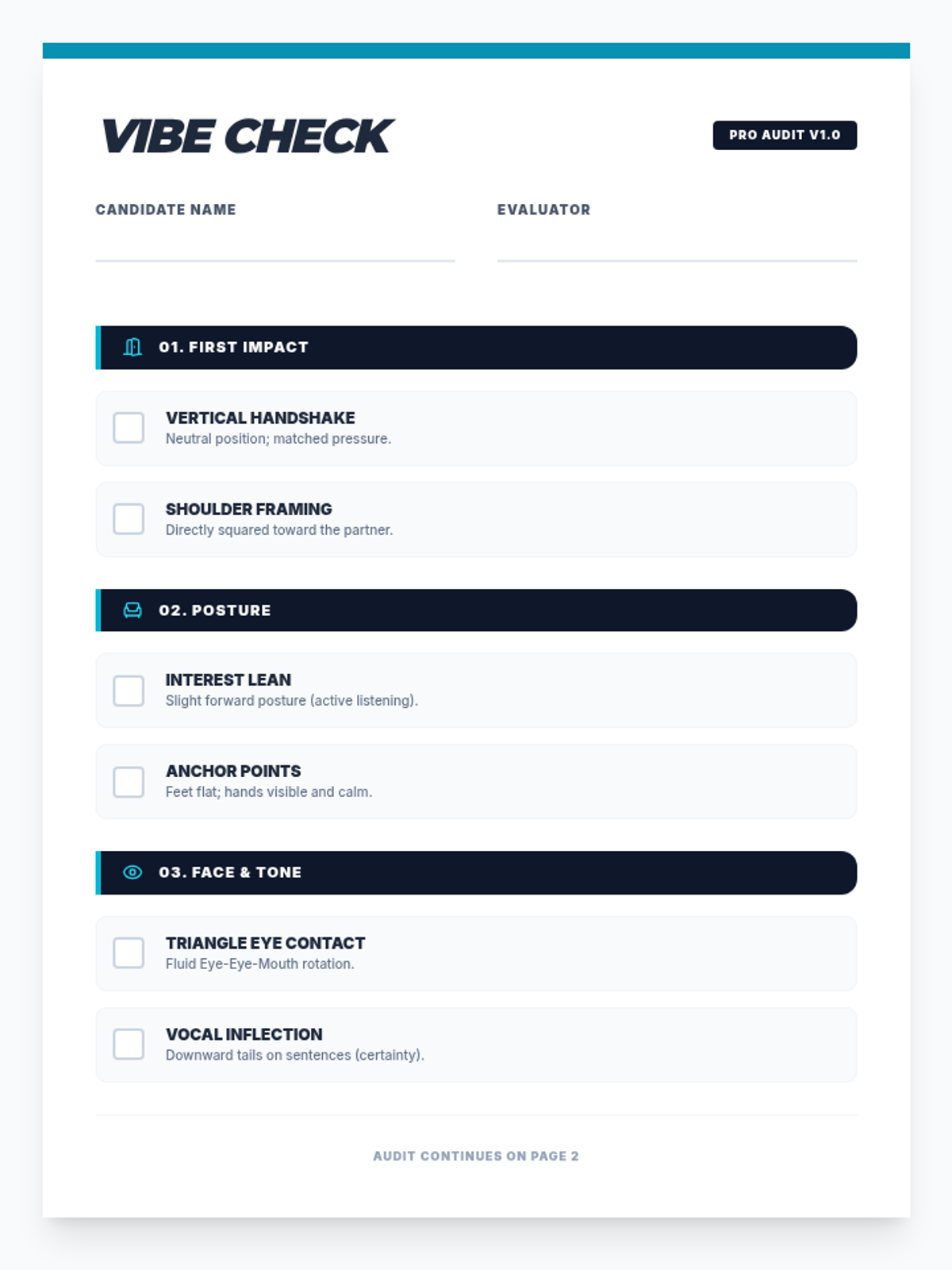
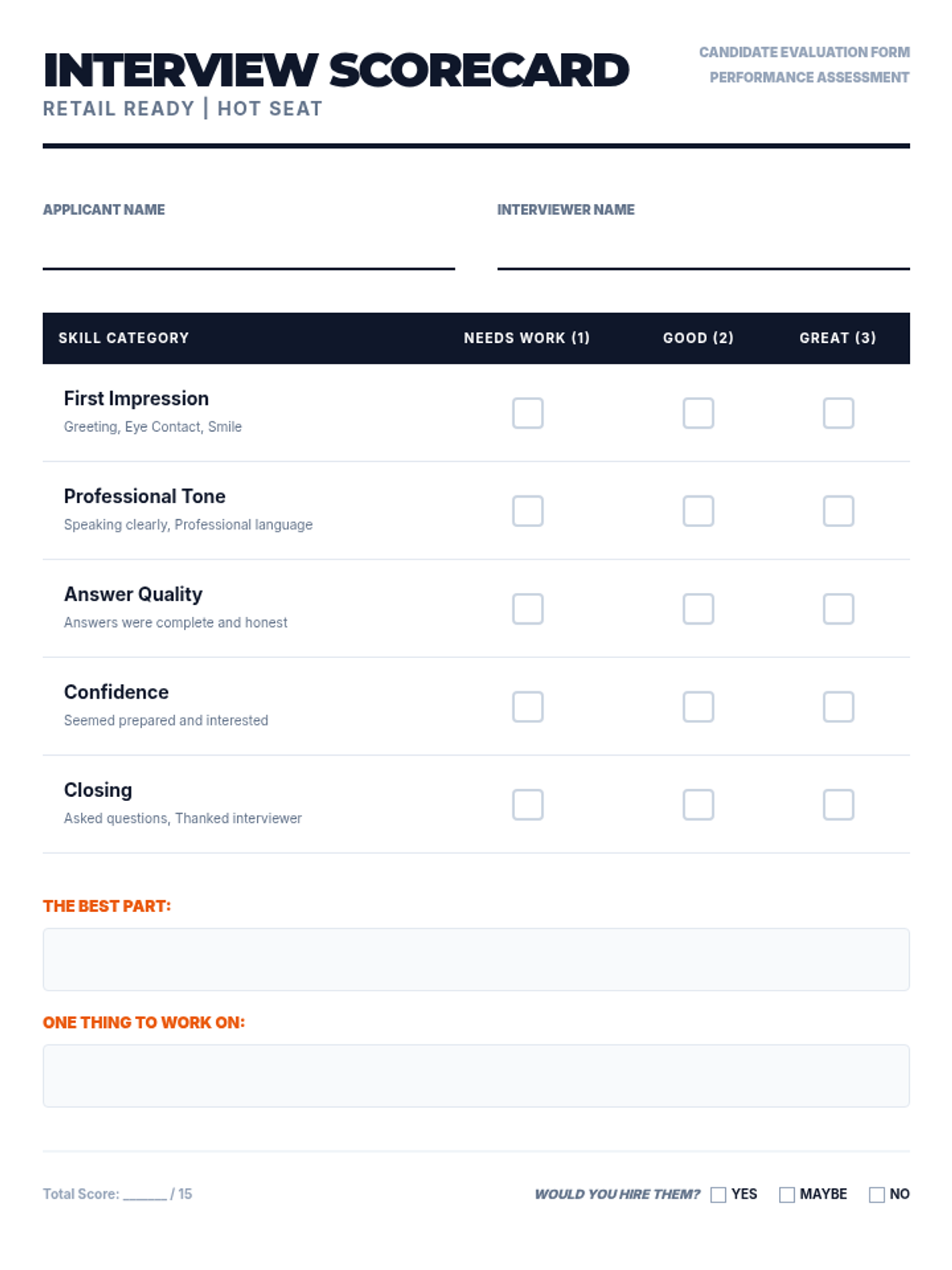
A hands-on day for mock interviews where students practice professional communication and receive constructive feedback.
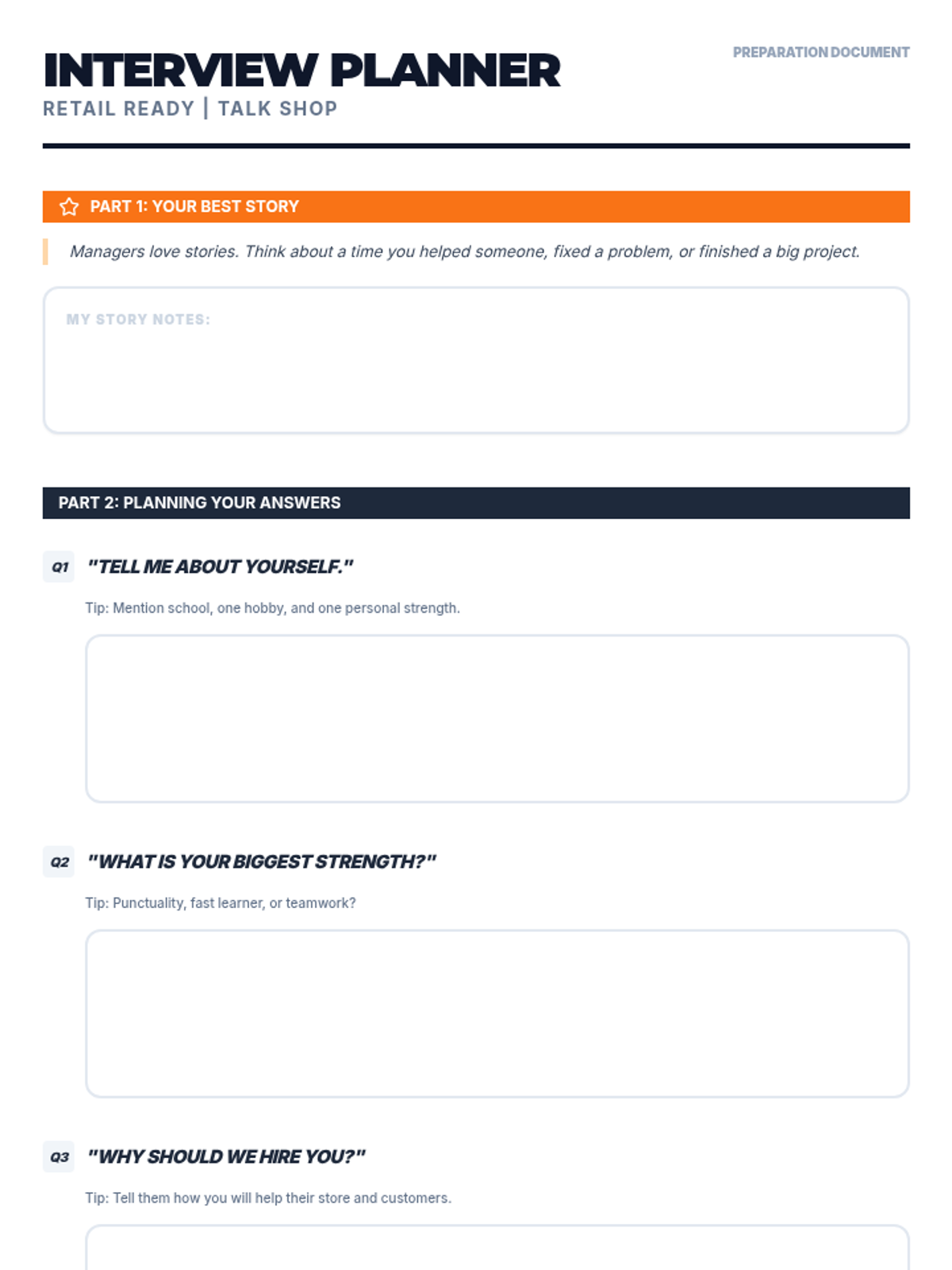
Students prepare for the social dynamics of an interview by researching common retail questions and planning their own inquiries for the employer.
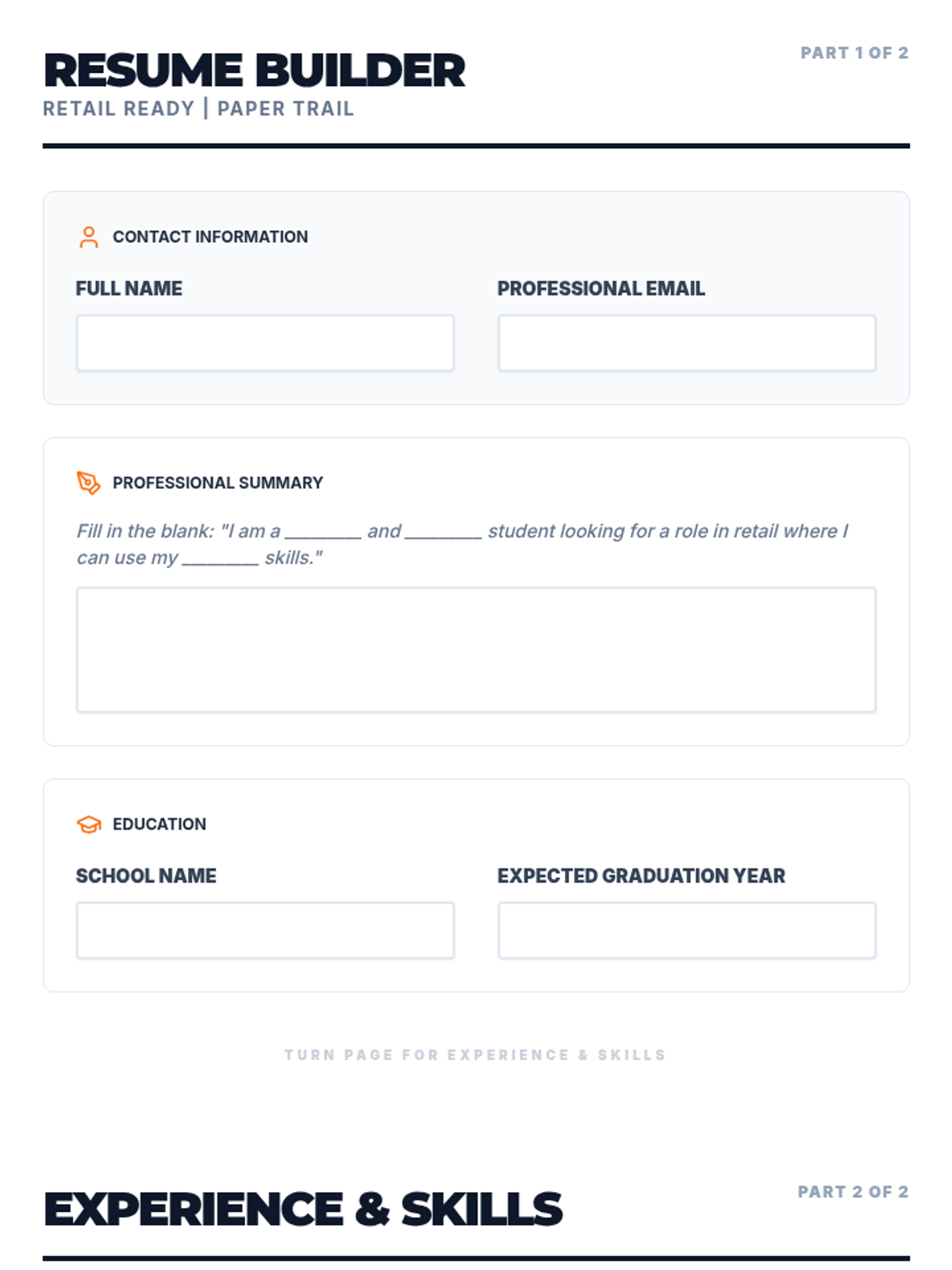
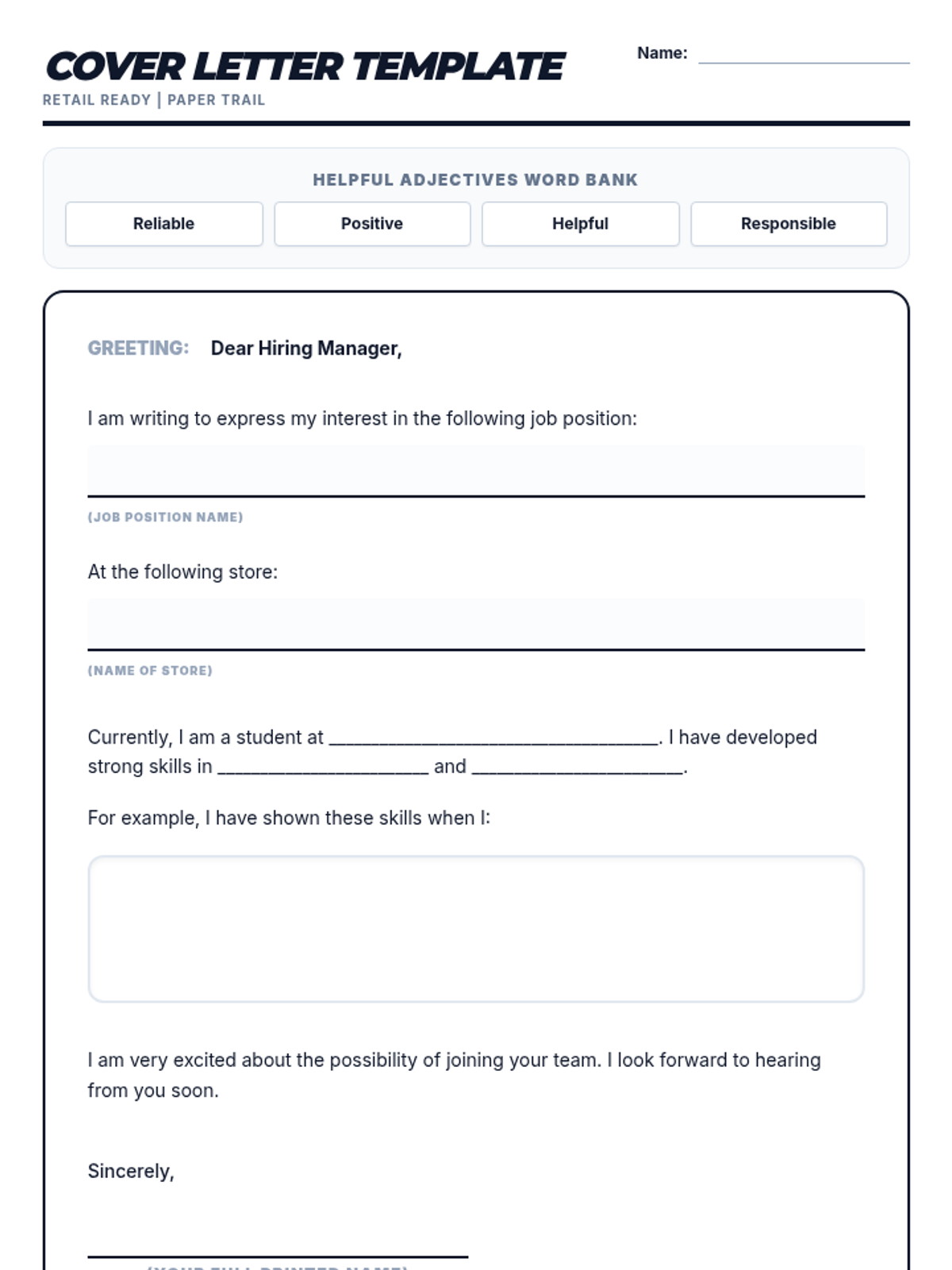
Focuses on translating personal experiences into a professional resume and drafting a concise cover letter using structured templates.
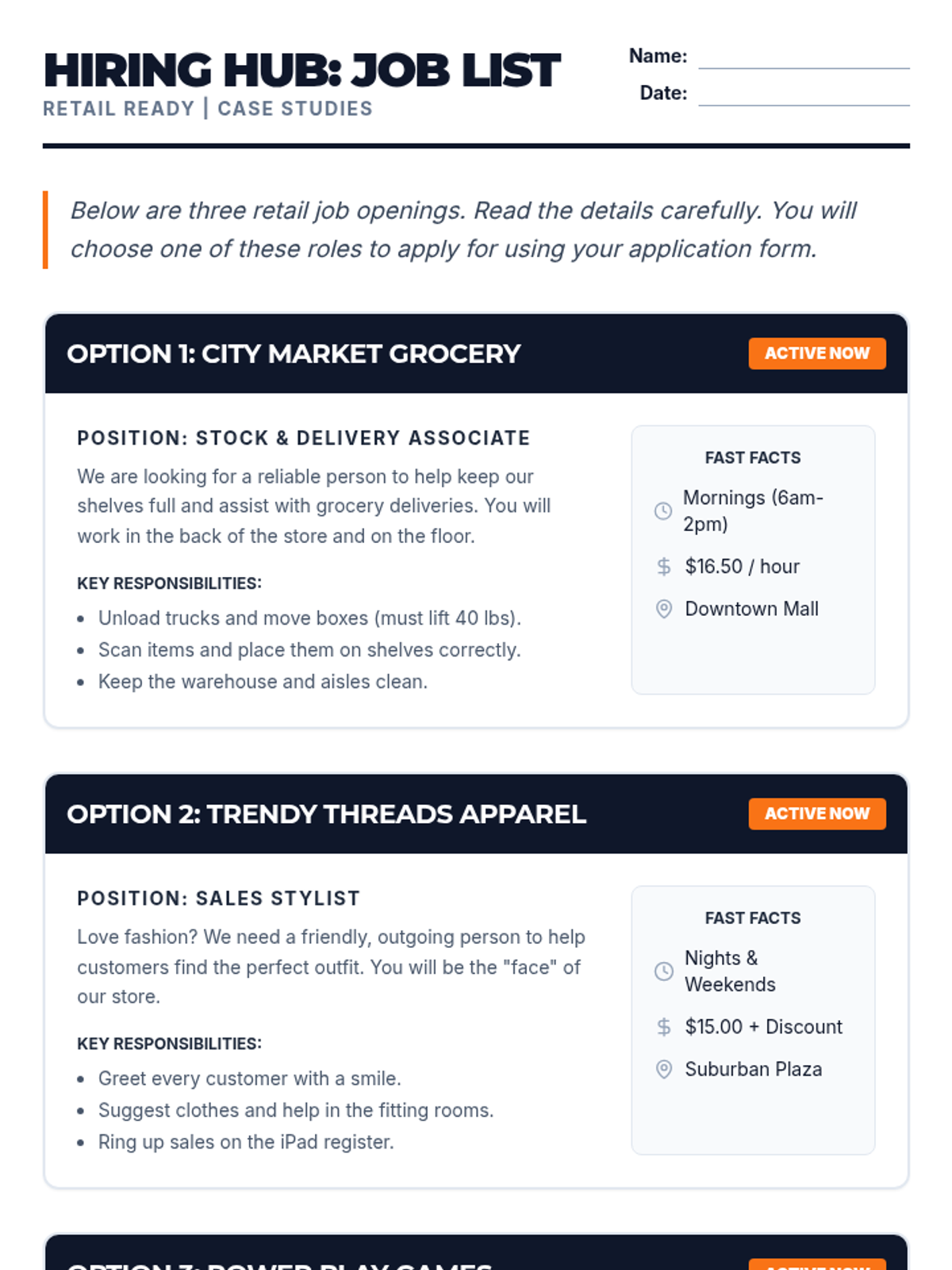
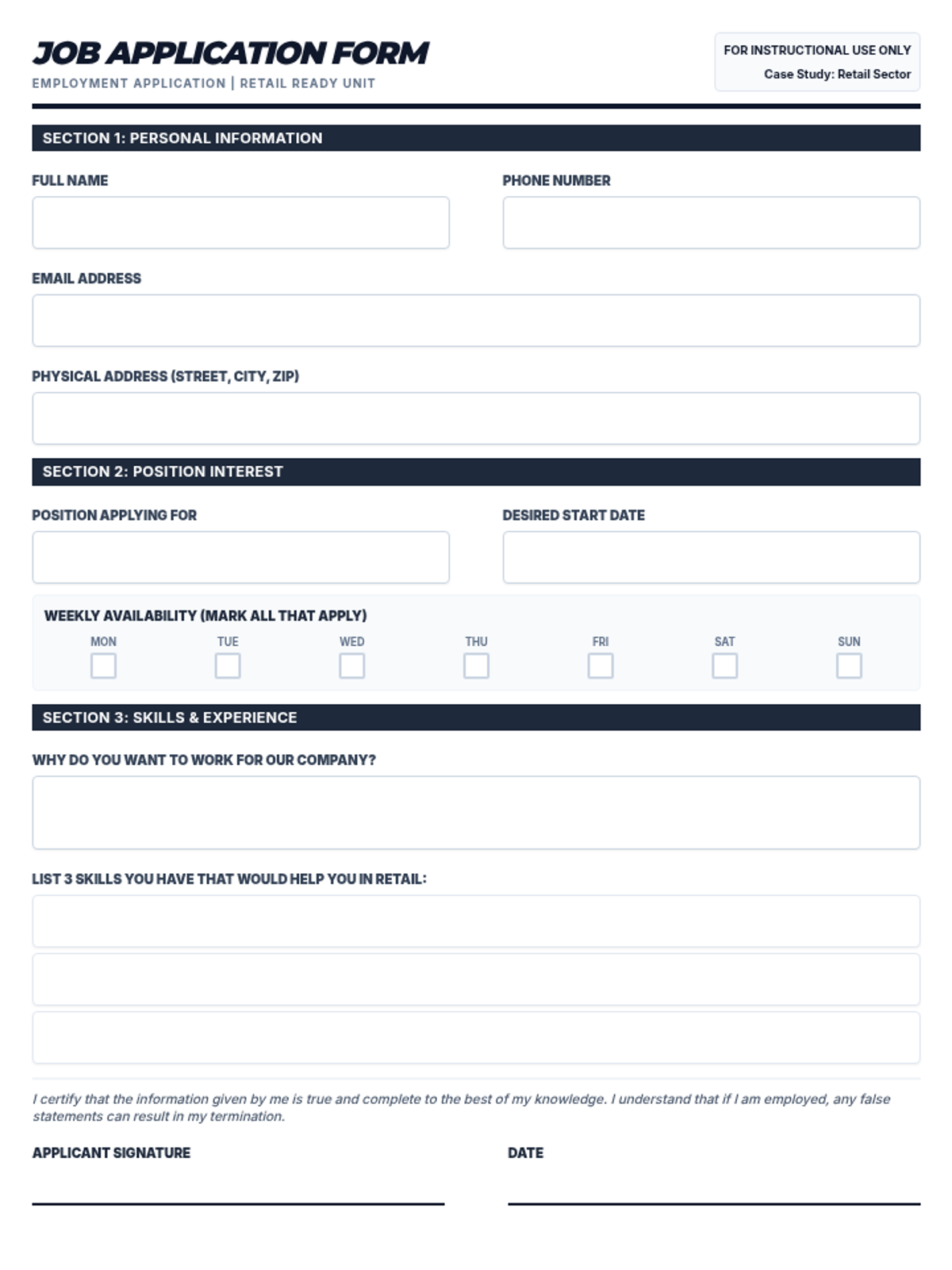
Students explore different retail roles, learn to read job descriptions, and practice completing a standard job application form with accuracy.
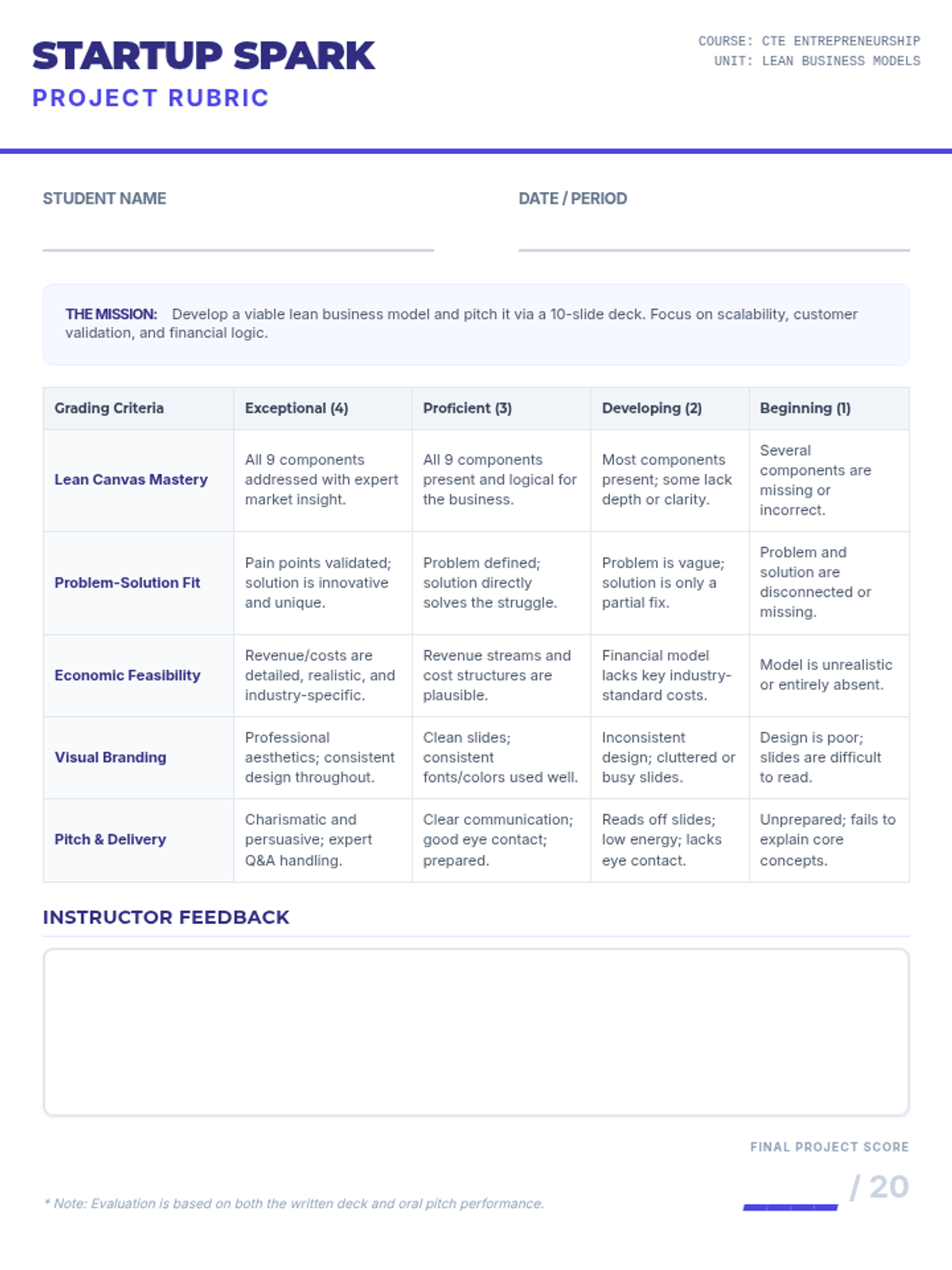
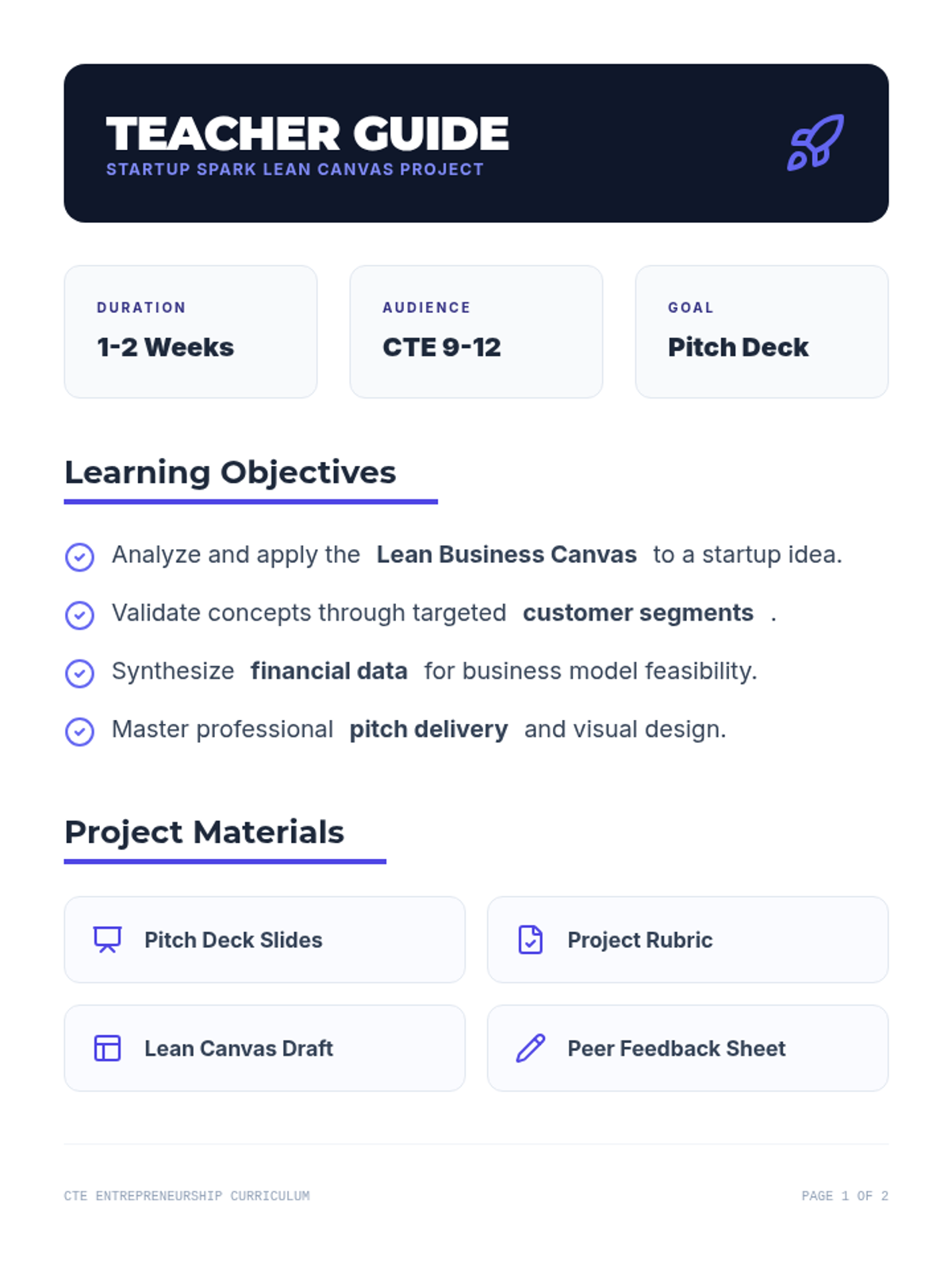
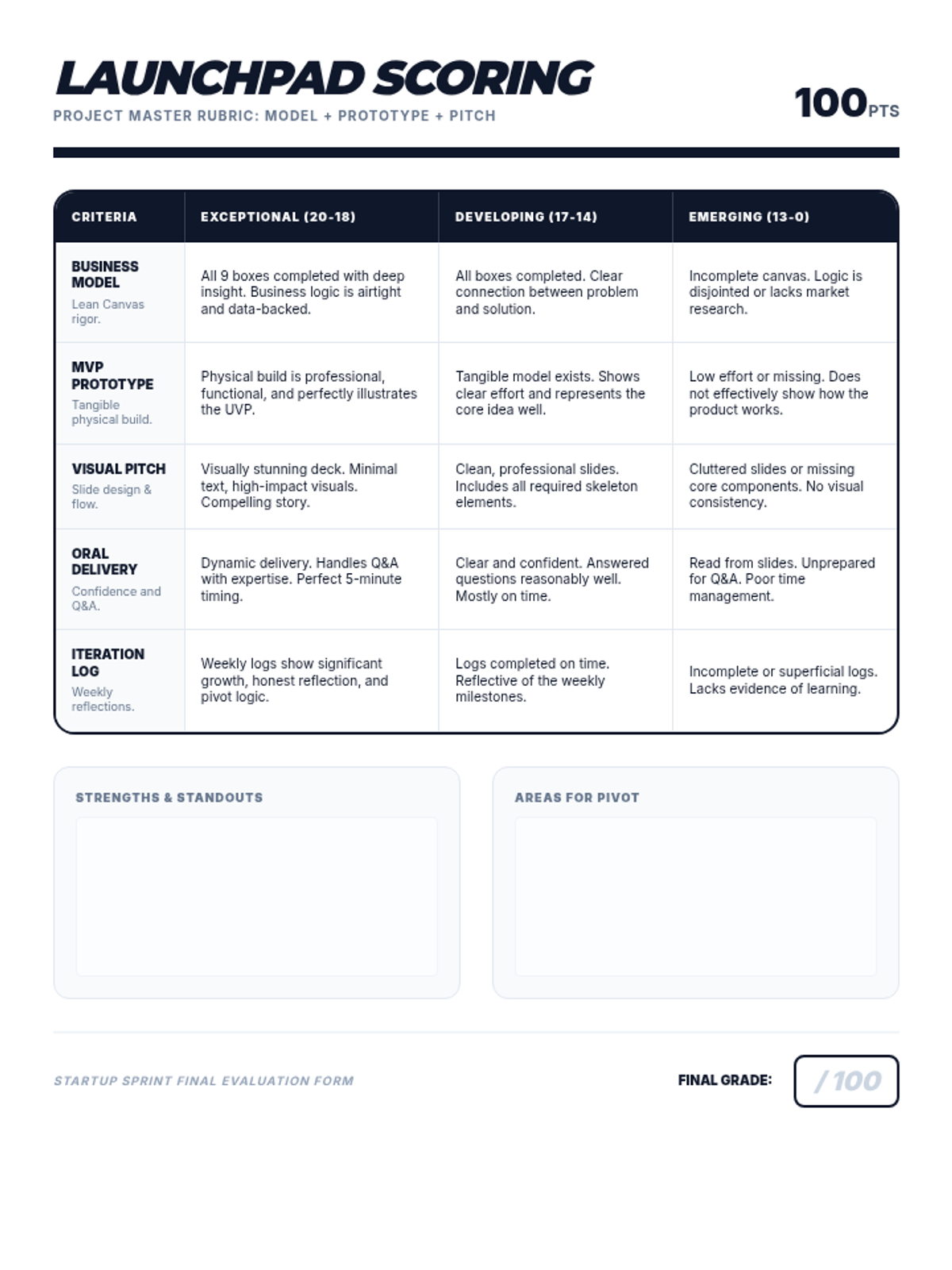
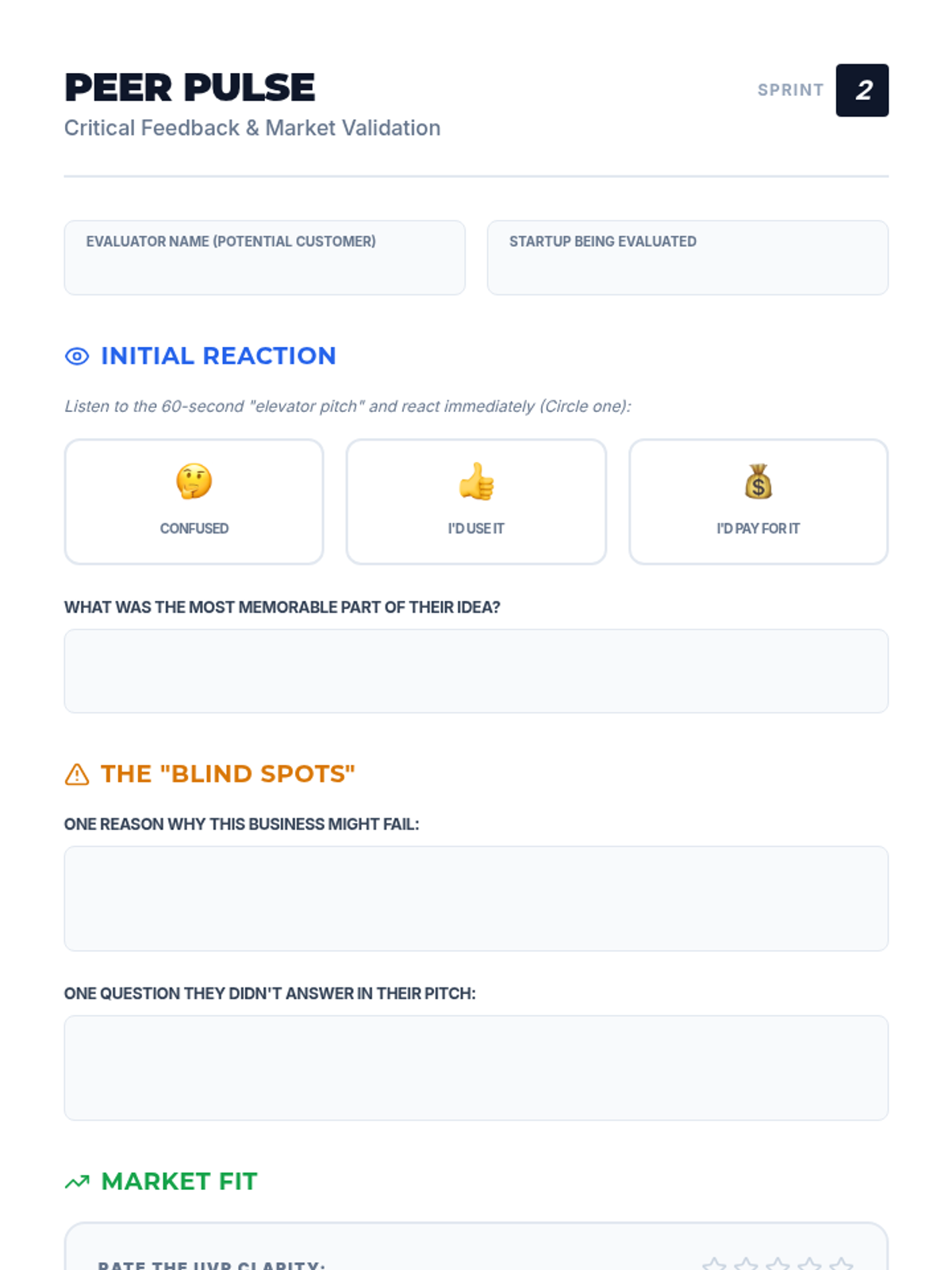
A project-based lesson where students develop a lean business model for a new venture, culminating in a 10-slide pitch deck and evaluated by a professional rubric.
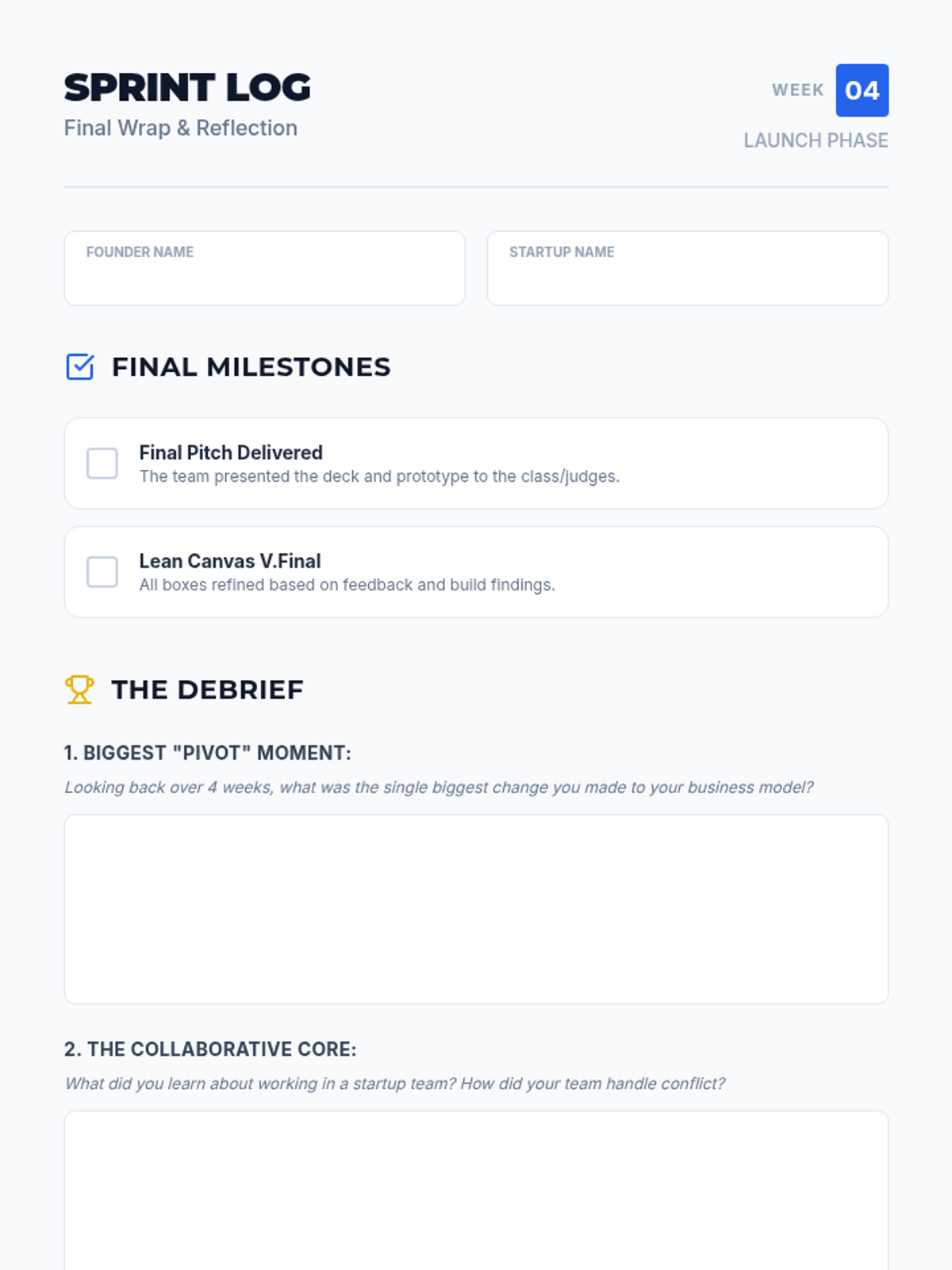
Final refinement of the business model and prototype, culminating in a professional pitch presentation and project reflection.
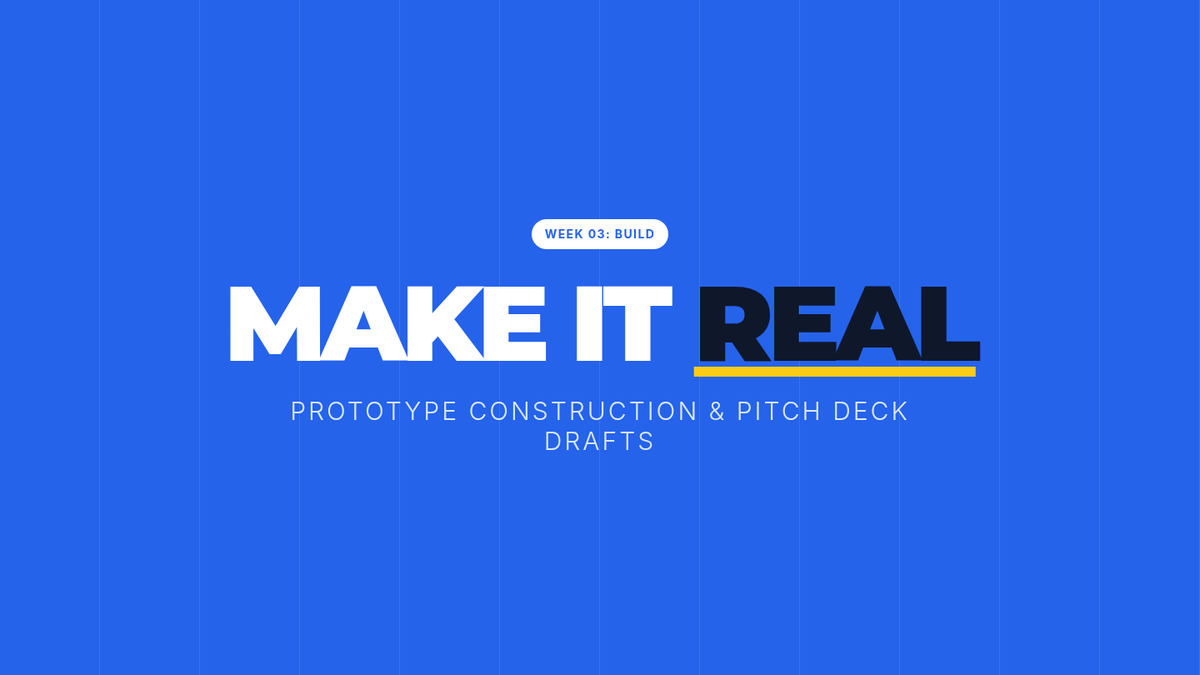
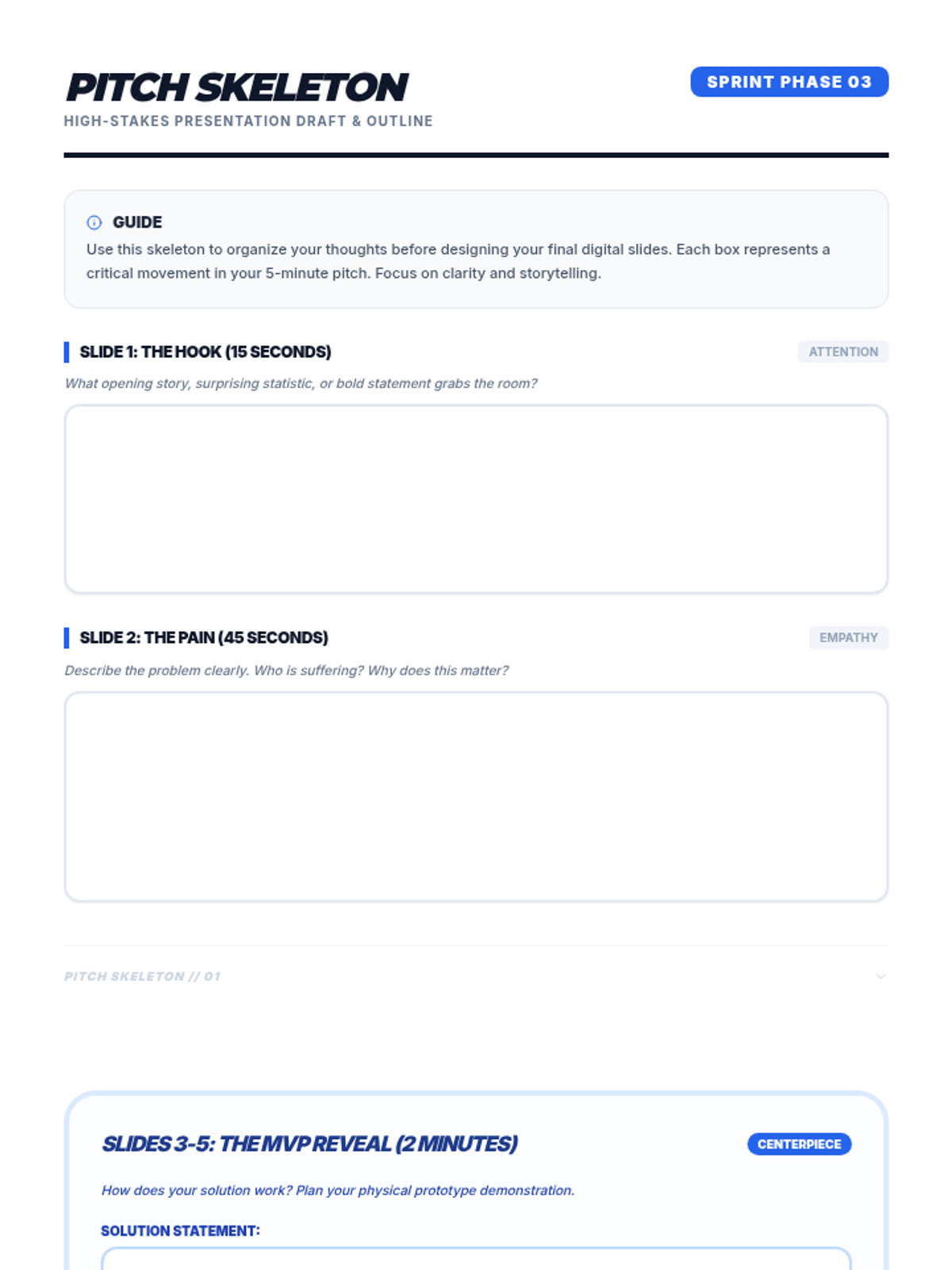
Focus on developing a tangible Minimum Viable Product (MVP) and drafting the initial pitch deck structure.
Deep dive into customer segments, marketing channels, and the financial foundations of the business model.
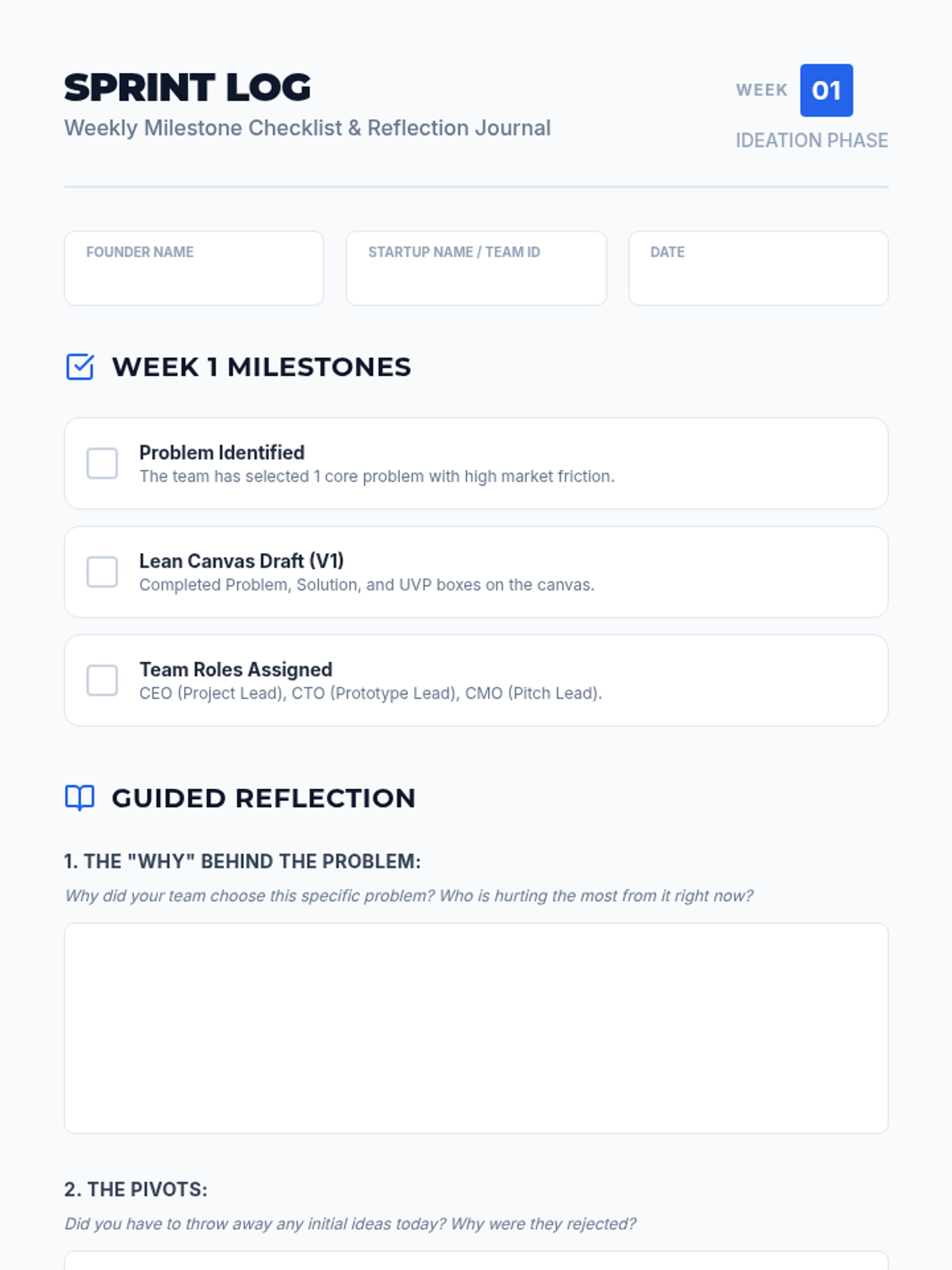
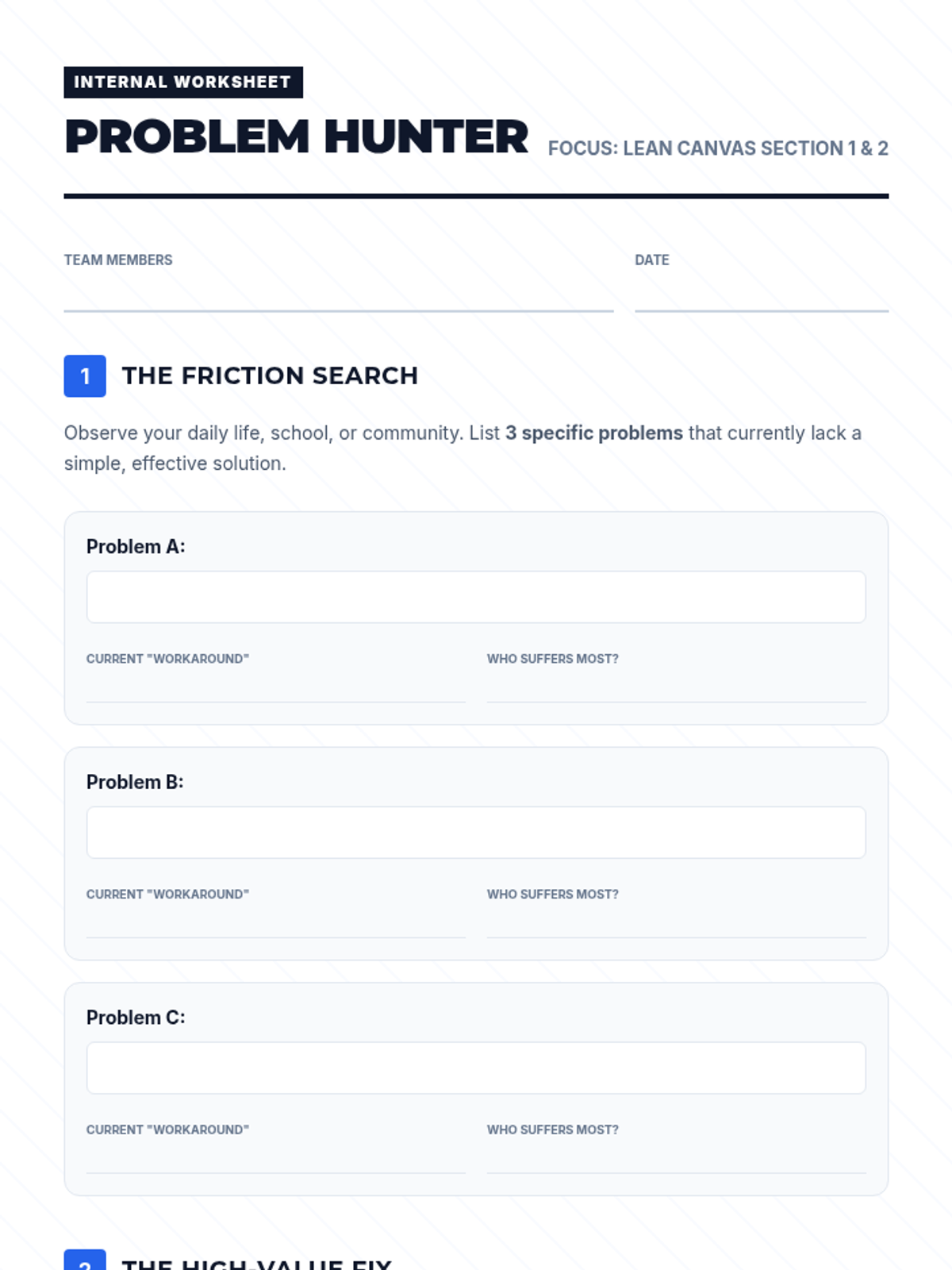
Introduction to the Lean Canvas, project expectations, and the ideation process focusing on identifying high-value problems and innovative solutions.
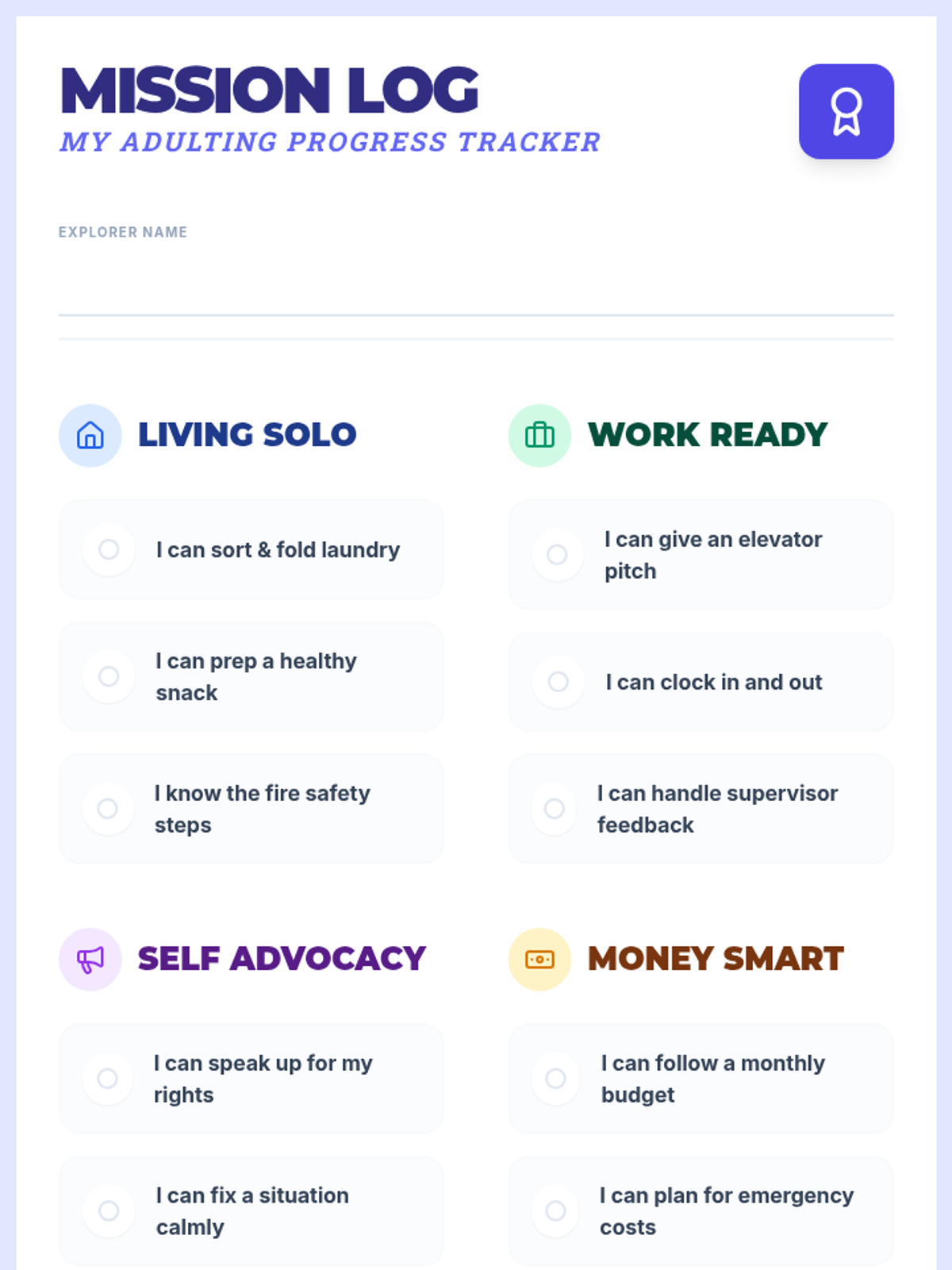
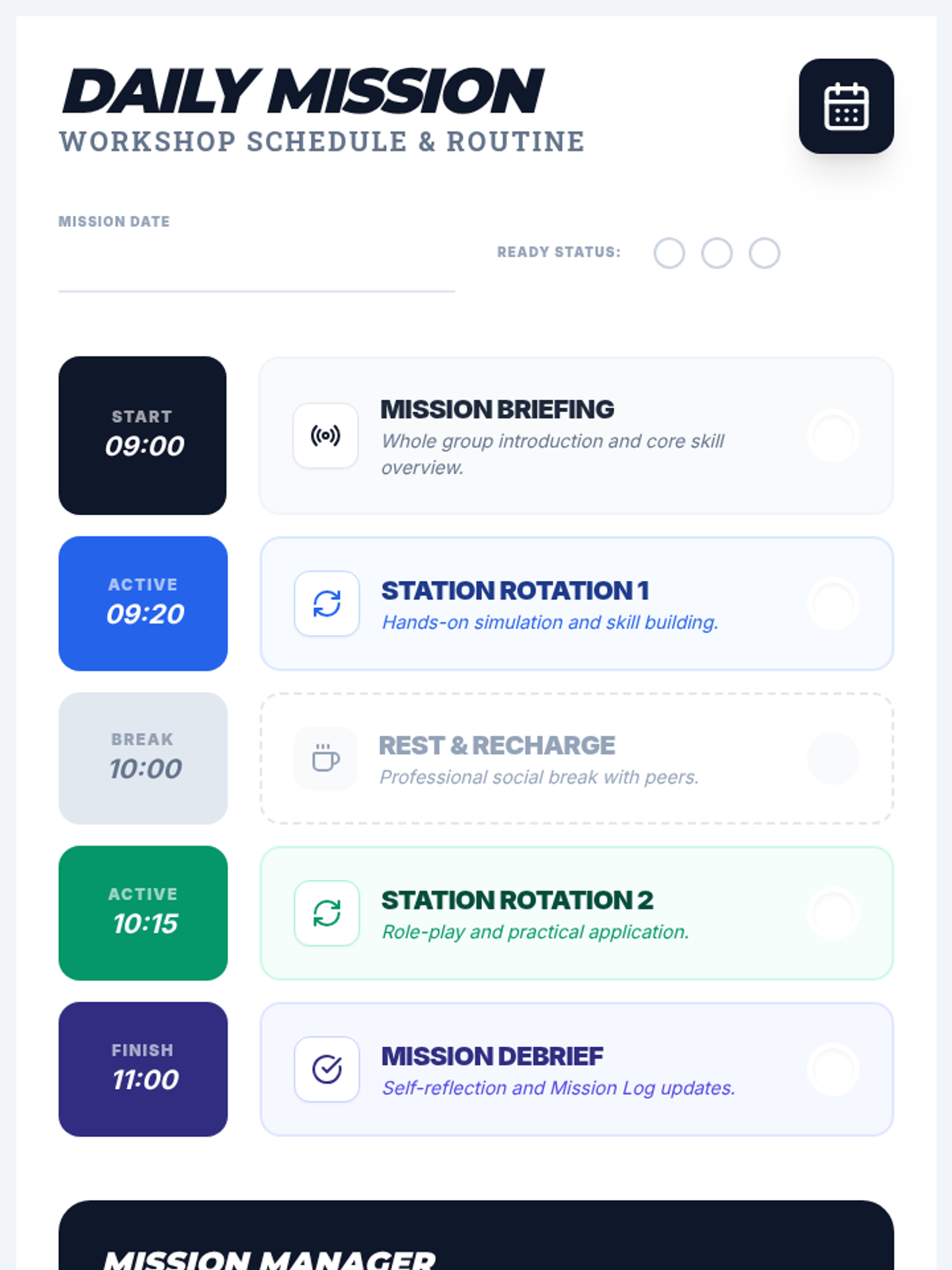
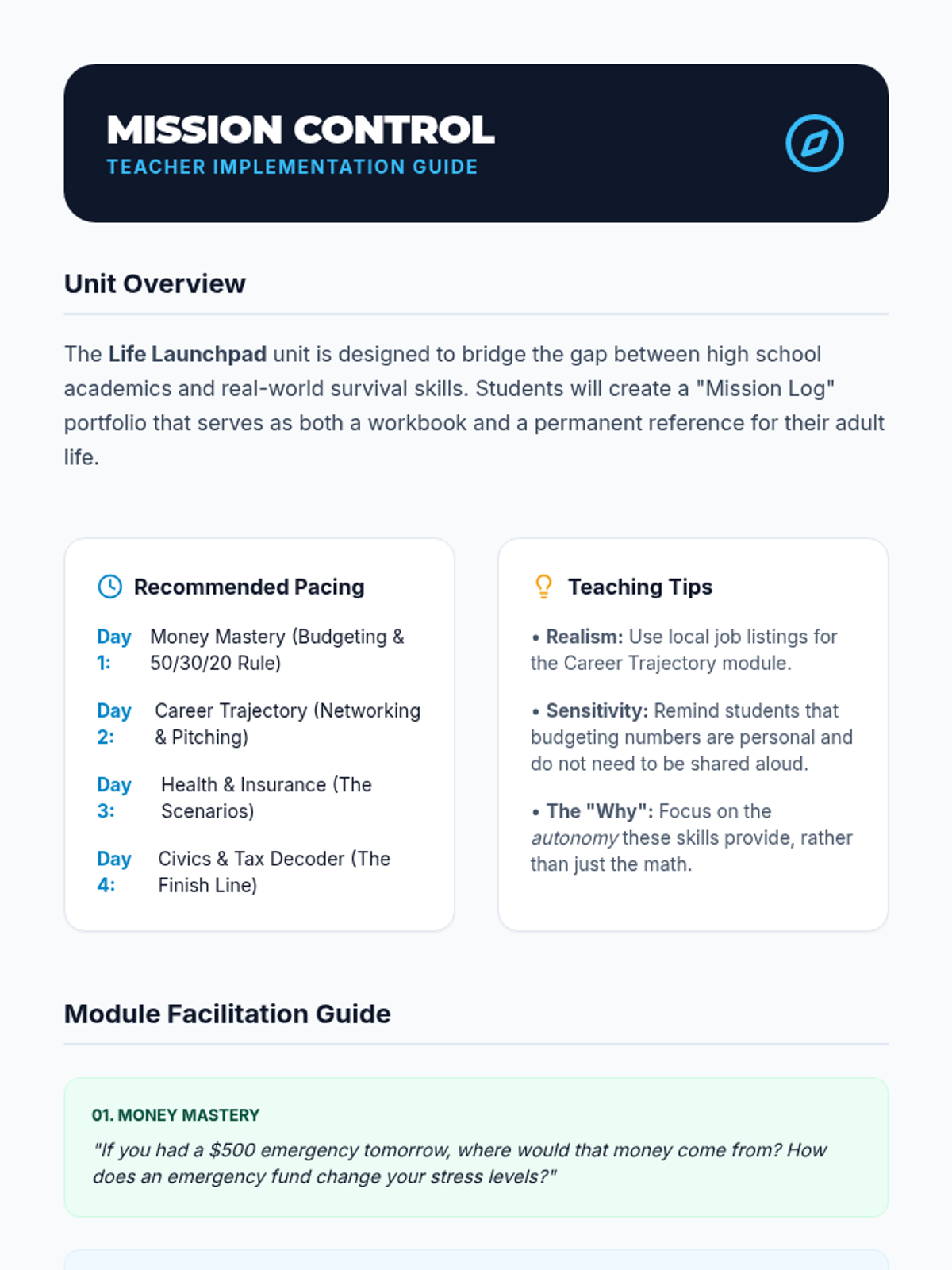
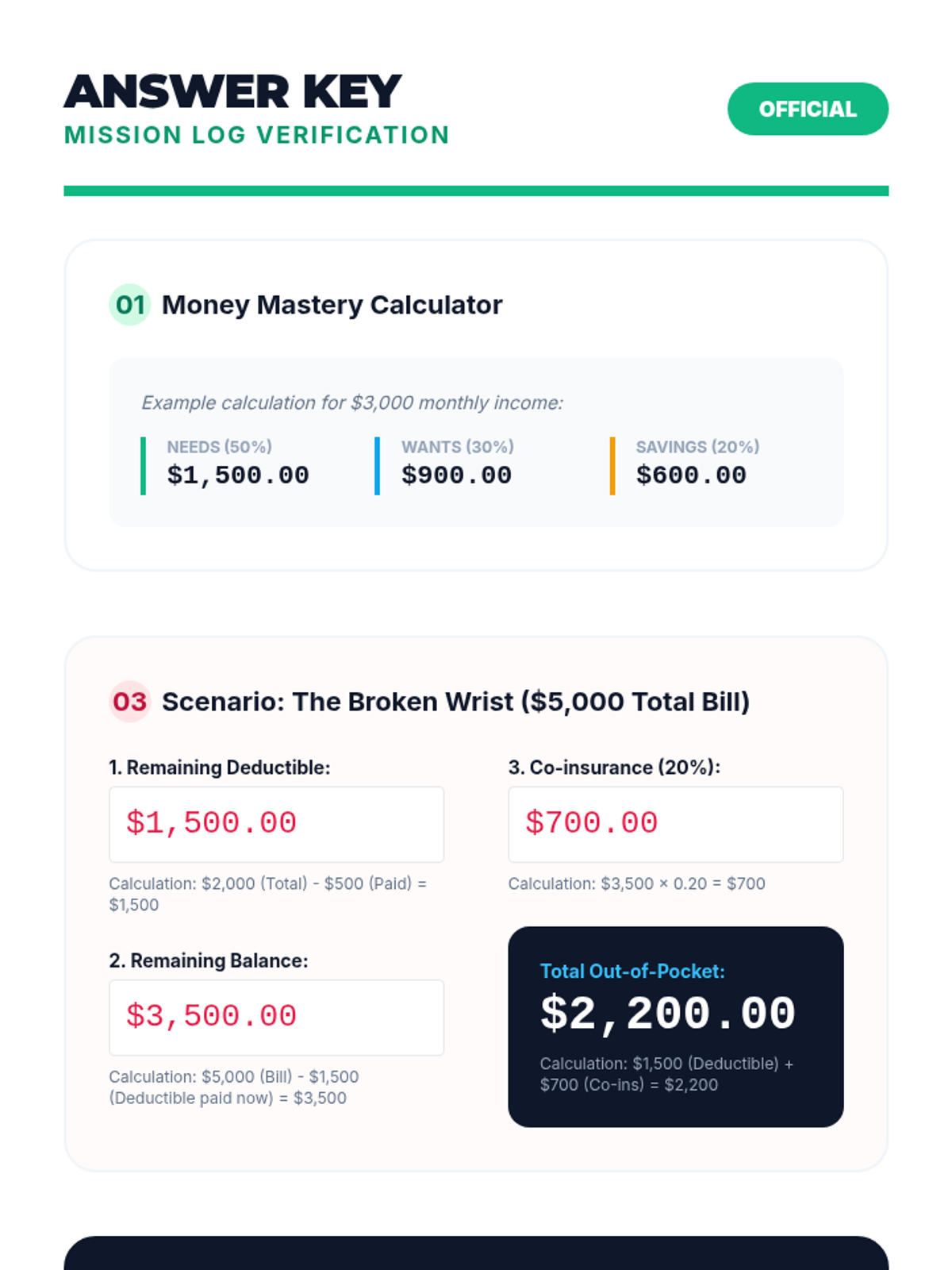
A comprehensive transition-to-adulthood curriculum covering financial literacy, career planning, health navigation, and civic engagement. Students build a personal 'mission log' portfolio to prepare for independent life.
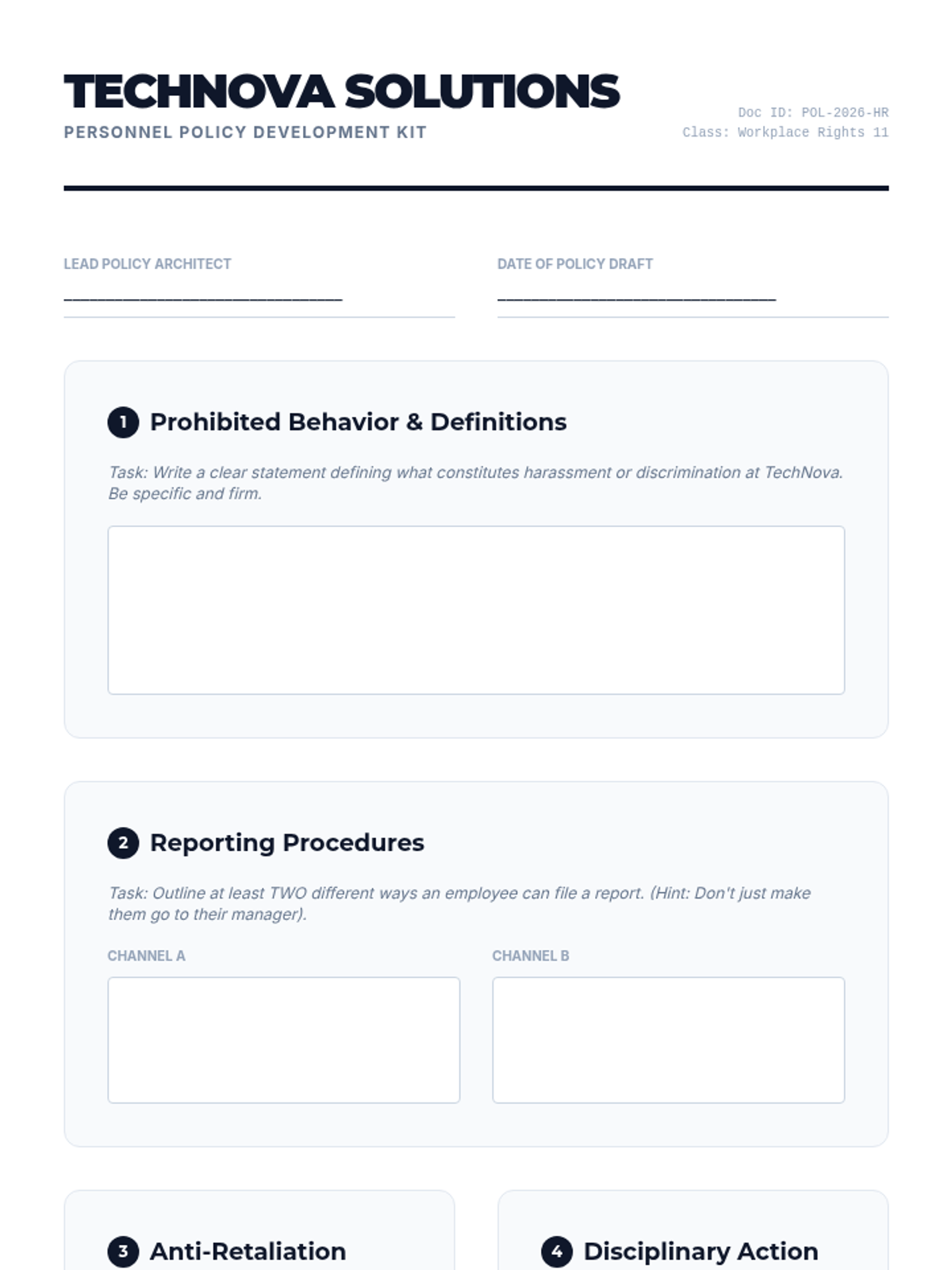
Students synthesize their learning by drafting a professional anti-harassment policy for a hypothetical company, focusing on clear definitions and effective reporting channels.
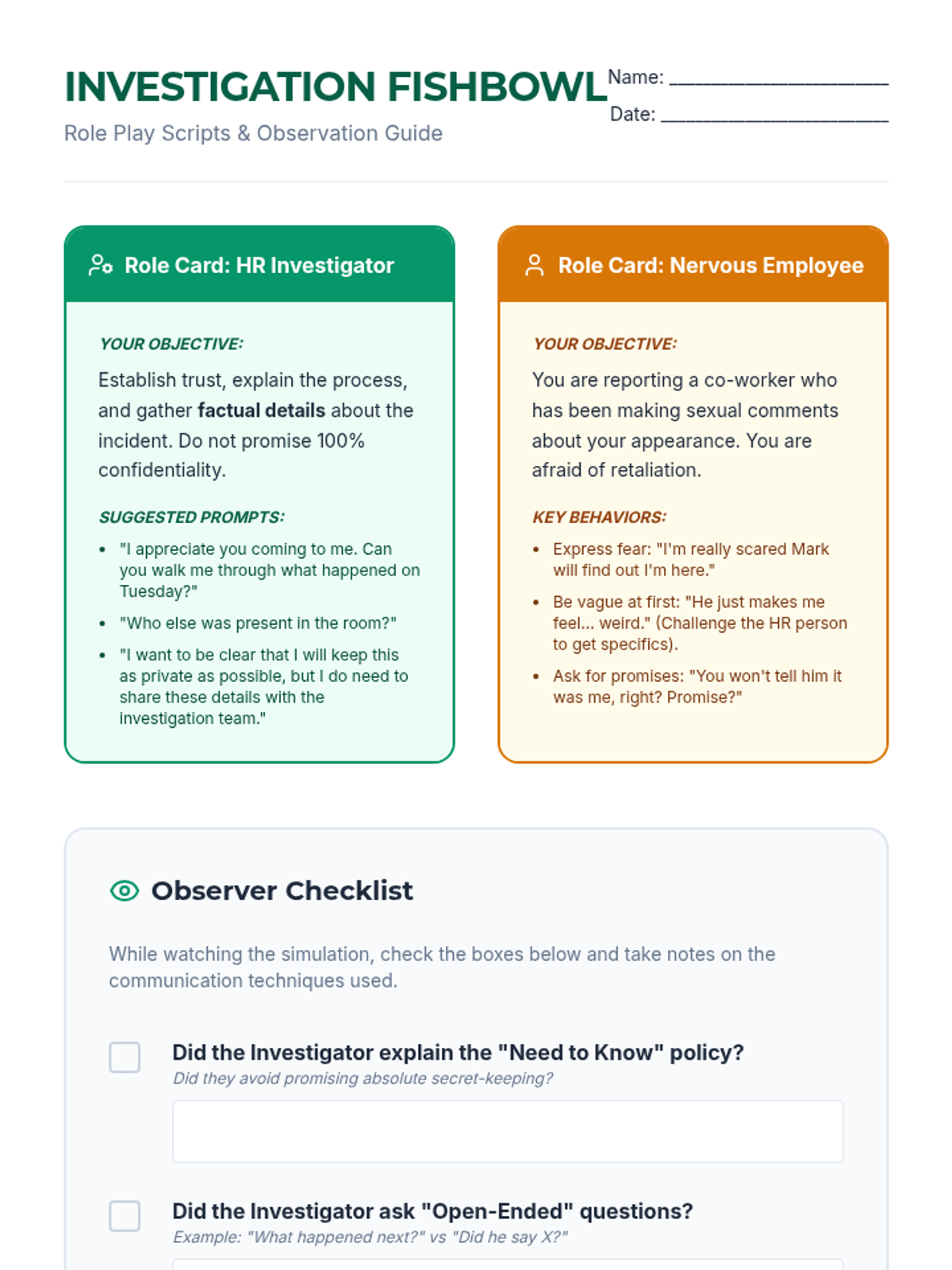
Through a fishbowl simulation of an HR intake interview, students observe the formal investigation process and identify best practices for professional communication and confidentiality.
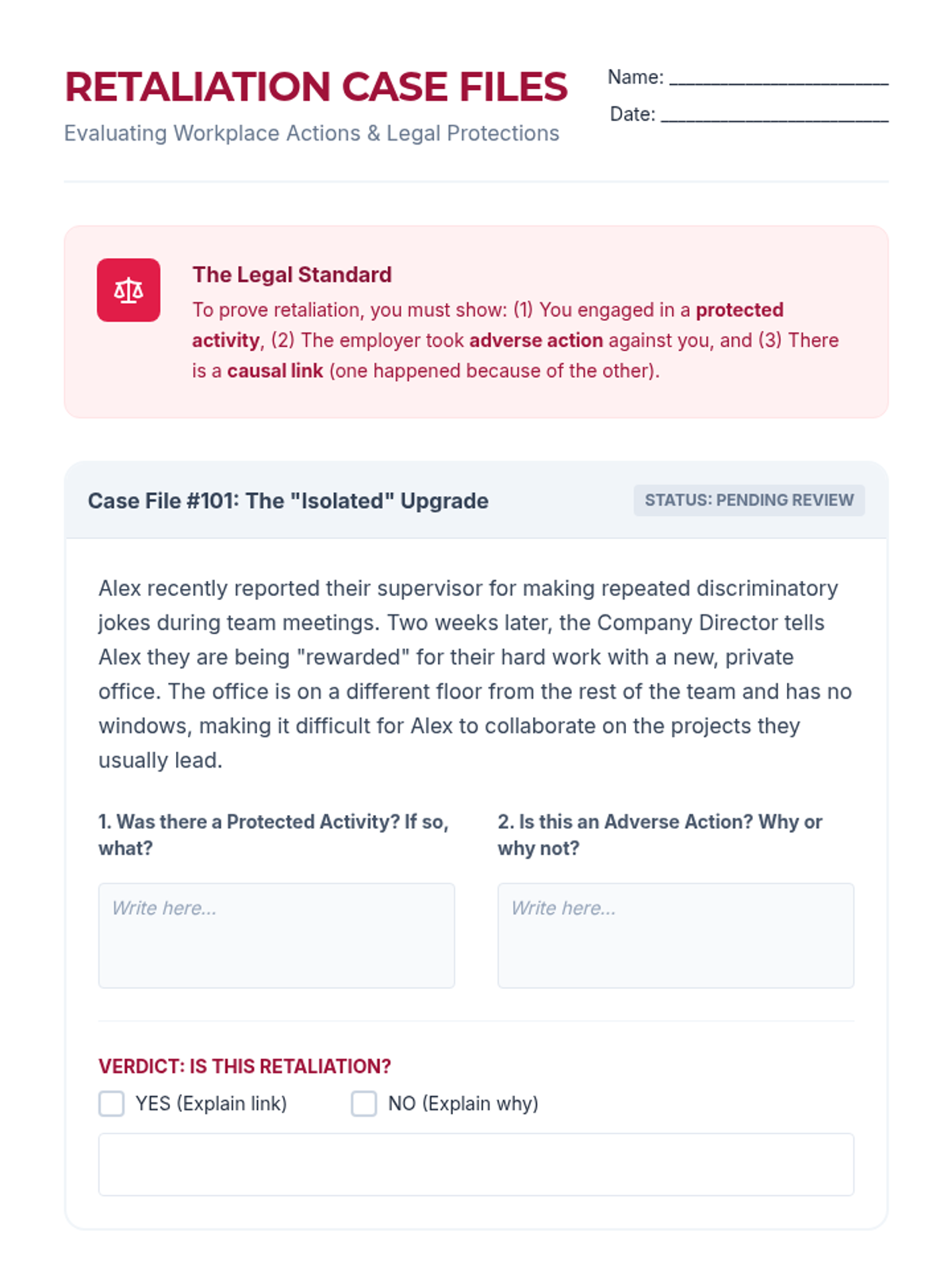
Students investigate retaliation and whistleblower protections, learning to identify subtle forms of adverse action and the legal safeguards that protect those who speak up.
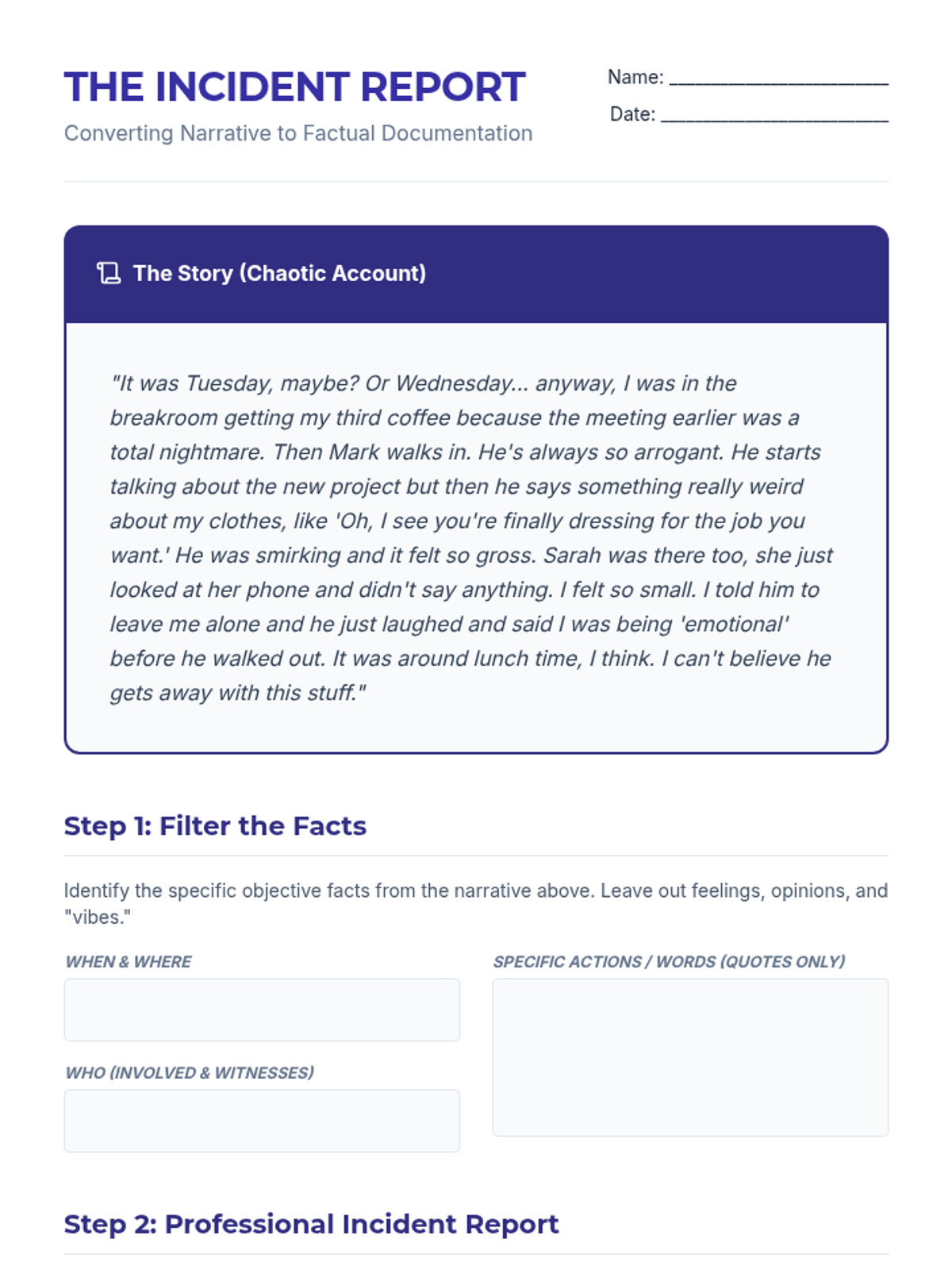
This lesson maps the process of formal reporting, teaching students how to distinguish between internal HR paths and external legal filings while practicing objective documentation.
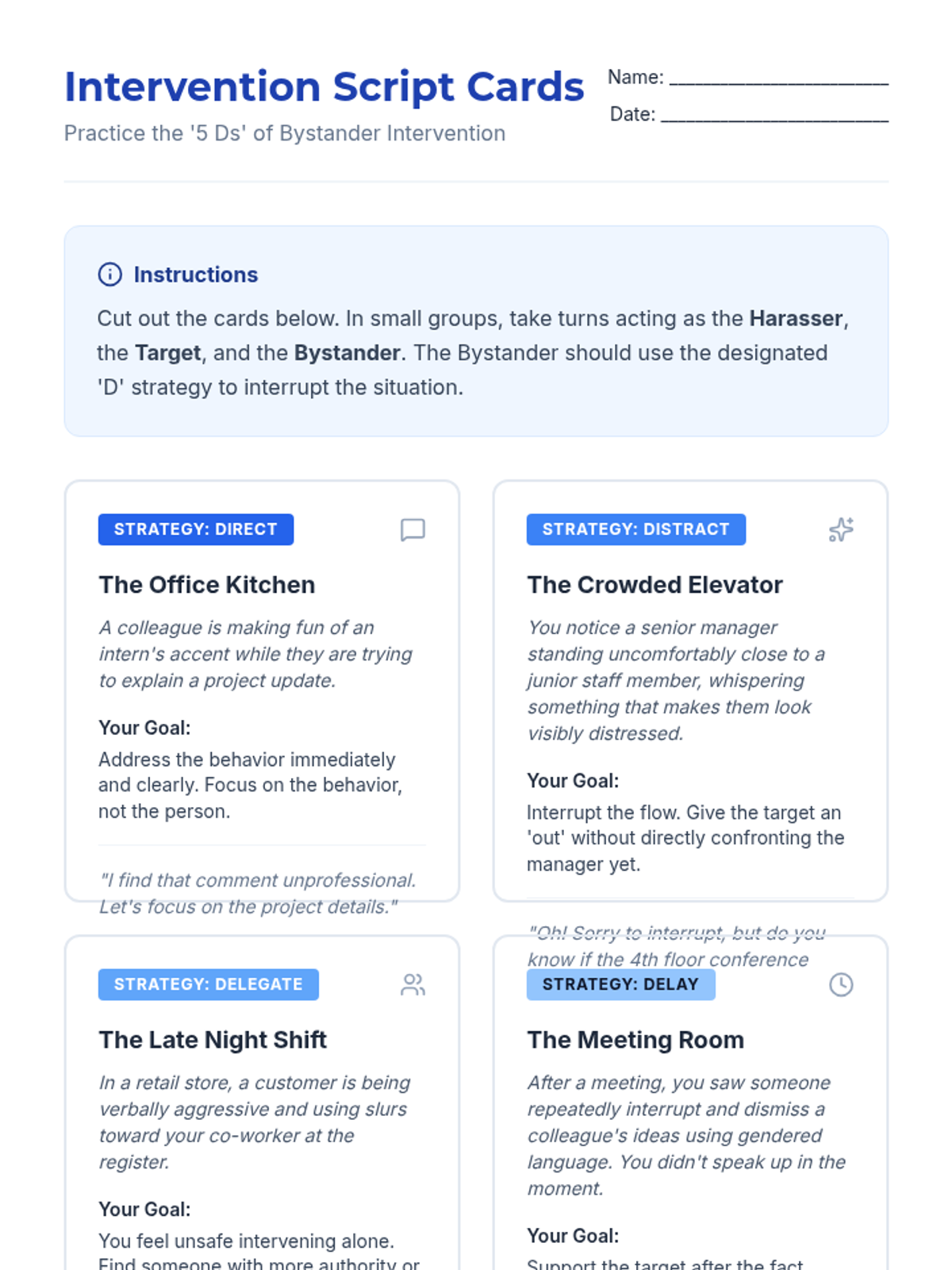
Students learn and practice the '5 Ds' of bystander intervention (Direct, Distract, Delegate, Delay, Document) to safely address workplace harassment.
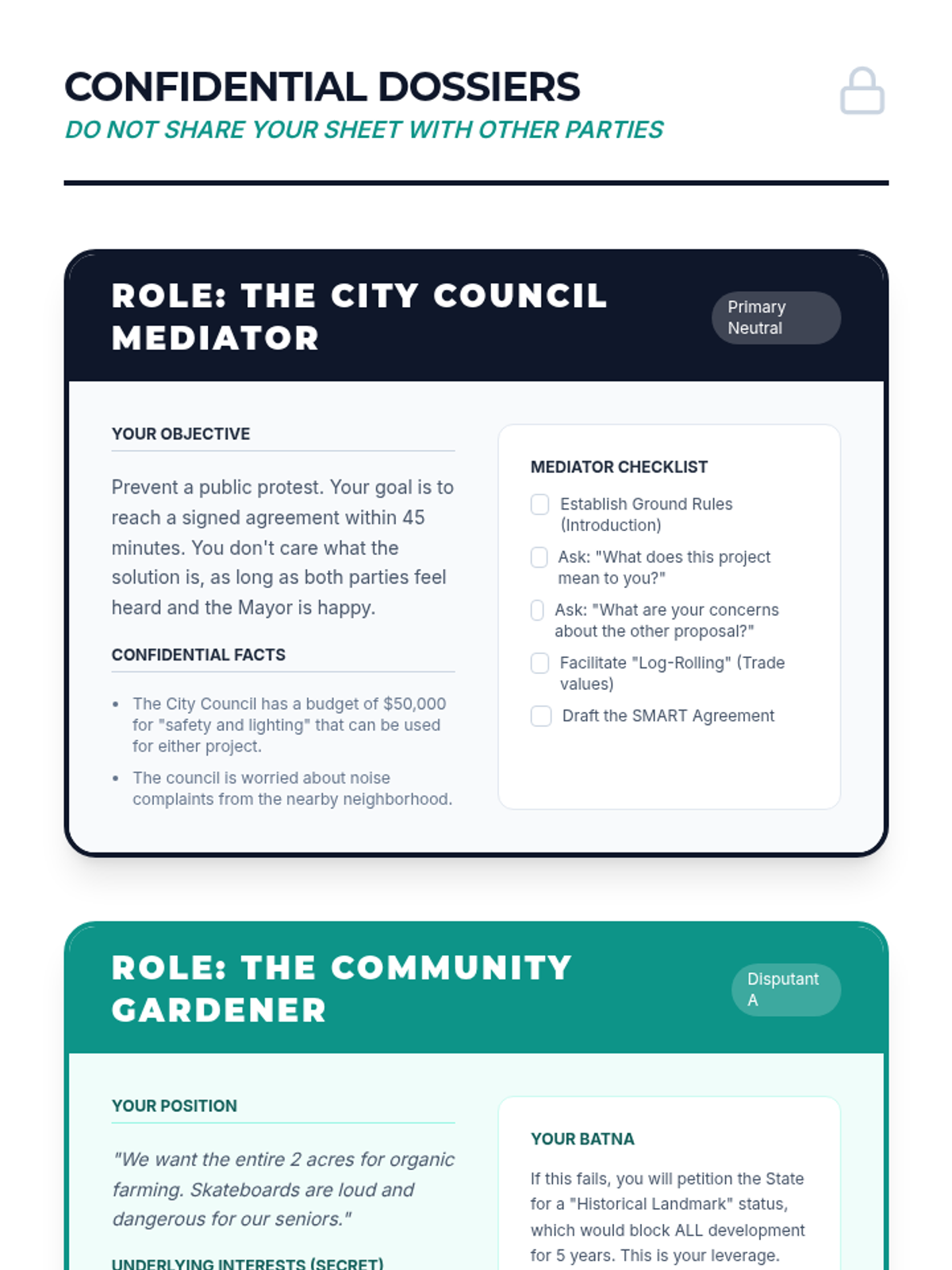
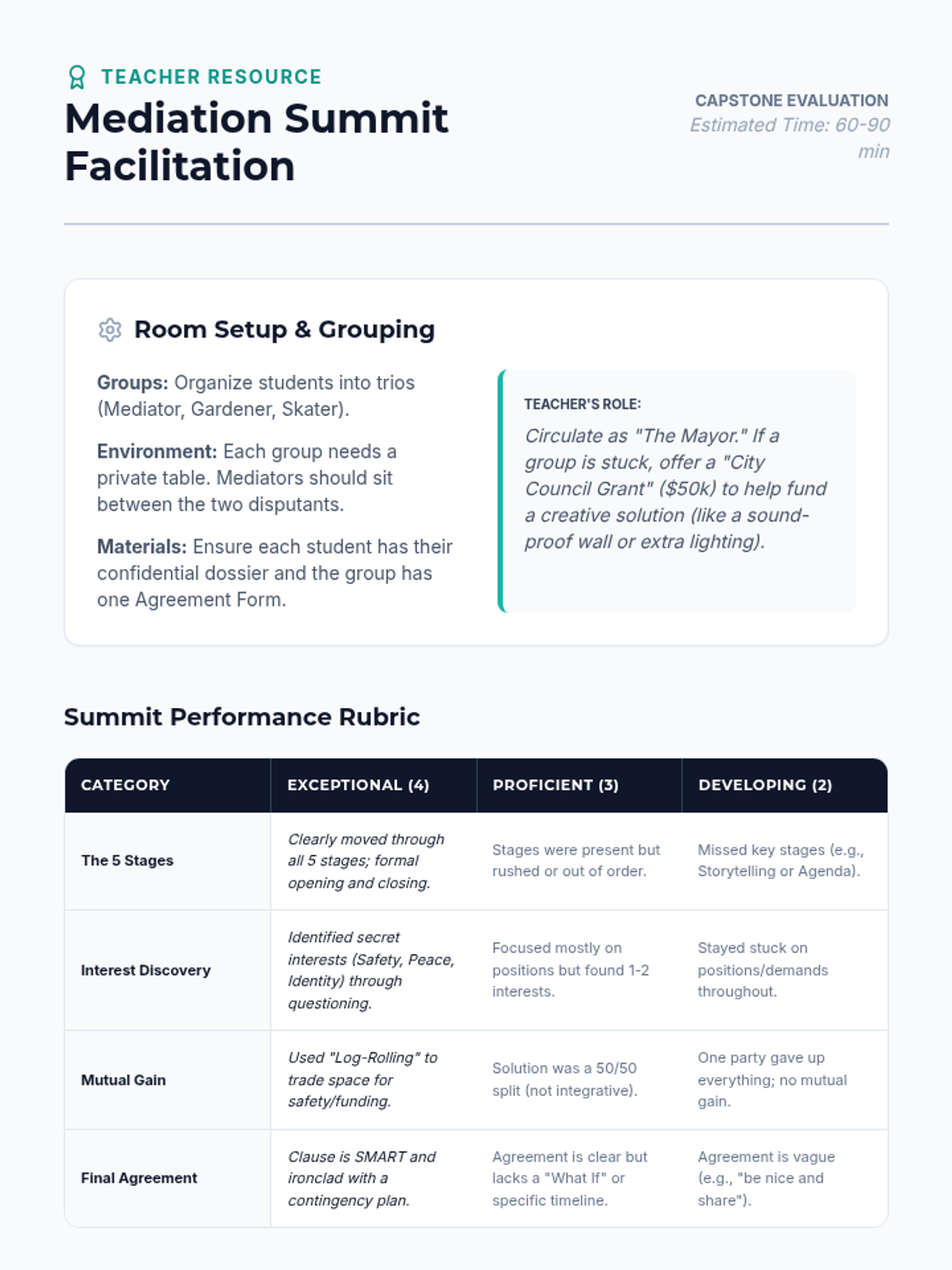
Students assume roles of mediators and disputants in a complex, multi-party dispute scenario (e.g., a land use dispute or school policy change). Mediators must facilitate the process, uncover interests, help generate options, and finalize a written agreement. The lesson focuses on synthesizing all previous frameworks into a cohesive professional performance.
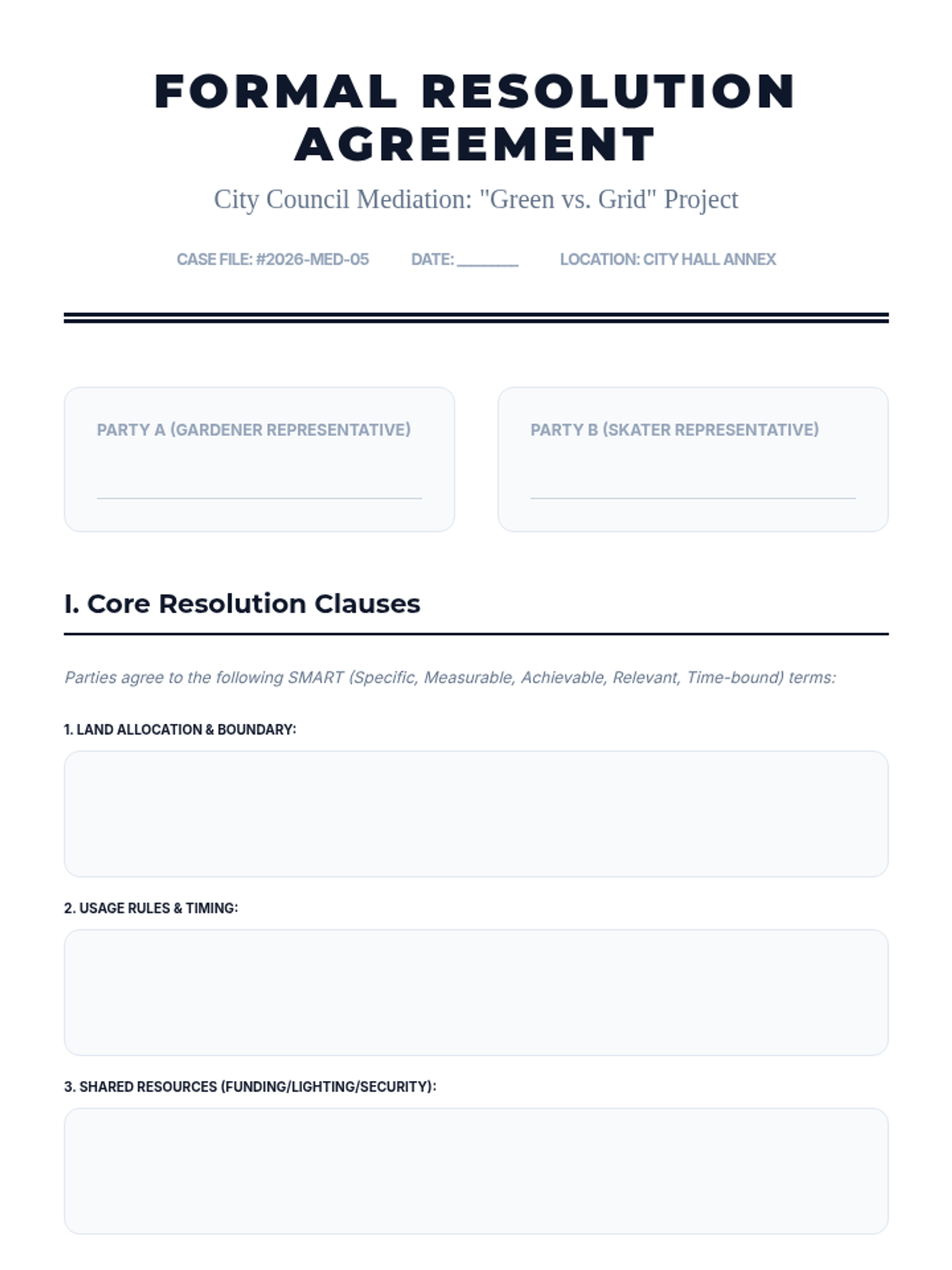
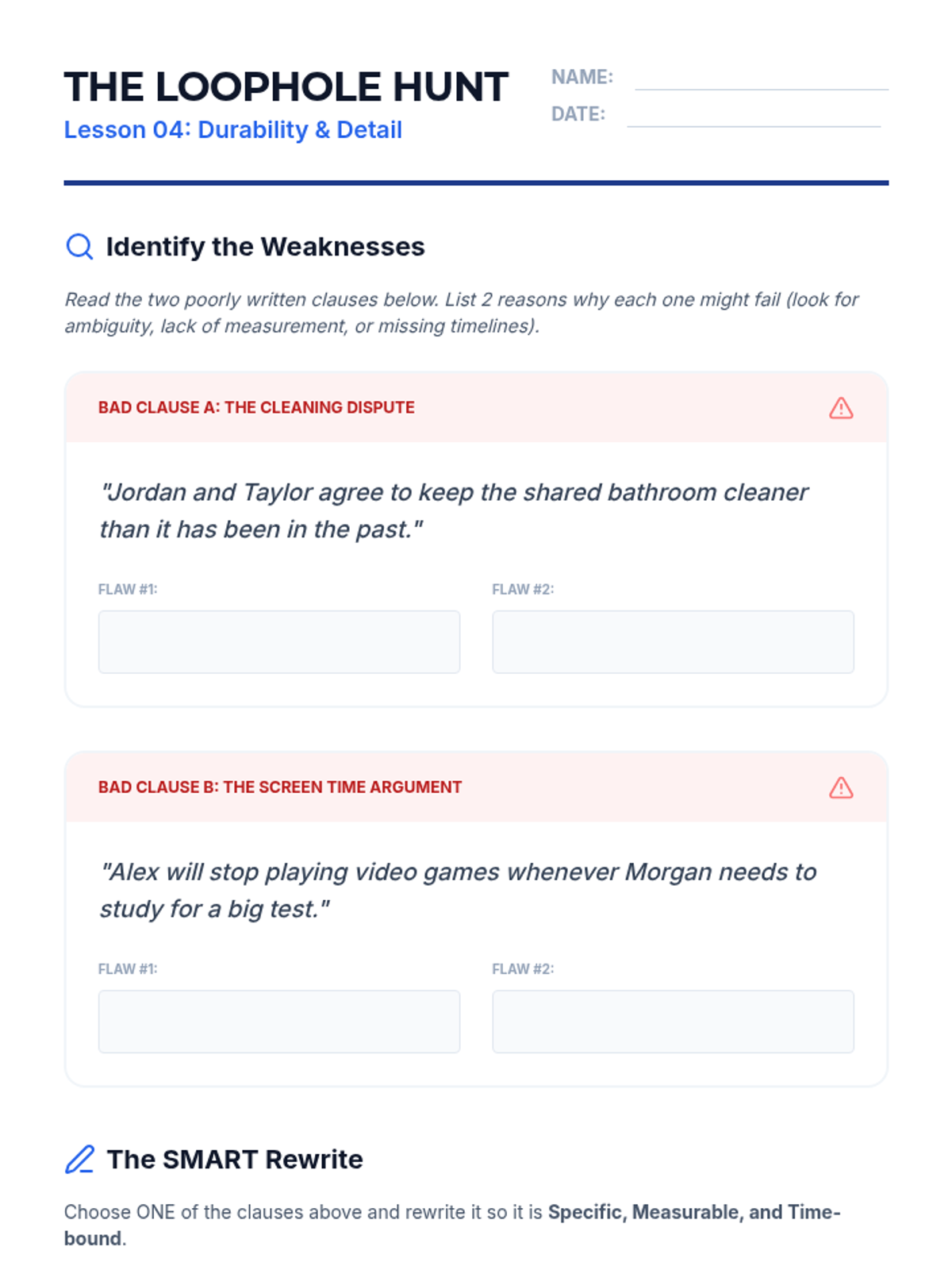
Resolving the conflict is only half the battle; writing a durable agreement is the rest. Students learn the components of a SMART agreement (Specific, Measurable, Achievable, Relevant, Time-bound) in a conflict context. They review failed contracts or treaties to identify loopholes and ambiguity, then practice drafting ironclad resolution clauses.
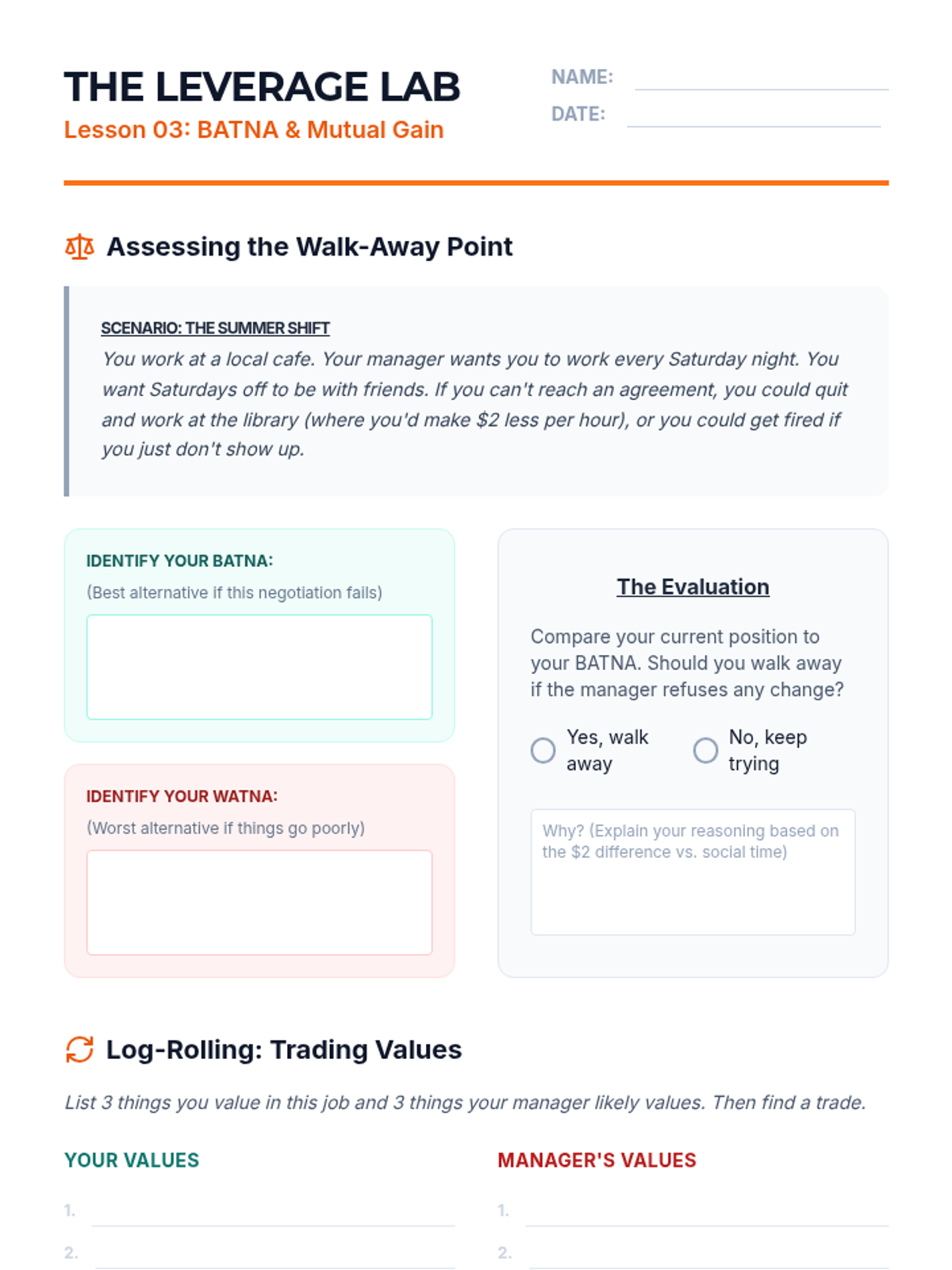
Students practice brainstorming techniques designed to break deadlocks. They learn about BATNA (Best Alternative to a Negotiated Agreement) and WATNA (Worst Alternative) to assess leverage. The class engages in exercises to expand the 'pie' rather than just dividing it, finding creative solutions that satisfy multiple interests.
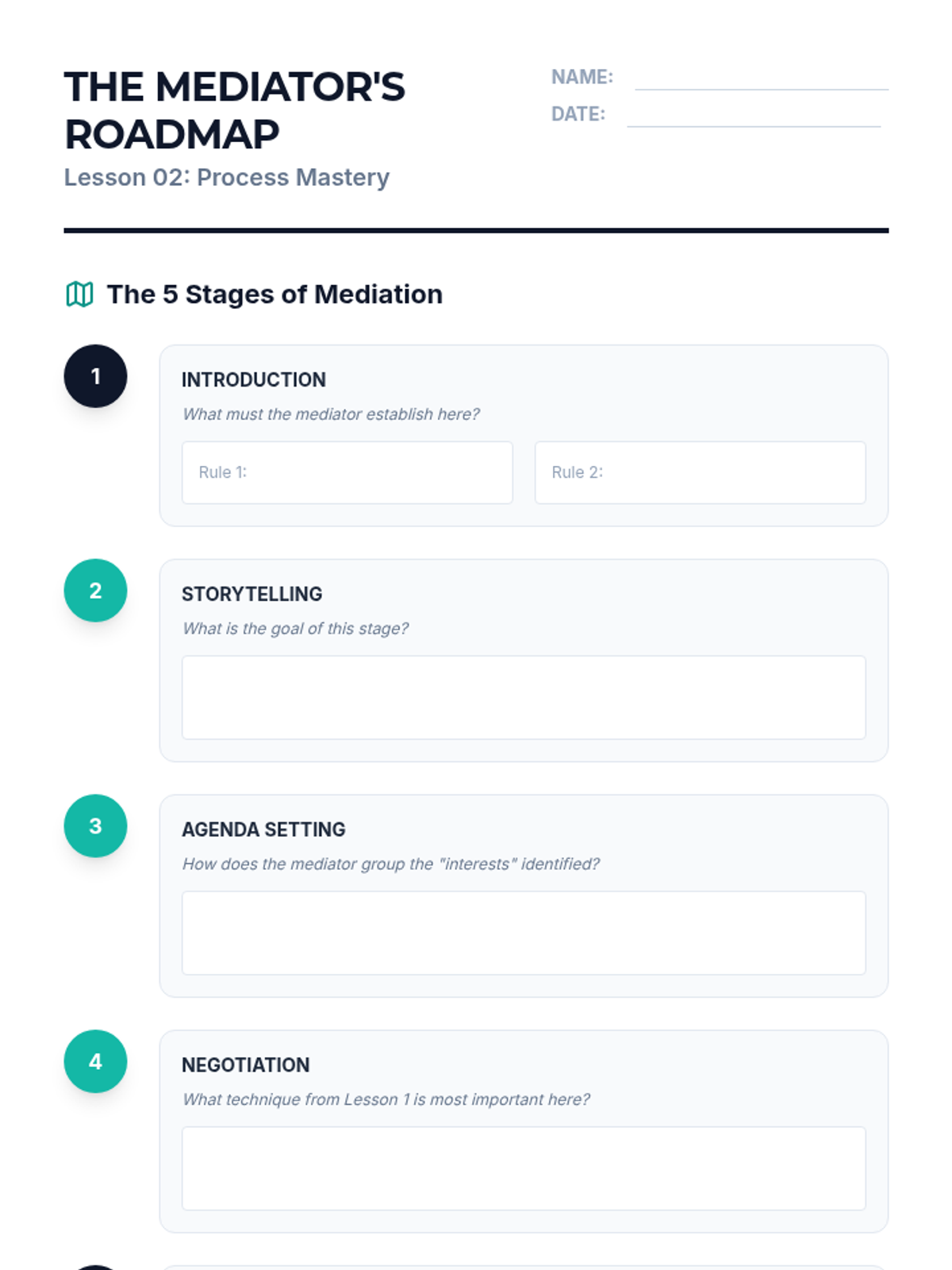
This lesson outlines the formal stages of mediation: Introduction, Storytelling, Agenda Setting, Negotiation, and Agreement. Students learn the procedural responsibilities of a mediator to maintain safety and order. They create visual flowcharts of the process to understand how to guide disputants from chaos to order.
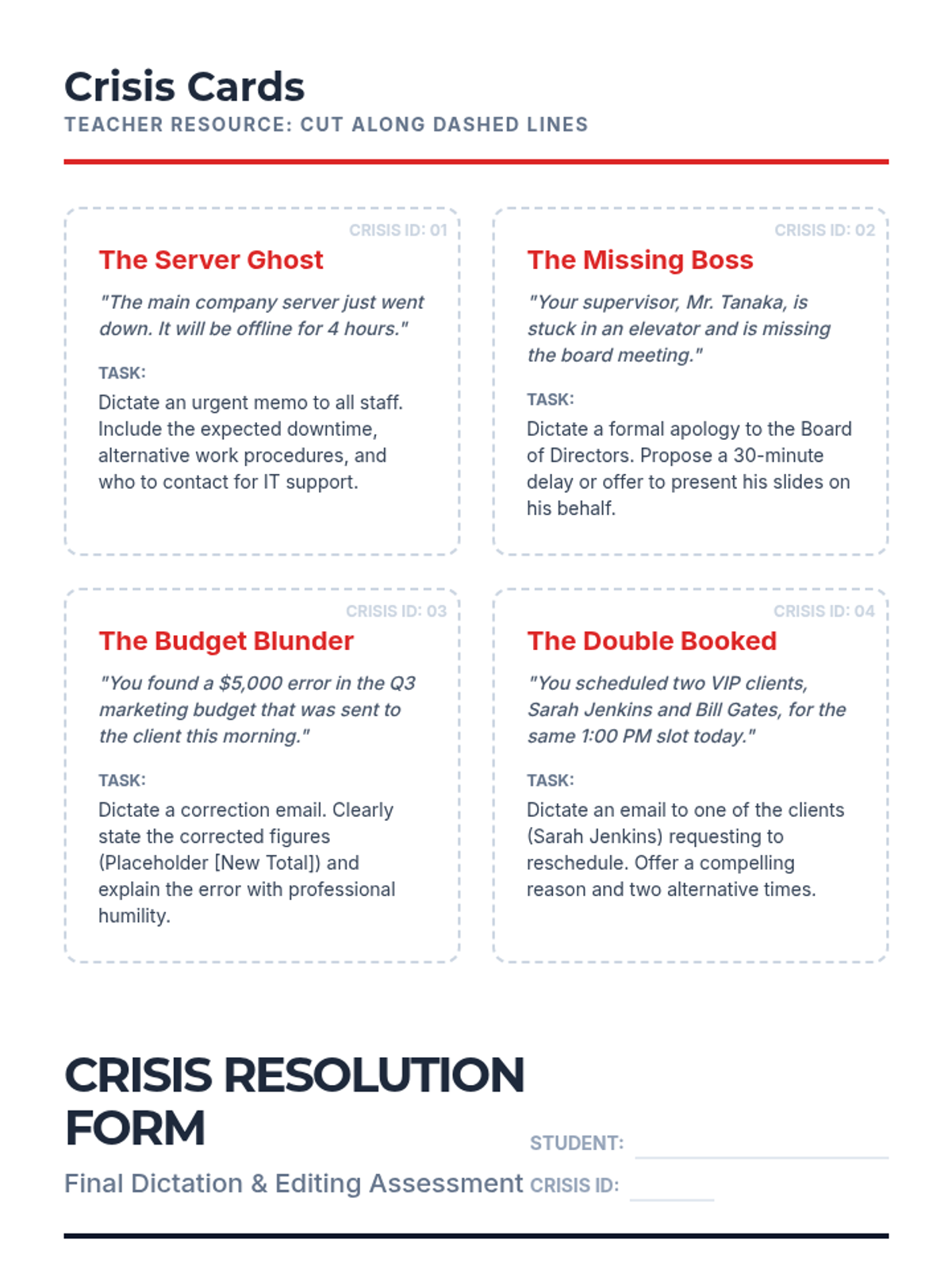
In this final challenge, students draw a random 'workplace crisis' card and must use their dictation and editing skills to resolve it within a tight time limit.
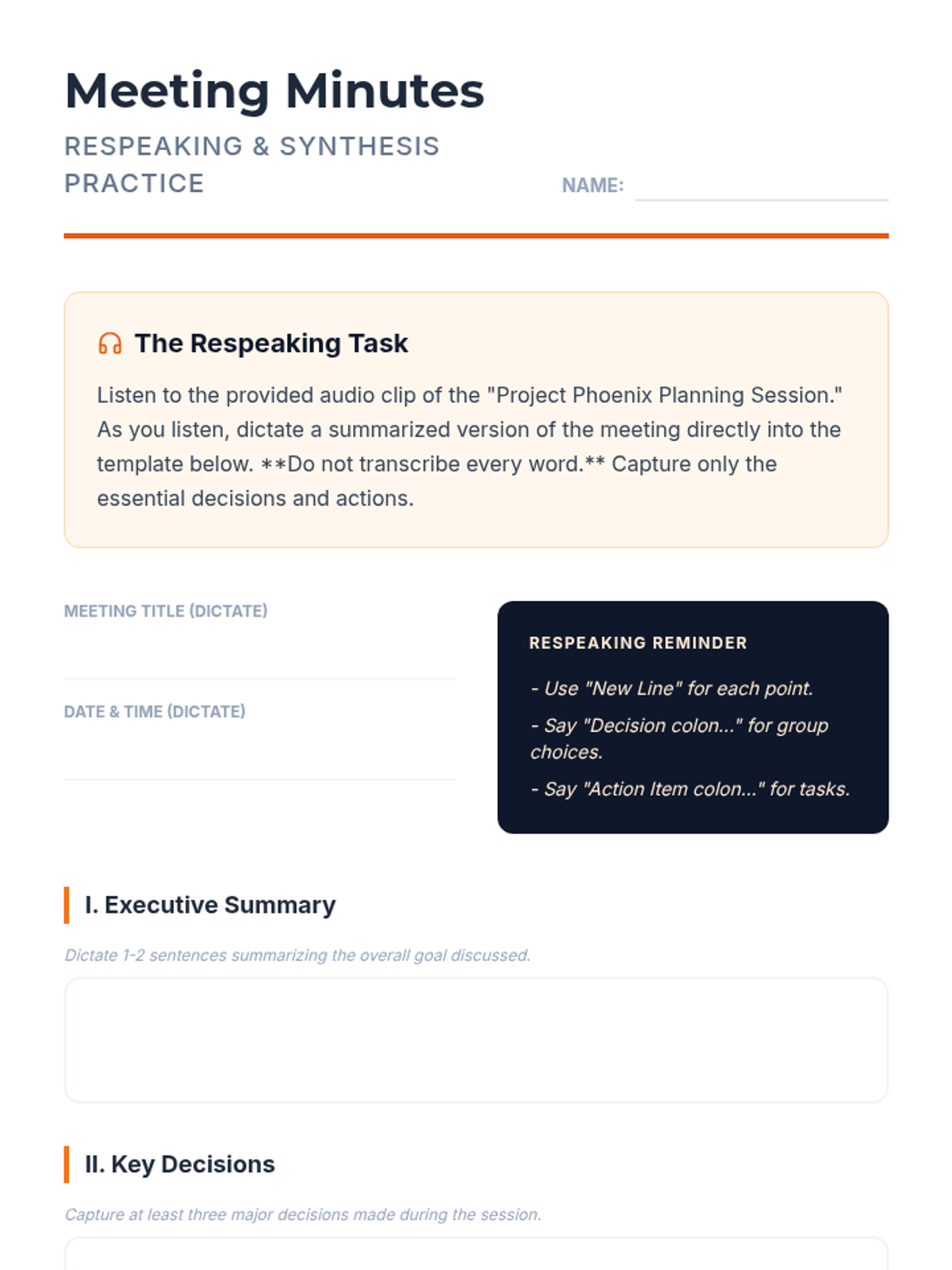
Students practice 'respeaking'—listening to a recorded audio clip and simultaneously dictating a summary into software. This focuses on summarization and information synthesis.
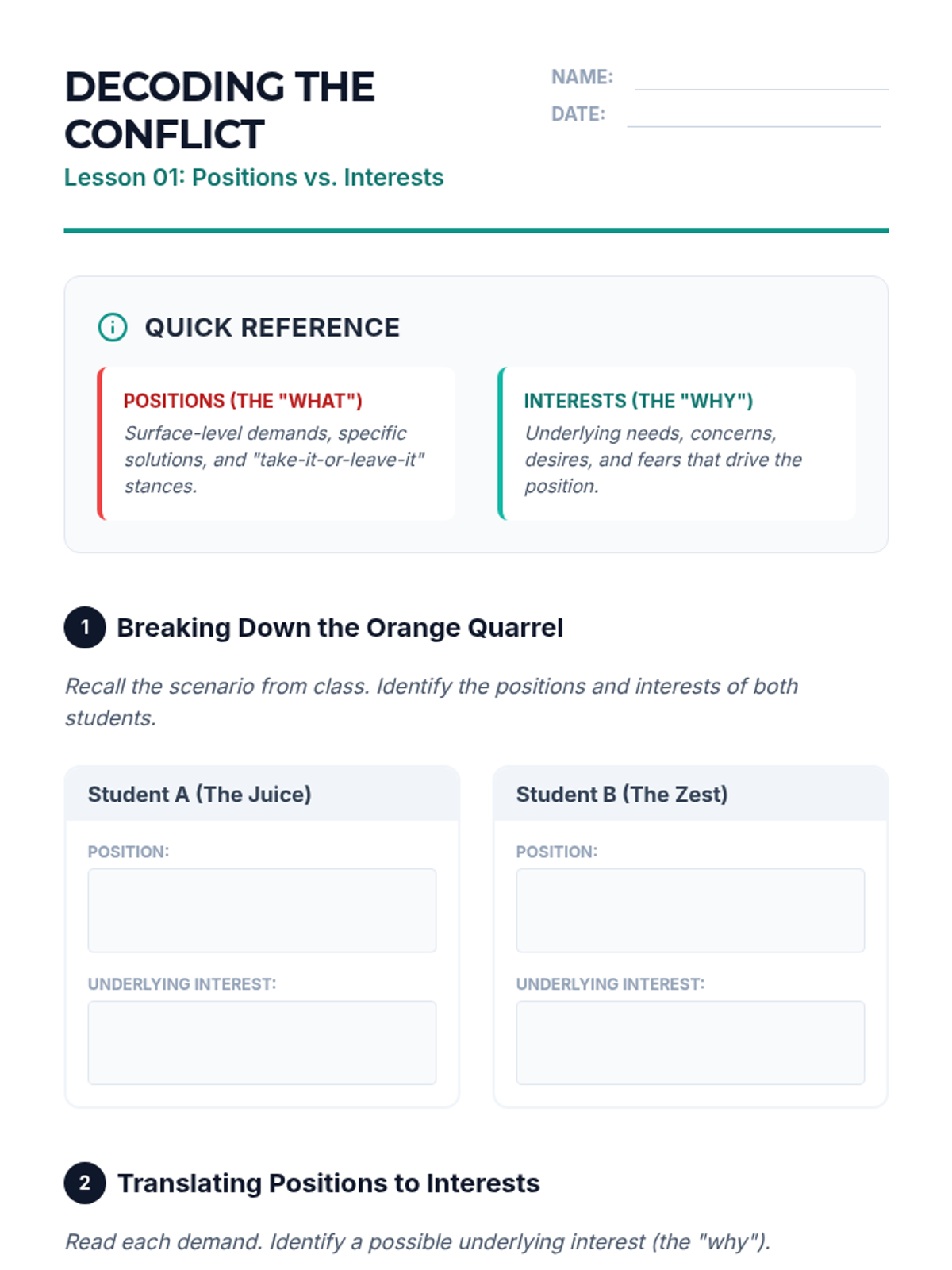
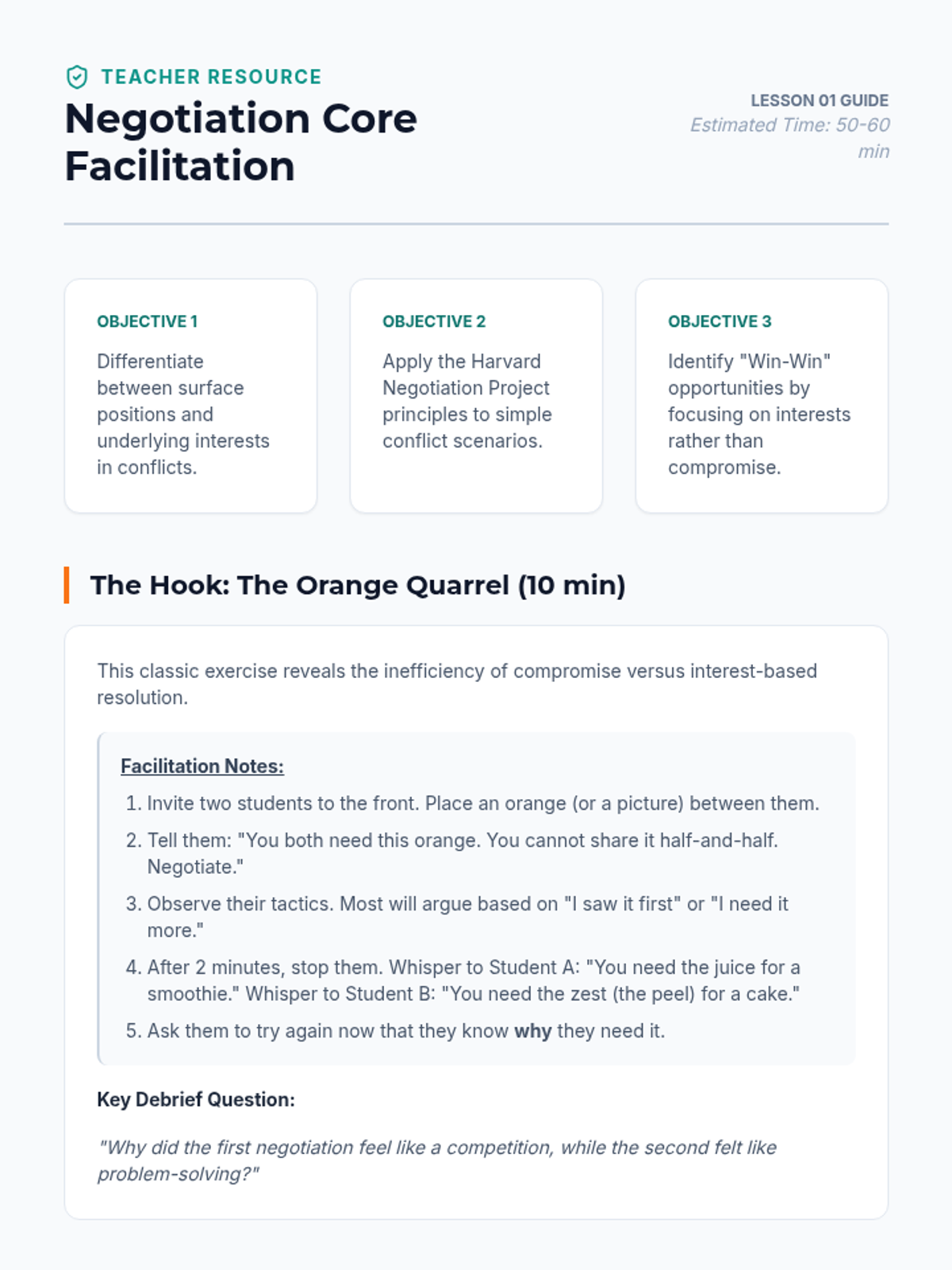
Students learn to distinguish between surface-level positions and underlying interests using the Harvard Negotiation Project model. The lesson introduces Interest-Based Negotiation (IBN) through the classic 'Orange Quarrel' scenario and case study analysis.
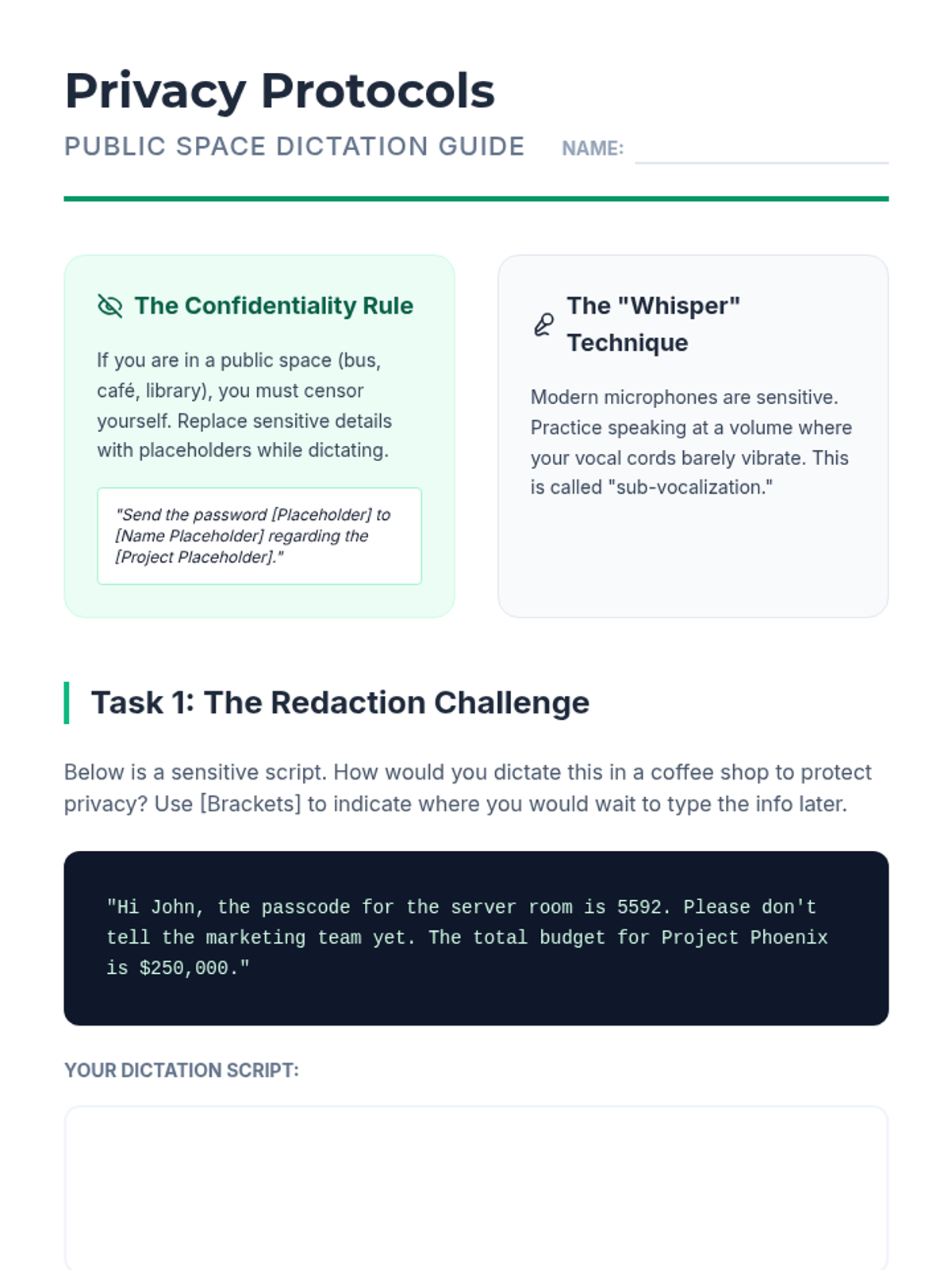
Students explore strategies for using voice technology in shared spaces, focusing on privacy, etiquette, and hardware utilization.
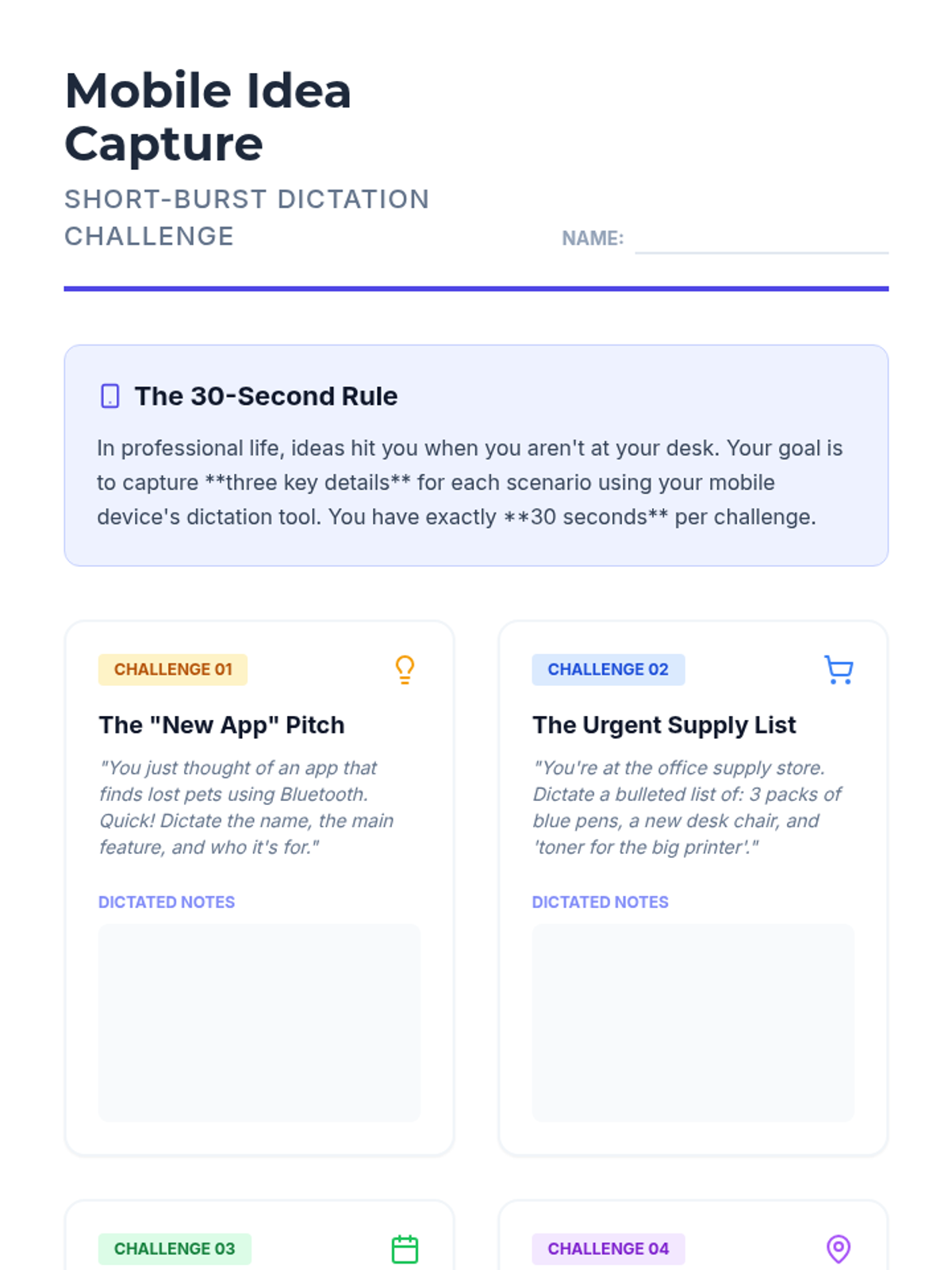
Students practice using dictation on mobile devices to take quick notes and send short messages, addressing the unique challenges of mobile interfaces.
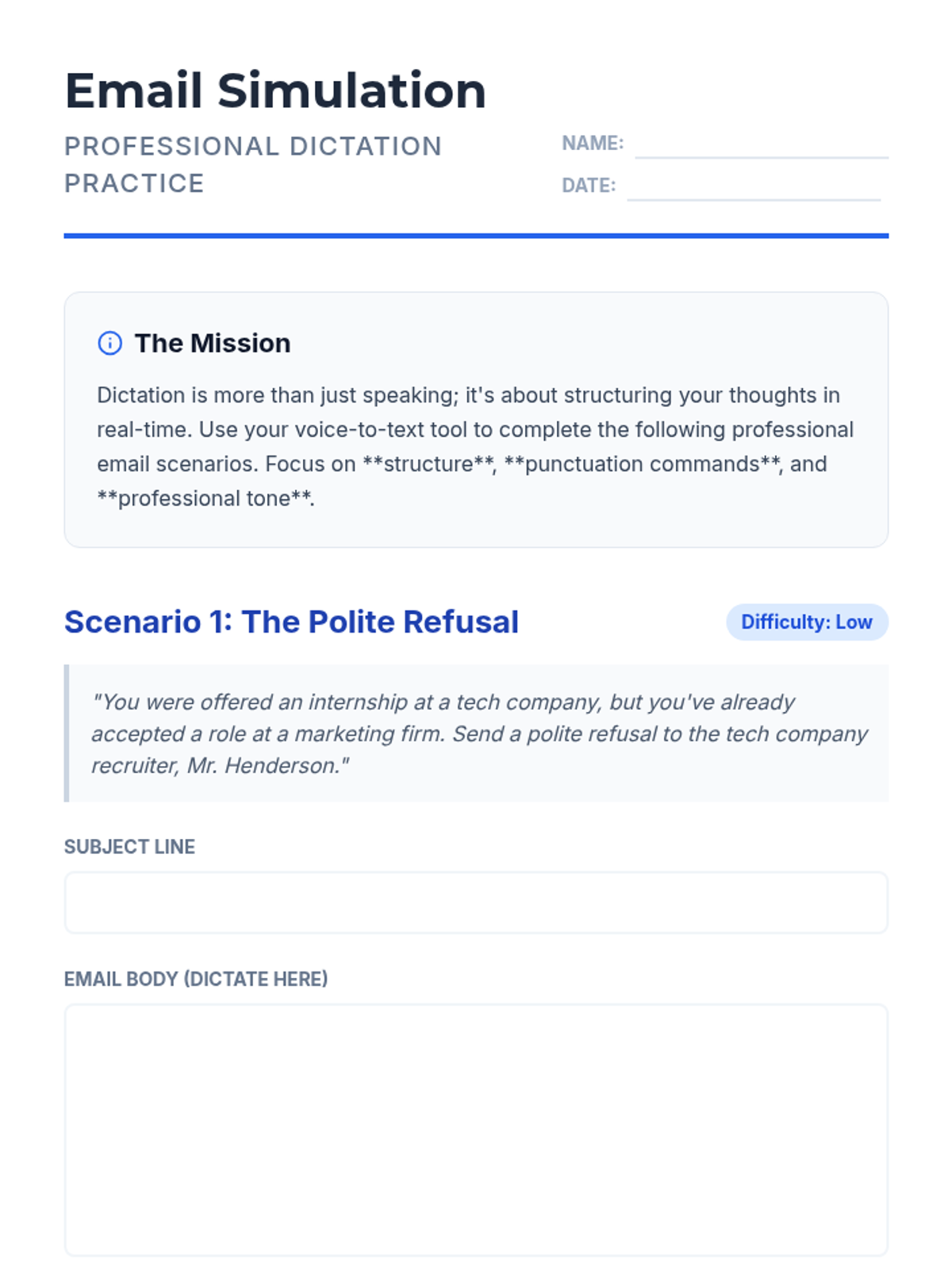
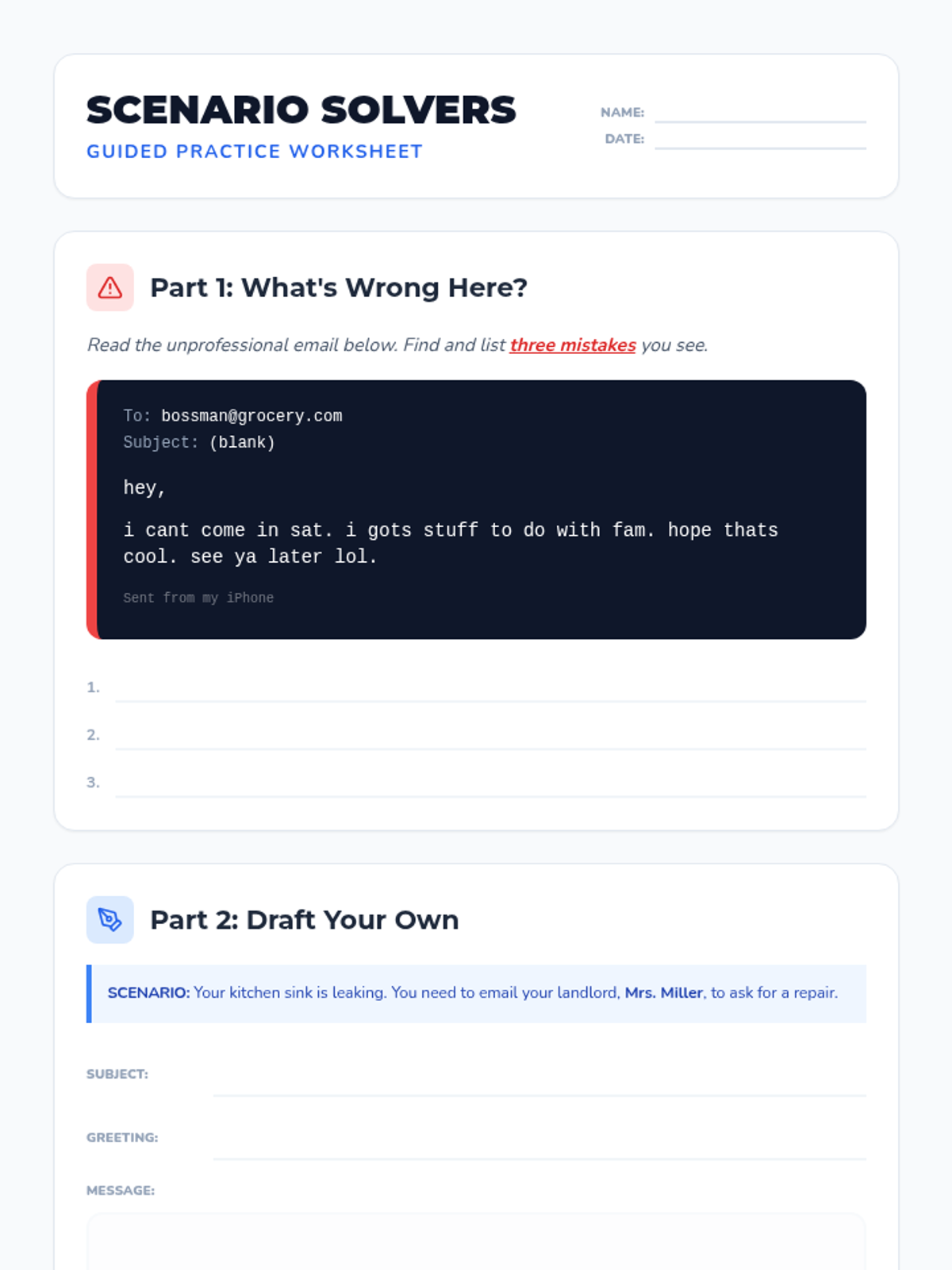
Students practice dictating formal emails, focusing on subject lines, salutations, and professional tone management.
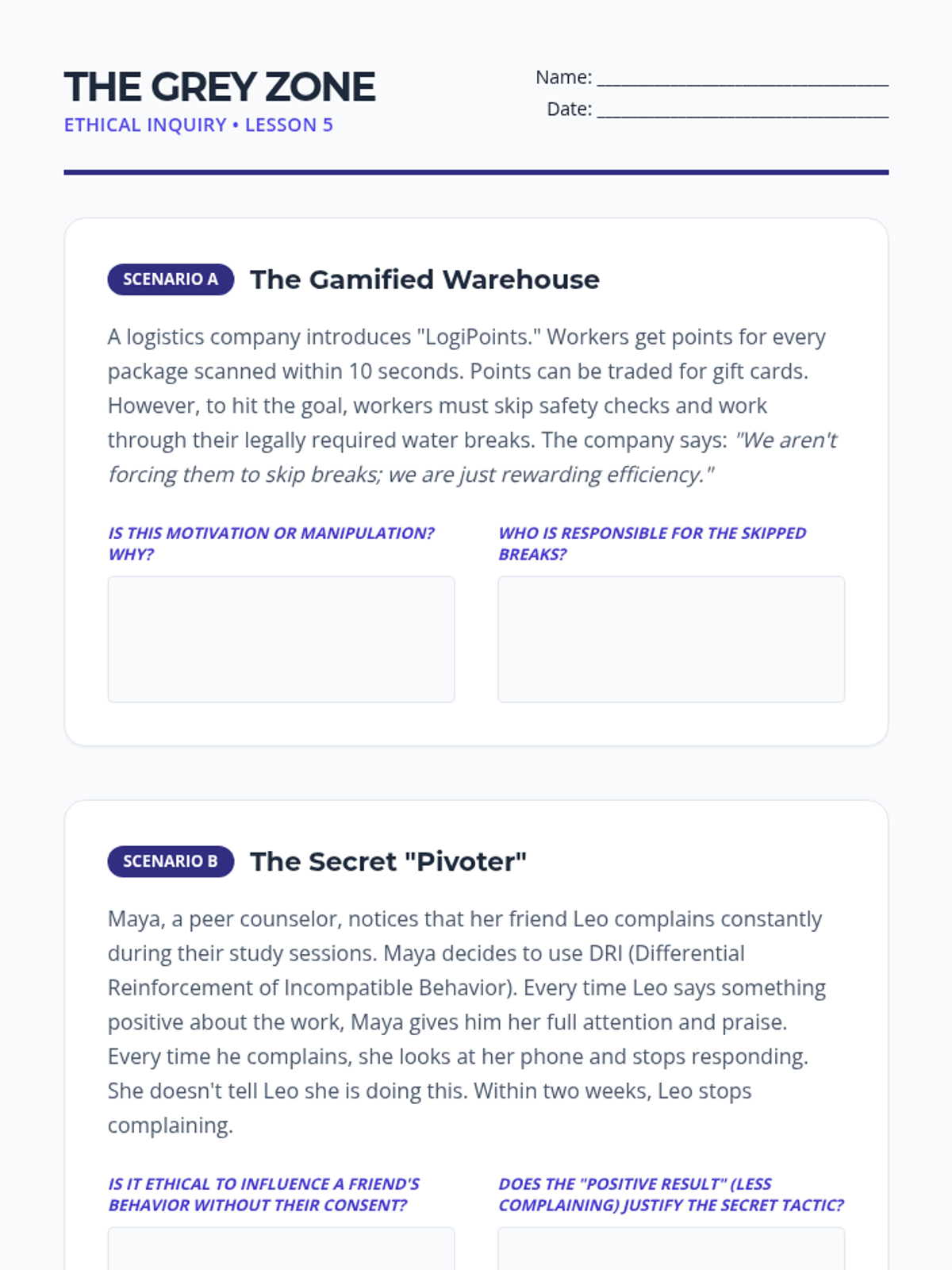
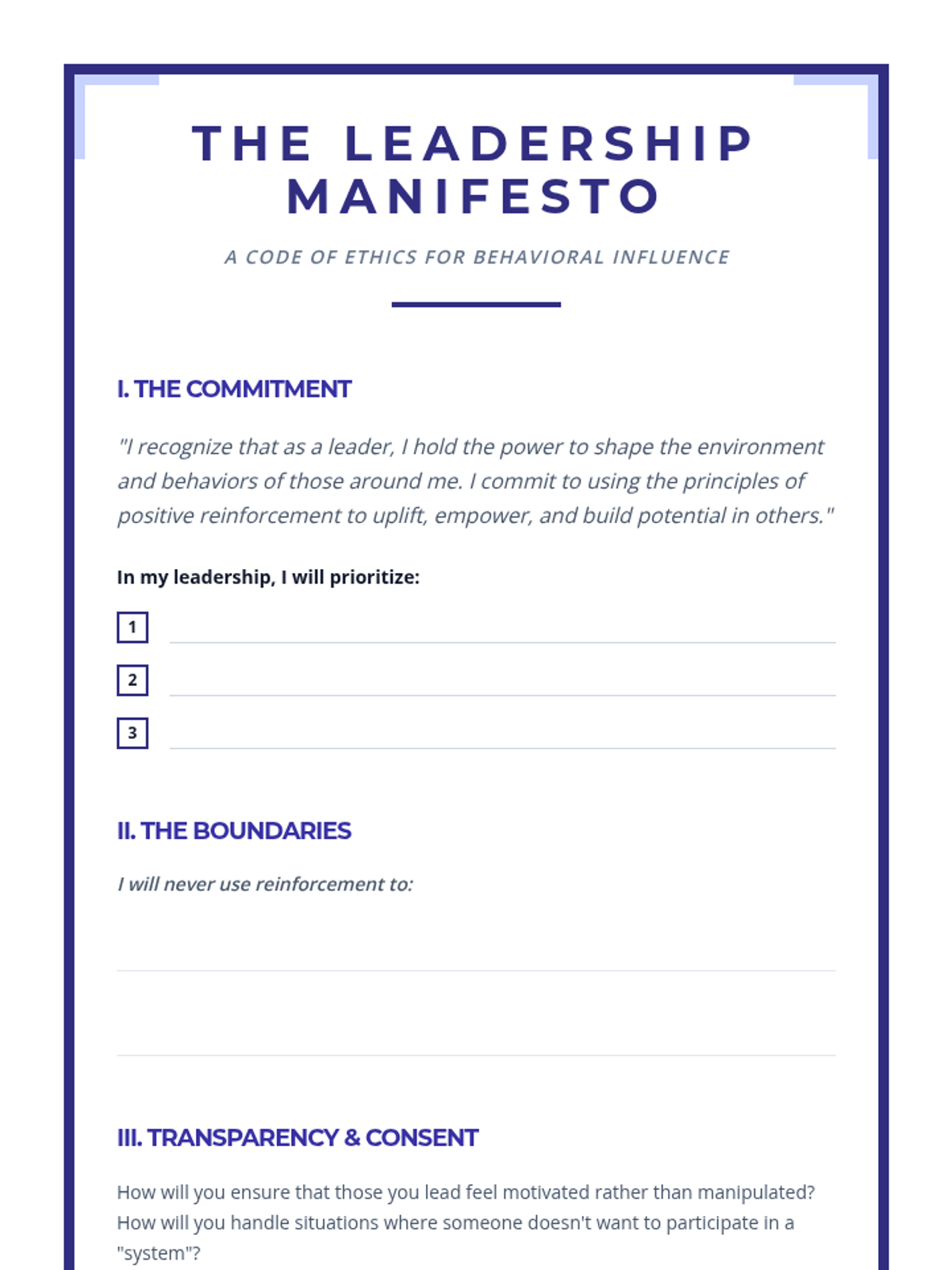
A deep dive into the ethics of behavioral leadership, debating the line between motivation and manipulation and creating a personal code of conduct.
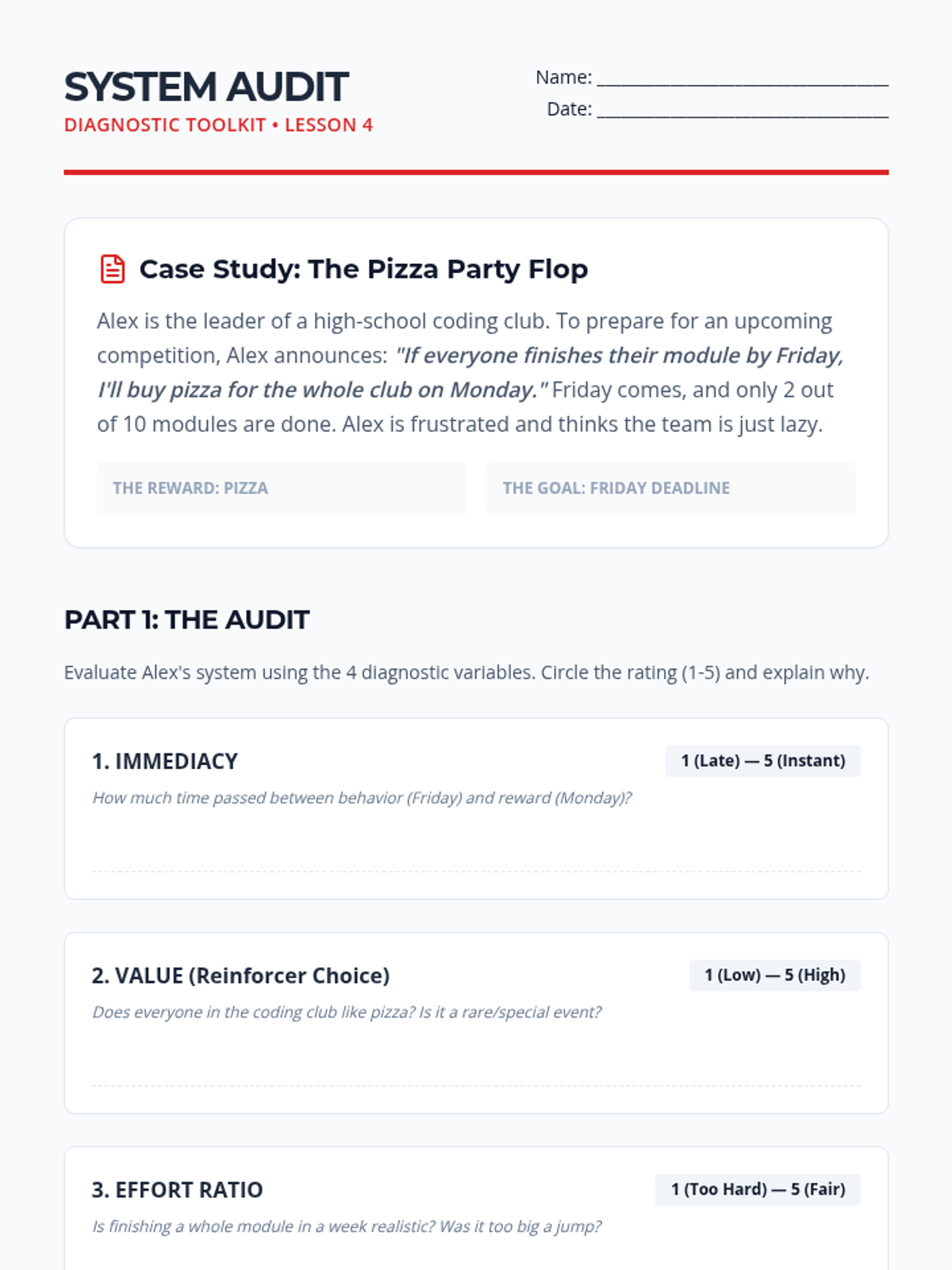
Students diagnose why certain reinforcement systems fail, looking at factors like lack of immediacy, poor reinforcer selection, and trust issues.
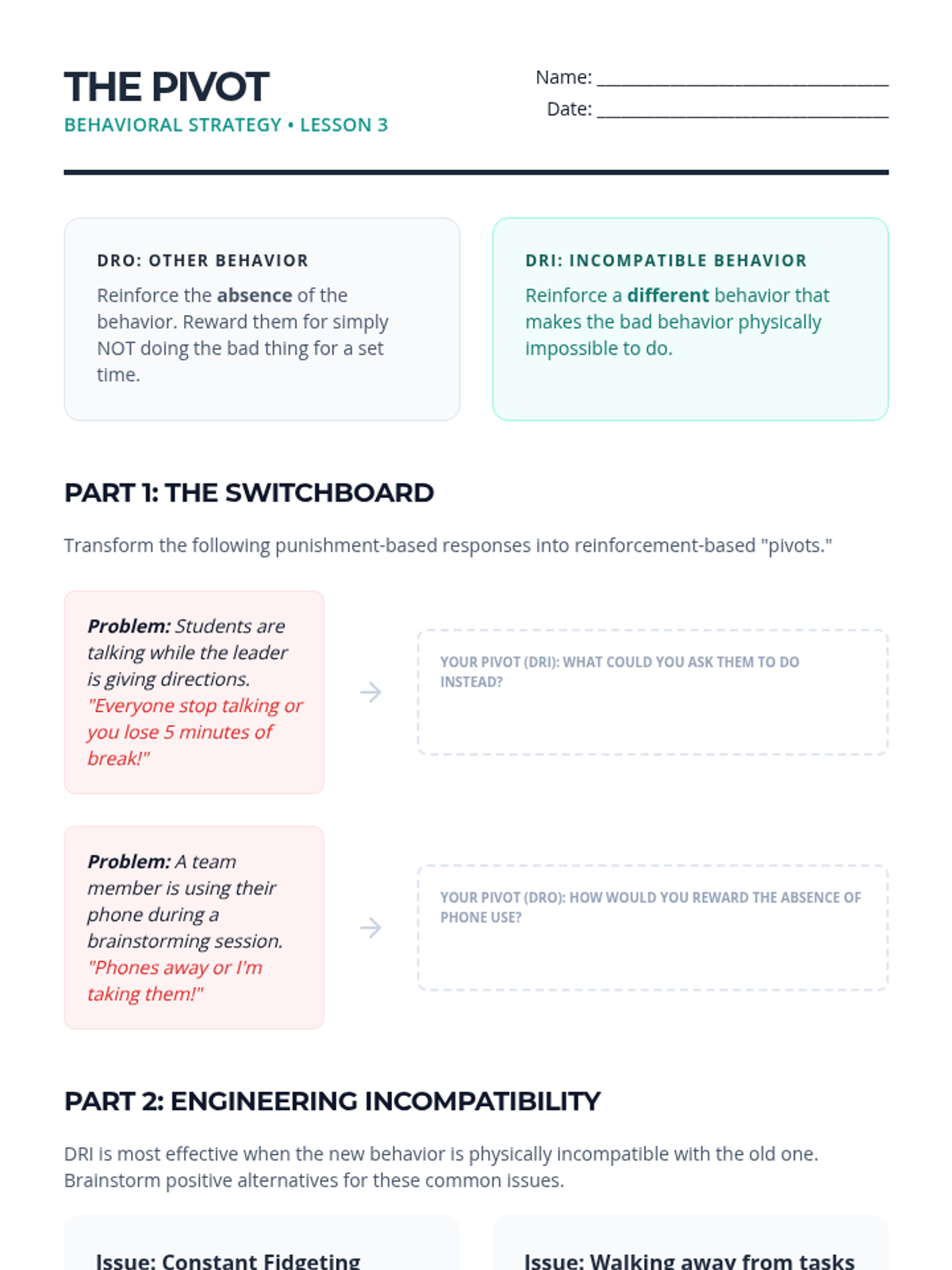
Students explore Differential Reinforcement of Other Behavior (DRO) as a tool for managing conflict and reducing unwanted behaviors without relying on punishment.
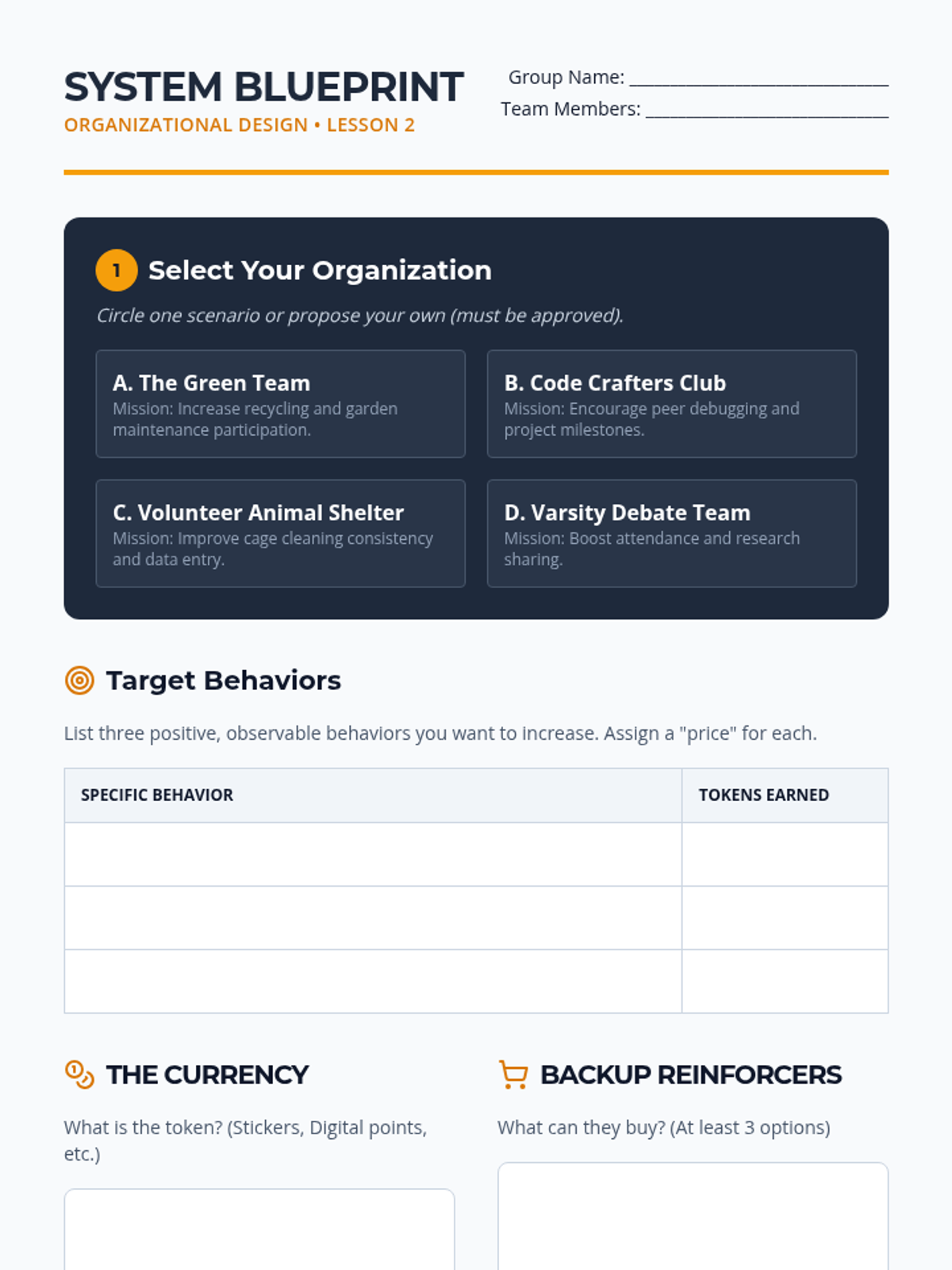
Groups design a token economy system for a hypothetical organization, identifying rules of exchange, currency, and backup reinforcers to improve group participation.
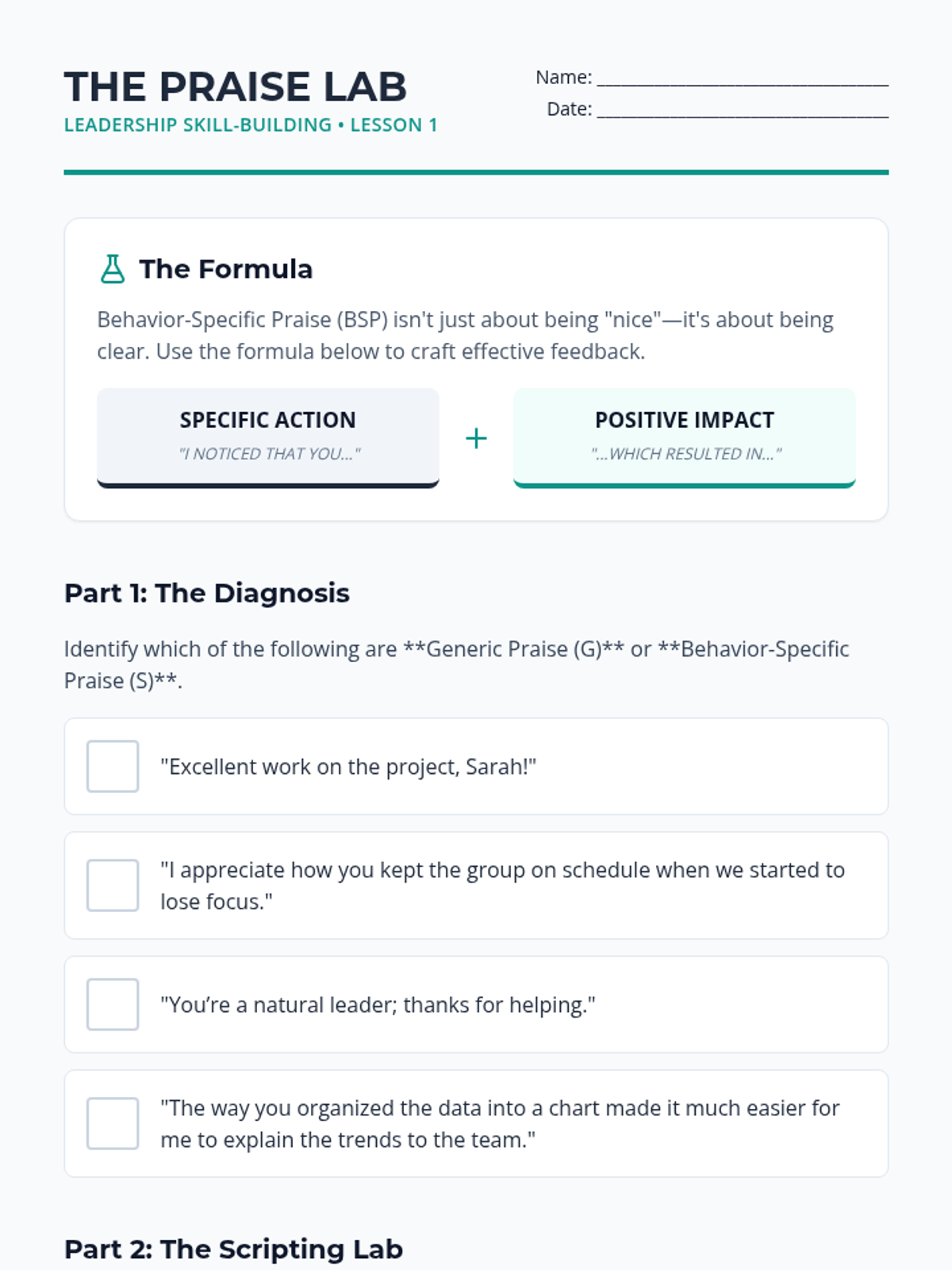
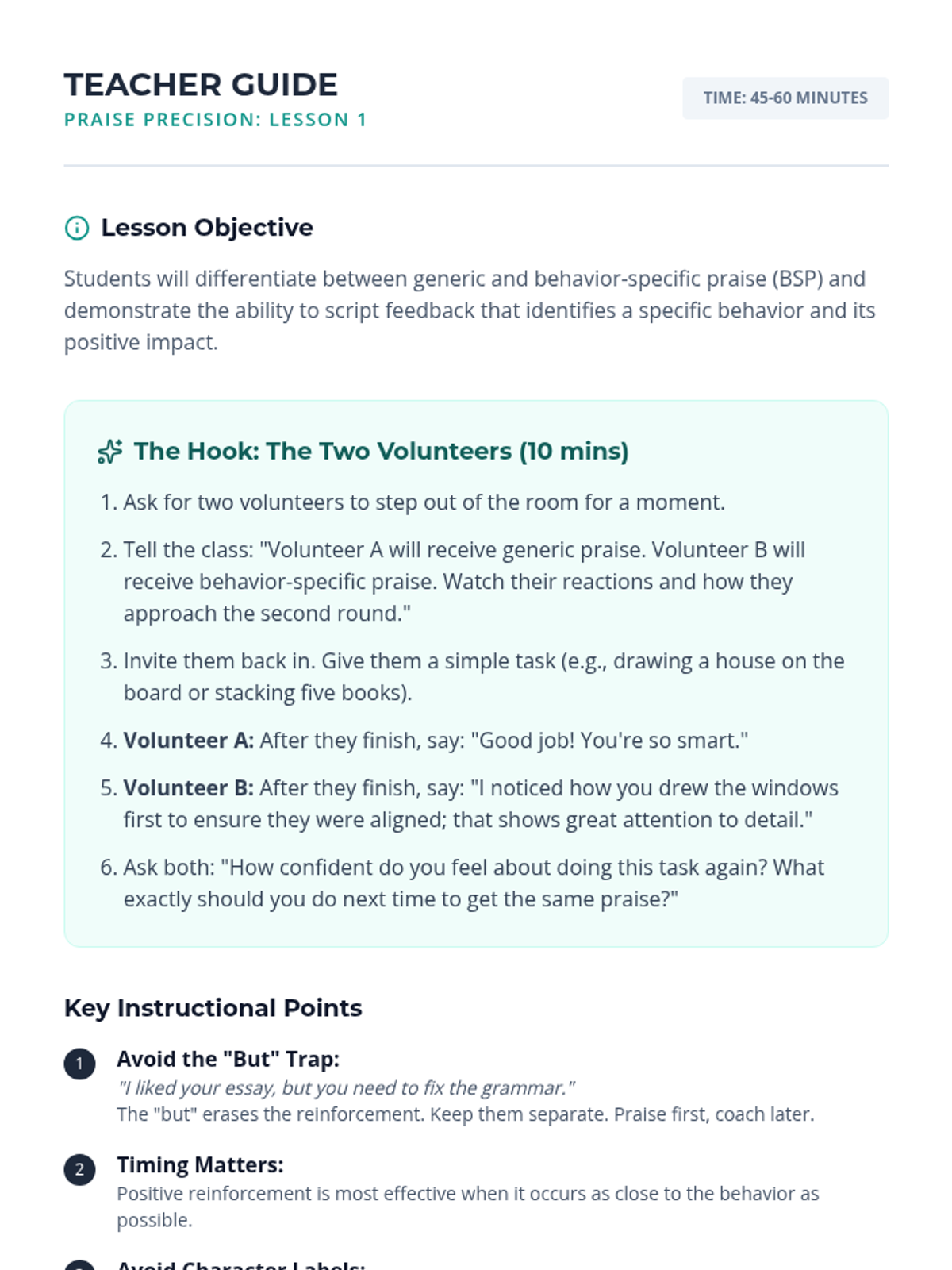
Students analyze the difference between generic and behavior-specific praise, practicing the art of clear, actionable feedback that reinforces specific positive actions.
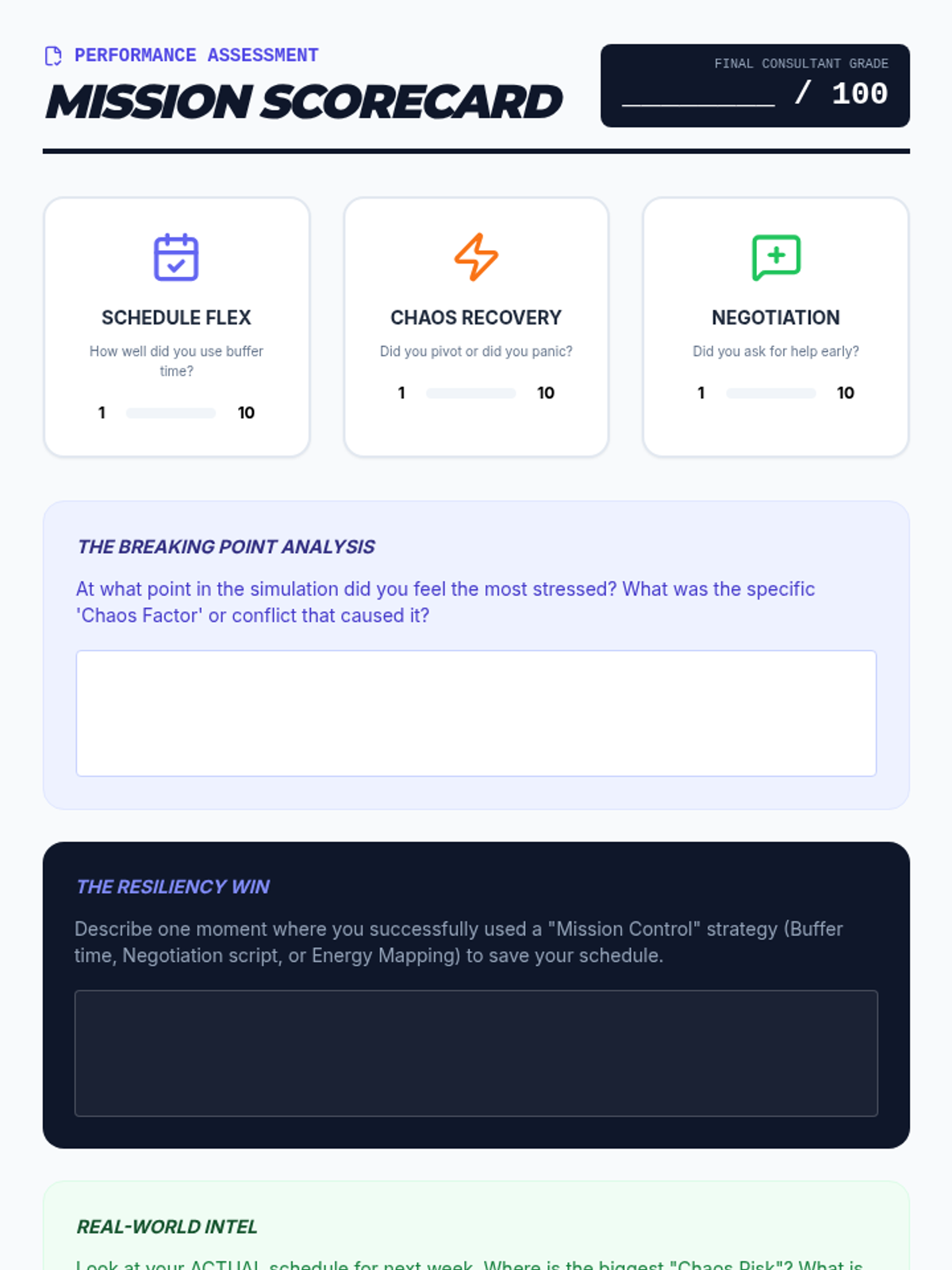
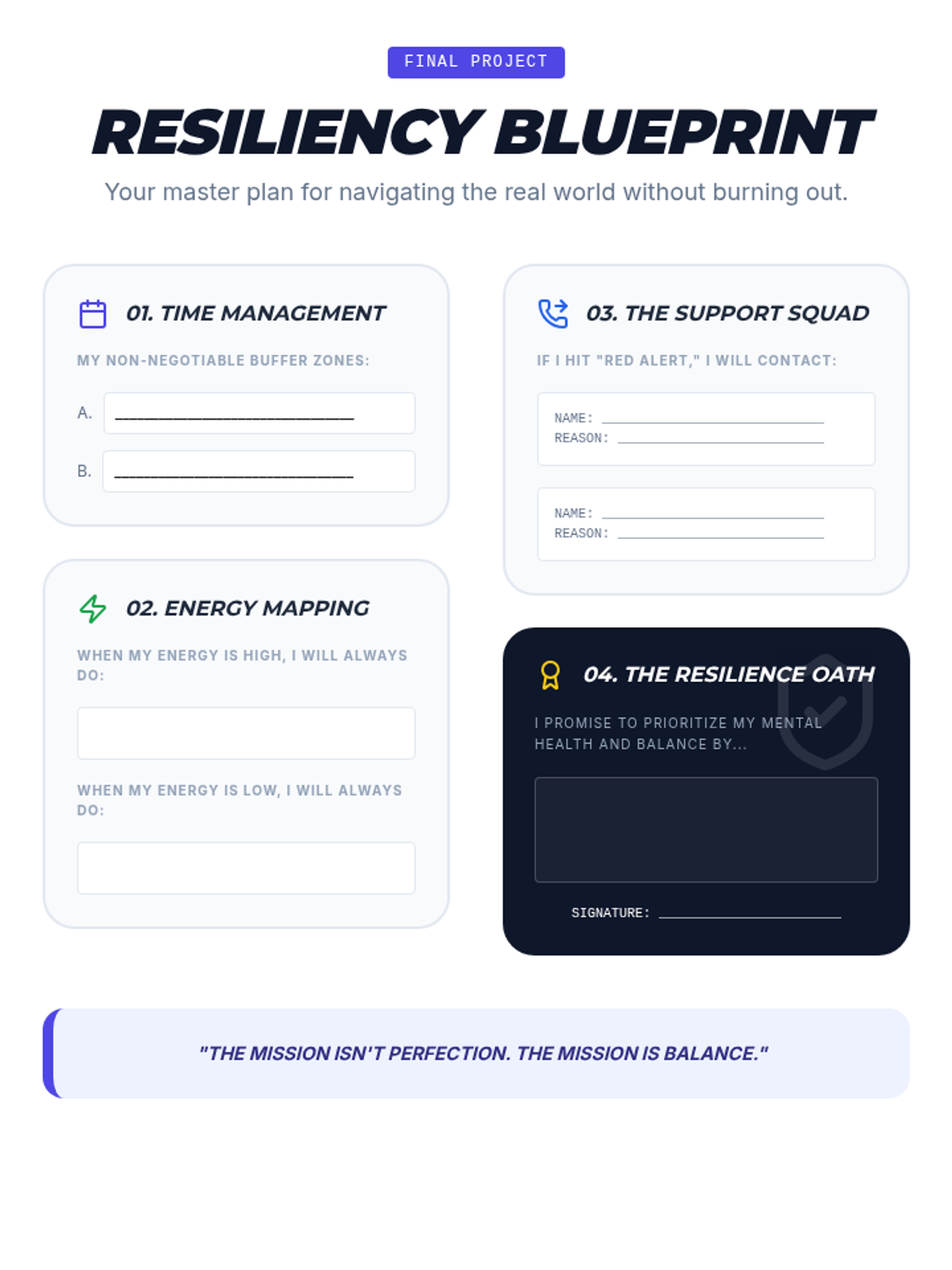
A final reflection on the simulation where students analyze their performance, identify breaking points, and create a long-term strategy for real-world balance.
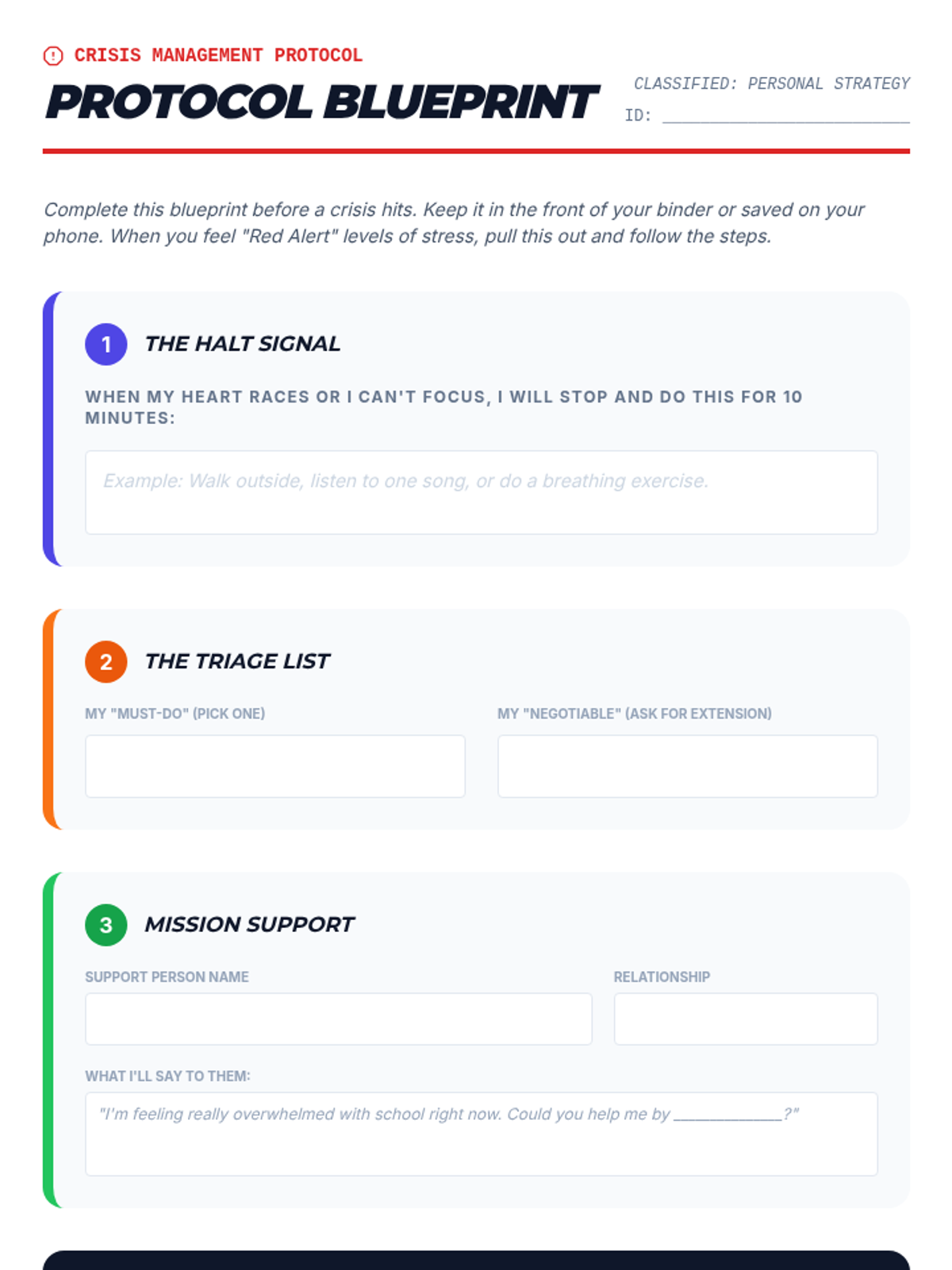
Students create a personal 'Emergency Protocol' for overwhelming situations, learning how to prioritize tasks to drop and identifying support systems for recovery.
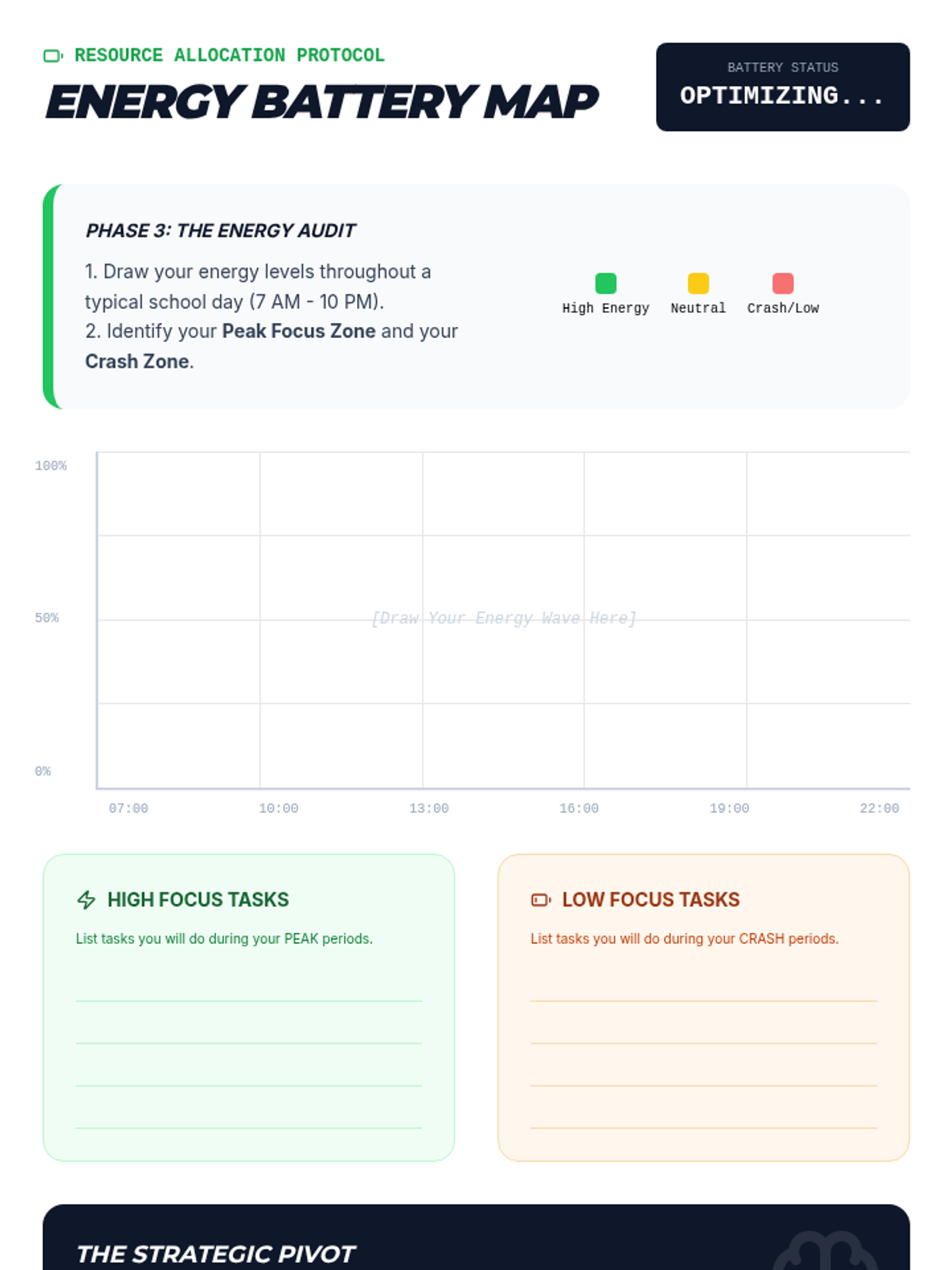
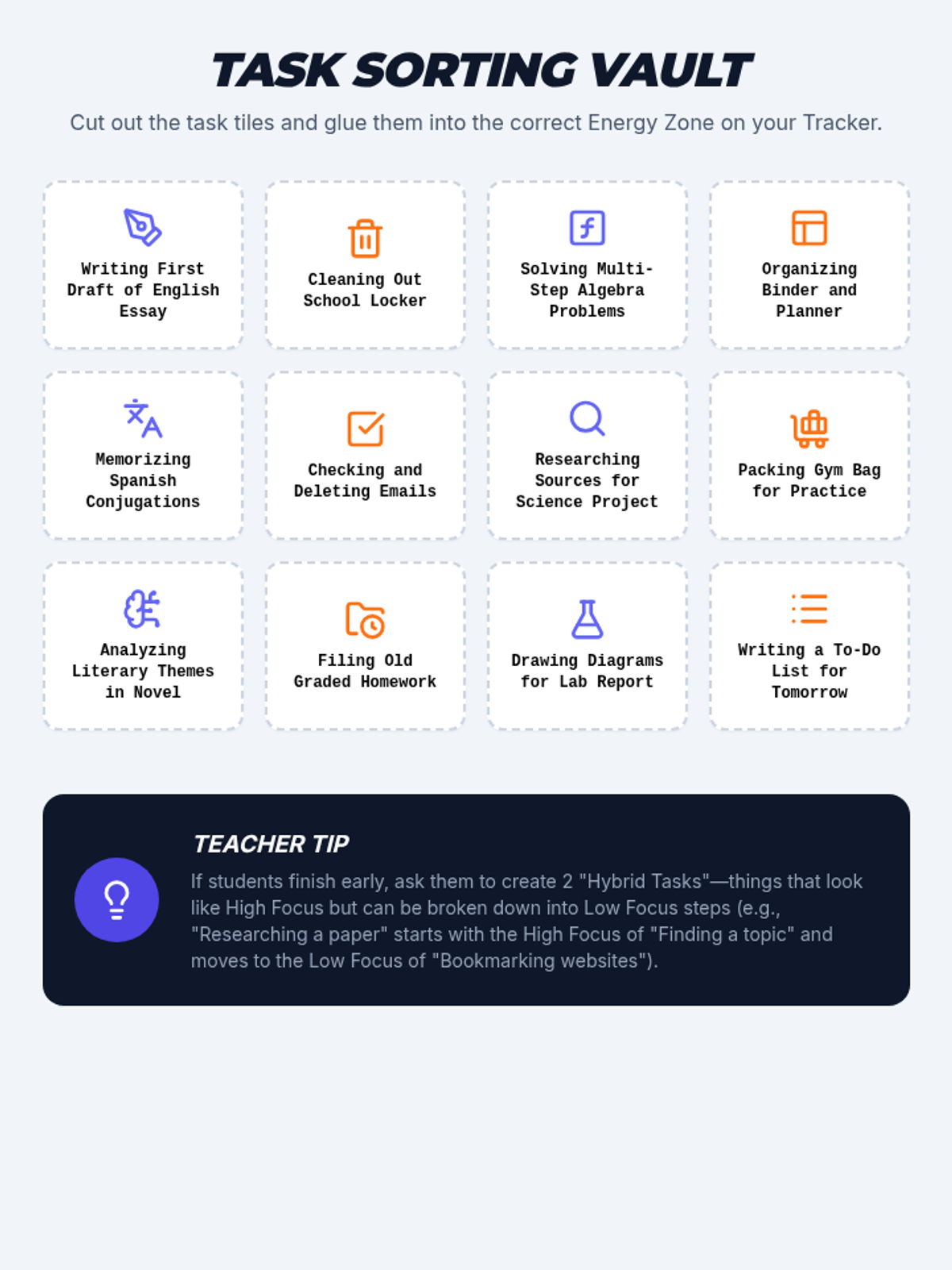
Students analyze their personal energy cycles to match high-demand tasks with high-energy periods, moving beyond simple time management to strategic resource allocation.
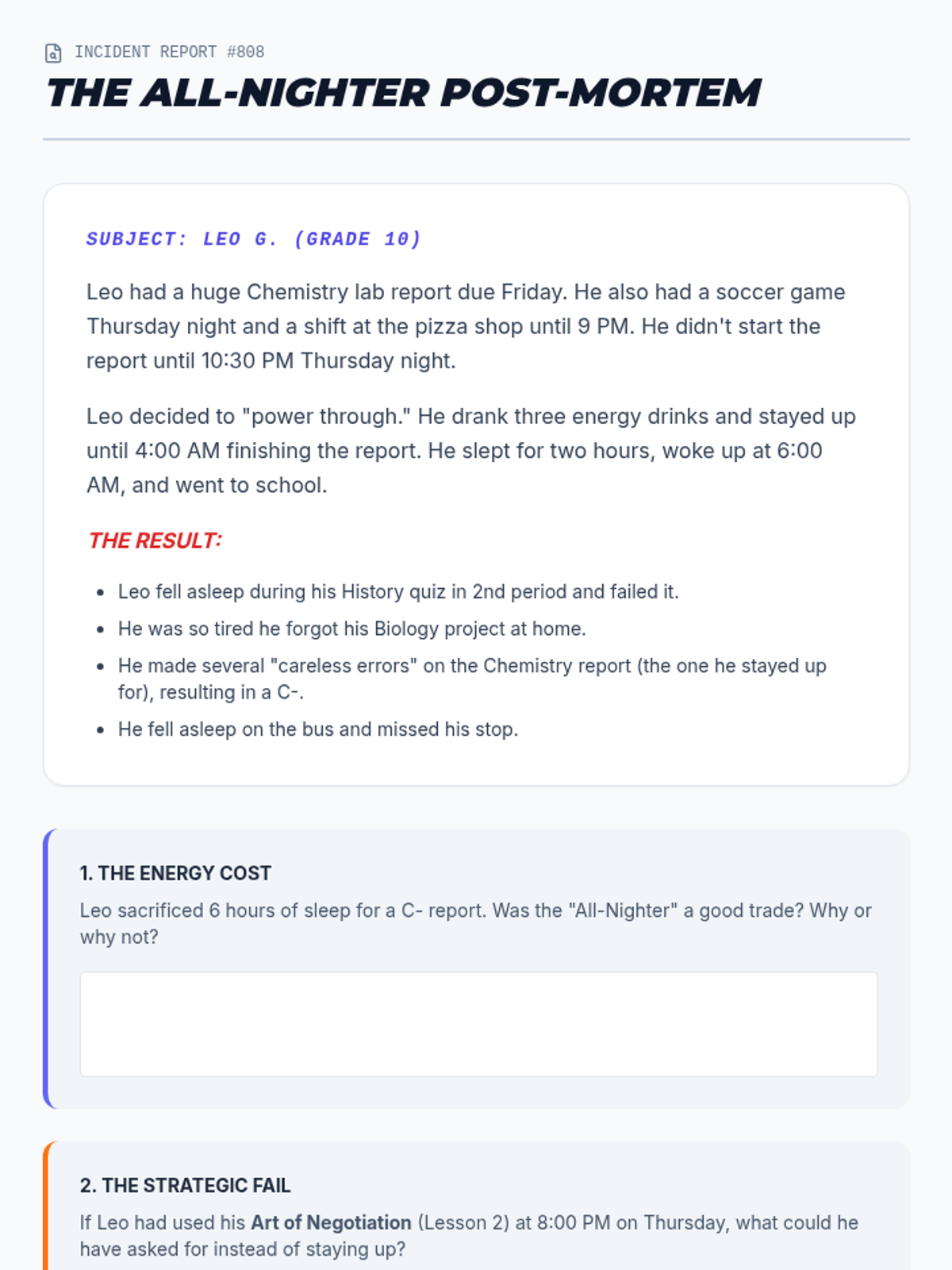
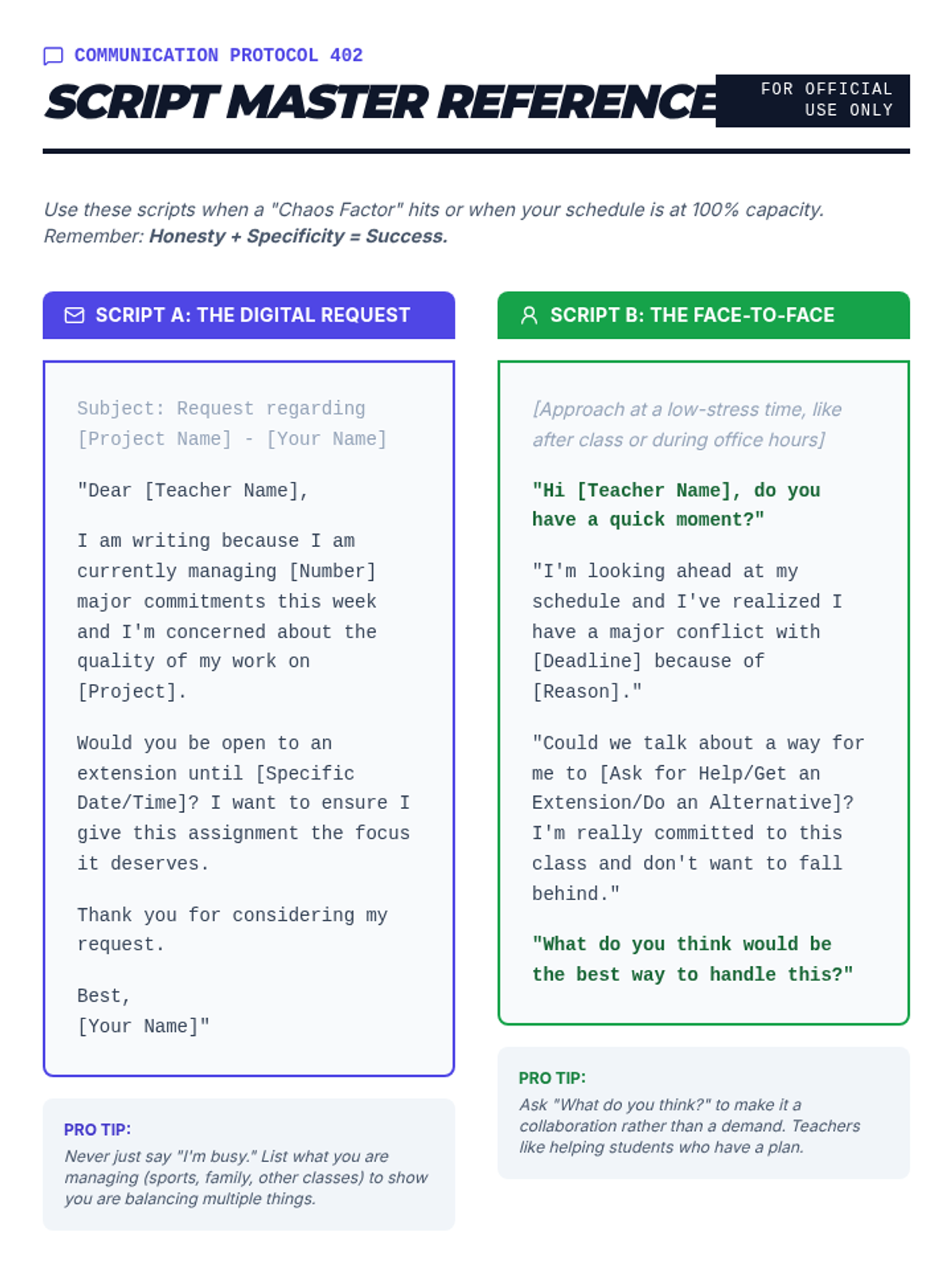
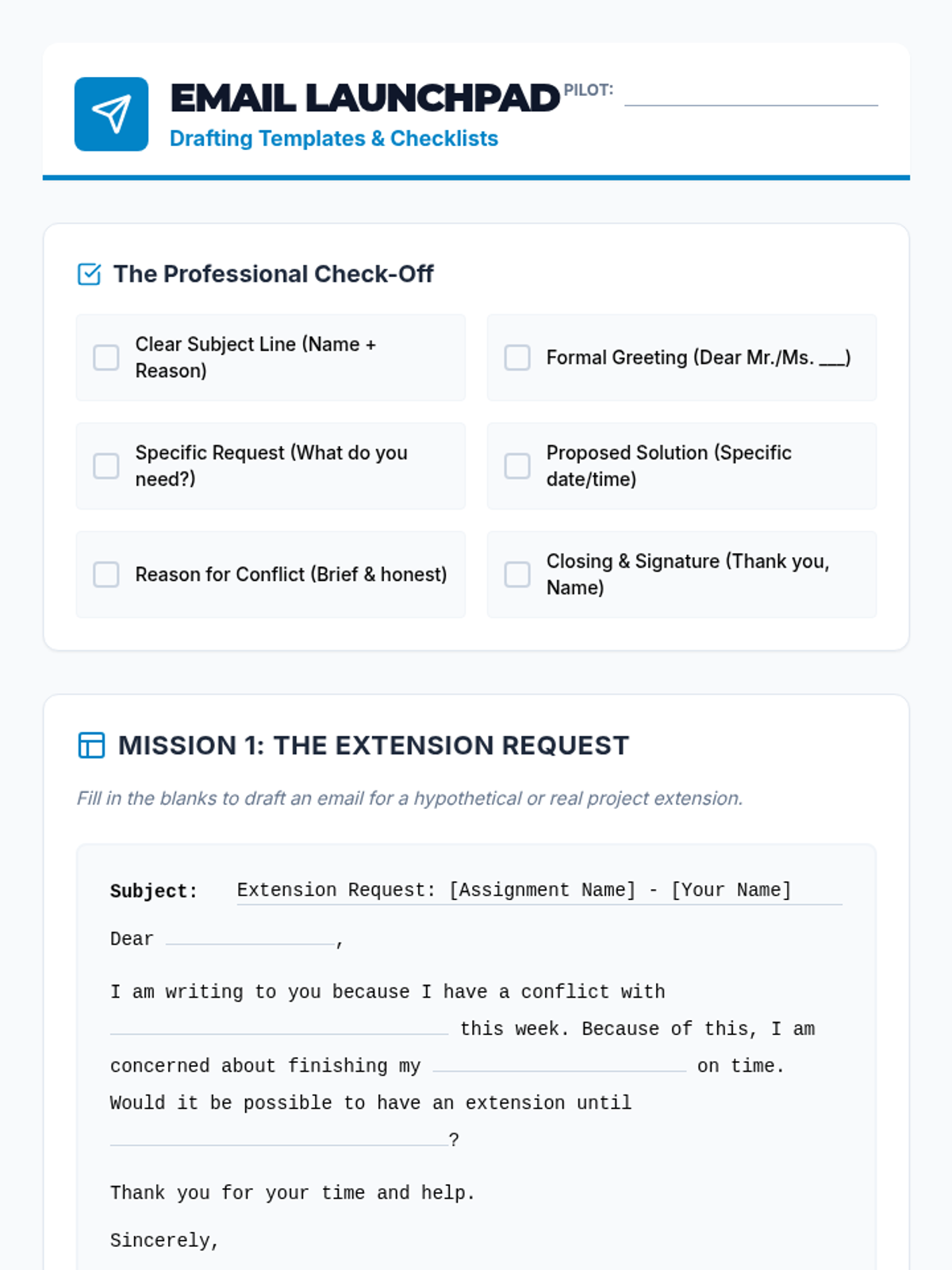
Focuses on professional communication and the distinction between hard and soft deadlines. Students practice scripts to negotiate extensions and help before a crisis occurs.
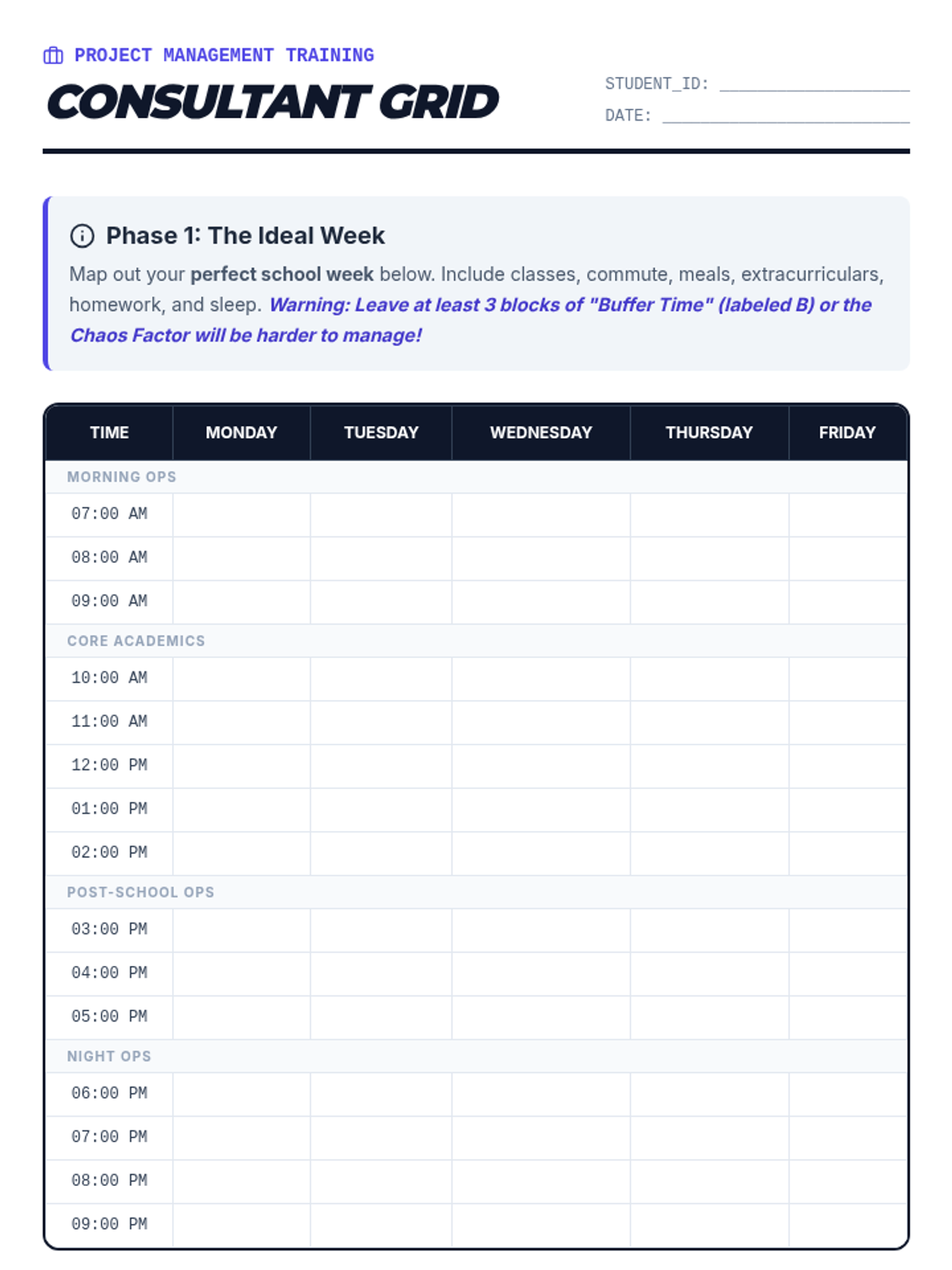
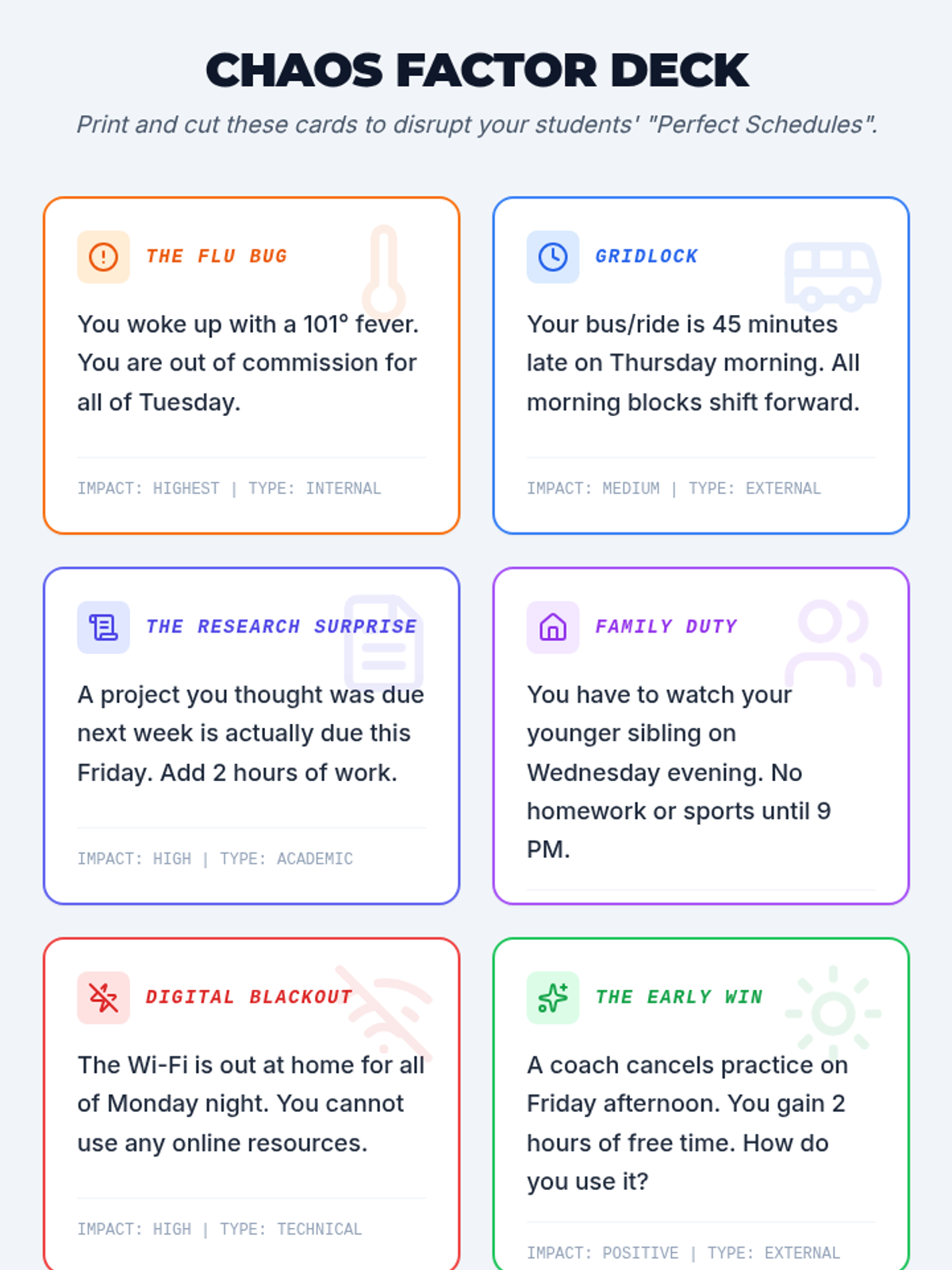
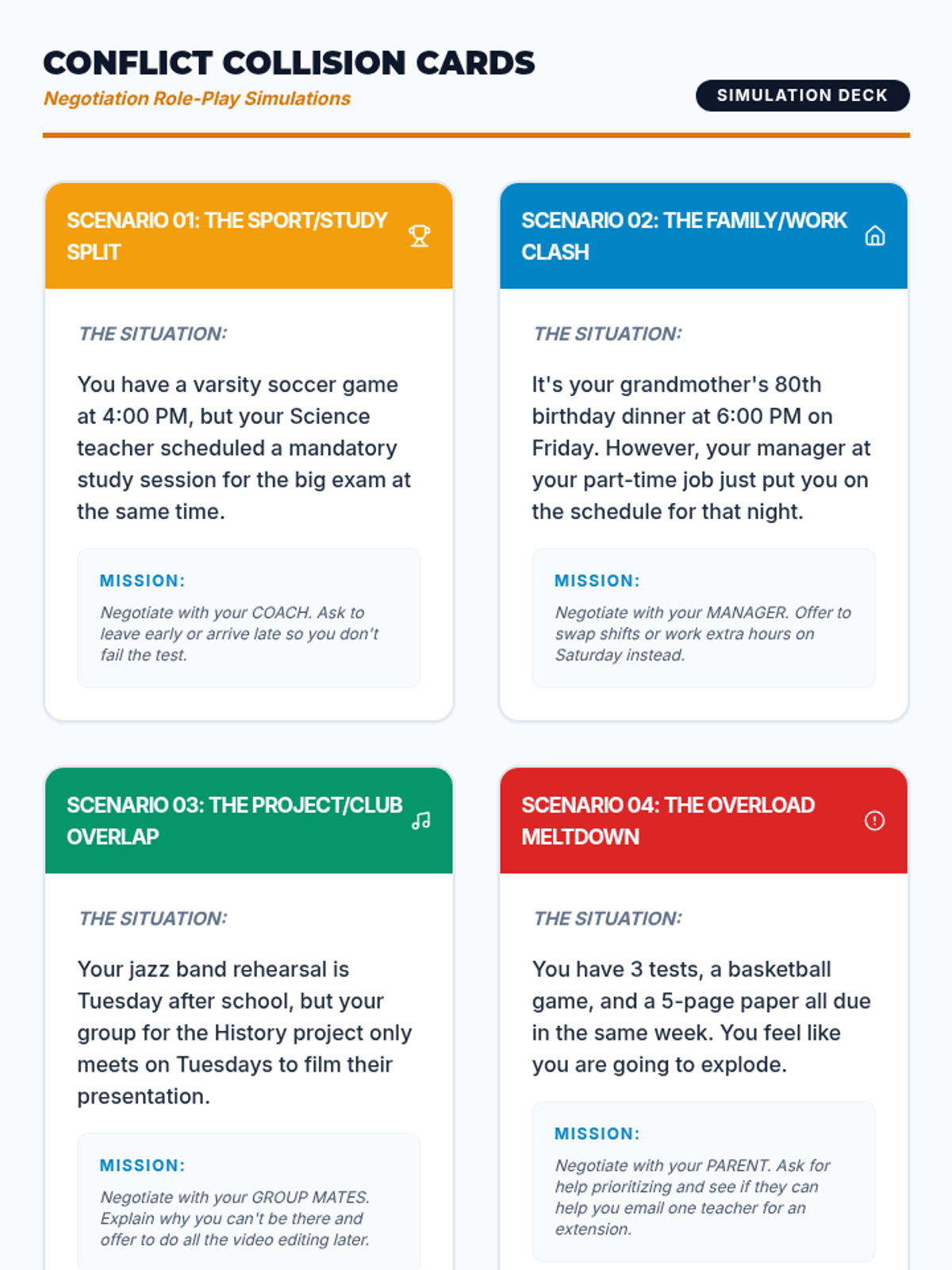
Students design an ideal weekly schedule and are immediately introduced to the 'Chaos Factor'—unpredictable life events that disrupt plans. They identify the need for buffer time and flexible scheduling.
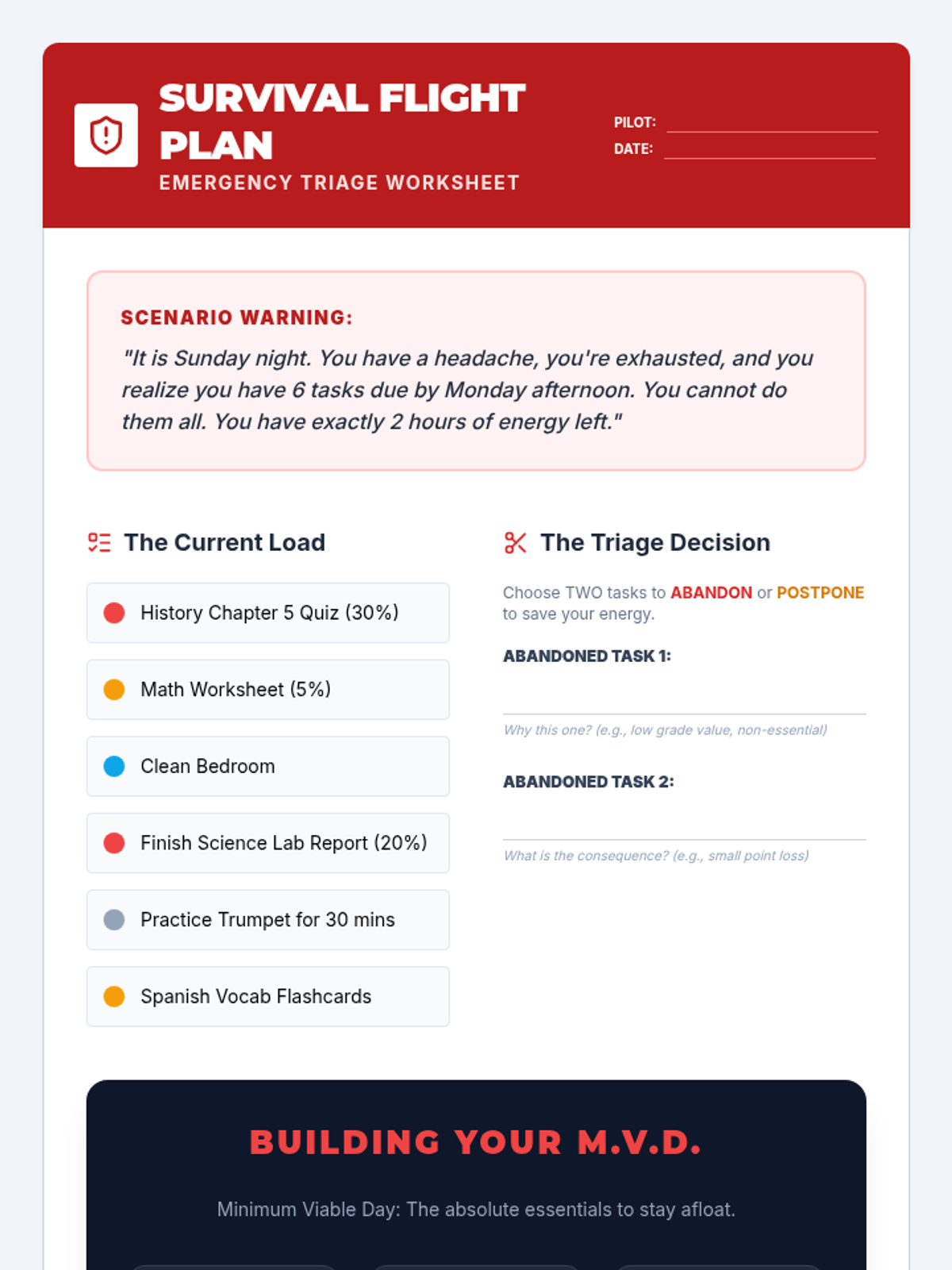
Students develop emergency 'triage' strategies and create a 'Minimum Viable Day' plan for maintaining performance during periods of high stress or illness.
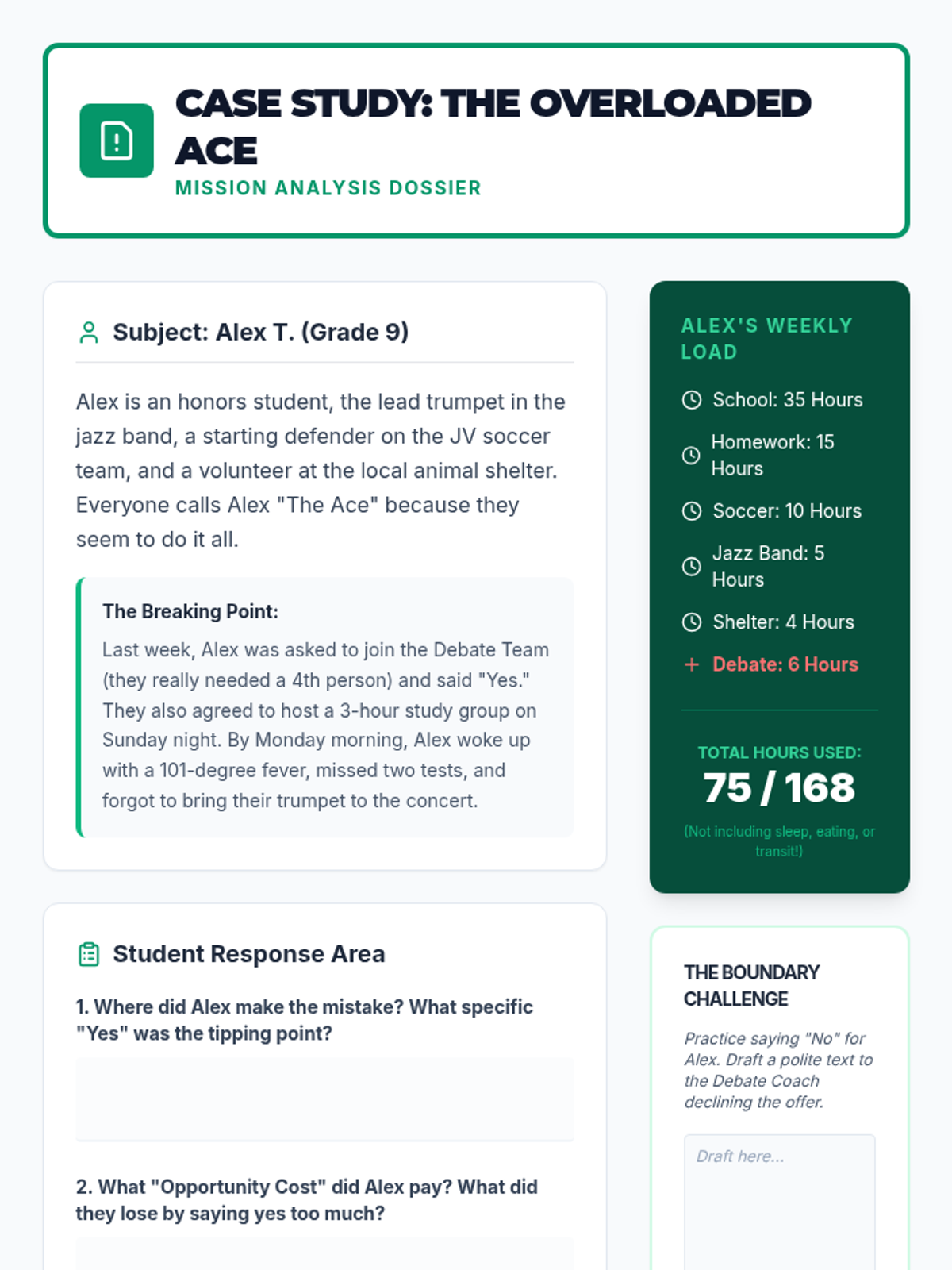
Students explore the concept of opportunity cost and practice strategies for politely but firmly declining optional commitments.
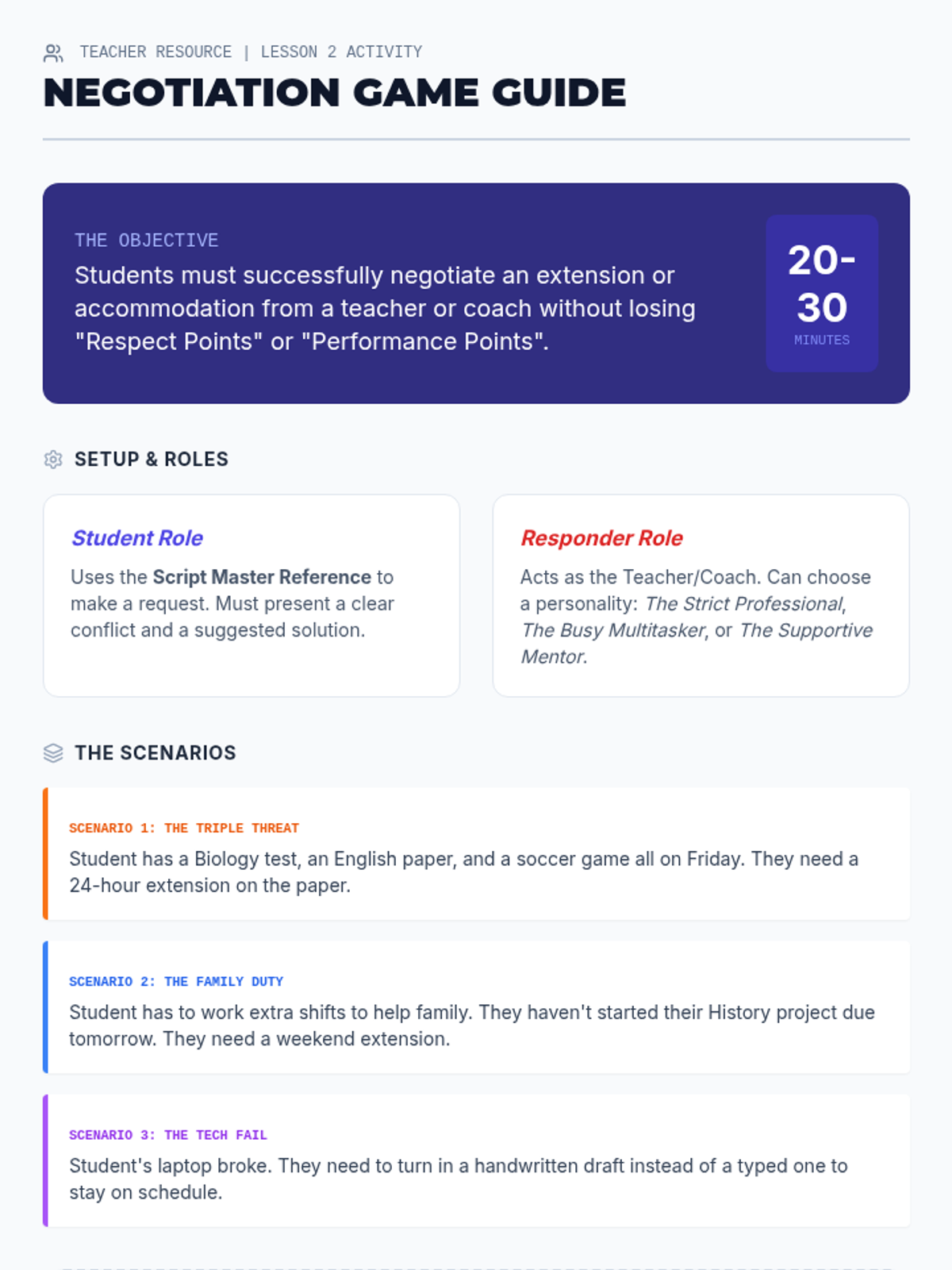
Through role-play and simulation, students practice face-to-face negotiations to resolve scheduling conflicts between multiple commitments.
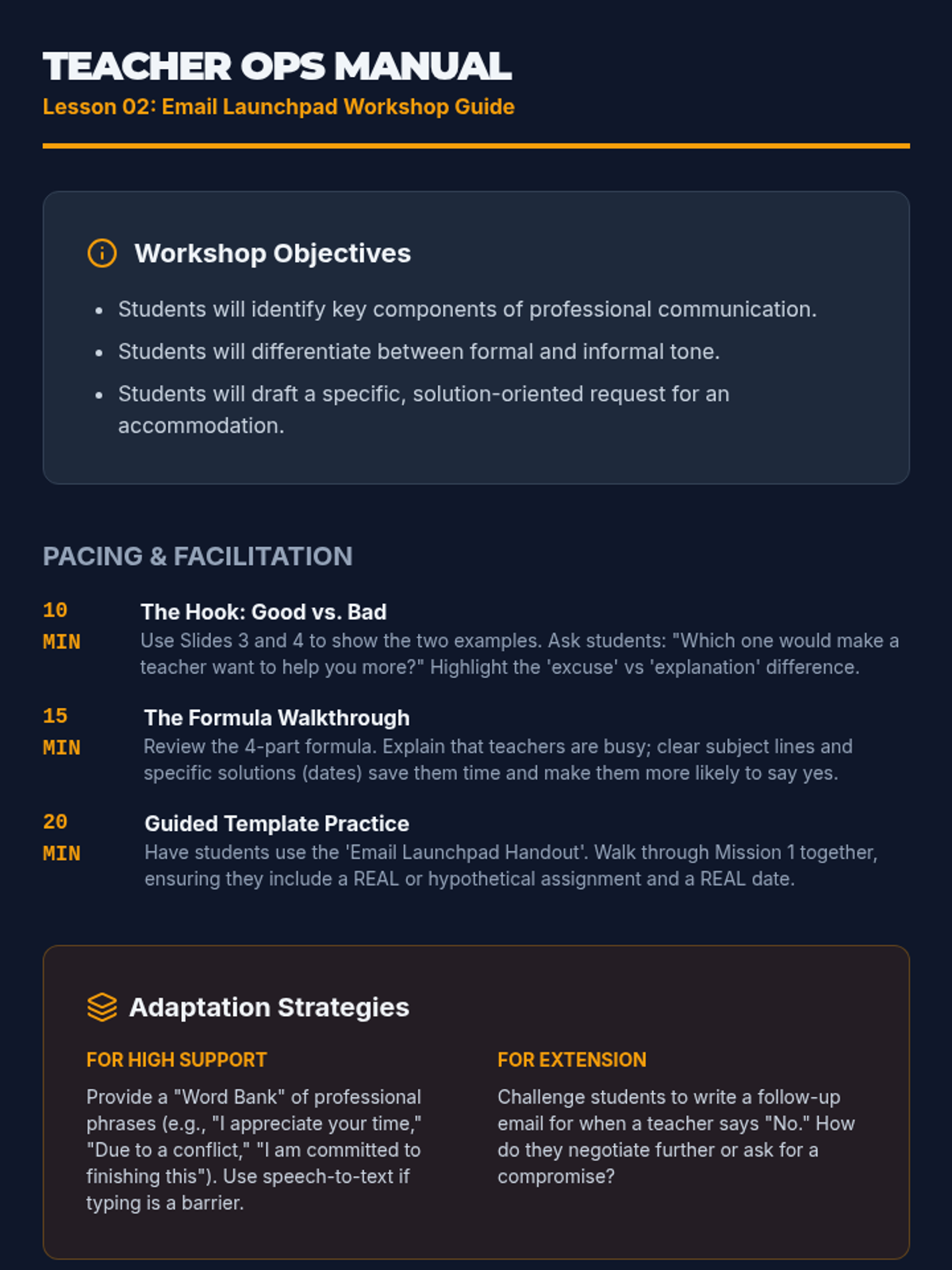
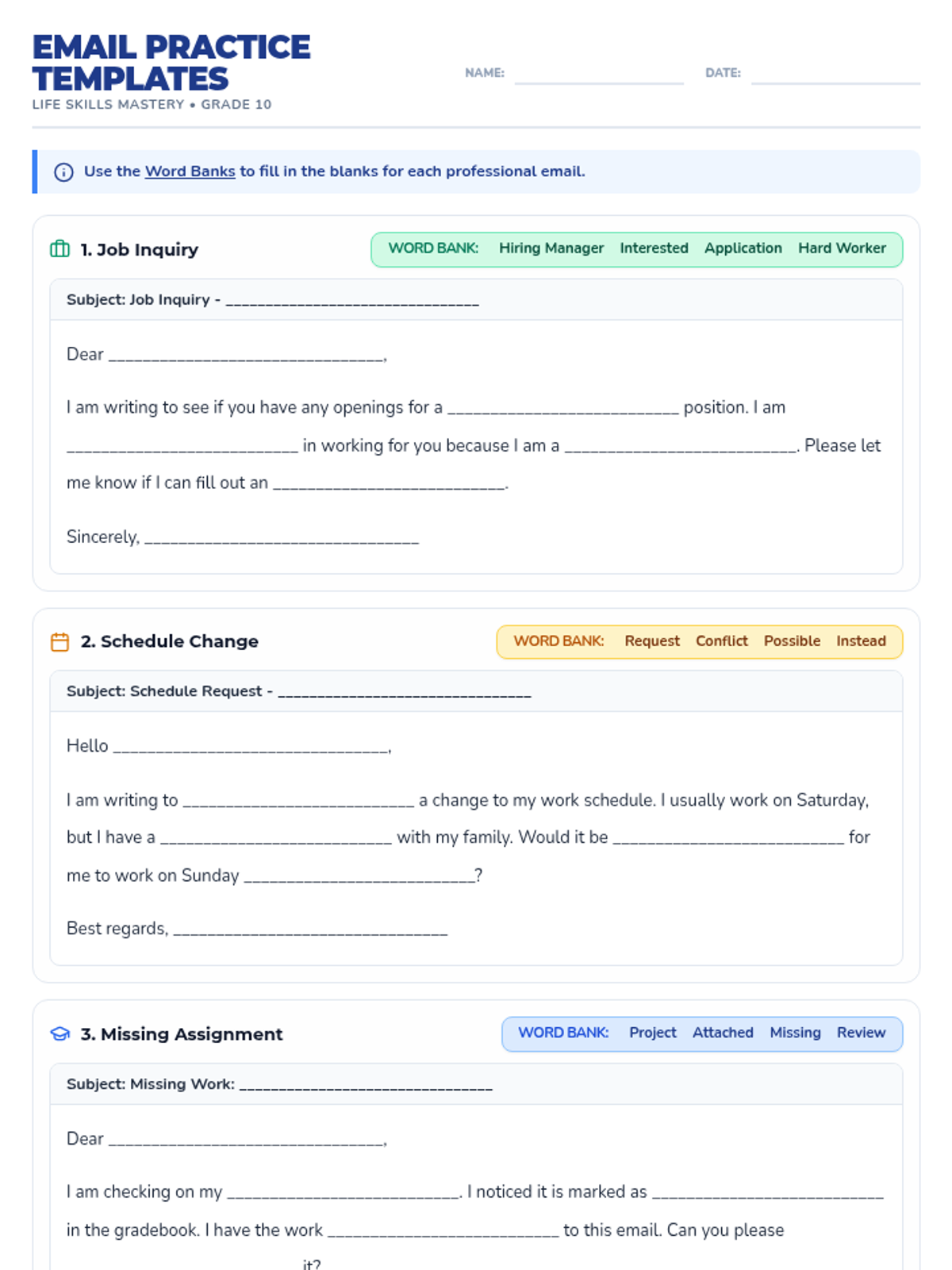
Students master the art of professional email communication, learning to draft responsible and clear requests for extensions or accommodations.
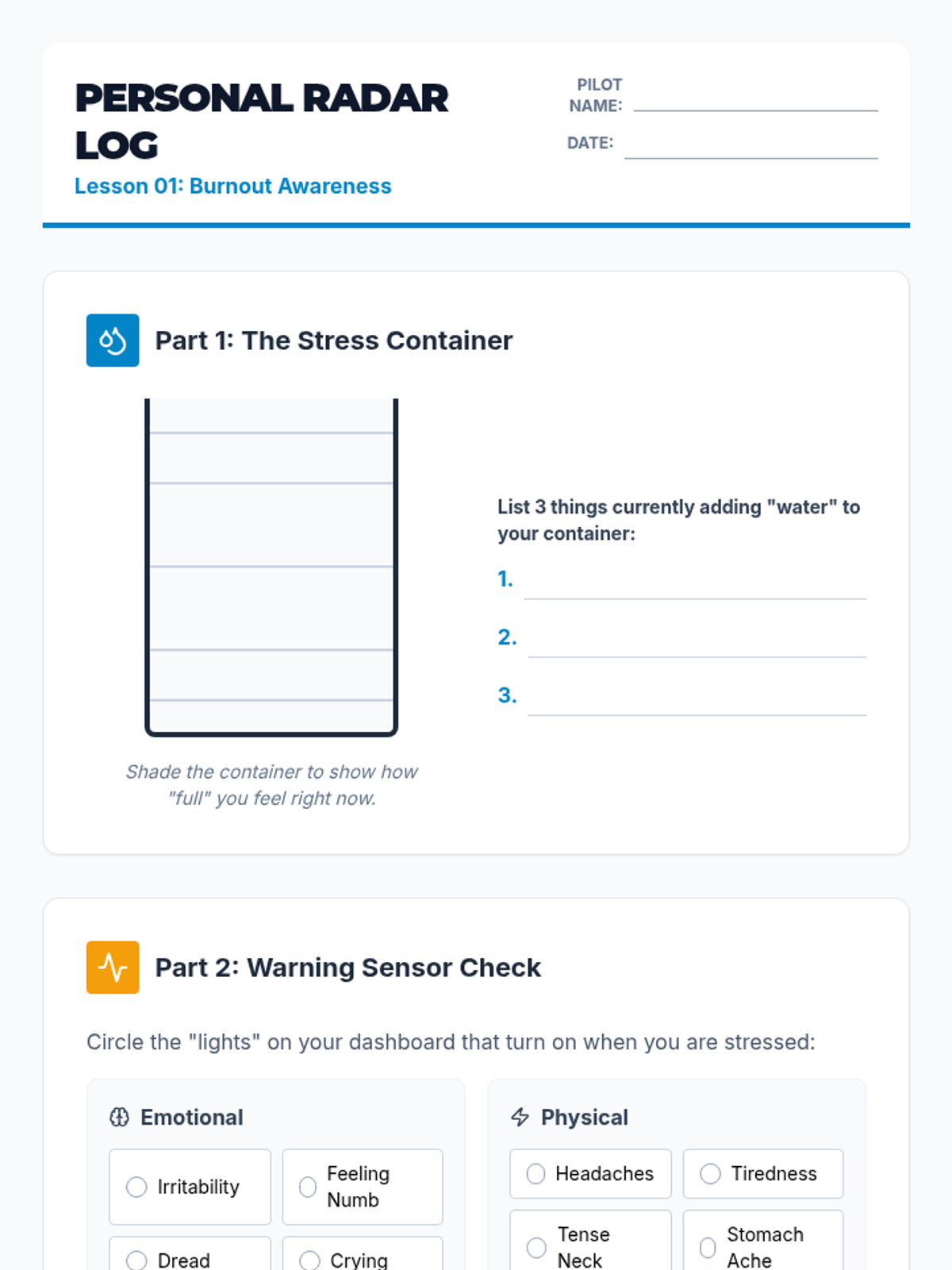
Students identify physical and emotional signs of burnout and use the 'Stress Container' visualization to understand their personal capacity and tipping points.
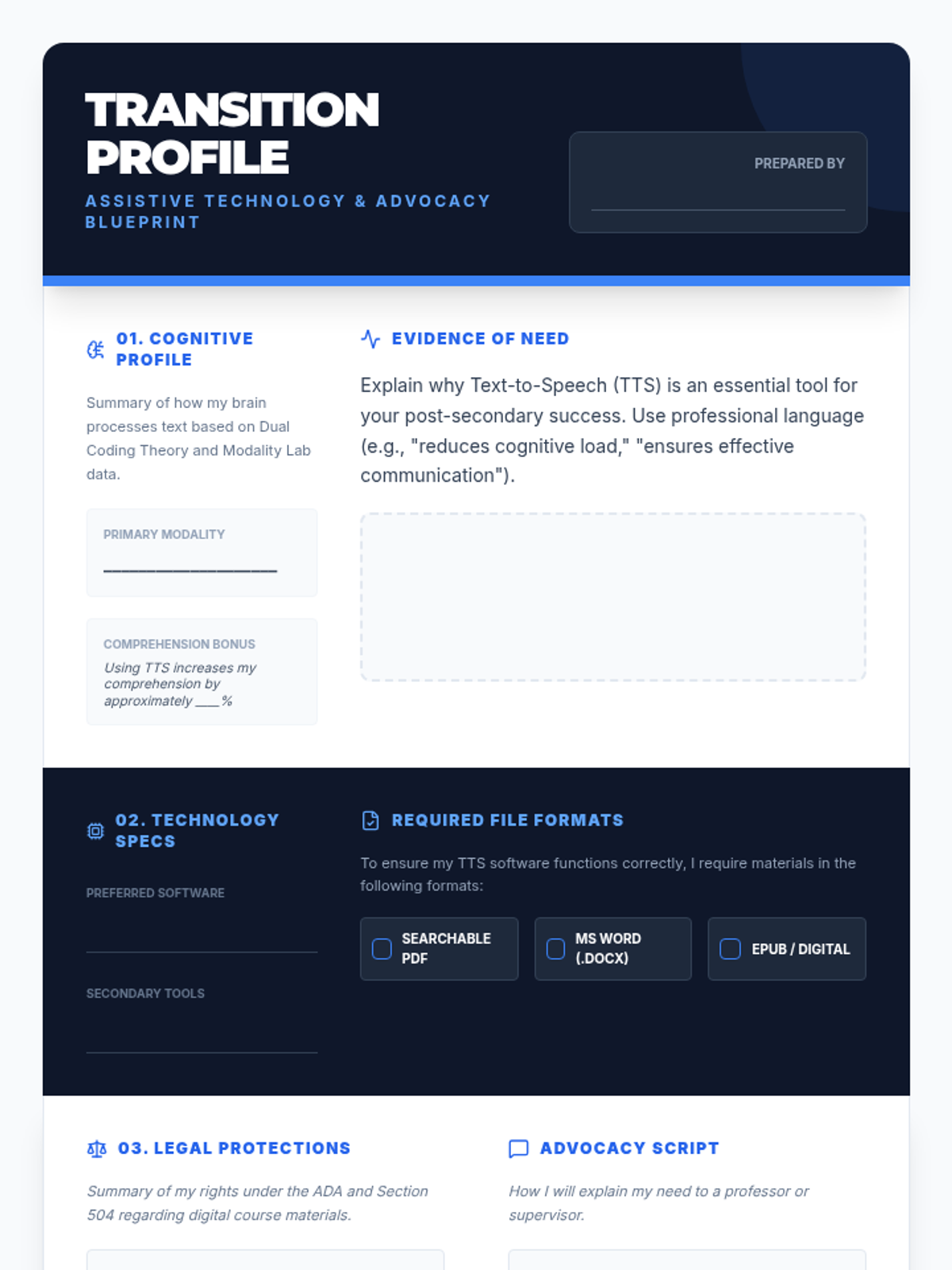
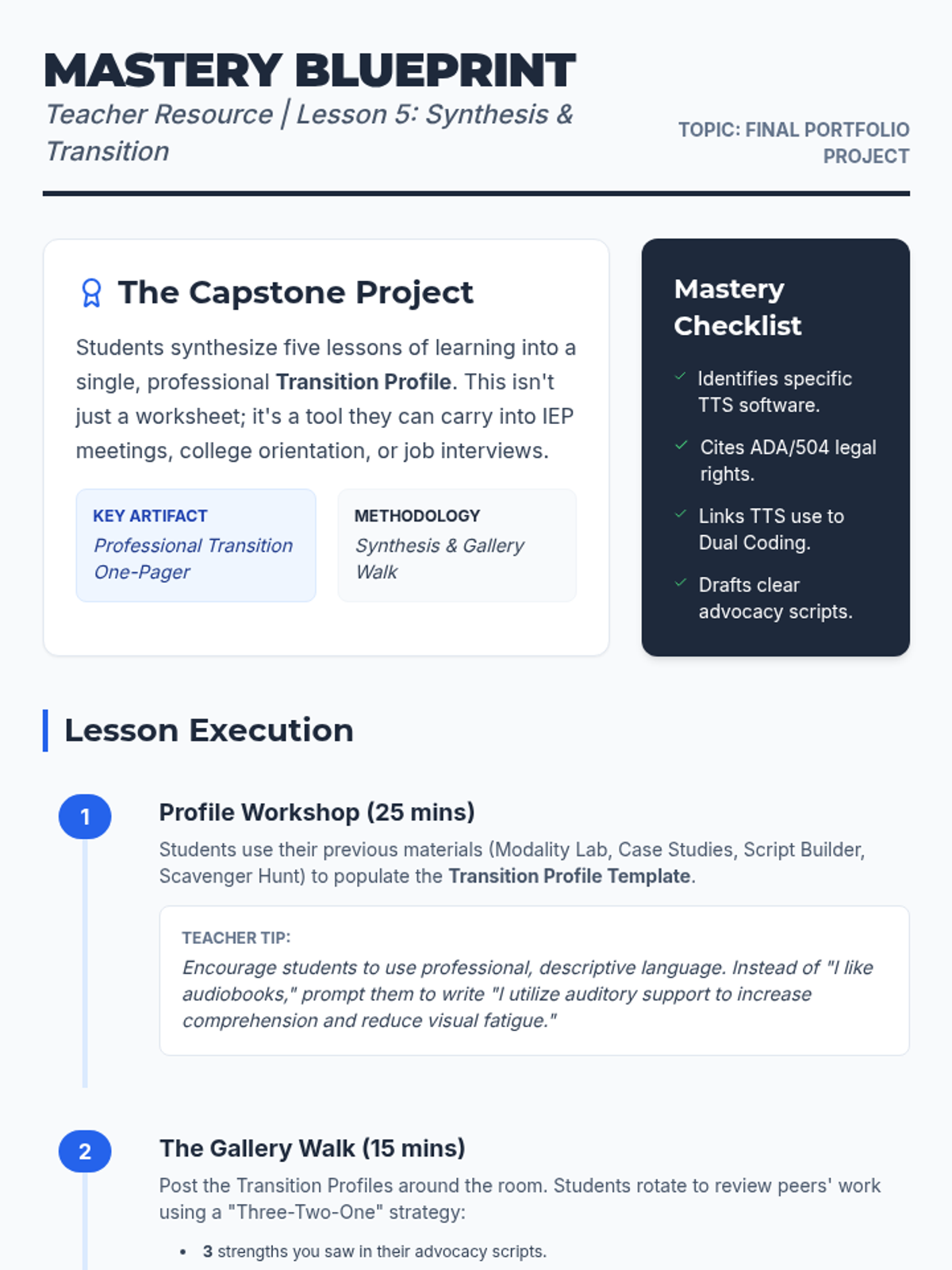
Students synthesize their learning into a professional transition one-pager that summarizes their specific assistive technology needs and legal rights.
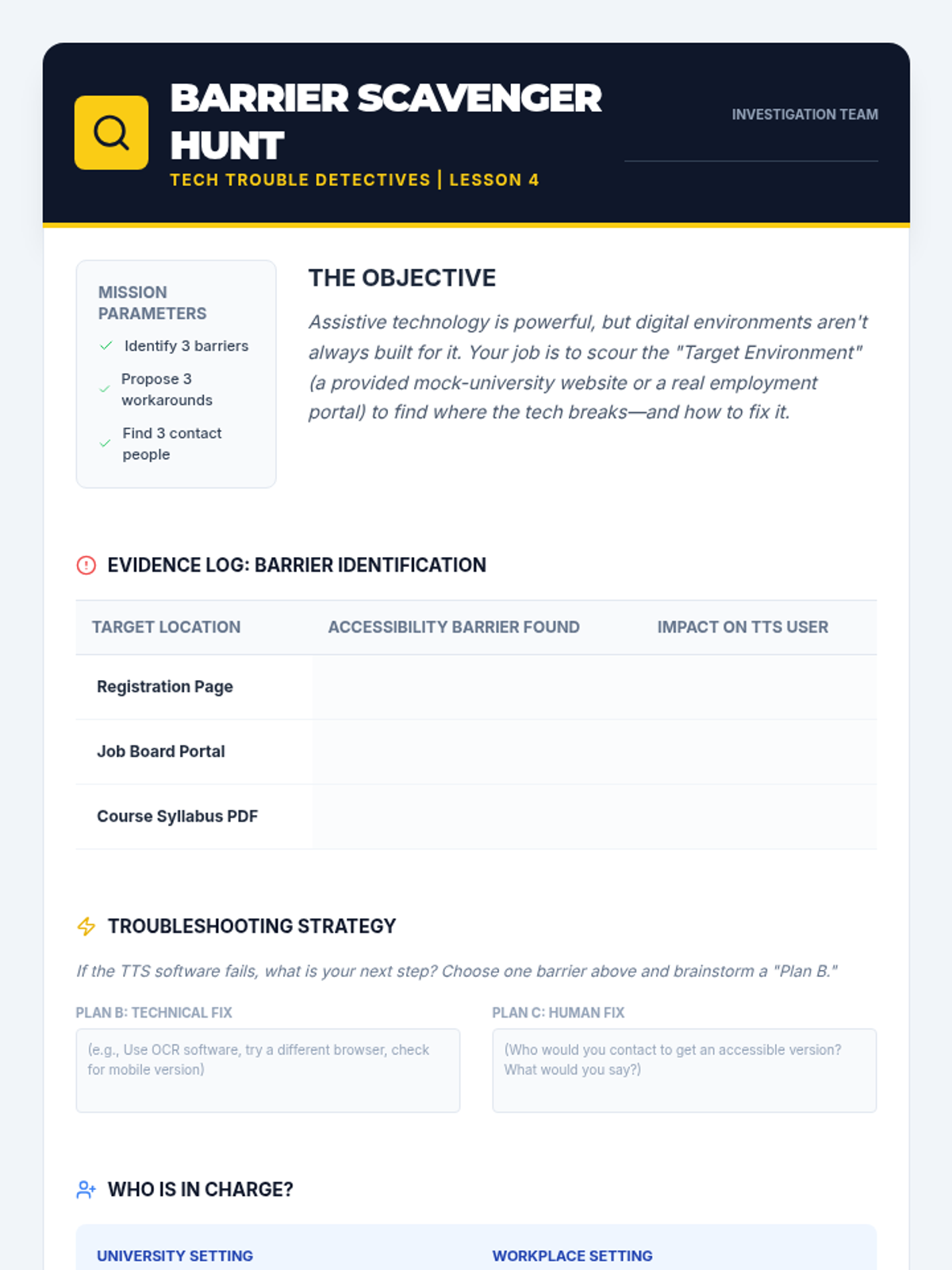
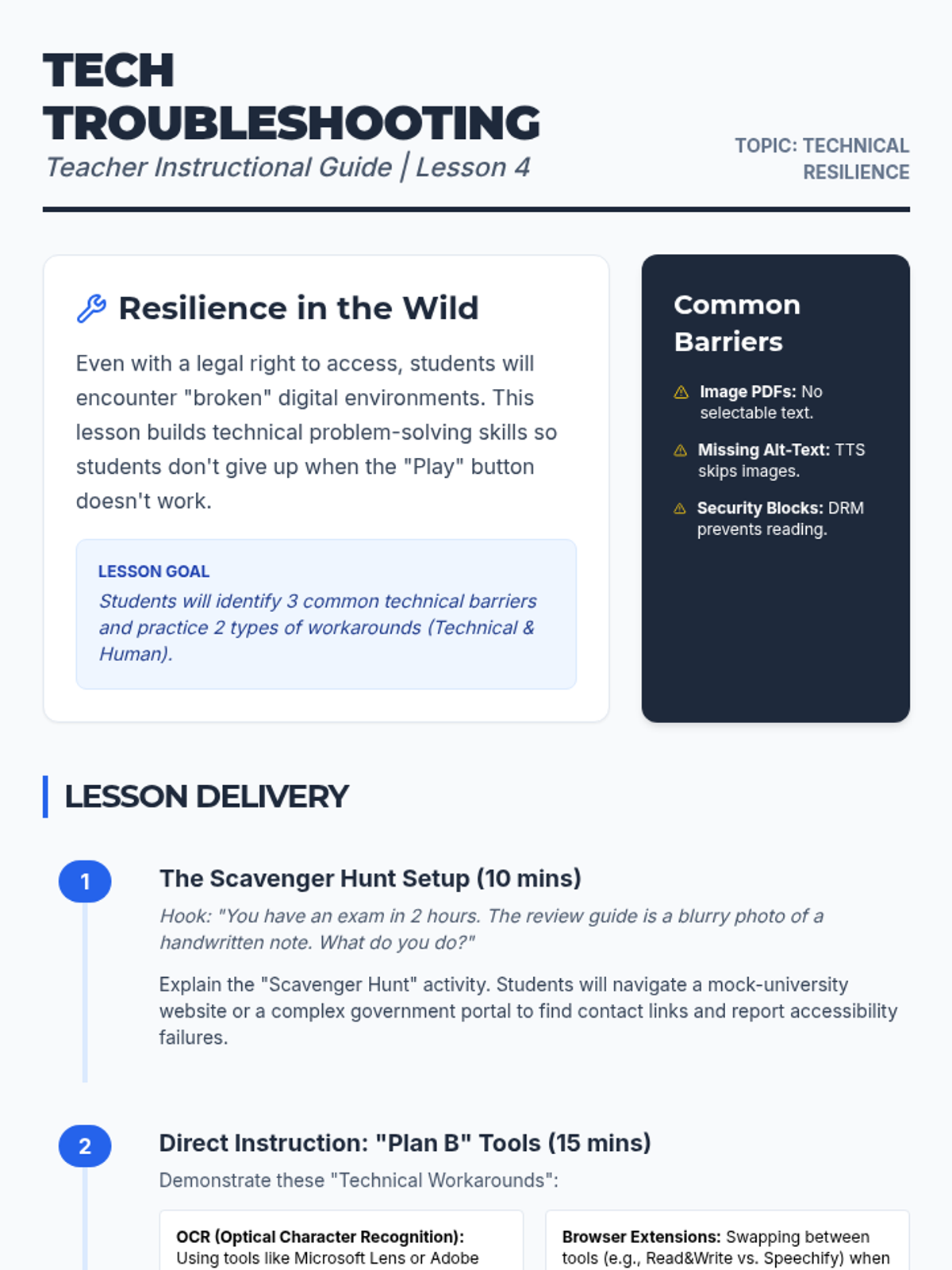
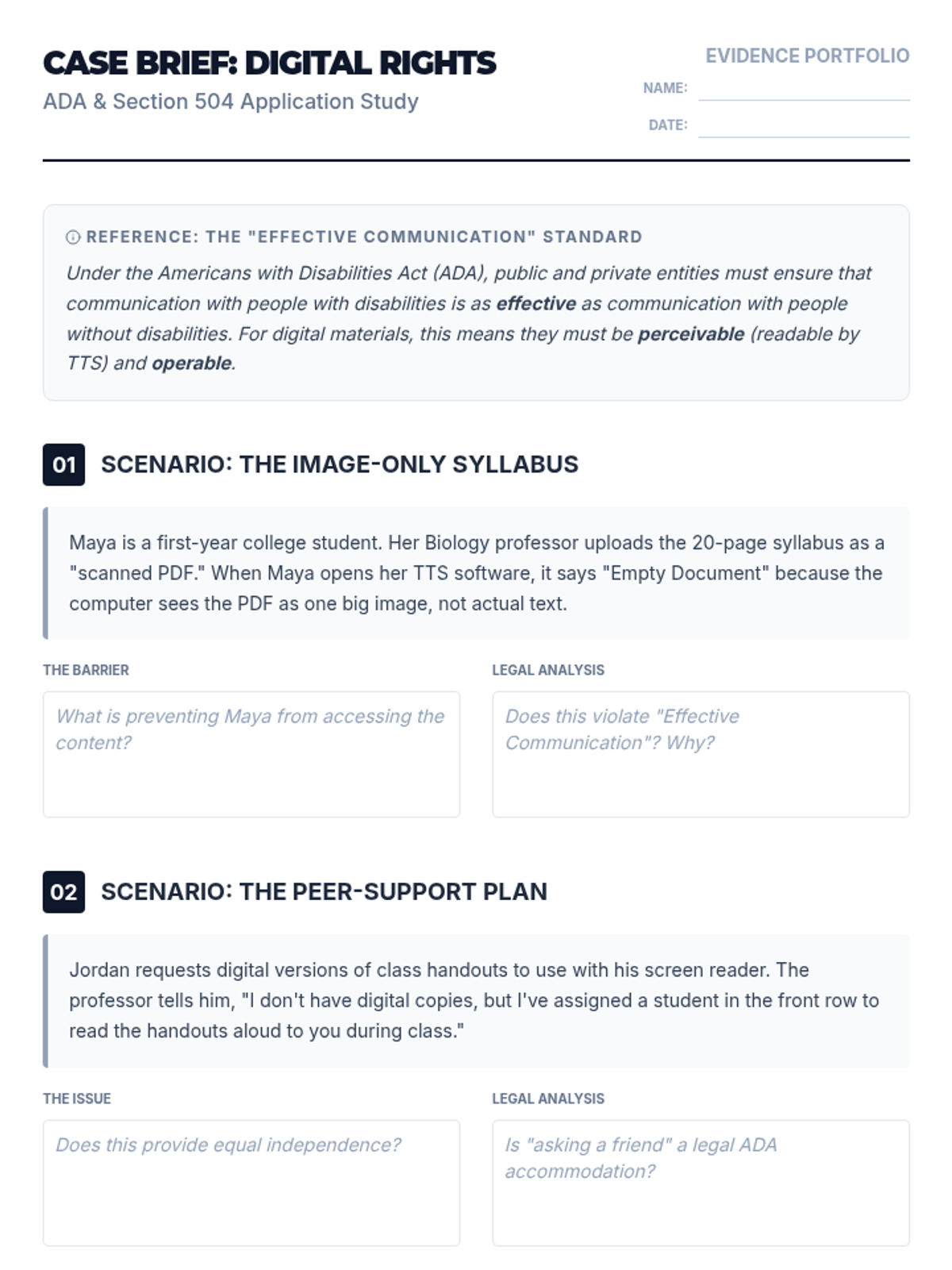
Practical troubleshooting for digital barriers, including identifying inaccessible files and finding technical workarounds or contact persons.
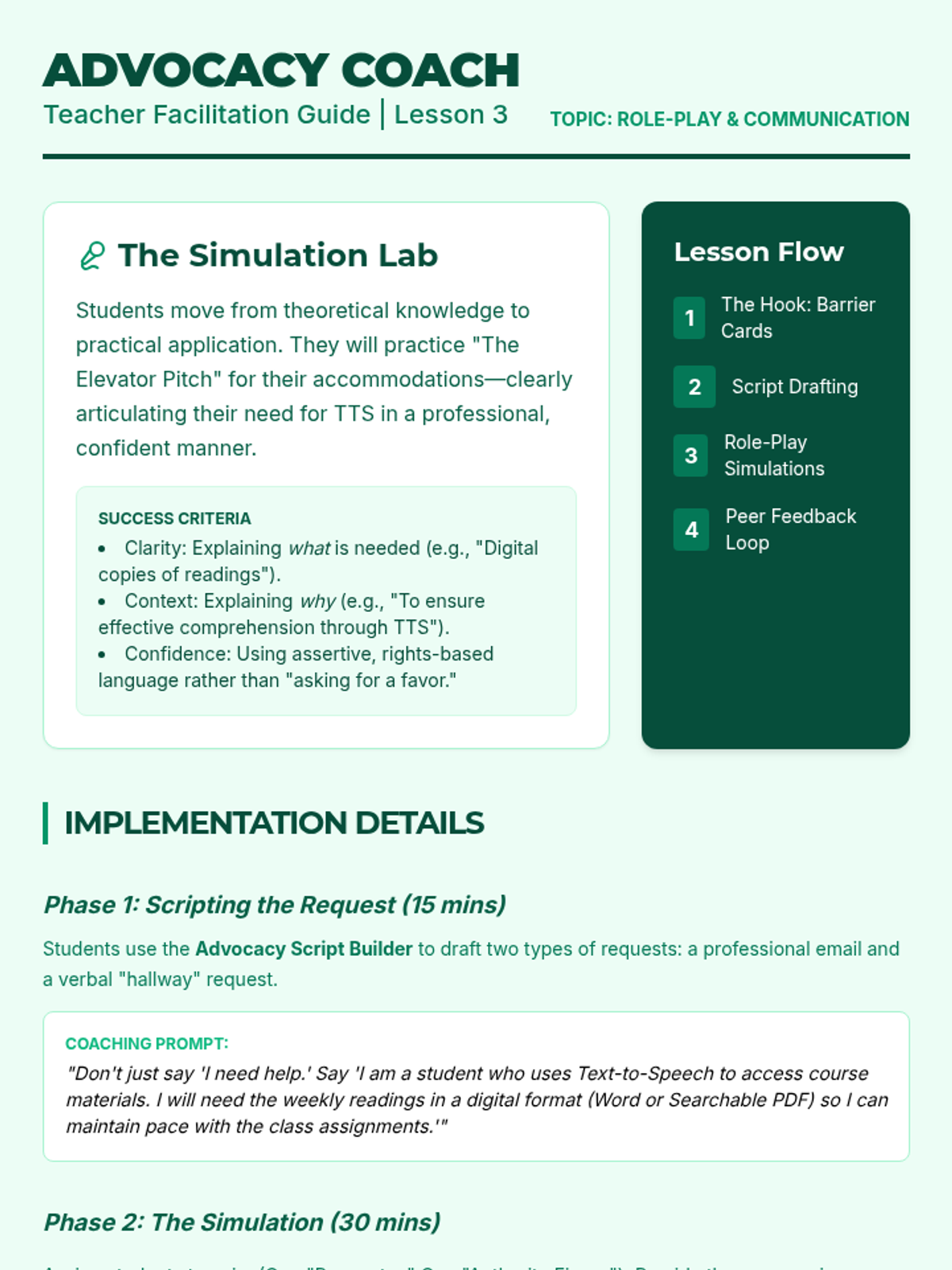
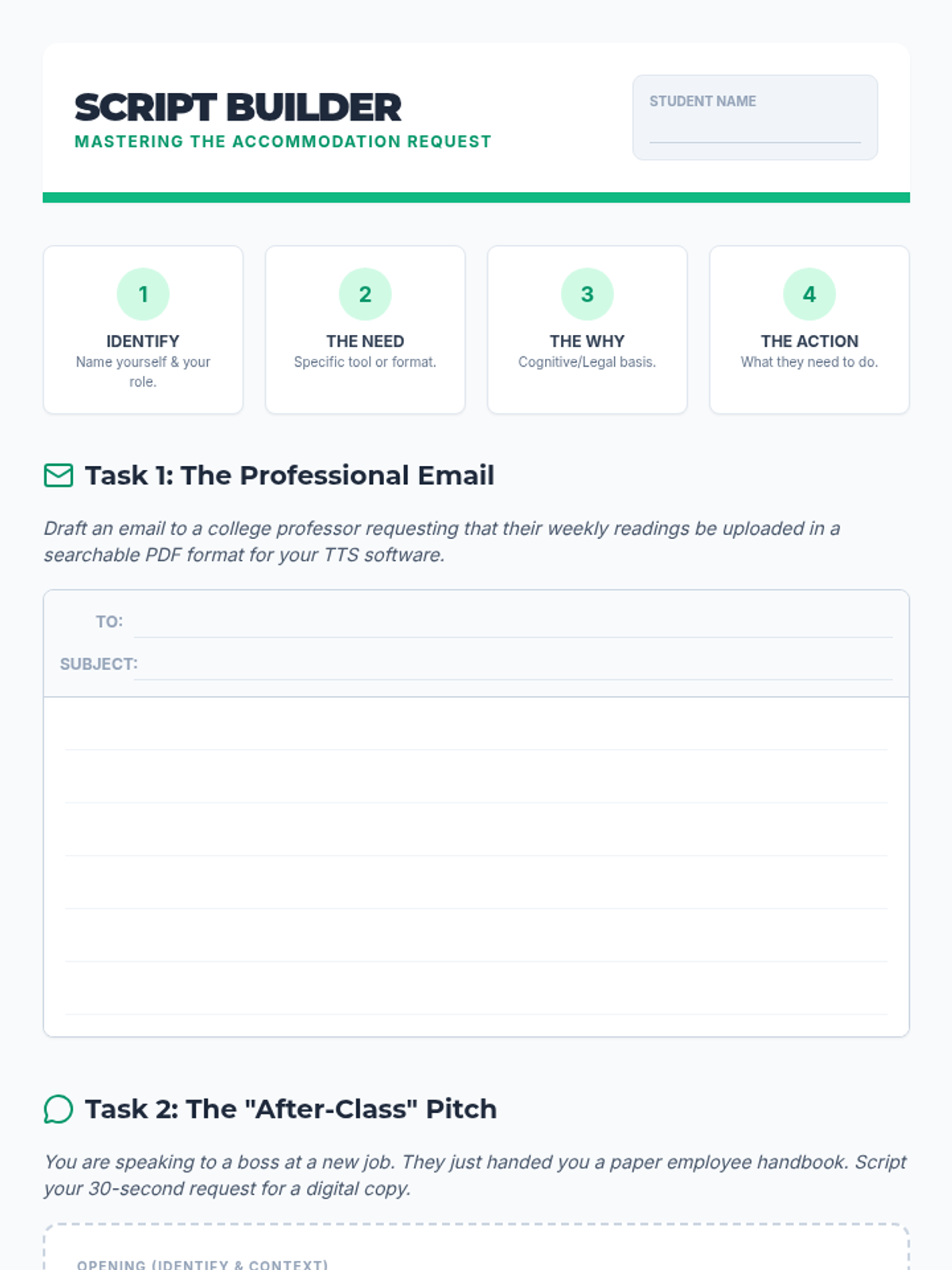
Students practice professional communication and self-advocacy by simulating requests for accommodations in college and workplace settings.
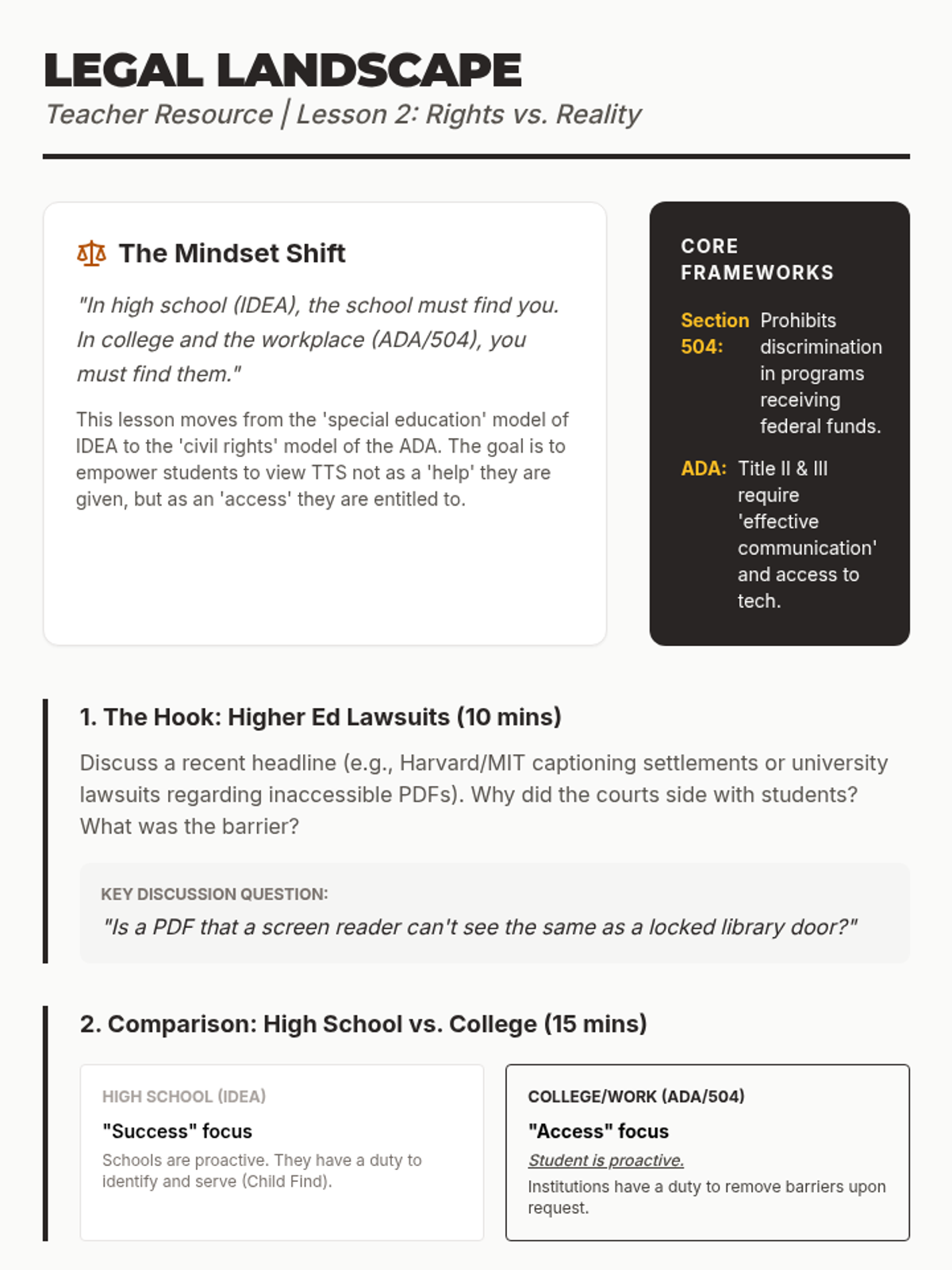
A deep dive into the legal frameworks of the ADA and Section 504 as they apply to digital accessibility in higher education and the workplace.
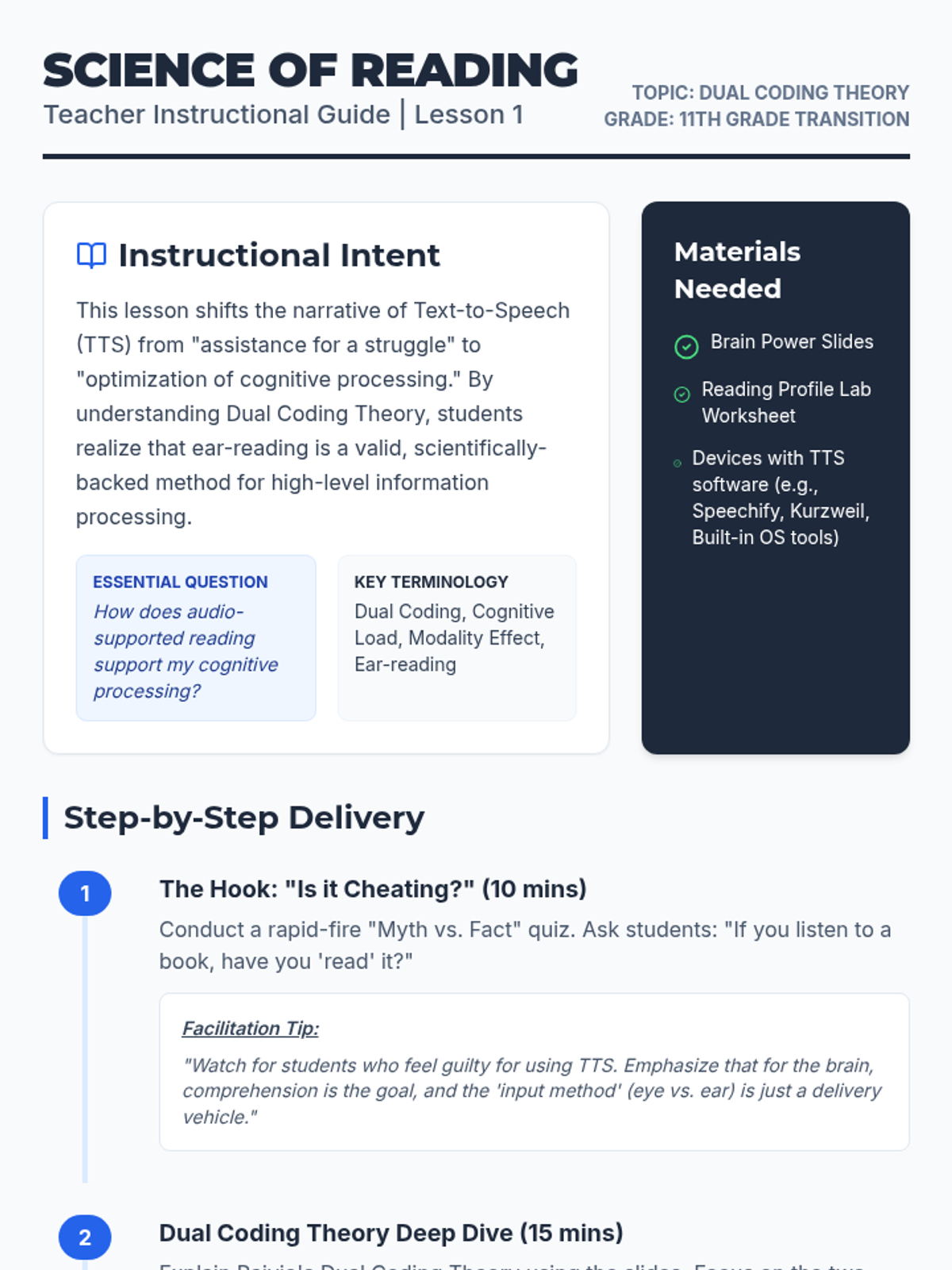
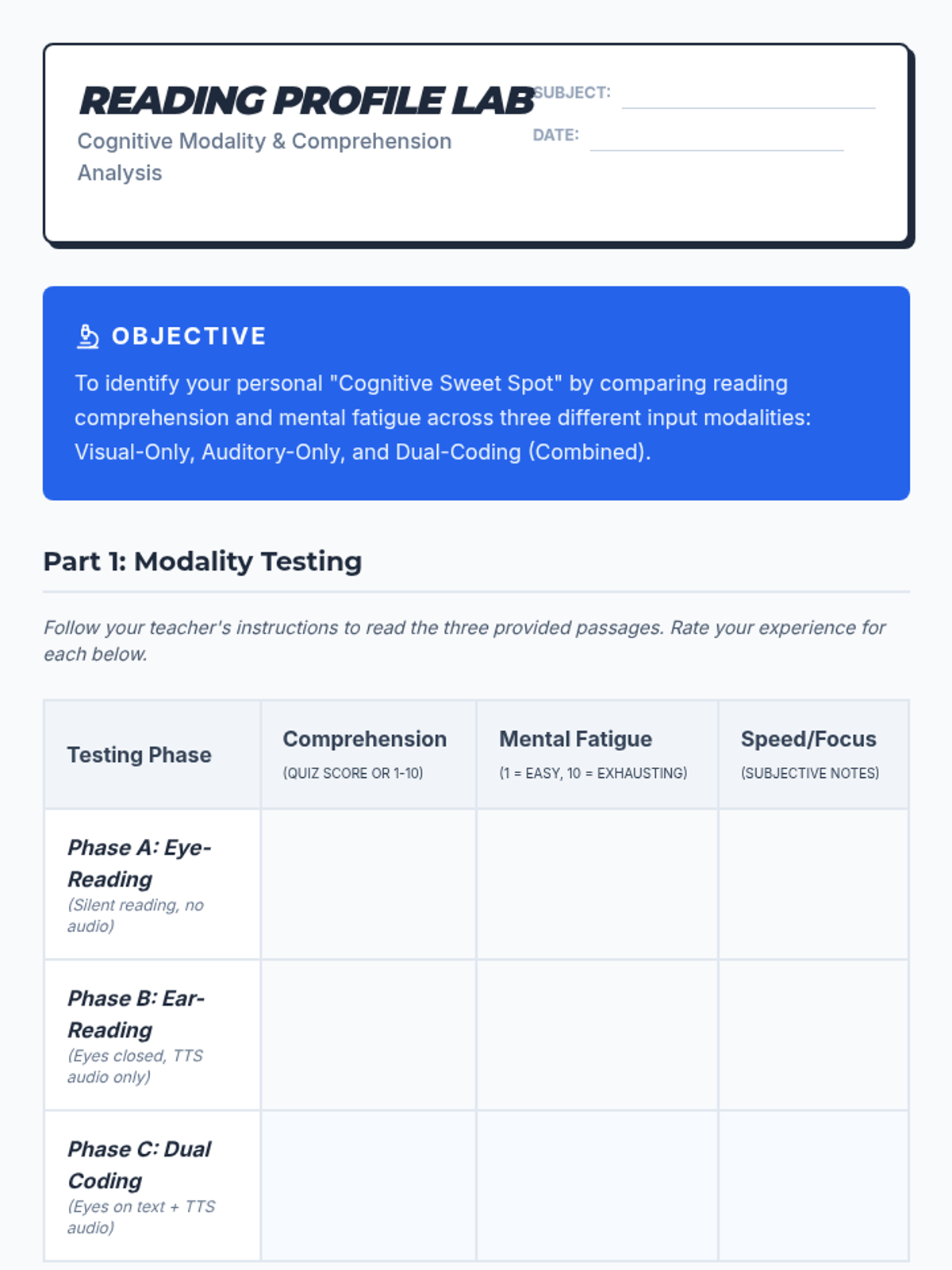
Students explore Dual Coding Theory and analyze their personal reading data to understand how eye-reading and ear-reading interact to improve comprehension and reduce fatigue.
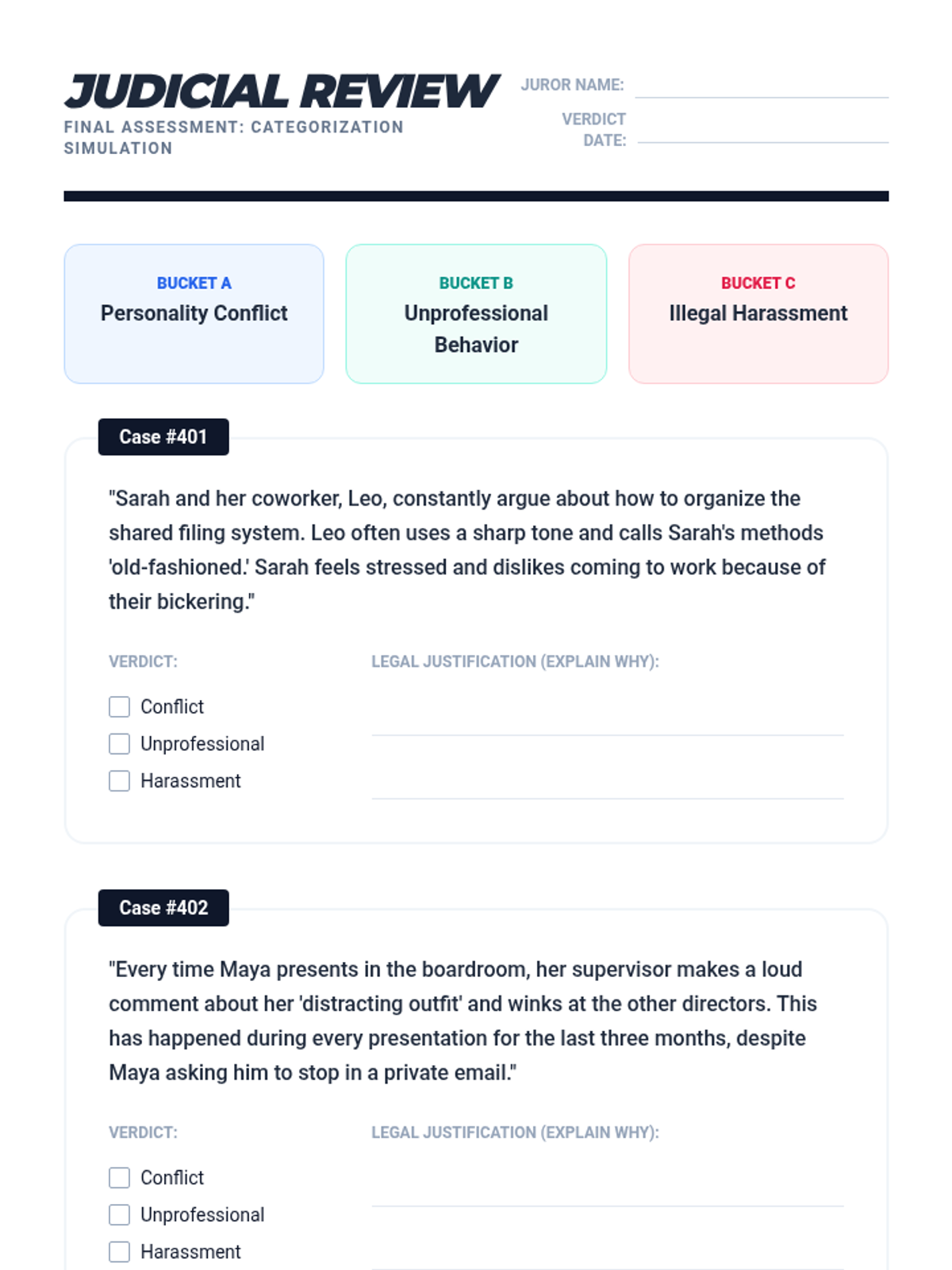
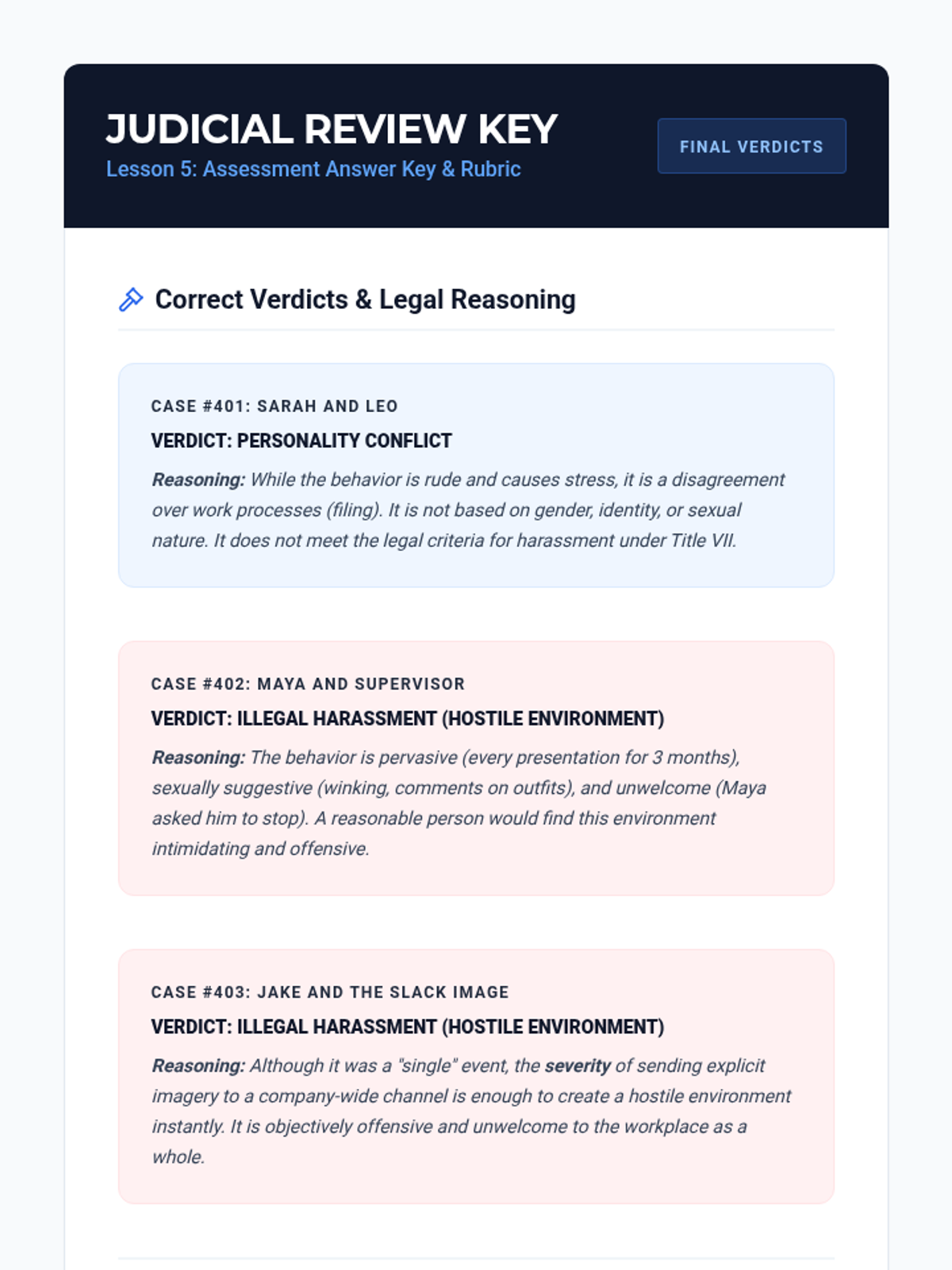
Students participate in a 'judicial review' simulation where they categorize complex scenarios as 'Personality Conflict,' 'Unprofessional,' or 'Illegal Harassment.' They must justify their categorization using criteria learned in the sequence.
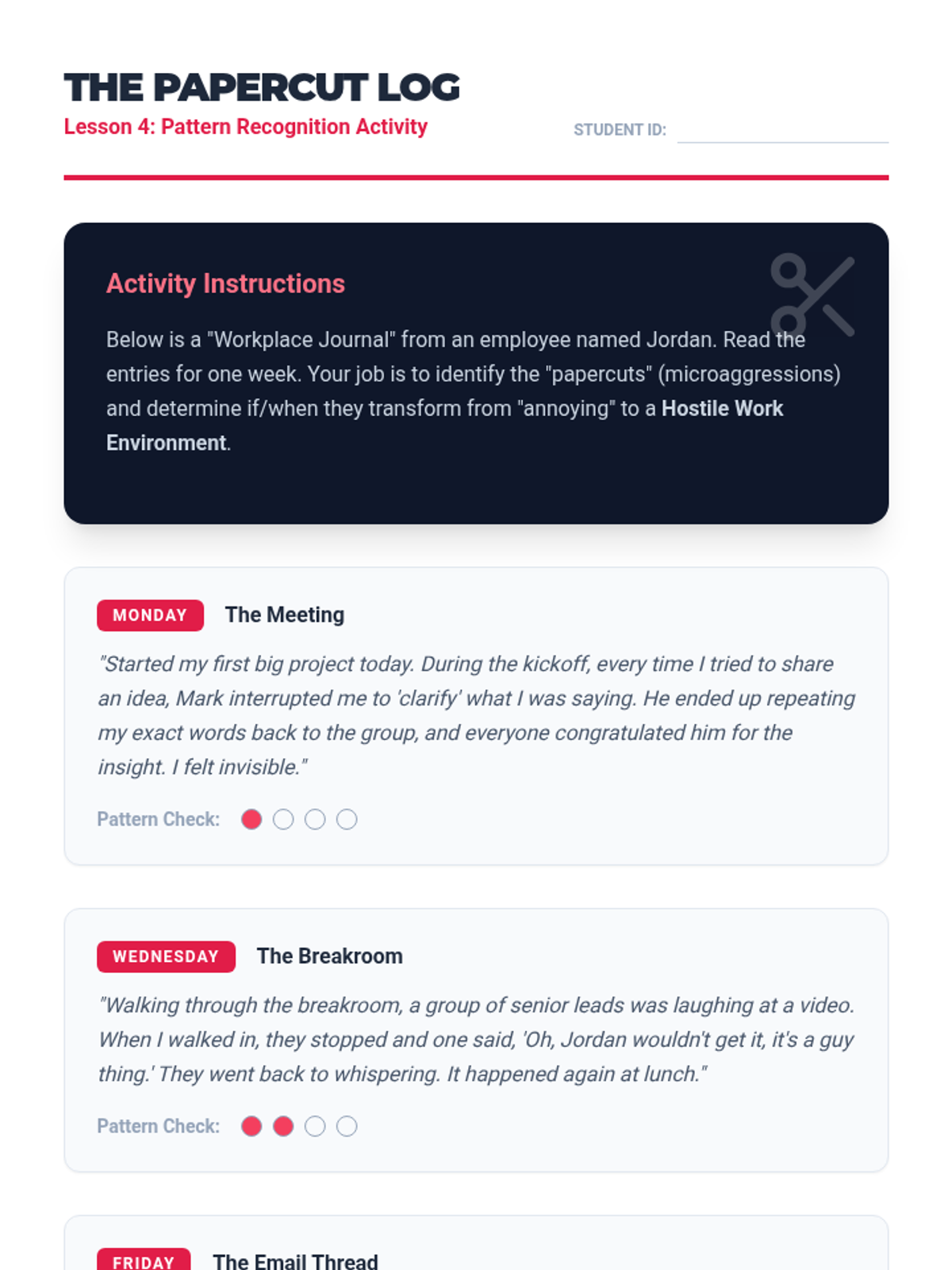
Students examine how microaggressions contribute to a hostile work environment over time. The lesson emphasizes recognizing patterns of behavior that may not be explicit harassment in isolation but become toxic cumulatively.
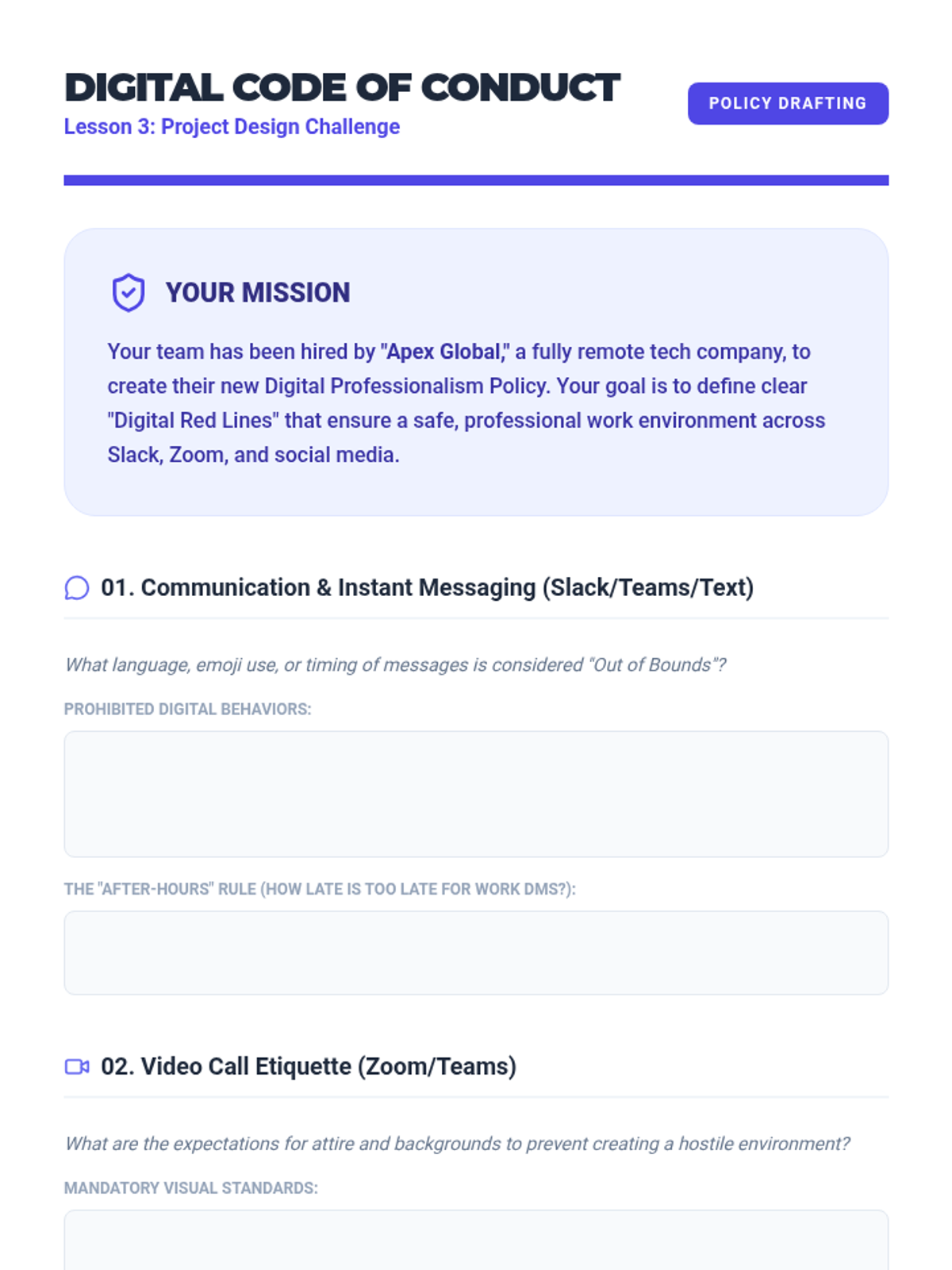
Students explore how harassment manifests in remote work and digital spaces, including inappropriate texts, emails, and social media interactions. They develop a code of conduct for digital professional communication.
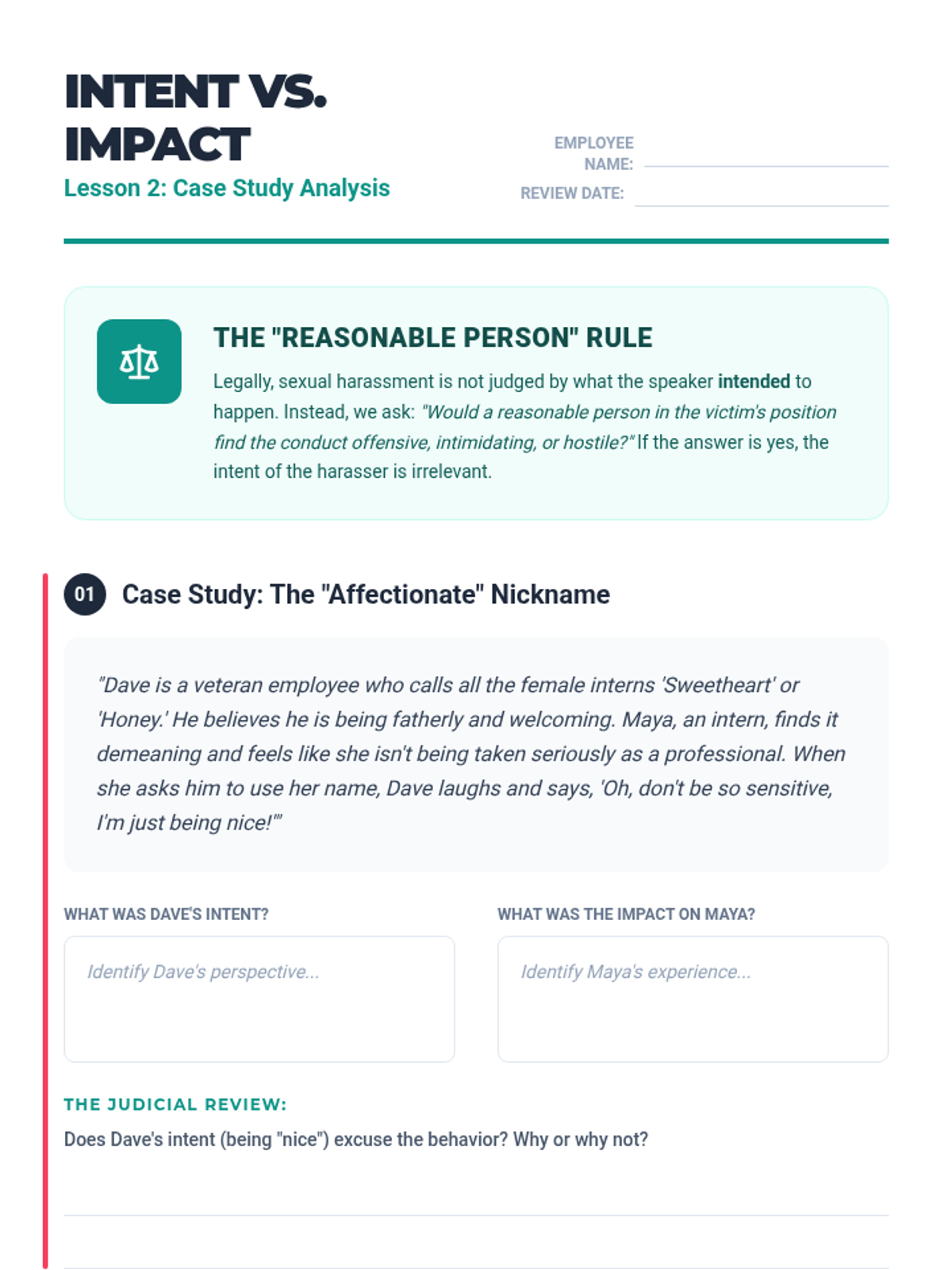
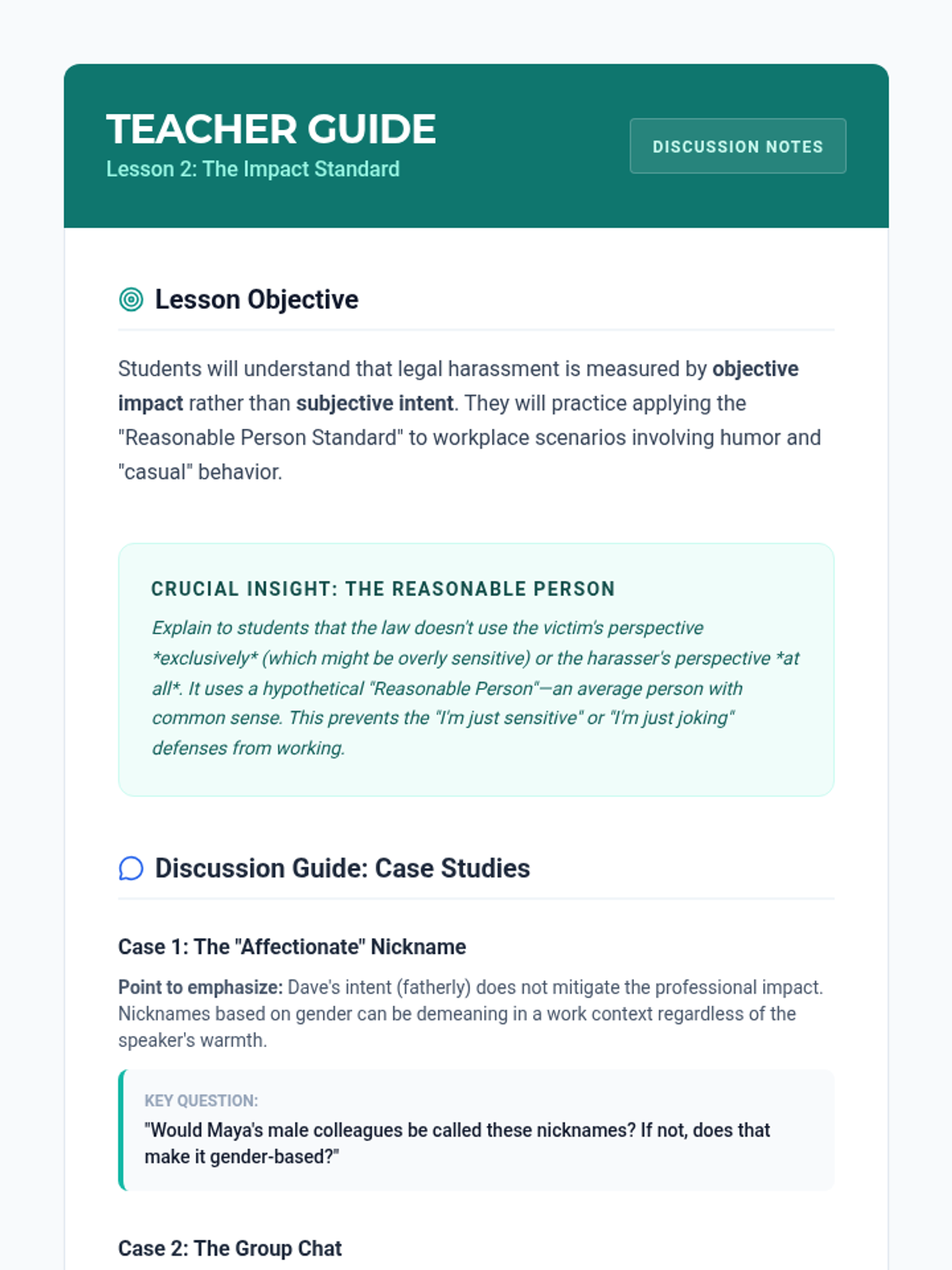
This lesson focuses on the legal standard that harassment is judged by its impact on the victim, not the intent of the harasser. Students review scenarios where 'jokes' constitute harassment.
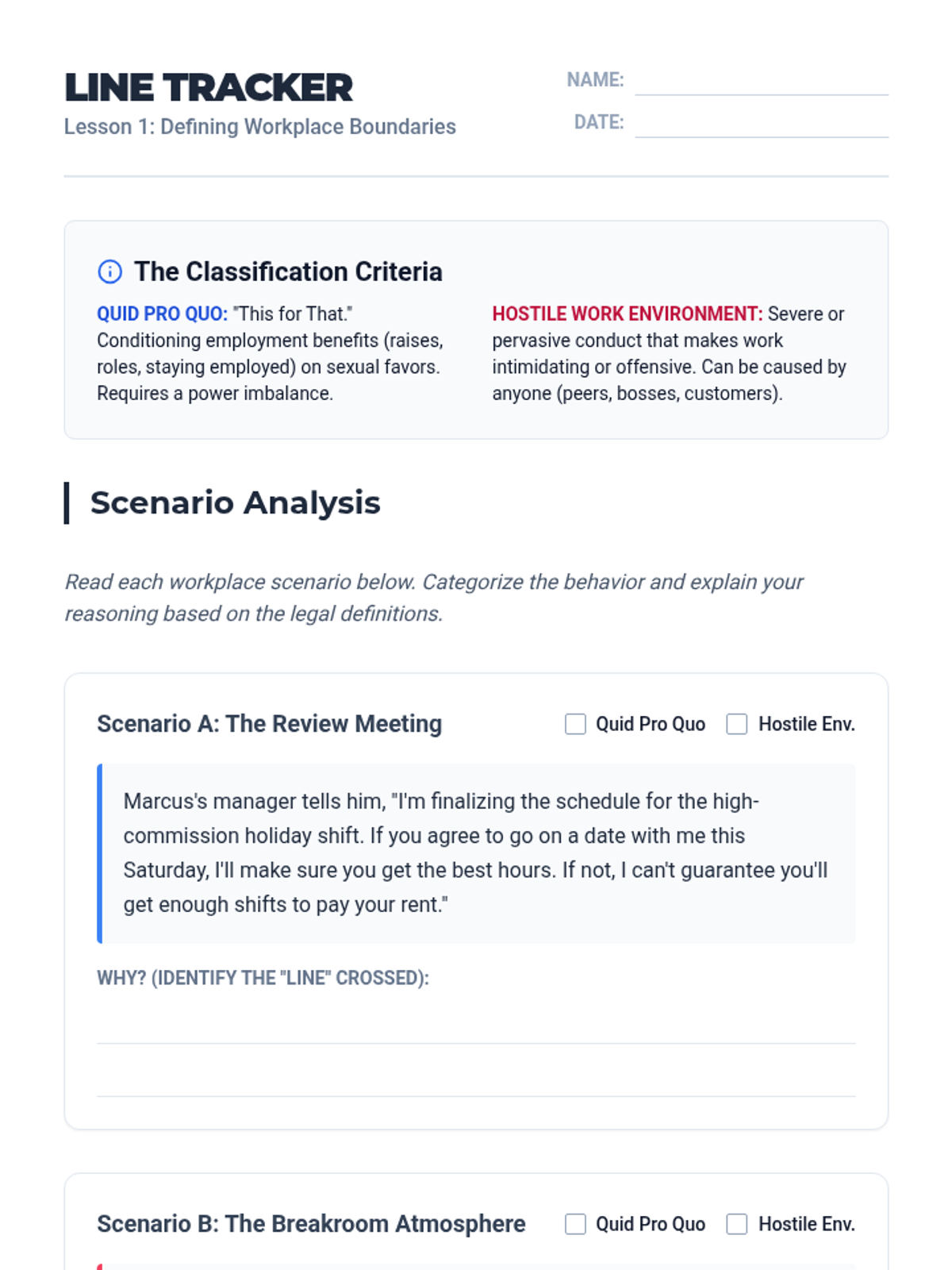
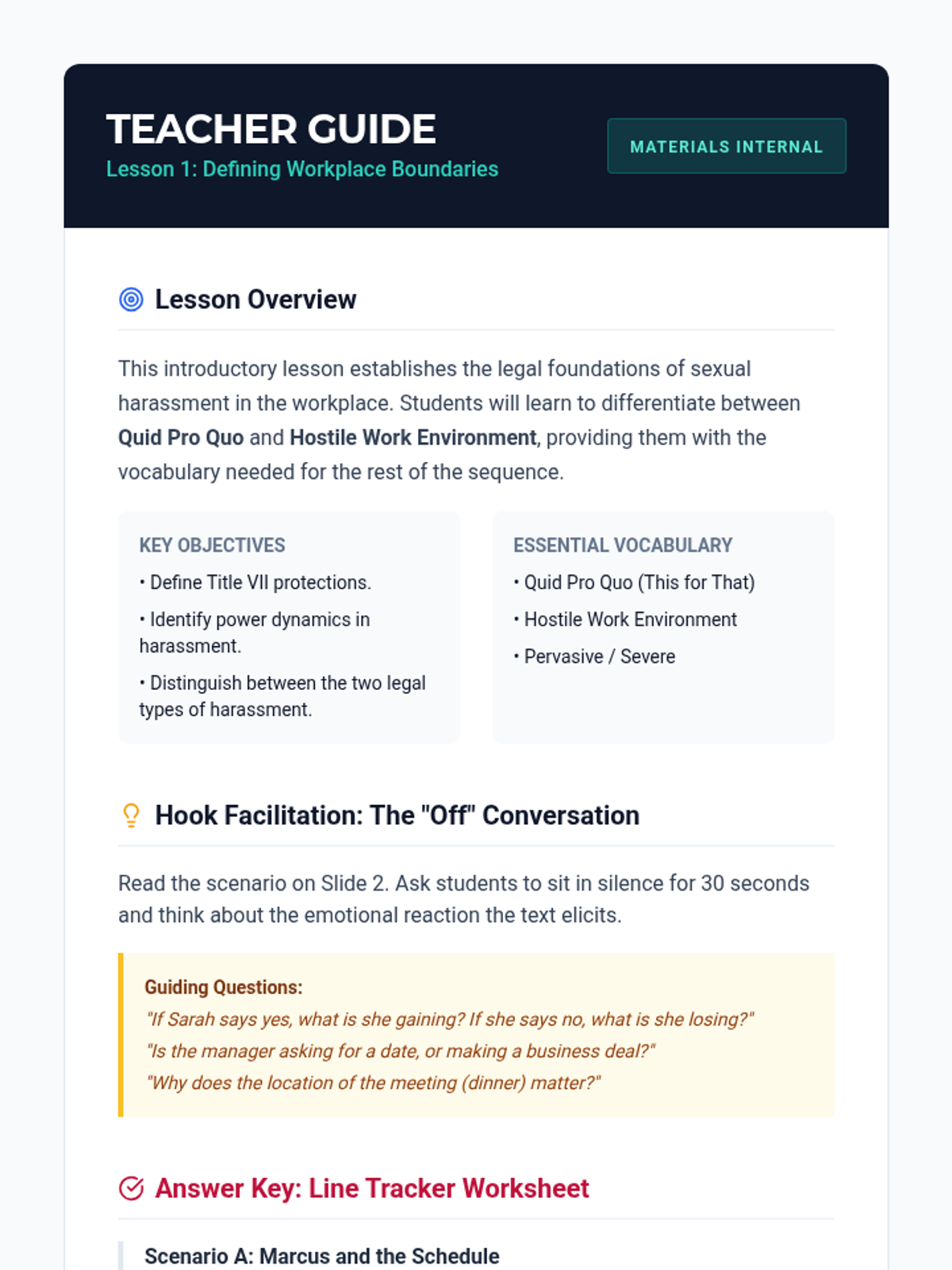
Students distinguish between the two primary legal types of sexual harassment: 'this for that' (quid pro quo) and pervasive hostile environments. They analyze clear-cut examples of each to build a working definition.
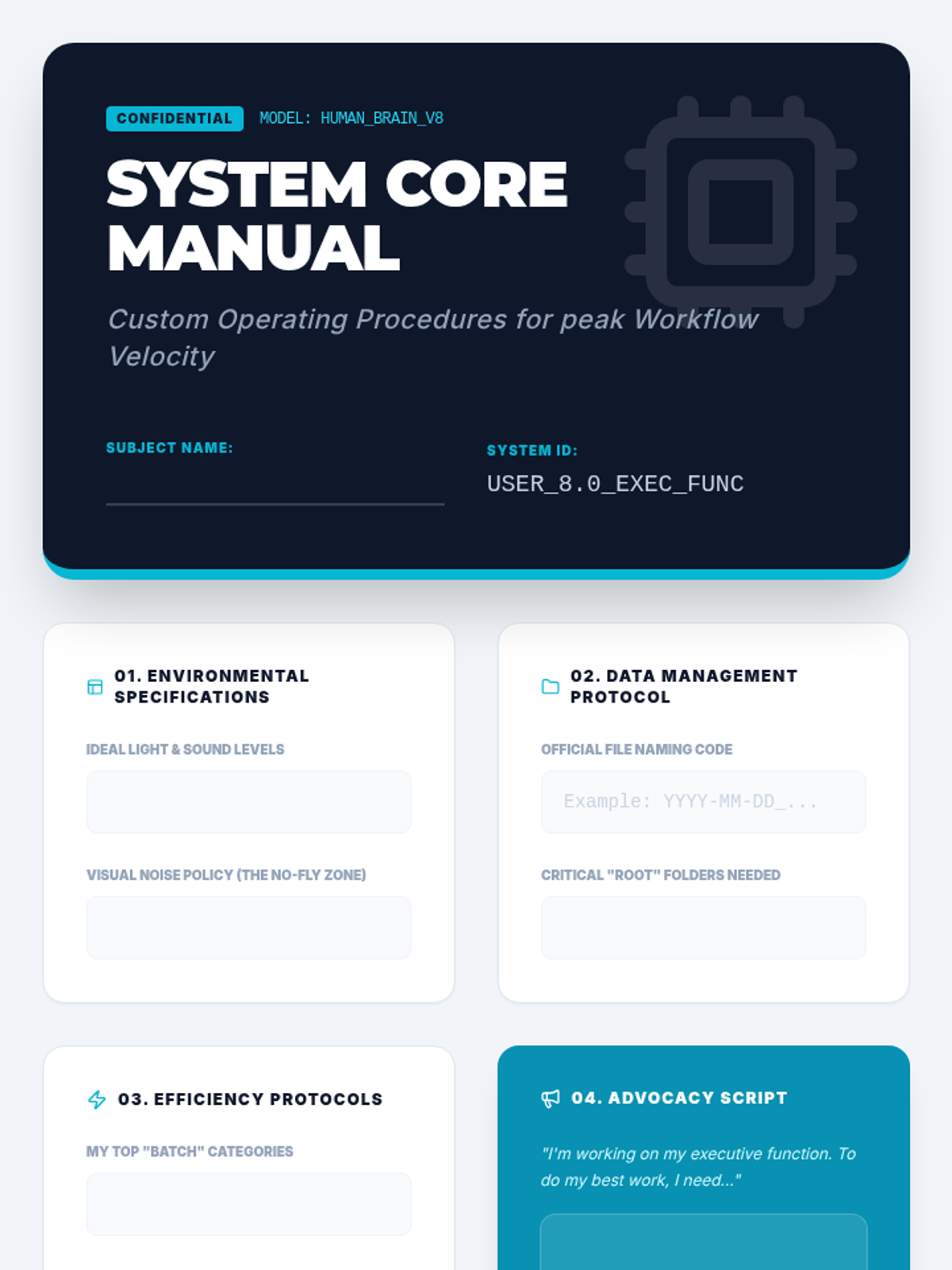
In this capstone lesson, students synthesize their learning into a 'User Manual' for their own brain. They document personalized strategies for physical, digital, and temporal organization to build self-advocacy and long-term habits.
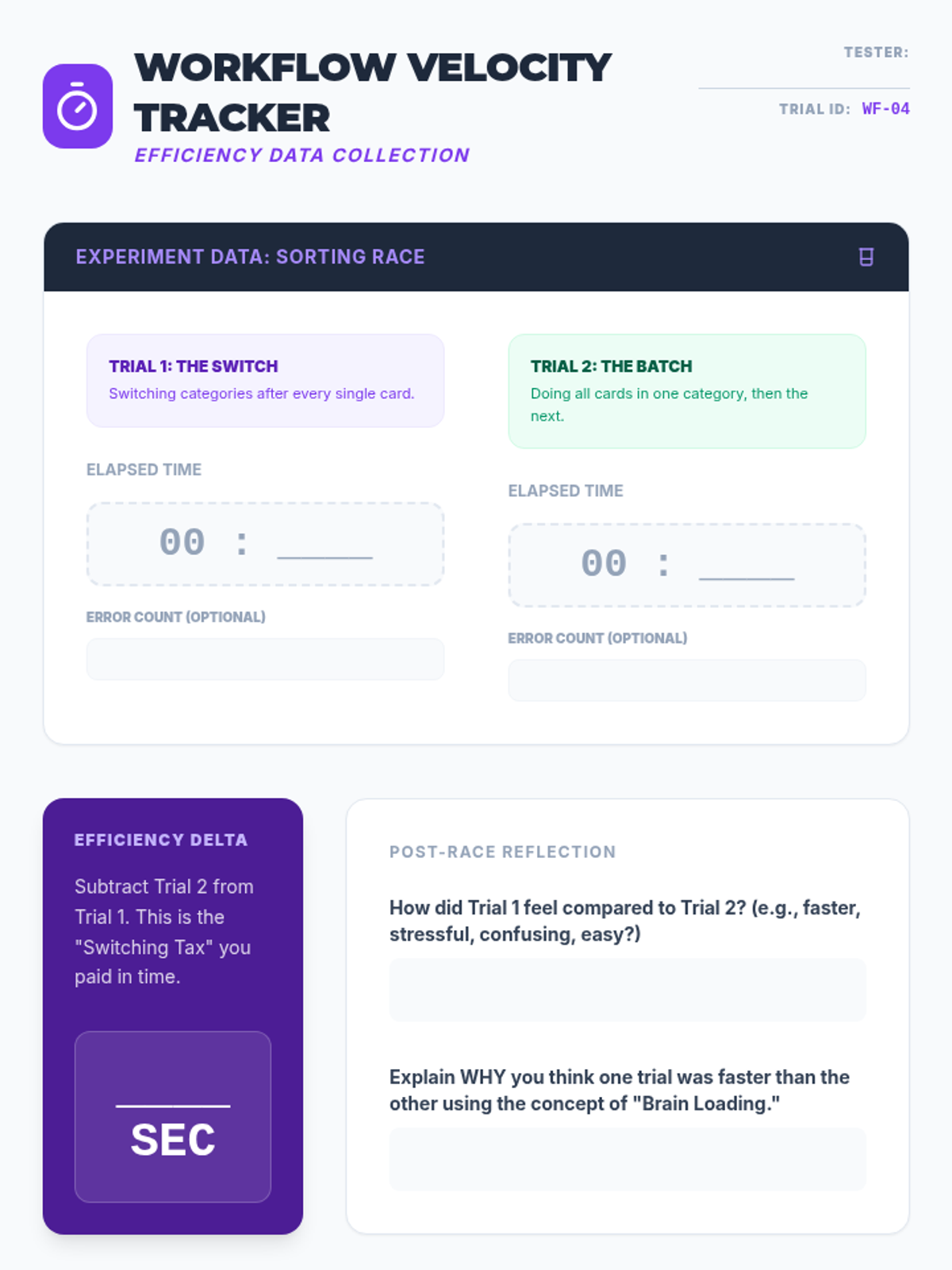
Students investigate the efficiency costs of multitasking and context switching. Through timed experiments, they compare sequential task completion with 'batching' strategies to develop more efficient workflow habits.
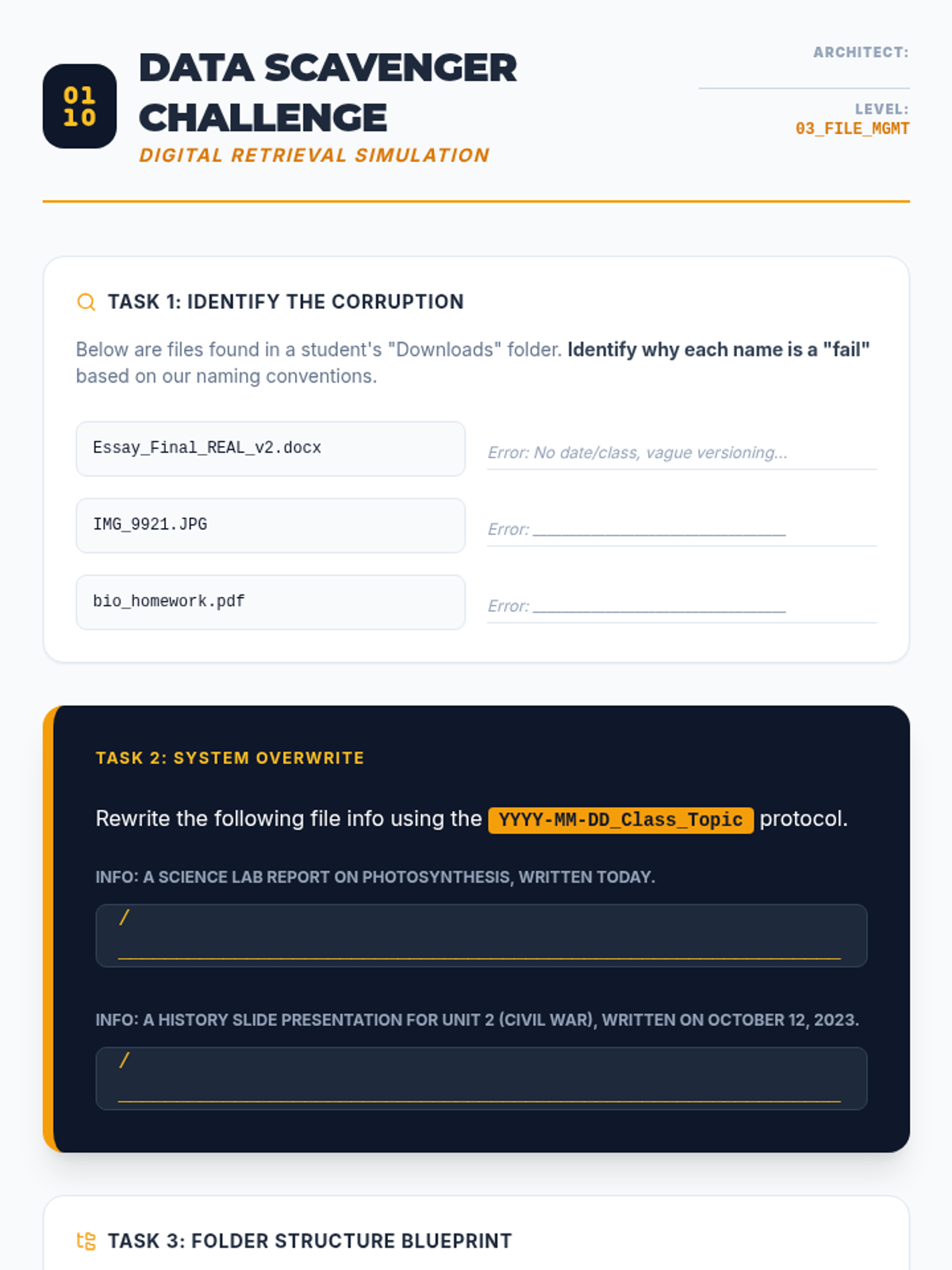
This lesson focuses on digital literacy through the lens of organization. Students learn effective file naming conventions, folder hierarchies, and inbox management strategies to prevent 'digital hoarding' and improve information retrieval speed.
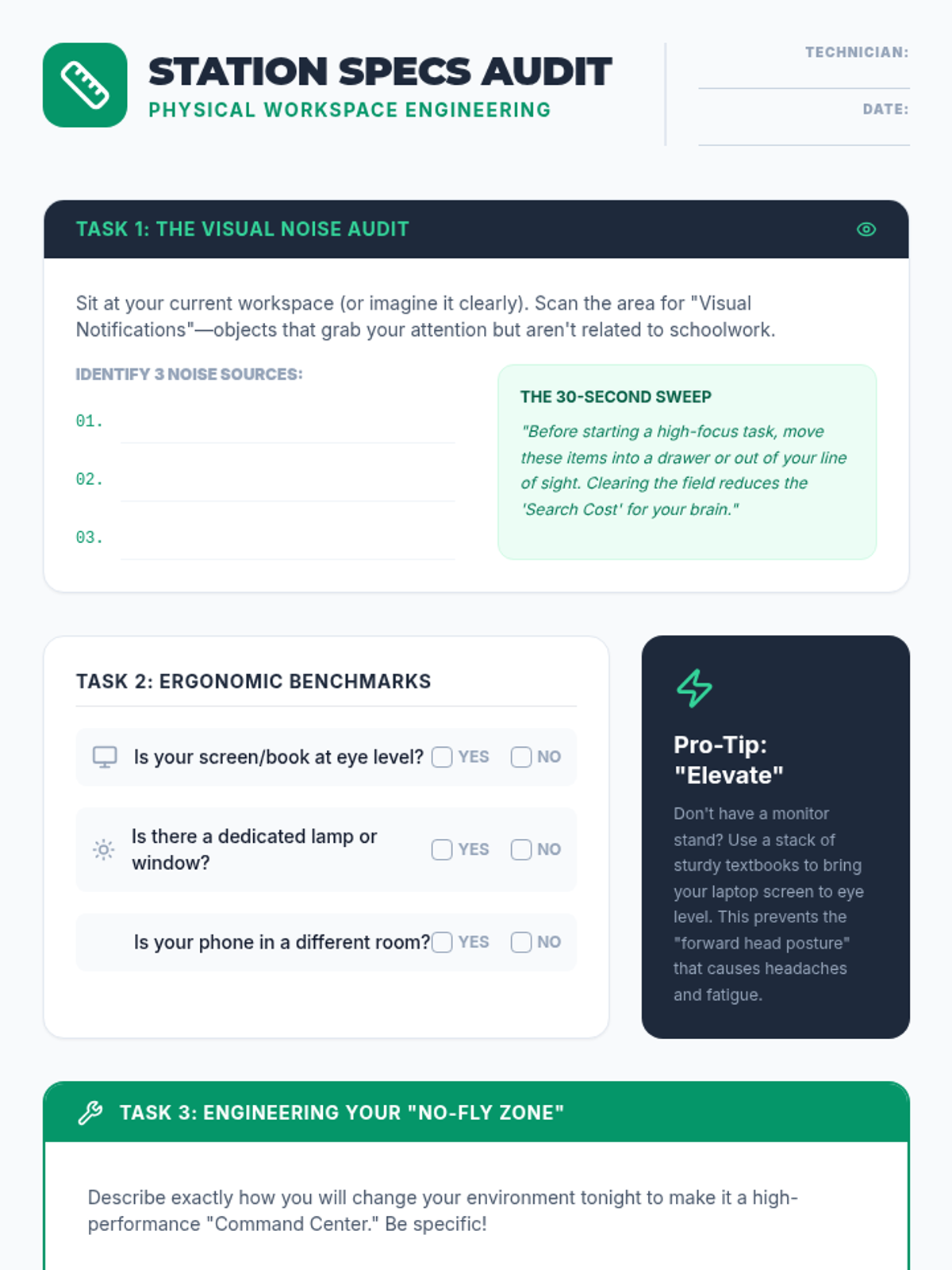
Students analyze the impact of their physical environment on focus and productivity. By auditing workspace case studies and their own study areas, they learn to design spaces that minimize distractions and optimize ergonomics.
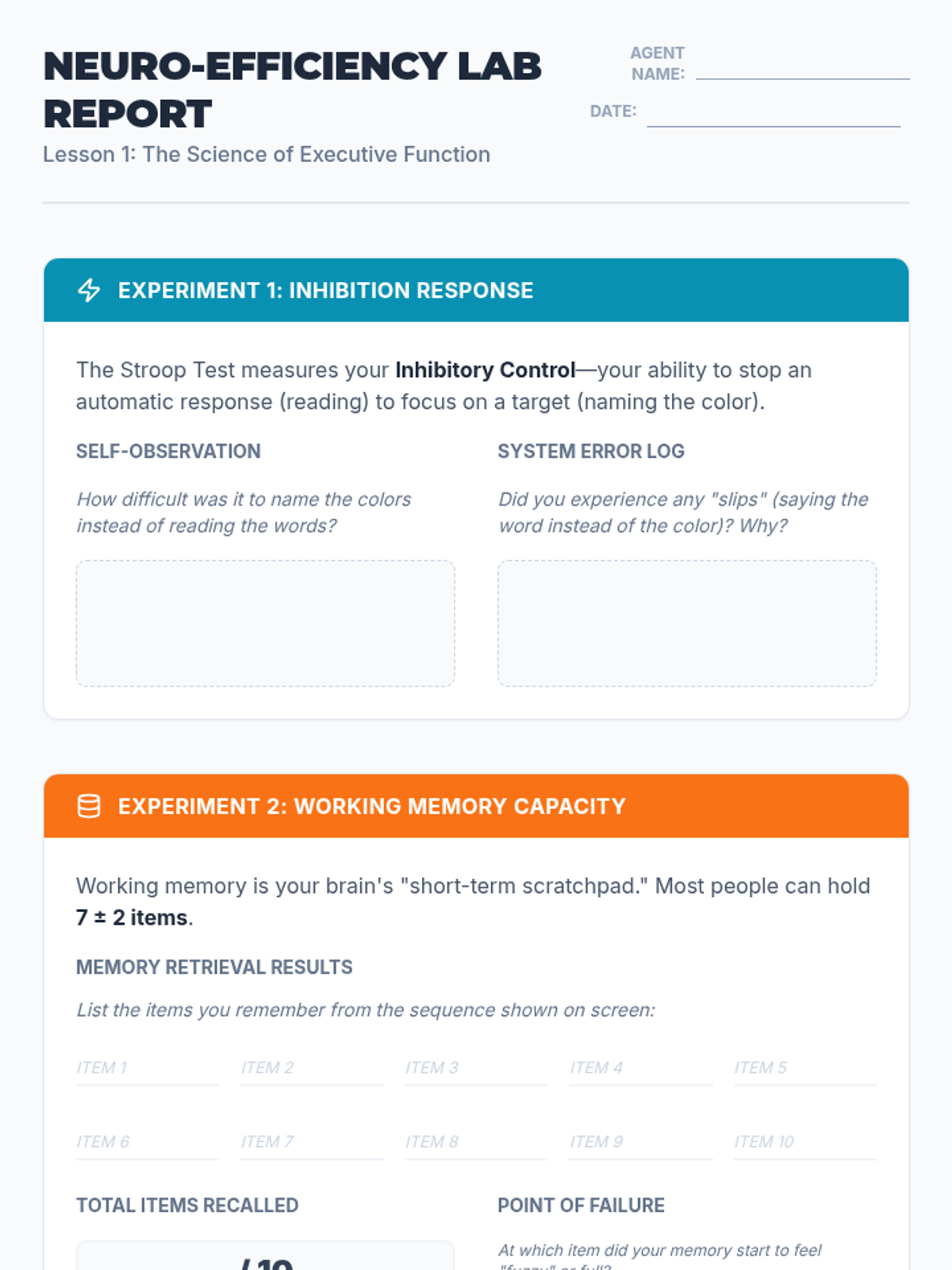
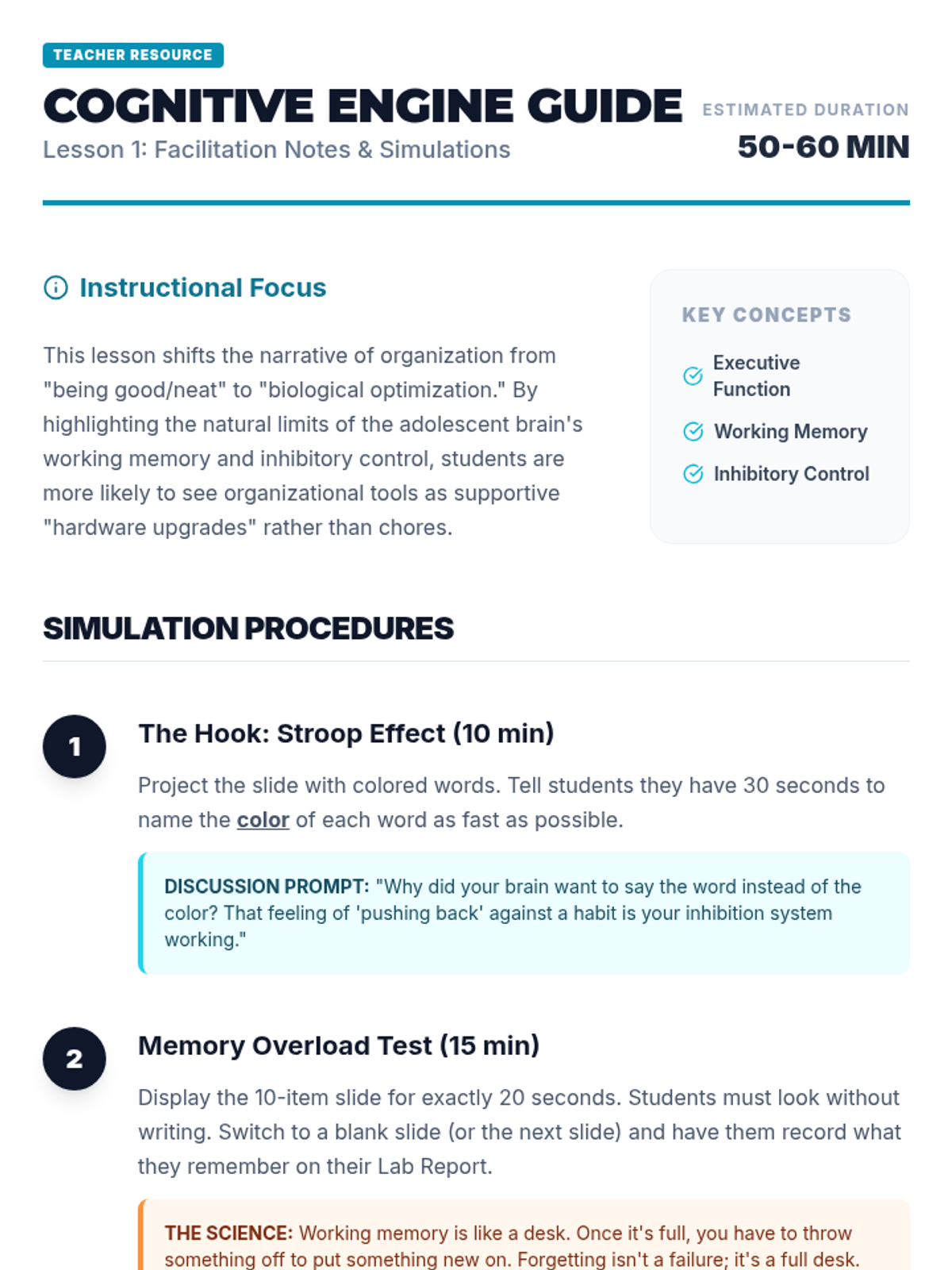
Students explore the neurological basis of executive function, focusing on working memory and inhibition. They engage in simulations like the Stroop Effect and memory overload tasks to understand why organizational systems are necessary for cognitive efficiency.
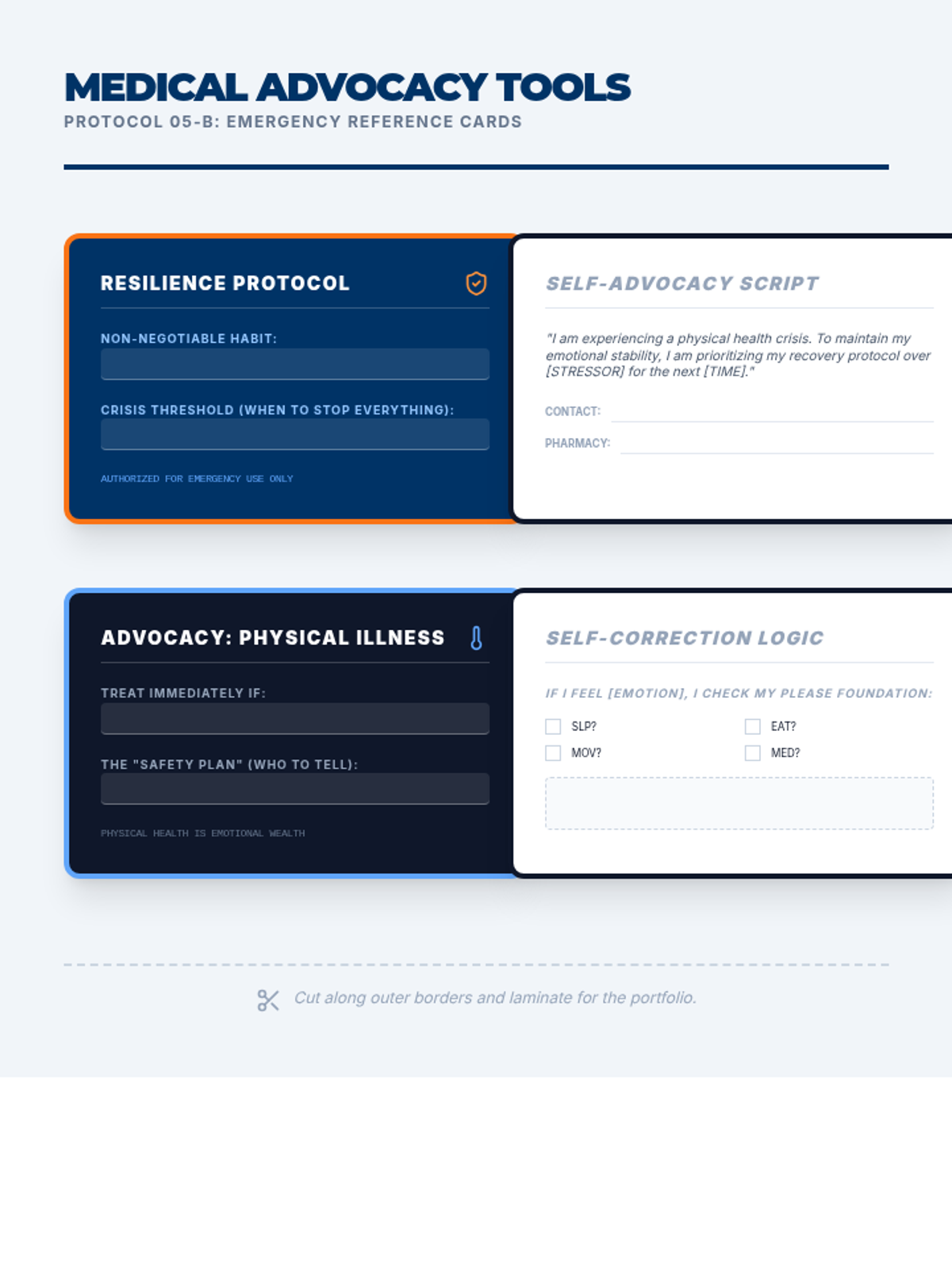
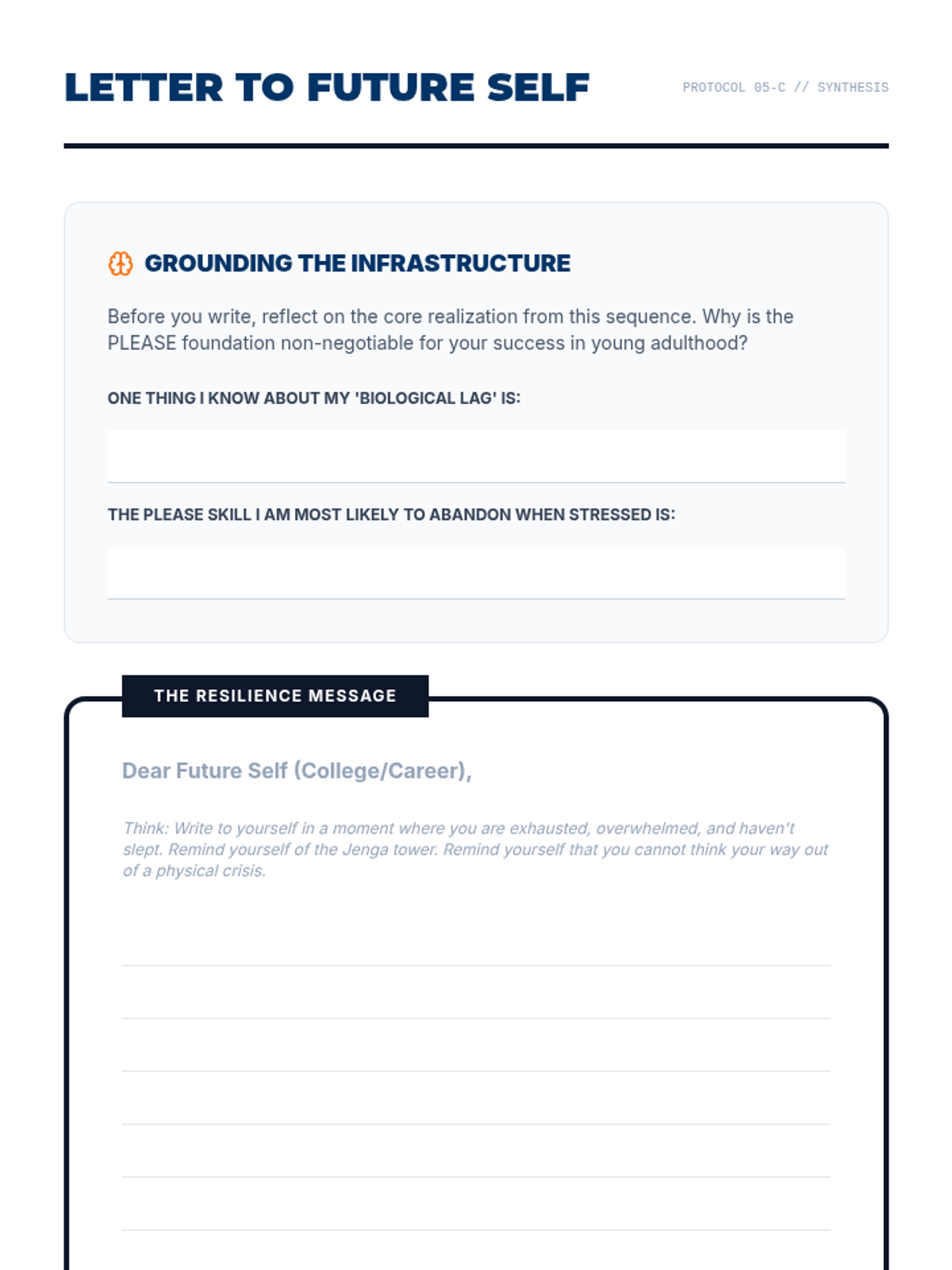
Students finalize their comprehensive PLEASE Portfolio, which includes their crisis plans, daily routines, and medical advocacy cards. They reflect on how this foundation reduces emotional vulnerability.
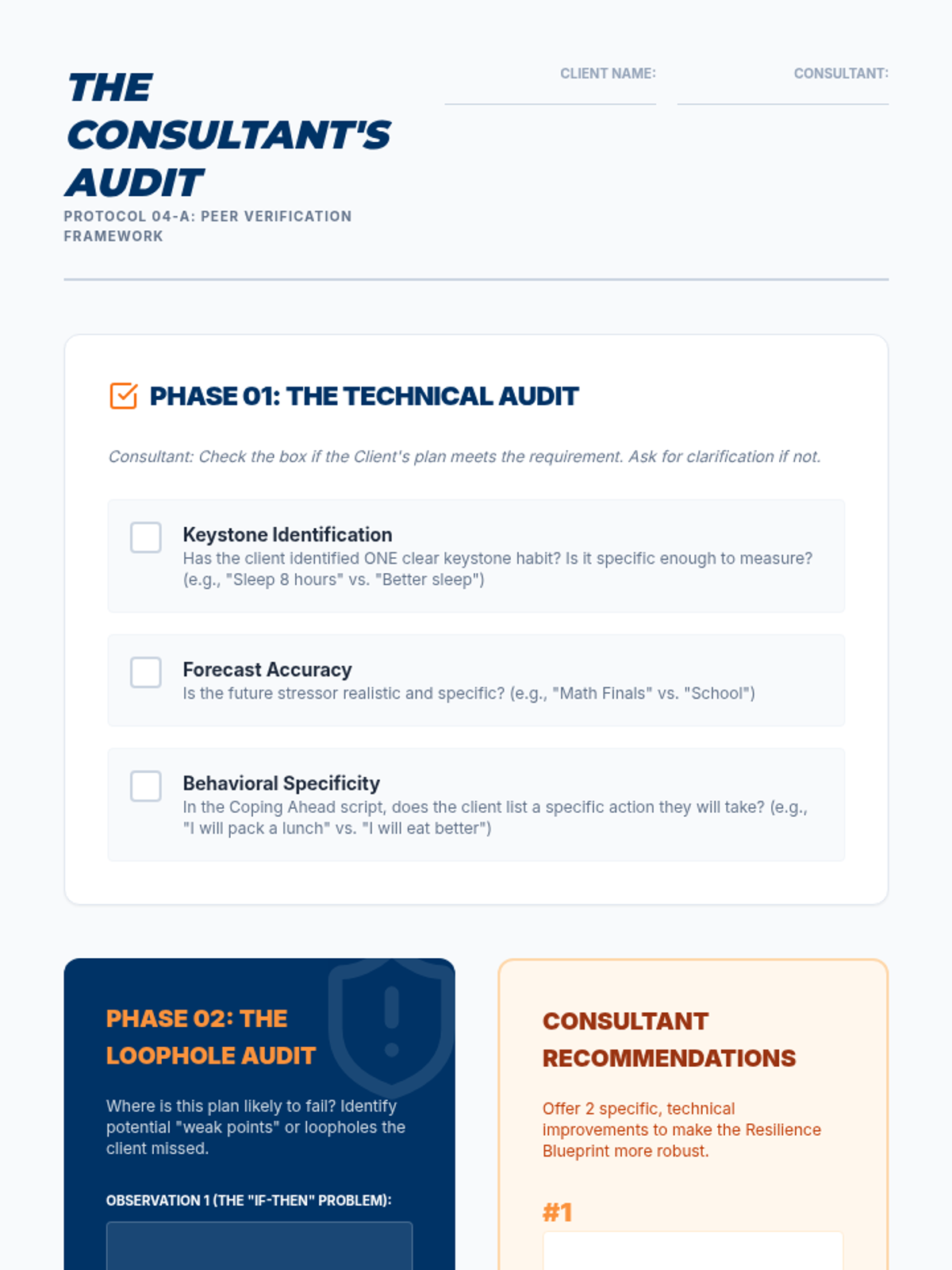
Students work in consultancy groups to review each other's PLEASE plans. They offer feedback on feasibility and loopholes, practicing how to support peers in healthy behaviors.
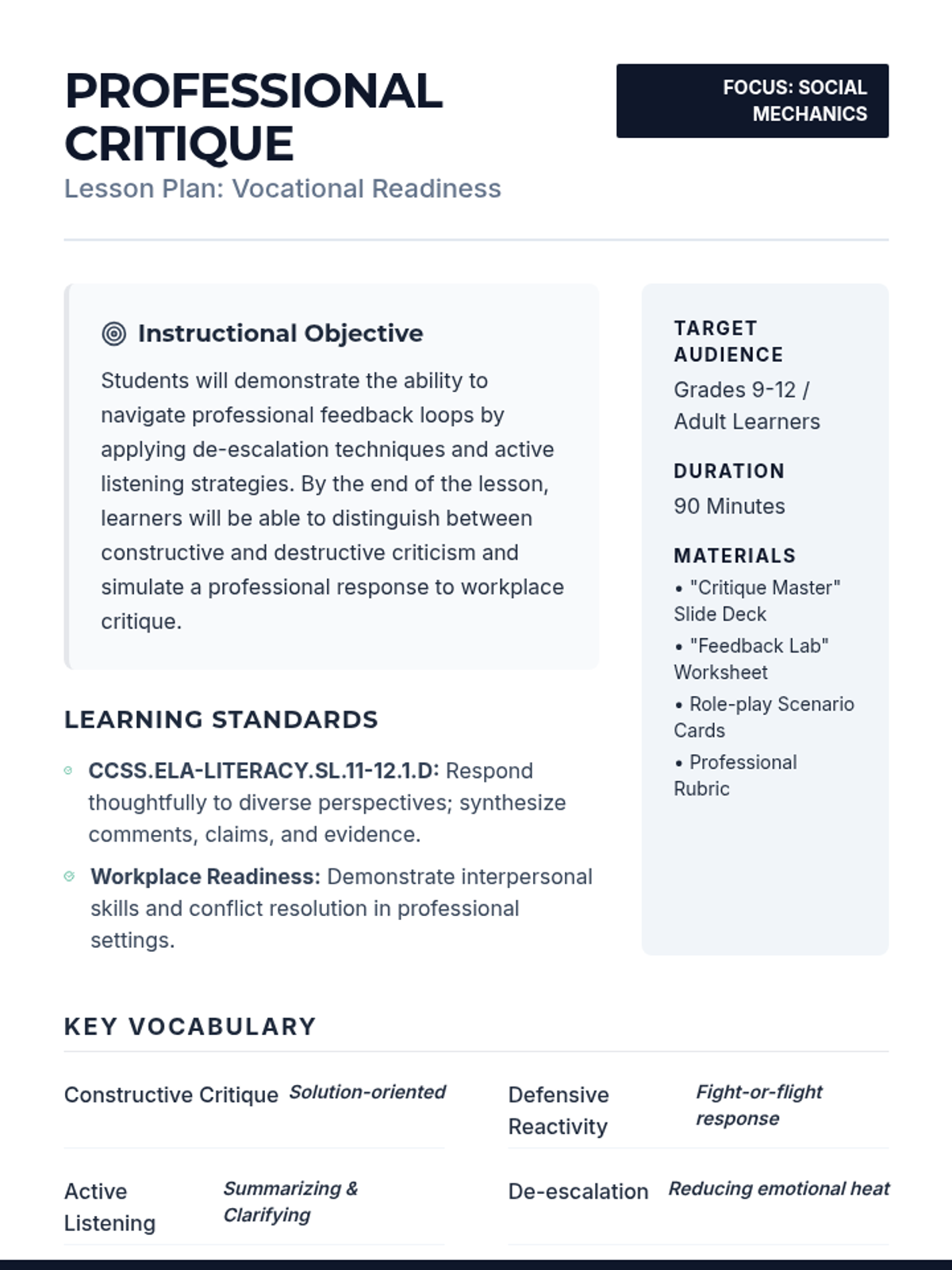
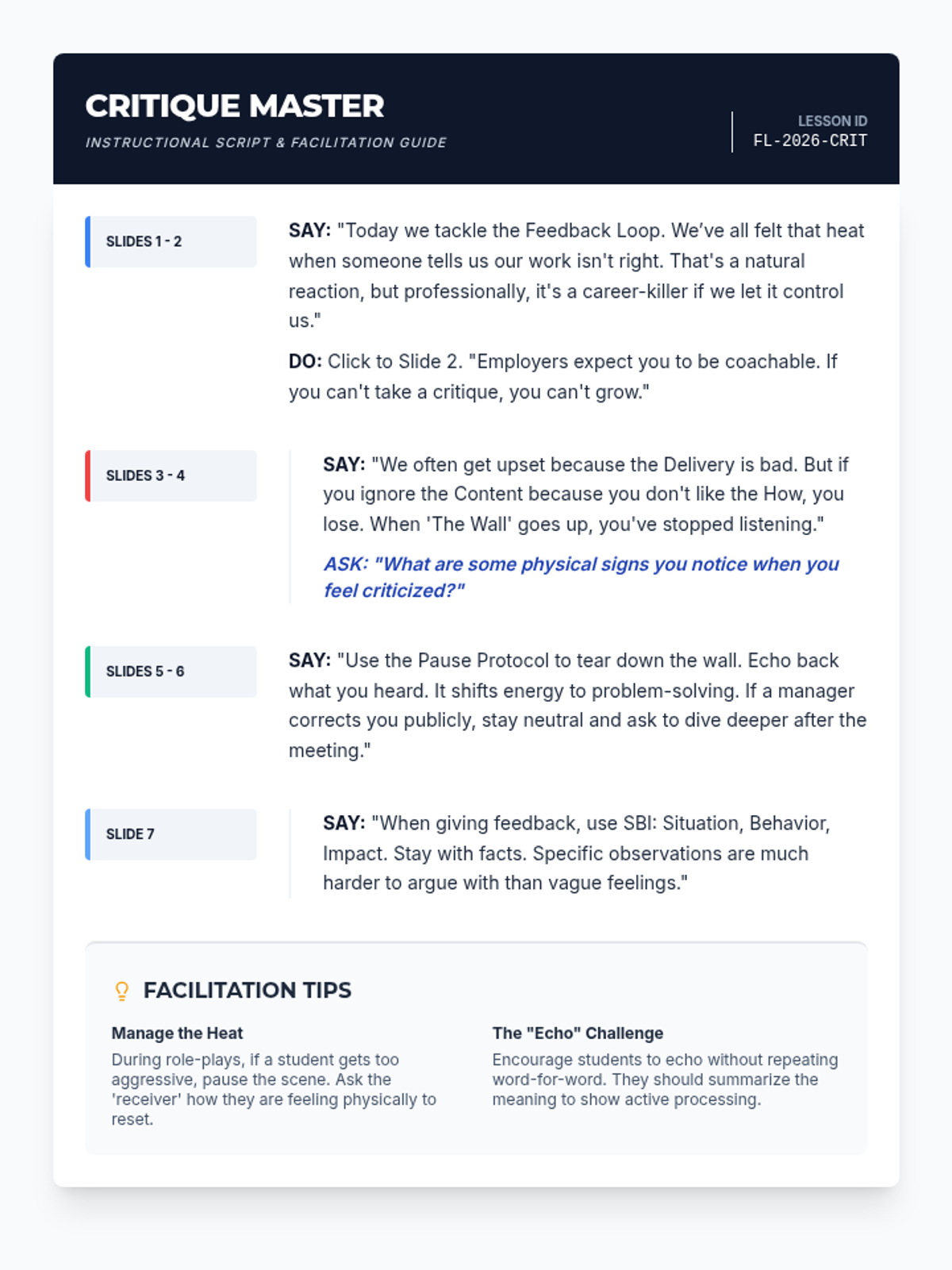
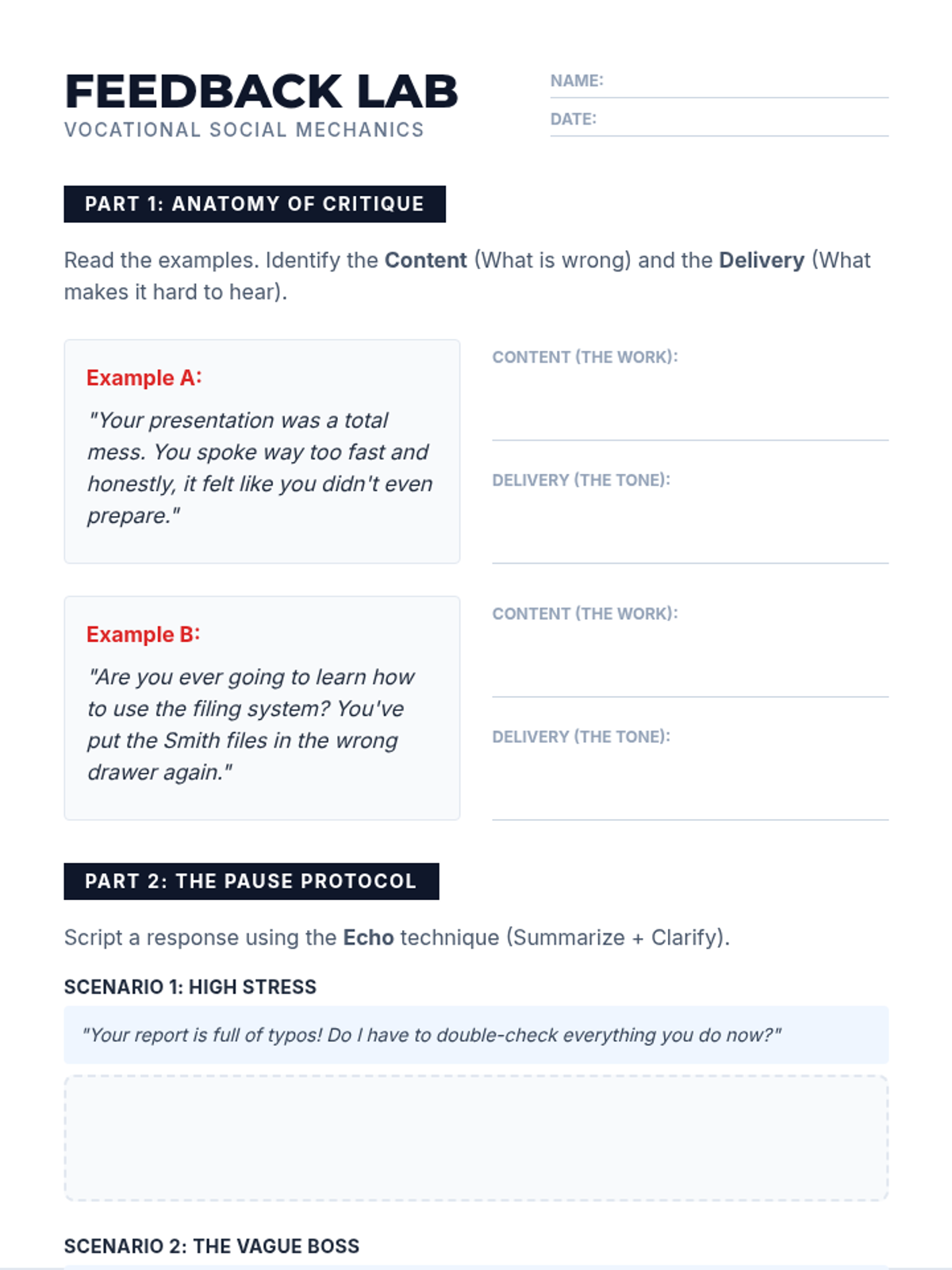
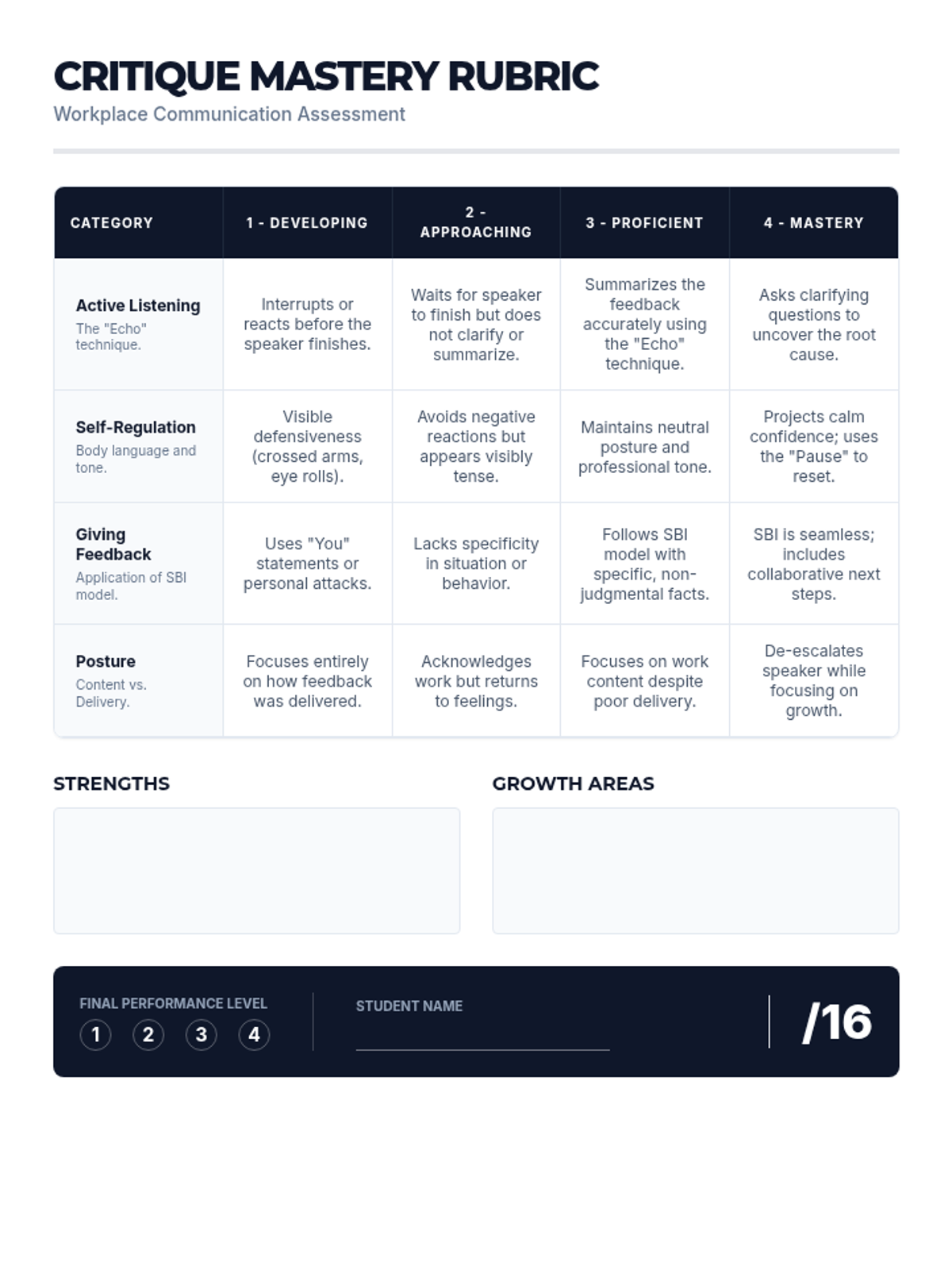
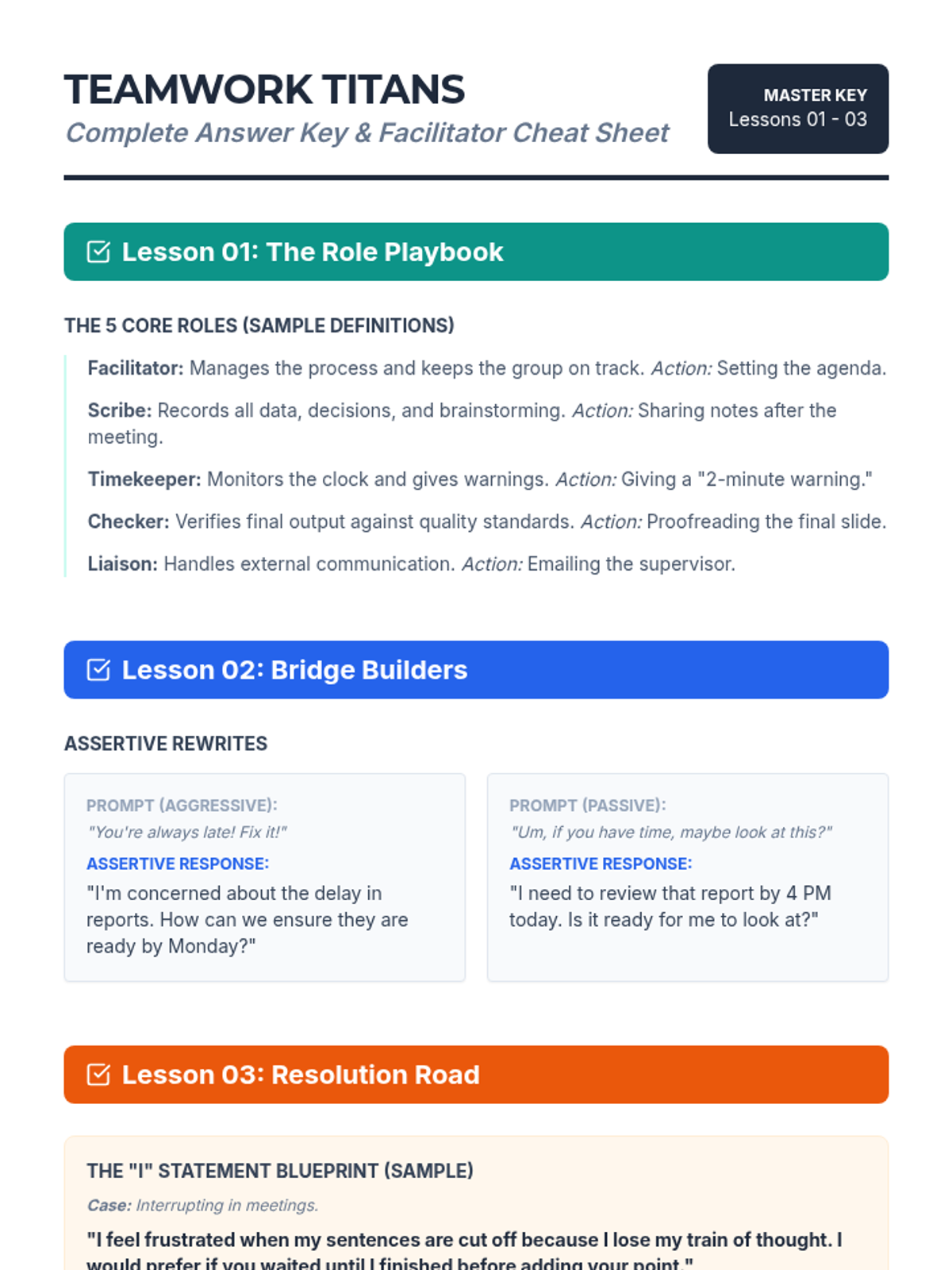
This lesson prepares students for the social complexities of workplace feedback, focusing on active listening, de-escalation techniques, and professional growth.
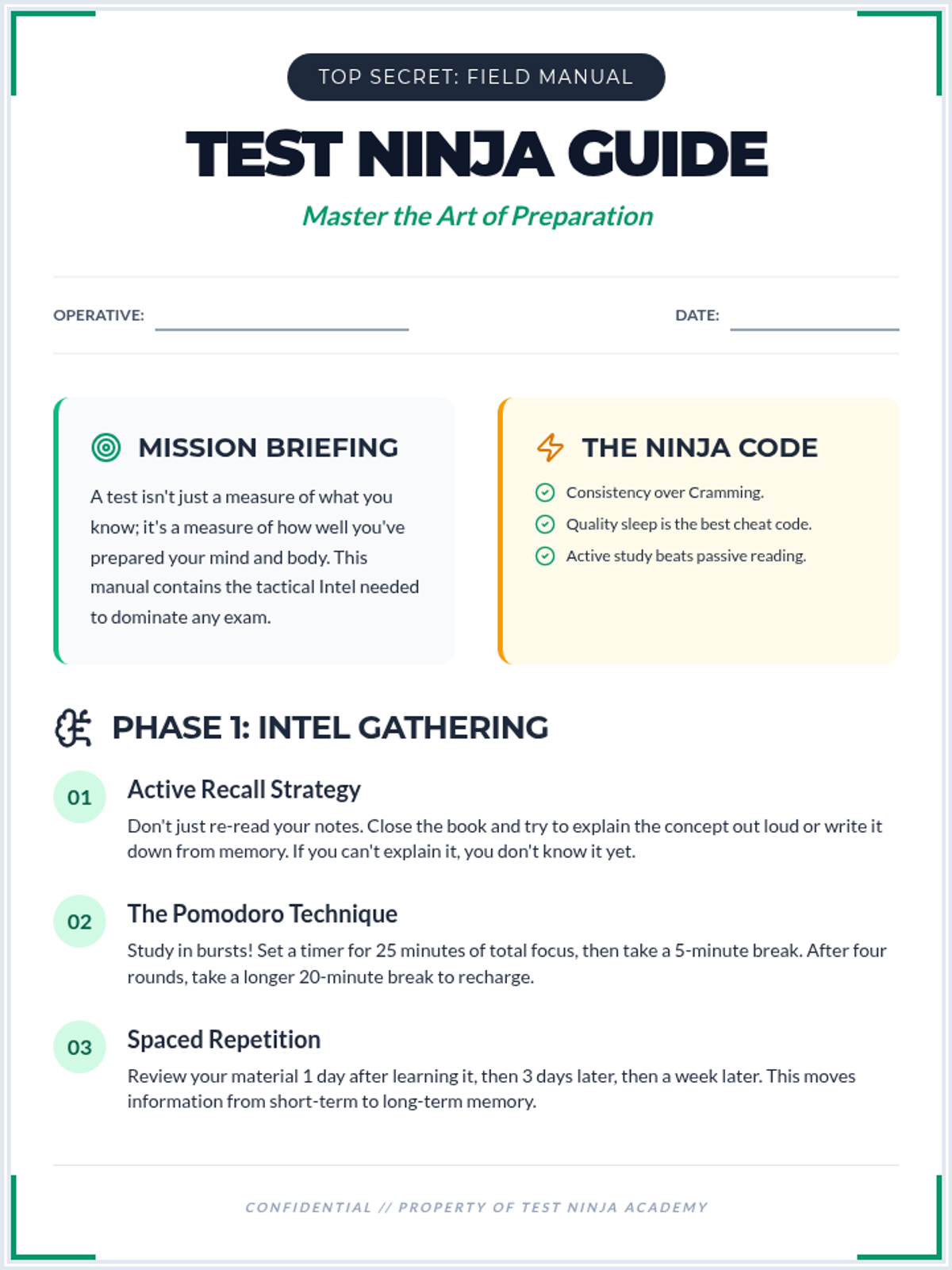
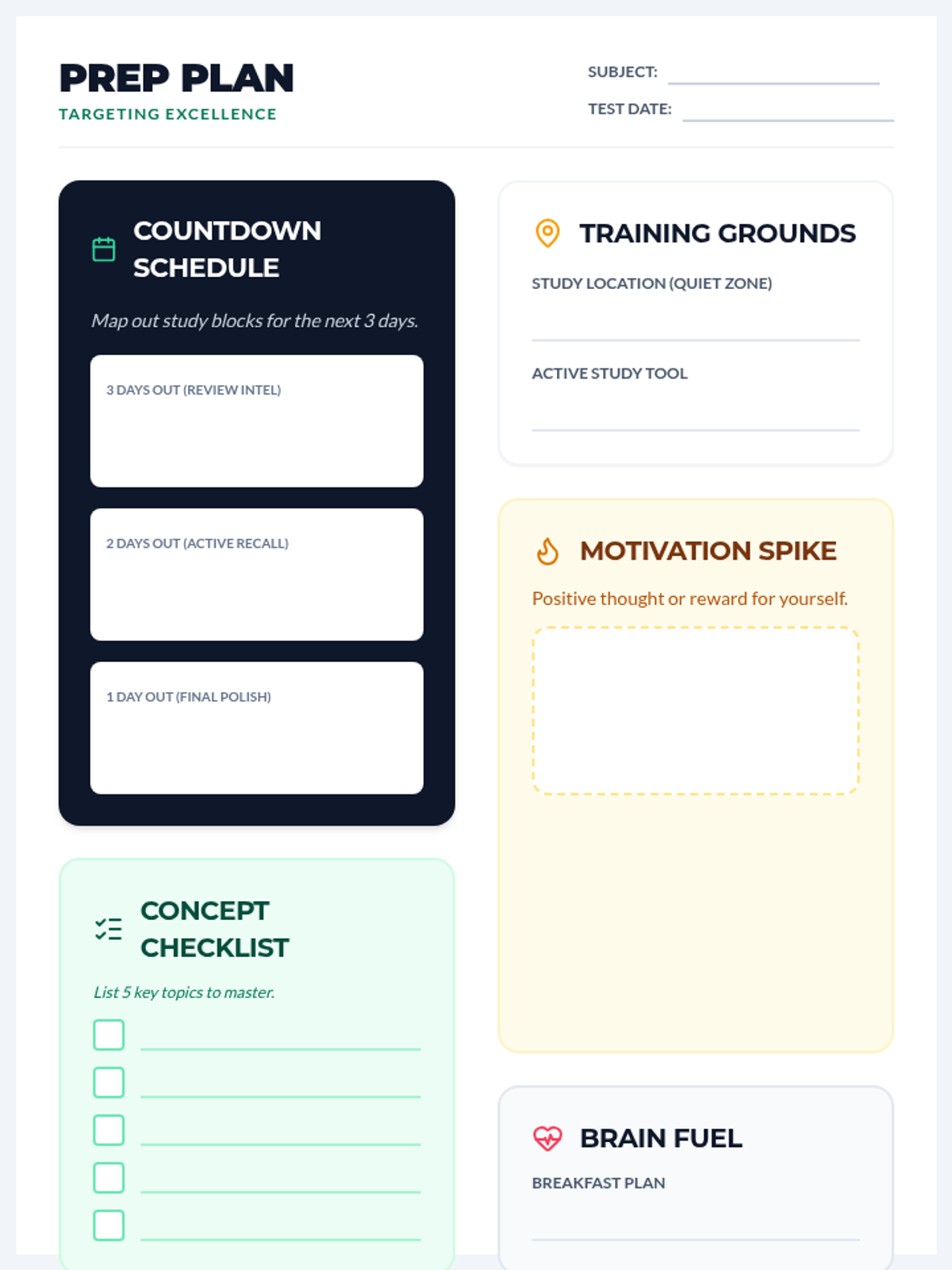
A comprehensive guide to preparing students for exams through effective study habits, mental preparation, and tactical test-day strategies.
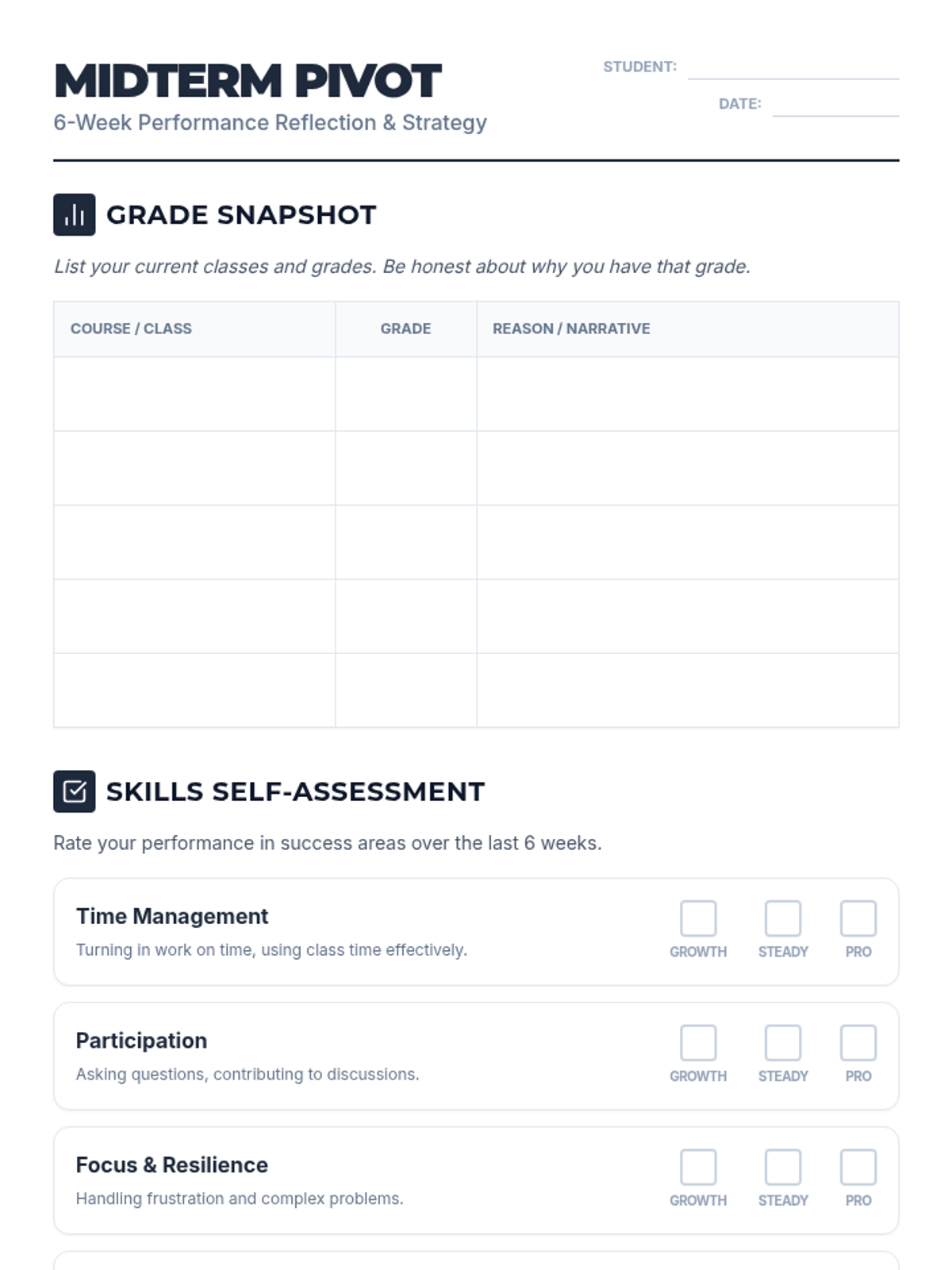
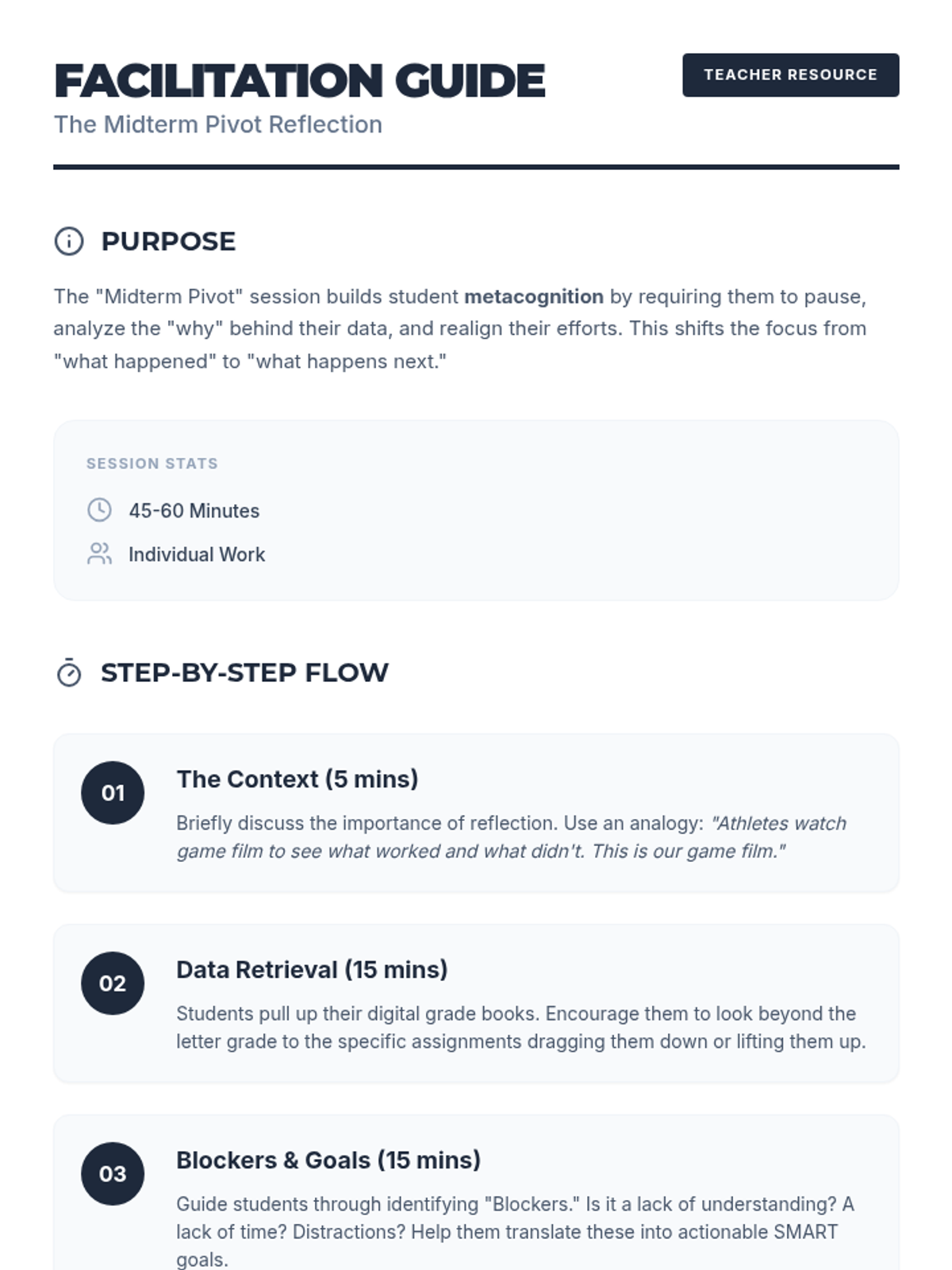
A structured reflection lesson designed to help students analyze their performance over the past six weeks, identify growth areas, and set actionable goals for the next cycle.
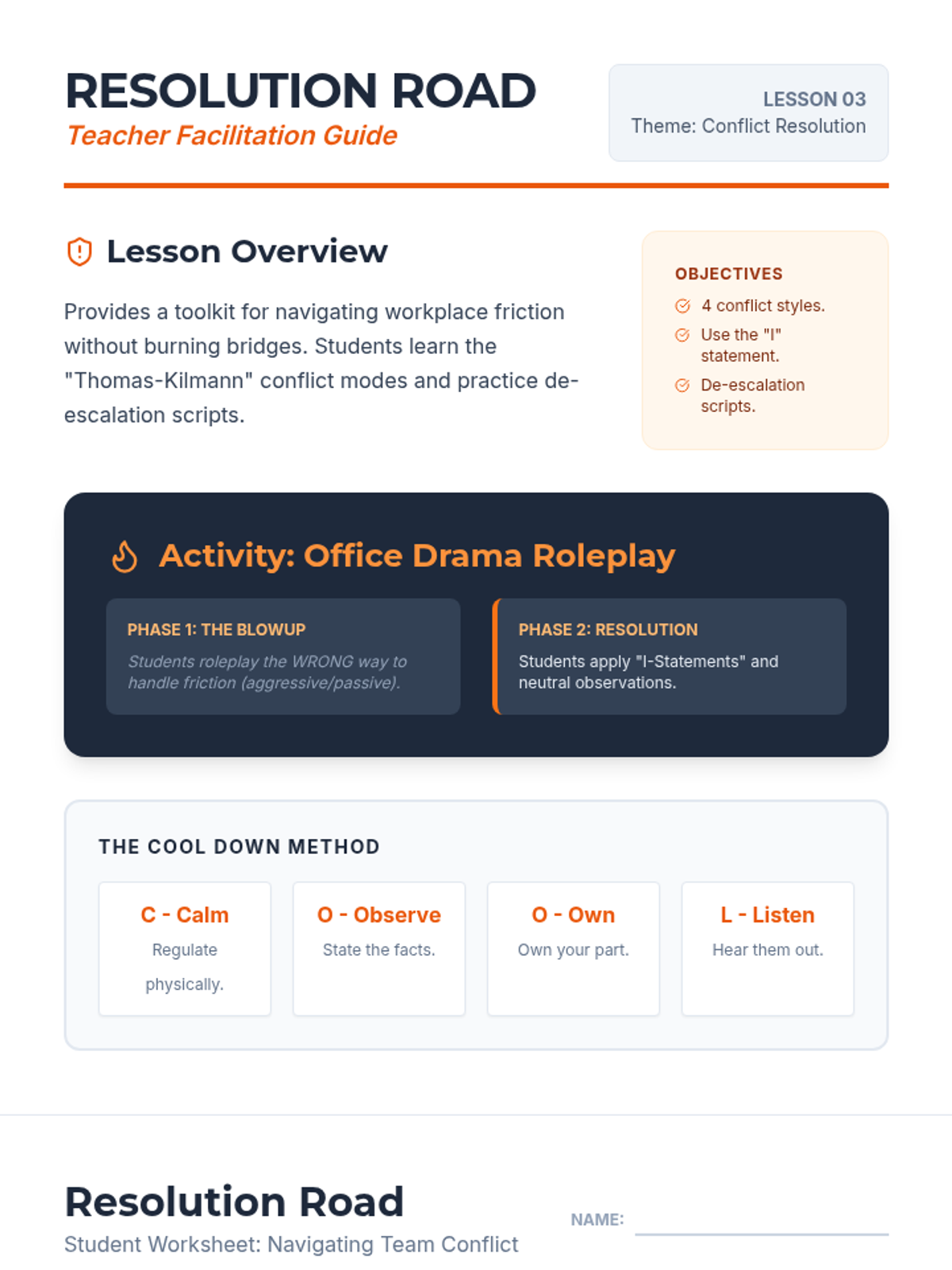
Explores techniques for identifying, de-escalating, and resolving workplace conflicts to maintain a productive and positive team environment.
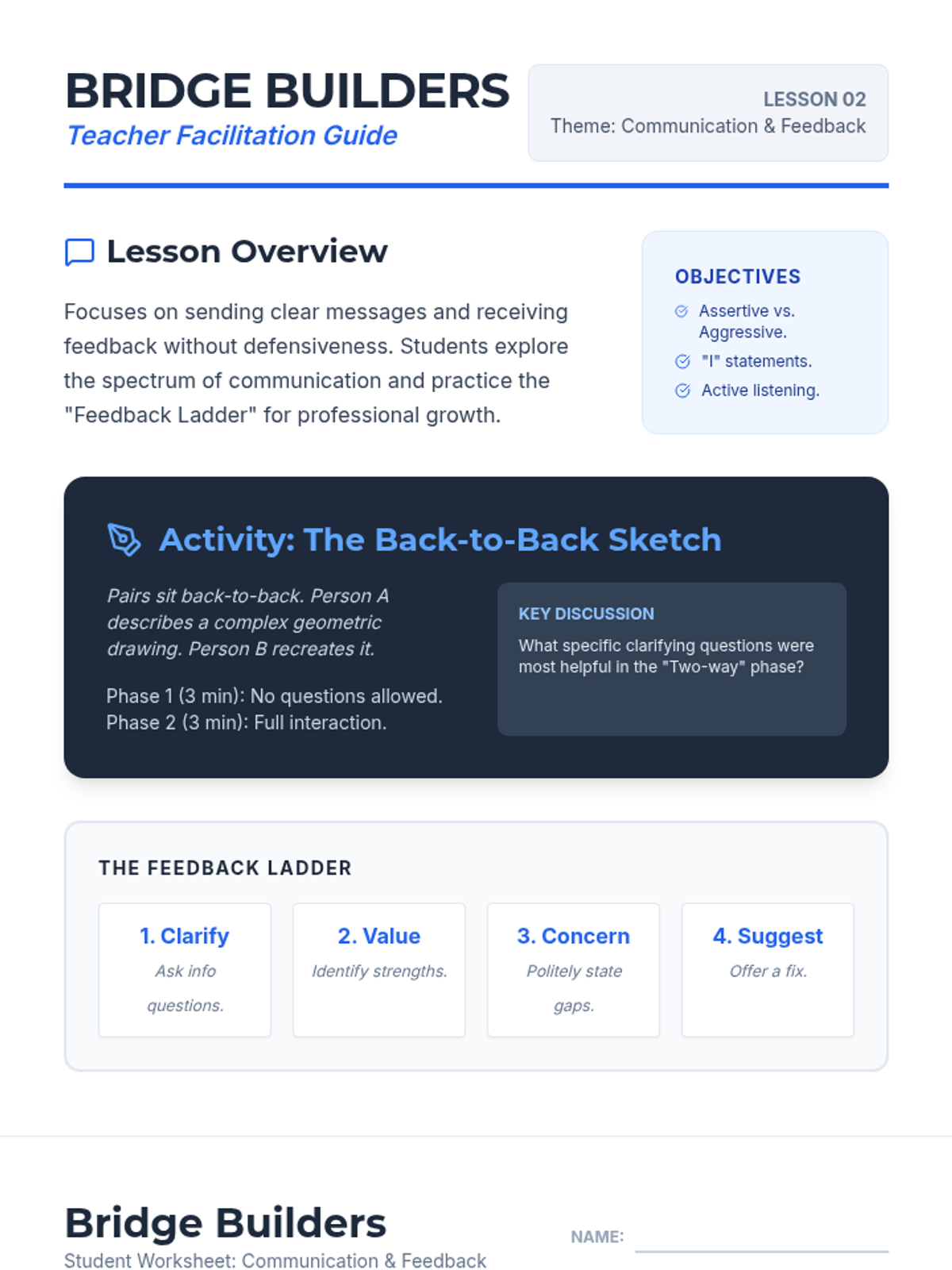
Covers strategies for clear workplace communication and the art of giving and receiving constructive feedback with a growth mindset.
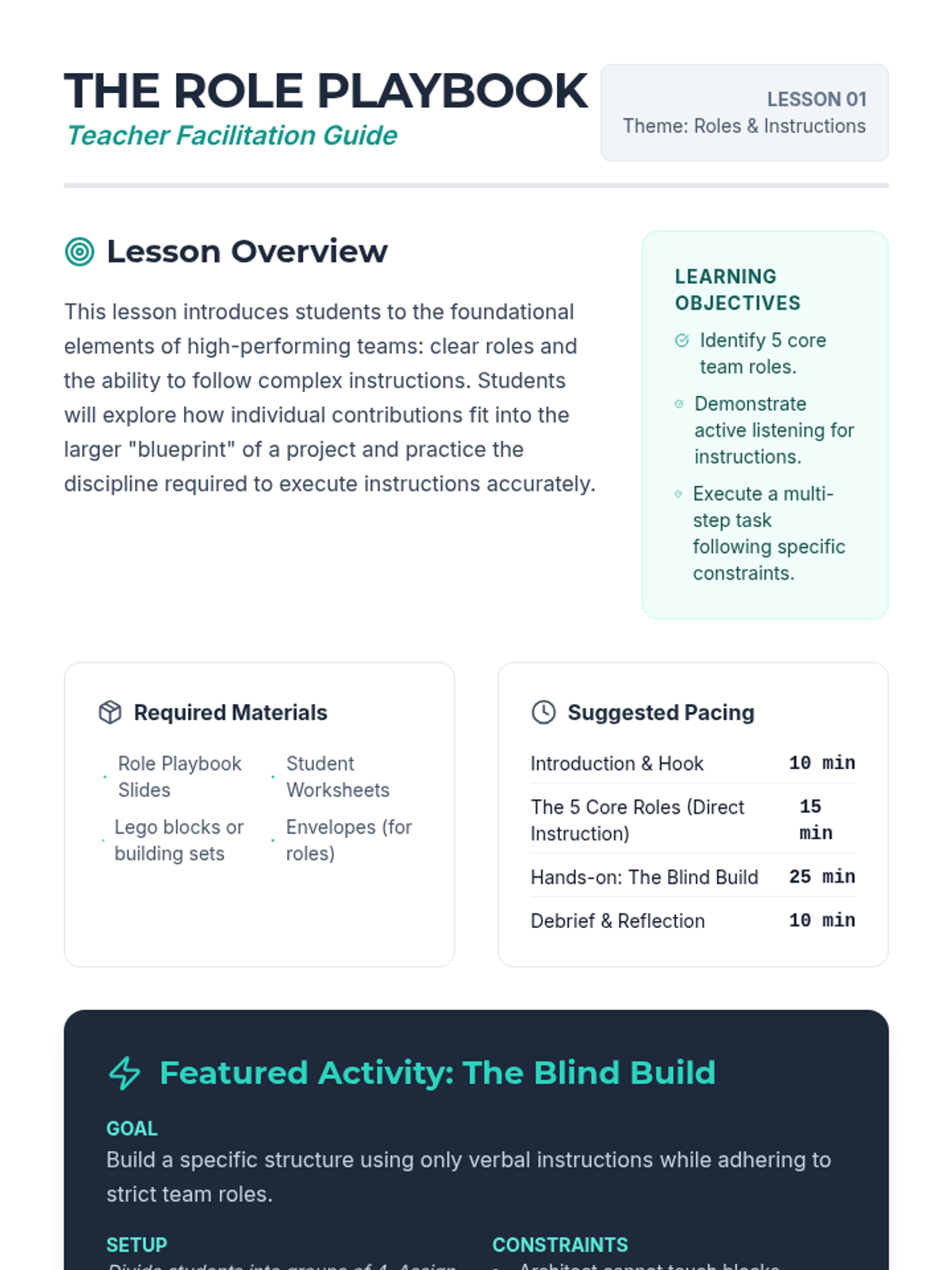
Focuses on understanding how different roles contribute to team success and the importance of following and giving clear instructions in a professional setting.
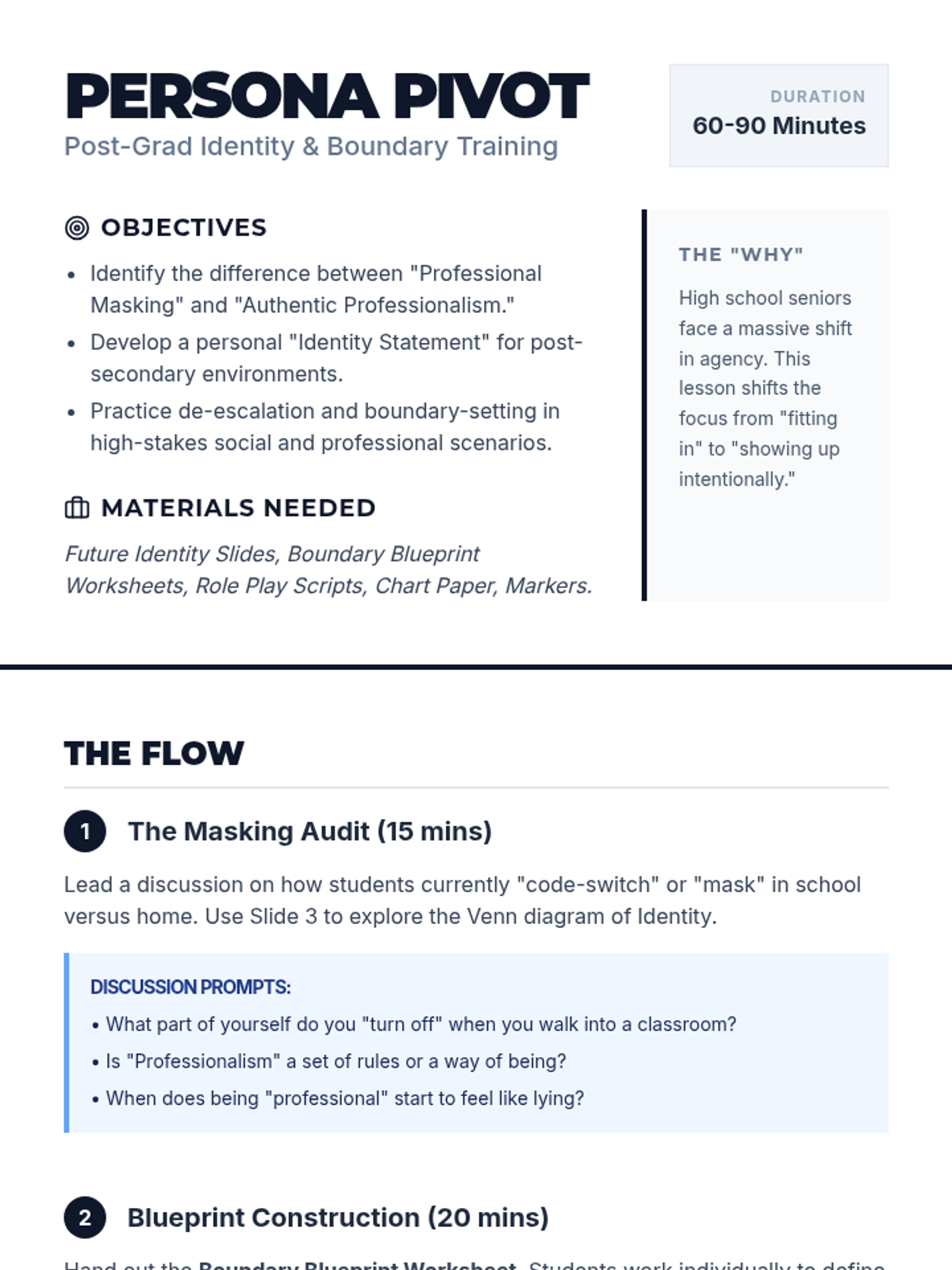
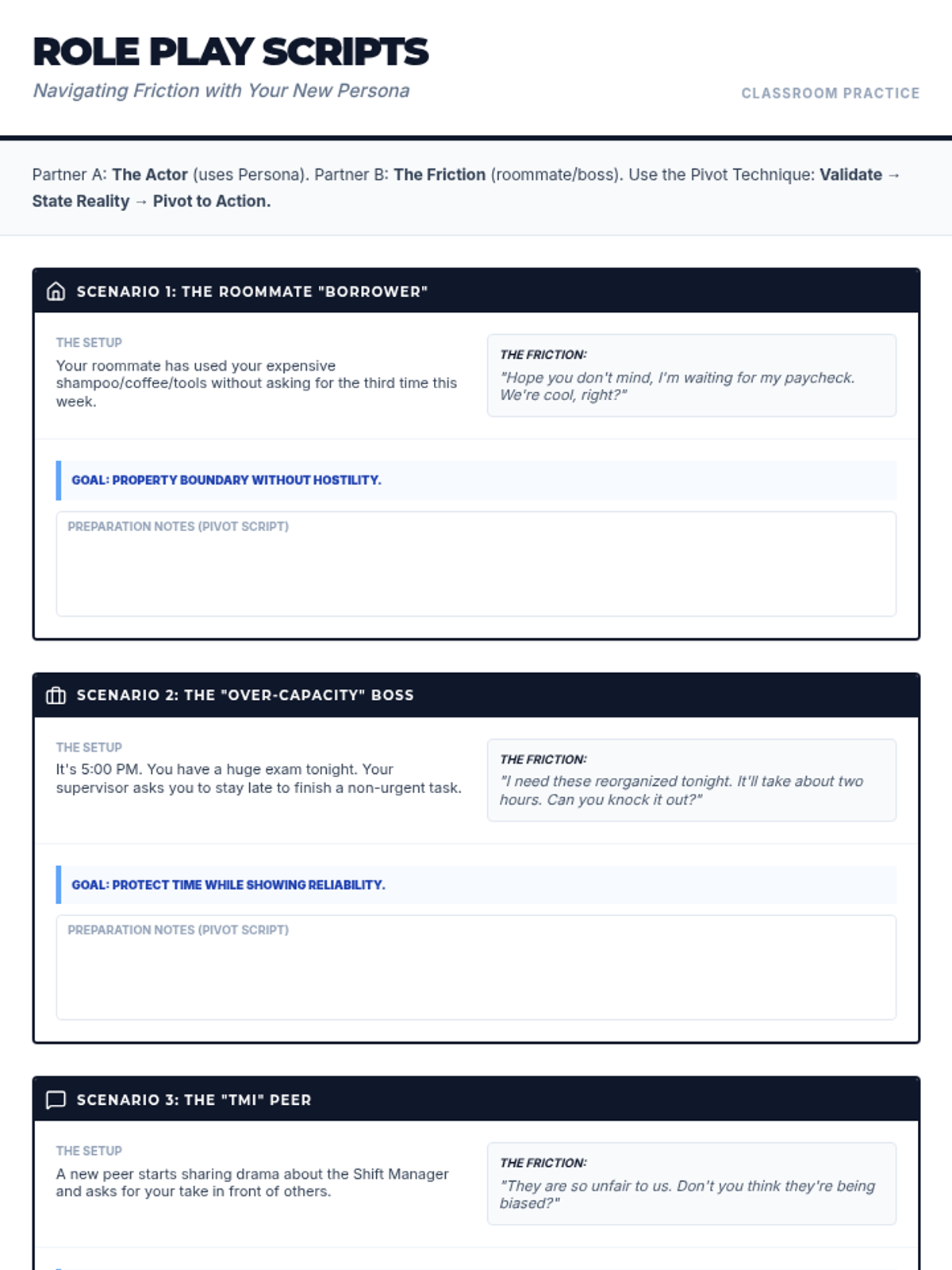
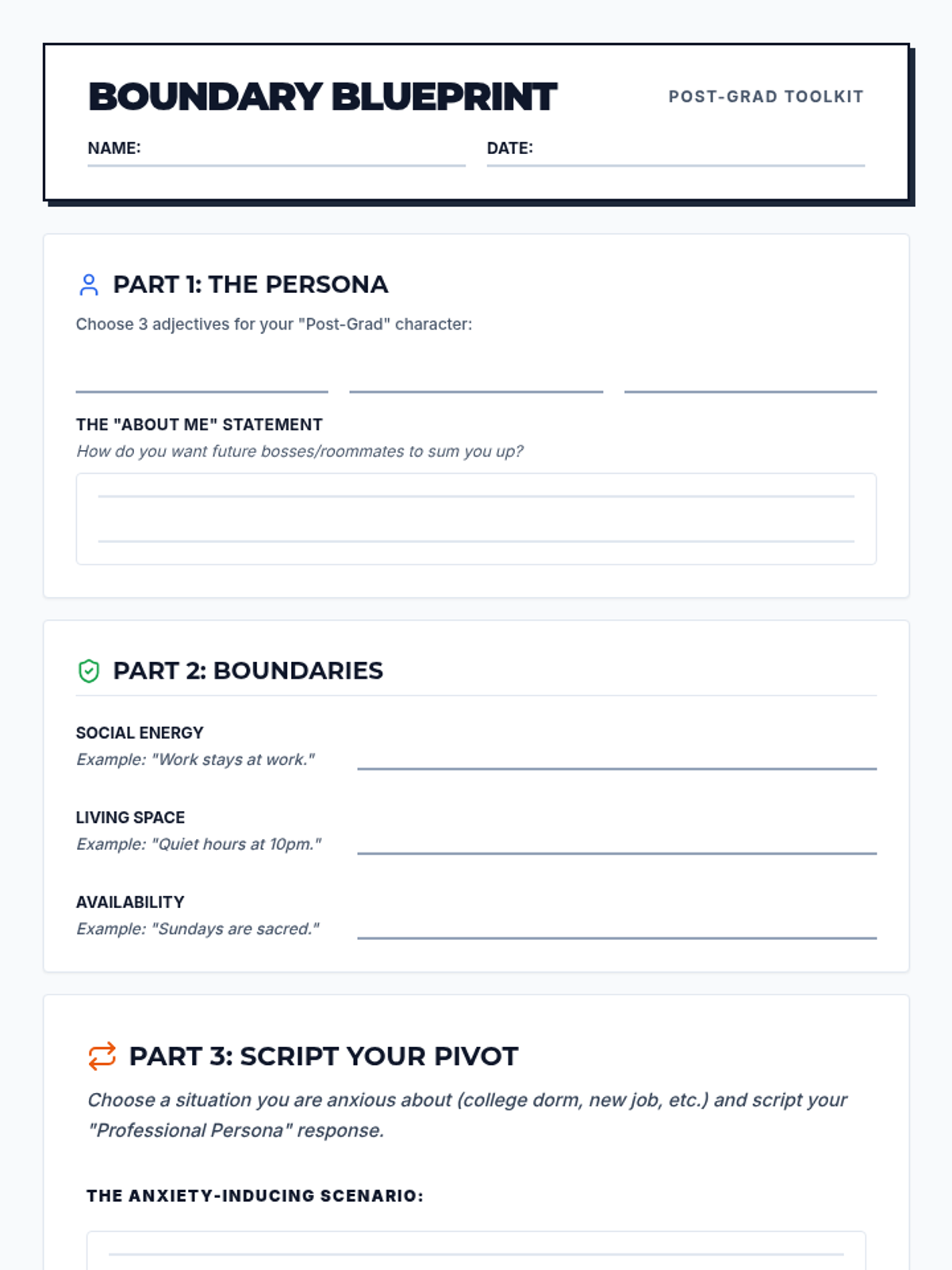
A lesson designed to help high school seniors navigate the transition to post-secondary life by developing a professional yet authentic identity and practicing difficult interpersonal conversations.
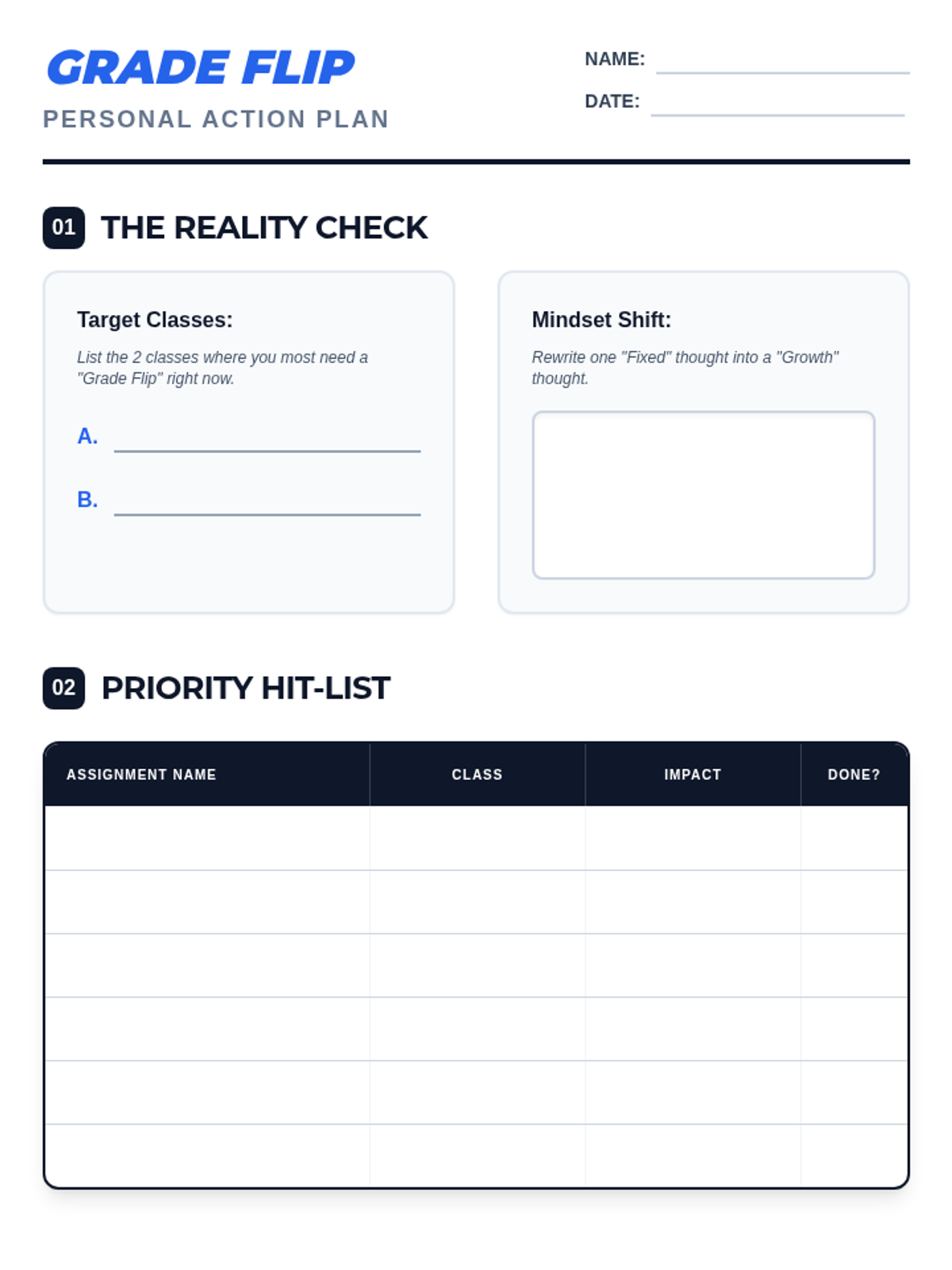
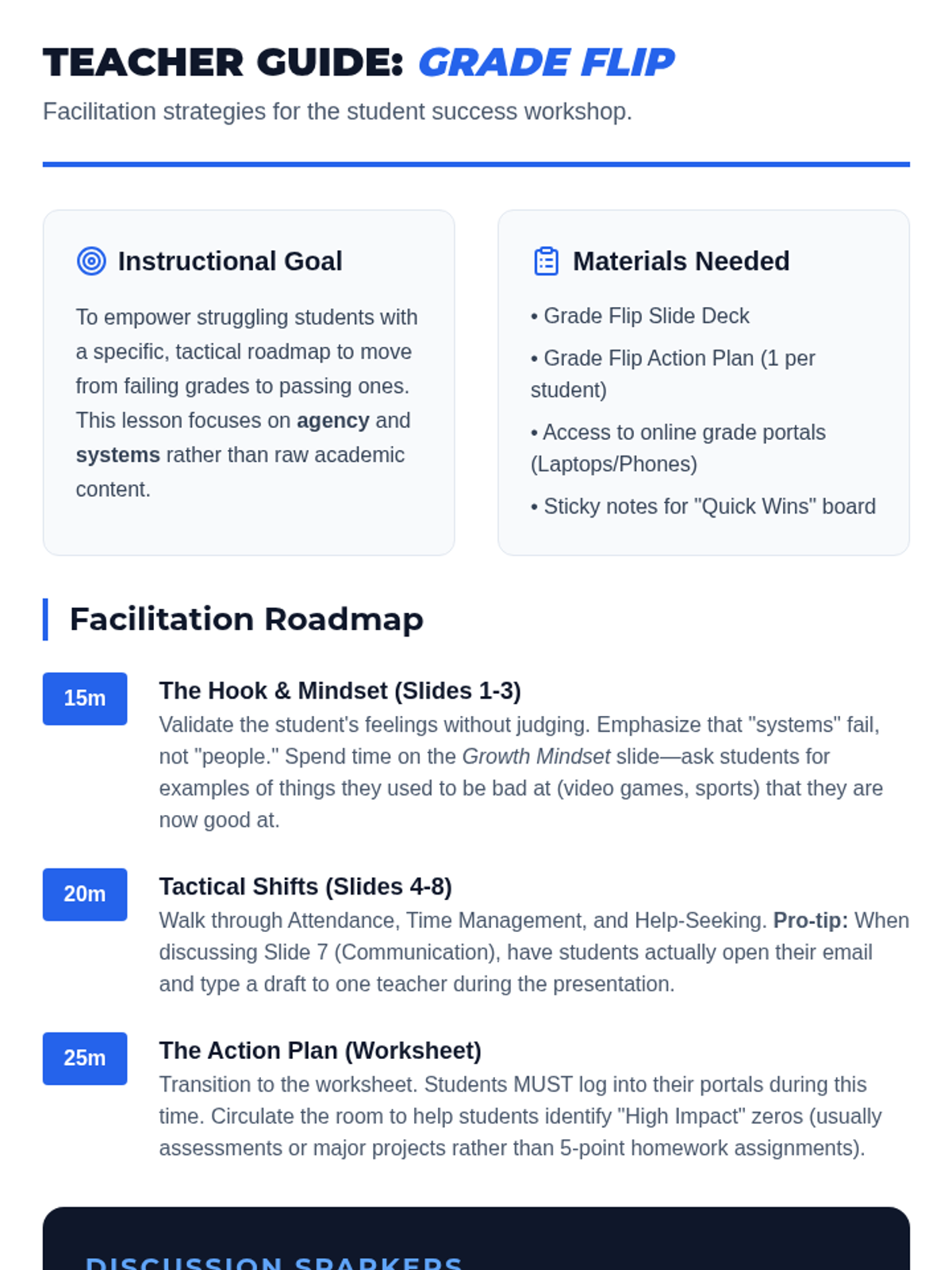
A comprehensive guide for high school students to transition from failing grades to academic success through mindset shifts and practical strategies.
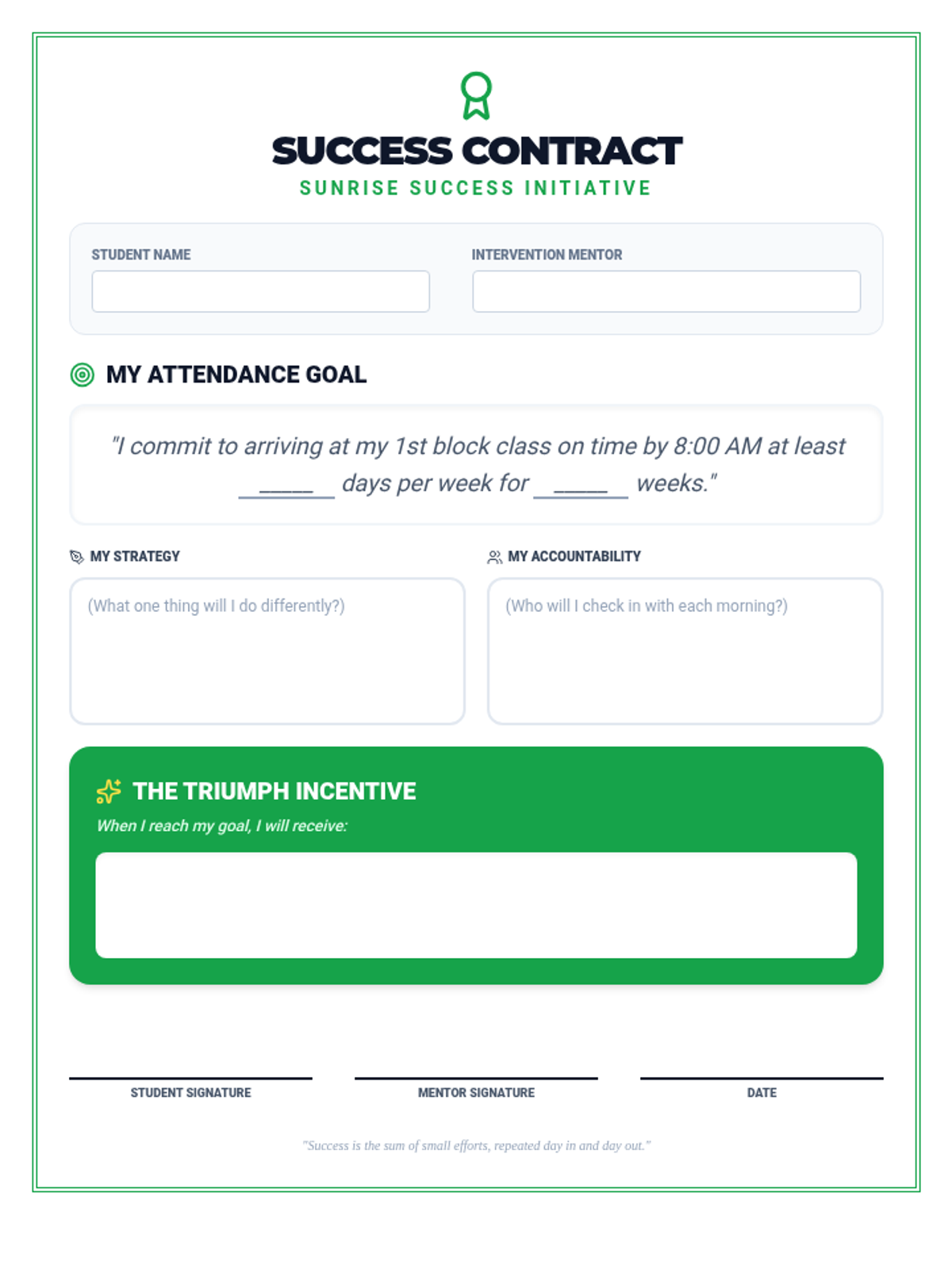
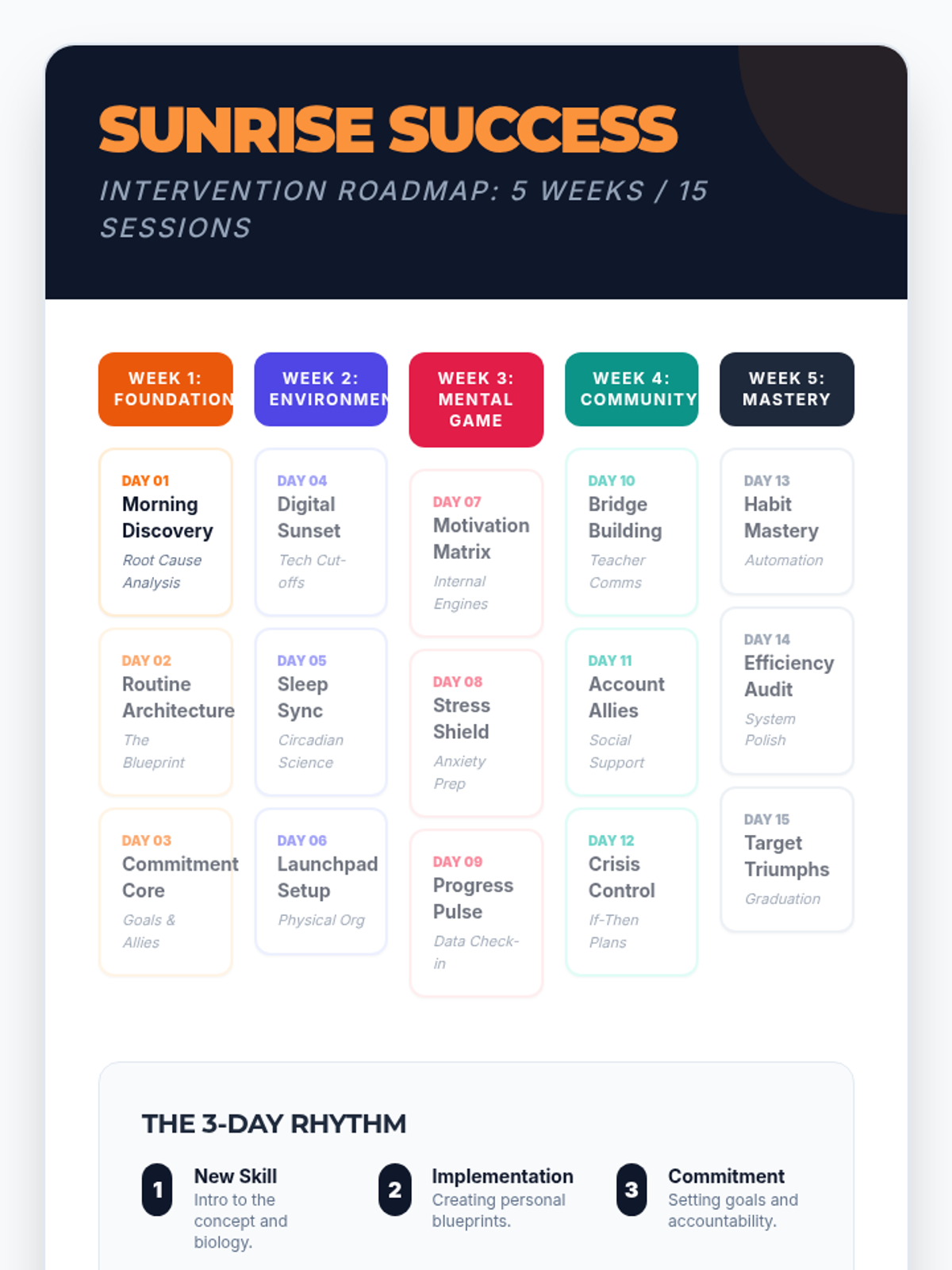
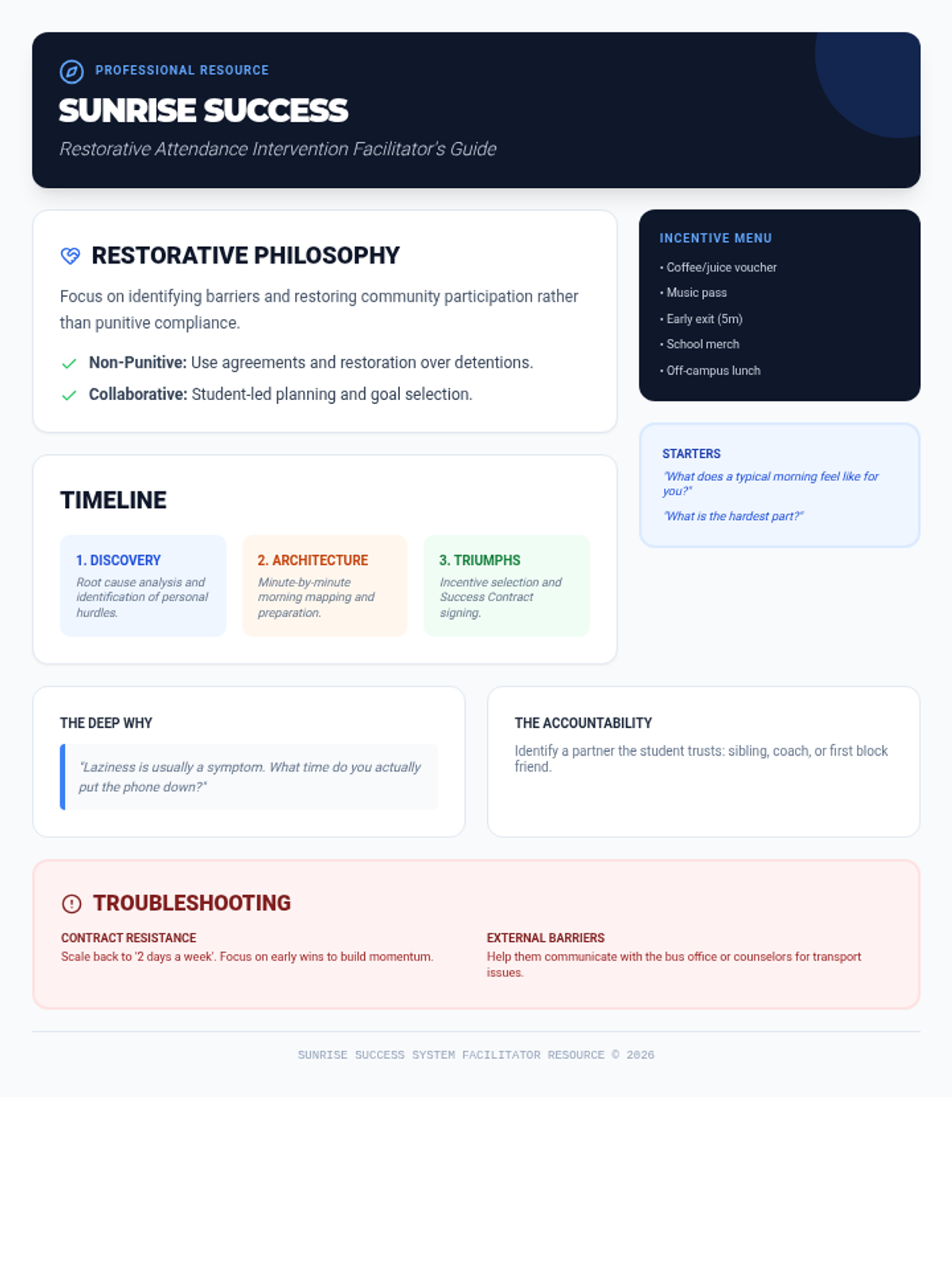
A goal-setting session where the student identifies meaningful incentives and signs a restorative contract for attendance.
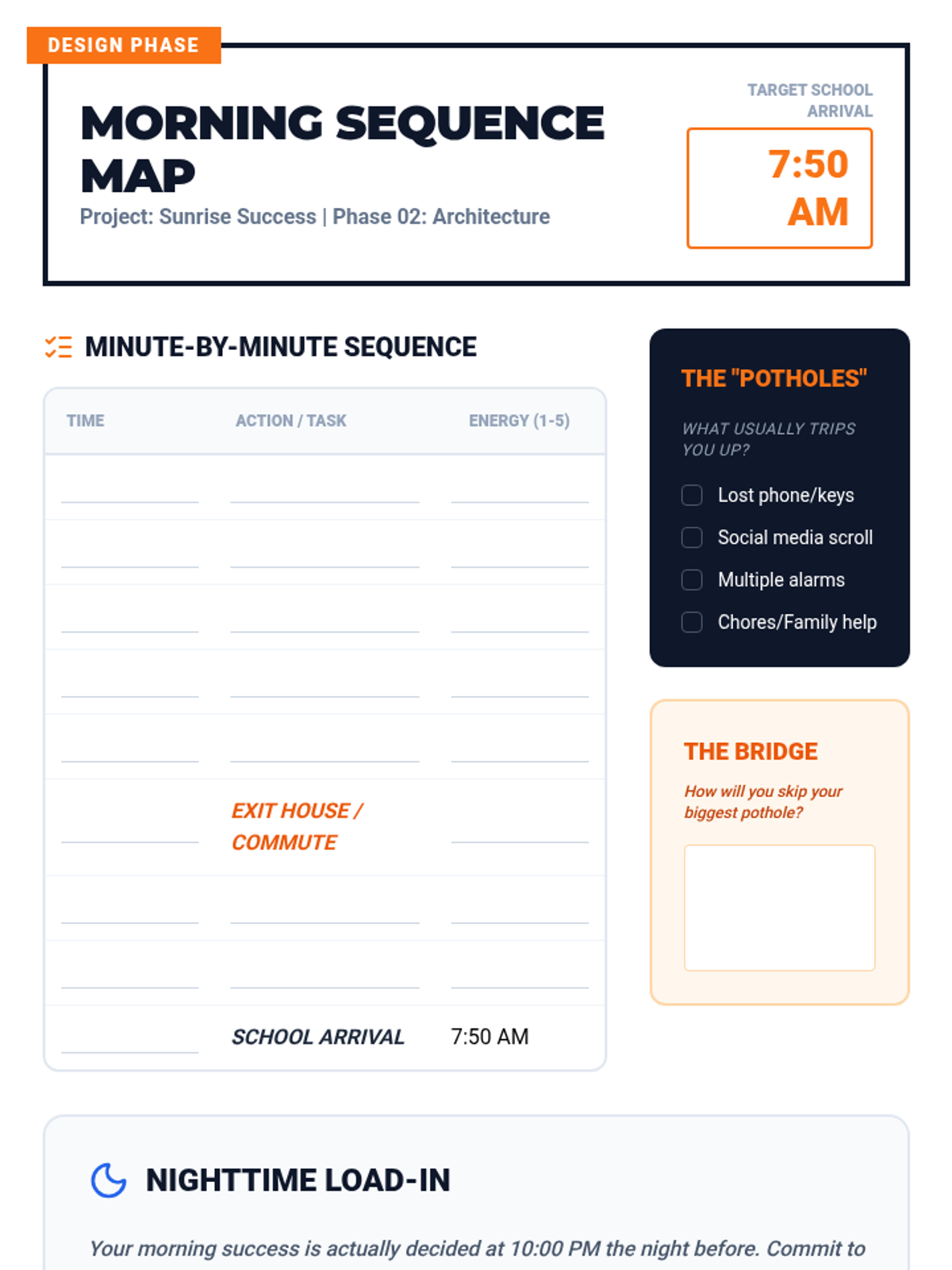
A practical planning session where the student maps out their current morning routine and designs a more efficient 'blueprint' for success.
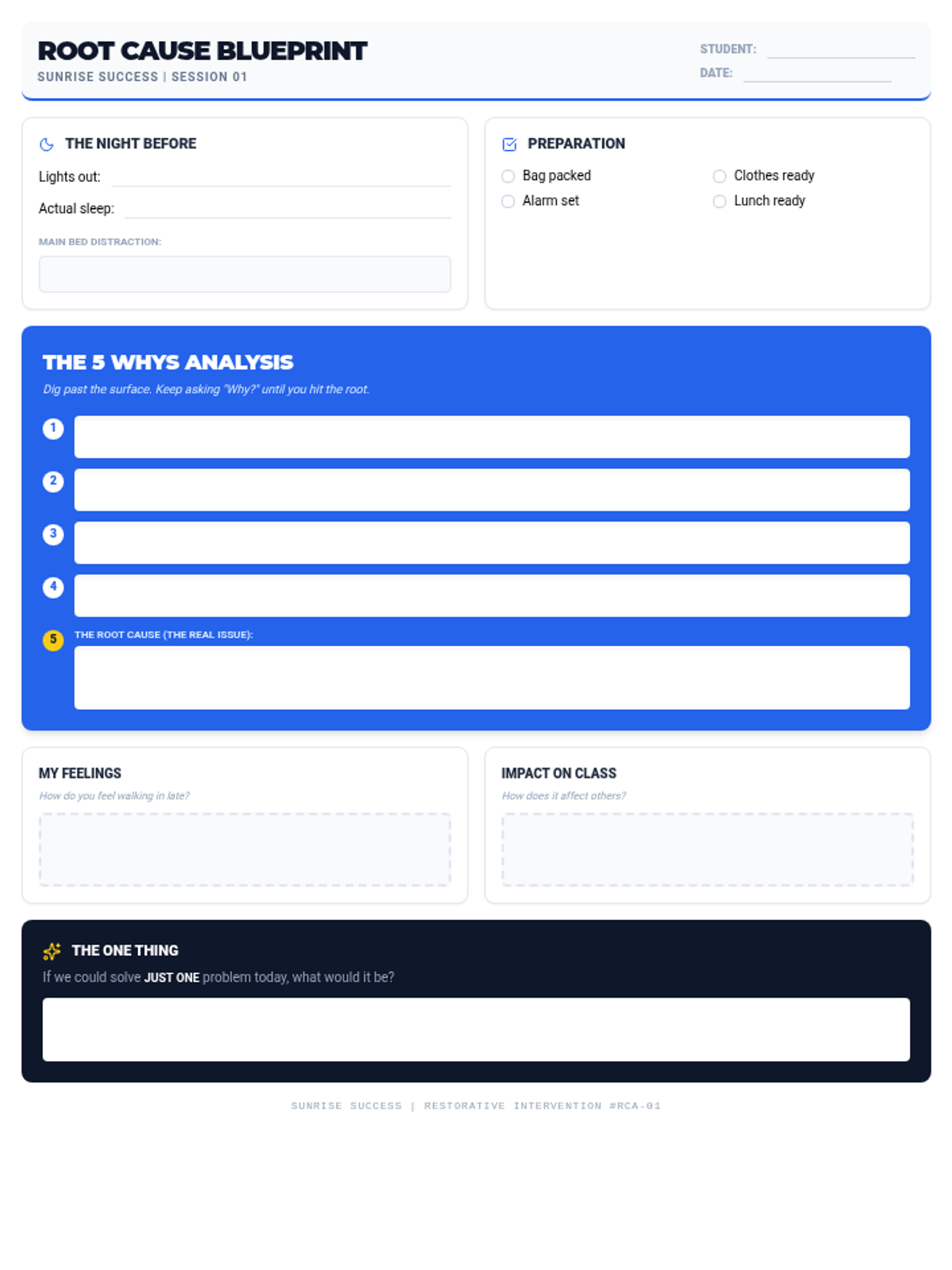
A lesson focused on a non-judgmental exploration of why the student is struggling to arrive on time. It uses root cause analysis to separate symptoms from sources.
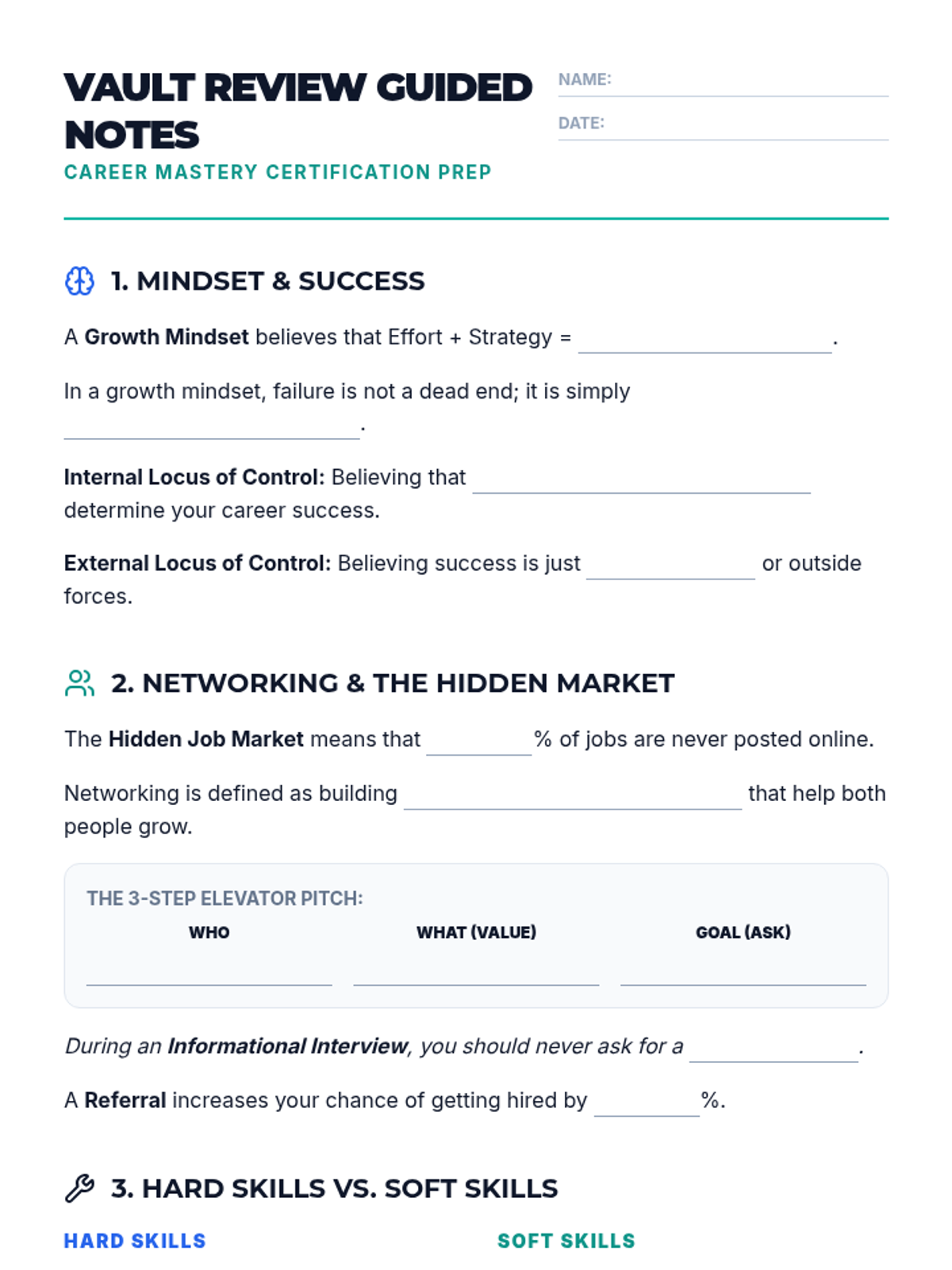
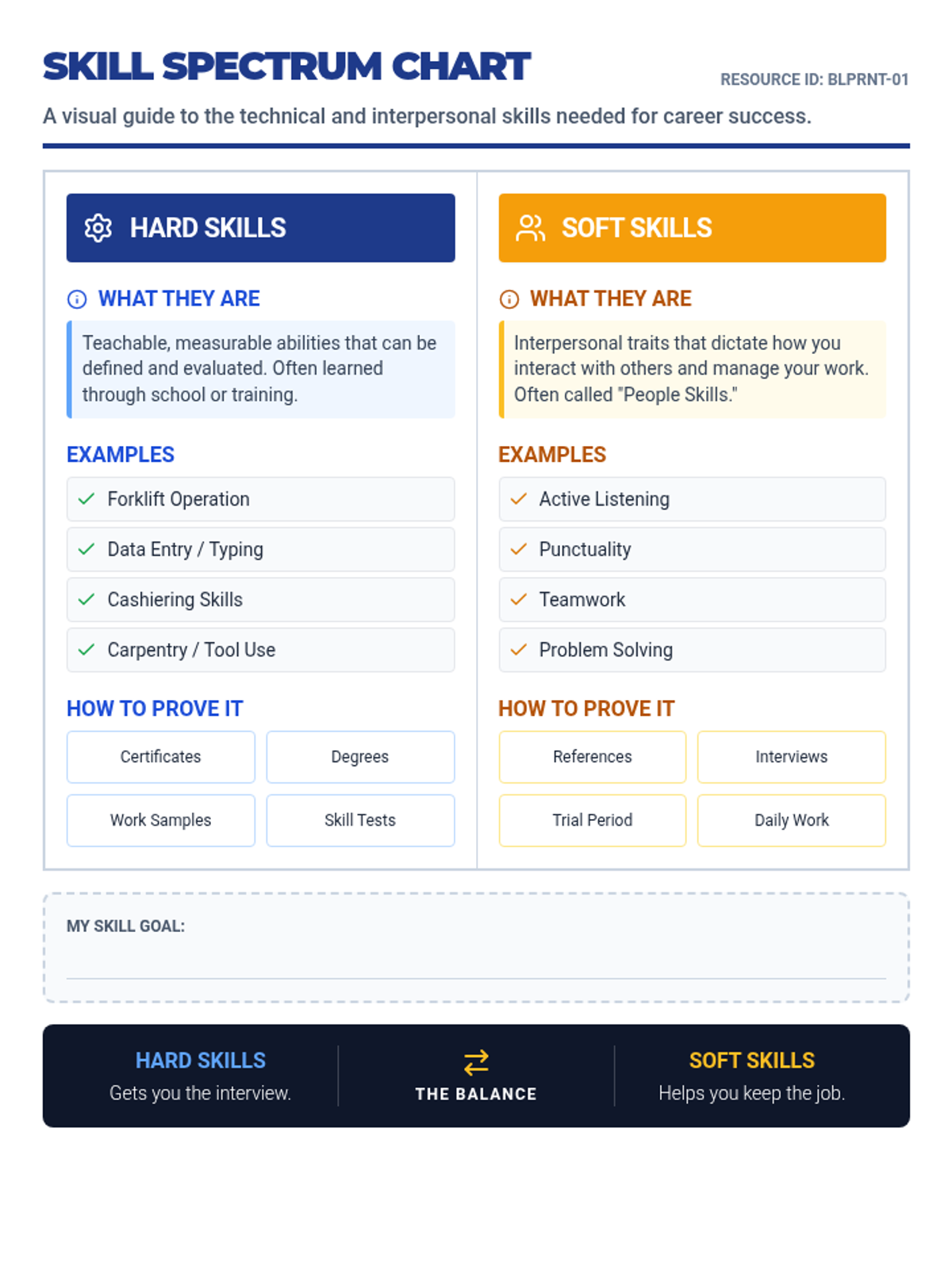
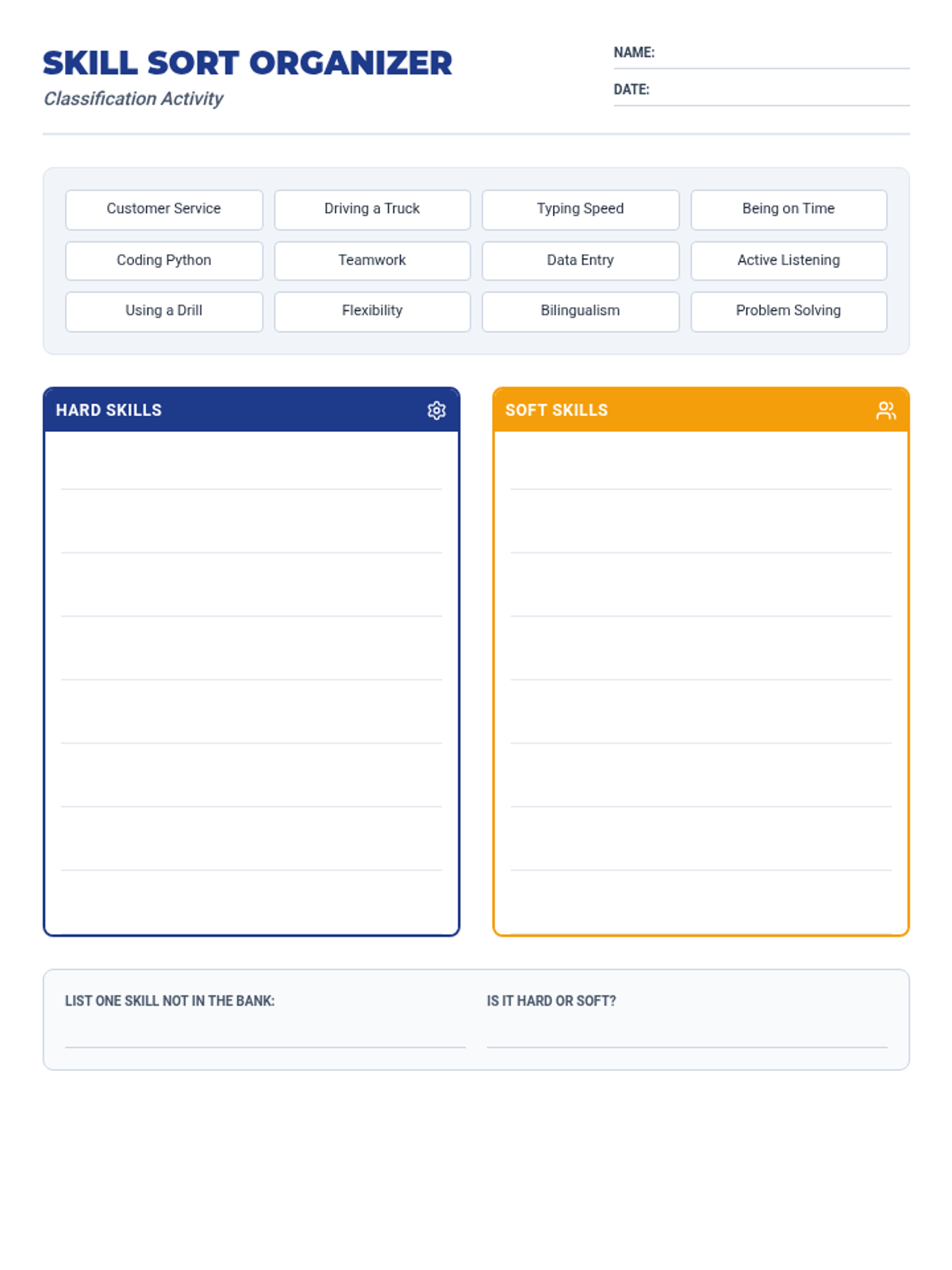
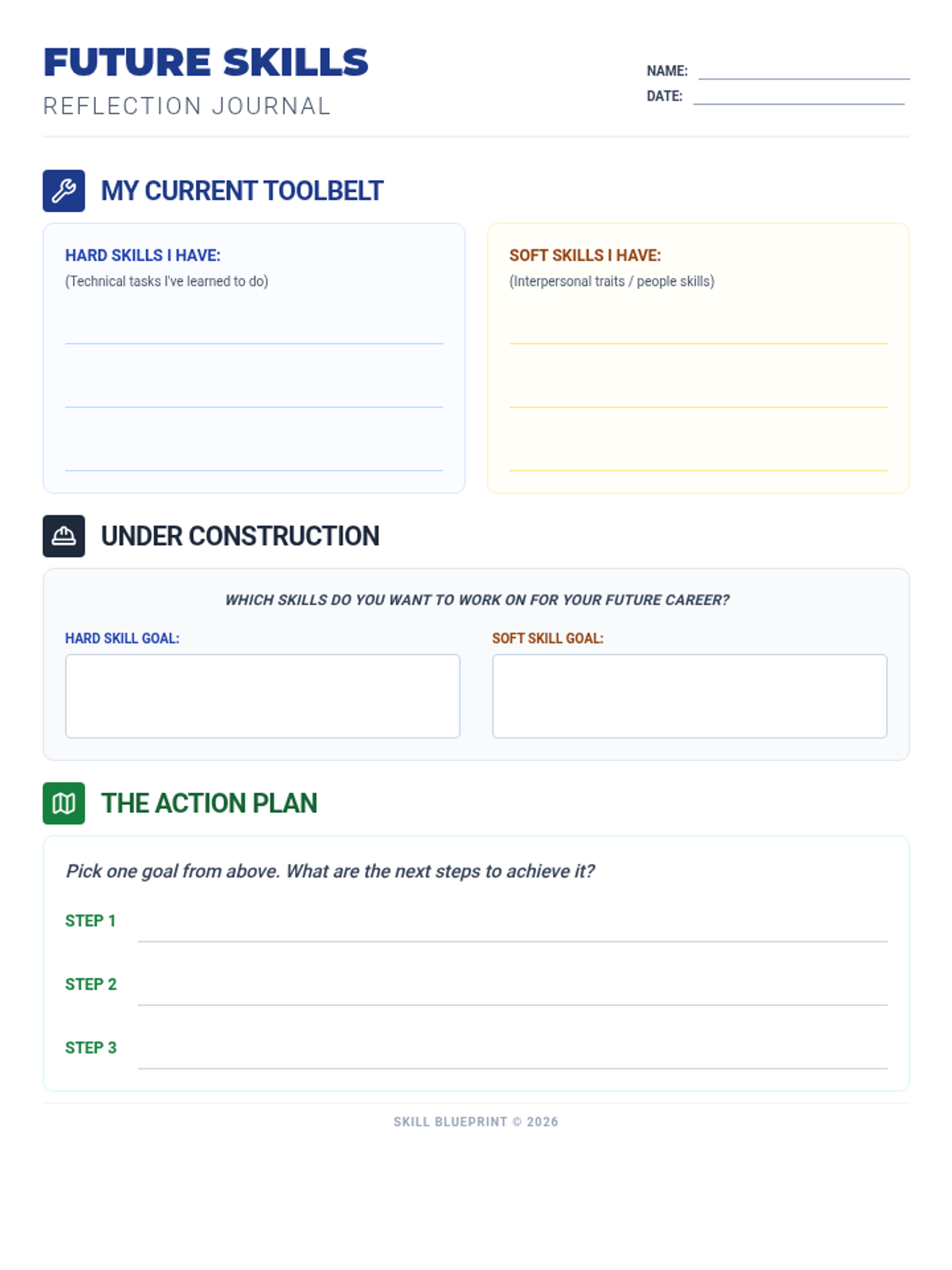
A comprehensive lesson for transition-age students and adult learners to distinguish between technical hard skills and interpersonal soft skills, identify their own strengths, and set professional development goals.
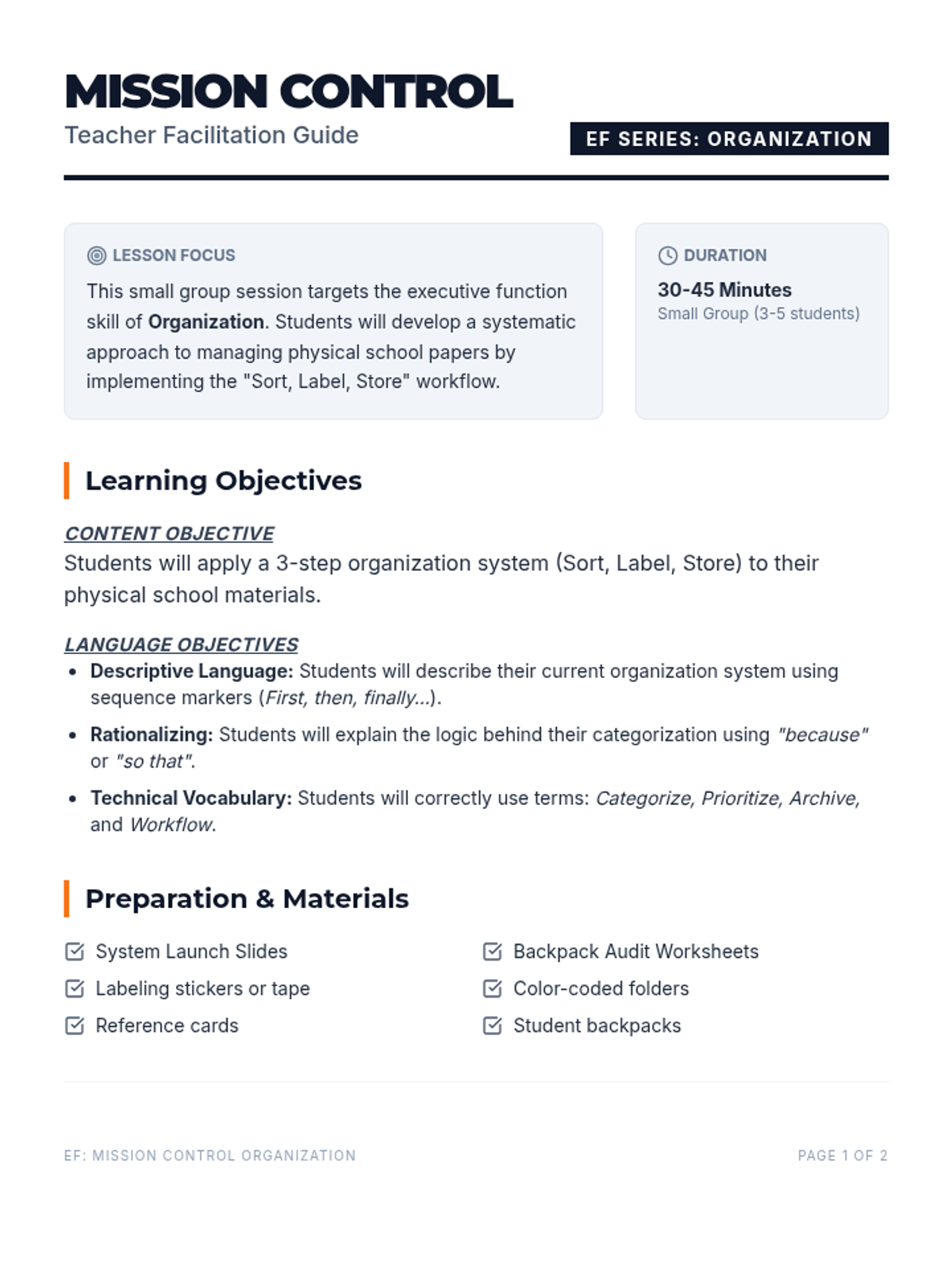
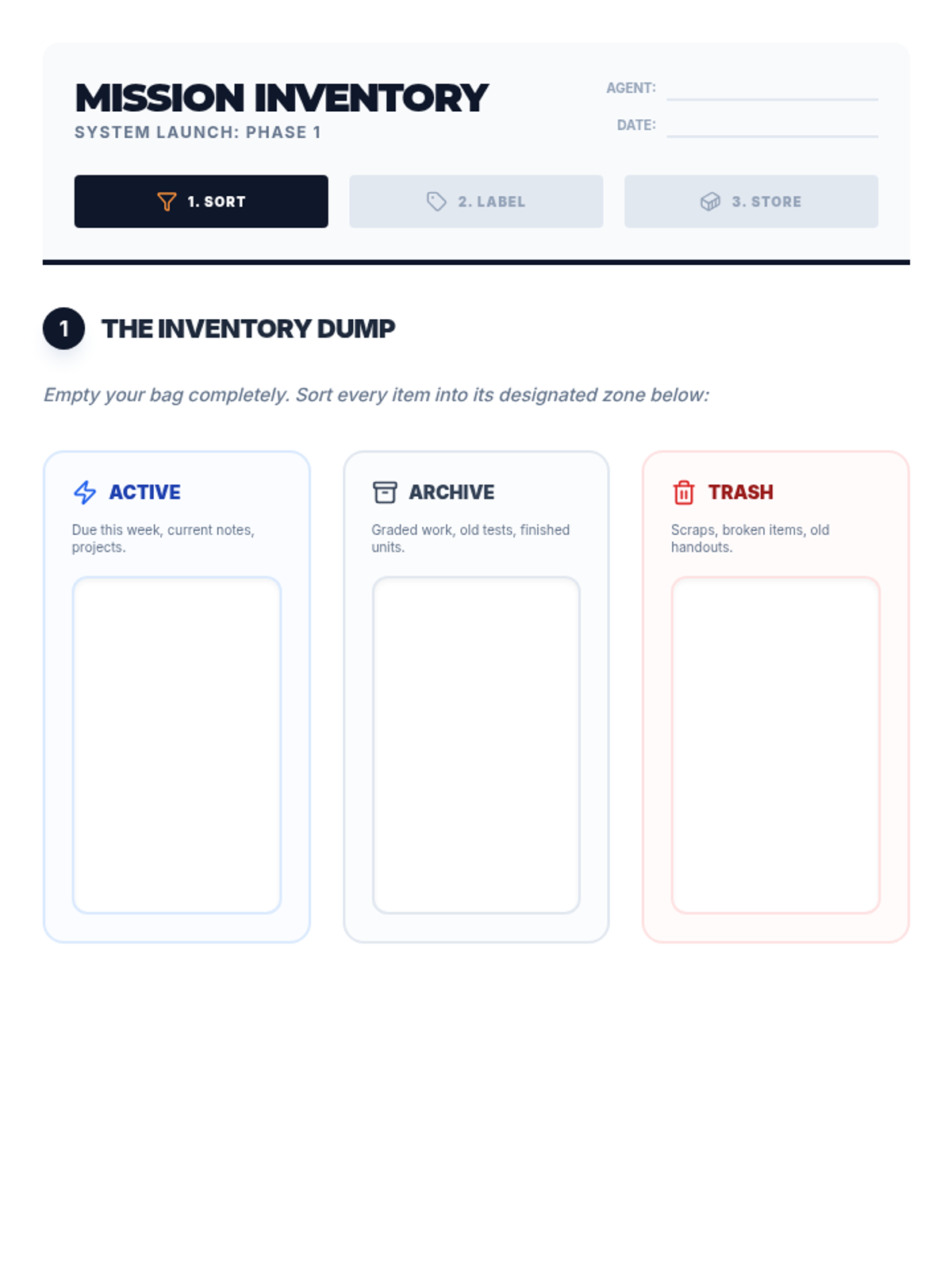
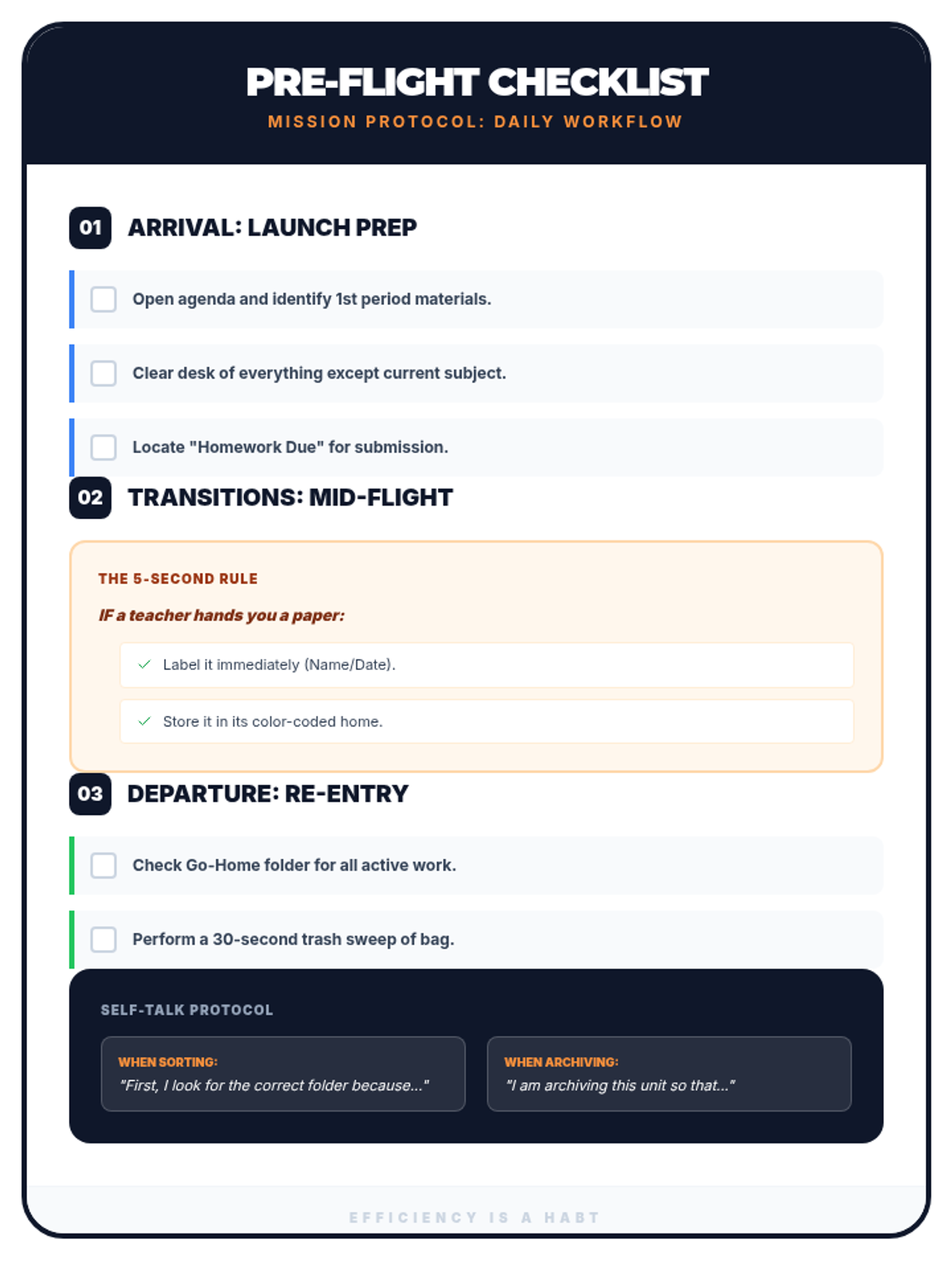
A small group lesson focused on developing organizational systems for school work. Students learn a three-step method (Sort, Label, Store) and create a personalized plan for managing their binders and backpacks.
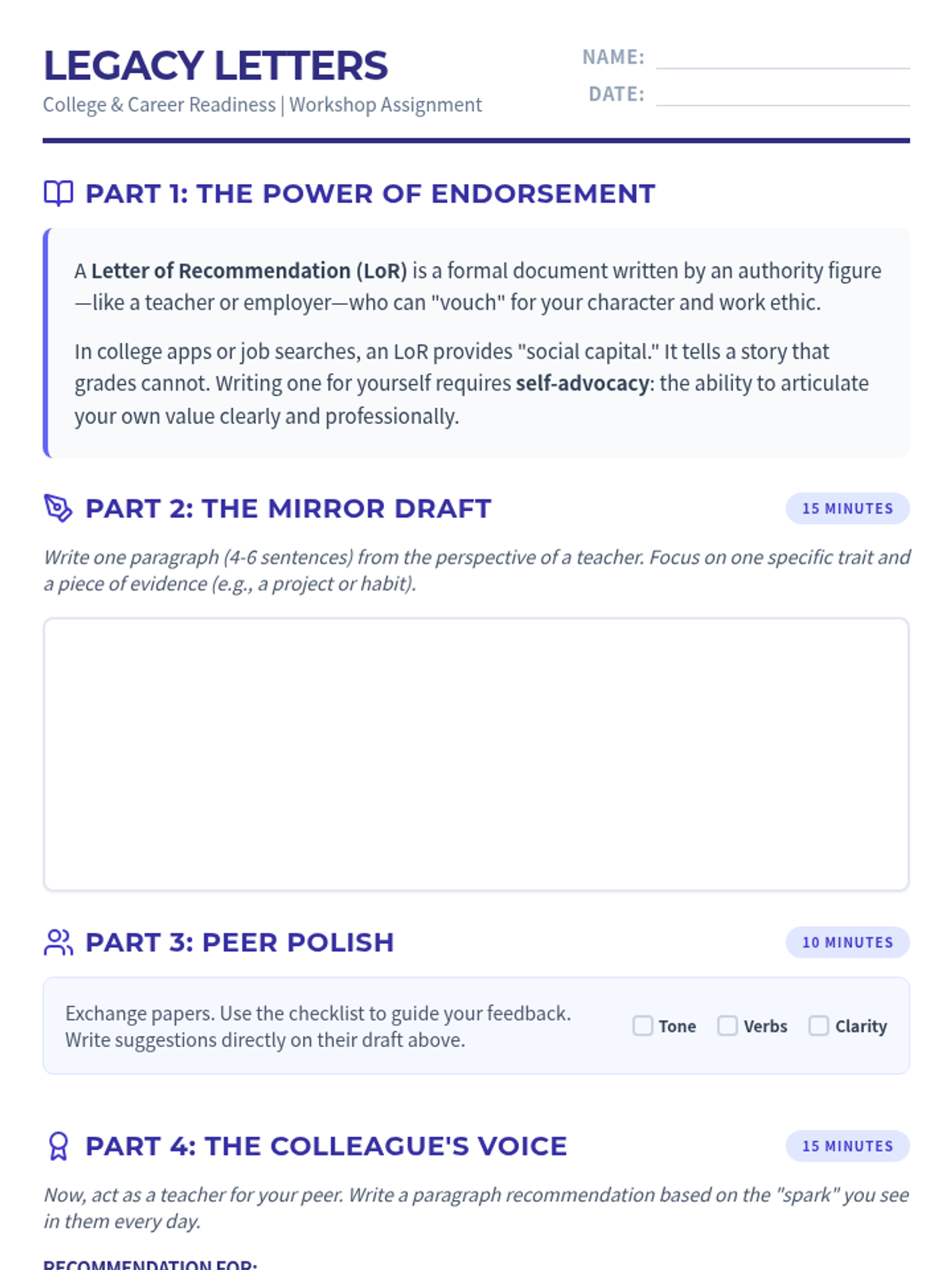
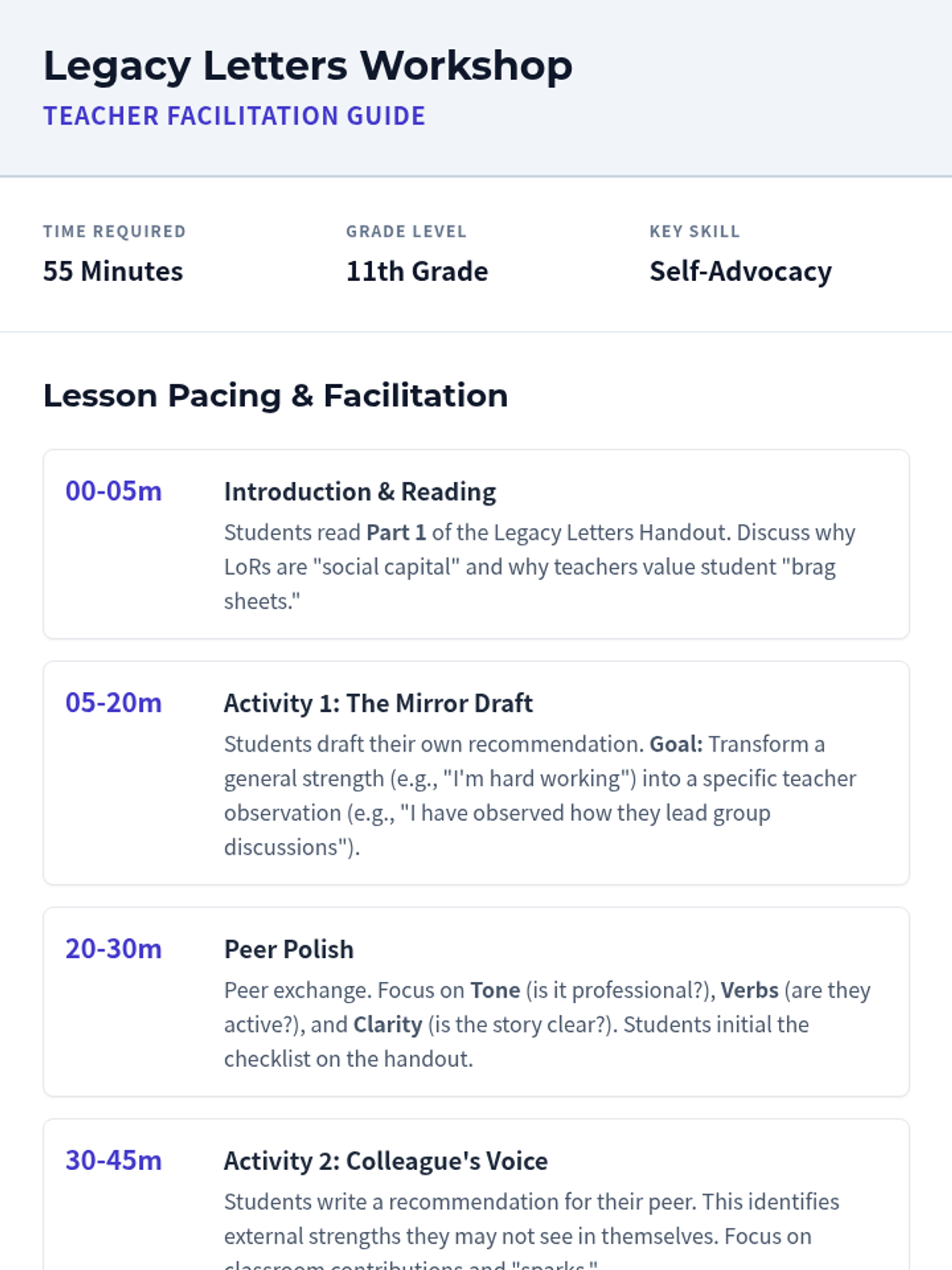
A 55-minute lesson designed for 11th-grade students to practice self-advocacy and professional writing by drafting letters of recommendation from multiple perspectives. Students explore the purpose of endorsements, practice peer editing, and reflect on their personal strengths.
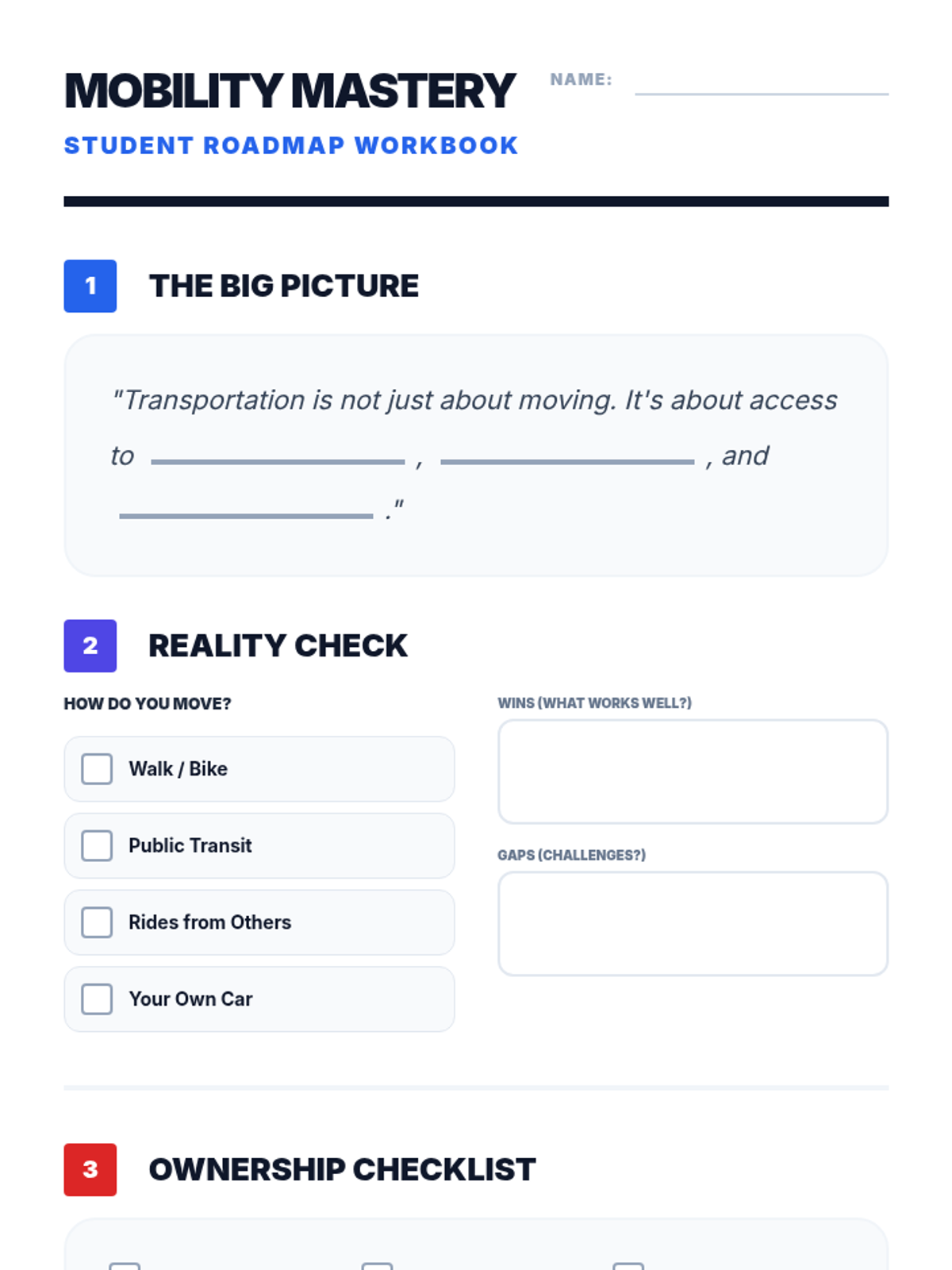
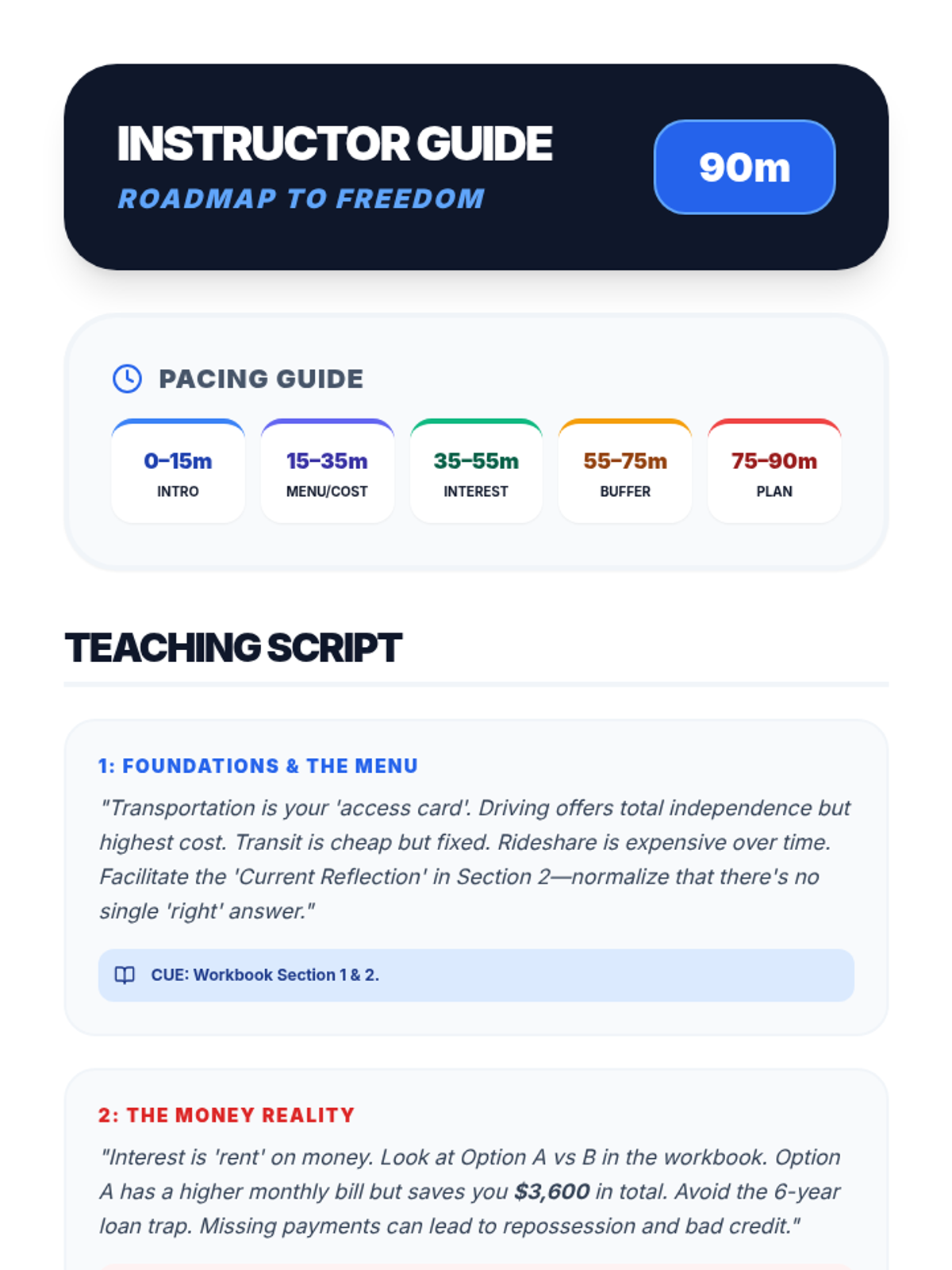
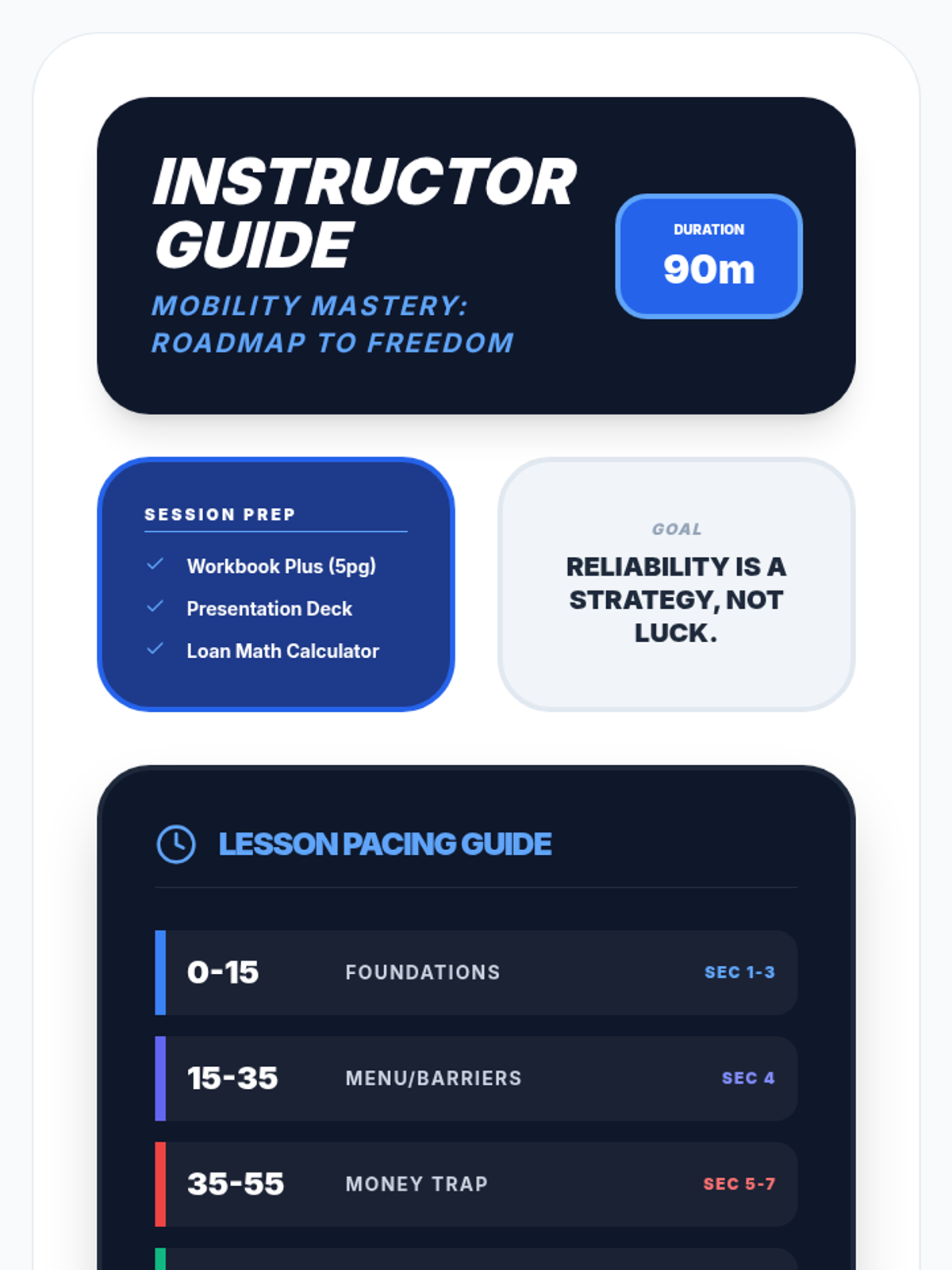
A 90-minute session covering transportation types, the true cost of driving, car financing, interest rates, and personal mobility planning.
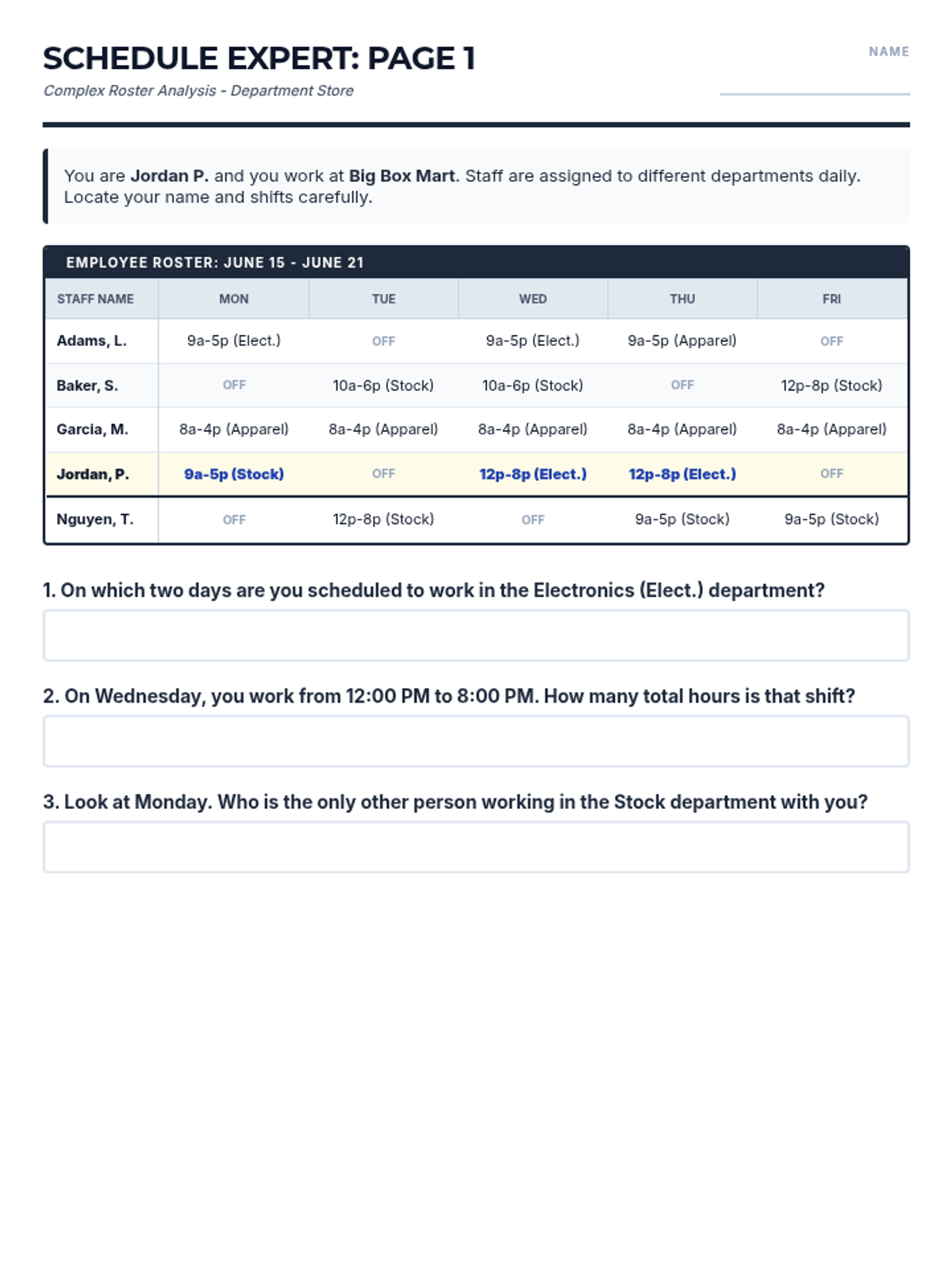
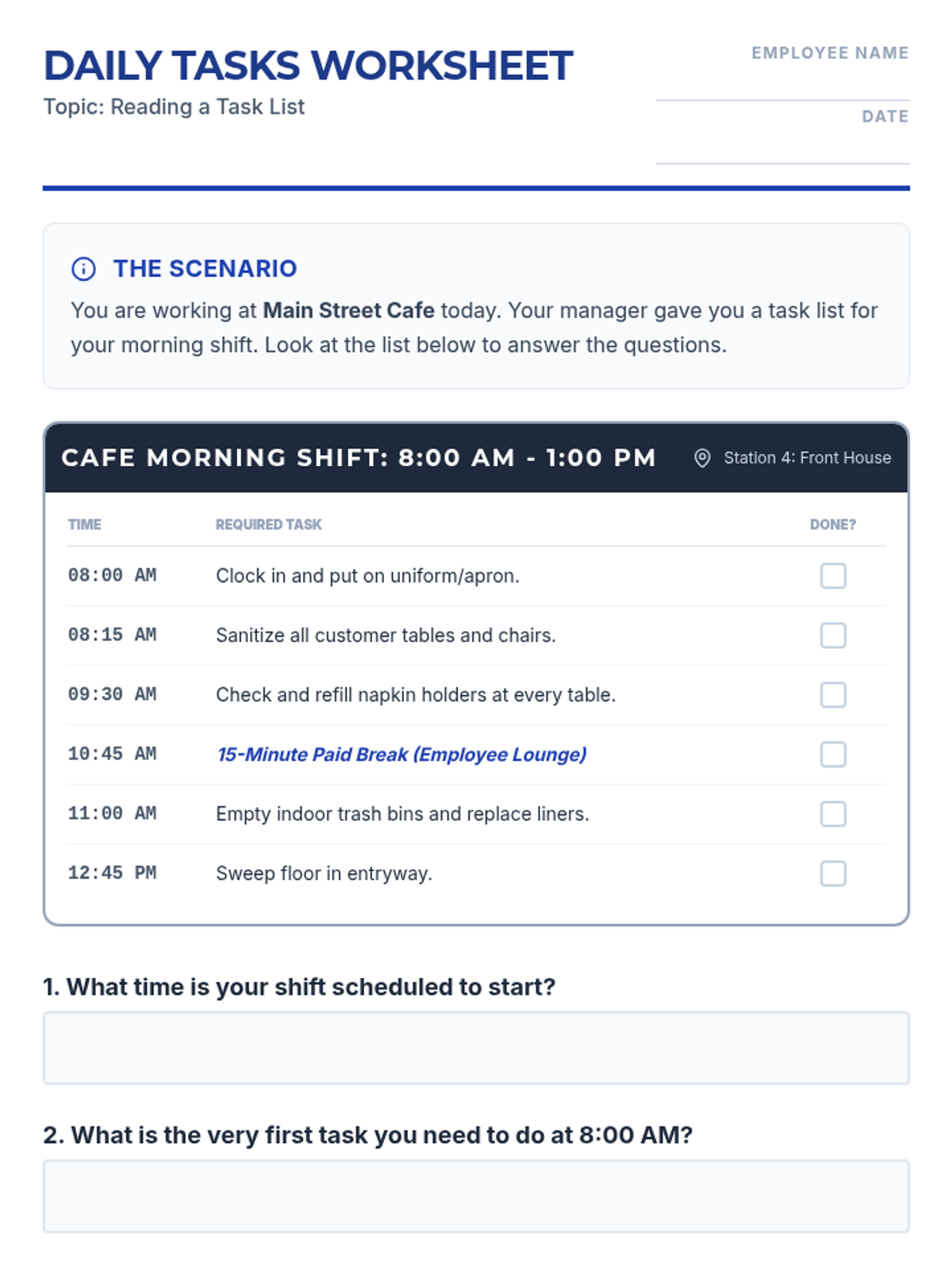
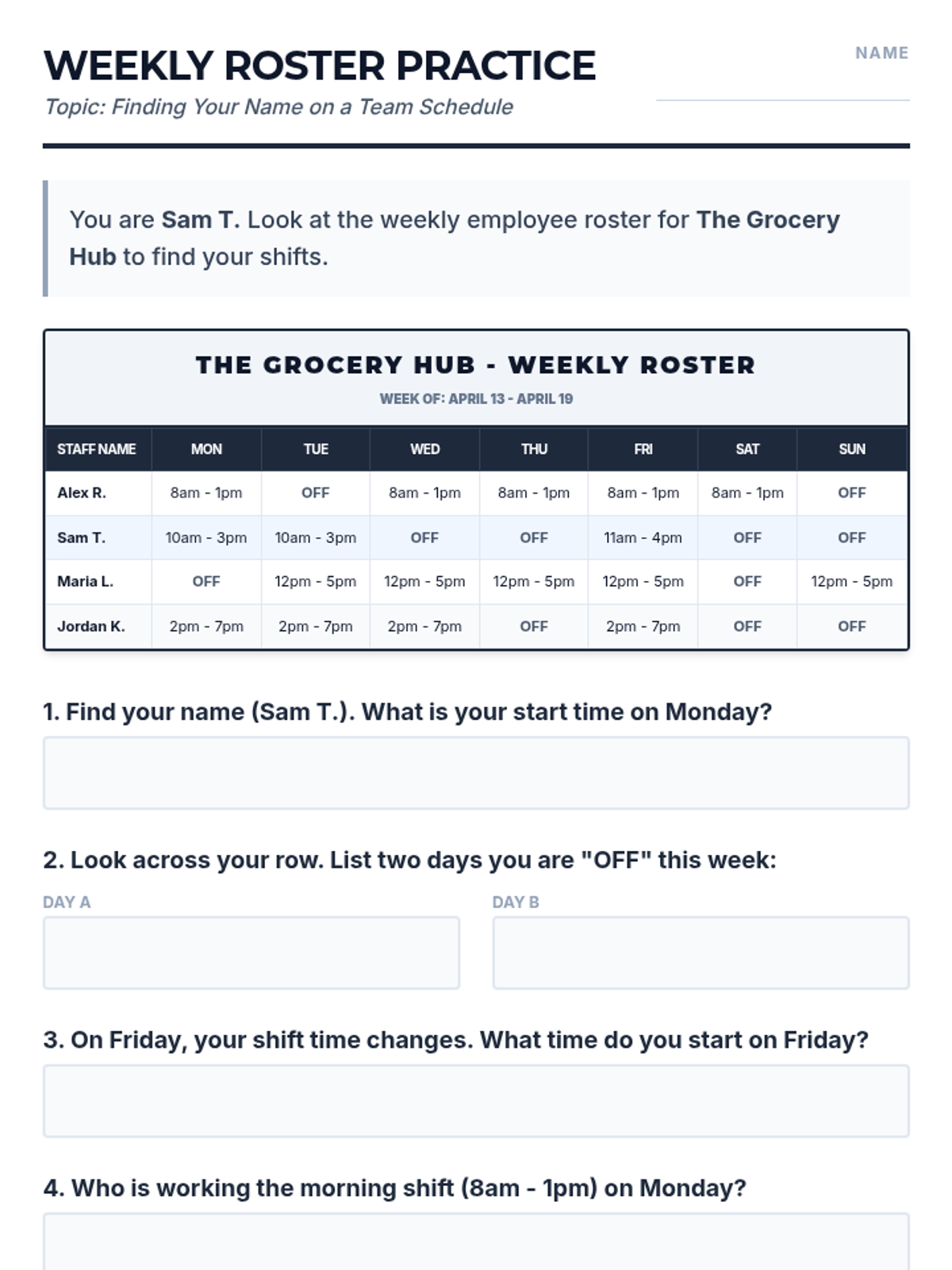
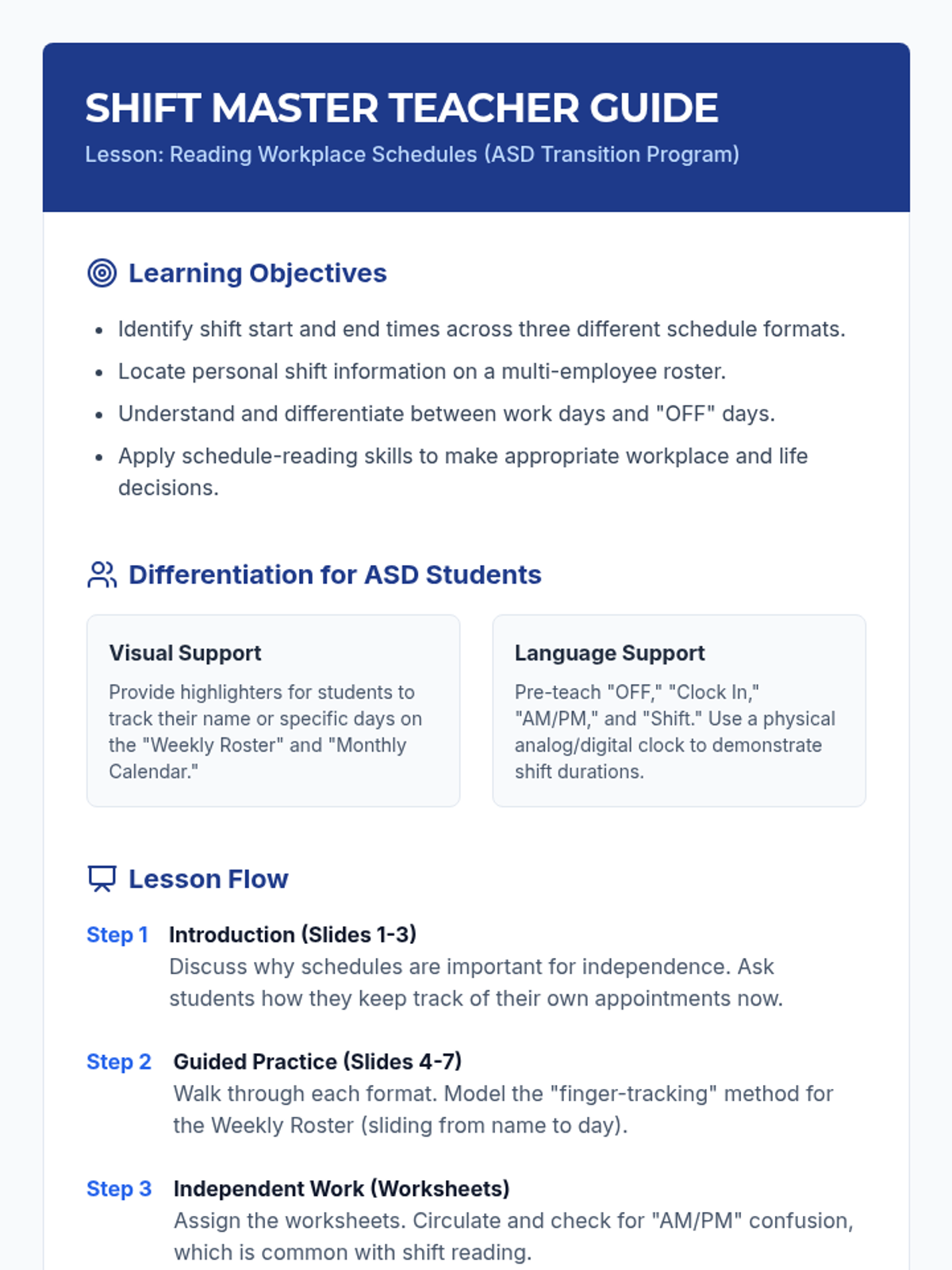
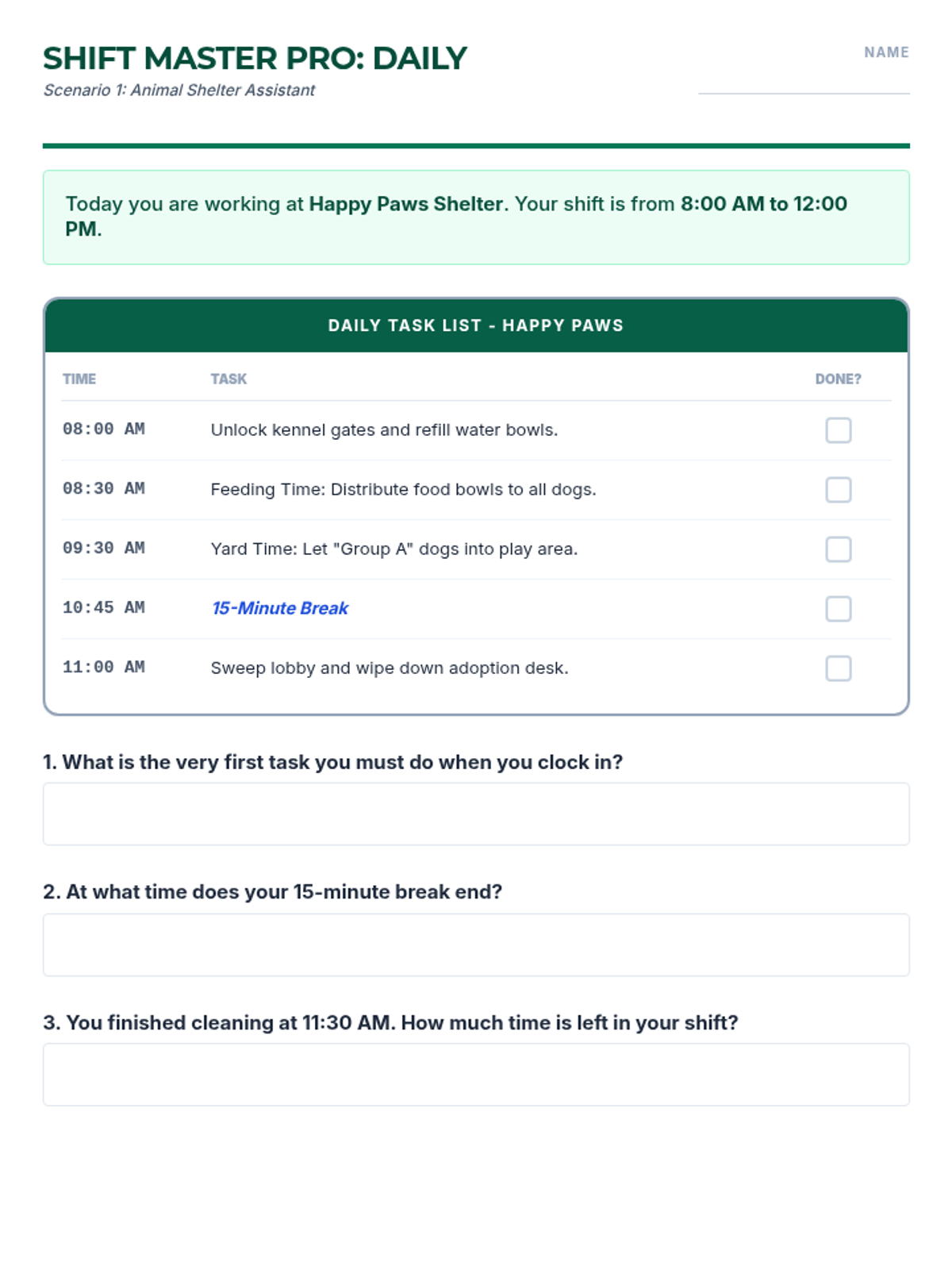
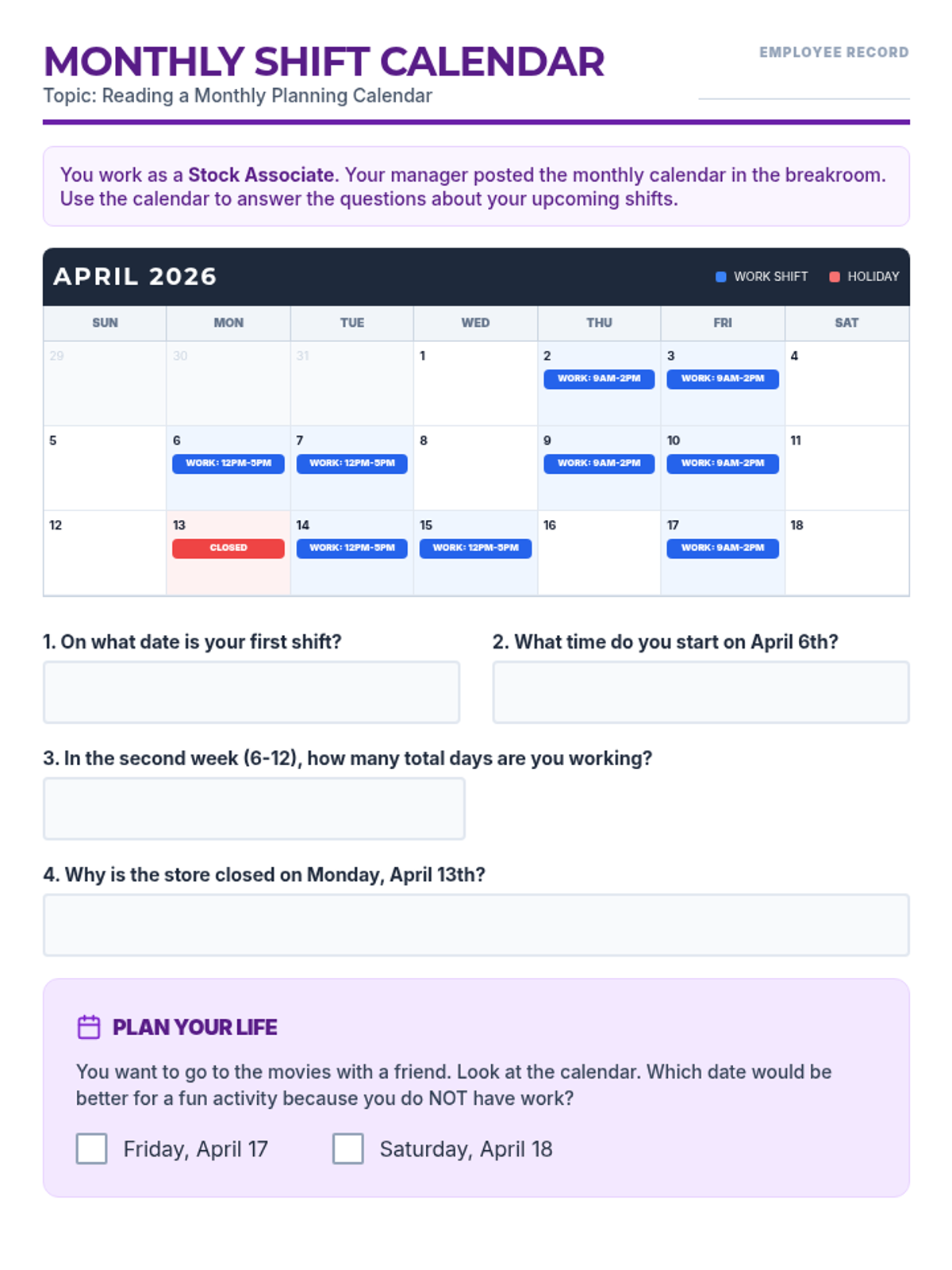
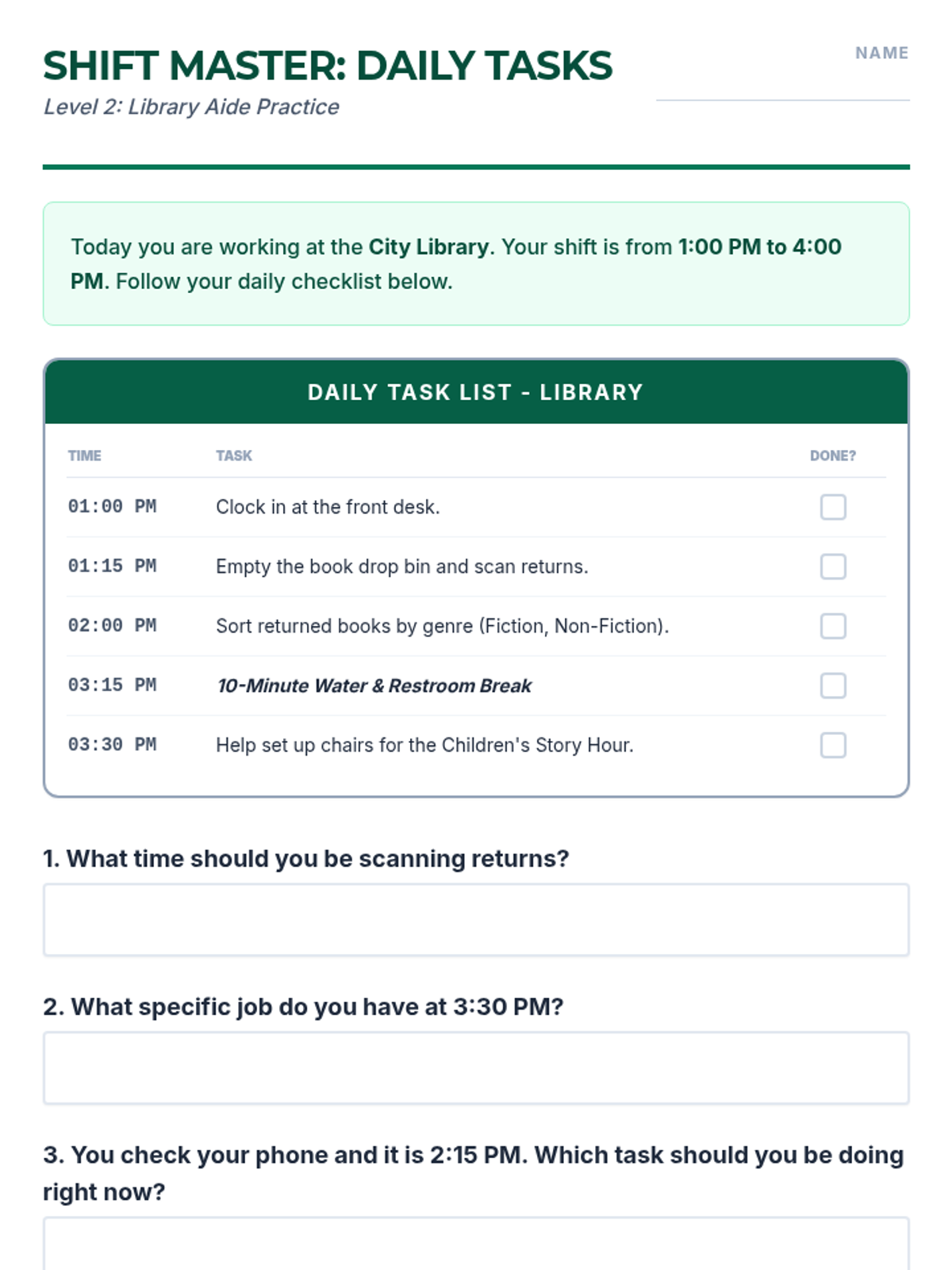
A comprehensive lesson for transition-age students to master reading daily, weekly, and monthly work schedules through realistic workplace scenarios.
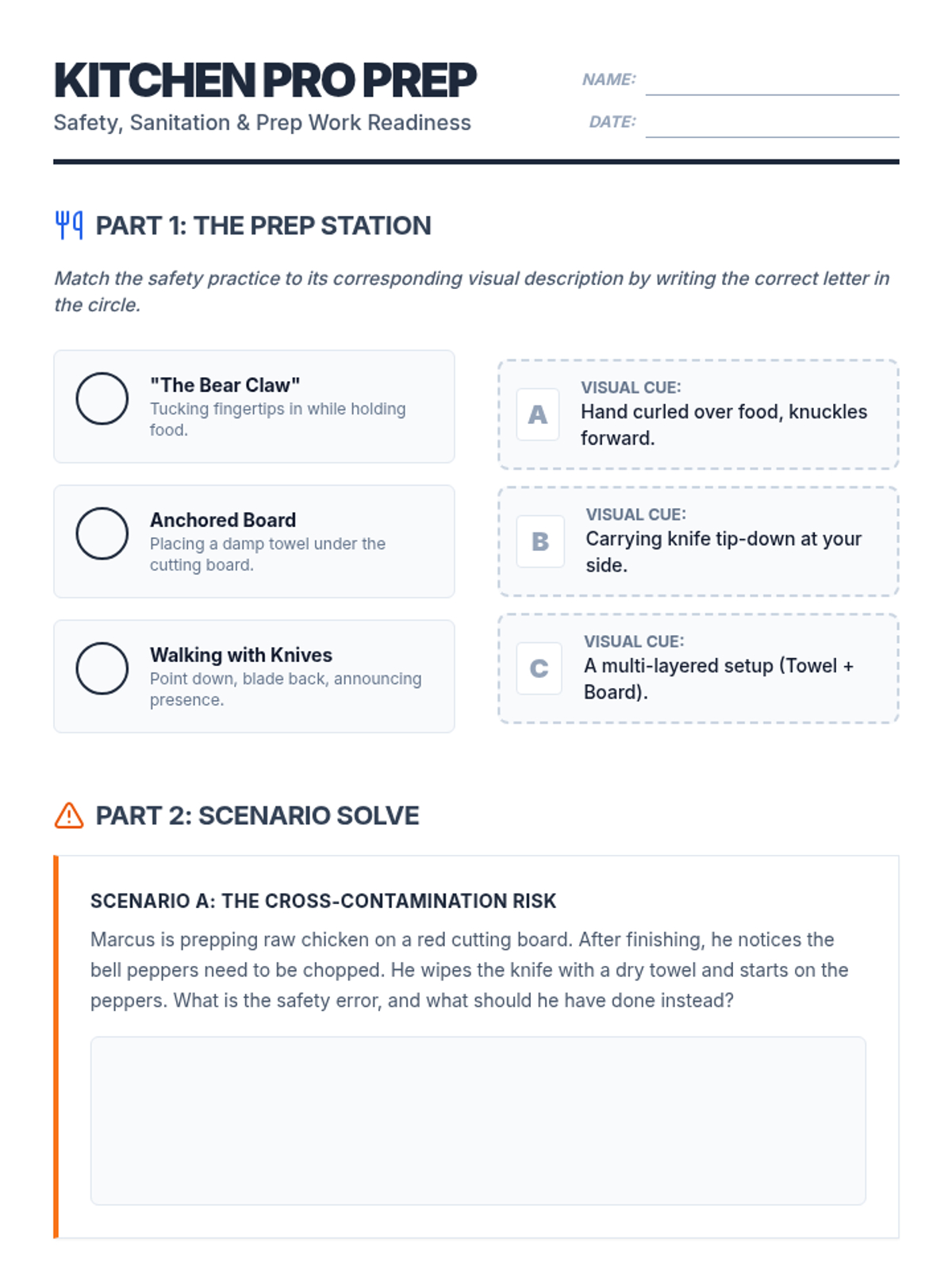
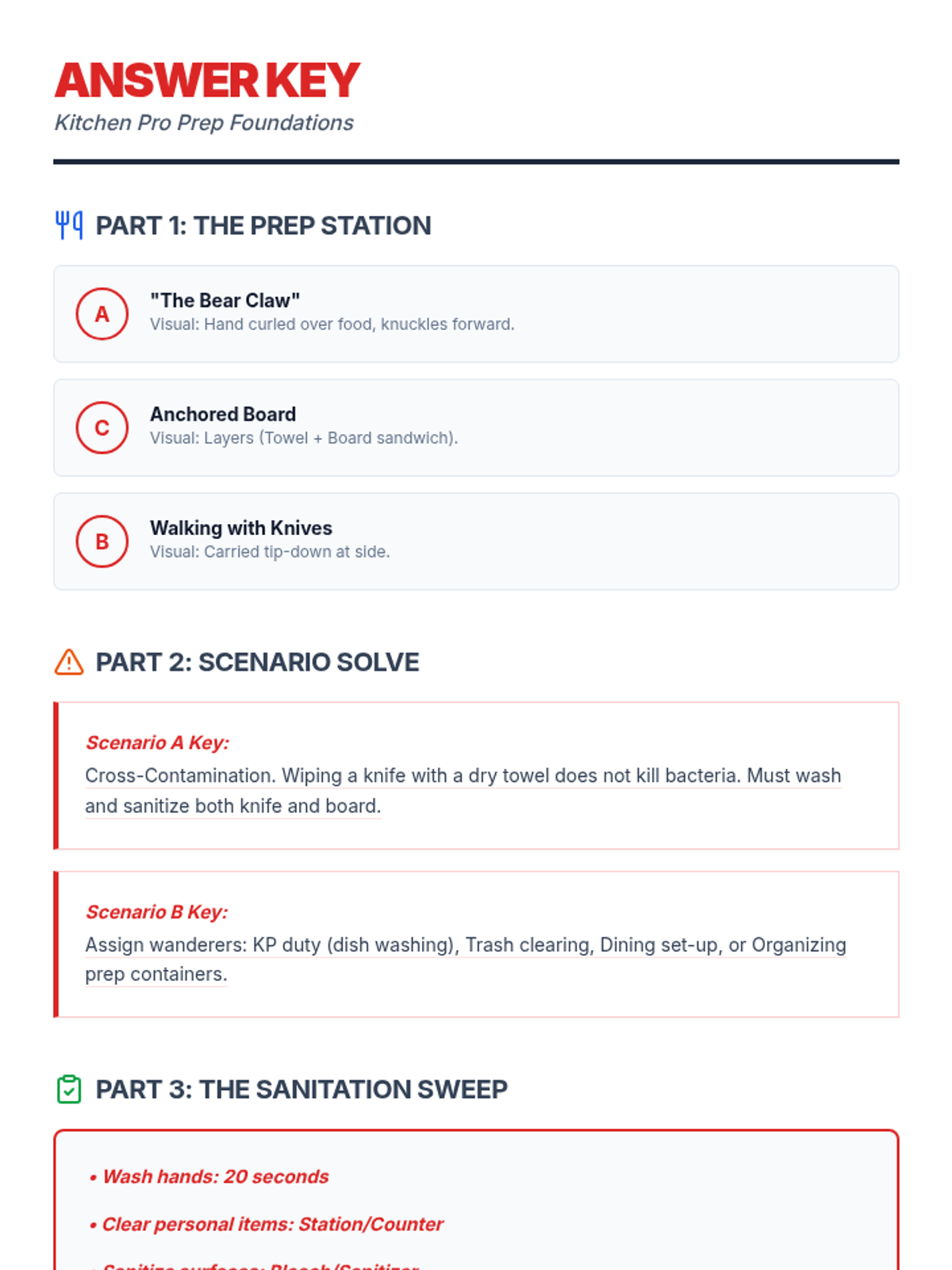
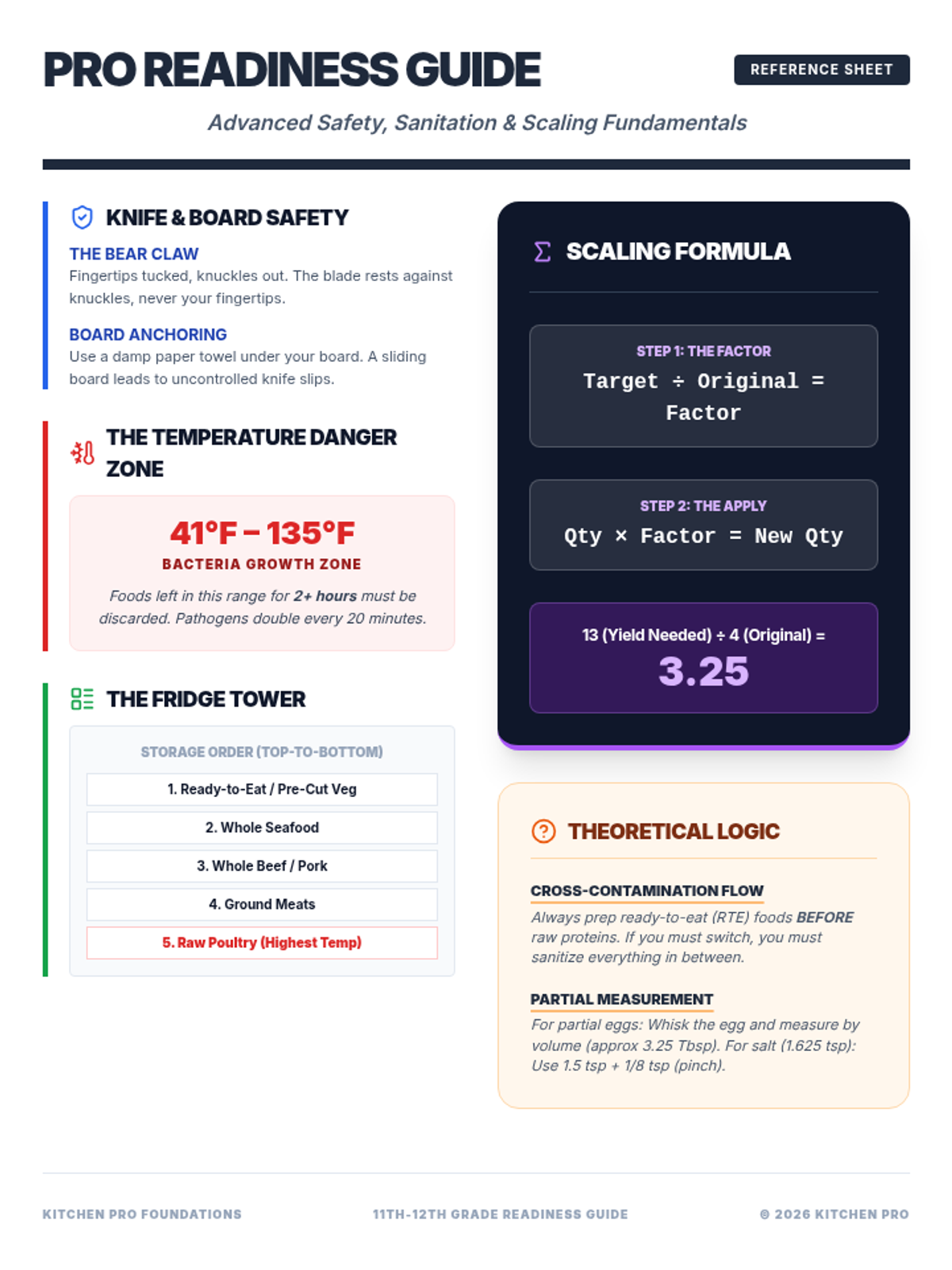
A foundational kitchen skills lesson focused on safety, sanitation, knife handling, and recipe scaling for a small group environment.
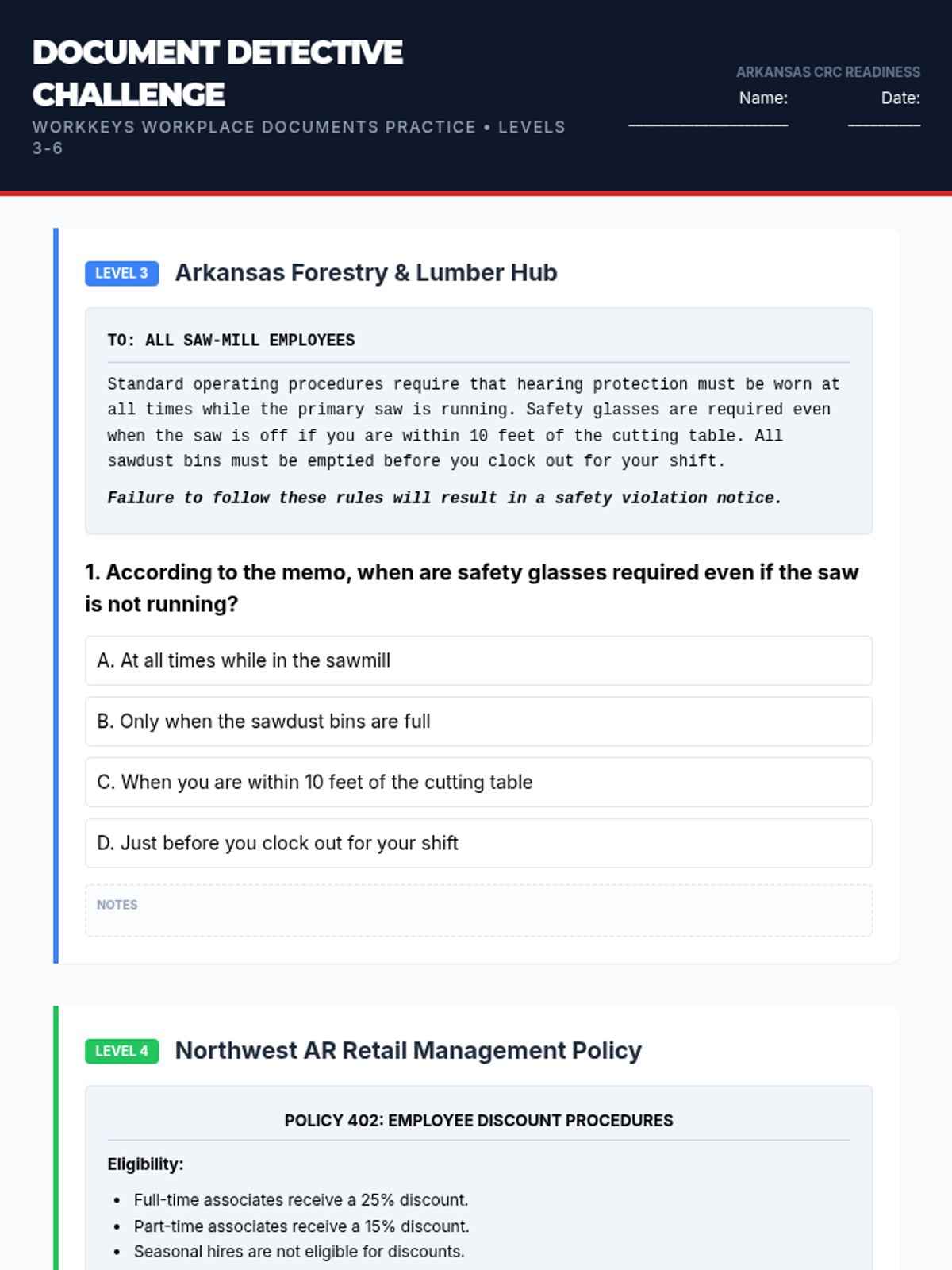
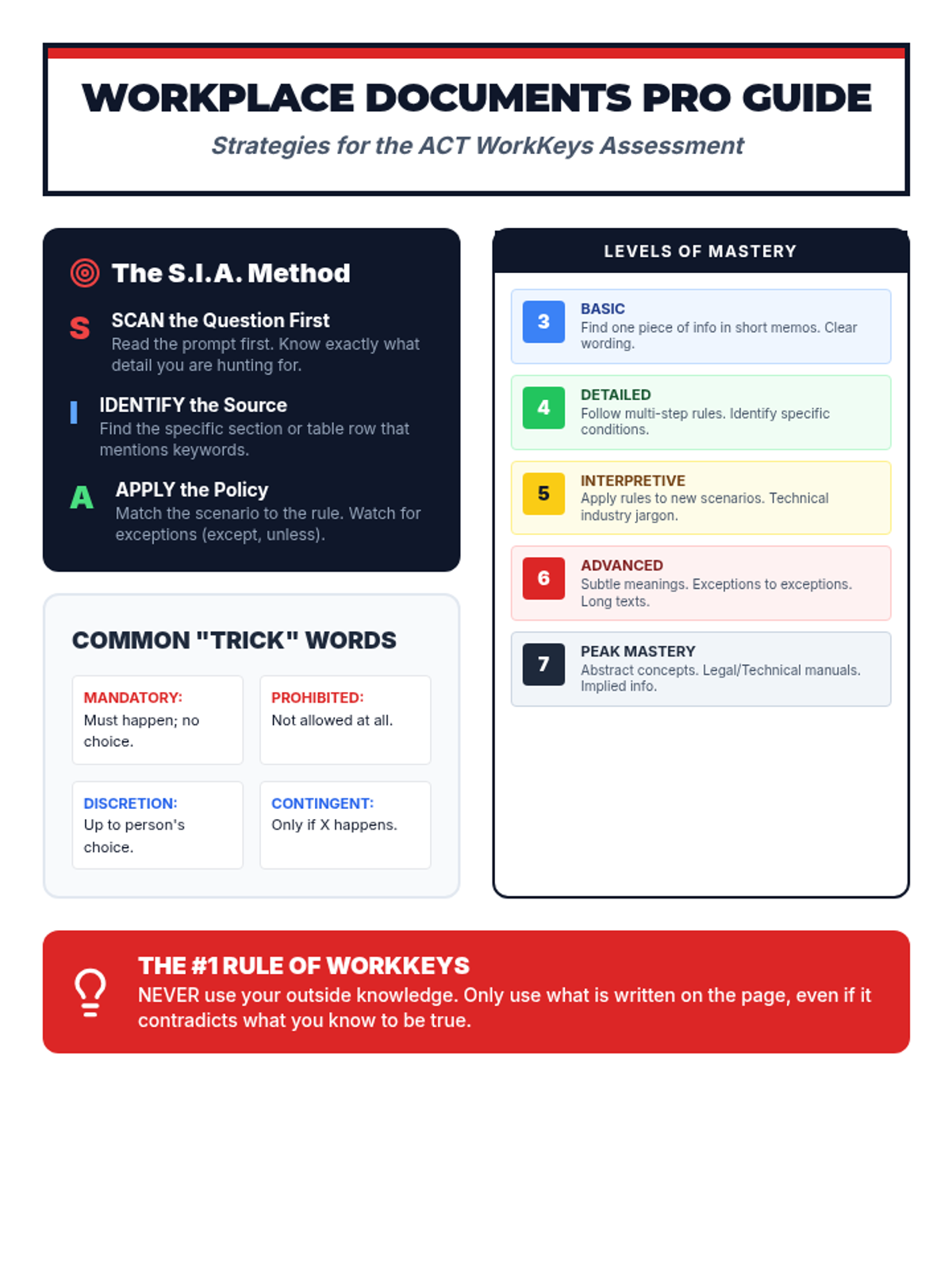
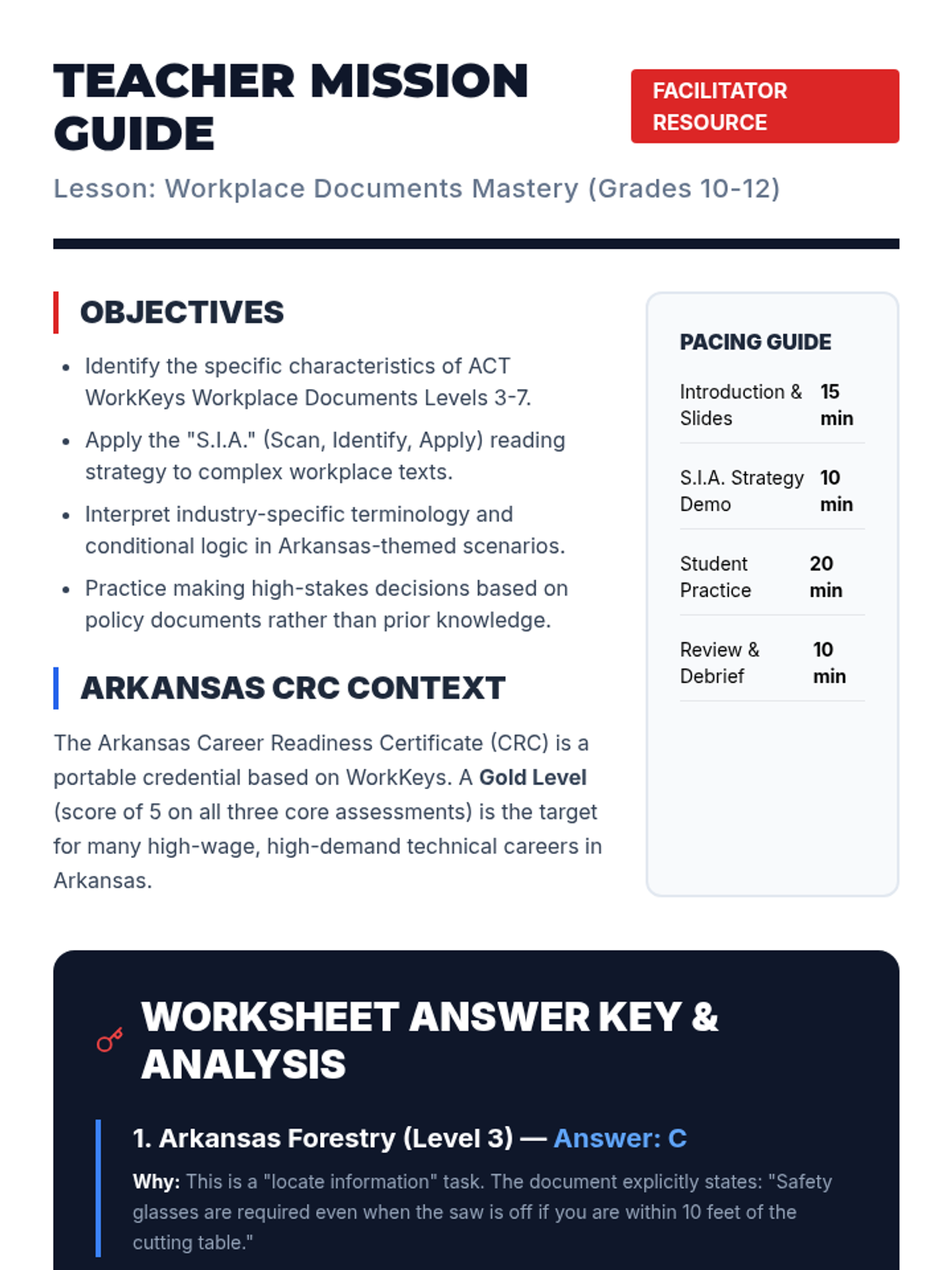
A comprehensive test preparation lesson designed to help high school students master the ACT WorkKeys Workplace Documents assessment, focusing on Levels 3-7 with real-world Arkansas industry scenarios.
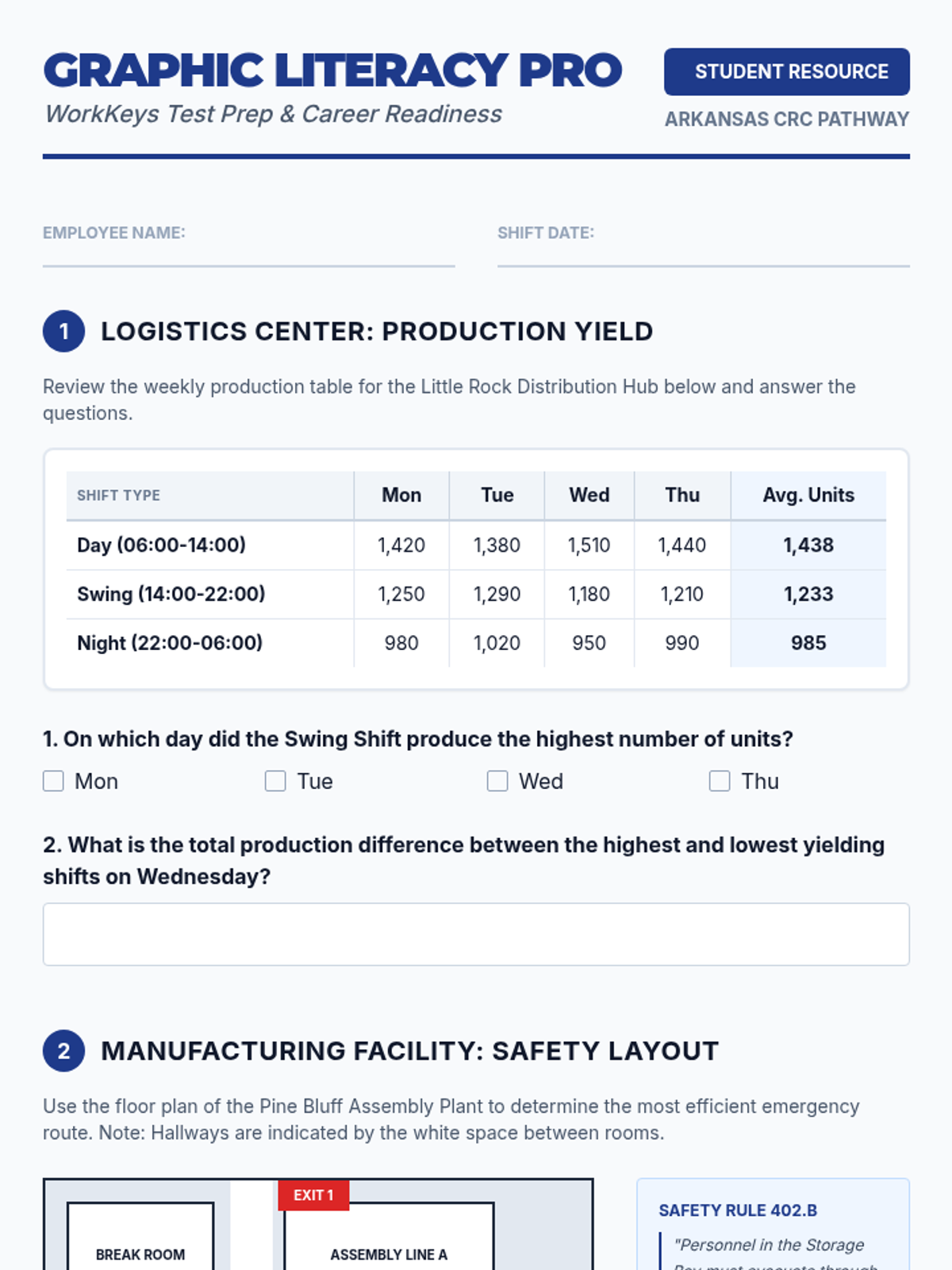
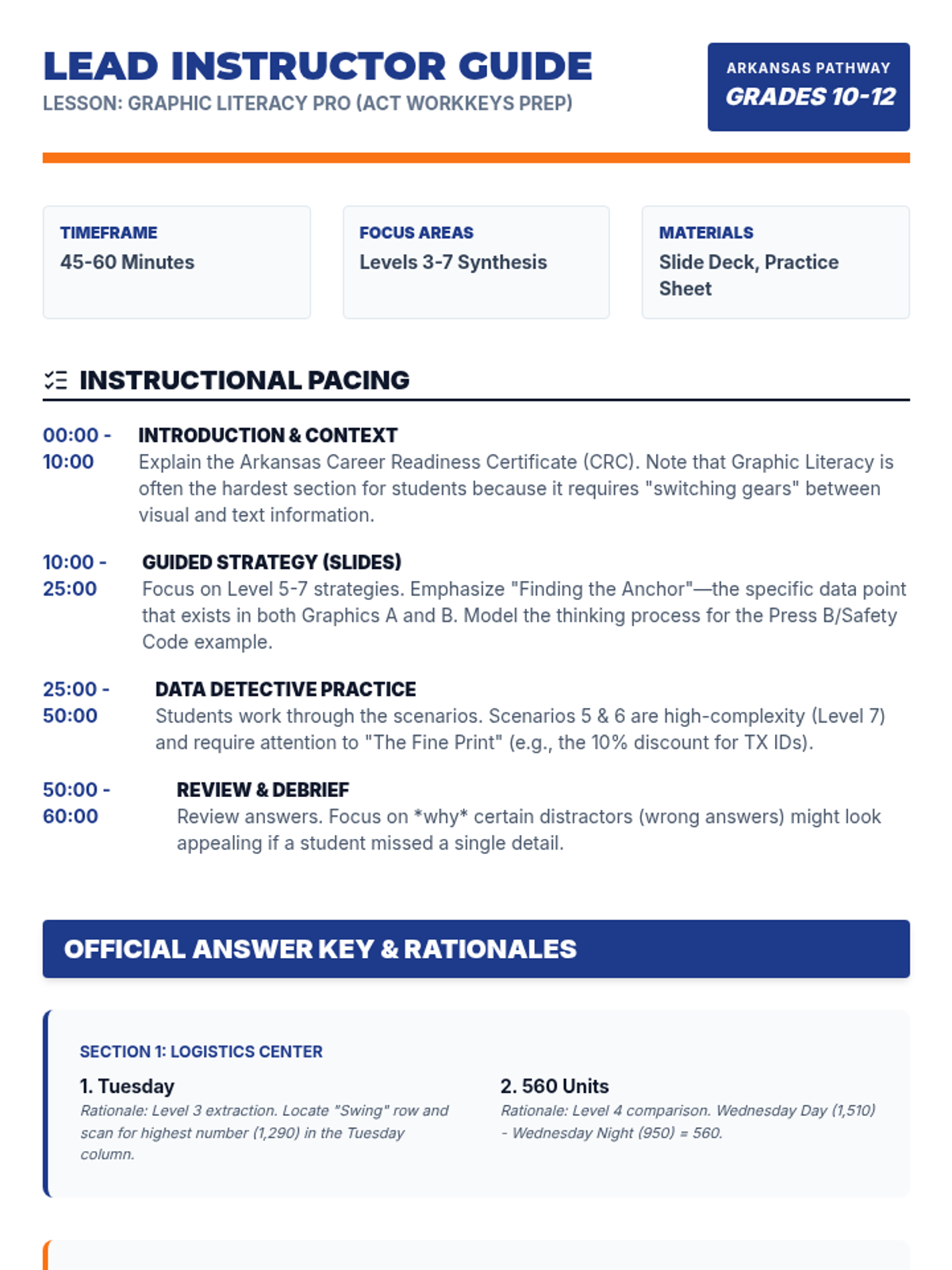
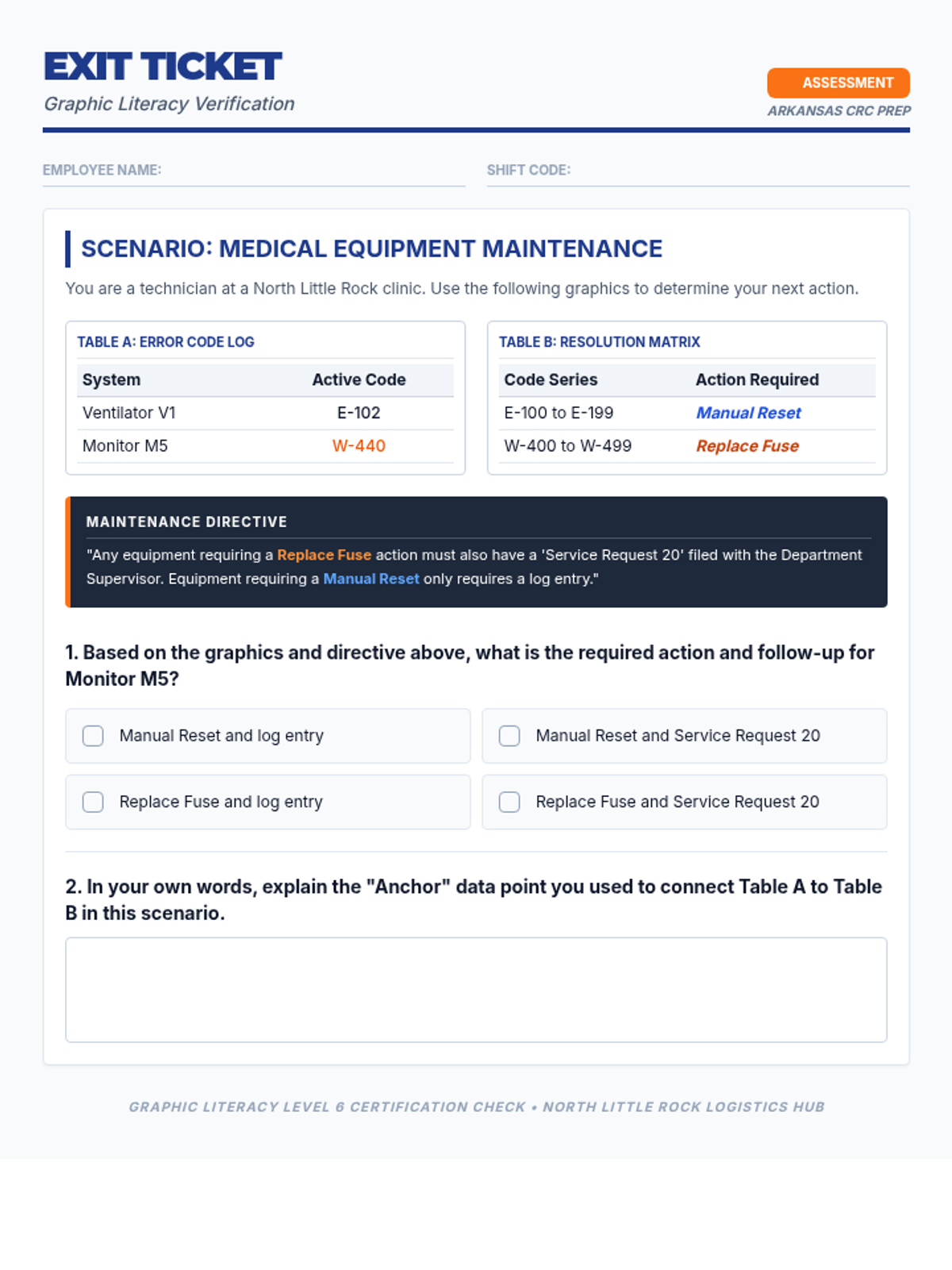
A comprehensive test prep lesson focused on the ACT WorkKeys Graphic Literacy assessment, designed for Arkansas high schoolers aiming for the Career Readiness Certificate. Students learn to extract, compare, and synthesize data from workplace-style charts, diagrams, and multi-graphic layouts.
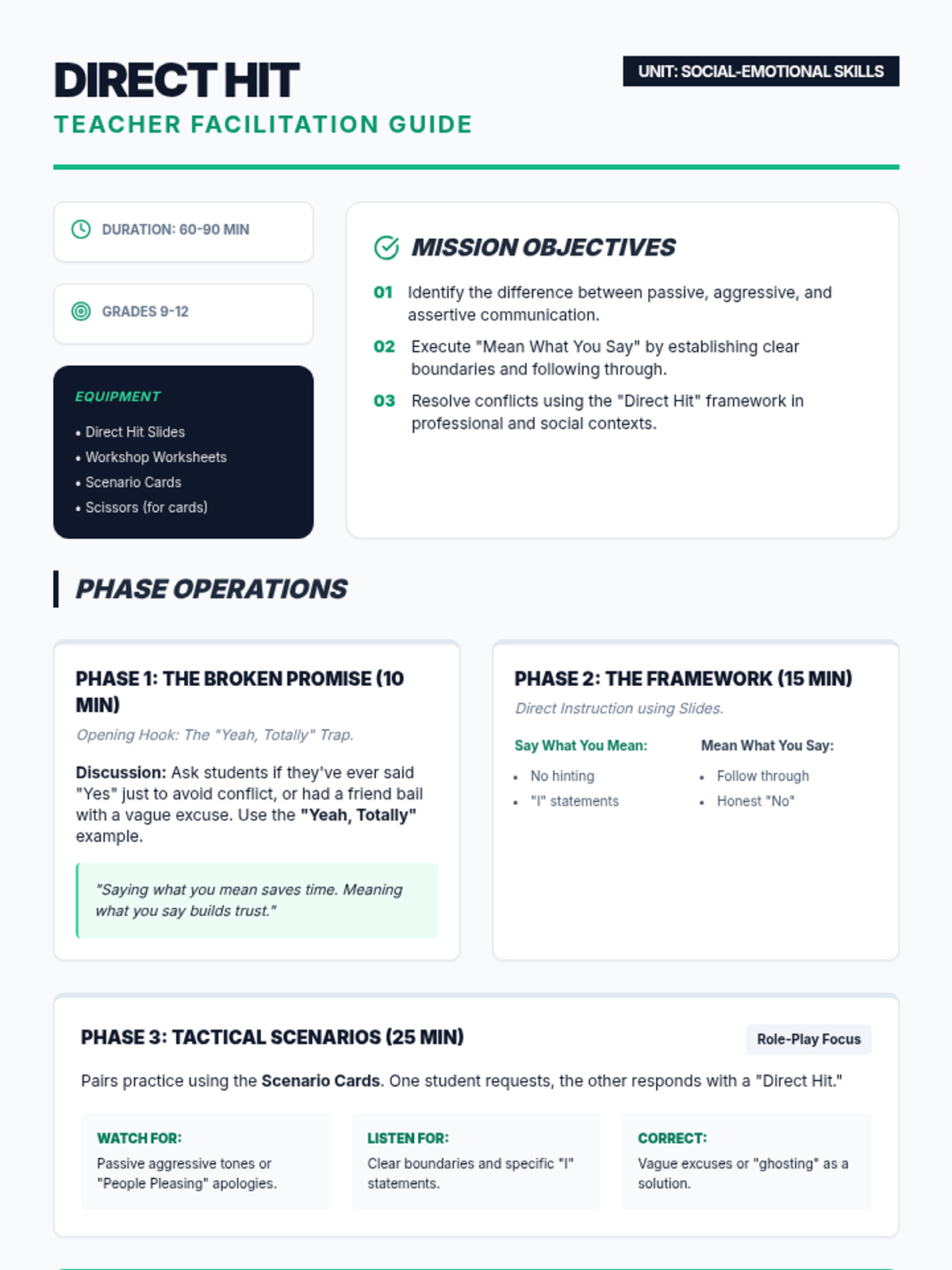
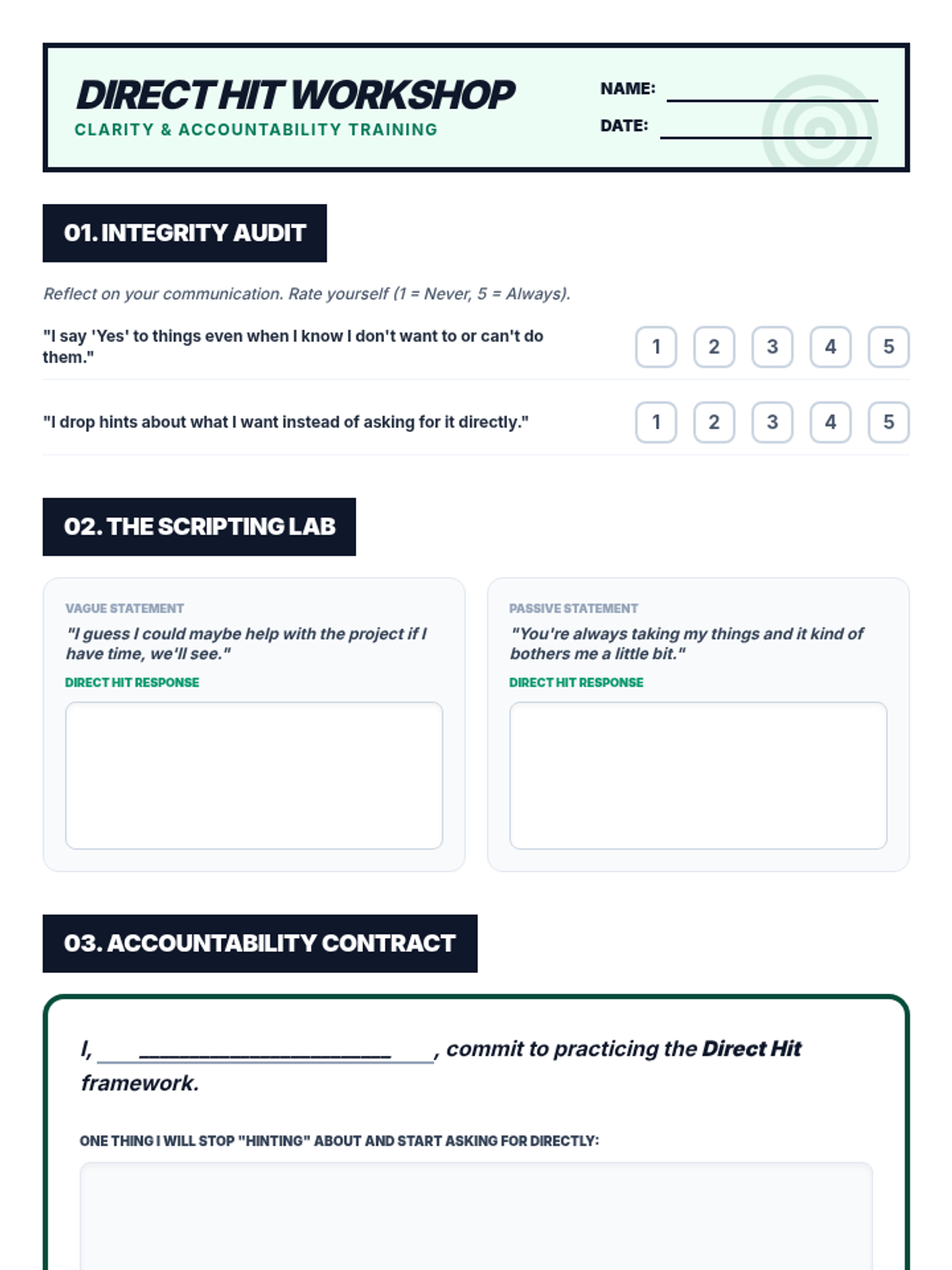
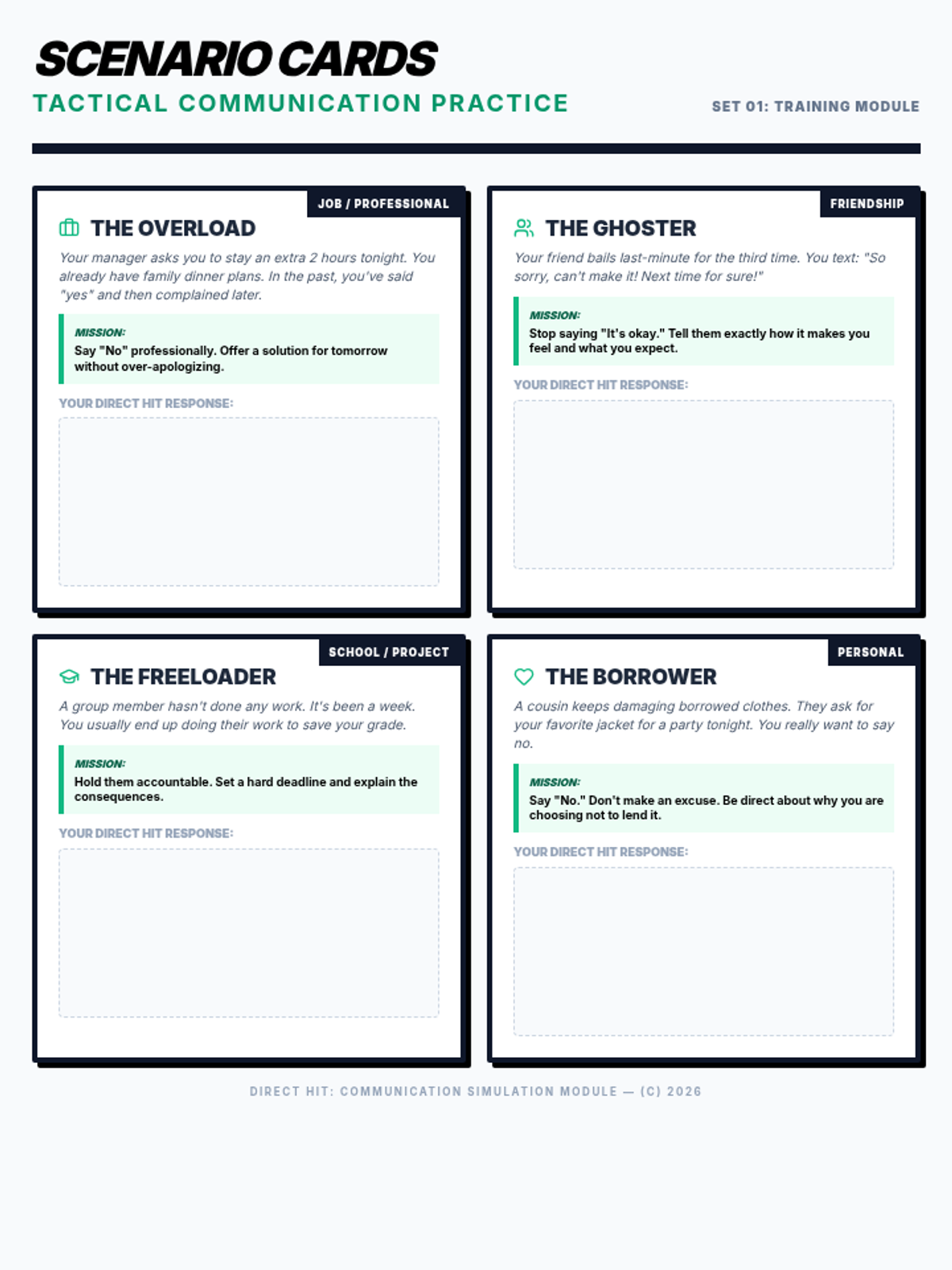
A high-impact communication lesson focusing on the power of clarity and integrity in interpersonal and professional relationships. Students explore the 'Direct Hit' framework: saying what they mean (clarity) and meaning what they say (accountability).
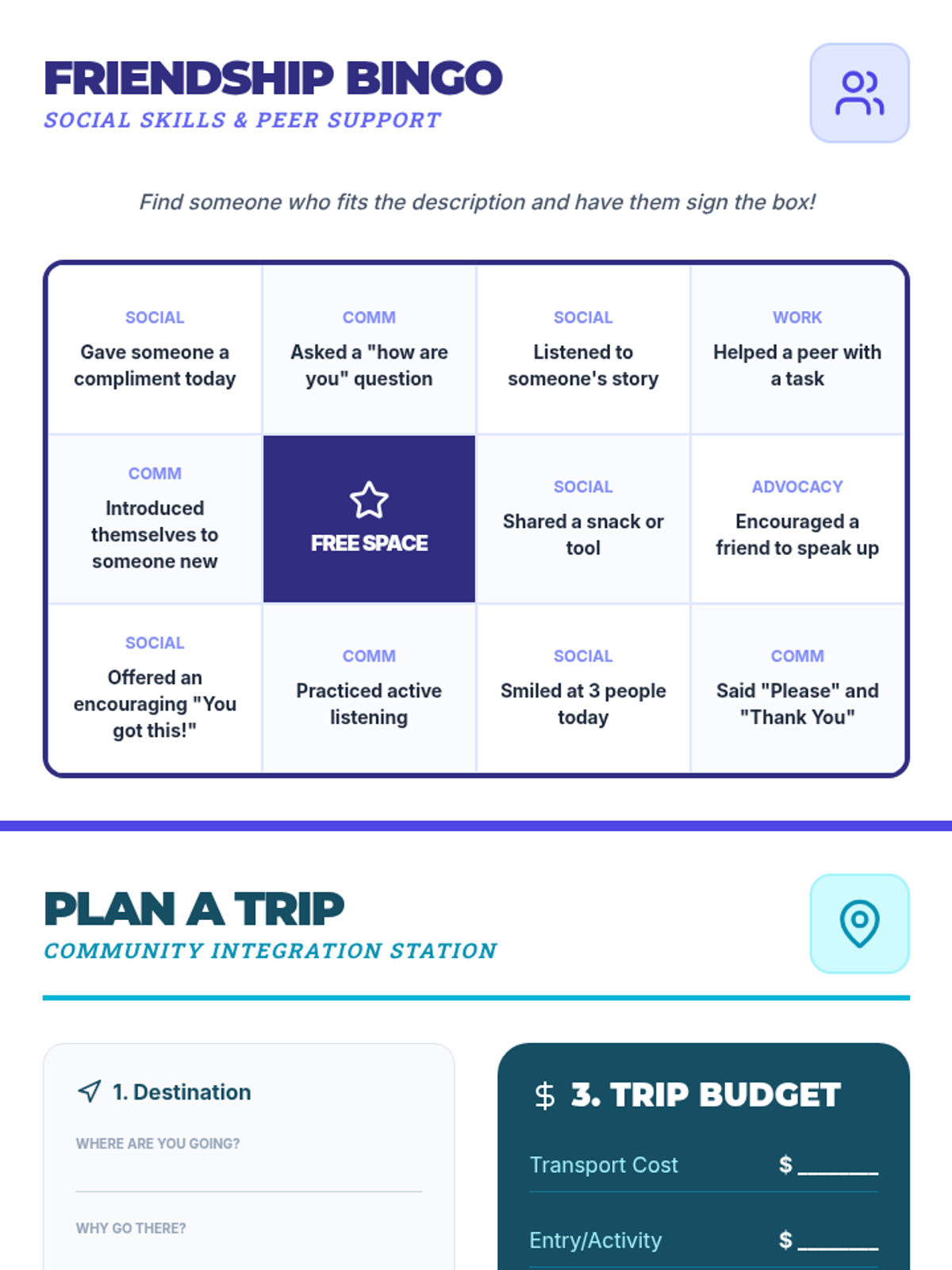
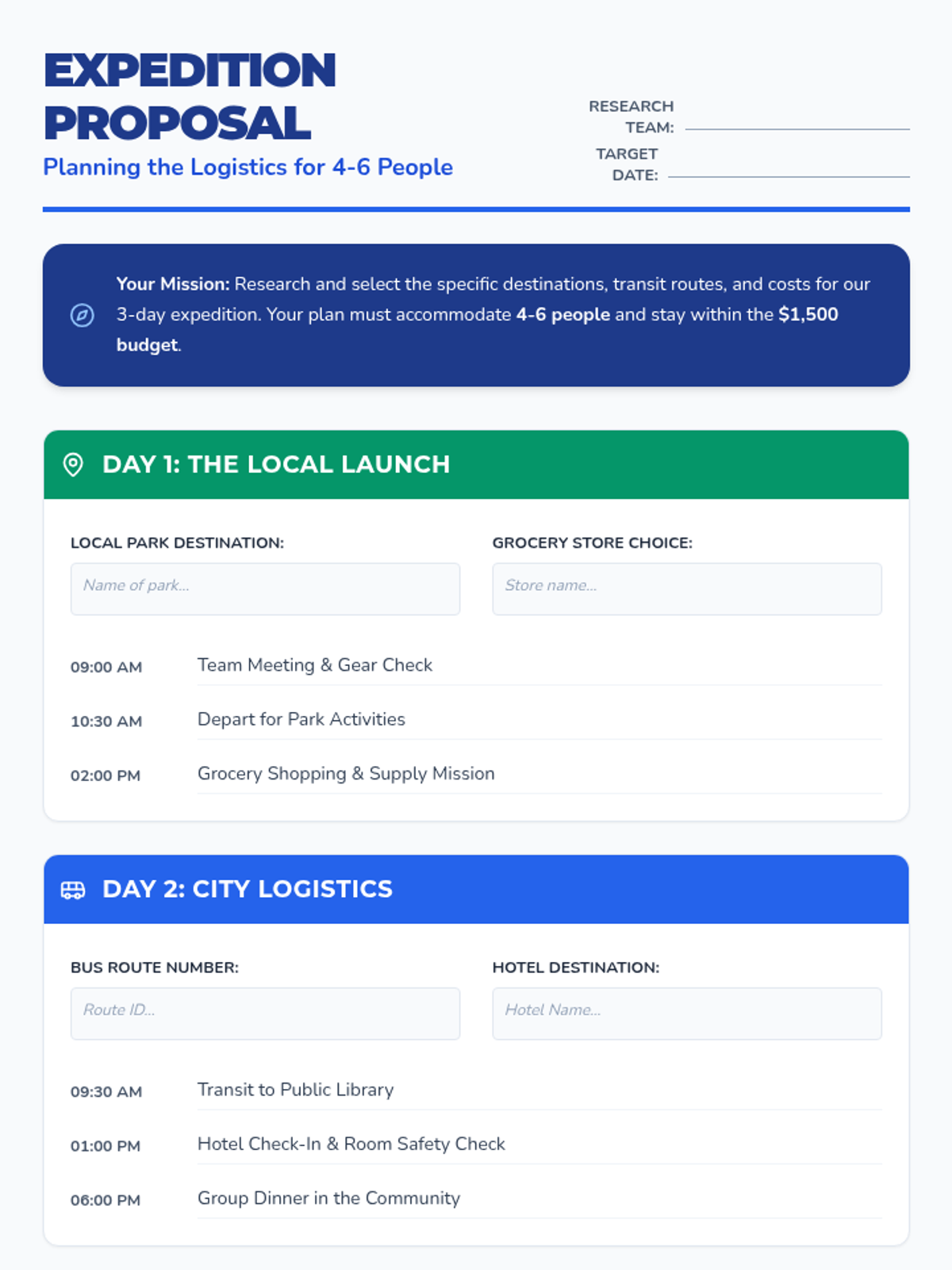
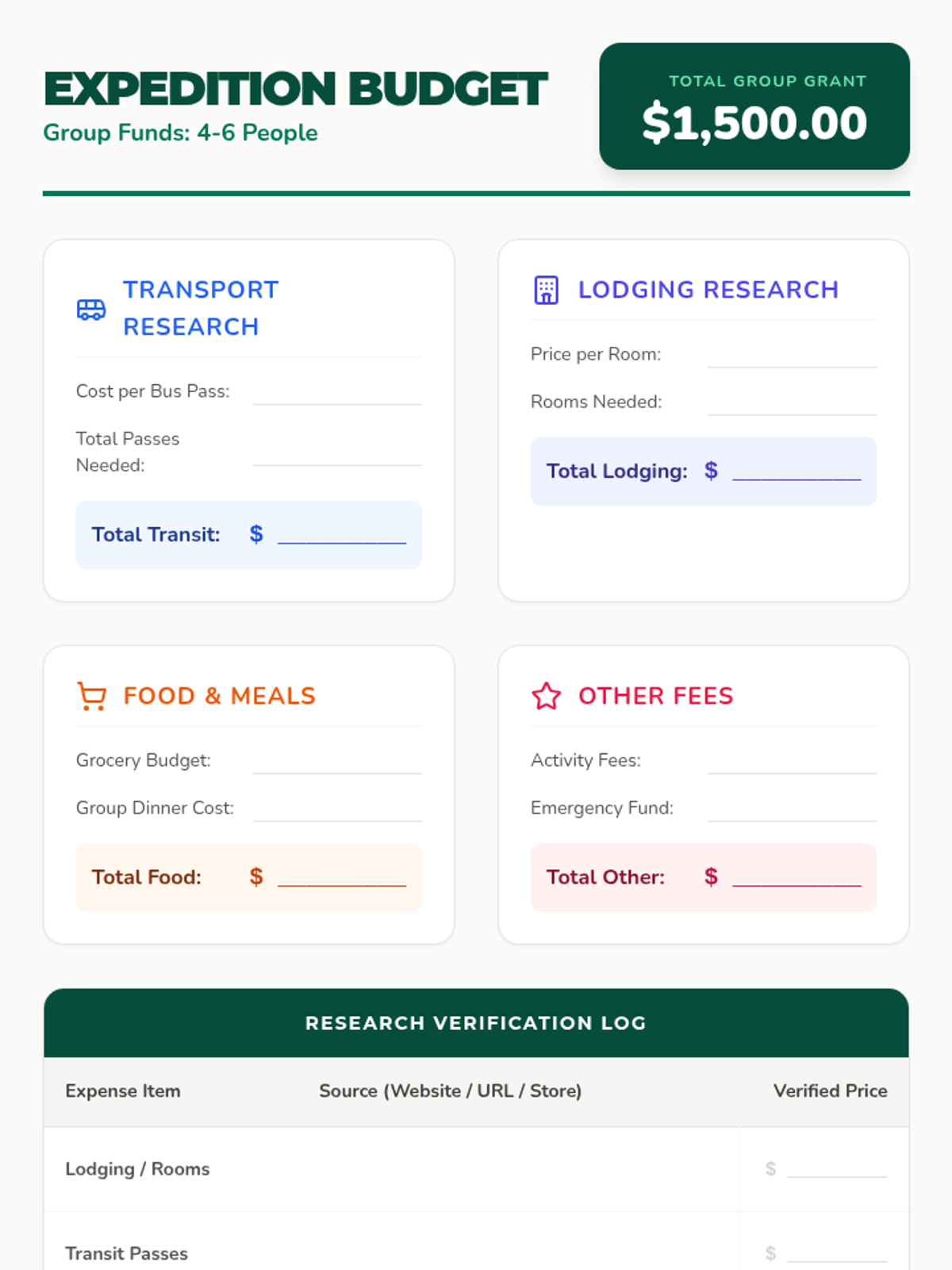
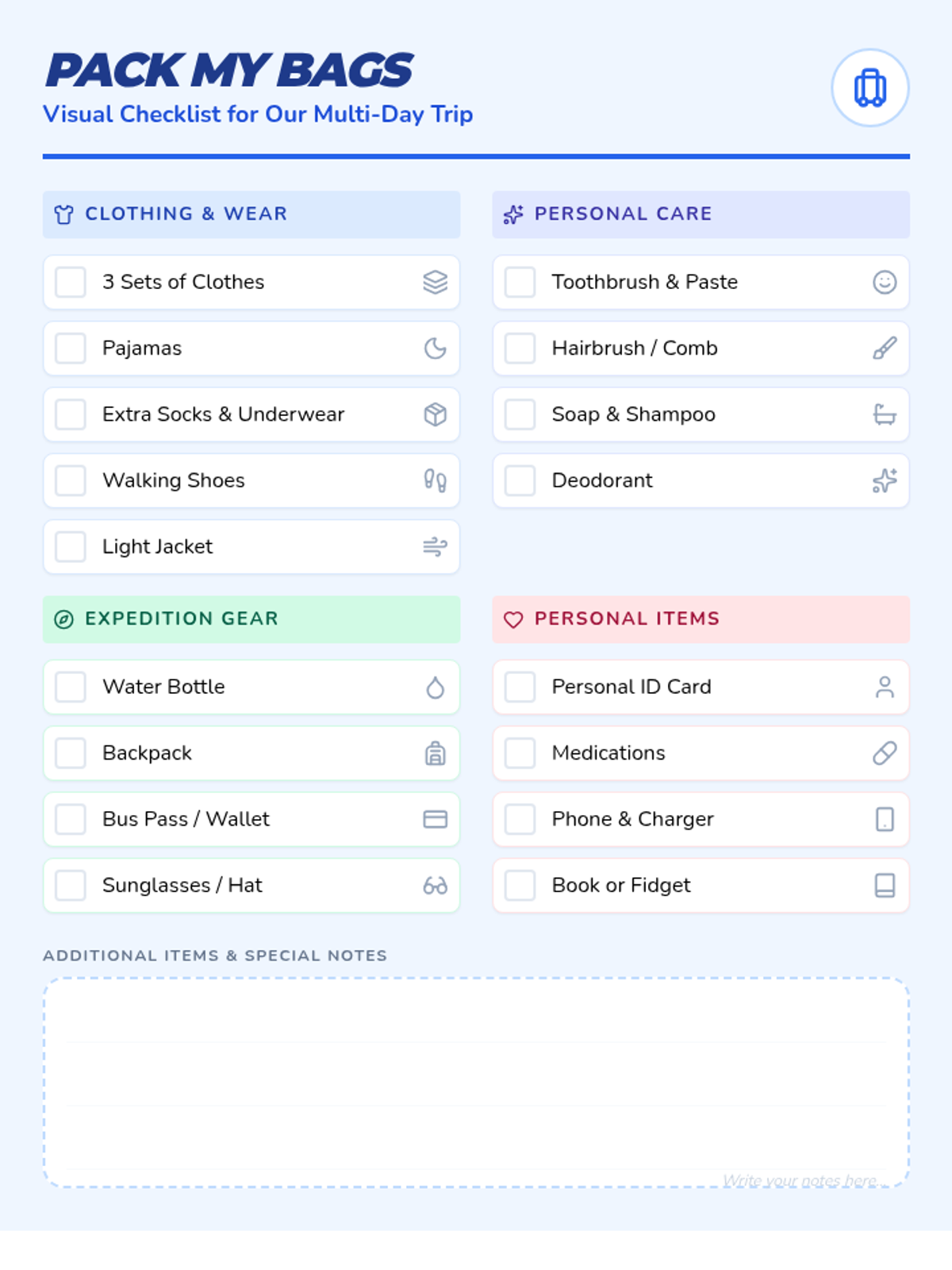
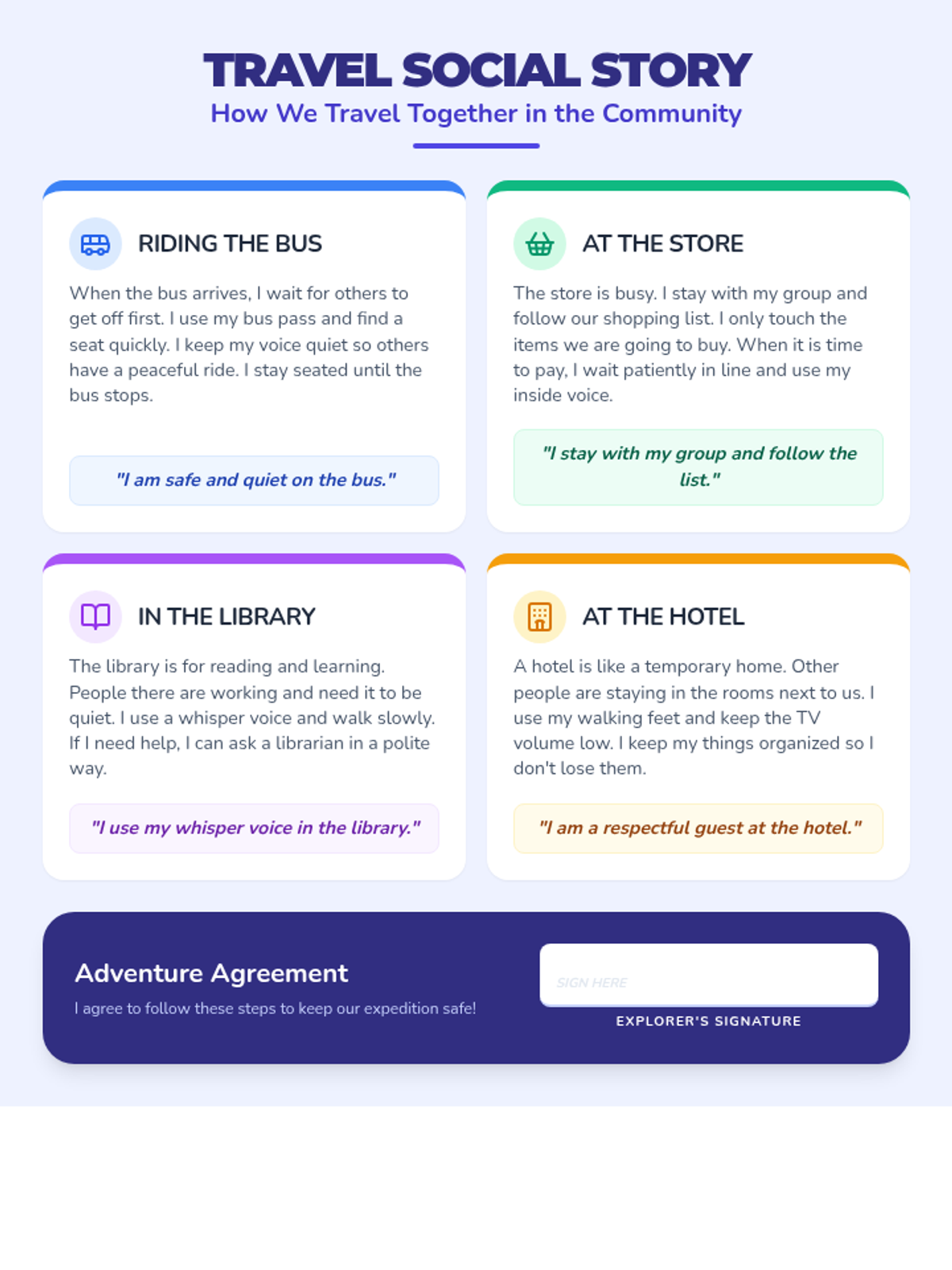
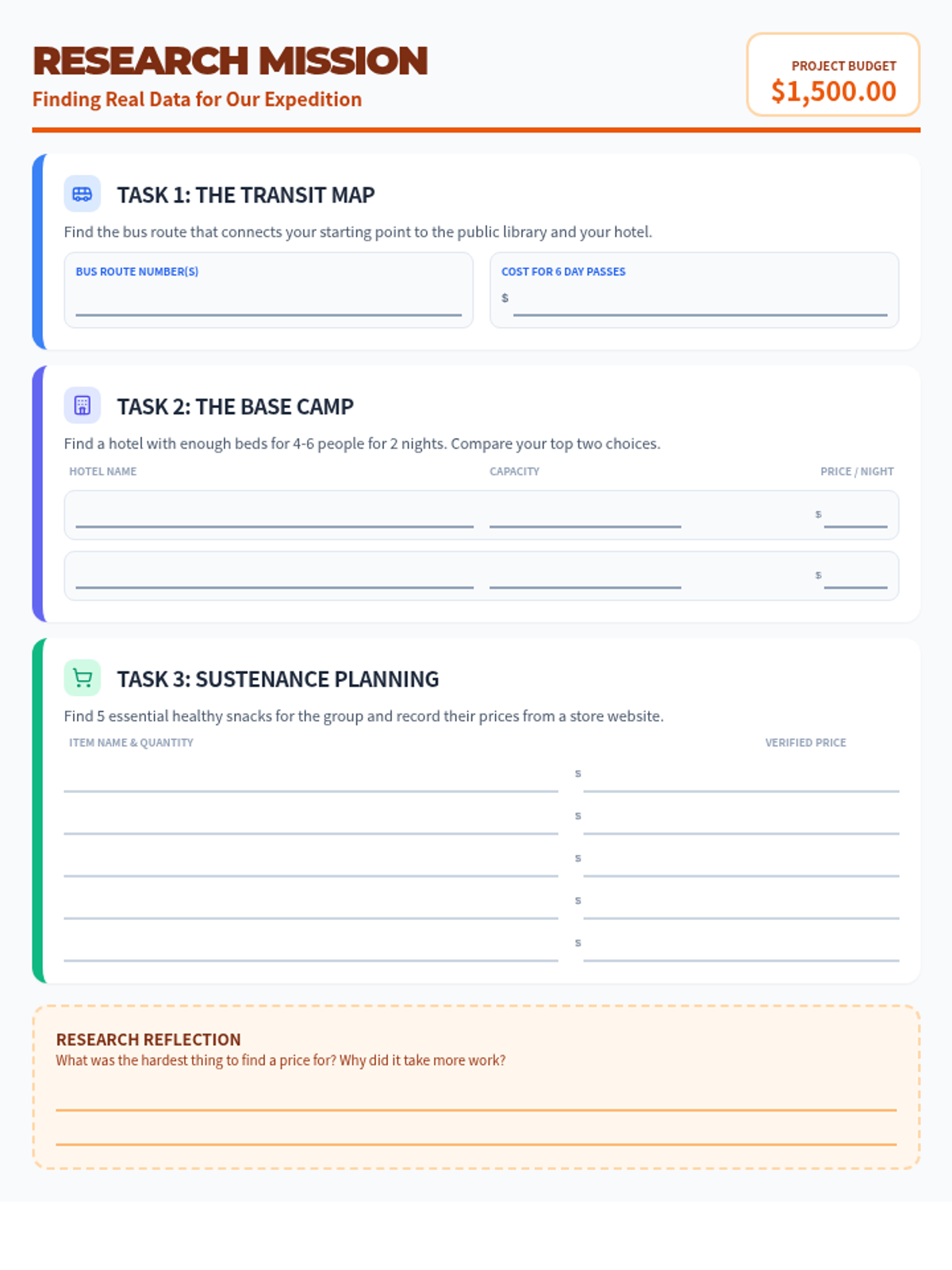
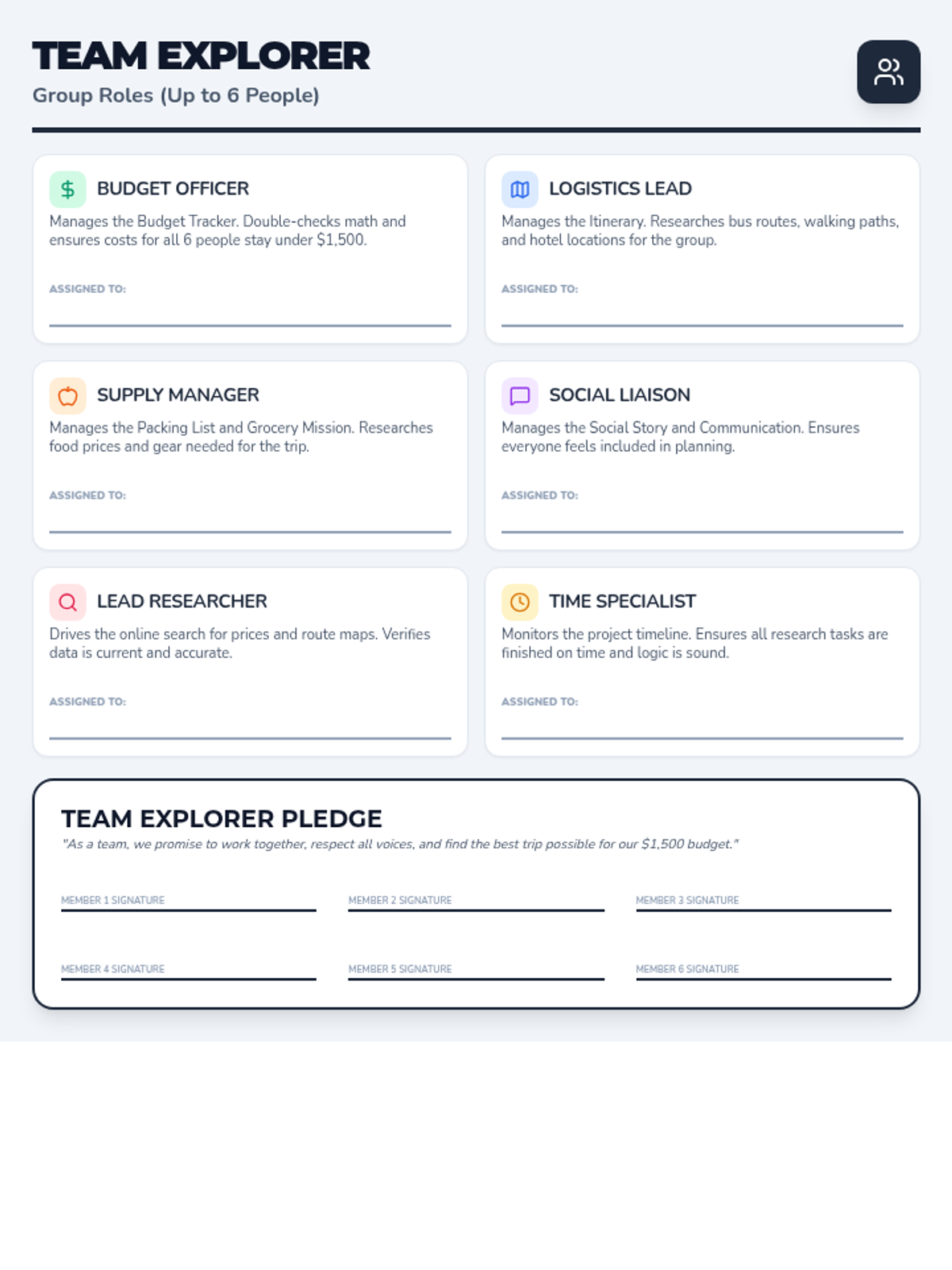
A comprehensive set of tools for planning and executing a multi-destination community trip, focusing on life skills, budgeting, and social expectations.
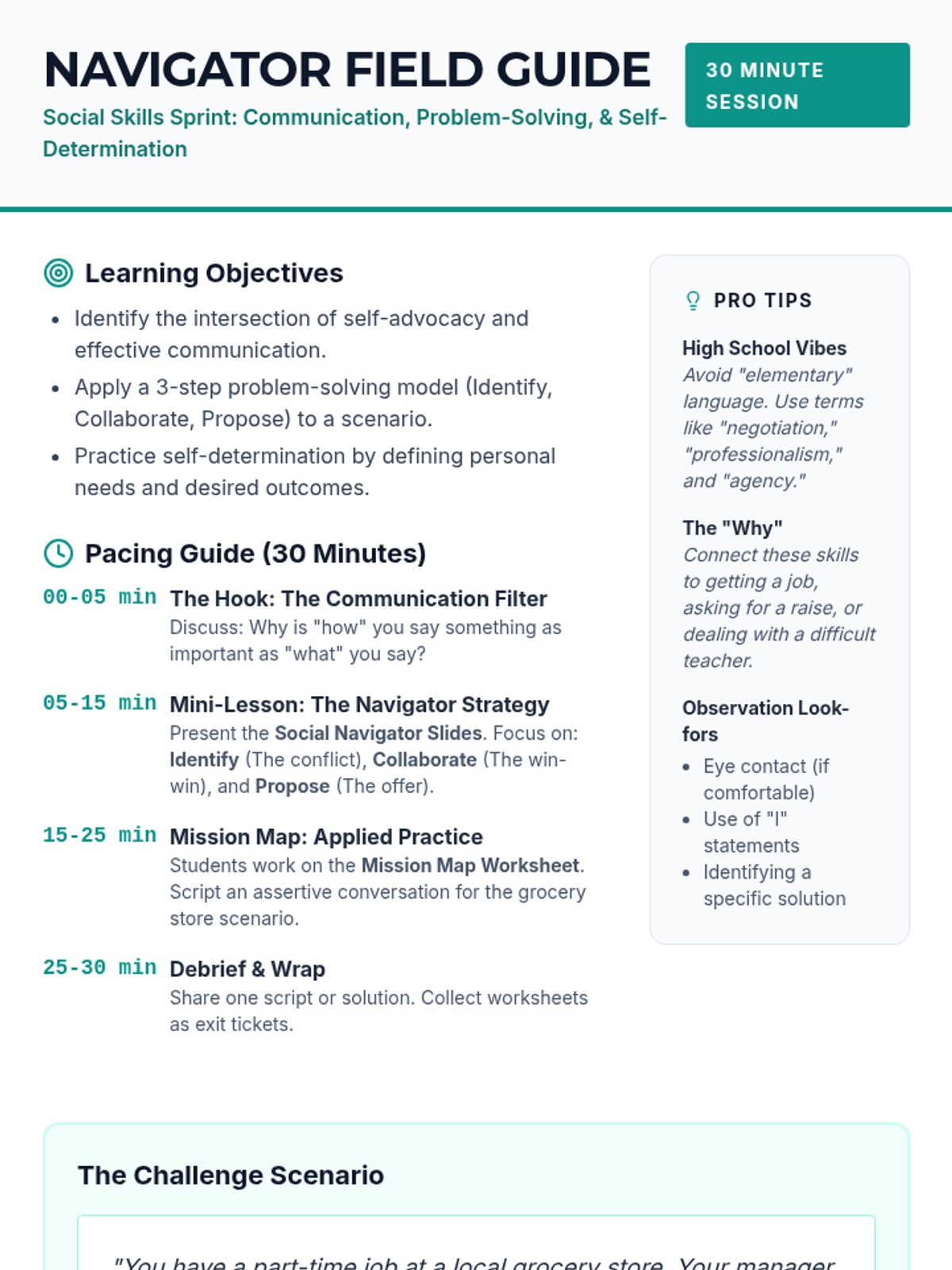
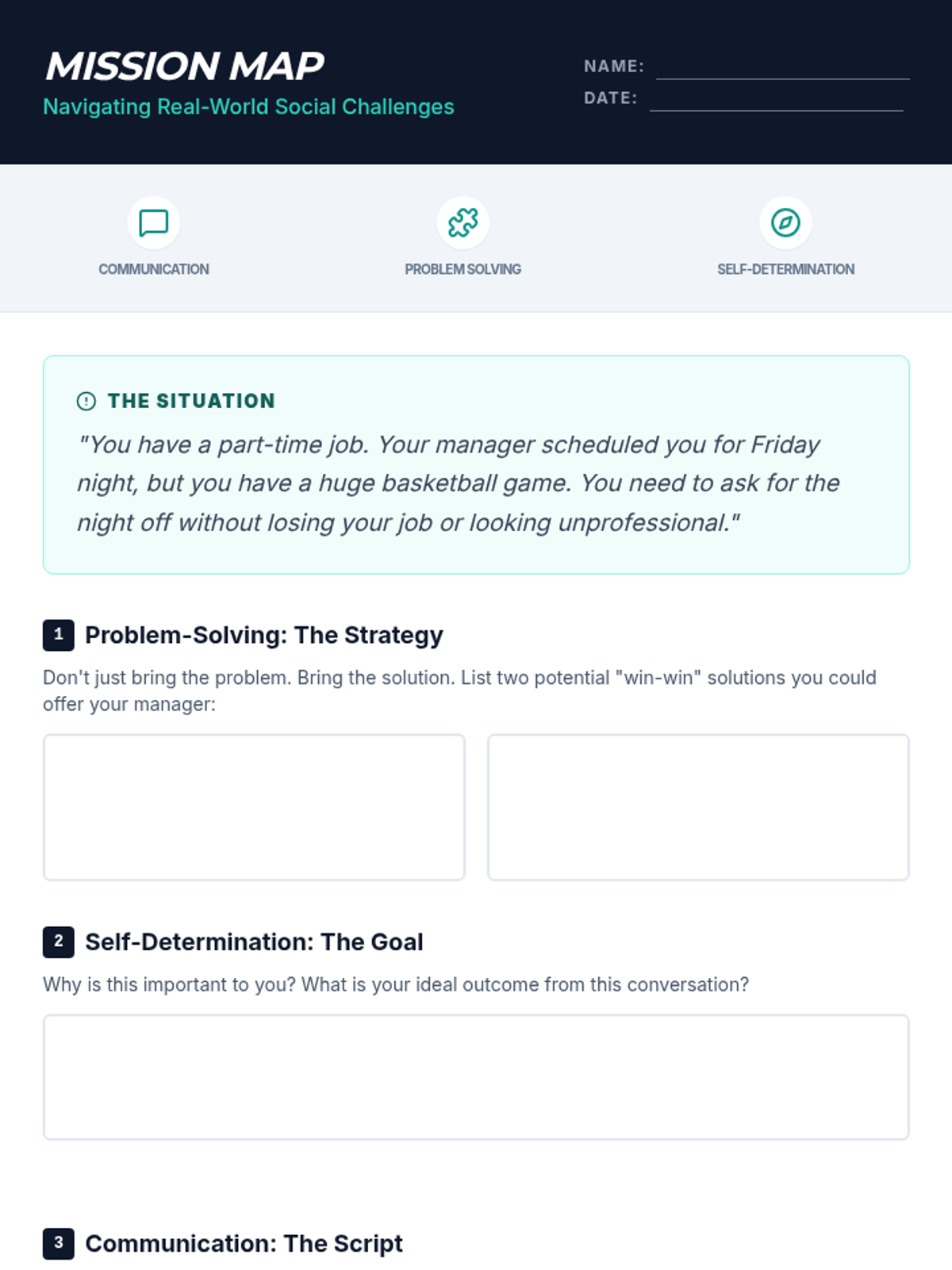
A high-impact, 30-minute session designed to help high school students navigate real-world social challenges using communication, problem-solving, and self-determination. Students will analyze a scenario and draft an advocacy plan.
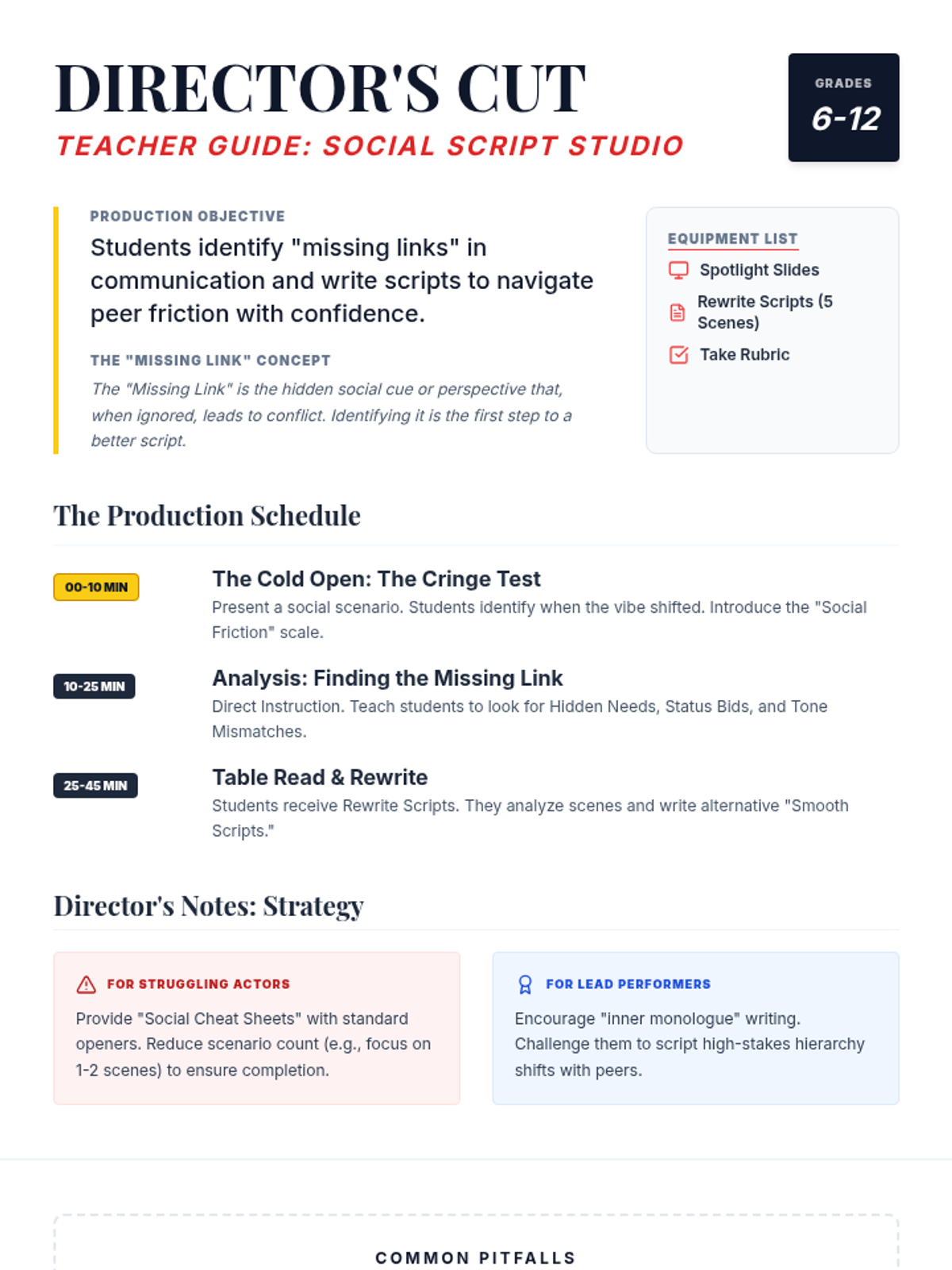
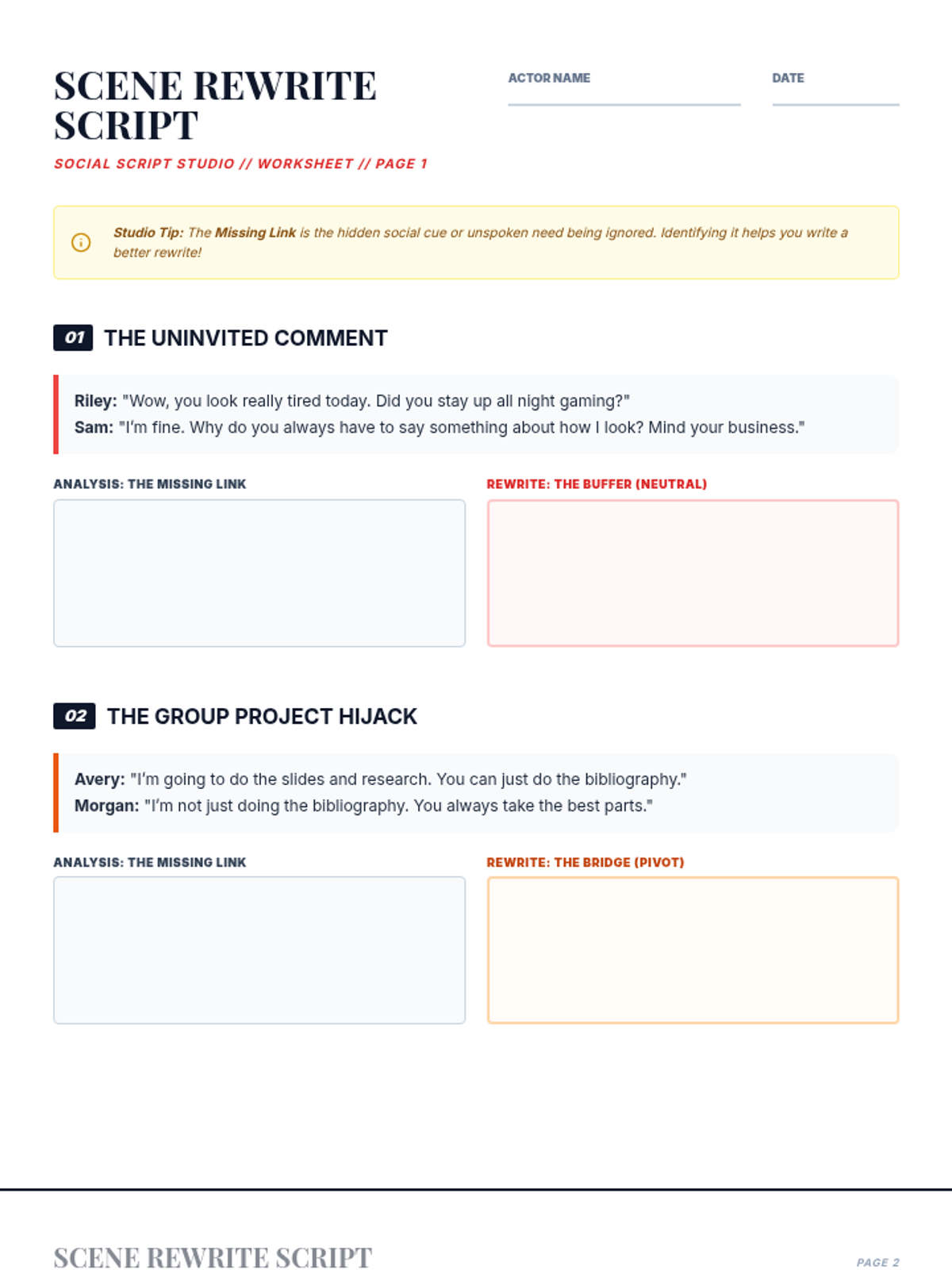
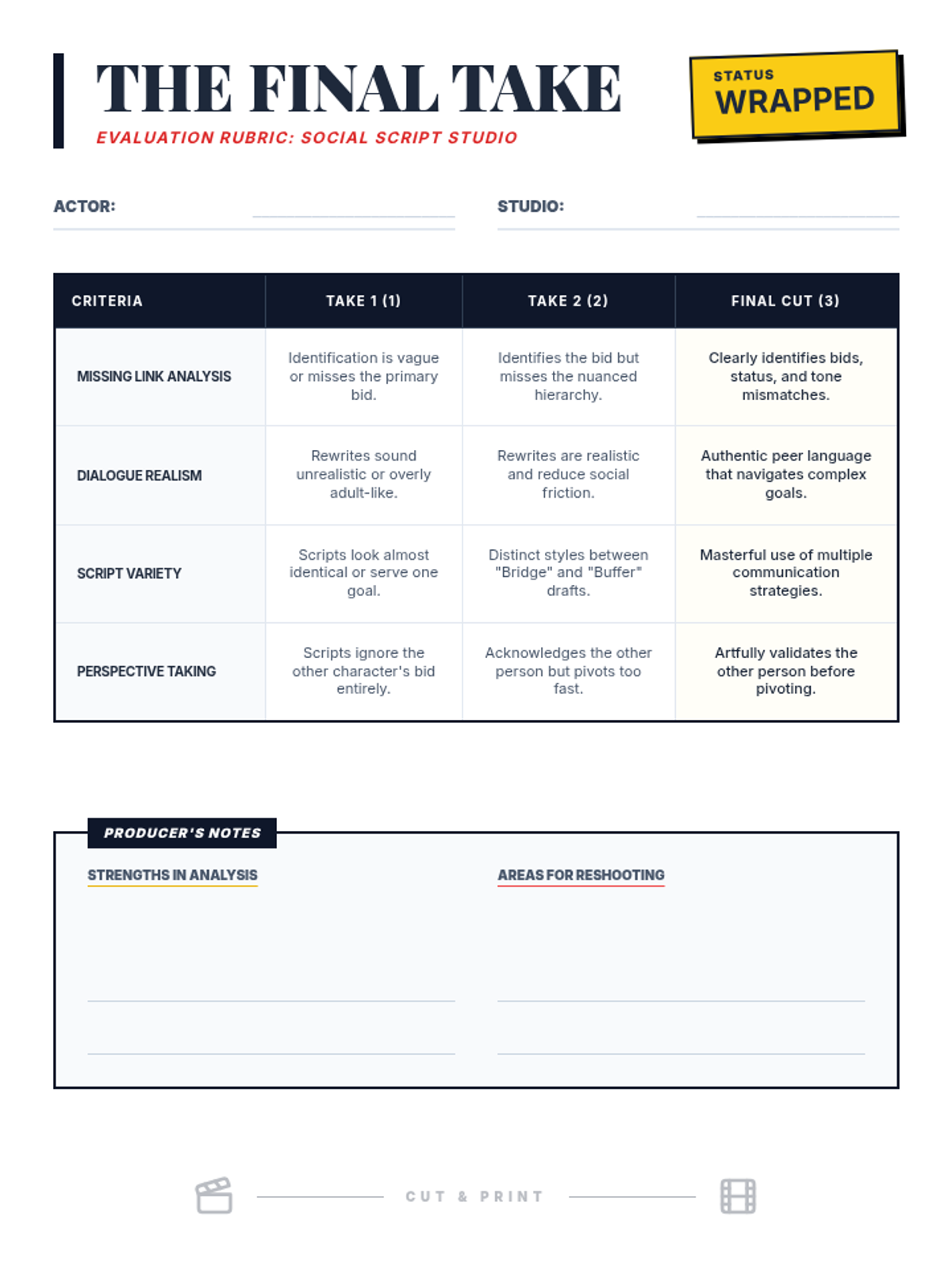
A social skills lesson for middle and high school students focused on analyzing social interactions, identifying communication gaps, and rehearsing alternative responses to peer conflict.
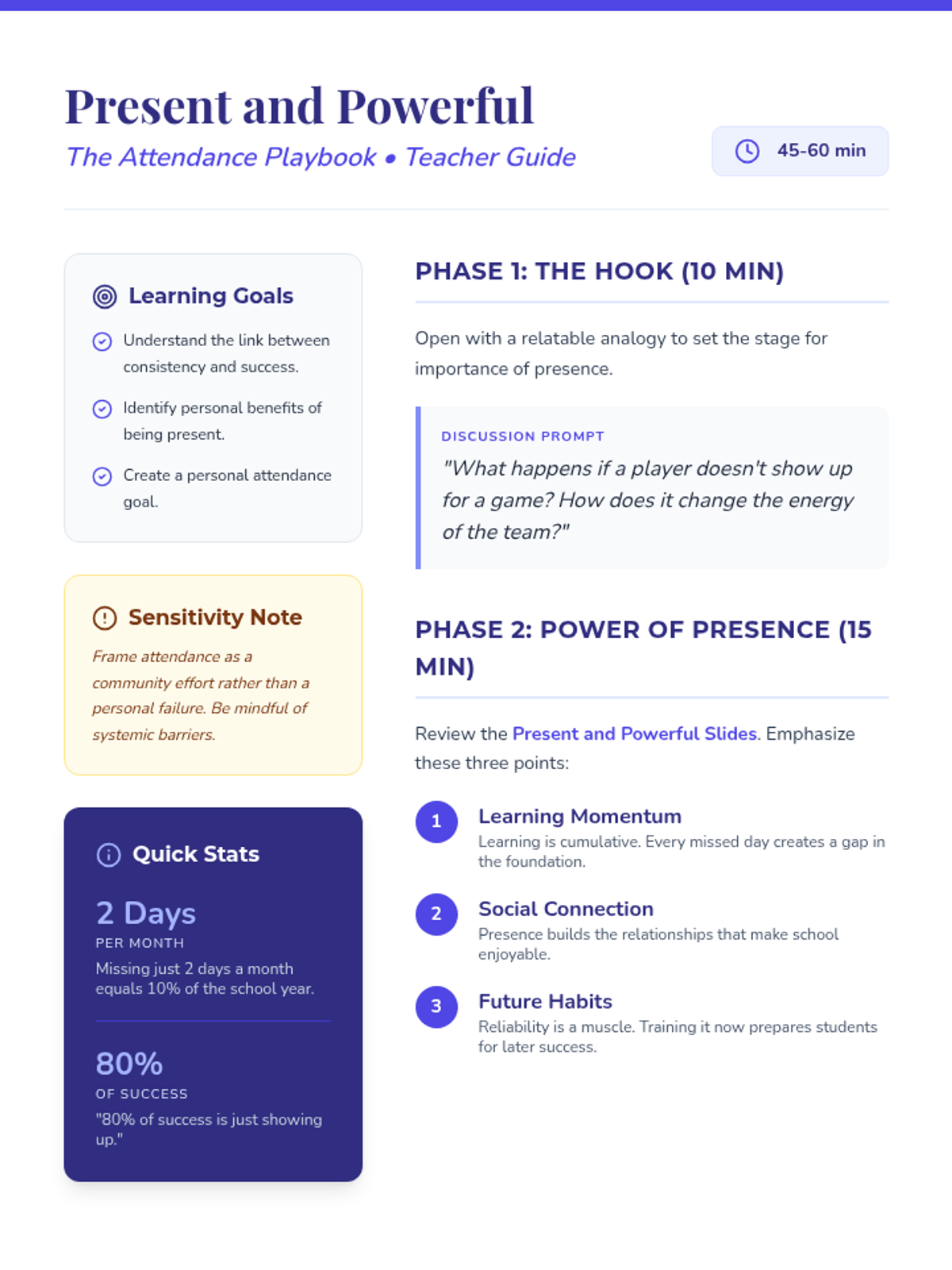
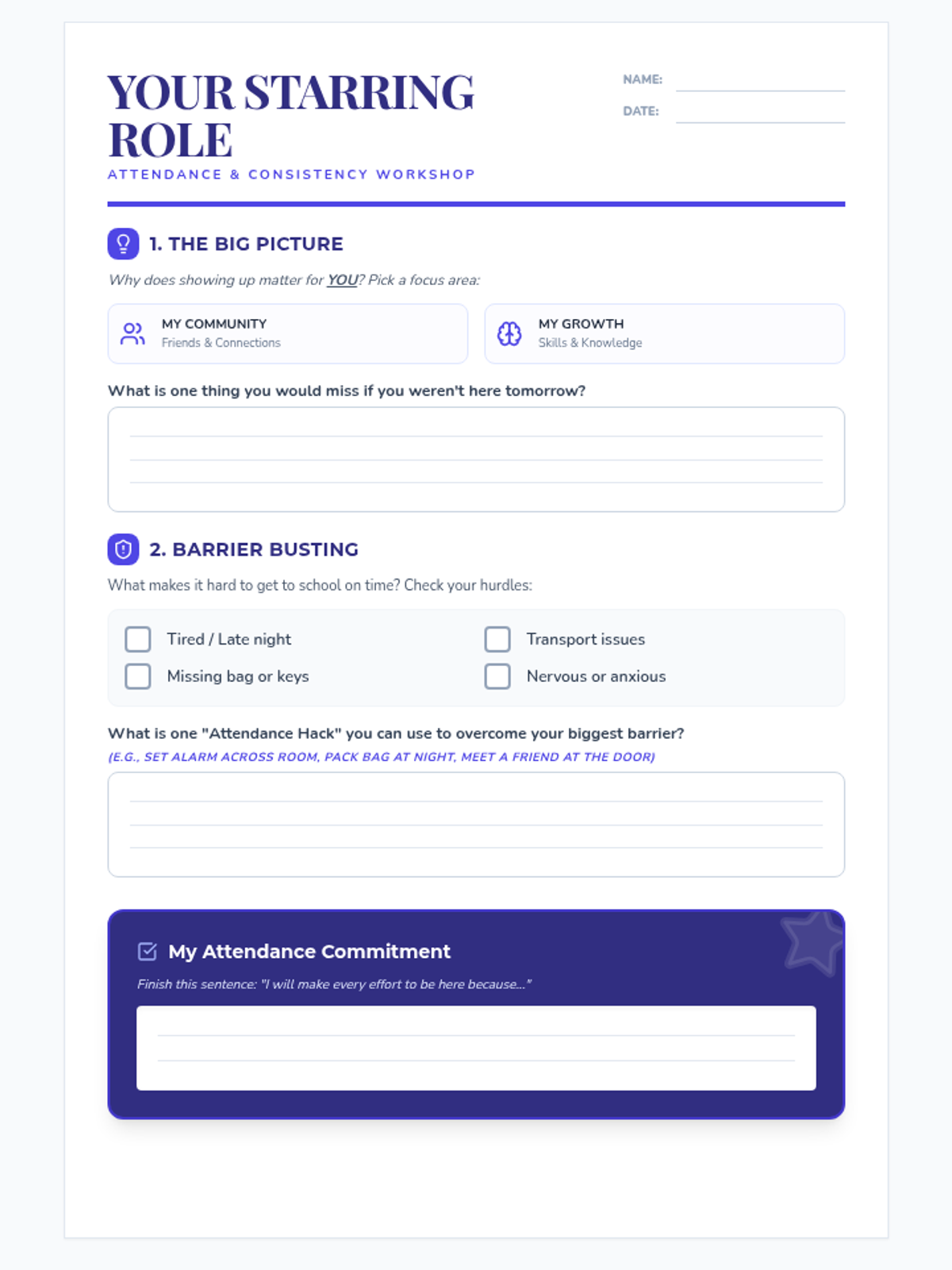
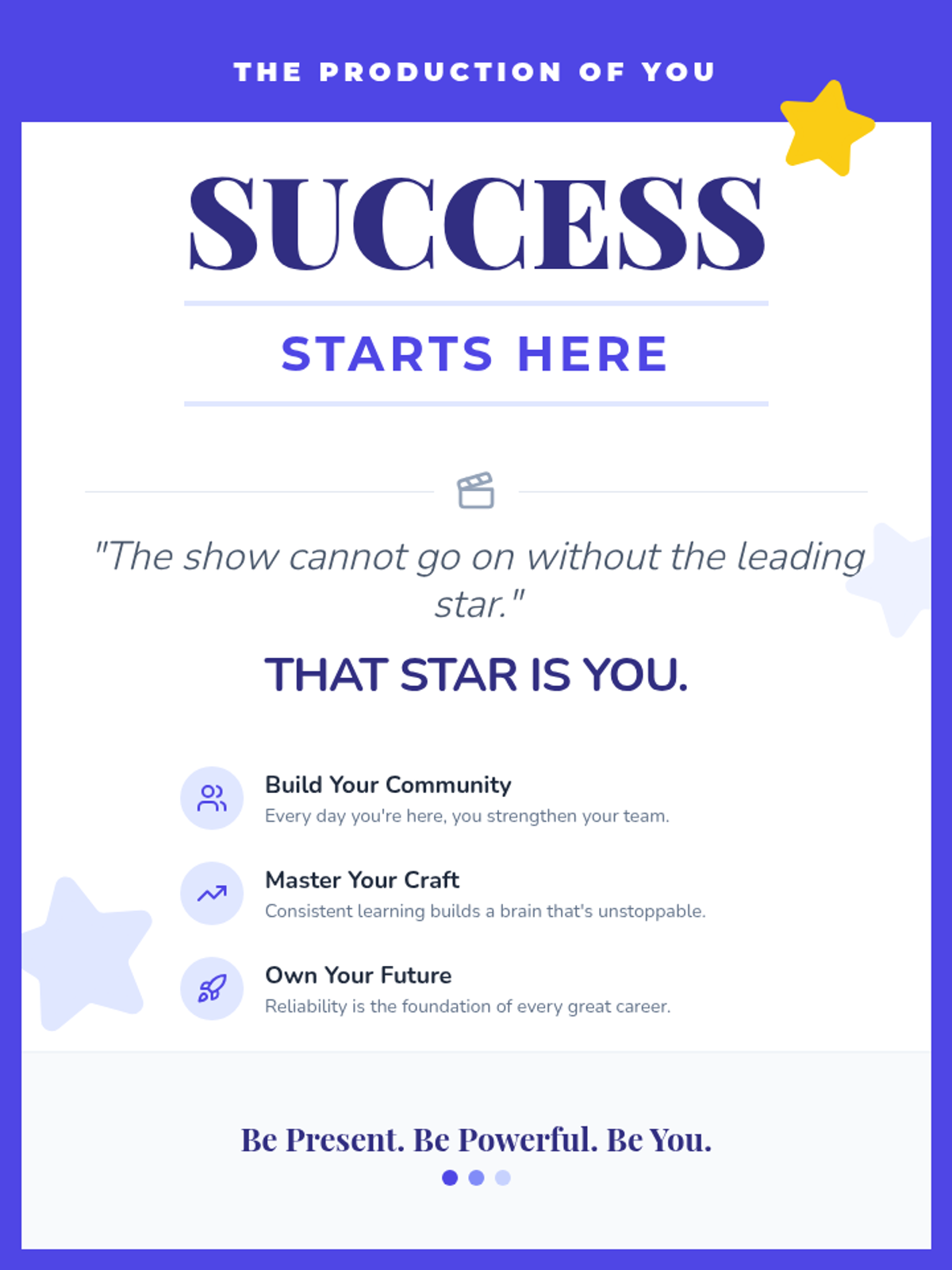
A lesson designed to help students understand the critical link between school attendance and their personal, social, and academic success. It frames attendance as the 'first step' to achieving their goals and building a strong community.
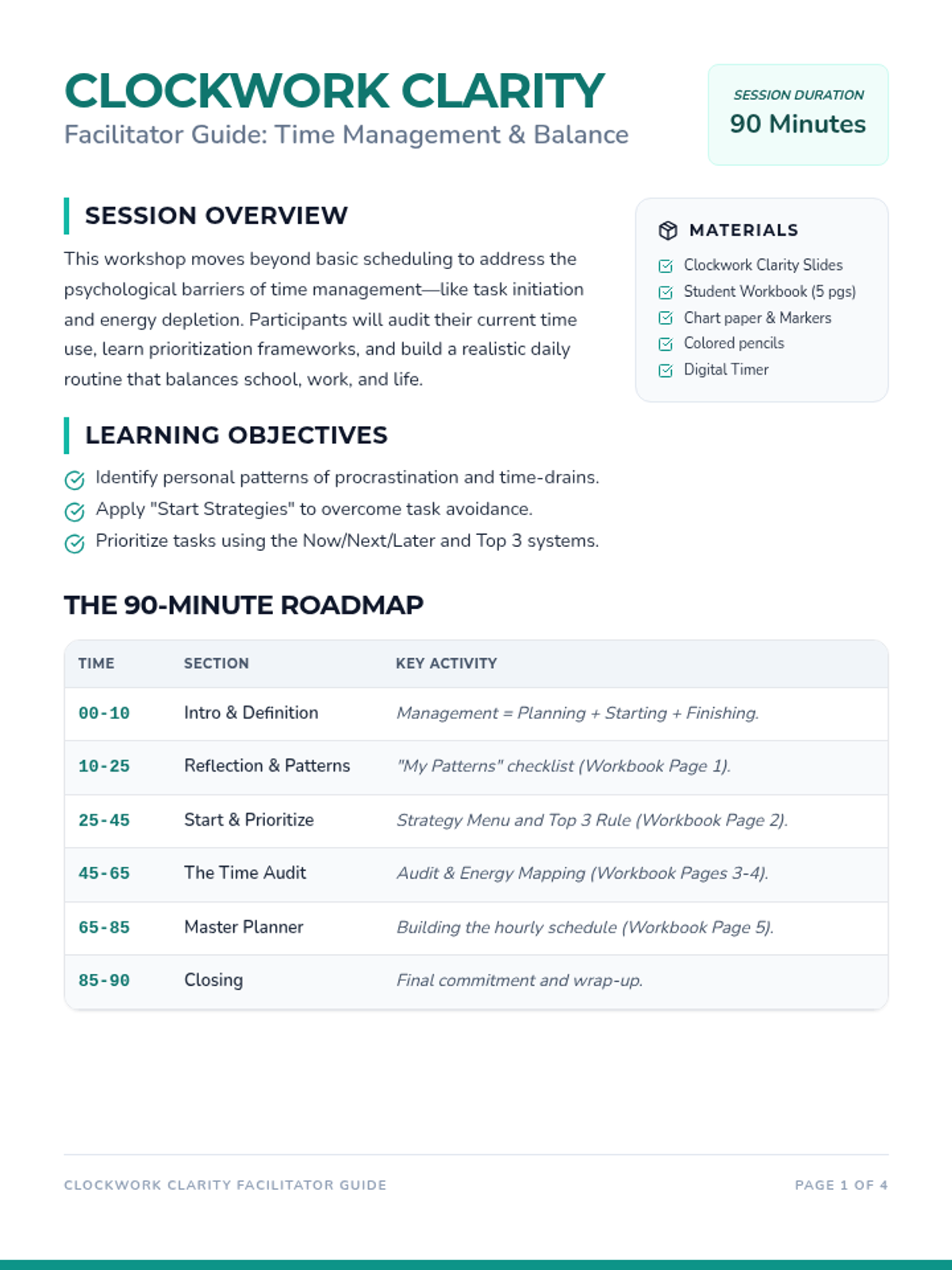
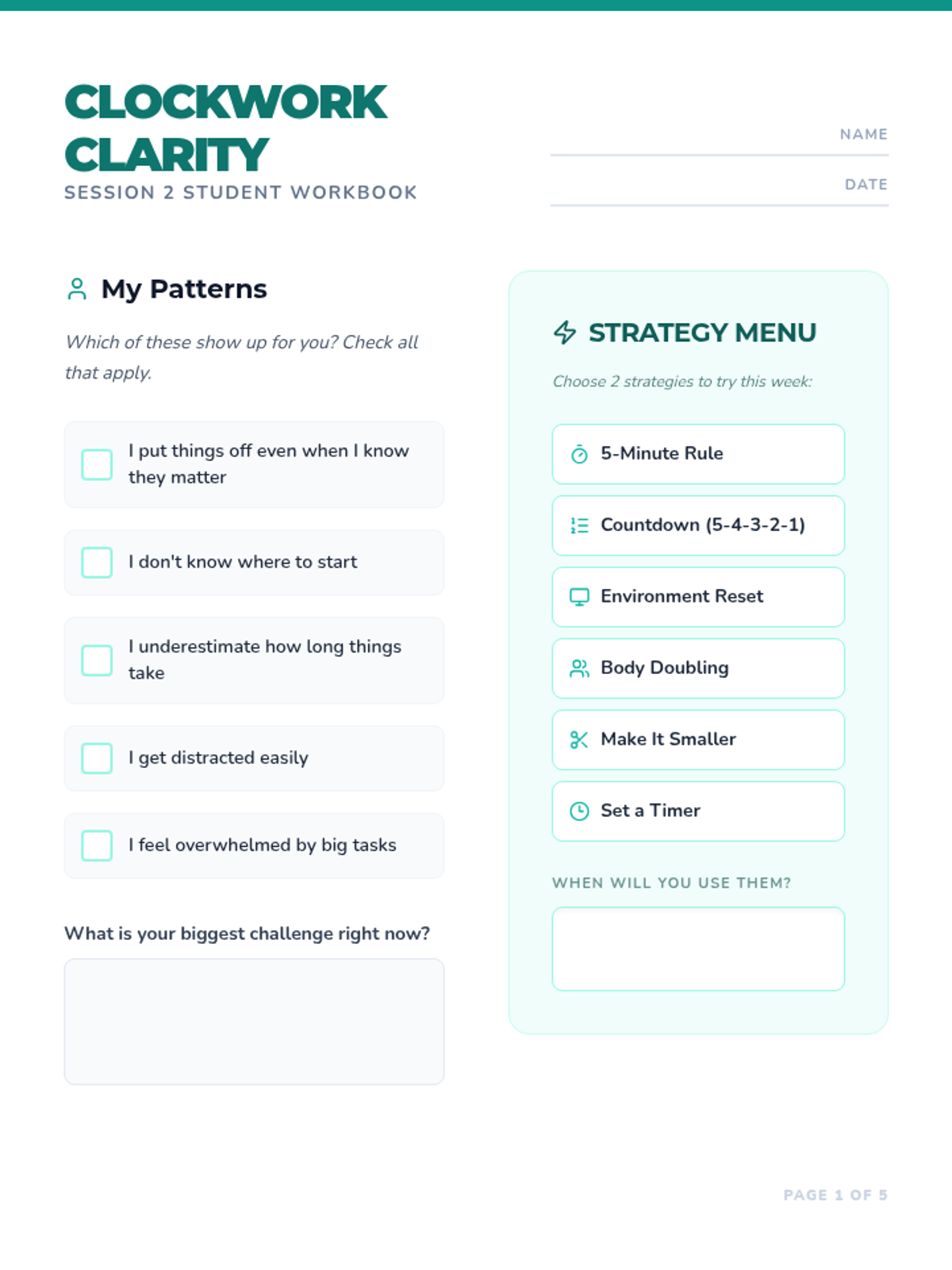
A 90-minute workshop designed to help students and professionals master time management, task initiation, and the balance between school, work, and personal life.
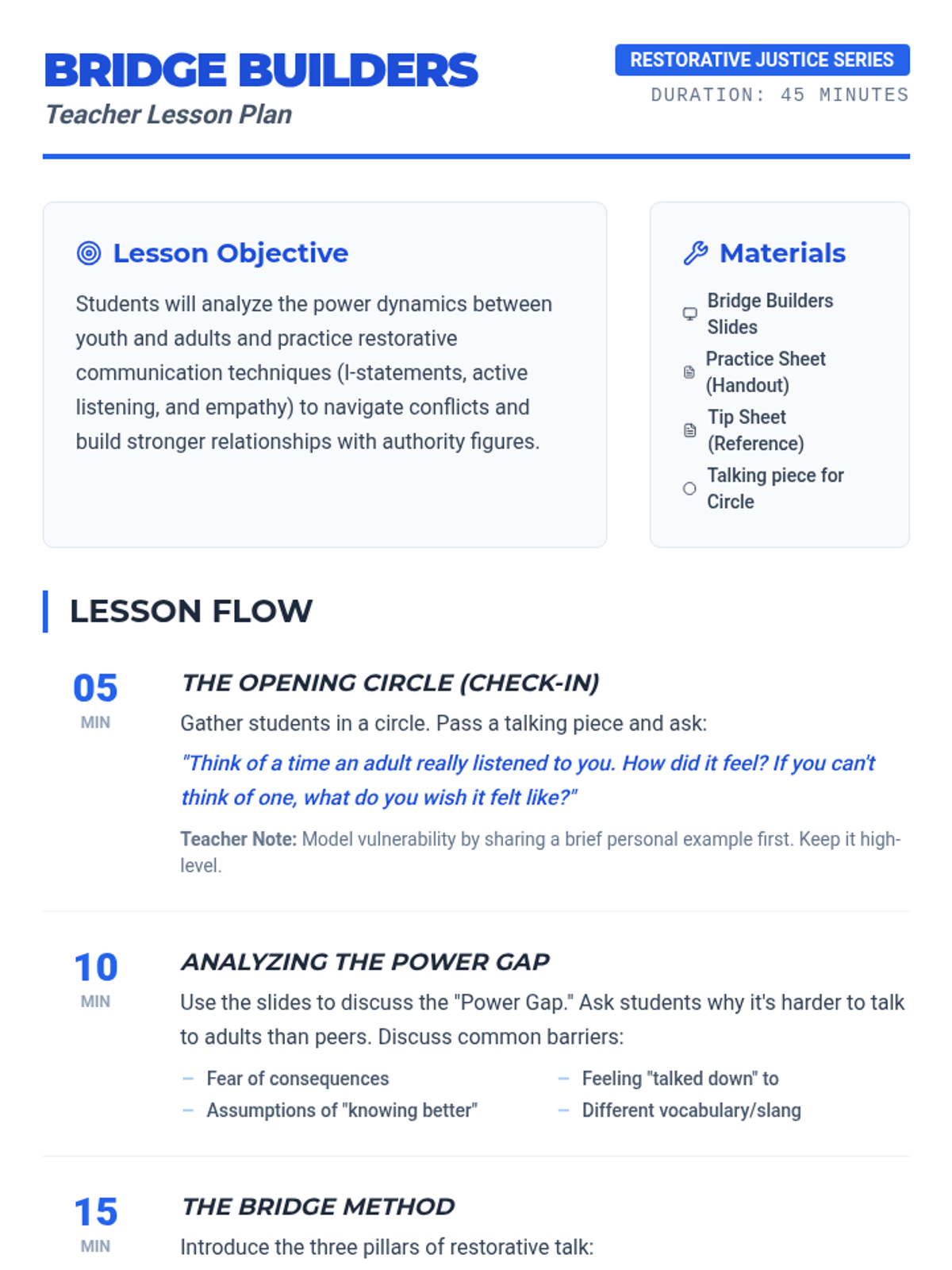
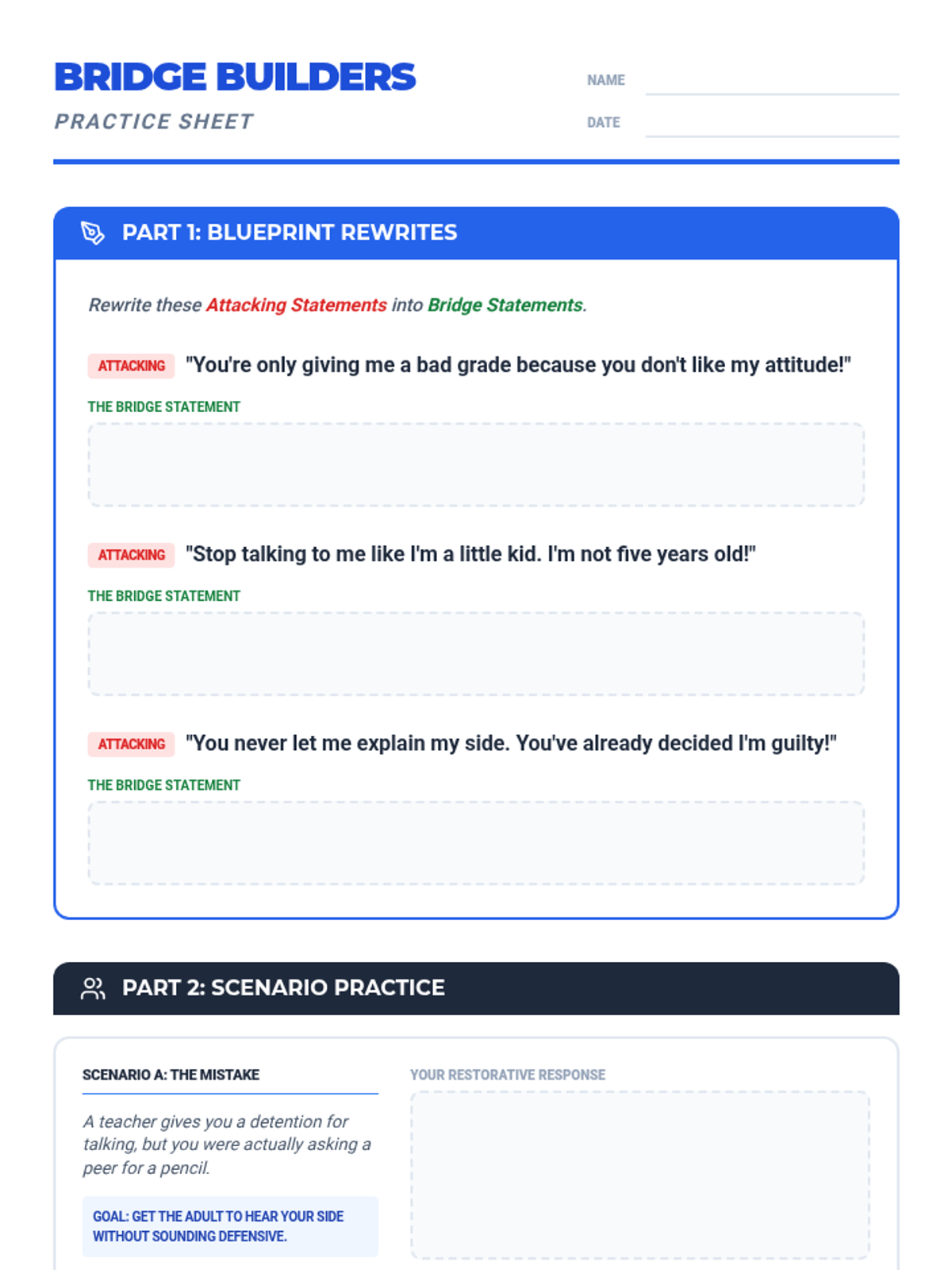
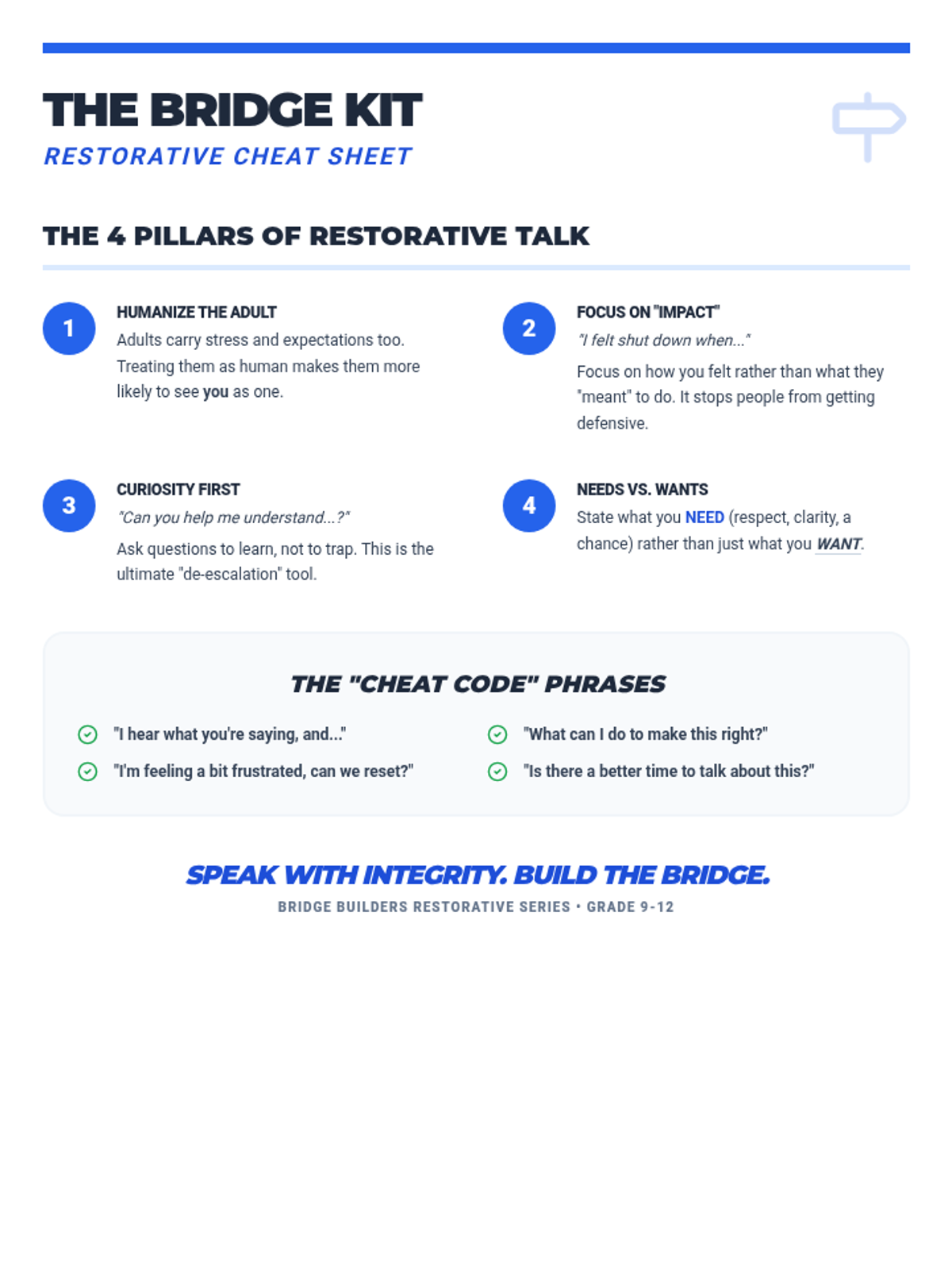
A 45-minute lesson focused on empowering high school students to communicate effectively and restoratively with adults, focusing on power dynamics and empathy.
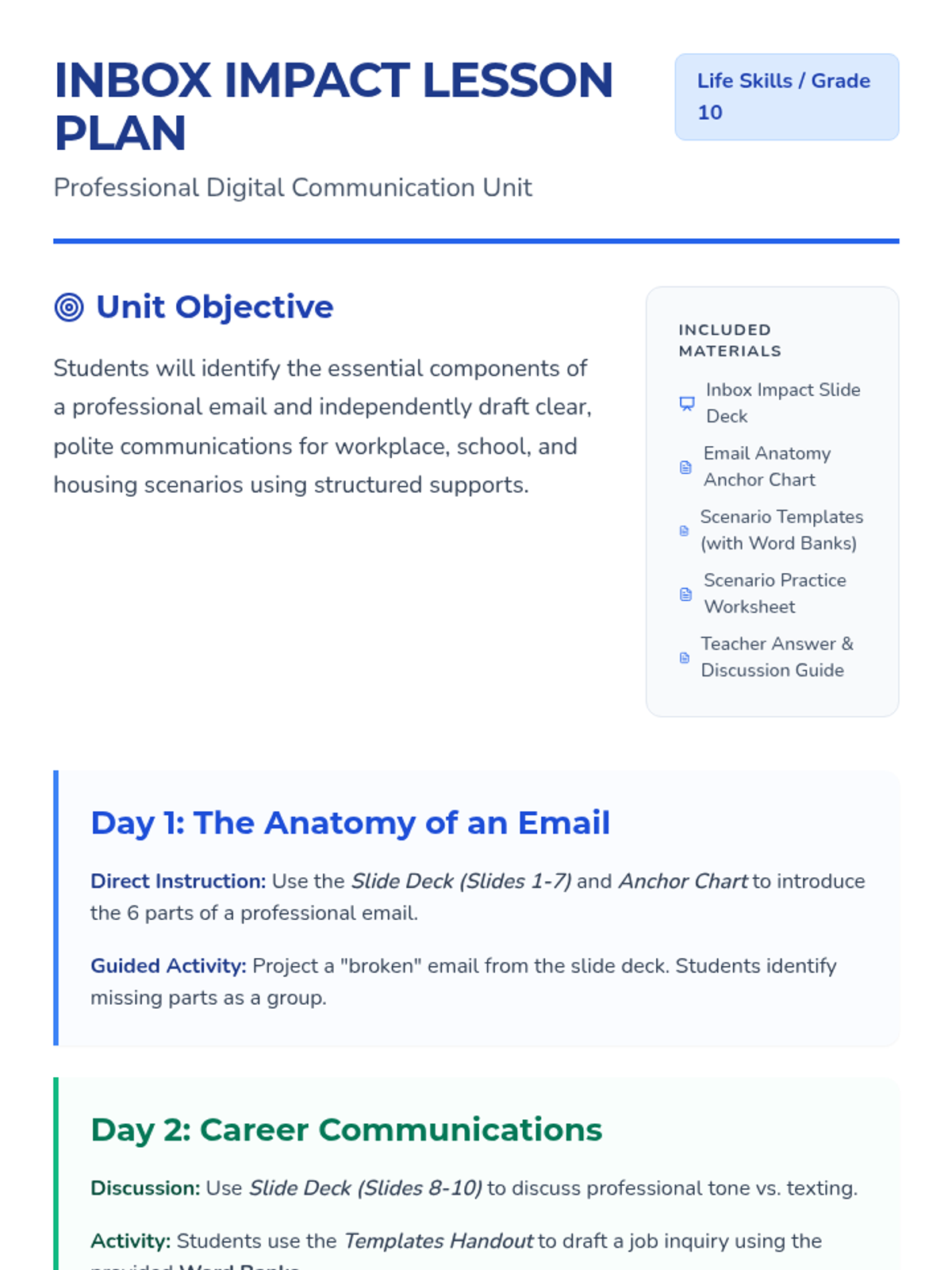
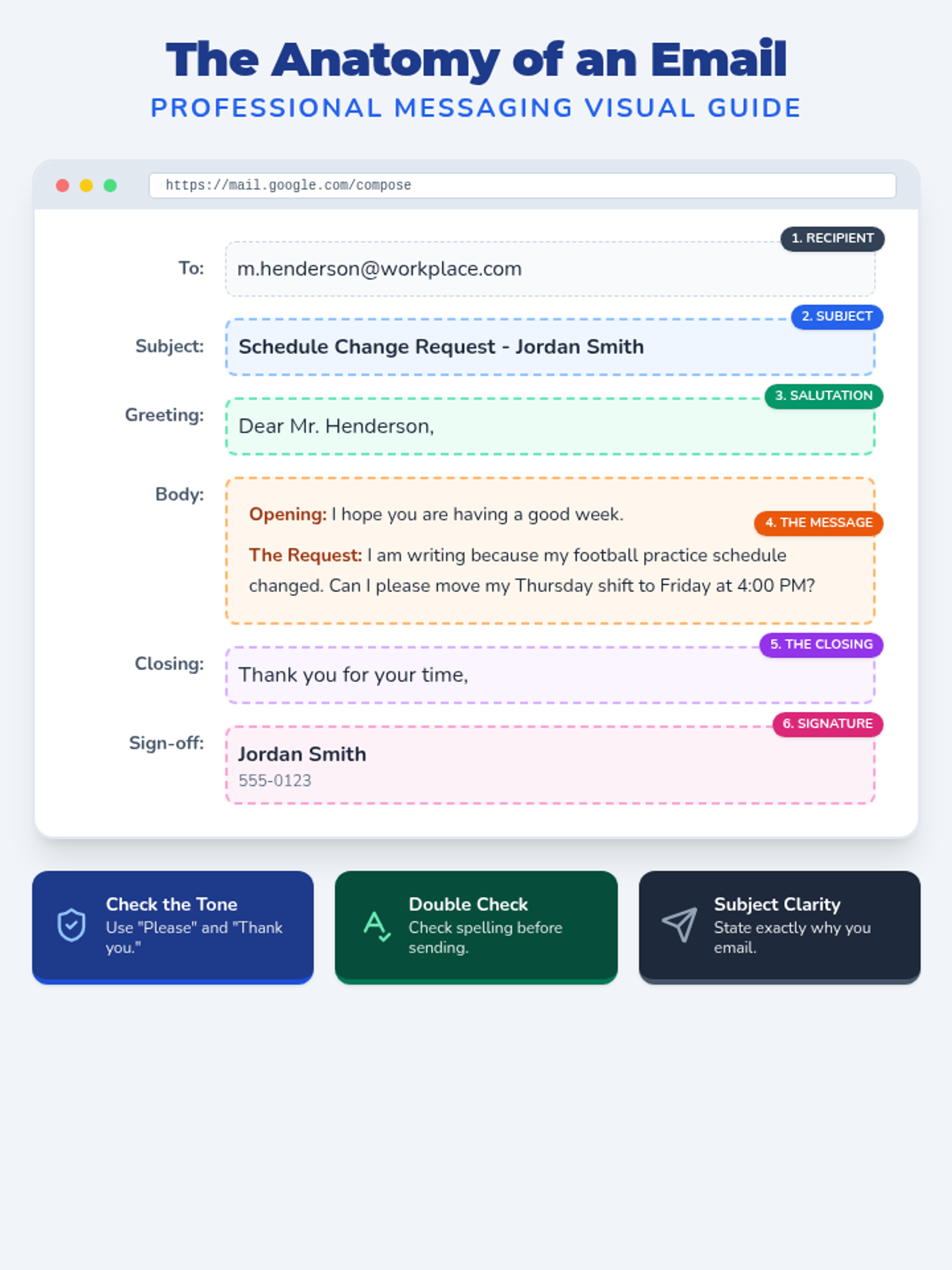
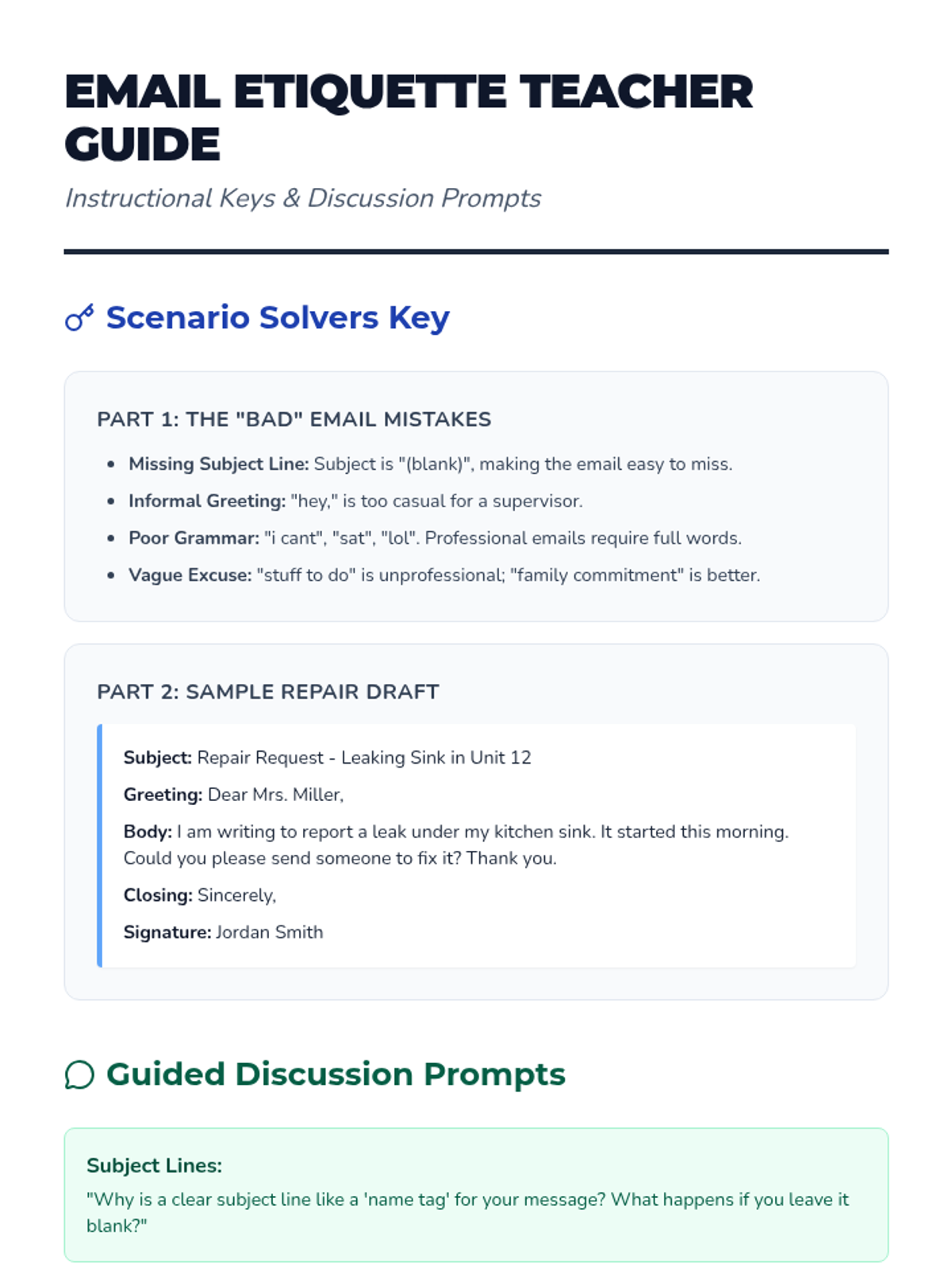
A multi-day instructional sequence focused on the mechanics and etiquette of professional email writing. Students explore the anatomy of an email and practice drafting responses for employment, education, and housing scenarios.
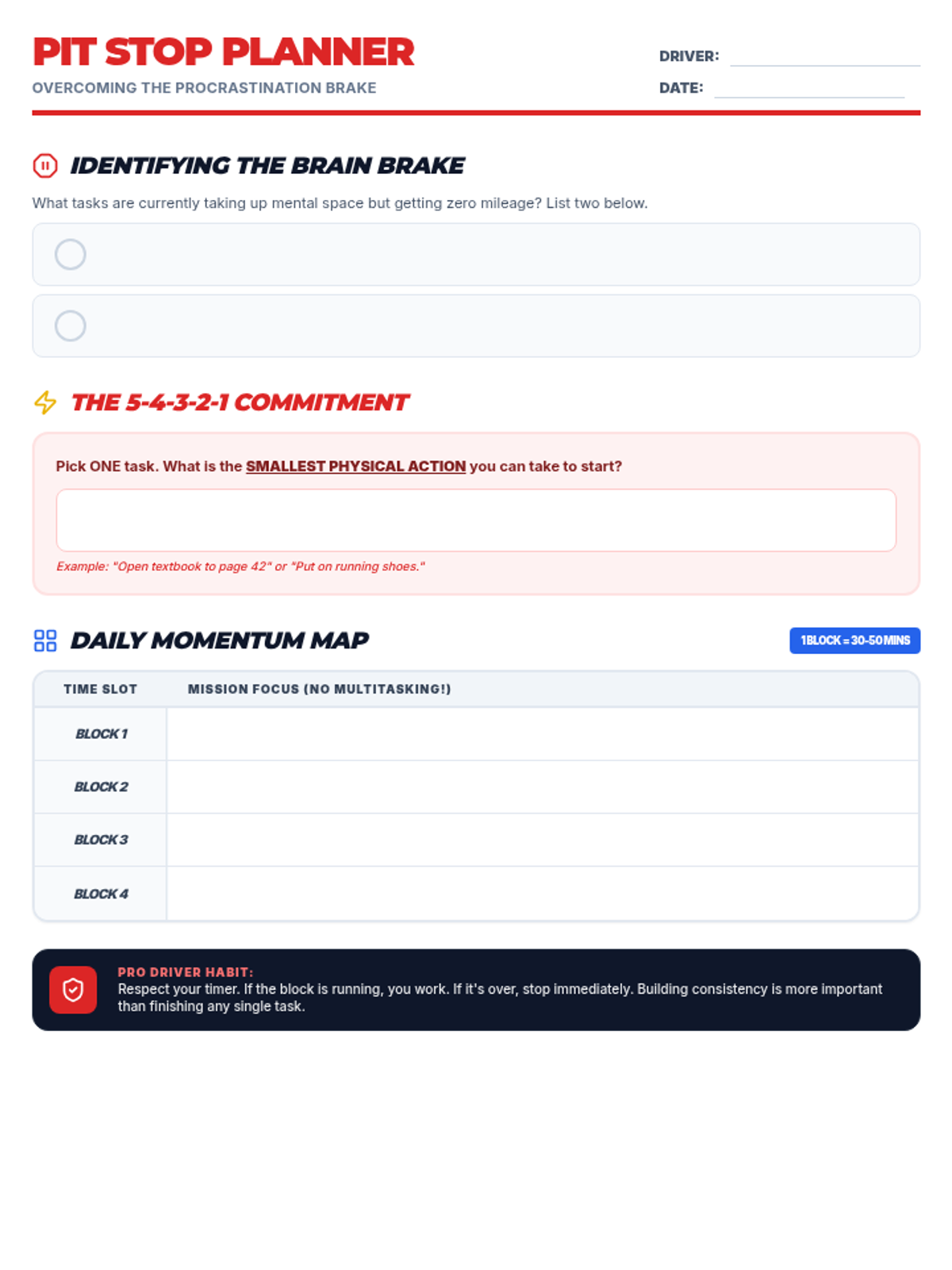
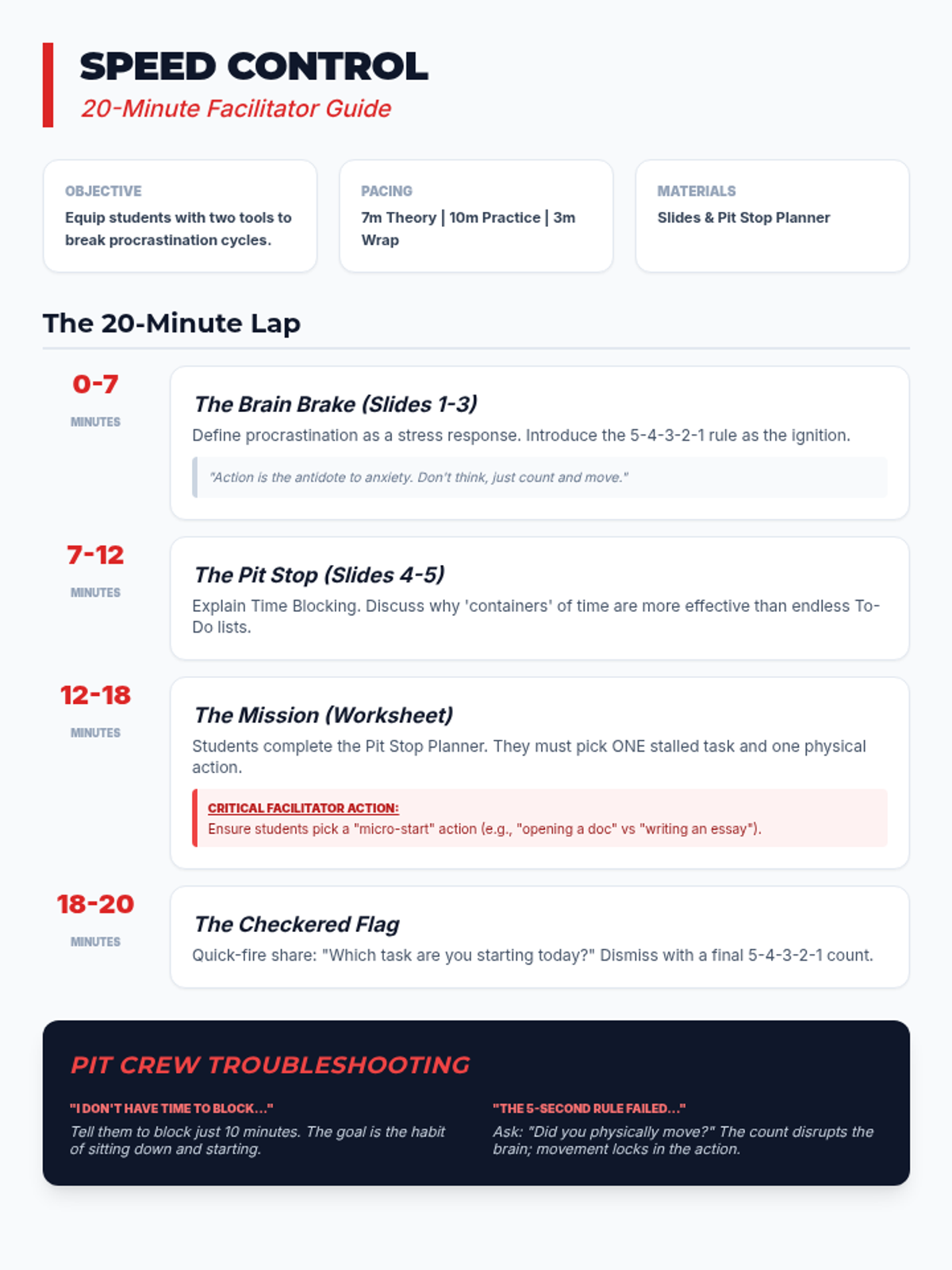
A high-energy 20-minute session focused on overcoming procrastination using the 5-Second Rule and Time Blocking techniques. Students will learn to bridge the gap between thinking and doing through practical racing-themed activities.
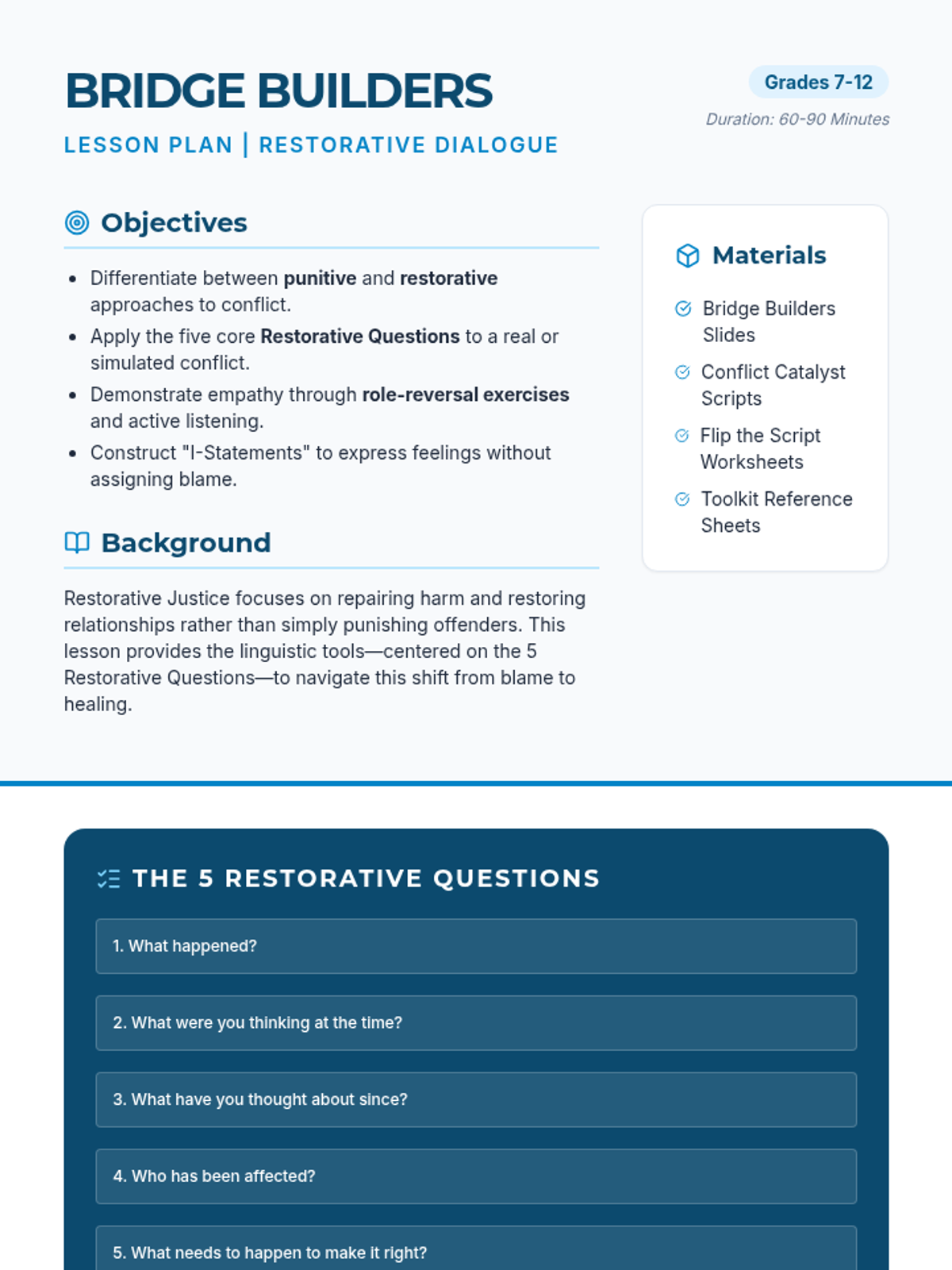
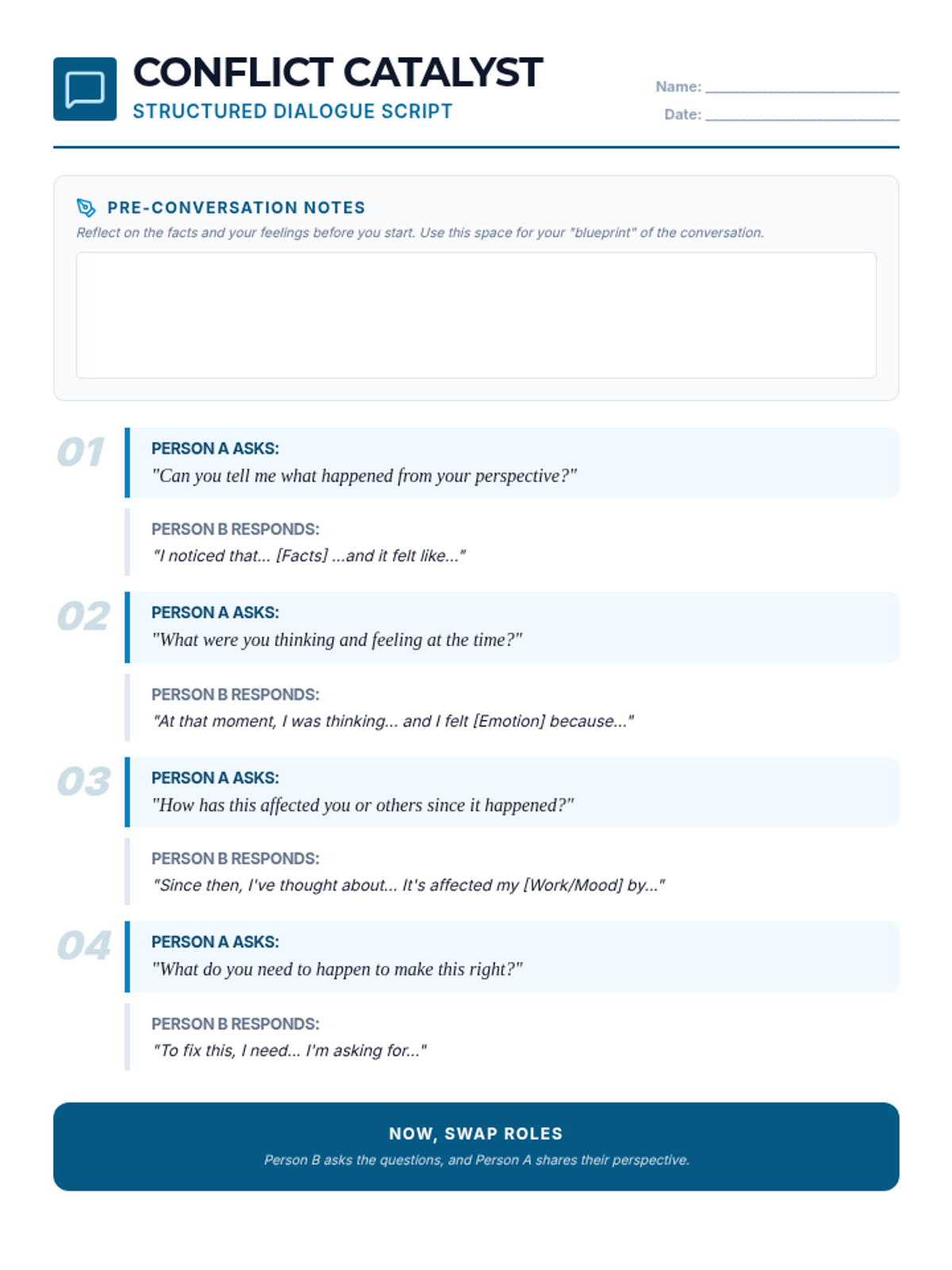
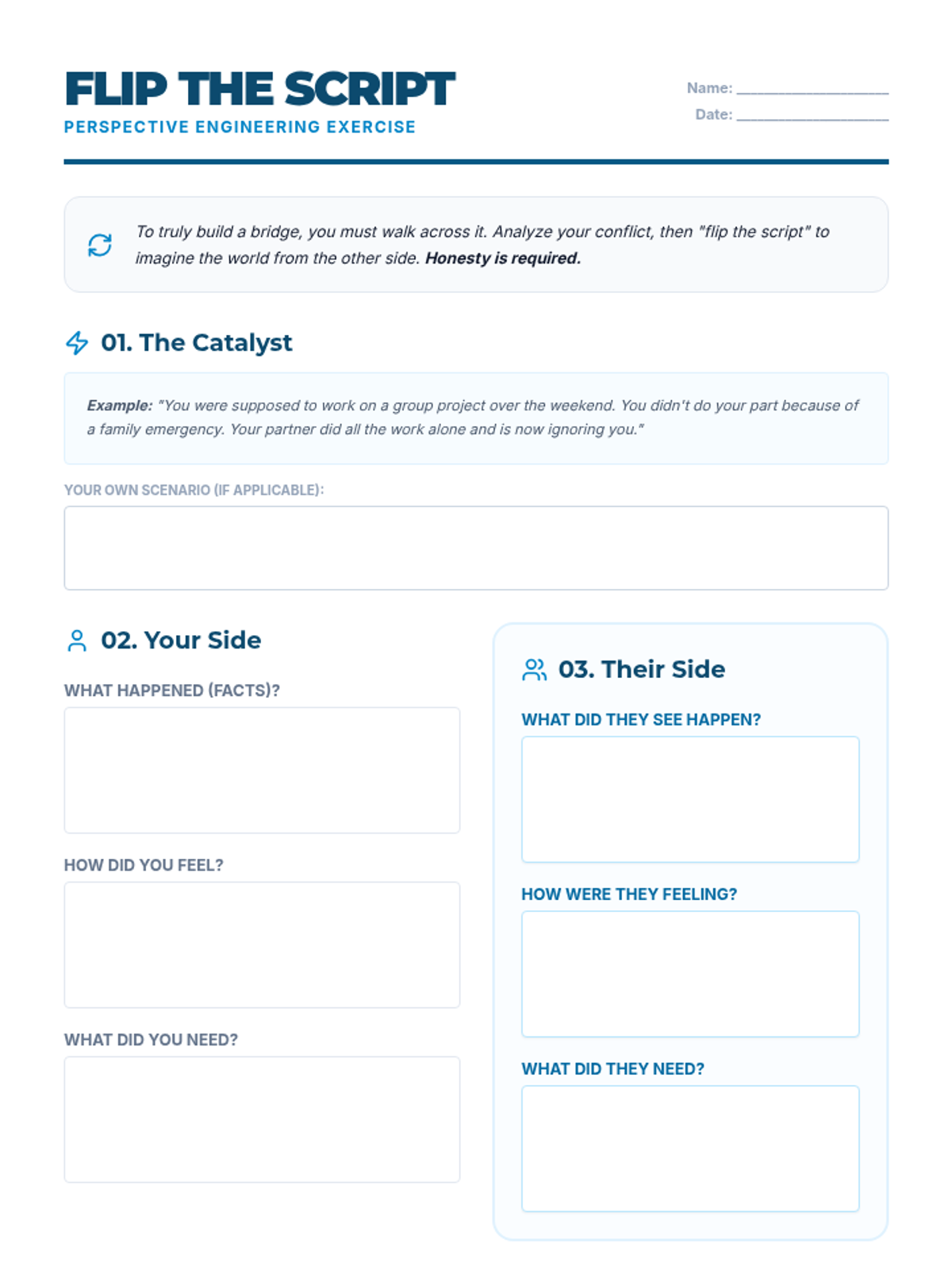
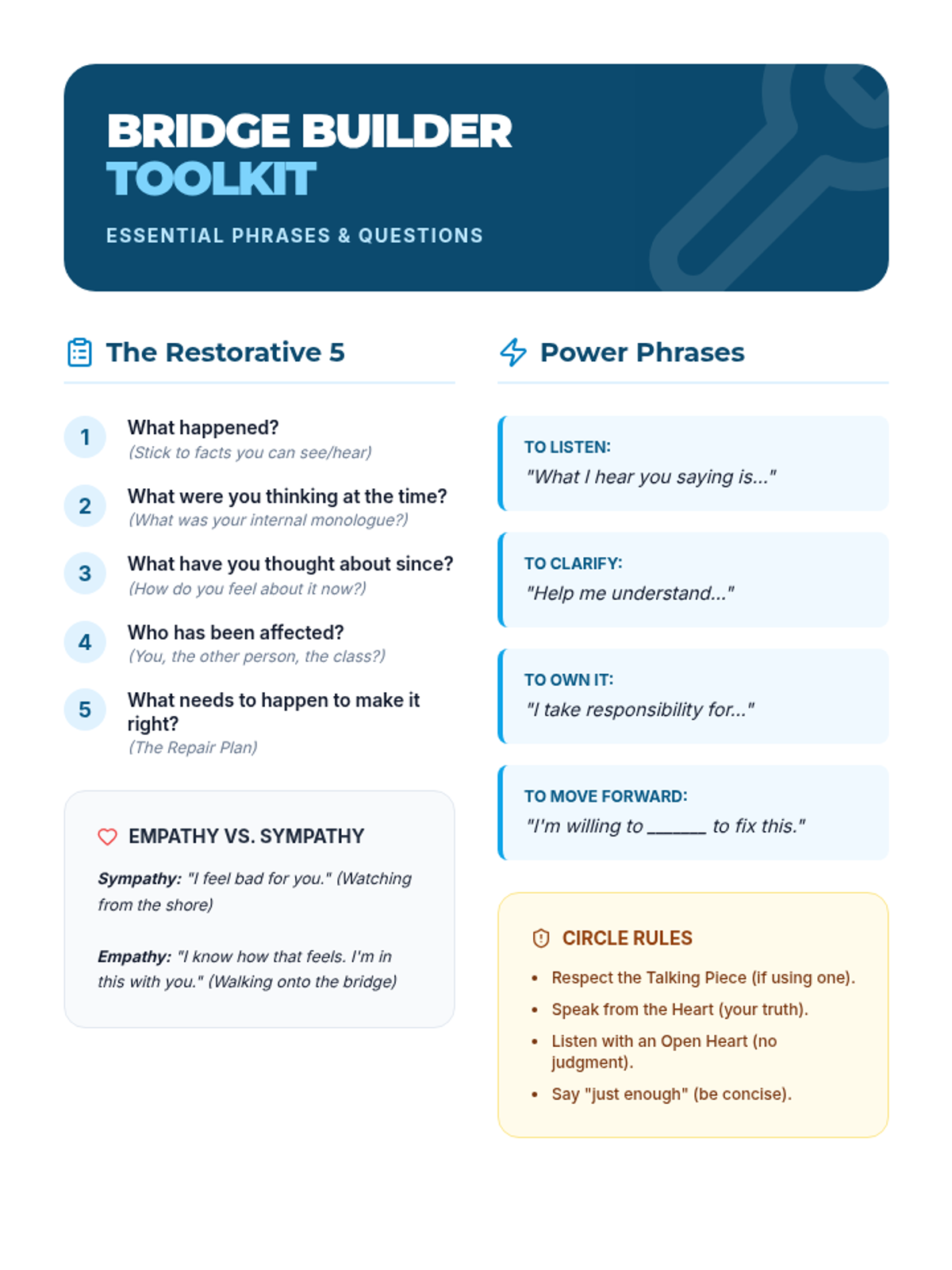
A comprehensive lesson for grades 7-12 on restorative dialogue, focusing on empathy, structured communication, and conflict resolution through role-reversal exercises.
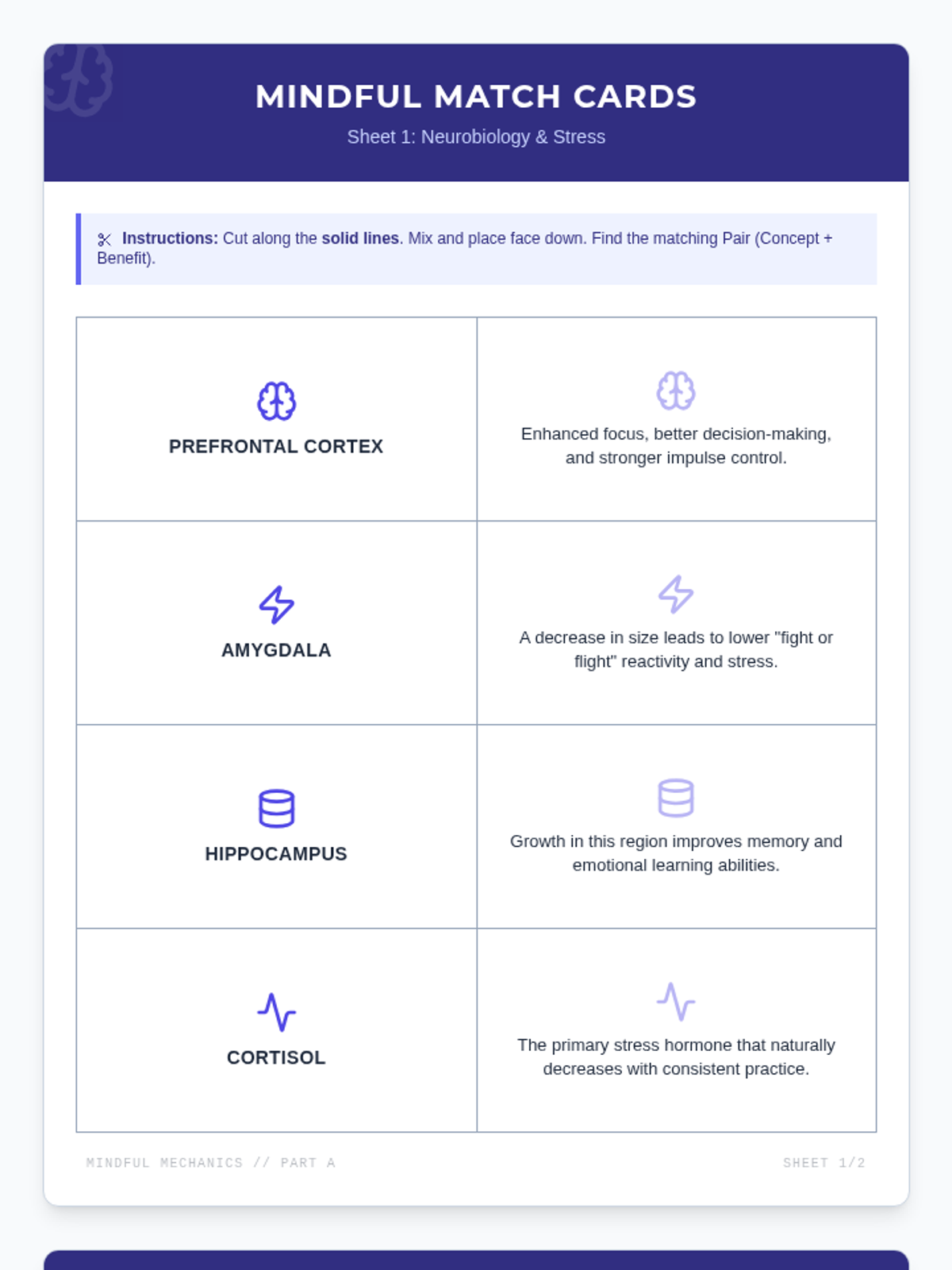
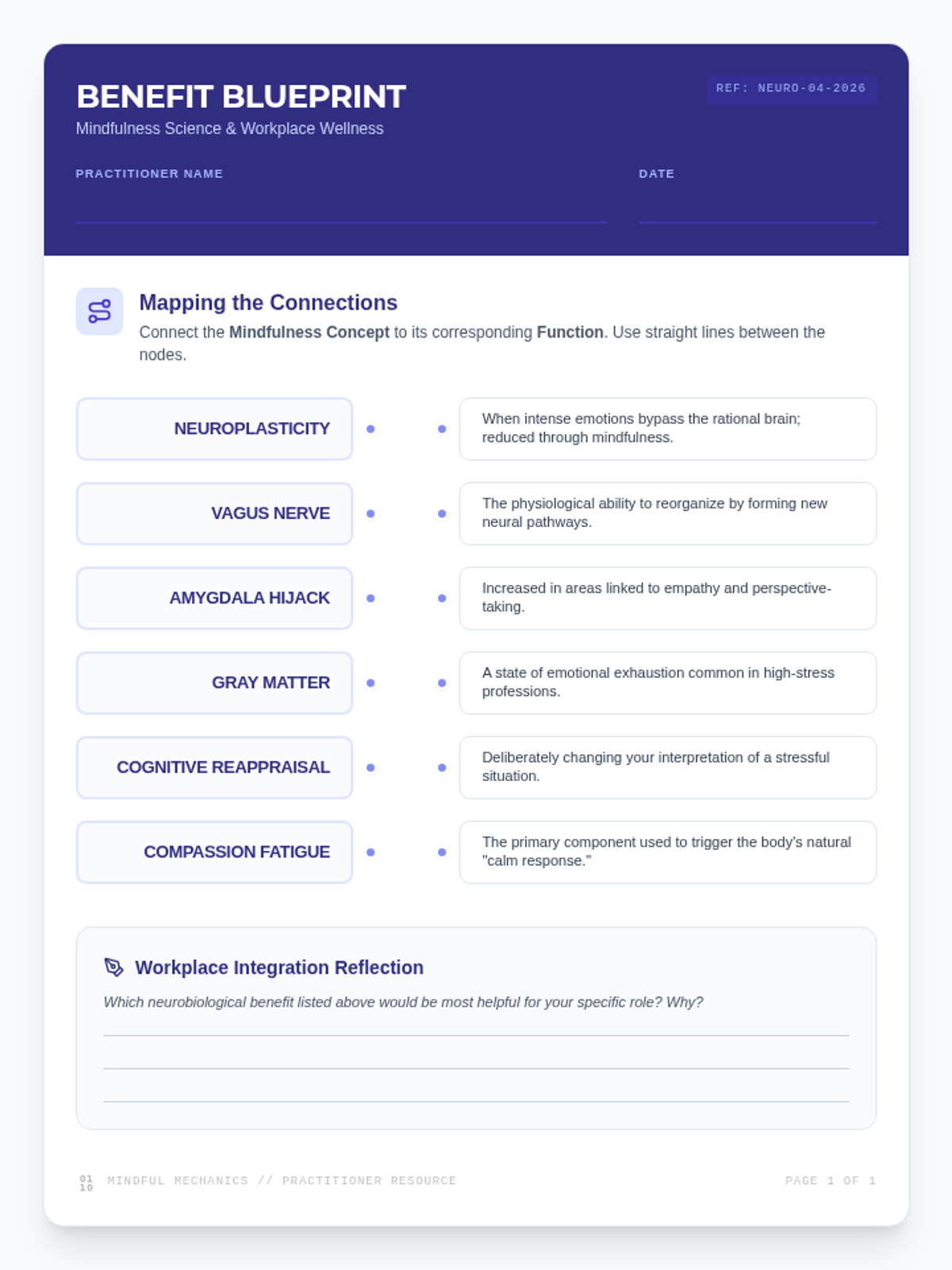
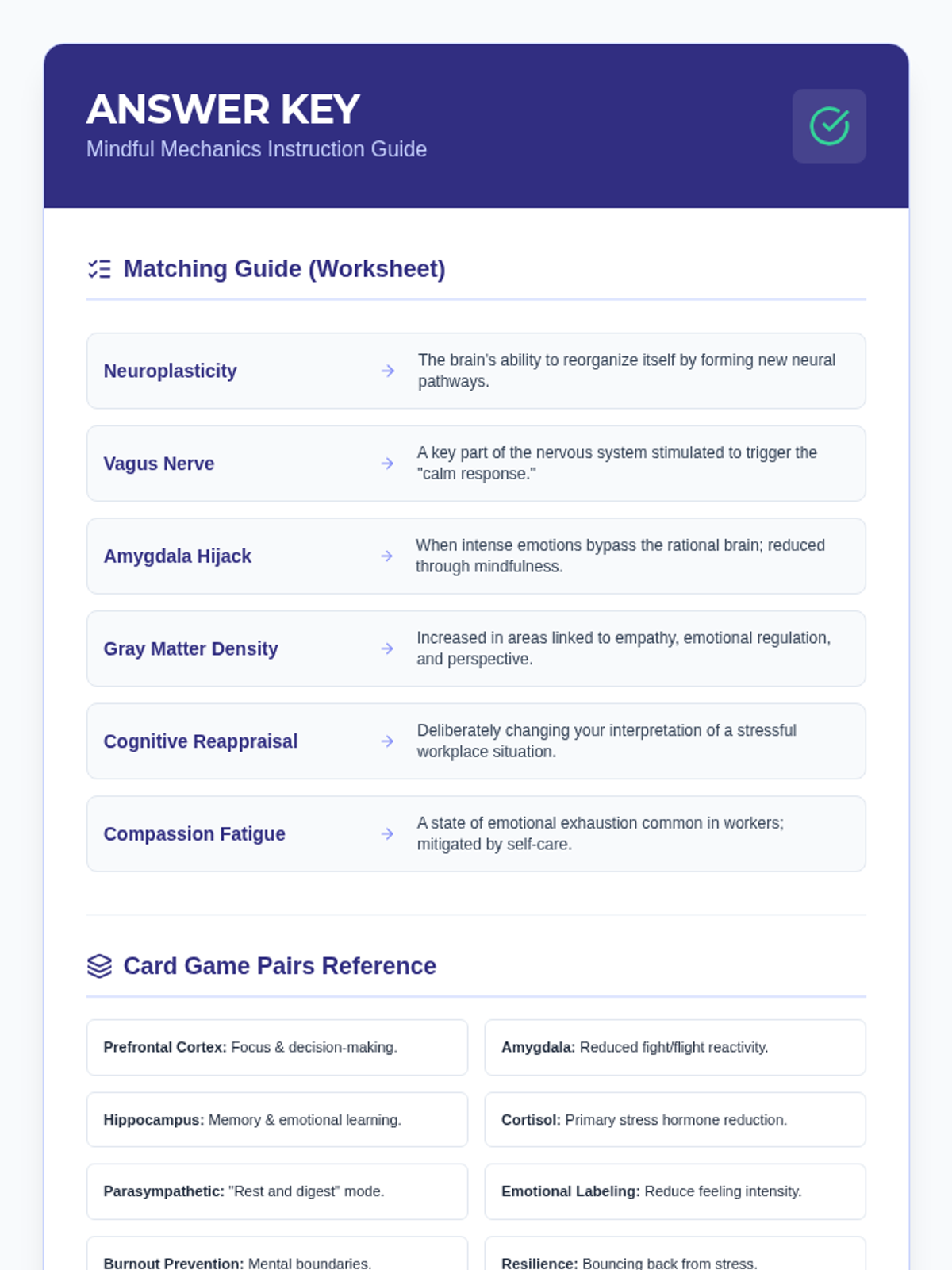
A lesson exploring the tangible physiological and psychological benefits of mindfulness, focusing on brain science, stress reduction, and workplace wellbeing.
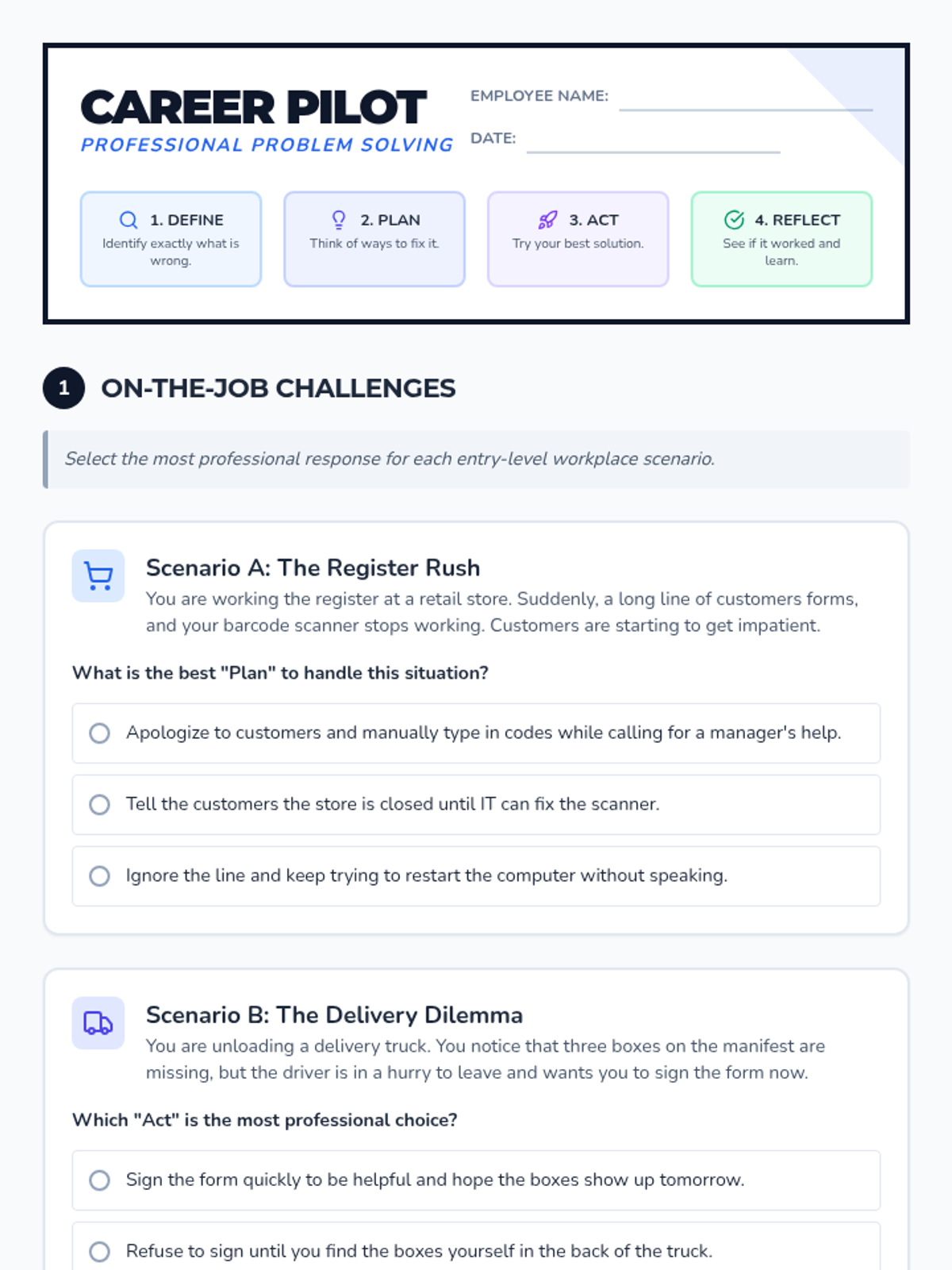
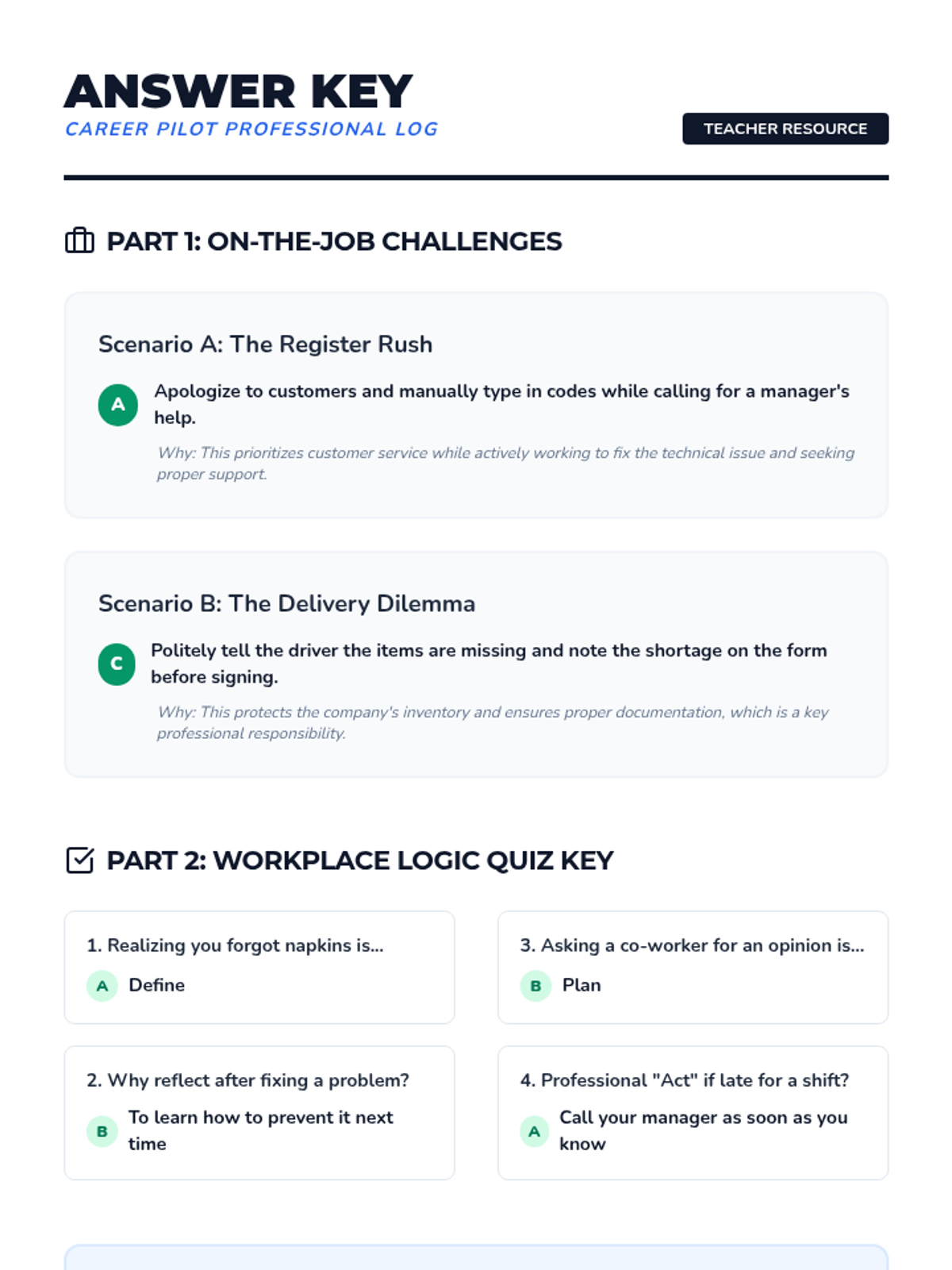
A foundational lesson teaching professional problem-solving using a structured 4-step approach (Define, Plan, Act, Reflect) applied to workplace scenarios.
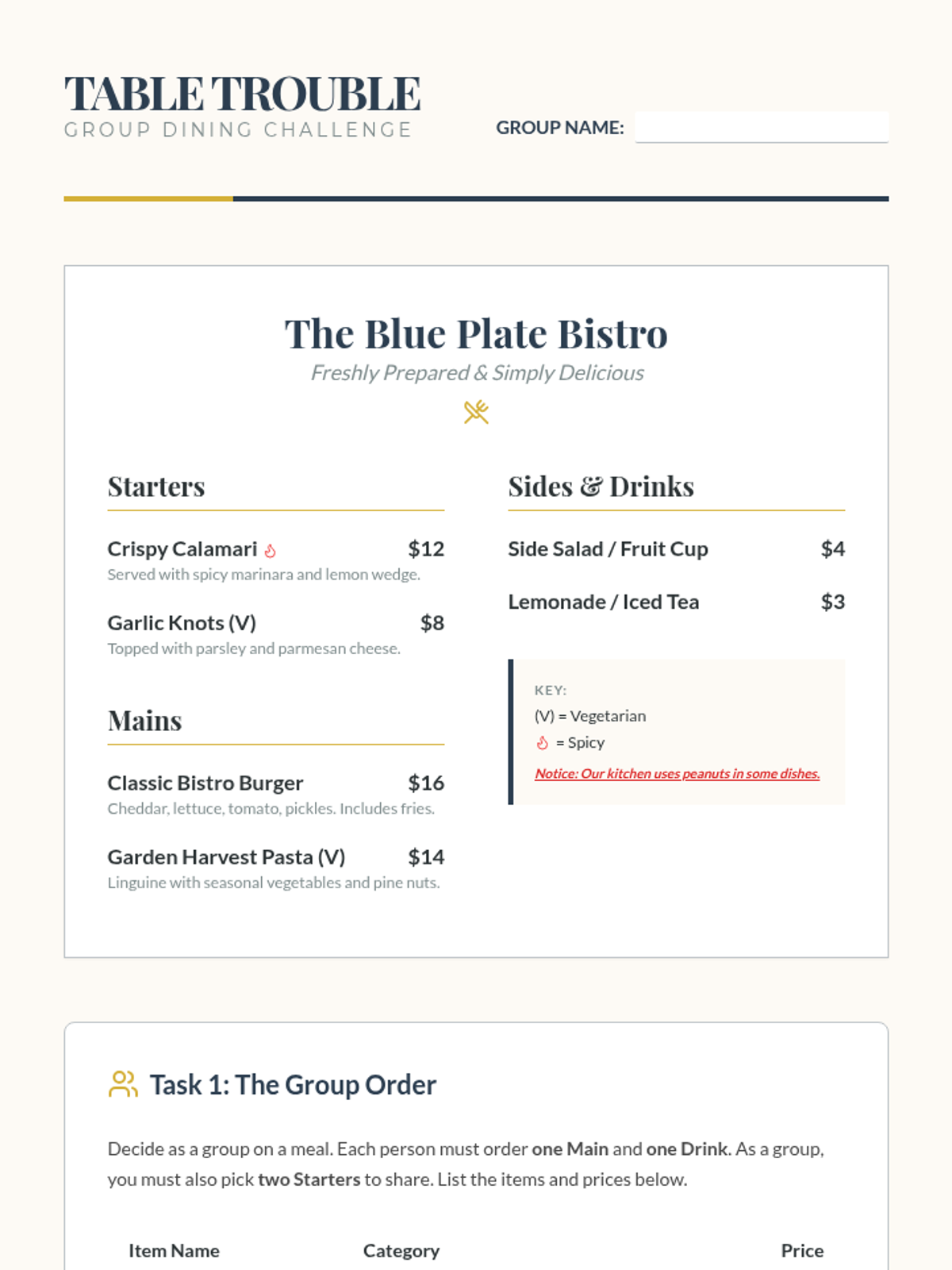
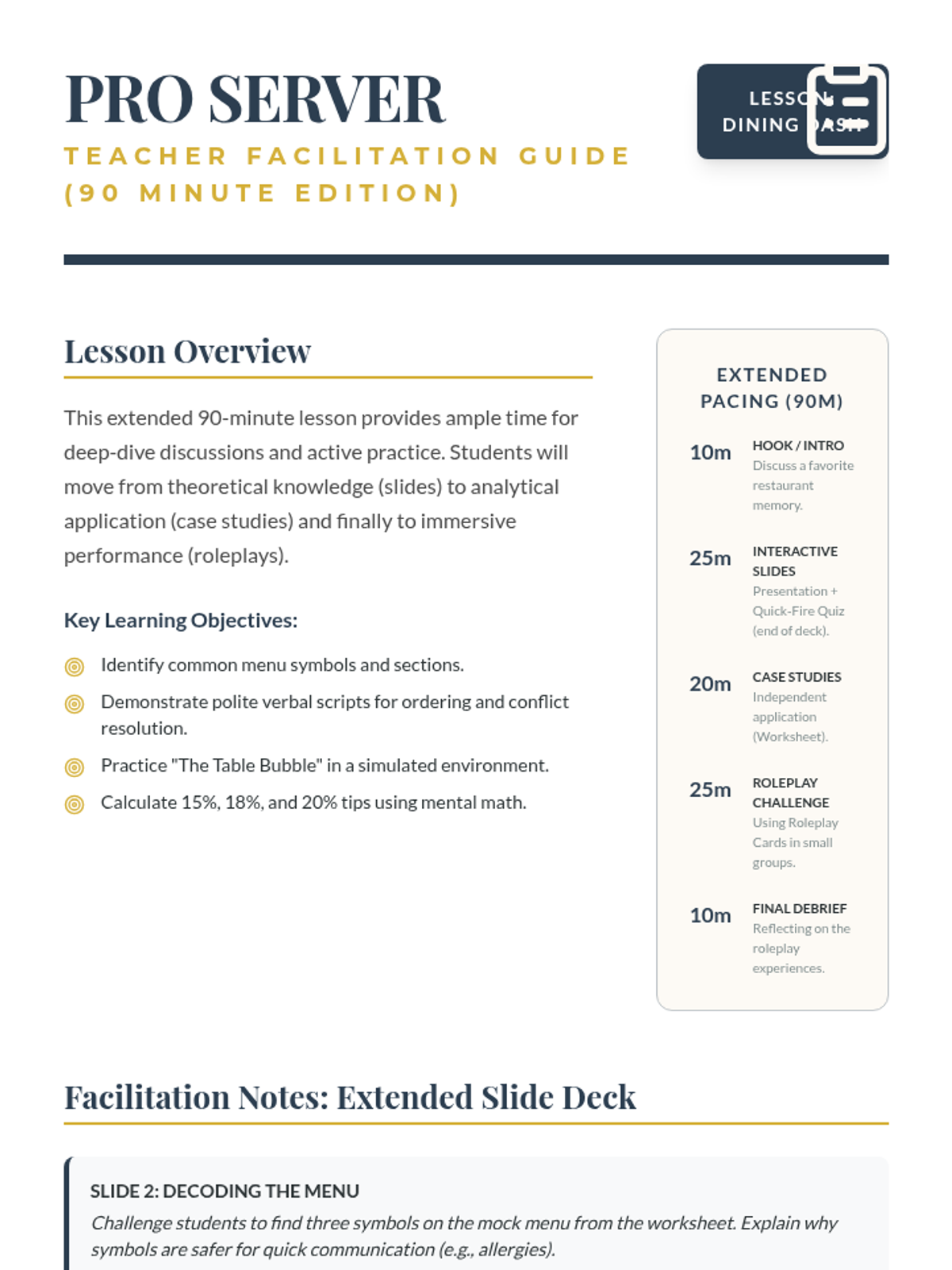
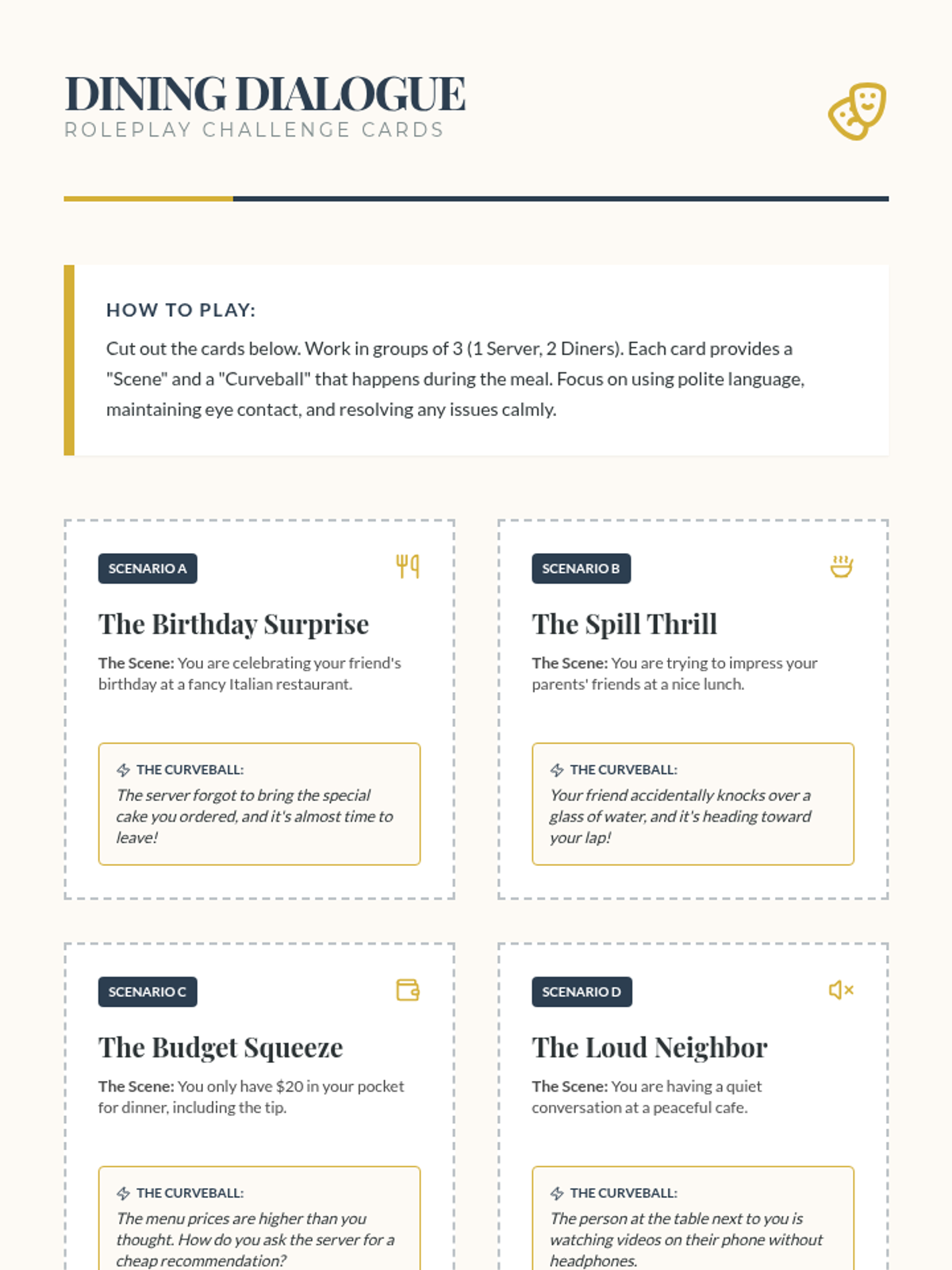
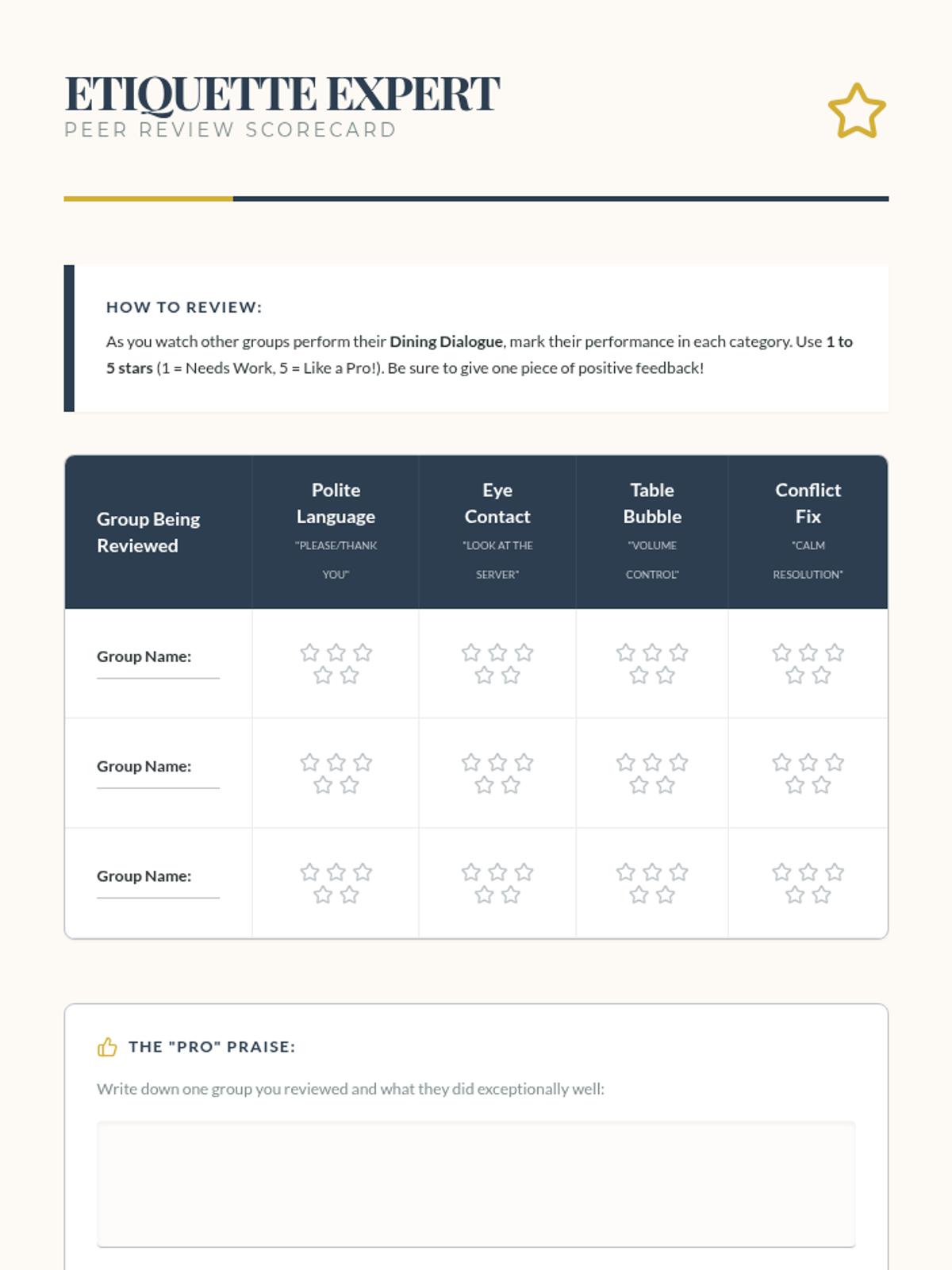
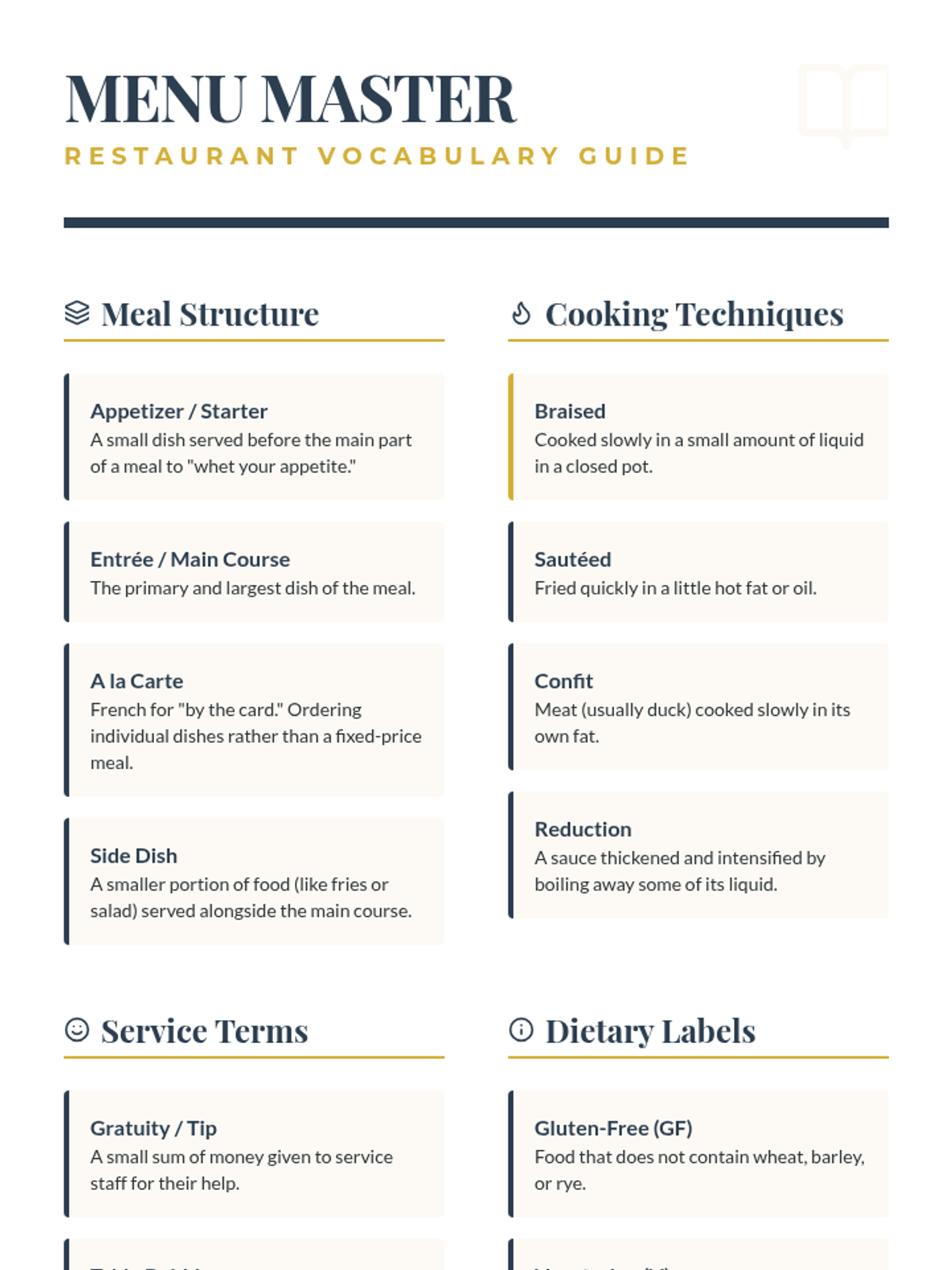
A comprehensive lesson on restaurant etiquette covering menu reading, ordering, manners, volume control, tipping, and conflict resolution.
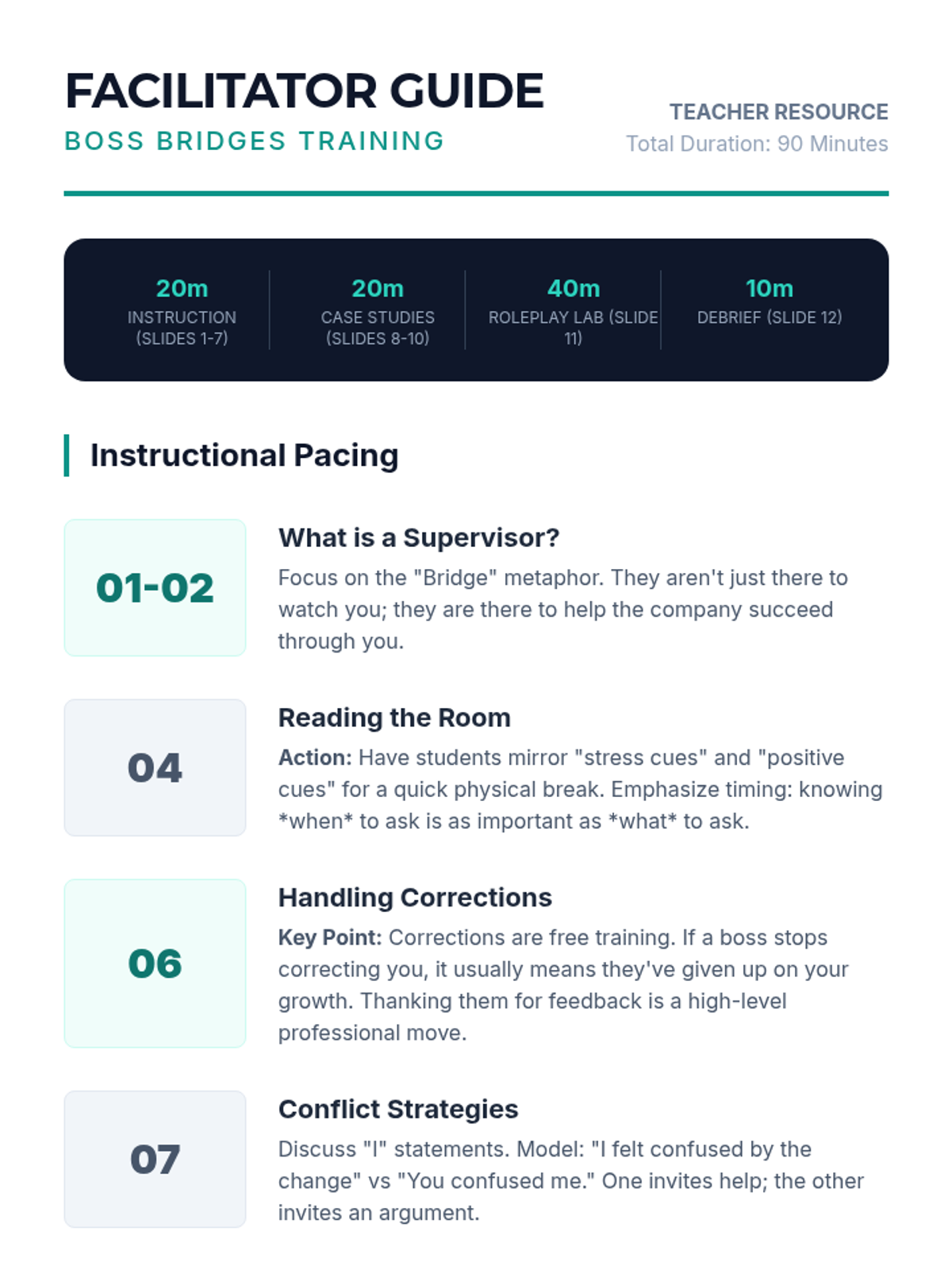
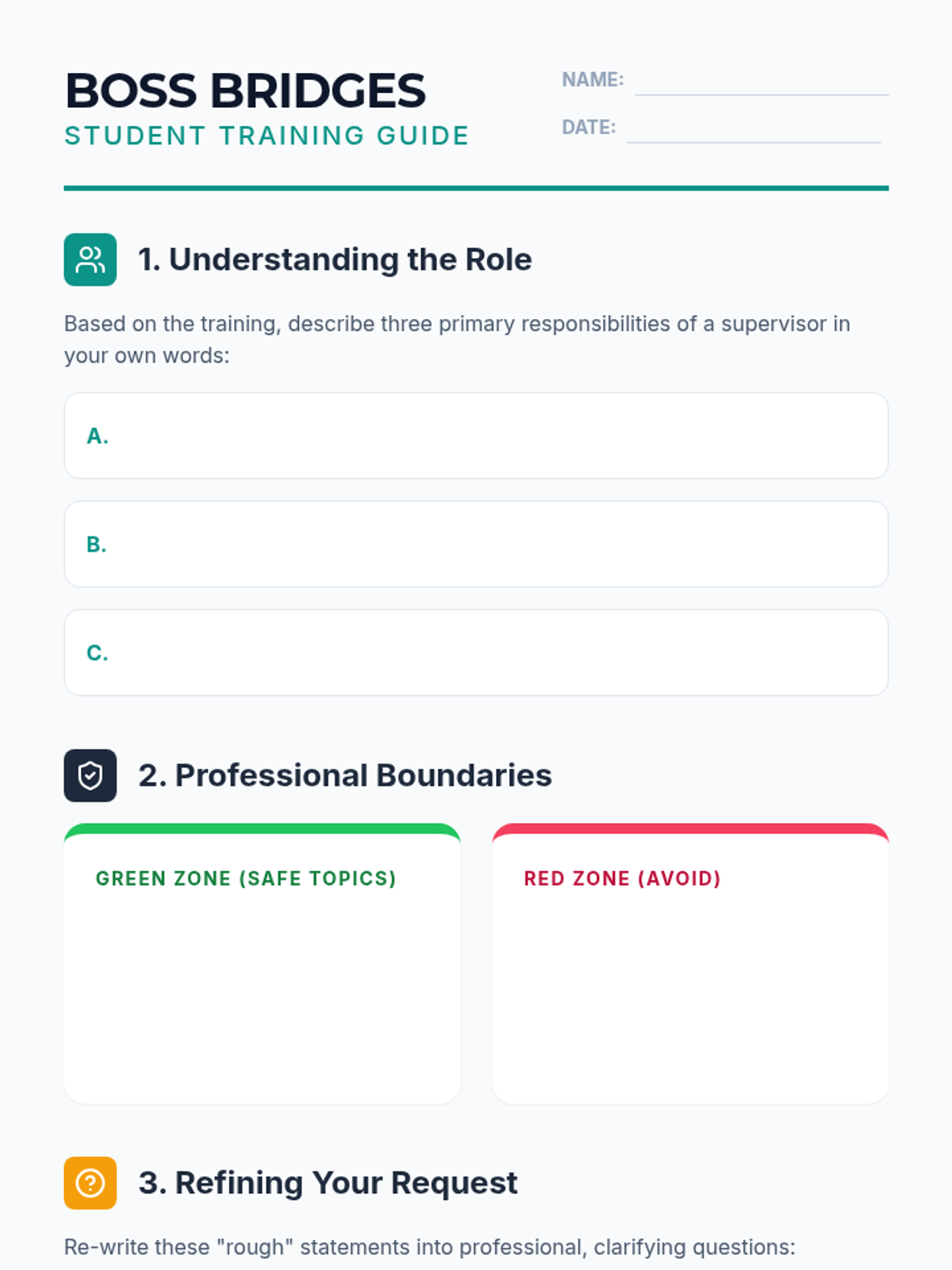
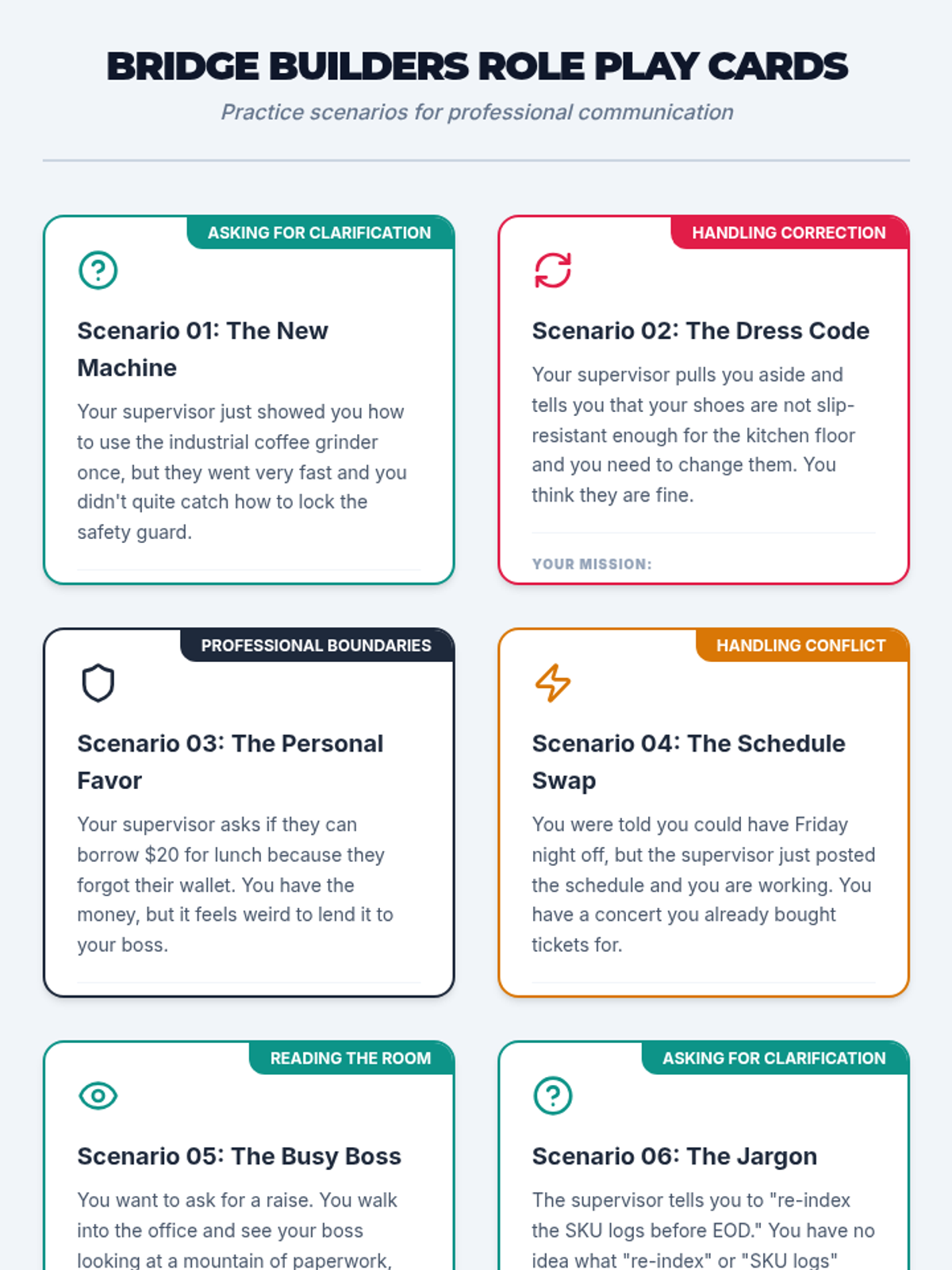
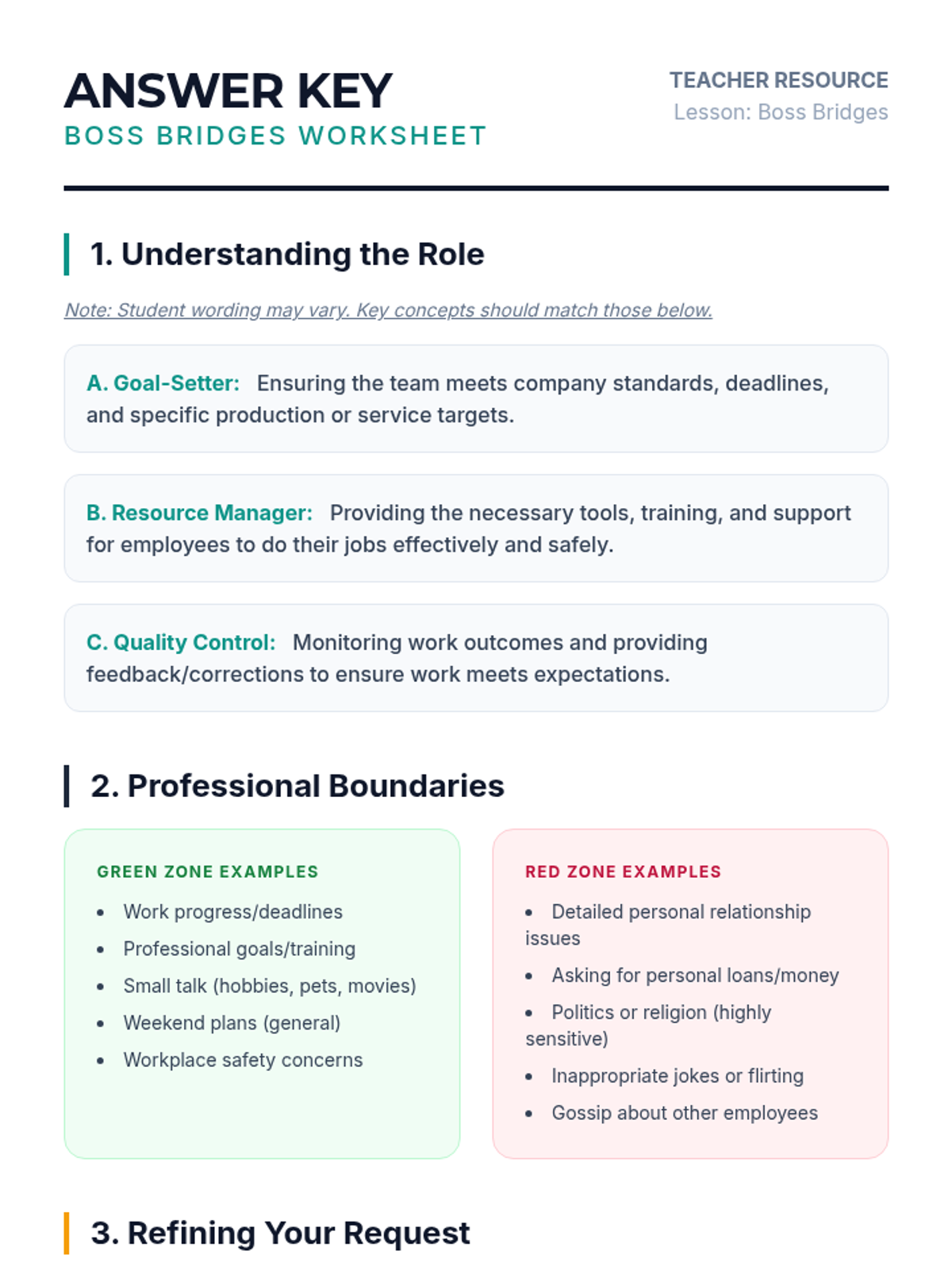
A comprehensive training session focusing on the professional relationship between employees and supervisors. Students will learn about supervisor roles, boundaries, communication strategies, and conflict resolution through interactive case studies.
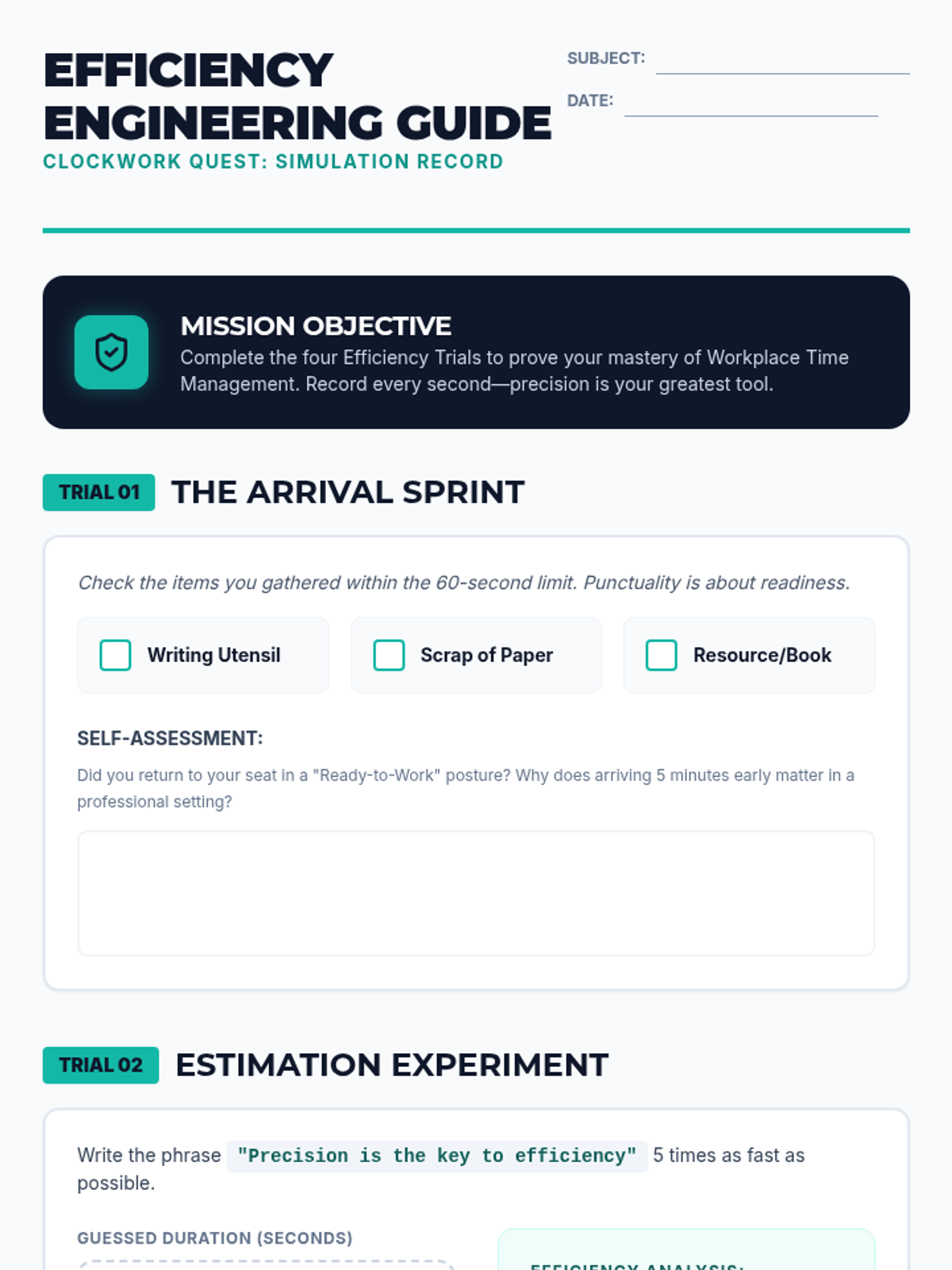
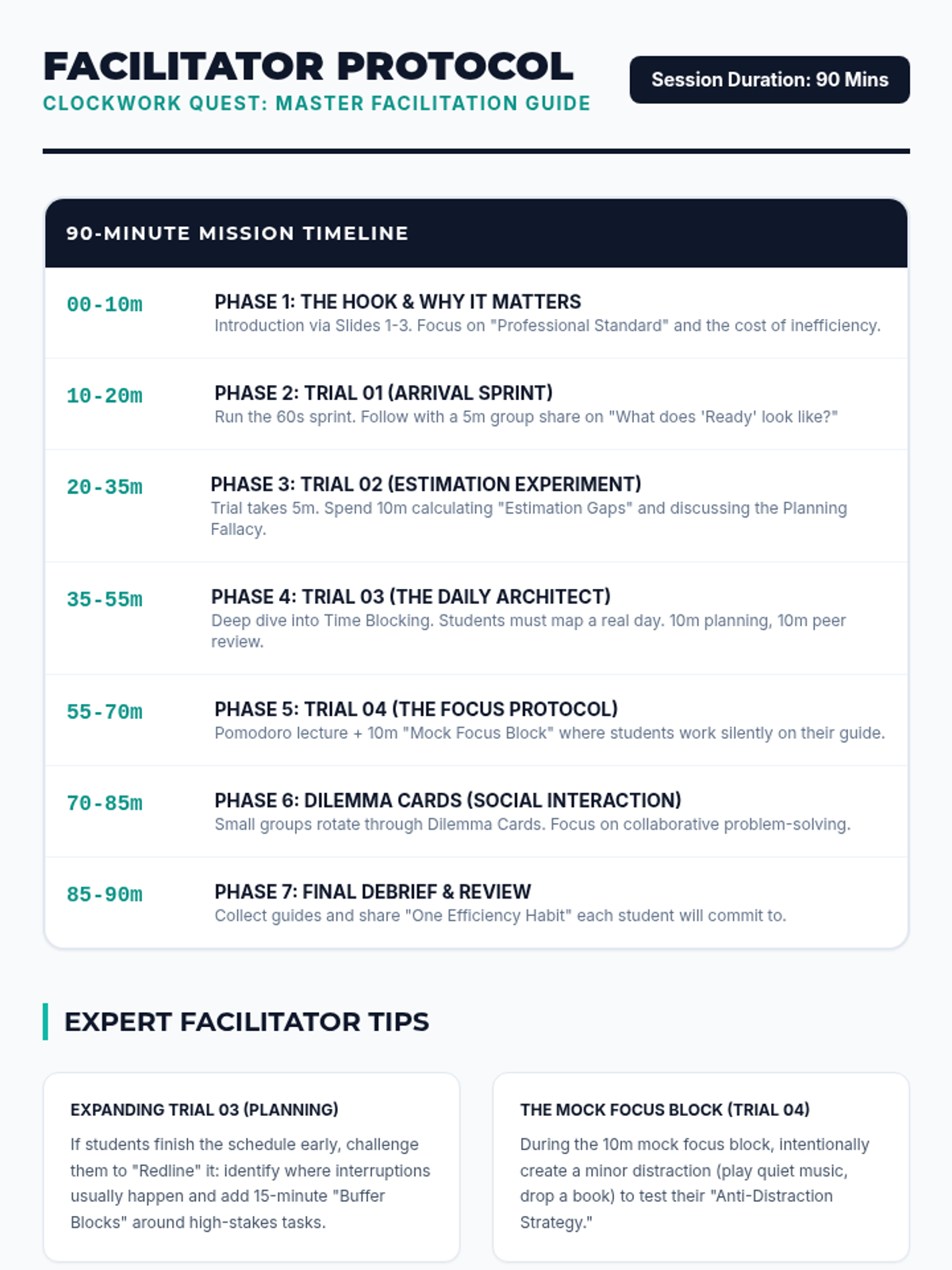
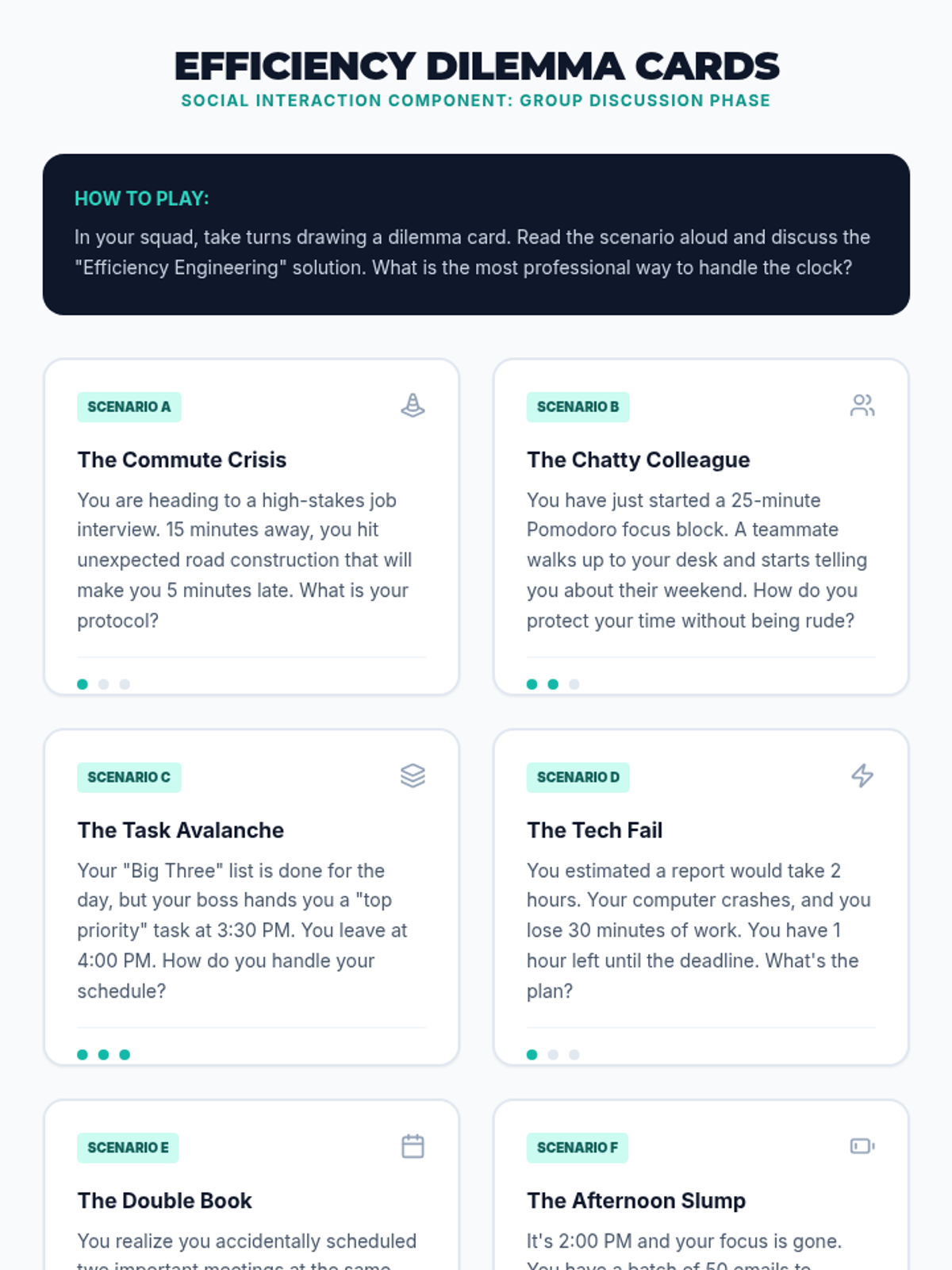
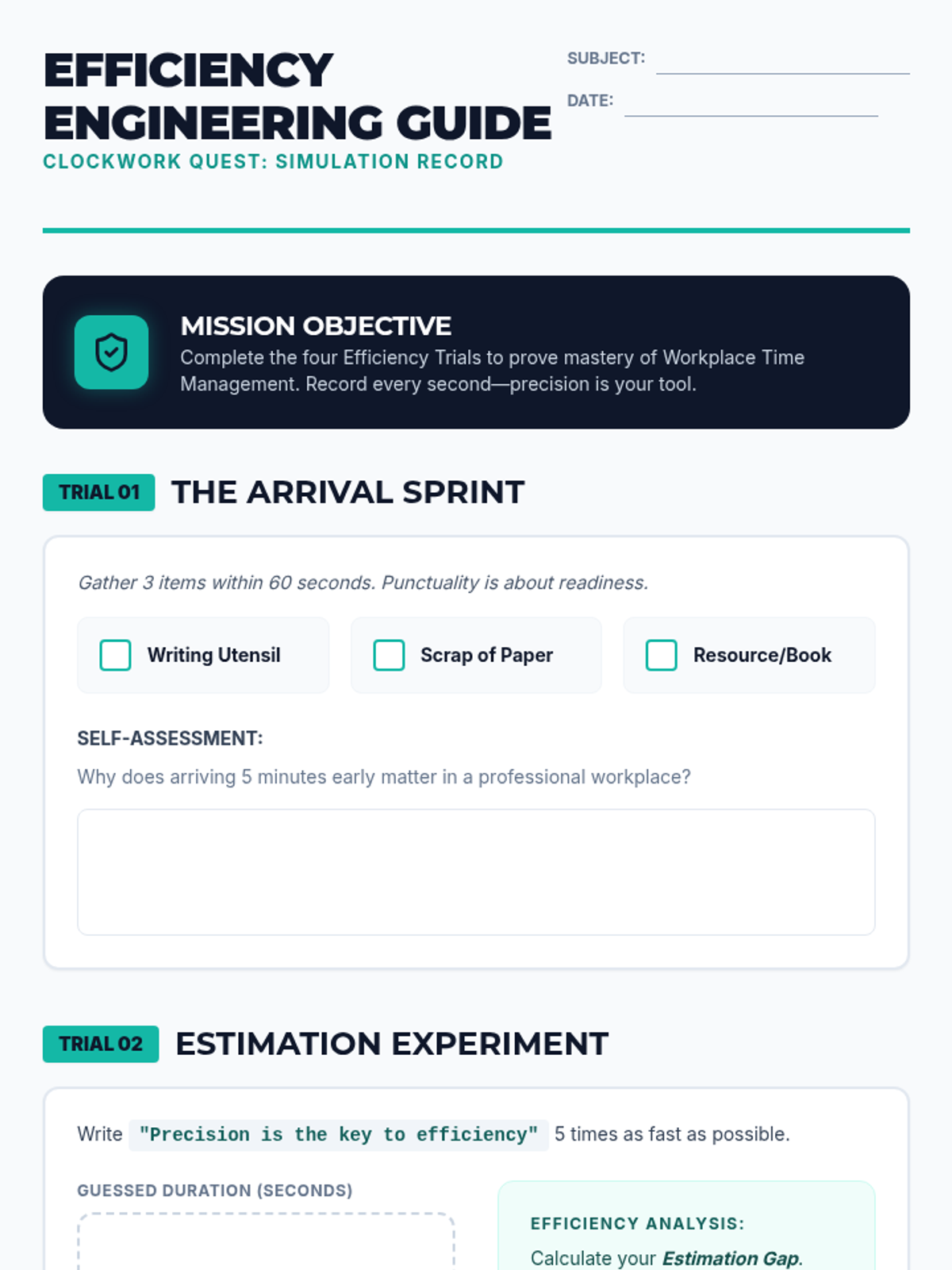
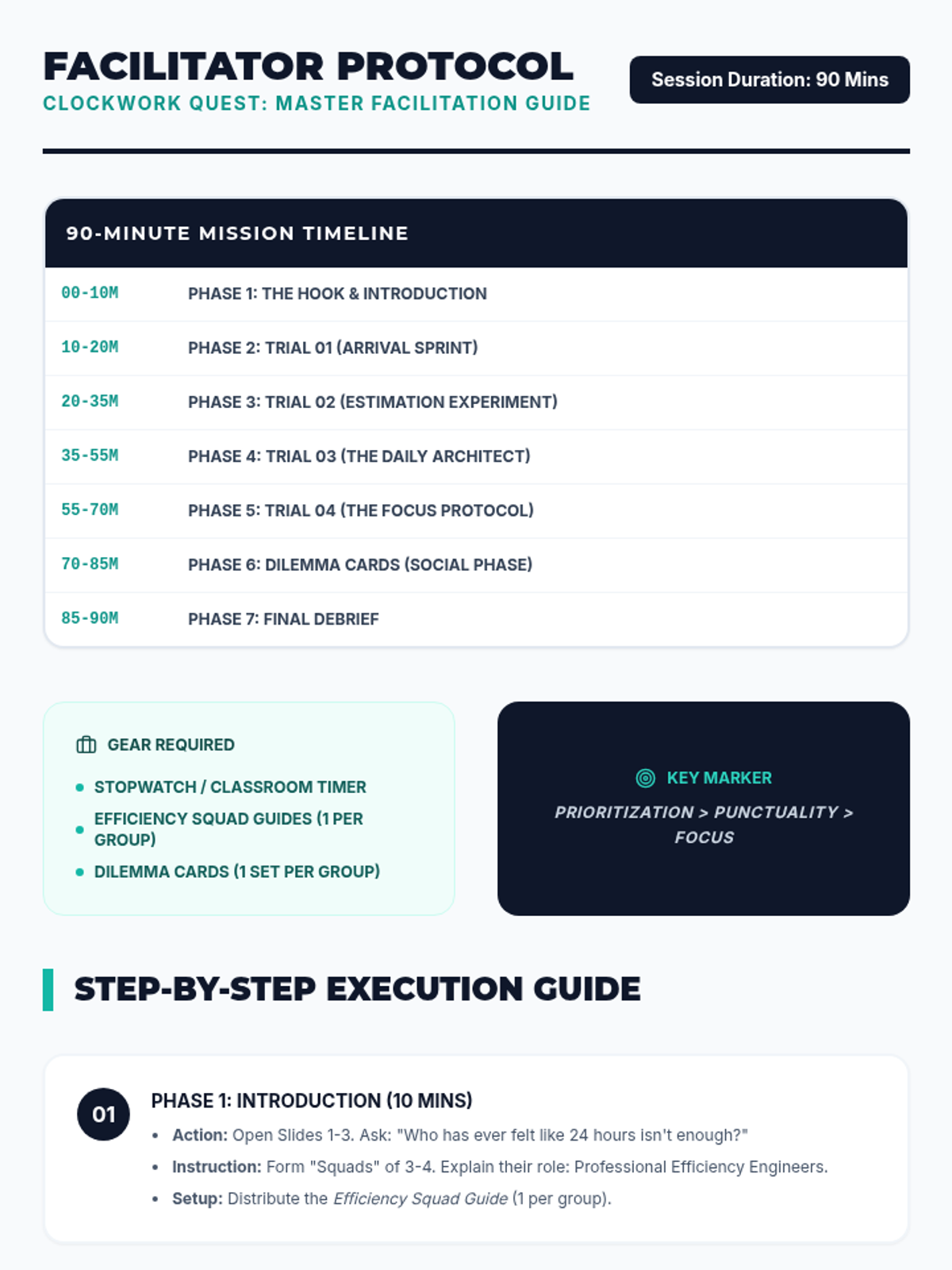
A lesson focused on mastering time management through hands-on 'trials' that teach punctuality, task estimation, scheduling, and focus techniques.
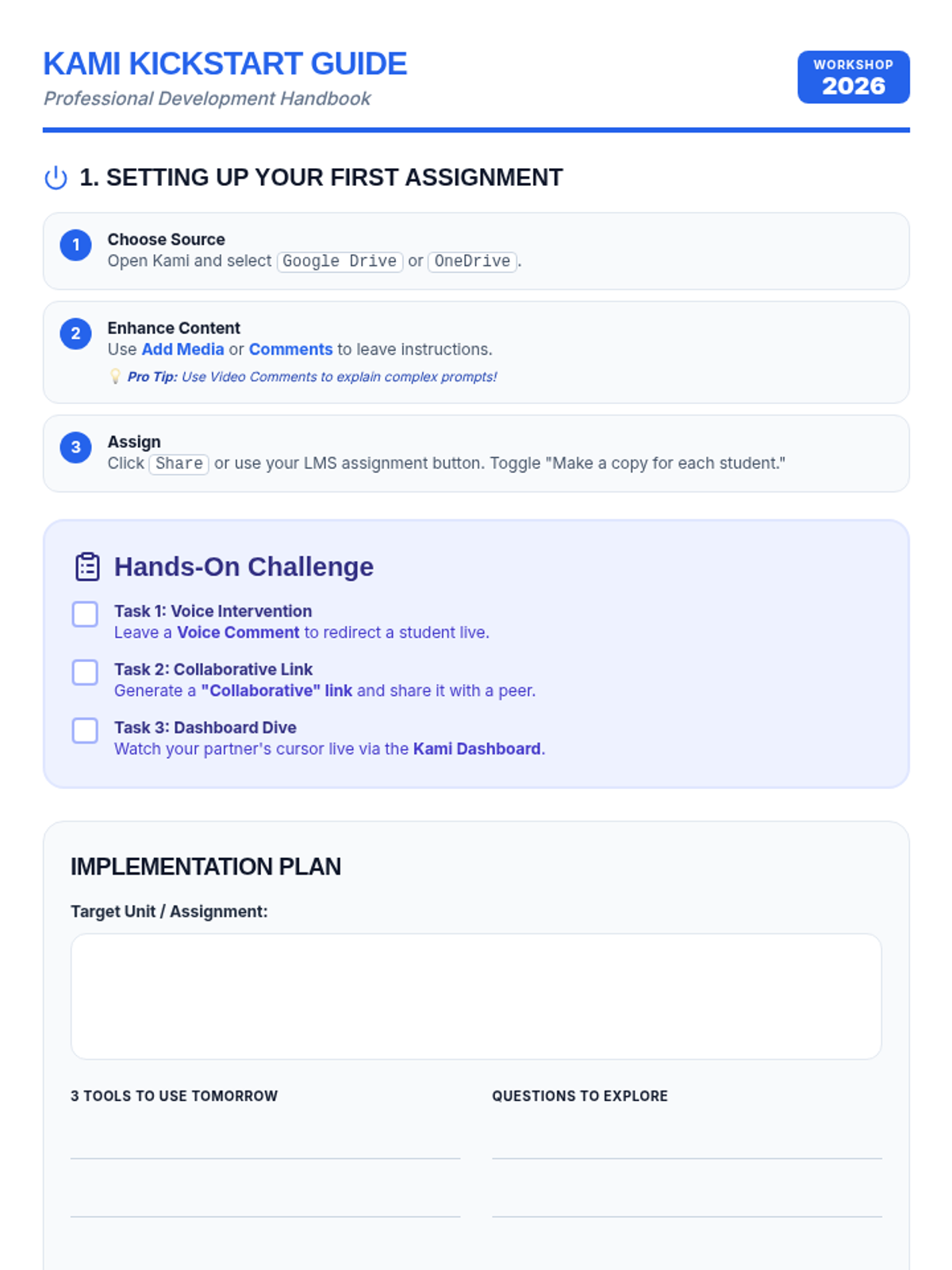
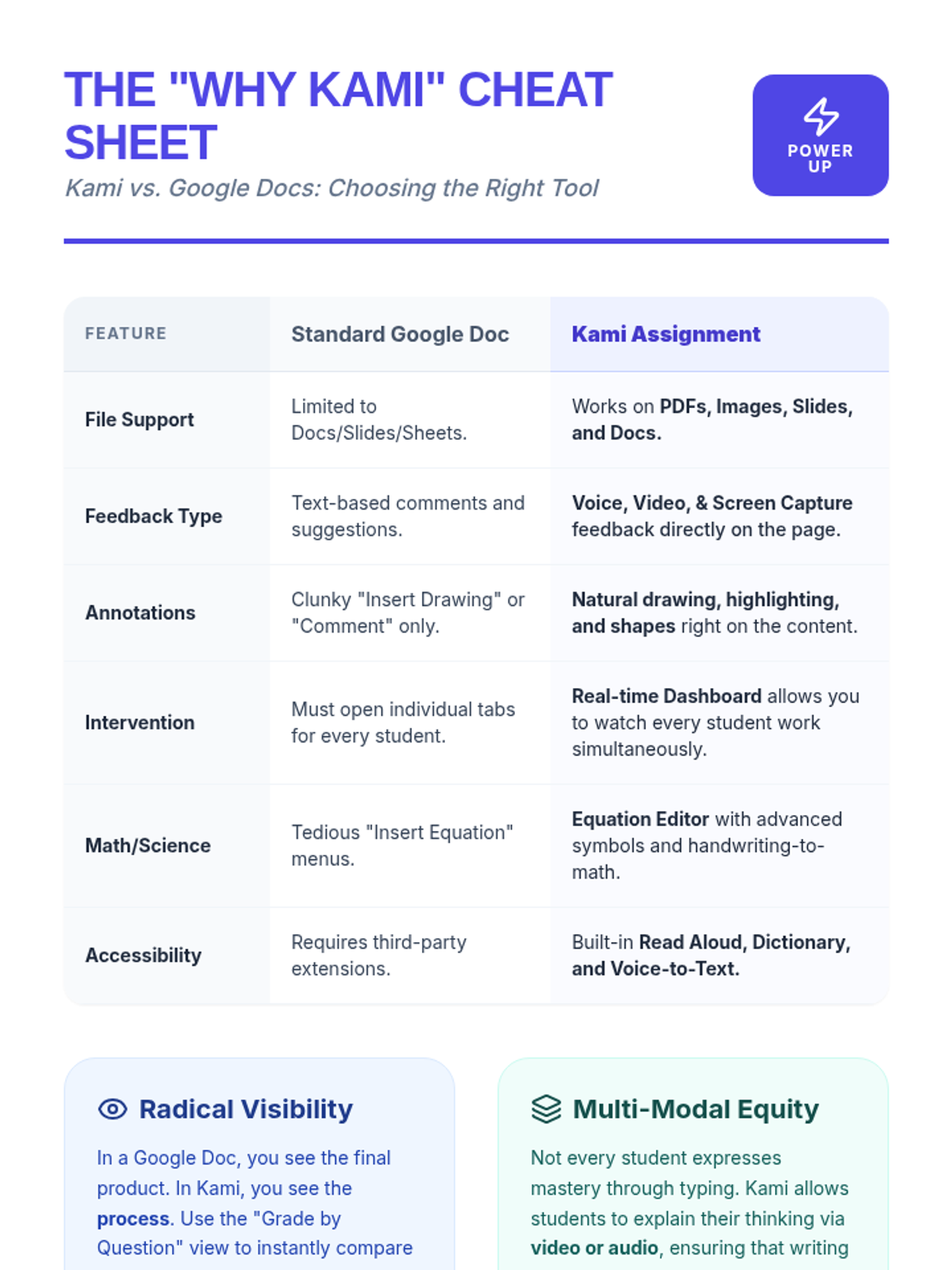
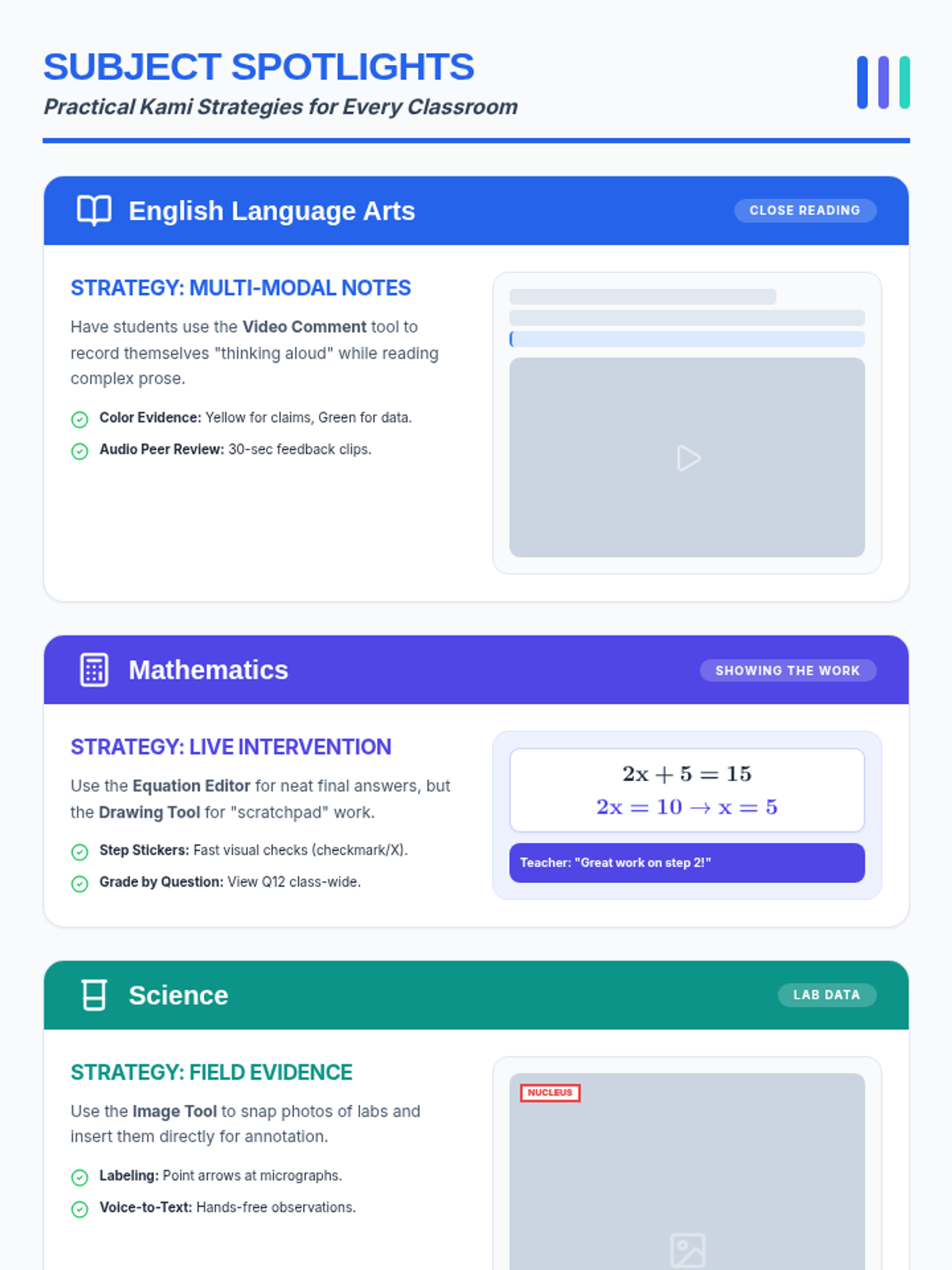
A professional development session for teachers on leveraging Kami to transform static documents into interactive learning experiences, focusing on real-time feedback and collaboration.
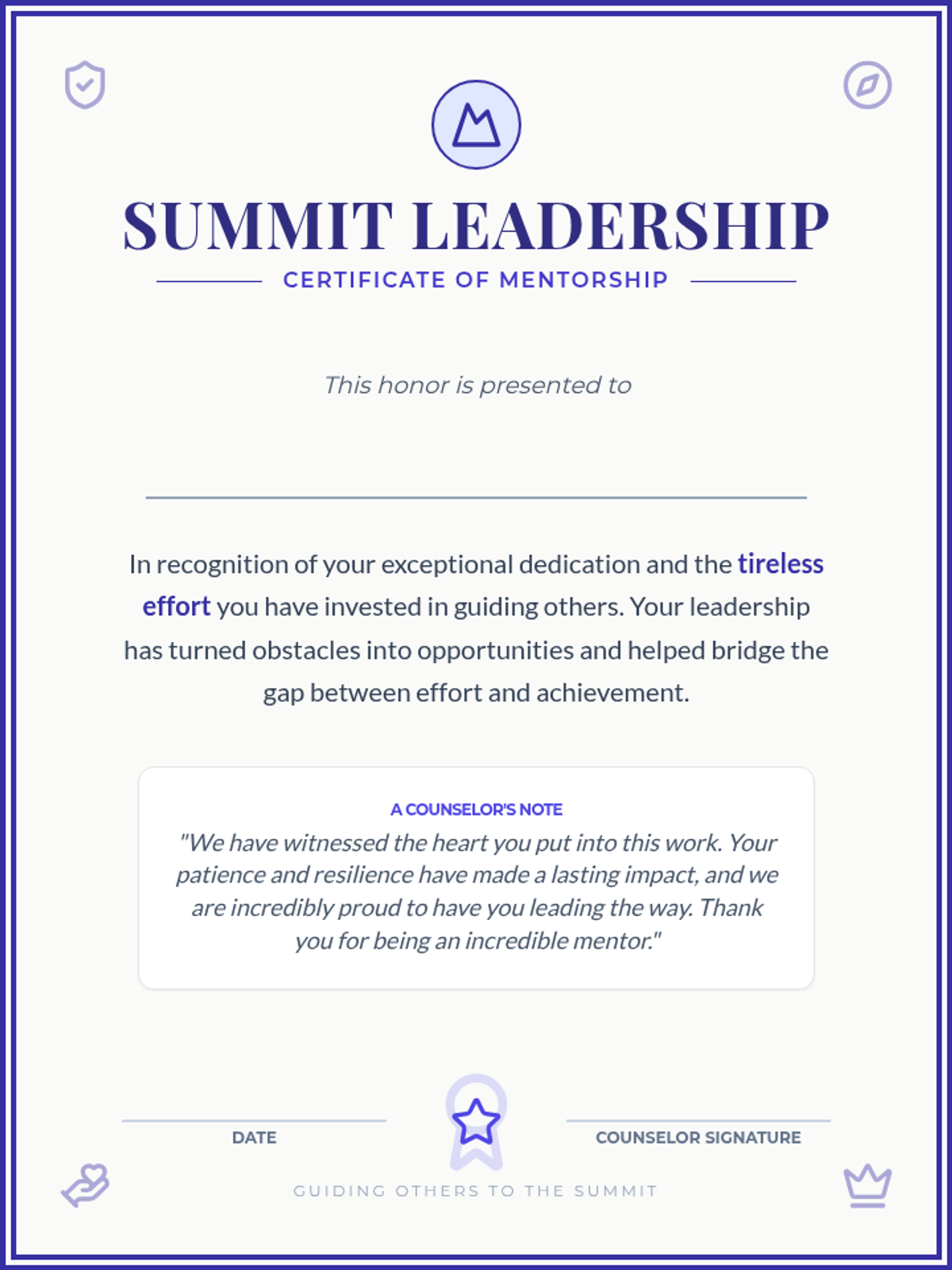
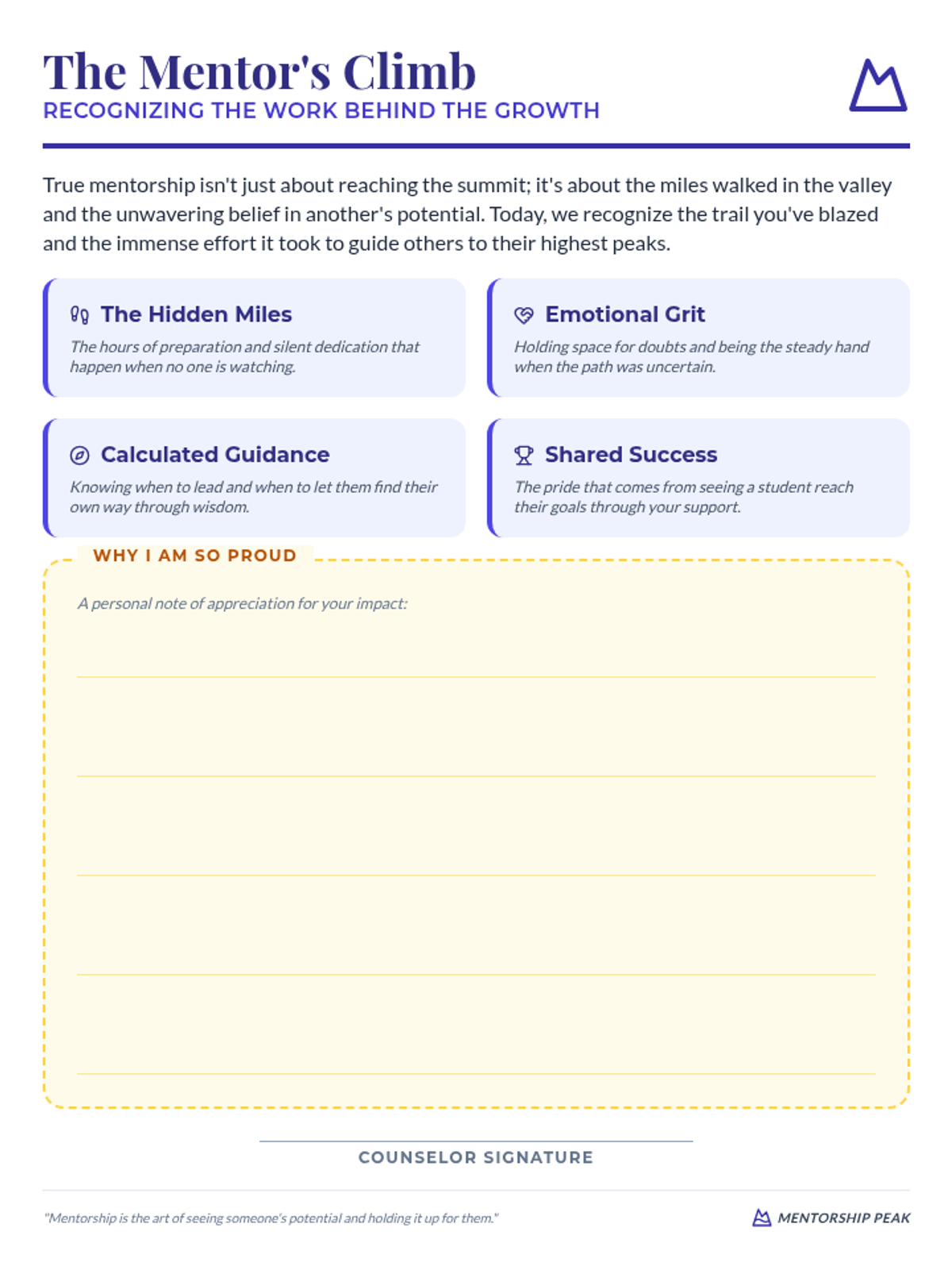
A collection of materials to celebrate and recognize the hard work and dedication of mentors, focusing on their growth and impact.
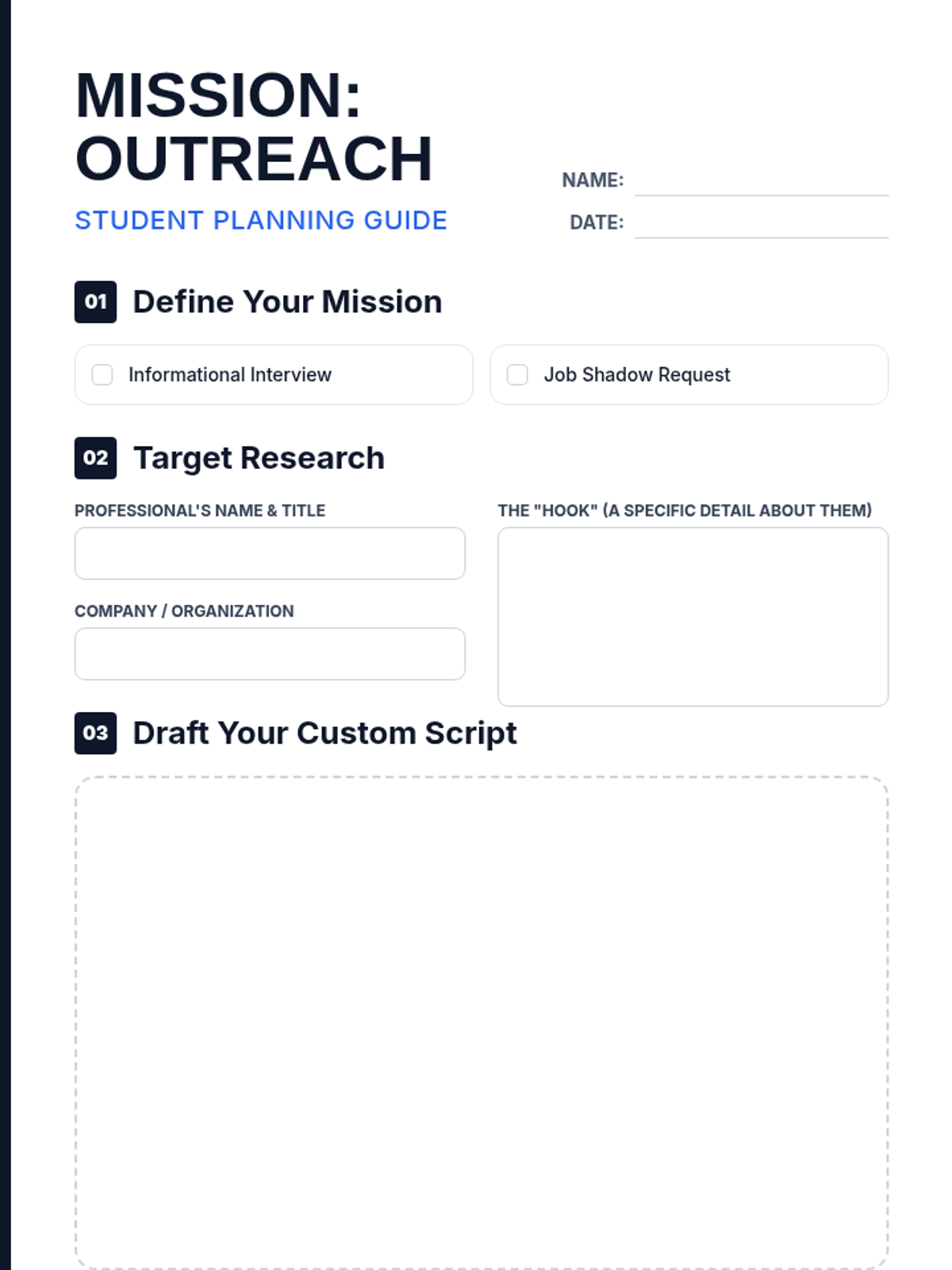
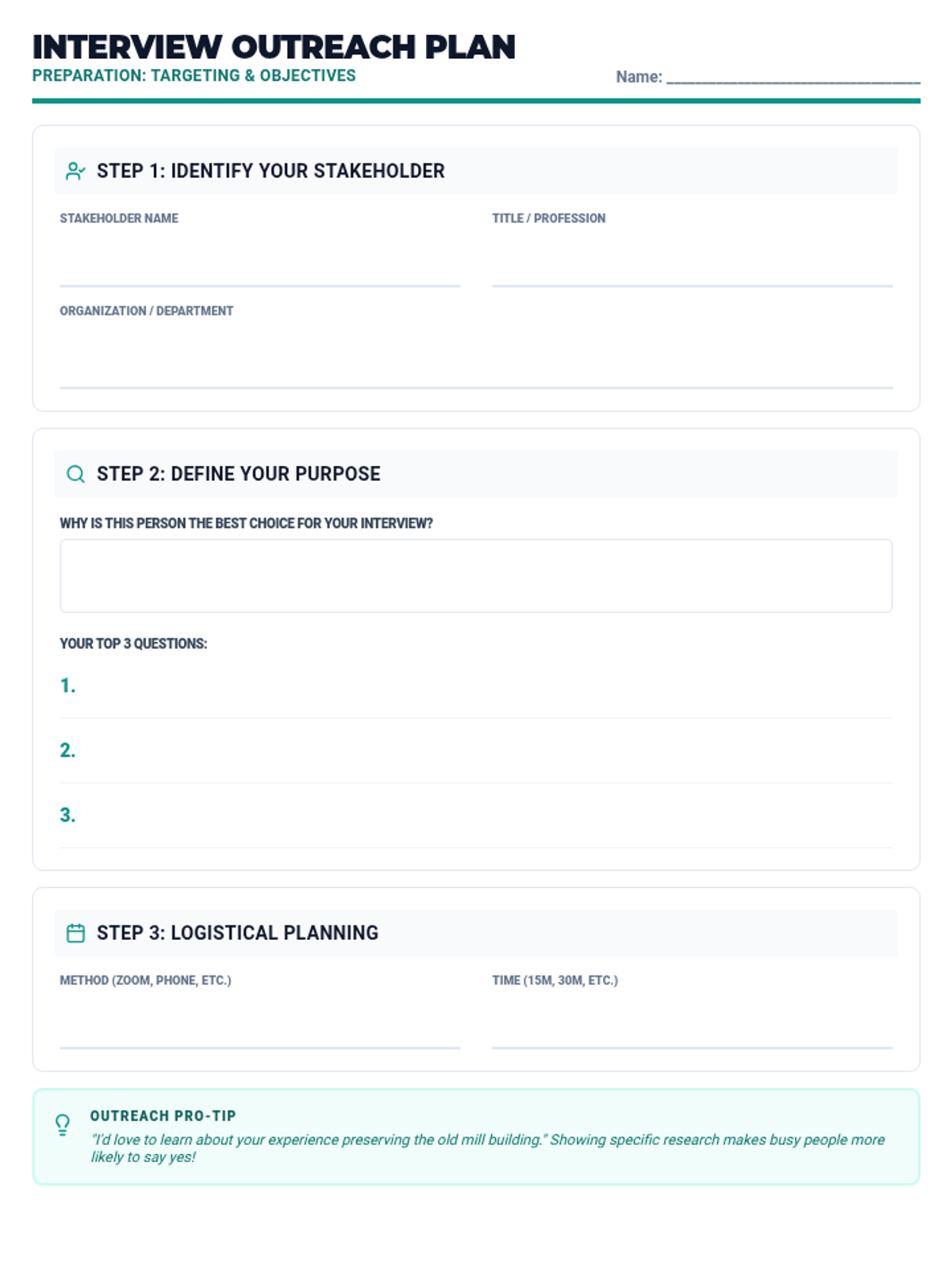
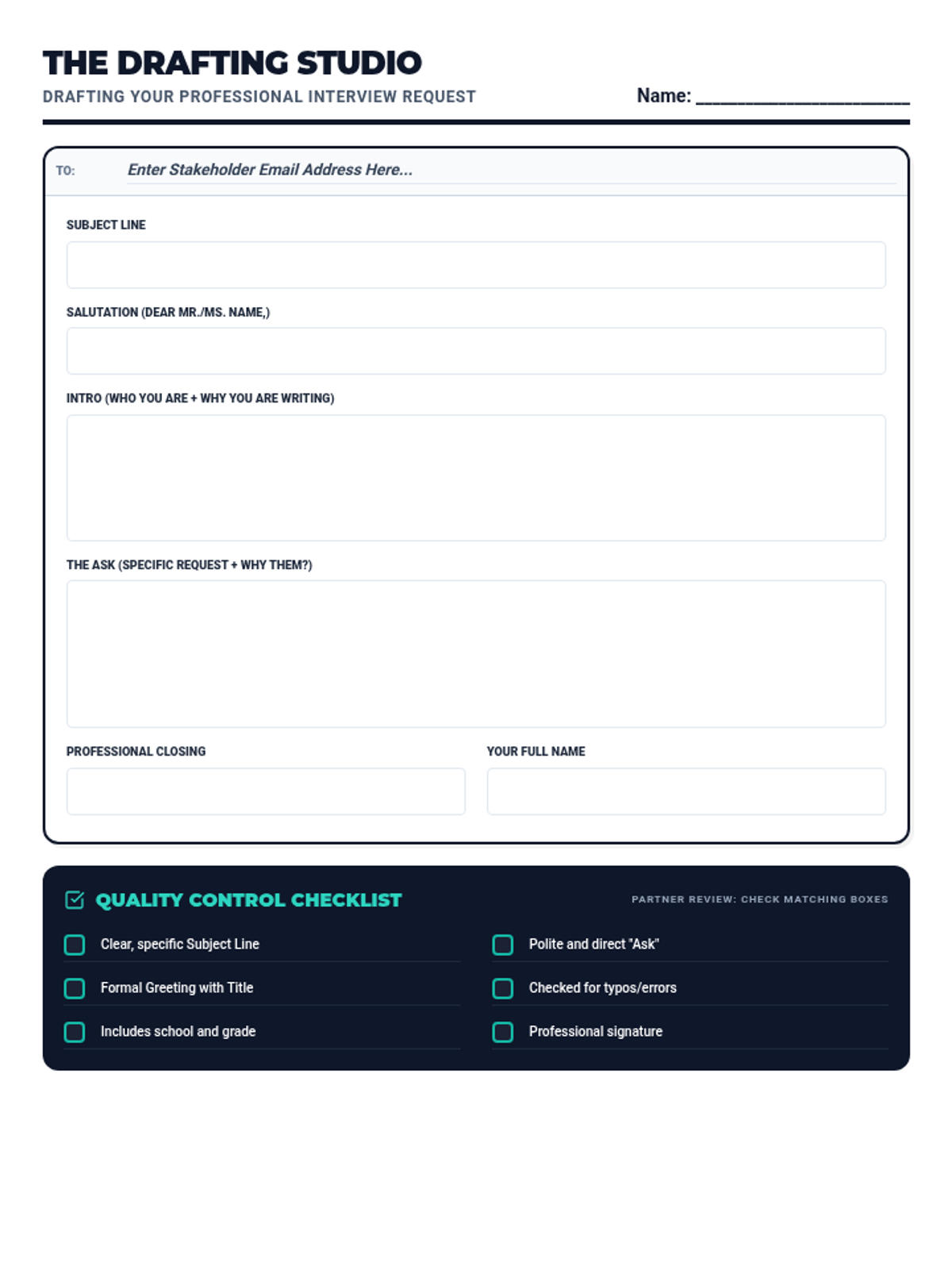
Students learn the art of professional communication by planning and drafting interview request emails to community stakeholders. The lesson covers email anatomy, etiquette, and clear outreach strategies.