Budgeting, saving, and investment strategies alongside practical skills for managing credit, taxes, and banking. Addresses insurance needs, employment income, and major purchase decisions to support comprehensive long-term financial planning.
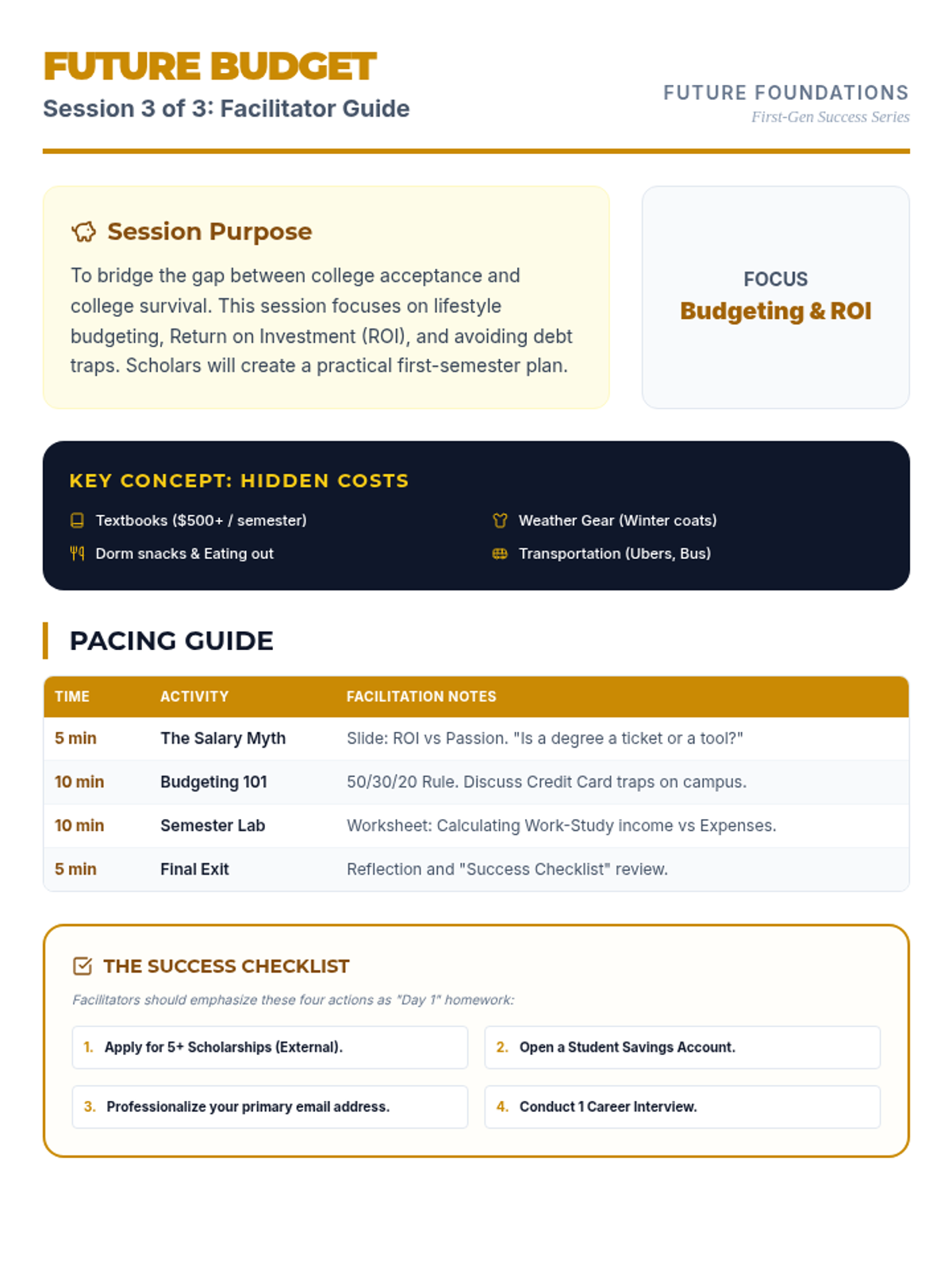
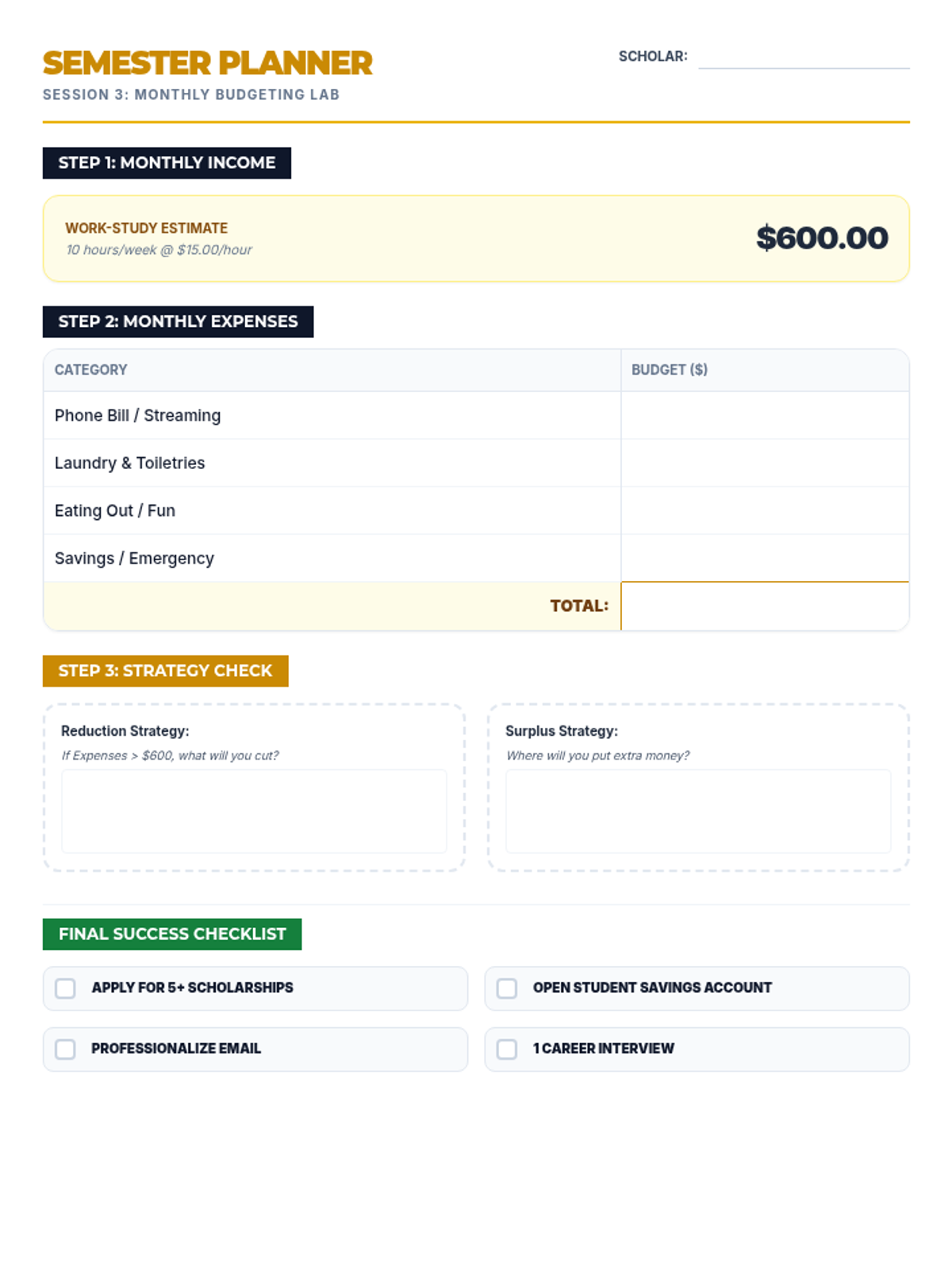
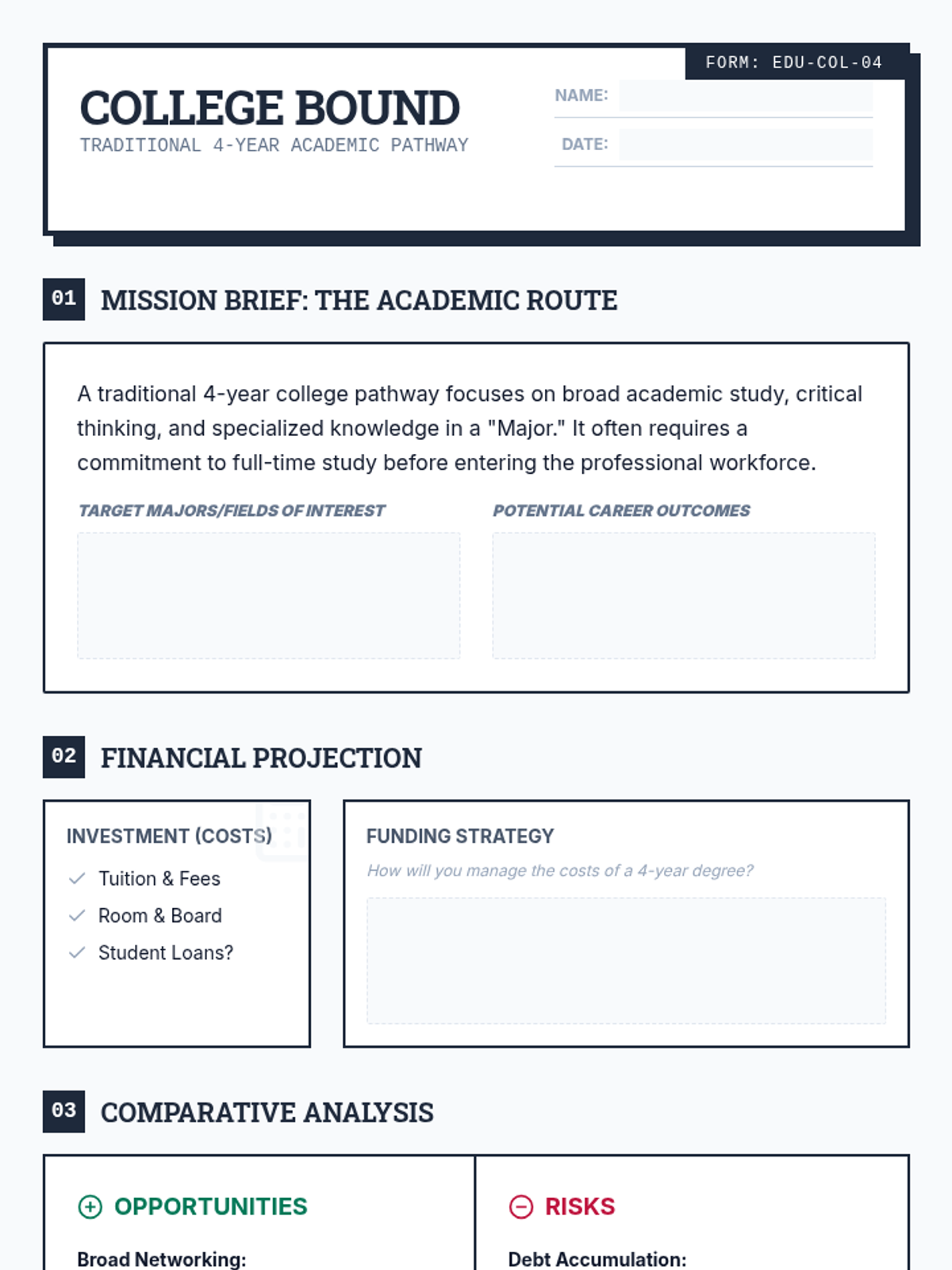
Students learn practical budgeting skills for college life and analyze the long-term financial implications of different educational and career choices.
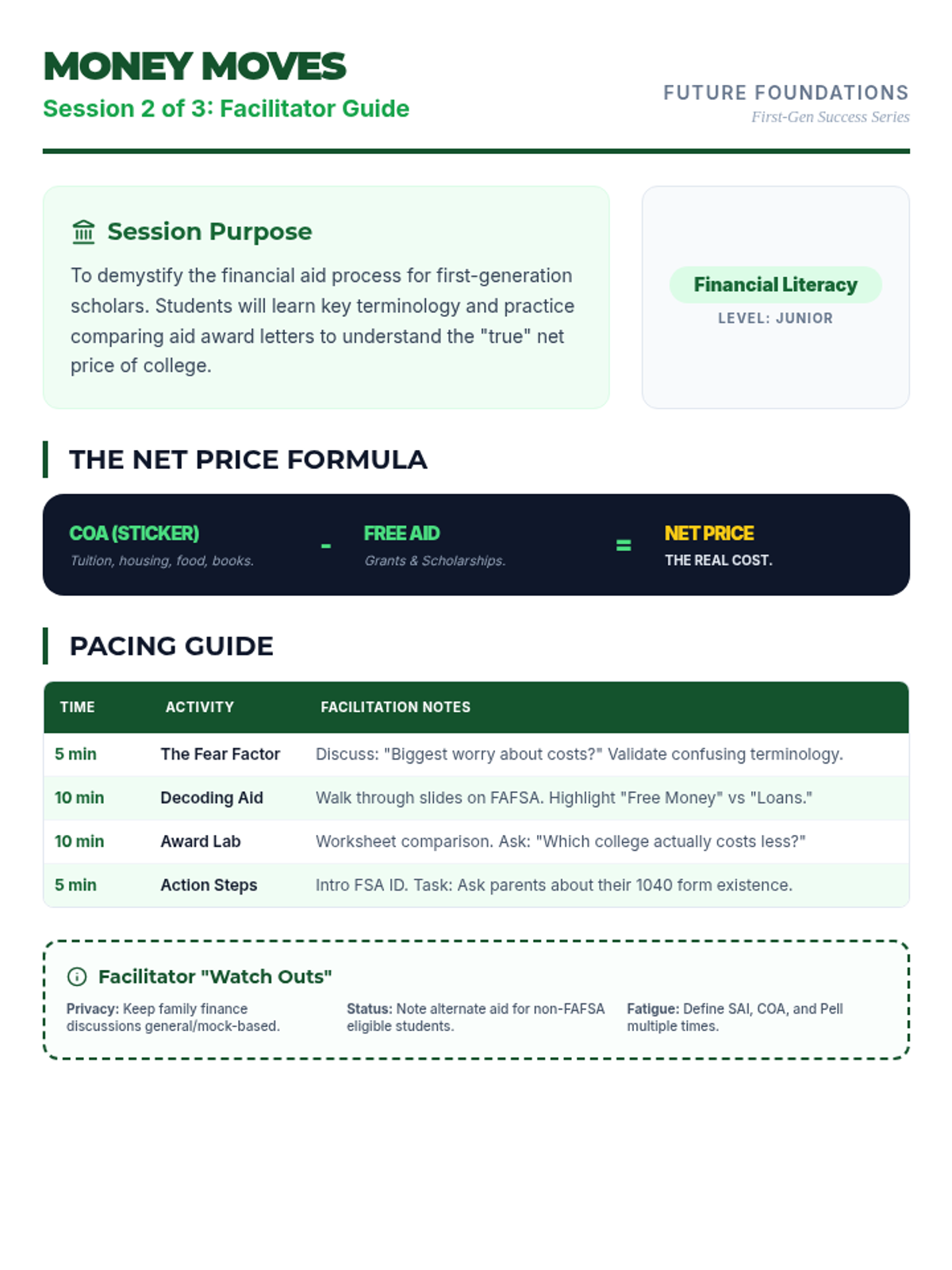
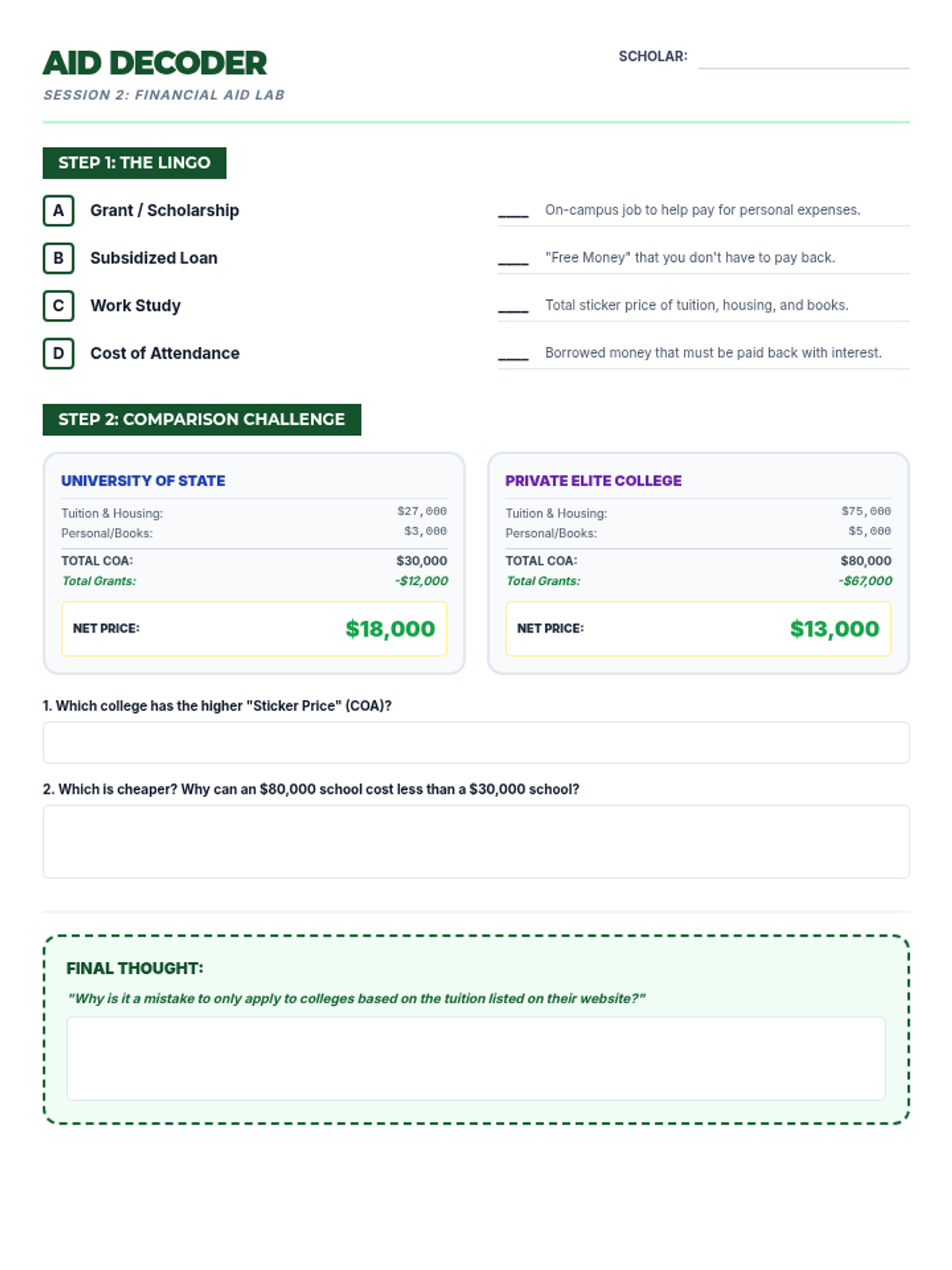
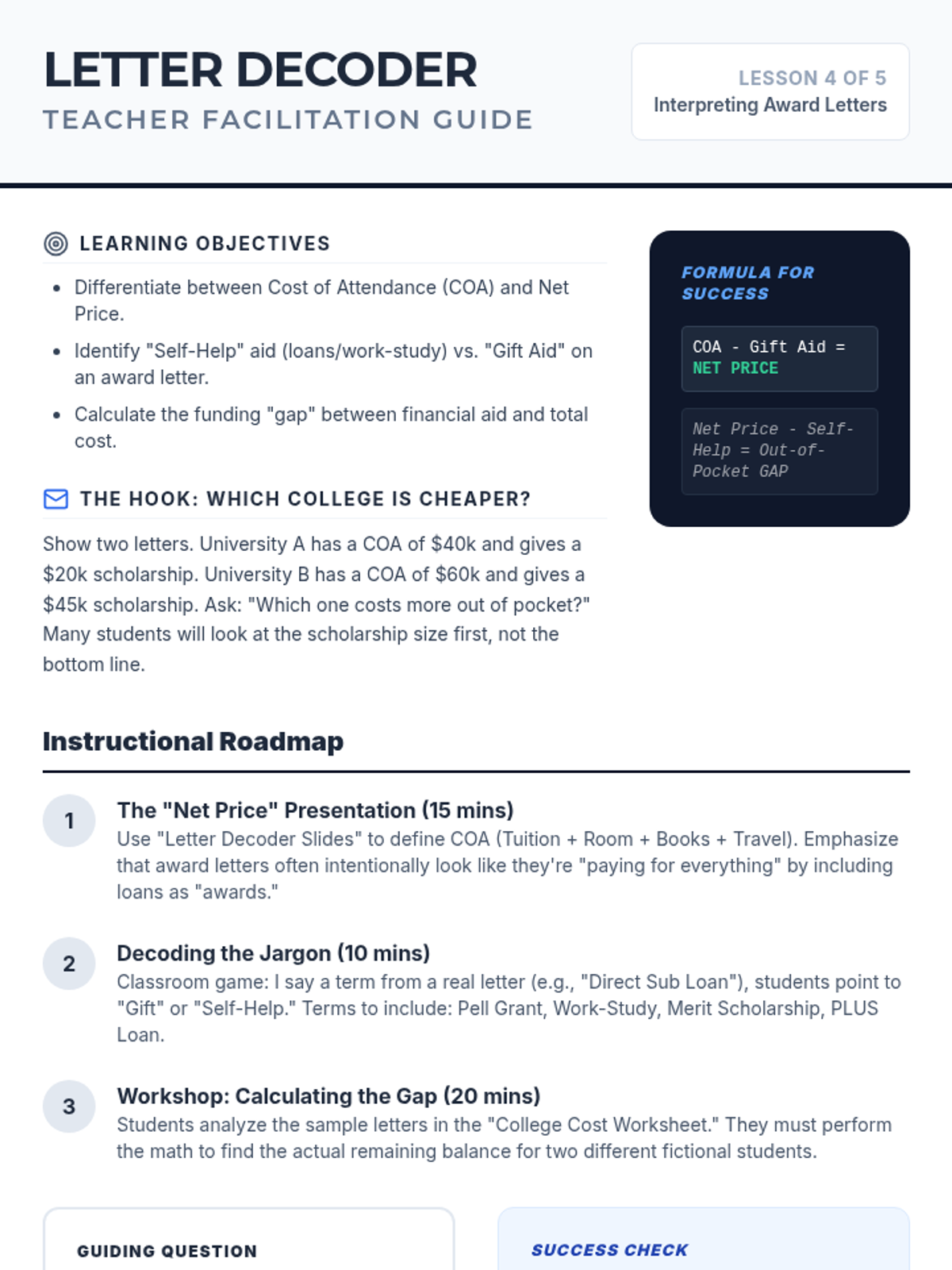
An introduction to the complex world of college financing, focusing on financial aid terminology, types of aid, and understanding the total cost of attendance.
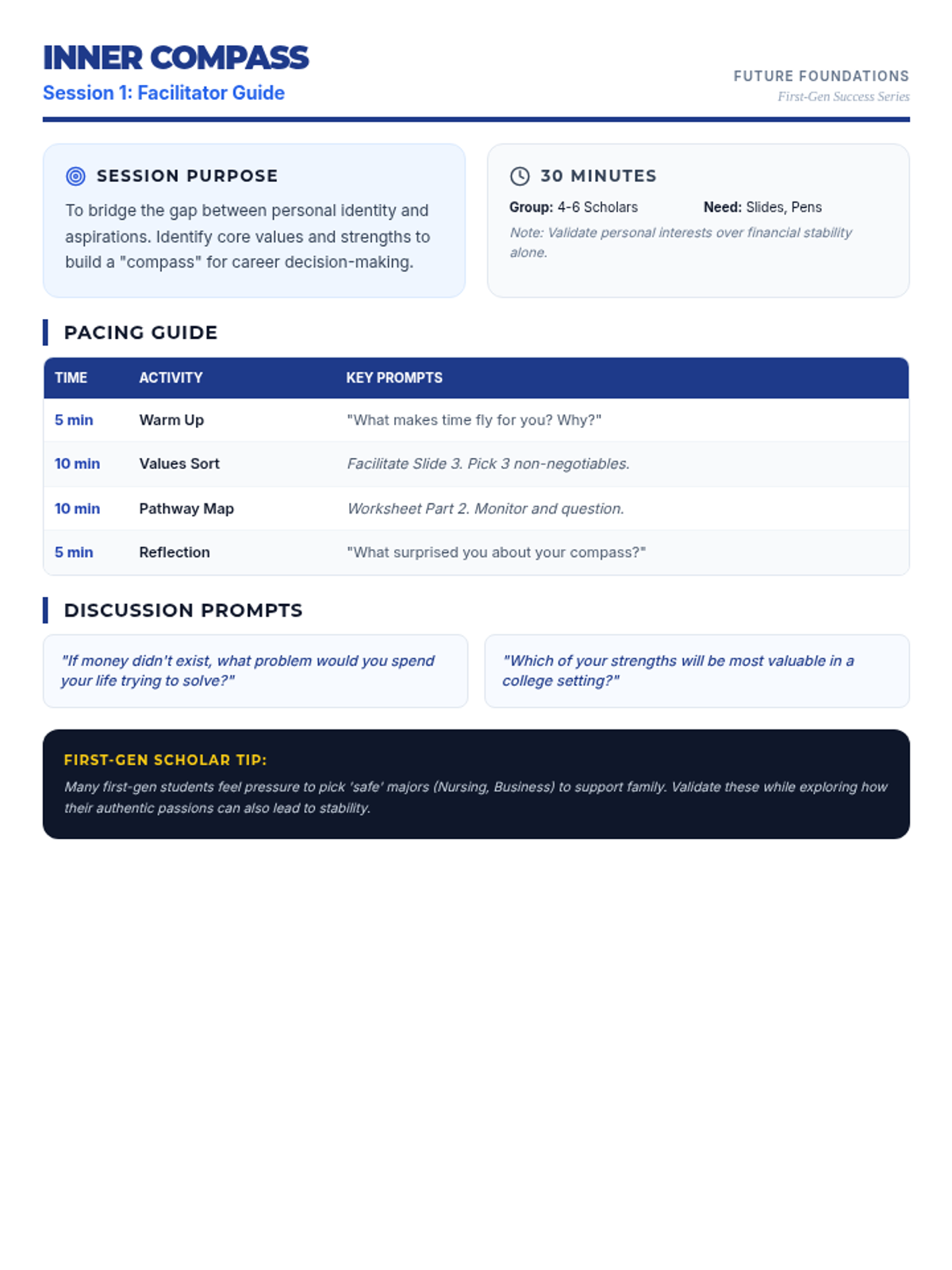
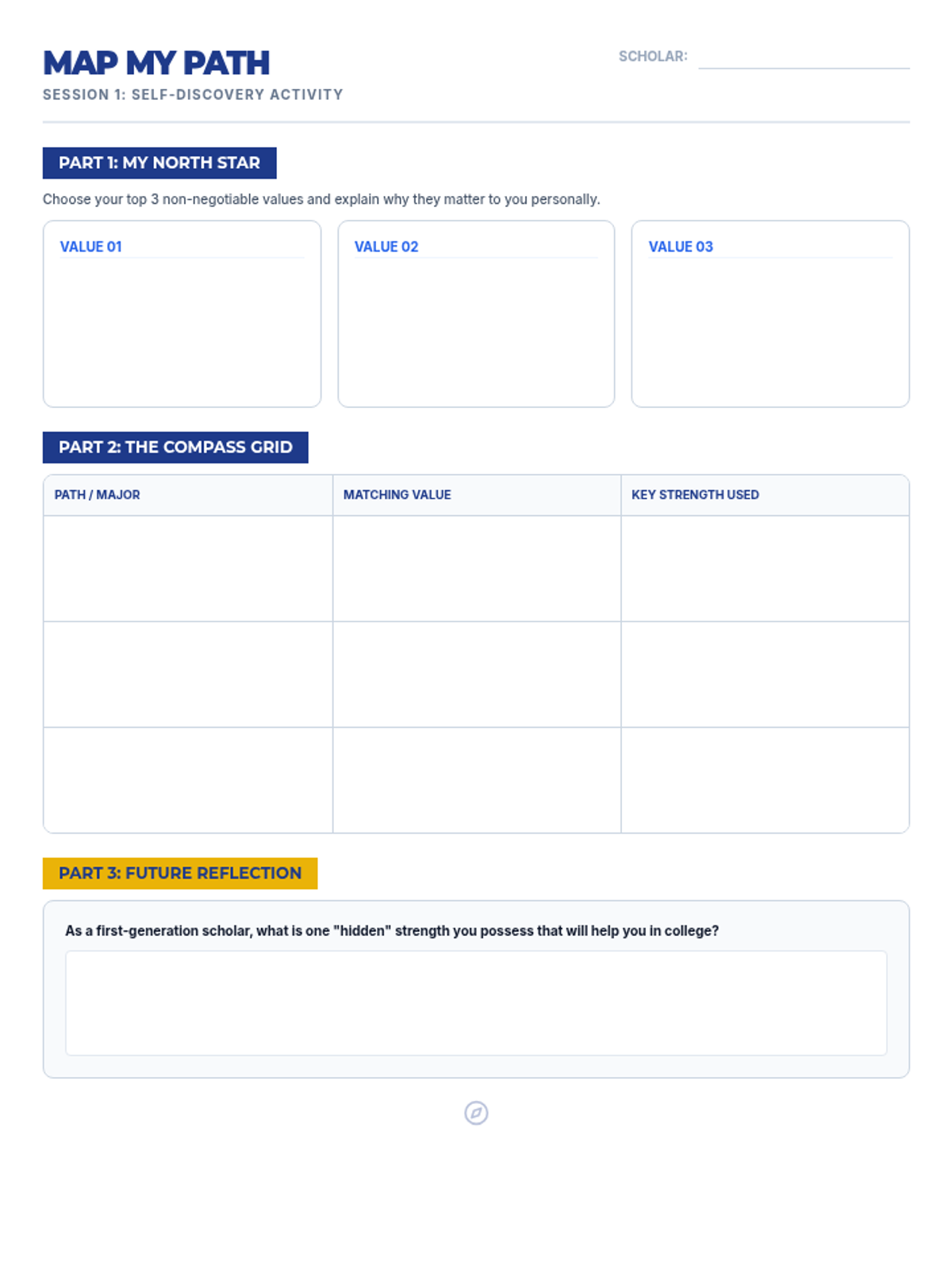
Students explore their personal values, strengths, and interests to identify career paths that align with their authentic selves.
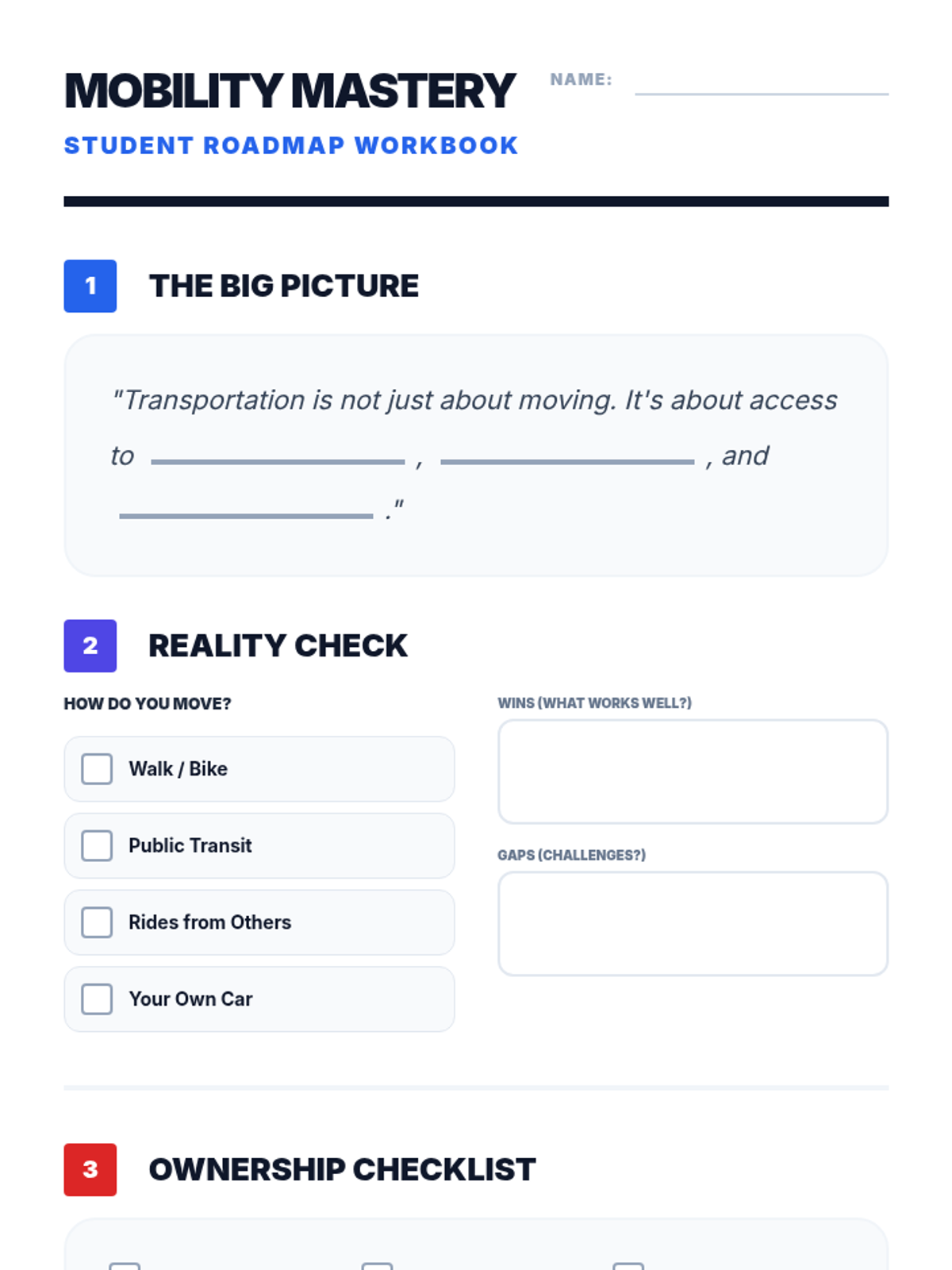
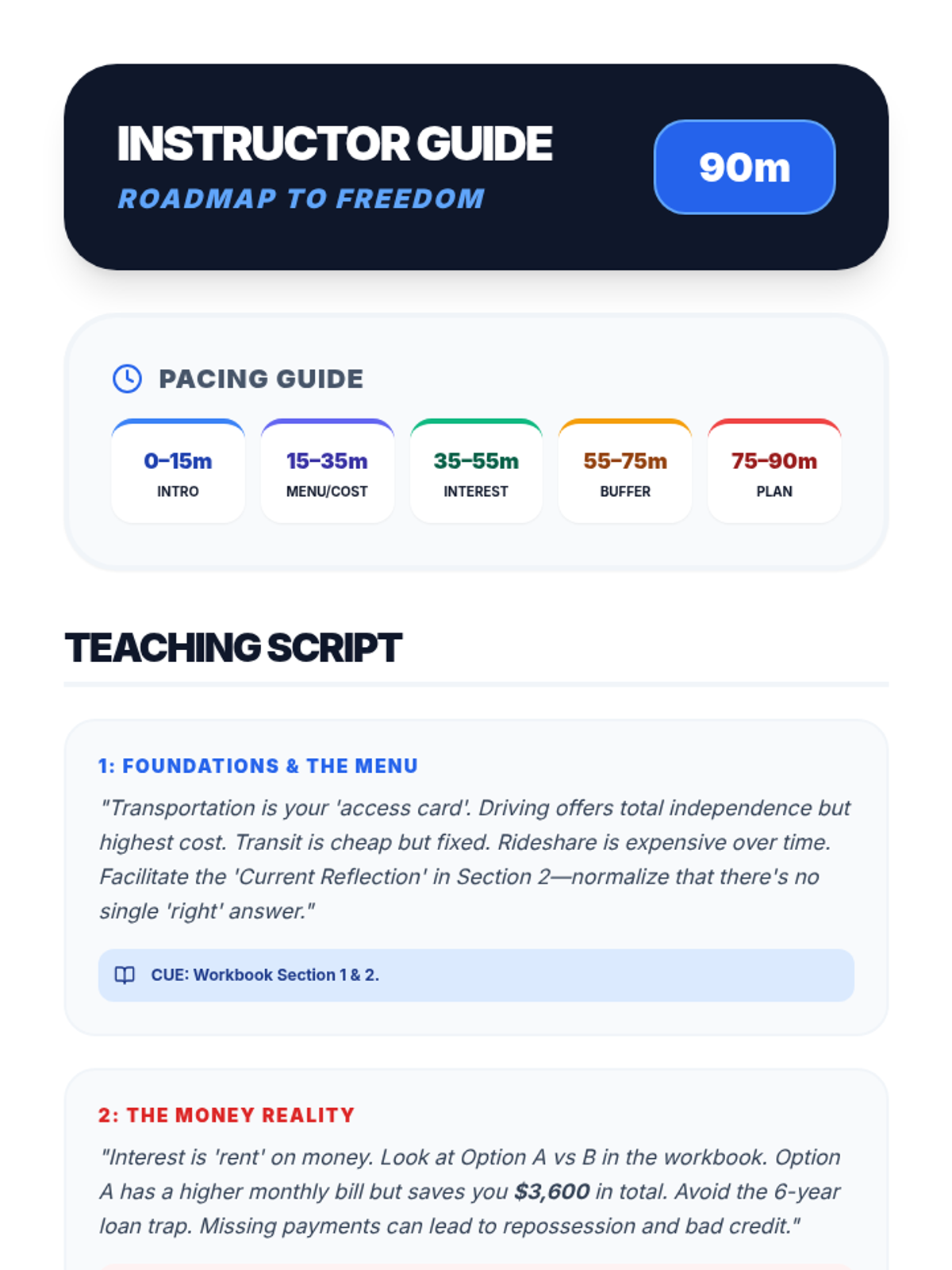
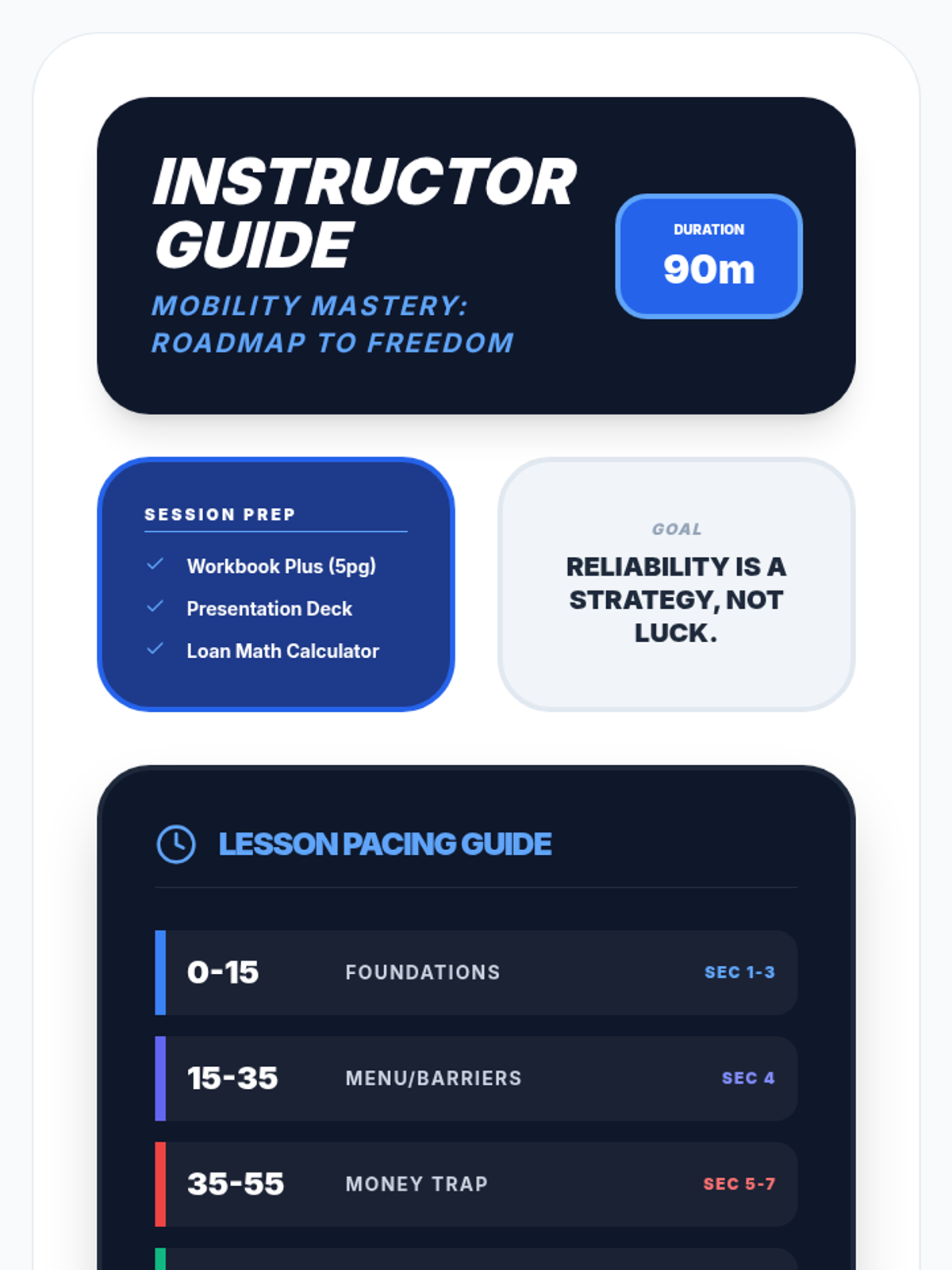
A 90-minute session covering transportation types, the true cost of driving, car financing, interest rates, and personal mobility planning.
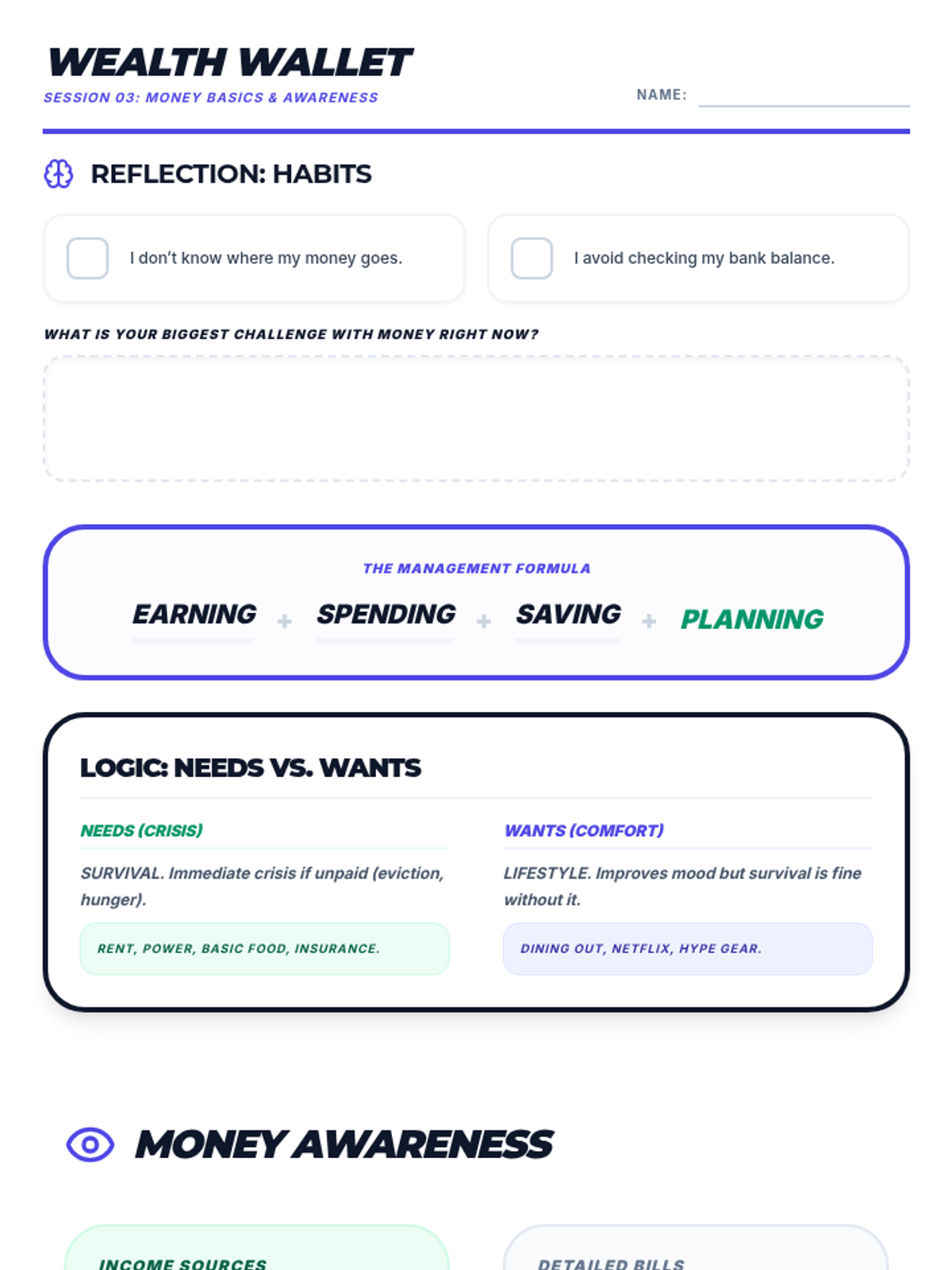
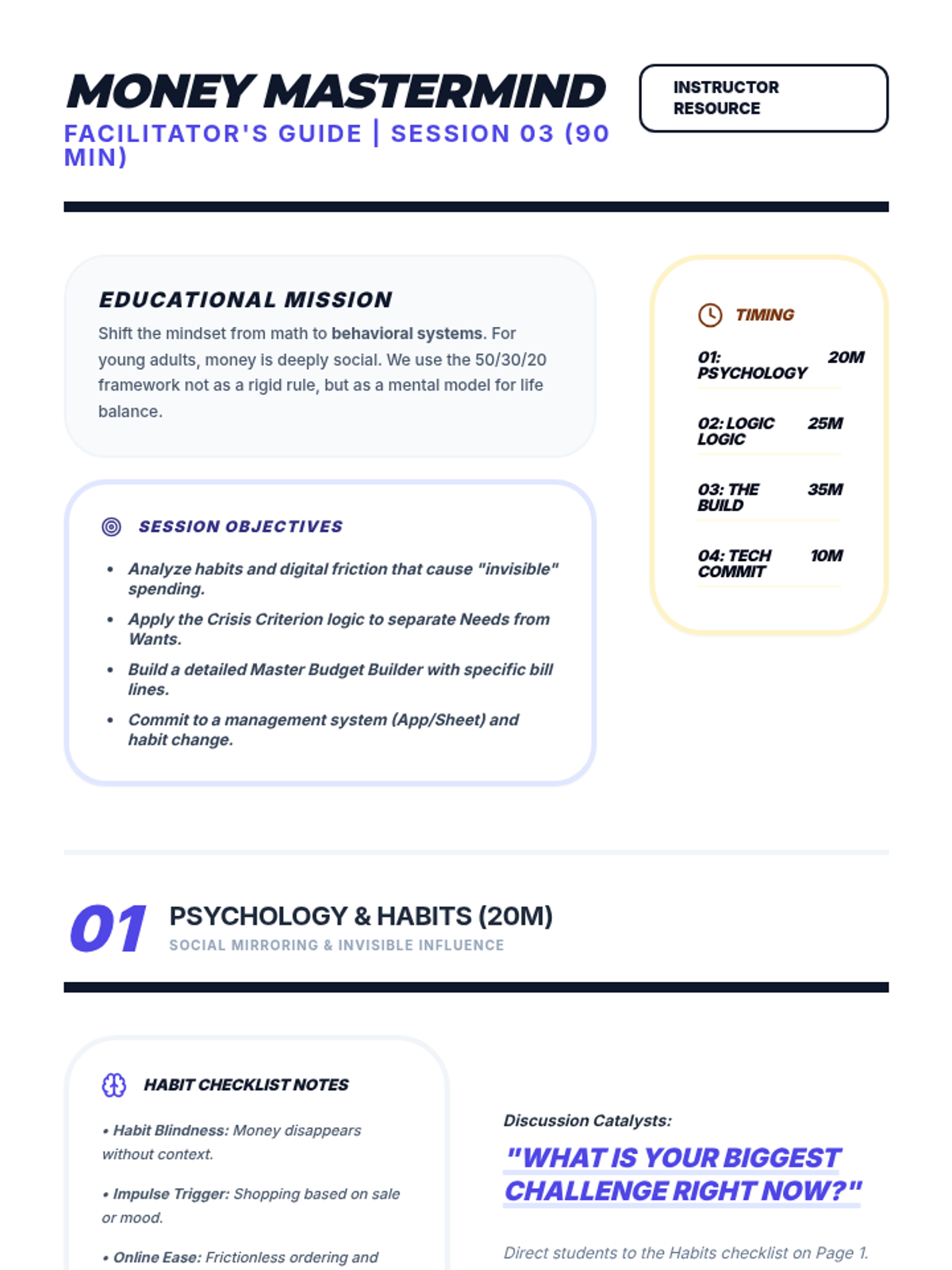
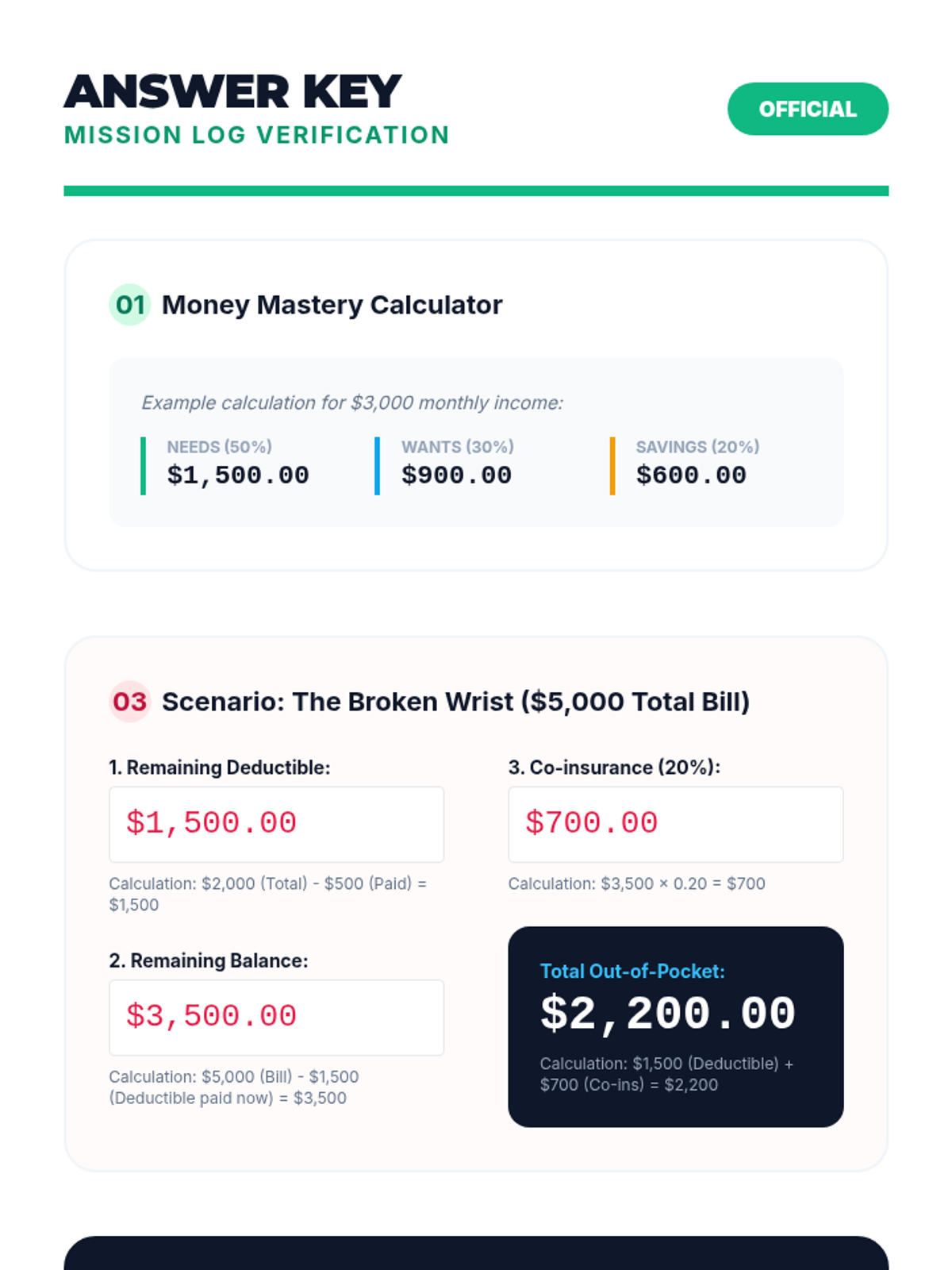
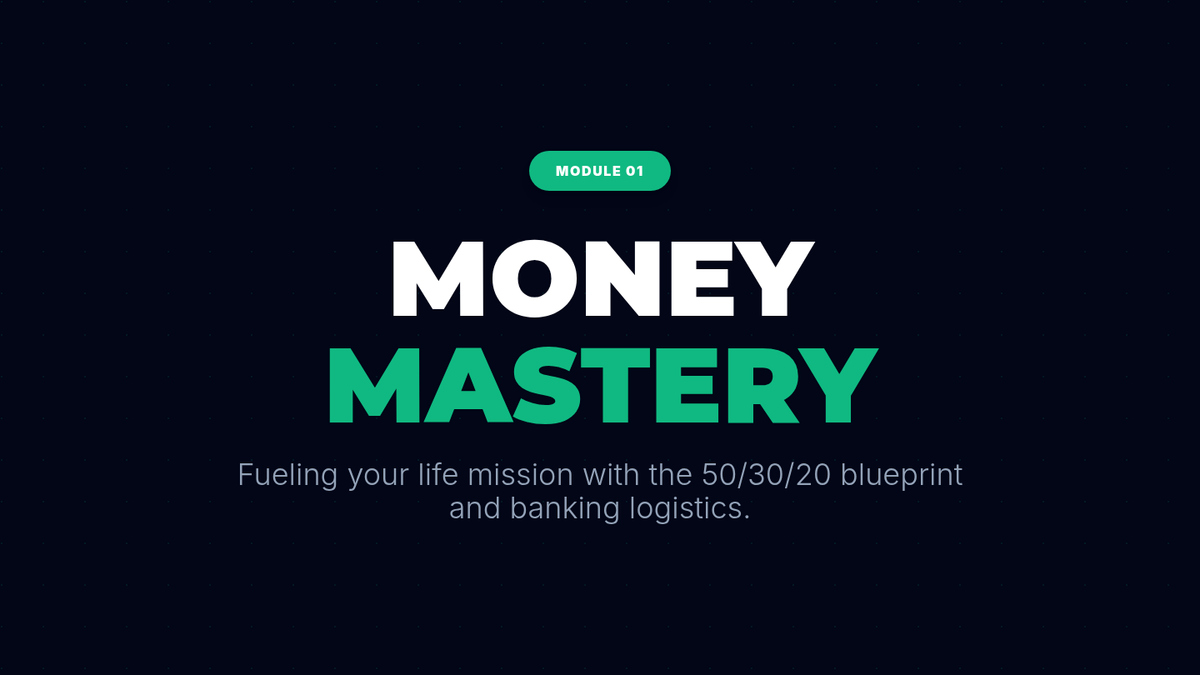
A deep dive into the basics of money management, tracking income and expenses, and building a starter budget. This session focuses on transitioning from reactive spending to proactive planning.
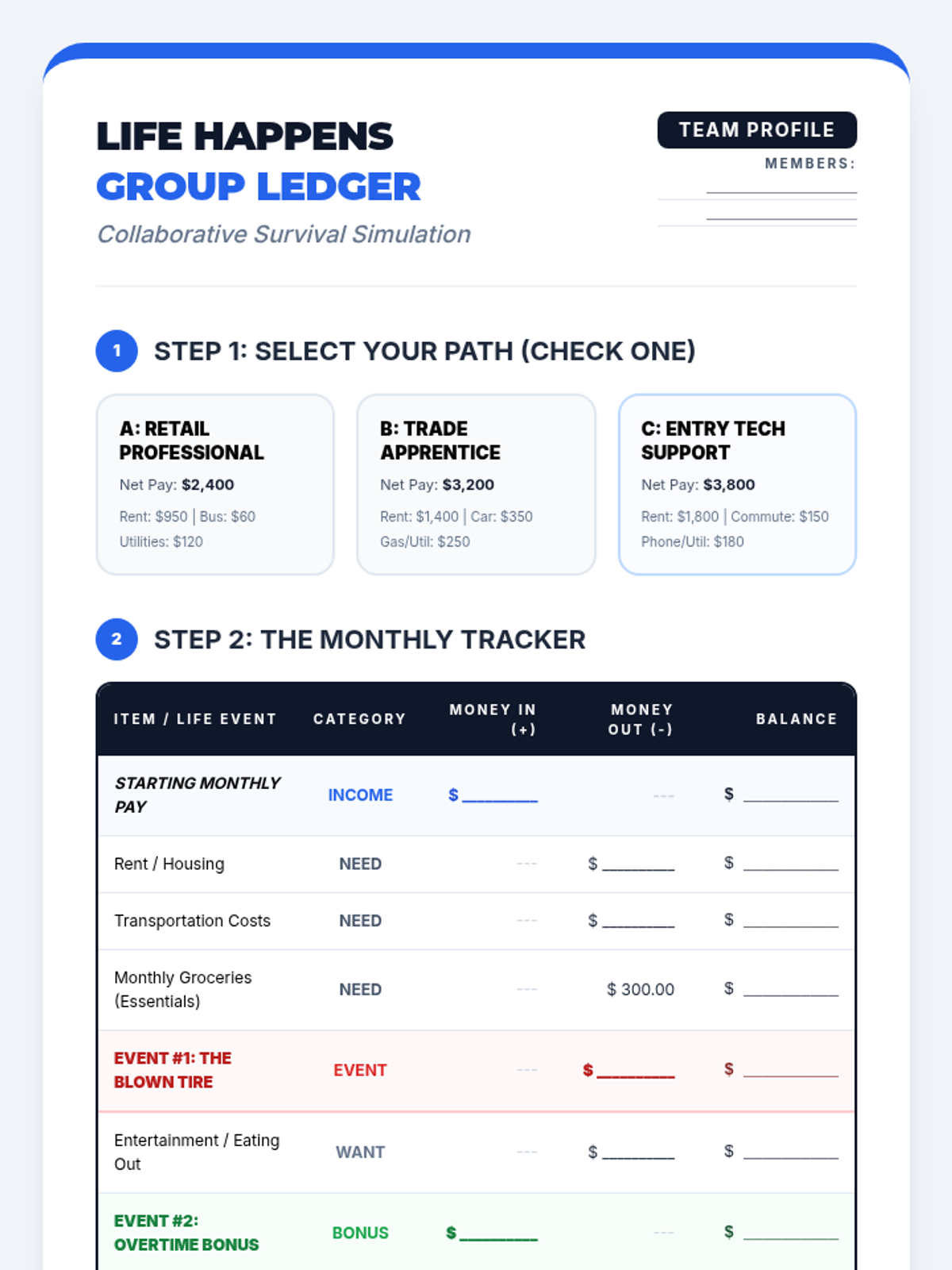
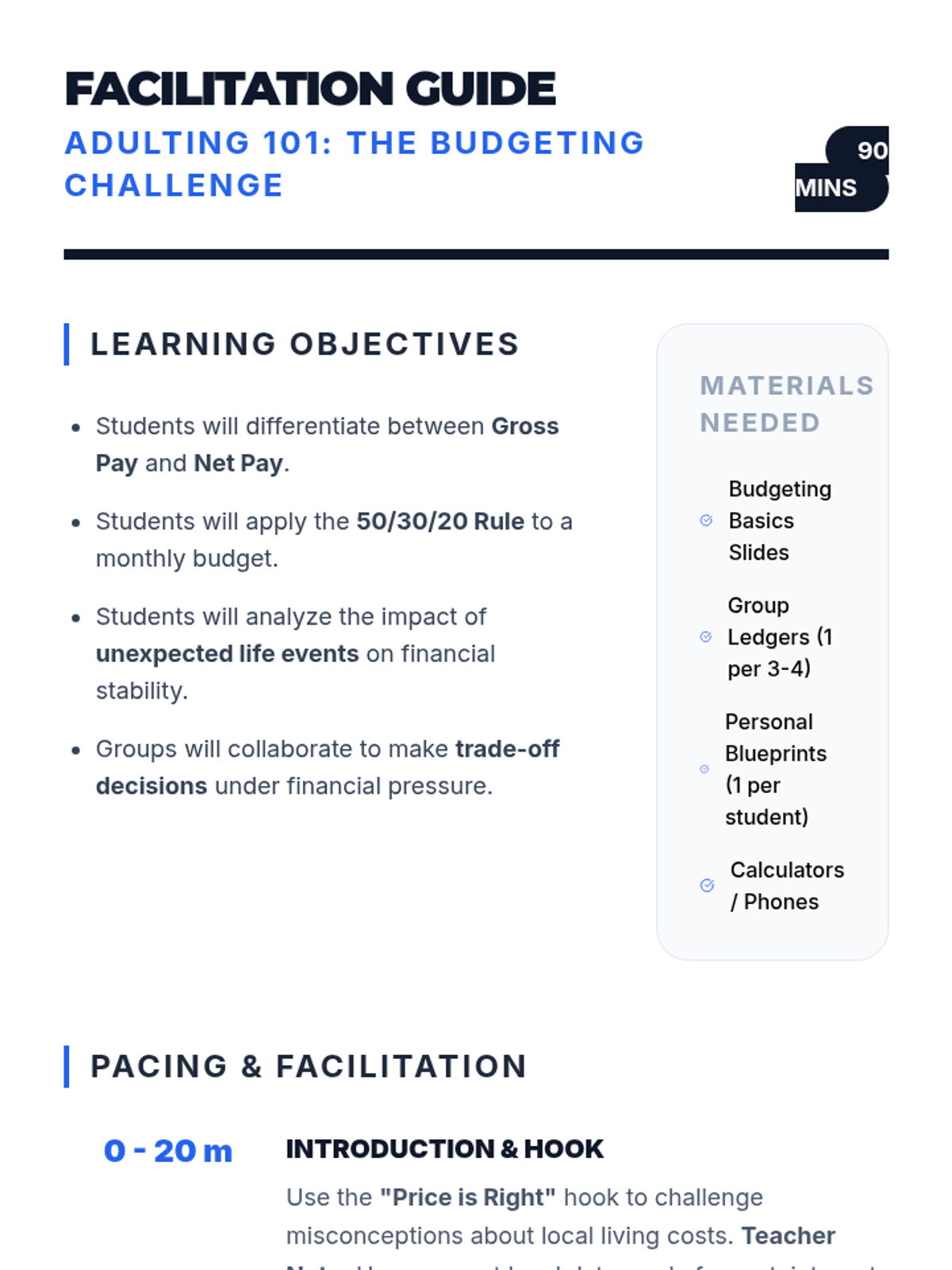
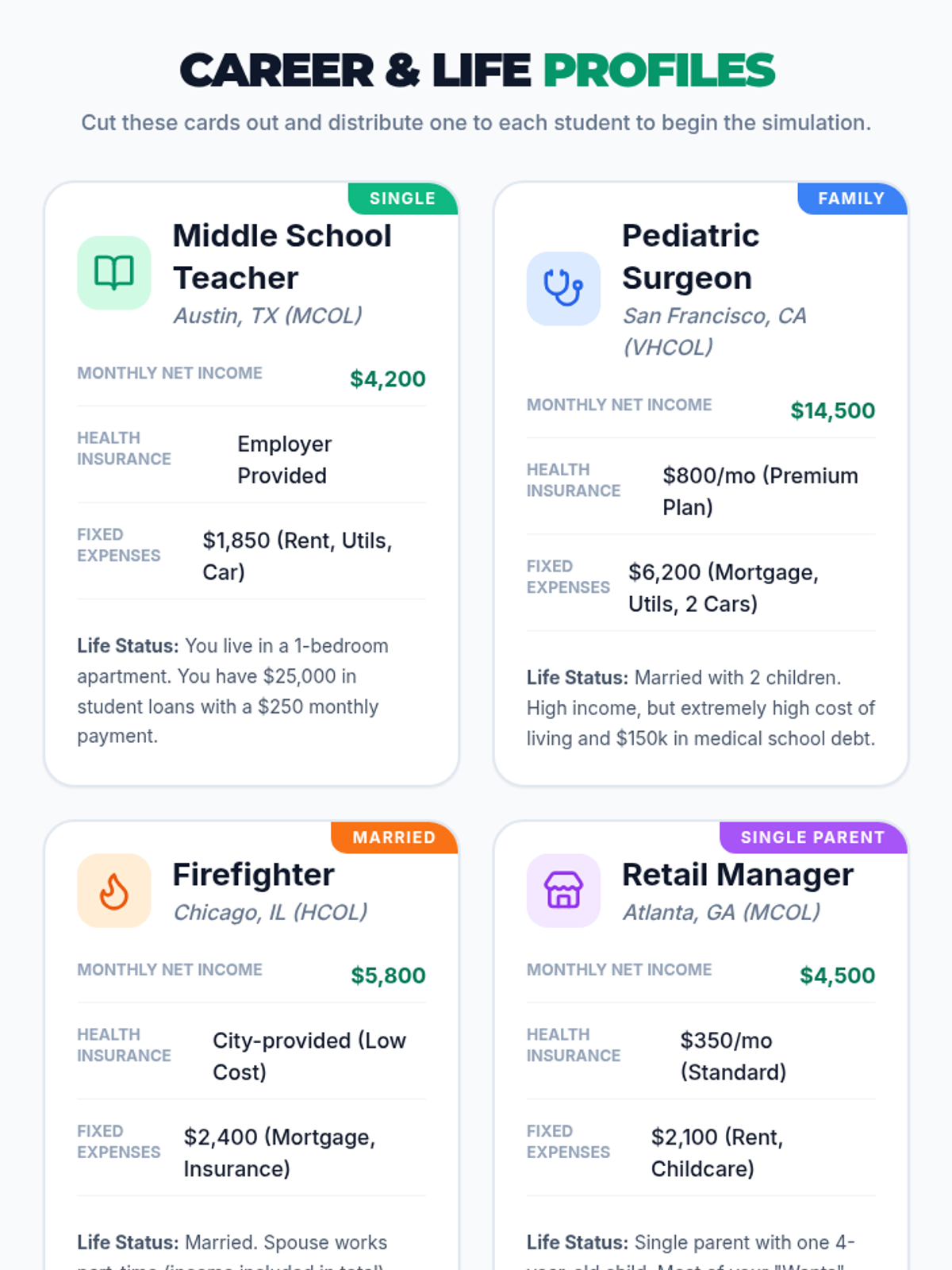
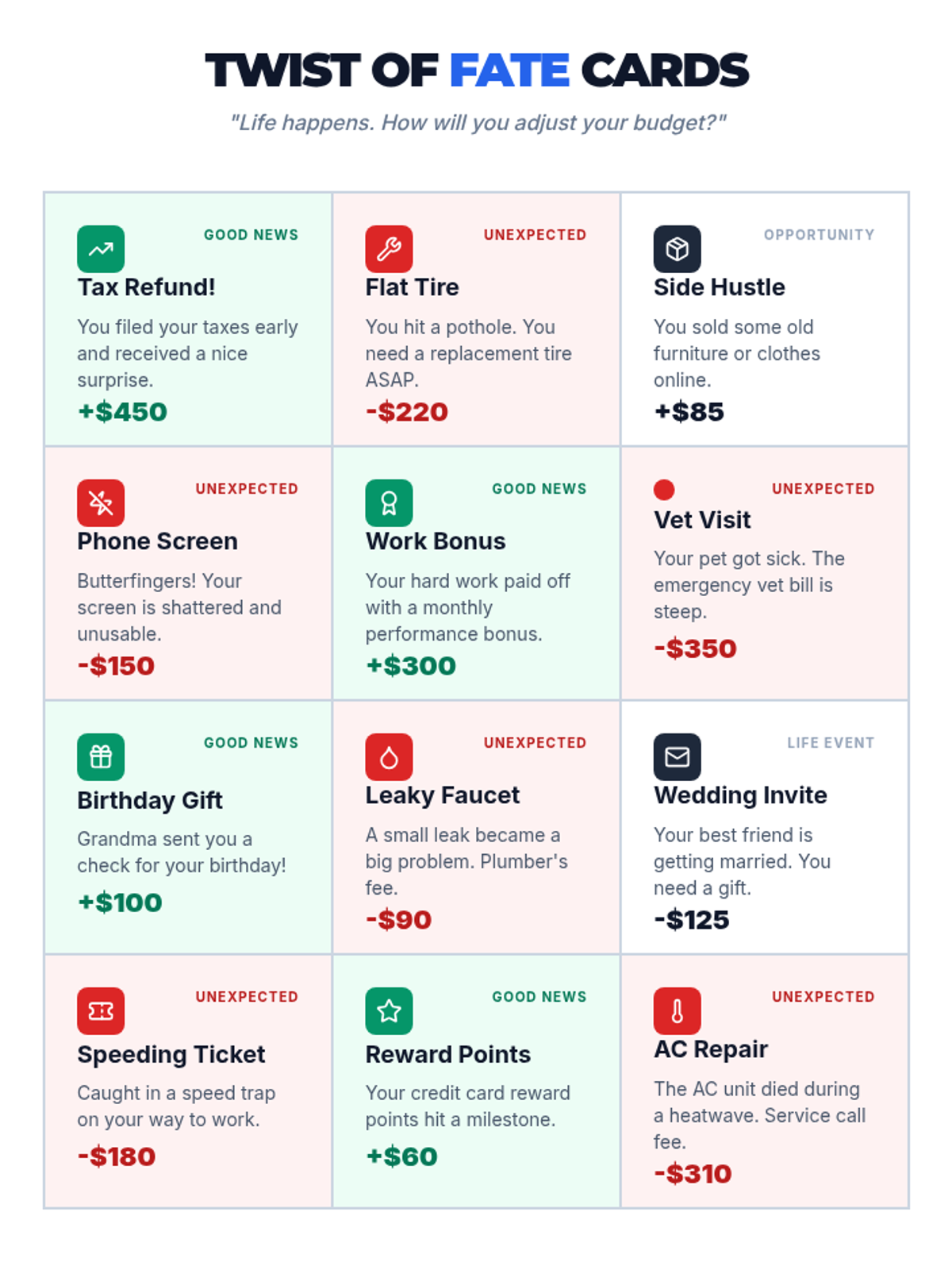
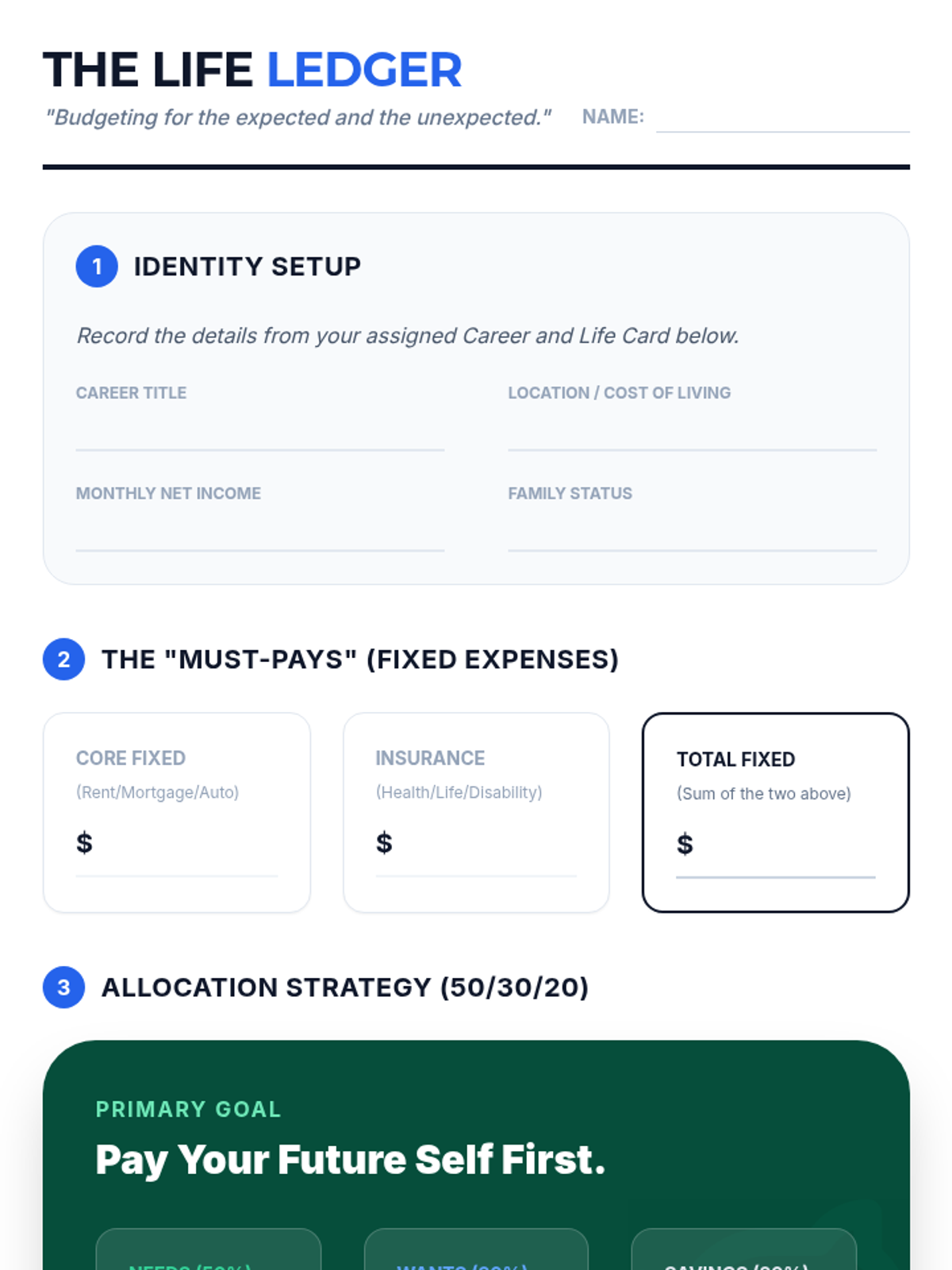
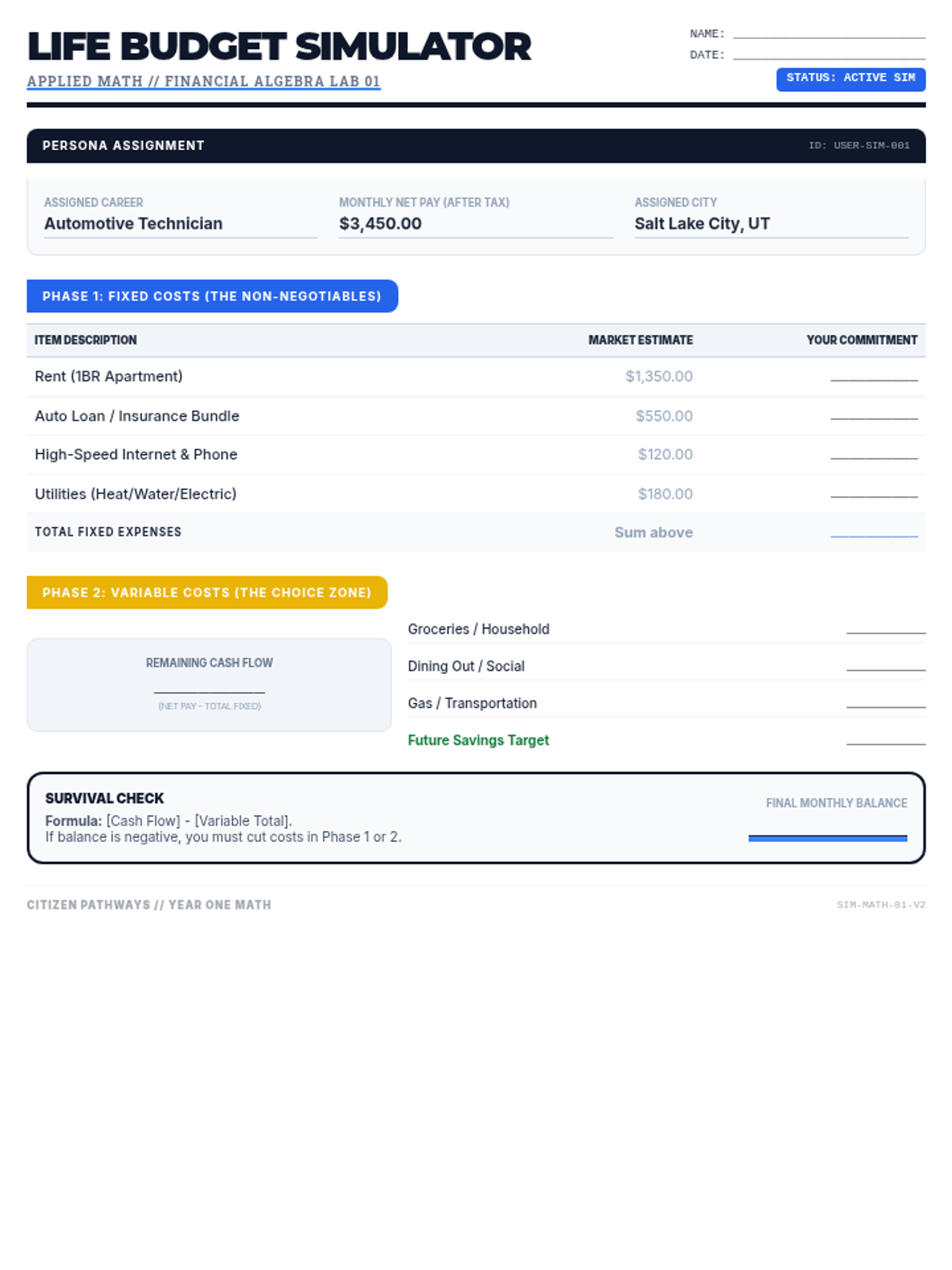
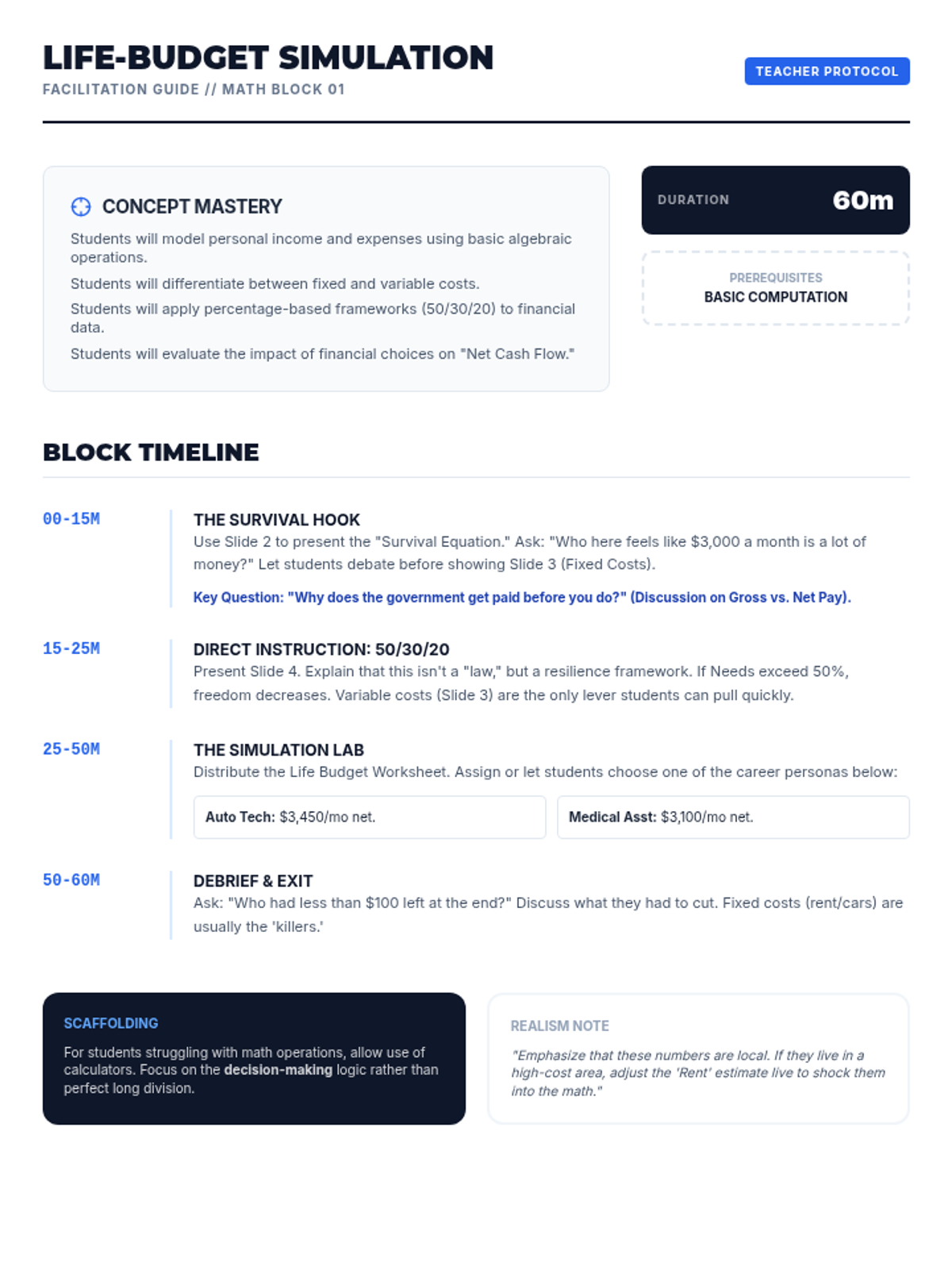
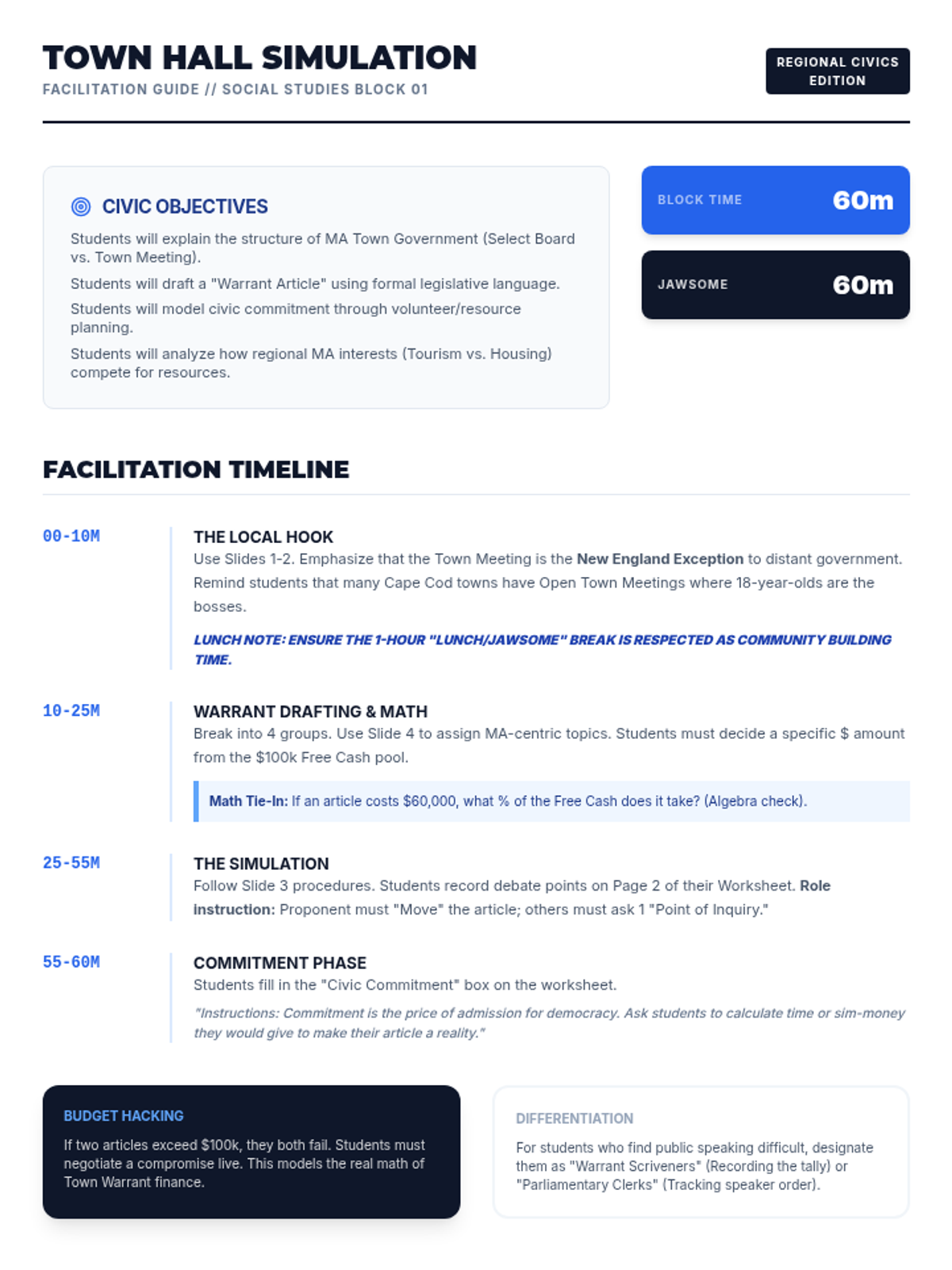
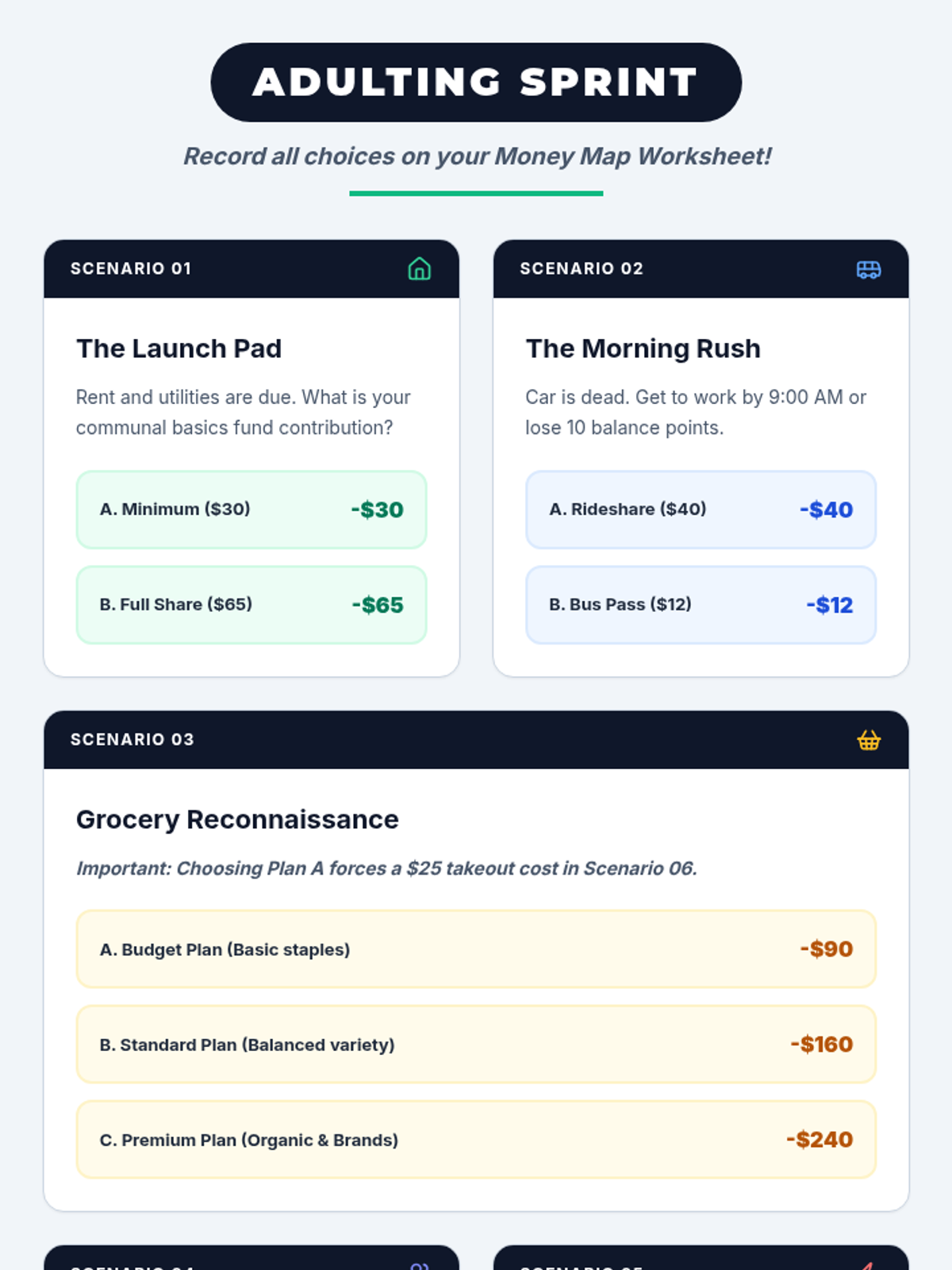
A 90-minute workshop on financial survival where students navigate a 'Life Happens' group simulation to understand income, taxes, and unexpected costs.
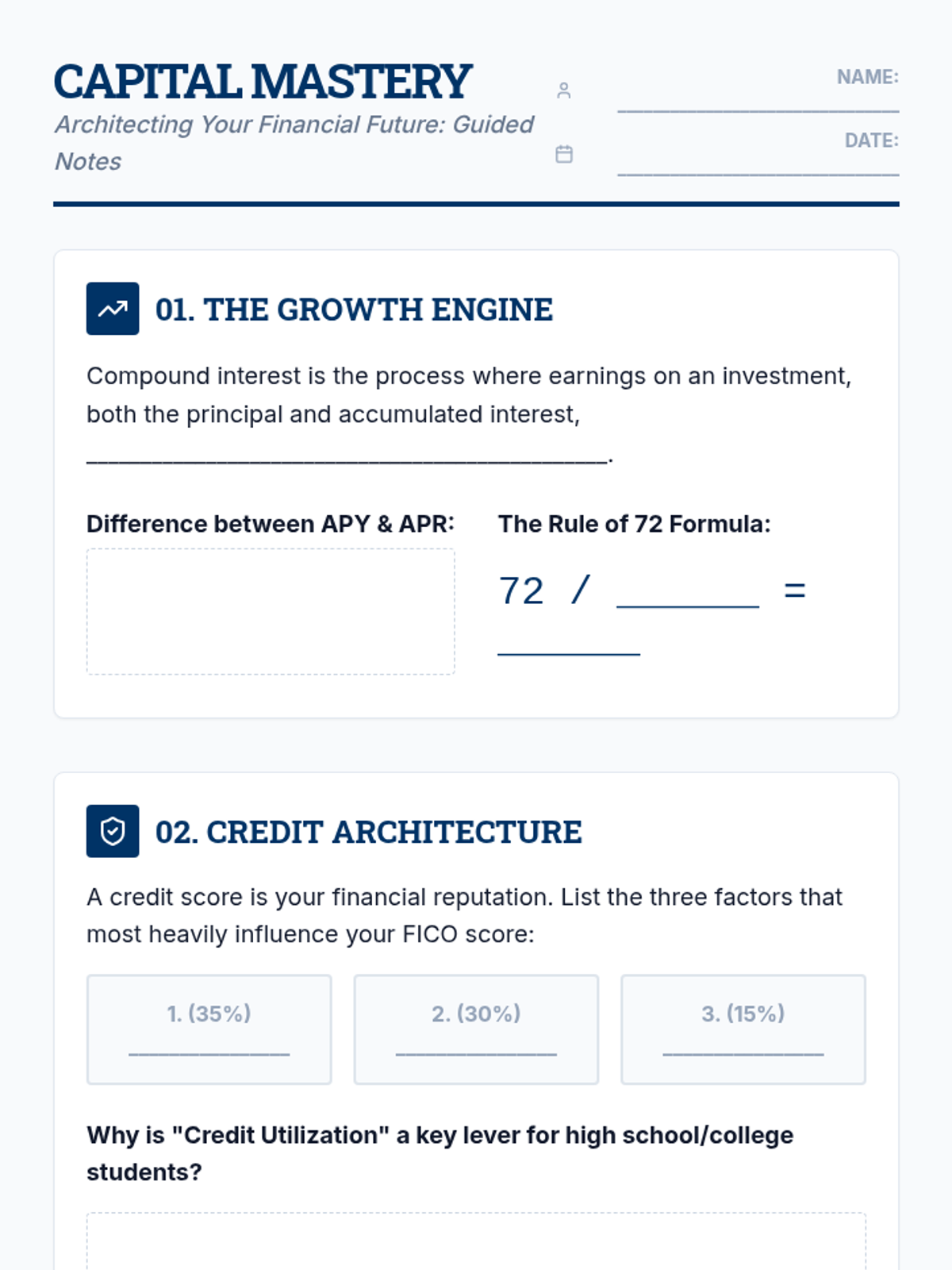
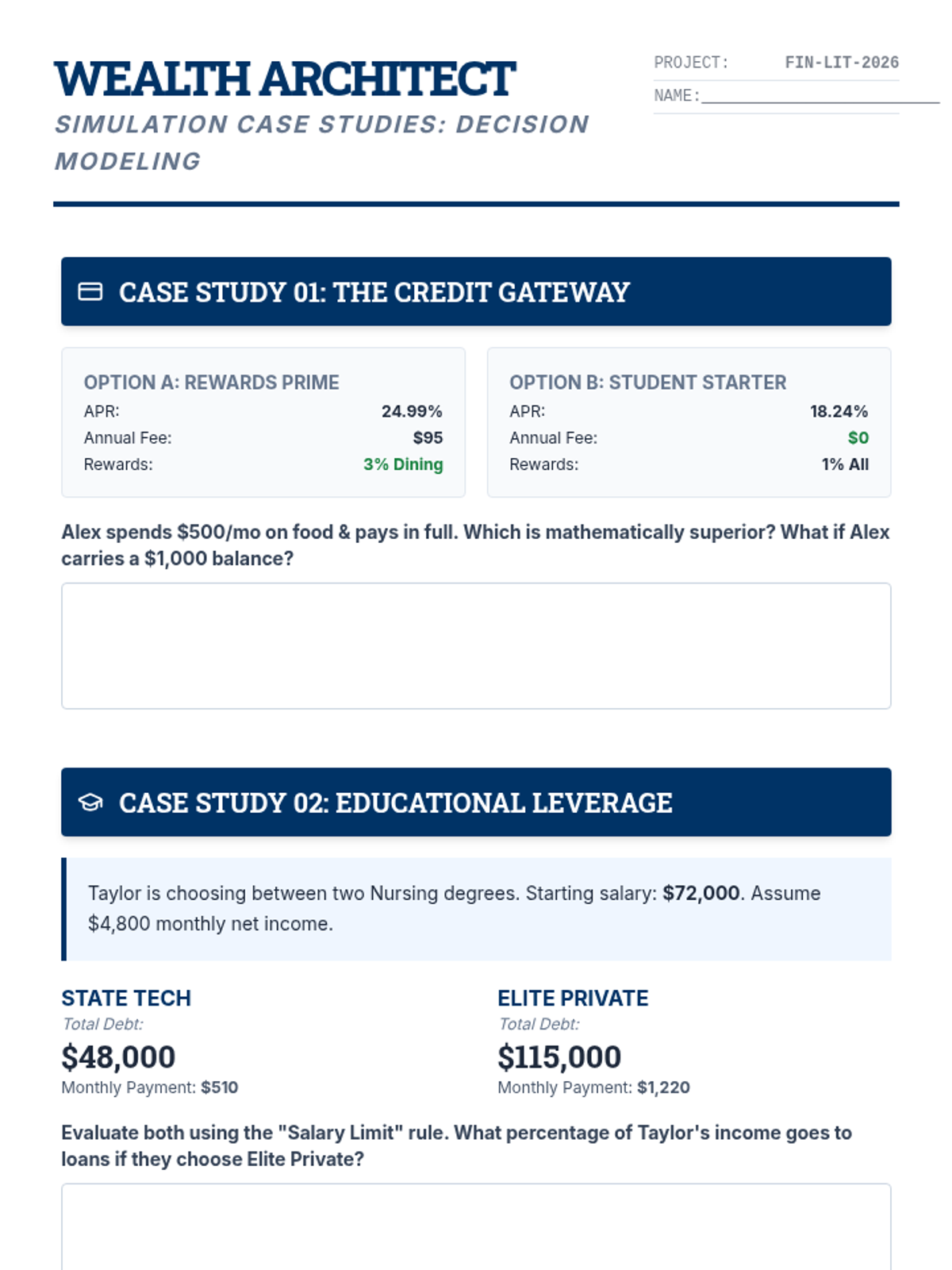
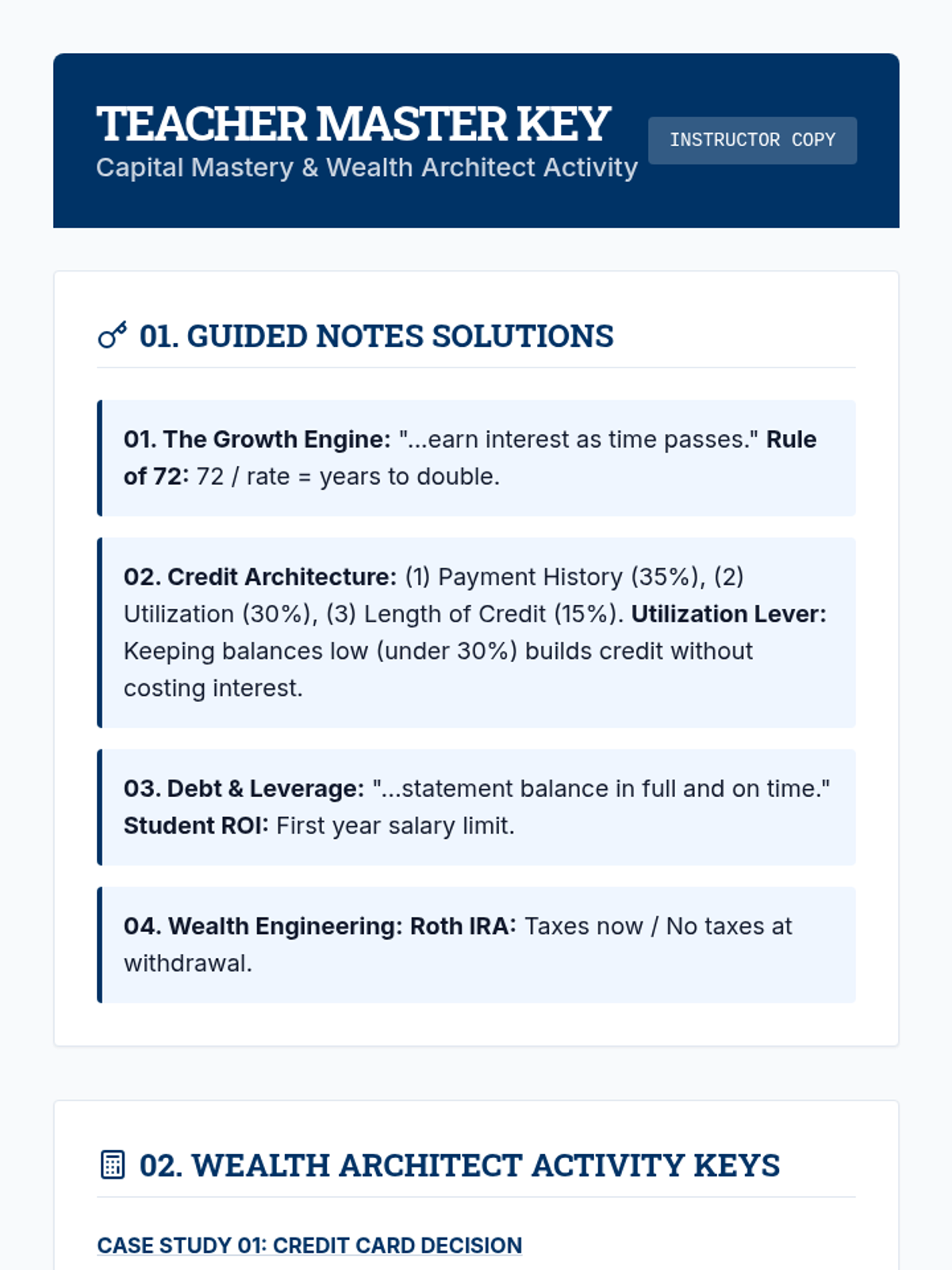
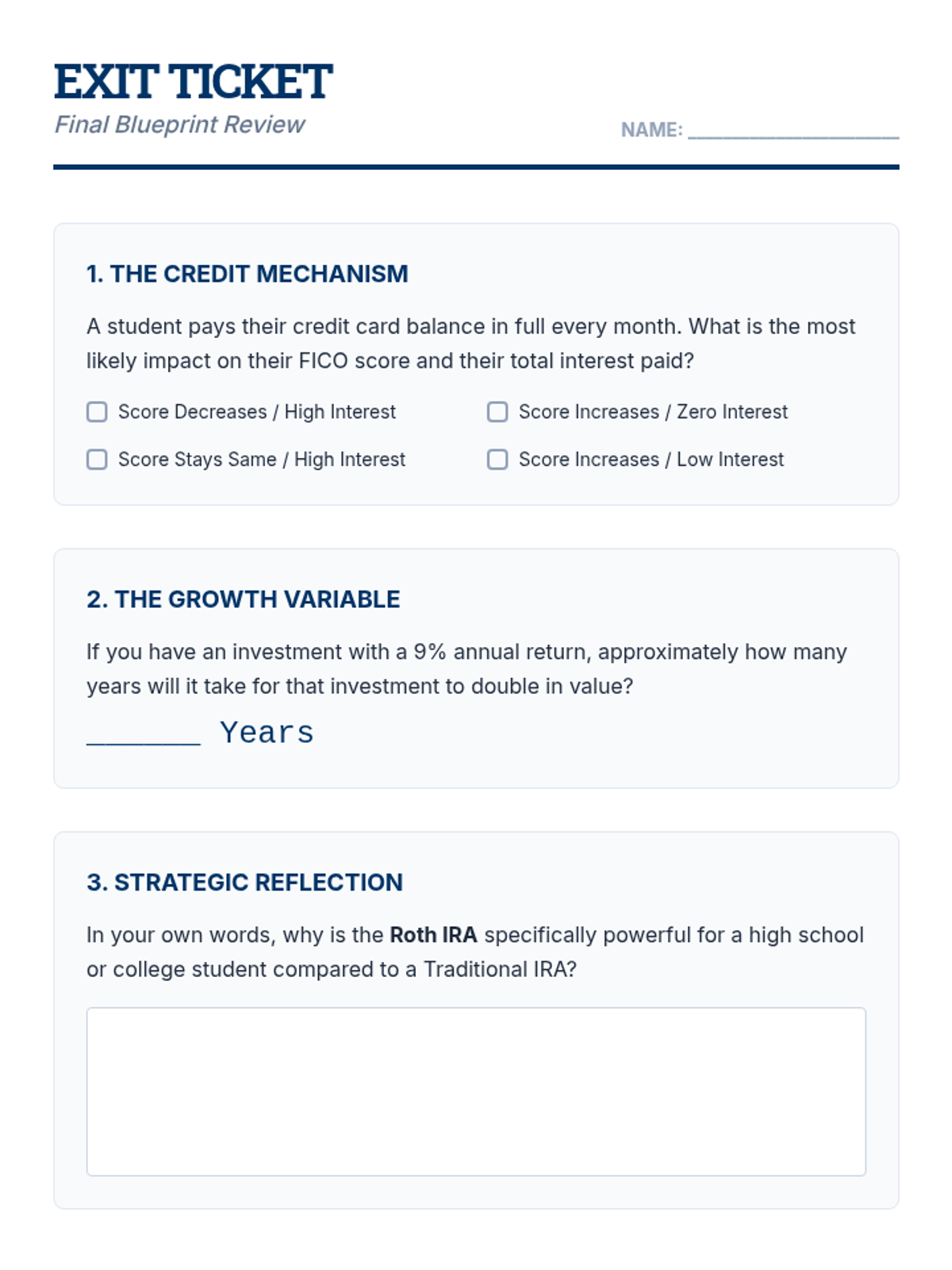
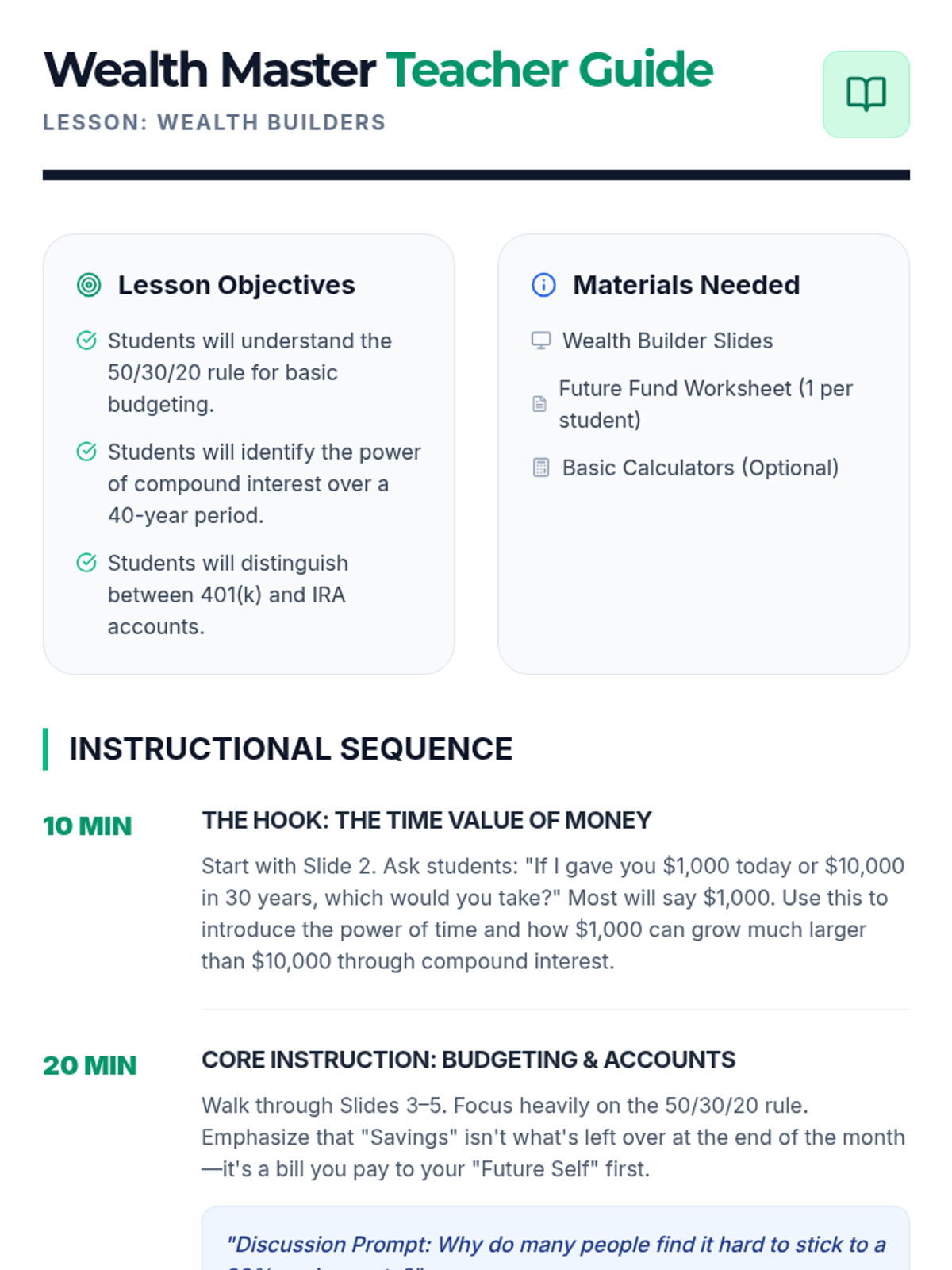
A high-level financial literacy lesson for advanced high school students, focusing on the mechanics of wealth building, credit architecture, and strategic debt management through the lens of long-term financial engineering.
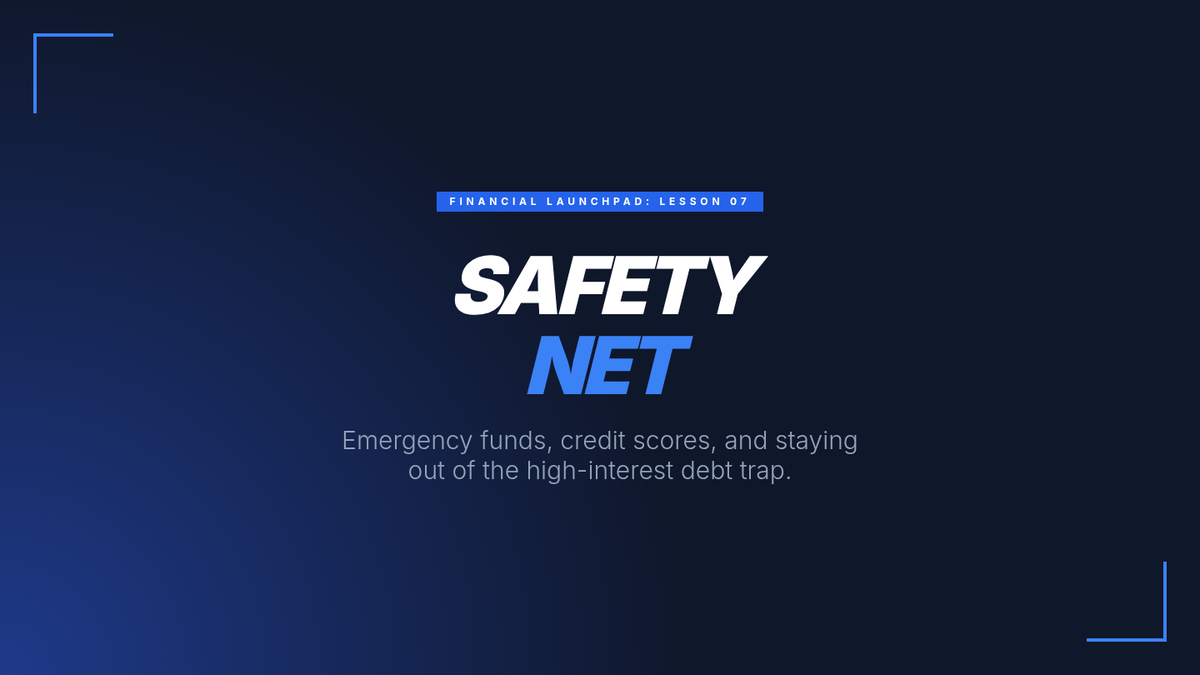
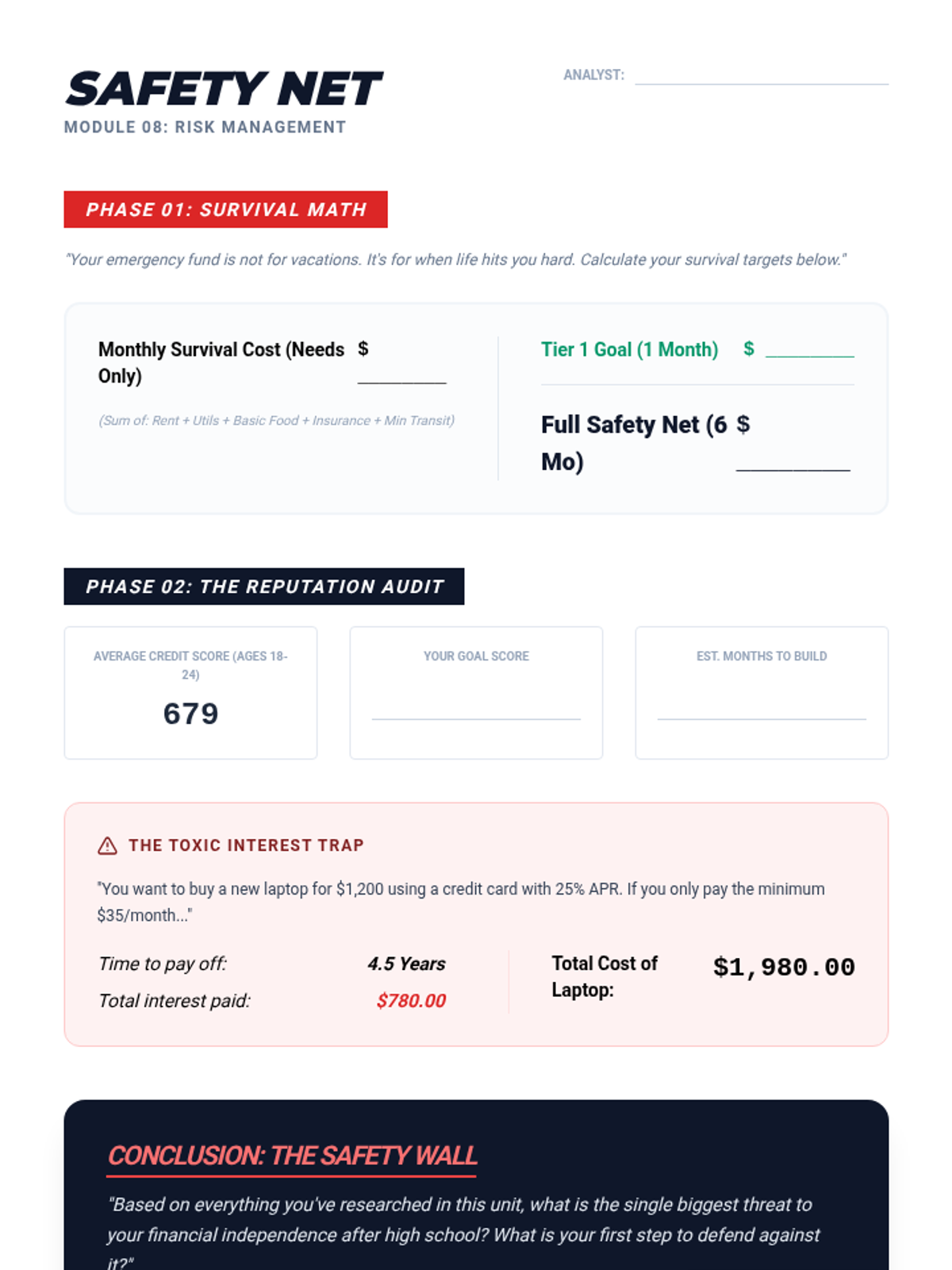
Exploring emergency funds, the basics of credit scores, and strategies for avoiding high-interest debt after high school.
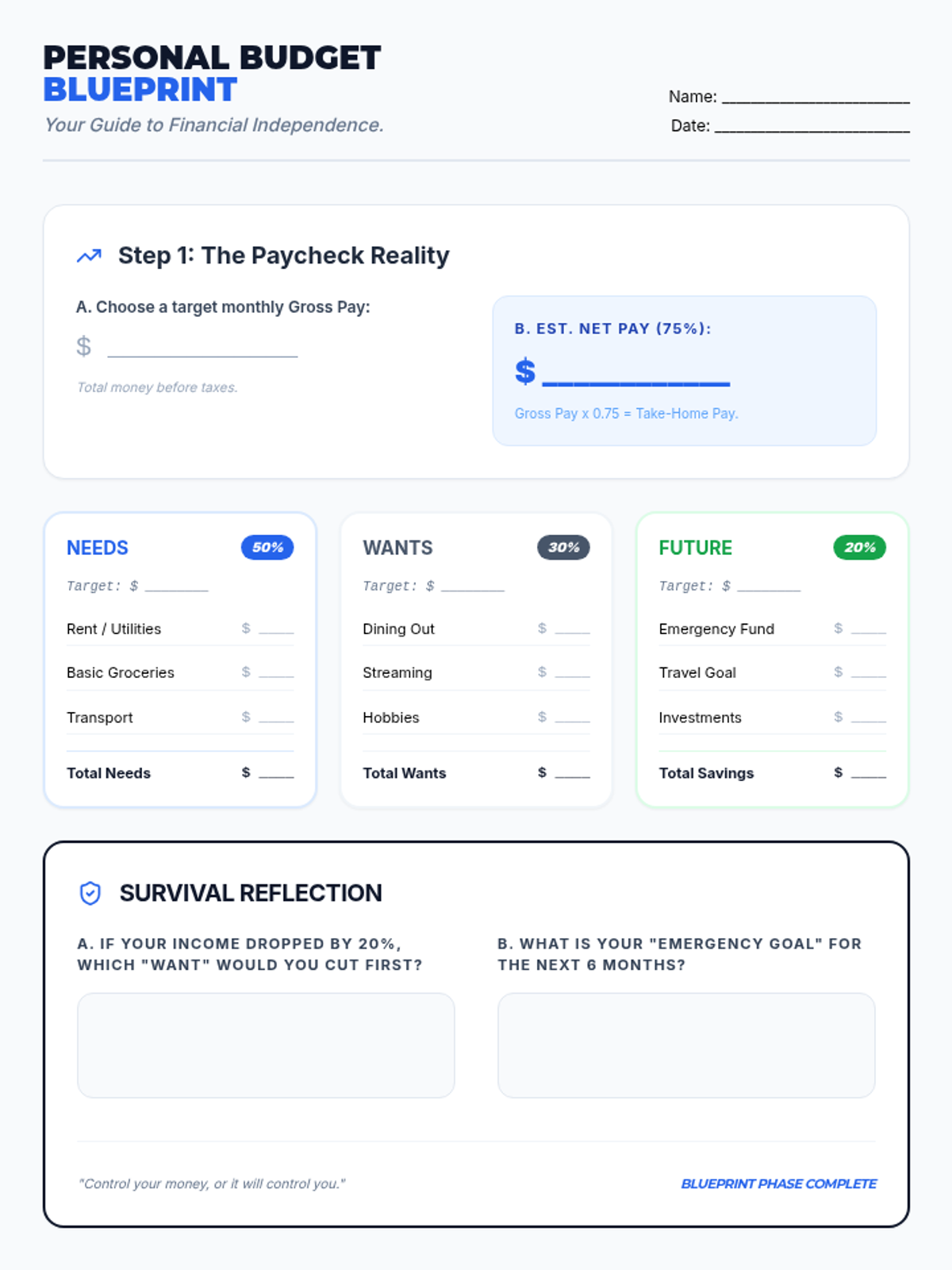
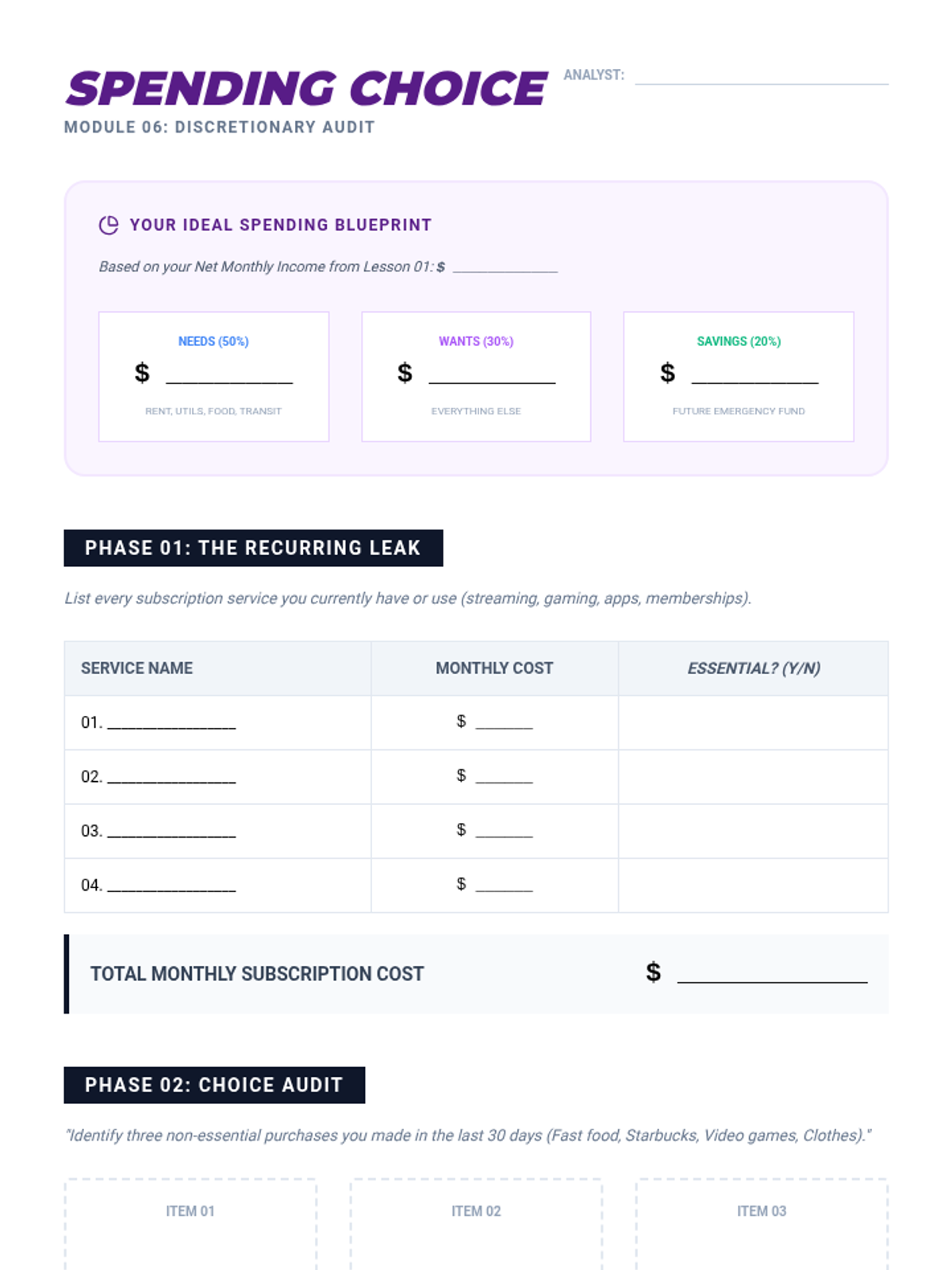
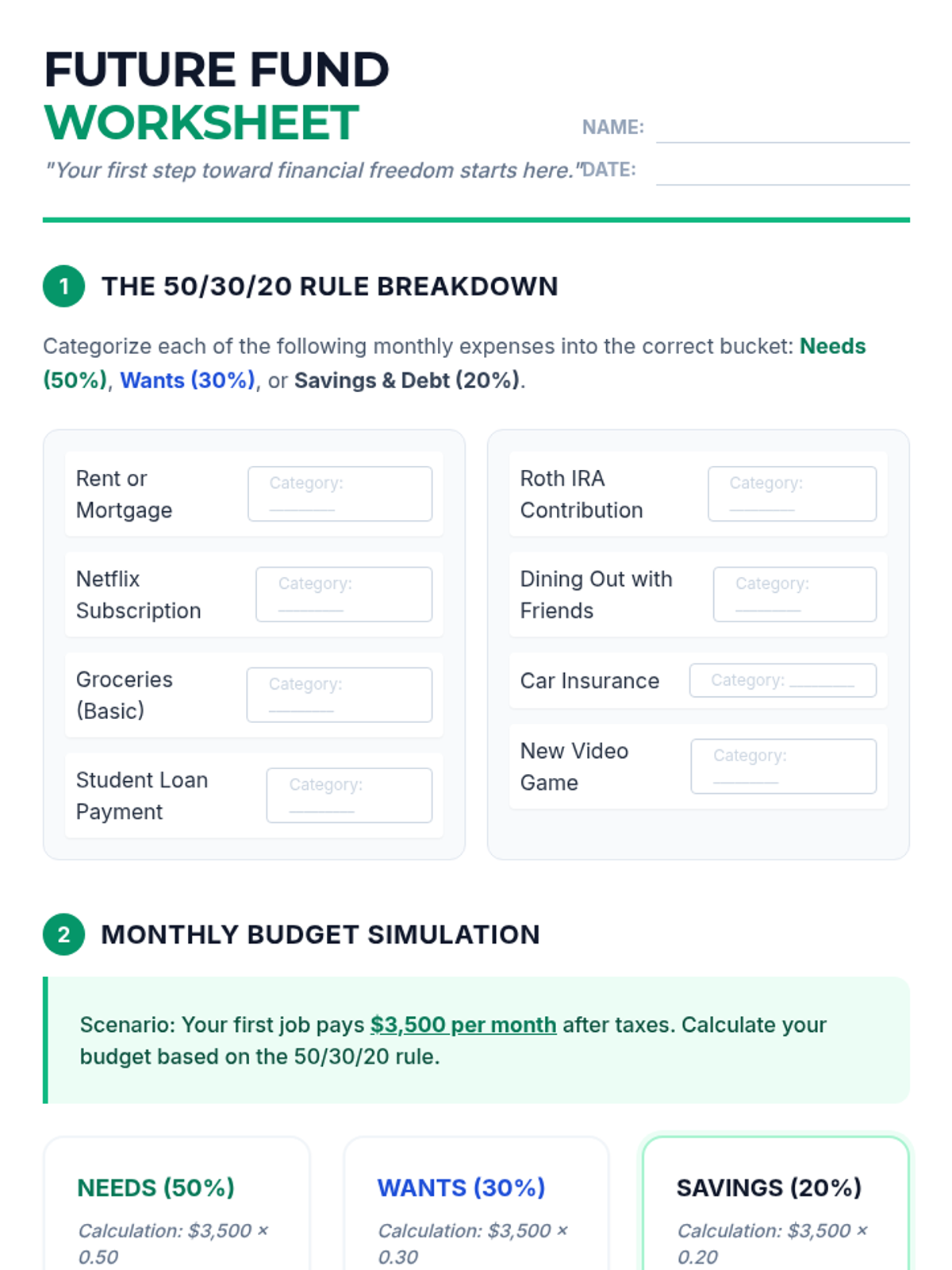
Understanding the 50/30/20 rule, identifying personal "wants" versus "needs," and managing discretionary expenses like subscriptions and entertainment.
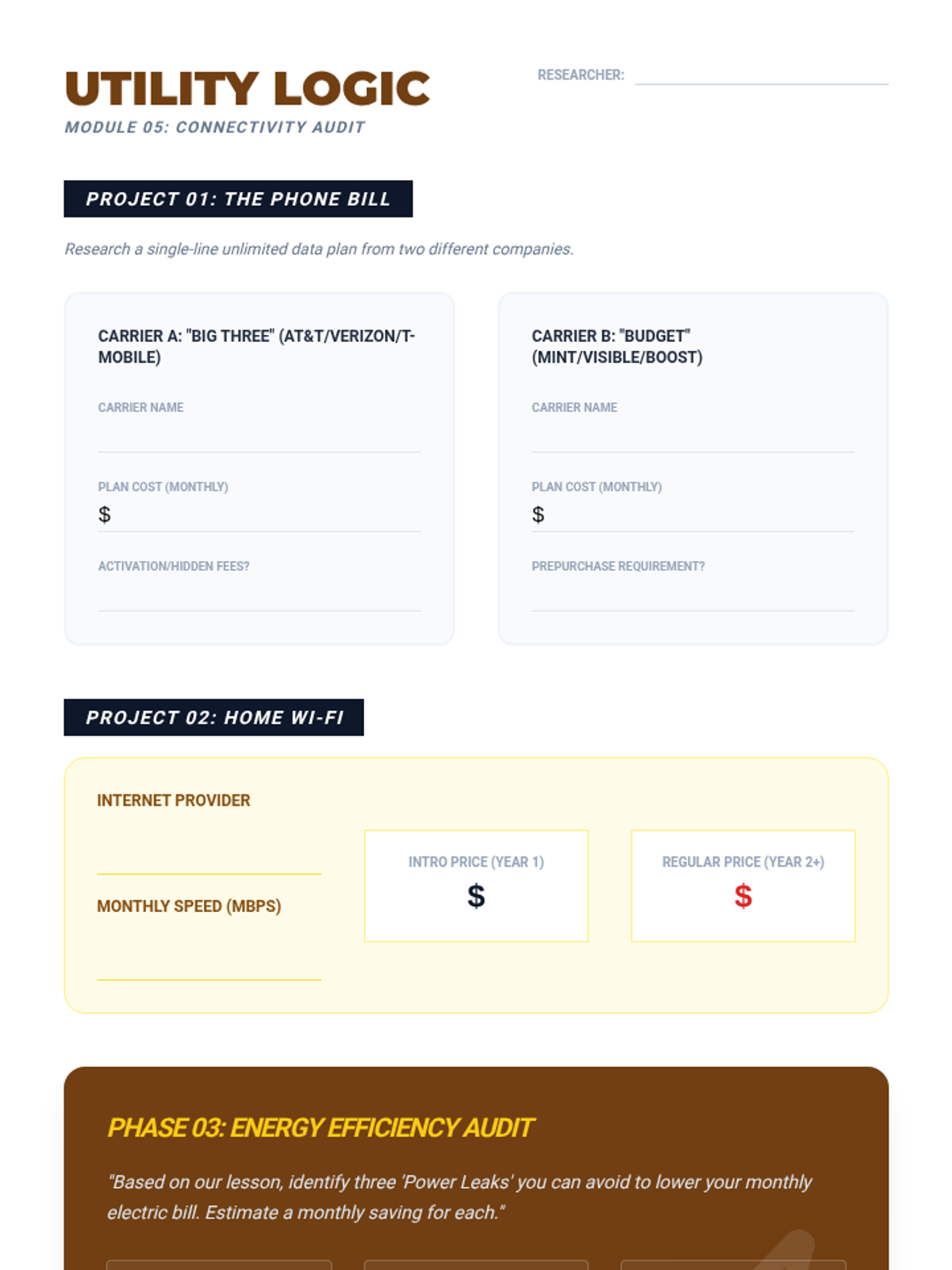
Managing recurring monthly bills like internet, phone plans, and electricity, including strategies for reducing usage and costs.
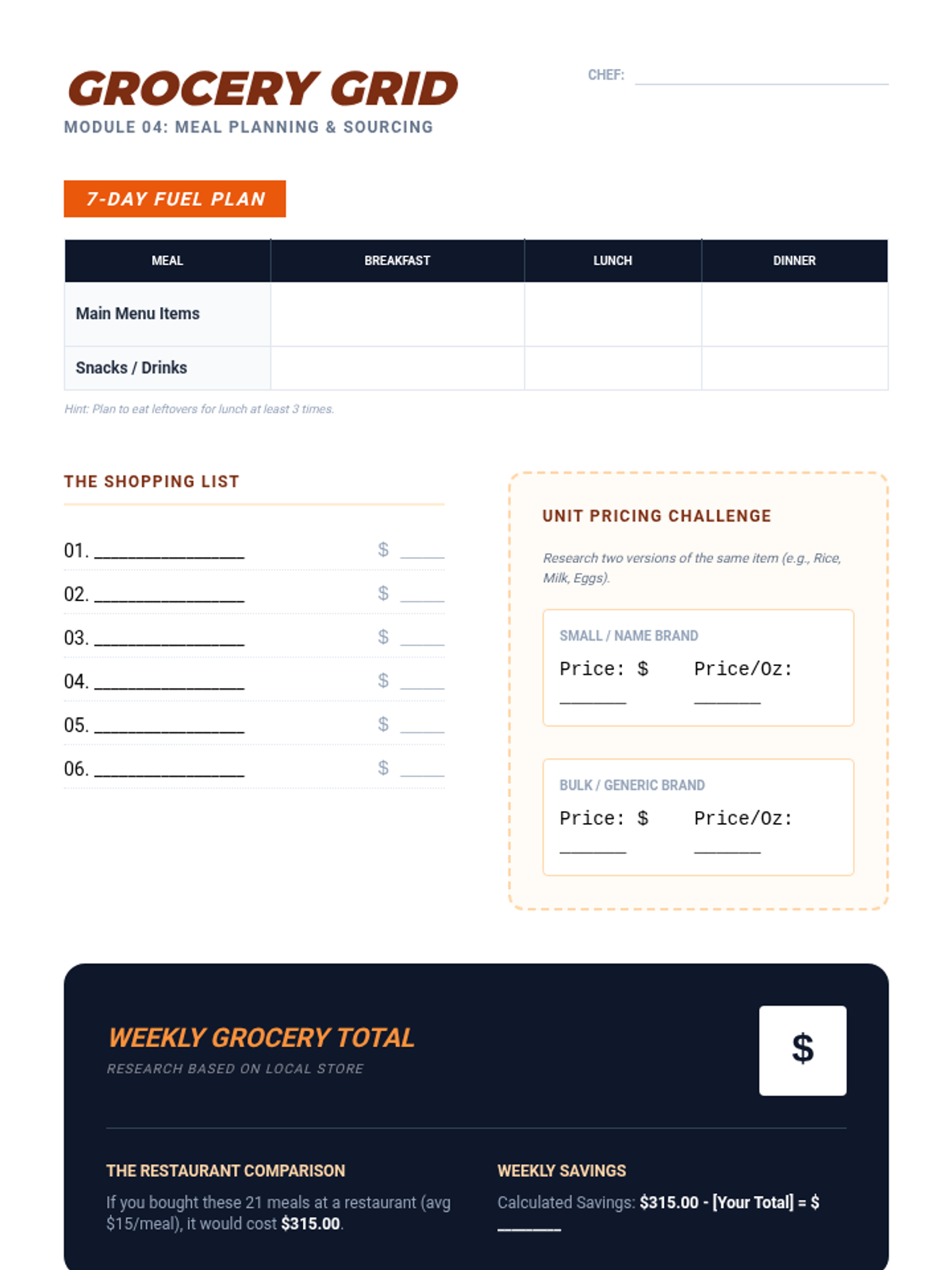
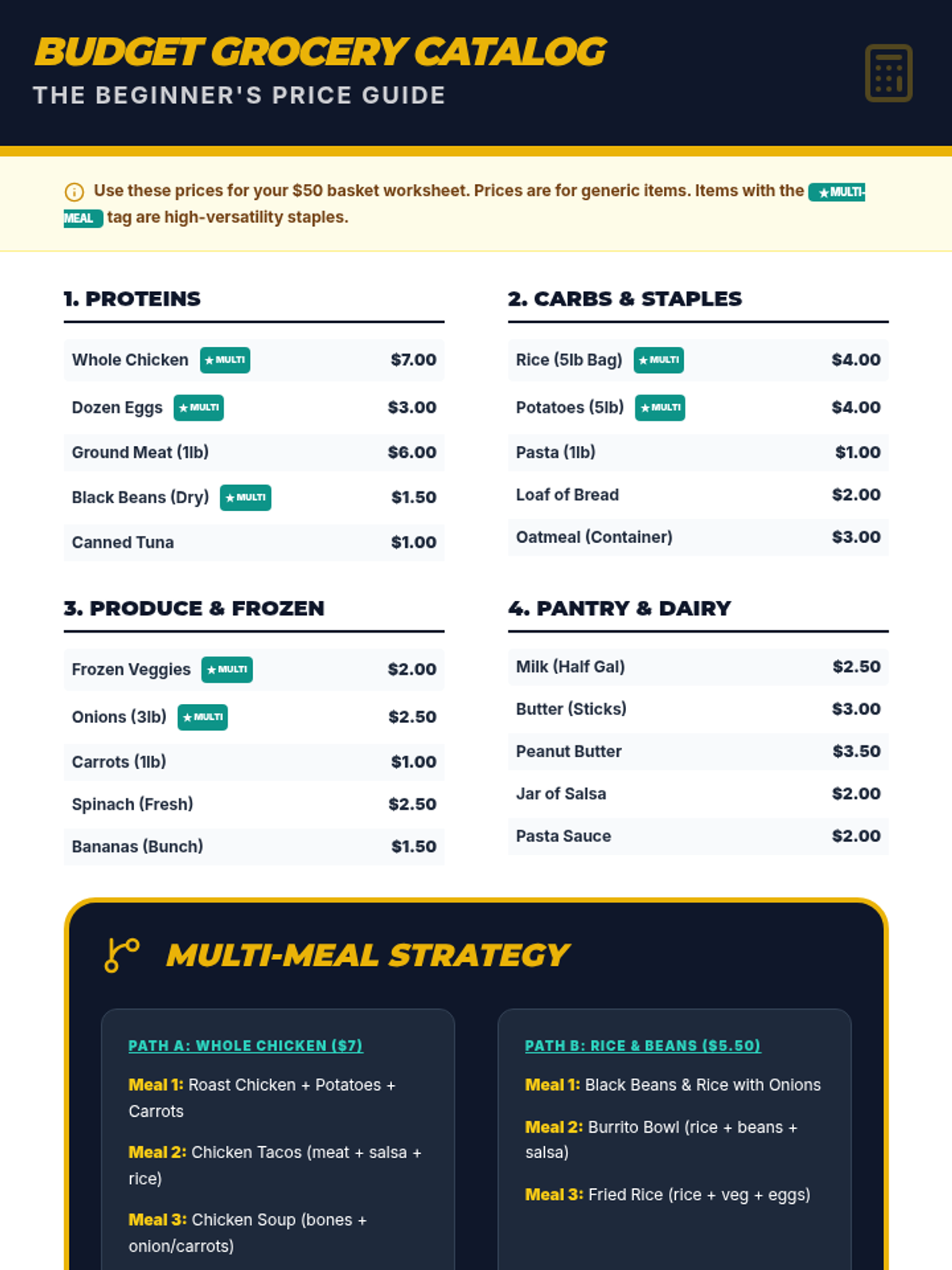
Practical math for grocery shopping, including unit pricing, meal planning on a budget, and the hidden costs of convenience foods.
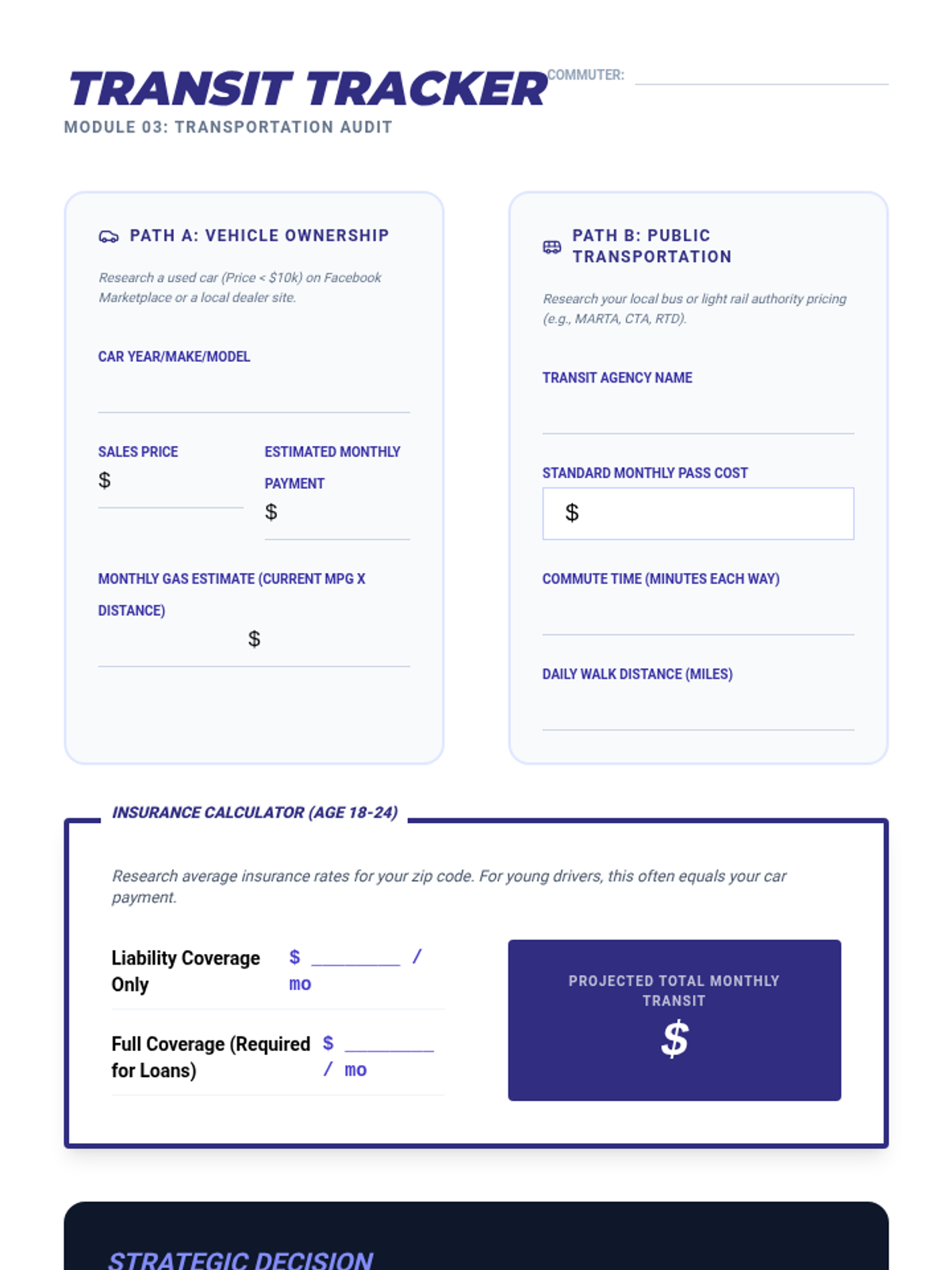
Comparing the true costs of vehicle ownership versus public transit, including insurance premiums, gas, maintenance, and parking.
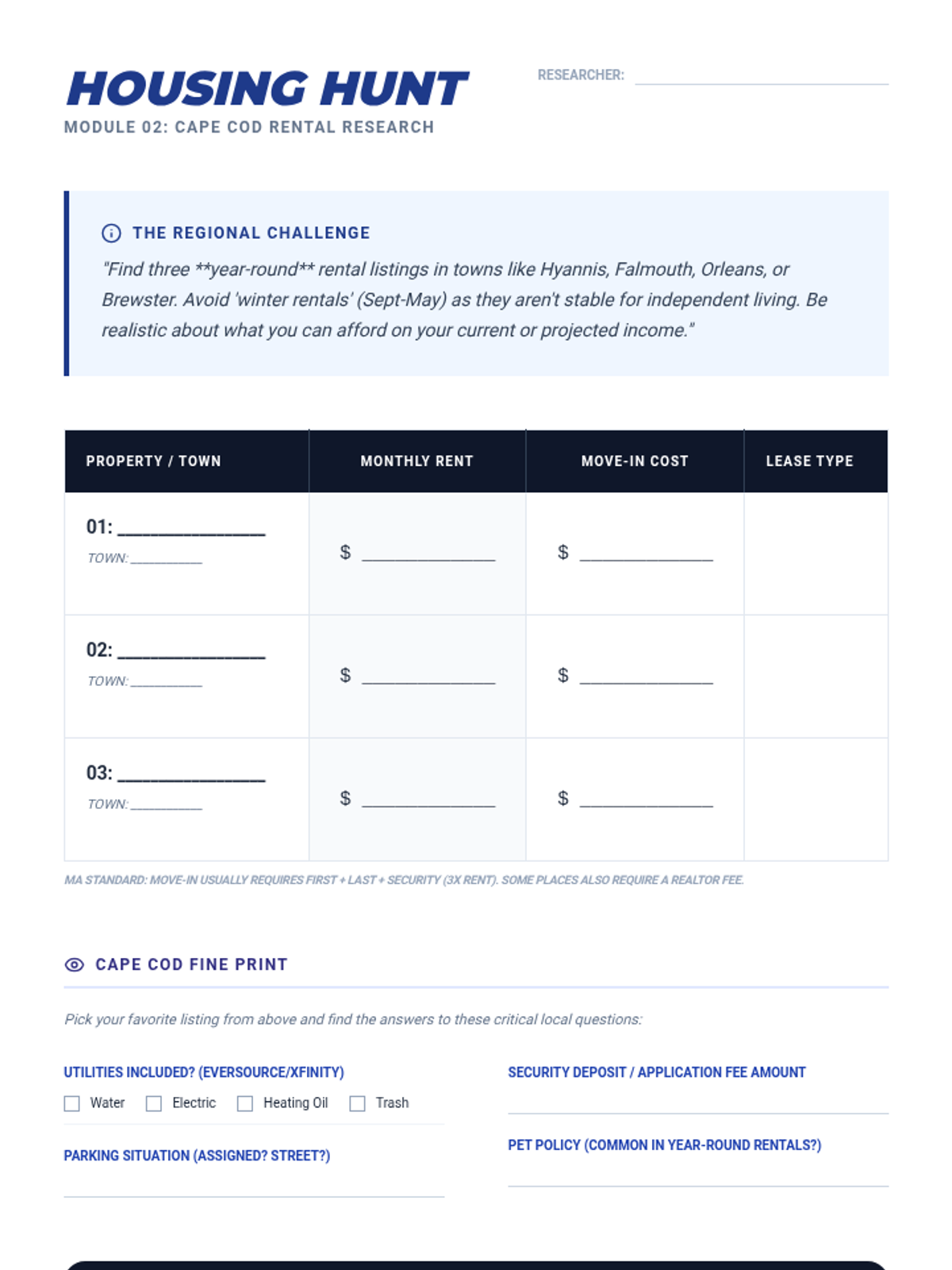
A deep dive into the costs of renting, including security deposits, renters insurance, and understanding the terms of a standard lease agreement.
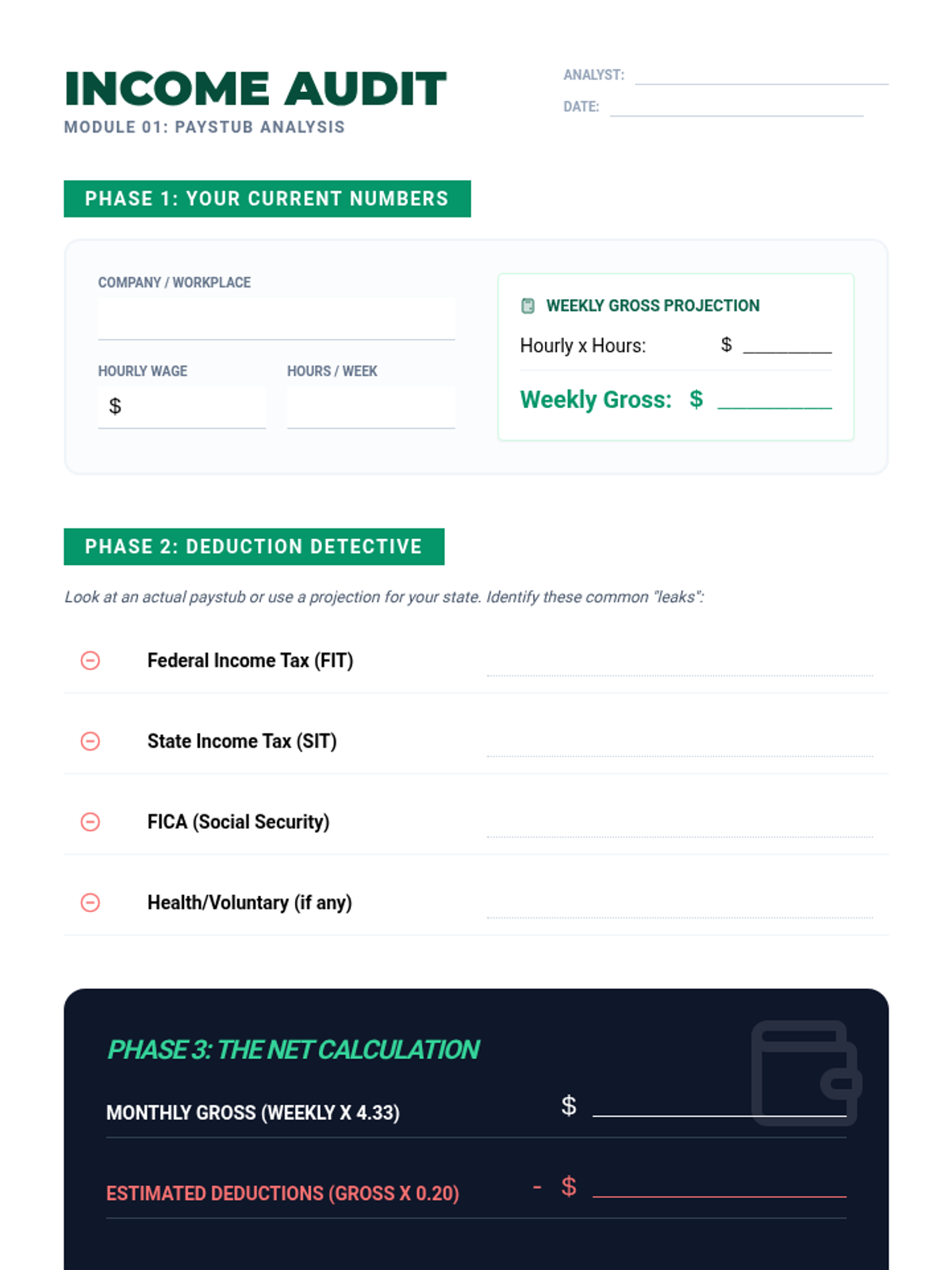
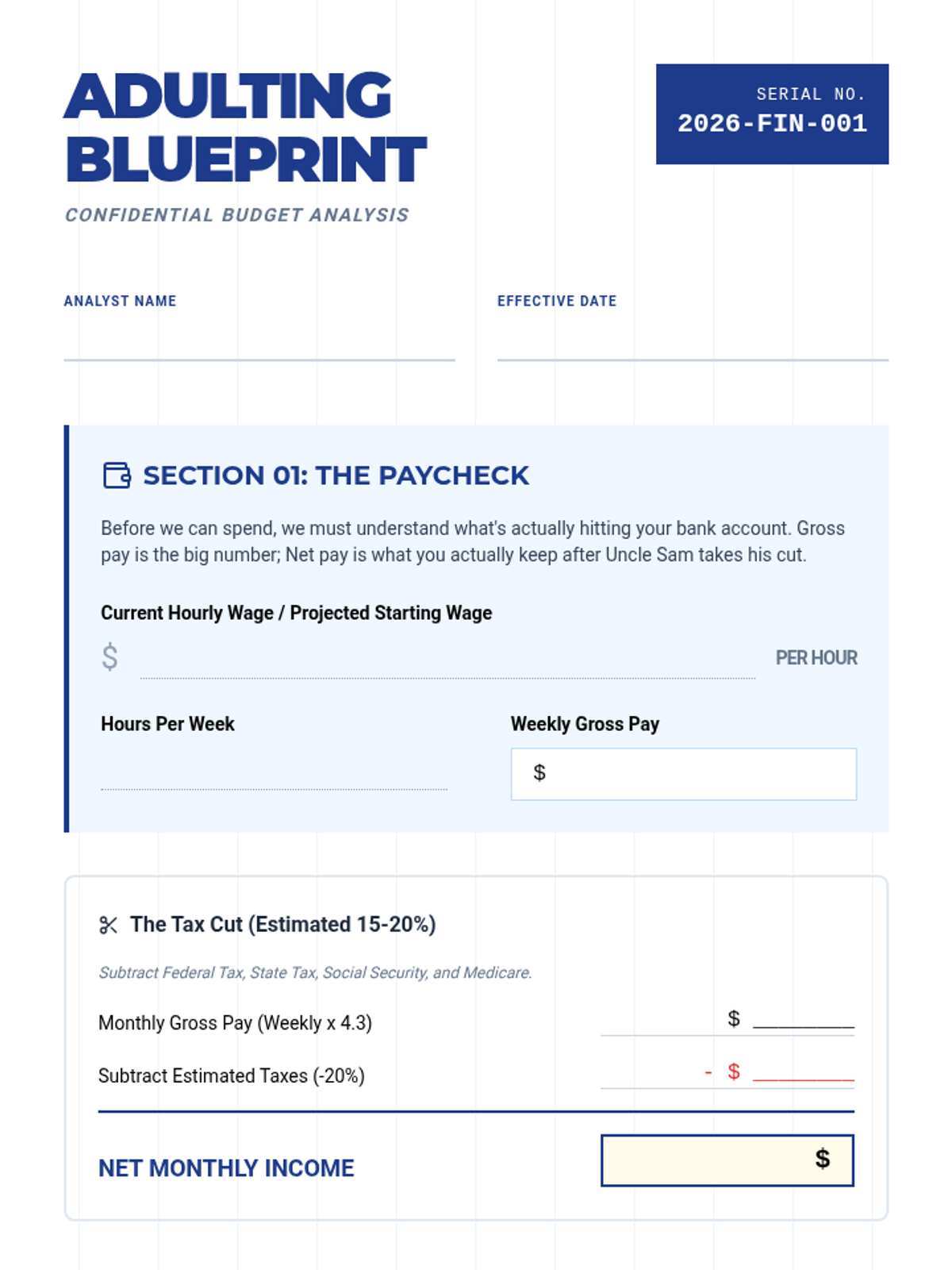
Students identify different components of a paystub, understand FICA and income tax deductions, and calculate accurate net monthly income based on their current jobs.
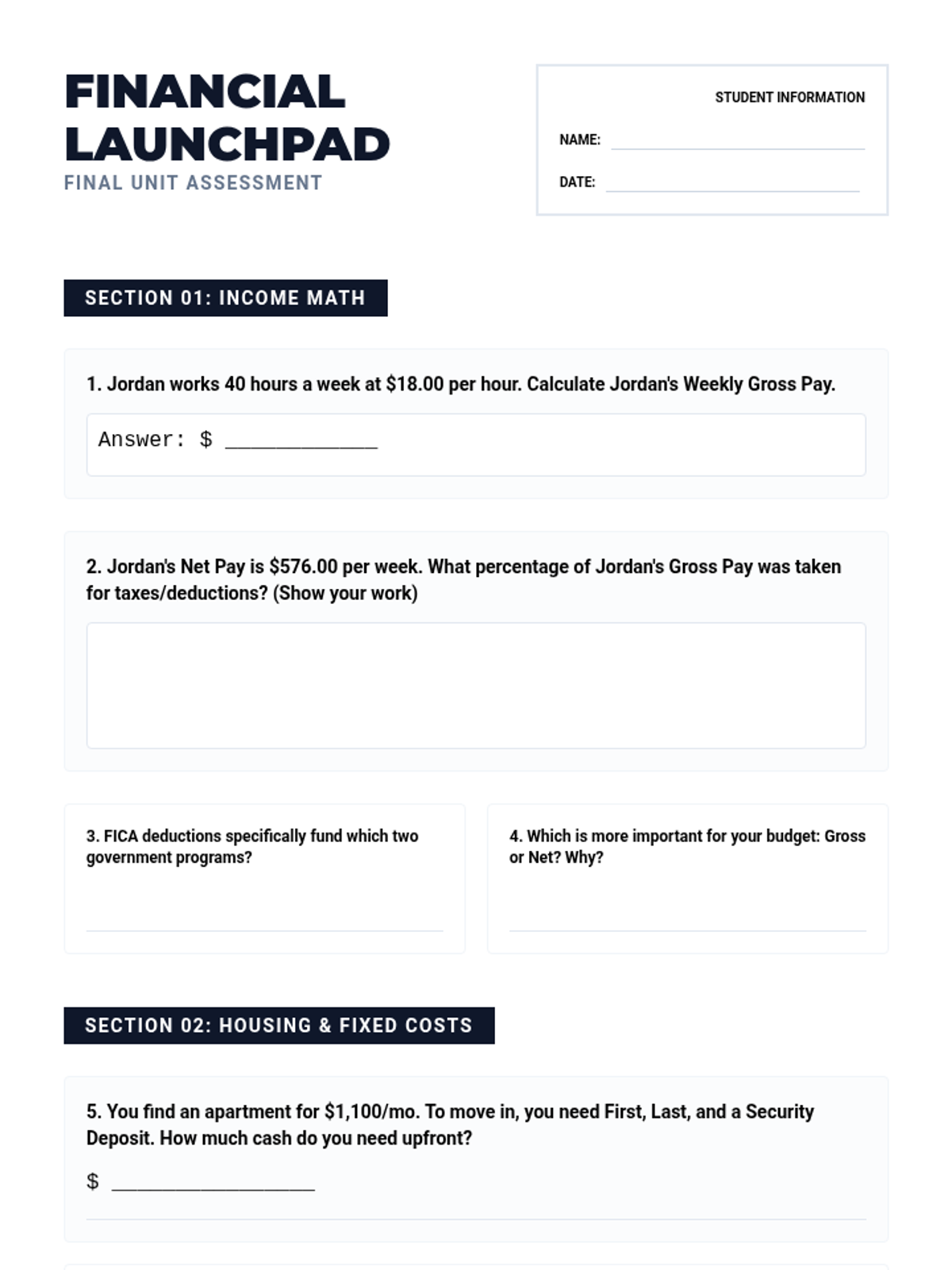
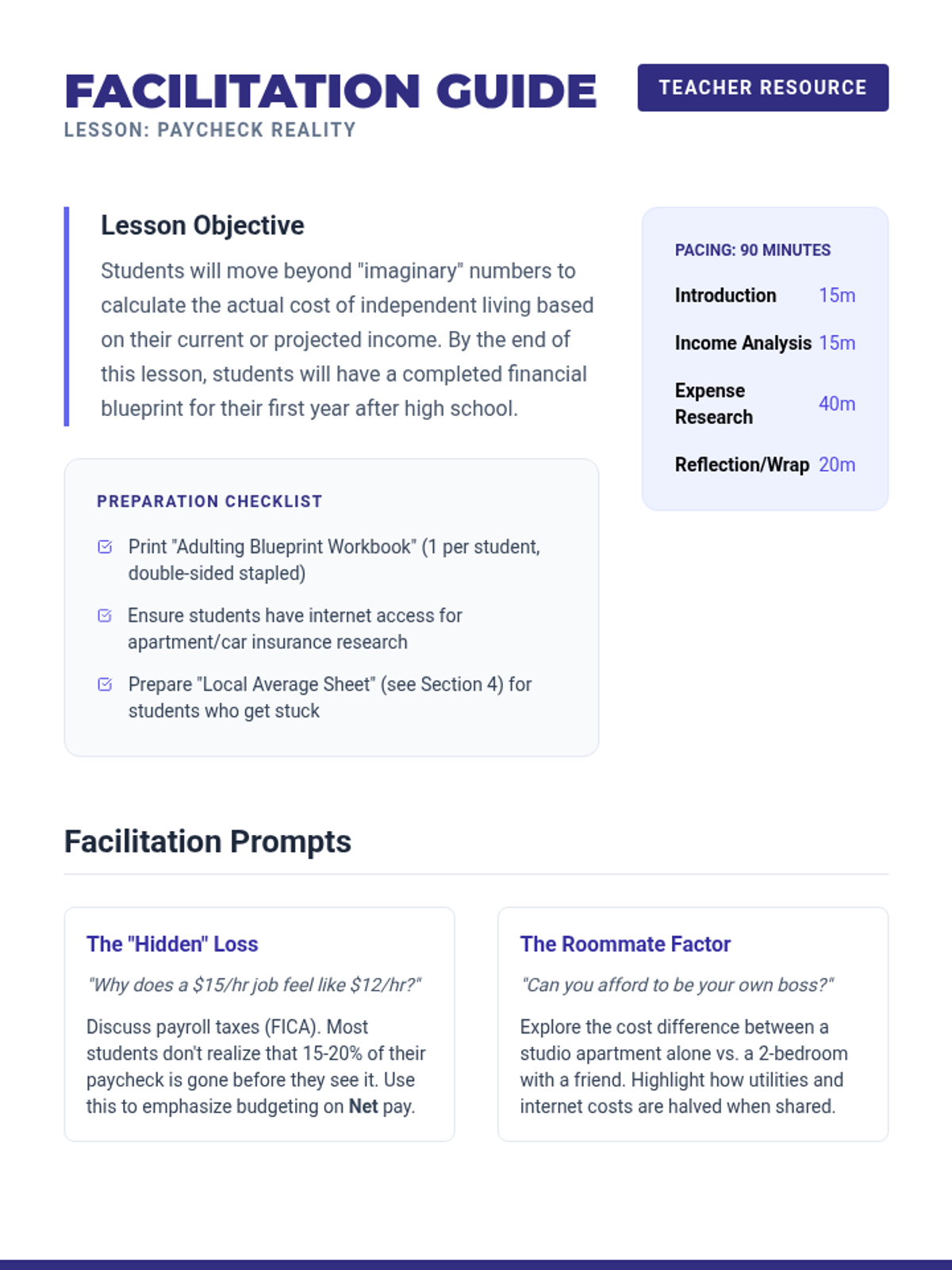
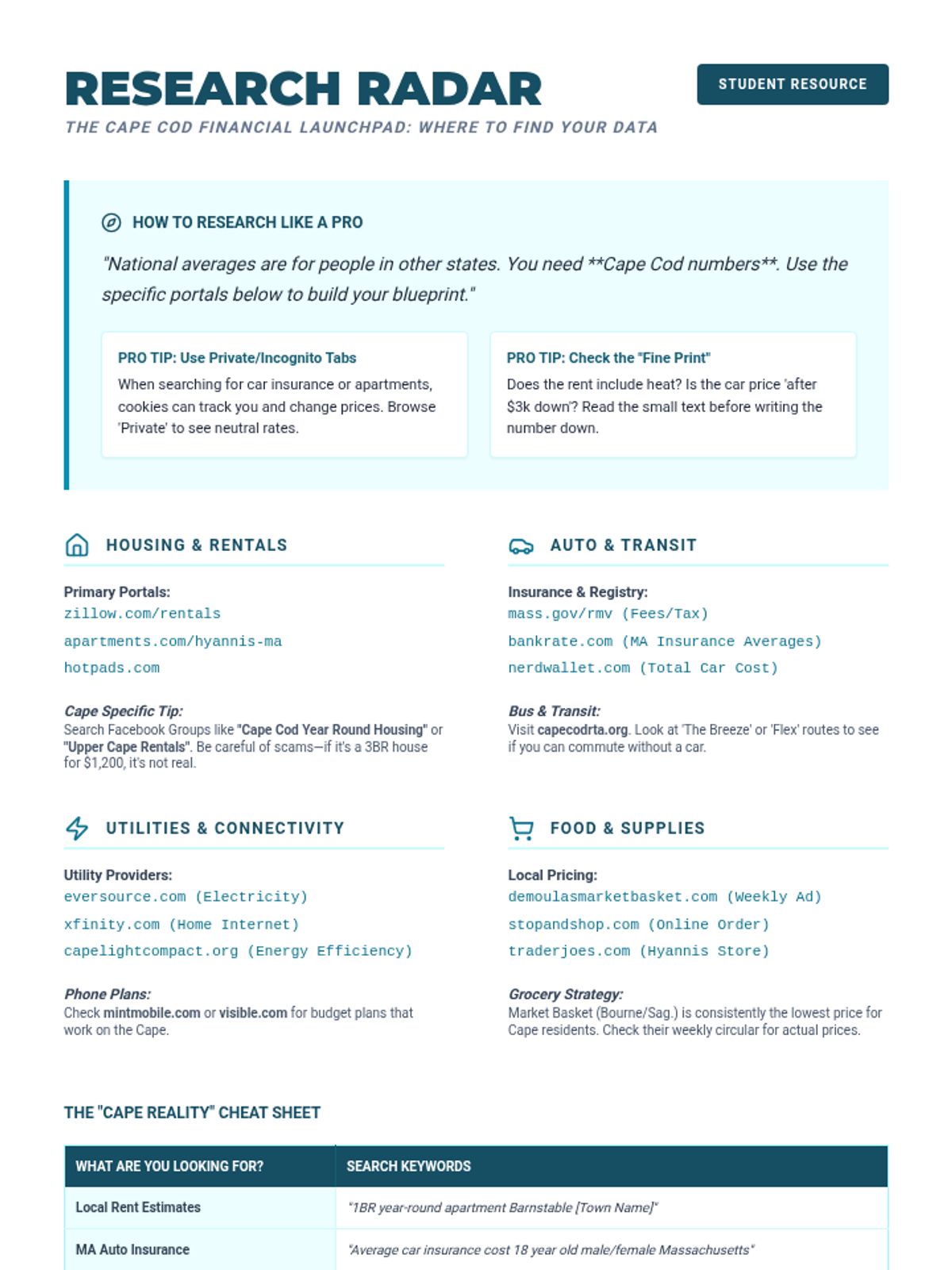
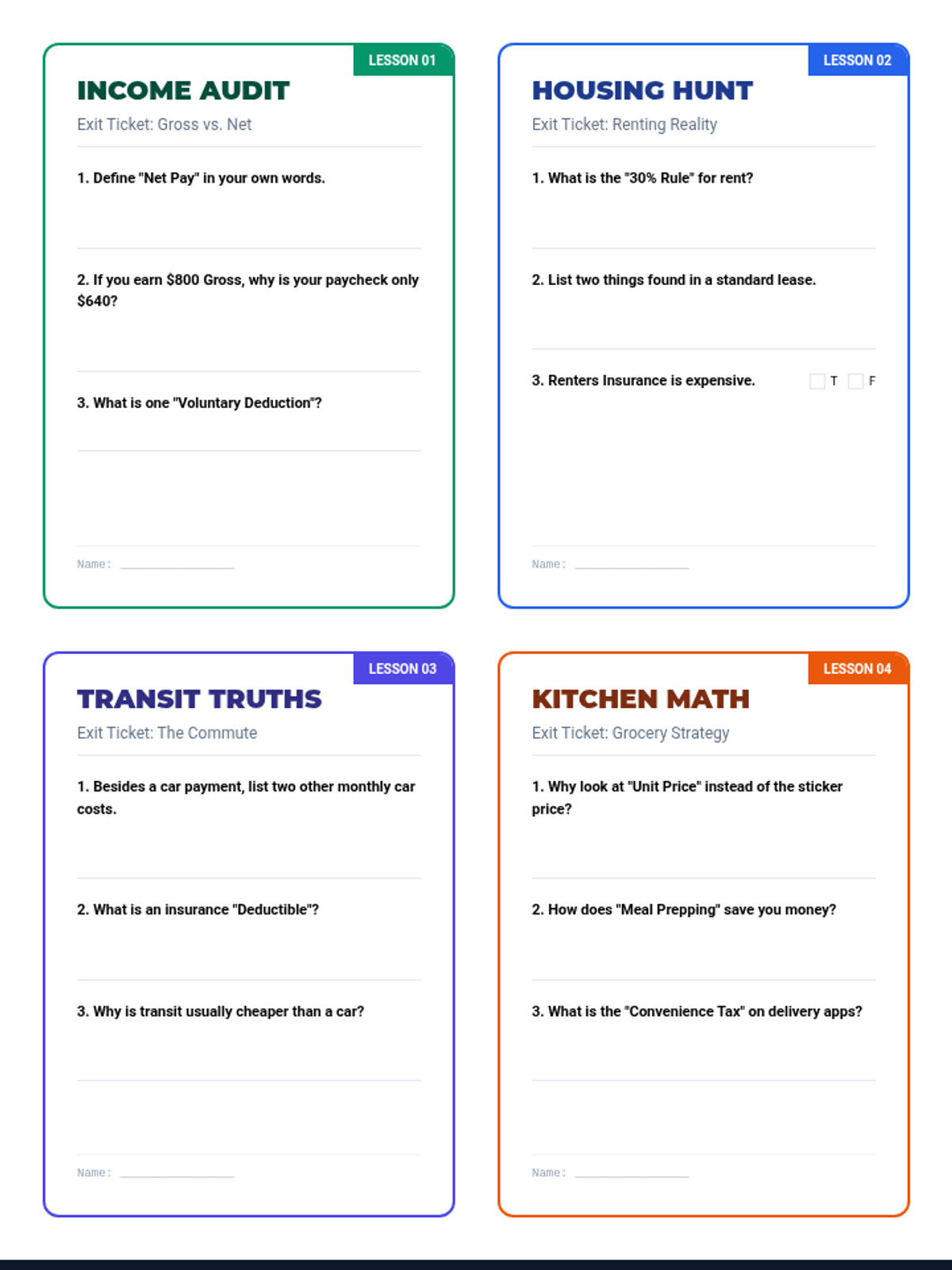
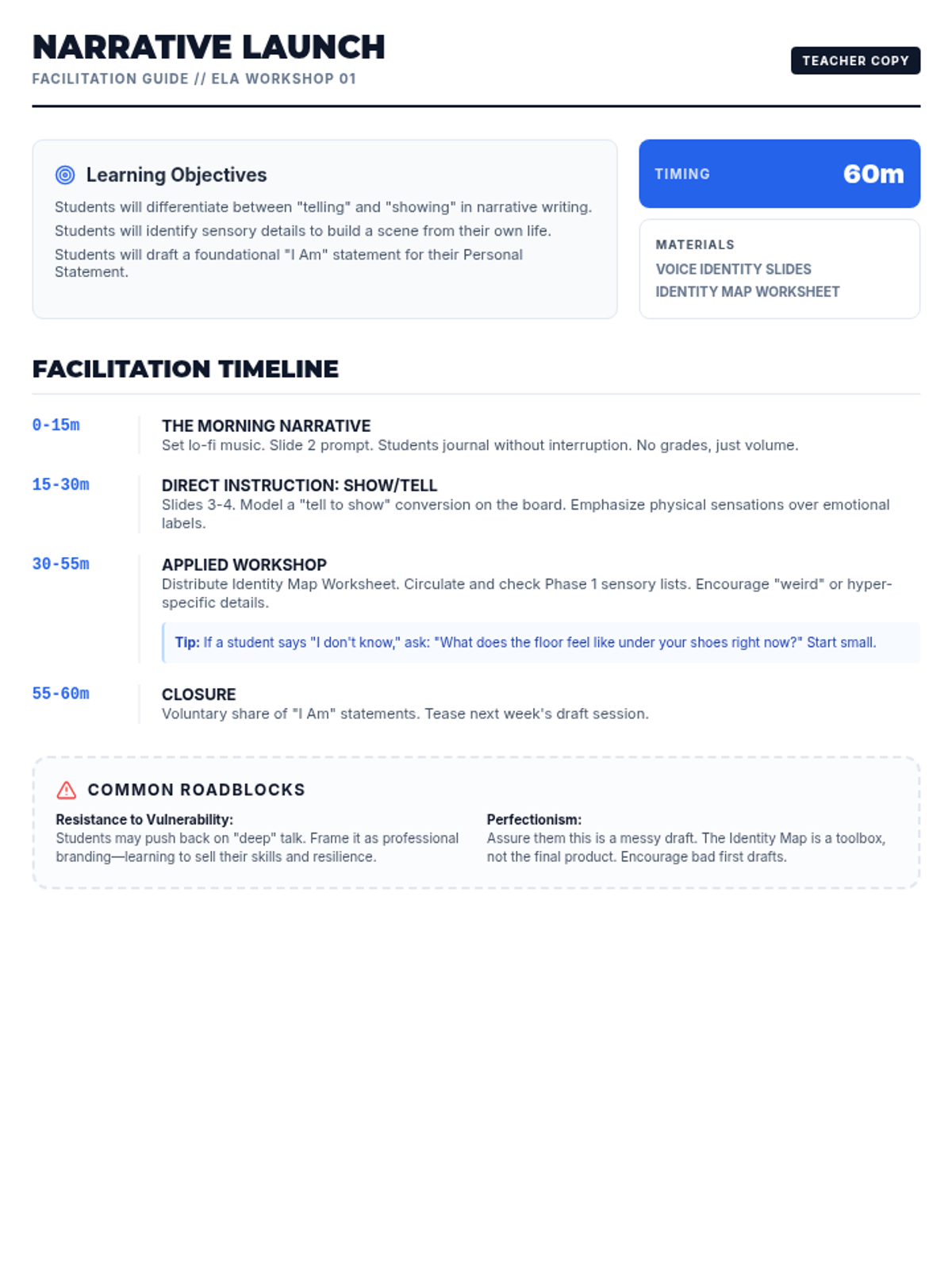
A practical, hands-on lesson designed for working high school seniors to navigate the transition to independent living. Students analyze their current income and projected expenses for housing, food, and transport to build a realistic monthly budget.
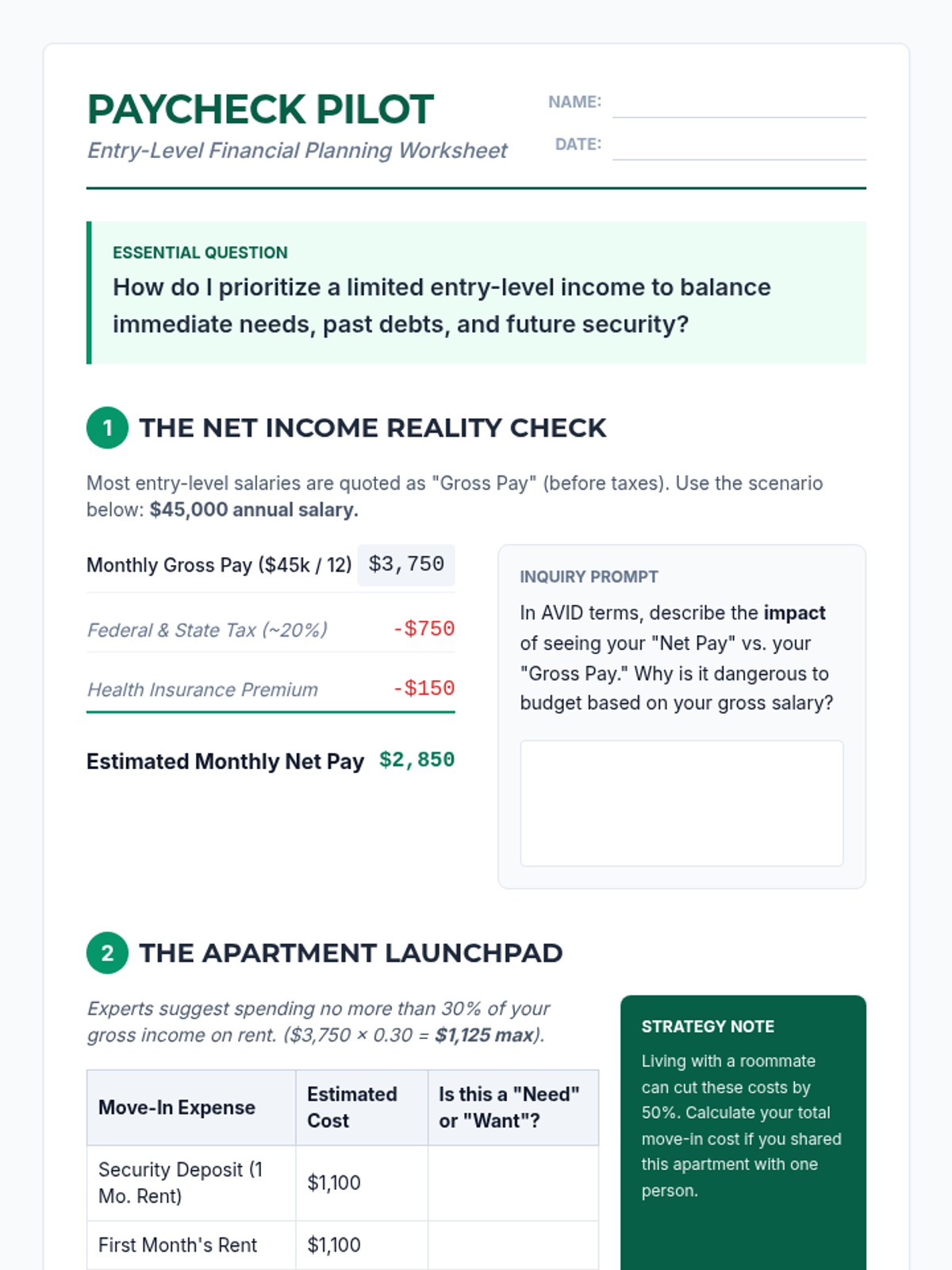
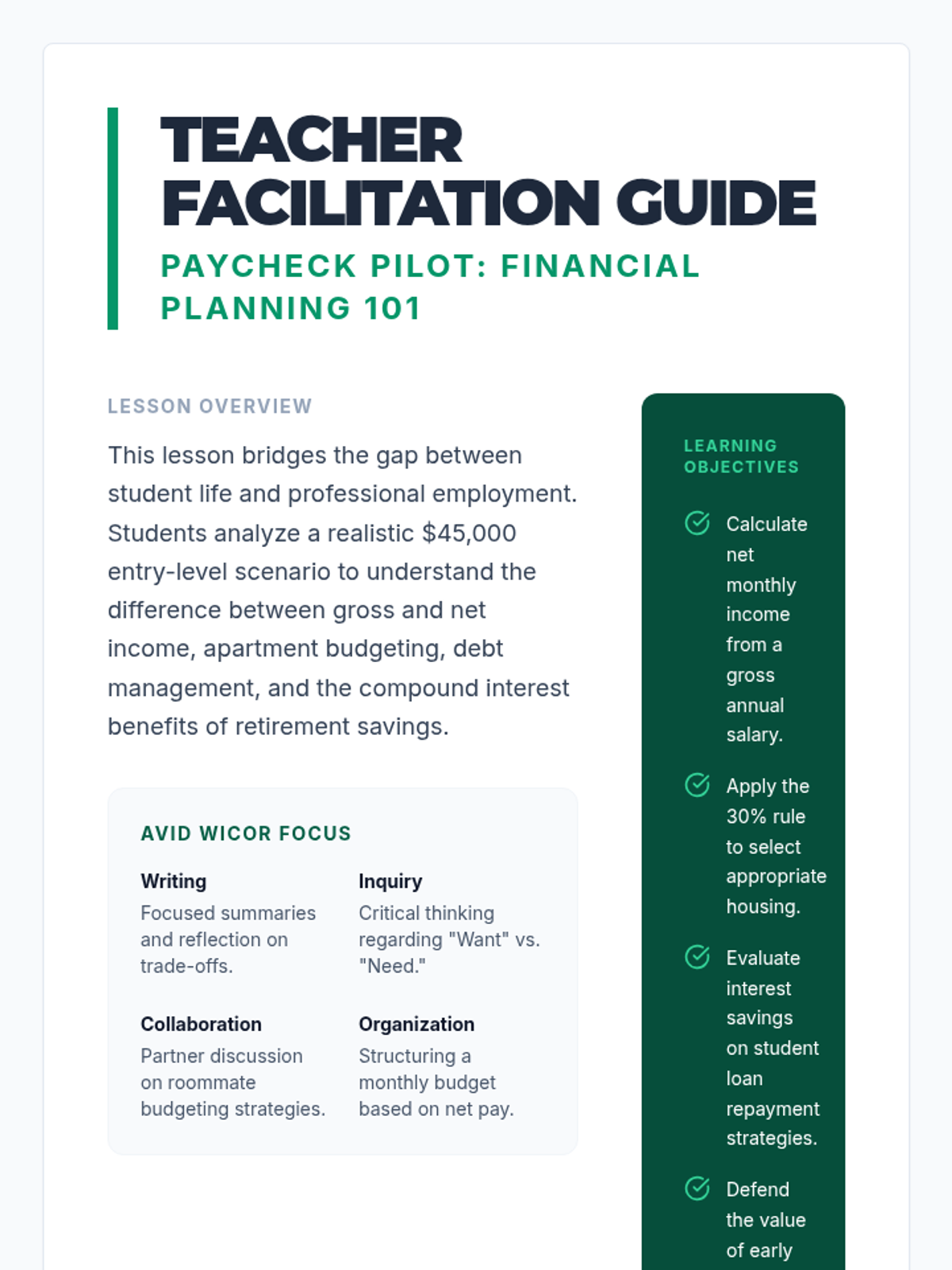
A comprehensive financial literacy lesson focused on the transition to entry-level employment, covering apartment budgeting, student loan management, and retirement savings using AVID strategies.
A comprehensive lesson on retirement planning, compound interest, and long-term budgeting for students to understand the importance of early financial preparation.
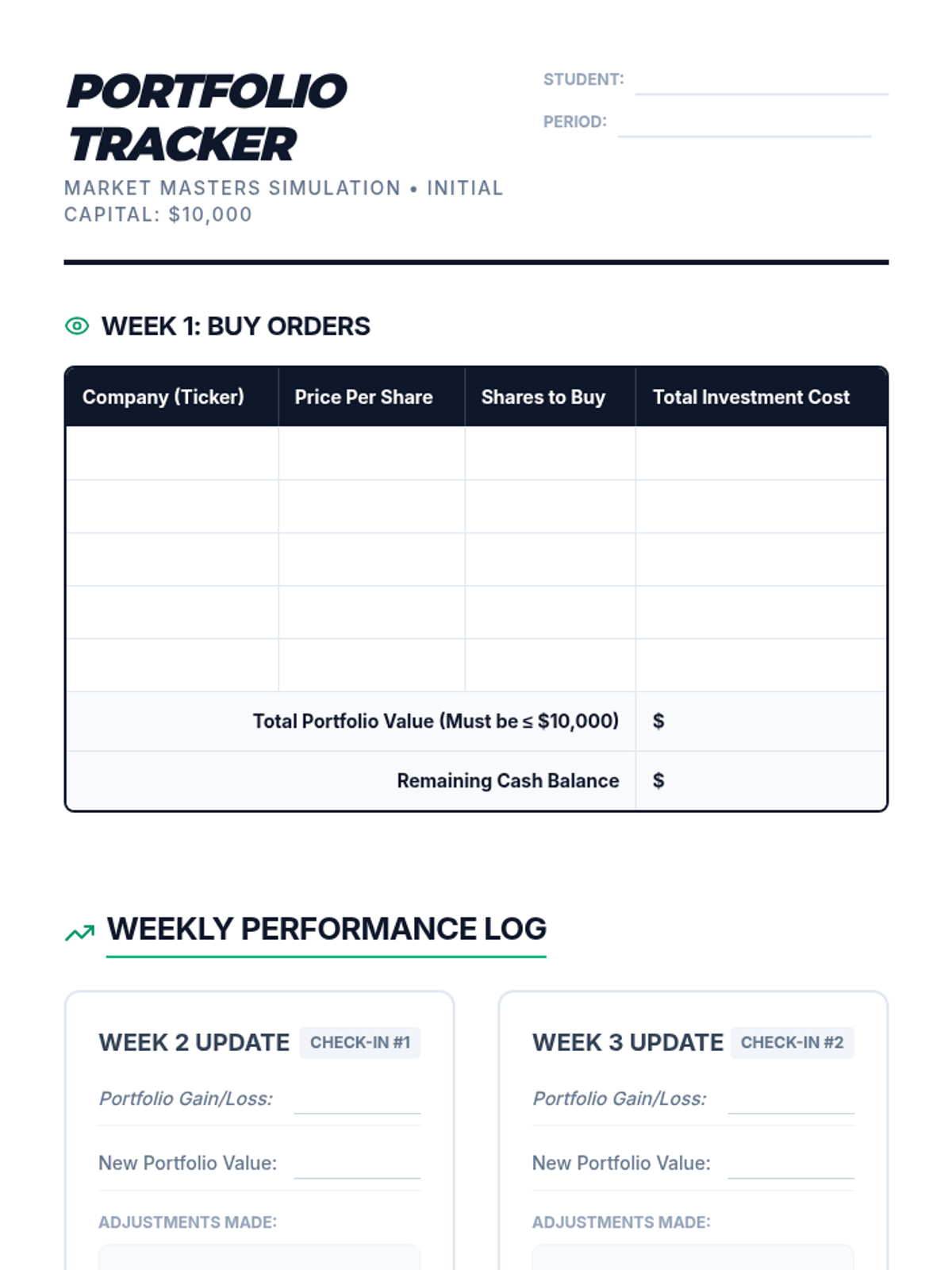
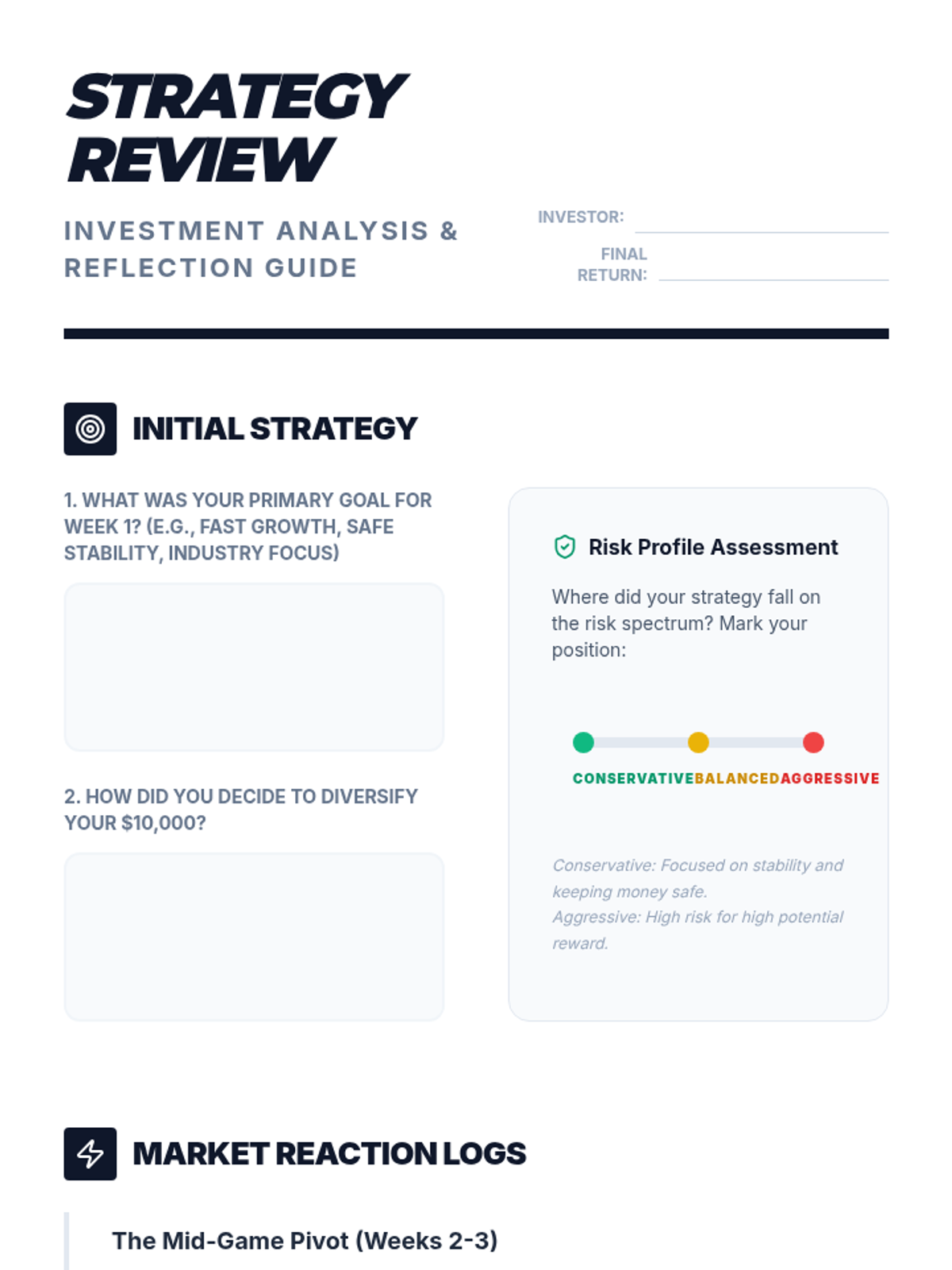
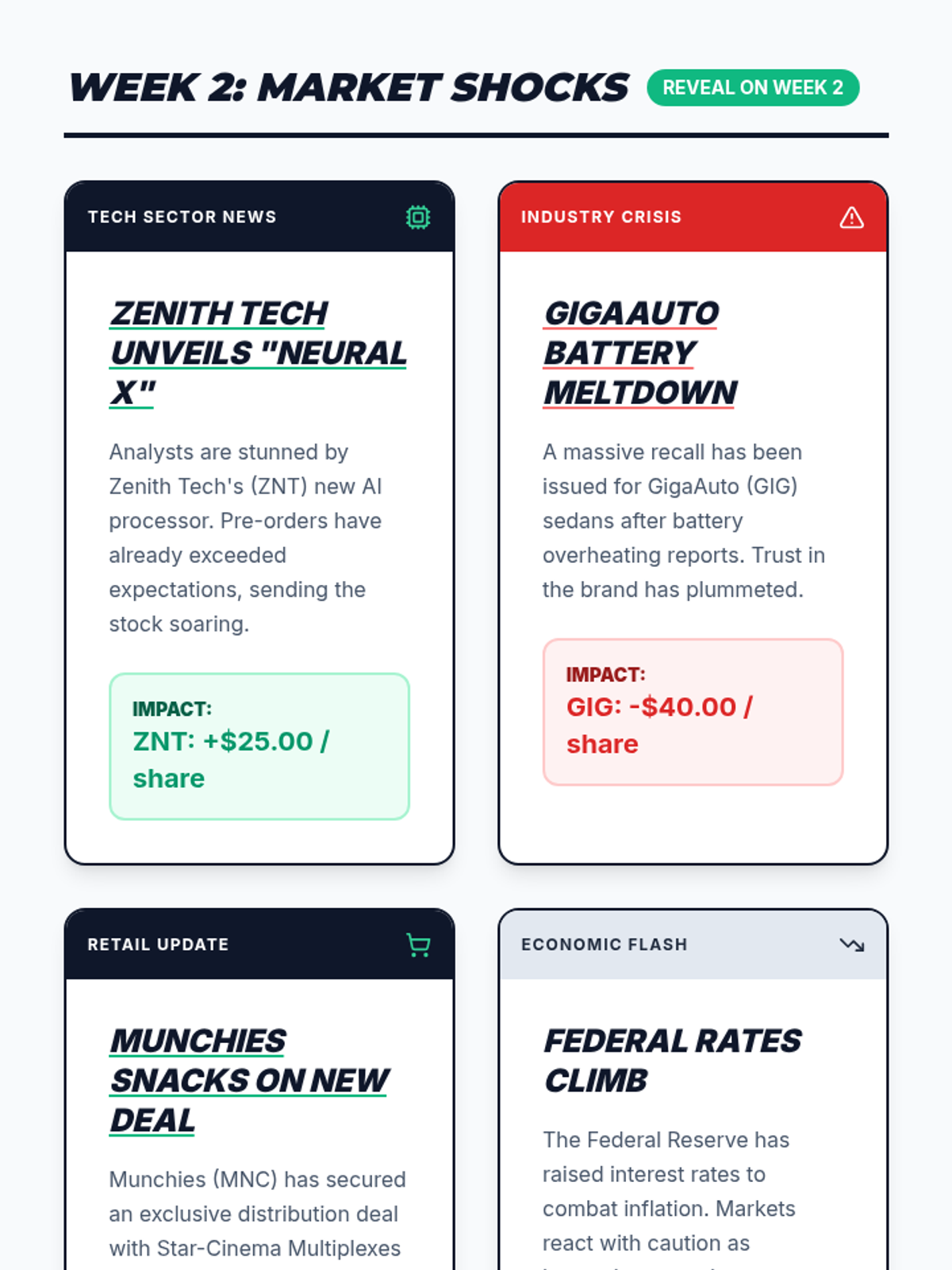
A core simulation lesson where students manage a $10,000 portfolio over four weeks, reacting to market news and tracking their gains or losses.
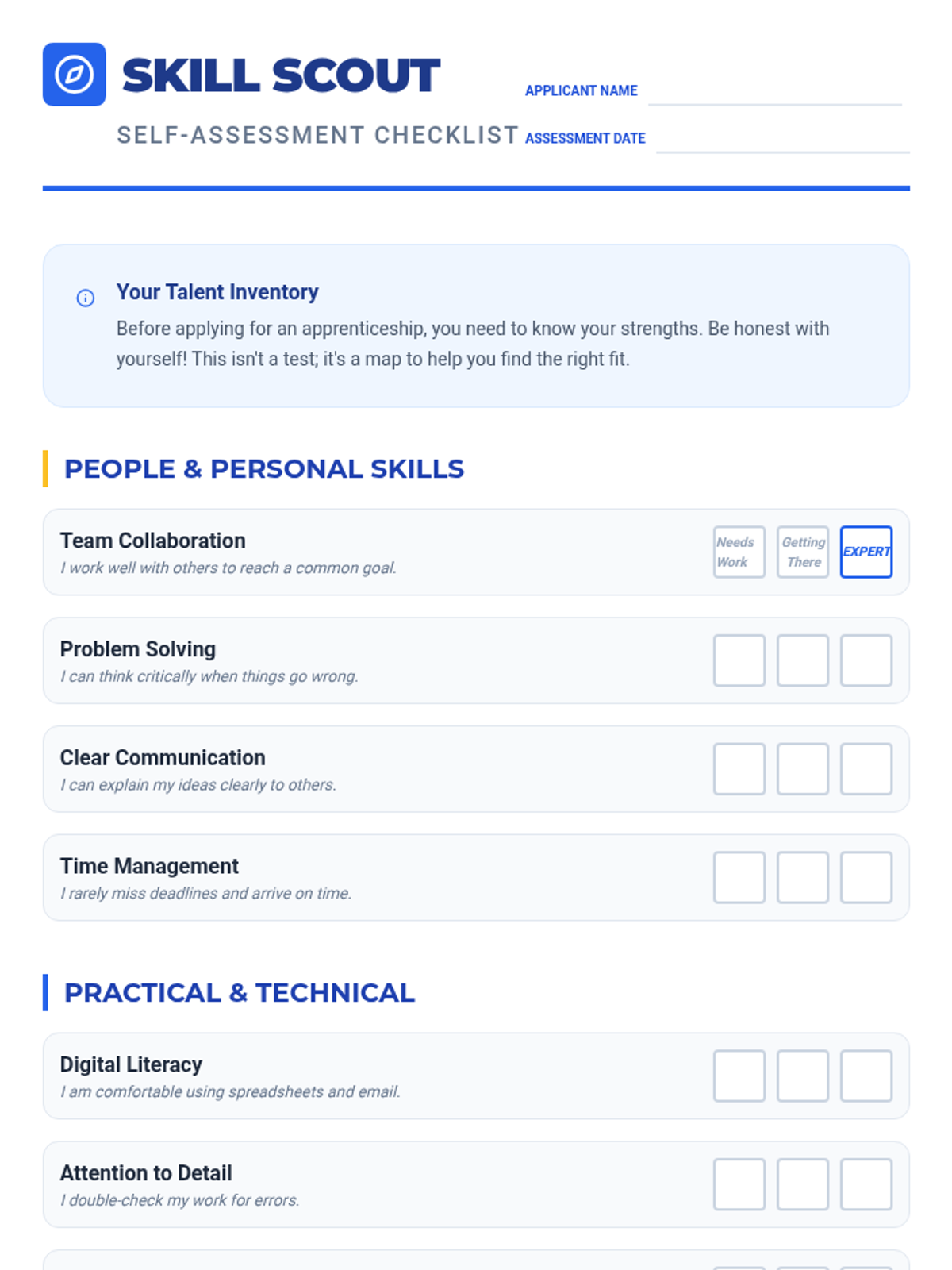
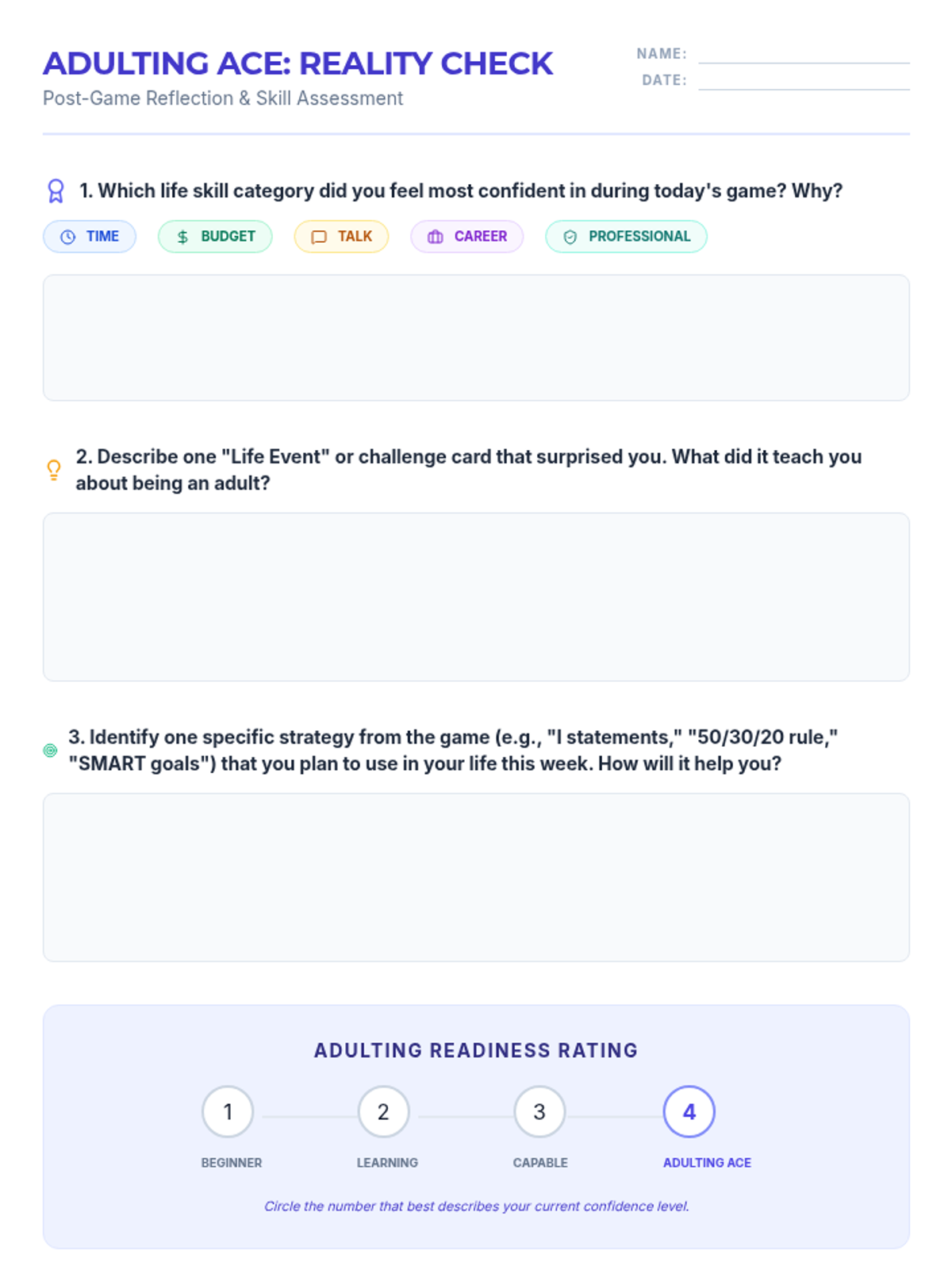
Master the transition from student to professional. This lesson covers workplace etiquette and the application process through engaging puzzles and reflective self-assessments.
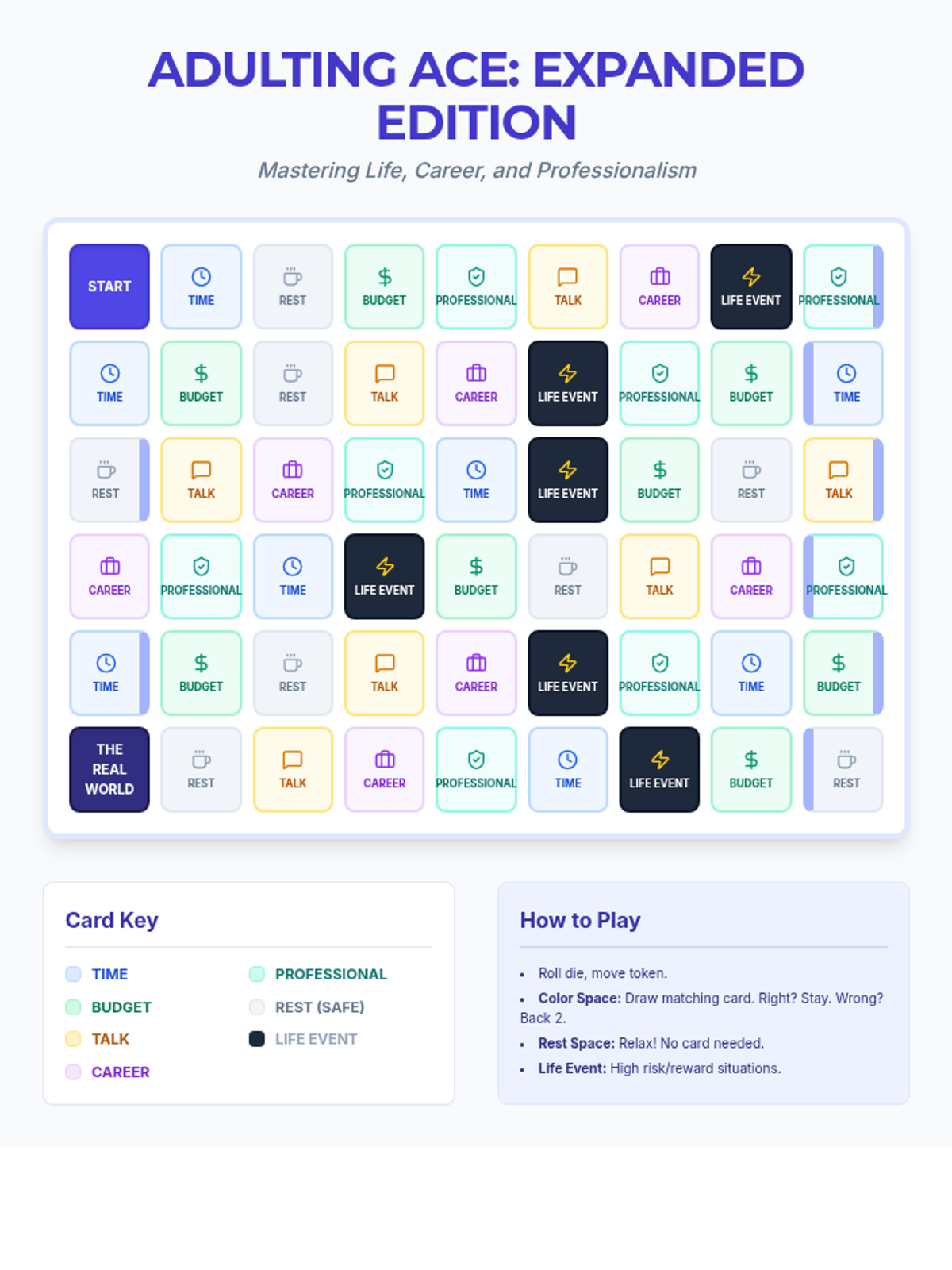
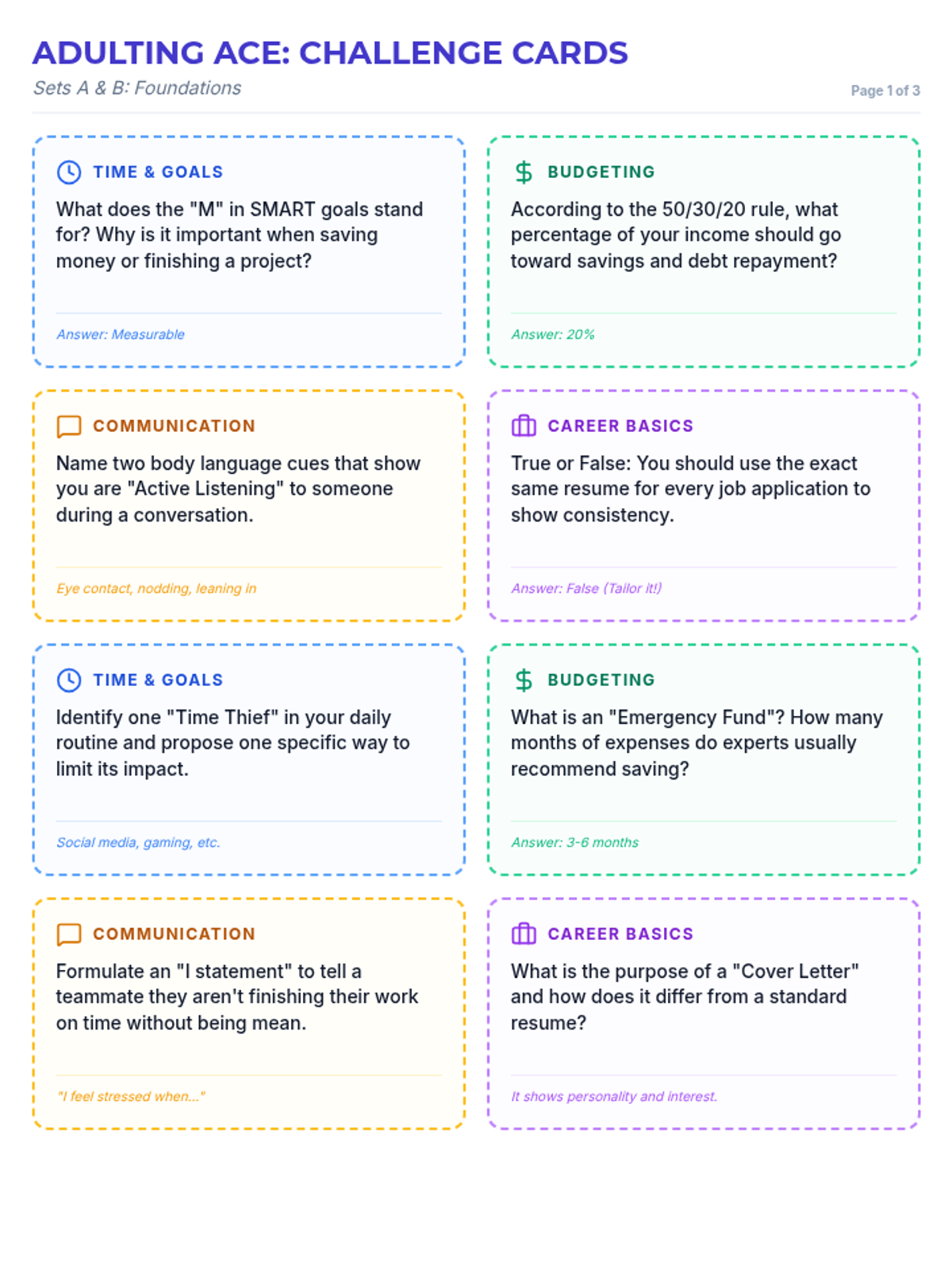
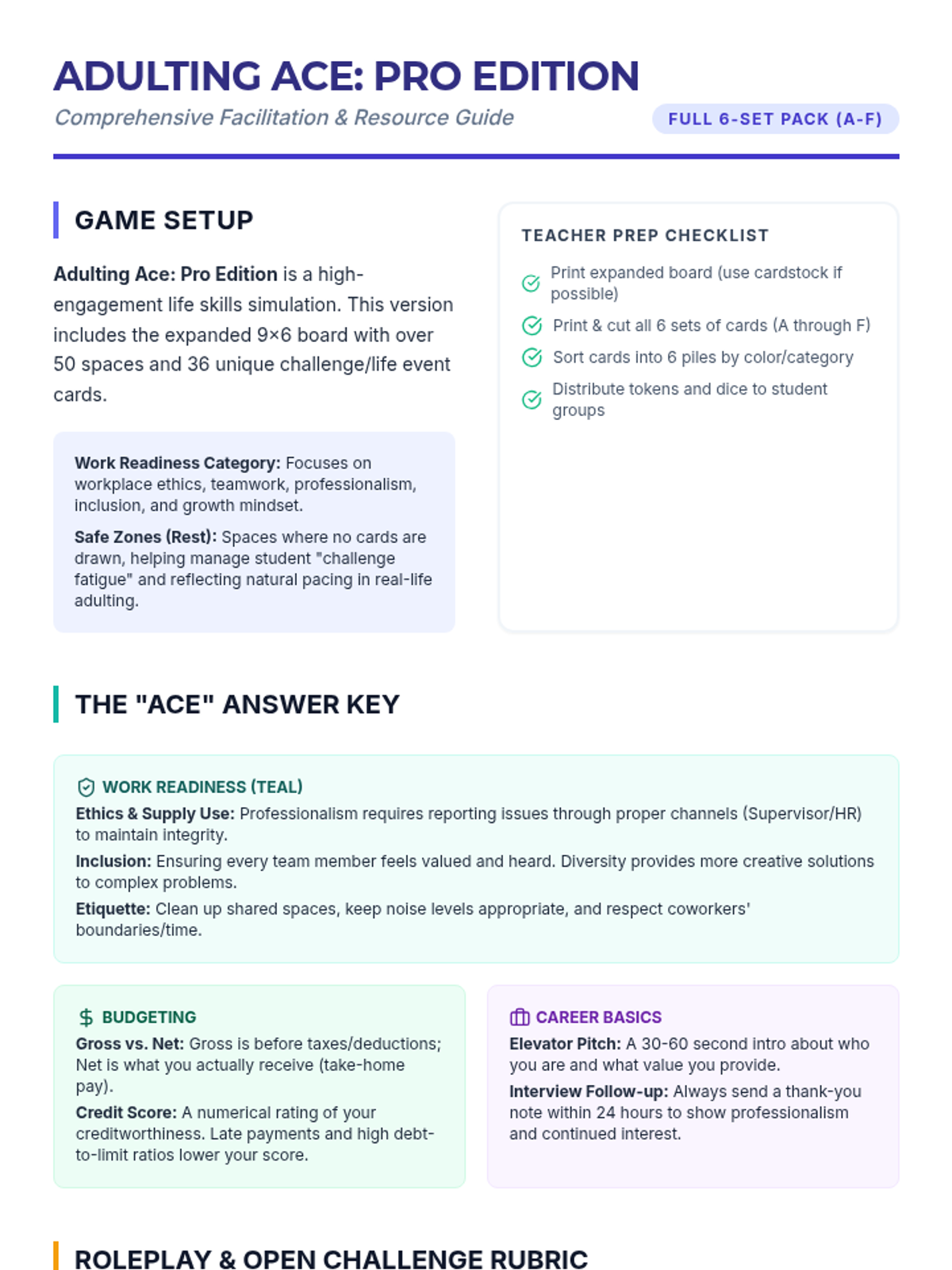
An interactive board game experience covering essential life skills including financial literacy, time management, communication, and career readiness.
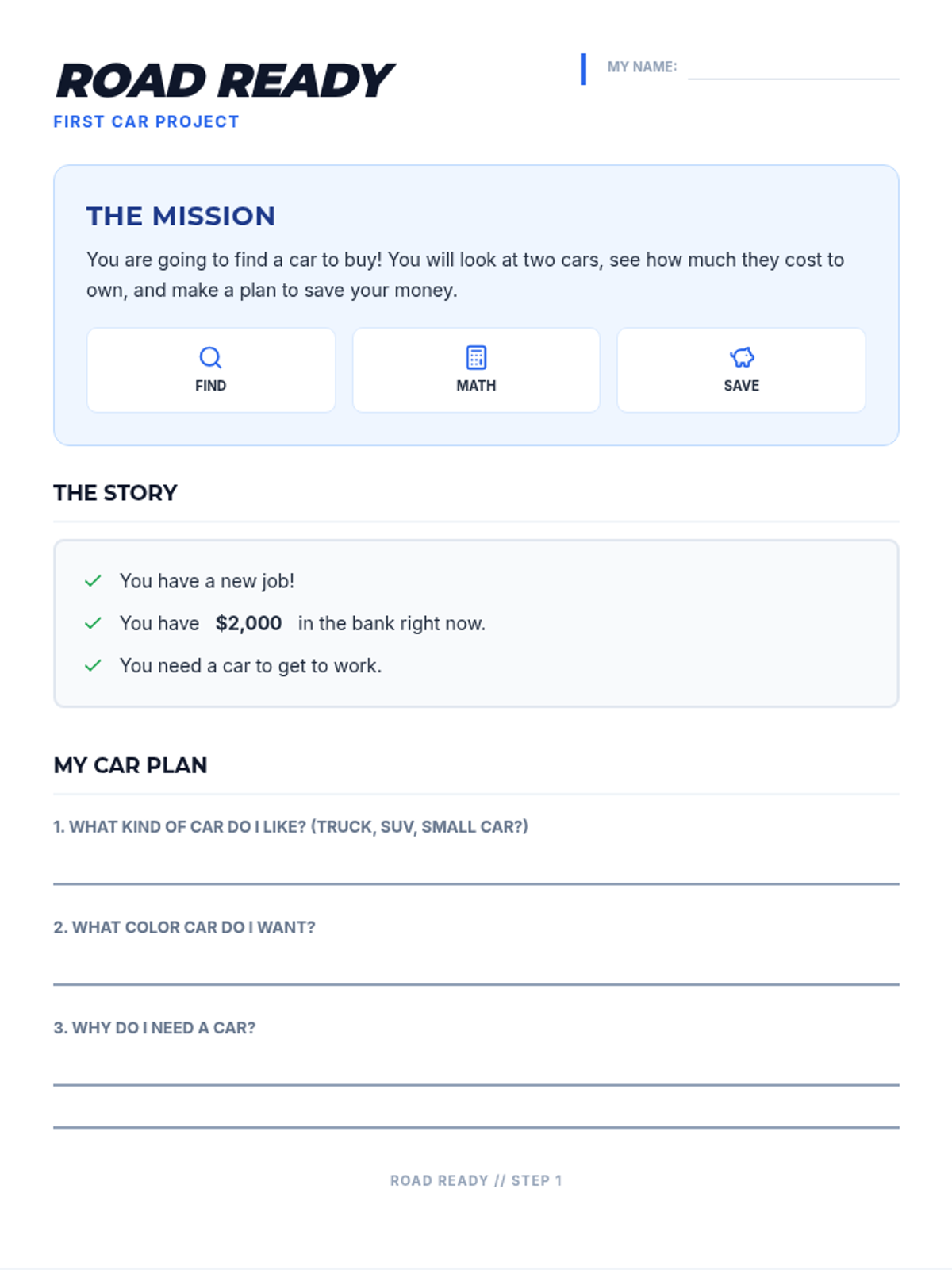
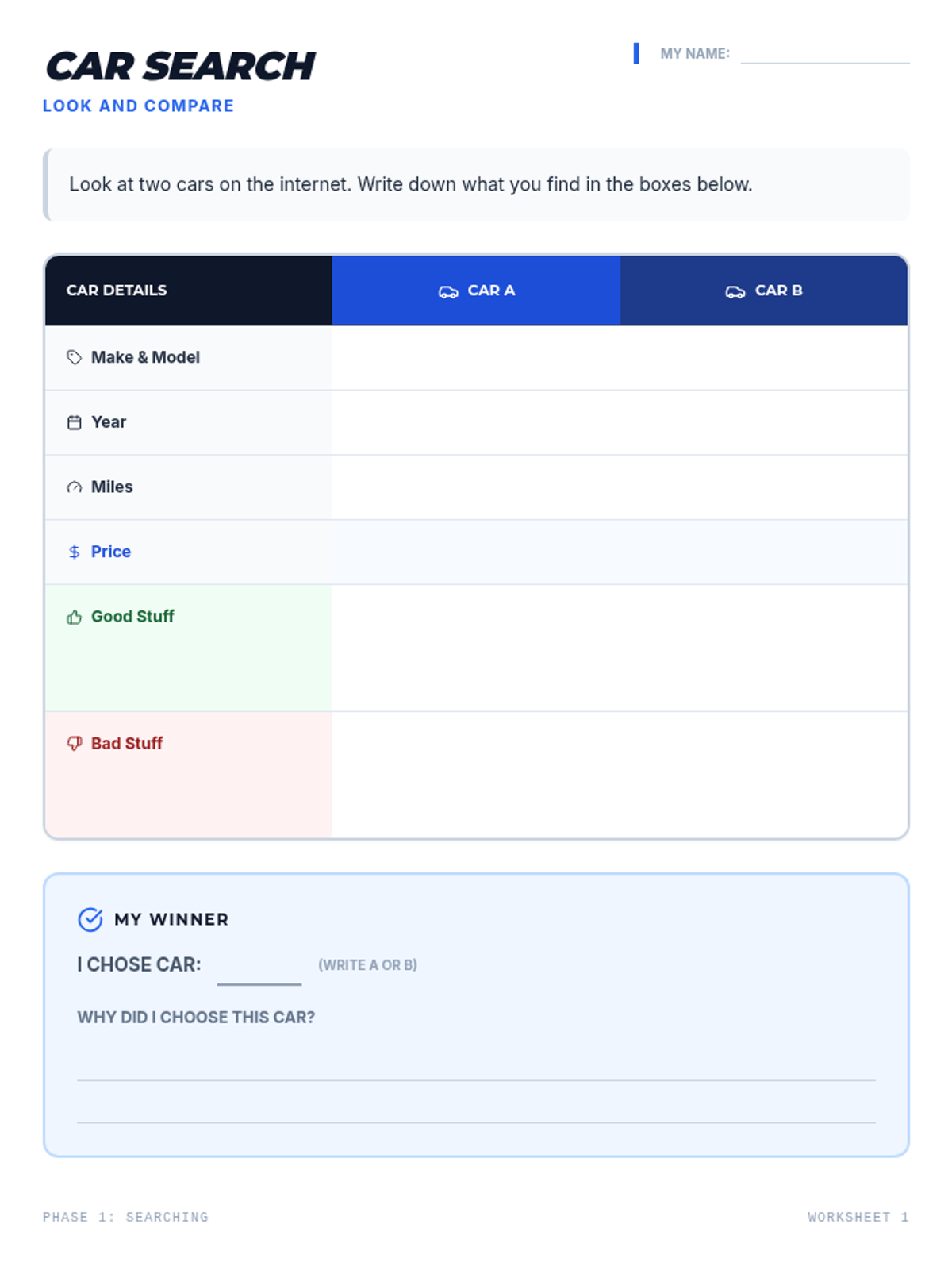
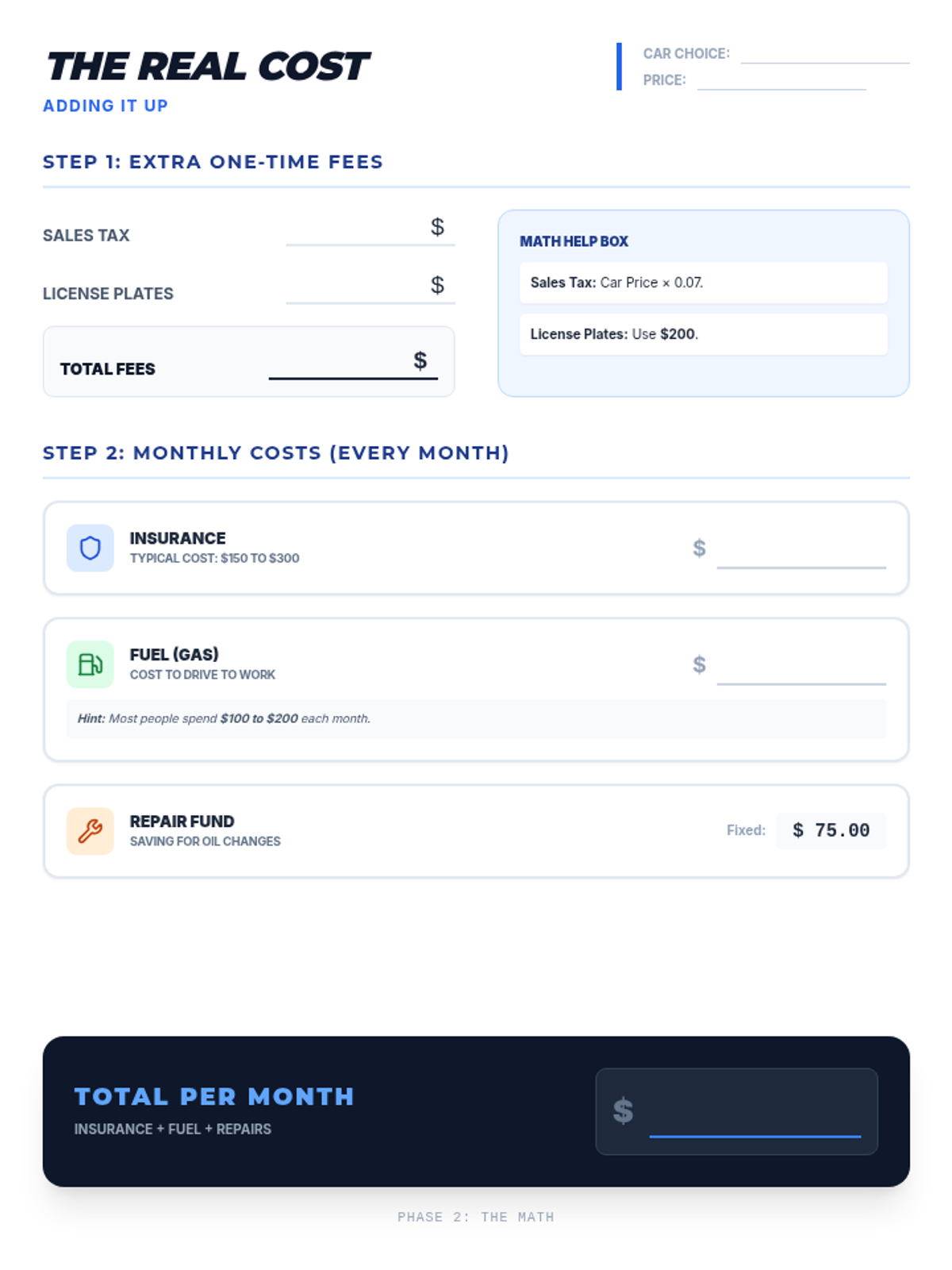
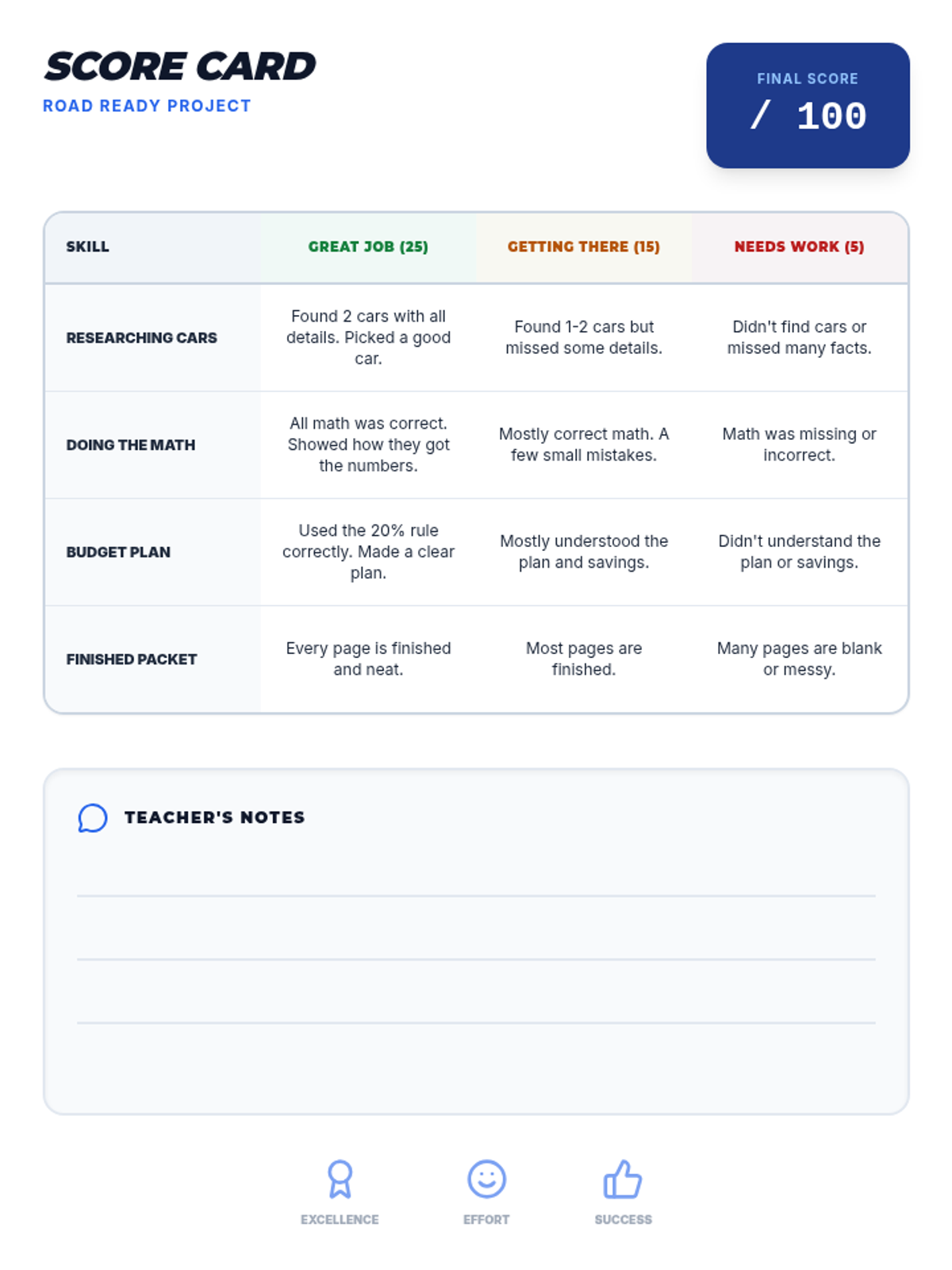
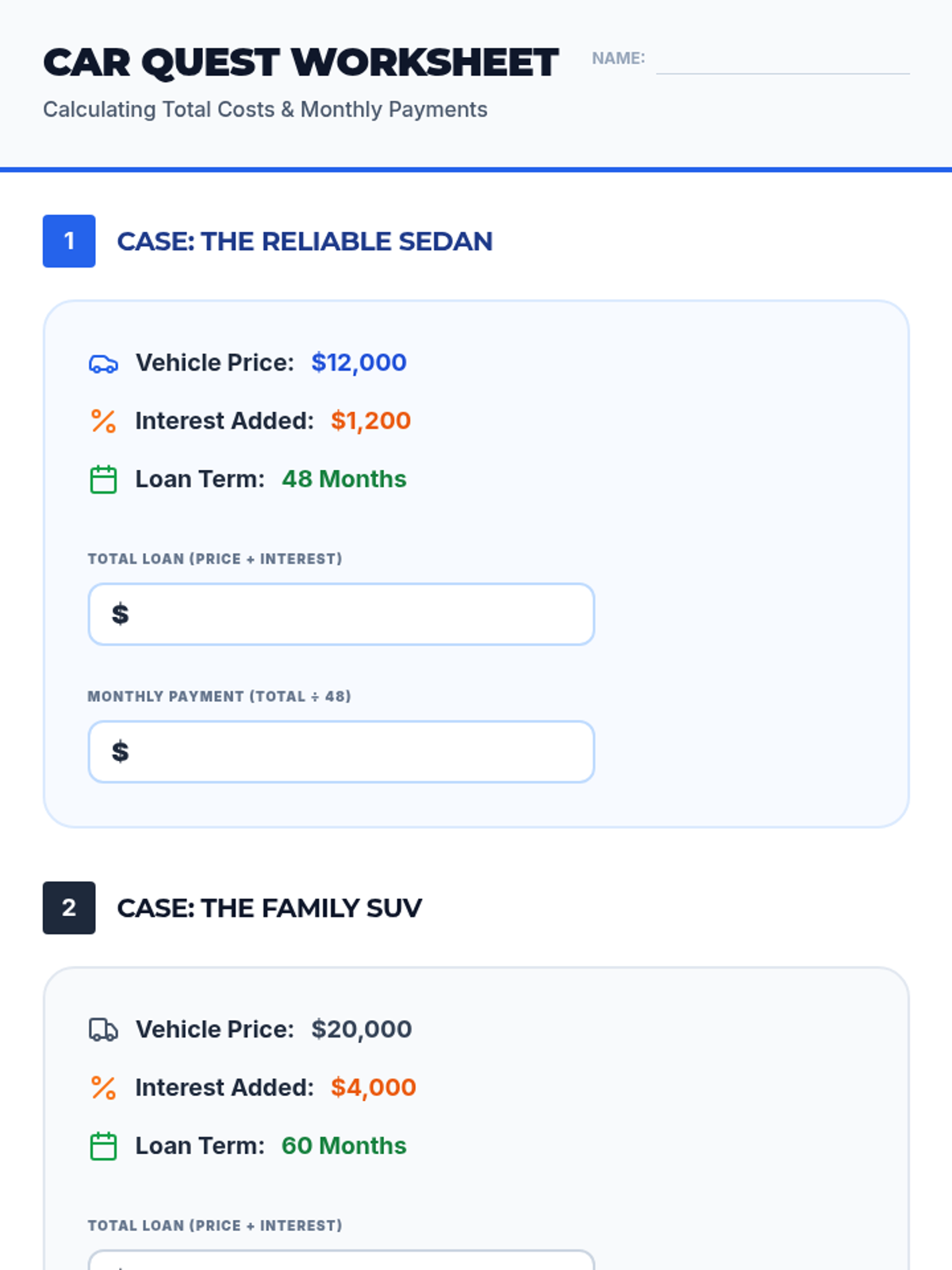
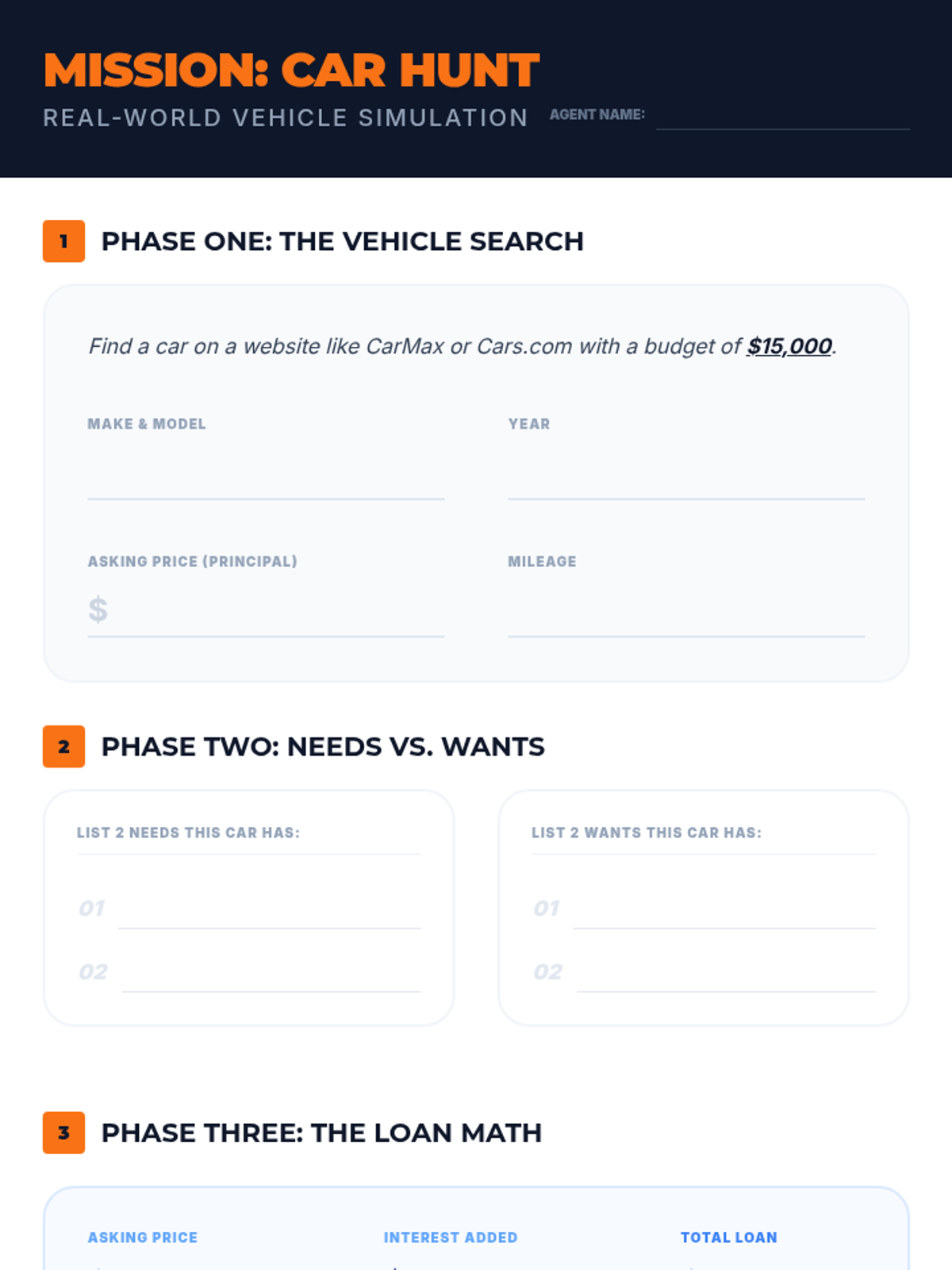
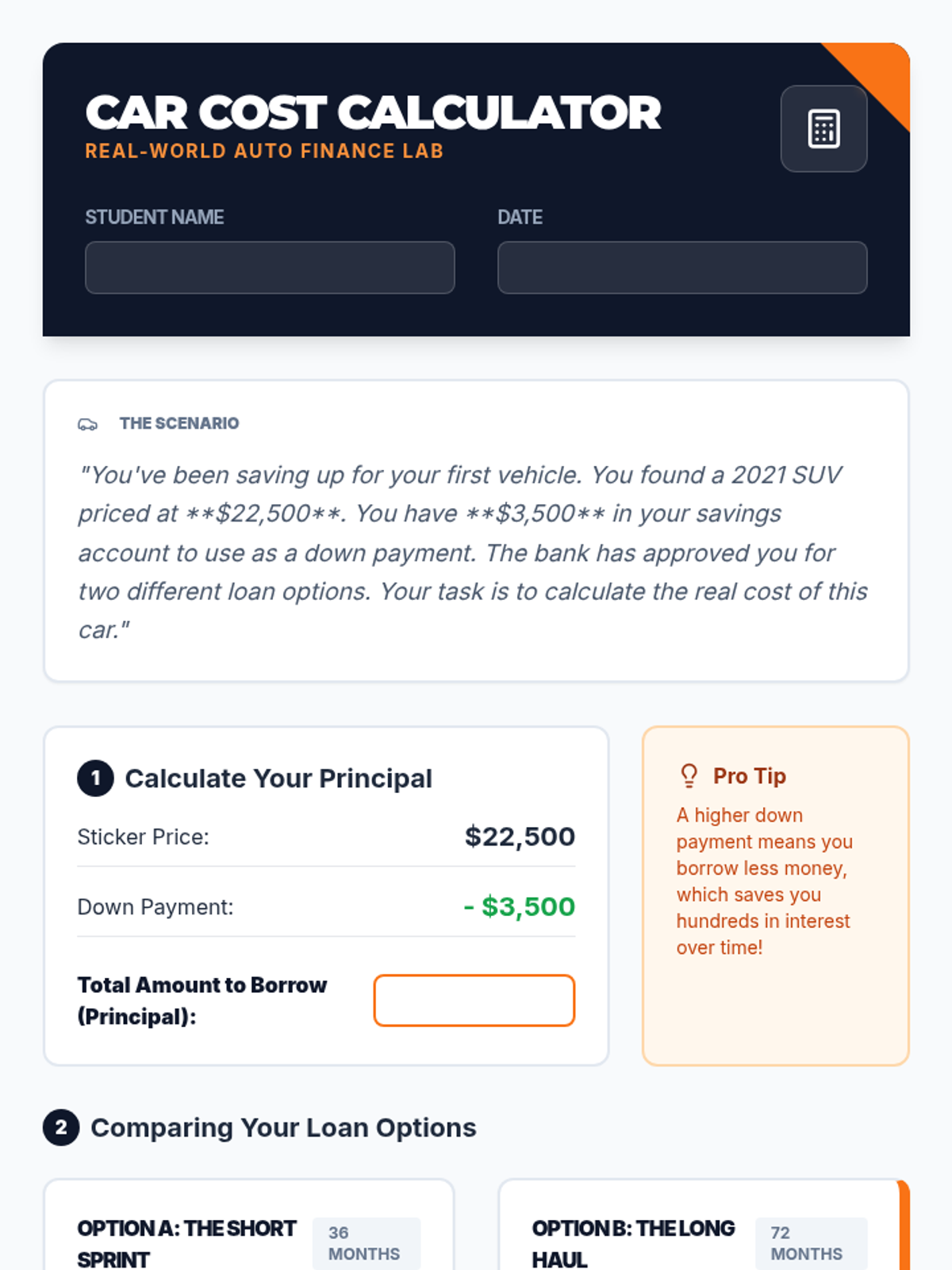
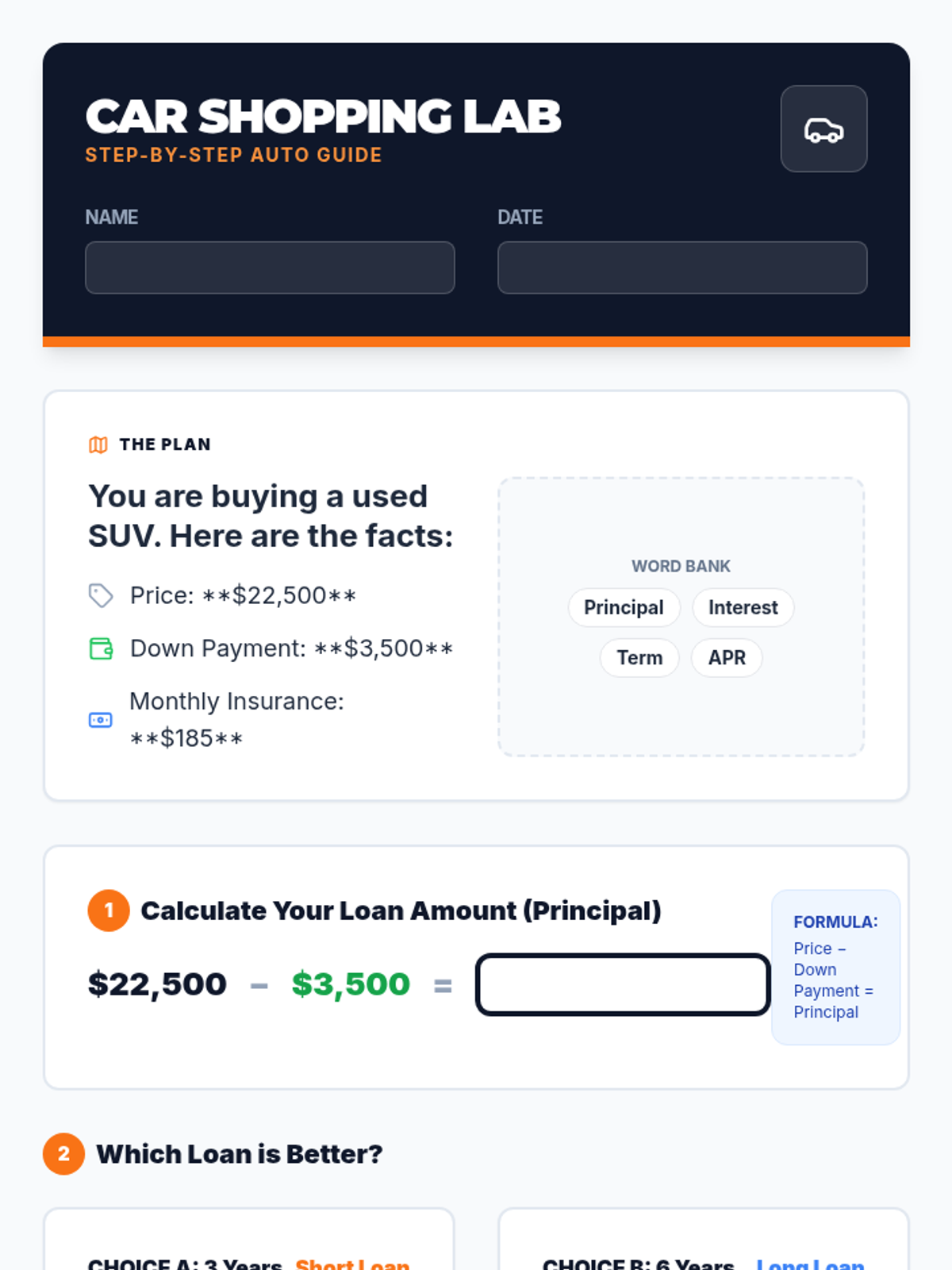
A comprehensive multi-day project where students research, compare, and budget for their first vehicle, focusing on total cost of ownership and financial planning.
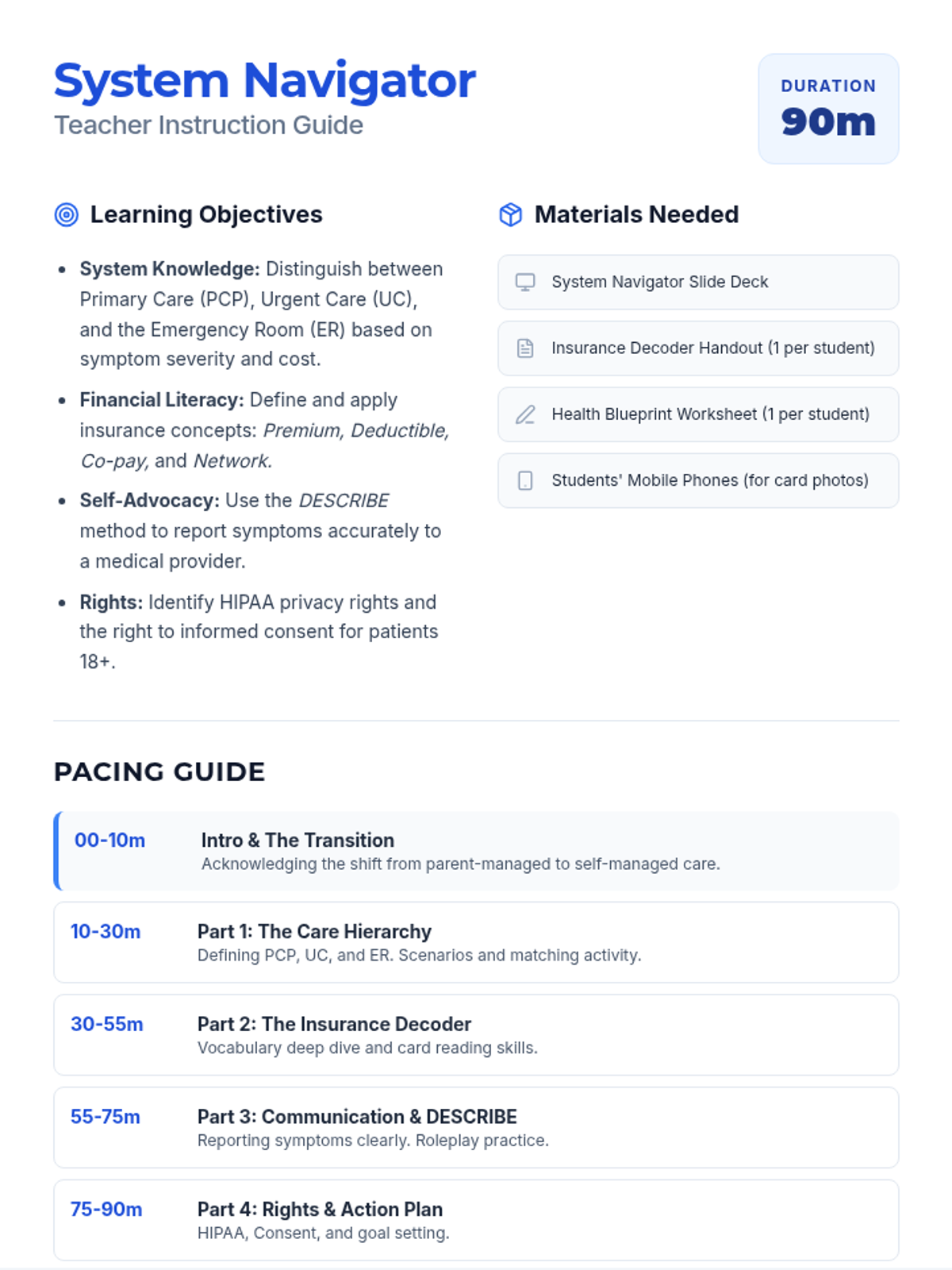
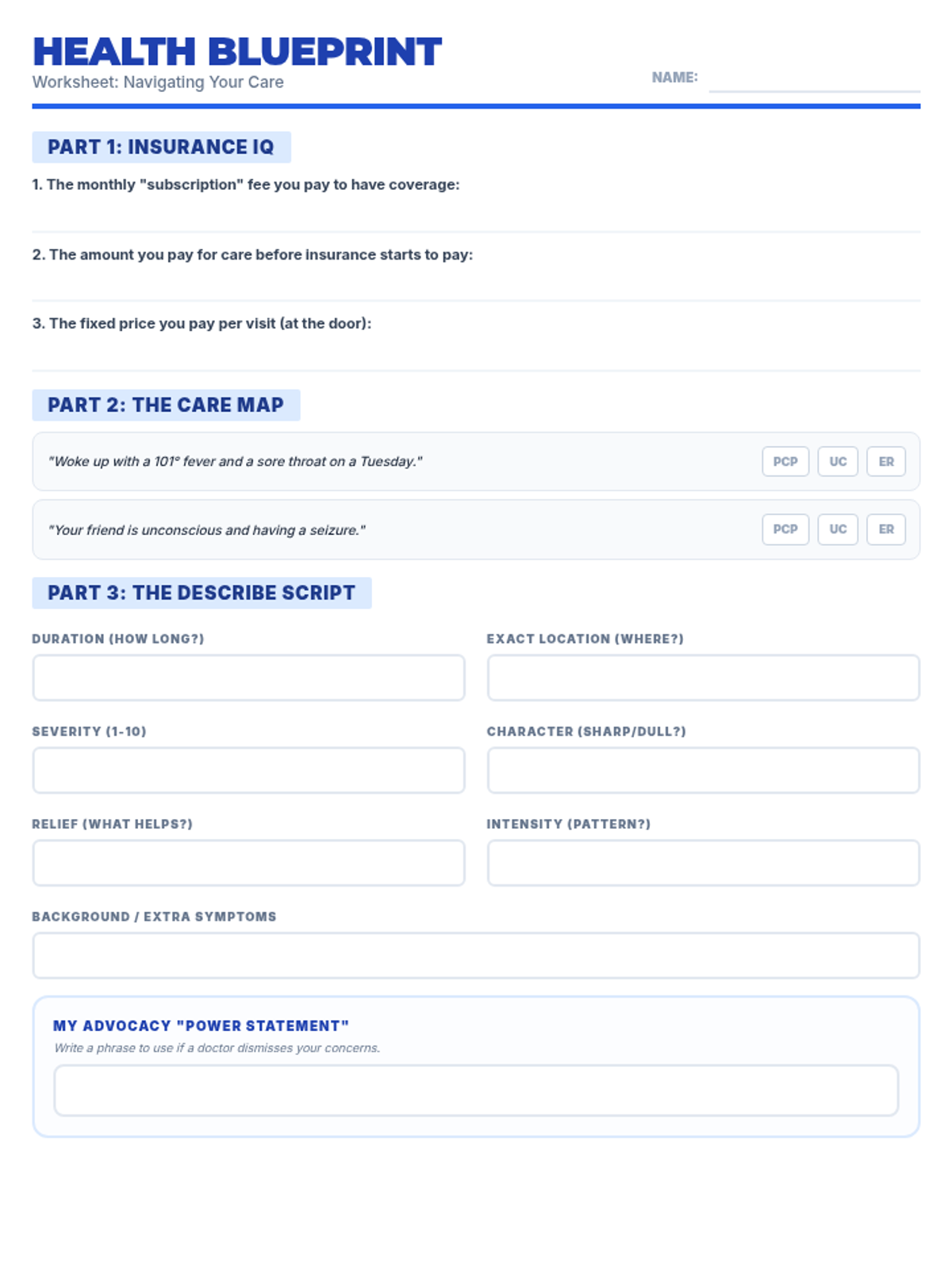
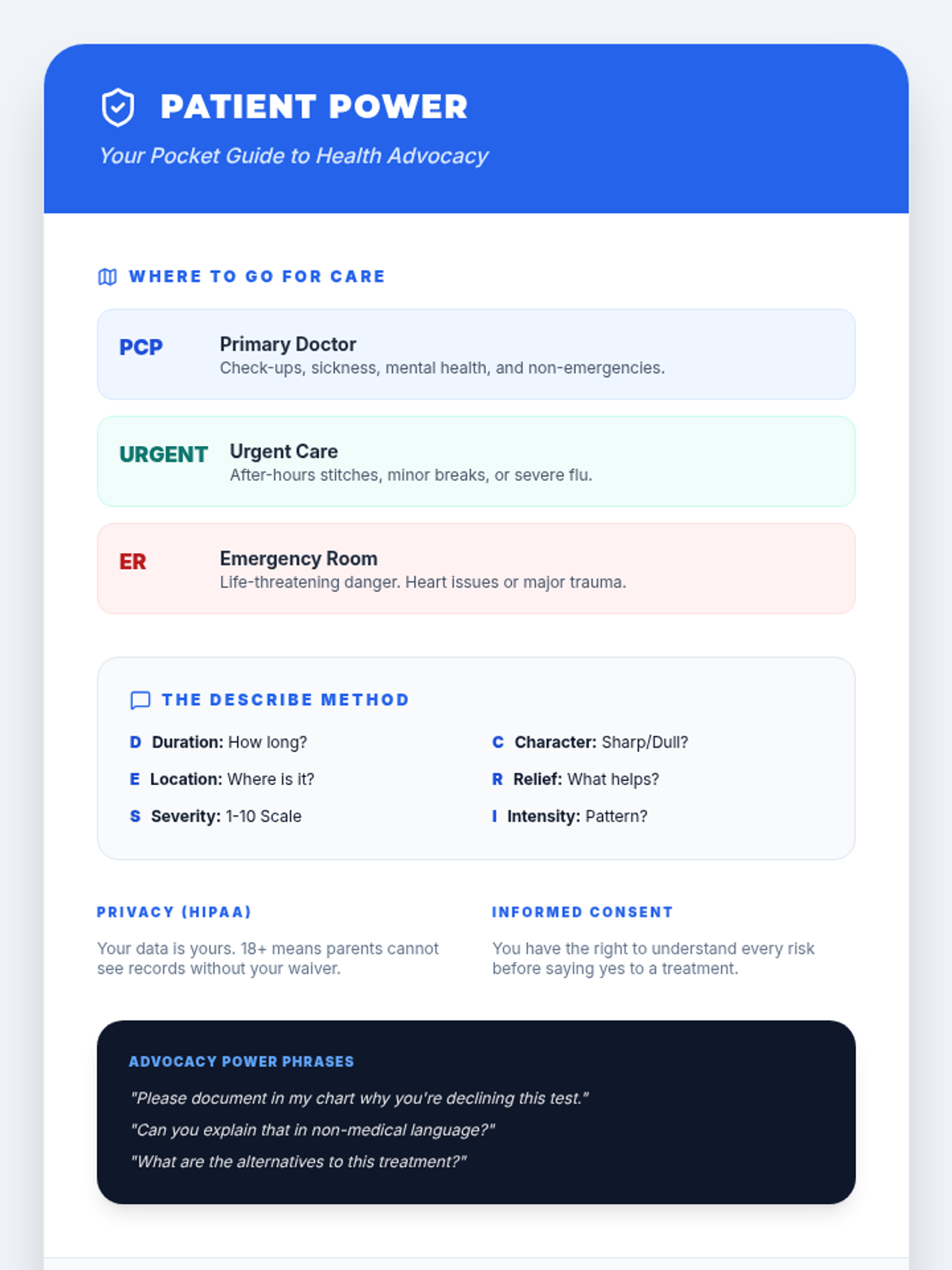
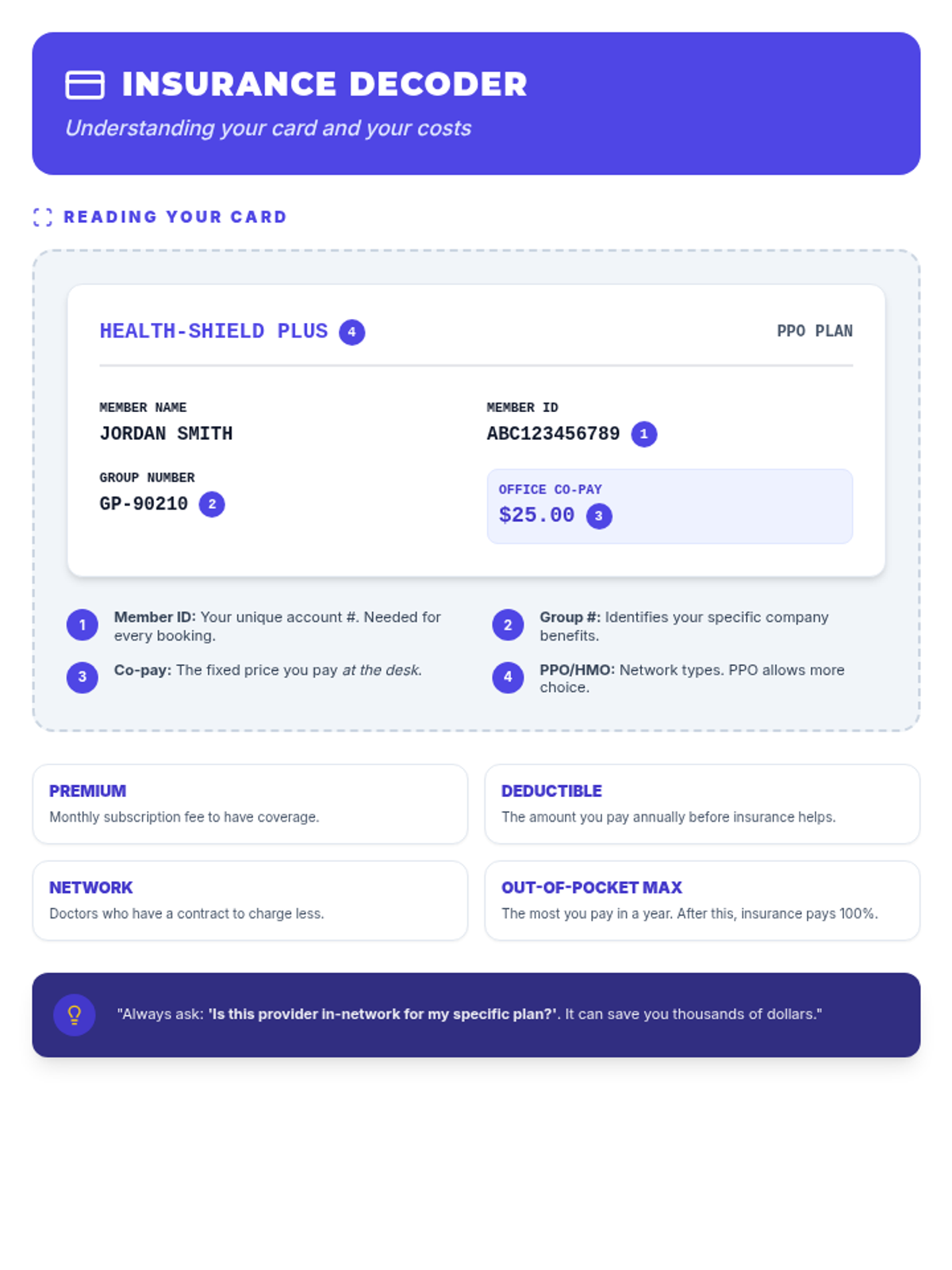
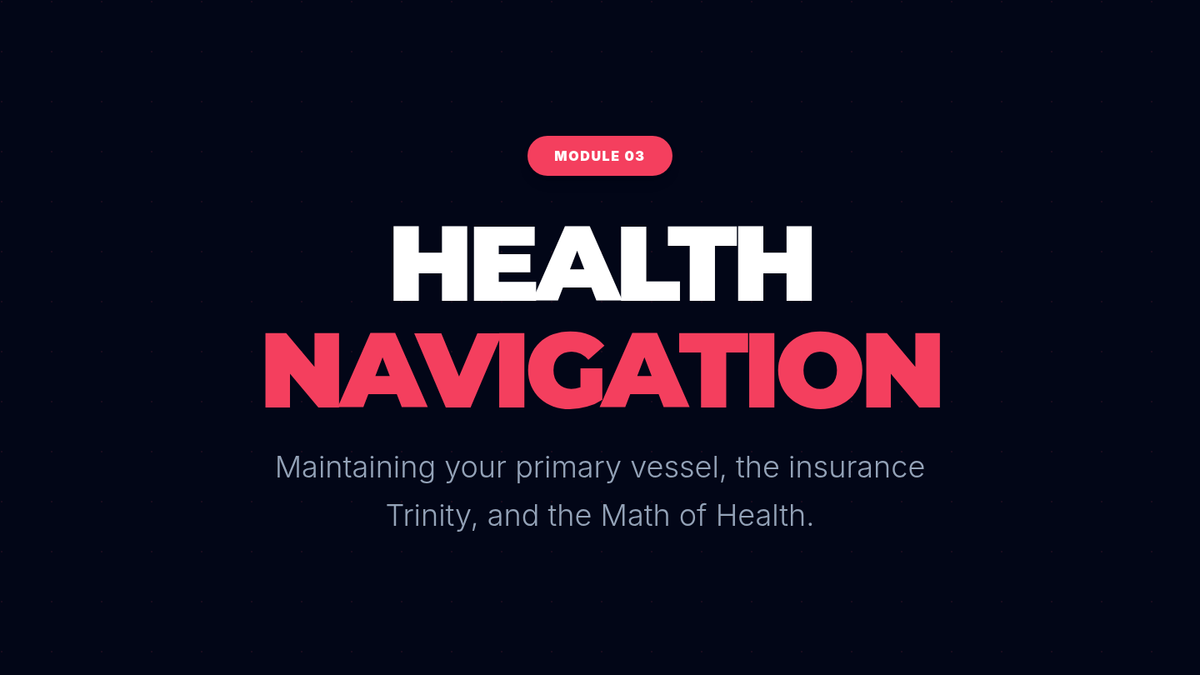
A 90-minute workshop designed for young adults (16-21) to master the healthcare system. Students will learn to distinguish between care levels, communicate symptoms effectively, manage their own medical logistics, and assert their rights as patients.
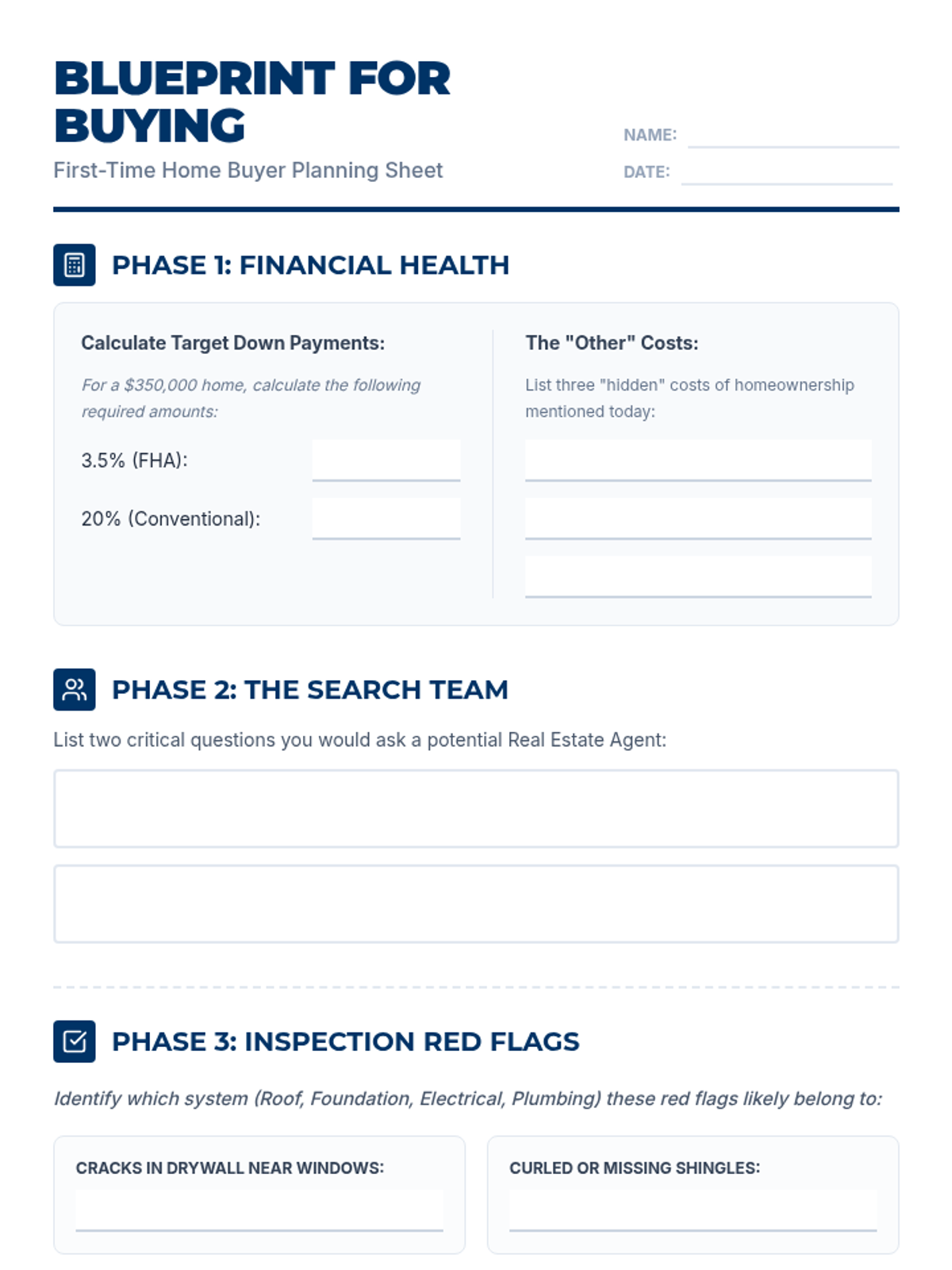
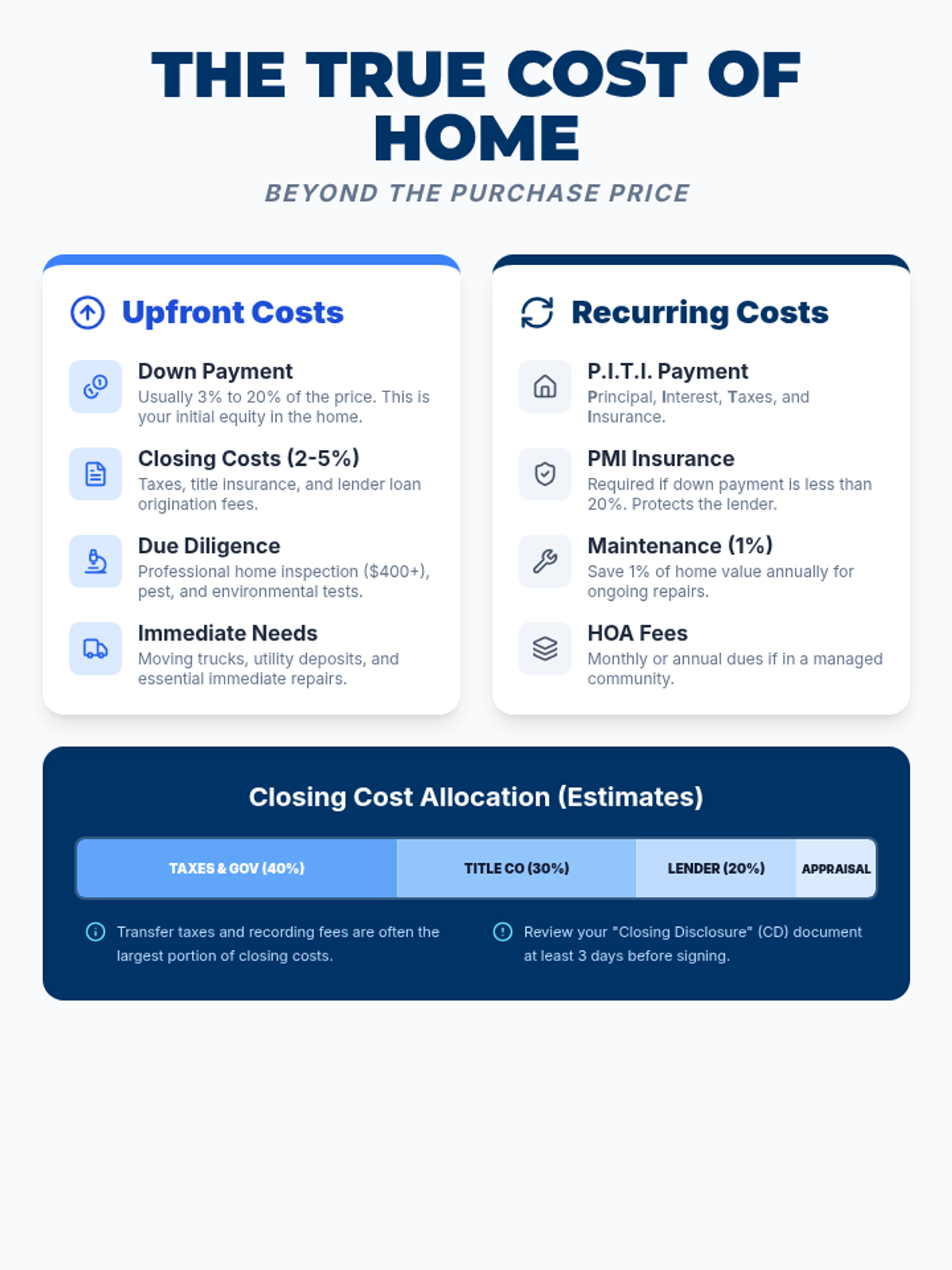
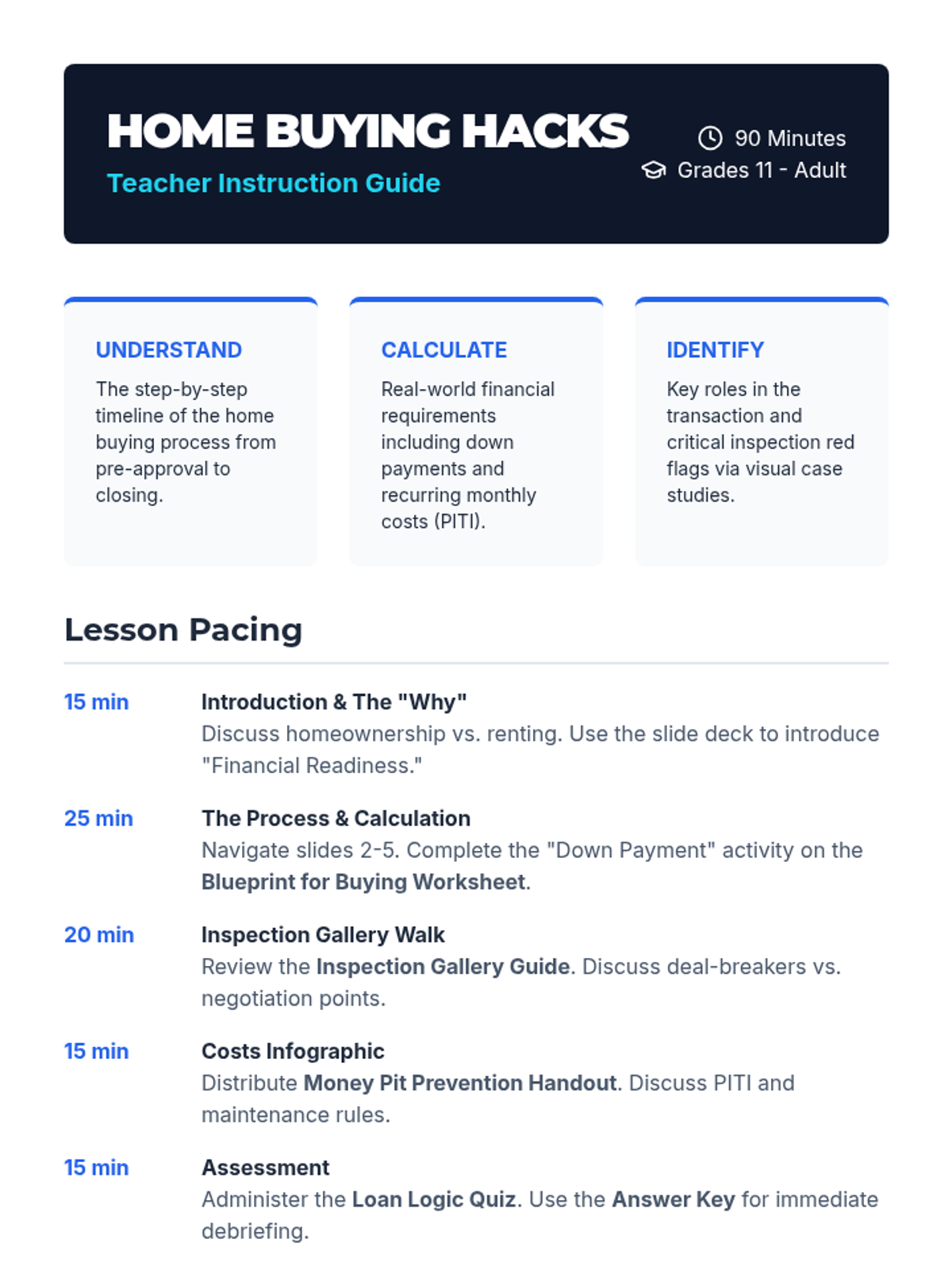
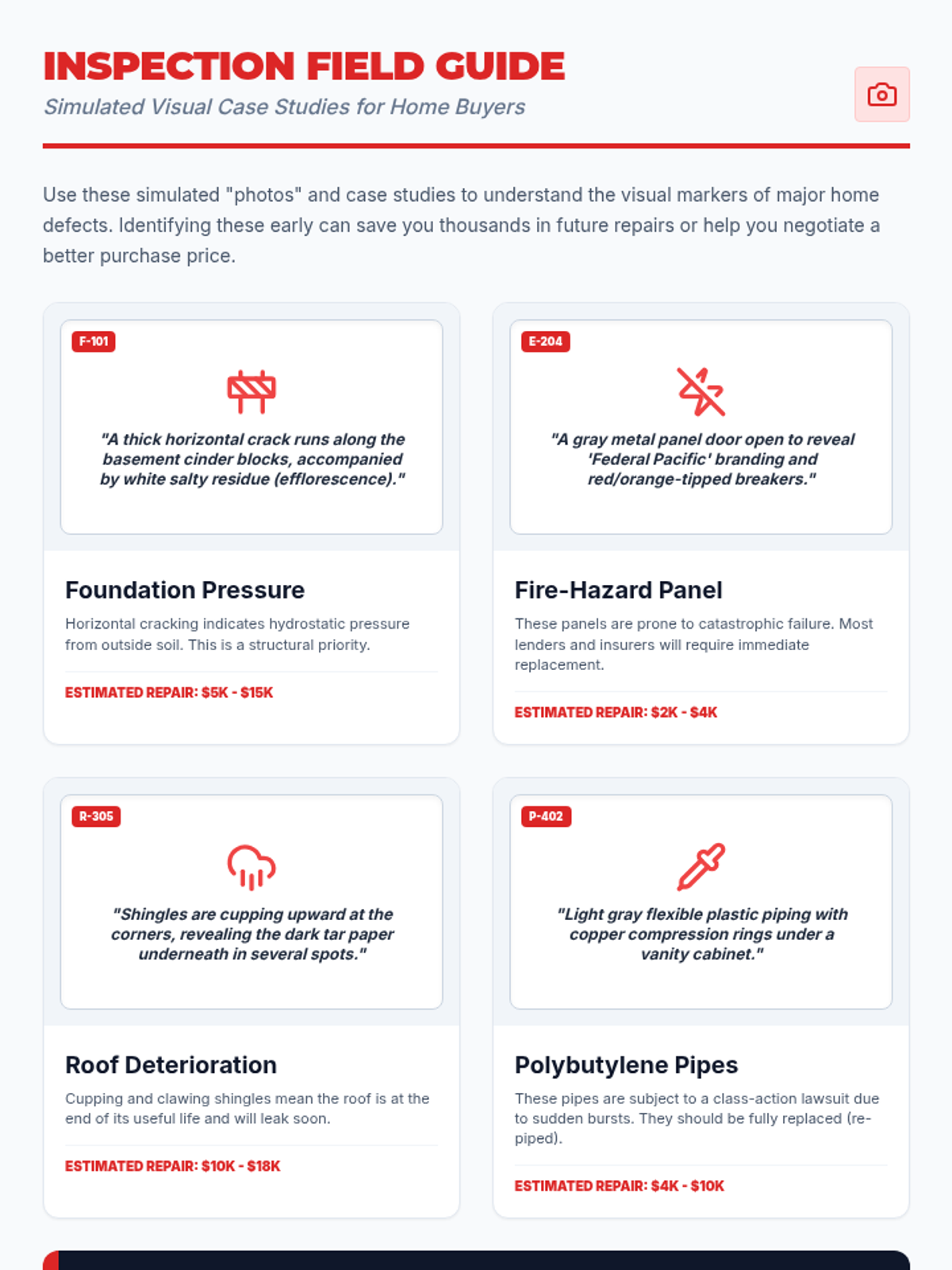
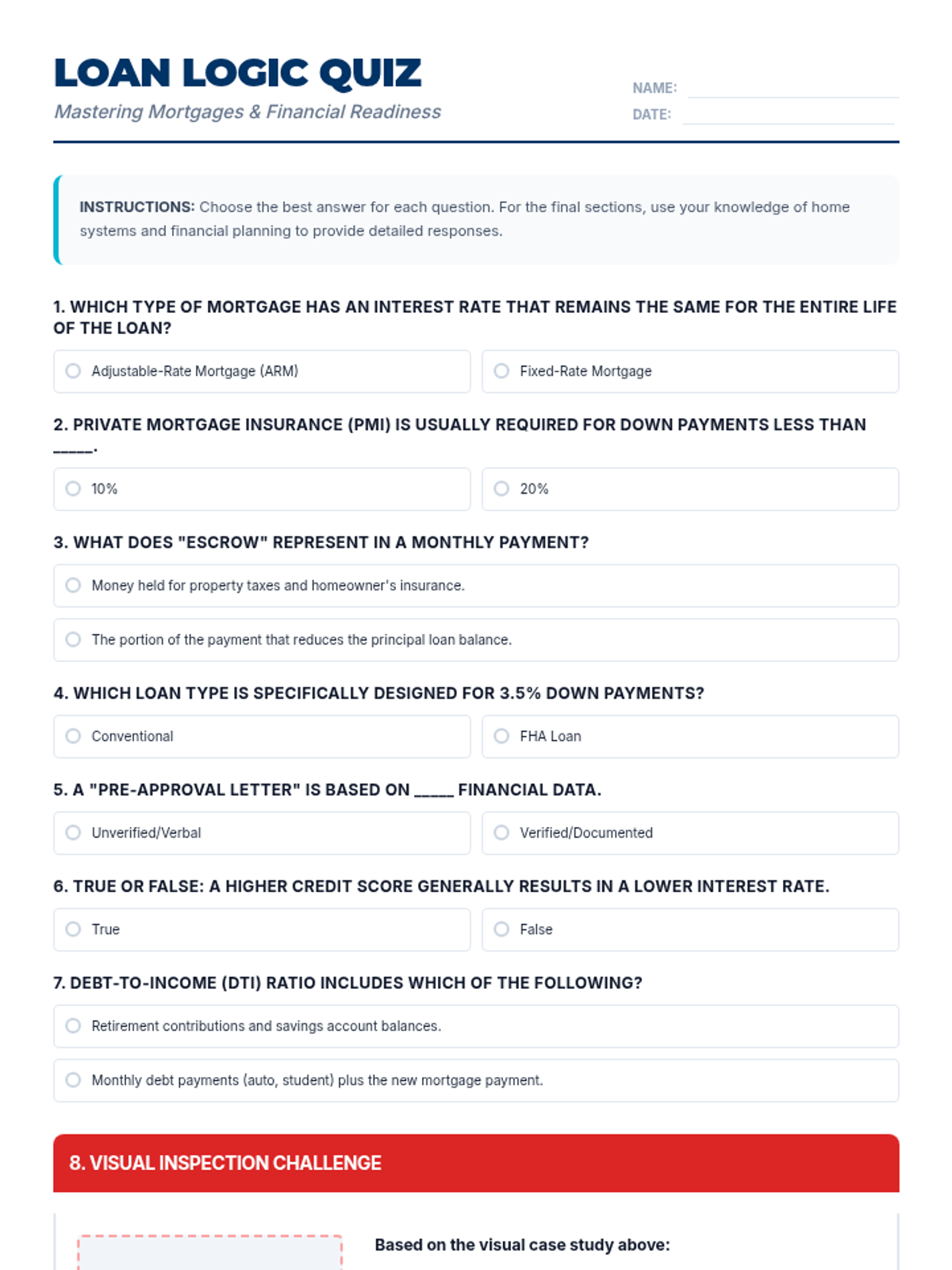
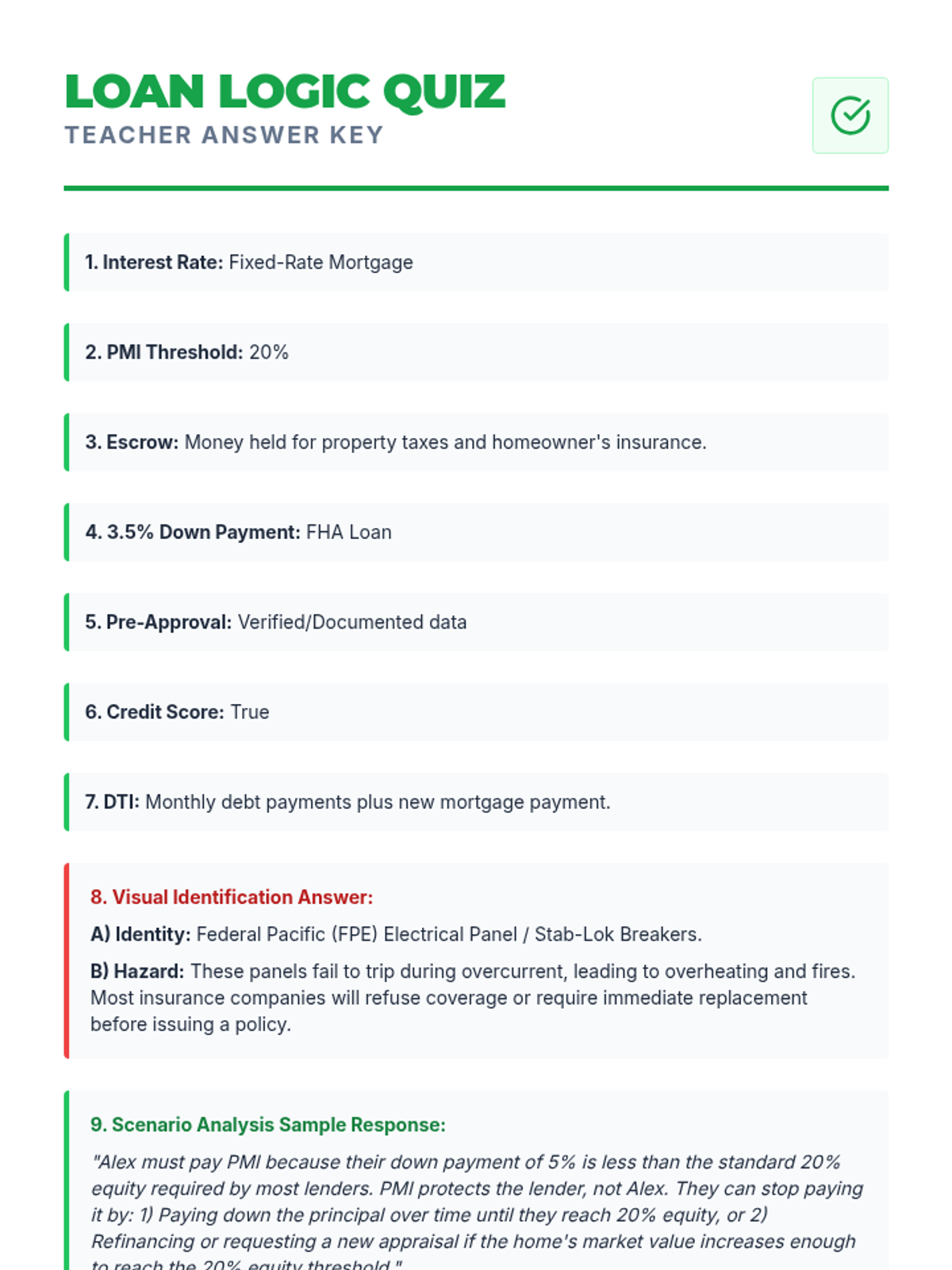
A comprehensive guide to the home buying process, covering financial preparation, mortgage types, home inspections, and the legal closing process. Students will learn how to navigate the complex journey of purchasing their first home with confidence and financial savvy.
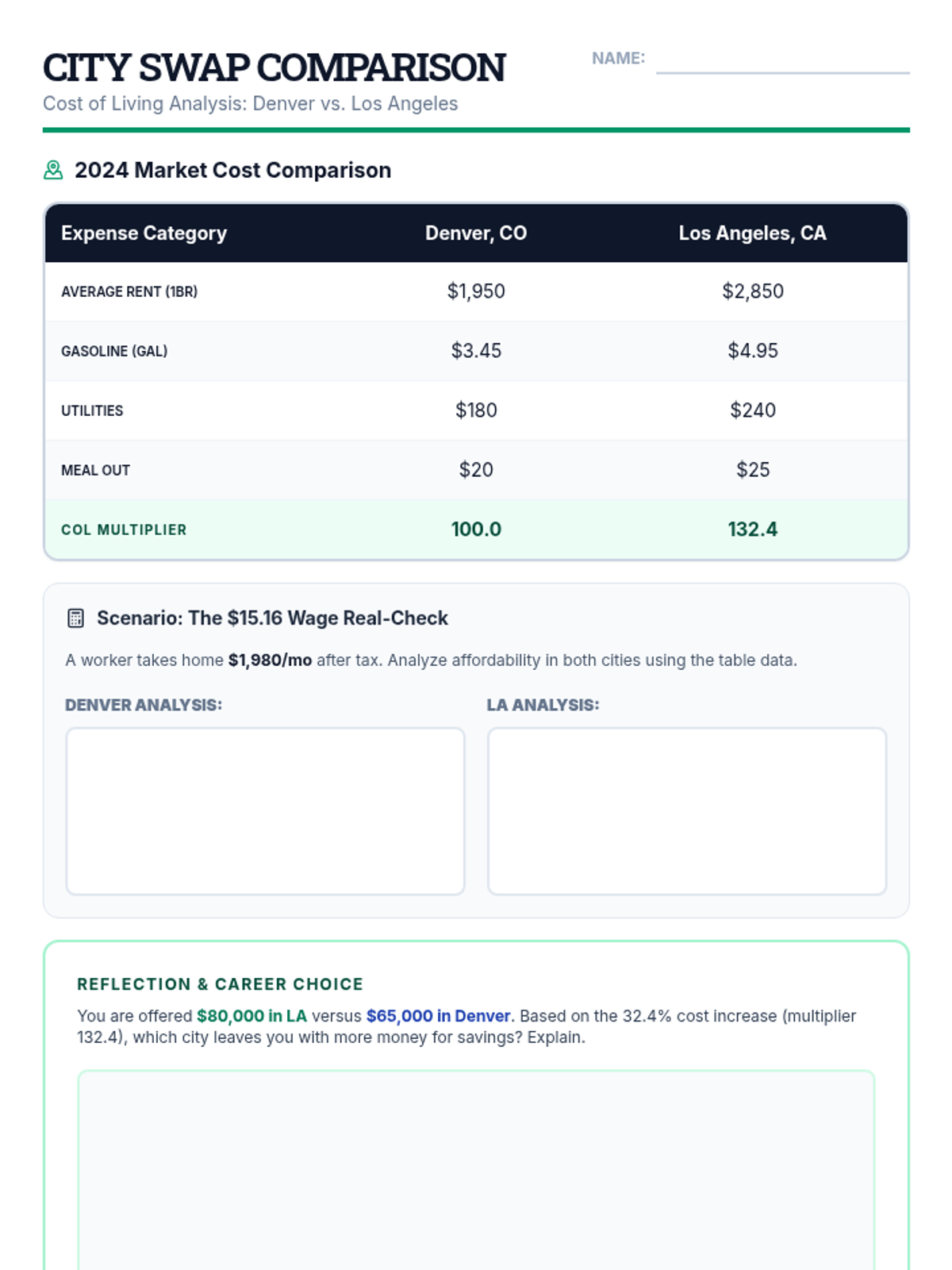
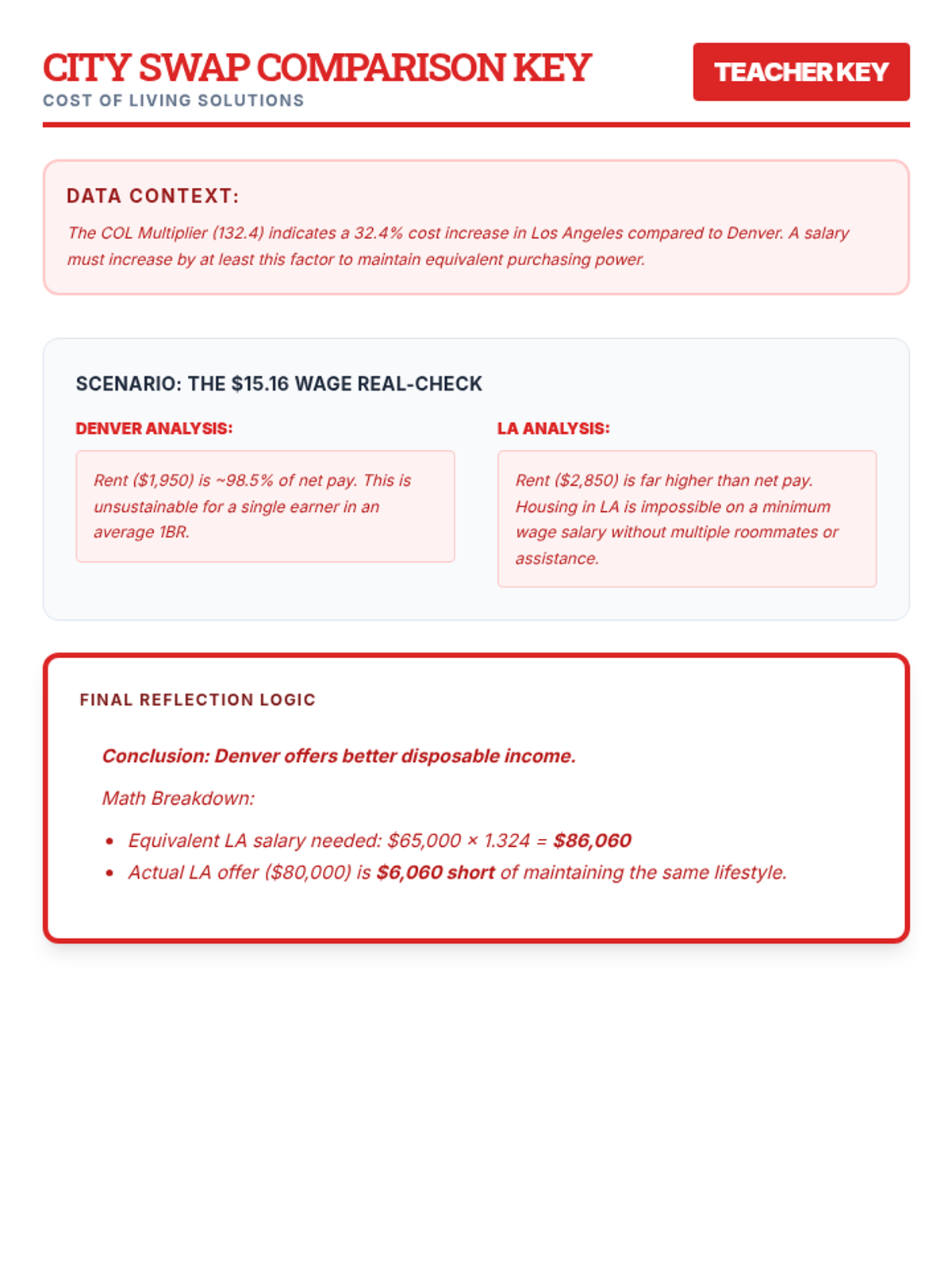
Analyzing how location affects the value of money by comparing cost-of-living data between Denver, Colorado, and Los Angeles, California.
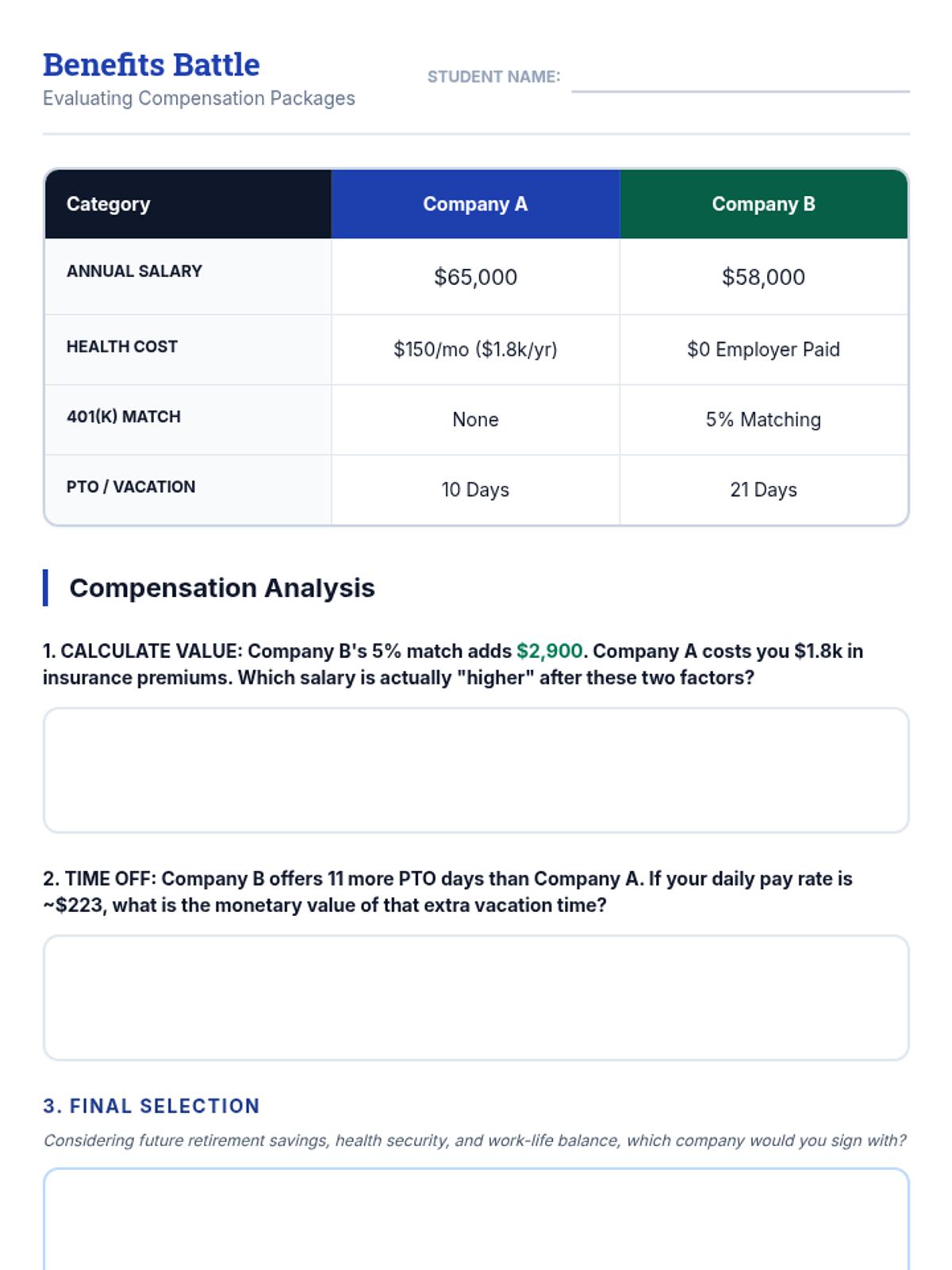
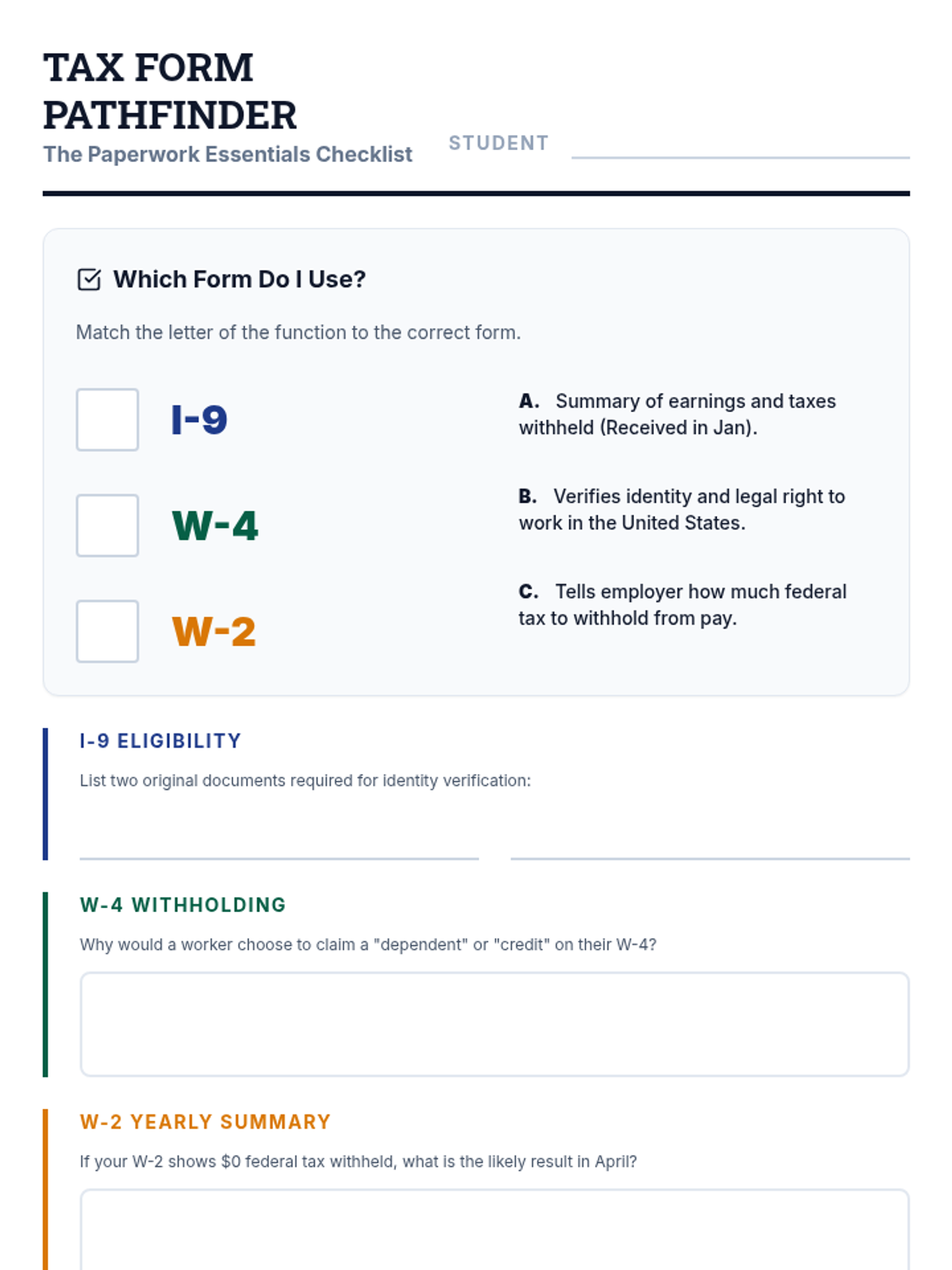
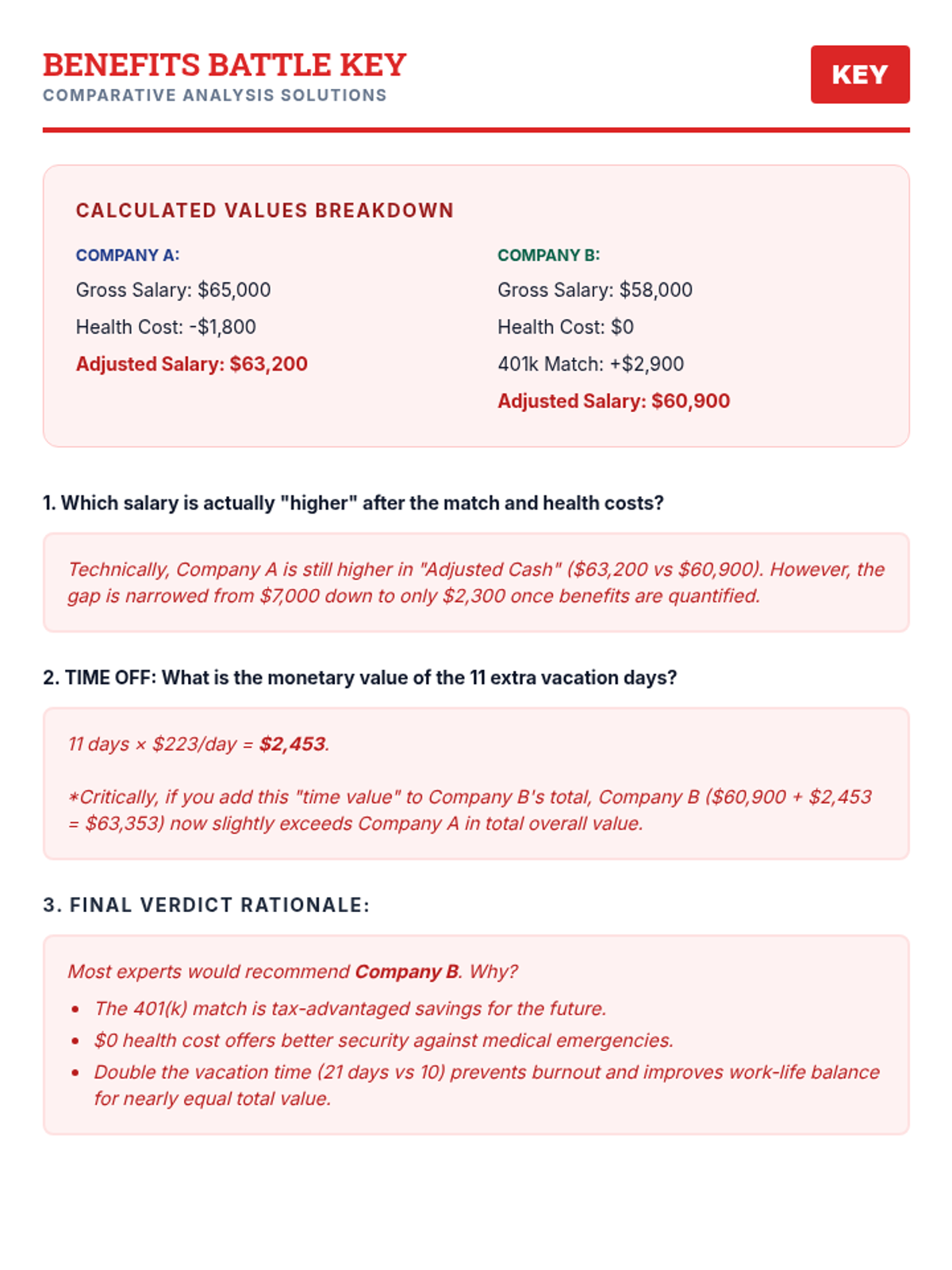
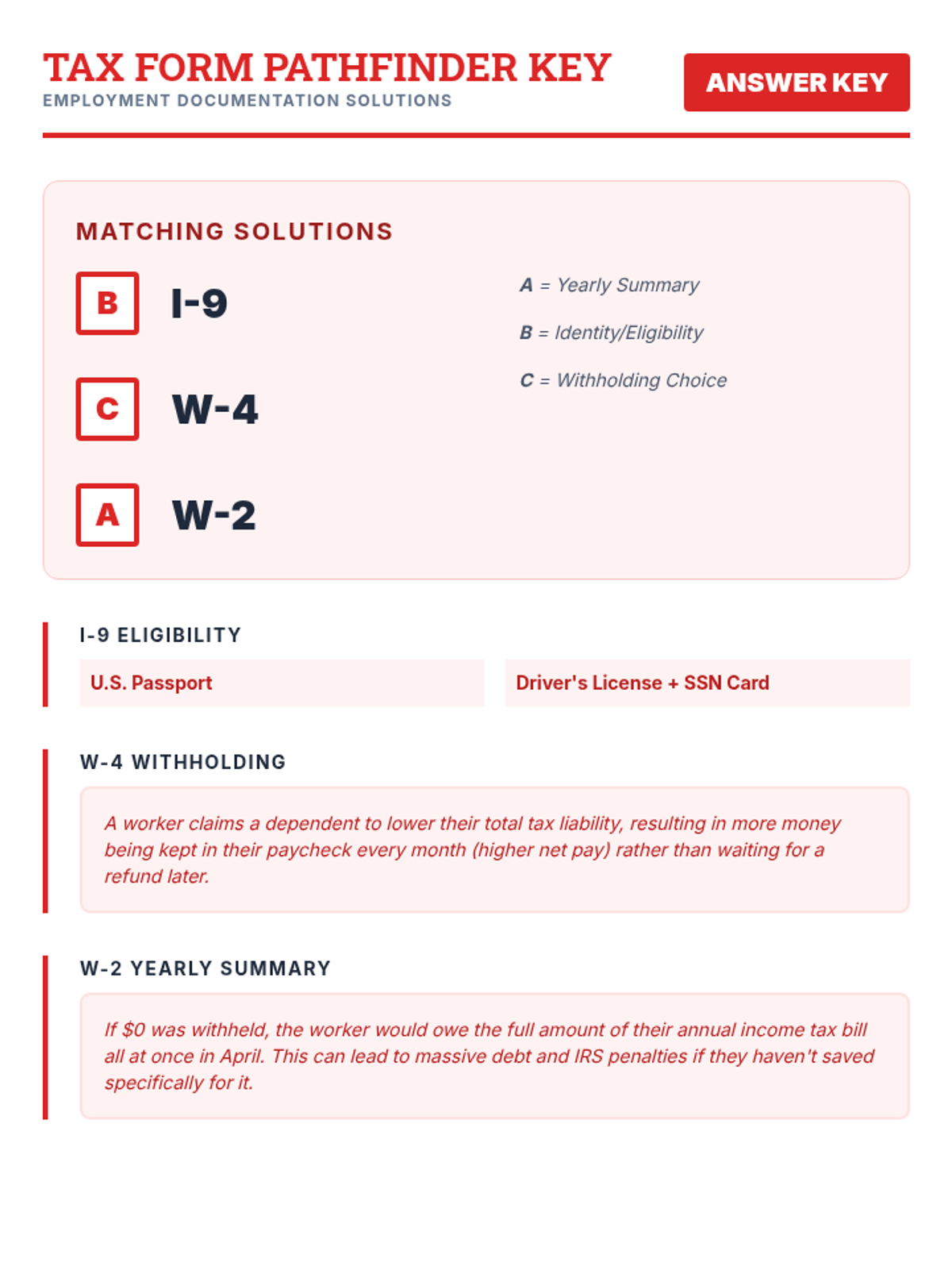
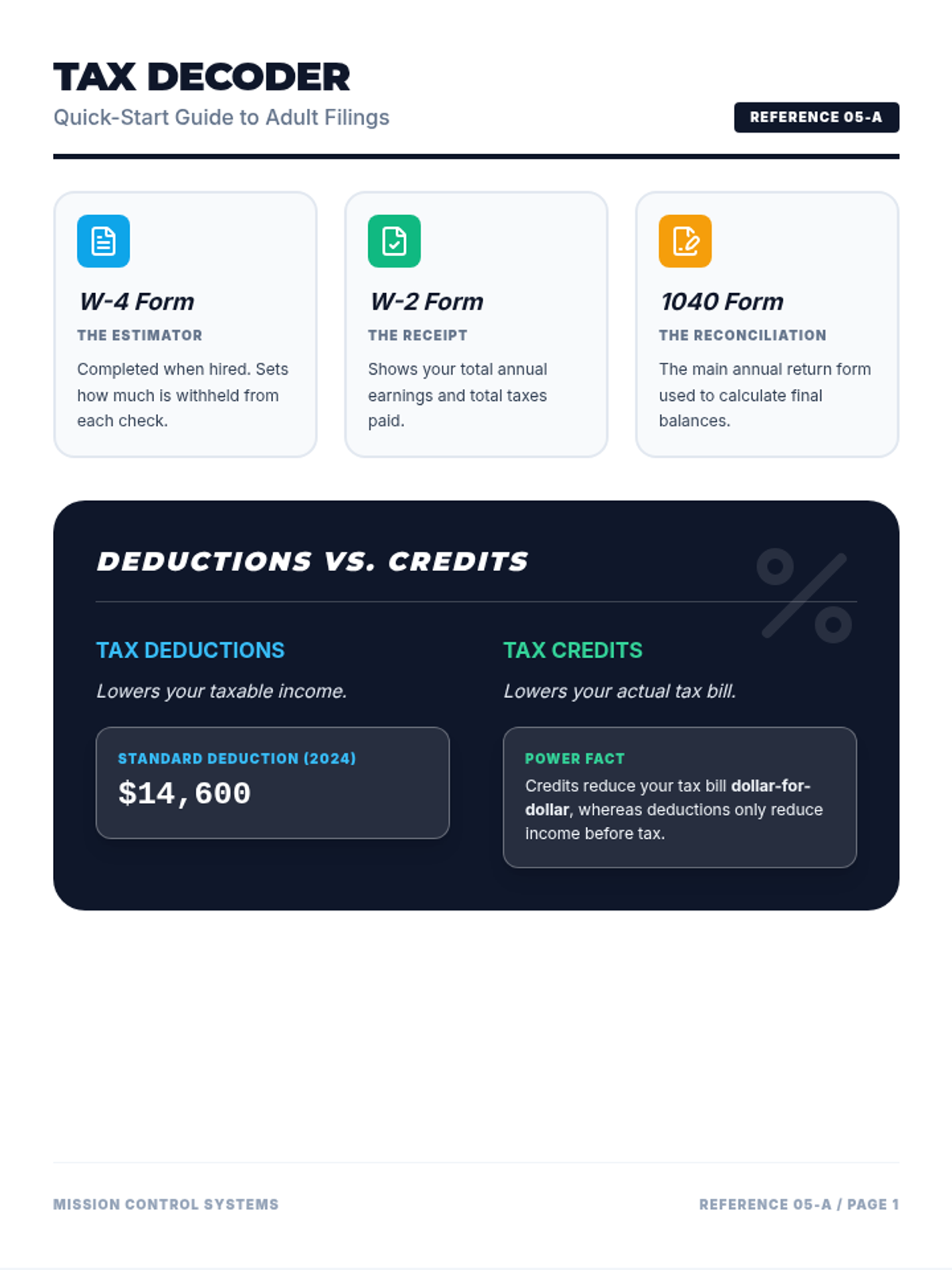
Navigating the administrative side of employment, including benefit comparisons and the essential tax forms required for new hires.
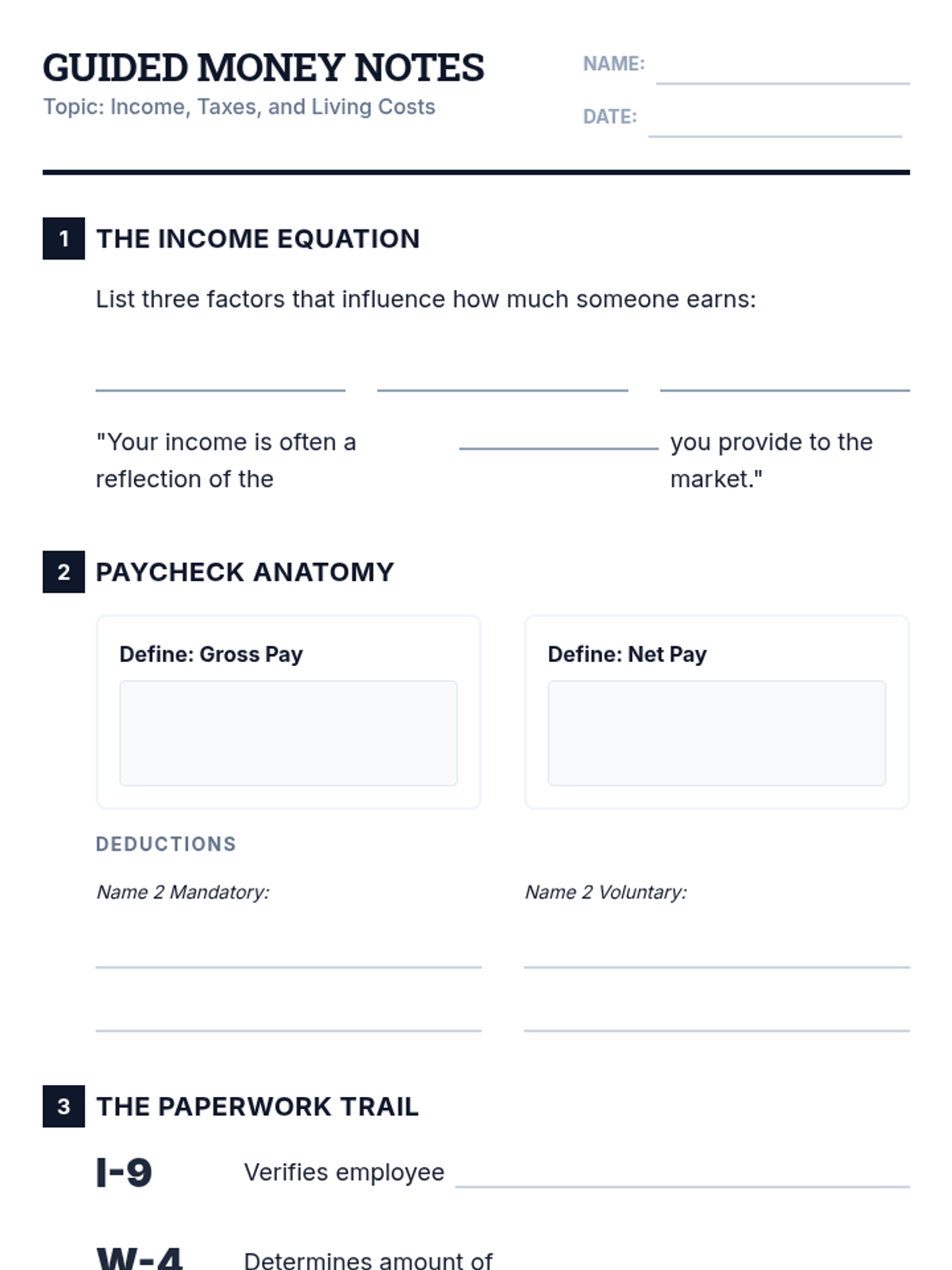
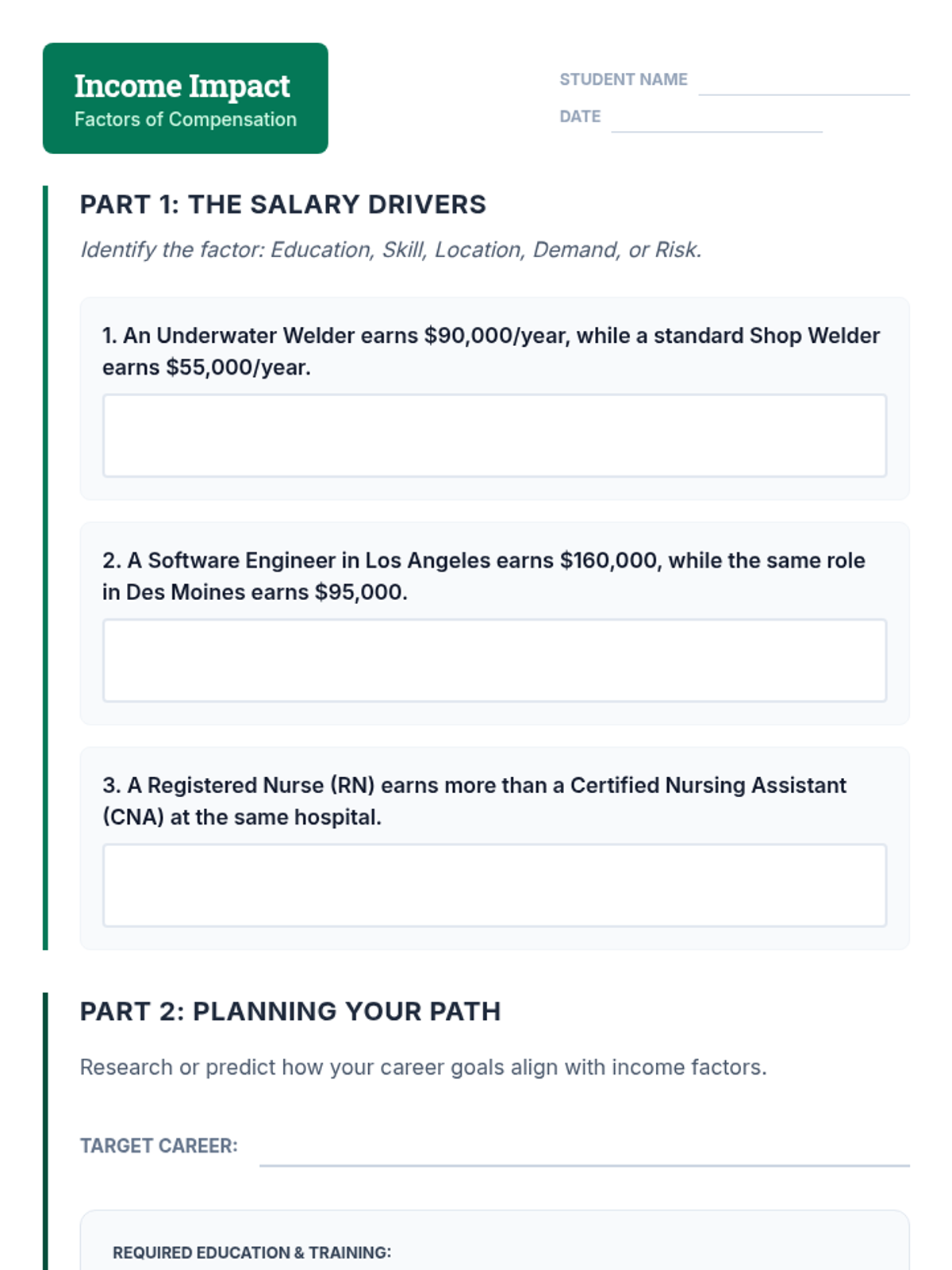
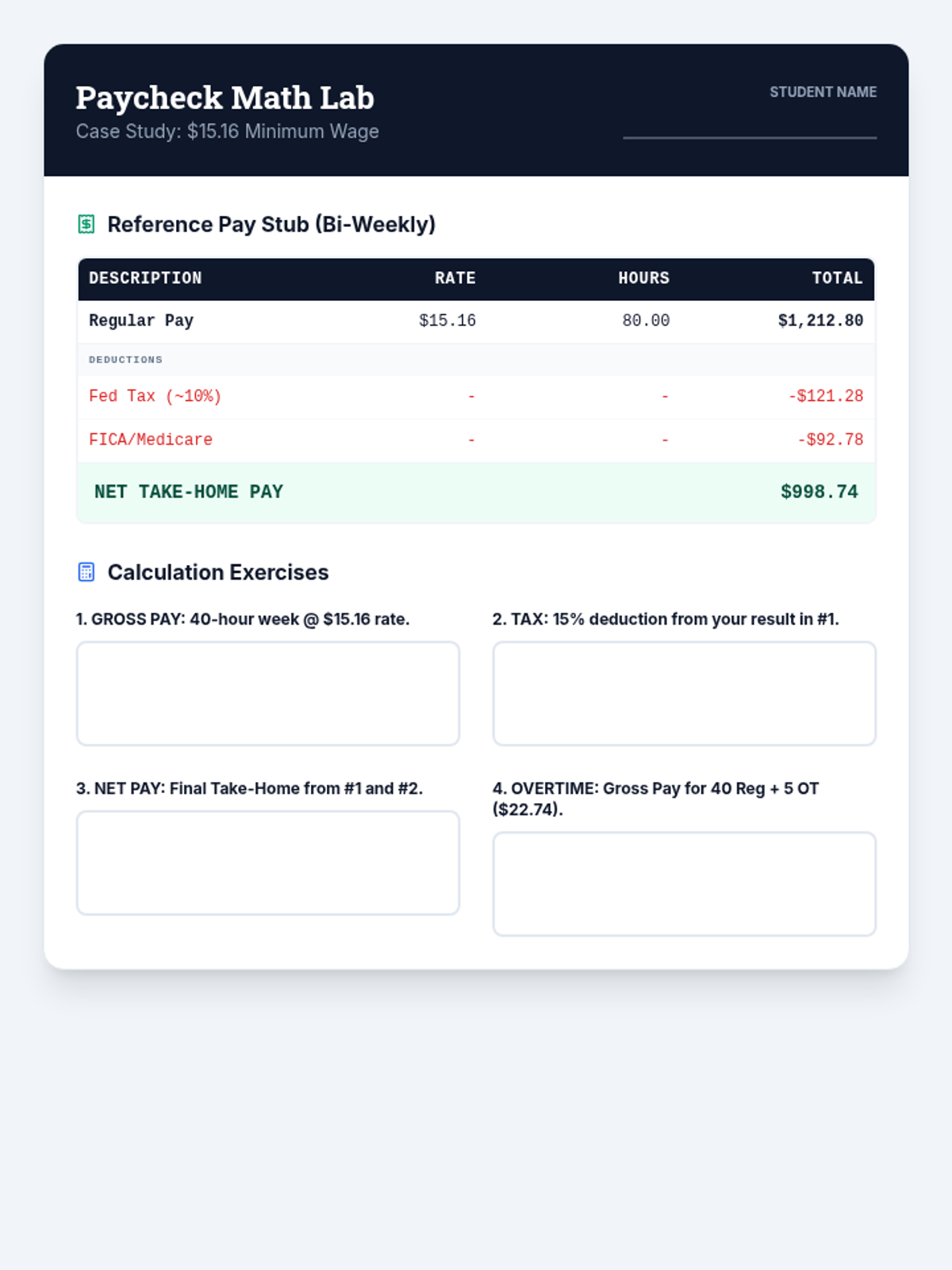
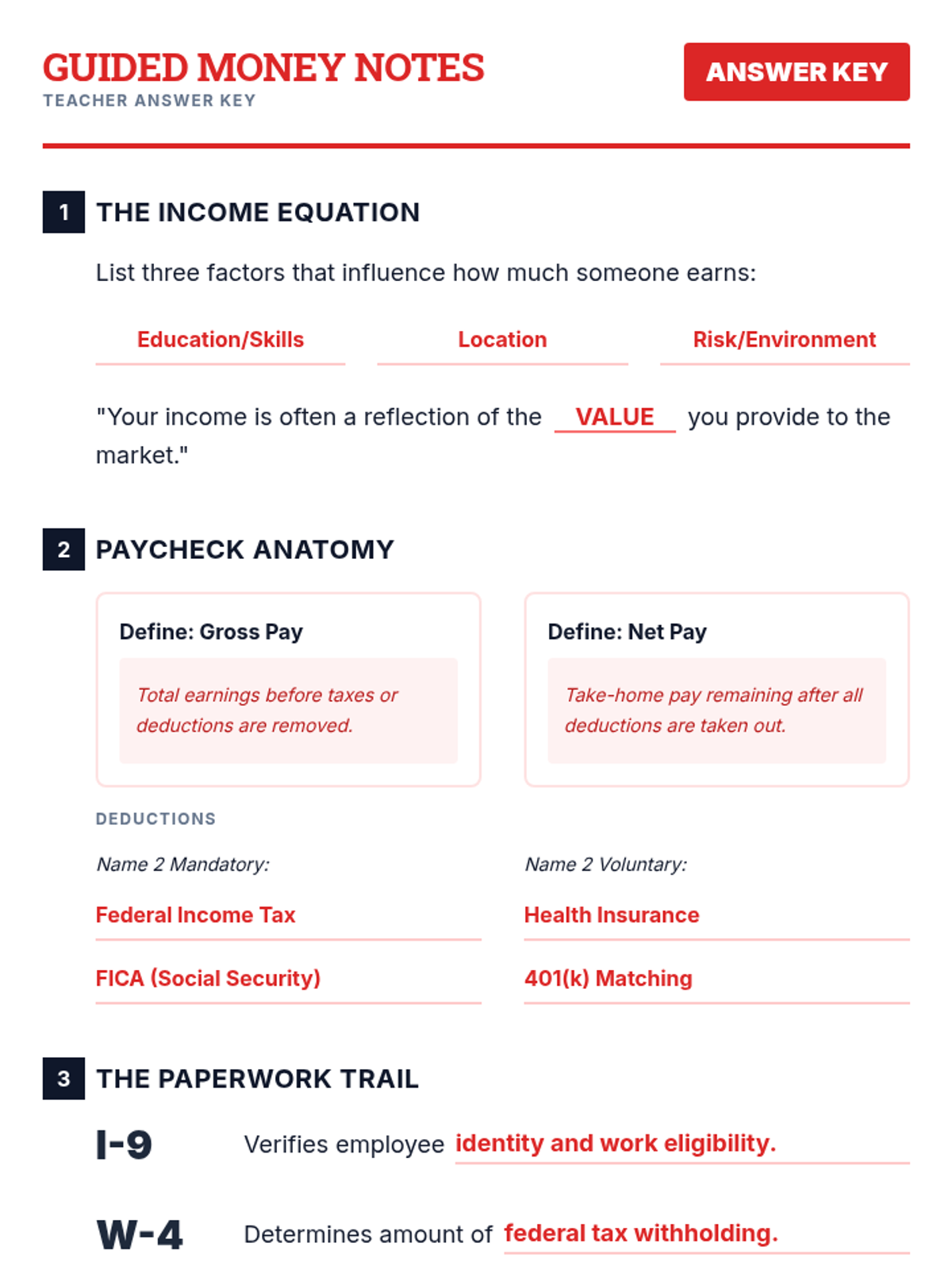
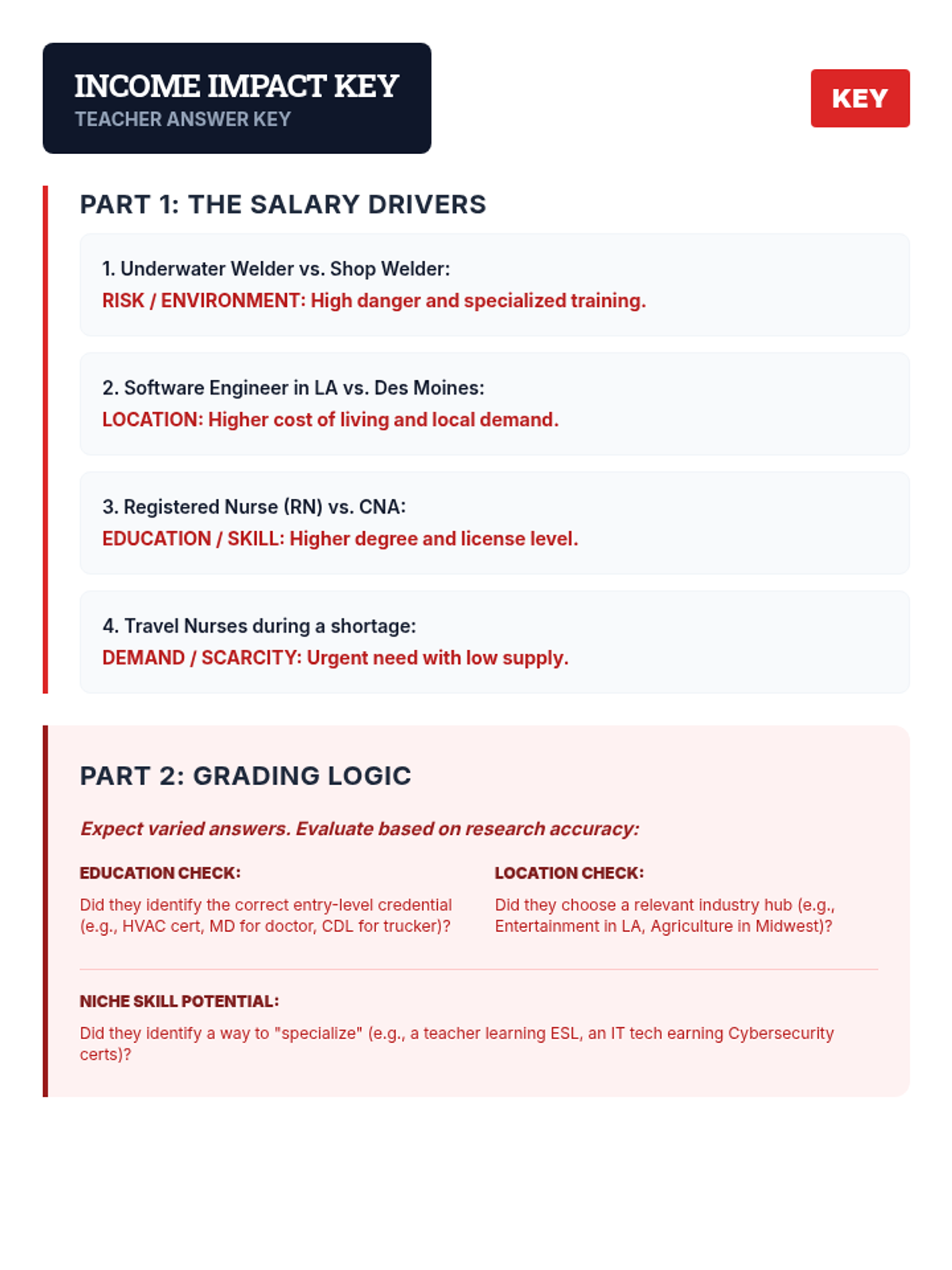
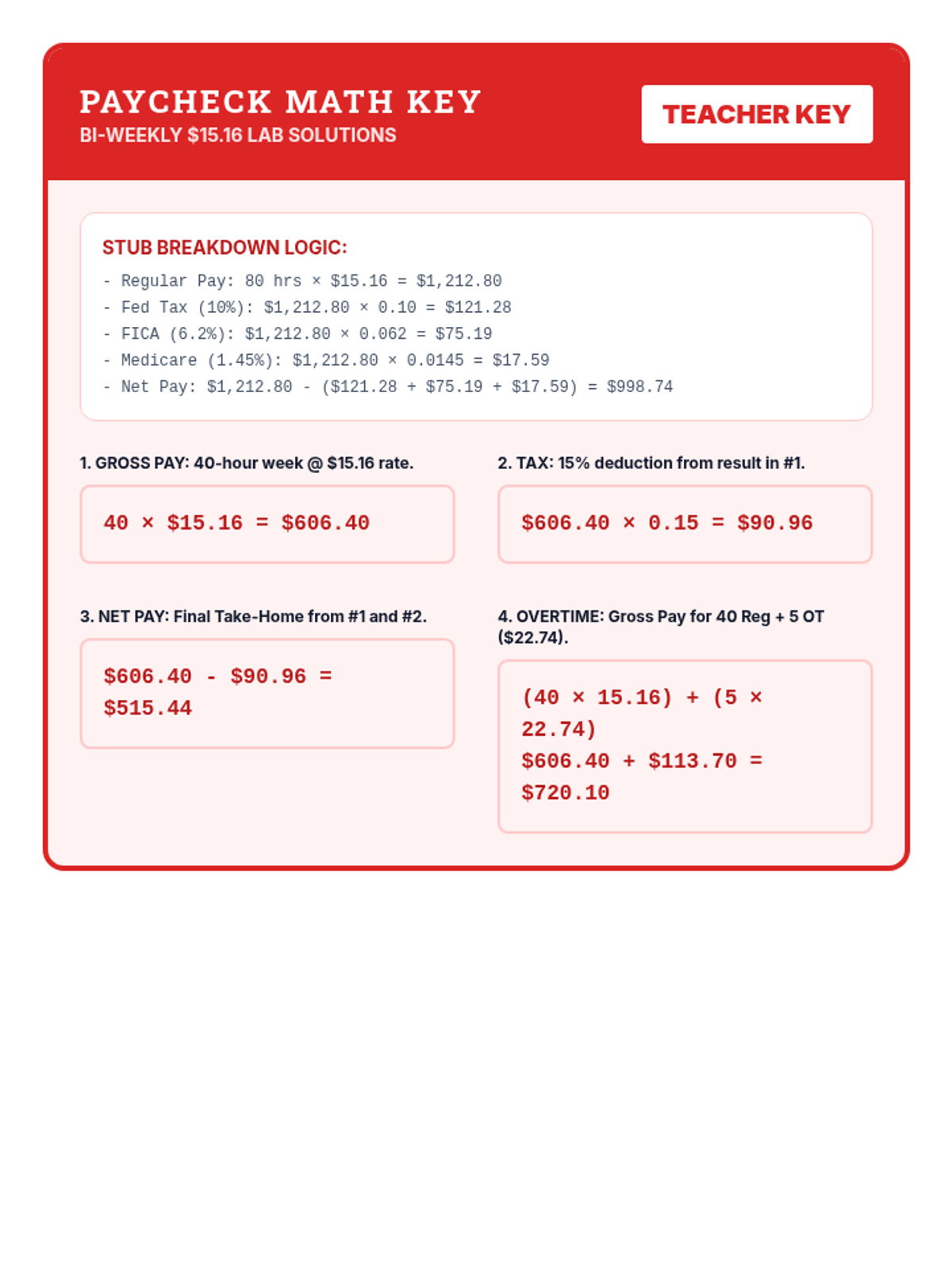
Understanding the fundamentals of how income is earned, how paychecks are calculated, and the specific math behind a $15.16 hourly wage.
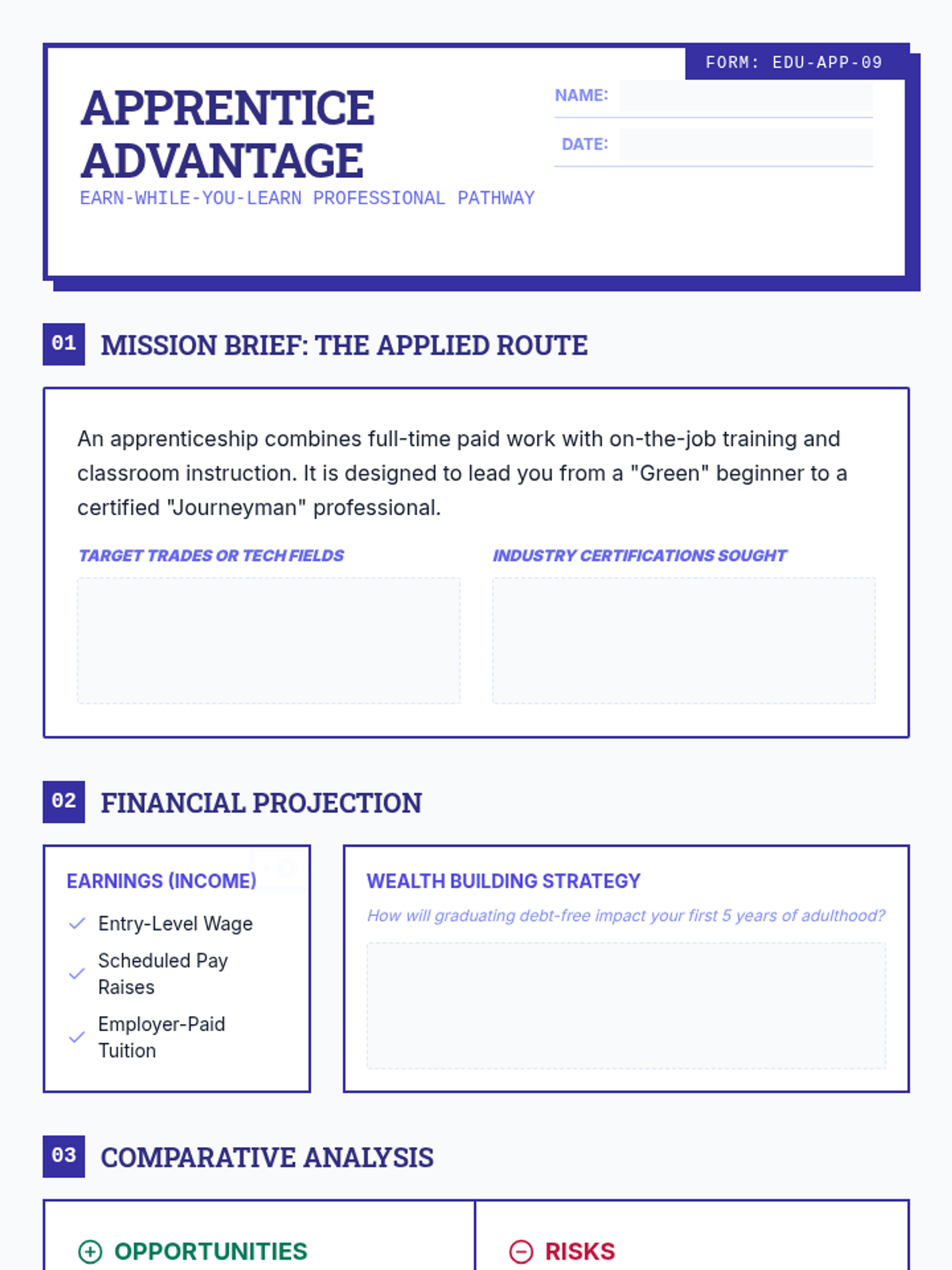
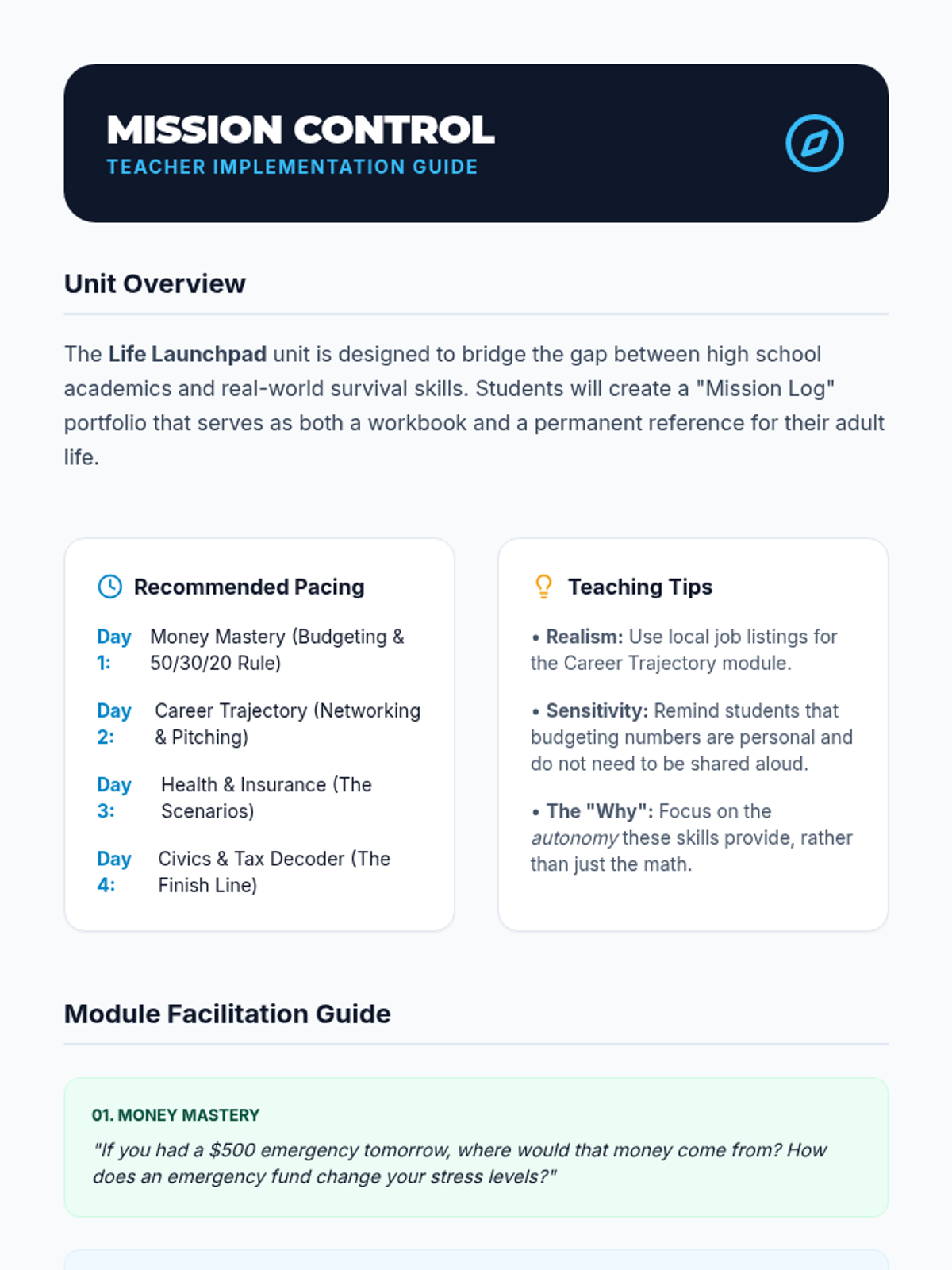
A comprehensive transition-to-adulthood curriculum covering financial literacy, career planning, health navigation, and civic engagement. Students build a personal 'mission log' portfolio to prepare for independent life.
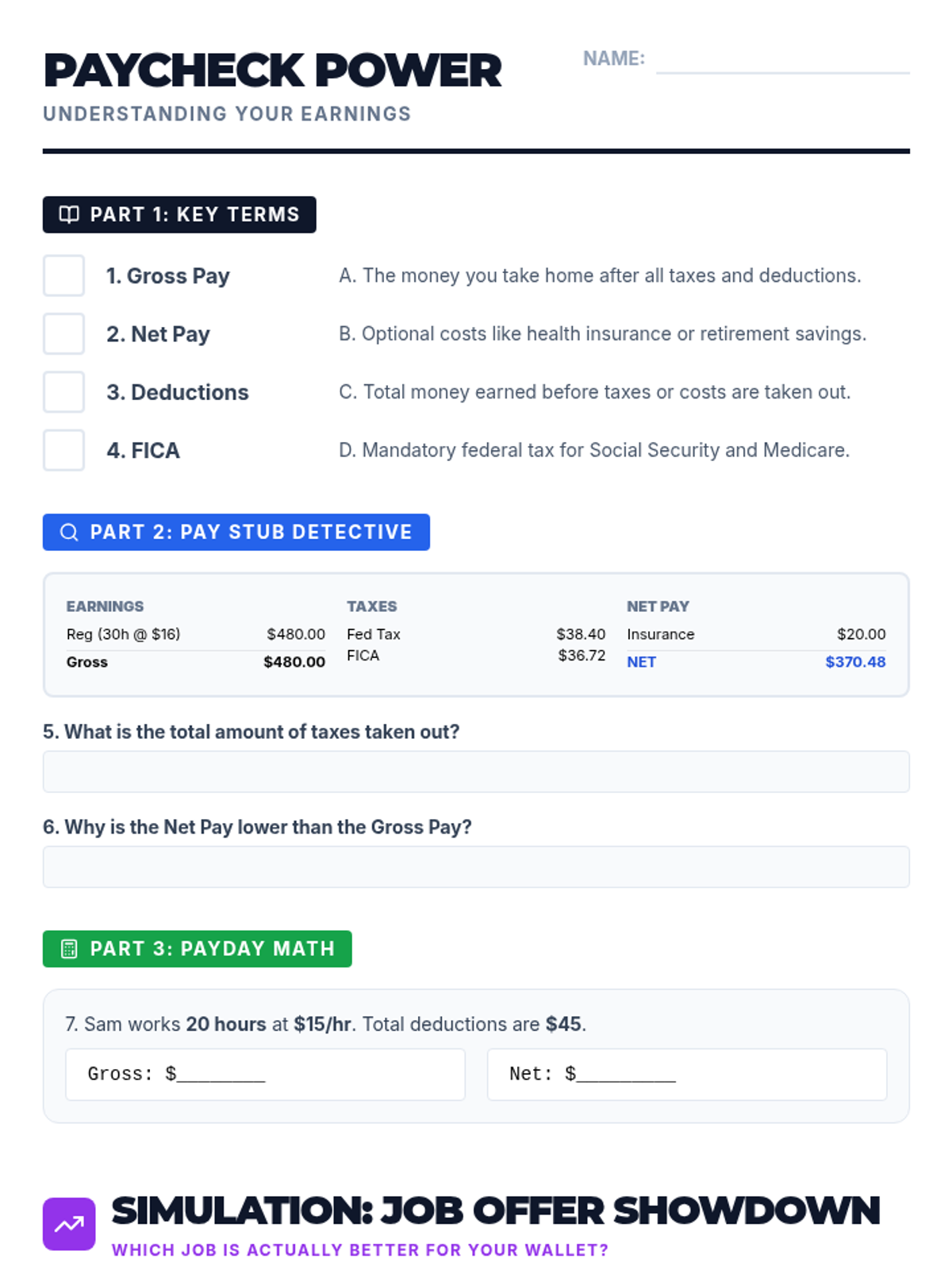
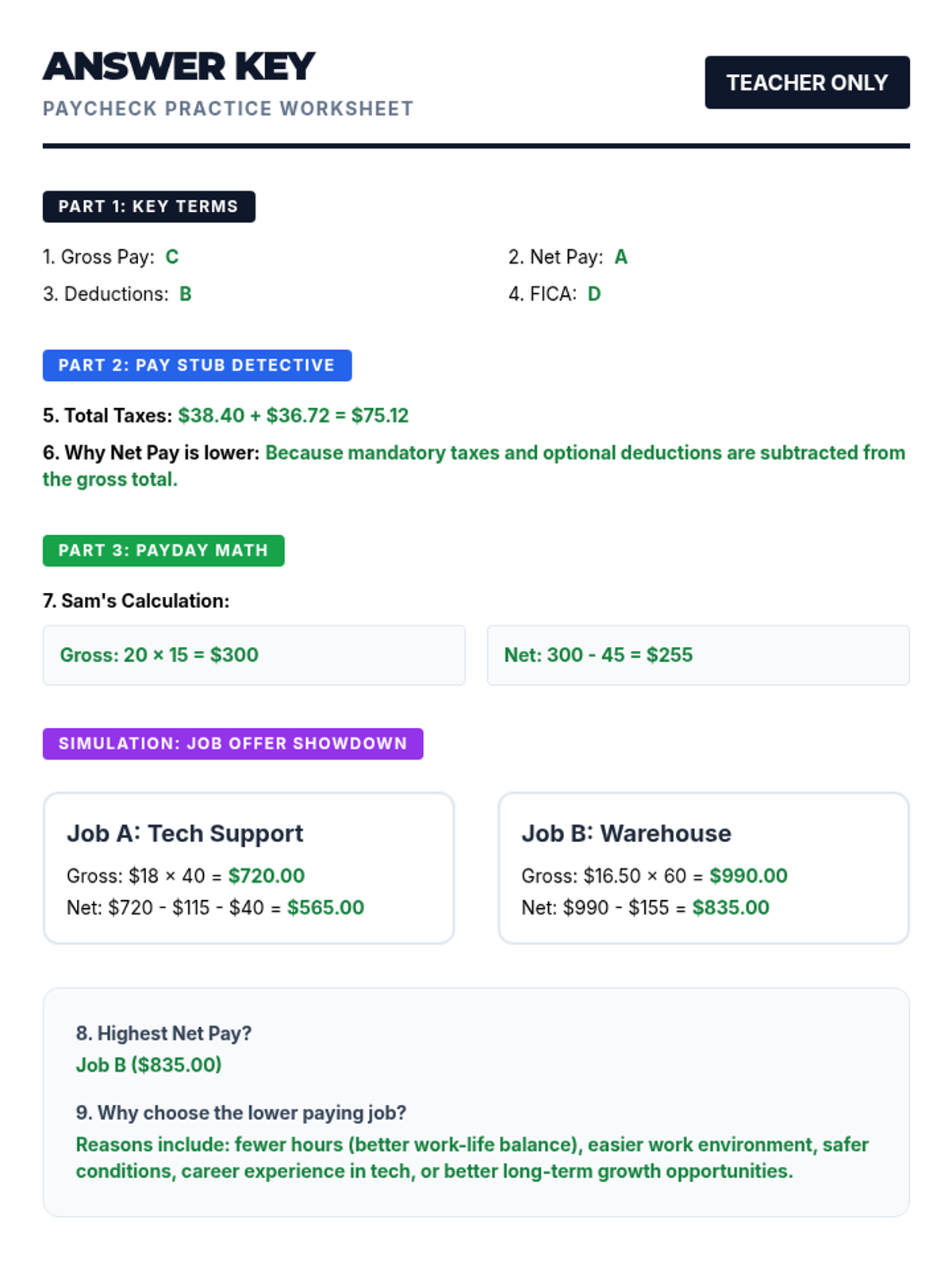
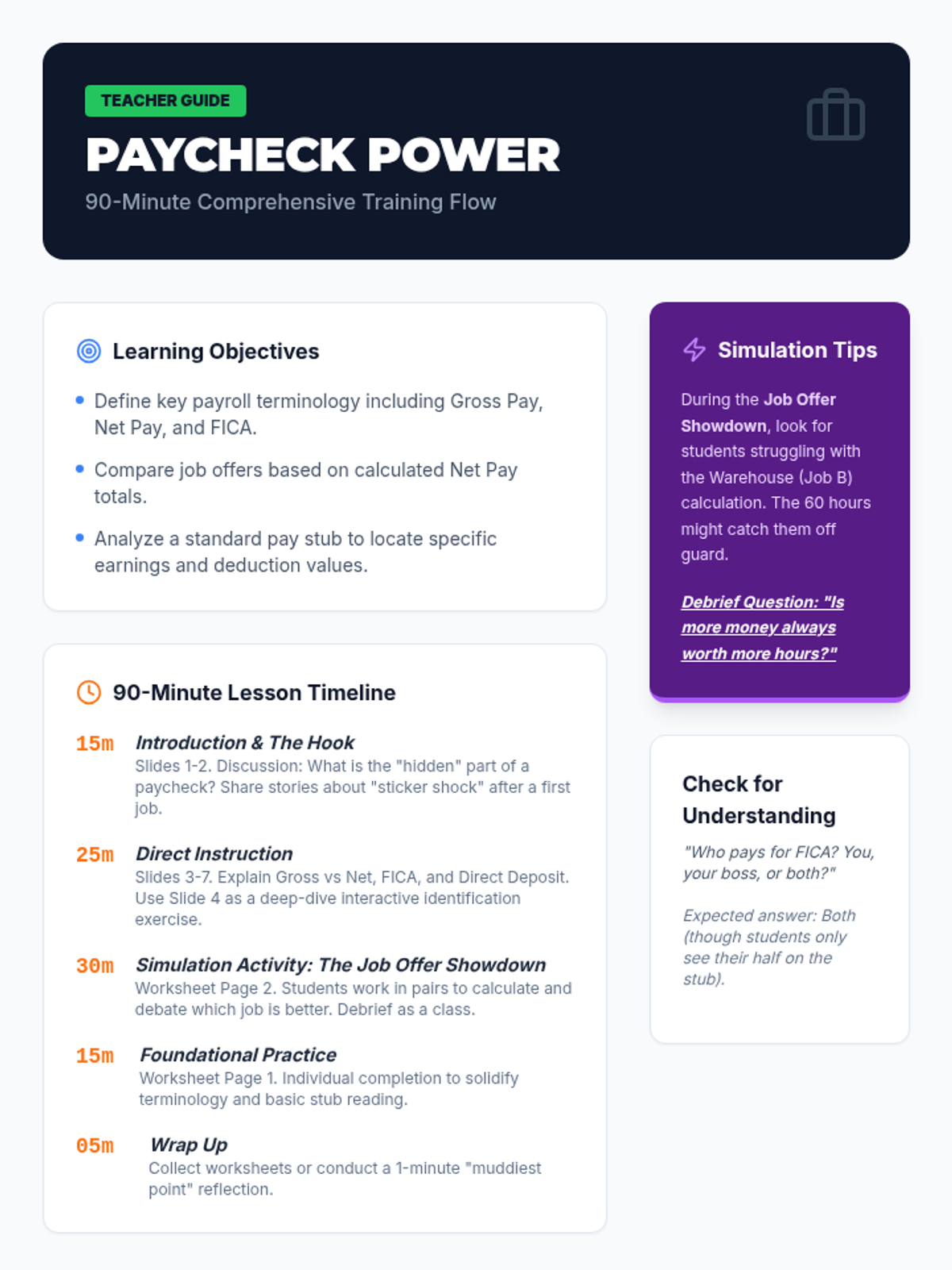
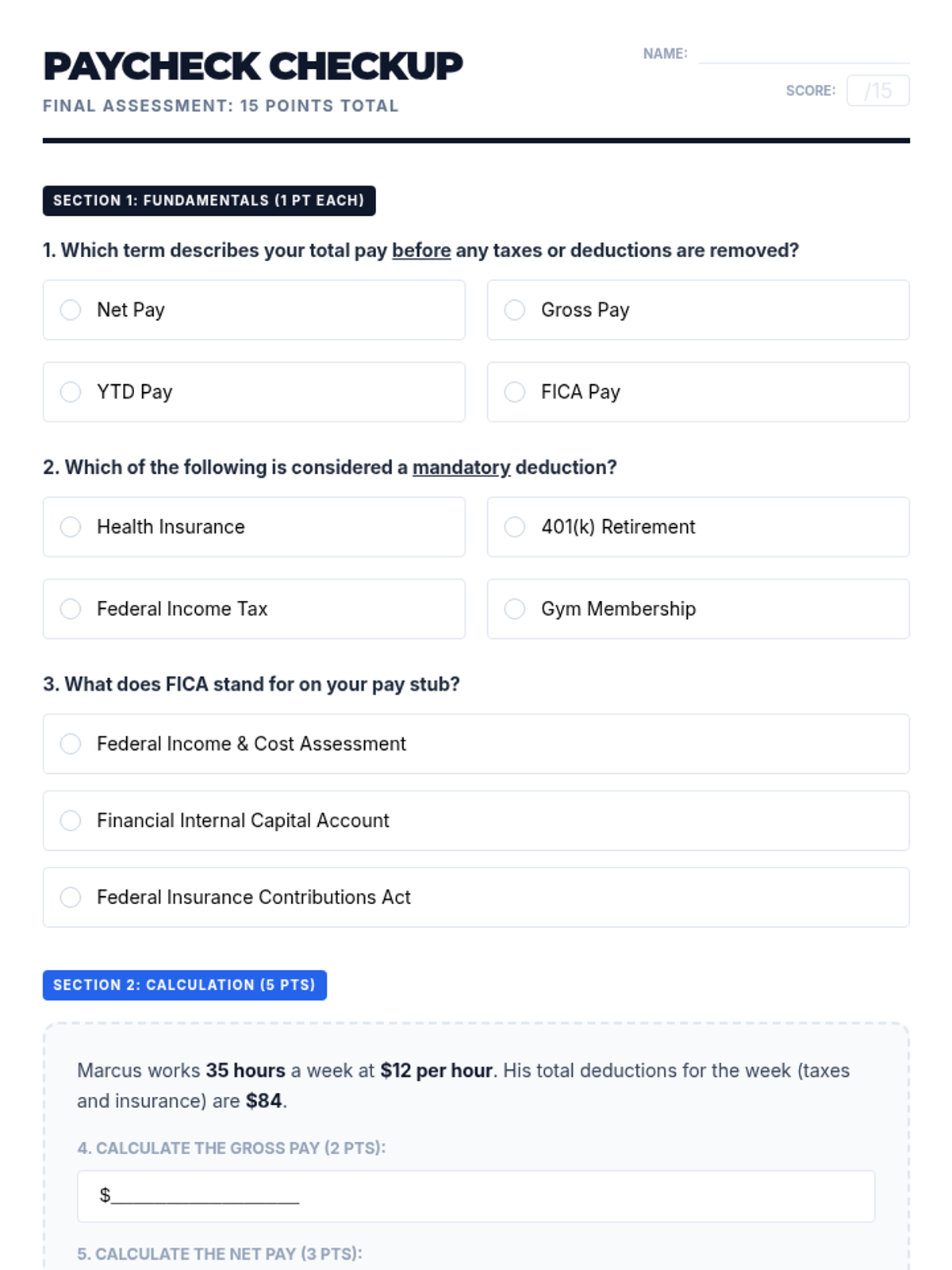
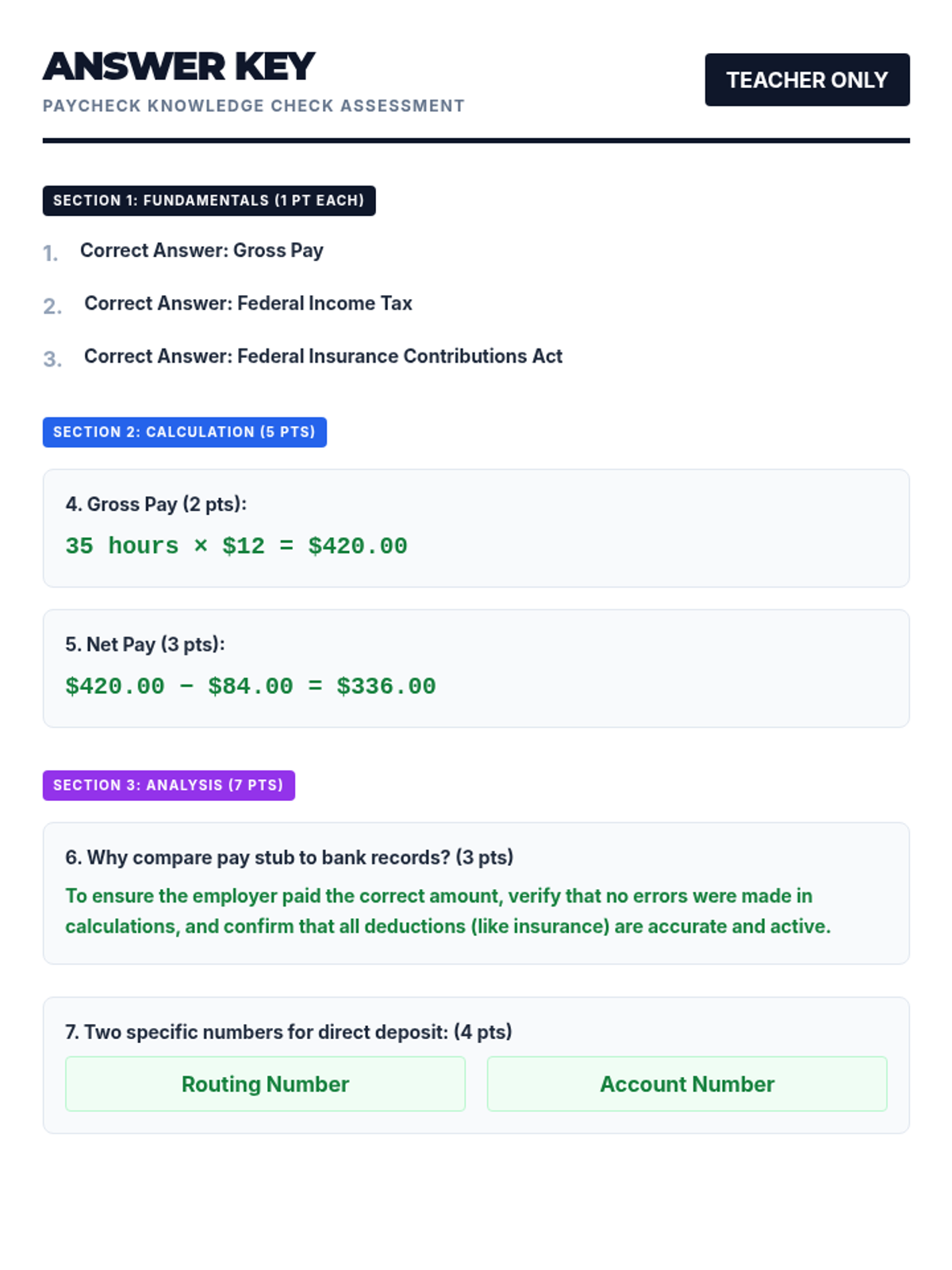
A comprehensive guide to understanding paychecks, including gross vs. net pay, tax deductions, and the anatomy of a pay stub. Students will learn how to read their earnings statements and manage their direct deposit information.
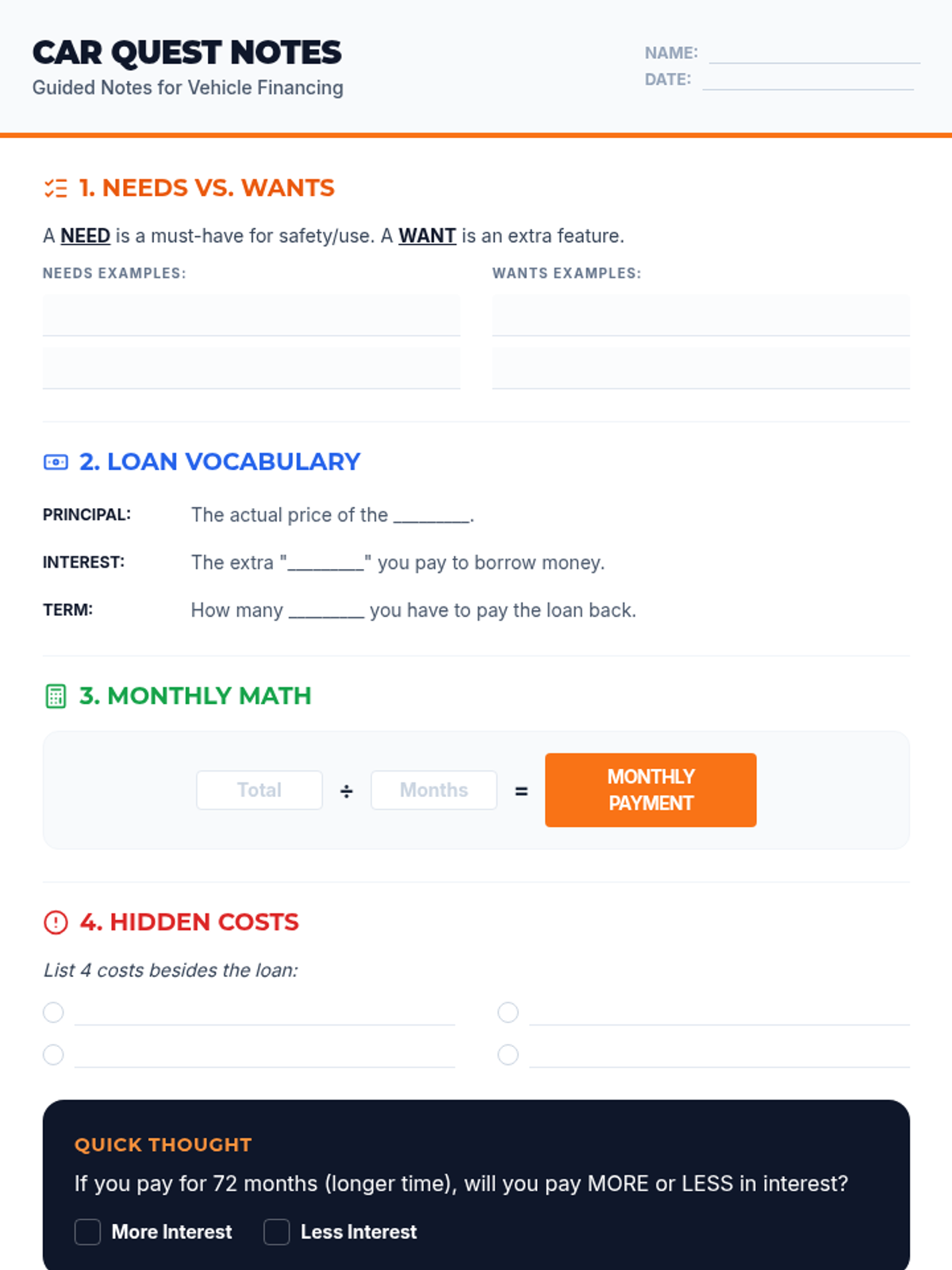
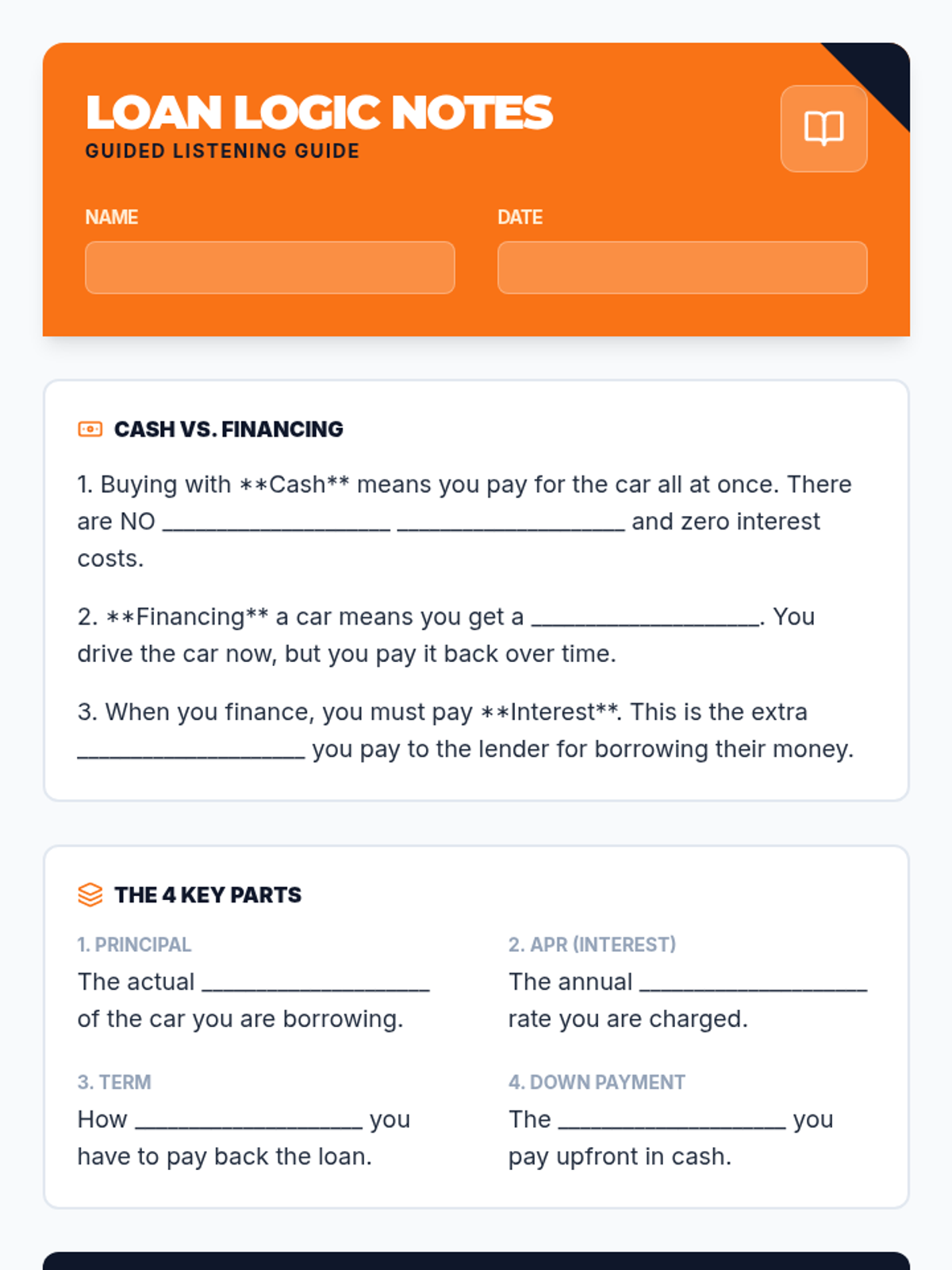
A comprehensive life skills lesson focused on the financial realities of purchasing a vehicle, covering loans, interest, hidden costs, and budgeting for total ownership.
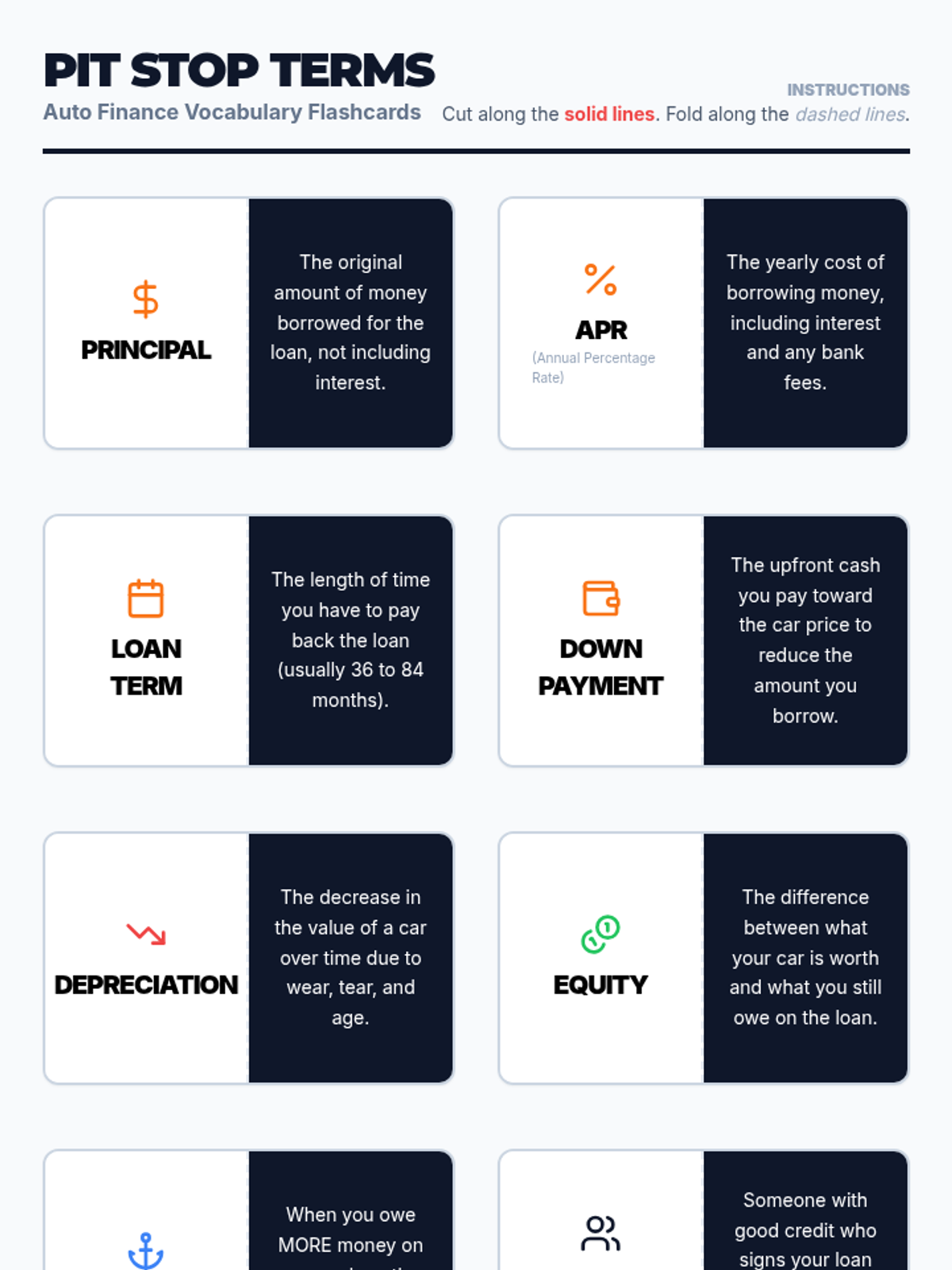
A practical lesson on navigating the complexities of car loans, focusing on interest rates, loan terms, and total cost of ownership. Students will learn to distinguish between monthly payments and the long-term cost of financing a vehicle.
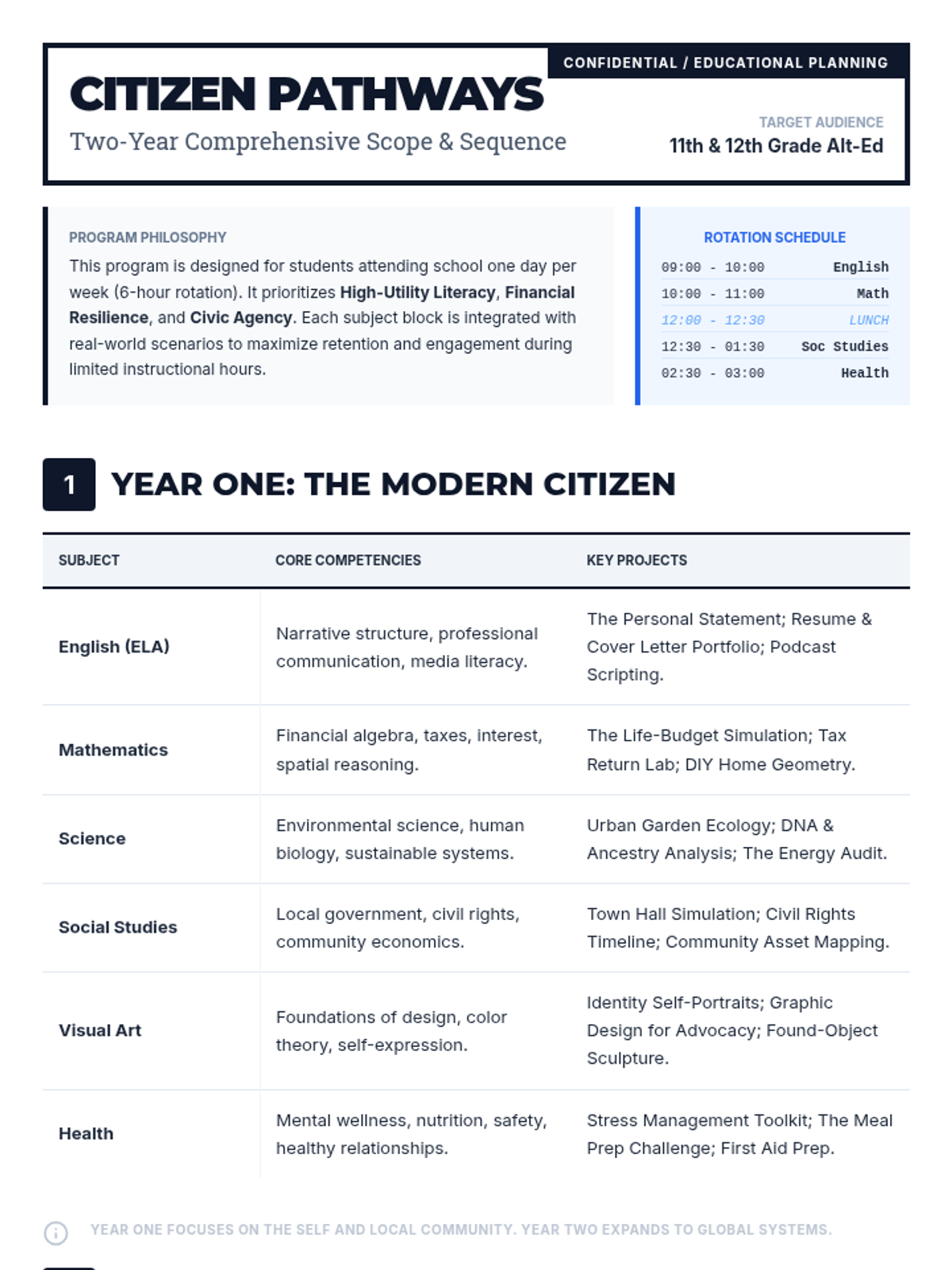
The first year of the program focuses on establishing the 'Modern Citizen,' emphasizing local community involvement, personal financial management, and foundational health and expression.
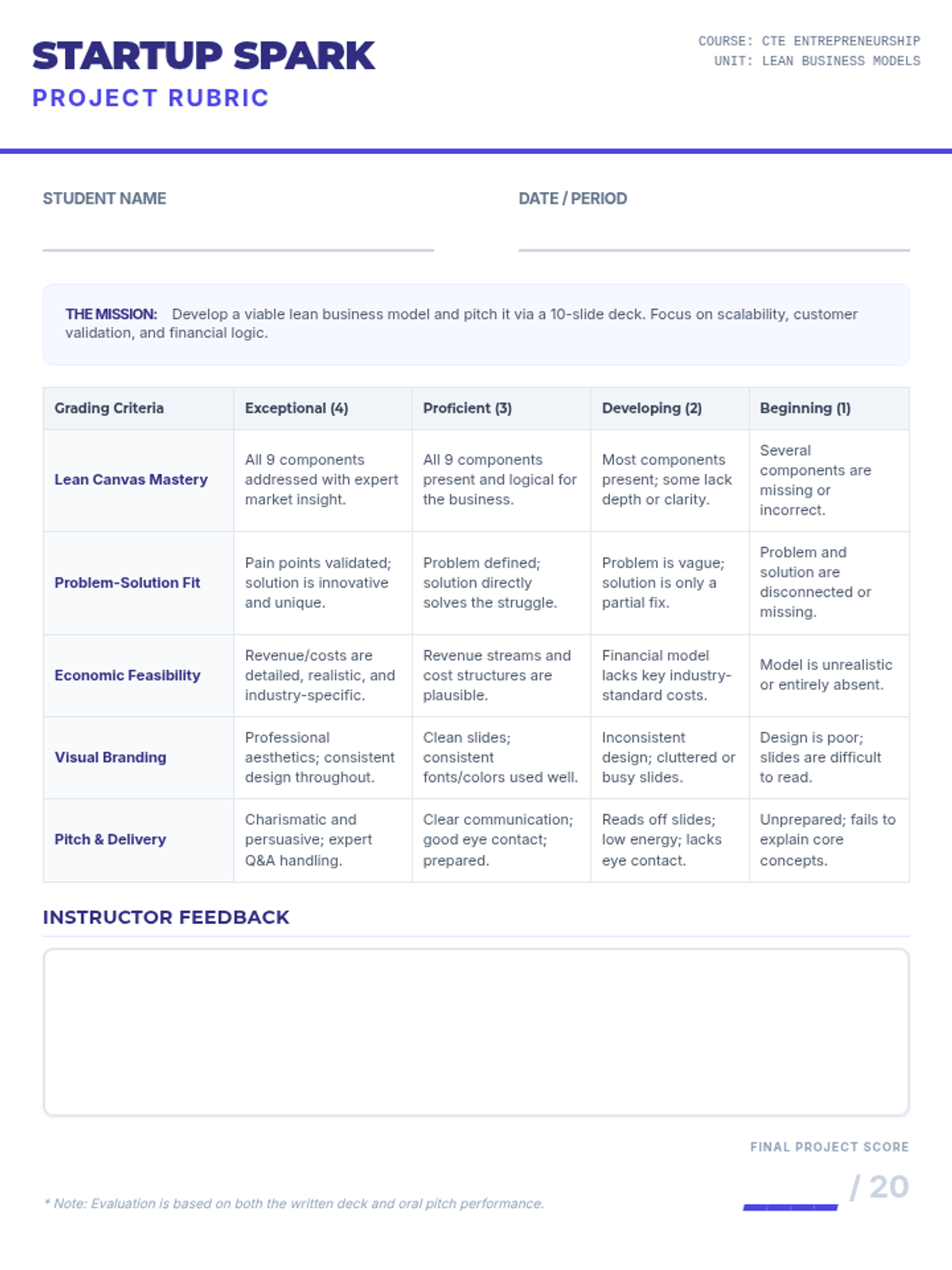
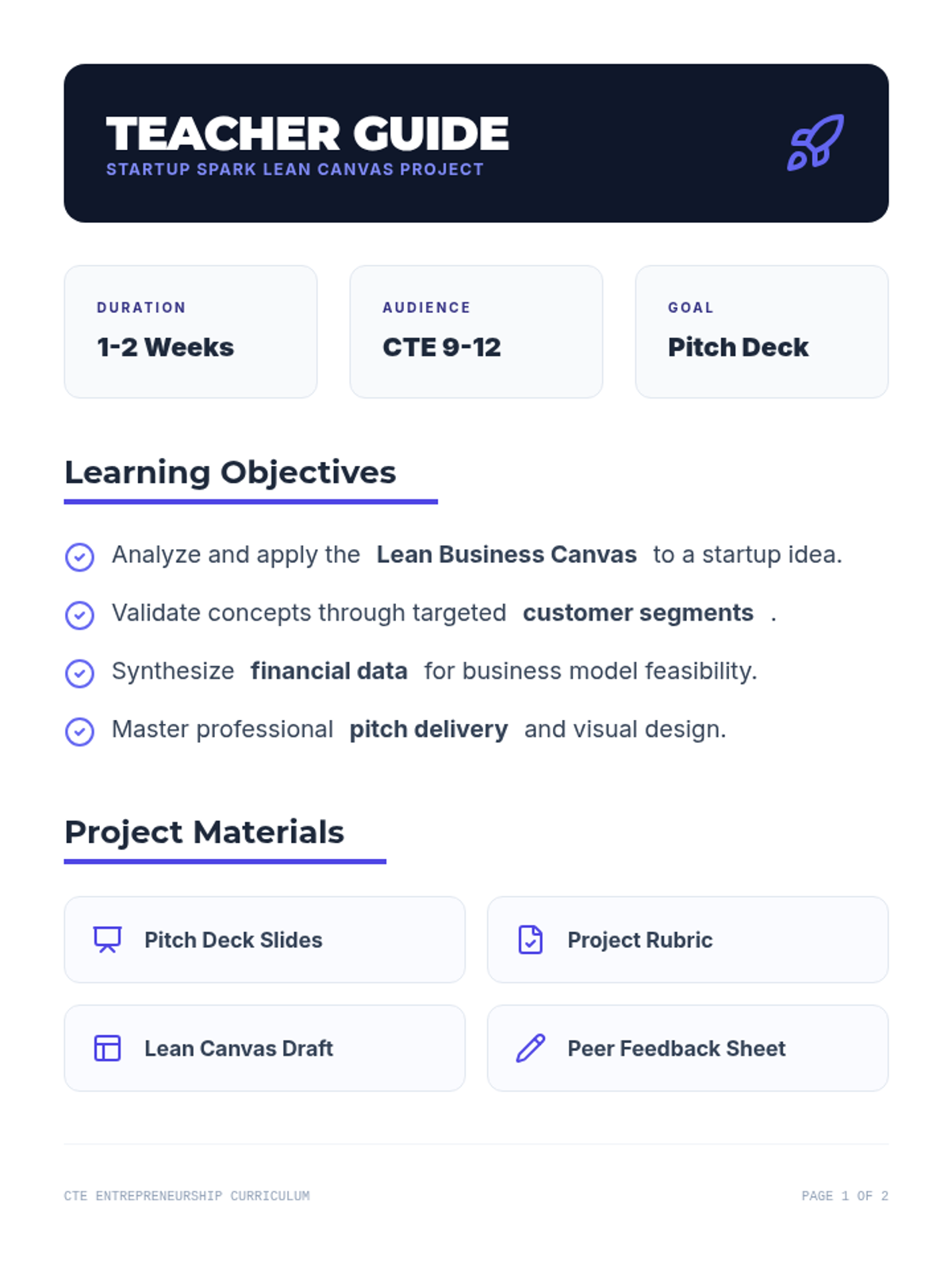
A project-based lesson where students develop a lean business model for a new venture, culminating in a 10-slide pitch deck and evaluated by a professional rubric.
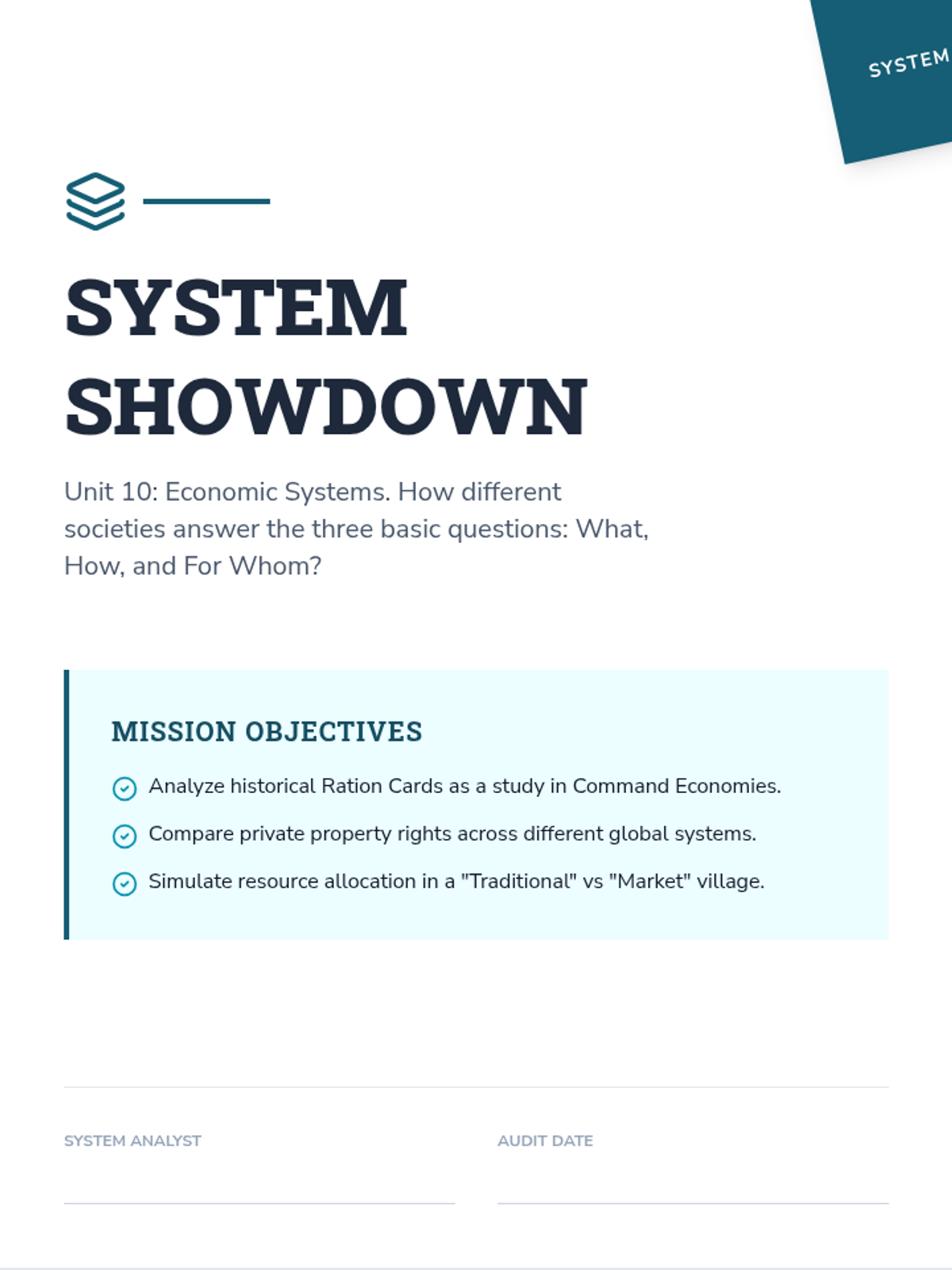
Compare the mechanics of market, command, and mixed economies through historical documents like ration cards and industrial quotas, as well as modern tax structures.
Uncover the metrics of national wealth through the history of hyperinflation, the ethics of economic growth, and simulations of central bank management.
Master the dynamics of market forces through the history of the Tulip Mania, the ethics of ticket scalping, and simulations of price elasticity and equilibrium.
Explore the foundational pillars of economics through the history of the Dust Bowl, the ethics of organ markets, and simulations of scarcity and marginal utility.
Master the mechanics of life's largest financial commitments through the history of the 30-year mortgage, the ethics of urban gentrification, and complex simulations of home ownership.
Uncover the mechanisms of risk management through the history of the Great Fire of London, the ethics of pre-existing conditions, and complex simulations of health and auto insurance.
Master the battlefield of the modern marketplace through the history of consumer protection, the ethics of planned obsolescence, and simulations of contract negotiation.
Uncover the mechanics of modern banking through historical currency crises, the ethics of fee structures, and simulations of liquidity management.
Analyze the mechanics of financial choice through historical market crashes, the ethics of credit, and complex simulations of high-stakes adult purchases.
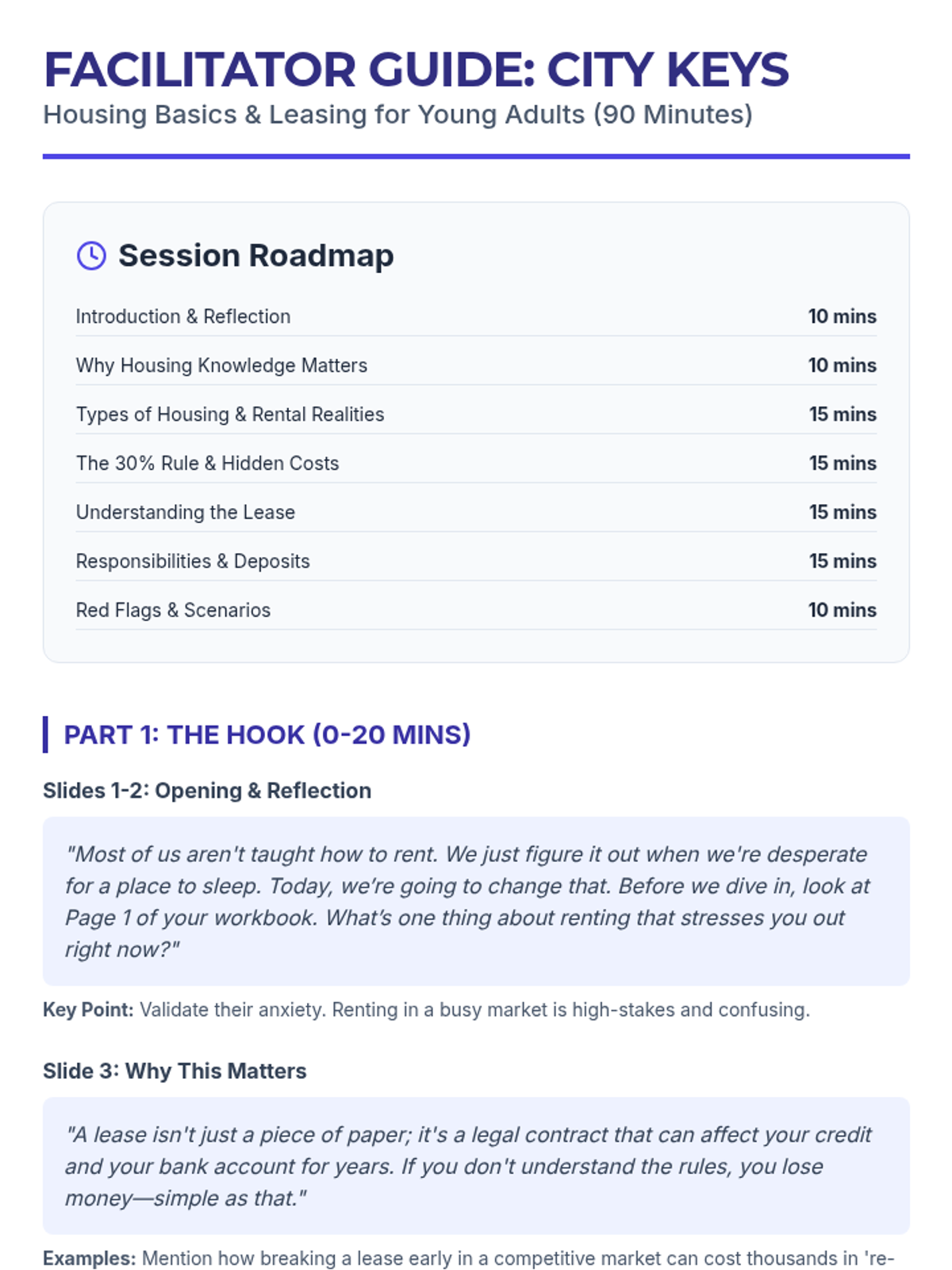
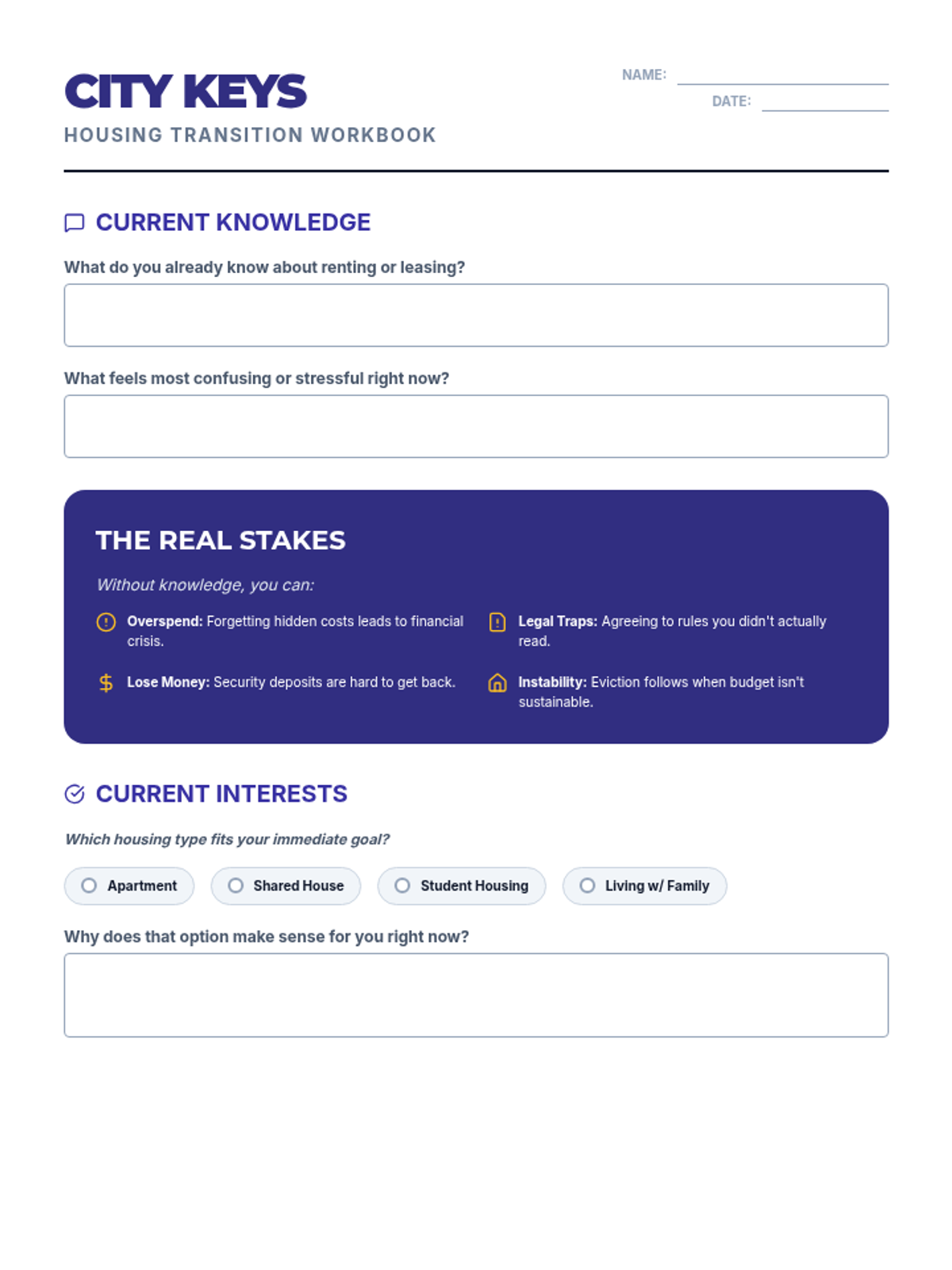
A 90-minute session designed for young adults (16-21) to navigate the complexities of city housing, budgeting for hidden costs, and understanding the legal weight of a lease agreement.
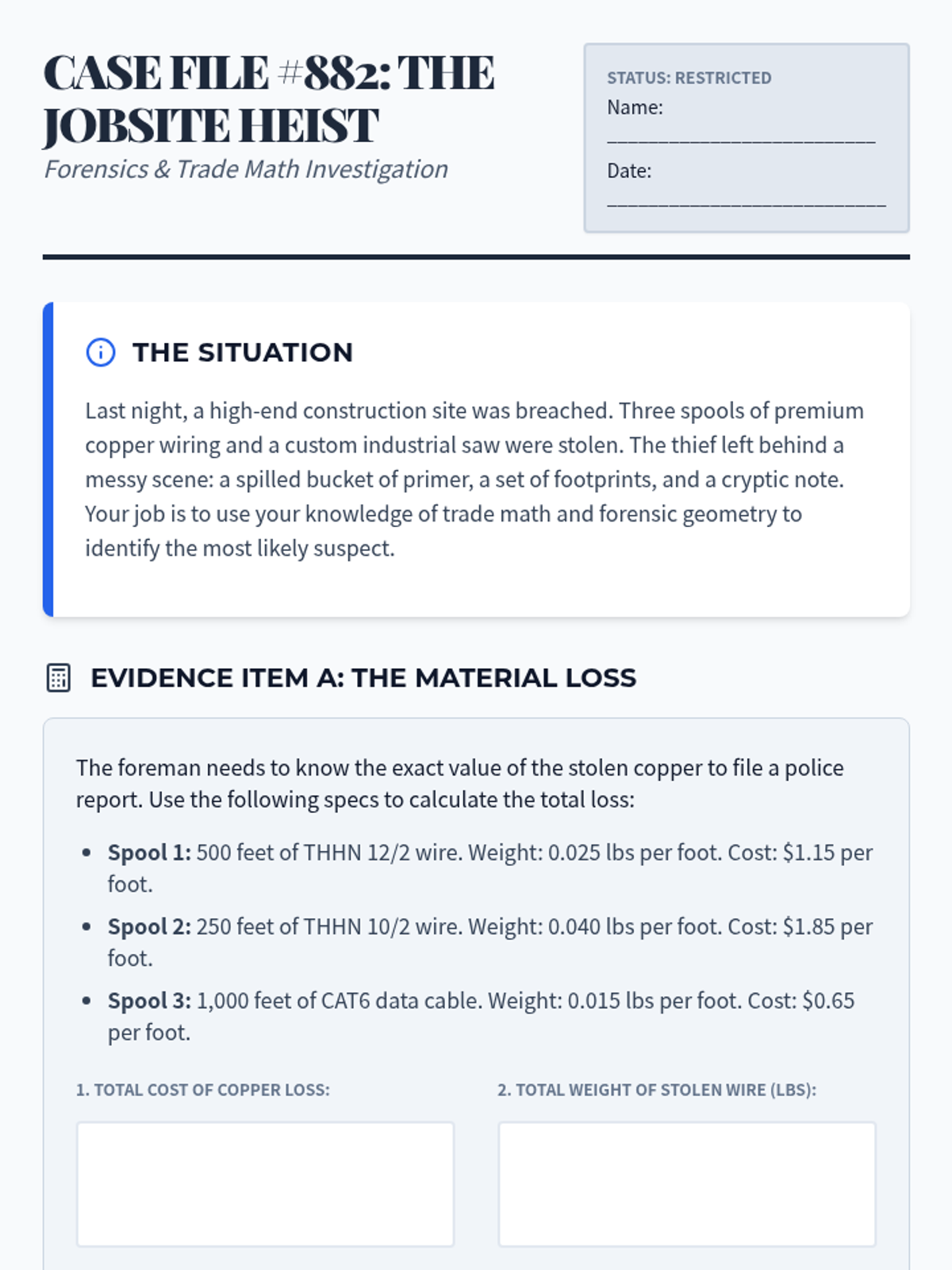
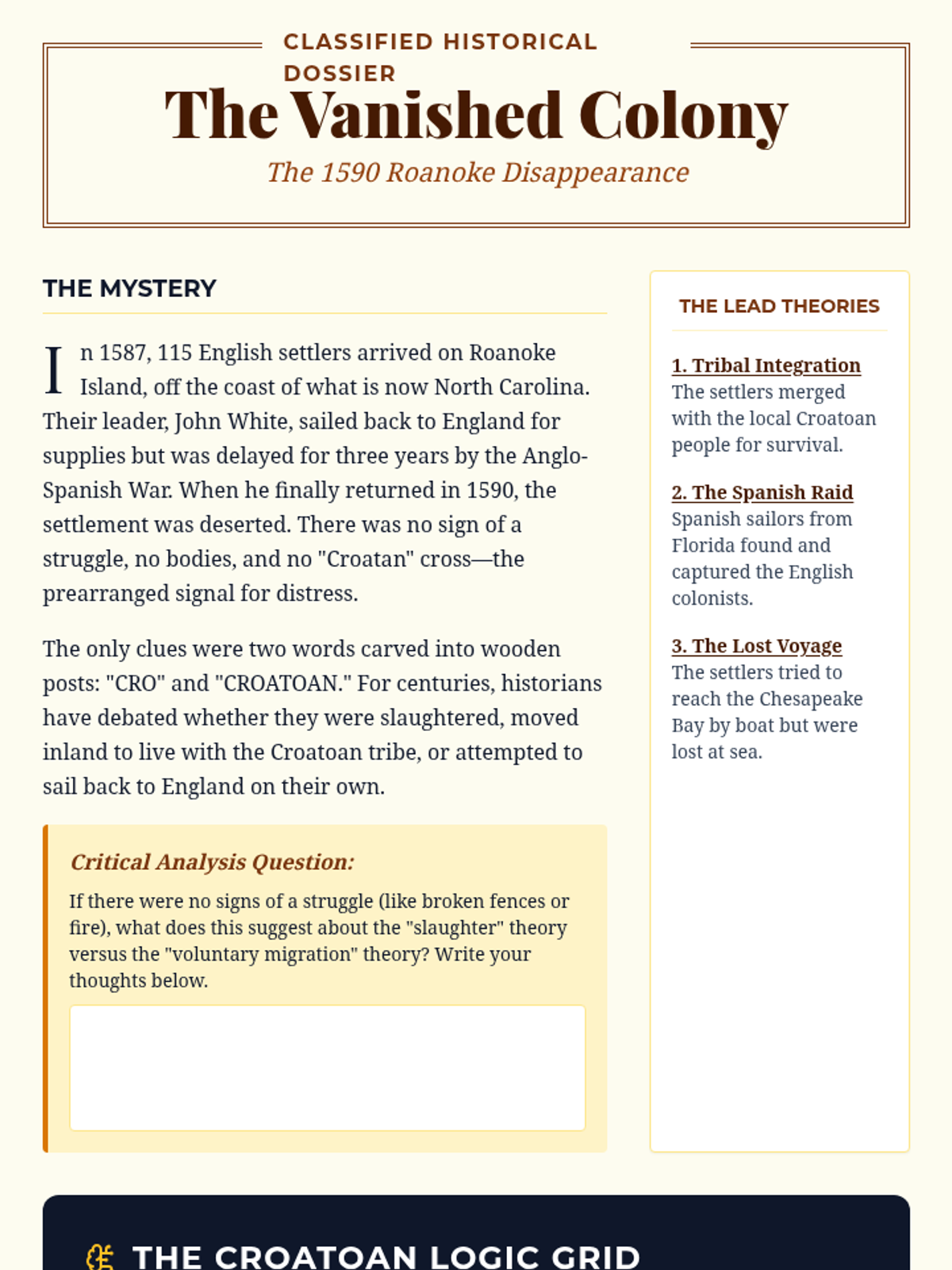
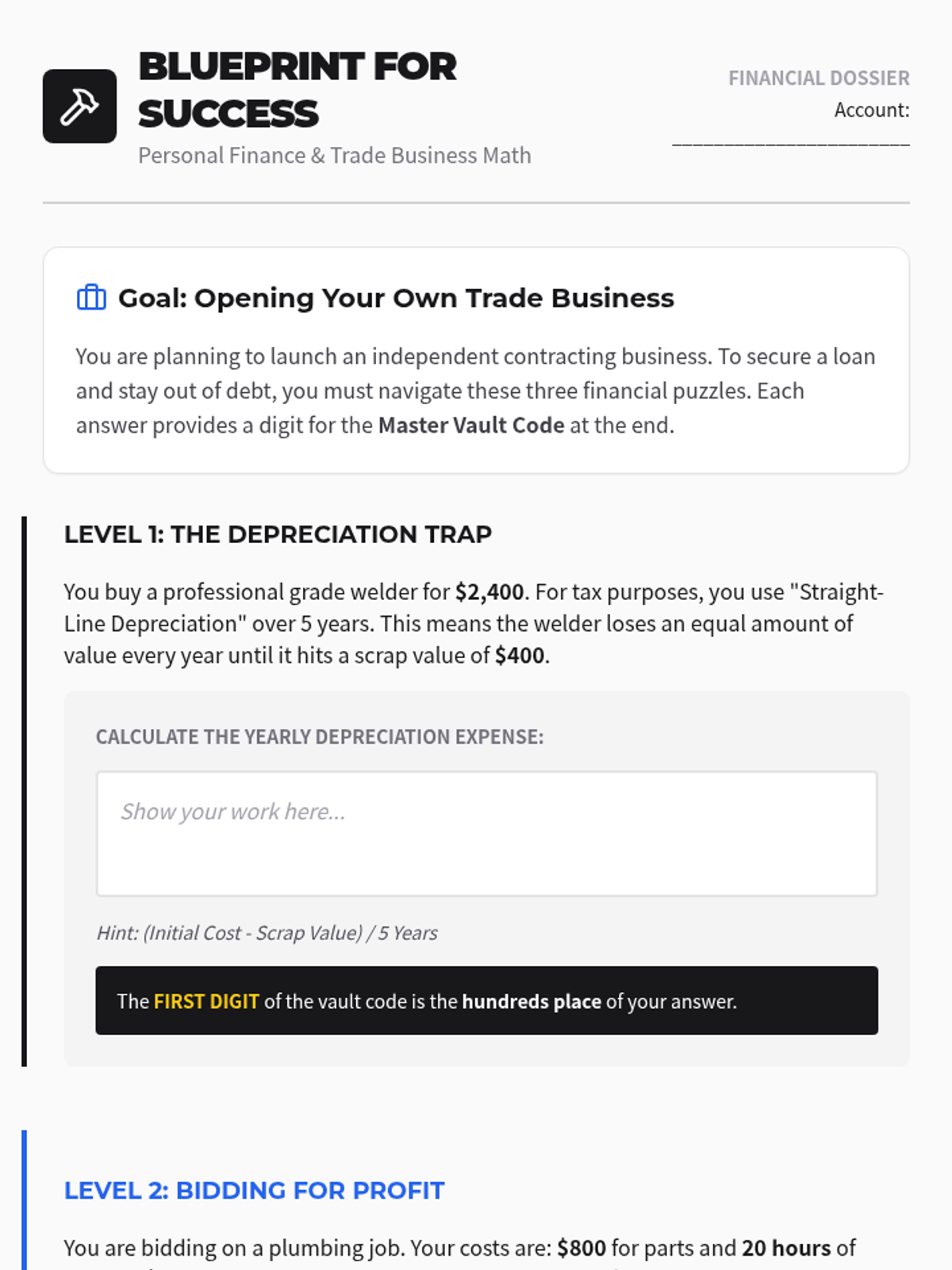
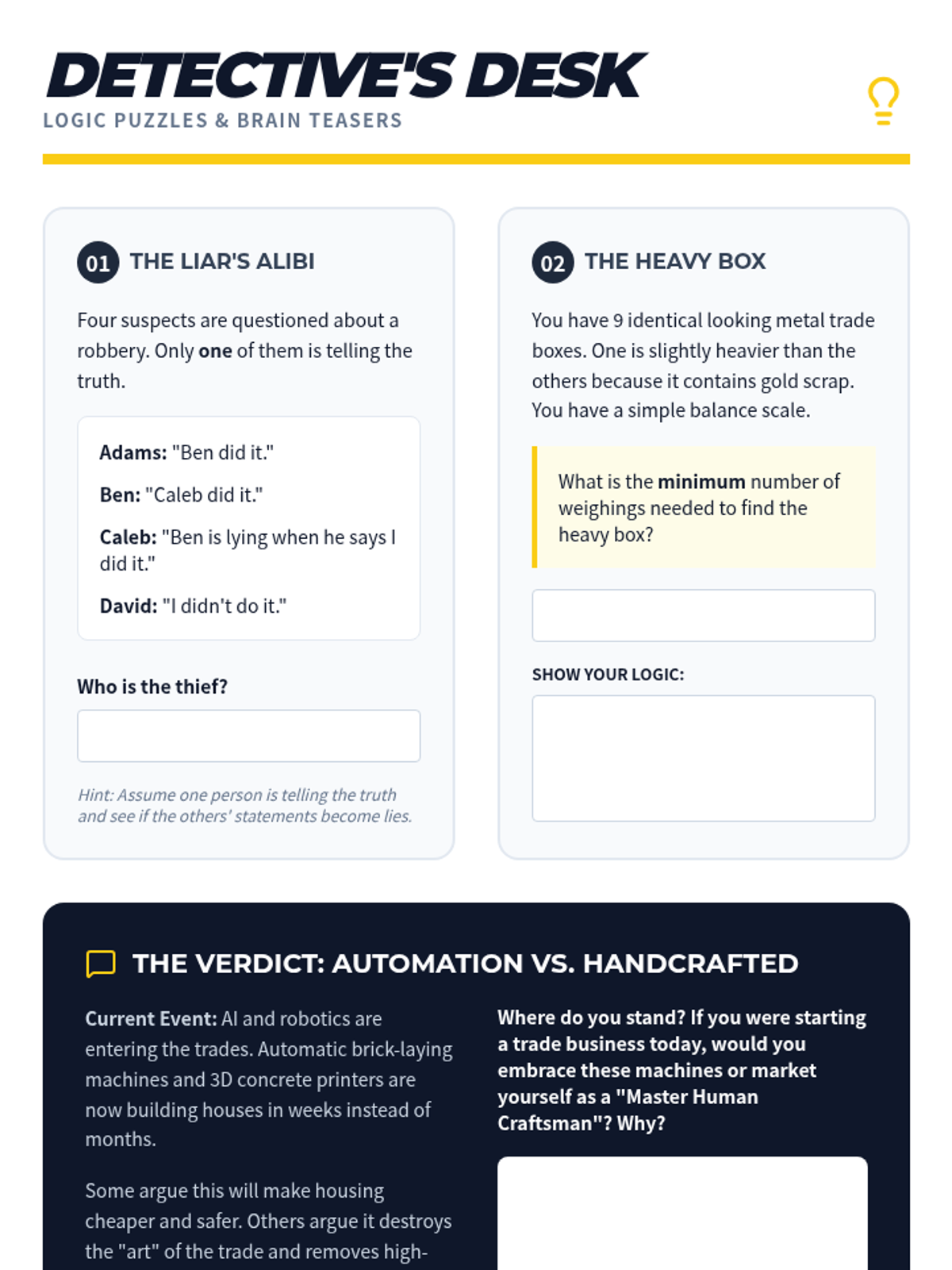
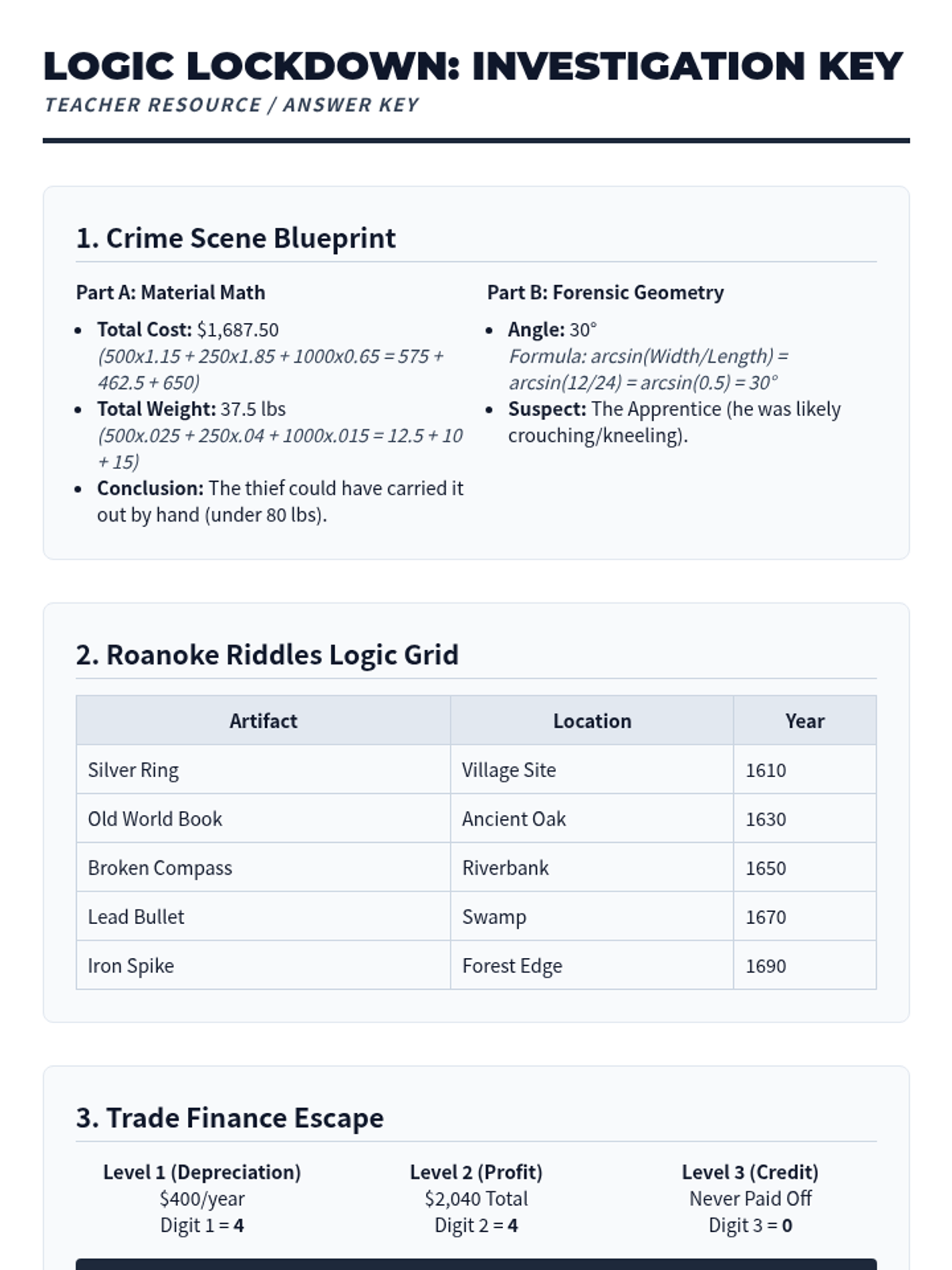
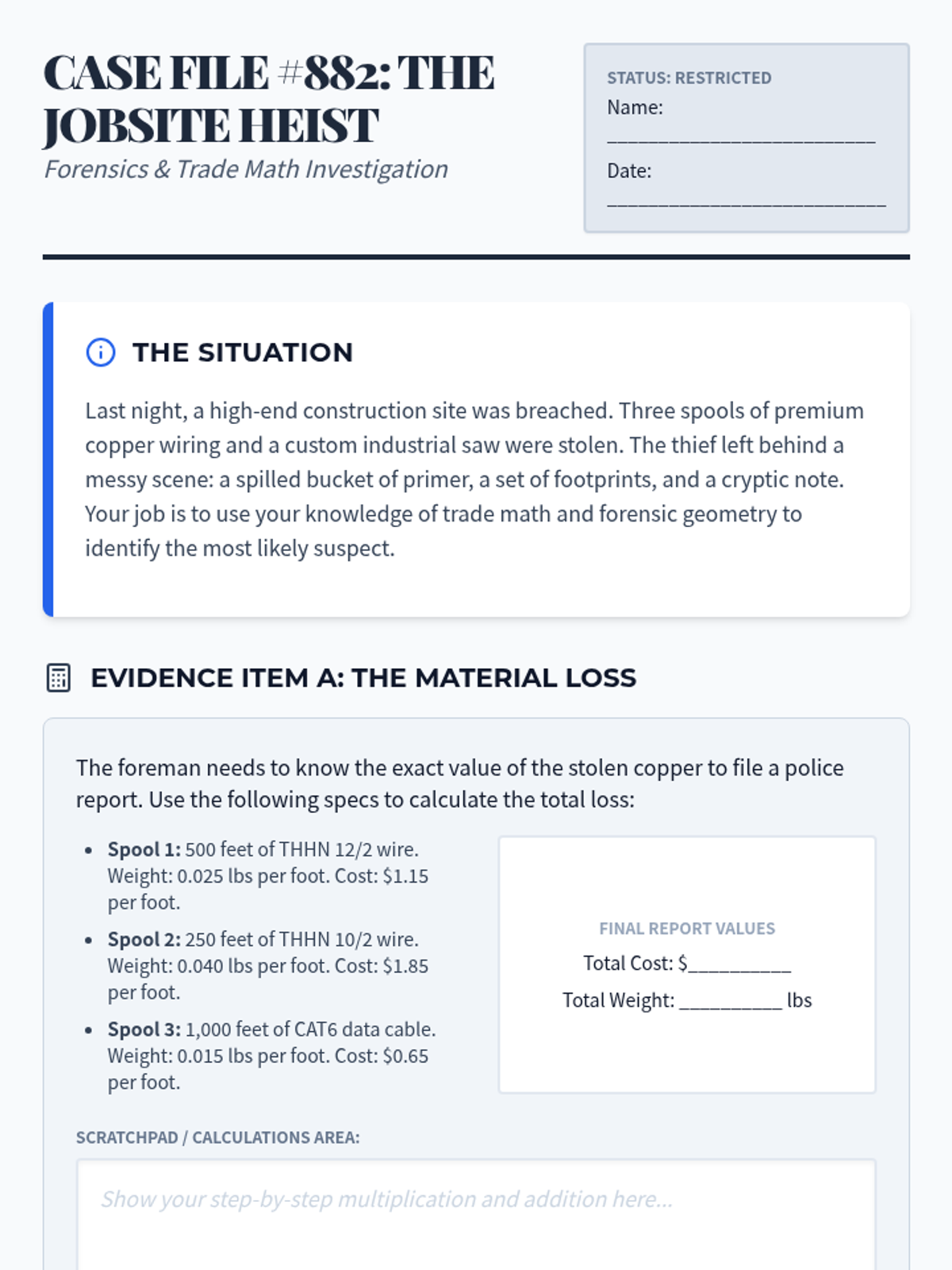
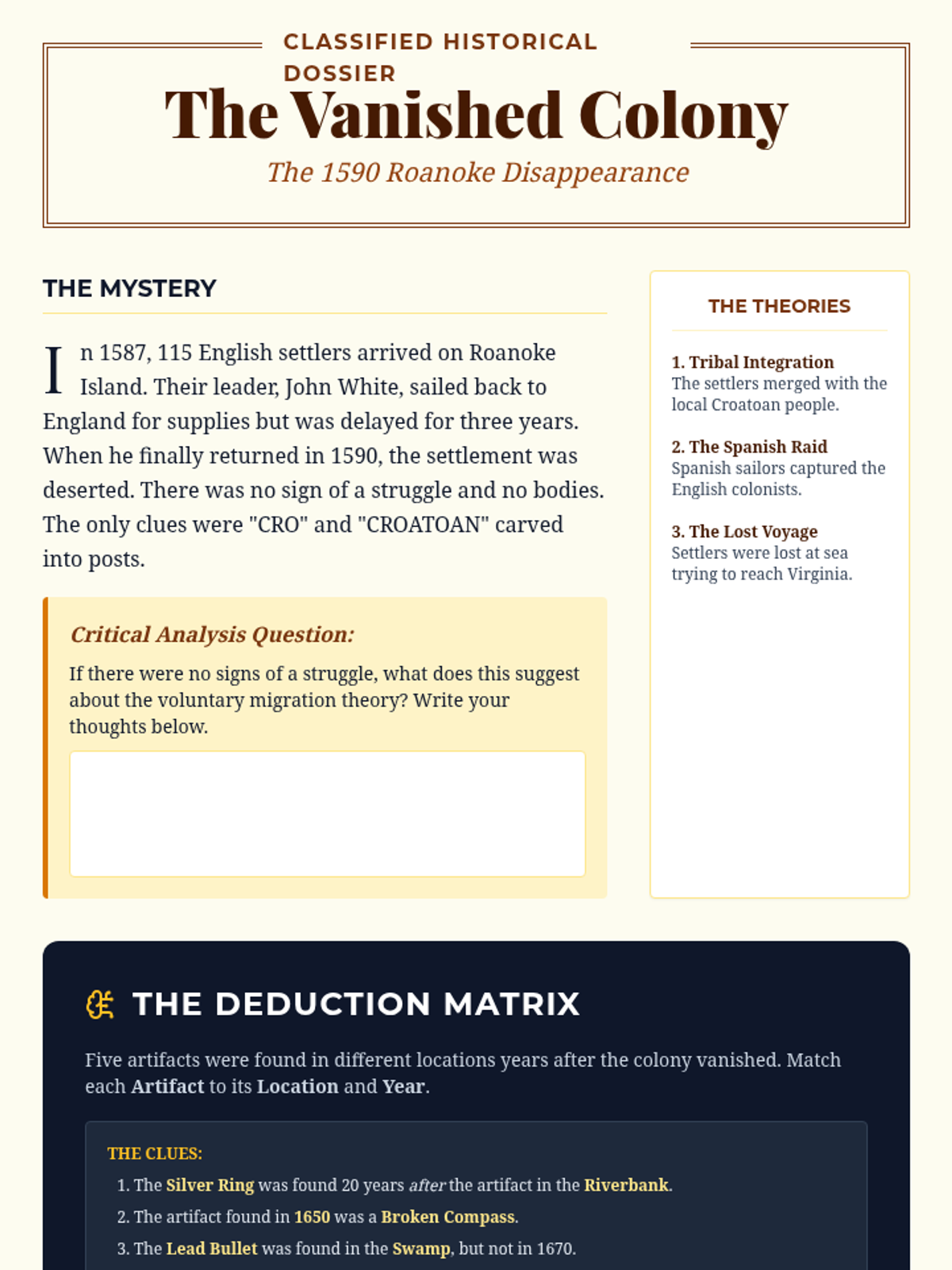
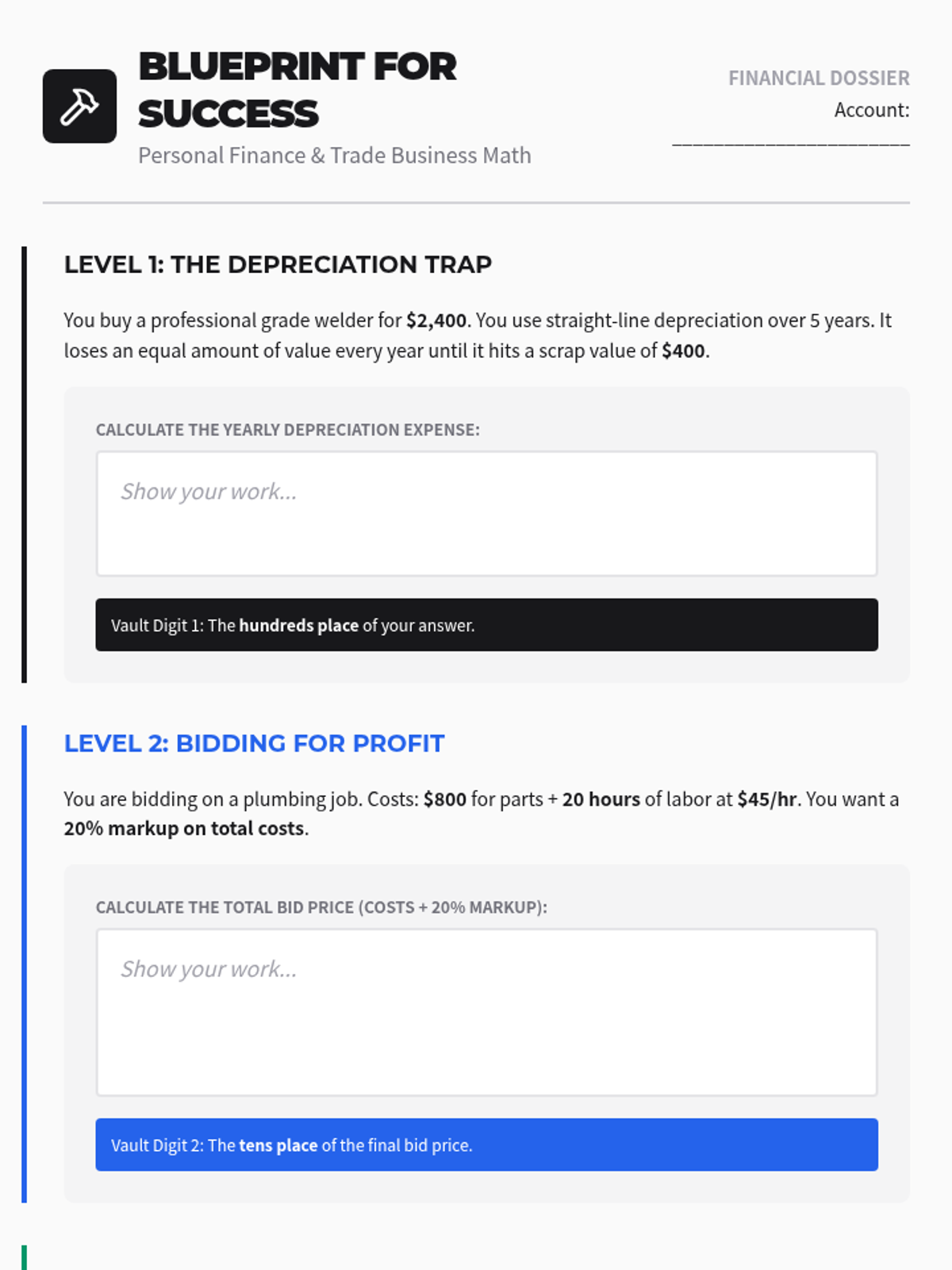
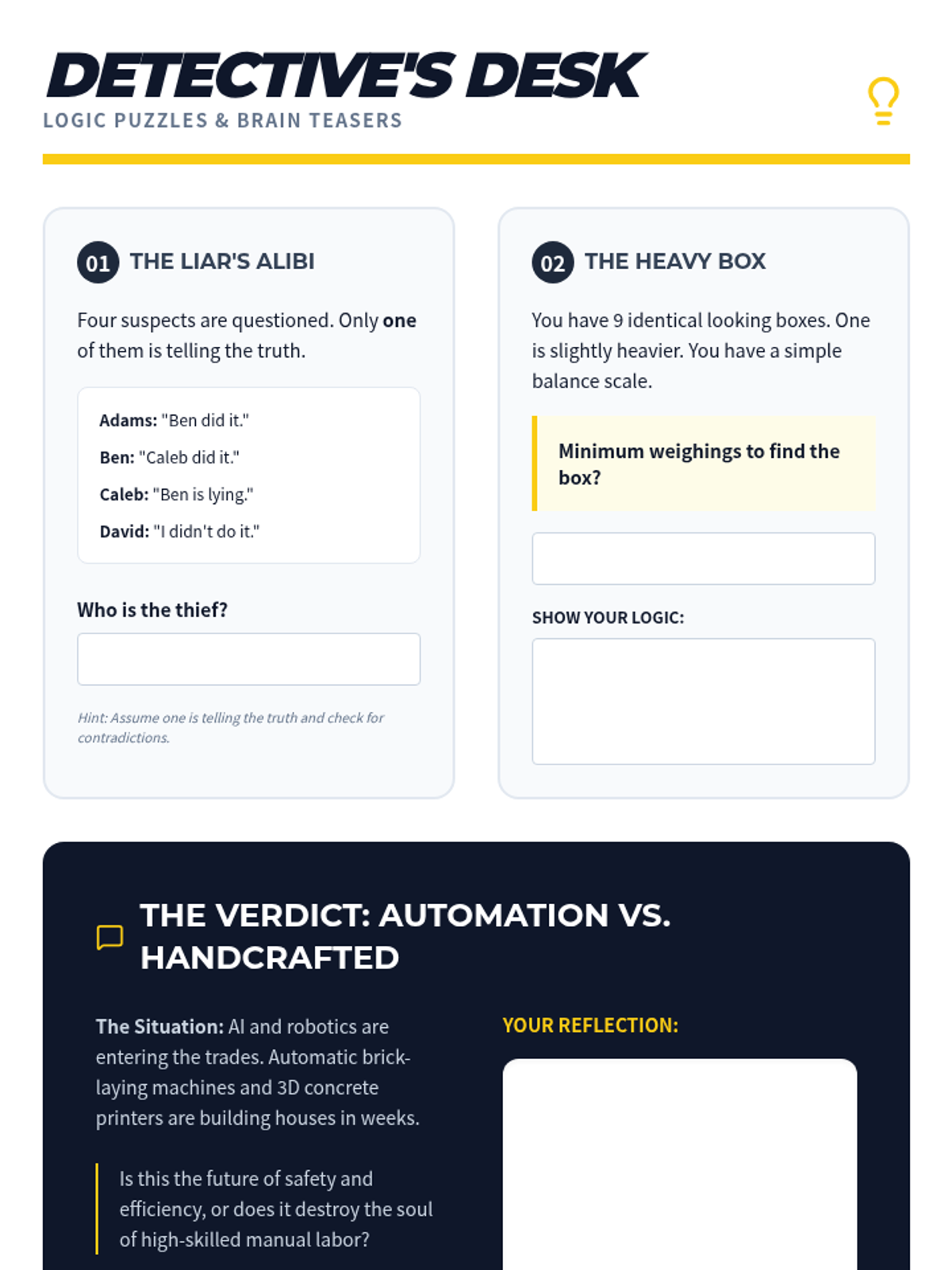
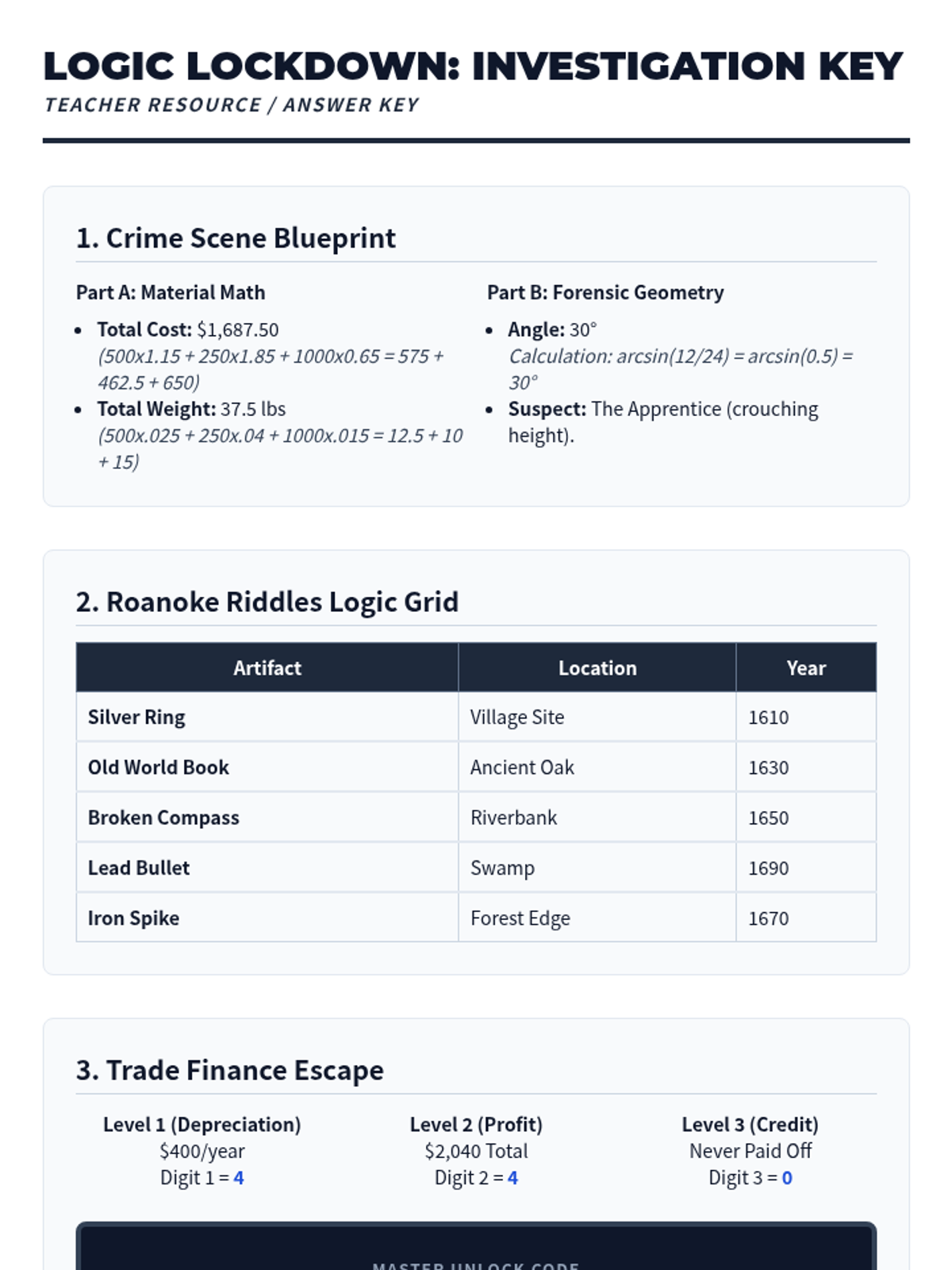
A collection of high-interest, multi-disciplinary logic and math challenges themed around forensic investigation, trade skills, and historical mysteries. Designed for high-school level adult learners to practice critical thinking and practical math application.
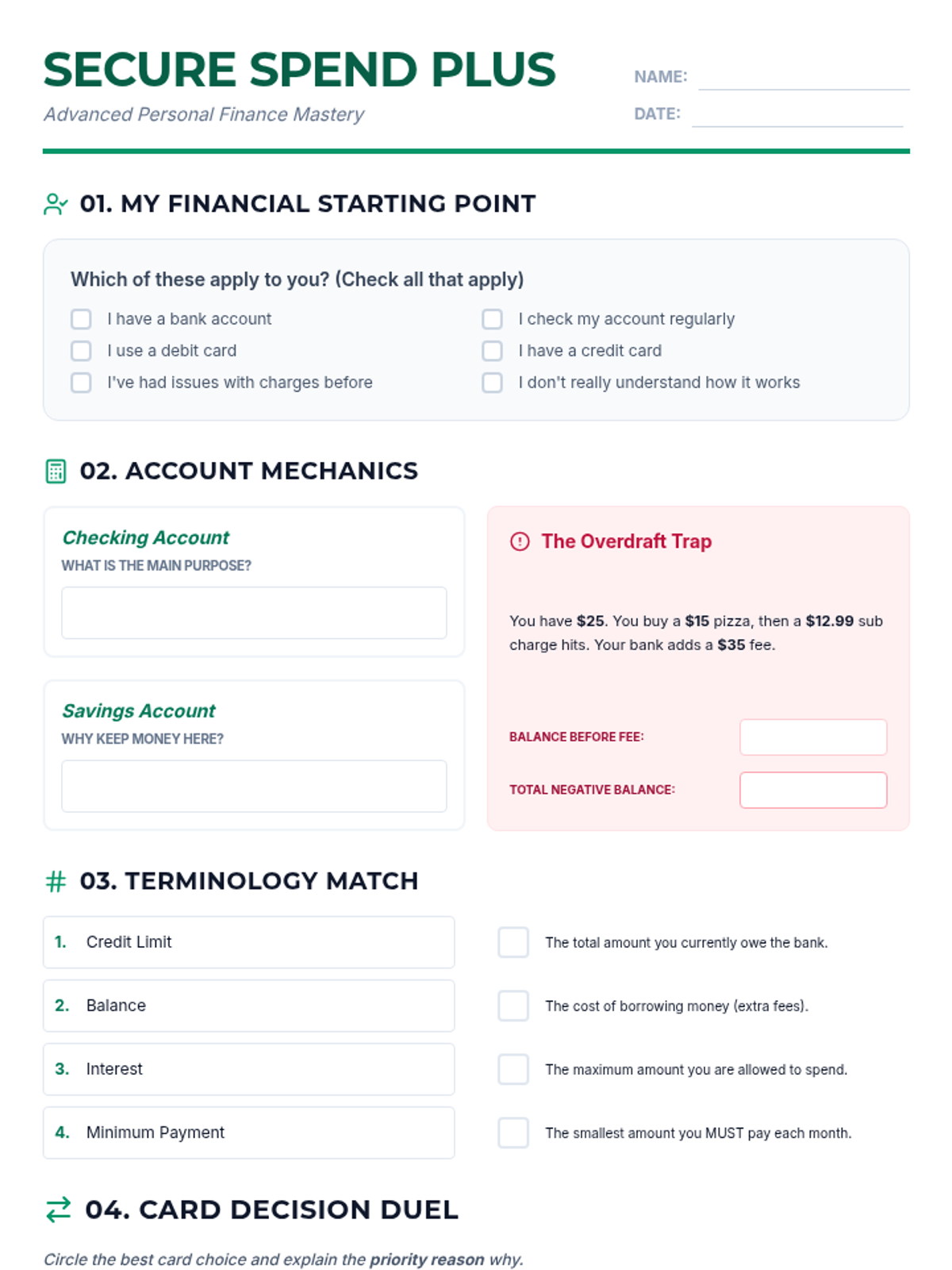
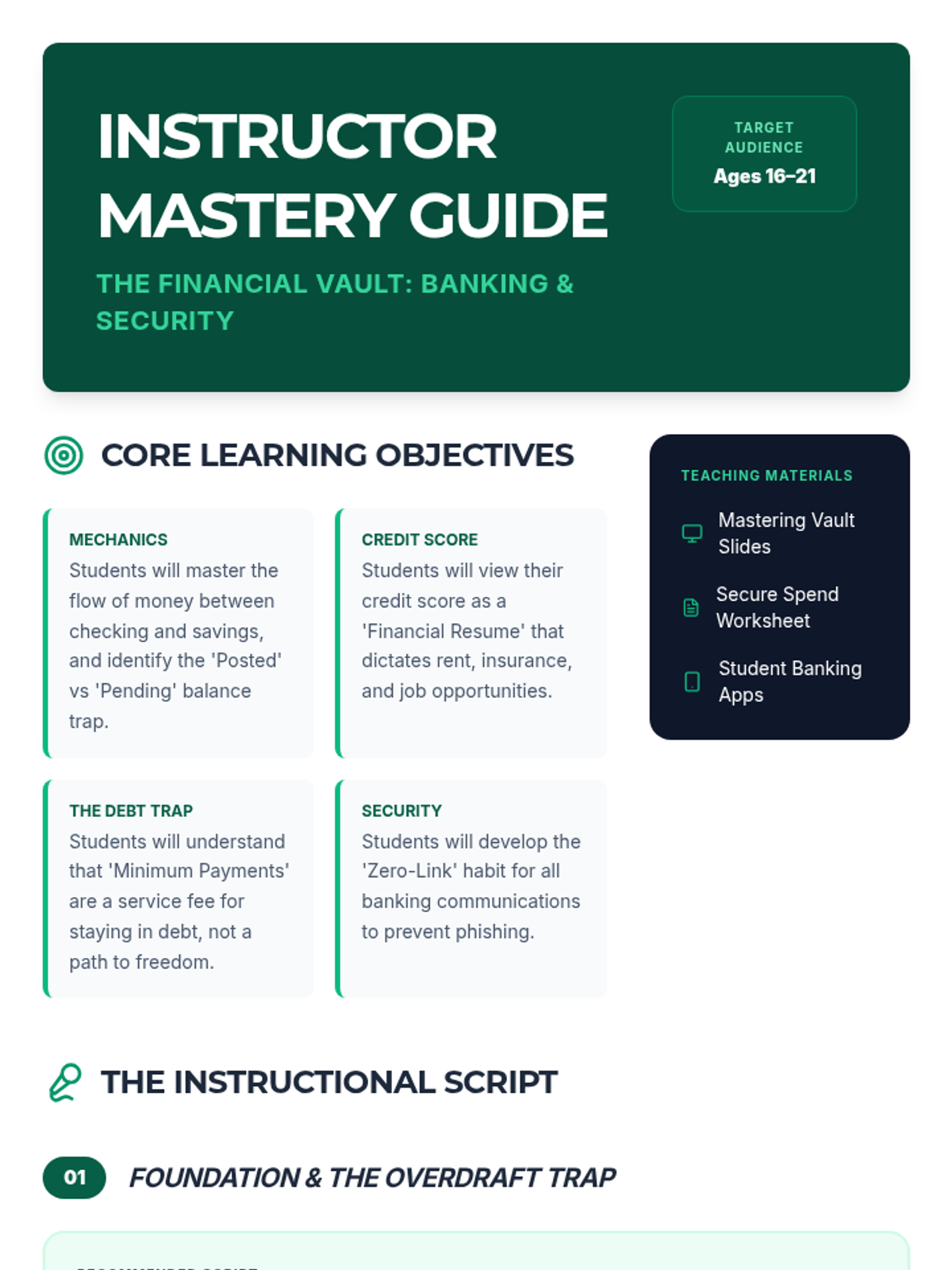
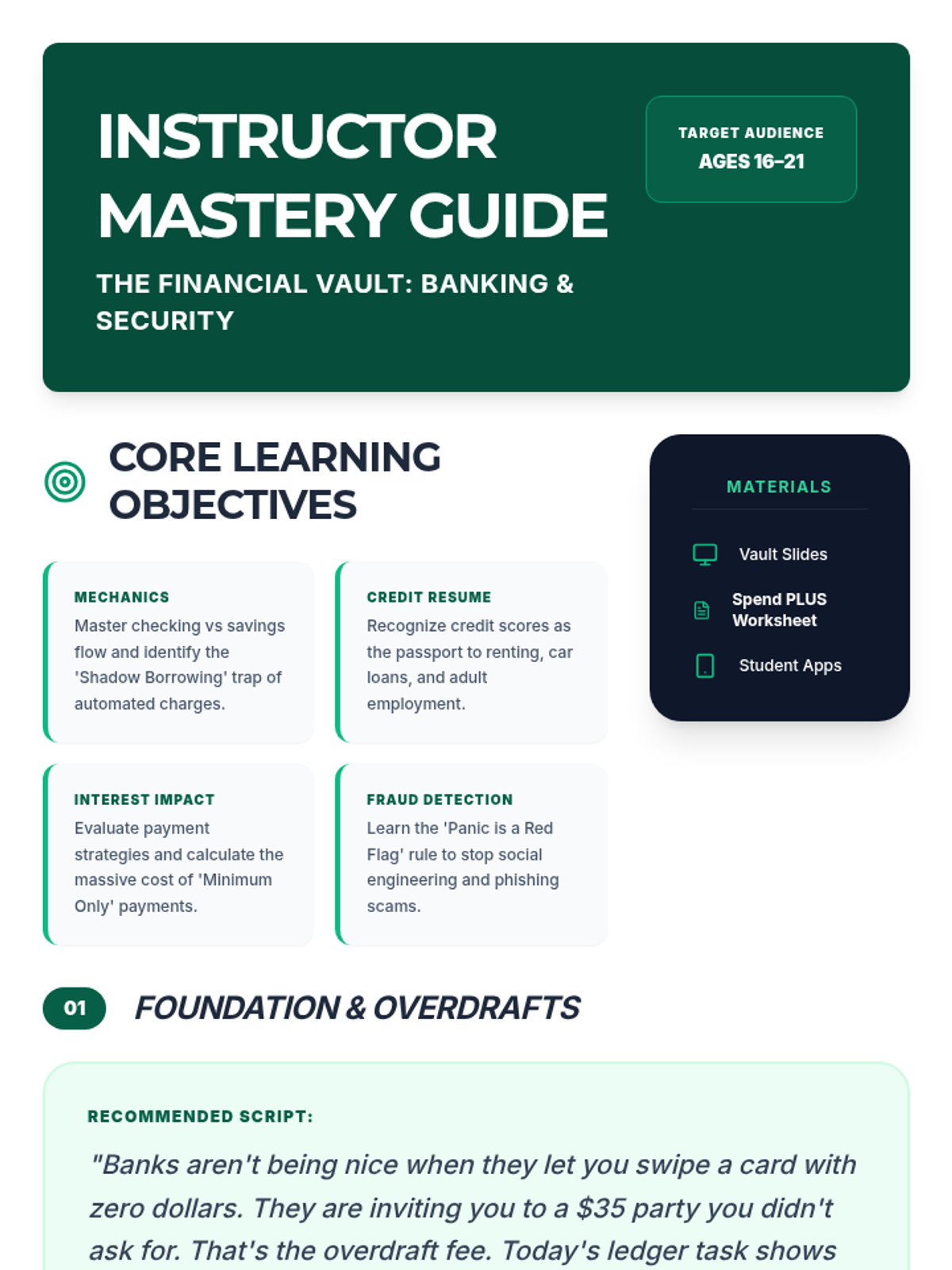
A comprehensive lesson on banking basics, debit vs. credit, and fraud prevention, designed to equip young adults with the knowledge to manage money safely and avoid common financial pitfalls.
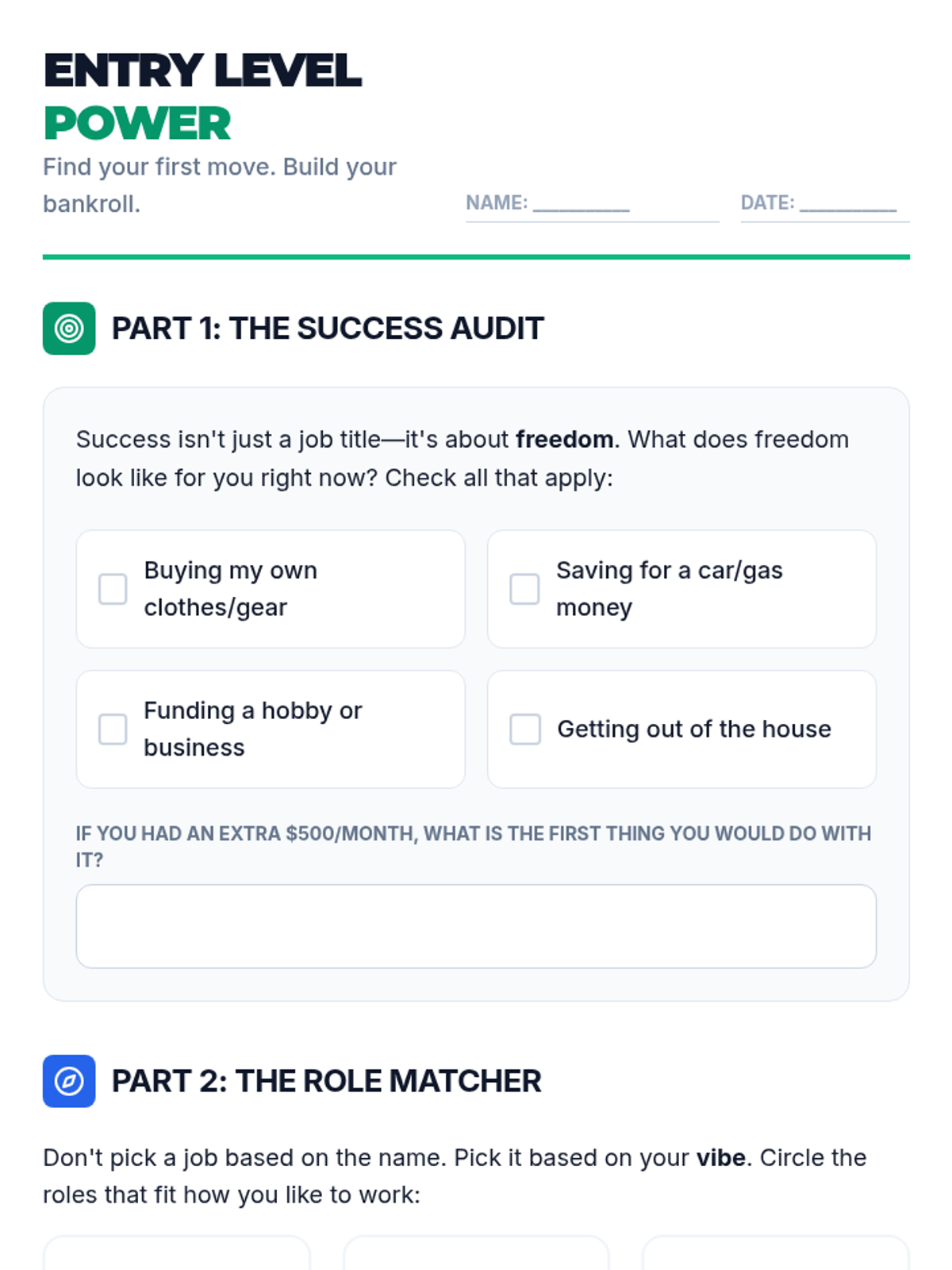
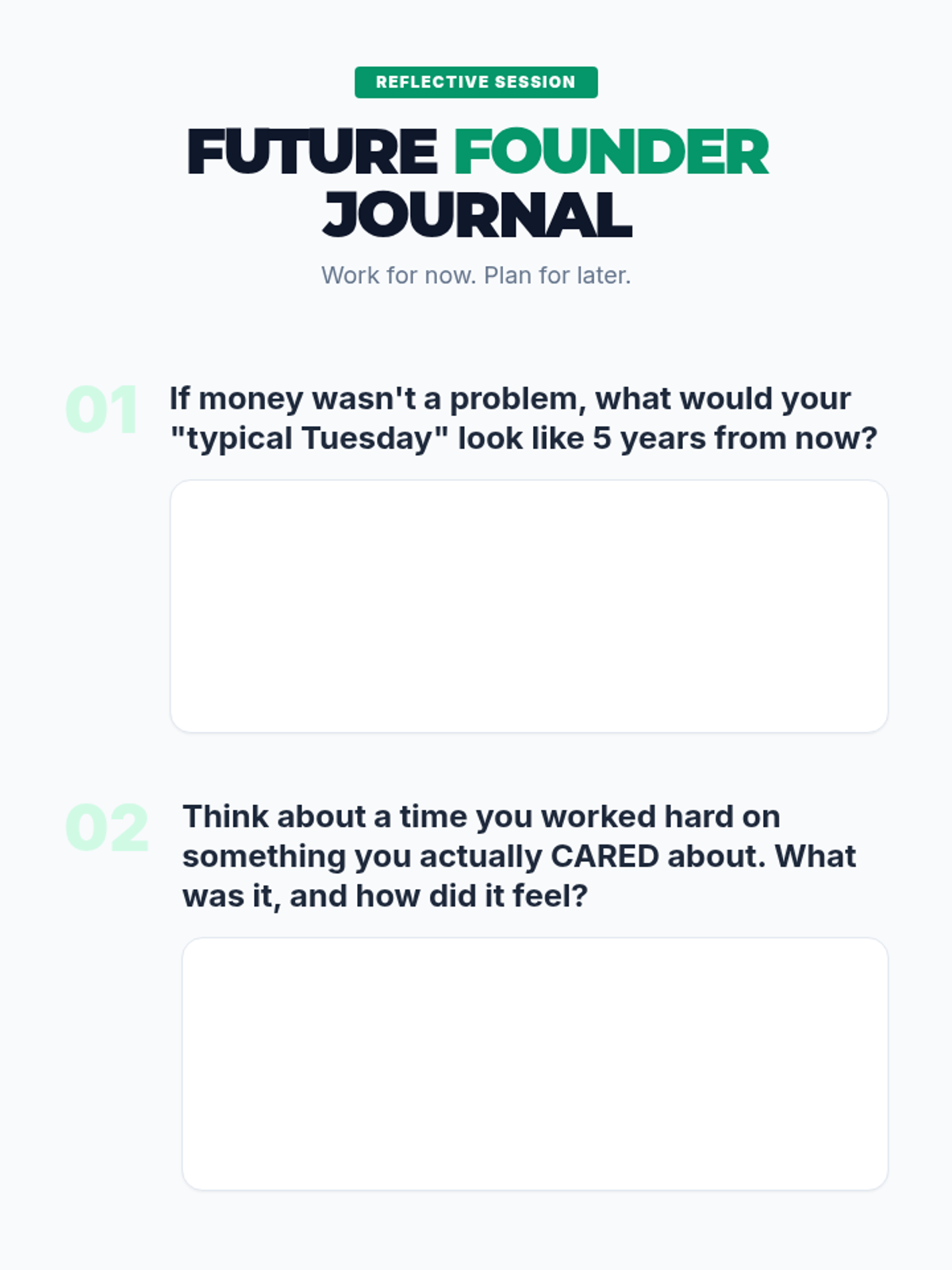
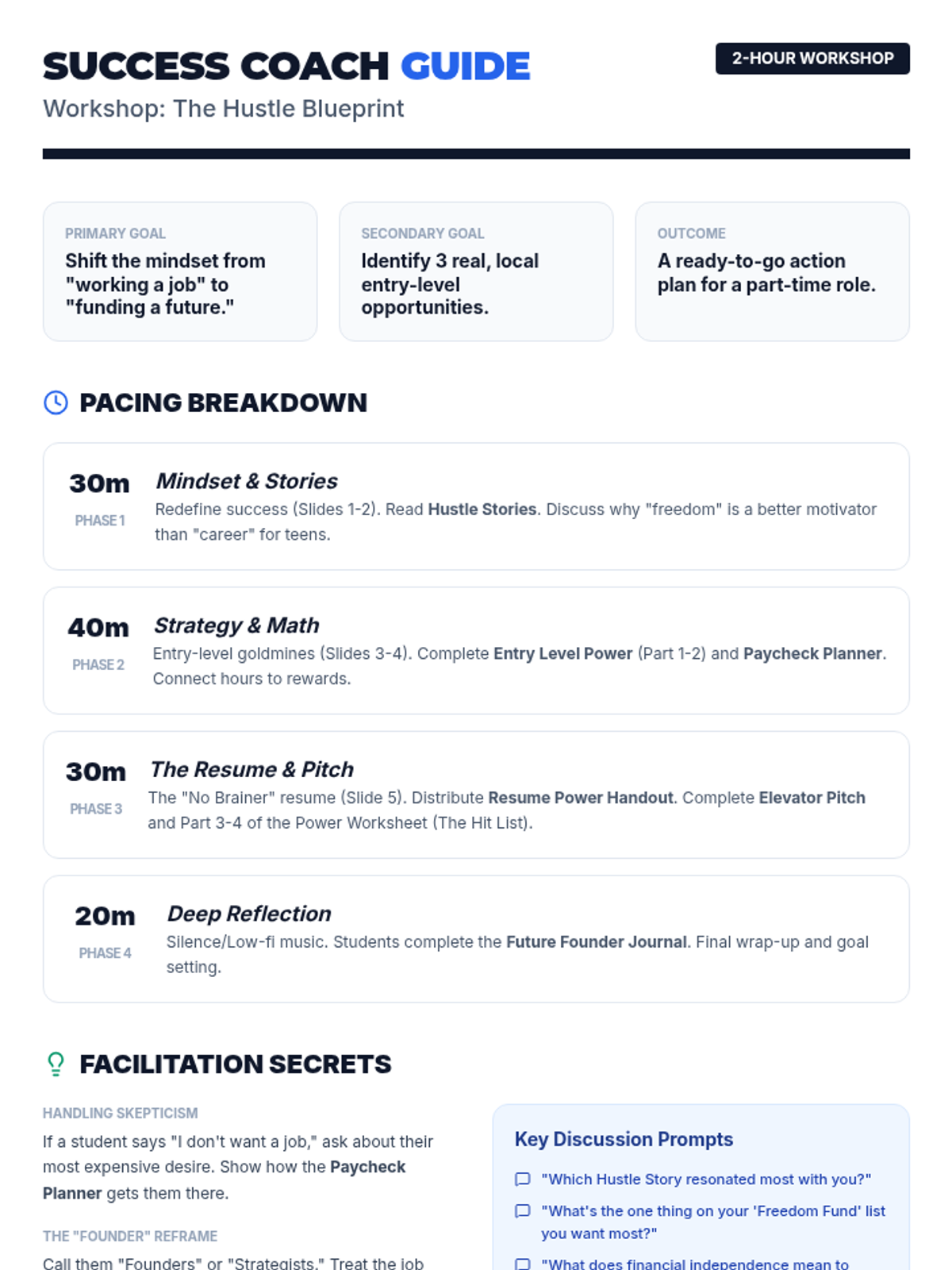
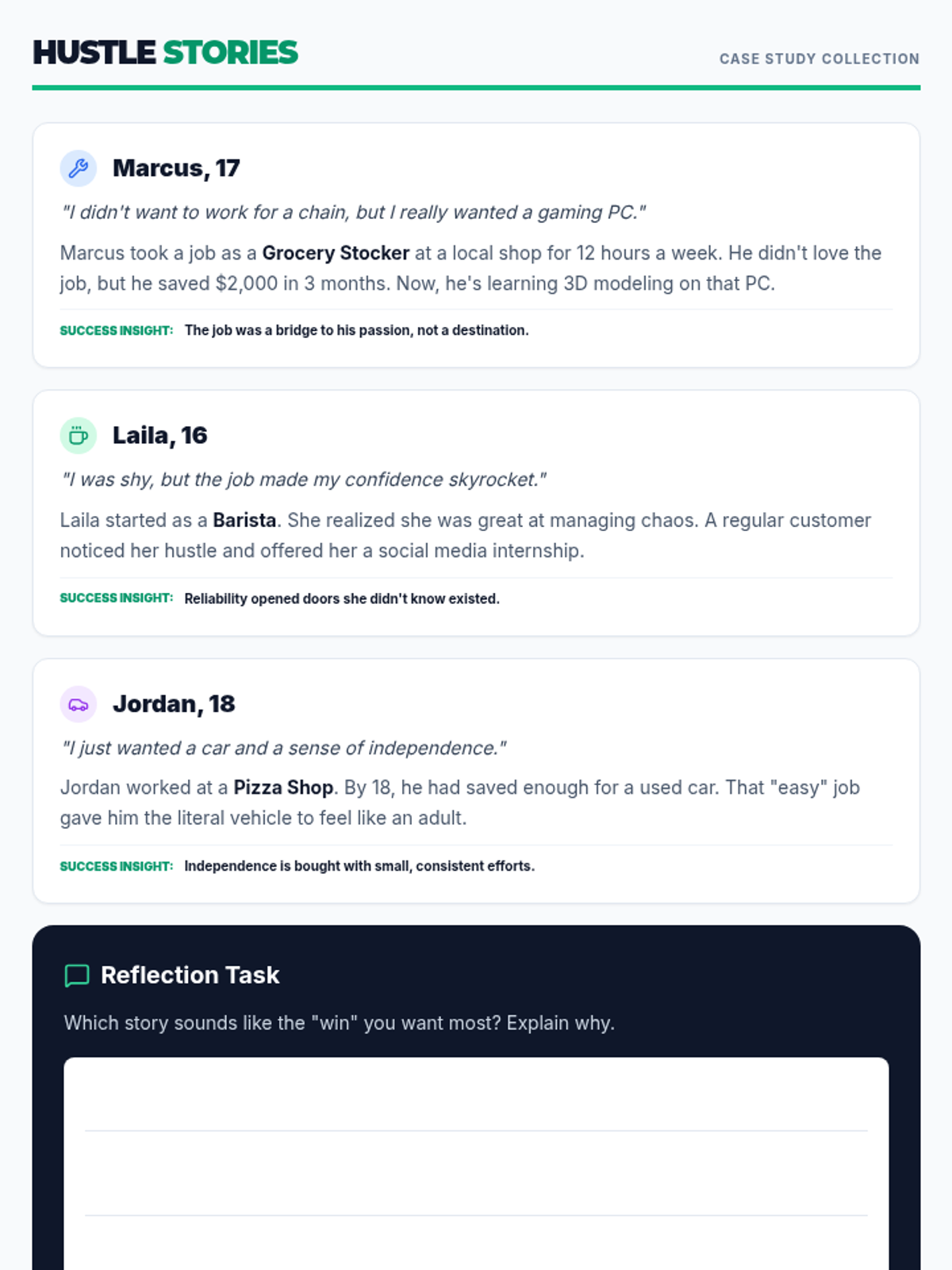
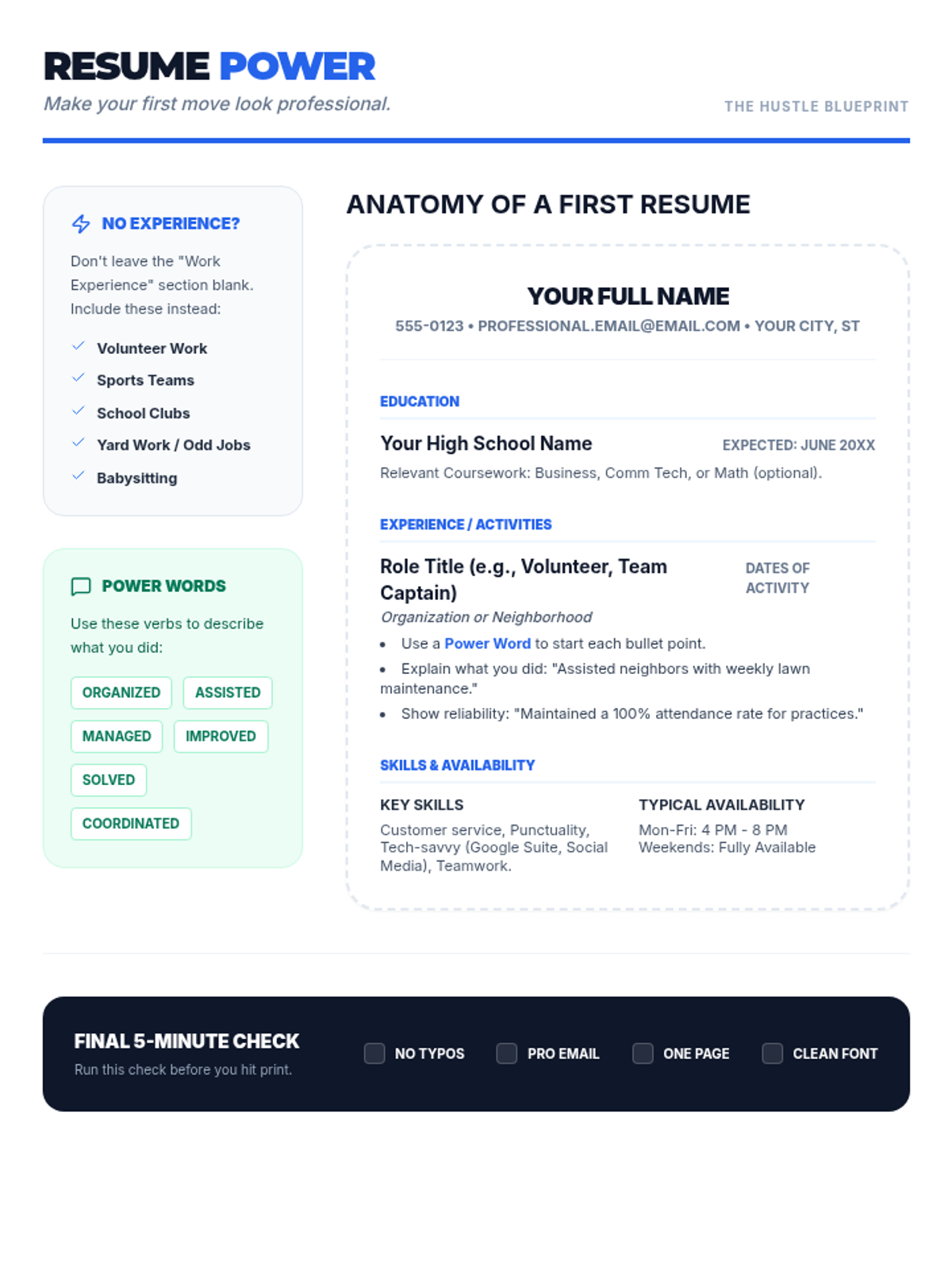
A 2-hour workshop designed for high schoolers to explore entry-level, part-time jobs as a strategic stepping stone toward personal success and independence. Students will redefine success, identify accessible roles that match their interests, and reflect on their long-term goals.
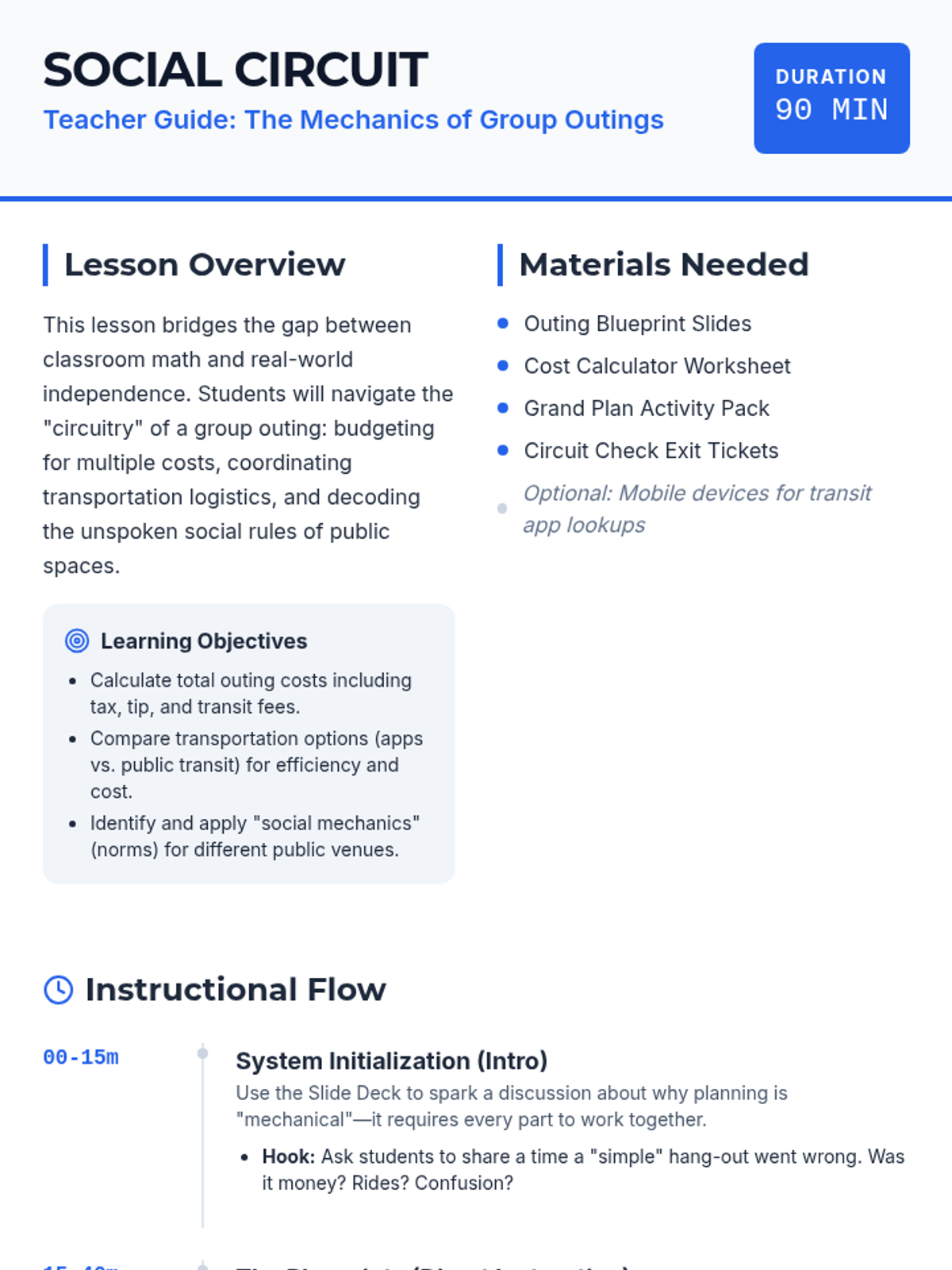
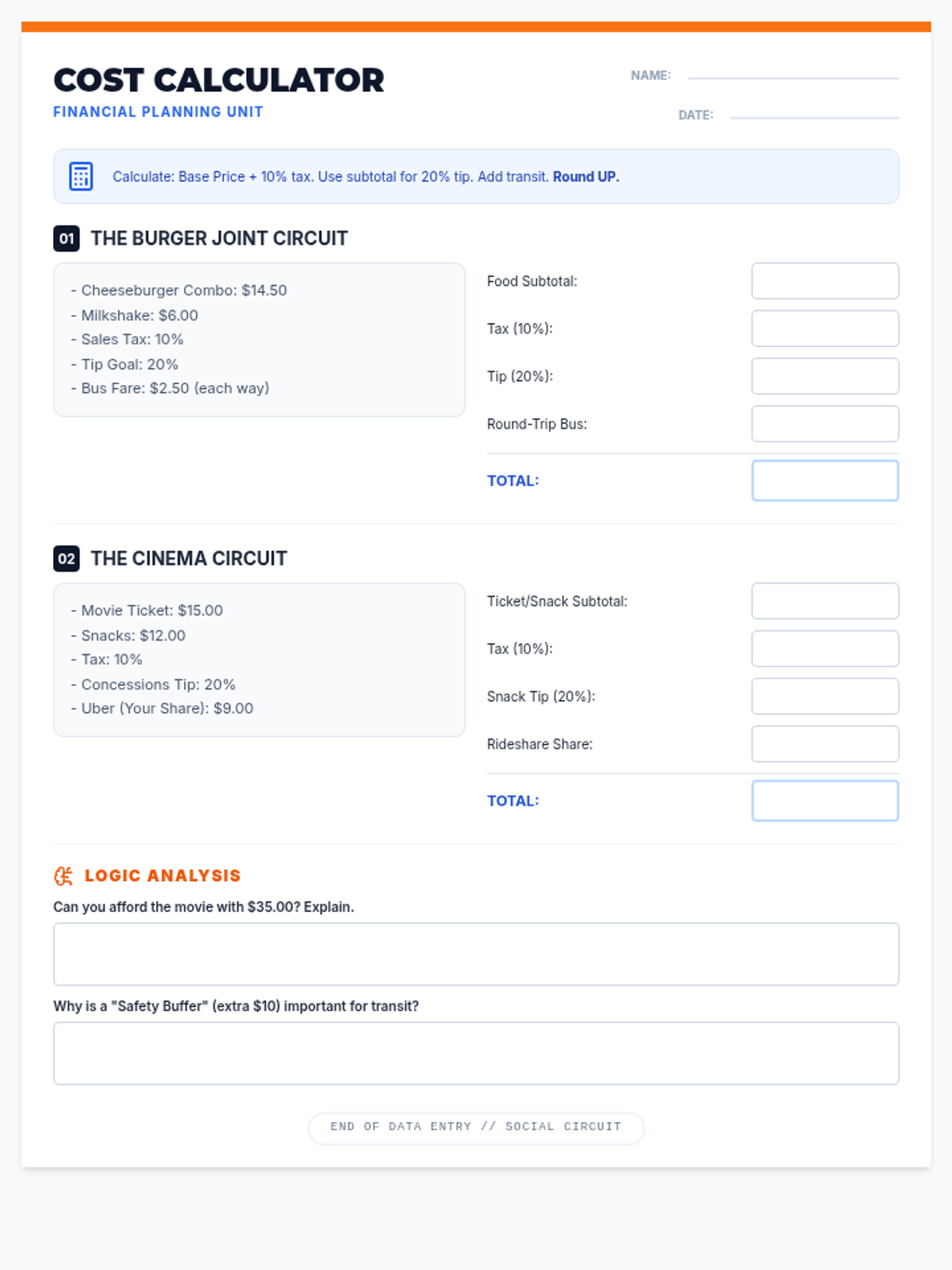
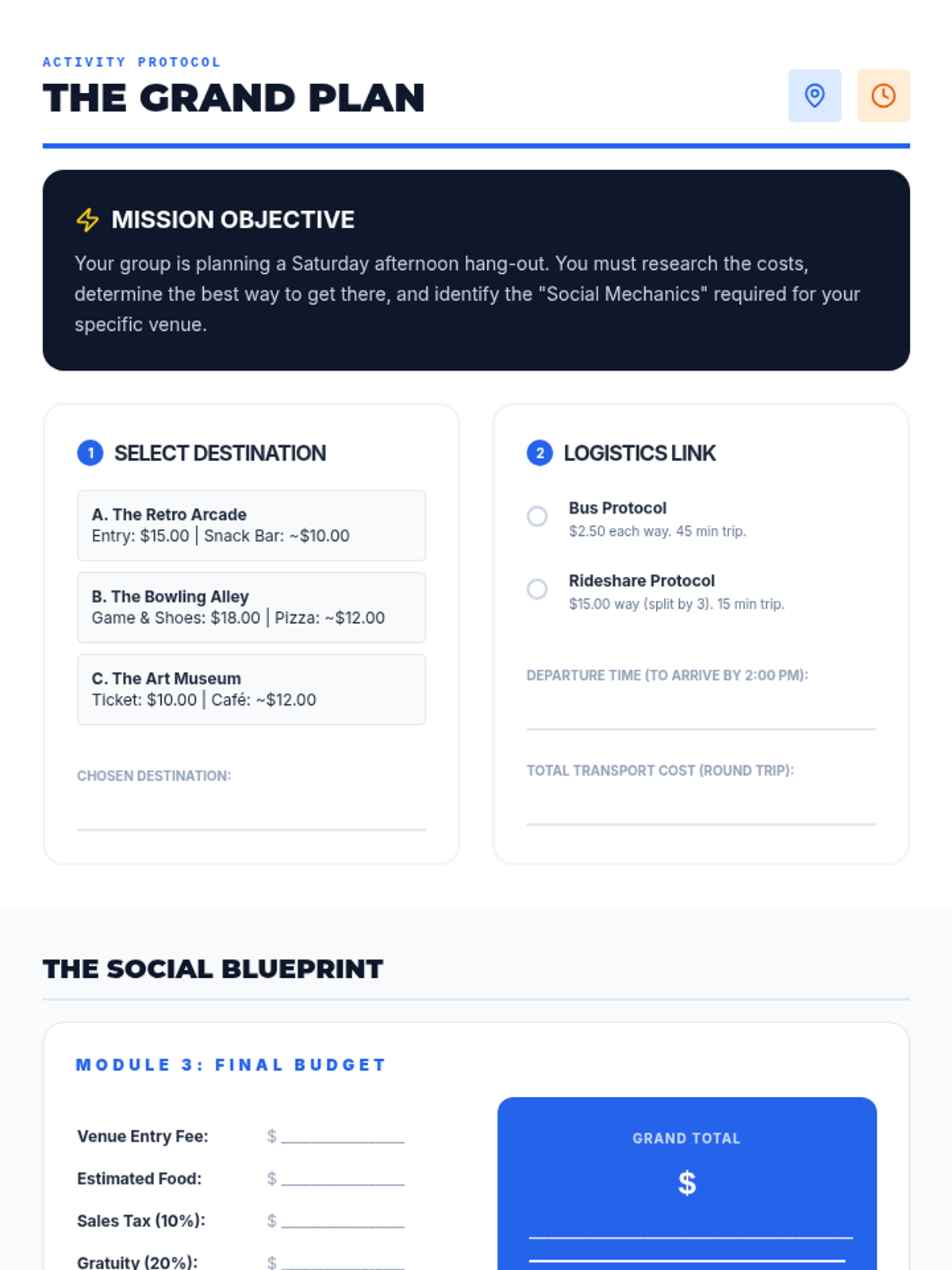
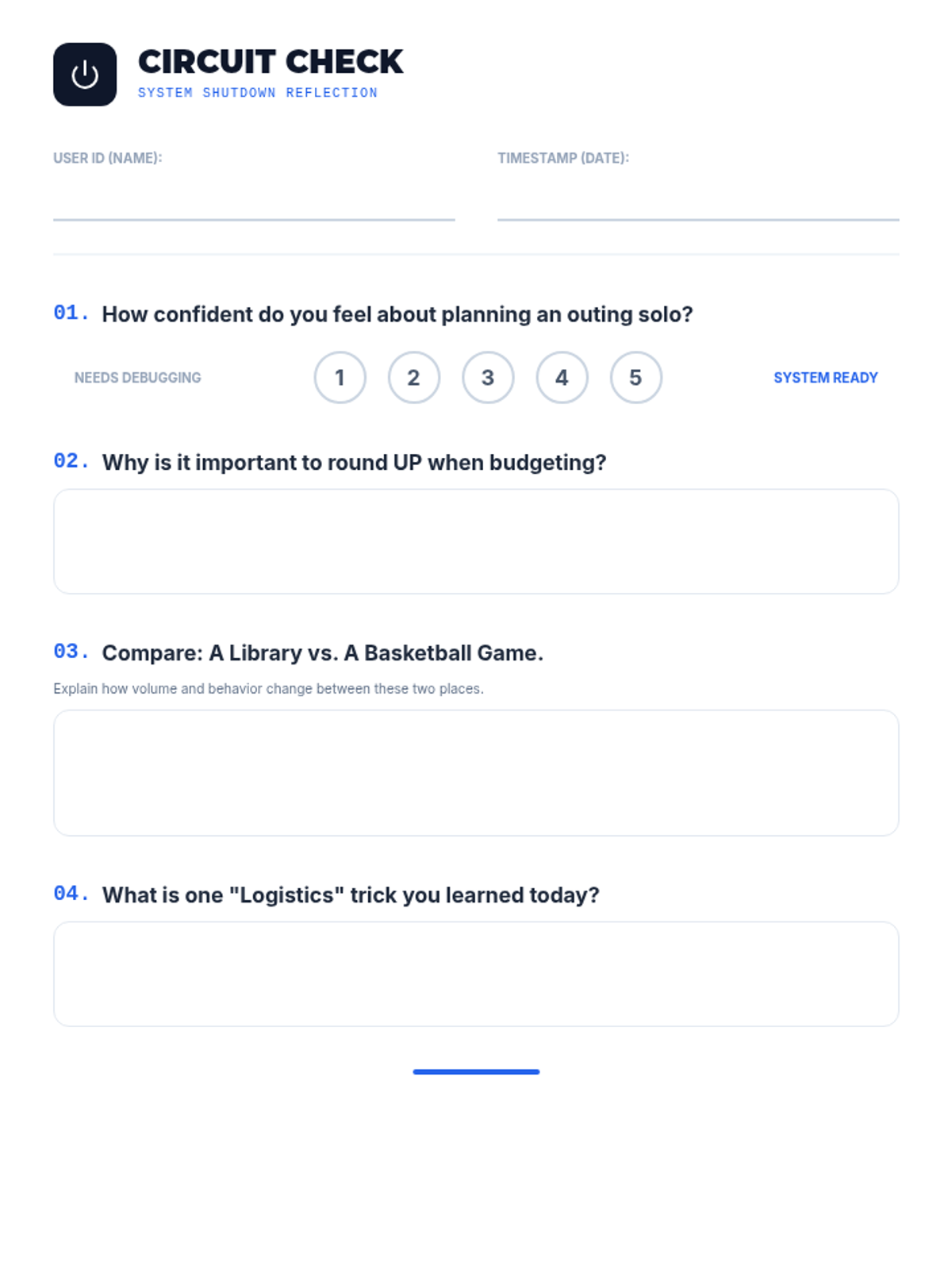
A practical guide for students to master the logistics of social outings, covering budgeting, transit coordination, and social etiquette to build post-graduation independence.
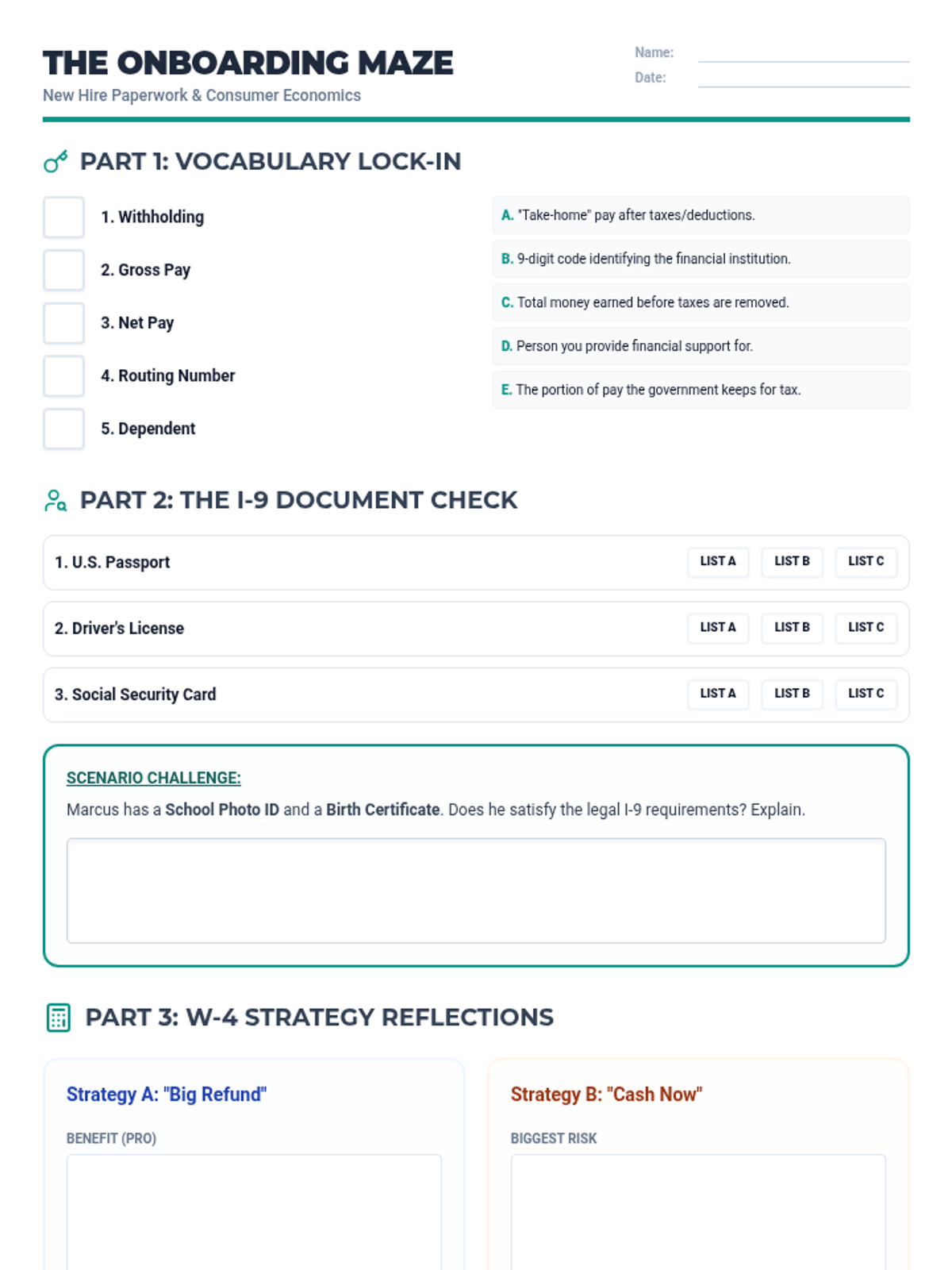
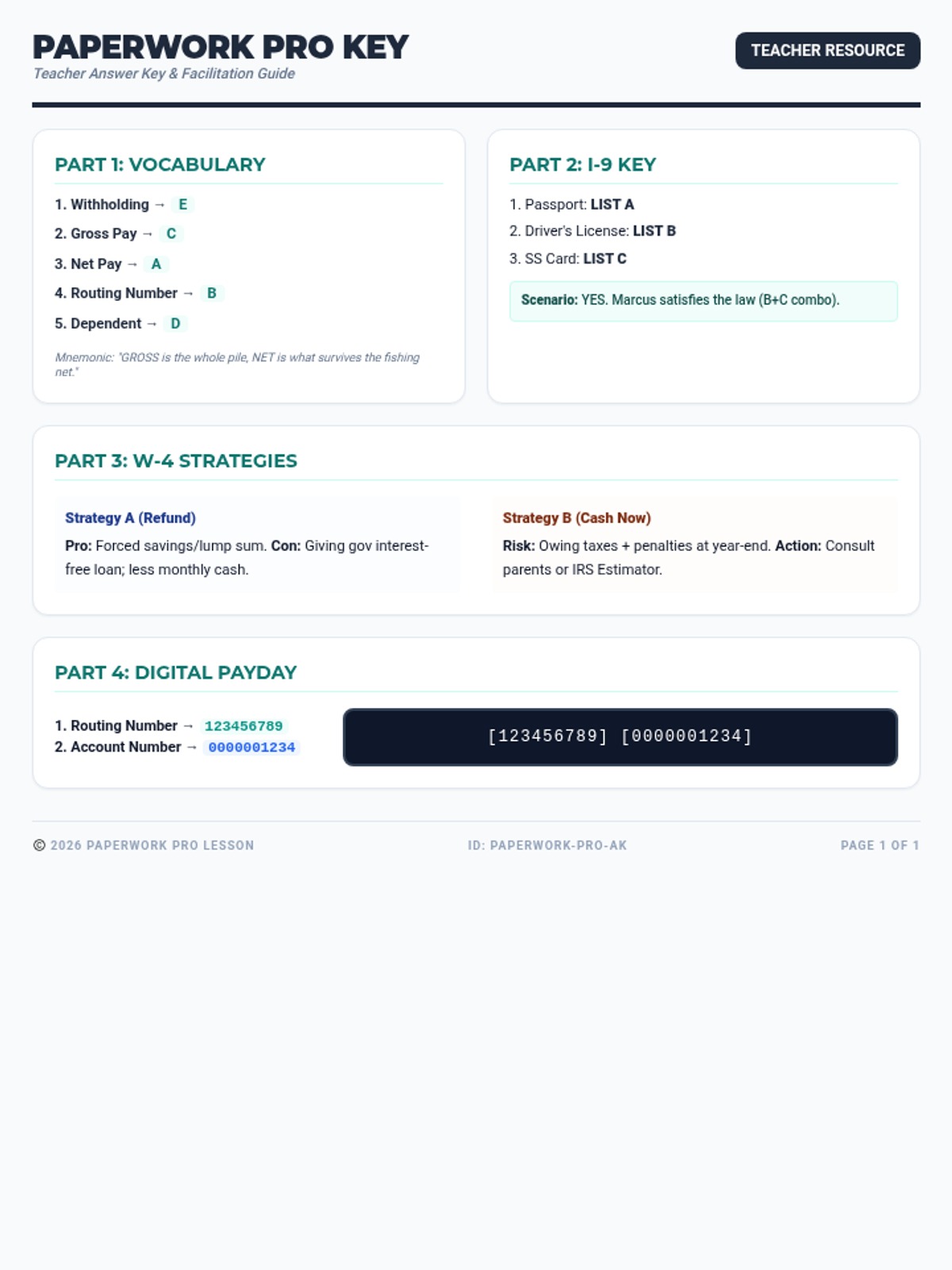
A comprehensive introduction to the essential forms every new employee must complete, covering the I-9, W-4, and direct deposit authorization. Students will learn the purpose of each form and how to accurately provide their information to ensure legal compliance and correct pay.
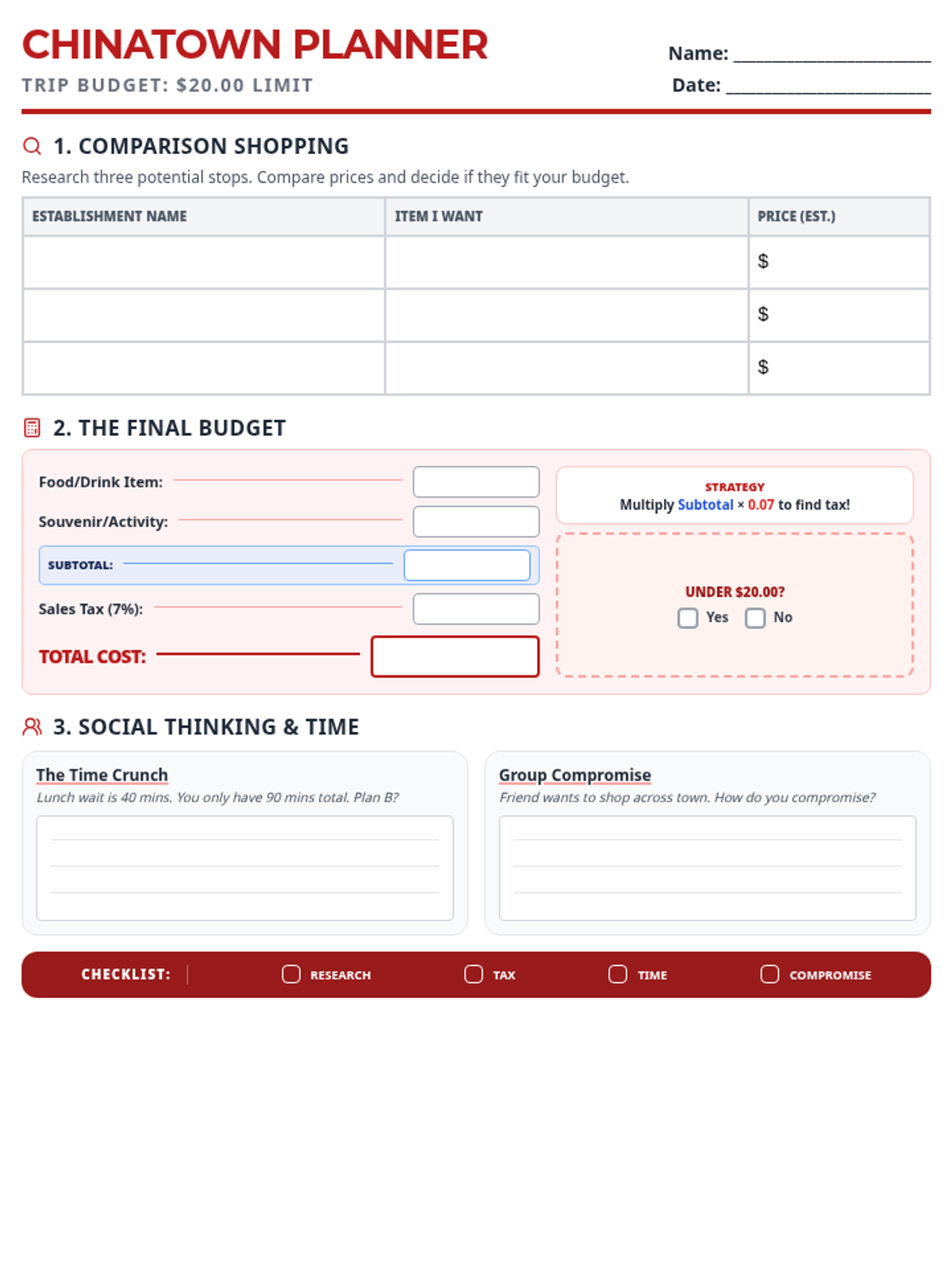
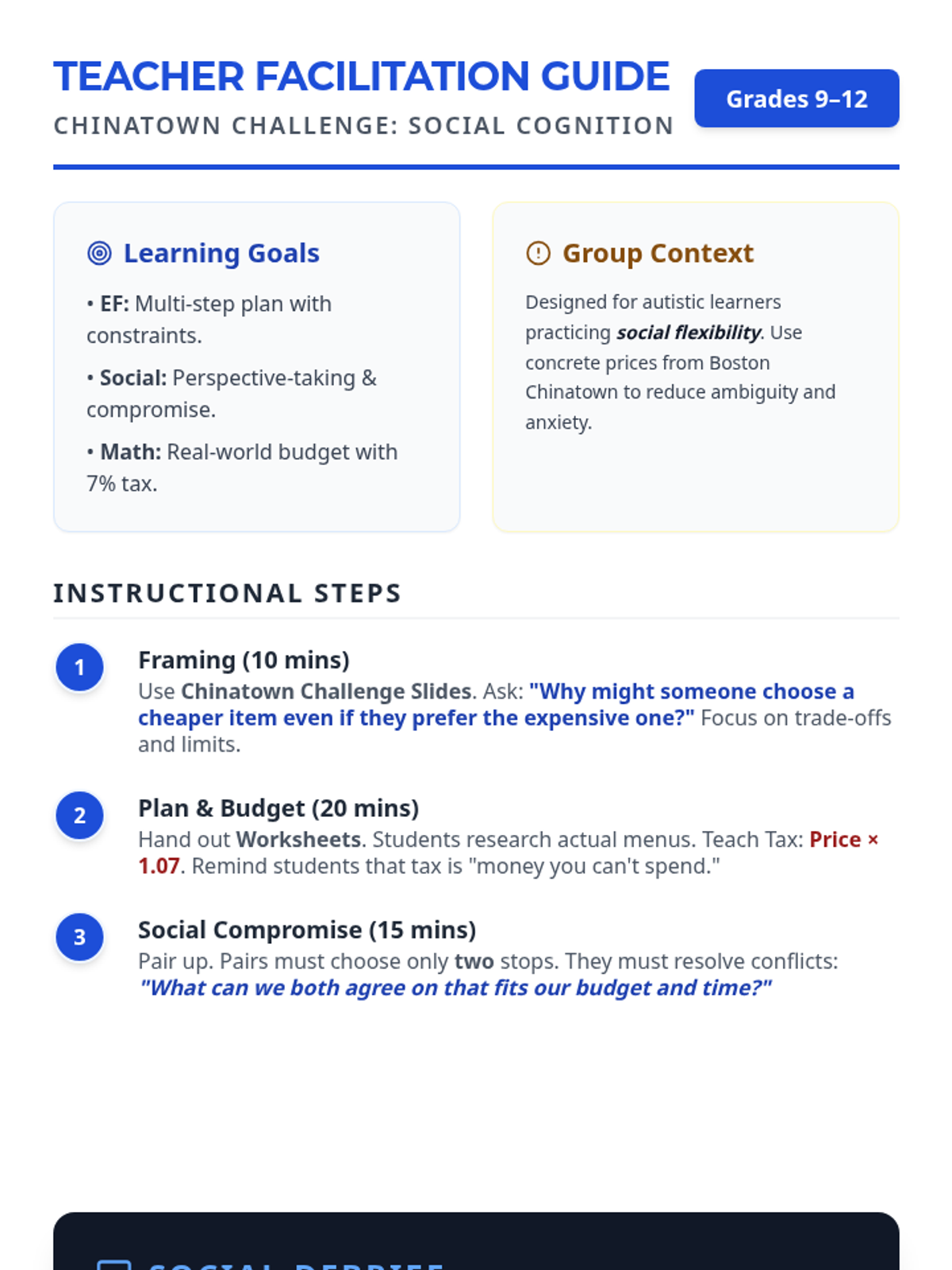
A focused lesson on budgeting, comparison shopping, and social compromise using a real-world scenario of a $20 trip to Boston's Chinatown. Designed specifically for high school students in a social cognition group to practice executive functioning and social decision-making.
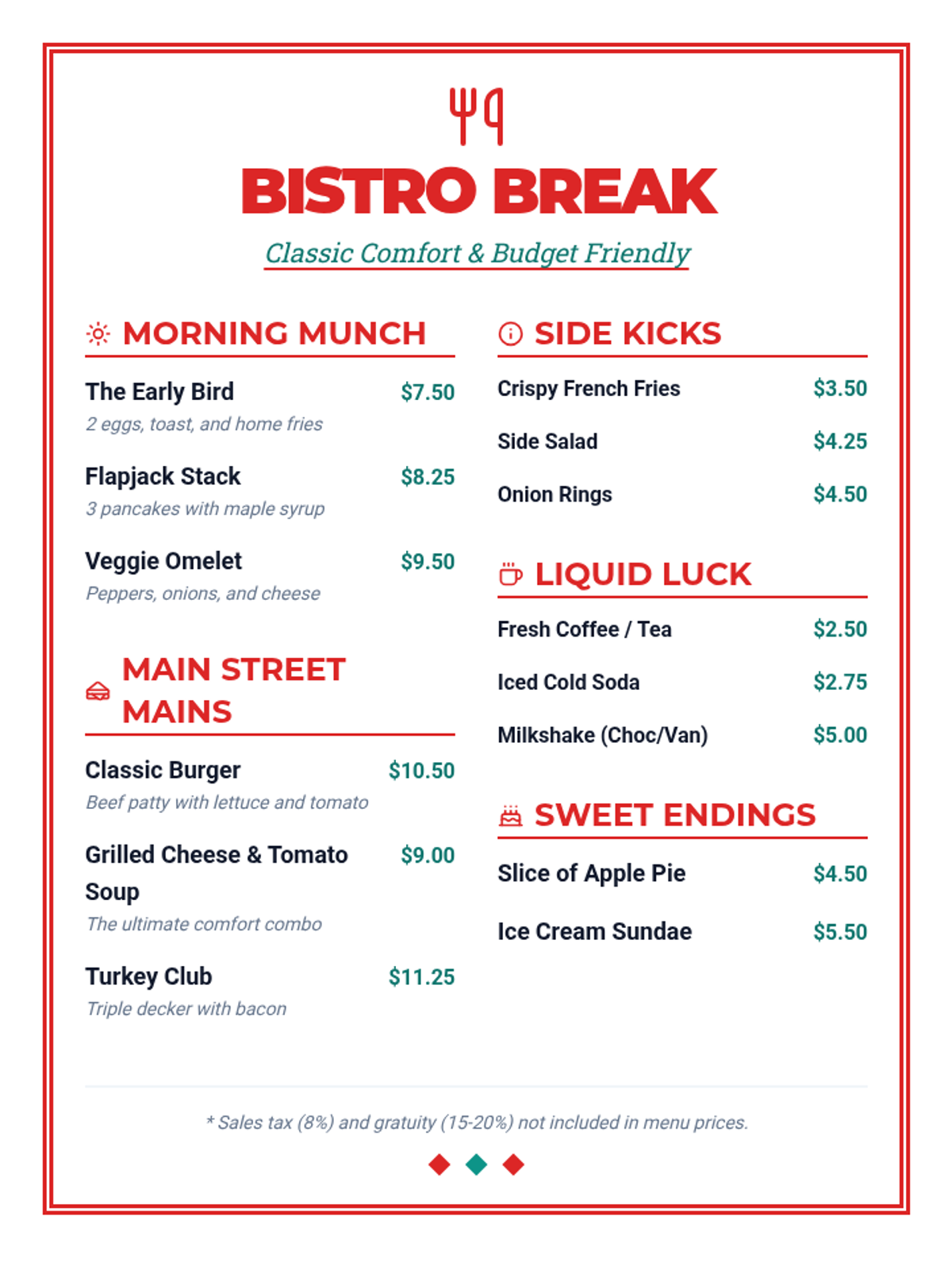
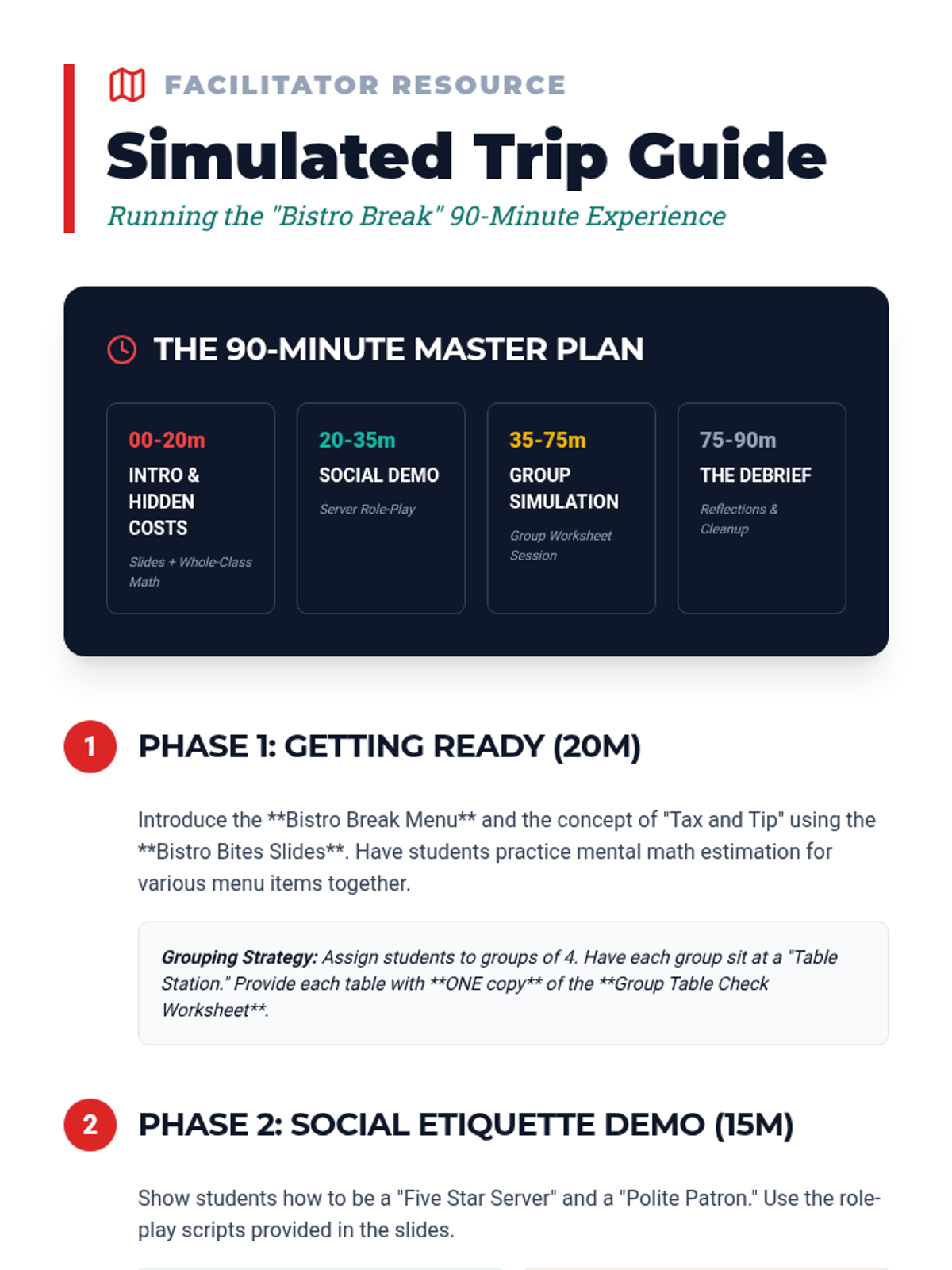
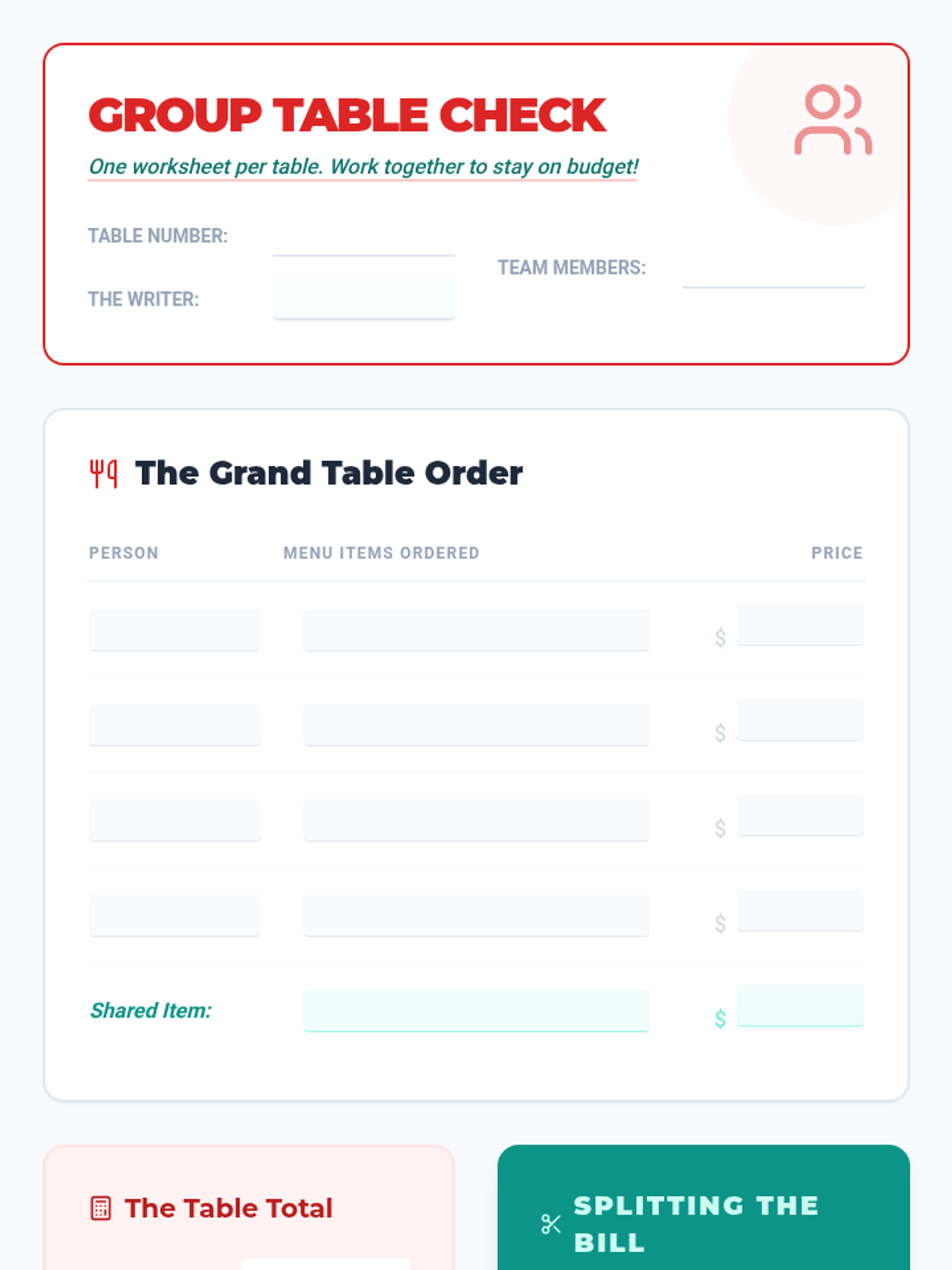
A functional skills lesson focused on navigating a restaurant experience on a budget, covering menu reading, budget planning, social etiquette, and group check splitting.
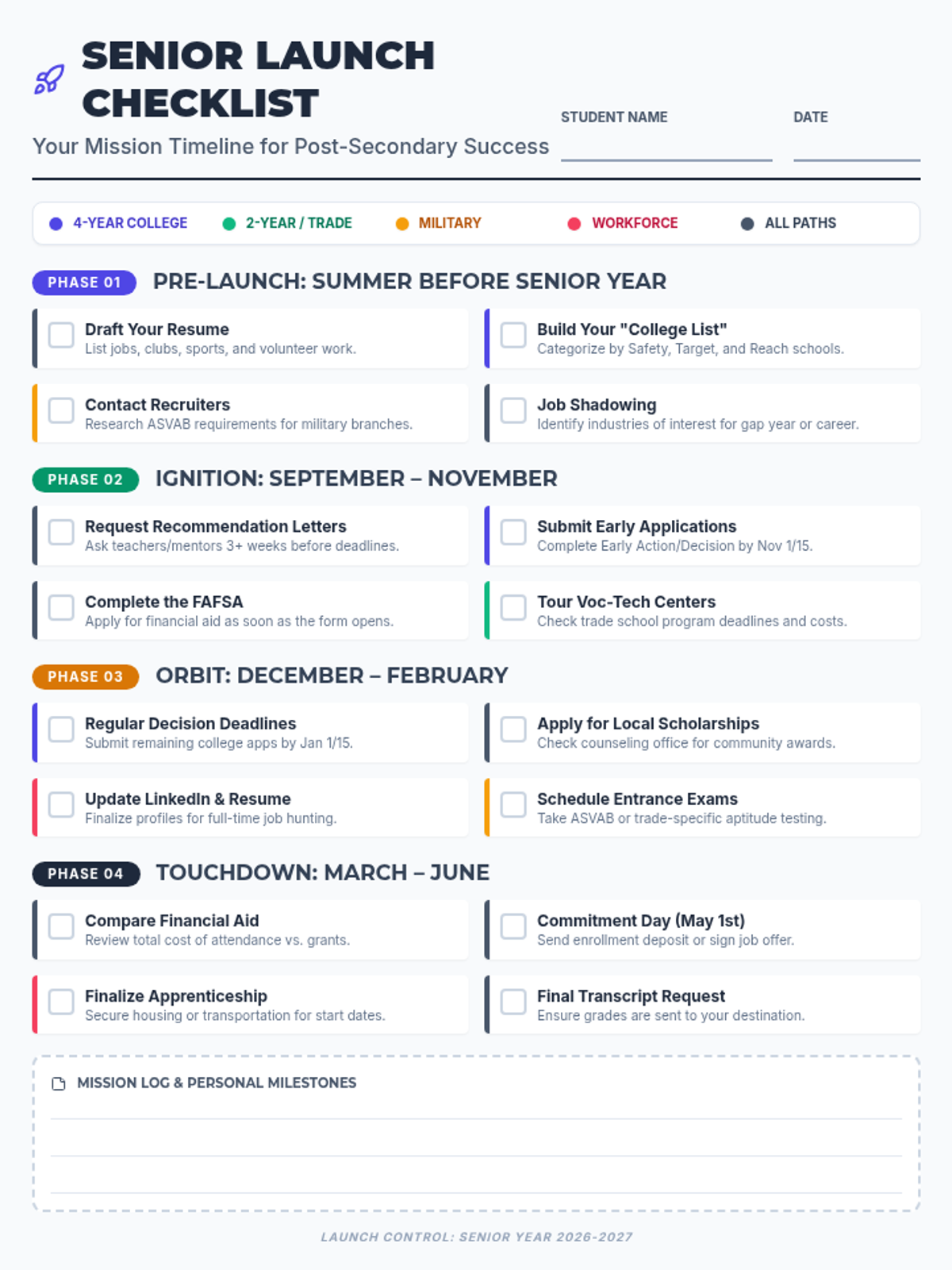
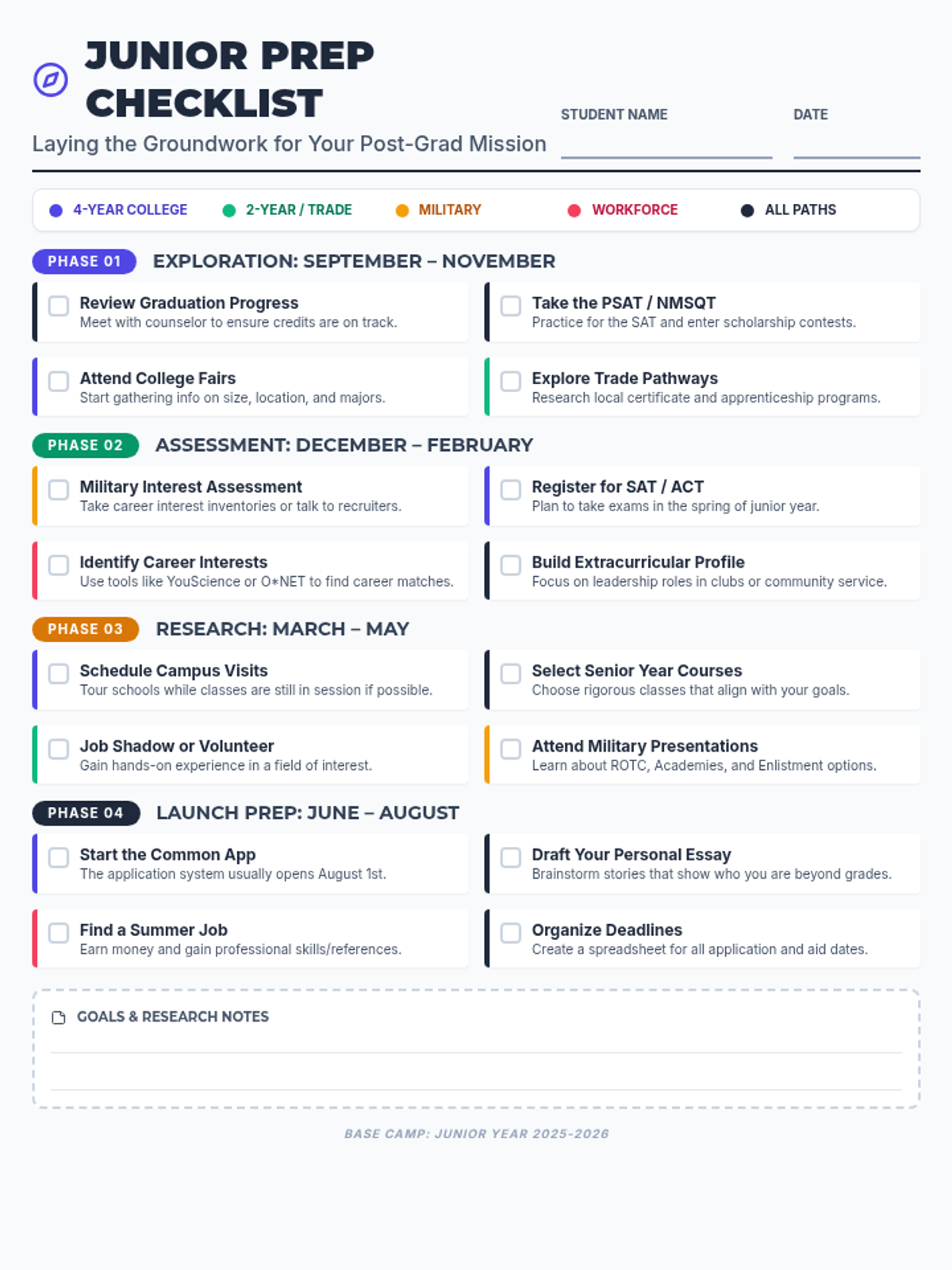
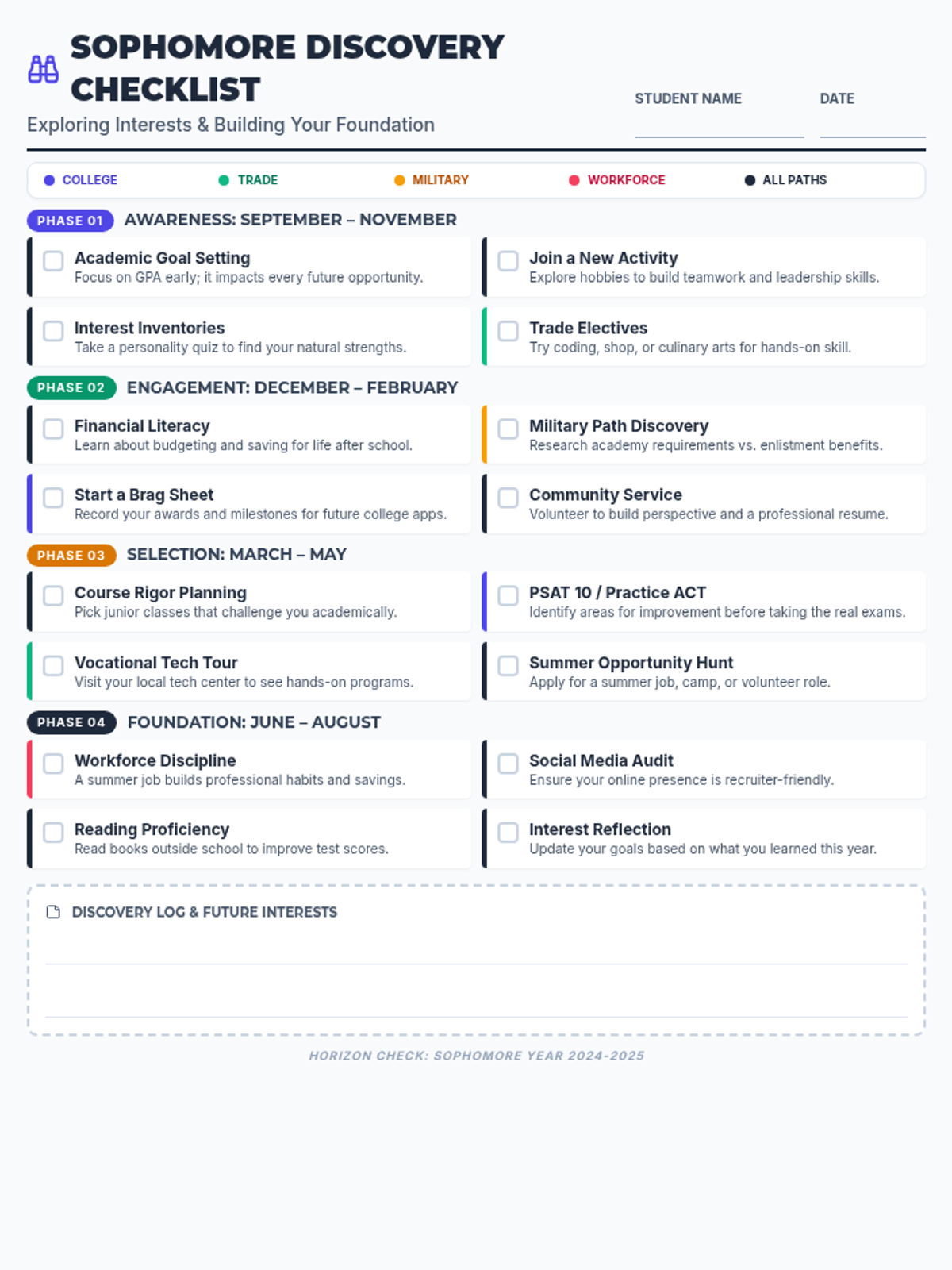
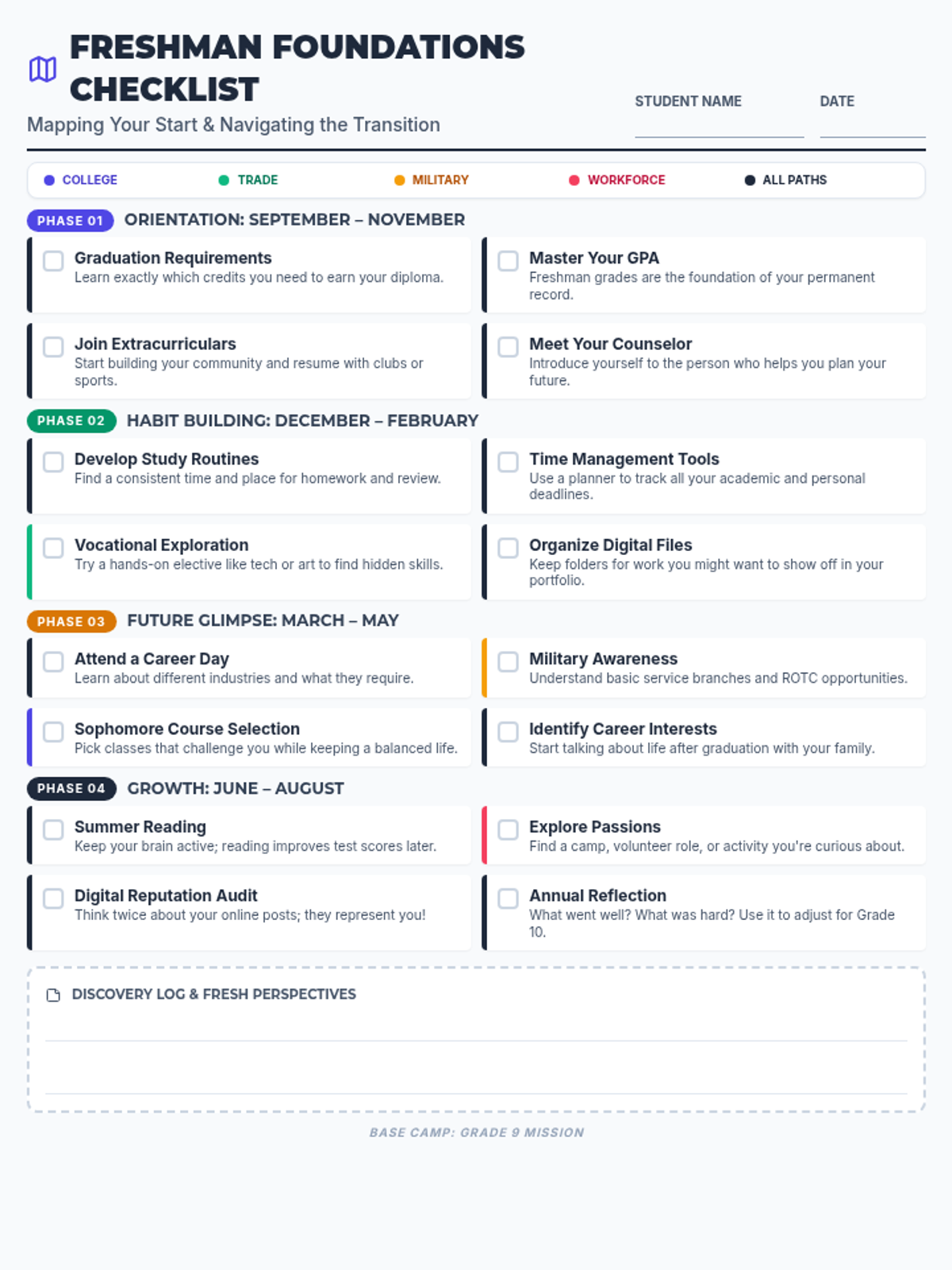
A collection of visual checklists and organizers to help high school students navigate the complex transition to post-secondary life, covering college, trade schools, military, and the workforce.
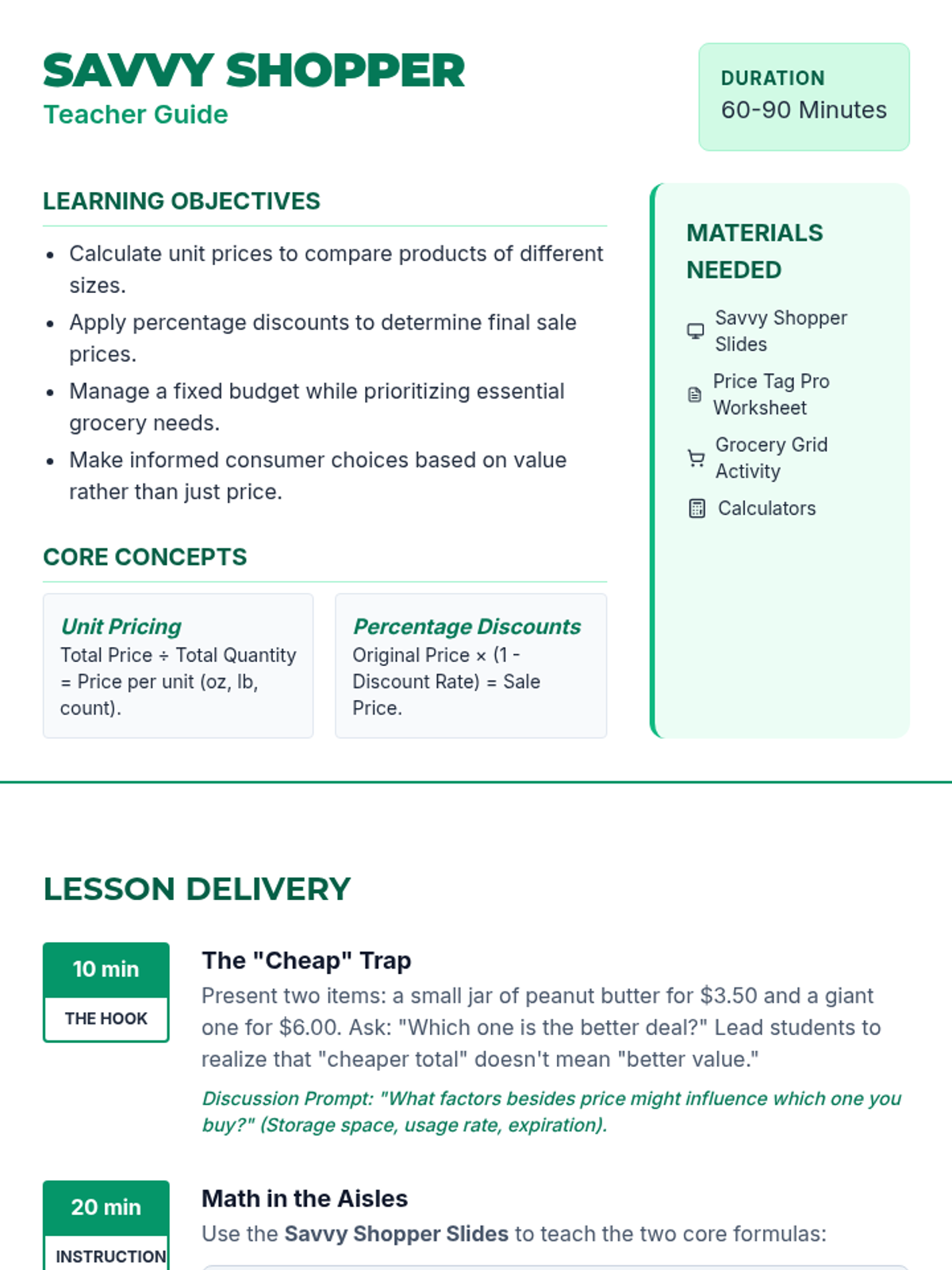
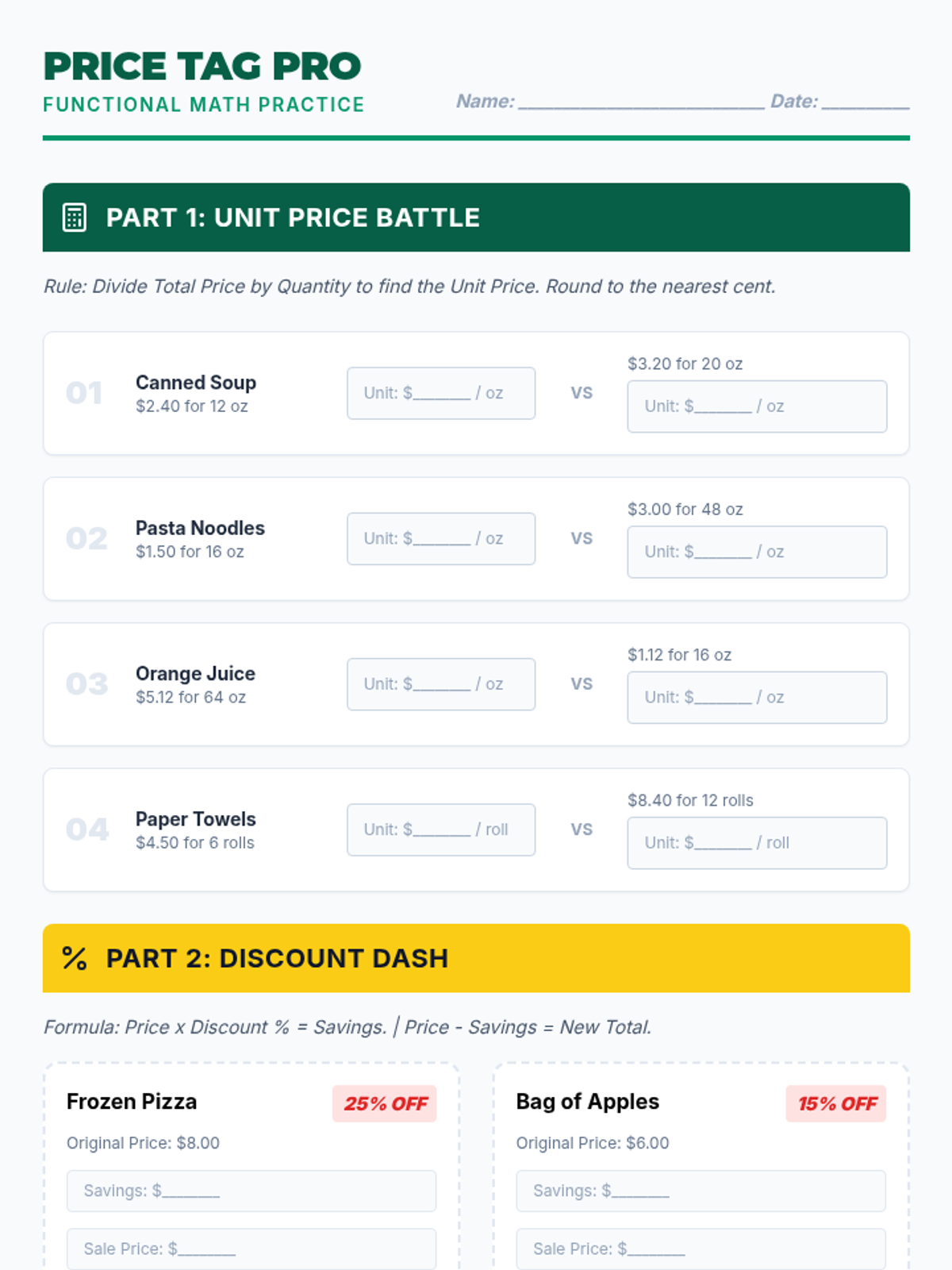
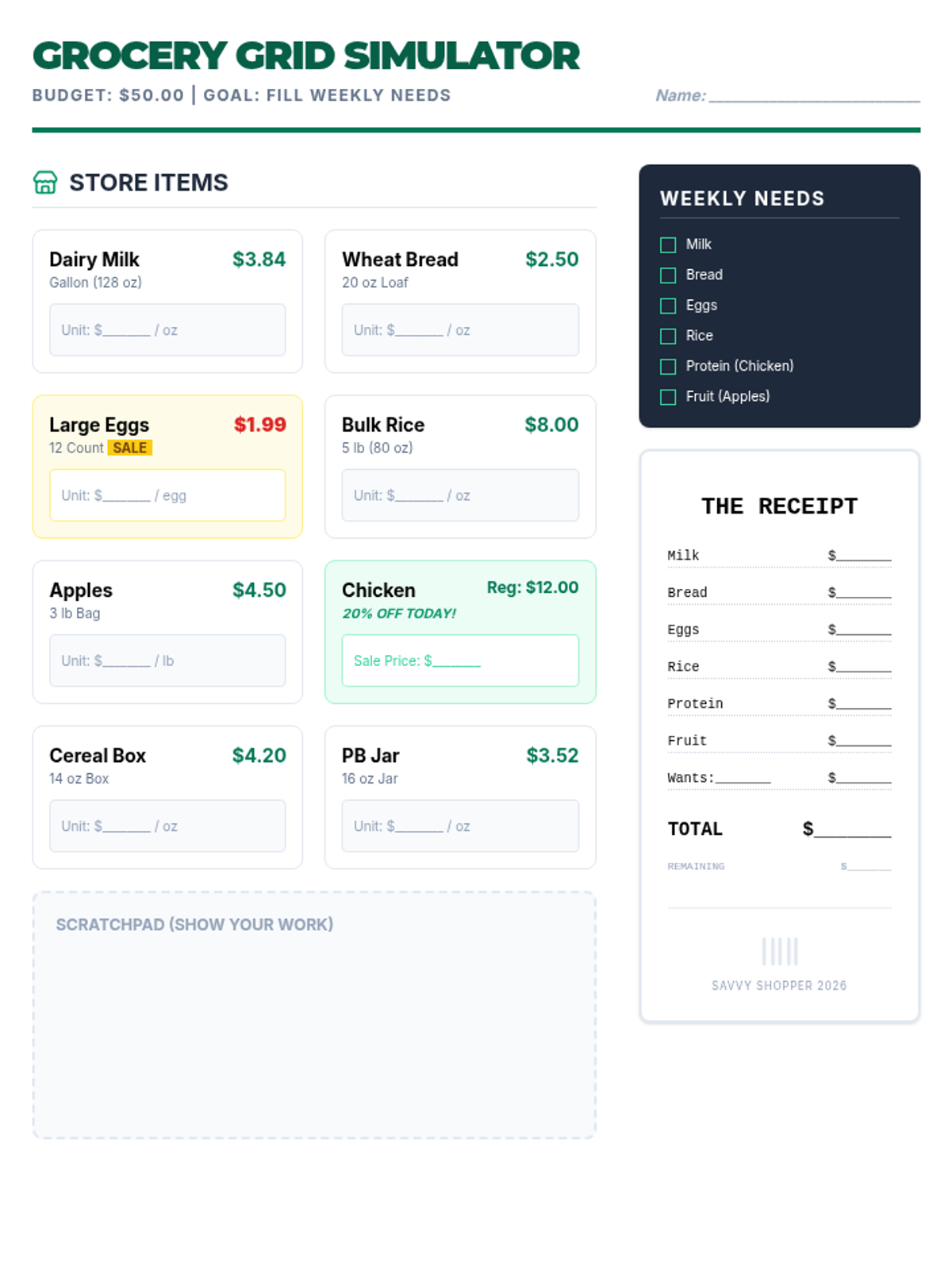
A functional math lesson where high school students navigate grocery budgeting, unit price comparison, and discount calculations to build independent living skills.
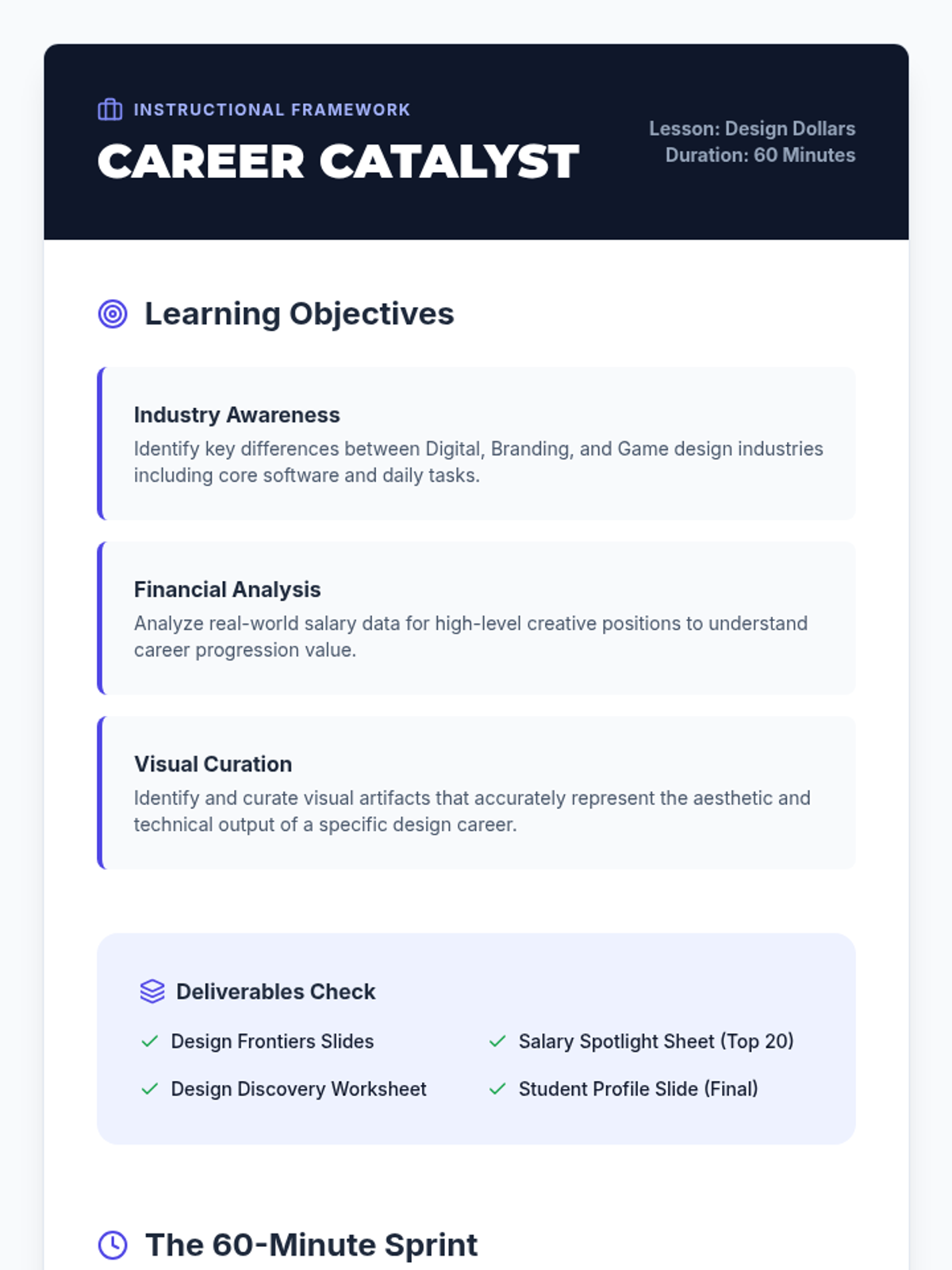
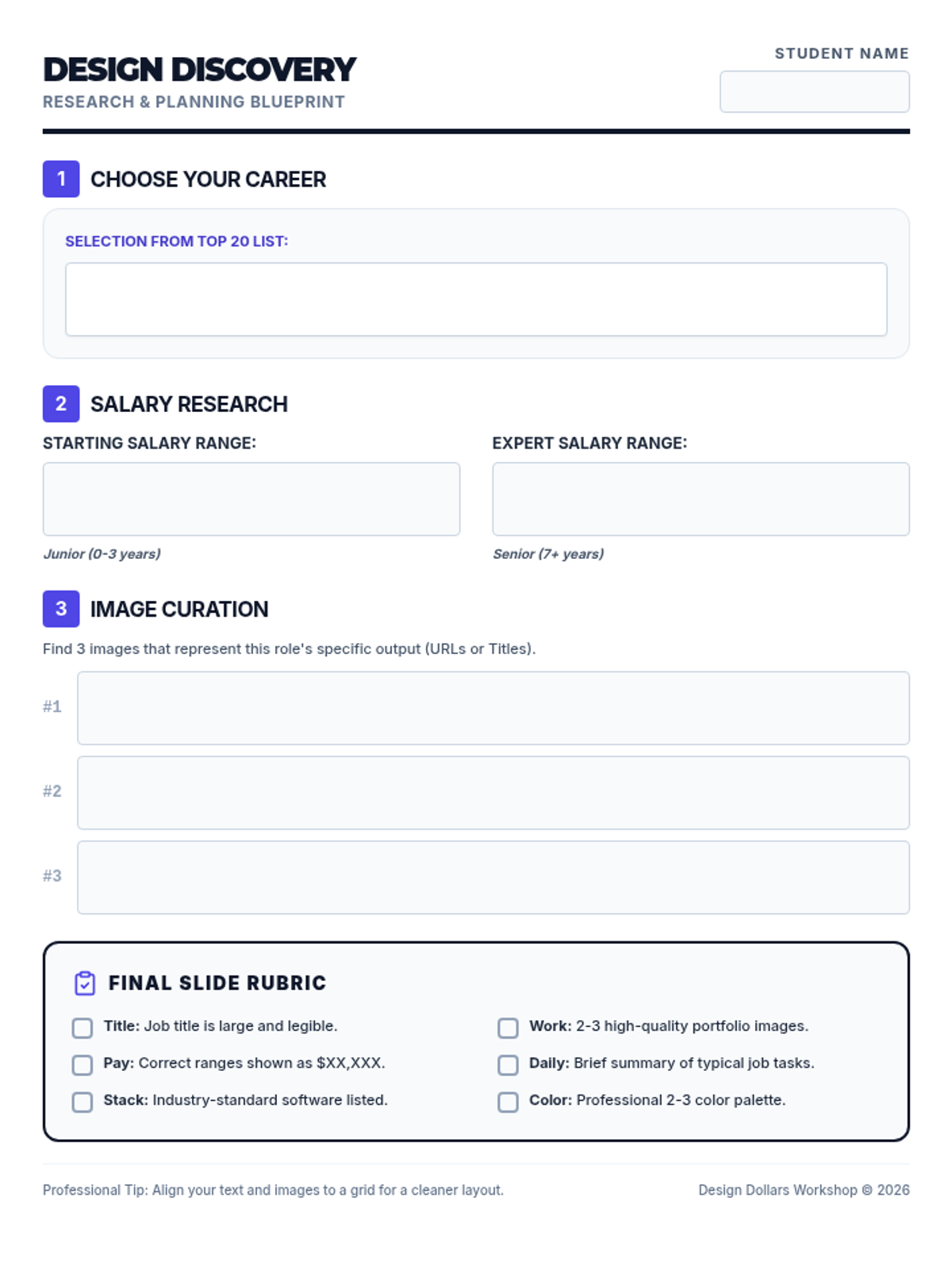
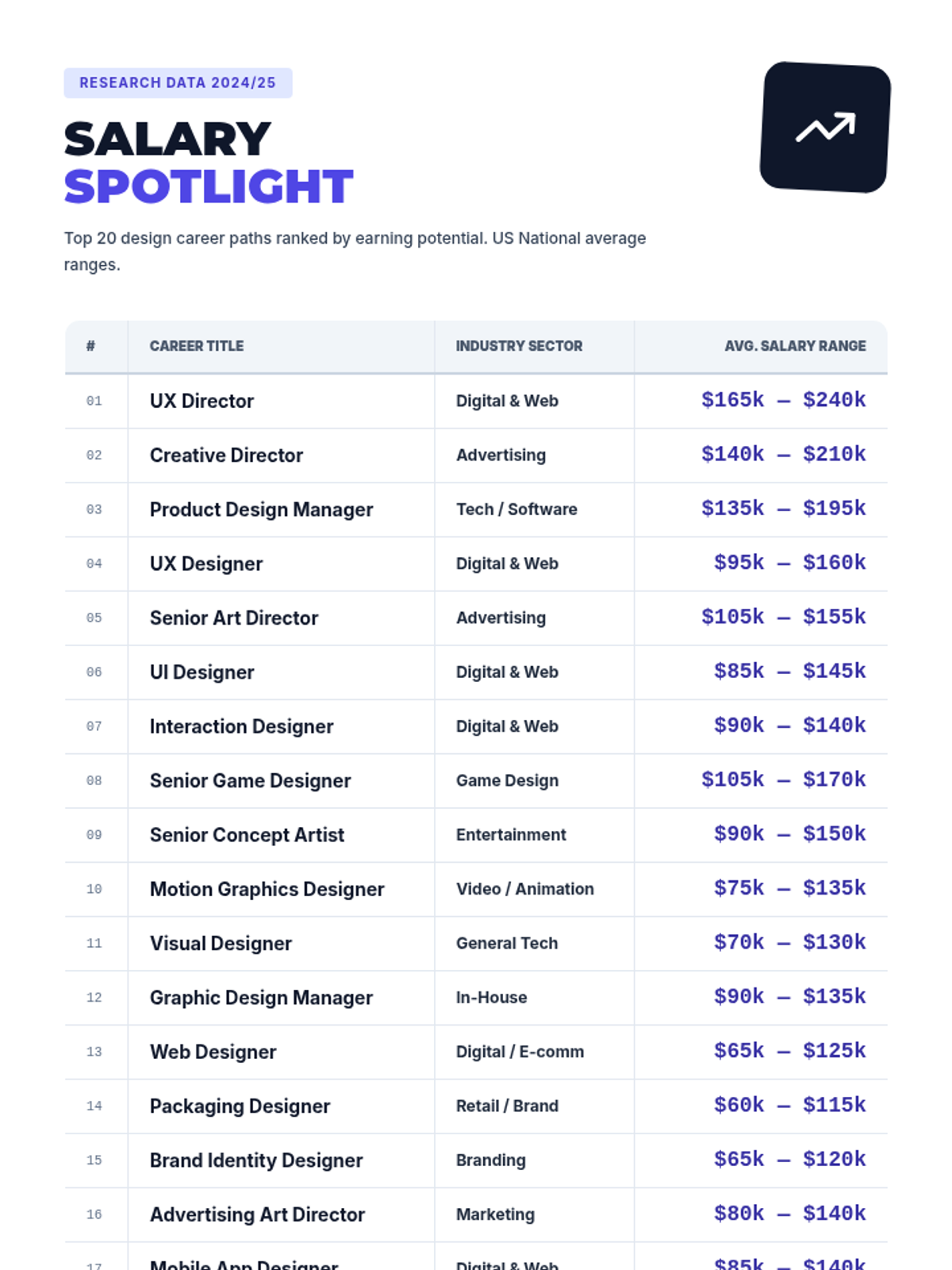
A fast-paced, 60-minute exploration of high-earning graphic design career paths, focusing on digital media, branding, and game design. Students research salary data and visual trends to create a professional industry profile slide.
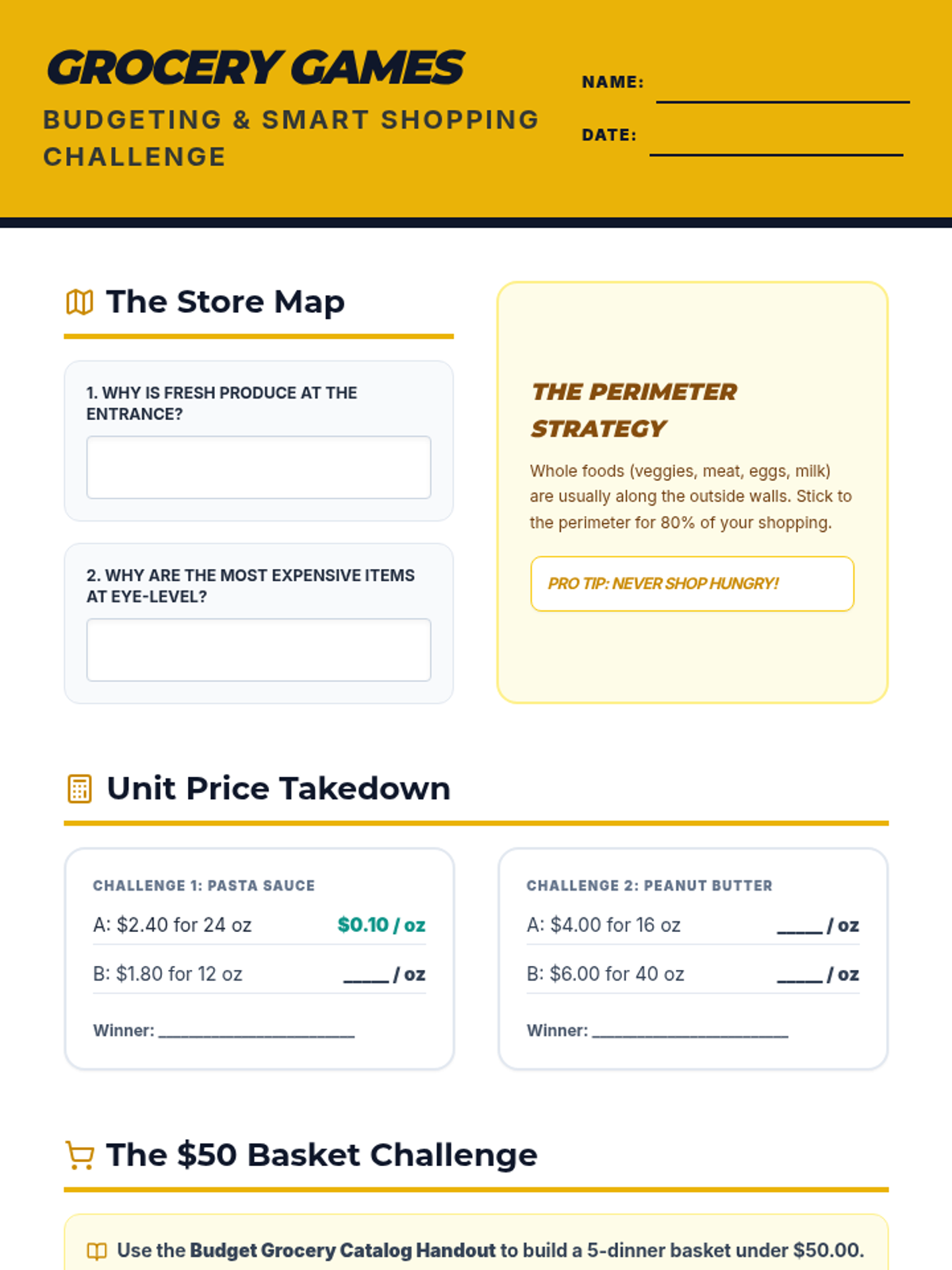
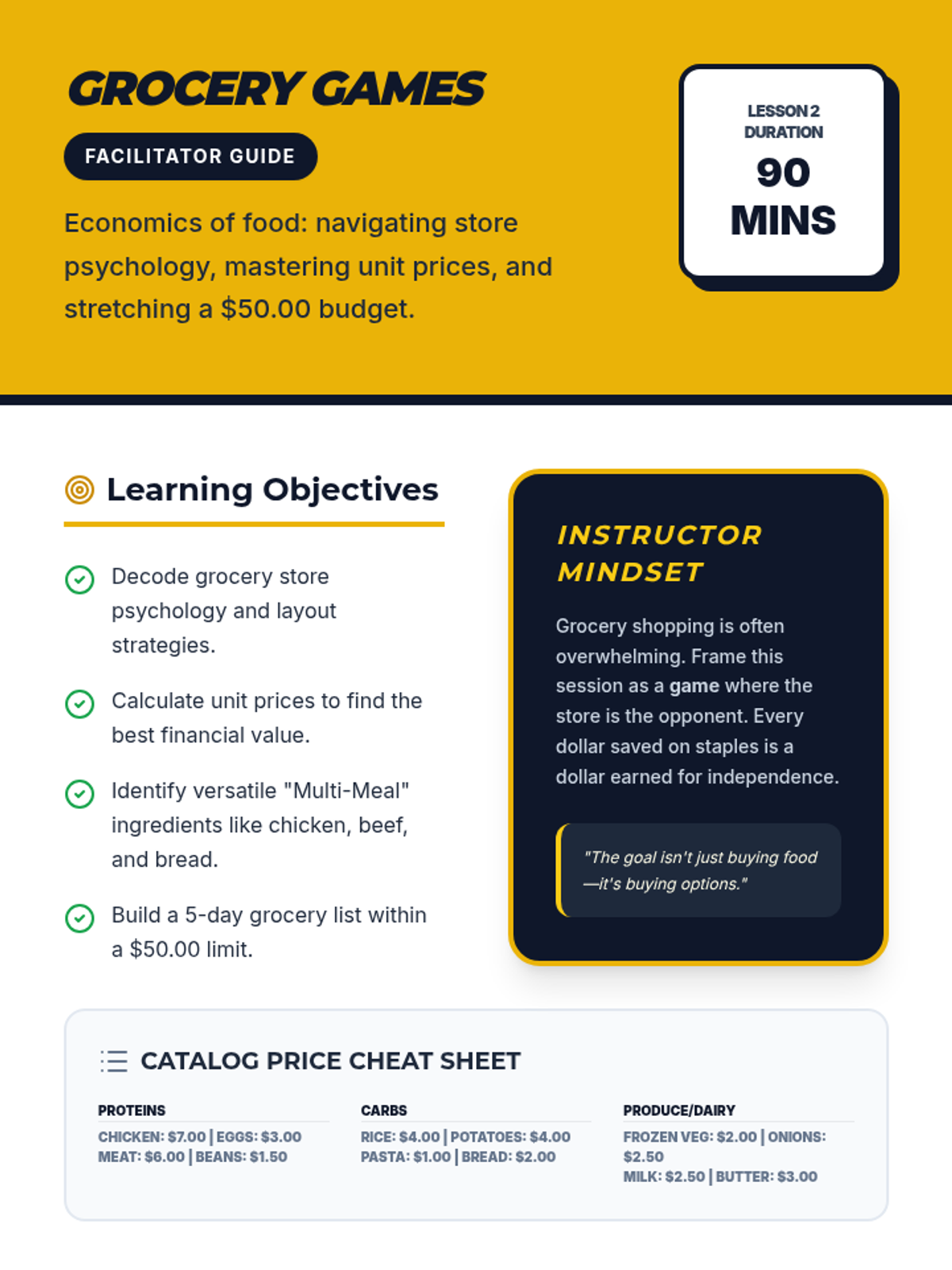
A follow-up session focused on the economics of food. Participants learn to navigate grocery store layouts, interpret unit prices to find the best deals, and build a balanced grocery list within a specific budget.
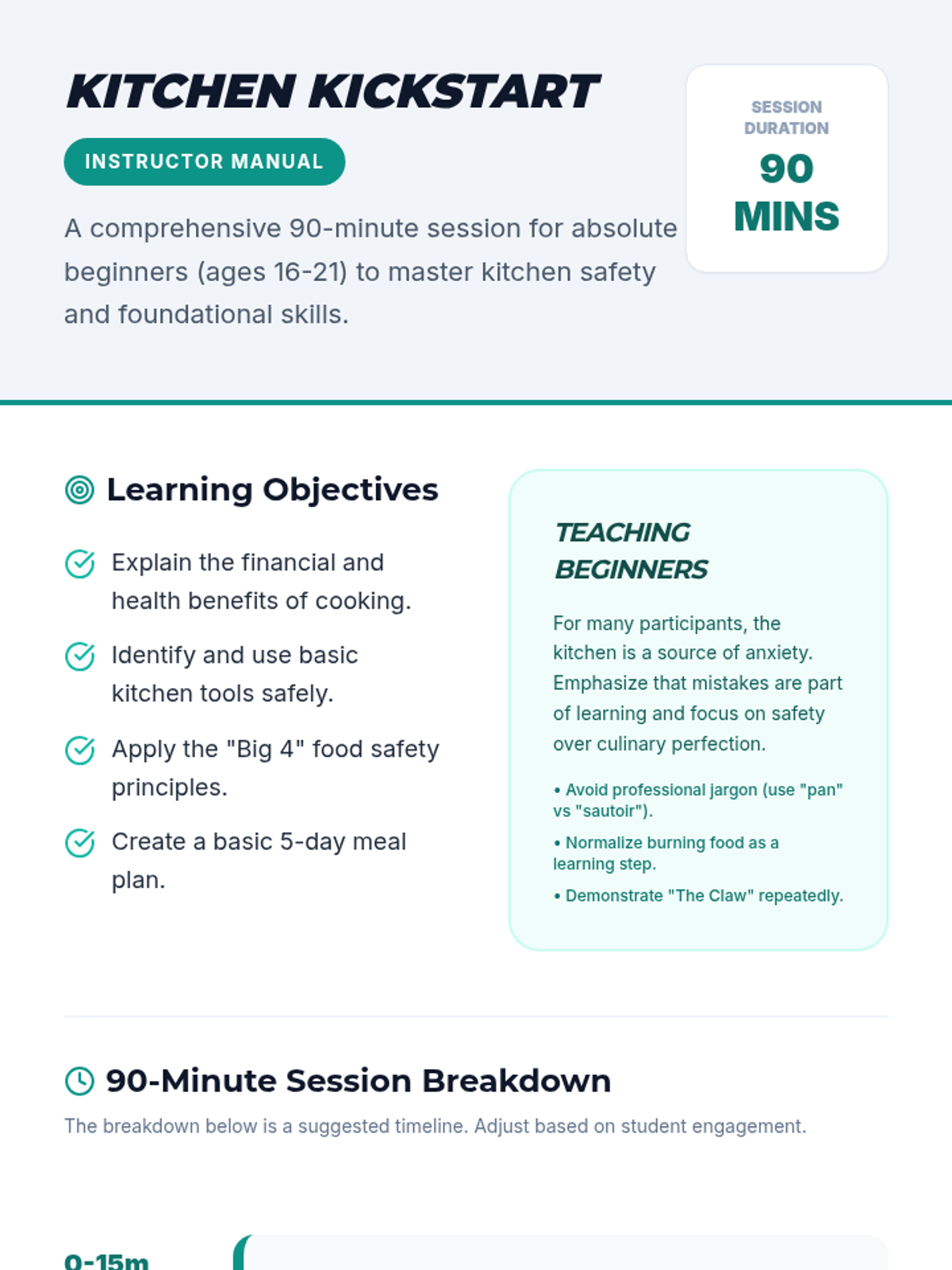
A comprehensive 90-minute session designed for absolute beginners to learn fundamental kitchen skills, food safety, and practical meal planning. Participants will leave with the confidence to prepare simple, healthy meals while maintaining a safe and clean environment.
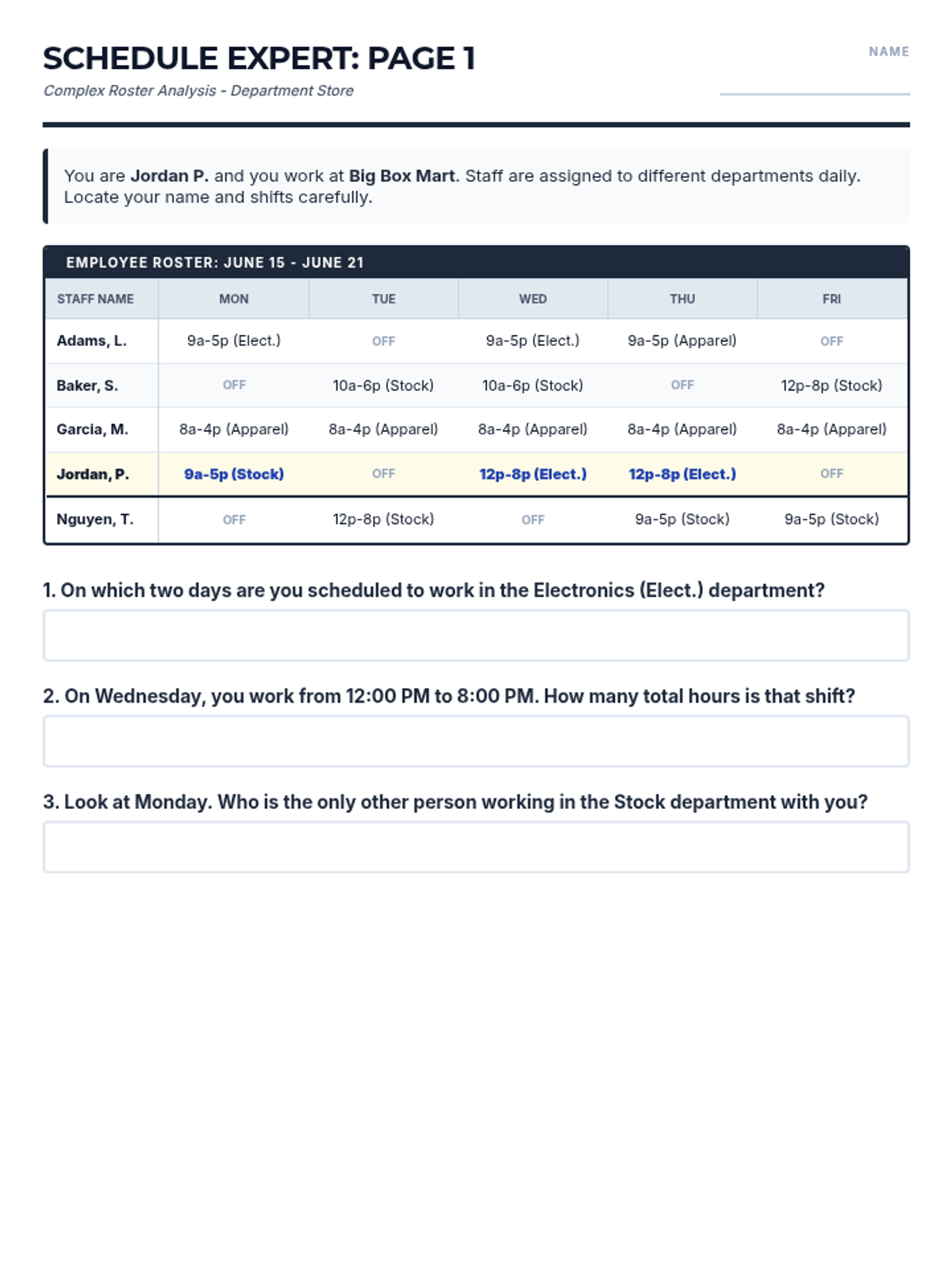
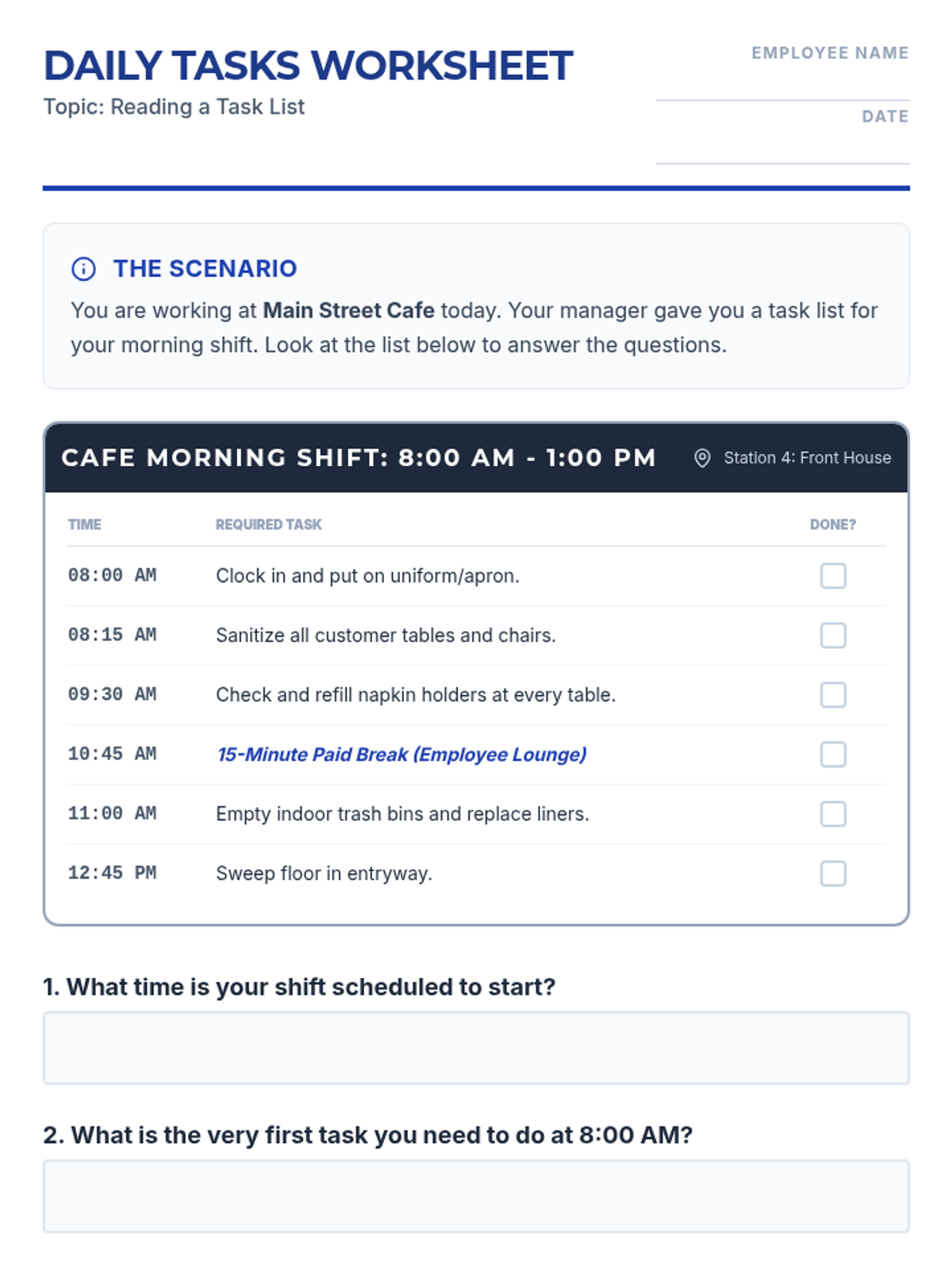
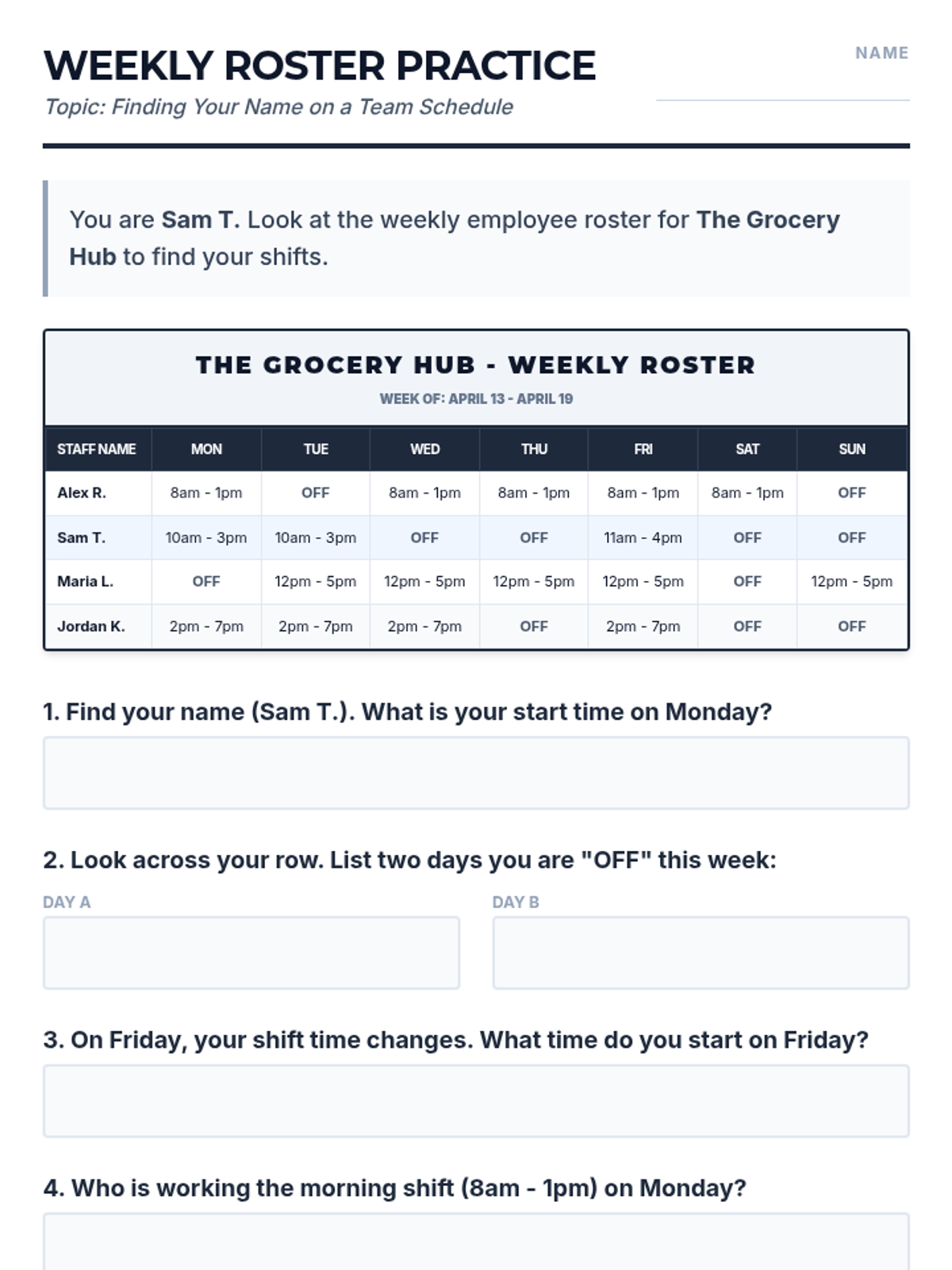
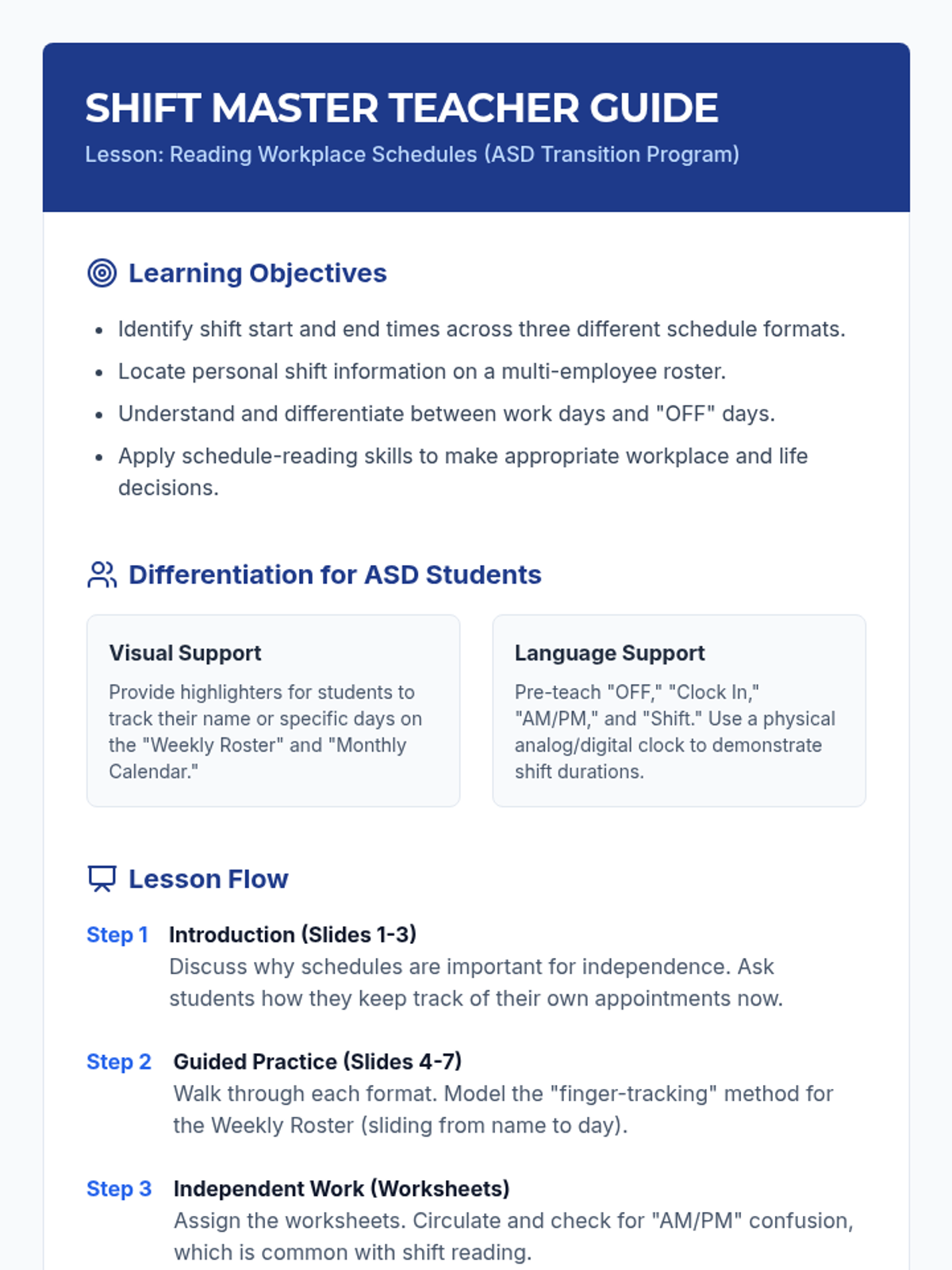
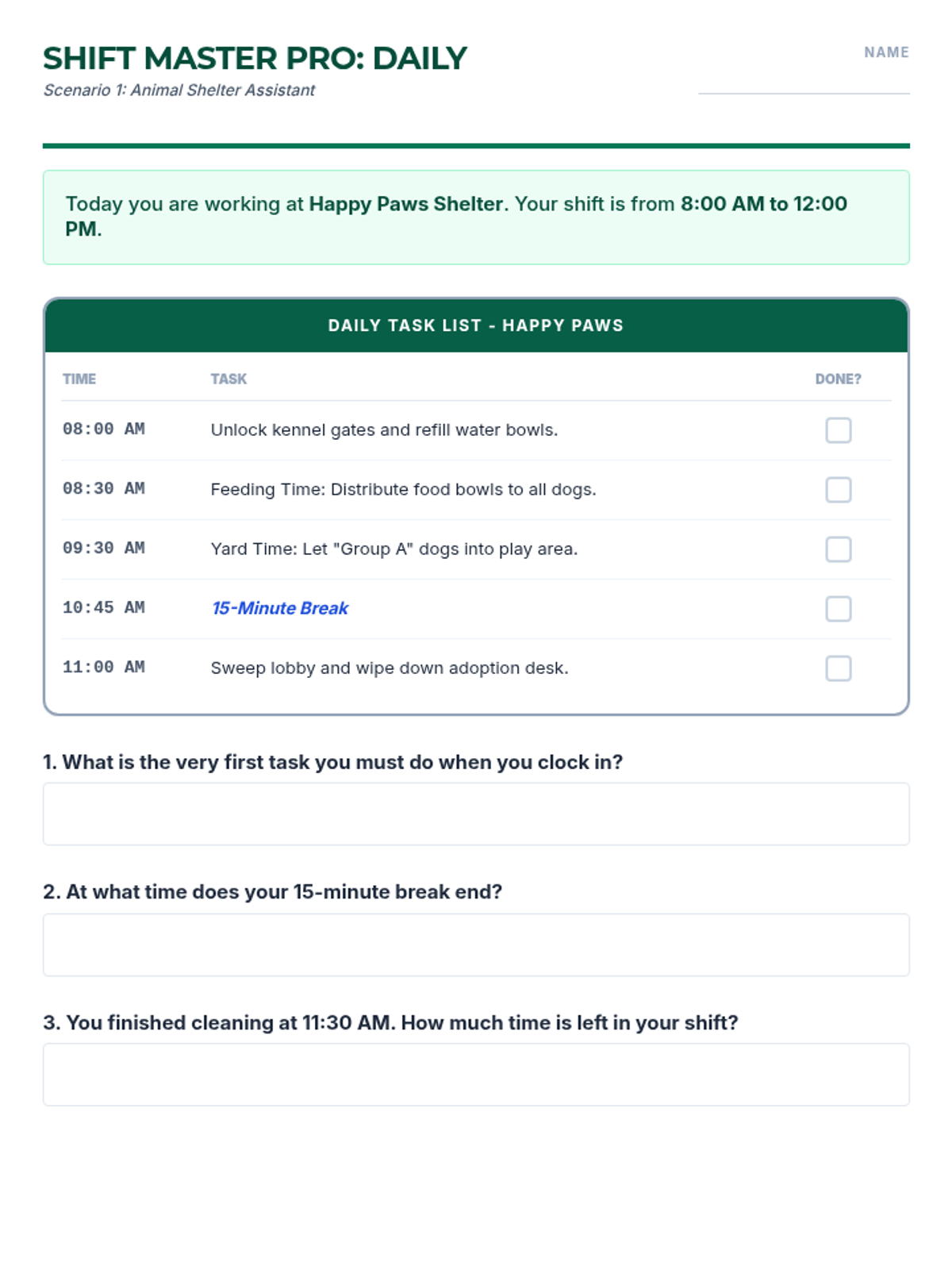
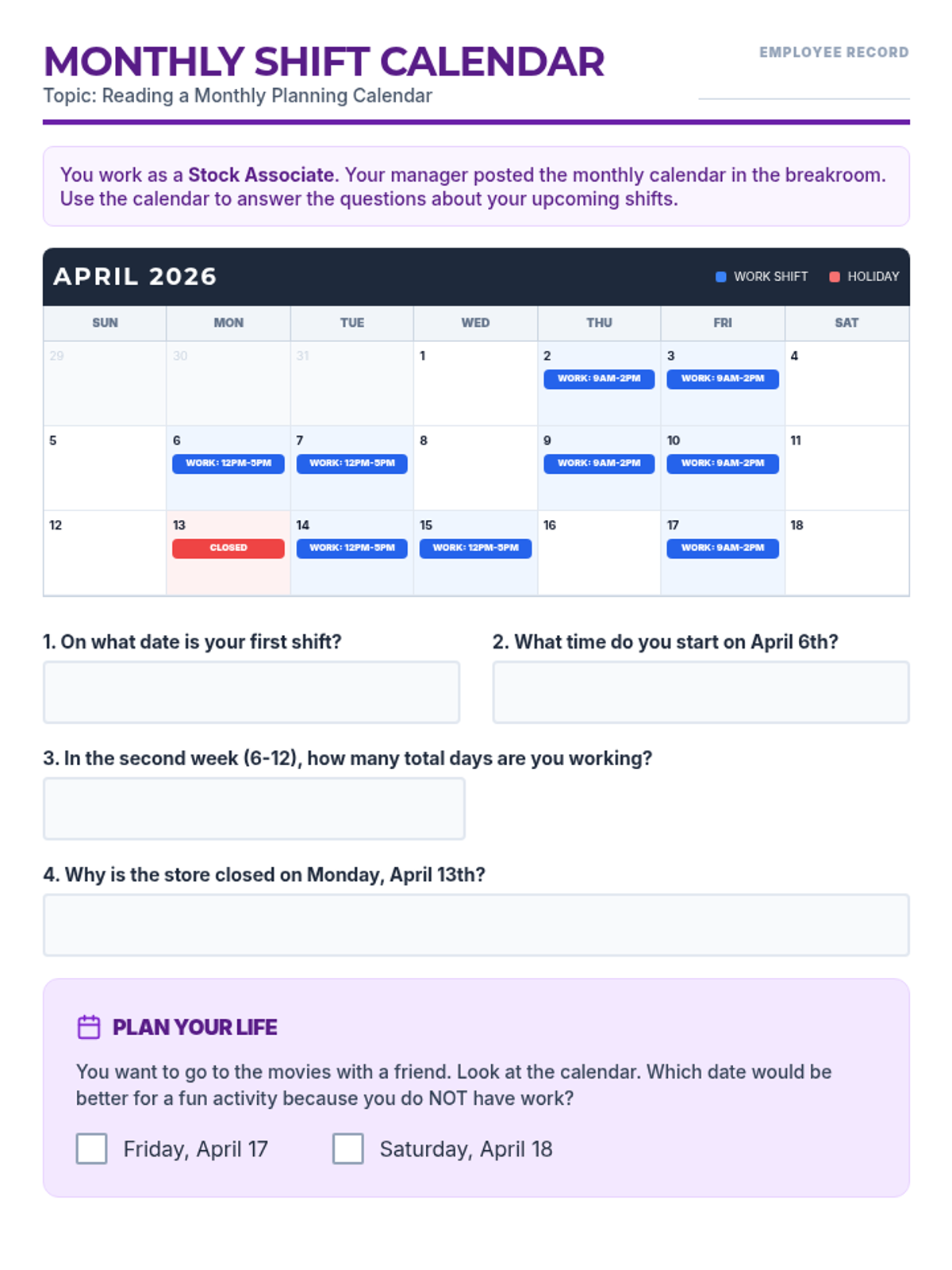
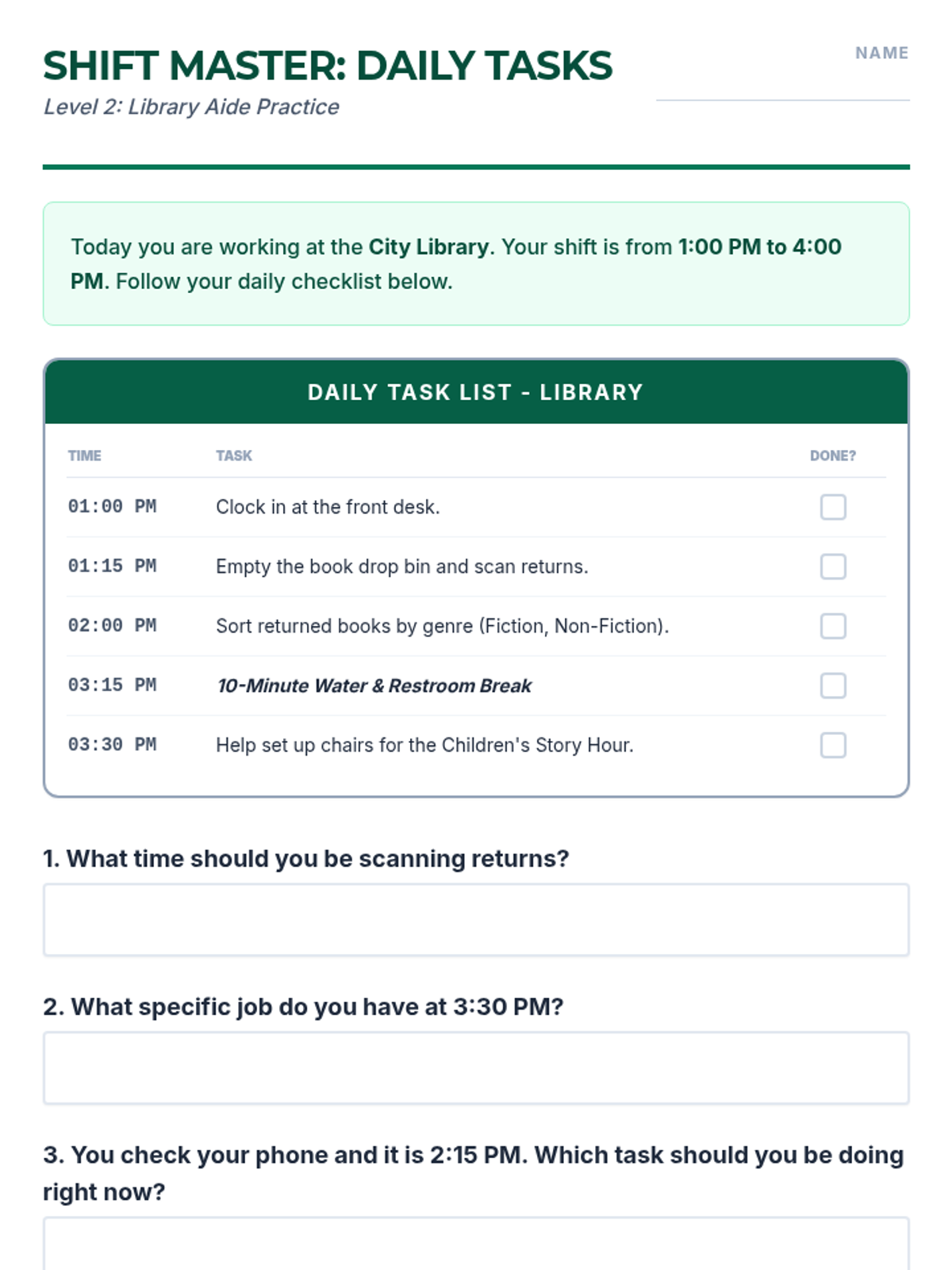
A comprehensive lesson for transition-age students to master reading daily, weekly, and monthly work schedules through realistic workplace scenarios.
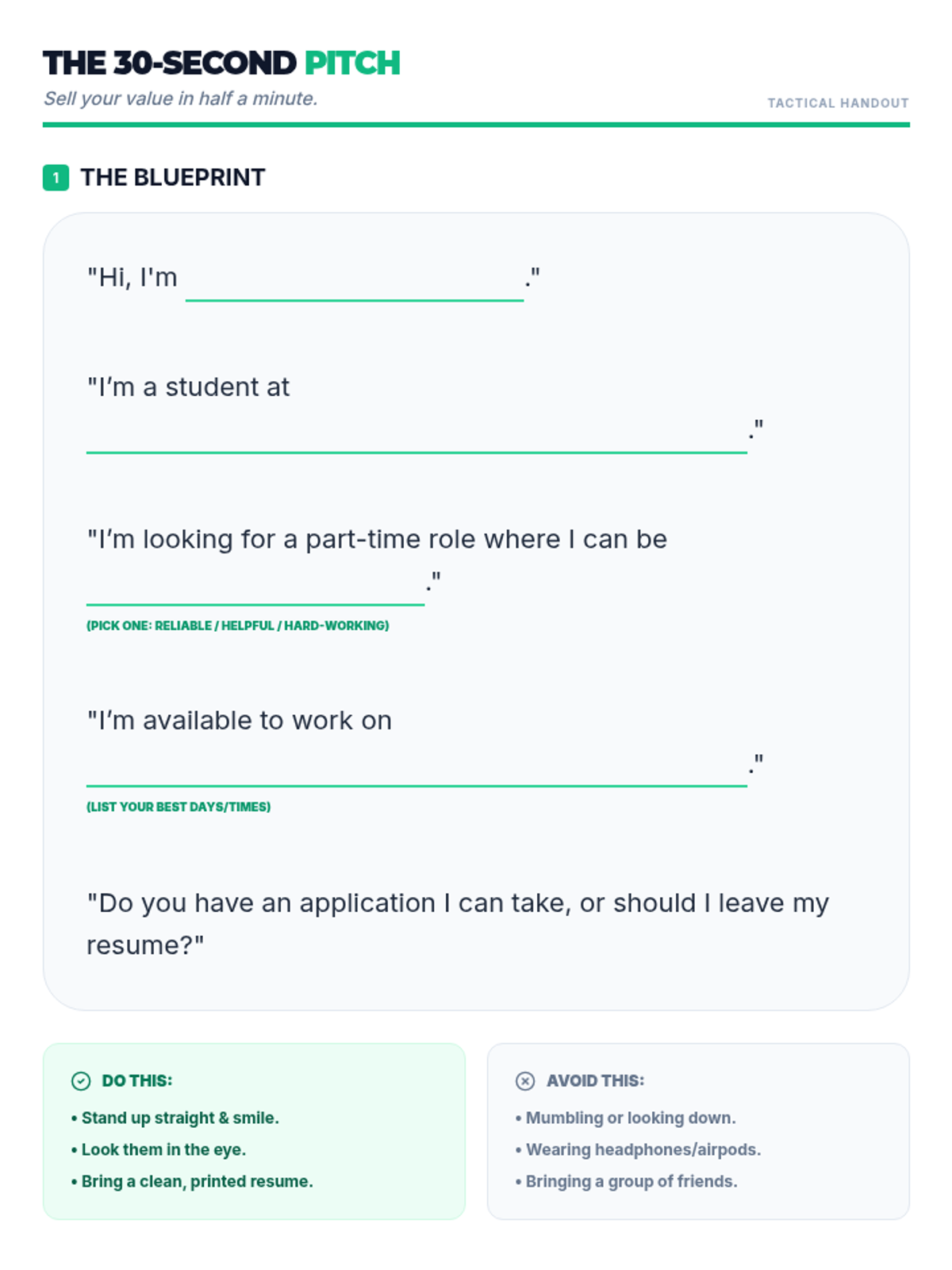
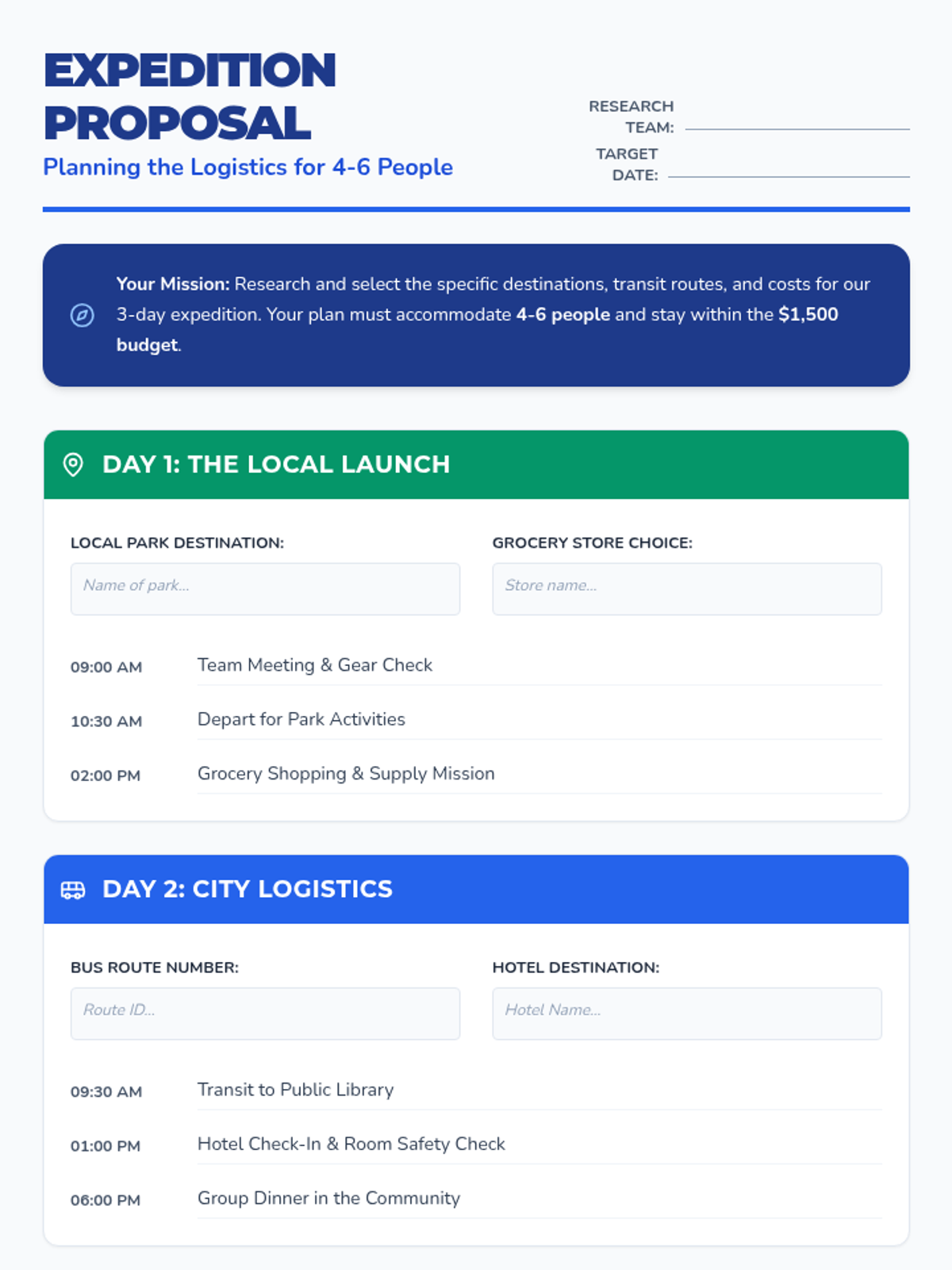
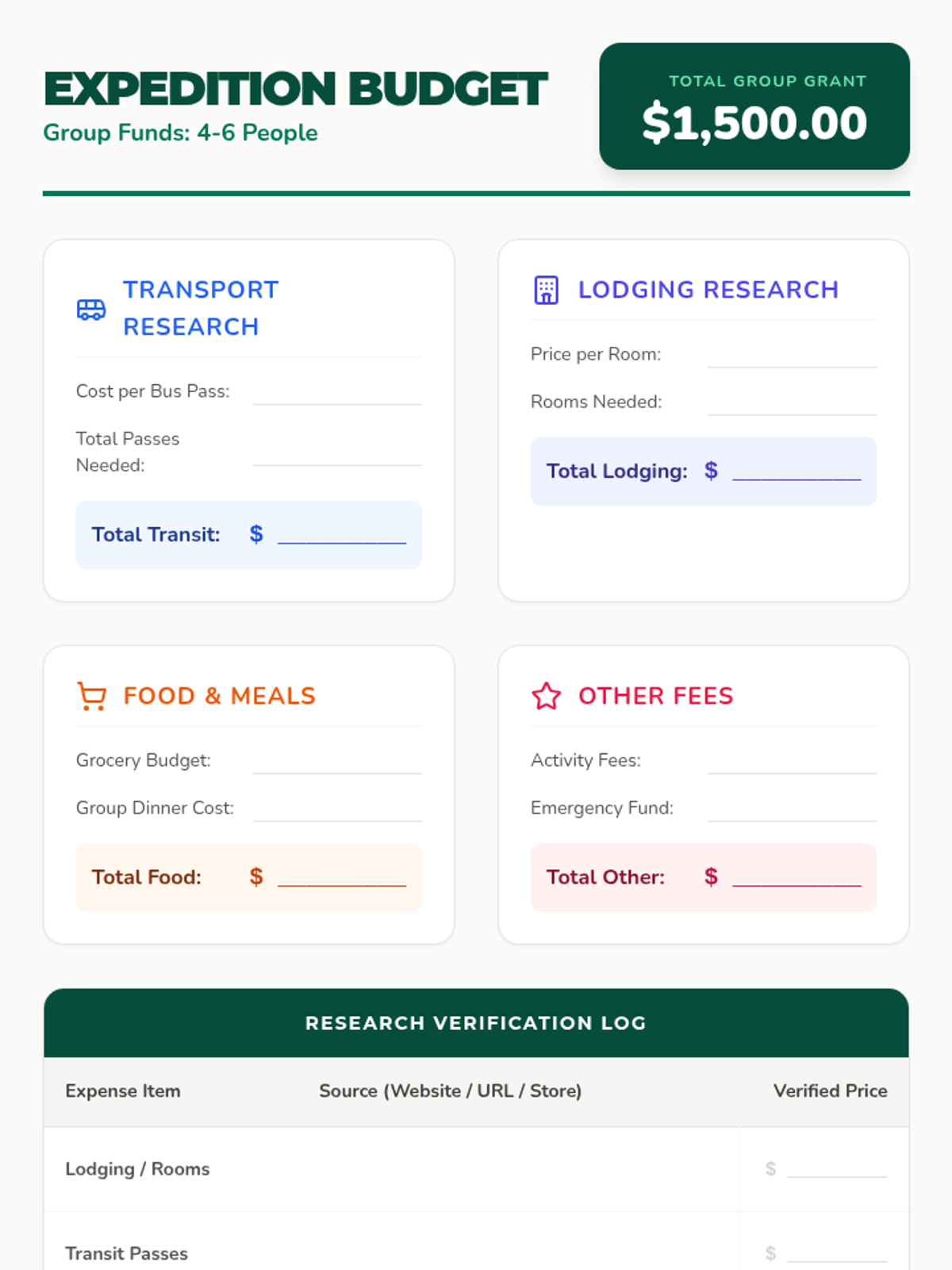
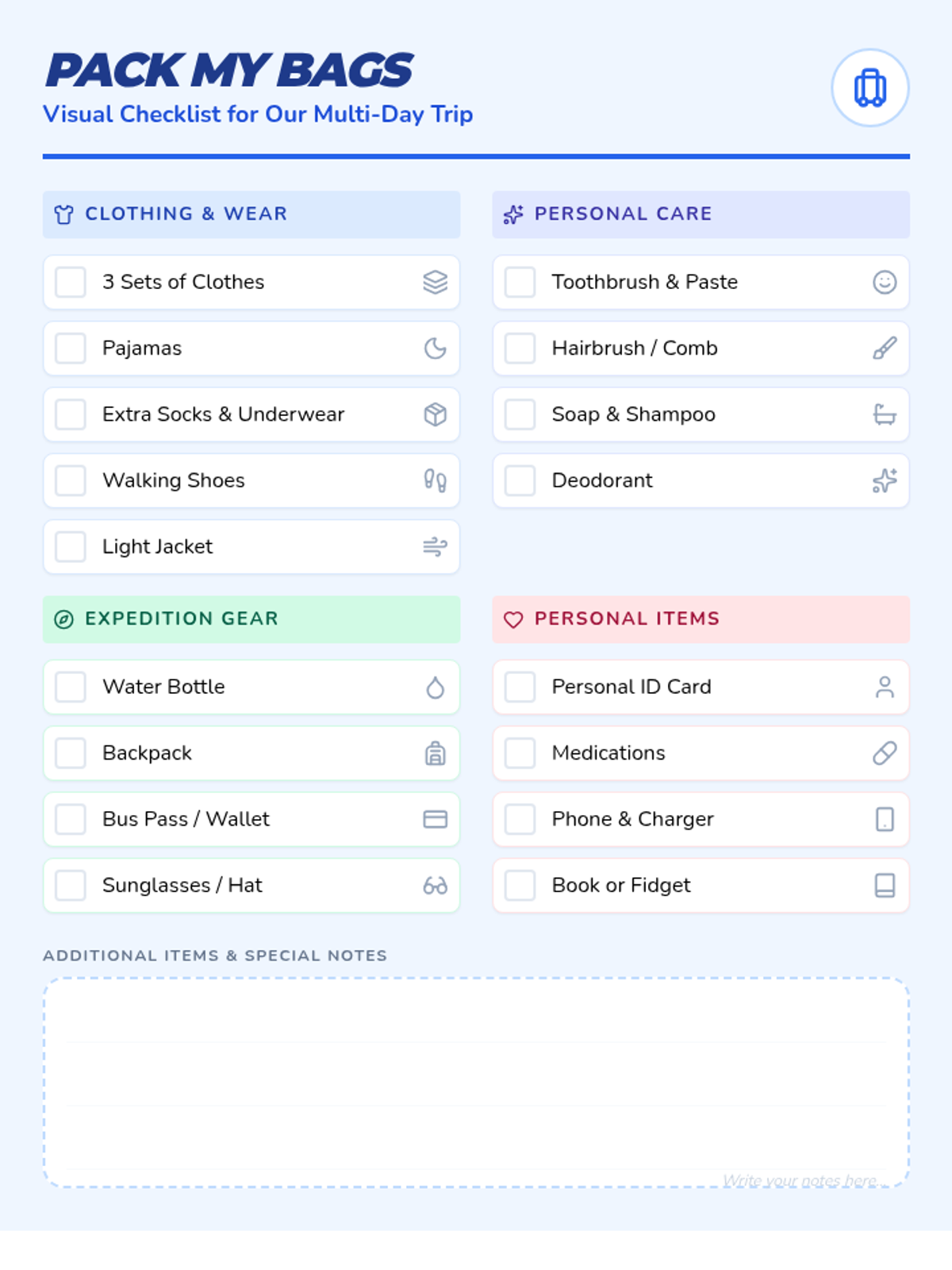
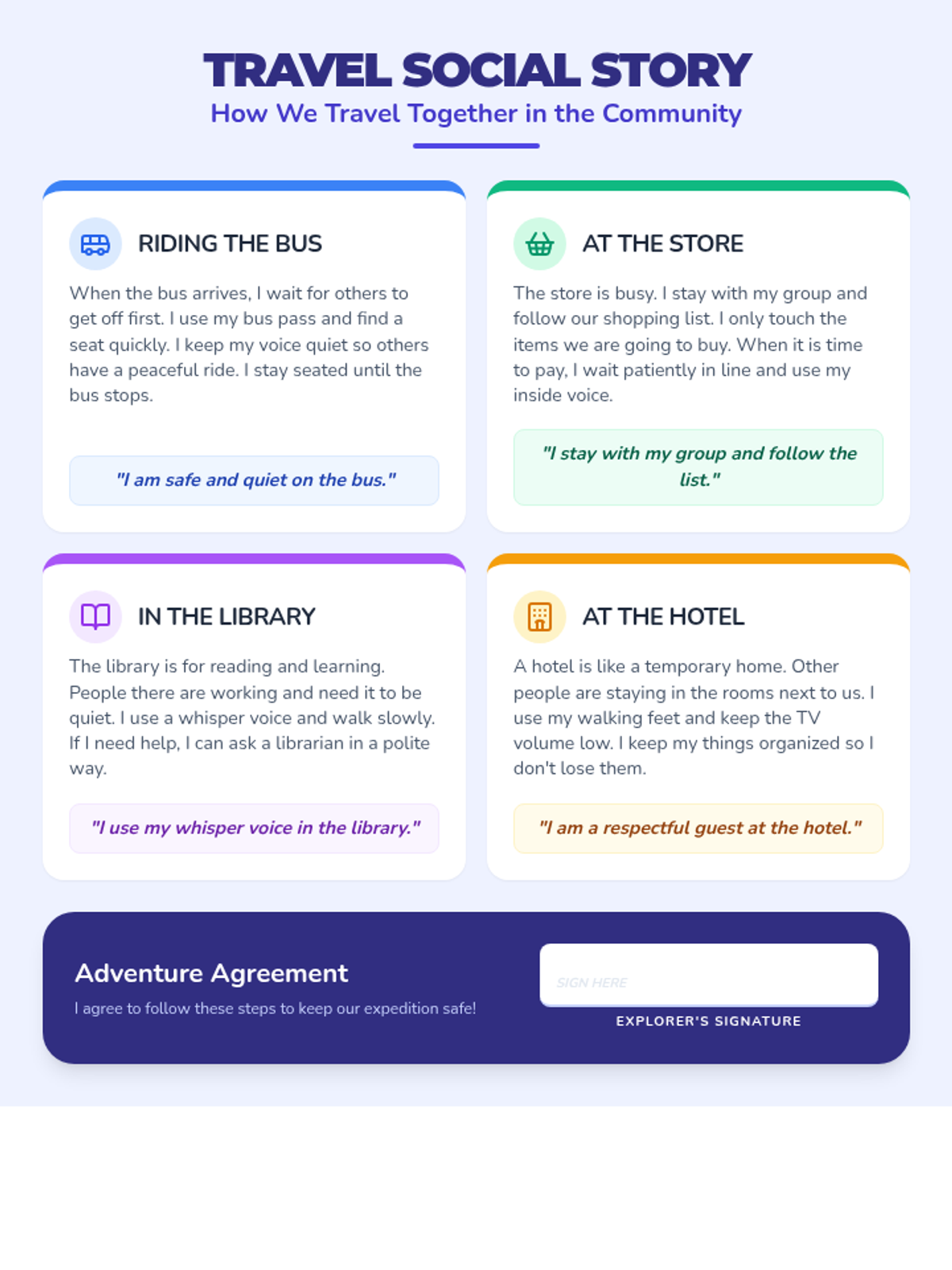
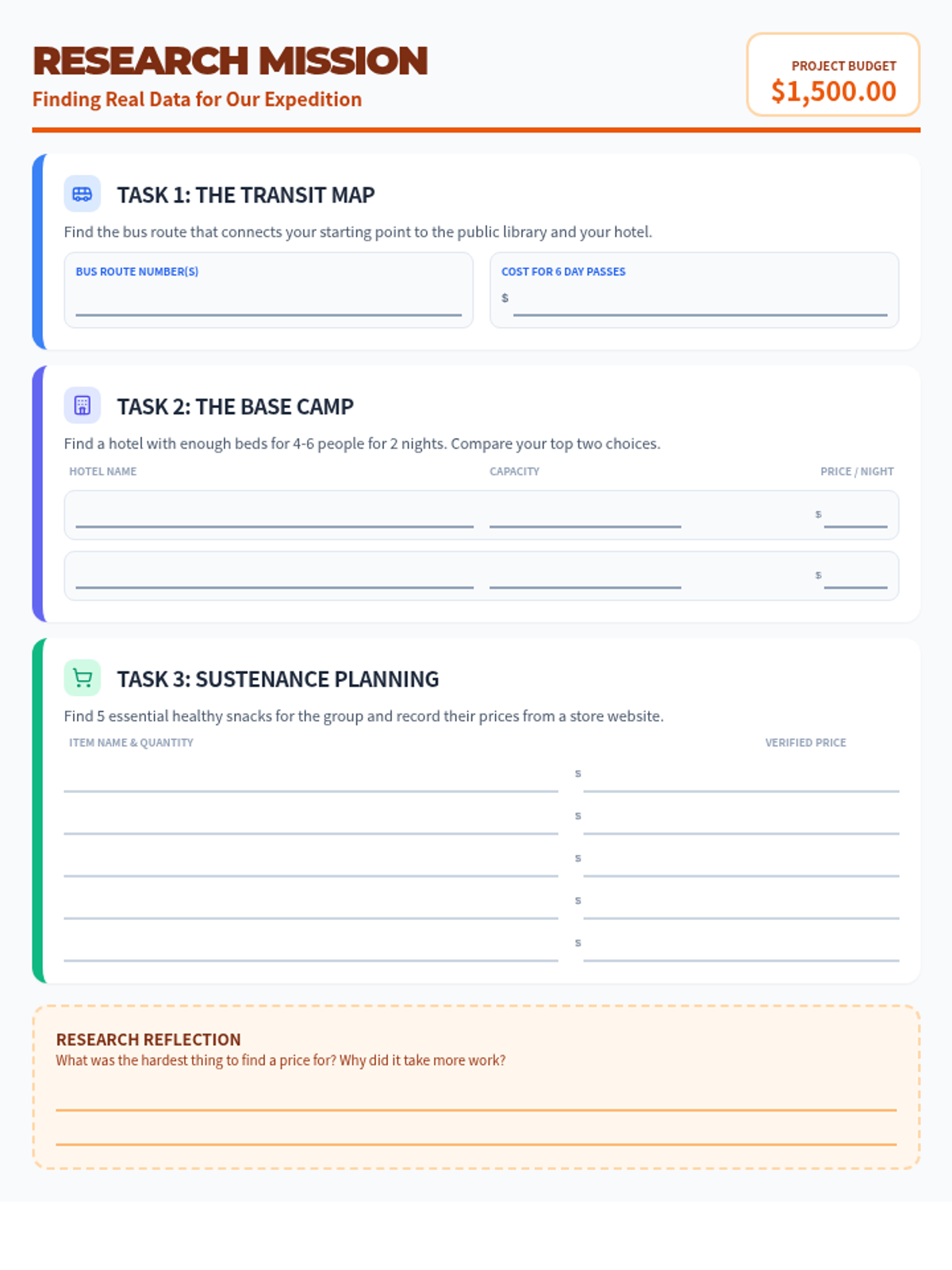
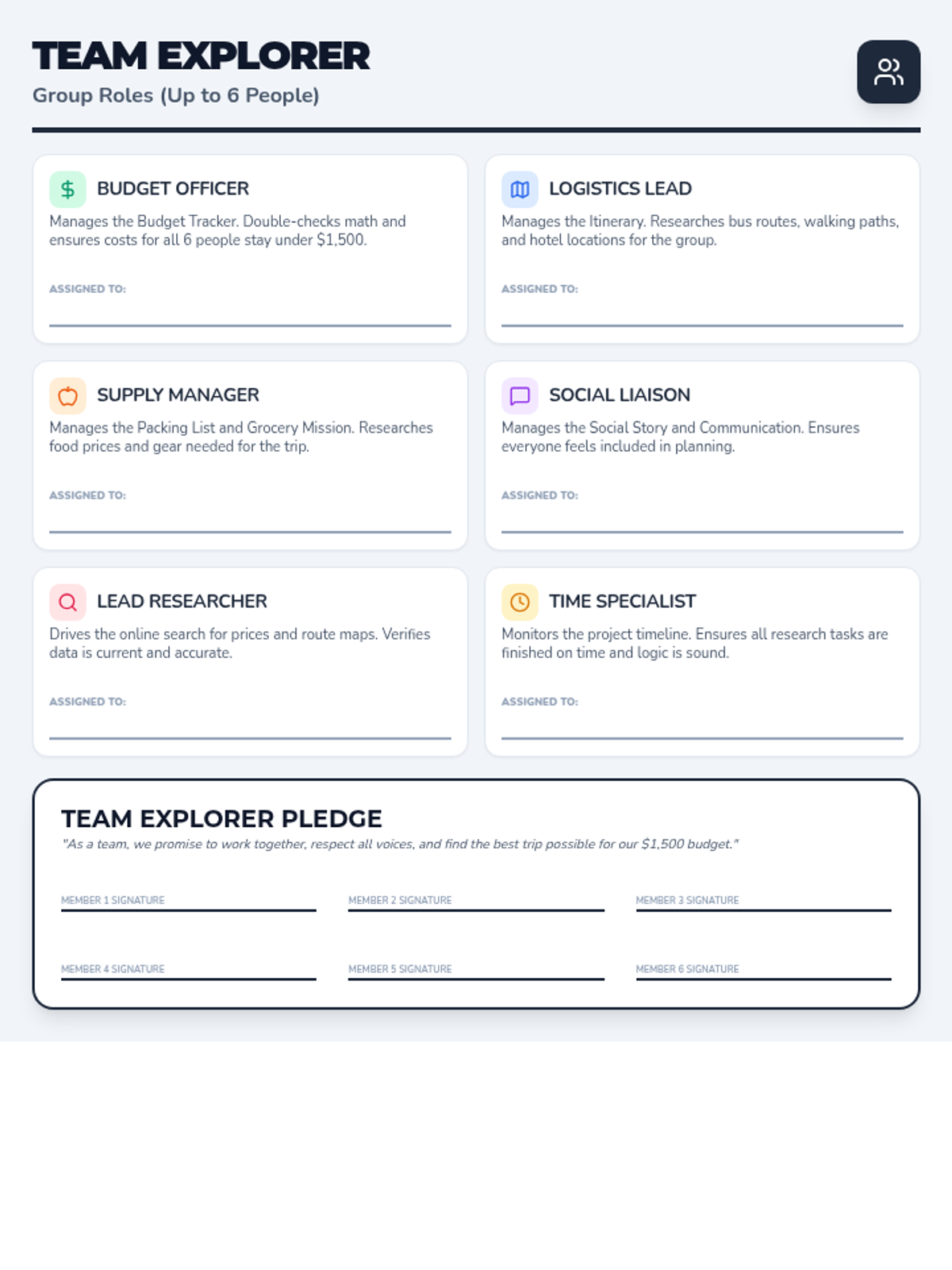
A comprehensive set of tools for planning and executing a multi-destination community trip, focusing on life skills, budgeting, and social expectations.
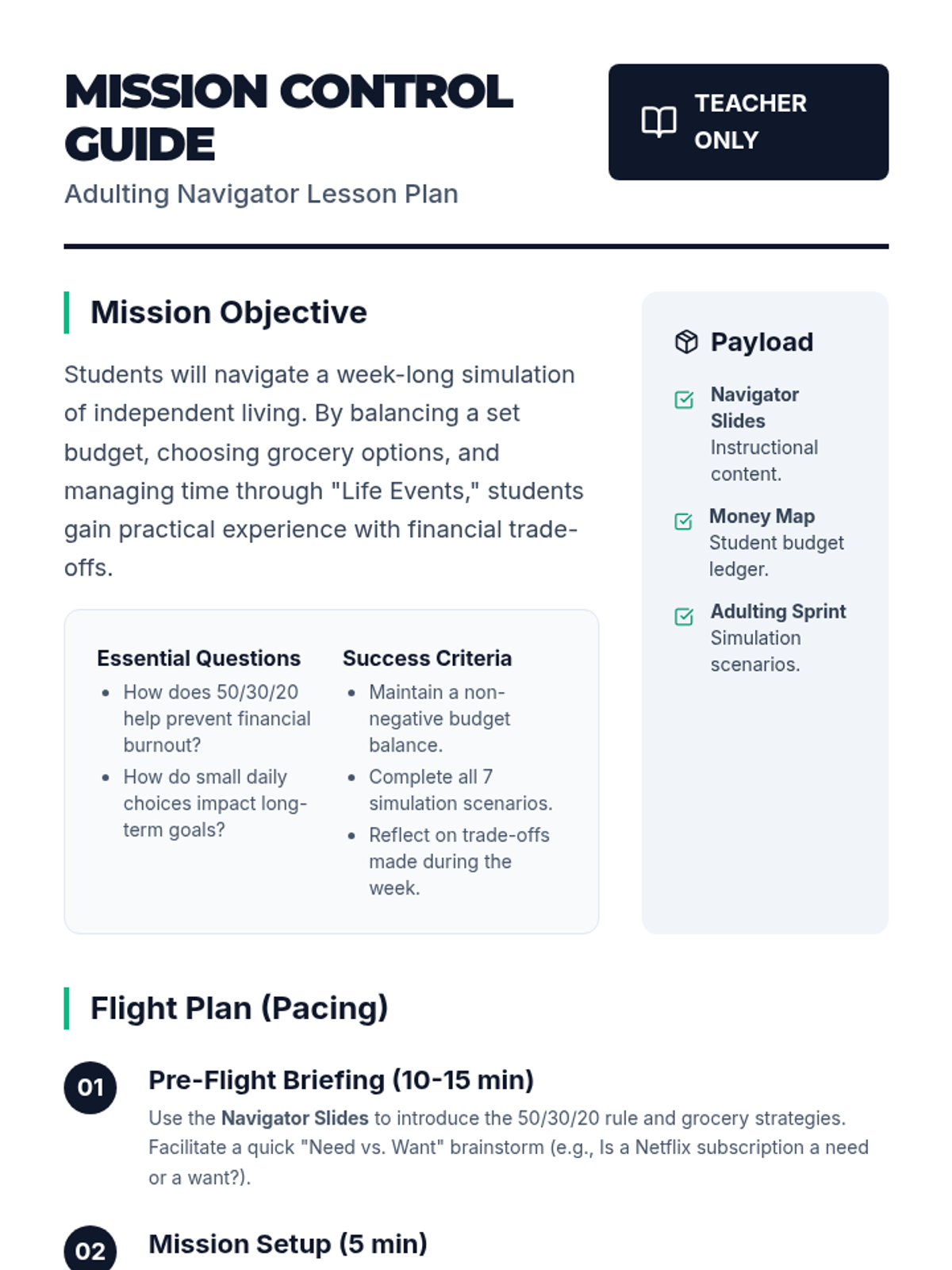
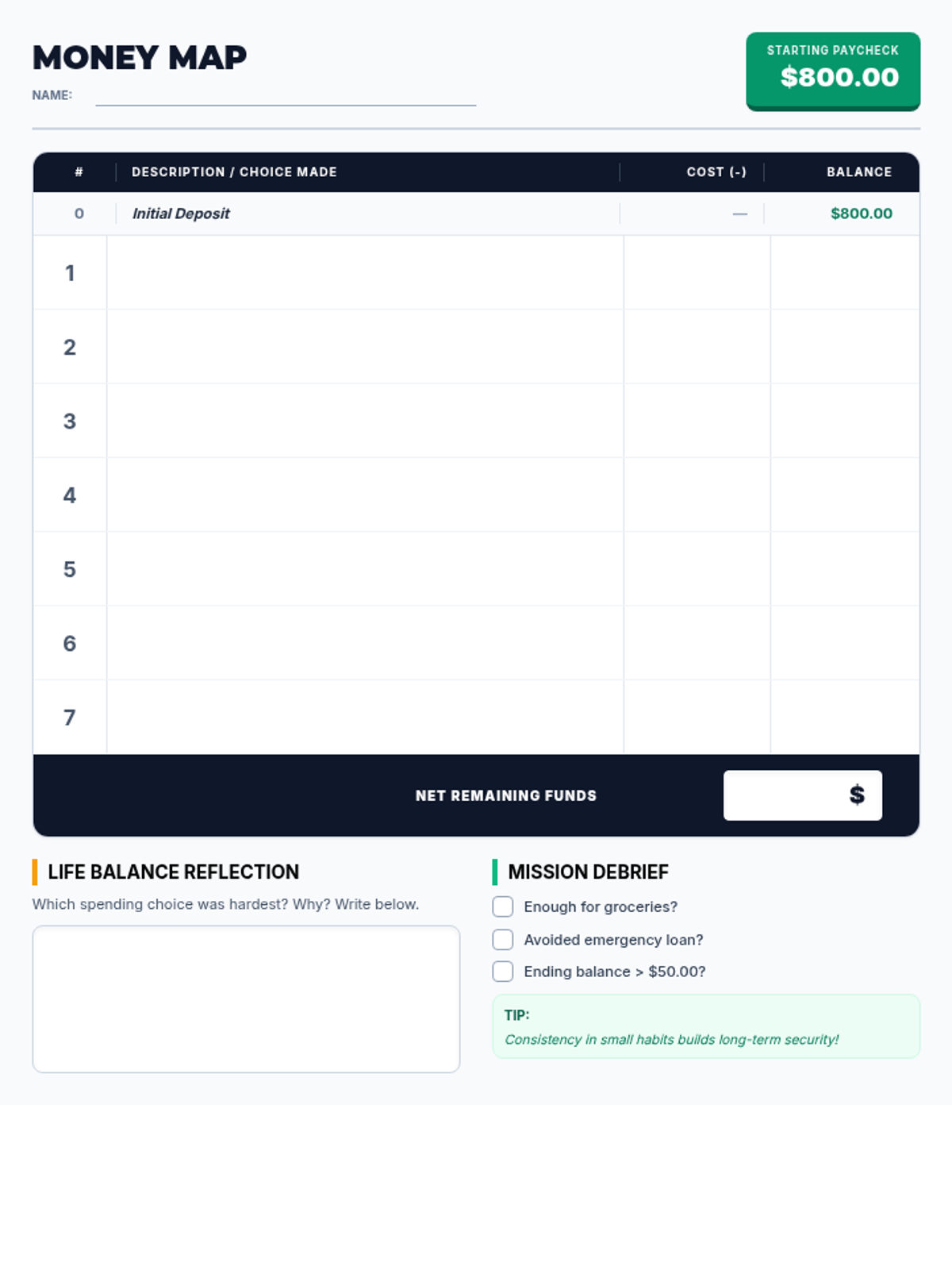
A comprehensive lesson for high schoolers to navigate the transition to independent living, focusing on budgeting, grocery shopping, and time management through a realistic simulation.
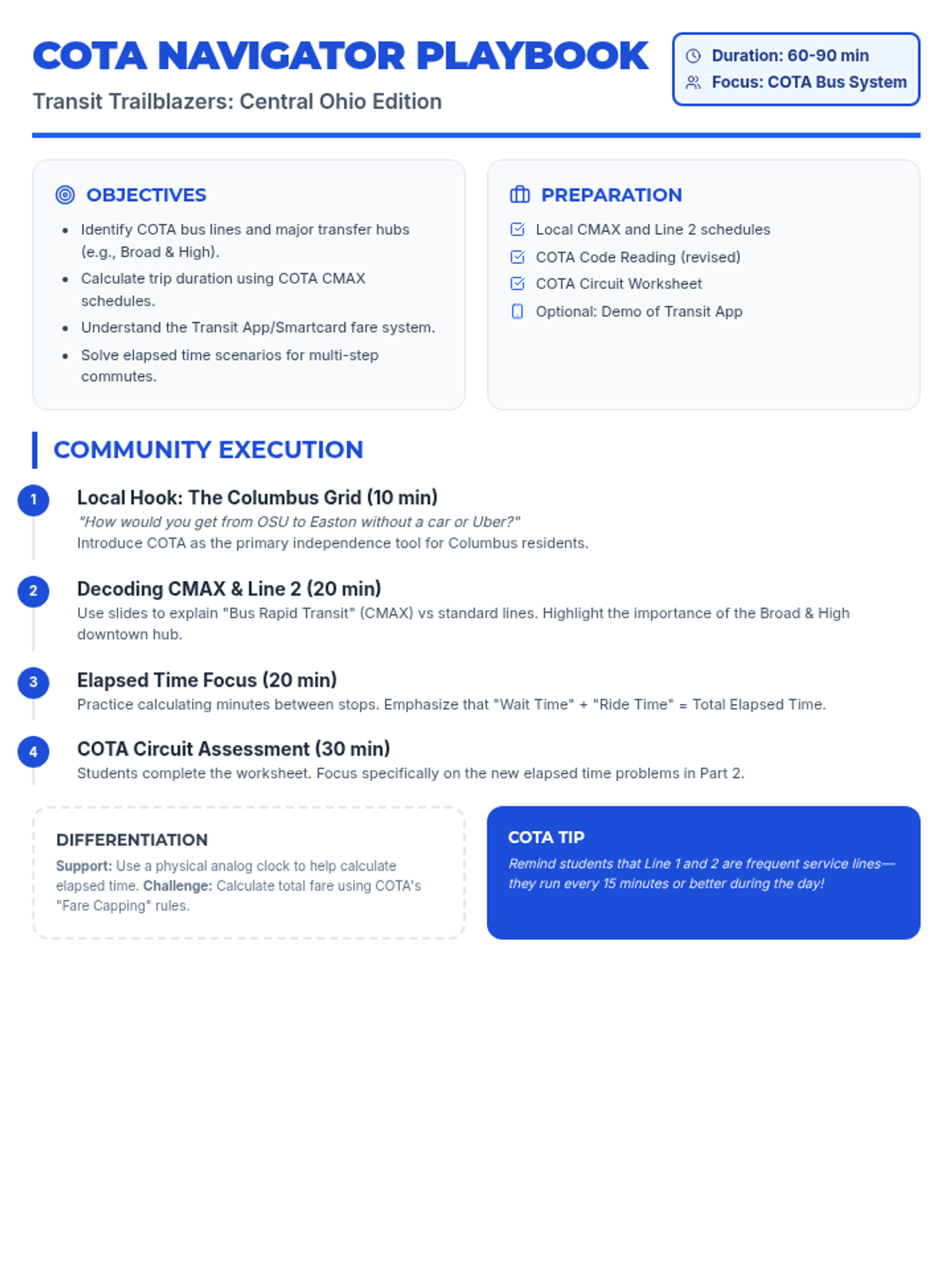
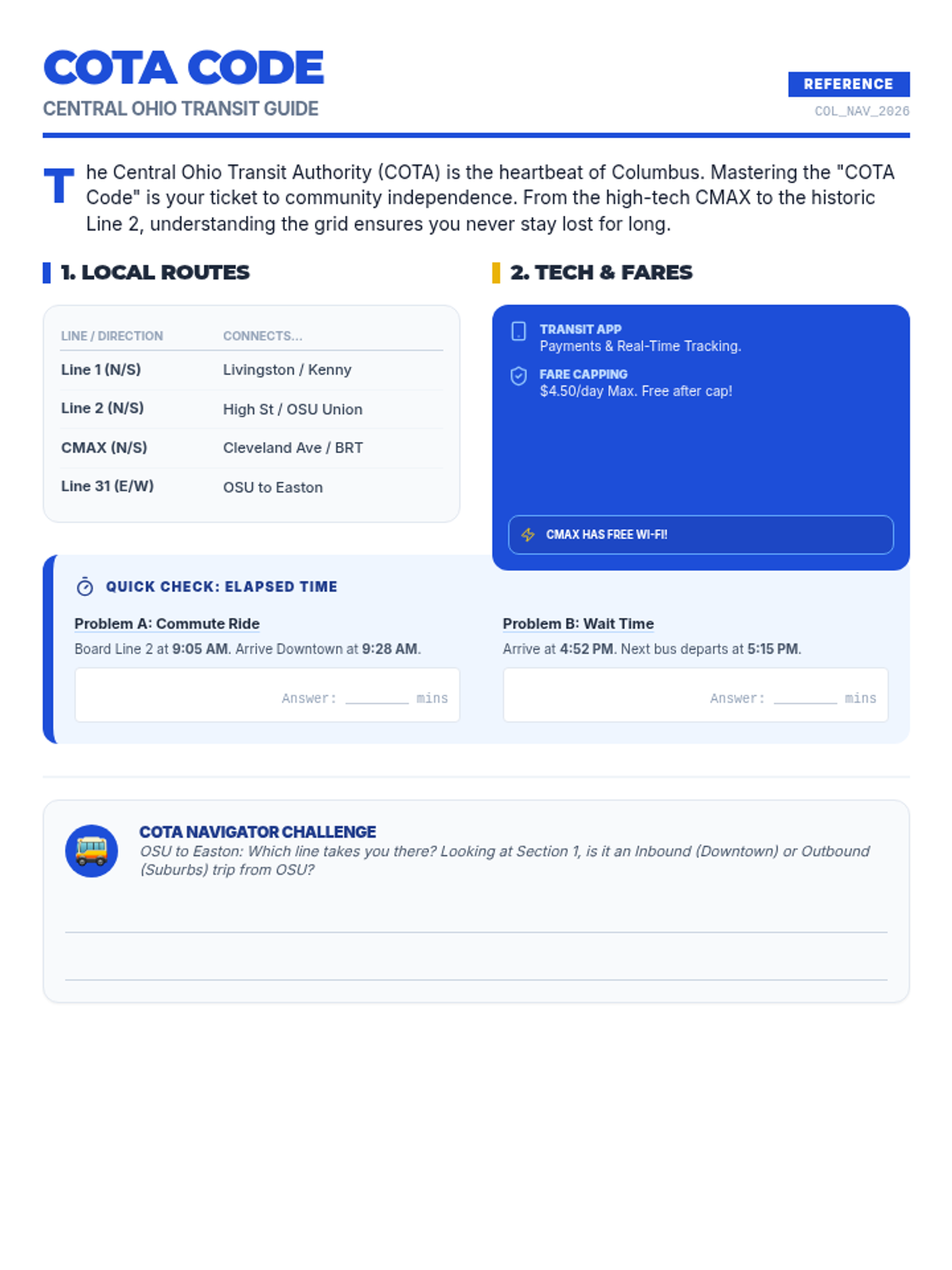
A comprehensive lesson on navigating public transportation, focusing on functional literacy, schedule reading, and safety protocols for high school students gaining independence.
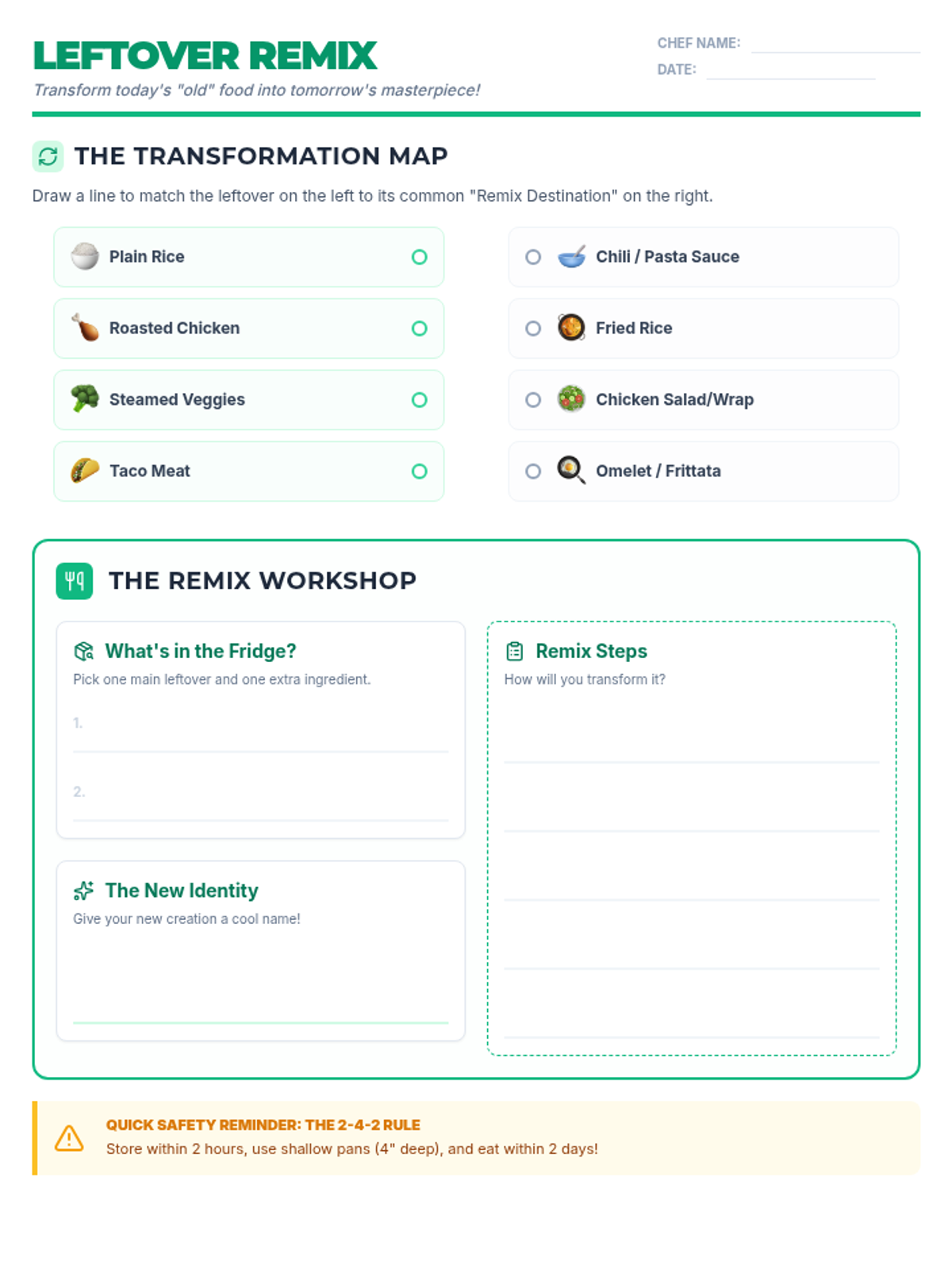
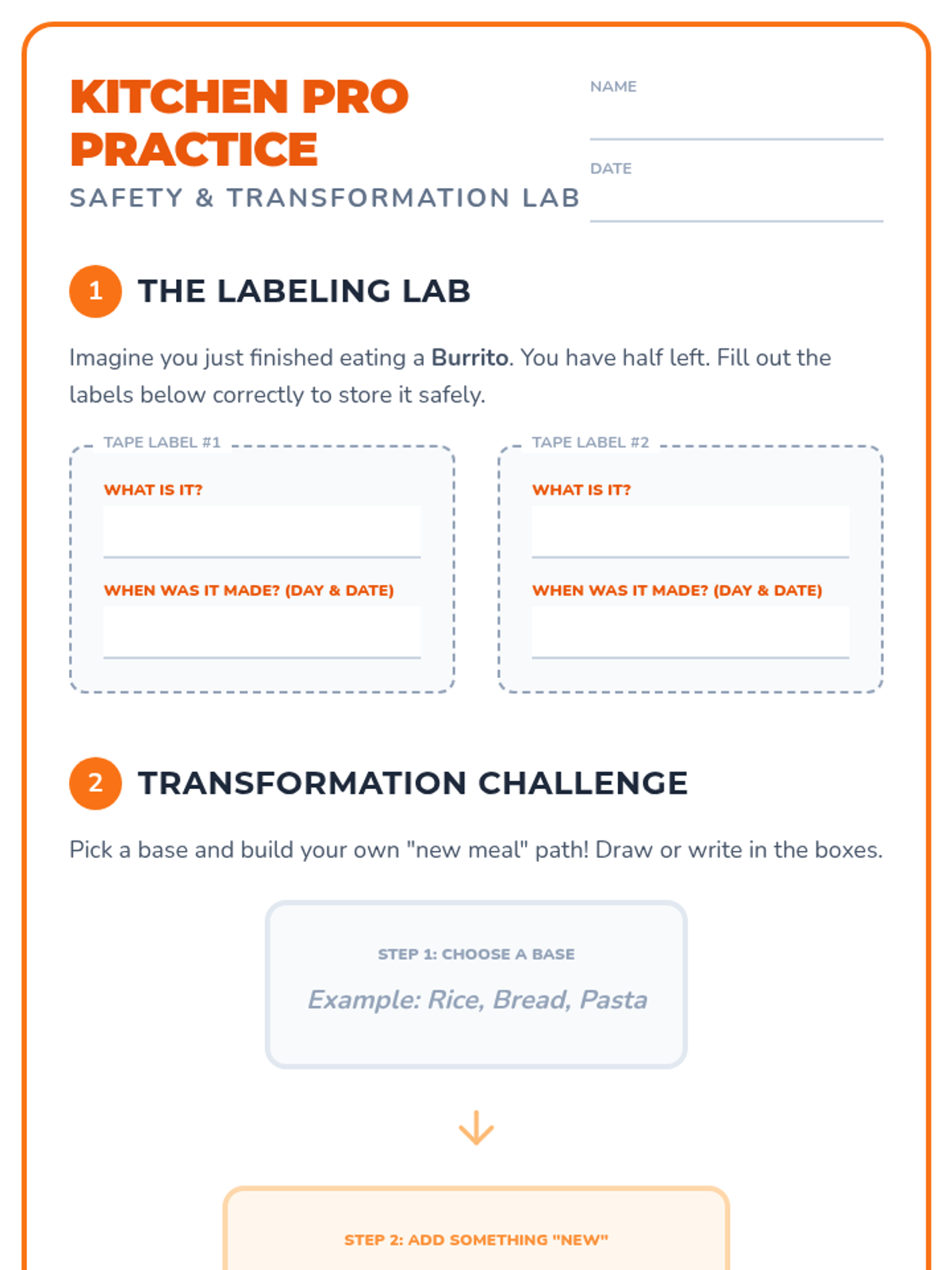
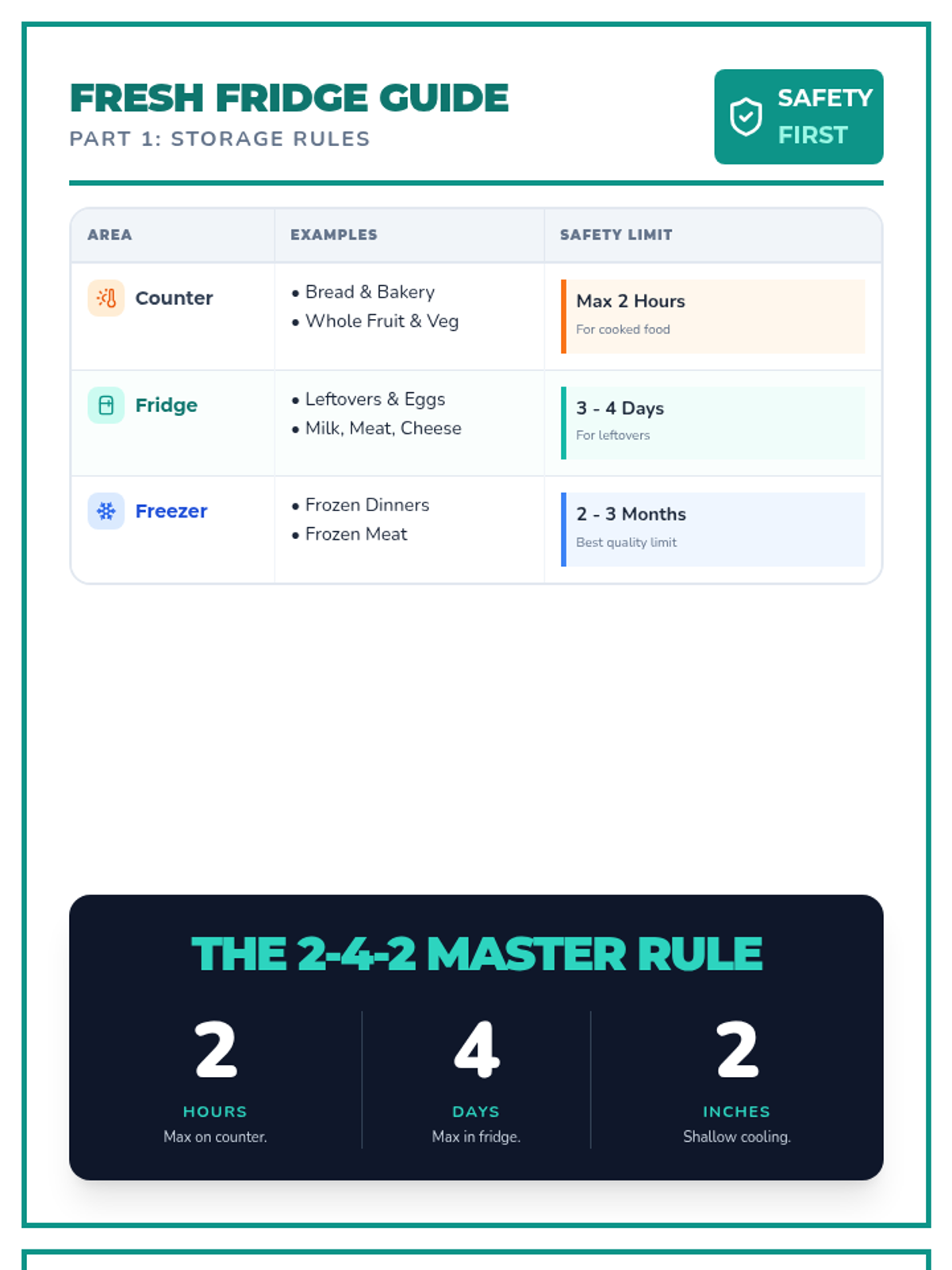
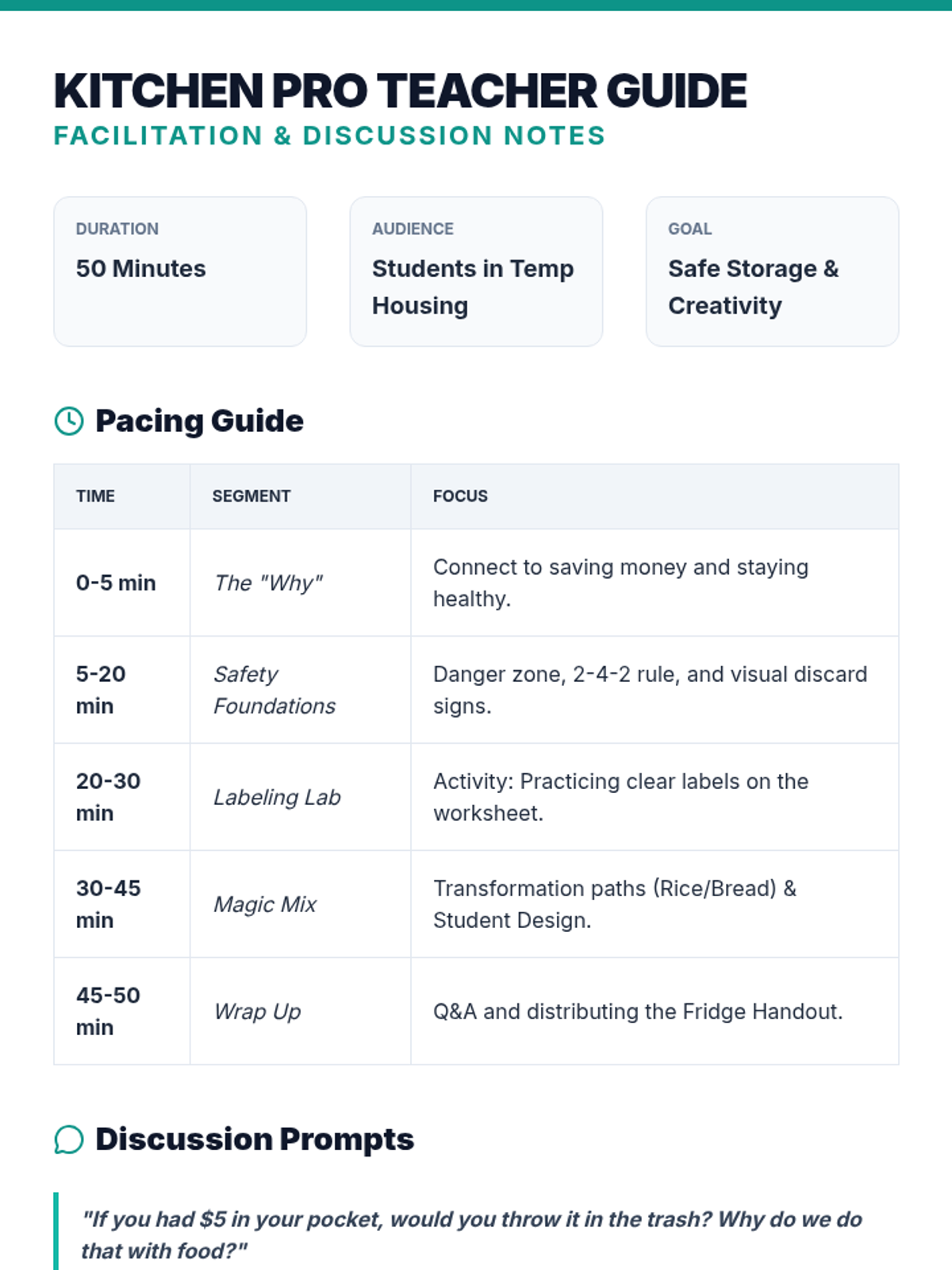
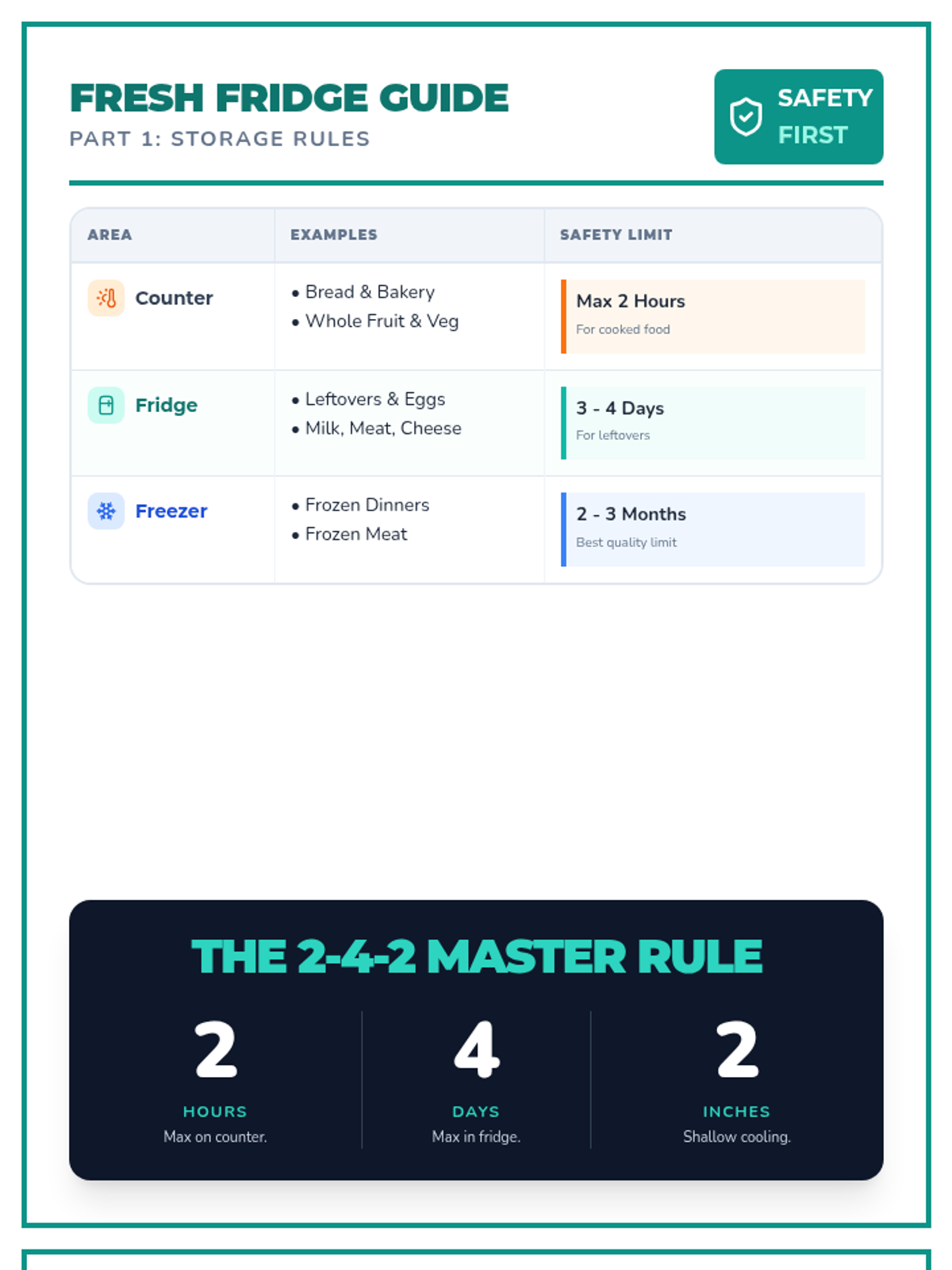
A 50-minute instructional session for students in temporary housing, focusing on safe food storage and creative leftover use through visual guides and sequence flowcharts.
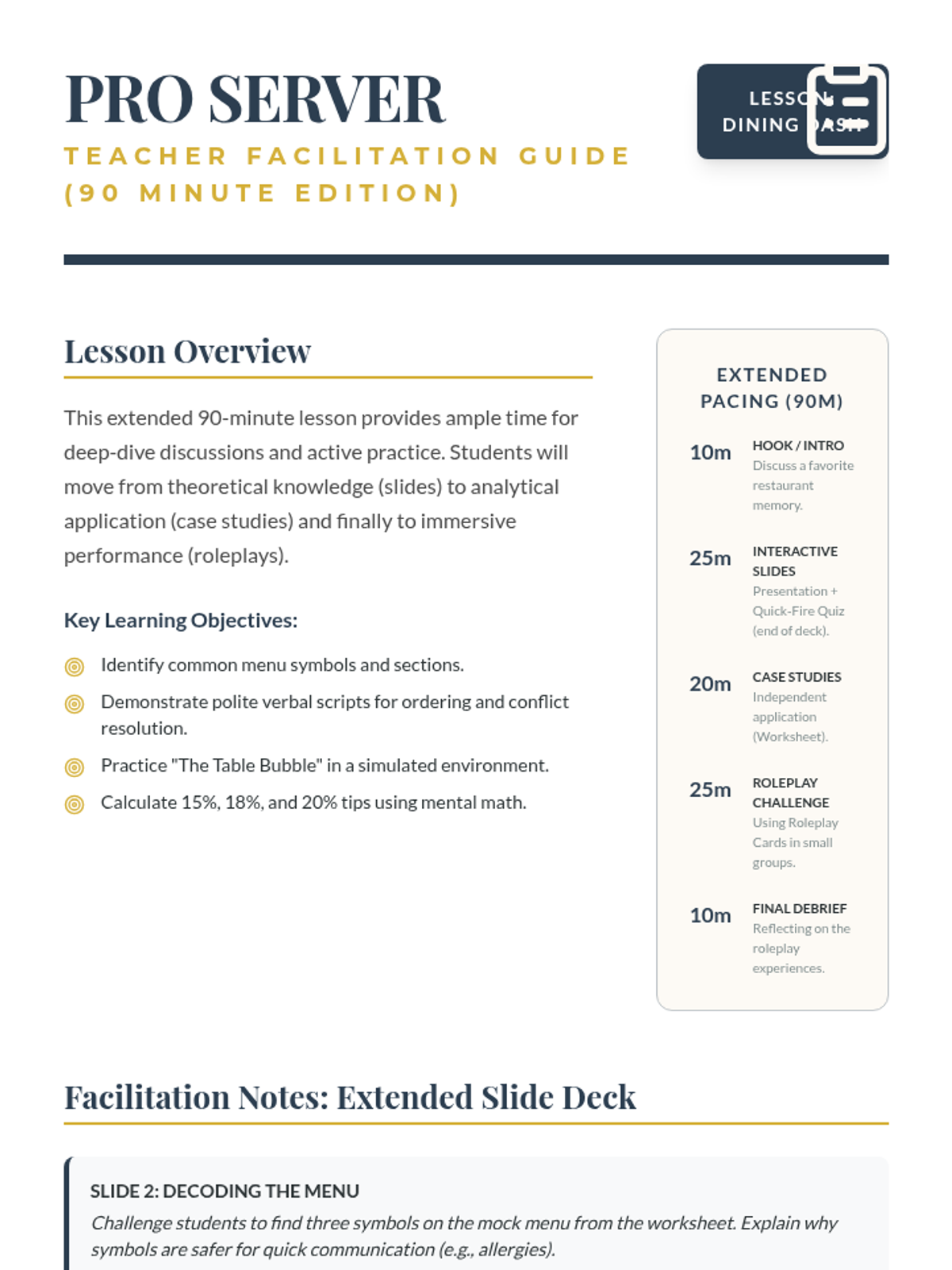
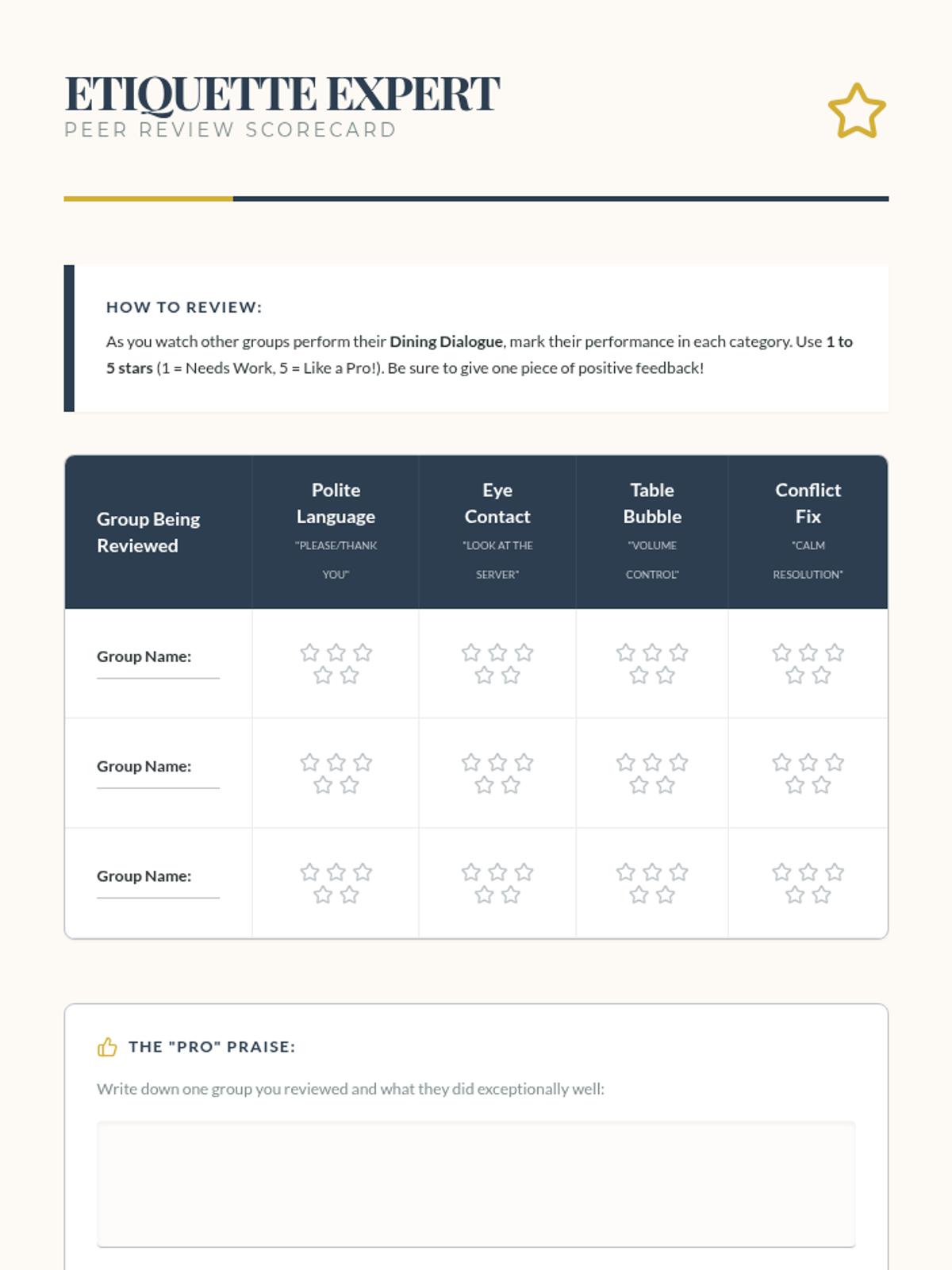
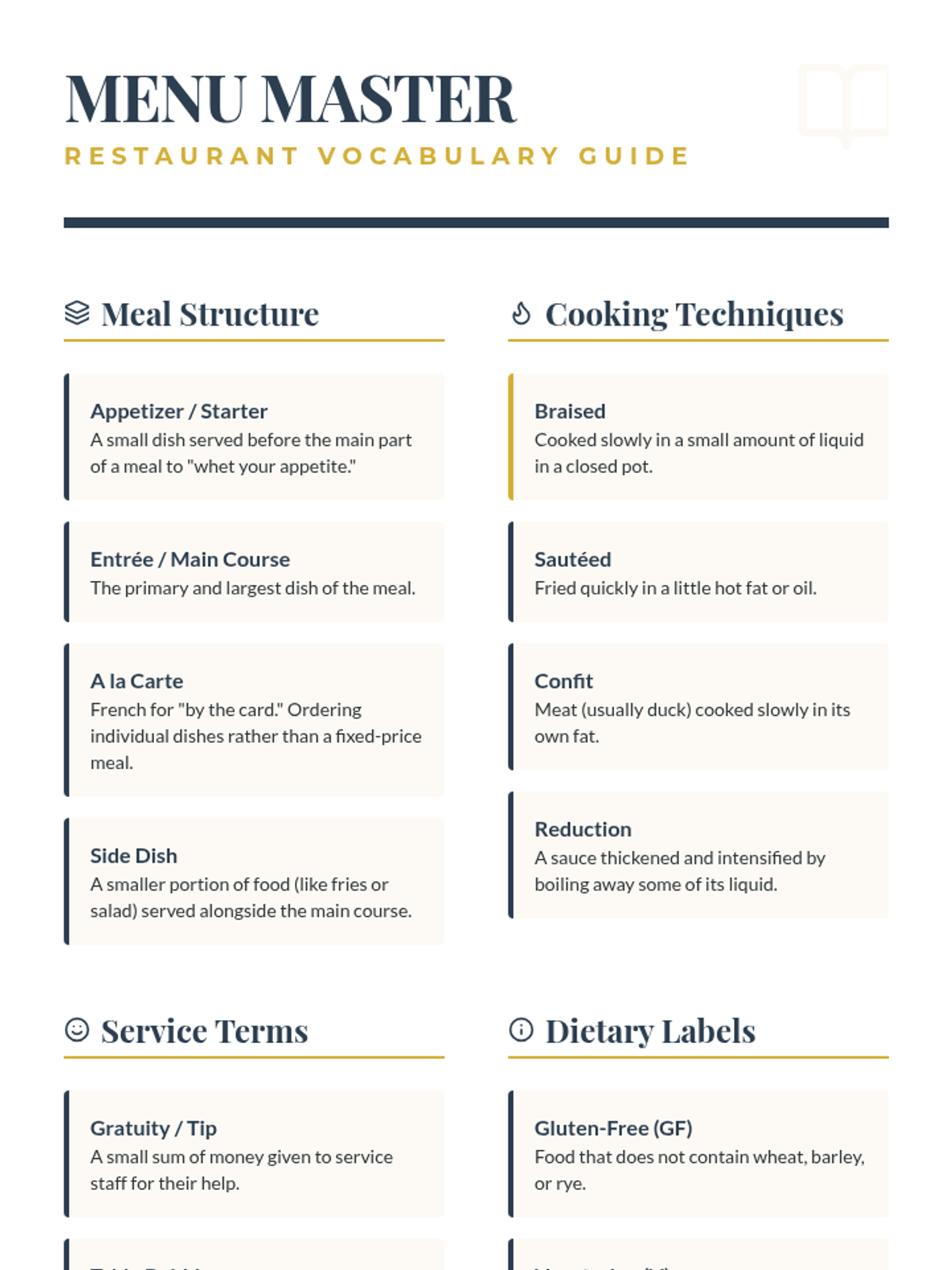
A comprehensive lesson on restaurant etiquette covering menu reading, ordering, manners, volume control, tipping, and conflict resolution.
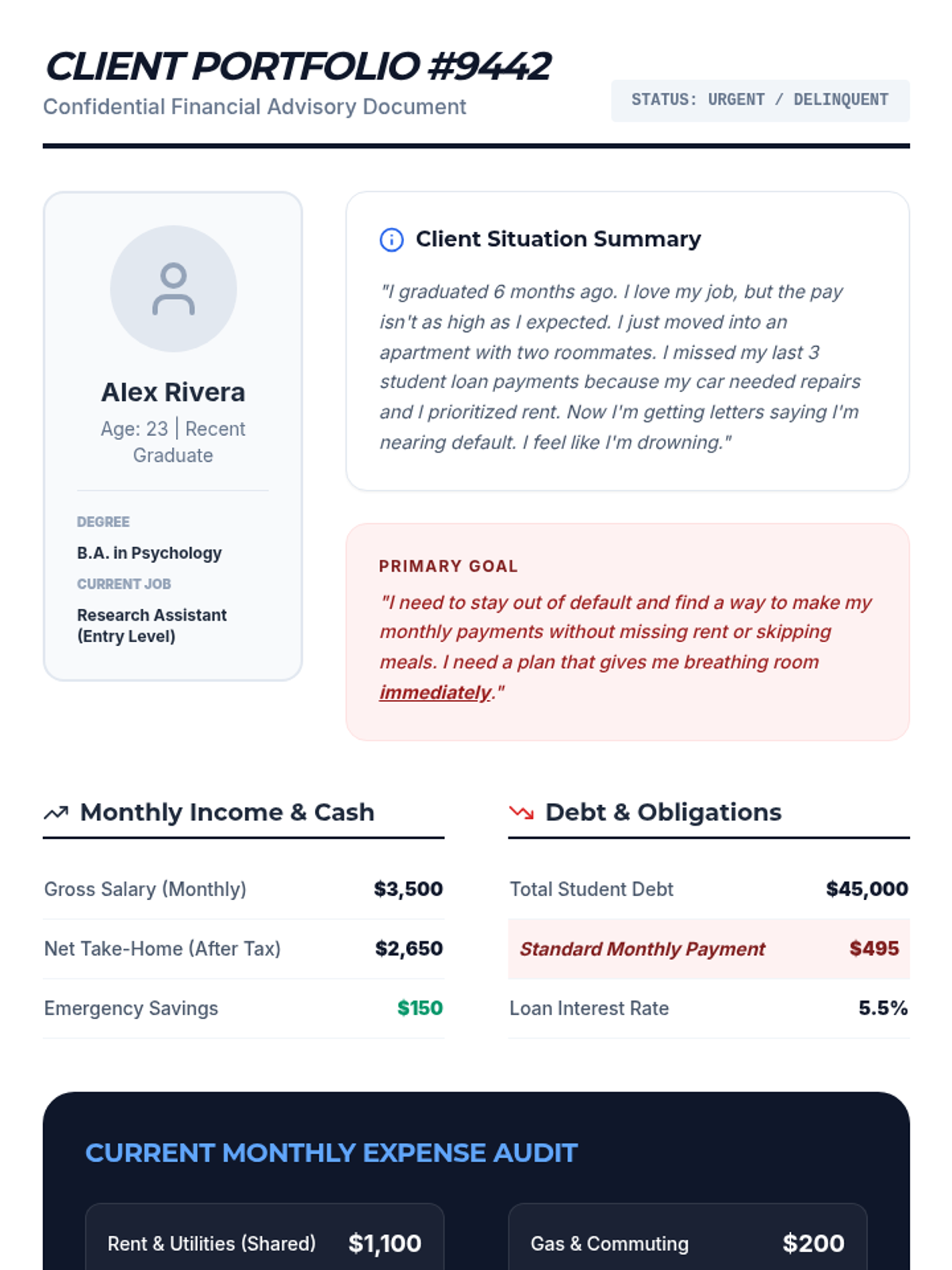
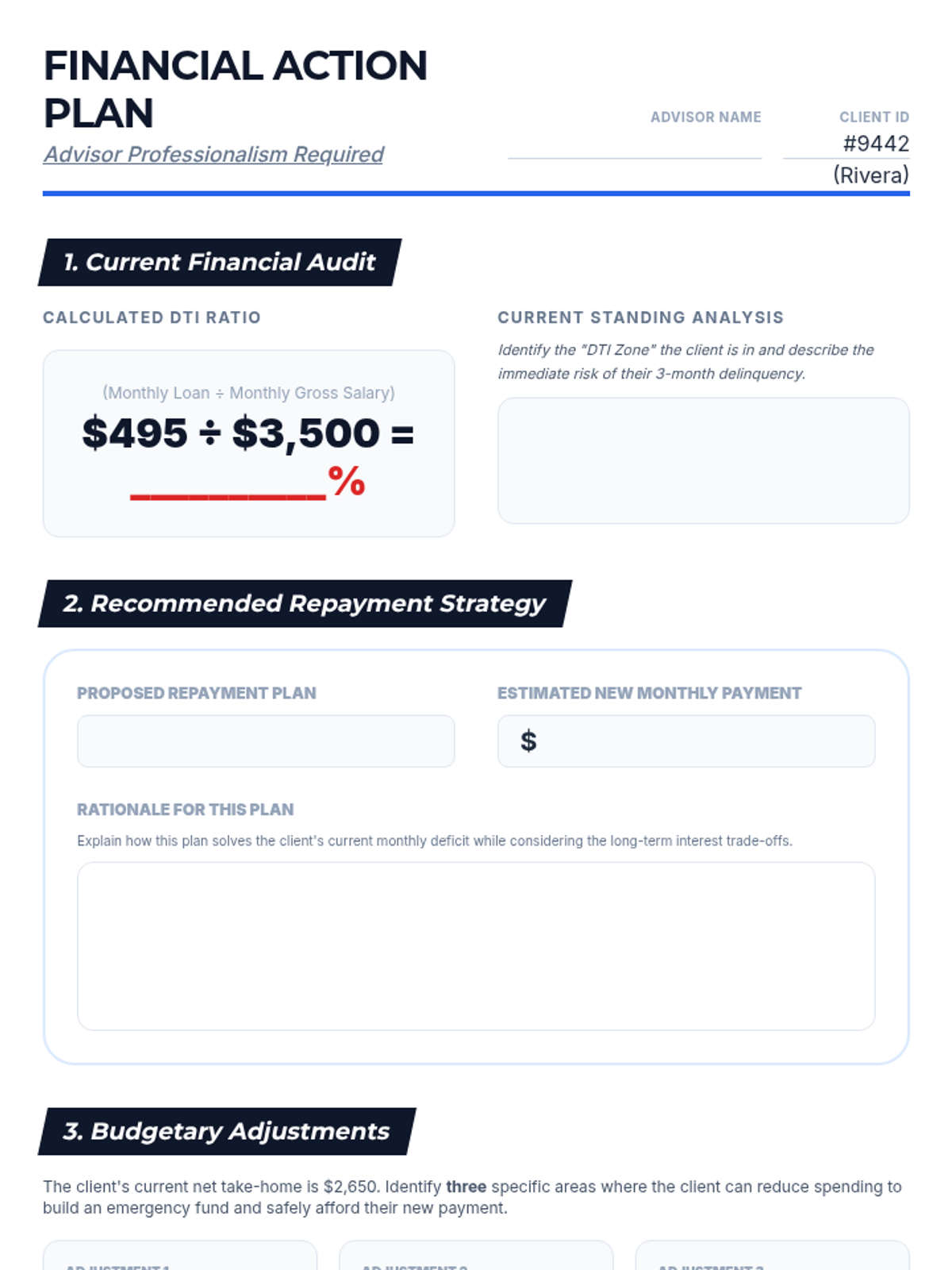
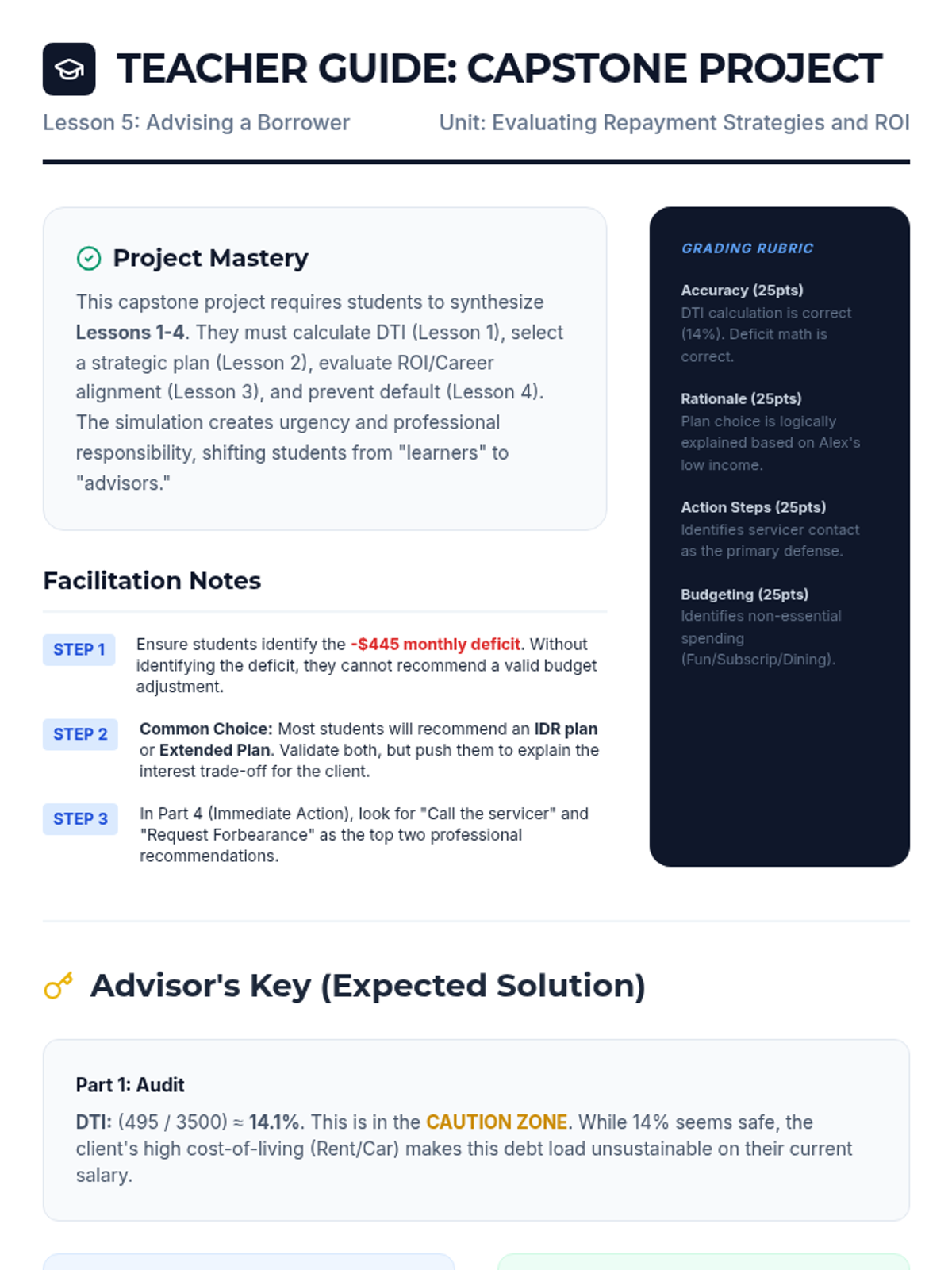
Students act as financial counselors for a detailed case study of a recent graduate struggling with payments. They analyze debt load and income to recommend a specific repayment plan and budget adjustments, producing a final 'Financial Action Plan'.
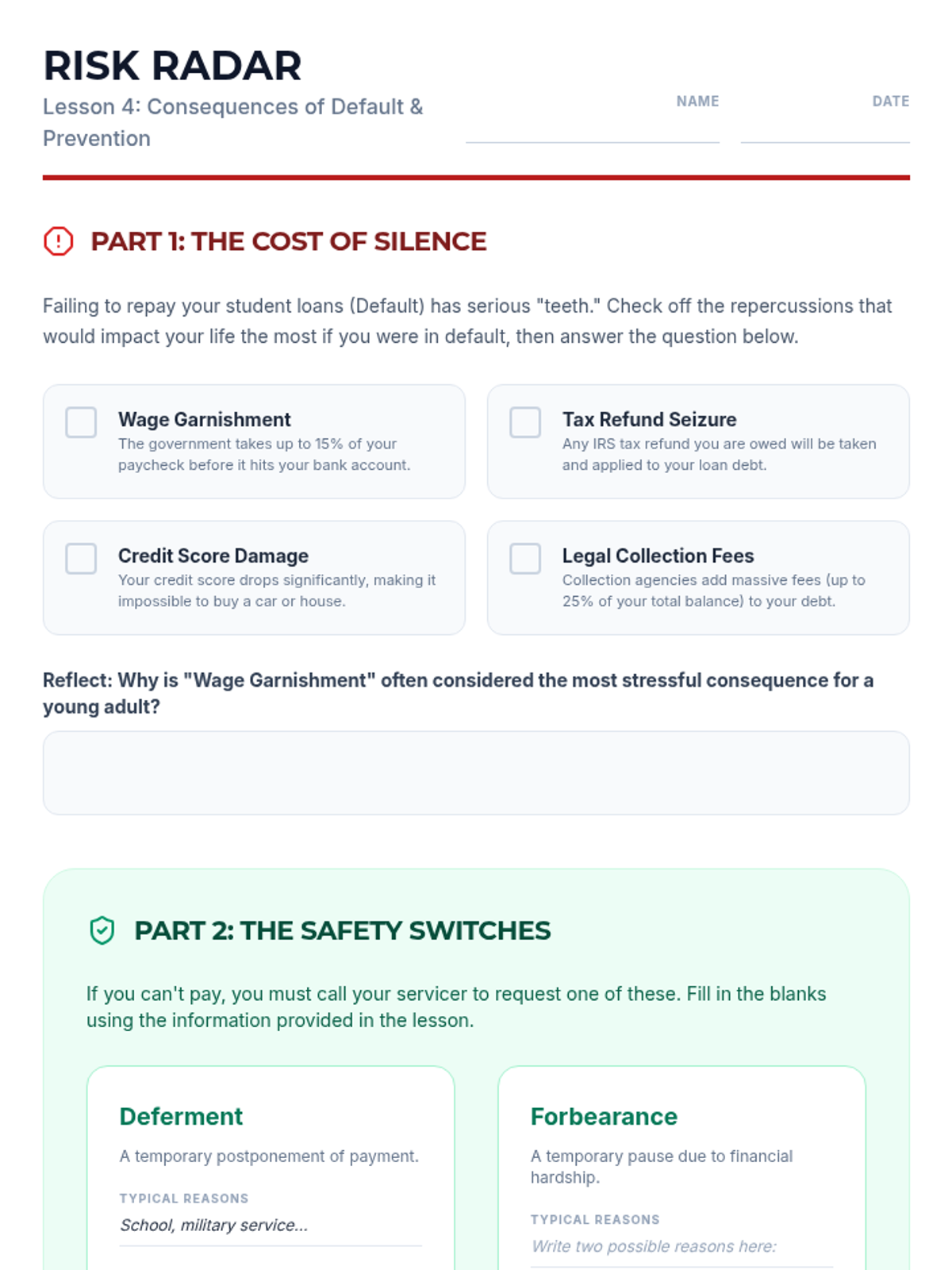
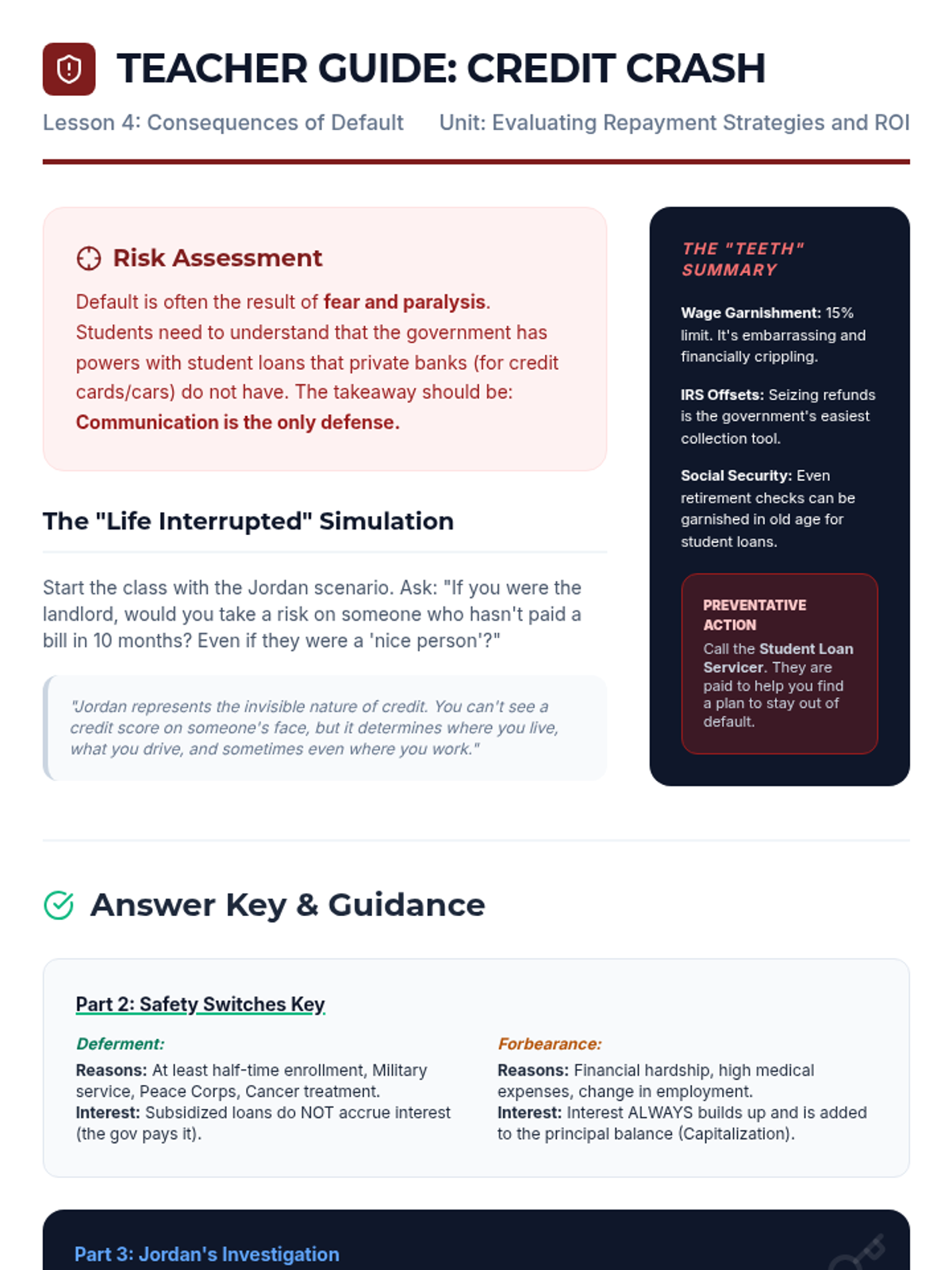
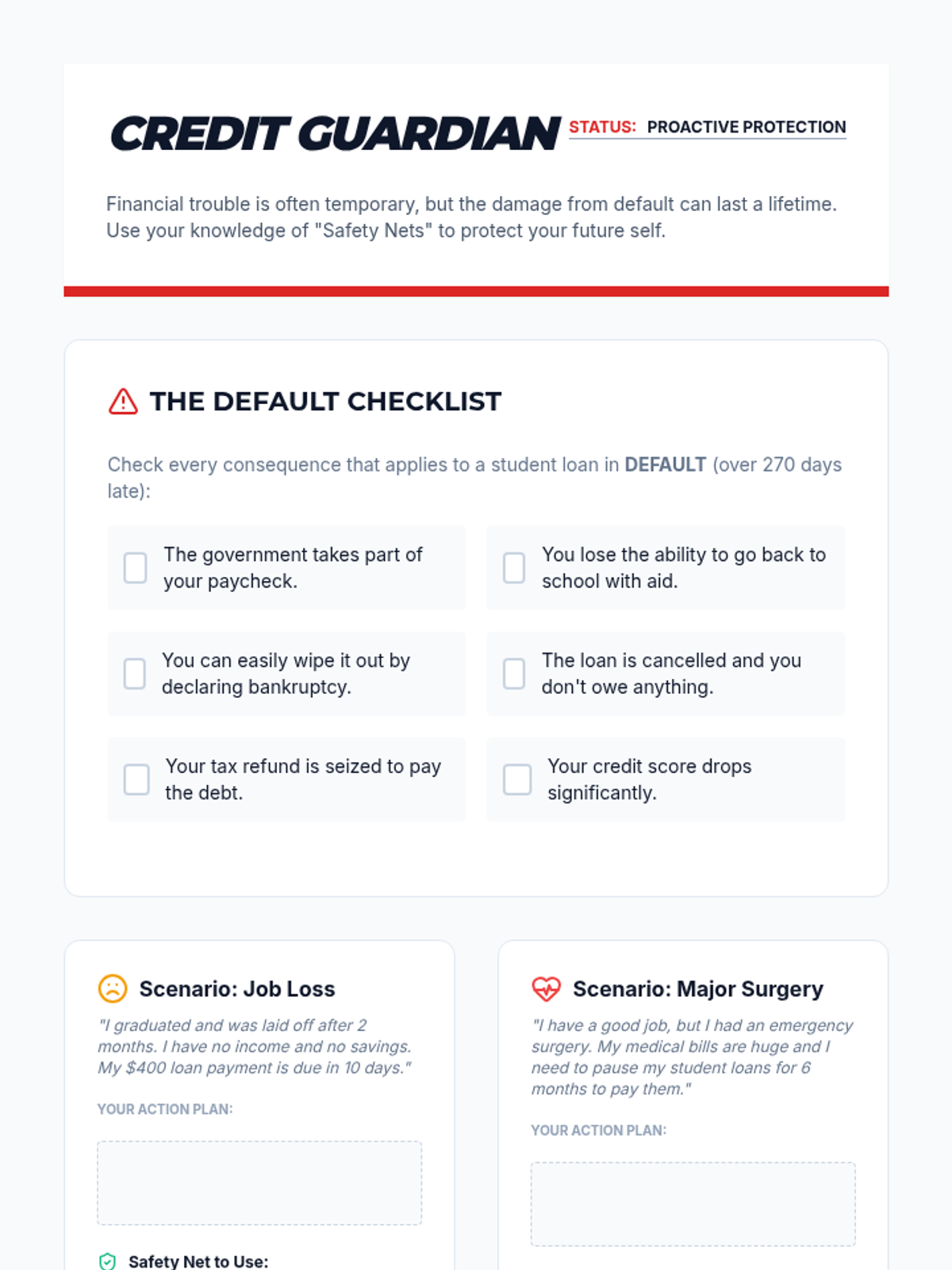
Students examine the timeline and repercussions of failing to repay student loans, including damaged credit scores, wage garnishment, and tax refund offsets. They learn the difference between postponement options and simply stopping payment.
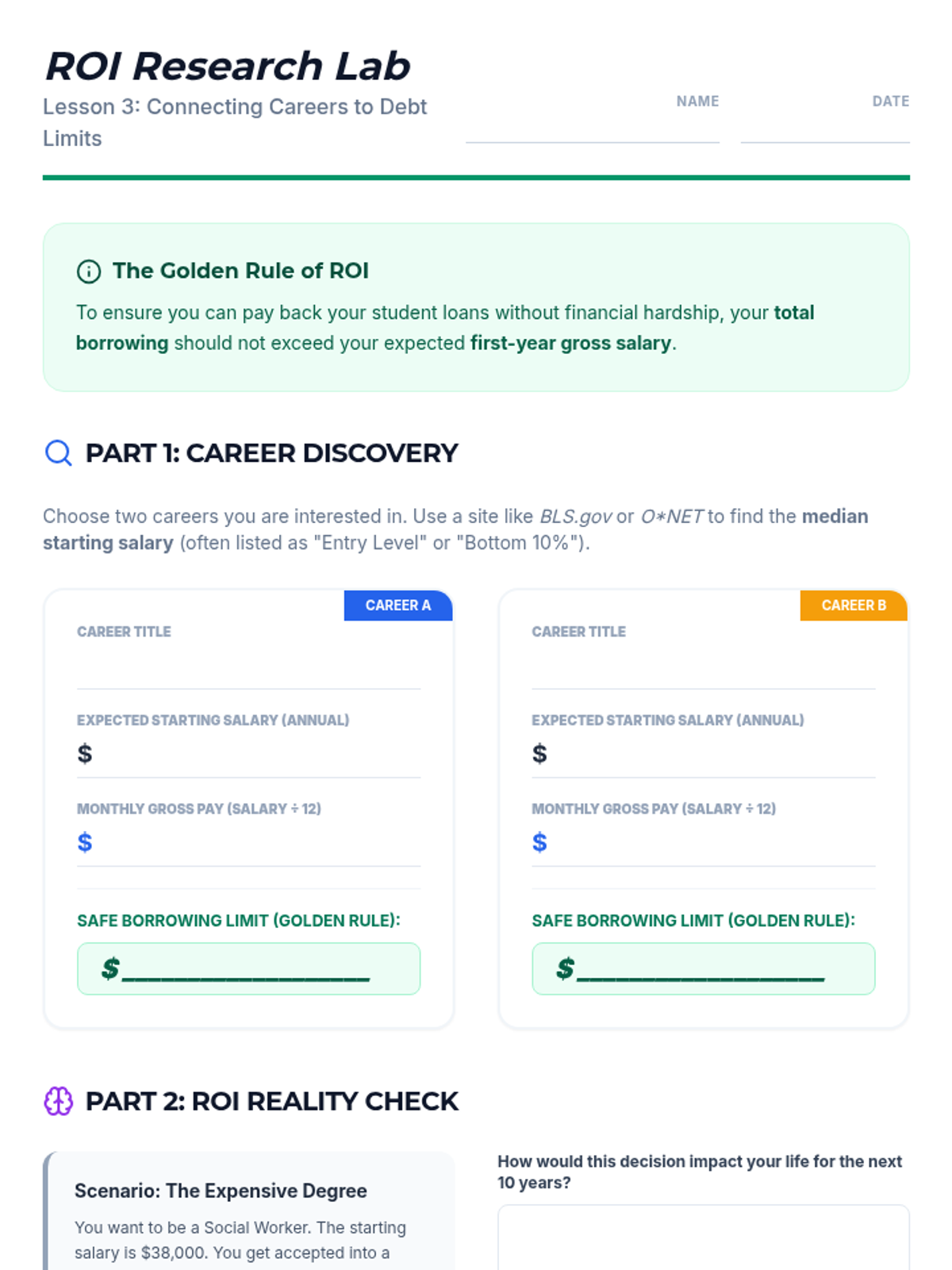
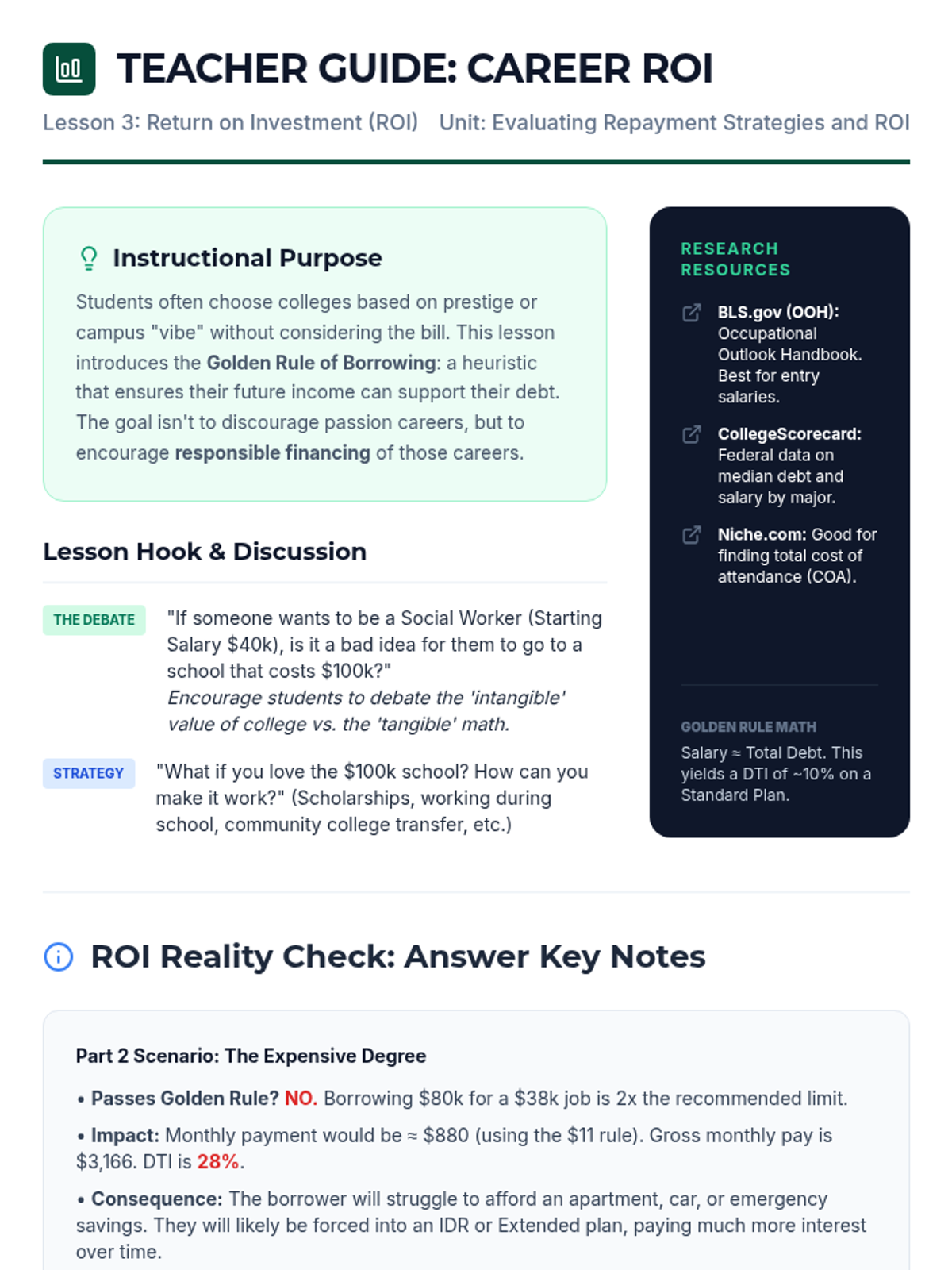
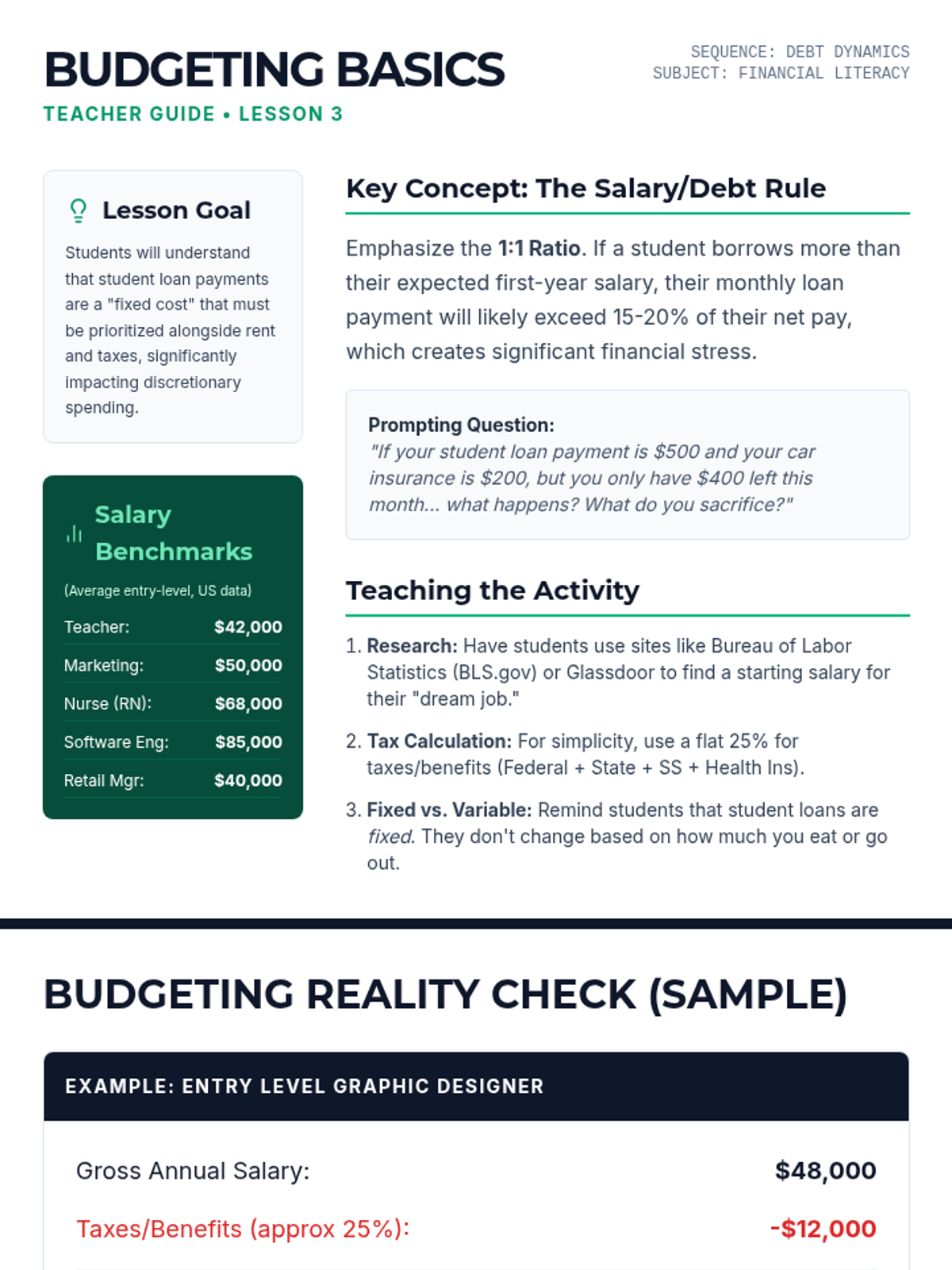
This lesson connects career aspirations with borrowing limits. Students research entry-level salaries for specific careers and calculate a safe borrowing limit based on the rule of thumb that total debt should not exceed expected first-year salary.
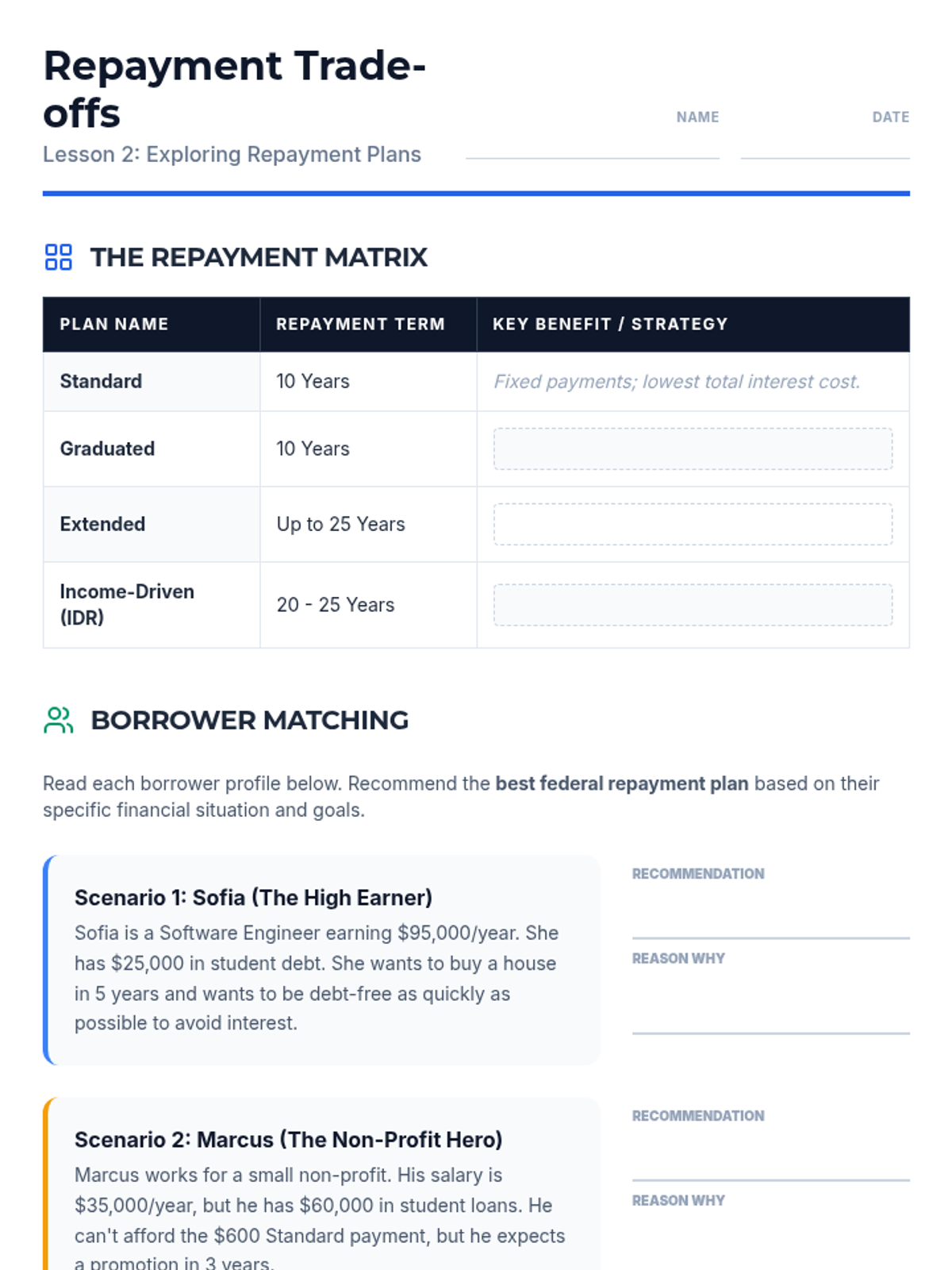
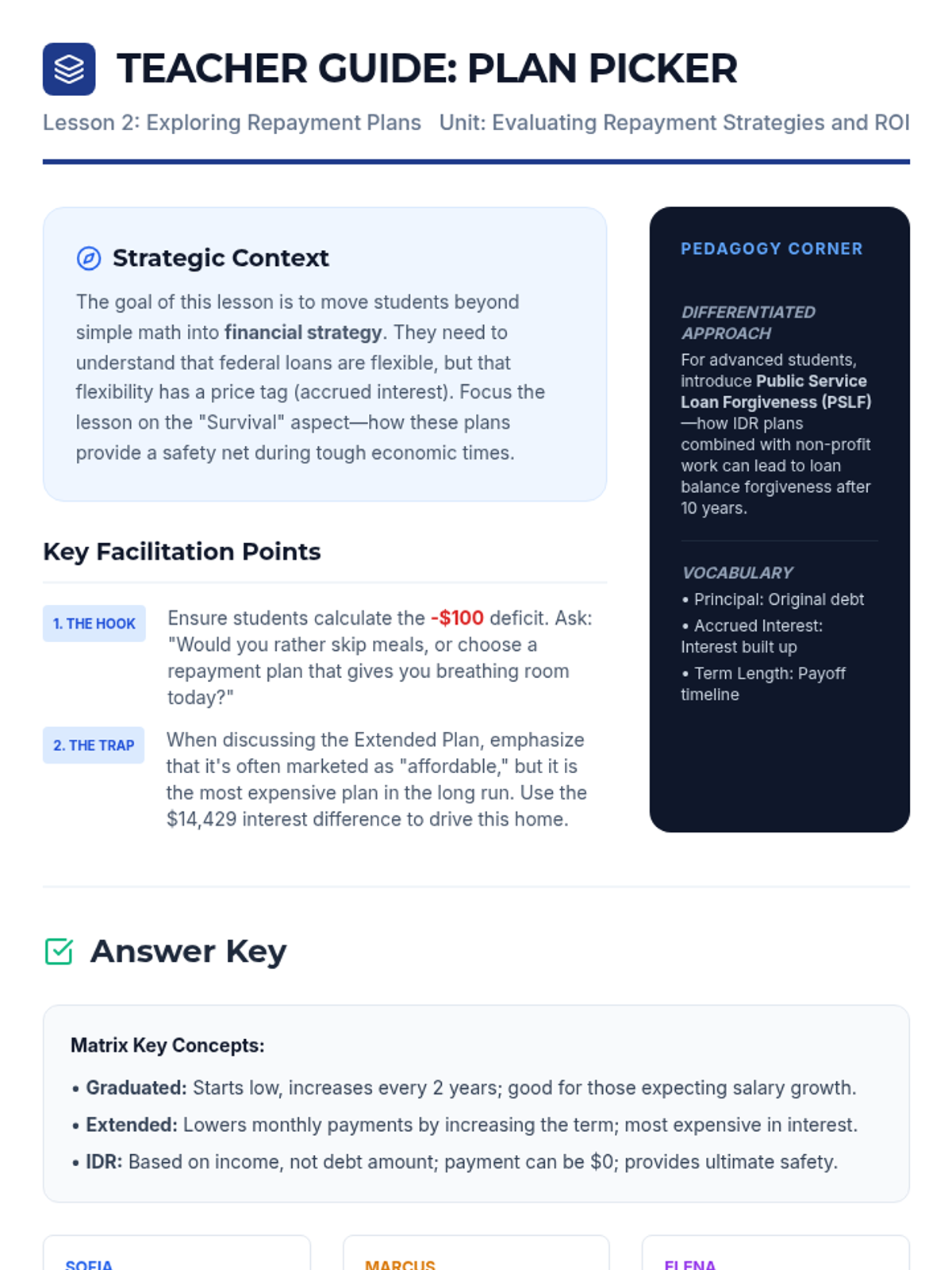
Learners investigate alternative federal repayment options, including Graduated, Extended, and Income-Driven Repayment (IDR) plans. They analyze how lowering a monthly payment often results in paying significantly more interest over the life of the loan.
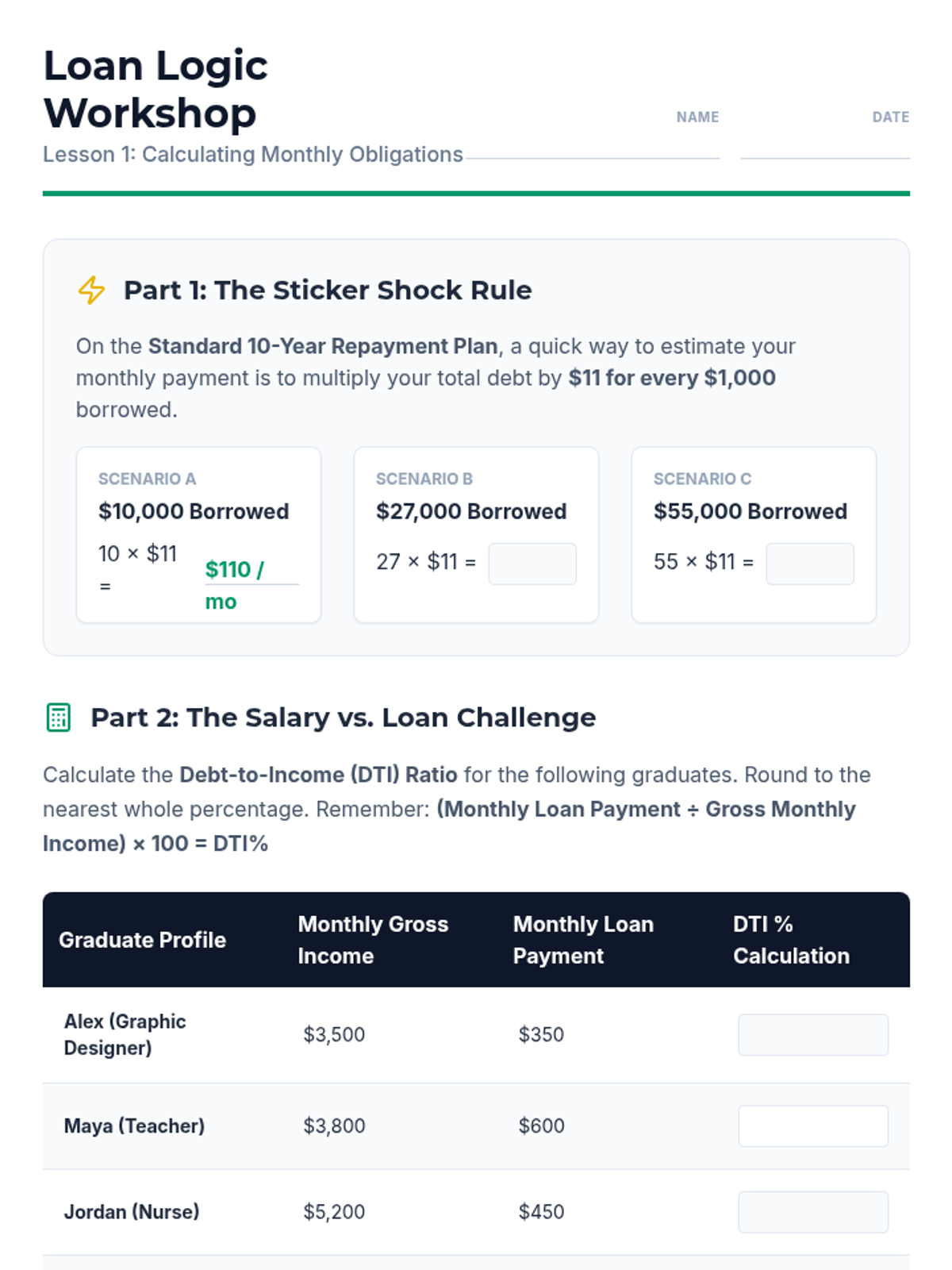
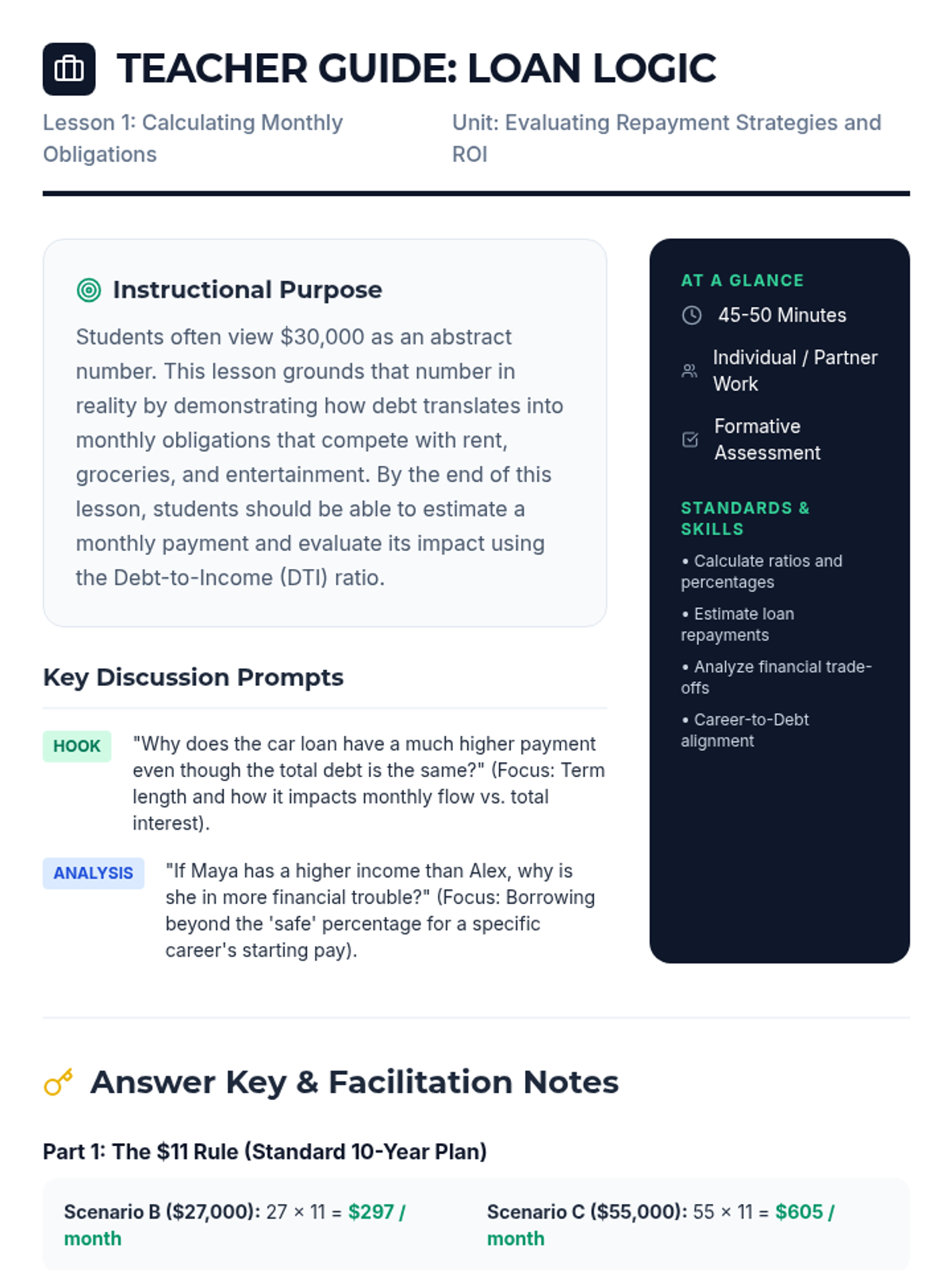
Students use the 'Standard Repayment Plan' model to calculate estimated monthly payments for various total debt amounts and compare them to entry-level salaries. This lesson introduces the concept of the debt-to-income ratio through the 'Sticker Shock' challenge.
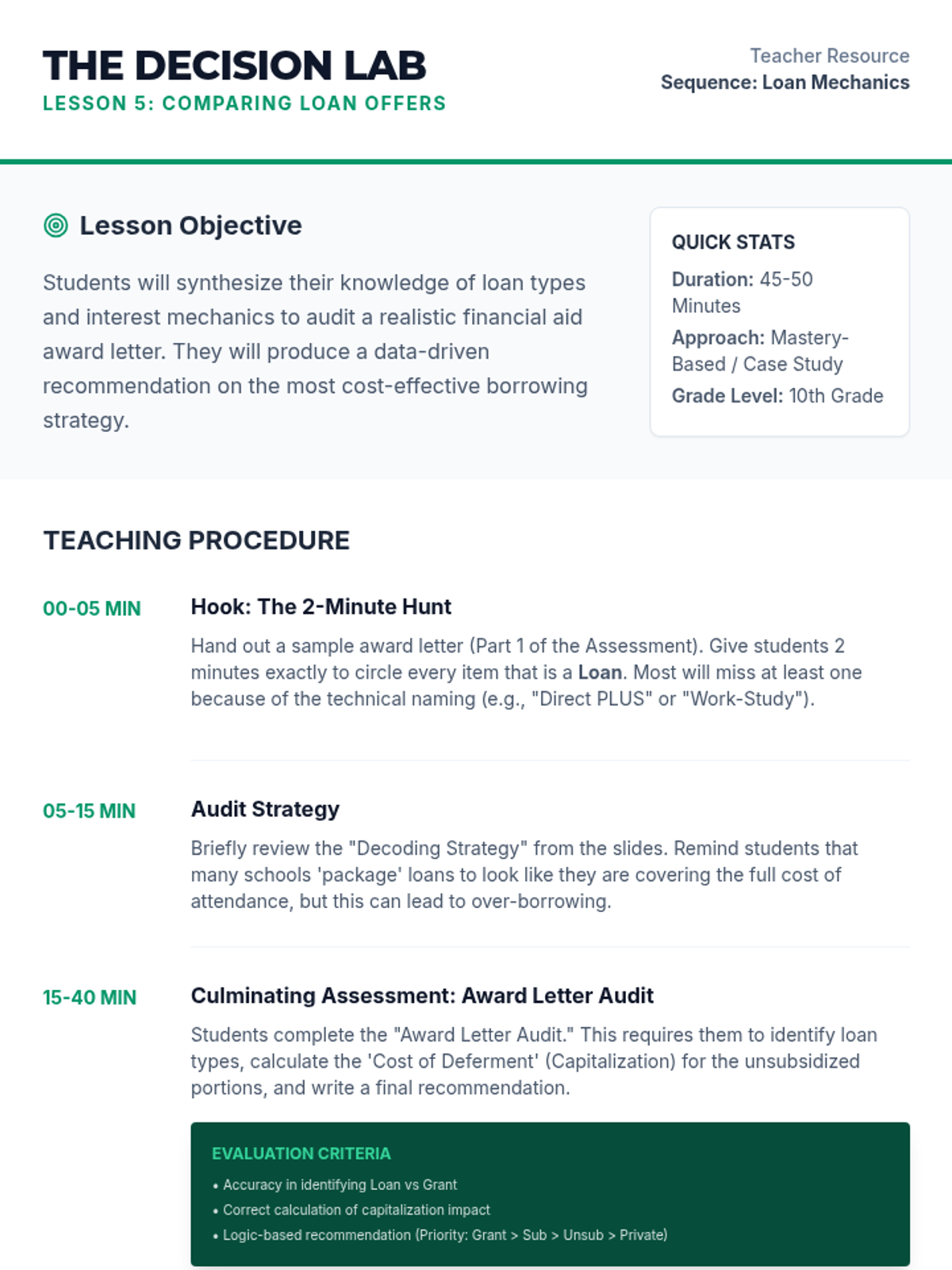
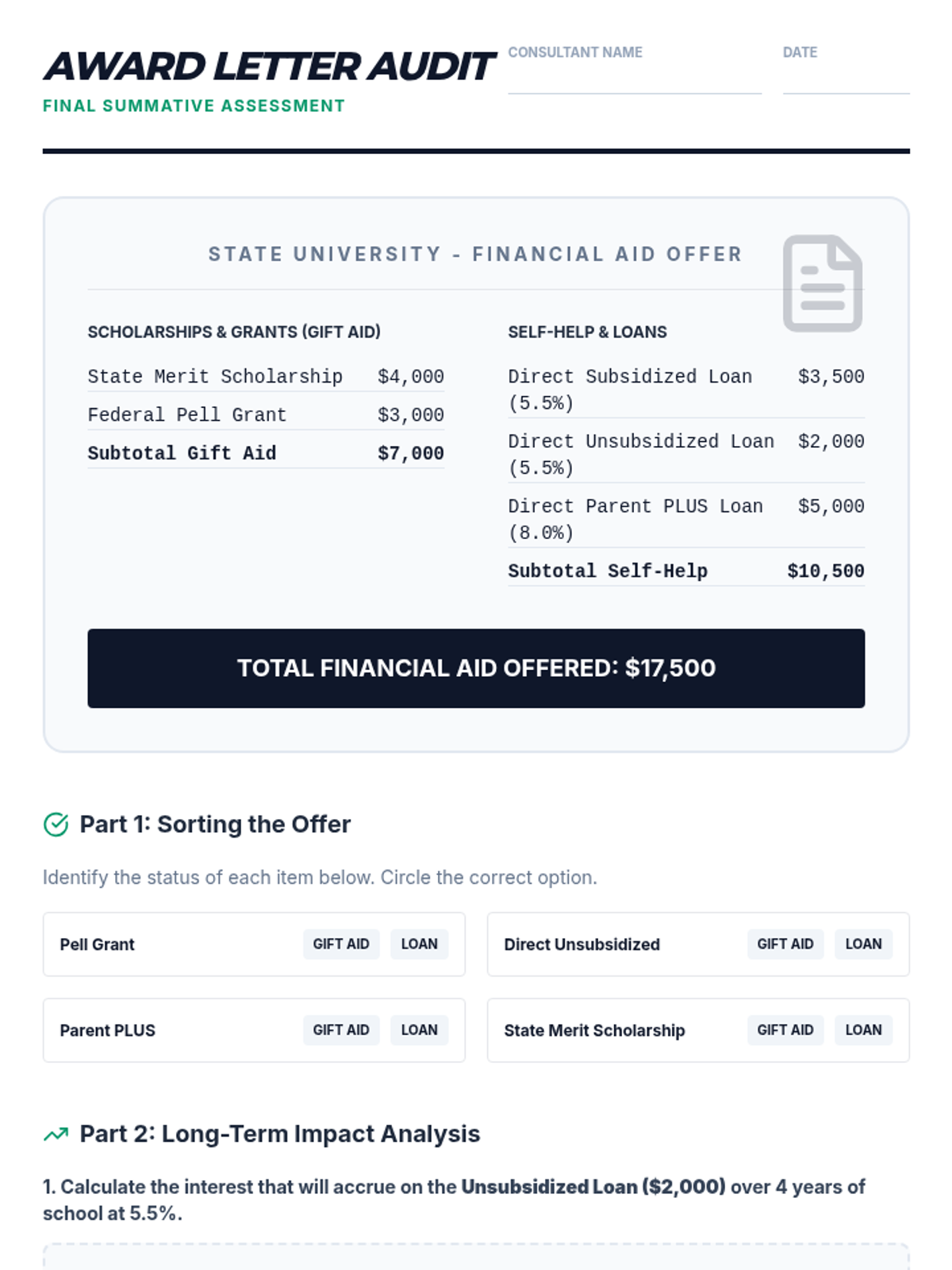
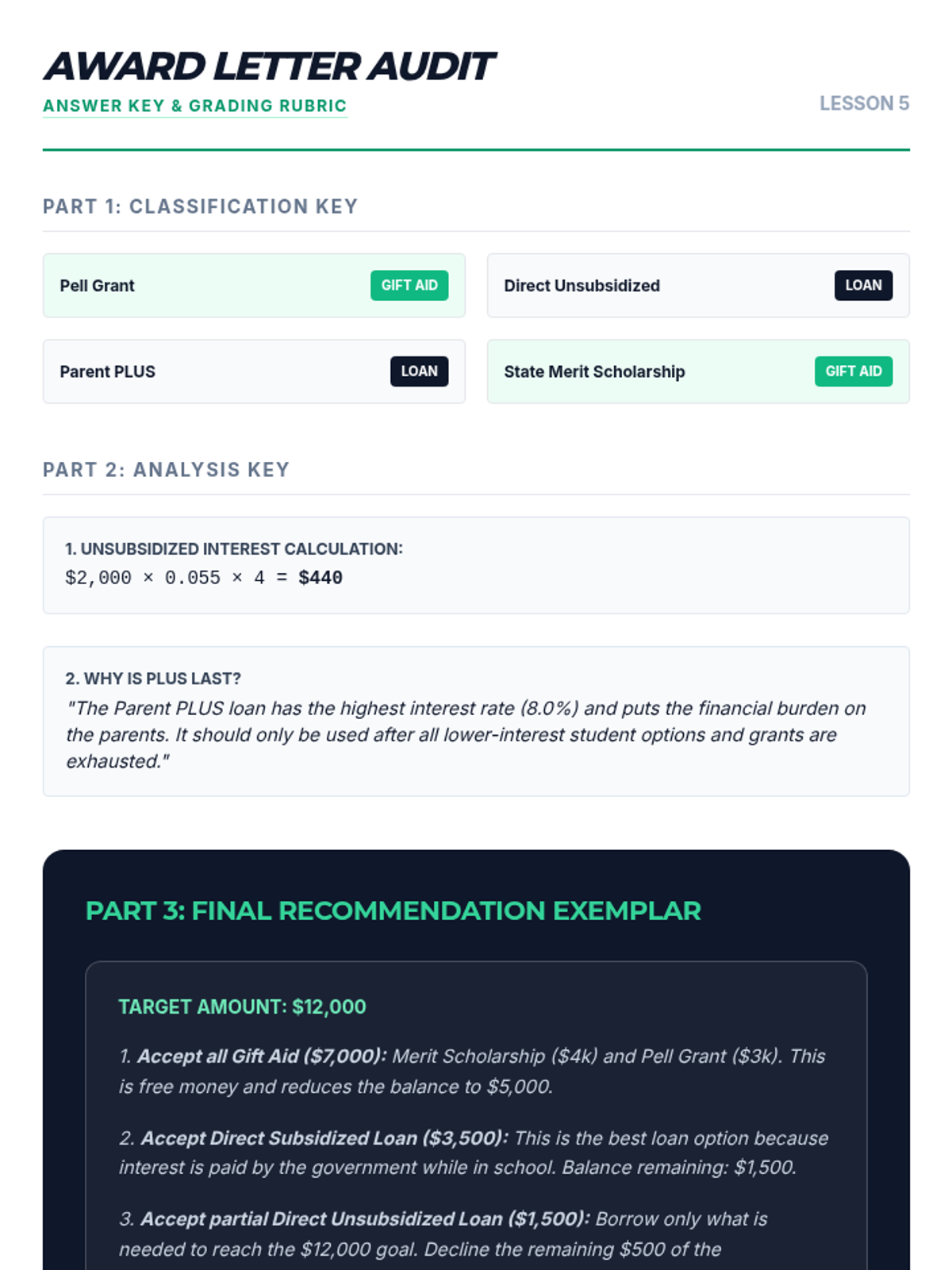
In this culminating lesson, students analyze sample financial aid offer letters containing a mix of loan types. They must extract key data points to calculate the total cost of repayment for each scenario. Students produce a written recommendation on which loan package is most financially sound.
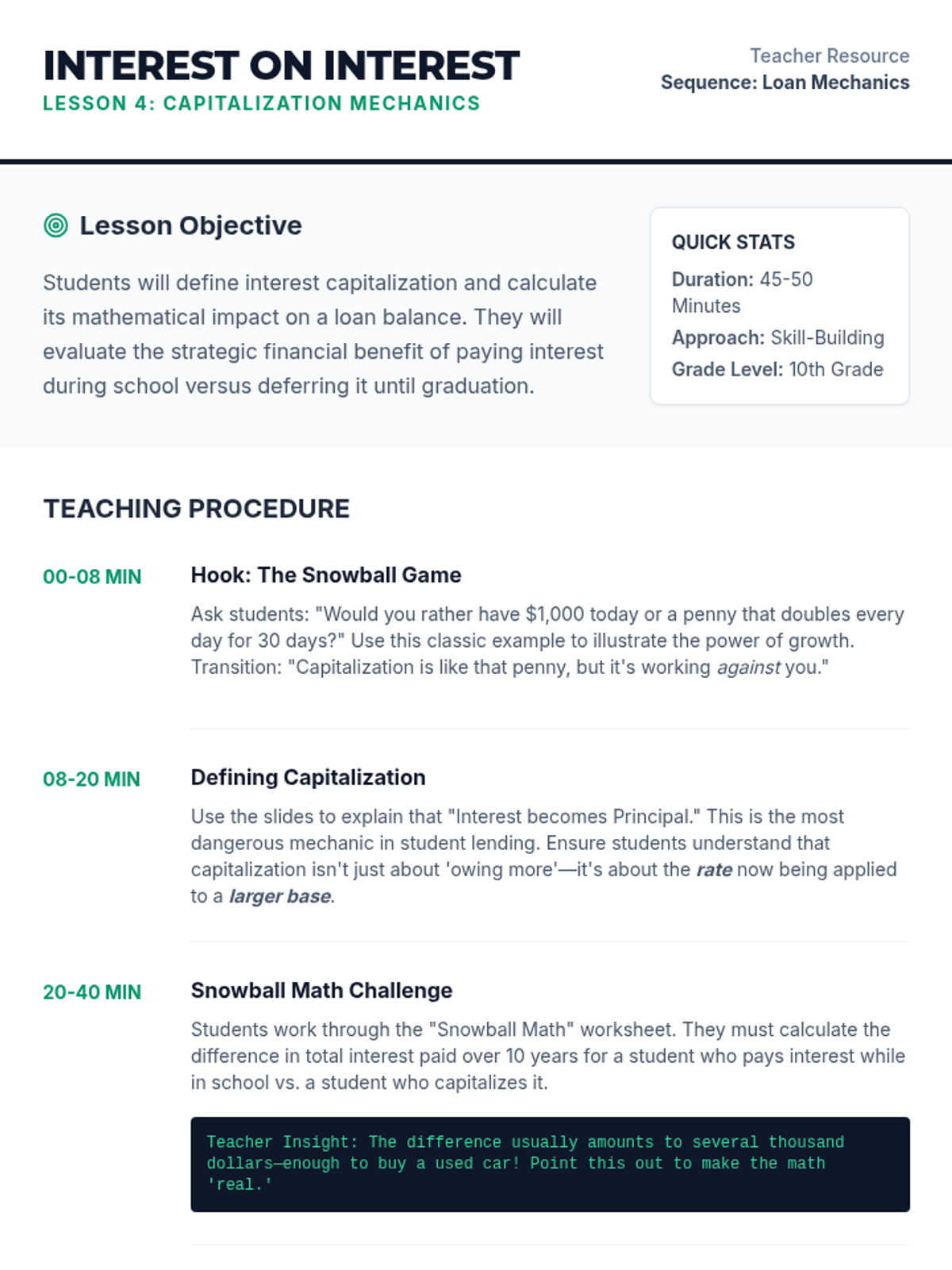
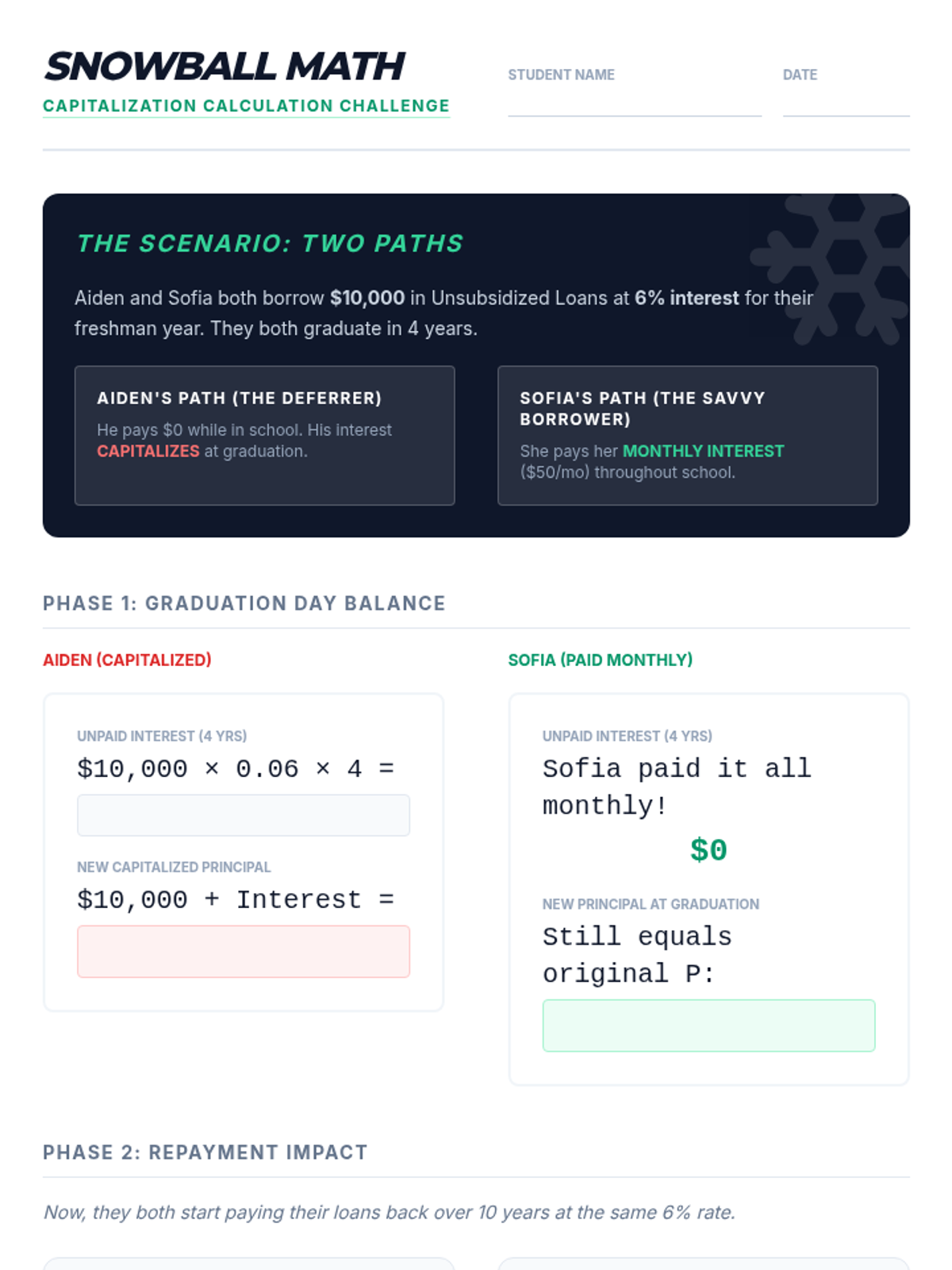
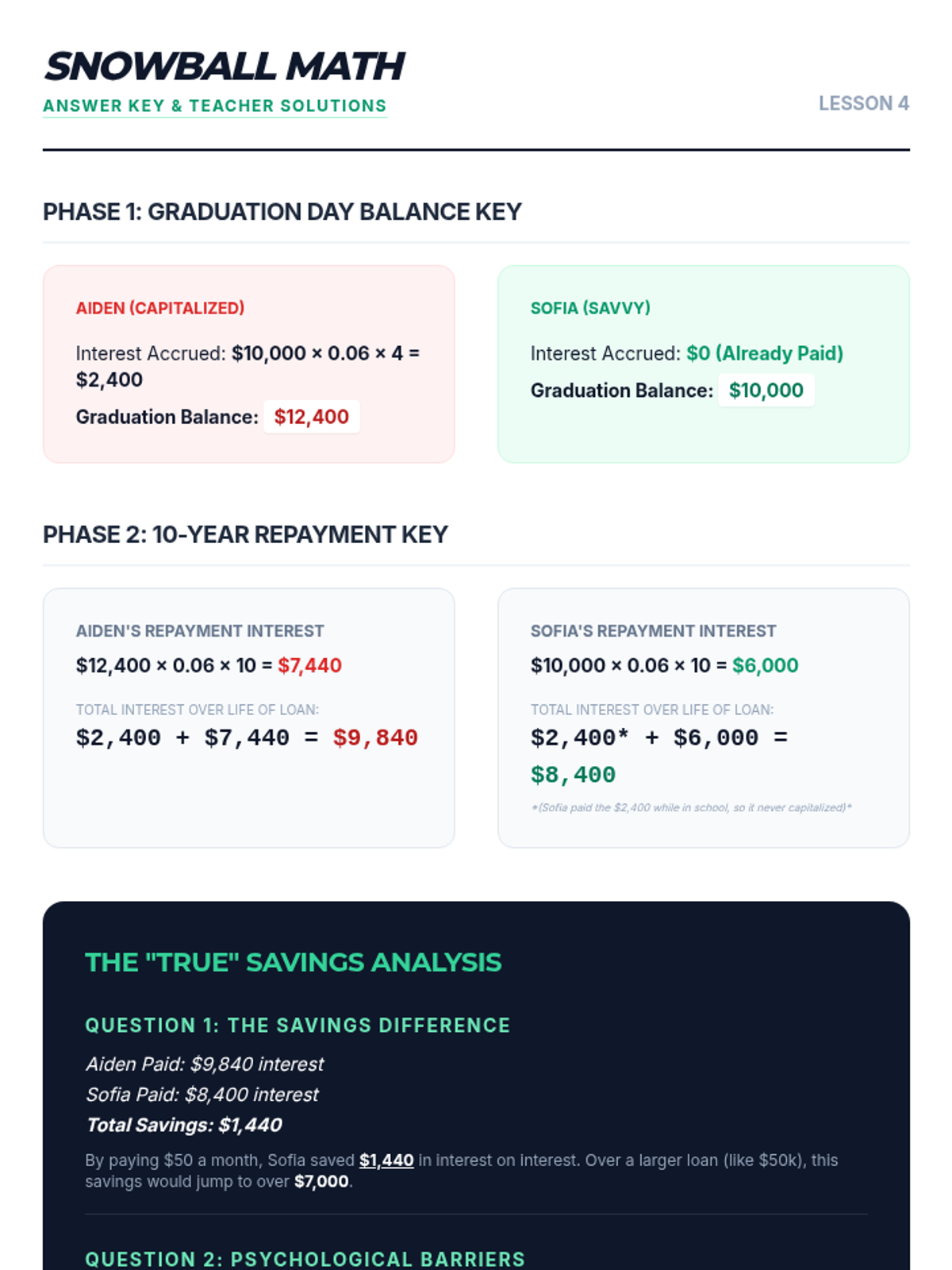
Students learn about interest capitalization and how unpaid interest is added to the principal balance, causing interest to be charged on interest. Through guided practice problems, they calculate the financial impact of paying interest while in school versus deferring it until graduation.
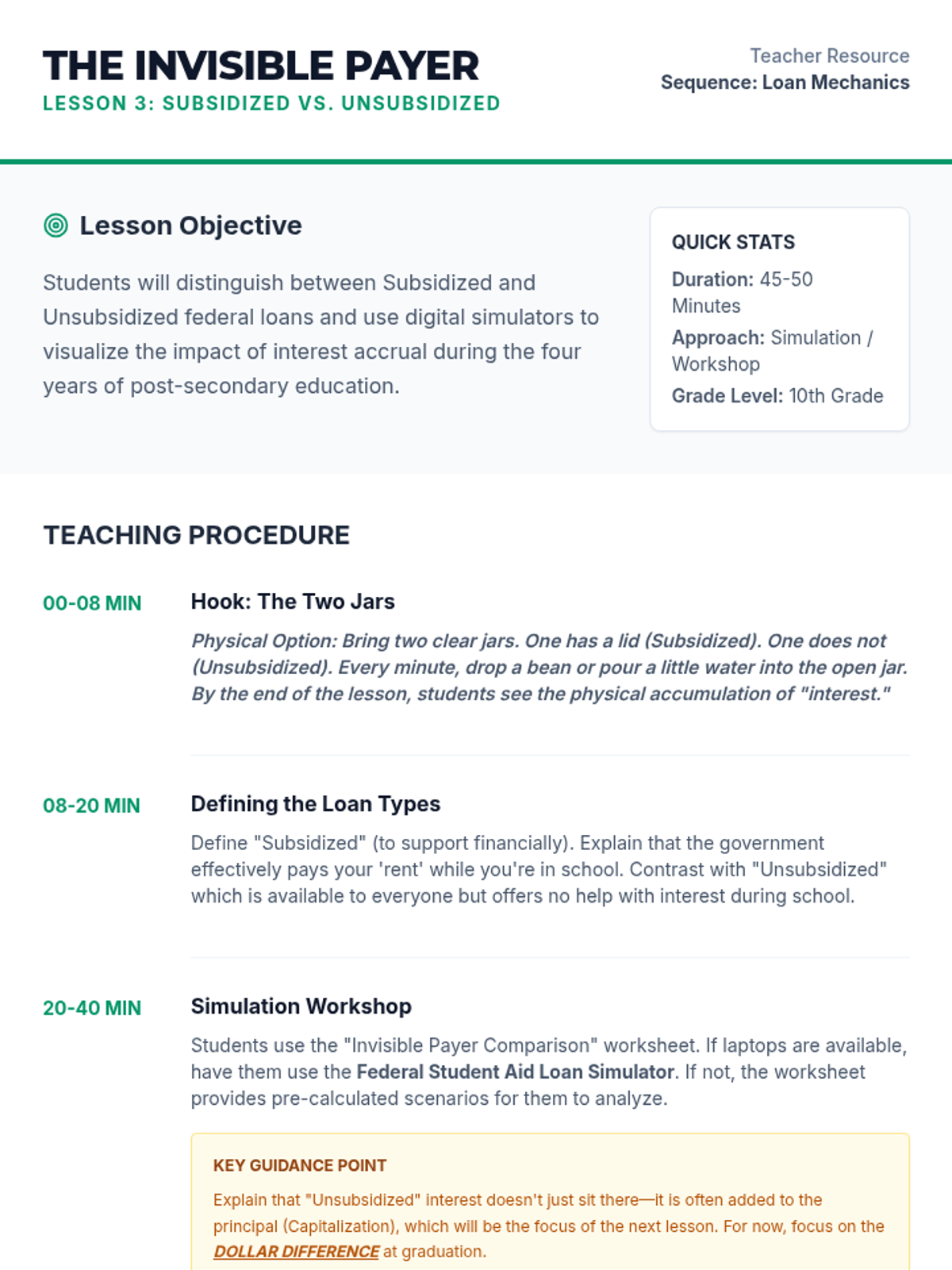
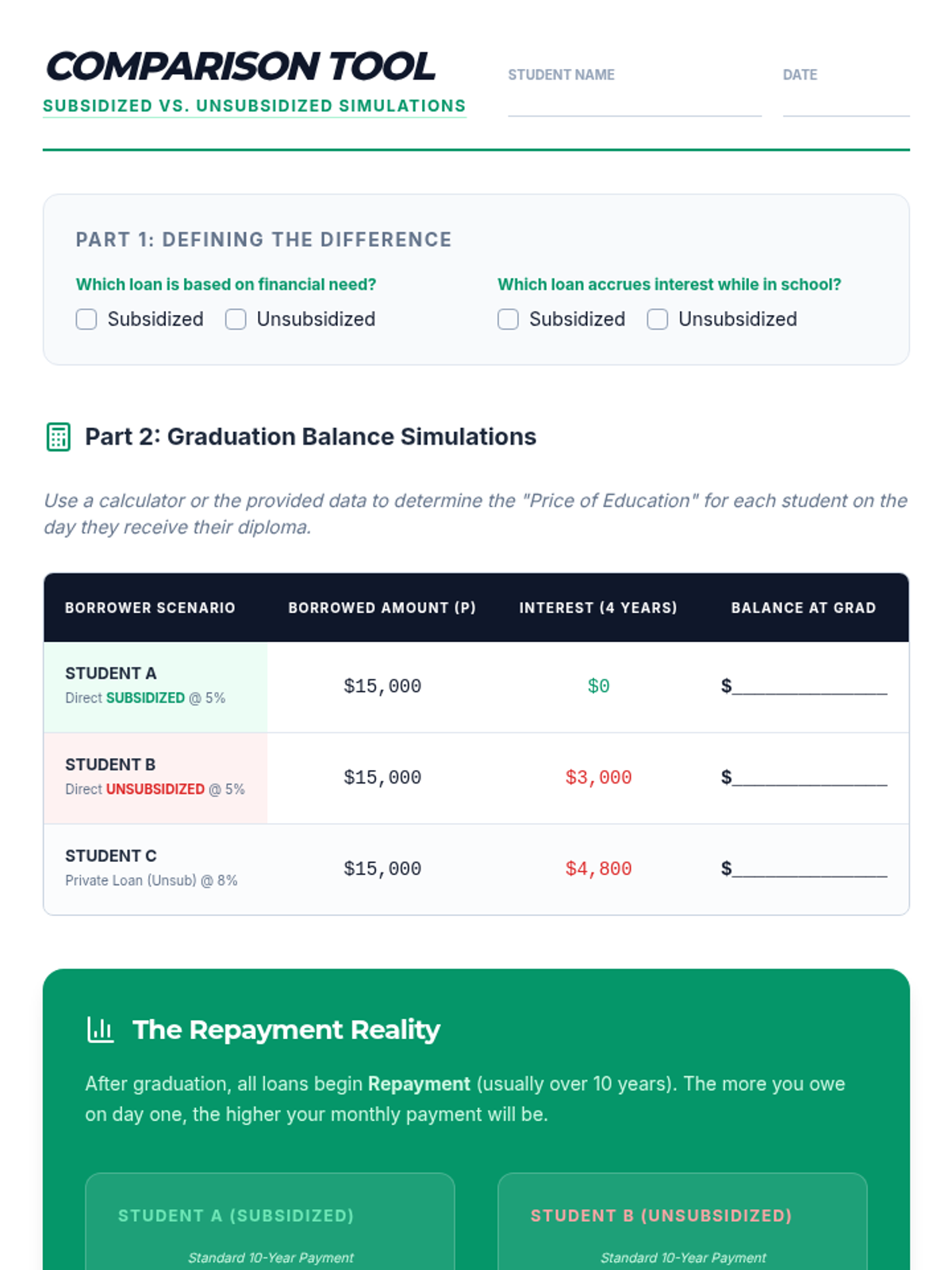
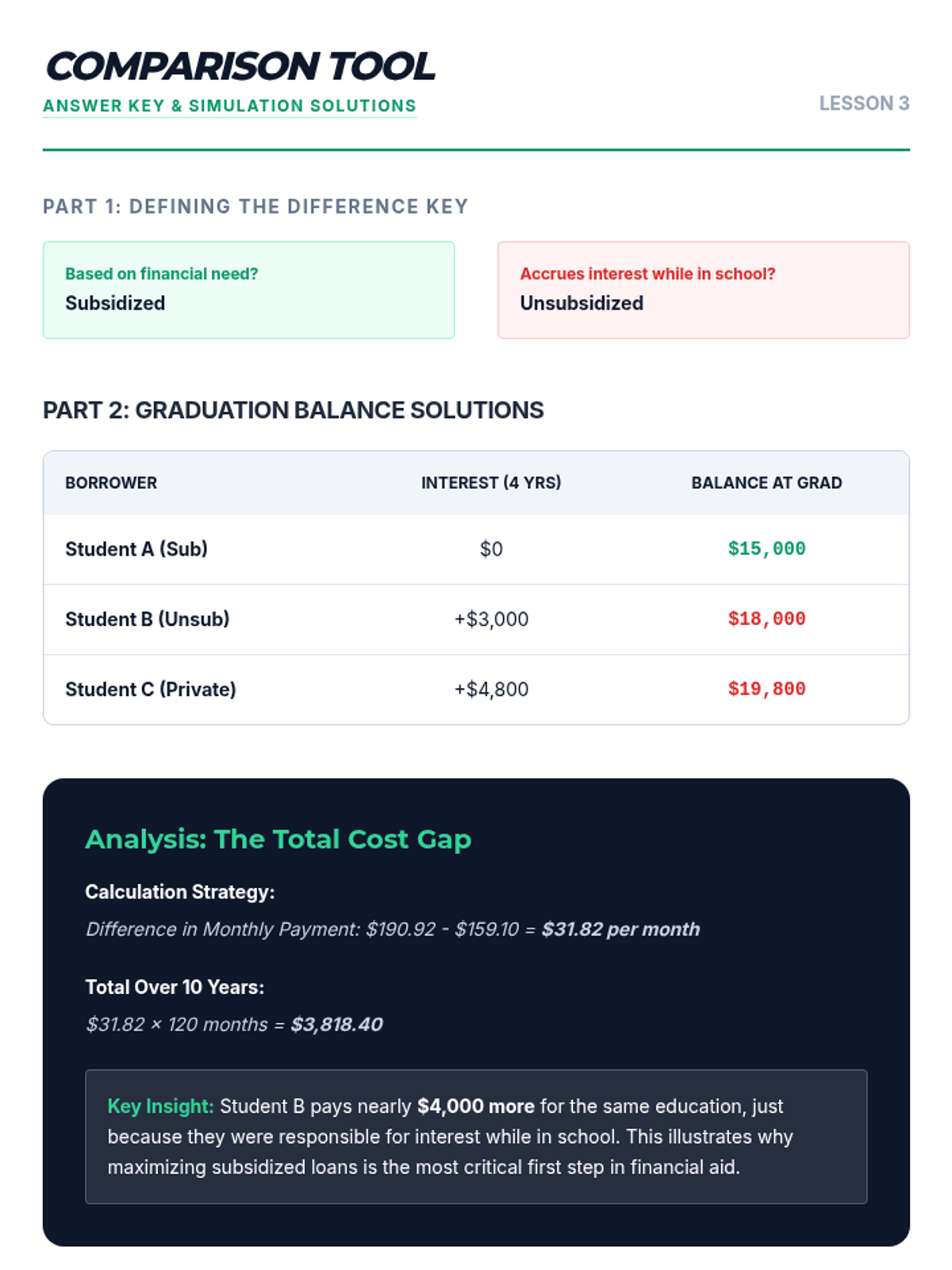
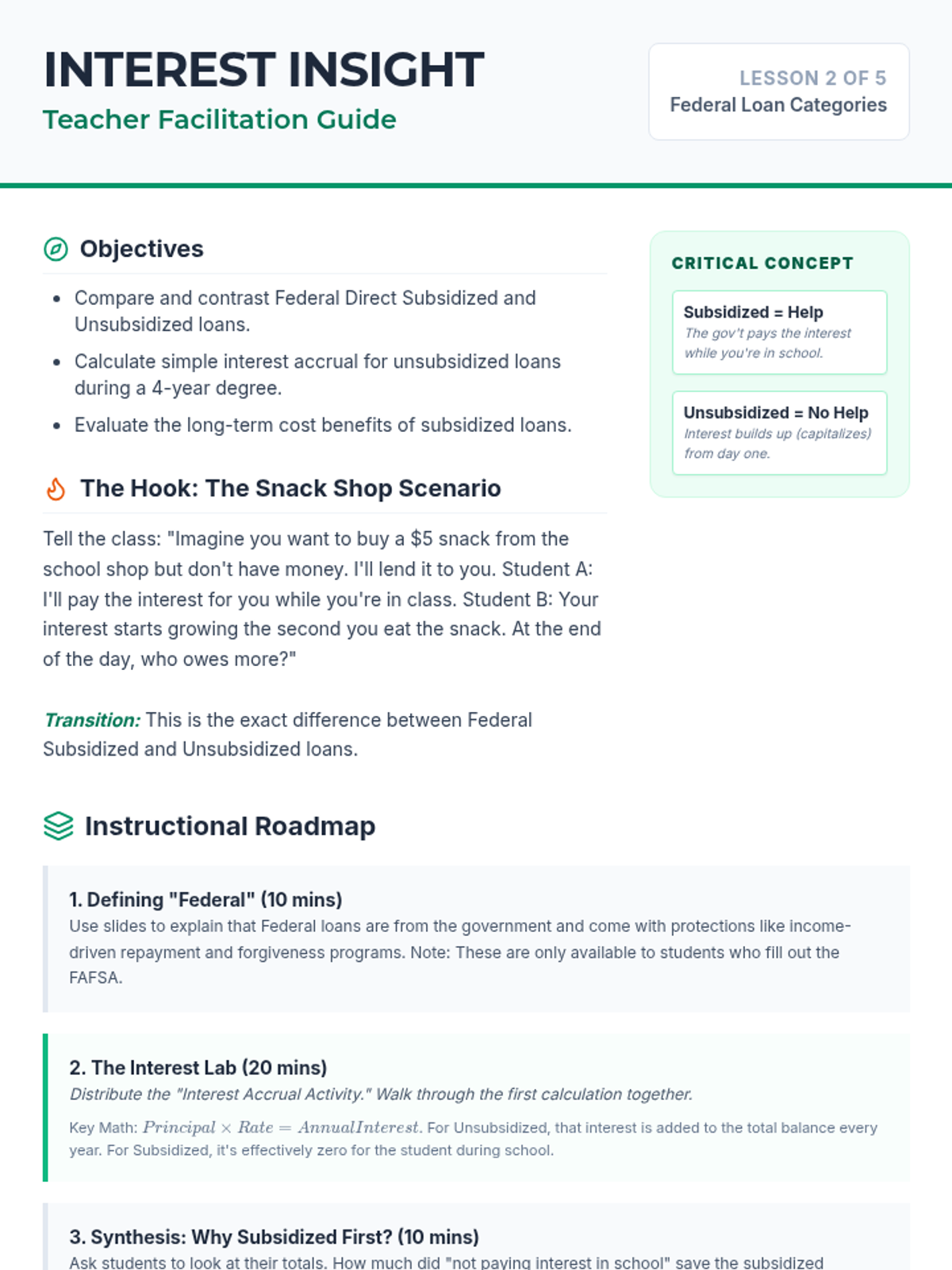
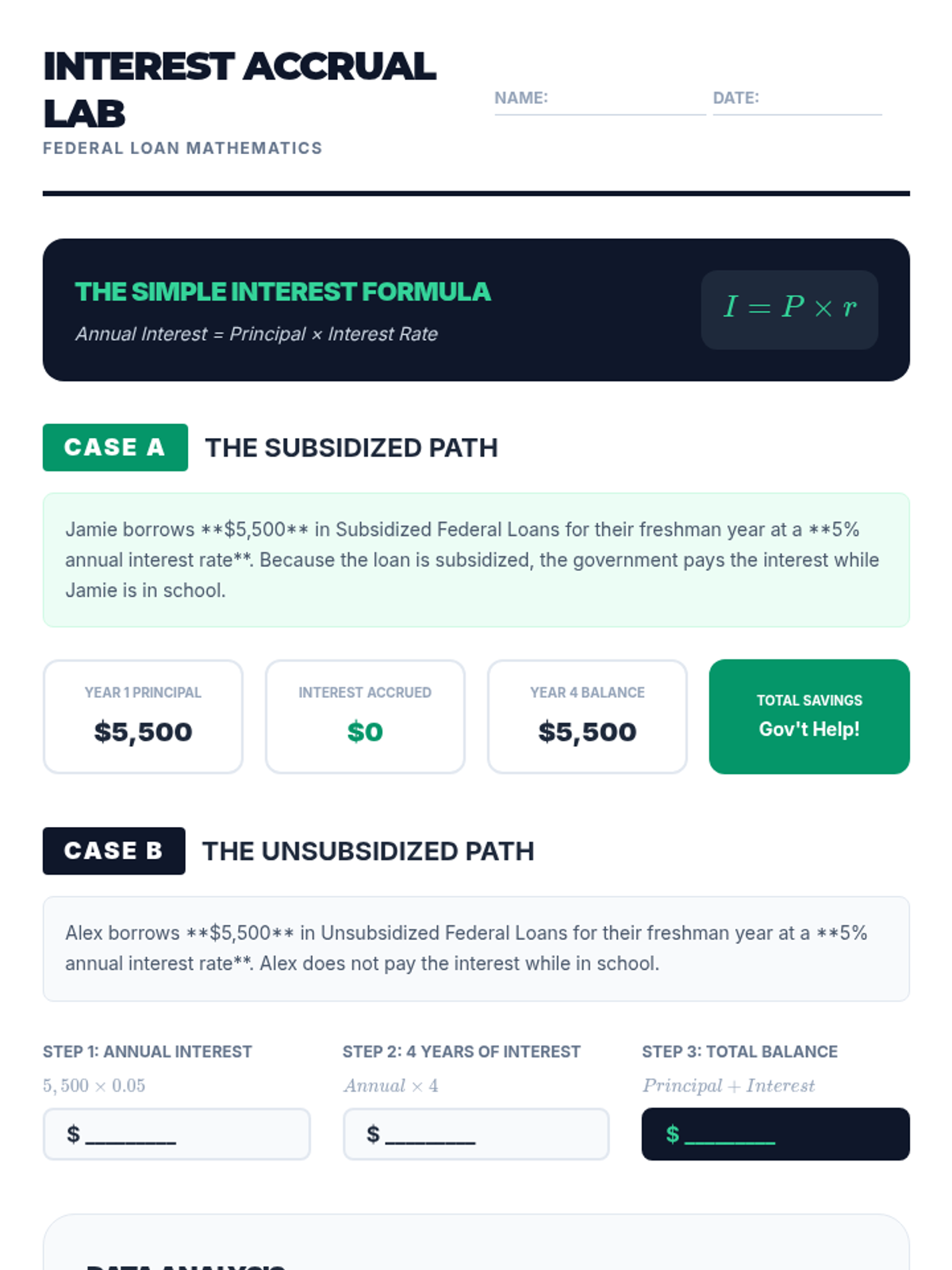
This lesson focuses on the critical distinction between subsidized and unsubsidized federal loans. Students examine how the government pays interest on subsidized loans while the student is in school, contrasting this with how interest accumulates immediately on unsubsidized loans.
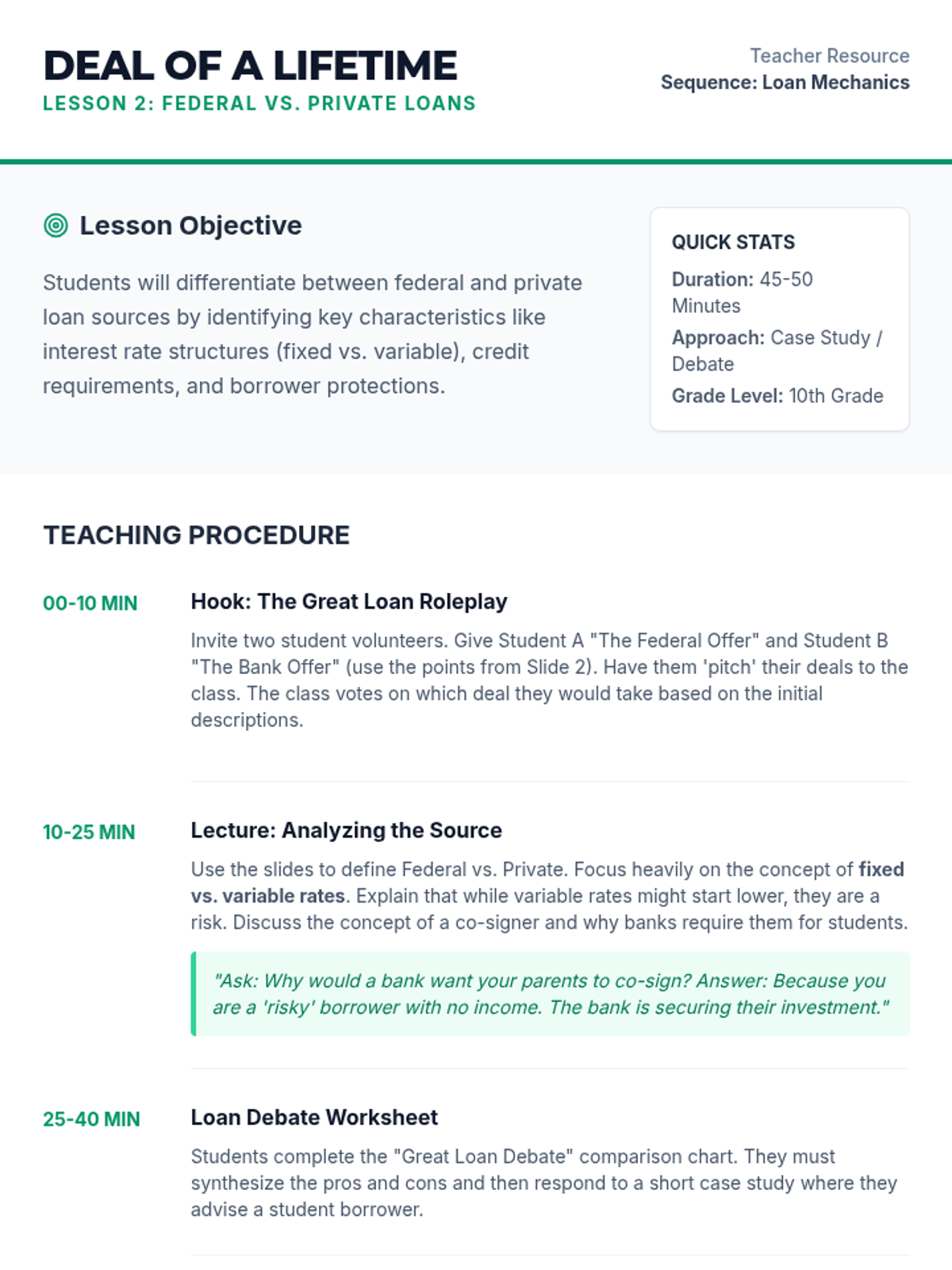
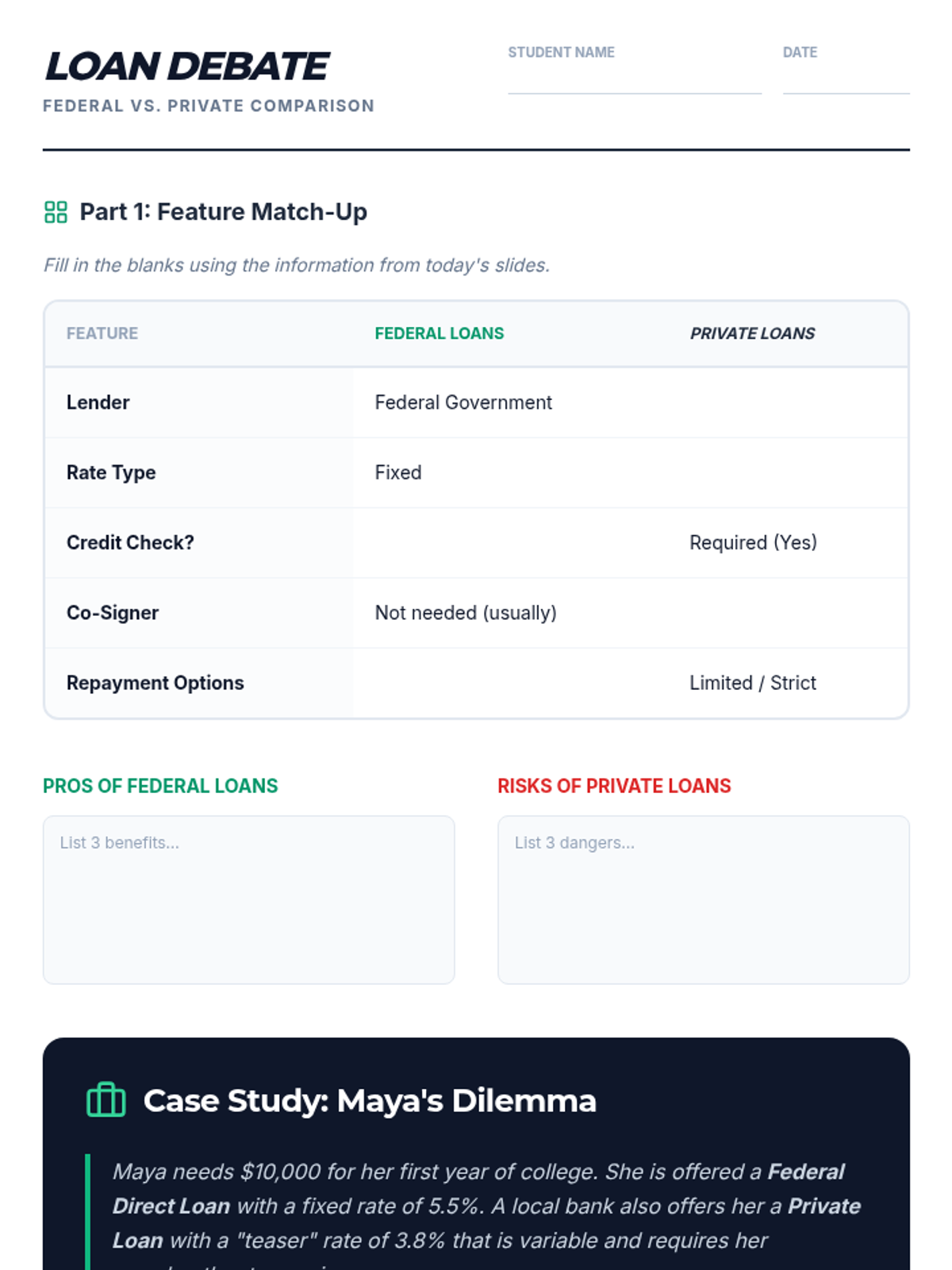
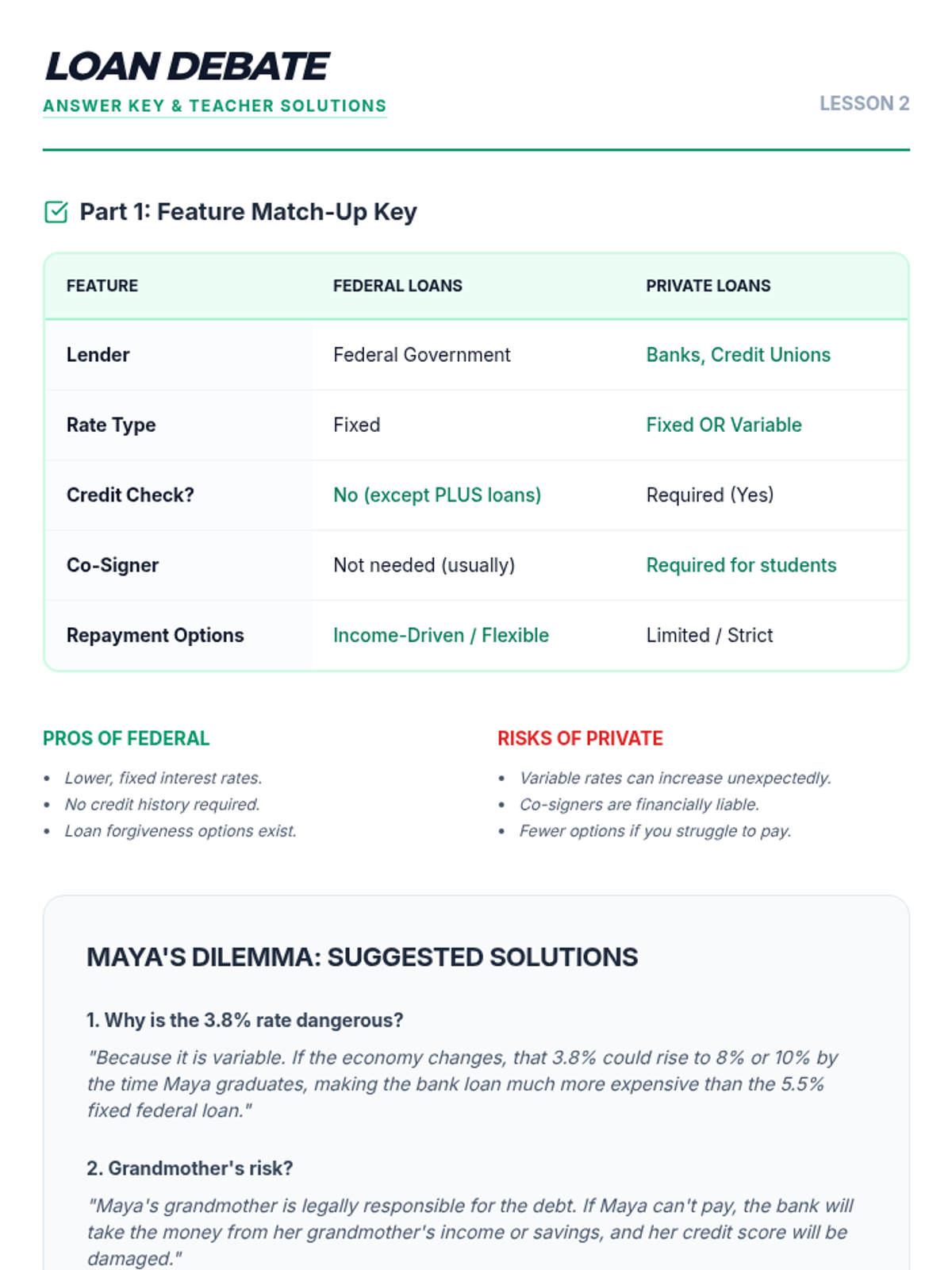
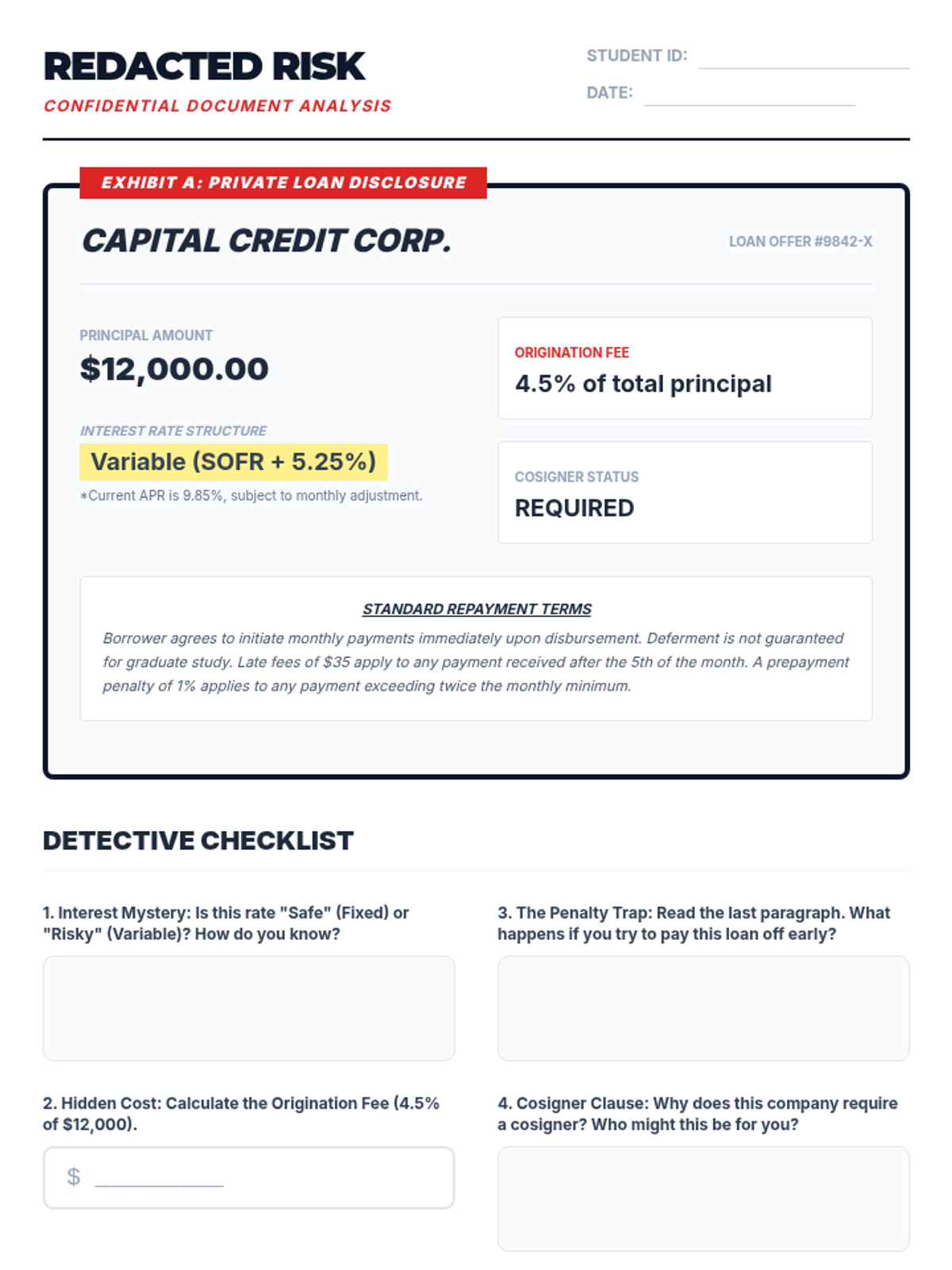
Learners investigate the differences between federal government loans and private bank loans, comparing interest rate structures (fixed vs. variable) and borrower protections. Students create a comparison chart highlighting the pros and cons of each funding source.
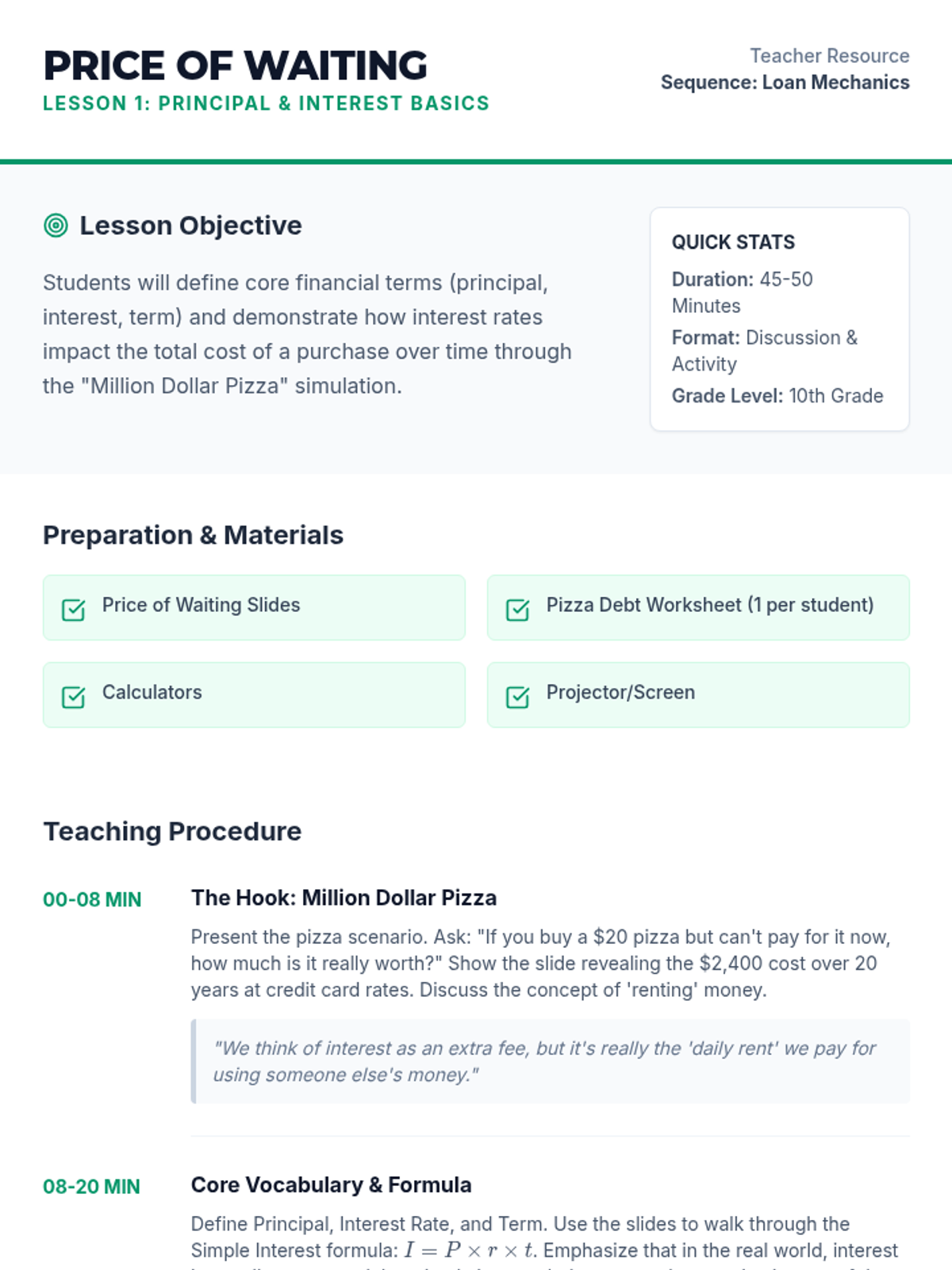
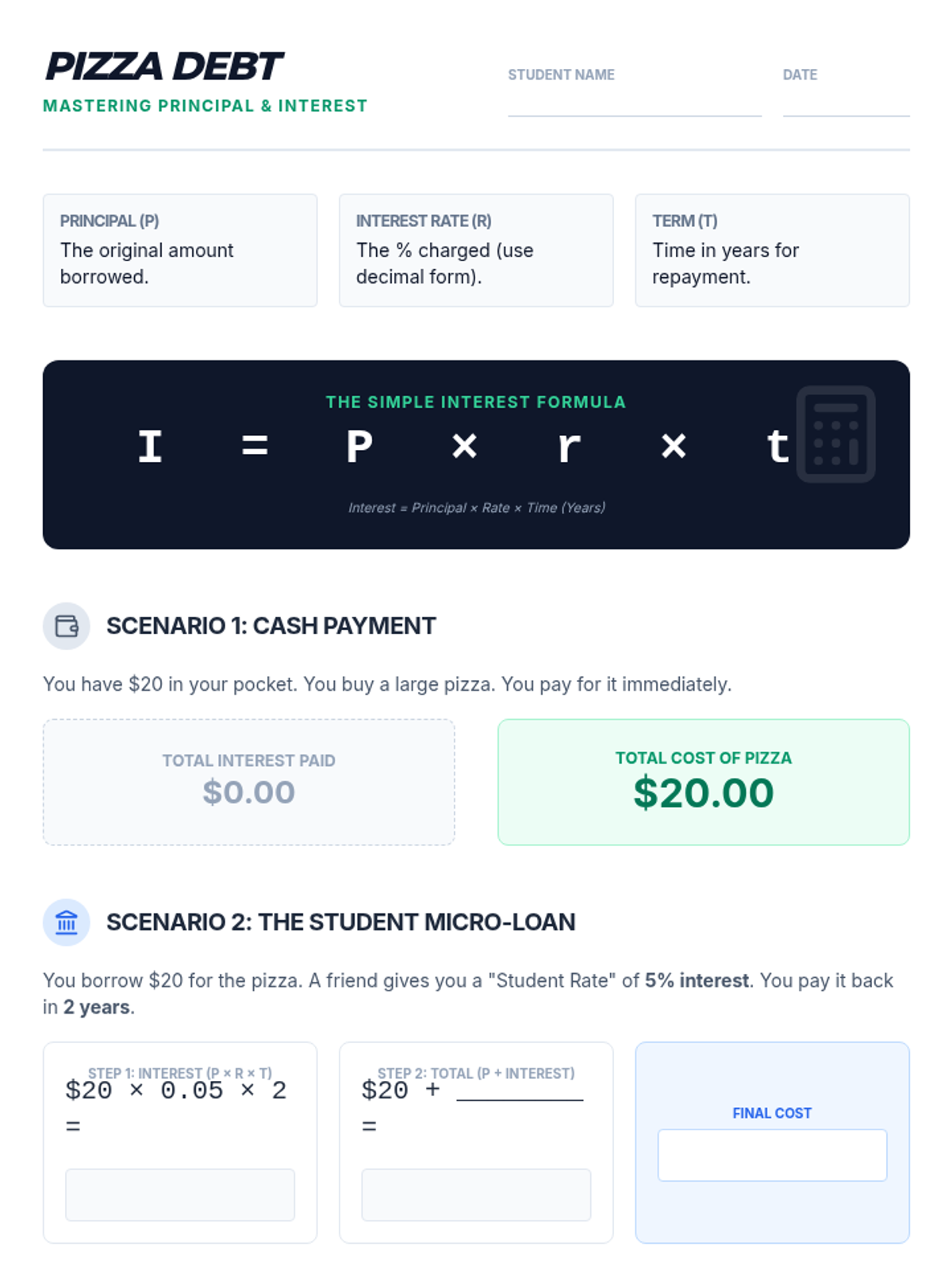
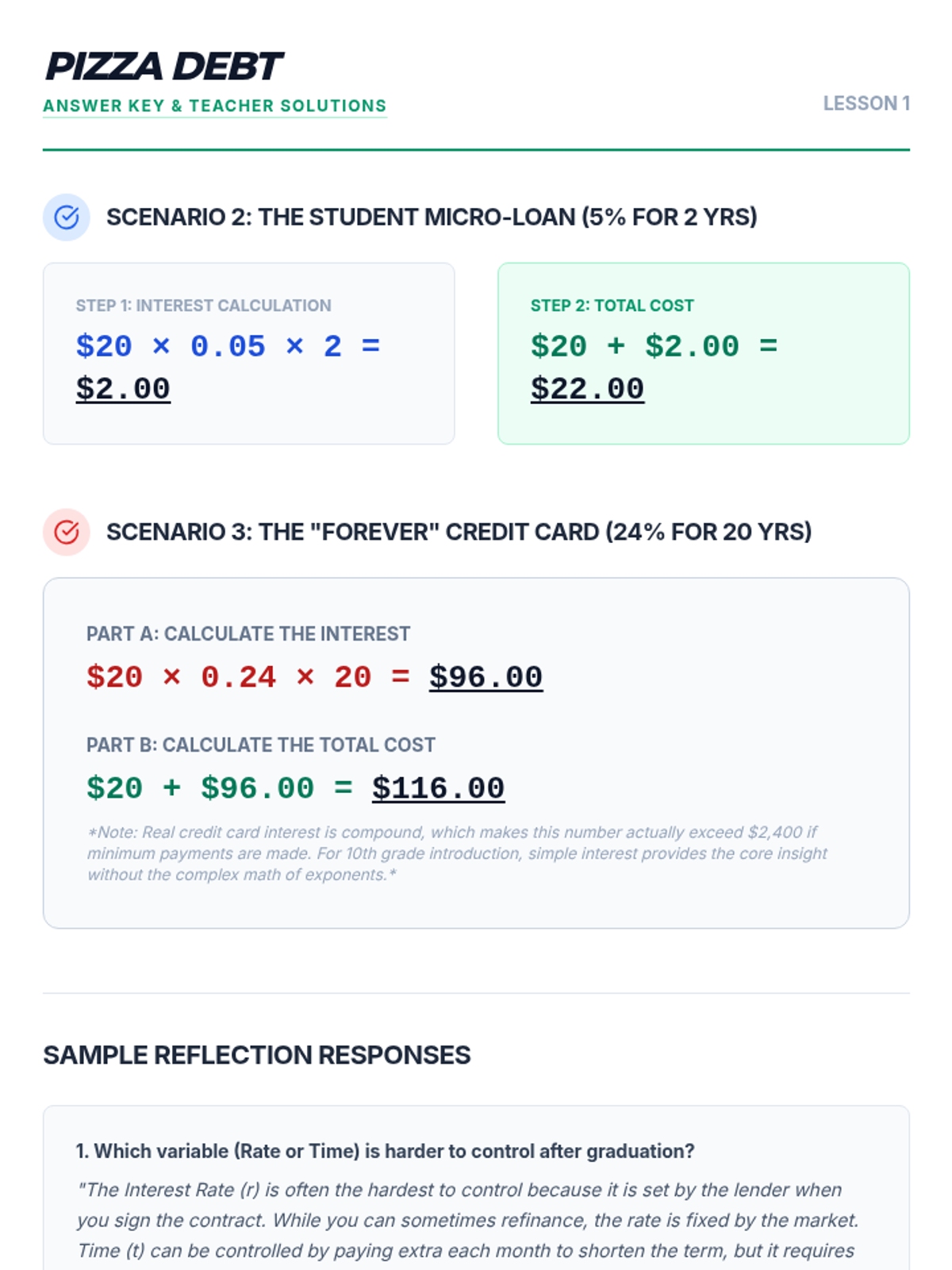
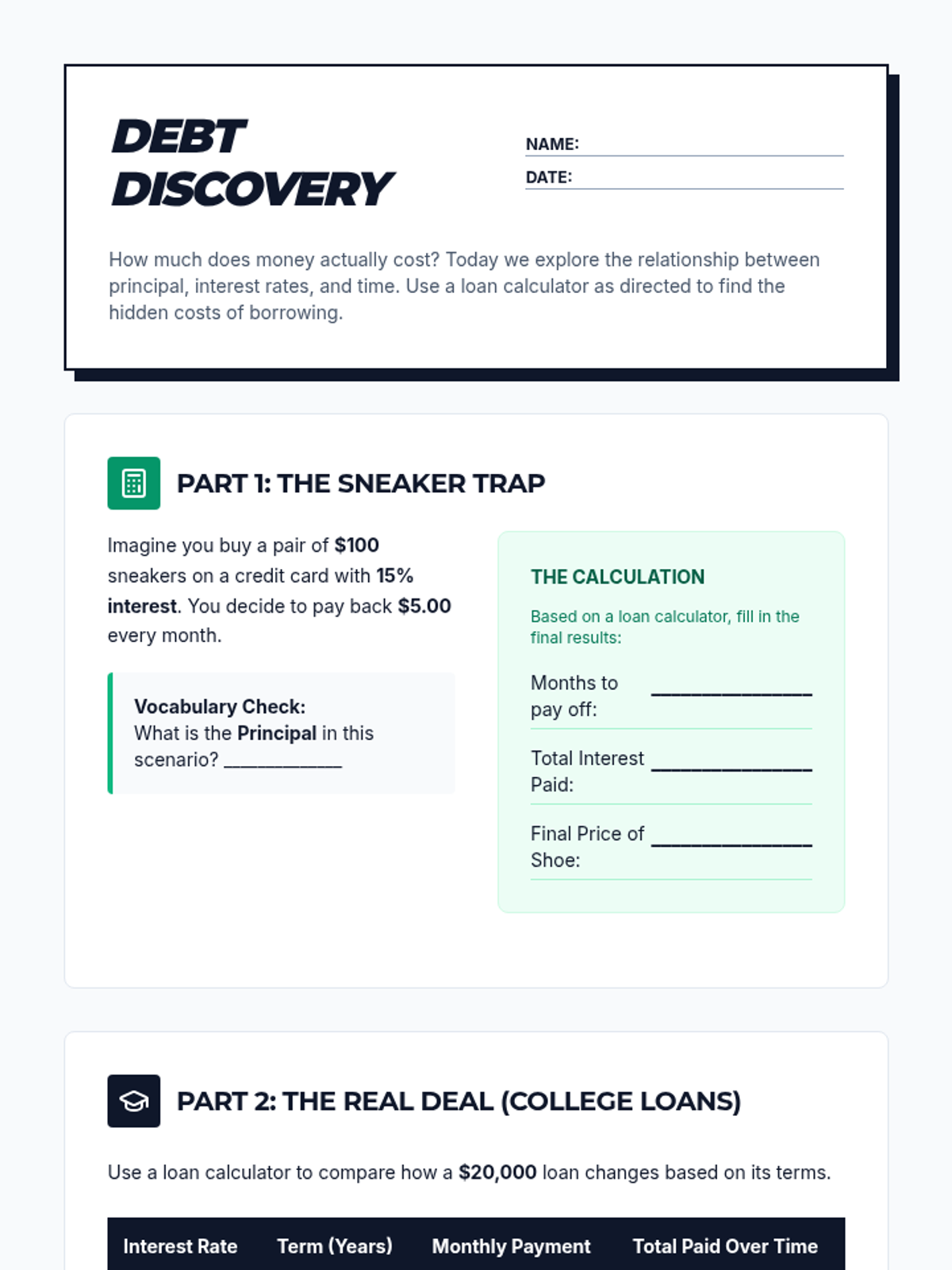
Students explore the basic vocabulary of lending, defining principal, interest rates, and the term of a loan. They perform basic calculations to see how the cost of an item increases when purchased on credit versus cash.
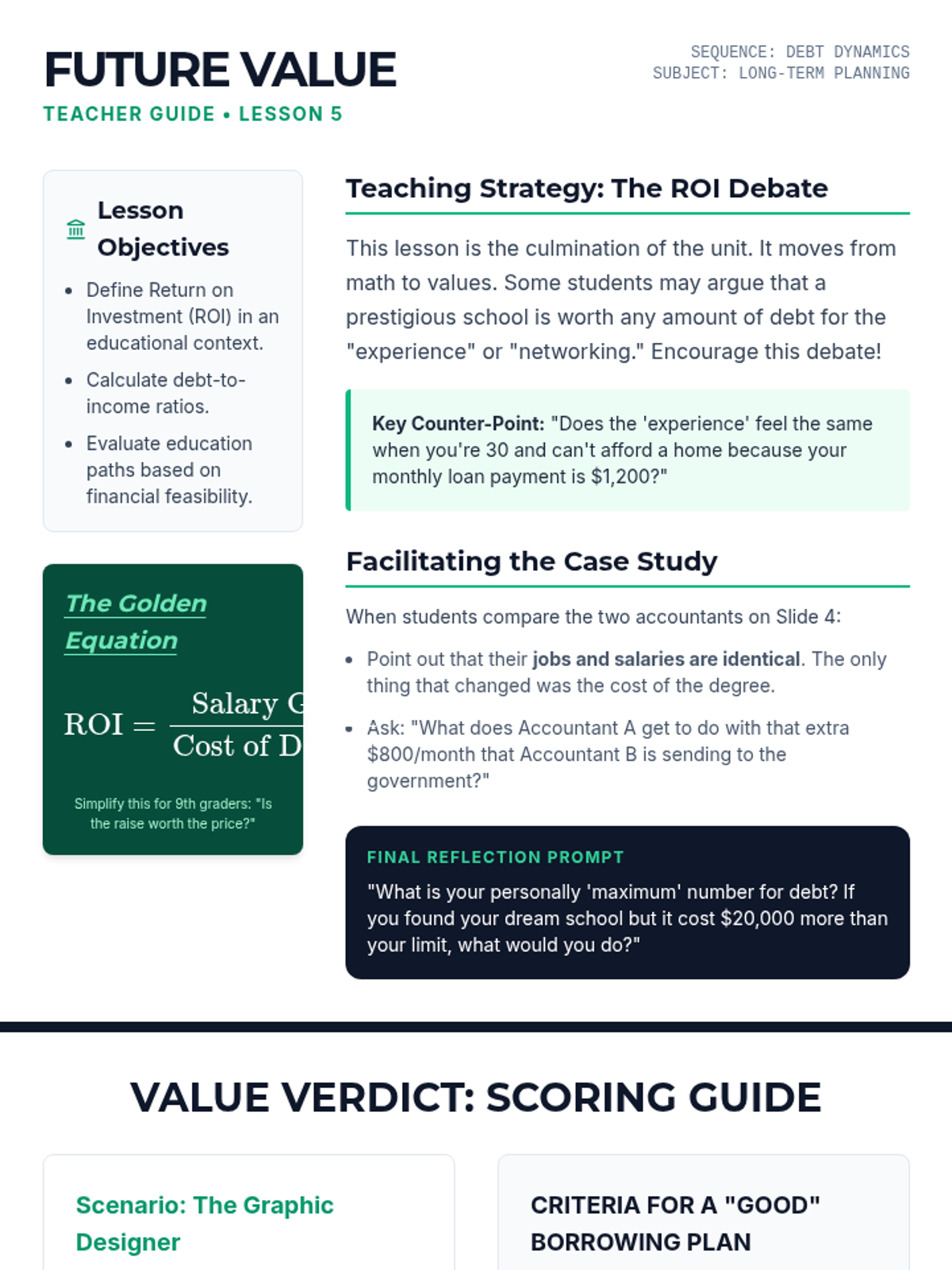
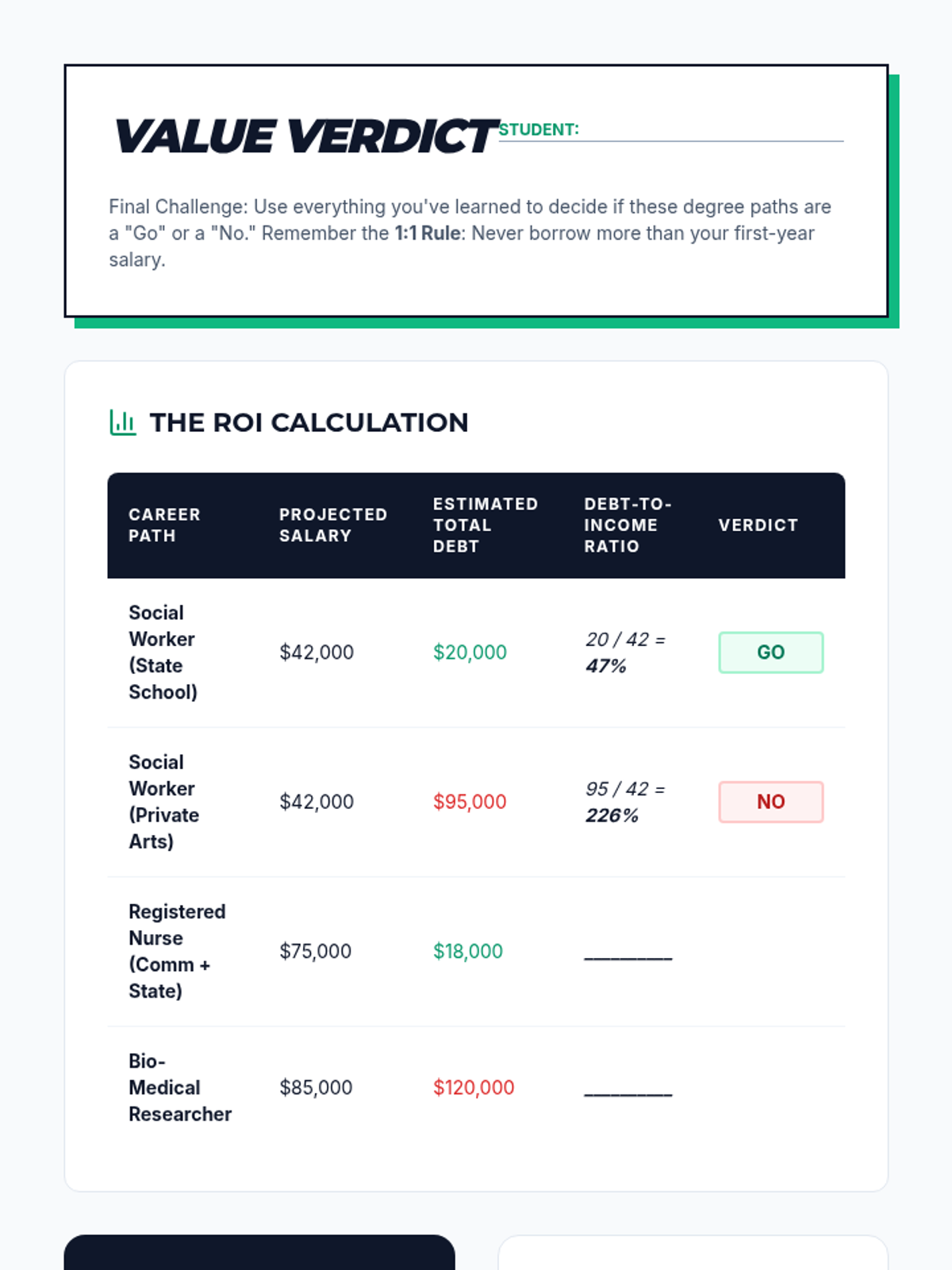
Students evaluate whether specific degrees and colleges are worth the estimated debt load based on projected earnings. They calculate the debt-to-income ratio for various career paths and set personal borrowing guidelines.
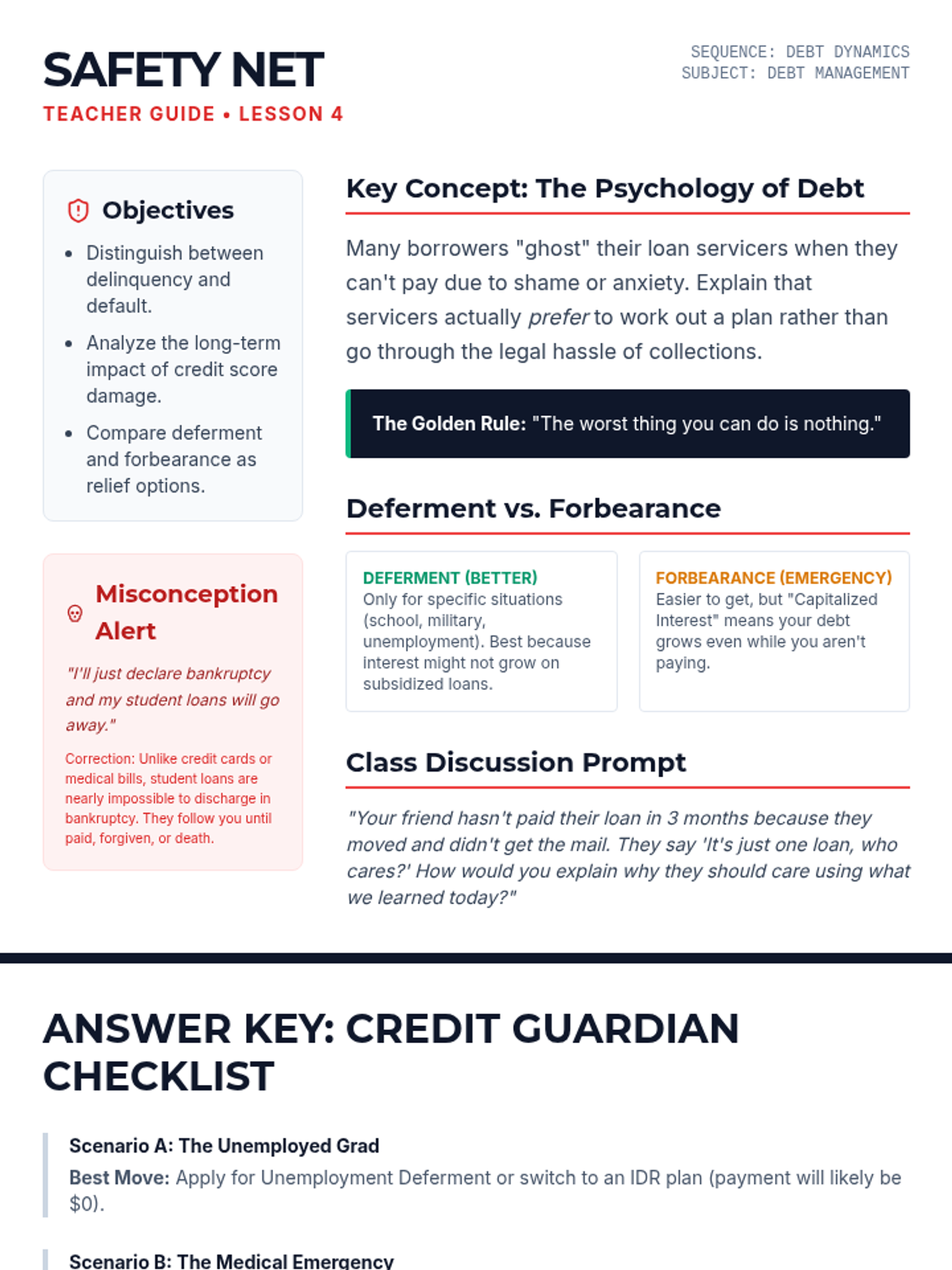
Students examine the consequences of failing to repay student loans, including wage garnishment and credit score damage. They learn about deferment and forbearance as temporary safety nets.
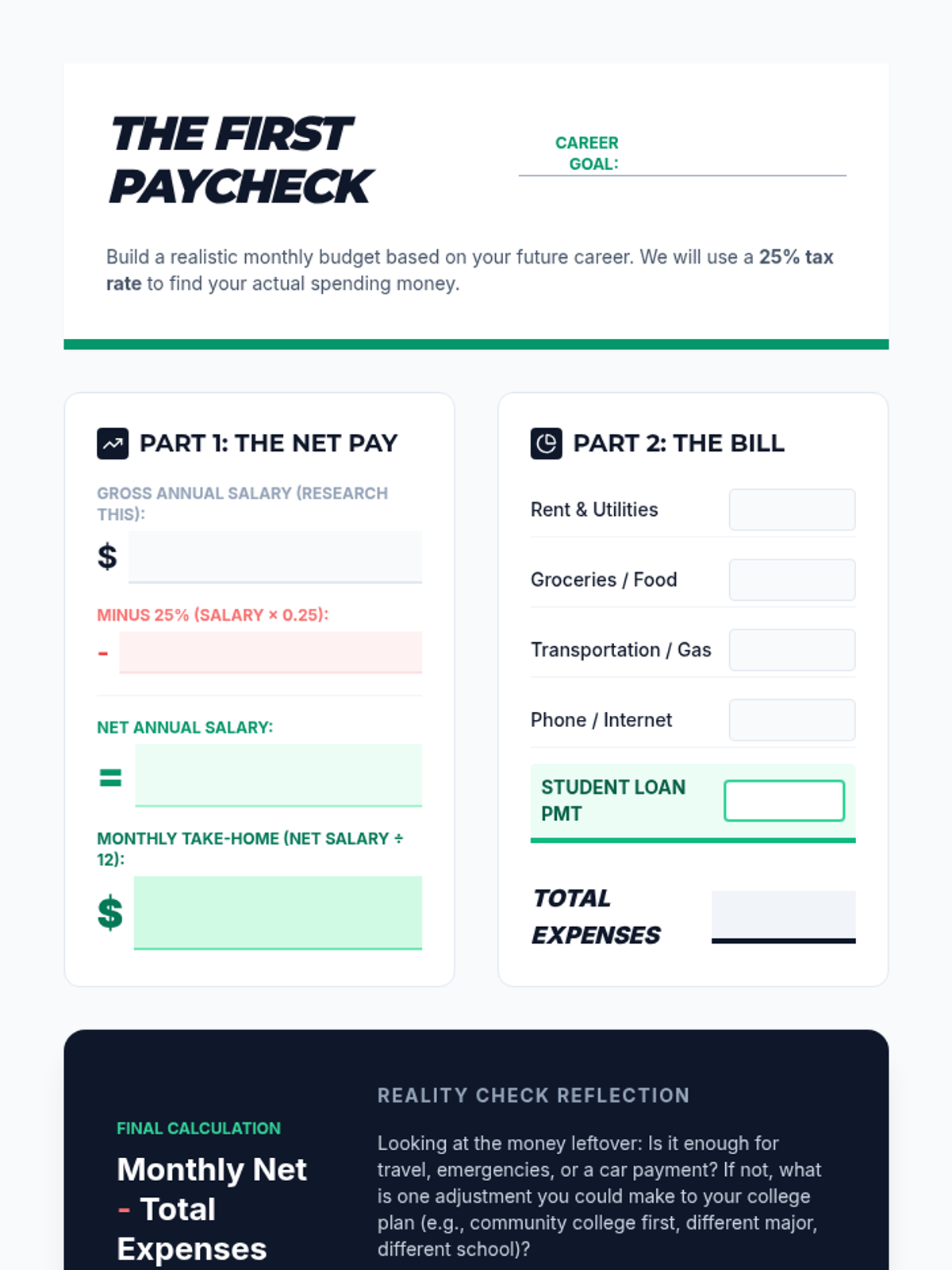
Students integrate student loan payments into a realistic entry-level monthly budget. They research starting salaries for careers of interest and subtract taxes and living expenses to see if the loan payments are affordable.
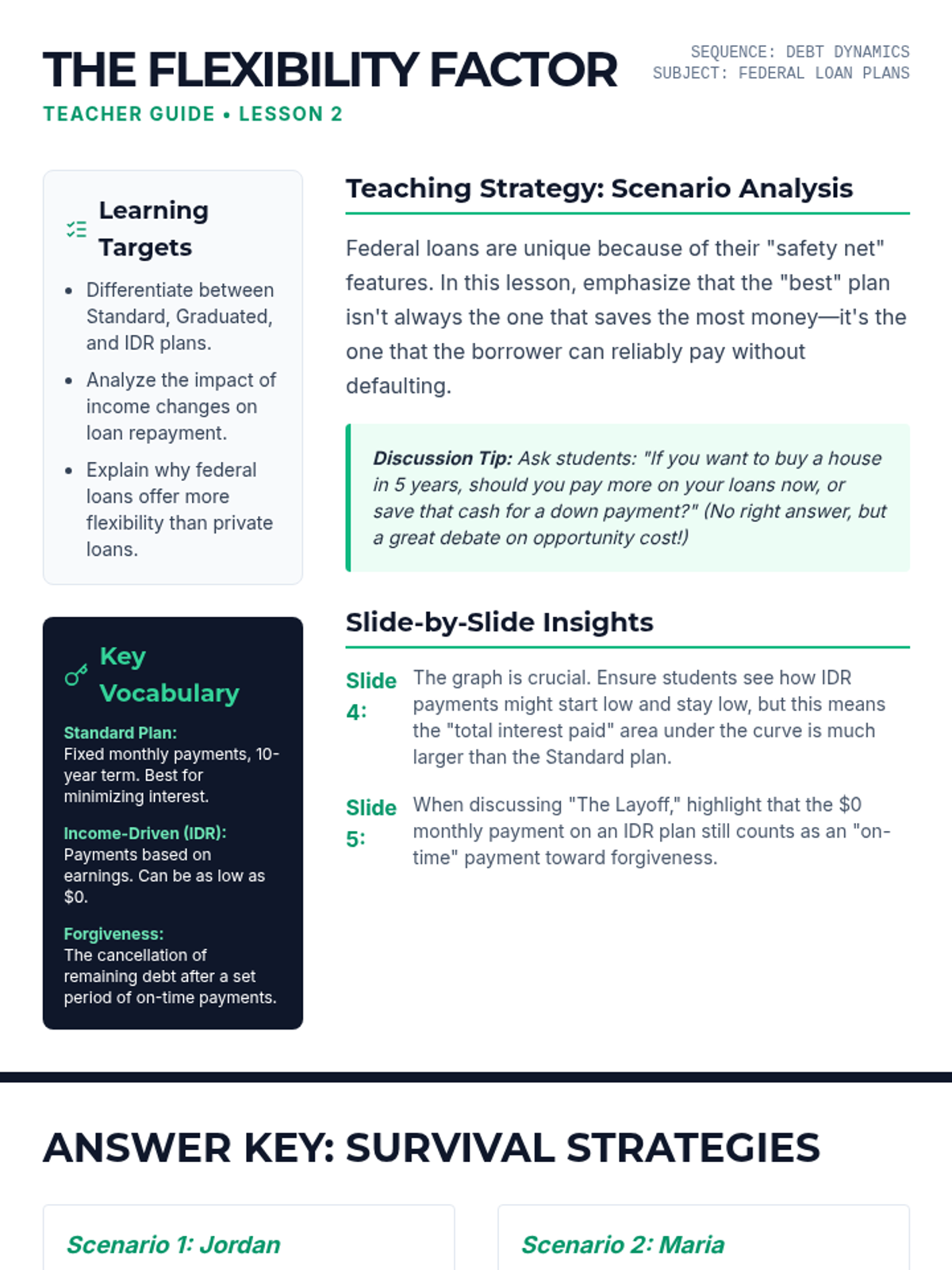
This lesson details various federal loan repayment options (Standard, Graduated, Income-Driven) and helps students determine when to prioritize lower monthly payments over long-term savings.
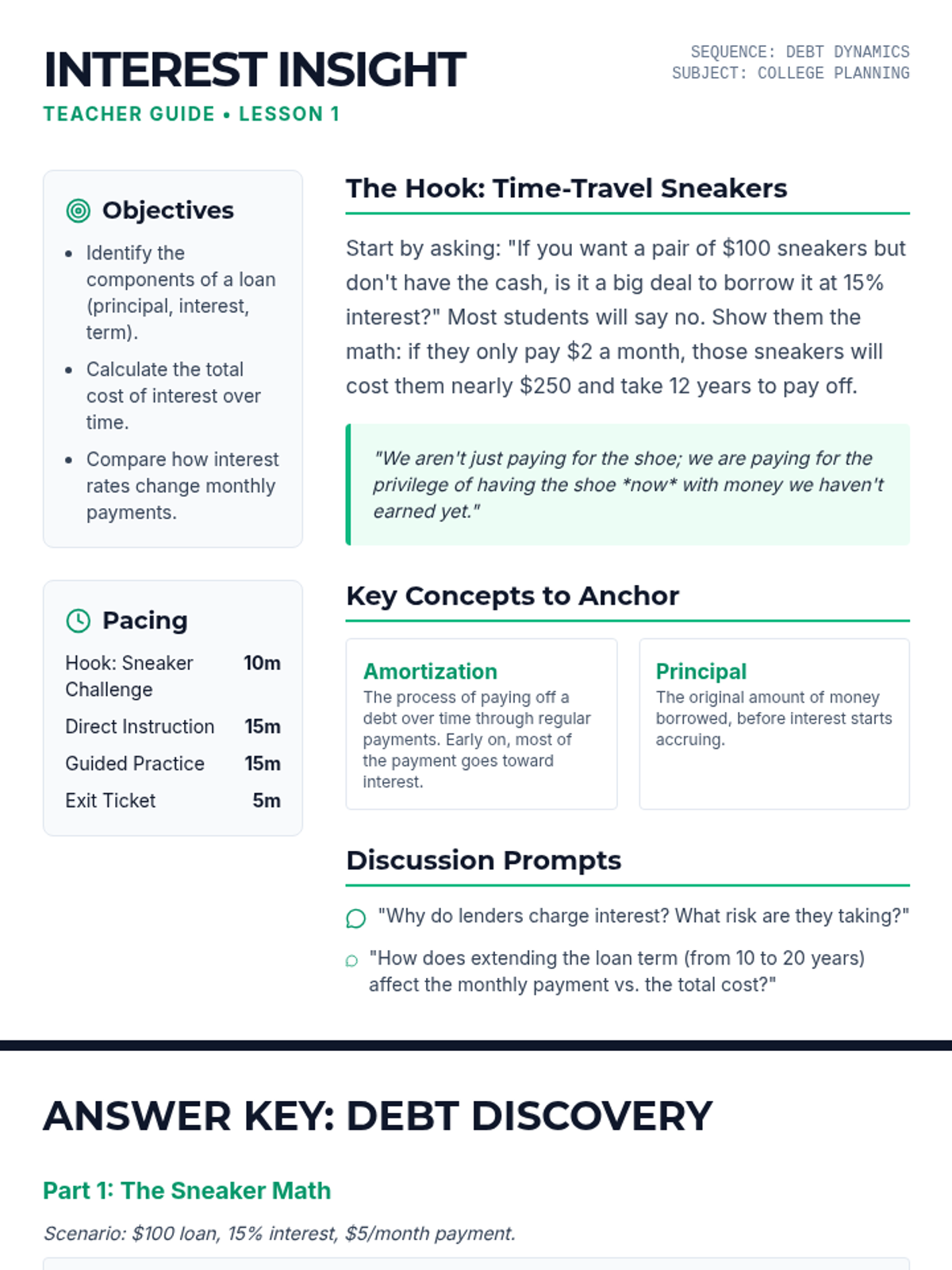
Students use loan calculators to understand how interest rates and loan terms affect the total cost of borrowing, introducing the concept of amortization.
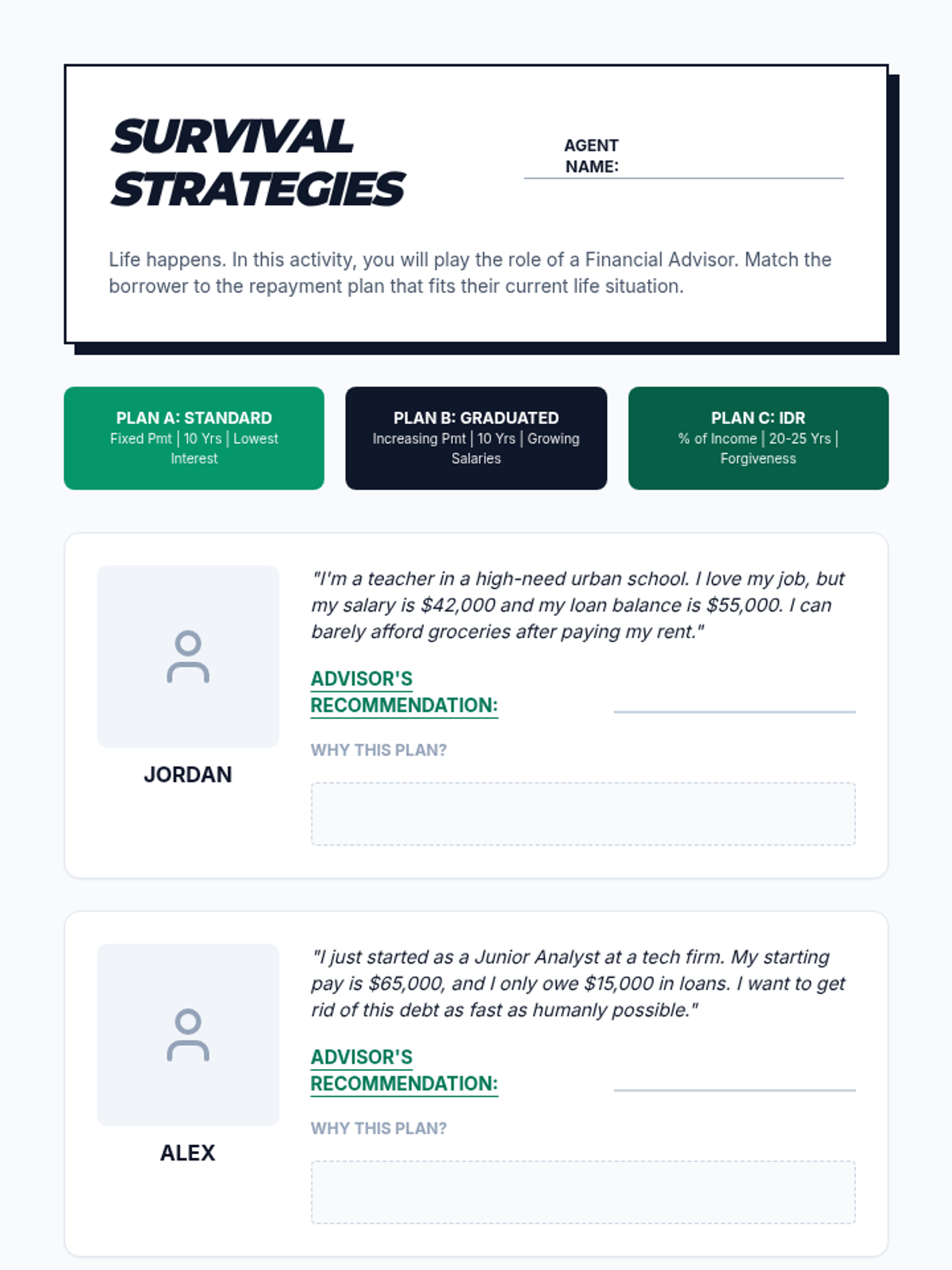
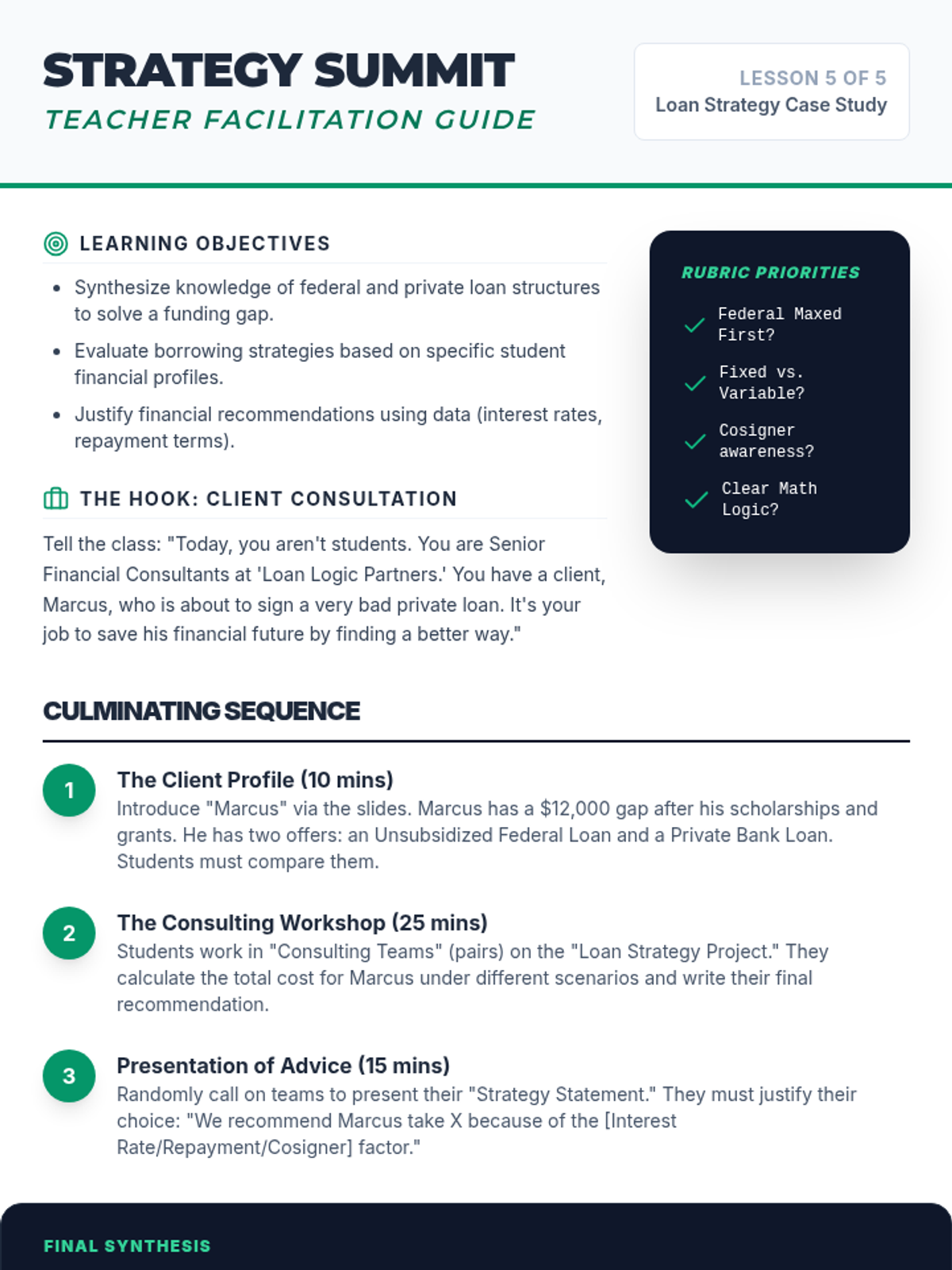
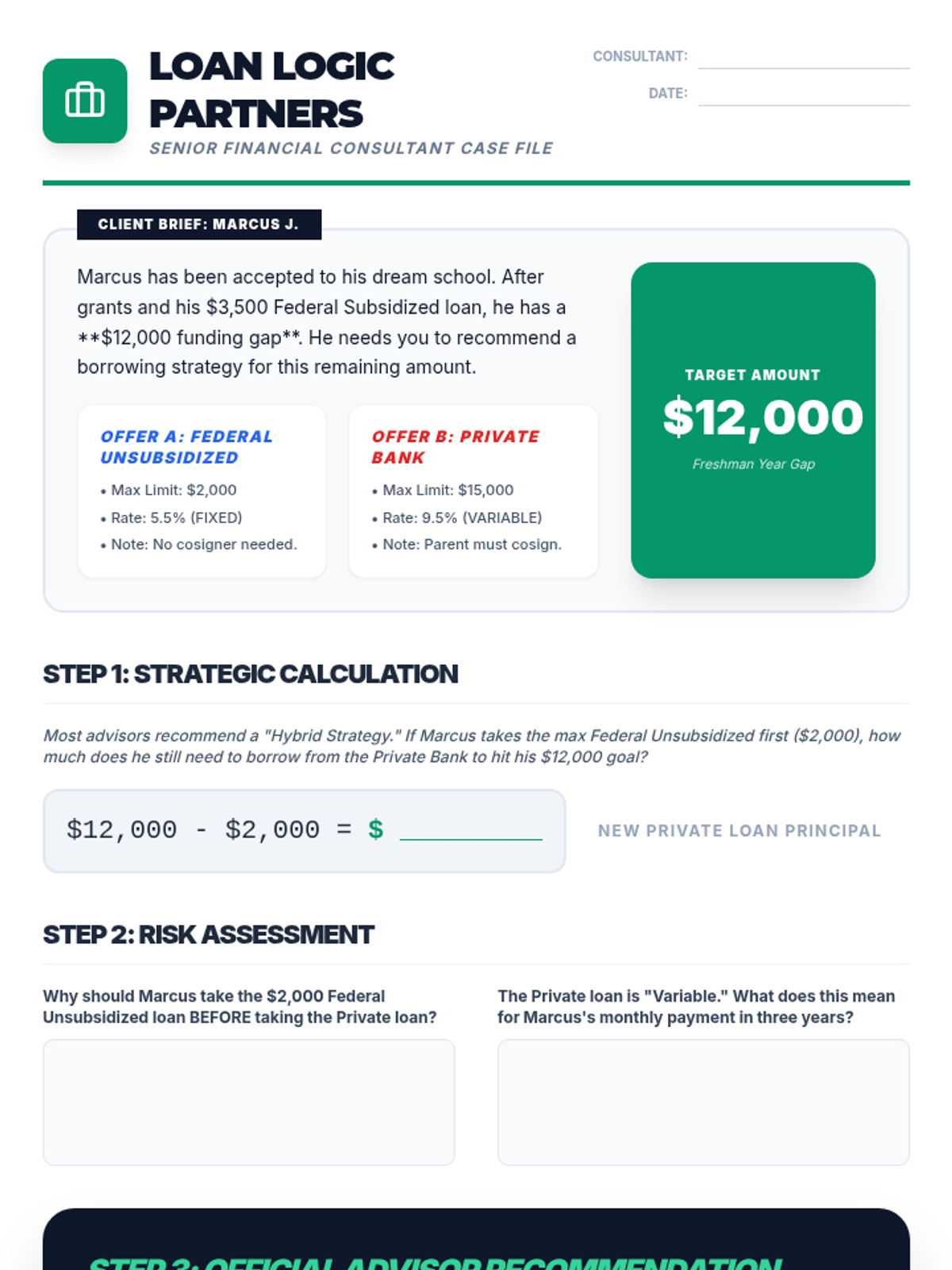
Students act as financial advisors for fictional high school seniors, recommending a mix of federal and private loans based on specific profiles.
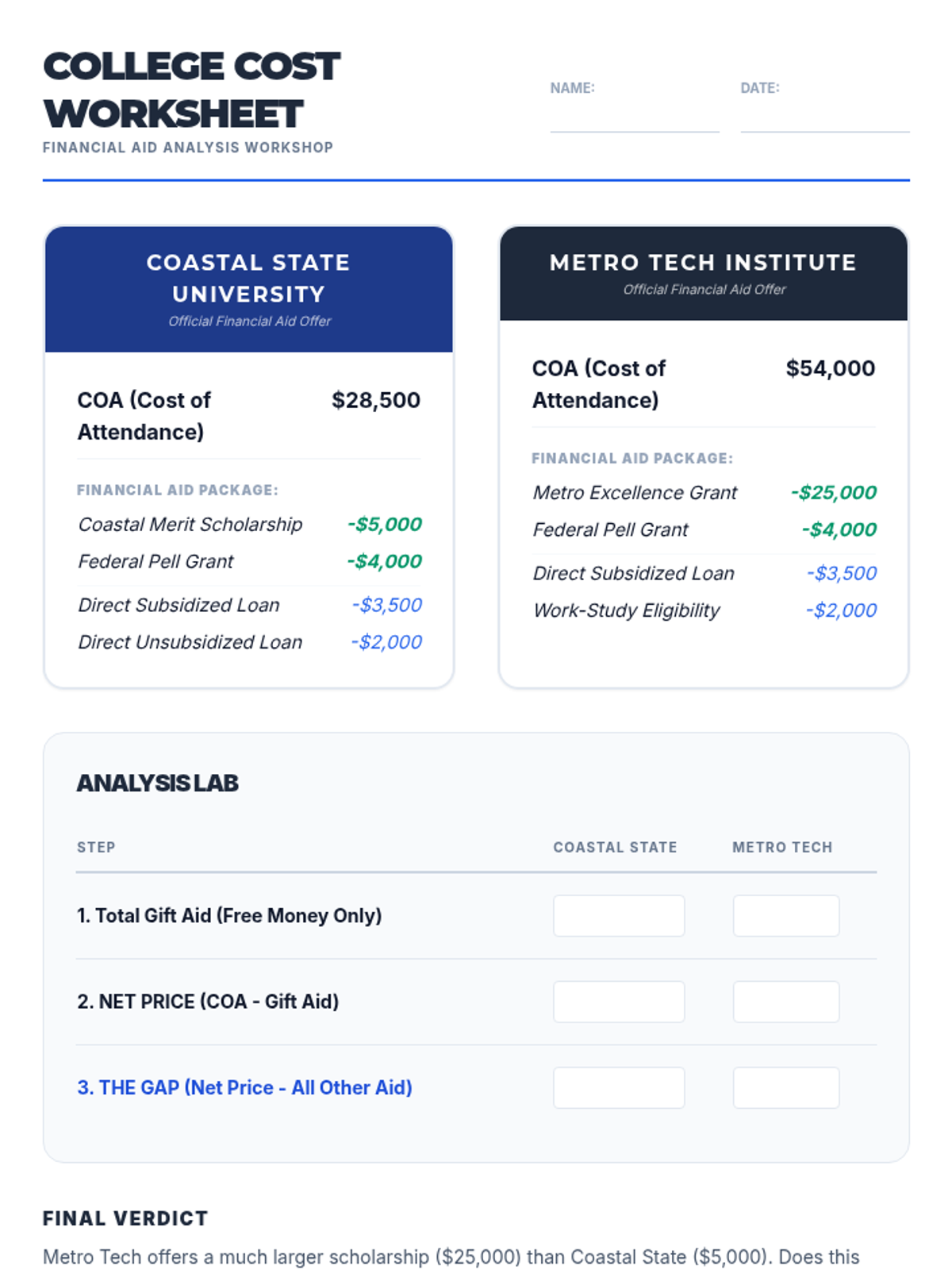
Using sample award letters, students practice identifying the 'net price' and separating loans from grants to determine the true cost of attendance.
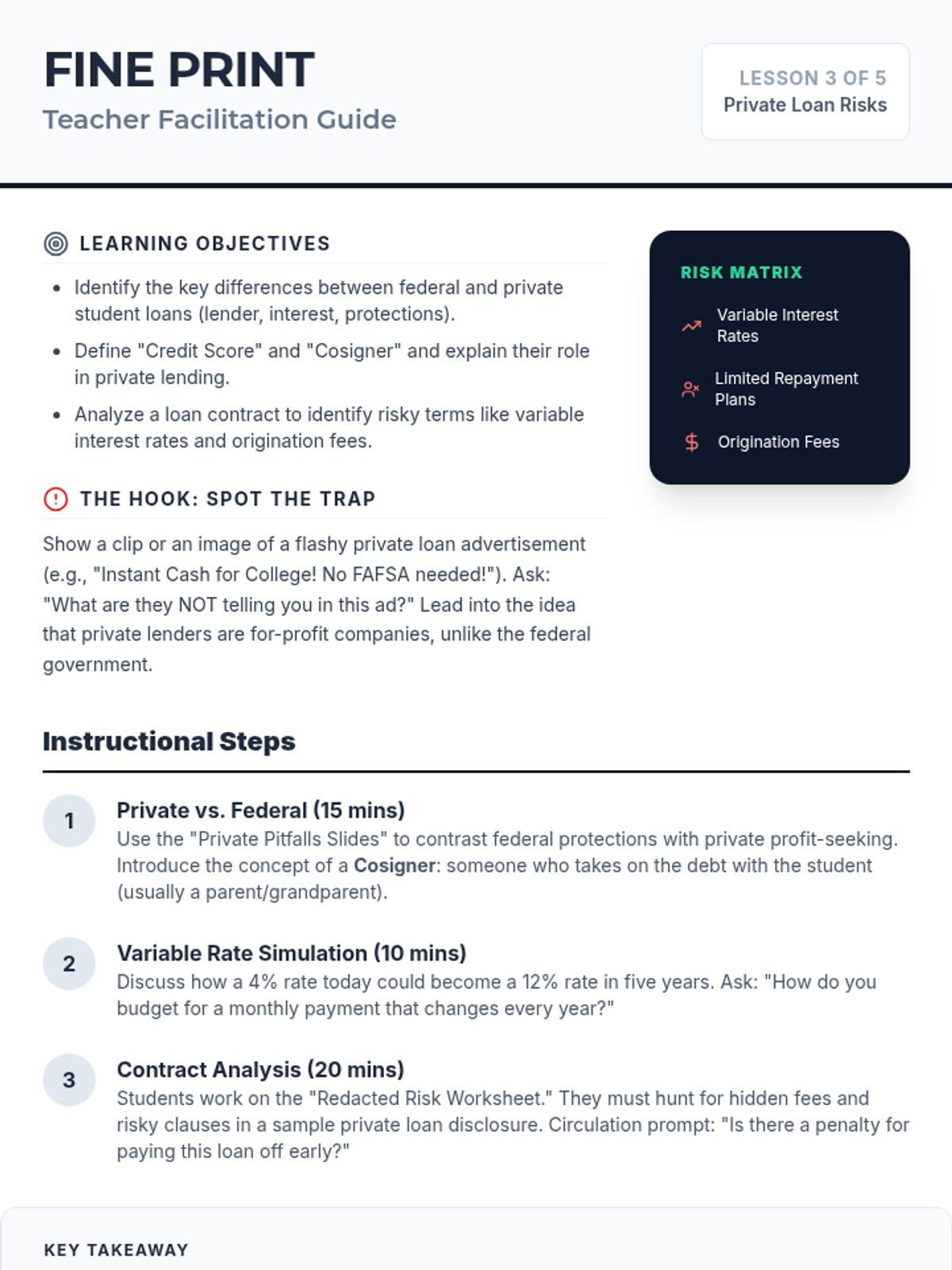
Students investigate the landscape of private student loans, examining the role of credit scores, cosigners, and variable versus fixed interest rates.
This lesson focuses on the Federal Direct Loan program, clarifying the difference between Subsidized and Unsubsidized loans and calculating interest accrual.
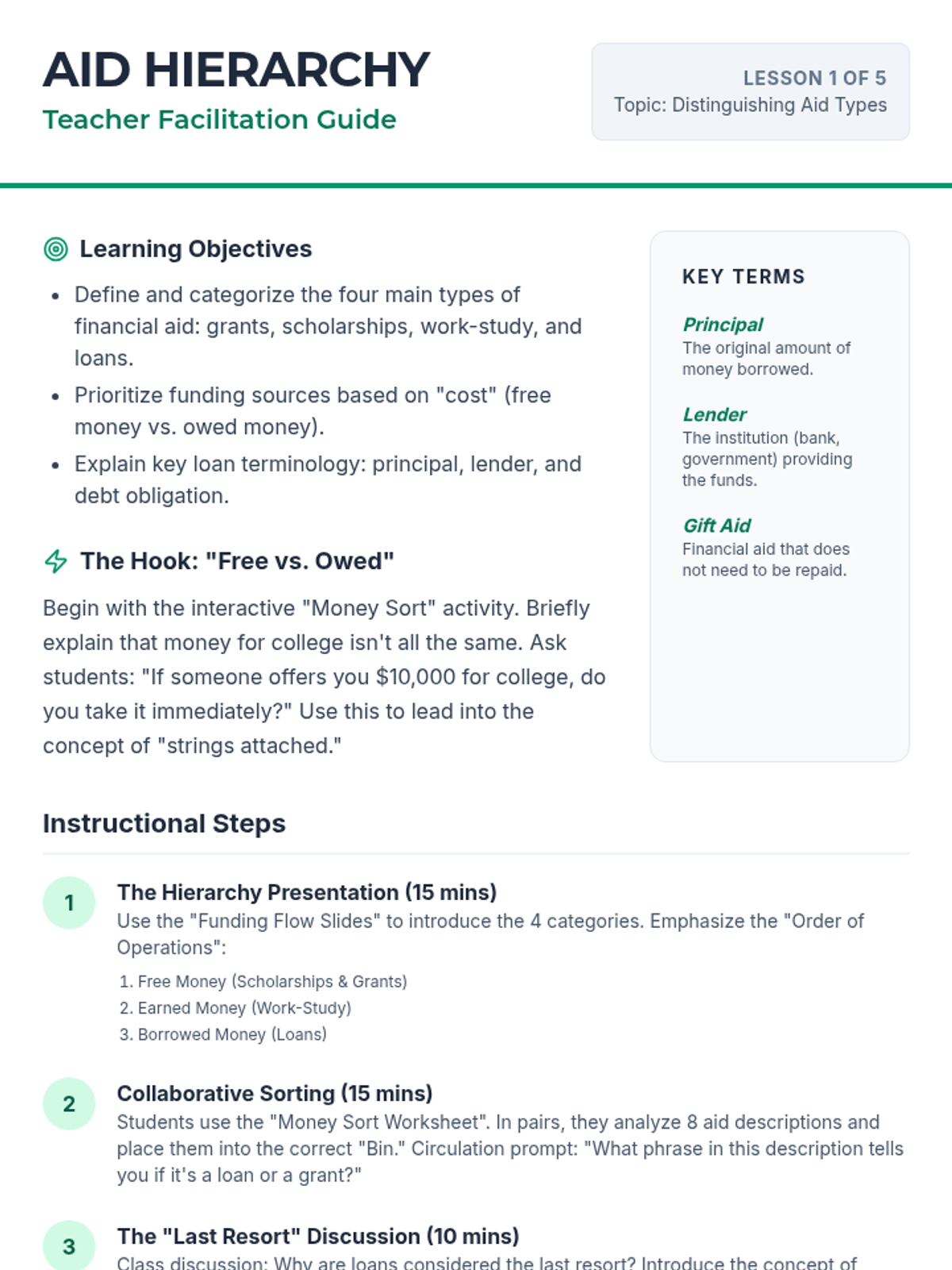
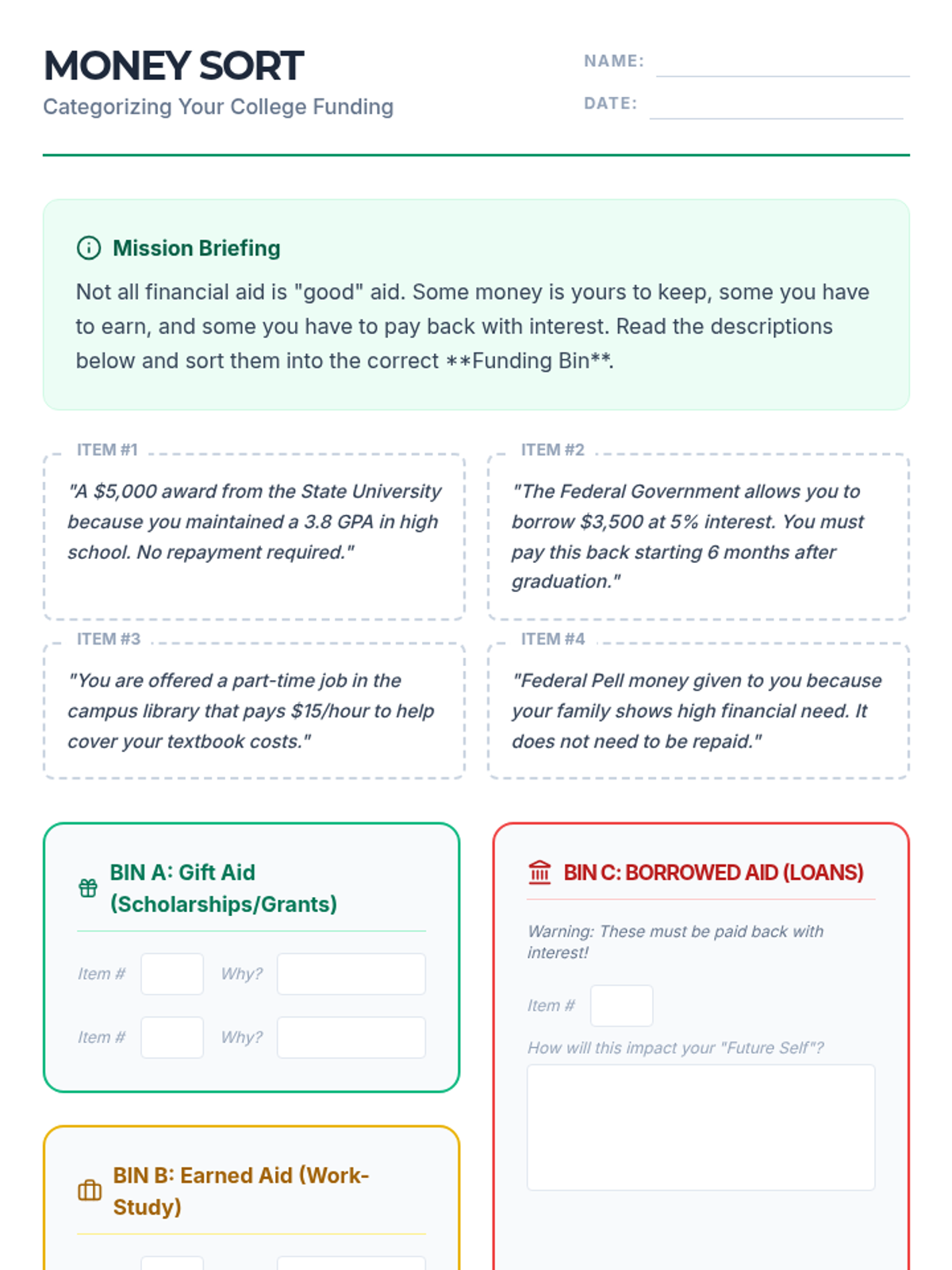
Students explore the hierarchy of funding higher education, categorizing grants, scholarships, work-study, and loans. They analyze why loans should be the last resort and define key terminology.