Employment laws, safety protocols, and legal protections against workplace harassment and discrimination. Connects regulatory requirements to practical understandings of pay stubs, insurance benefits, and employee advocacy.
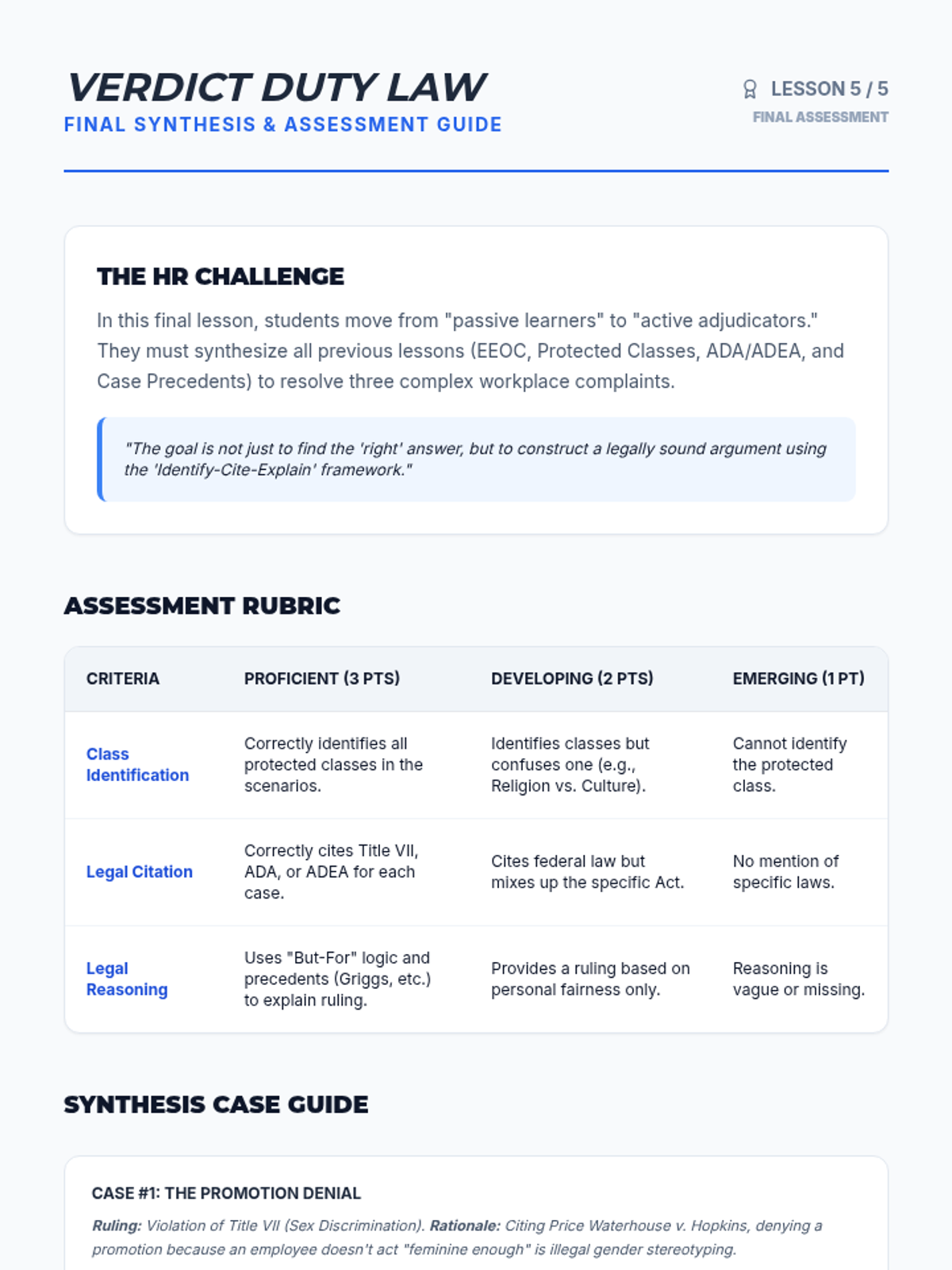
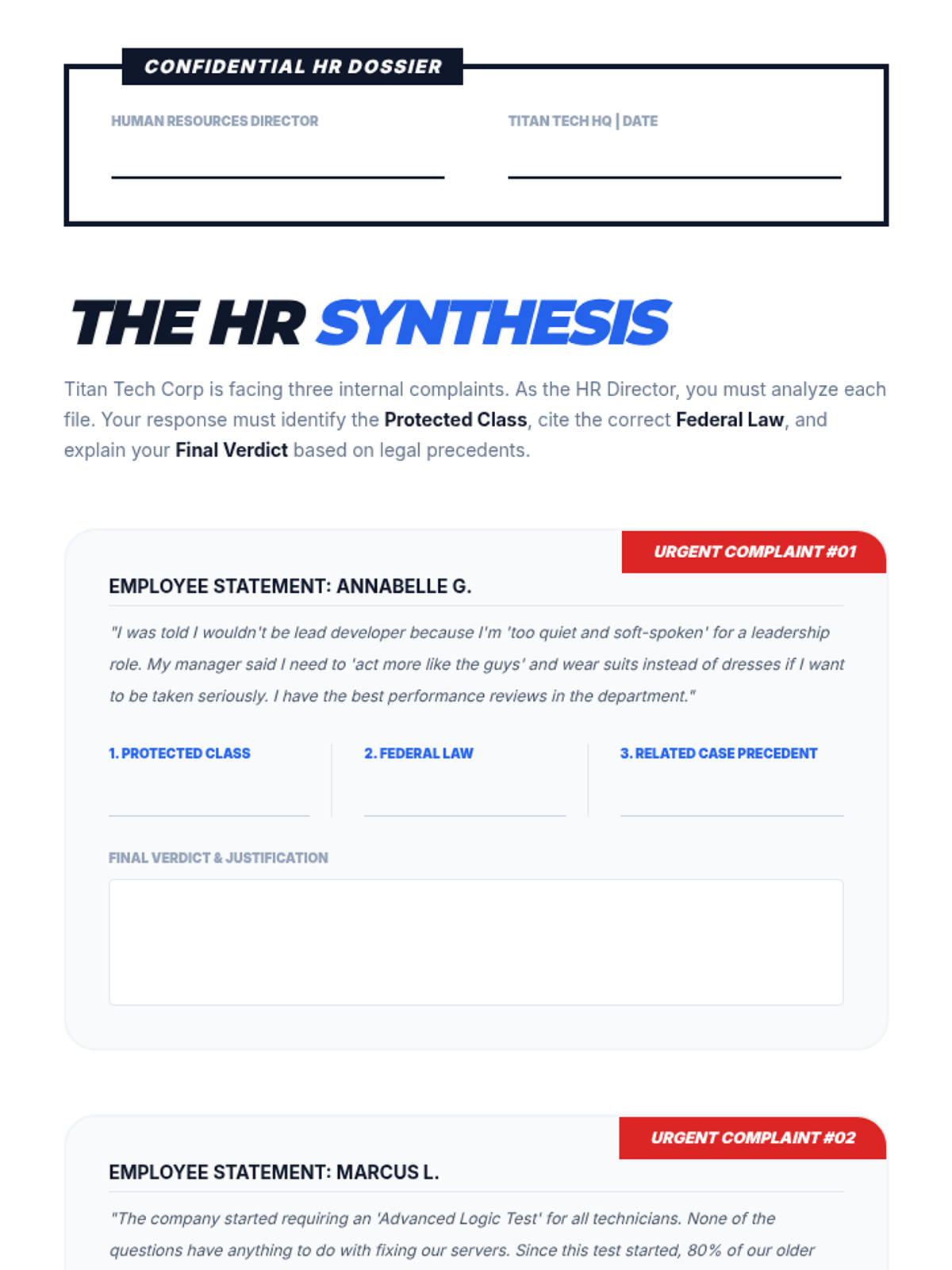
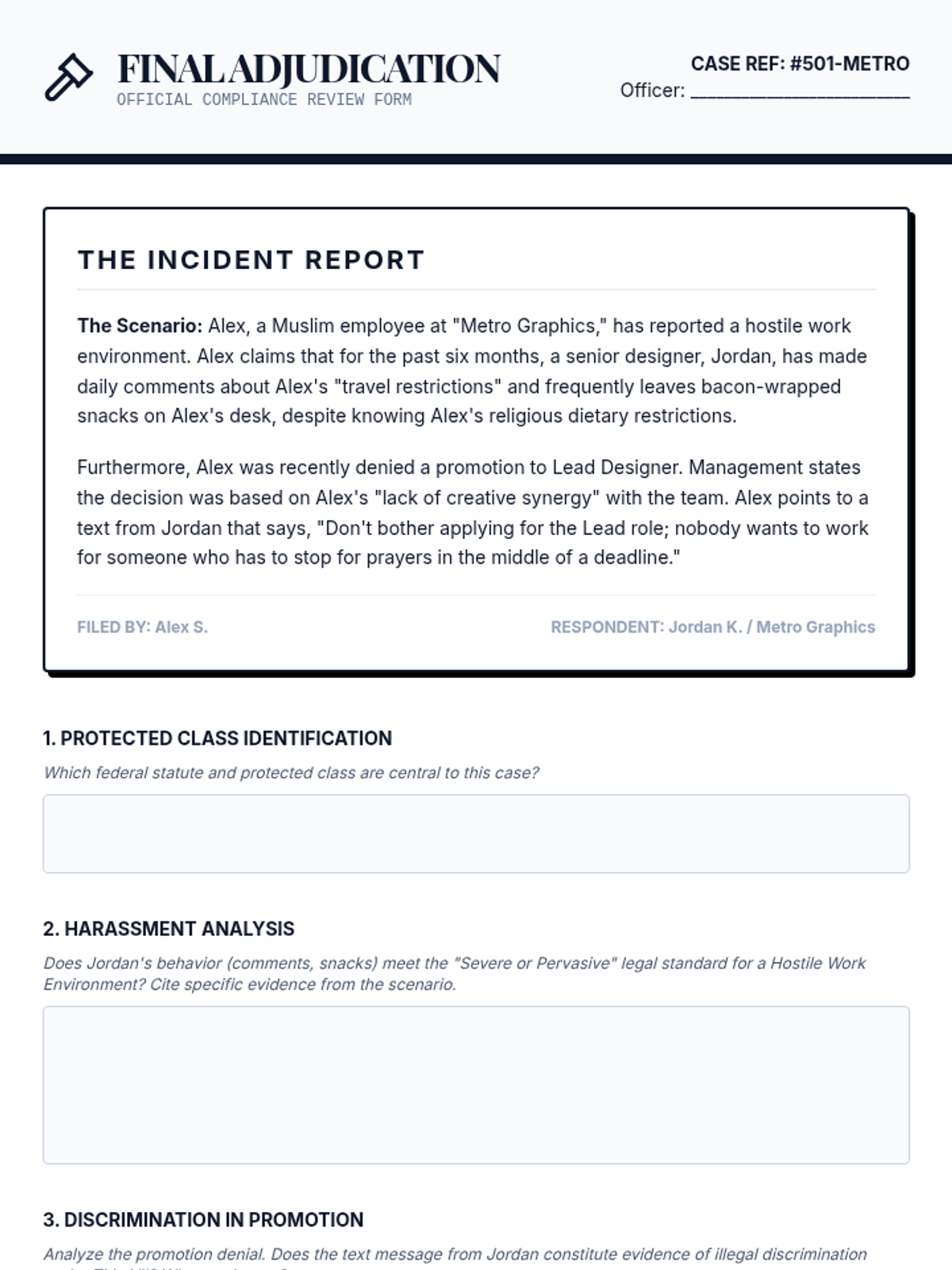
In this culminating lesson, students apply their knowledge to a complex, multi-faceted case study involving potential discrimination. They must draft a mock administrative response citing specific laws and protected classes.
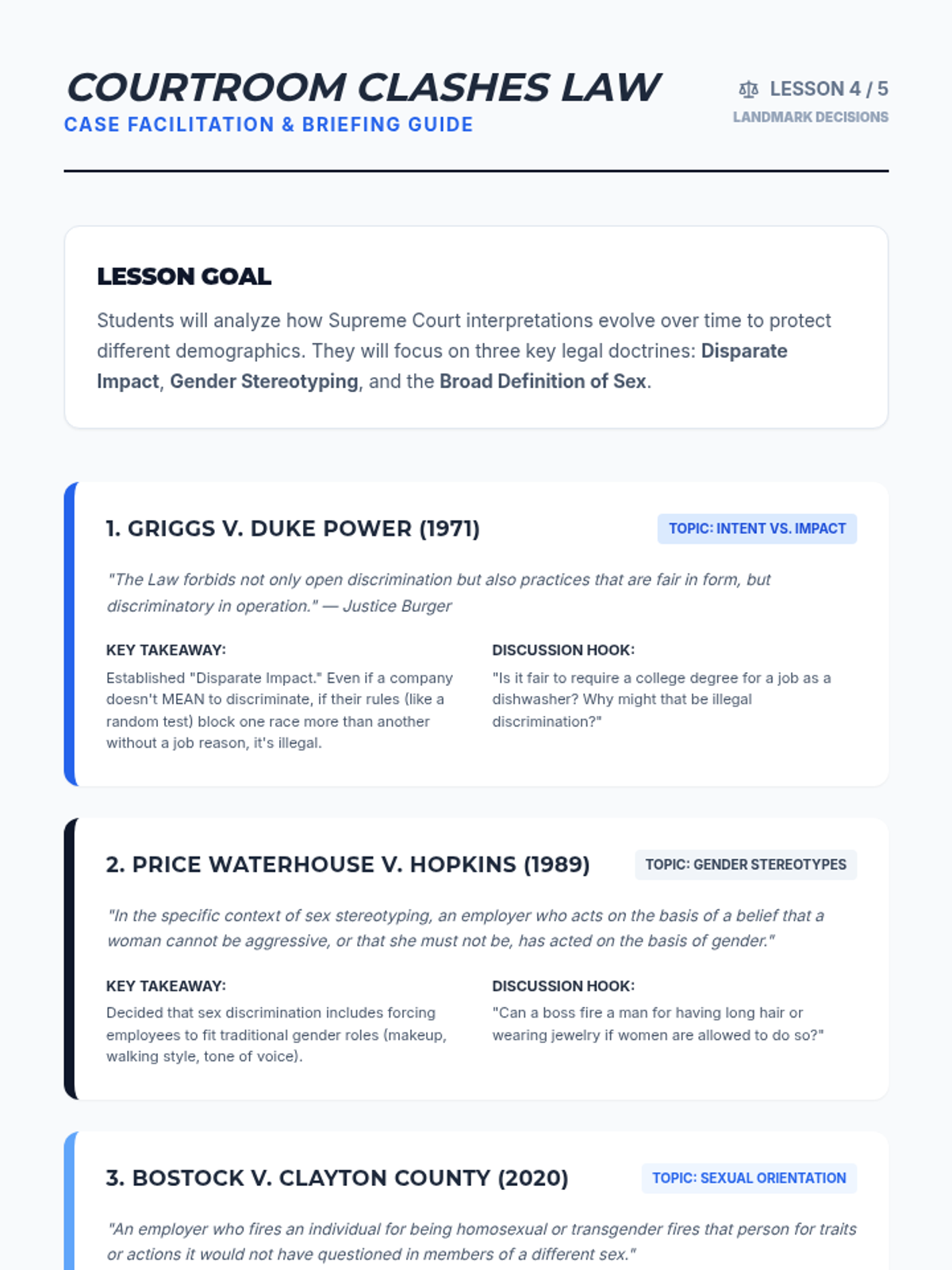
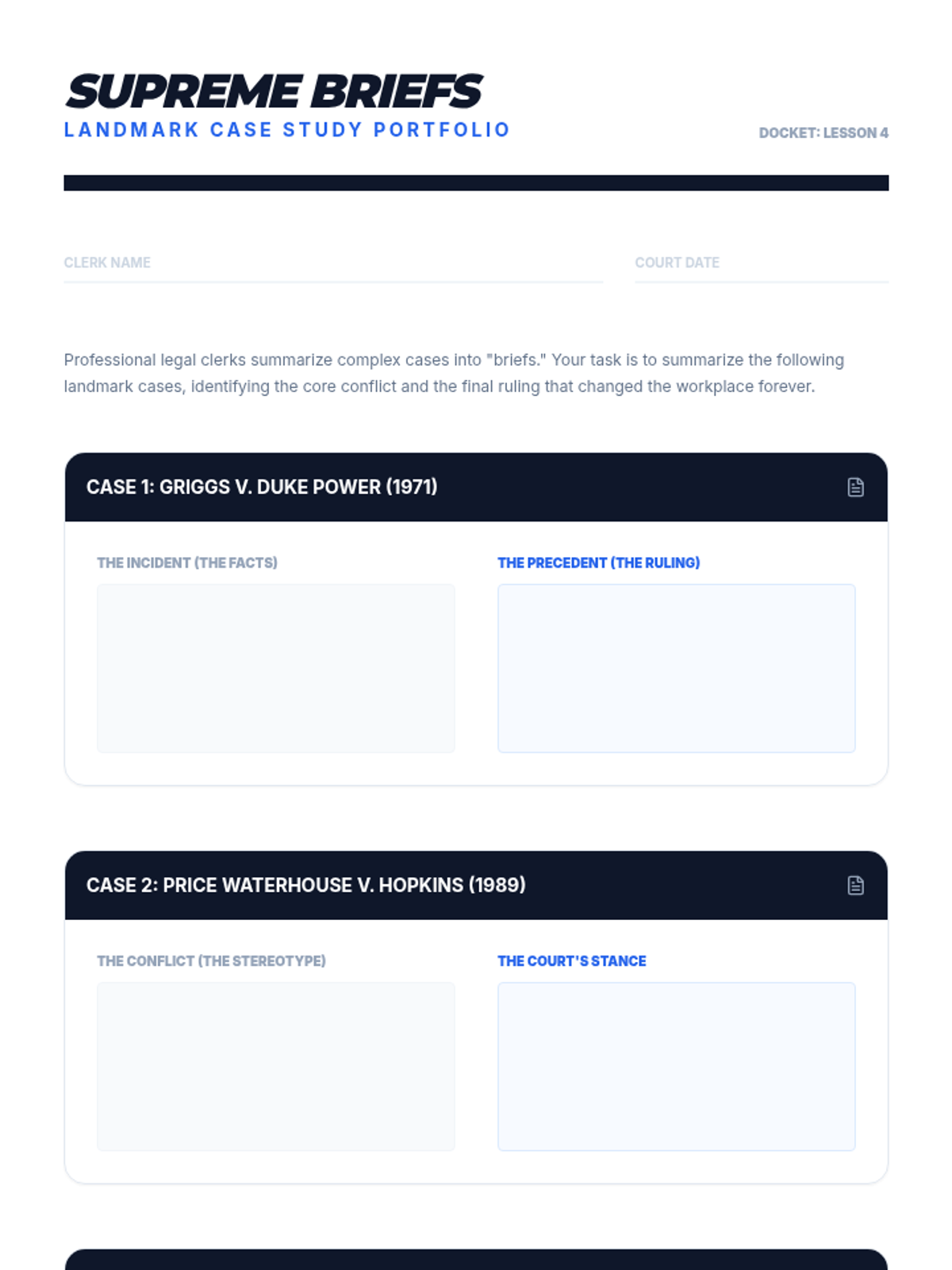
Students review summaries of landmark Supreme Court cases that defined the boundaries of workplace discrimination. Groups present their findings on how these rulings impact current workplace policies.
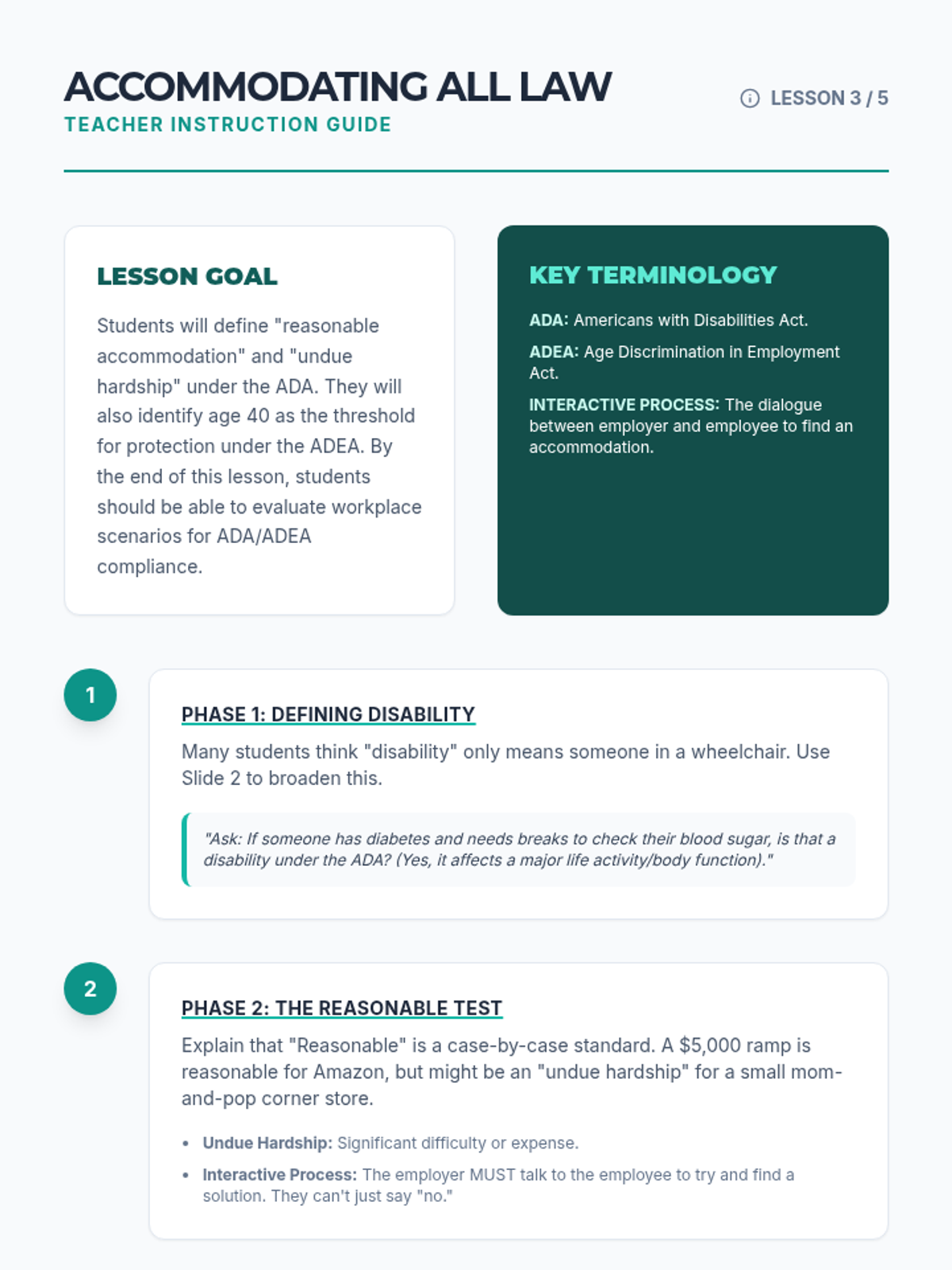
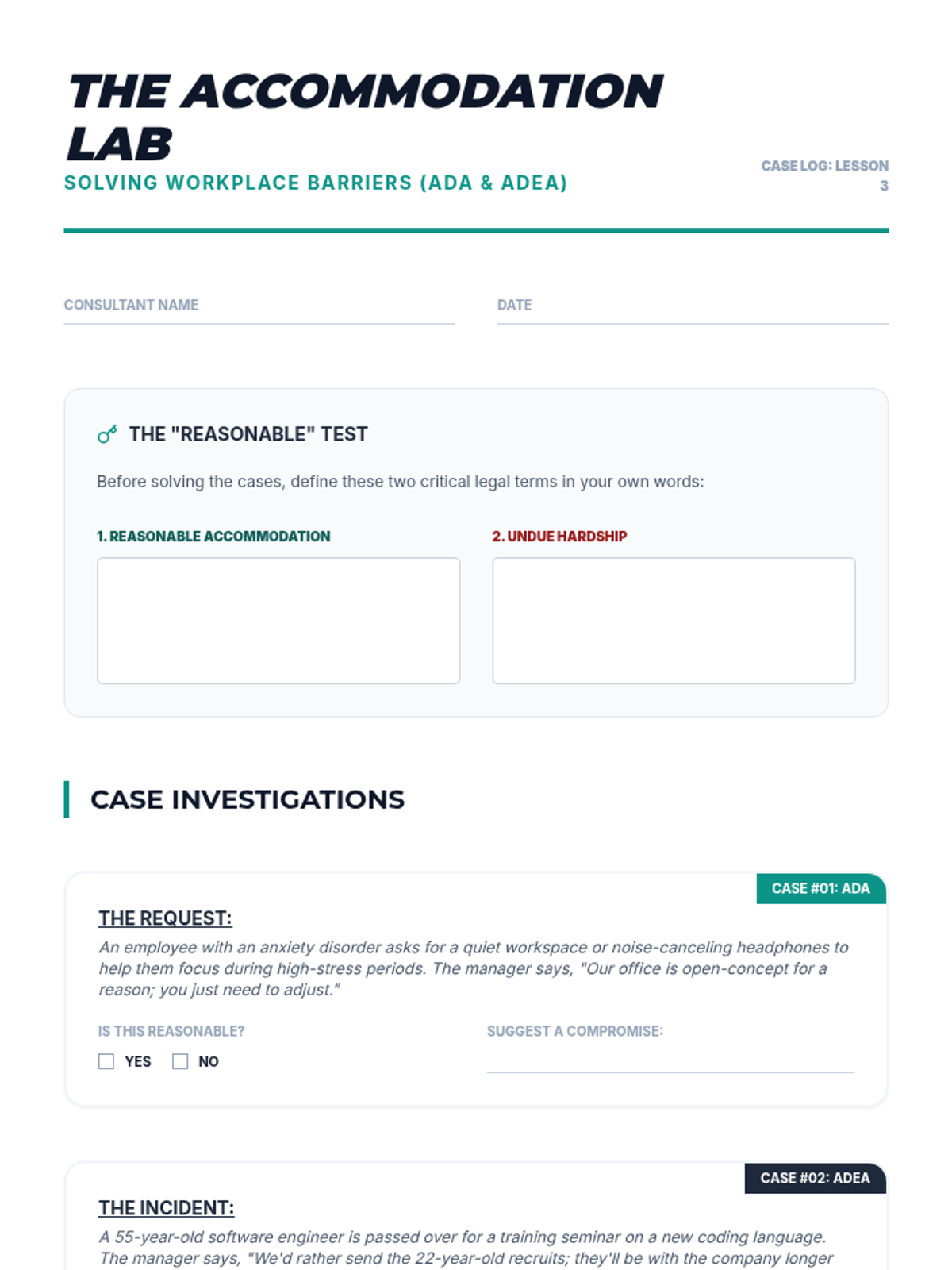
Focusing specifically on the Americans with Disabilities Act (ADA) and the Age Discrimination in Employment Act (ADEA), students explore the concepts of 'reasonable accommodation' and age-based bias. They work through scenarios to determine what counts as a reasonable accommodation.
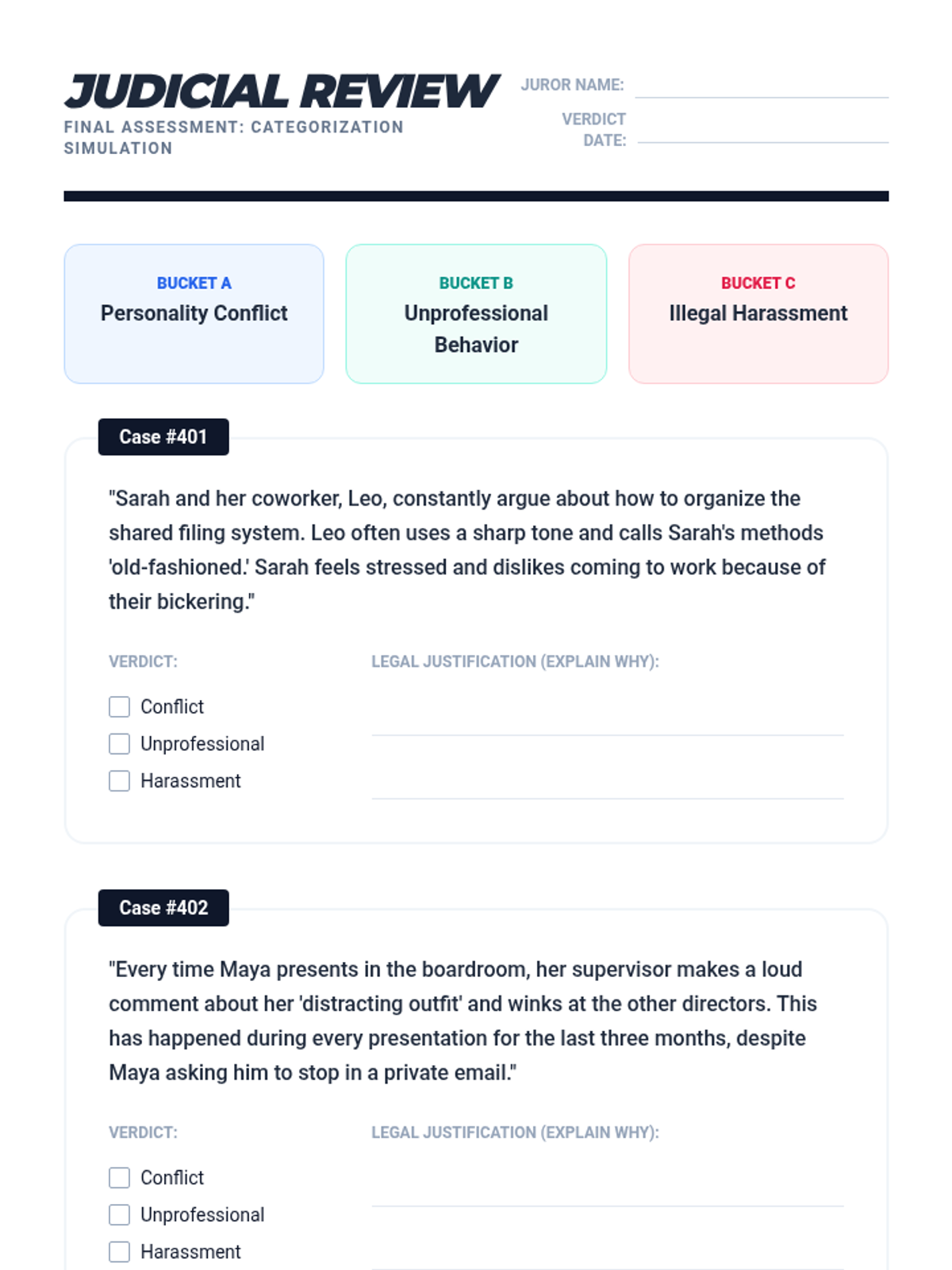
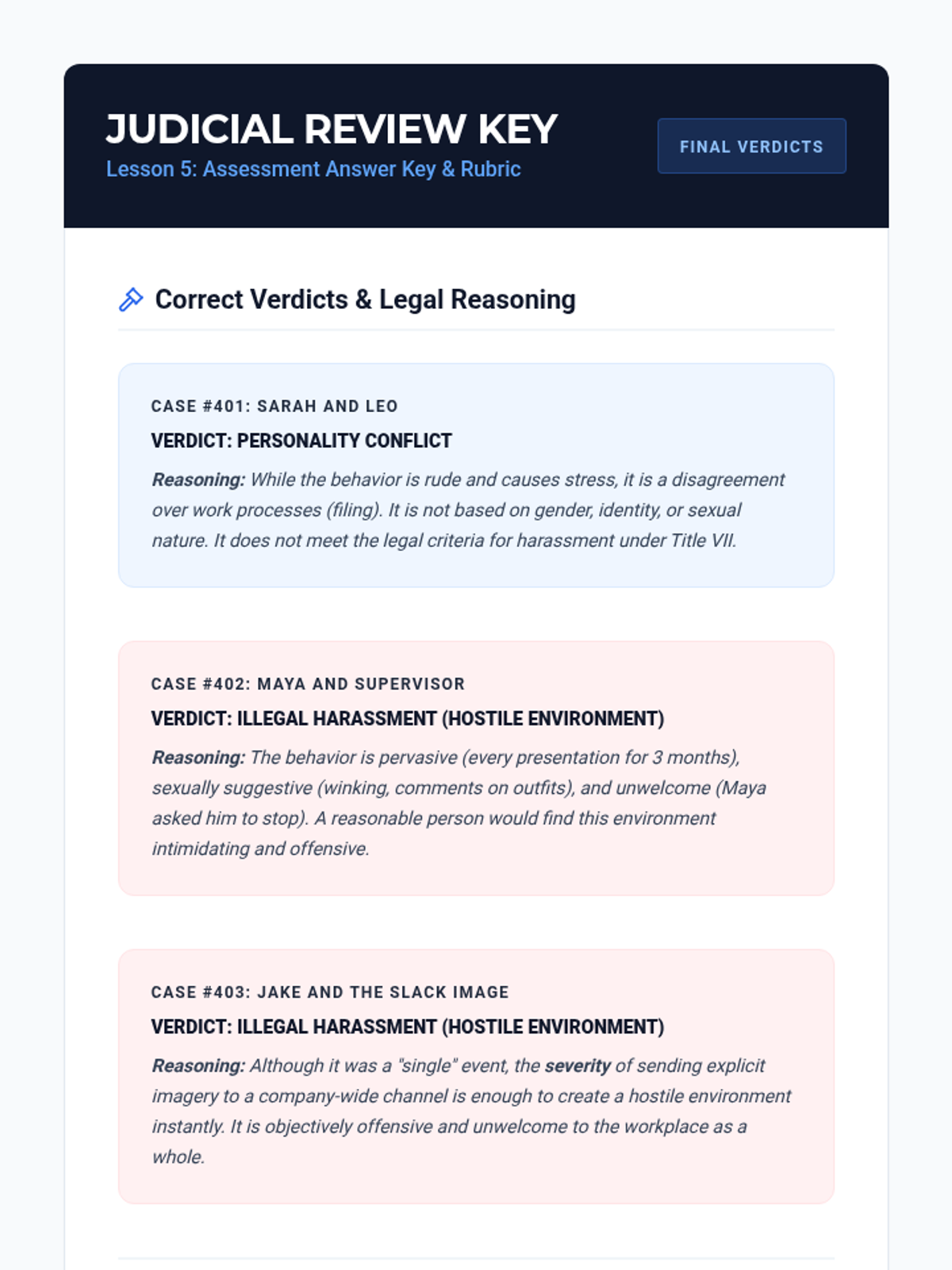
Students participate in a 'judicial review' simulation where they categorize complex scenarios as 'Personality Conflict,' 'Unprofessional,' or 'Illegal Harassment.' They must justify their categorization using criteria learned in the sequence.
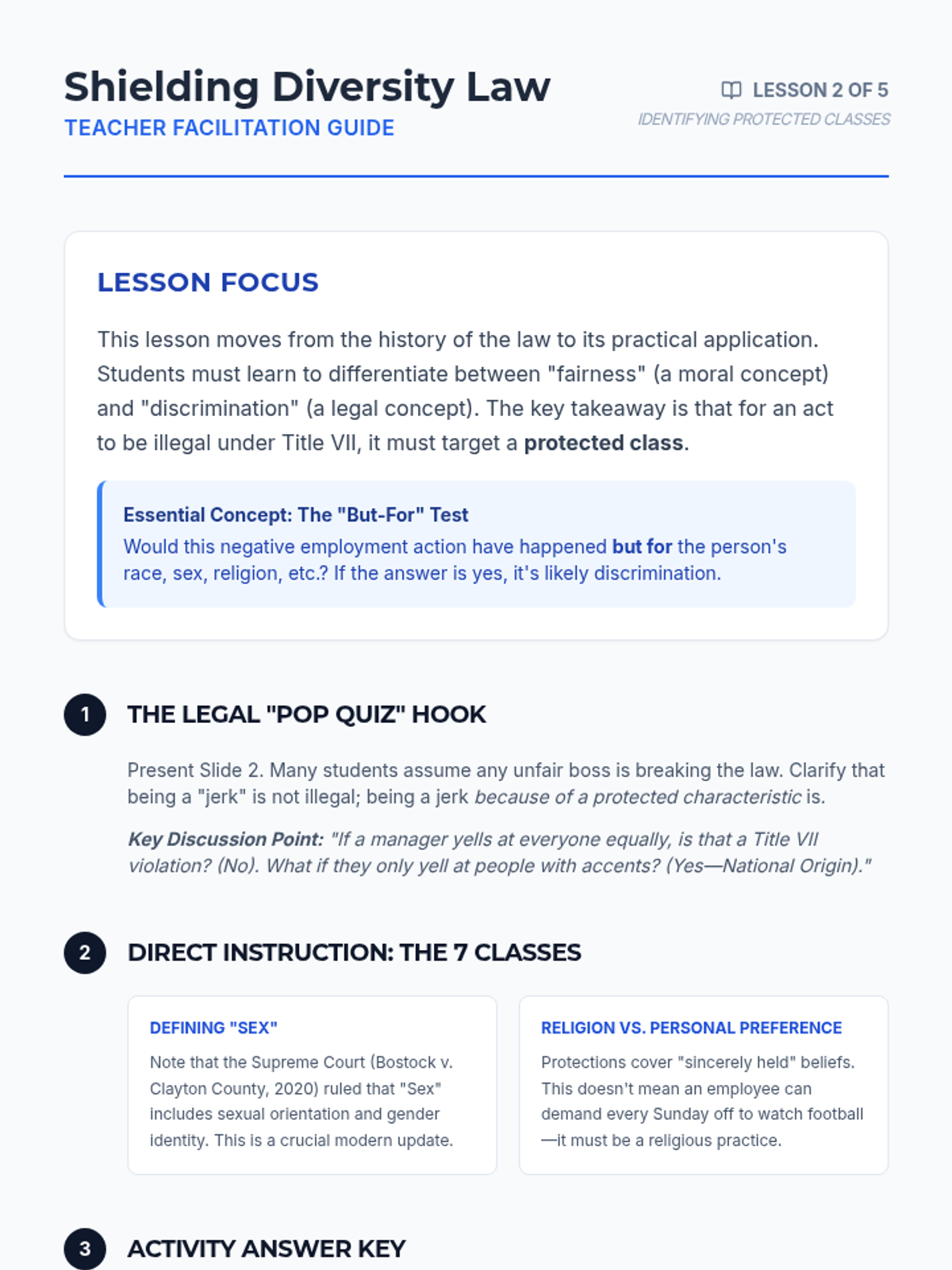
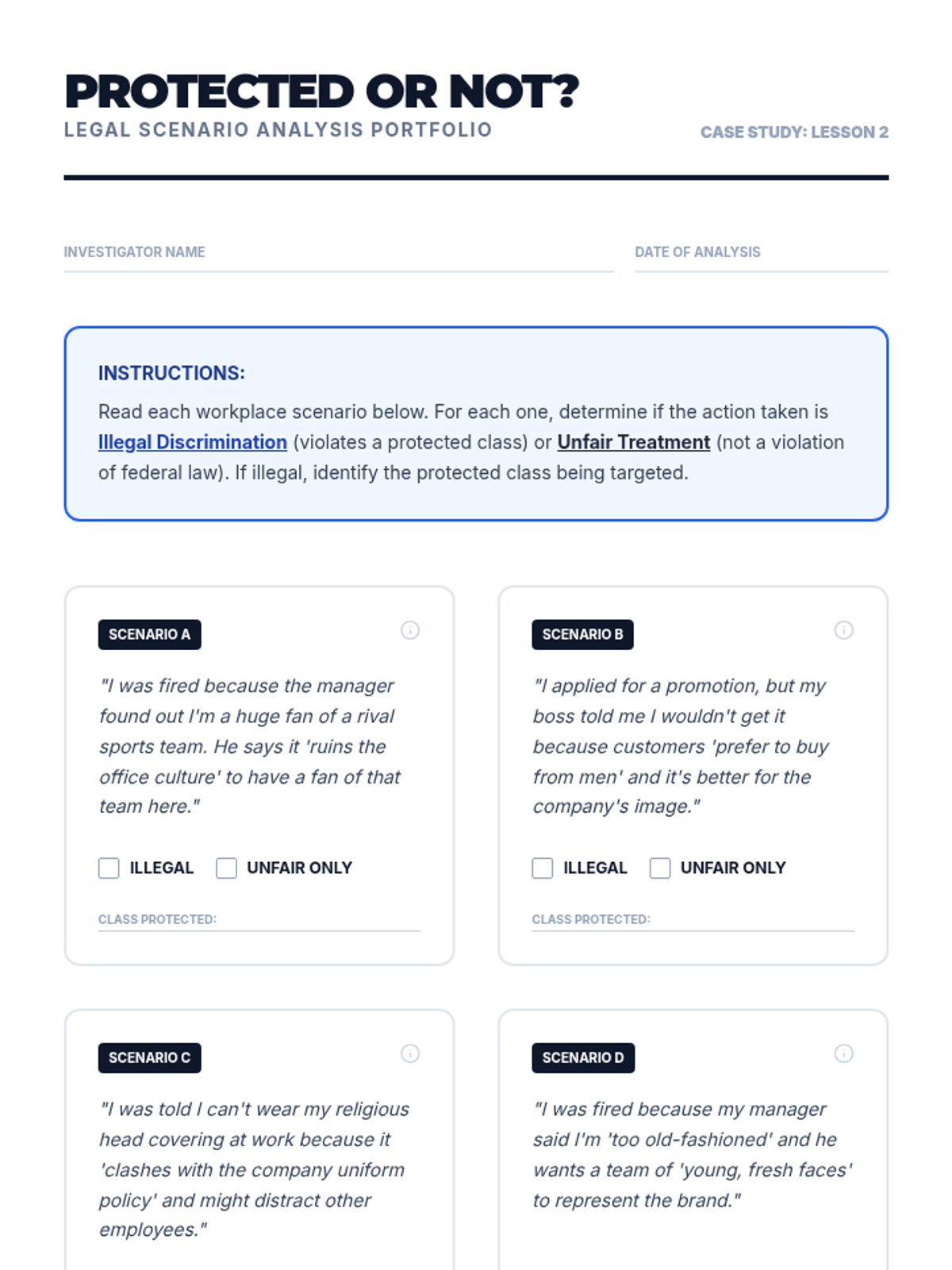
This lesson details the specific characteristics protected under federal law, including race, color, religion, sex, national origin, age, and disability. Students categorize various scenarios to determine if they involve a protected class.
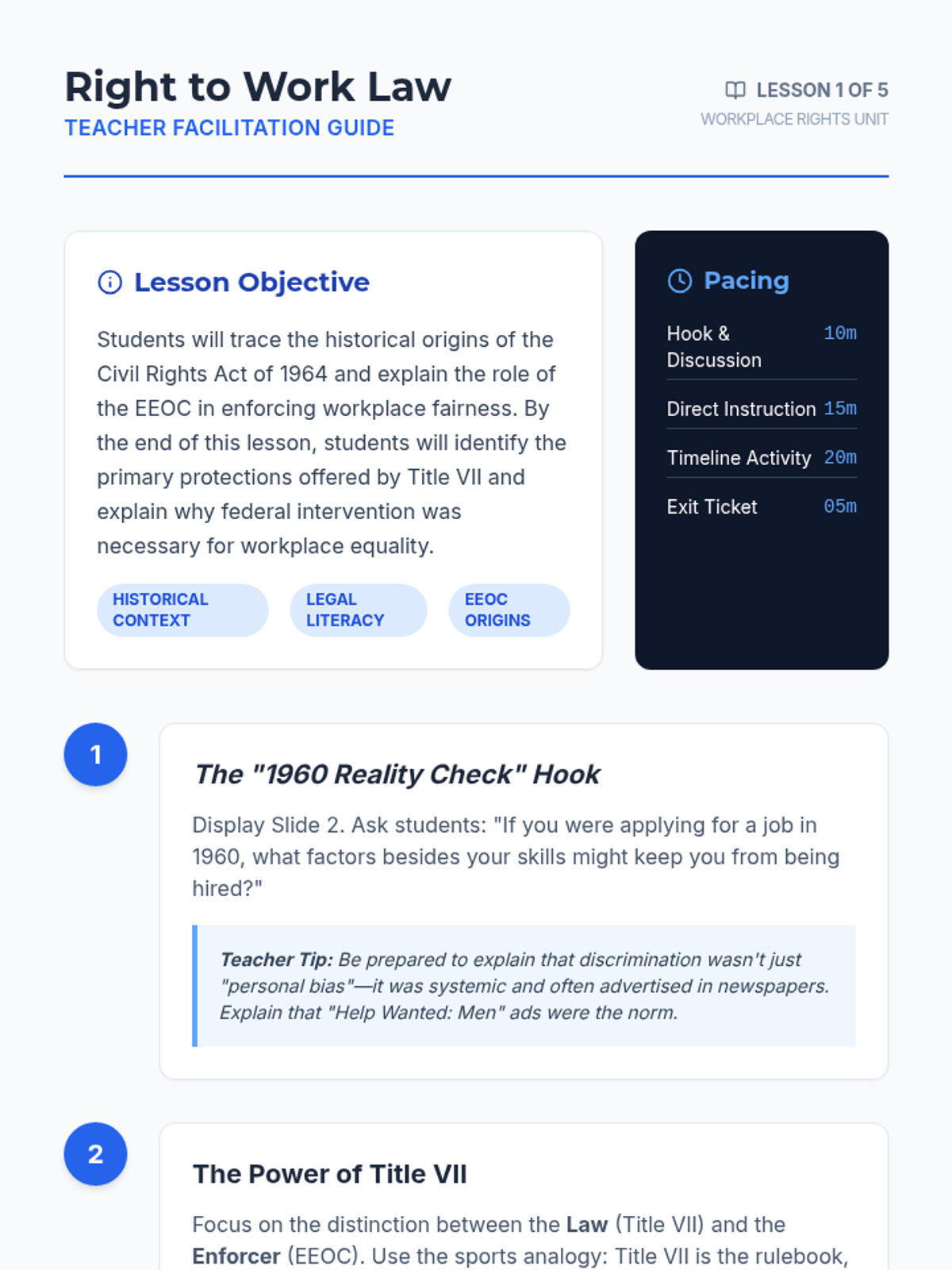
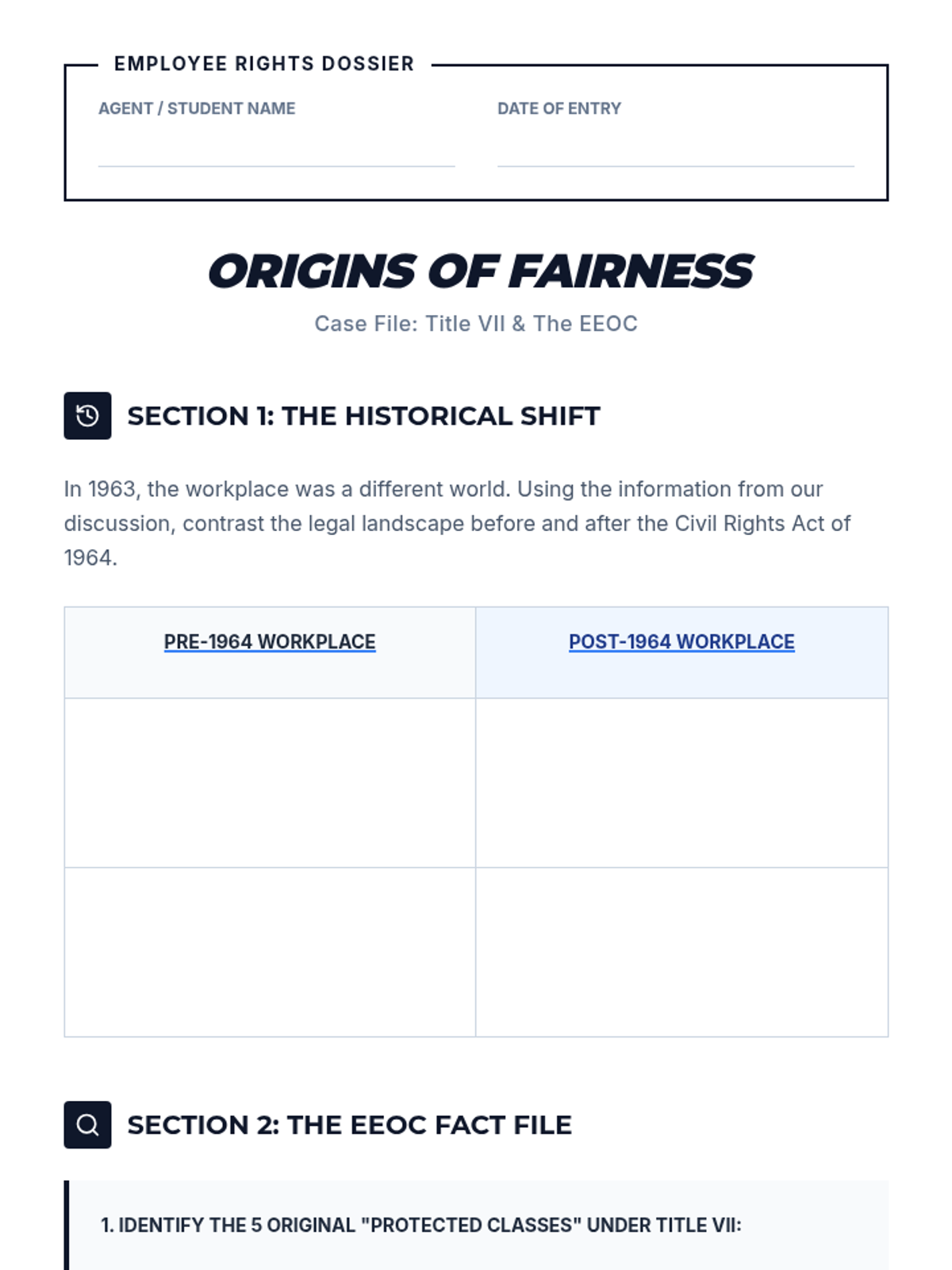
Students investigate the origins of the Equal Employment Opportunity Commission (EEOC) and the Civil Rights Act of 1964. They map out the timeline of workplace rights in America to understand the historical context of modern protections.
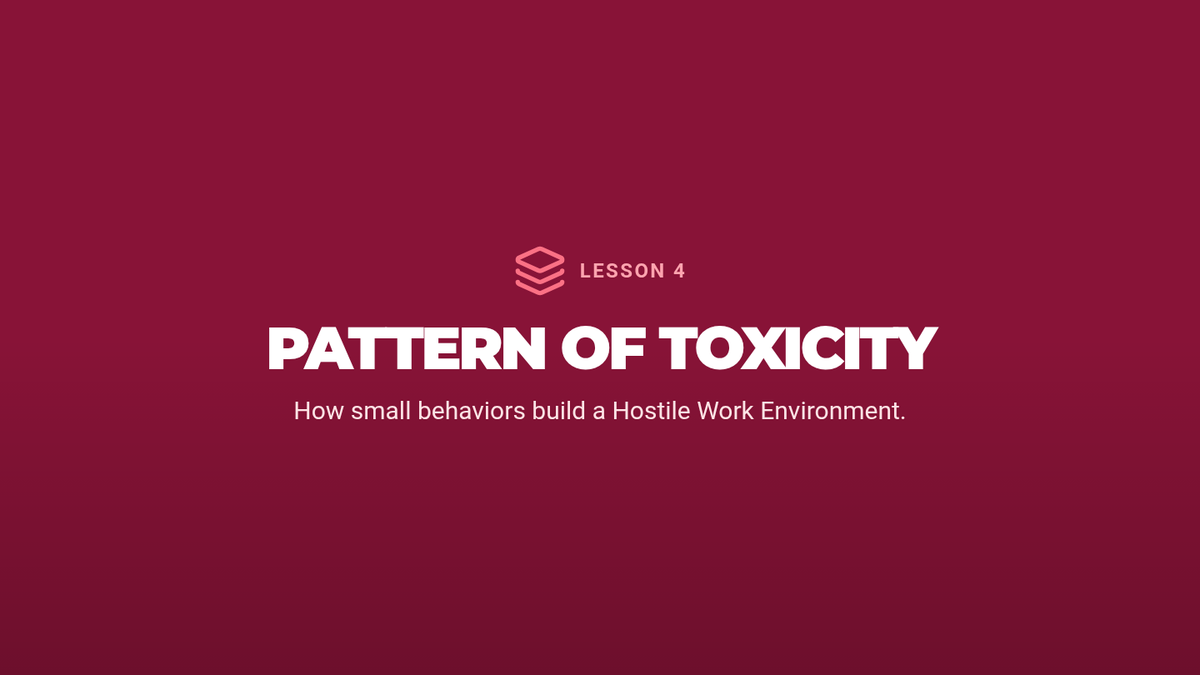
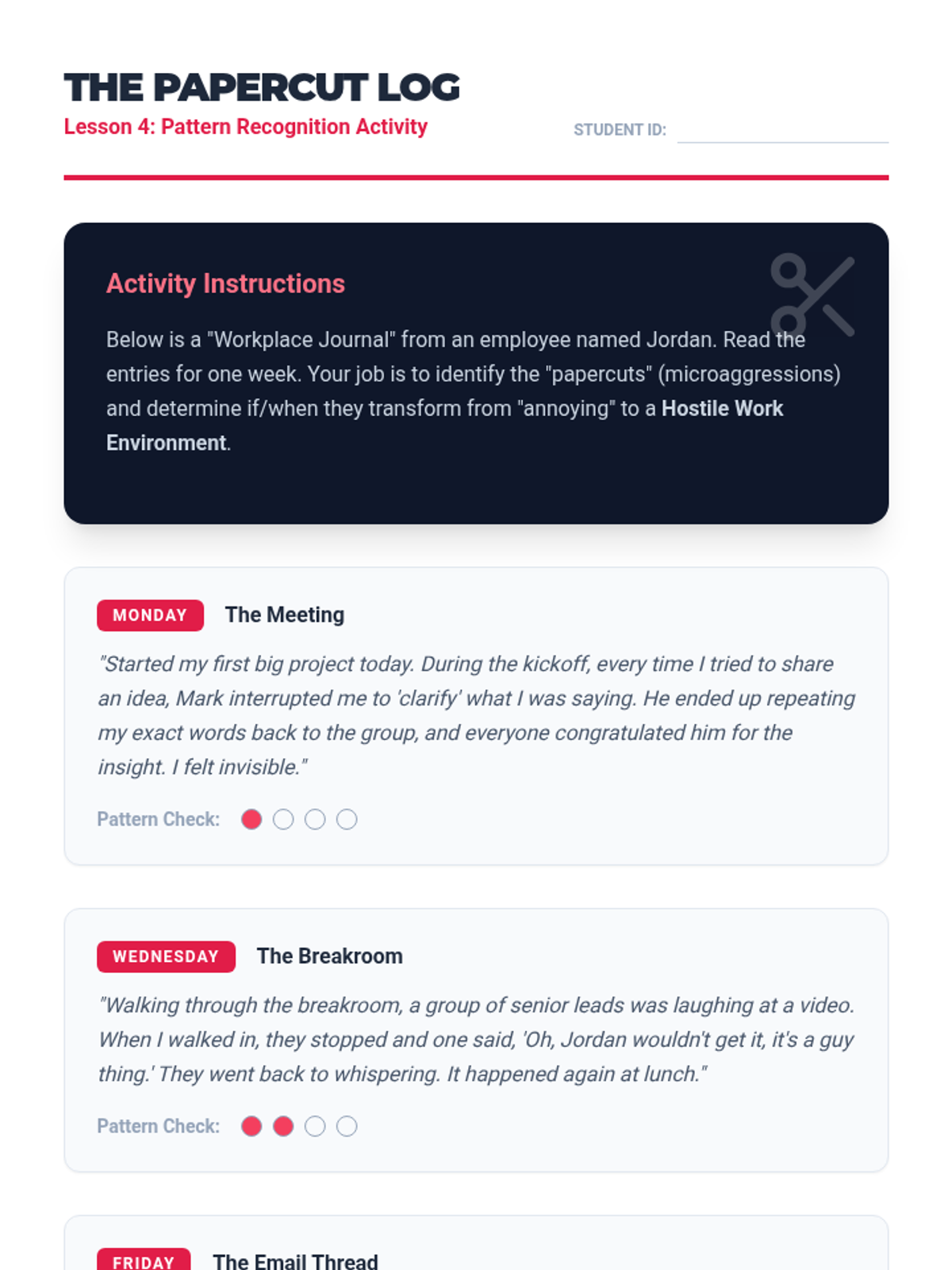
Students examine how microaggressions contribute to a hostile work environment over time. The lesson emphasizes recognizing patterns of behavior that may not be explicit harassment in isolation but become toxic cumulatively.
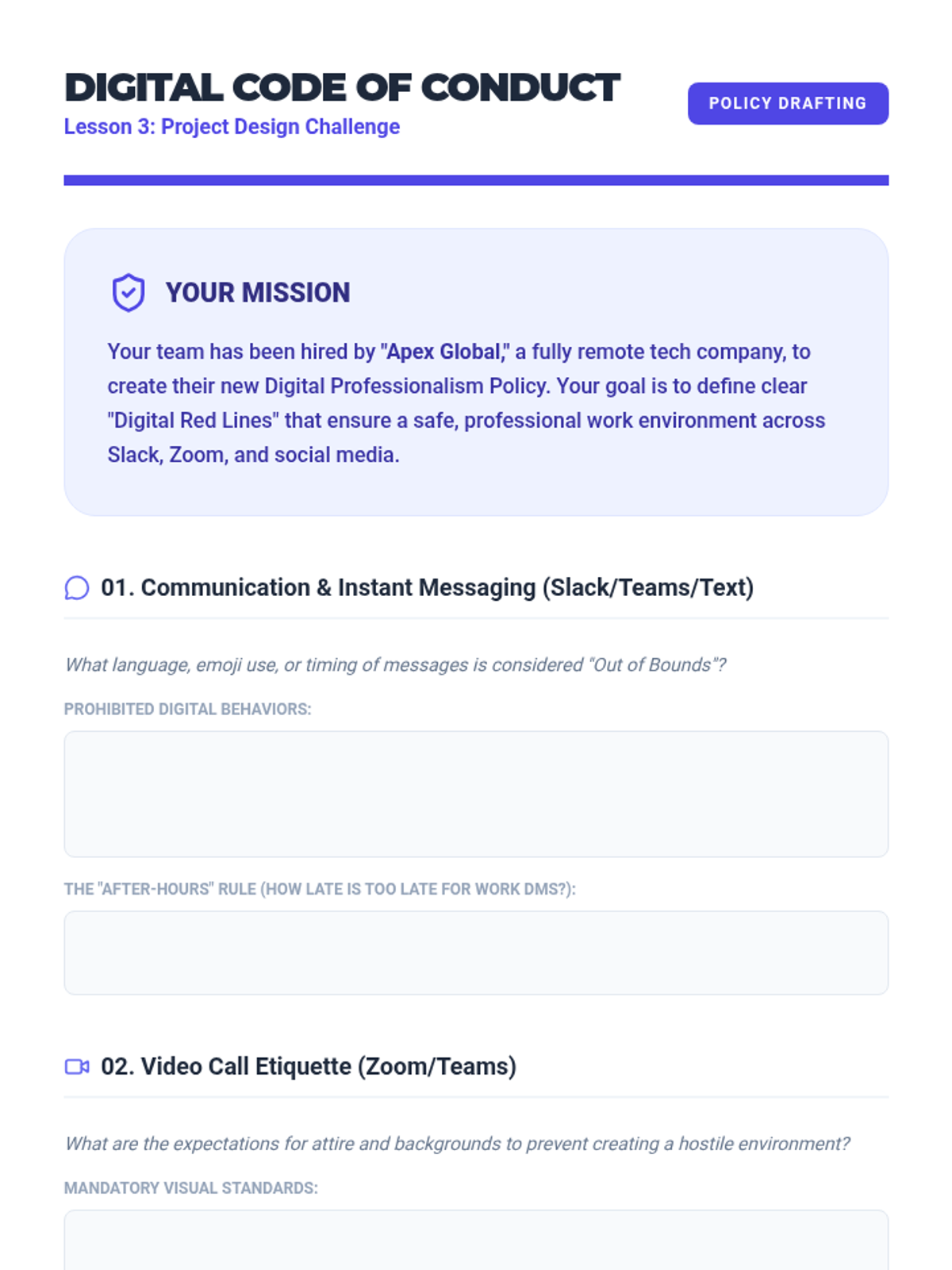
Students explore how harassment manifests in remote work and digital spaces, including inappropriate texts, emails, and social media interactions. They develop a code of conduct for digital professional communication.
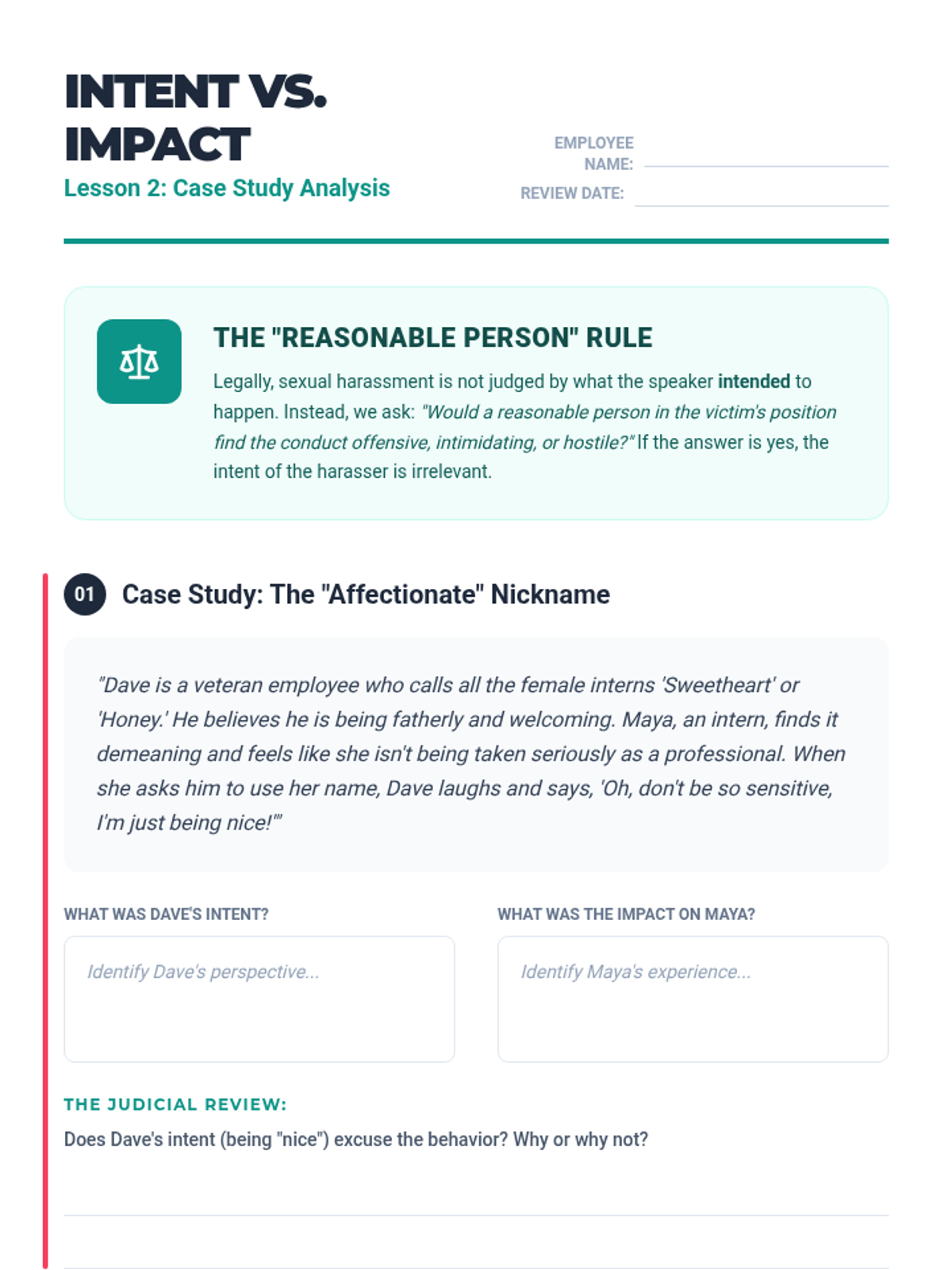
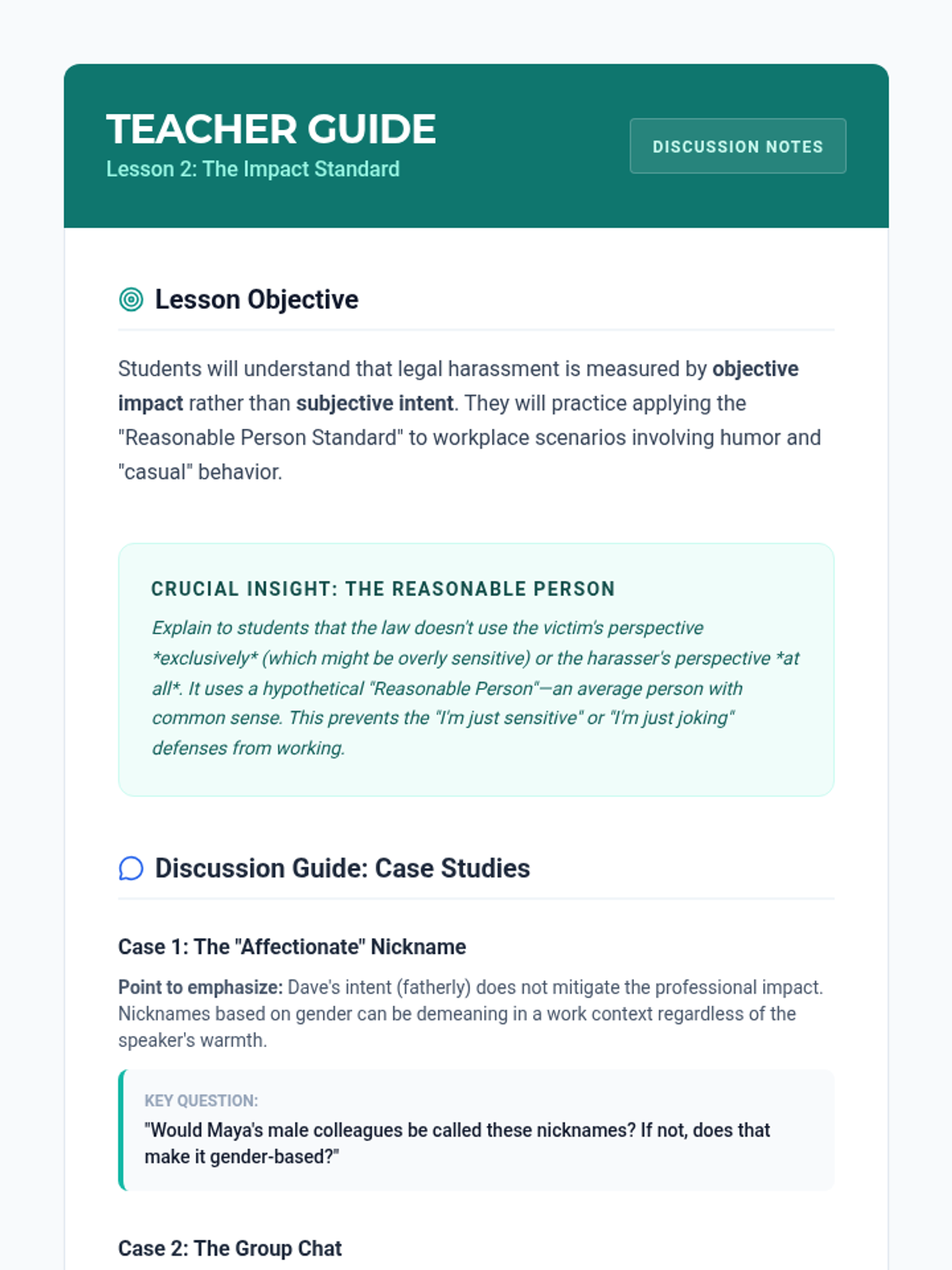
This lesson focuses on the legal standard that harassment is judged by its impact on the victim, not the intent of the harasser. Students review scenarios where 'jokes' constitute harassment.
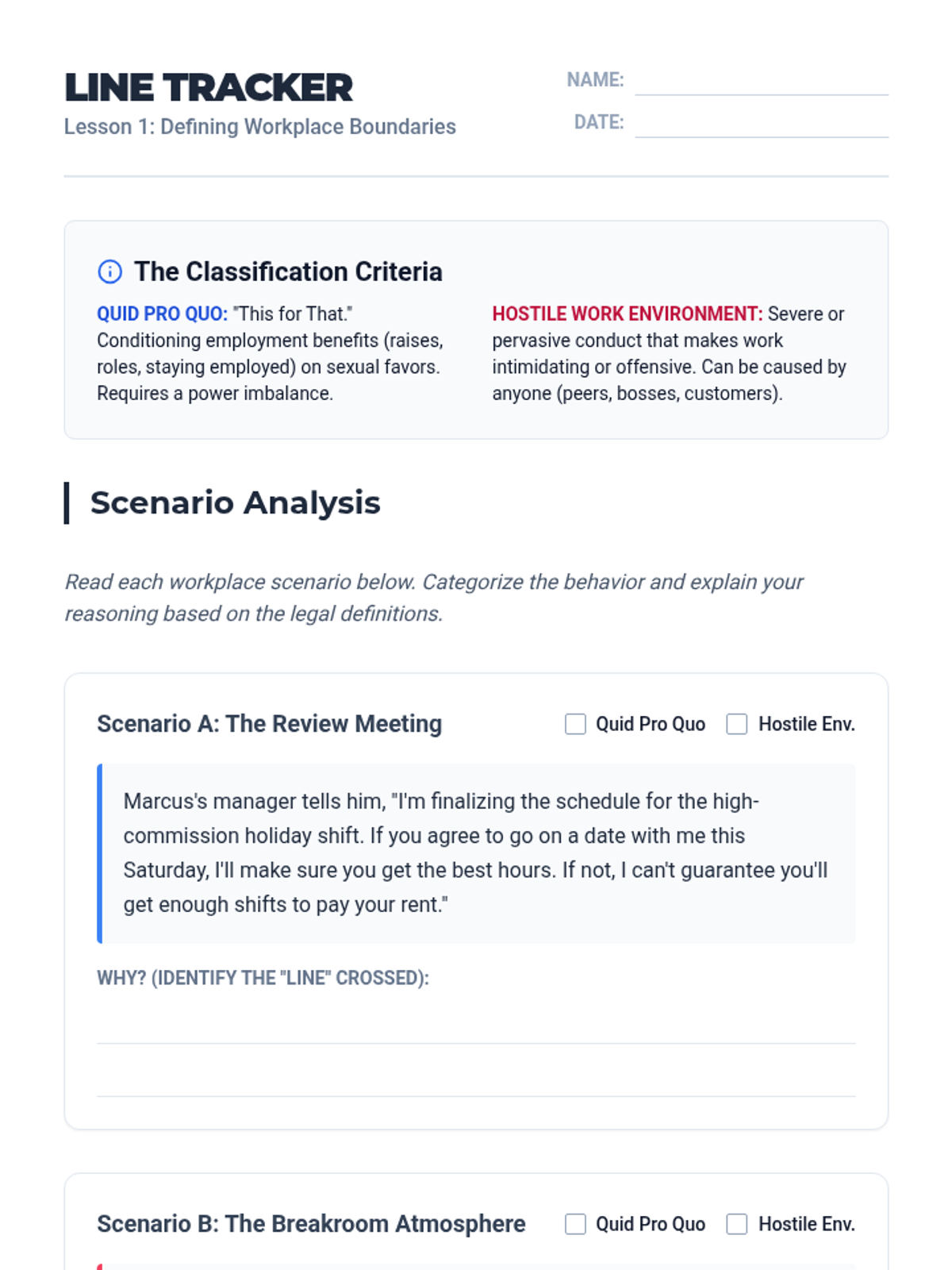
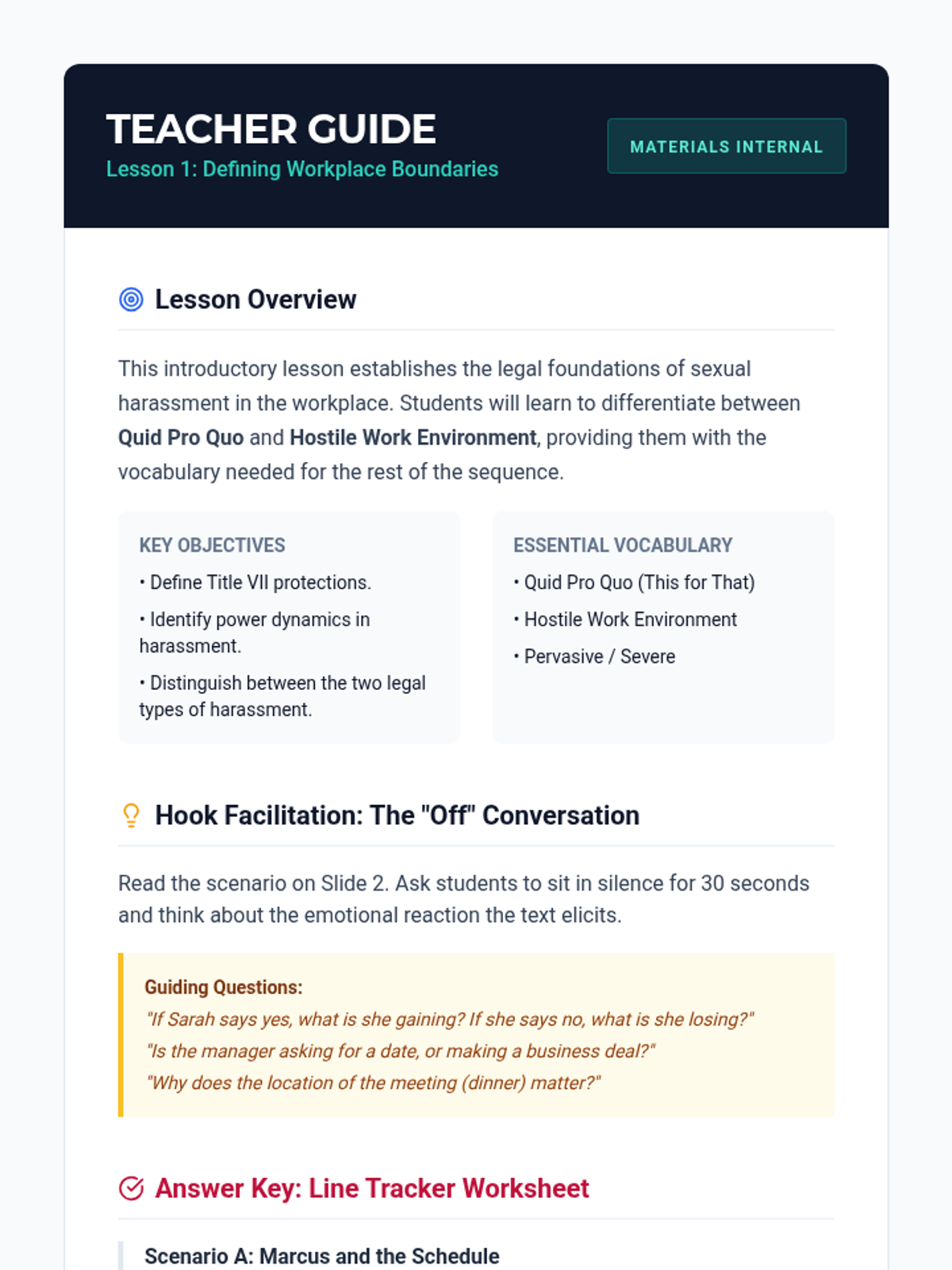
Students distinguish between the two primary legal types of sexual harassment: 'this for that' (quid pro quo) and pervasive hostile environments. They analyze clear-cut examples of each to build a working definition.
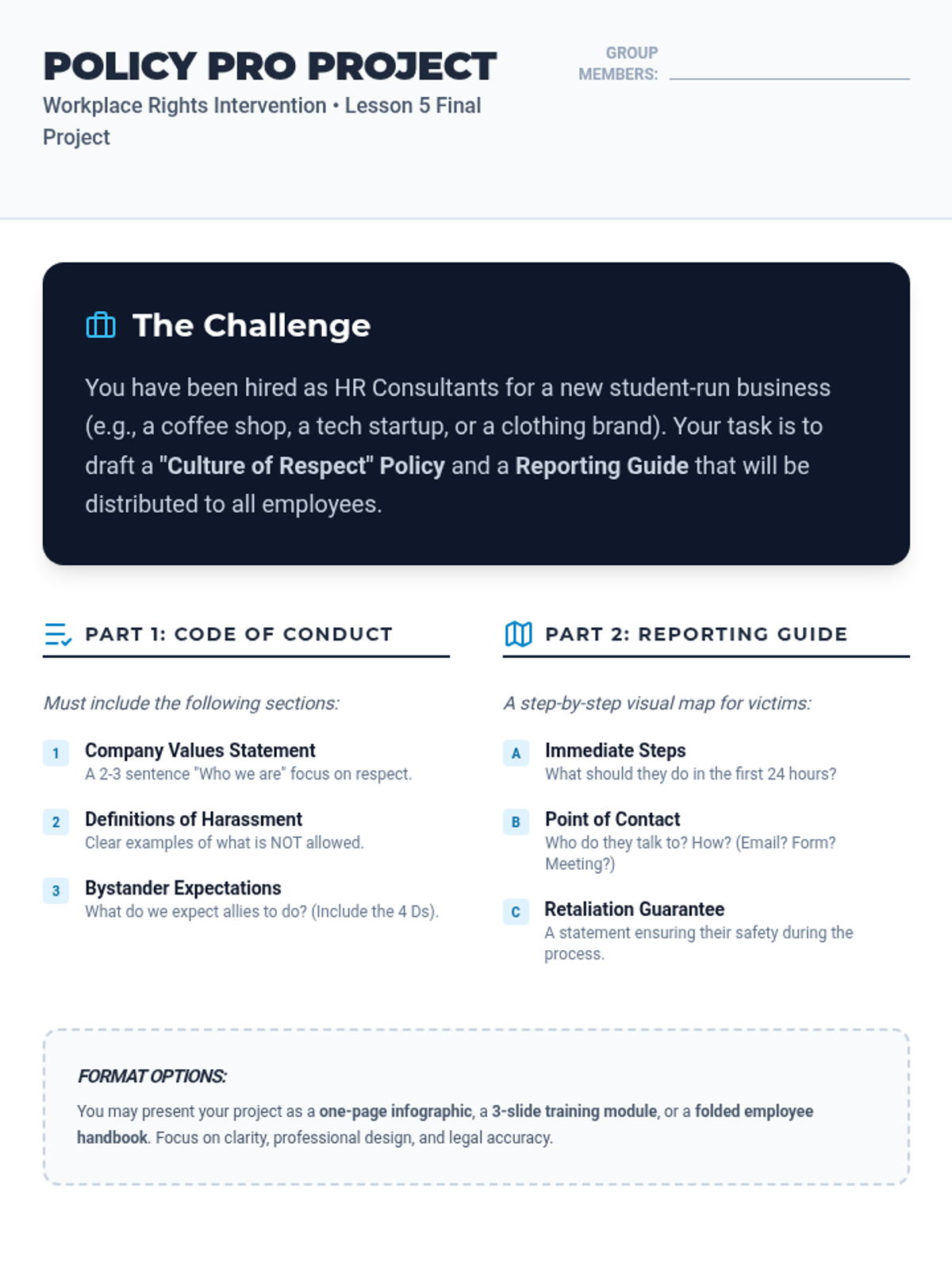
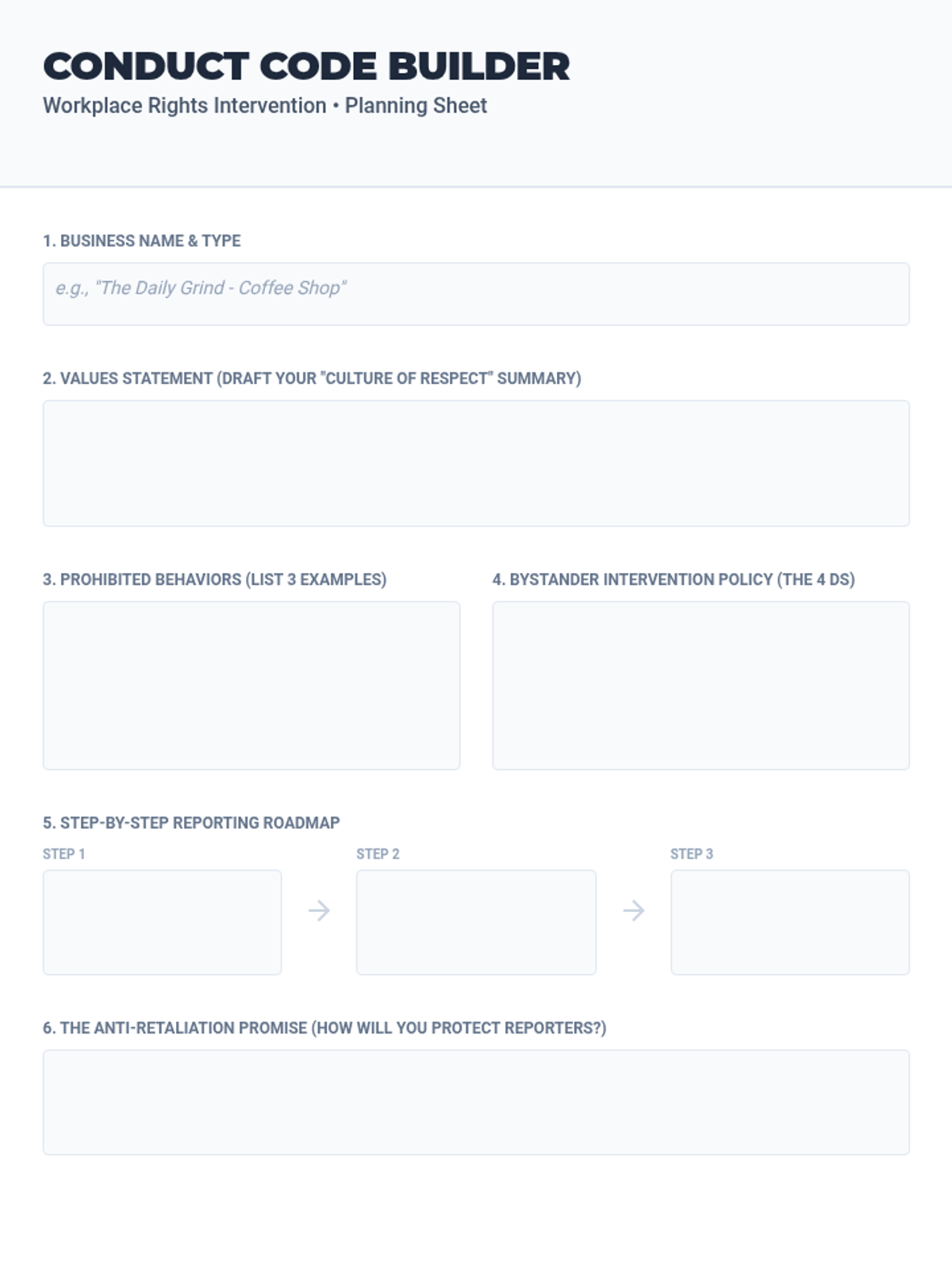
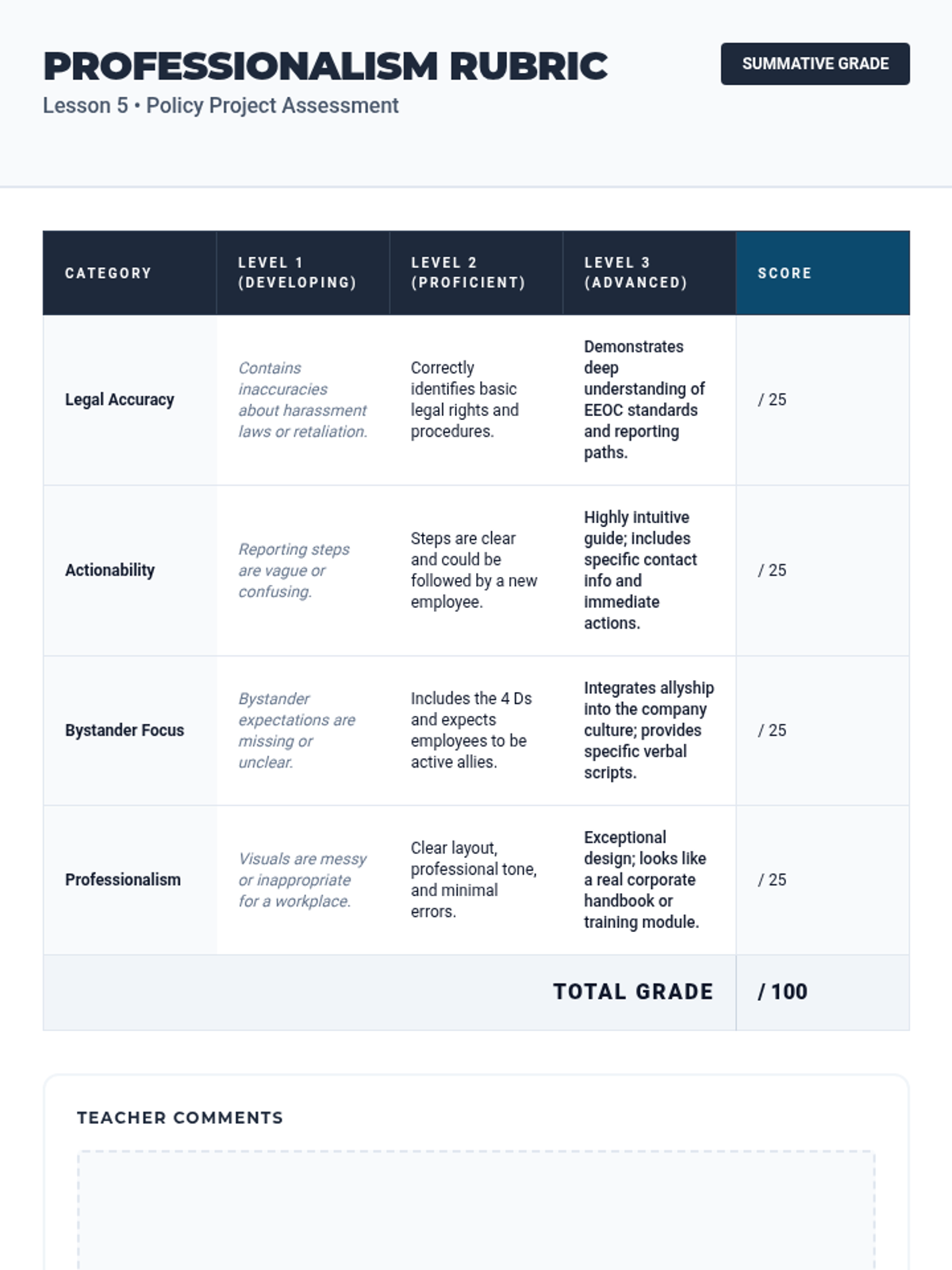
Students work in groups to draft a 'Code of Conduct' and a 'Reporting Guide' for a student-run business or organization, synthesizing all sequence concepts.
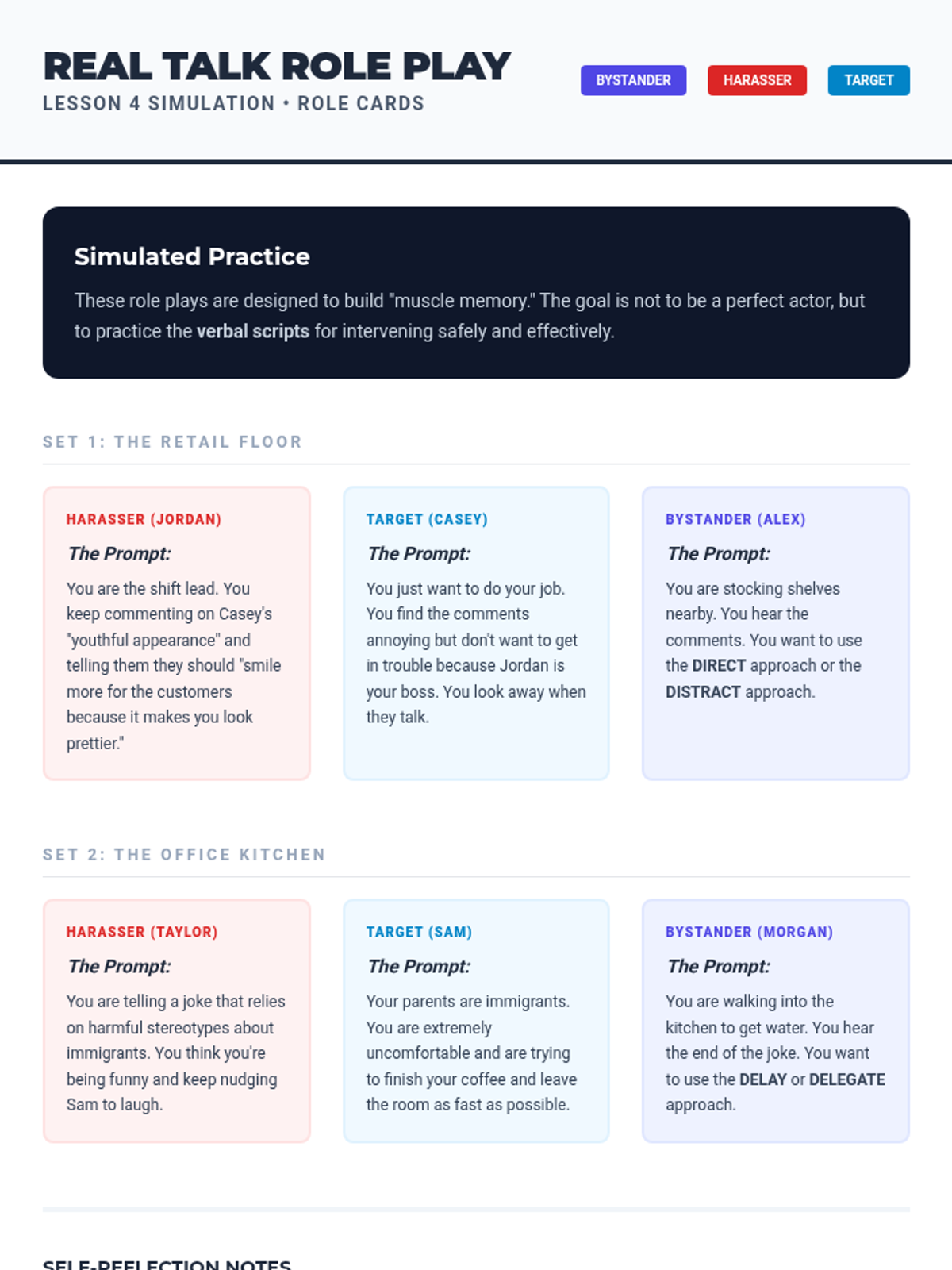
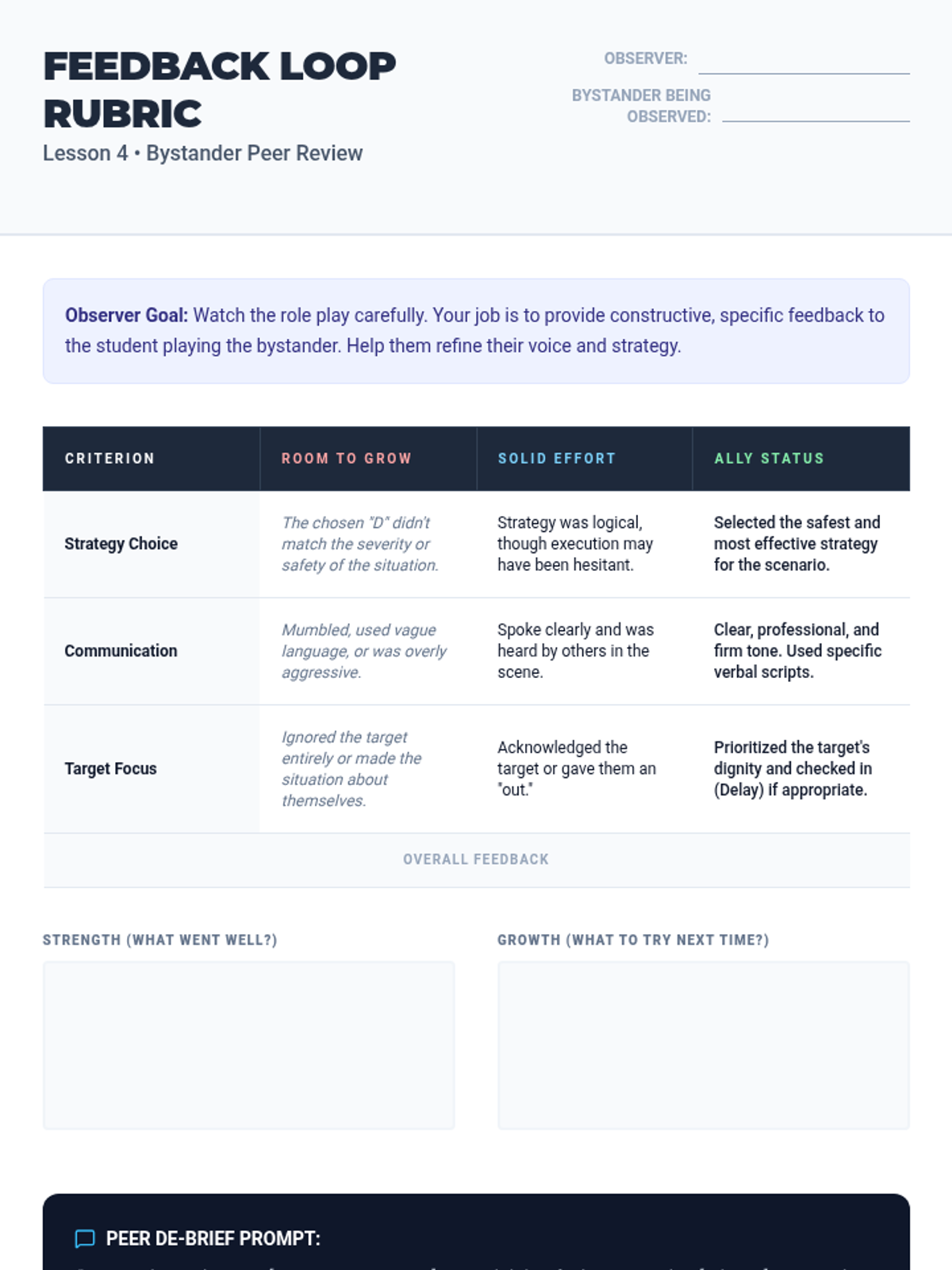
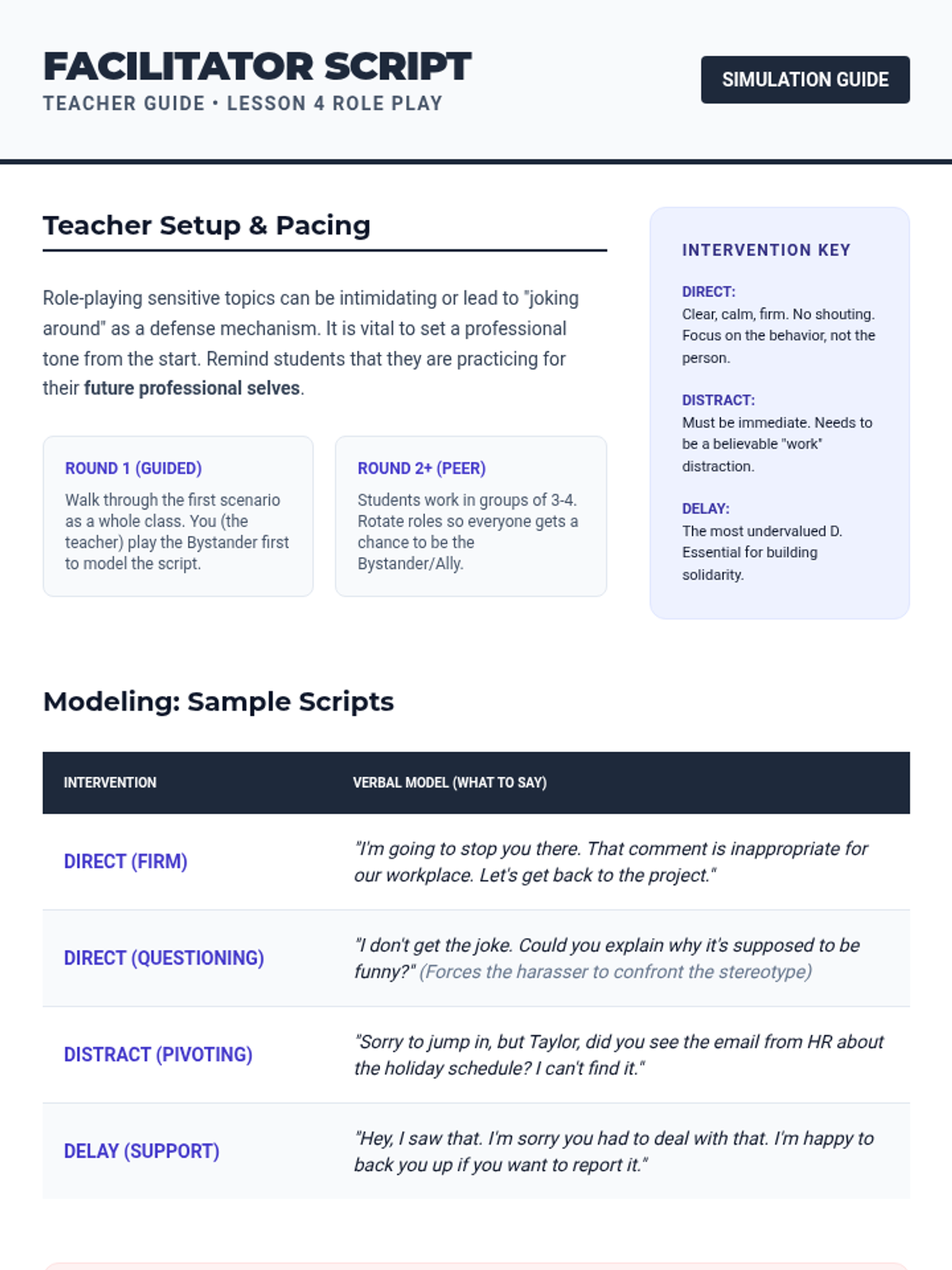
Students engage in structured role-plays to practice the intervention strategies learned. They take turns acting as the target, the harasser, and the bystander.
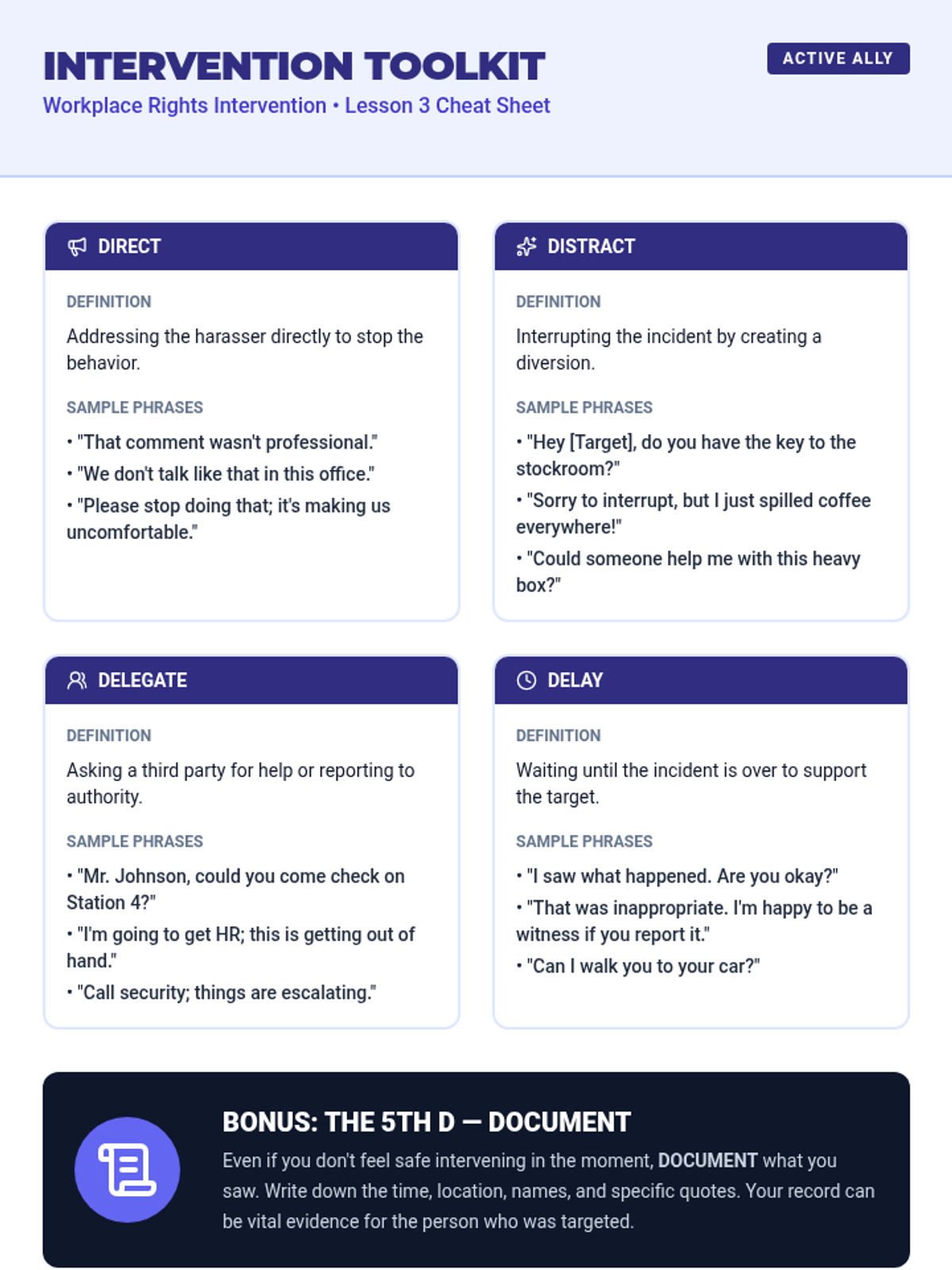
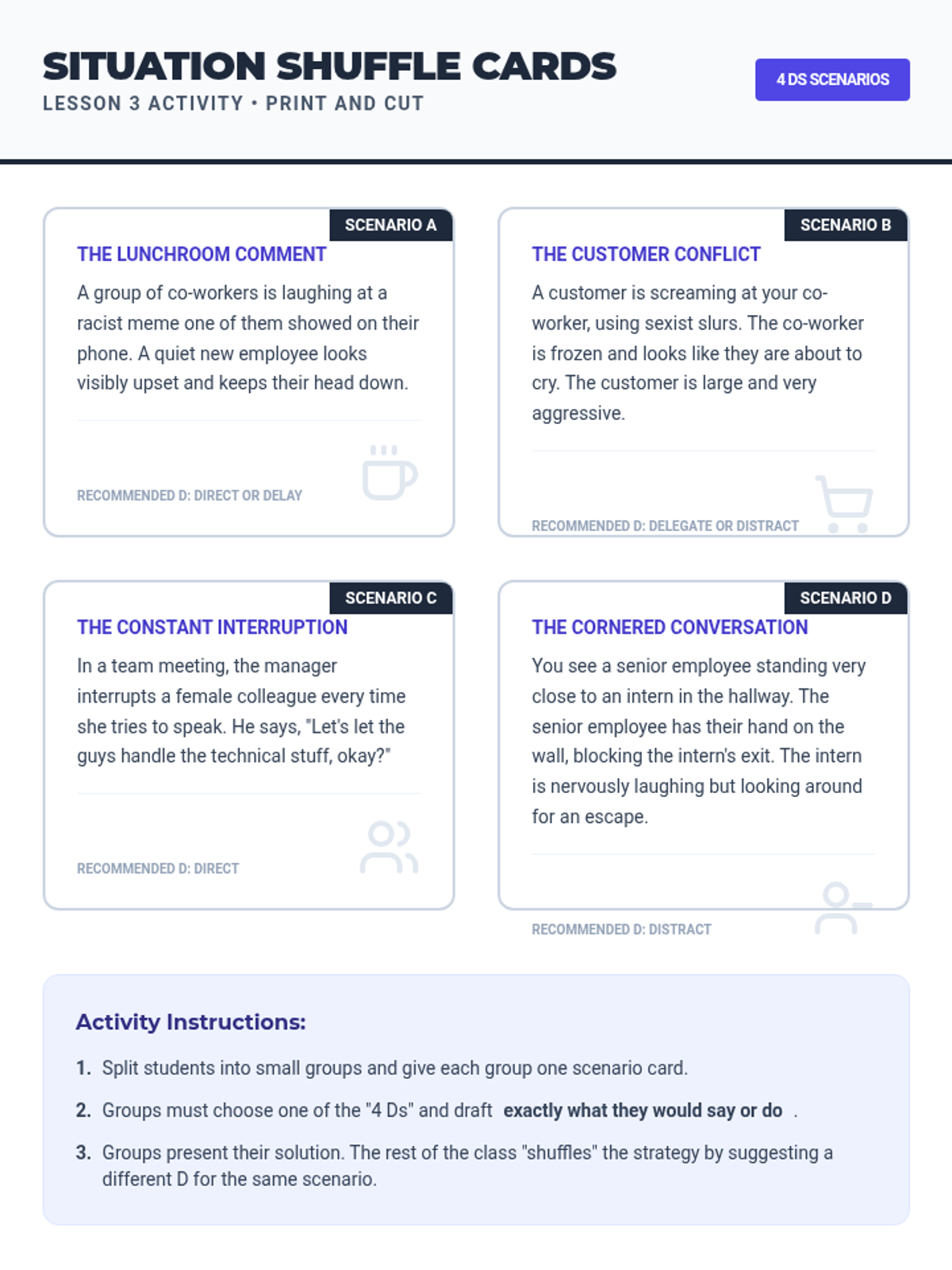
Students are introduced to the '4 Ds' of bystander intervention: Direct, Distract, Delegate, and Delay. They analyze scenarios to determine the best intervention strategy.
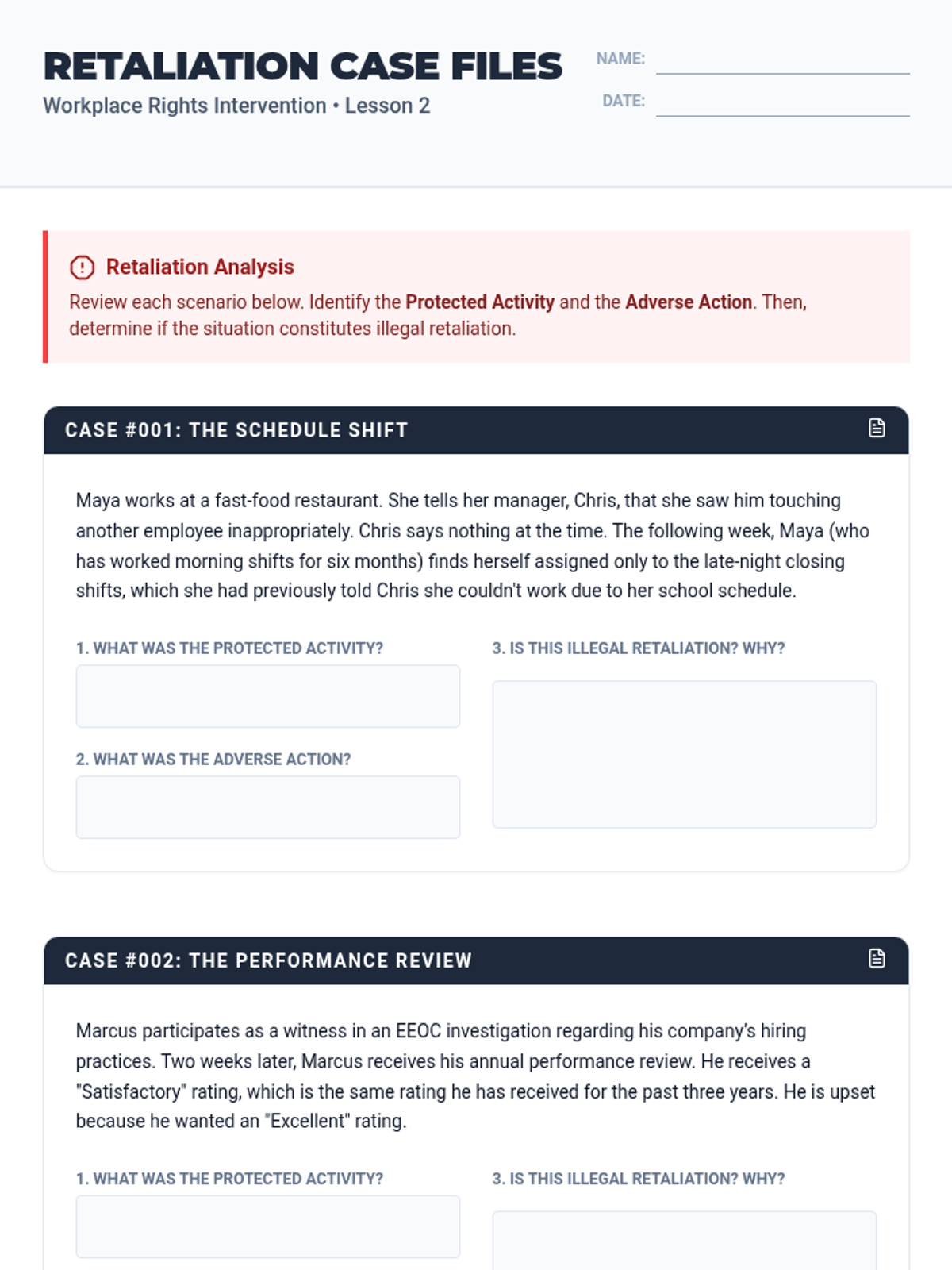
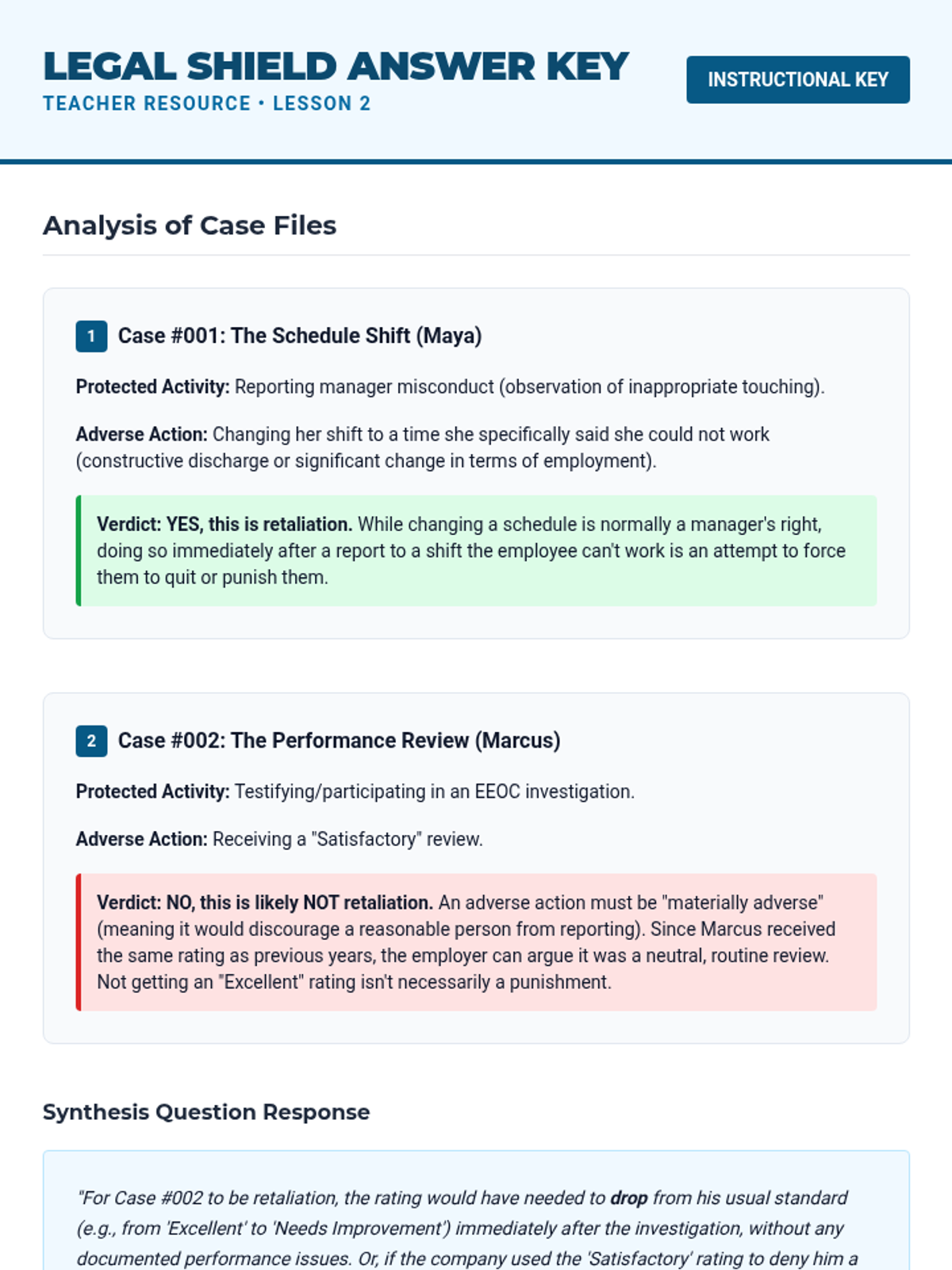
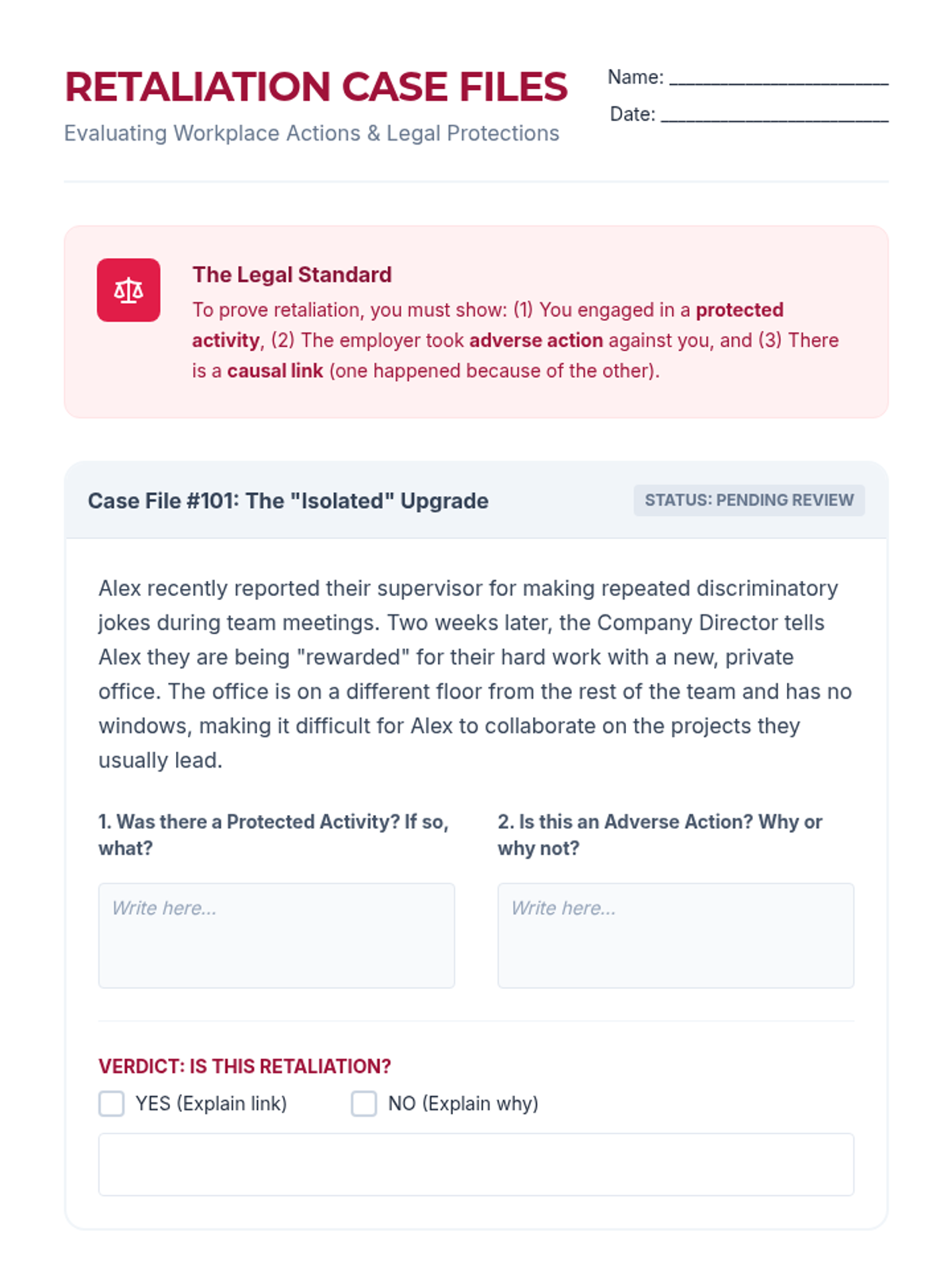
This lesson covers the legal protections for employees who report misconduct, focusing on the concept of 'retaliation' and identify which actions constitute illegal retaliation.
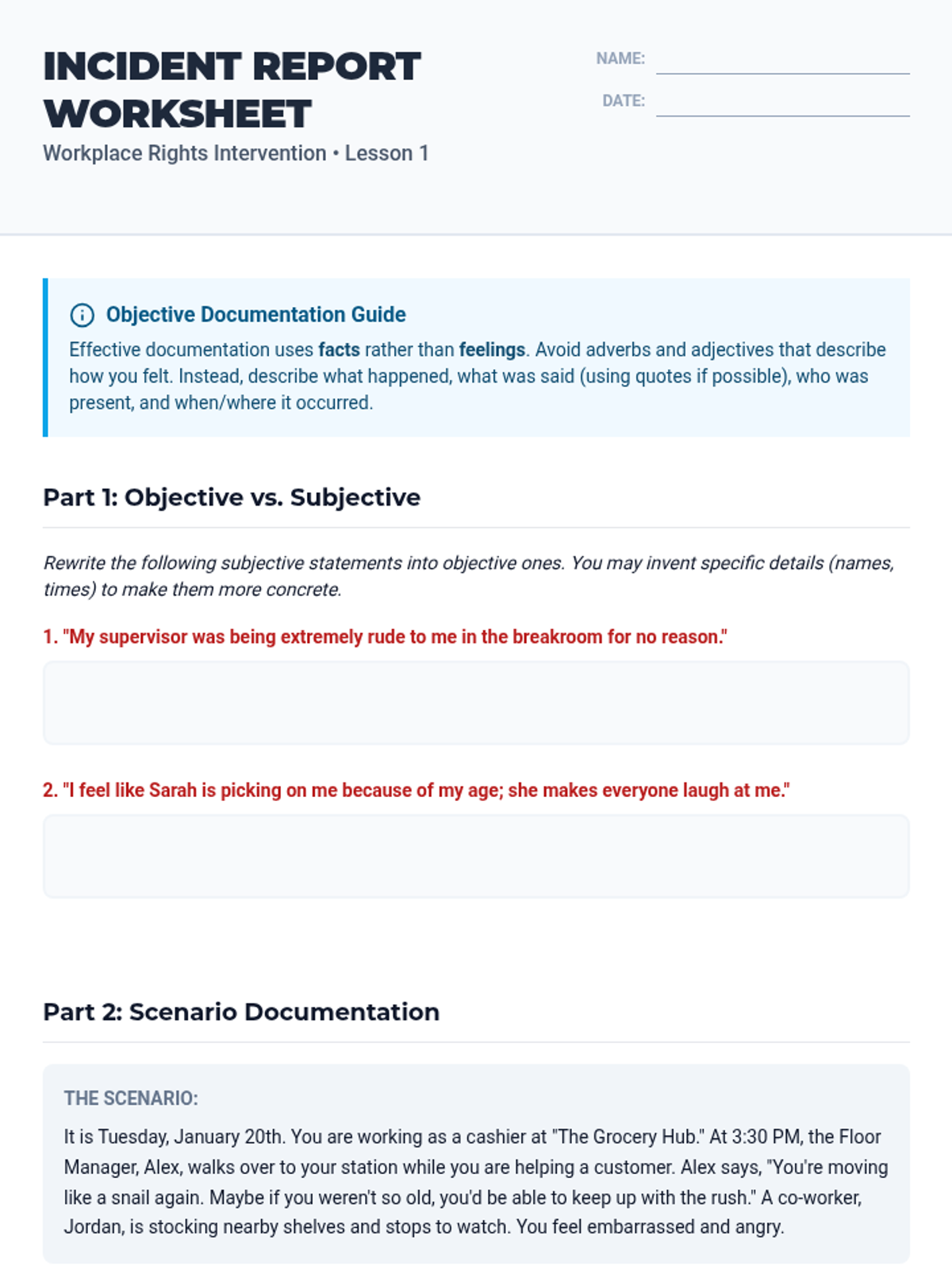
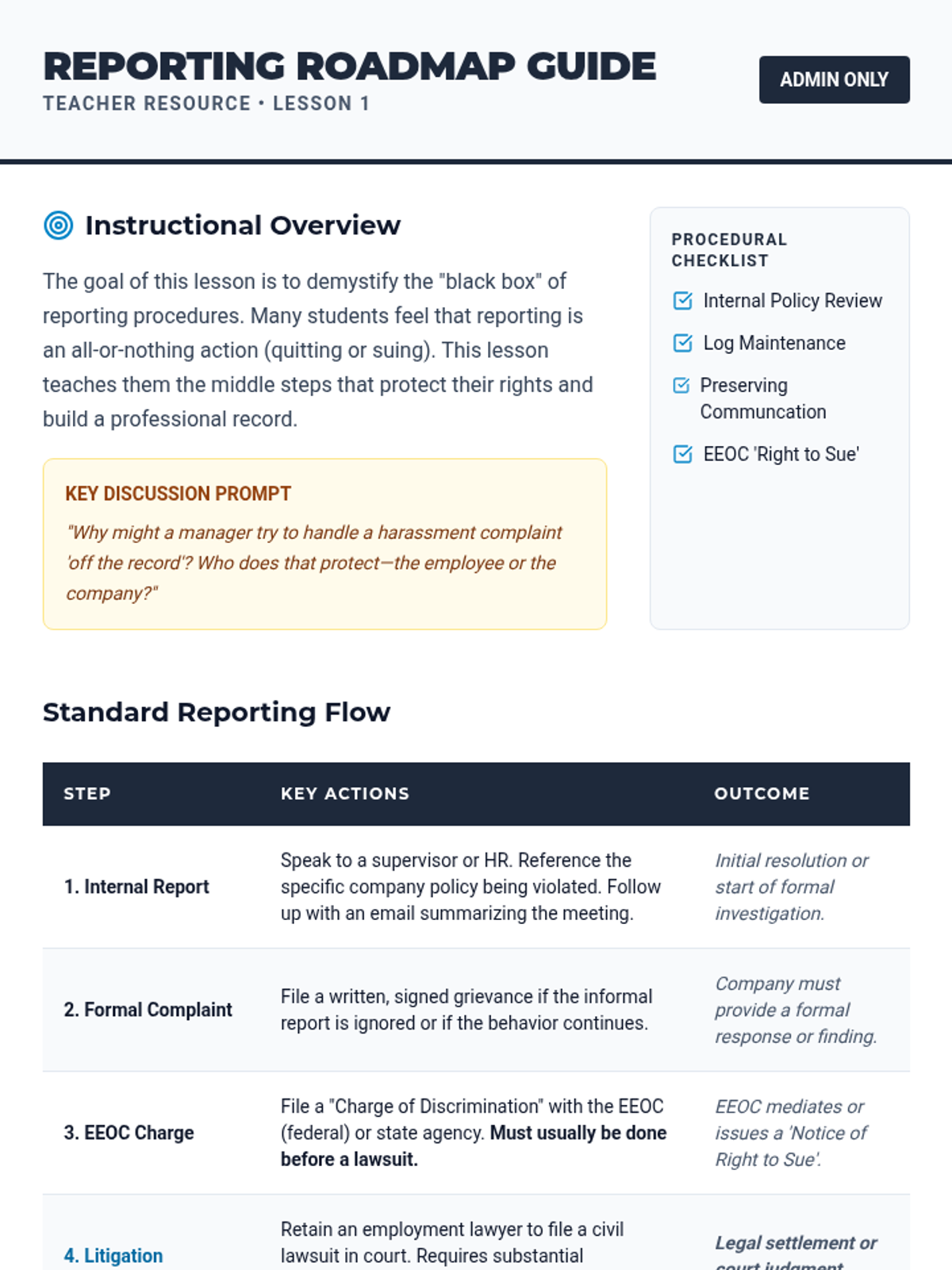
Students learn the standard procedures for reporting harassment, including internal HR complaints and external EEOC filings. They practice the skill of objective documentation.
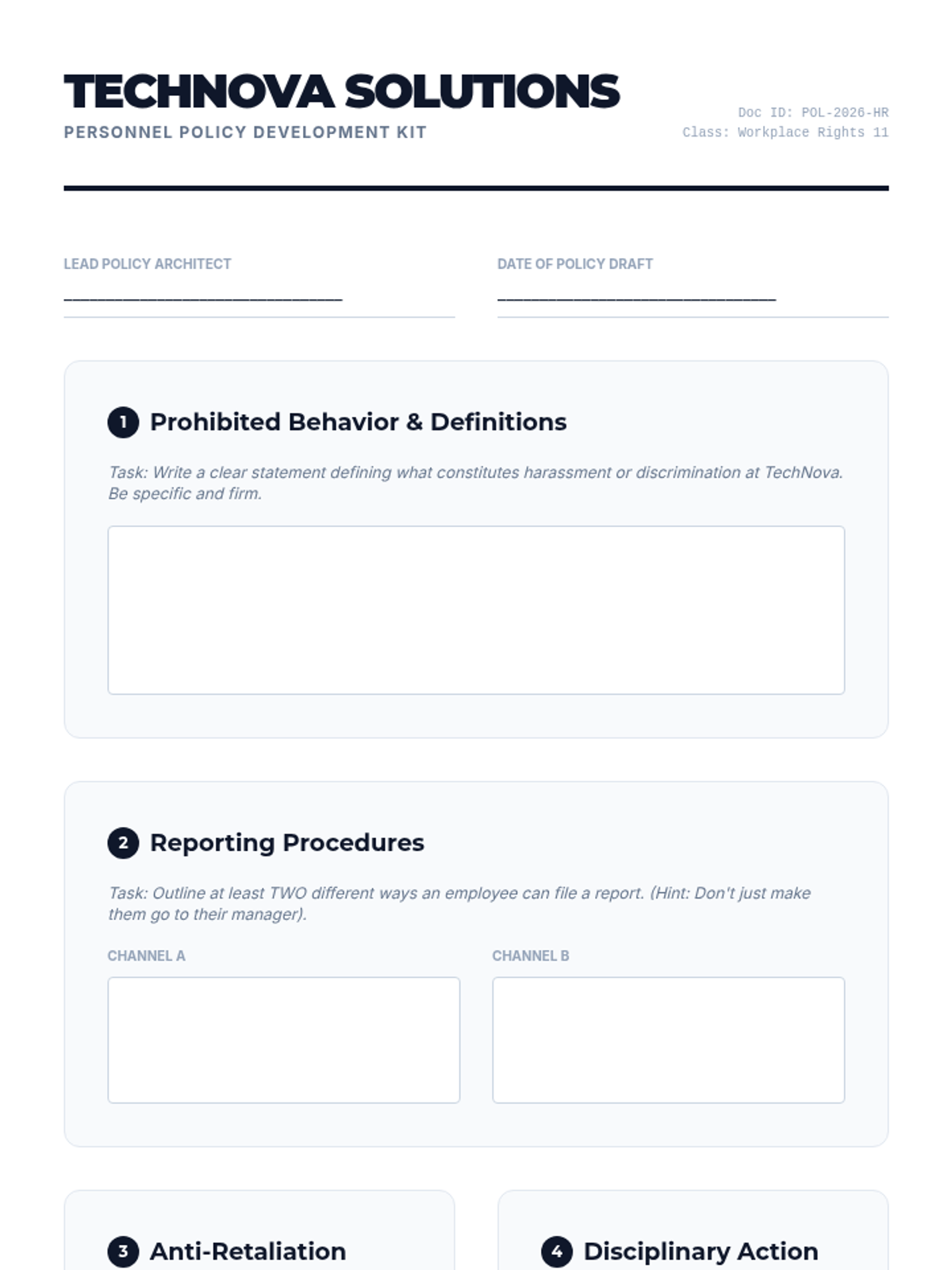
Students synthesize their learning by drafting a professional anti-harassment policy for a hypothetical company, focusing on clear definitions and effective reporting channels.
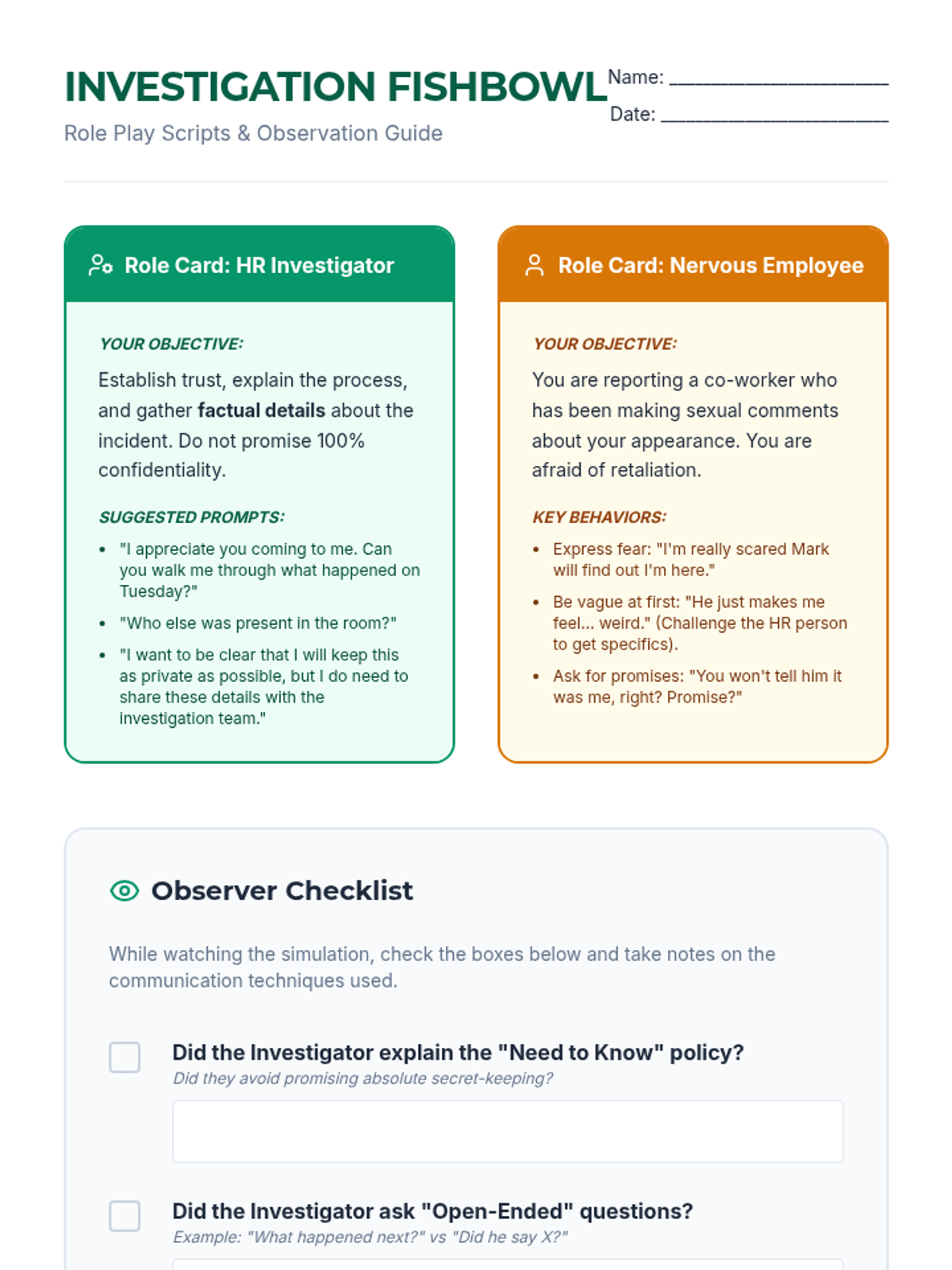
Through a fishbowl simulation of an HR intake interview, students observe the formal investigation process and identify best practices for professional communication and confidentiality.
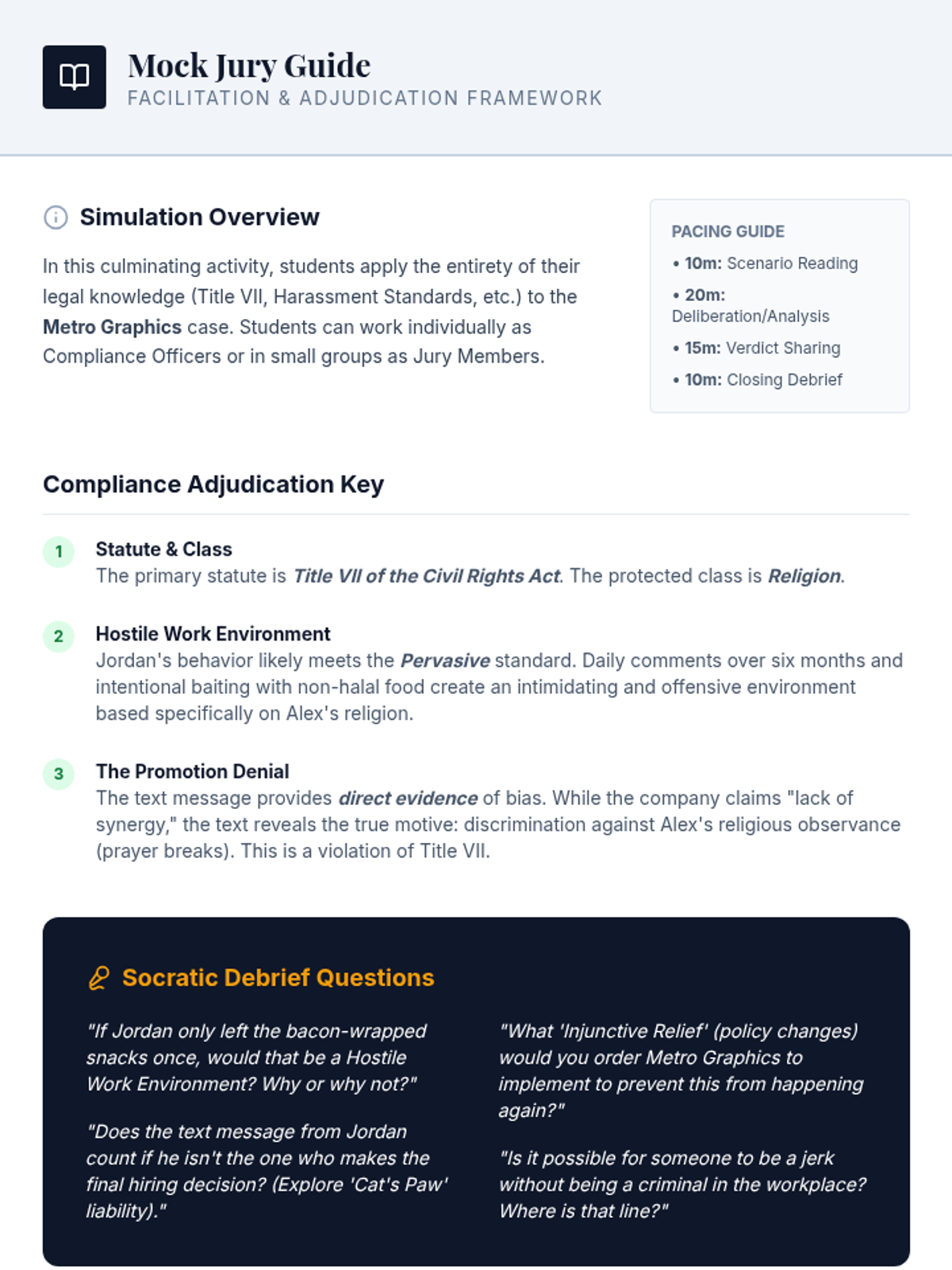
A culminating simulation where students act as compliance officers or jury members to adjudicate a complex workplace scenario using legal standards.
Students investigate retaliation and whistleblower protections, learning to identify subtle forms of adverse action and the legal safeguards that protect those who speak up.
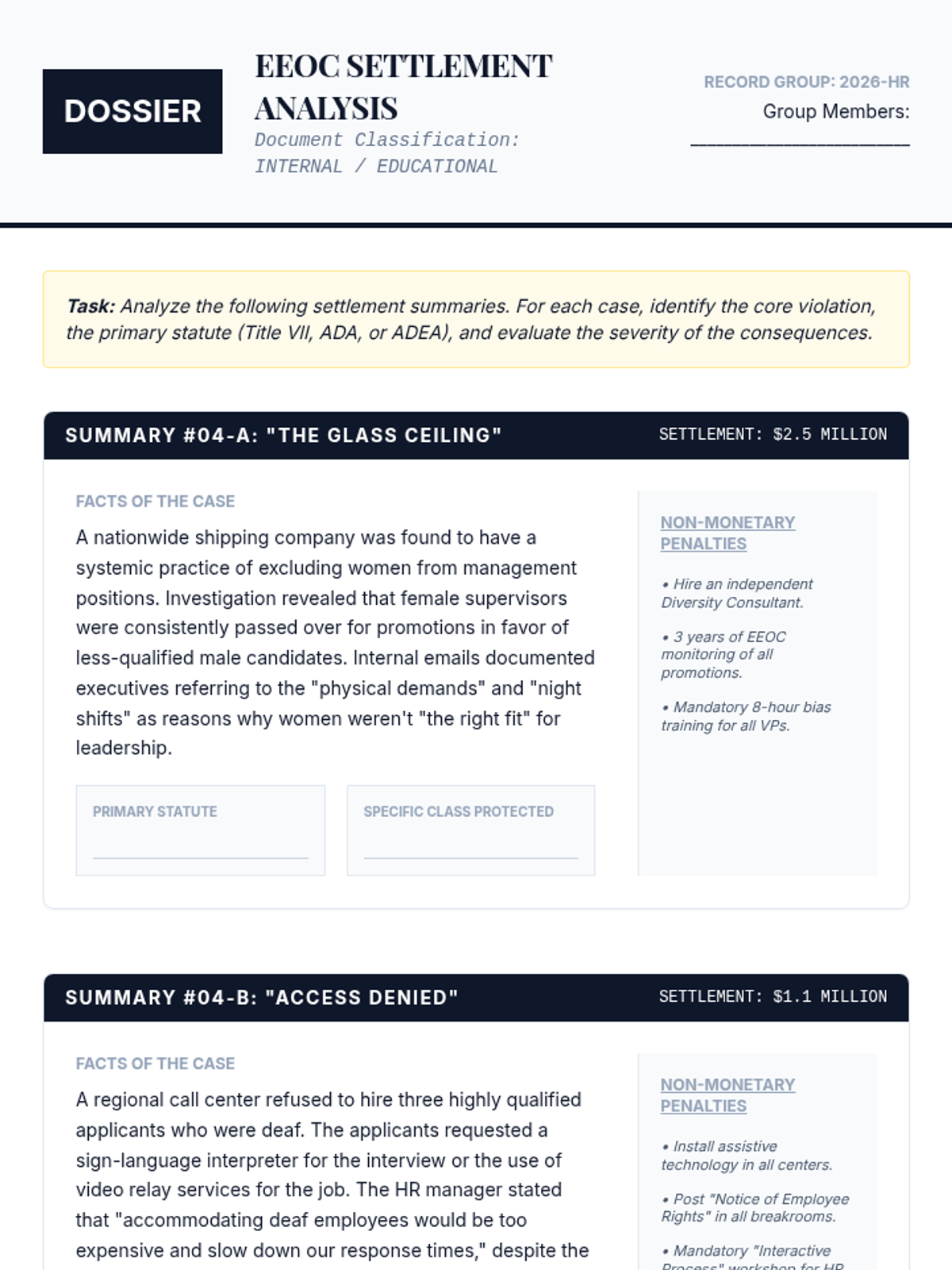
Using actual EEOC settlement summaries, students analyze the financial and reputational consequences of federal labor law violations.
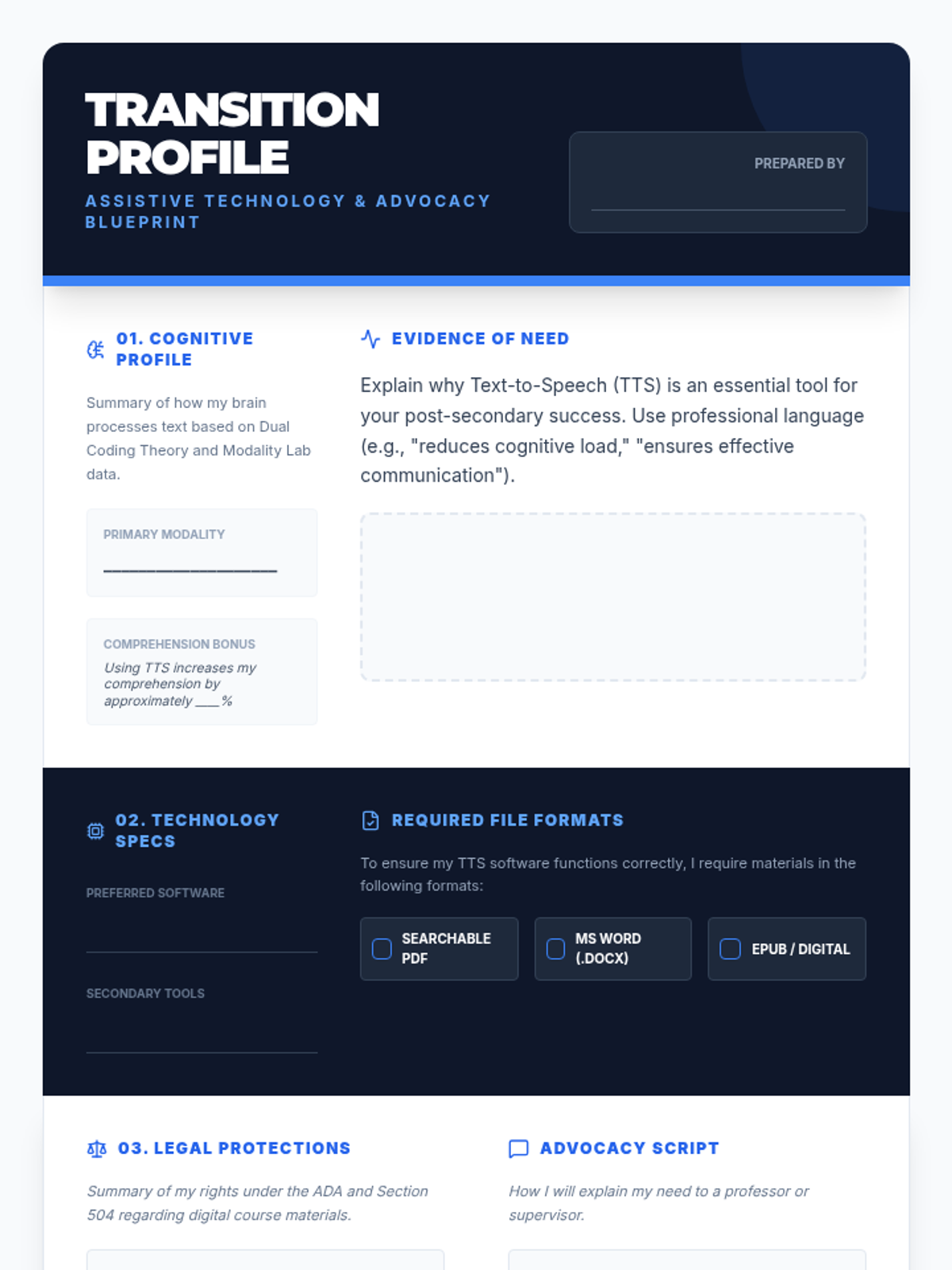
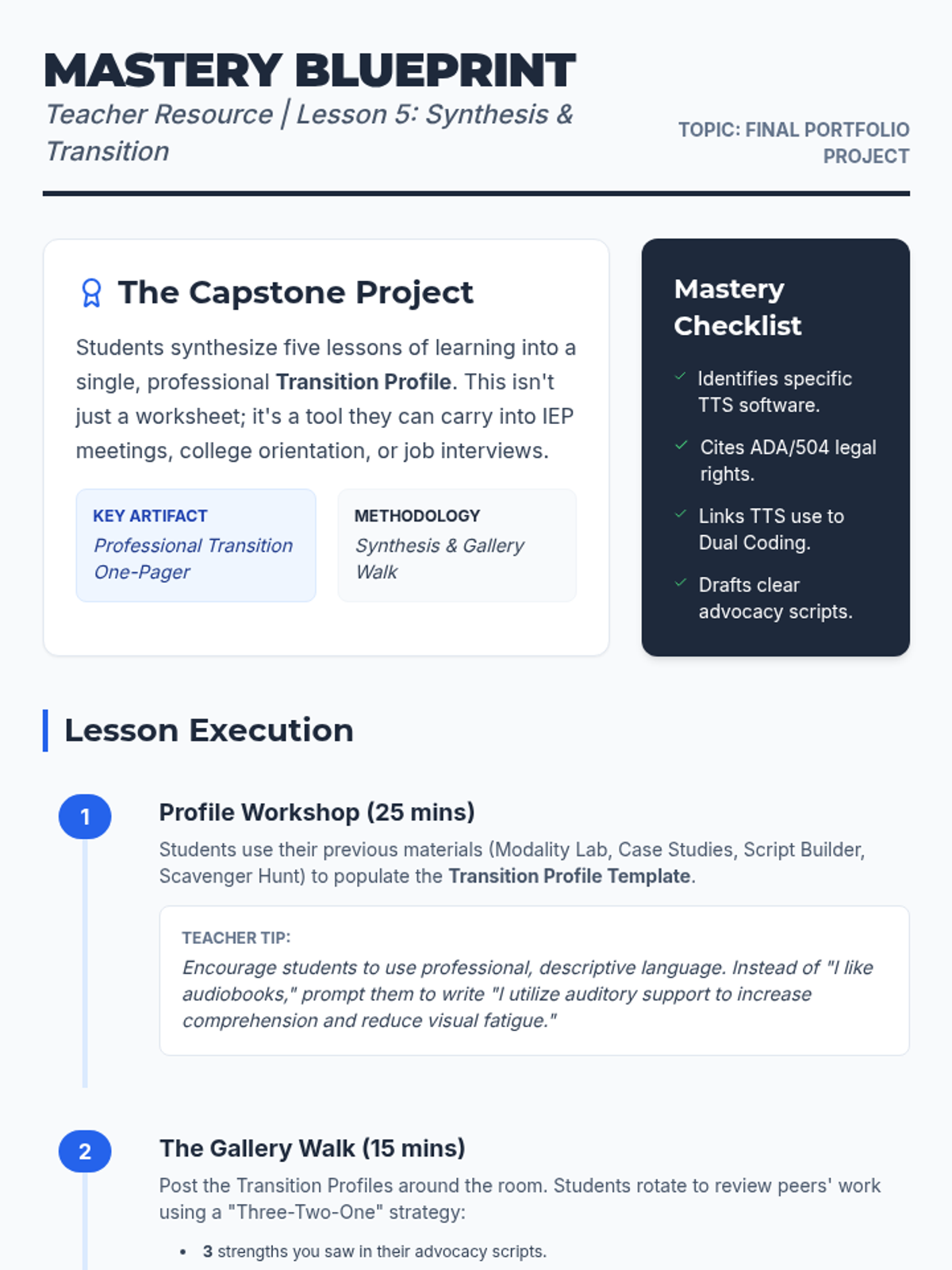
Students synthesize their learning into a professional transition one-pager that summarizes their specific assistive technology needs and legal rights.
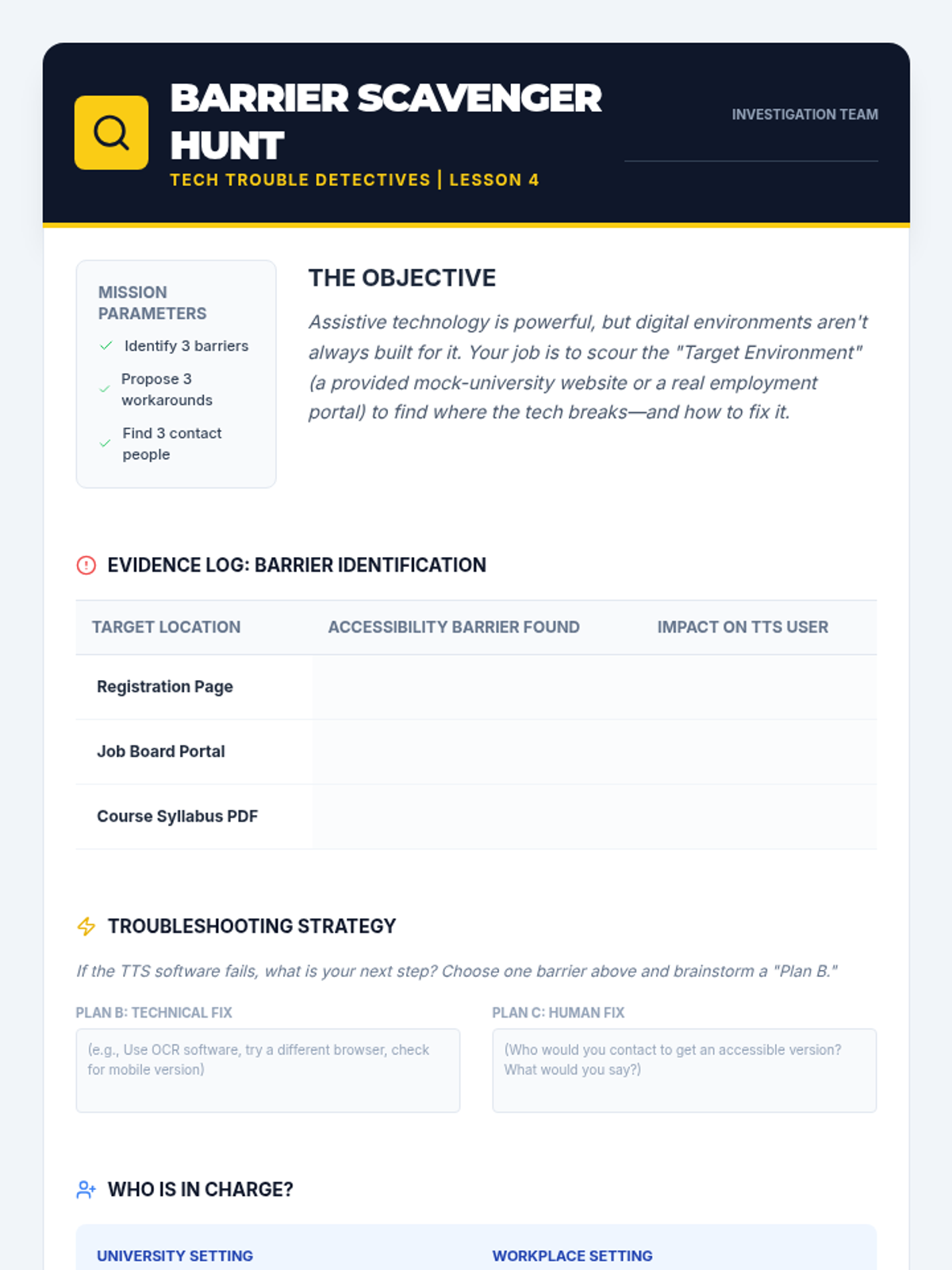
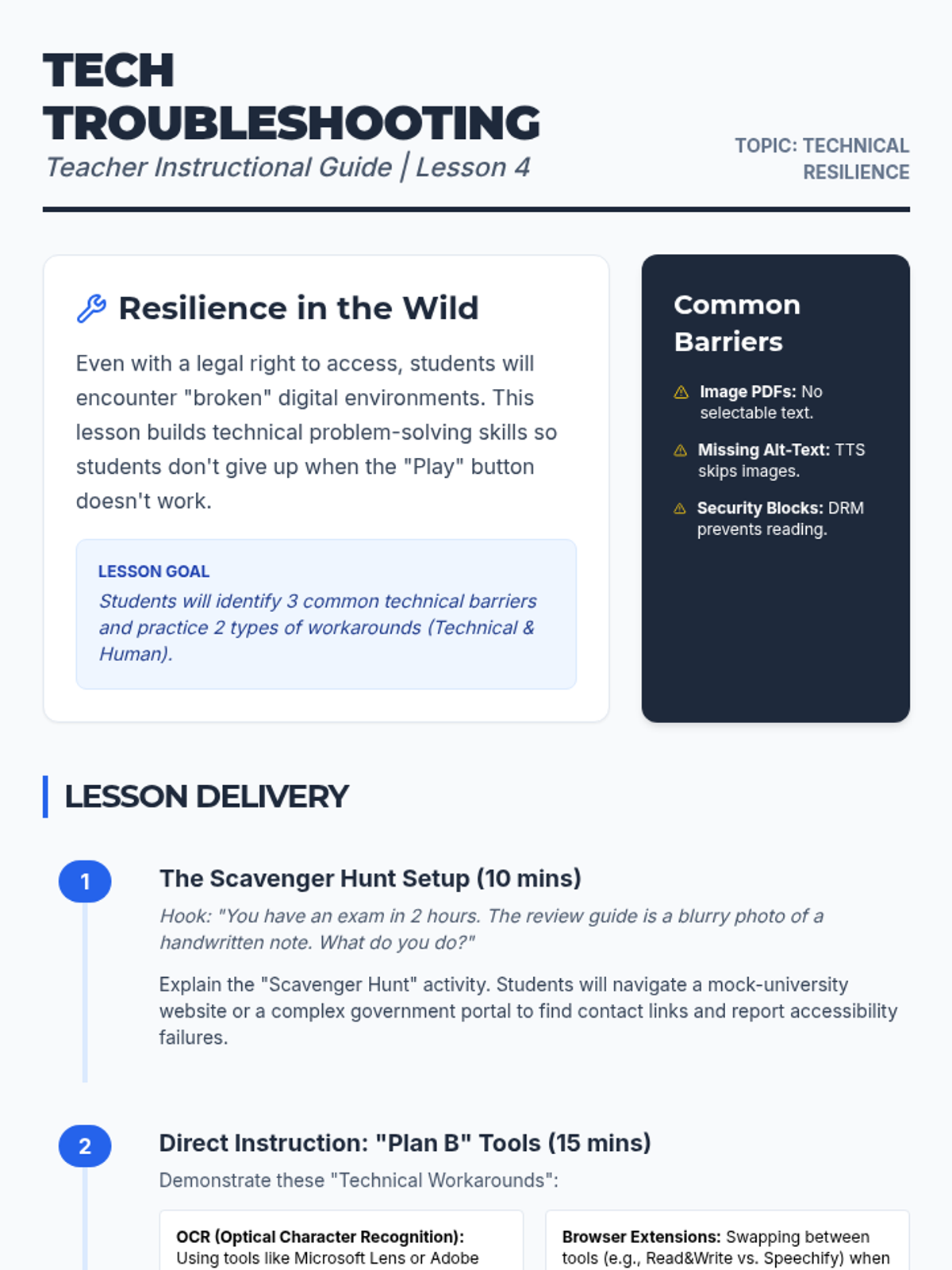
Practical troubleshooting for digital barriers, including identifying inaccessible files and finding technical workarounds or contact persons.
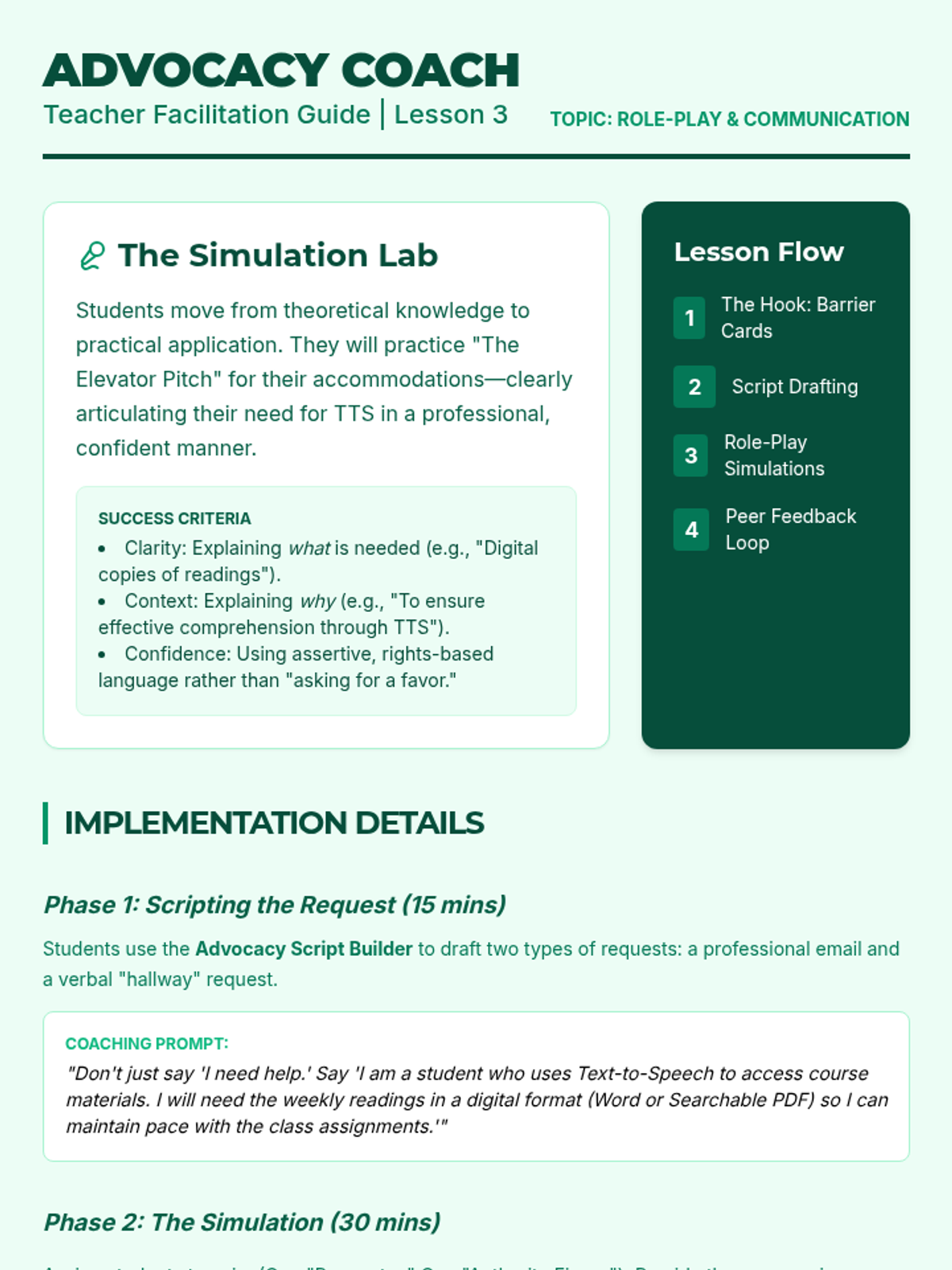
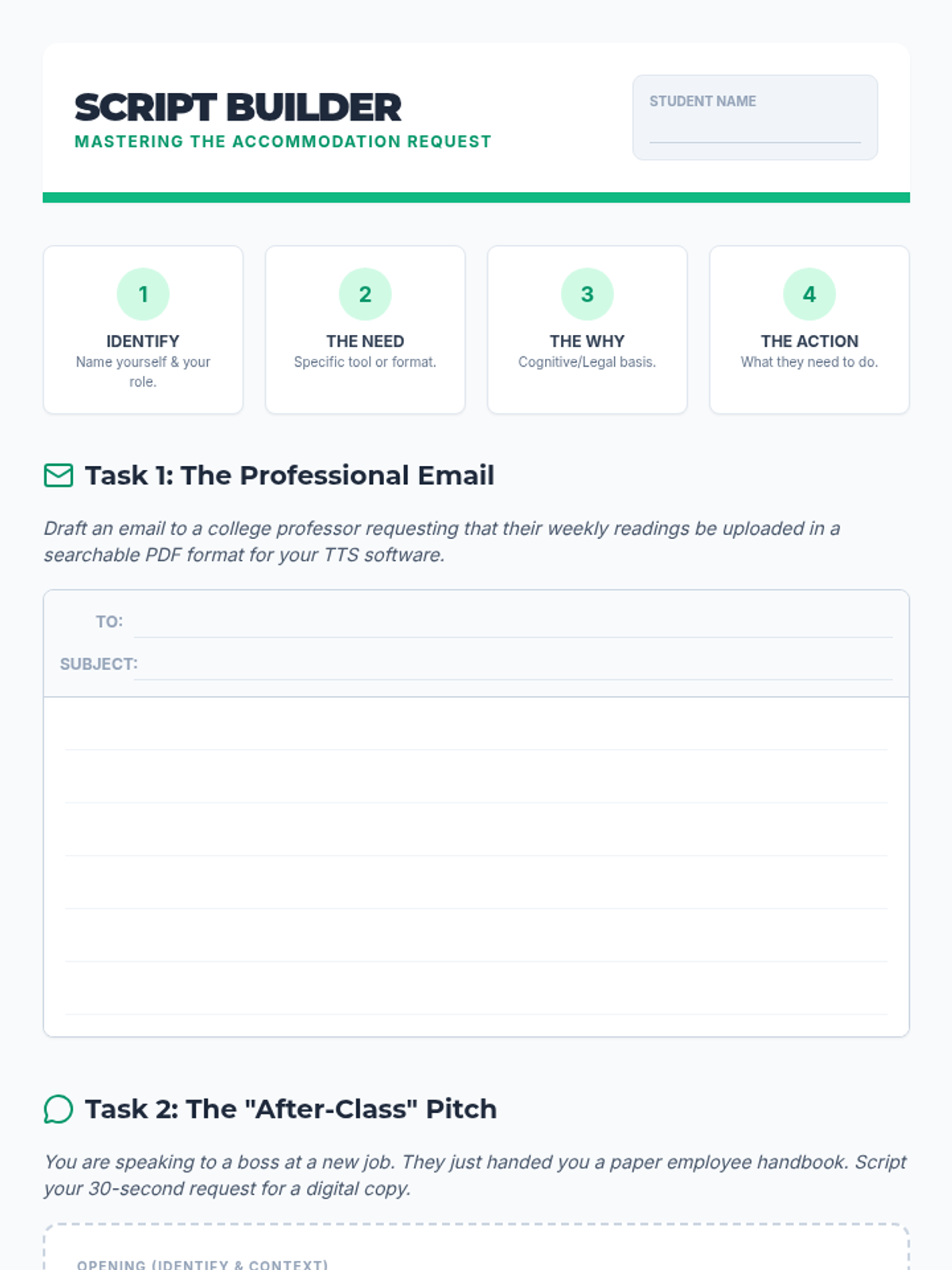
Students practice professional communication and self-advocacy by simulating requests for accommodations in college and workplace settings.
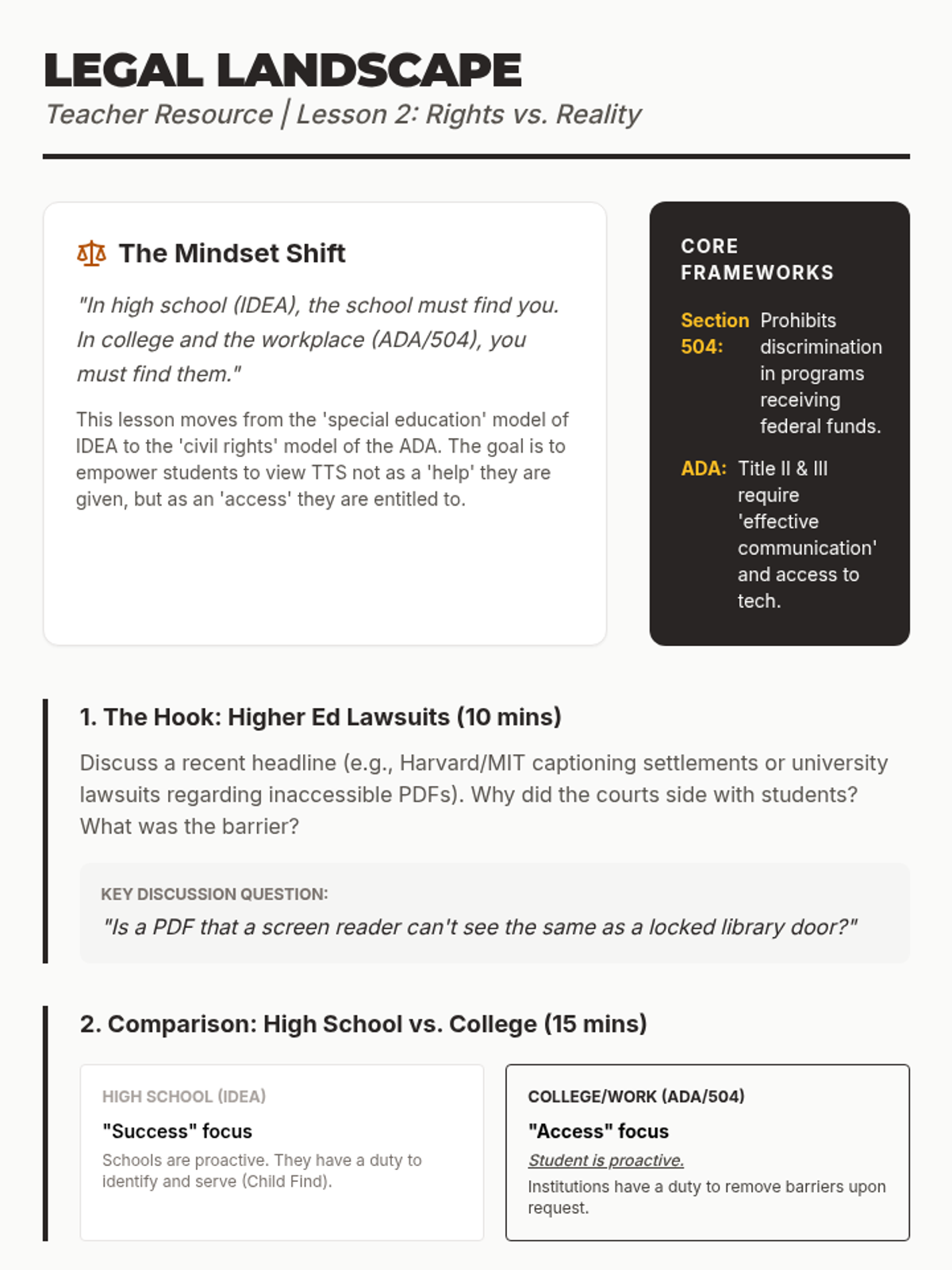
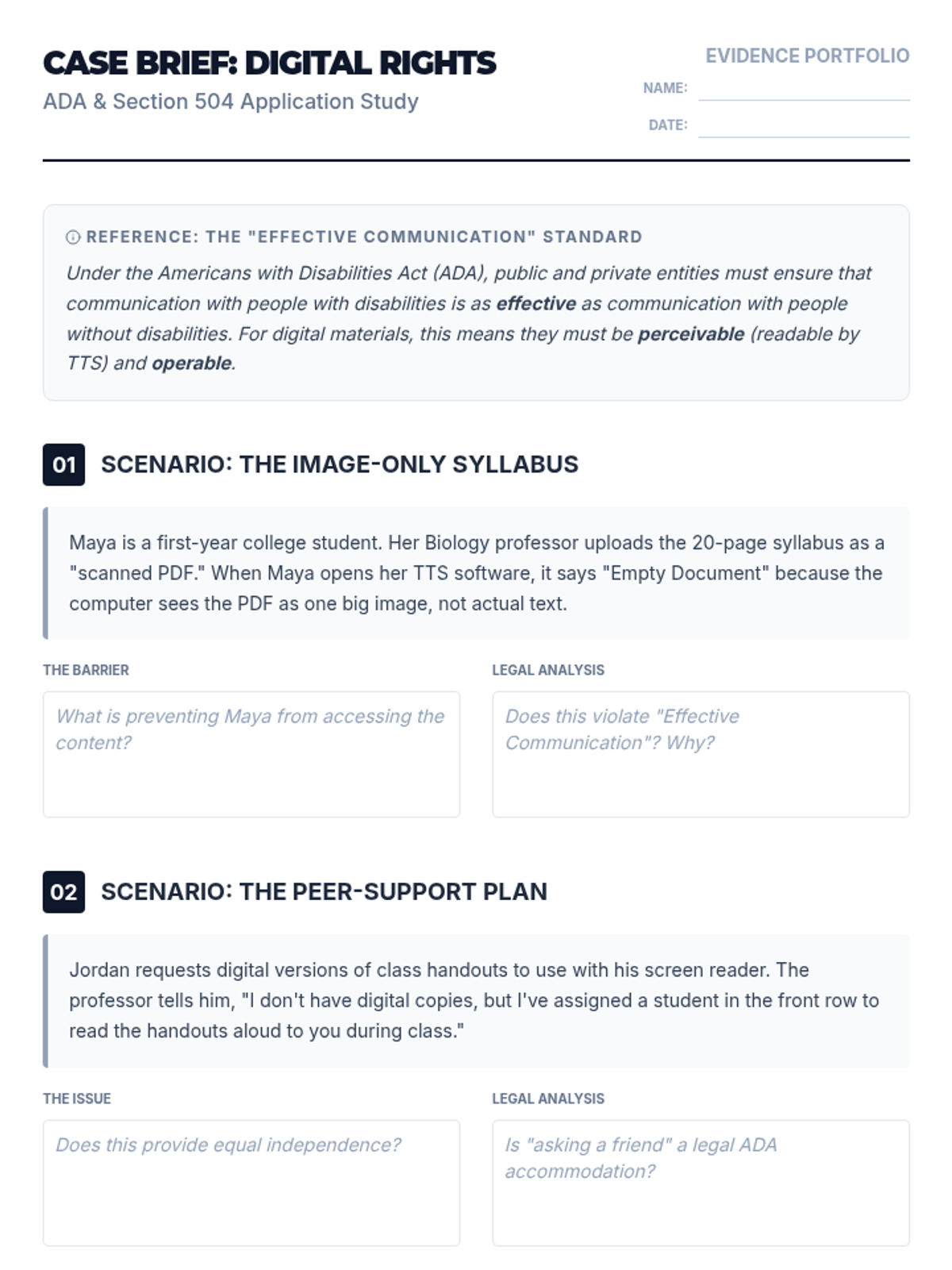
A deep dive into the legal frameworks of the ADA and Section 504 as they apply to digital accessibility in higher education and the workplace.
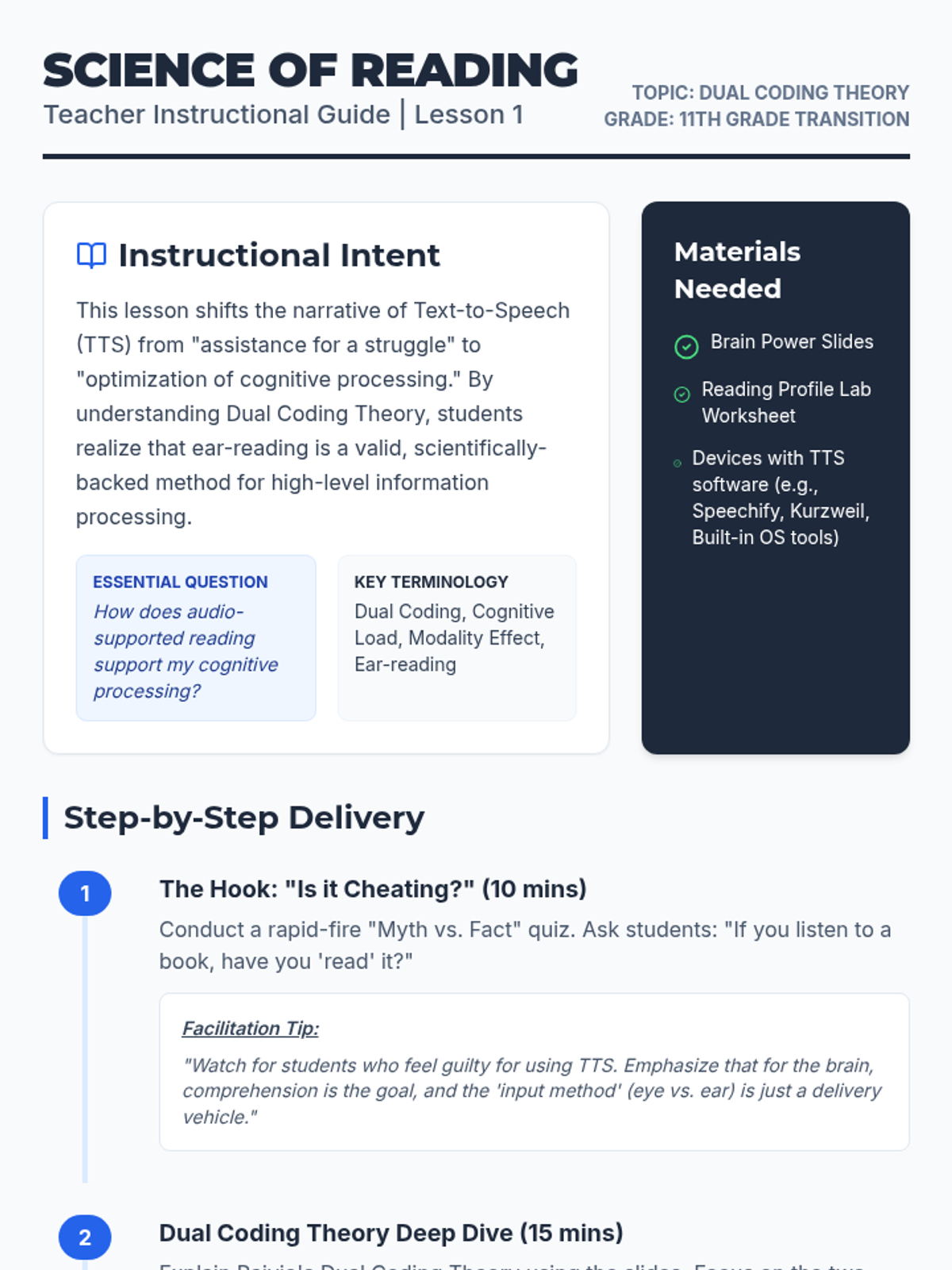
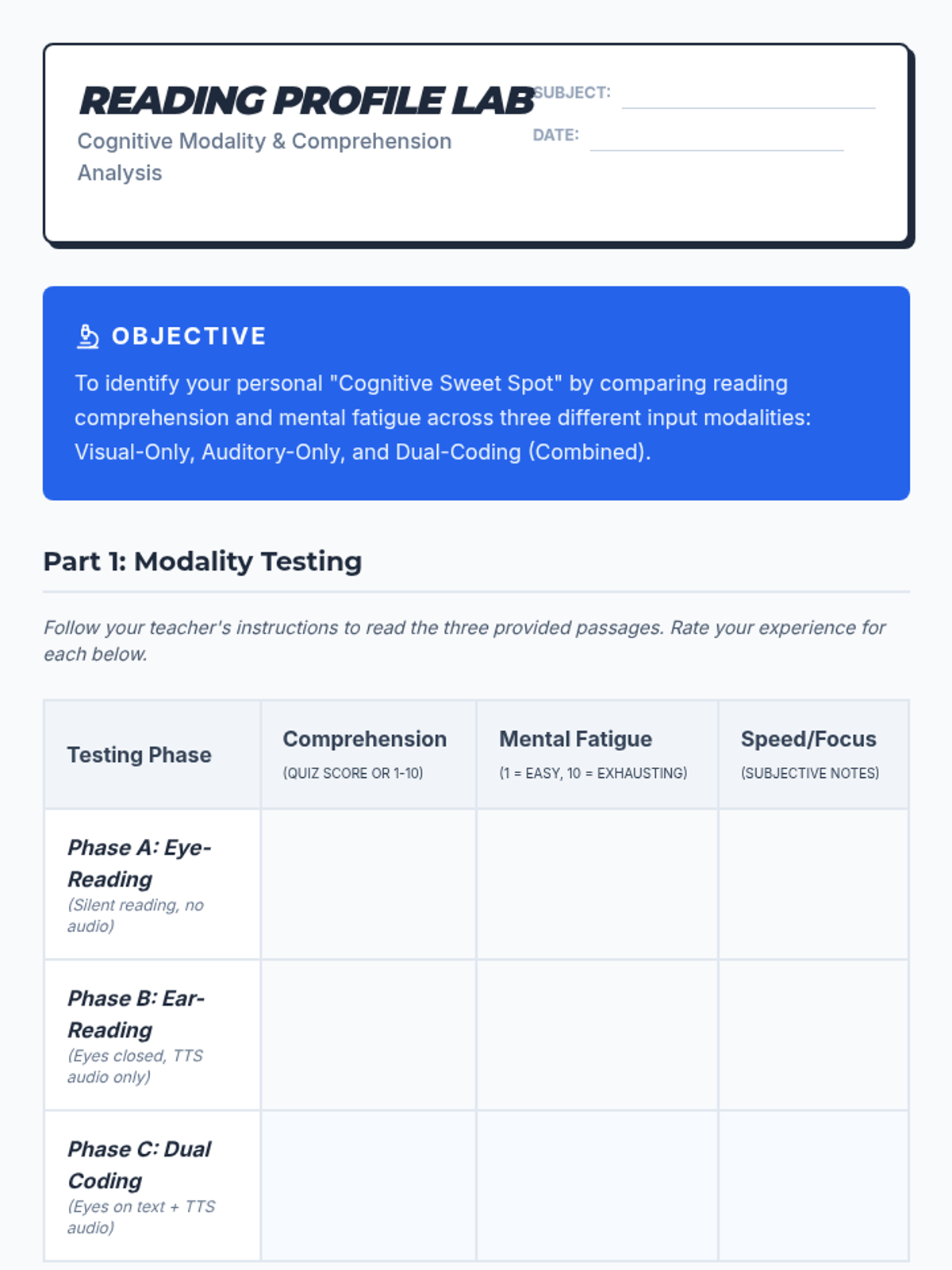
Students explore Dual Coding Theory and analyze their personal reading data to understand how eye-reading and ear-reading interact to improve comprehension and reduce fatigue.
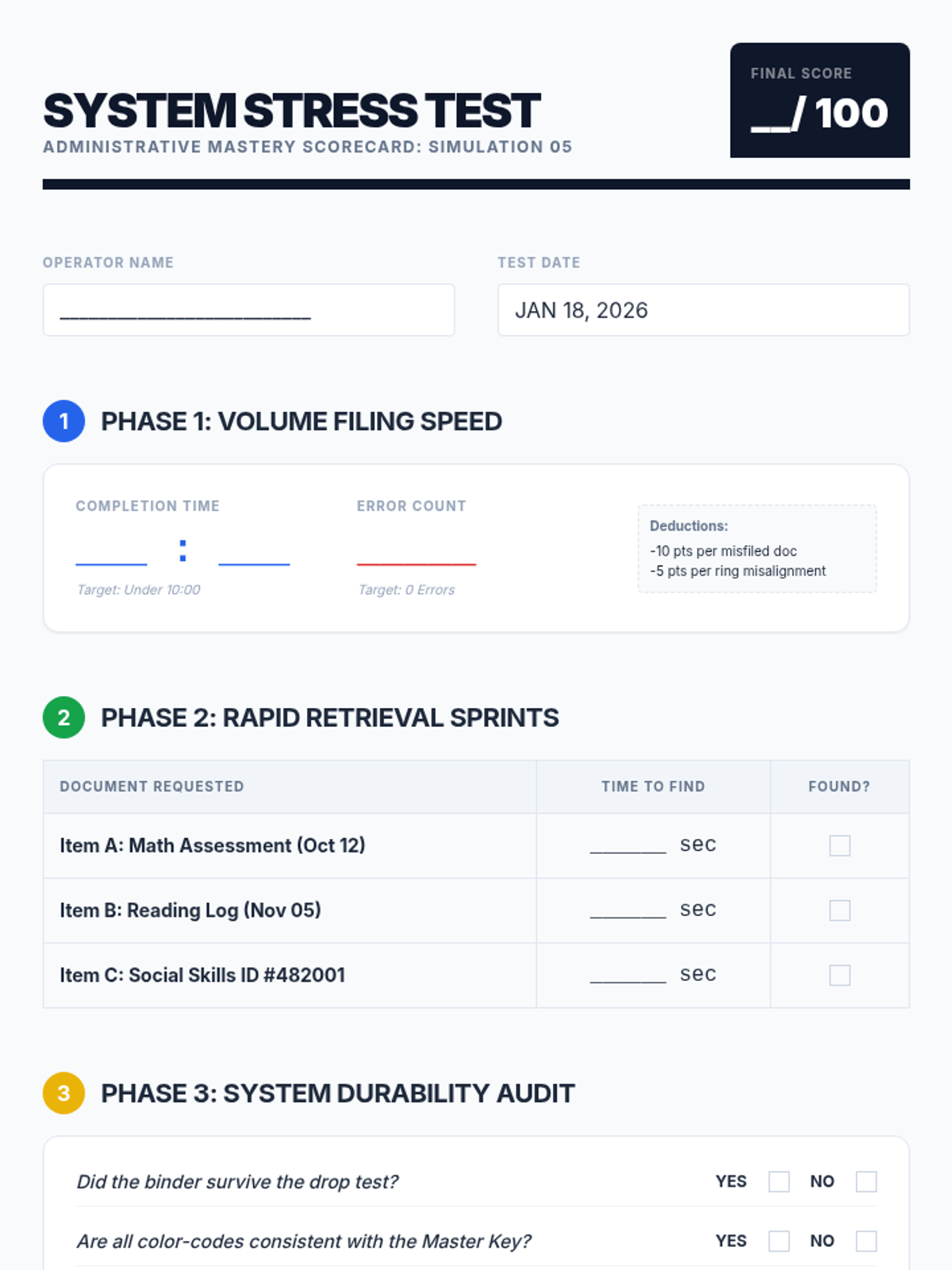
A final simulation where students test their organizational systems through high-pressure filing and retrieval tasks.
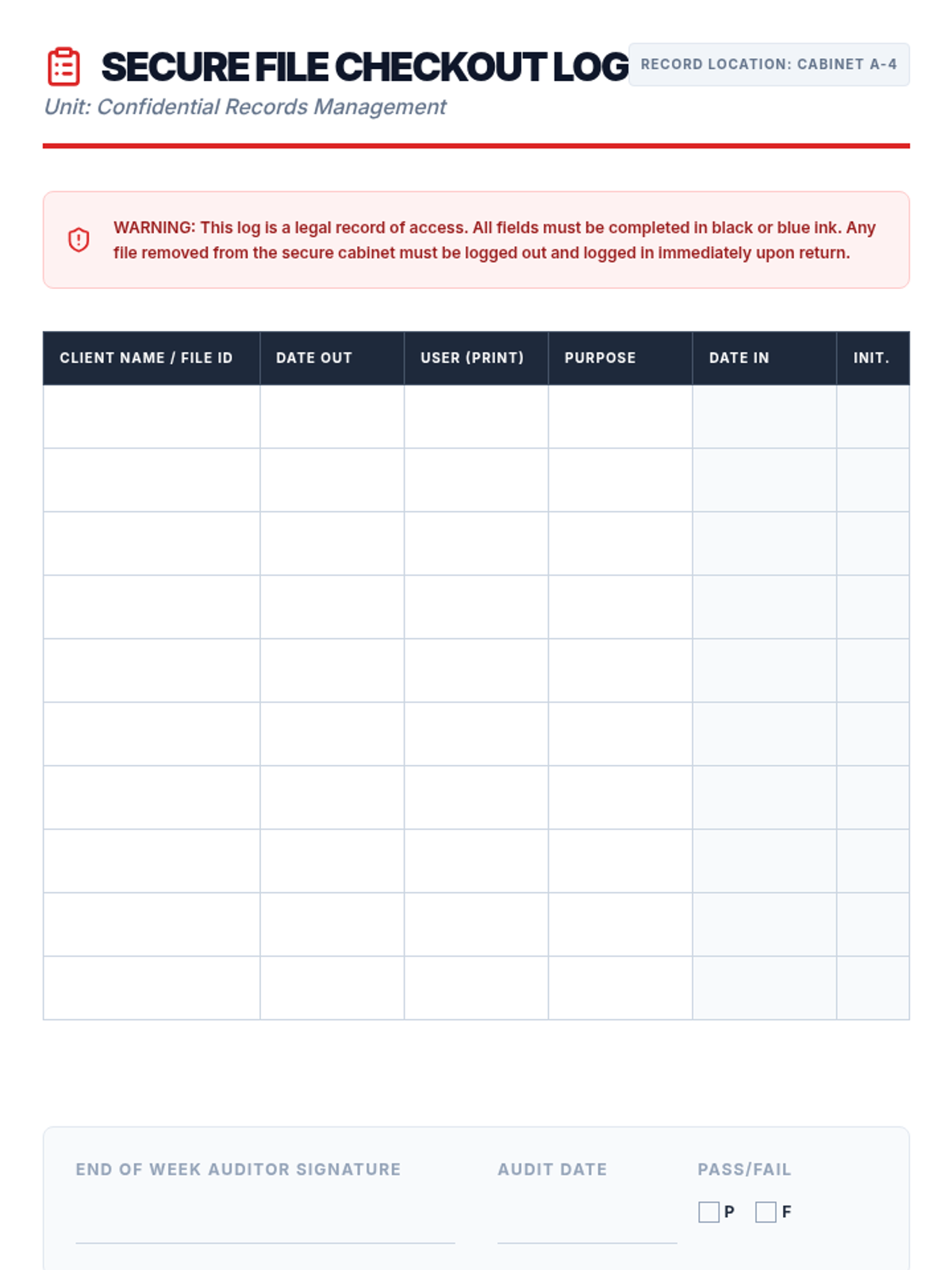
Students explore the ethical and legal requirements of storing sensitive information, including locking protocols and chain of custody.
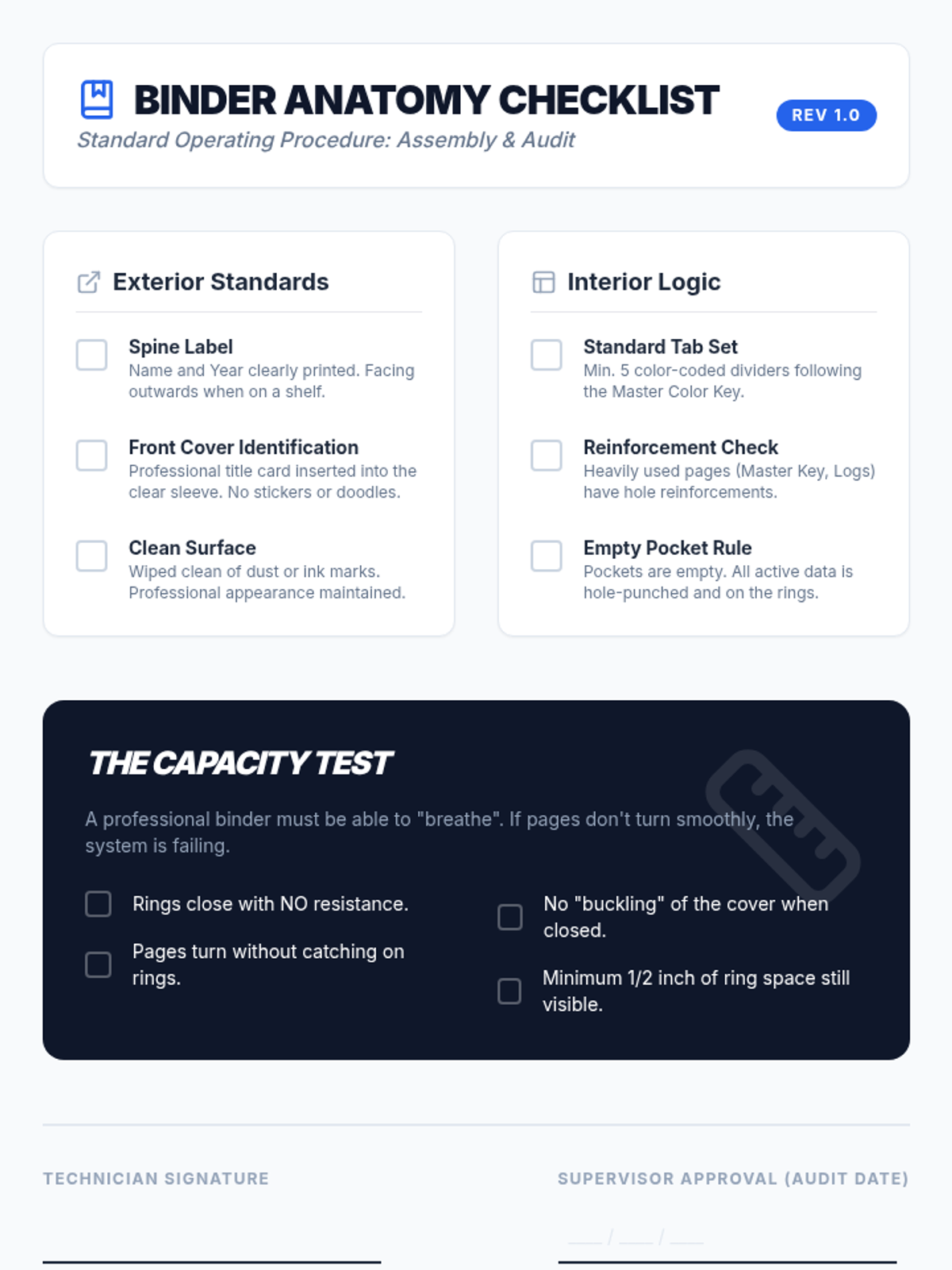
Students assemble professional data tracking binders, focusing on structural integrity, divider systems, and daily maintenance routines.
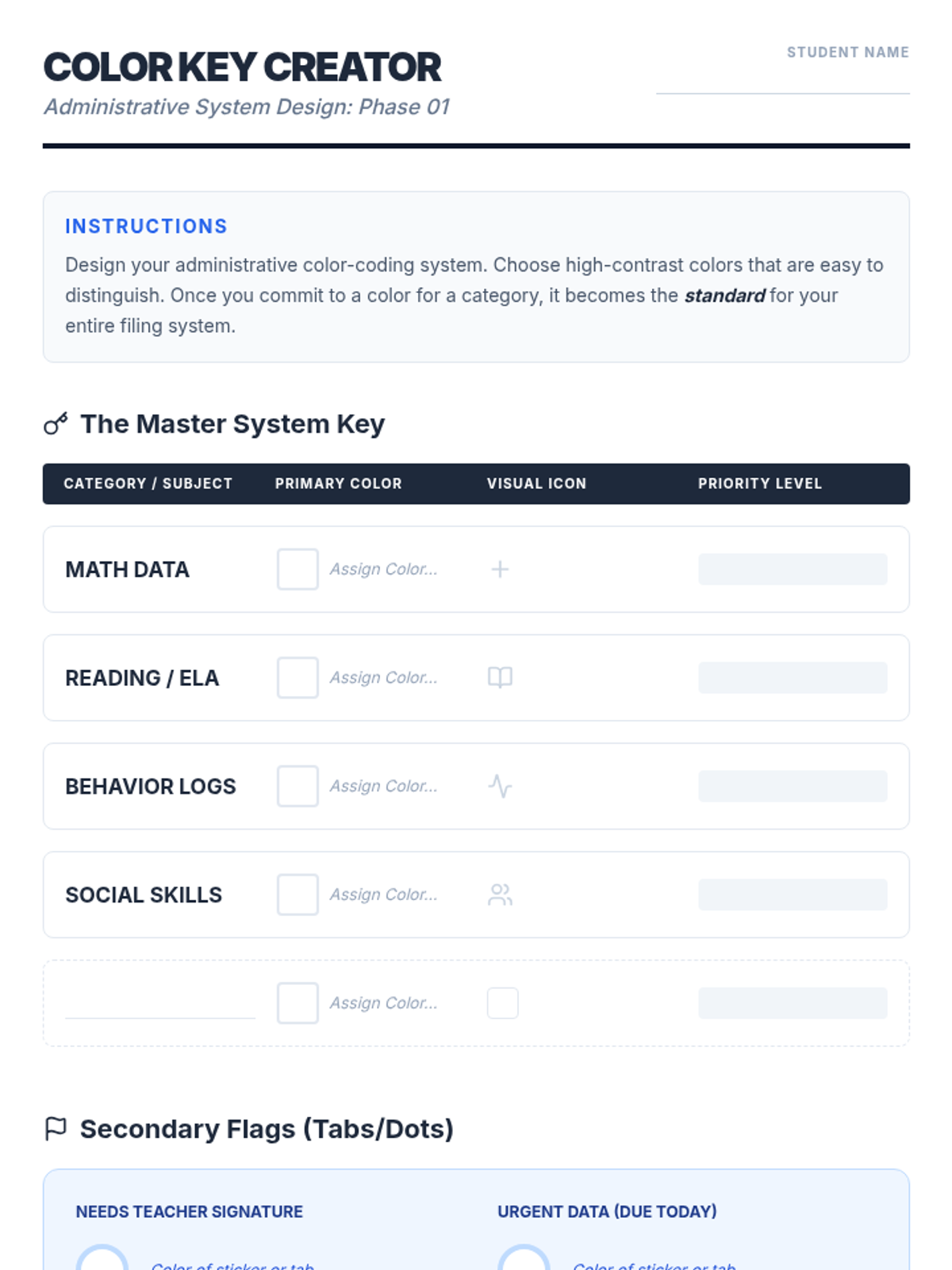
Students learn to use color-coding to categorize data types, creating a system for instant visual identification and faster processing.
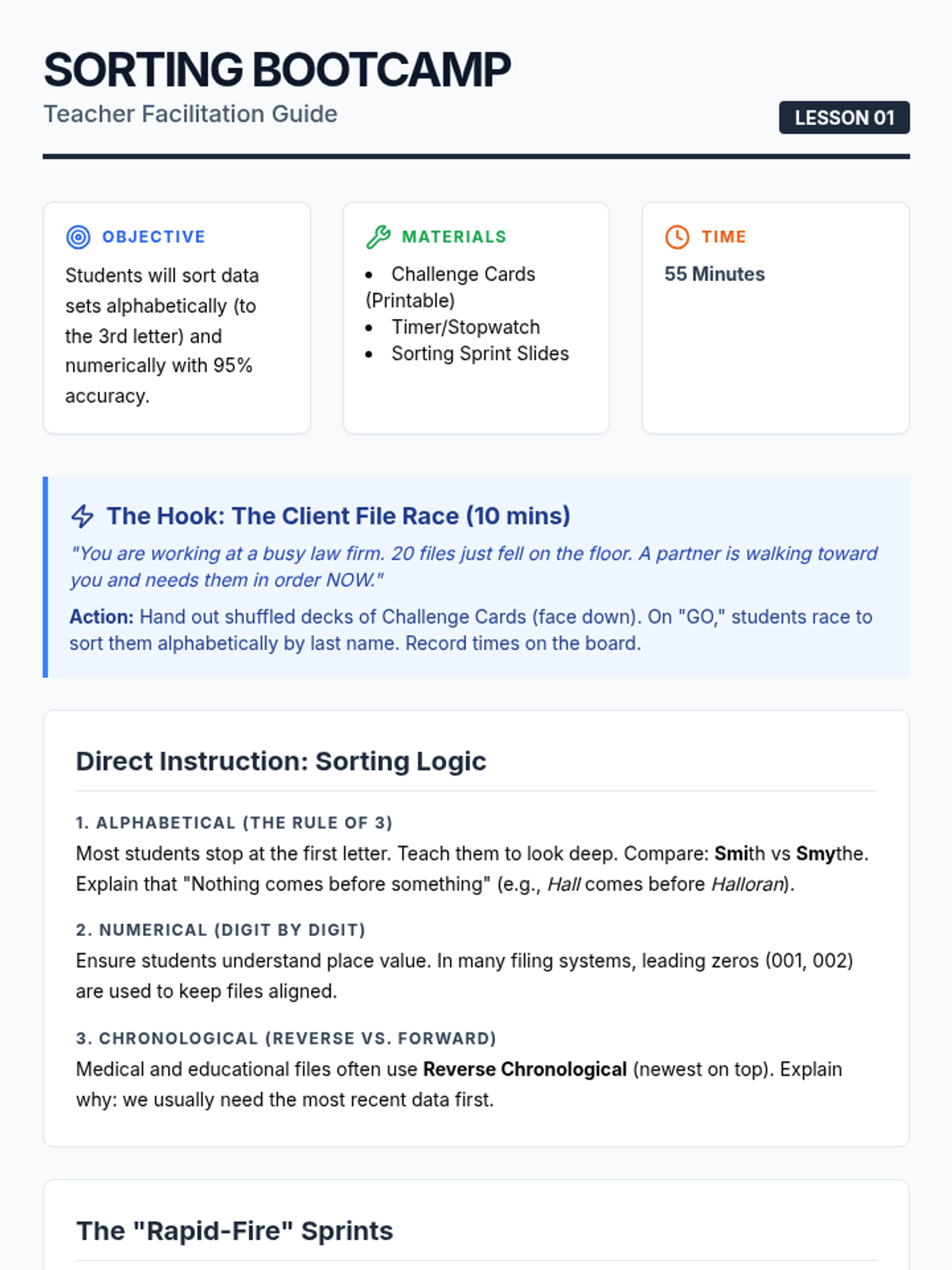
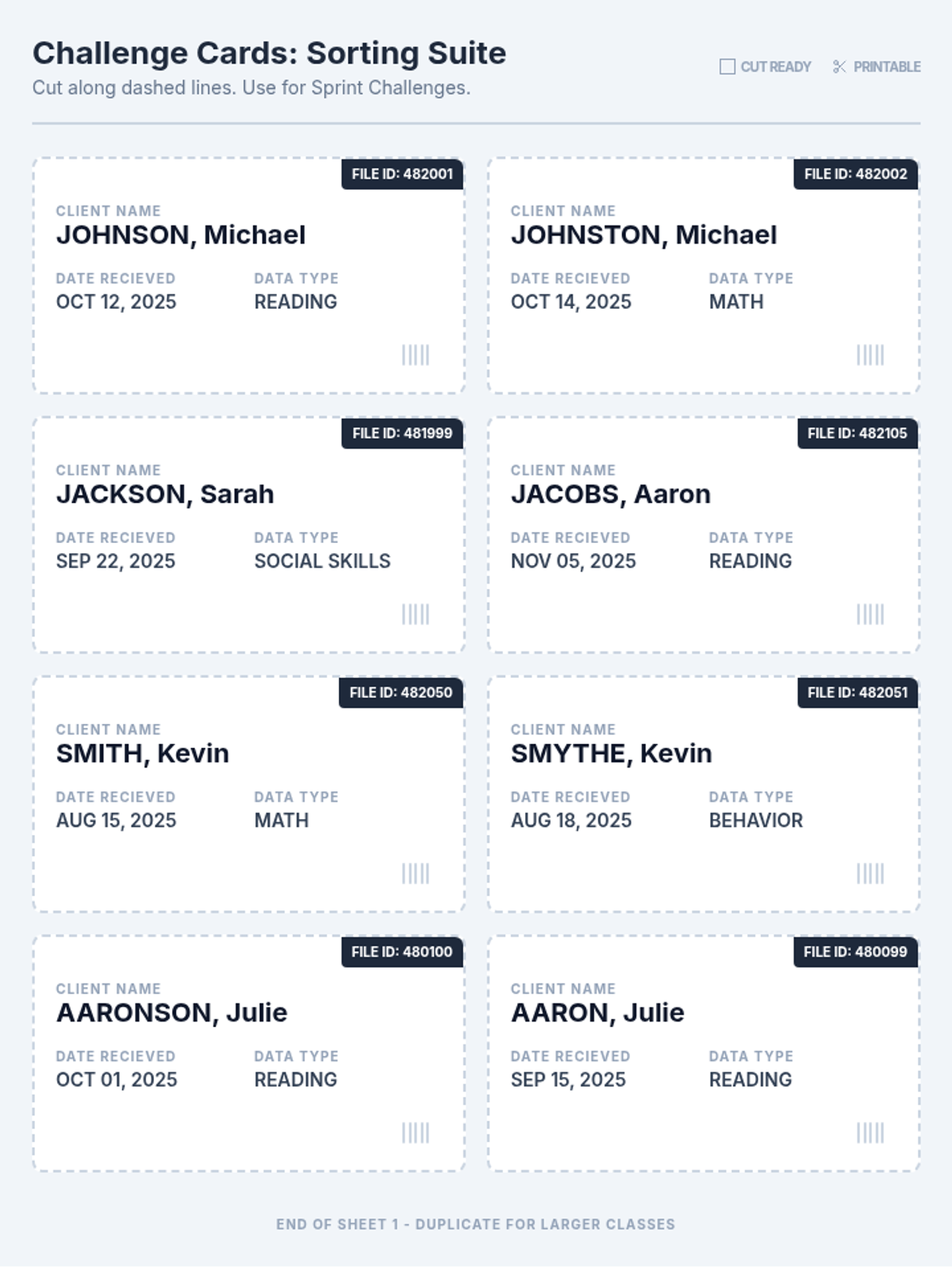
Students practice the fundamental rules of sorting: alphabetical (to the third letter), numerical, and chronological to build administrative speed and accuracy.
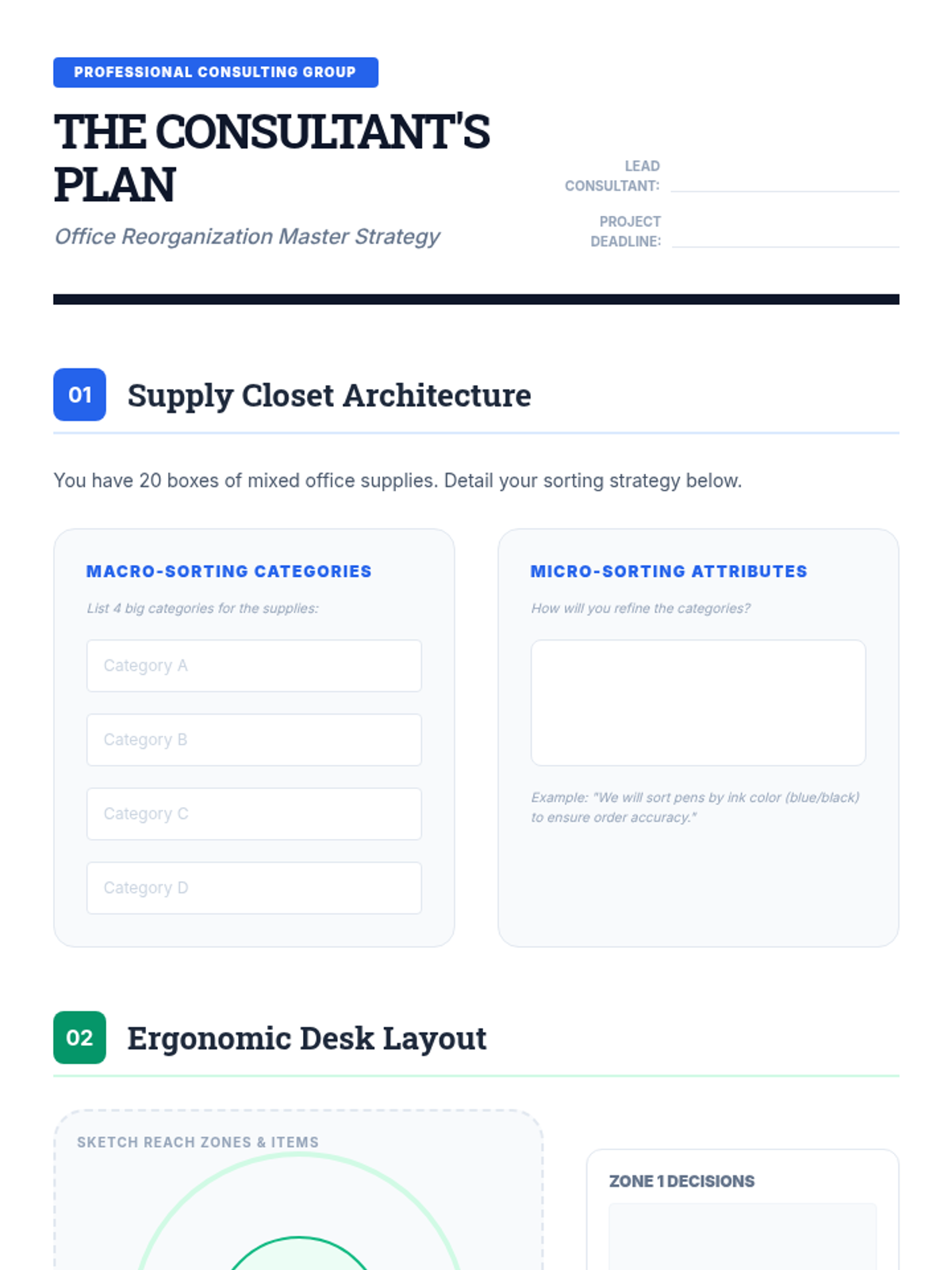
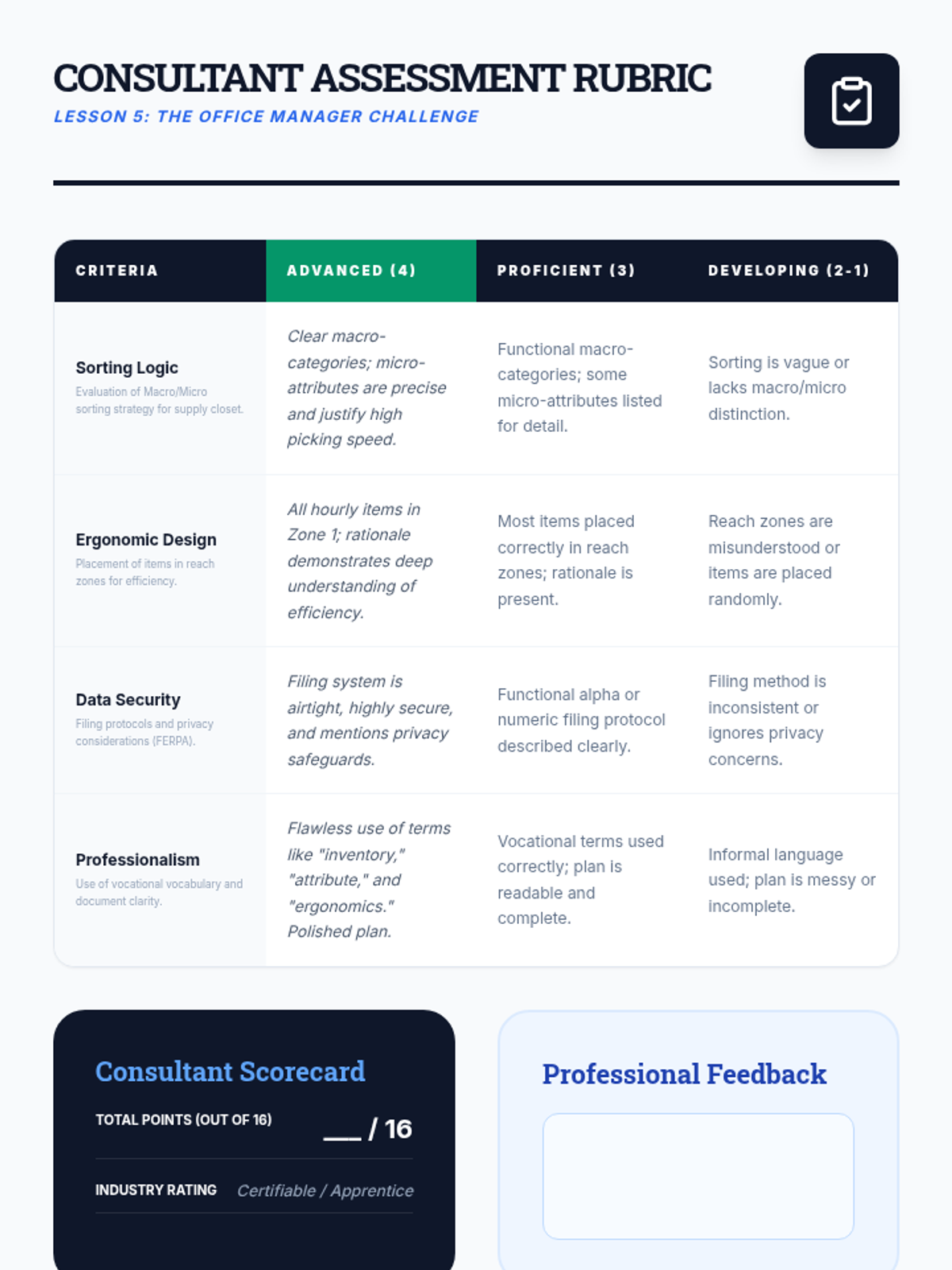
A culminating simulation where students act as professional consultants to reorganize a chaotic office space, applying all skills from the sequence.
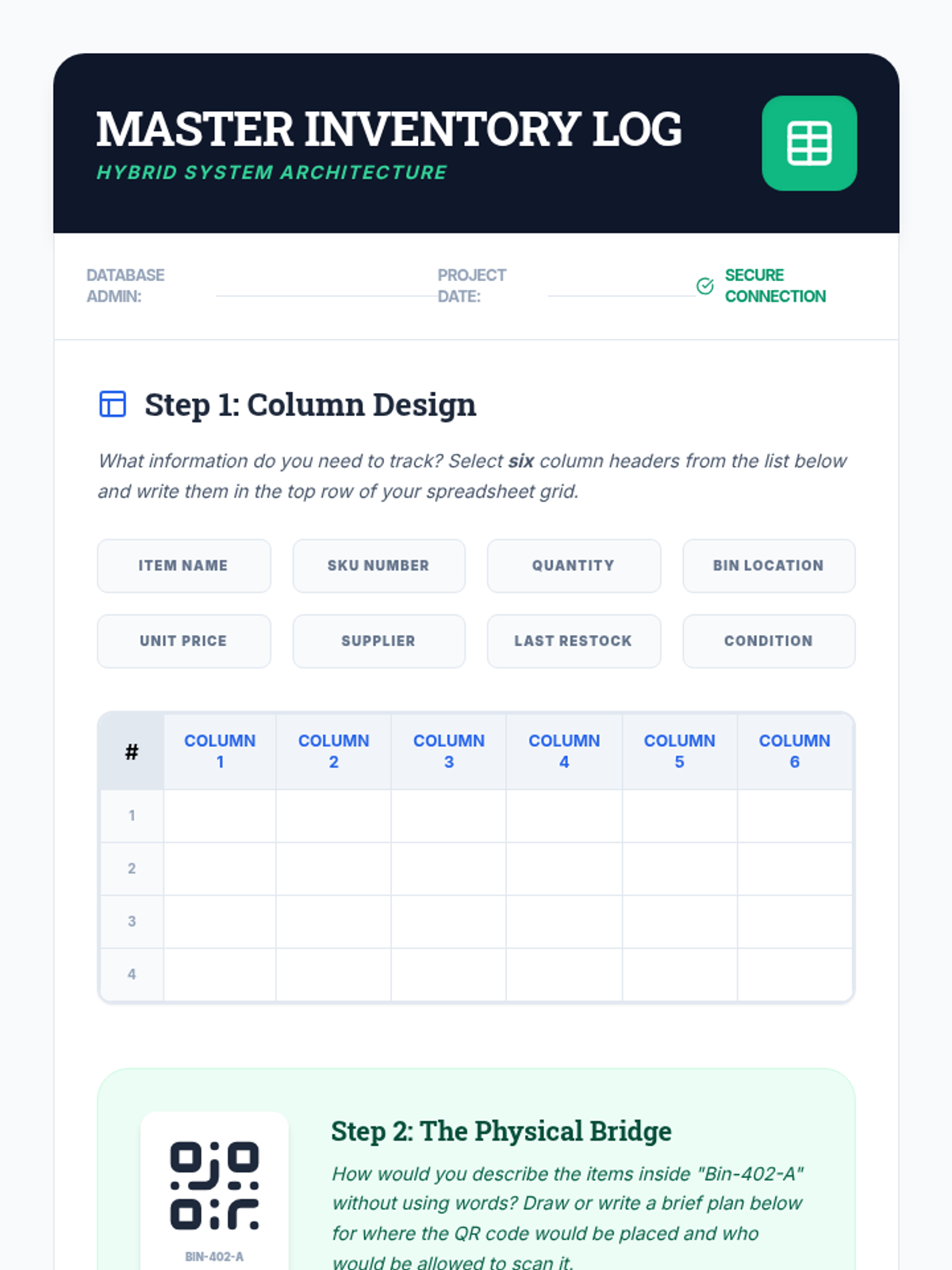
Explores the bridge between physical items and digital tracking. Students learn to use QR codes and spreadsheets to maintain accurate inventory logs for physical materials.
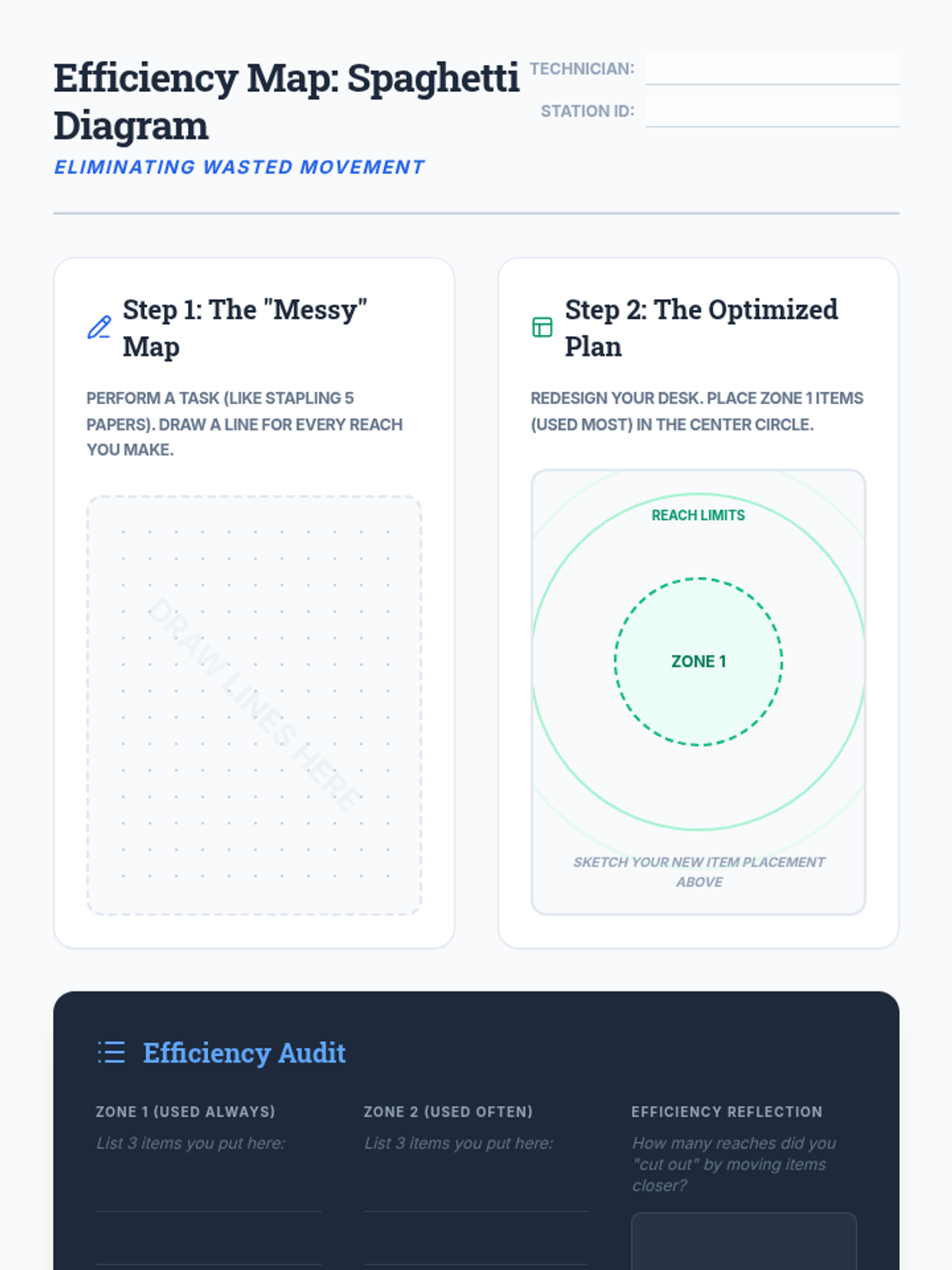
Students analyze workspace ergonomics and efficiency using 'Spaghetti Diagrams' to minimize wasted movement. They design optimal workstation layouts for maximum productivity.
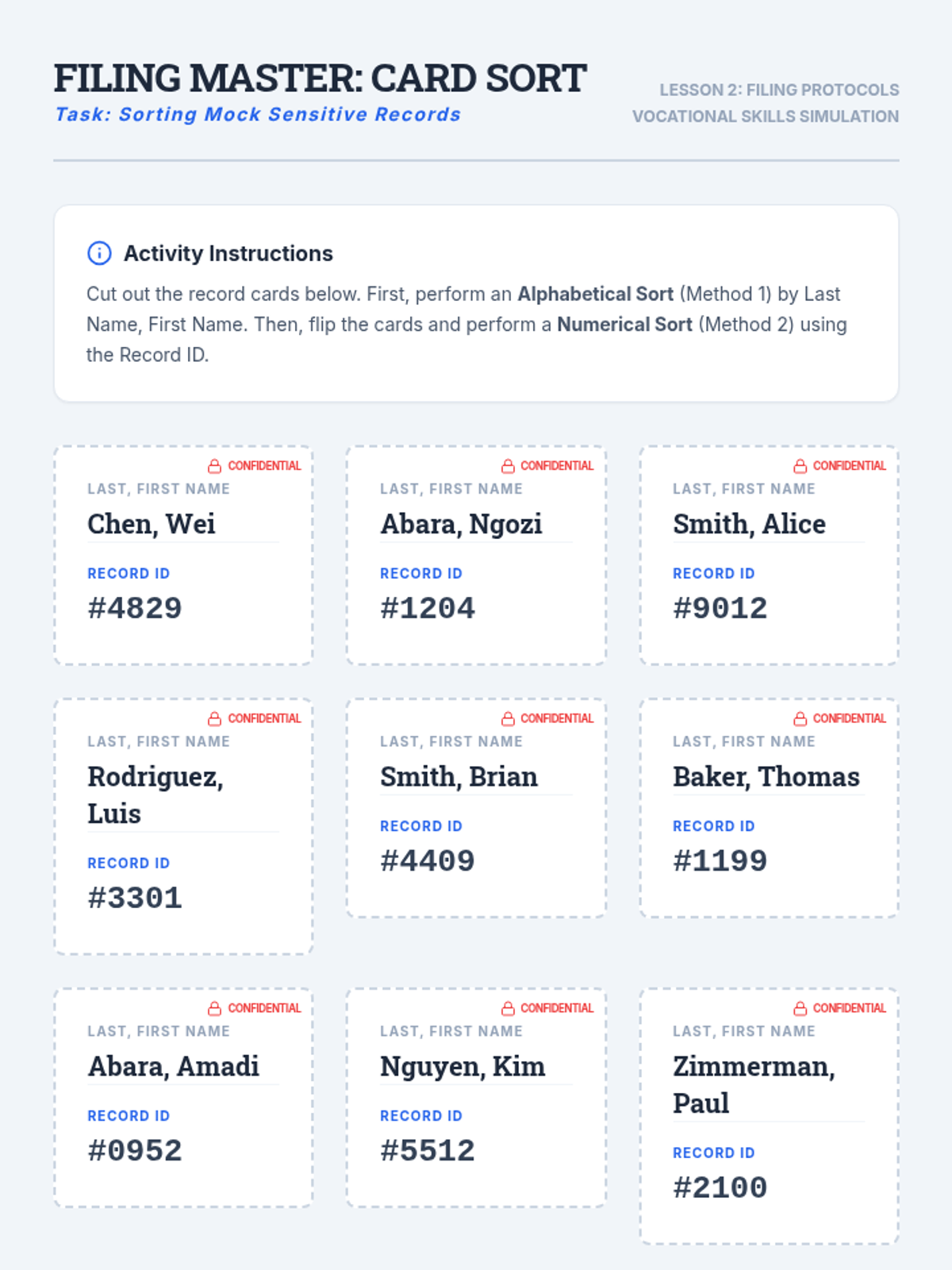
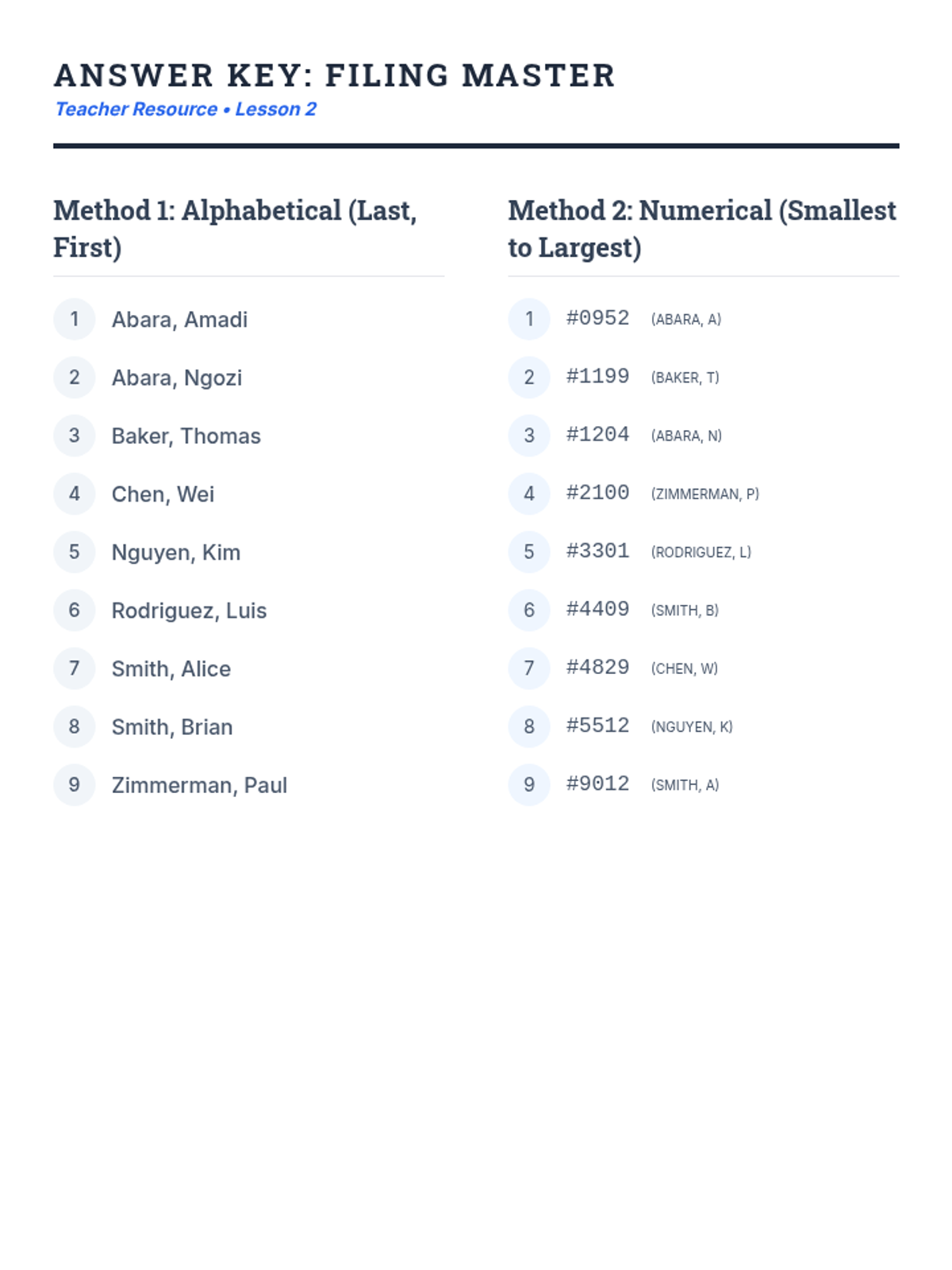
Focuses on alphabetical and numerical filing systems using mock sensitive records. Students learn about FERPA and the ethics of handling private information in a professional setting.
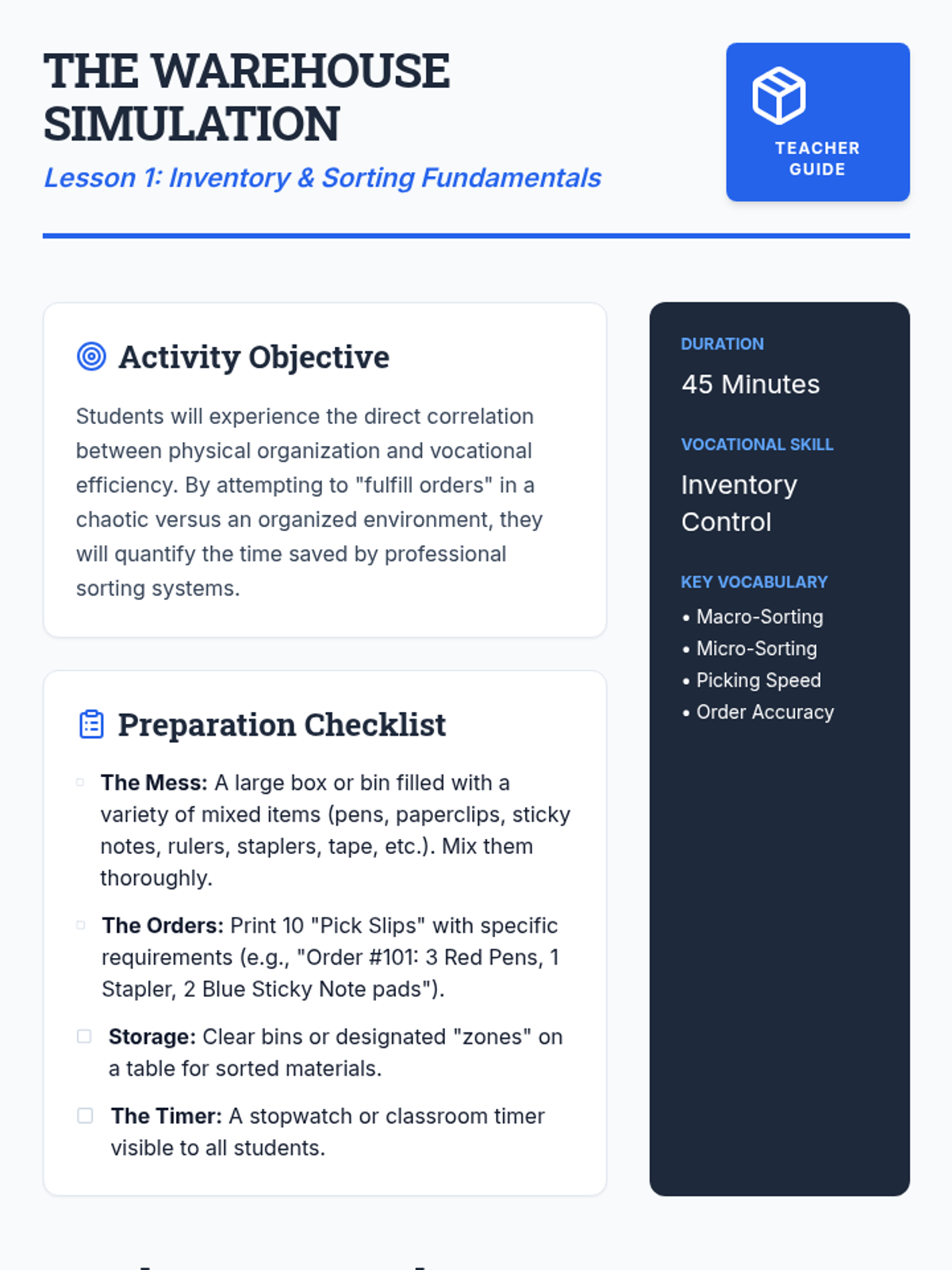
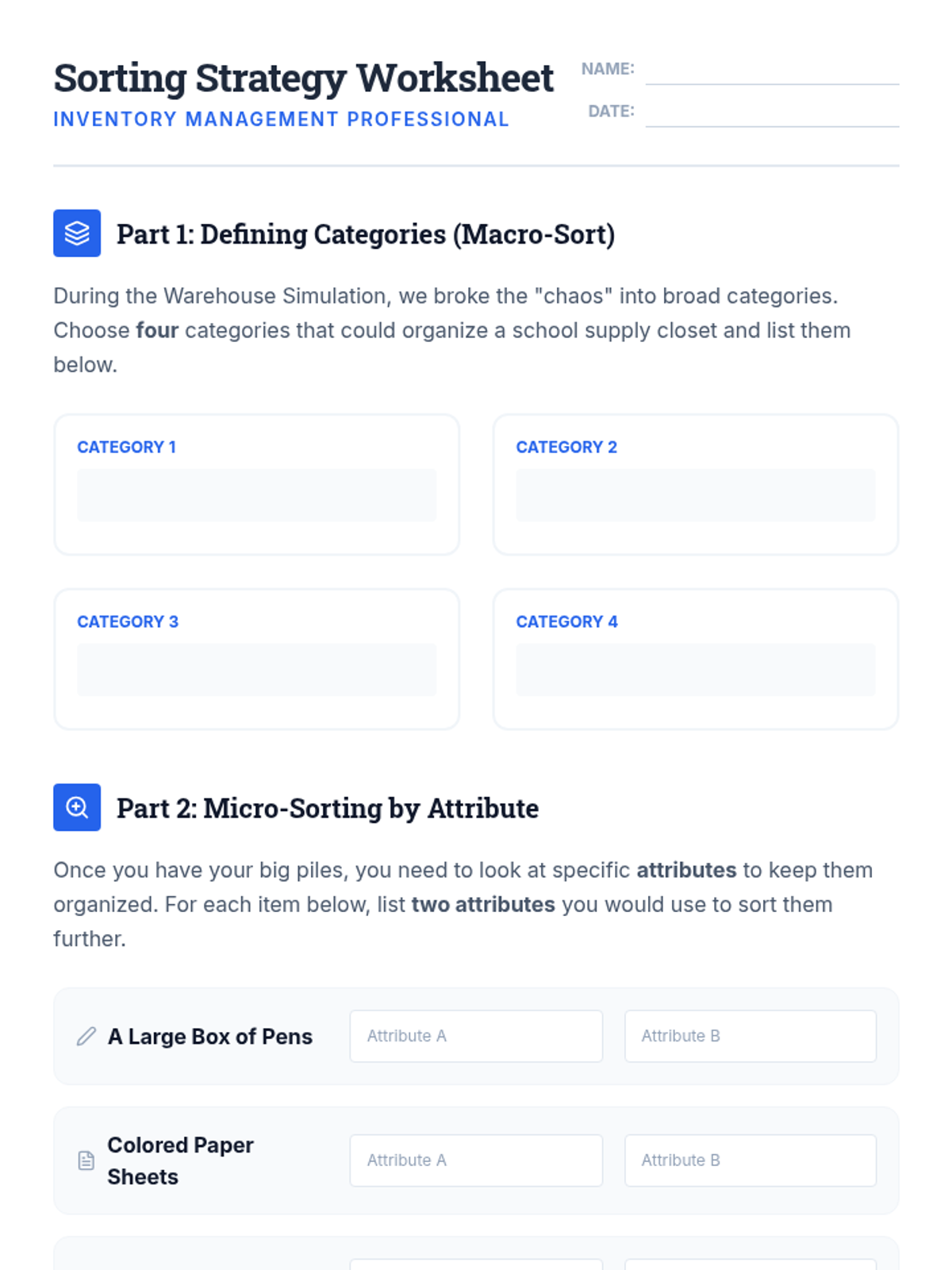
Students learn the basics of inventory control by sorting mixed supplies through macro and micro-sorting techniques. A warehouse simulation compares speed between organized and disorganized environments.
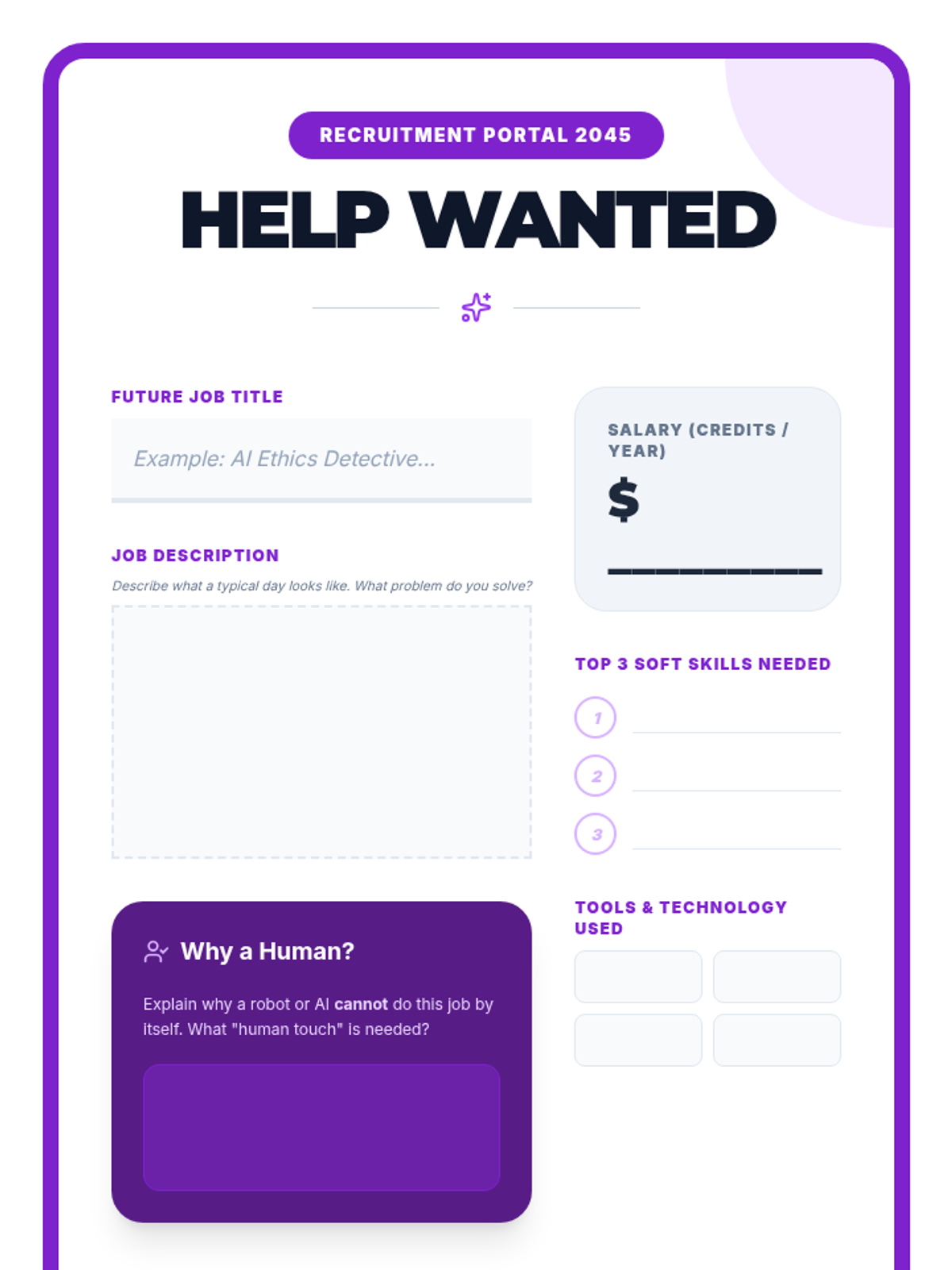
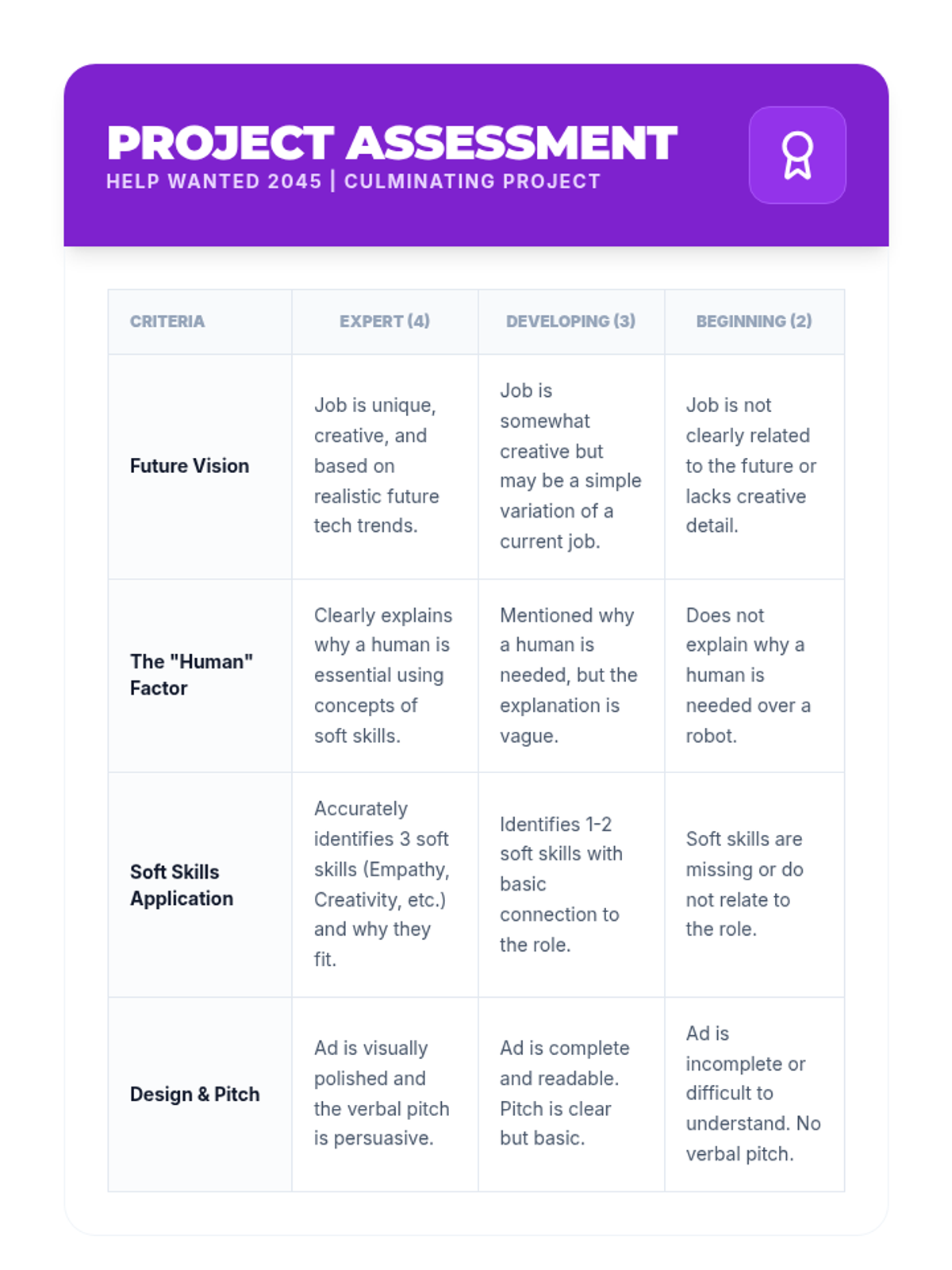
In this culminating project, students research predictions for the job market in 20 years and create a 'Help Wanted' ad for a future career that doesn't exist yet. They identify the essential 'soft skills' that remain difficult to automate.
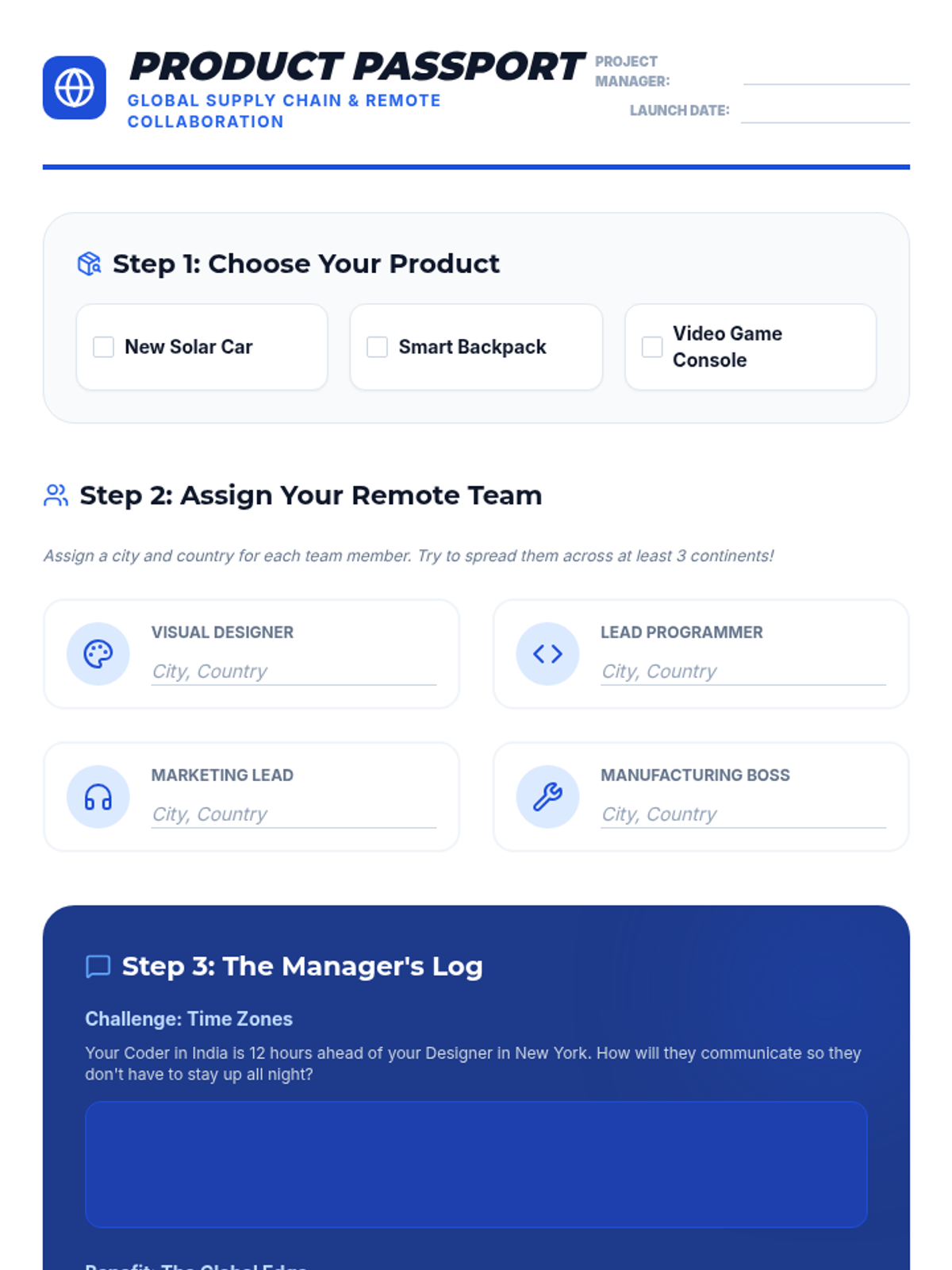
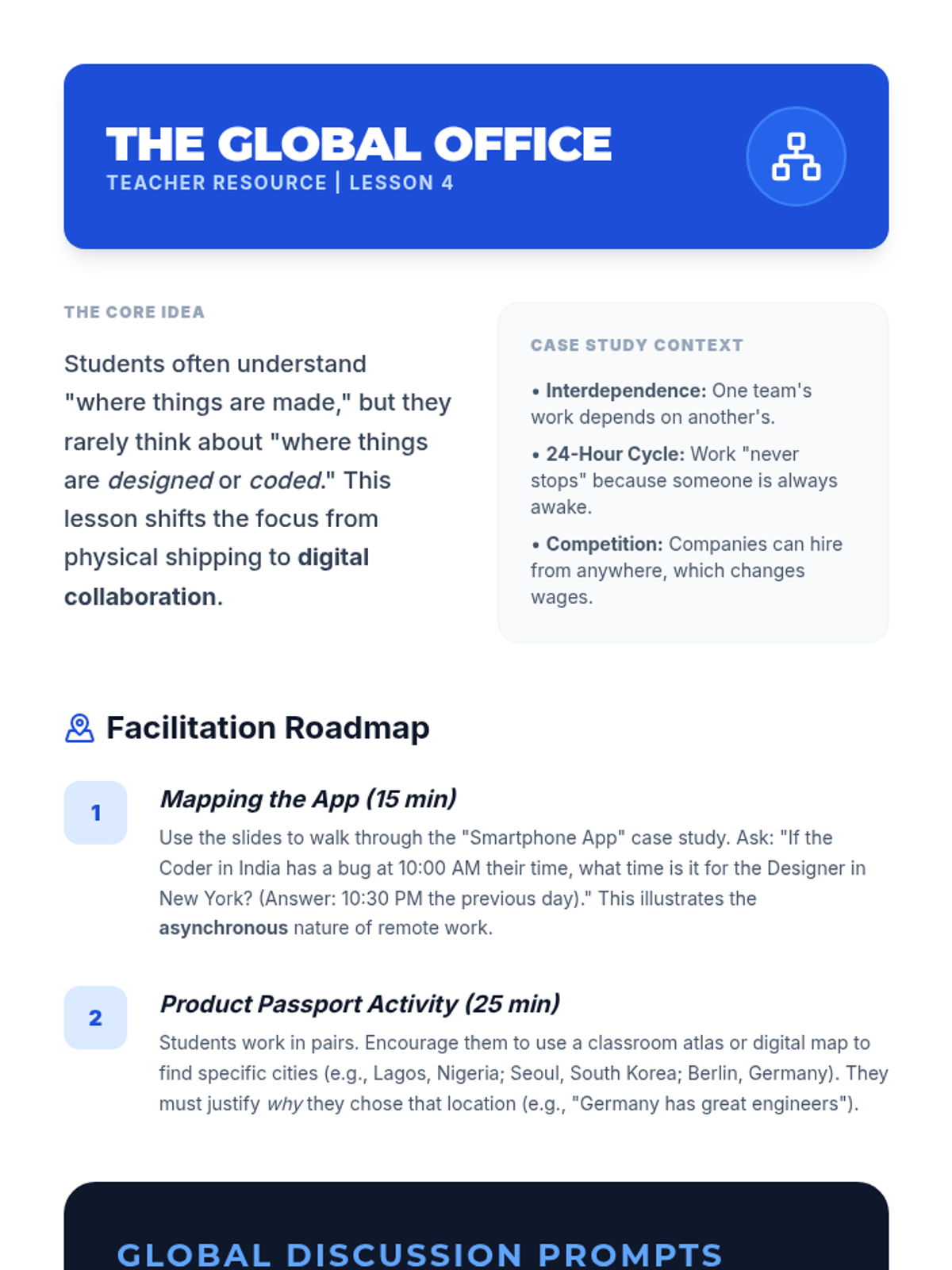
Students investigate how the internet allows people to work together without being in the same room or country. Using a case study of a global product, they map out where different team members might live.
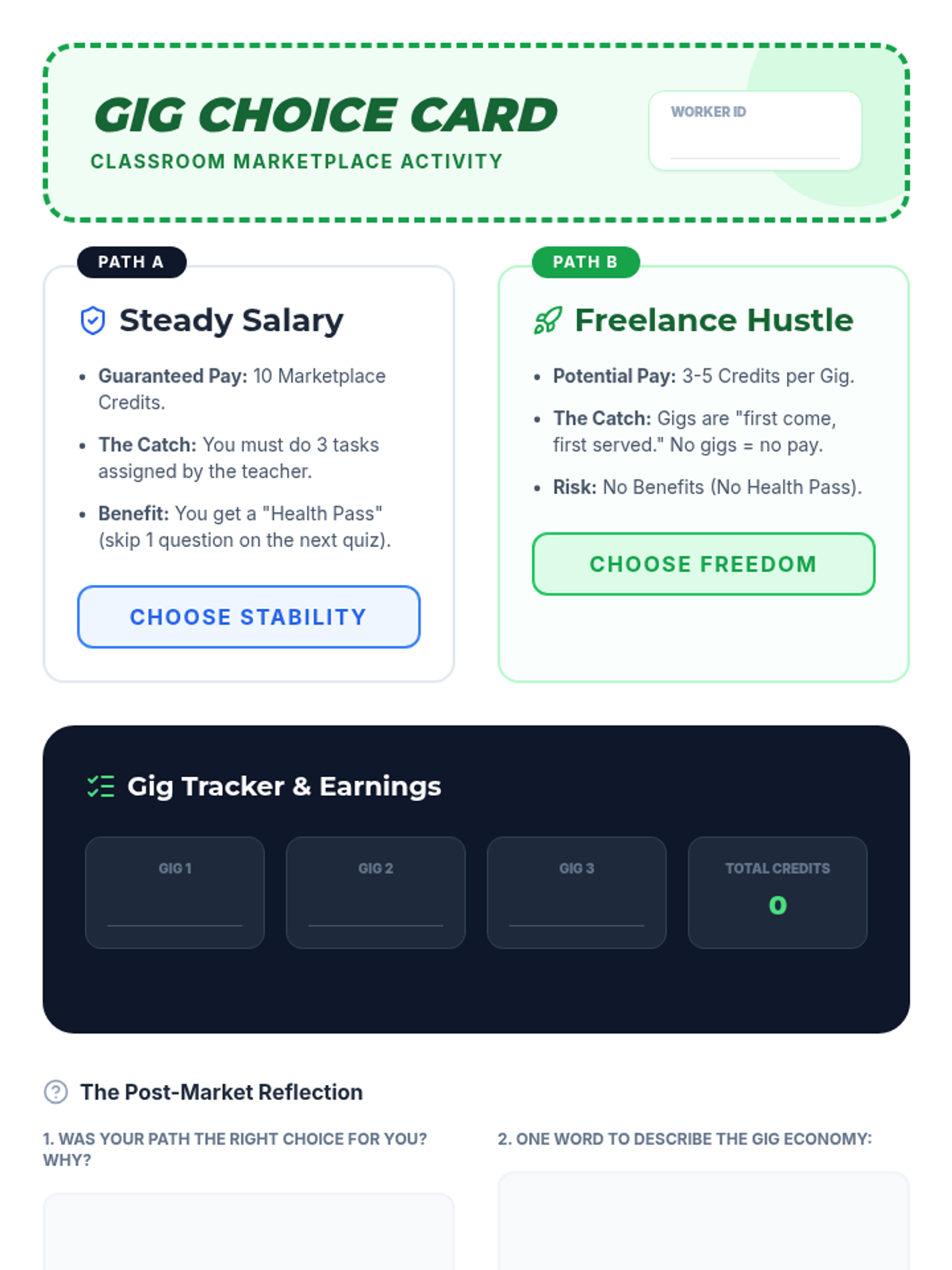
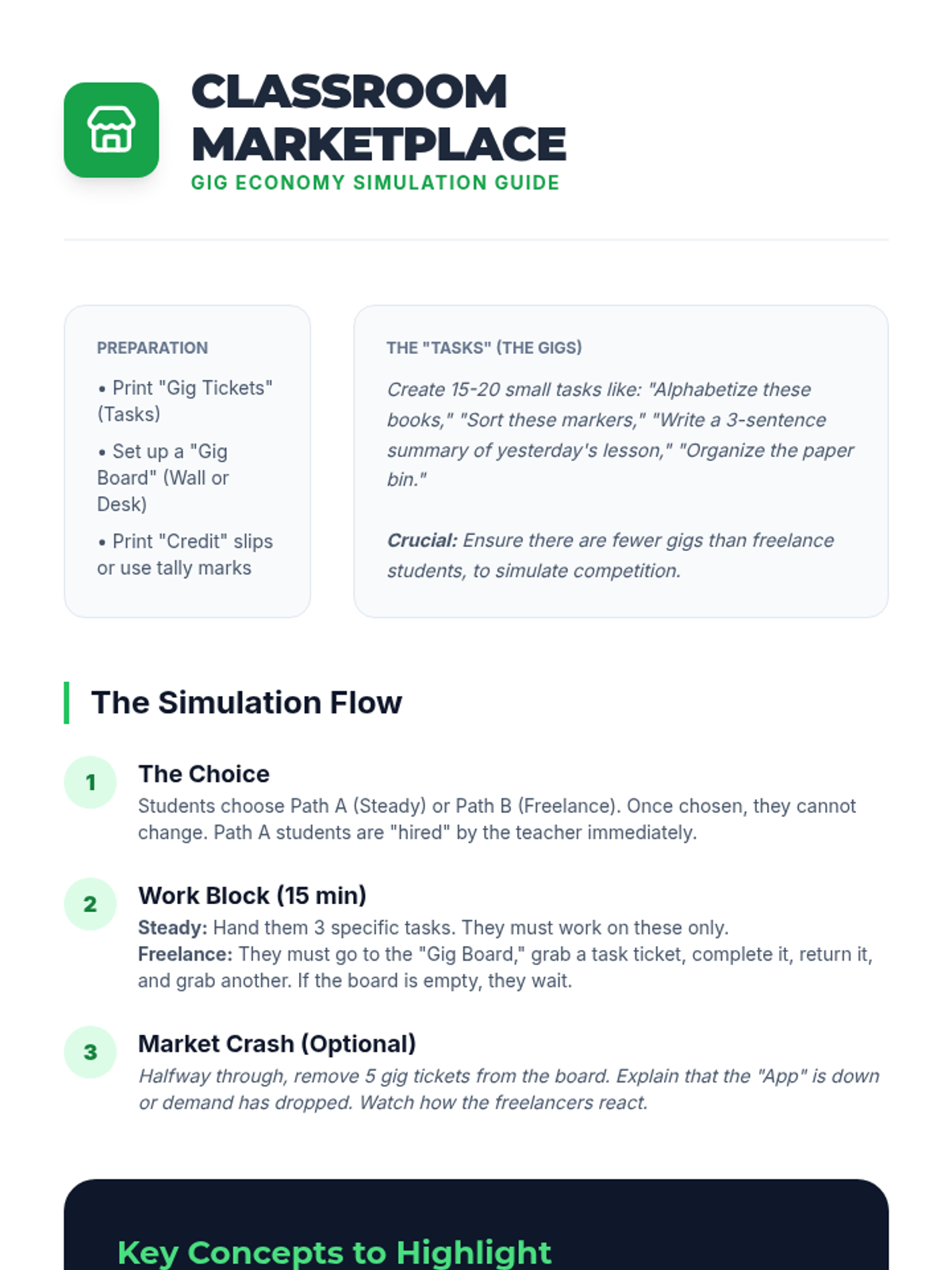
Explore the gig economy through a classroom marketplace activity, comparing steady salary roles with flexible freelancing. Learn about contractors, benefits, and the trade-offs of modern working styles.
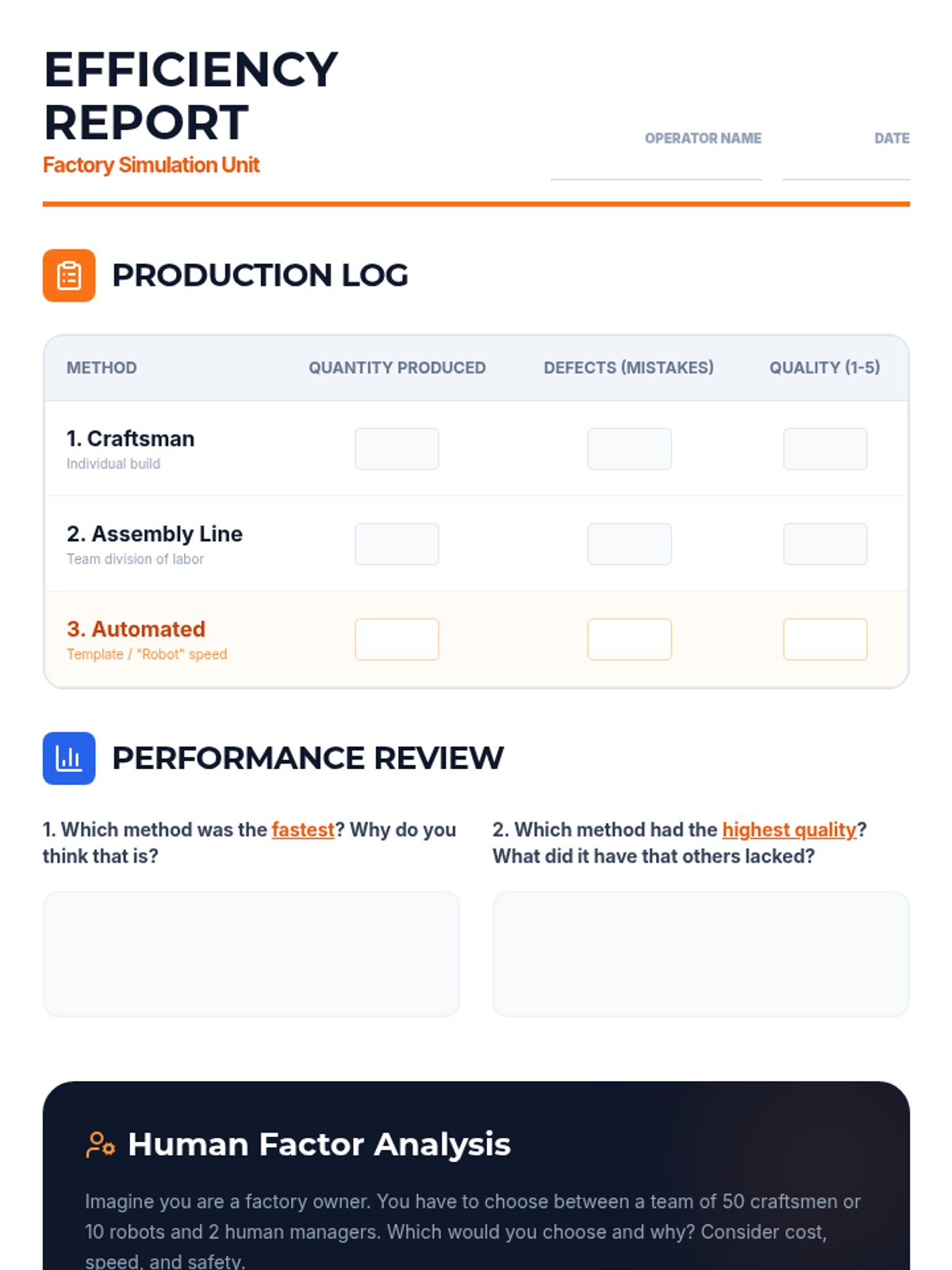
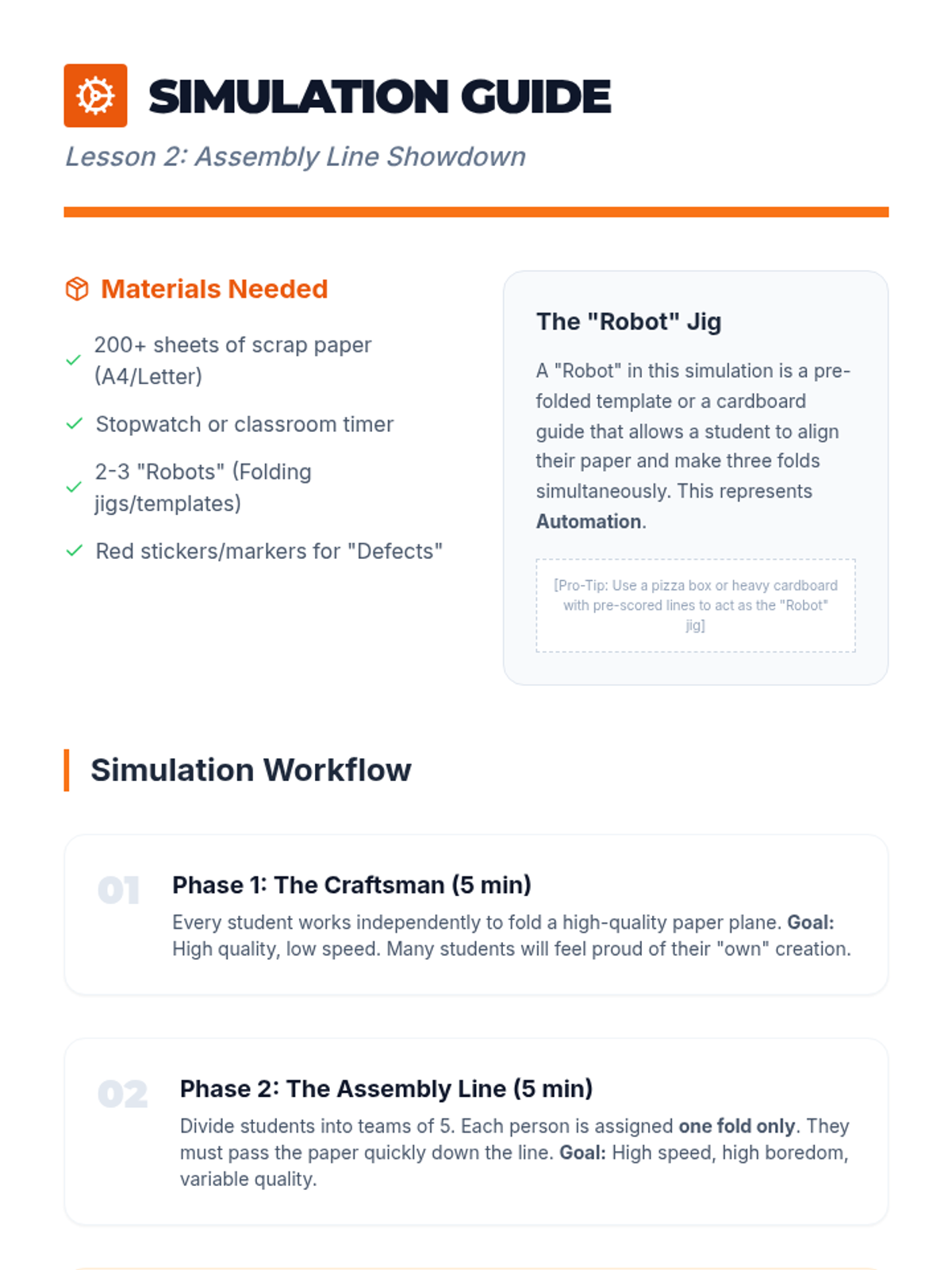
Participate in an assembly line simulation to experience the shift from human craftsmanship to industrial efficiency and robotic automation.
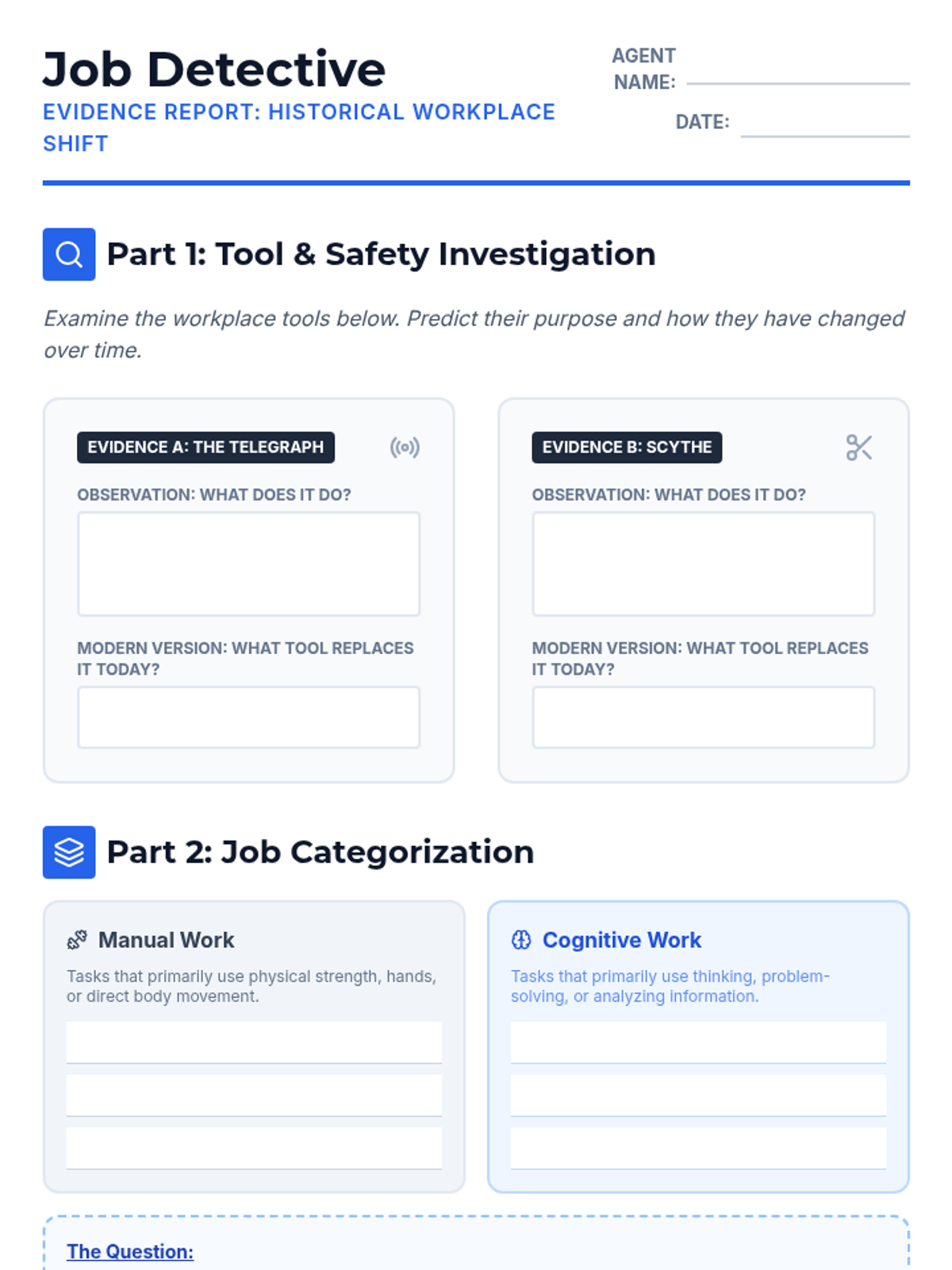
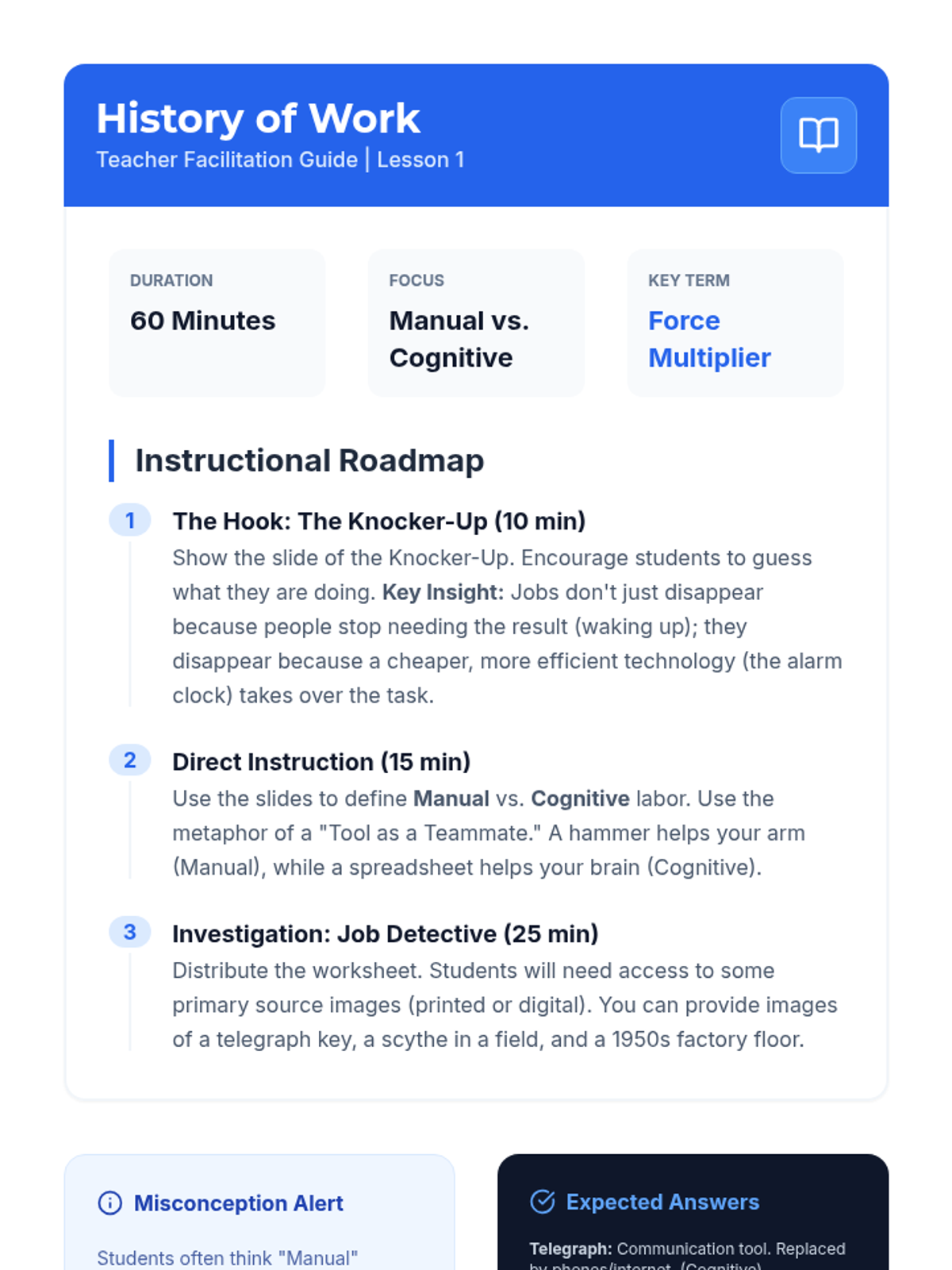
Analyze historical shifts in work from the 1900s to today, identifying manual vs. cognitive tasks and the impact of major technological milestones.
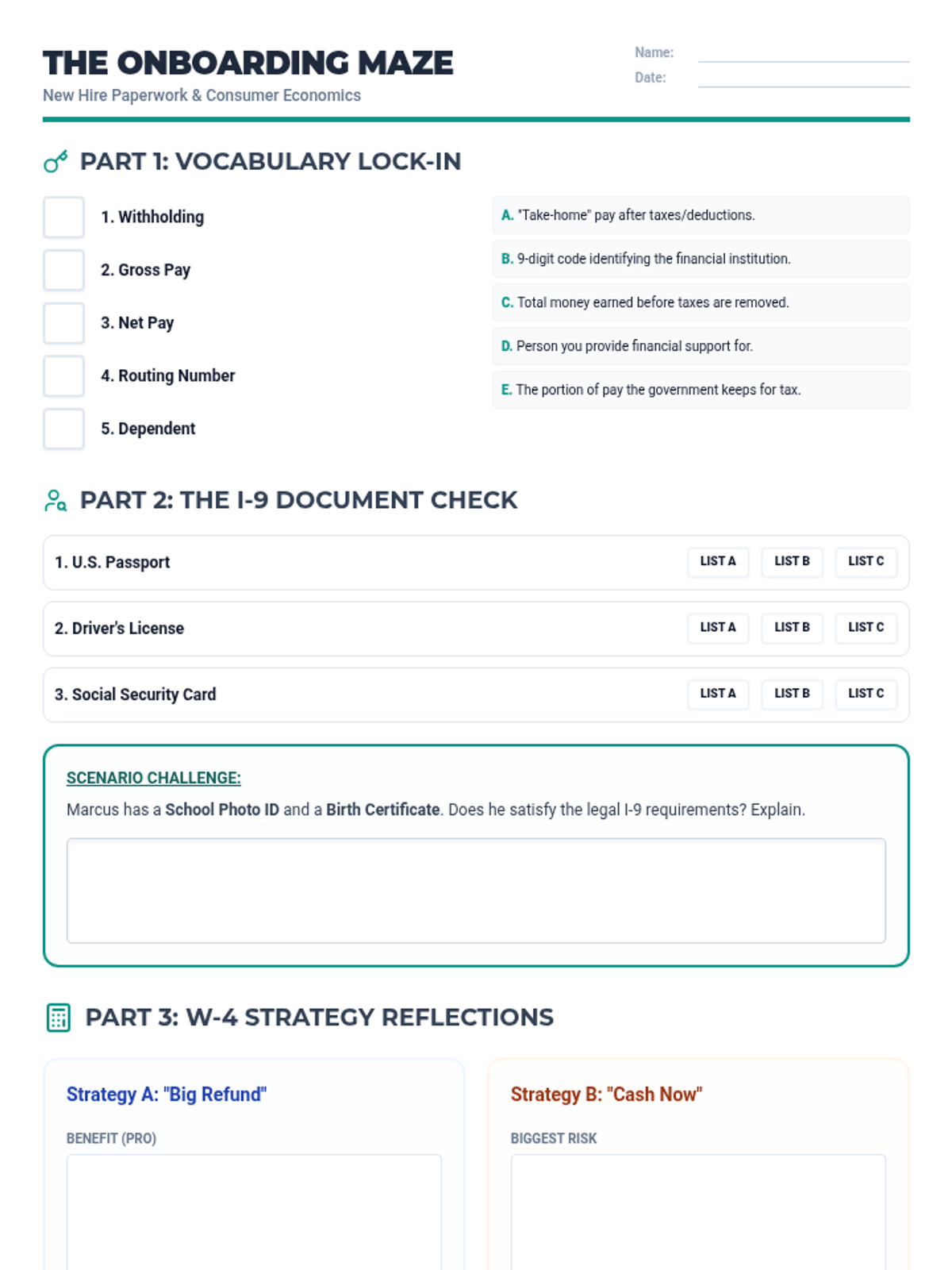
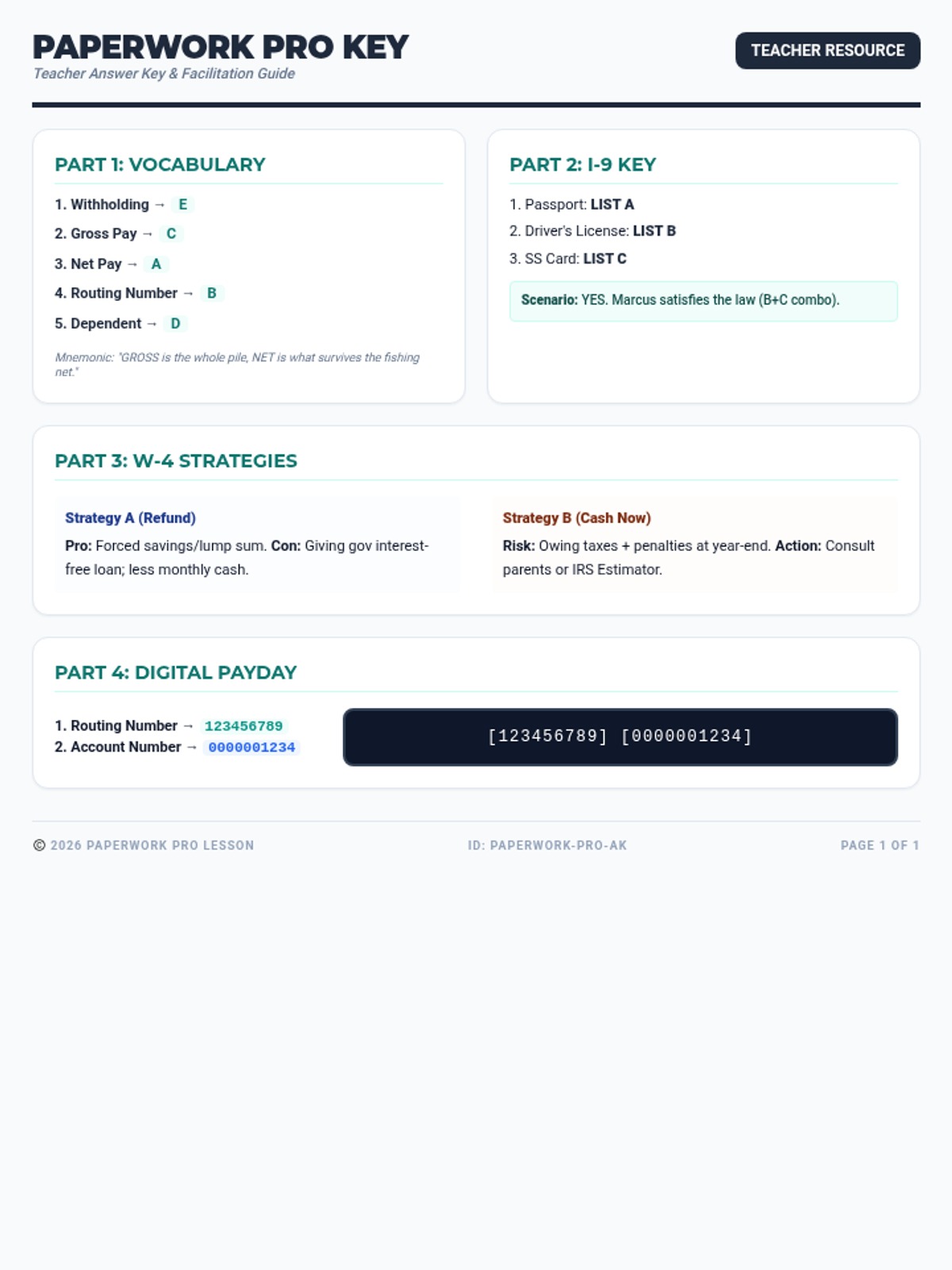
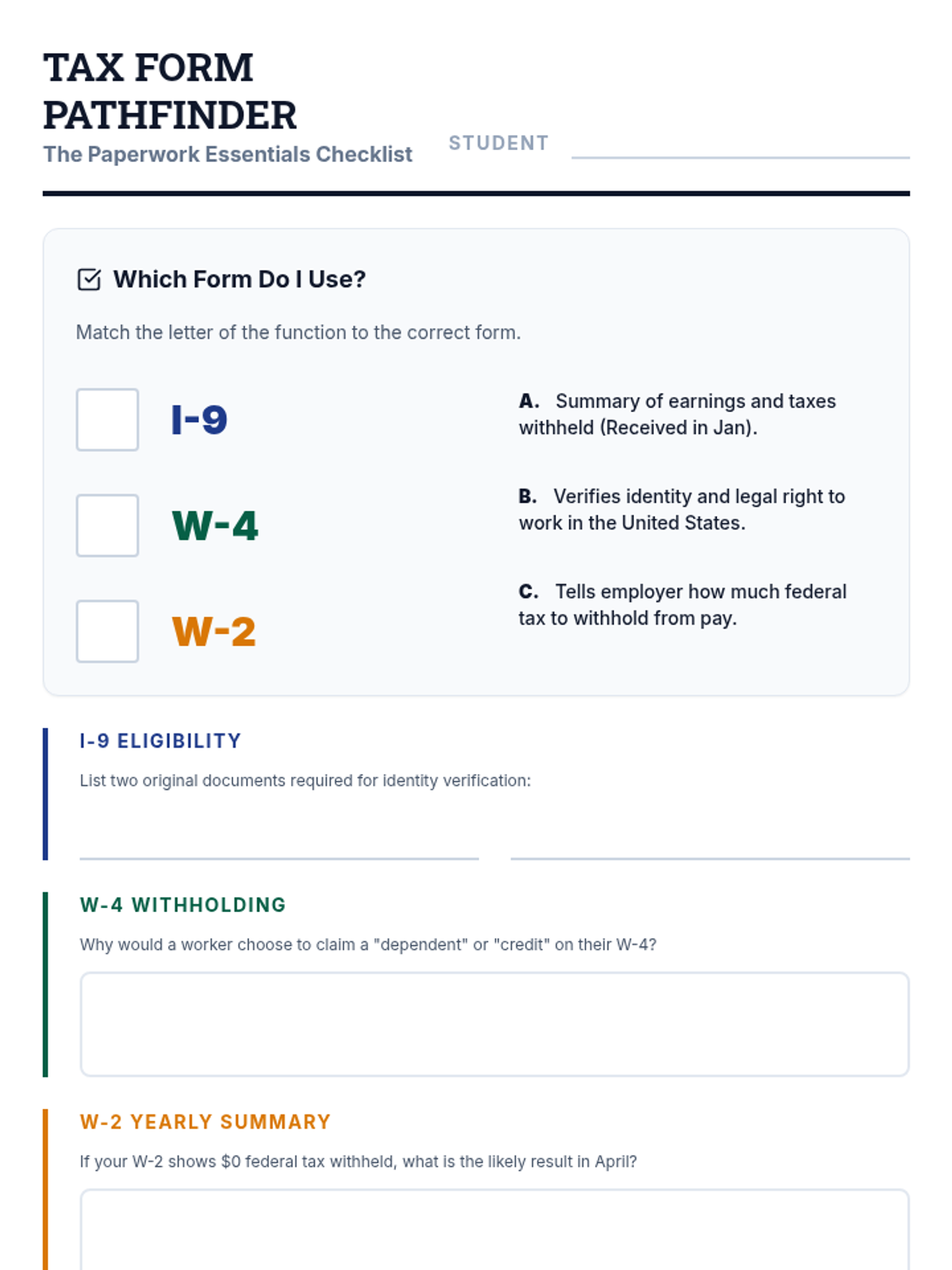
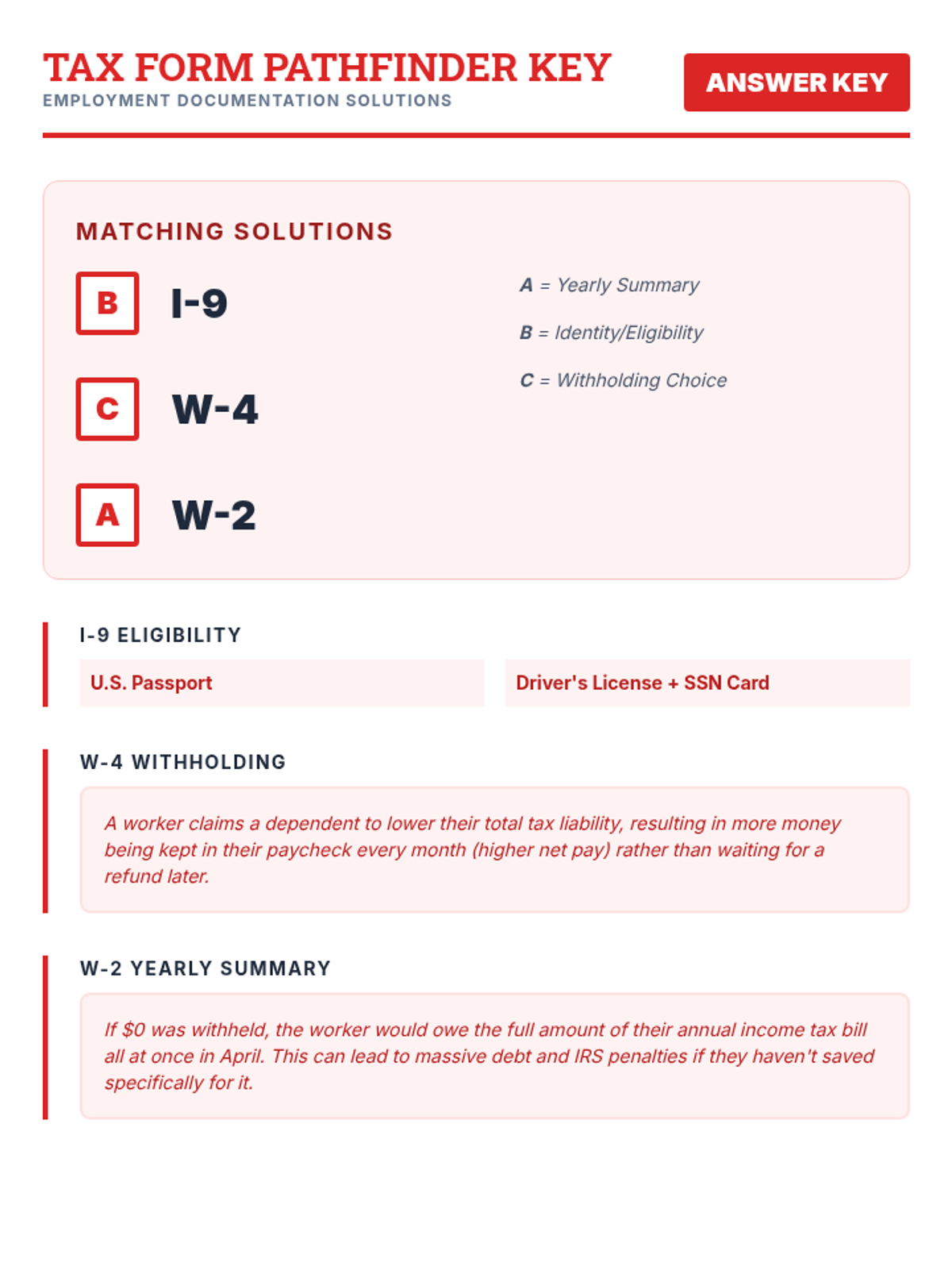
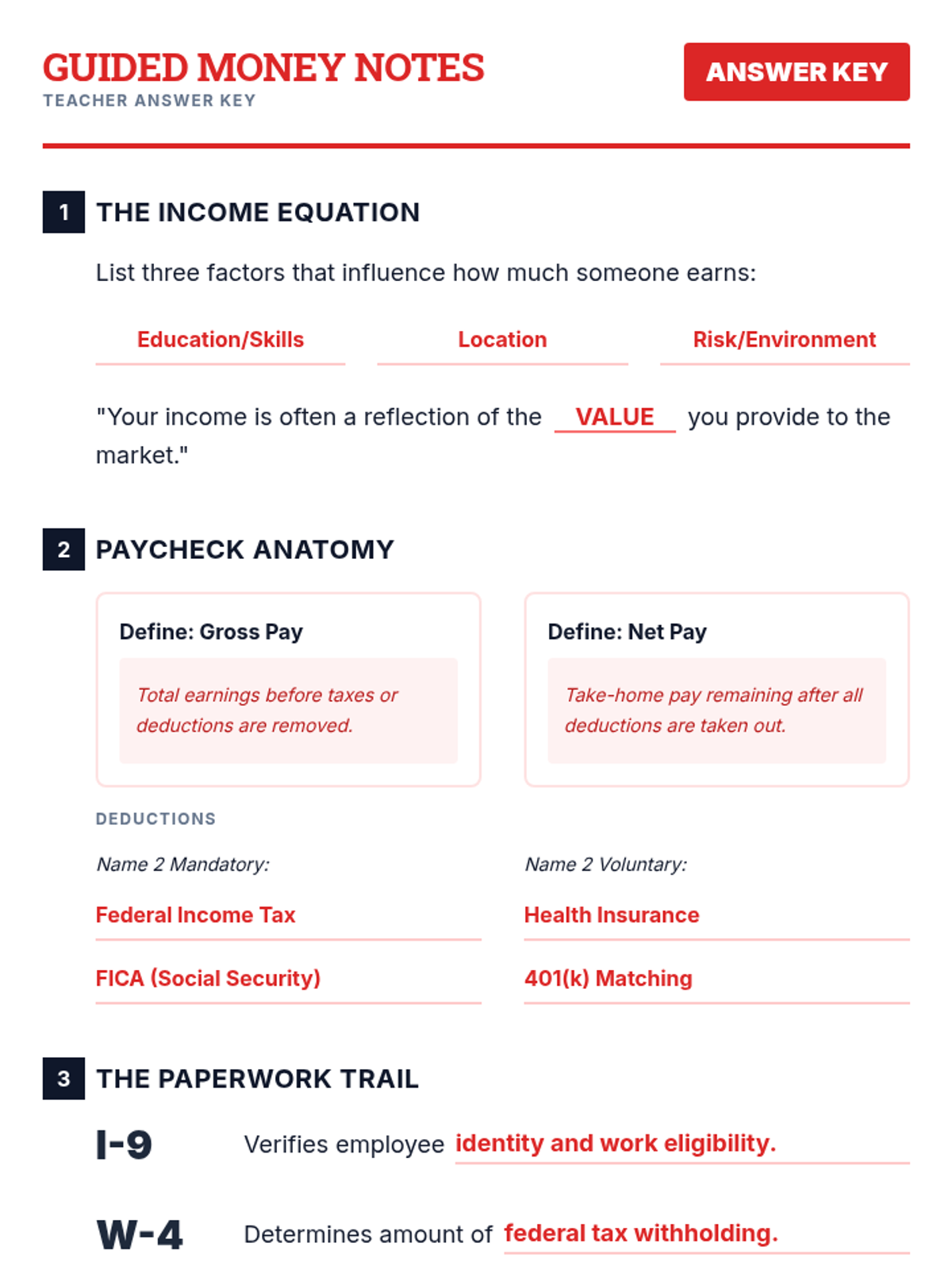
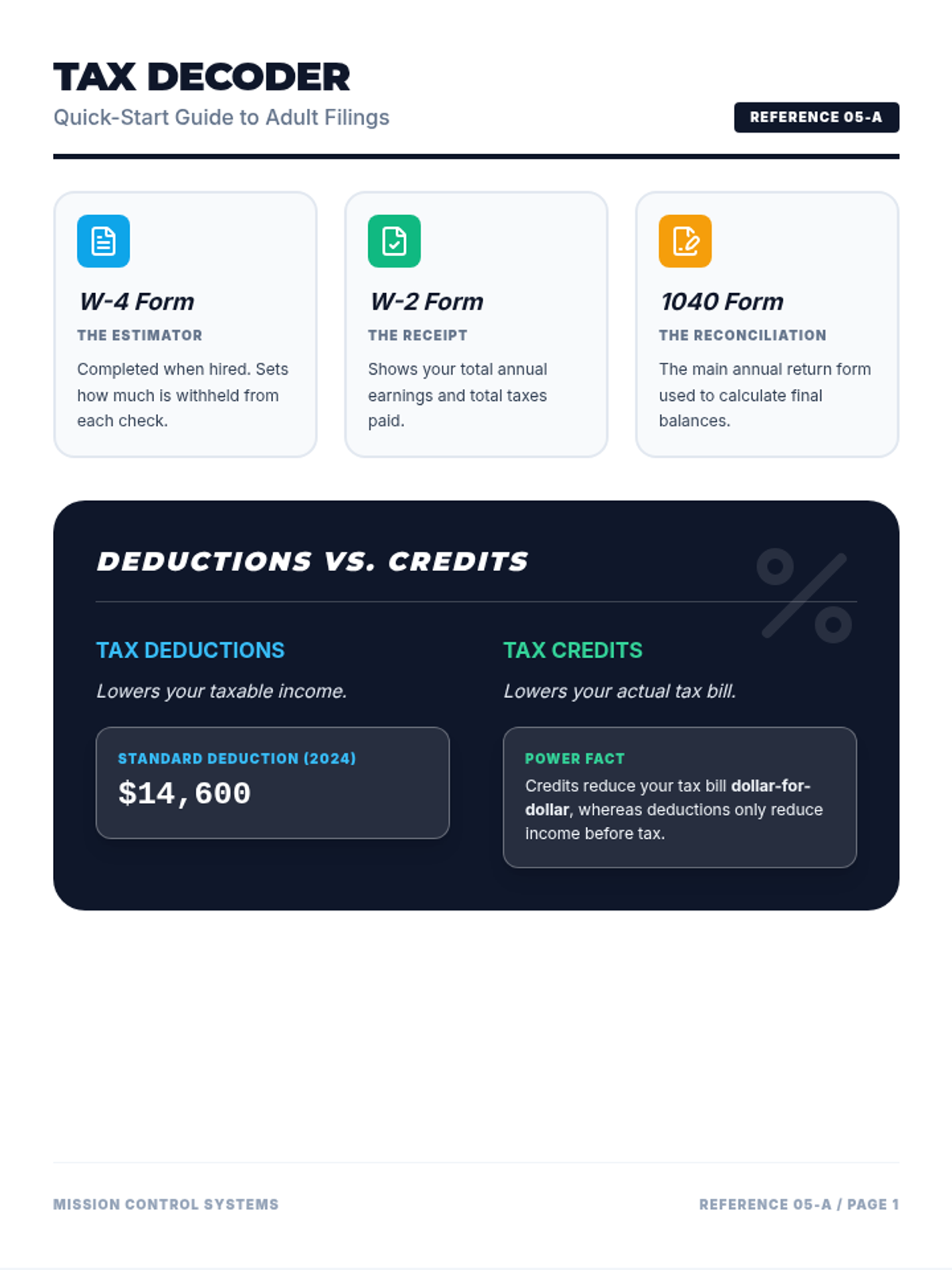
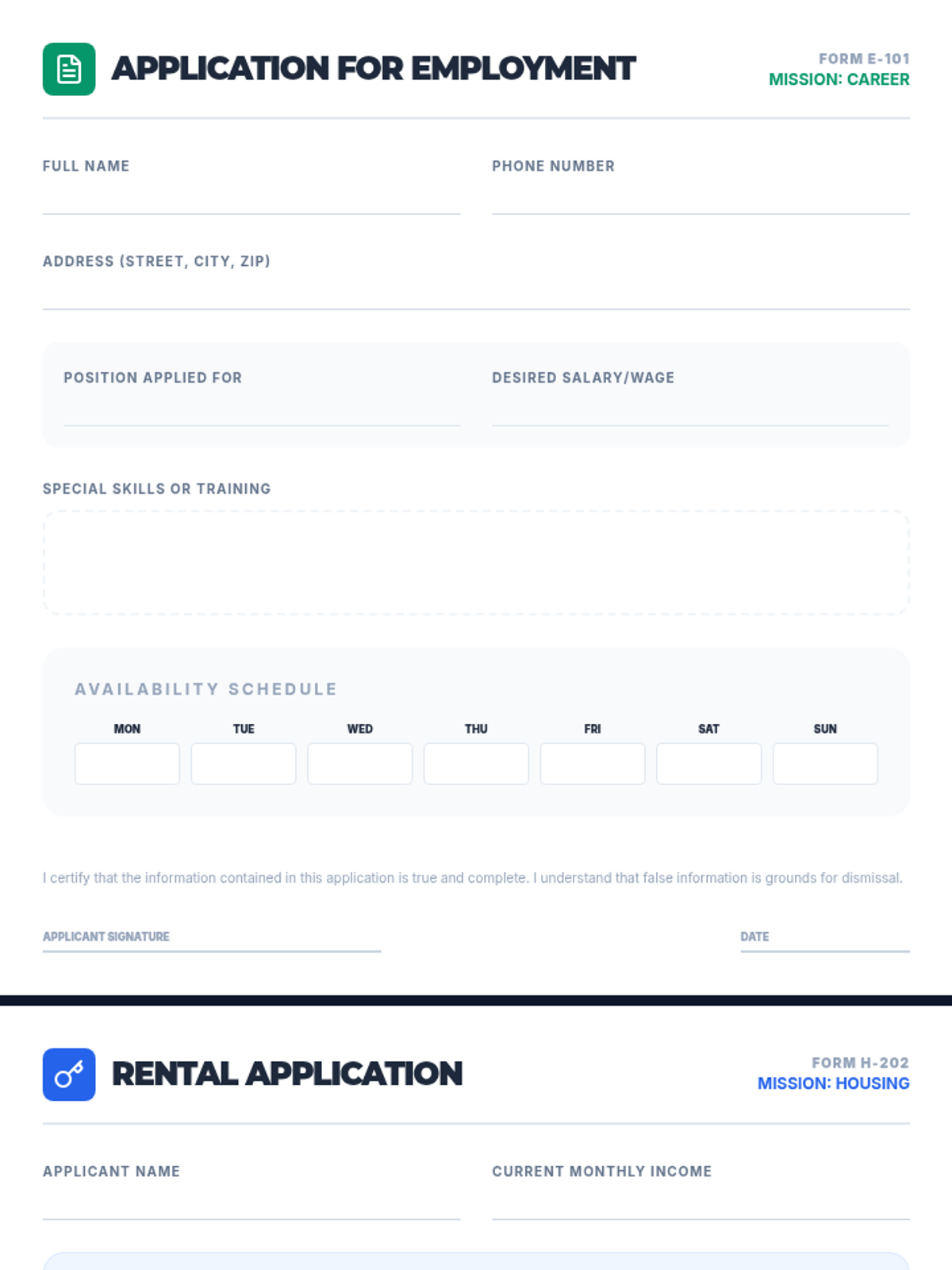
A comprehensive introduction to the essential forms every new employee must complete, covering the I-9, W-4, and direct deposit authorization. Students will learn the purpose of each form and how to accurately provide their information to ensure legal compliance and correct pay.
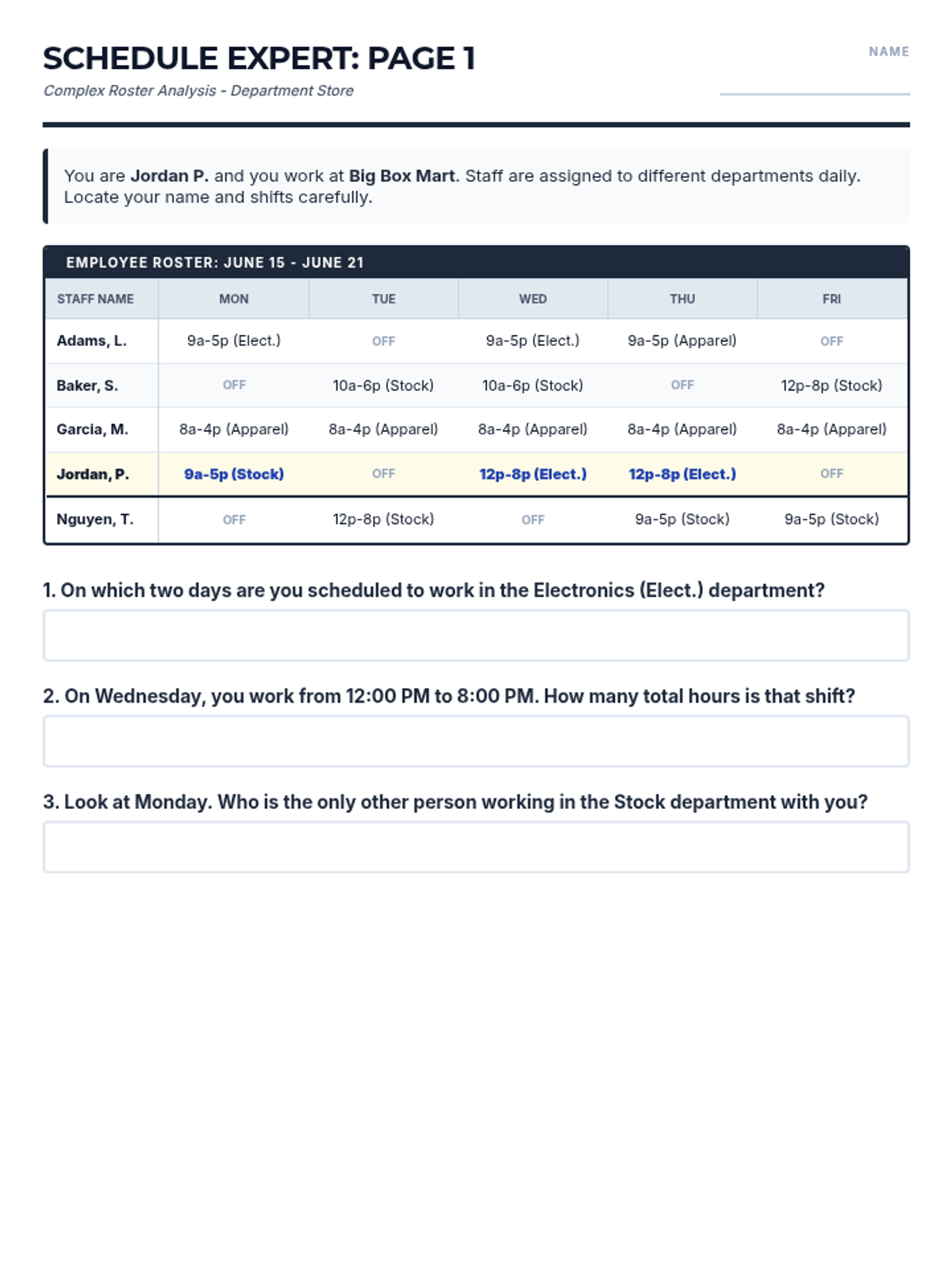
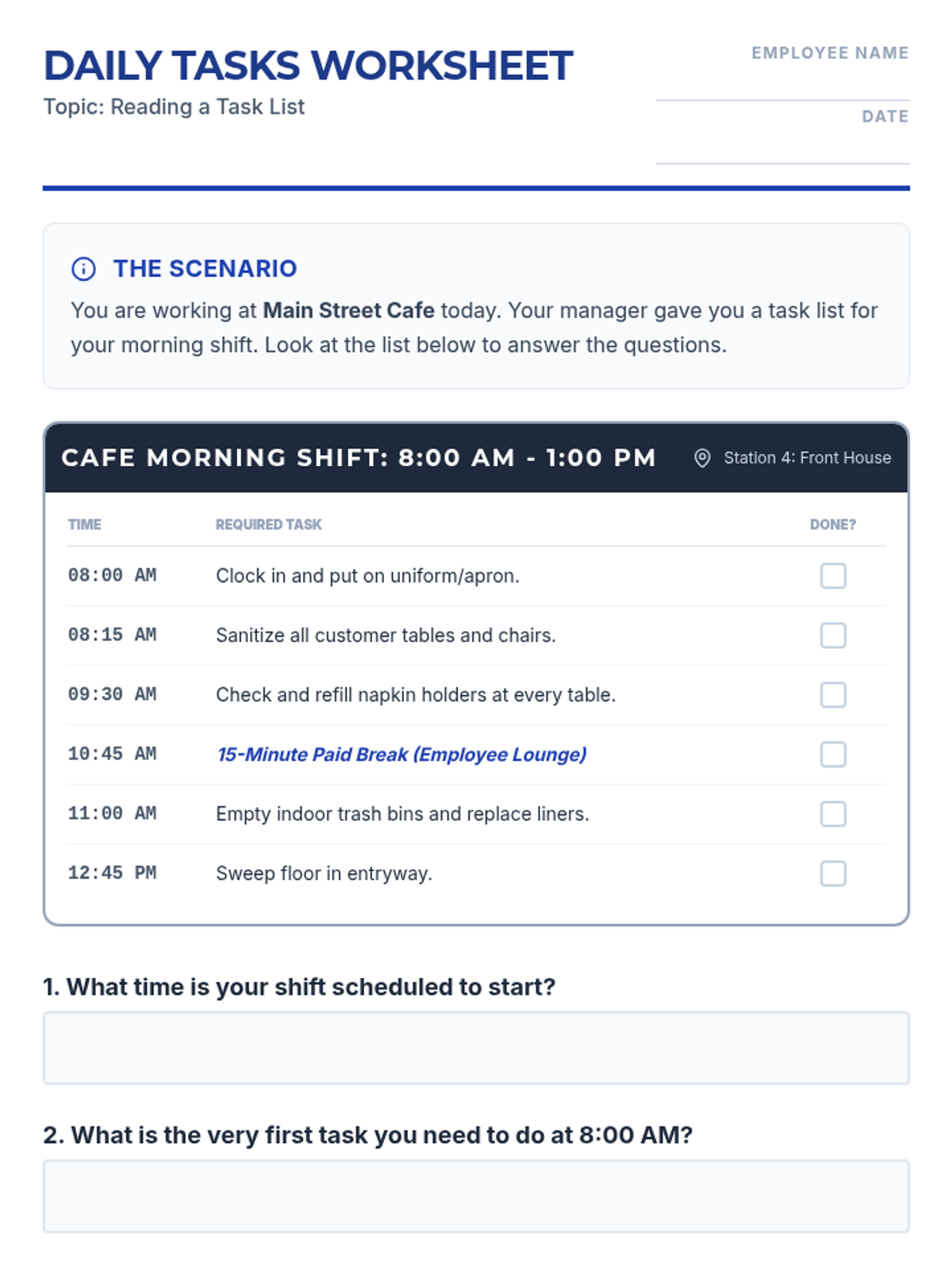
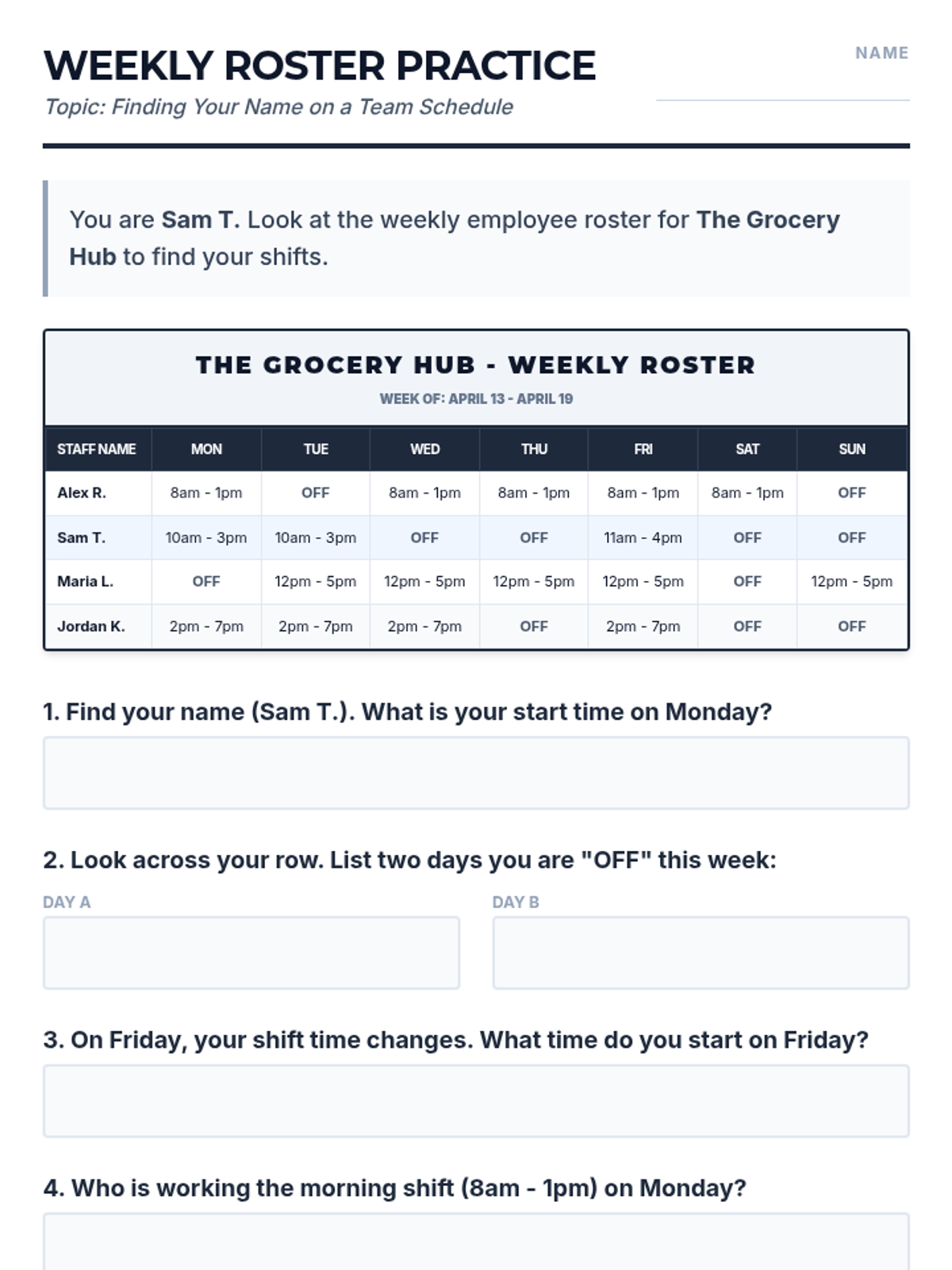
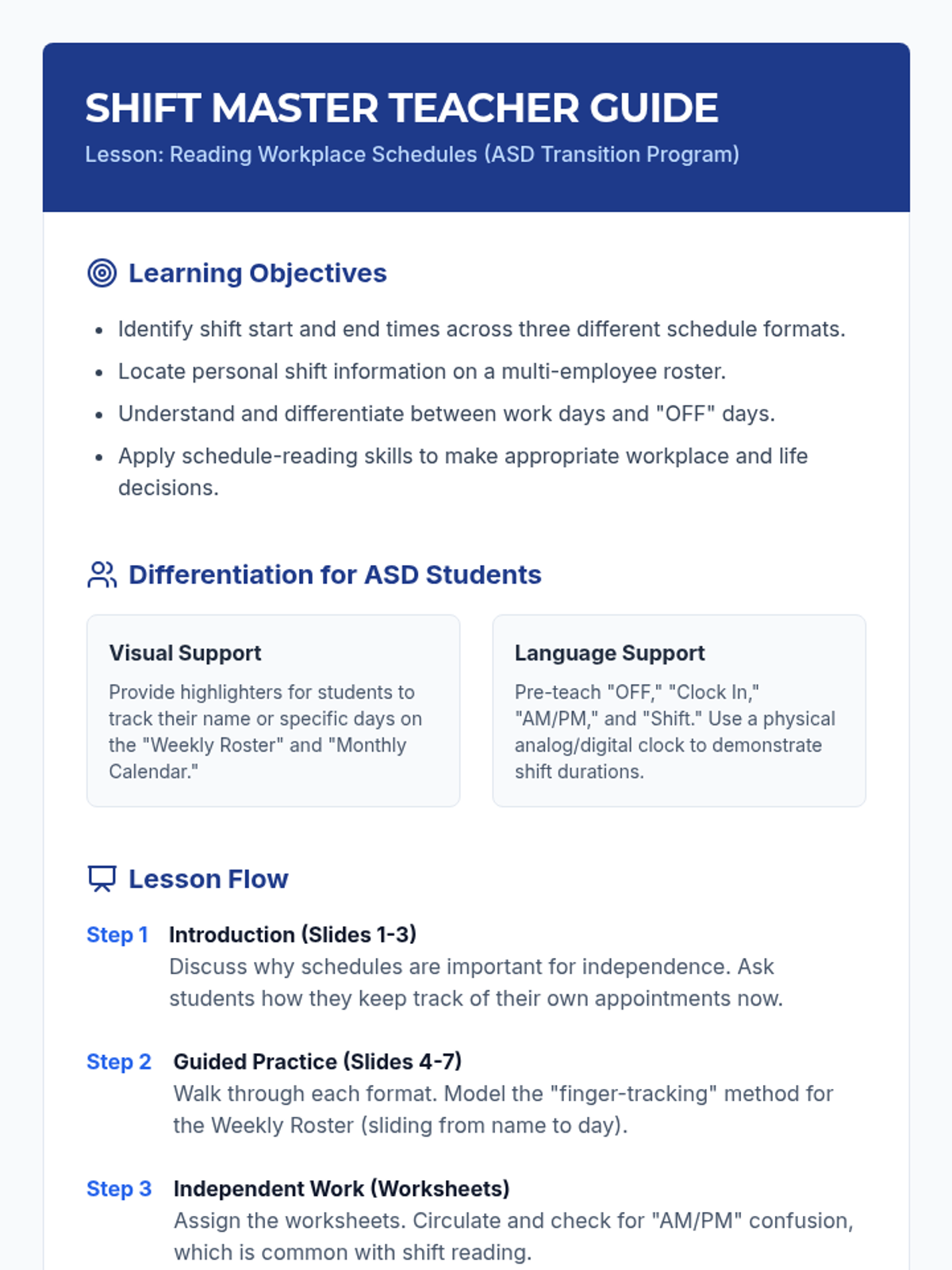
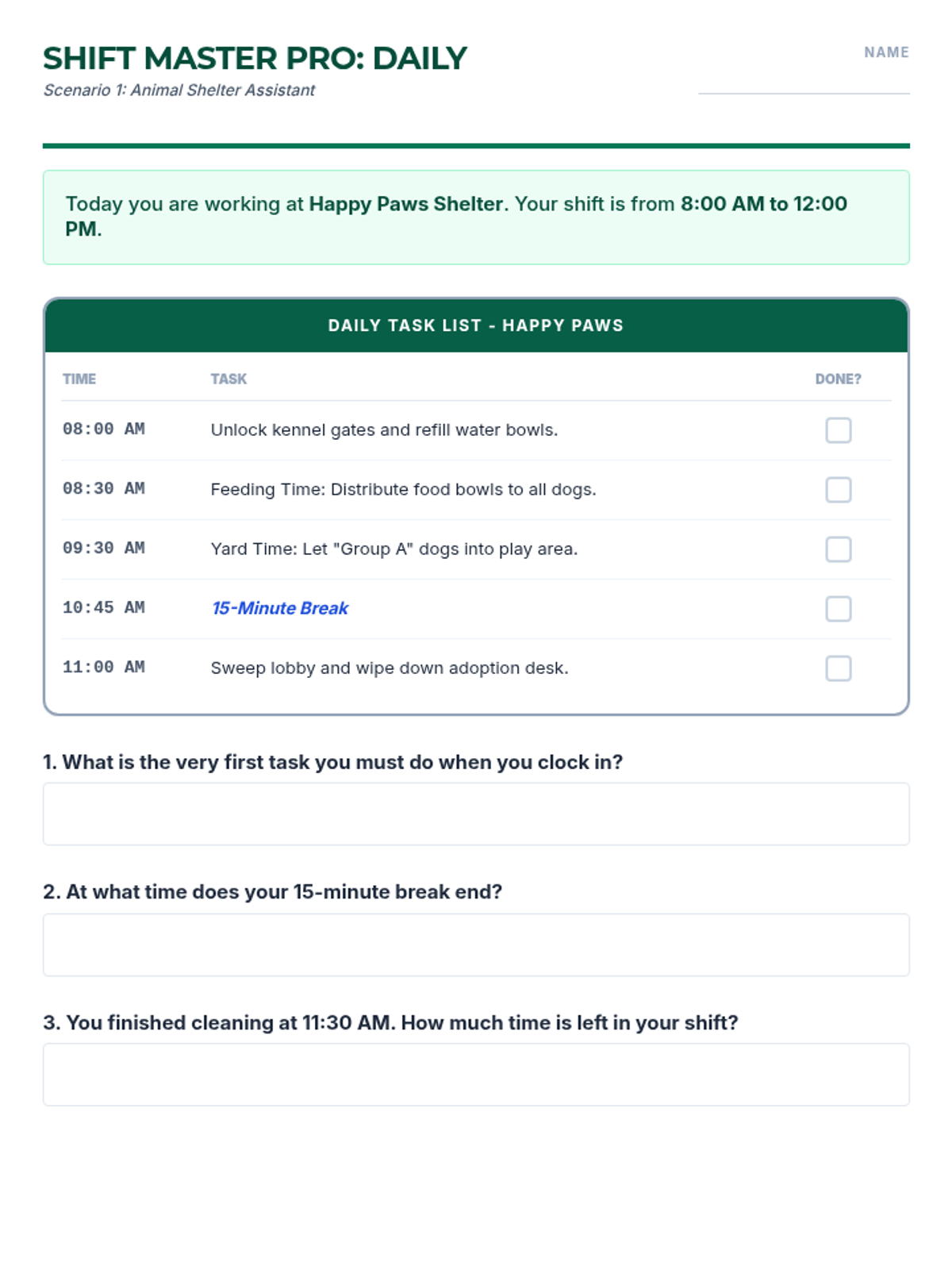
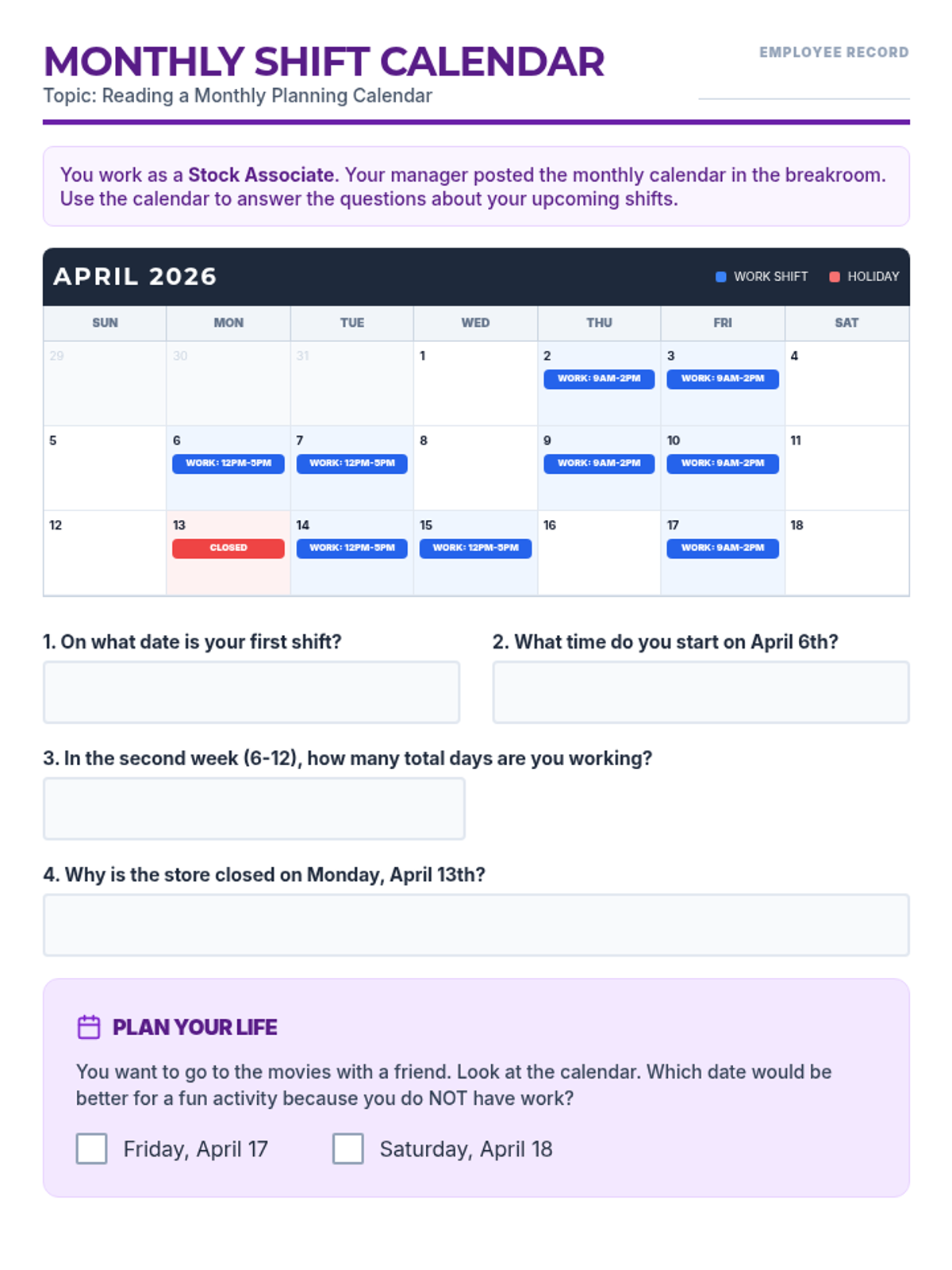
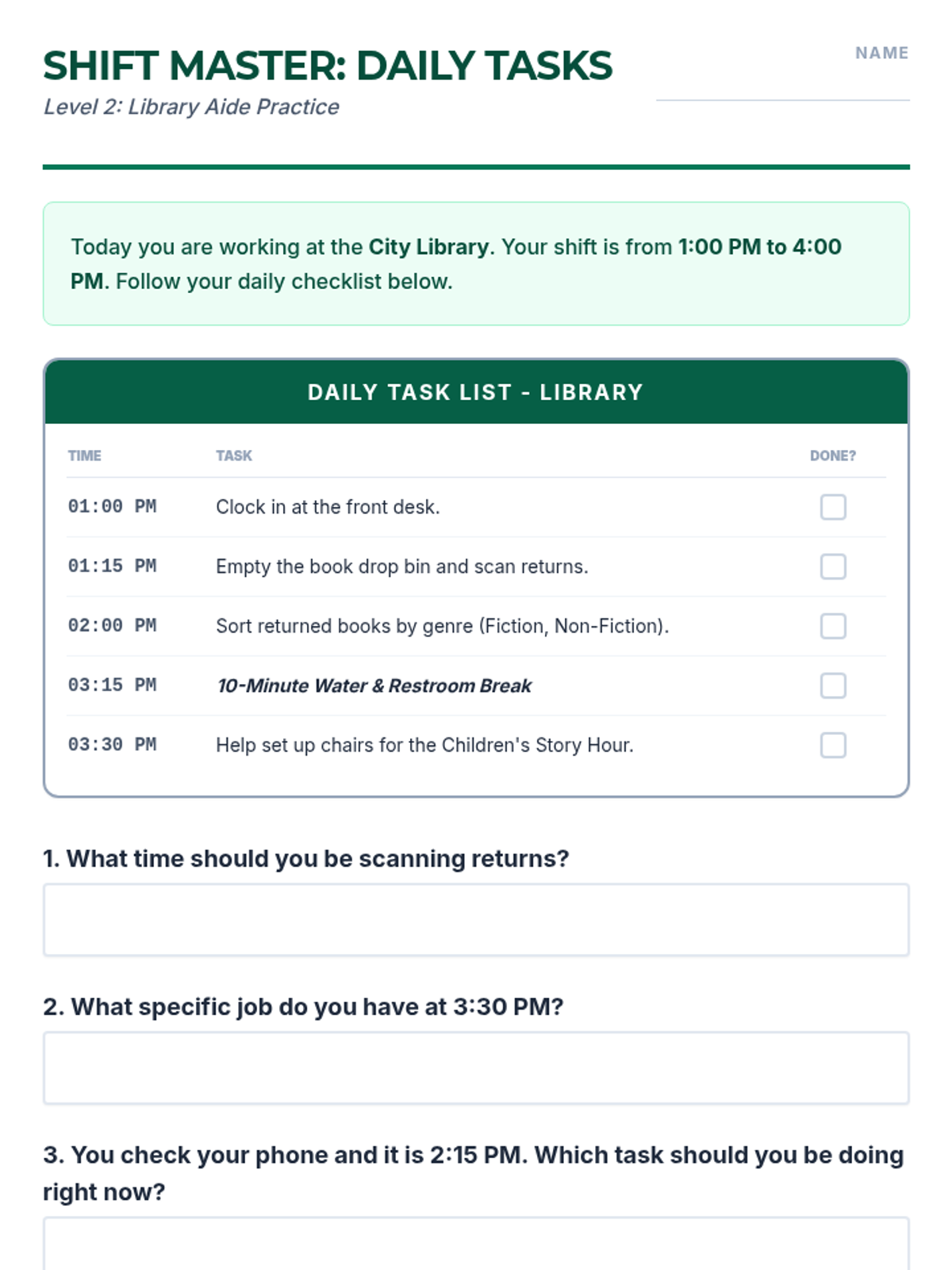
A comprehensive lesson for transition-age students to master reading daily, weekly, and monthly work schedules through realistic workplace scenarios.
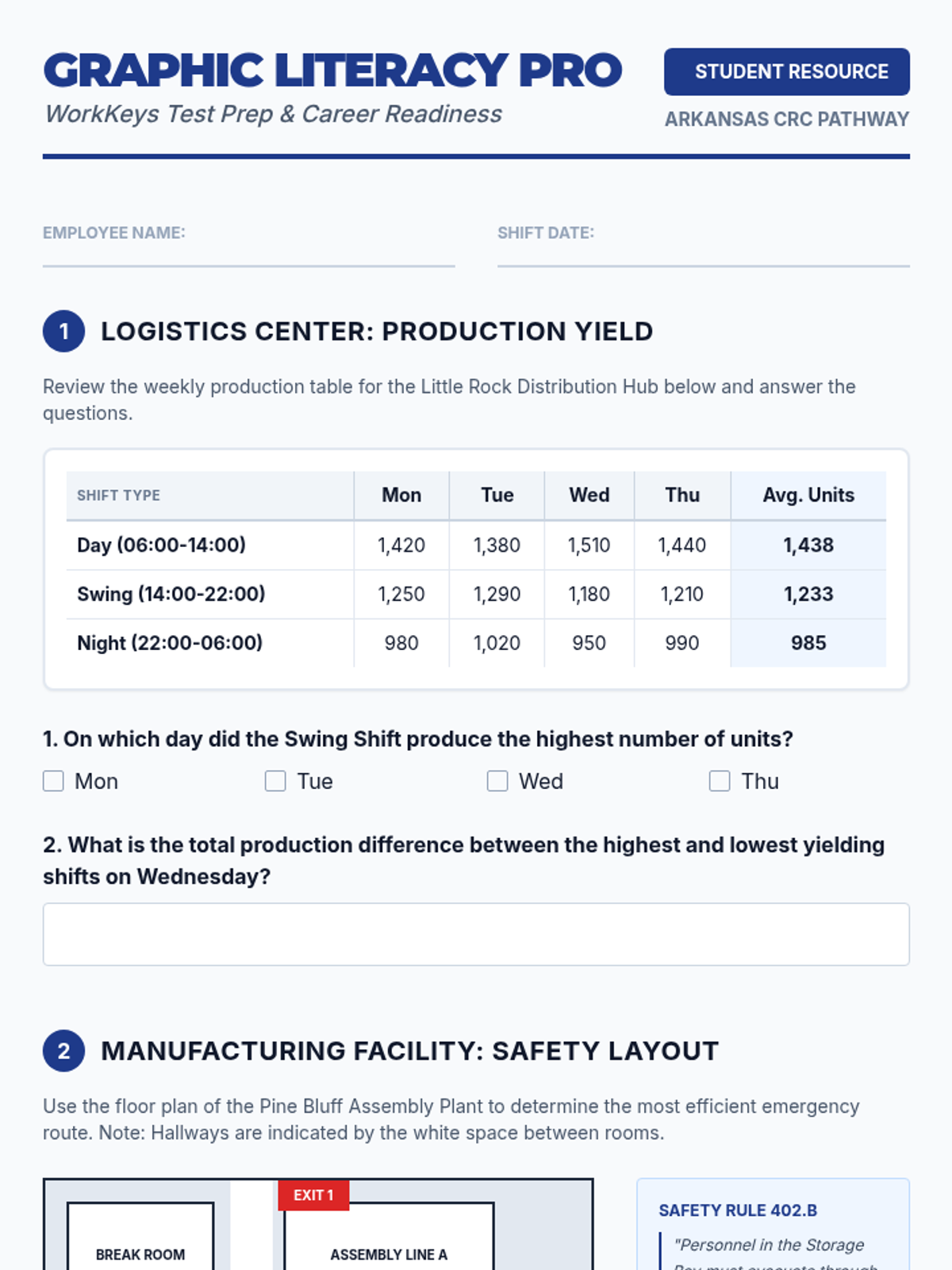
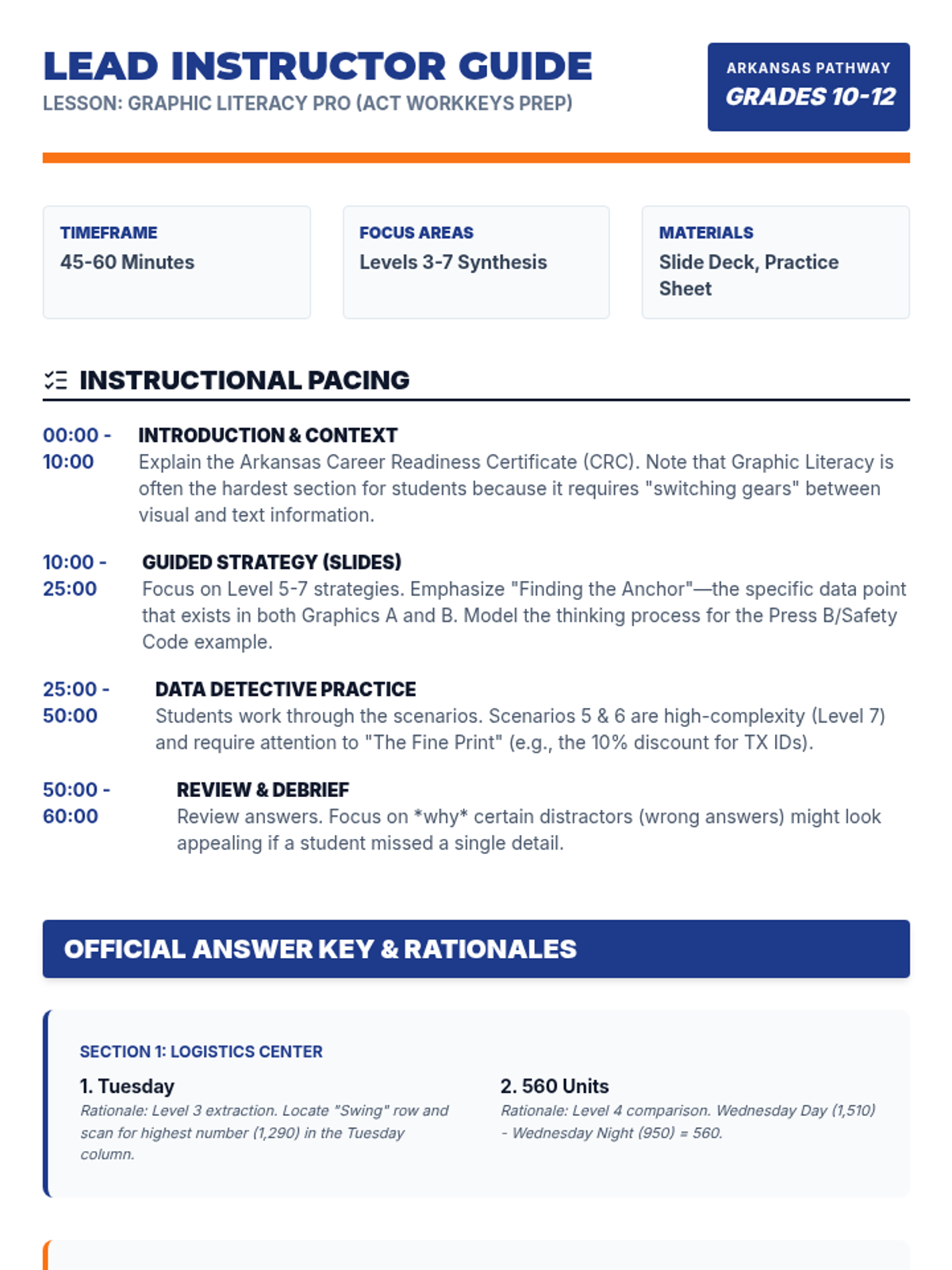
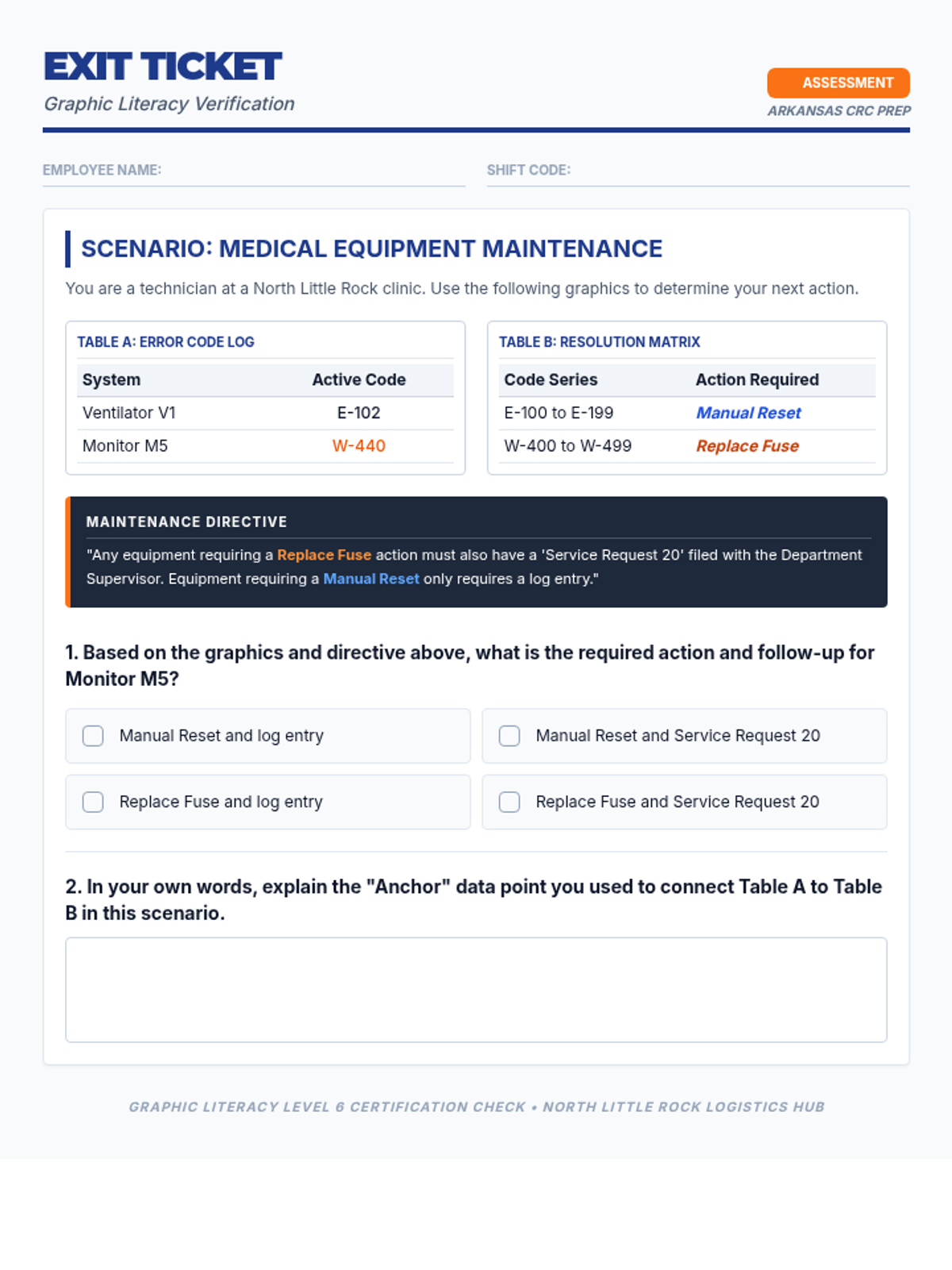
A comprehensive test prep lesson focused on the ACT WorkKeys Graphic Literacy assessment, designed for Arkansas high schoolers aiming for the Career Readiness Certificate. Students learn to extract, compare, and synthesize data from workplace-style charts, diagrams, and multi-graphic layouts.
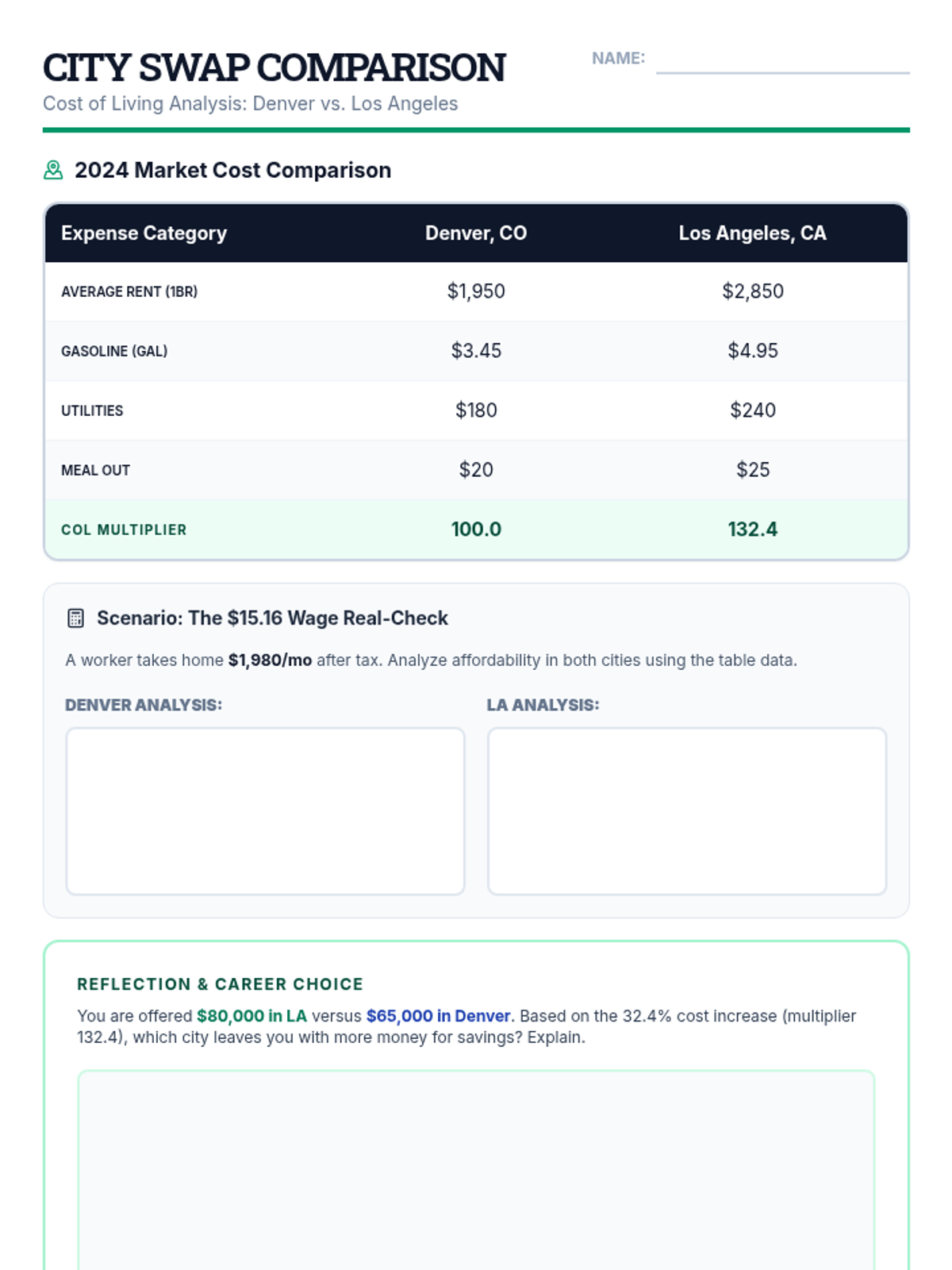
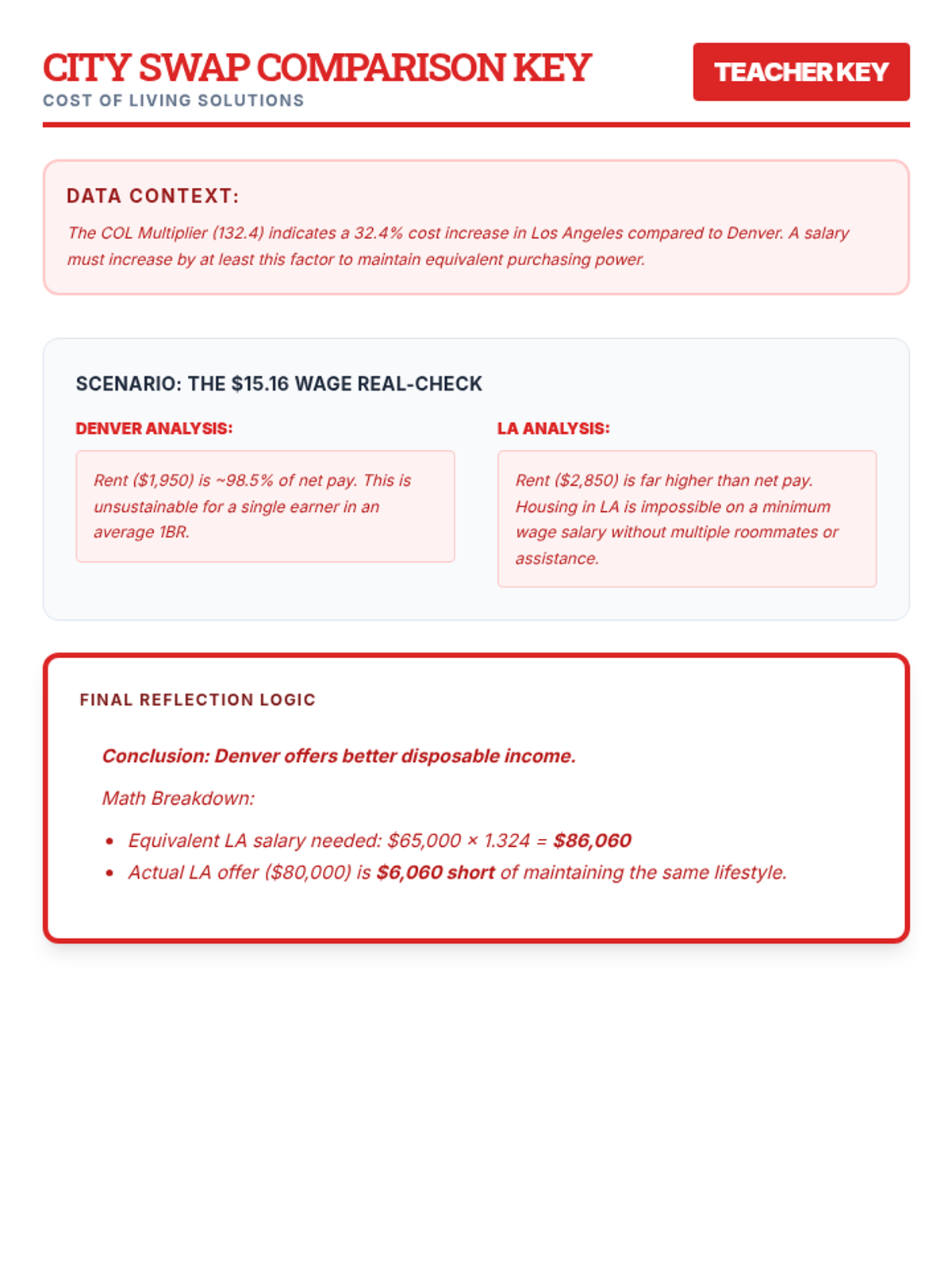
Analyzing how location affects the value of money by comparing cost-of-living data between Denver, Colorado, and Los Angeles, California.
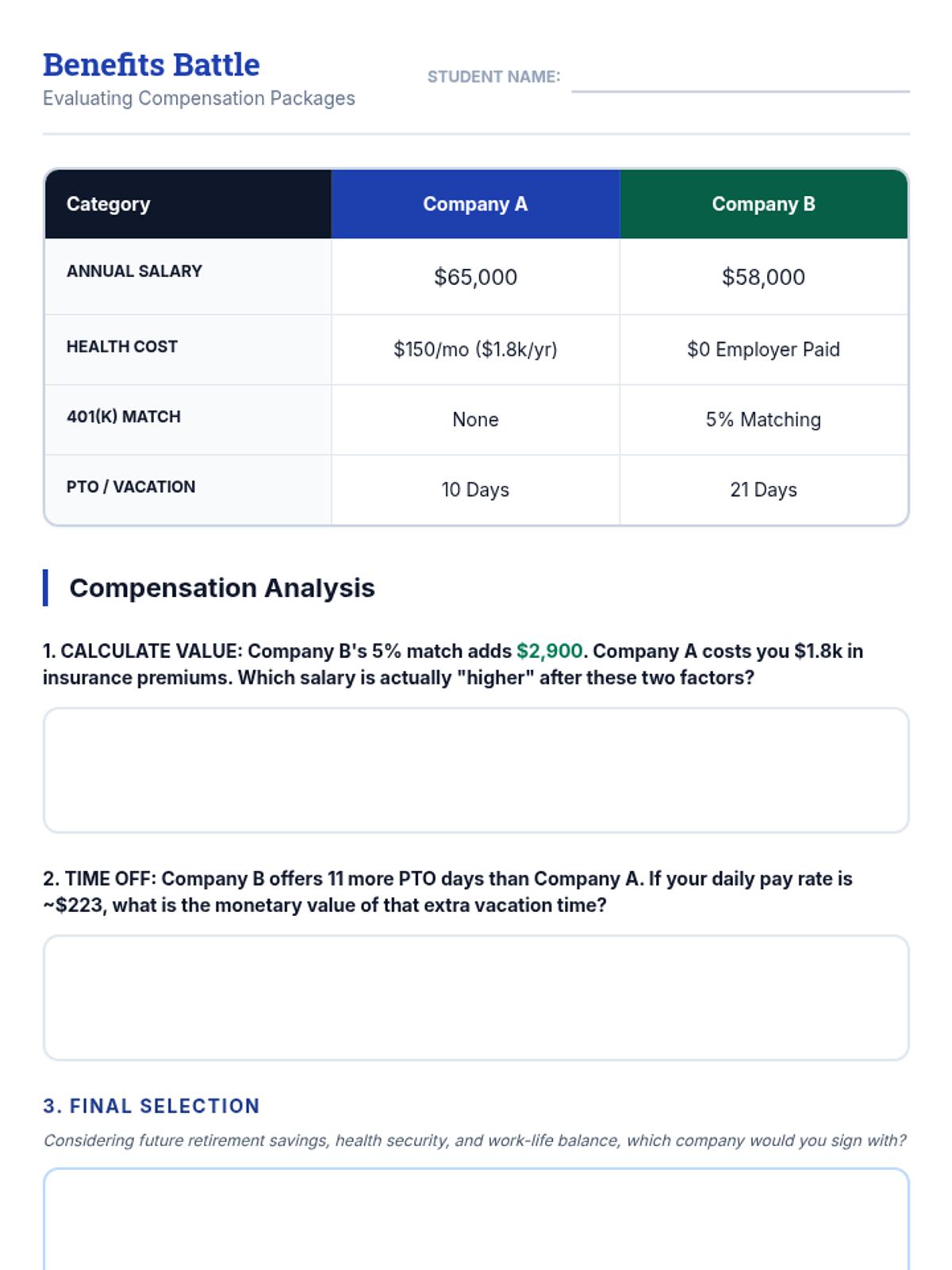
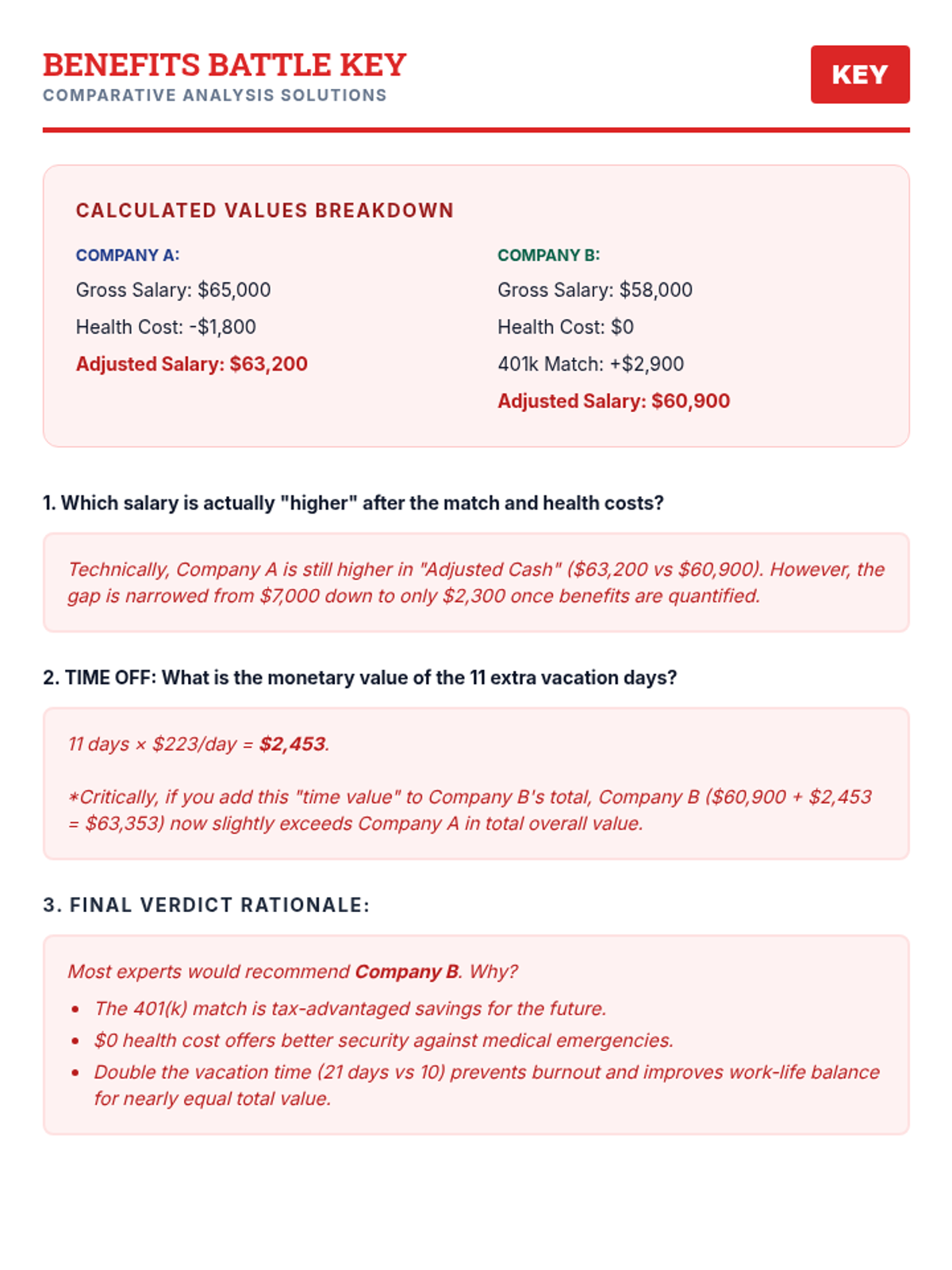
Navigating the administrative side of employment, including benefit comparisons and the essential tax forms required for new hires.
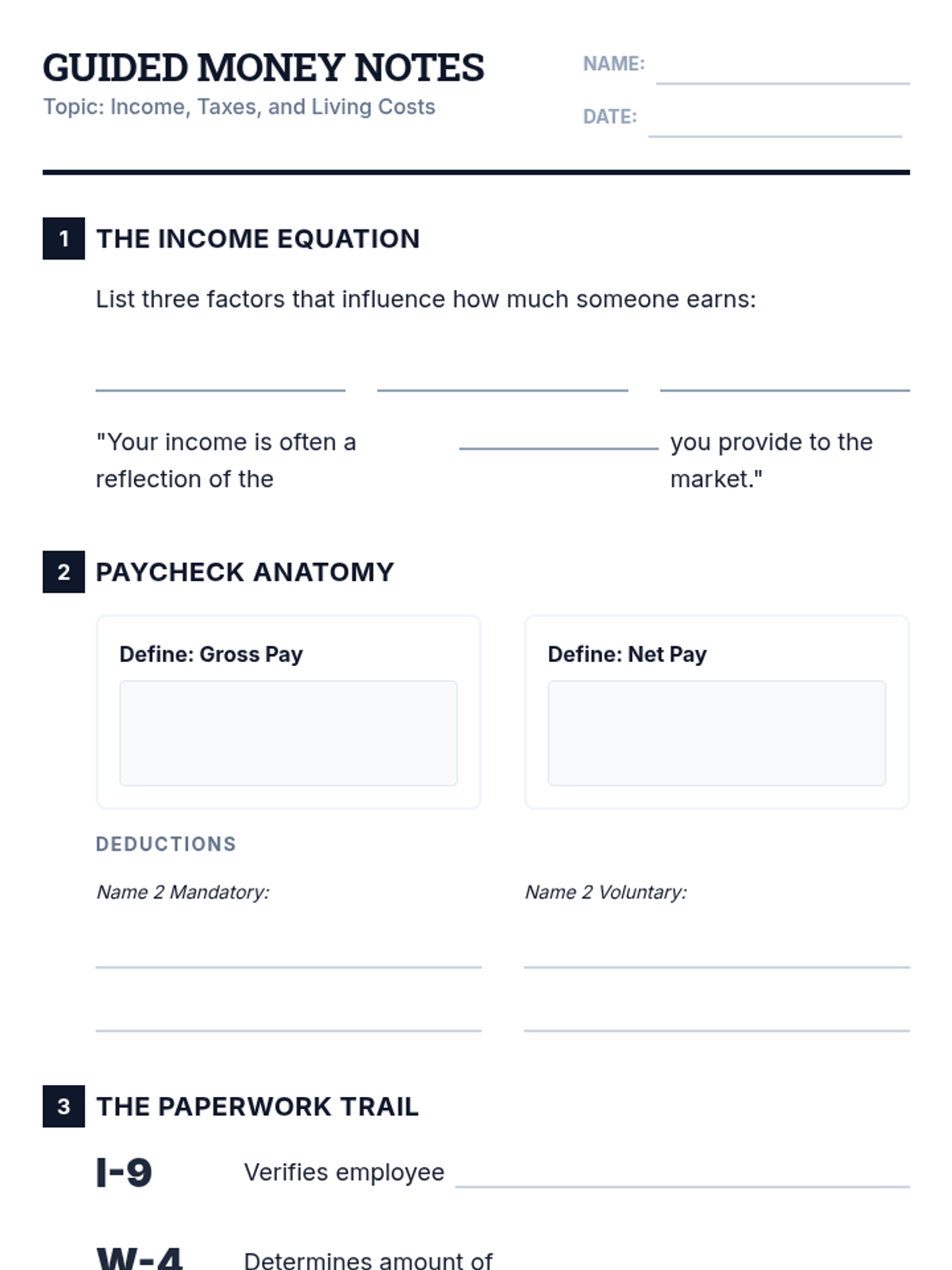
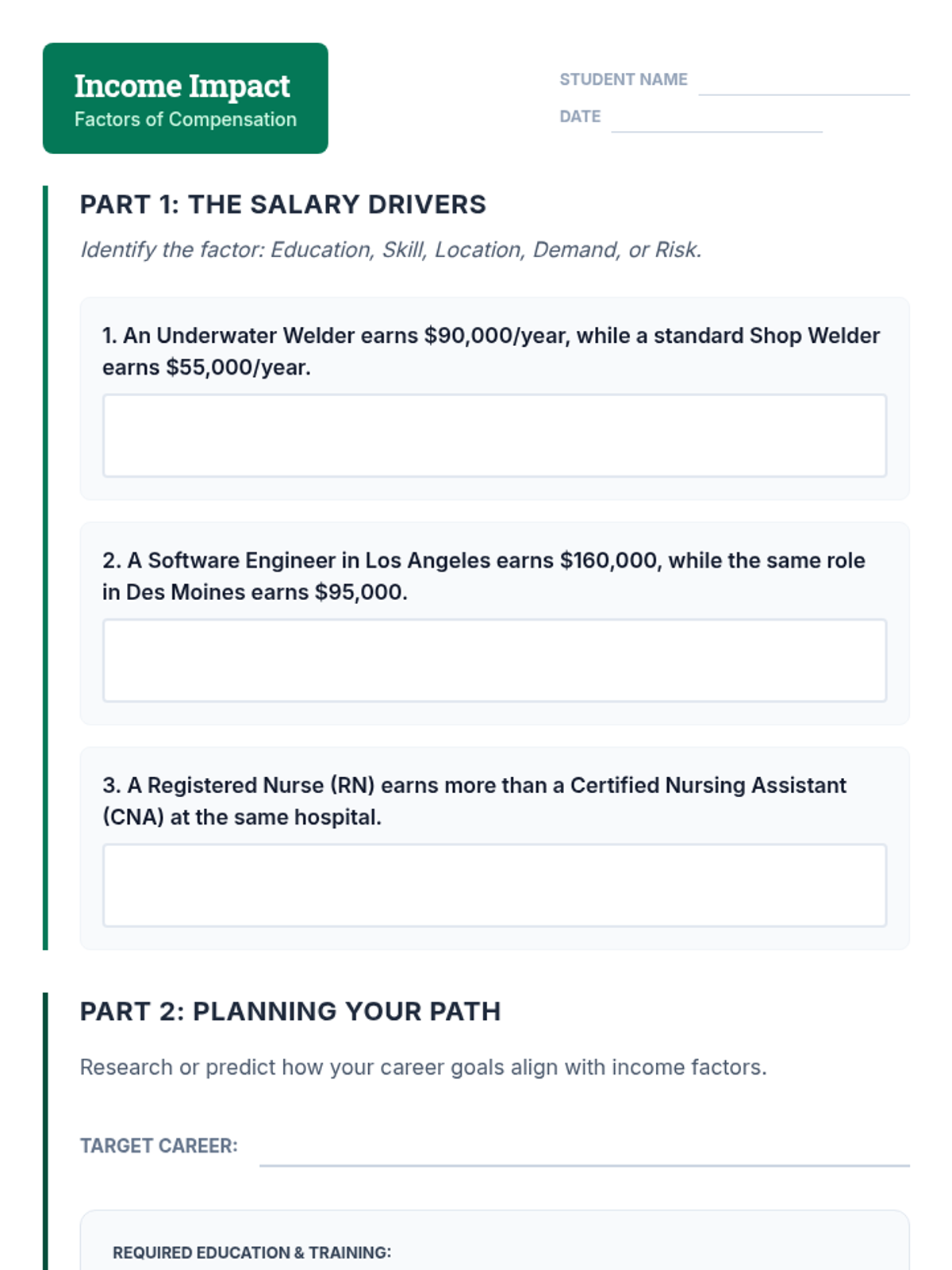
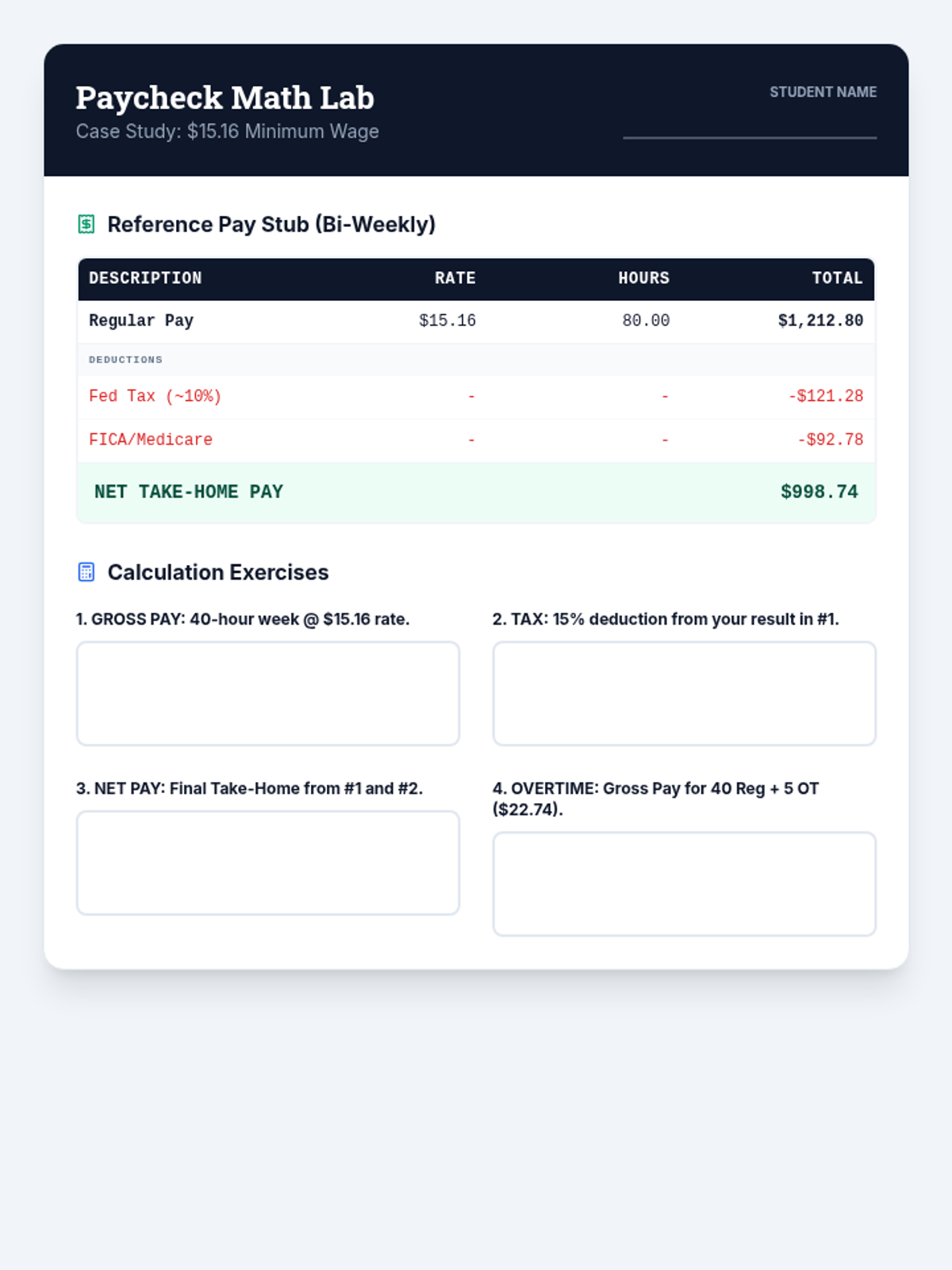
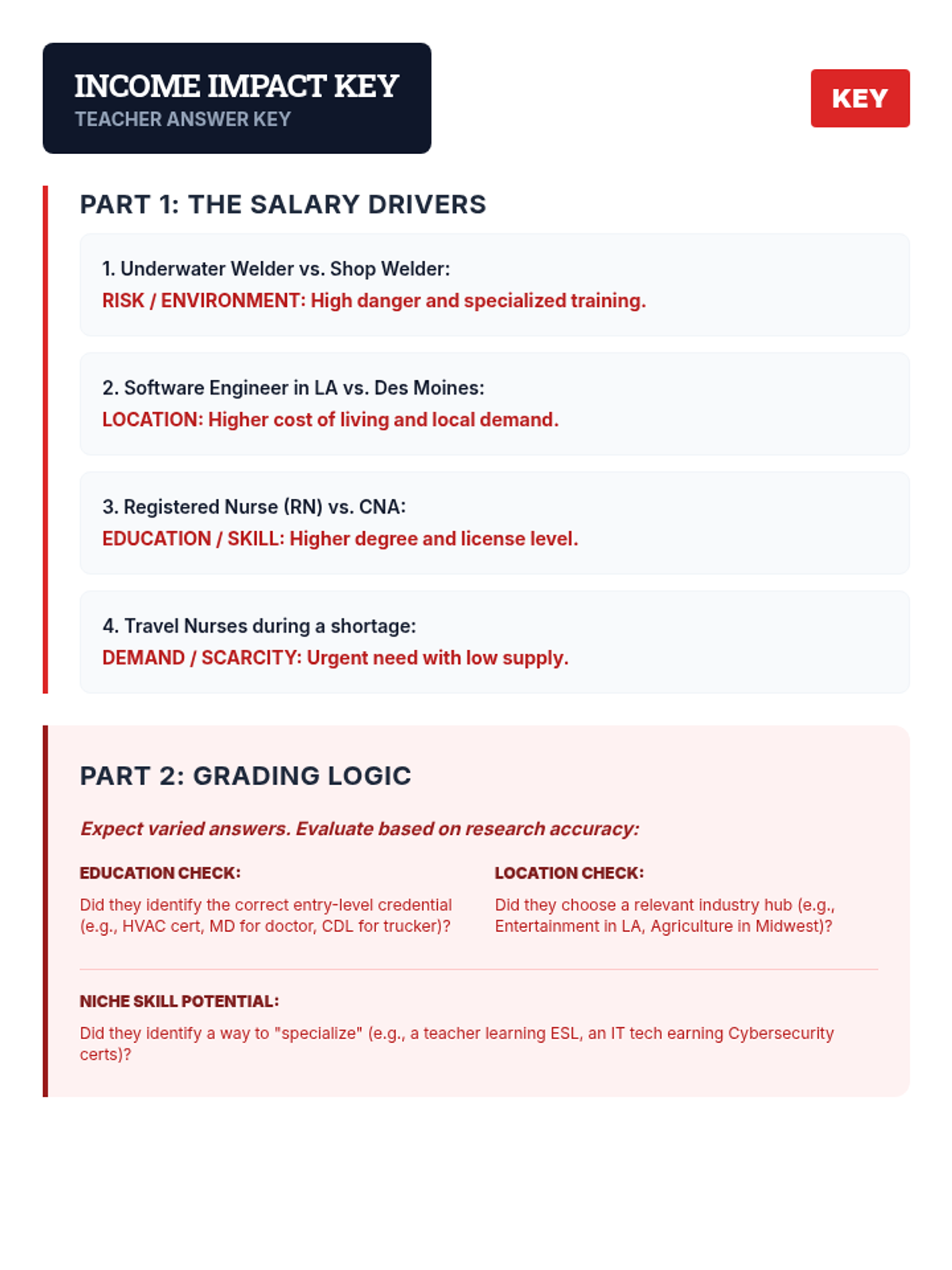
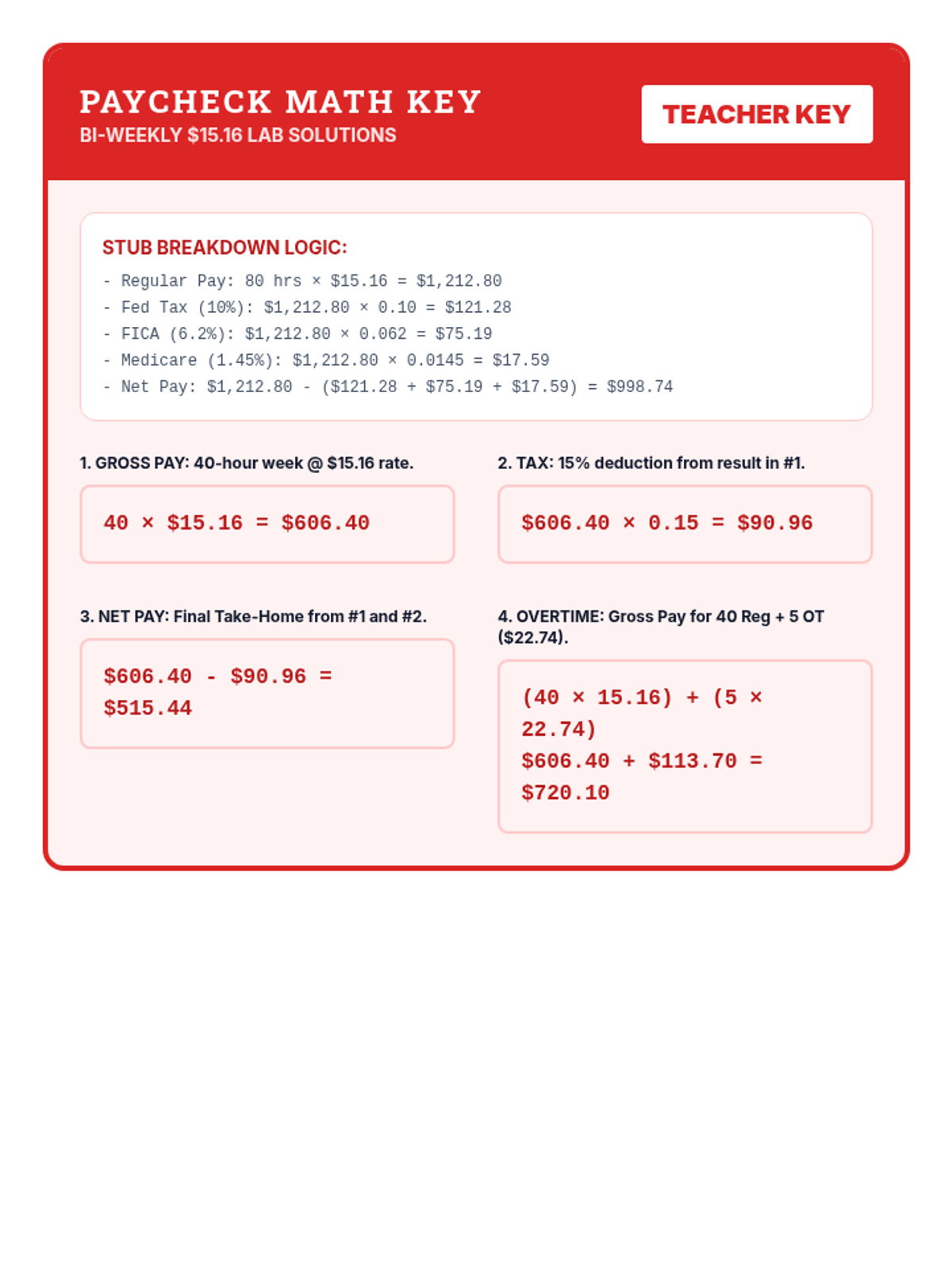
Understanding the fundamentals of how income is earned, how paychecks are calculated, and the specific math behind a $15.16 hourly wage.
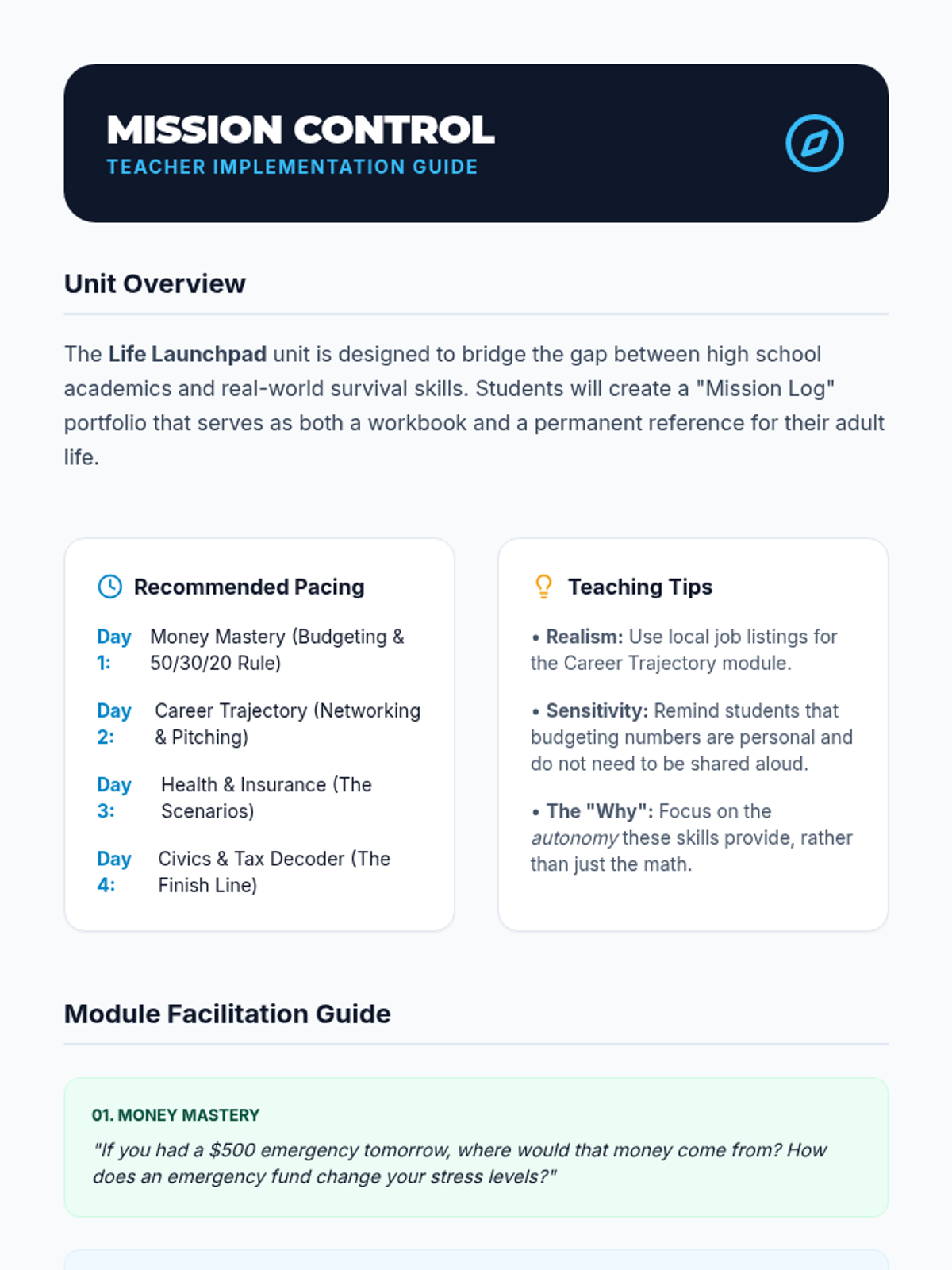
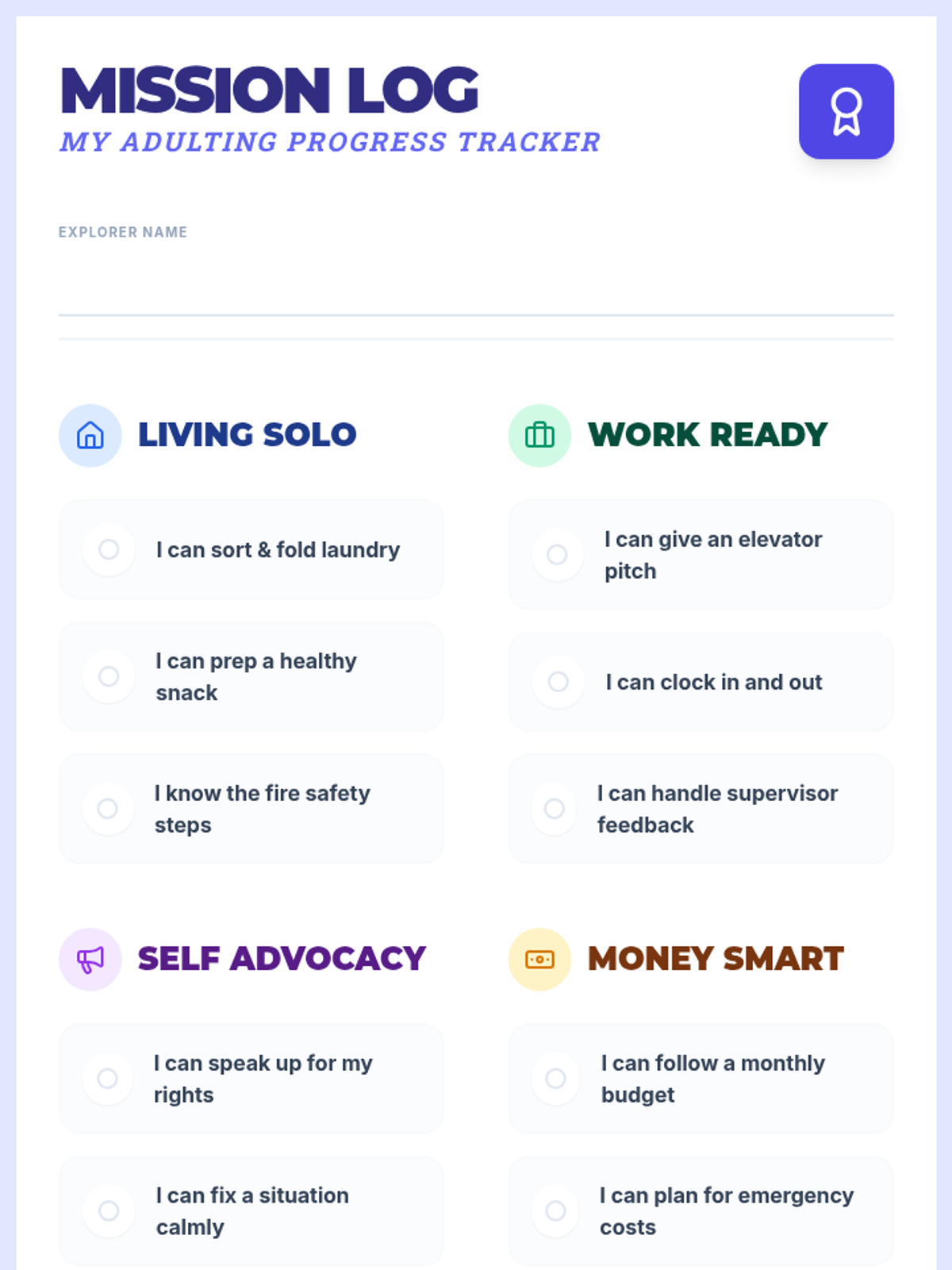
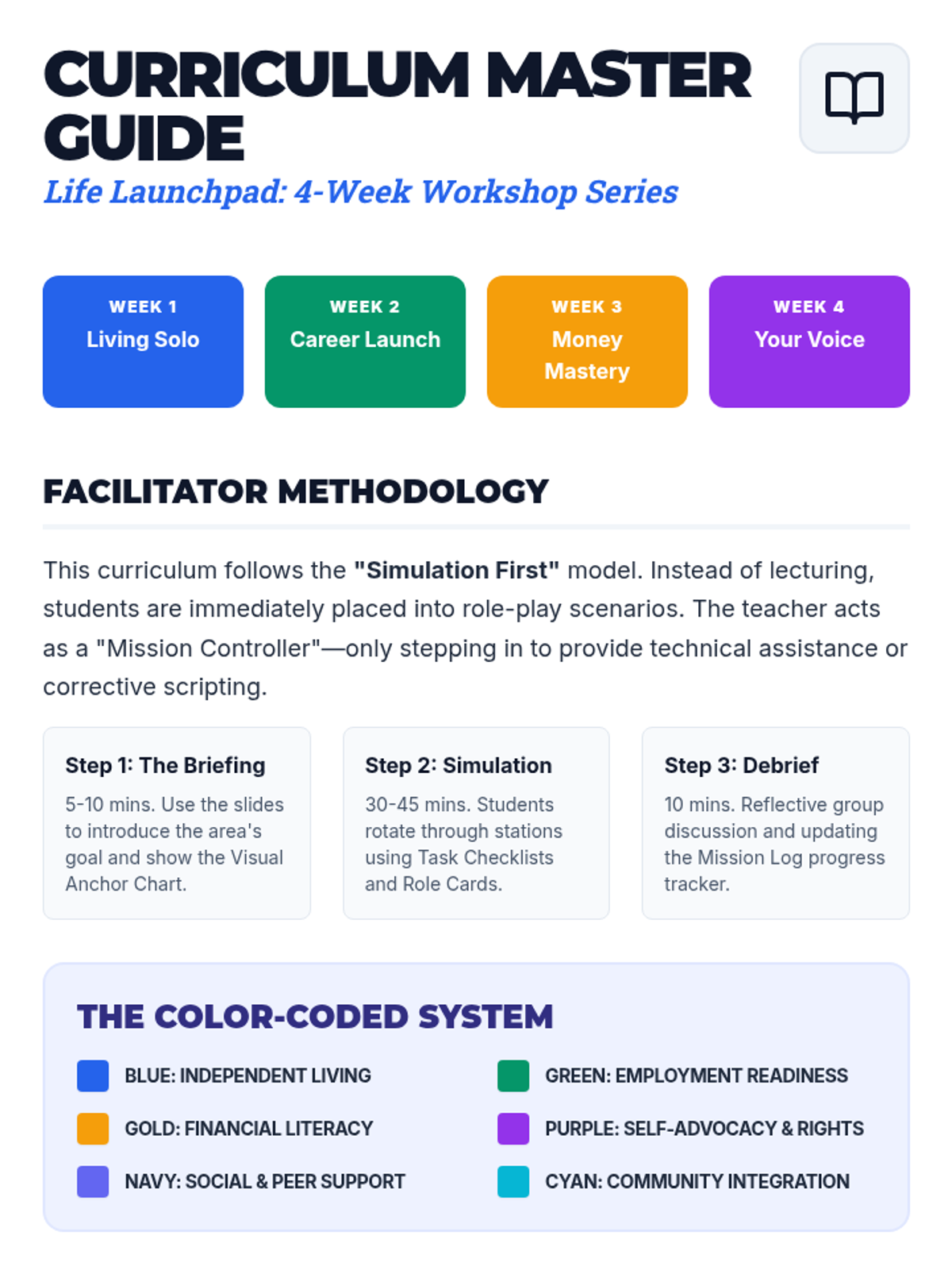
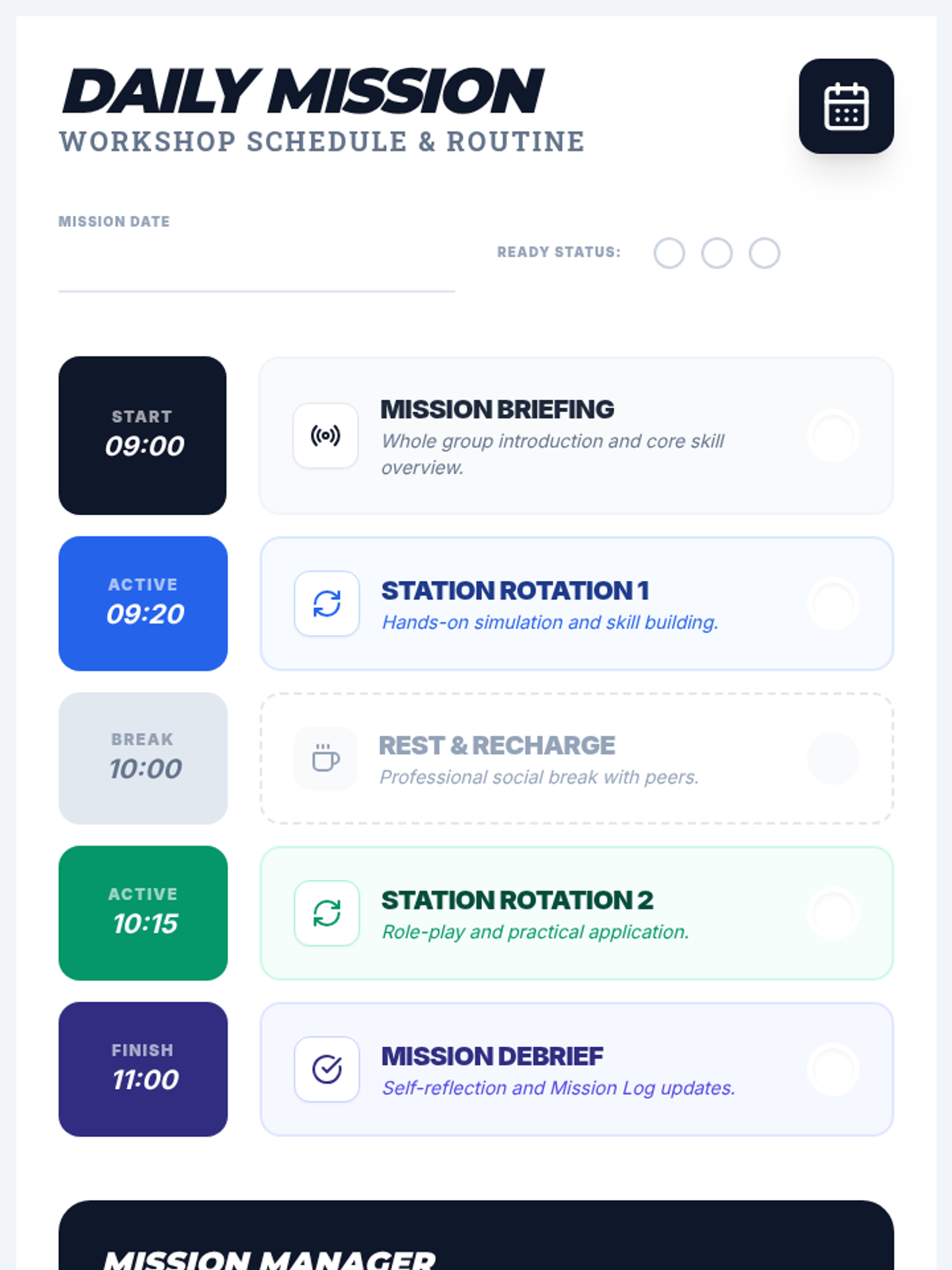
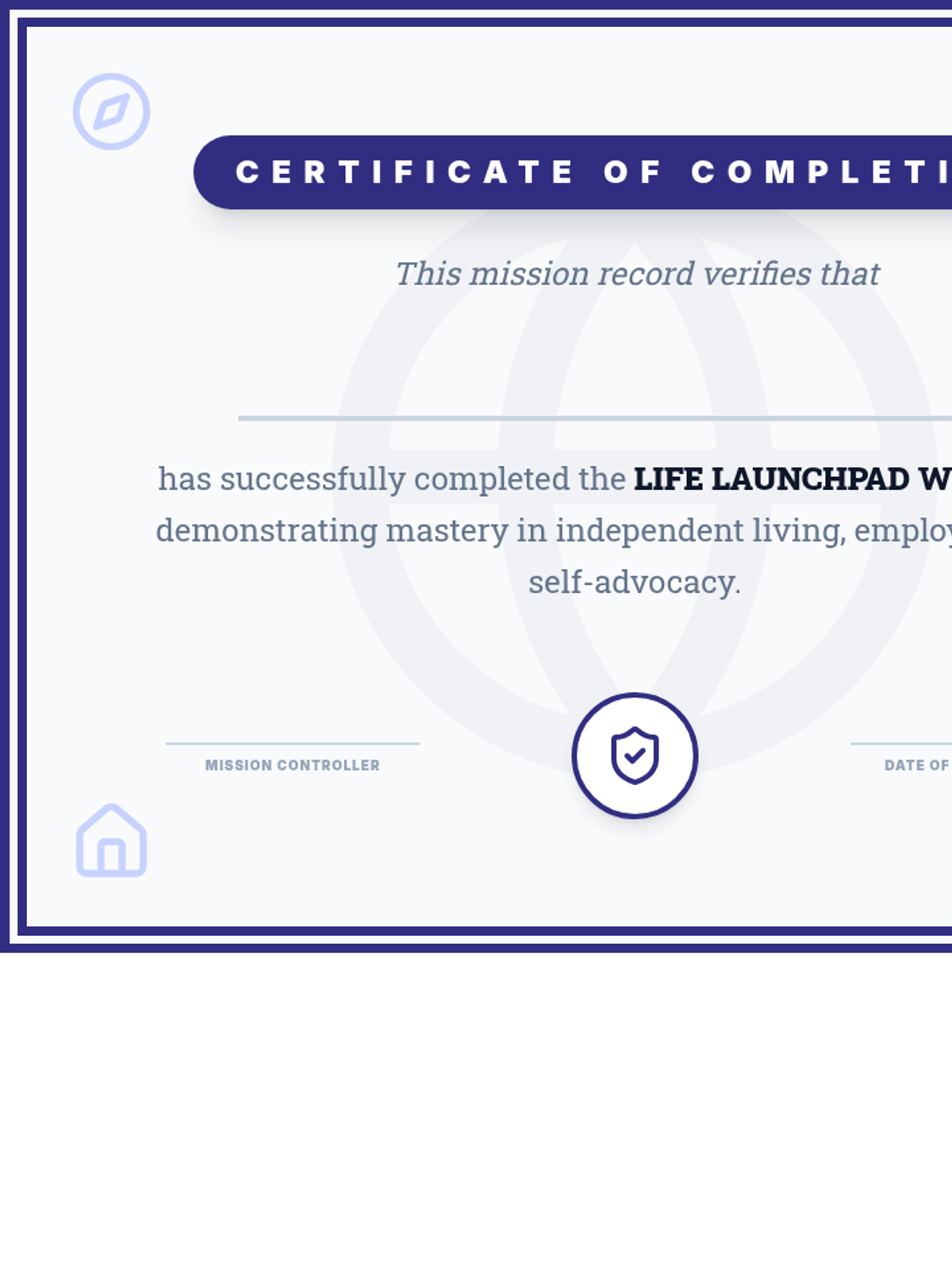
A comprehensive transition-to-adulthood curriculum covering financial literacy, career planning, health navigation, and civic engagement. Students build a personal 'mission log' portfolio to prepare for independent life.
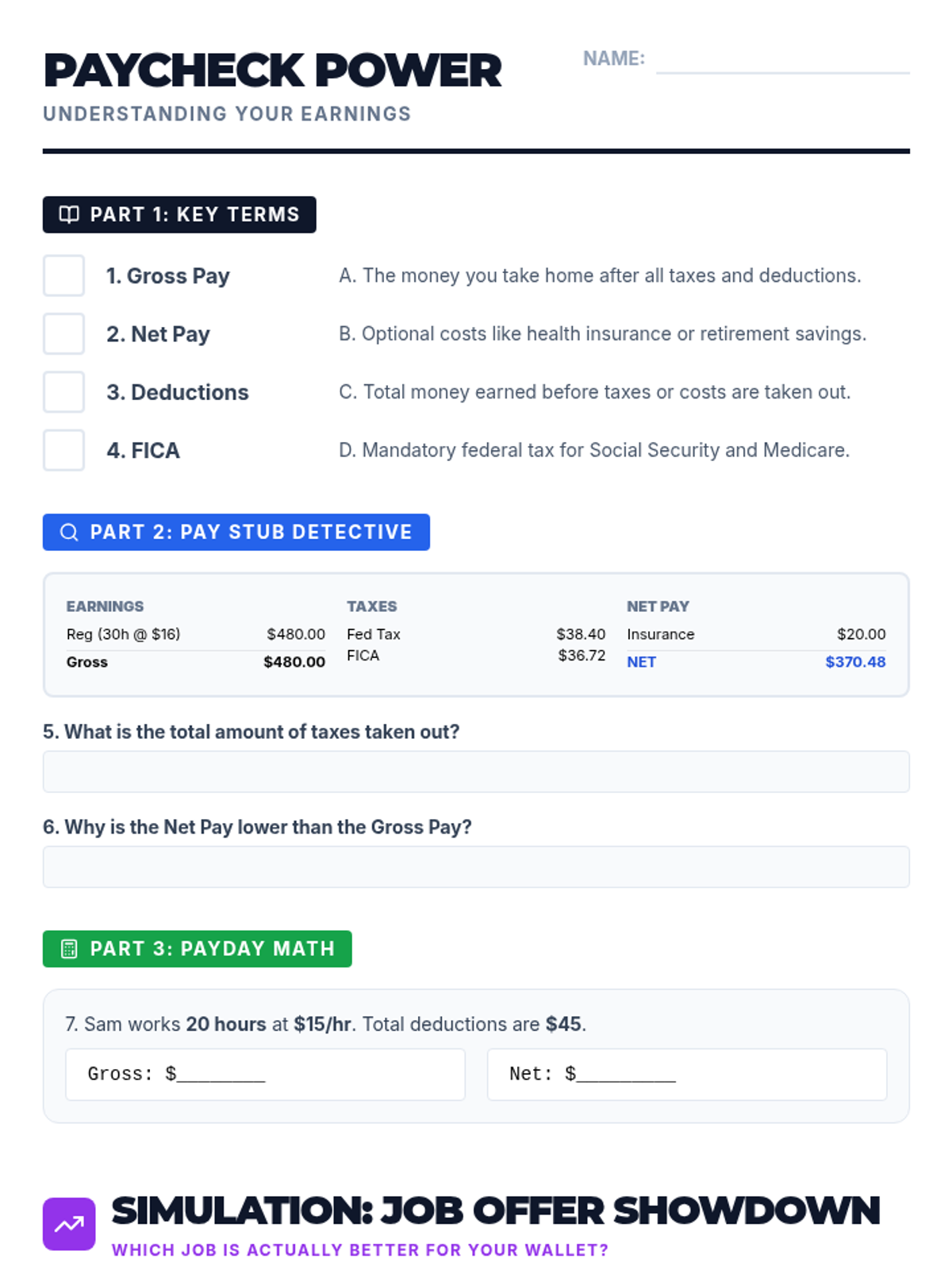
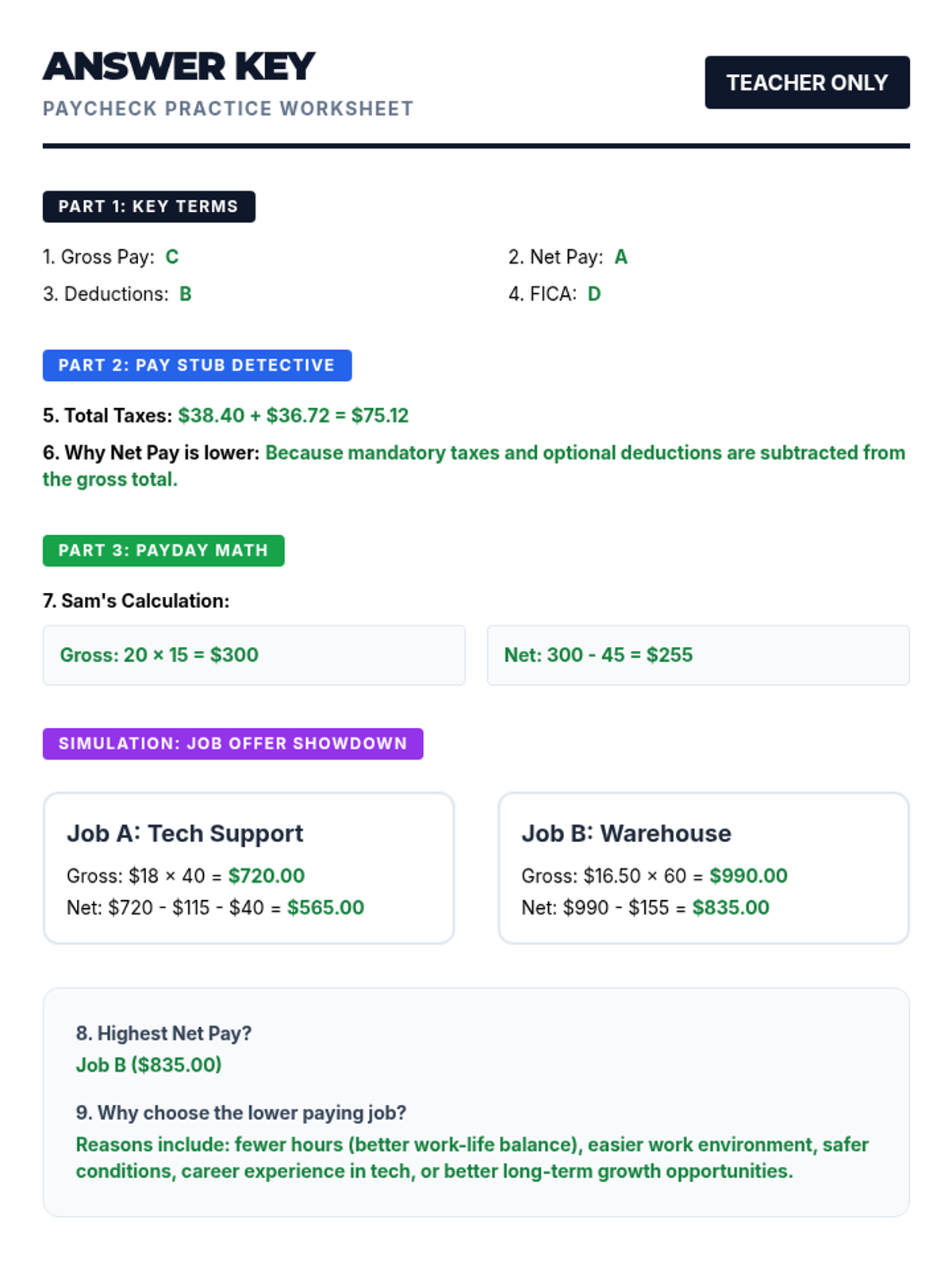
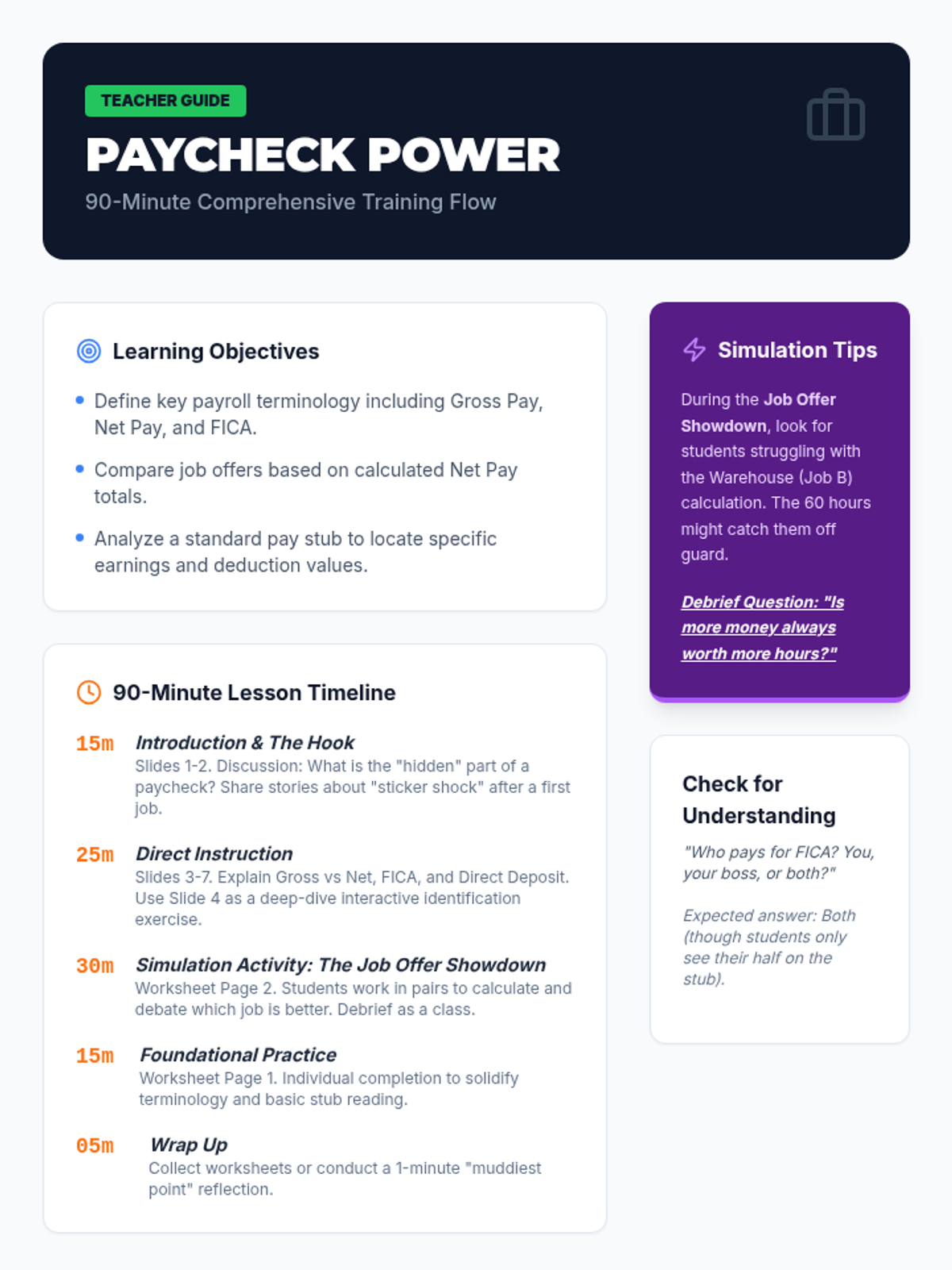
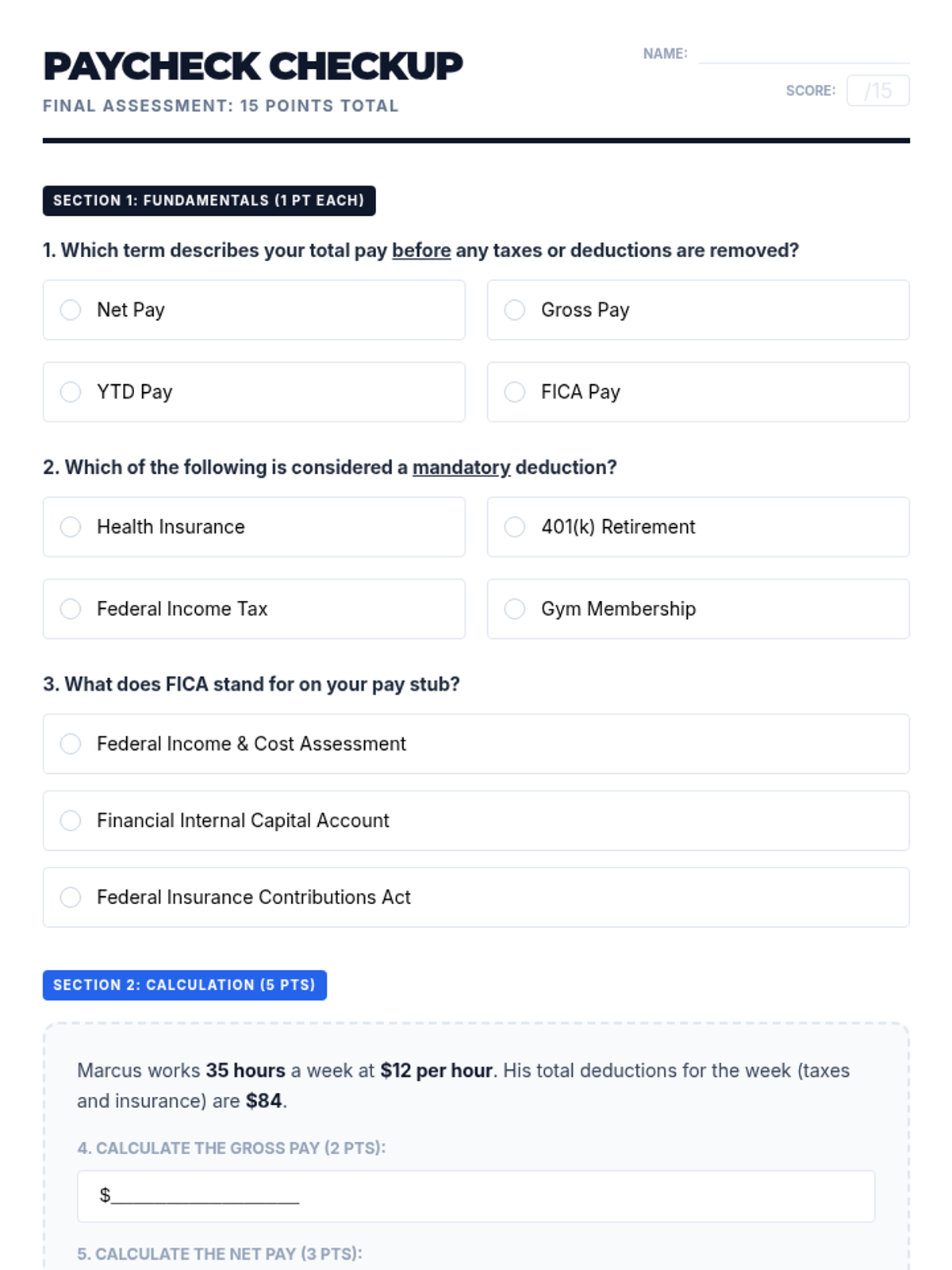
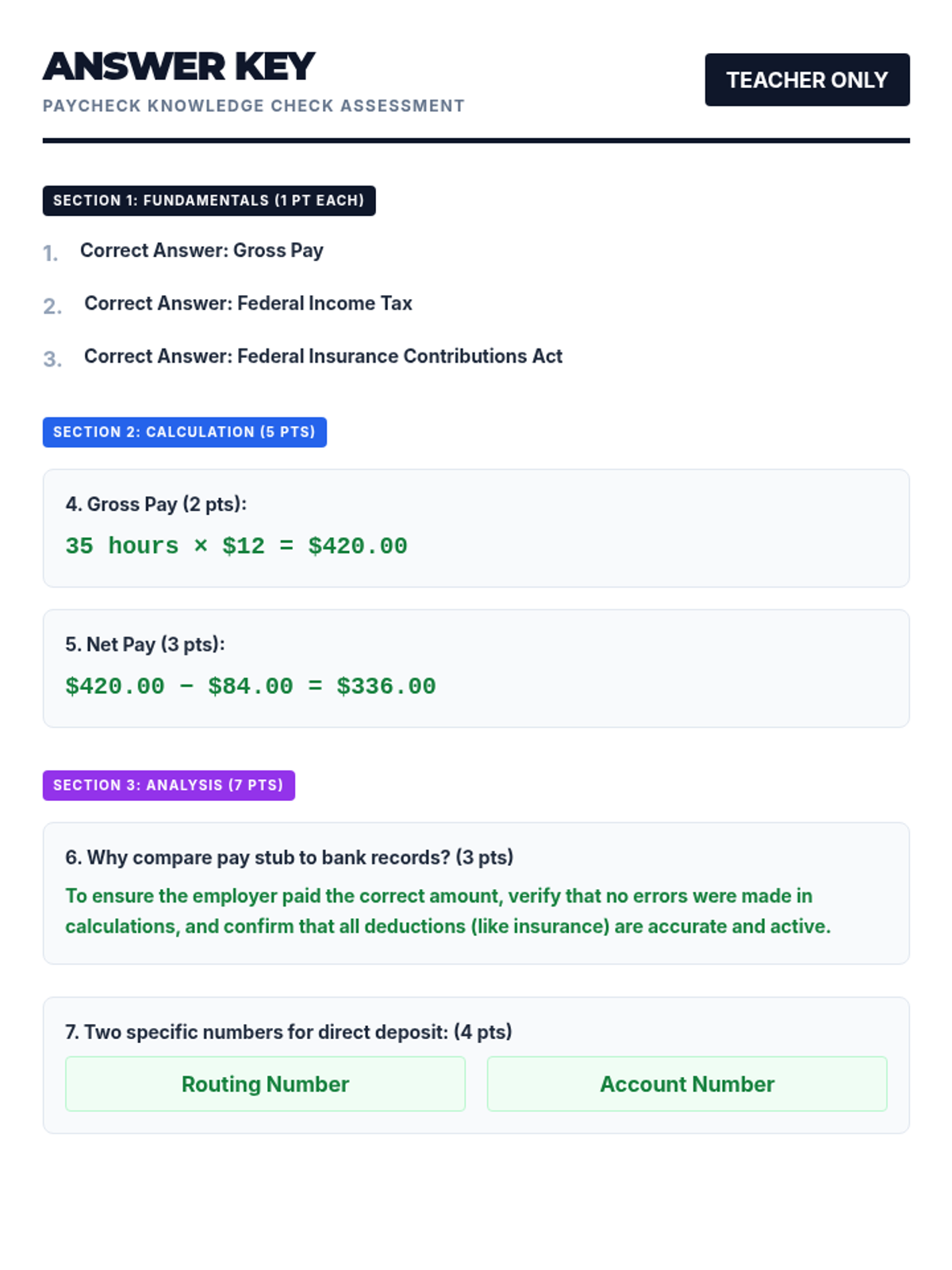
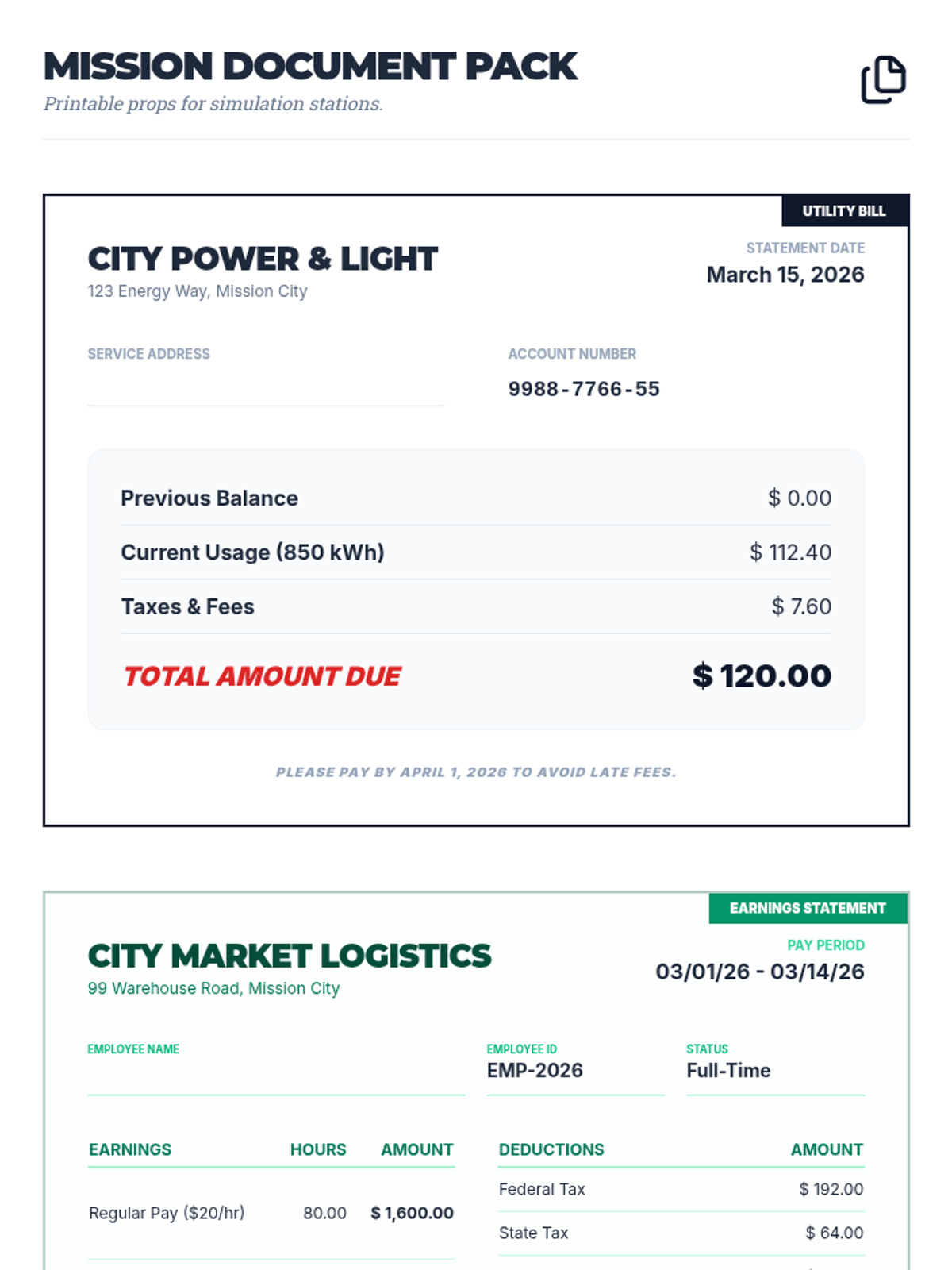
A comprehensive guide to understanding paychecks, including gross vs. net pay, tax deductions, and the anatomy of a pay stub. Students will learn how to read their earnings statements and manage their direct deposit information.
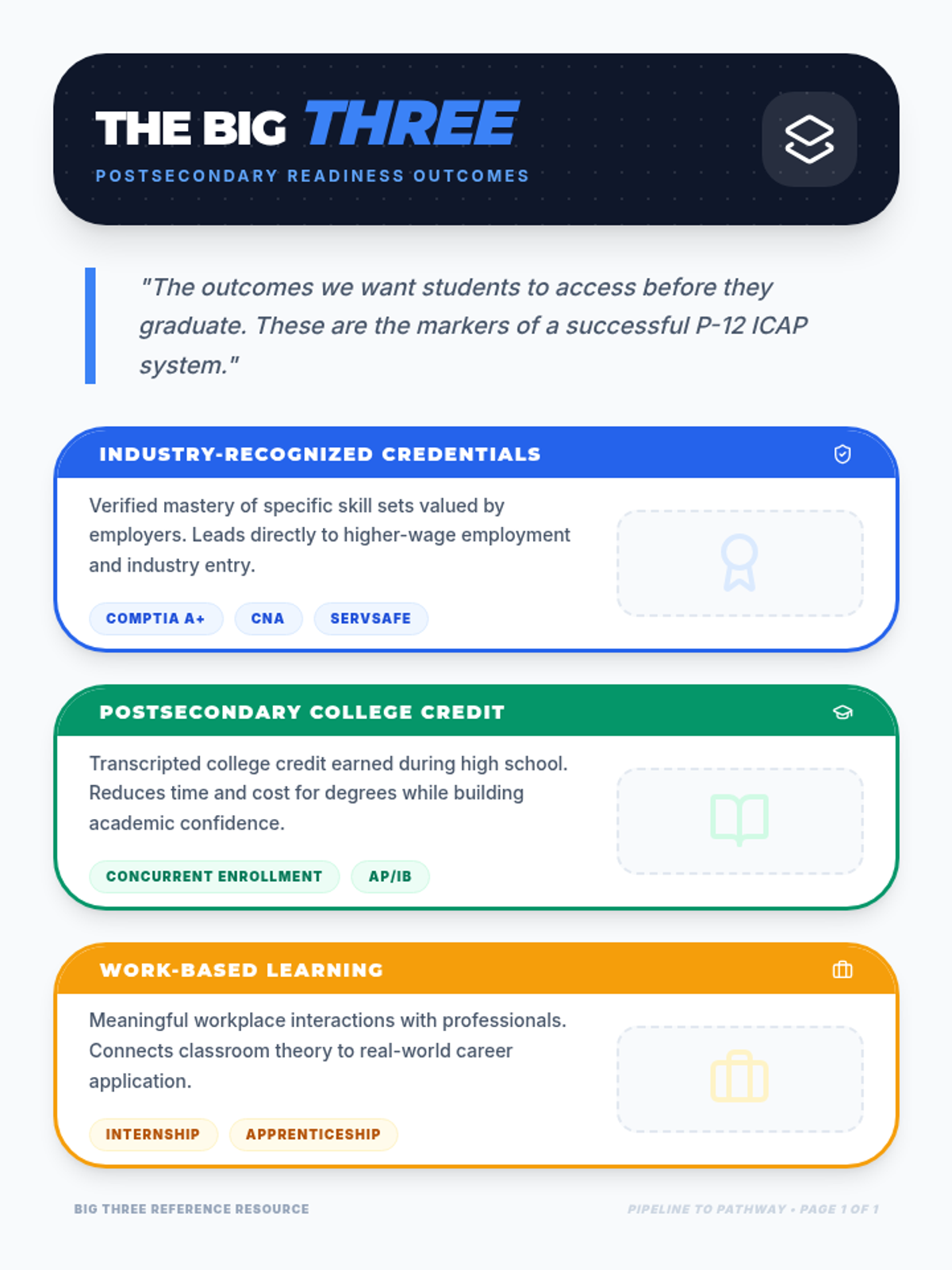
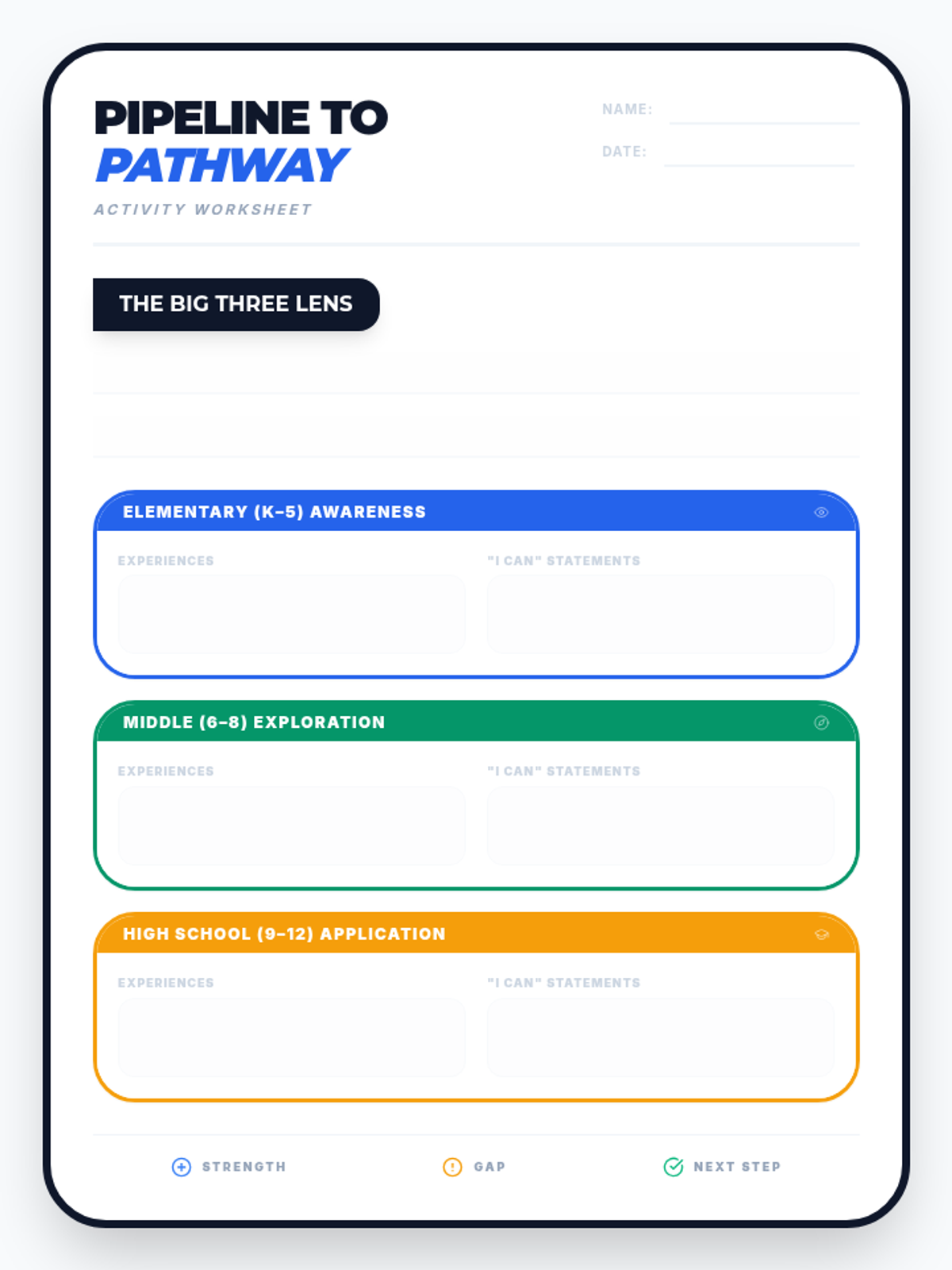
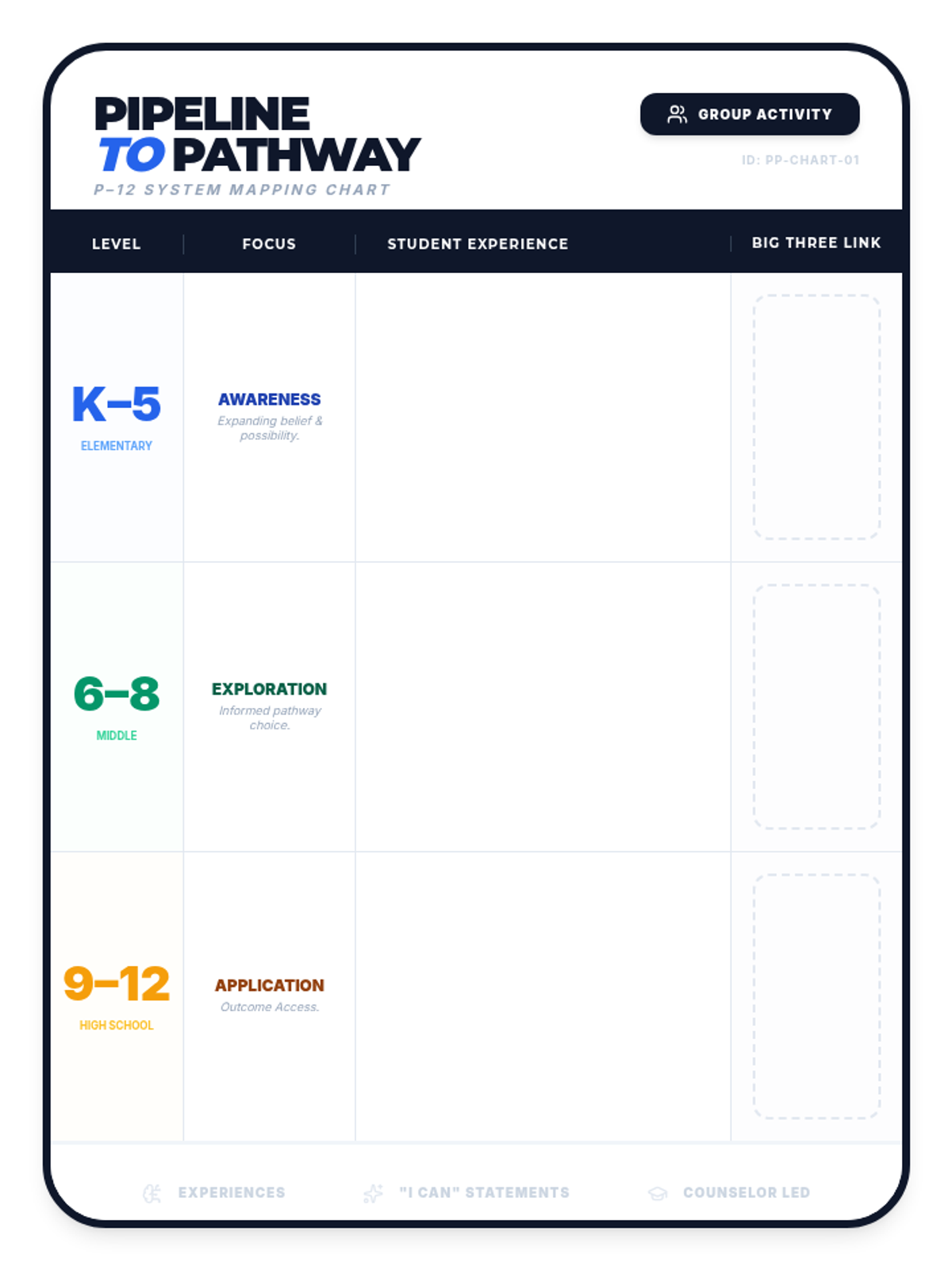
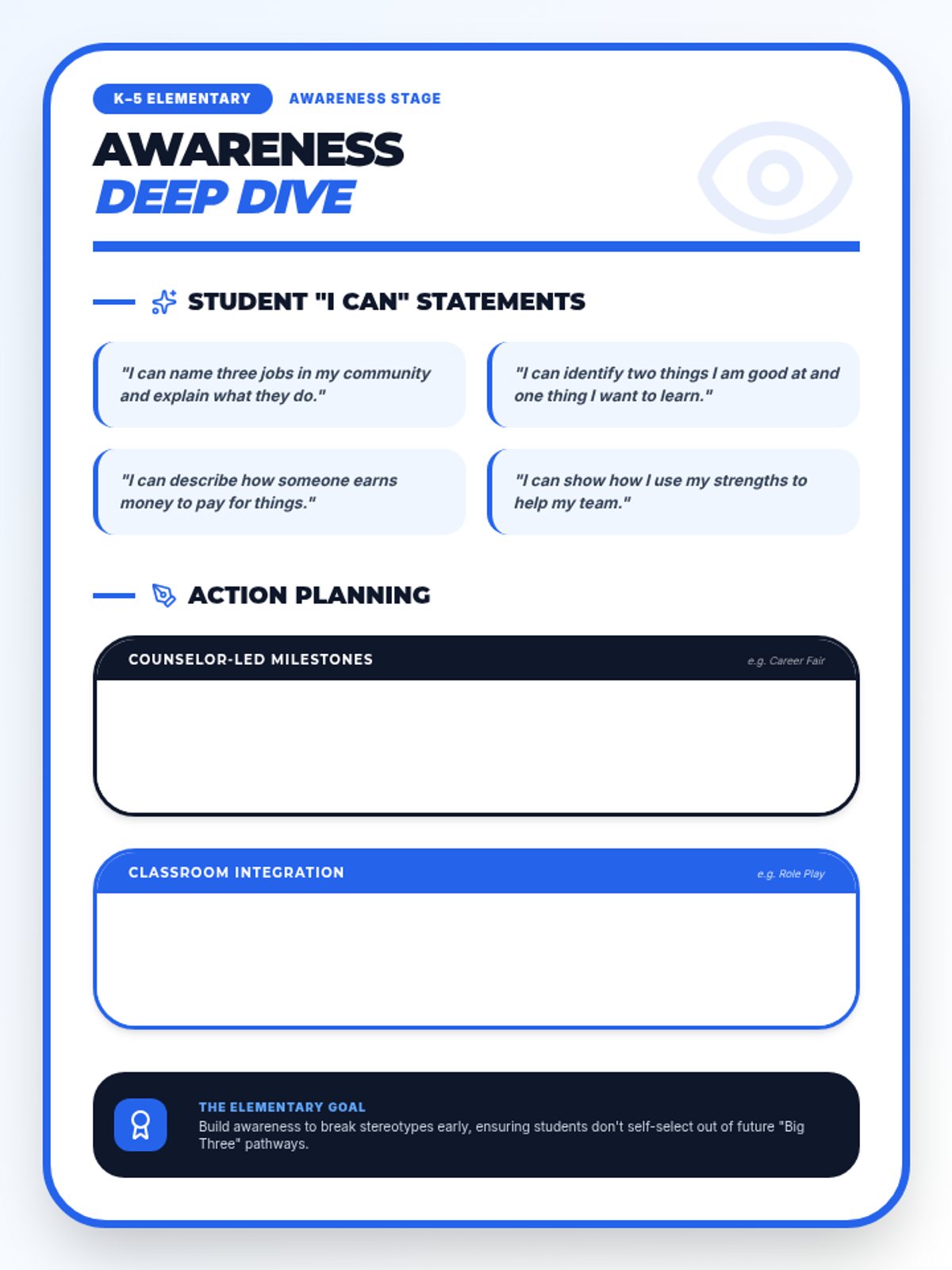
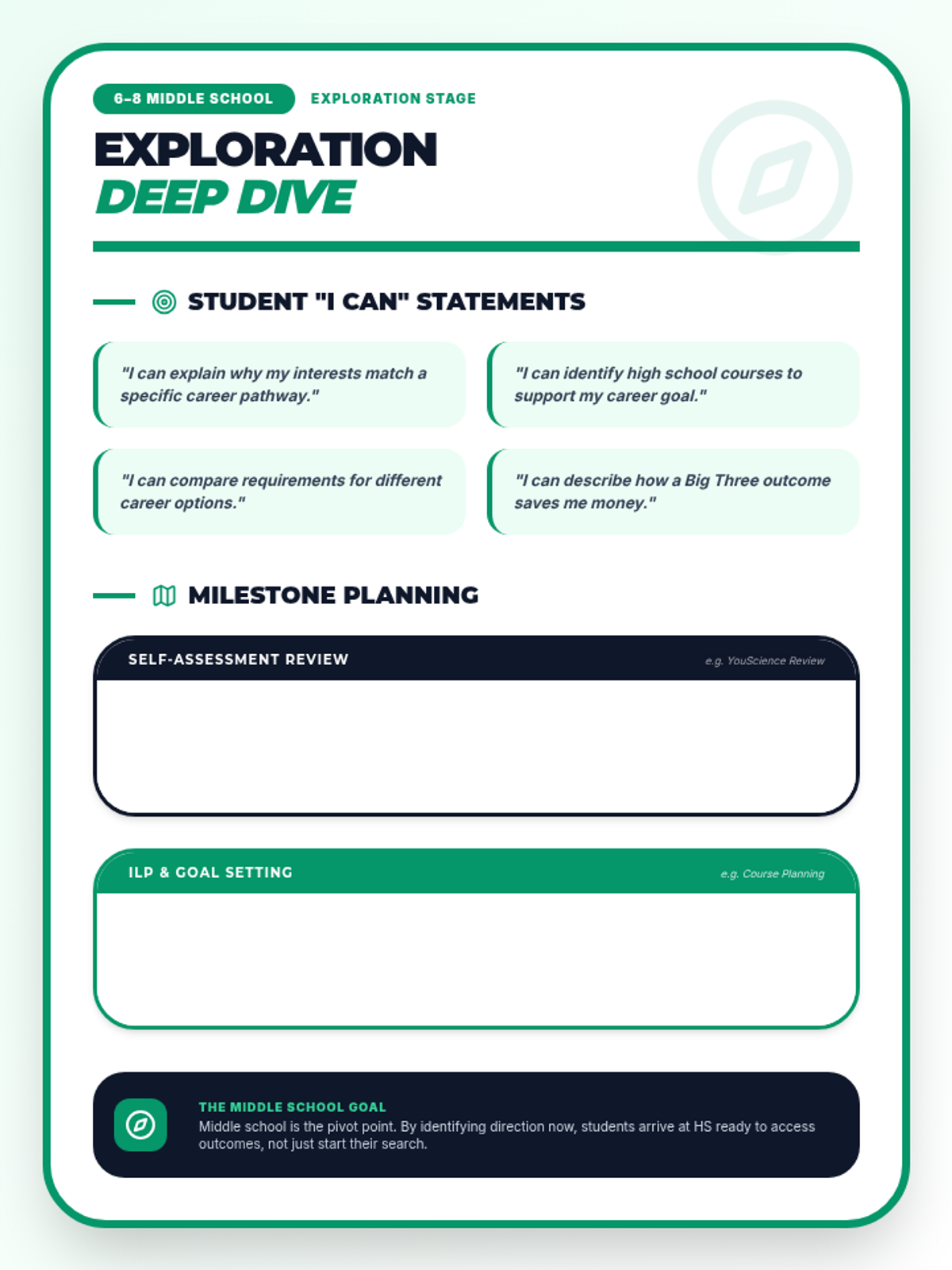
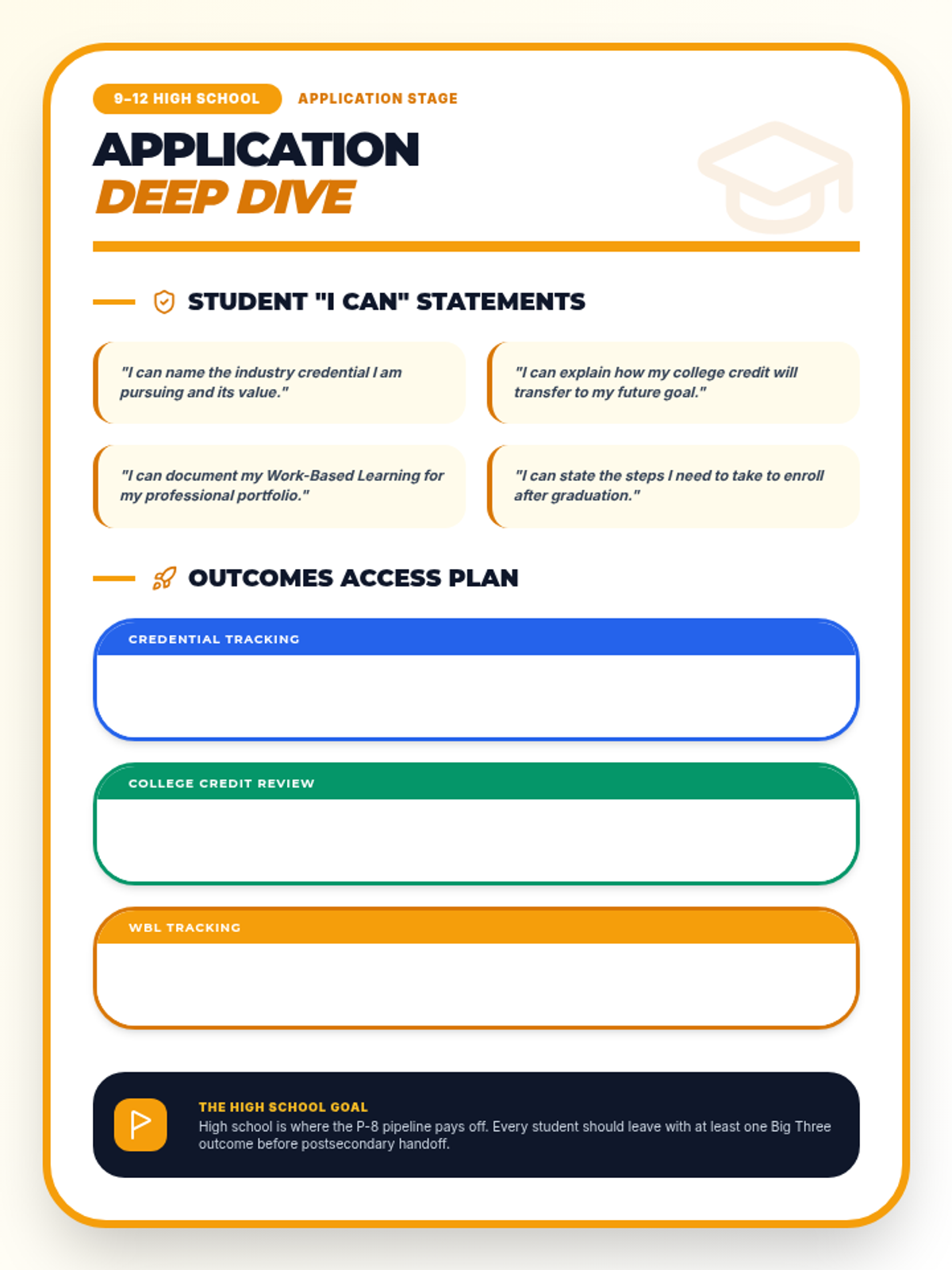
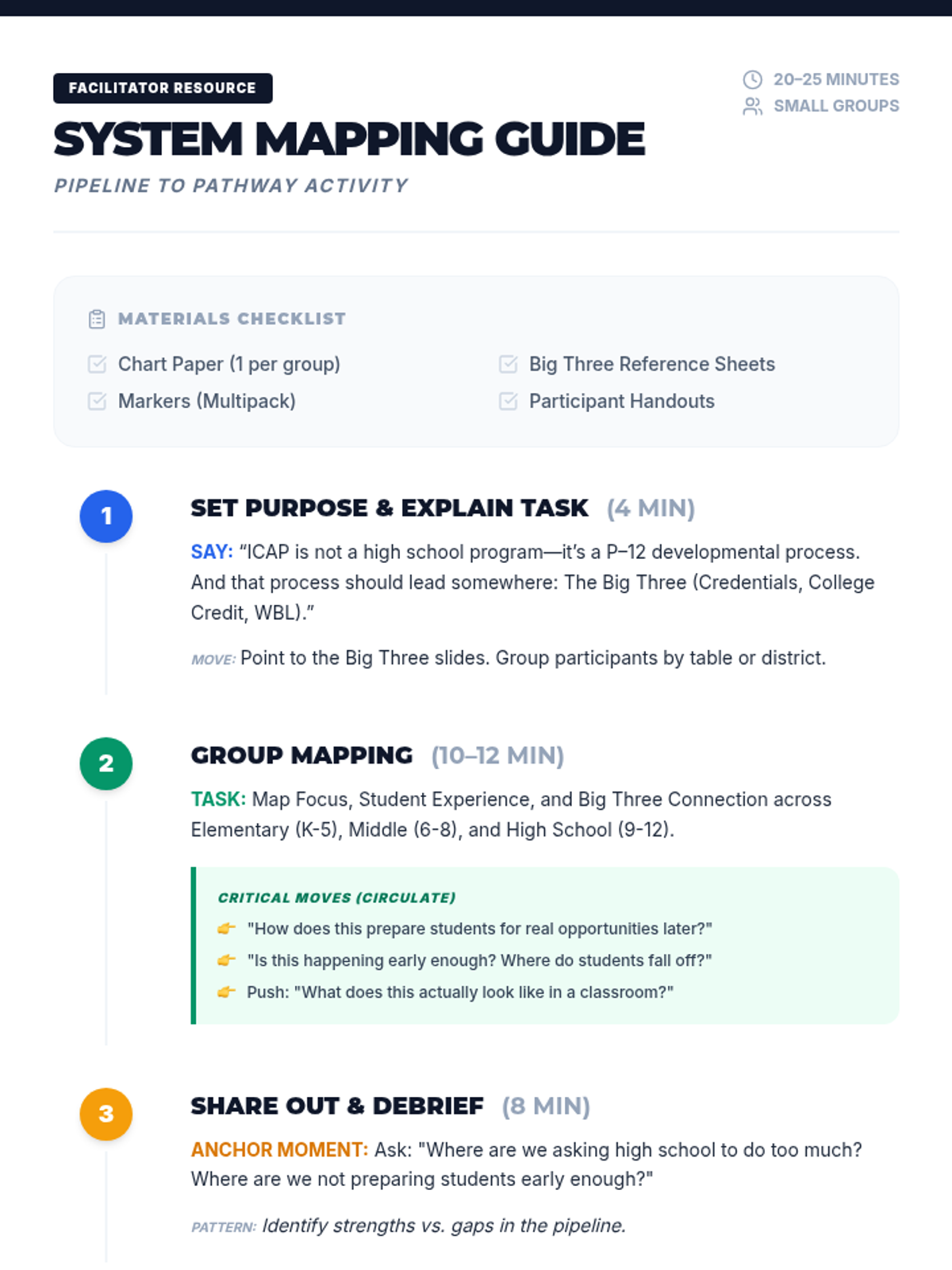
A collaborative workshop session where educators map out the developmental stages of a student's journey from elementary awareness to high school application and outcome access.
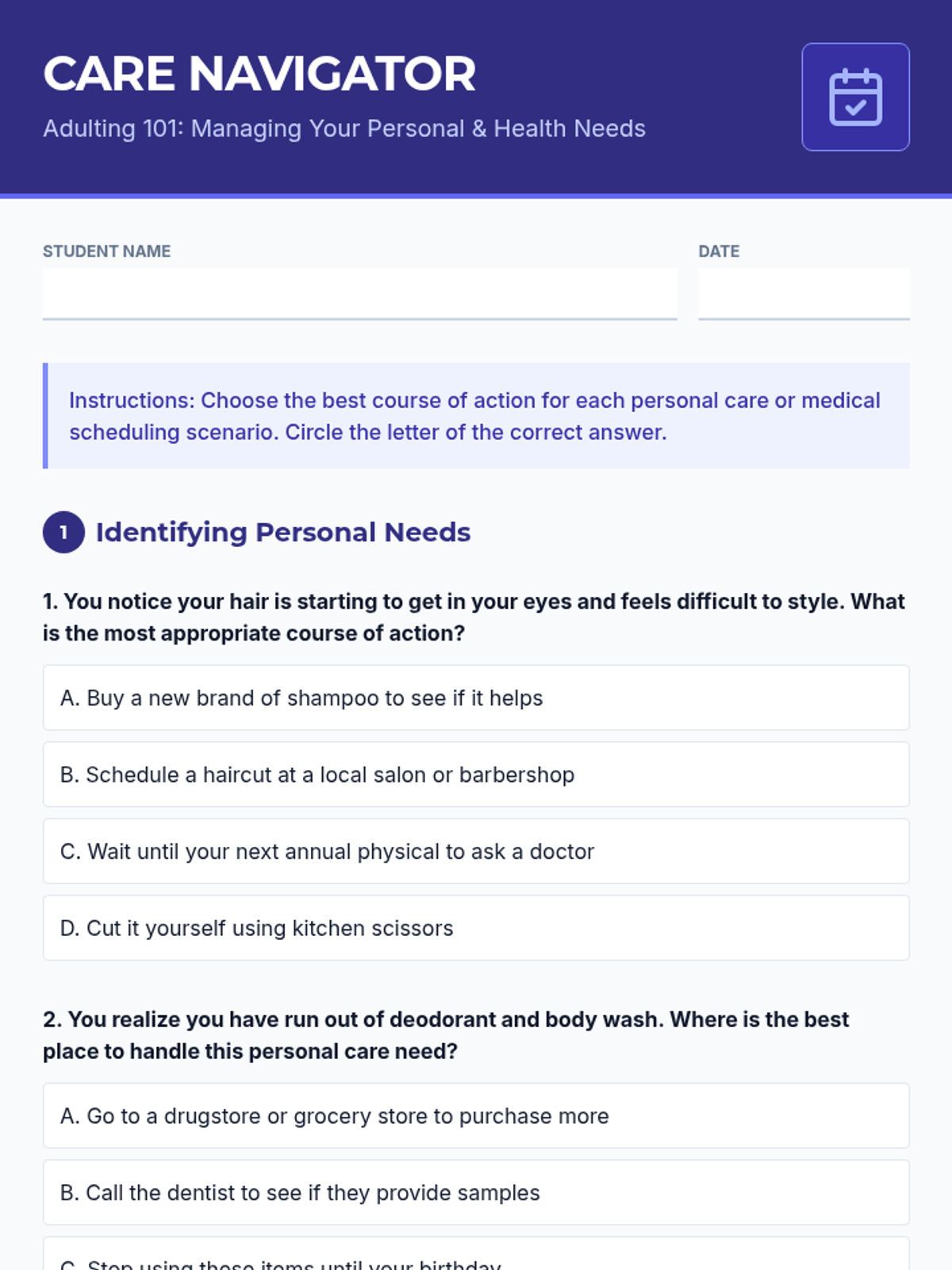
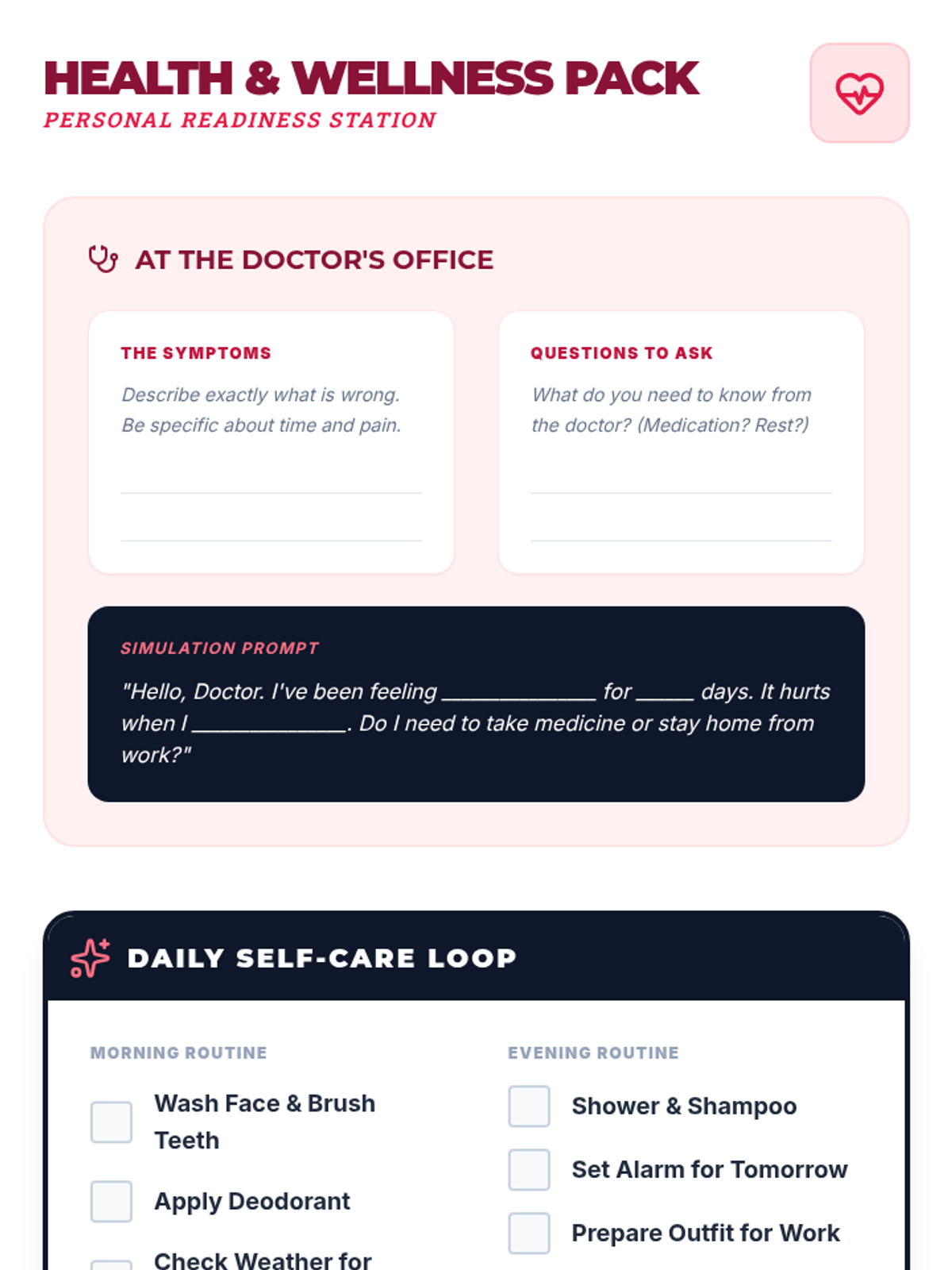
A lesson focused on developing independence in managing personal care and healthcare needs, including identifying service requirements and navigating the appointment scheduling process.
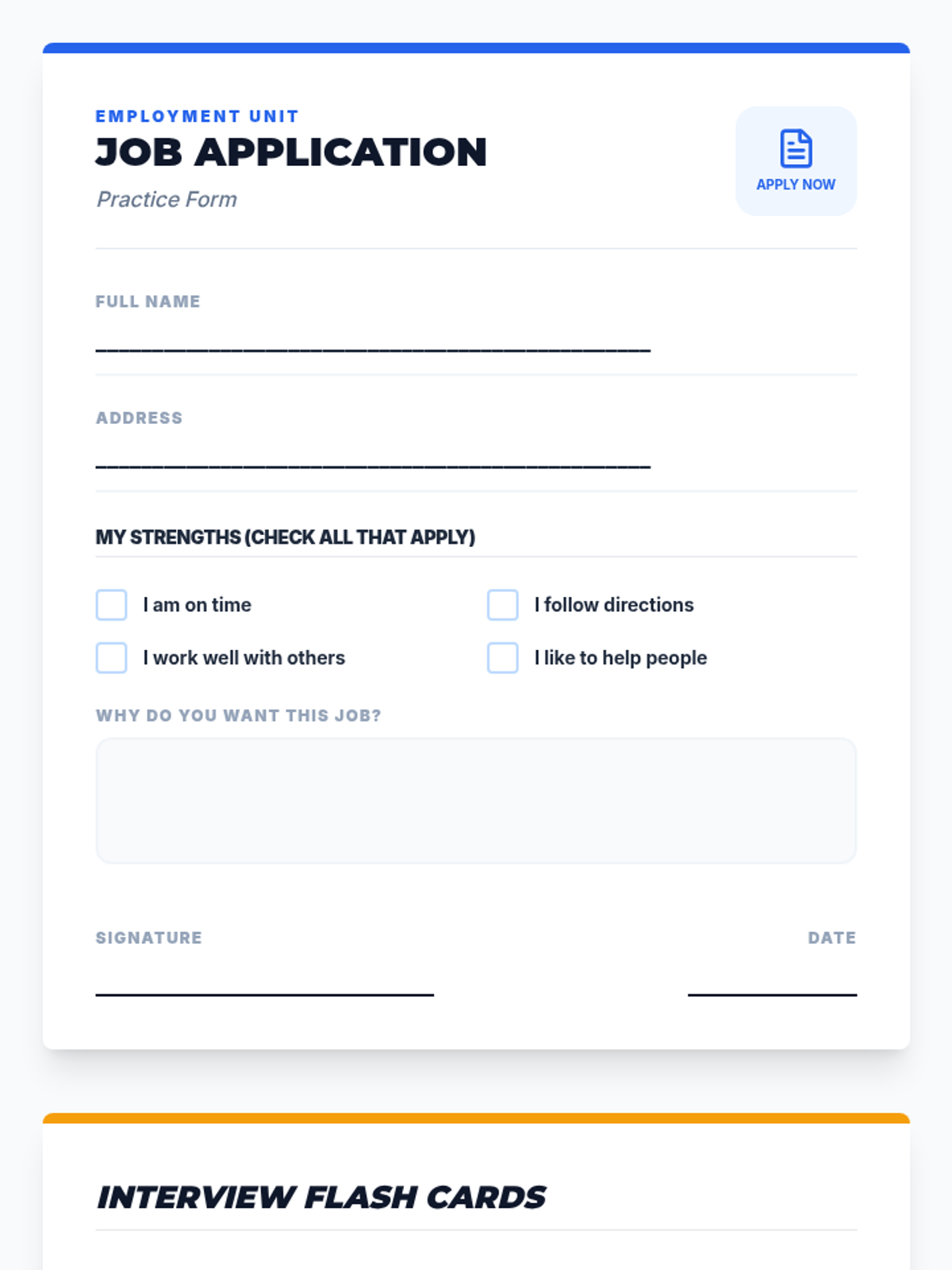
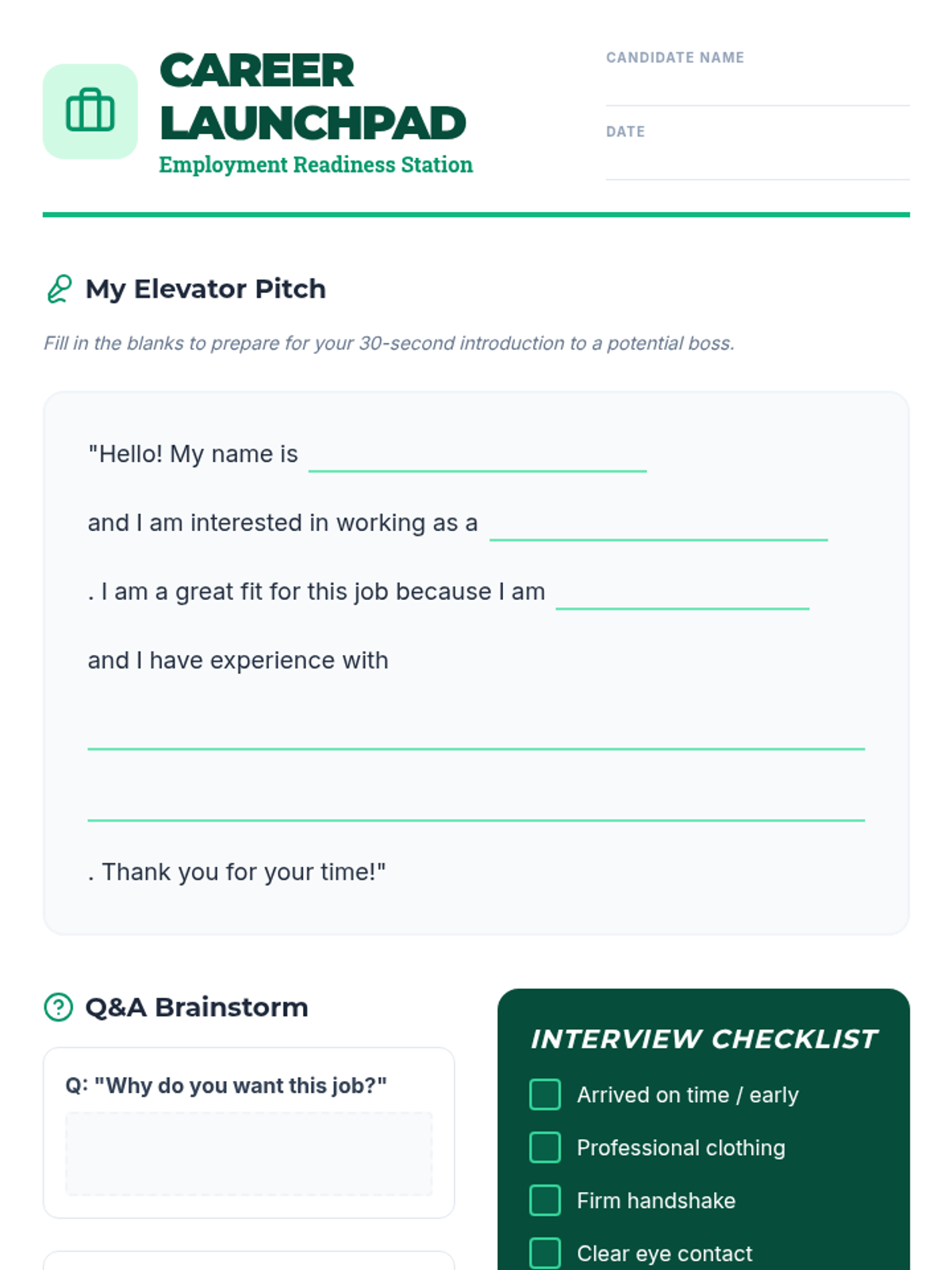
Master the transition from student to professional. This lesson covers workplace etiquette and the application process through engaging puzzles and reflective self-assessments.
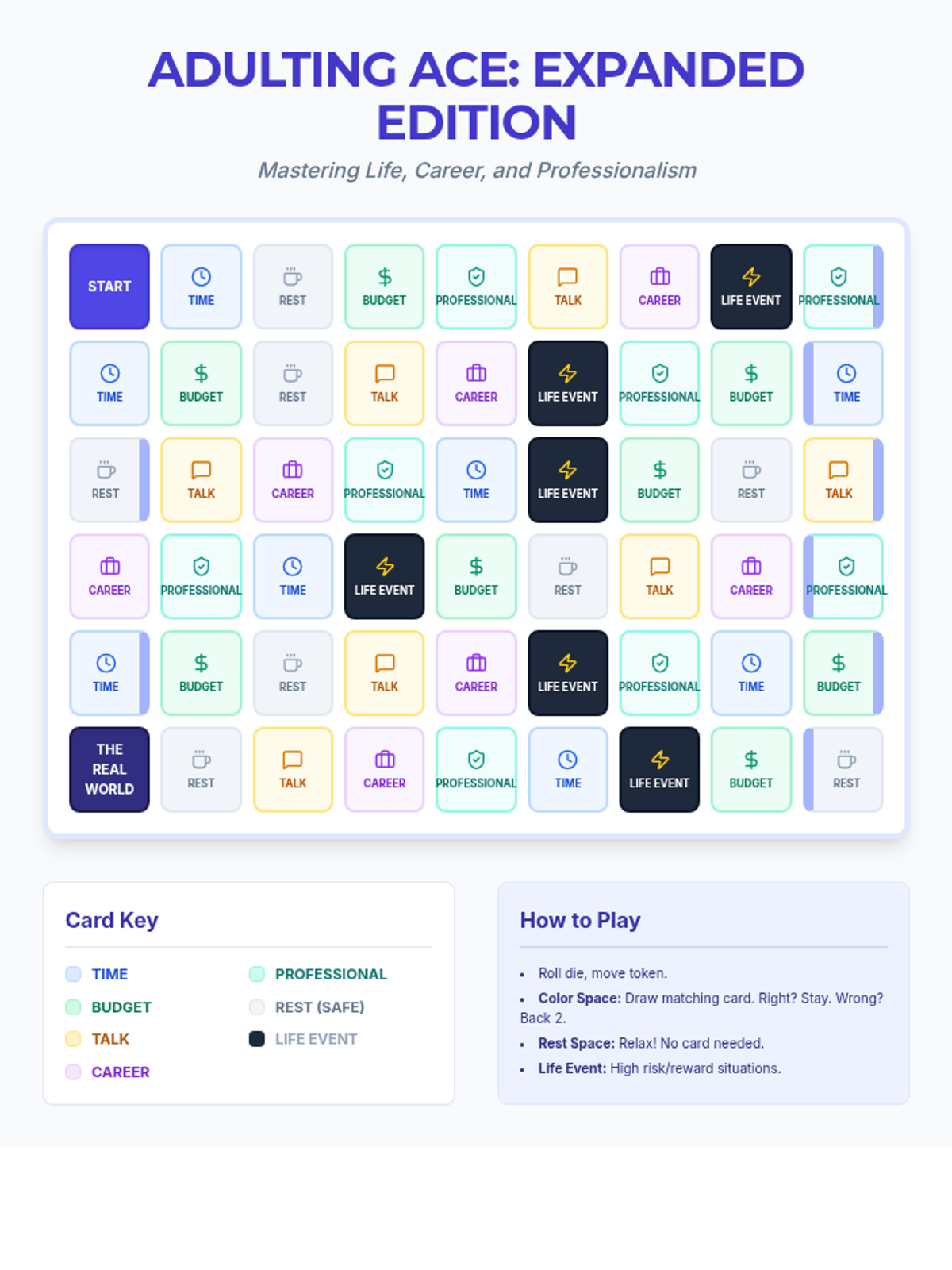
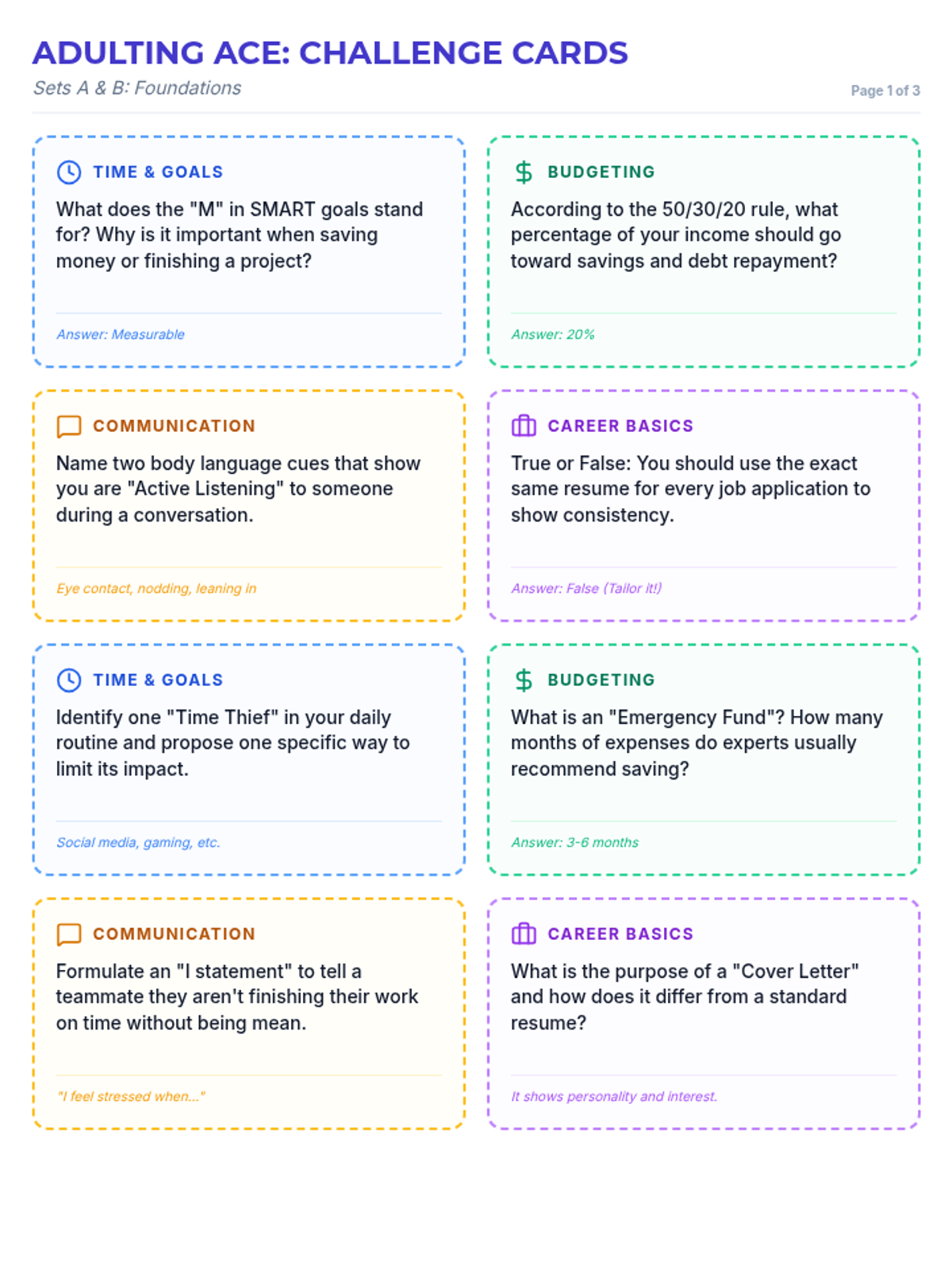
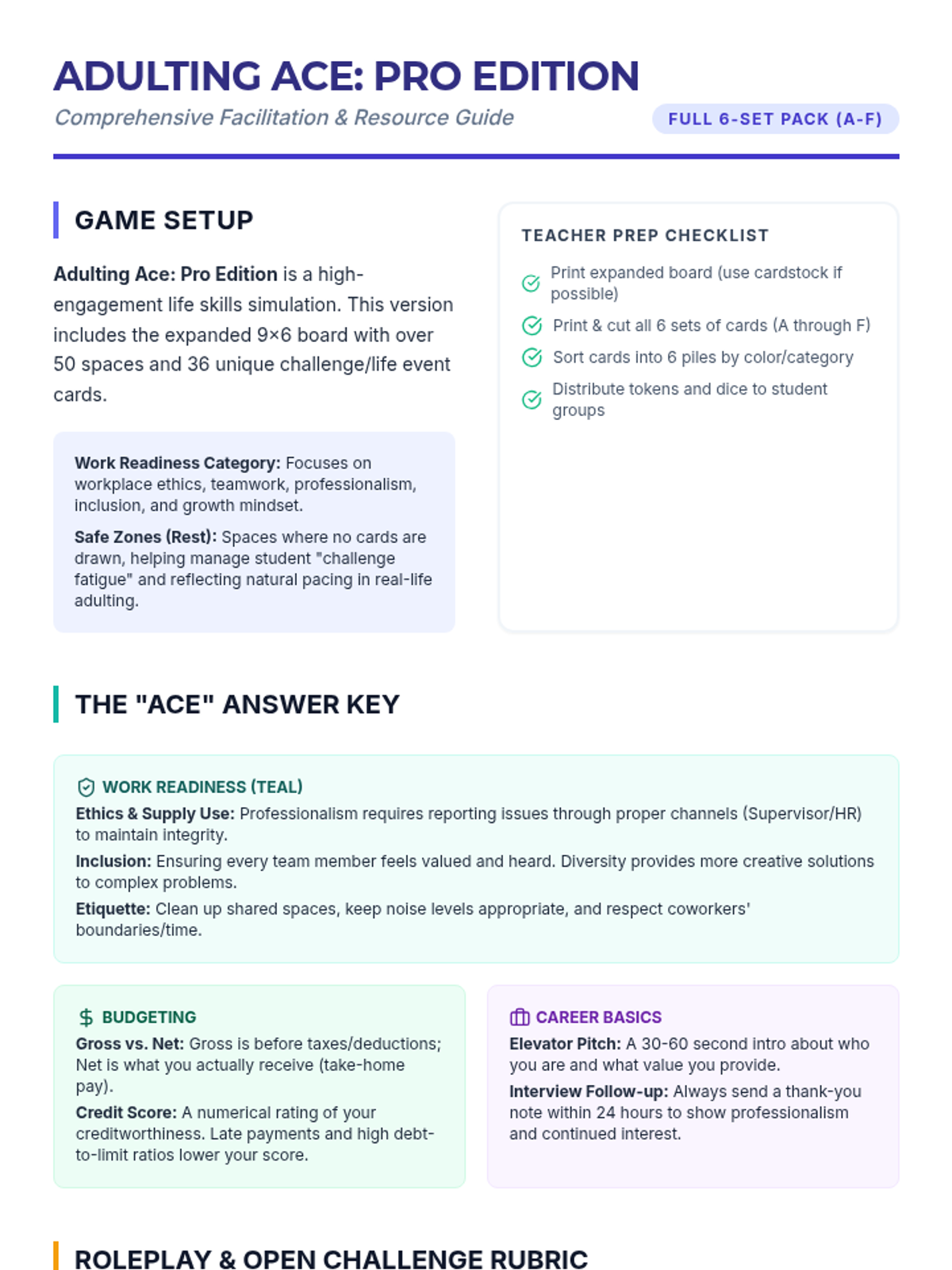
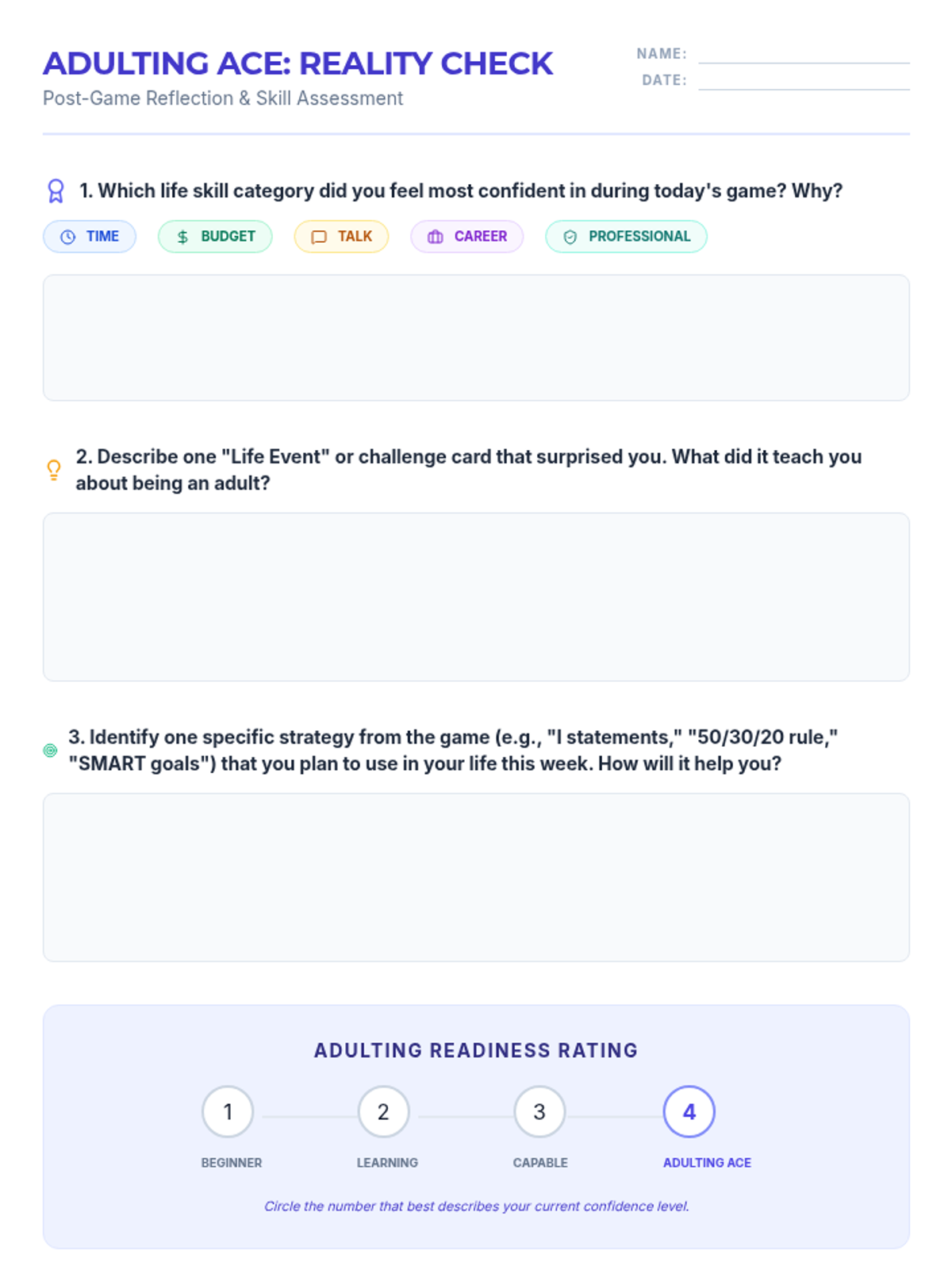
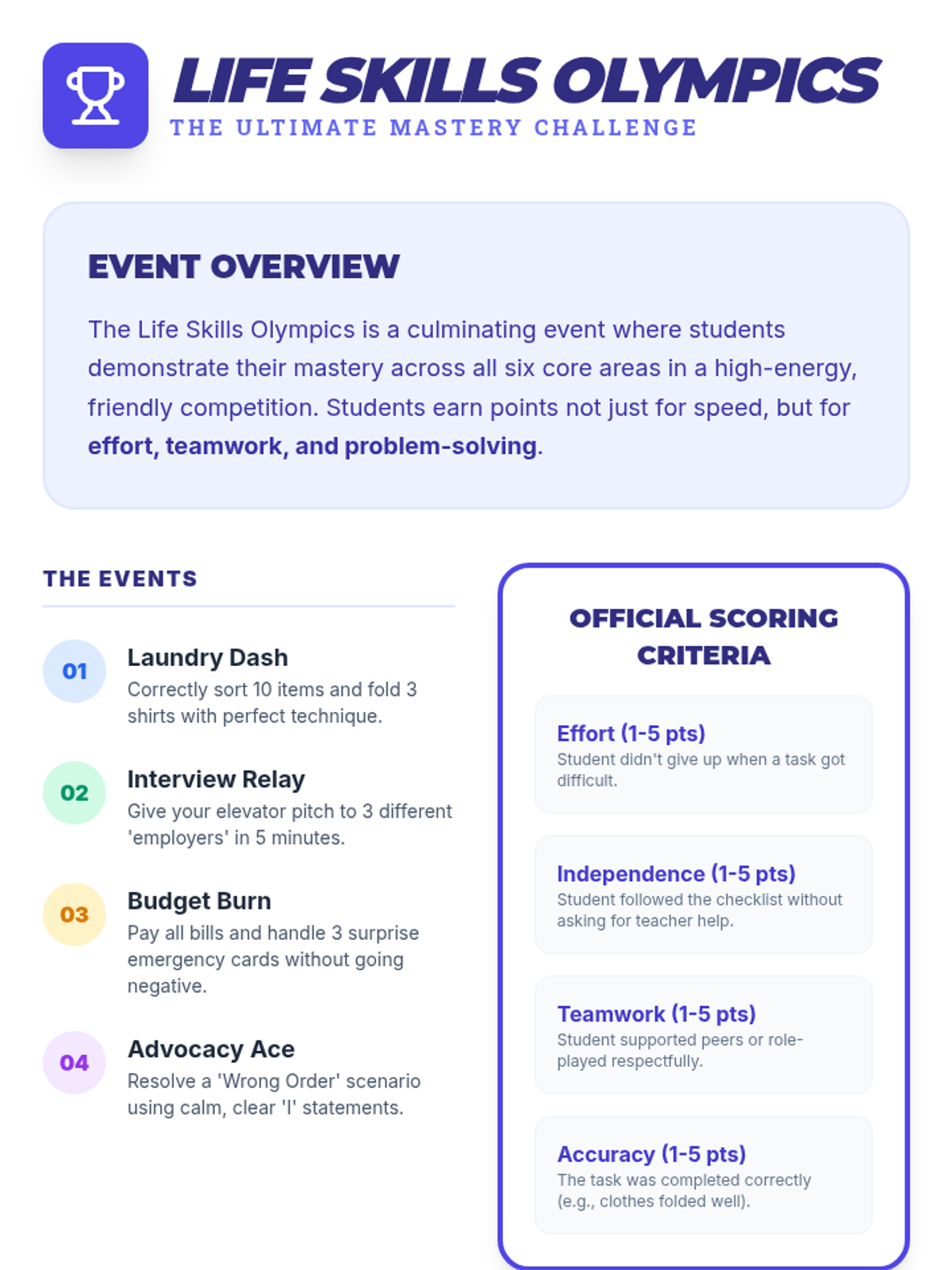
An interactive board game experience covering essential life skills including financial literacy, time management, communication, and career readiness.
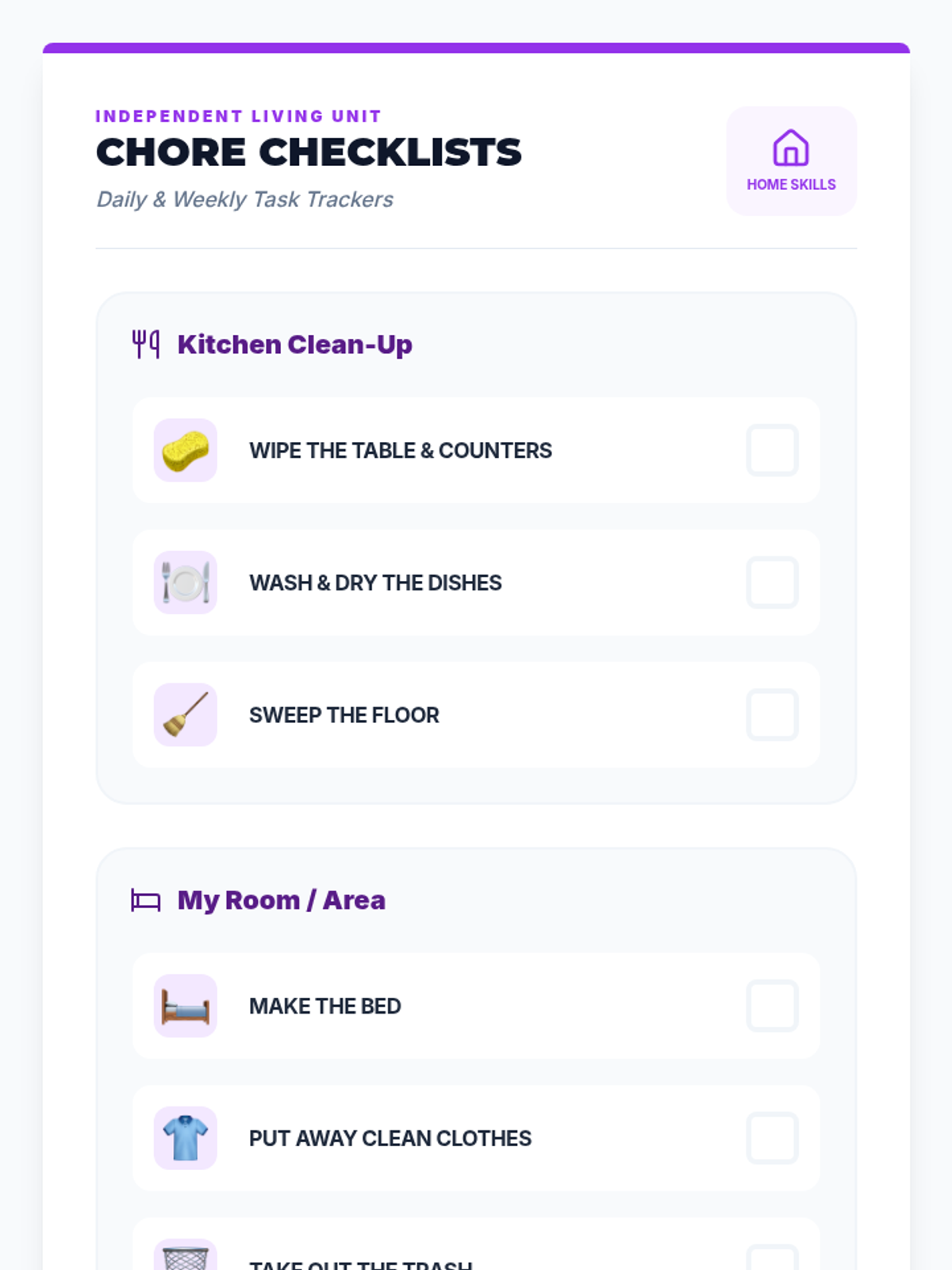
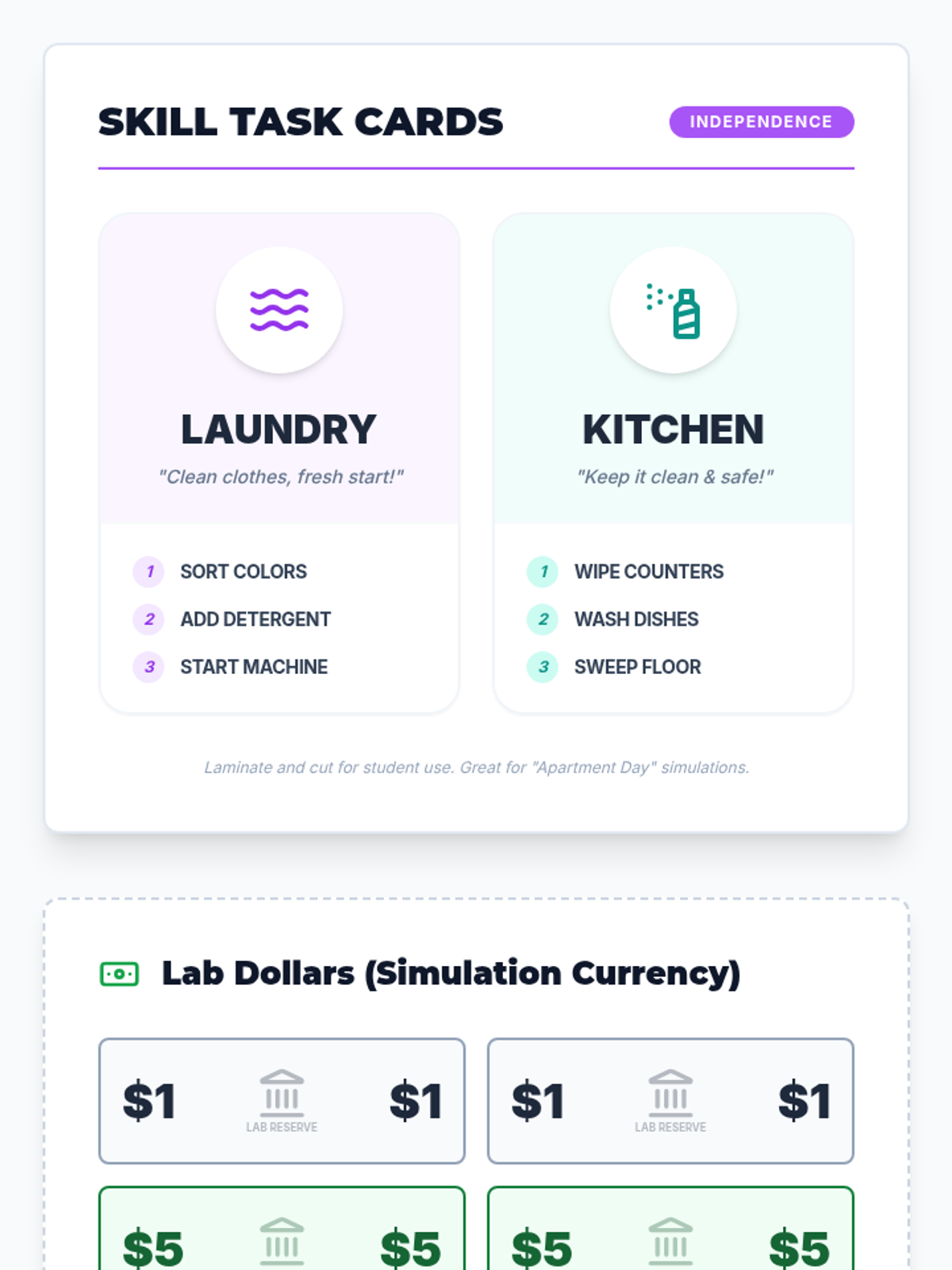
Essential skills for maintaining a household, including chores, laundry, and daily organization.
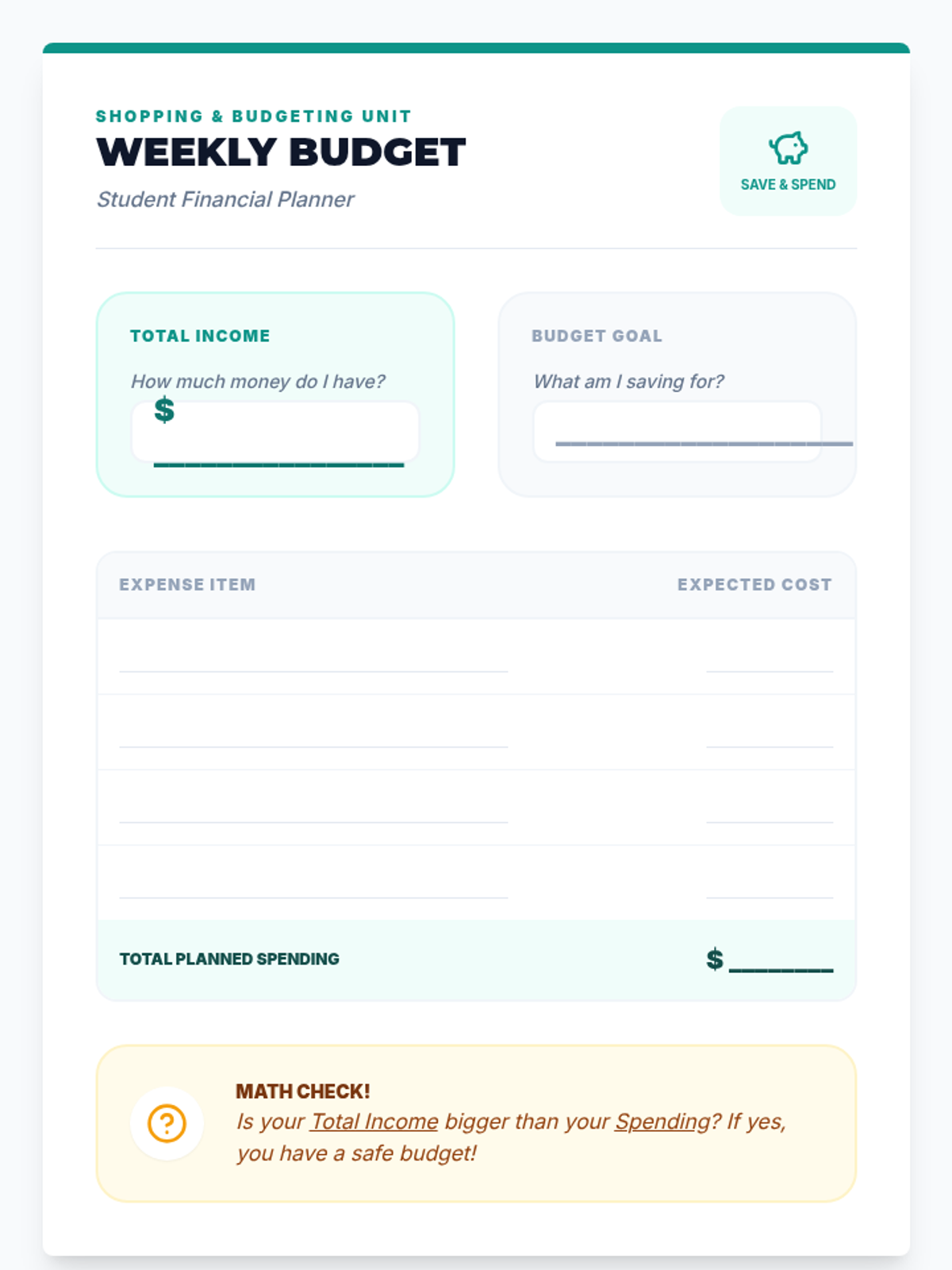
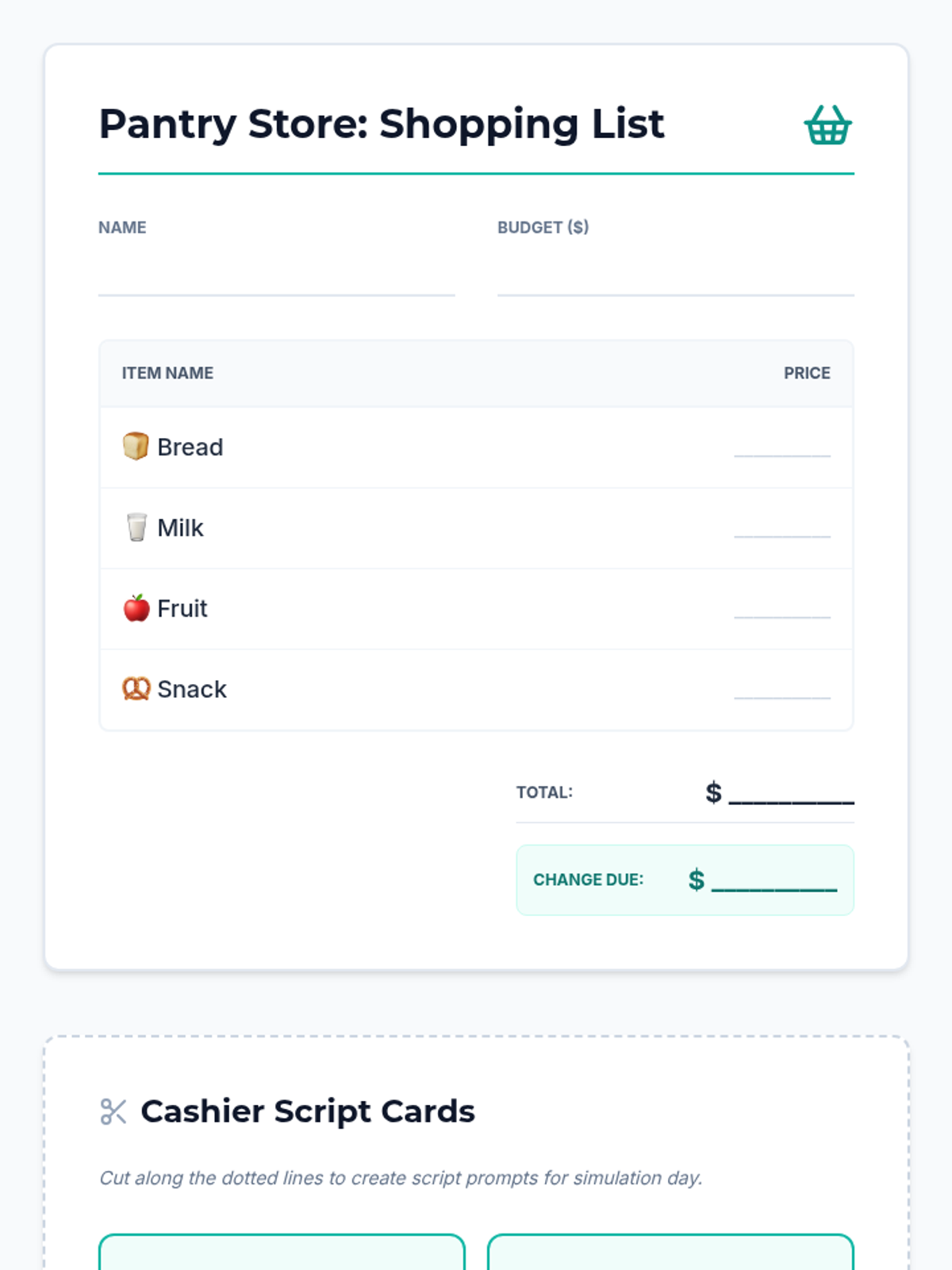
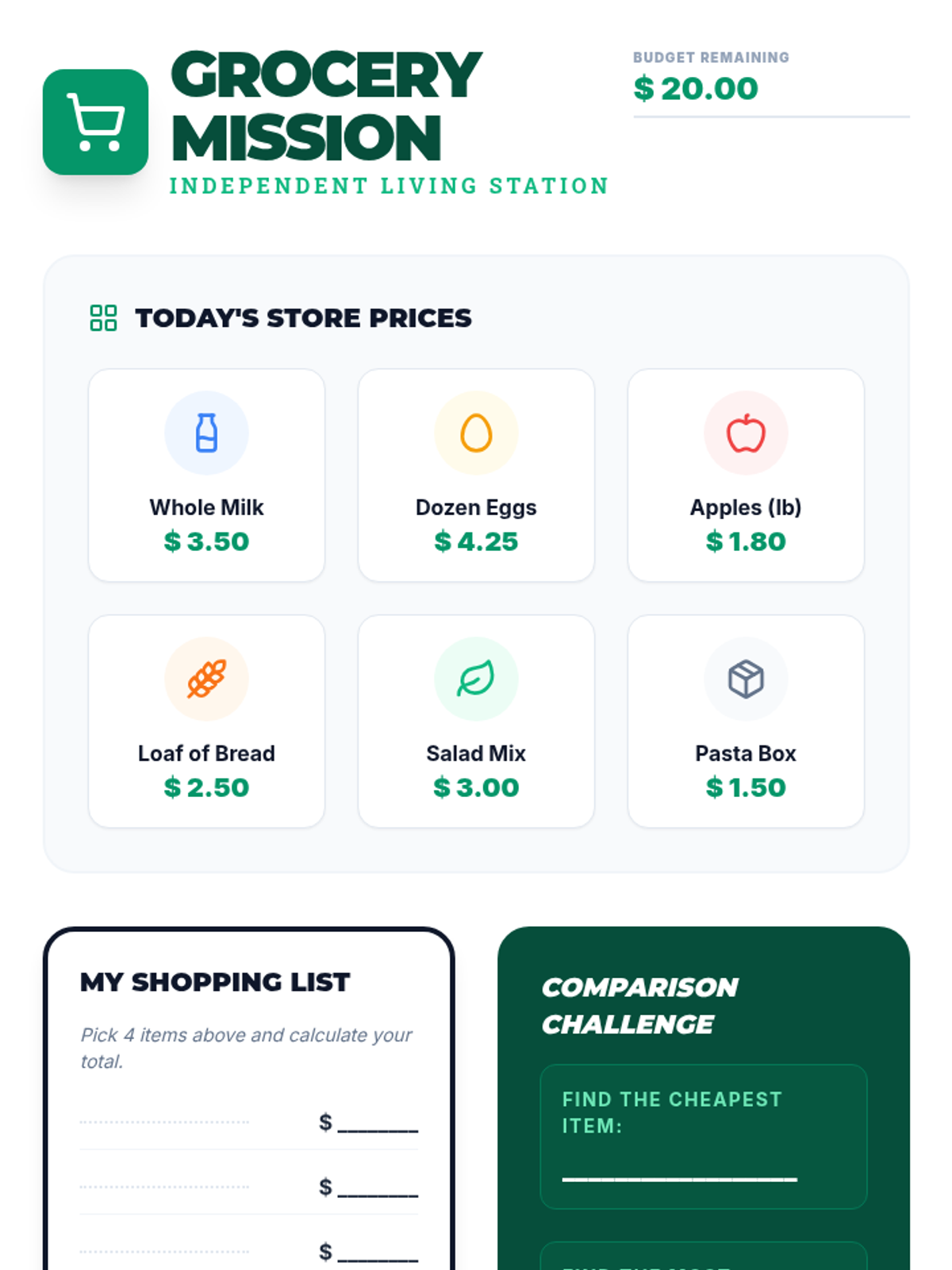
Practical application of money skills through budgeting, price comparison, and navigating a shopping environment.
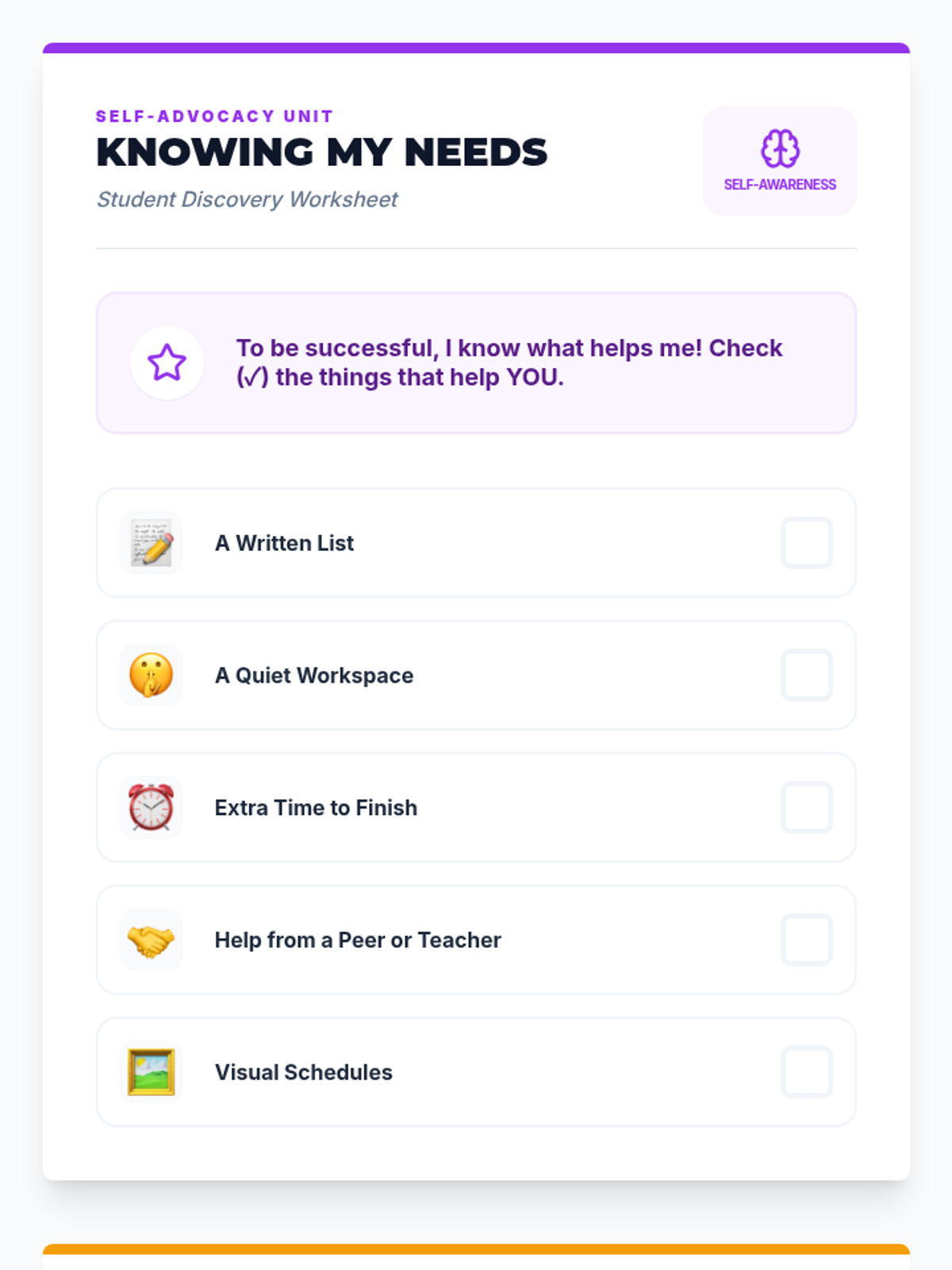
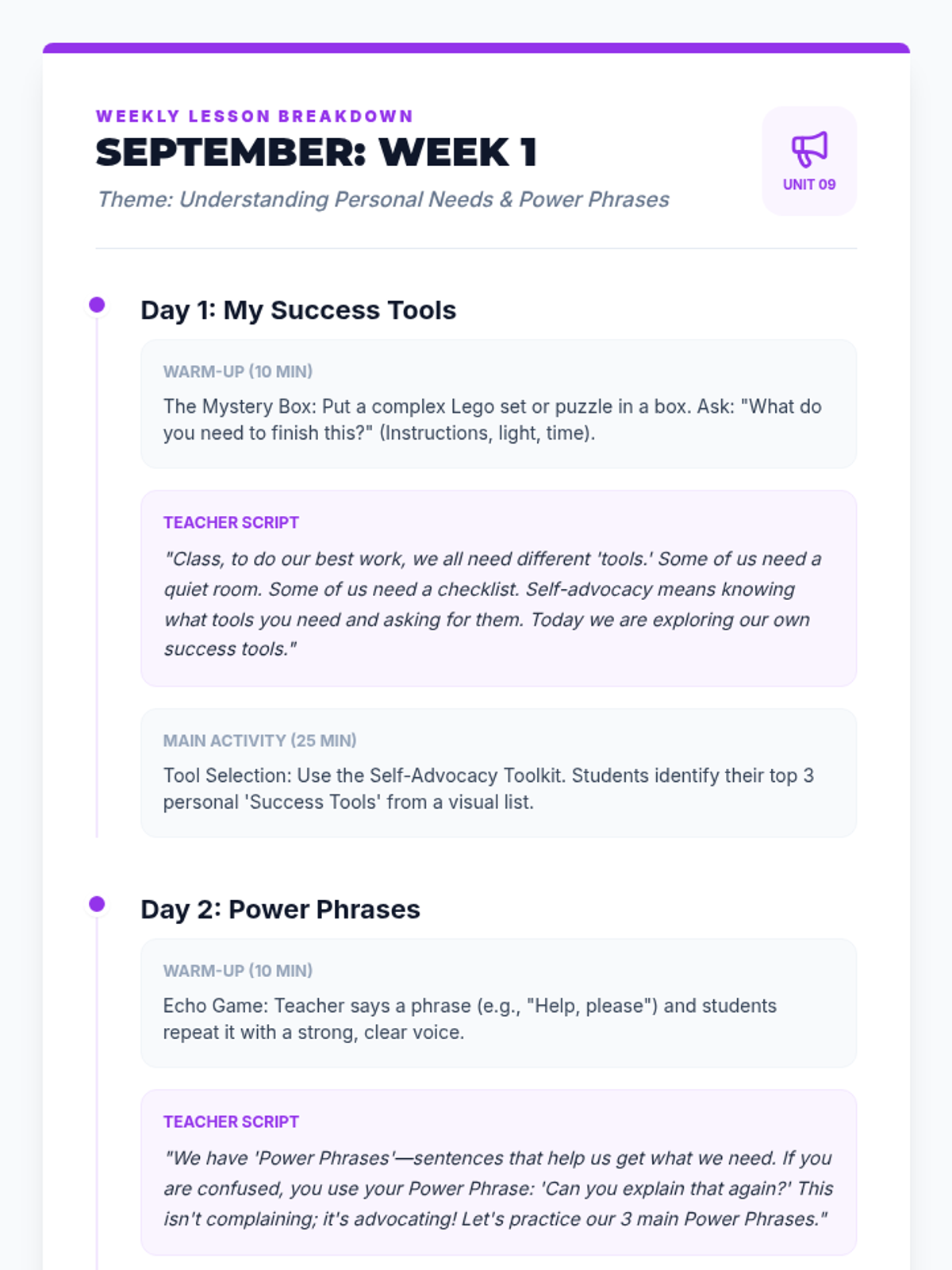
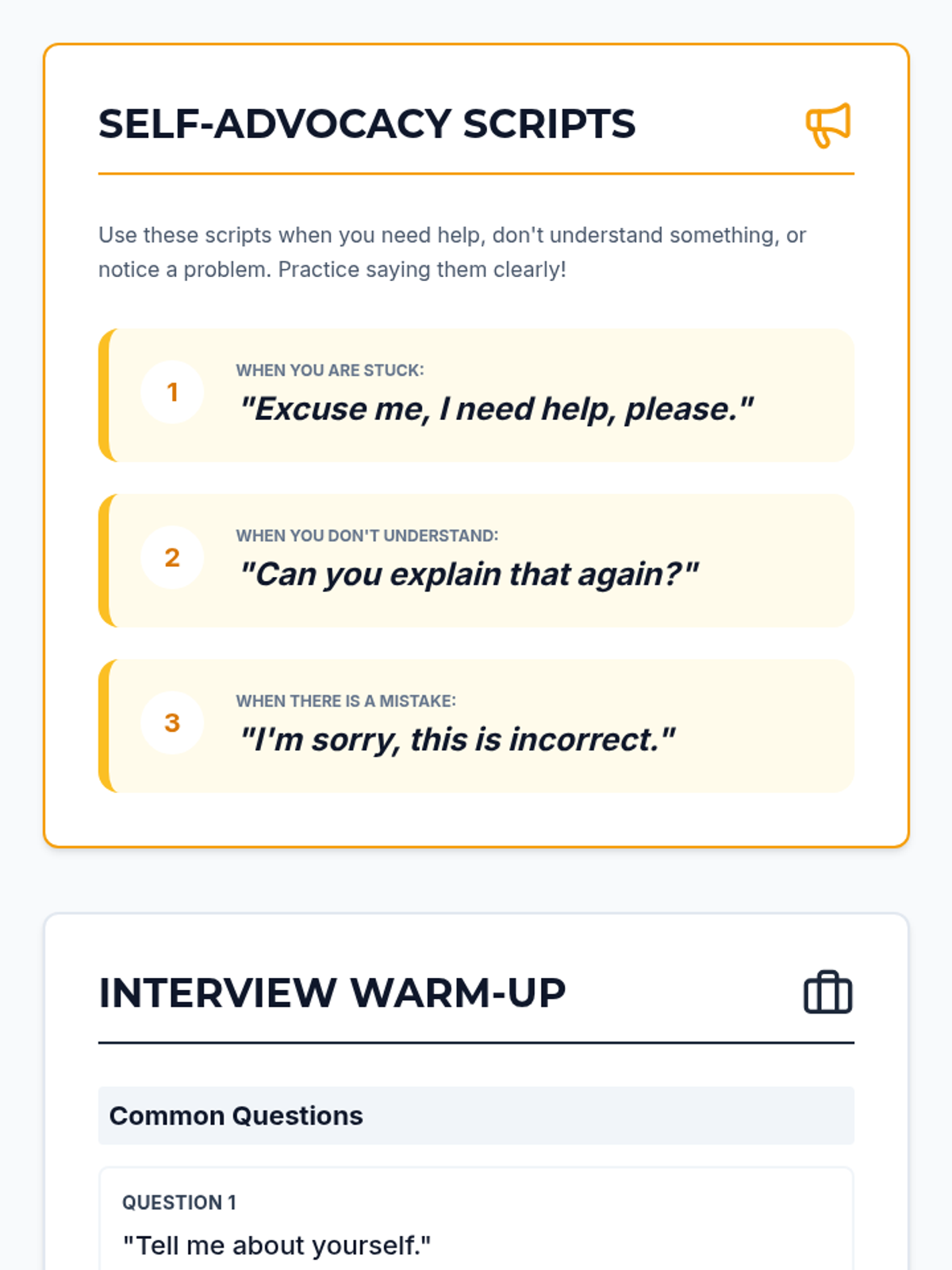
Empowering students to speak up for their needs, understand their rights, and communicate effectively in various personal and community situations.
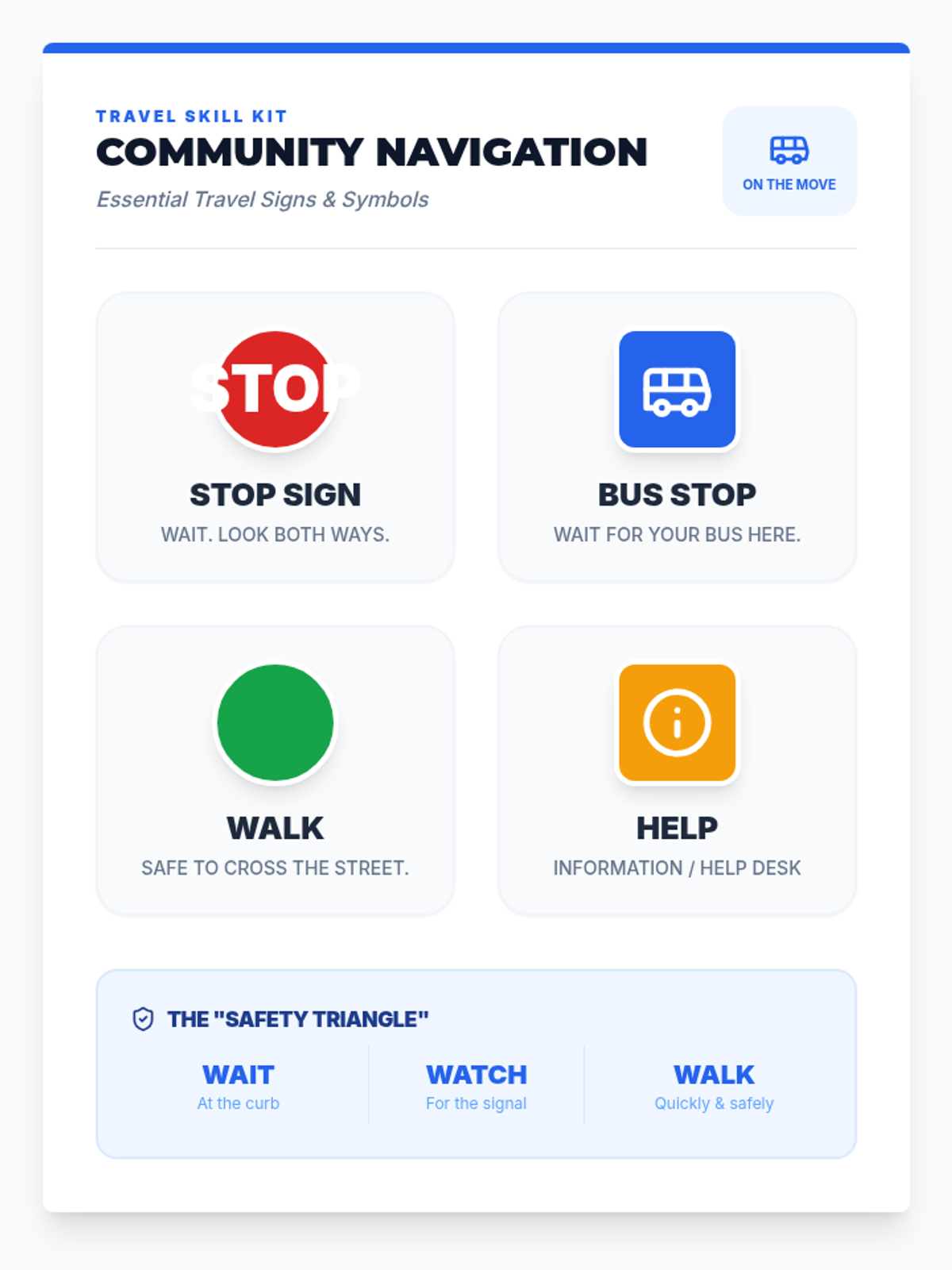
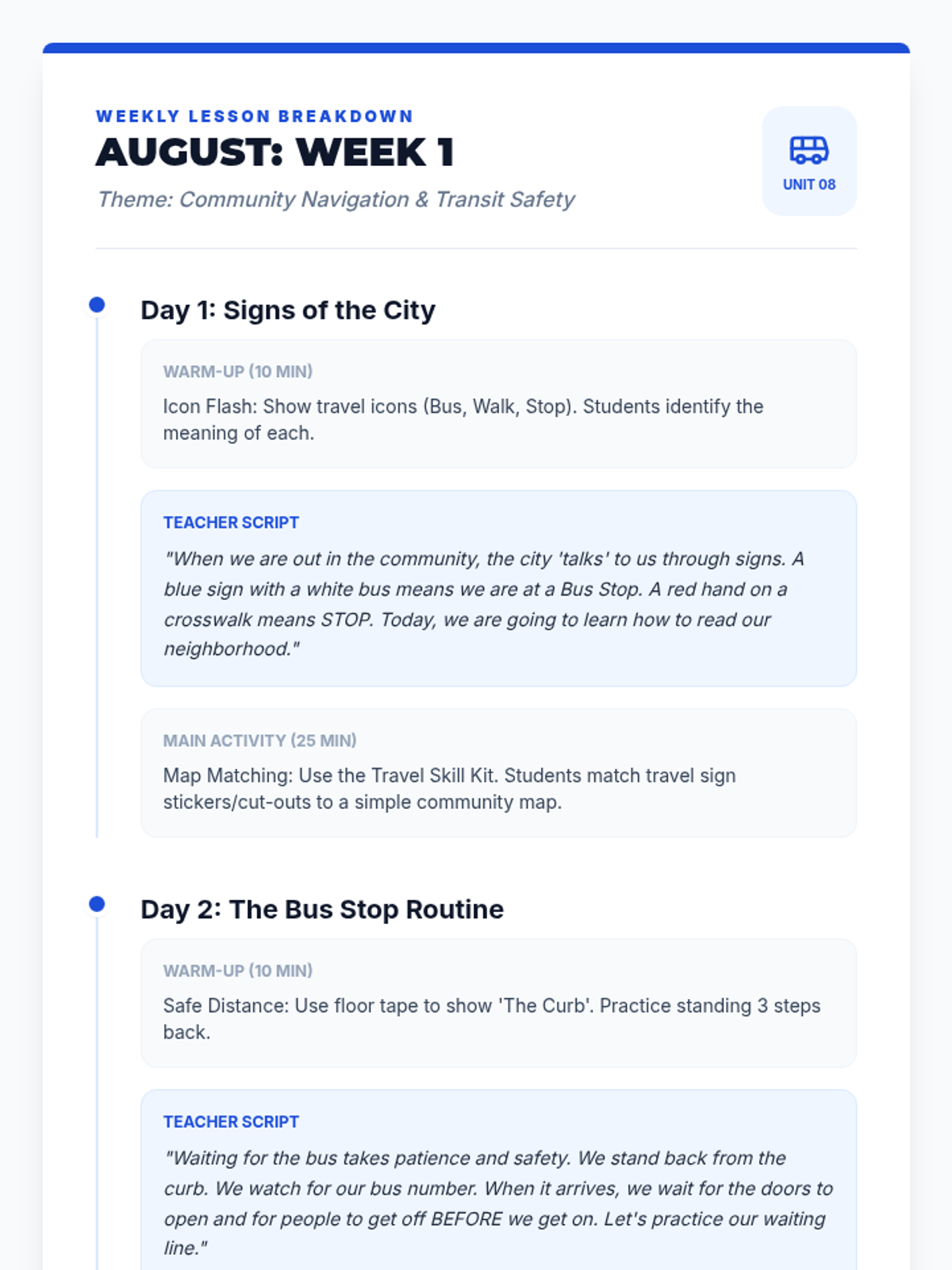
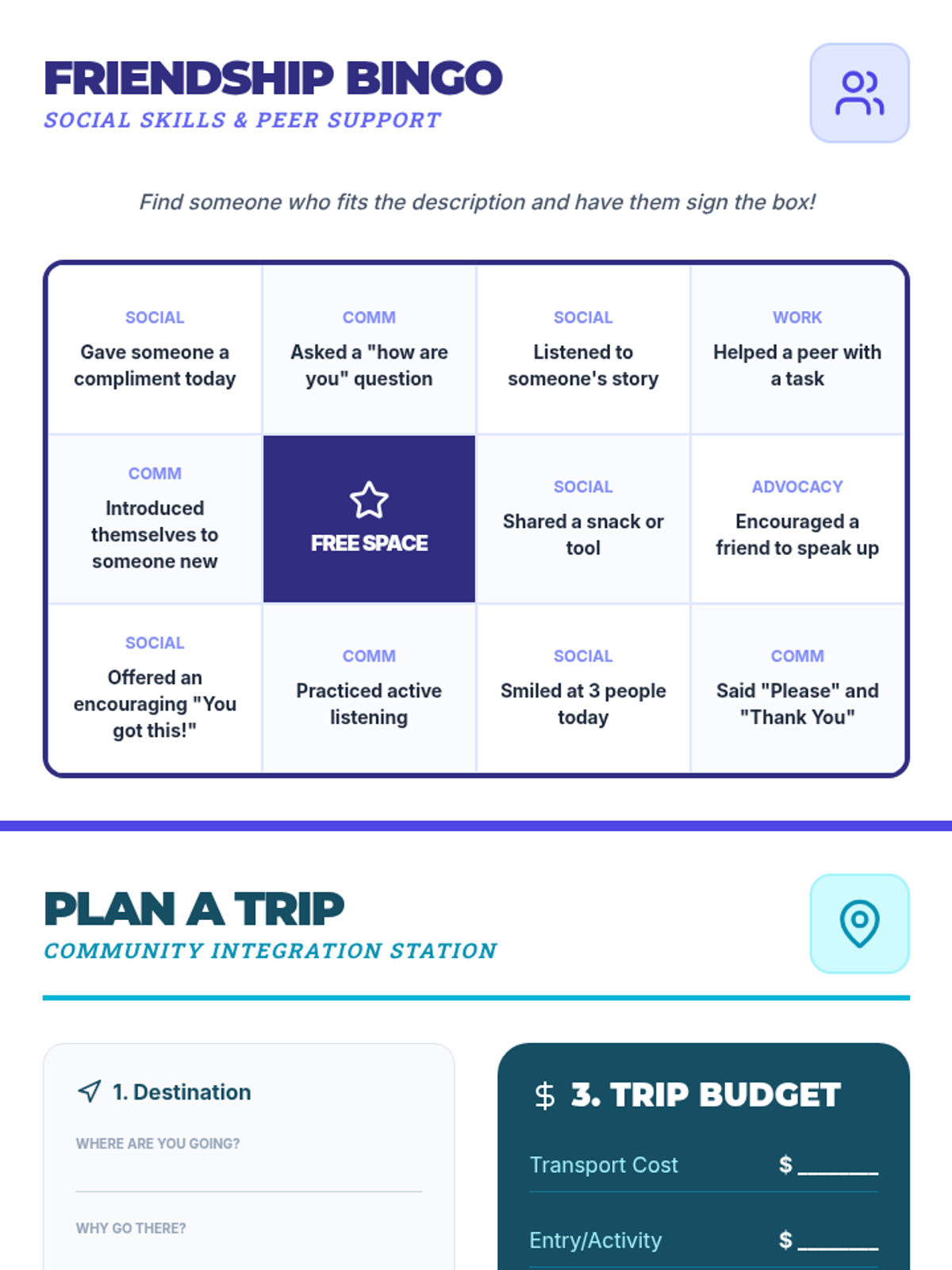
Navigating the community using public transportation, reading schedules, and practicing safety and social etiquette while traveling.
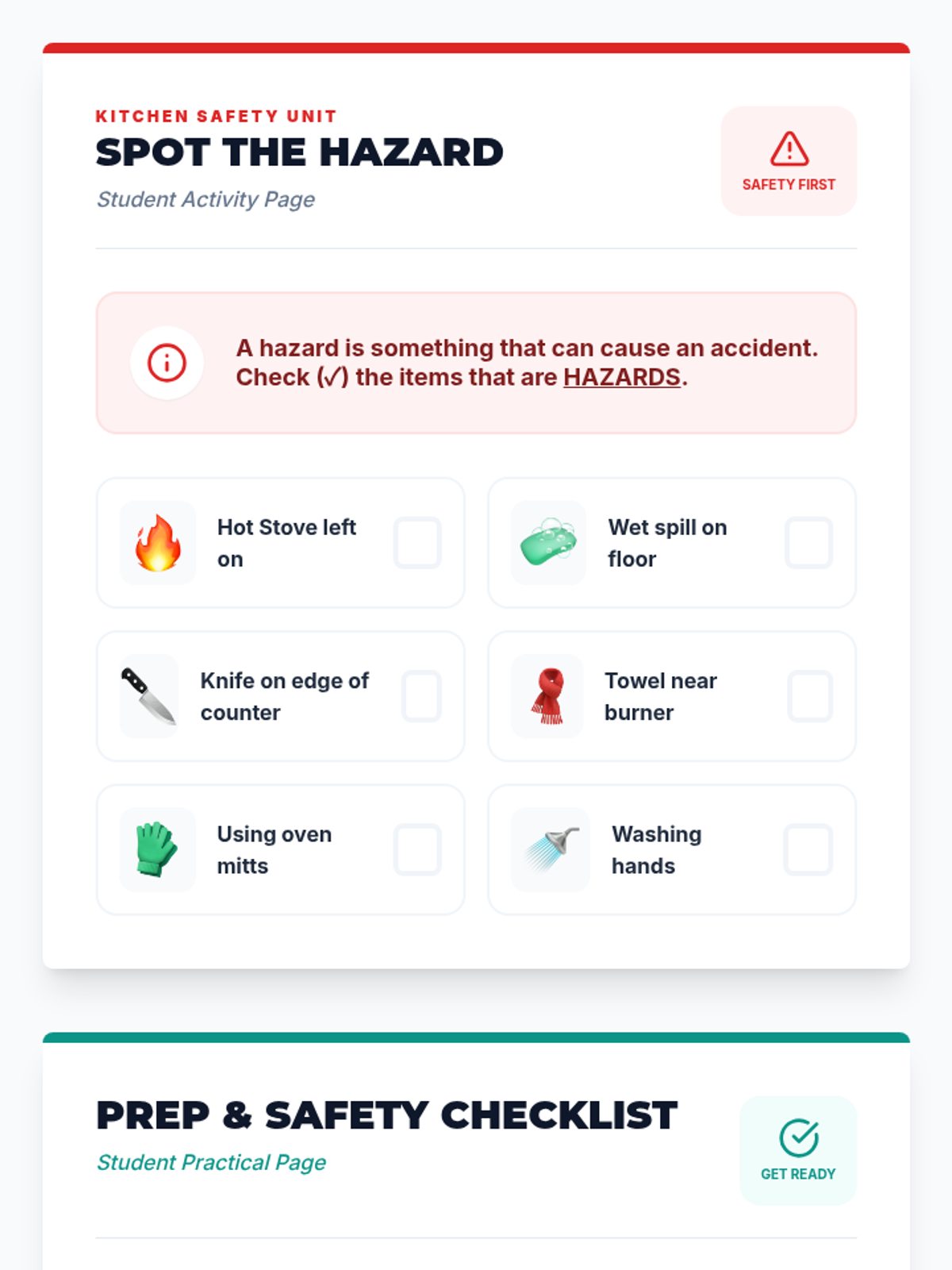
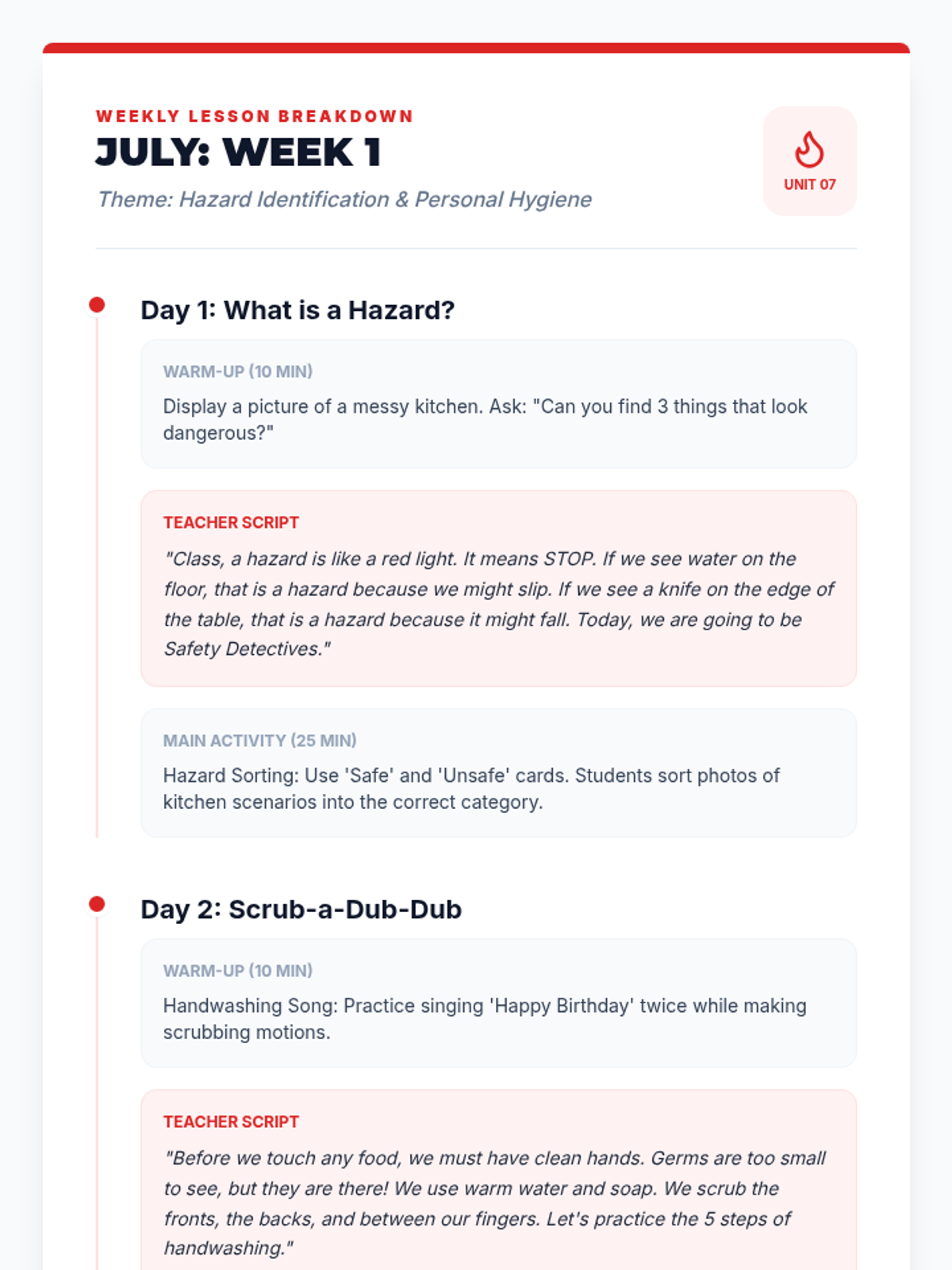
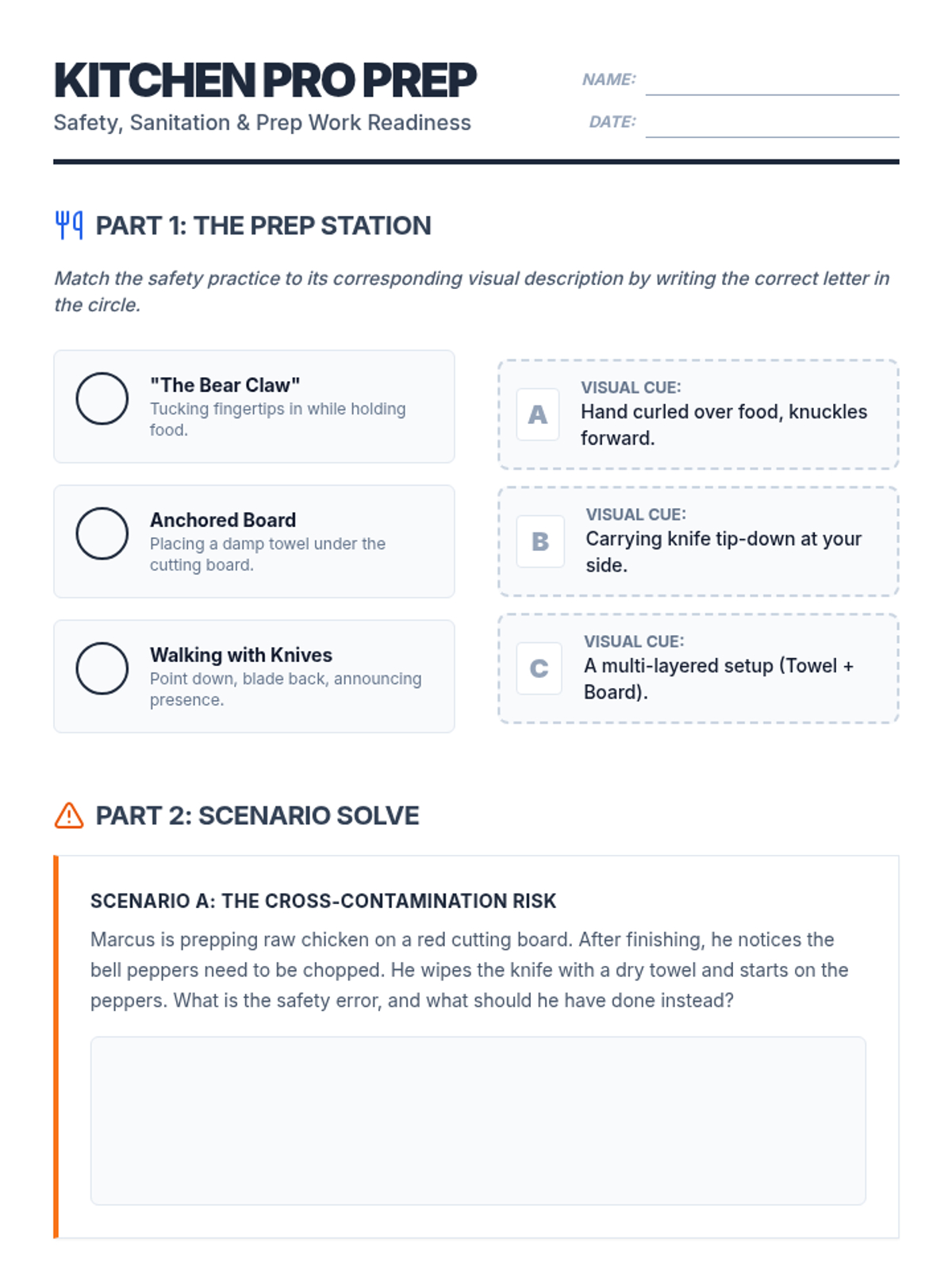
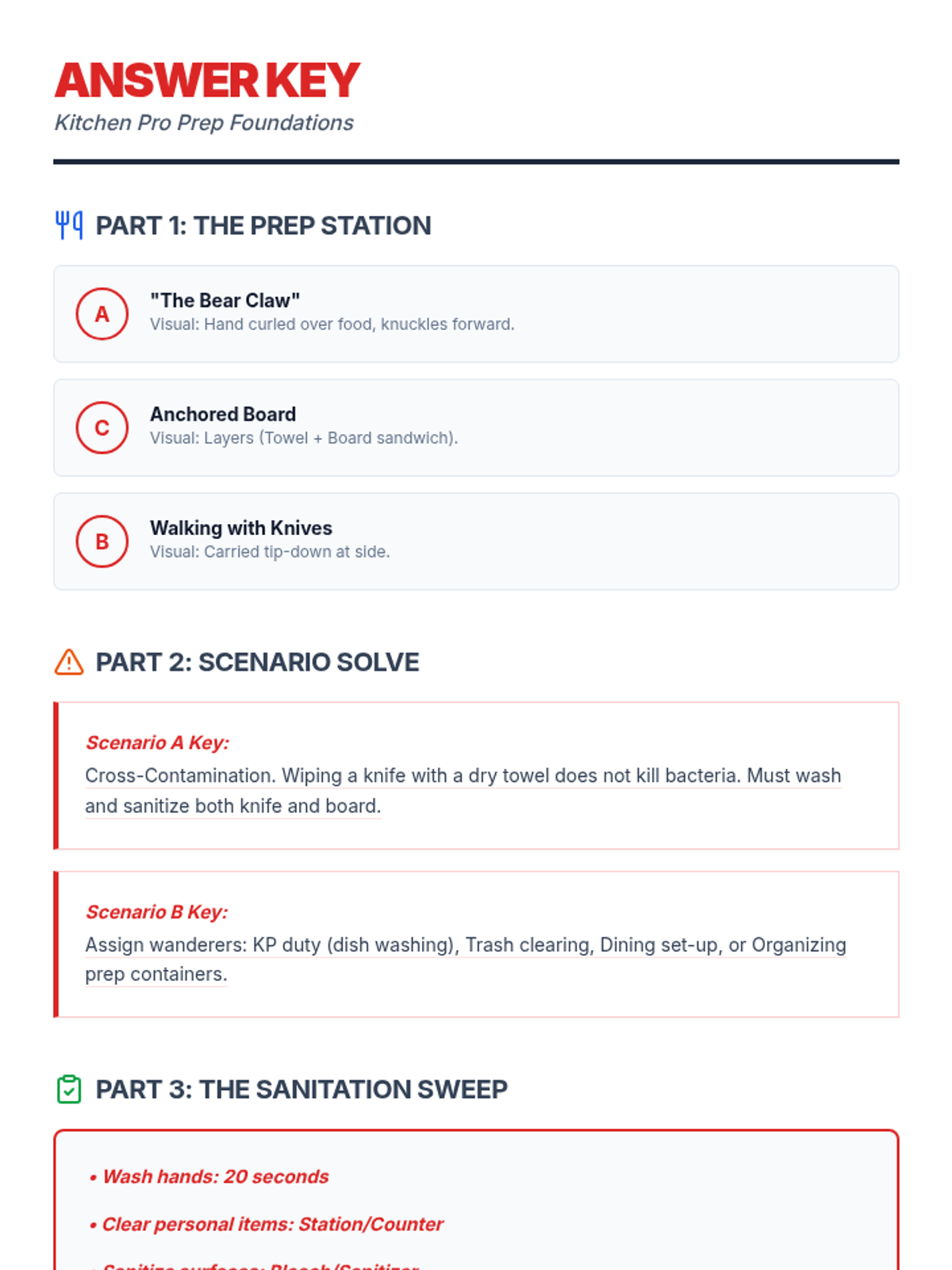
Essential knowledge for identifying hazards, handling tools safely, and maintaining a hygienic cooking environment through visual checklists and simulations.
Building essential social cues, conversational scripts, and self-advocacy skills for various community and professional settings.
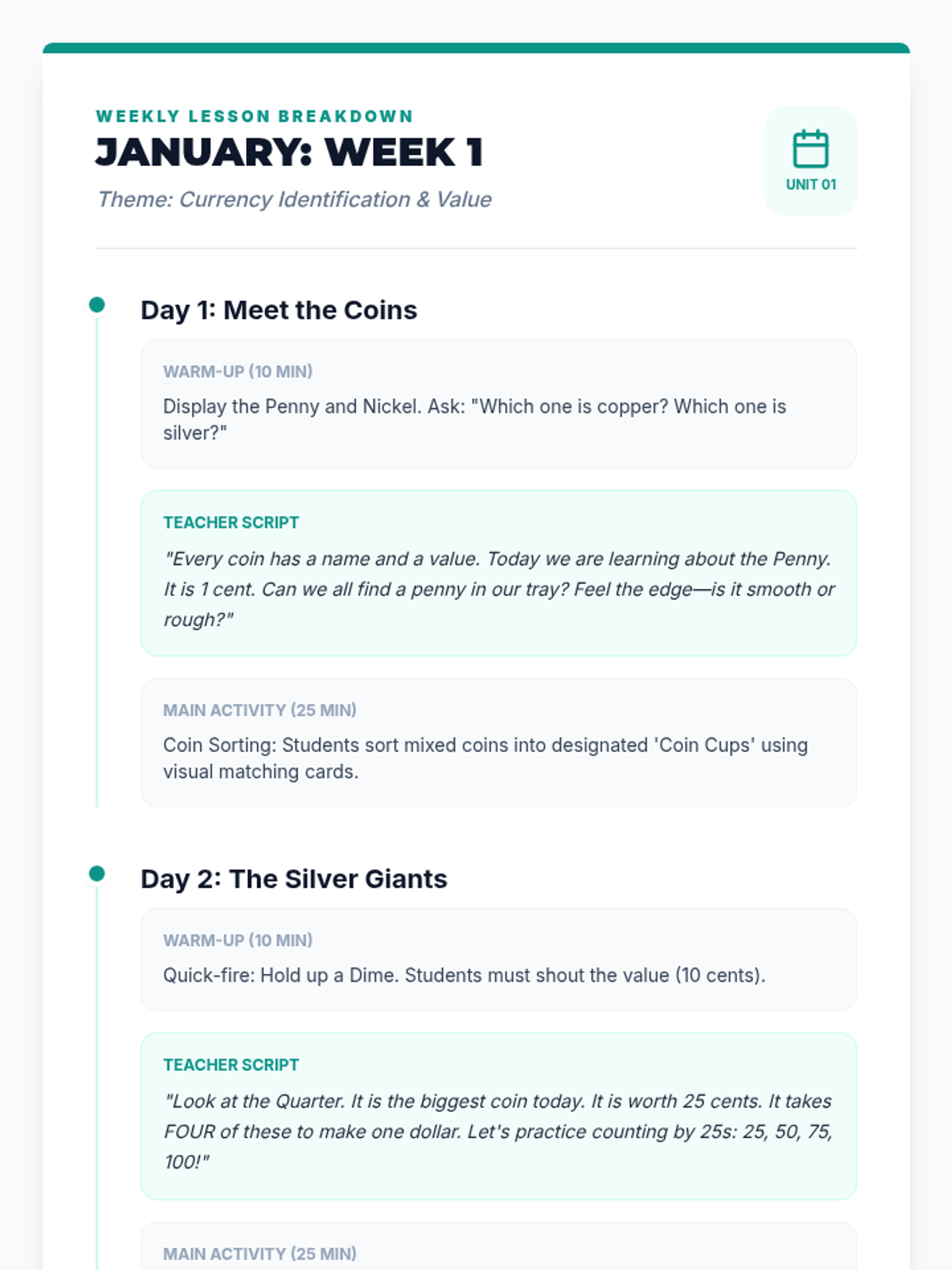
A deep dive into identifying currency, understanding value, and managing basic transactions through visual supports and hands-on practice.
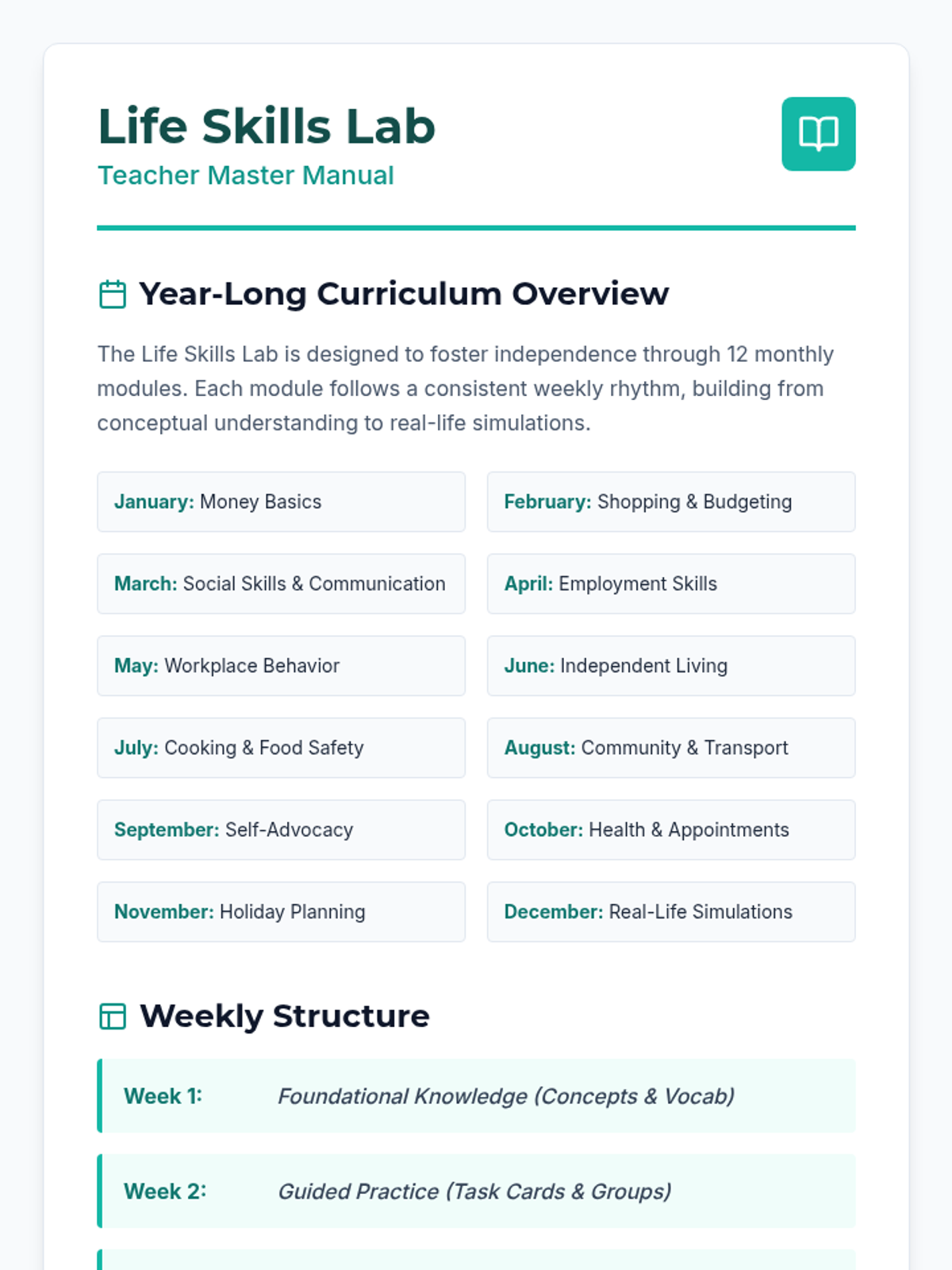
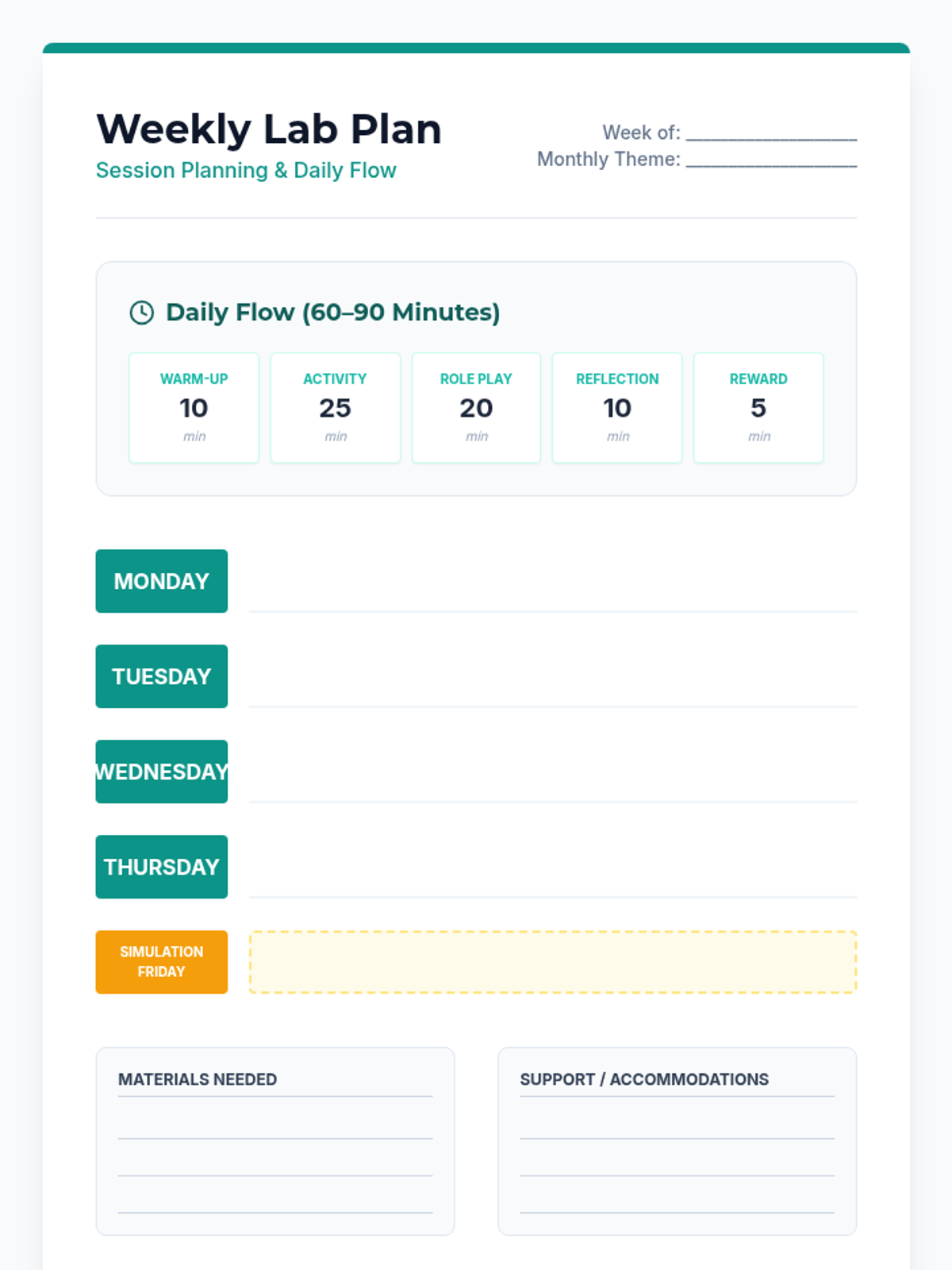
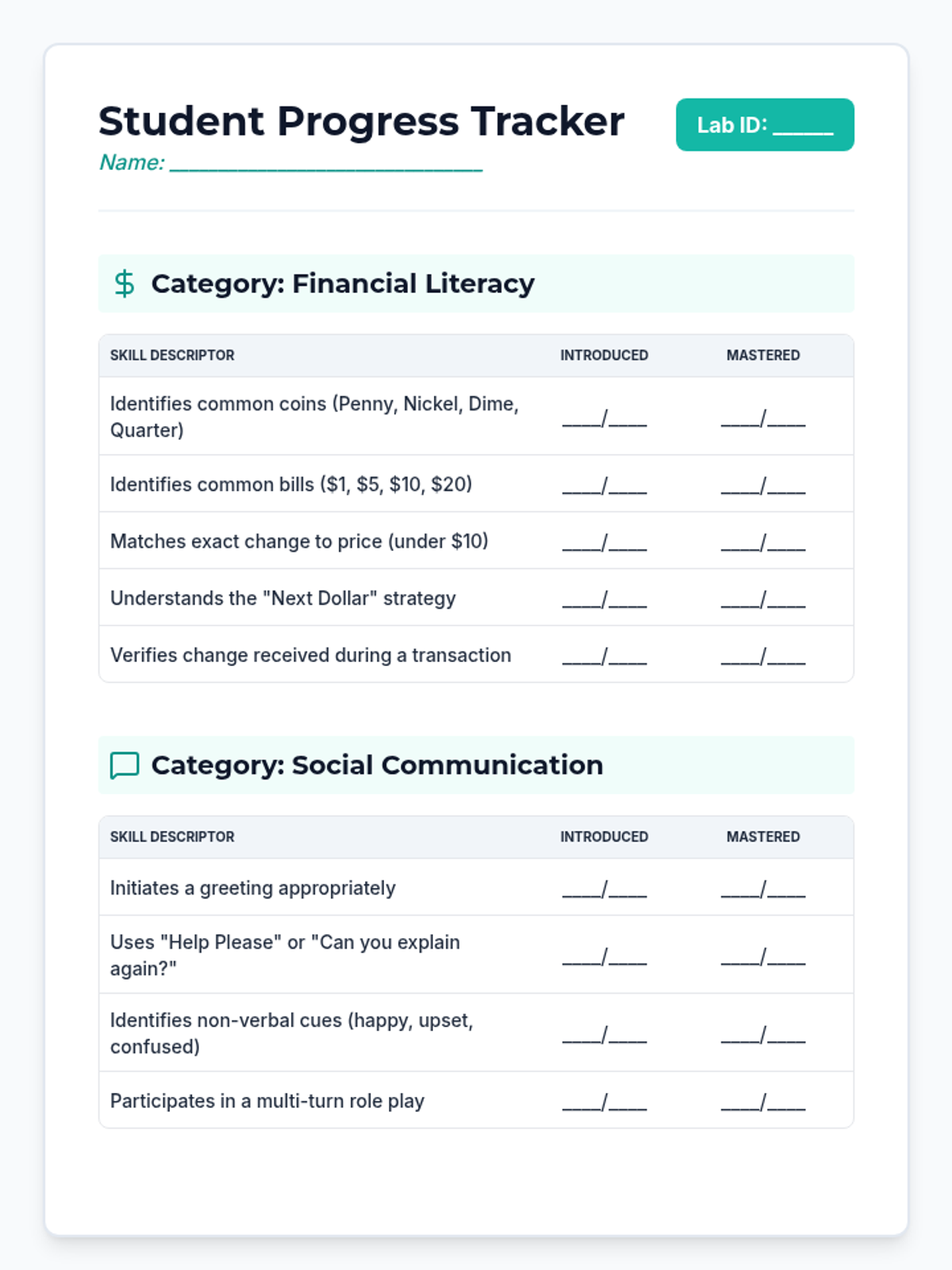
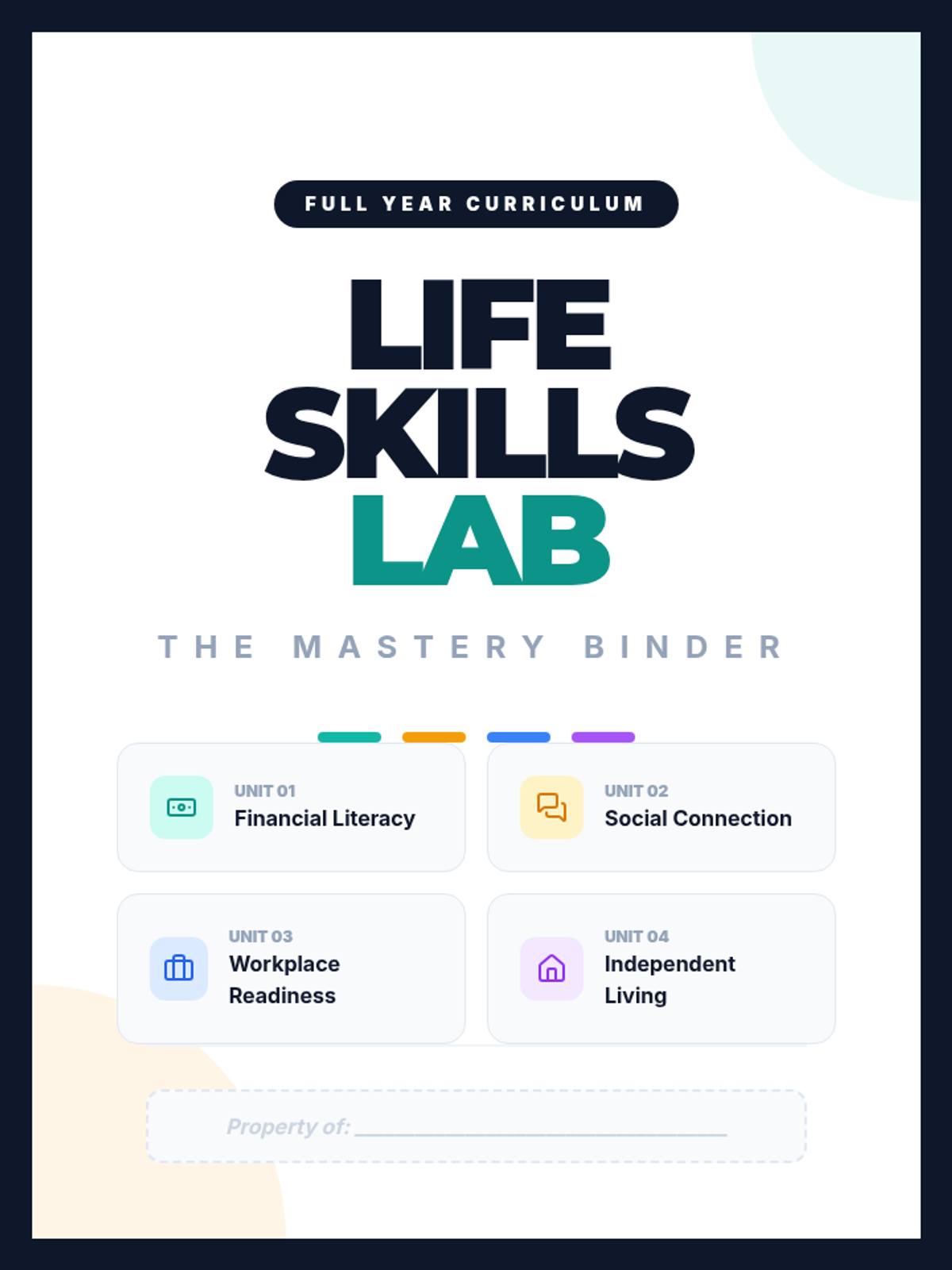
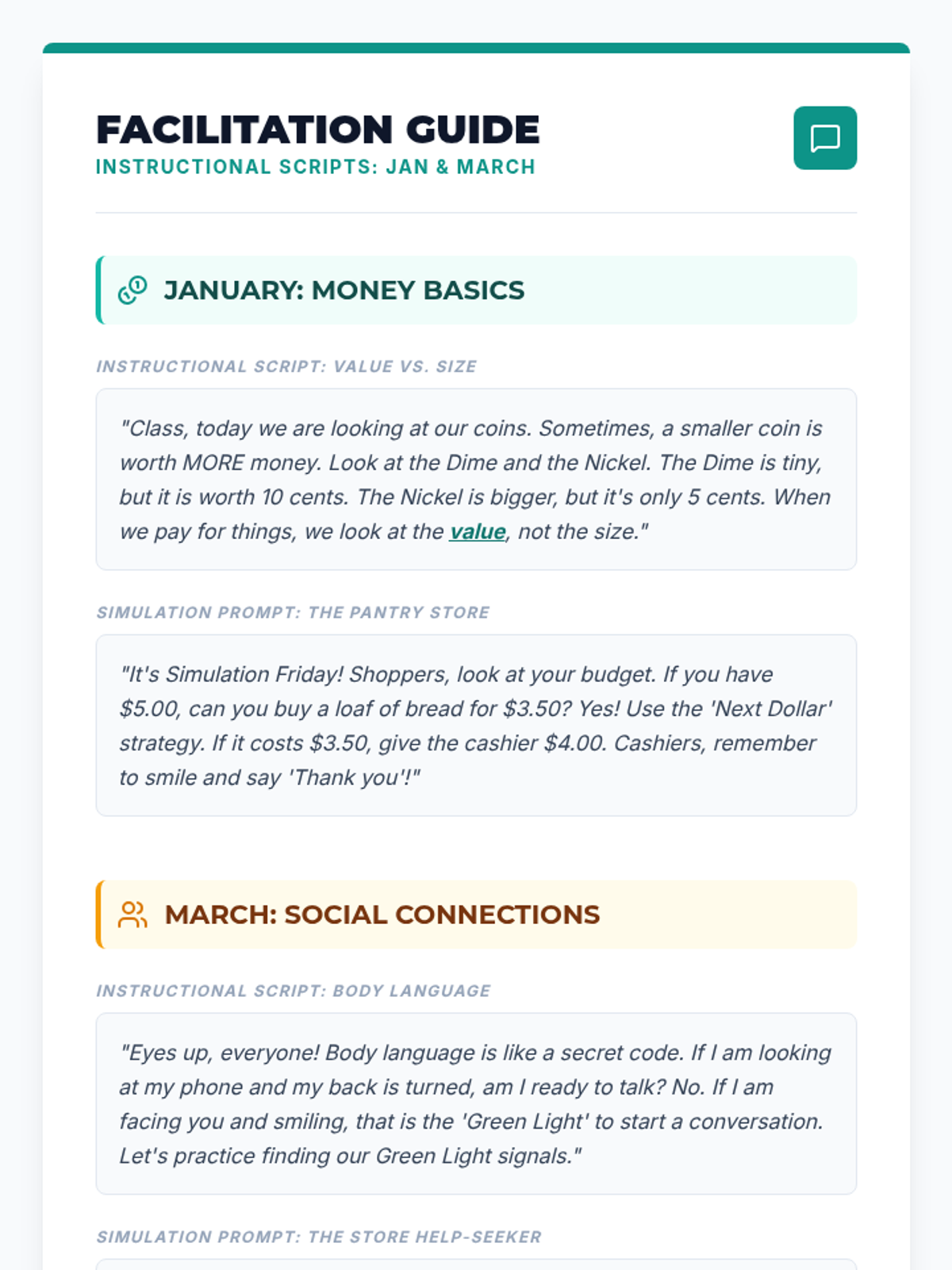
Essential templates, tracking sheets, and the overall framework for the Life Skills program to ensure consistent daily structure and progress monitoring.
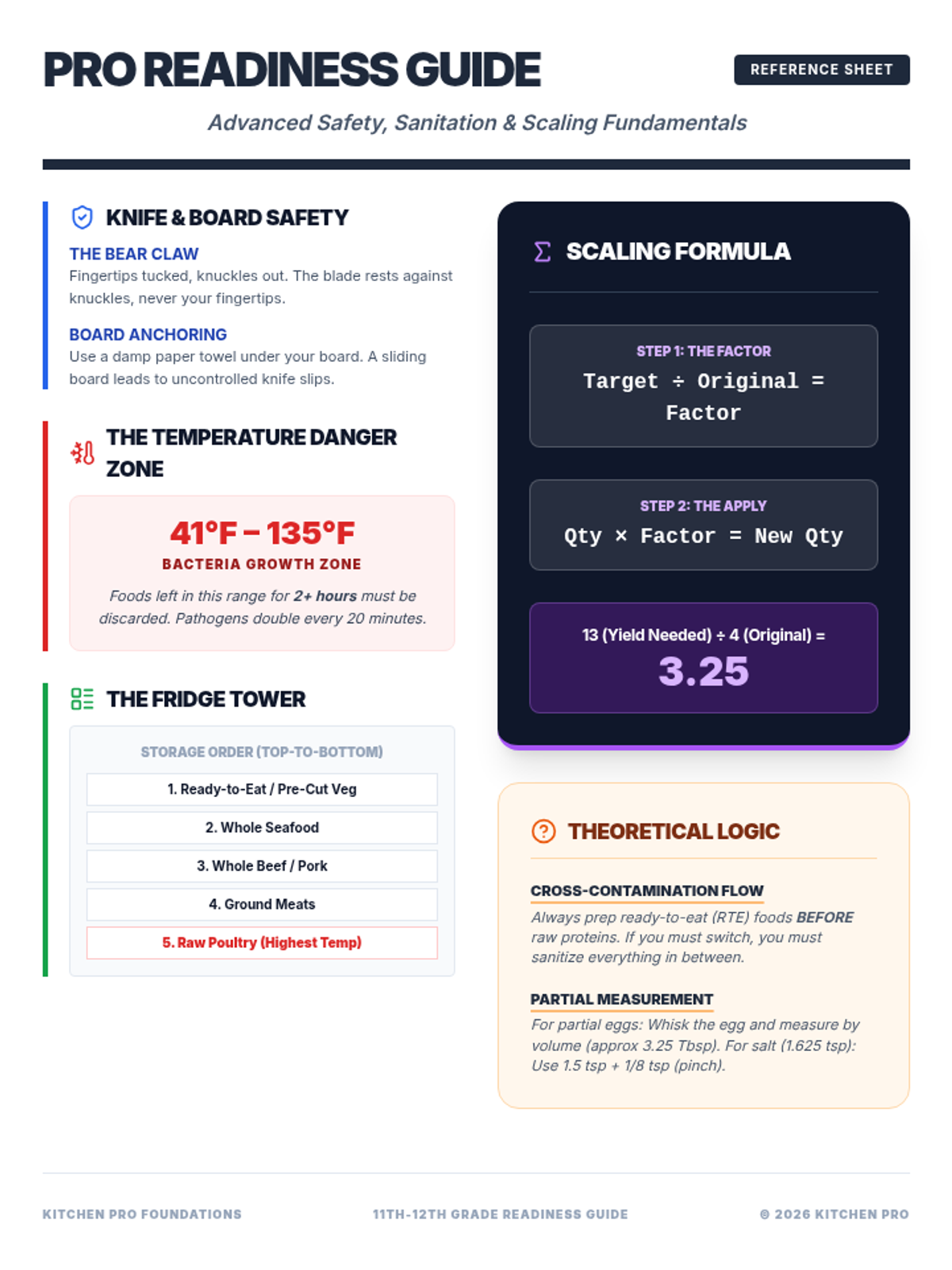
A foundational kitchen skills lesson focused on safety, sanitation, knife handling, and recipe scaling for a small group environment.
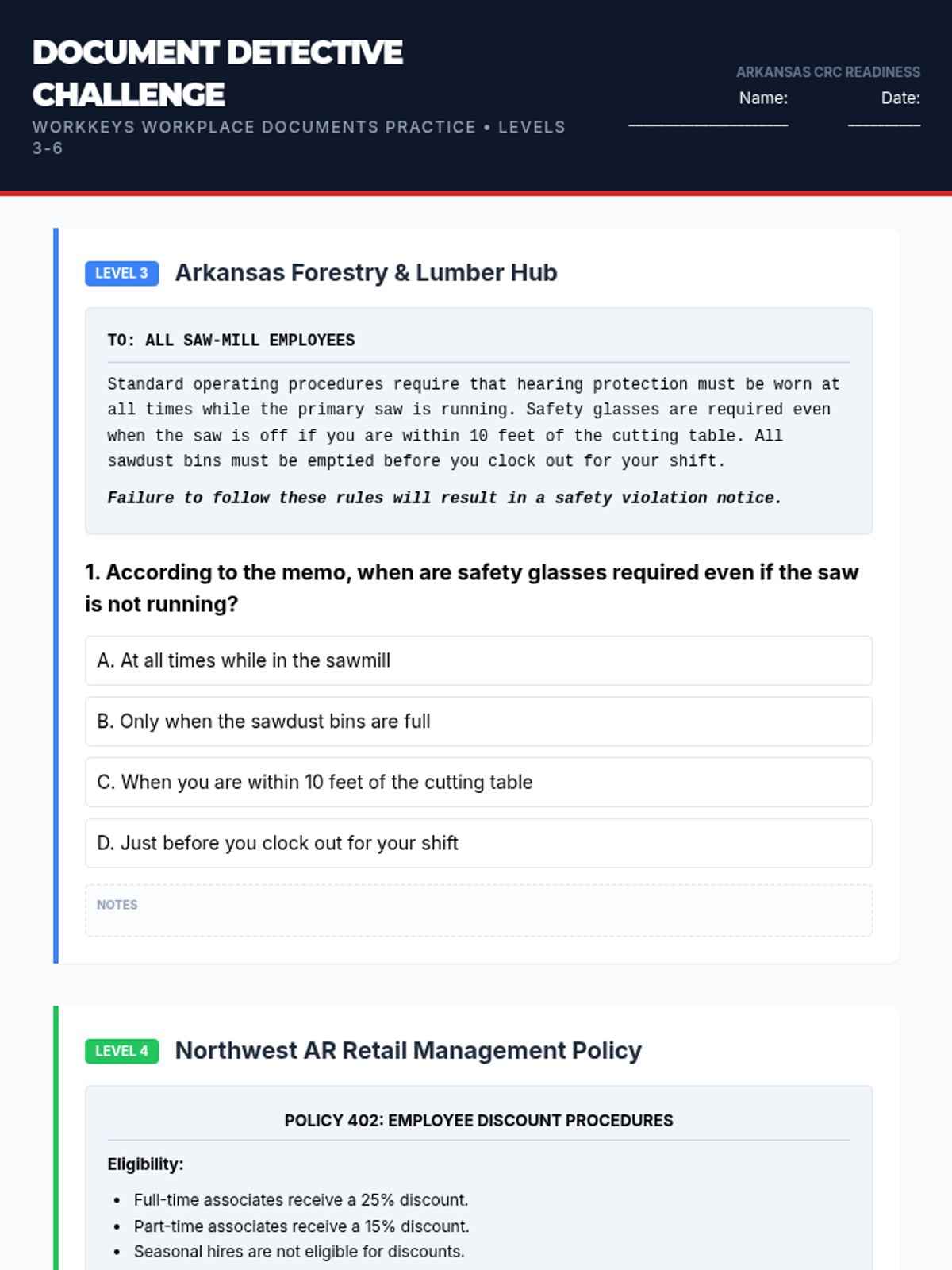
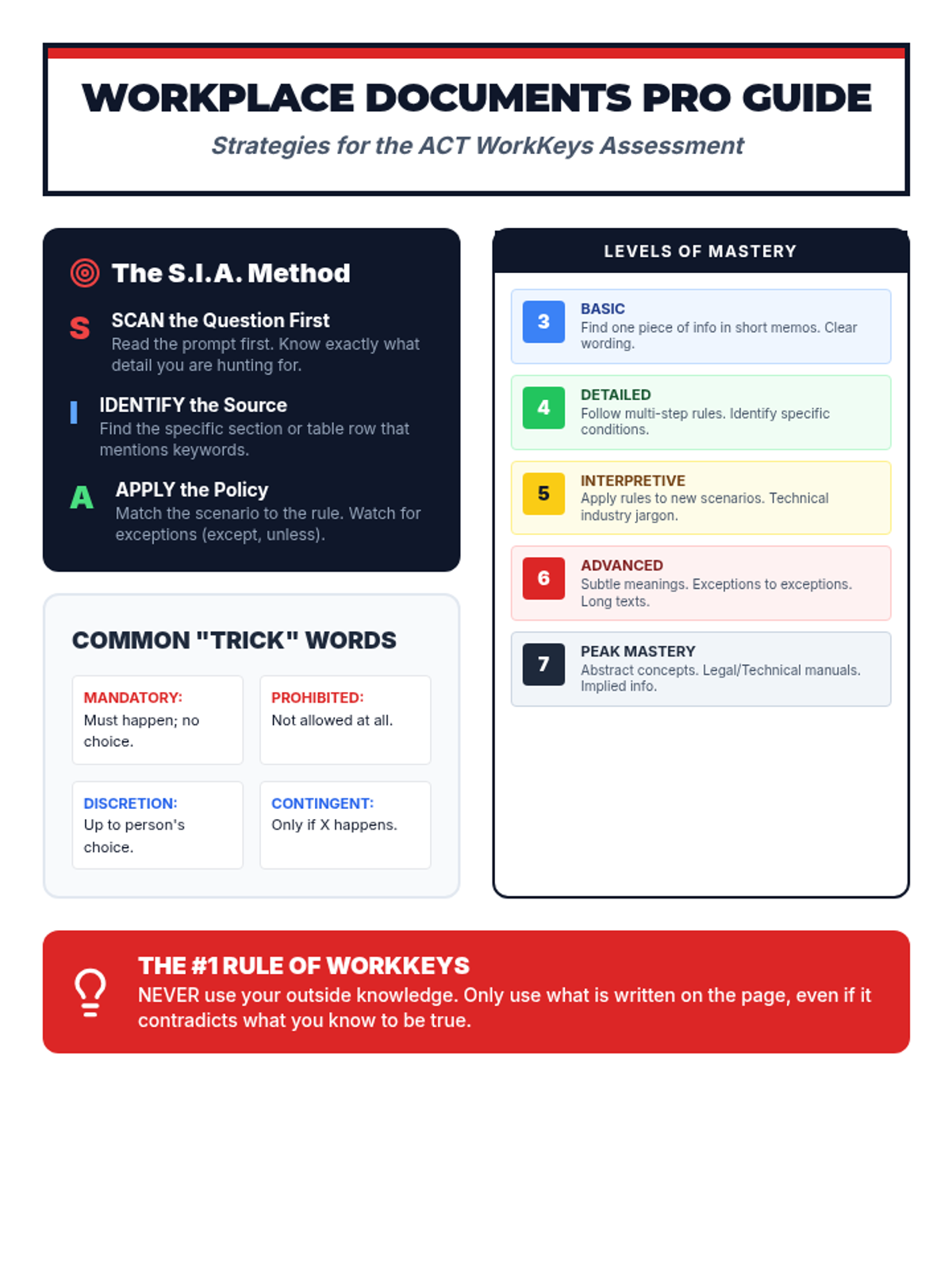
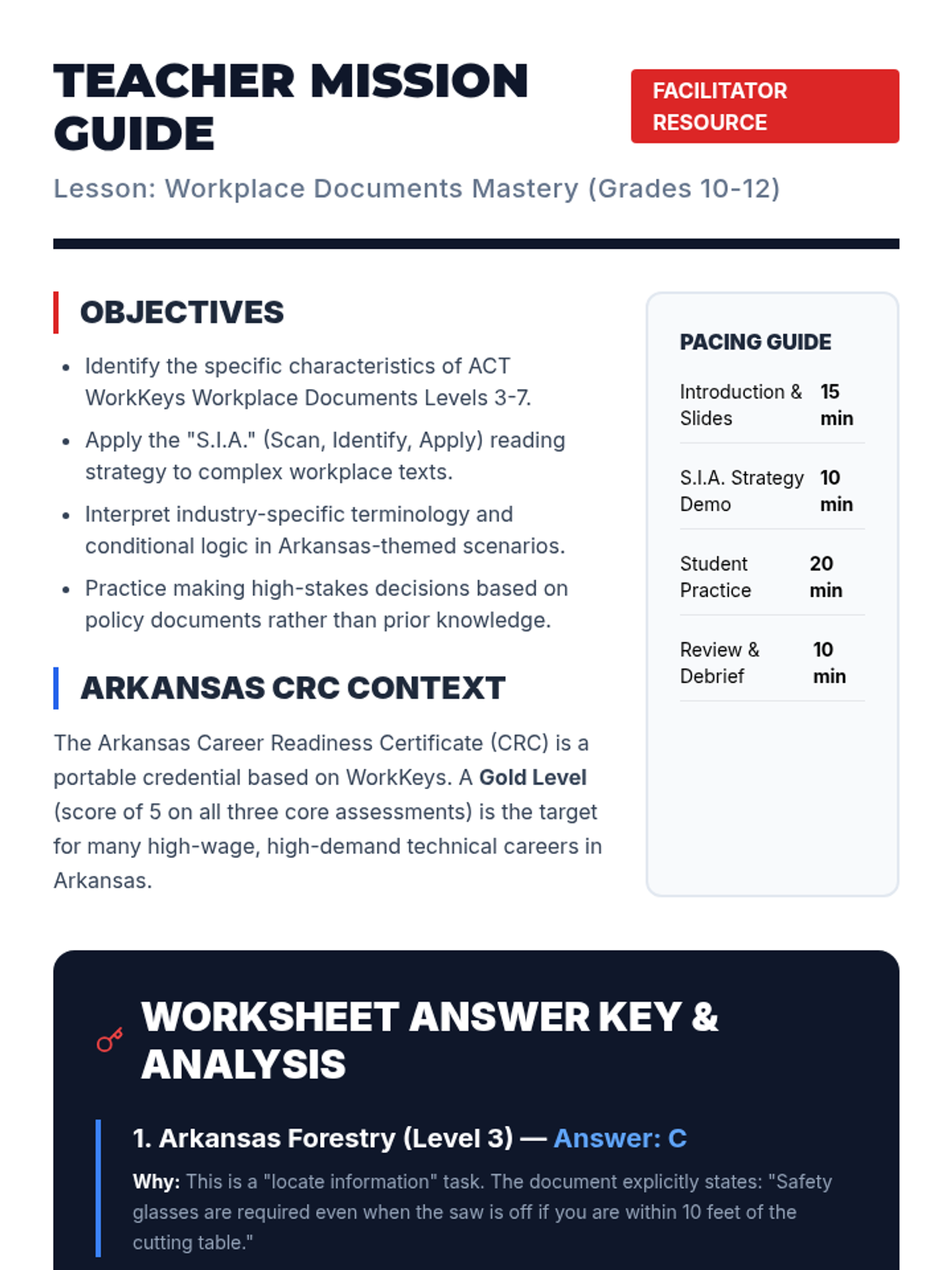
A comprehensive test preparation lesson designed to help high school students master the ACT WorkKeys Workplace Documents assessment, focusing on Levels 3-7 with real-world Arkansas industry scenarios.
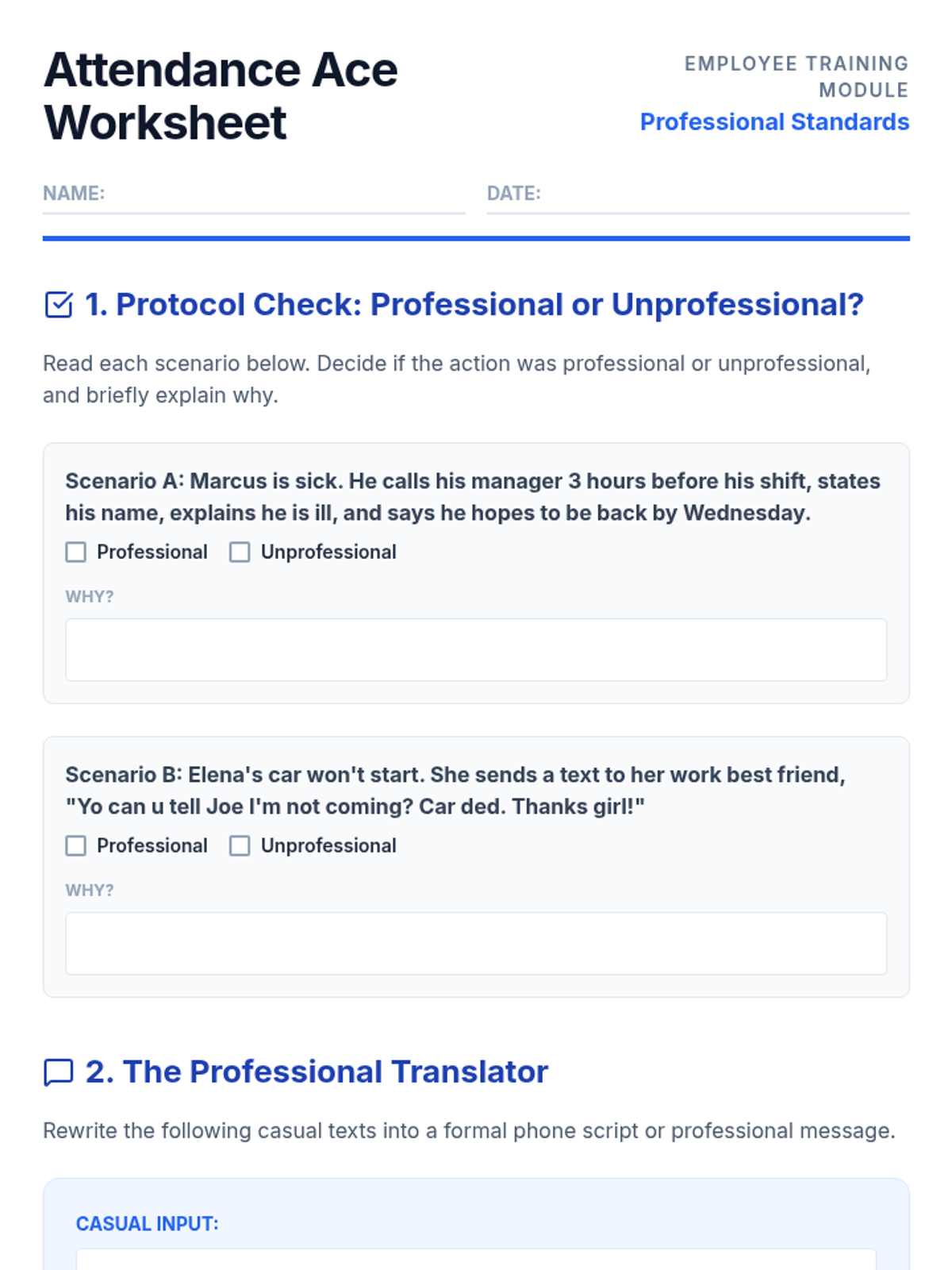
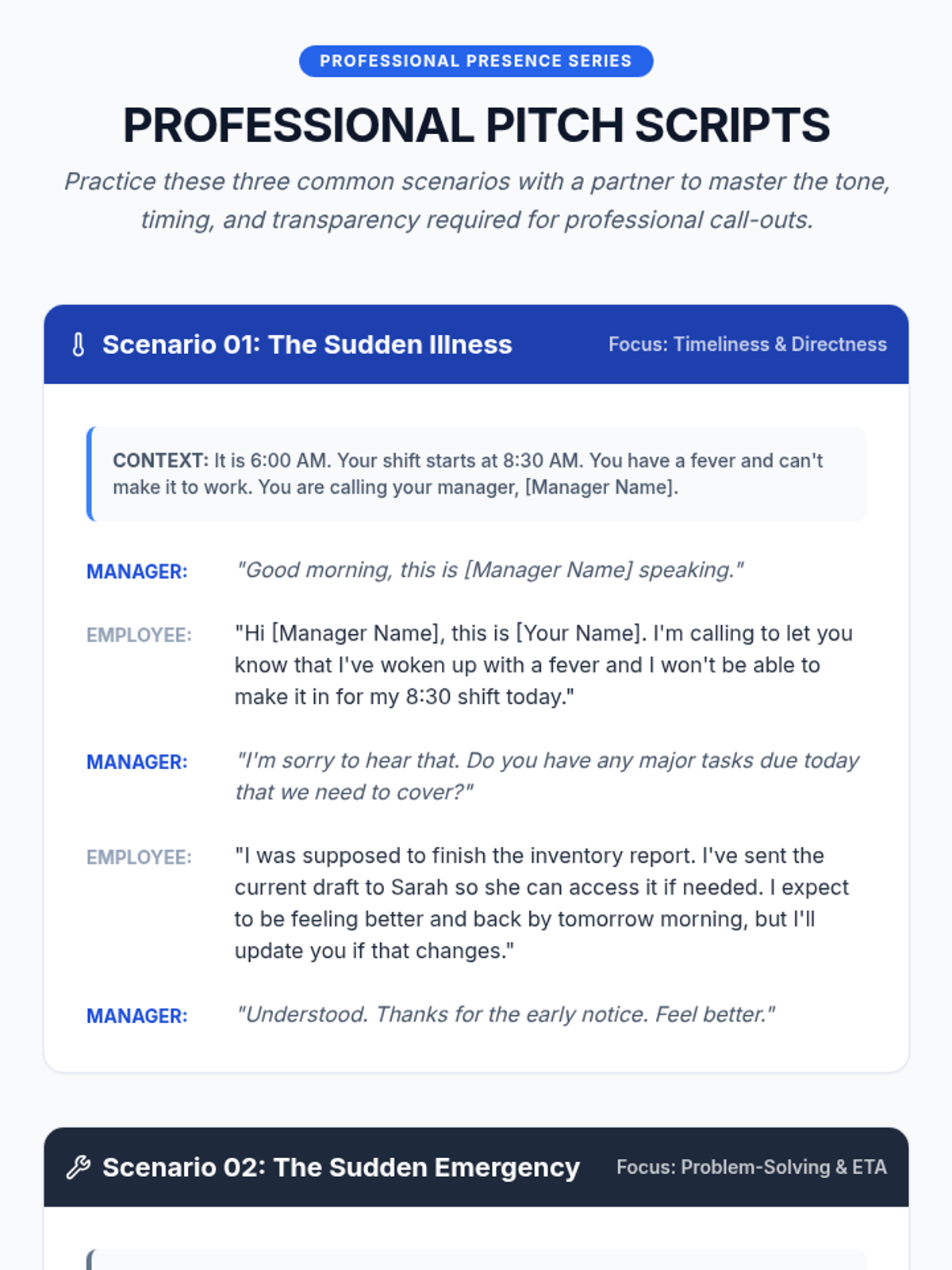
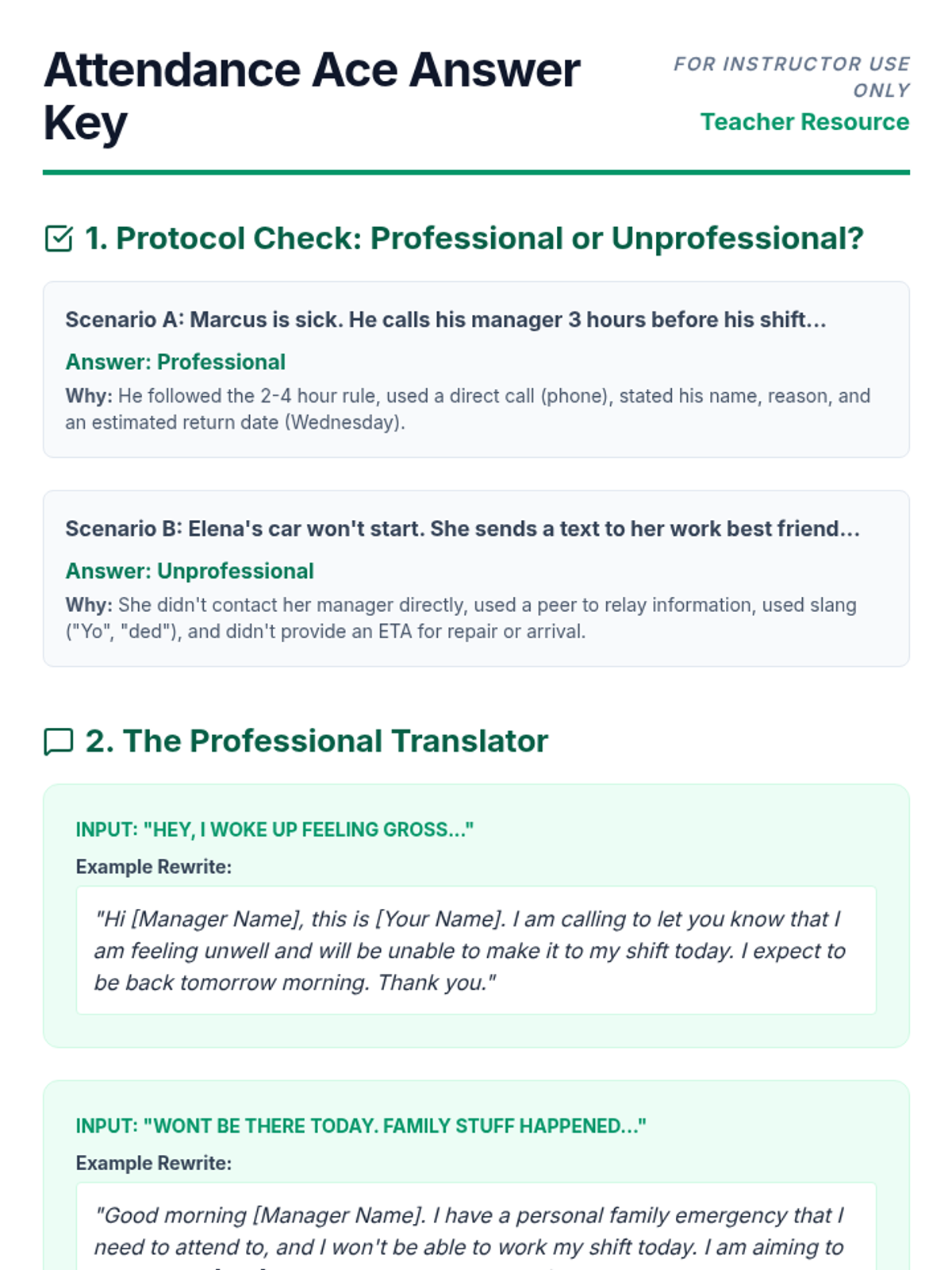
A comprehensive training module on the professional standards for calling out of work, covering etiquette, timing, and communication methods.
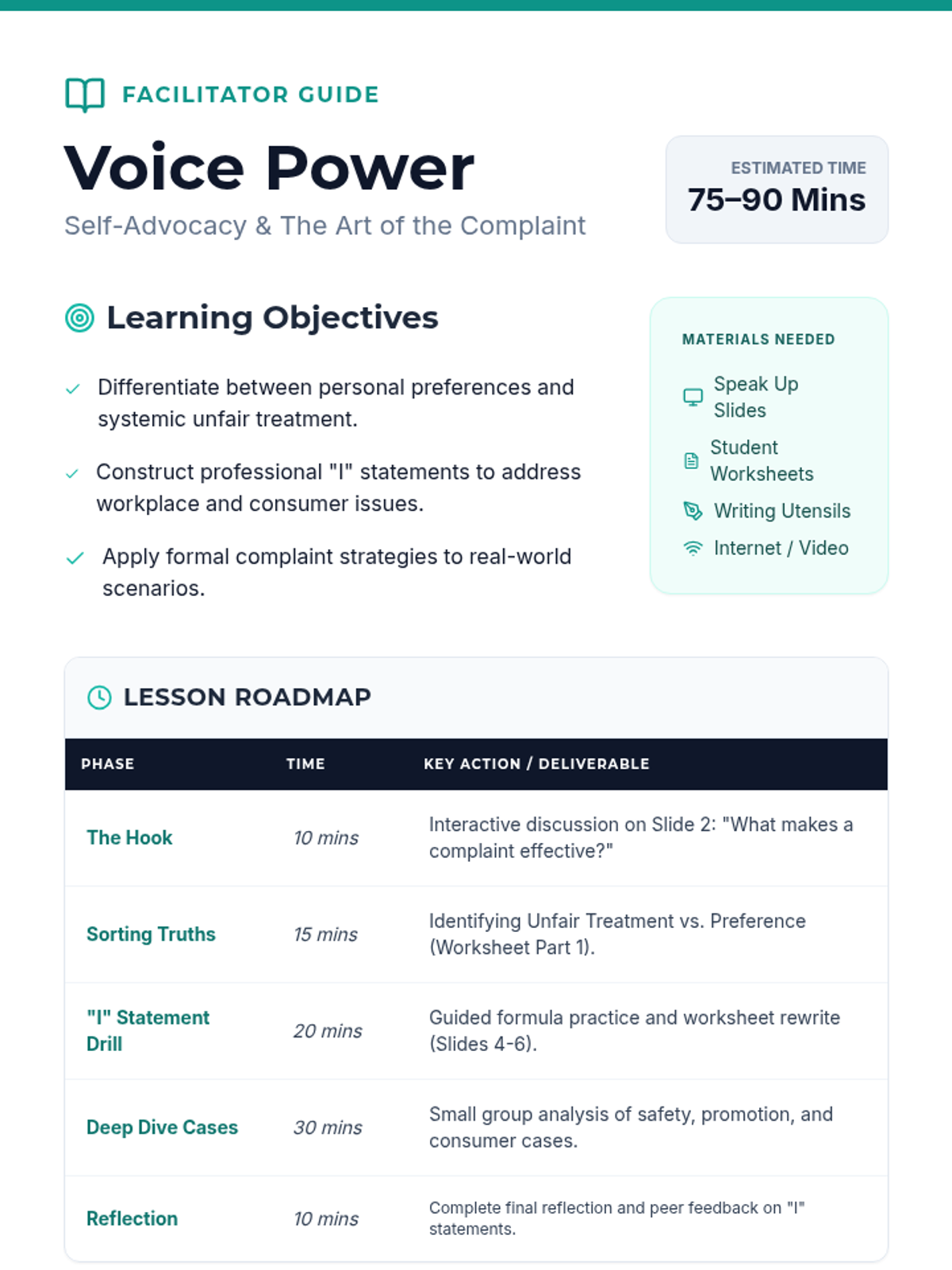
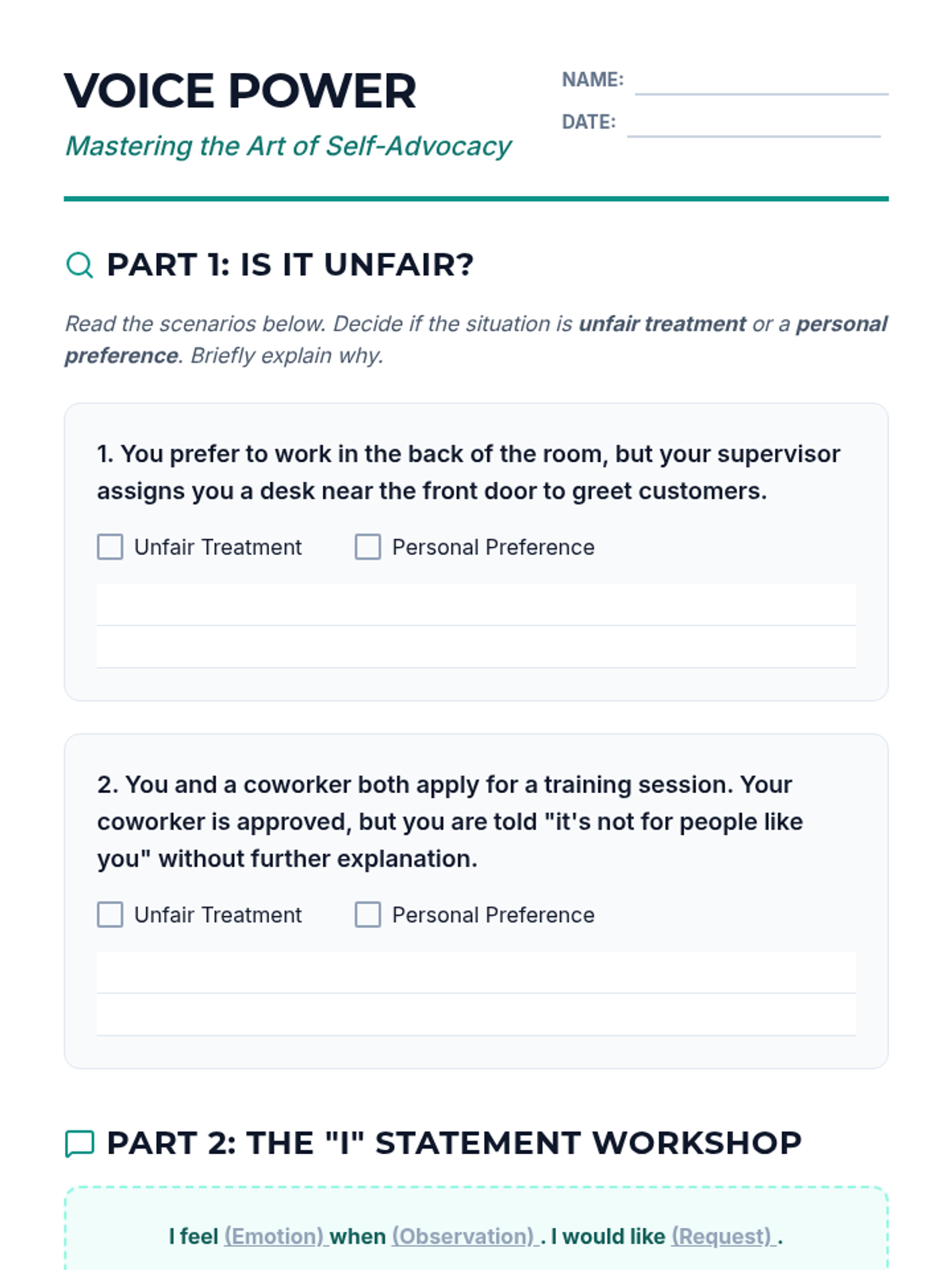
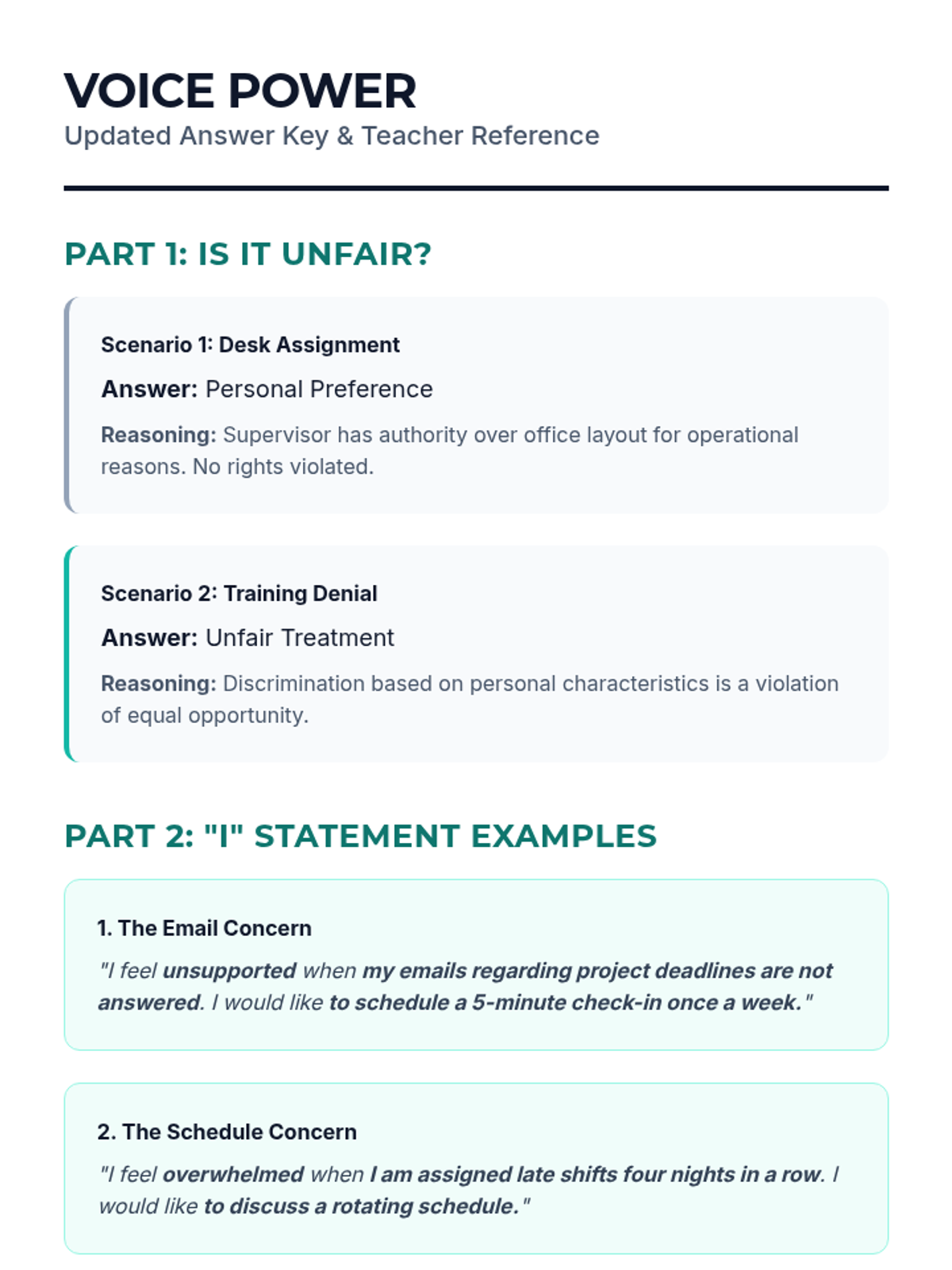
This lesson empowers students to identify unfair treatment and provides a step-by-step framework for self-advocacy, including 'I' statements and formal complaint procedures.
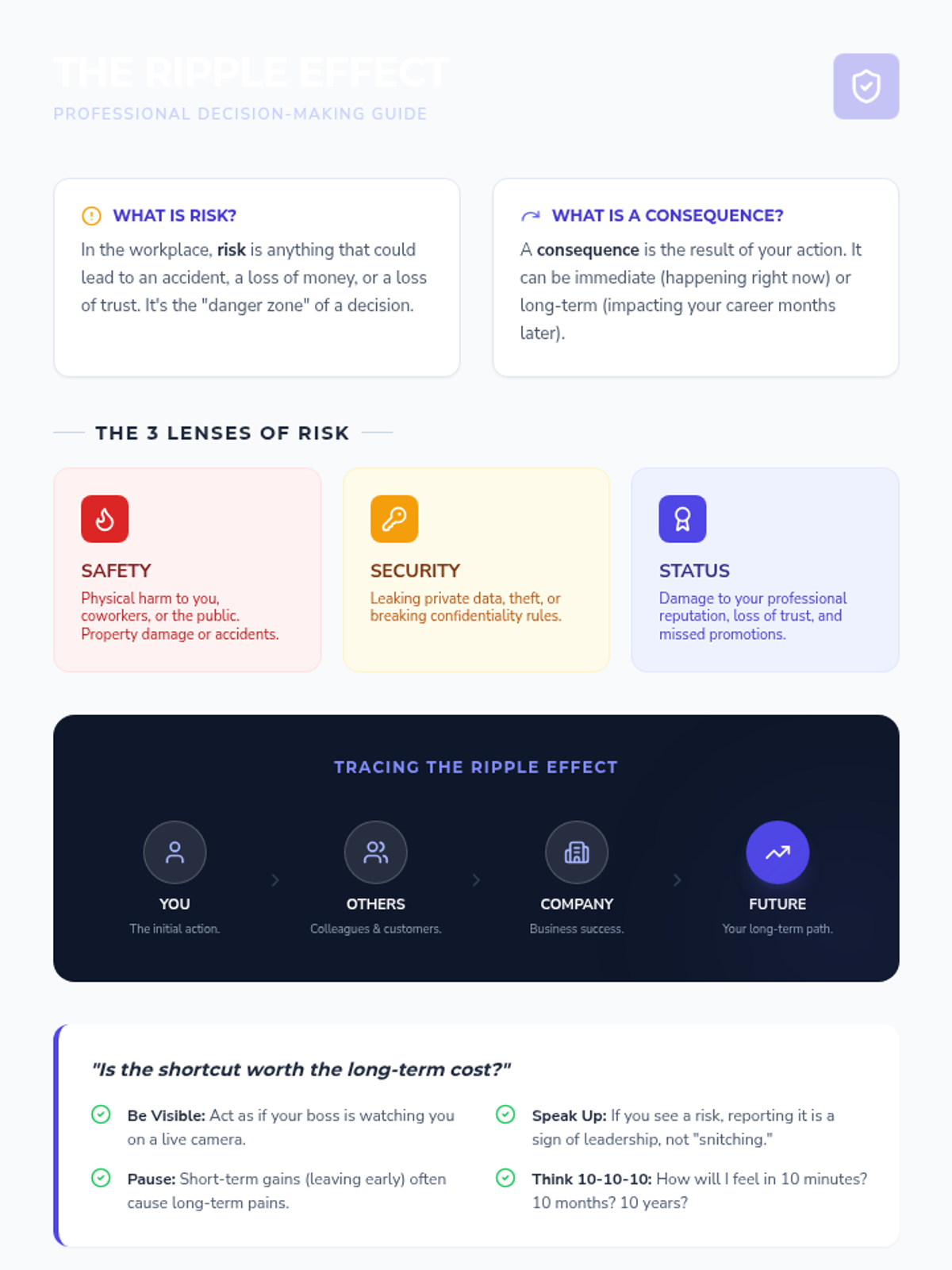
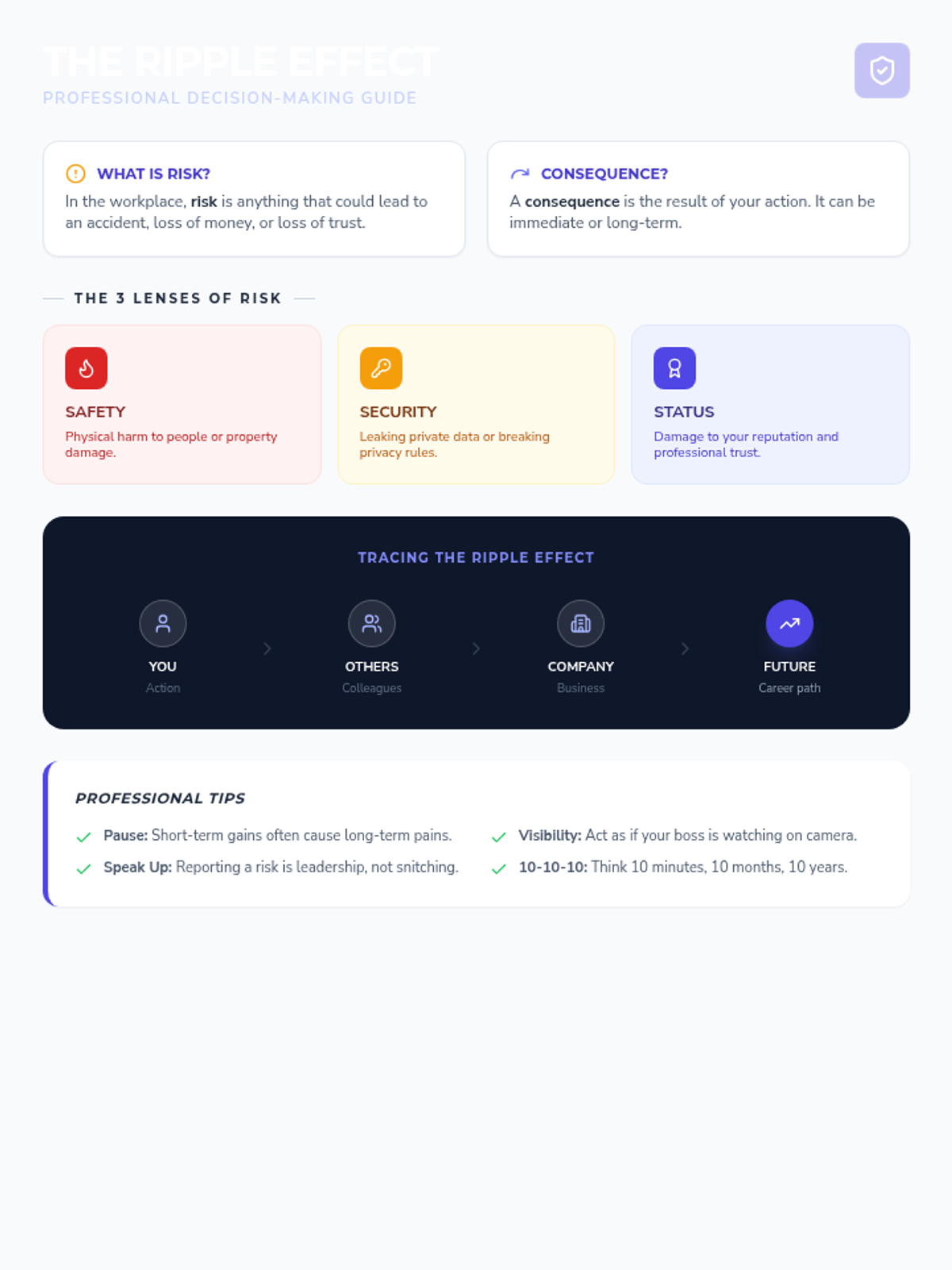
A lesson focused on helping students identify potential risks in workplace settings and understand the short- and long-term consequences of their professional decisions.
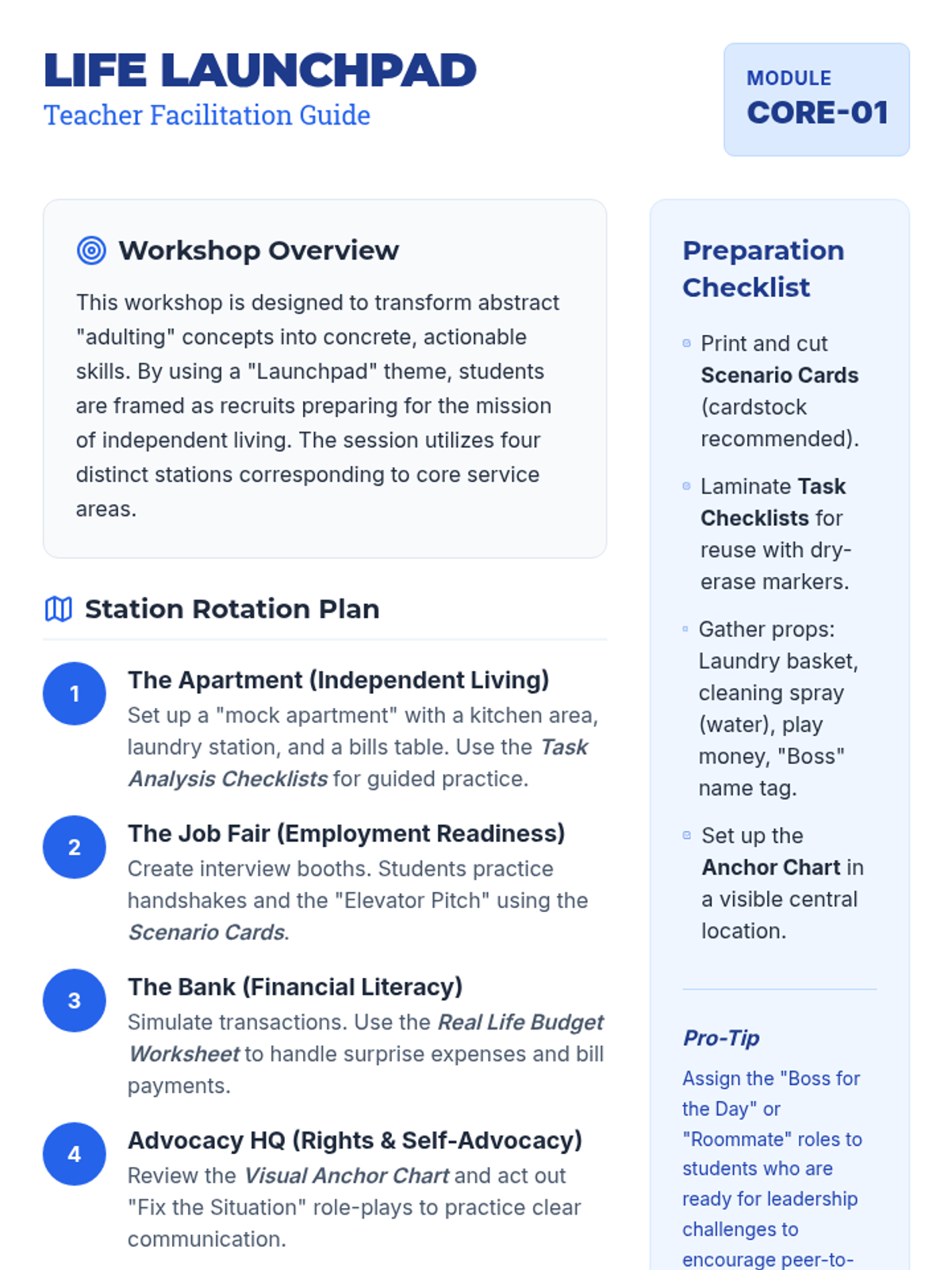
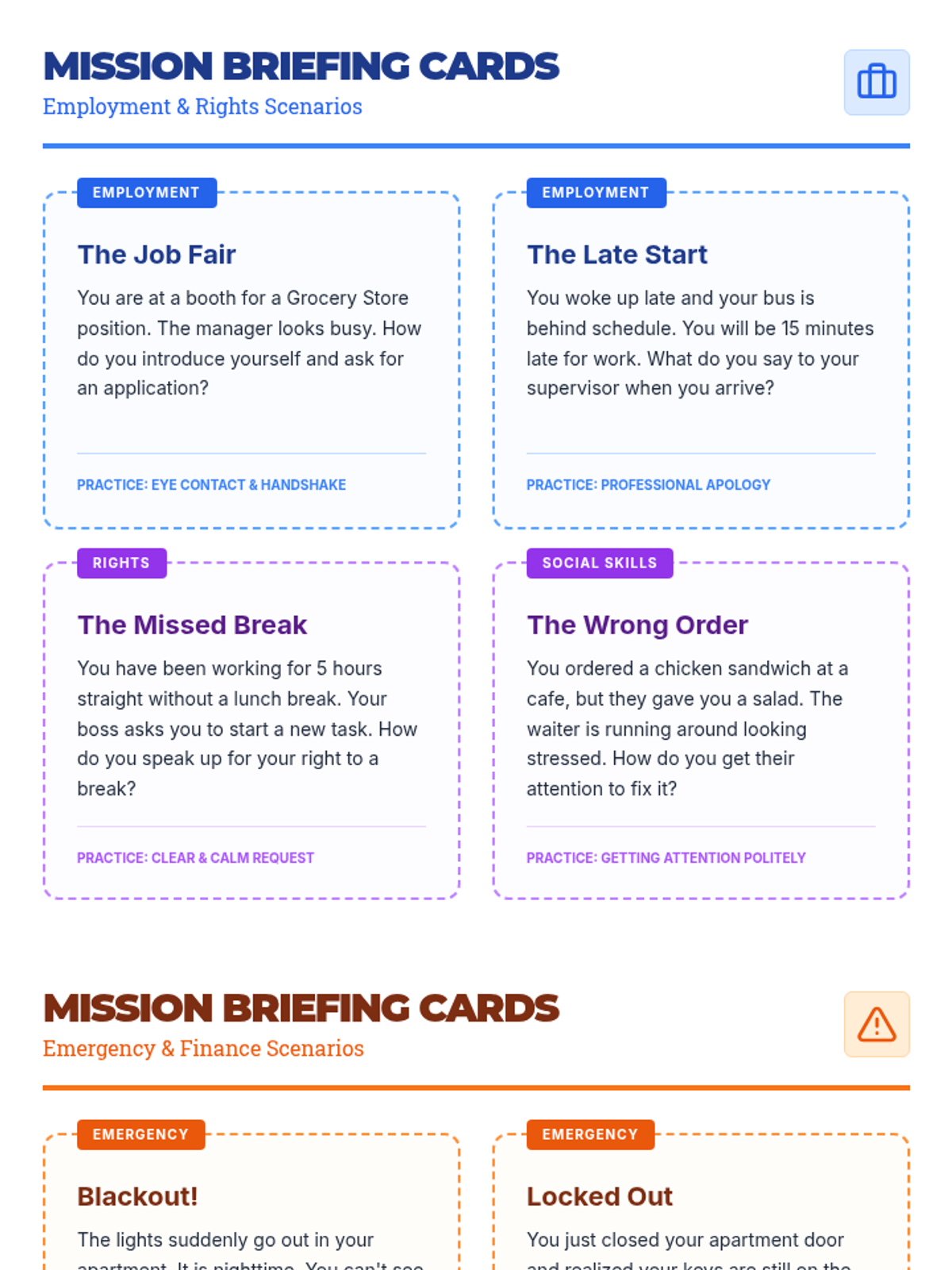
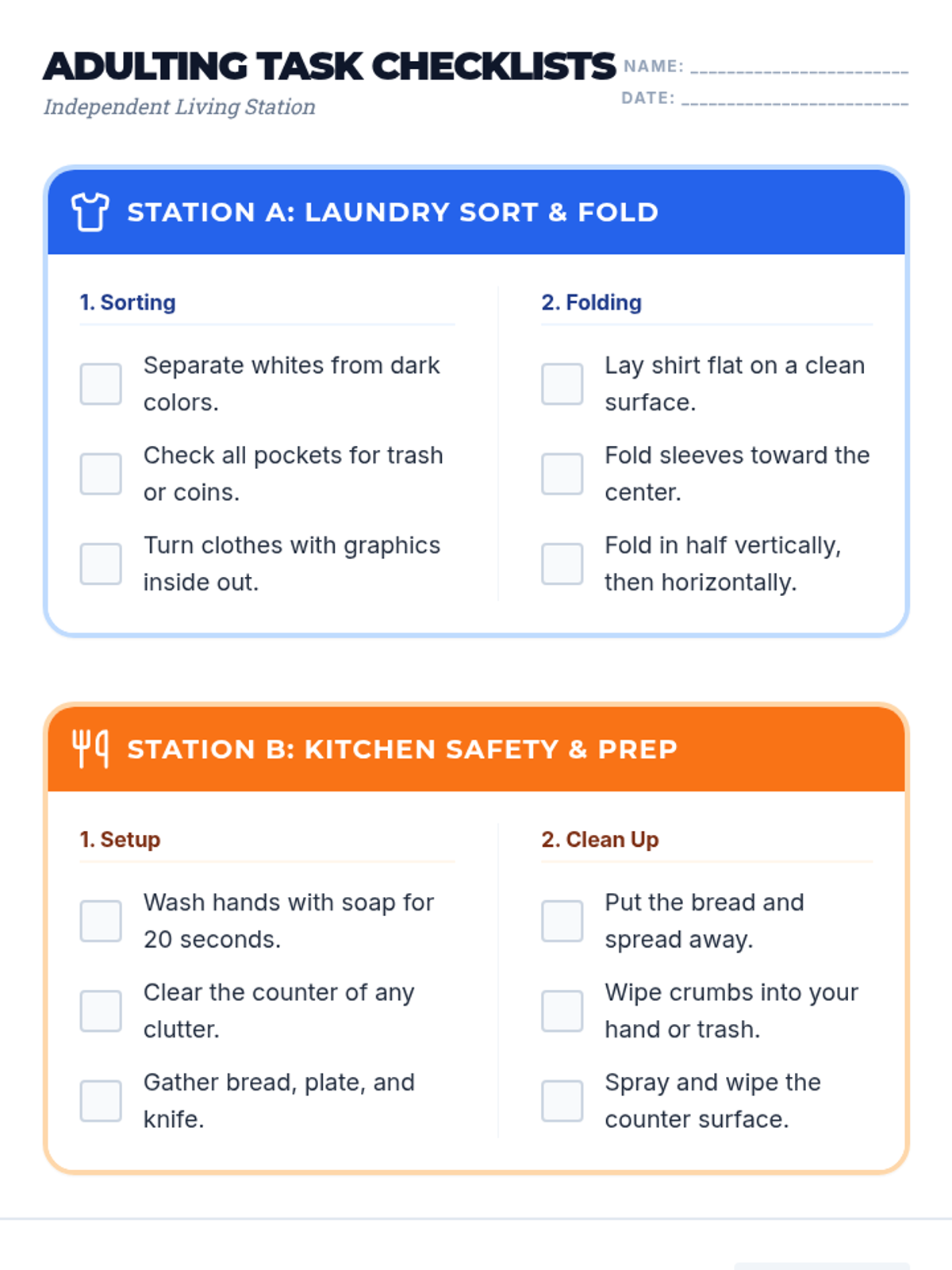
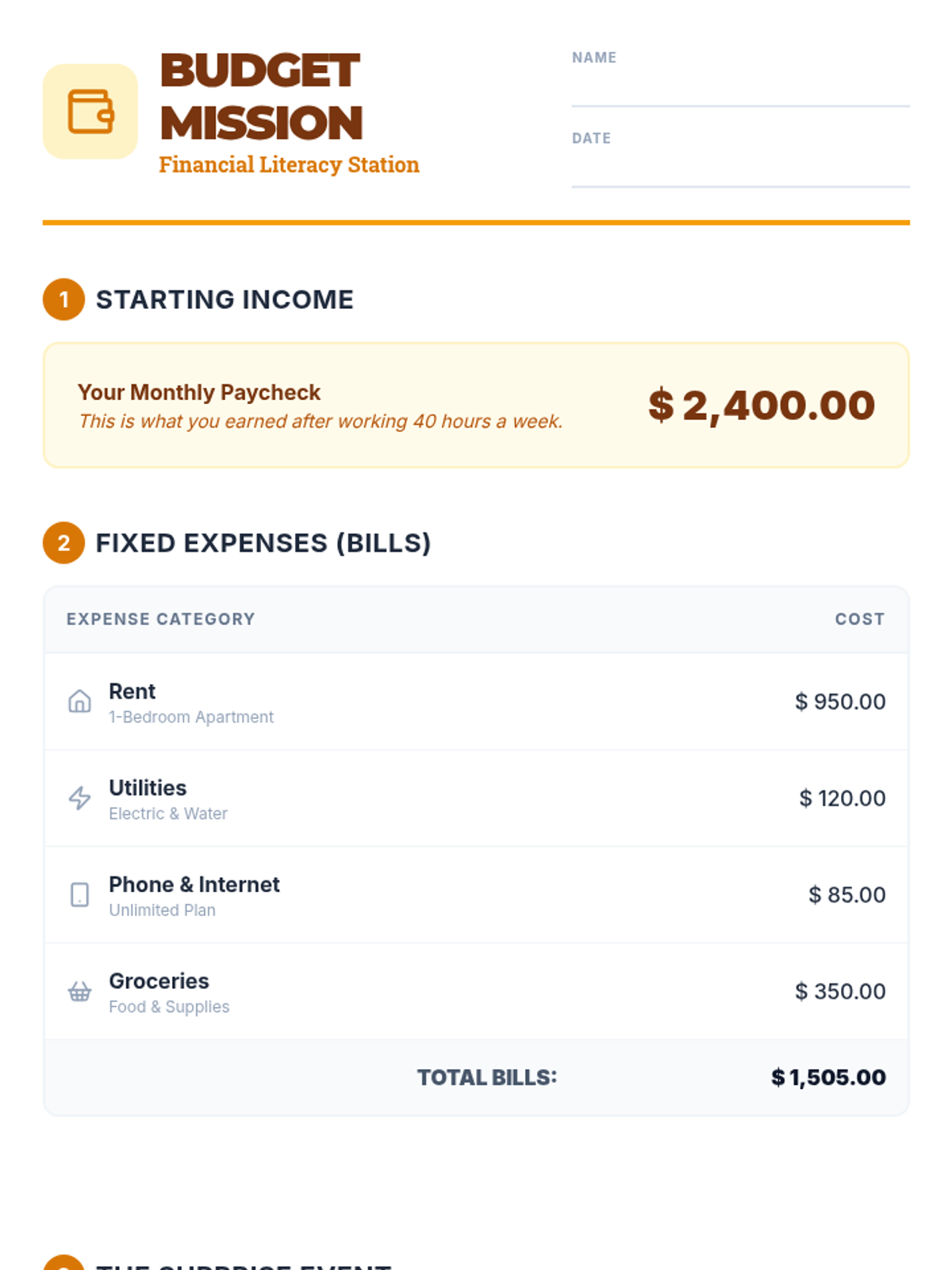
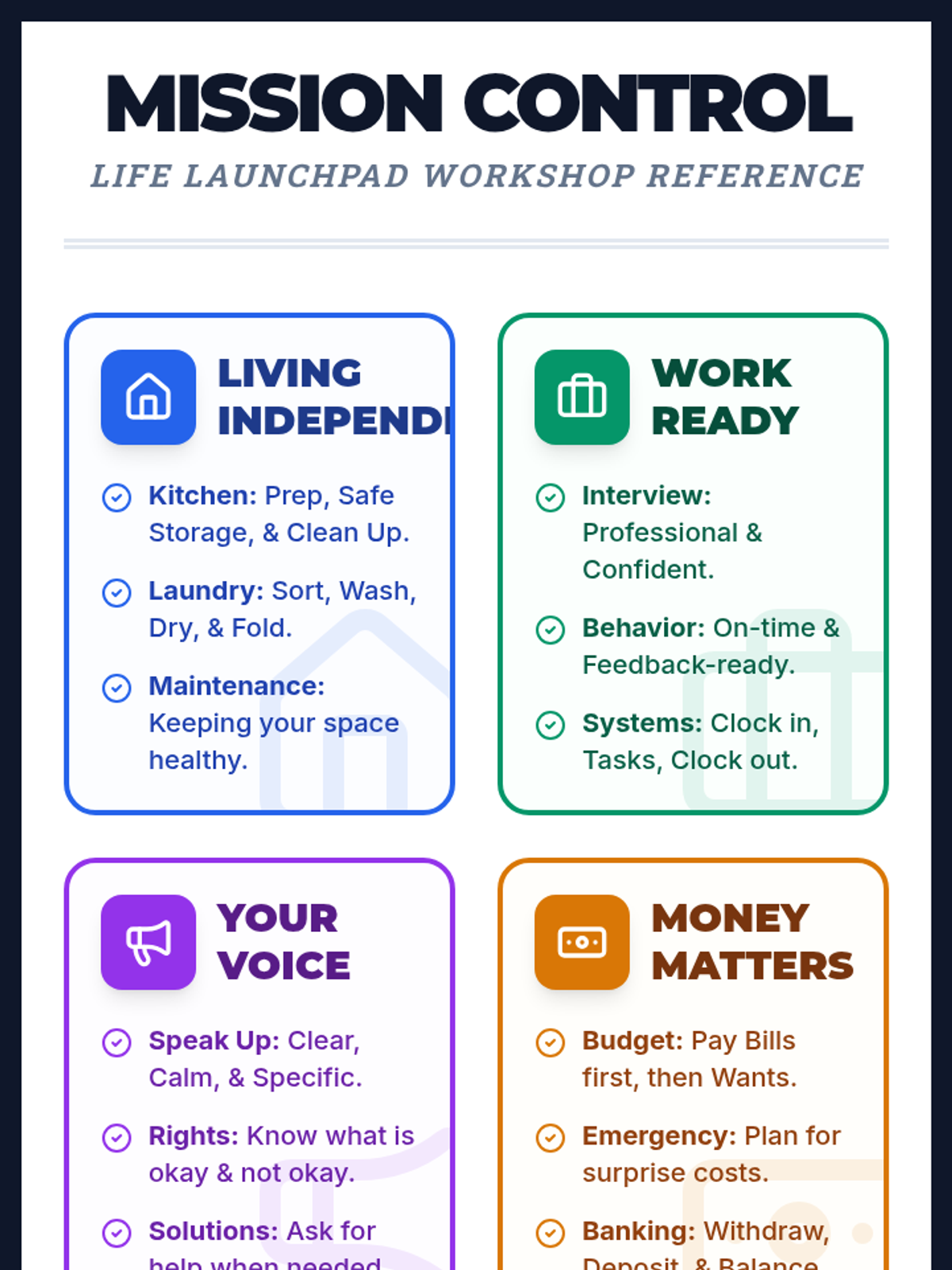
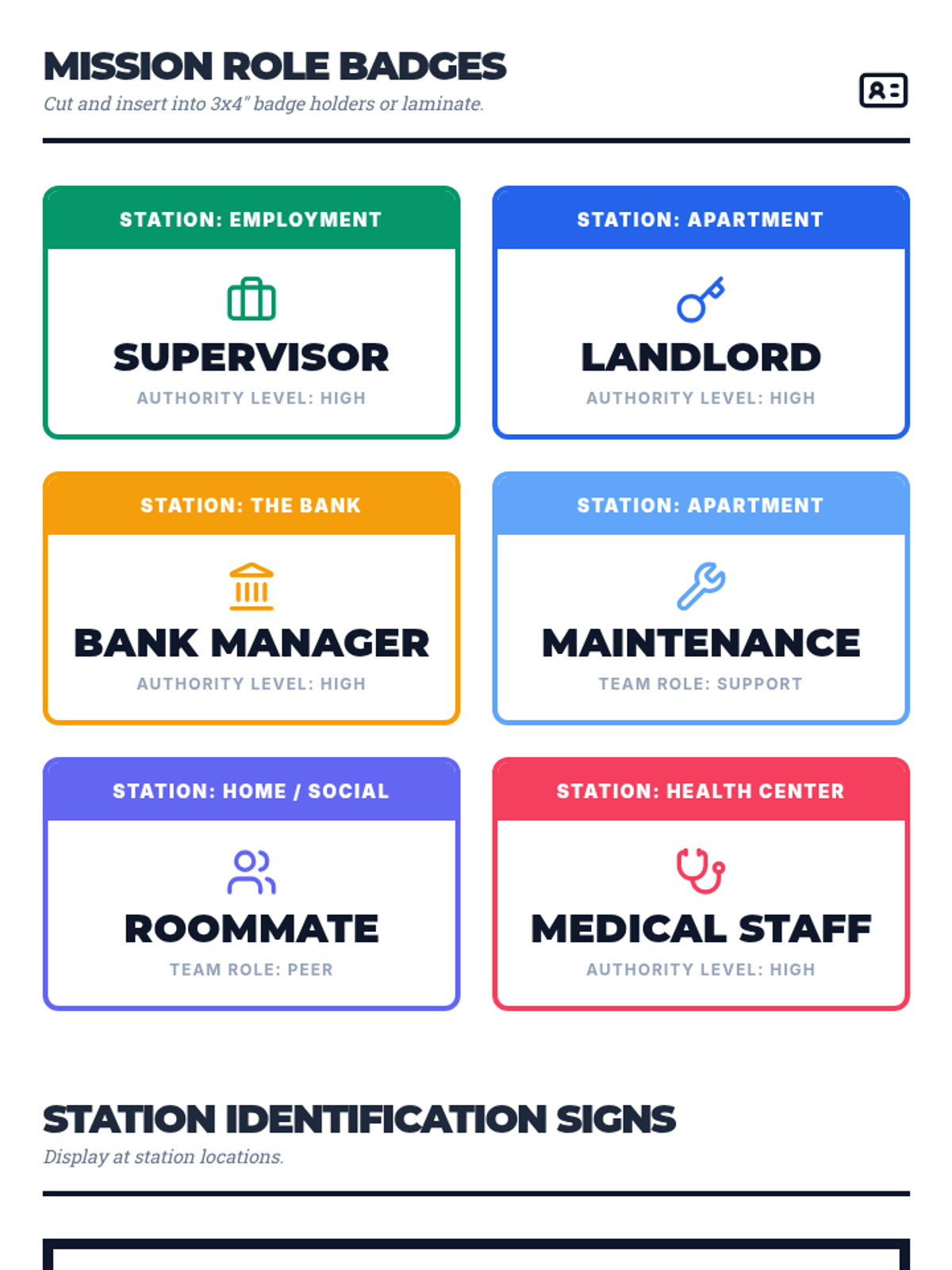
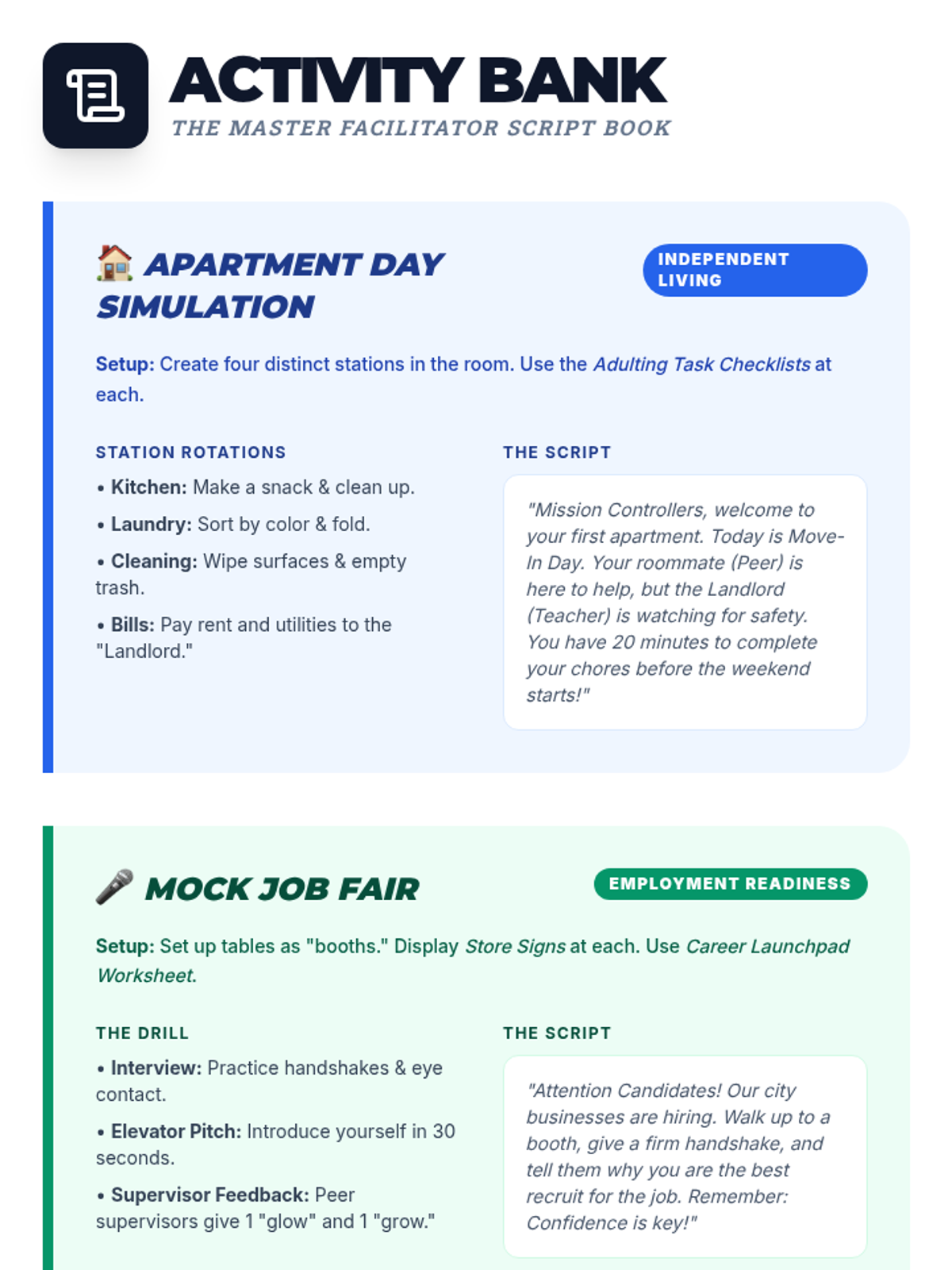
A comprehensive workshop focusing on essential adulting skills through immersive role-play, task simulations, and practical financial planning. This lesson covers Independent Living, Employment Readiness, Self-Advocacy, and Financial Literacy.