A visual presentation for teaching mixed money counting, featuring value recall, the "Greatest to Least" counting strategy, step-by-step guided examples, and a classroom challenge.
Teacher answer key for the Fraction Master Review Worksheet. Includes correct answers, brief explanations for equivalence problems, and a simple scoring rubric for assessment.
A comprehensive 3rd-grade math review sheet designed to mimic the Unit 5 exit ticket, covering fraction identification, equivalence, comparison, number lines, and partitioning shapes. Includes multiple question types like multiple select, number line plots, and matching.
A hands-on sorting activity featuring large pizza cards and a sorting mat to help students physically categorize 'whole', 'half', and 'fourth' fractions.
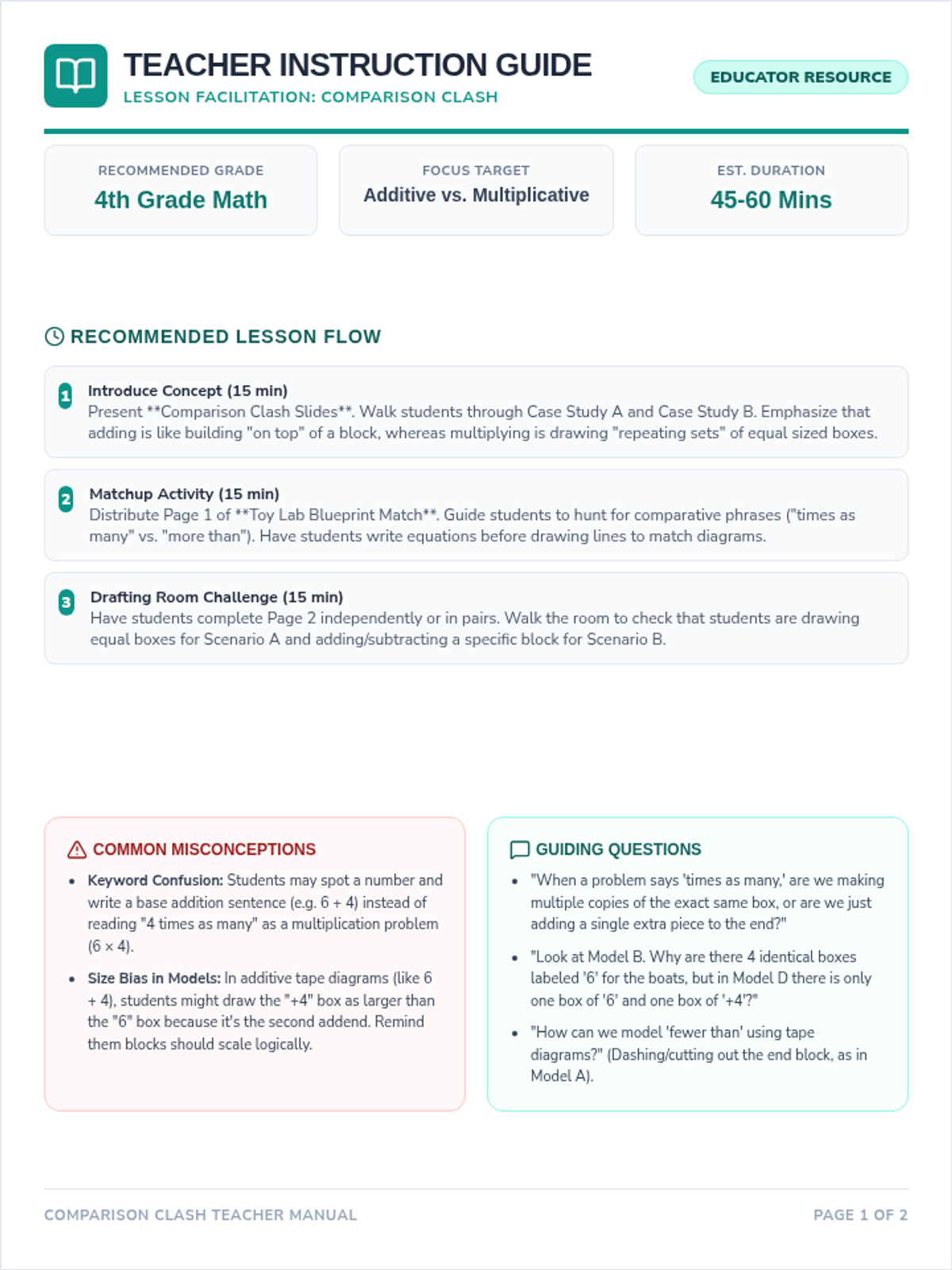
A teacher facilitation guide containing learning objectives, discussion prompts, common misconceptions, and differentiation strategies for teaching tape diagrams.
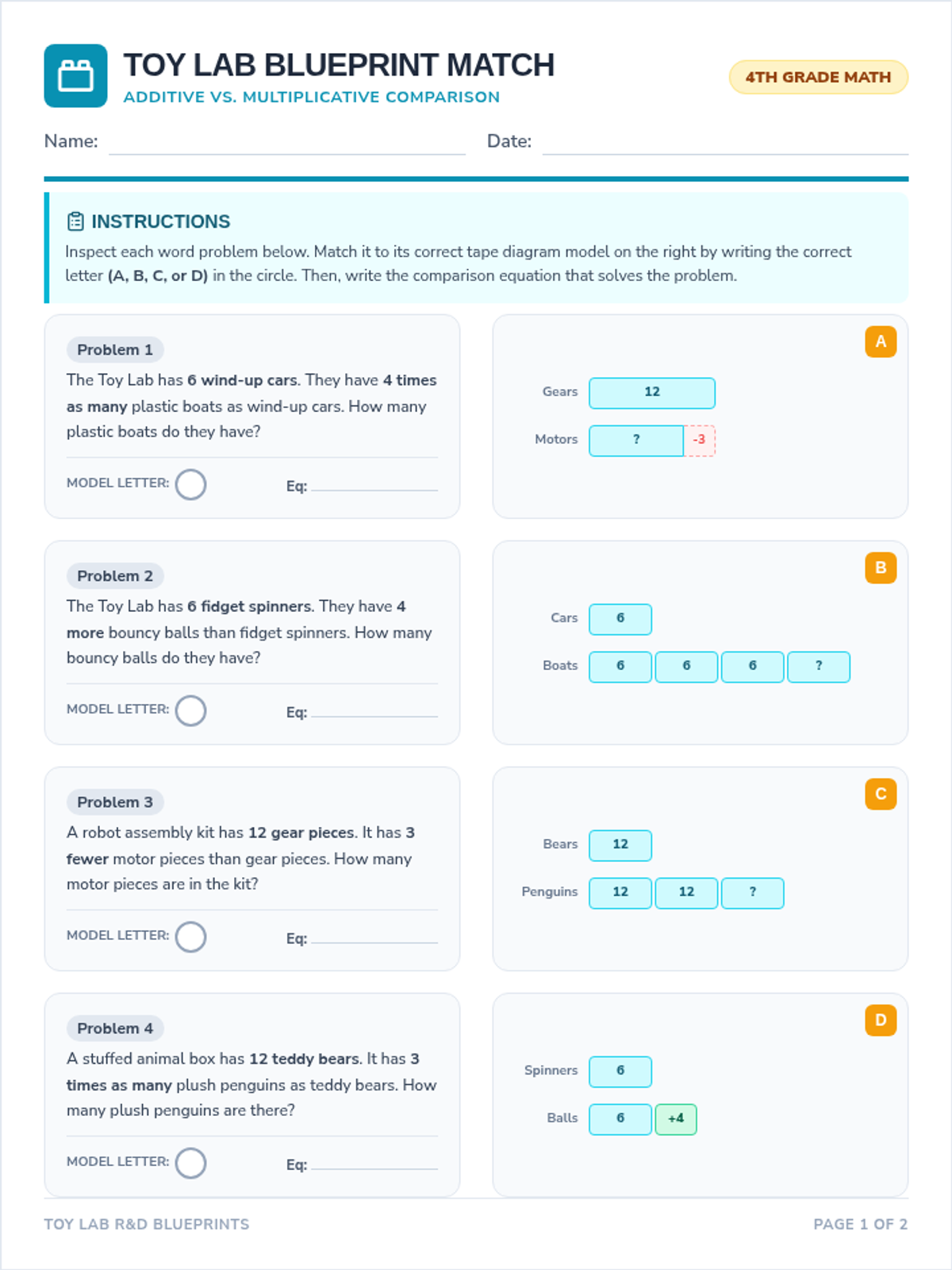
An introductory presentation for teaching tape diagrams, featuring visual explanations of their purpose and a step-by-step example of a comparison model.
A practice worksheet where students apply tape diagram steps to solve word problems, featuring dedicated space for drafting diagrams, writing equations, and formulating final sentences.
A visual guide showing different types of tape diagram models for addition, subtraction, and comparison word problems, highlighting where the unknown value is placed.
A set of four half-page reference cards that walk students through the step-by-step process of building a tape diagram to solve word problems with unknowns.
A "Cookie Jar Sort" hands-on matching game where students sort various cookie fraction models (including equivalent fractions like 2/4, 3/6, 2/6, and 2/8) into labeled jars. Includes jars for 1/2, 1/3, and 1/4 with color-coded boundaries to support diverse learners.
A teacher-facing answer key for the Cookie Fraction Quiz, clearly indicating correct answers with visual highlights.
A clear, highly visual quiz page assessing fraction identification, naming, and equivalent fraction concepts. Uses simple language ("Yes/No") and large visual models to reduce cognitive load while verifying student understanding.
A teacher-facing guide providing specific instructional strategies for supporting 3rd-grade students with Down syndrome in learning fractions. Includes tips on concrete manipulatives, language simplified for clarity, and a breakdown of the differentiated worksheet levels.
A set of large-format matching cards. Set 1 features basic fractions (1/2, 1/4) with visual and numerical pairs. Set 2 introduces equivalent visual matching (1/2=2/4, 1/3=2/6) for hands-on exploration of equal parts.
A 4-level differentiated worksheet for 3rd-grade students. Levels range from basic identification to writing fractions and exploring complex equivalent fractions (1/2=3/6, 1/3=2/6, 2/3=4/6) using visually matched cookie pairs. High contrast and ample white space support students with cognitive differences.
A vibrant and highly visual slide deck introducing basic fractions (1/2, 1/3, 1/4) using cookie models. It includes a section on equivalent fractions (1/2 = 2/4, 1/2 = 3/6, 1/3 = 2/6) with large text and clear color-coded indicators to support diverse learners.
Answer key for the Kitchen Math homework, providing solutions for visual models, calculations, and word problems.
A homework assignment for 4th graders practicing multiplying fractions by whole numbers, using a kitchen/cooking theme. Includes visual models, calculation practice, and word problems.
An answer key for the Bakery Orders Homework, providing solutions and sample work for all problems.
A bakery-themed homework assignment for 4th graders to practice multiplying fractions by whole numbers through repeated addition, visual models, and word problems.
A presentation planning guide for students to organize their individual oral presentations. It breaks the speech into three logical parts (morning, mid-day, afternoon) and provides performance tips for 3rd graders.
A fun, 4-scene role play script for 3rd graders to act out the typical school day routine. Includes parts for a Narrator and three students, with integrated time-telling cues.
Detailed answer key for both the Number Builders worksheet and the Base-Ten Blueprint task cards, including step-by-step regrouping notes for teacher use.
Blueprint-style math task cards in Spanish. Each card features a construction-themed word problem for adding or subtracting within 1,000, designed for hands-on use with base-ten blocks.
A scaffolded Spanish-language math worksheet for adding and subtracting within 1,000. Features clear place-value grids, space for representational drawing, and color-coded columns to support IEP students.
A visual presentation for the Number Builders lesson. It introduces base-ten tools and the rules for adding and subtracting within 1,000 using a construction theme. All slides feature bilingual English/Spanish text and clear visuals for IEP students.
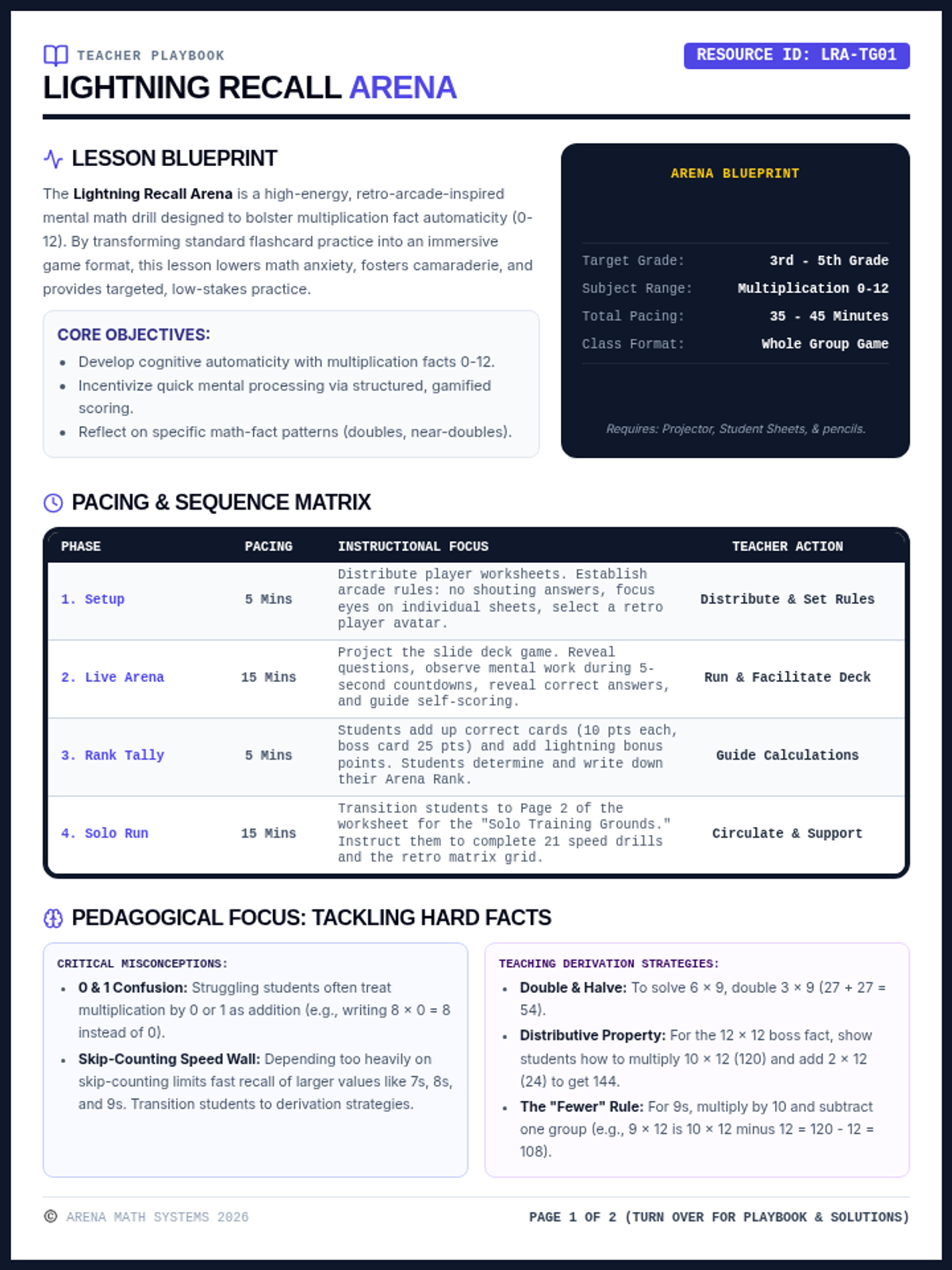
A comprehensive teacher guide for the Number Builders lesson, detailing the CRA instructional model, lesson sequence, and specific IEP adaptations. It includes bilingual support notes and a hands-on activity breakdown.
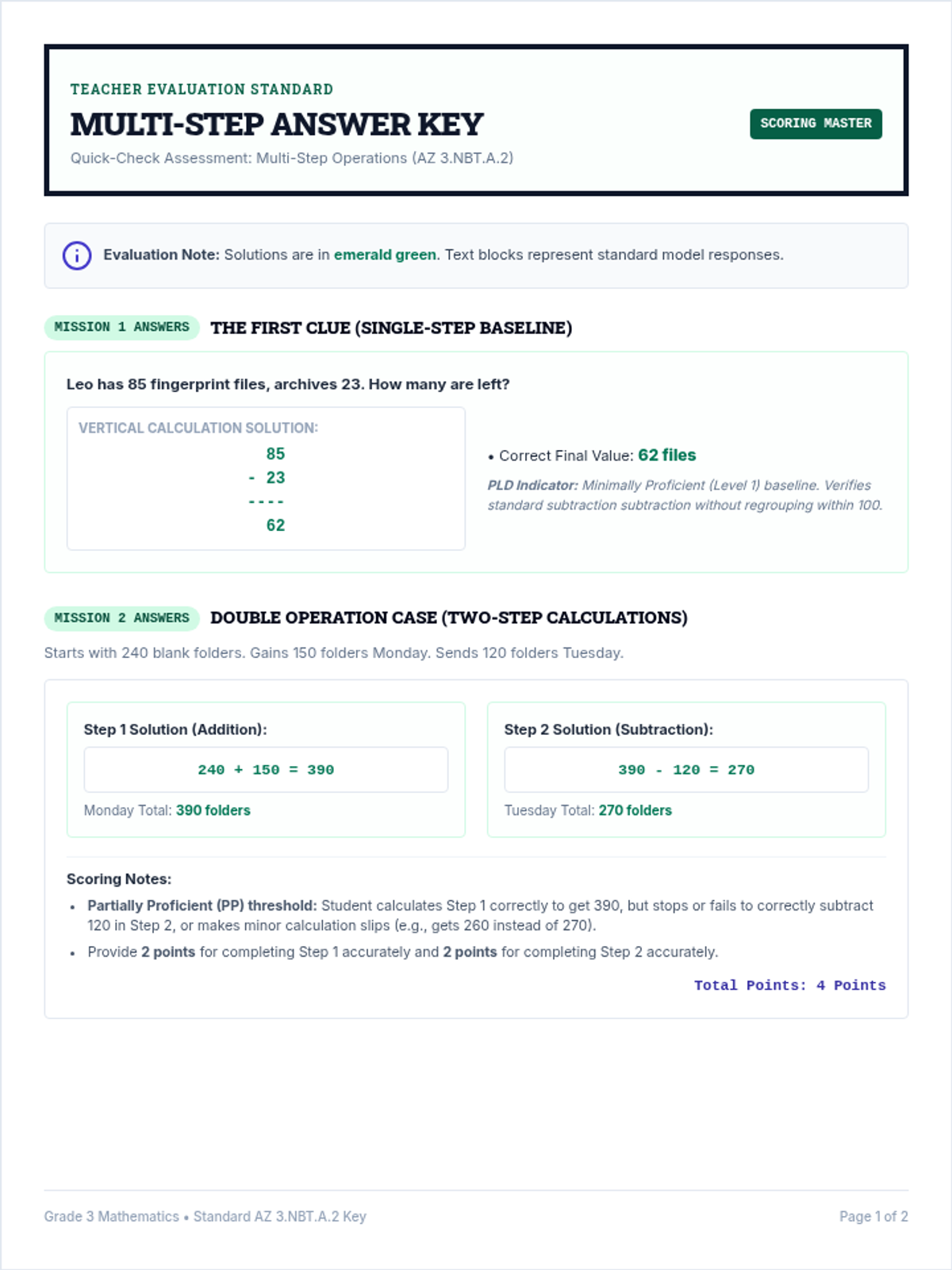
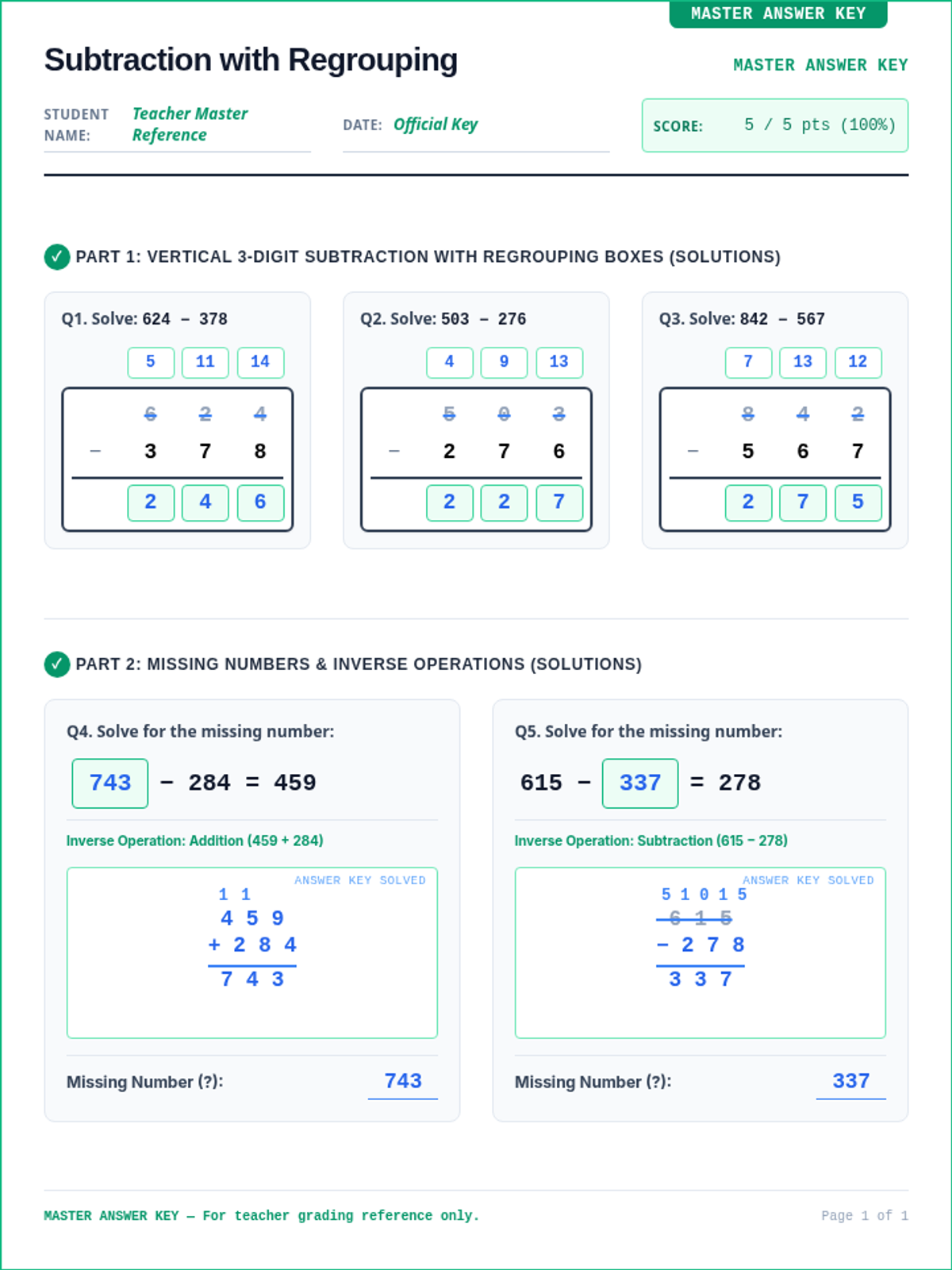
Teacher-facing answer key for the Operation Mixup Word Problem Worksheet, featuring correct answers, equations, and grading notes.
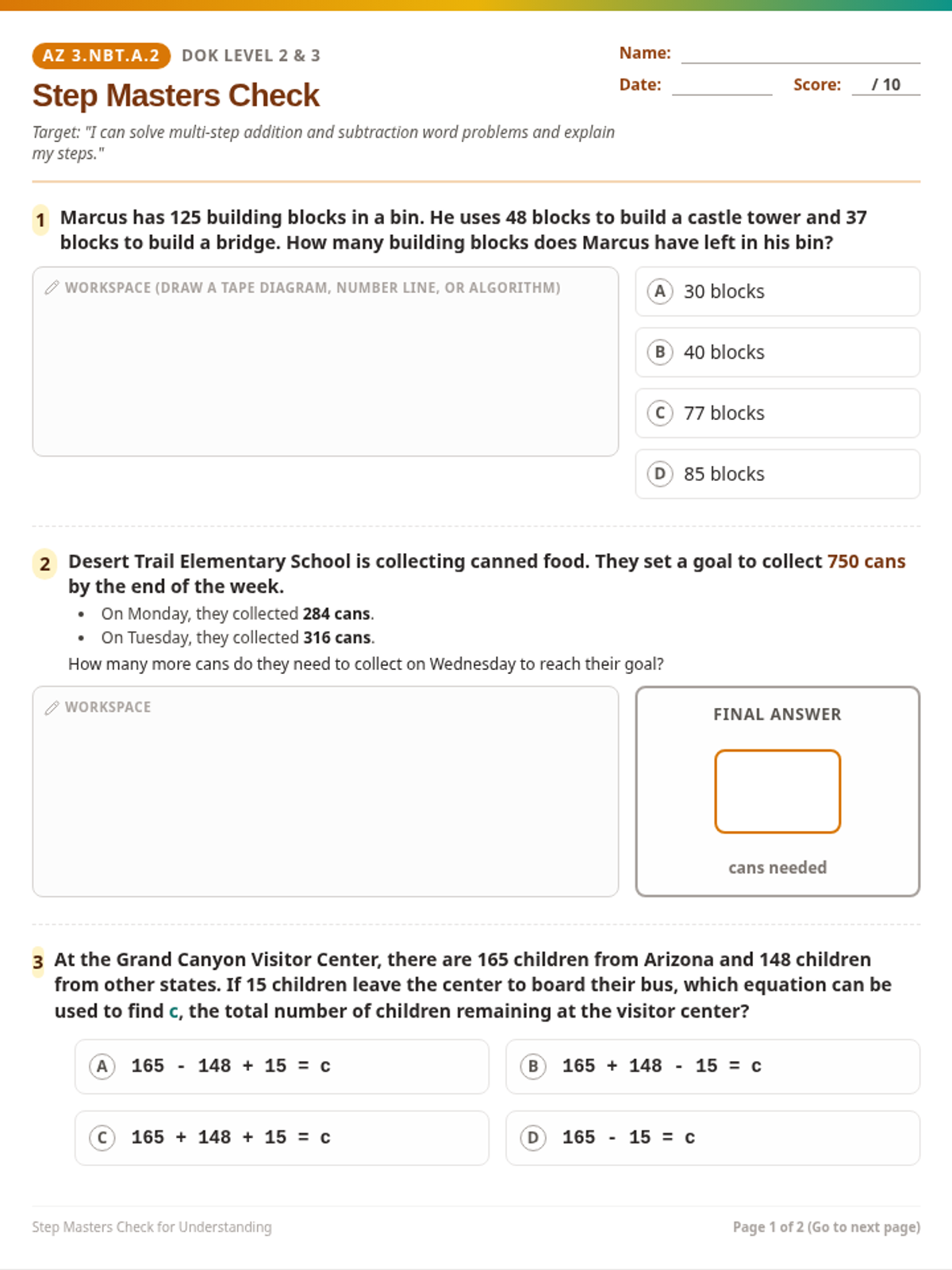
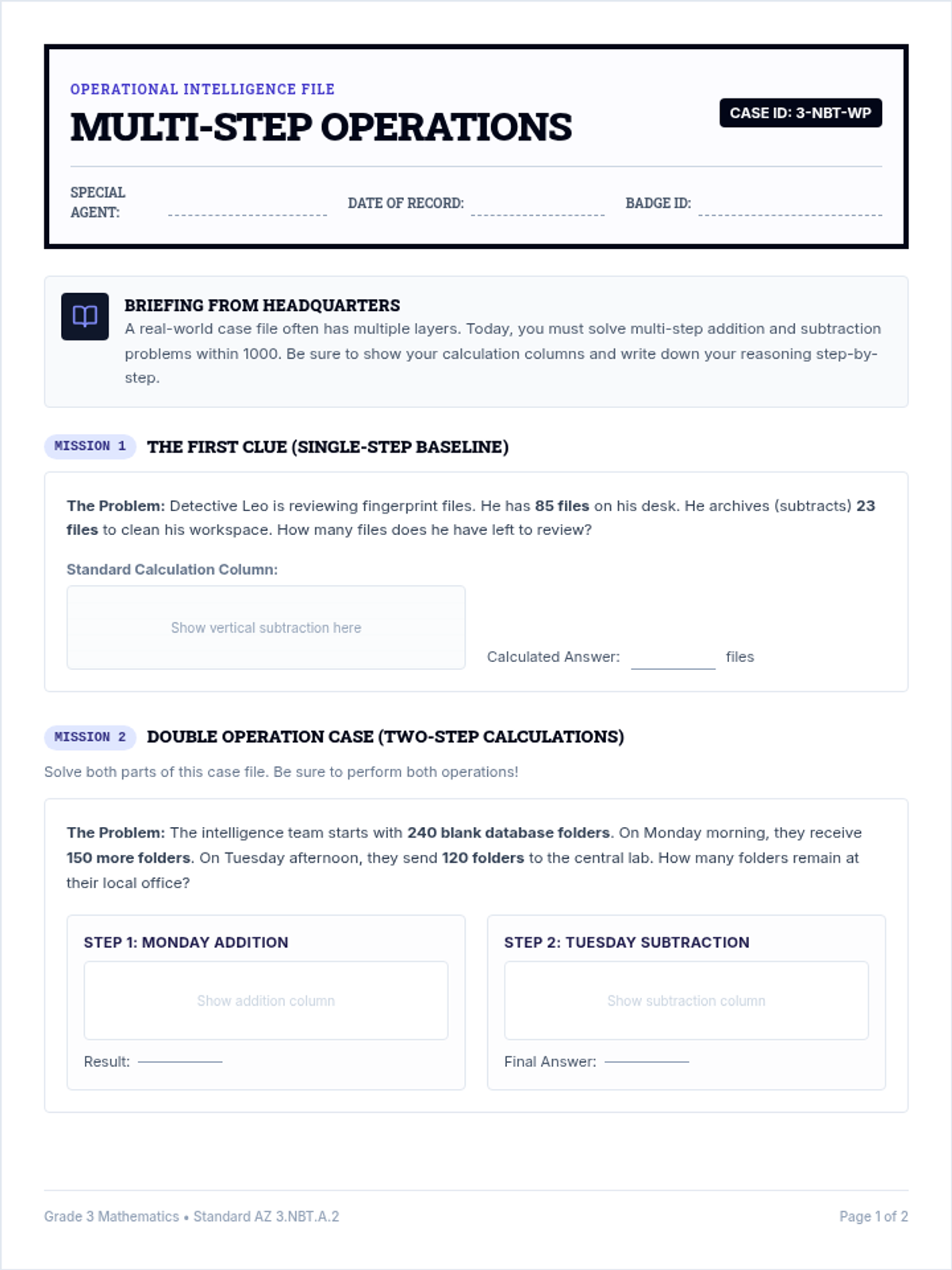
A detective-themed worksheet for 4th graders featuring 10 mixed multiplication and division word problems using numbers up to 12. Improved layout with better work spaces.
The answer key for the Rounding Rodeo Quick Check, providing correct solutions and a scoring guide for IEP goal progress monitoring.
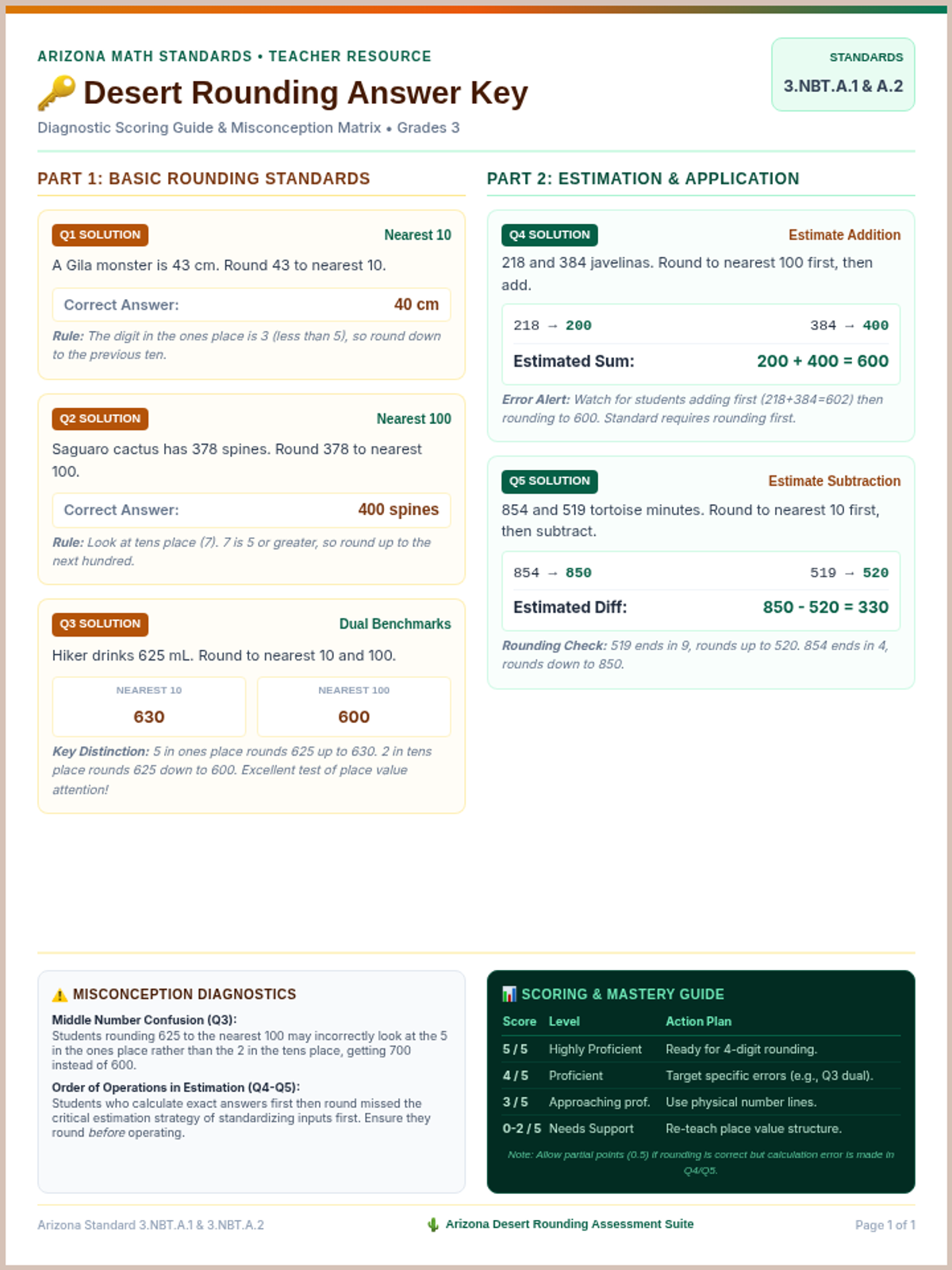
The answer key for the Rounding Rodeo practice worksheet, providing the correct solutions for all 10 rounding problems and the Sheriff's Challenge.
A short 10-question assessment for rounding to the nearest 10 and 100, designed for progress monitoring of the student's IEP goal.
A Western-themed practice worksheet for rounding multi-digit numbers to the nearest 10 and 100, featuring visual number line scaffolds and a variety of practice problems.
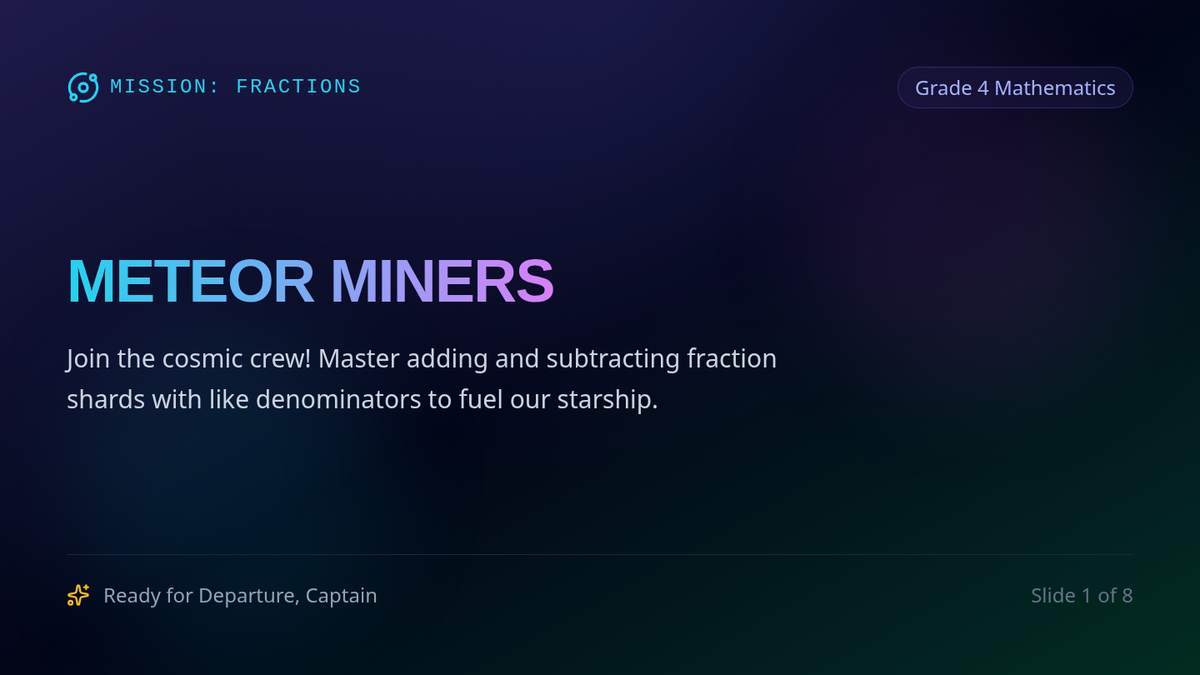
A Western-themed slide presentation to teach rounding multi-digit numbers to the nearest 10 and 100, featuring visual number lines and the 'Rounding Hill' rule.
A comprehensive teacher guide for teaching rounding to the nearest 10 and 100, including an IEP goal statement, instructional strategies, scaffolding tips, and common misconceptions for 4th-grade students.
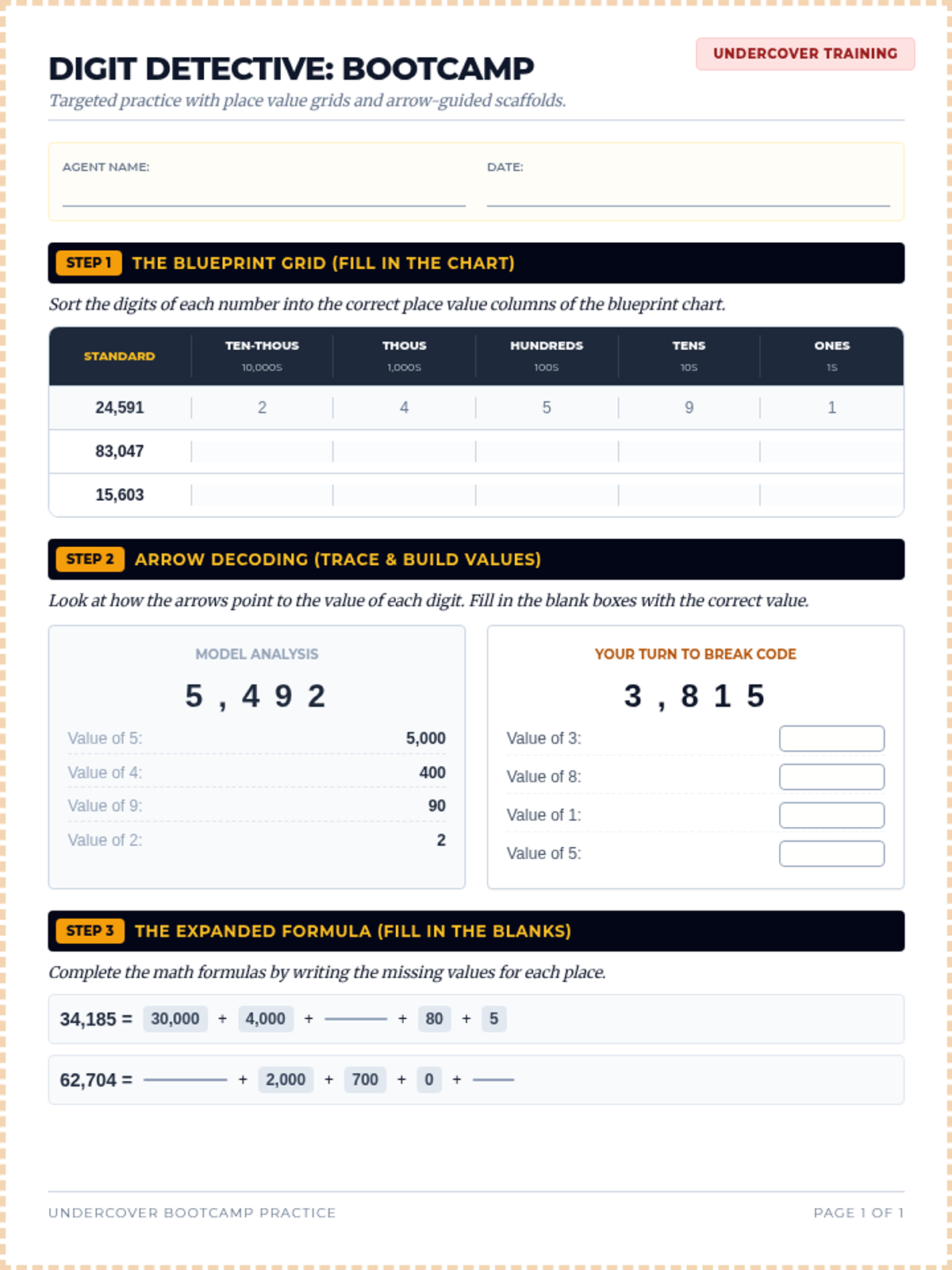
A creative student worksheet template for building a 'Place Value Person' with fun character outlines and clear spaces for six different number representations.
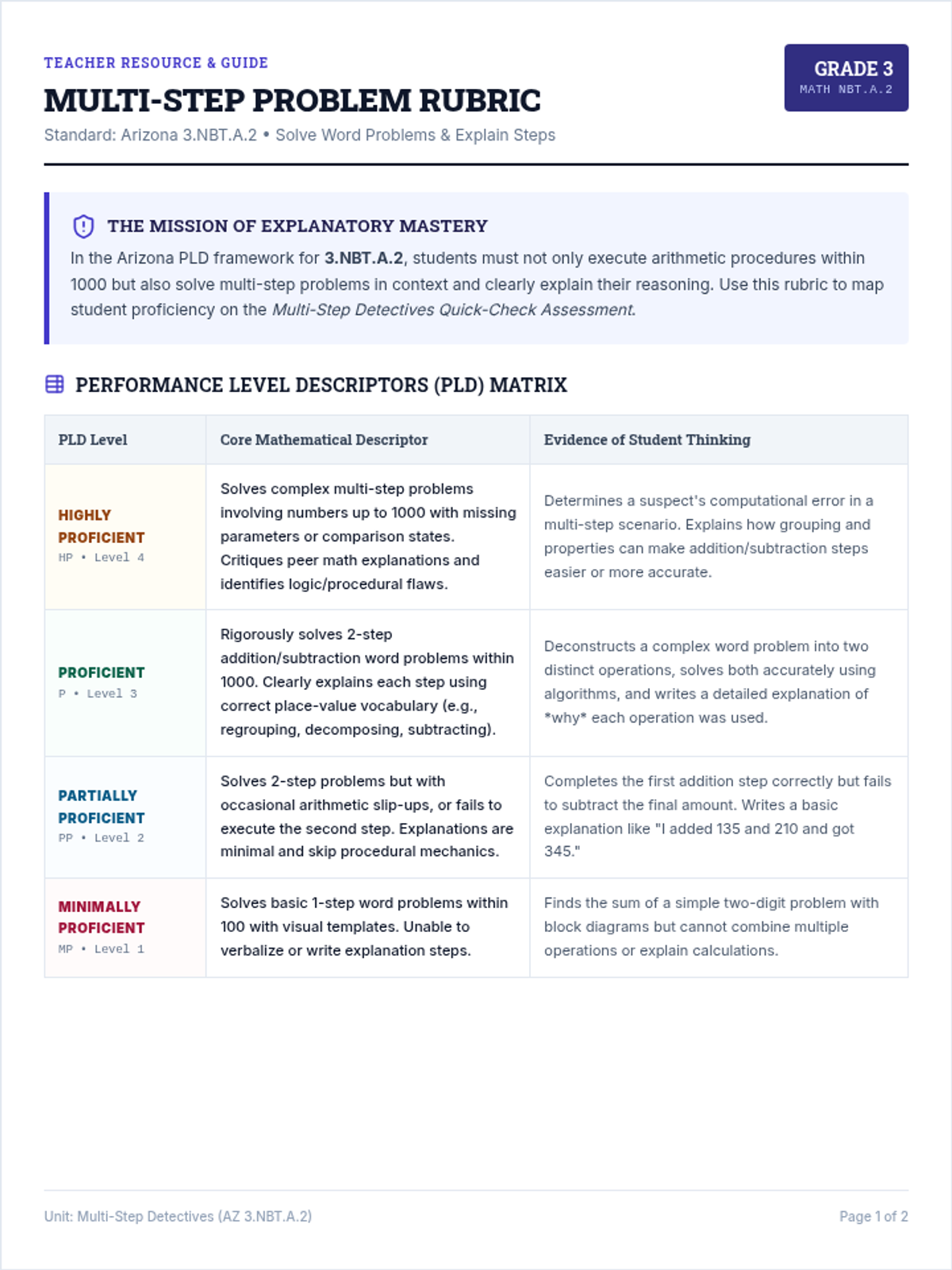
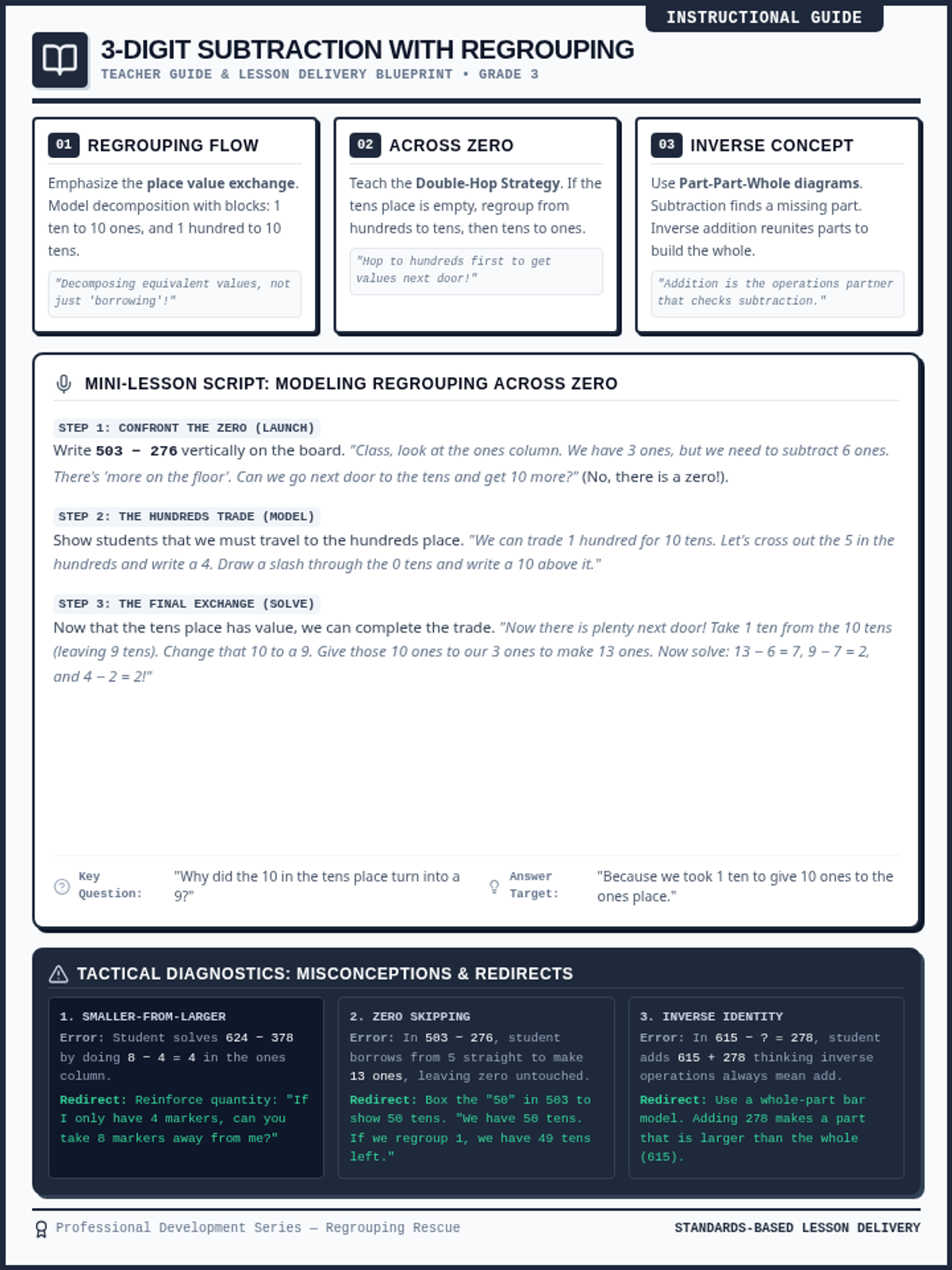
A comprehensive instructional guide for teachers, including learning objectives, common misconceptions, discussion questions, and differentiation strategies.
A teacher facilitation guide for the Place Value People lesson, including component descriptions, material lists, and differentiation strategies.
A student worksheet template for creating a 'Place Value Person' to represent a chosen number in six different ways.
A visual presentation for teaching fourth-grade students how to partition and plot fractions on a number line ranging from 0 to 2. It covers fourths, eighths, and improper/mixed number conversion.
A vibrant, creative classroom anchor chart showing 'Place Value Pete' representing 114 with a fun character design and detailed block models.
The teacher's answer key for the Trail Tracker Worksheet, featuring clearly plotted and labeled fractions for easy grading.
A homework worksheet where students plot fourths and eighths on three different number lines ranging from 0 to 2. It includes clear partitioning and a bonus comparison question.
An answer key for the Blacksmith Logbook Worksheet, providing sample models, correct comparison symbols, and explanation guides for the teacher.
A student recording sheet for the 'Fraction Forge' activity, featuring workspace for each of the three challenges to ensure individual accountability and evidence of learning.
A comprehensive teacher facilitation guide for the 'Fraction Forge' activity, including lesson objectives, materials, a 30-minute pacing guide, and questioning prompts for mathematical reasoning.
A slide presentation for the 'Fraction Forge' collaborative activity, featuring roles, instructional content on same-denominator comparison, and three tiered challenges for small group whiteboard work.