Fundamental principles of supply, demand, and monetary systems alongside micro- and macroeconomic structures. Examines the impact of corporate power, labor market dynamics, and global systems on social mobility and class inequality.
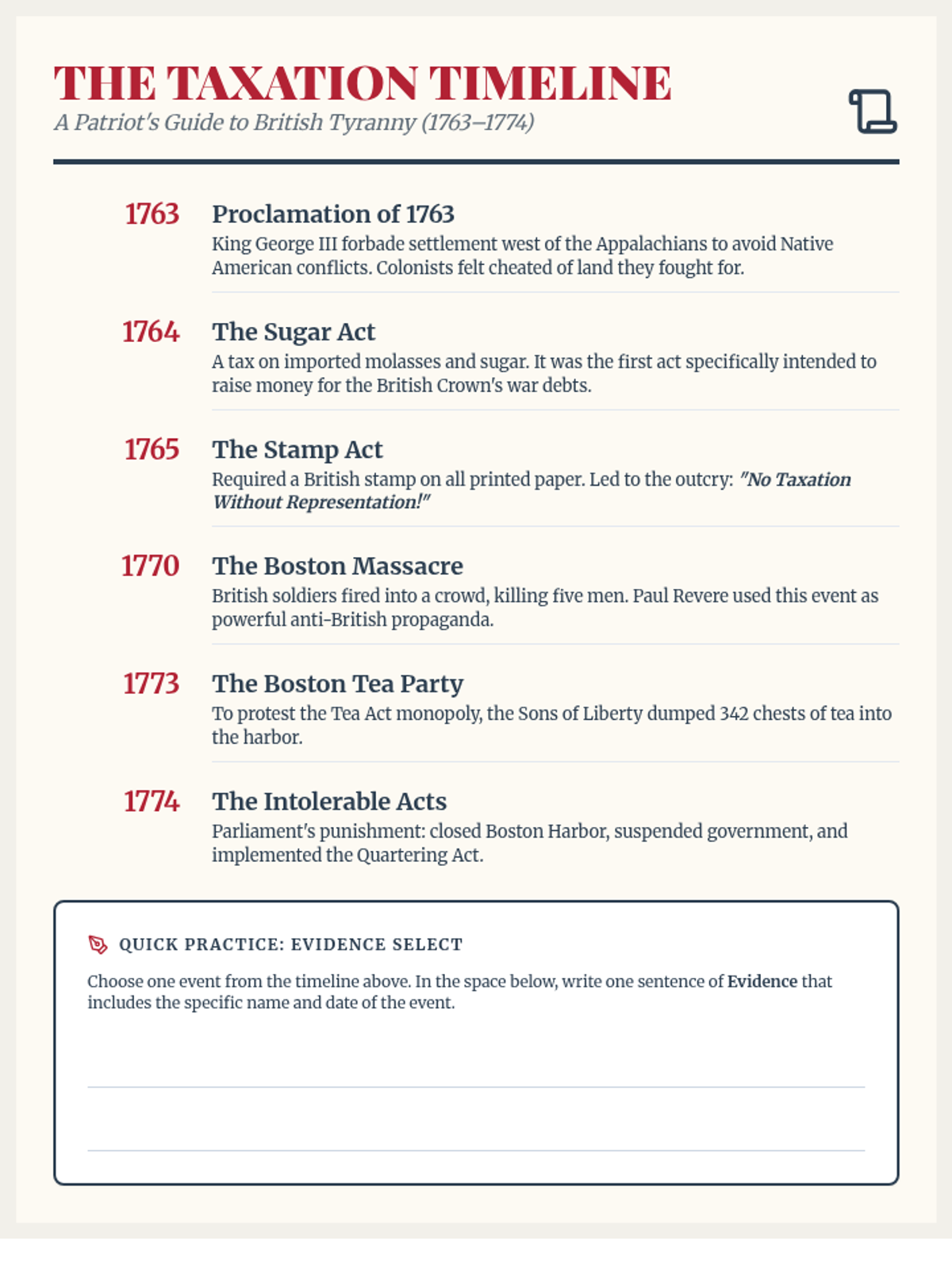
A comprehensive exploration of the American Revolution, from the sparks of rebellion to the birth of a new nation.
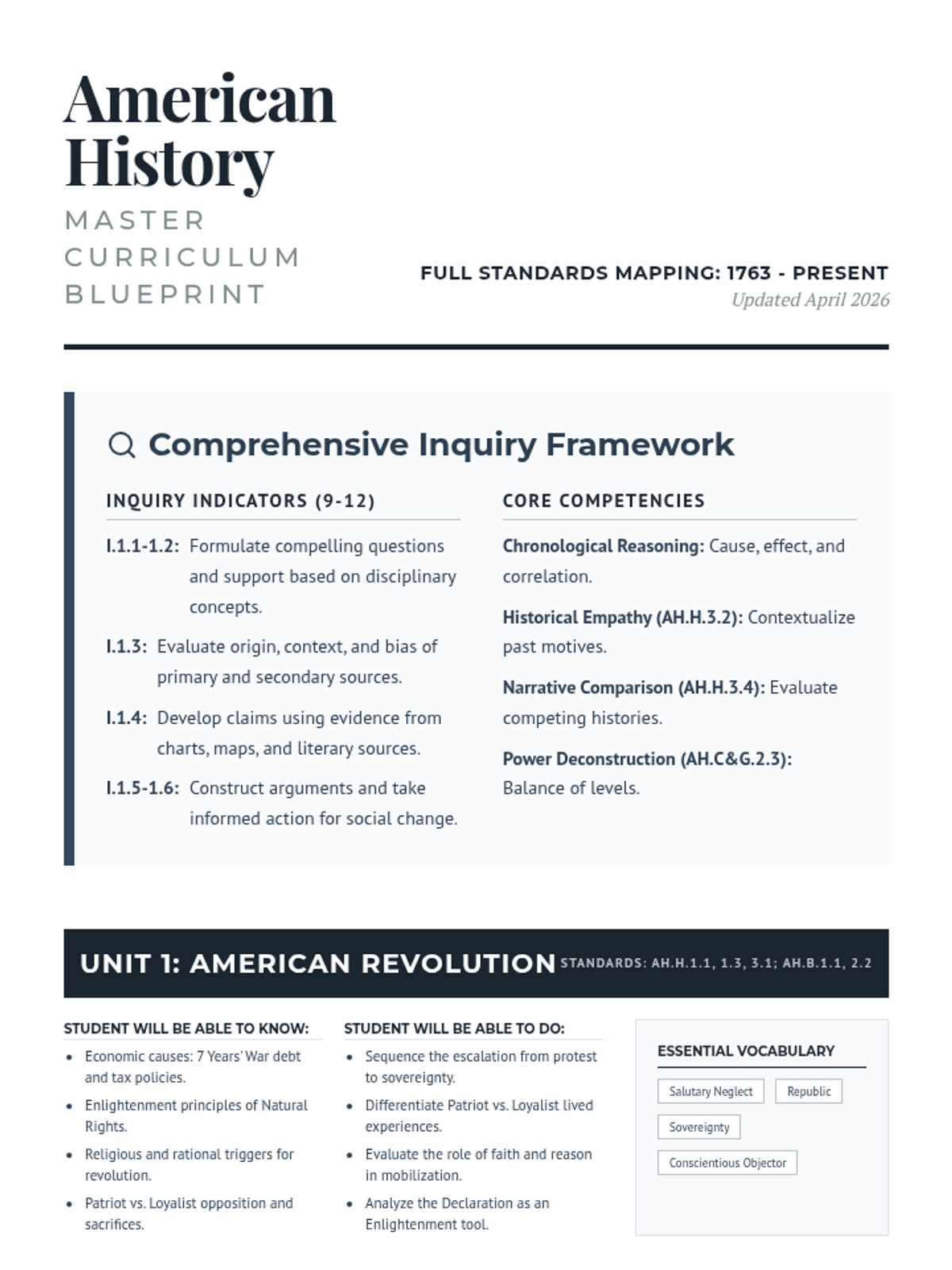
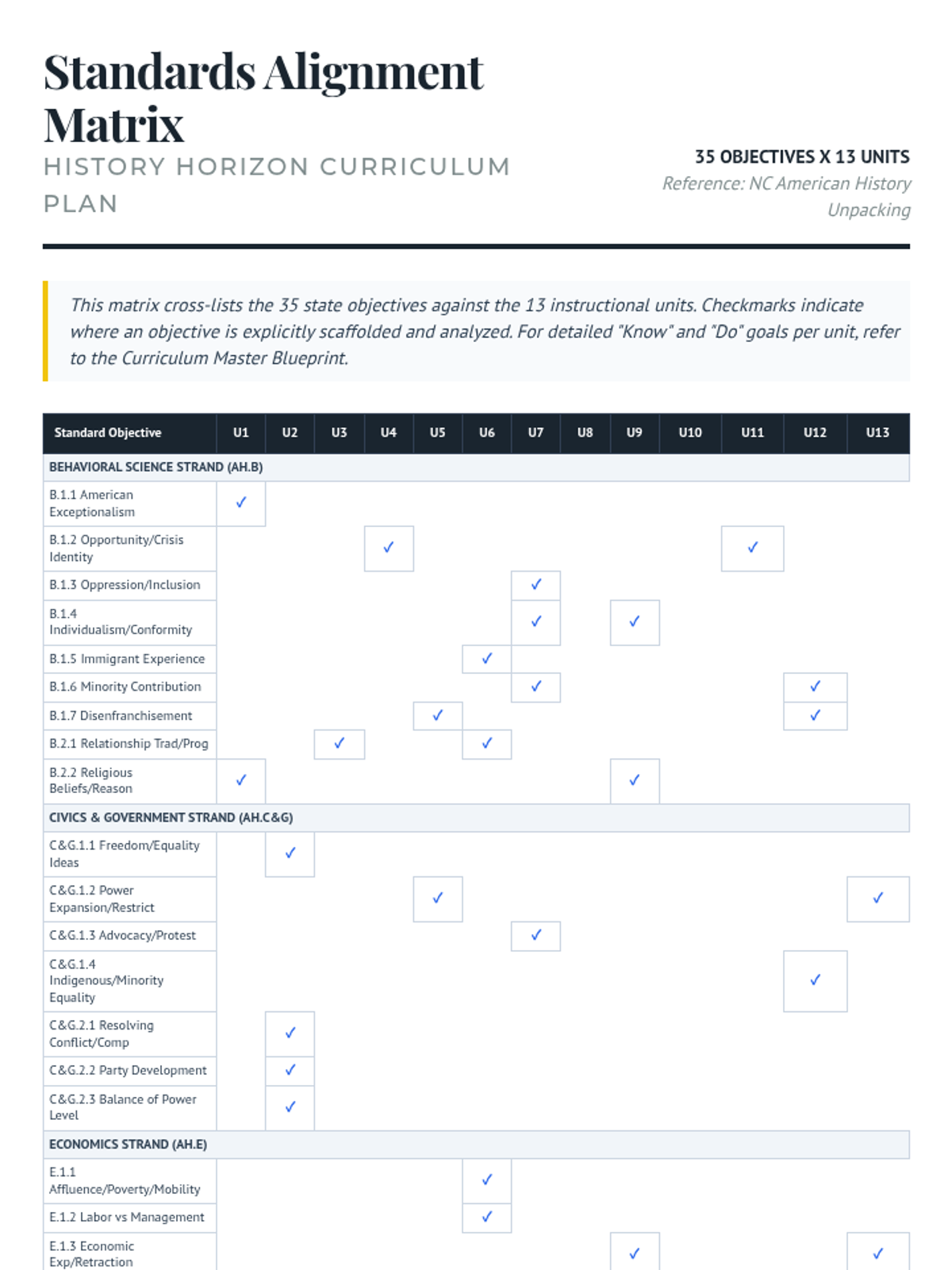
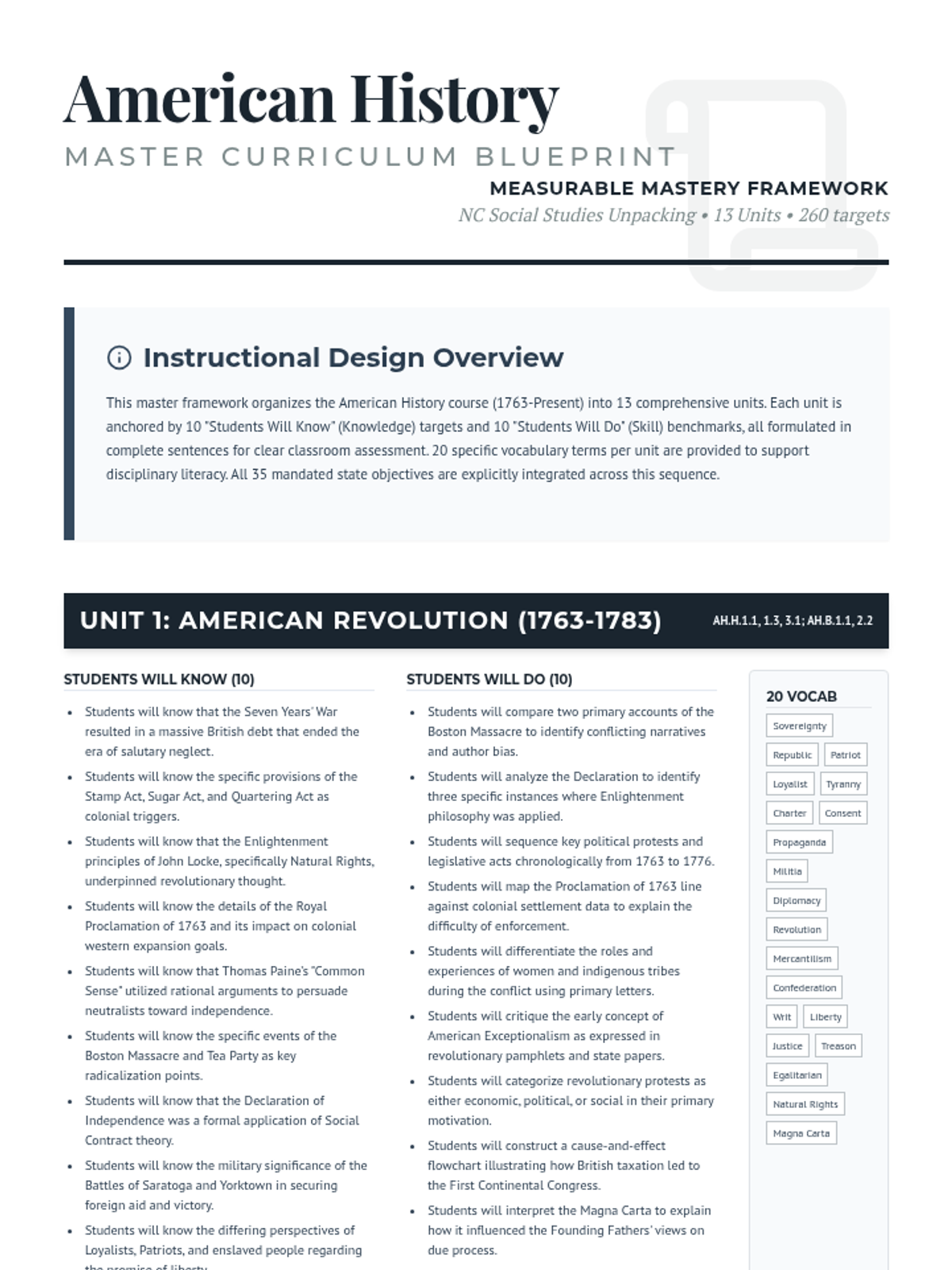
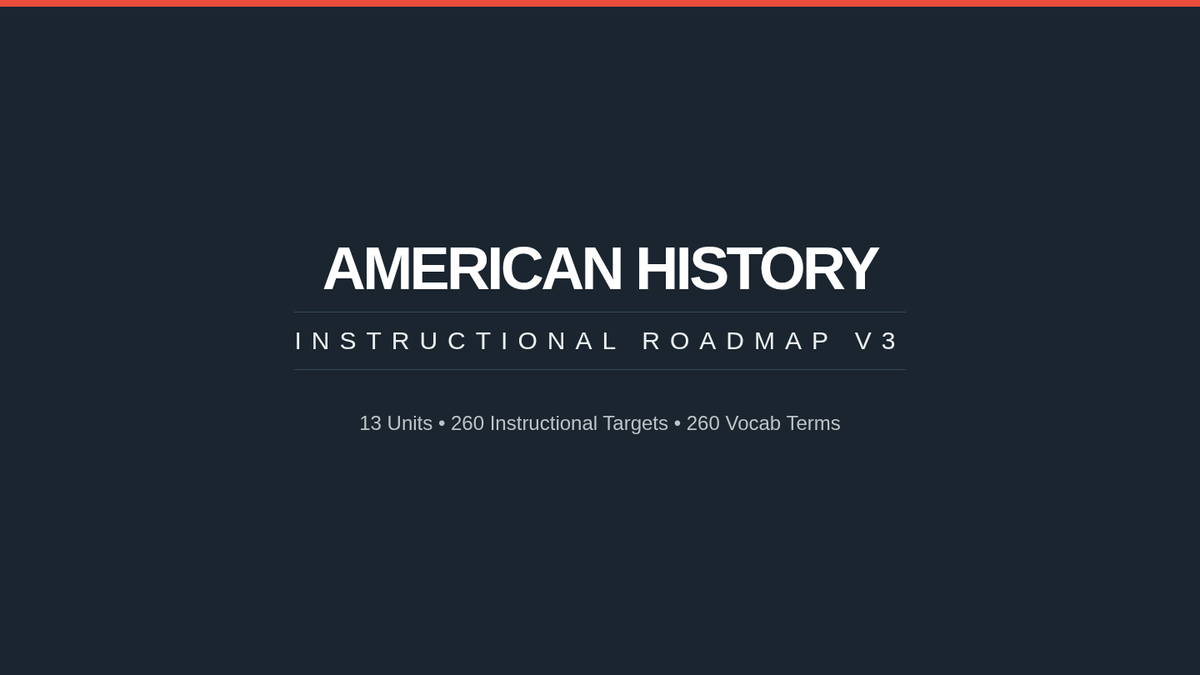
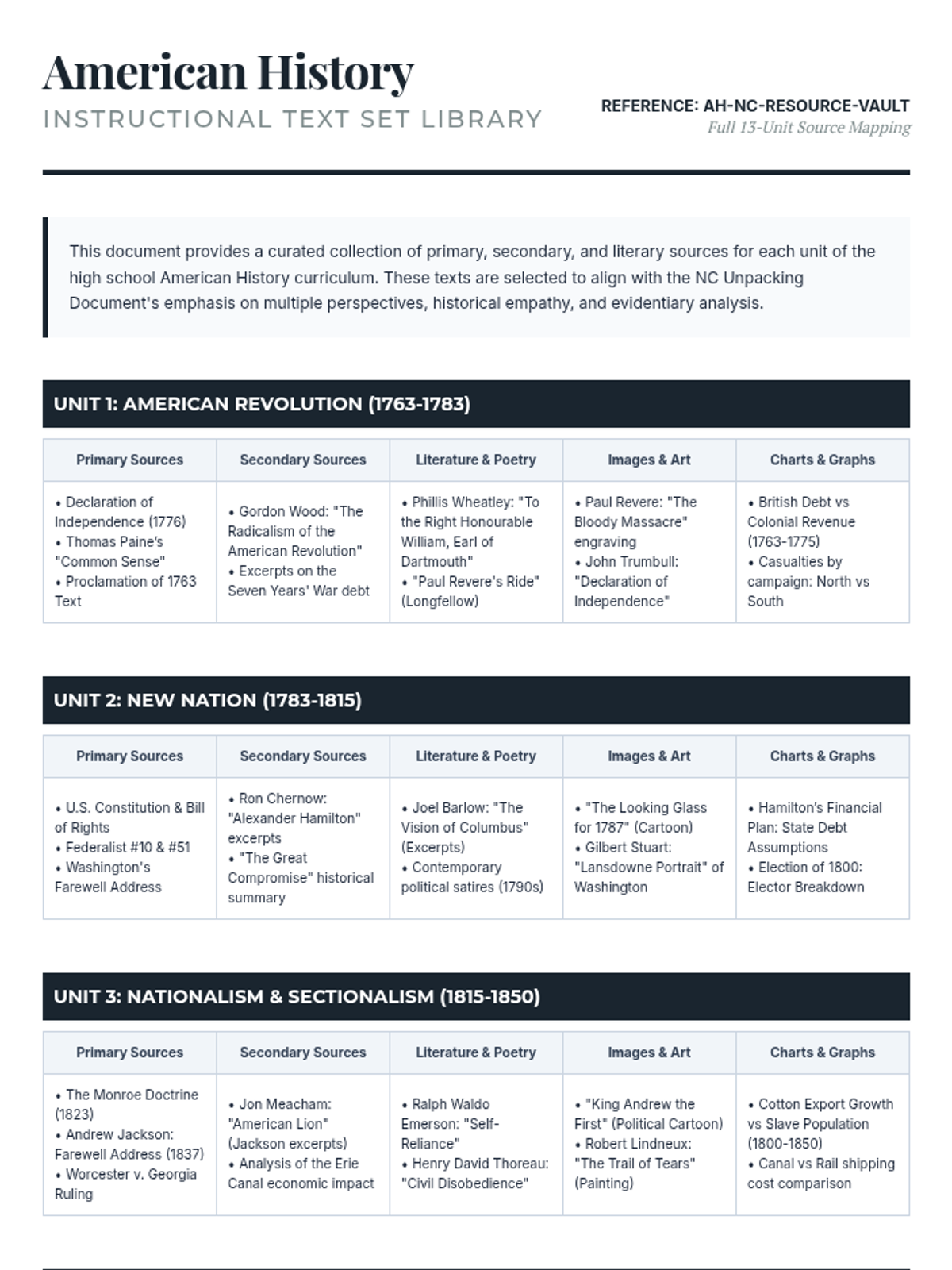
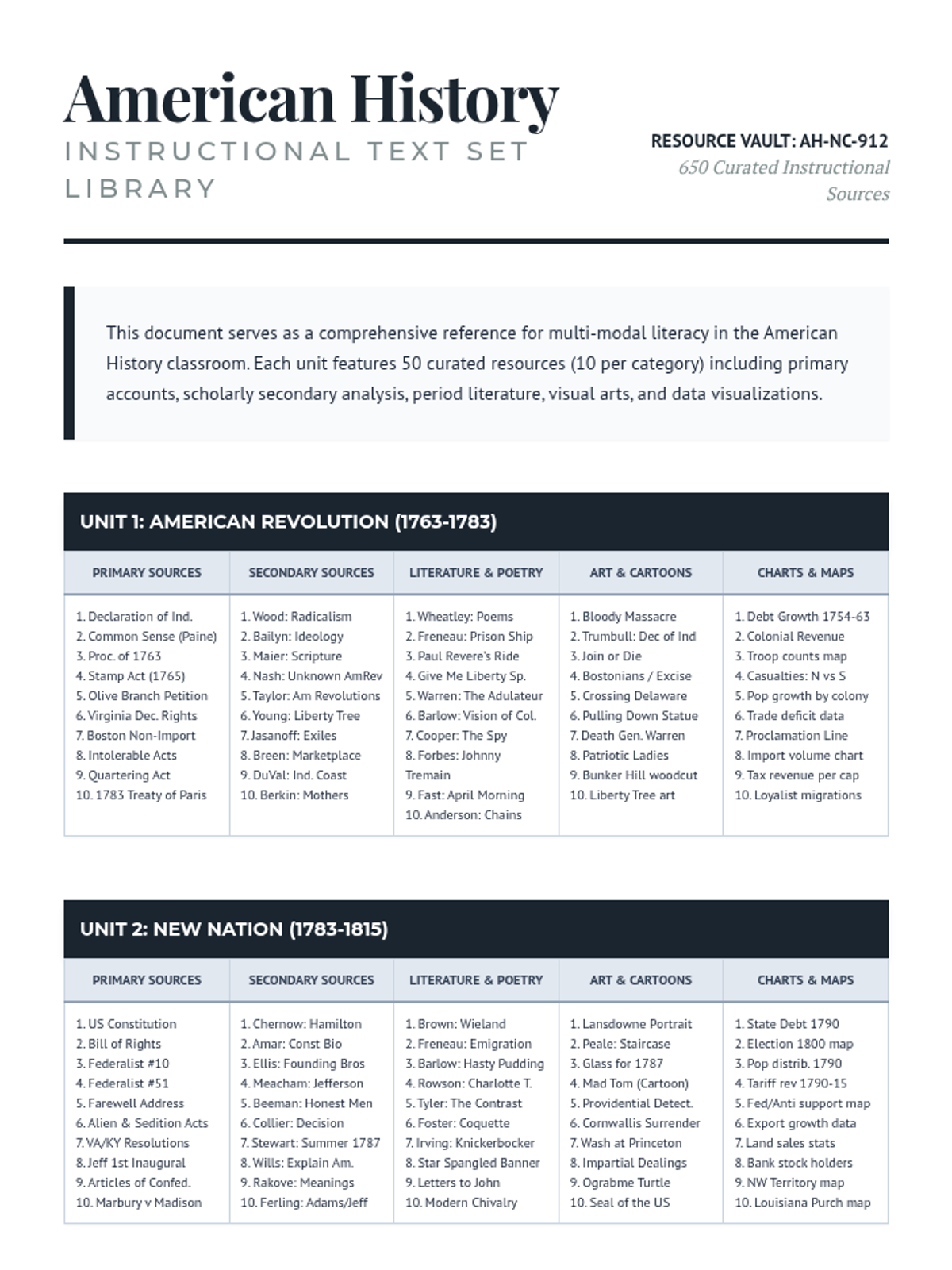
A comprehensive high school curriculum plan for American History, covering 13 units from the American Revolution to the modern era, aligned with North Carolina Social Studies standards.
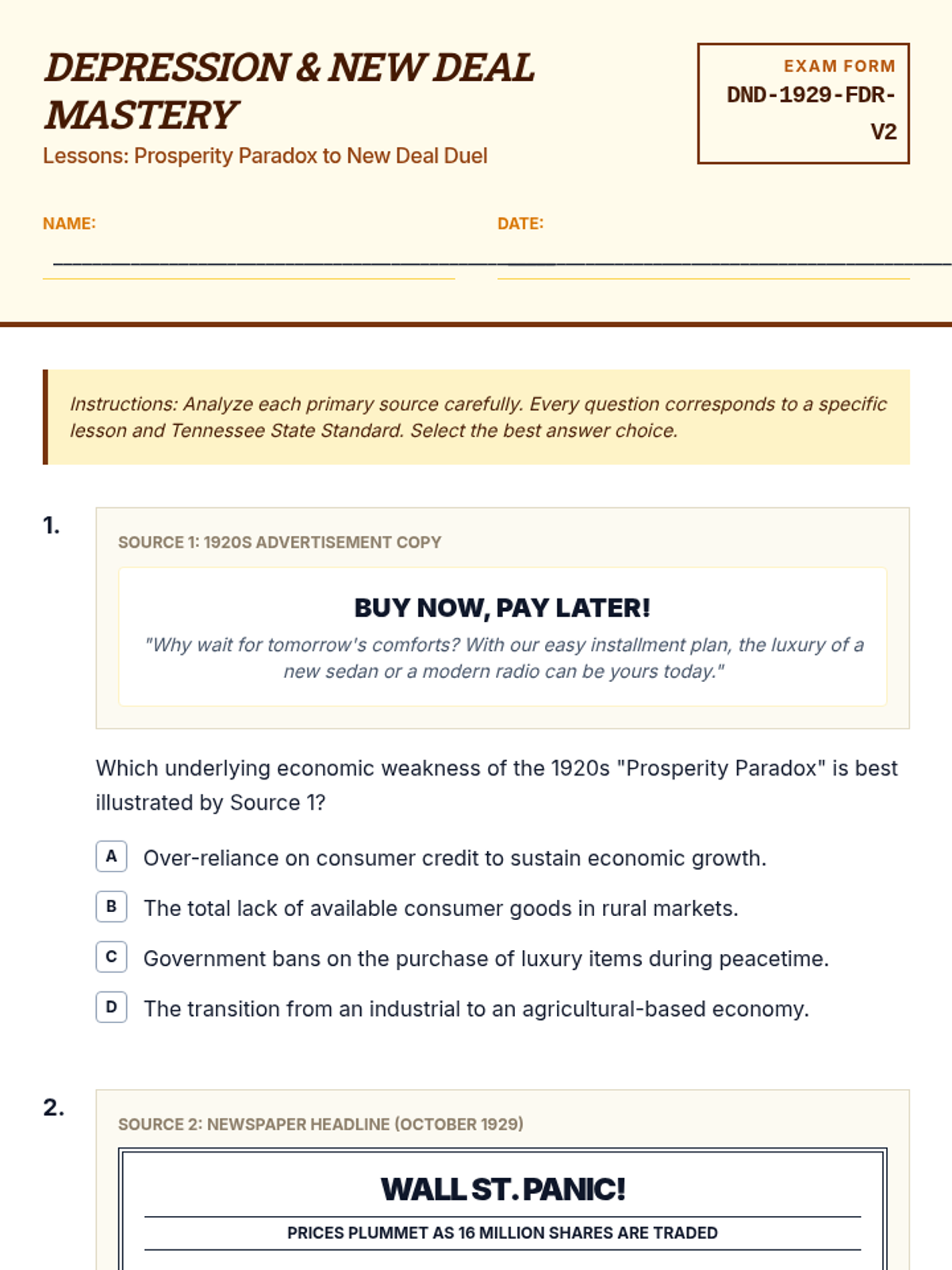
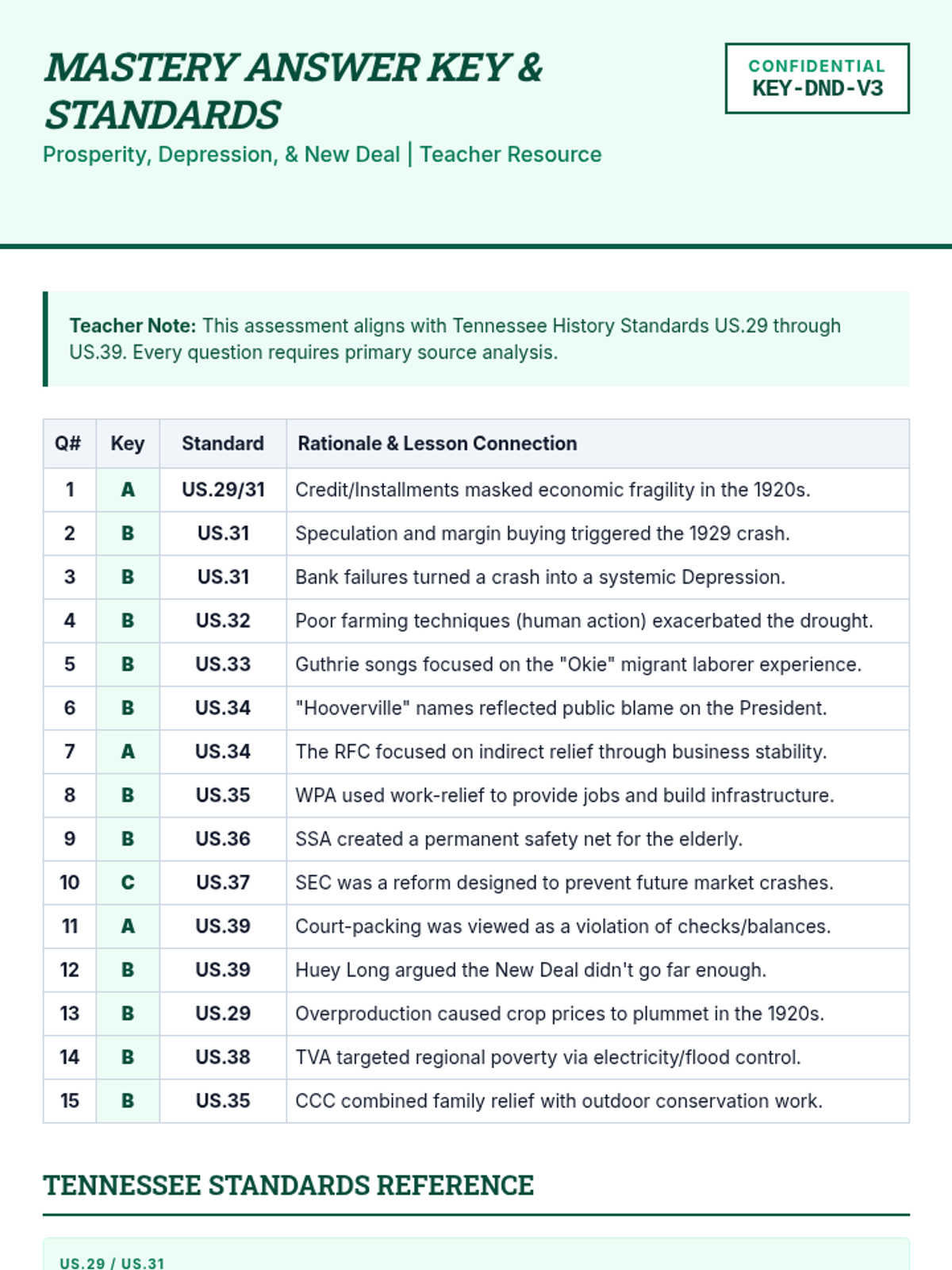
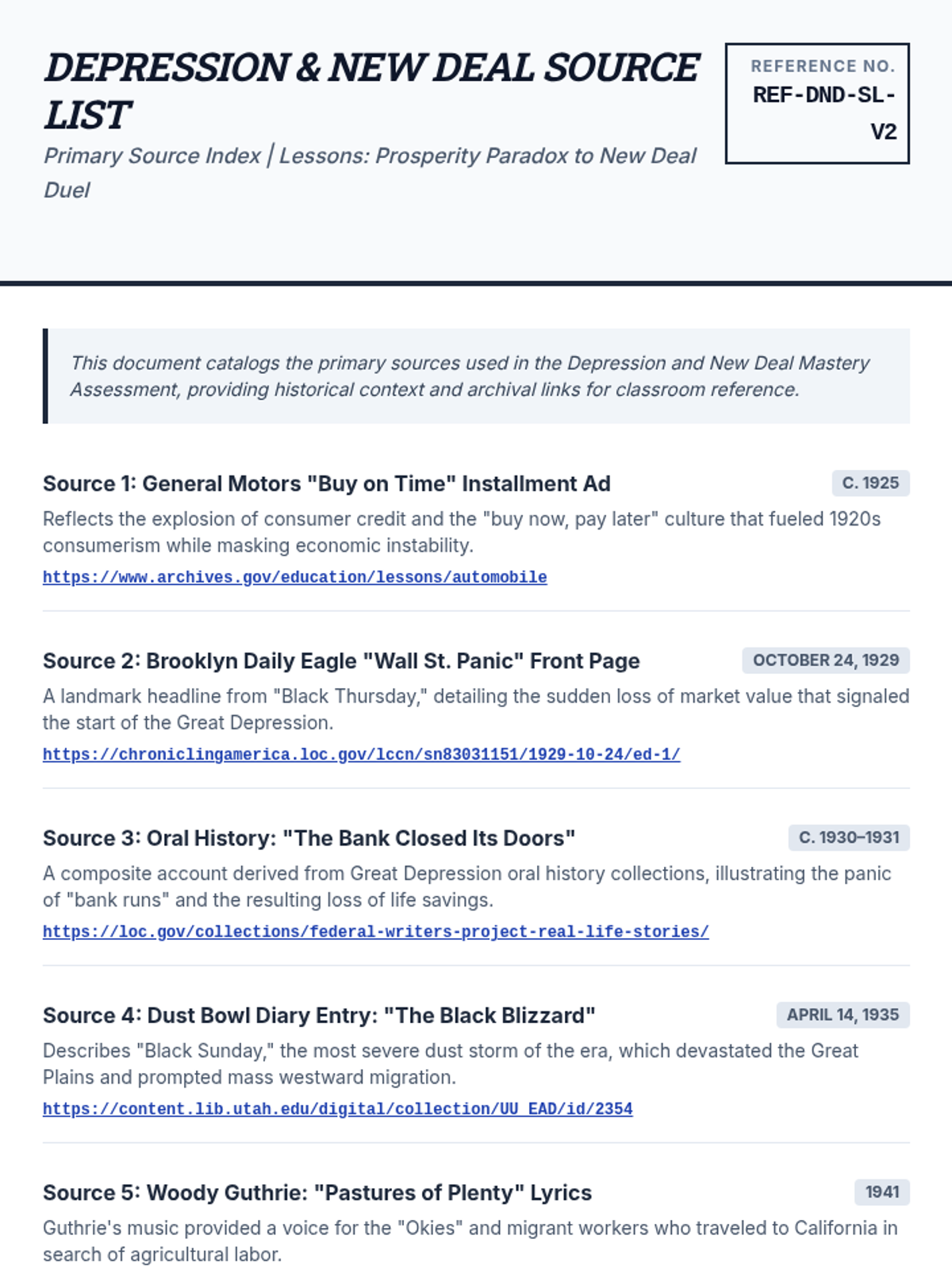
A comprehensive unit covering the economic boom of the 1920s, the Great Depression, and the New Deal. Includes lessons on the Prosperity Paradox, the Stock Market Collapse, the Dust Bowl, and government responses.
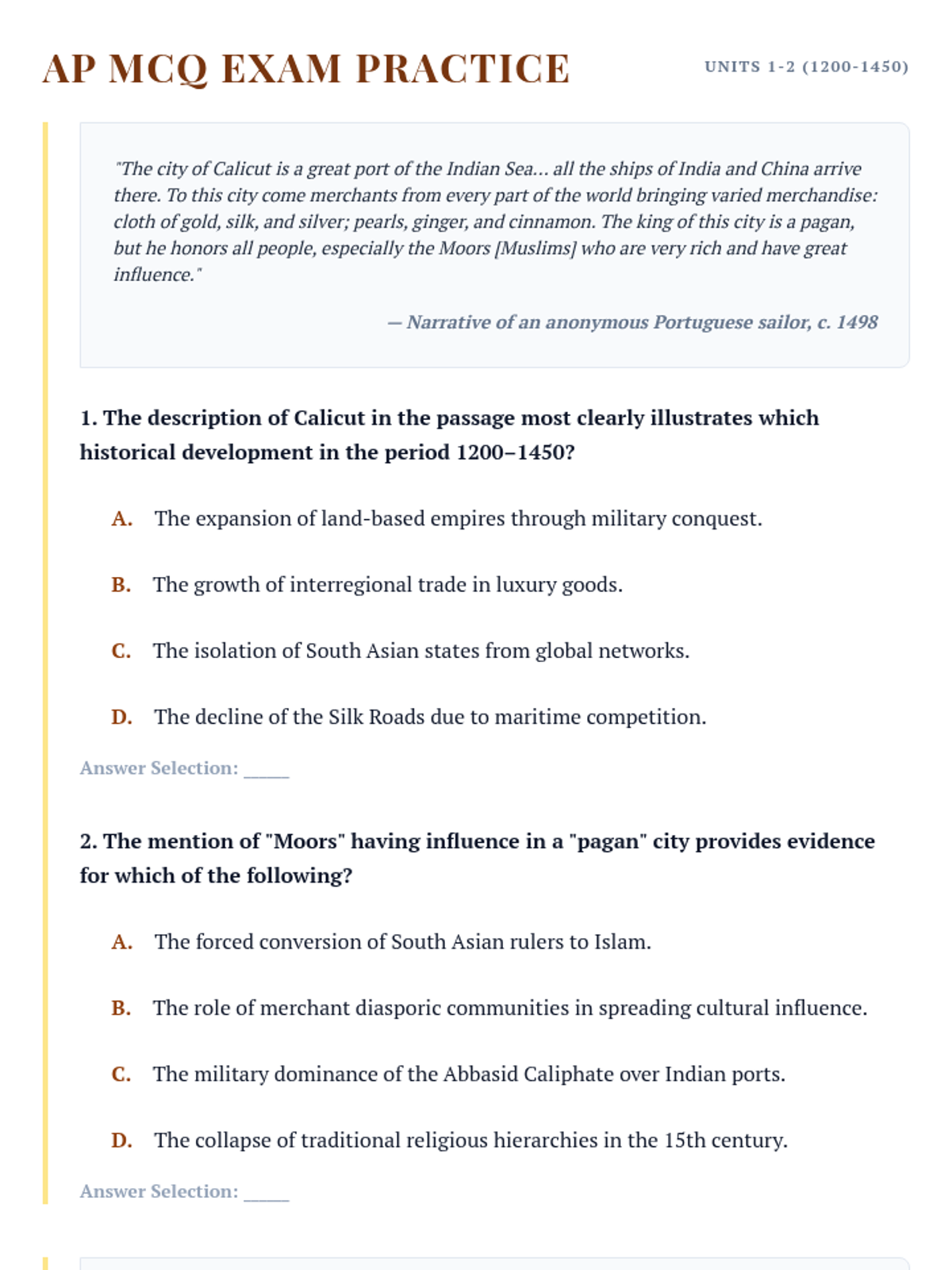
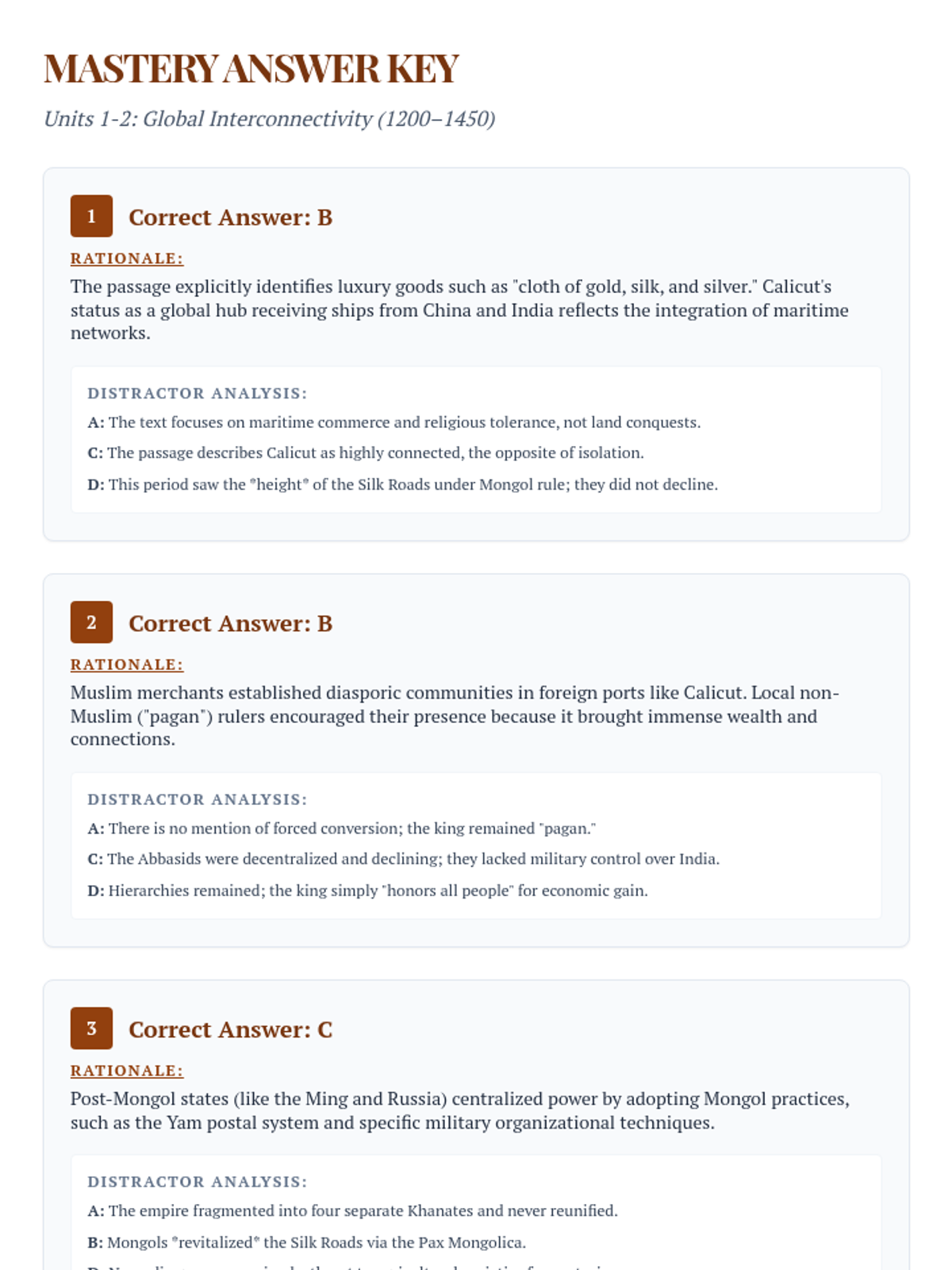
A focused AP World History practice series consisting exclusively of stimulus-based multiple choice questions and detailed answer keys covering Units 1-9.
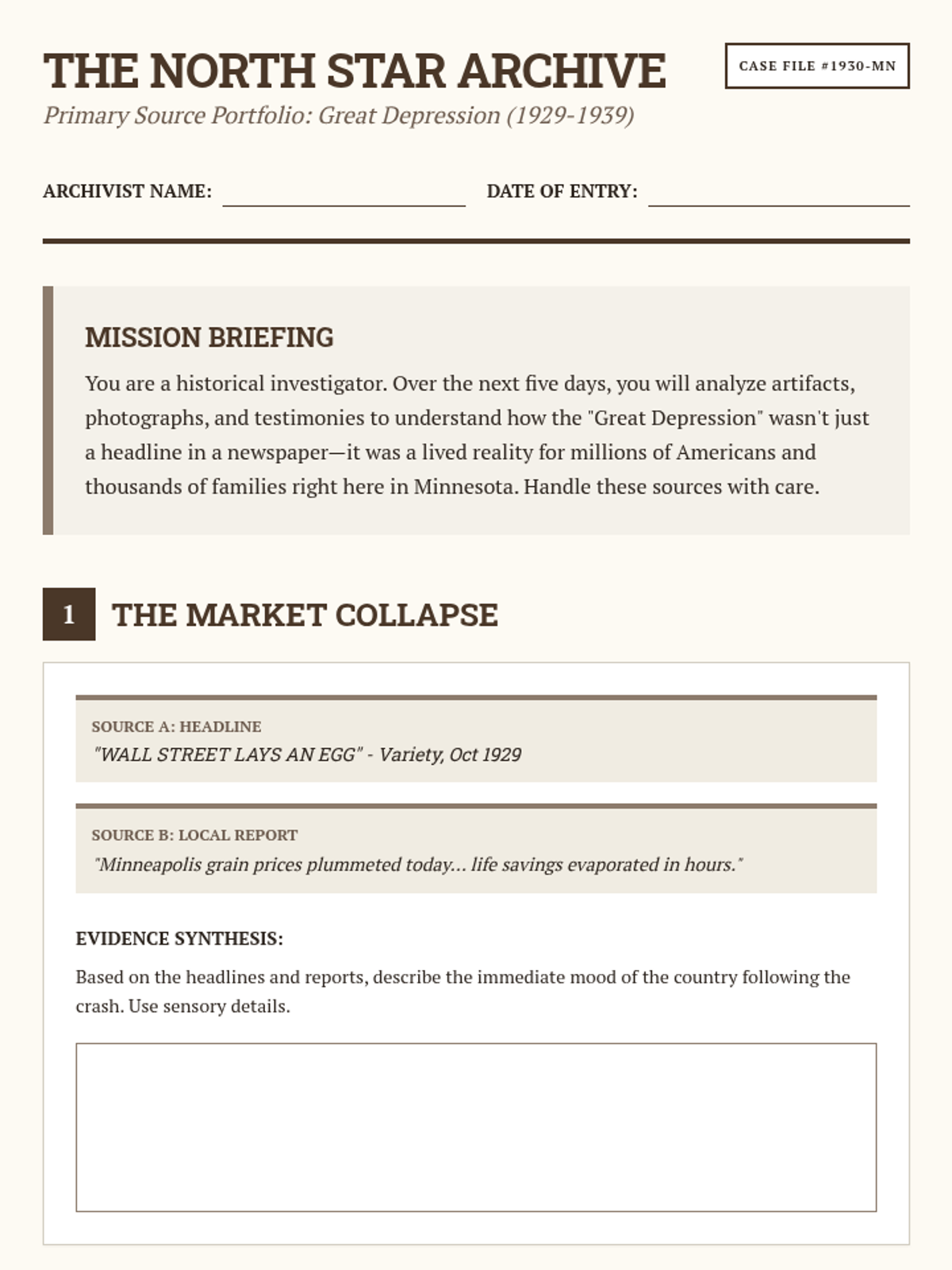
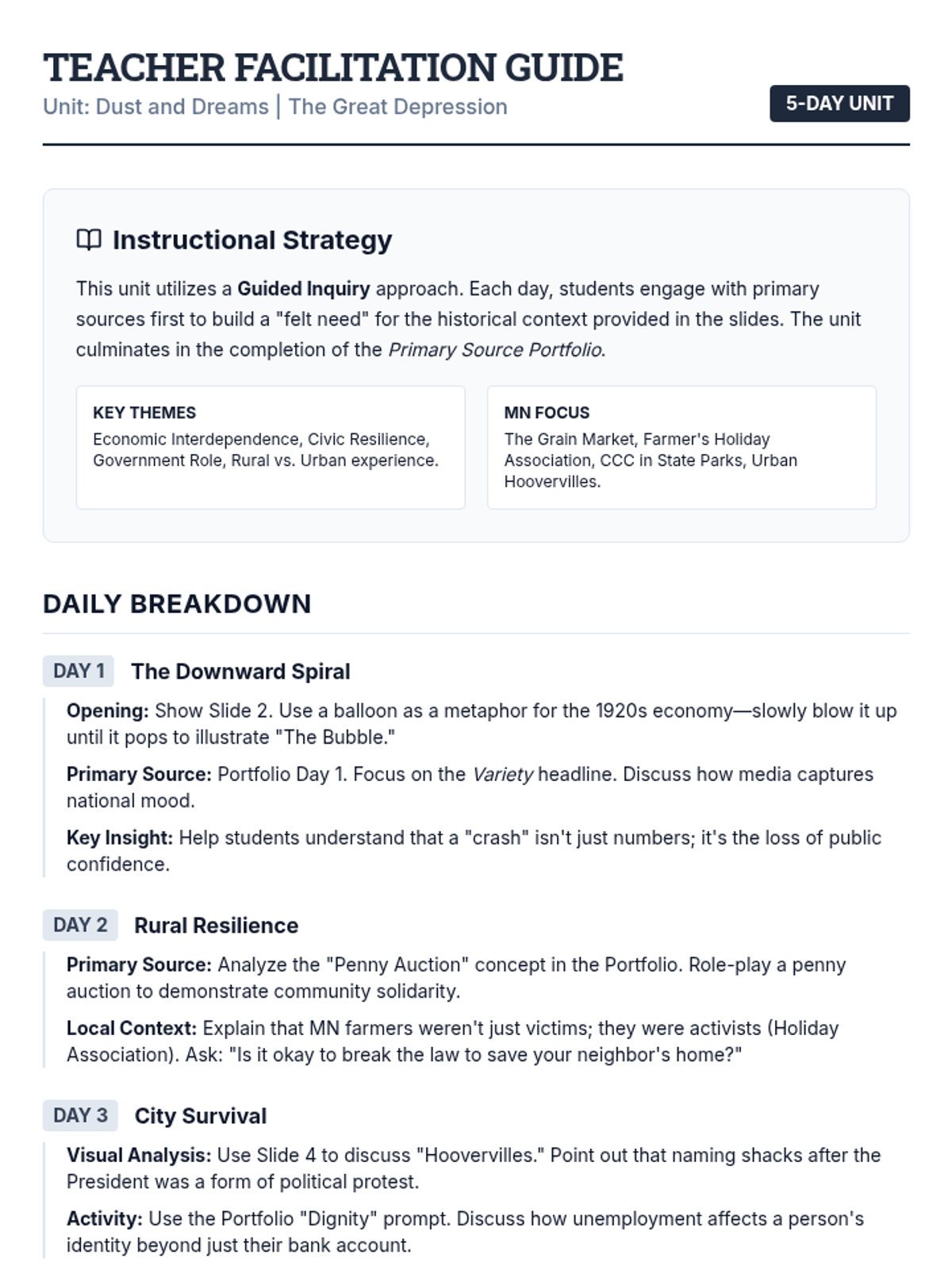
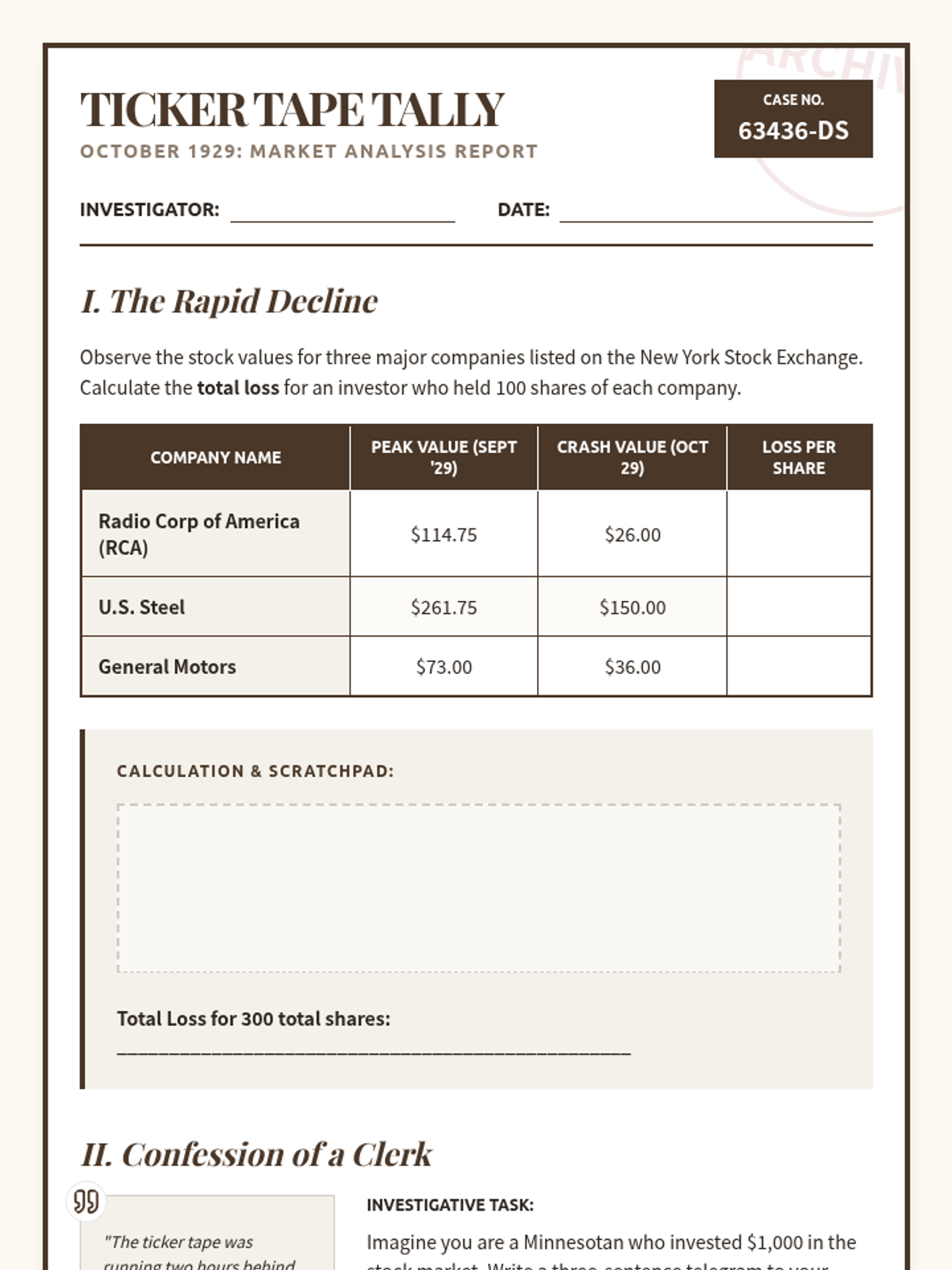
A comprehensive 5-day unit exploring the Great Depression's impact on the United States and Minnesota, focusing on economic collapse, rural hardship, urban survival, and New Deal recovery through primary source analysis.
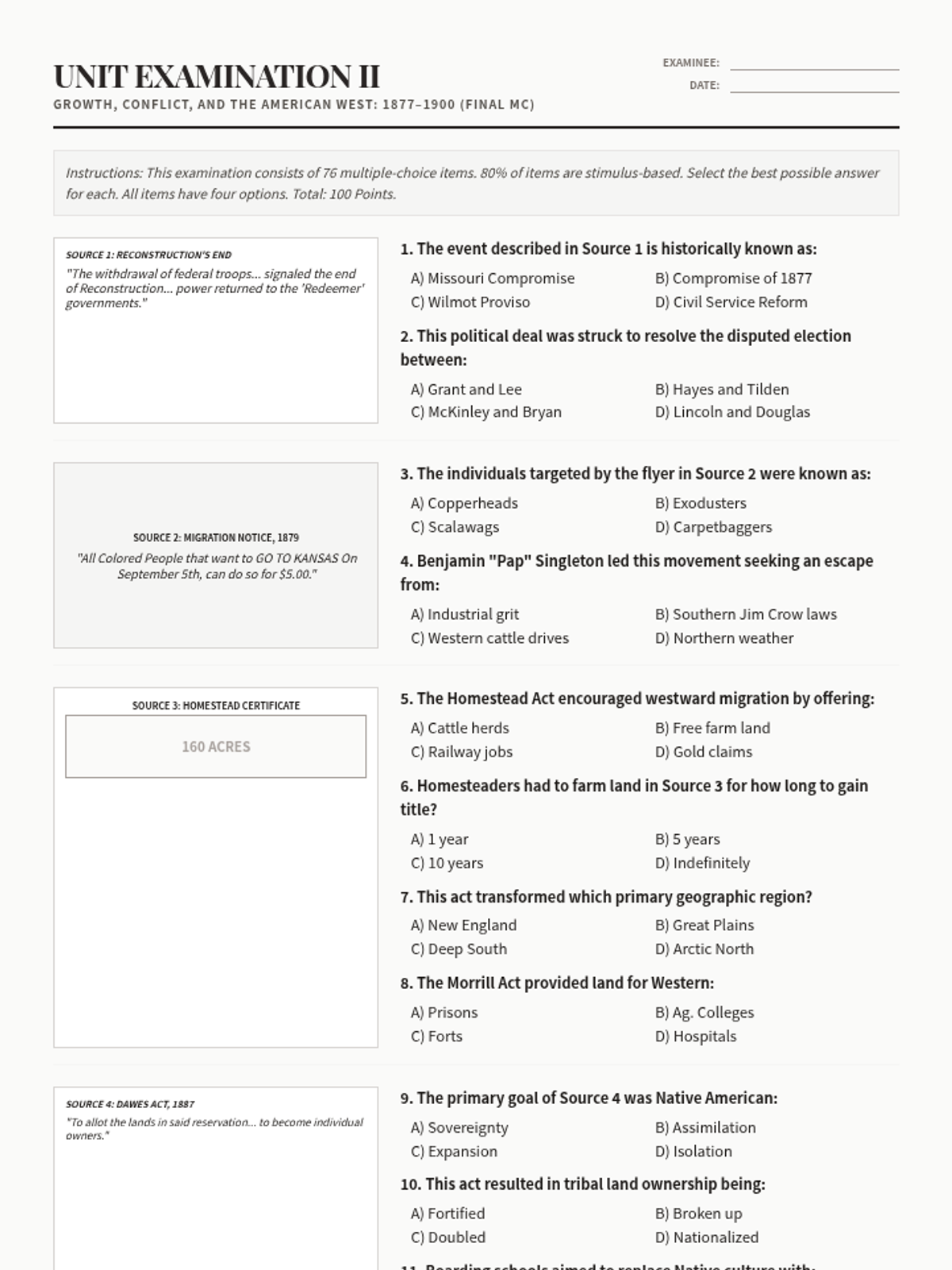
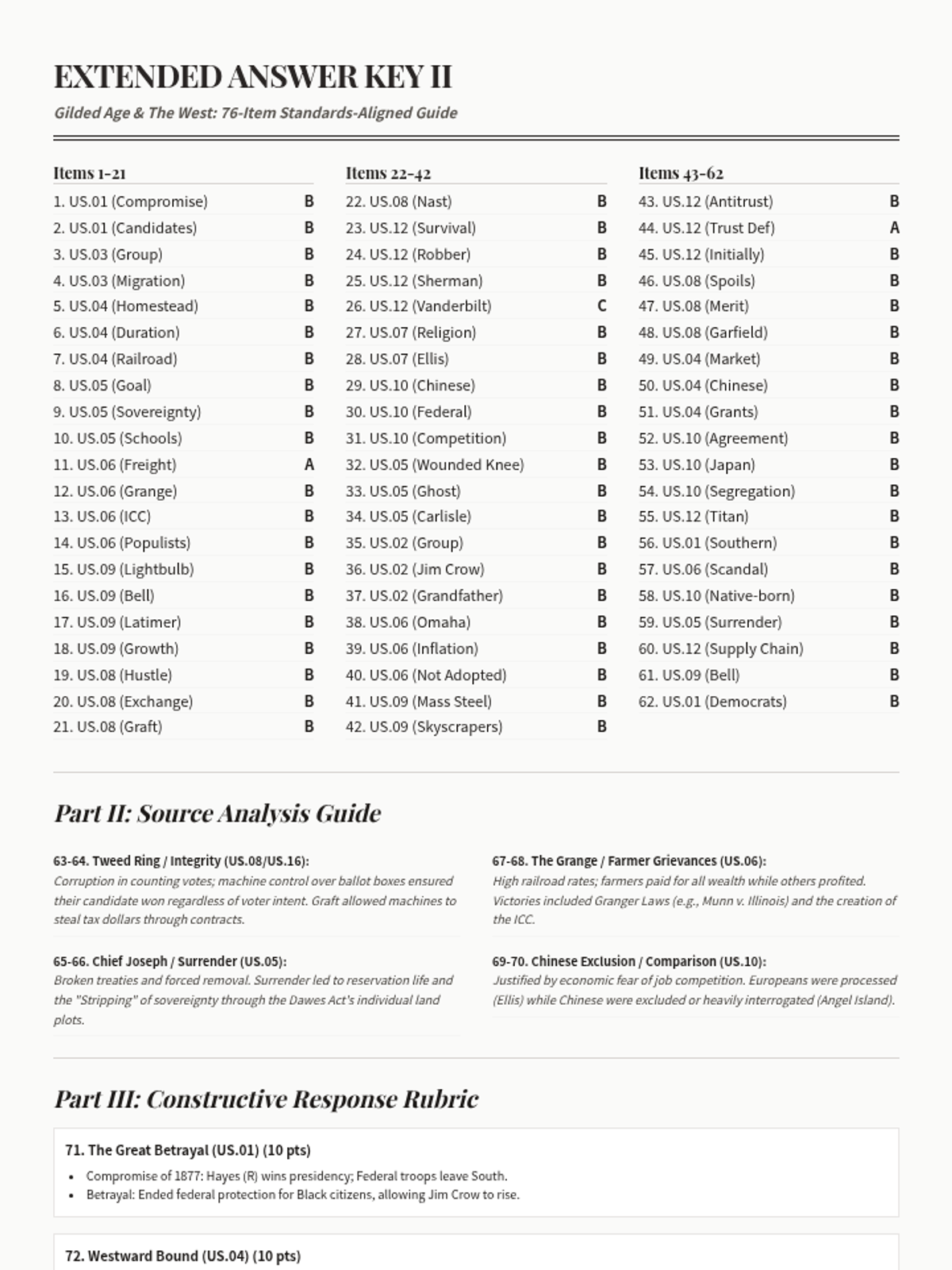
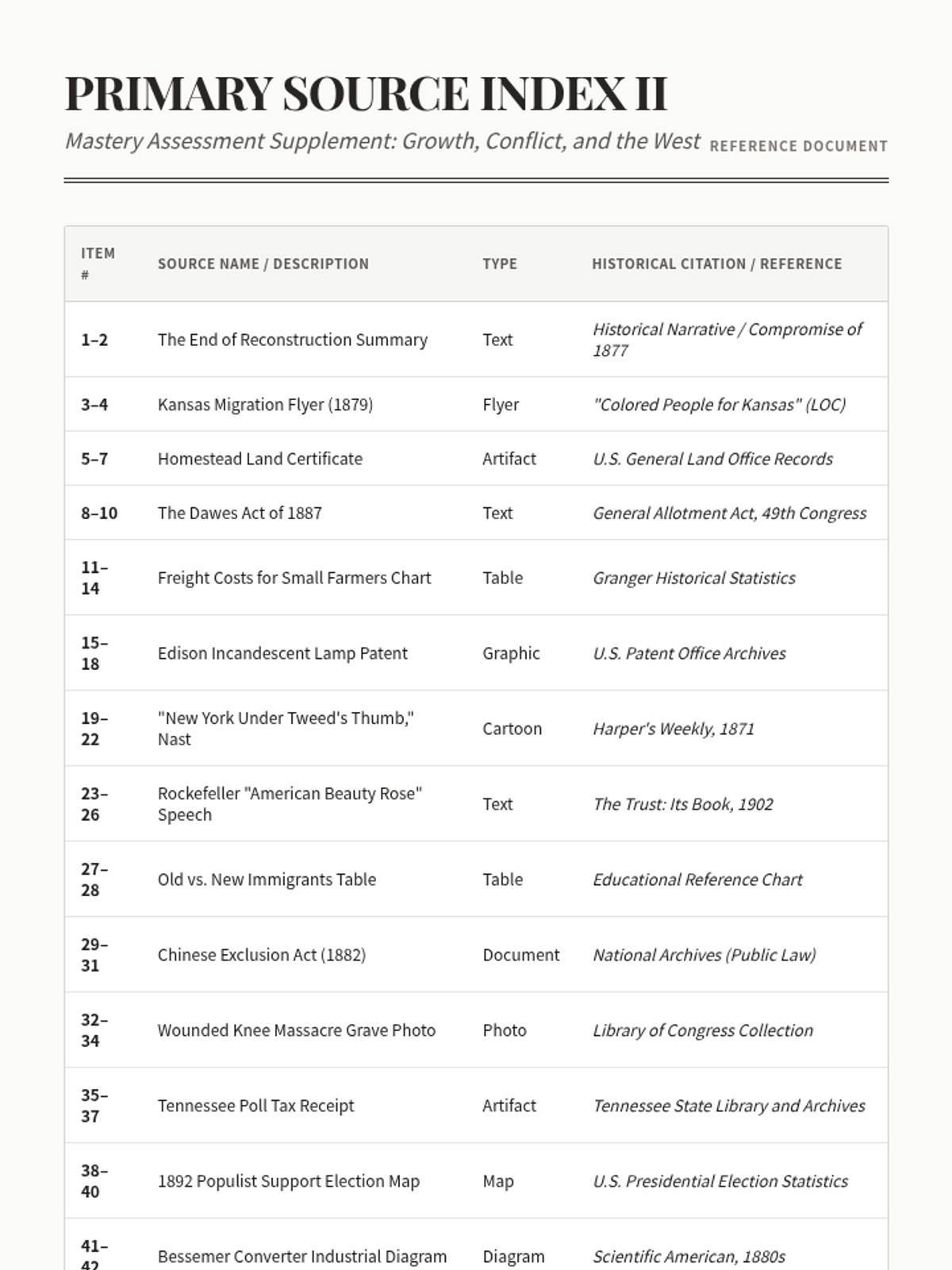
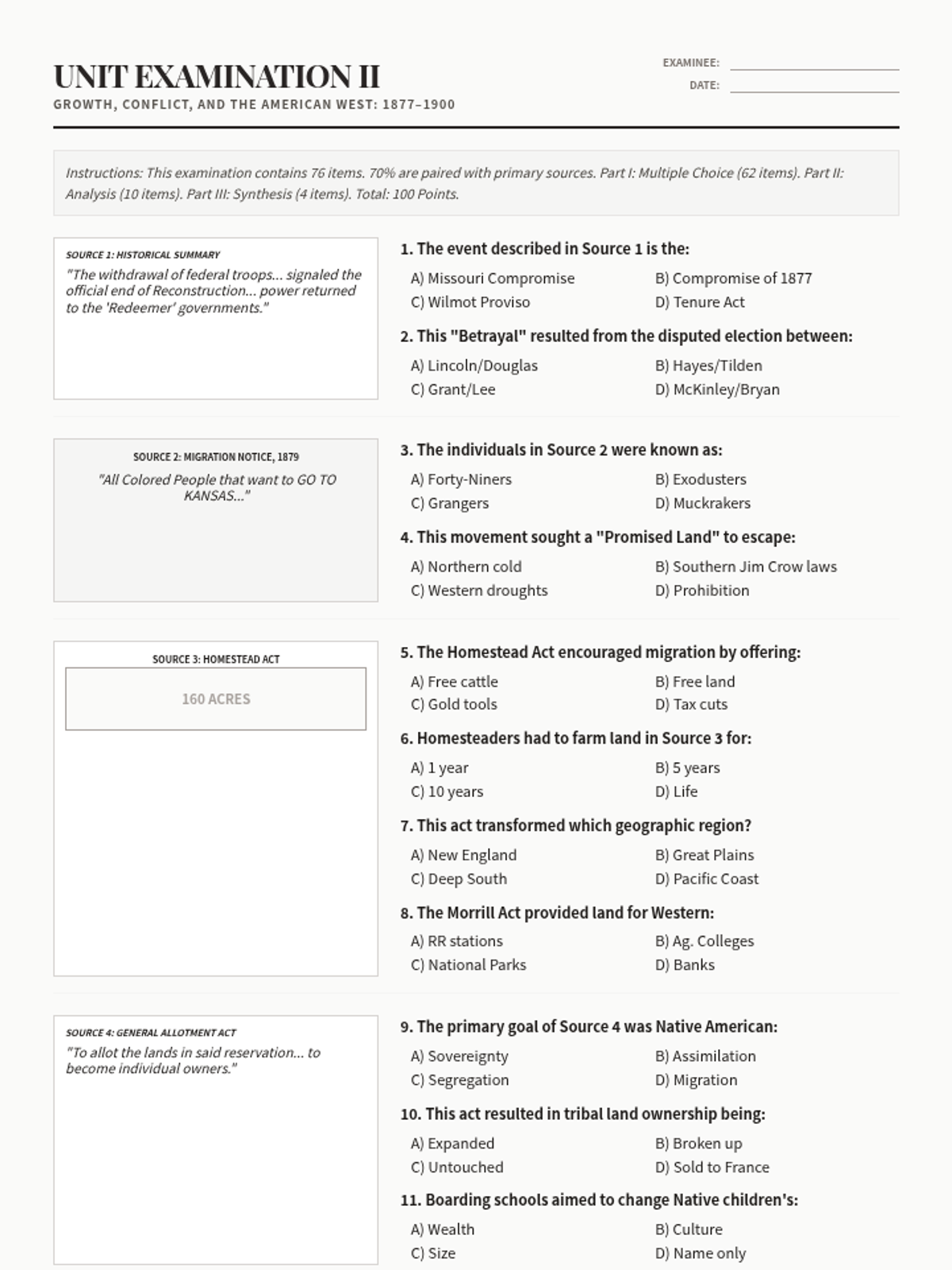
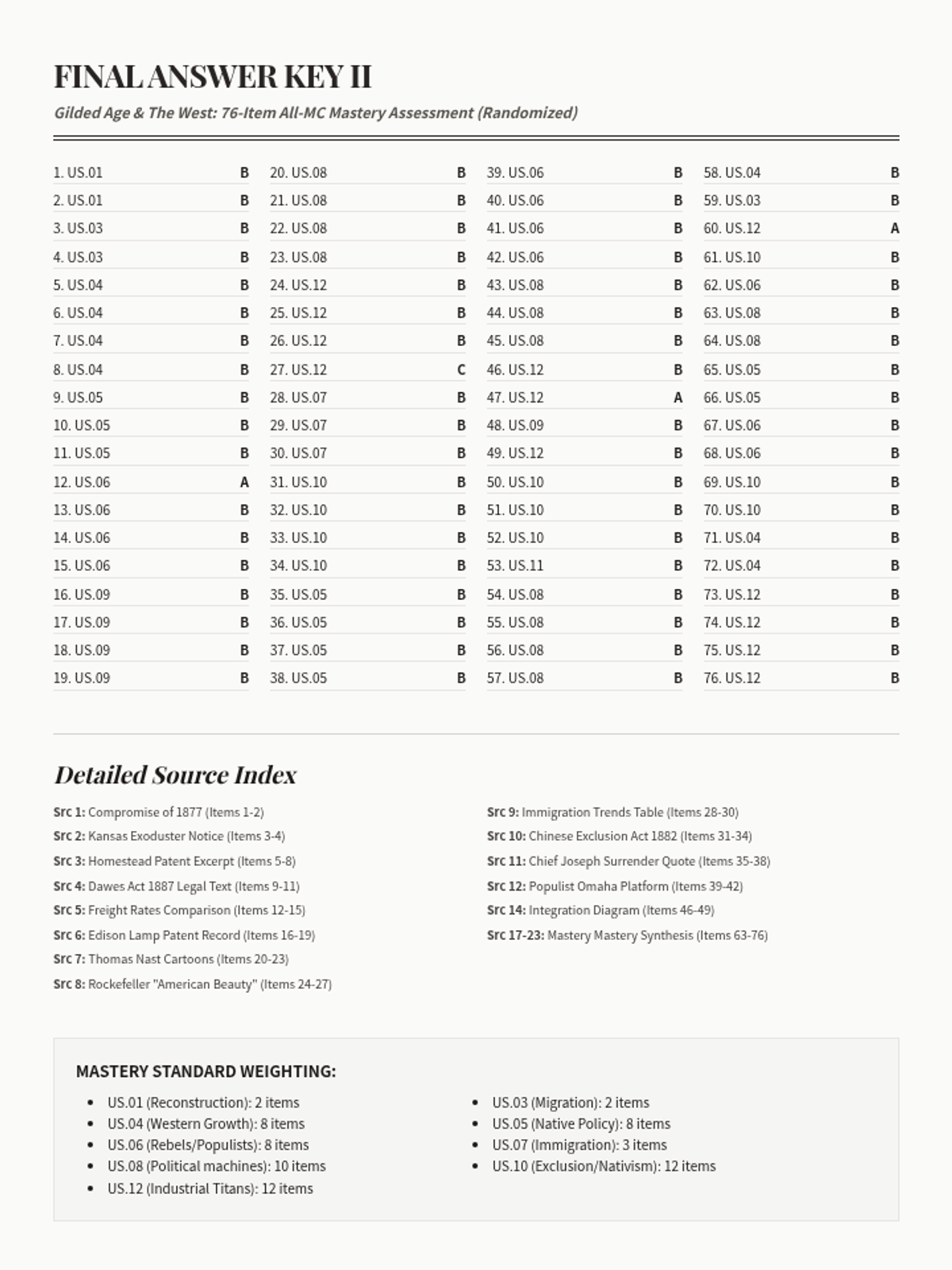
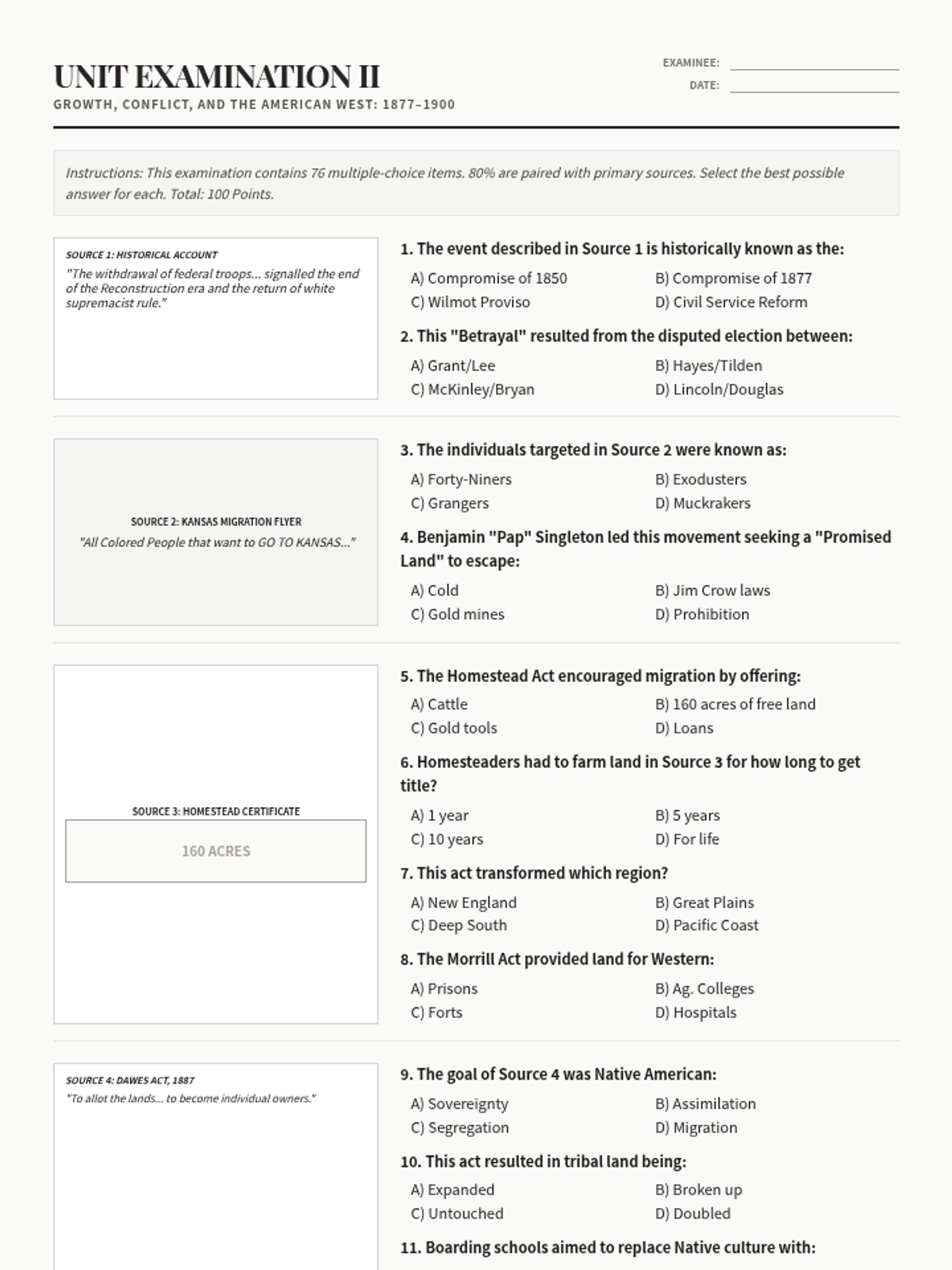
A comprehensive curriculum sequence covering late 19th and early 20th-century American history, focusing on economic transformation, Western expansion, global imperialism, and the impact of the Great War.
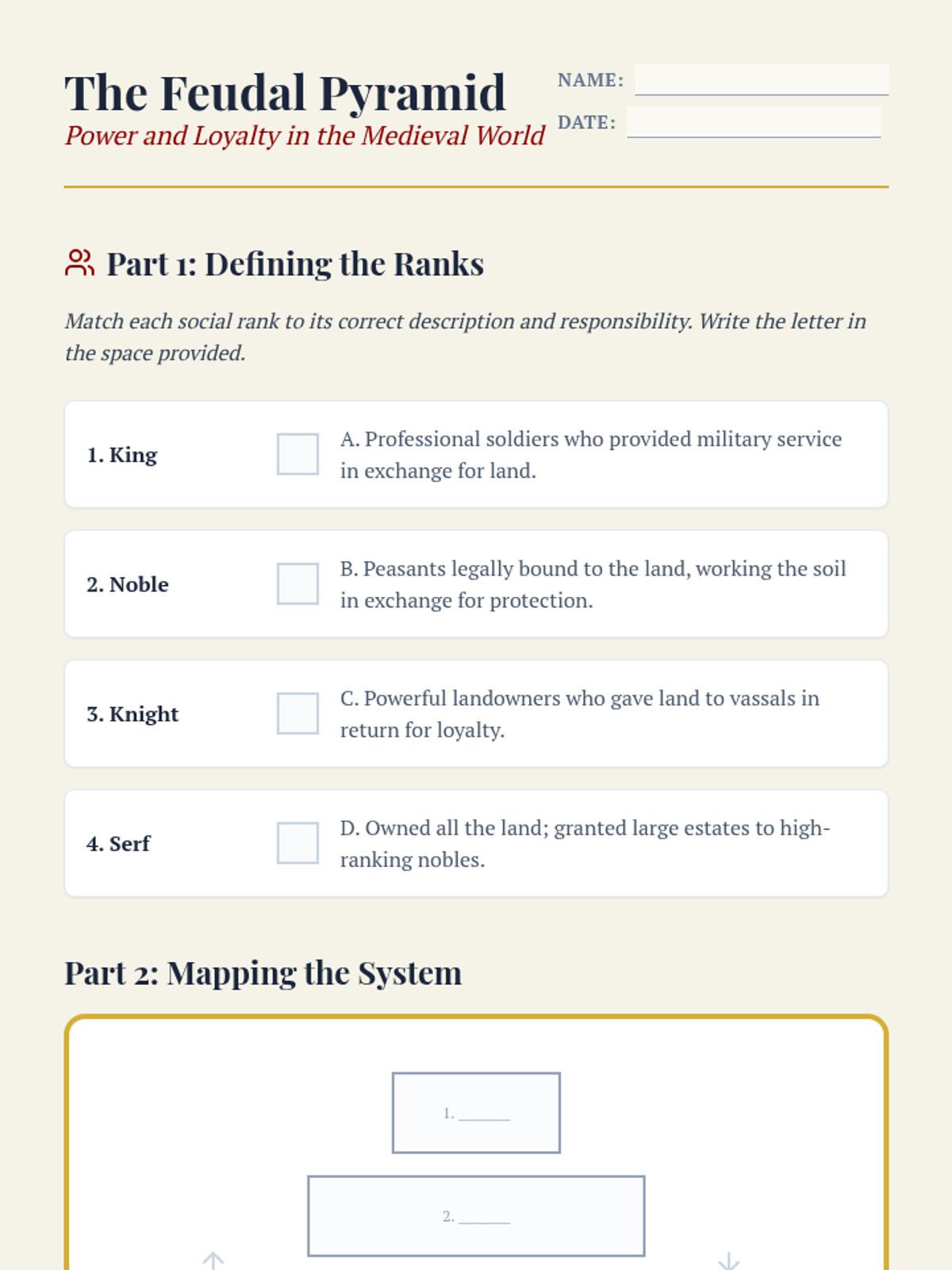
A 5-day unit exploring the social, religious, and political structures of Medieval Europe, from the feudal system to the devastating impact of the Black Death.
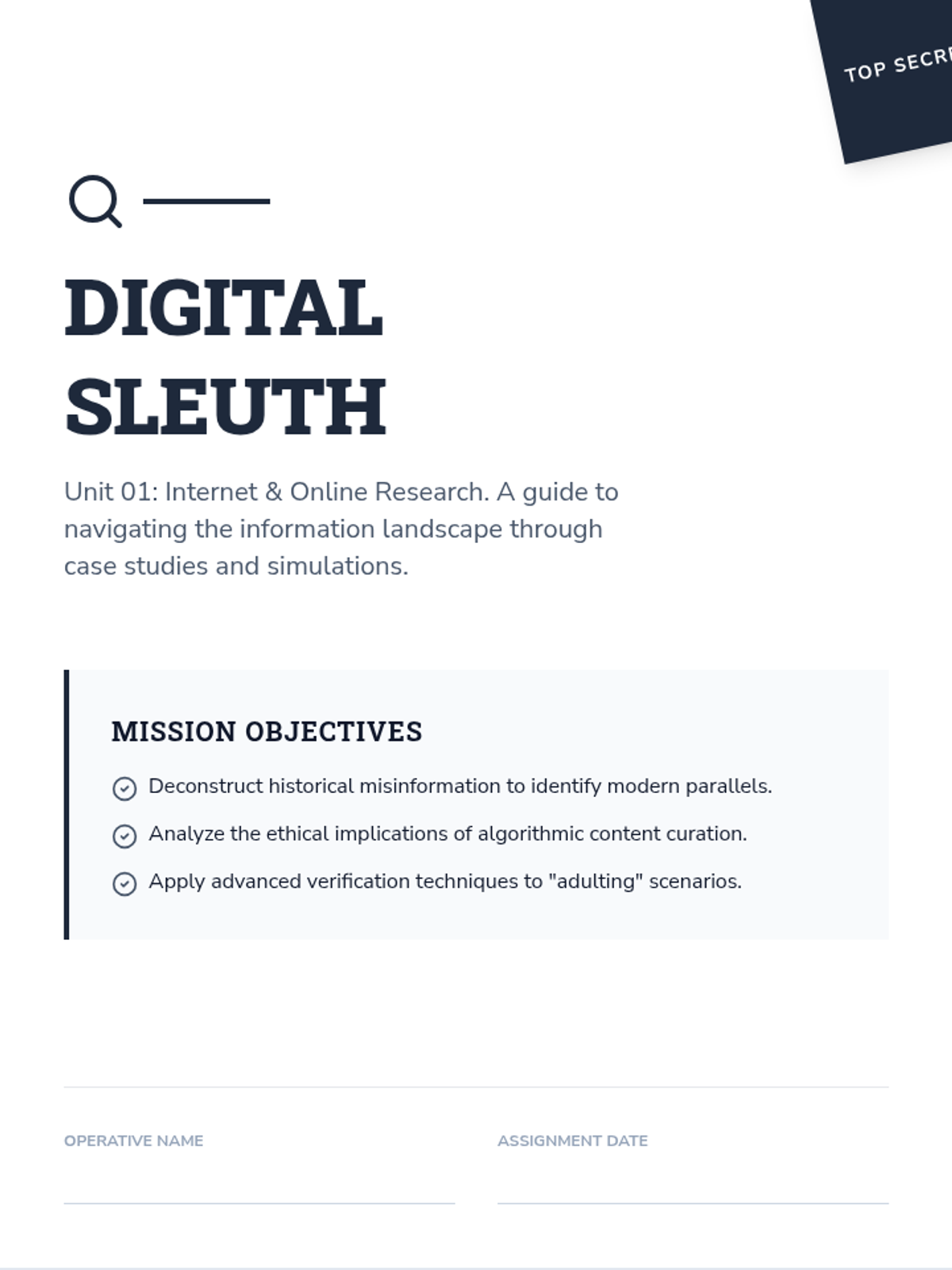
A comprehensive curriculum covering financial literacy, economic principles, and civic systems through historical case studies, ethical dilemmas, and real-world simulations.
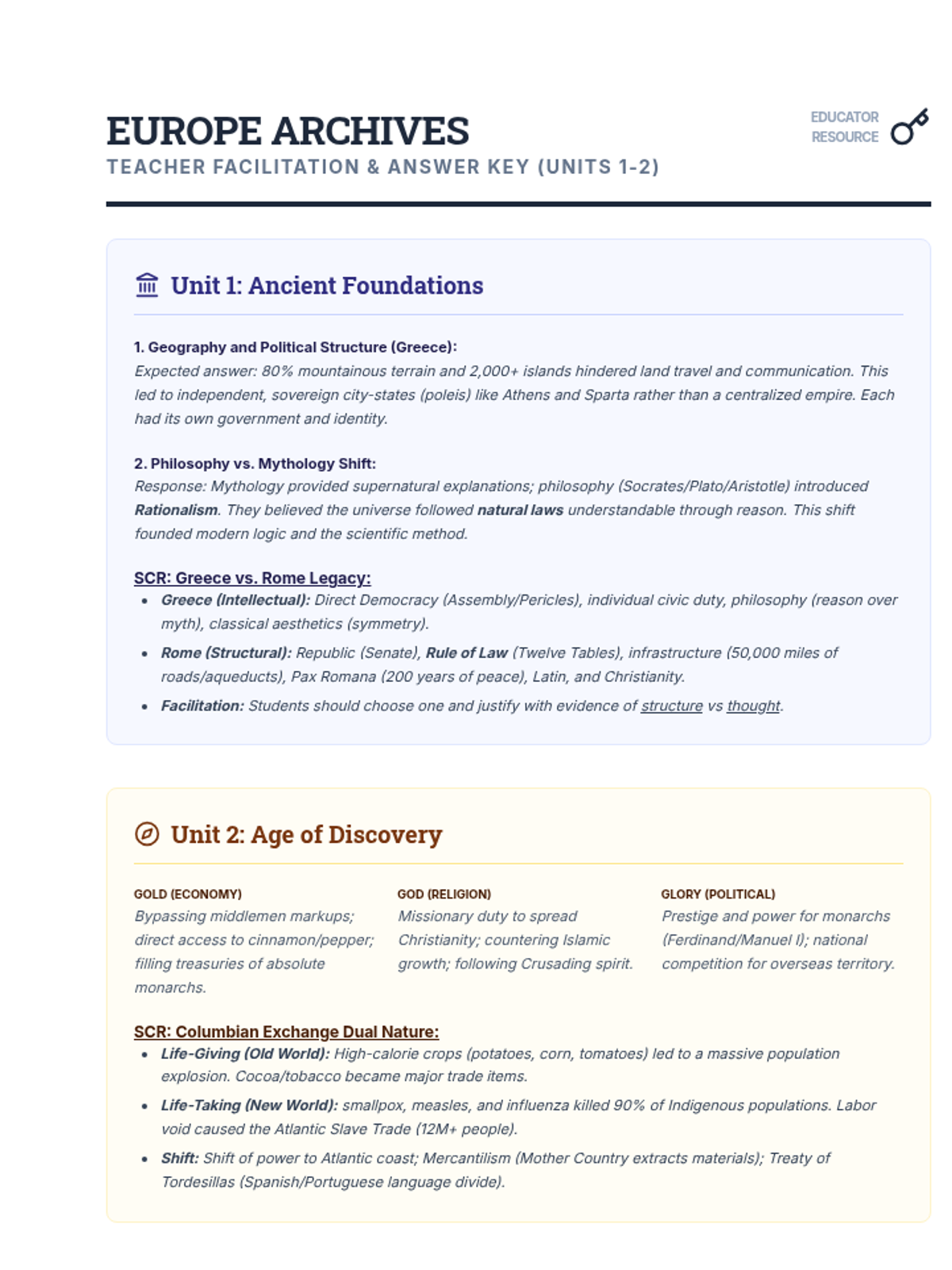
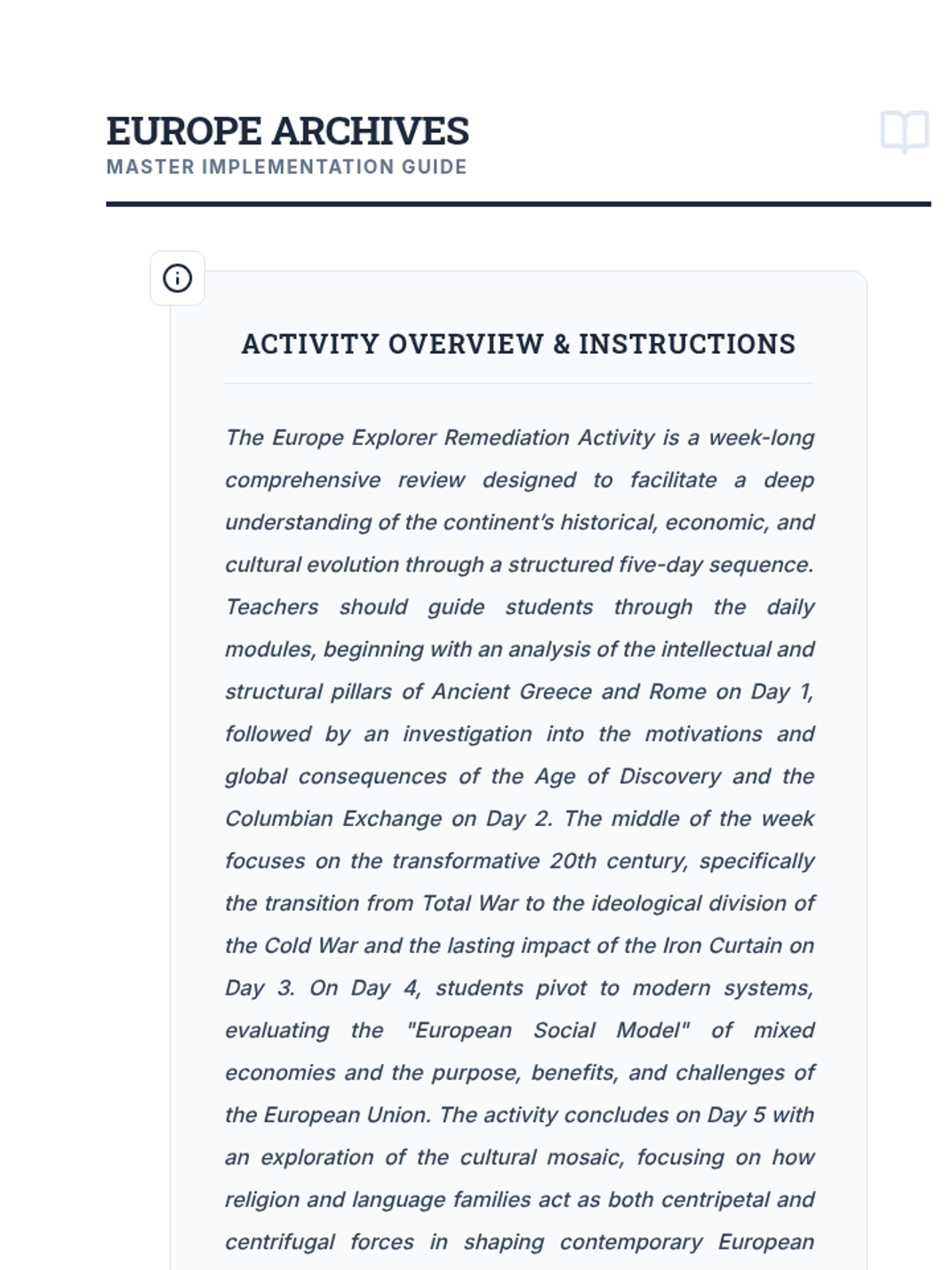
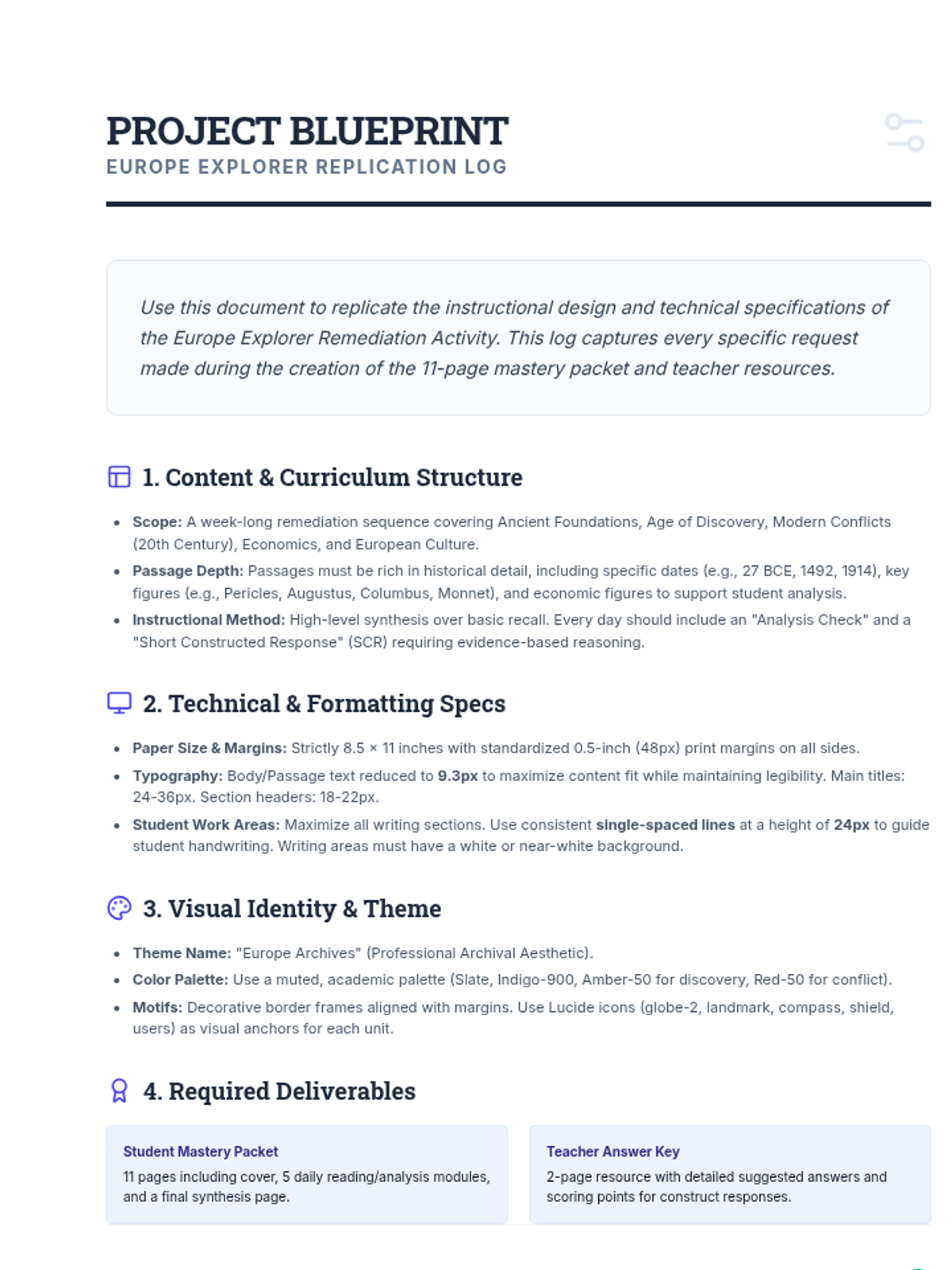
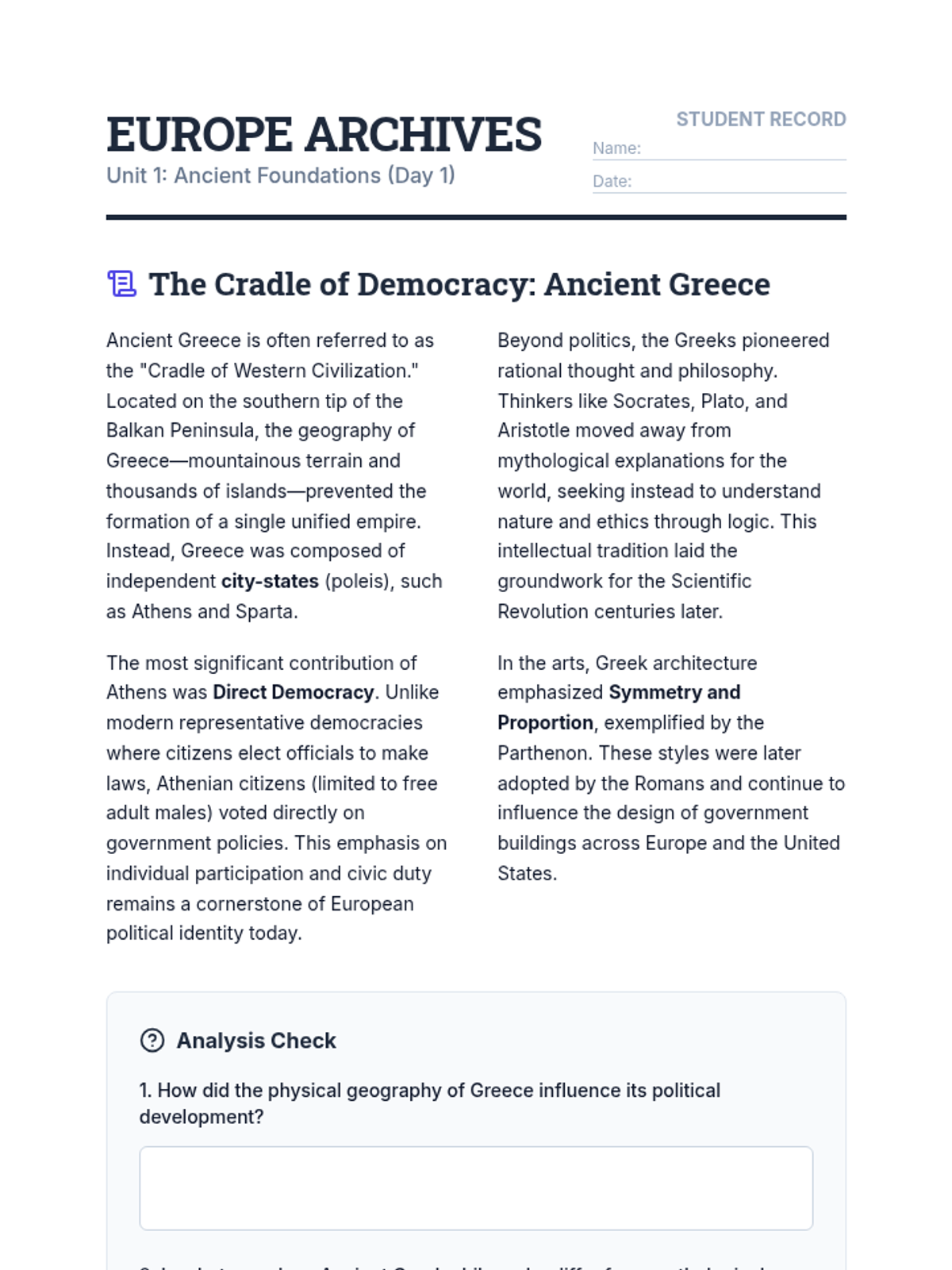
A comprehensive week-long remediation packet covering Europe's history, culture, economics, and the European Union through reading passages and high-level analysis.
A comprehensive multi-day unit exploring World War I through a Texas lens, covering global causes, revolutionary military technology, the significant contributions of Texans, and the complex aftermath of the war.
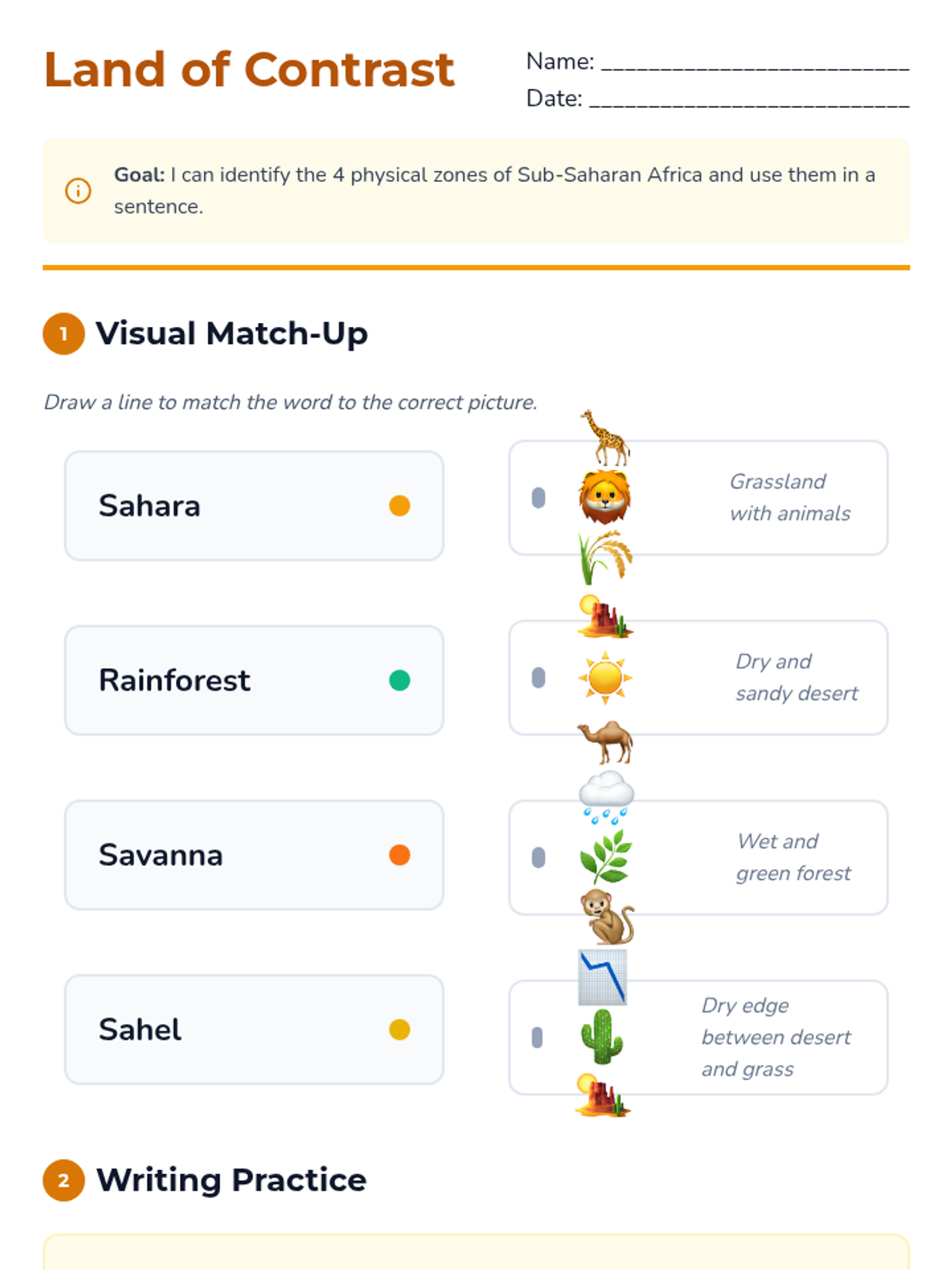
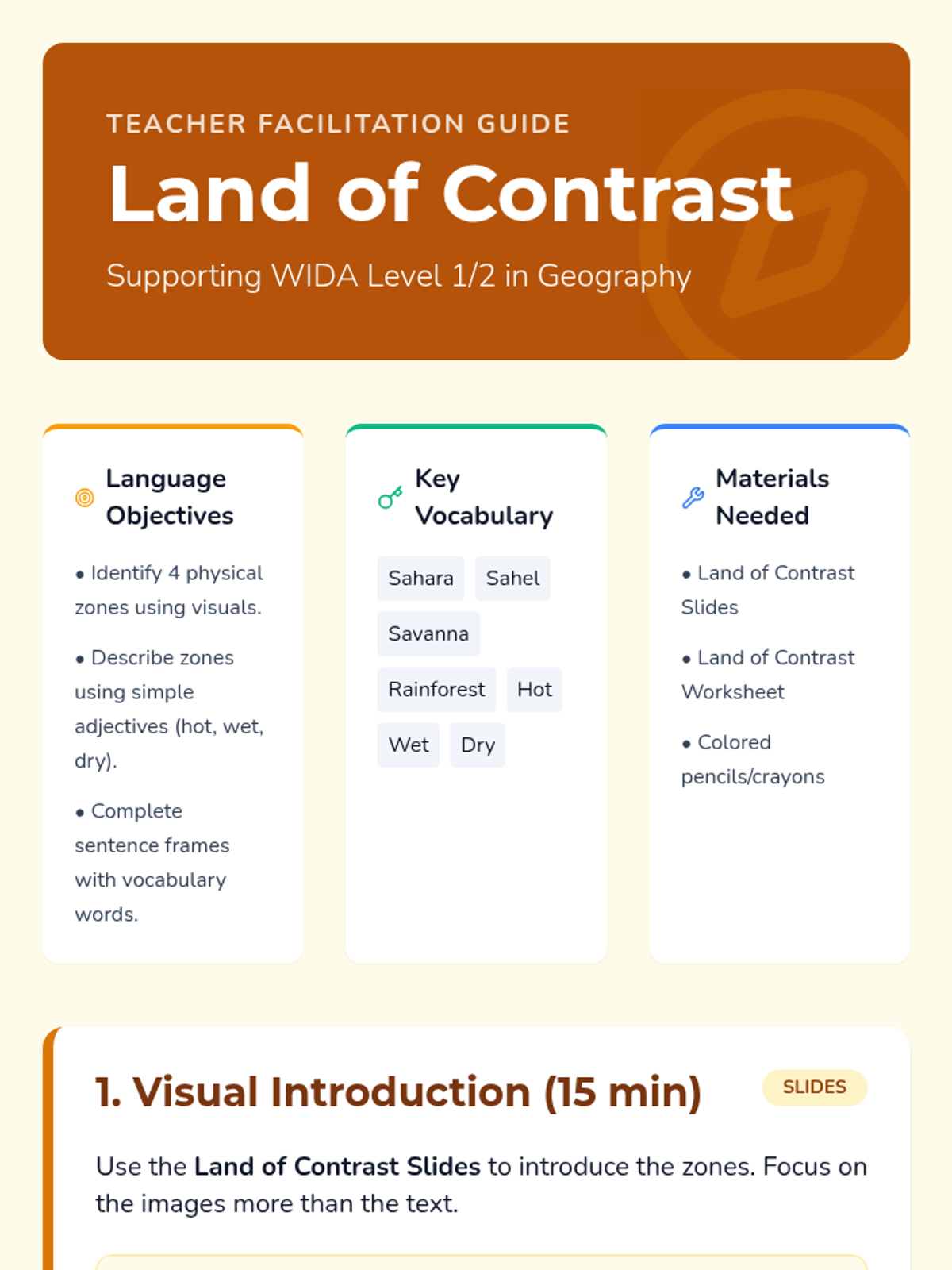
A 3-lesson unit focused on the geography, trade, and kingdoms of Sub-Saharan Africa, specifically designed for WIDA level 1/2 ESL students with heavy visual support and sentence scaffolding.
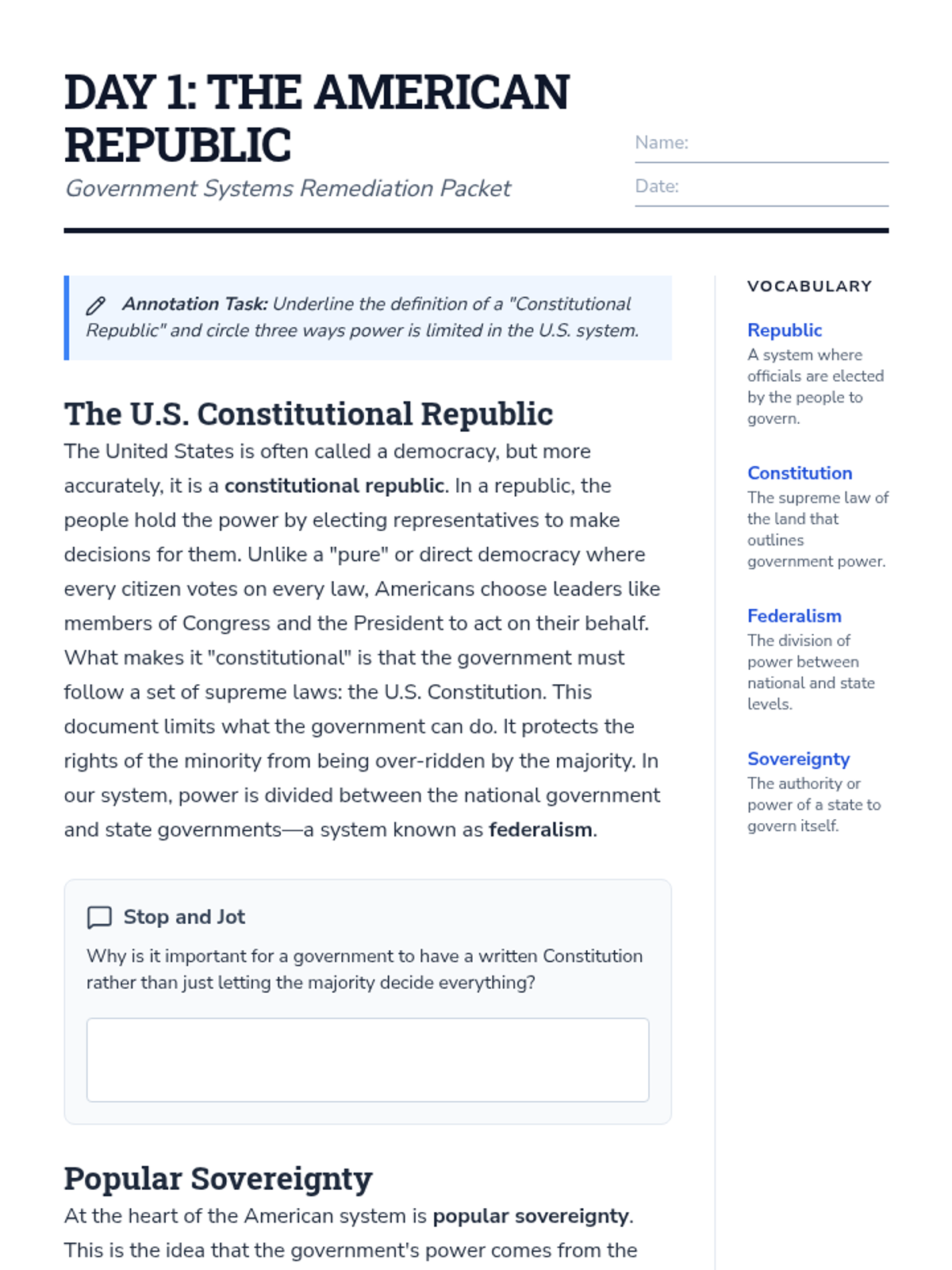
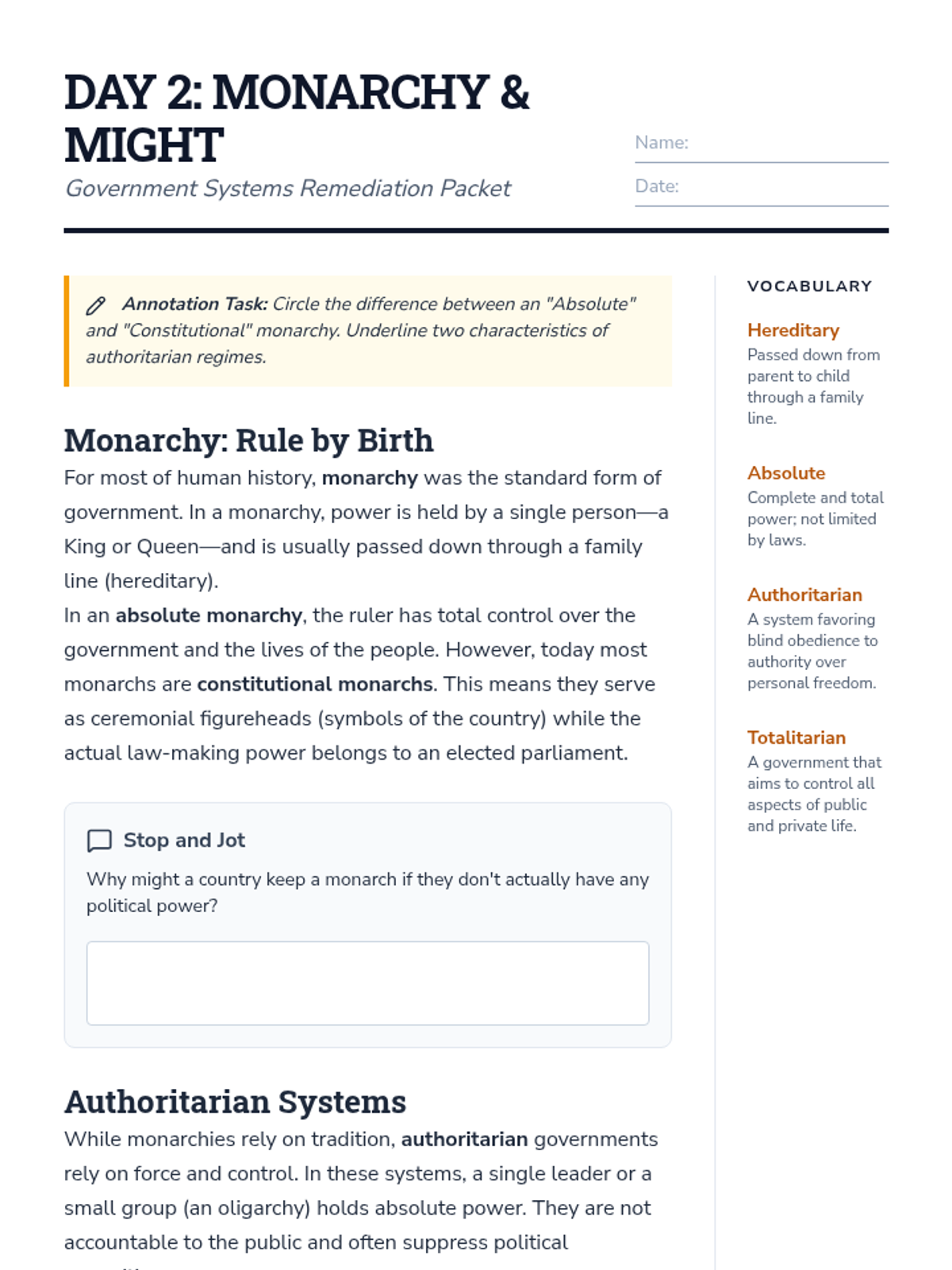
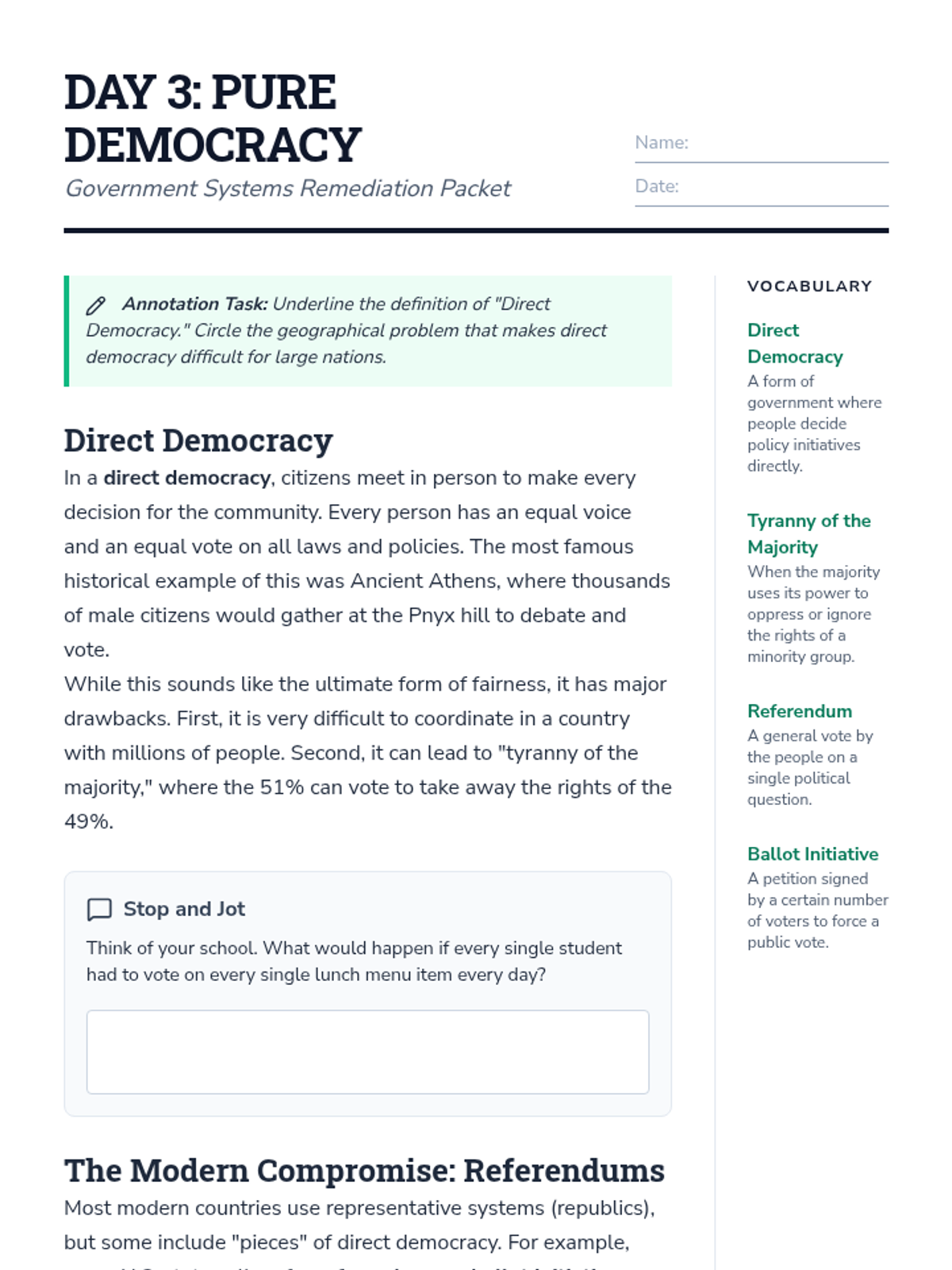
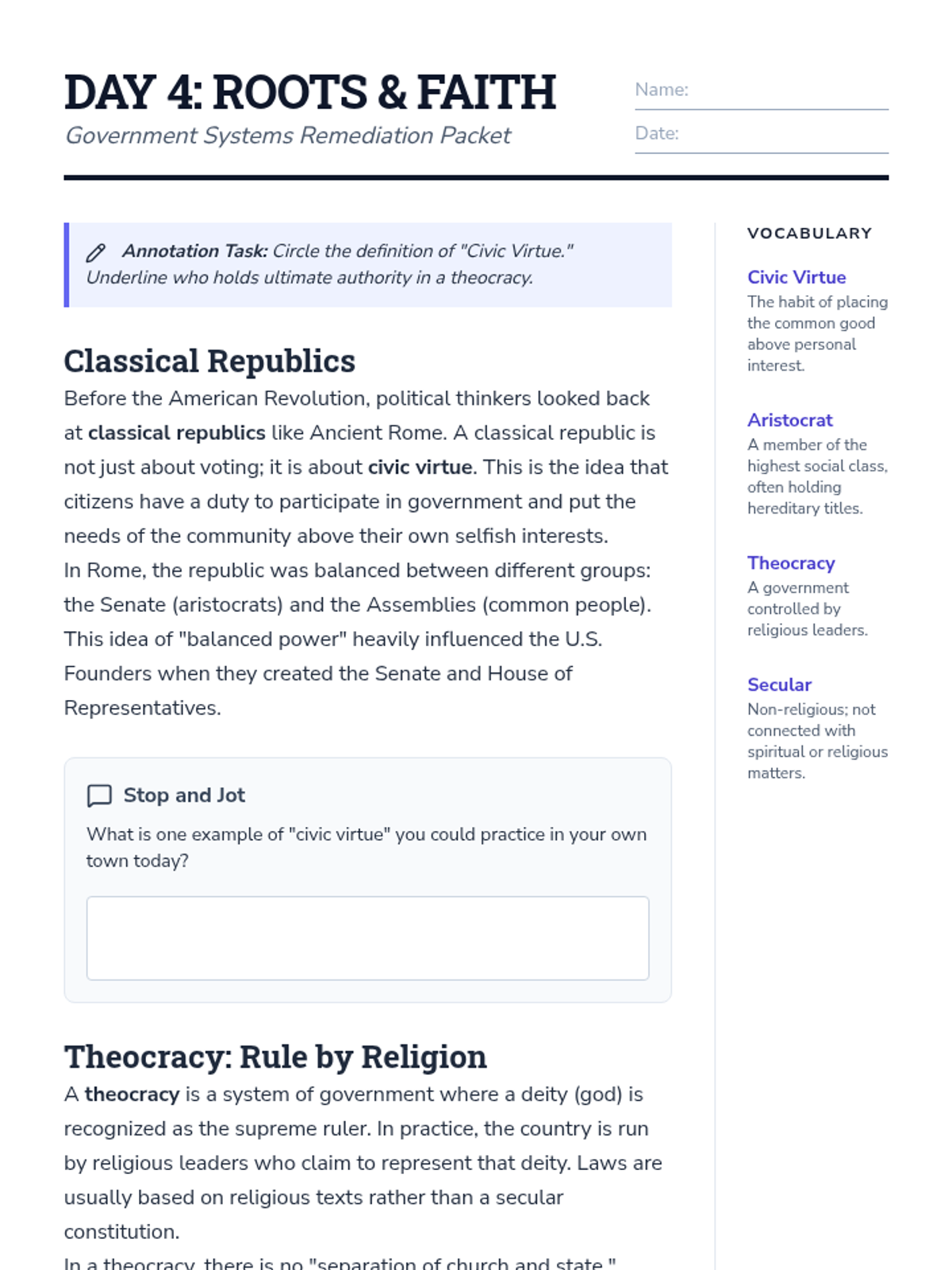
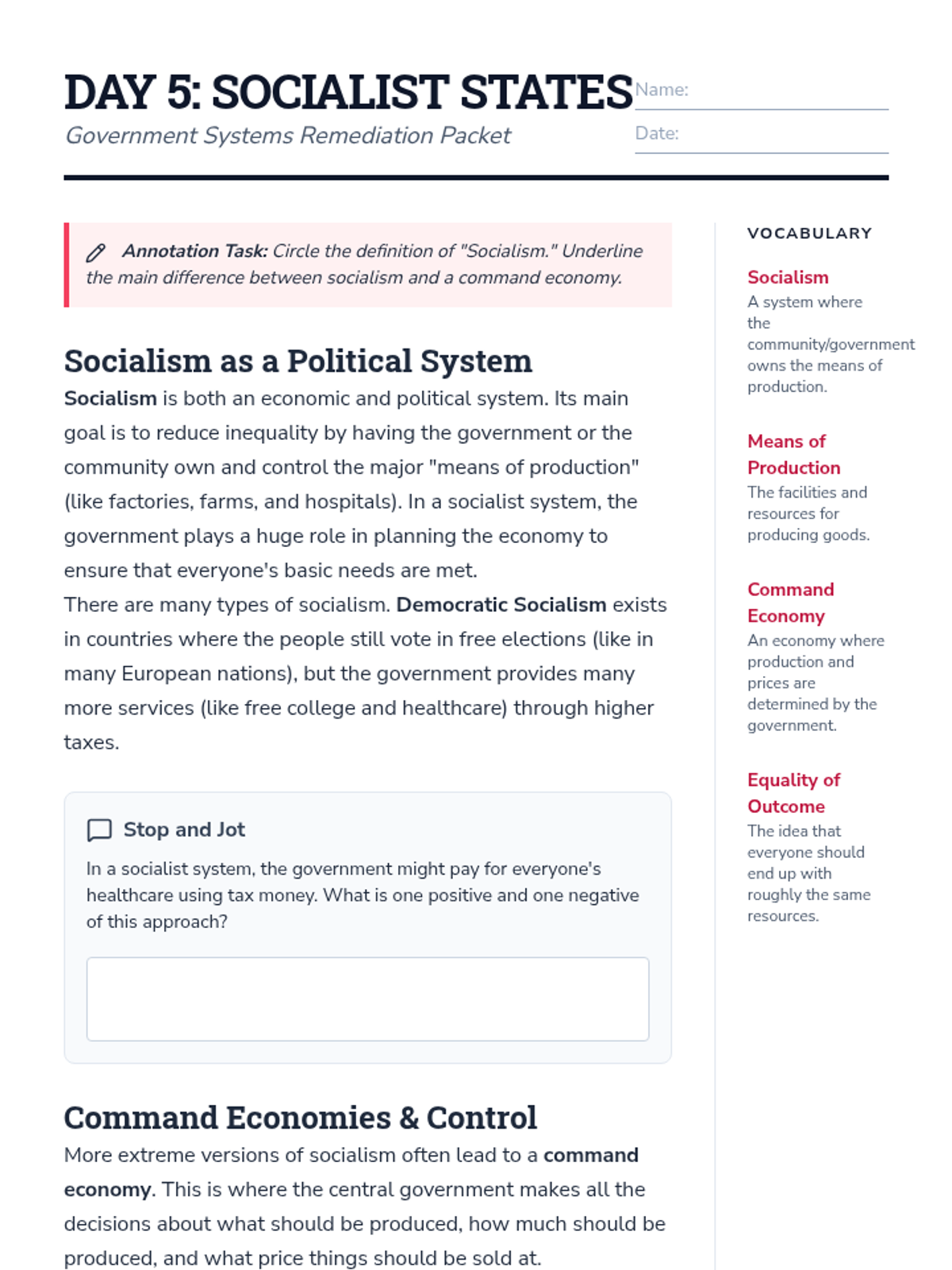
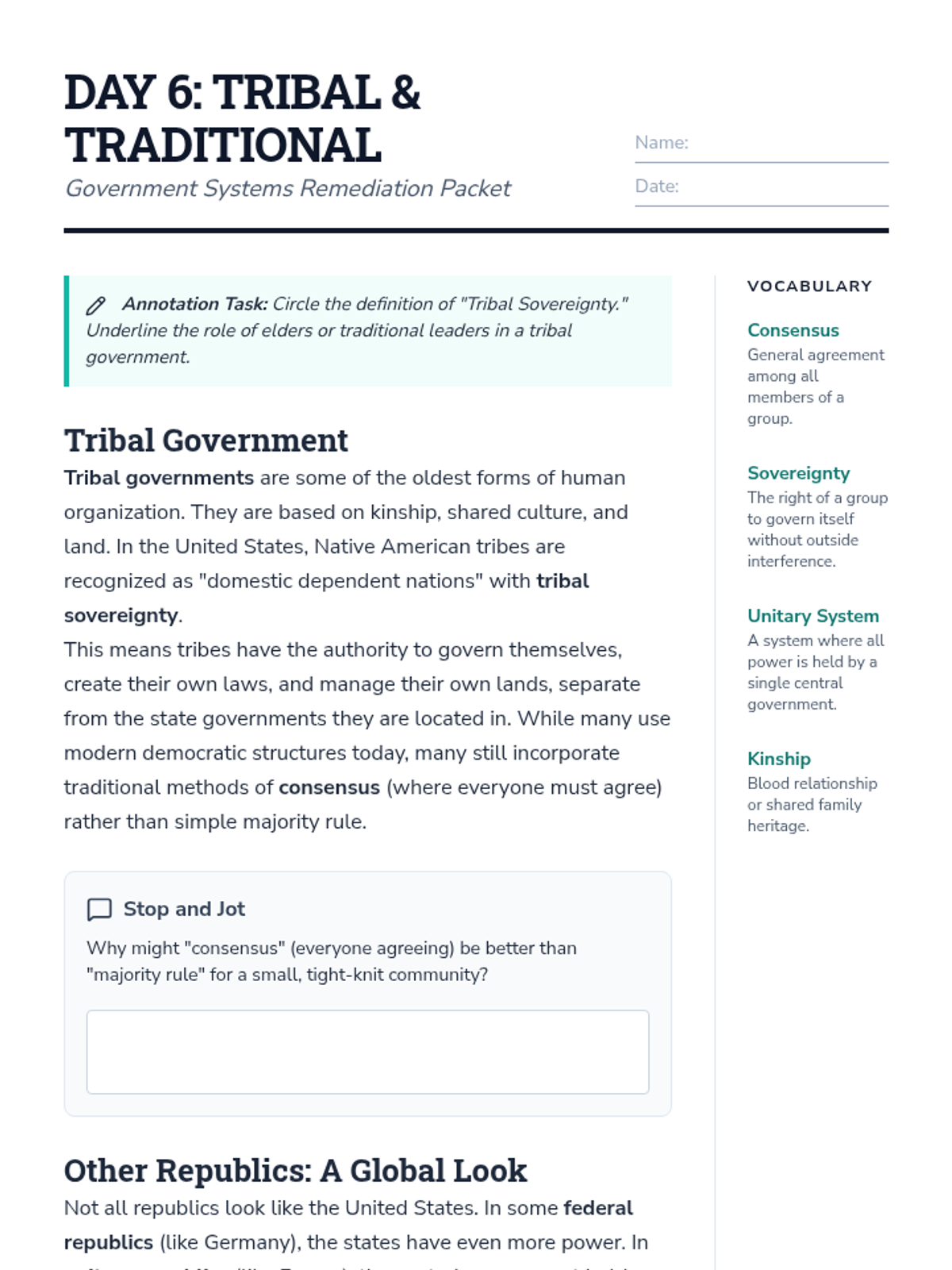
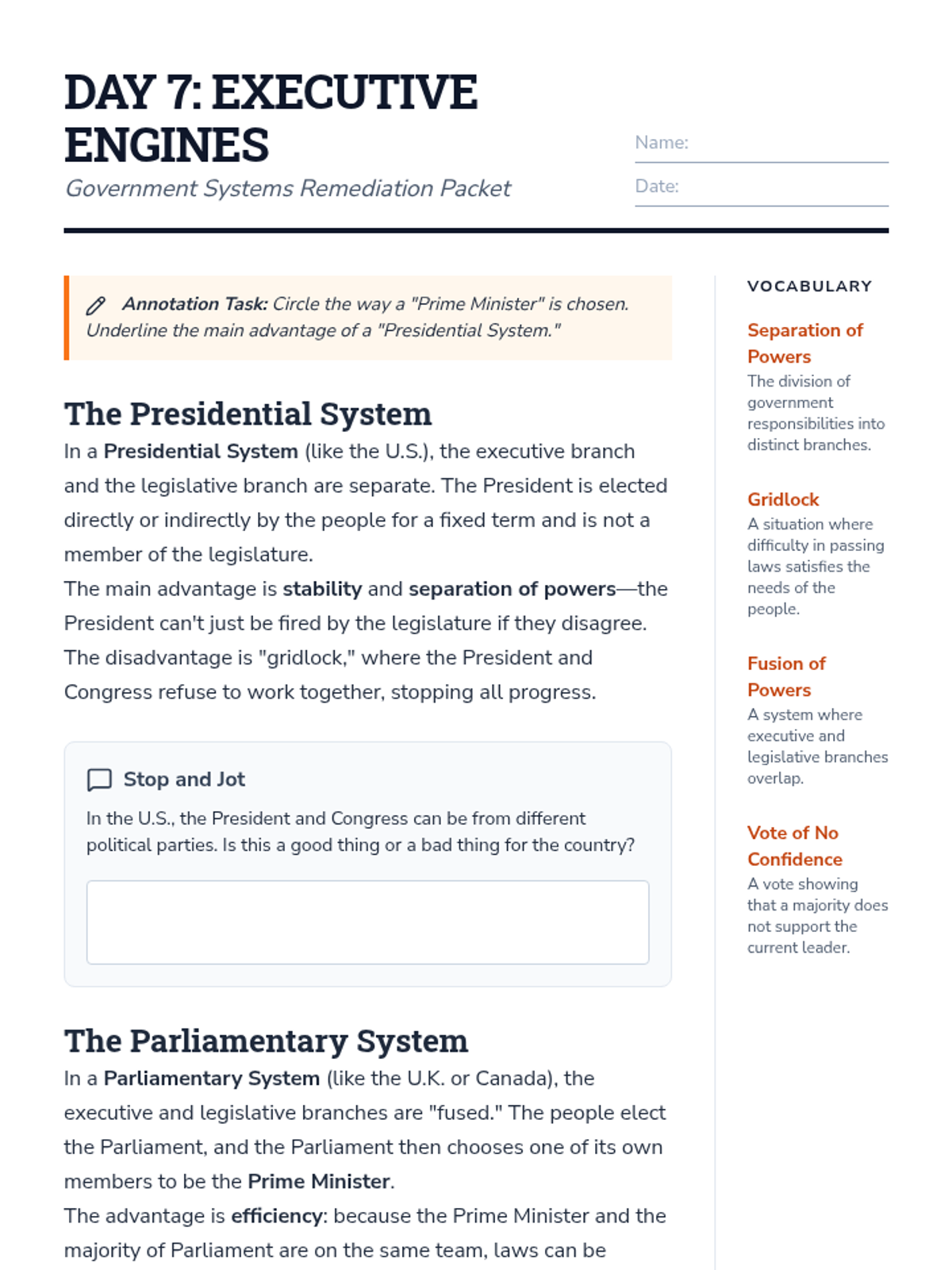
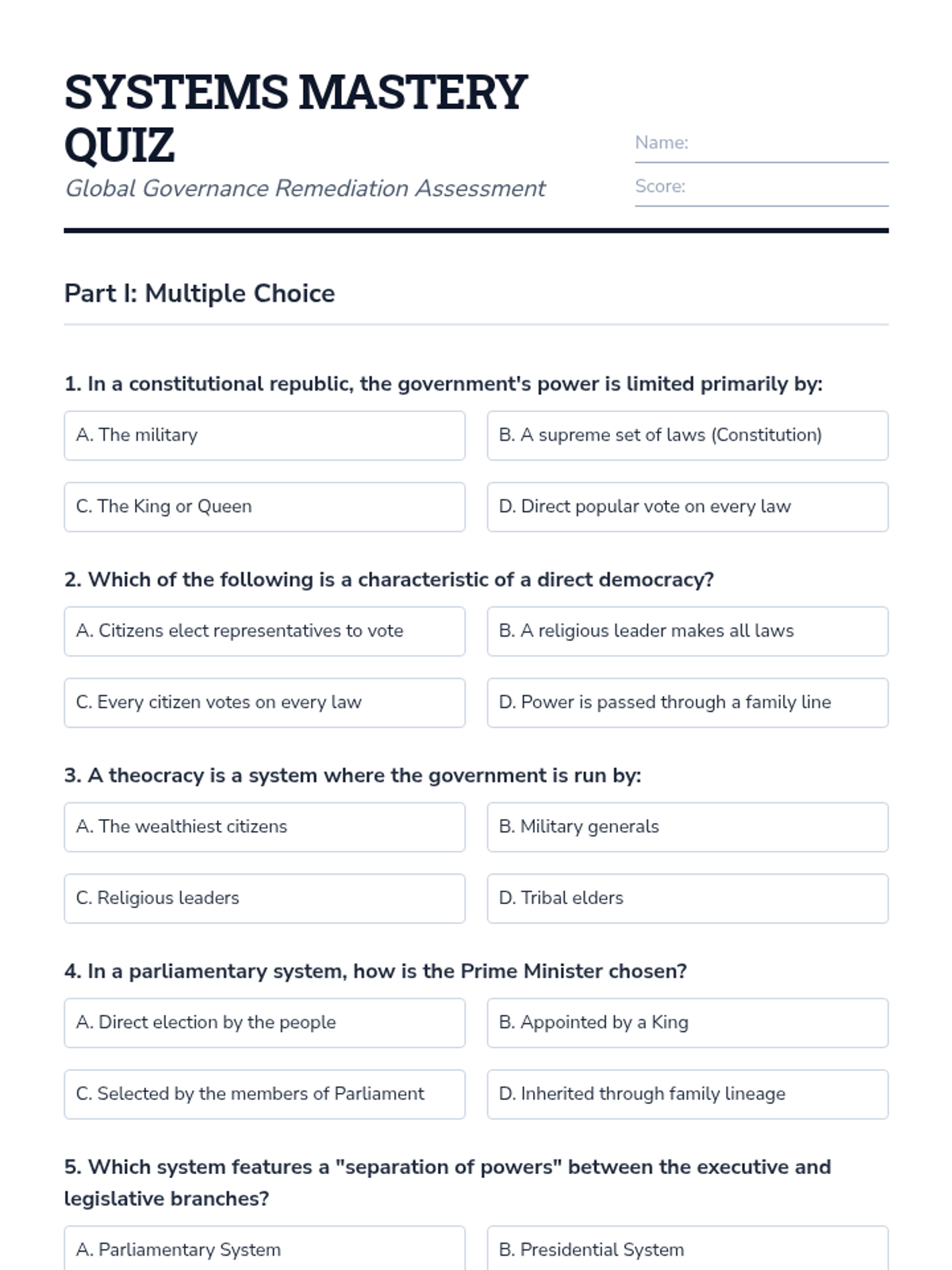
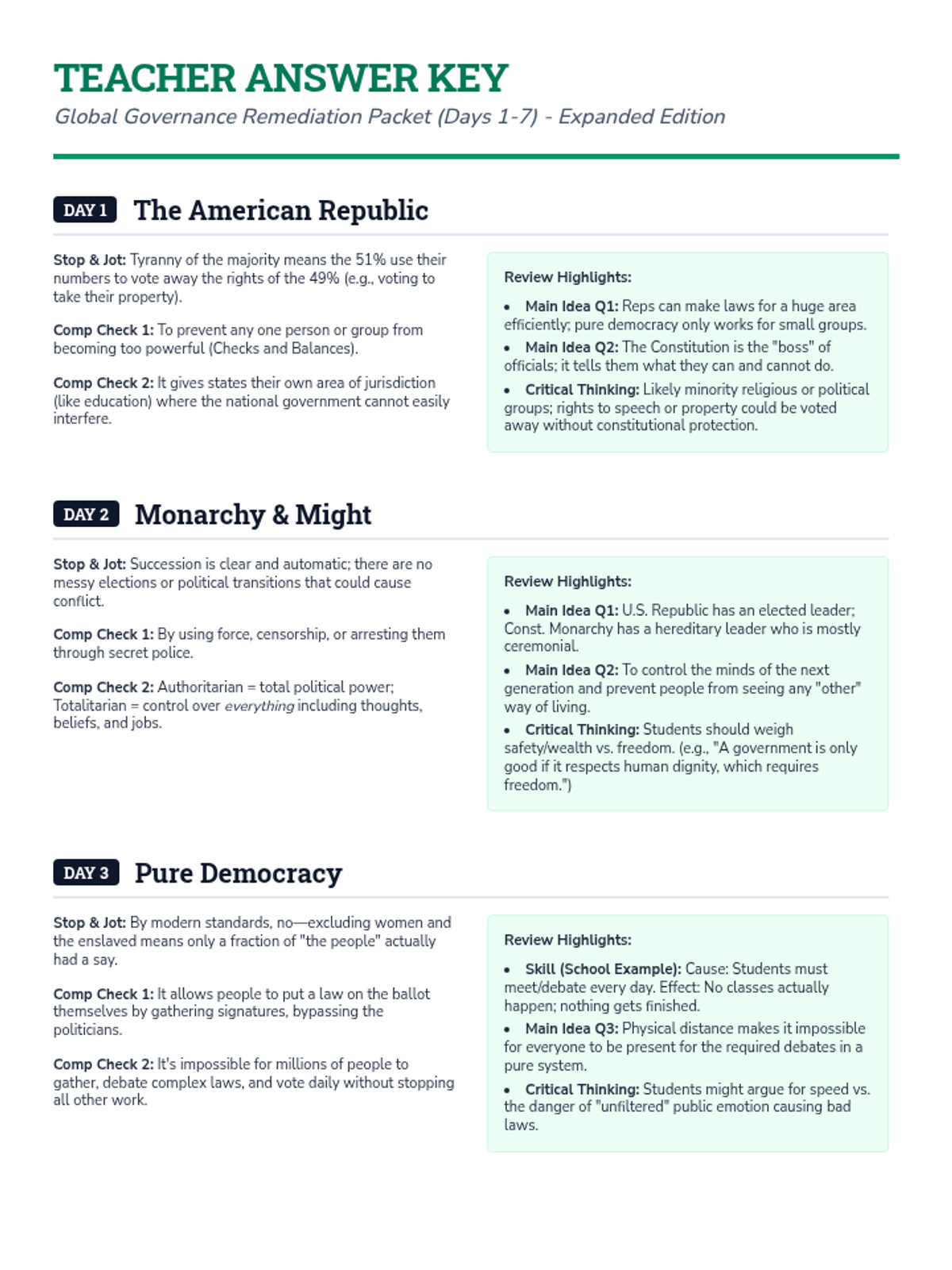
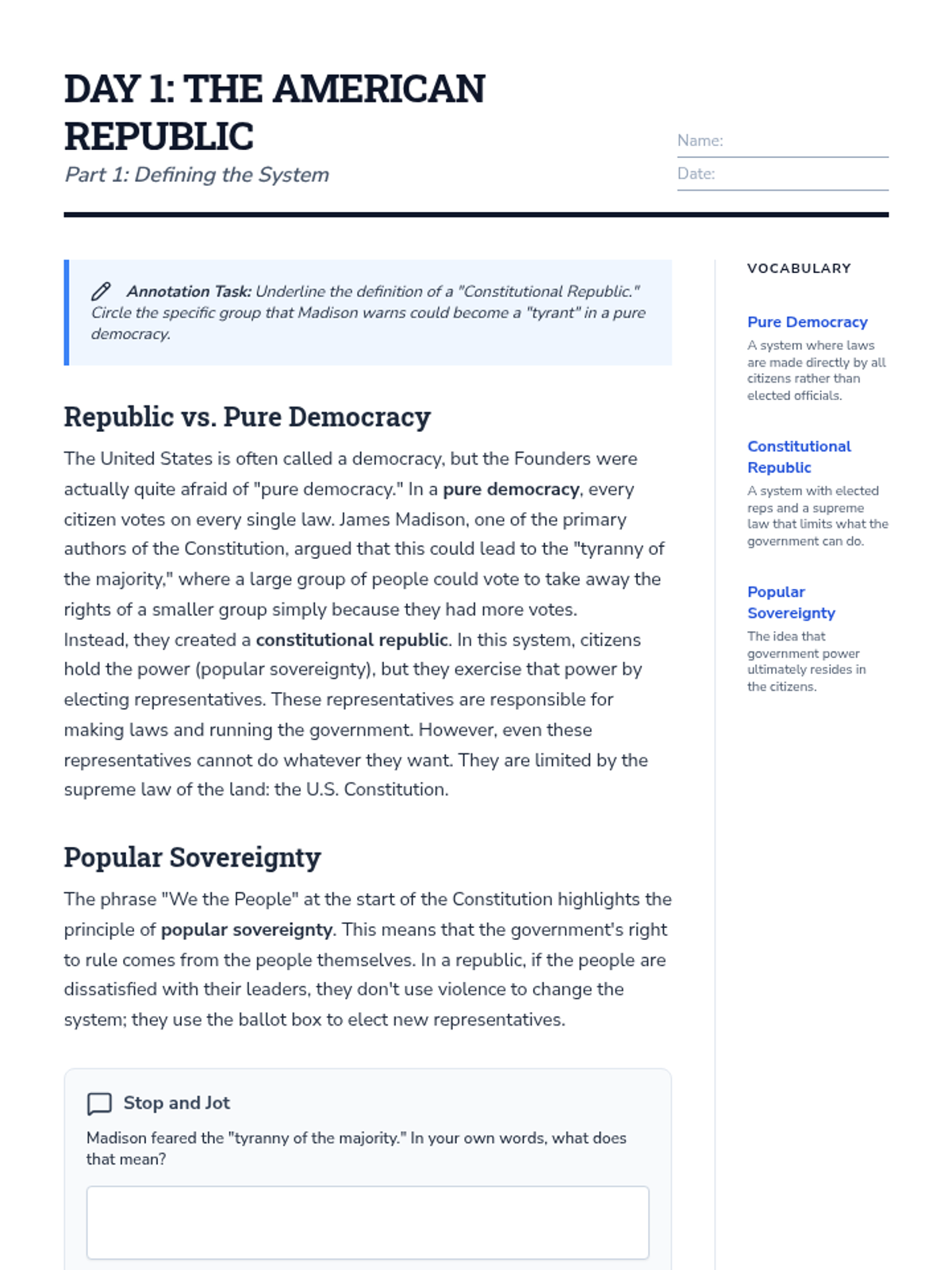
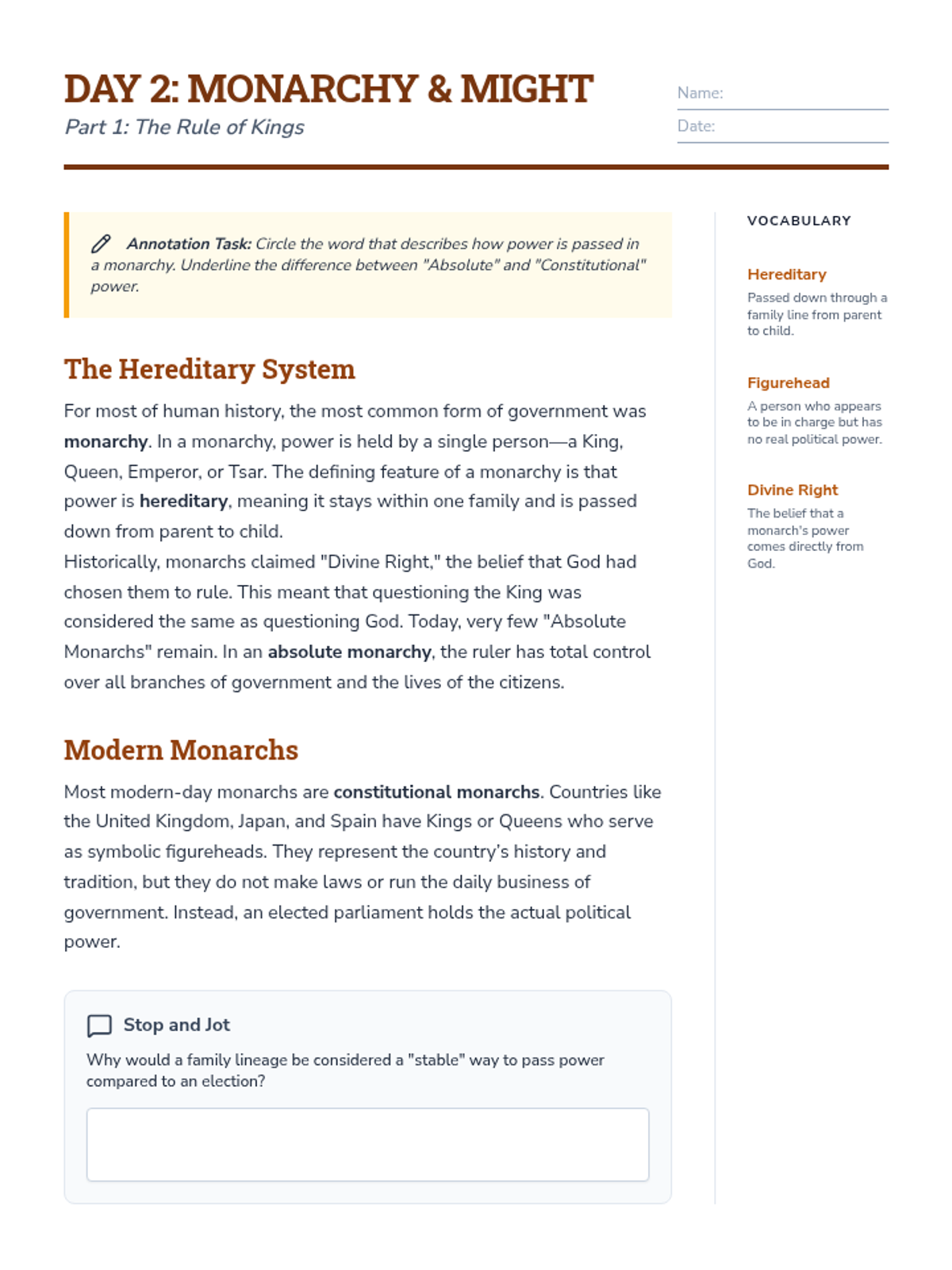
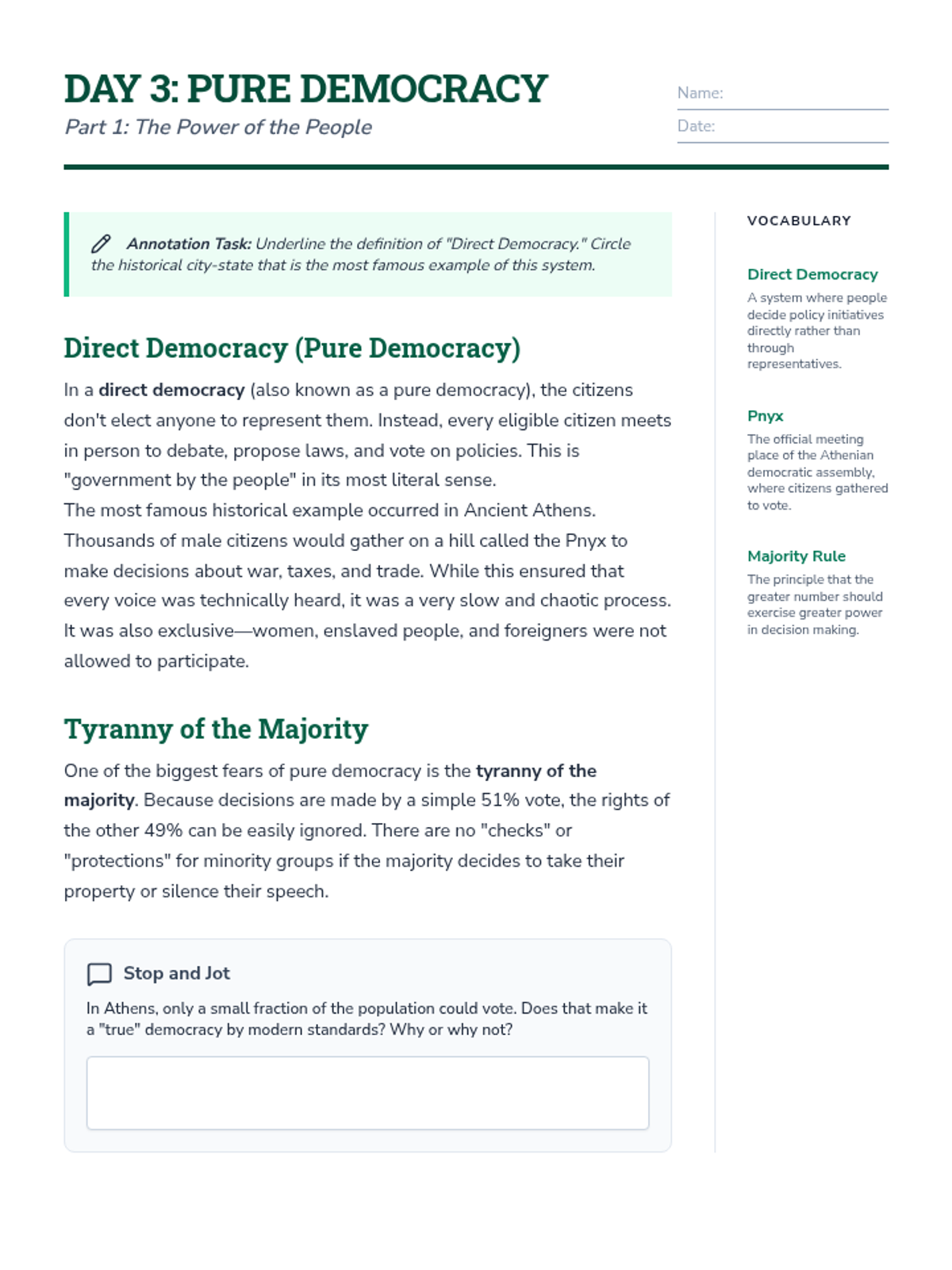
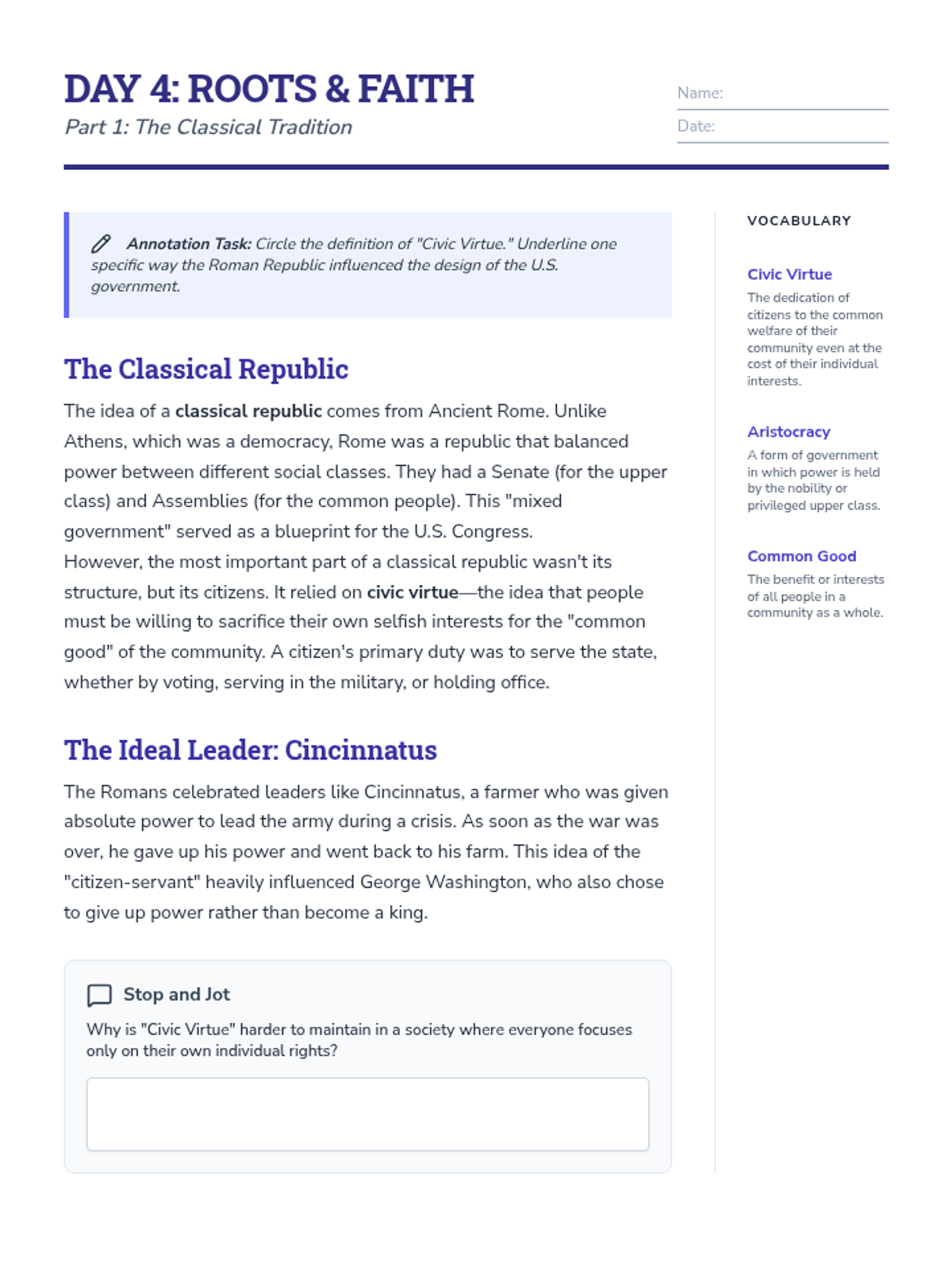
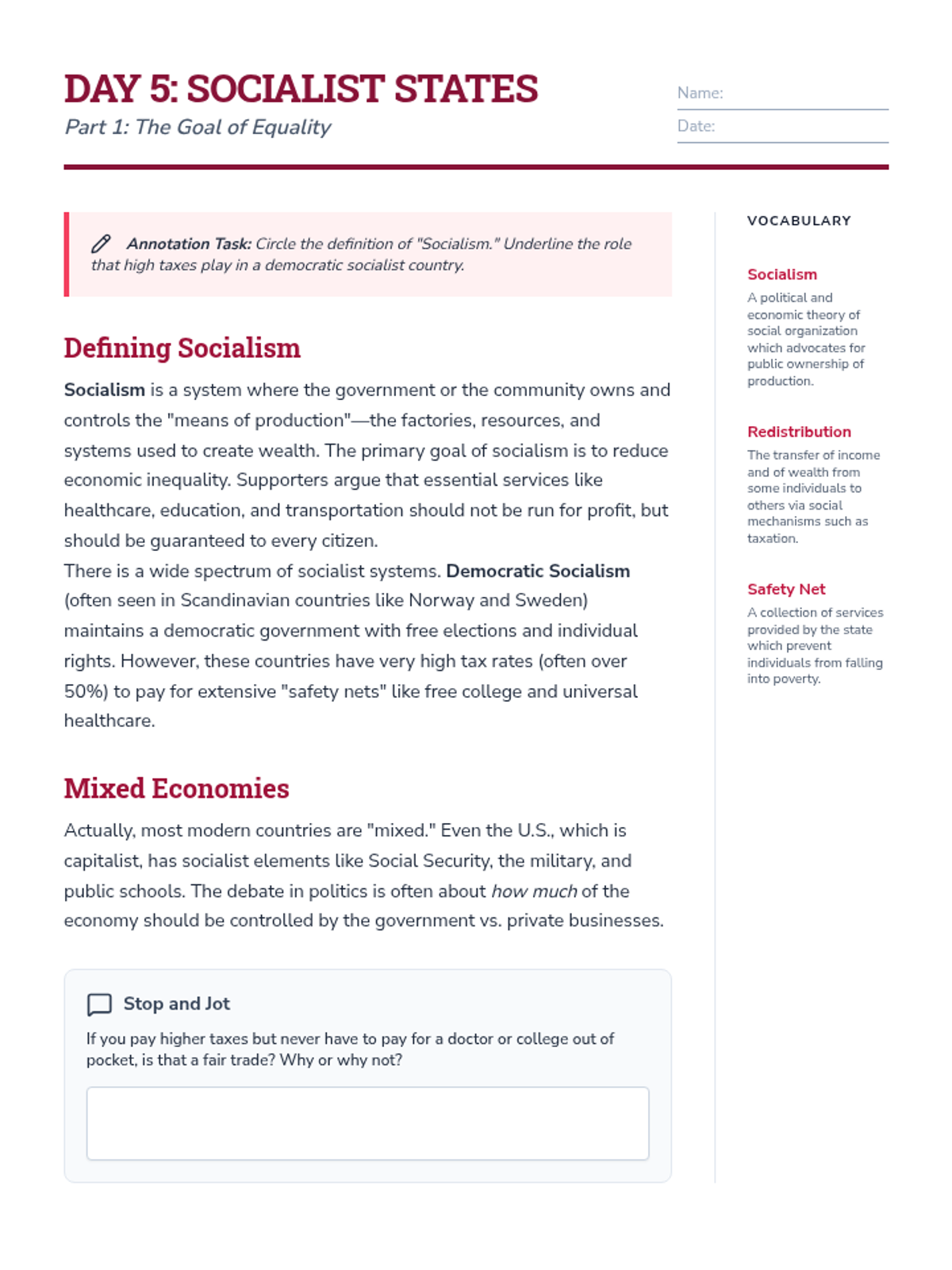
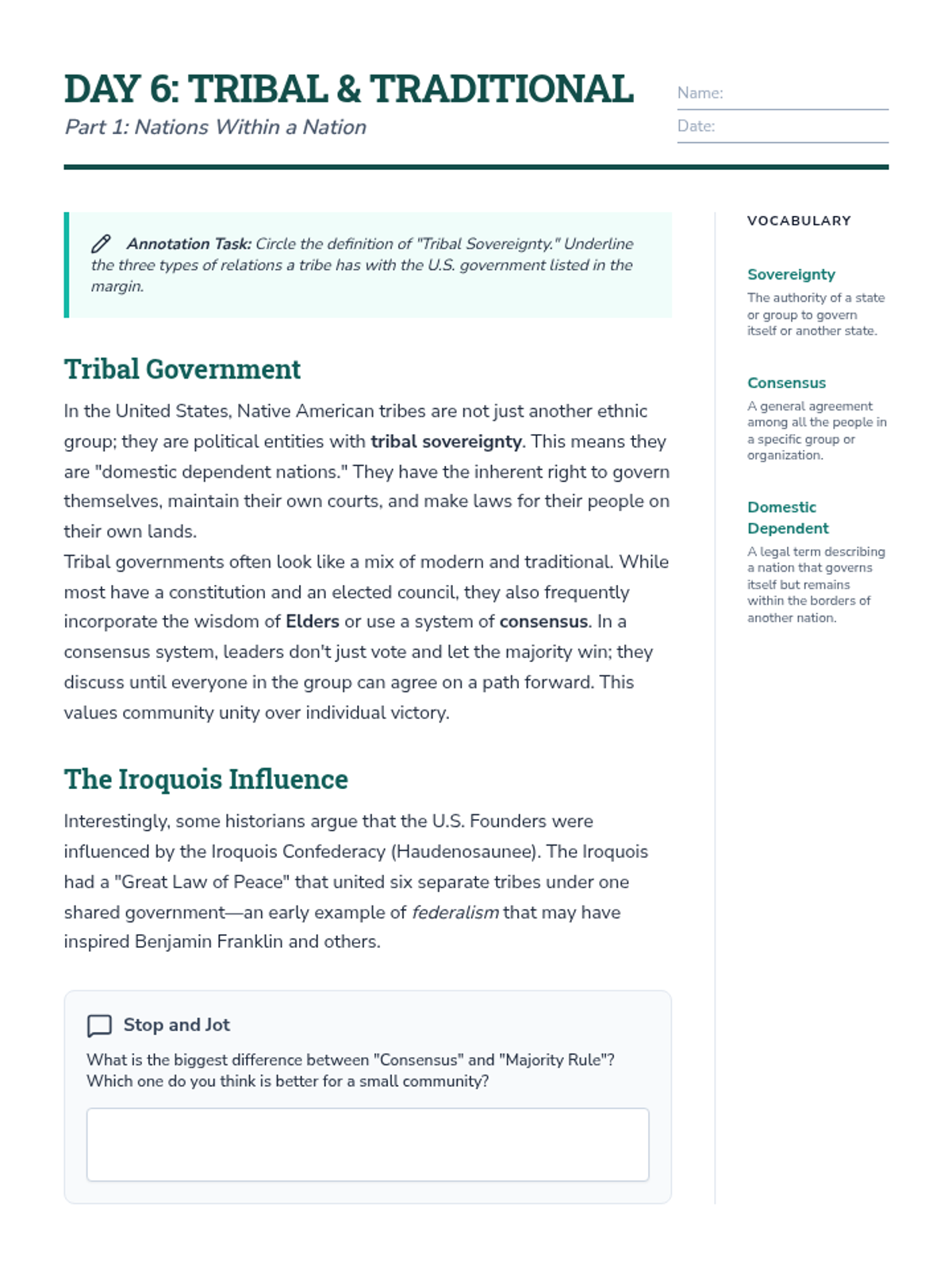
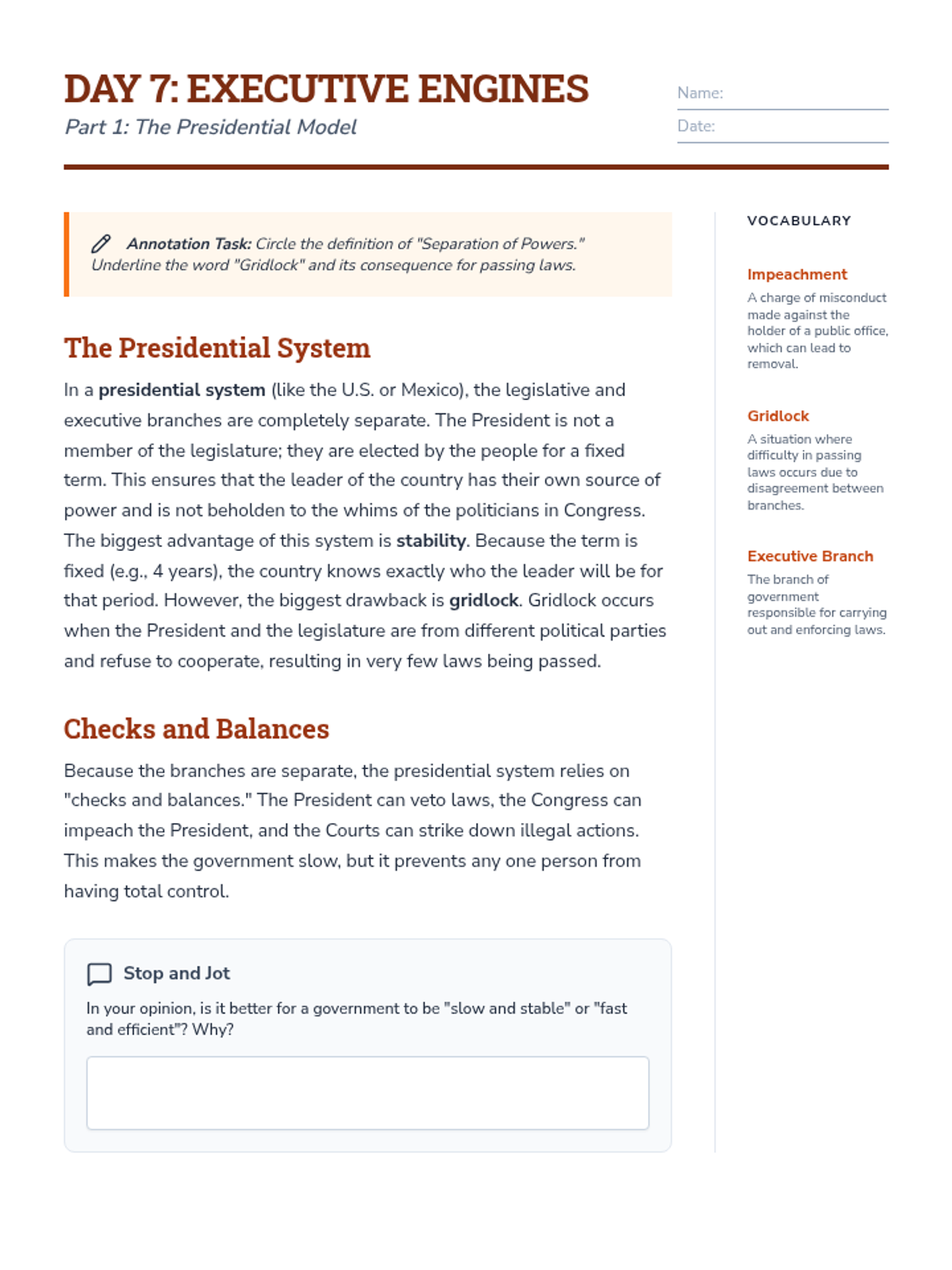
A comprehensive 7-day remediation unit covering various forms of government, comparing the U.S. constitutional republic to historical and contemporary systems, and analyzing executive structures.
A collection of TEKS-aligned lessons for Social Studies, covering pivotal moments in World History and fundamental systems in World Geography.
A comprehensive study of the major global shifts during the 19th and 20th centuries, focusing on industrialization, imperialism, and the resulting geopolitical changes.
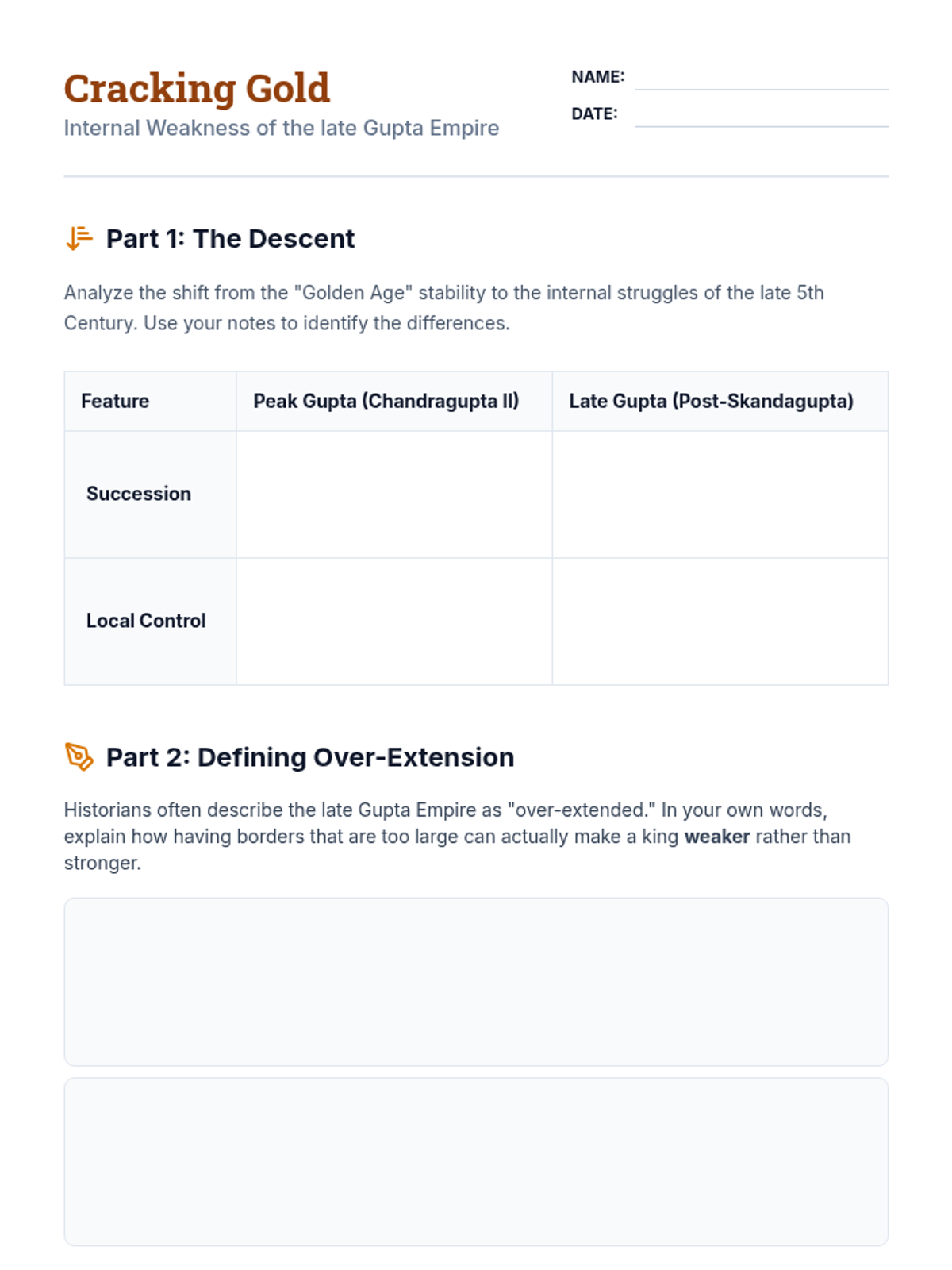
A 5-day unit exploring the multi-faceted decline of the Gupta Empire, from internal structural weaknesses to the devastating Huna invasions and economic collapse.
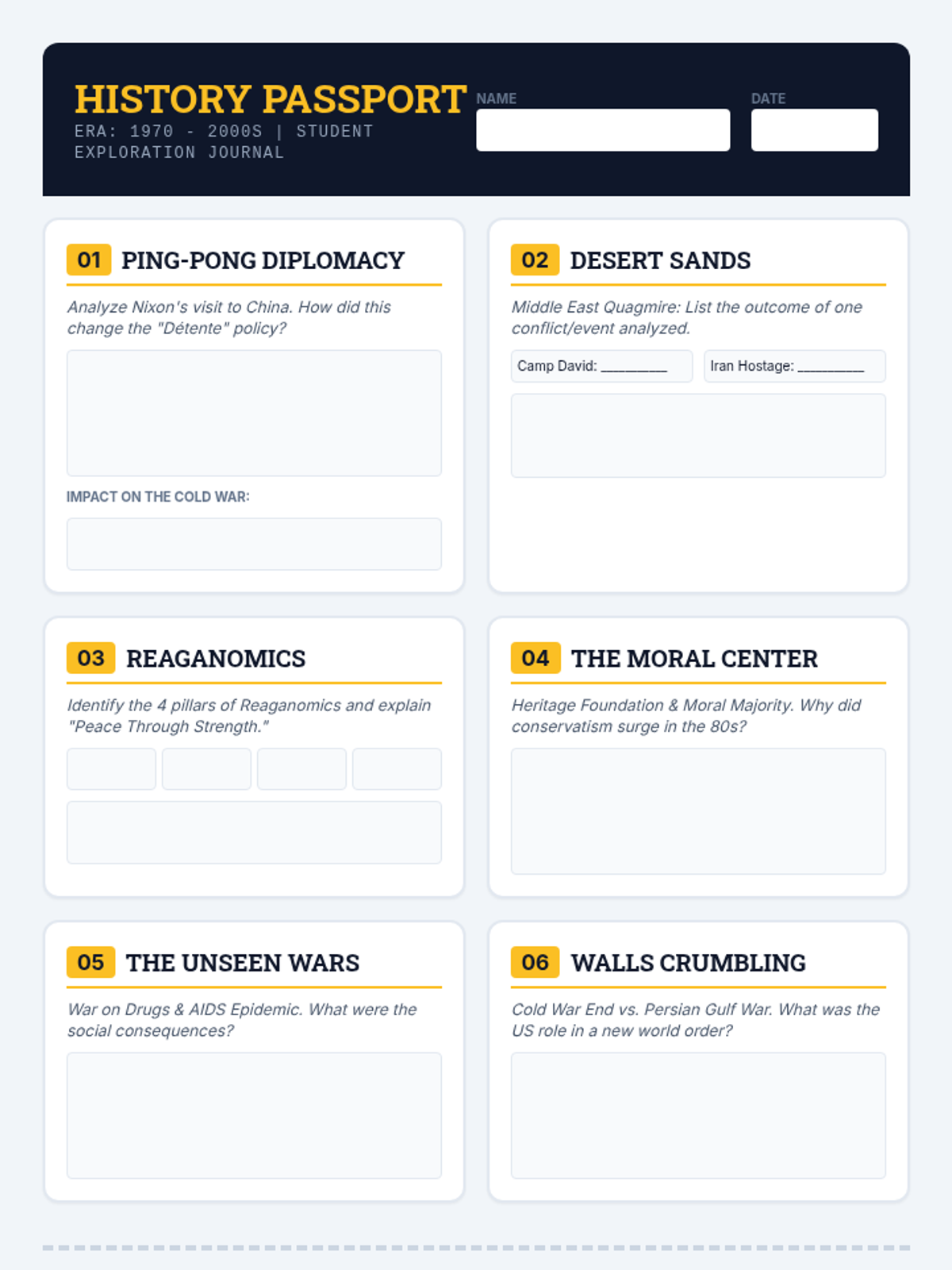
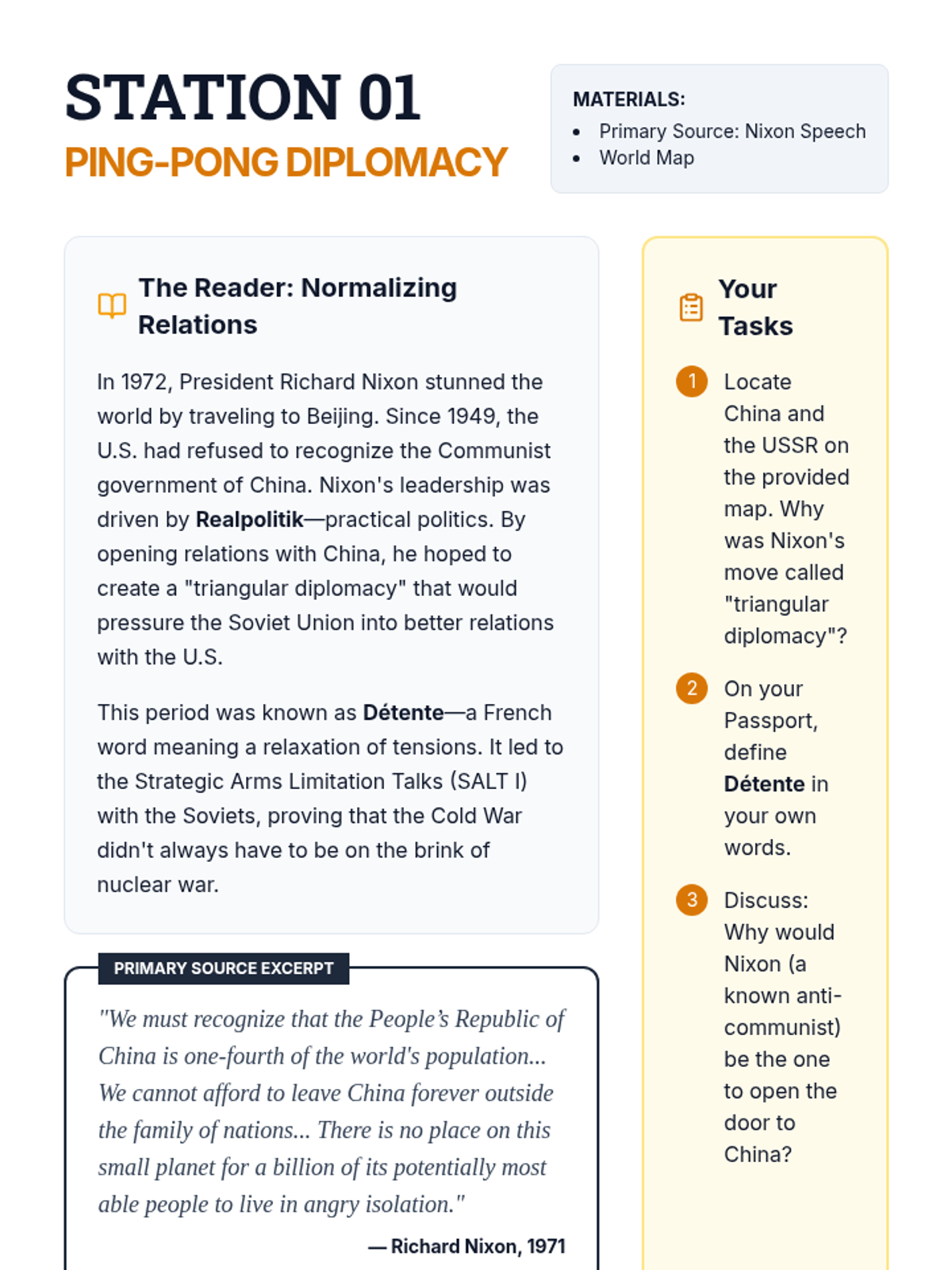
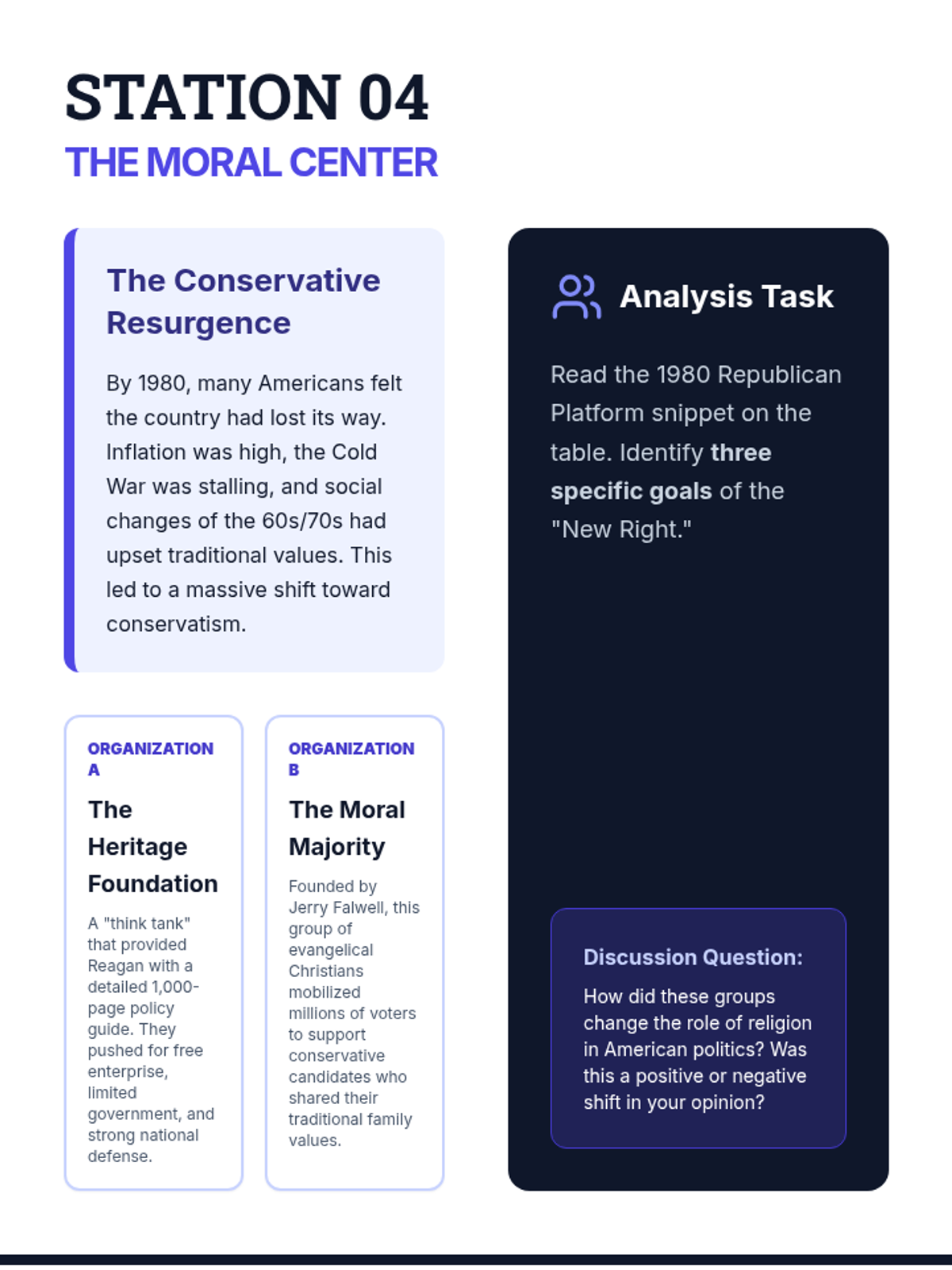
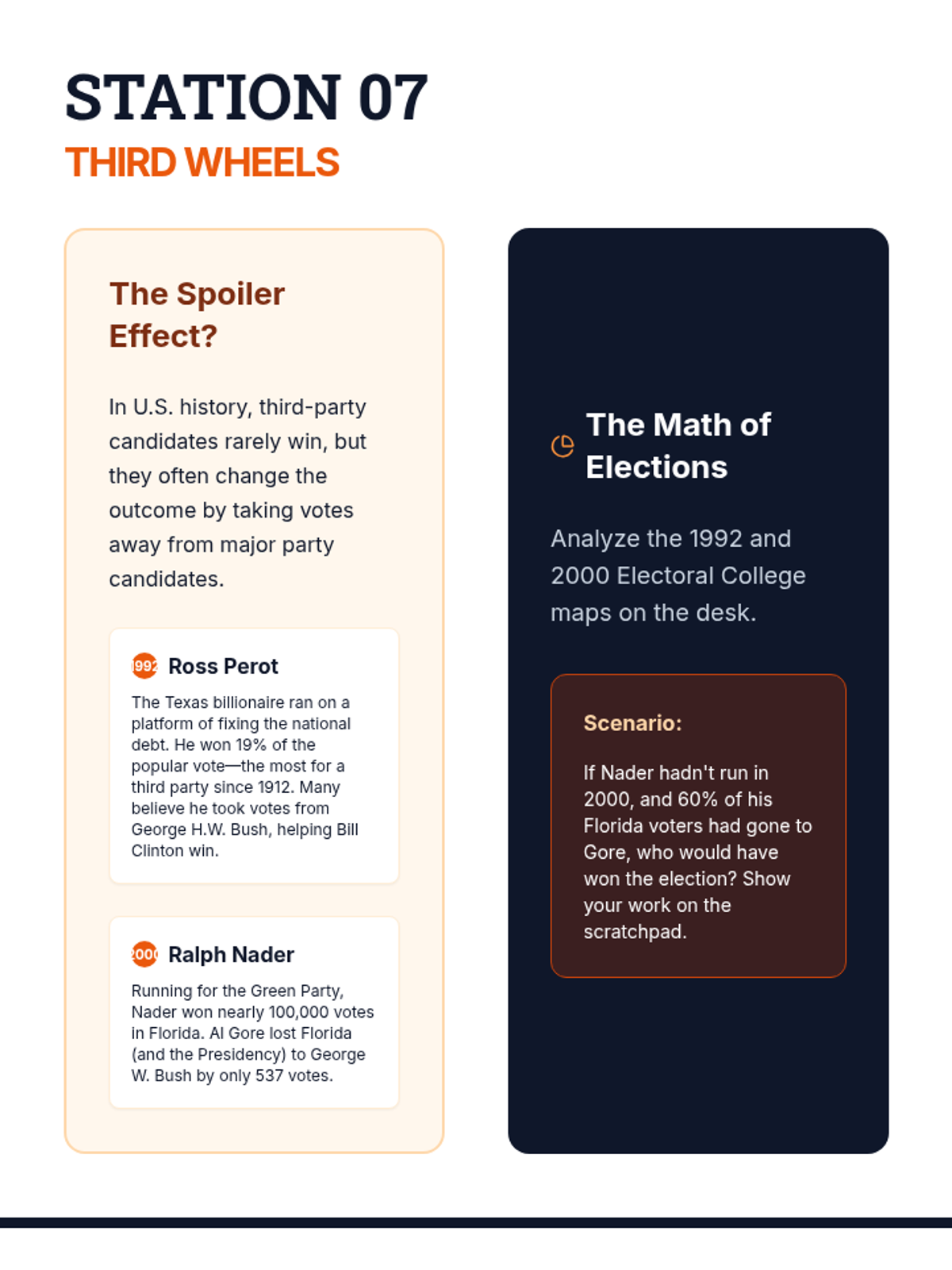
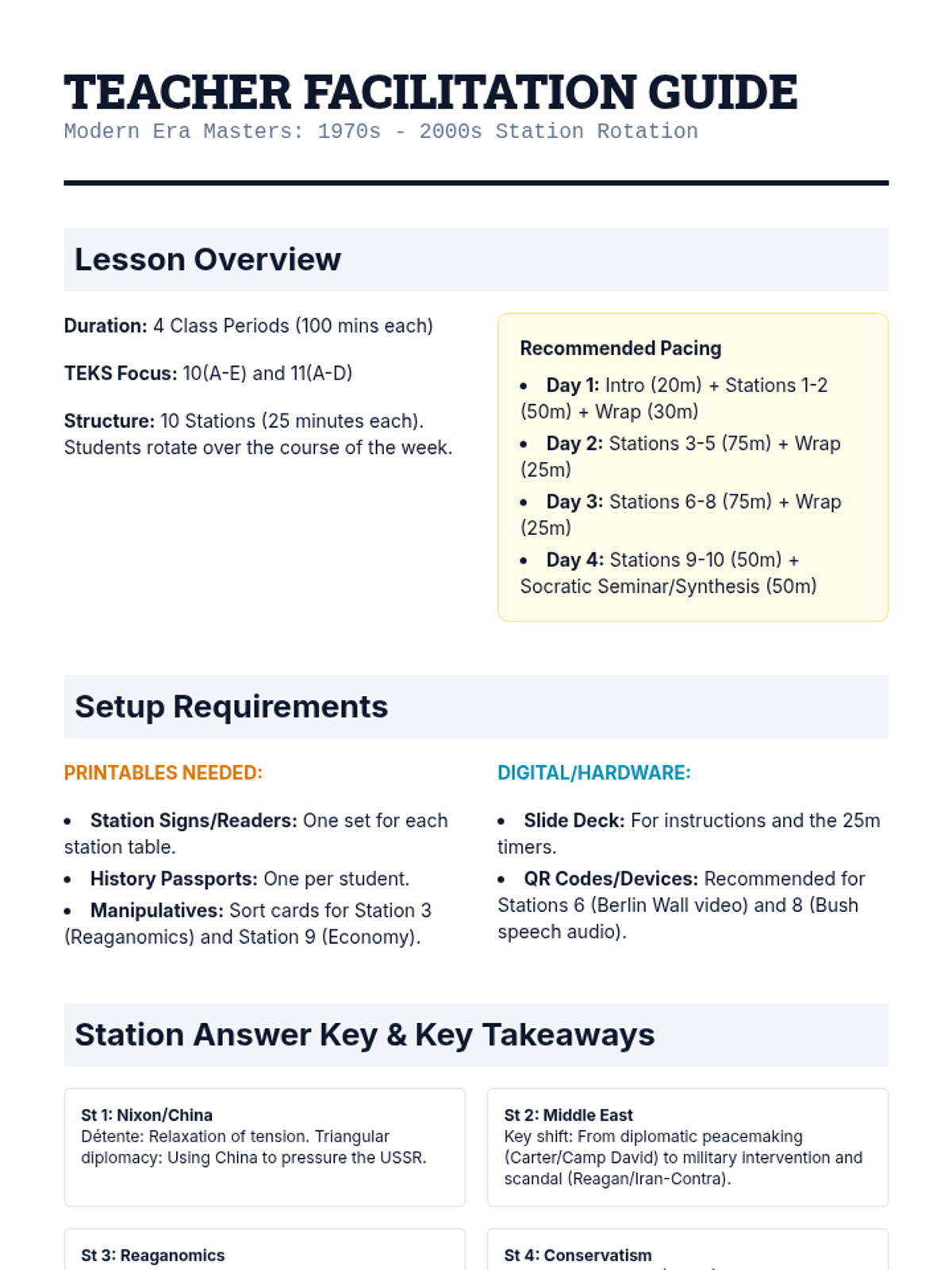
A comprehensive 4-day station rotation covering US history from the 1970s to the 2000s, aligned with TEKS 10 and 11. Students explore major political, economic, and social shifts through primary sources, data analysis, and interactive tasks.
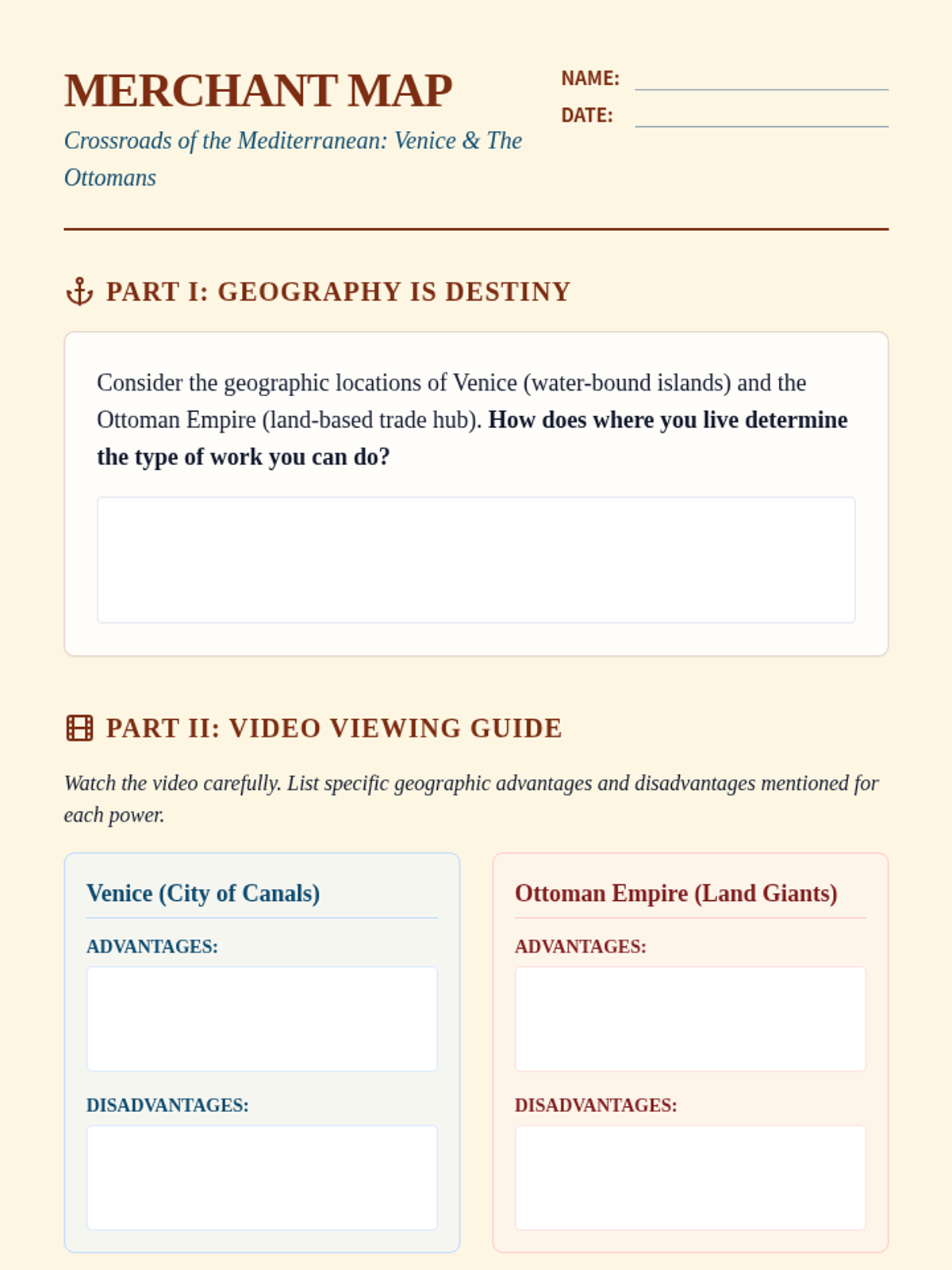
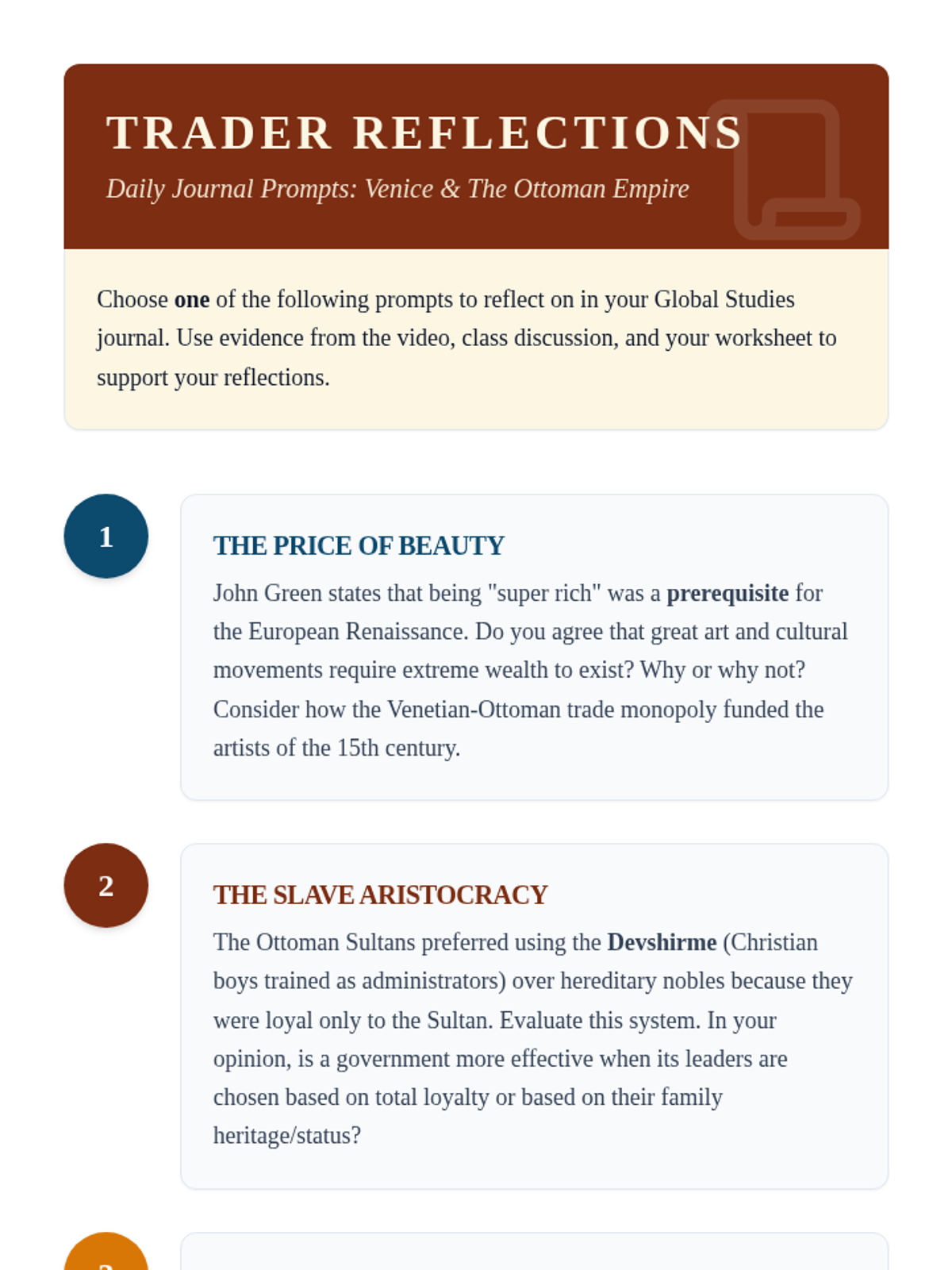
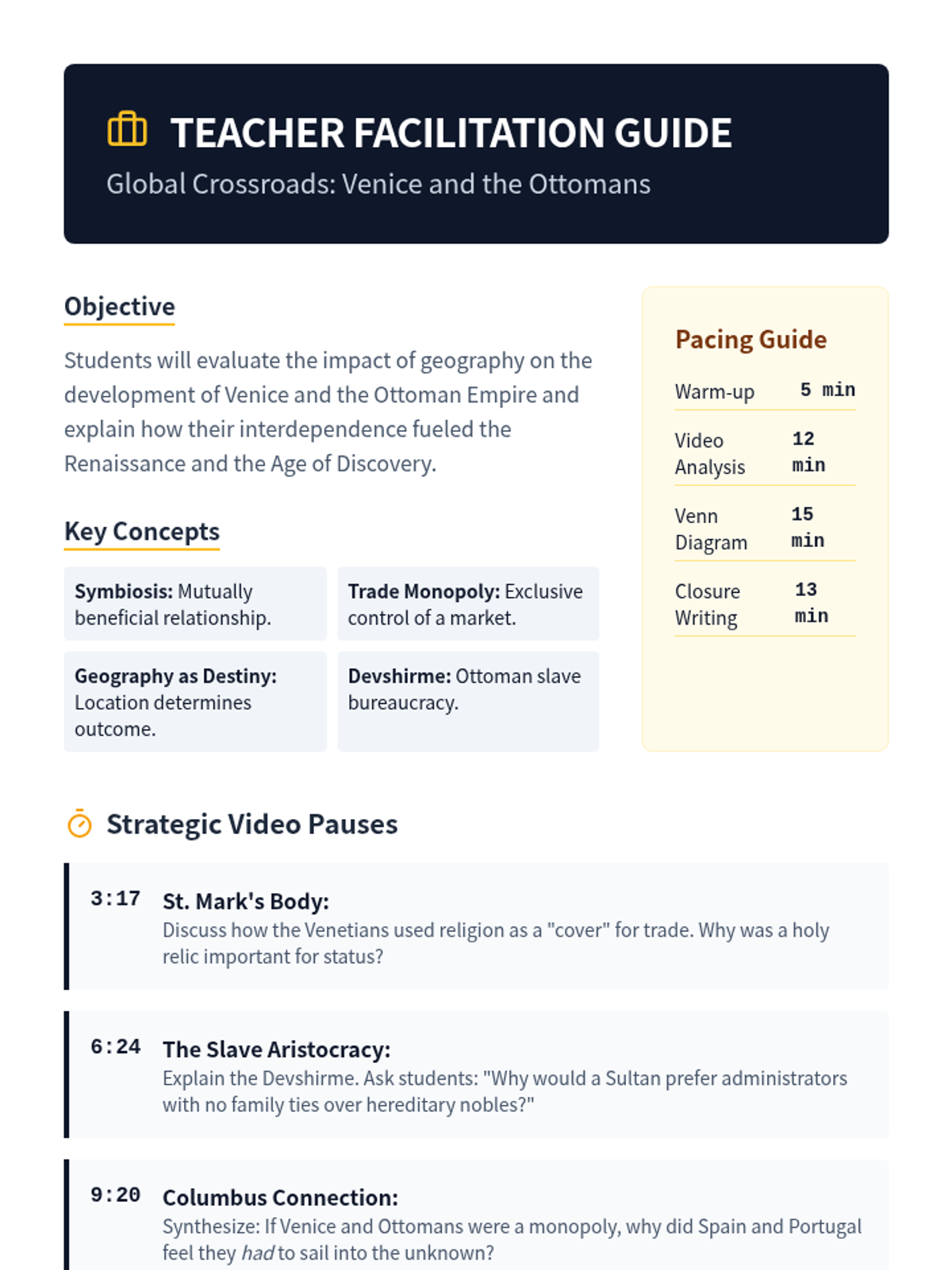
A lesson examining the symbiotic relationship between Venice and the Ottoman Empire, focusing on how geography shaped their economic and political power. Students analyze trade networks, resource interdependence, and the eventual shift in global exploration.
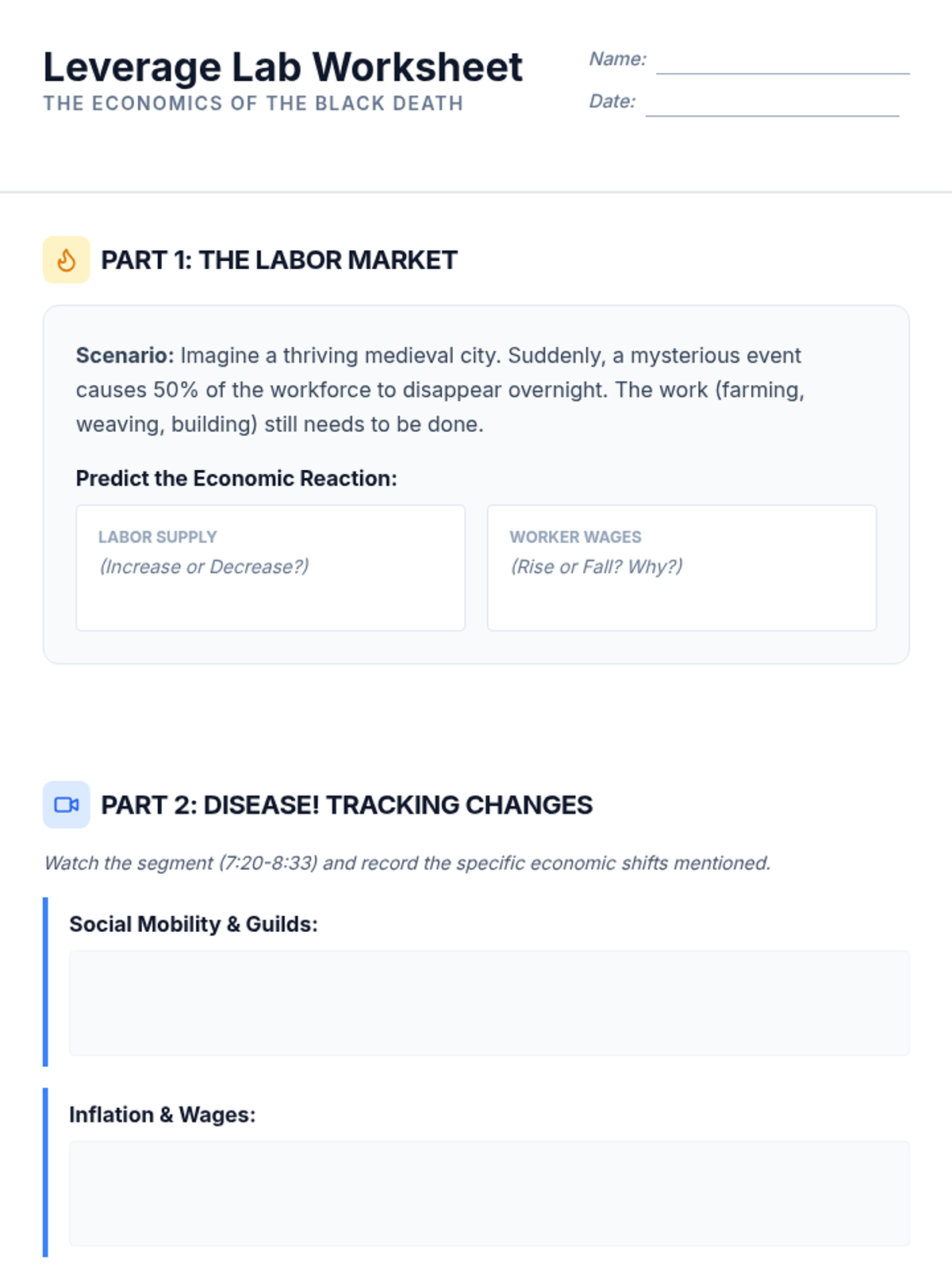
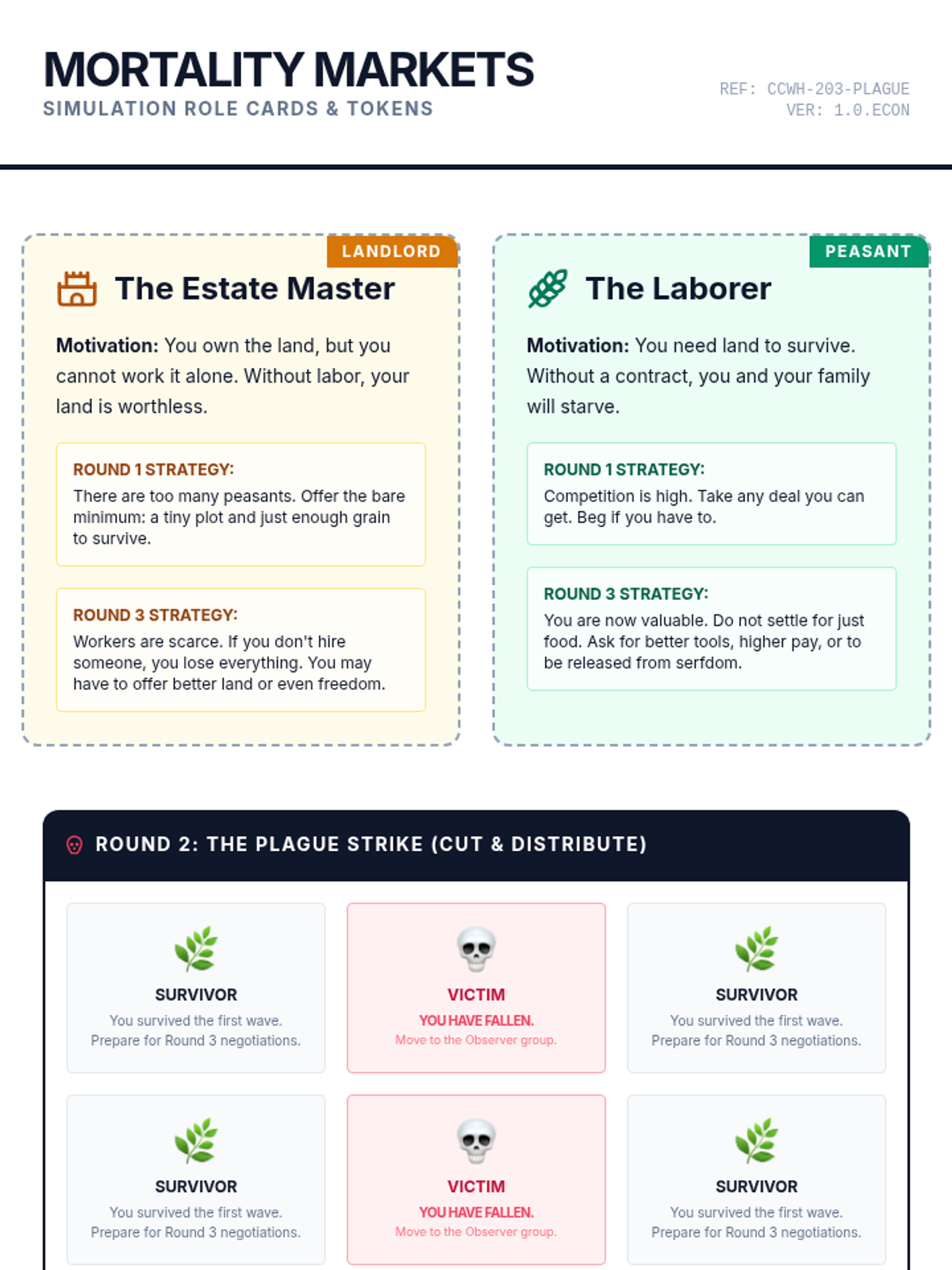
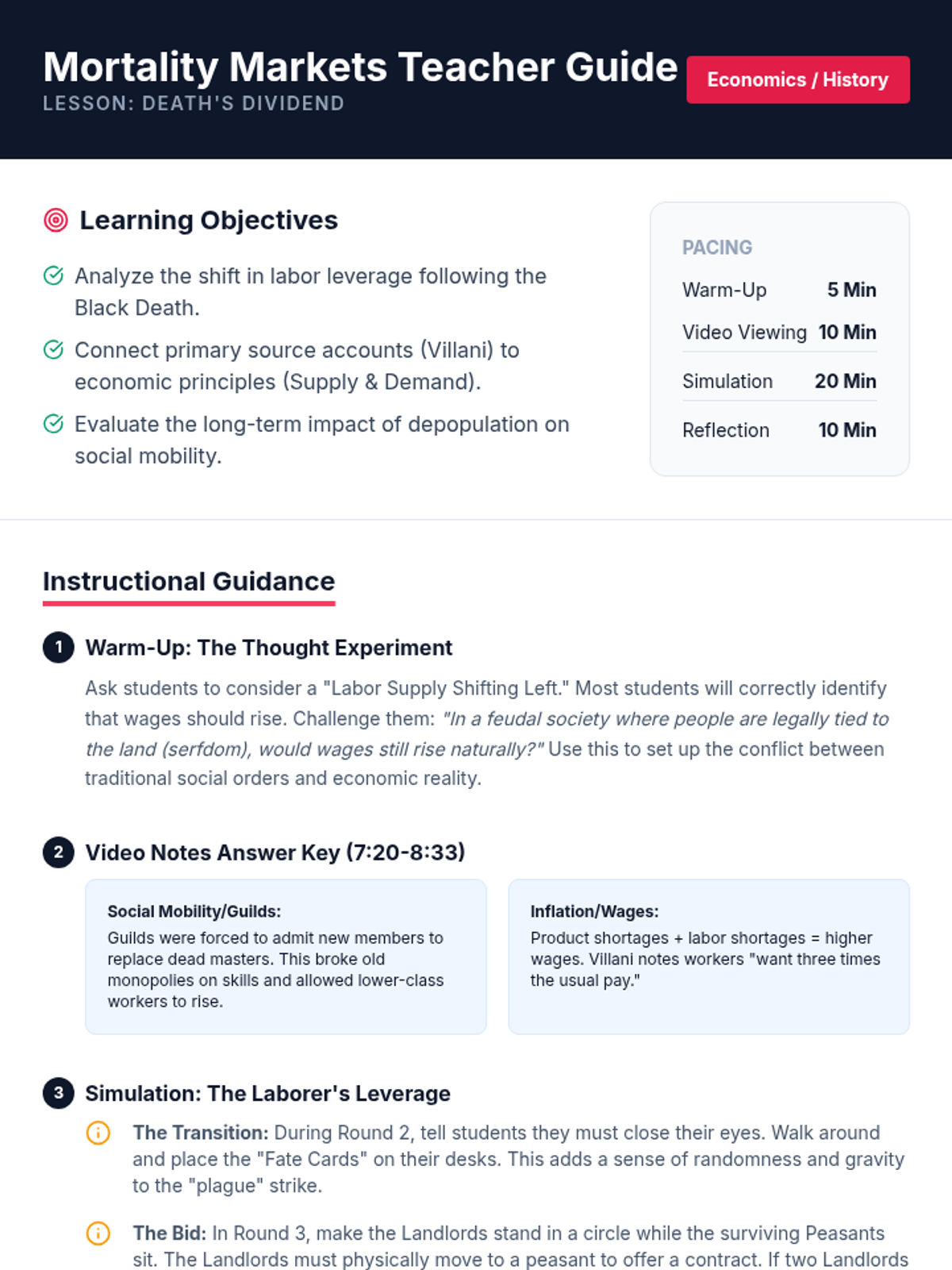
A high school economics and history sequence exploring how the Black Death fundamentally reshaped European labor markets, social hierarchies, and economic structures through the lens of supply and demand.
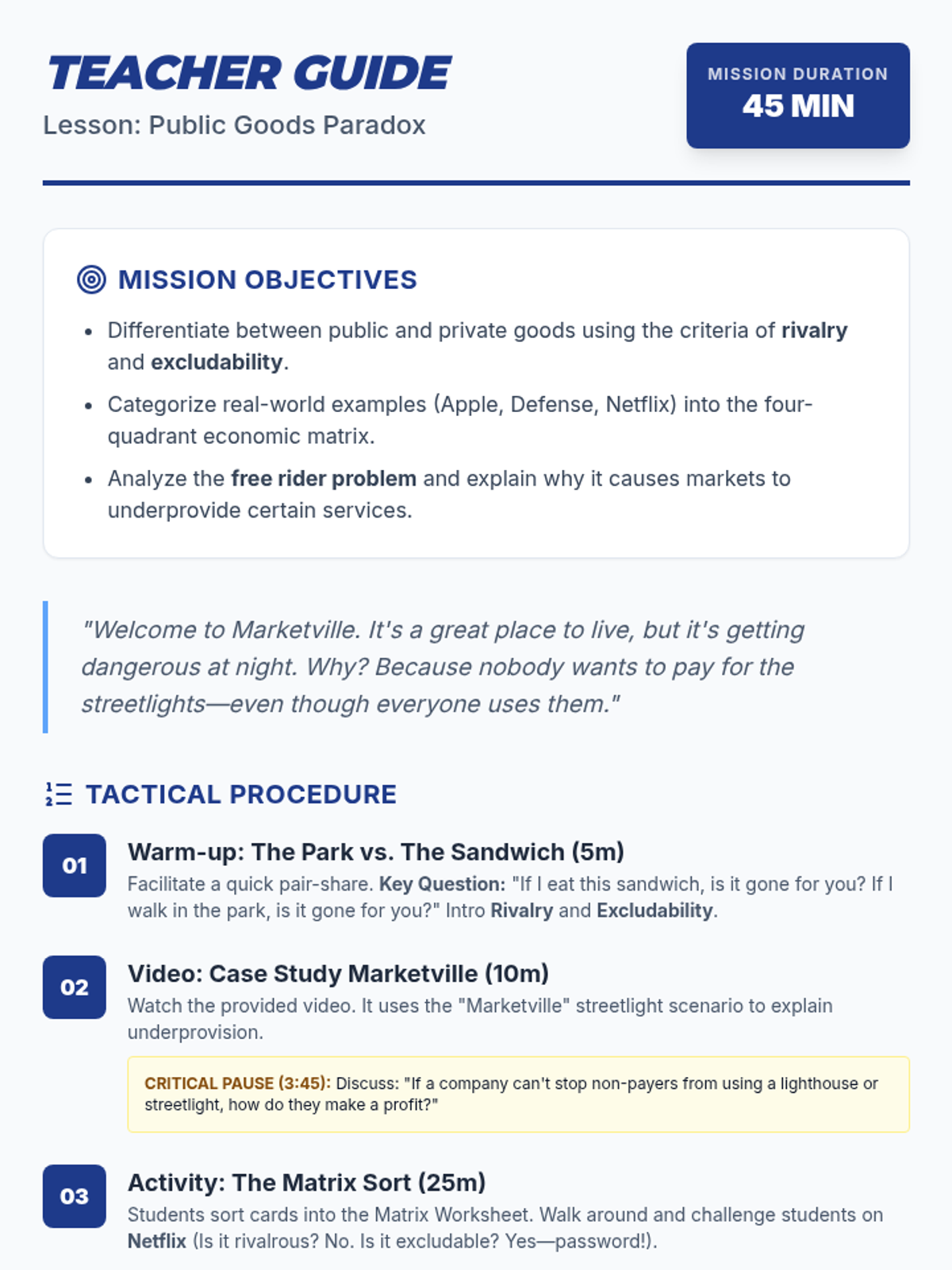
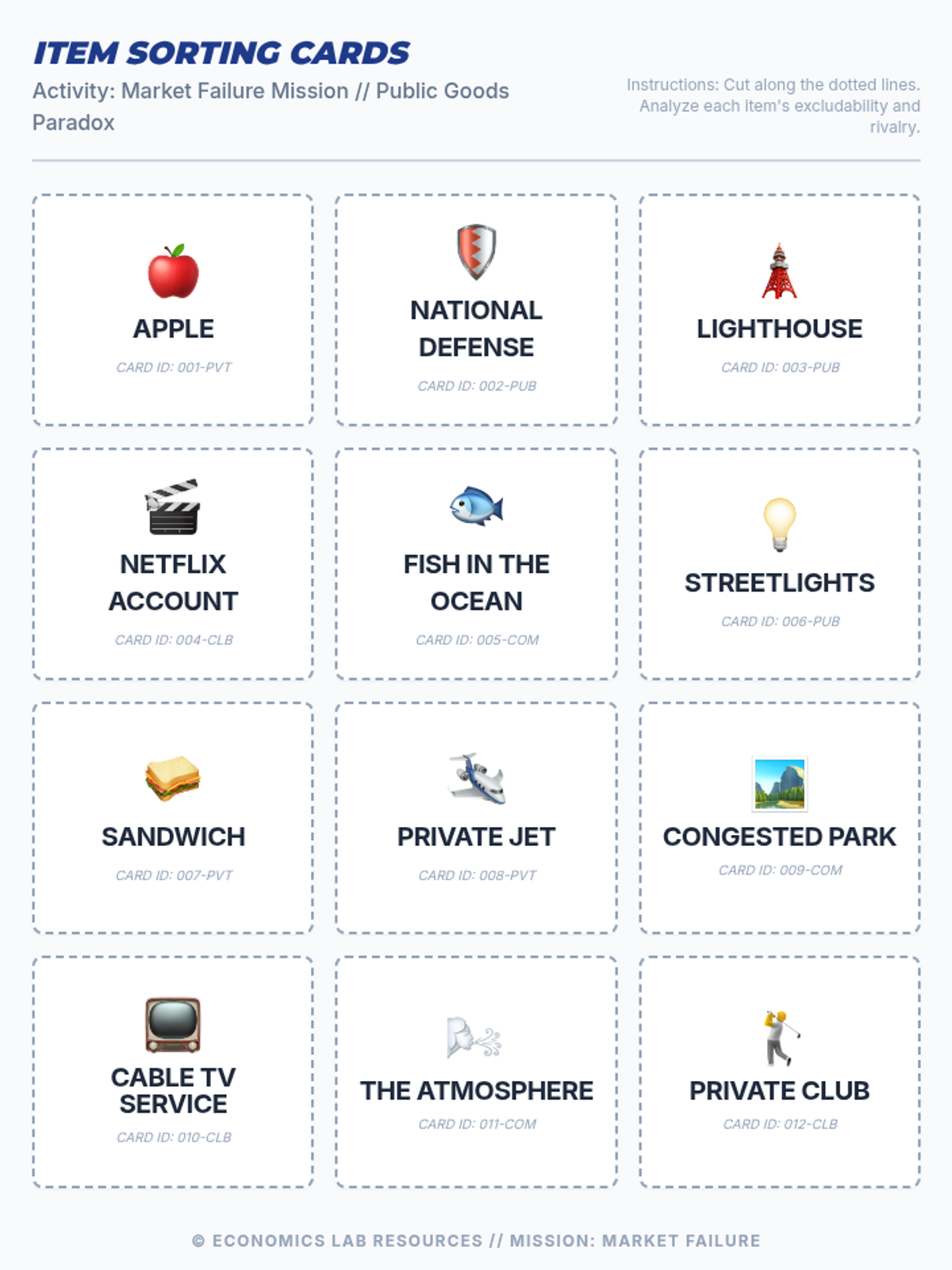
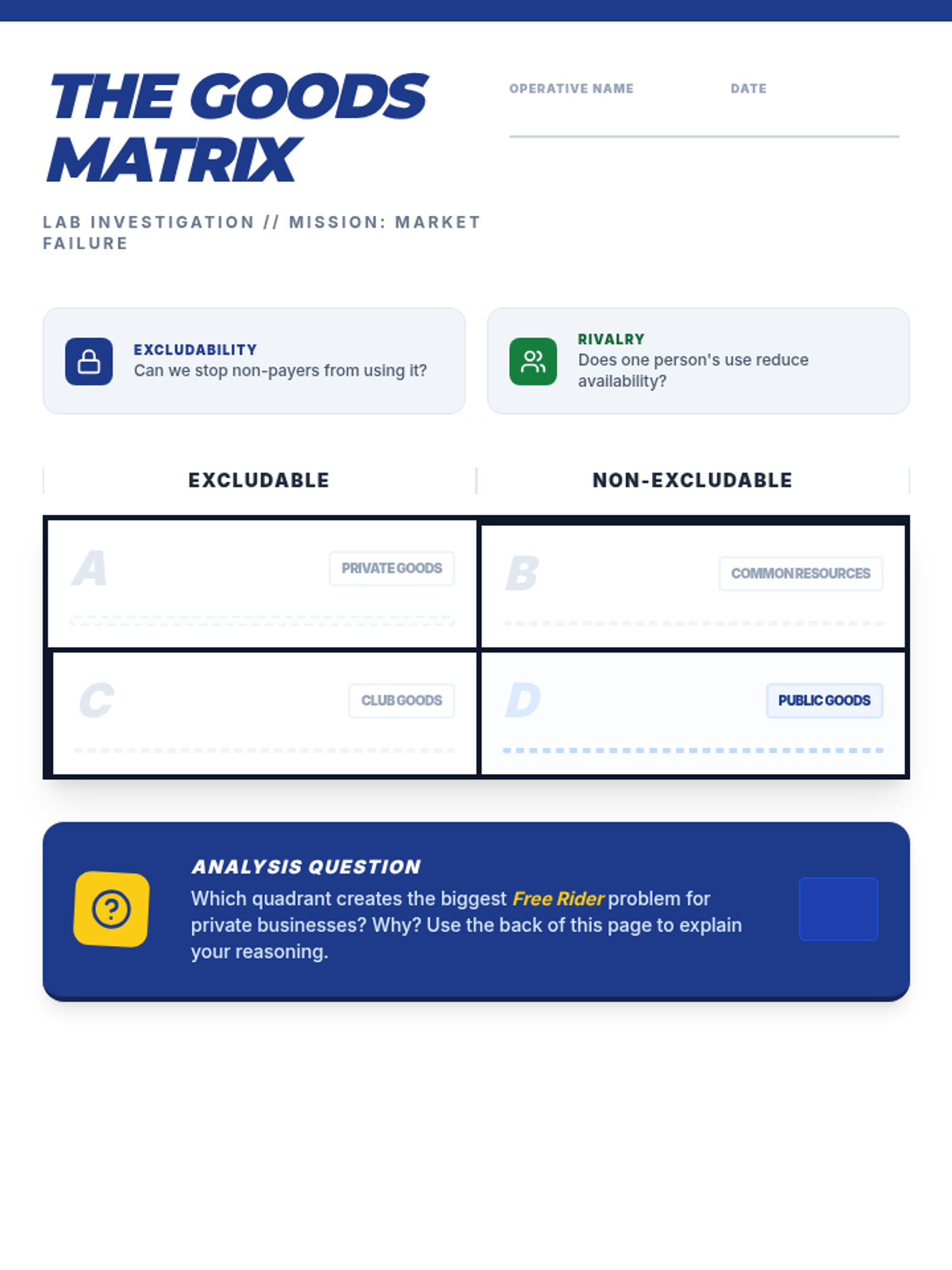
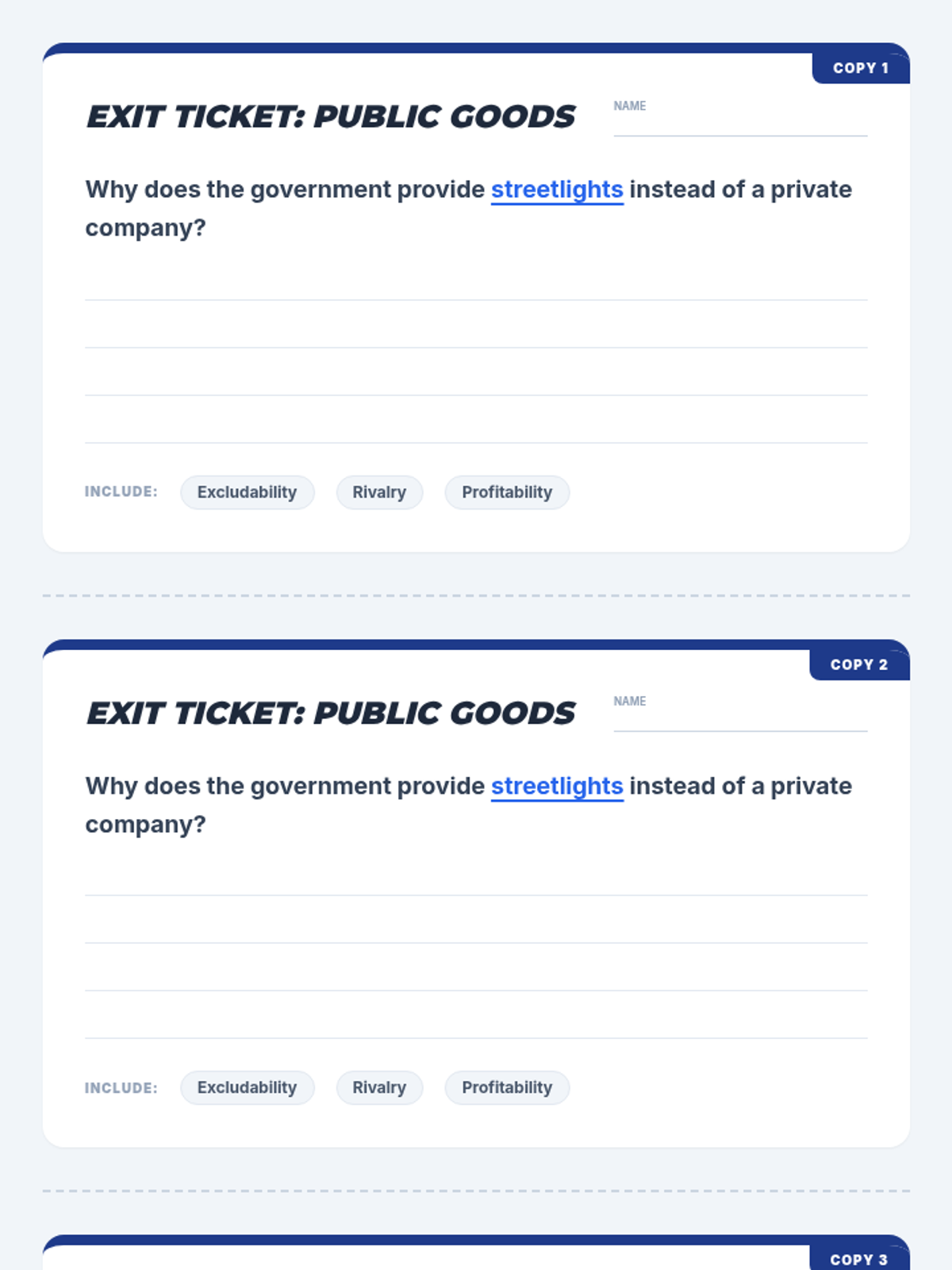
A high school economics unit exploring why markets sometimes fail to provide essential services, focusing on the characteristics of public vs. private goods and the free rider problem.
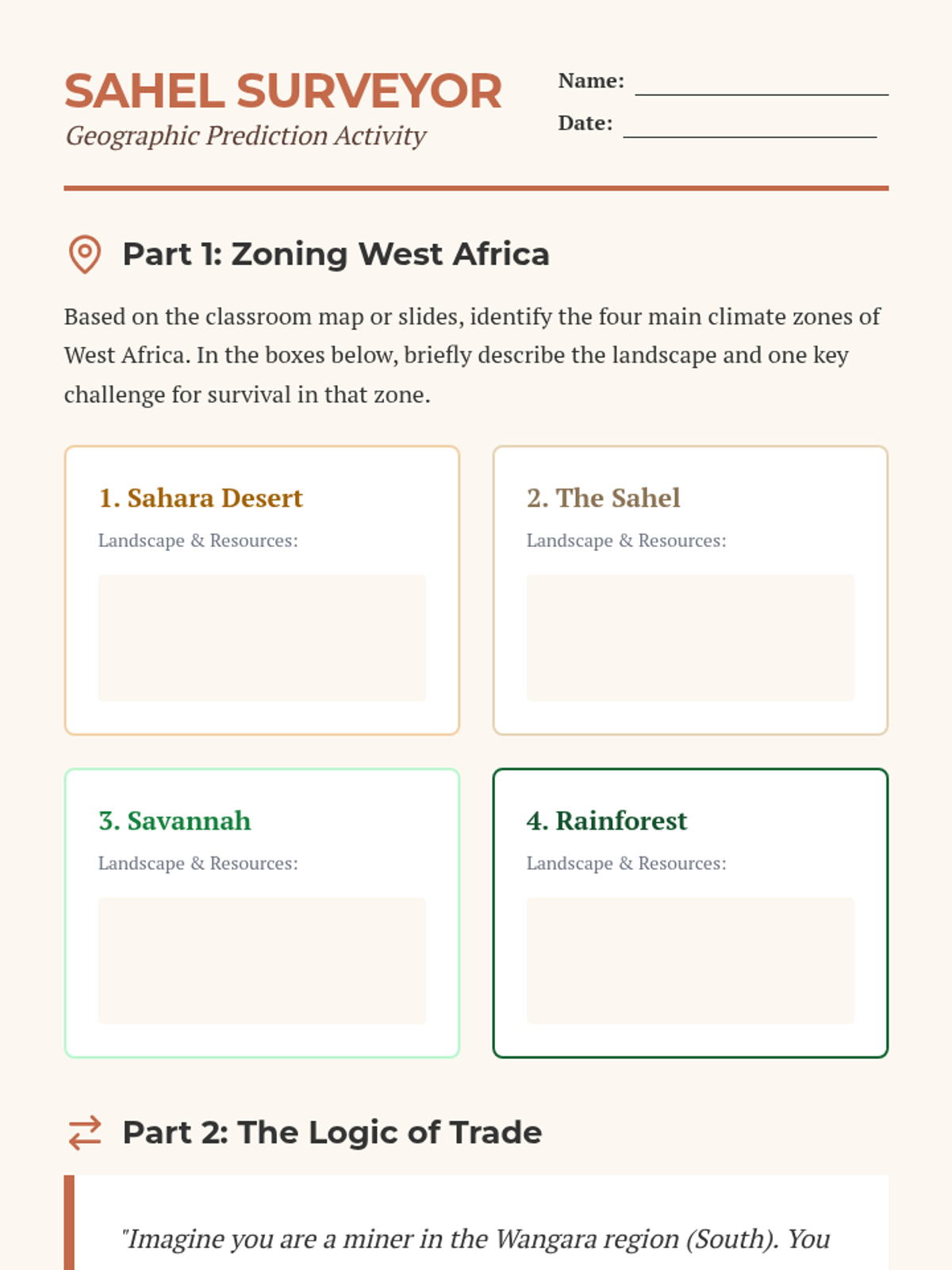
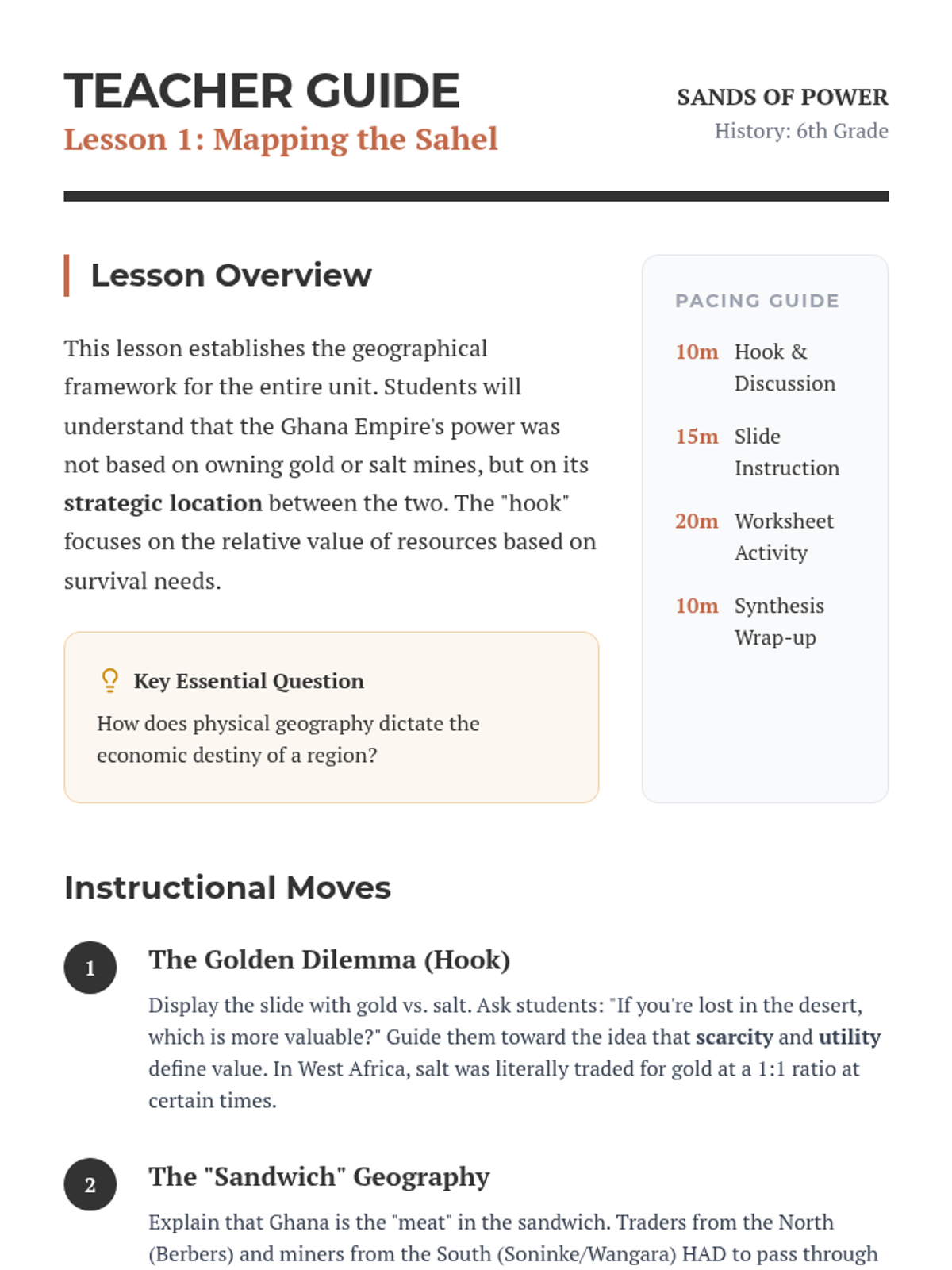
This sequence explores the economic and political power of the Ghana and Mali Empires. Students analyze geography, trade systems, leadership, and the intellectual legacy of Timbuktu to understand how resource control builds civilizations.
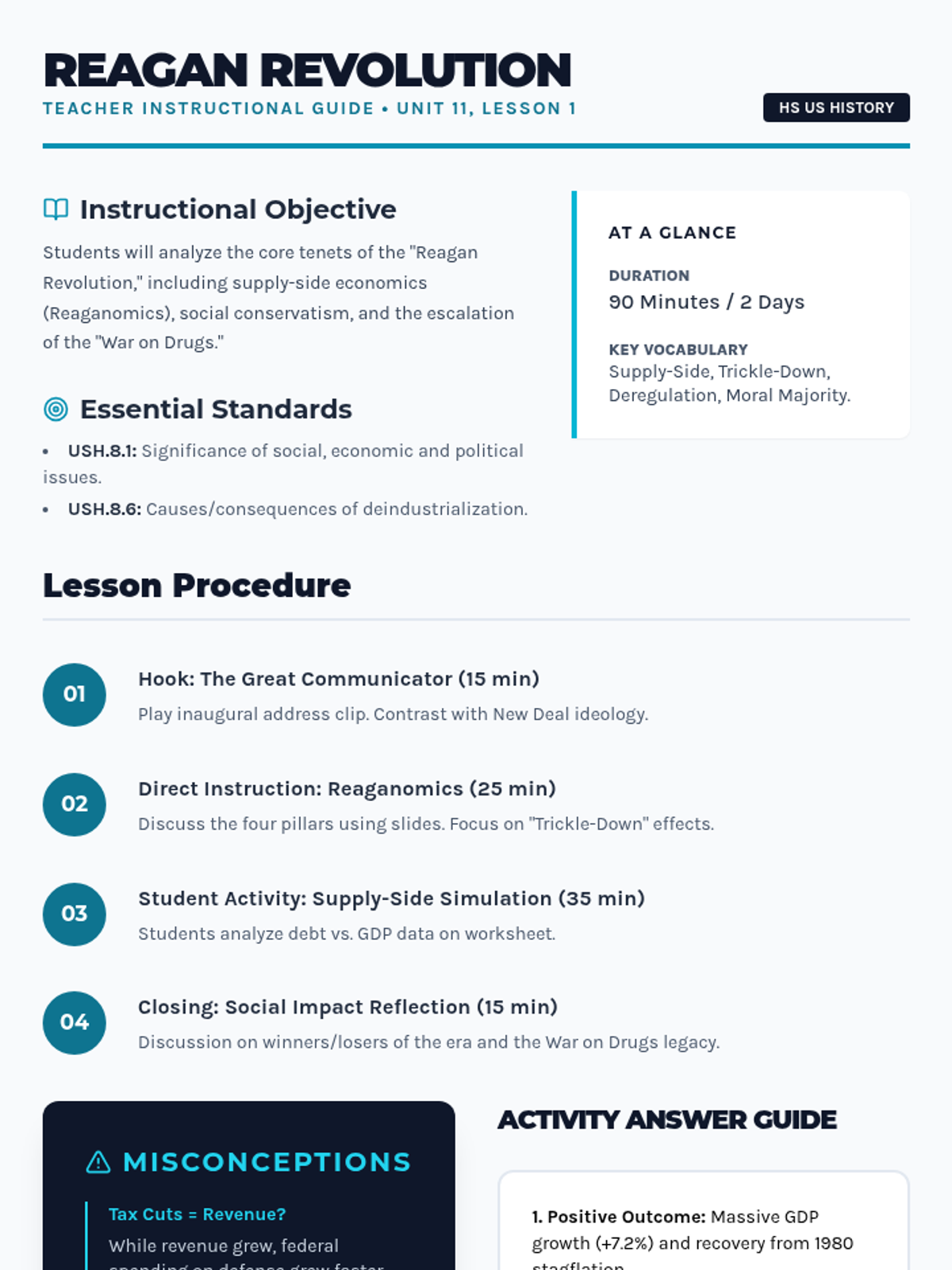
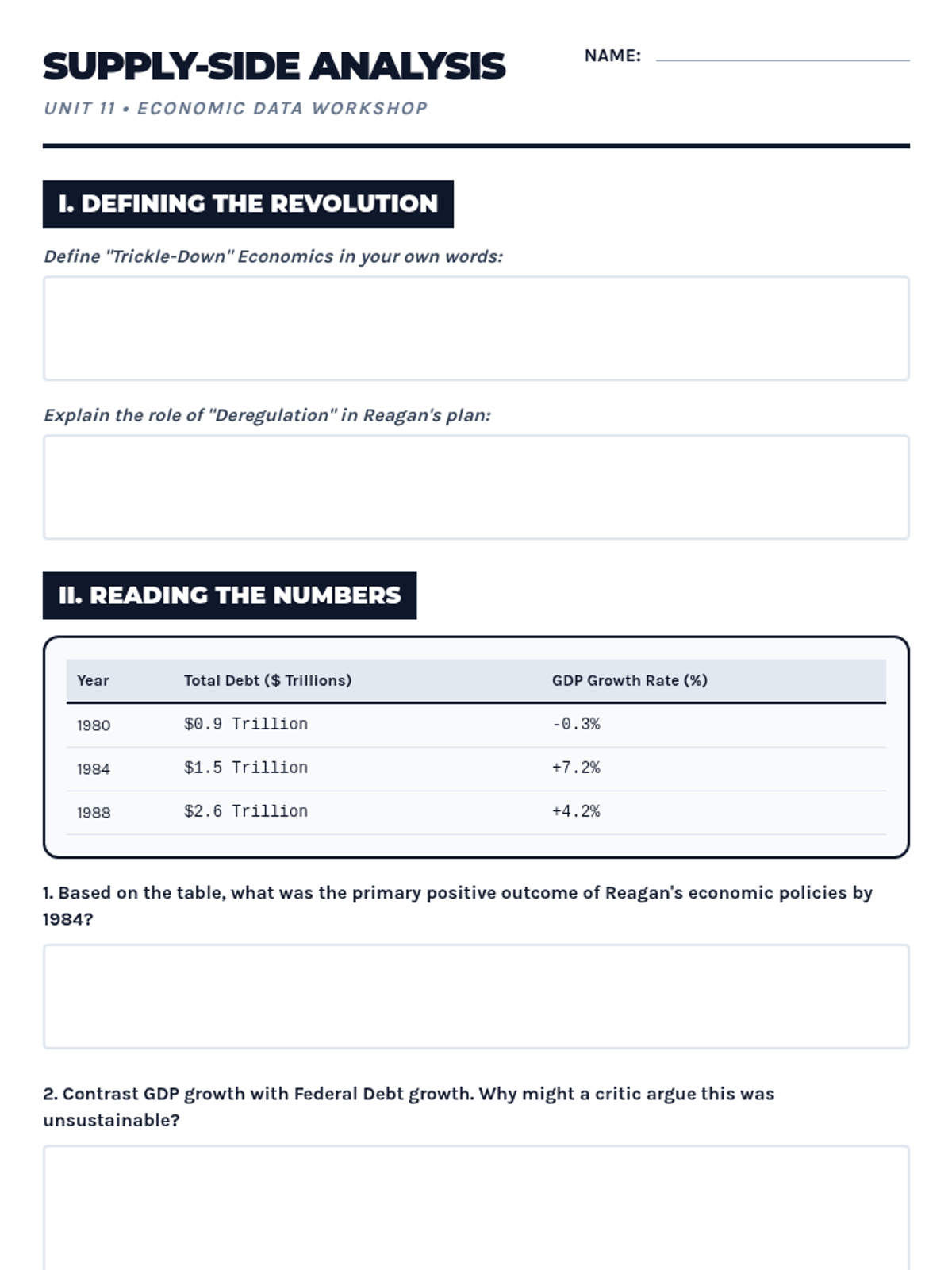
A comprehensive two-week unit covering the social, economic, and political transformations of the 1980s and 1990s, from the Reagan Revolution to the dawn of the Digital Age and the roots of 21st-century security challenges.
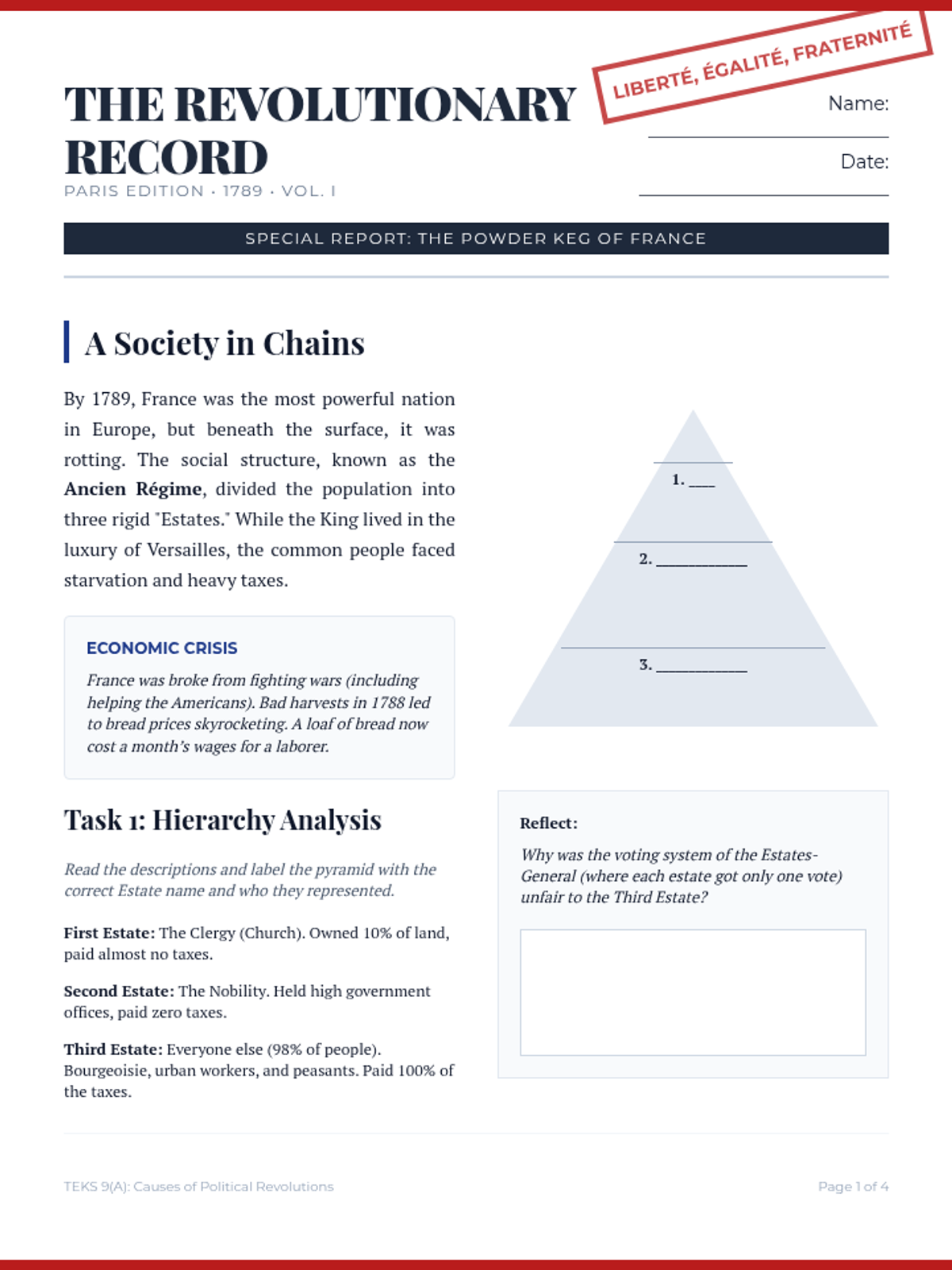
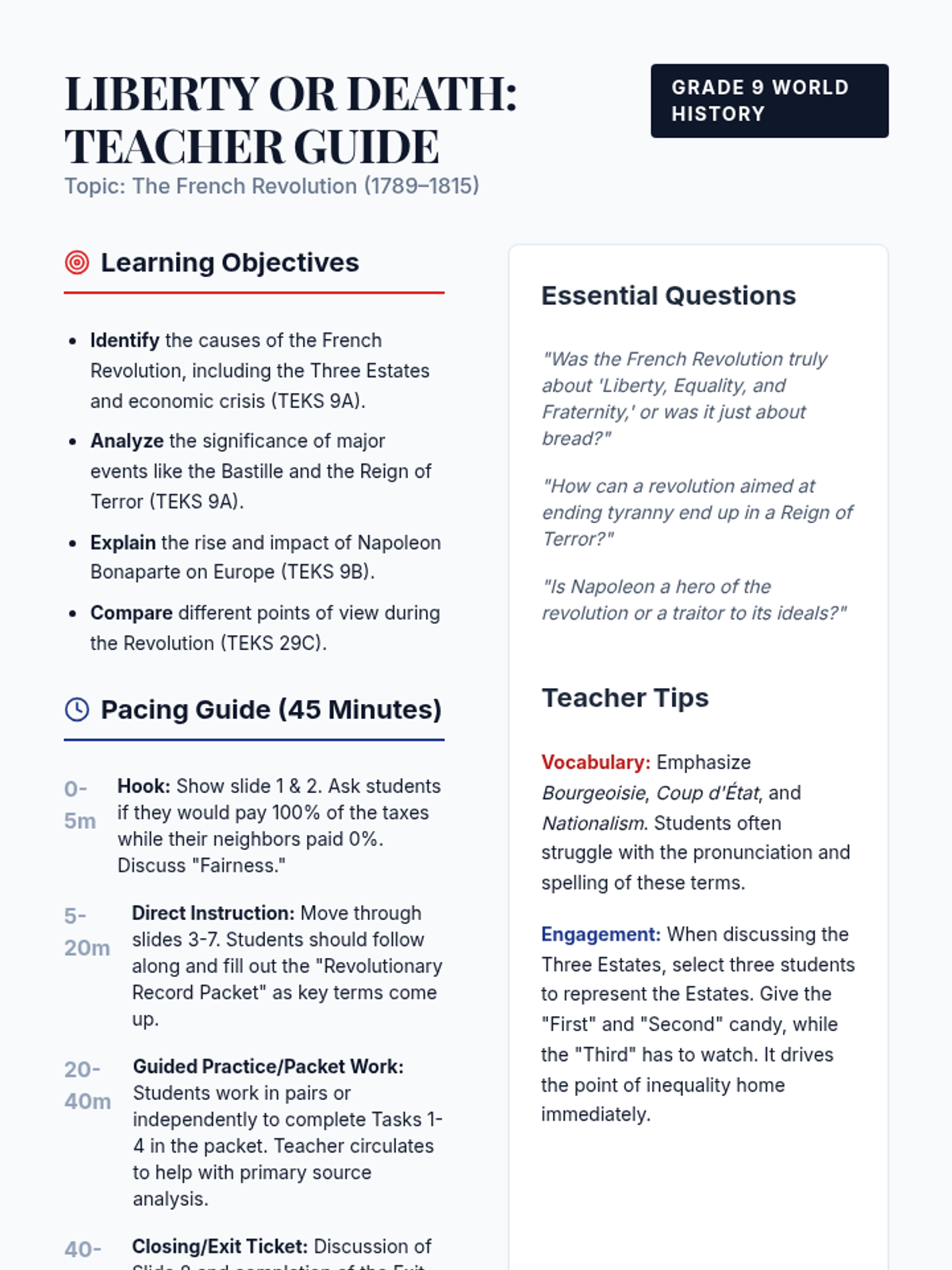
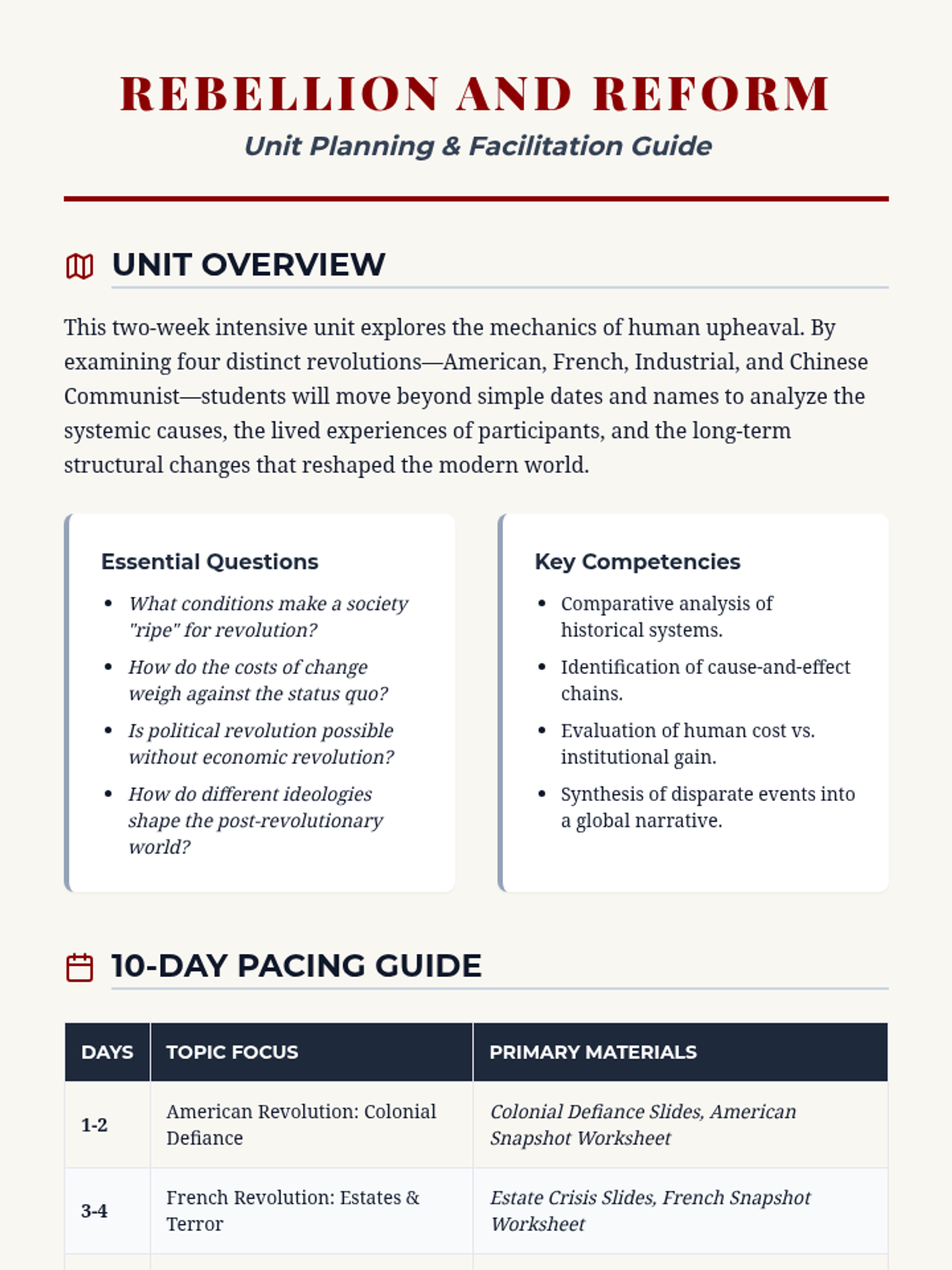
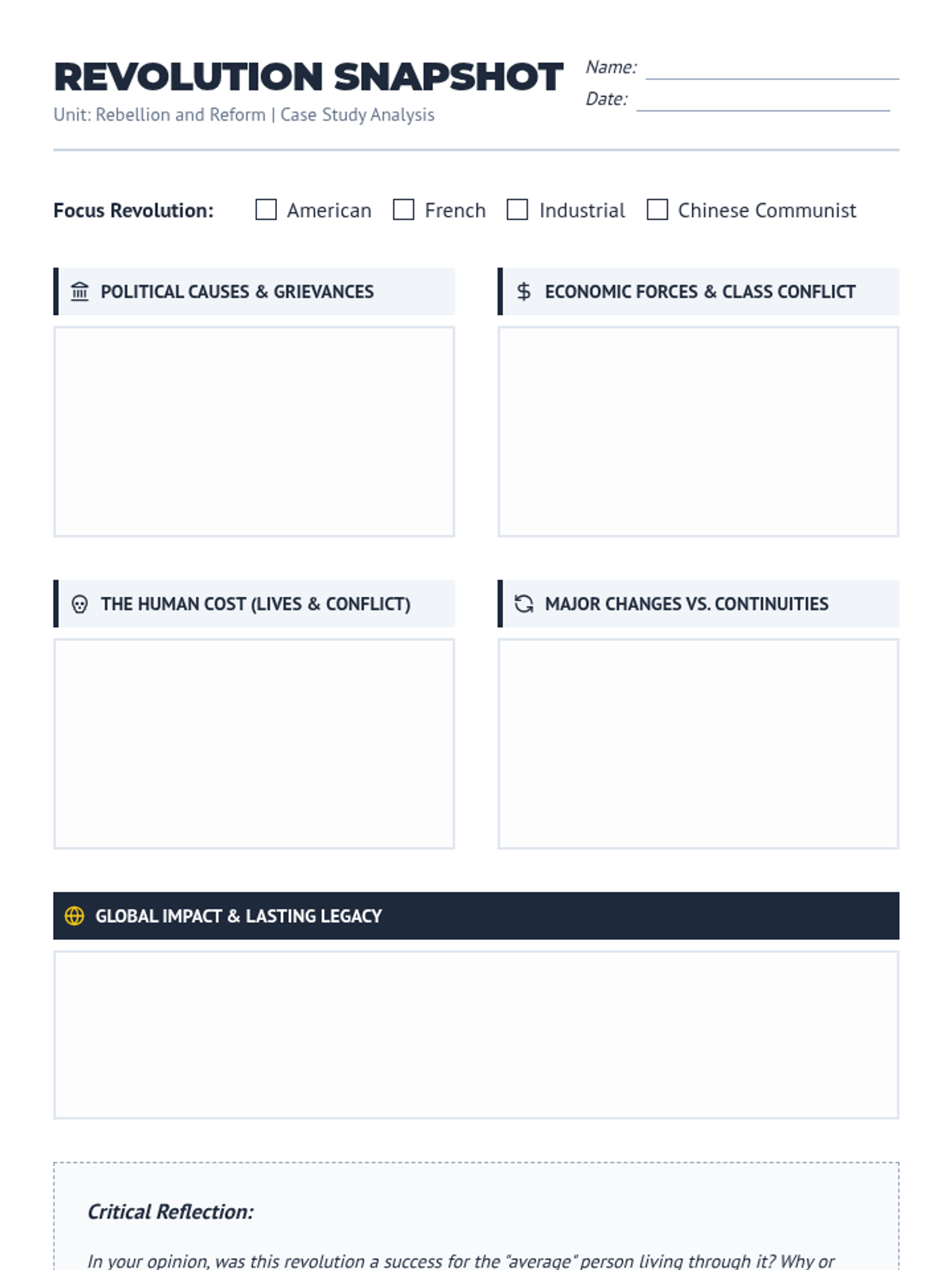
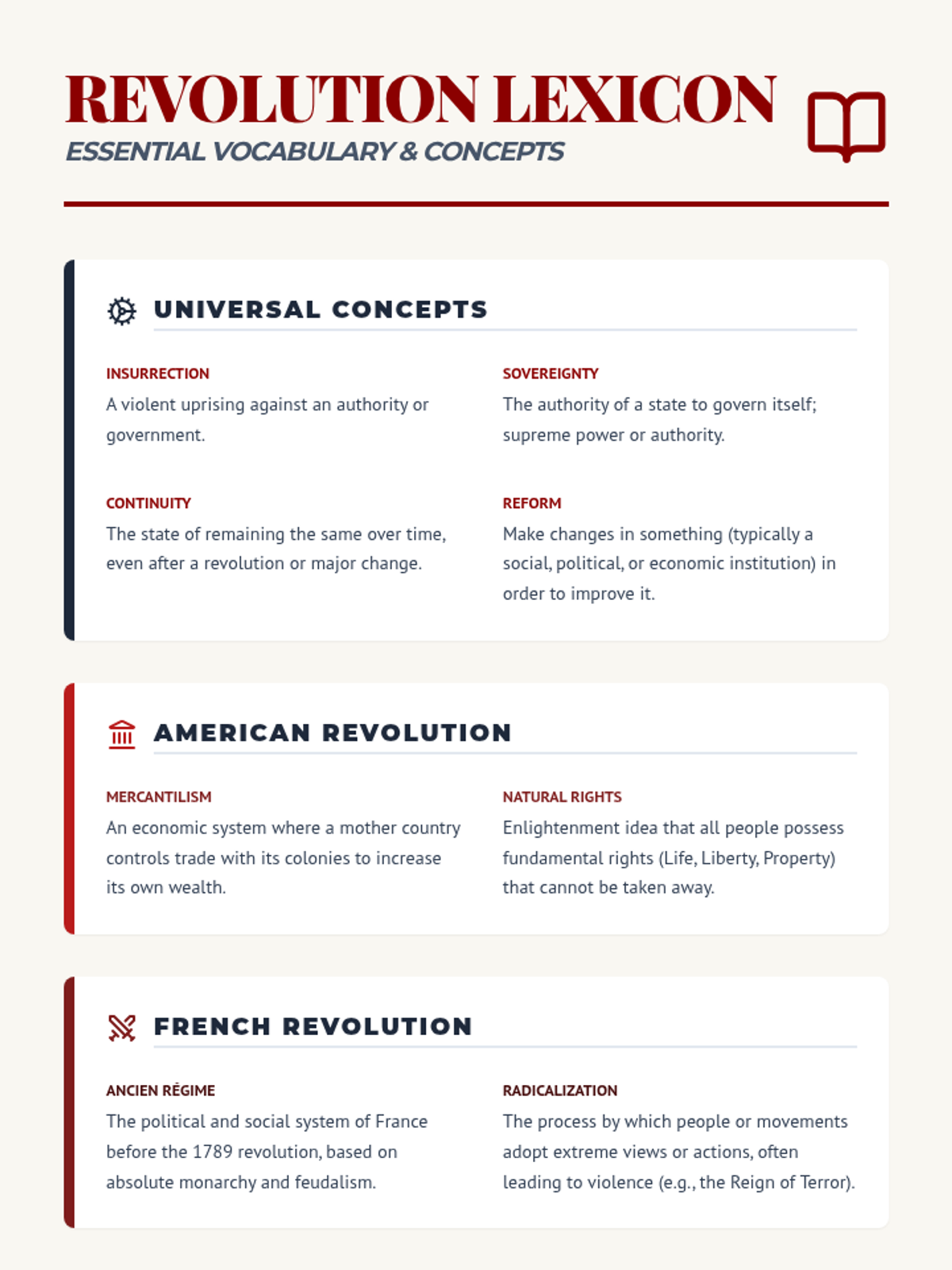
A comprehensive 10-day unit exploring the causes, courses, and consequences of four major world-altering revolutions: American, French, Industrial, and China's Communist Revolution. Students will analyze political and economic drivers, human costs, and lasting global impacts through comparative study.
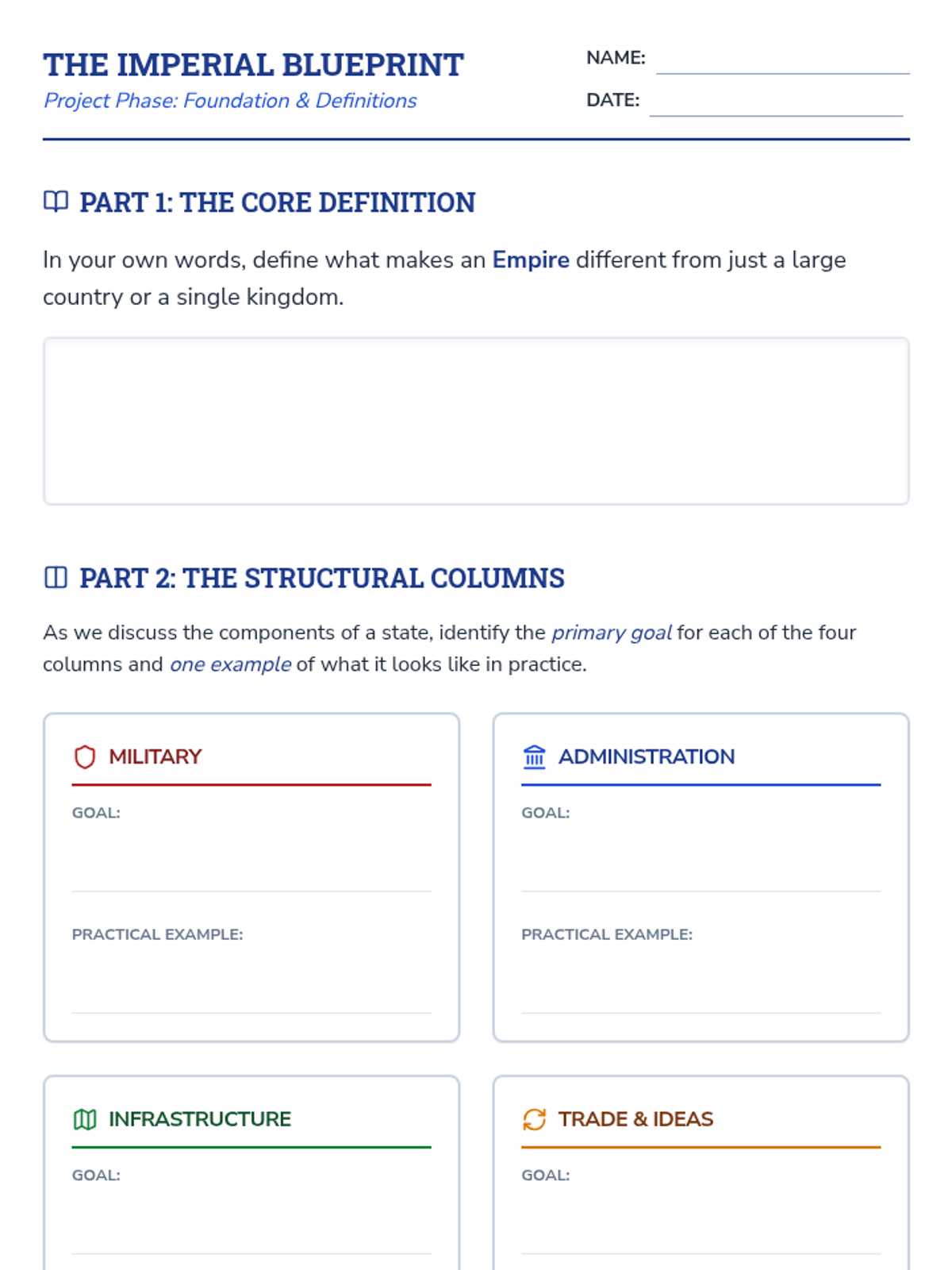
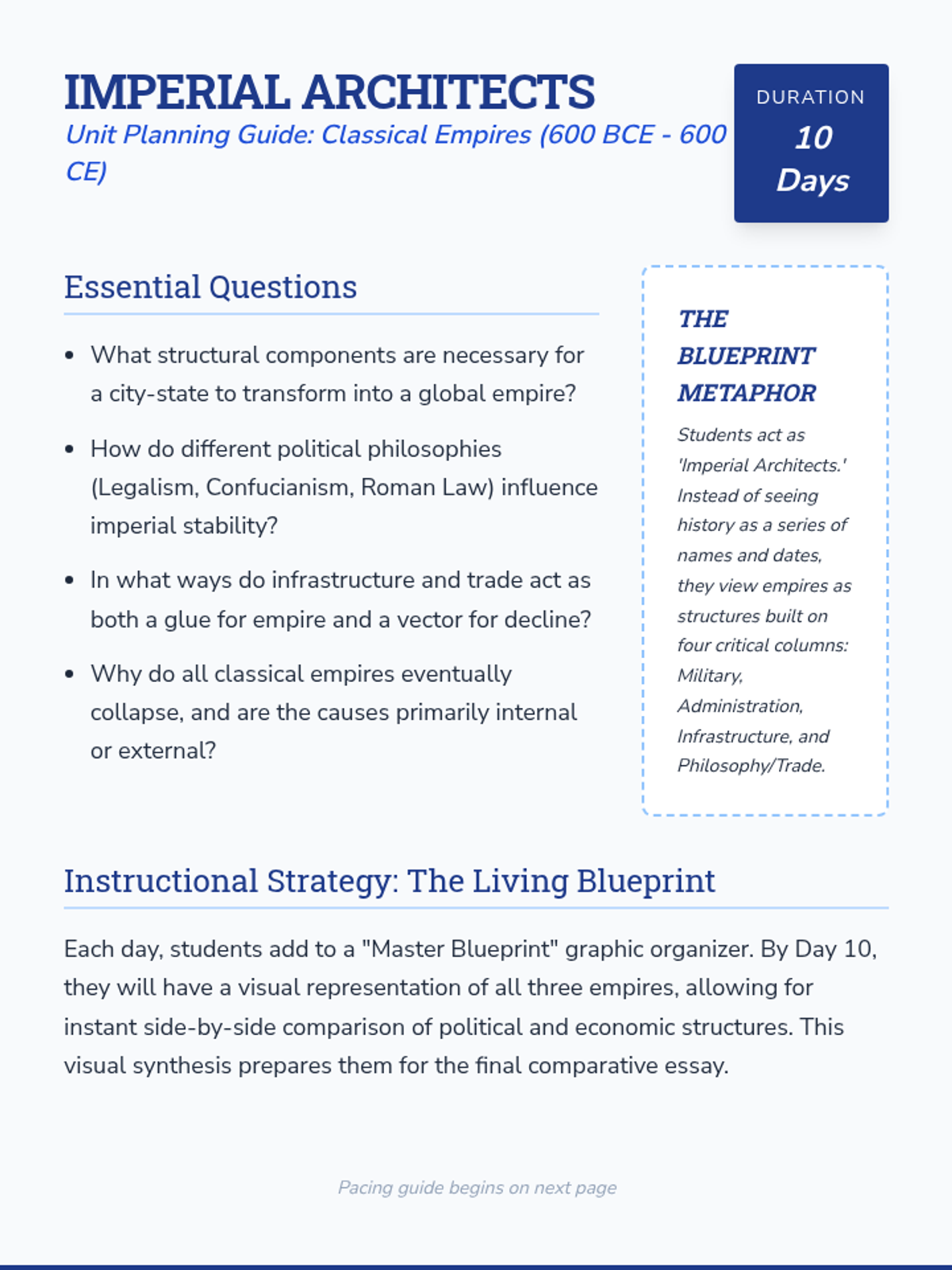
An intensive two-week exploration of the Classical Period's greatest powers—Persia, China, and Rome. Students act as 'Imperial Architects,' analyzing the structural components that allowed these empires to rise, flourish, and eventually crumble.
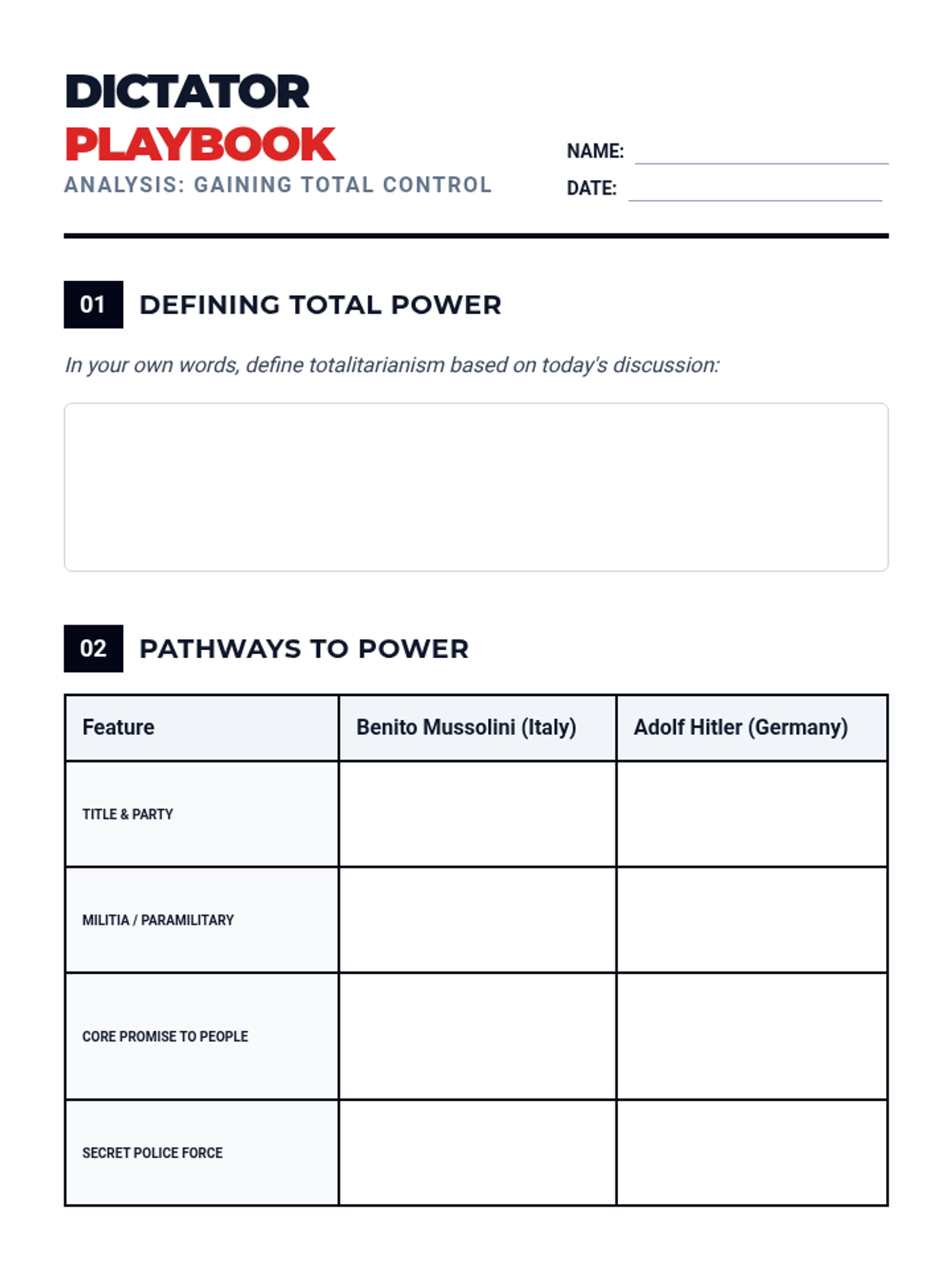
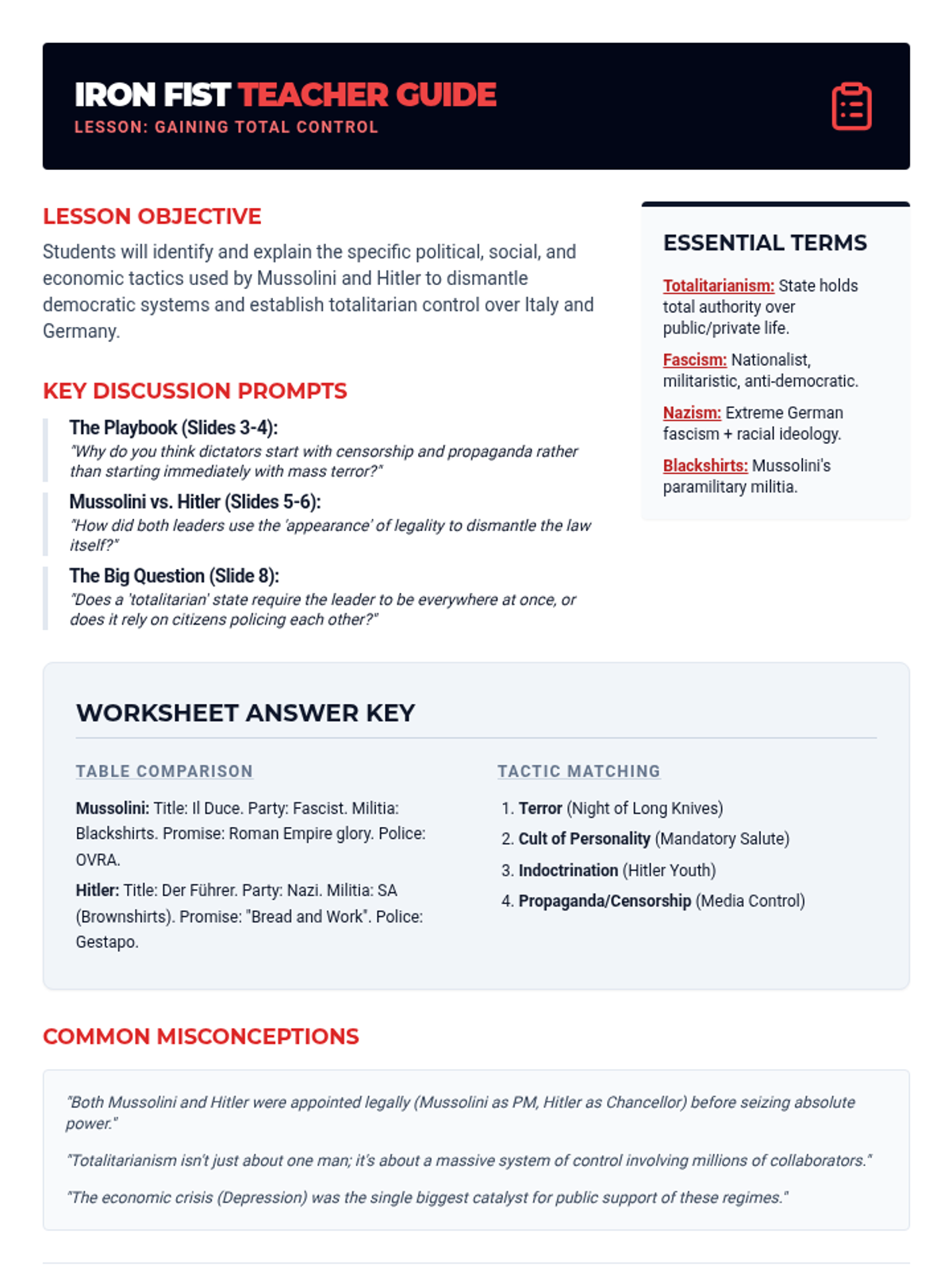
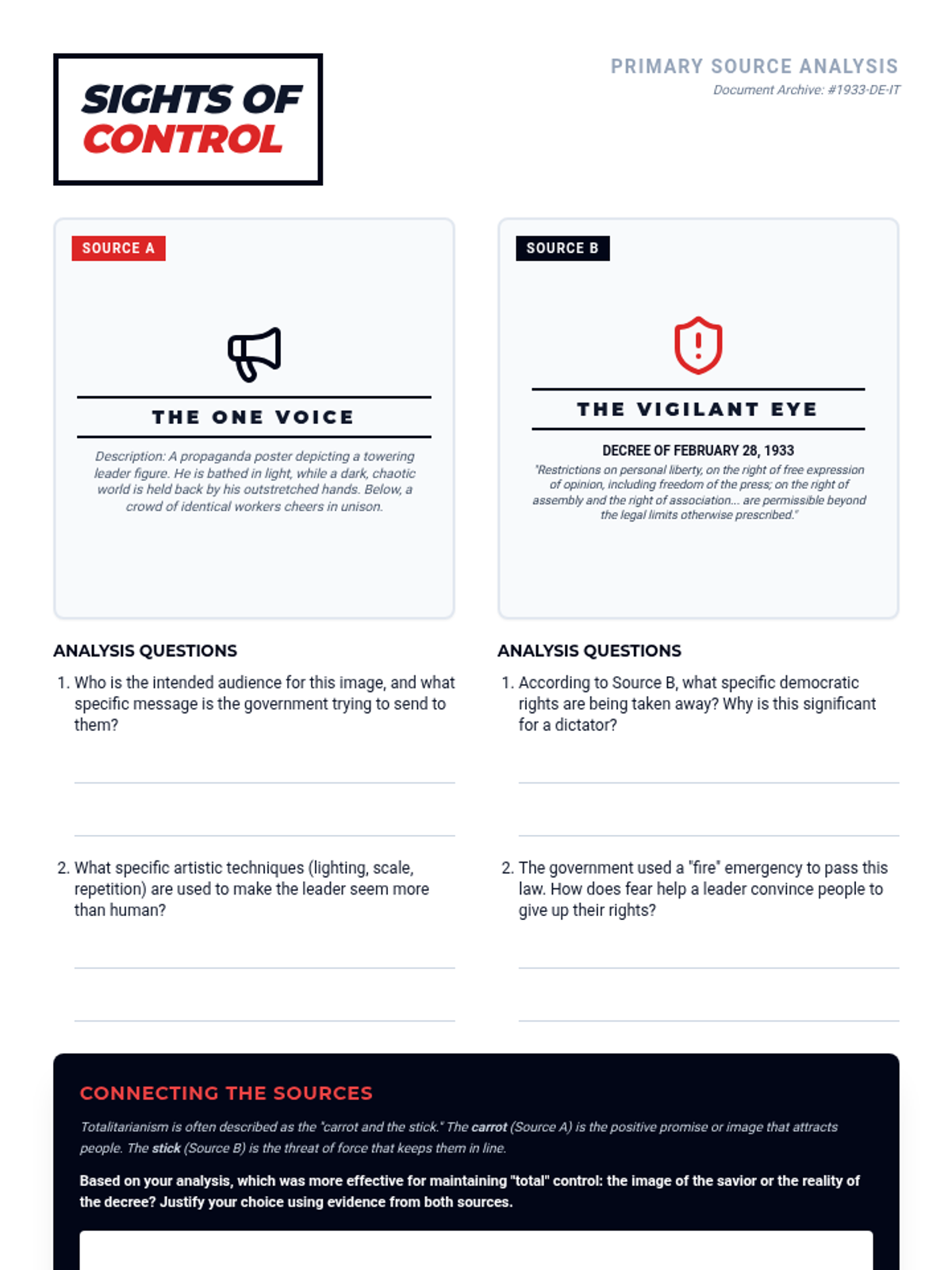
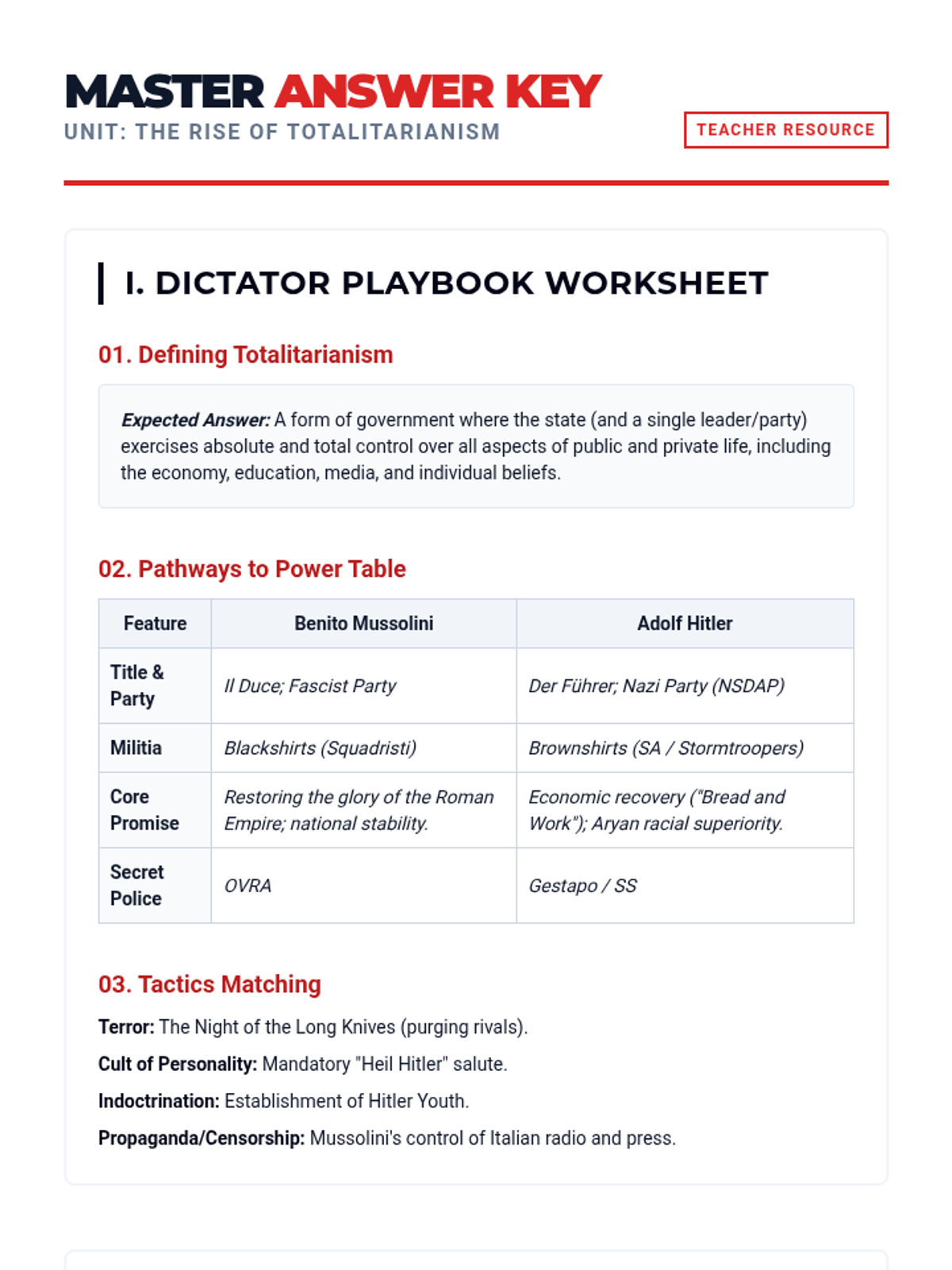
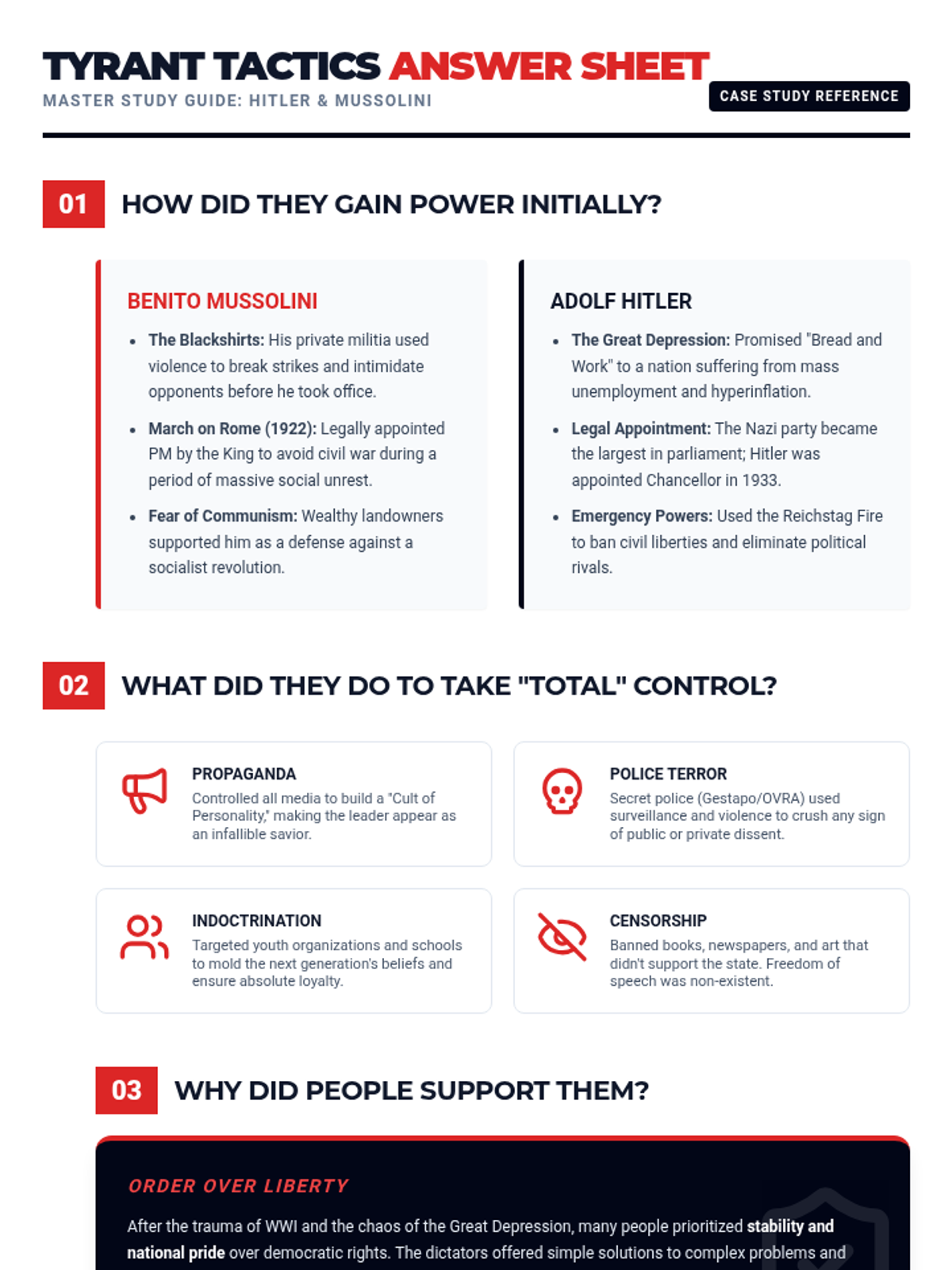
A deep dive into the rise of totalitarianism in the 20th century, focusing on the social, economic, and political factors that allowed dictators to seize and maintain absolute power.
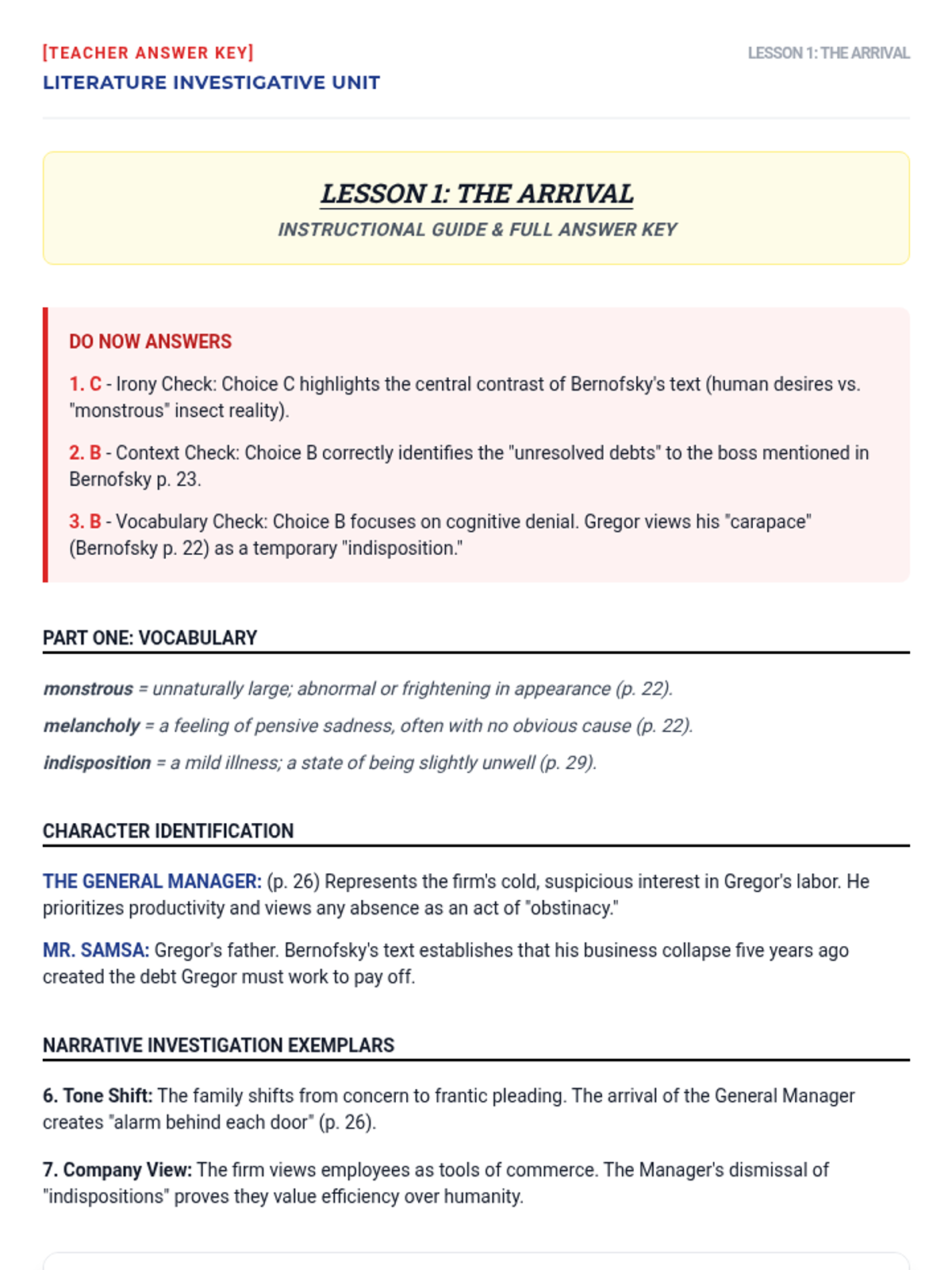
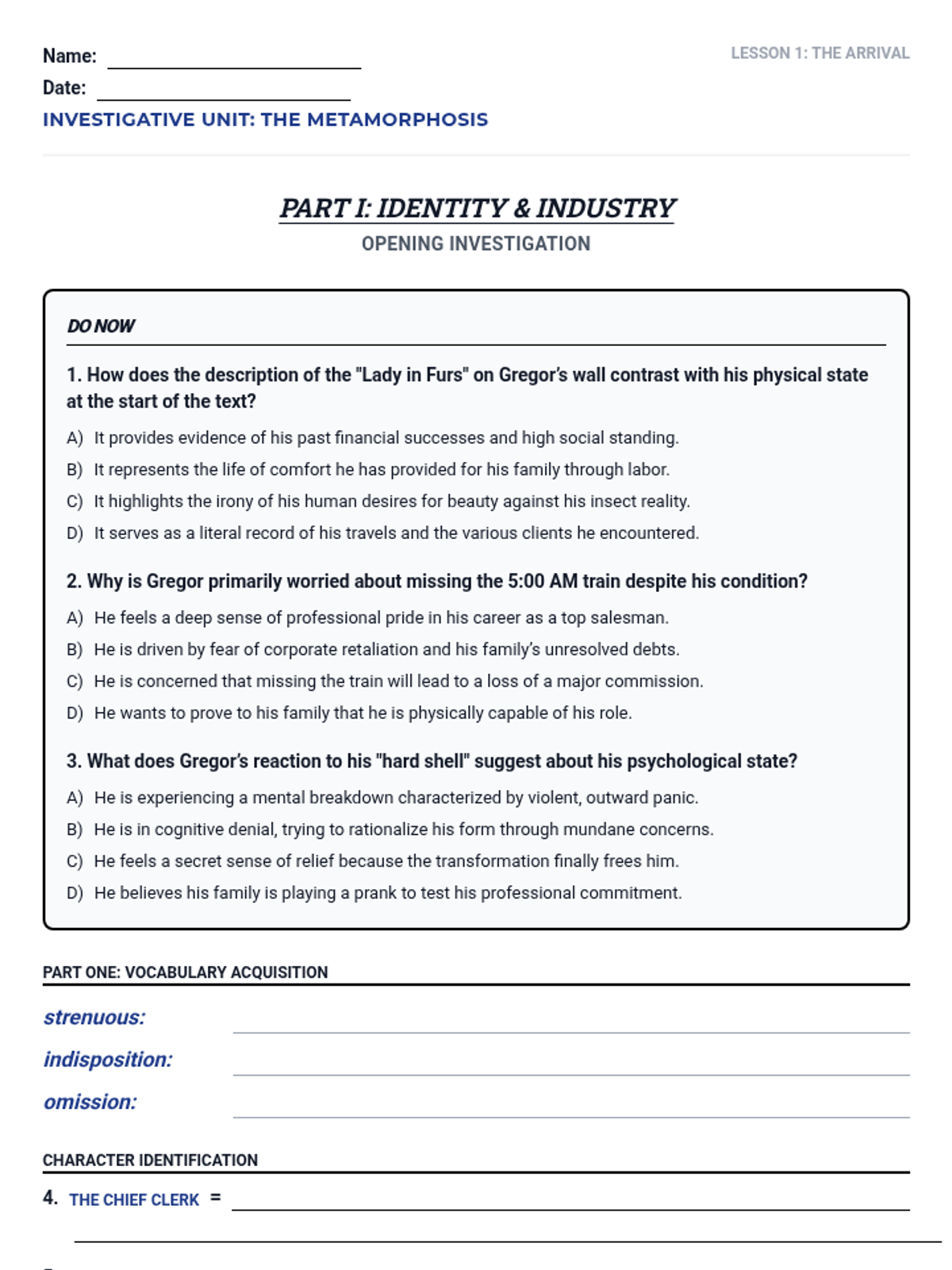
An intensive investigative unit on Franz Kafka's *The Metamorphosis* following the North Star/Uncommon Schools instructional model. The unit focuses on the thematic intersection of labor, identity, and dehumanization. Students analyze Gregor's alienation from his family and society through a structured rigorous framework including vocabulary acquisition, character identification, and thematic synthesis.
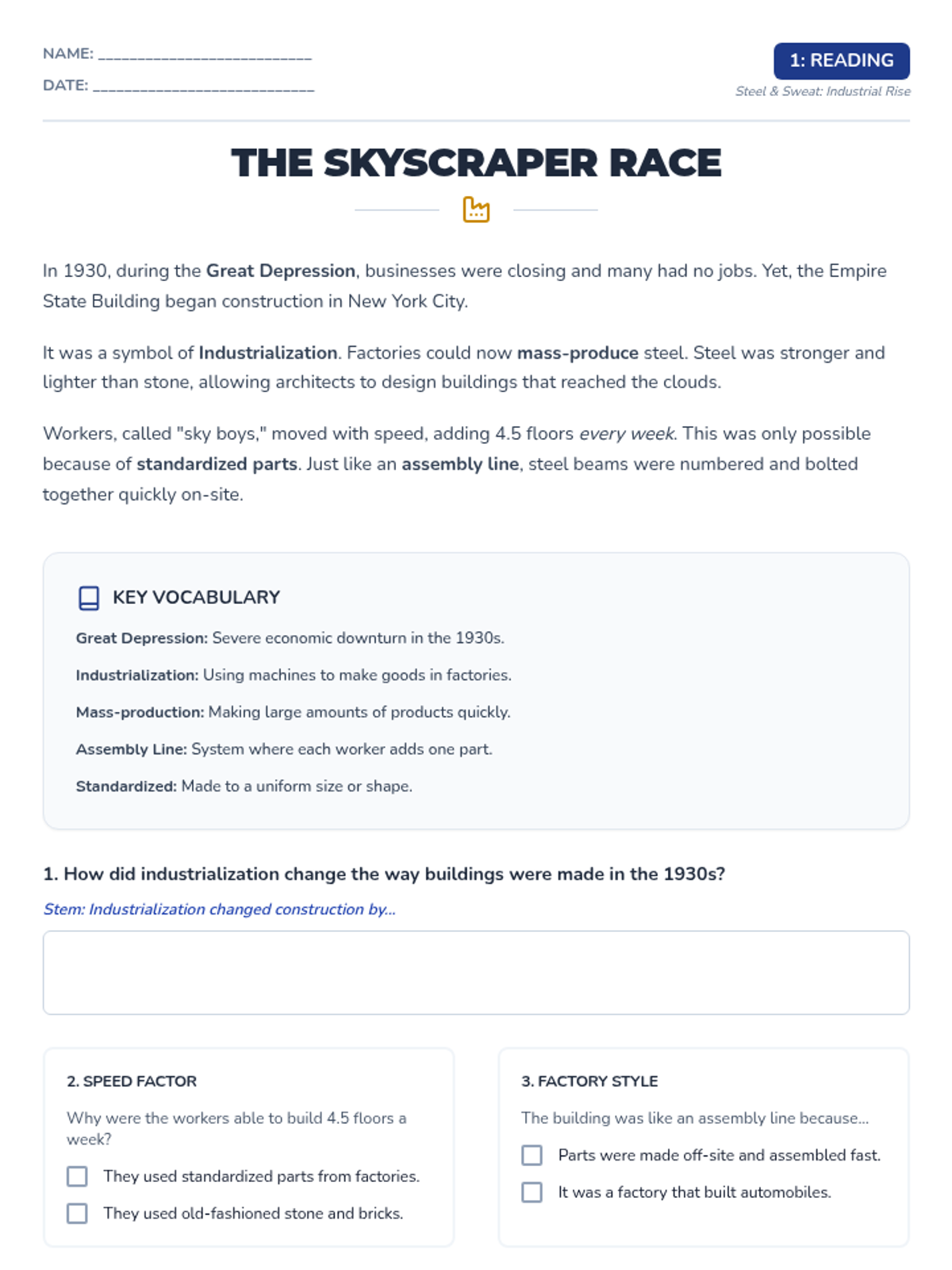
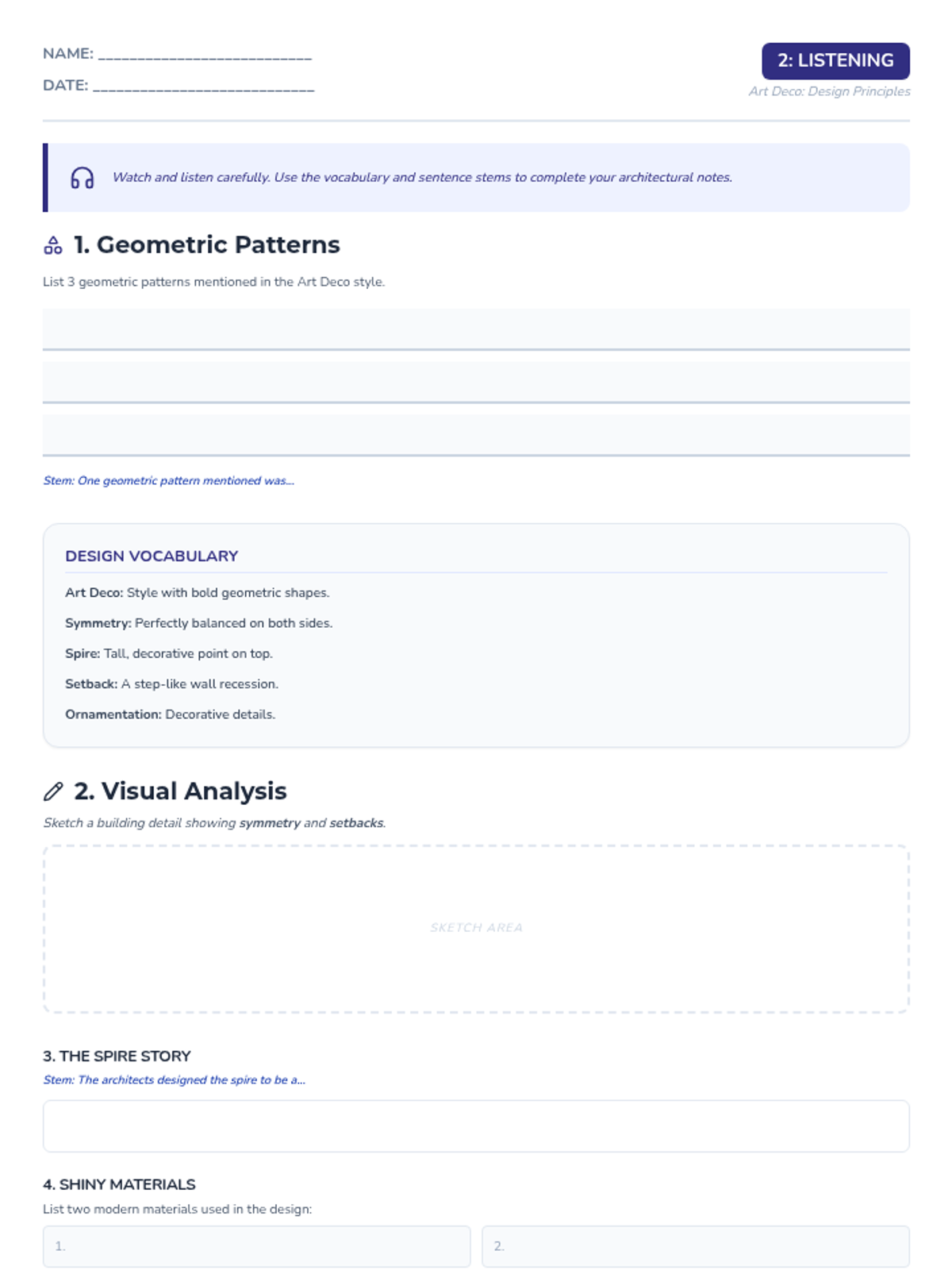
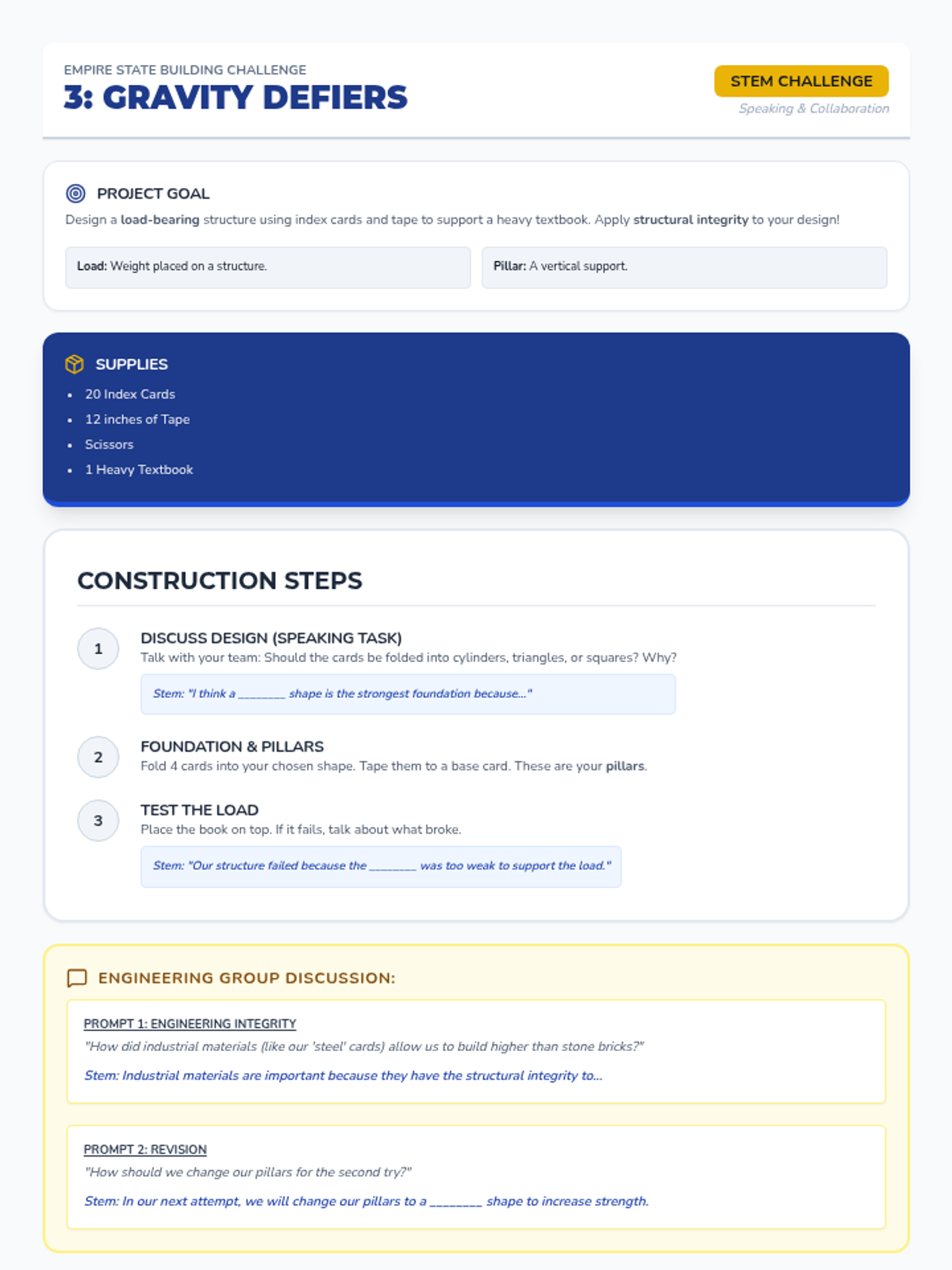
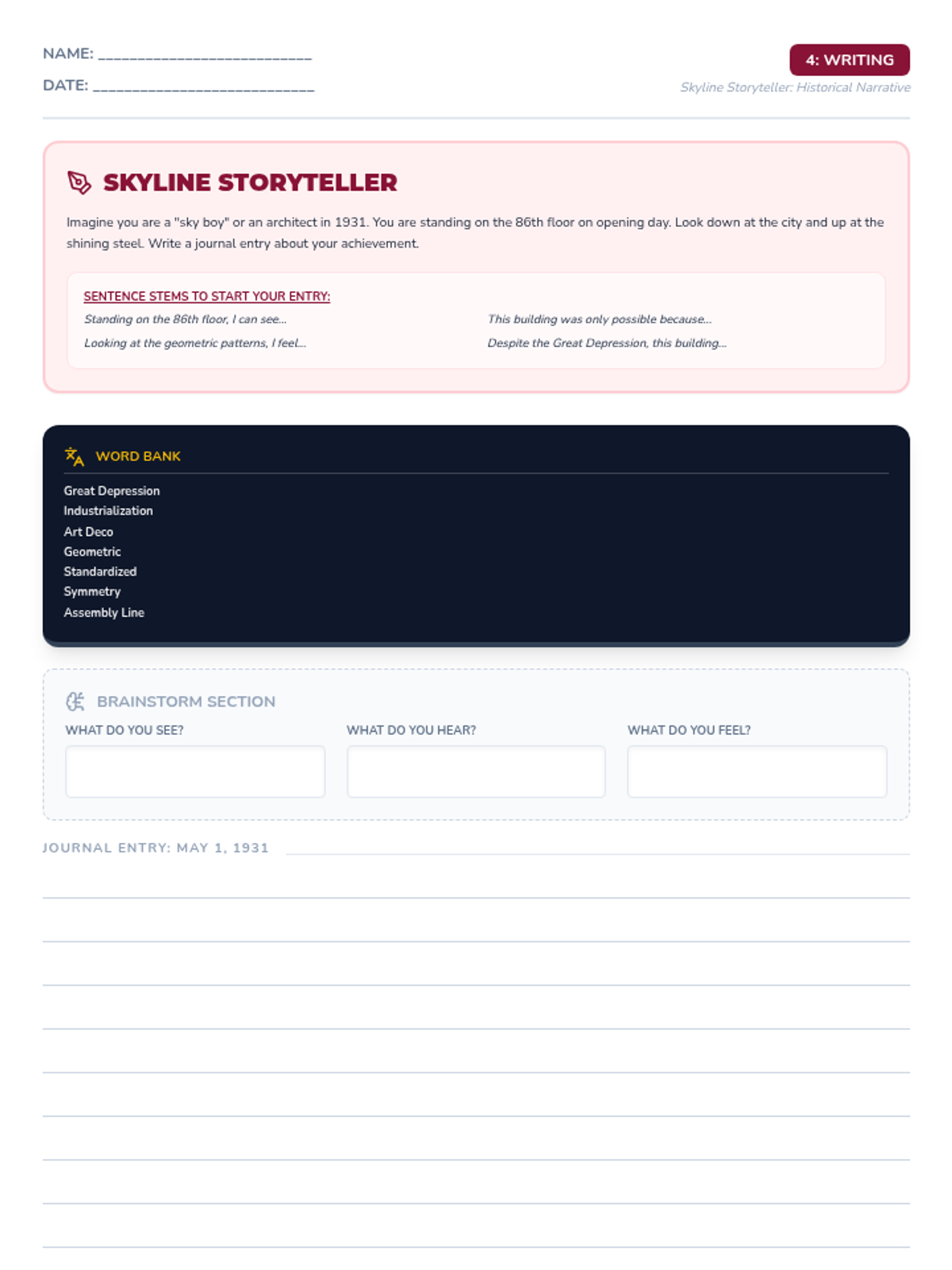
A comprehensive unit exploring the intersection of industrial innovation and architectural design through the iconic lens of the Empire State Building. Students analyze the socio-economic impacts of the Great Depression on construction and the geometric principles of Art Deco style.
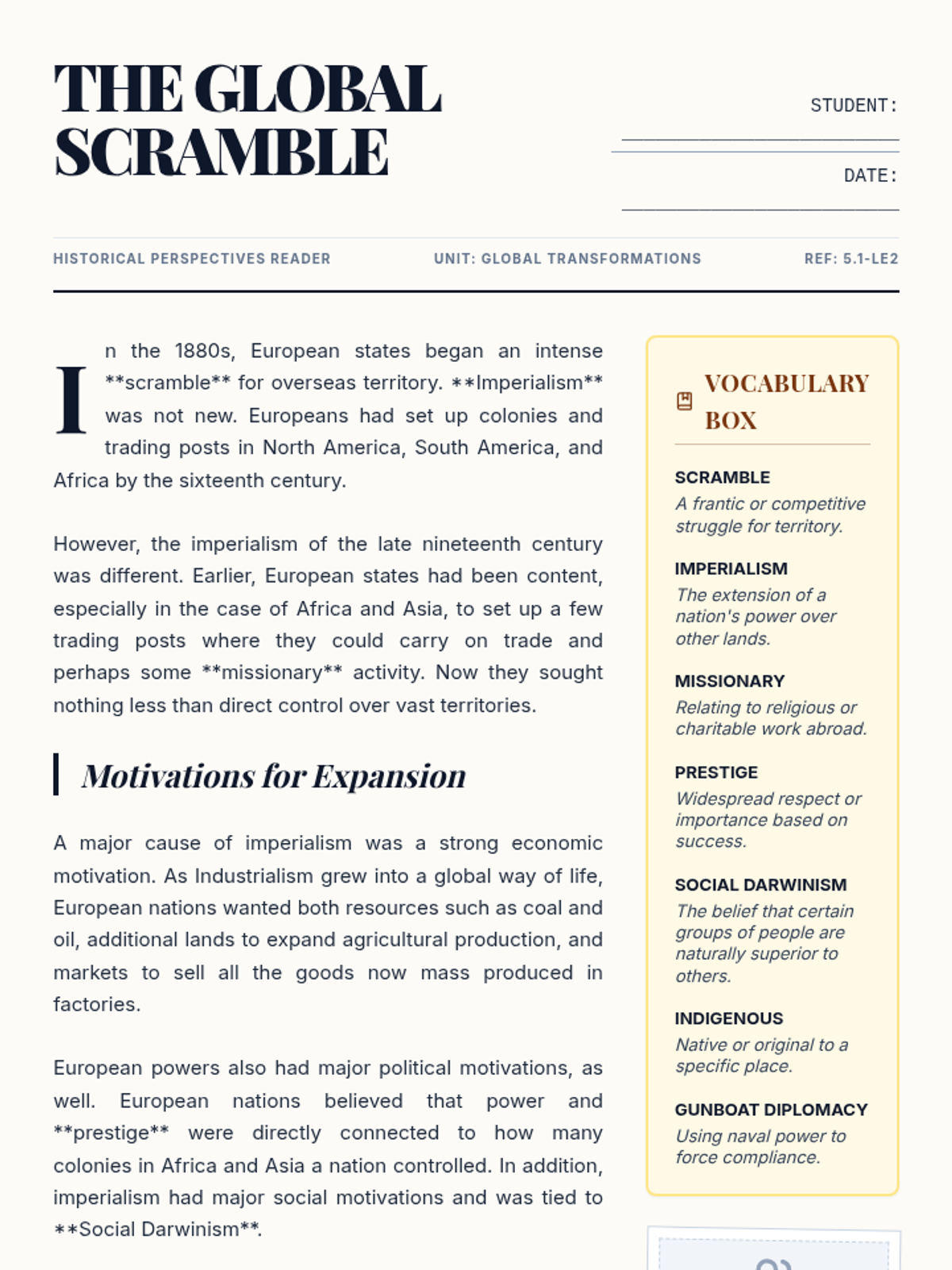
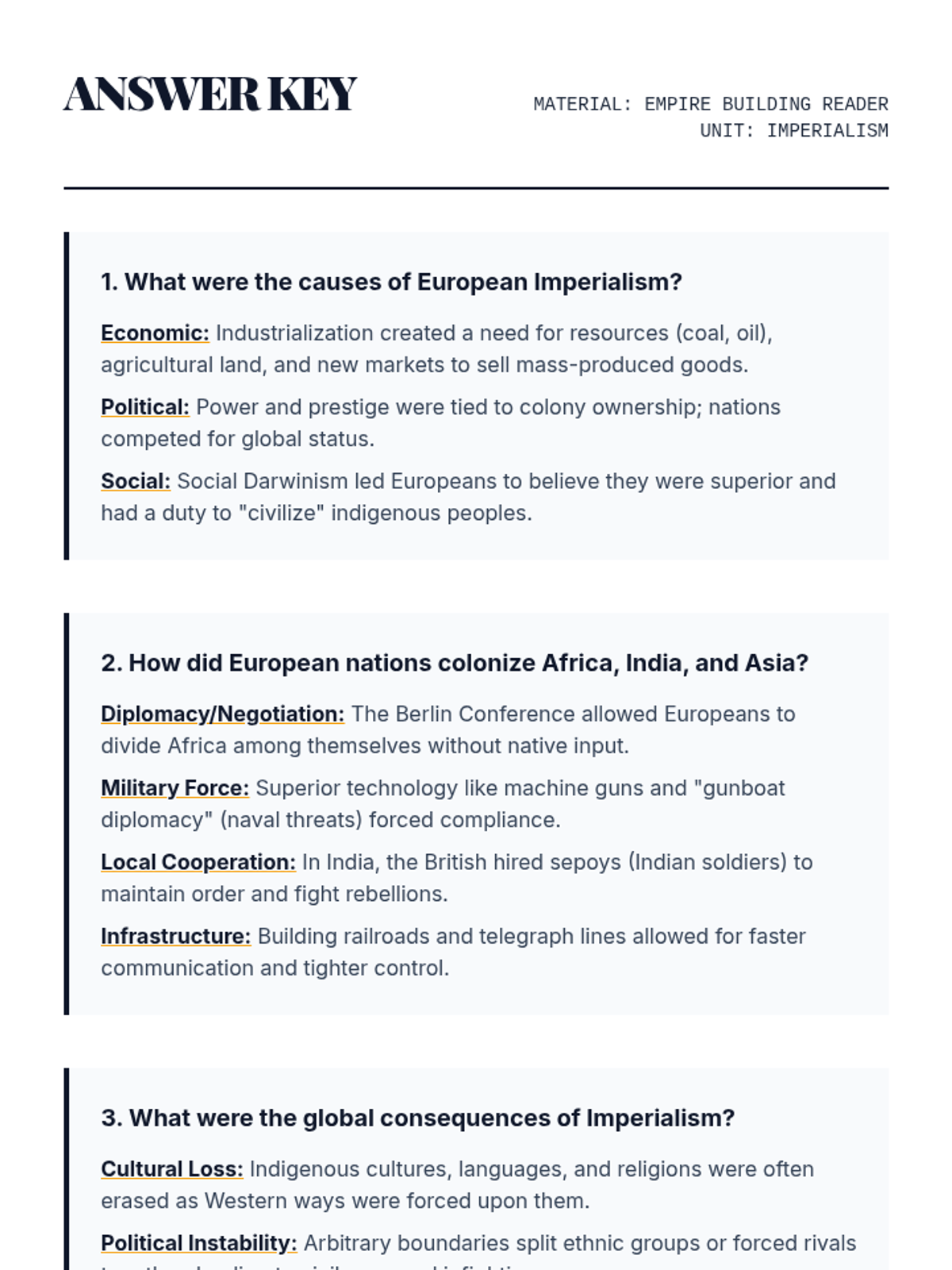
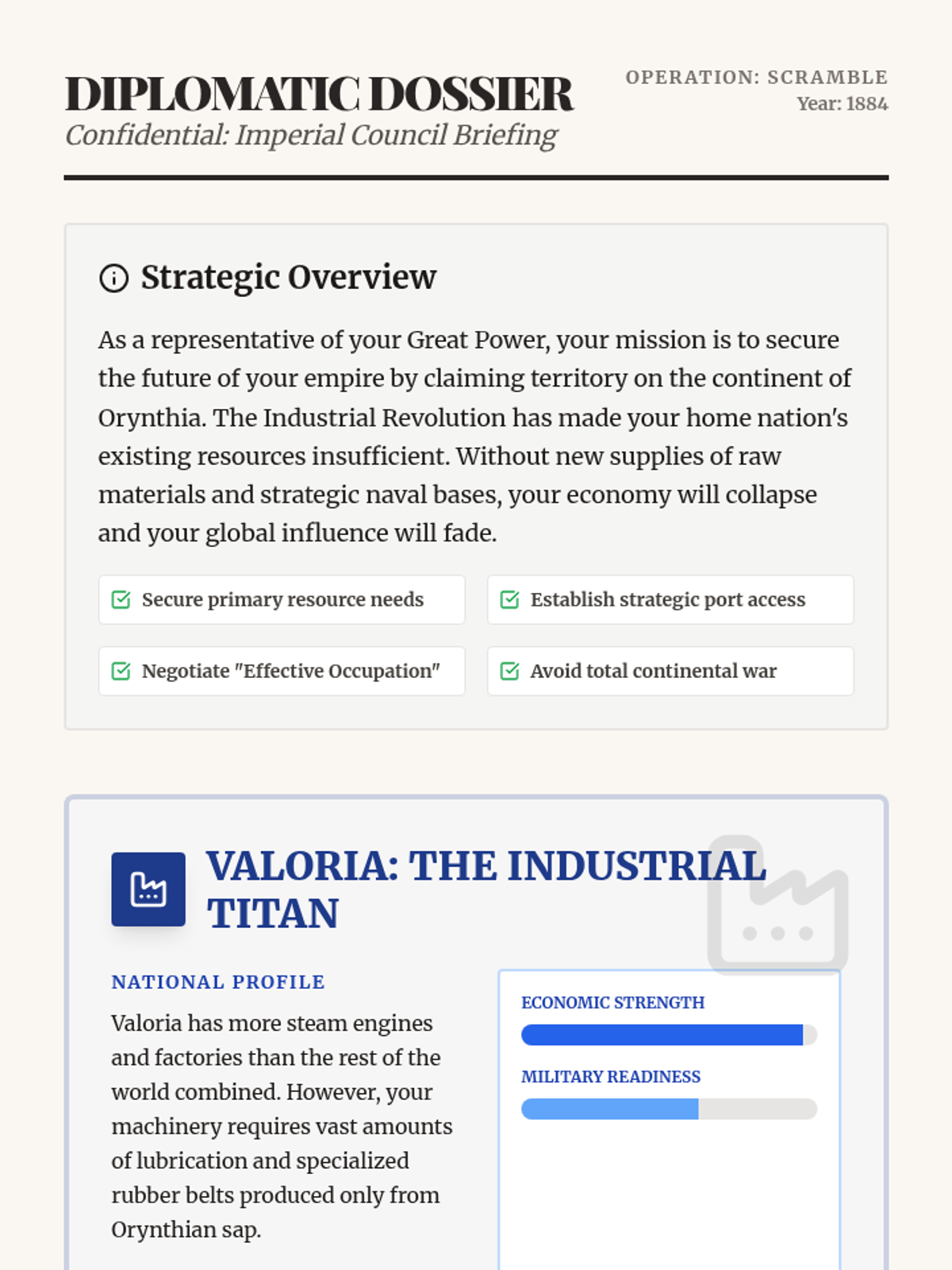
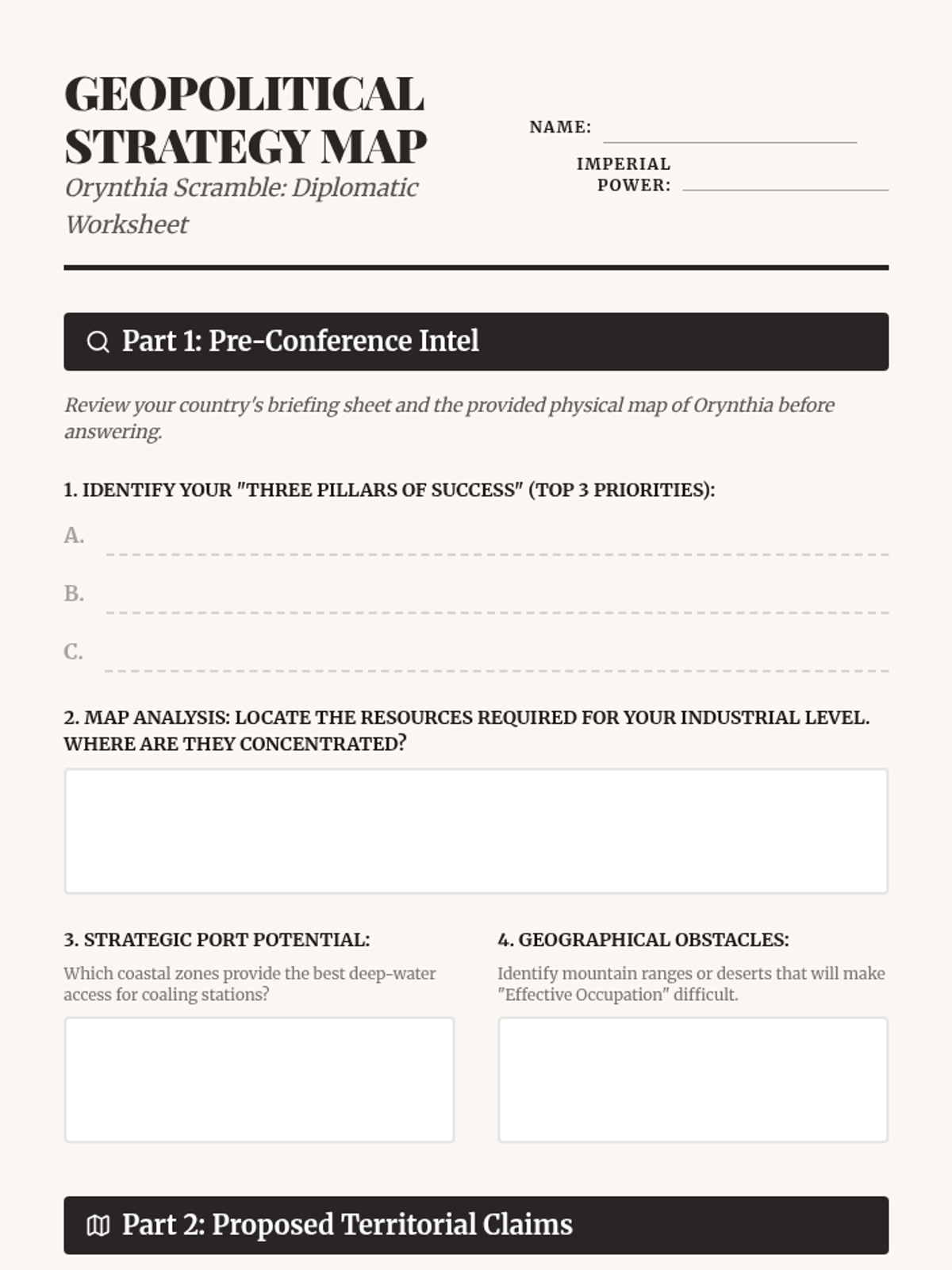
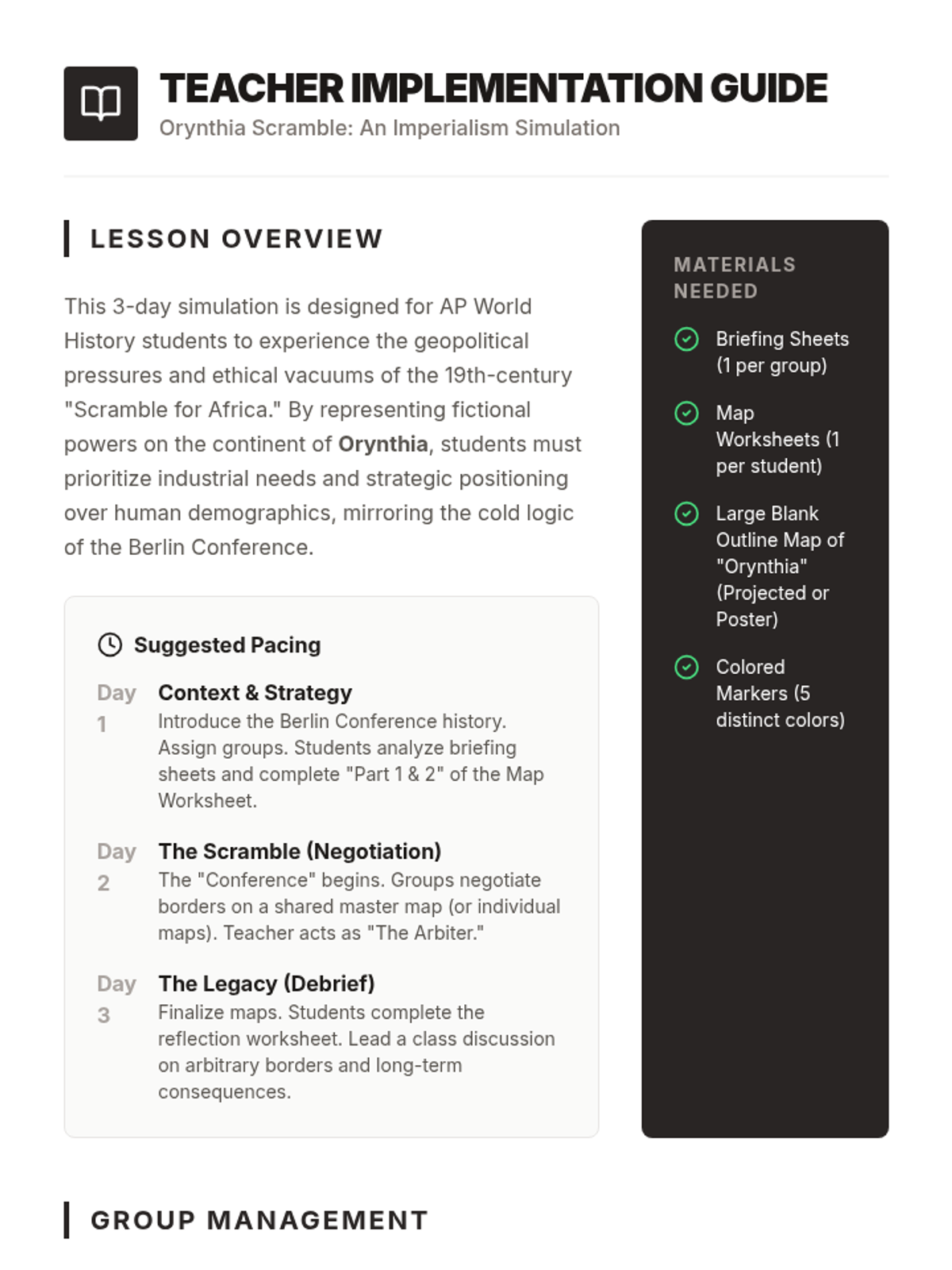
An exploration of 19th-century Imperialism through the lens of a high-stakes geopolitical simulation. Students take on the roles of industrial nations to understand the economic, social, and political motivations behind the Scramble for Africa.
A comprehensive unit exploring the diverse urban and rural land use patterns across the Balkan Peninsula, culminating in a comparative research project.
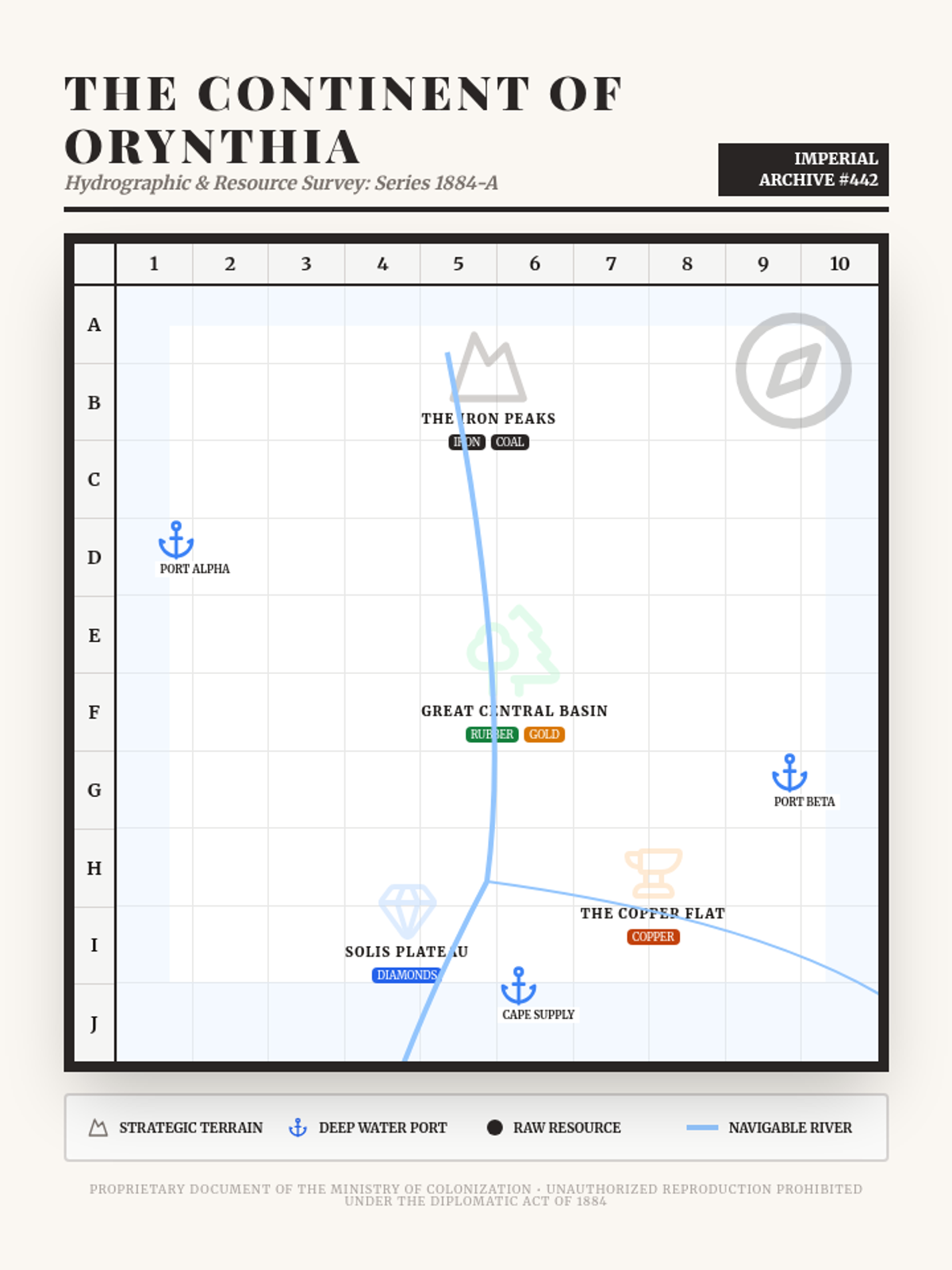
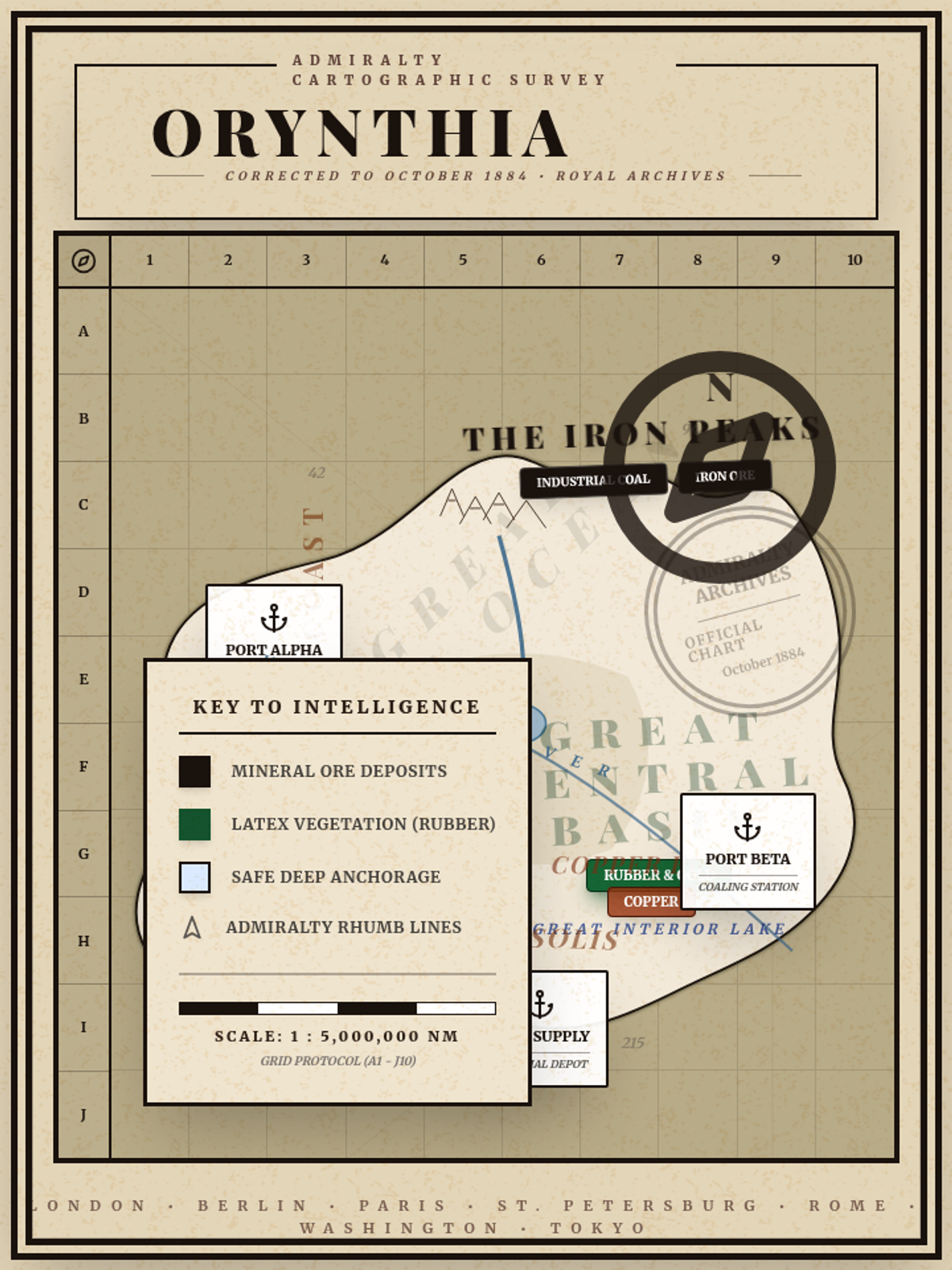
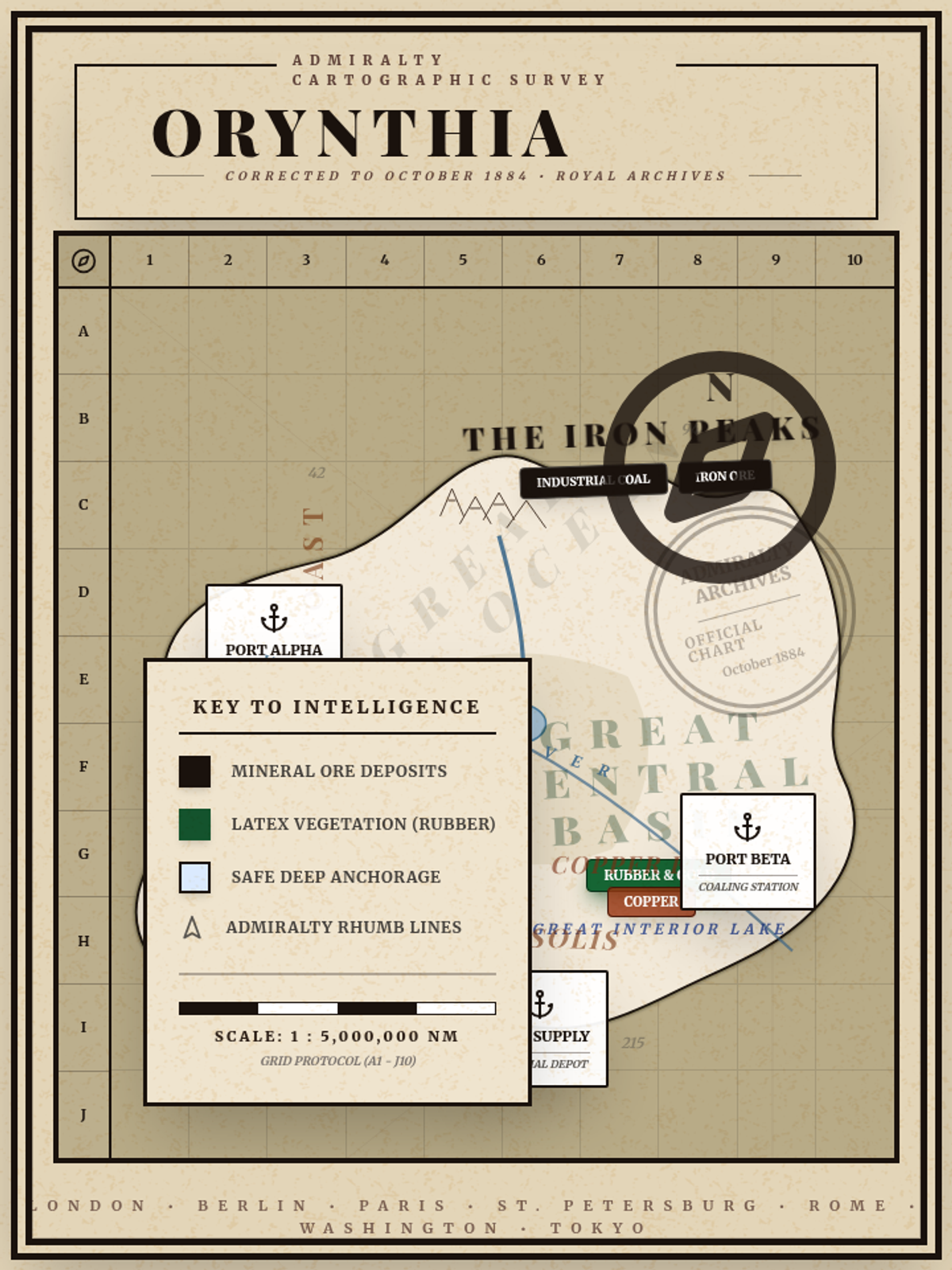
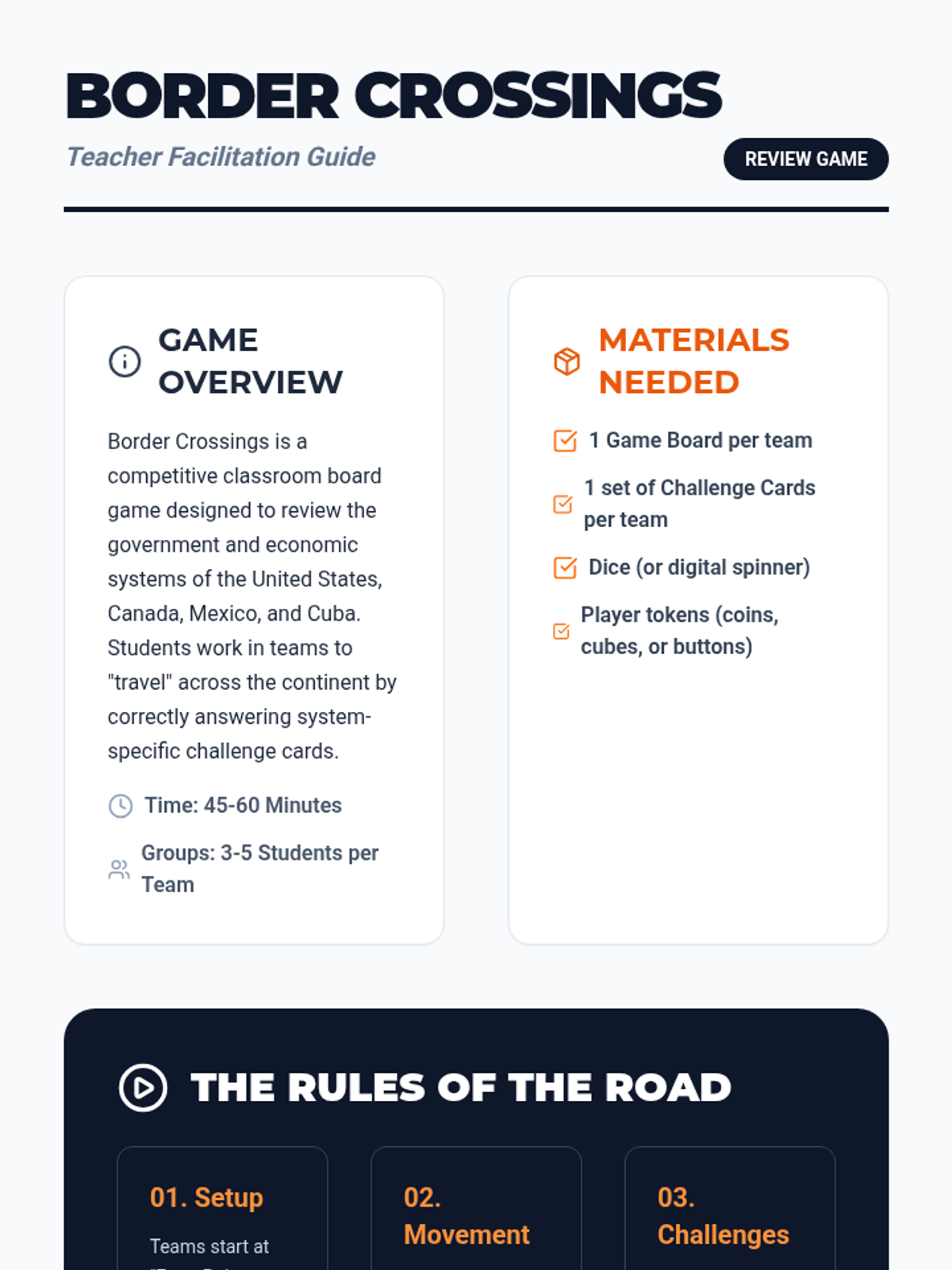
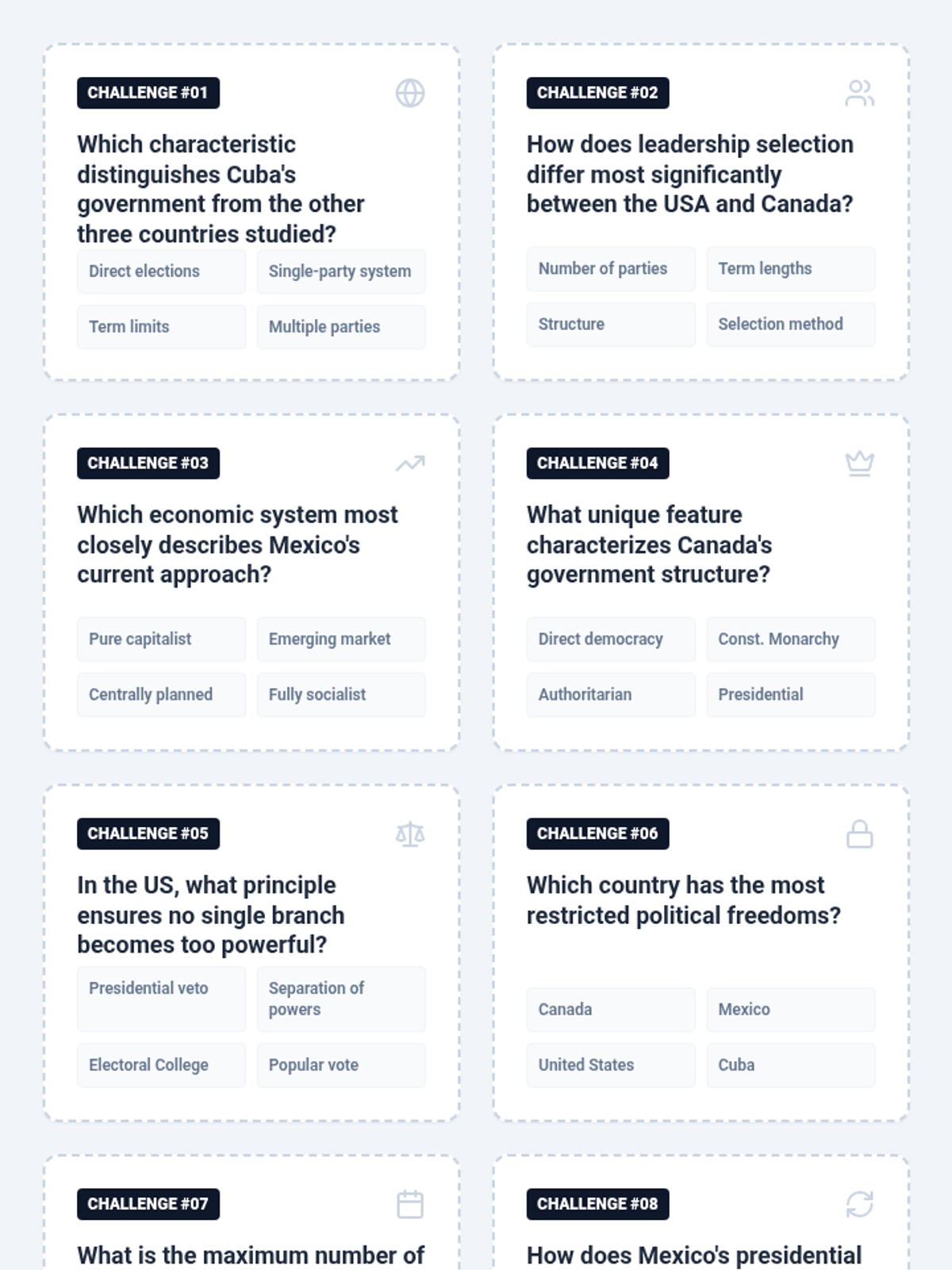
A comprehensive unit exploring the diverse political and economic structures of North American and Caribbean nations.
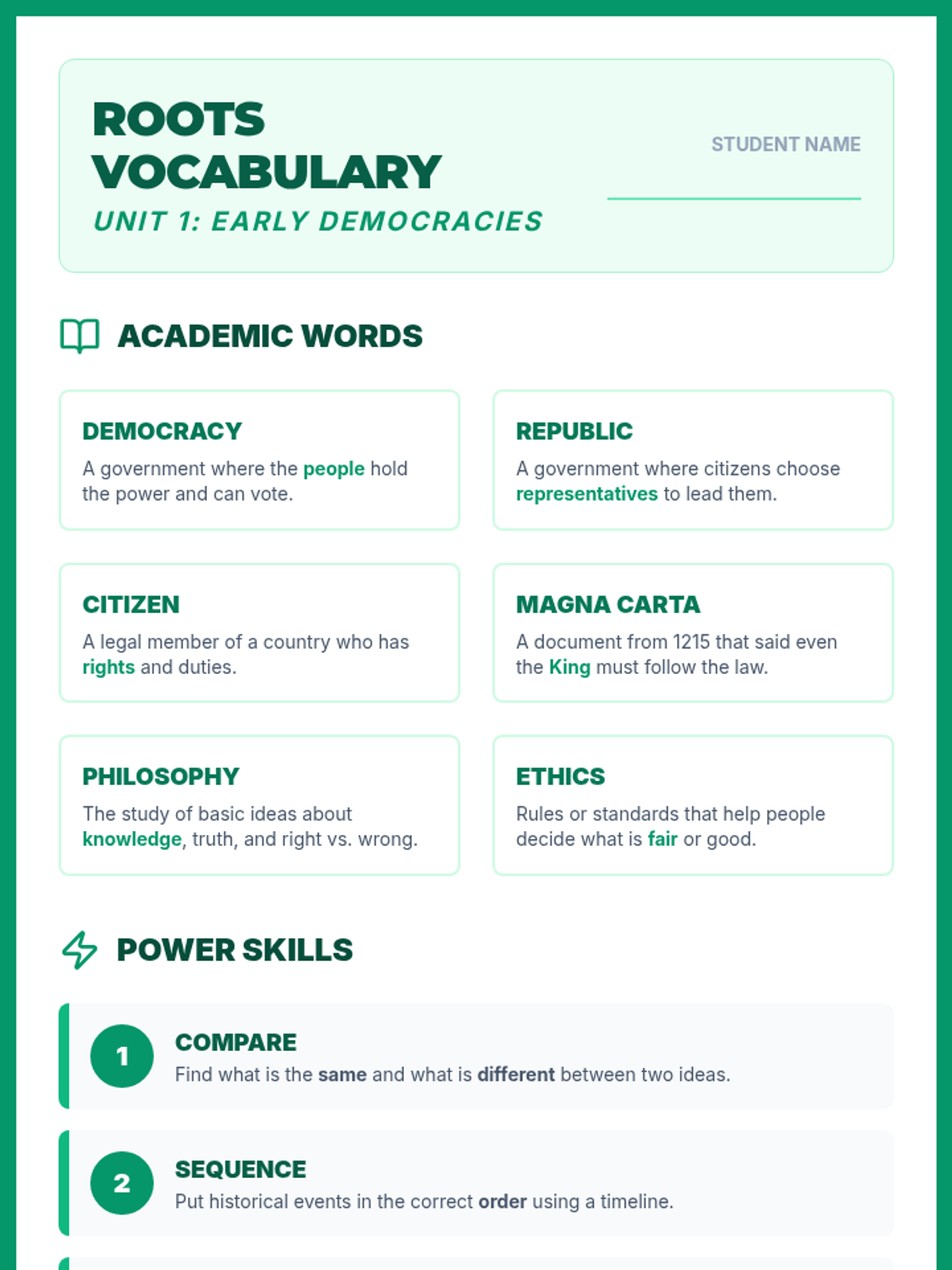
A modified World Studies 2 curriculum for Tier 2 and 3 special education students, focusing on the evolution of power, rights, and technology from early democracies through the Industrial Revolution.
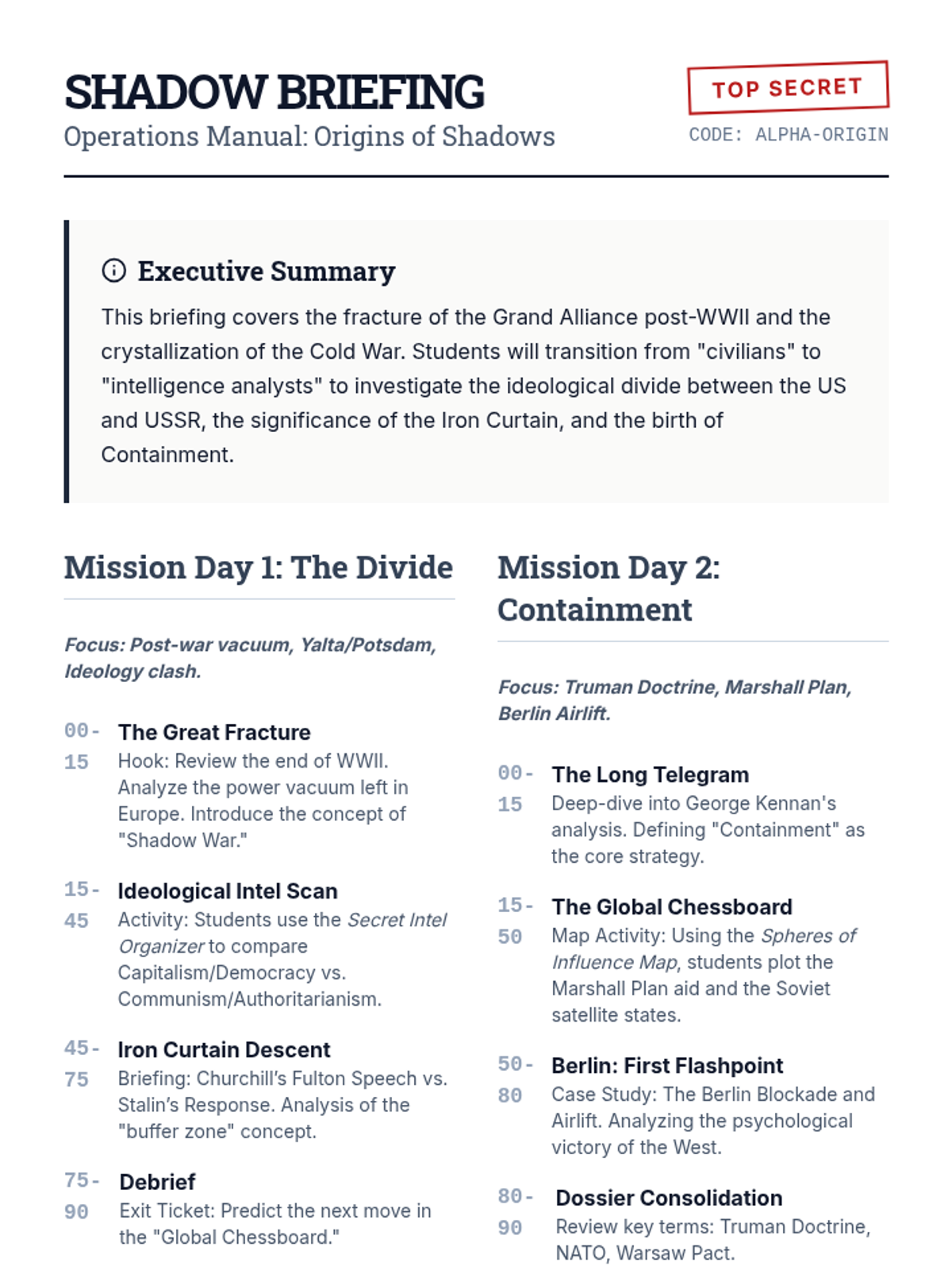
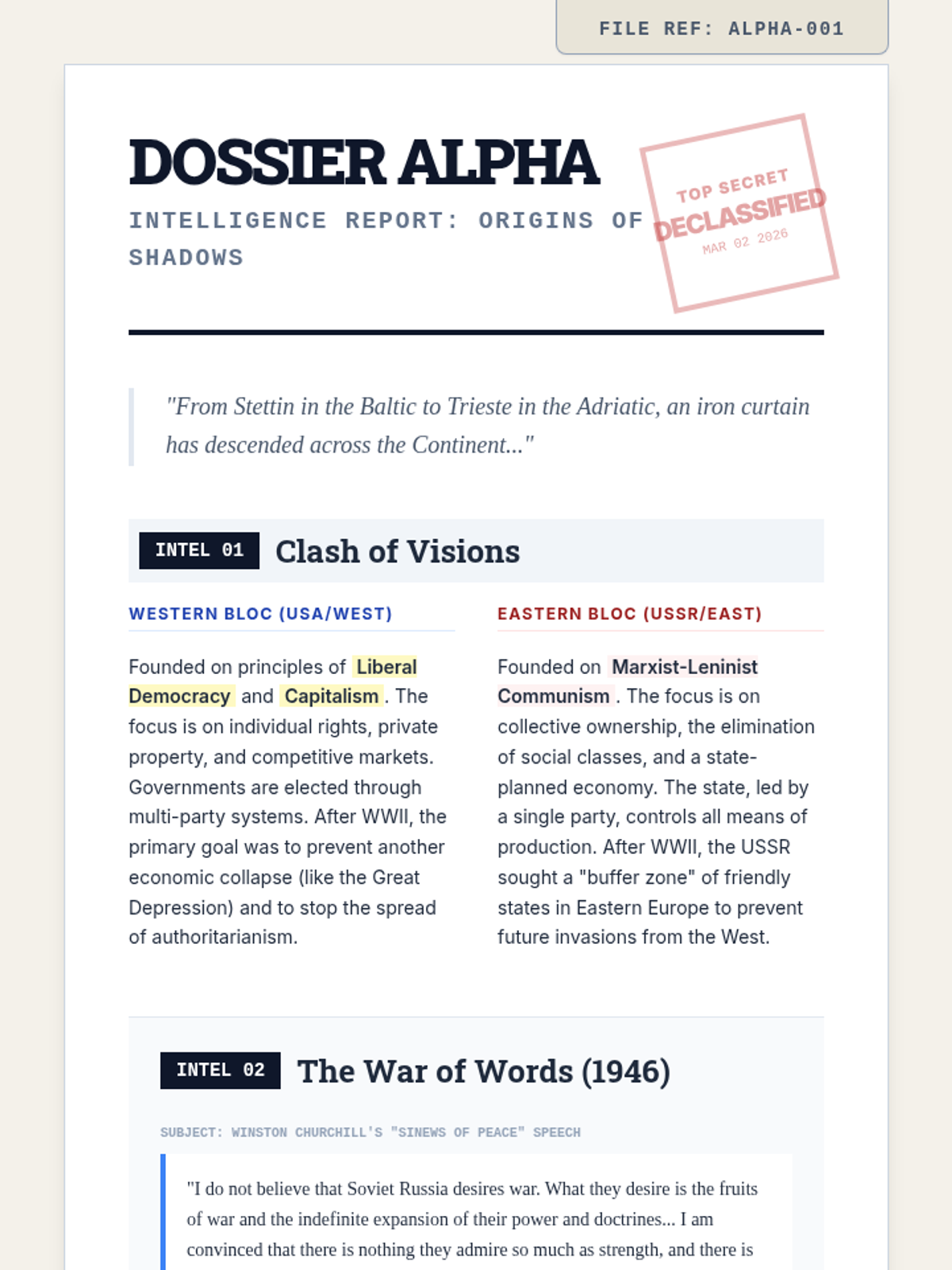
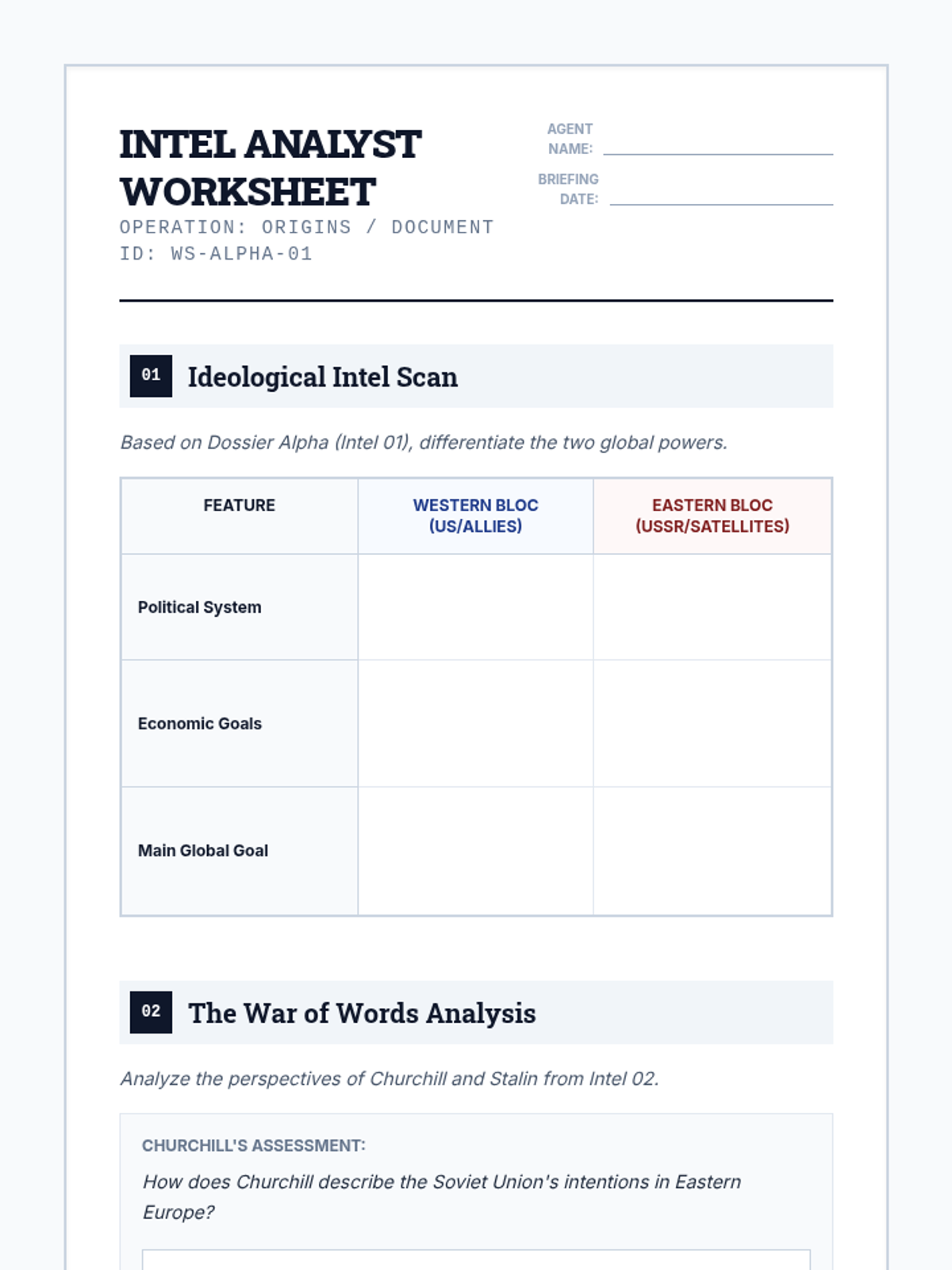
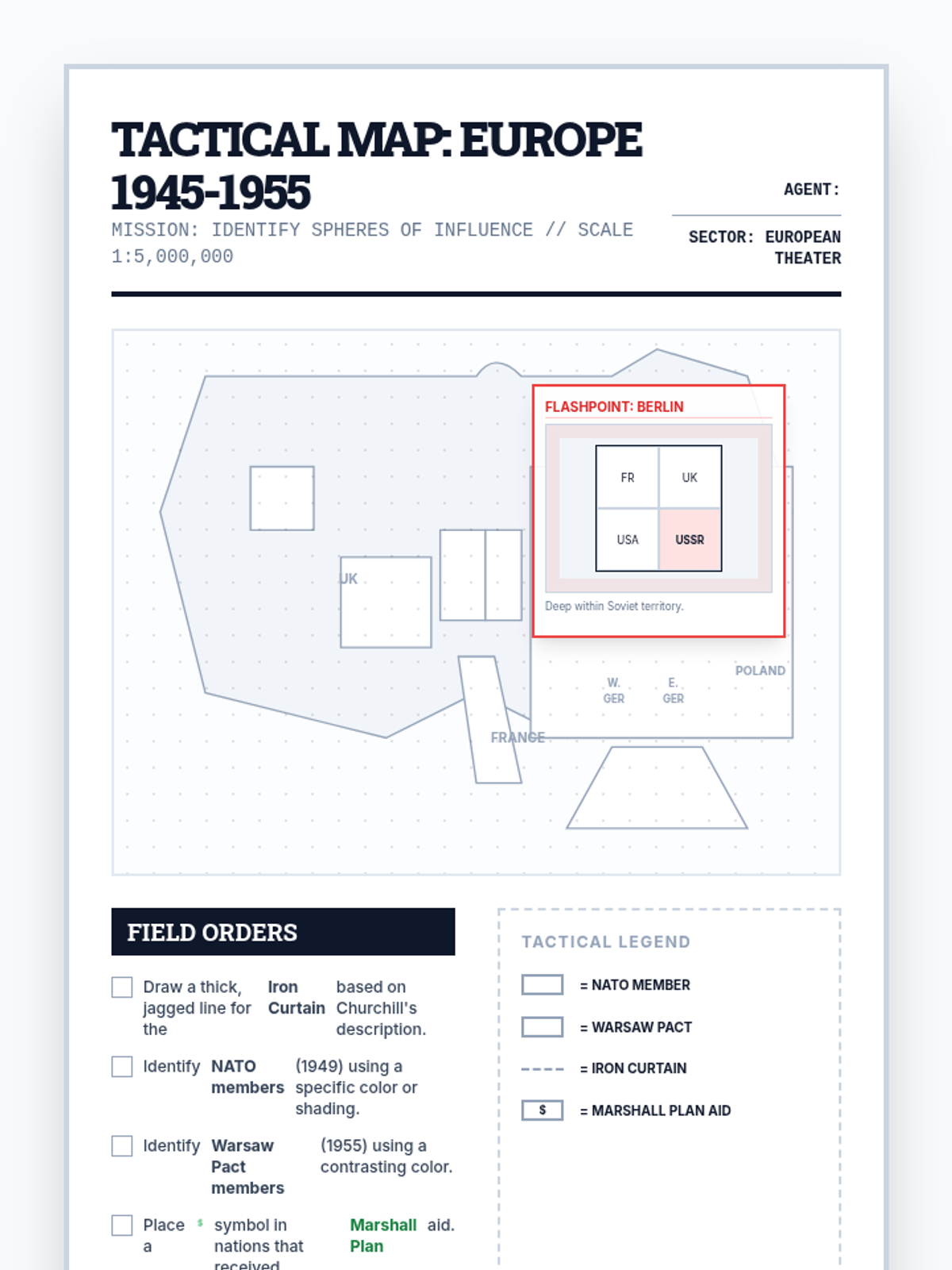
An immersive unit on the Cold War, styled as a series of declassified intelligence briefings exploring the global struggle for power between 1945 and 1991.
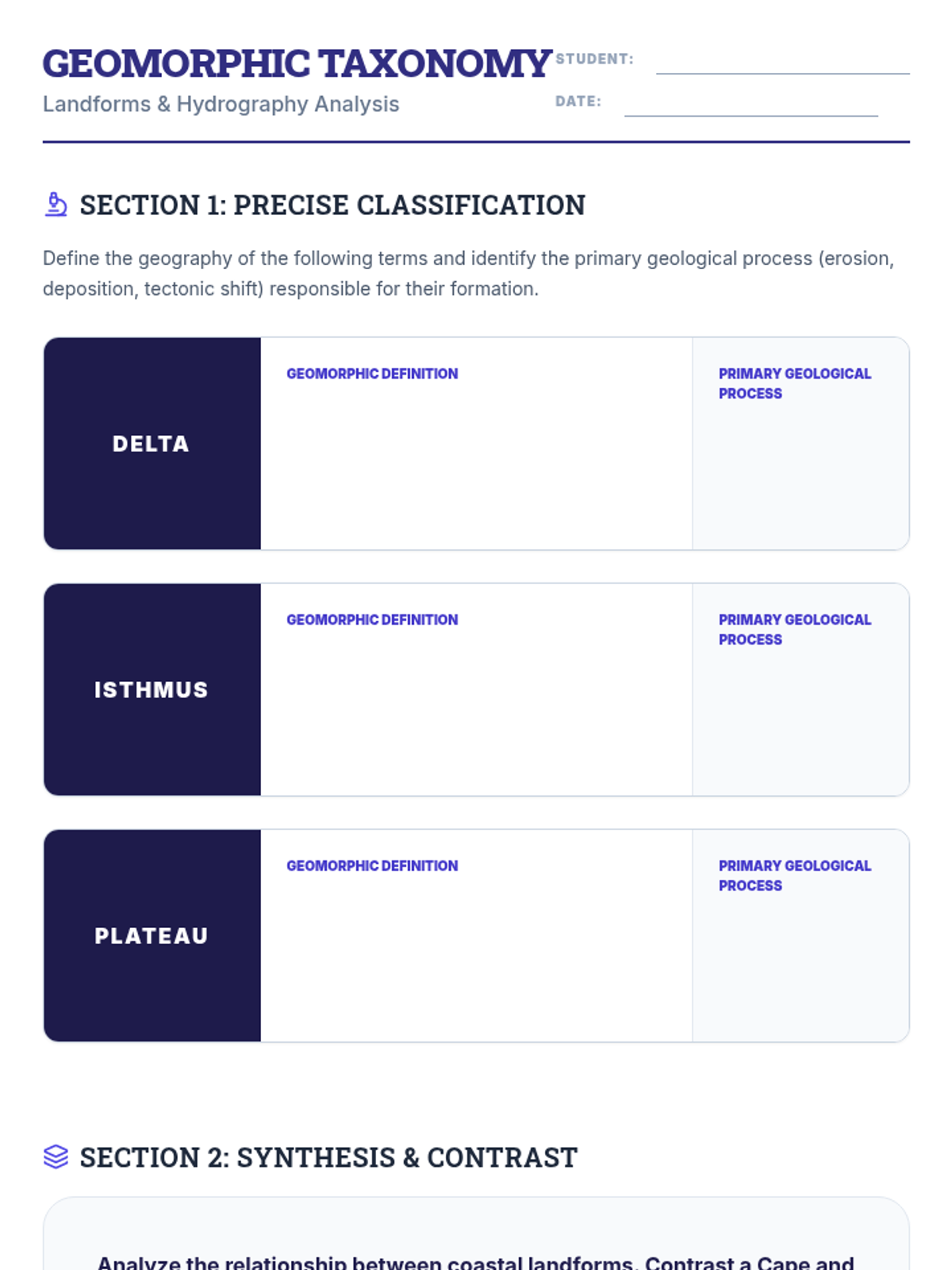
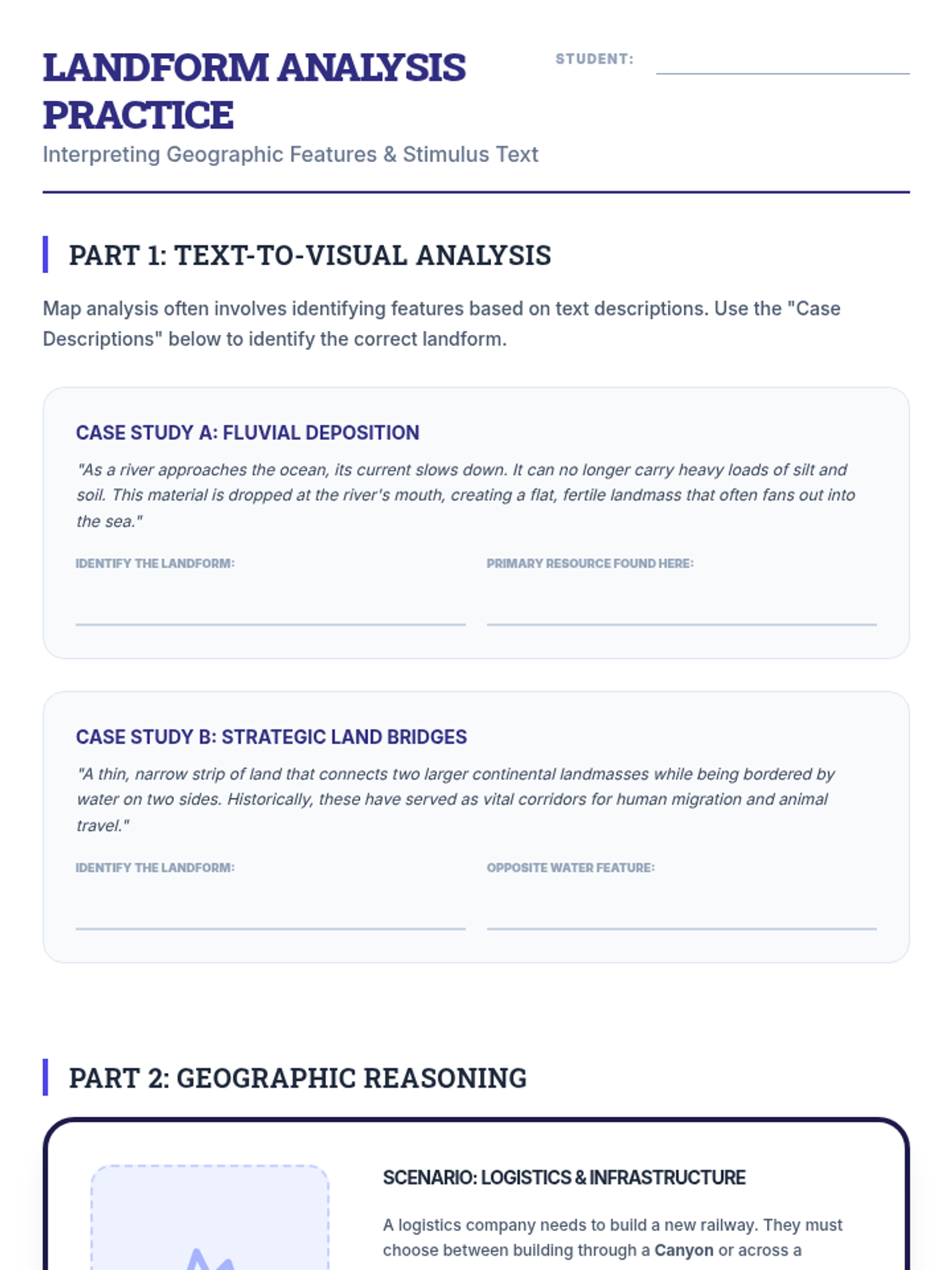
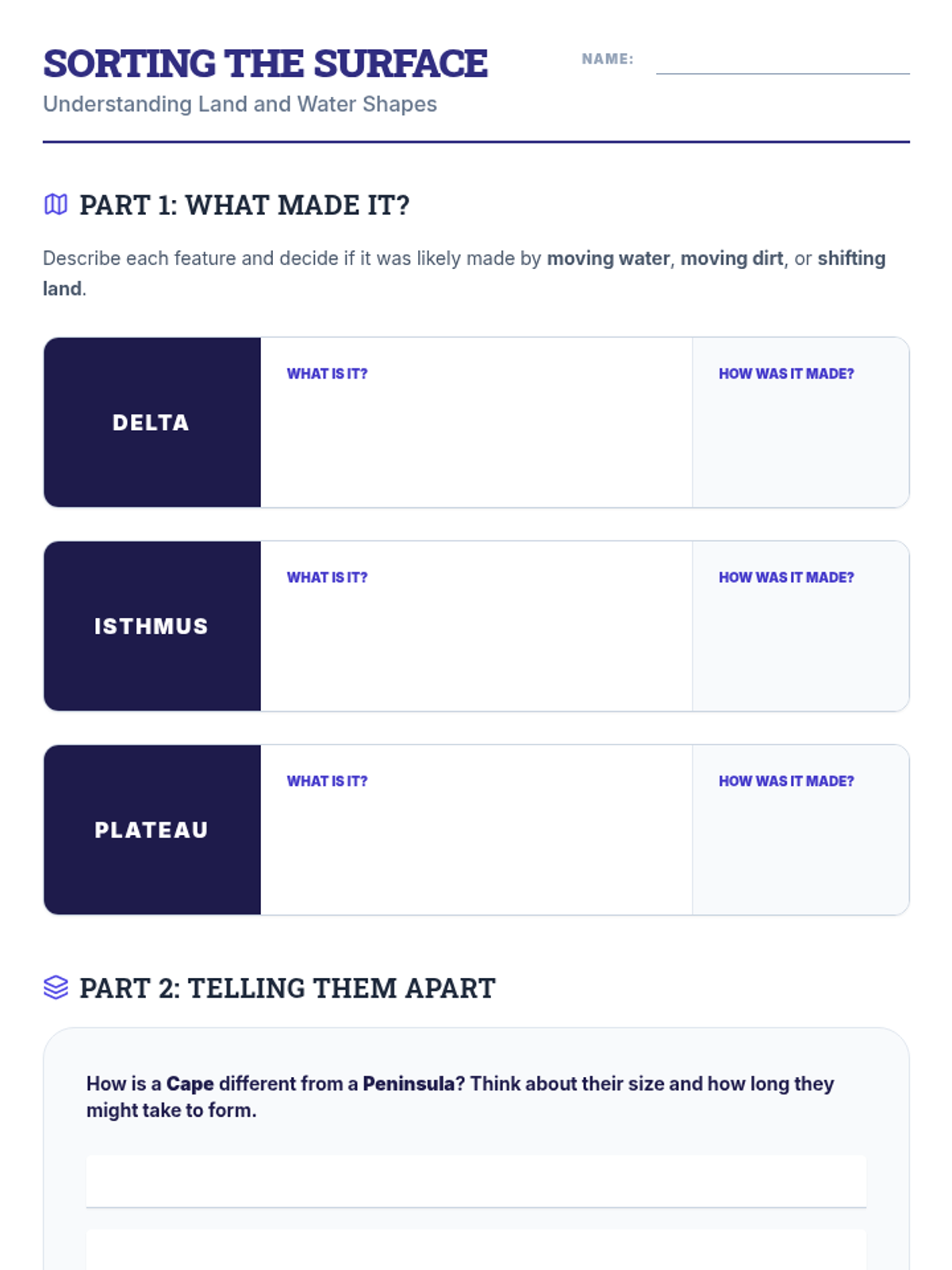
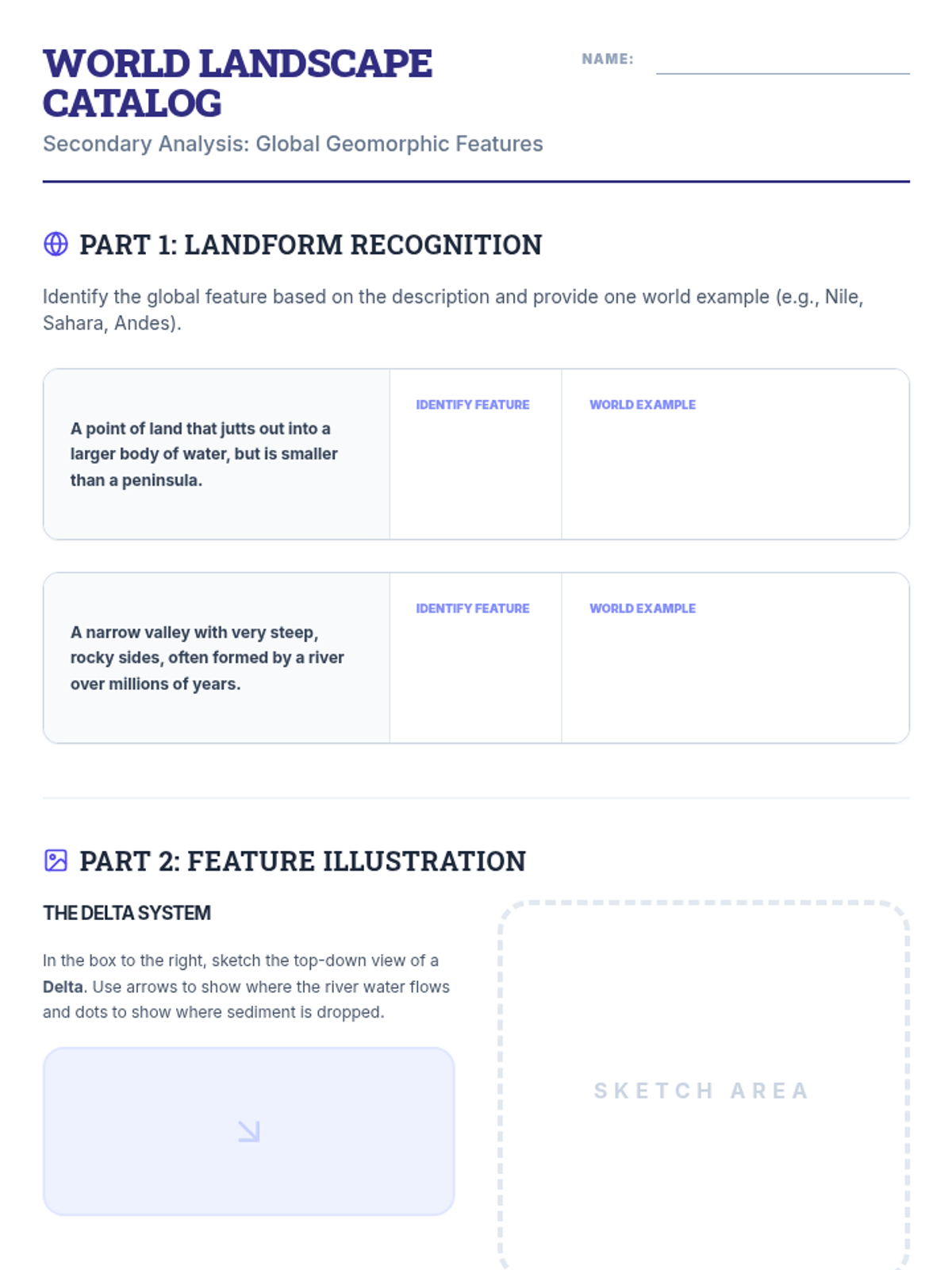
A global geography unit focusing on the identification and analysis of the Earth's diverse landscapes. Students will master map-reading skills including elevation, contour lines, and global physical regions to understand how geography shapes our world.
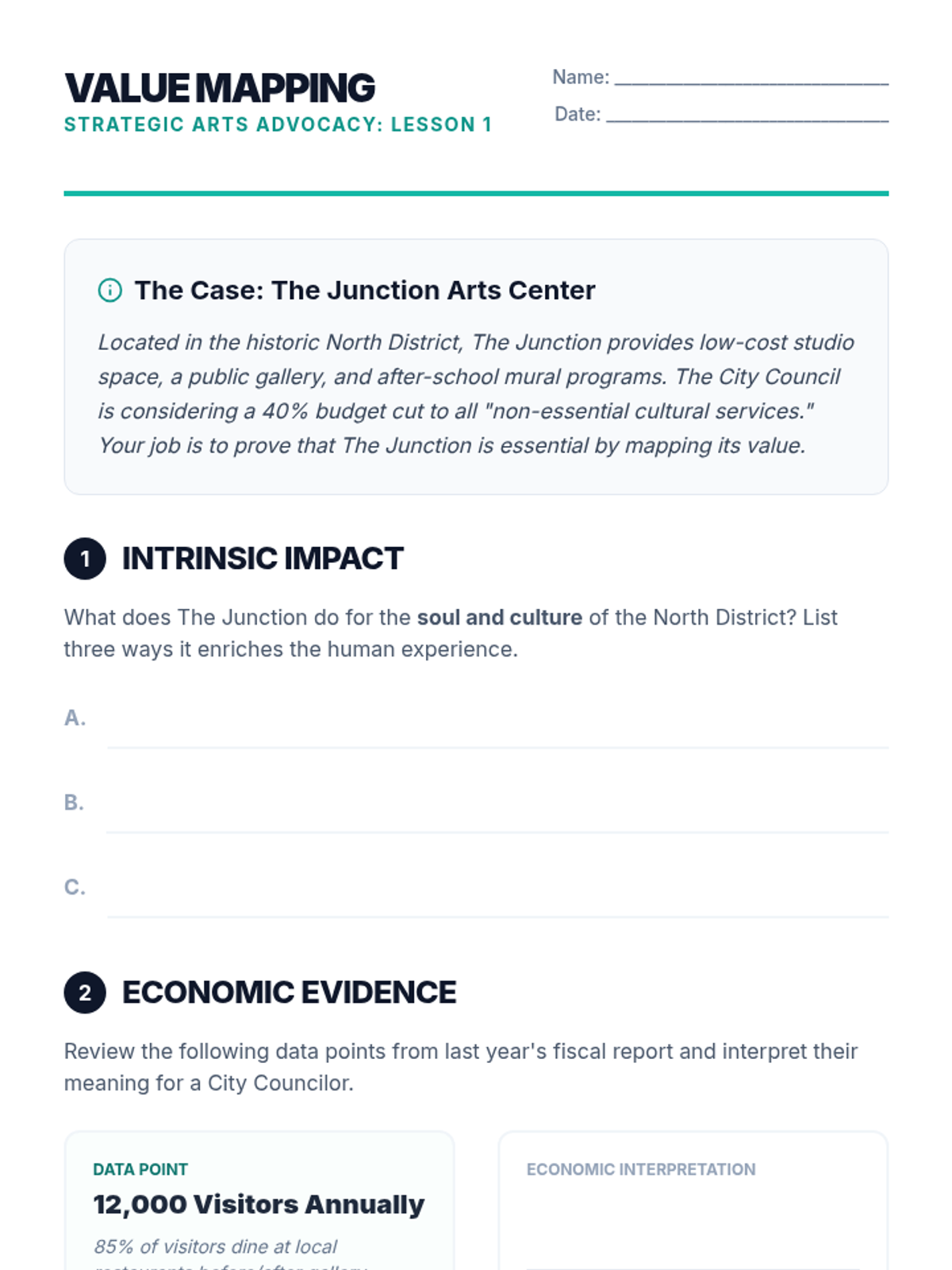
Students transition from passive observers of the arts to active advocates by developing a strategic communications campaign for a local arts initiative. The sequence covers stakeholder mapping, rhetorical strategies, data visualization, digital campaigning, and public speaking.
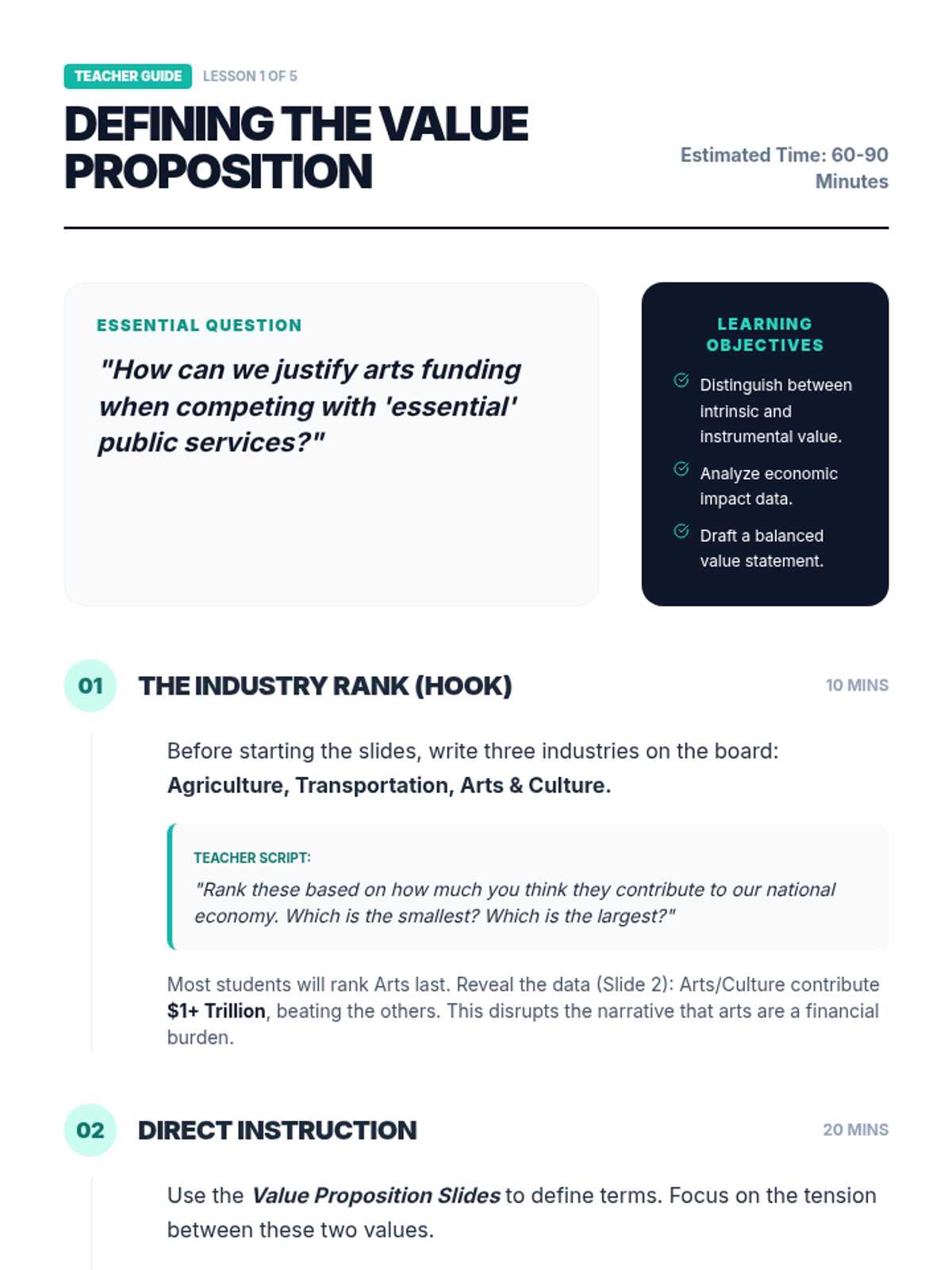
Students transition from passive observers to active arts advocates by learning cultural policy, economic impact analysis, and strategic communication. This sequence culminates in a comprehensive advocacy campaign presentation to secure sustainable support for the arts.
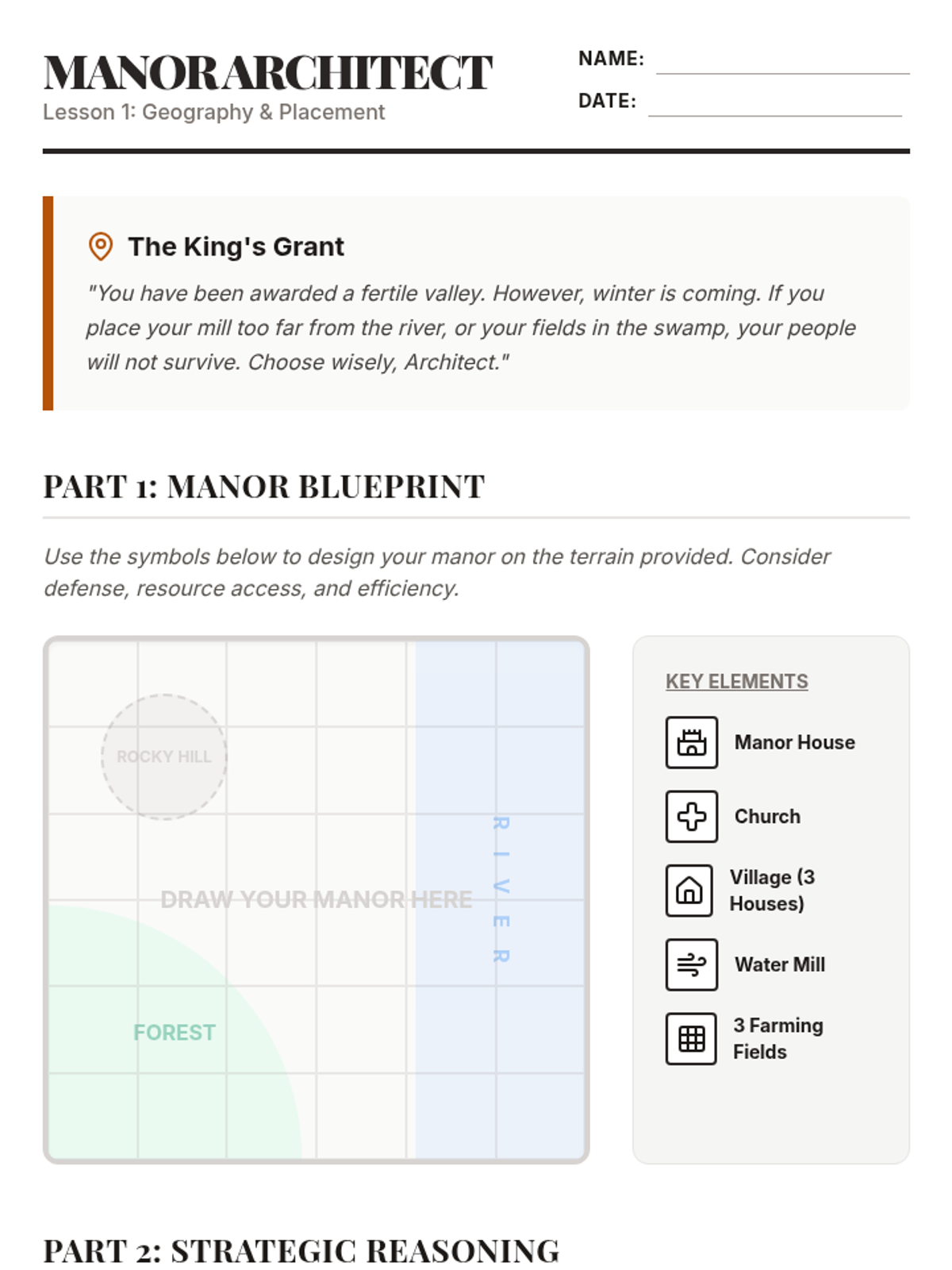
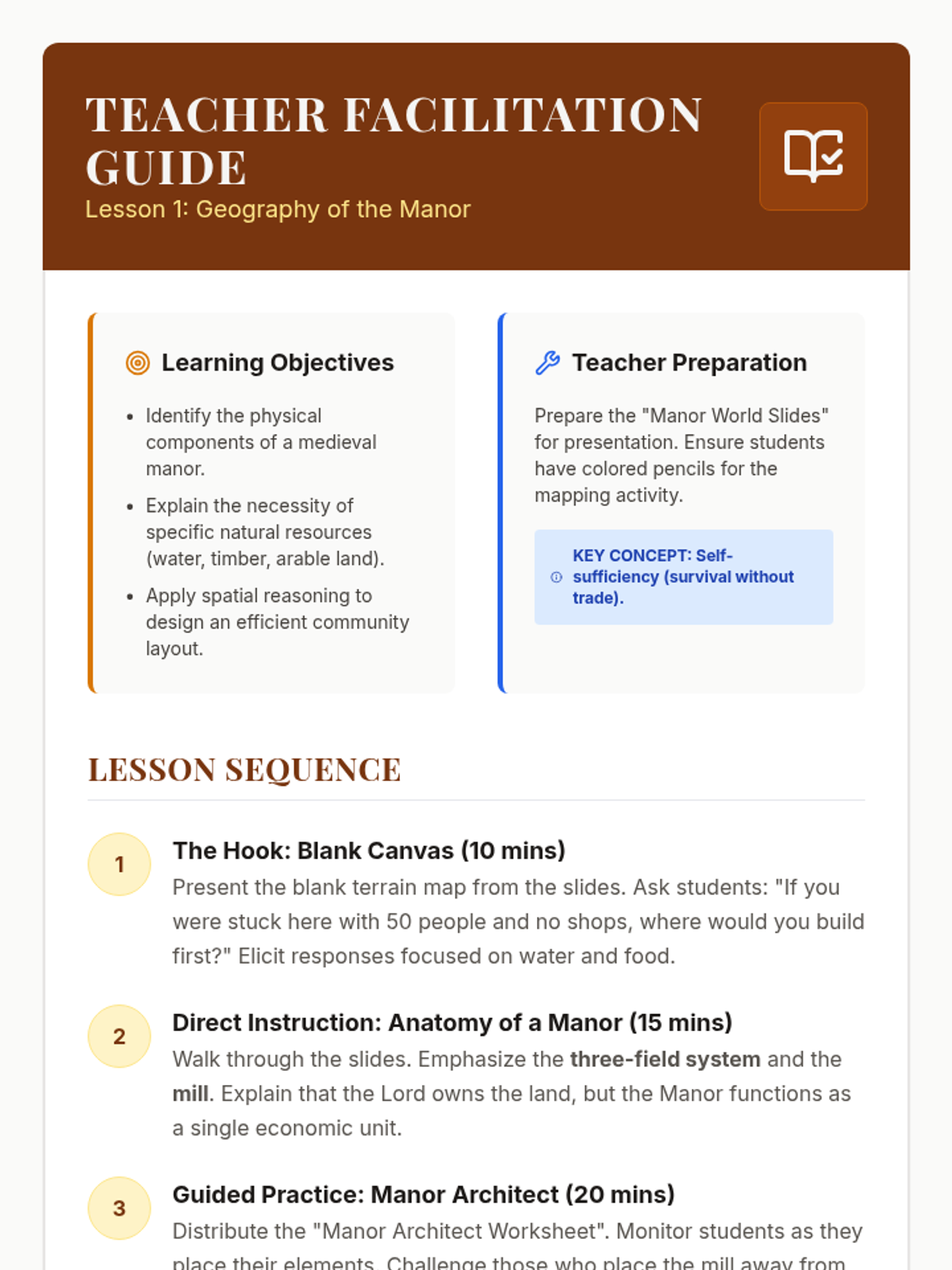
Students explore the economic and social structure of medieval Europe by analyzing the manor system. They investigate geographic requirements for survival, agricultural innovations like the three-field system, the specialized roles of community members, and the daily lives of serfs versus nobility, culminating in the design of their own self-sufficient manor.
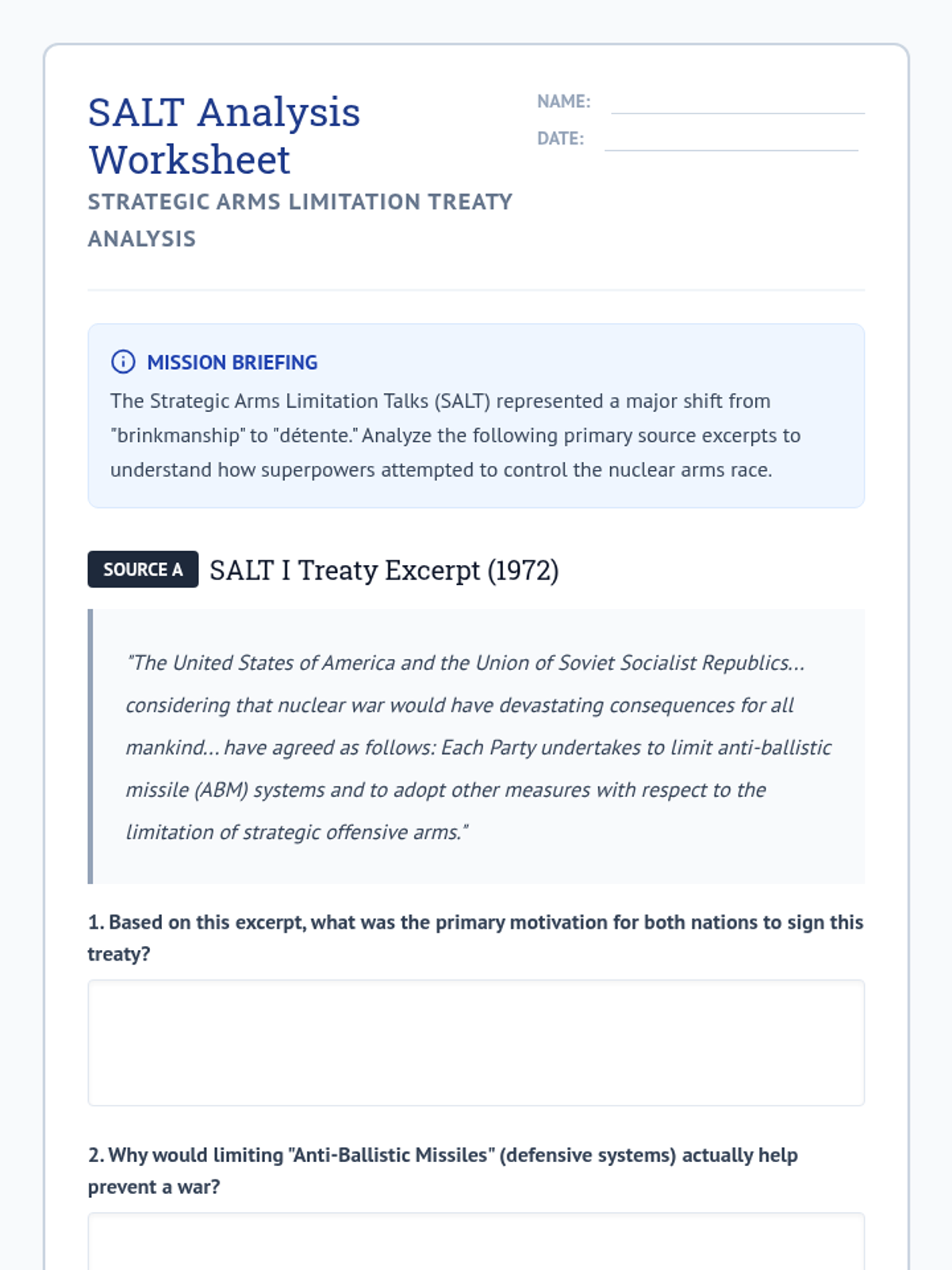
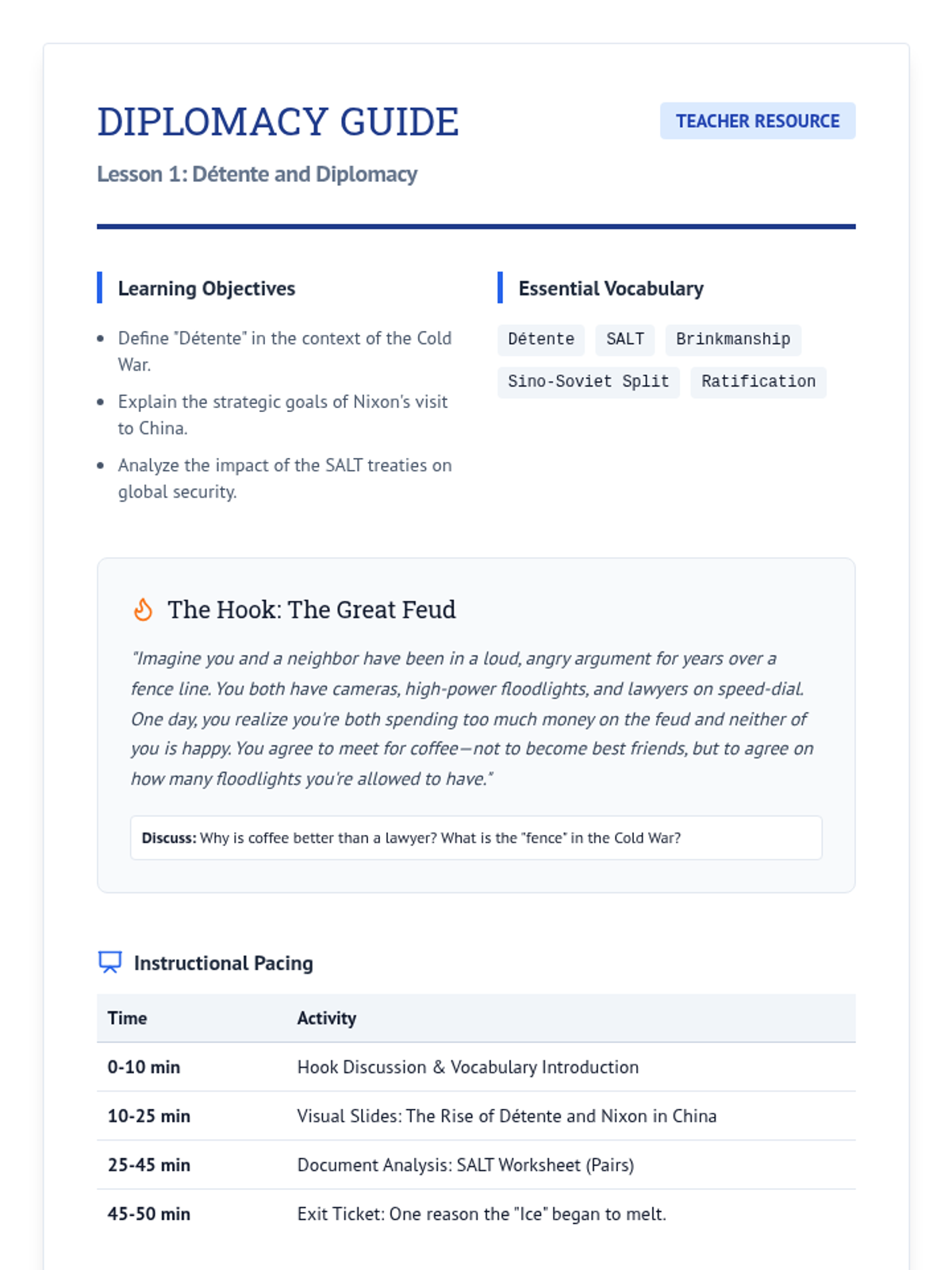
This sequence explores the final chapters of the Cold War, from the diplomatic easing of tensions to the dramatic collapse of the Soviet Union and its lasting impact on modern global politics.
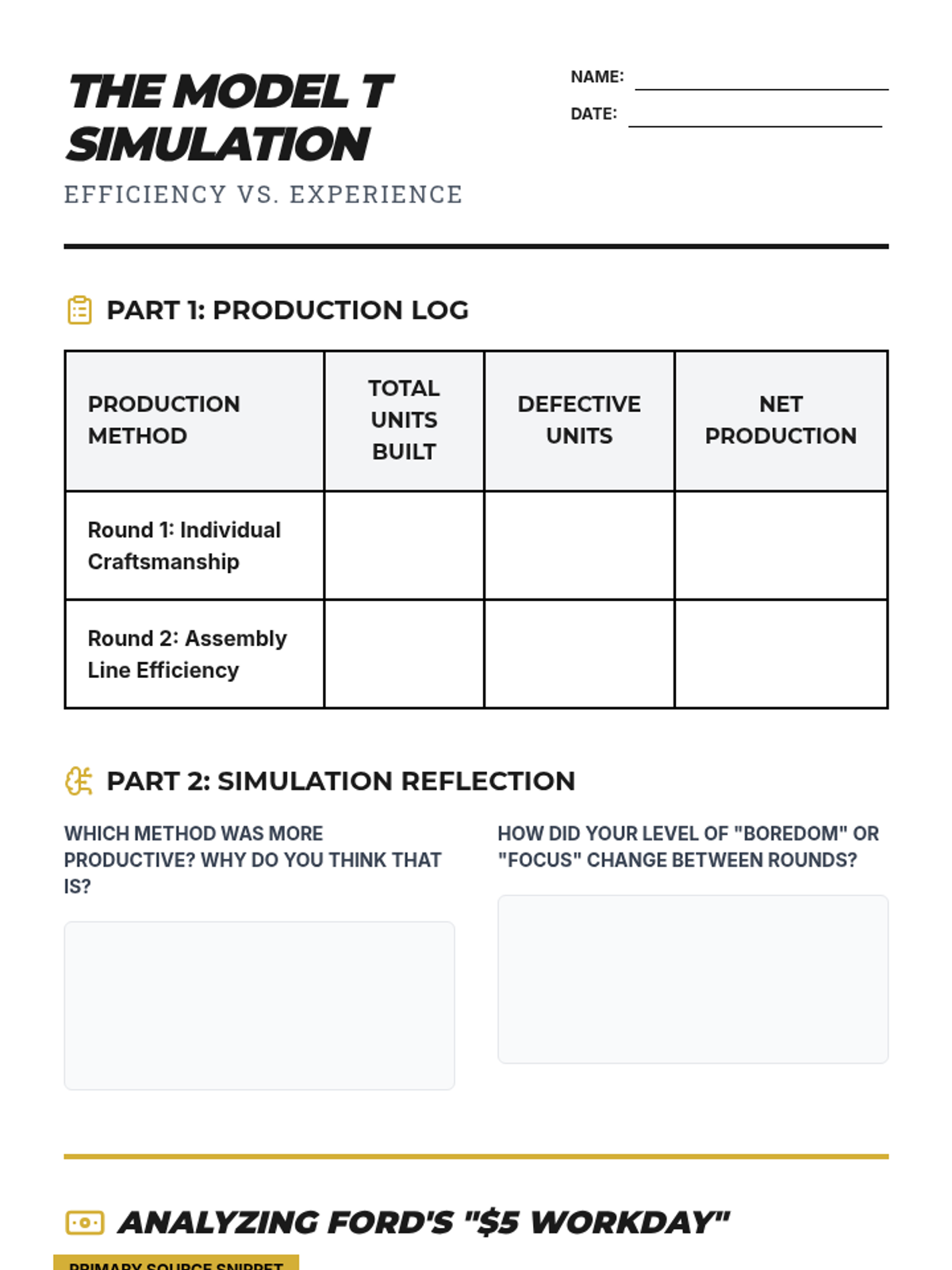
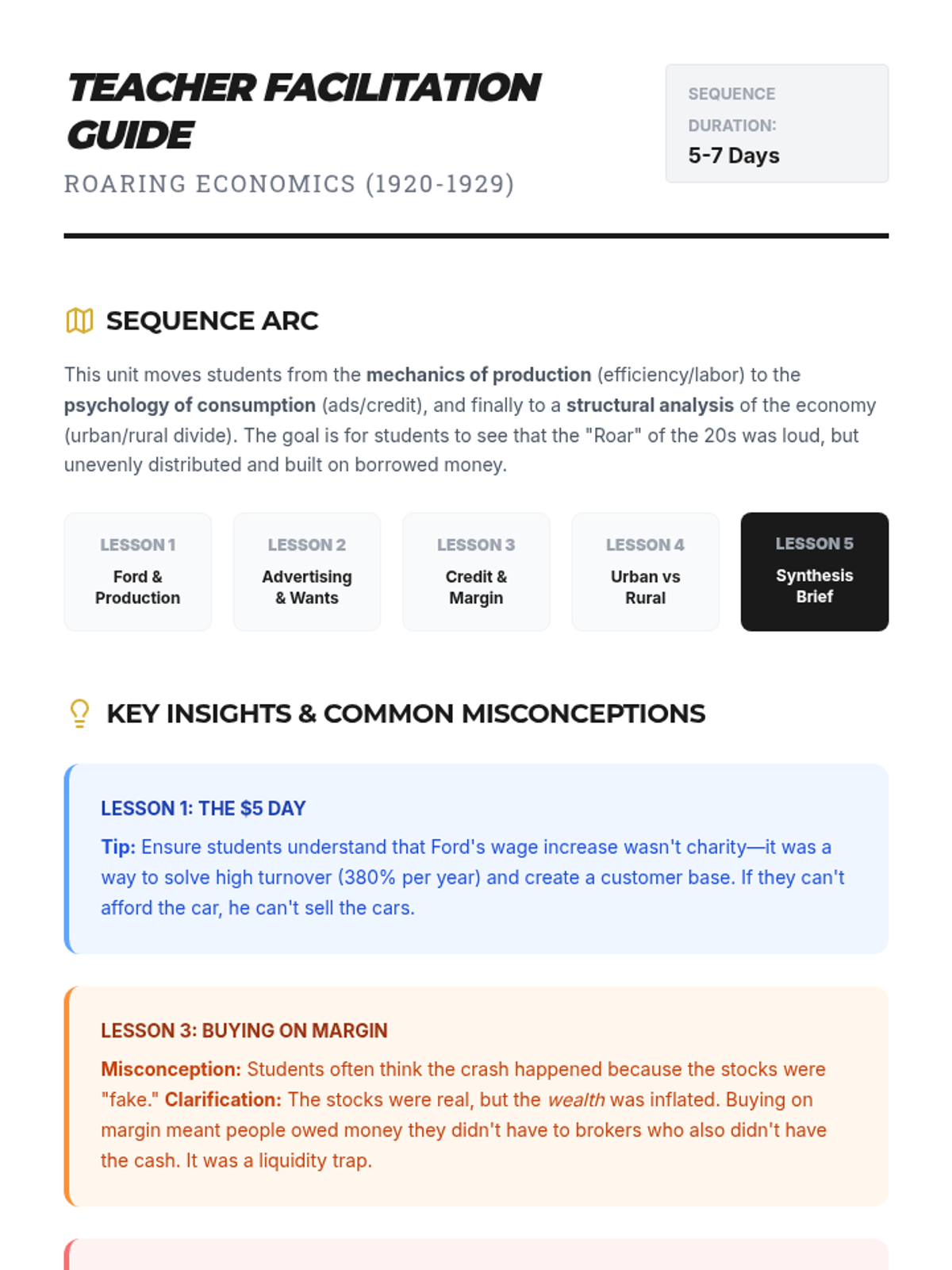
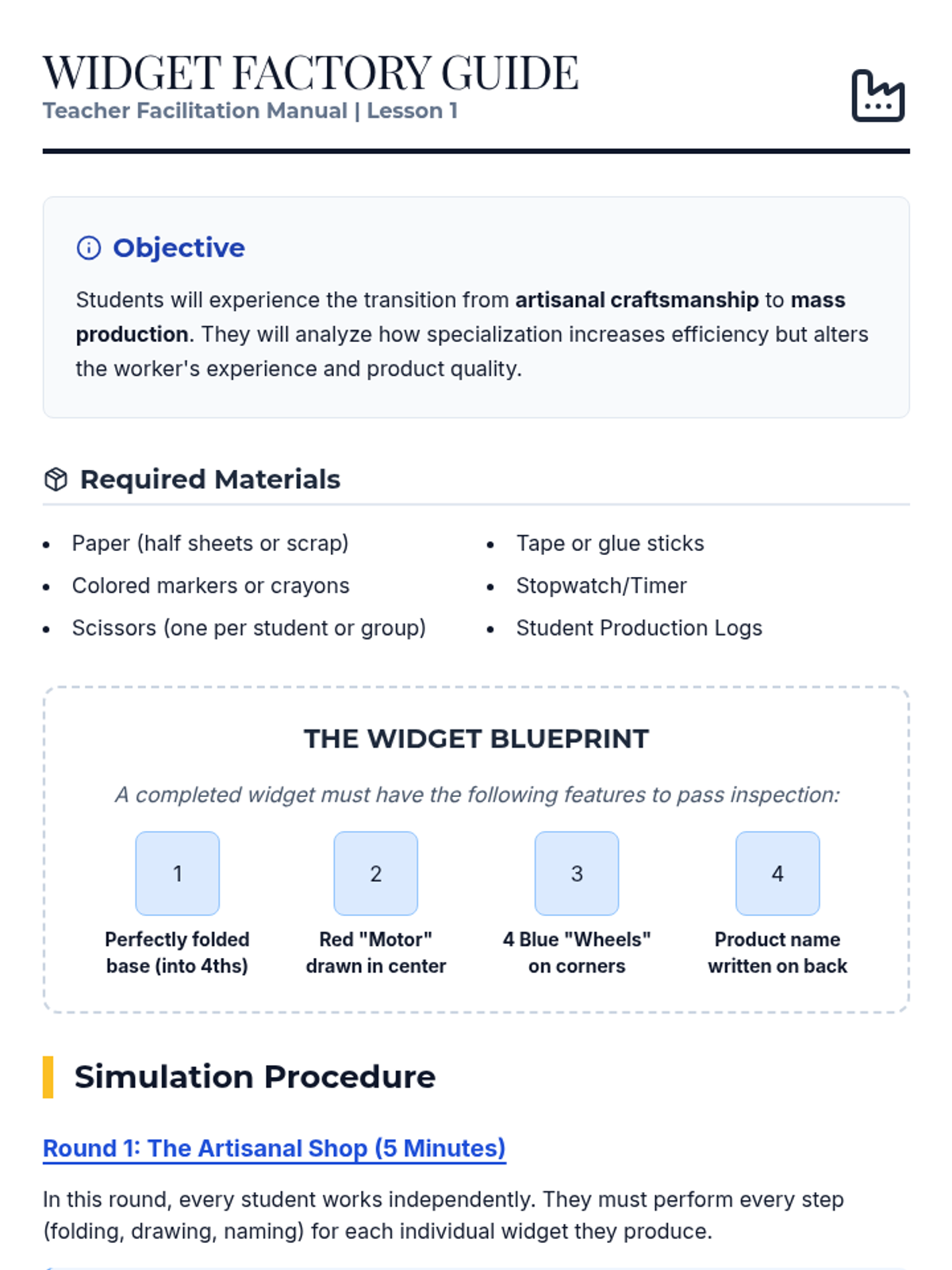
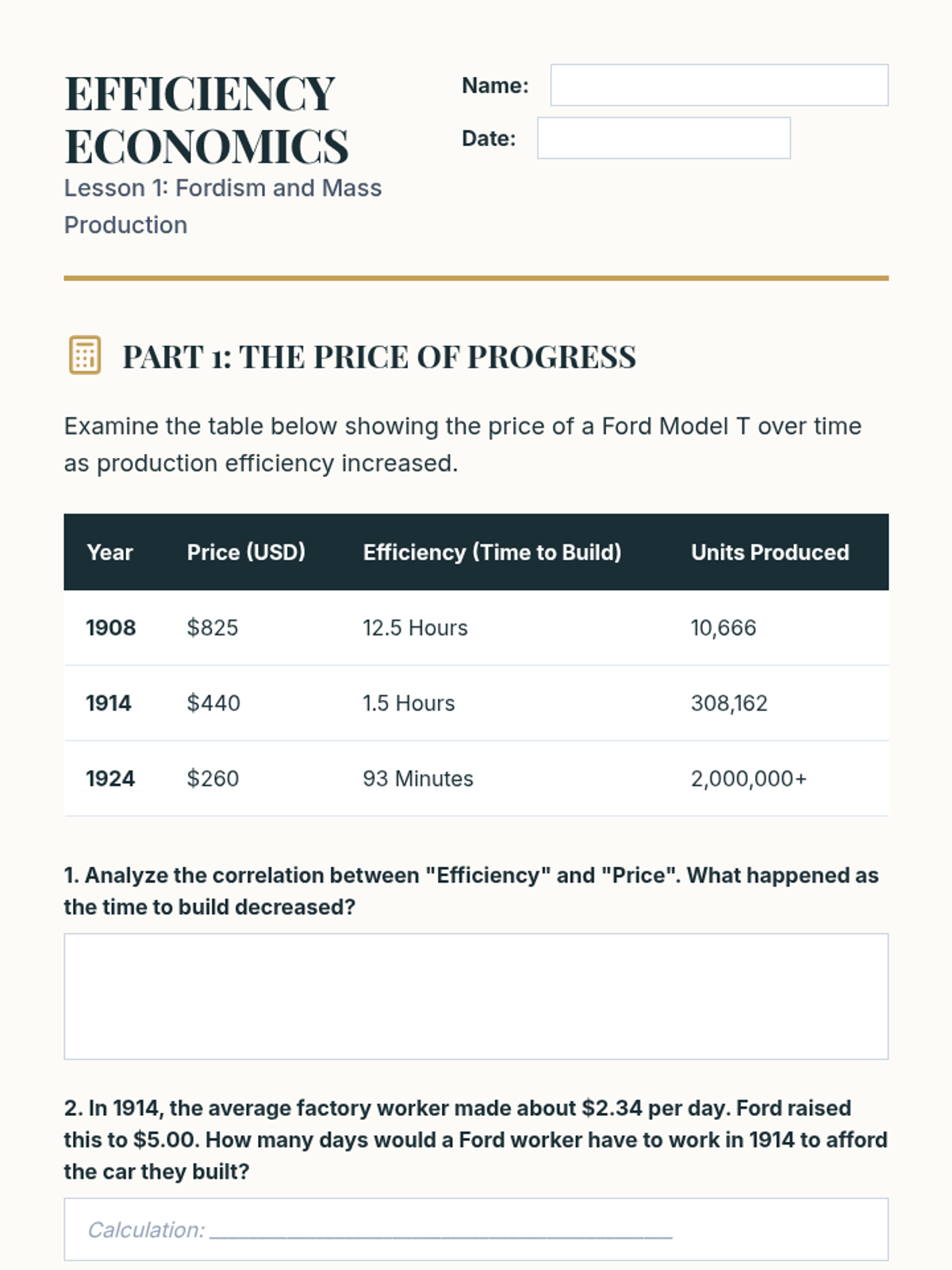
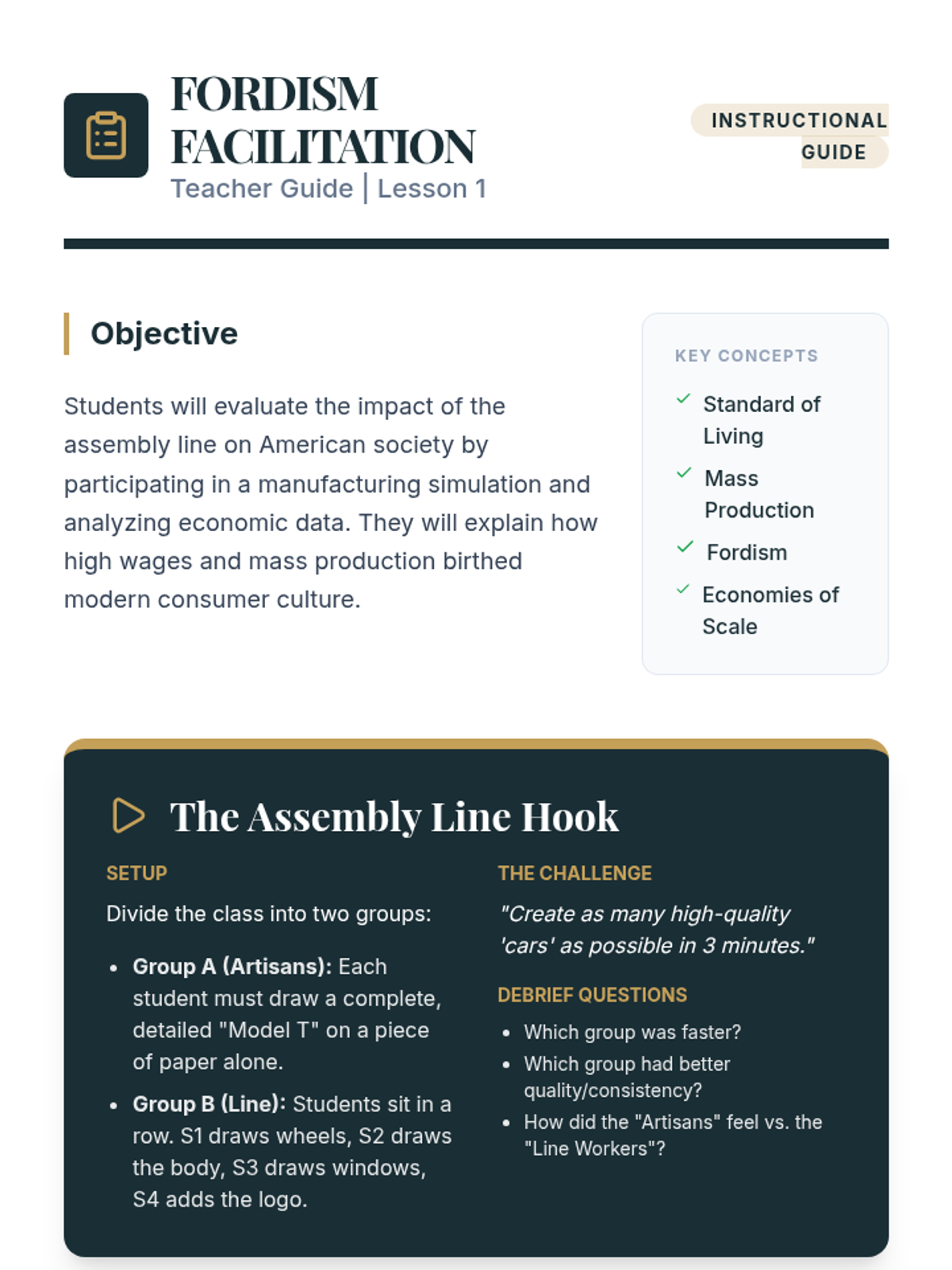
This sequence explores the economic drivers of the 1920s, focusing on mass production, the rise of consumer culture, and the systemic risks of credit and installment buying. Students analyze how industrial efficiency led to a middle-class boom while also creating structural weaknesses that contributed to the Great Depression.
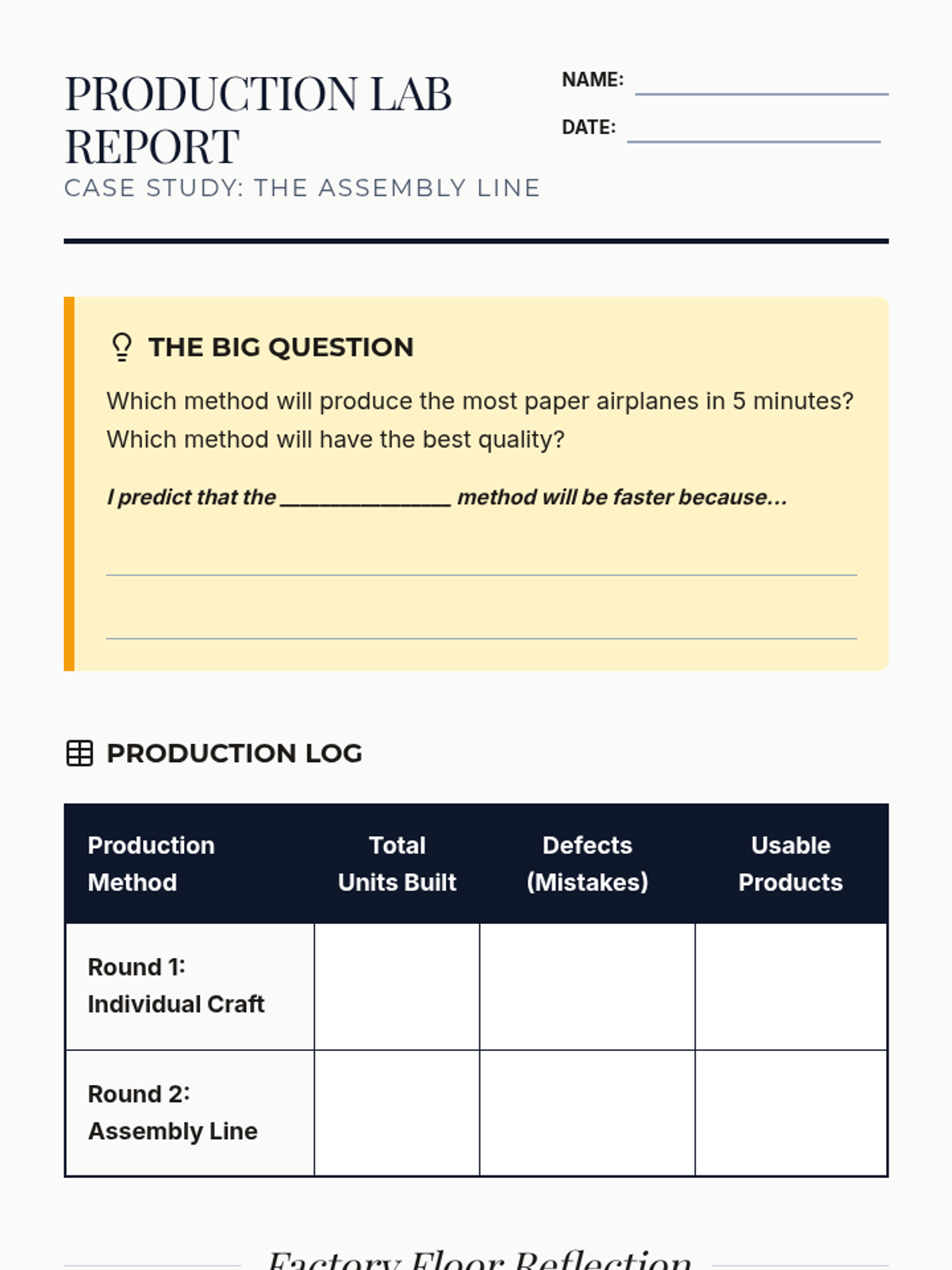
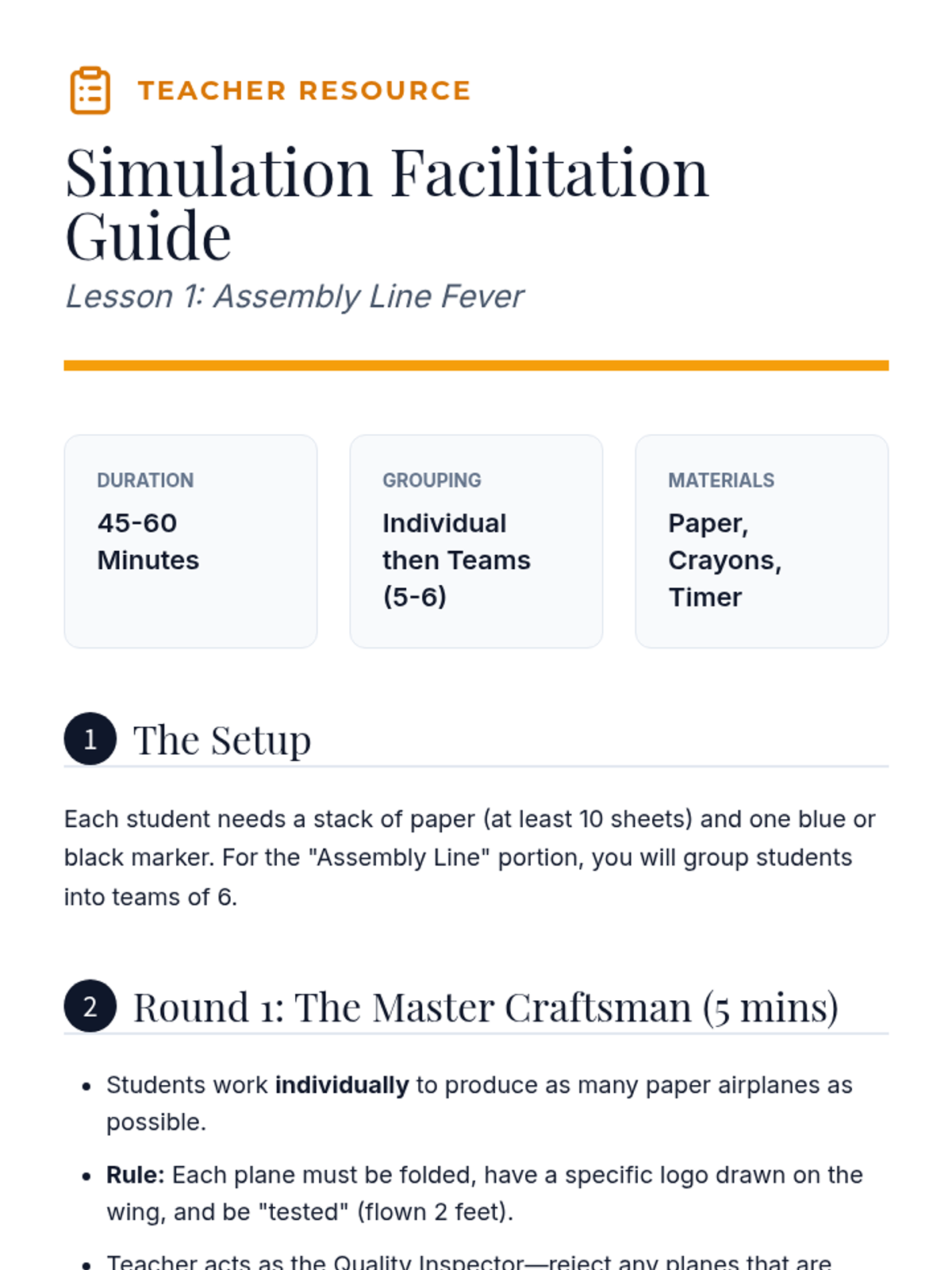
A sequence focused on the economic boom of the 1920s, covering the assembly line, the impact of the automobile, mass media, and the rise of consumer credit. Students analyze how manufacturing and financial shifts transformed American daily life and set the stage for the Great Depression.
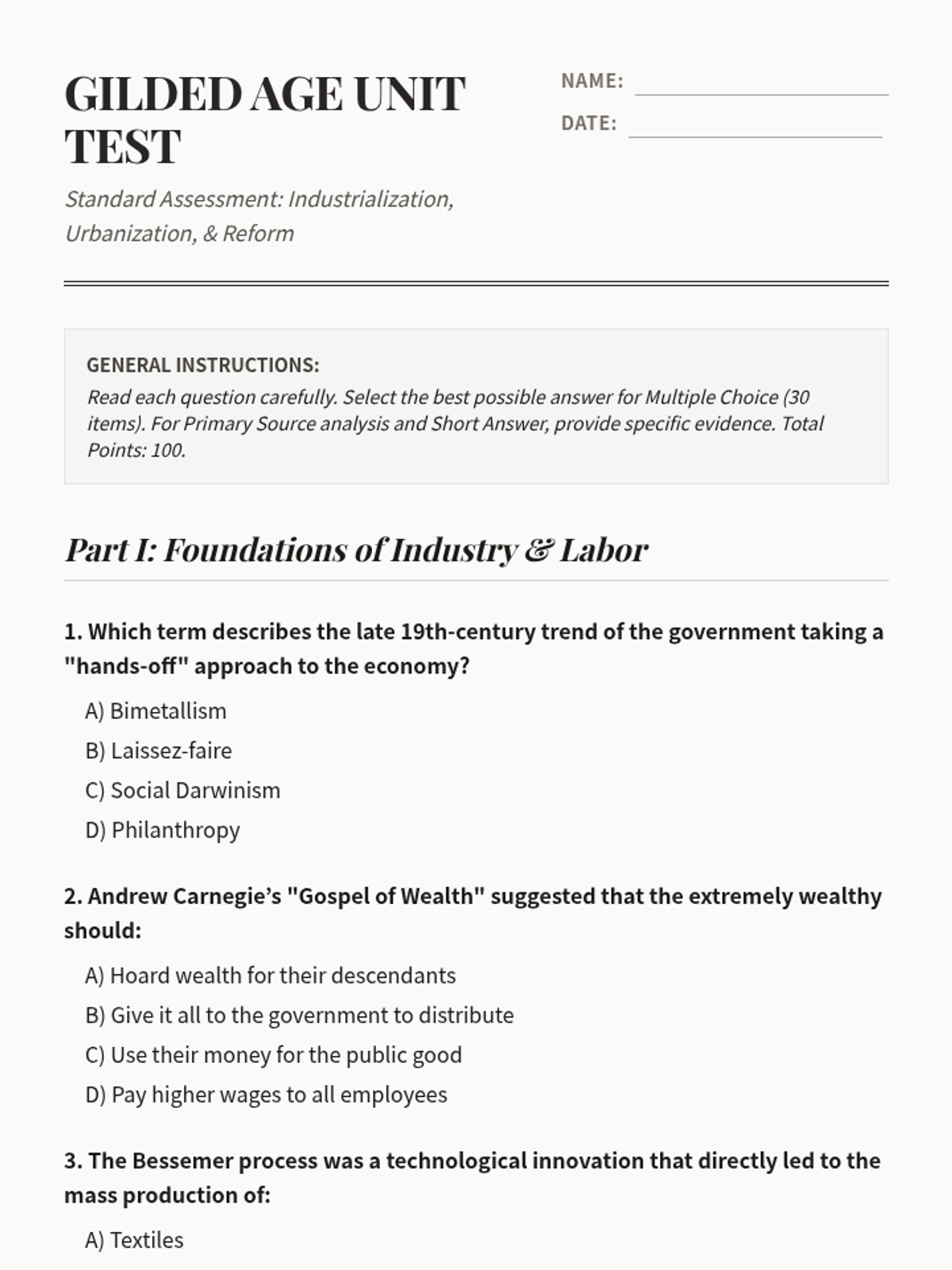
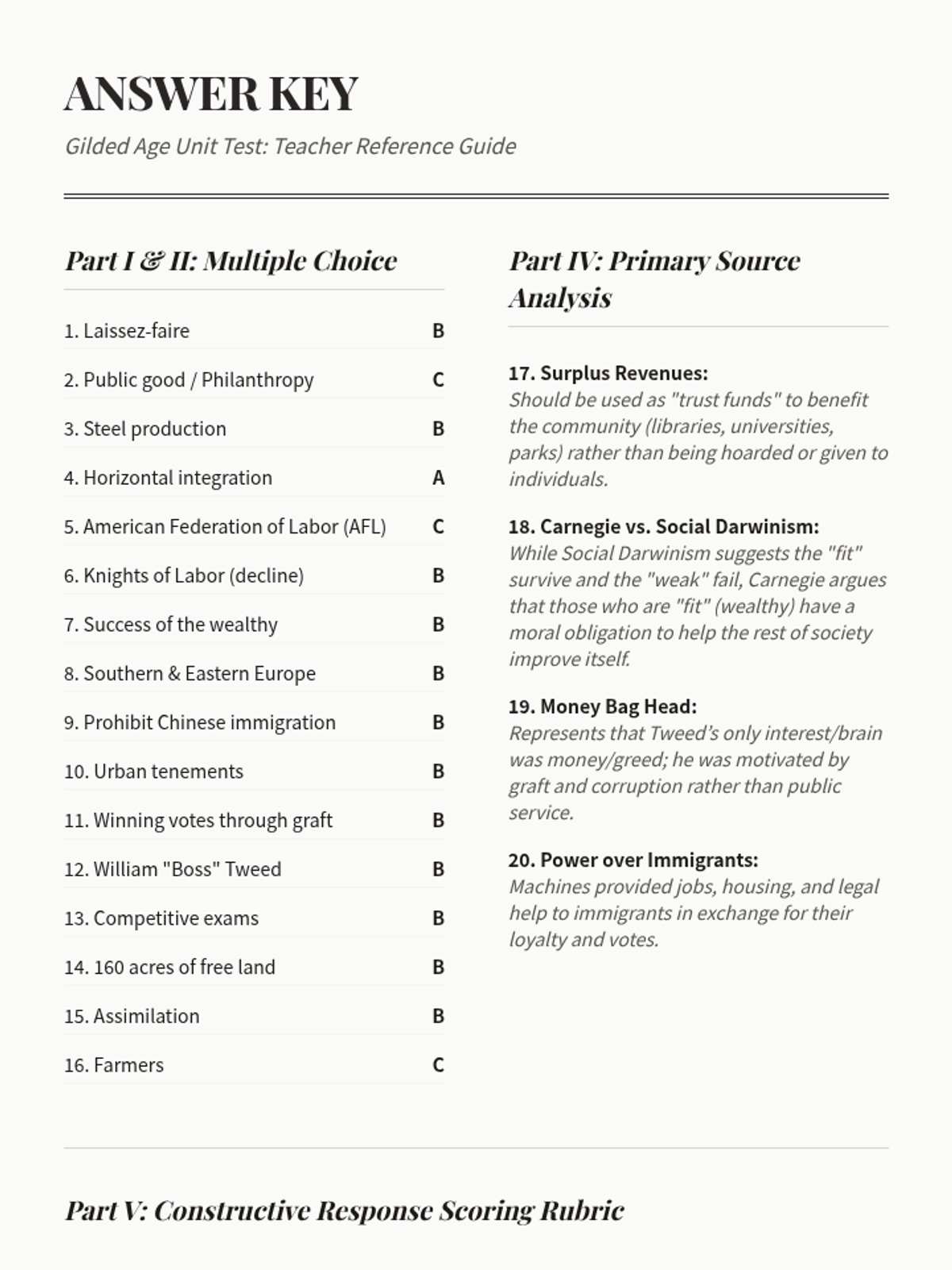
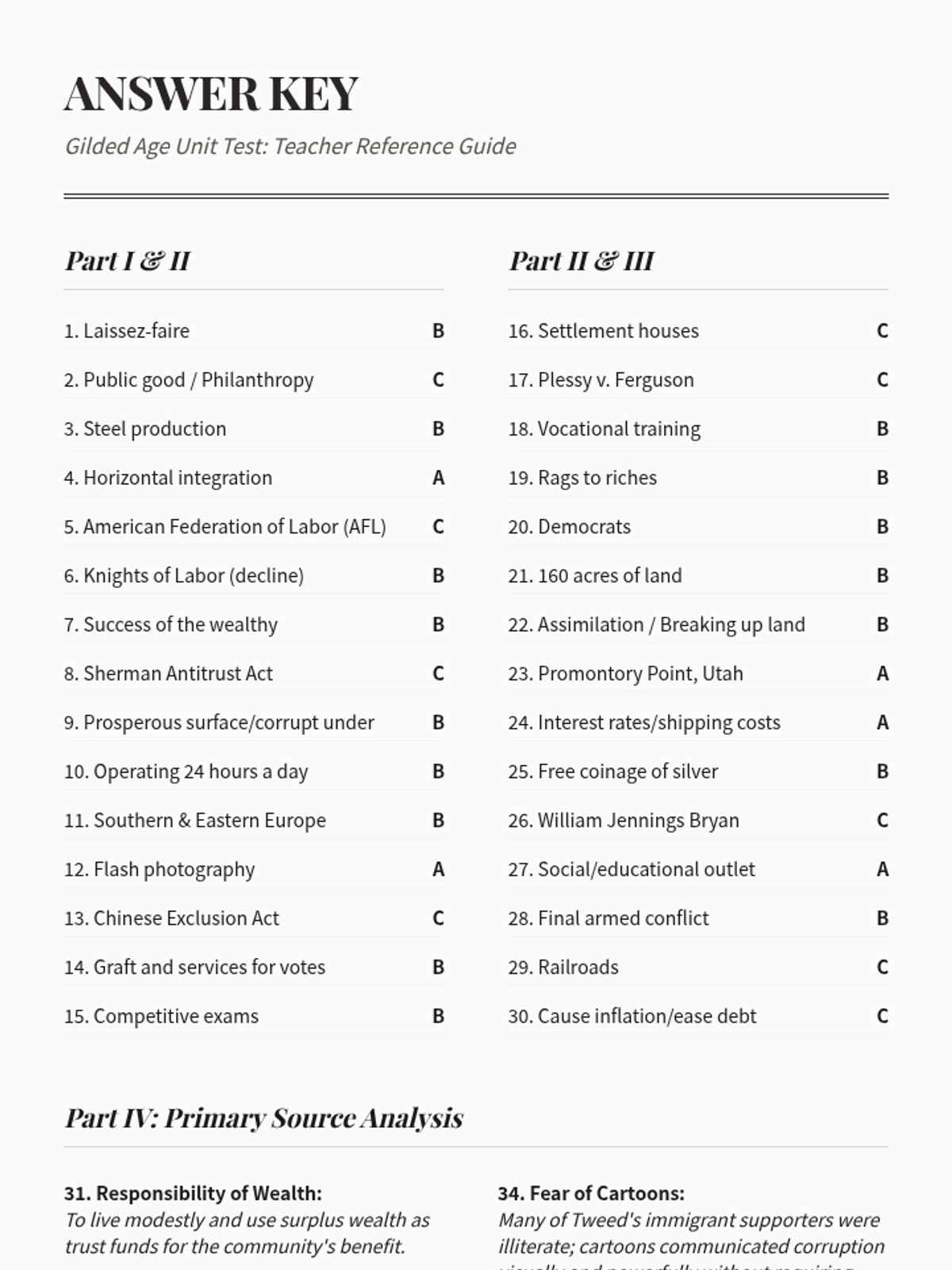
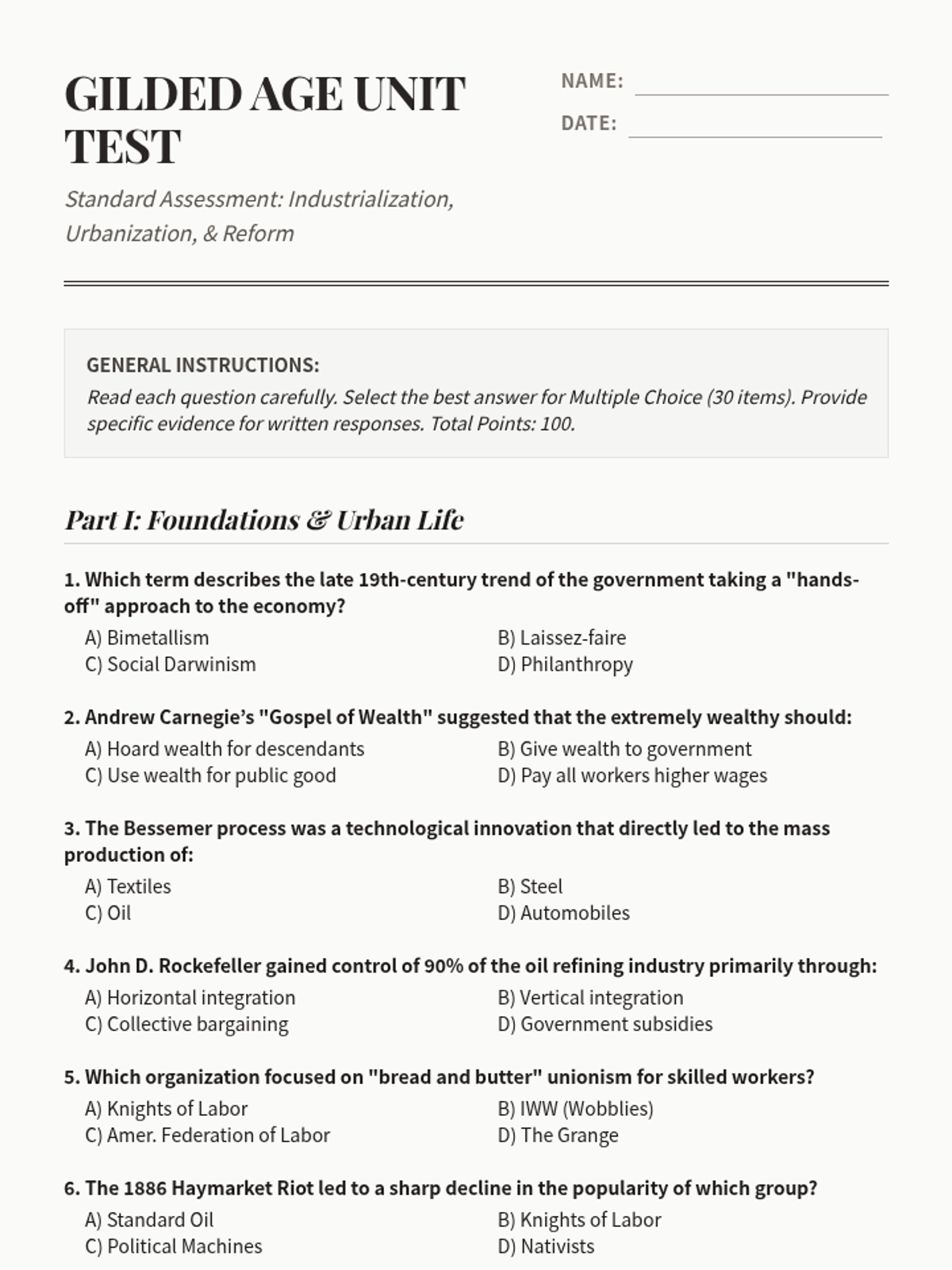
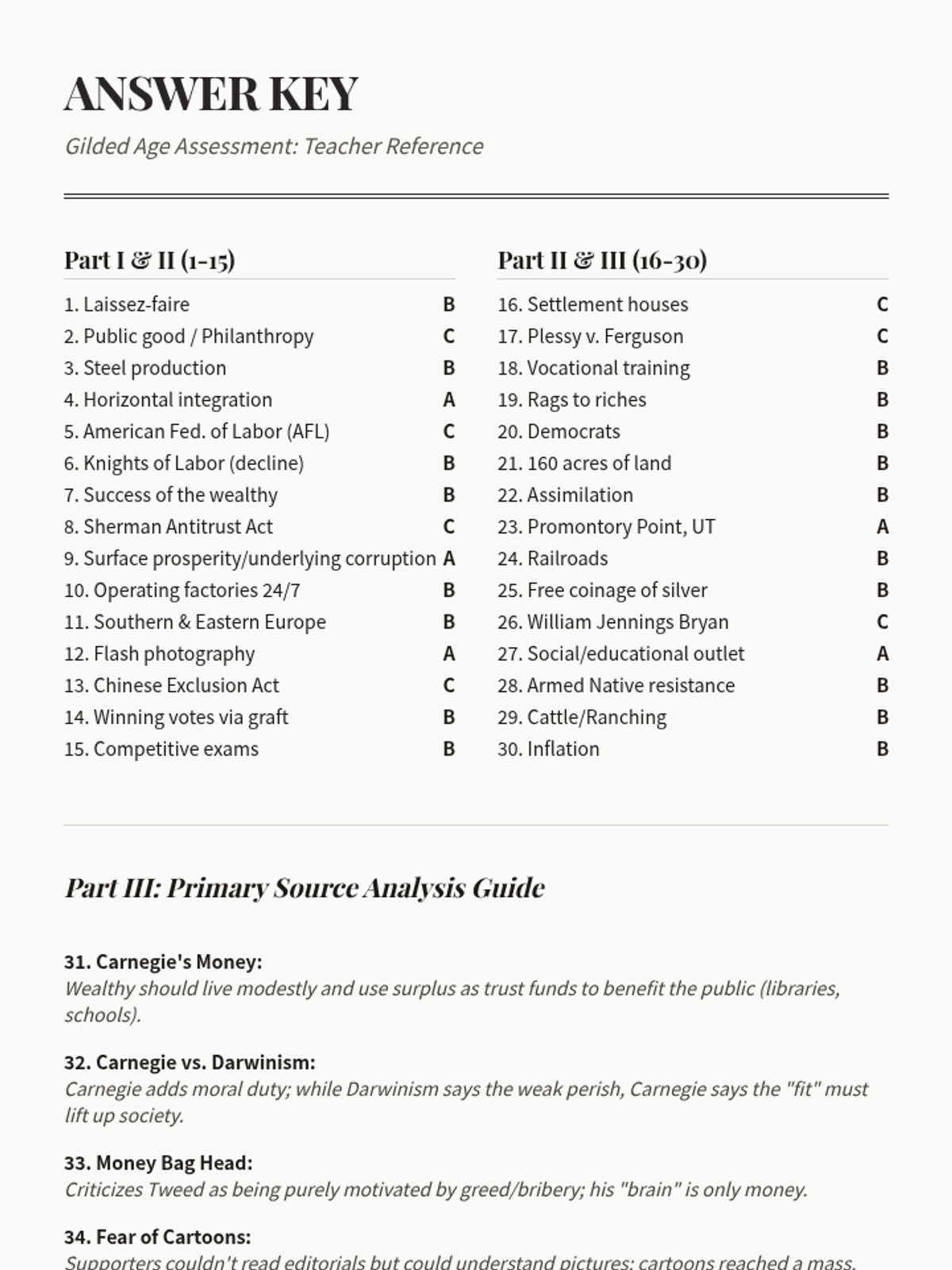
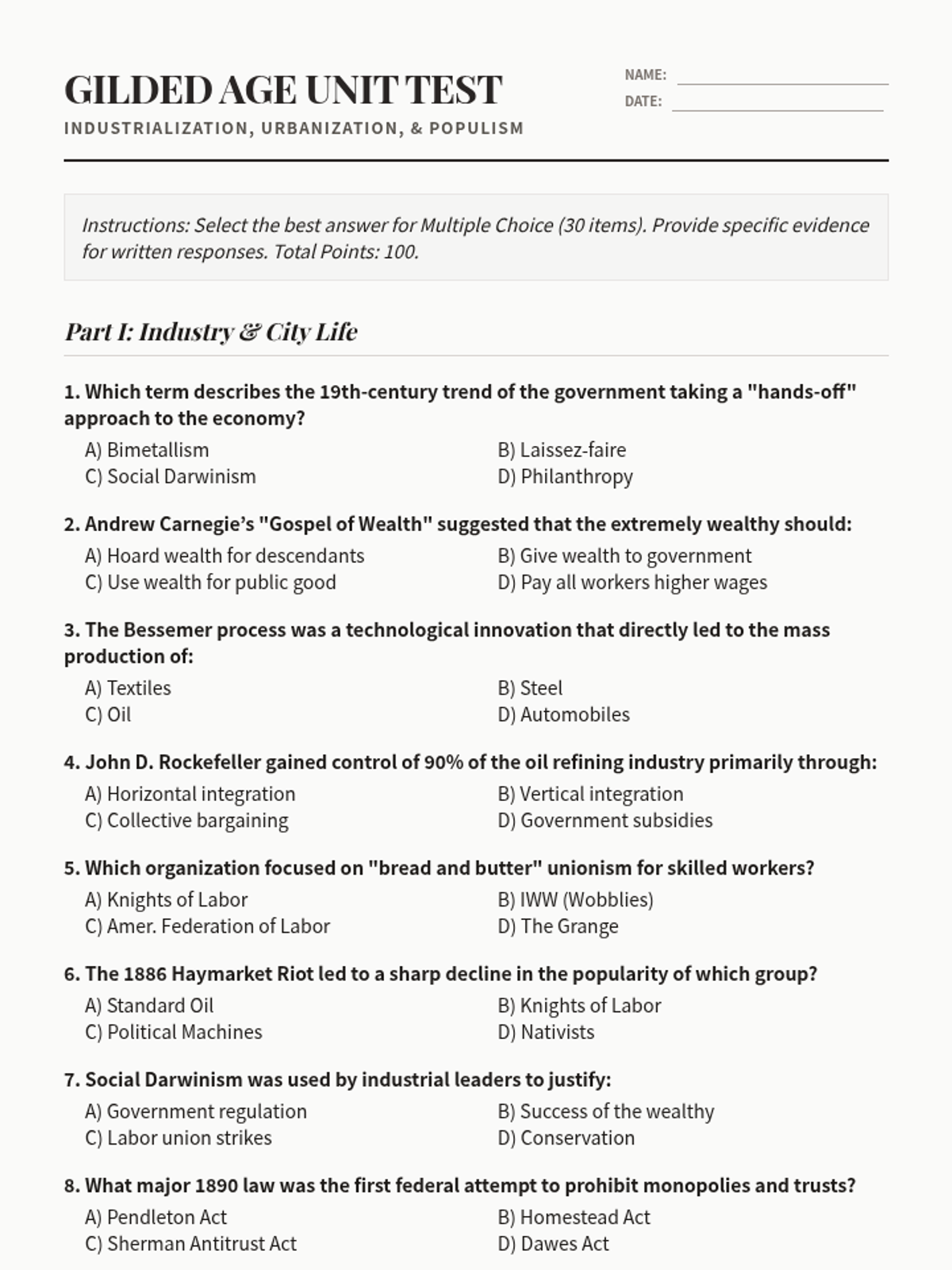
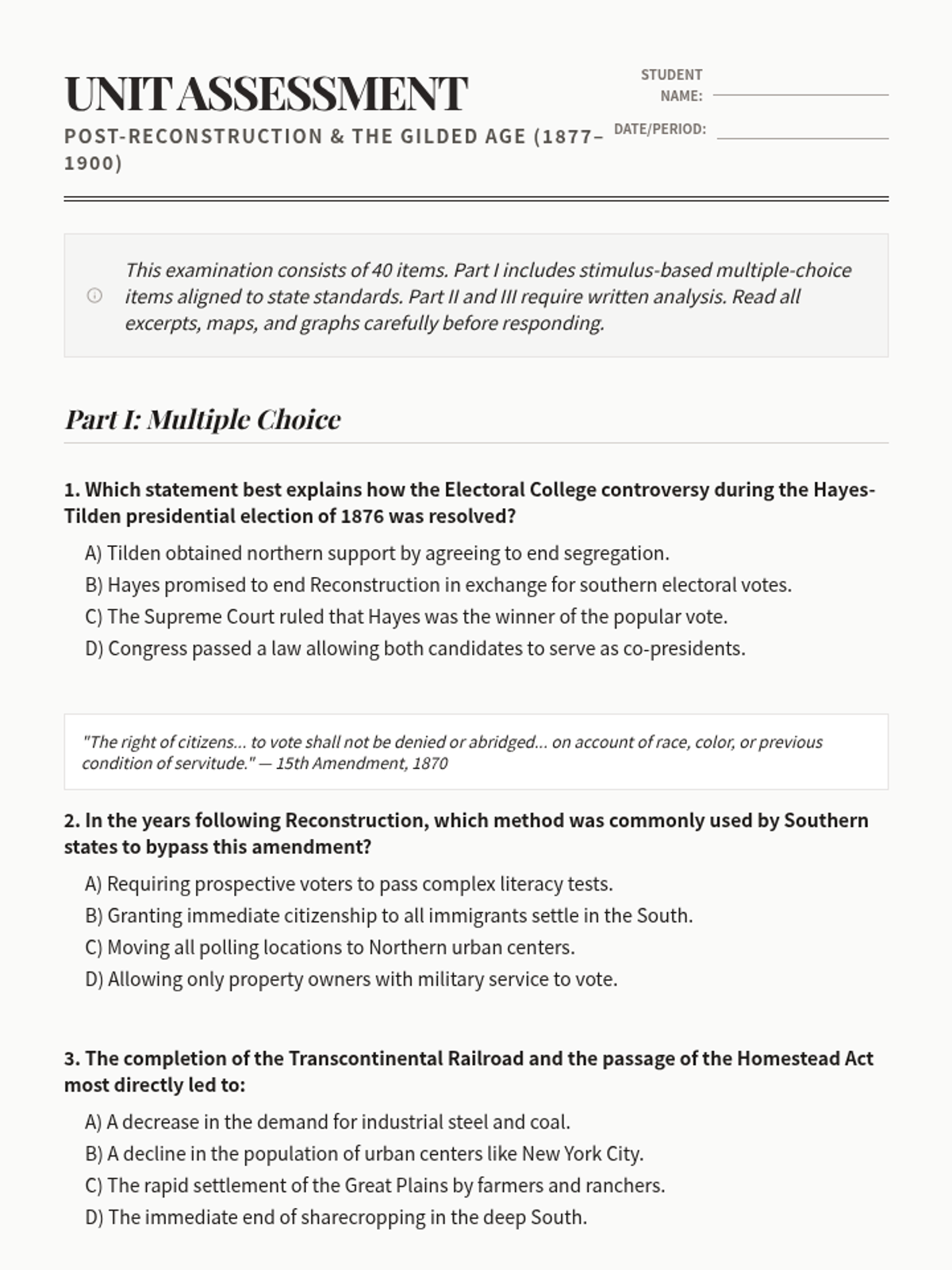
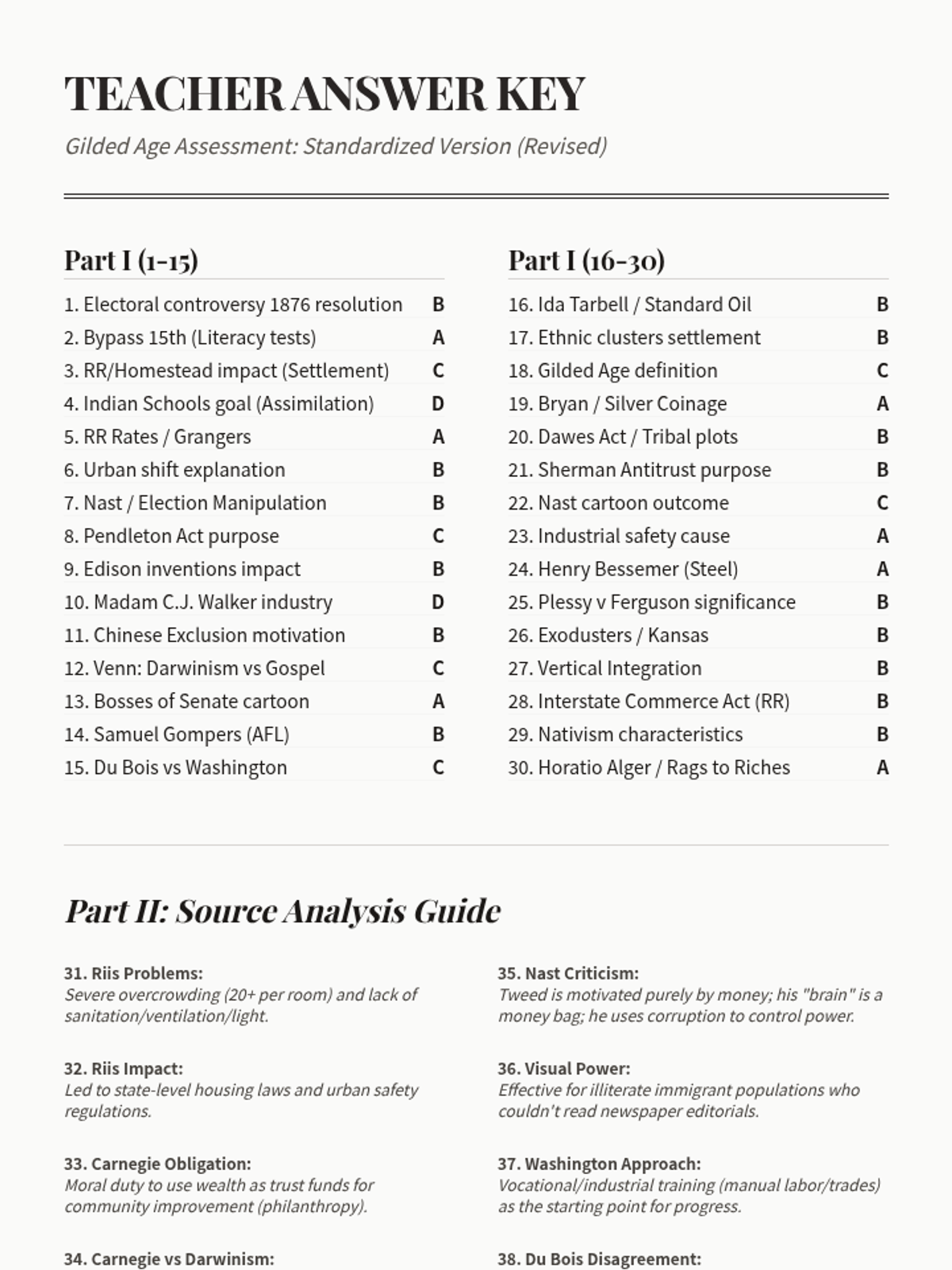
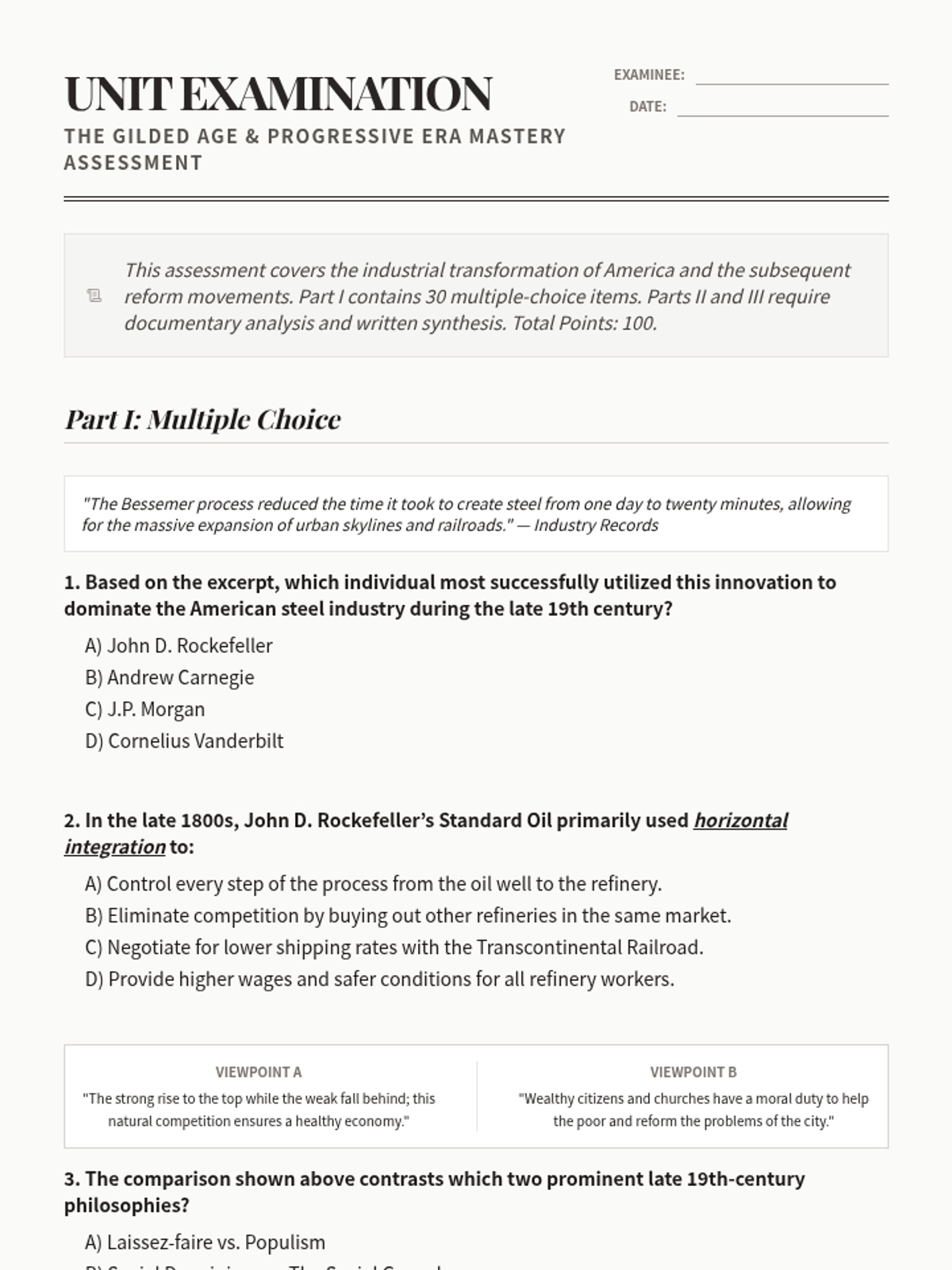
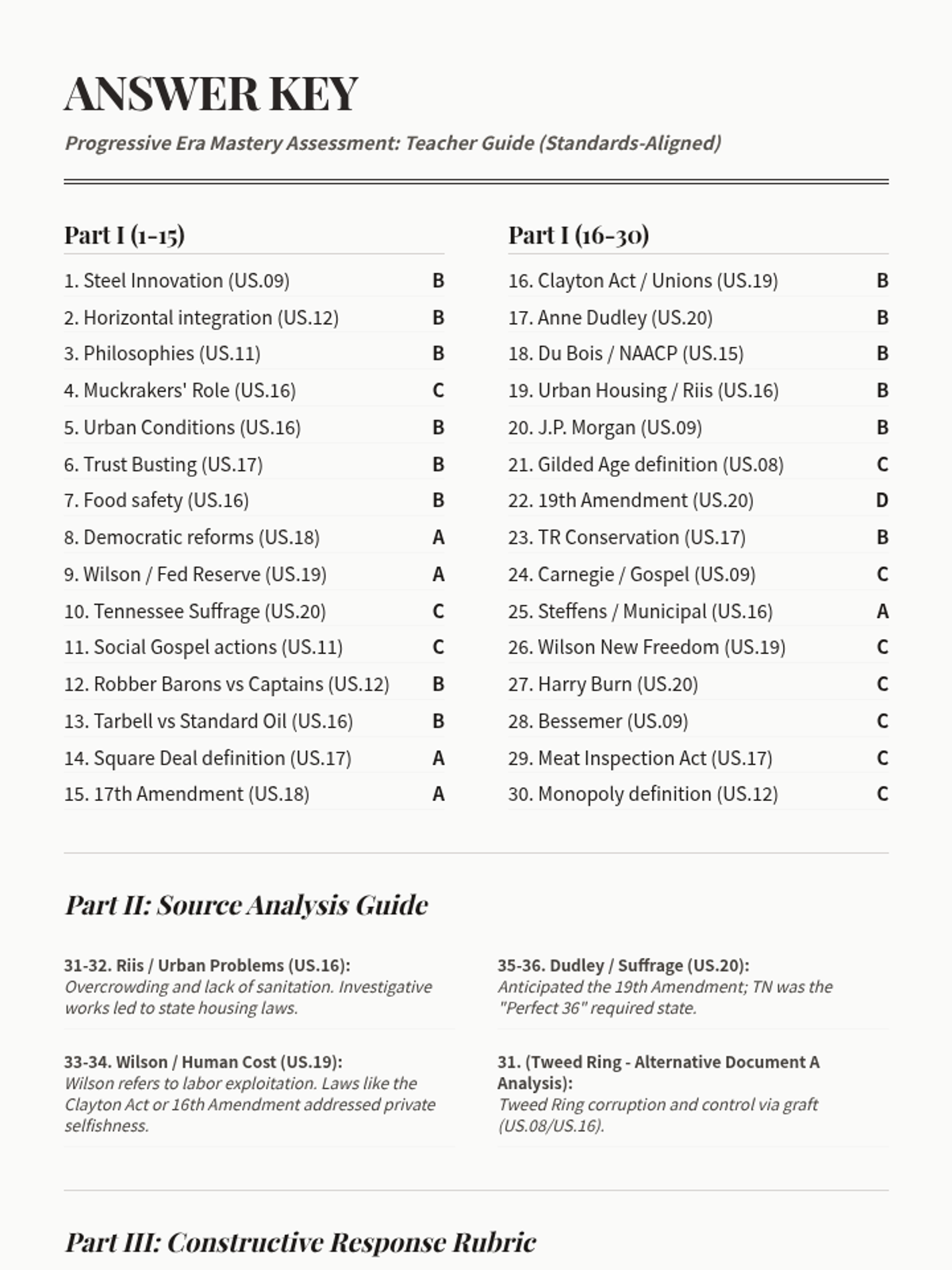
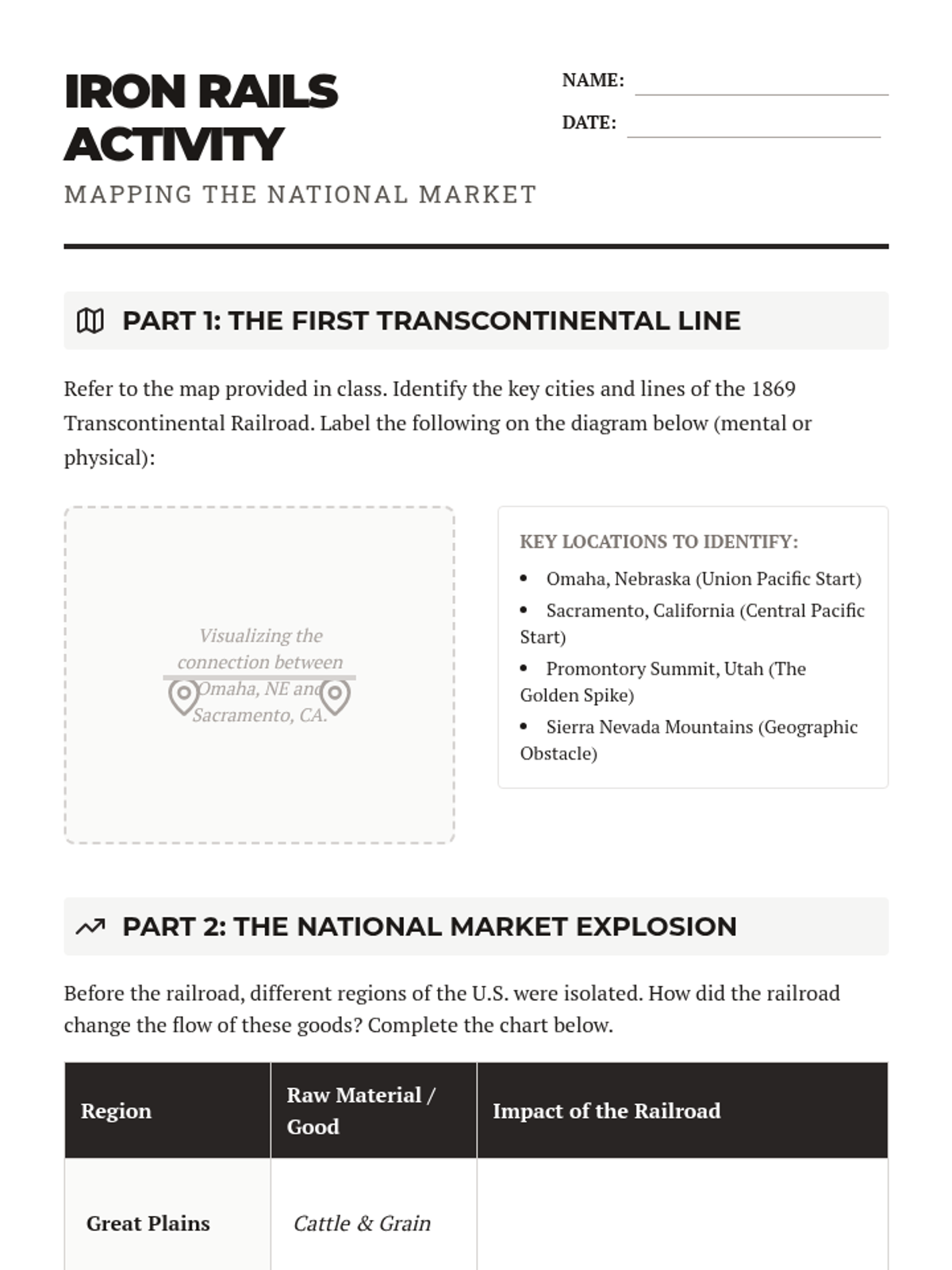
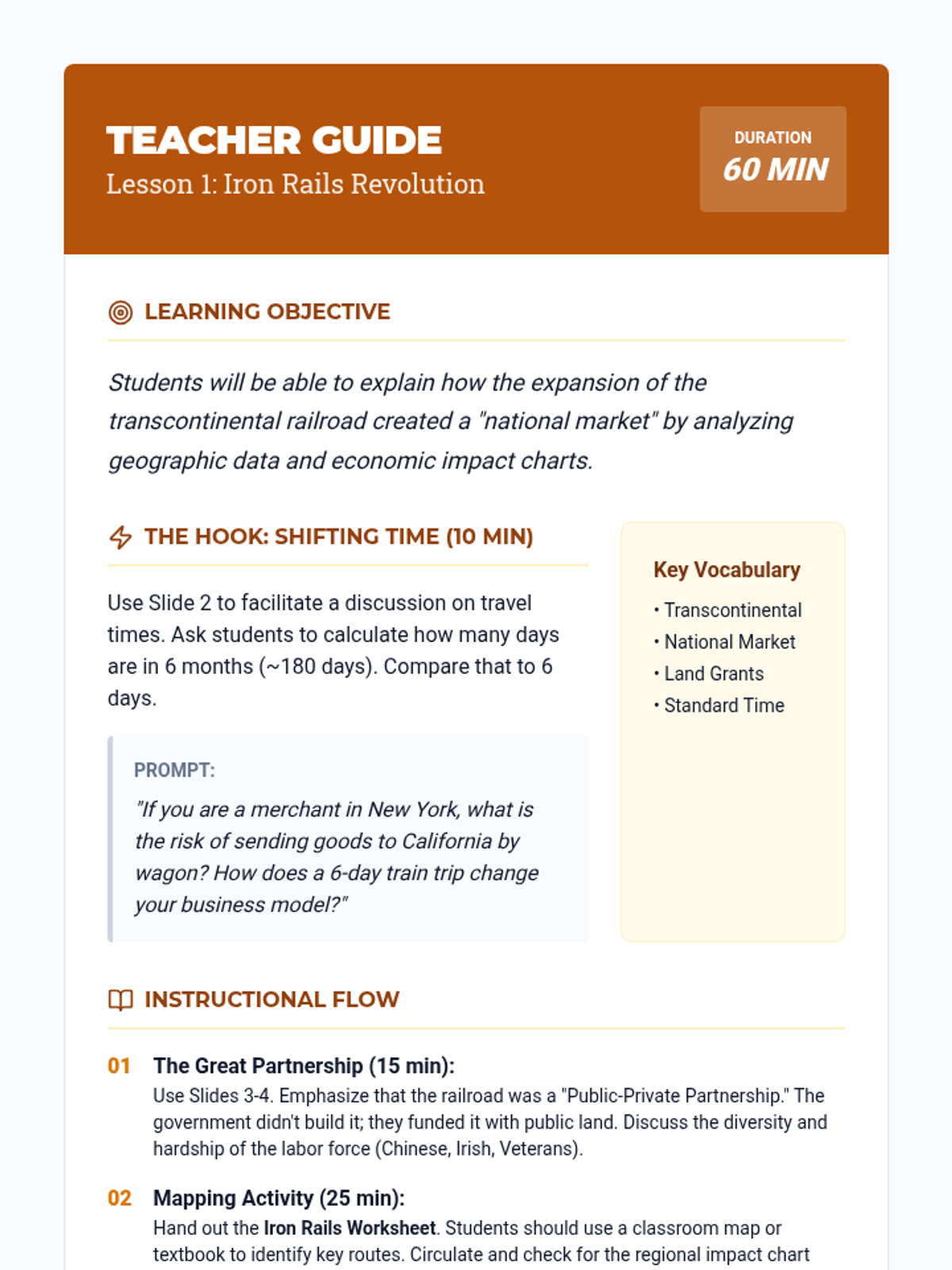
This unit explores the economic explosion of the Gilded Age, focusing on the transcontinental railroad, the rise of industrial tycoons, and the birth of modern corporate structures. Students analyze the tension between massive economic growth and the ethical costs of monopolies.
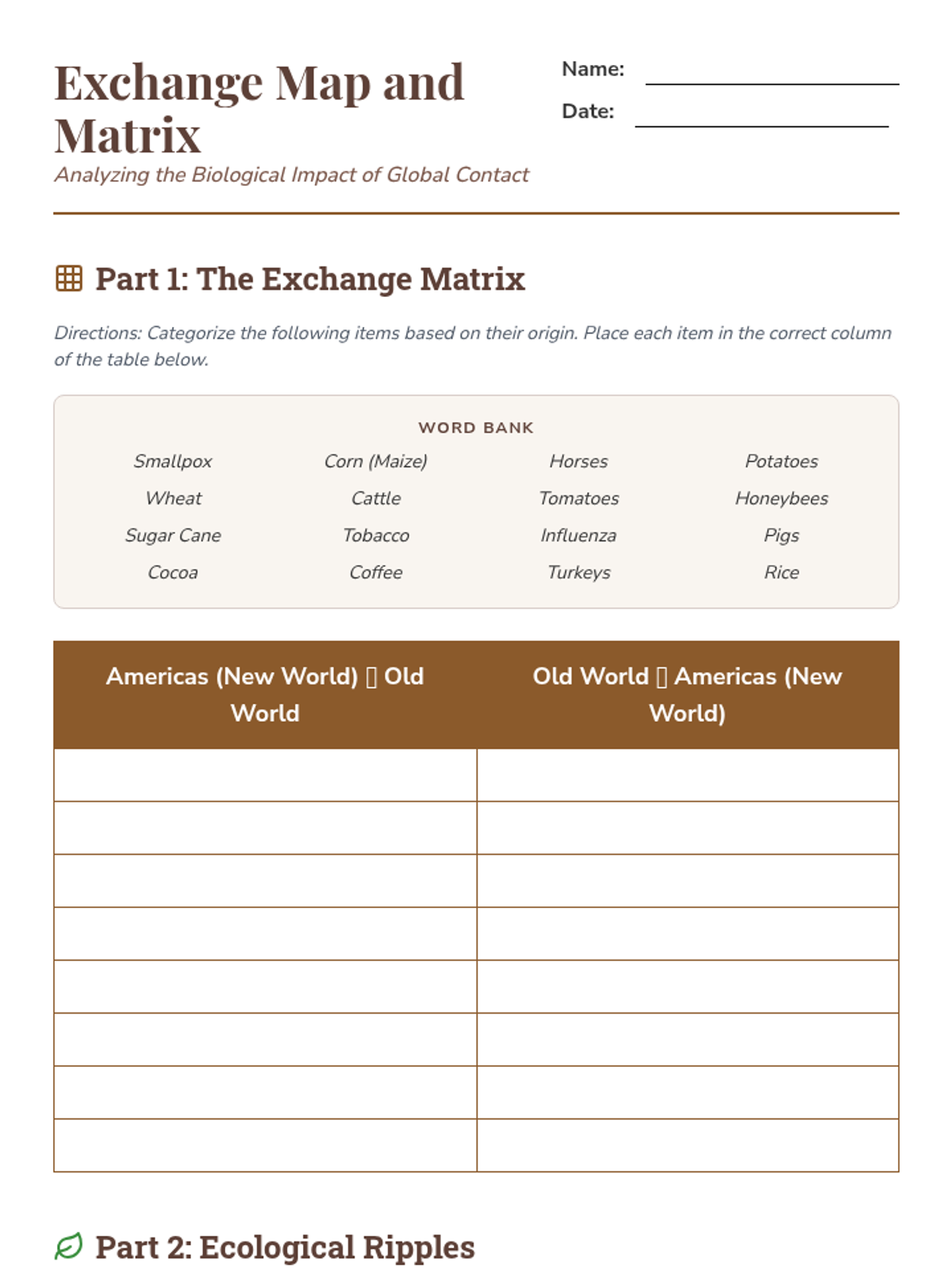
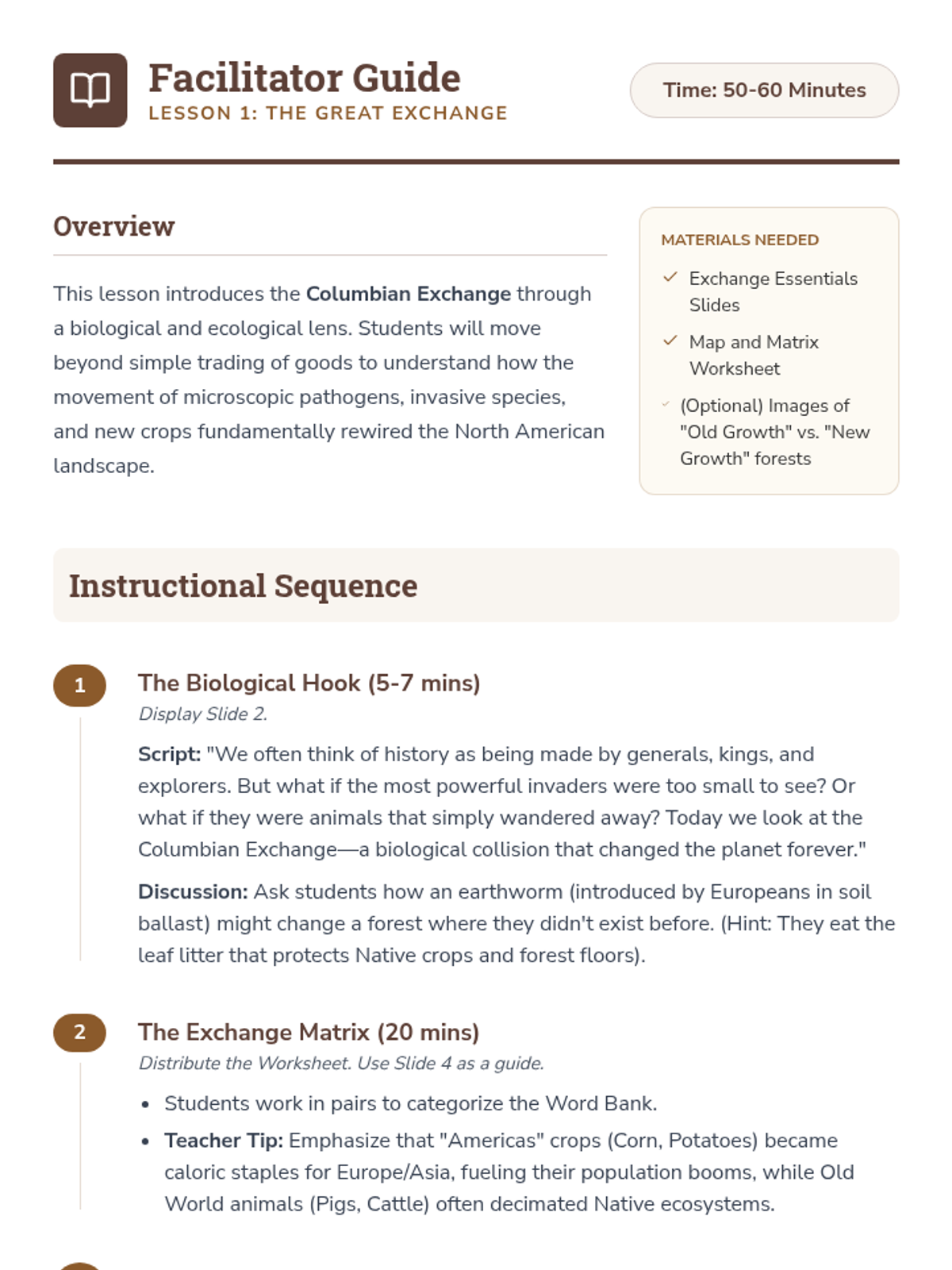
This sequence examines the complex interactions following European arrival, exploring the Columbian Exchange, trade alliances, and biological impacts. Students will investigate how new technologies, animals, and diseases transformed Native life and analyze the strategic choices made by Indigenous leaders during the 17th century.
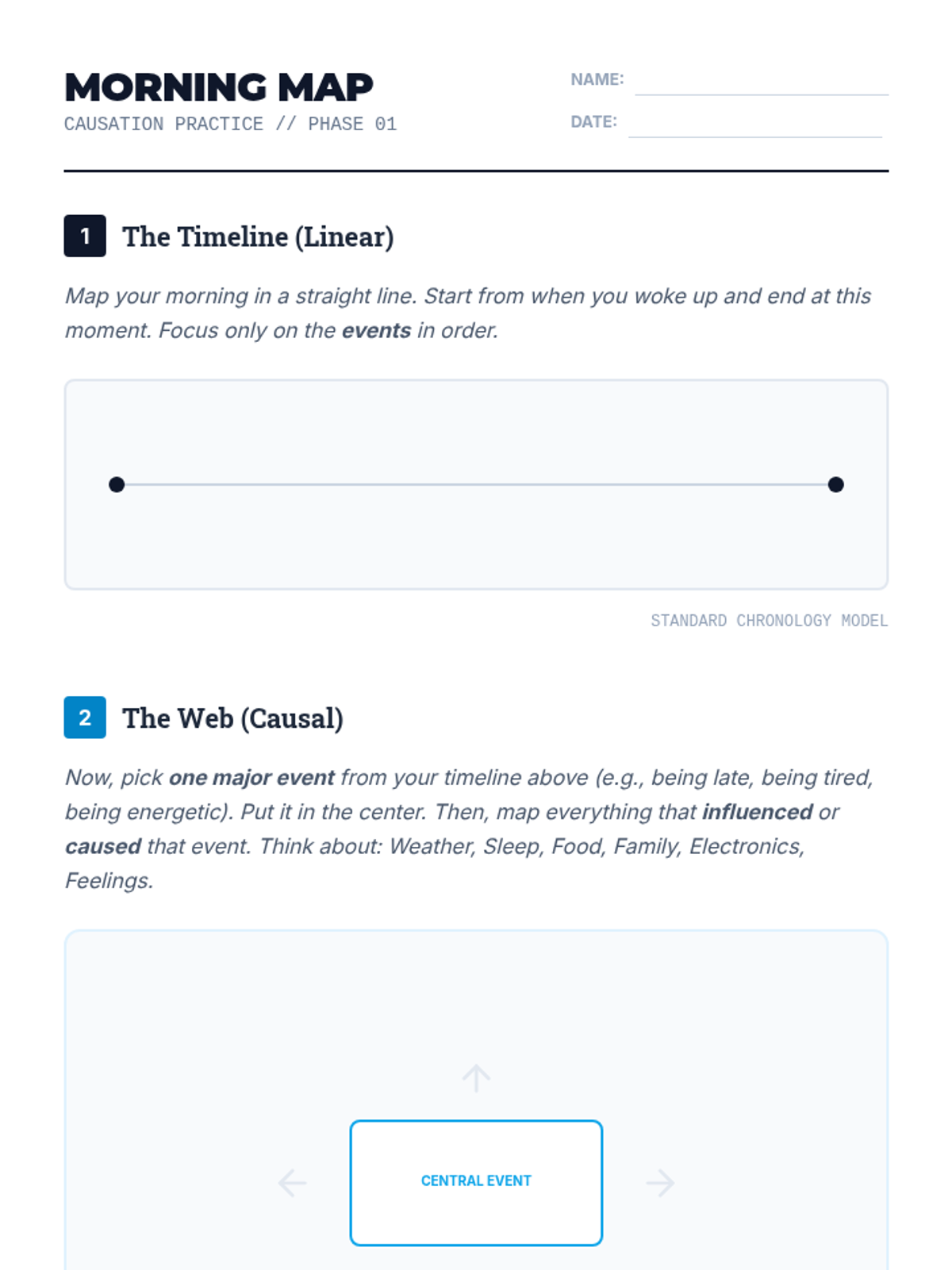
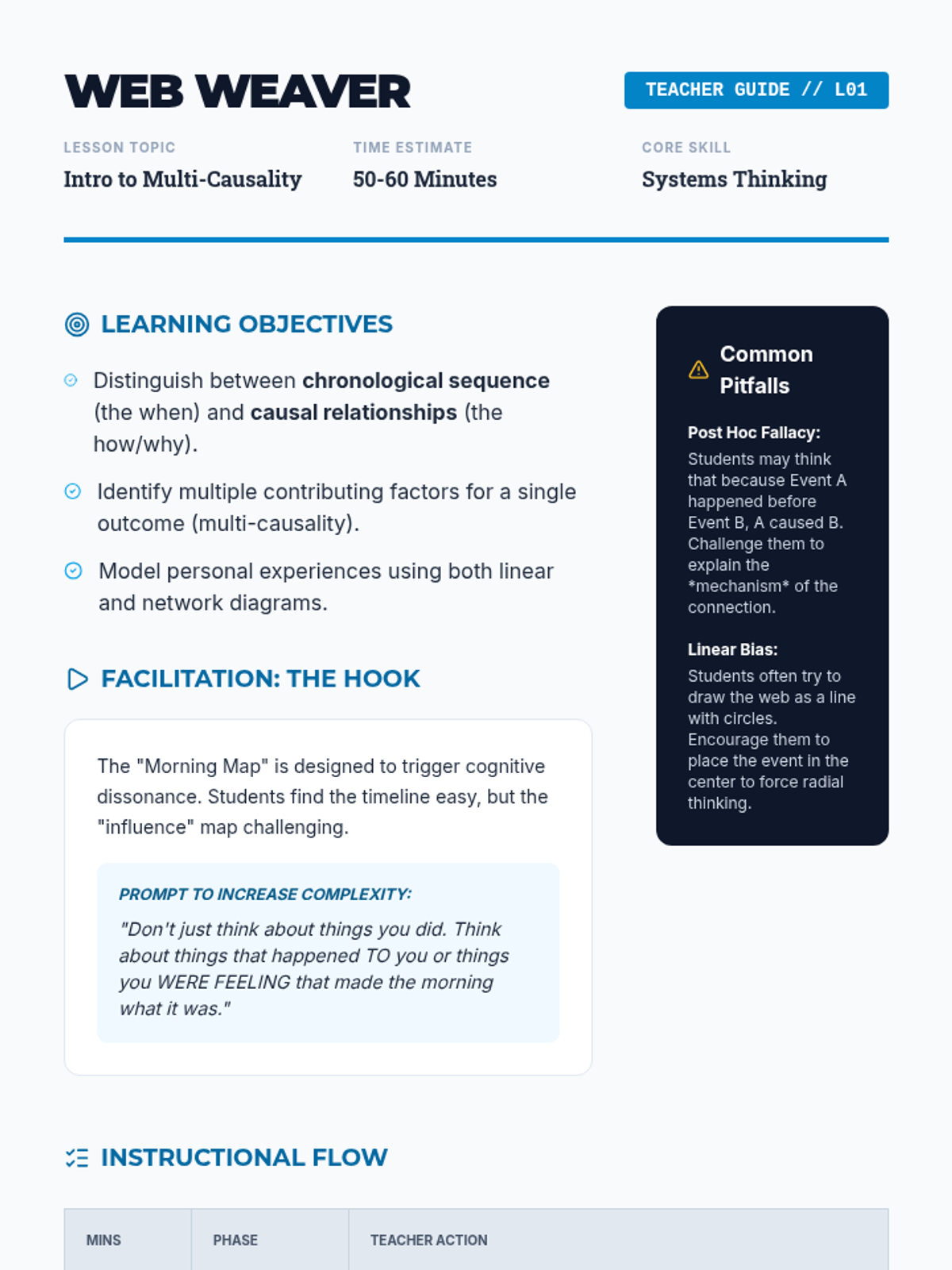
A project-based unit where 7th-grade students move beyond linear timelines to create complex, multi-causal 'webs' of historical events, exploring the interconnected nature of political, social, and economic factors.
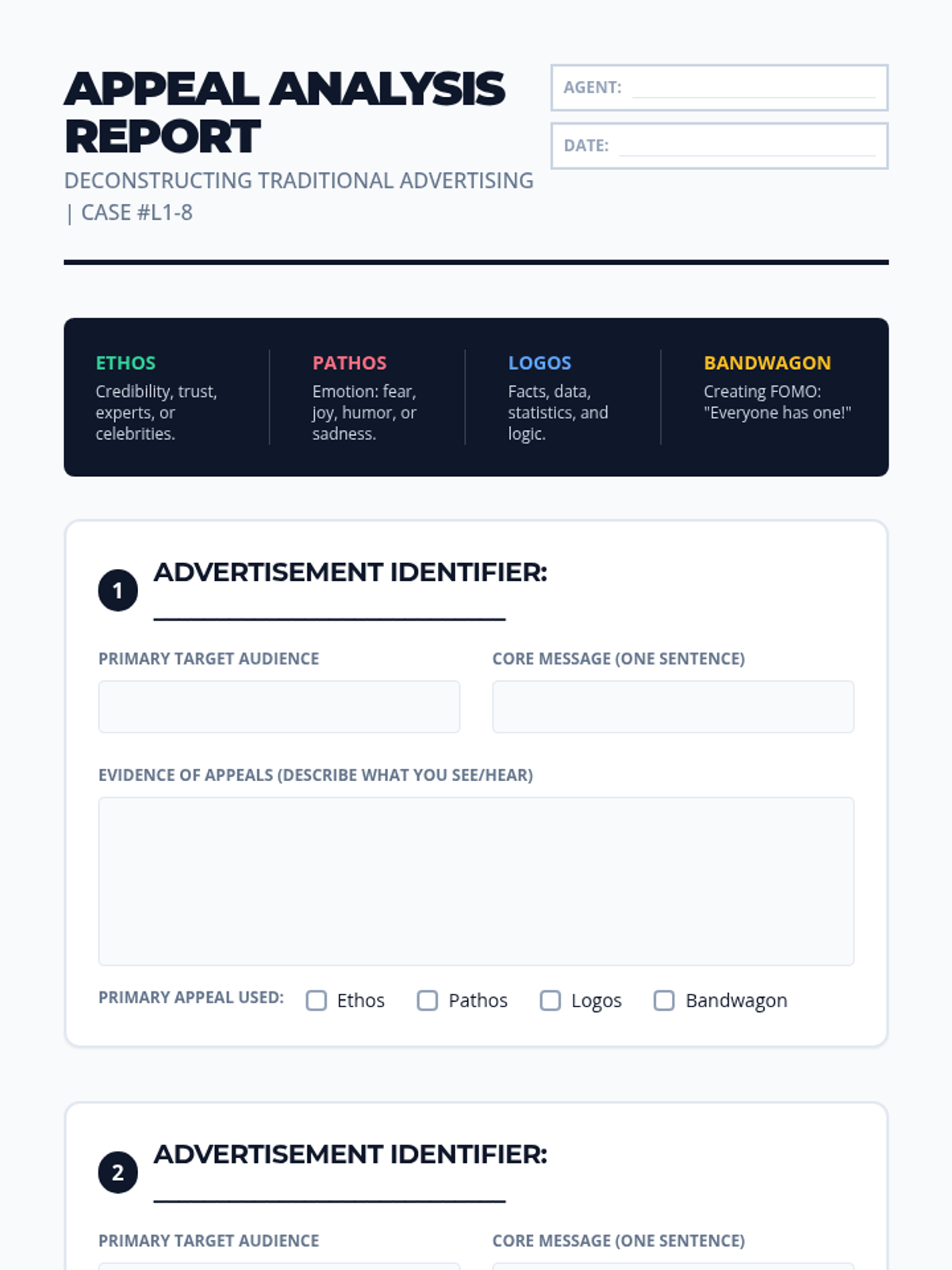
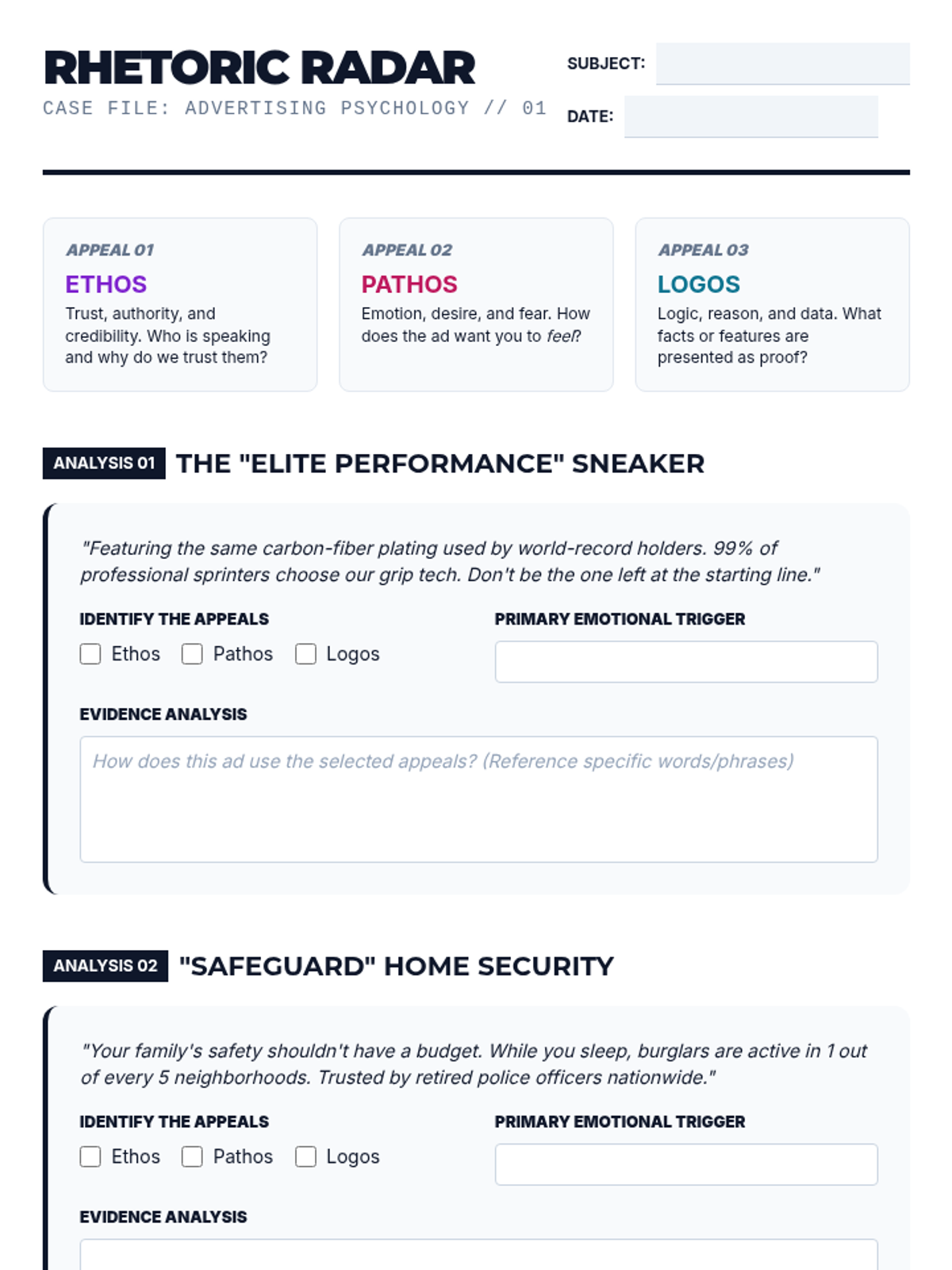
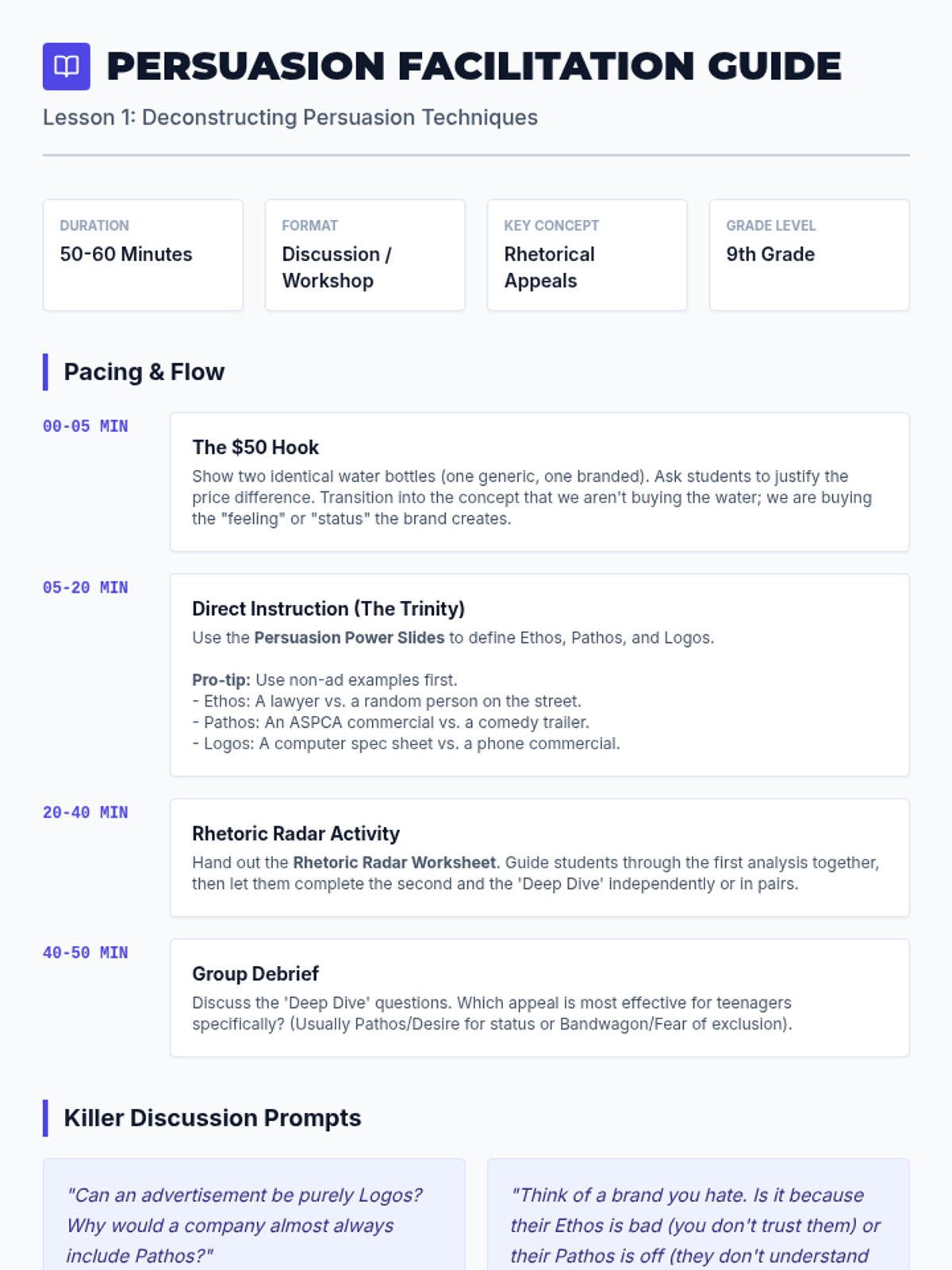
This inquiry-based sequence guides 8th-grade students through the modern advertising landscape, from traditional appeals to algorithmic targeting and influencer marketing. Students develop media literacy skills to identify psychological triggers and data-driven manipulation, culminating in the creation of an 'ad-busting' guide.
A comprehensive sequence investigating the psychological mechanisms behind modern advertising, from rhetorical appeals to digital algorithms and influencer marketing. Students develop media literacy skills to recognize manipulation in consumer behavior.
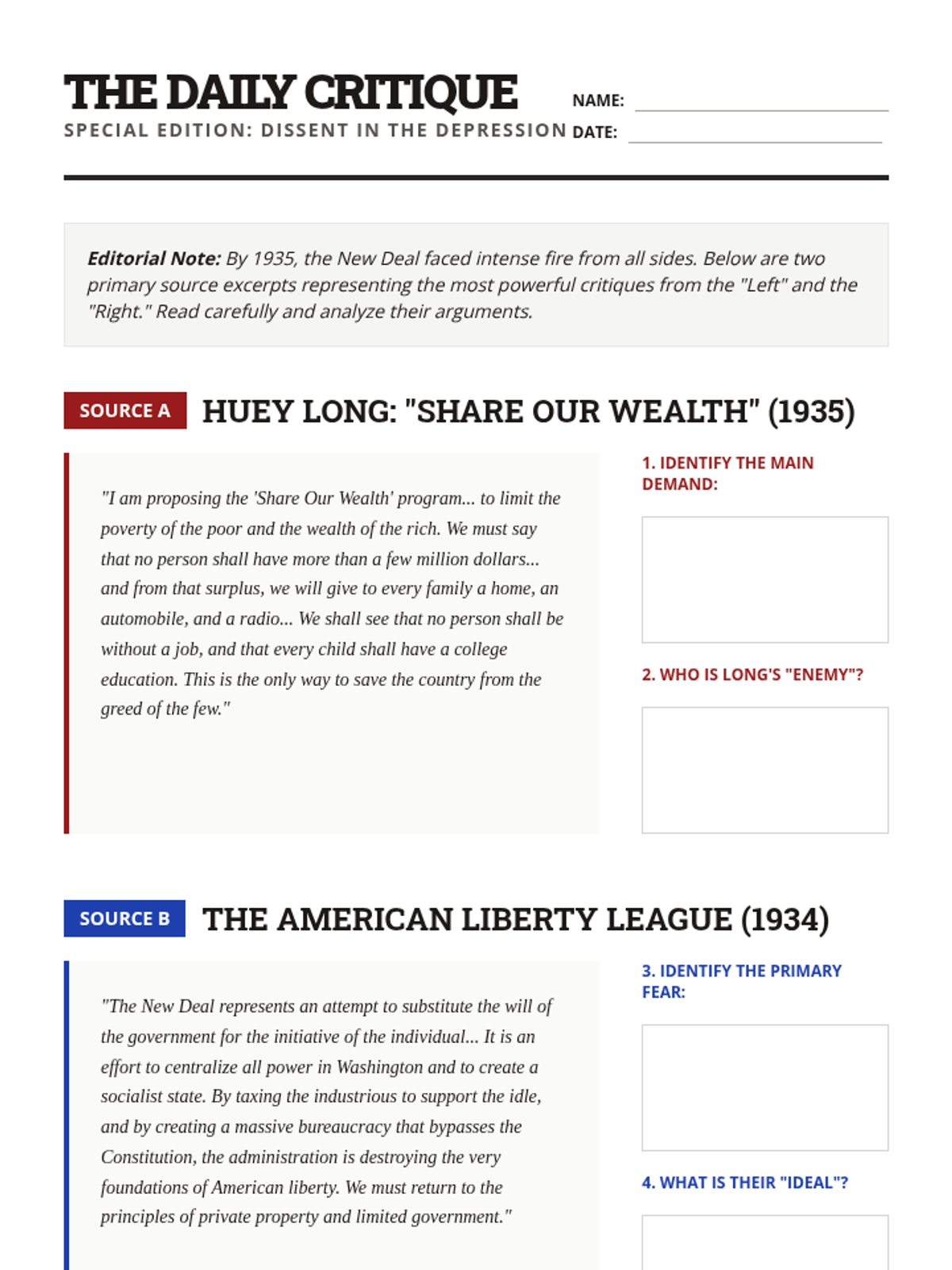
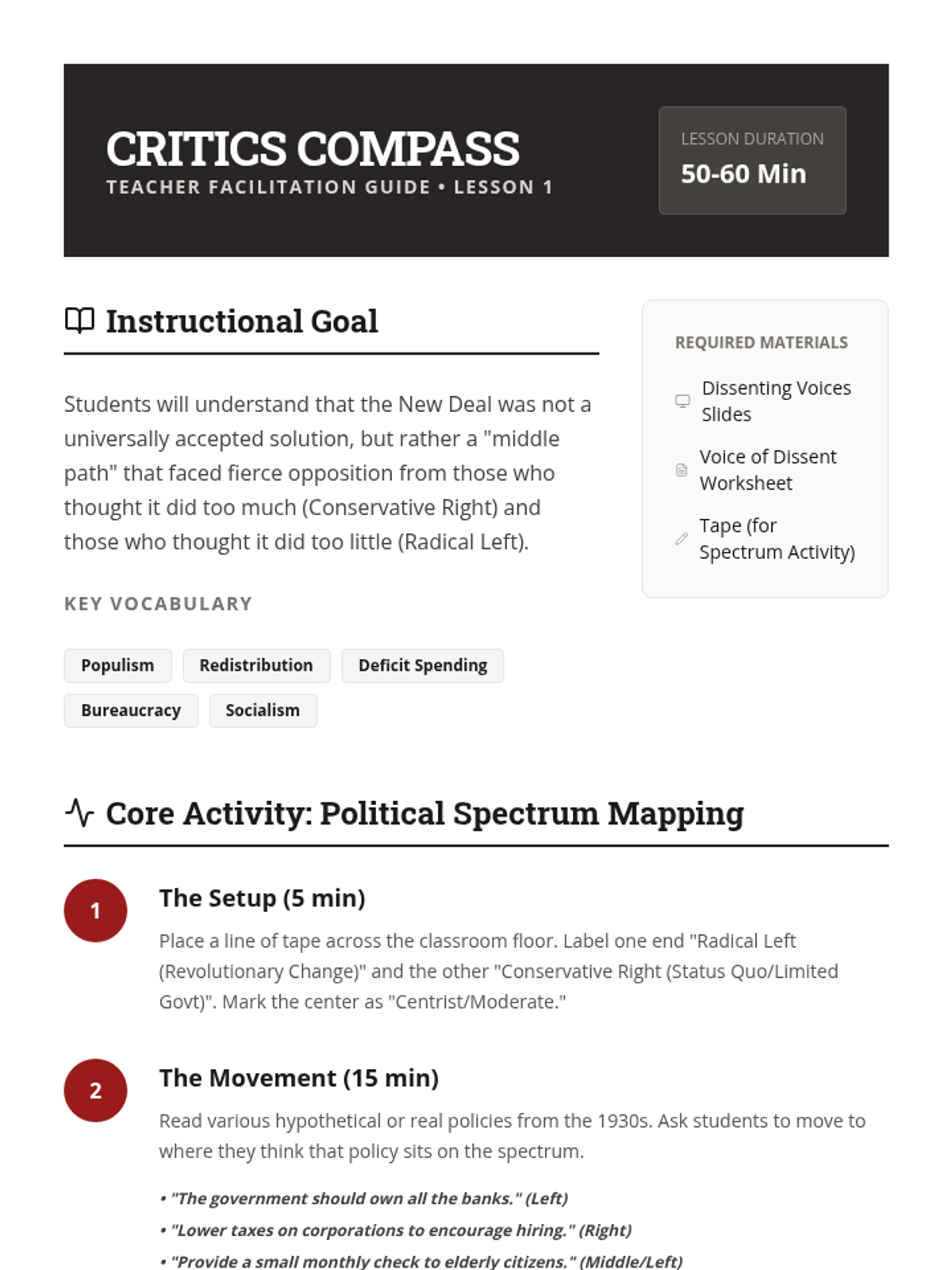
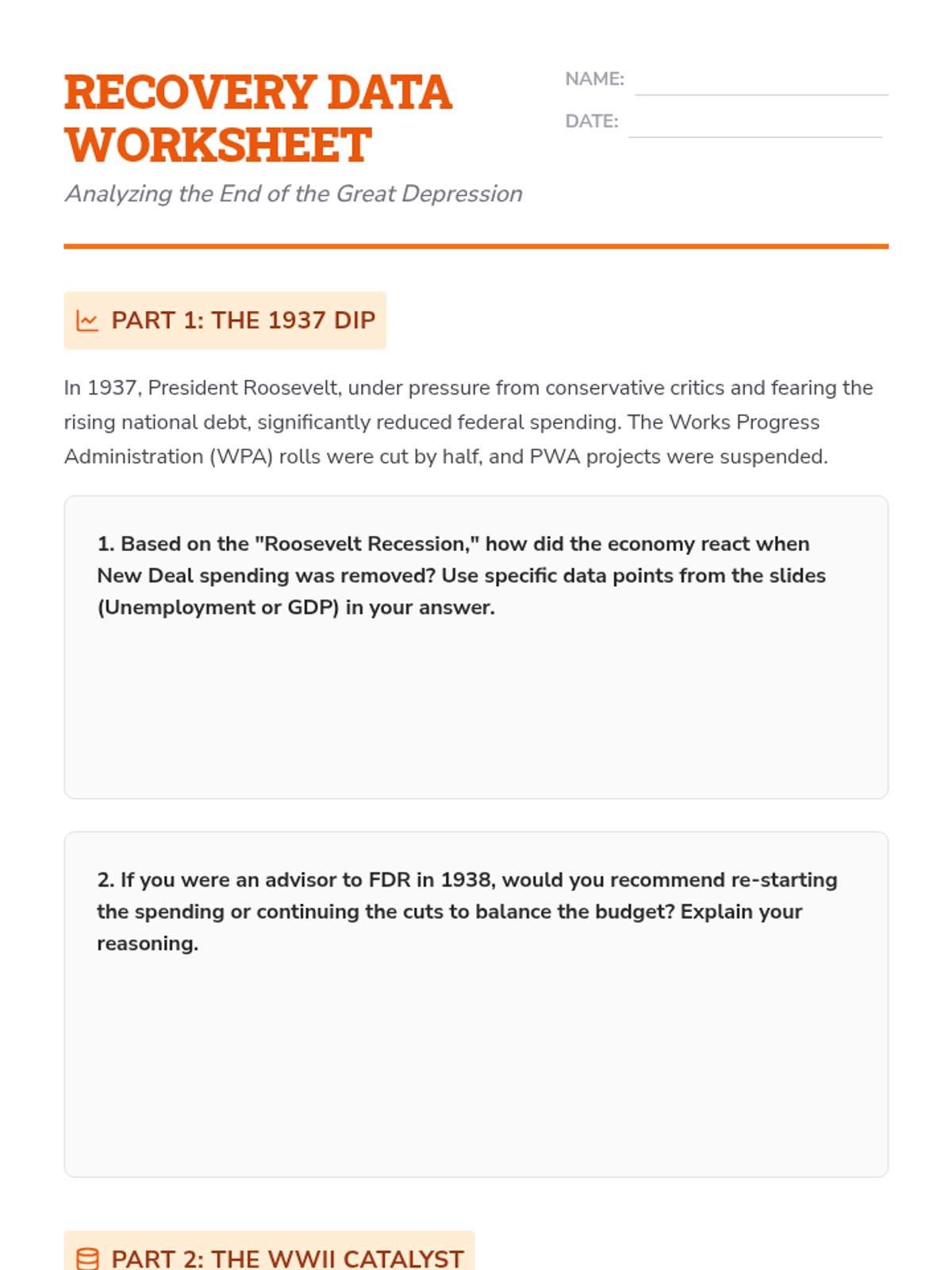
This sequence explores the intense political polarization and constitutional battles sparked by the New Deal, focusing on critics from the left and right, the Court Packing scheme, labor rights, and the systemic inequities regarding race and gender. Students will engage in debates, role-plays, and primary source analysis to answer: How does a democracy balance emergency executive power with constitutional checks and balances?
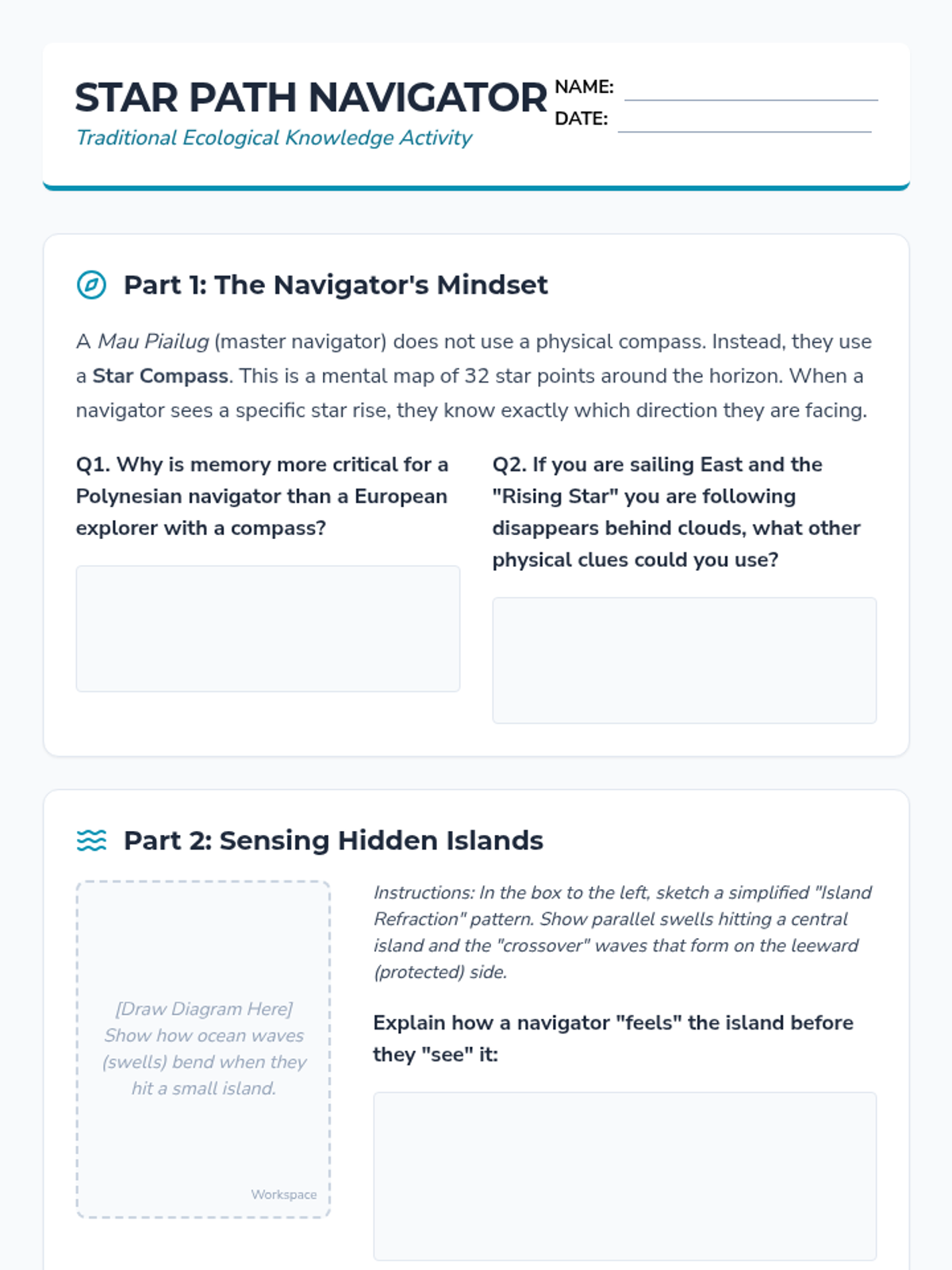
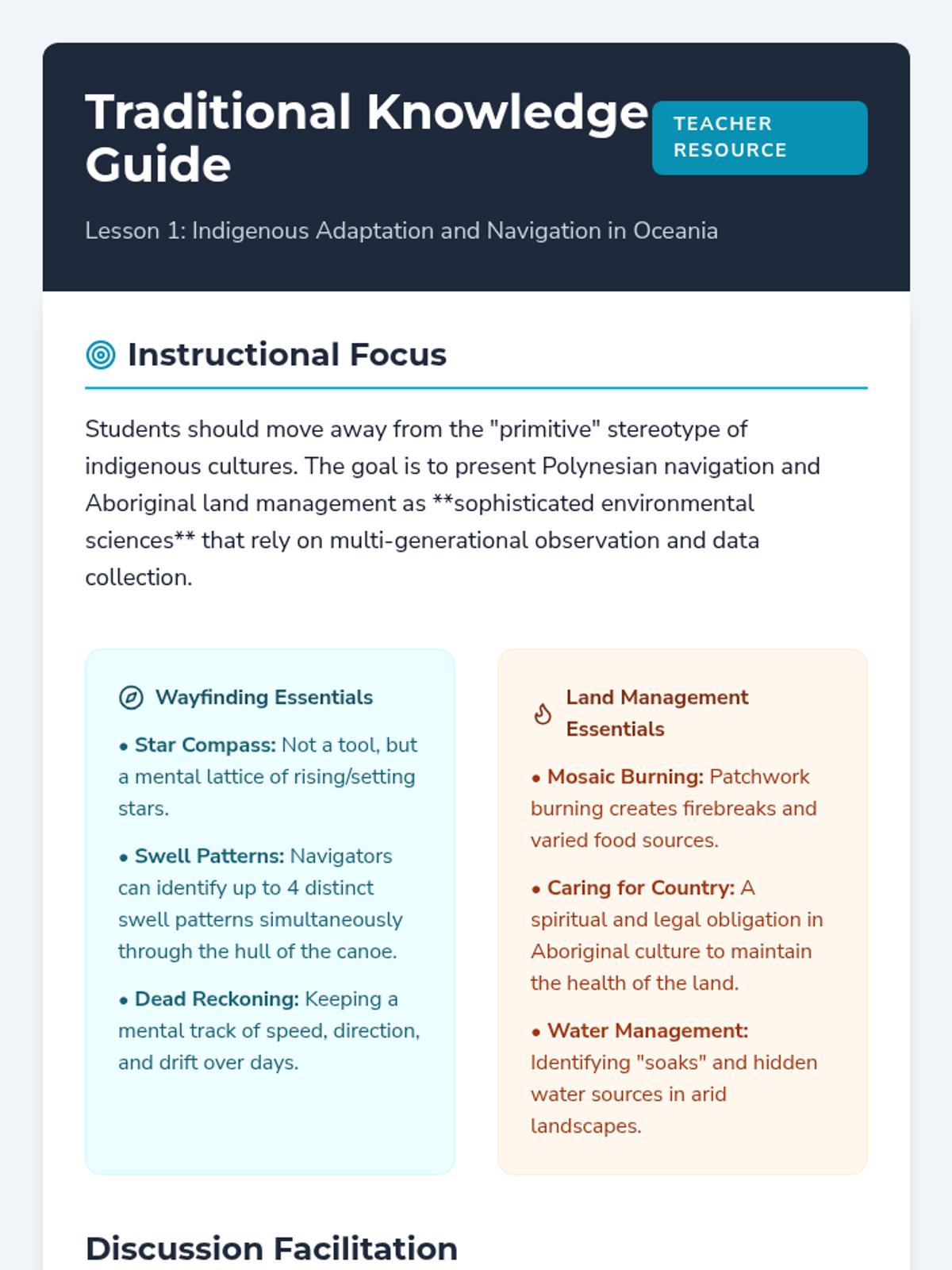
This sequence explores how societies in Oceania adapt to unique environmental constraints through indigenous navigation, arid land management, and modern economic choices. Students analyze the trade-offs between resource extraction and tourism before proposing sustainable development plans for island nations.
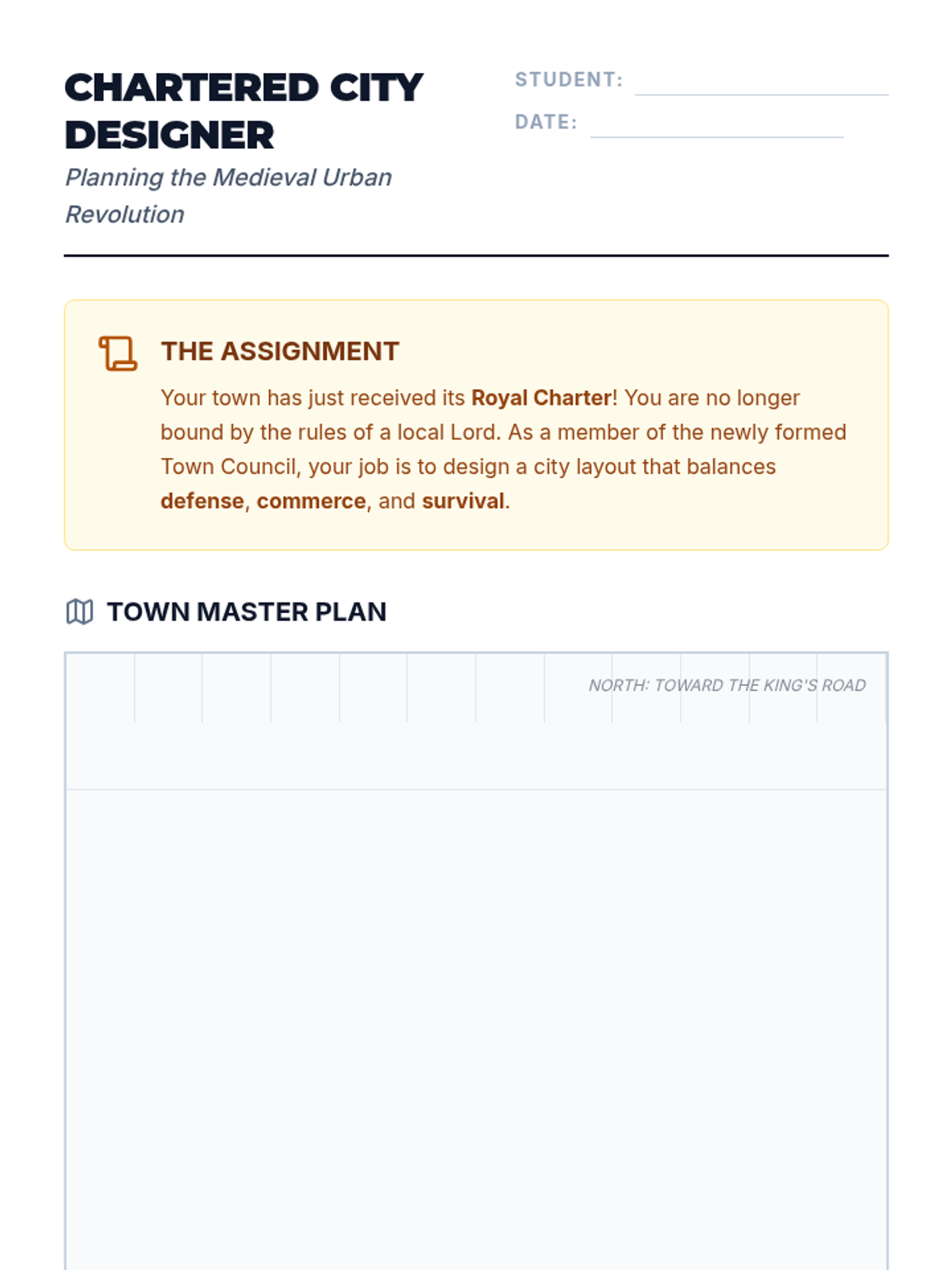
This sequence bridges the gap between the Middle Ages and the early Renaissance, focusing on the resurgence of towns, the rise of the merchant class through guilds, the impact of new military technologies, and the cultural shift toward humanism and realistic art. Students will analyze how these social, economic, and technological changes facilitated the transition toward the modern era.
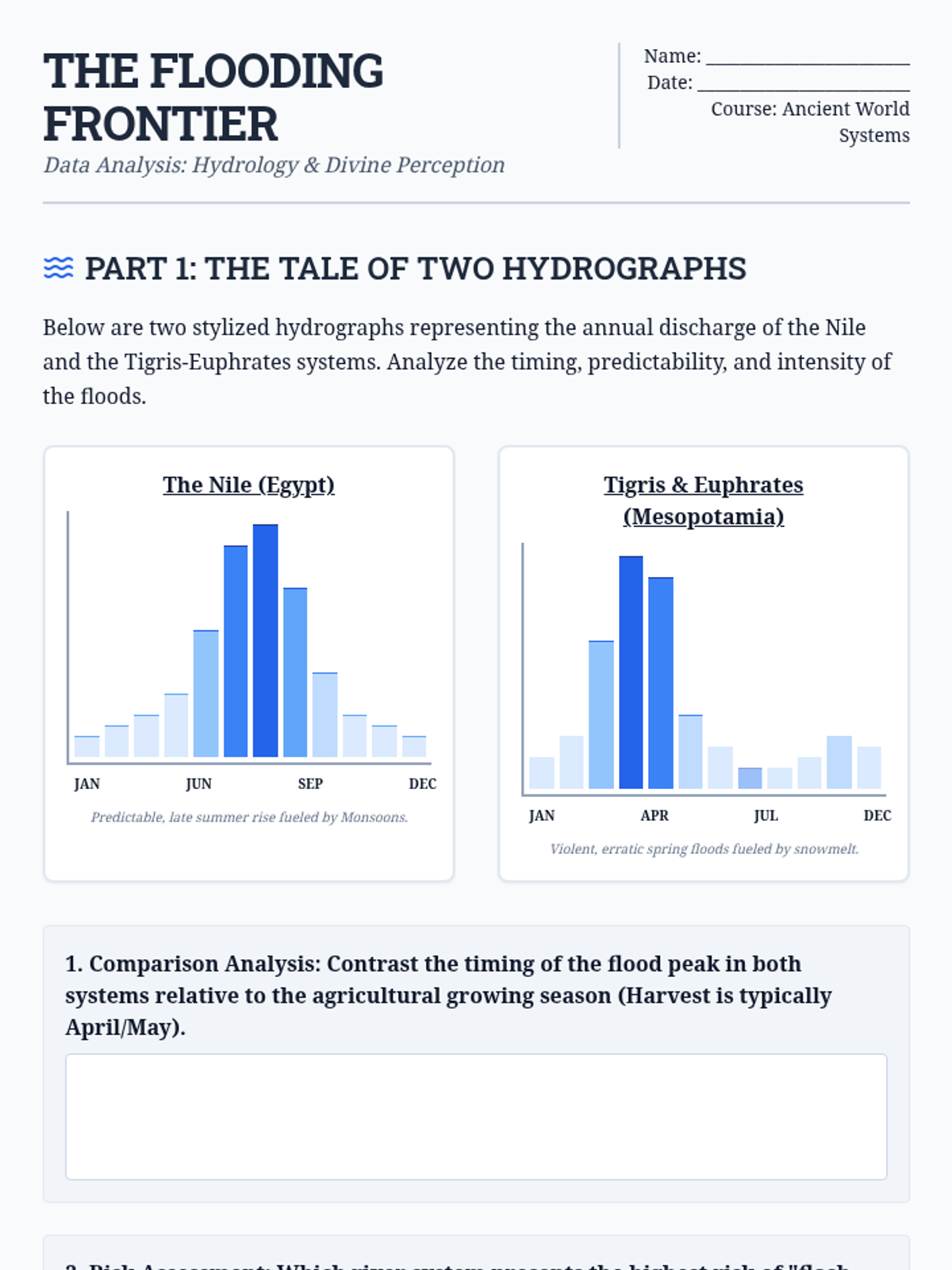
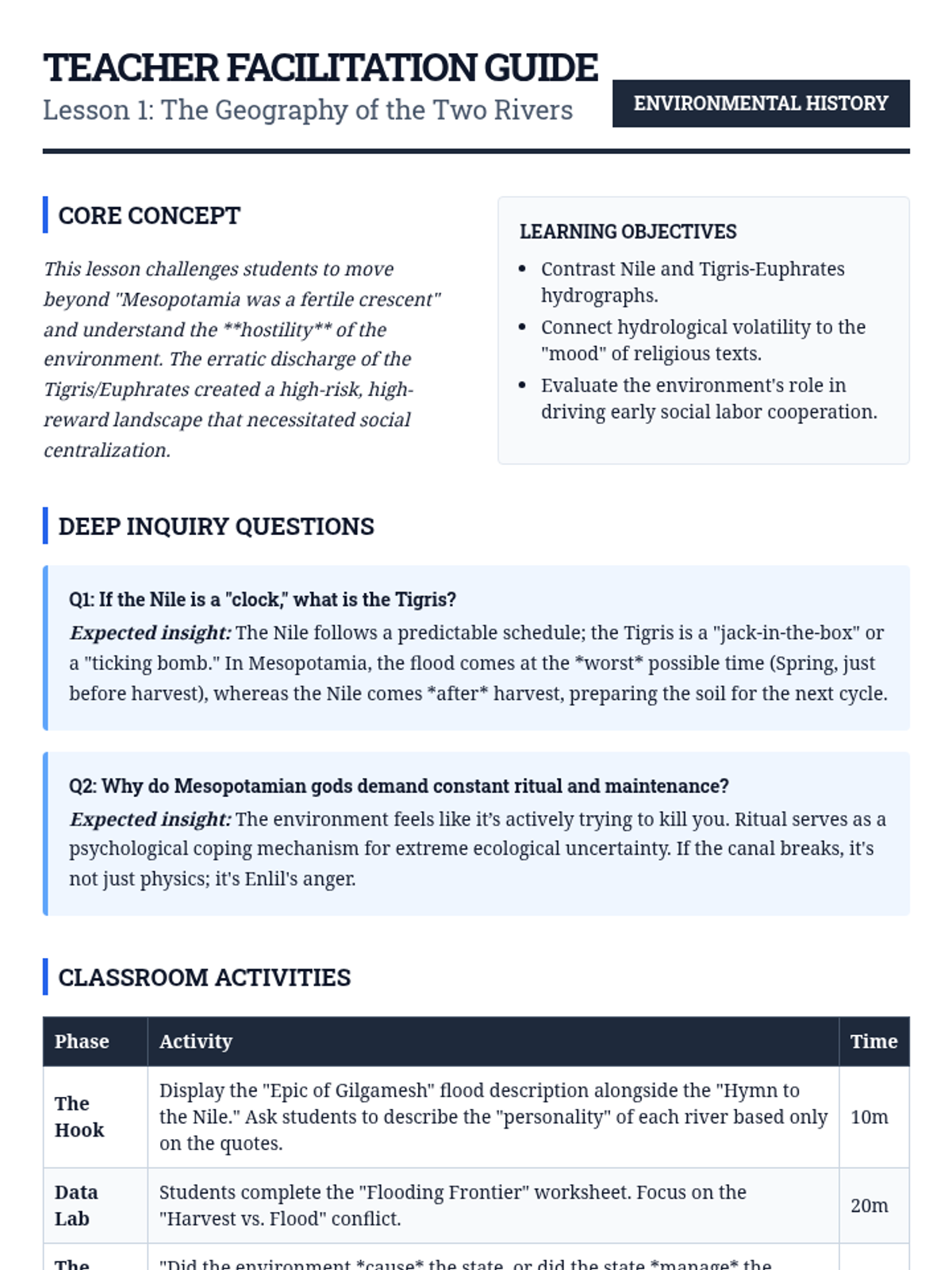
An environmental history sequence examining how the Tigris-Euphrates hydrology shaped Mesopotamian social structures, technology, and eventual ecological decline. Students will analyze the relationship between irrigation, political centralization, and ecological sustainability.
A comprehensive 5-day unit exploring the internal and external factors that led to the decline and eventual collapse of the Gupta Empire, once known as India's Golden Age. Students will analyze succession crises, the Huna invasions, economic shifts, and the rise of regional powers.
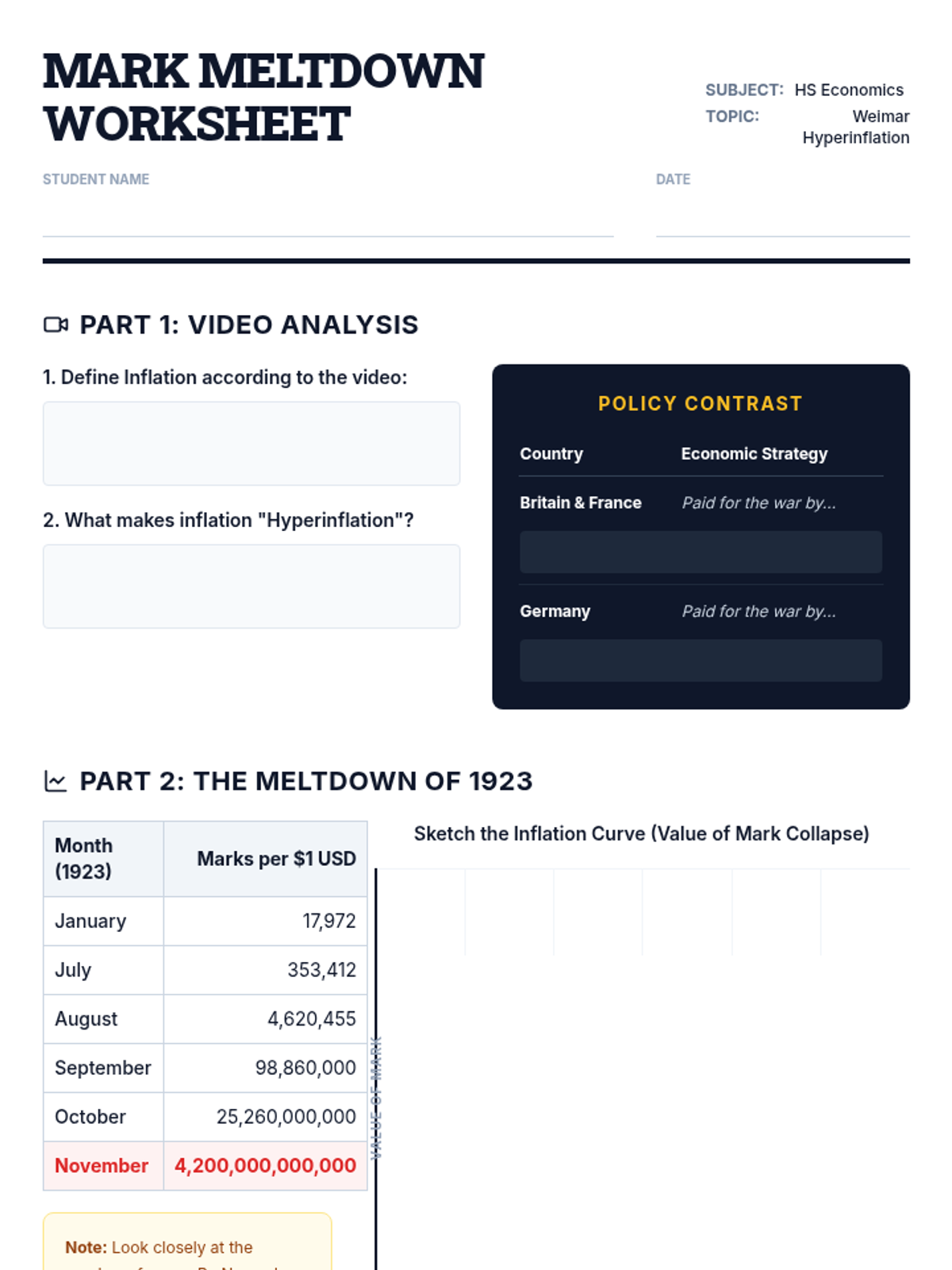
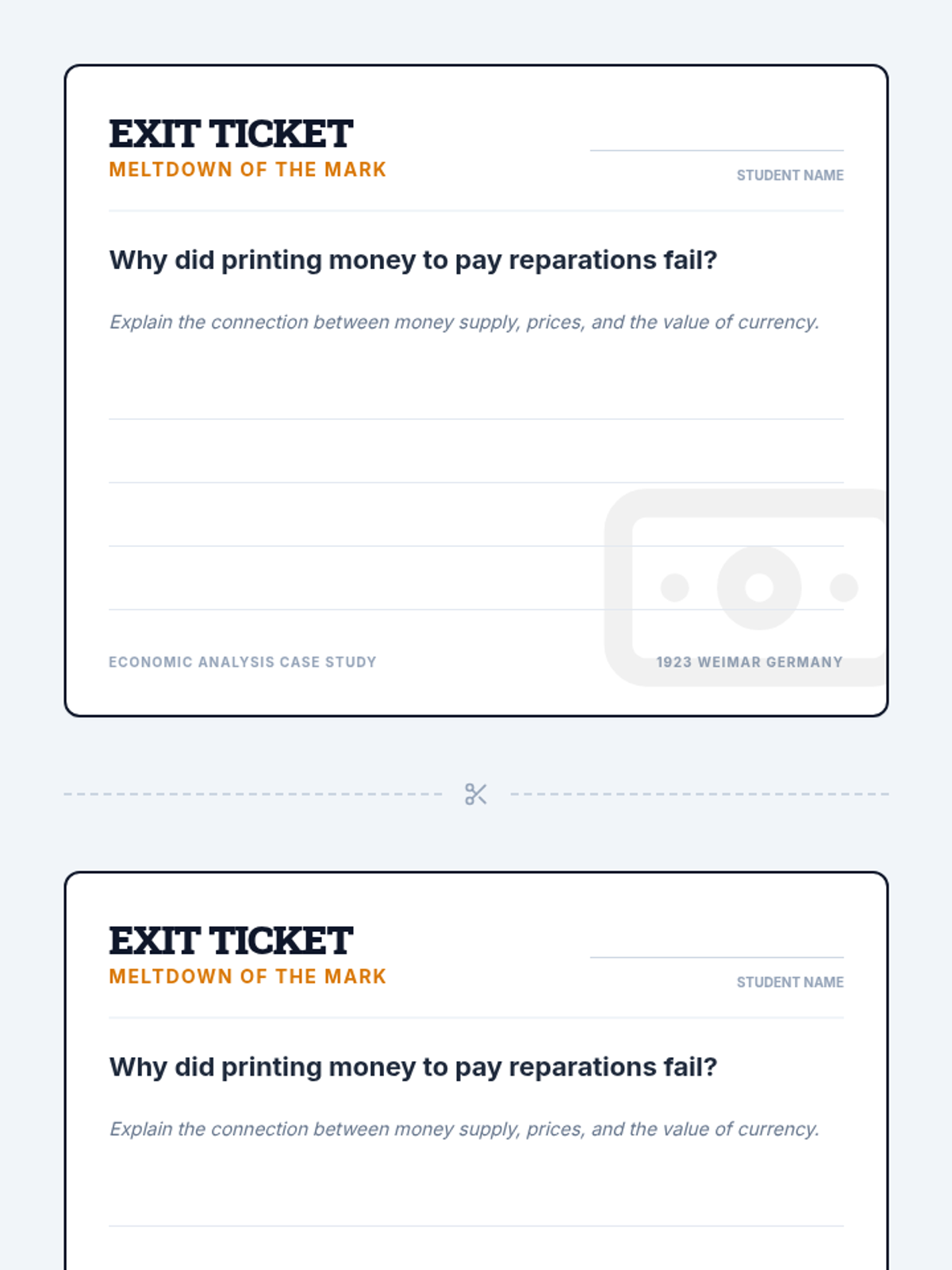
This Economics lesson investigates the causes and consequences of hyperinflation in Weimar Germany following World War I. Students will analyze historical data to understand how printing money led to one of the most famous economic collapses in history.
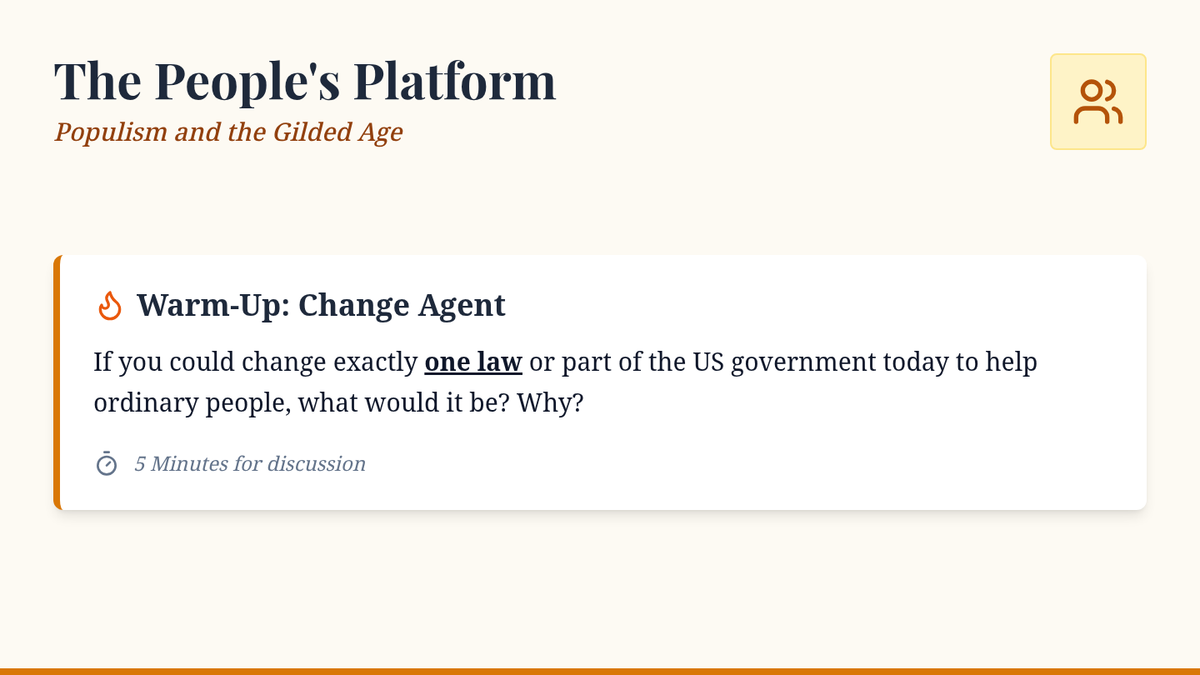
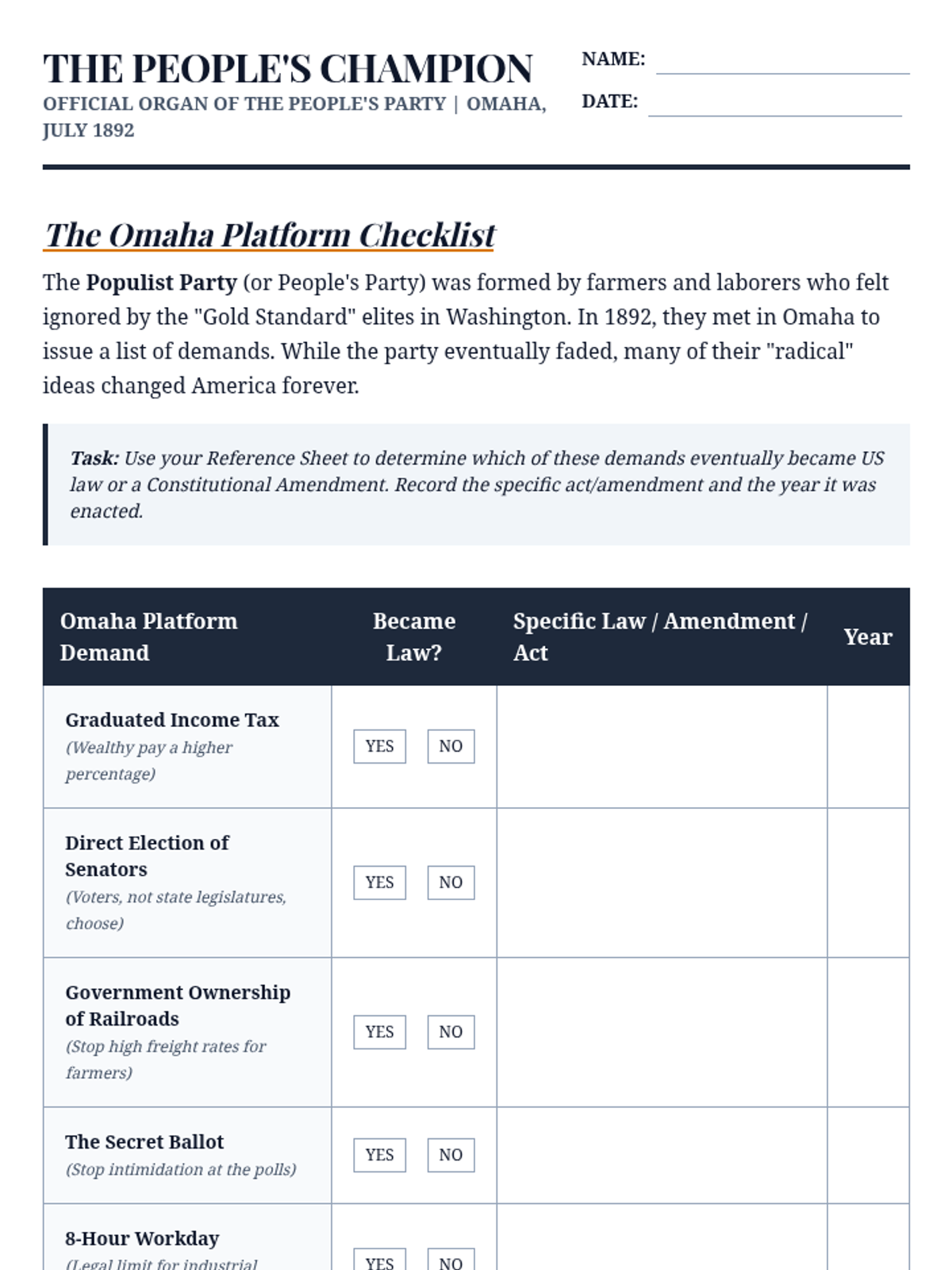
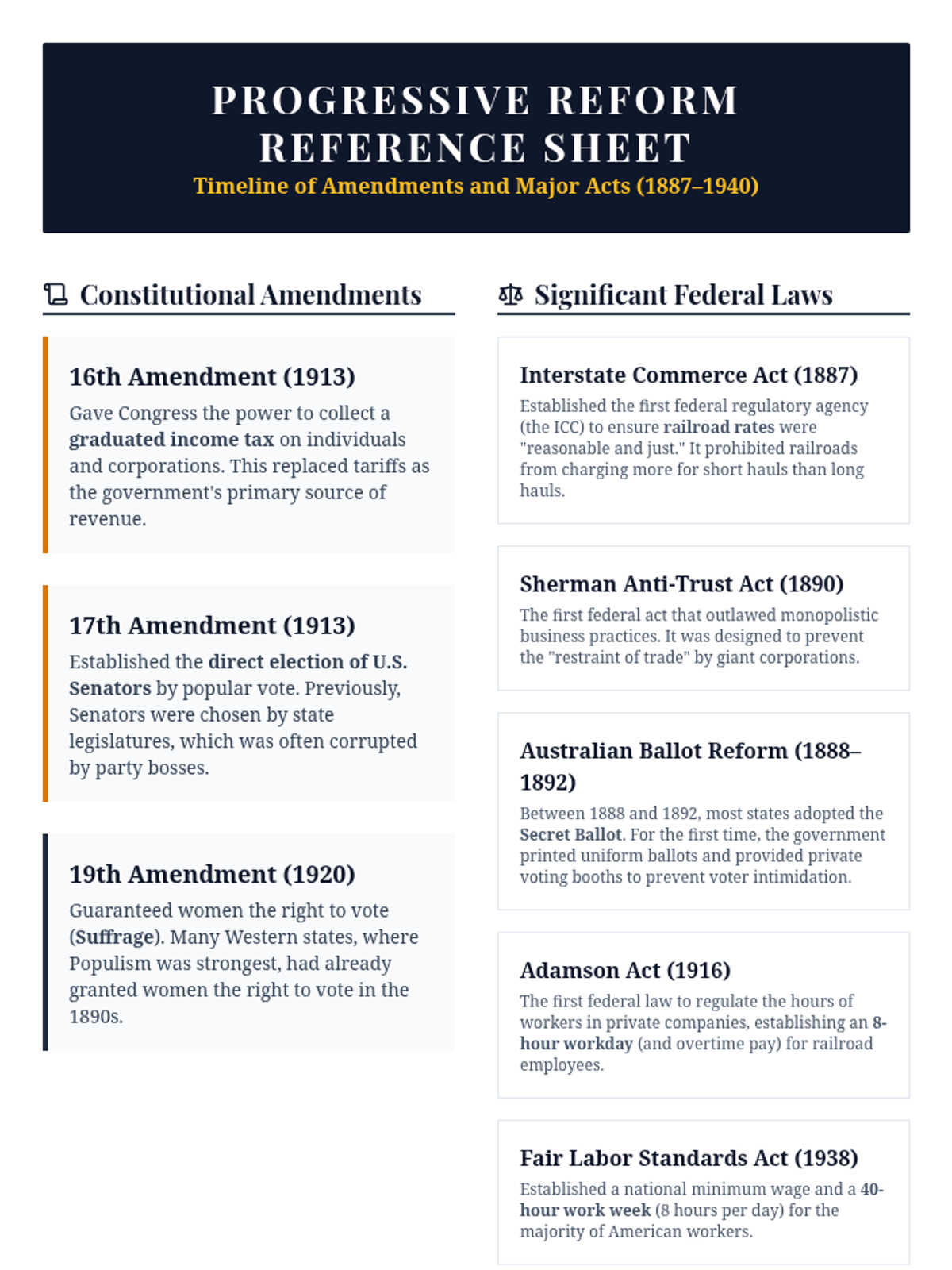
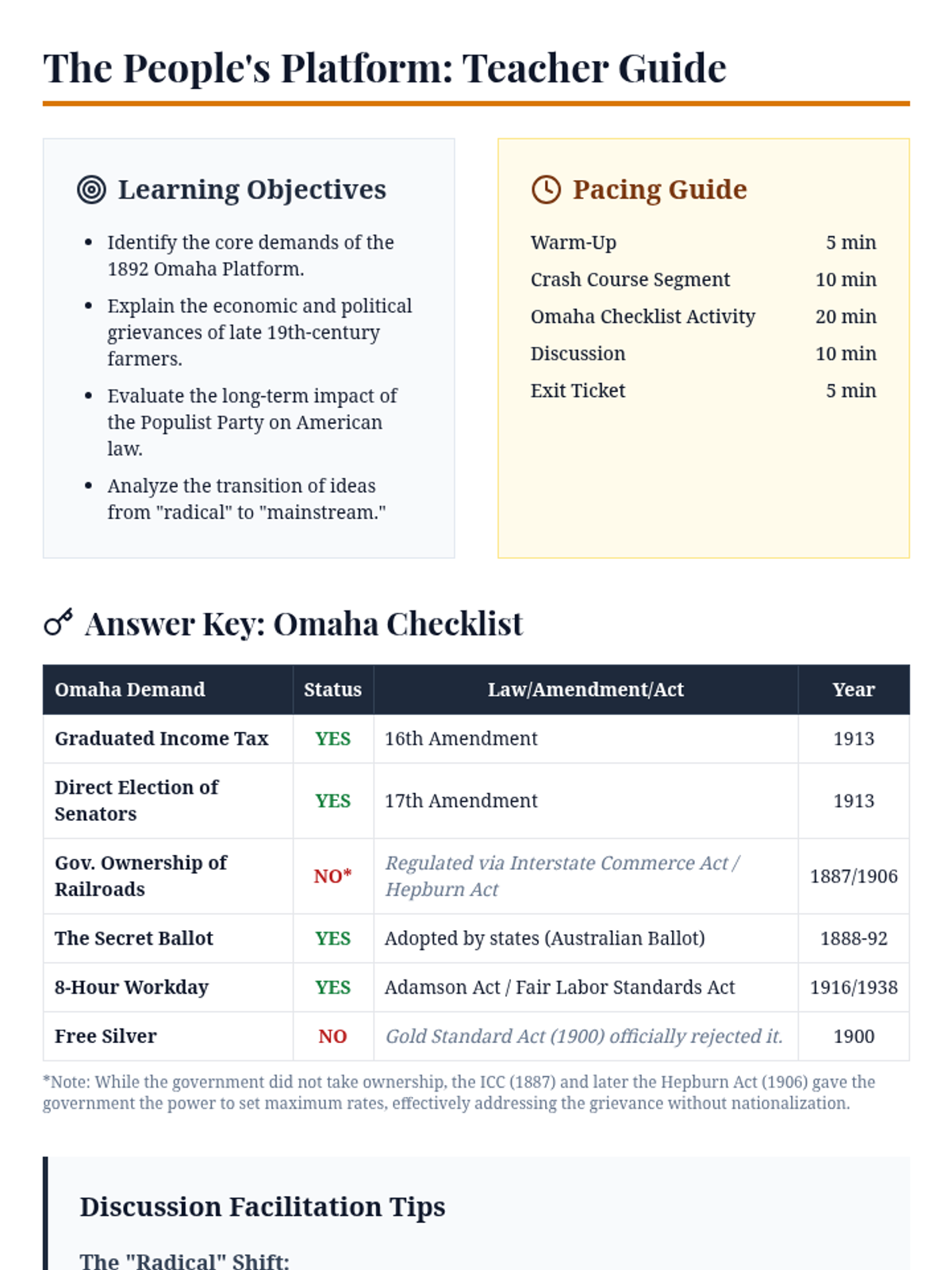
A lesson examining the Populist Party's Omaha Platform of 1892, its agrarian roots, and its long-term impact on American political and economic policy through the Progressive Era.
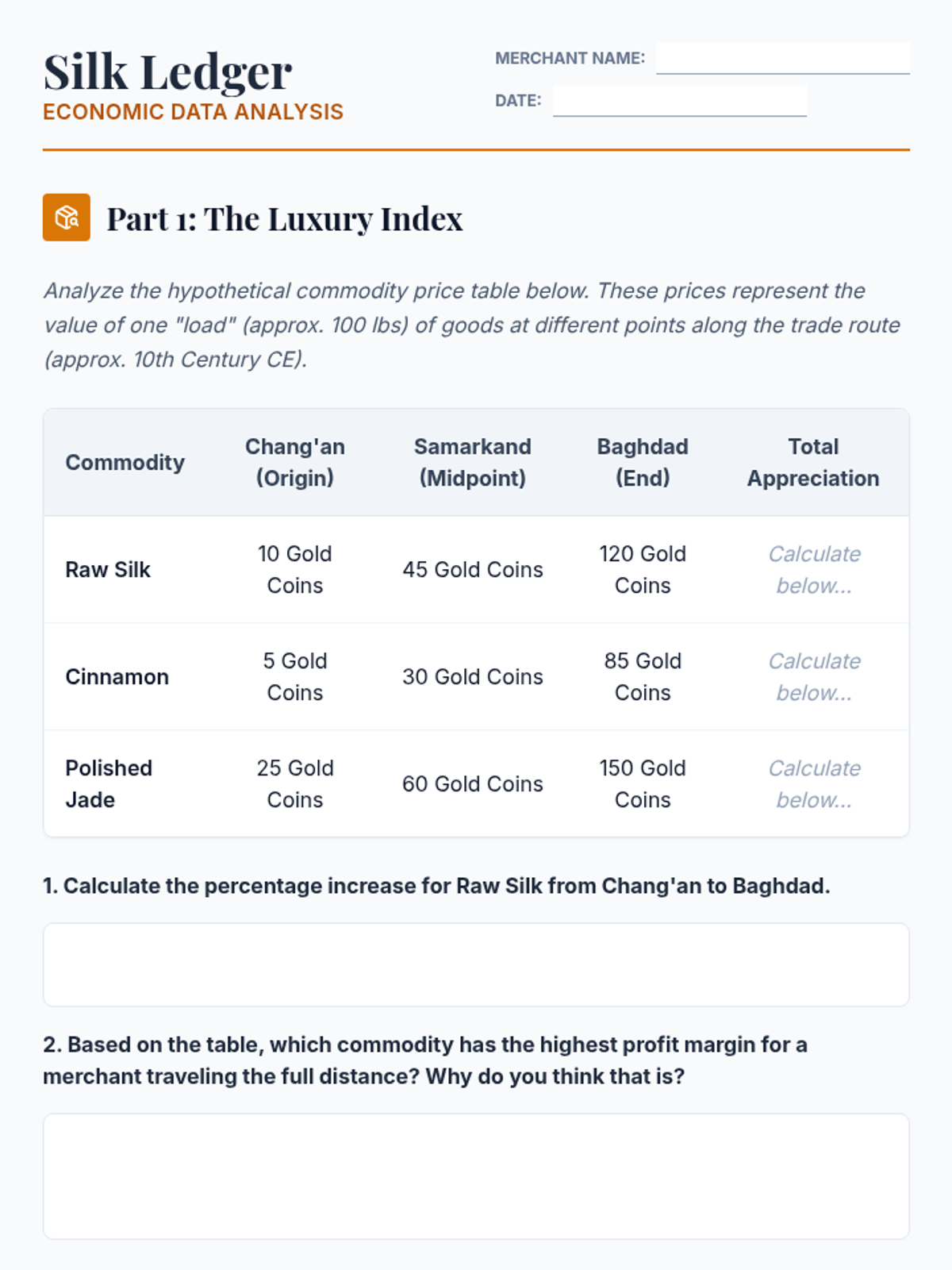
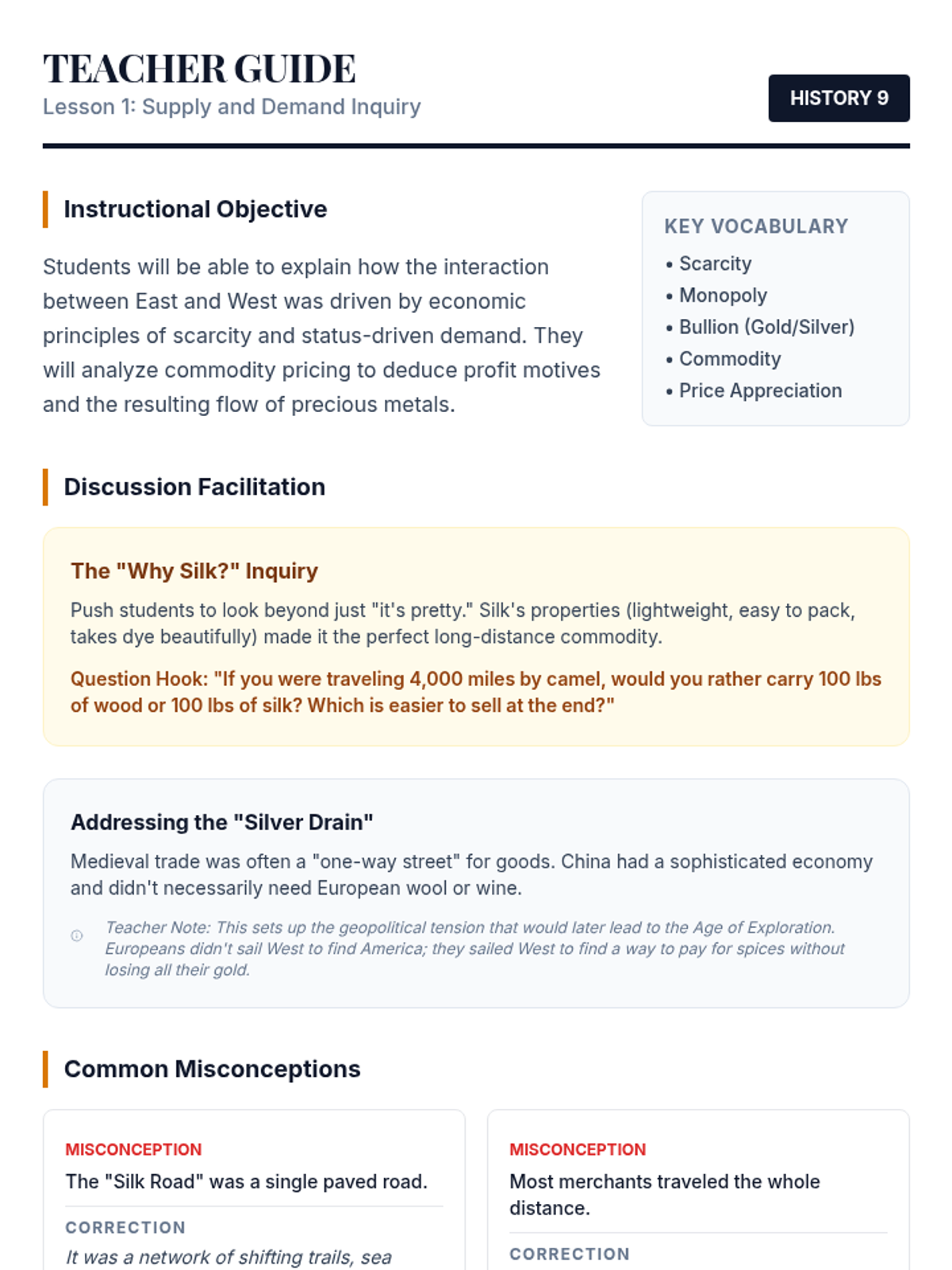
A comprehensive 9th-grade unit exploring the economic mechanics, logistics, and cultural consequences of the Silk Road trade networks. Students investigate supply and demand, simulate caravan travel, map the spread of the Black Death, and analyze artistic diffusion.
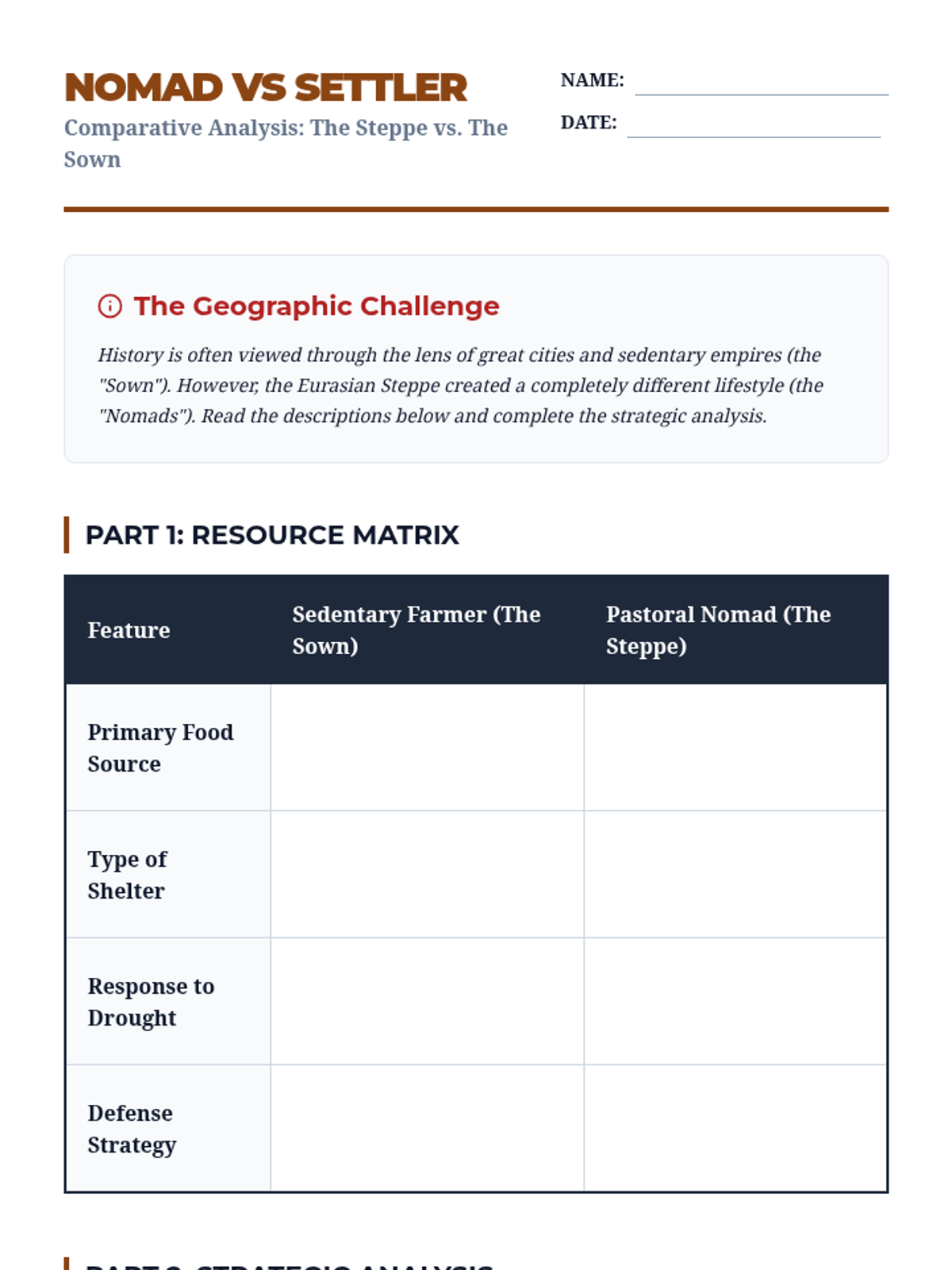
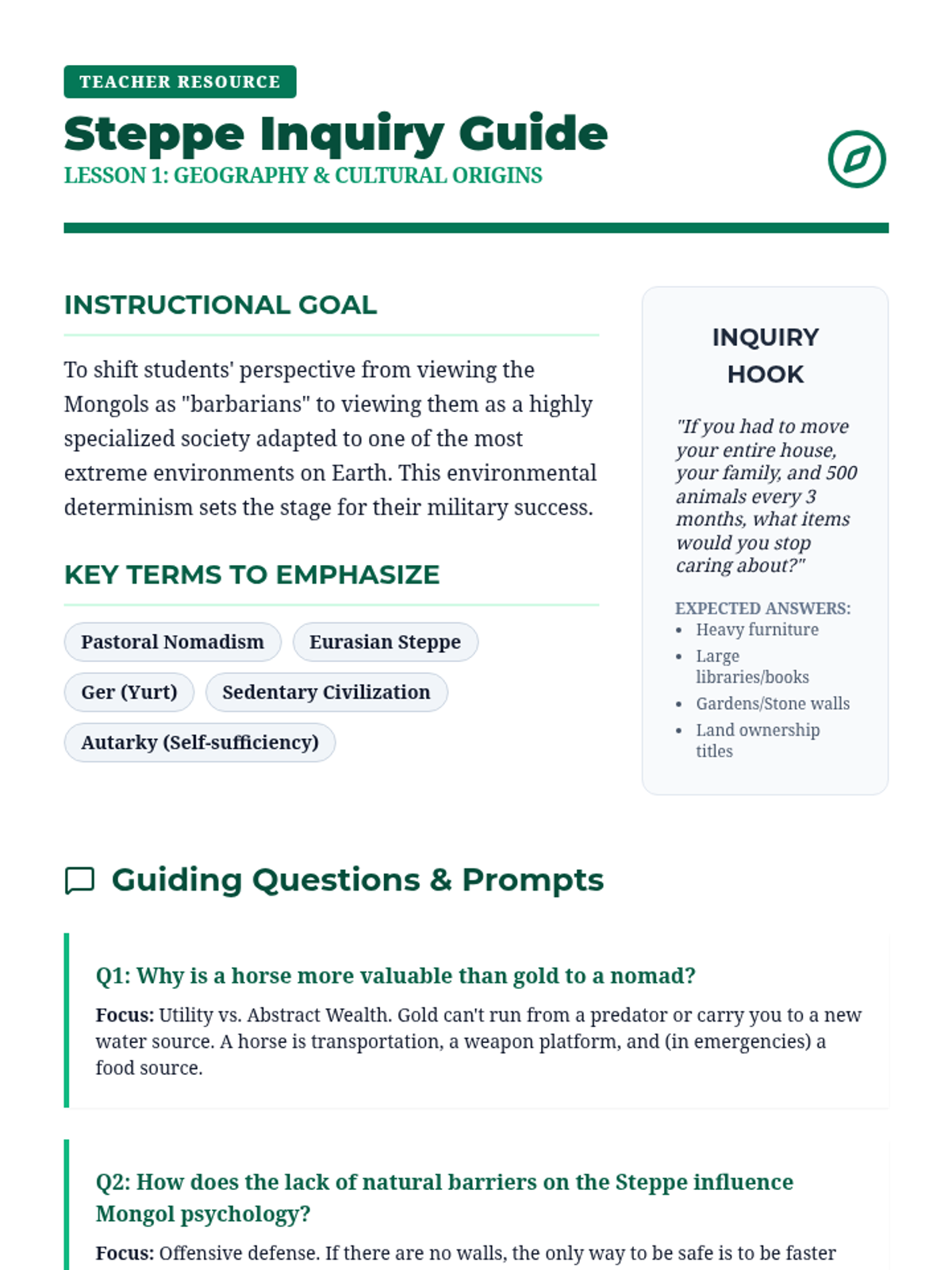
This sequence explores the Mongol Empire's rise from nomadic tribes to a global superpower. Students investigate the environmental factors of the steppe, tactical innovations, the administration of the Yuan Dynasty, and the transformative cultural and economic exchanges of the Pax Mongolica, culminating in a critical evaluation of Genghis Khan's historical legacy.
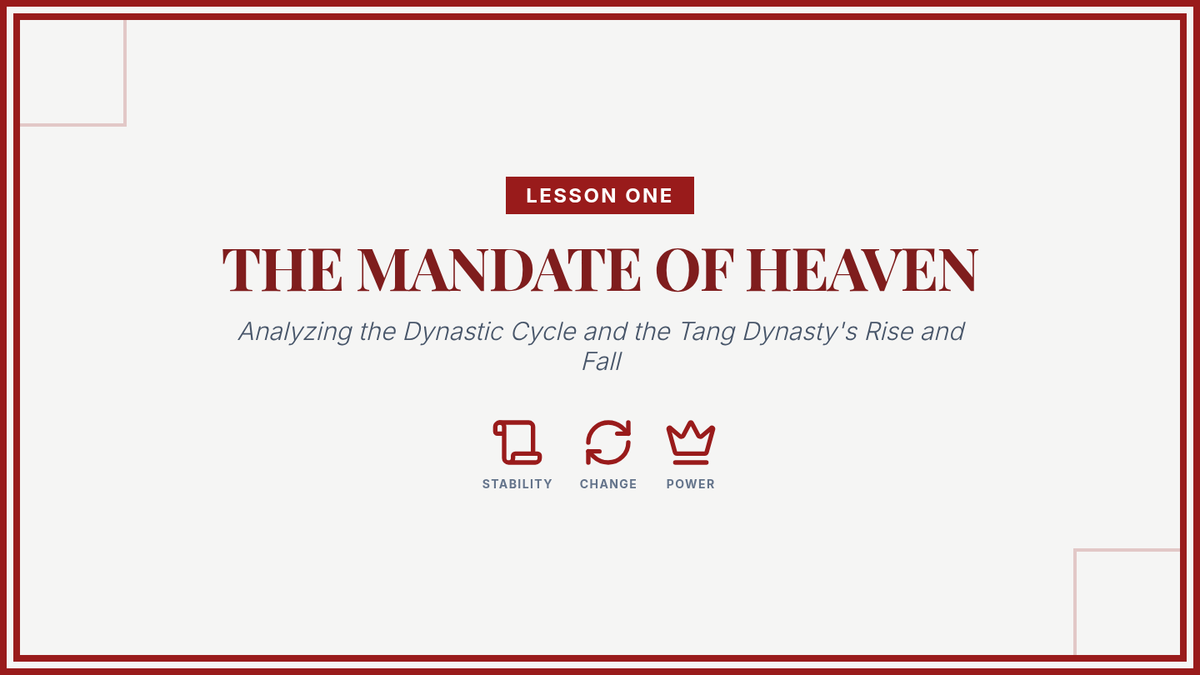
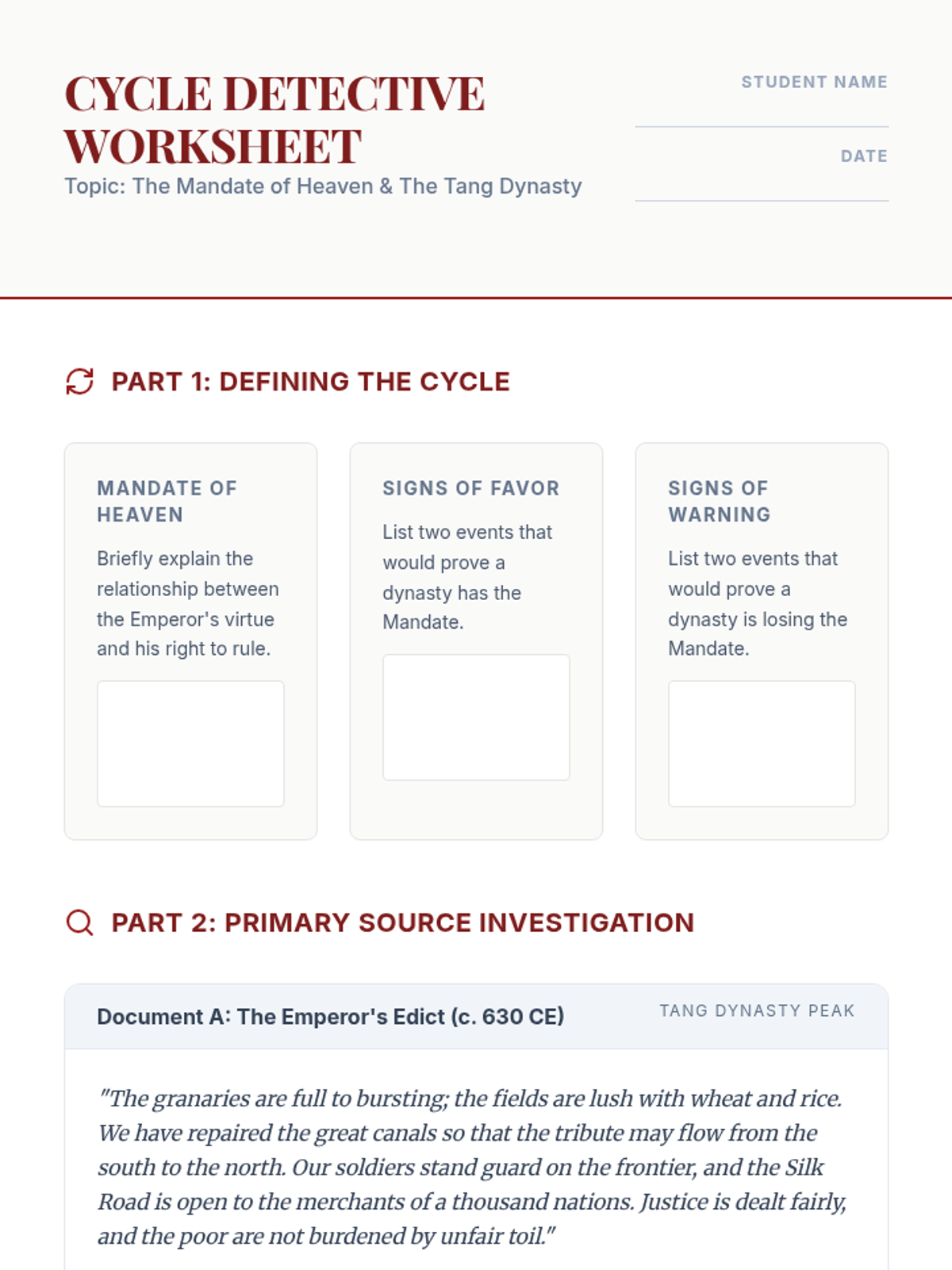
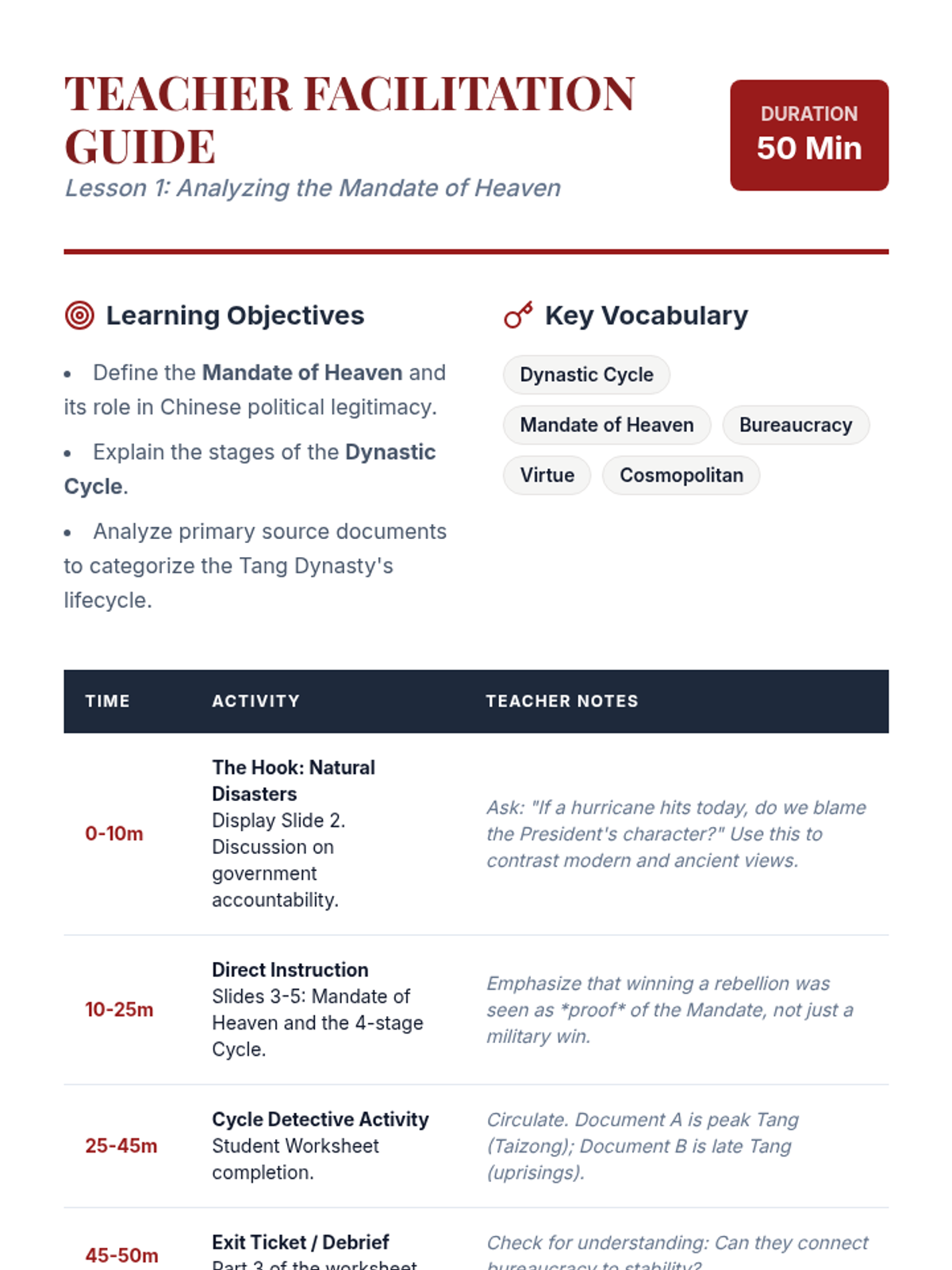
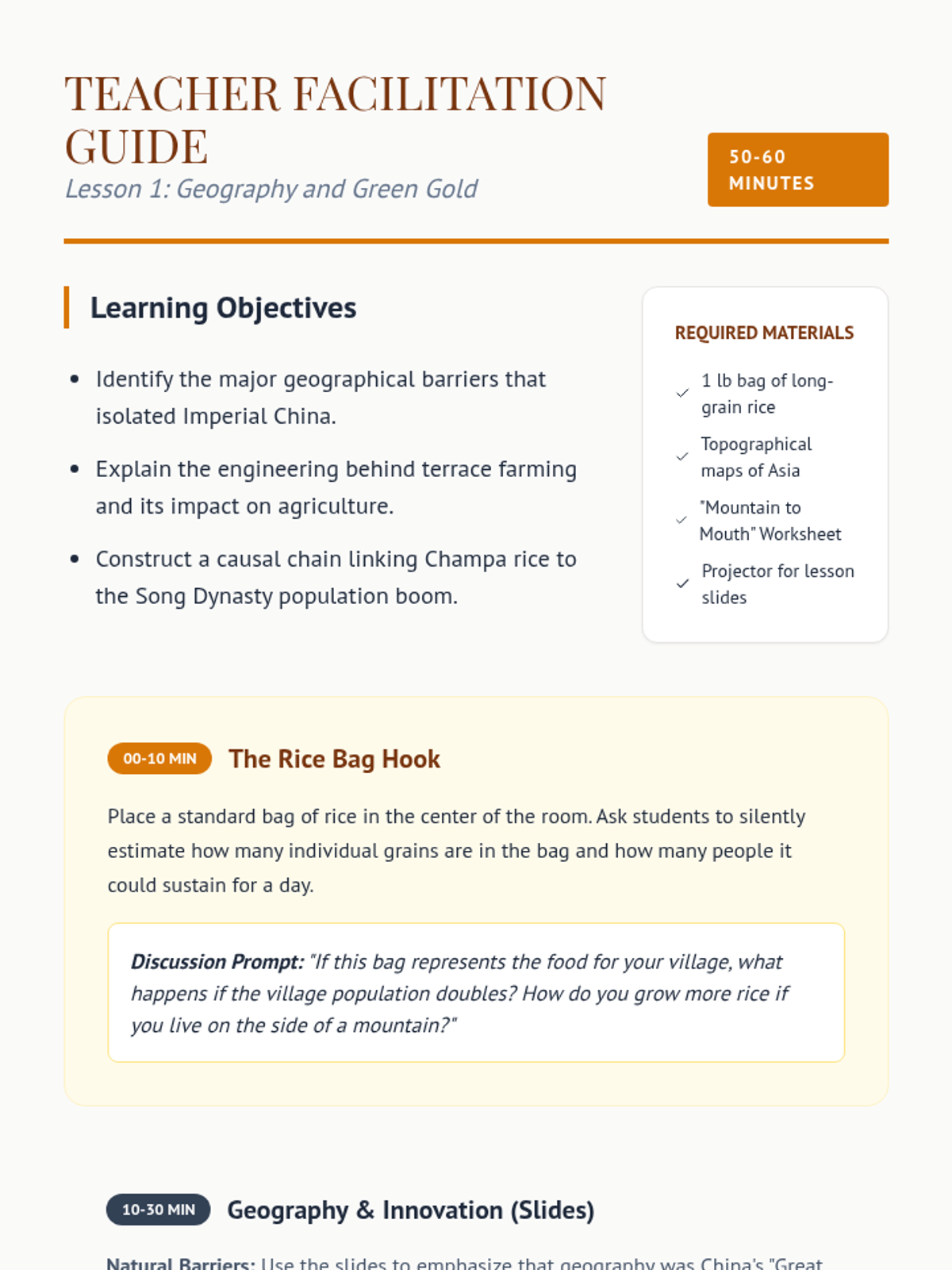
This sequence examines the political evolution and cultural achievements of China's Golden Ages through the Tang, Song, and Ming dynasties. Students will analyze how the Civil Service Examination system created a meritocratic bureaucracy that sustained stability and fostered technological innovation.
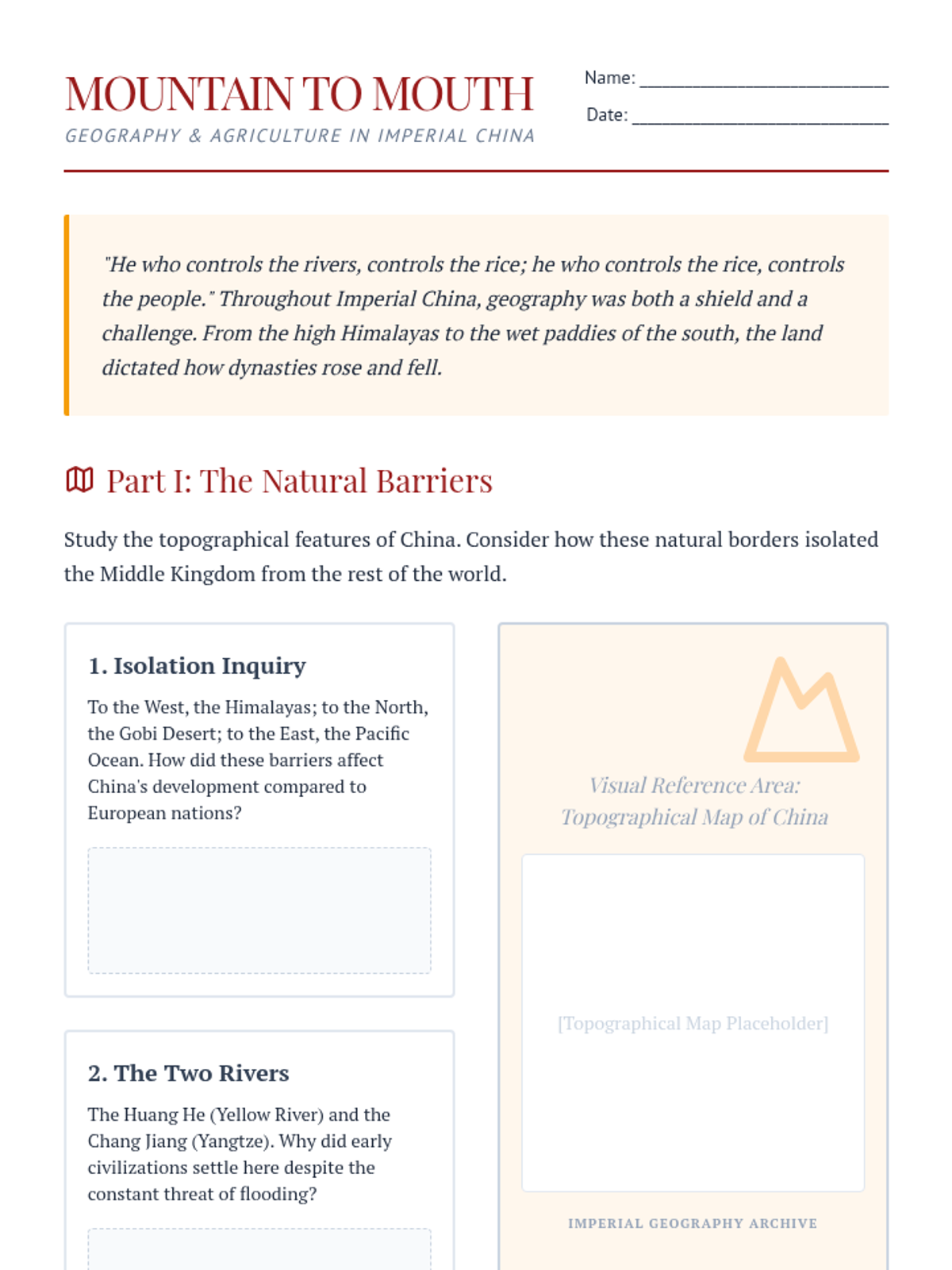
An inquiry into the technological and political advancements of Imperial China, focusing on the Tang, Song, and Ming dynasties. Students evaluate how geography, governance (Meritocracy), and innovation (the Four Great Inventions) influenced the longevity and prosperity of the civilization.
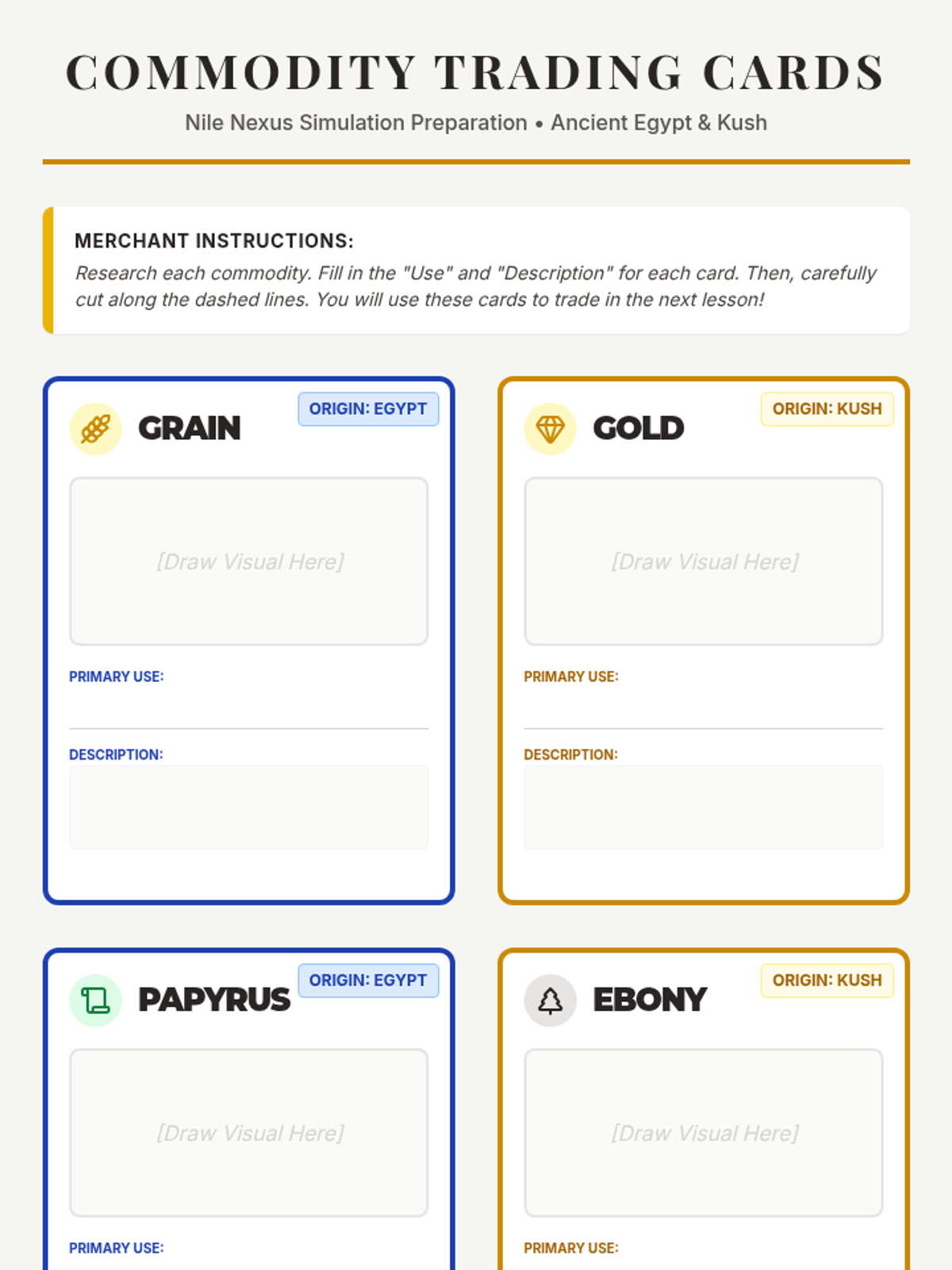
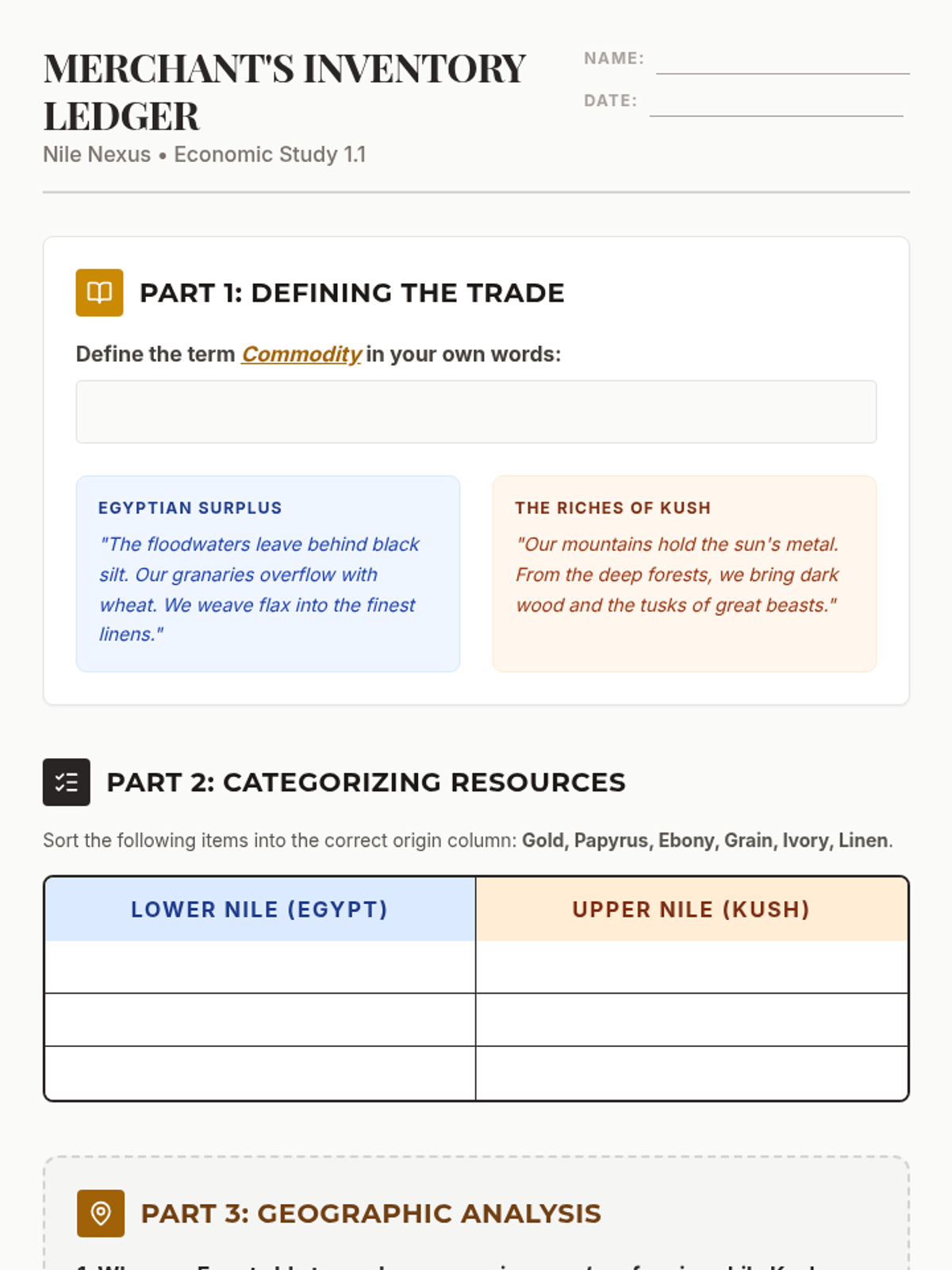
A game-based sequence exploring the economic systems and trade networks between Ancient Egypt and Kush, focusing on commodities, barter systems, logistics, cultural diffusion, and interdependence.
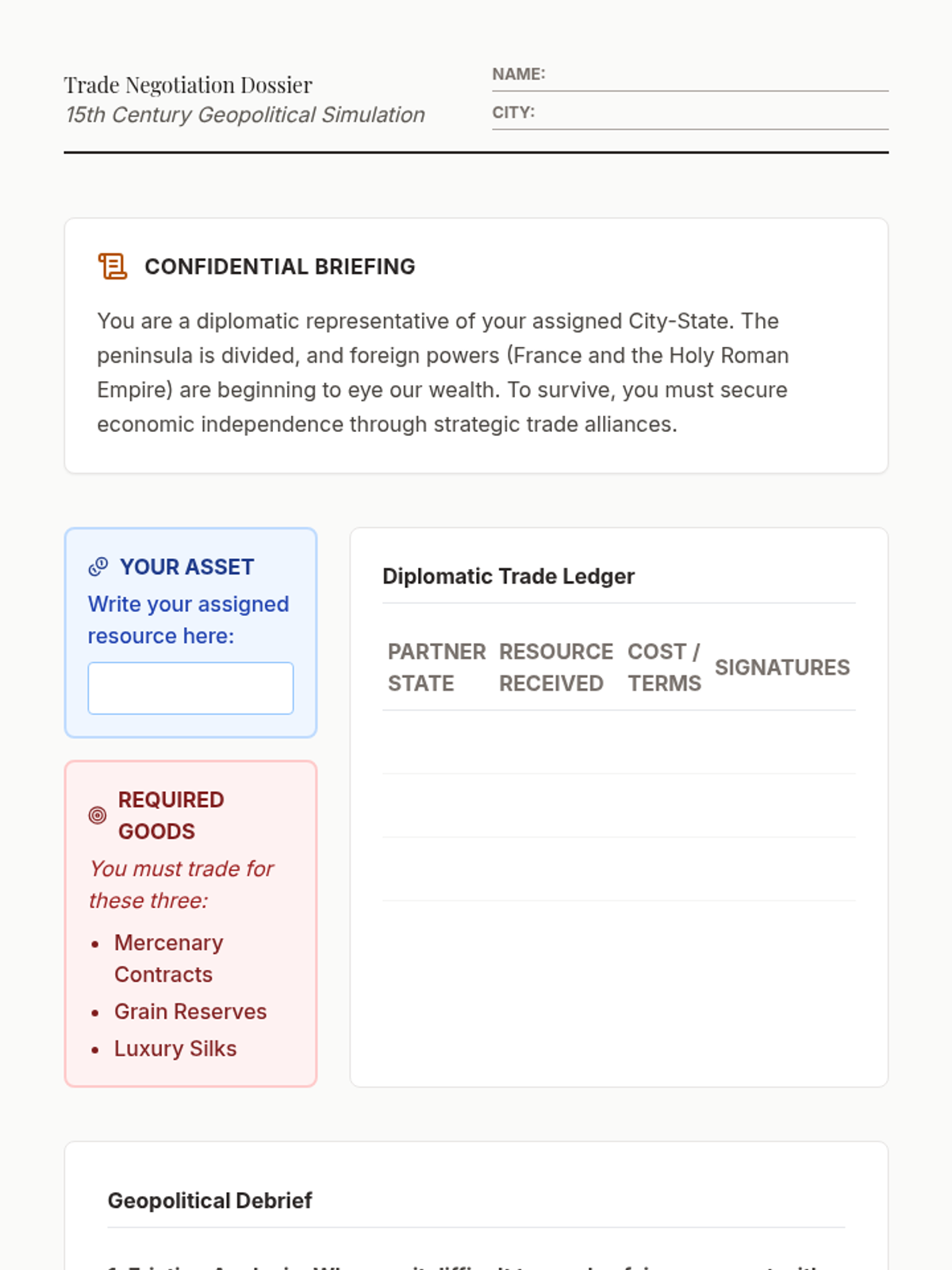
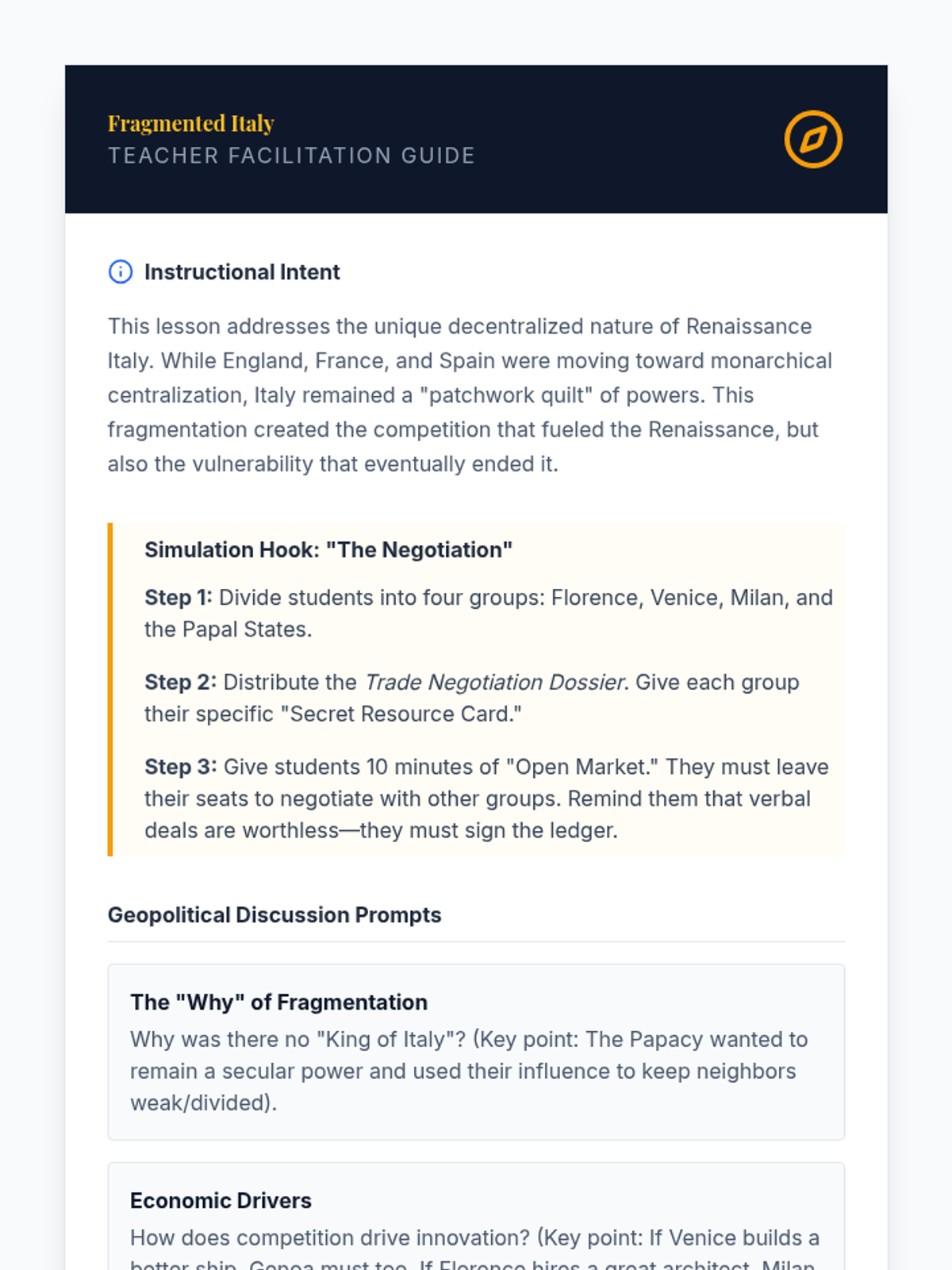
A high-stakes exploration of Renaissance power dynamics, banking innovations, and political theory. Students navigate the volatile landscape of Italian city-states through simulations and primary source analysis to understand the transition from feudalism to modern statecraft.
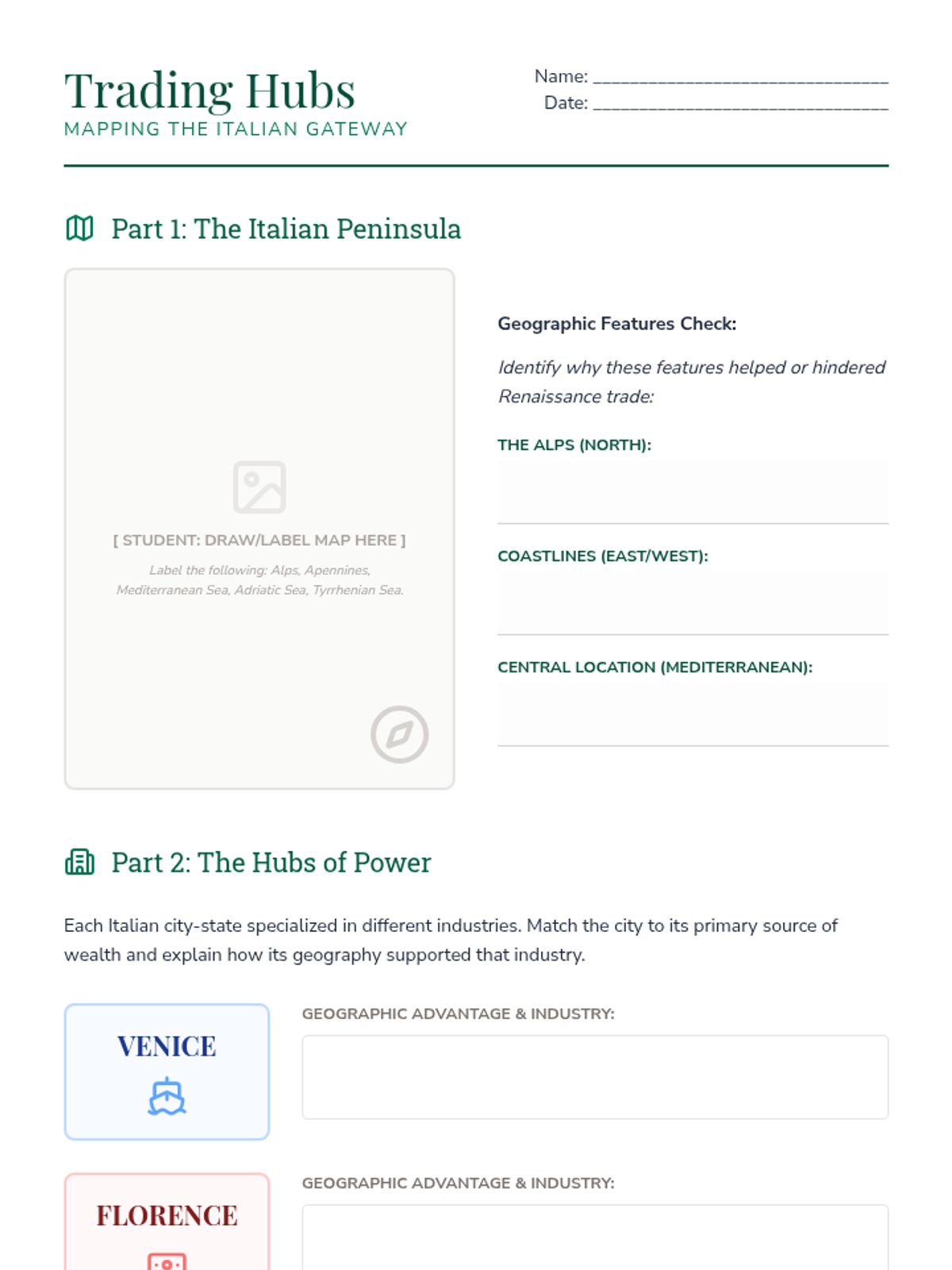
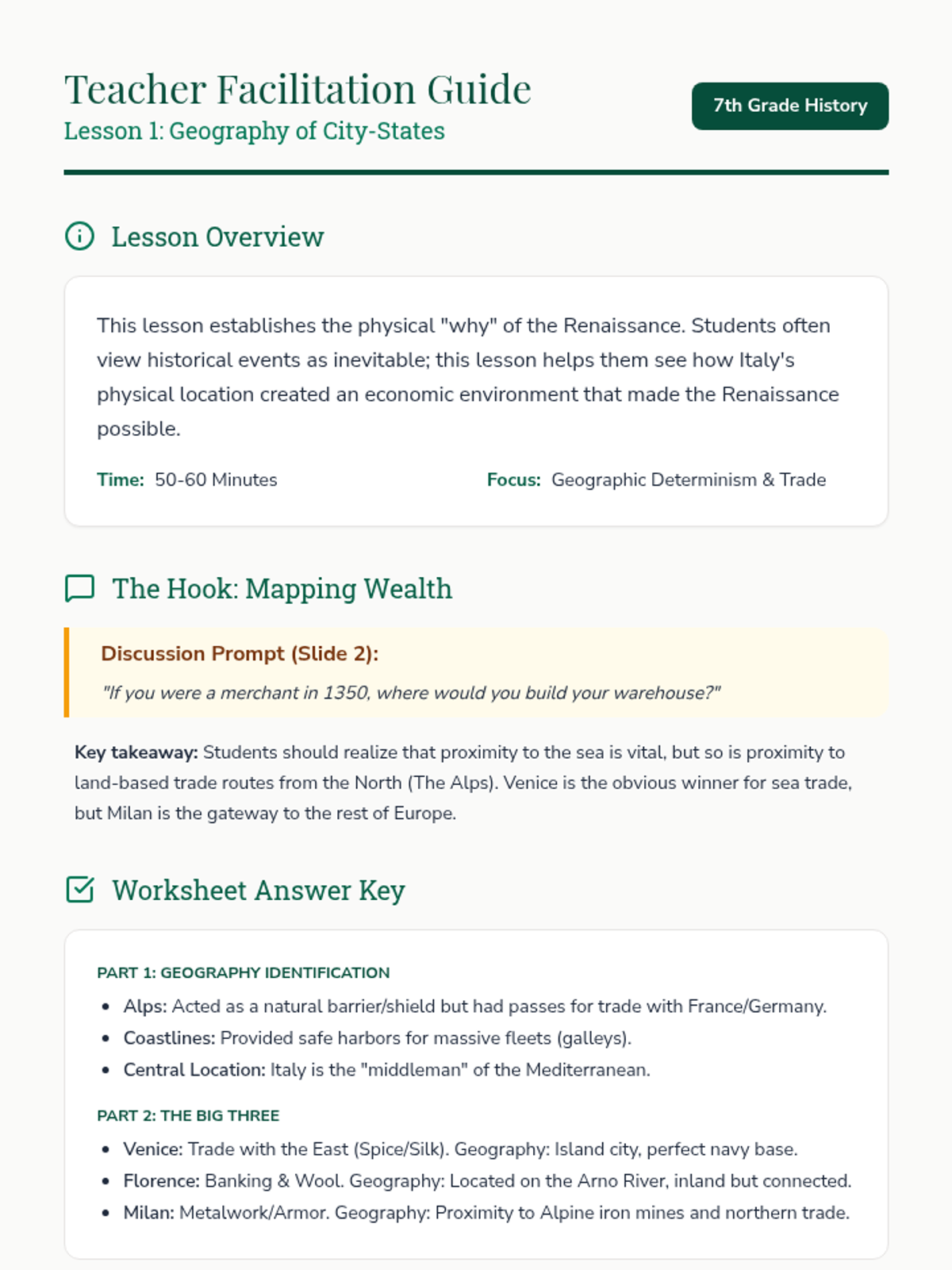
This sequence explores the economic and political foundations of the Renaissance through the lens of the Italian City-States. Students investigate how geography, trade routes, and banking families like the Medici created the surplus wealth necessary to fund the artistic boom.
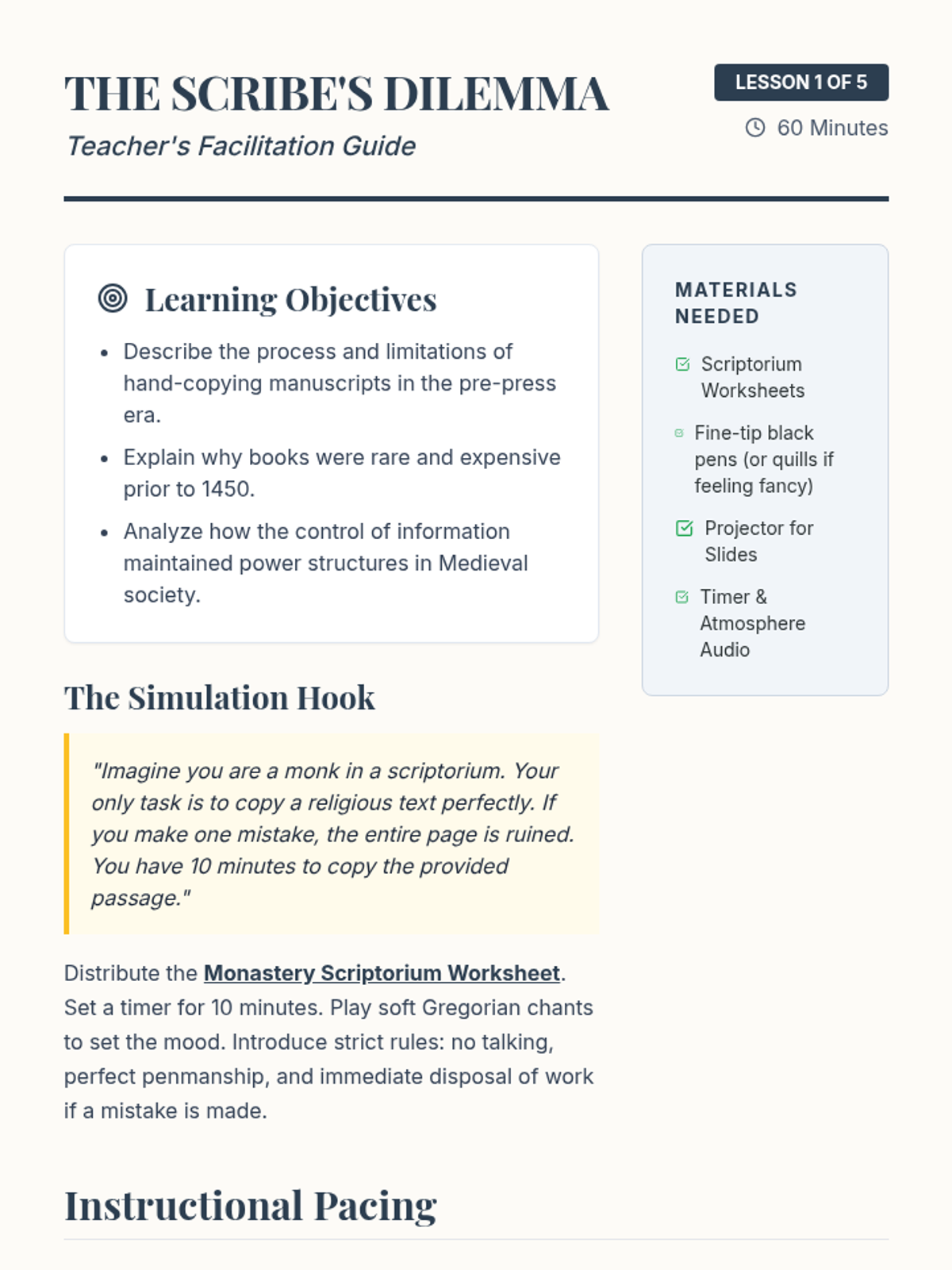
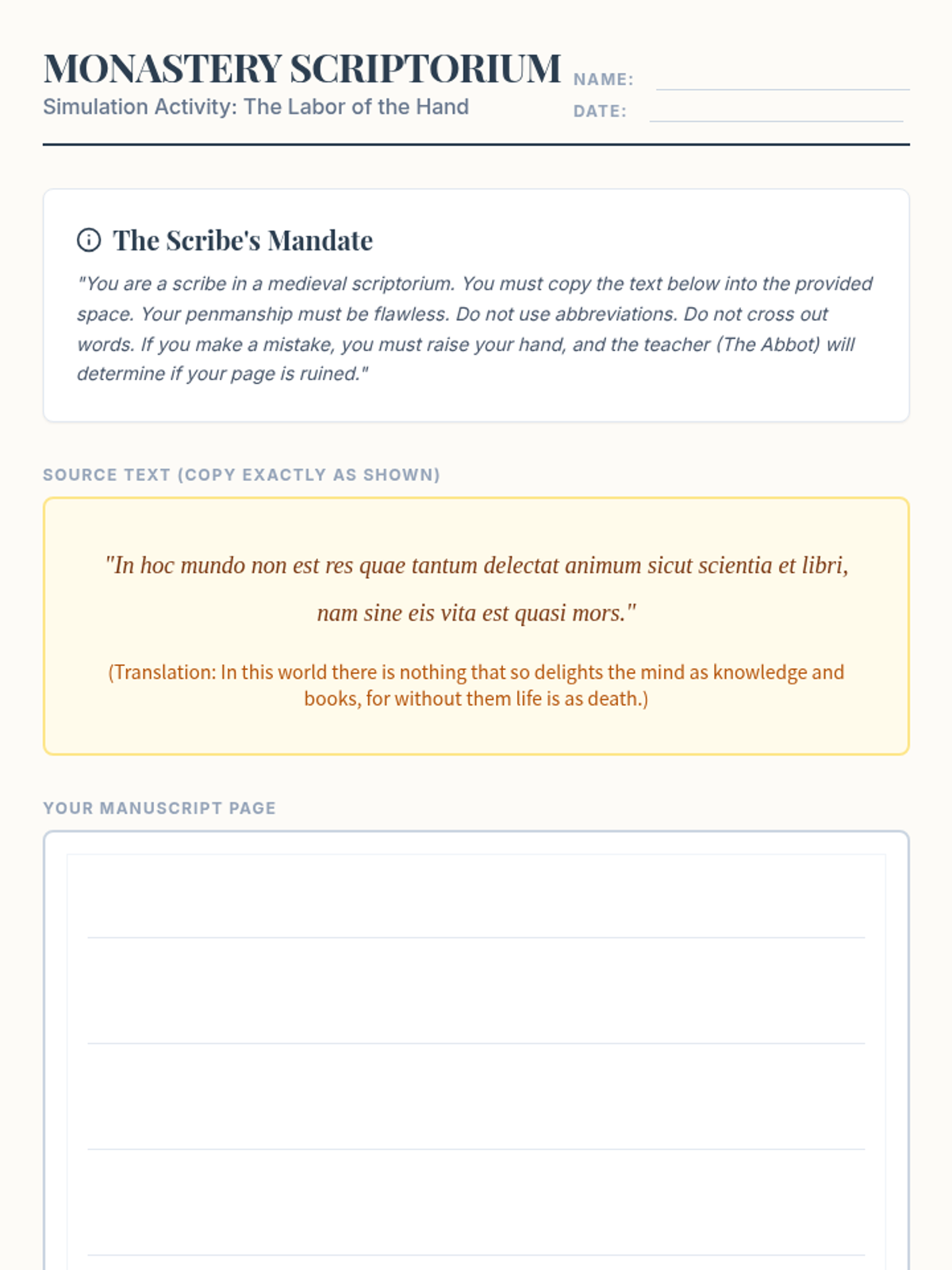
This sequence explores the transition from hand-copied manuscripts to mass-produced books, analyzing how Gutenberg's printing press democratized knowledge and paved the way for modern information sharing. Students will engage in simulations, data analysis, and comparative studies to understand the technological disruption of the Renaissance.
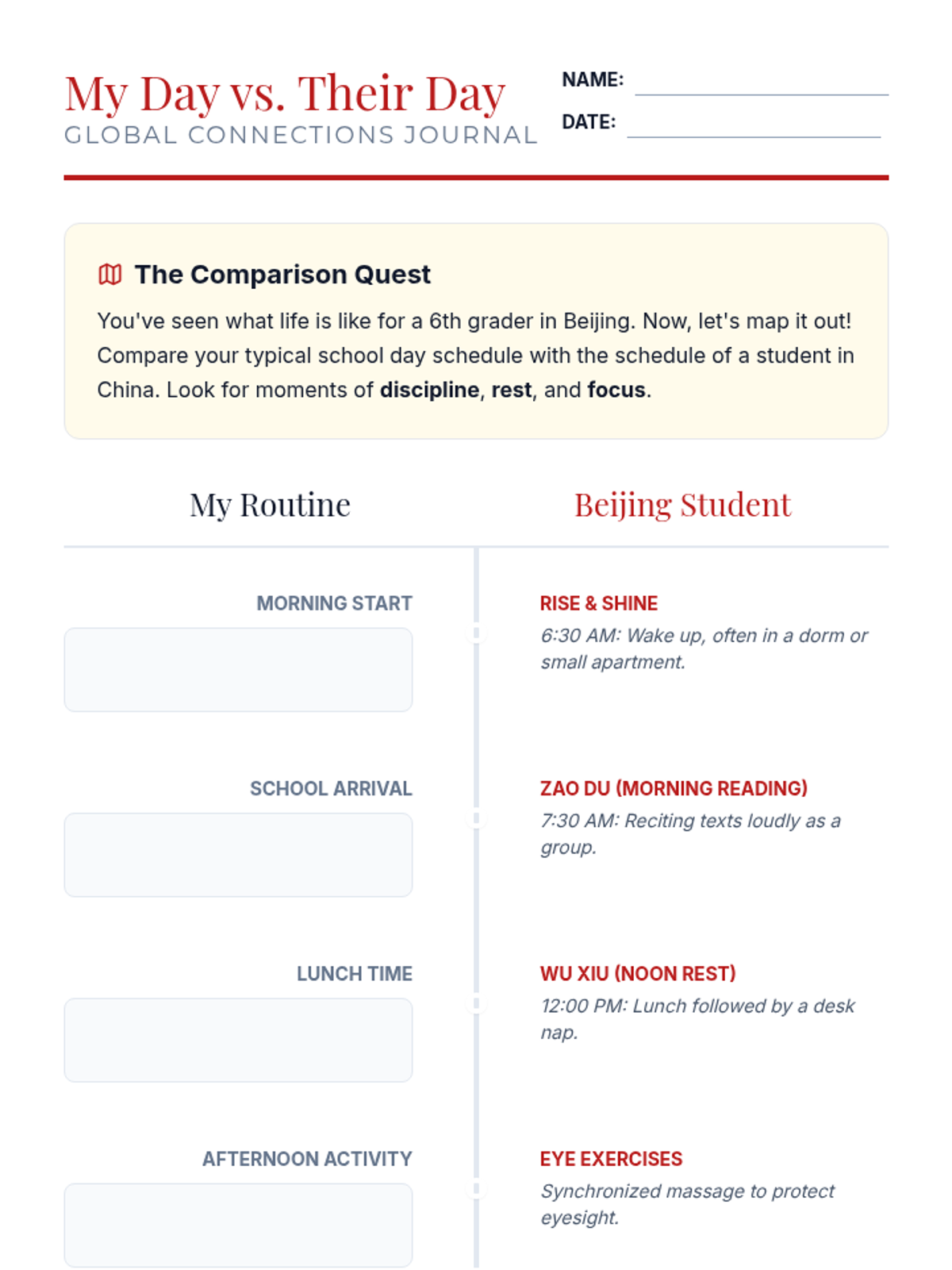
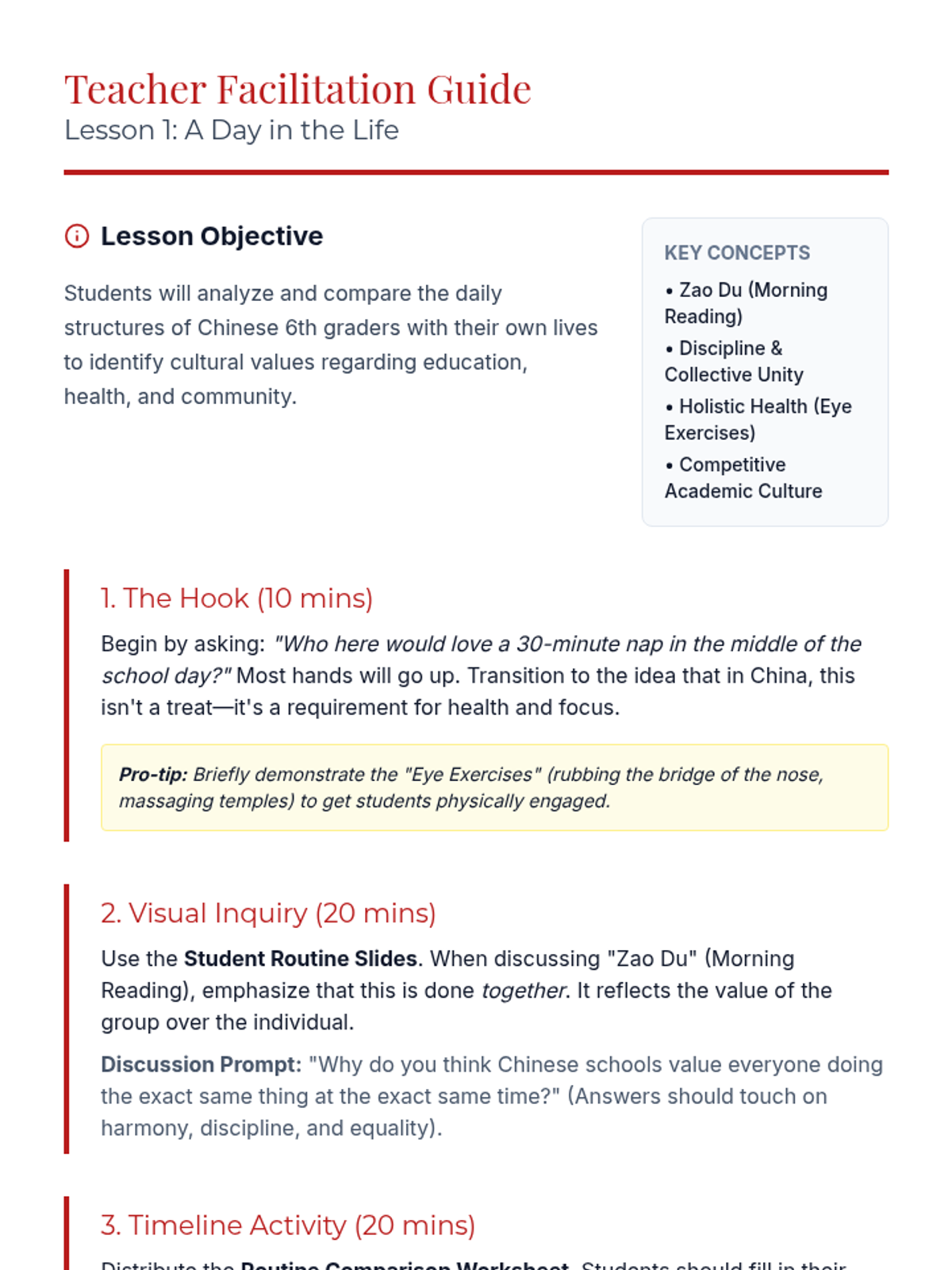
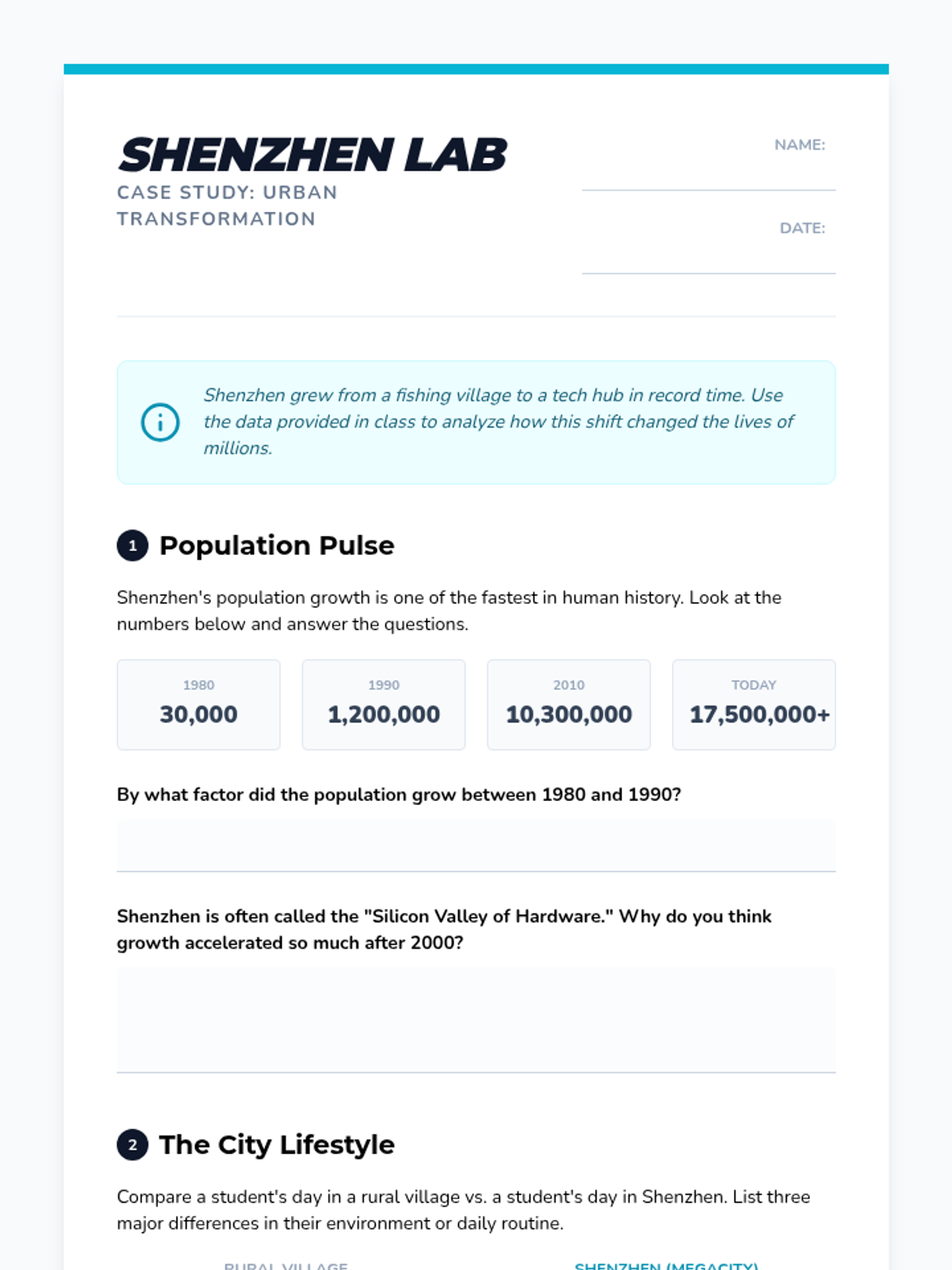
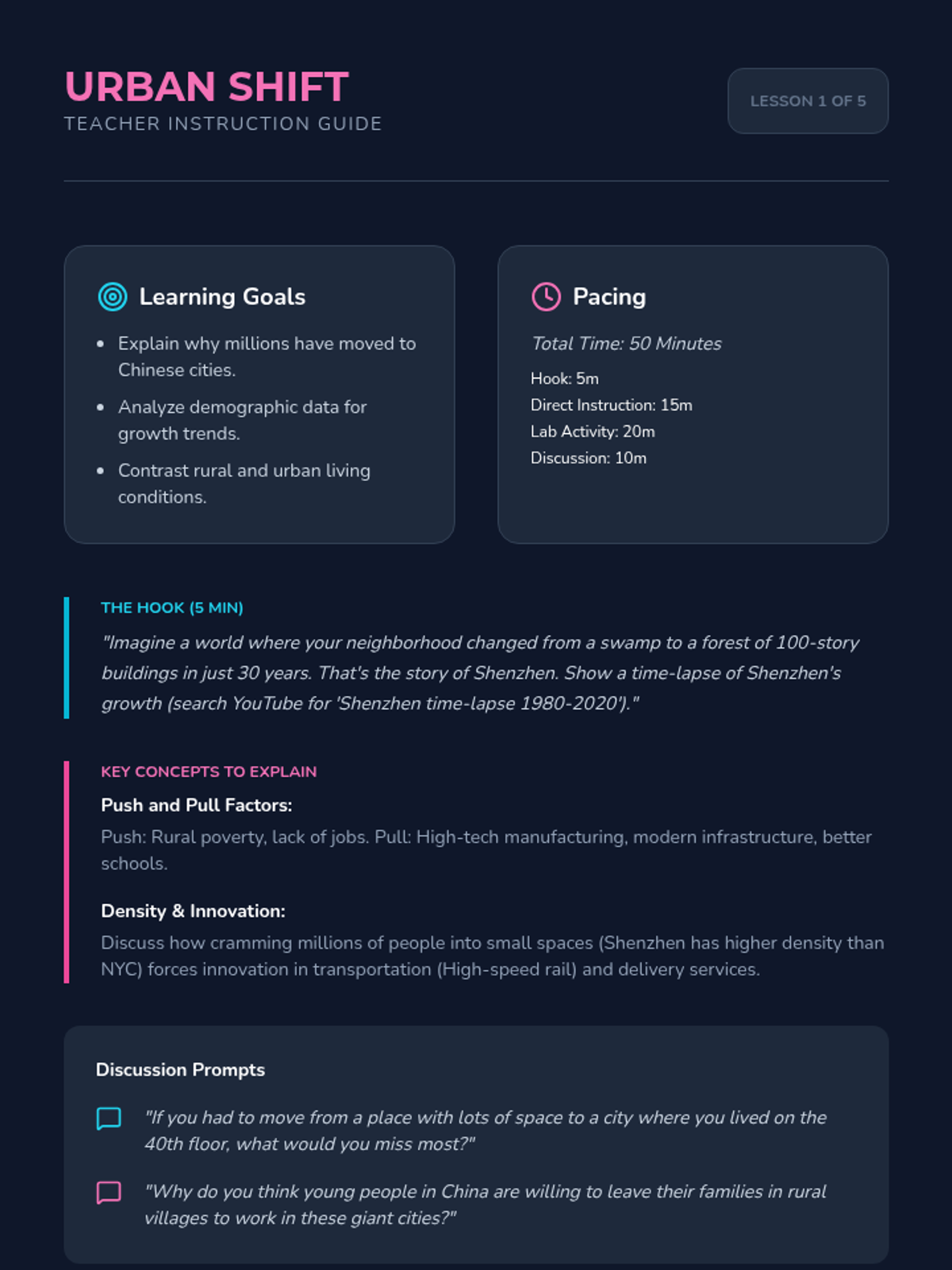
A 5-lesson inquiry into modern Chinese culture, comparing traditional values with rapid technological advancement through the lens of daily student life, housing, technology, and leisure.
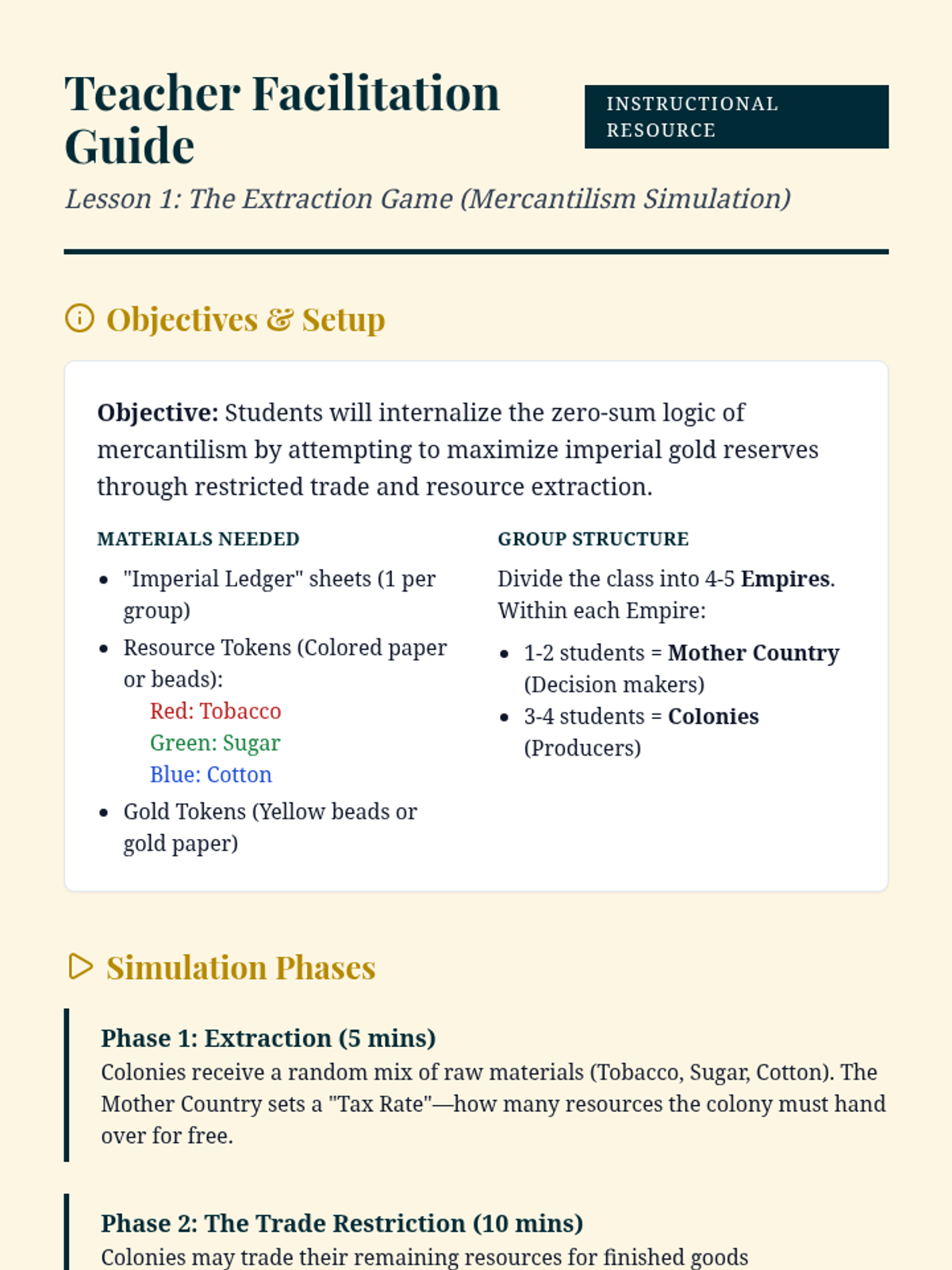
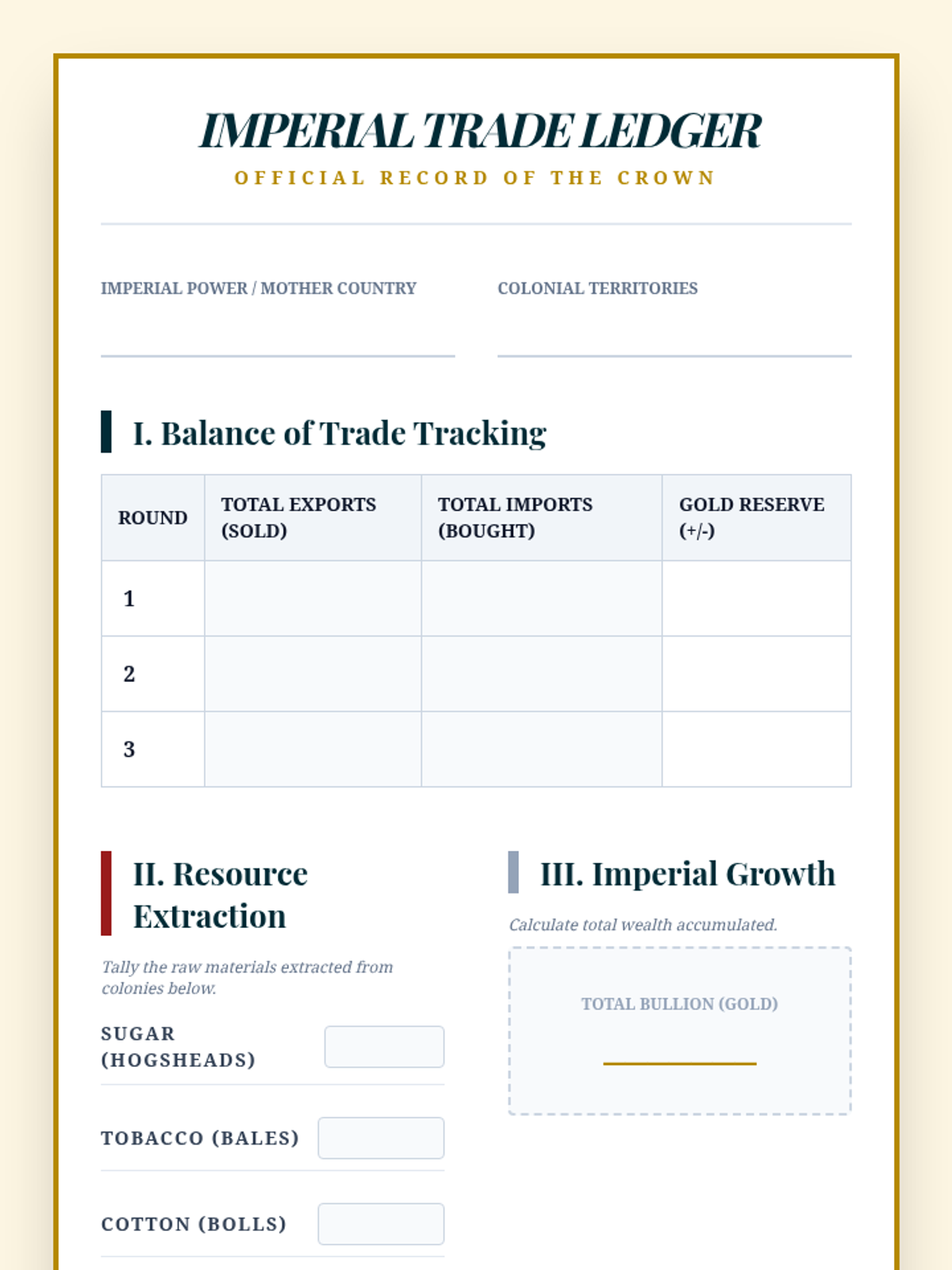
A deep dive into the economic engines of the Age of Exploration, exploring mercantilism, the triangular trade, the brutal logic of the Middle Passage, and the birth of global corporate power. Students use simulations and primary sources to analyze how these systems reshaped the world.
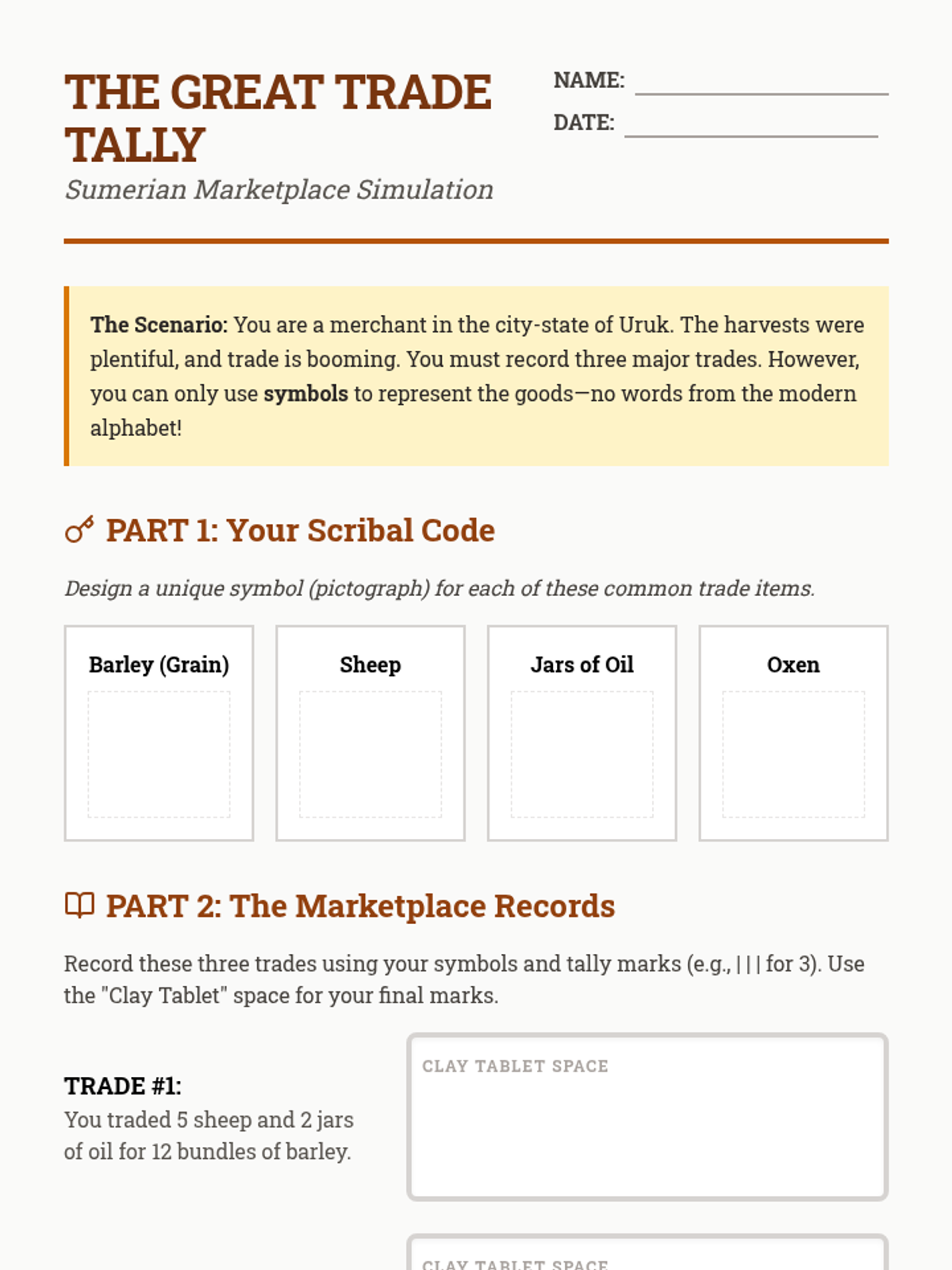
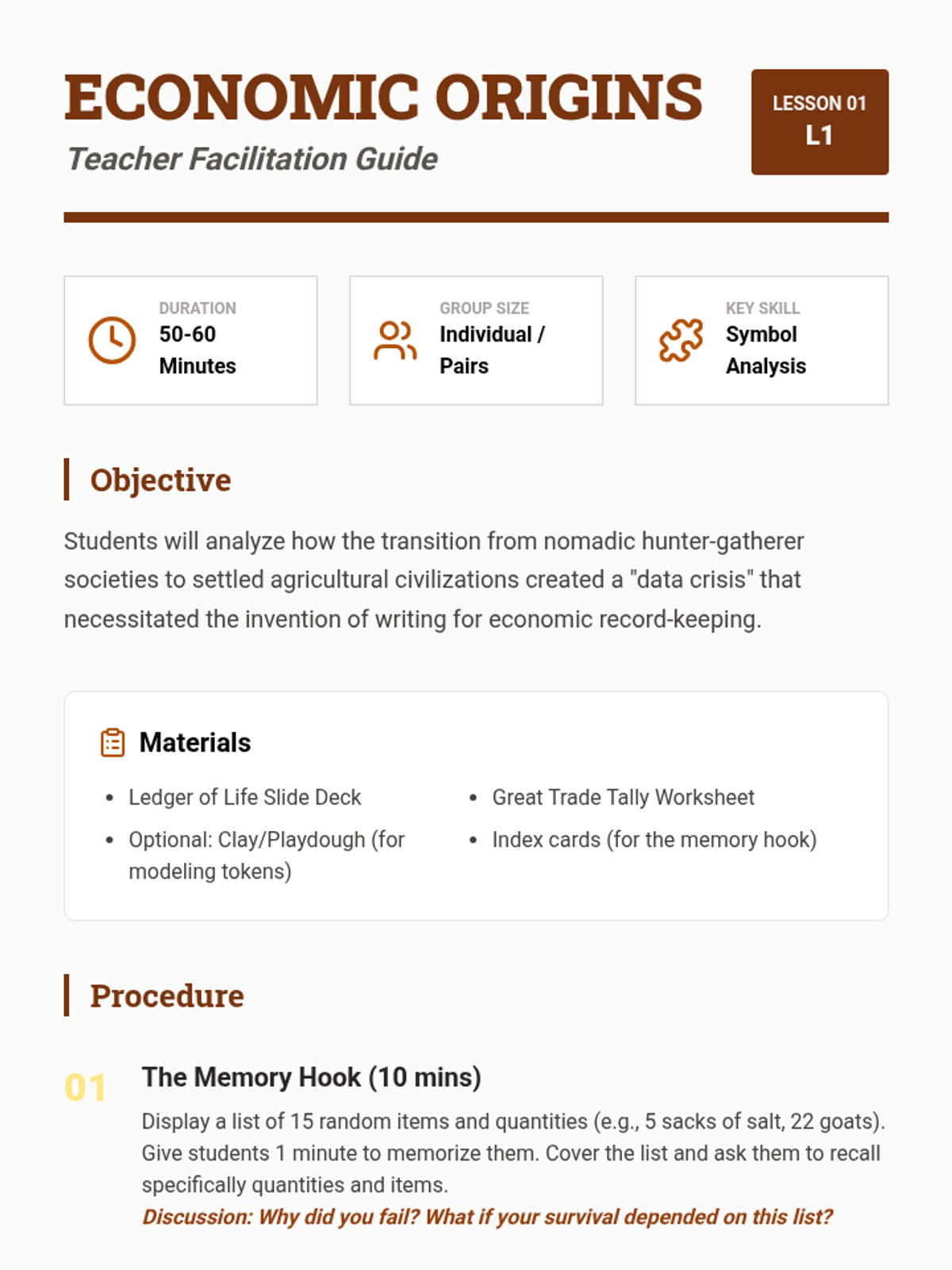
This sequence explores the evolution of writing from economic tokens to complex scripts across ancient Mesopotamia, China, and the Indus Valley, focusing on writing as a tool for power and preservation.
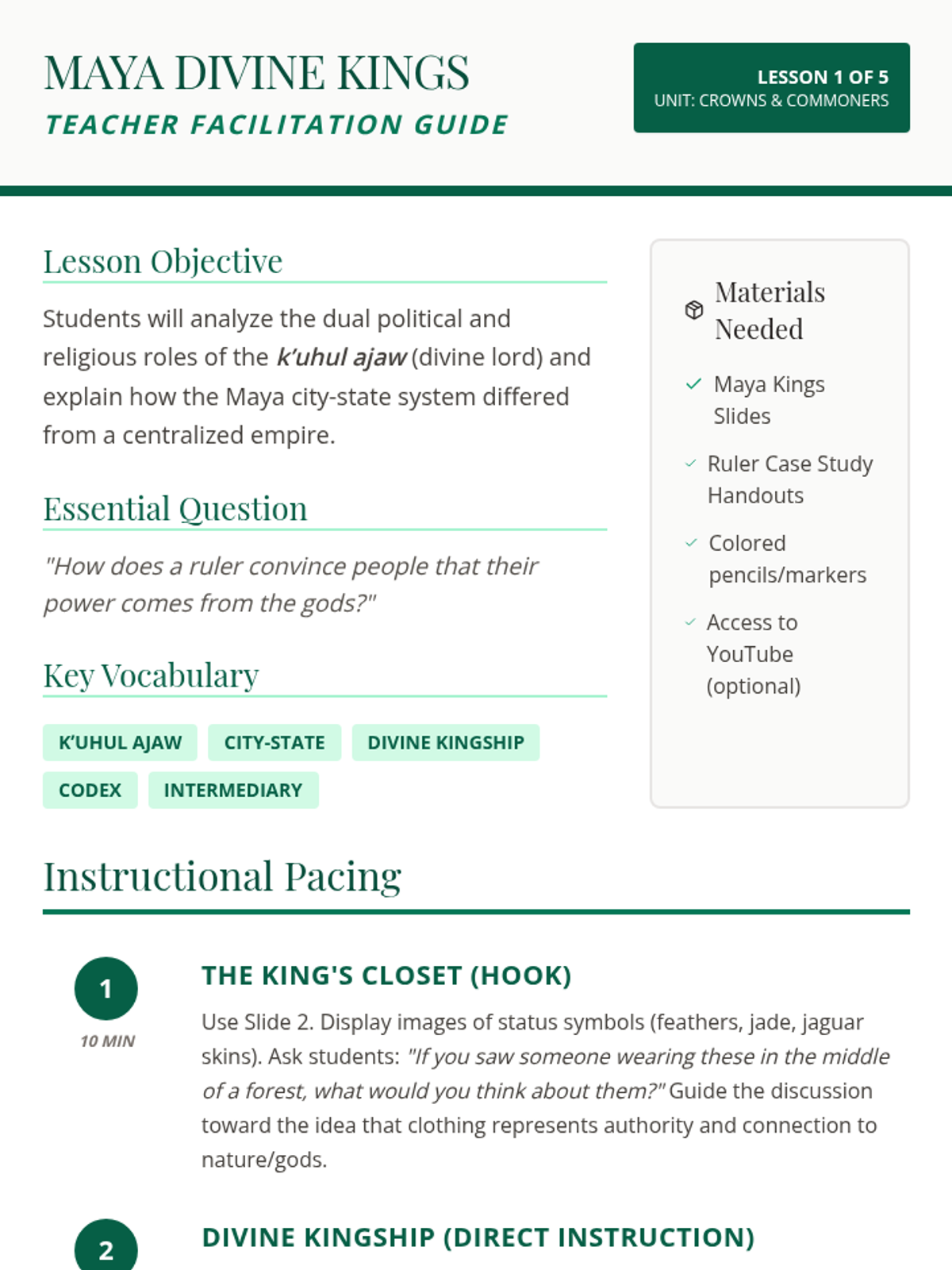
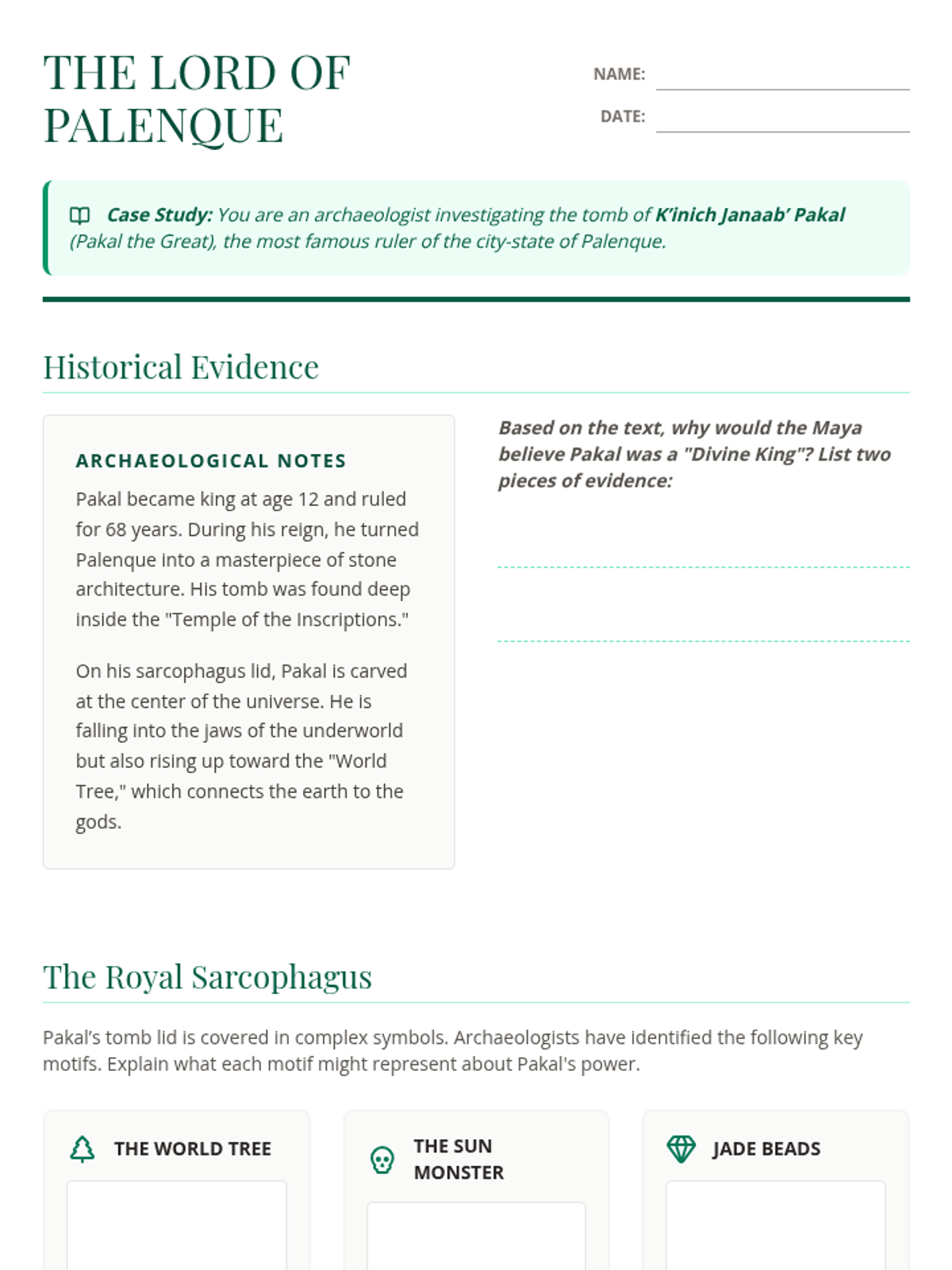
An exploration of the social hierarchies and governance systems of the Maya, Aztec, and Inca civilizations, focusing on divine kingship, tribute, labor taxes, and the daily lives of commoners.
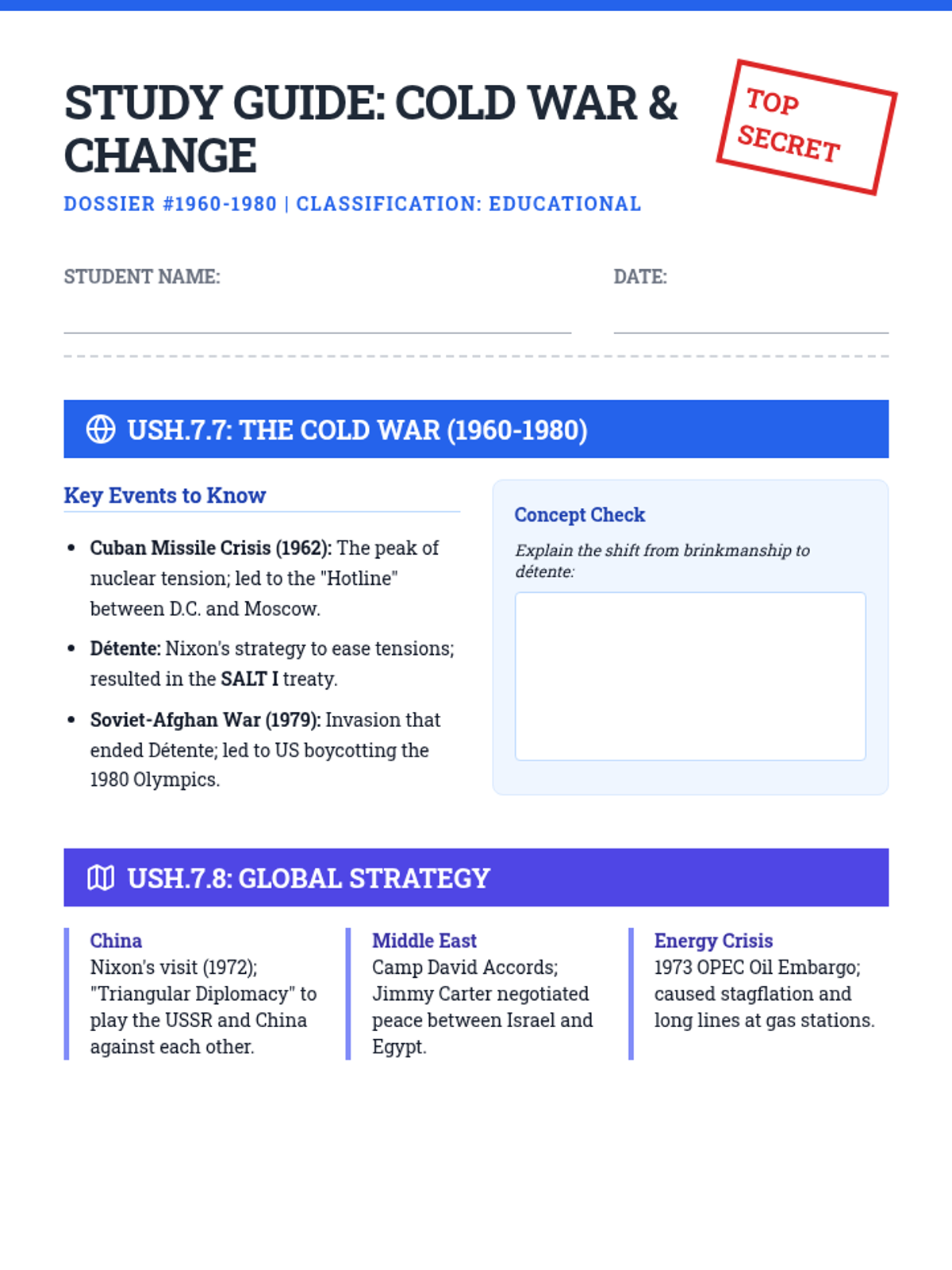
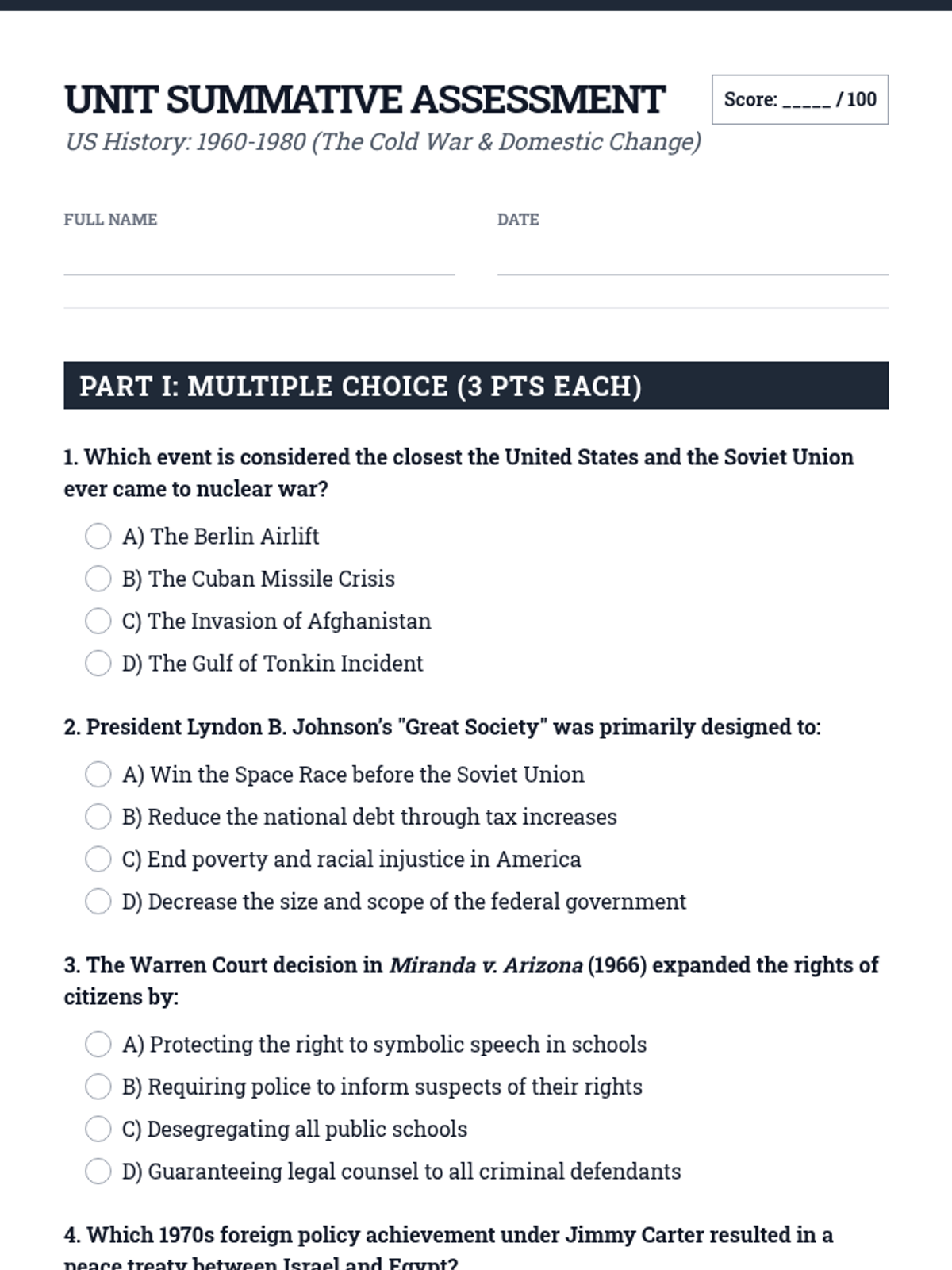
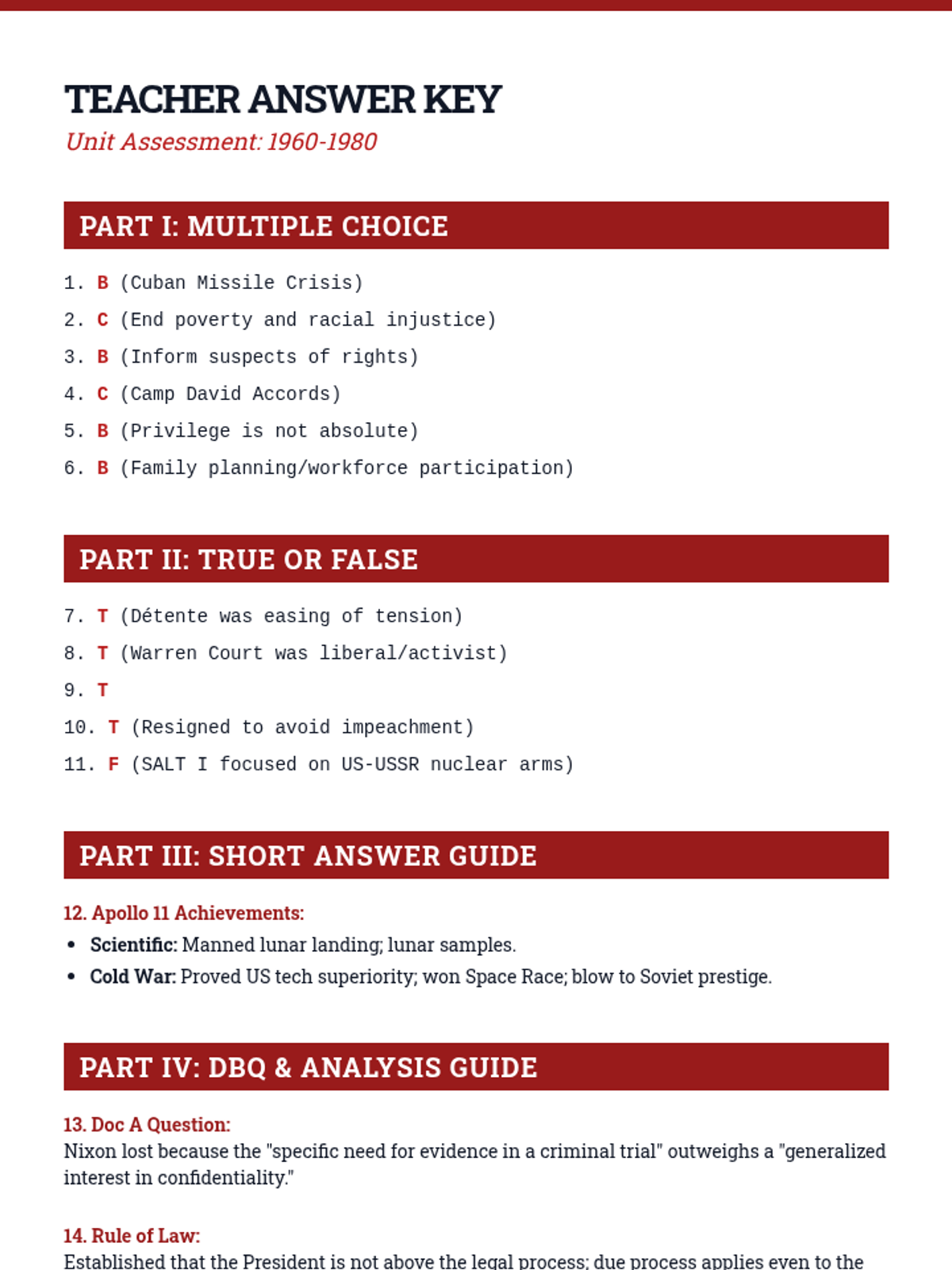
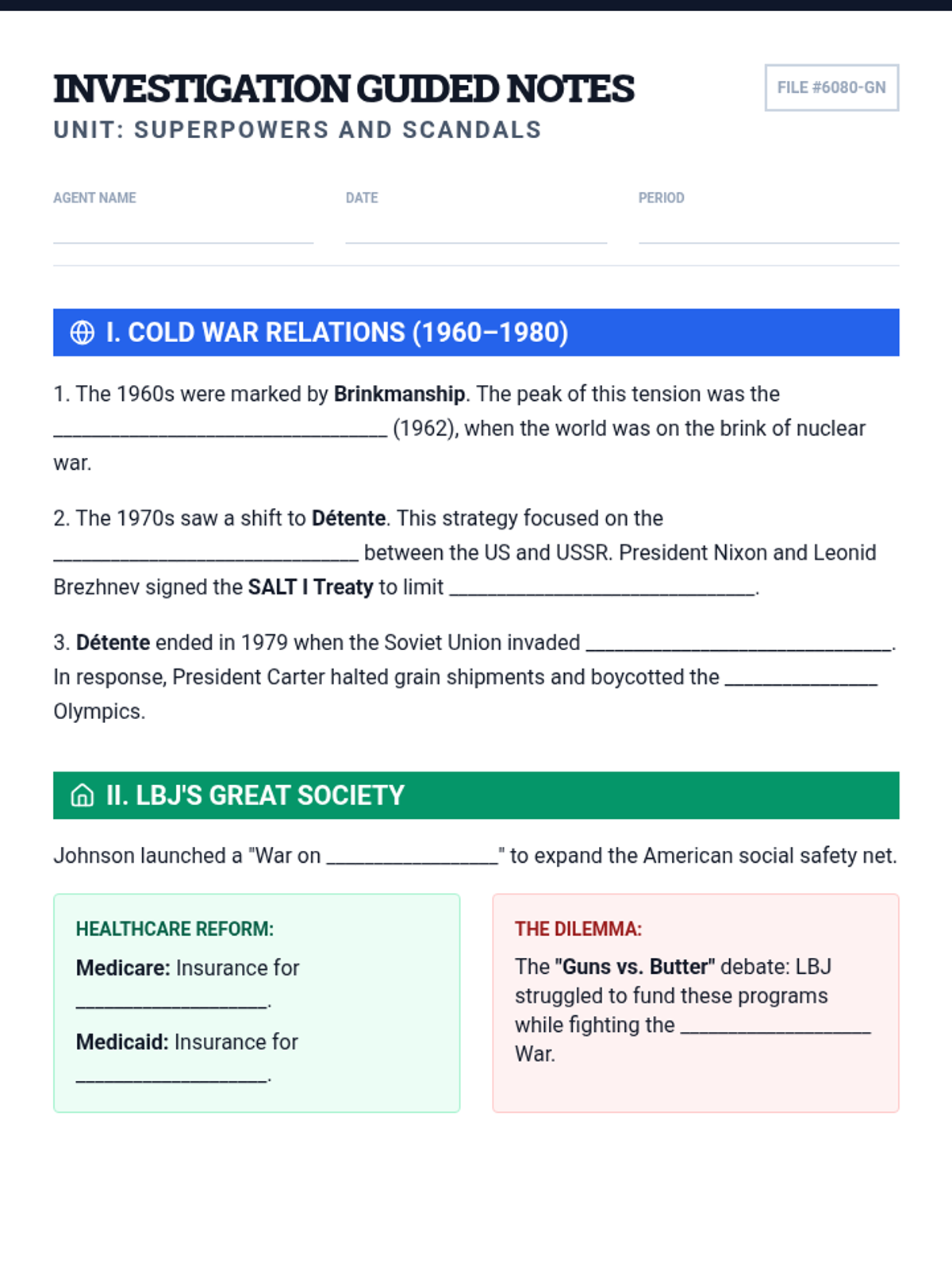
A comprehensive unit covering United States history from 1960 to 1980, focusing on the Cold War, domestic policy, and political scandals.
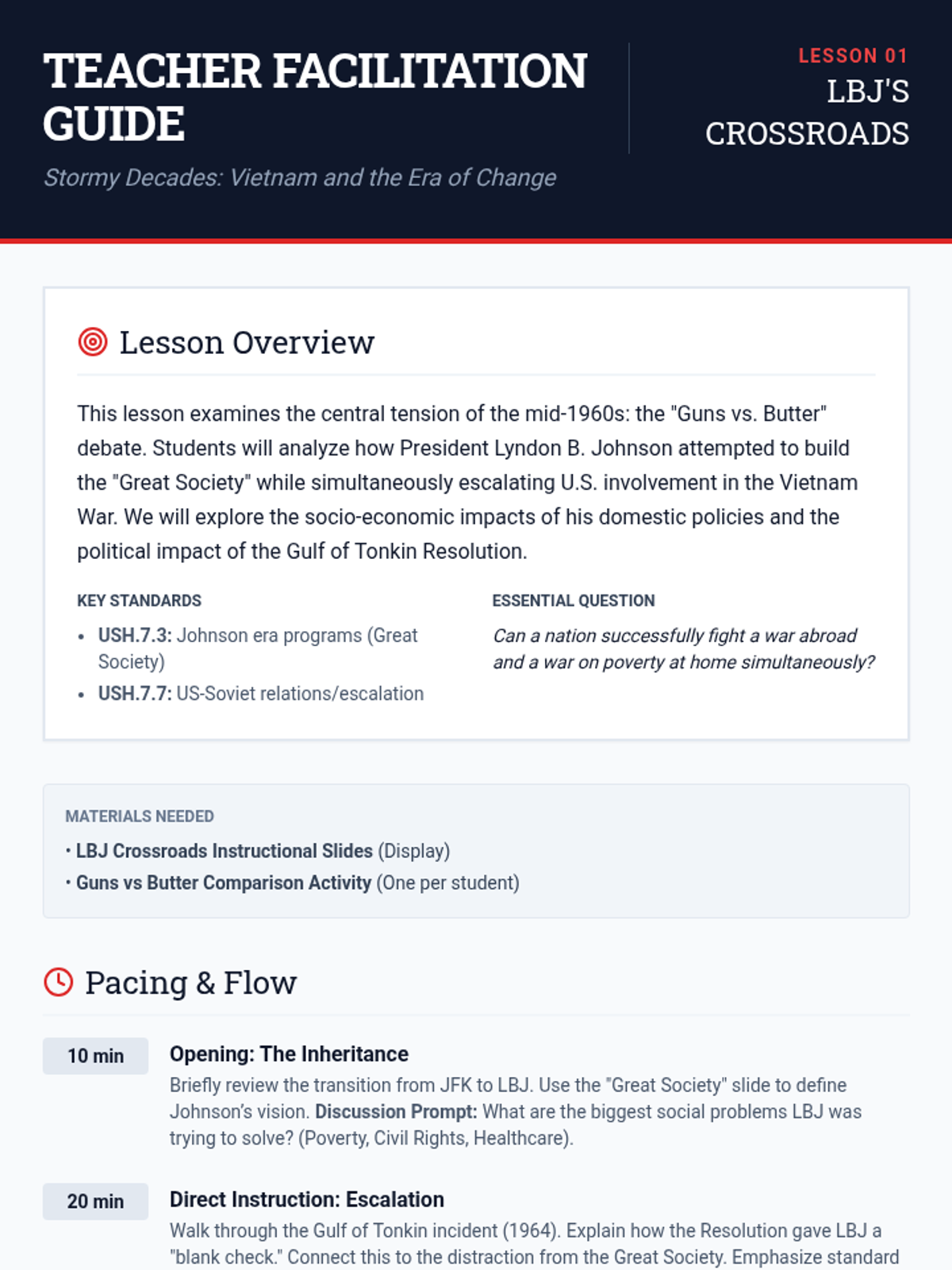
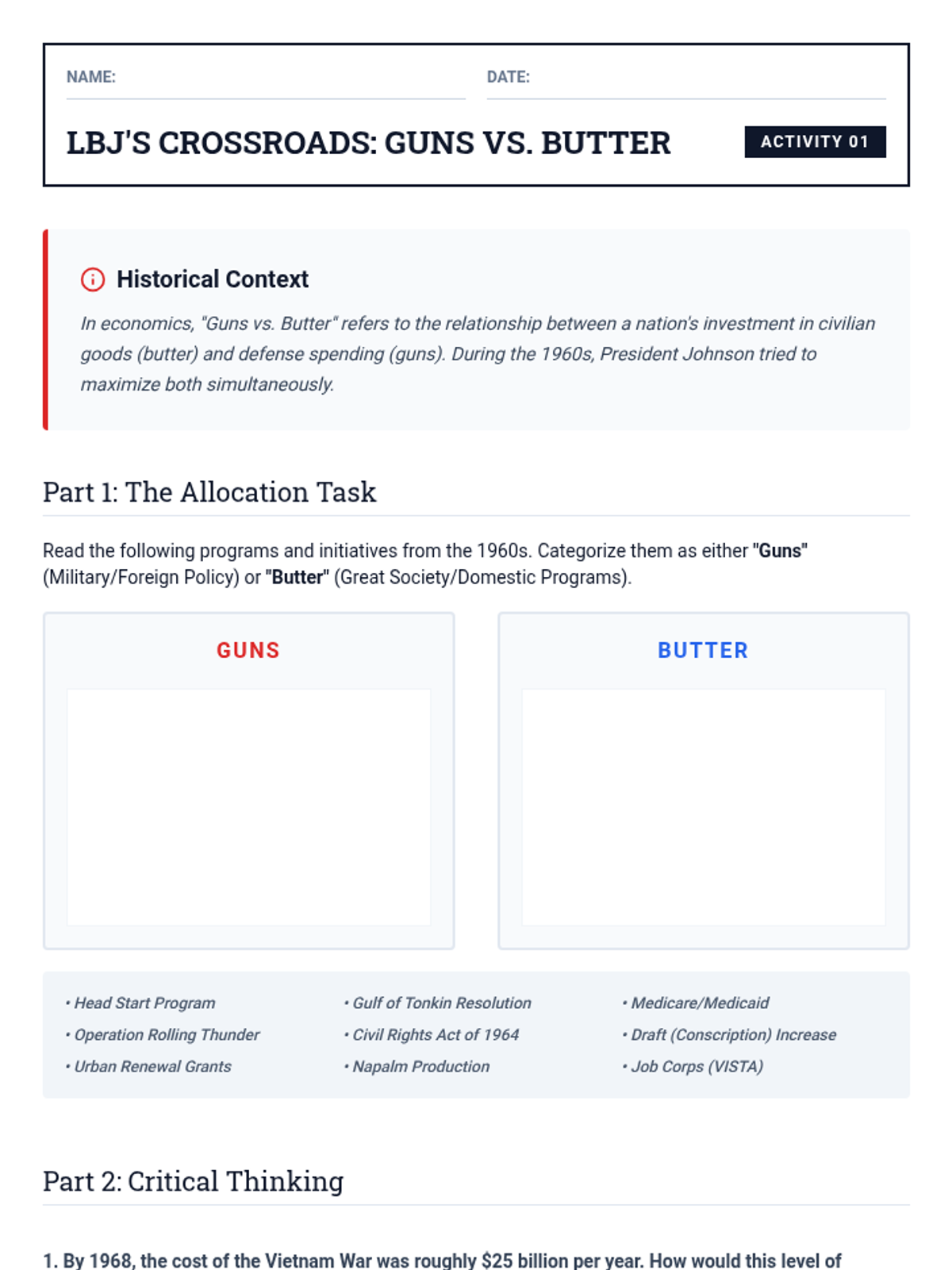
A comprehensive 5-day unit covering the United States from 1960 to 1980, focusing on the Vietnam War's impact on foreign policy, domestic programs, and constitutional crises. Students analyze the tension between the Great Society and war spending, the role of technology in warfare, and the legacy of the Watergate scandal.
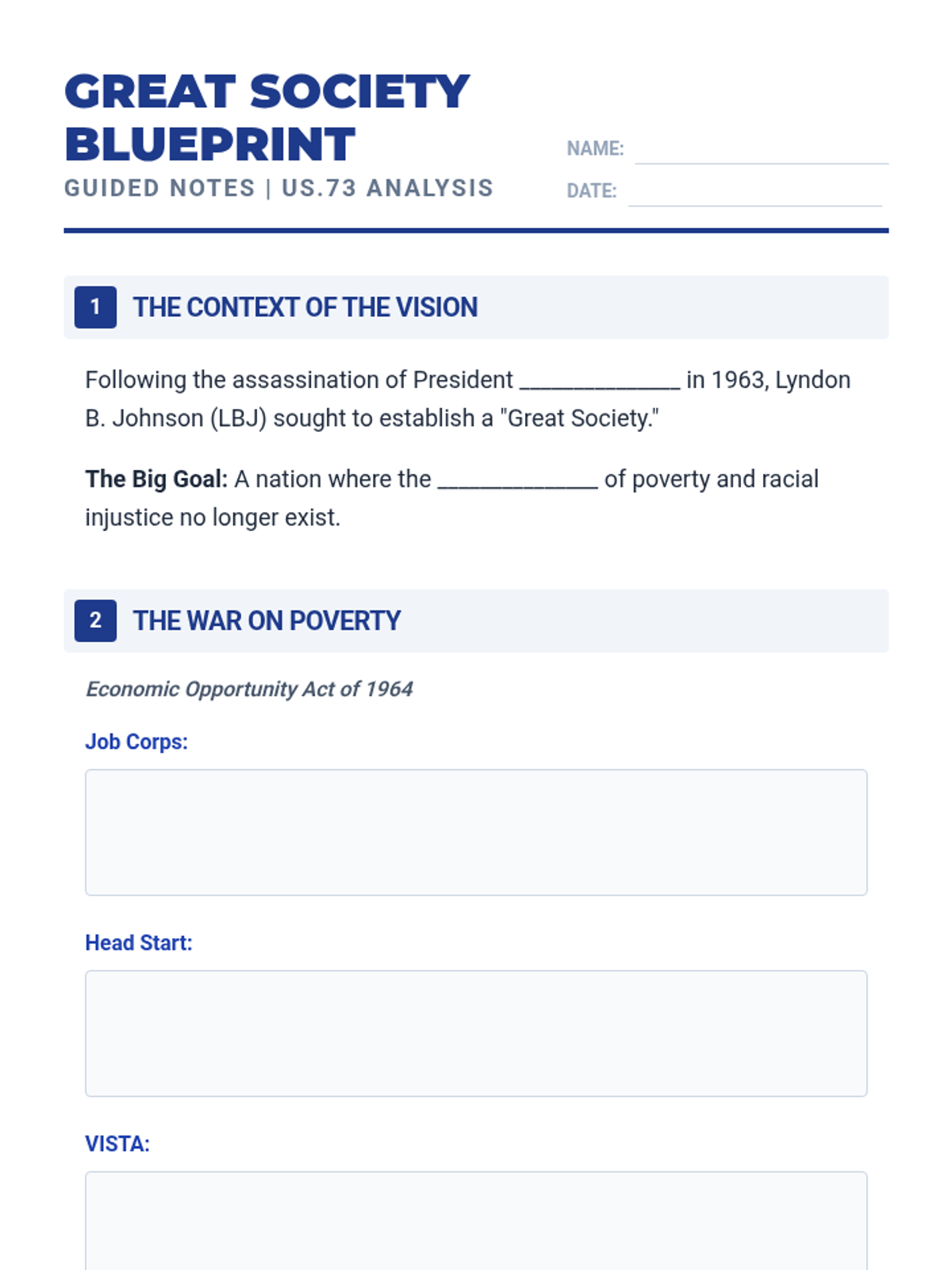
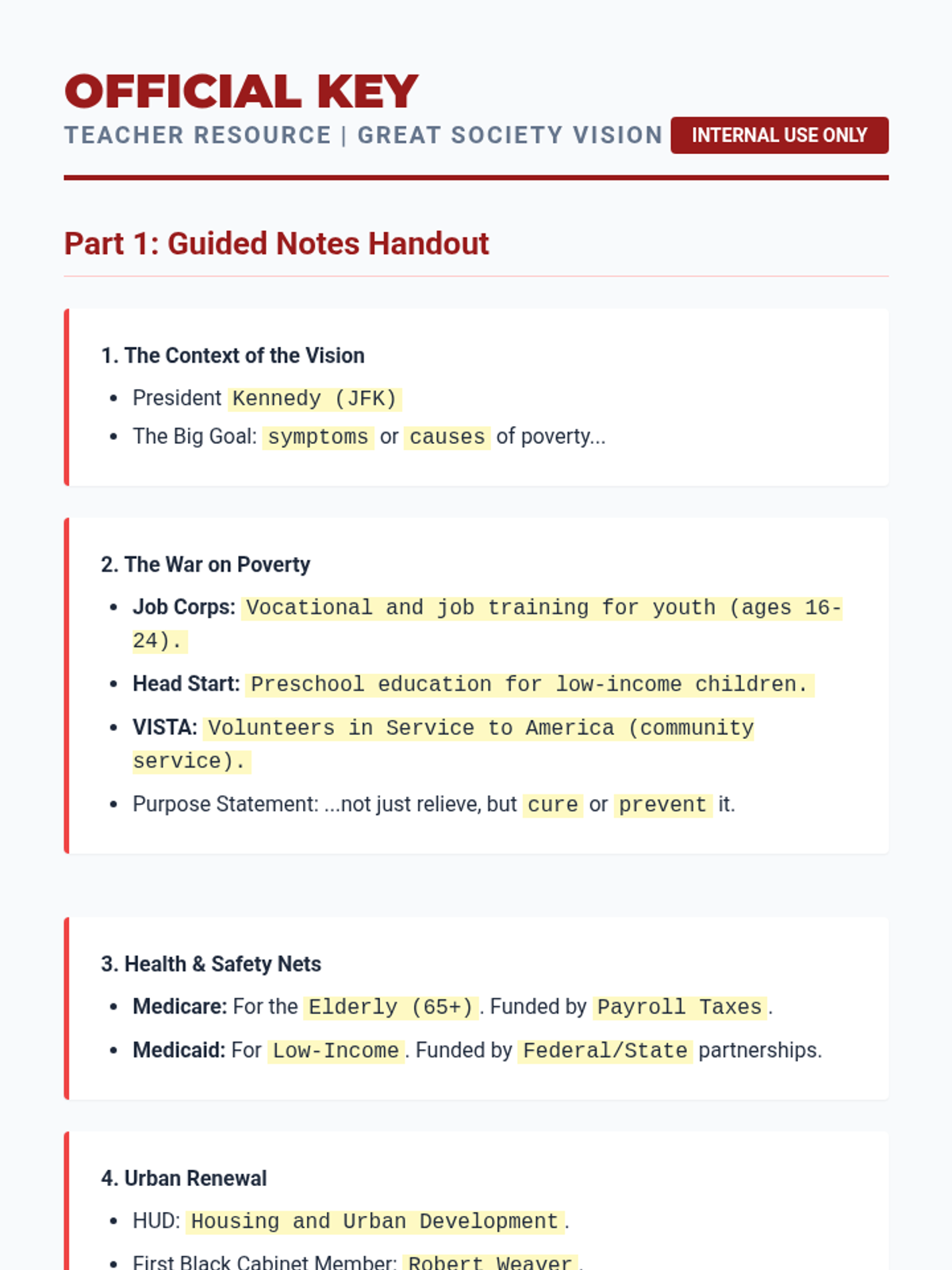
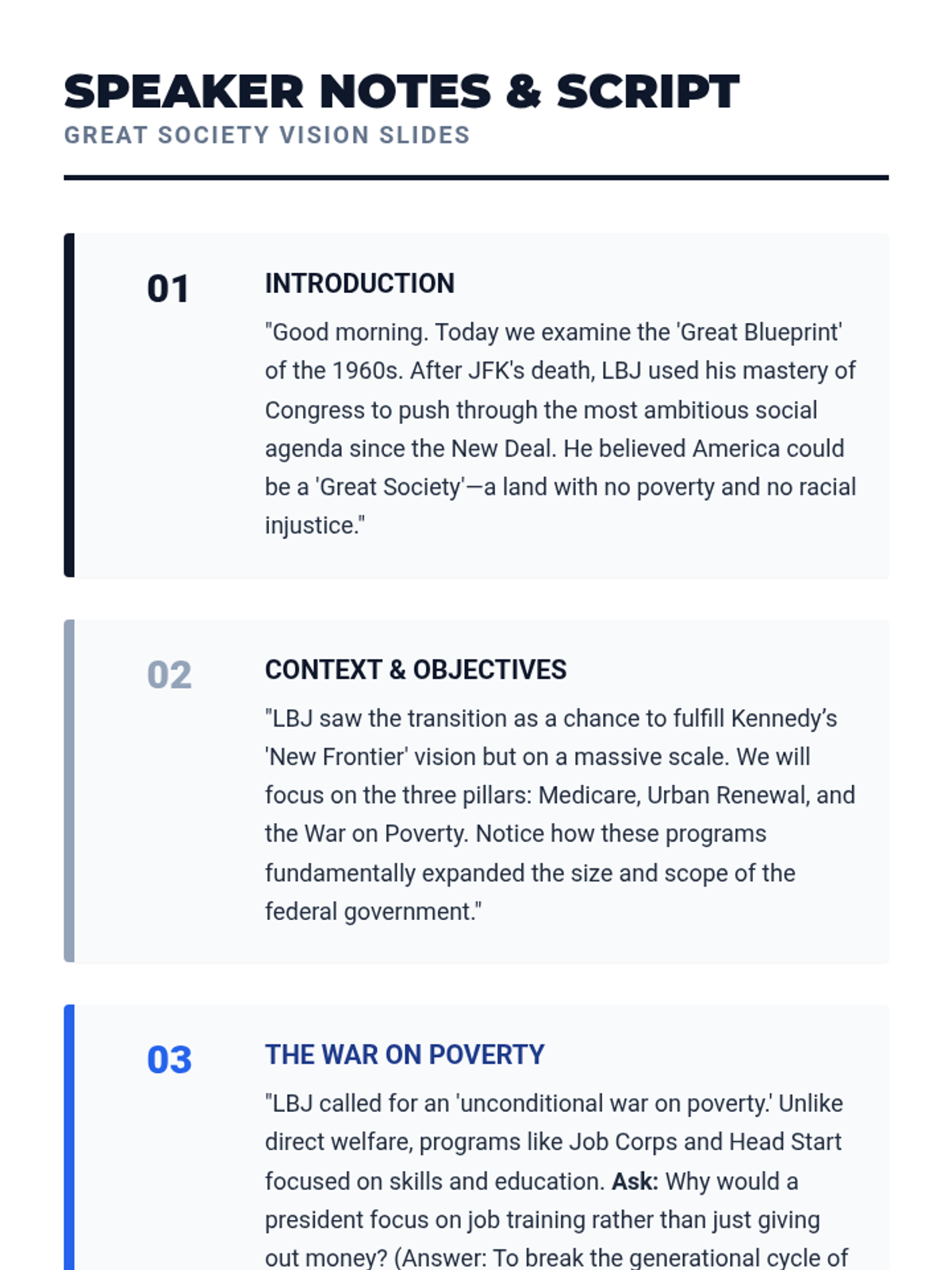
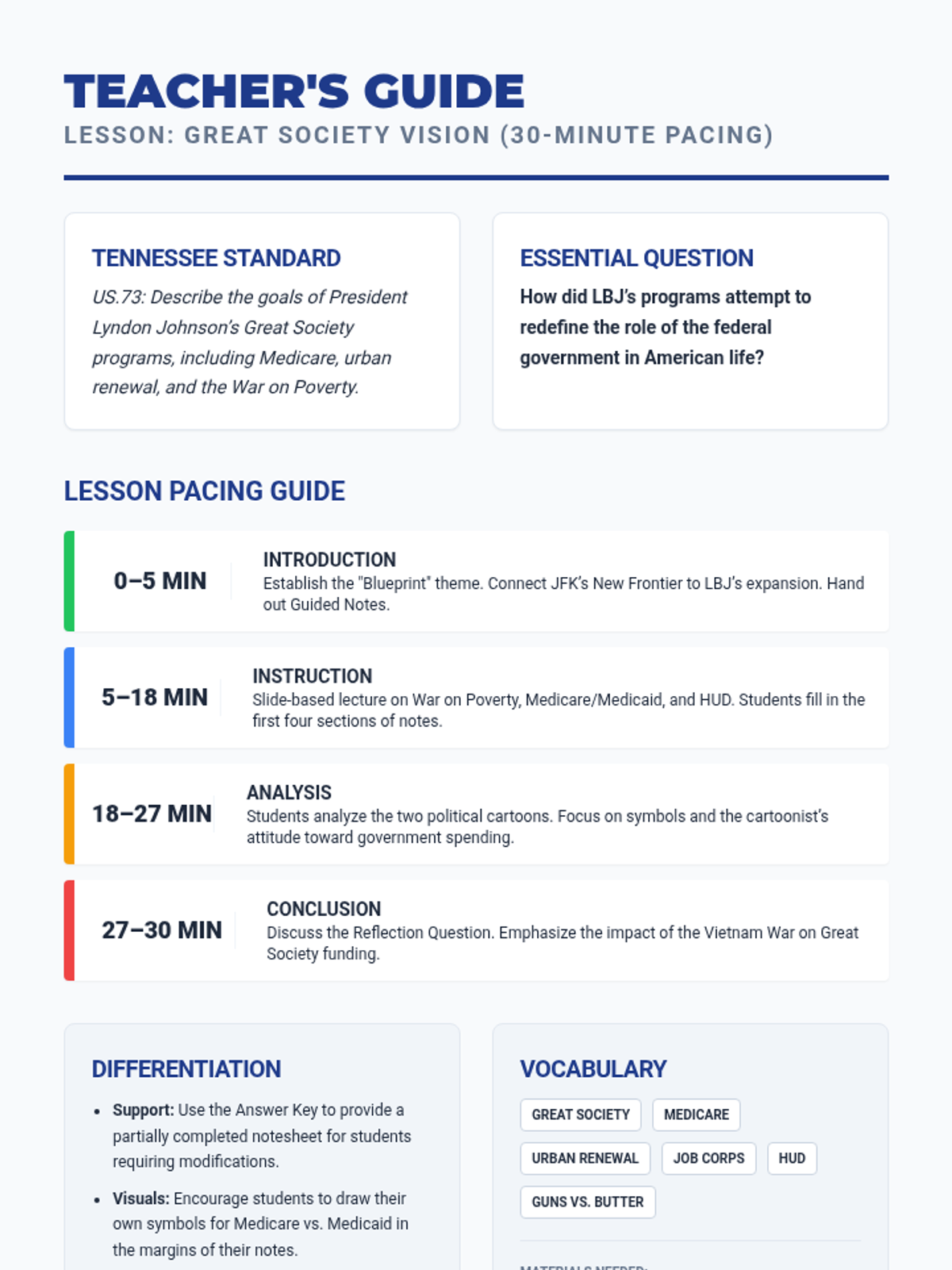
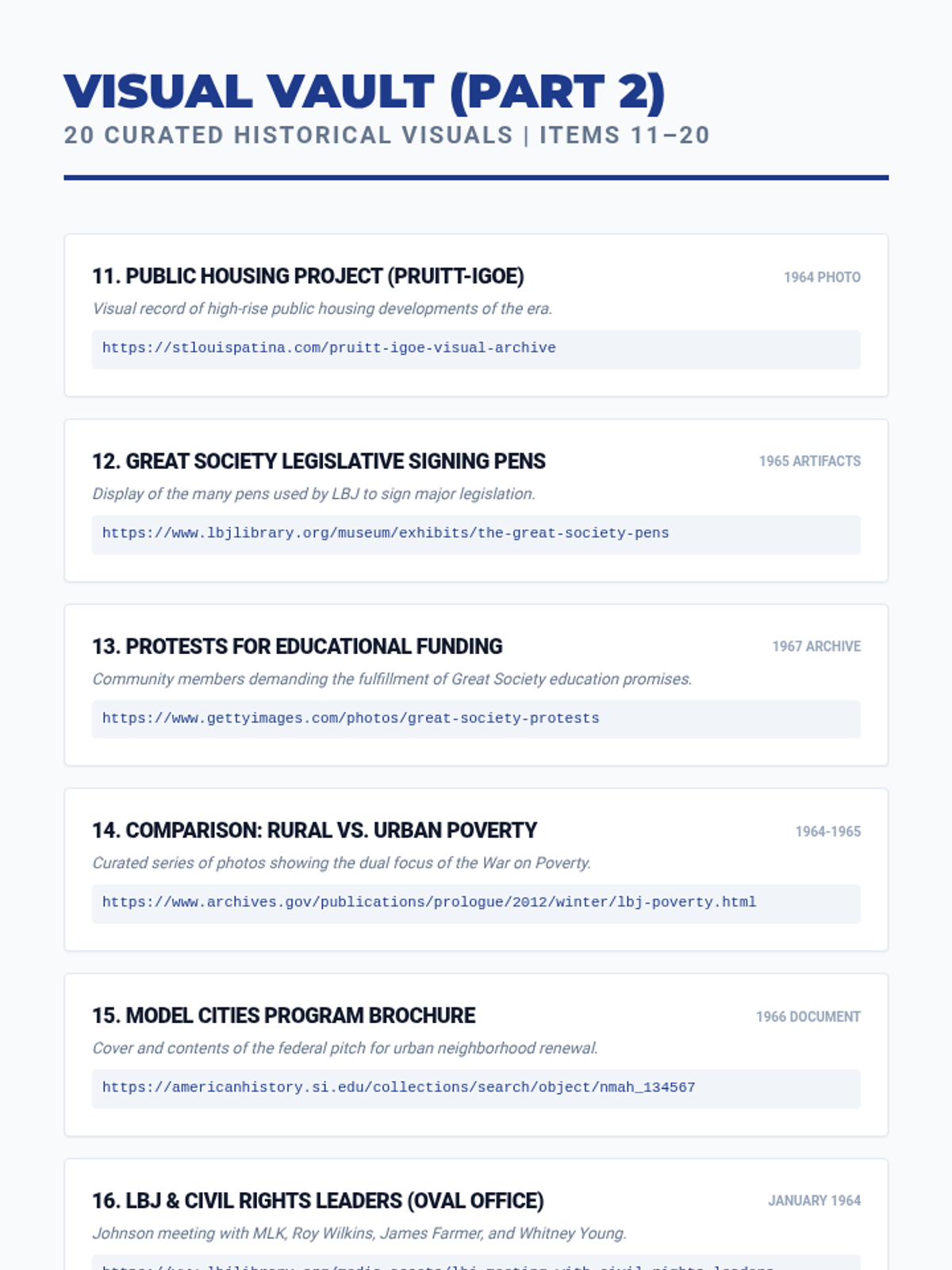
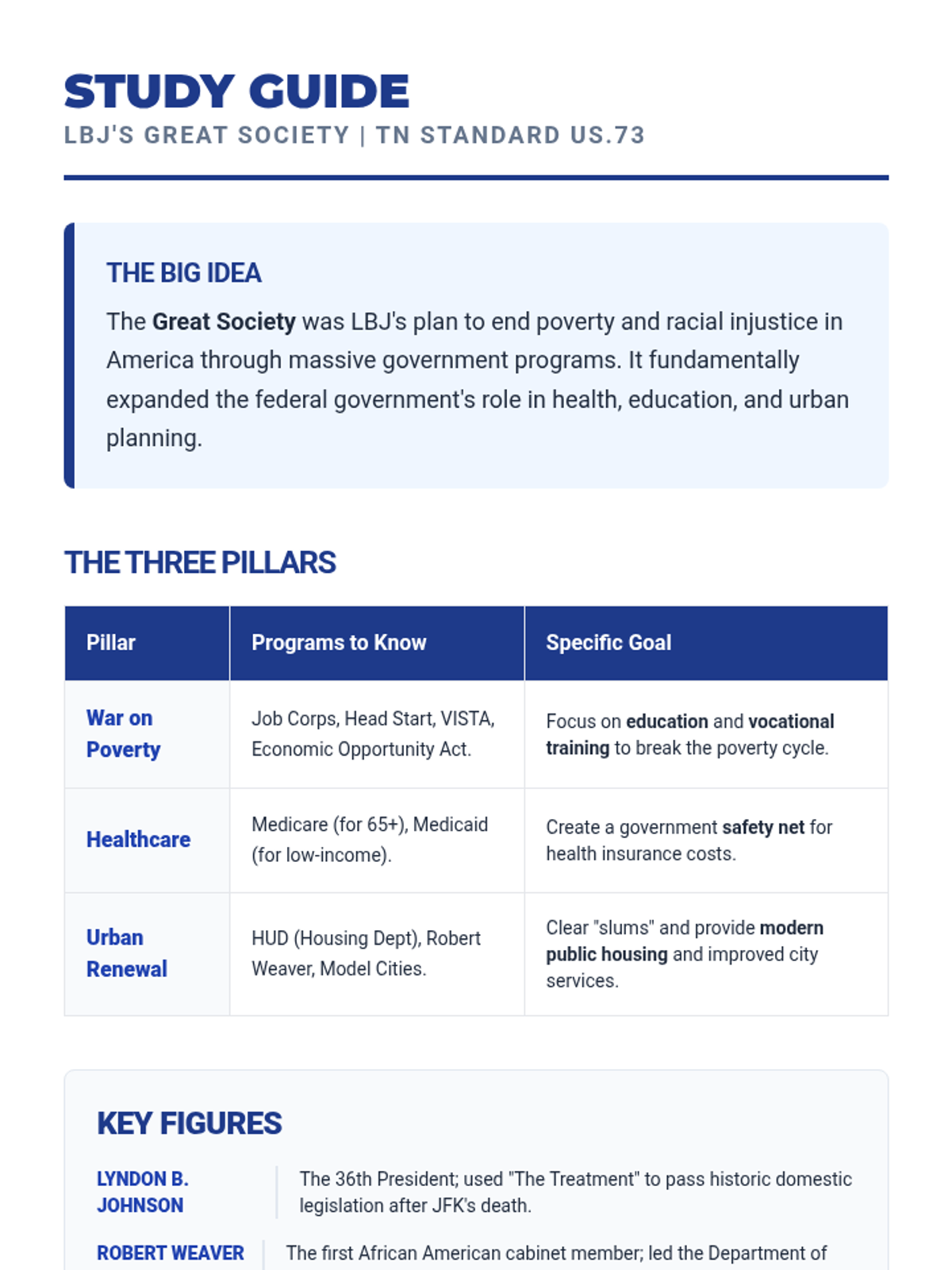
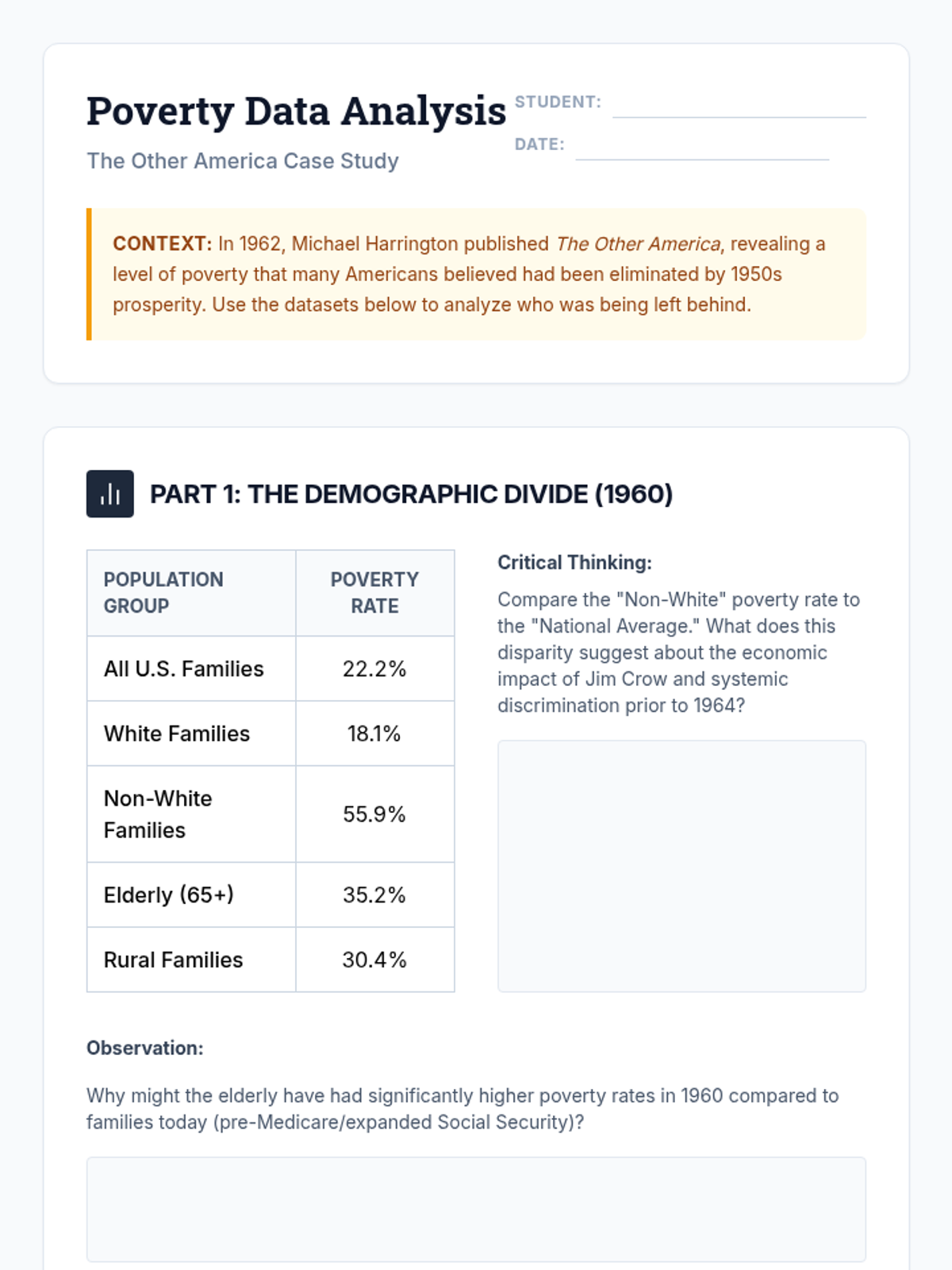
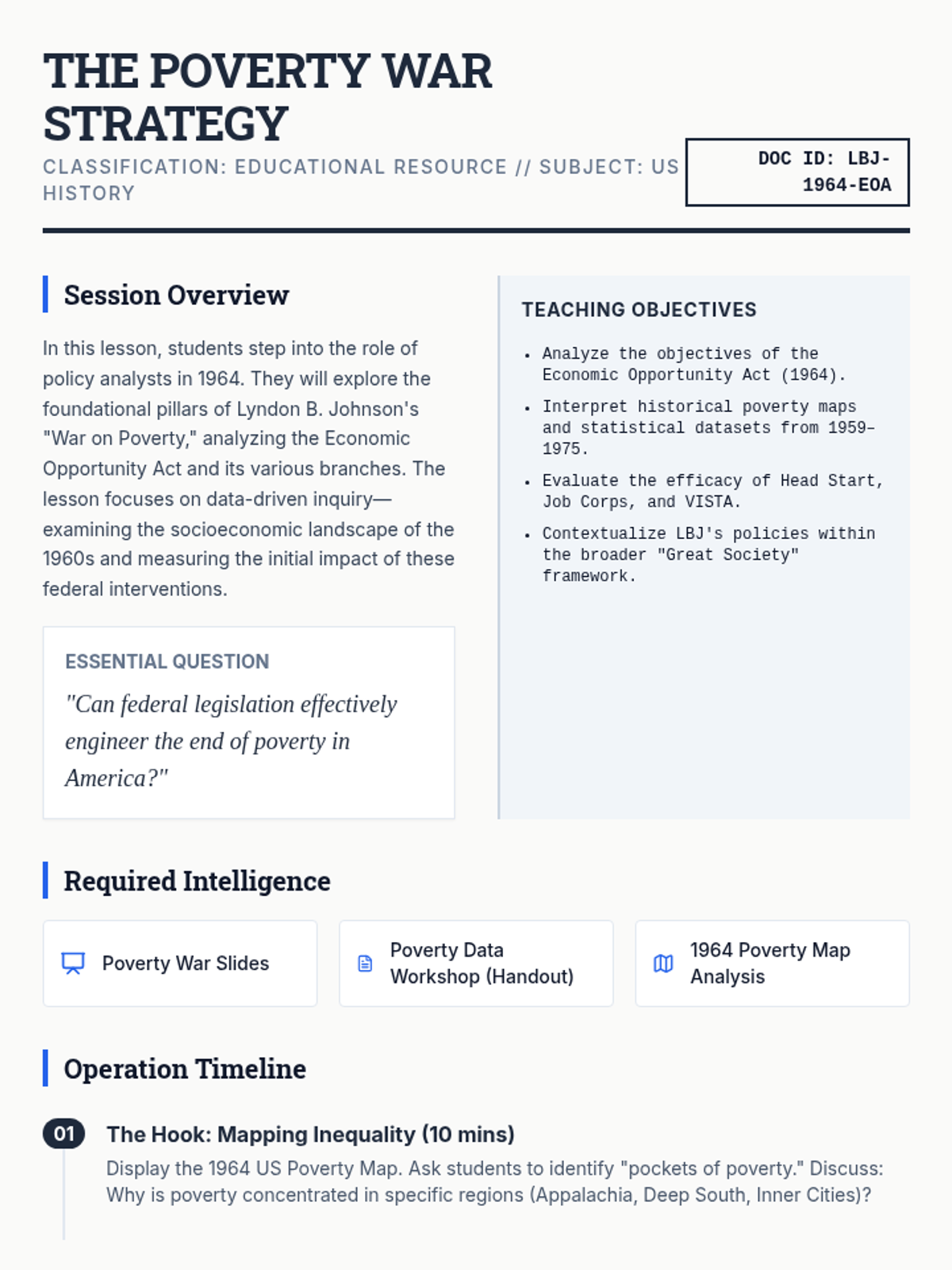
A deep dive into President Lyndon B. Johnson's domestic agenda, focusing on the Great Society's attempts to eliminate poverty and racial injustice. This sequence examines the legislative milestones of the mid-1960s and their lasting impact on American society and government.
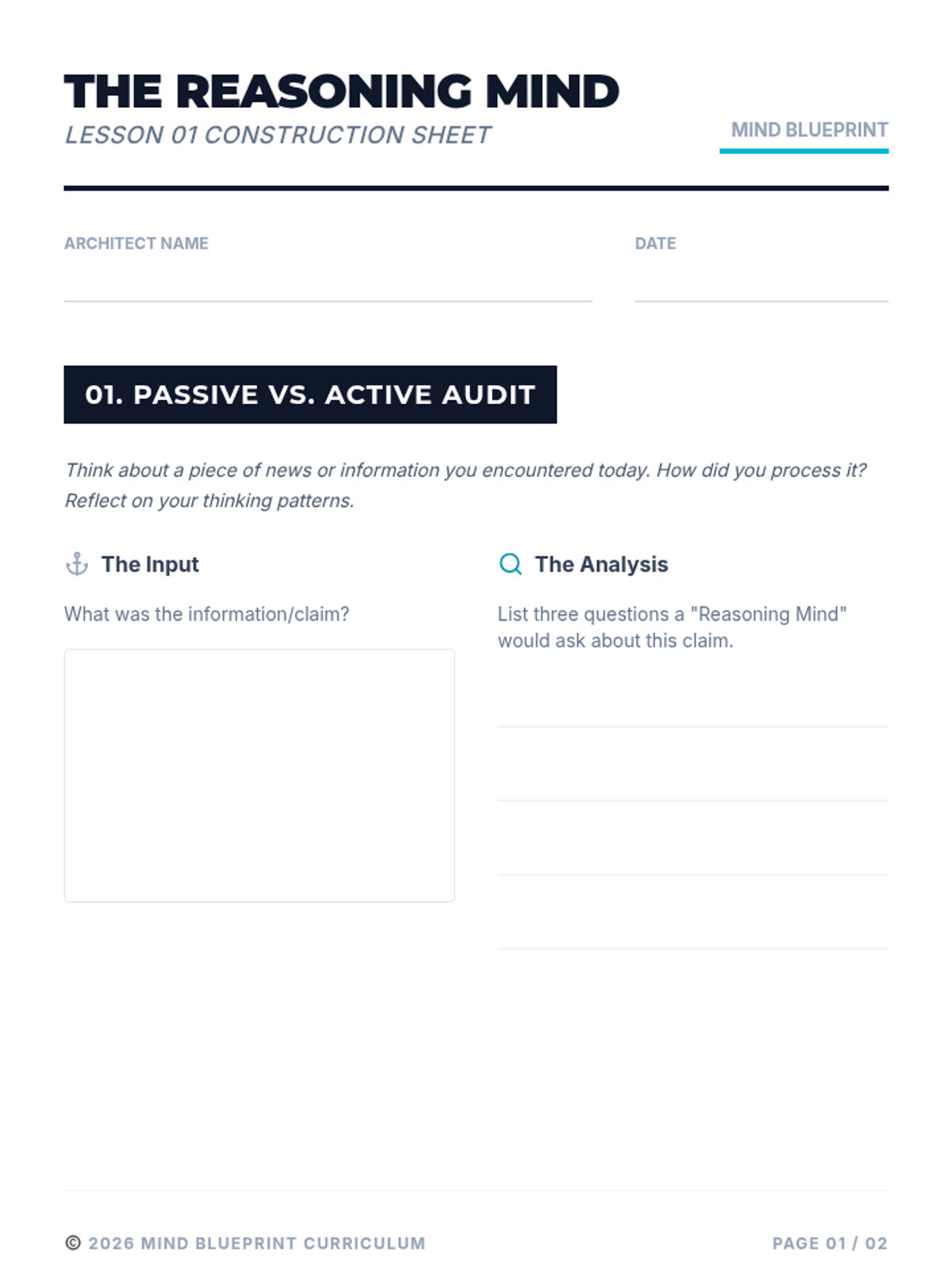
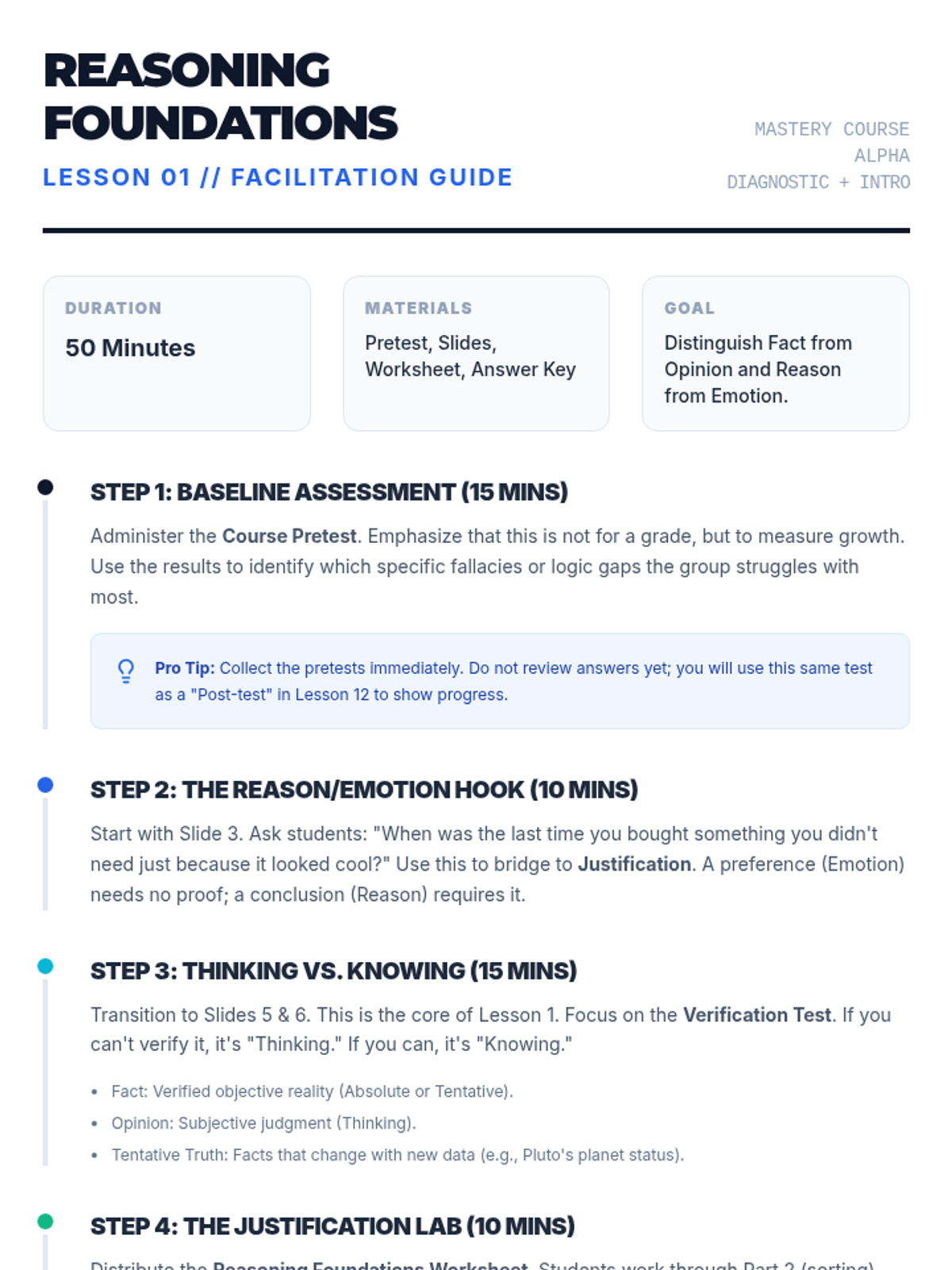
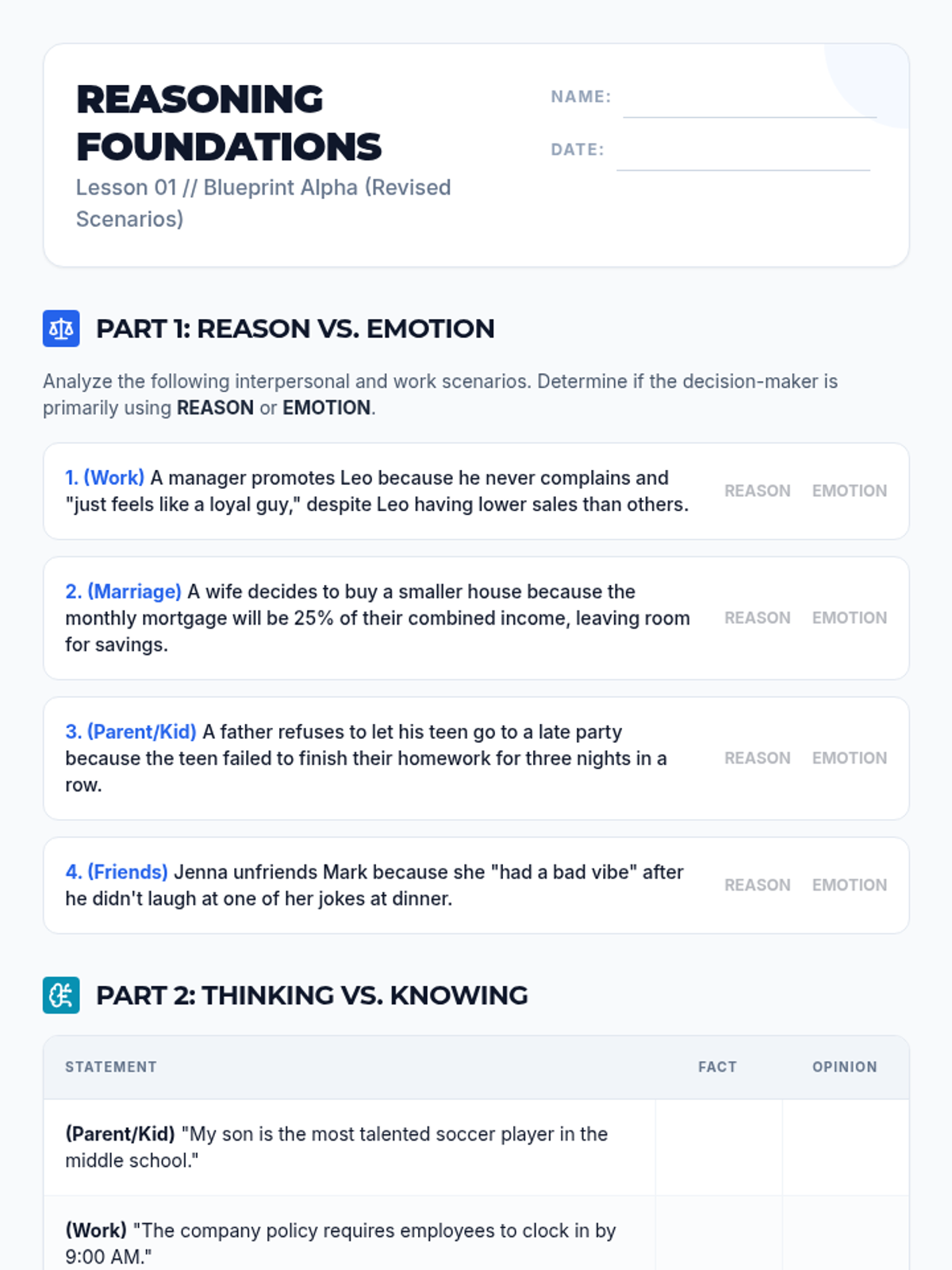
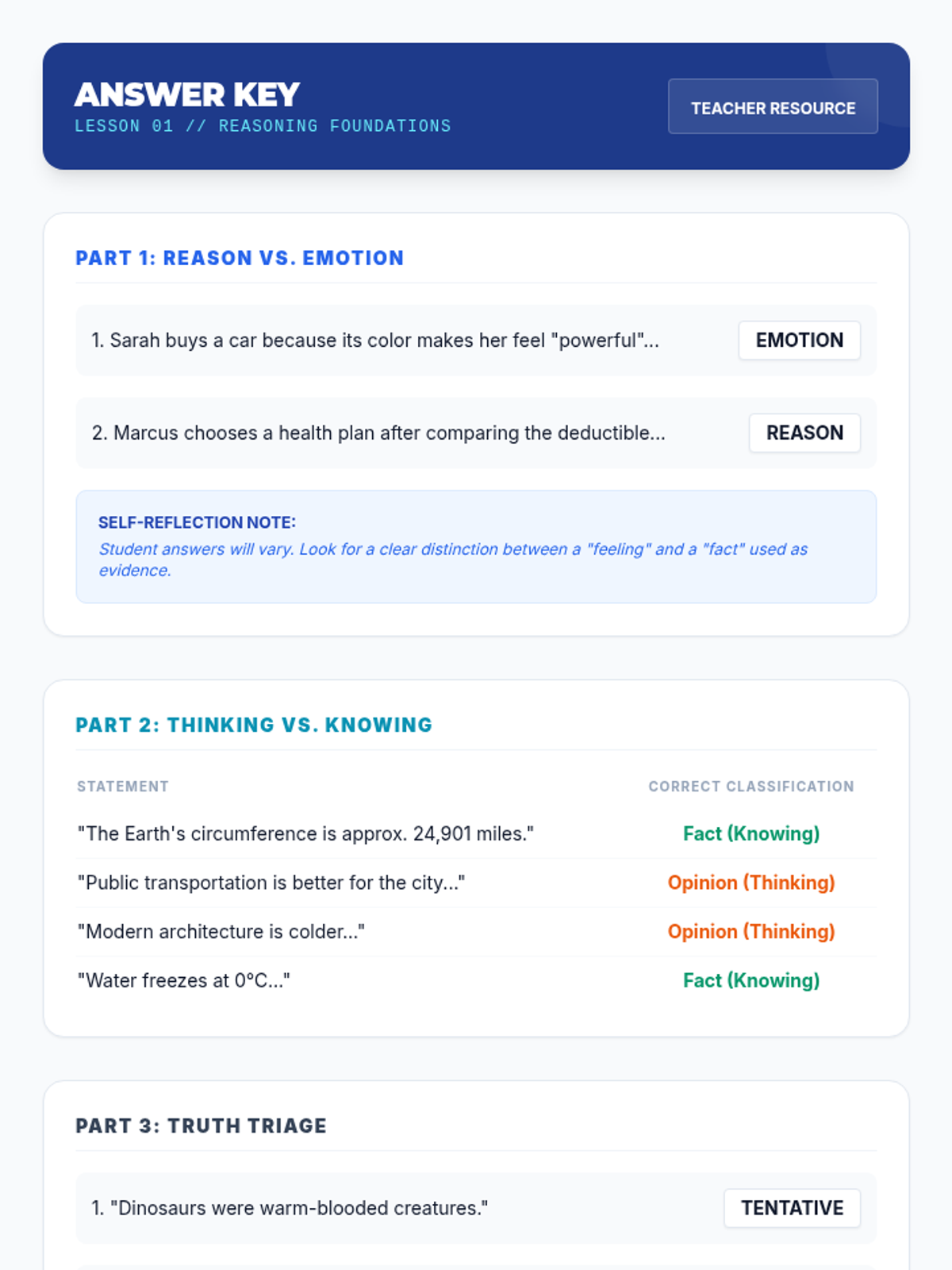
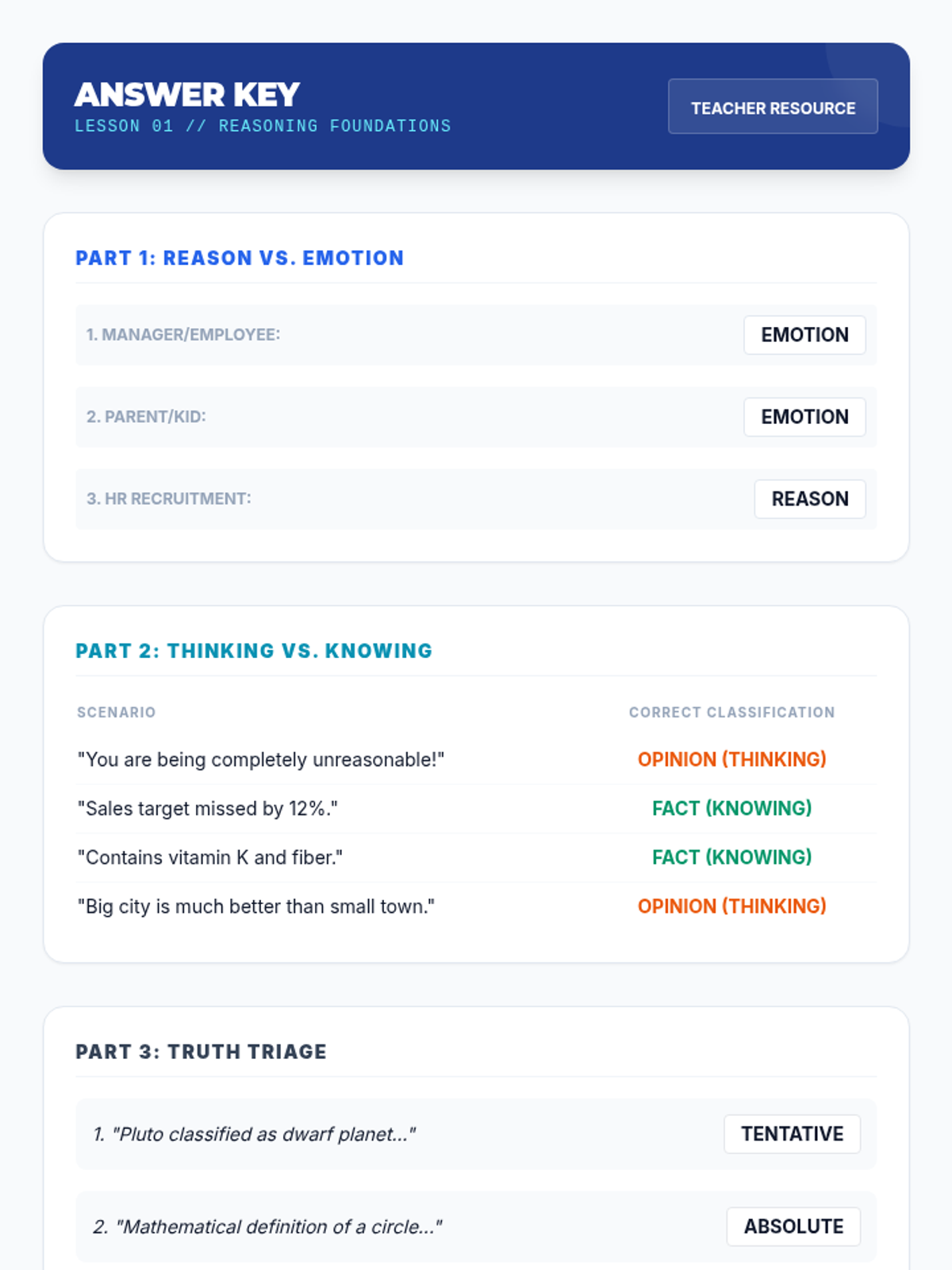
A 12-lesson intensive course on reasoning and critical thinking, aligned with the 'Reasoning Skills Success' framework. This sequence covers everything from the distinction between reason and emotion to complex logical fallacies, statistical analysis, and deductive/inductive logic.
A unit exploring the transformative decade of the 1950s, covering the Civil Rights movement, postwar economic booms, the rise of suburbia, and the cultural shifts of the Atomic Age.
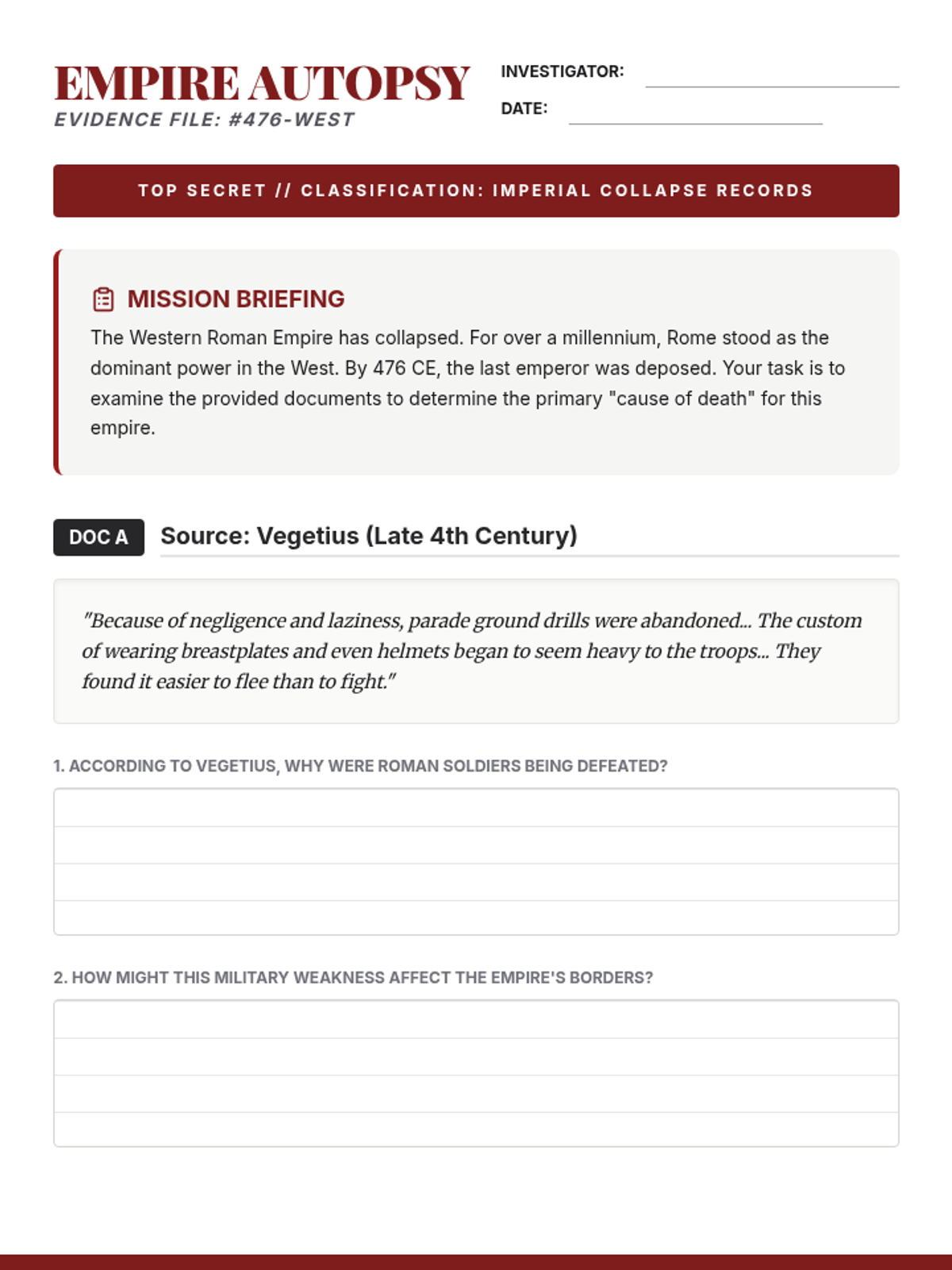
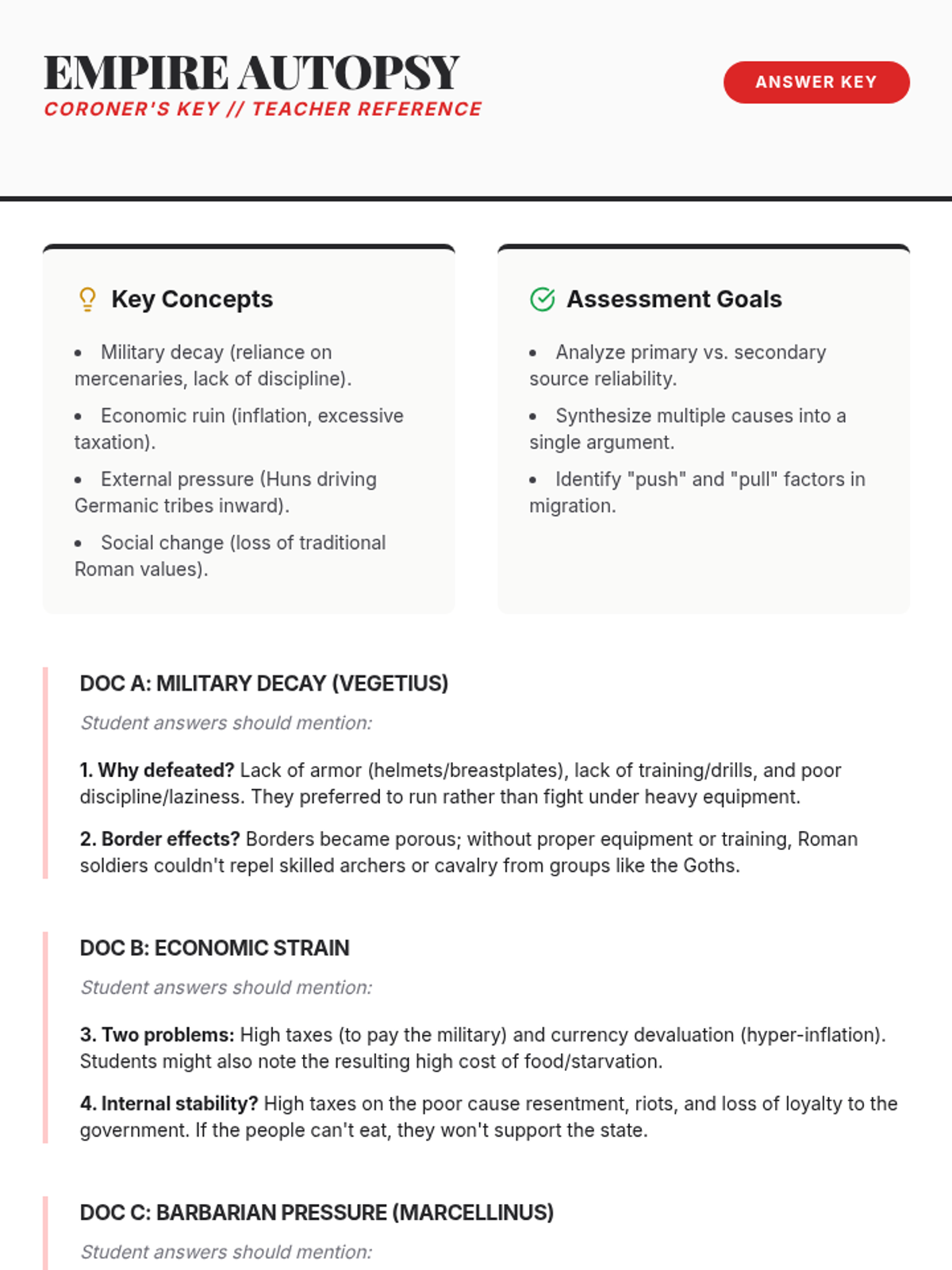
An analytical deep-dive into the collapse of the Western Roman Empire, treating history as a forensic investigation into why great powers fail.
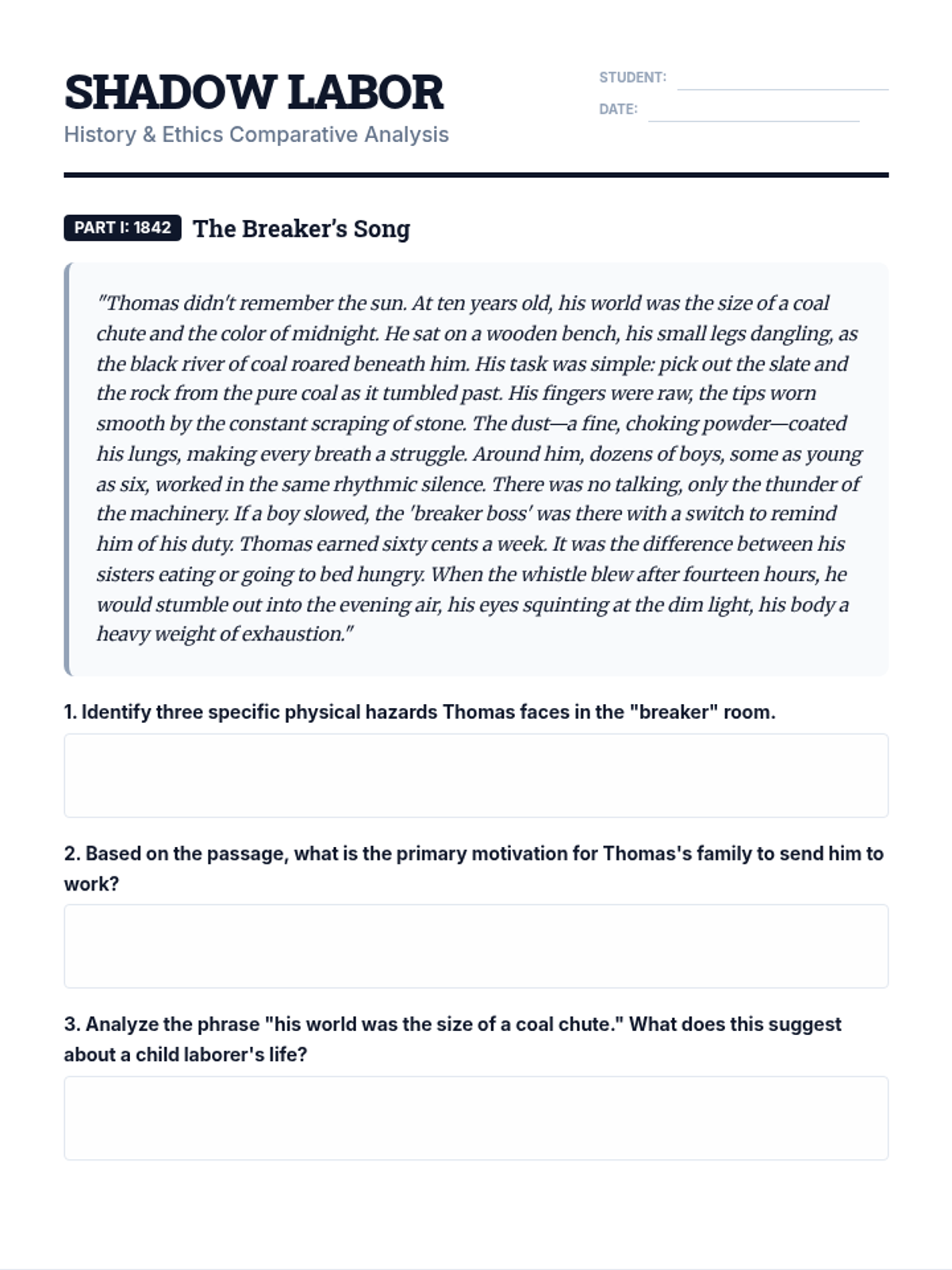
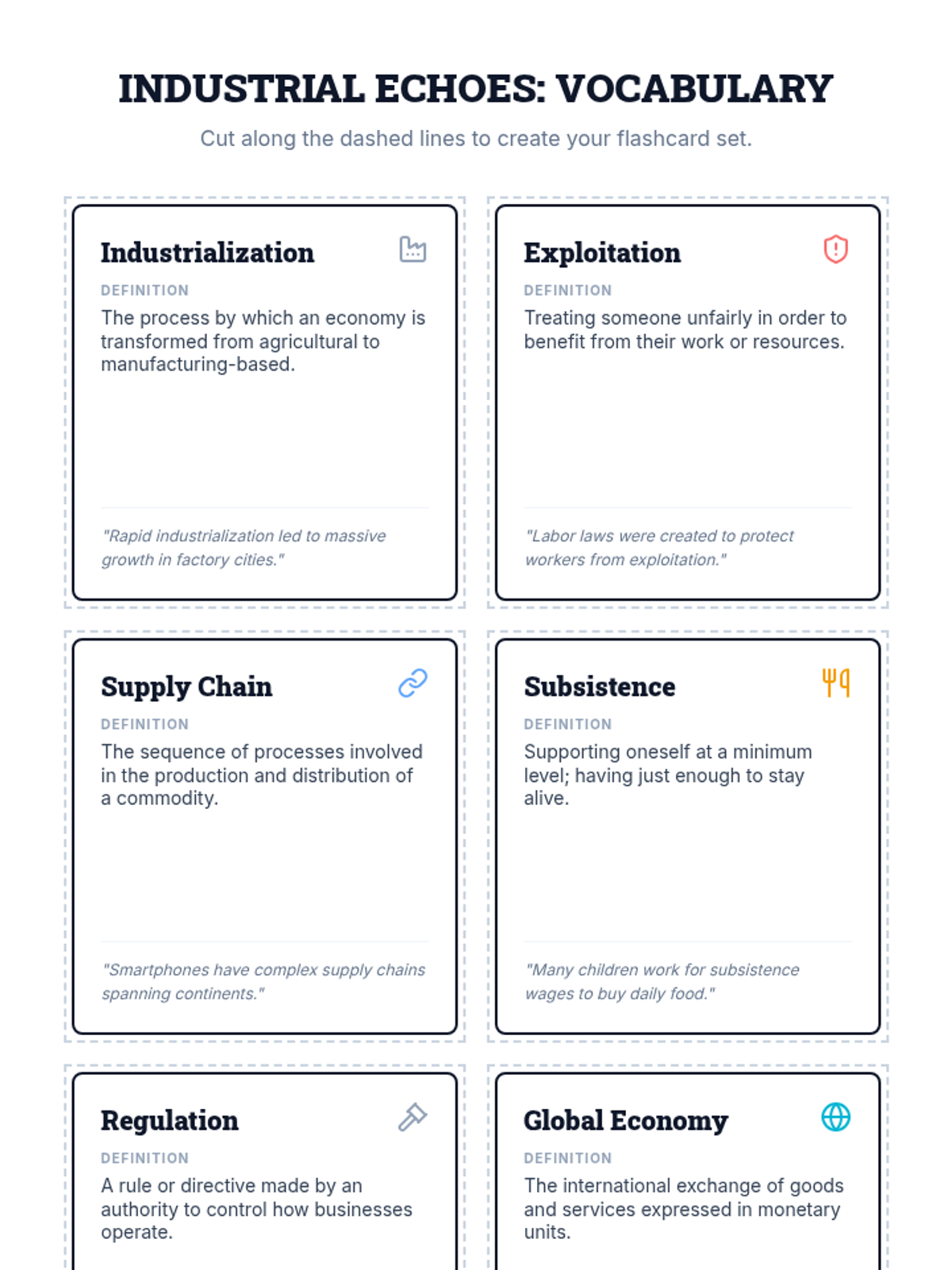
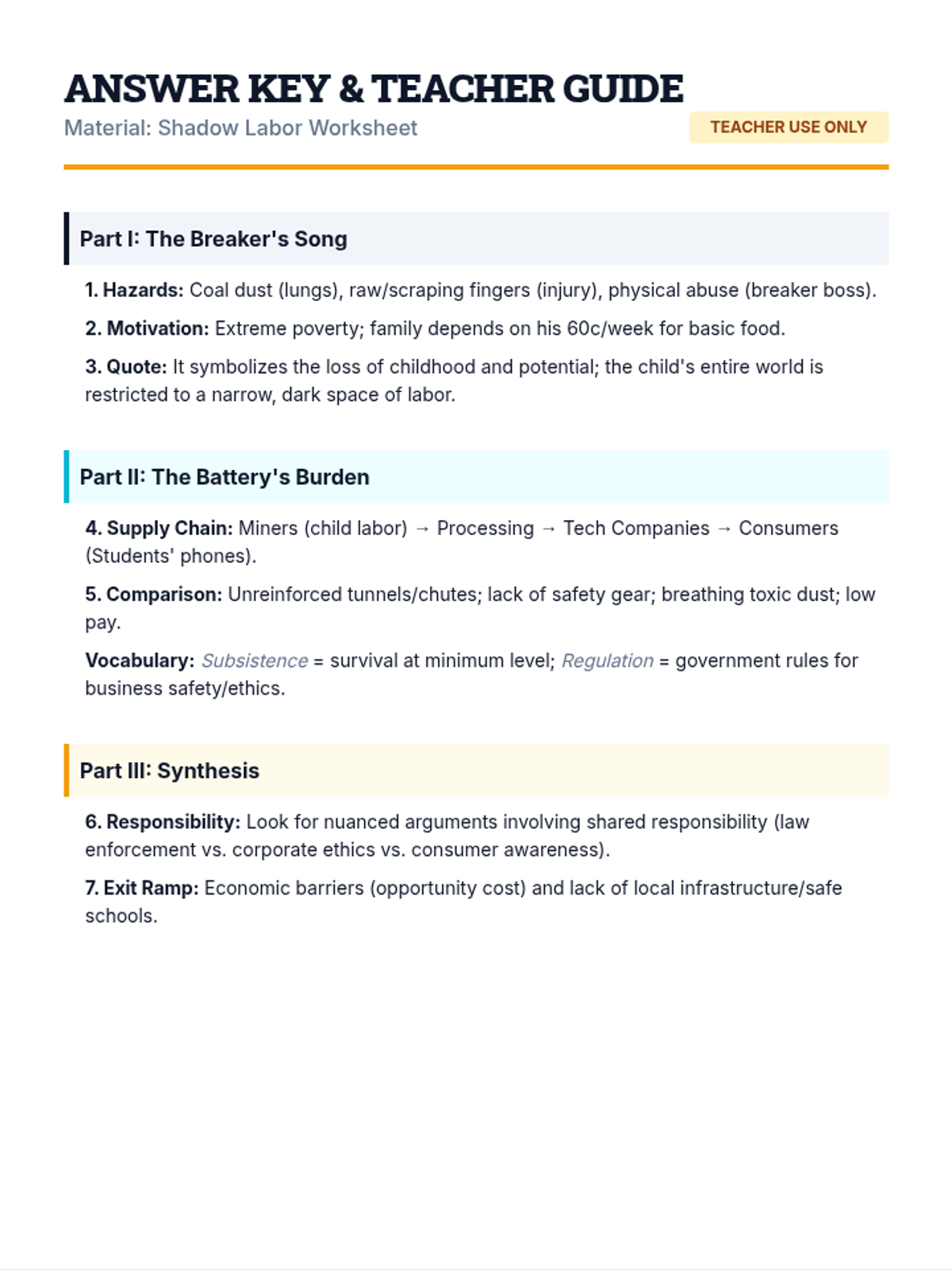
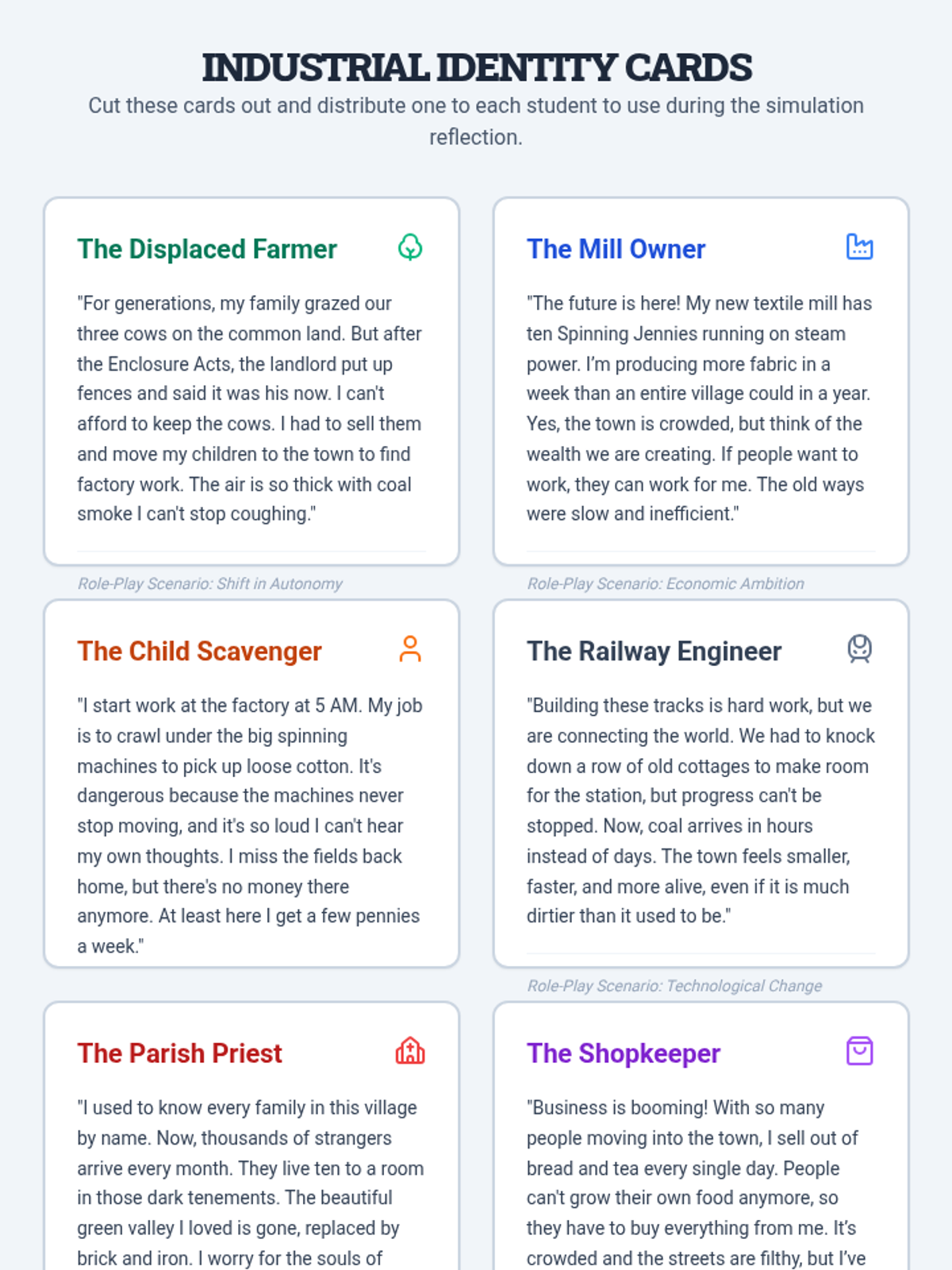
A deep dive into the history and contemporary reality of child labor, comparing the Industrial Revolution to modern global supply chains. Students analyze primary-source-inspired fiction and modern reporting to understand systemic drivers and ethical implications.
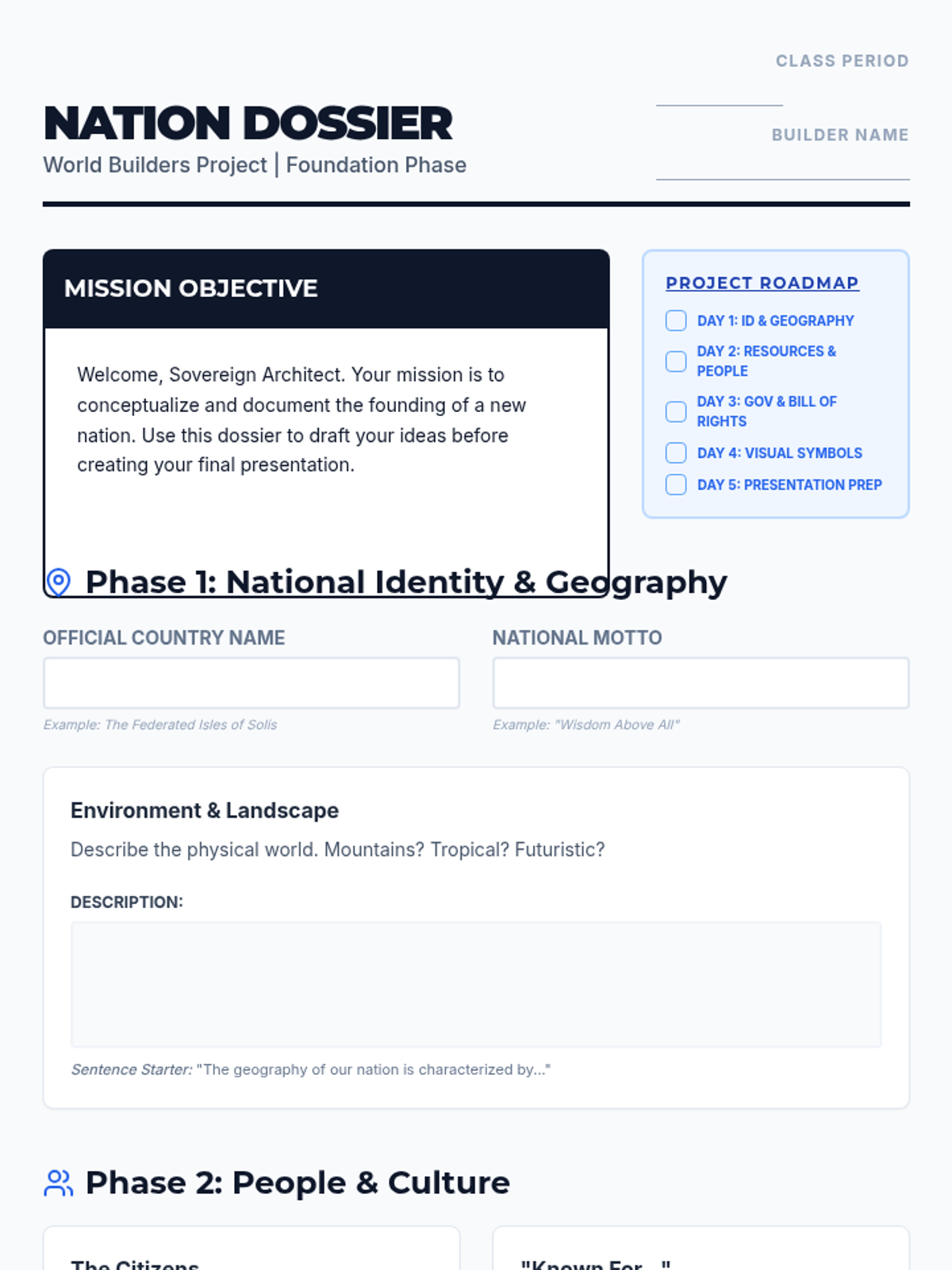
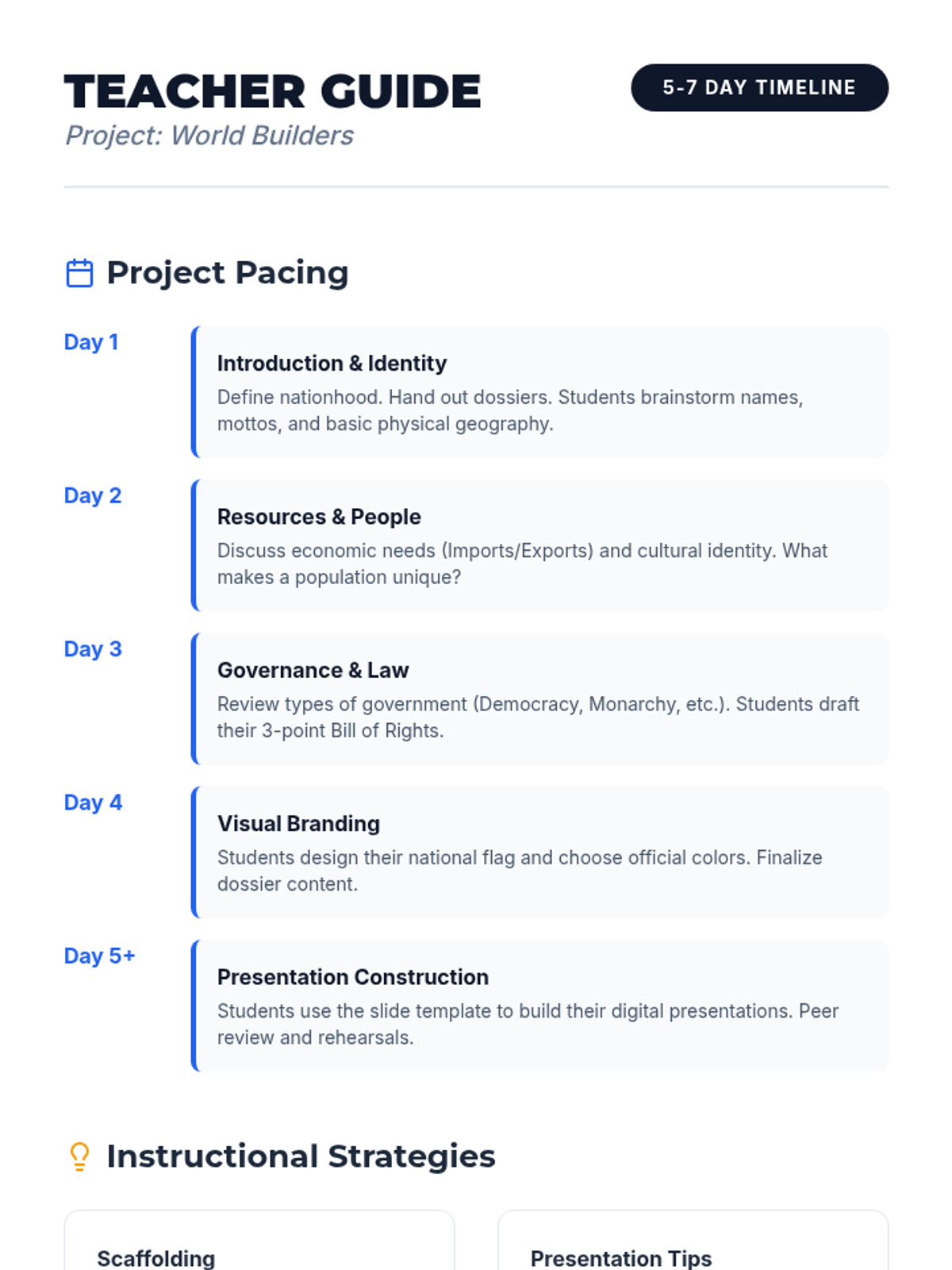
A multi-day project sequence where students design their own nation, exploring concepts of geography, governance, economics, and civil rights.
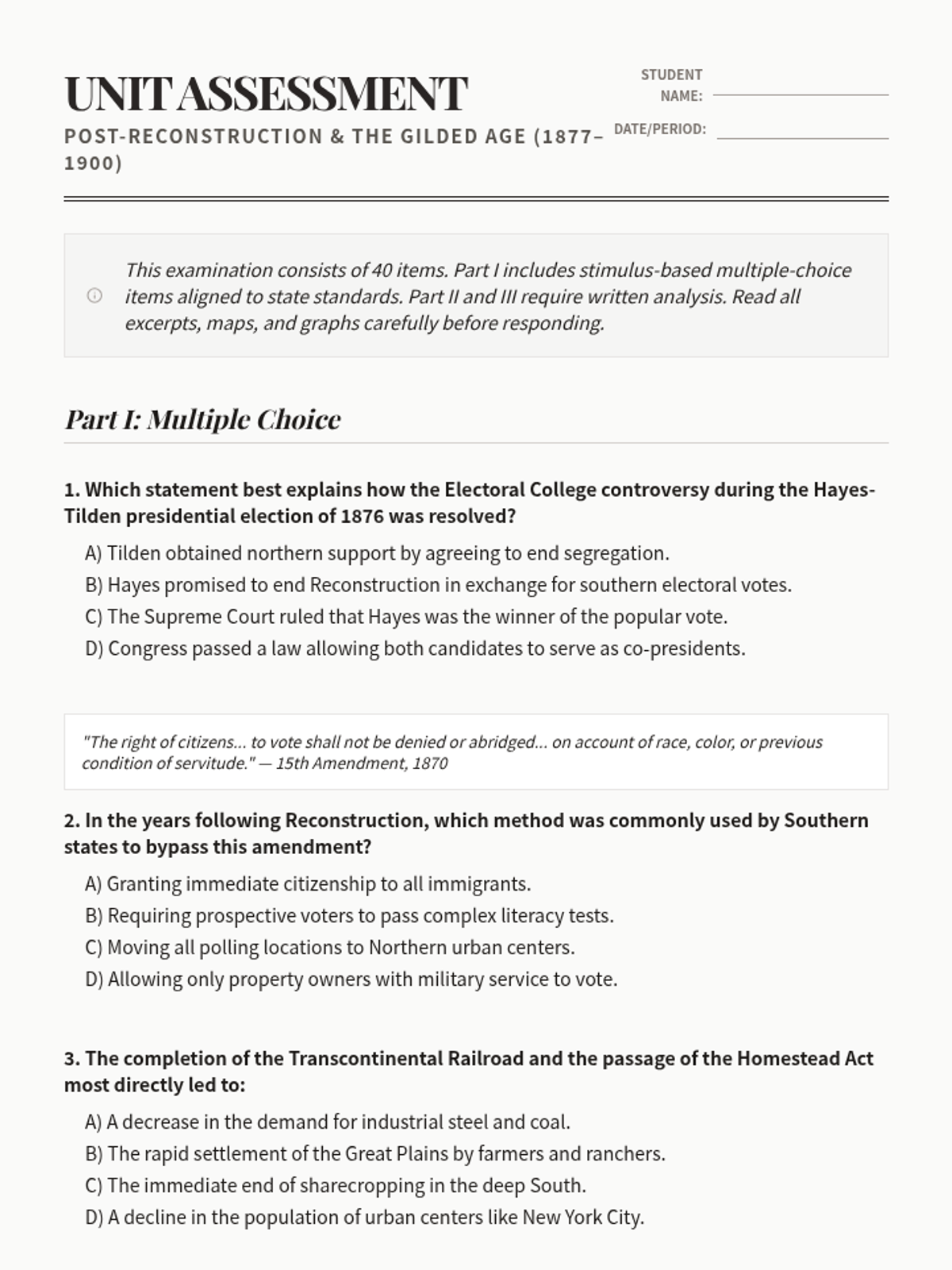
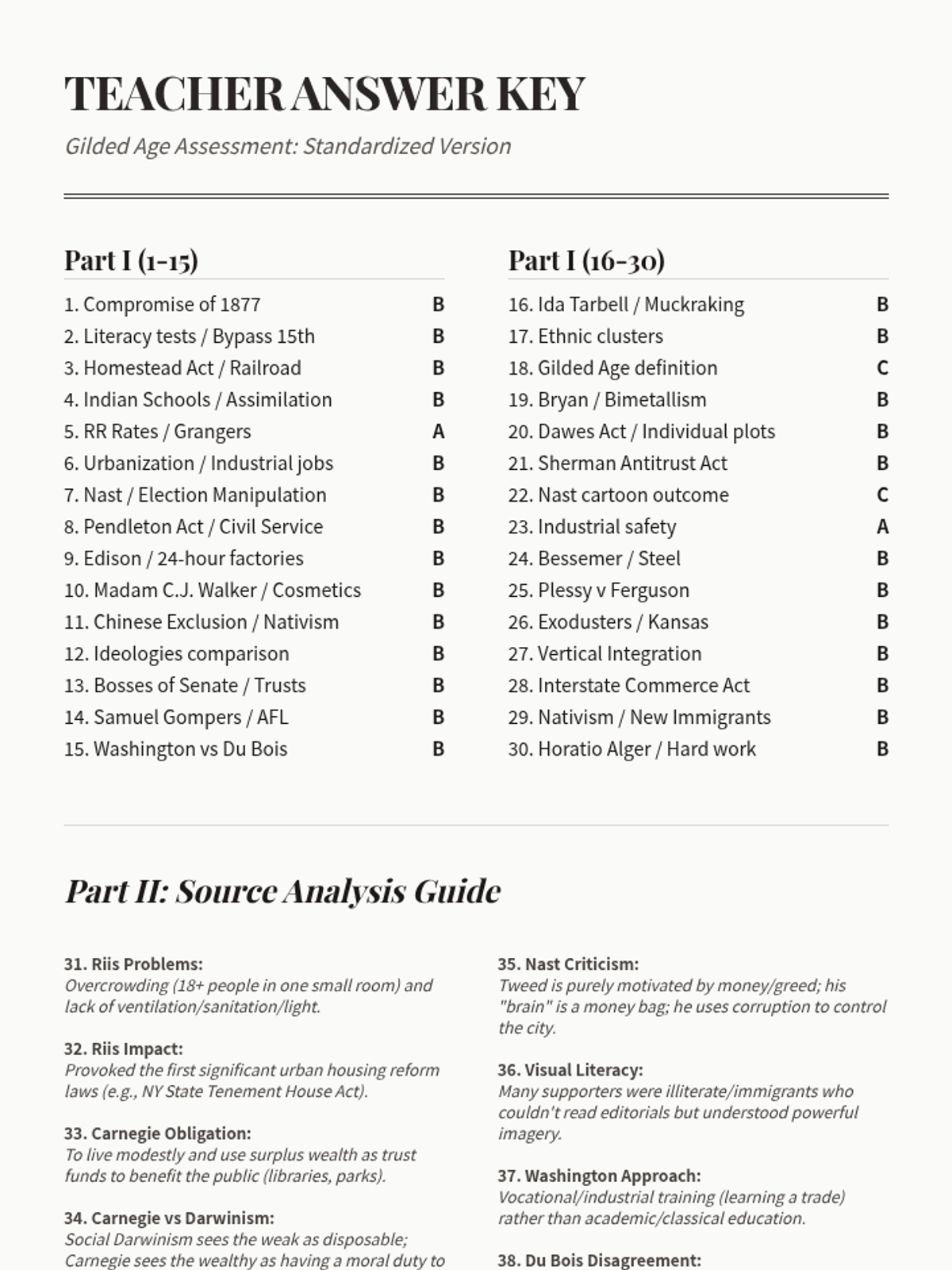
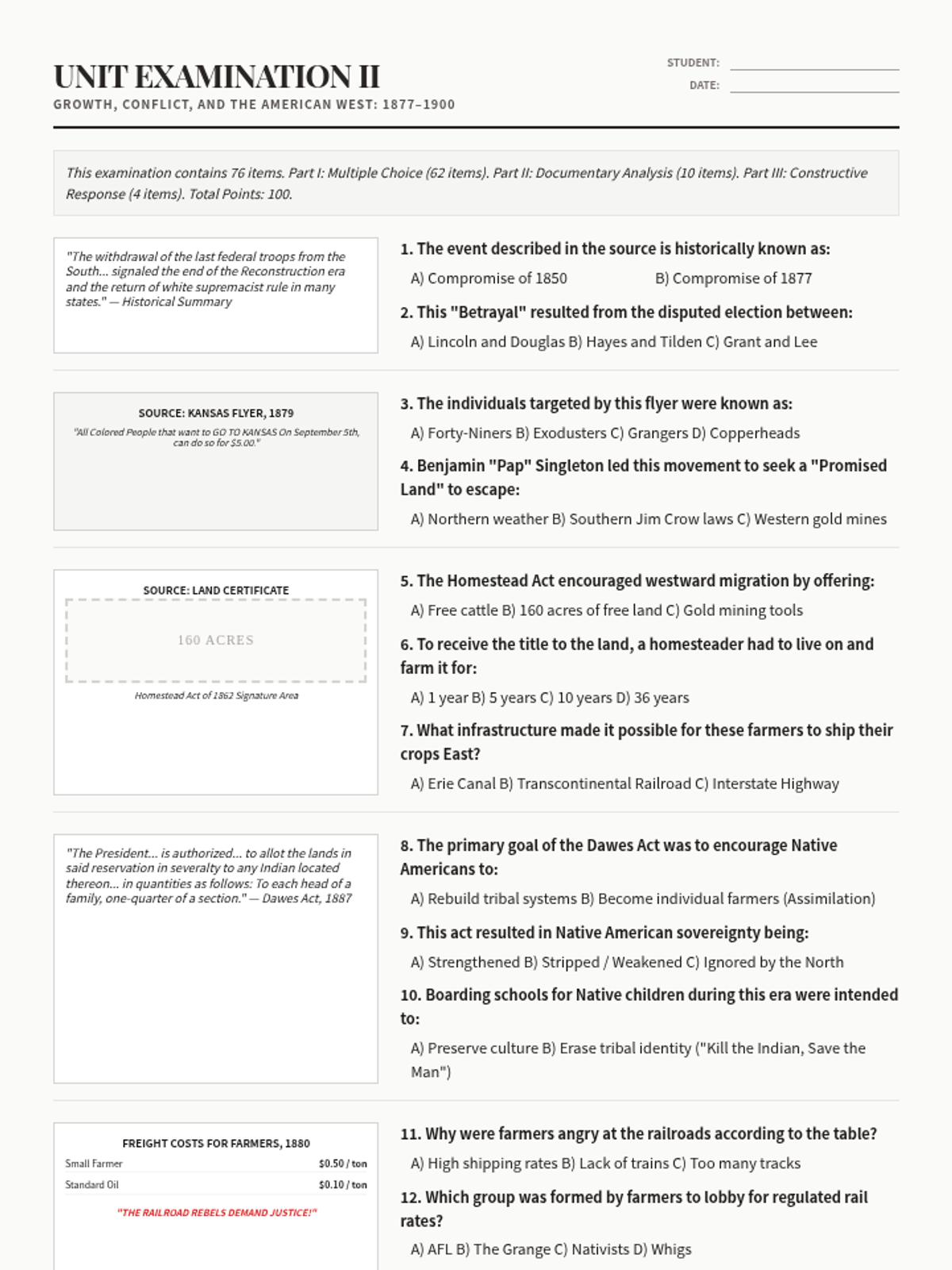
A comprehensive journey through United States history from the aftermath of the Civil War to the contemporary era, exploring the social, political, and economic shifts that shaped the modern nation.
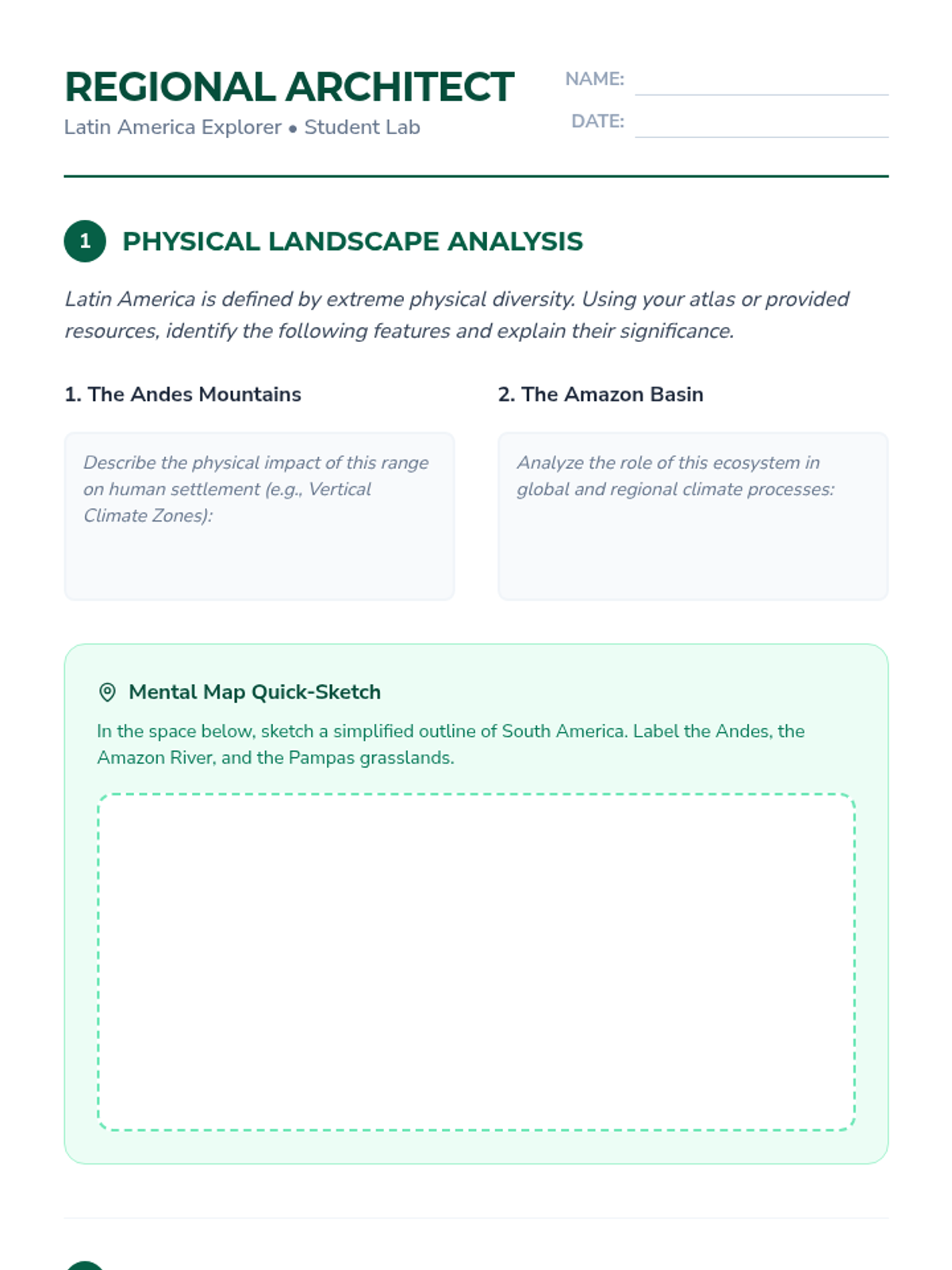
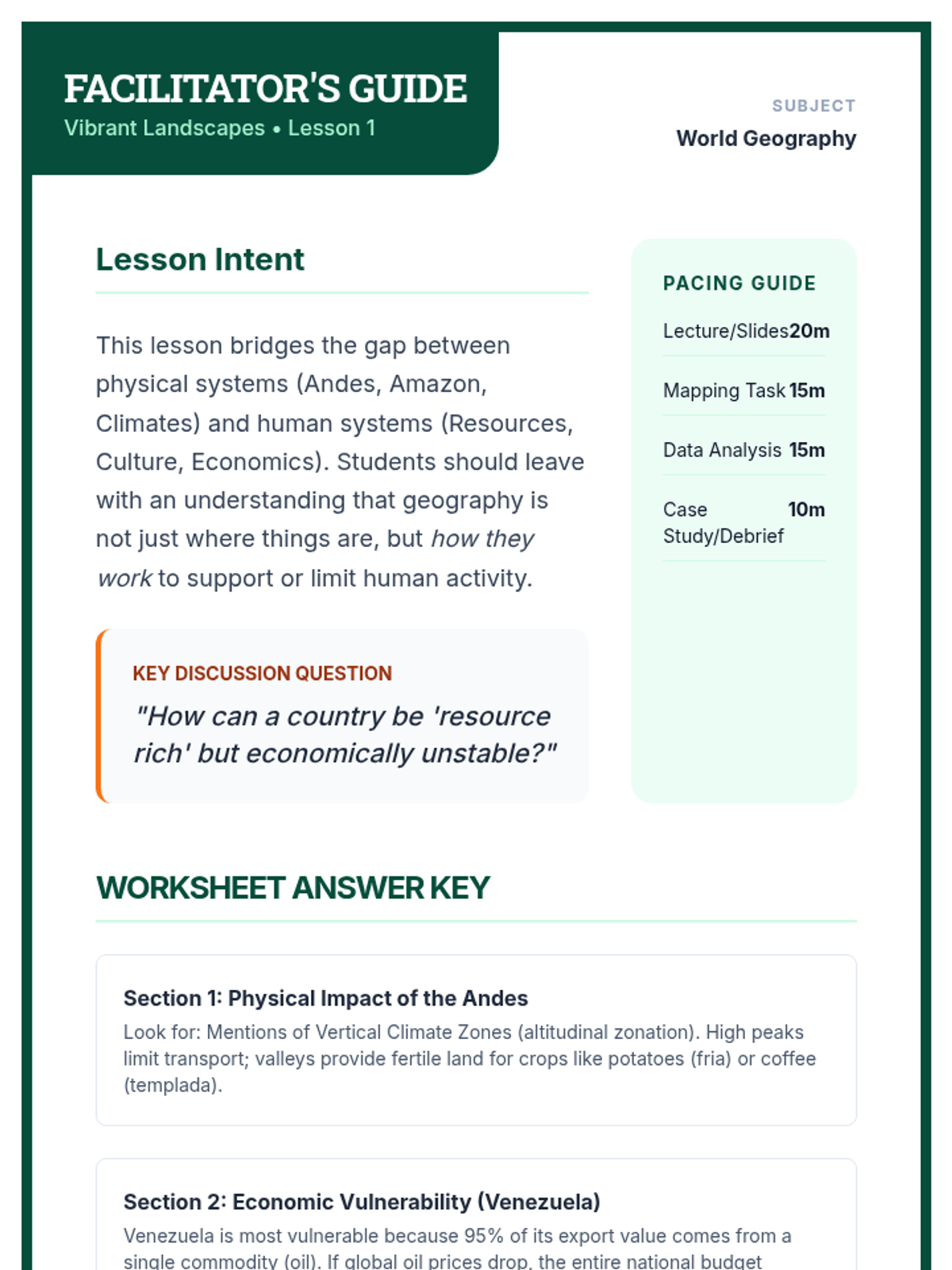
A comprehensive exploration of Latin America's physical and human geography, focusing on how diverse climates and resource distribution shape regional economies and cultures. aligned to Texas TEKS 4(A).
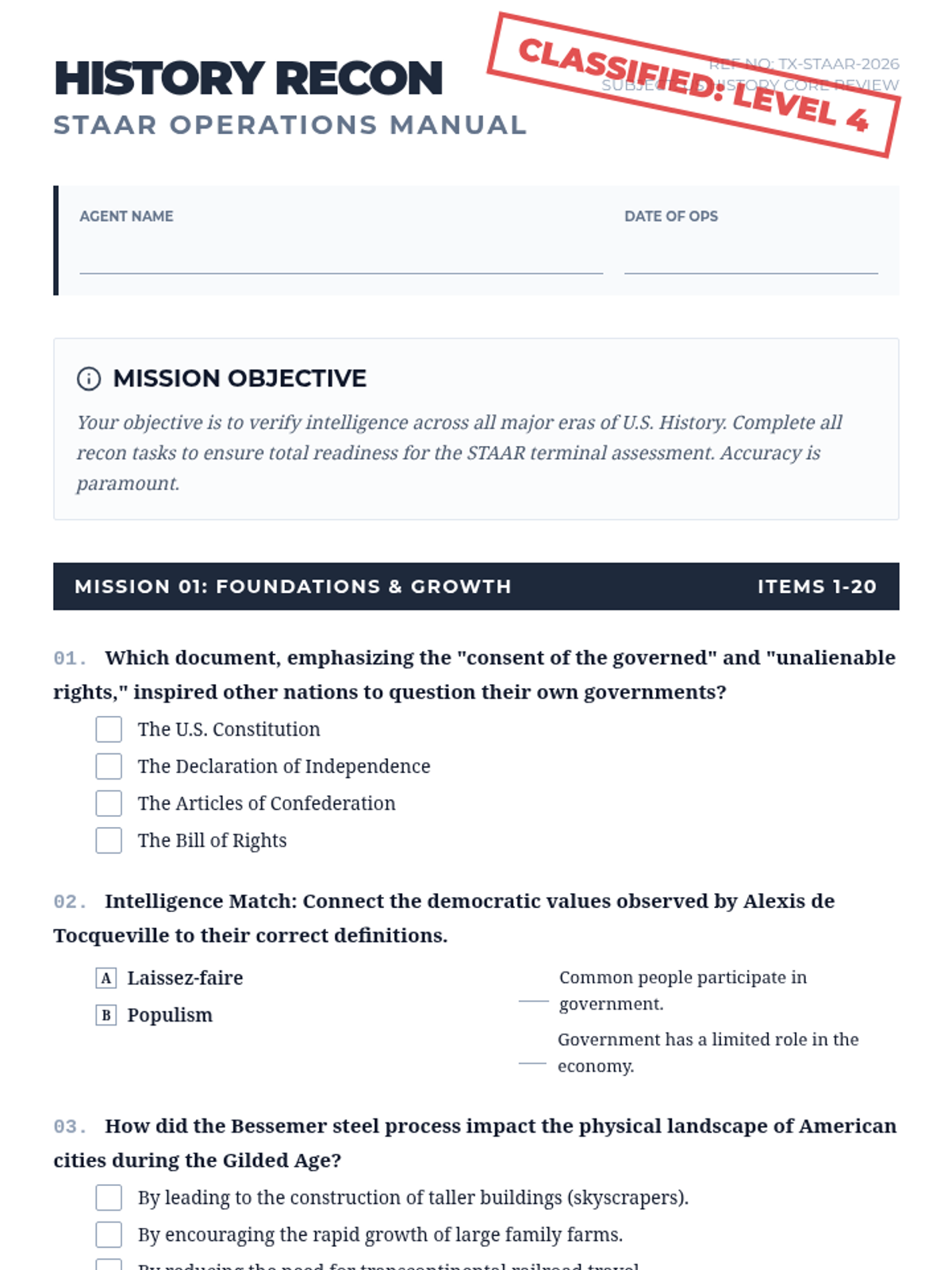
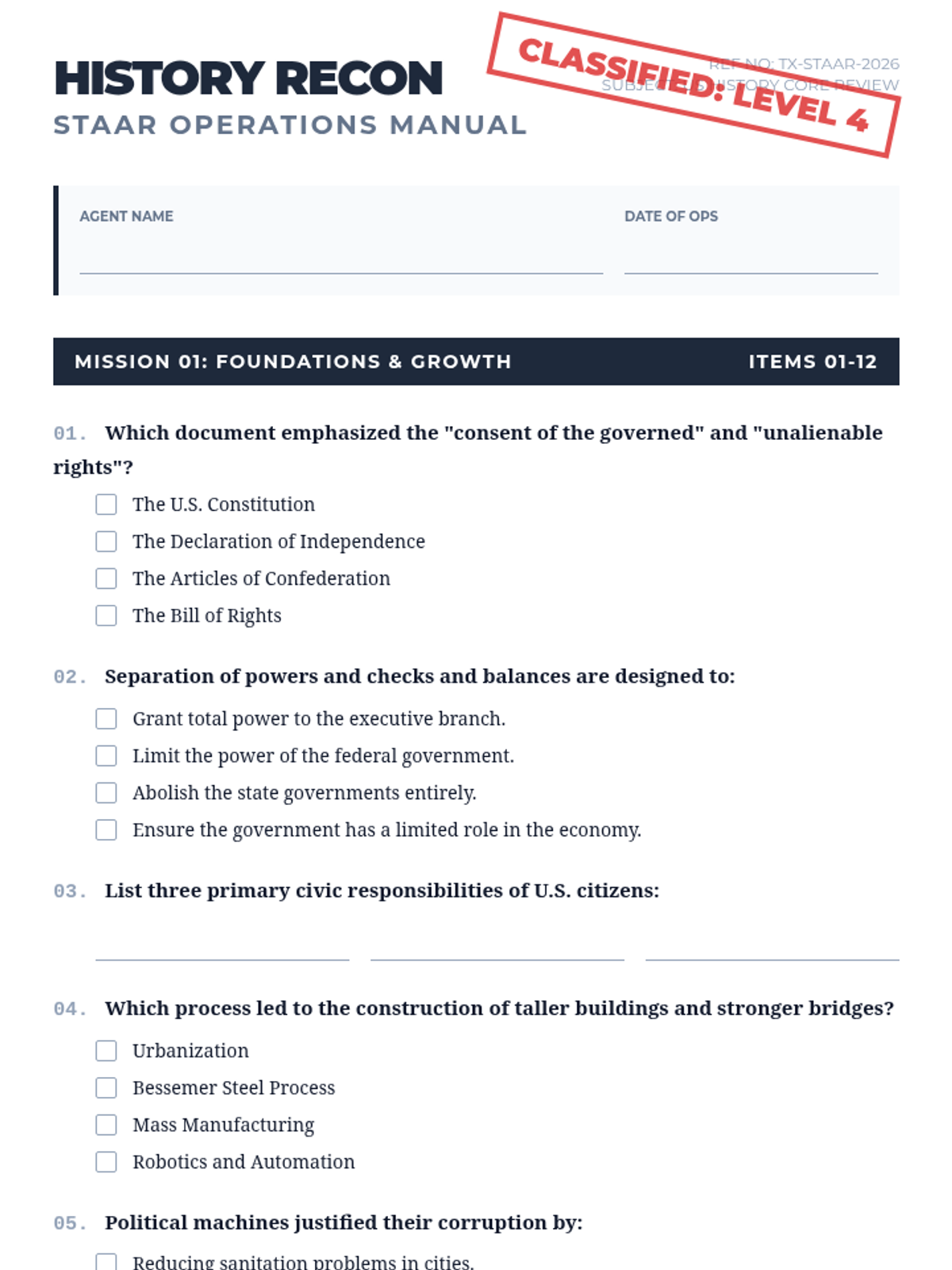
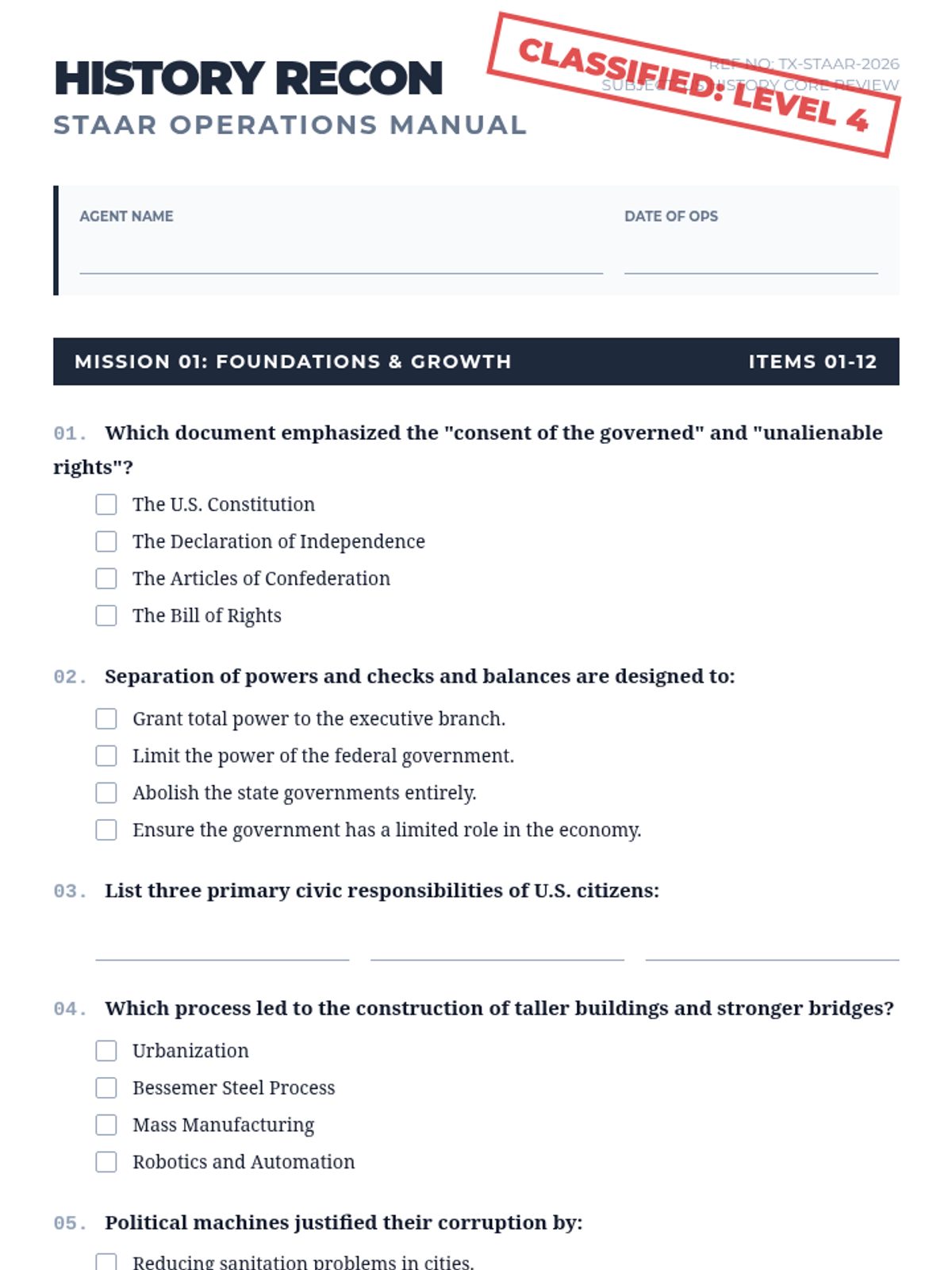
A high-stakes review series for the U.S. History STAAR exam, focusing on major eras, turning points, and key figures using a 'Mission-Based' archival theme.
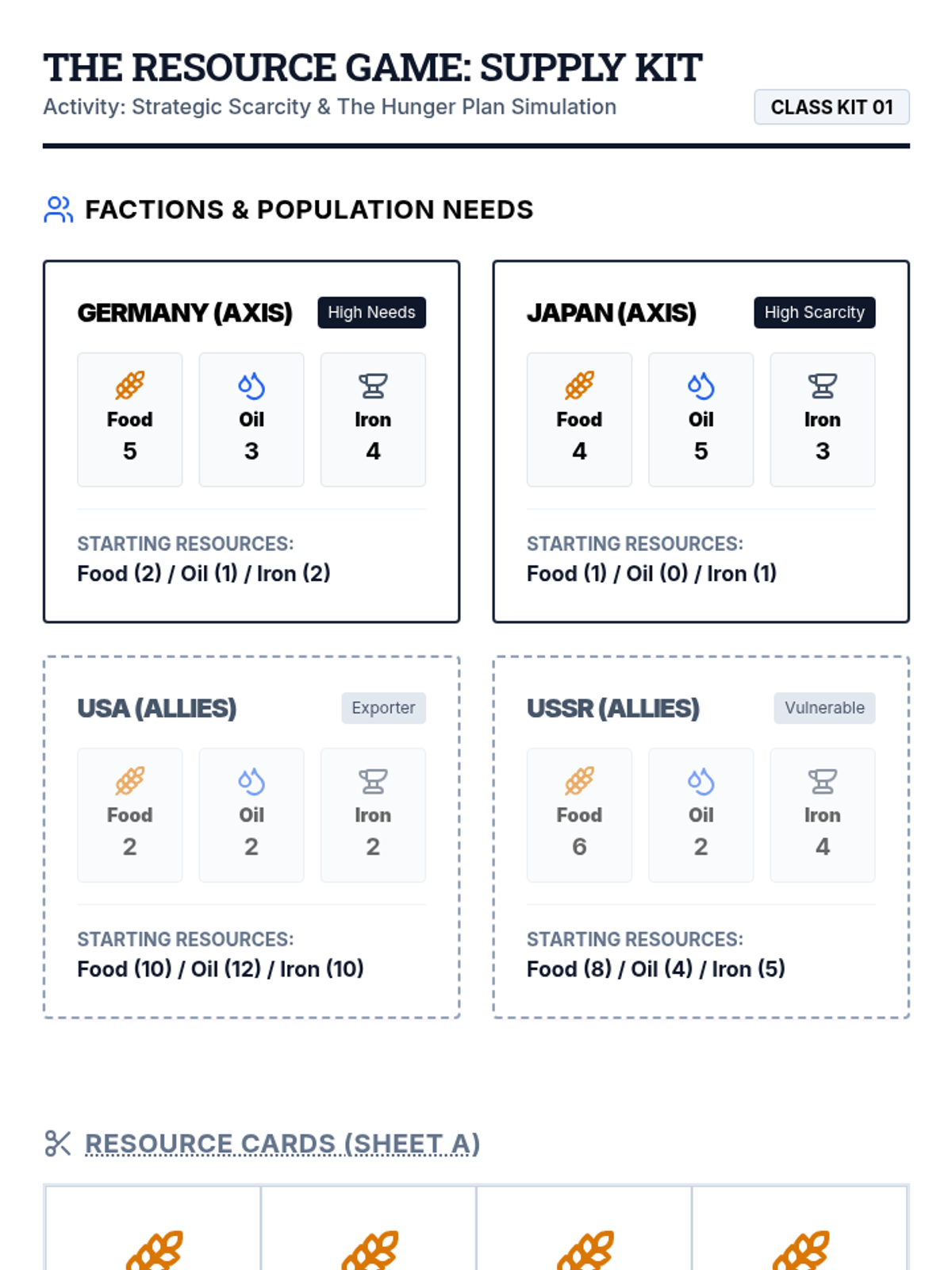
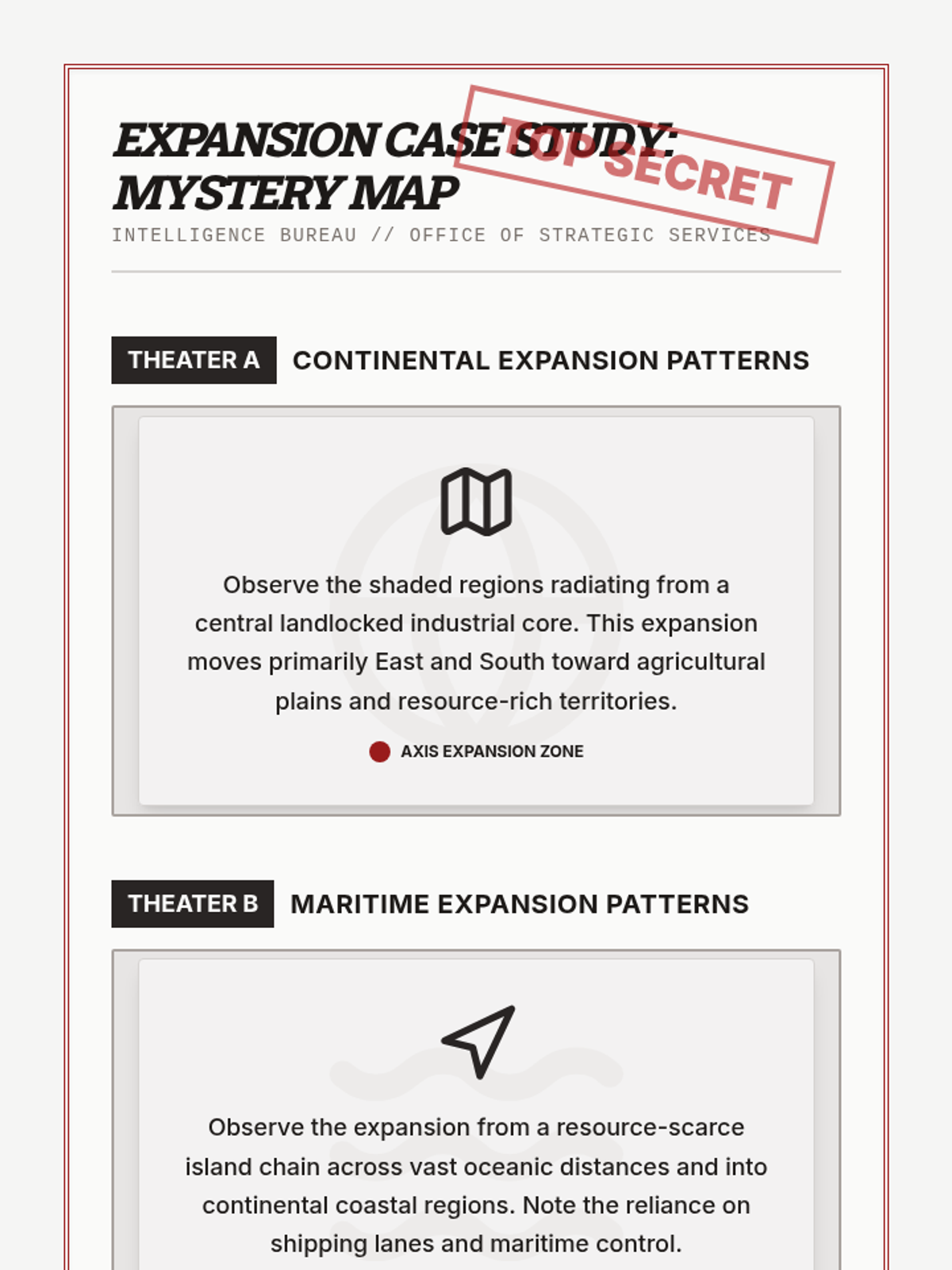
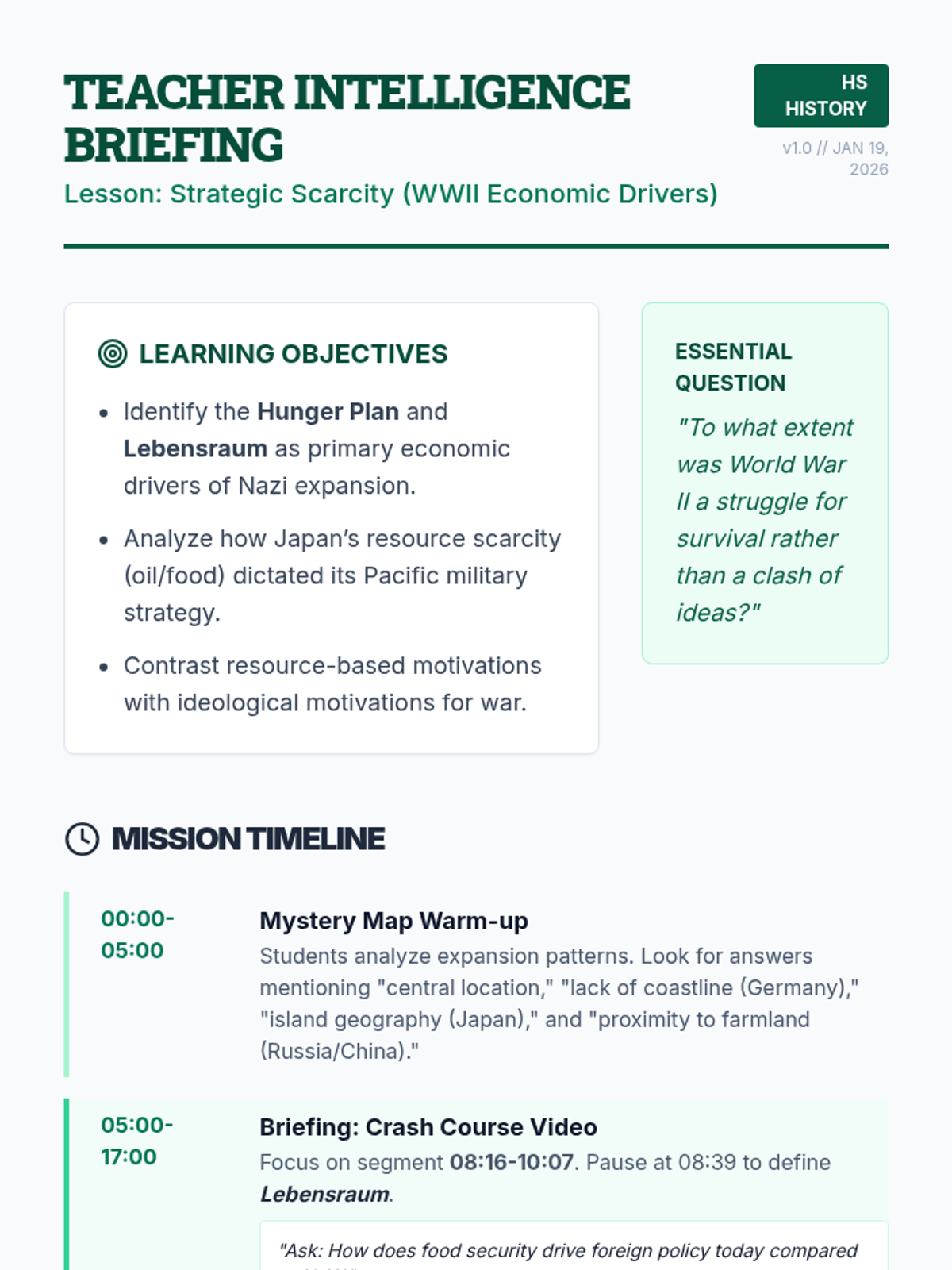
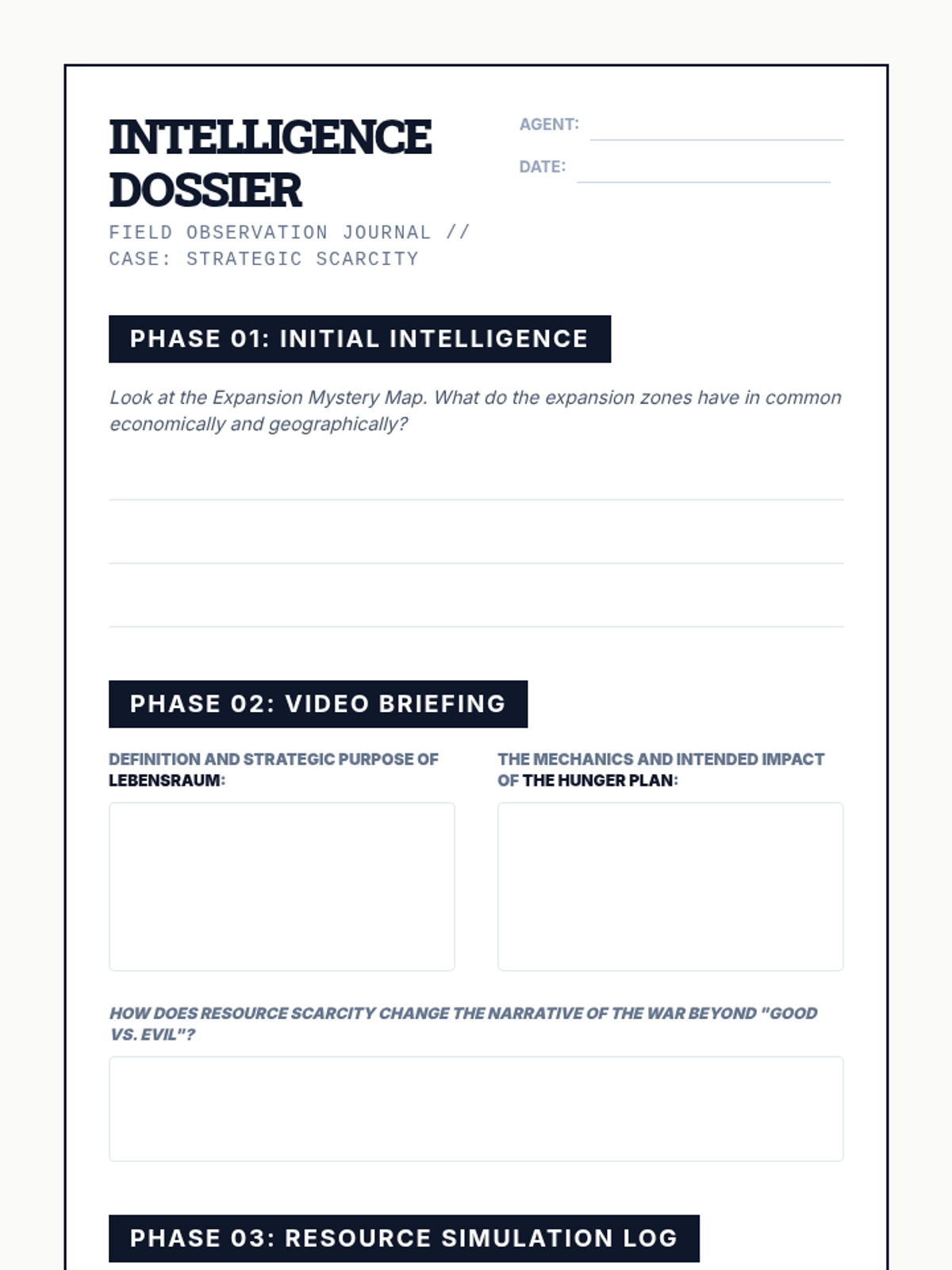
A high school history unit exploring the underlying economic and resource-driven motivations of World War II, moving beyond purely ideological narratives to understand the role of scarcity and expansionism.
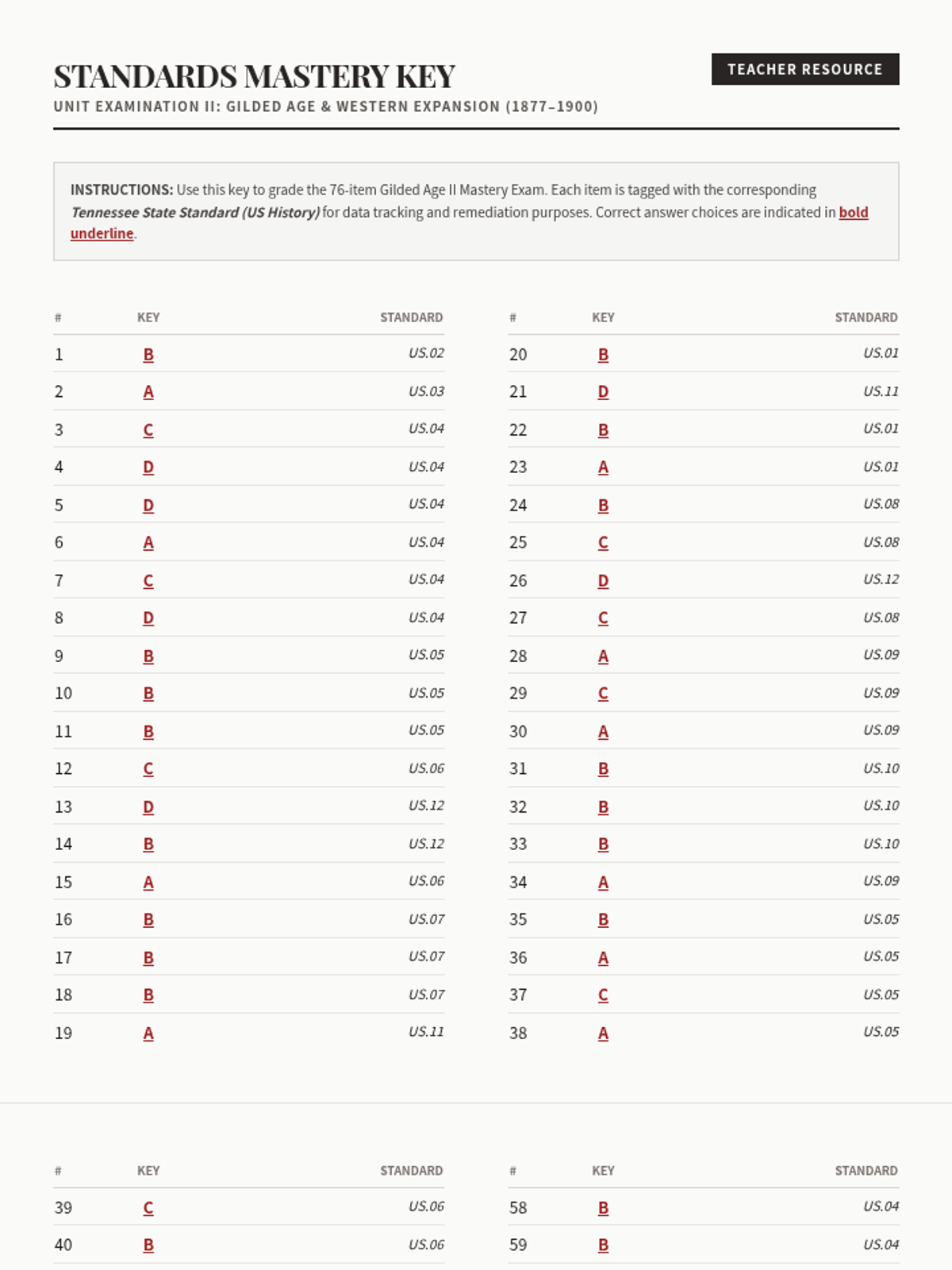
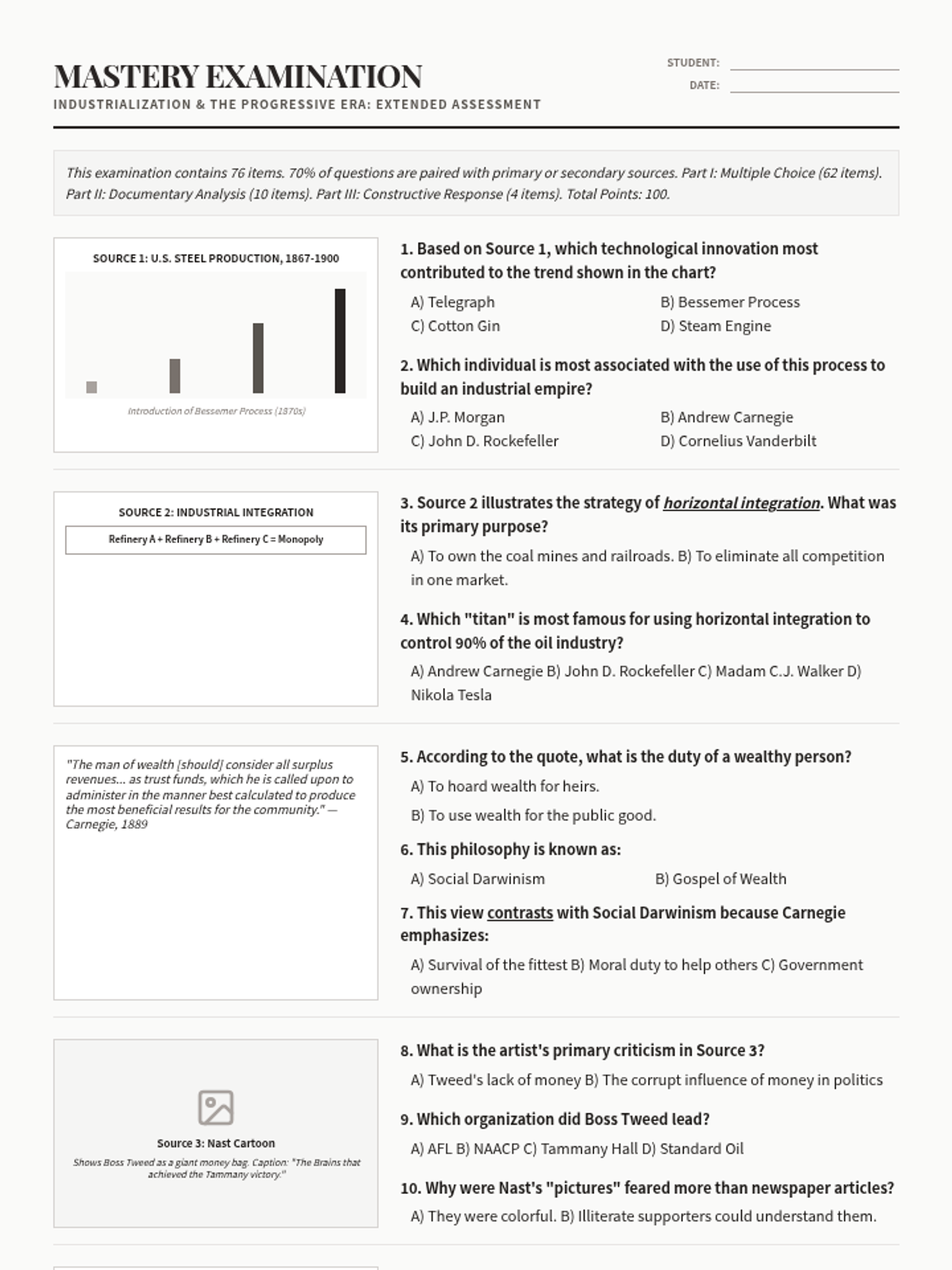
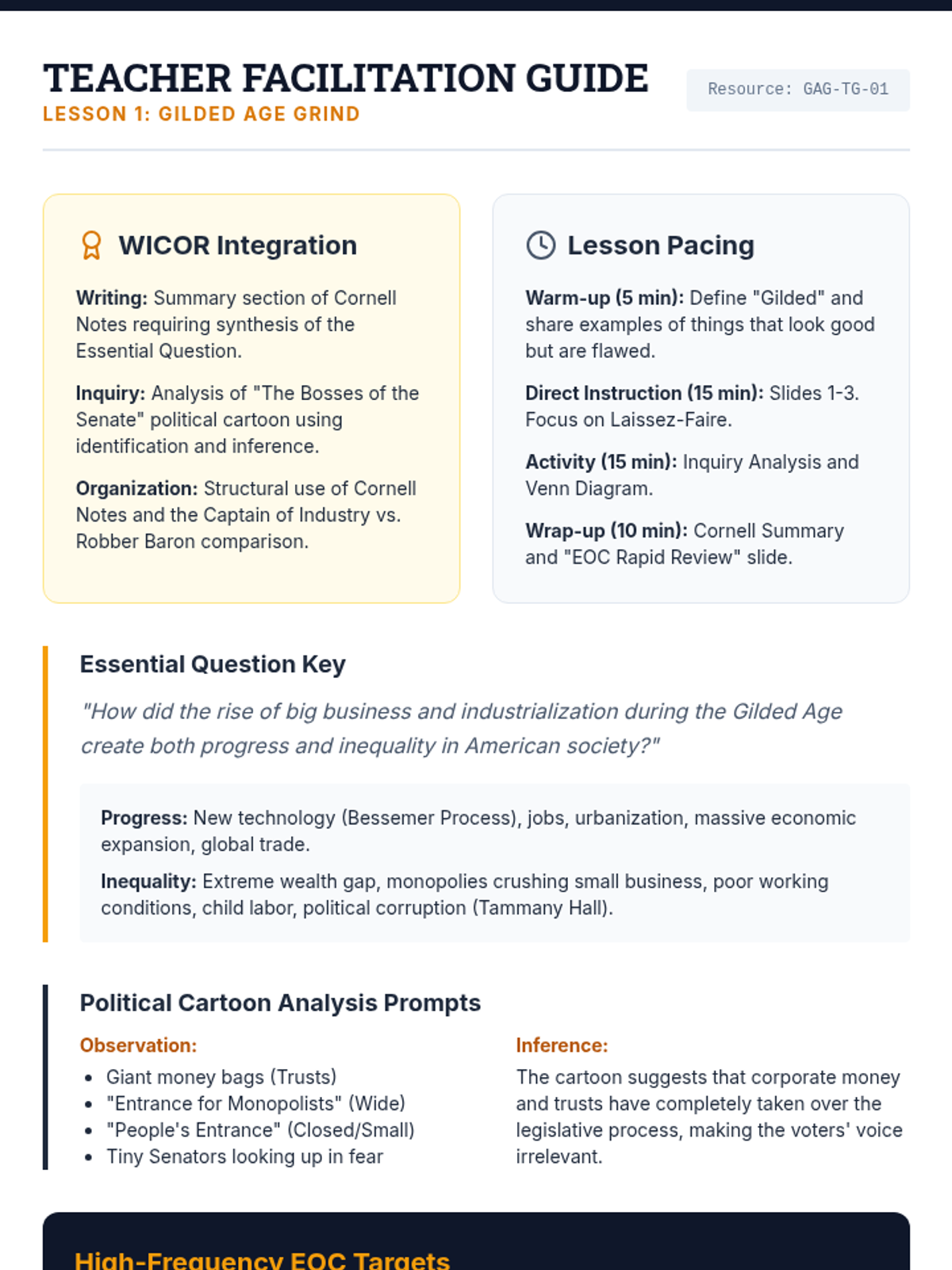
A comprehensive six-week unit exploring the Gilded Age, focusing on the tension between rapid industrial growth and the social/political challenges of the era. Students analyze primary sources including political cartoons and immigrant journals to understand the complexities of American life between 1870 and 1900.
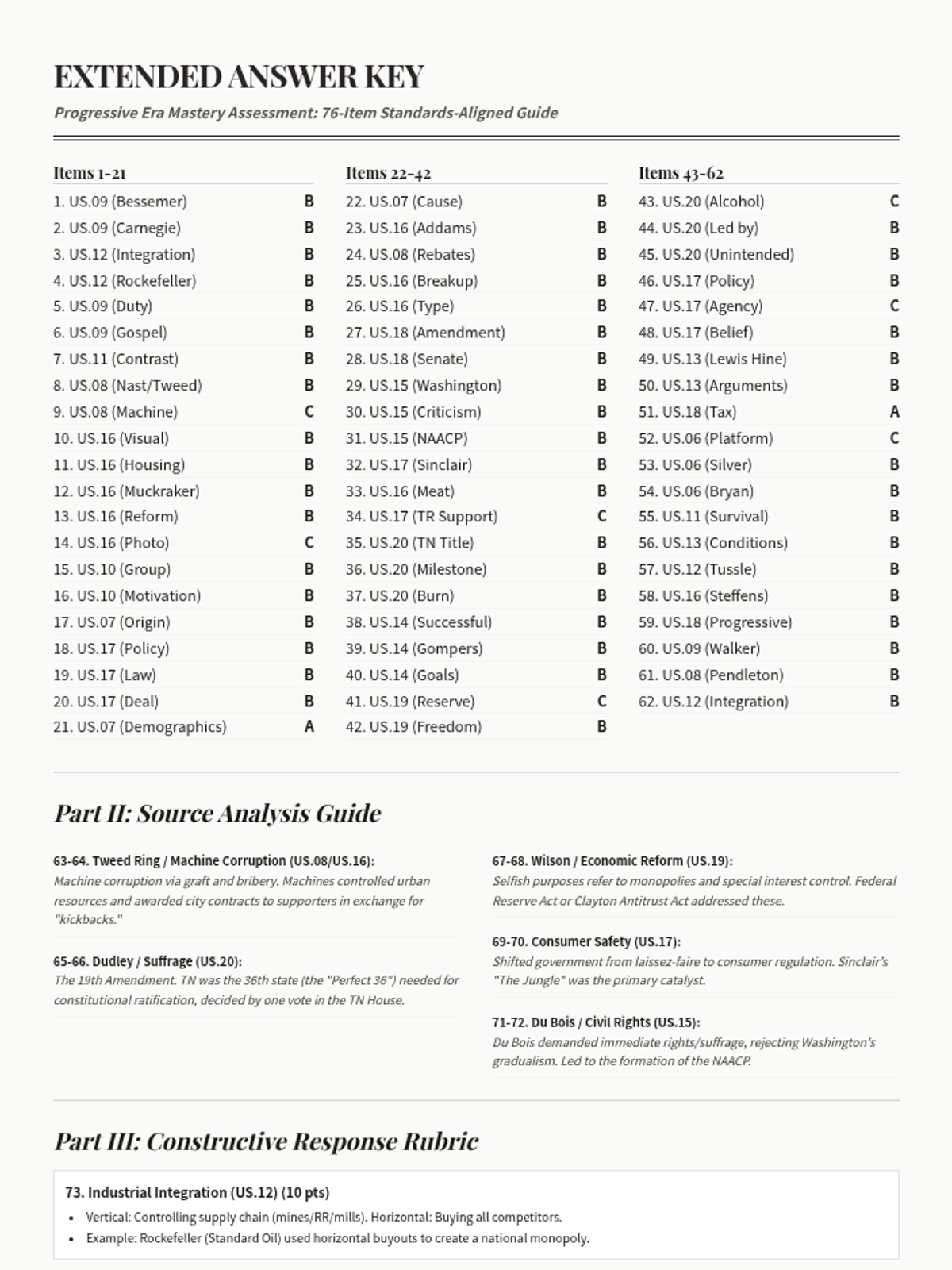
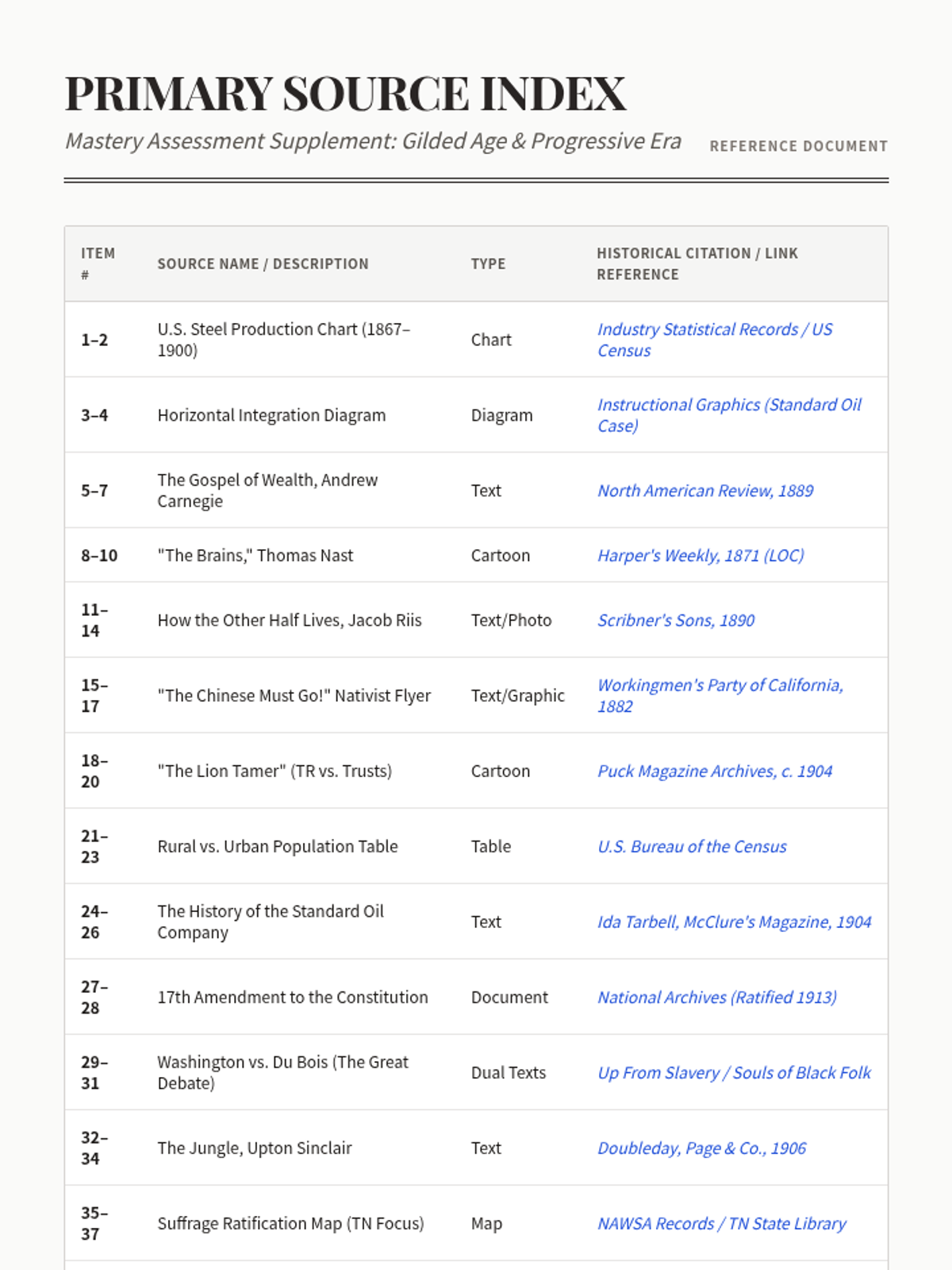
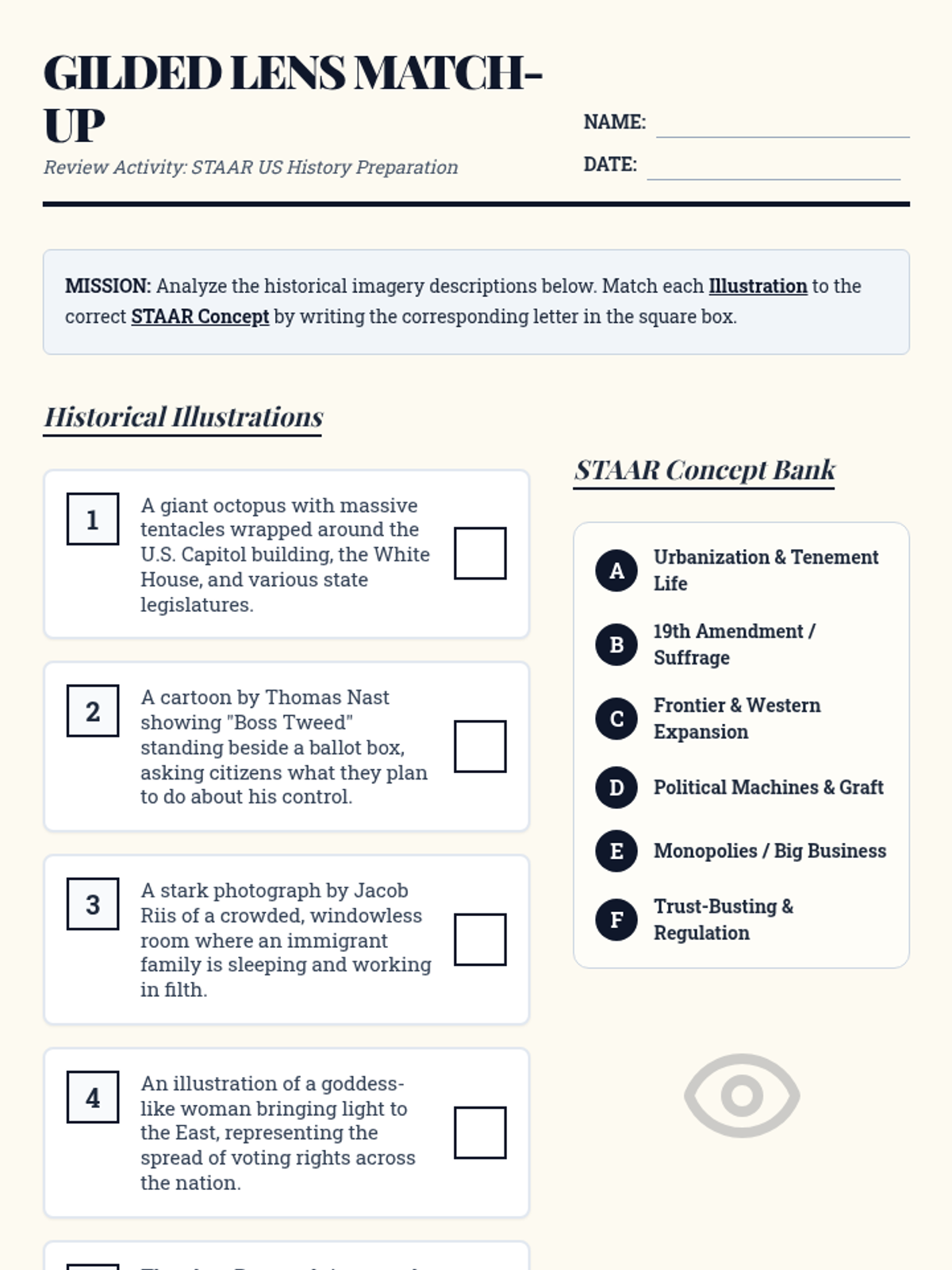
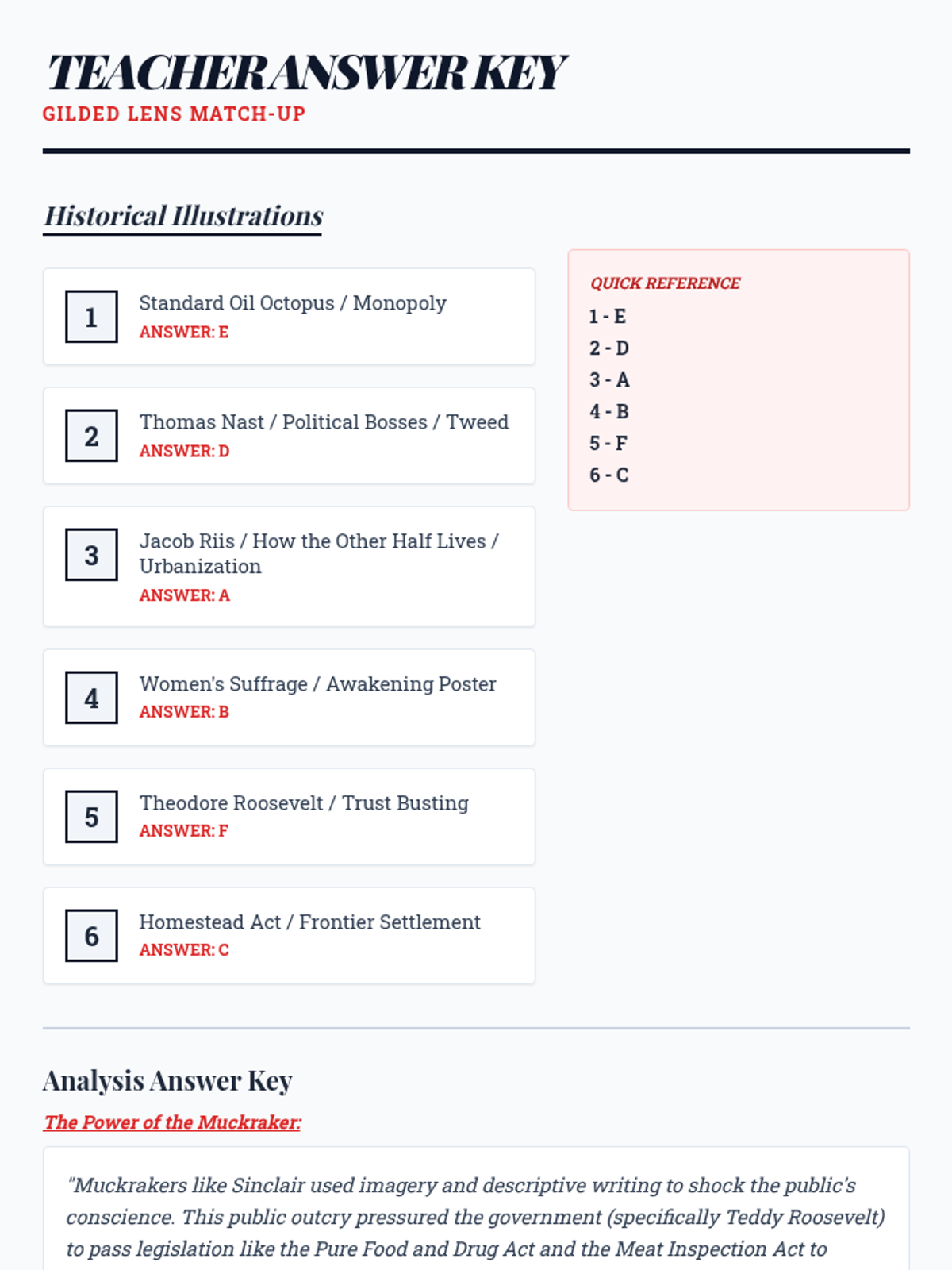
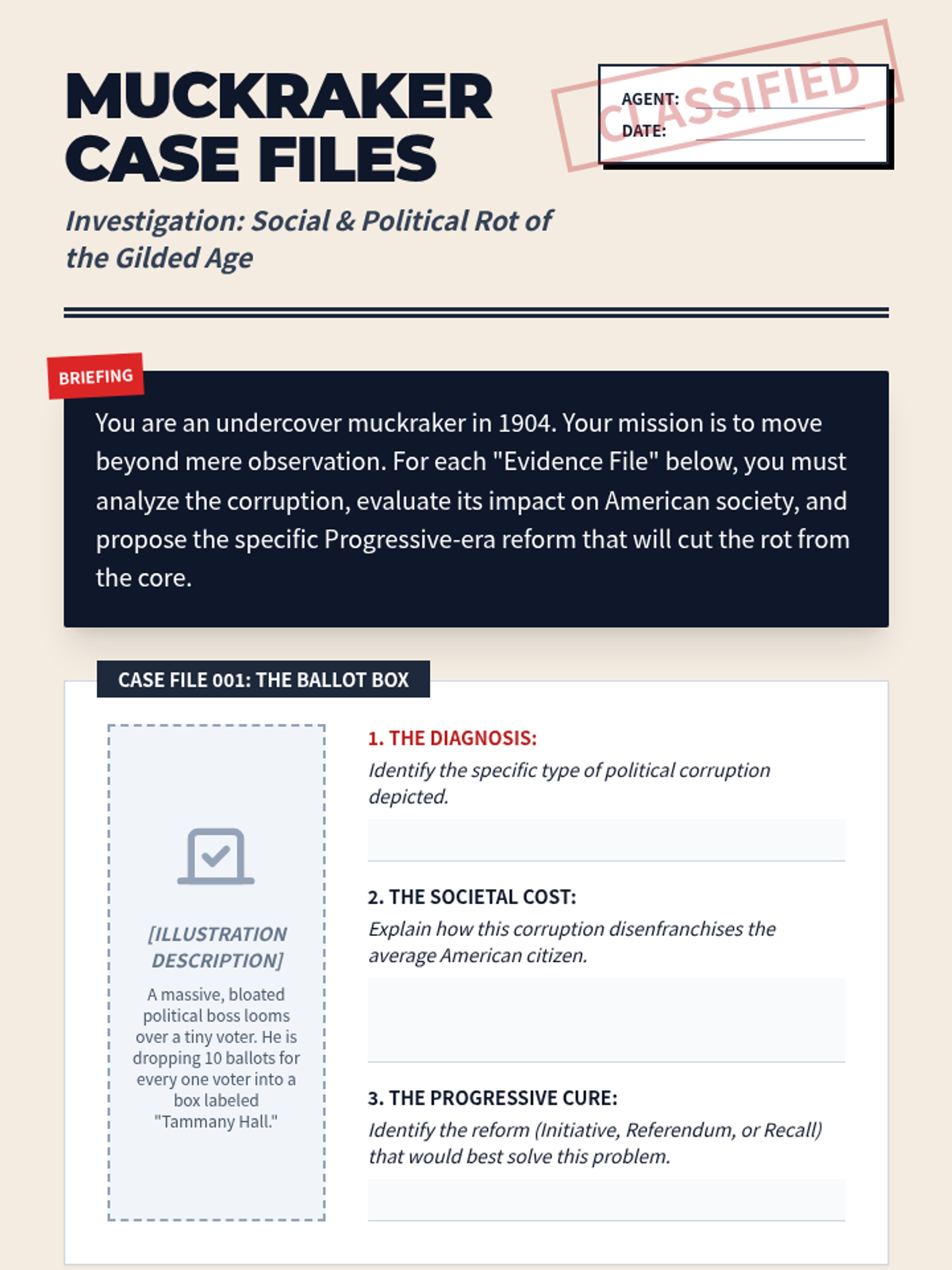
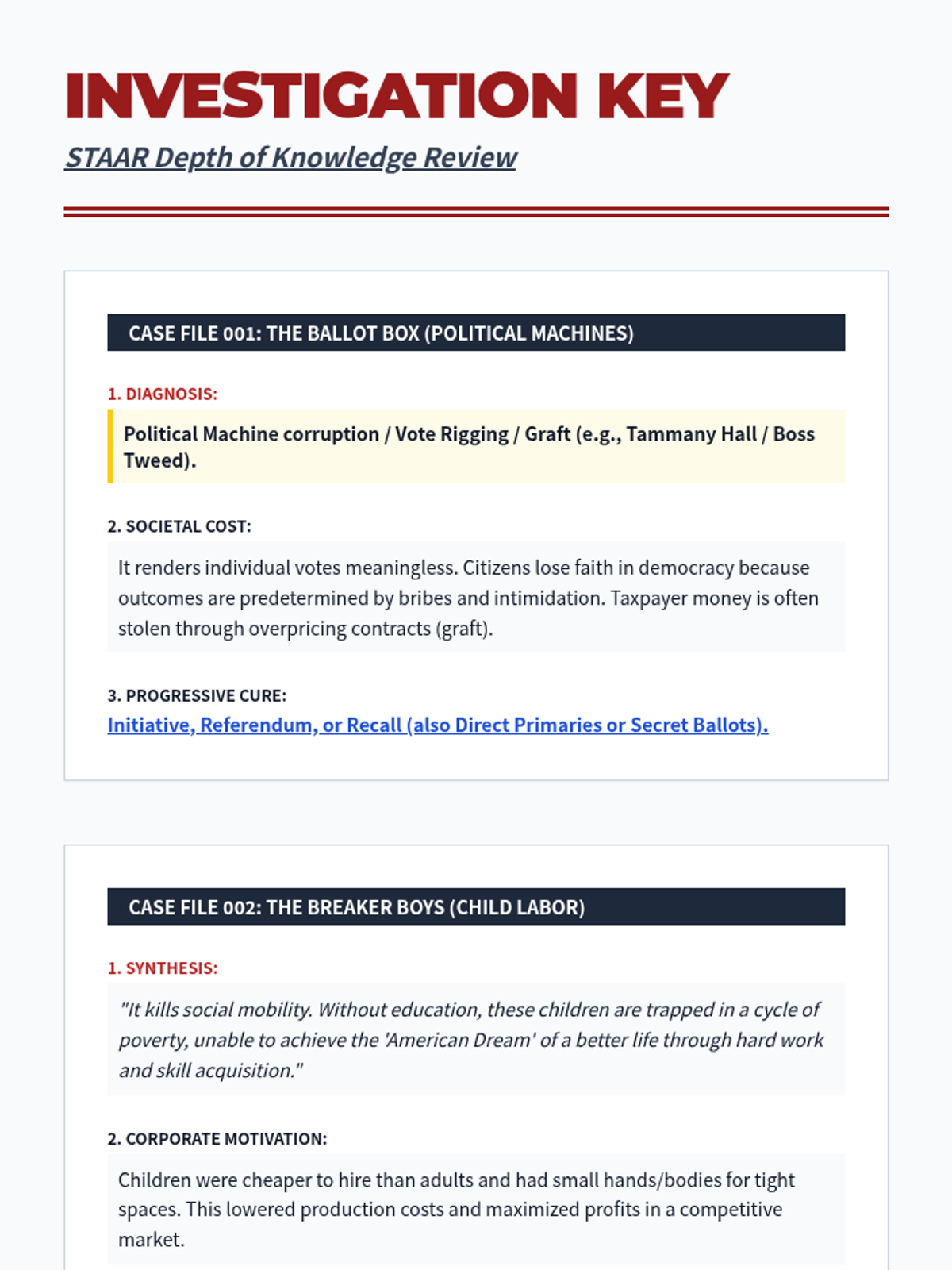
A comprehensive review sequence focusing on the Gilded Age and Progressive Era through the analysis of historical imagery and political cartoons, specifically designed for Texas STAAR preparation.
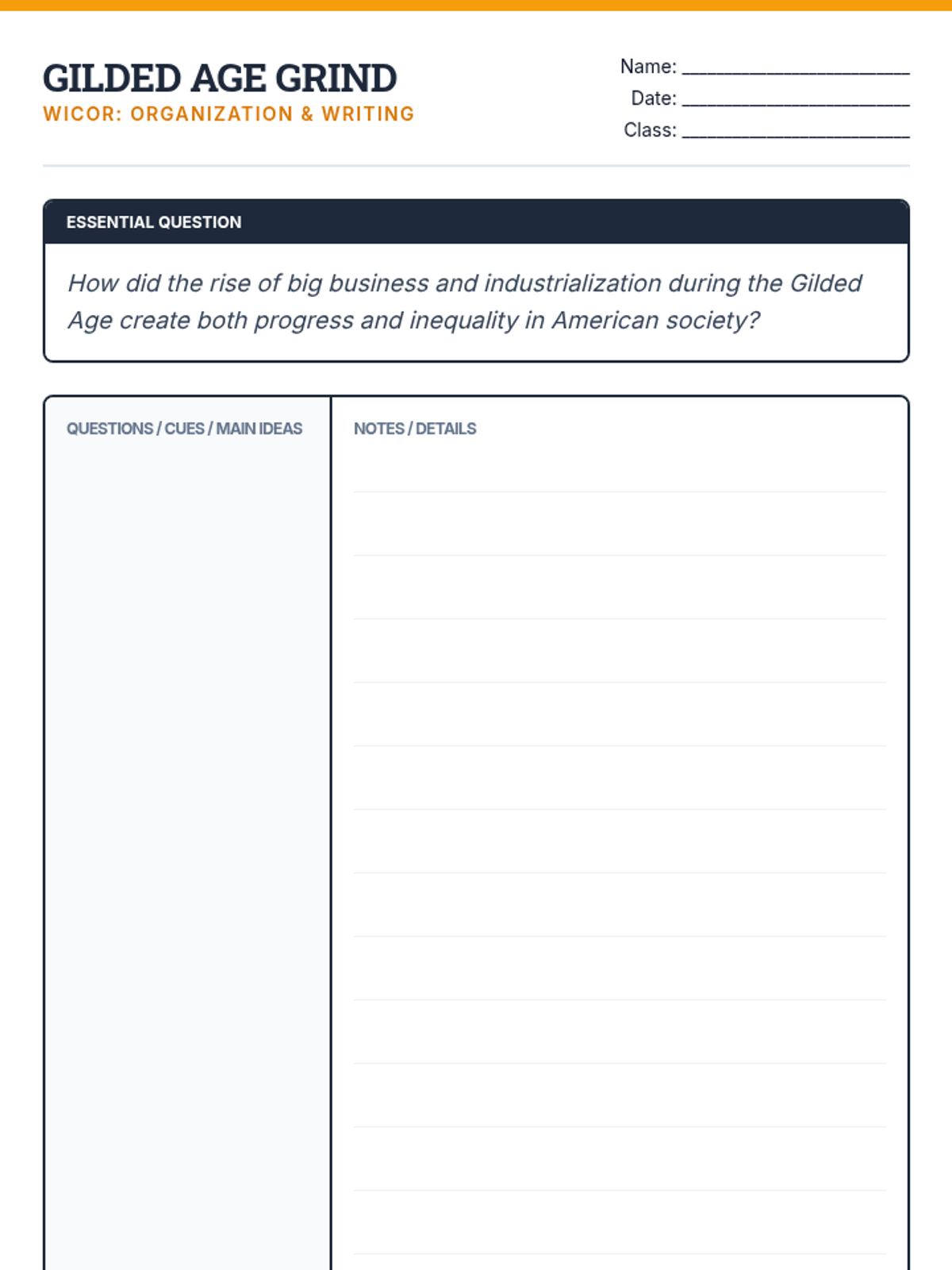
A comprehensive US History EOC review sequence designed for AVID classrooms, utilizing WICOR strategies to master key eras from the Gilded Age through modern turning points.
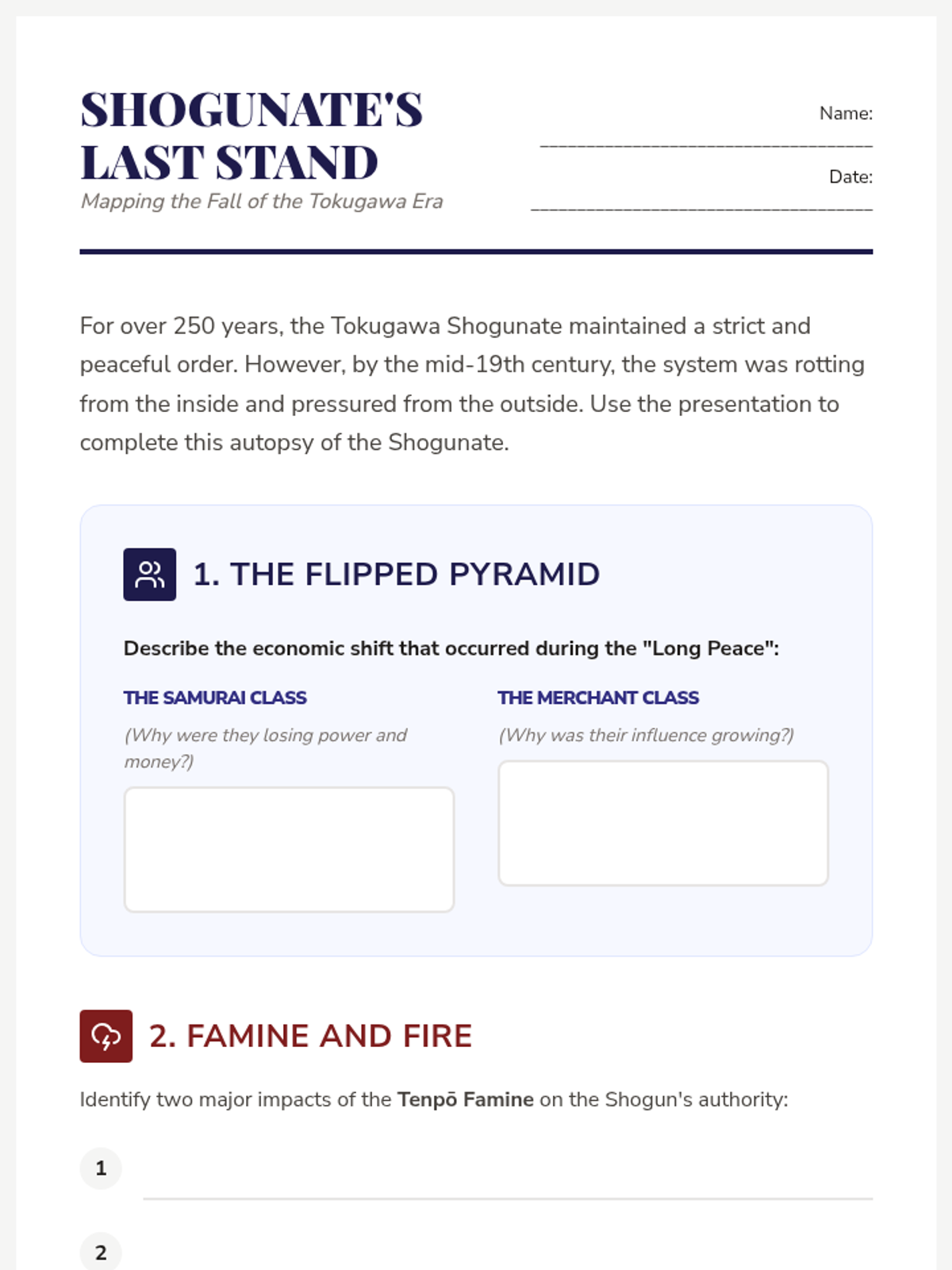
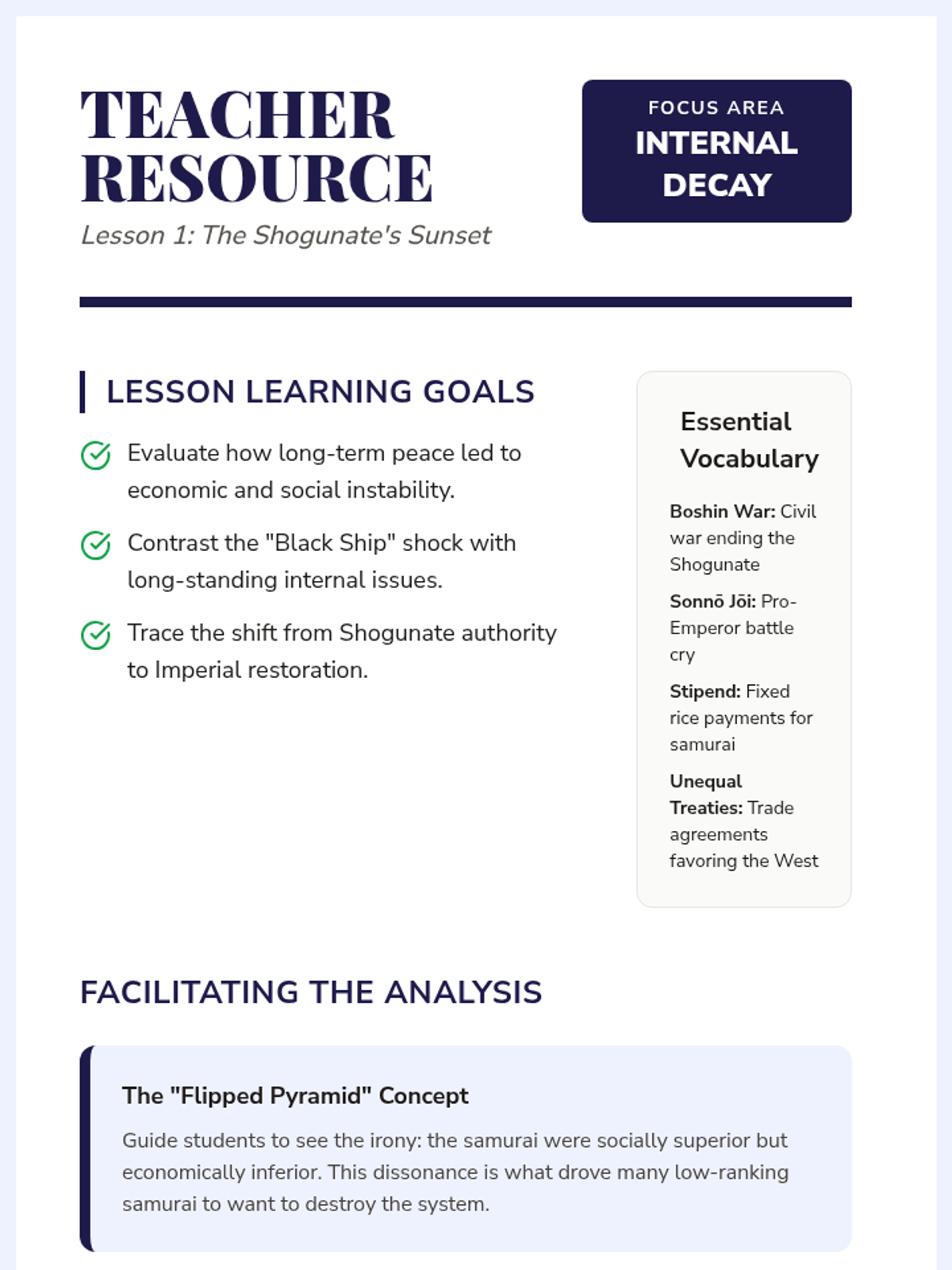
A comprehensive unit exploring Japan's transition from a feudal isolationist state to a modern global power, covering the decline of the Shogunate and the rapid modernization of the Meiji era.
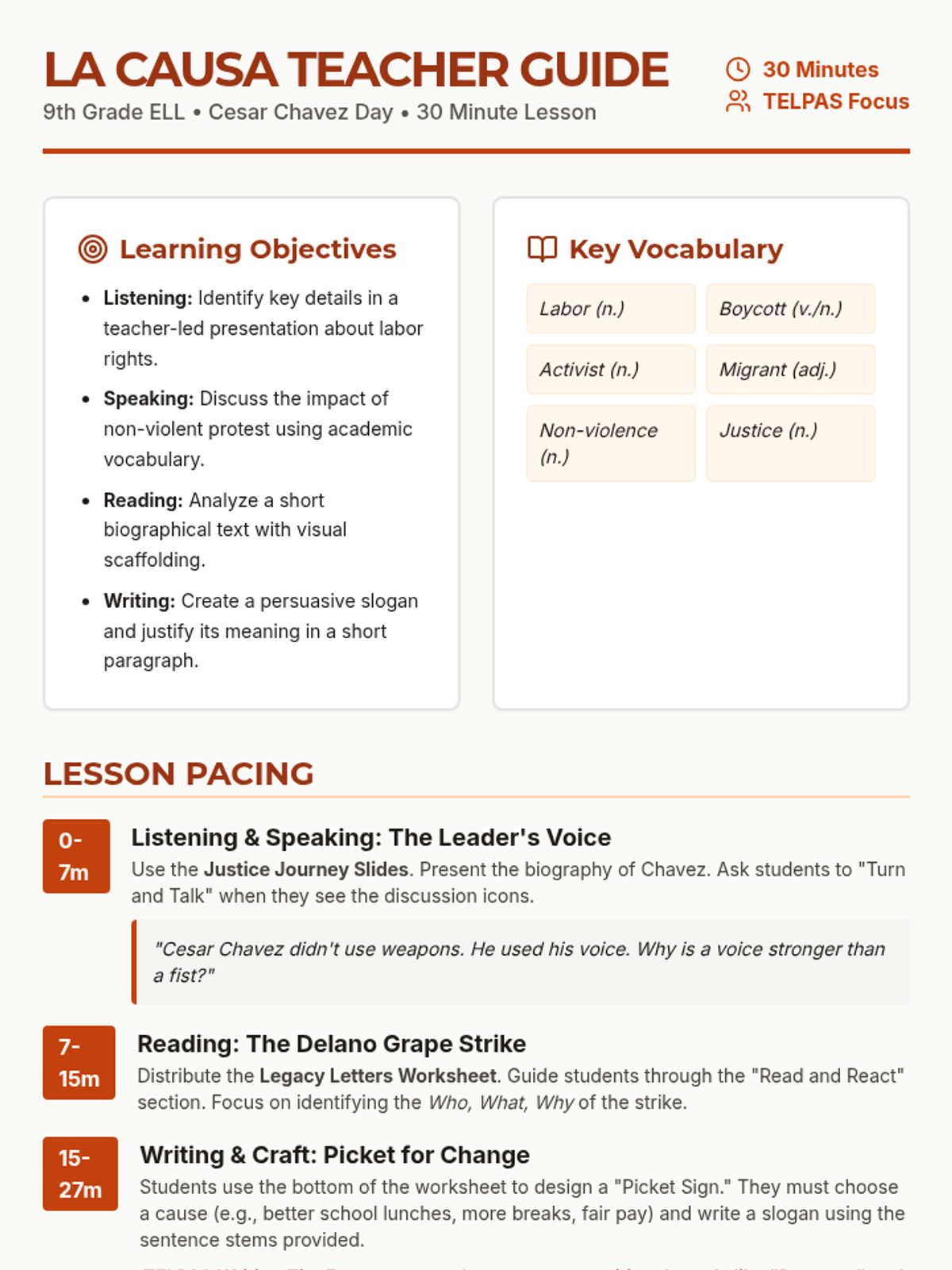
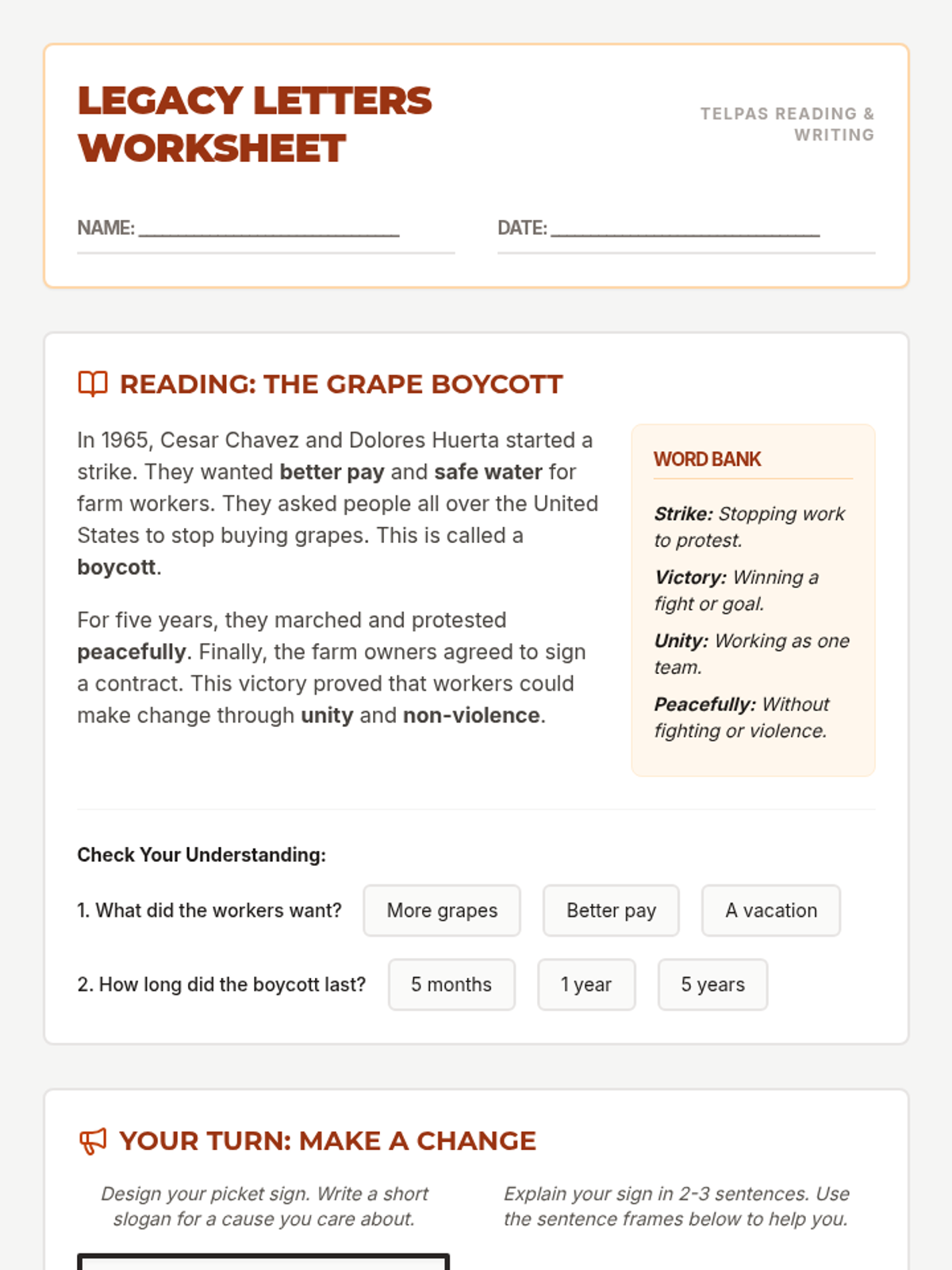
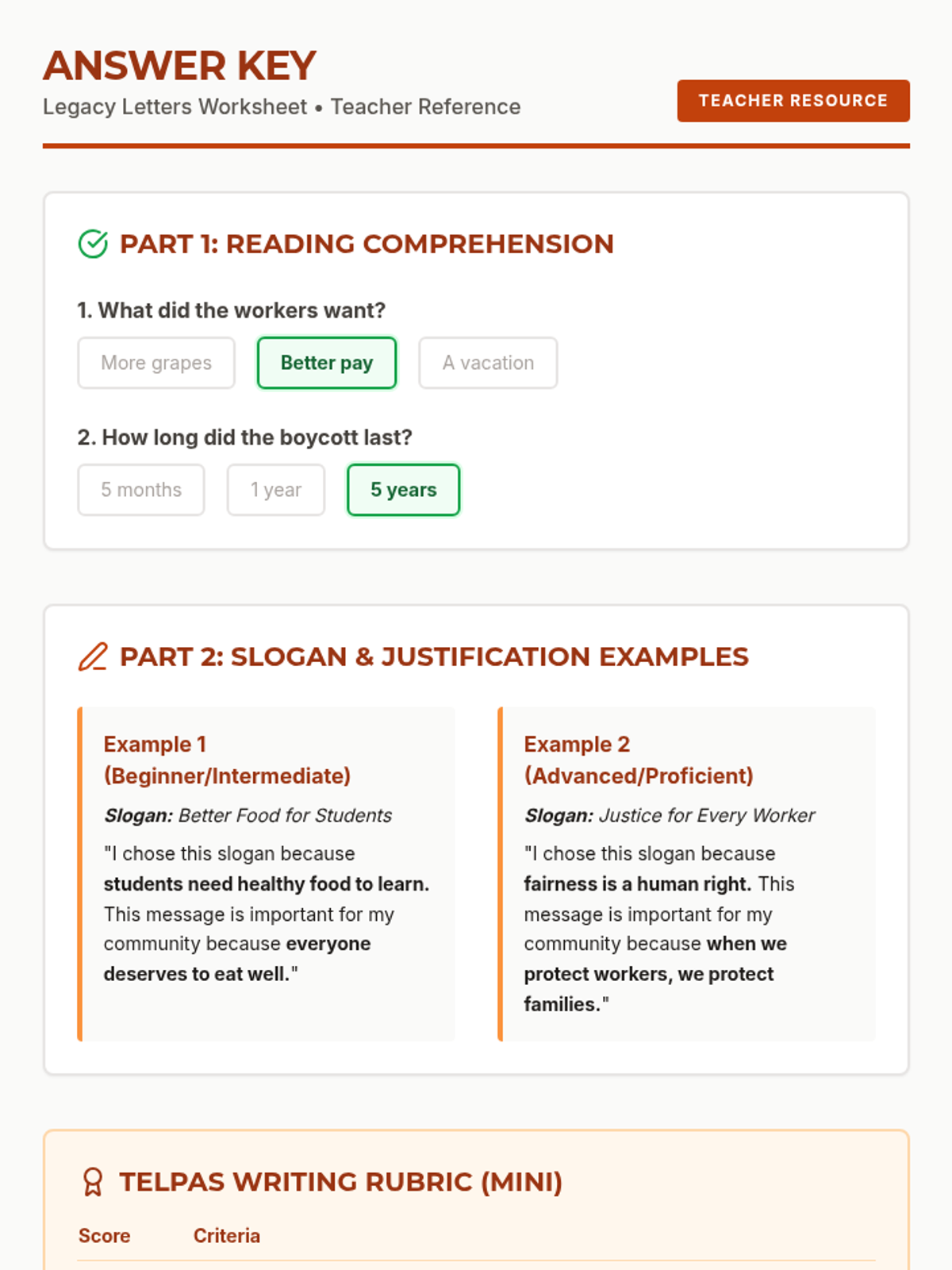
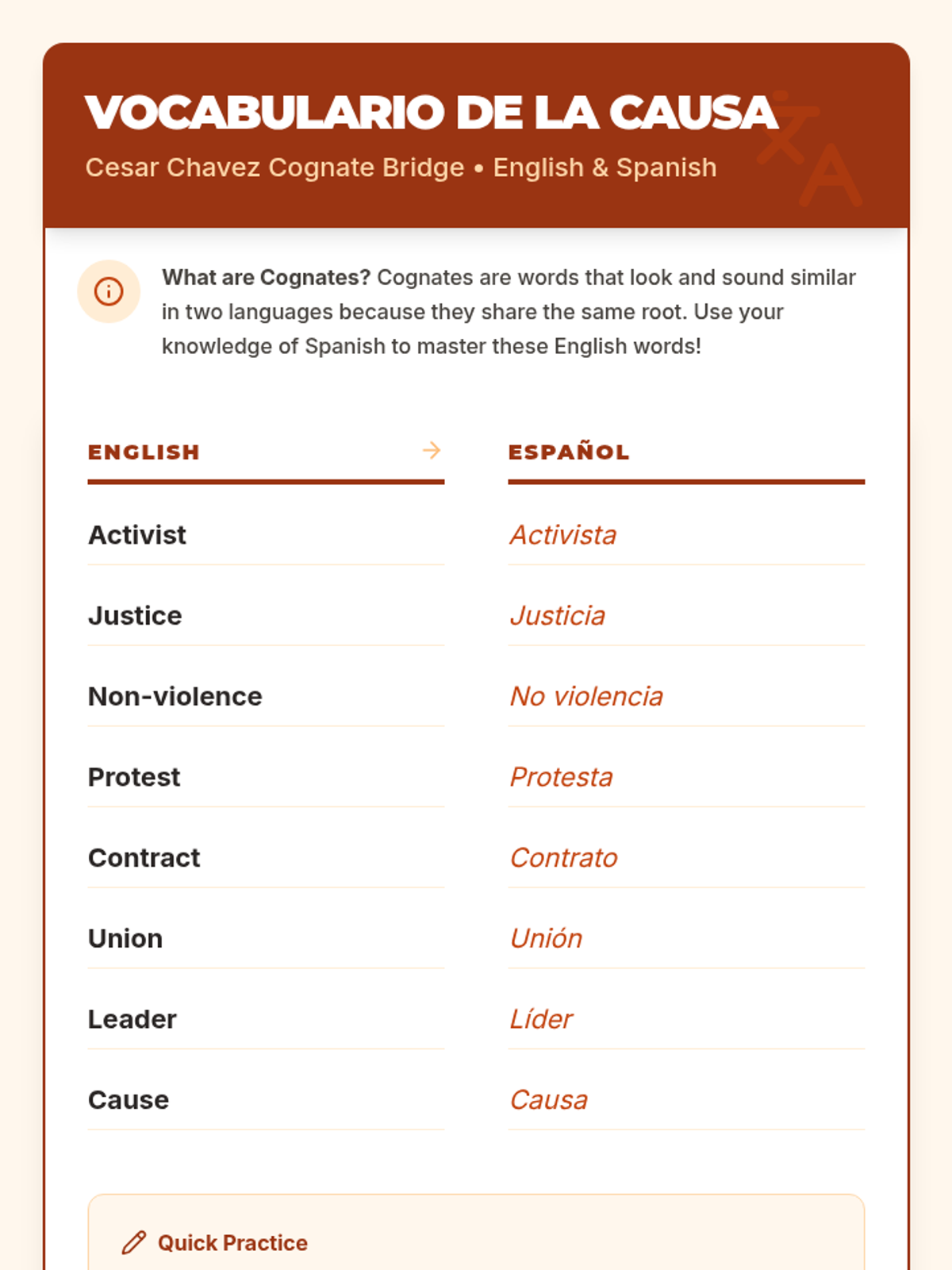
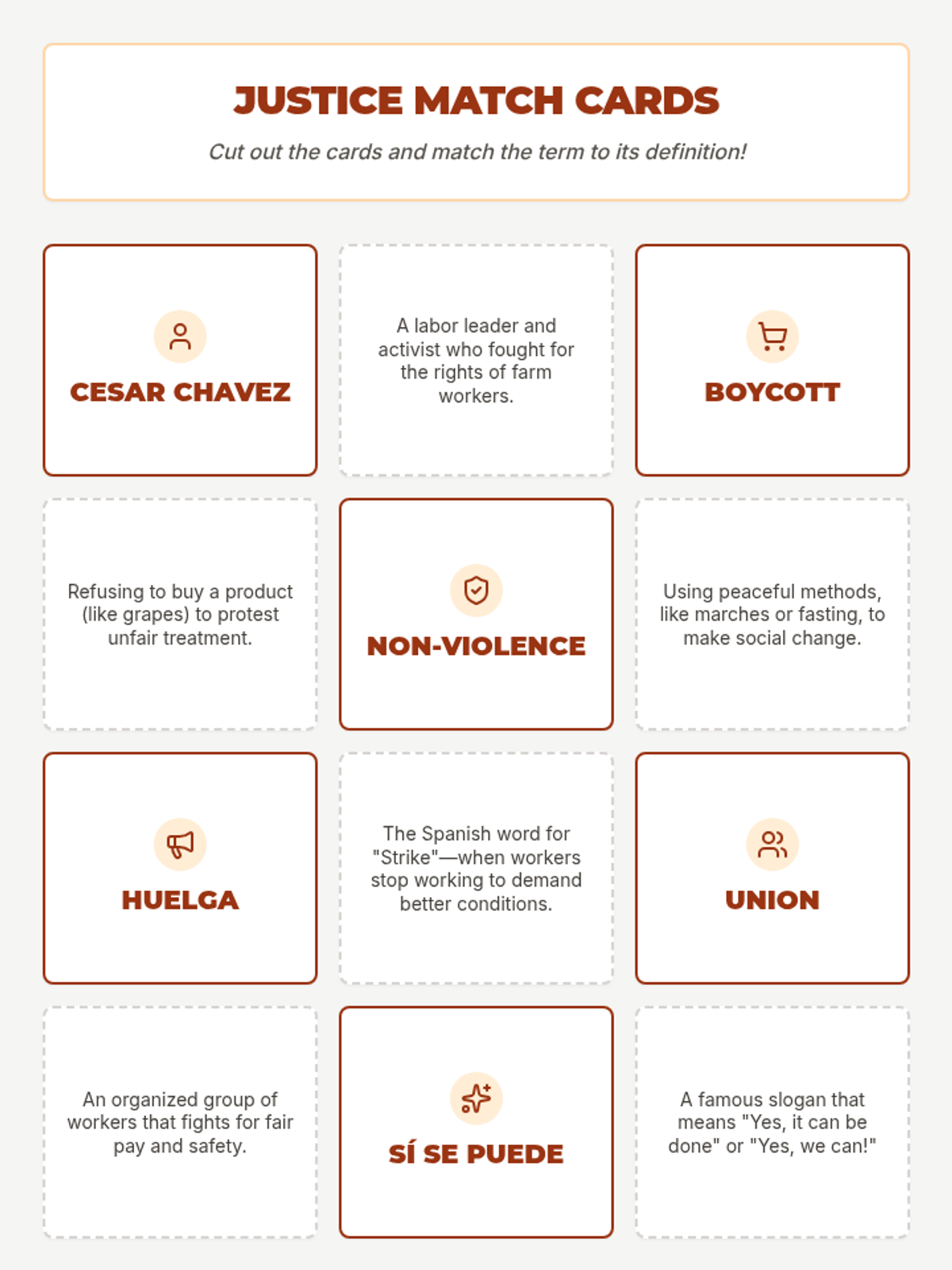
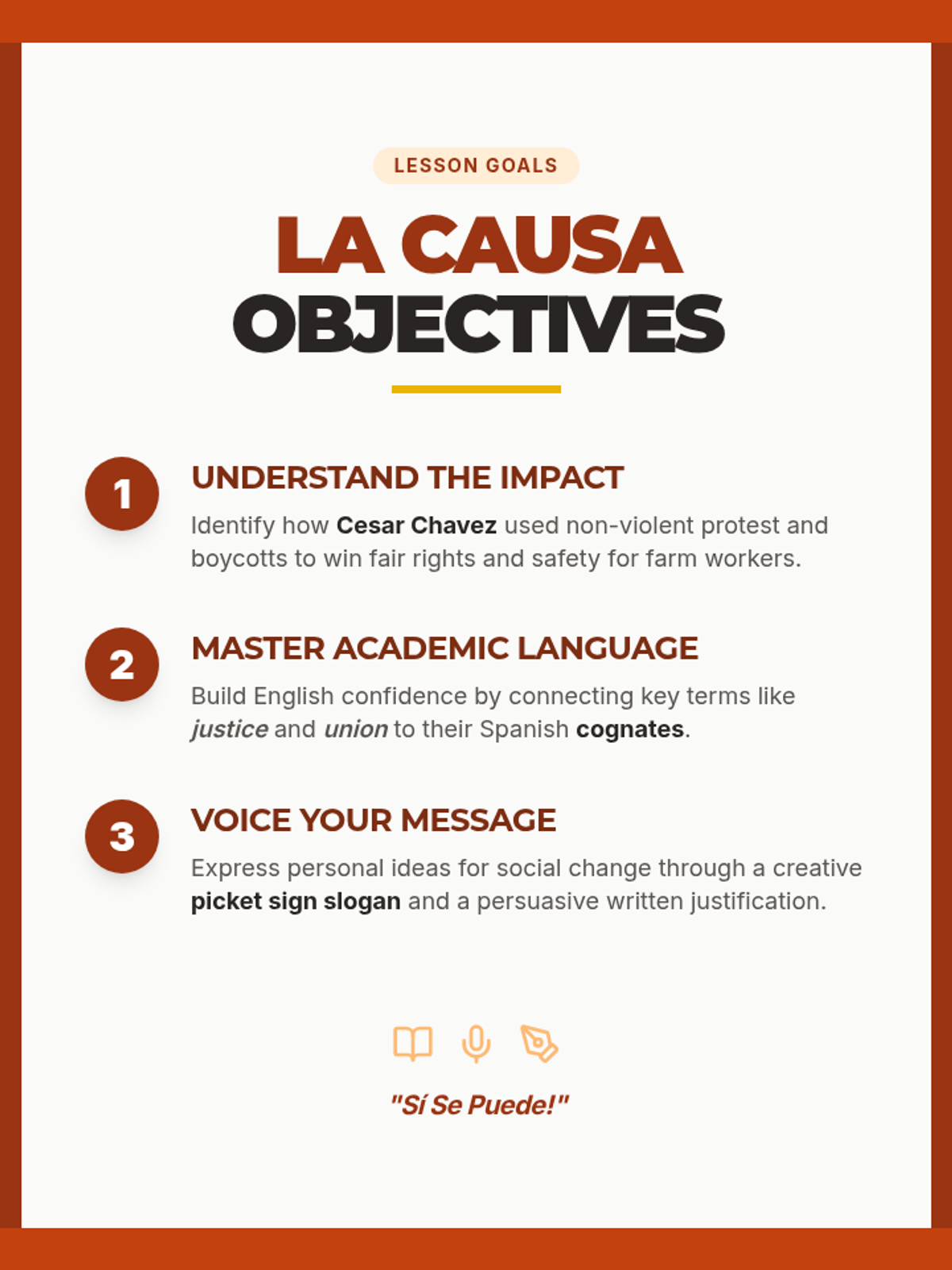
A specialized lesson sequence designed for 9th-grade English Language Learners to explore the life and legacy of Cesar Chavez through the four domains of language acquisition: Reading, Writing, Speaking, and Listening. The materials are aligned with TELPAS criteria and emphasize civil rights history and labor activism.
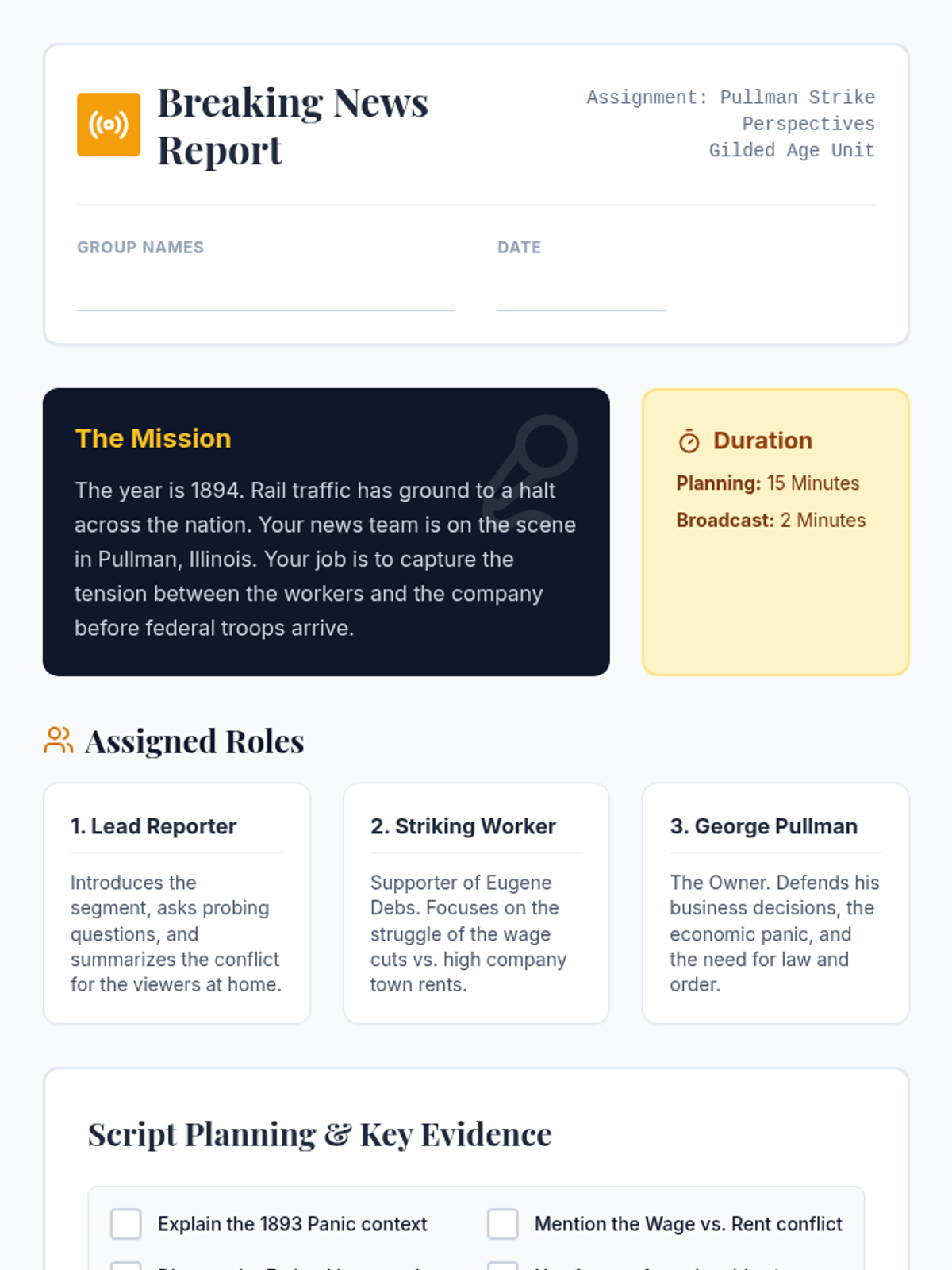
A sequence exploring the Gilded Age, focusing on industrial growth, the rise of labor unions, and the struggle for workers' rights in the late 19th century.
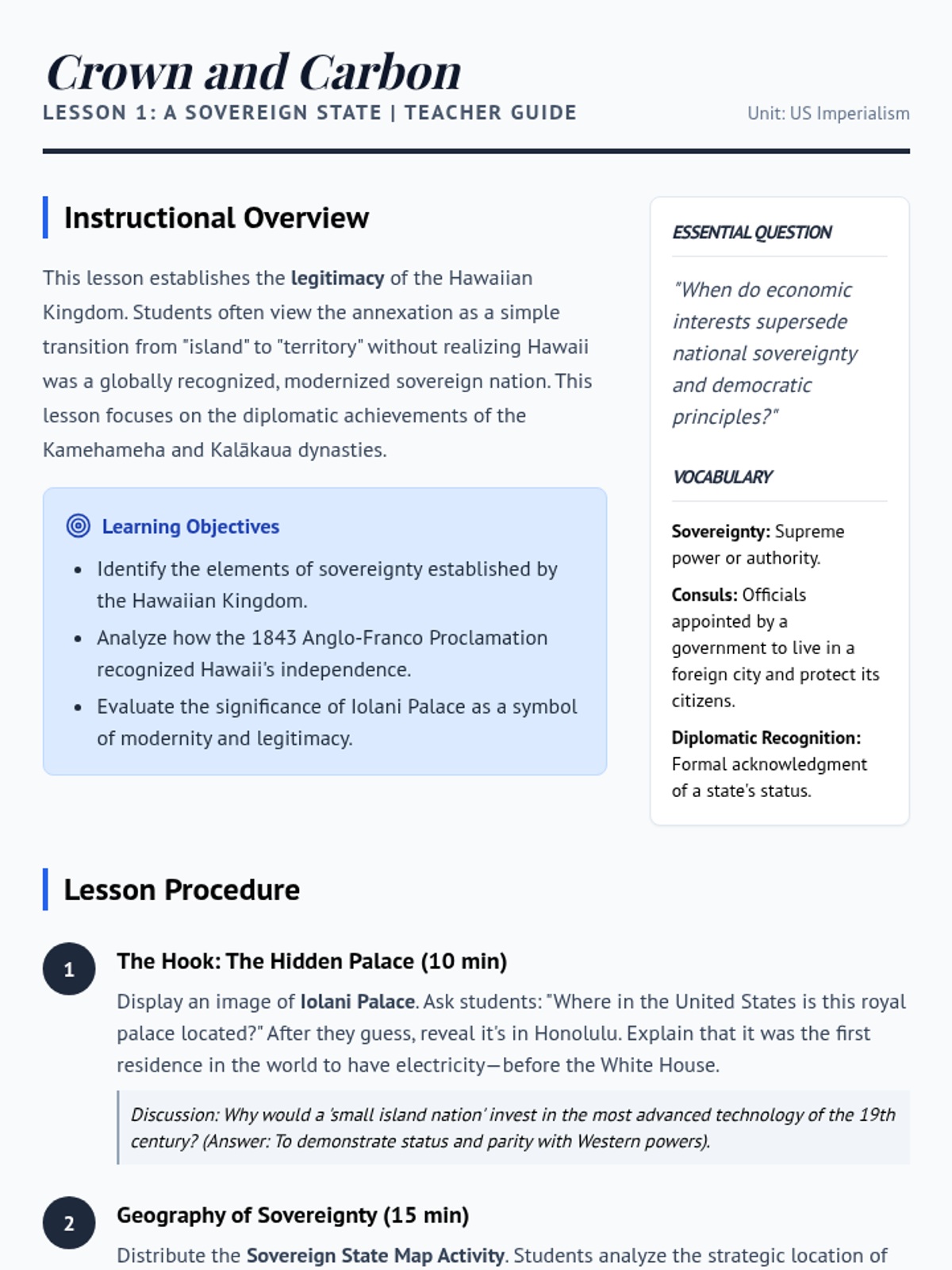
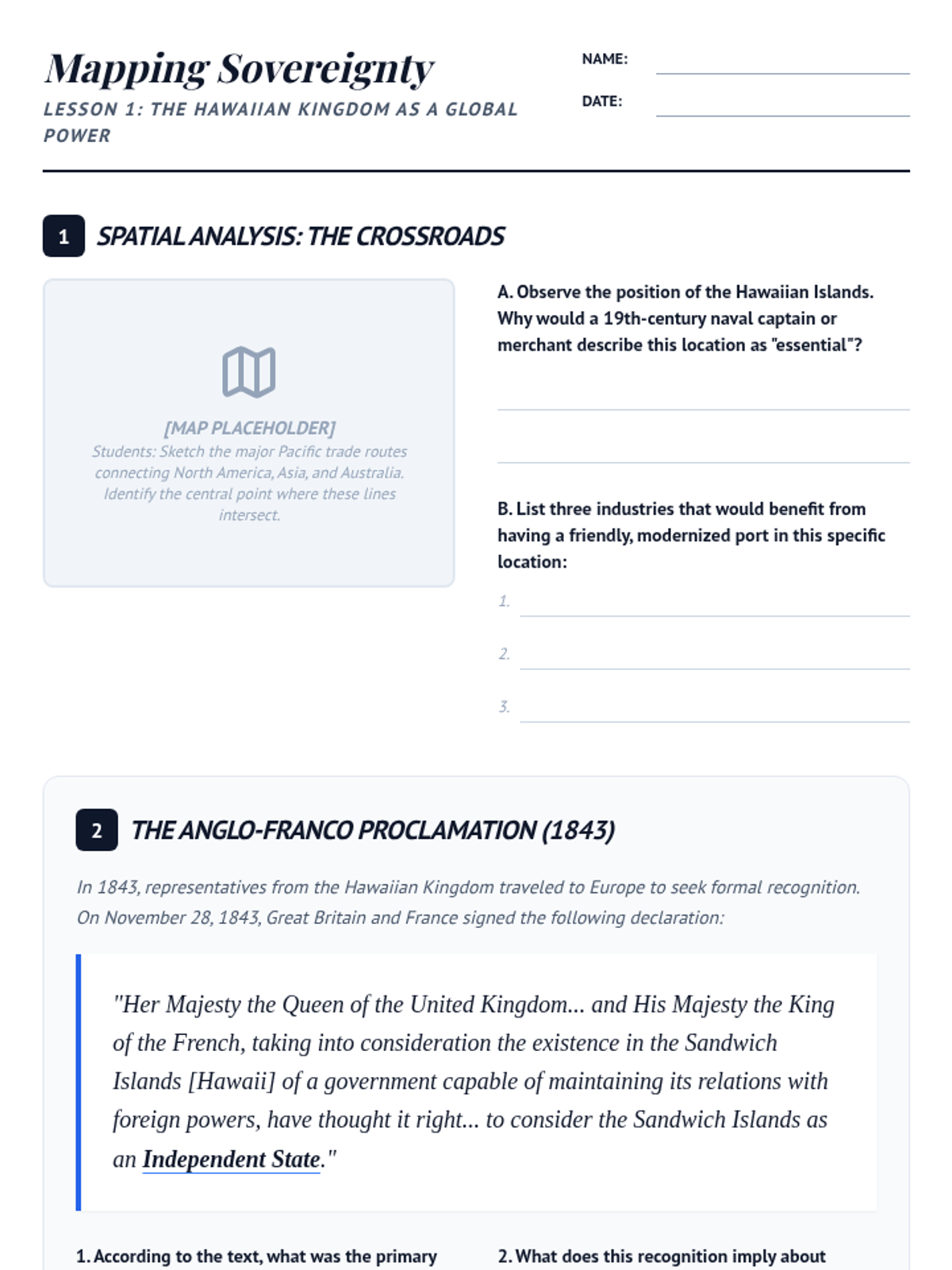
A deep-dive case study into the annexation of Hawaii, exploring the collision of indigenous sovereignty, missionary influence, and corporate interests. Students analyze the transition from a recognized sovereign monarchy to a US territory, evaluating the ethical and political implications of imperialism.
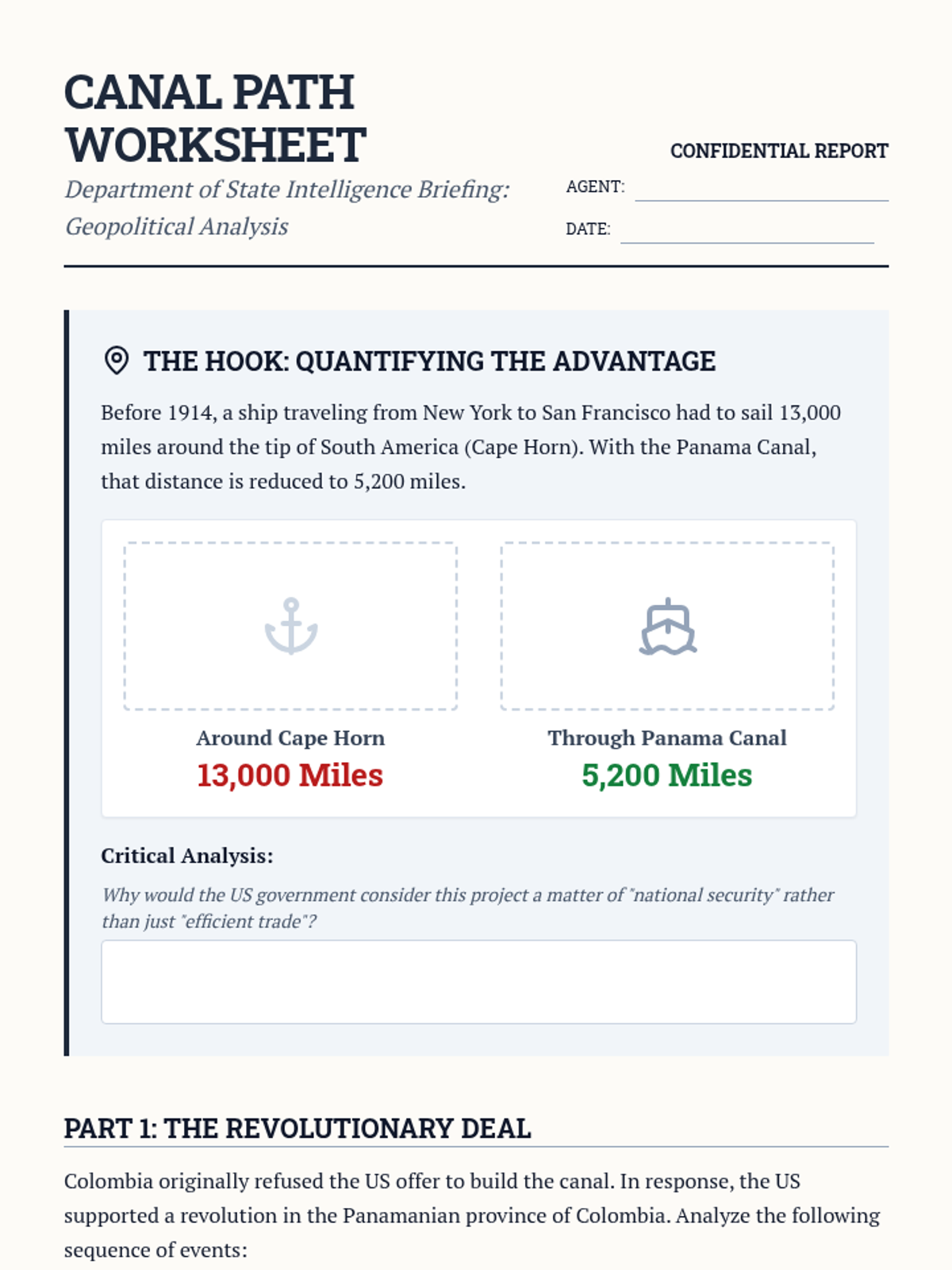
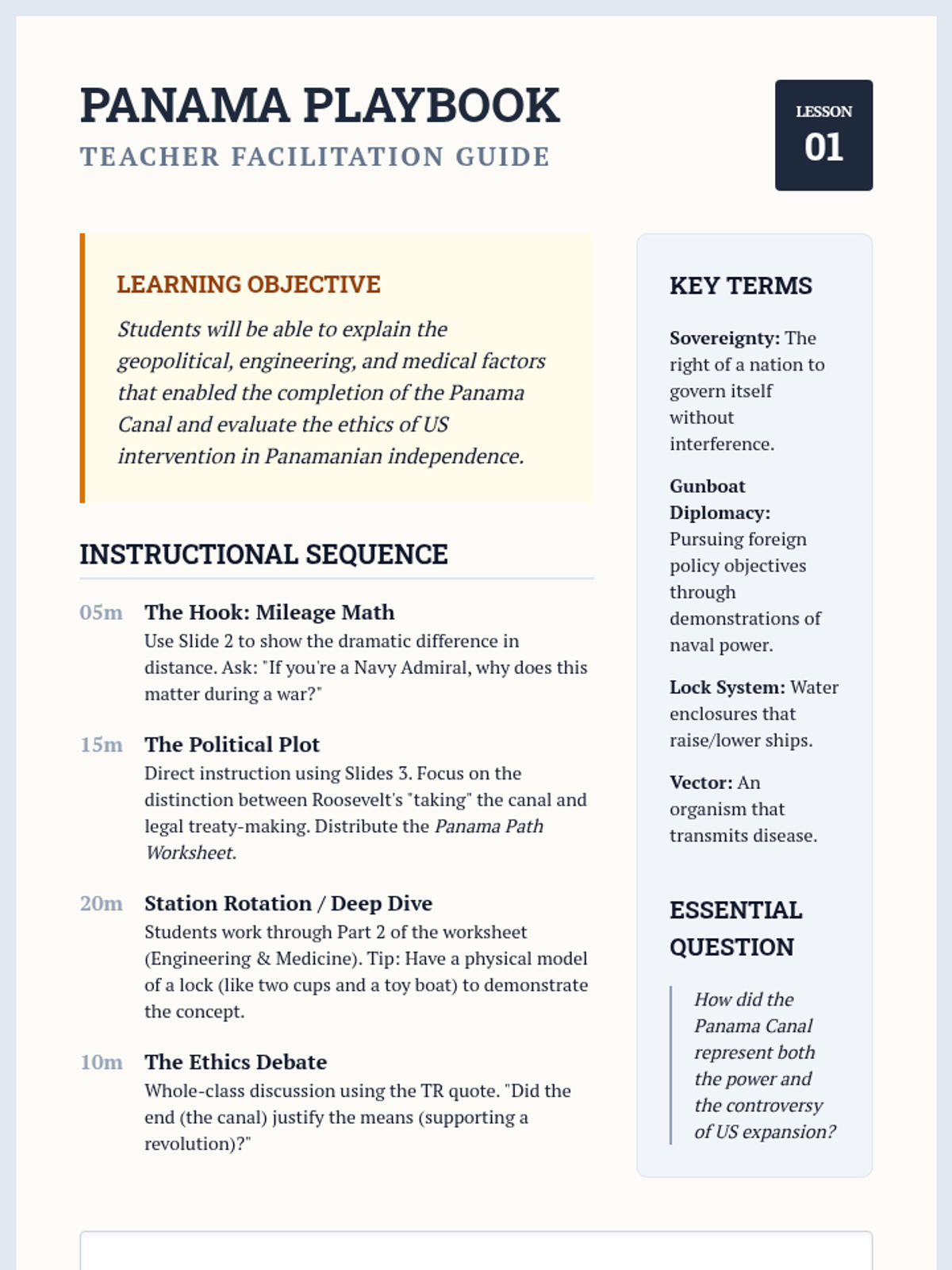
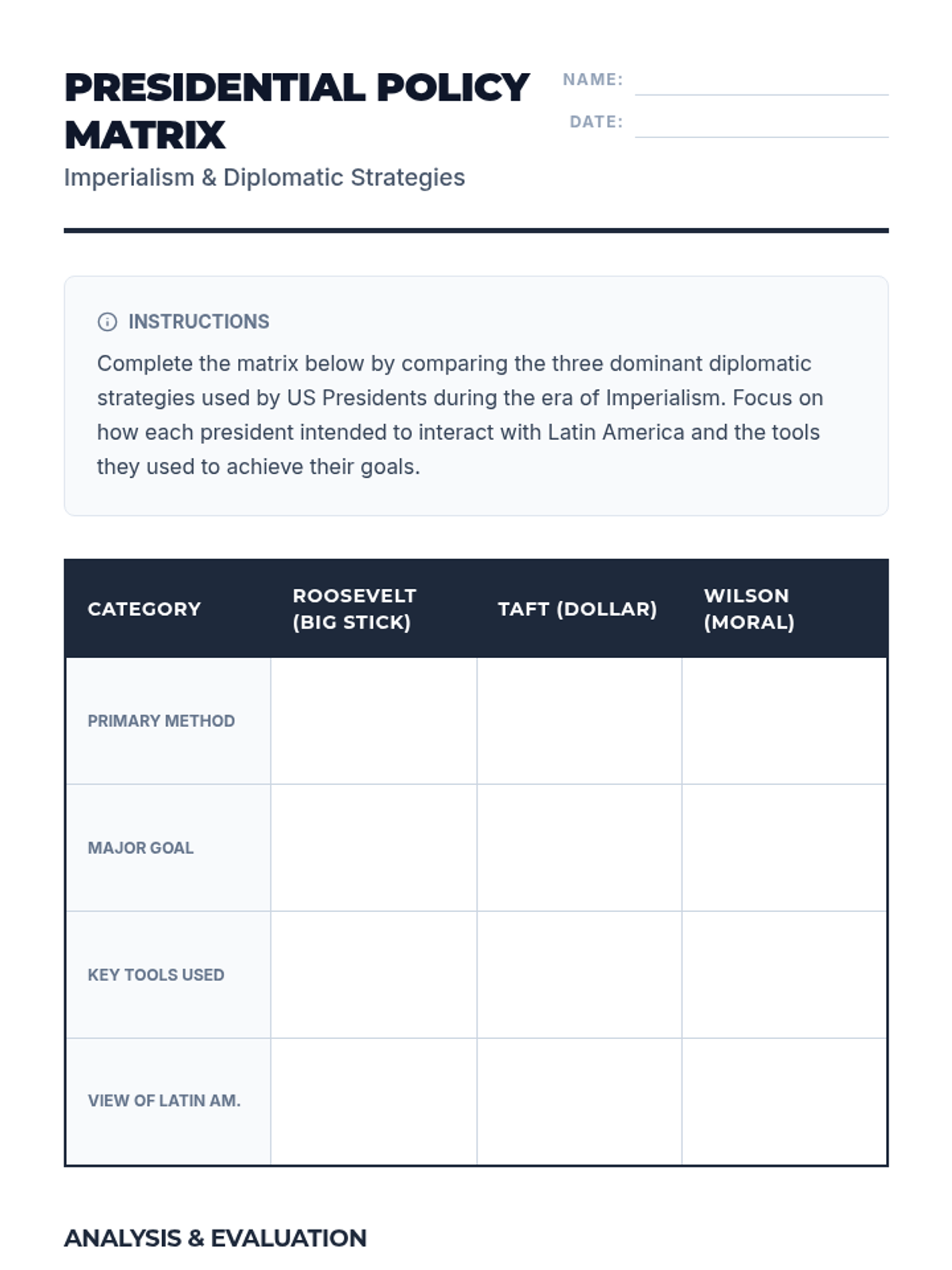
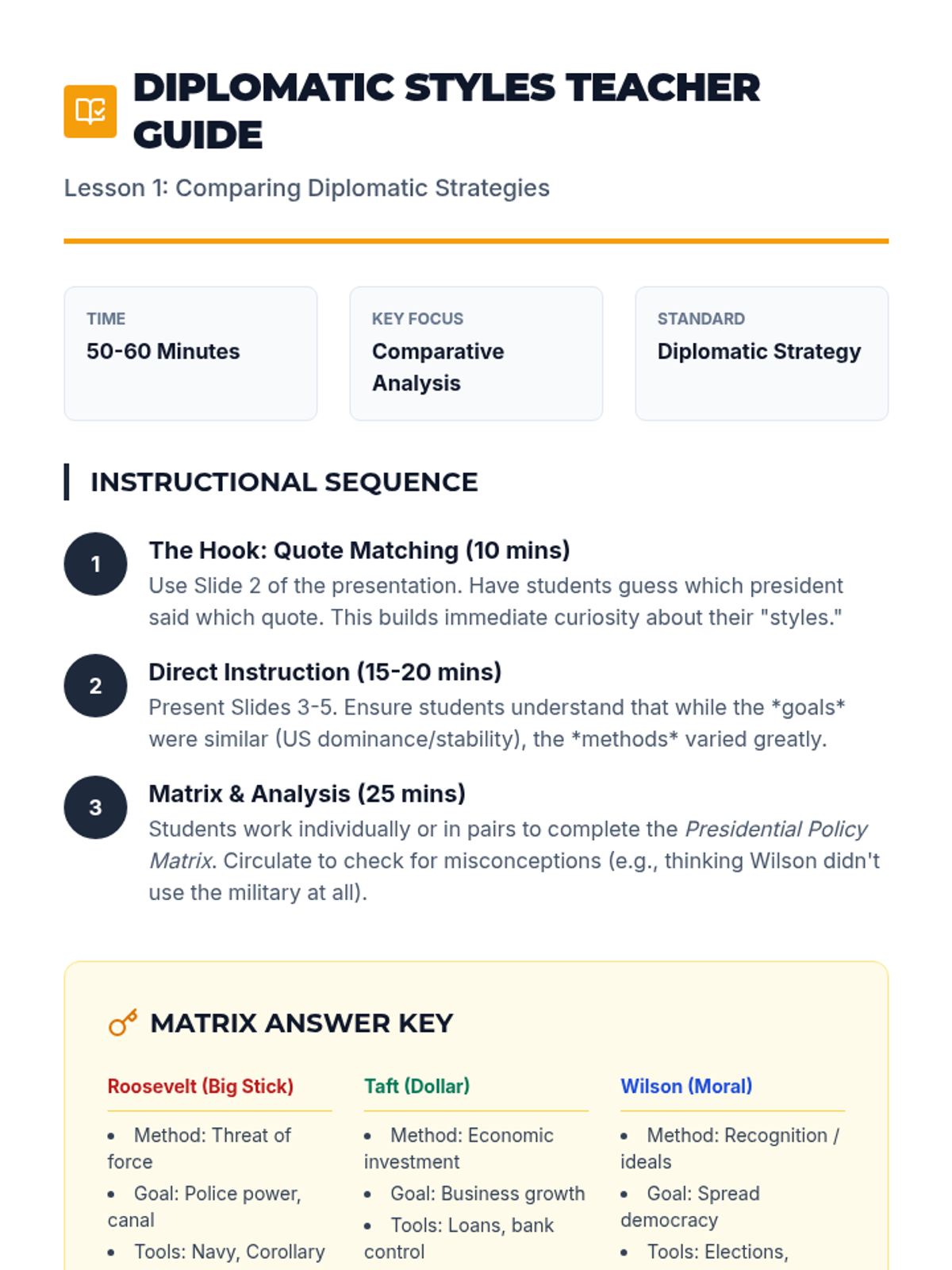
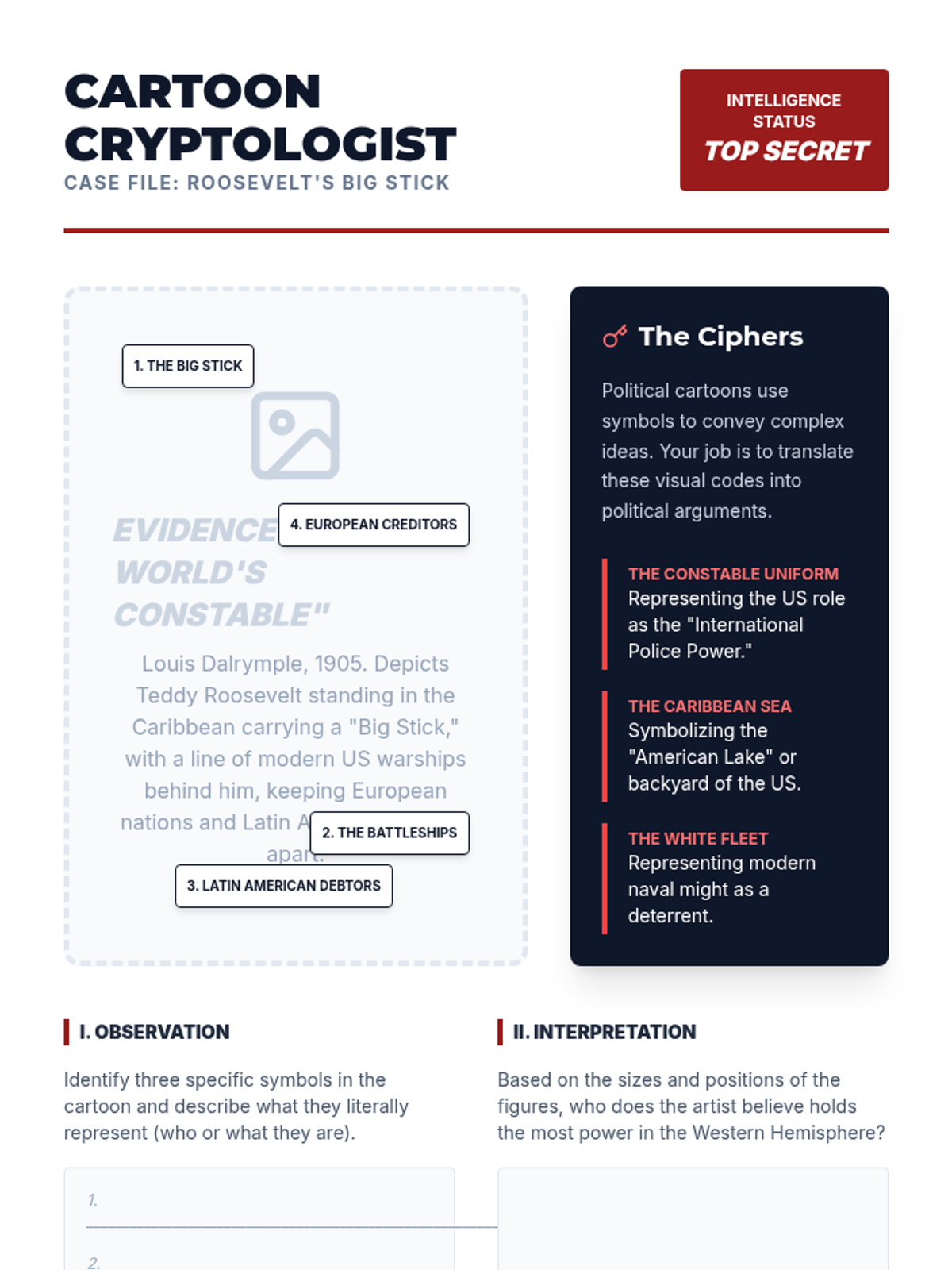
This sequence explores the evolution of US foreign policy in Latin America through the administrations of Roosevelt, Taft, and Wilson. Students engage in a strategic analysis of the 'Big Stick,' 'Dollar Diplomacy,' and 'Moral Diplomacy' approaches, using the Panama Canal as a primary case study and simulating diplomatic decision-making.
This sequence examines US intervention in Latin America through the lens of diplomatic strategy and presidential foreign policy. Students analyze the 'Big Stick,' 'Dollar,' and 'Moral' diplomacies, simulate the Panama Canal acquisition, and evaluate the long-term impacts of US hegemony.
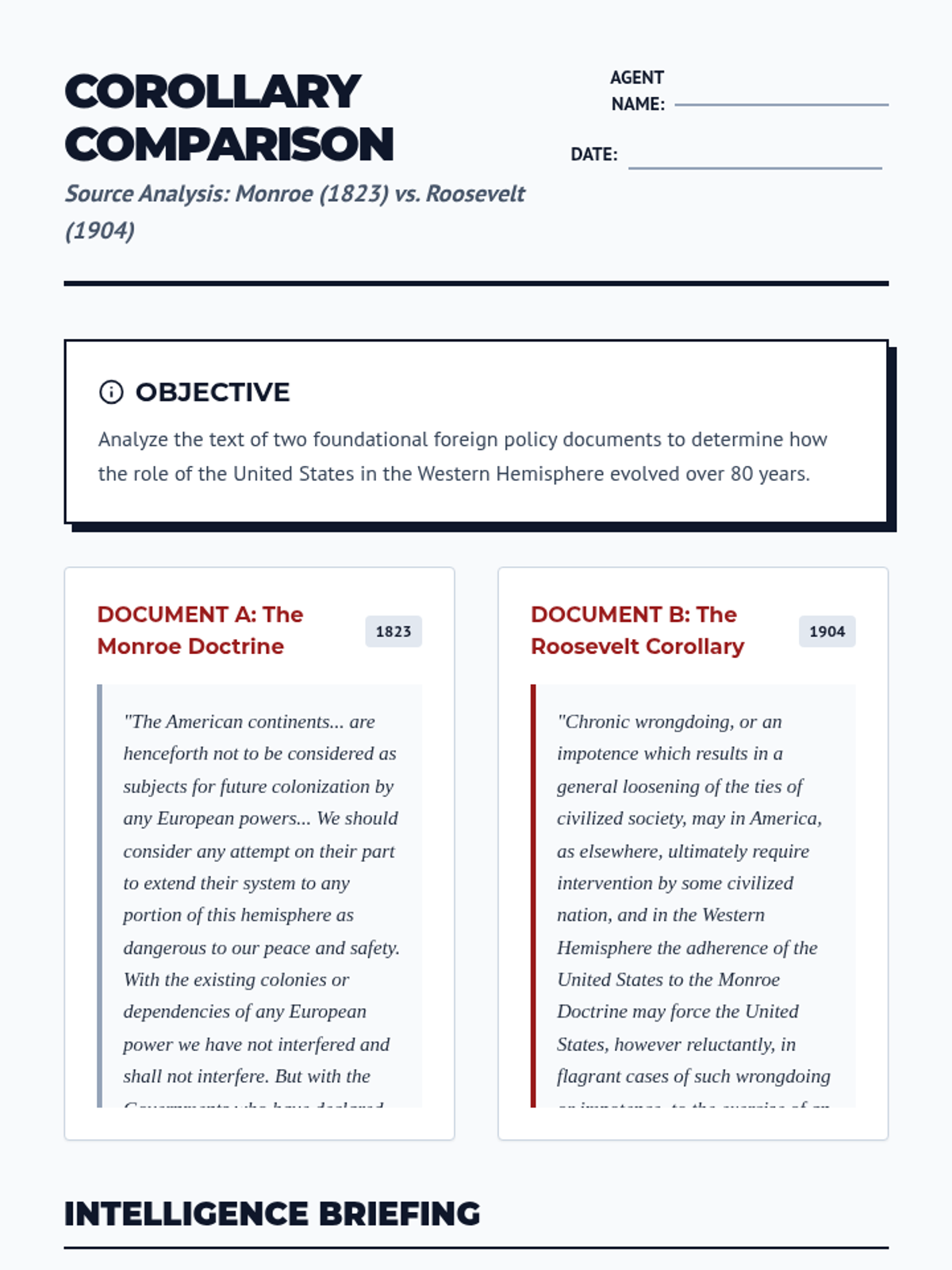
A comprehensive exploration of US interventionism in Latin America during the early 20th century, focusing on the evolution of foreign policy from the Roosevelt Corollary to Wilson's Moral Diplomacy. Students analyze primary sources, political cartoons, and economic data to evaluate the impact of American hegemony.
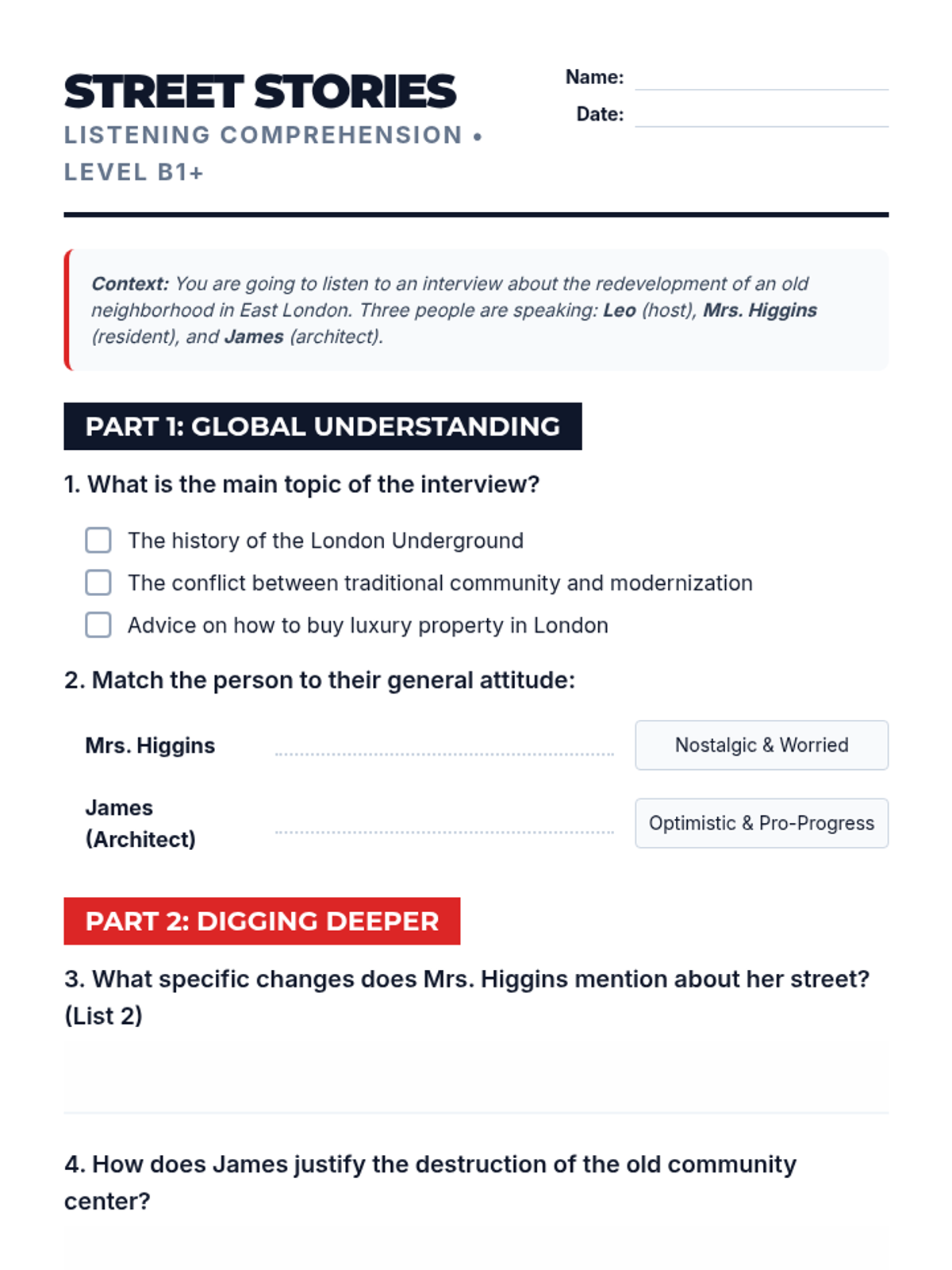
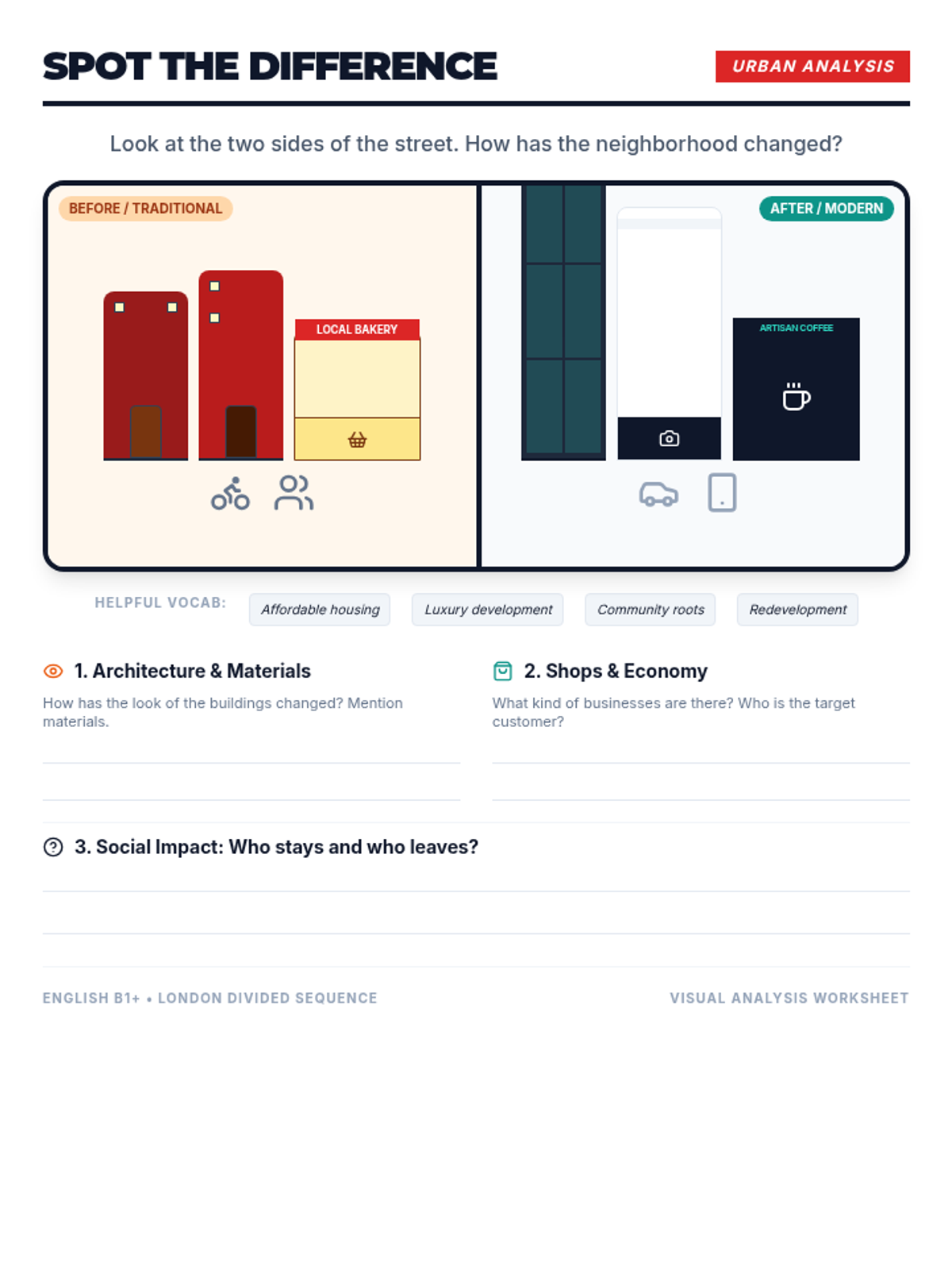
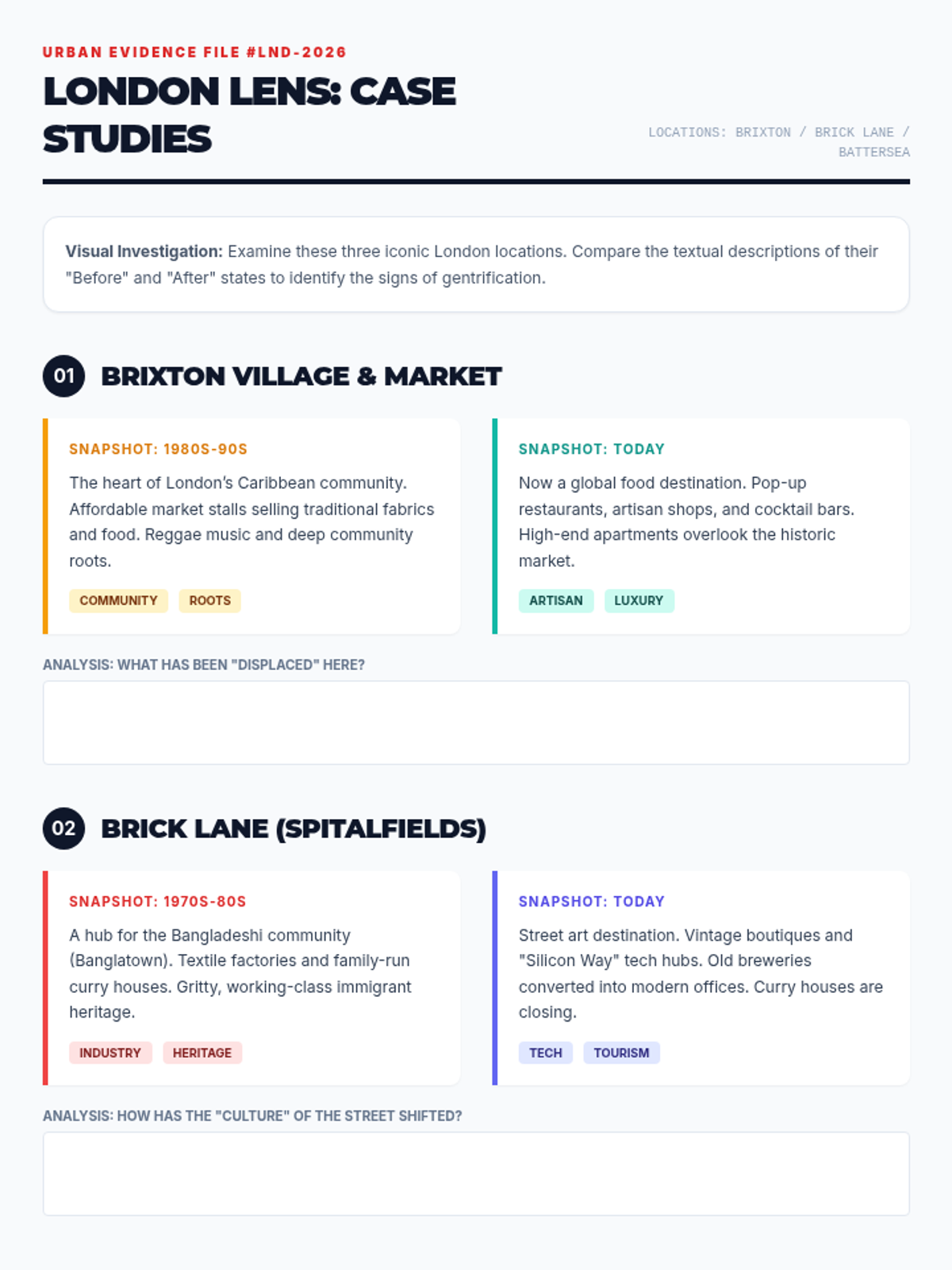
A sequence for high school students (B1+ level) exploring the social and cultural impacts of gentrification in London, focusing on the tension between urban development and local community identity.
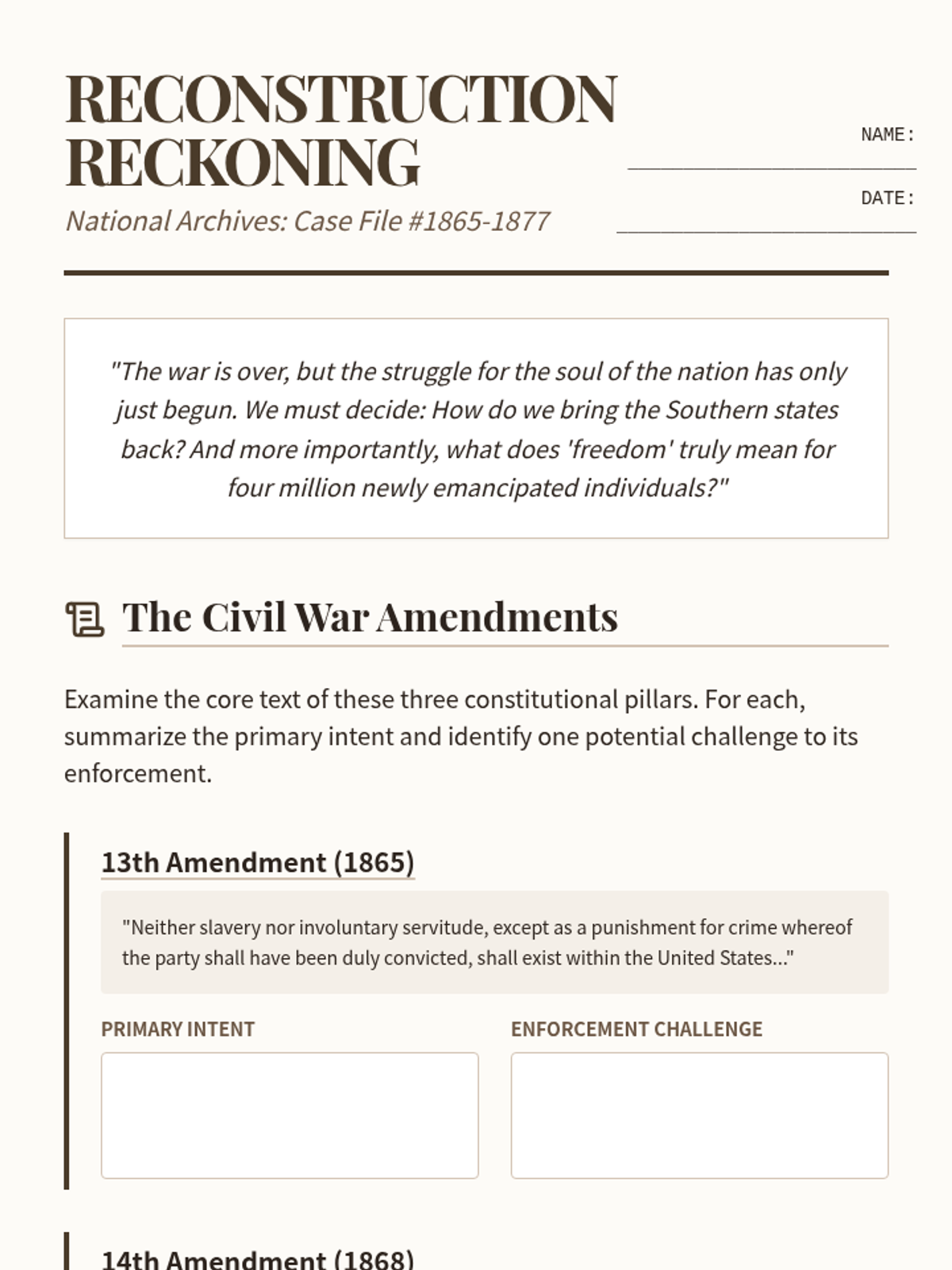
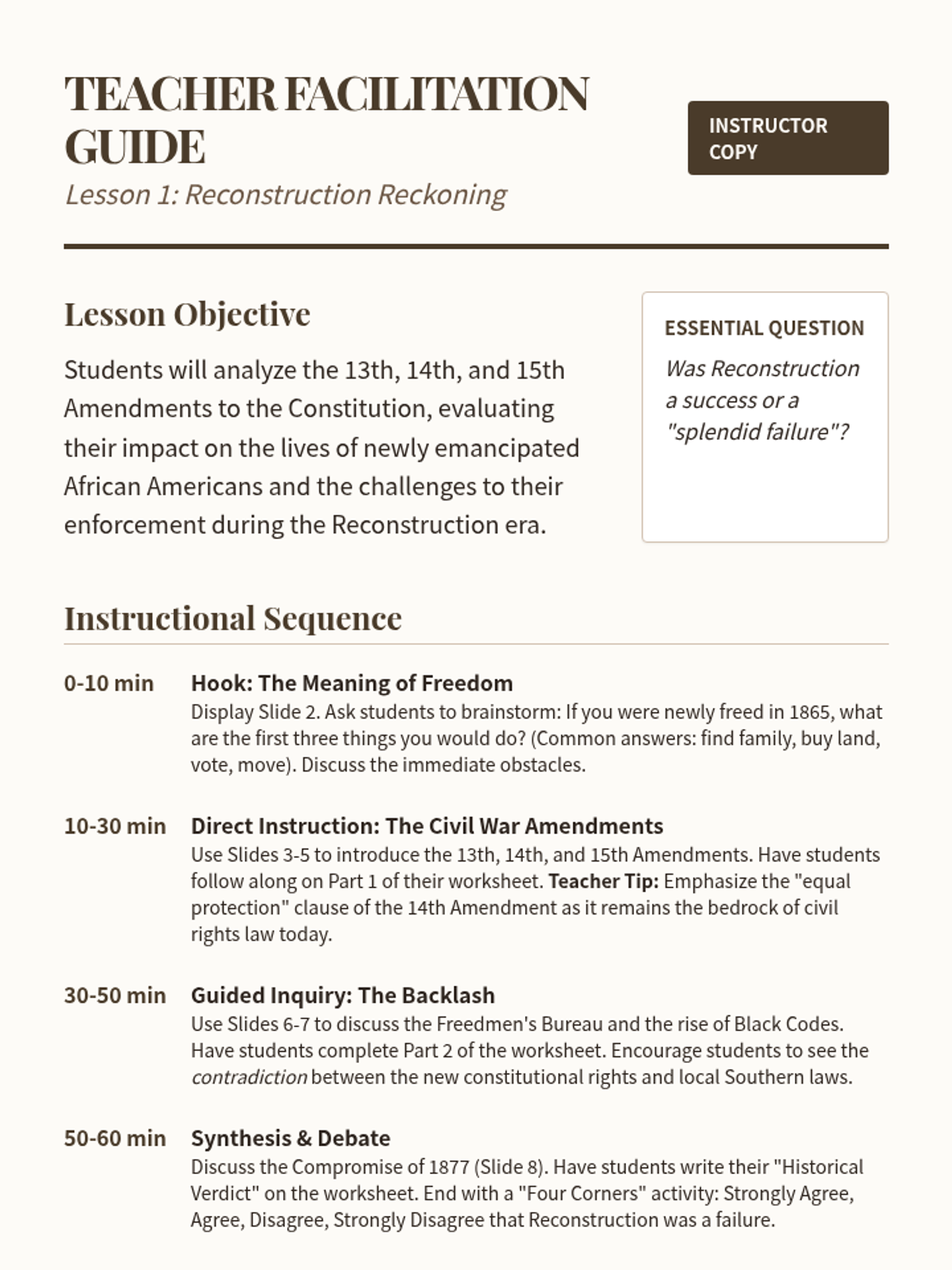
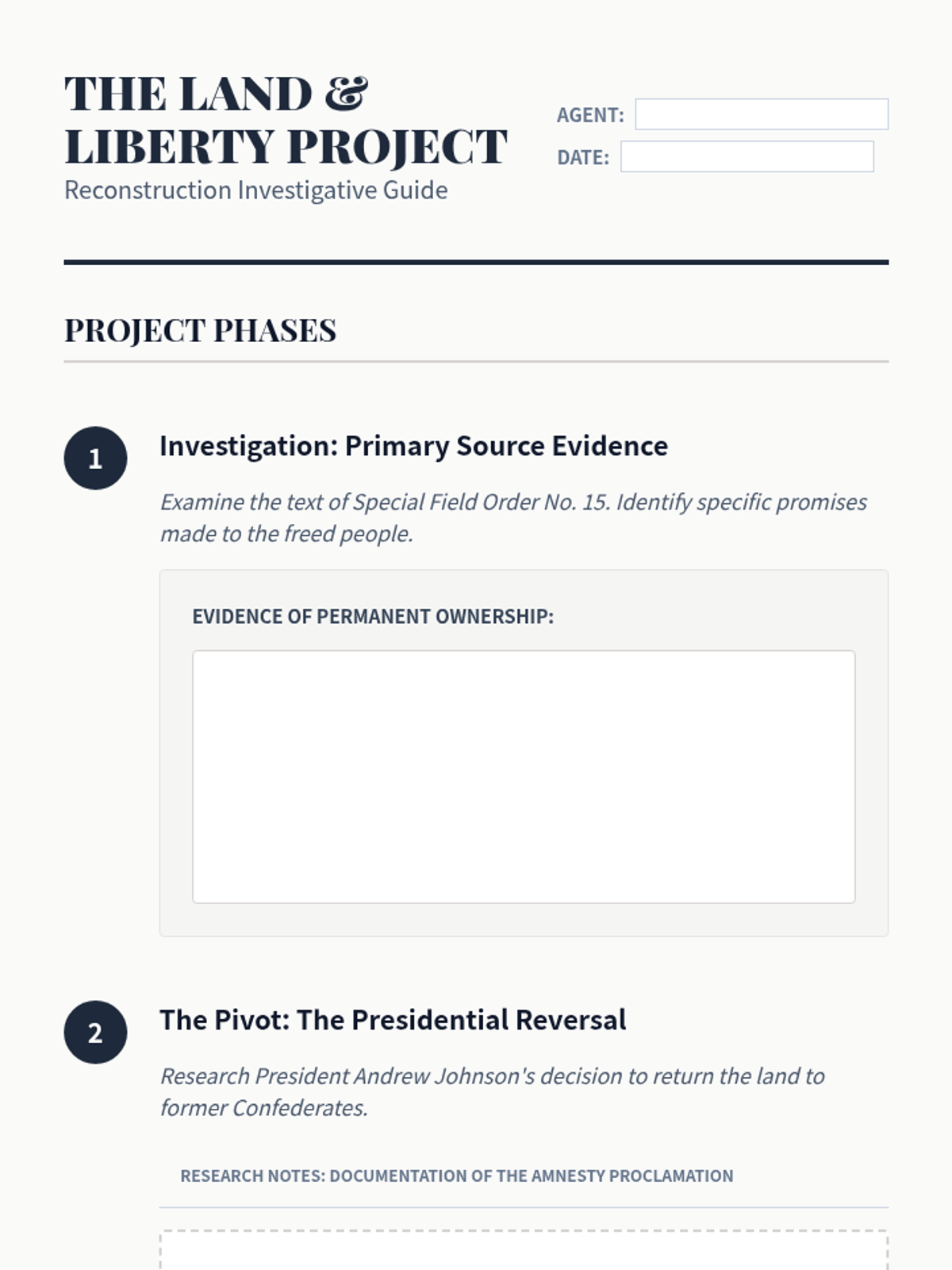
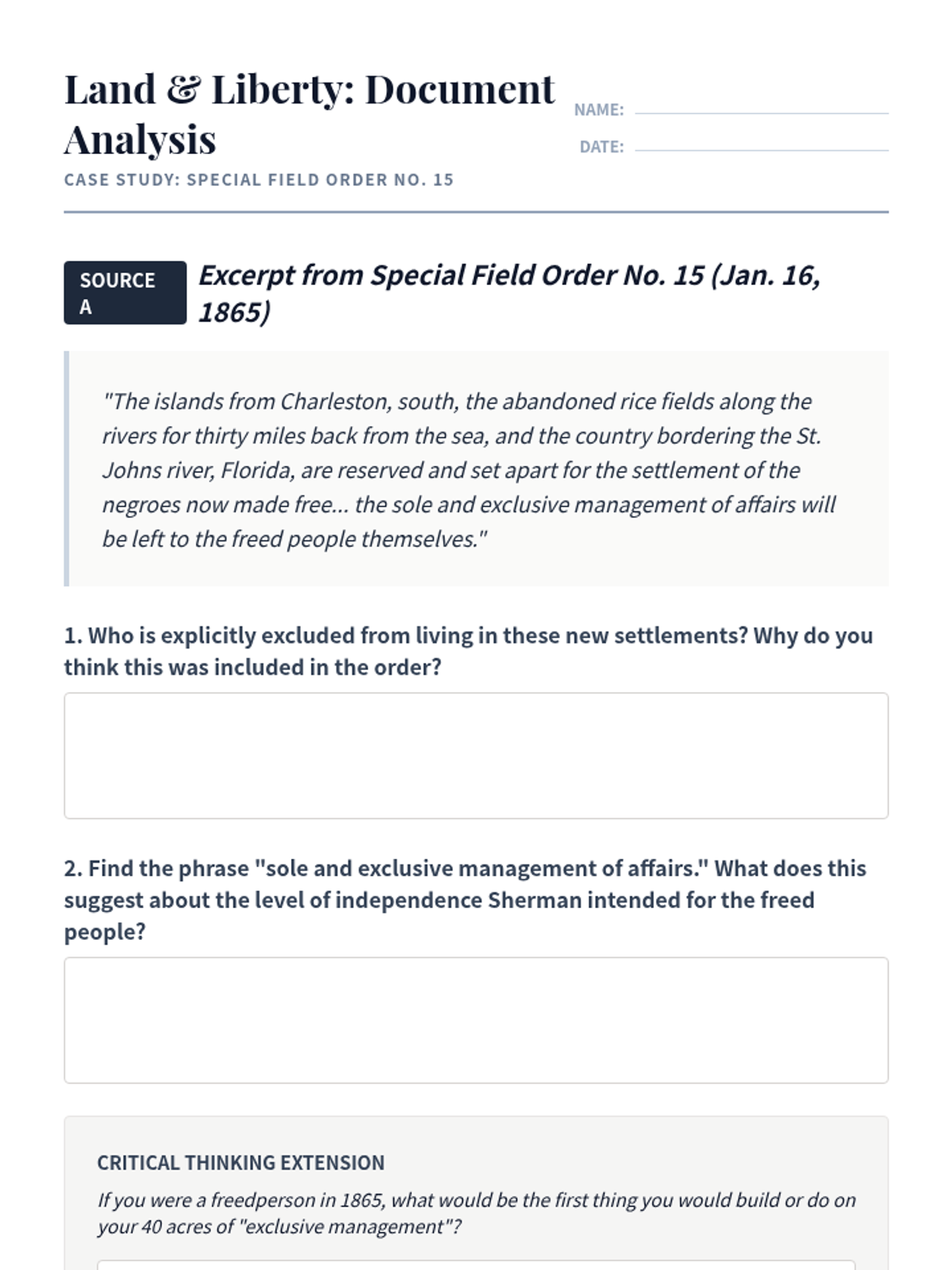
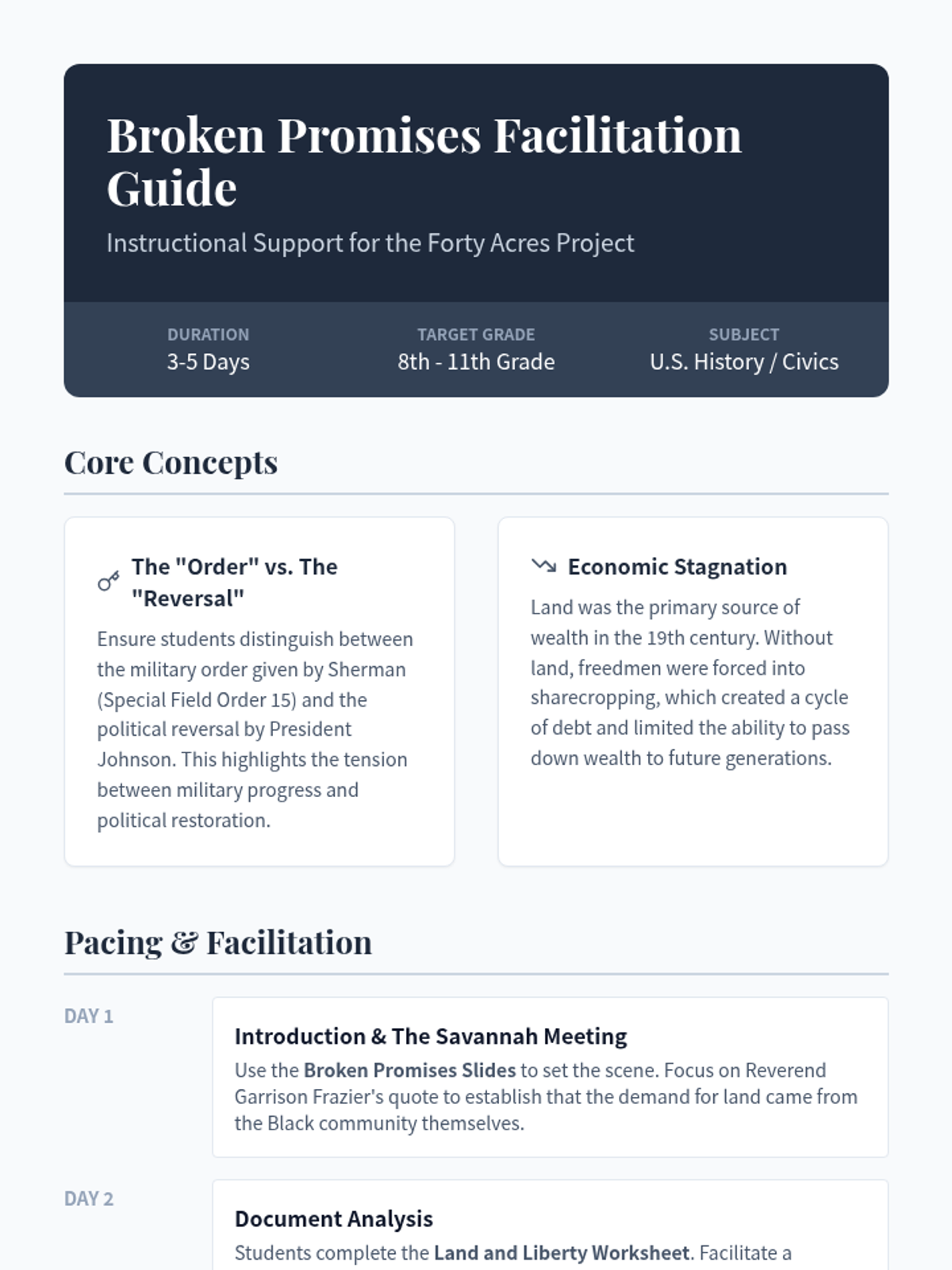
An in-depth exploration of the Reconstruction era, focusing on the promises made to formerly enslaved people and how those promises were ultimately broken. students will analyze primary sources and complete a research project on land ownership and the quest for economic independence.
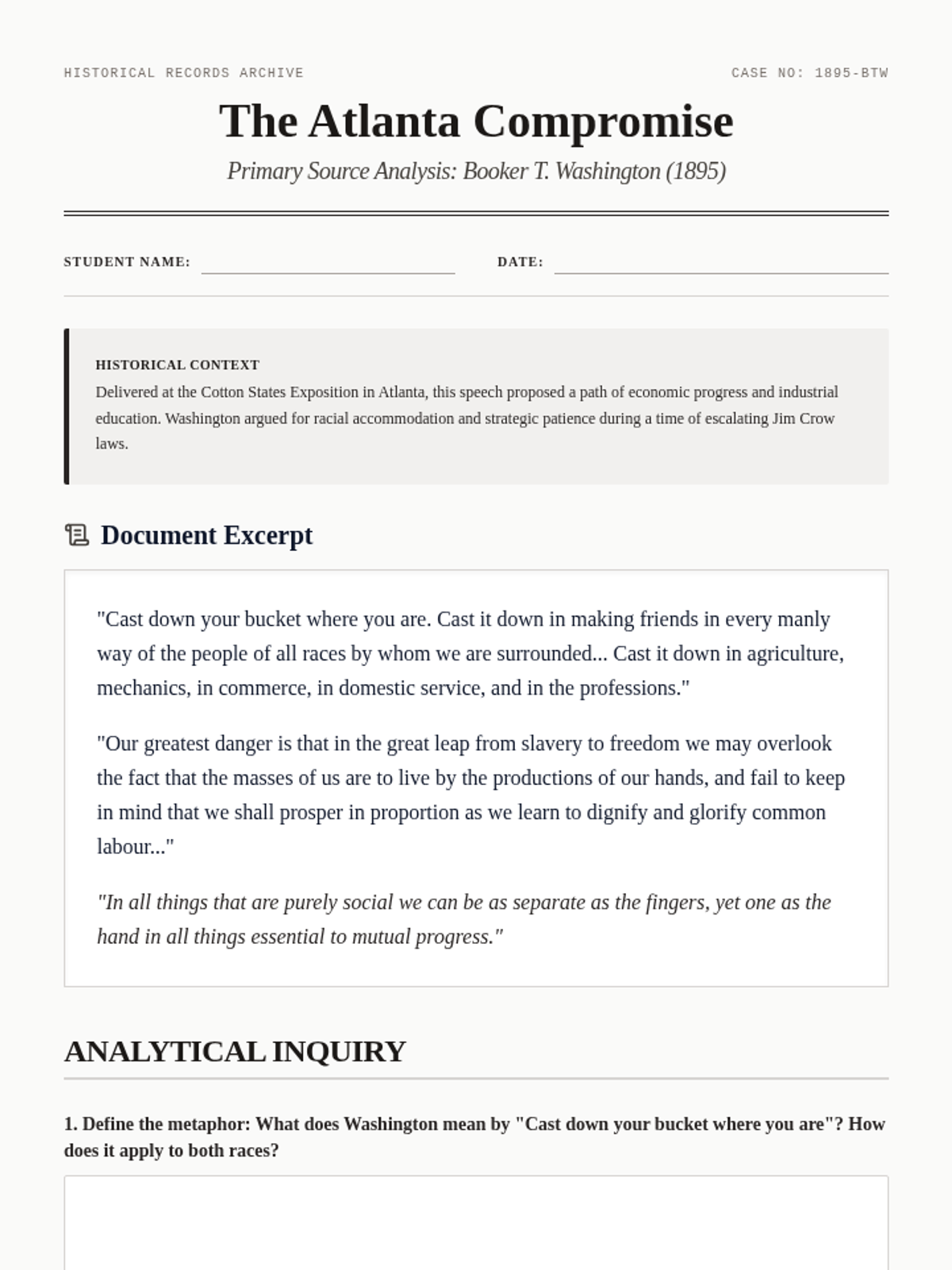
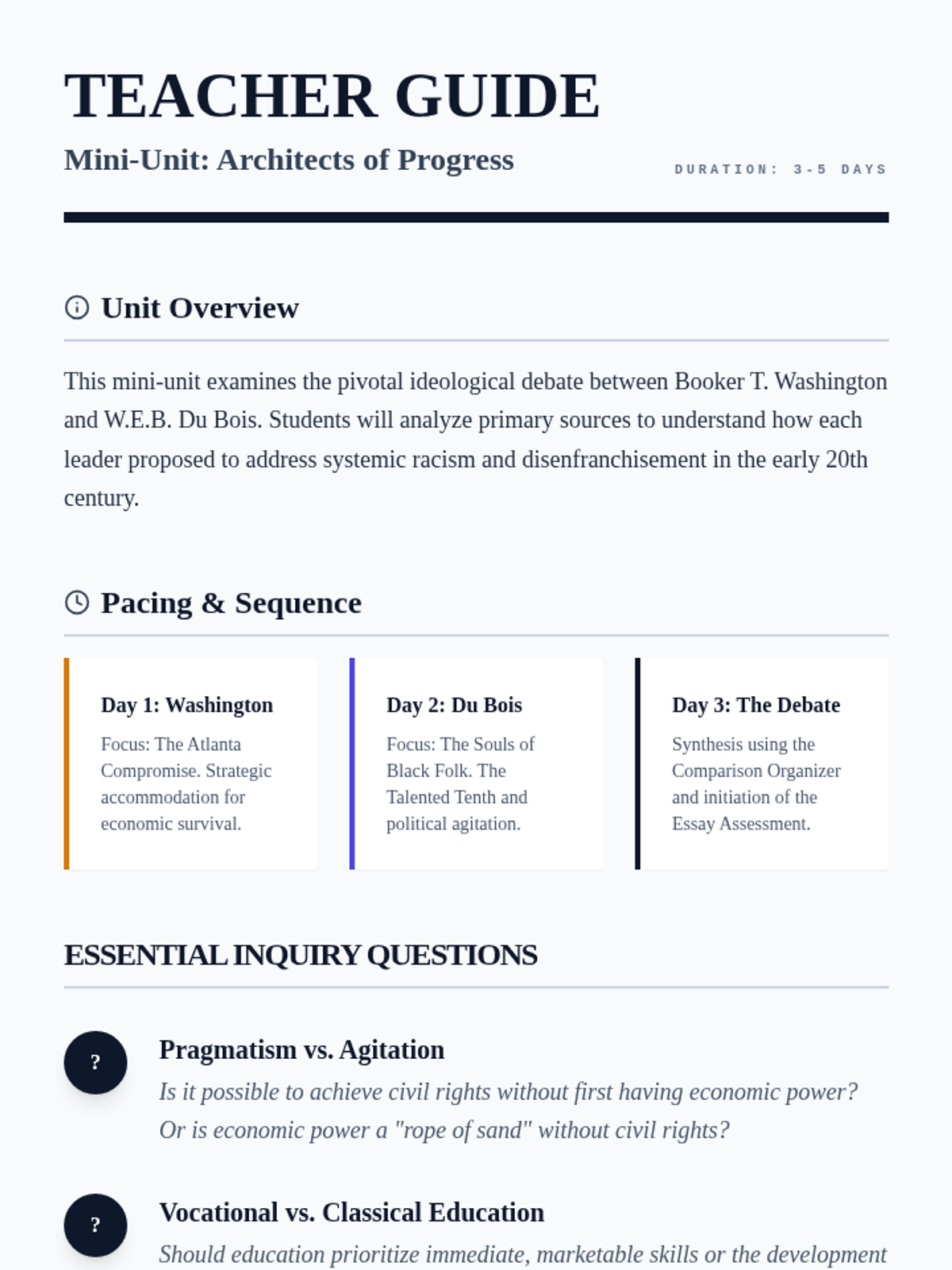
A multi-day mini-unit exploring the contrasting philosophies of Booker T. Washington and W.E.B. Du Bois regarding African American progress, education, and civil rights at the turn of the 20th century.
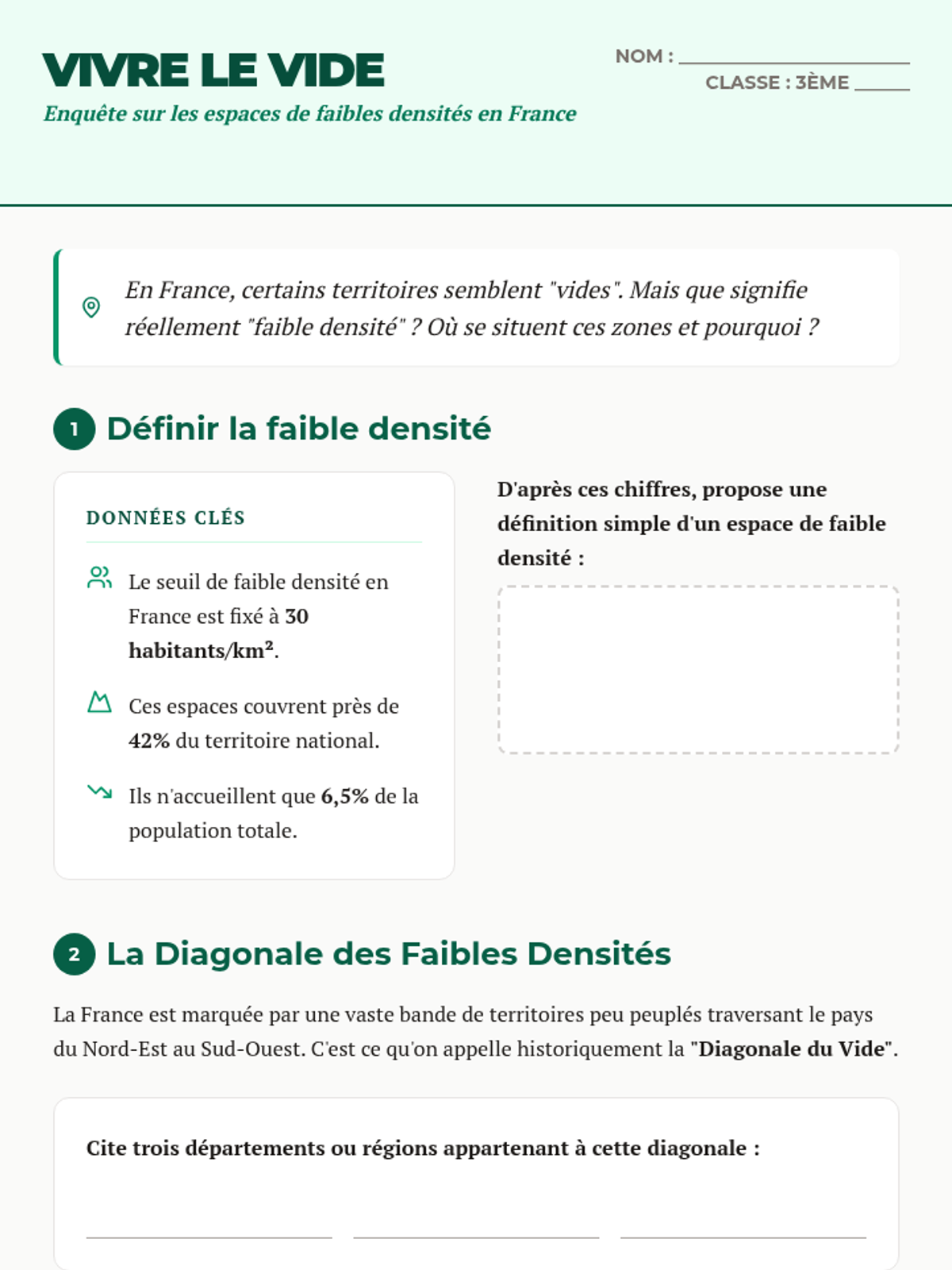
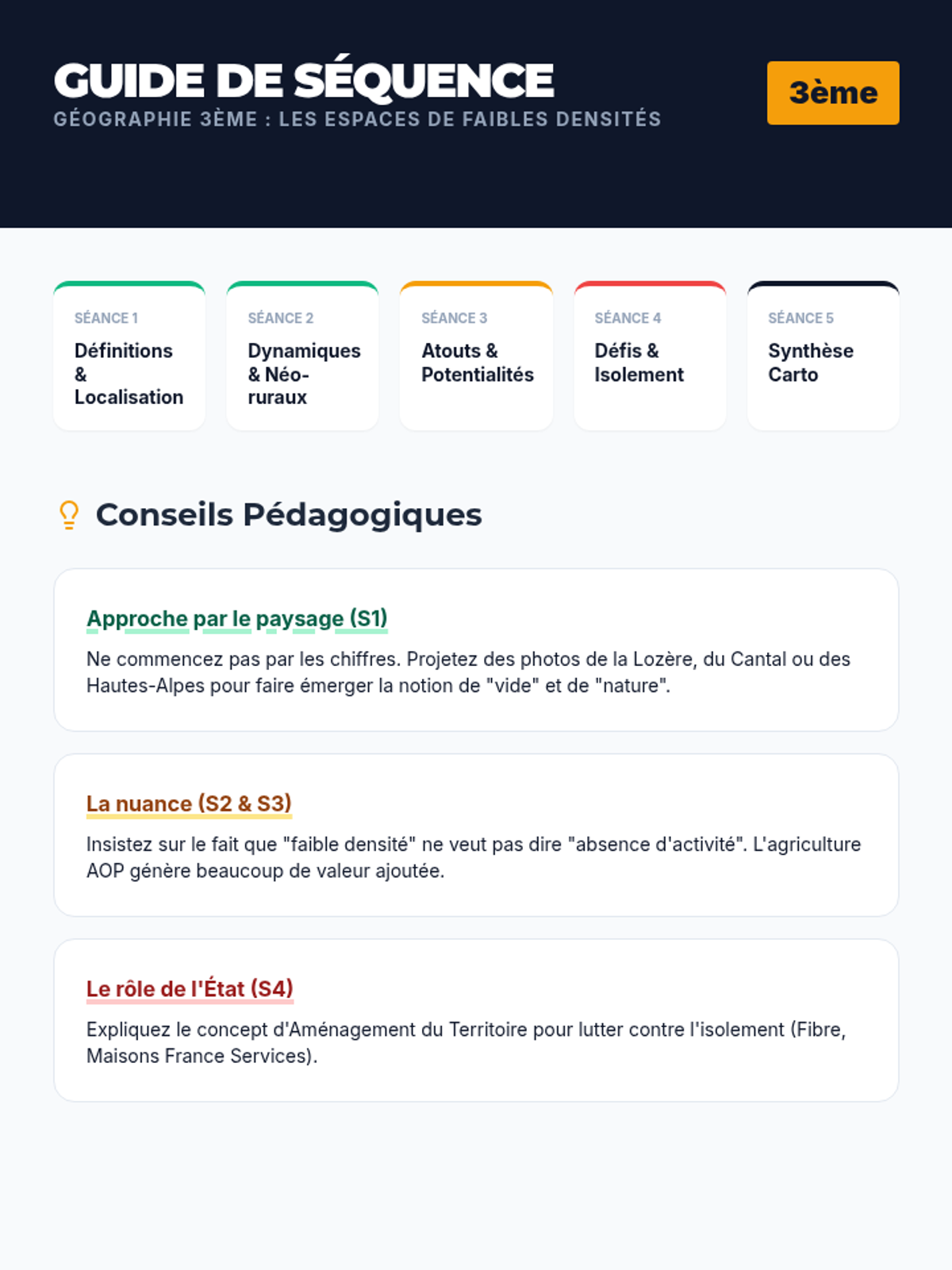
Une séquence complète de 5 séances pour explorer les espaces de faibles densités en France, leurs dynamiques, leurs contraintes et leurs atouts, se terminant par une réalisation cartographique de synthèse.
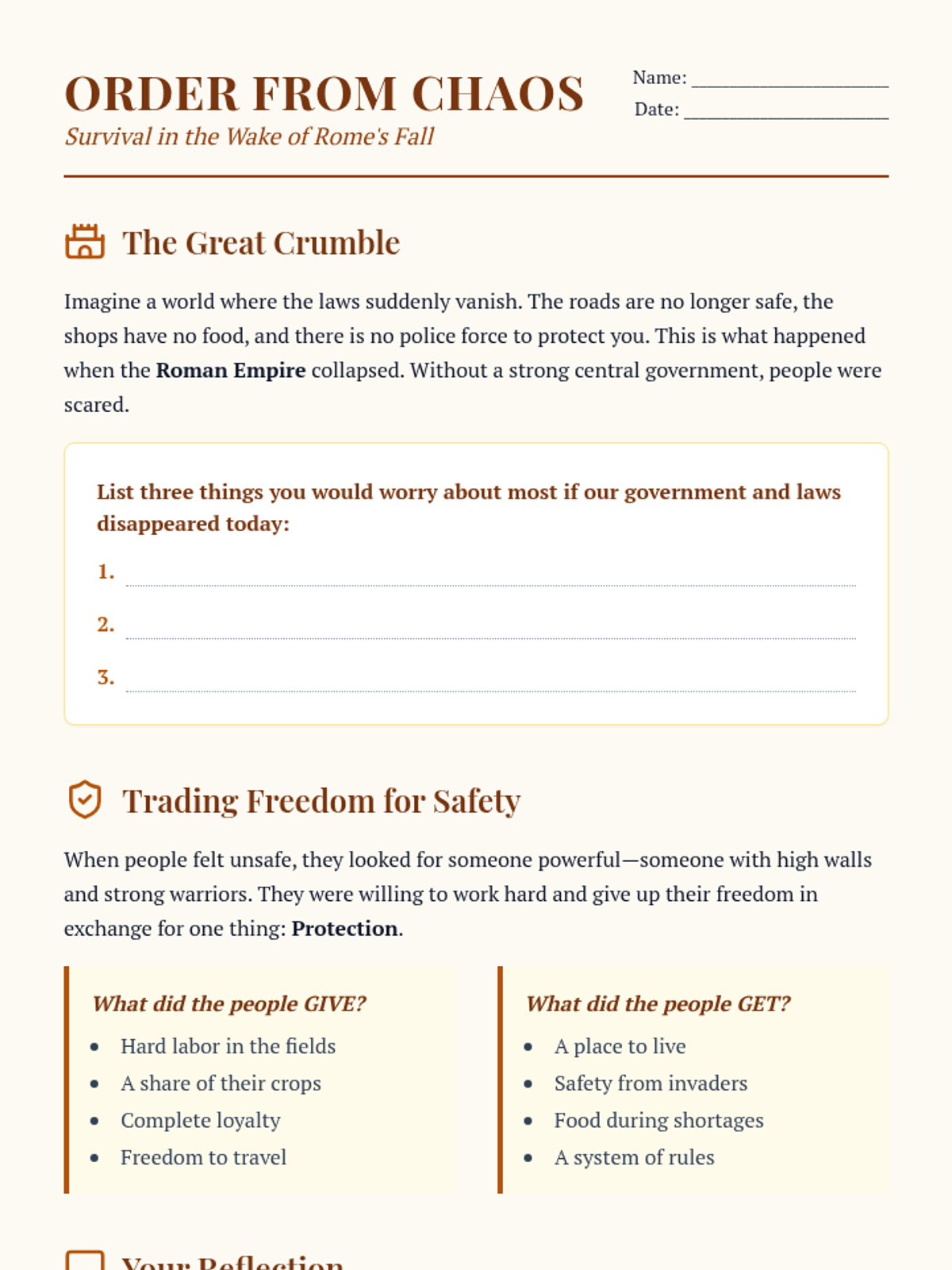
This sequence explores the rigid social hierarchy of Medieval Europe, focusing on the development of the feudal system as a response to the chaos following the fall of Rome. Students will examine the roles of monarchs, lords, knights, and peasants, and evaluate the trade-offs between security and freedom.
A deep-dive investigation into how narrative nonfiction explores systemic societal issues. Students analyze context, bias, and systemic roots before engaging in a formal Socratic Seminar.
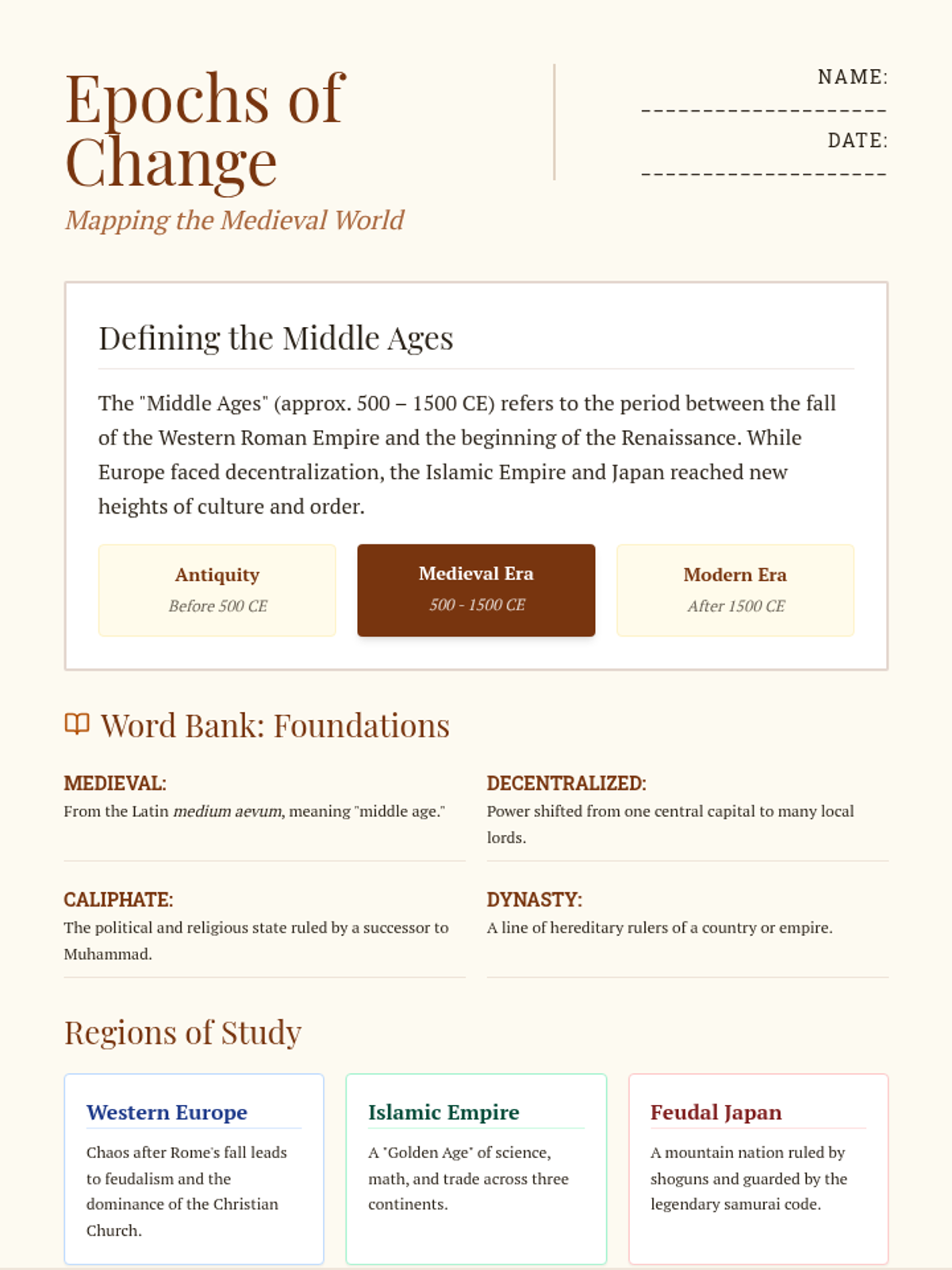
A comprehensive 10-lesson unit exploring the political, economic, religious, and technological landscape of the Middle Ages across Western Europe, Japan, and the Islamic Empire. Students will analyze feudal systems, cultural achievements, and global connections through slides, guided activities, and comparative studies.
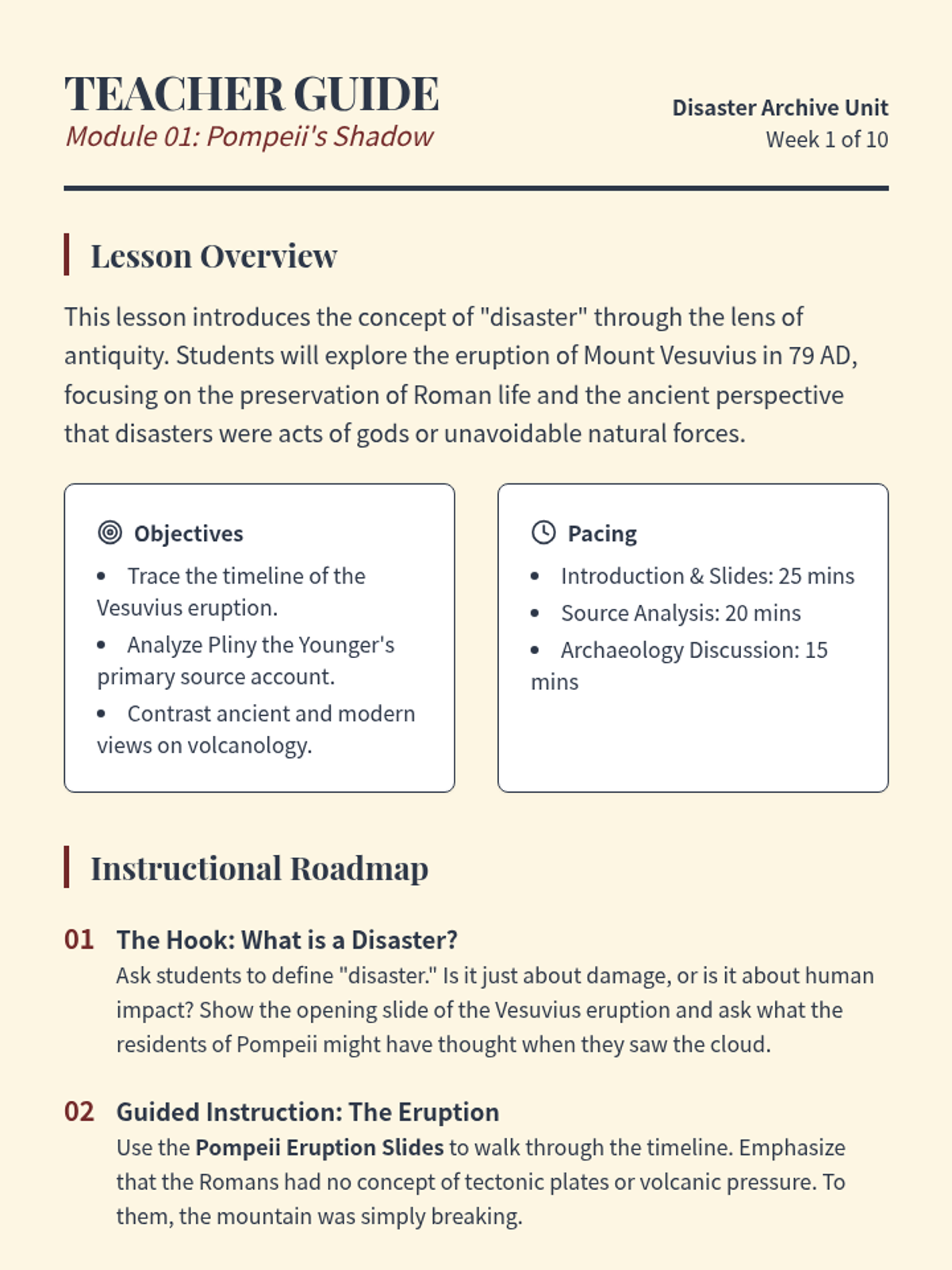
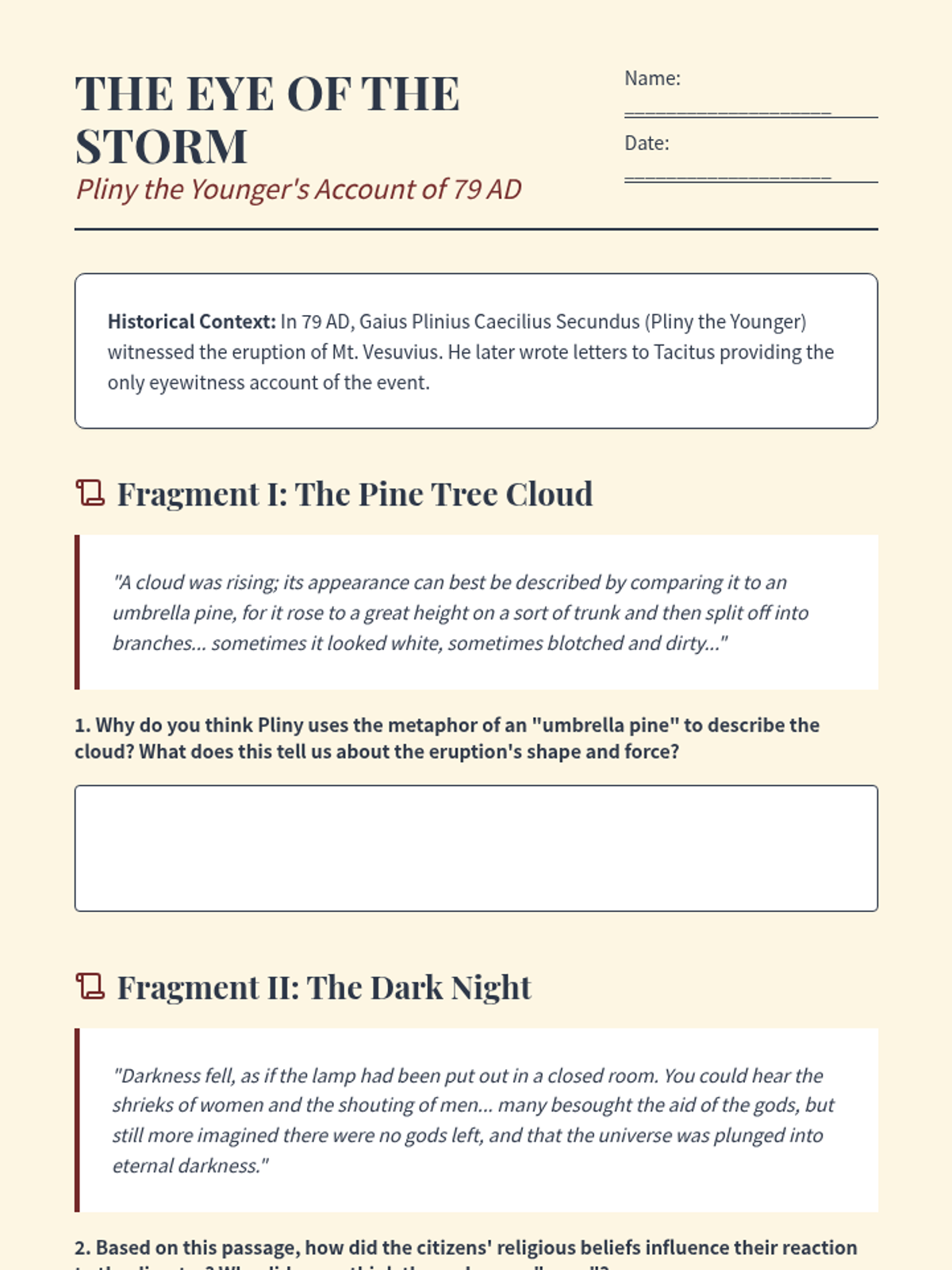
A 10-week comprehensive unit exploring the history of disasters from antiquity to the modern era, focusing on the shift from natural events to man-made catastrophes and changing human perspectives.
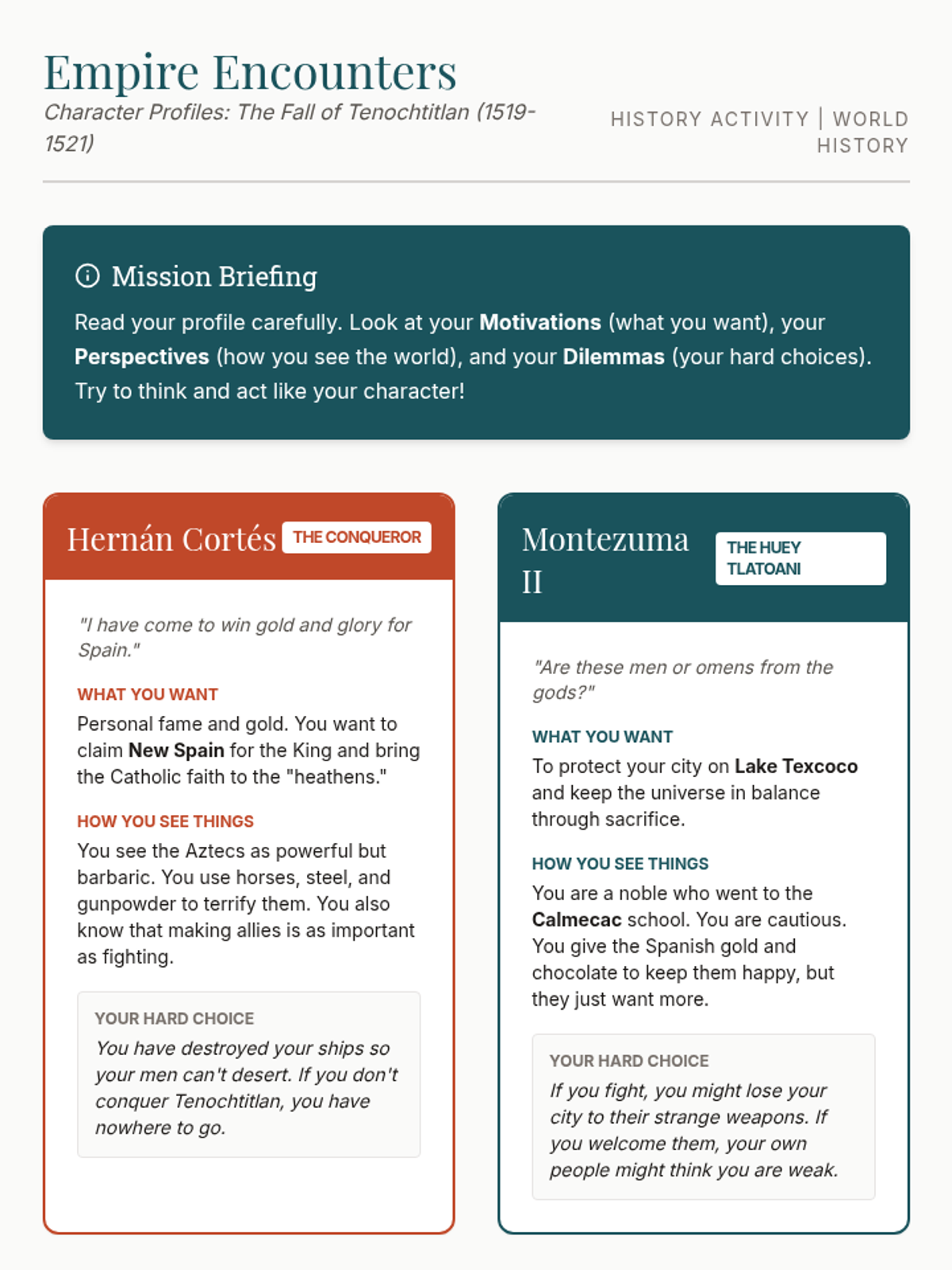
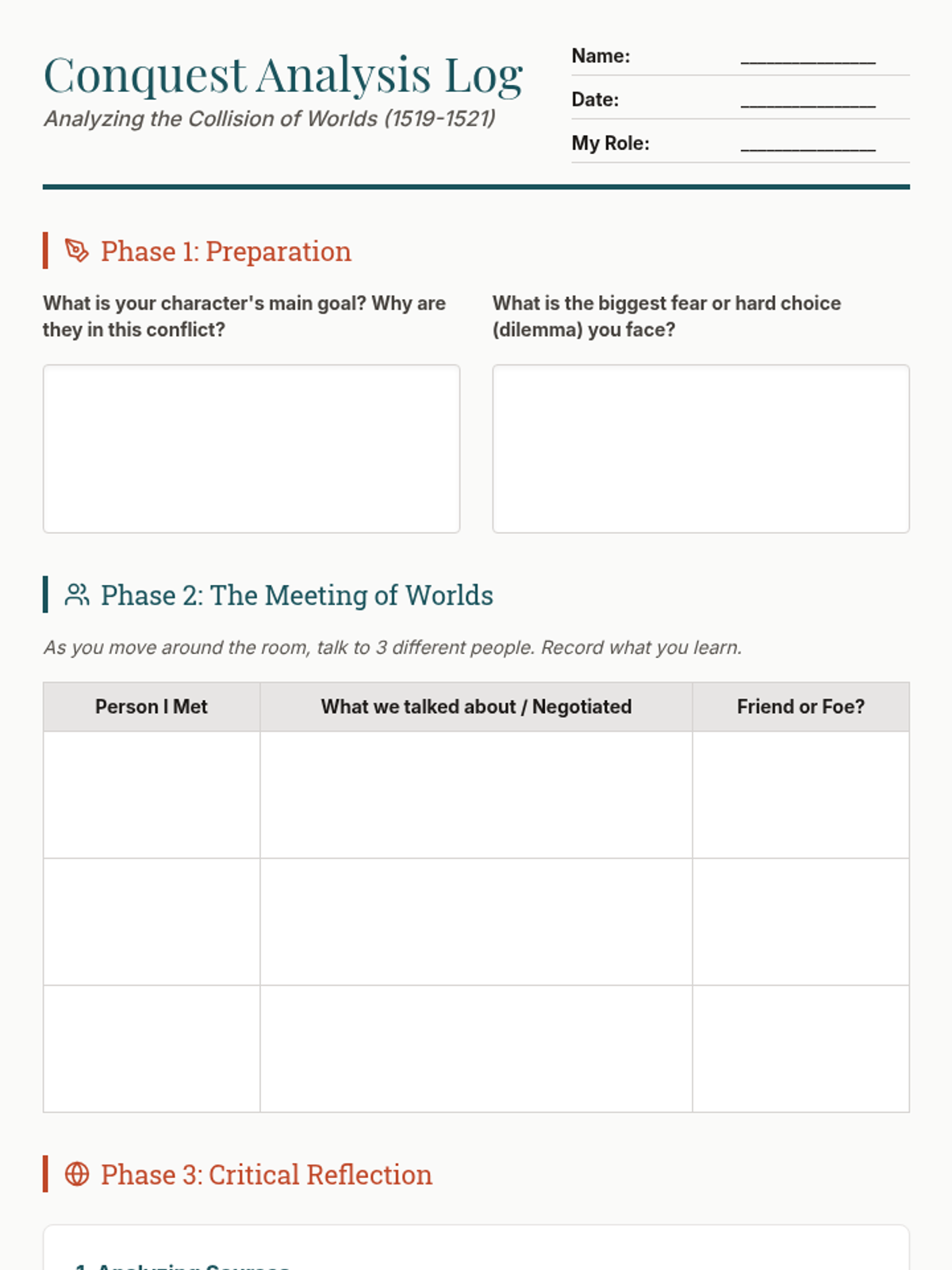
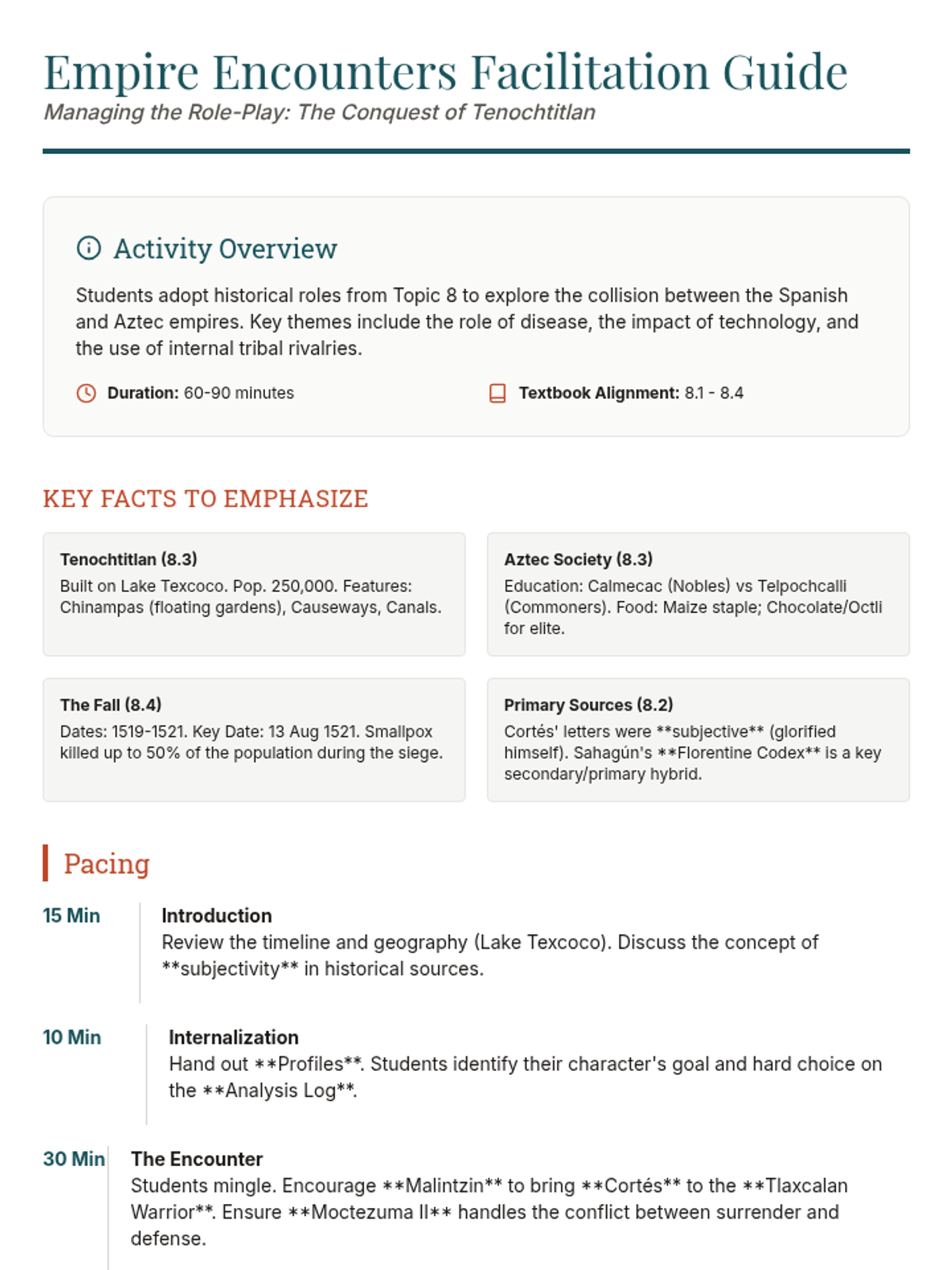
A deep dive into the 16th-century contact between European powers and indigenous American civilizations, exploring the complexities of conquest, resistance, and the emergence of a new global order.
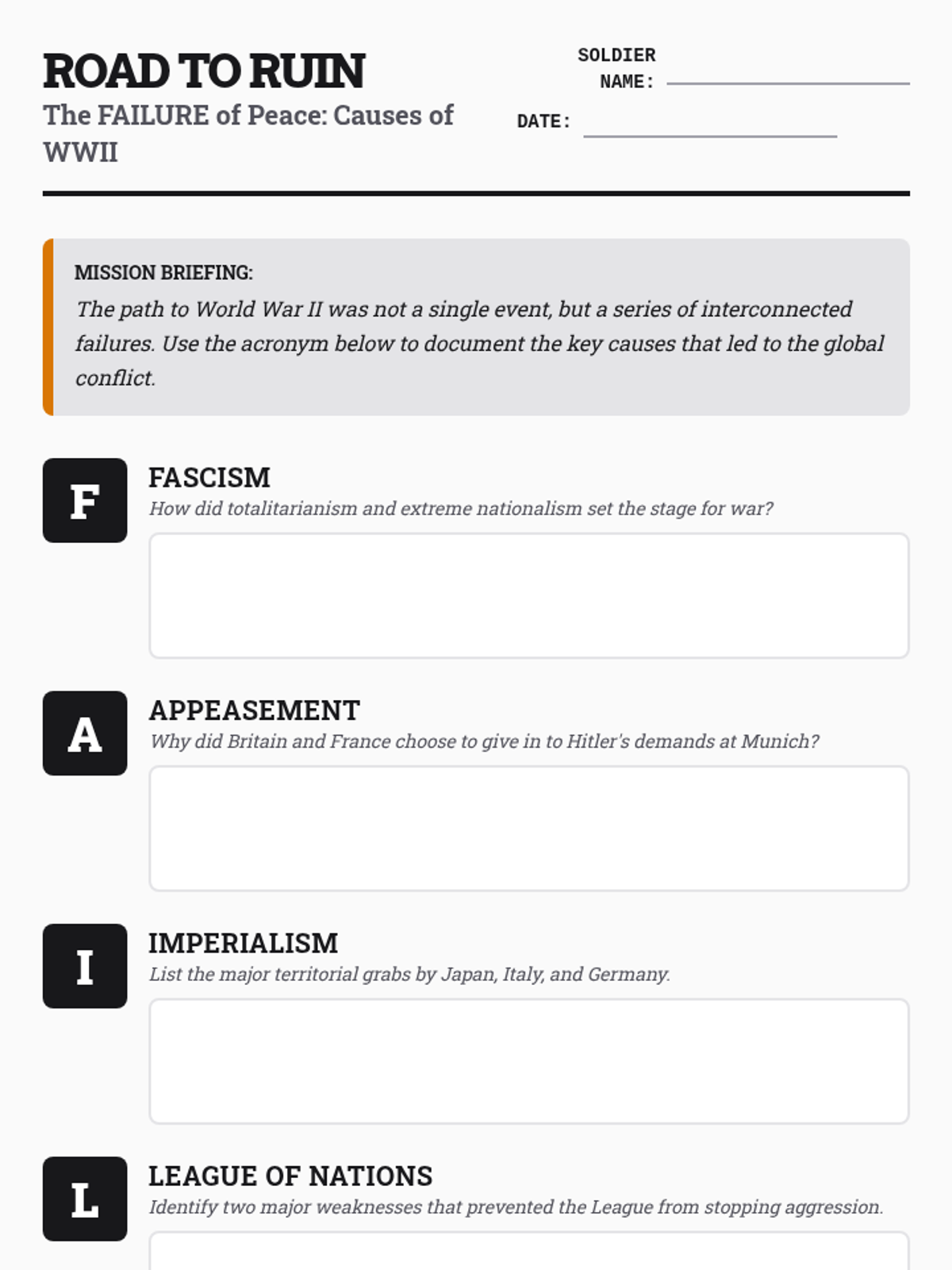
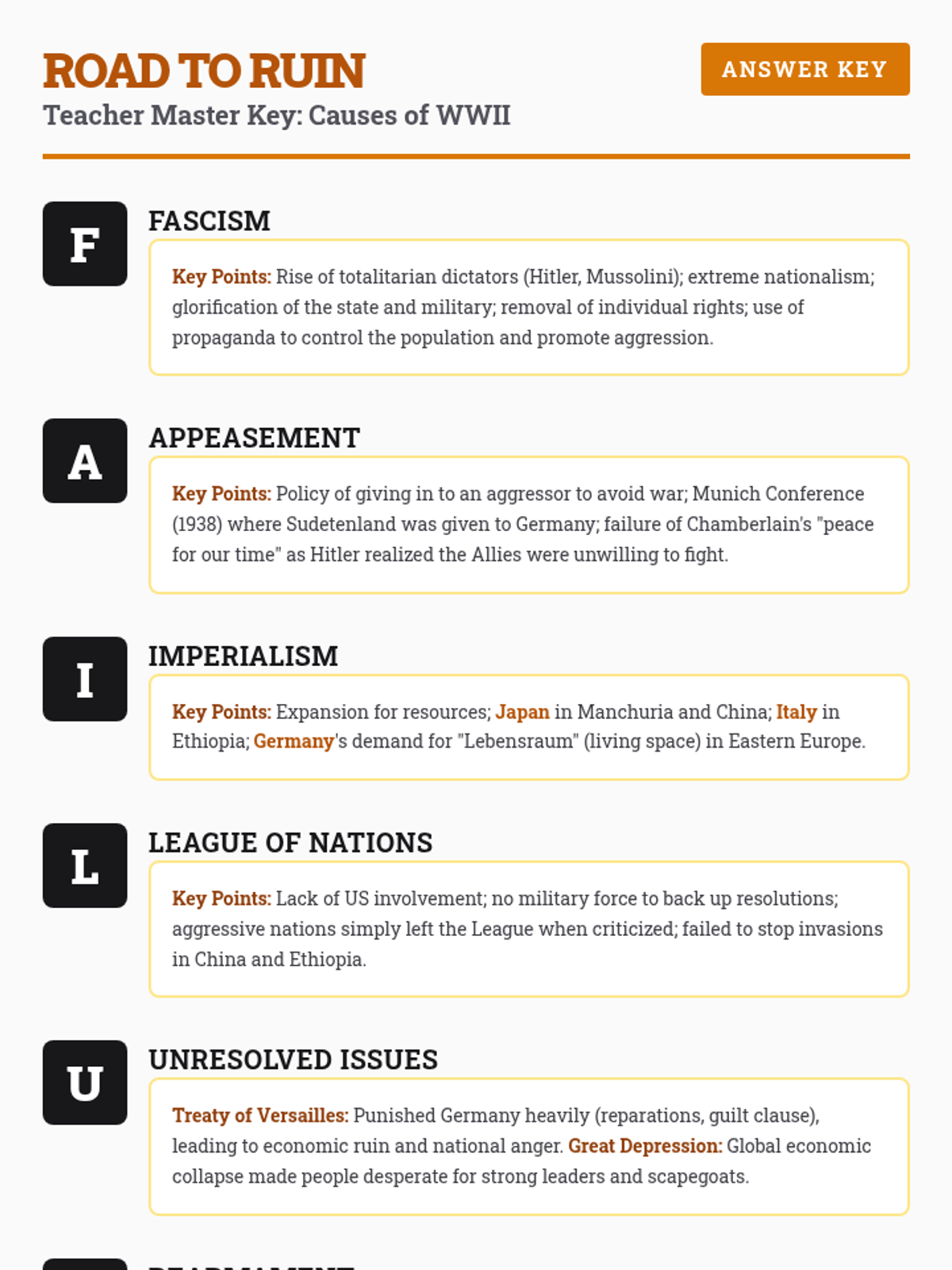
A comprehensive look at the origins and early stages of World War II, from global systemic failures to the specific regional reasons for Australian involvement.
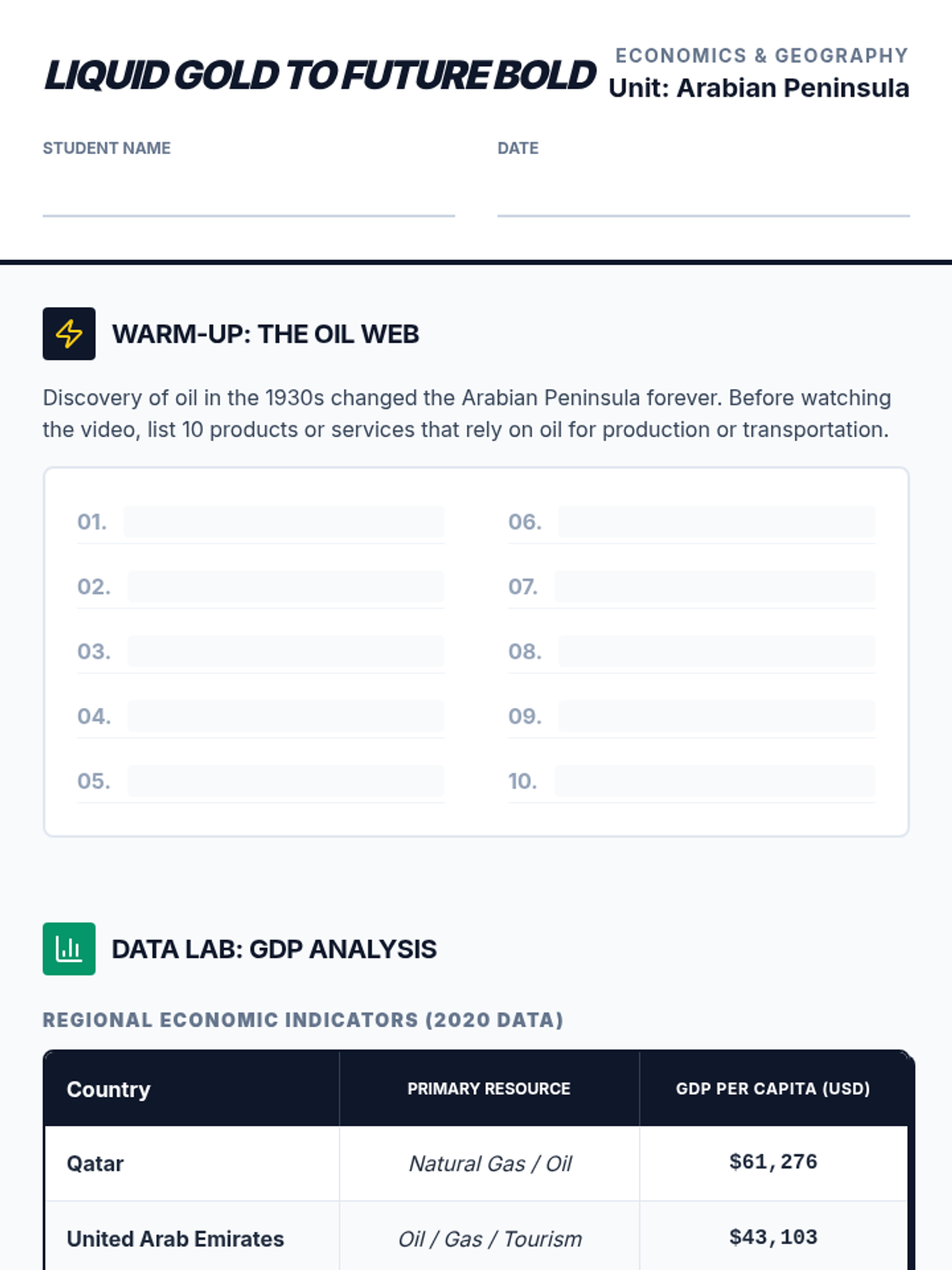
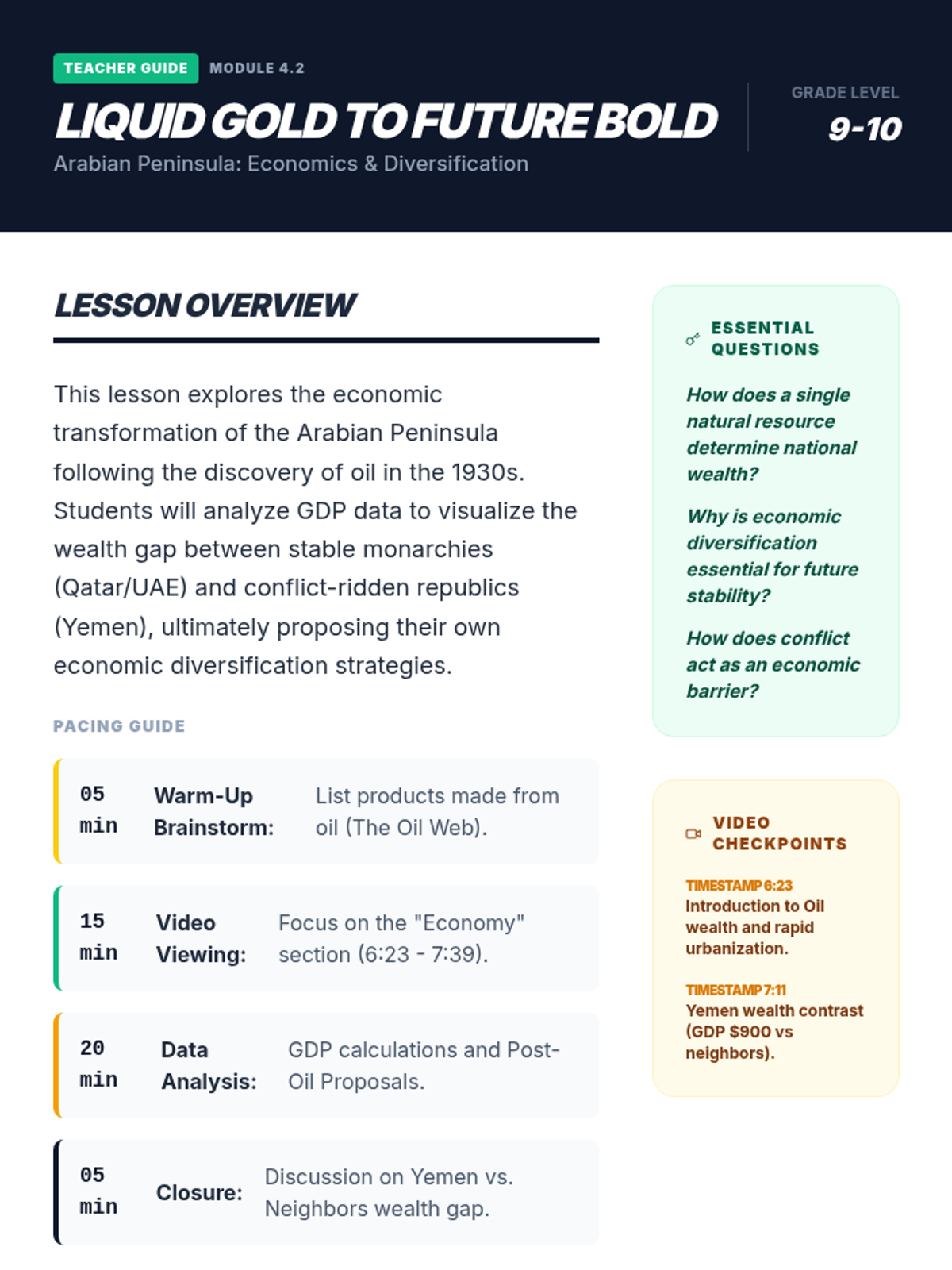
A high school economics sequence focused on the Arabian Peninsula, exploring the impact of oil wealth, the necessity of economic diversification, and the stark wealth inequalities caused by conflict.
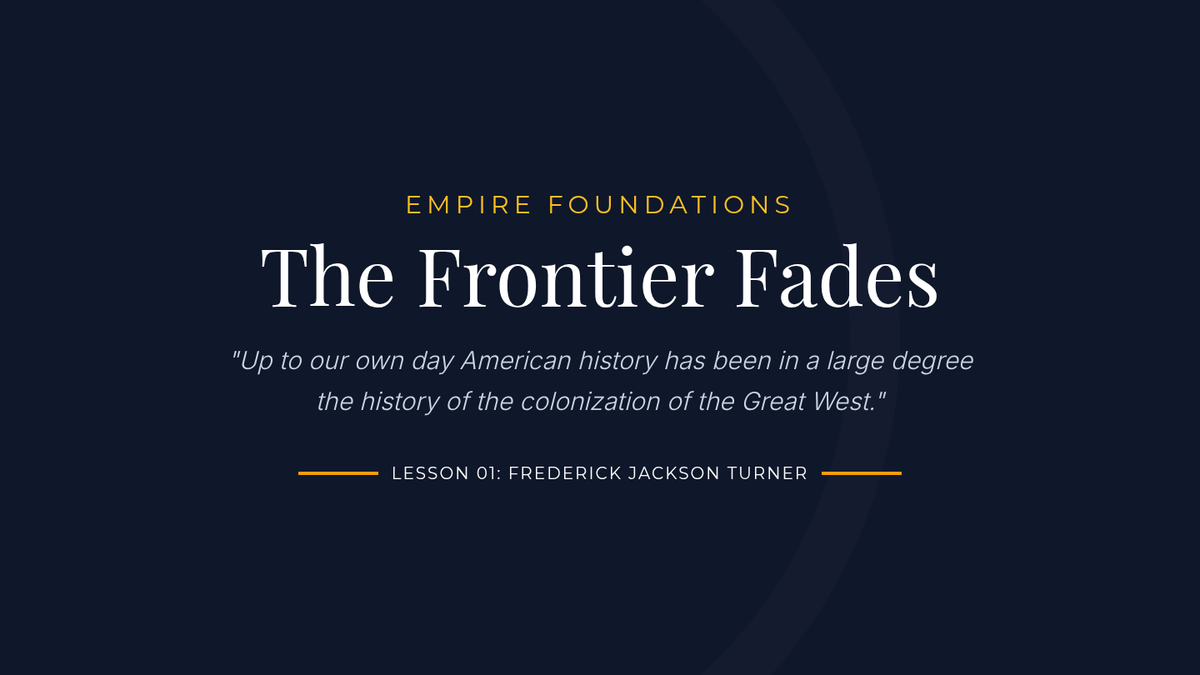
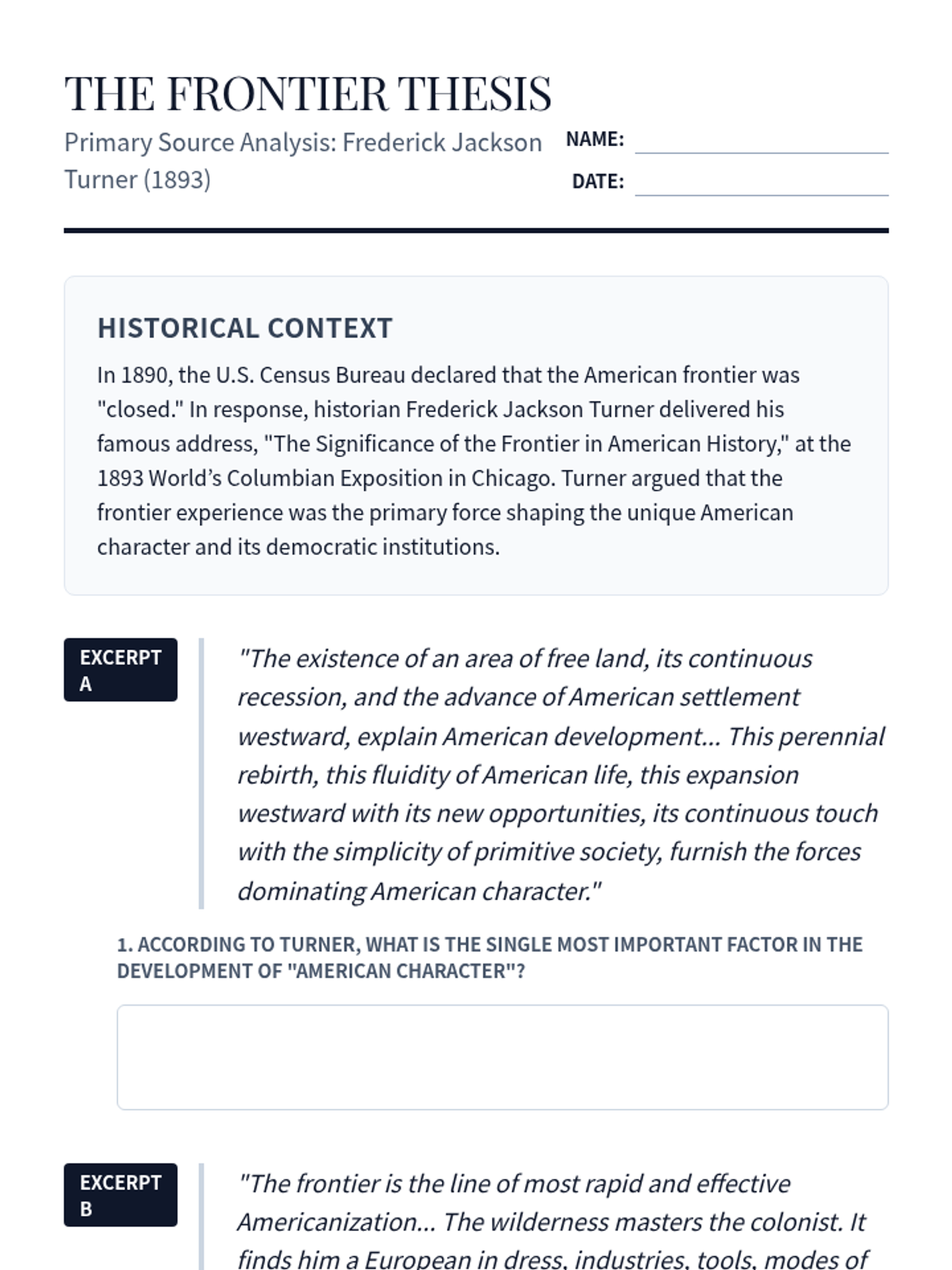
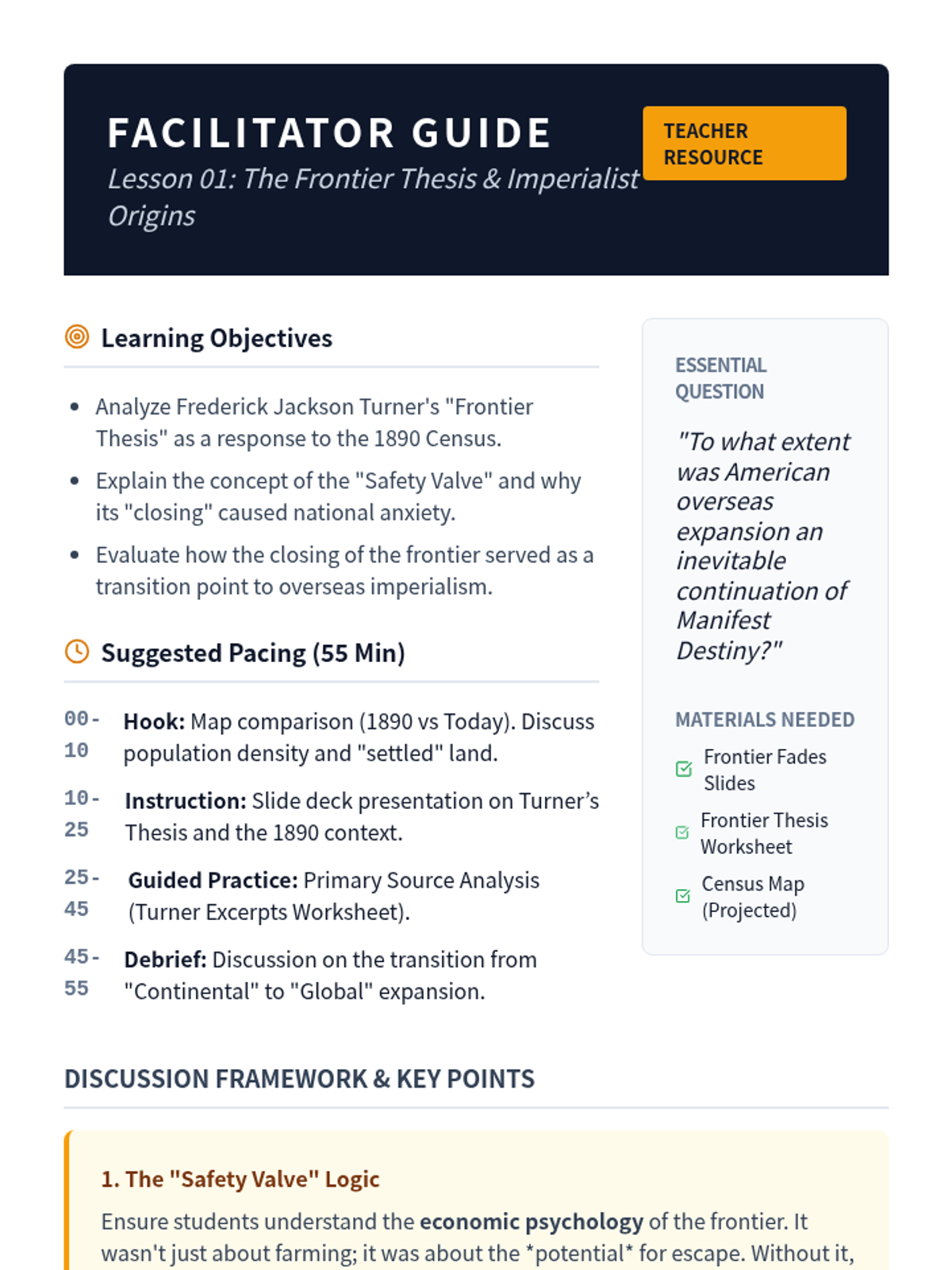
This high school US History sequence explores the multifaceted motivations behind American imperialism at the turn of the 20th century. Students analyze primary sources from Frederick Jackson Turner, Alfred Thayer Mahan, and Josiah Strong to evaluate the economic, strategic, and ideological 'push factors' that led the United States to look beyond its borders.
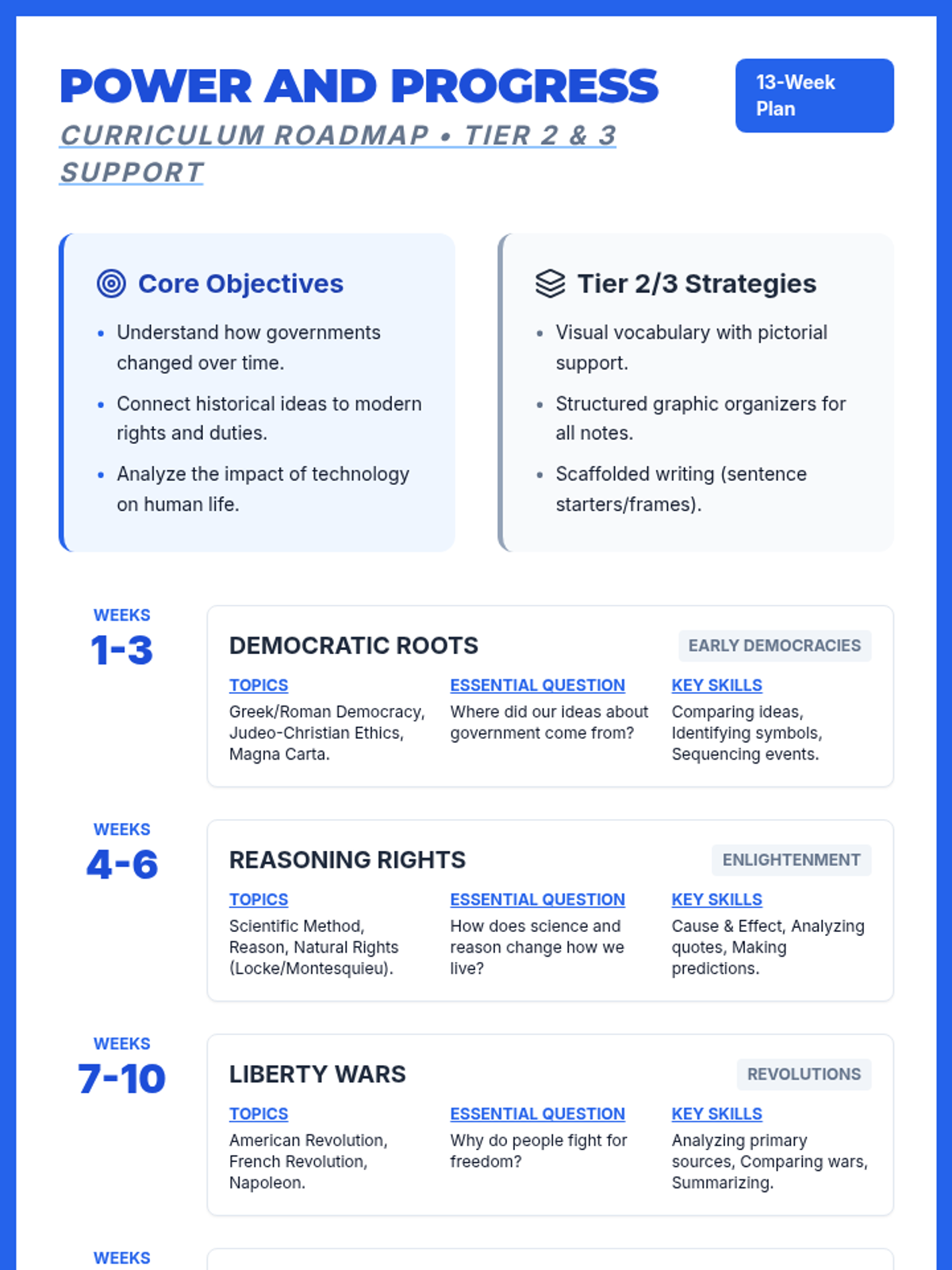
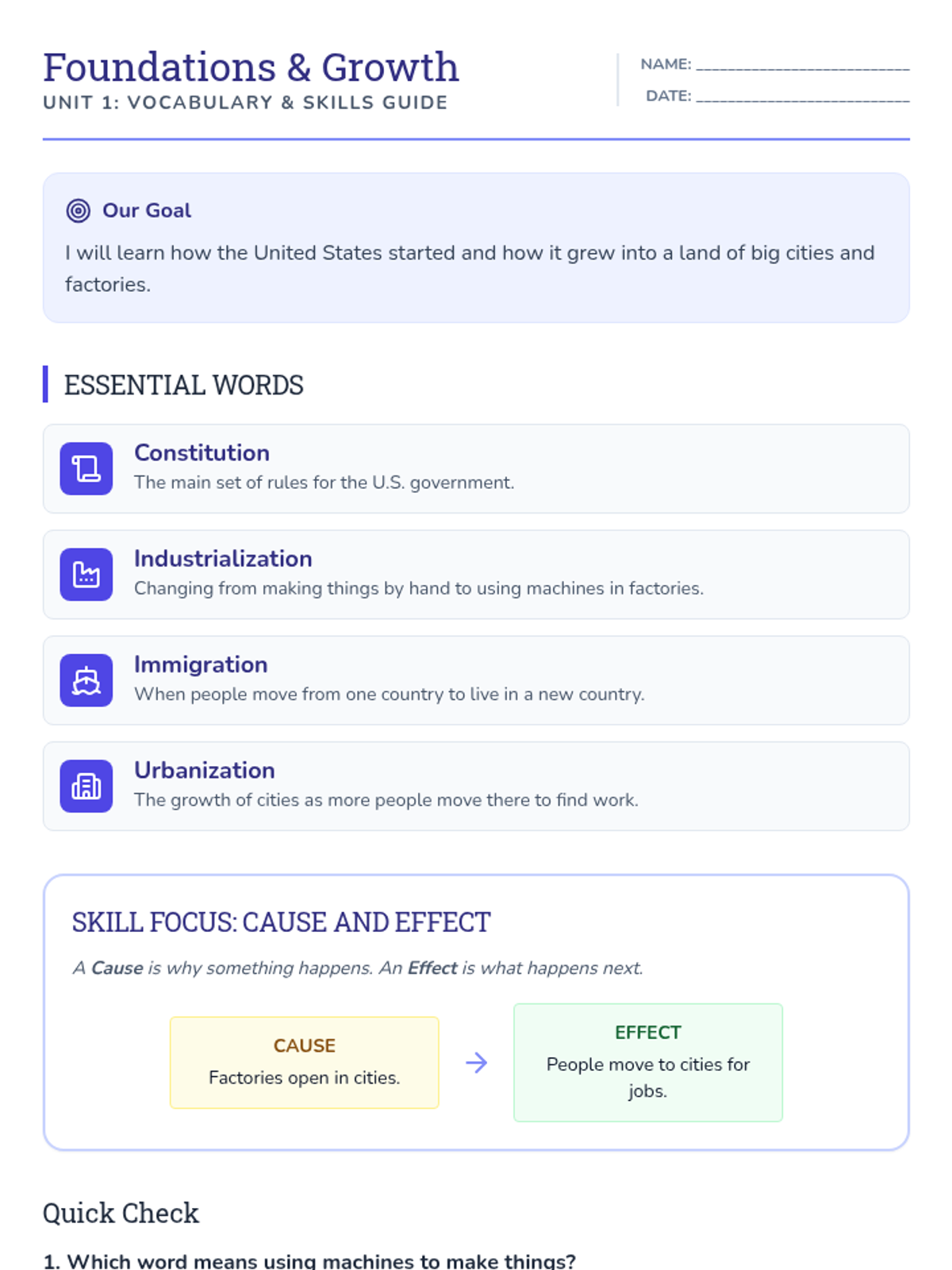
A comprehensive US History curriculum designed for Tier 2 and 3 special education support, focusing on core concepts, simplified vocabulary, and essential historical skills across four major units of power and progress.
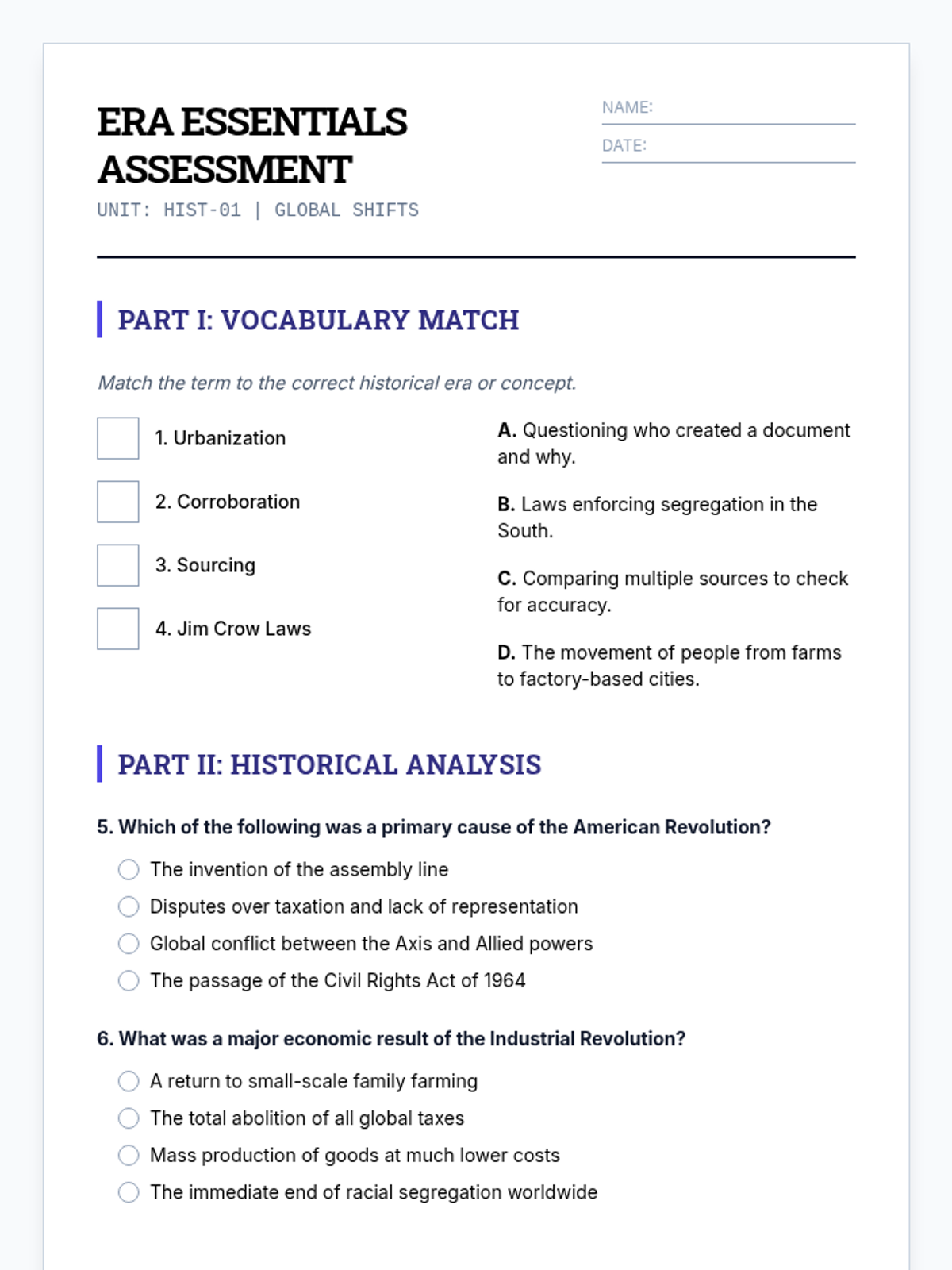
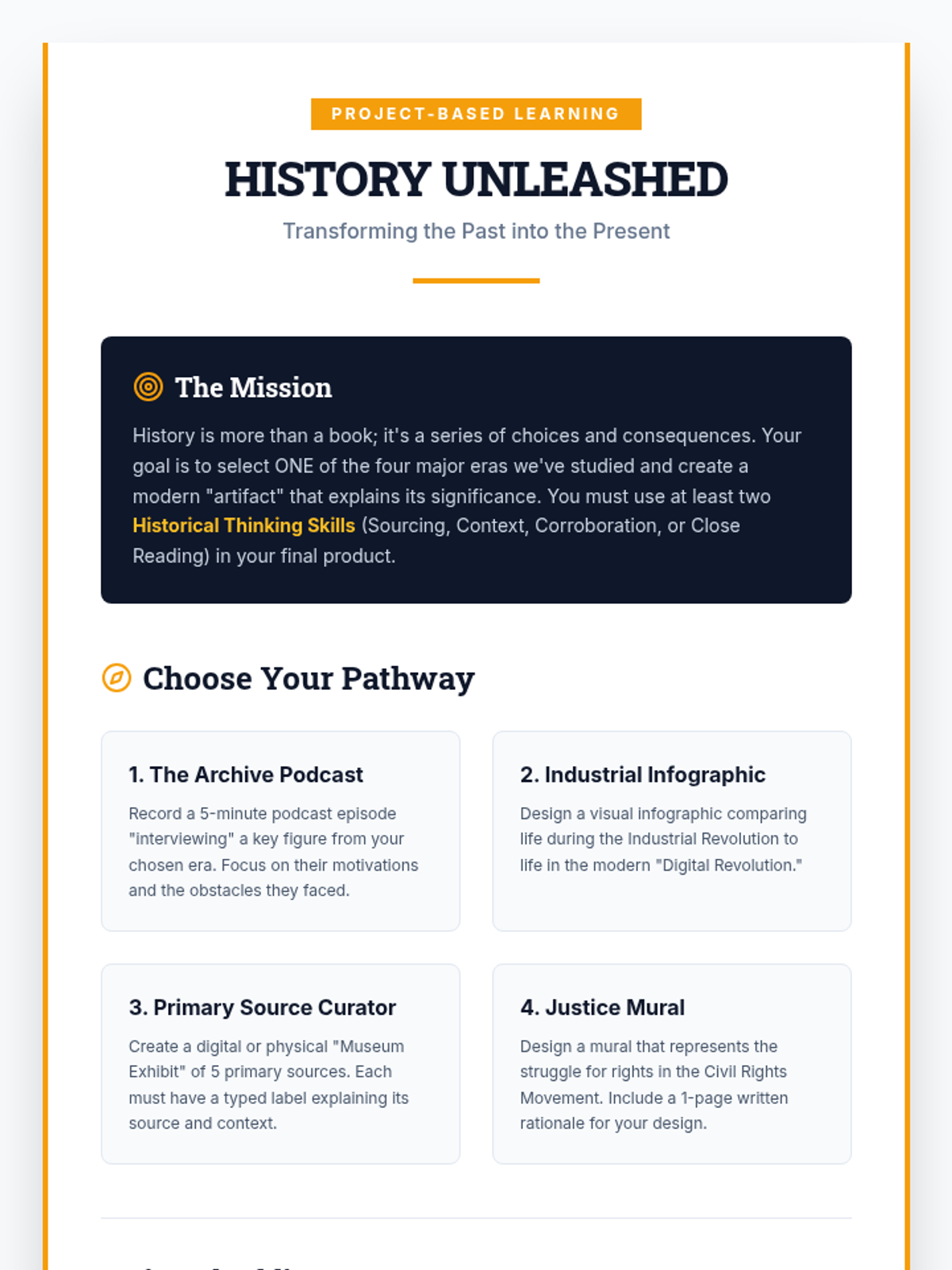
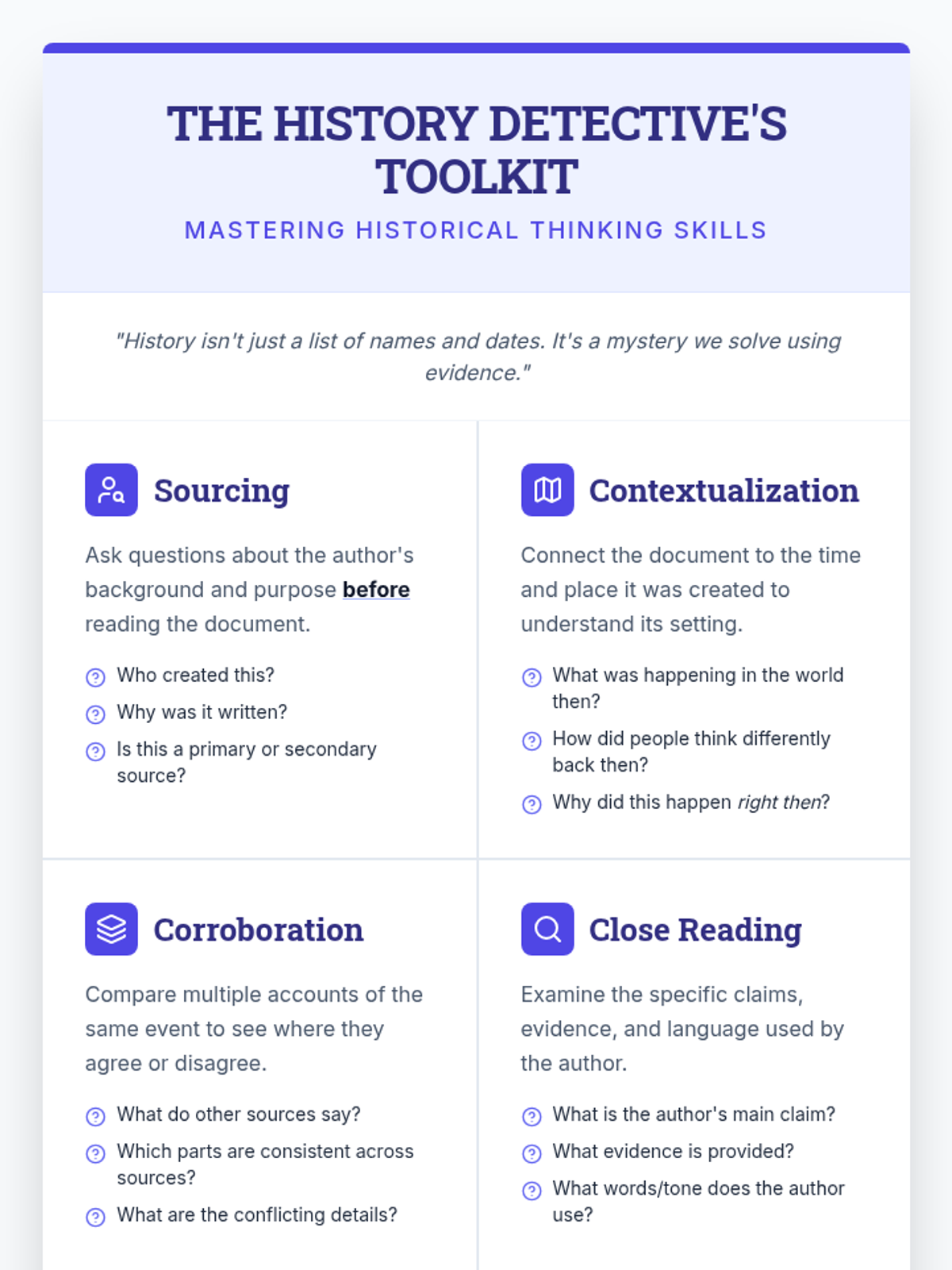
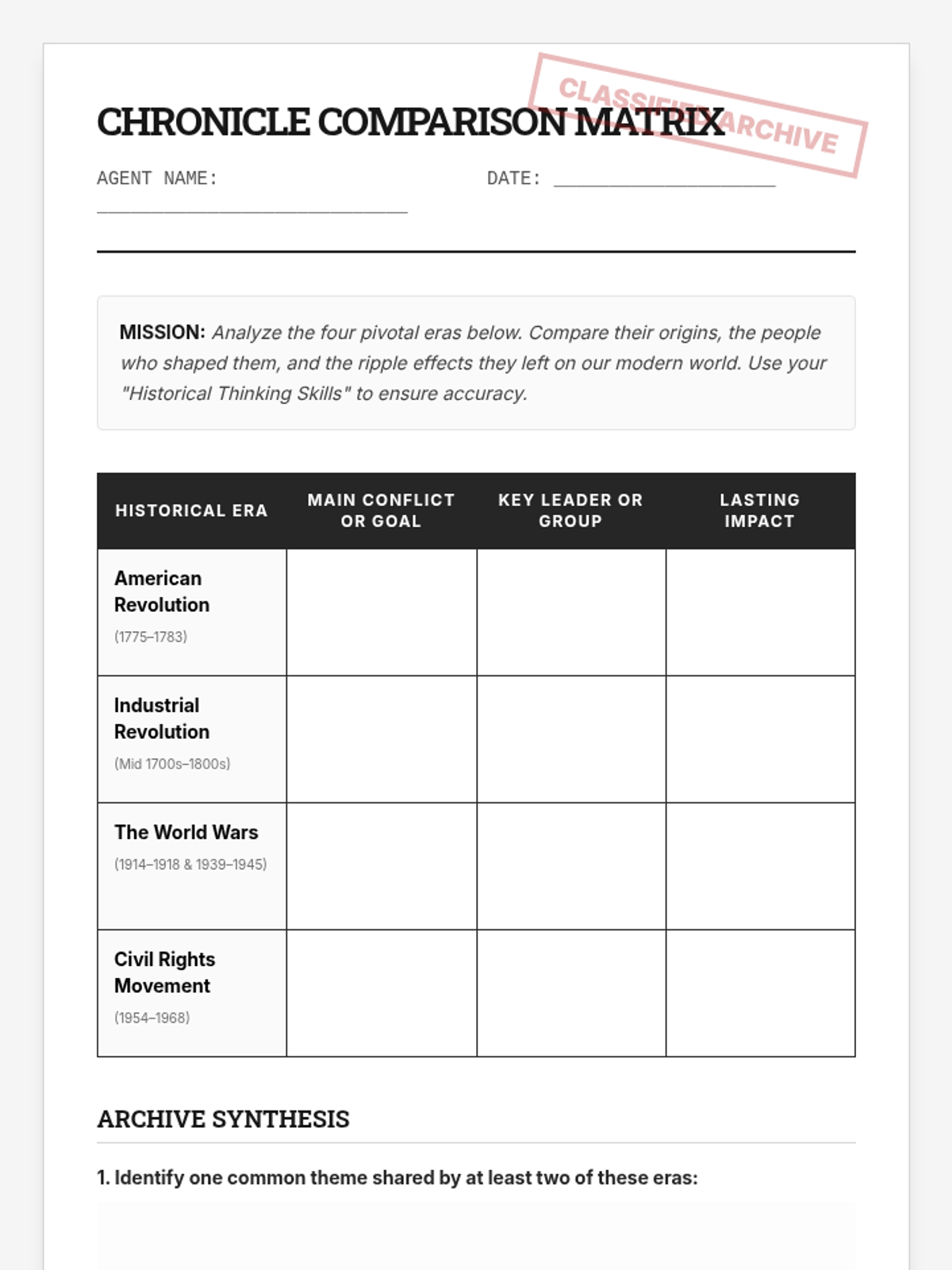
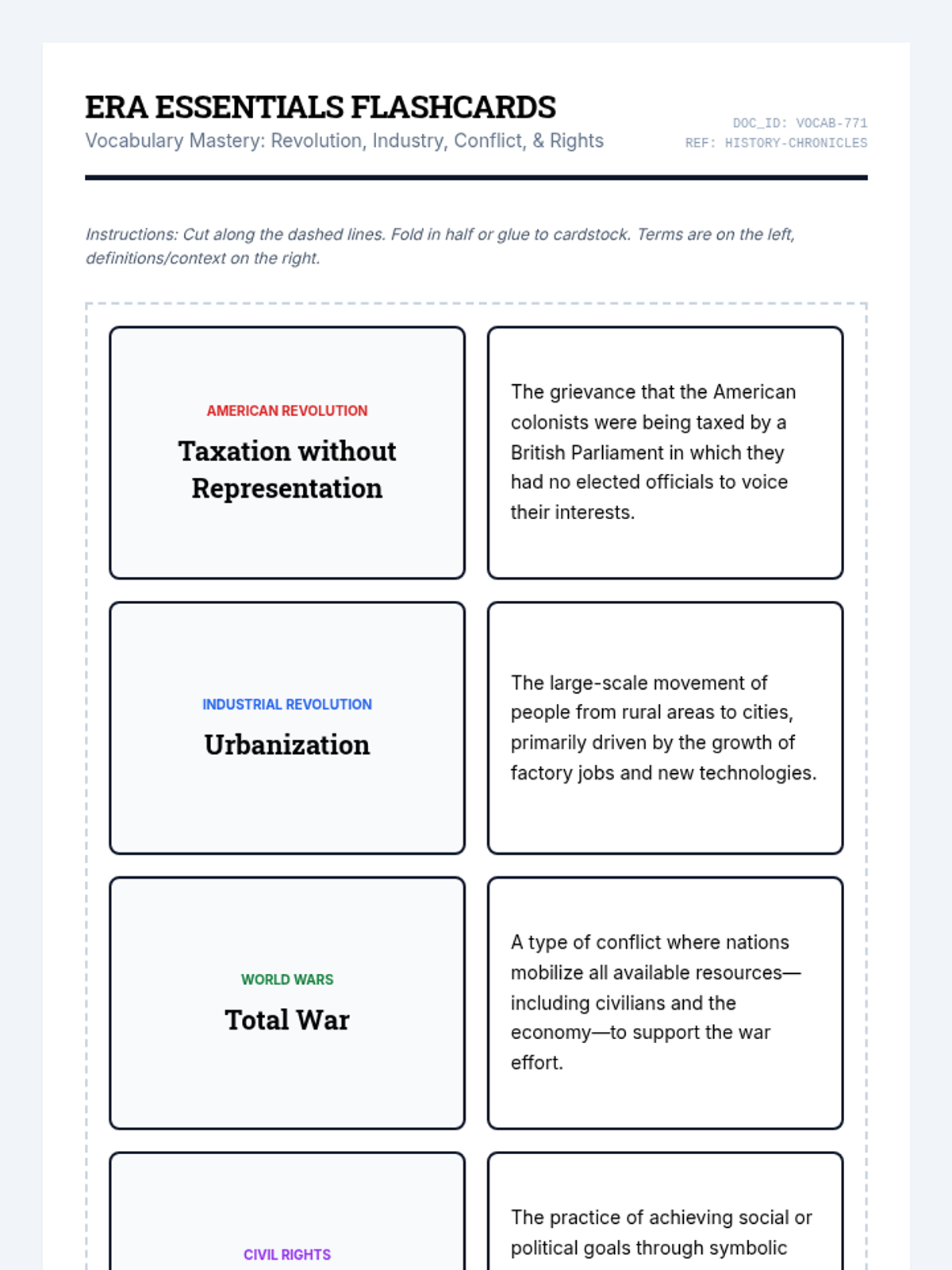
A comprehensive history sequence covering the American Revolution, Industrial Revolution, World Wars, and the Civil Rights Movement, focusing on developing historical thinking skills.
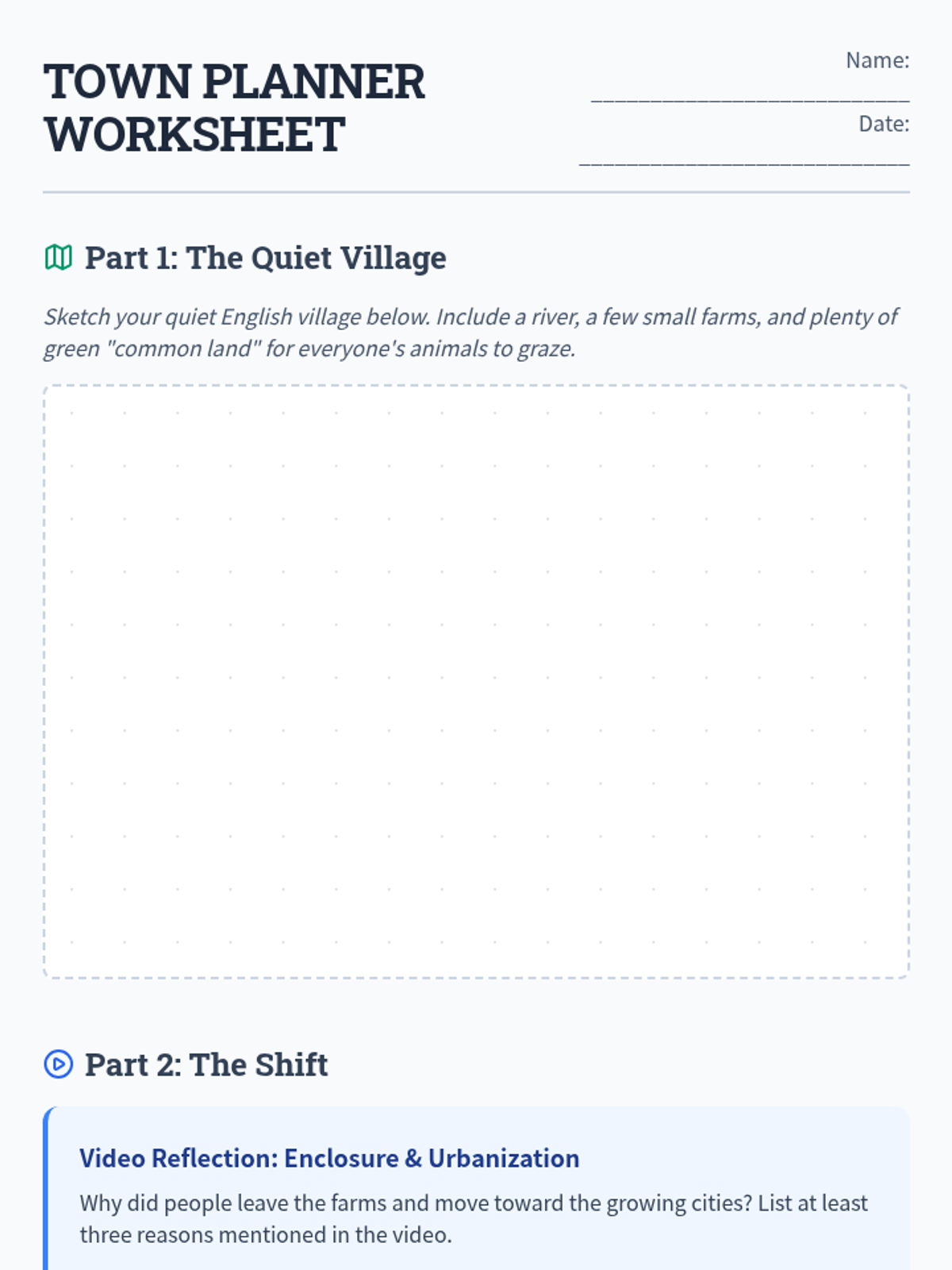
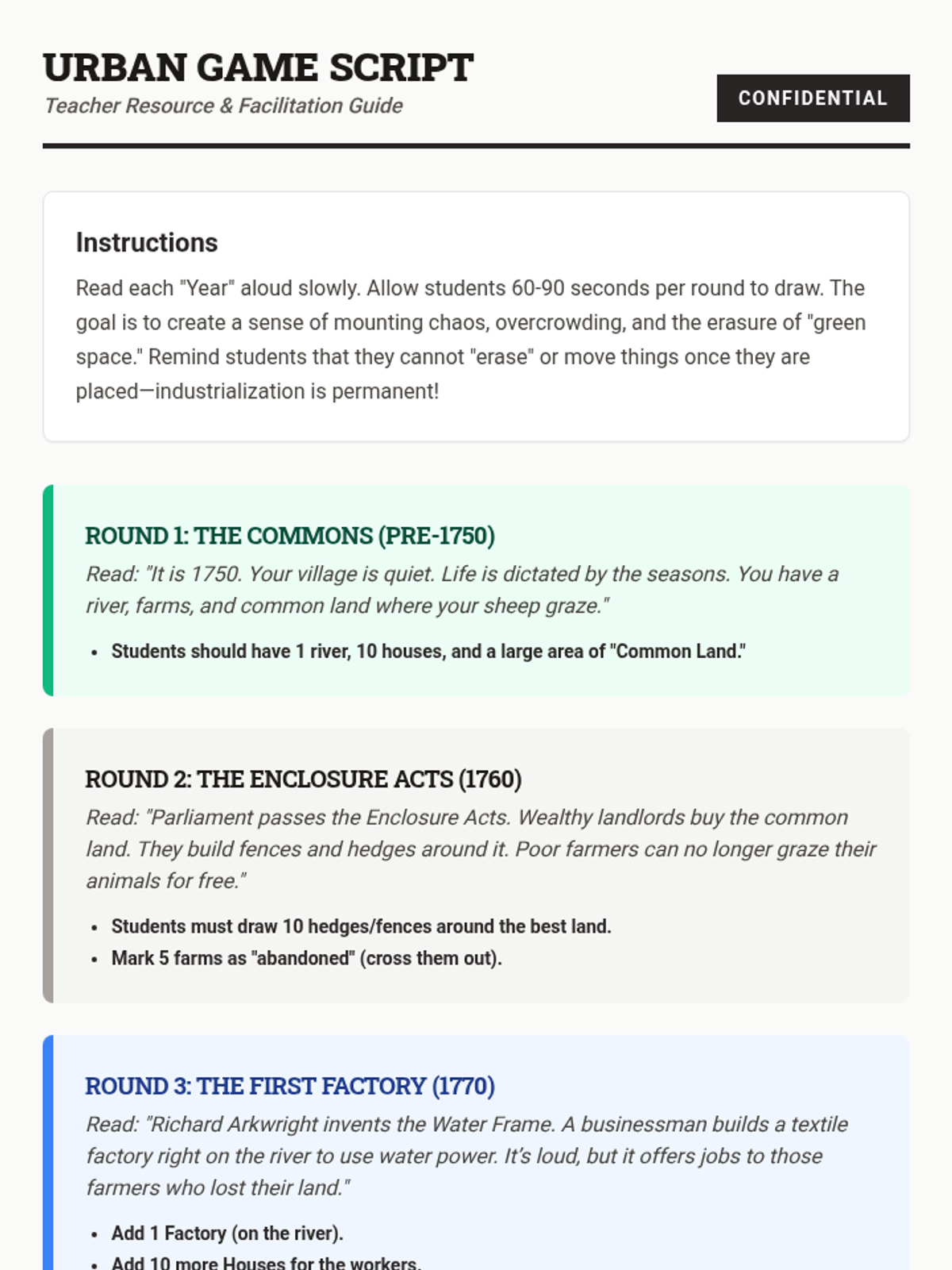
A sequence exploring the transition from agrarian societies to industrial hubs, focusing on the social, economic, and physical changes in 18th-century England.
An exploration of the 1920s economic boom, focusing on mass production, consumerism, credit, and the eventual market crash. Students analyze the sustainability of this period's prosperity and its impact on various social groups.
This inquiry-based sequence explores the rapid modernization of China through technology, pop culture, and urbanization, bridging the gap between historical China and today's high-tech reality.
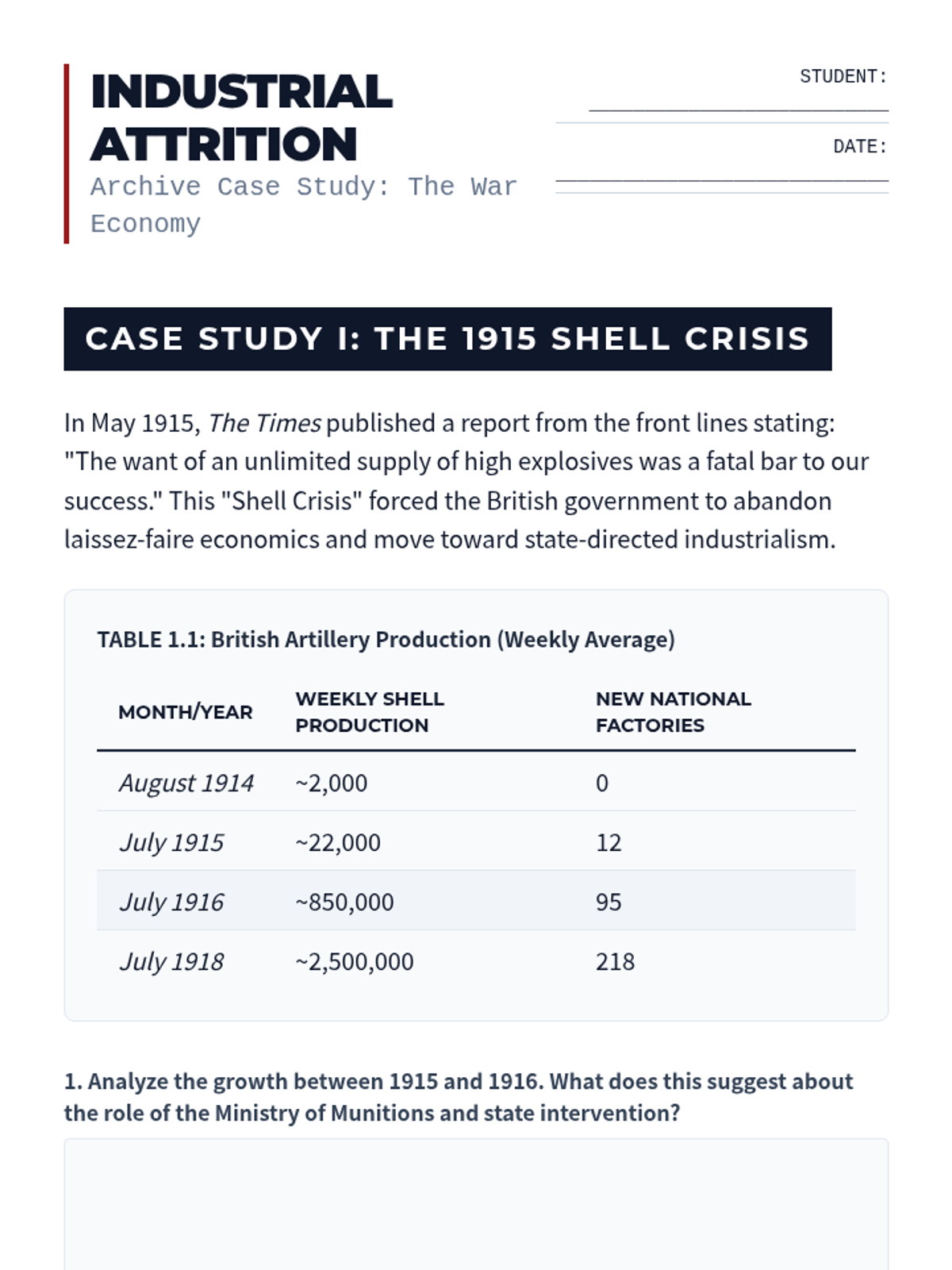
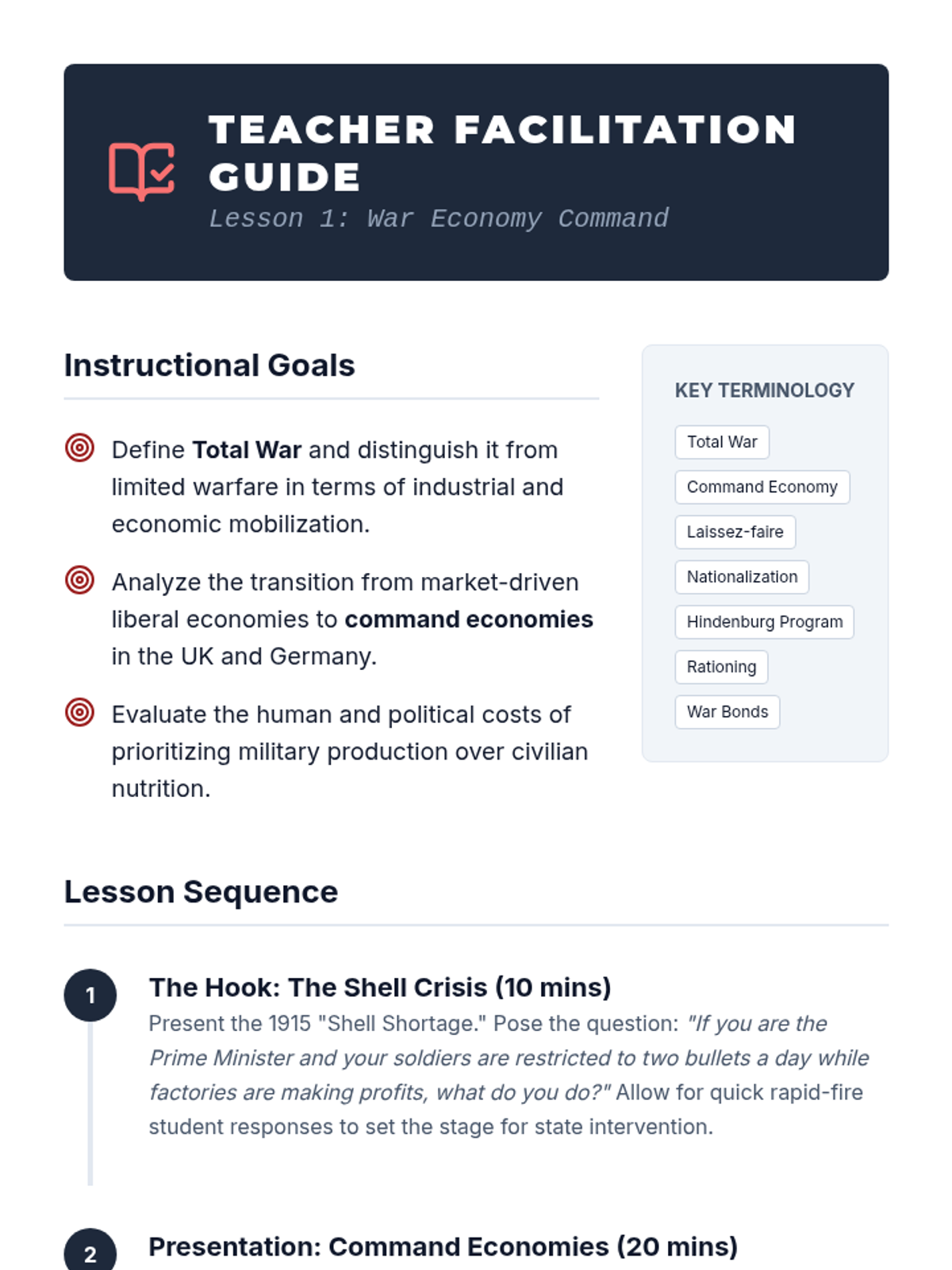
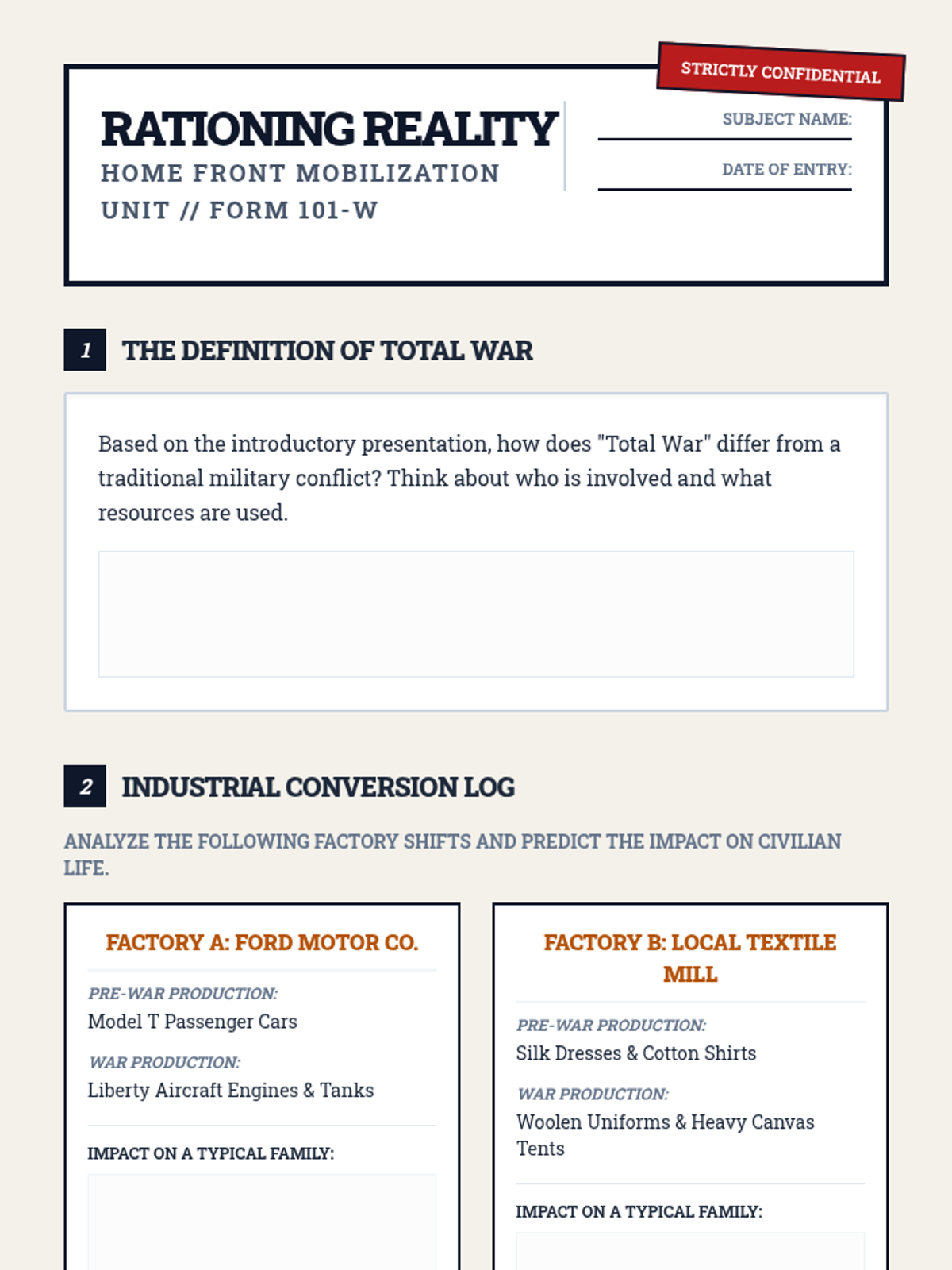
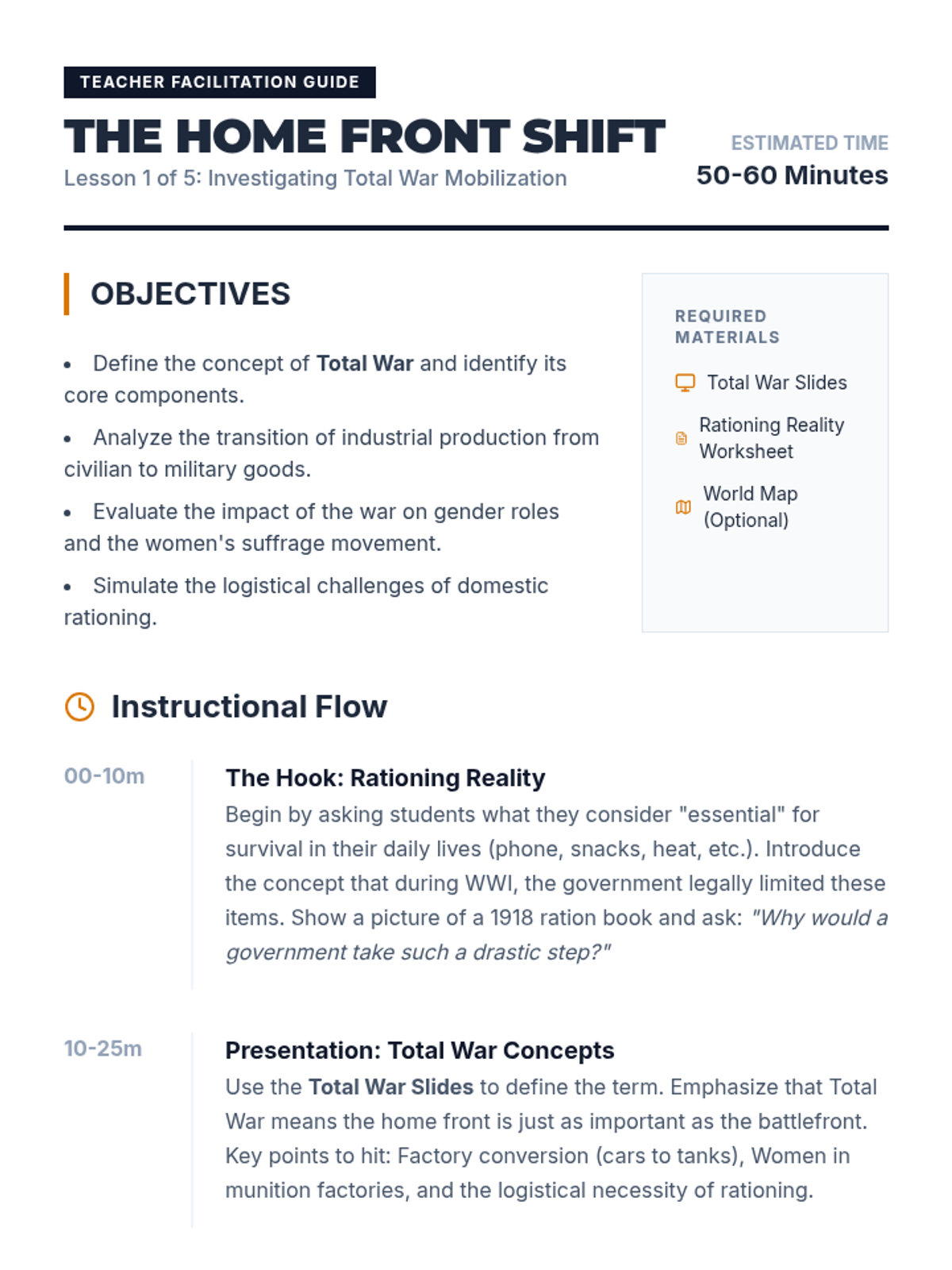
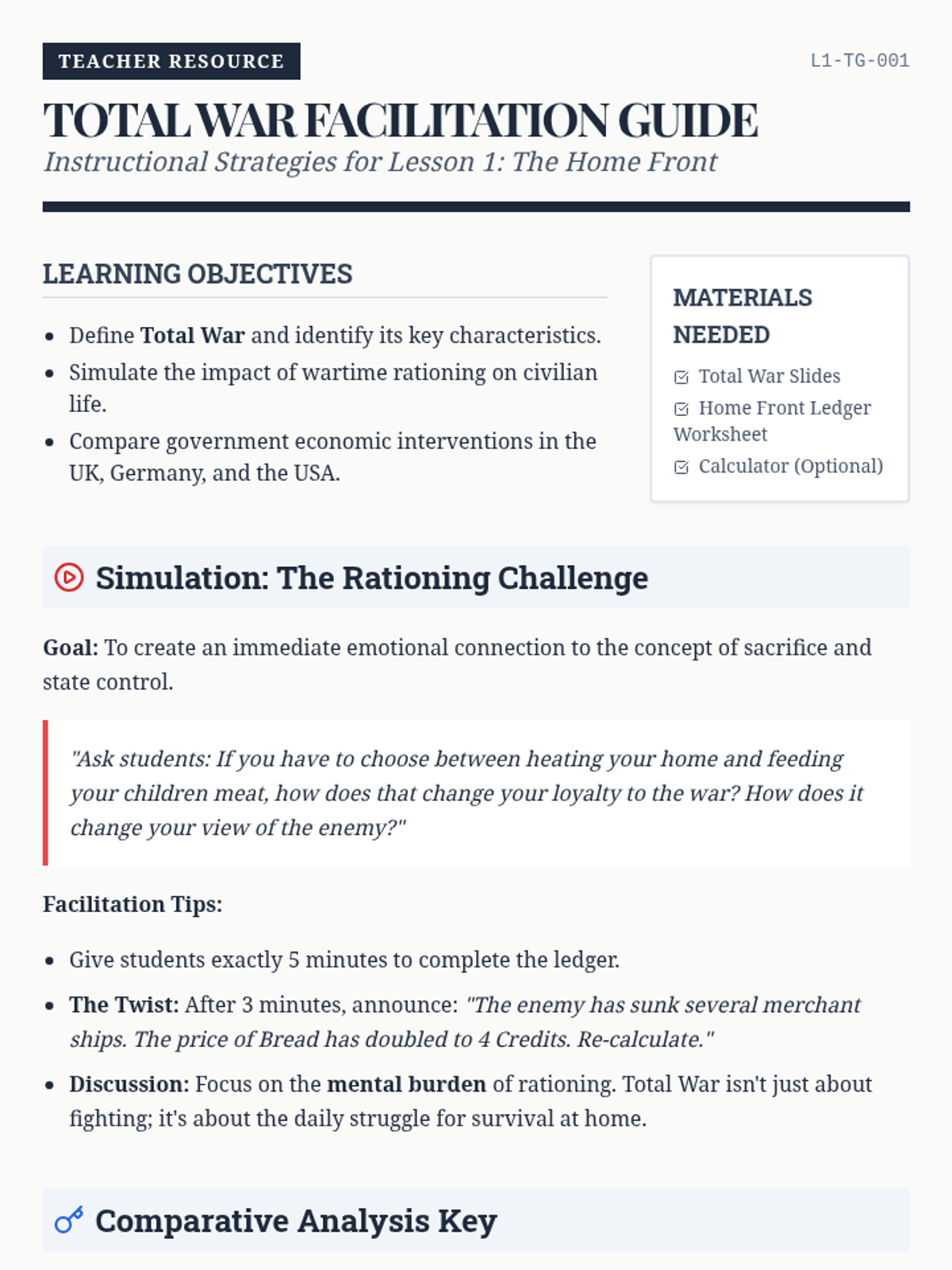
This sequence analyzes the concept of 'Total War' and its impact on civilian populations, economies, and social structures during World War I. Students explore government expansion, propaganda, the role of women, and the suppression of dissent, moving from initial enthusiasm to social fracturing and exhaustion by 1918.
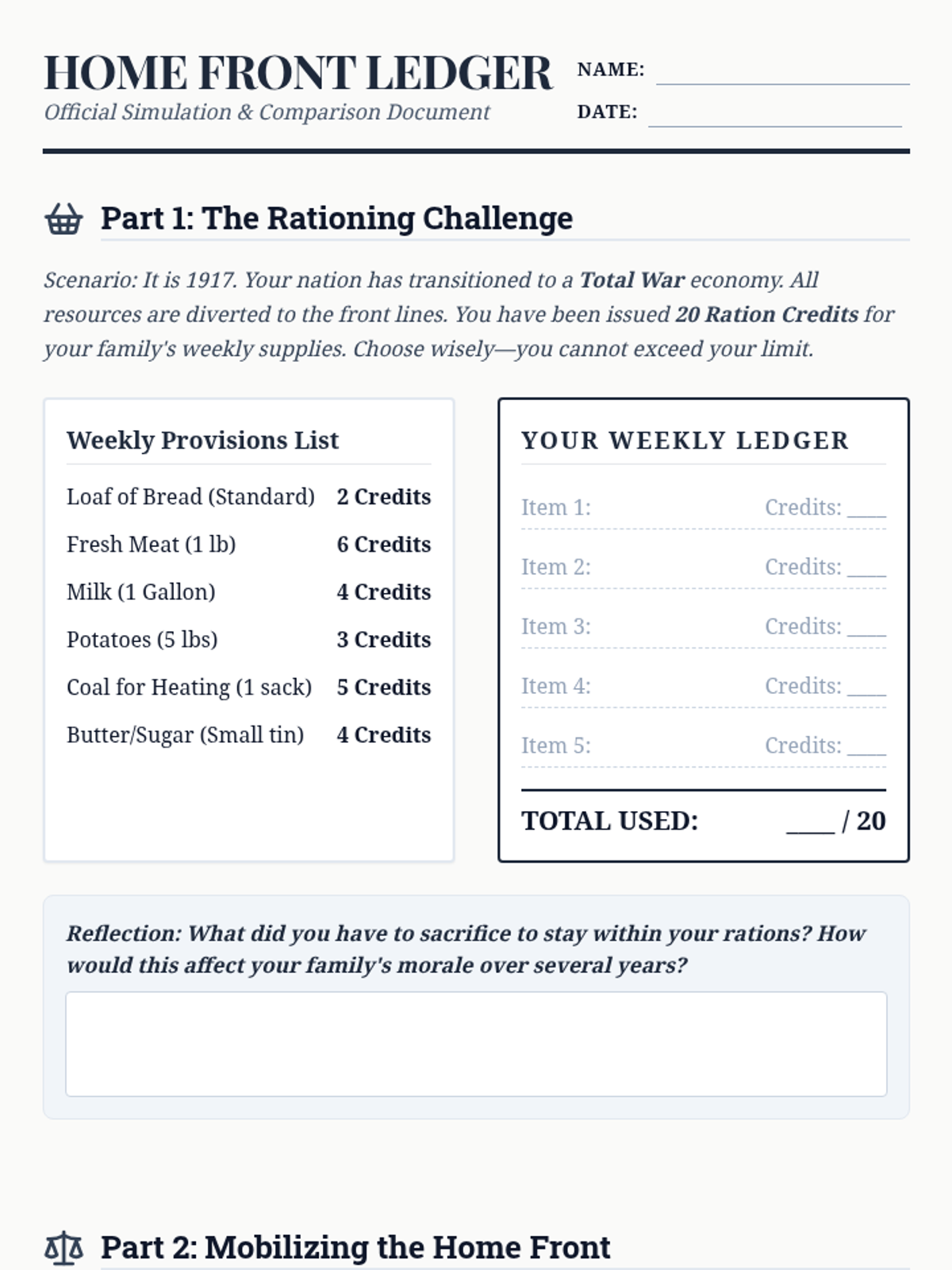
This sequence explores the concept of 'Total War' during WWI, focusing on how nations mobilized entire populations, the role of women, the impact of rationing, and the use of propaganda to shape public opinion. Students will analyze the US entry into the war and the global contributions of colonial troops, culminating in a creative media project.
A comprehensive 5-lesson unit for 9th-grade students exploring the concept of Total War during WWI, focusing on the home front, propaganda, women's roles, colonial involvement, and the Armenian Genocide.
A comprehensive 5-lesson unit exploring the economic drivers of the 1920s, the emergence of consumer culture, the agricultural crisis, and the systemic failures that led to the 1929 Stock Market Crash. Students analyze the tension between urban prosperity and rural poverty through data, simulations, and primary sources.
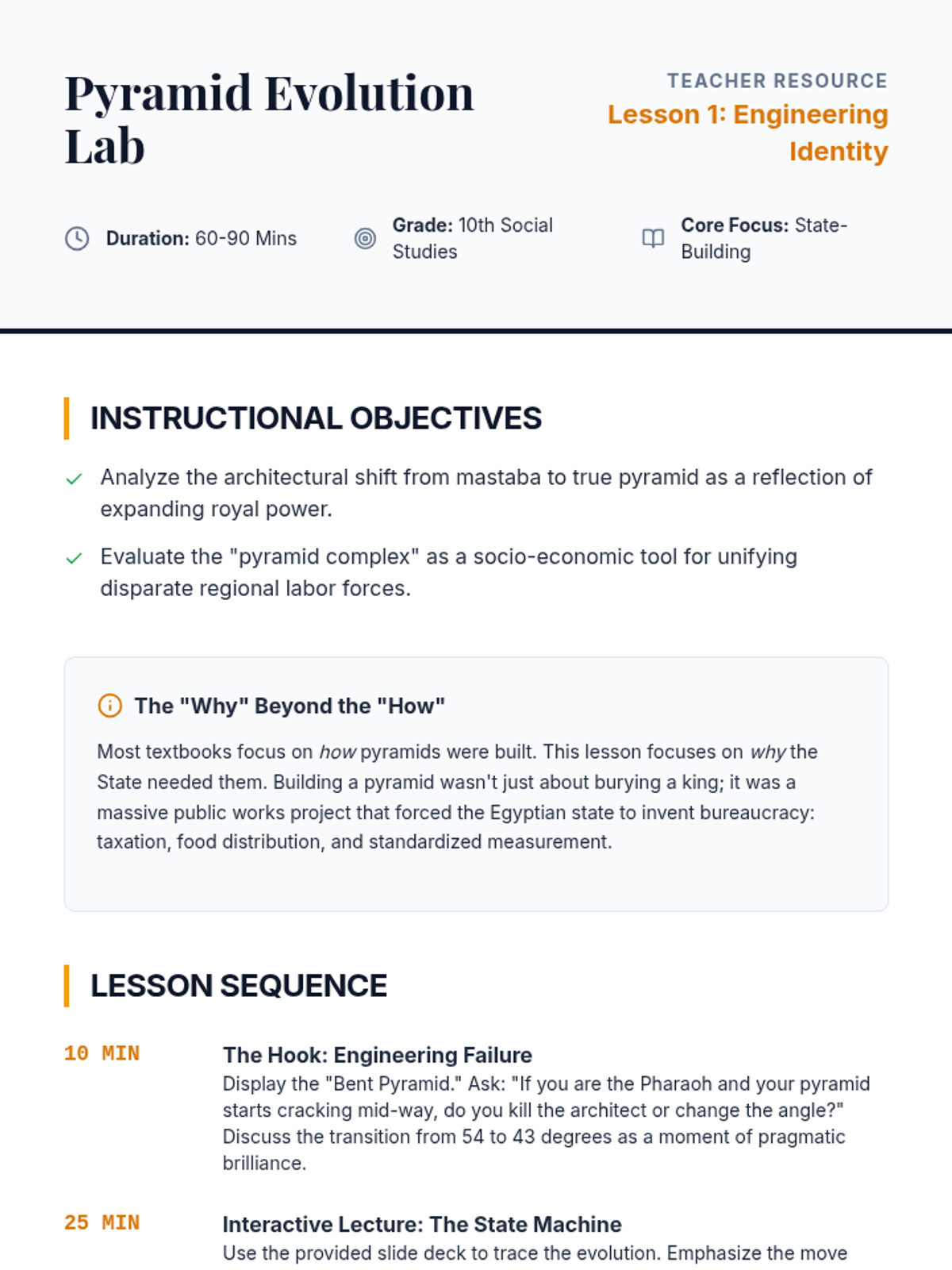
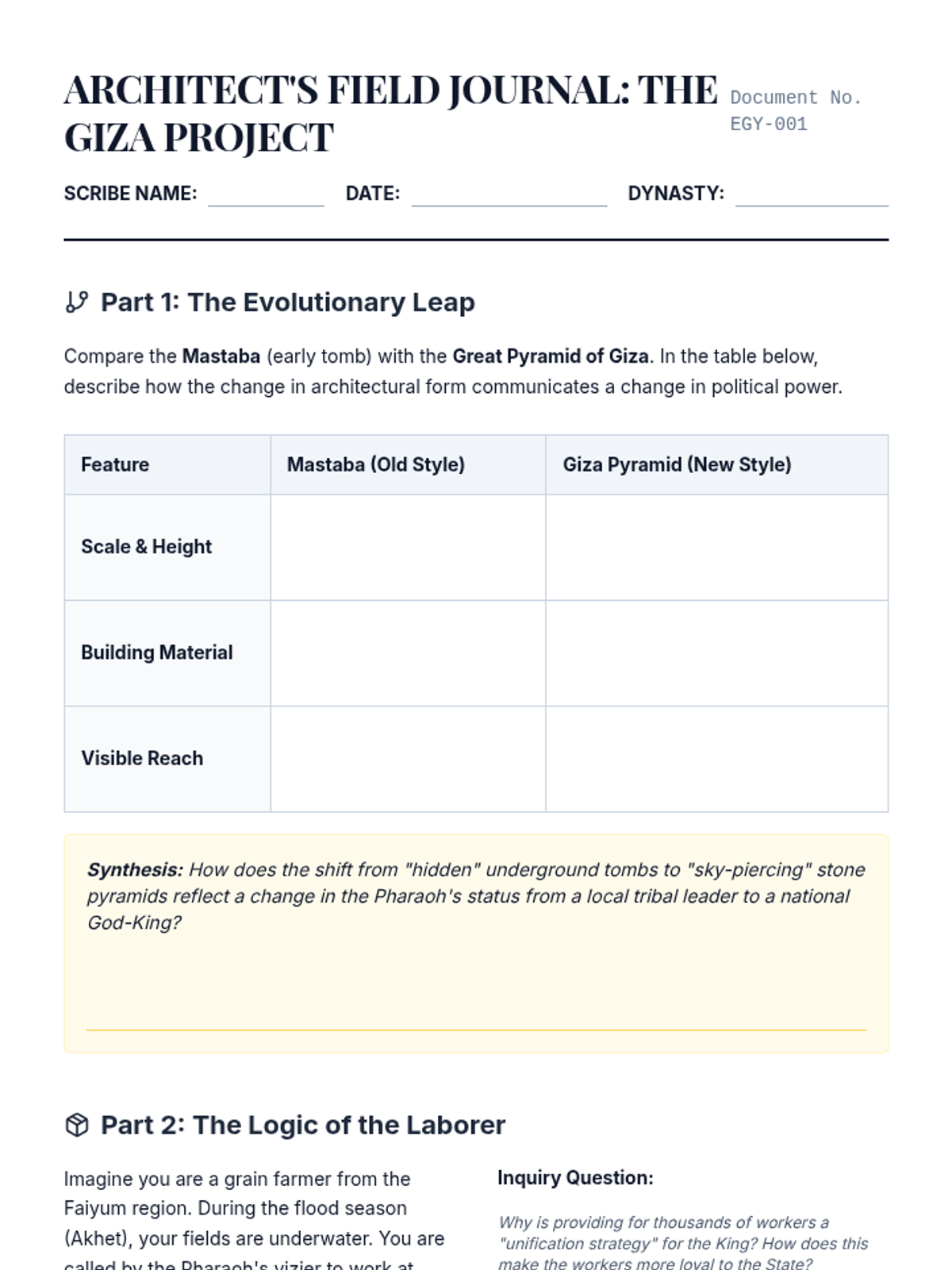
A project-based exploration of Ancient Egyptian and Kushite architecture as tools for political messaging, labor organization, and economic control. Students analyze the evolution of pyramids, the economic power of temples, and the propaganda strategies of pharaohs like Hatshepsut and Ramses II.
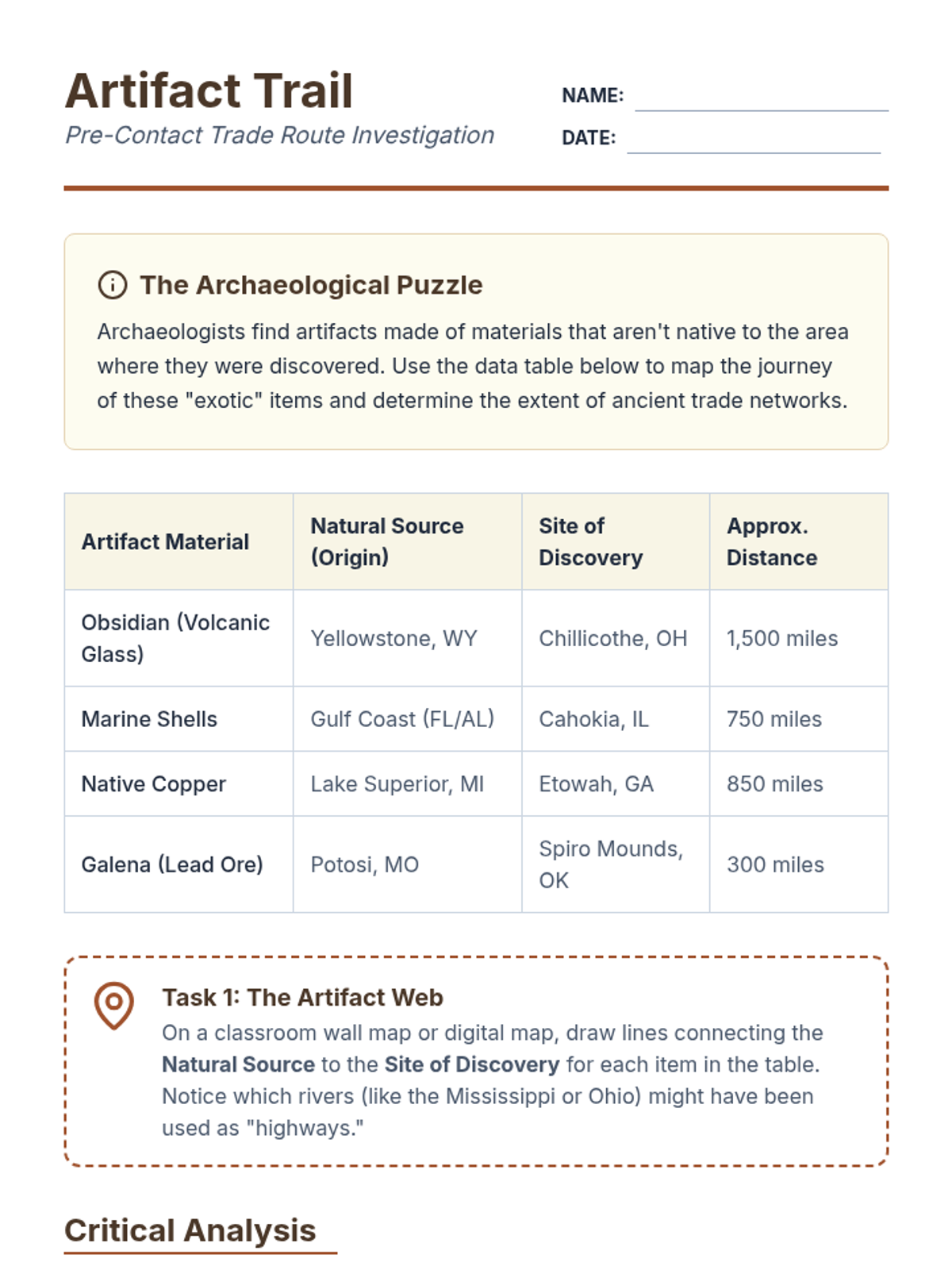
This unit explores the complex economic networks of Native Peoples in North America, tracing the transition from pre-contact continental trade to the disruptive impacts of the Trans-Atlantic fur trade and colonial economic dependency. Students will analyze archaeological evidence, simulate economic shifts, and evaluate how trade served as both a cultural bridge and a colonial weapon.
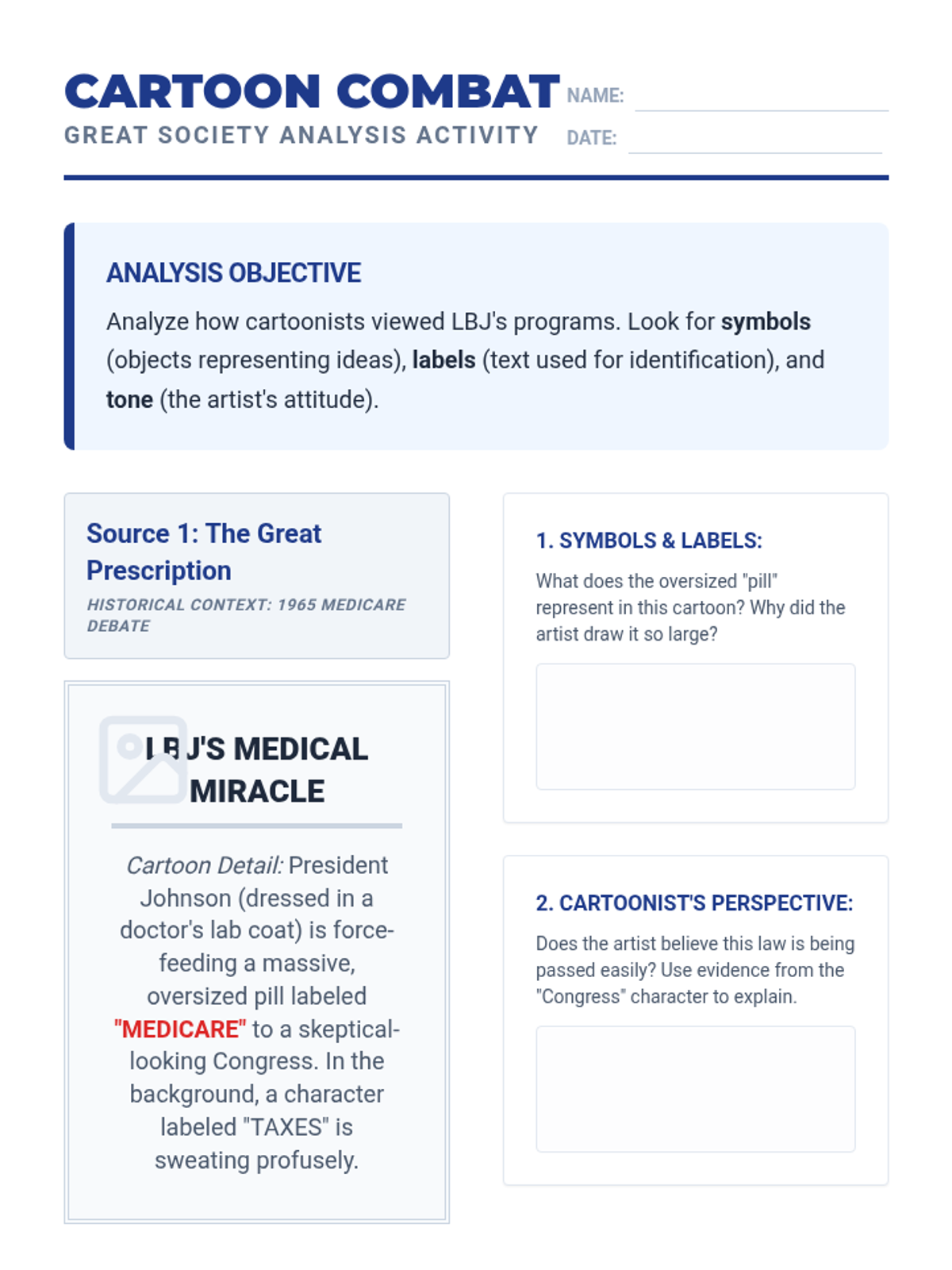
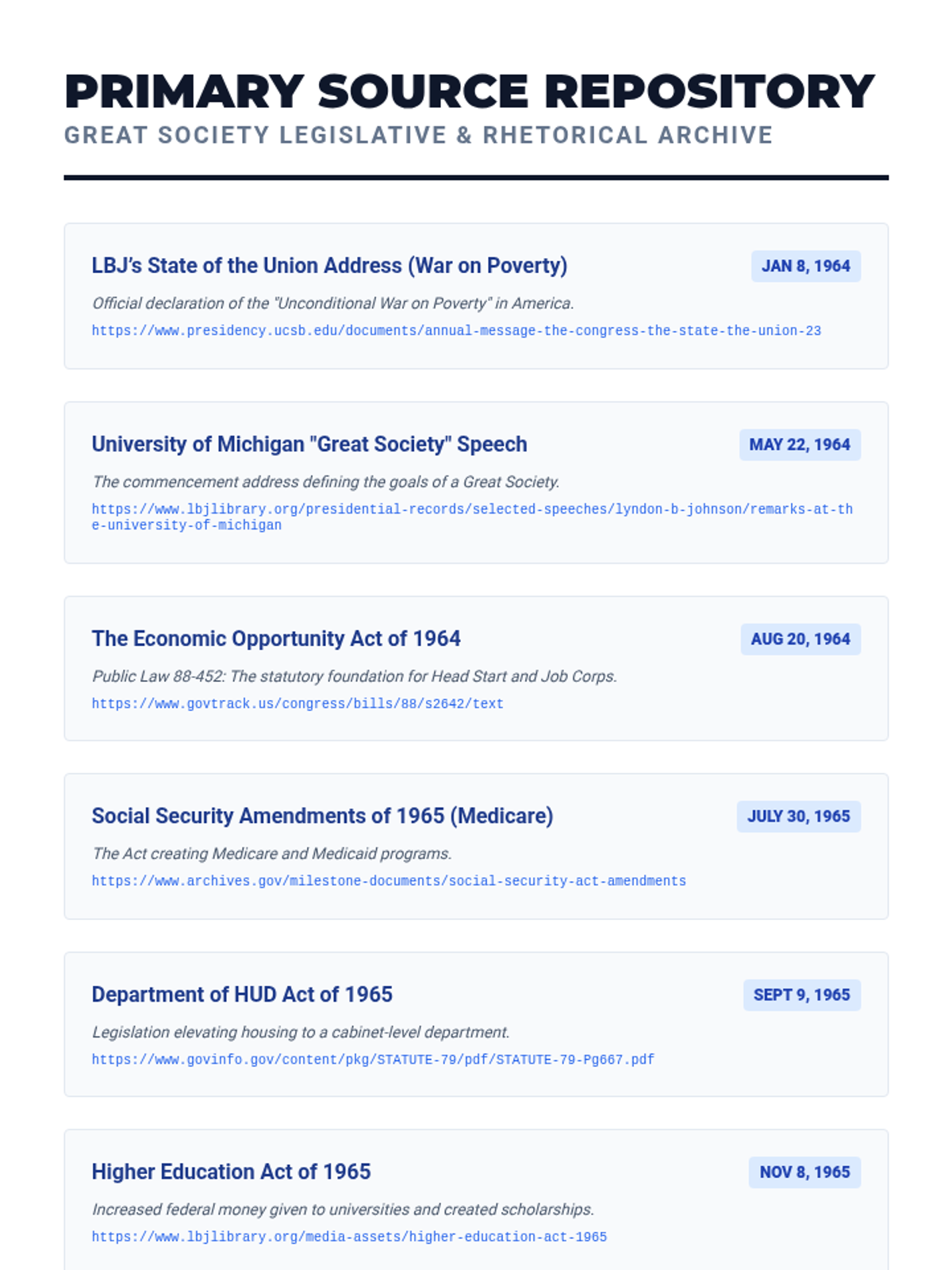
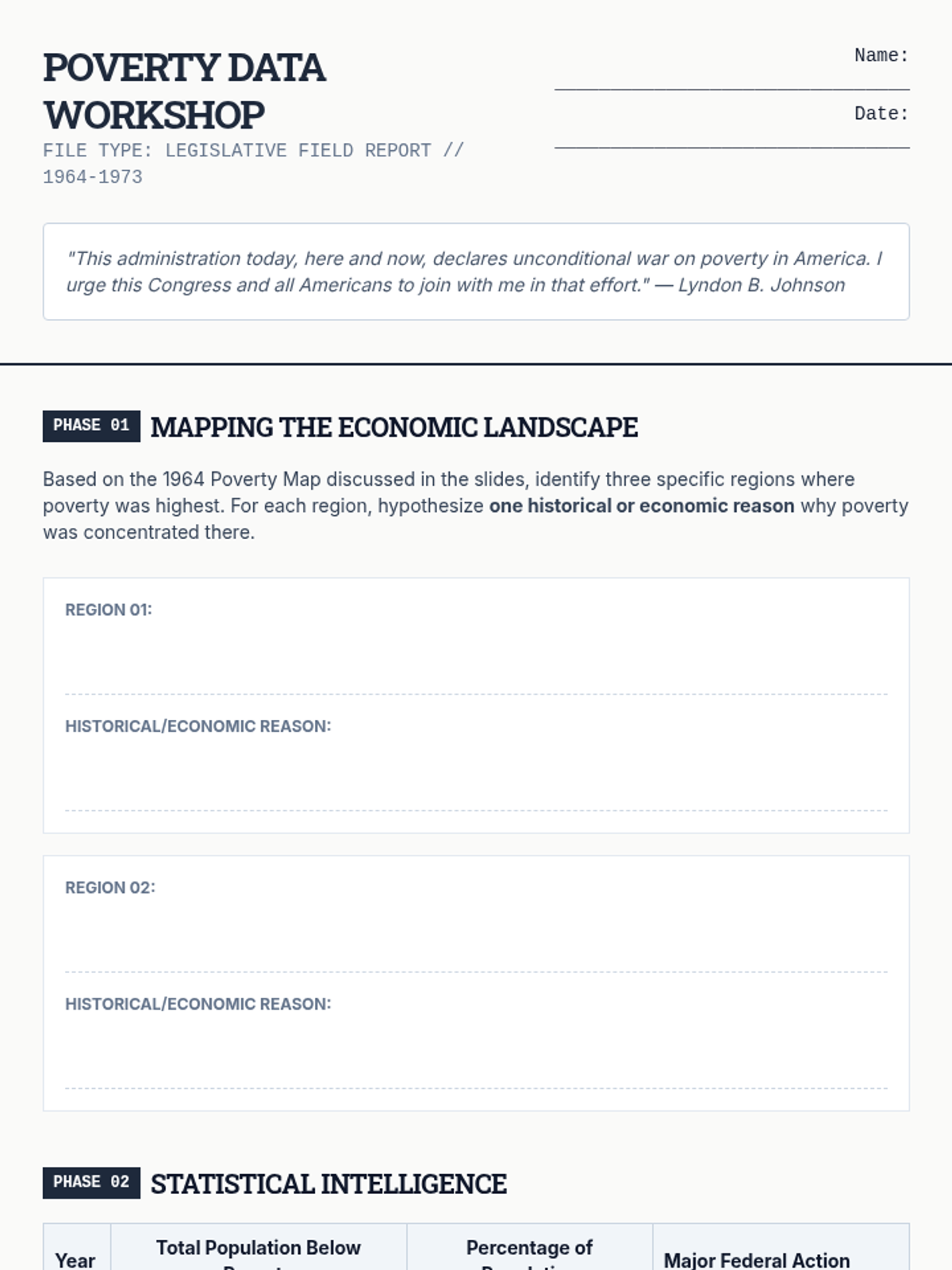
A high-school level investigation into the legislative achievements, economic trade-offs, and social impacts of Lyndon B. Johnson's 'Great Society' domestic agenda. Students analyze primary sources, simulate the legislative process, and evaluate the long-term legacy of the War on Poverty.
This sequence explores the massive expansion of the federal government under Lyndon B. Johnson's Great Society and the cultural optimism of the Space Race. Students assess the efficacy of social welfare programs and the role of government in scientific advancement during the 1960s.
This high school history sequence examines the lasting impact of the Great Depression and New Deal on modern America, comparing 1930s reforms to the 2008 financial crisis and contemporary policy proposals.
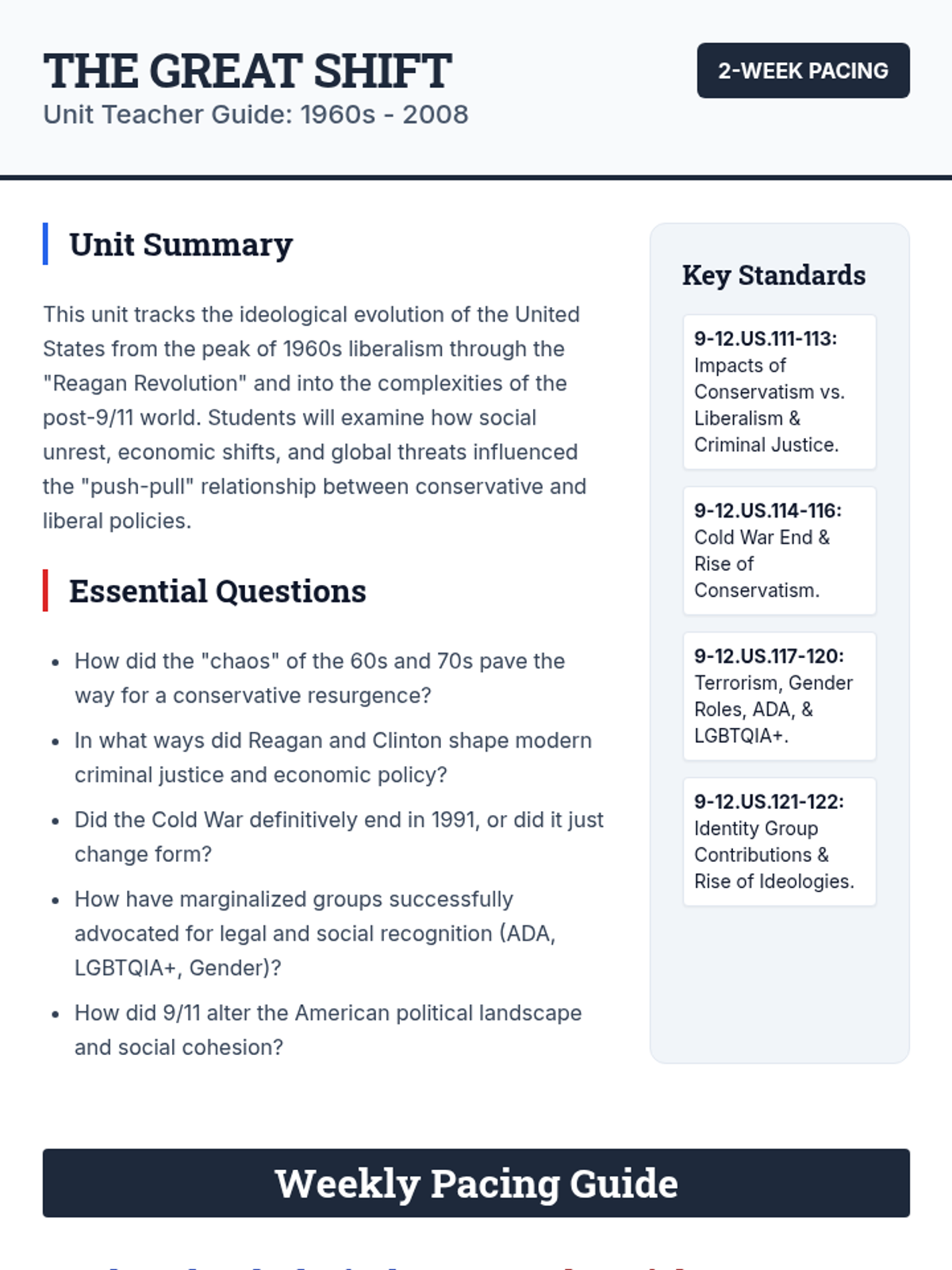
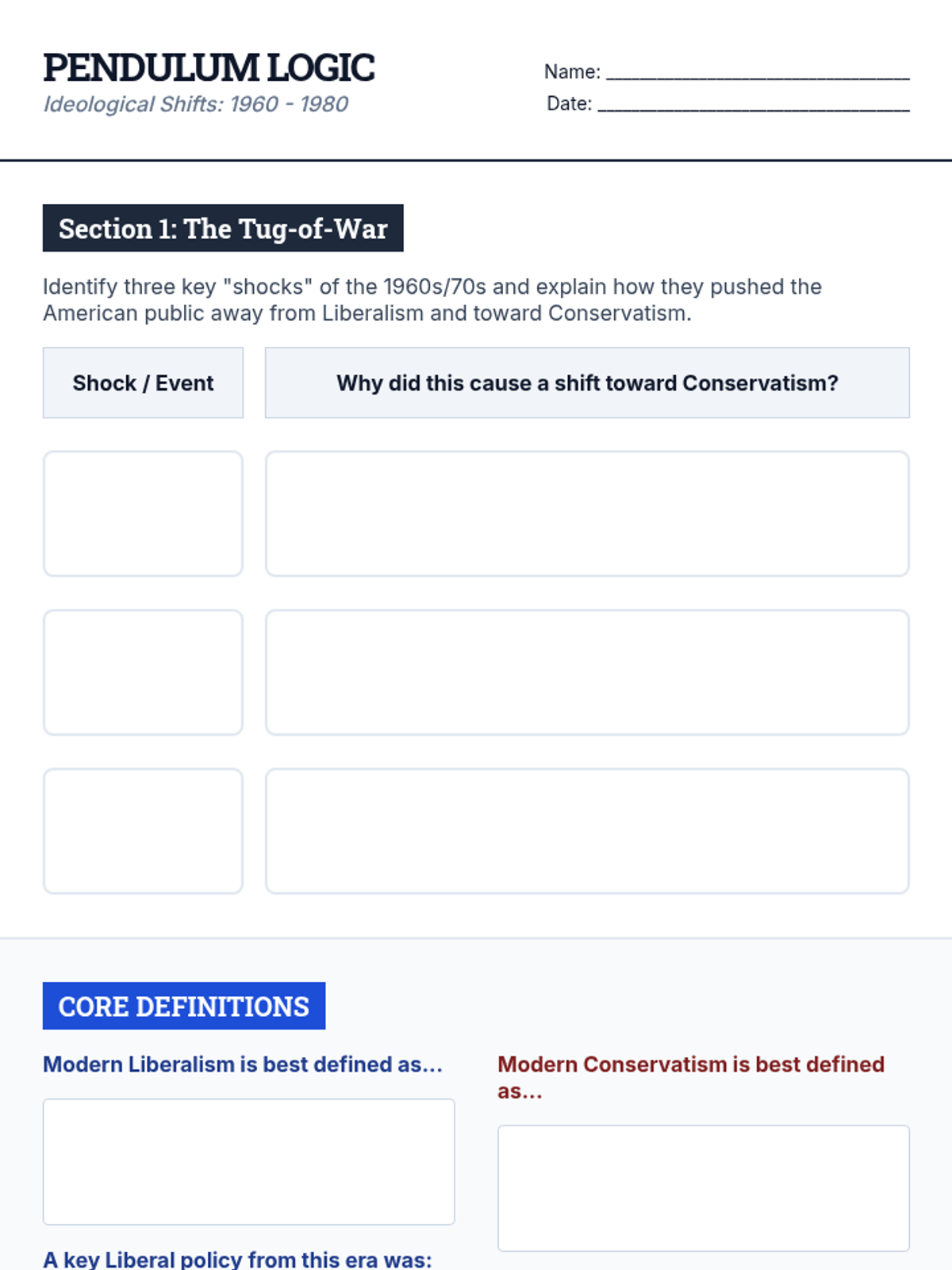
A comprehensive 2-week unit exploring the ideological shifts between conservatism and liberalism from the 1960s to the 2000s. Students analyze the Reagan and Clinton eras, the end of the Cold War, social rights movements, and the impact of 9/11 on American society.