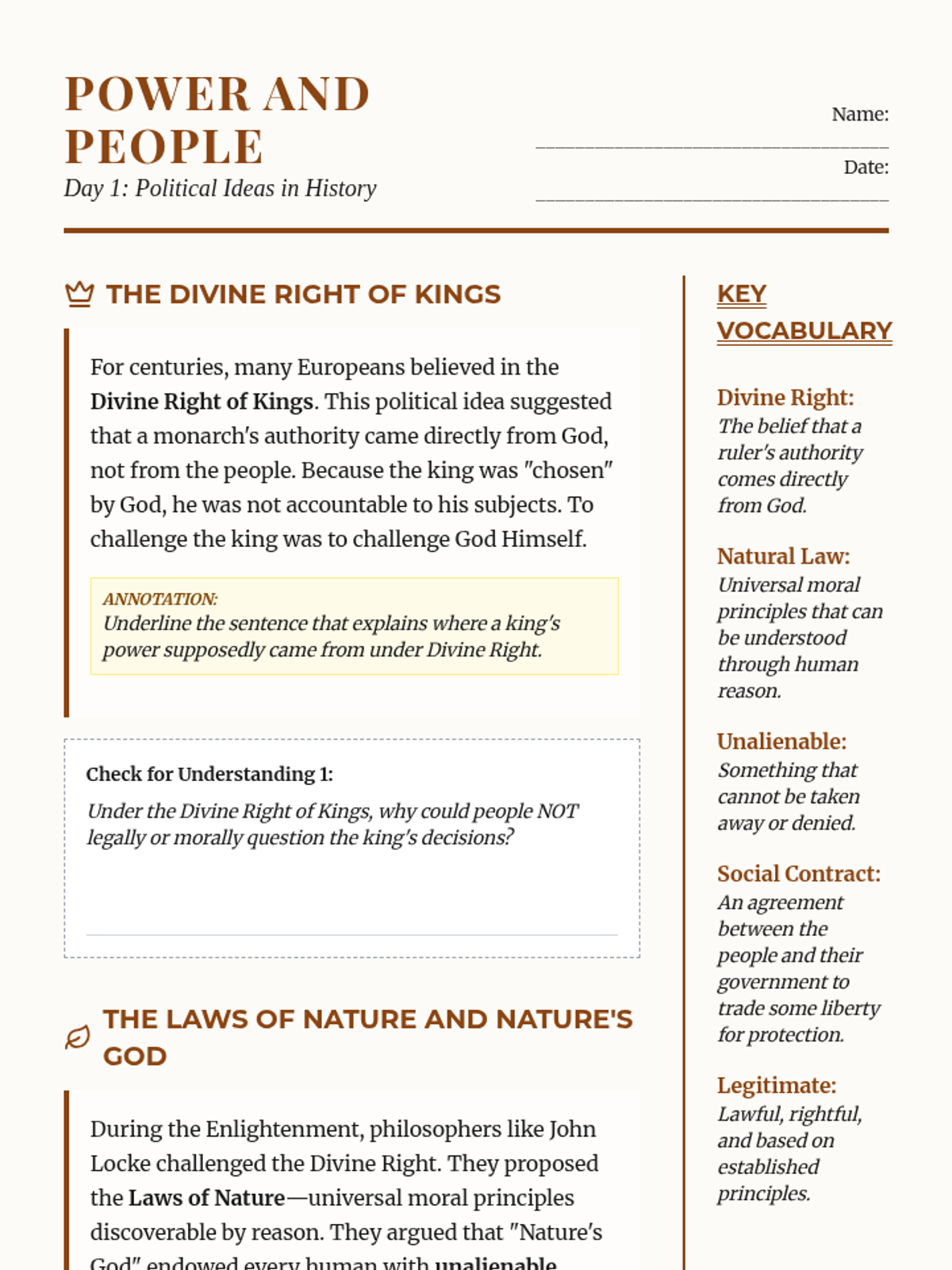
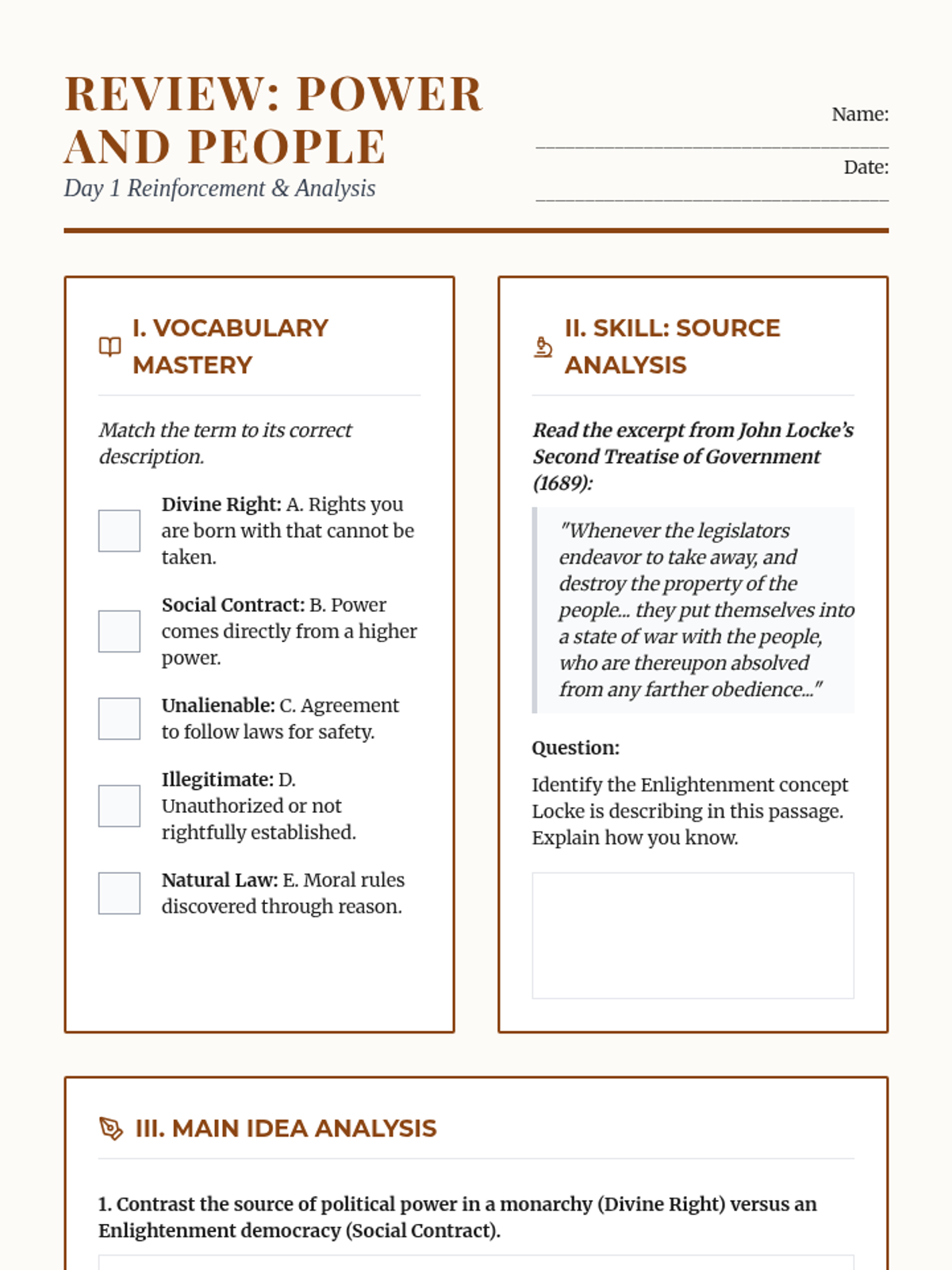
Examining foundational arguments from major thinkers alongside contemporary debates on morality, governance, and the nature of existence. Addresses core concepts like political structures, consciousness, and the conflict between agency and fate.
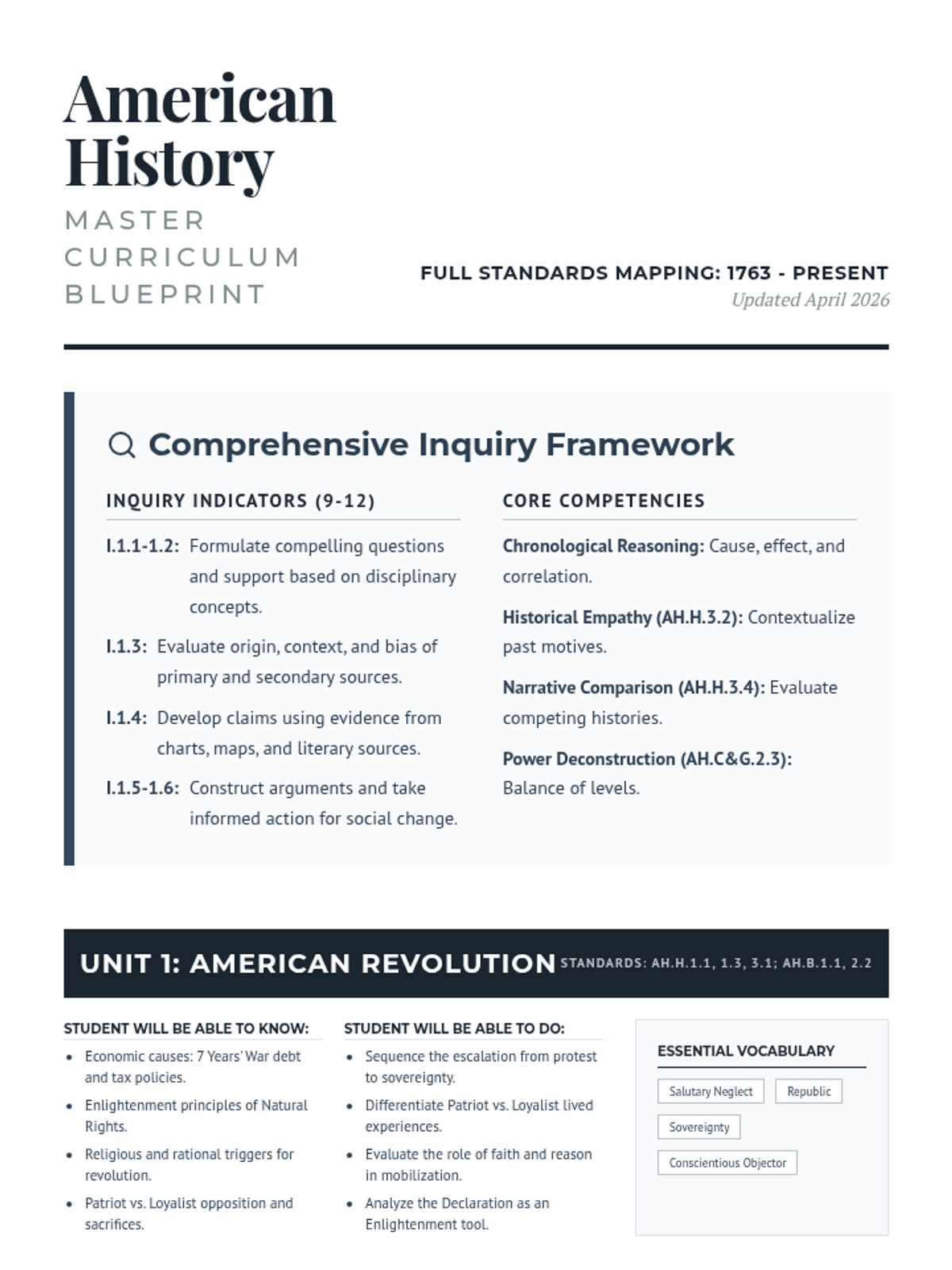
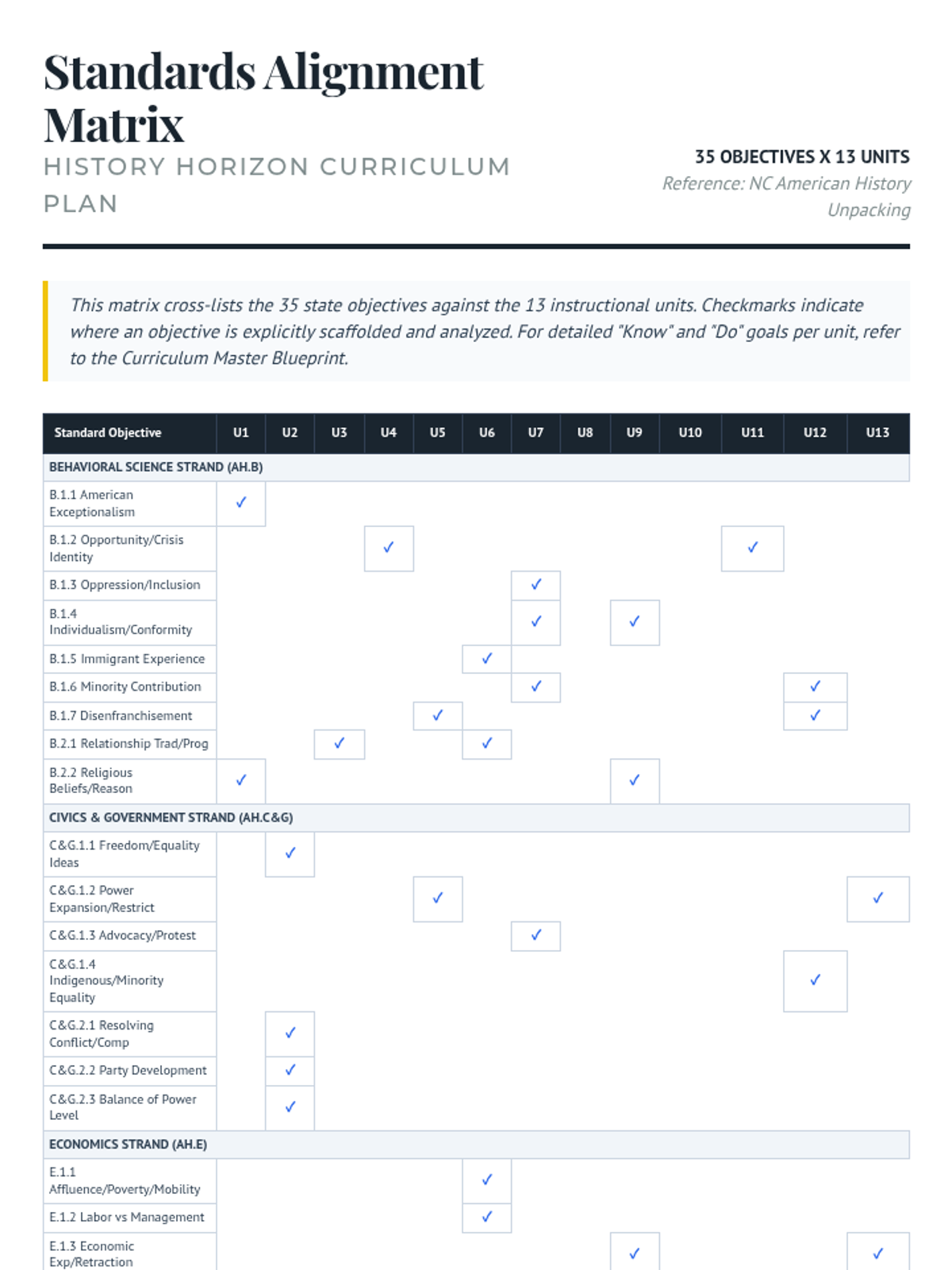
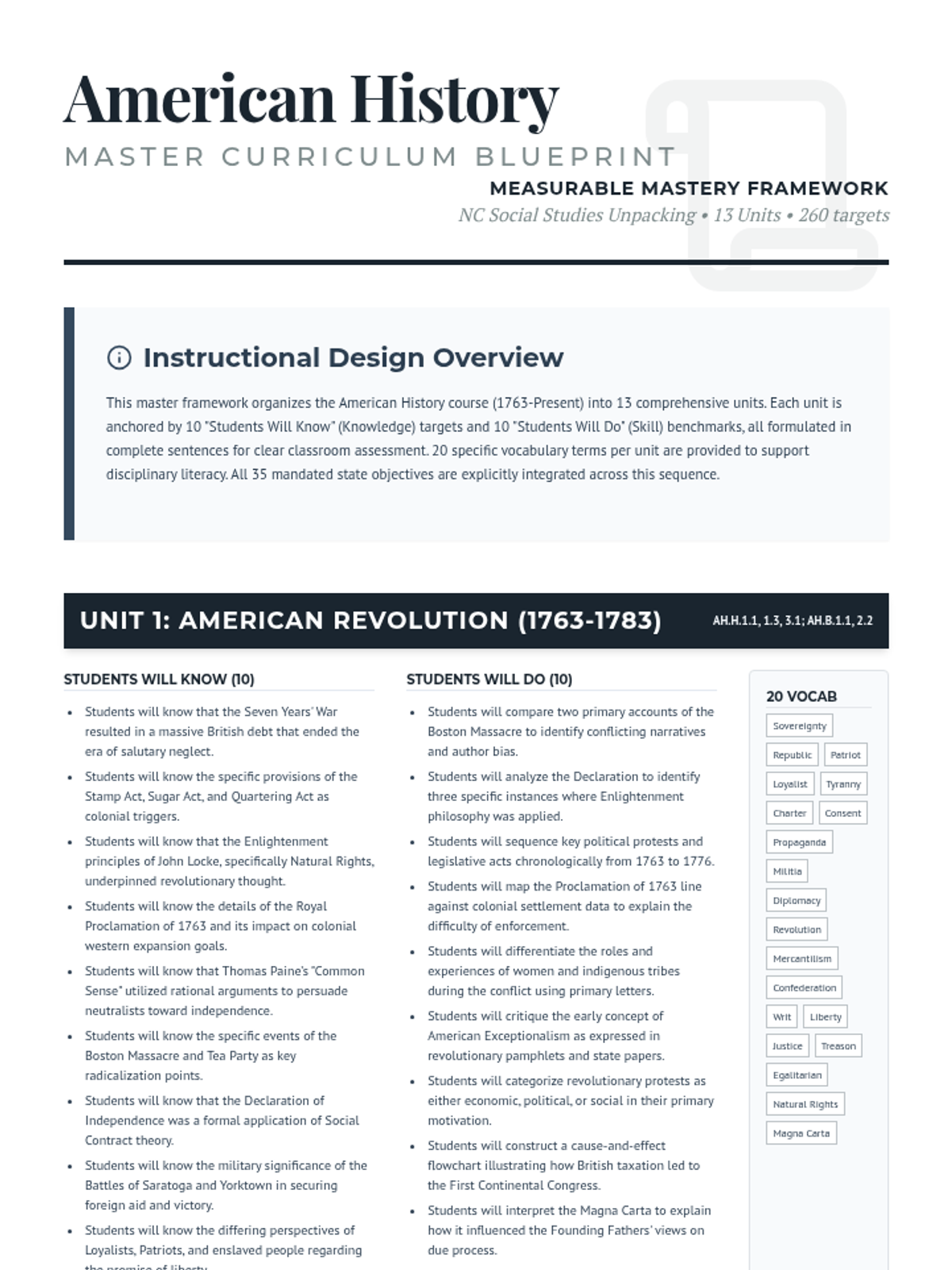
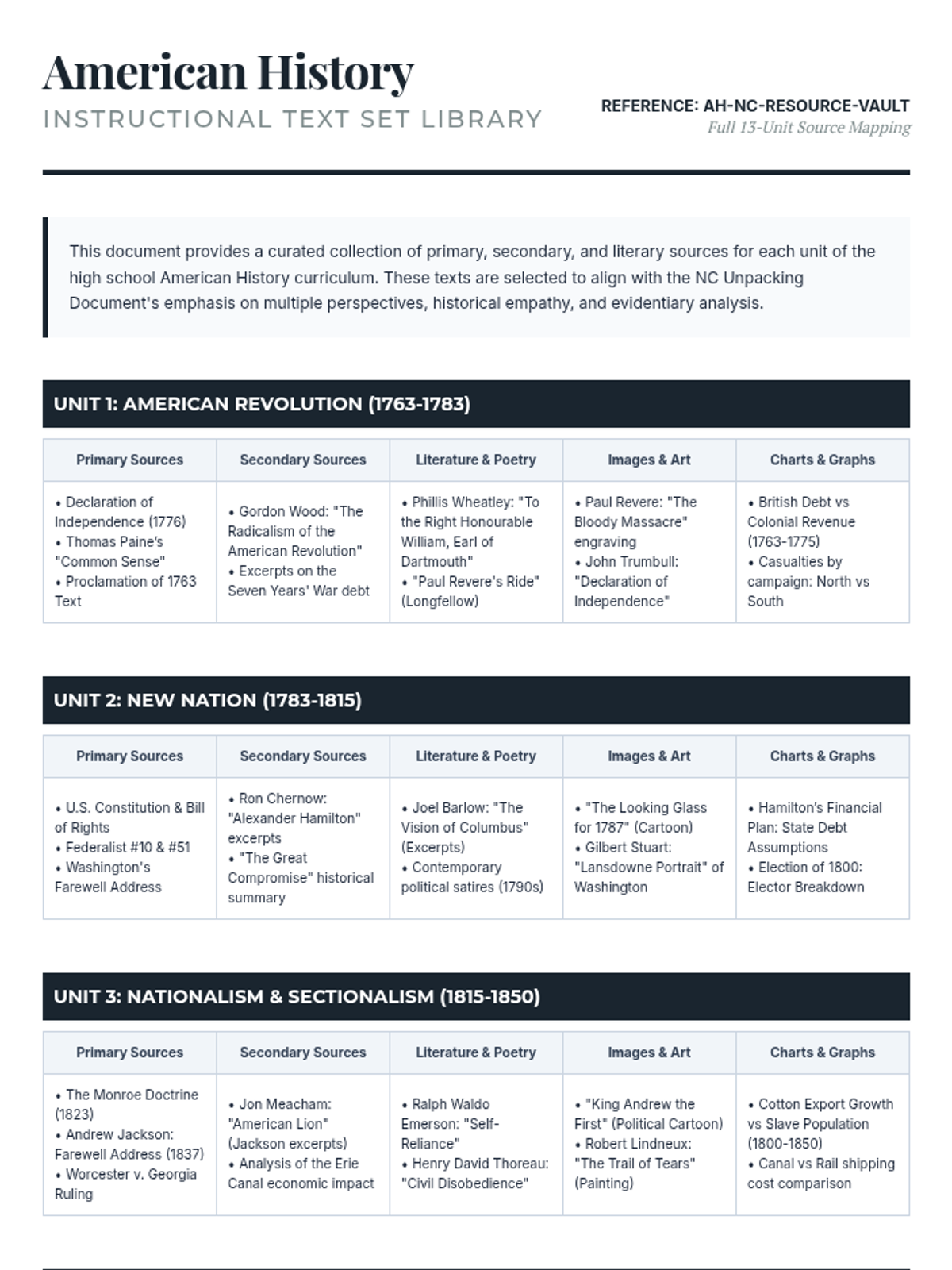
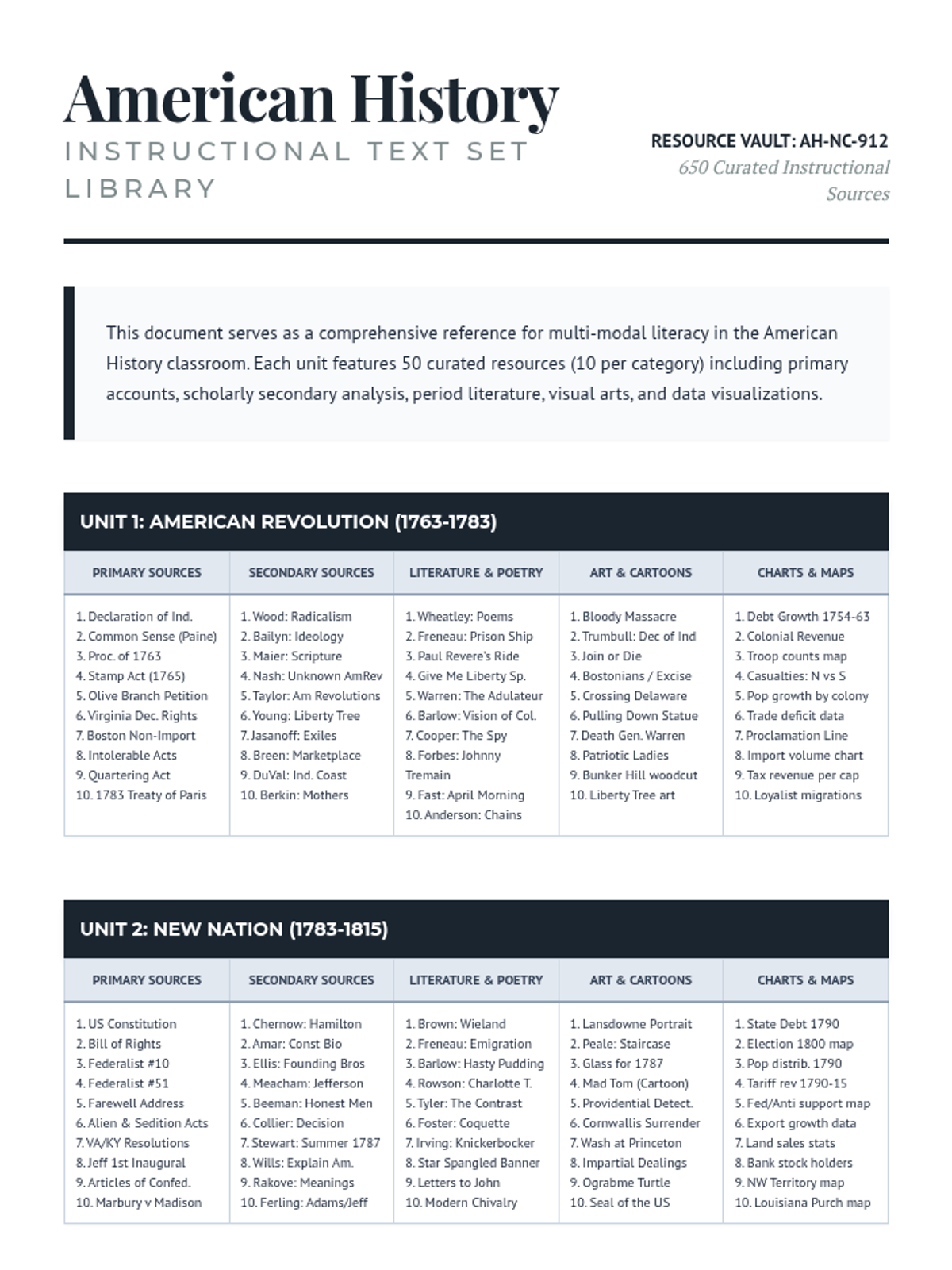
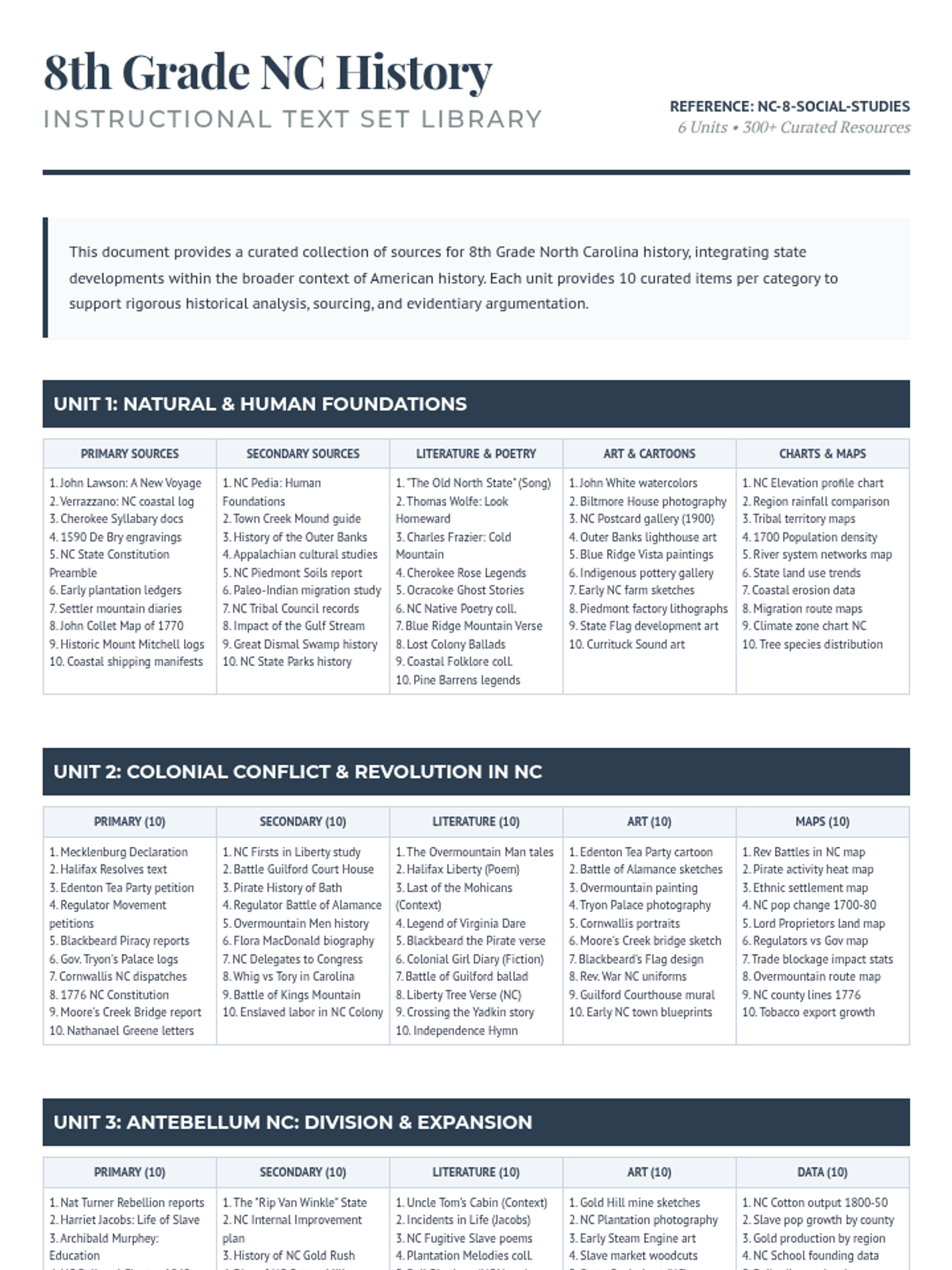
A comprehensive high school curriculum plan for American History, covering 13 units from the American Revolution to the modern era, aligned with North Carolina Social Studies standards.
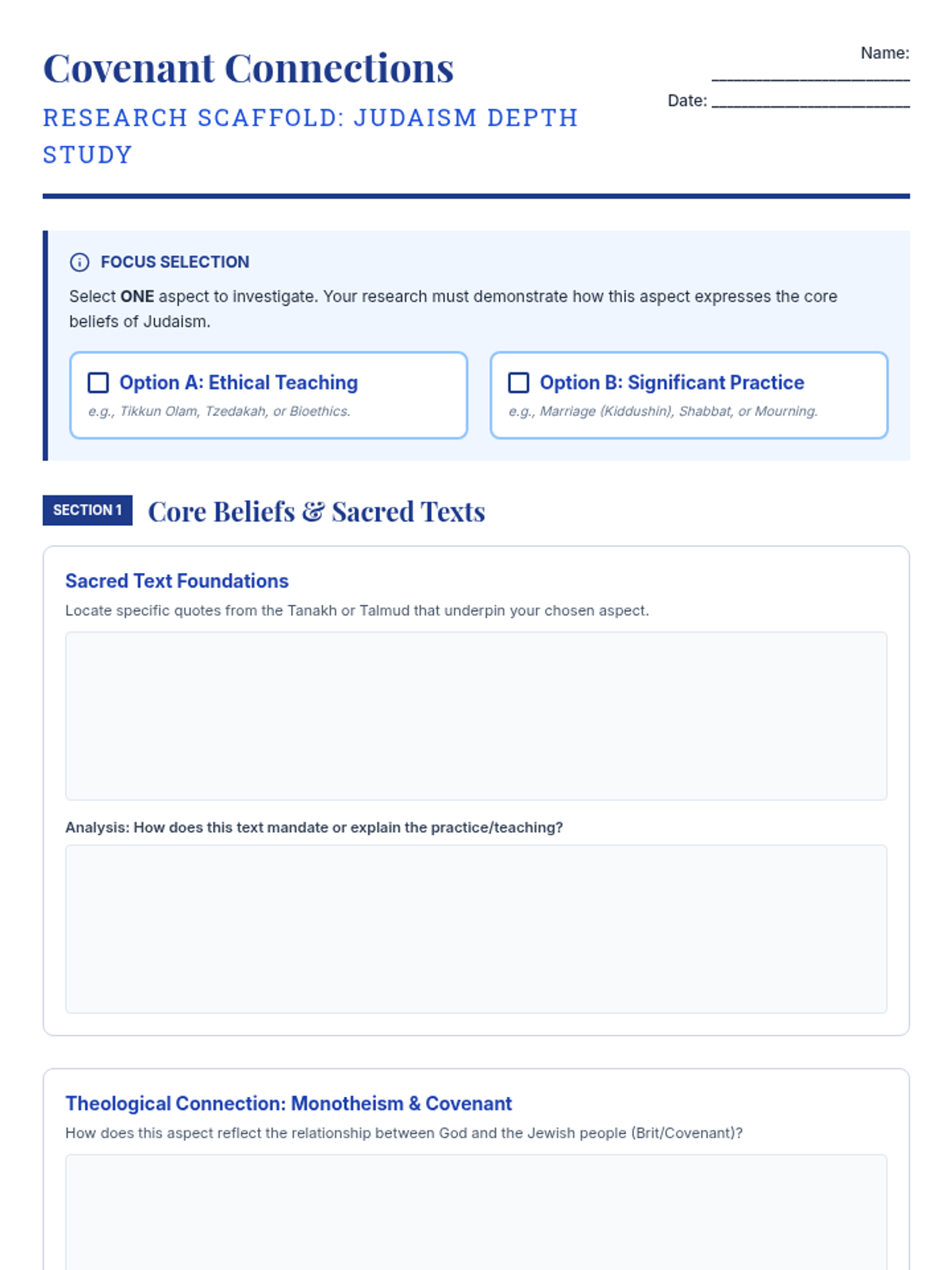
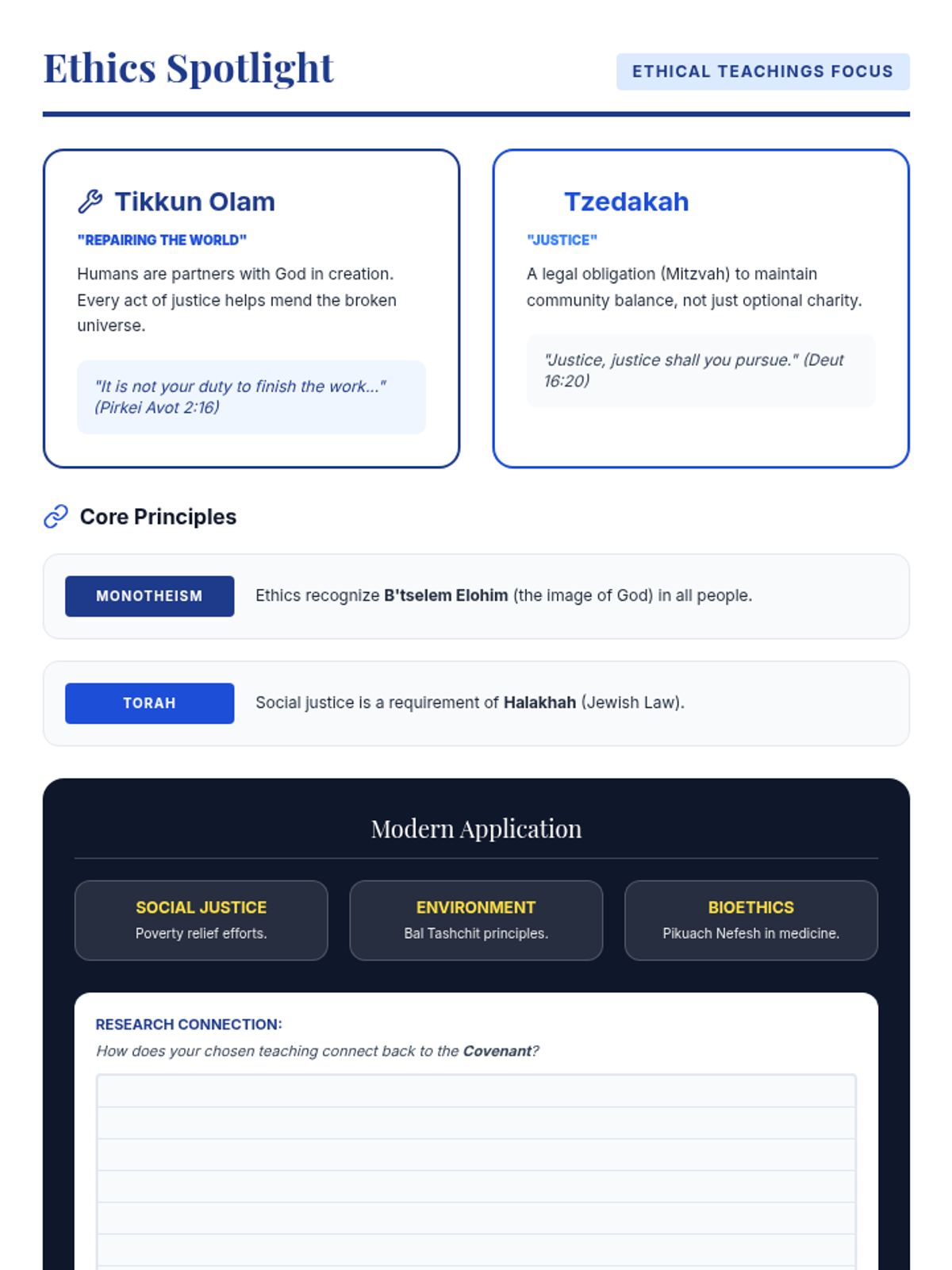
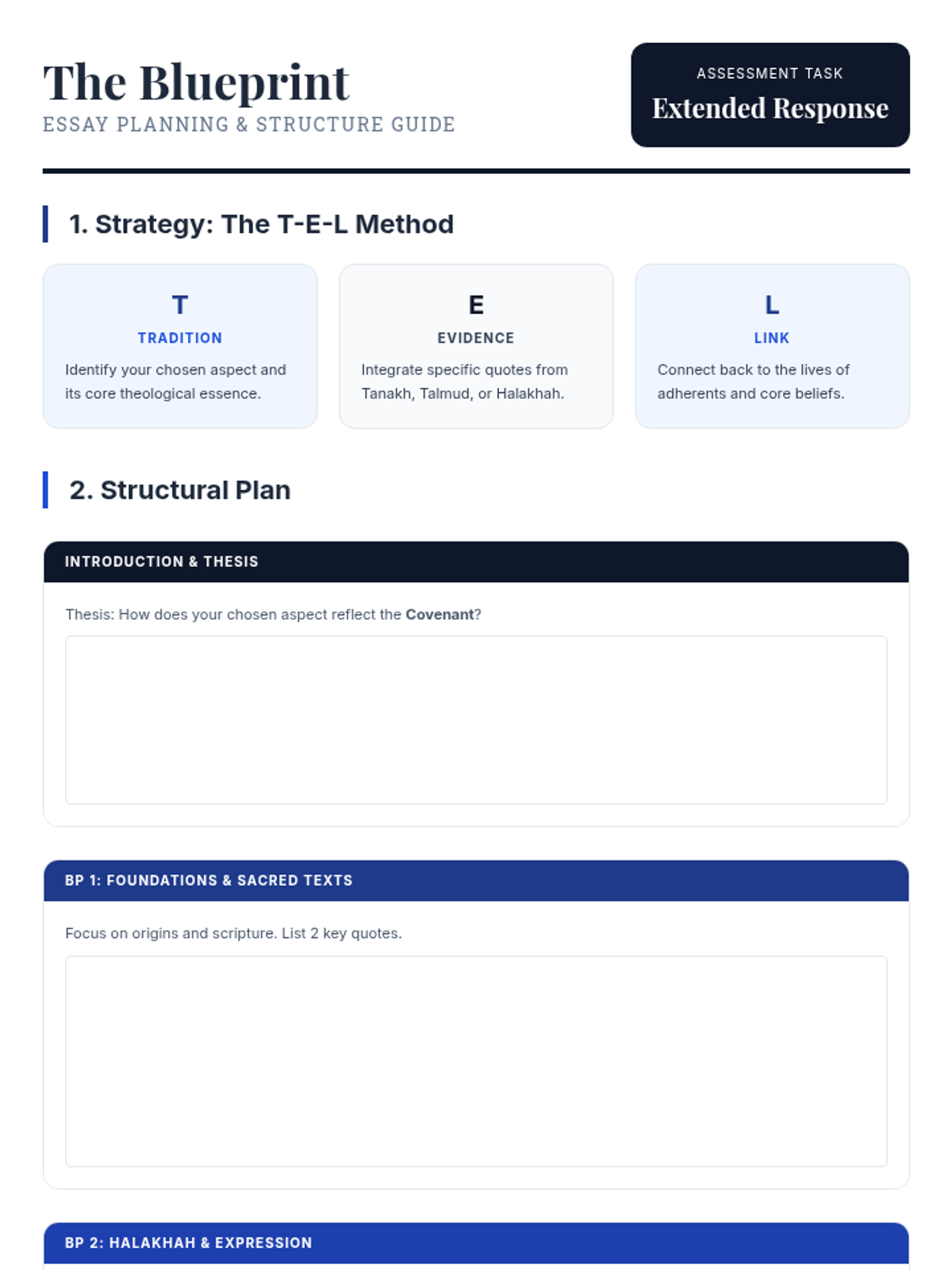
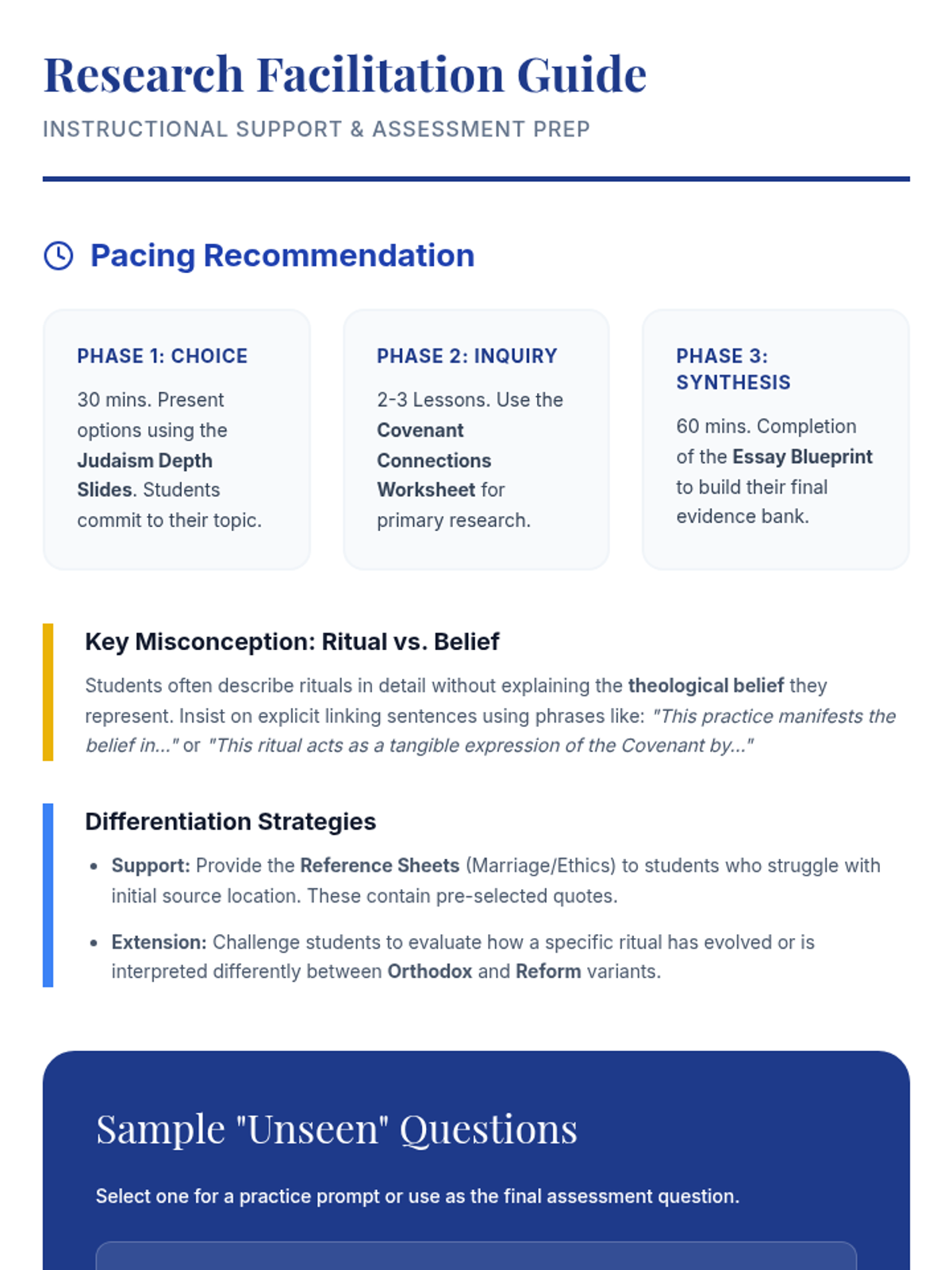
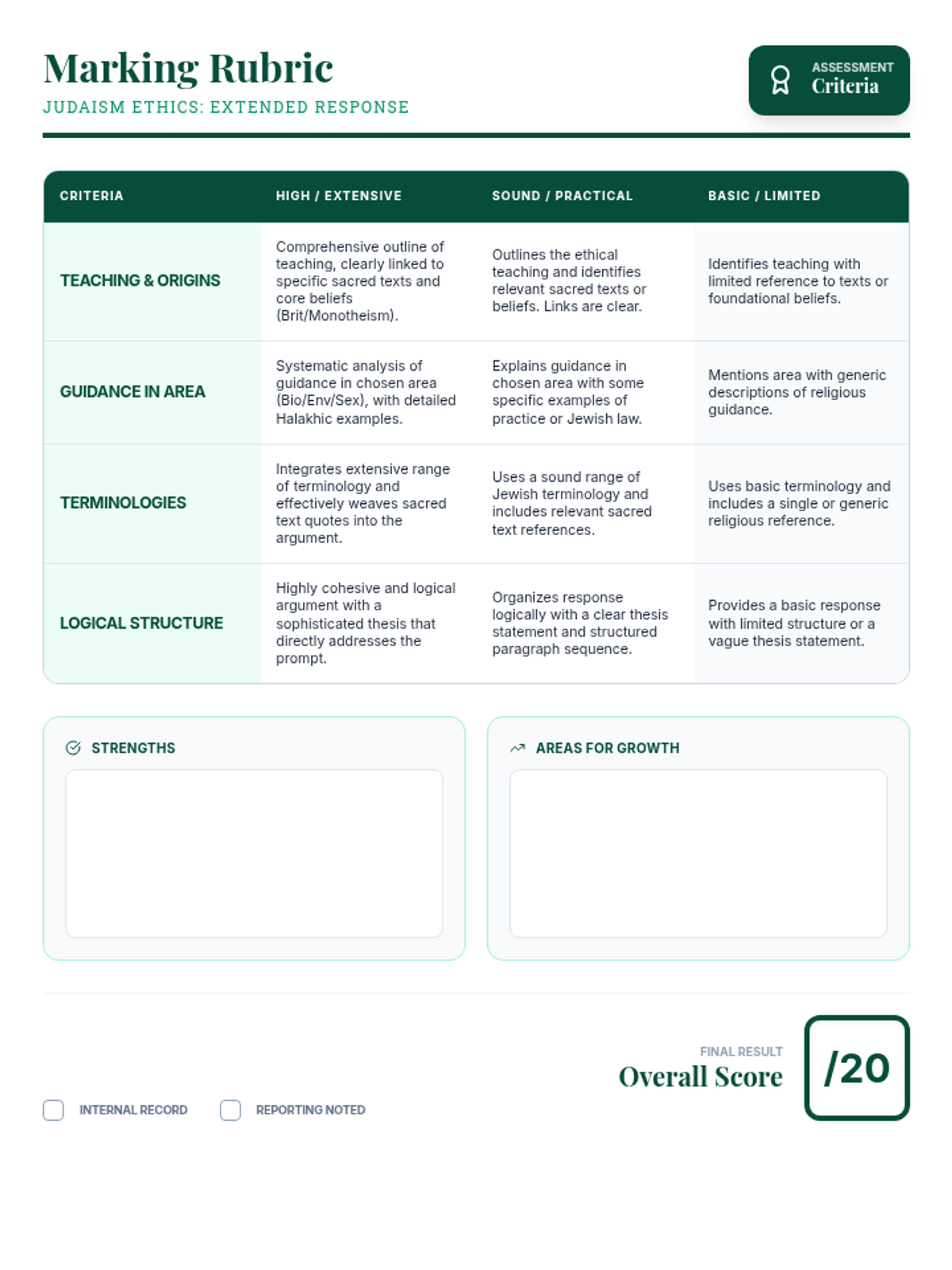
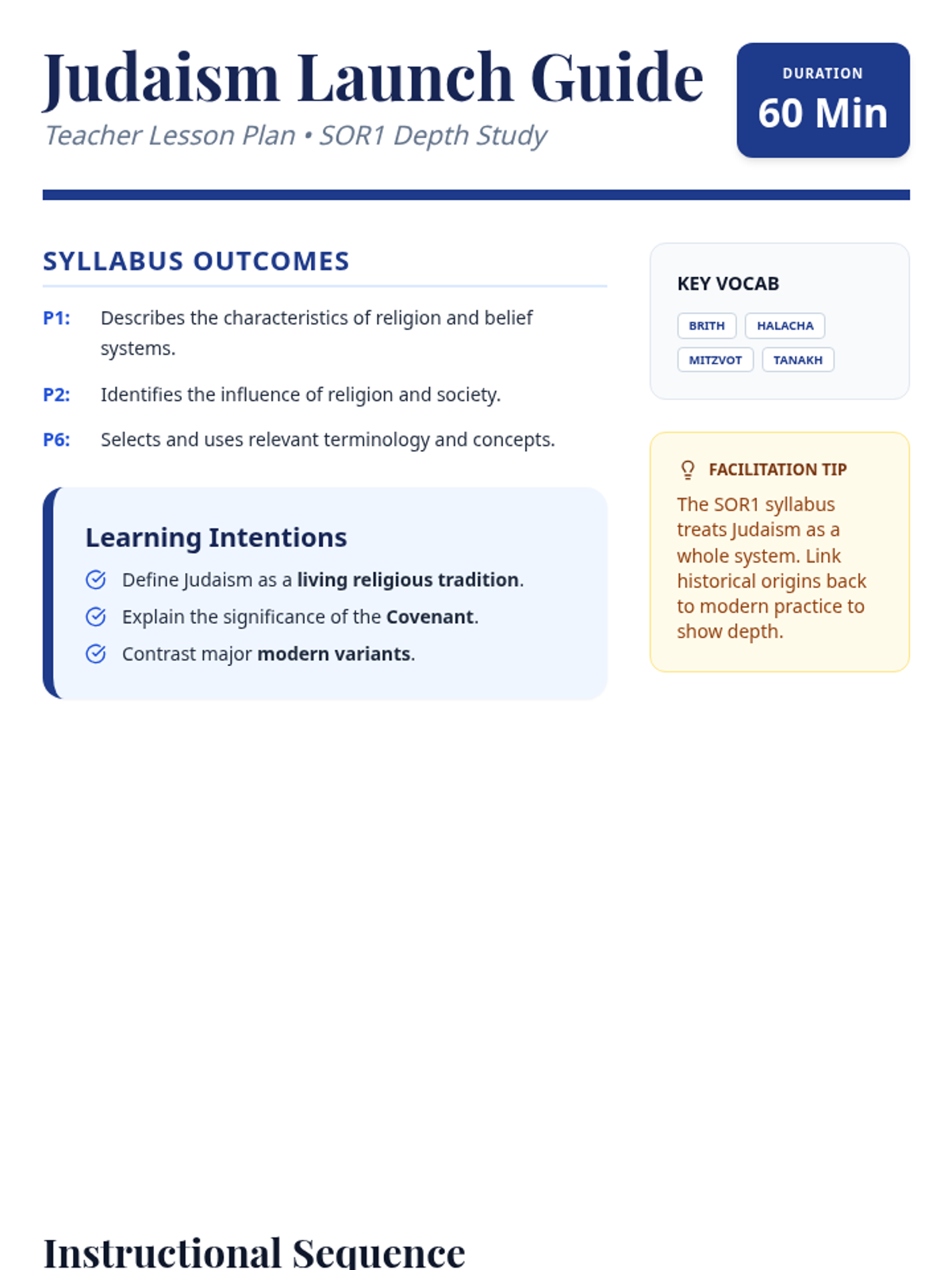
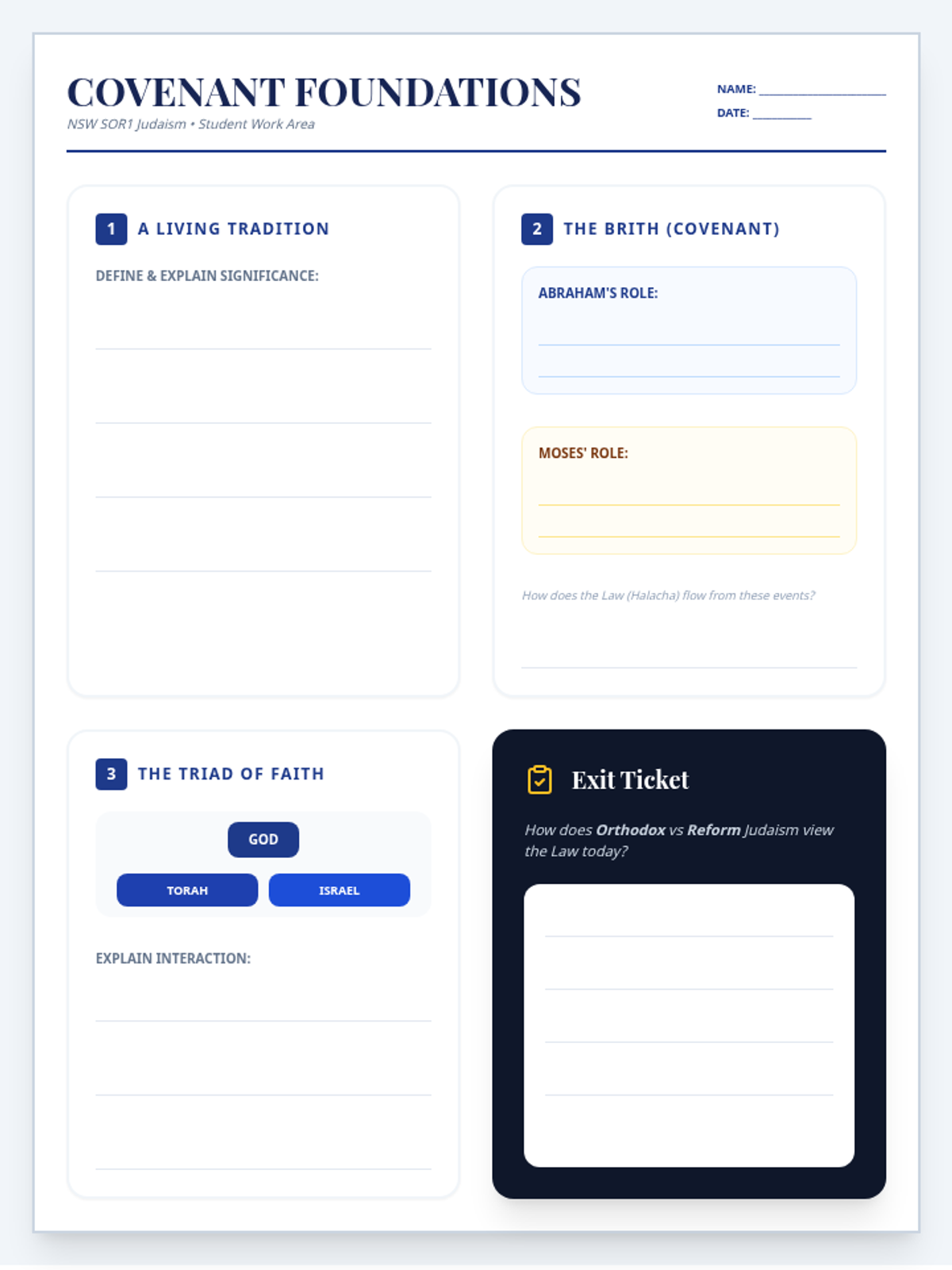
A comprehensive study of Judaism focusing on ethical teachings and significant practices like marriage. Students investigate the connections between core beliefs, sacred texts, and the lived experience of adherents in preparation for an extended response.
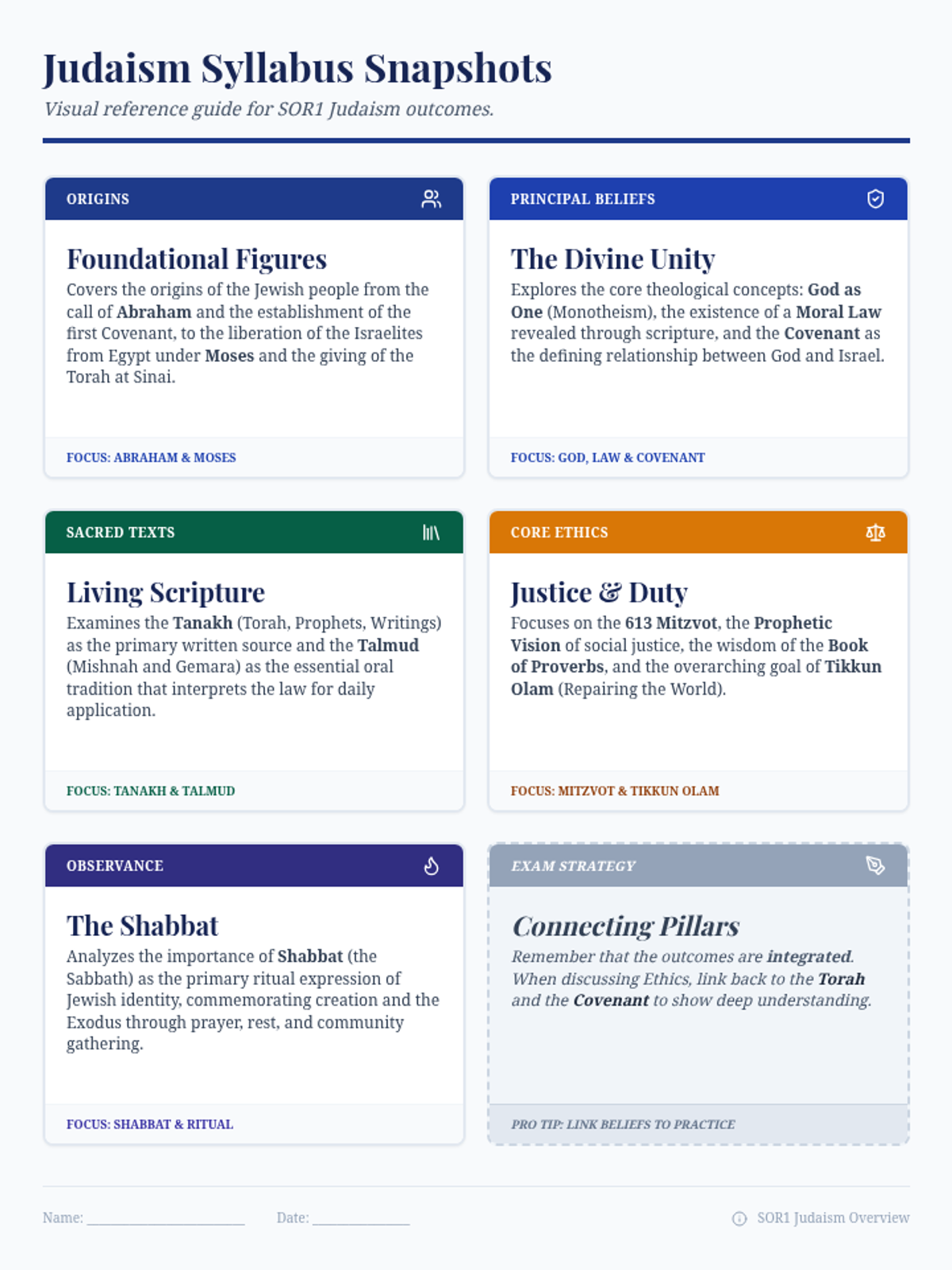
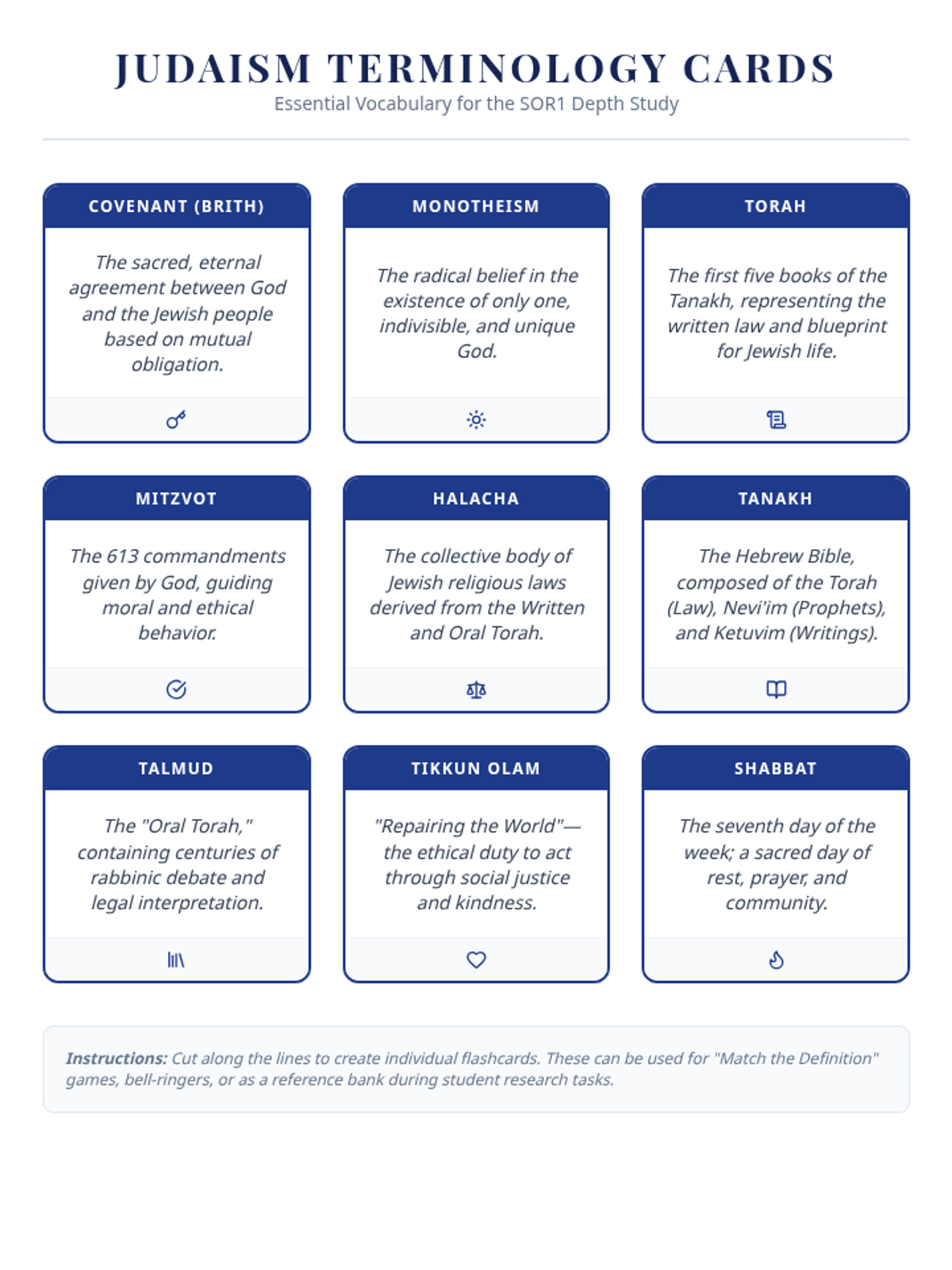
A complete series of lessons for the NSW Studies of Religion 1 Judaism Depth Study, covering Origins, Principal Beliefs, Sacred Texts, Ethics, and Observance.
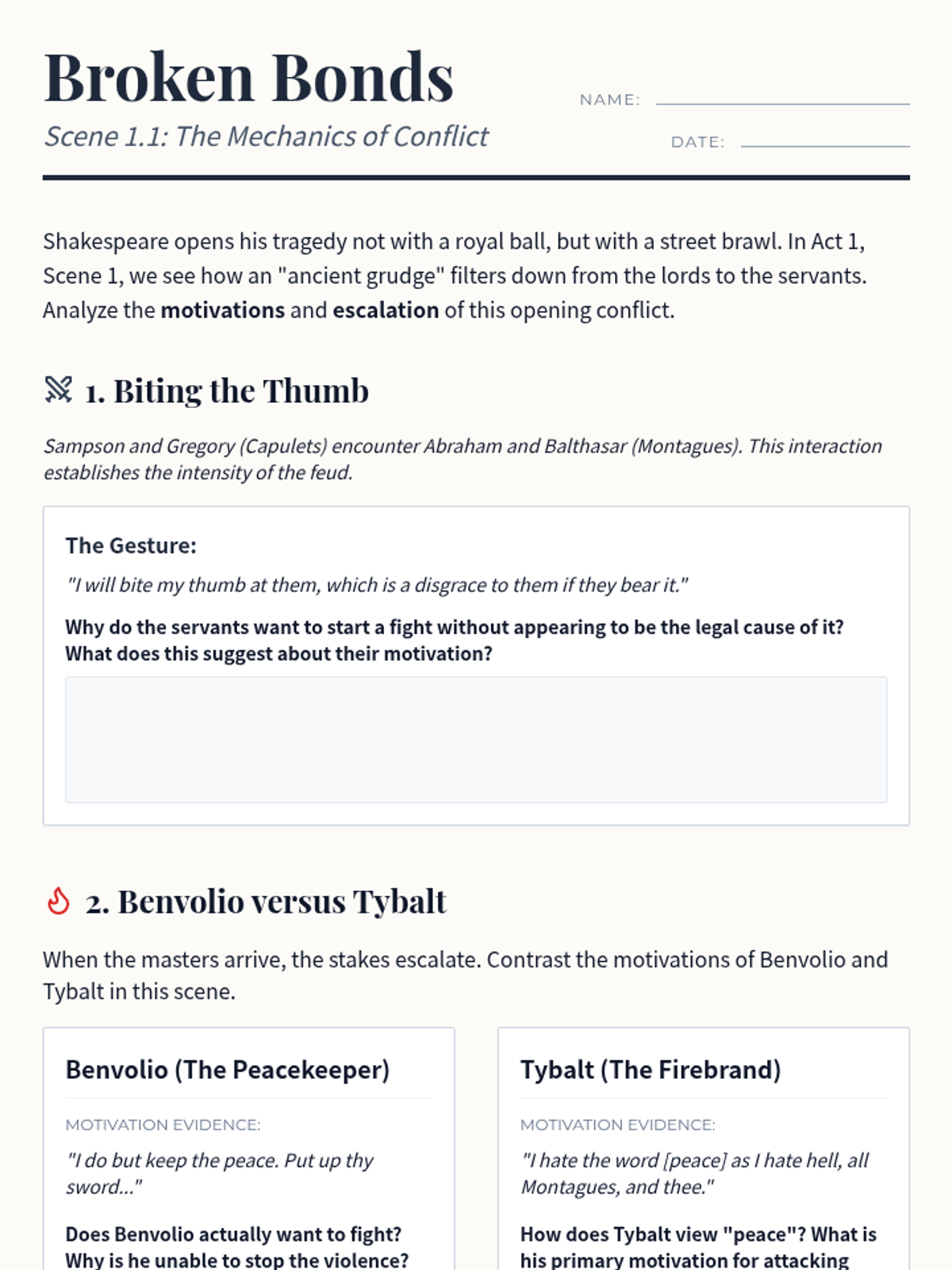
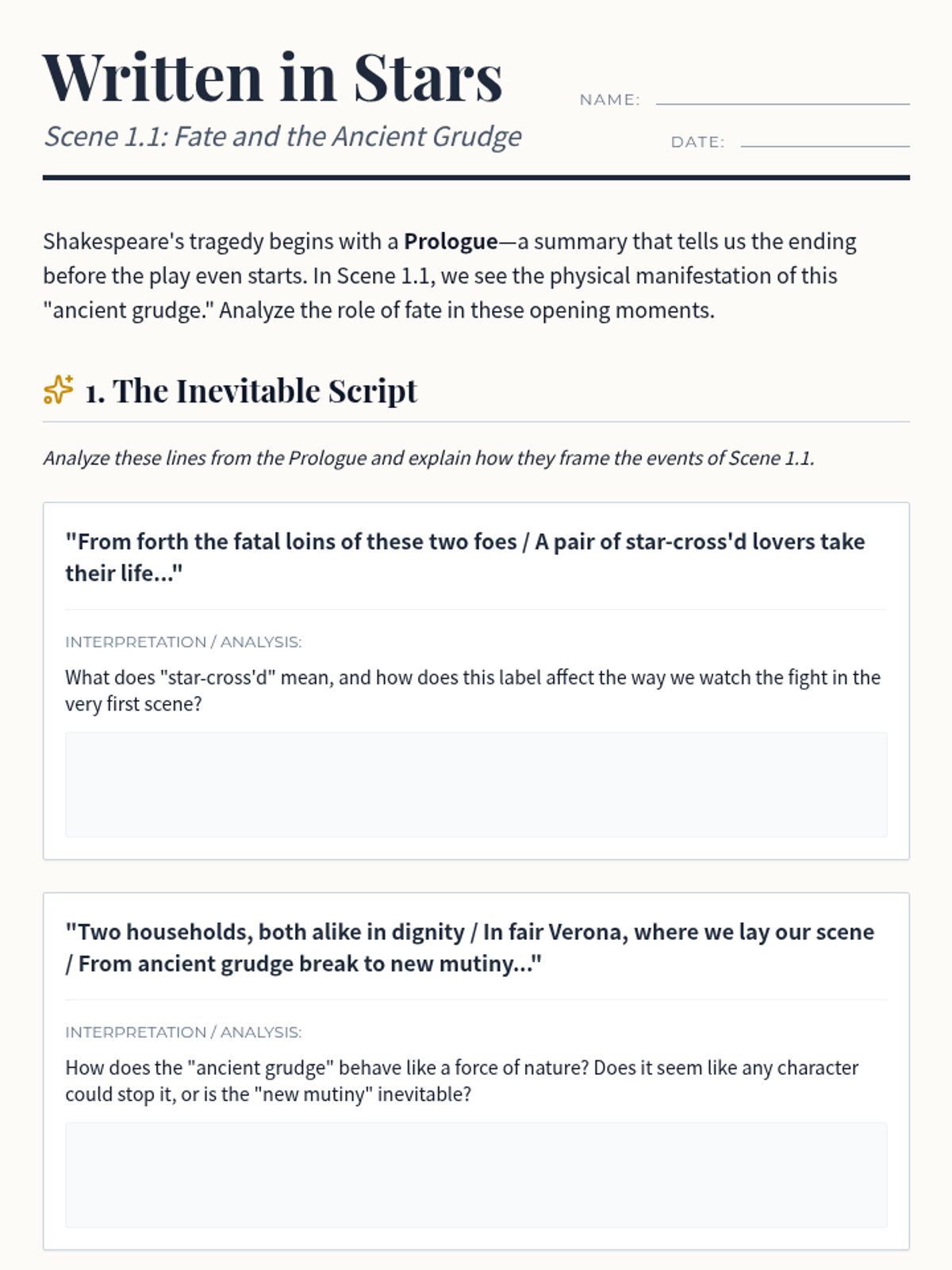
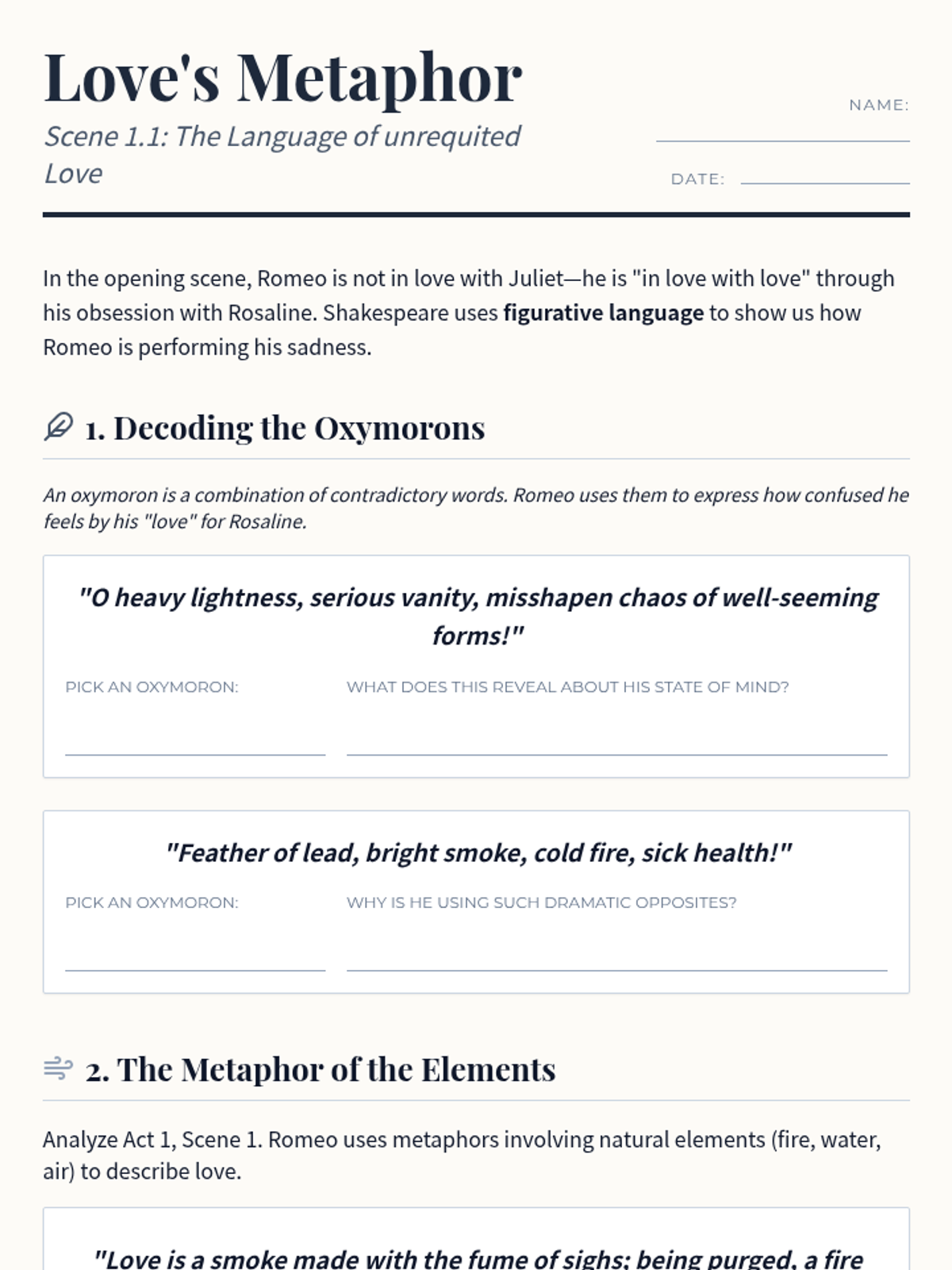
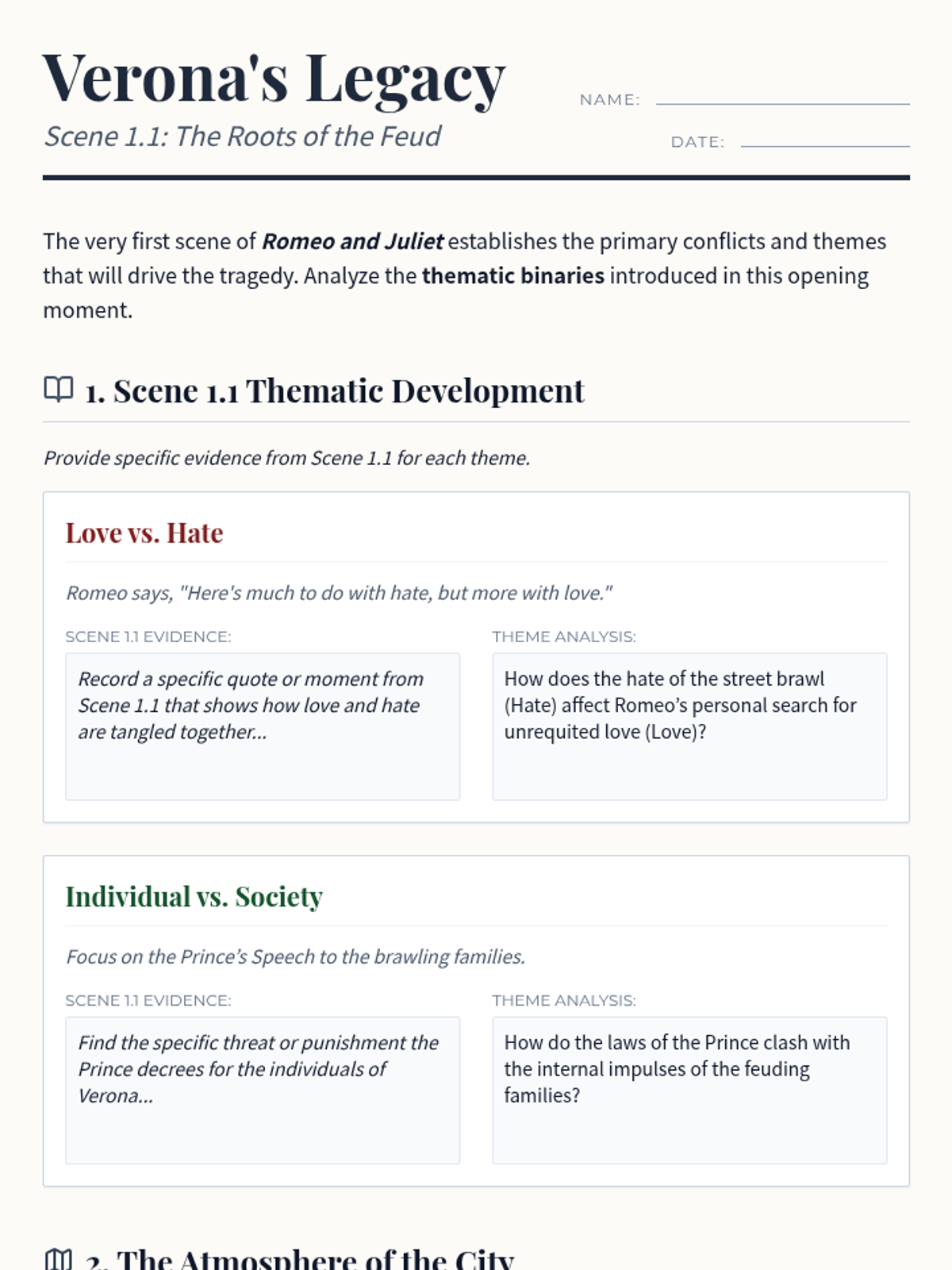
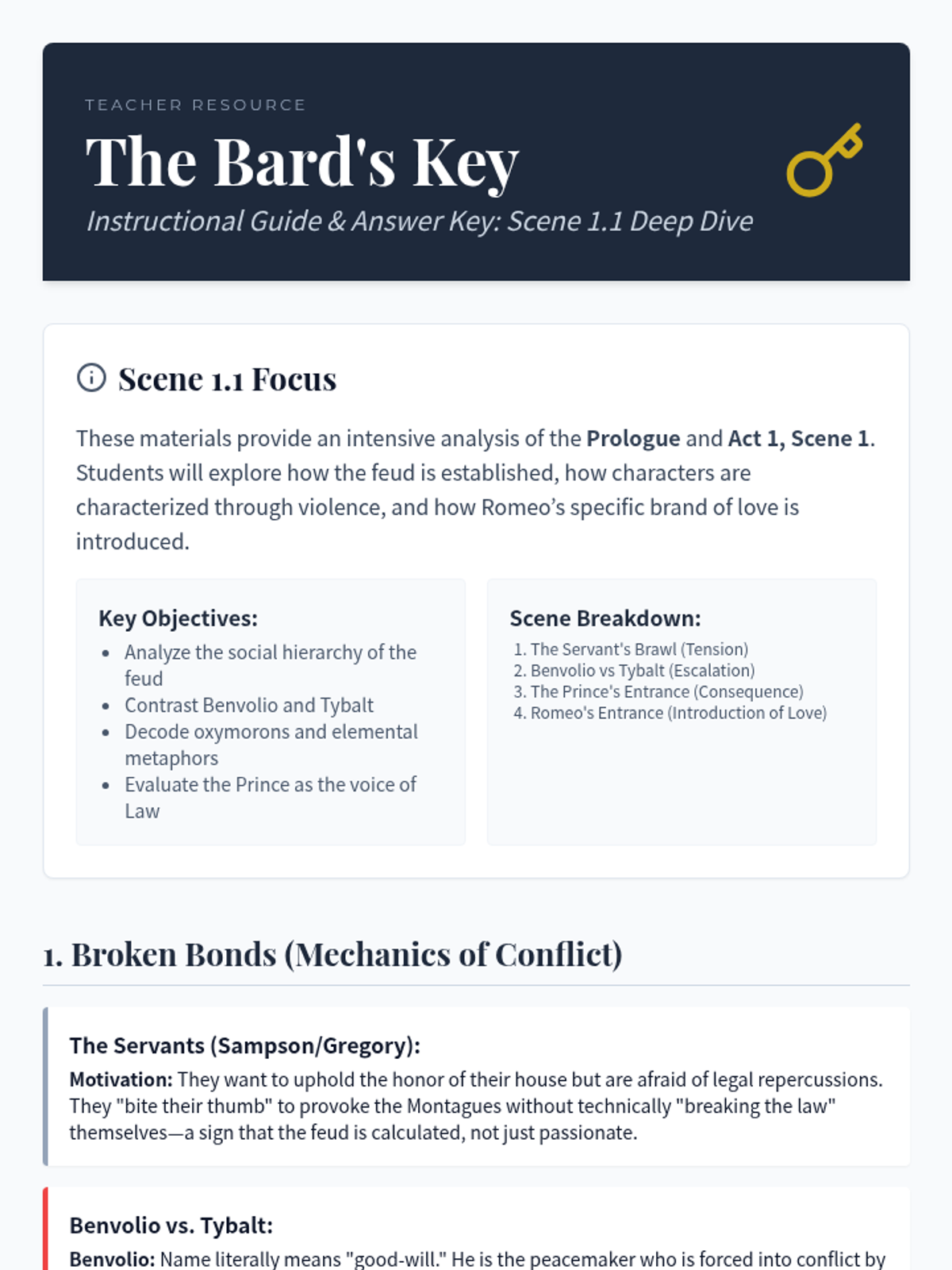
A comprehensive deep-dive into Shakespeare's Romeo and Juliet, focusing on Act 1. Students will analyze character dynamics, the tension between destiny and choice, and the rich poetic language of the play across individual scenes.
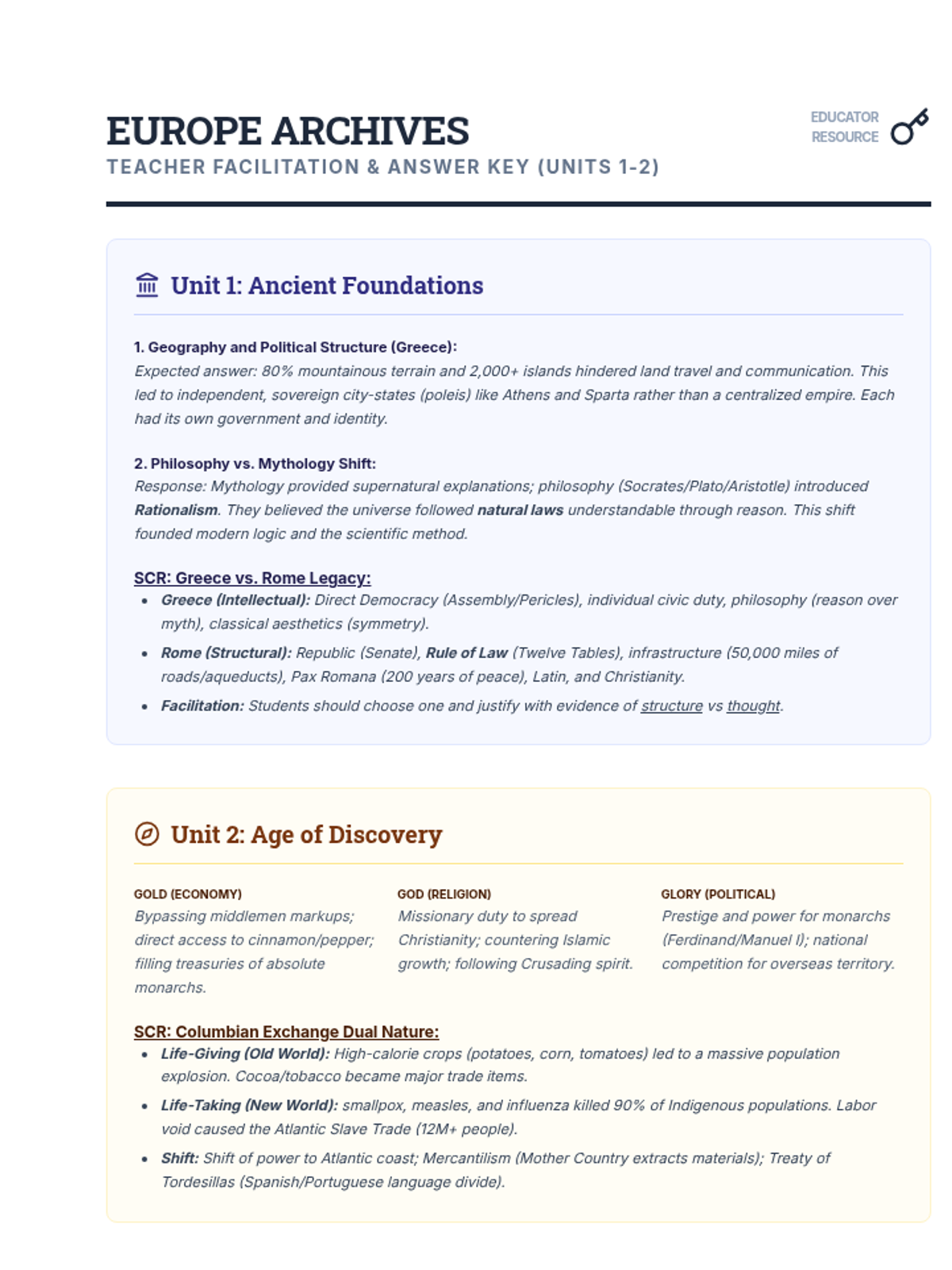
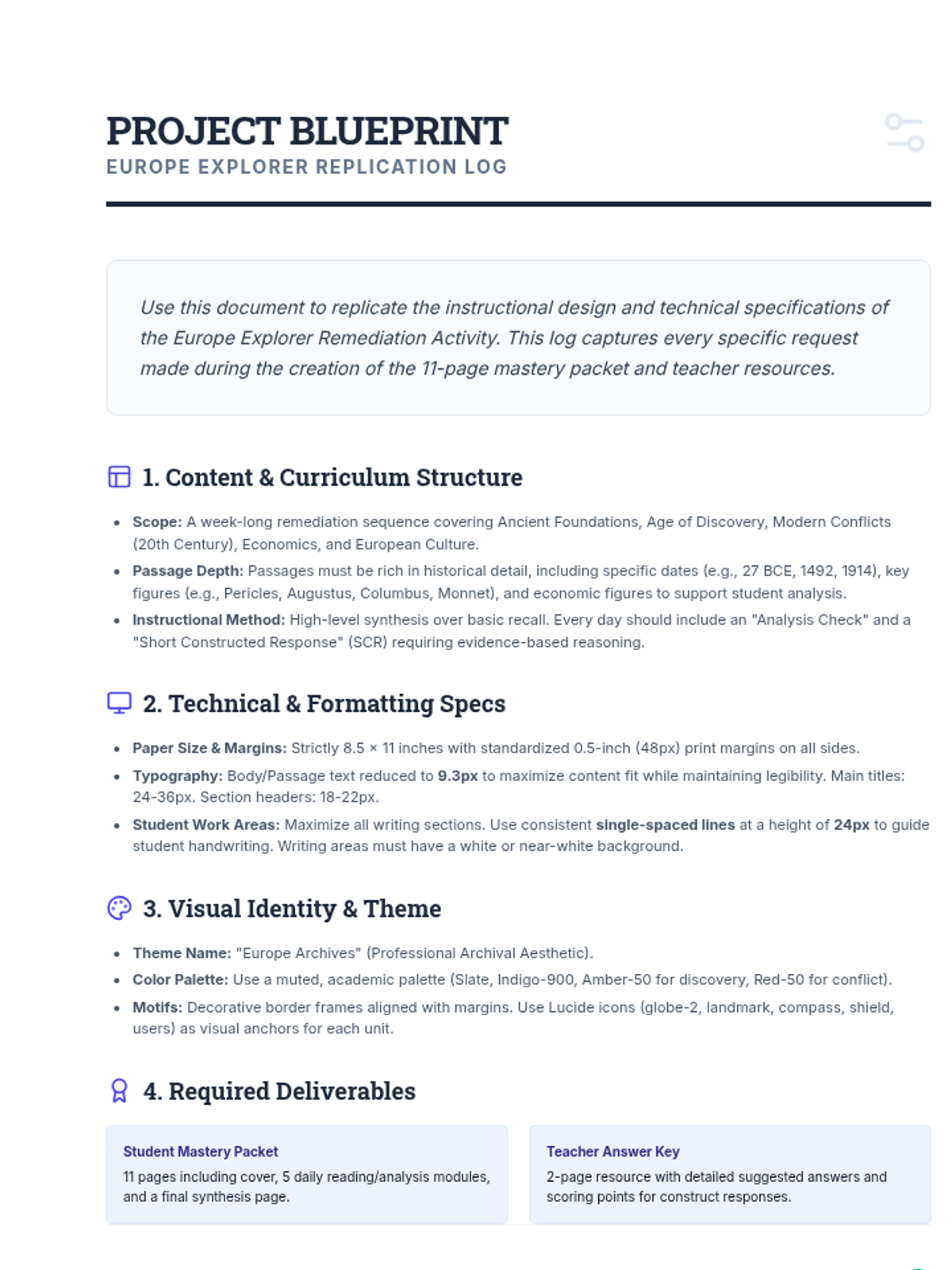
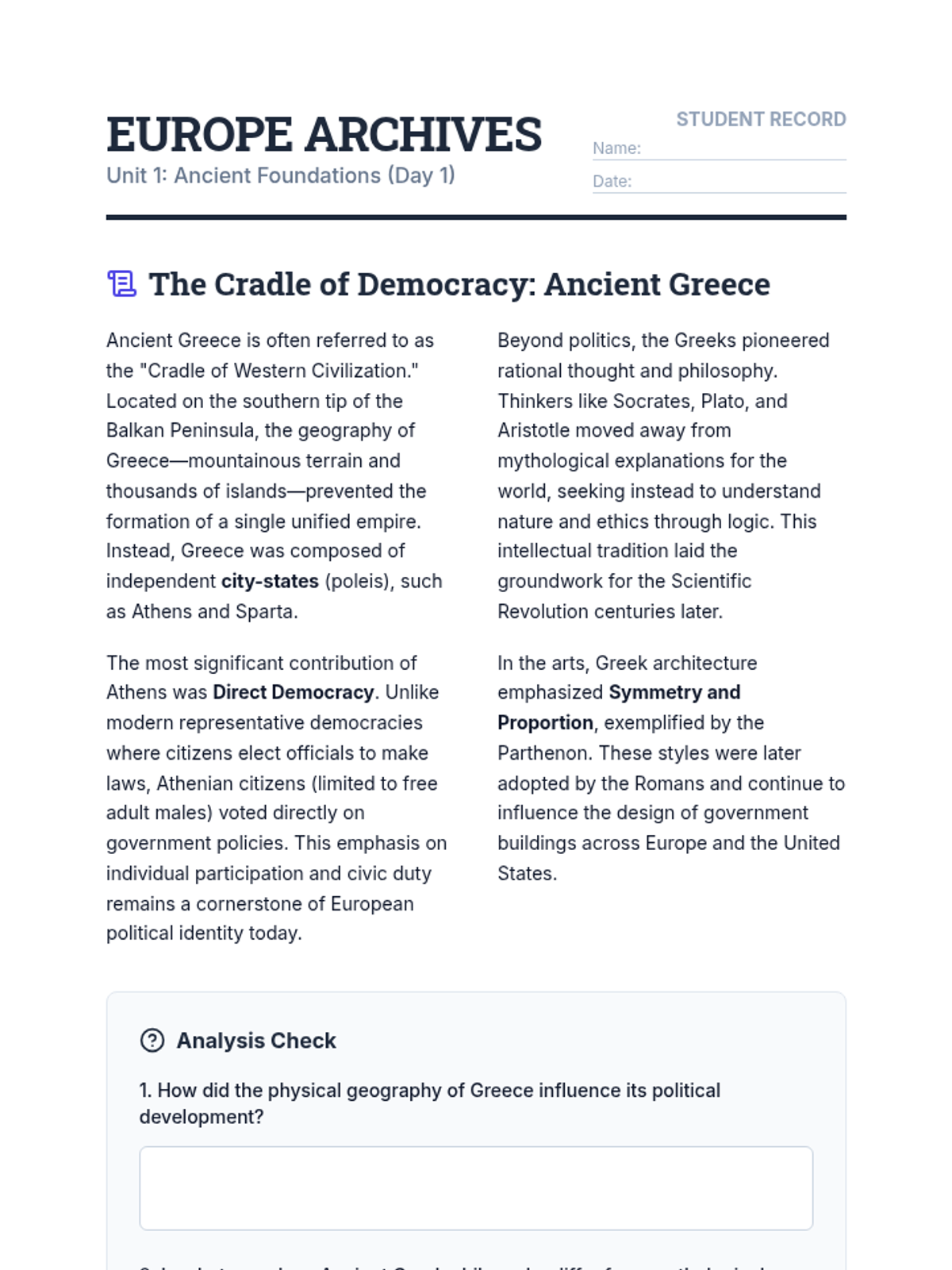
A comprehensive week-long remediation packet covering Europe's history, culture, economics, and the European Union through reading passages and high-level analysis.
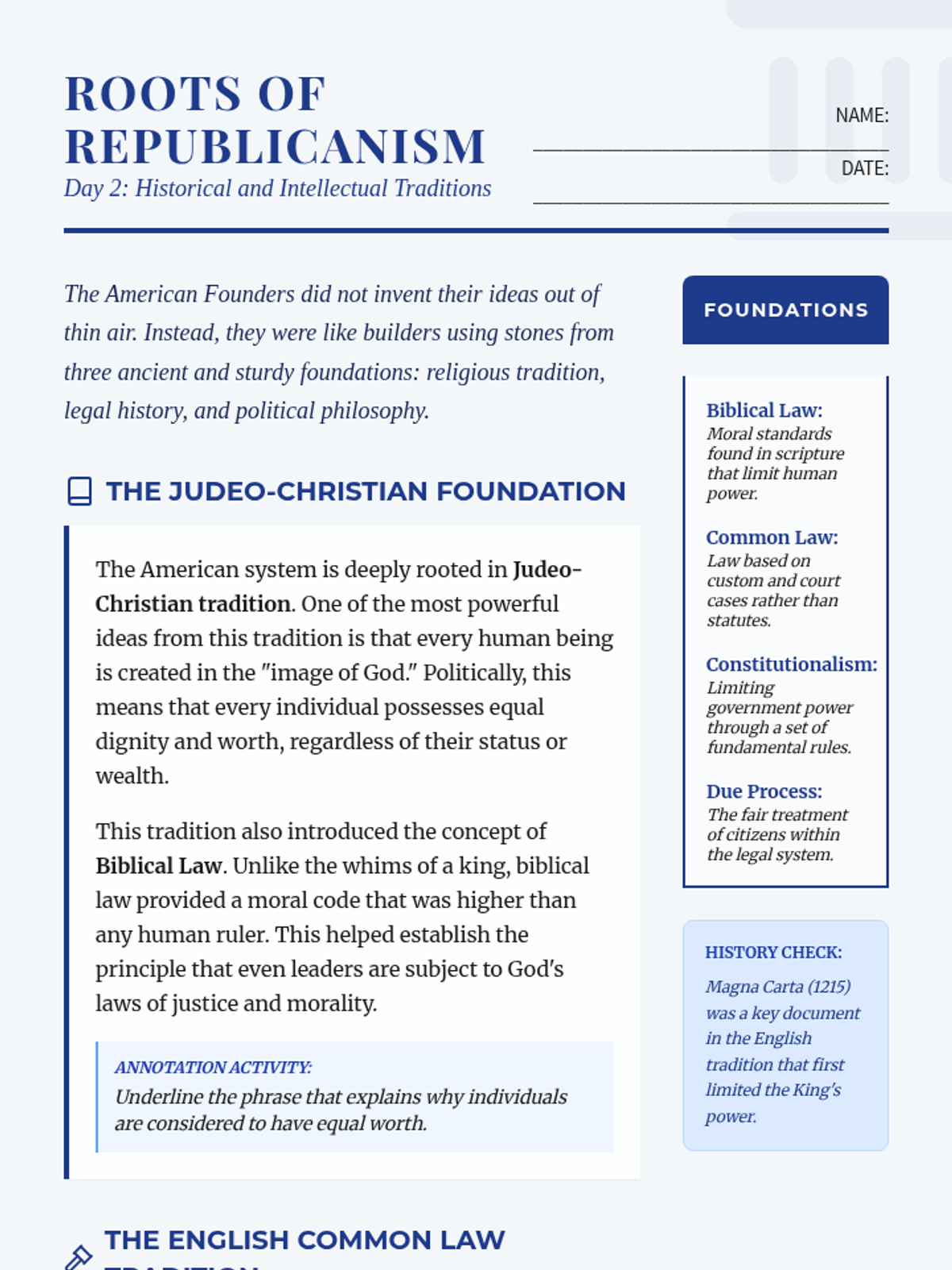
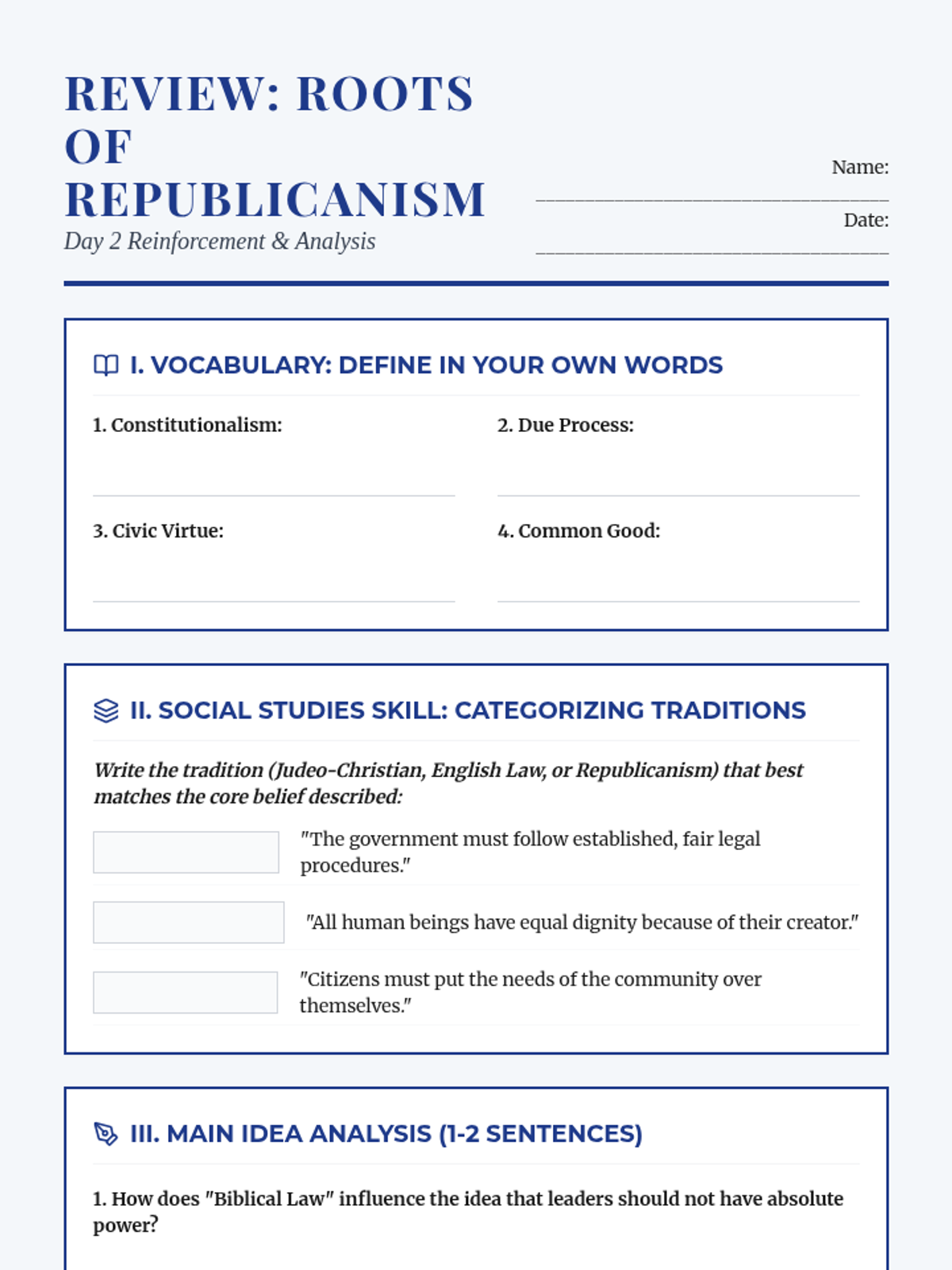
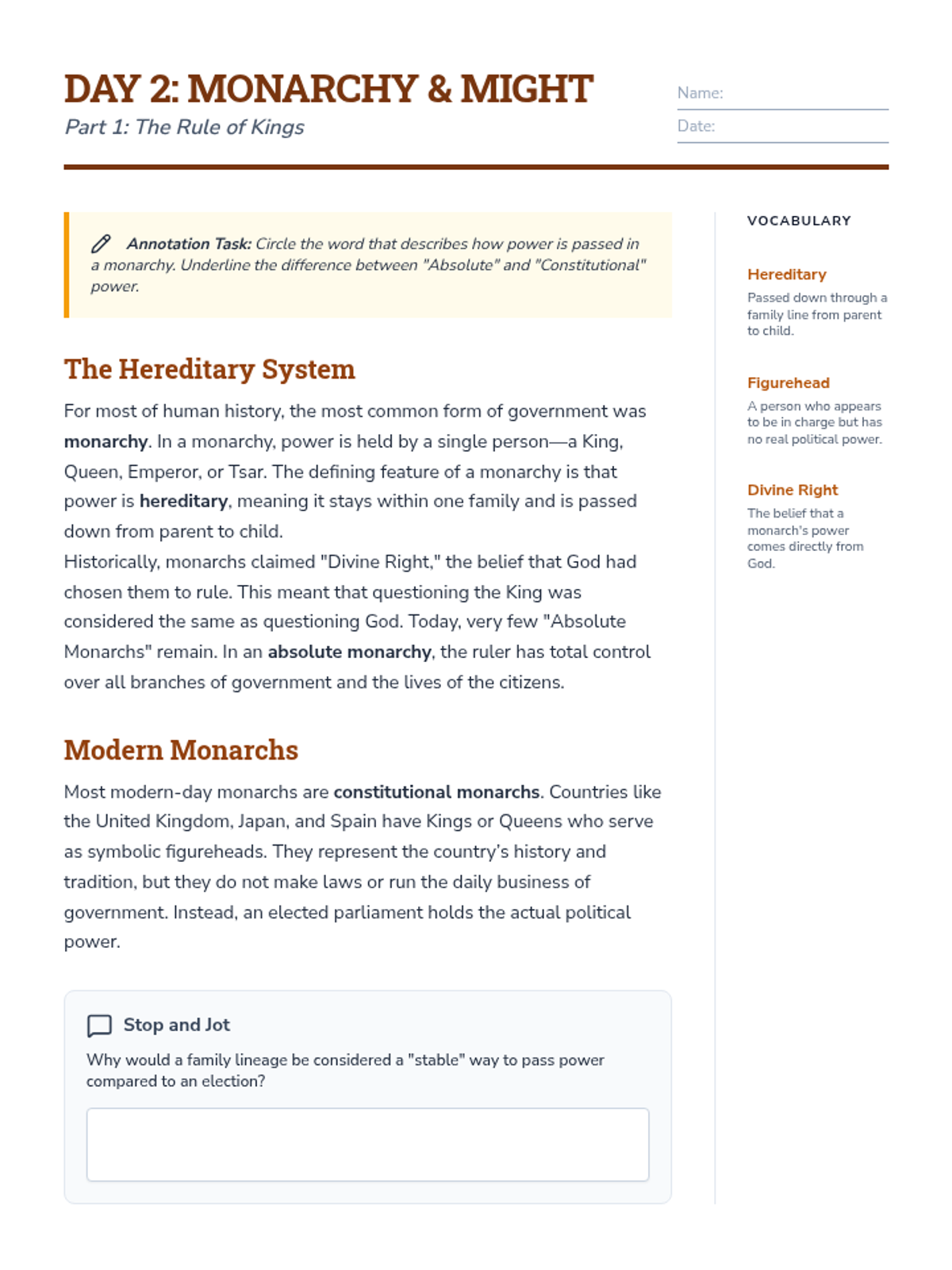
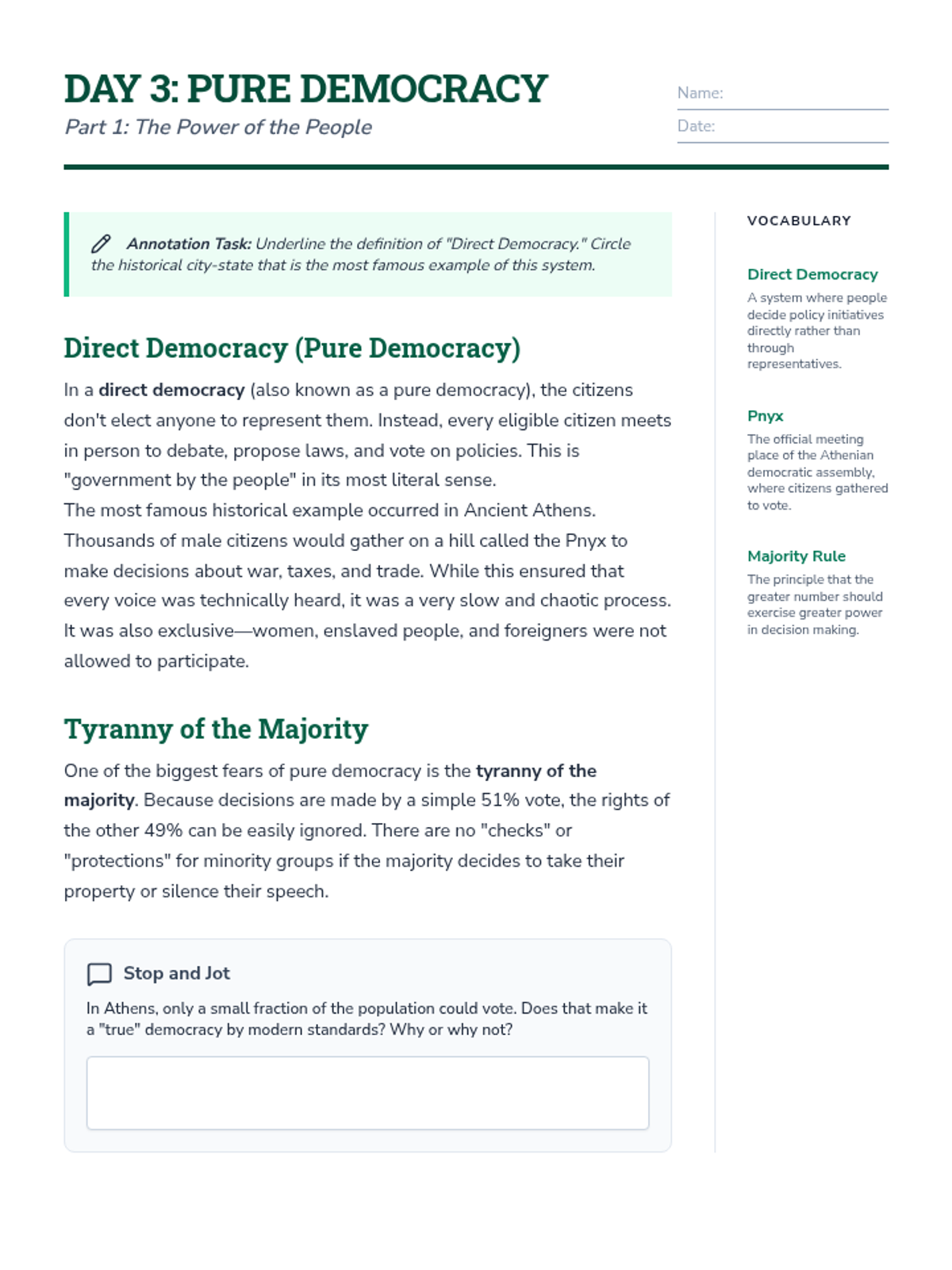
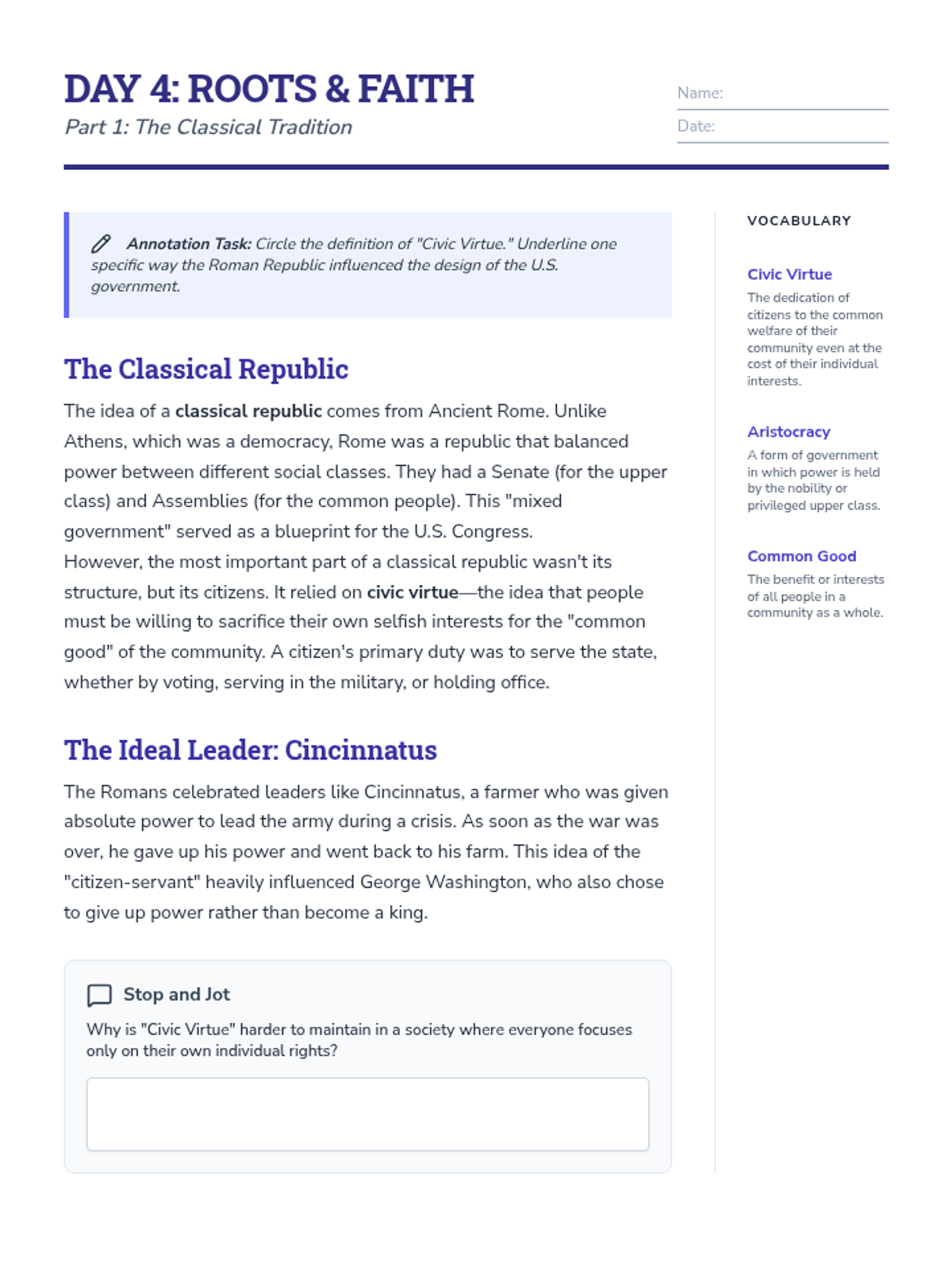
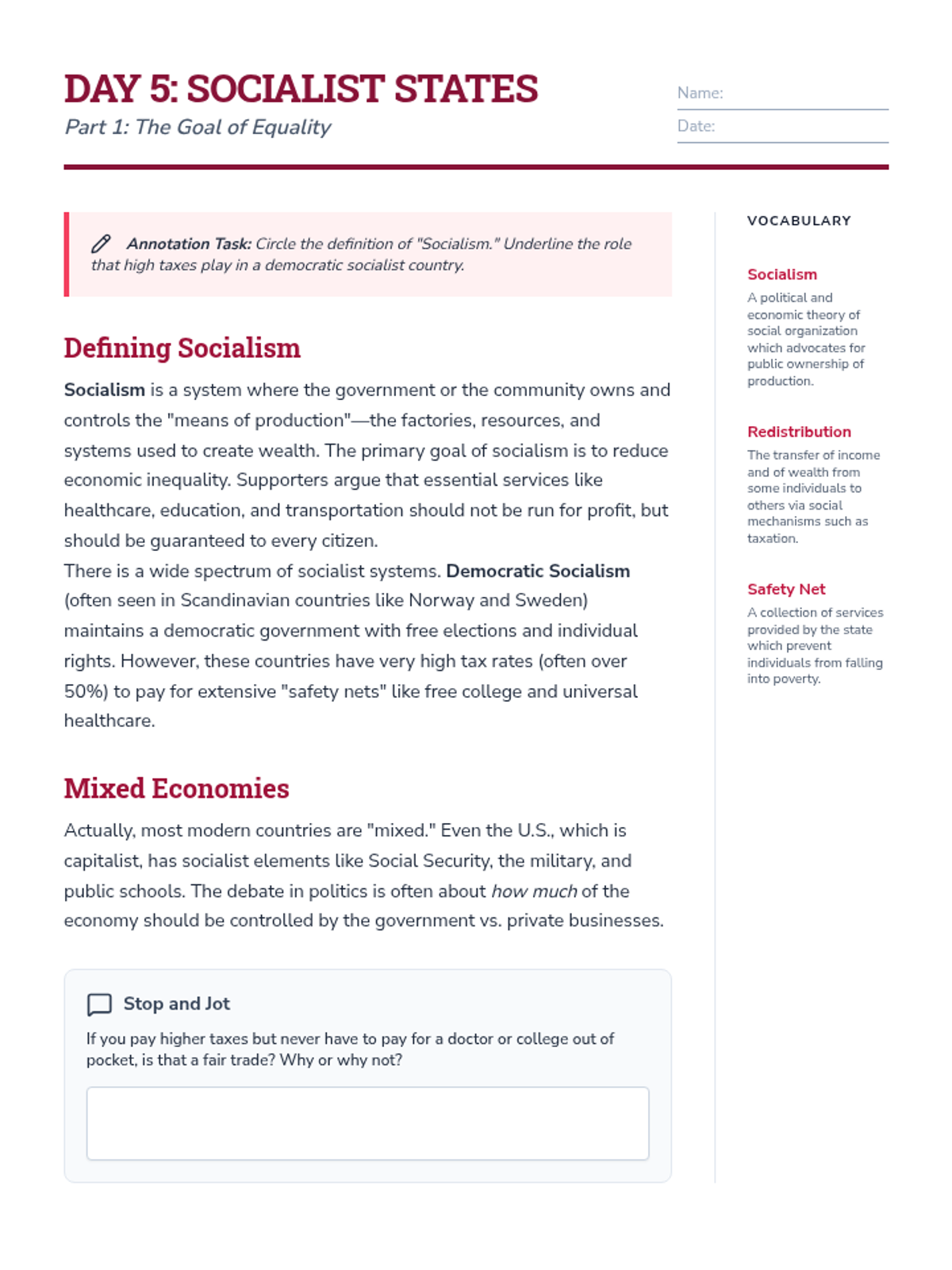
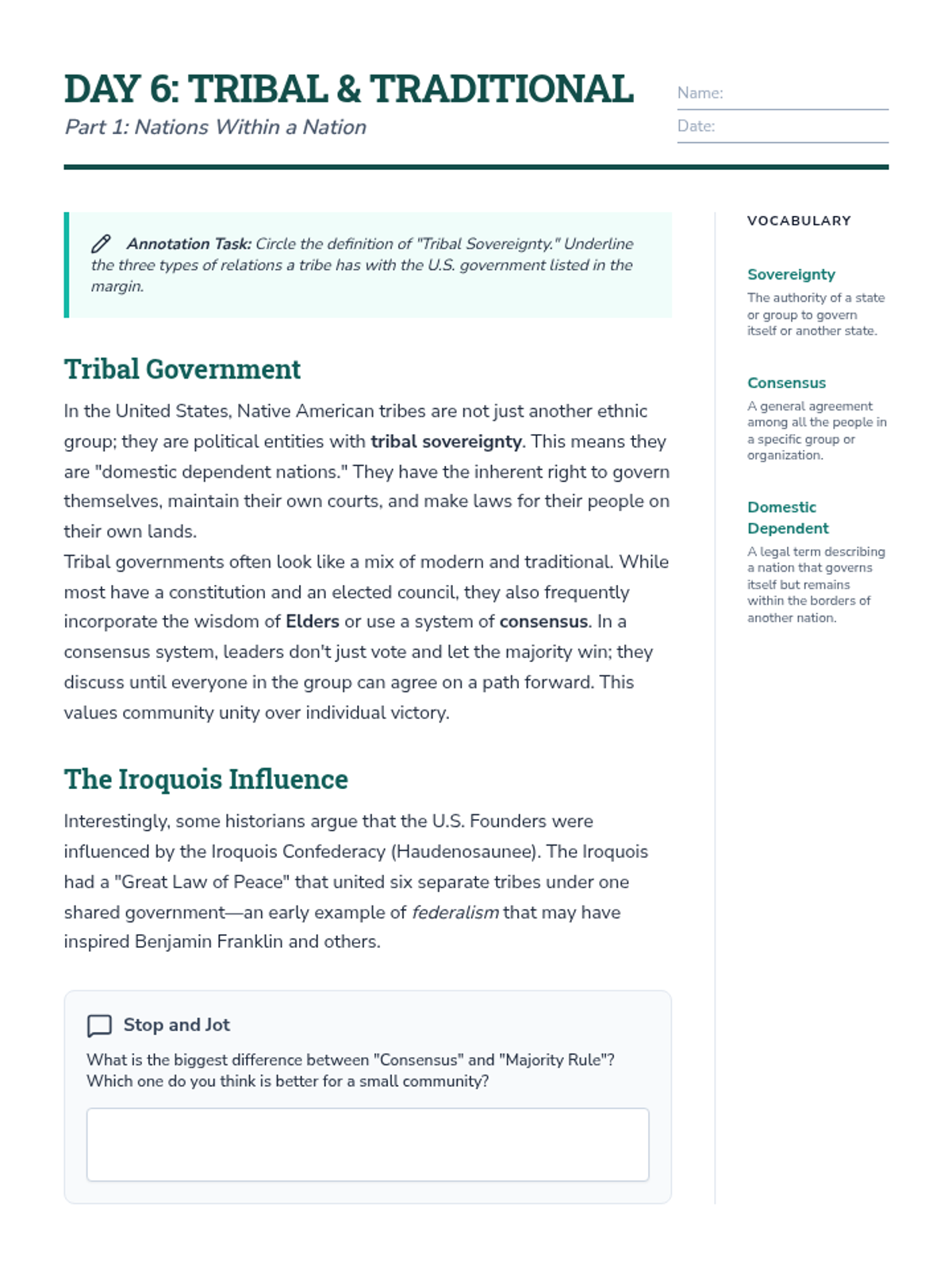
A 7-day comprehensive remediation sequence focused on the philosophical, historical, and individual foundations of American government. Designed for students needing mastery of TEKS 1 and 12B, the unit features structured readers, skill-building worksheets, and a cumulative assessment.
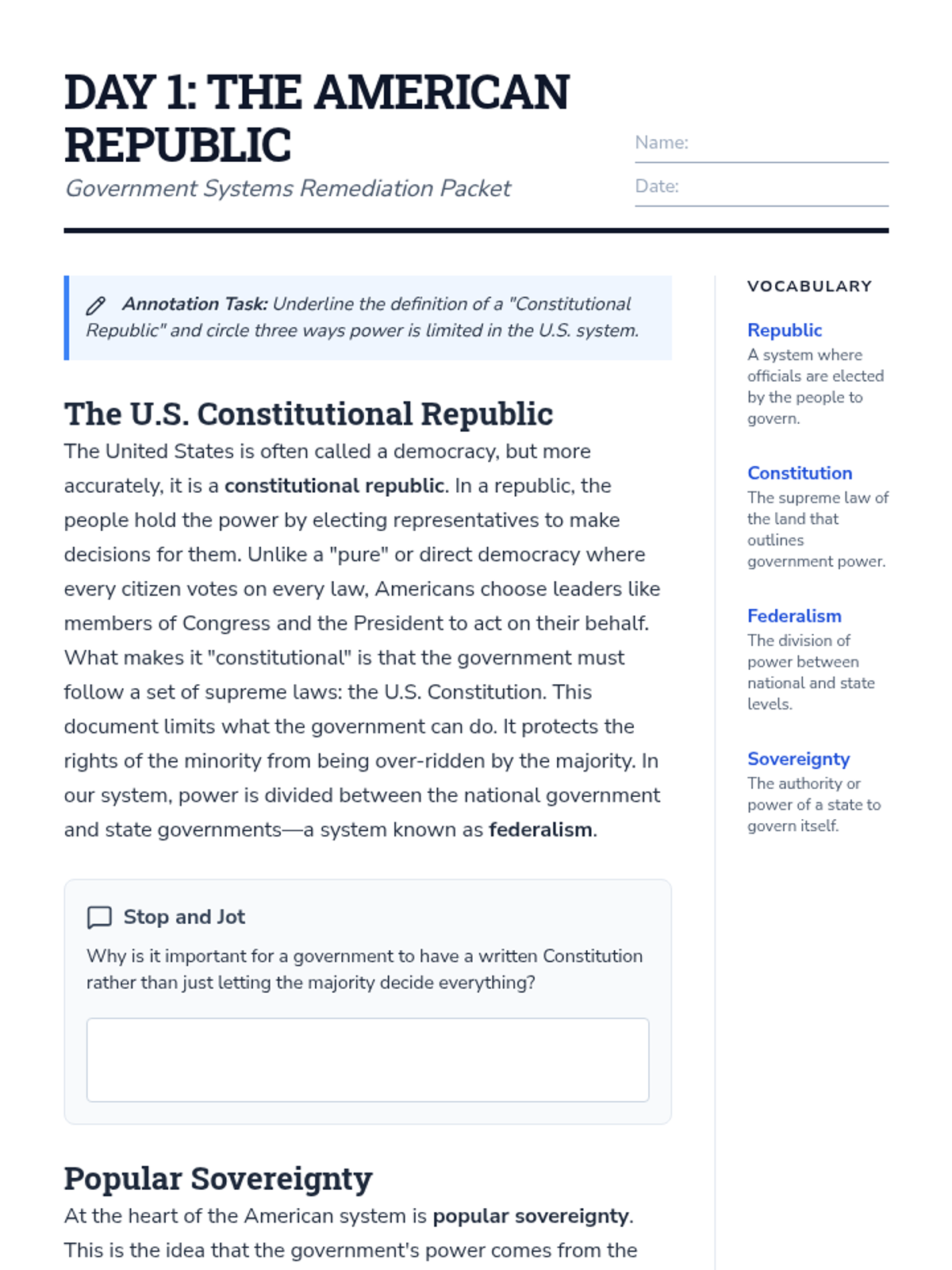
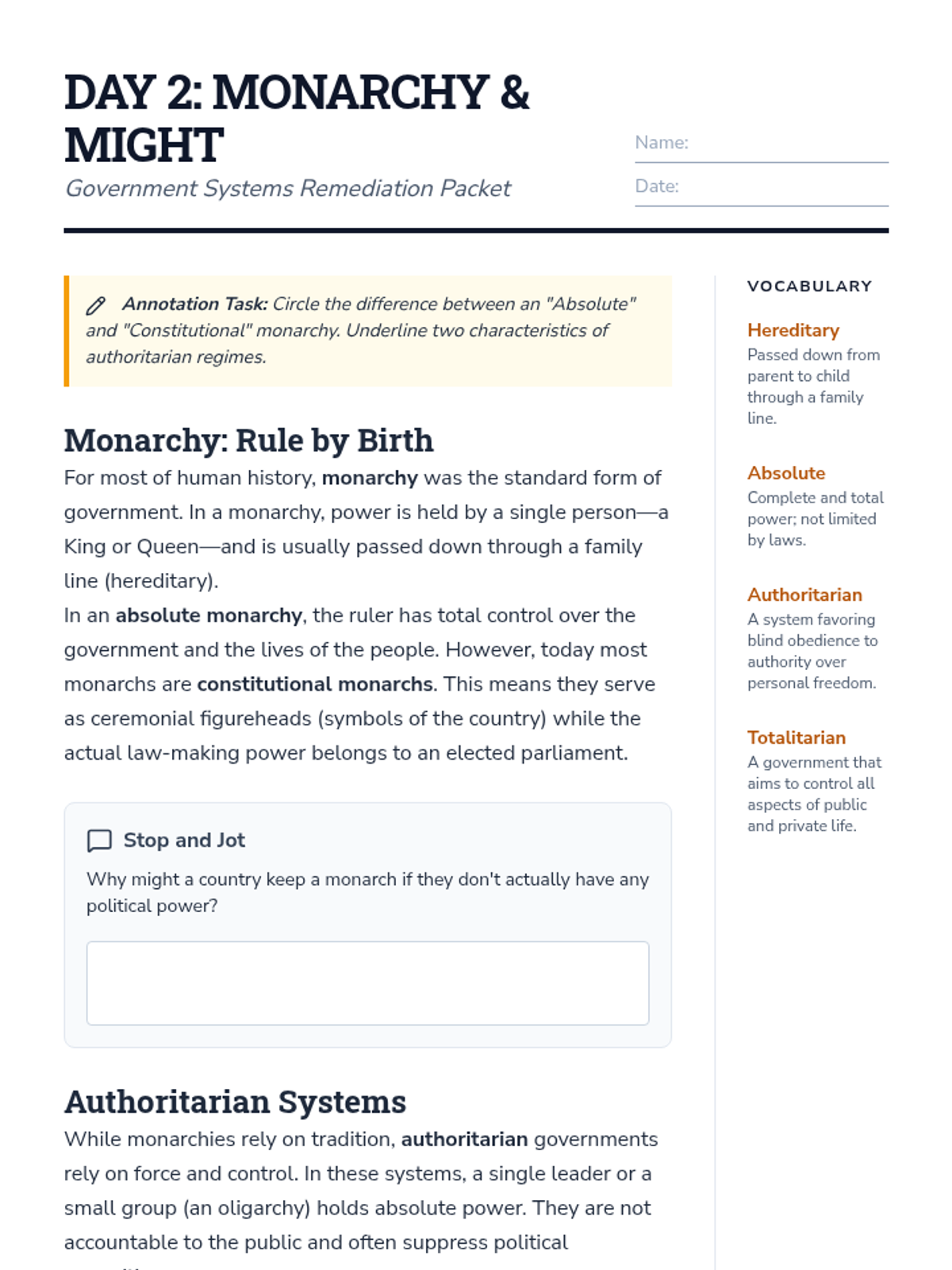
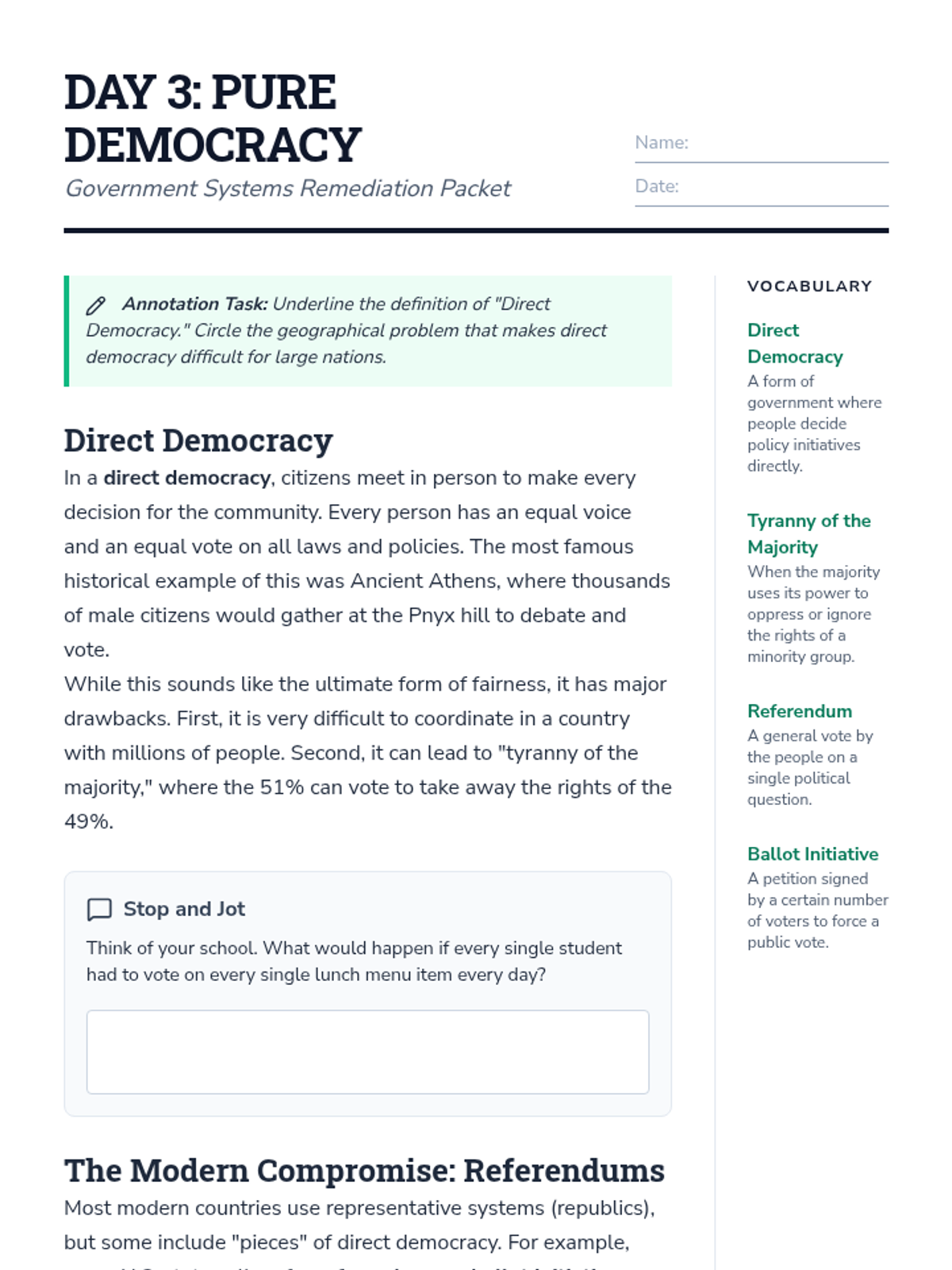
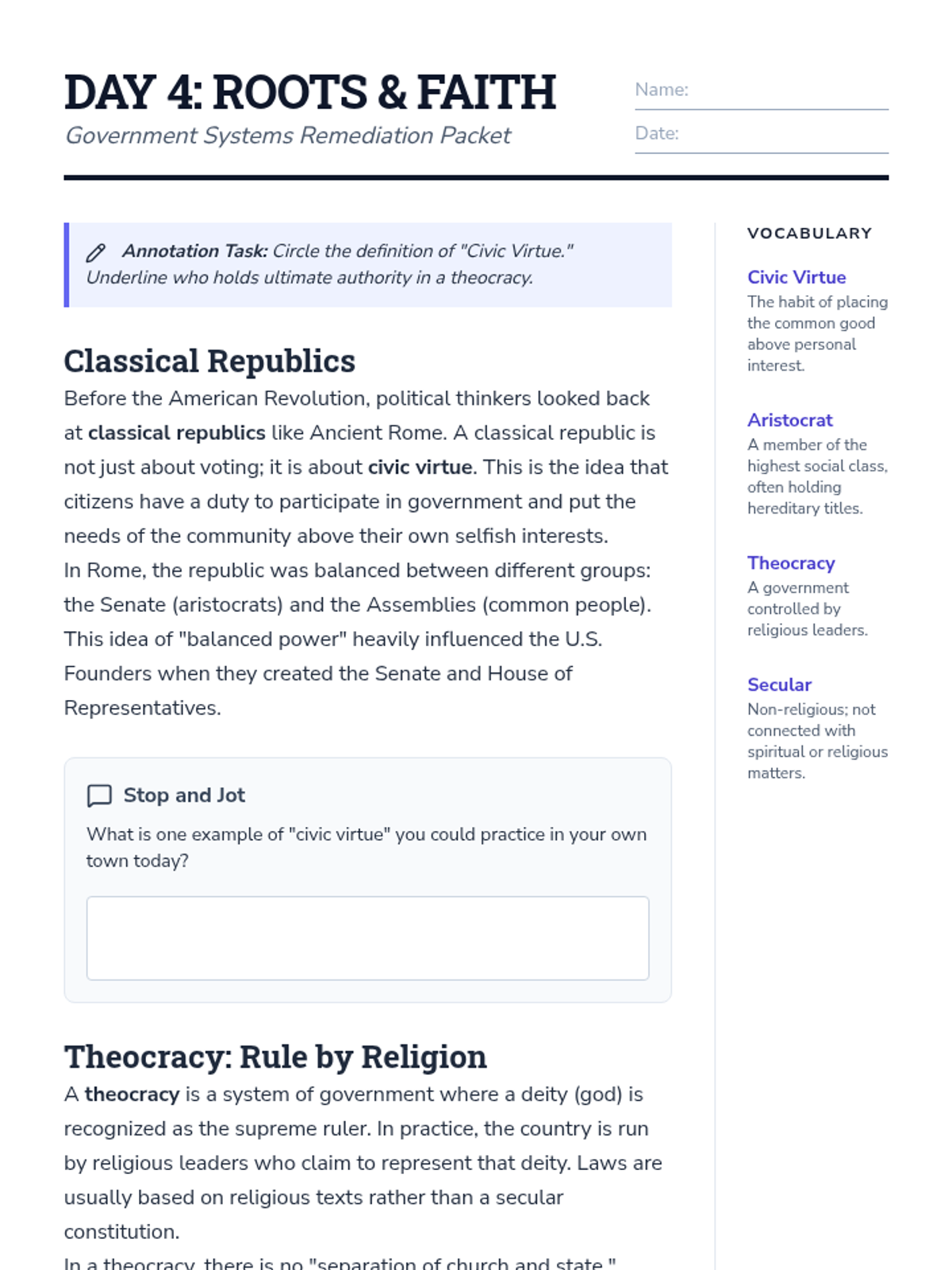
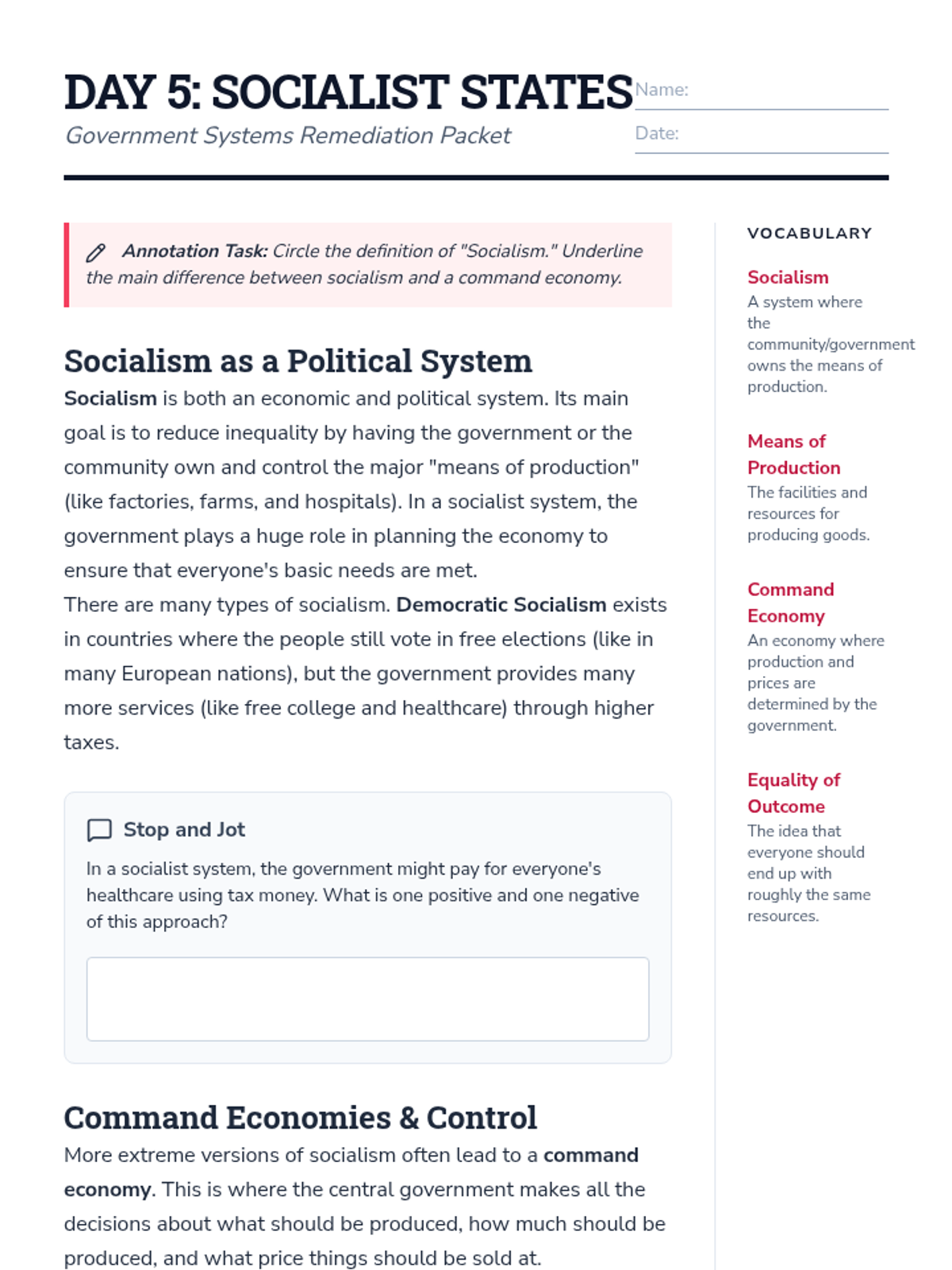
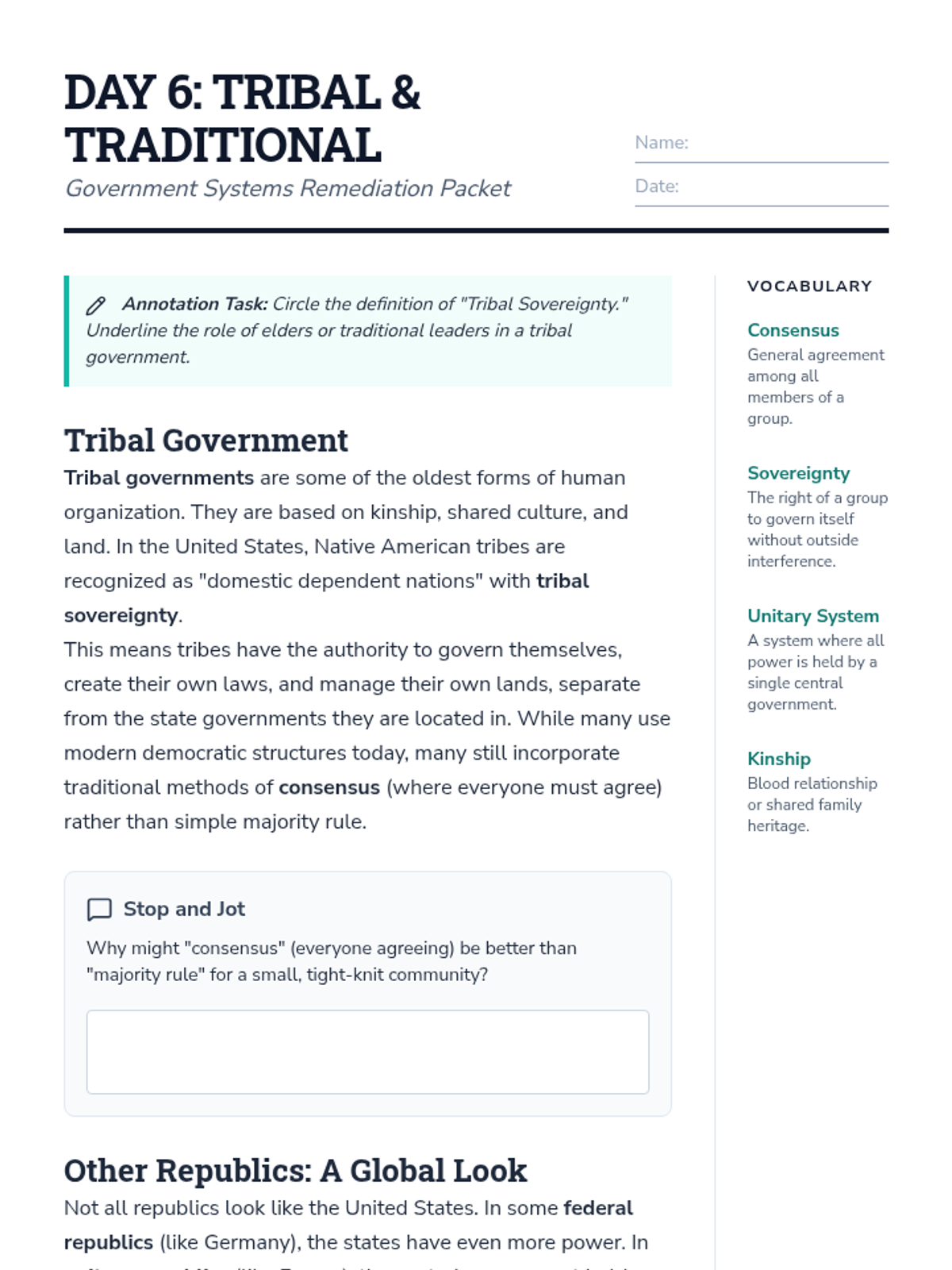
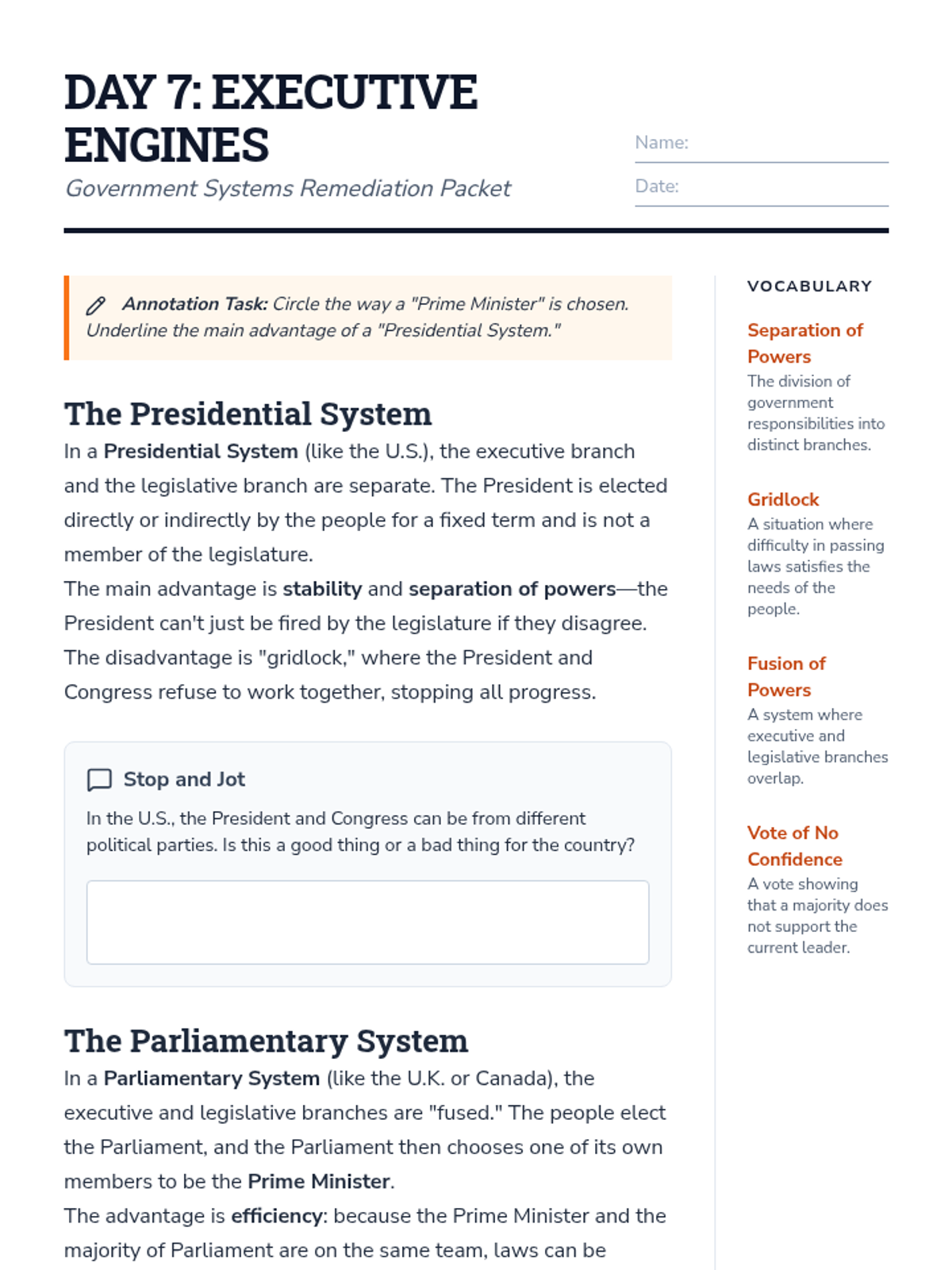
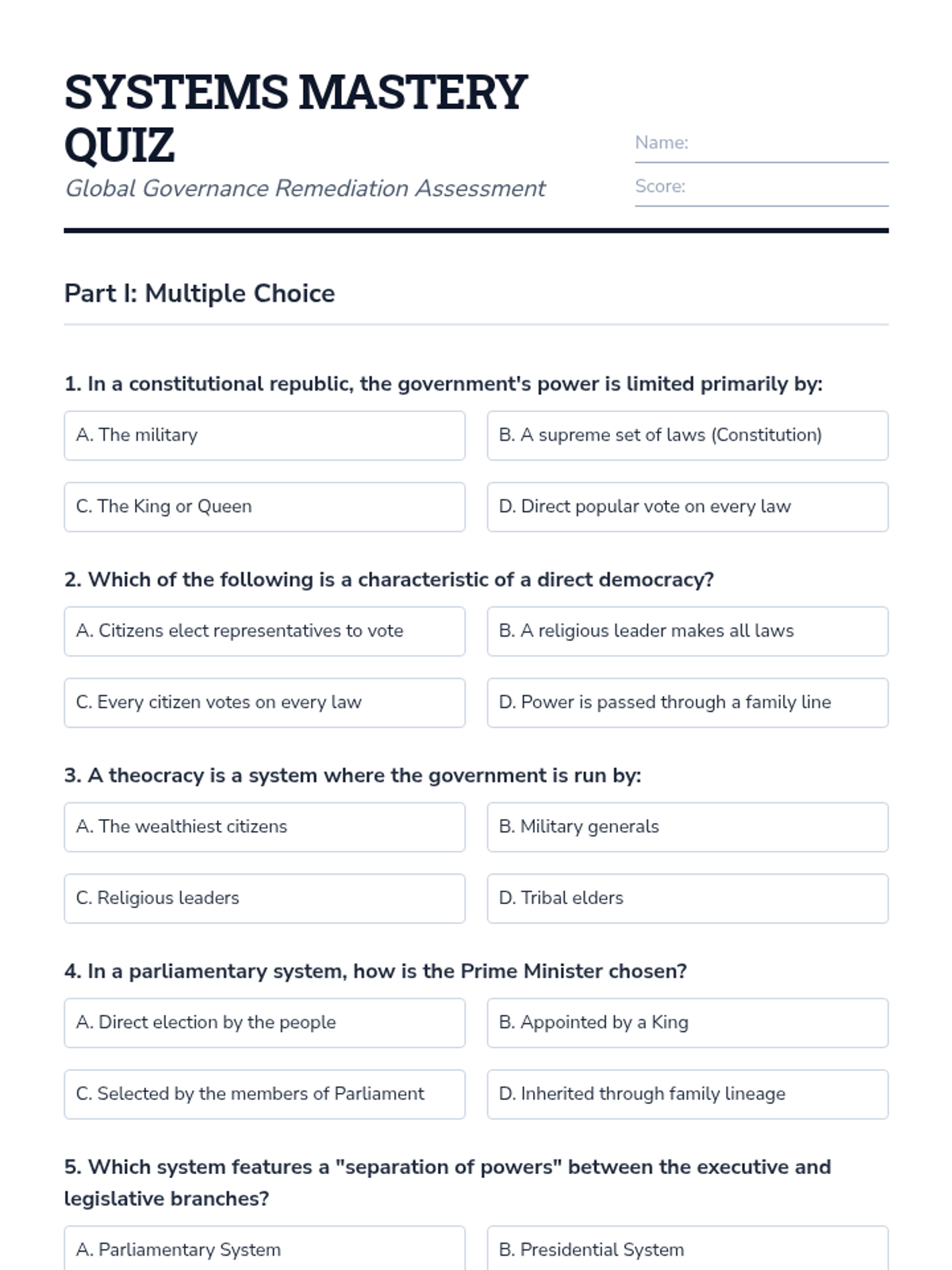
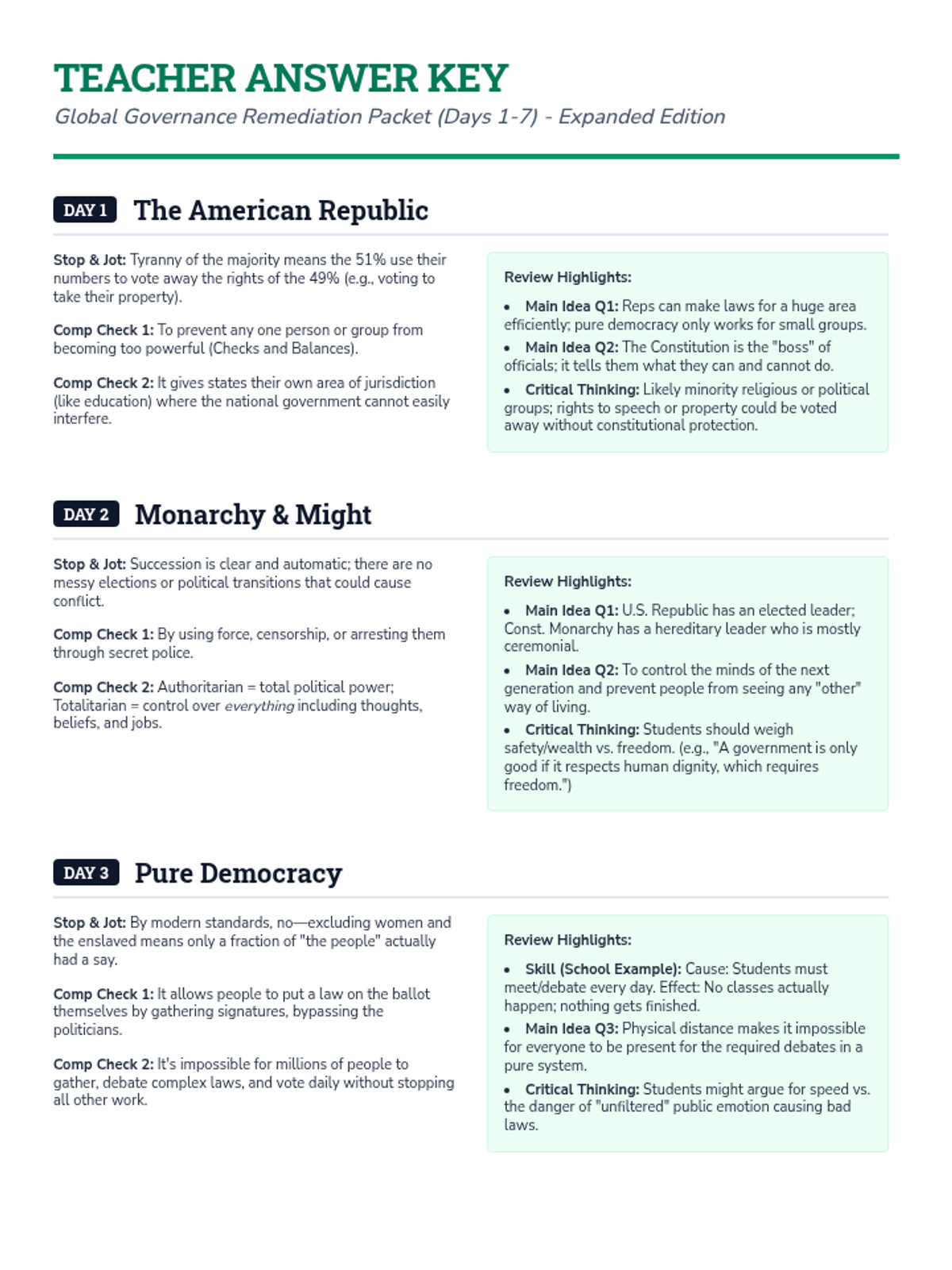
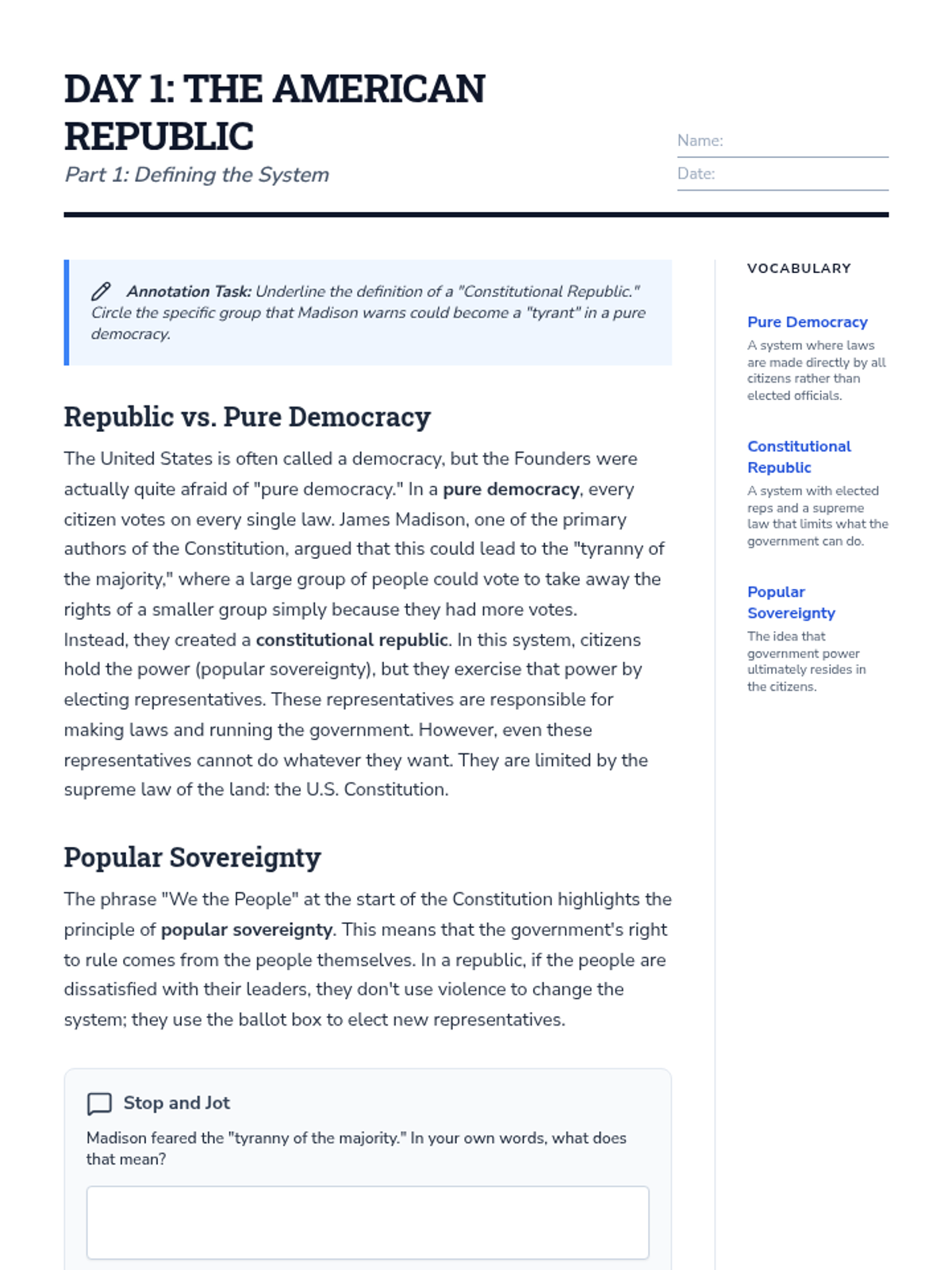
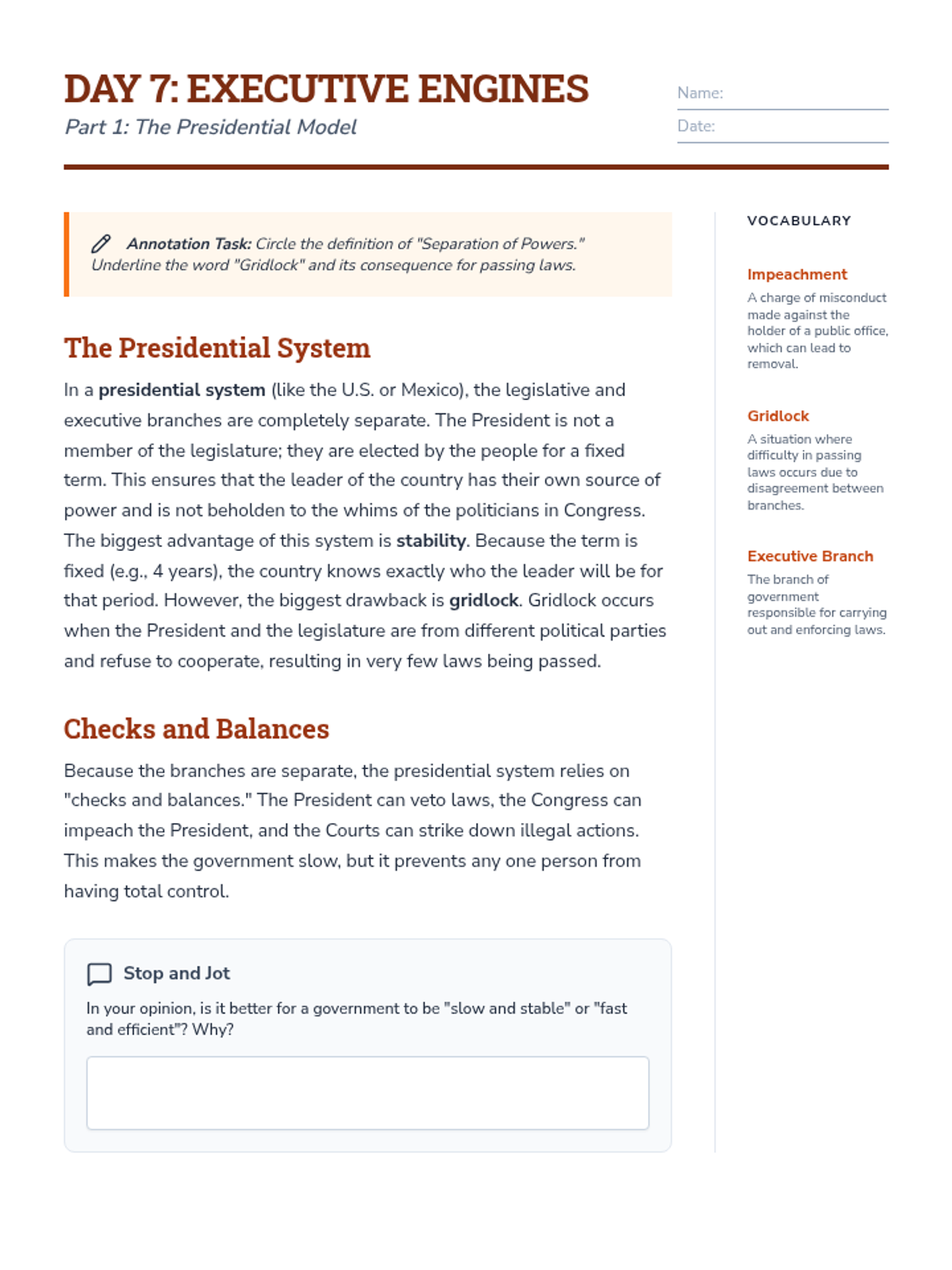
A comprehensive 7-day remediation unit covering various forms of government, comparing the U.S. constitutional republic to historical and contemporary systems, and analyzing executive structures.
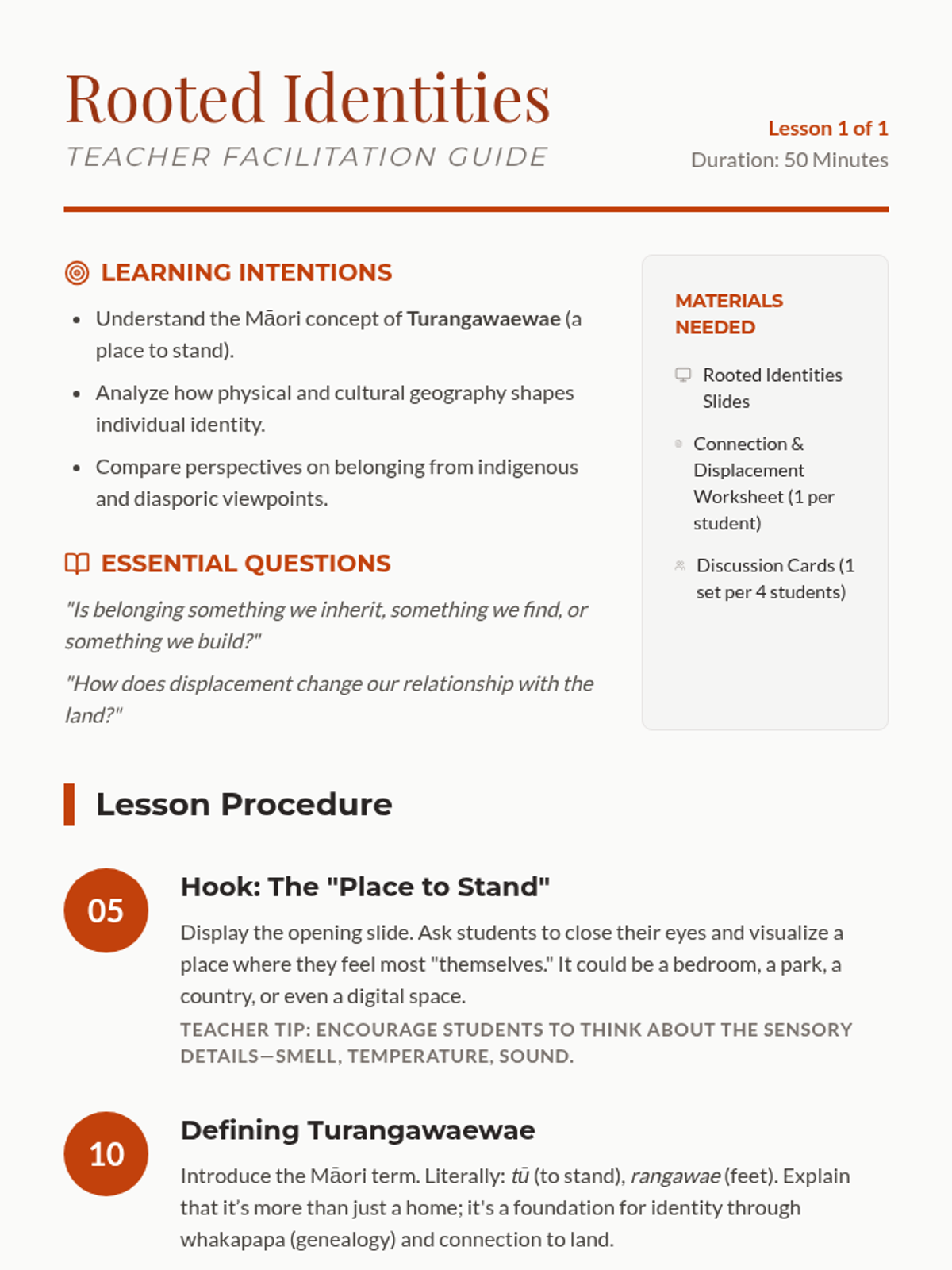
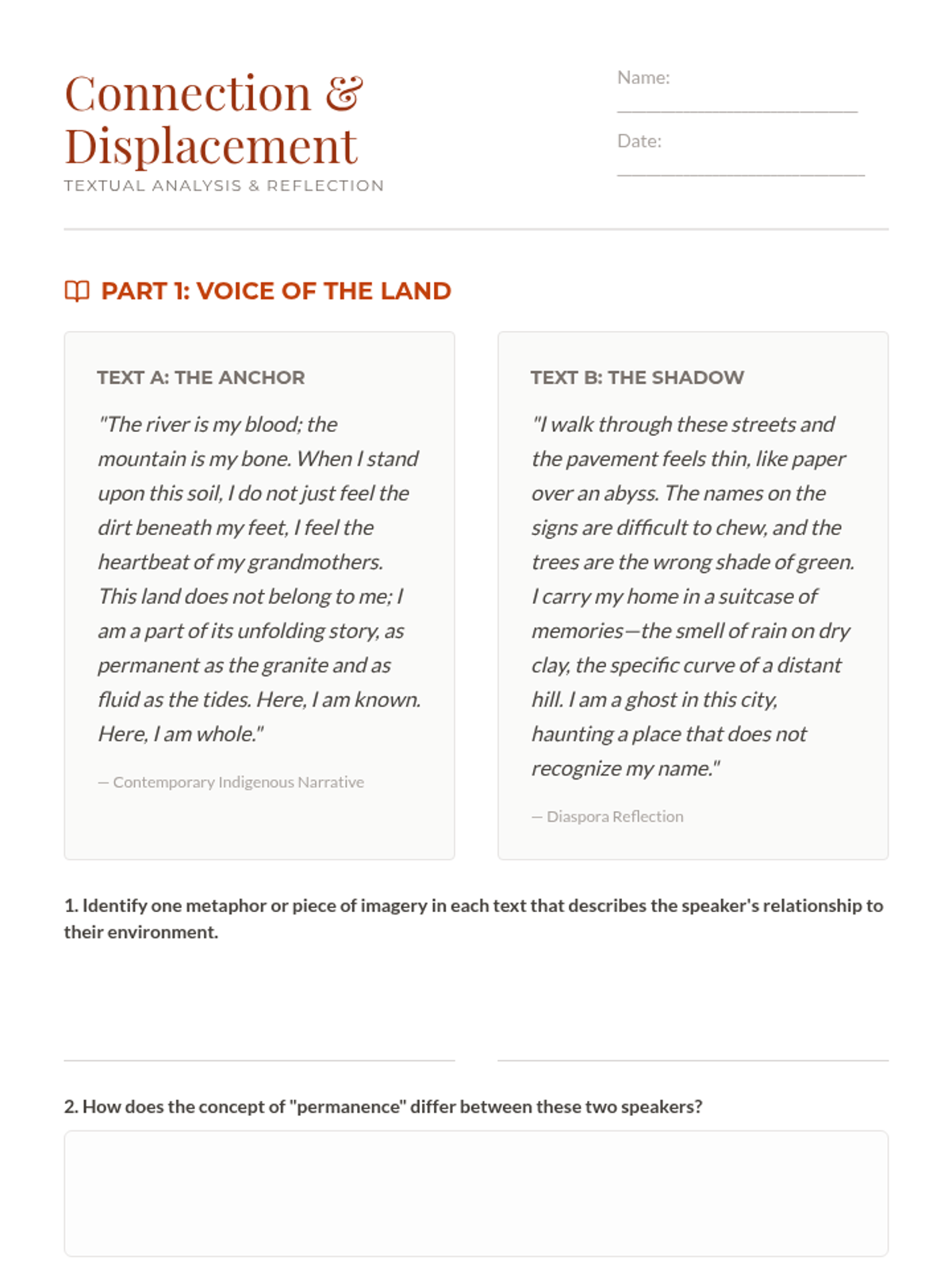
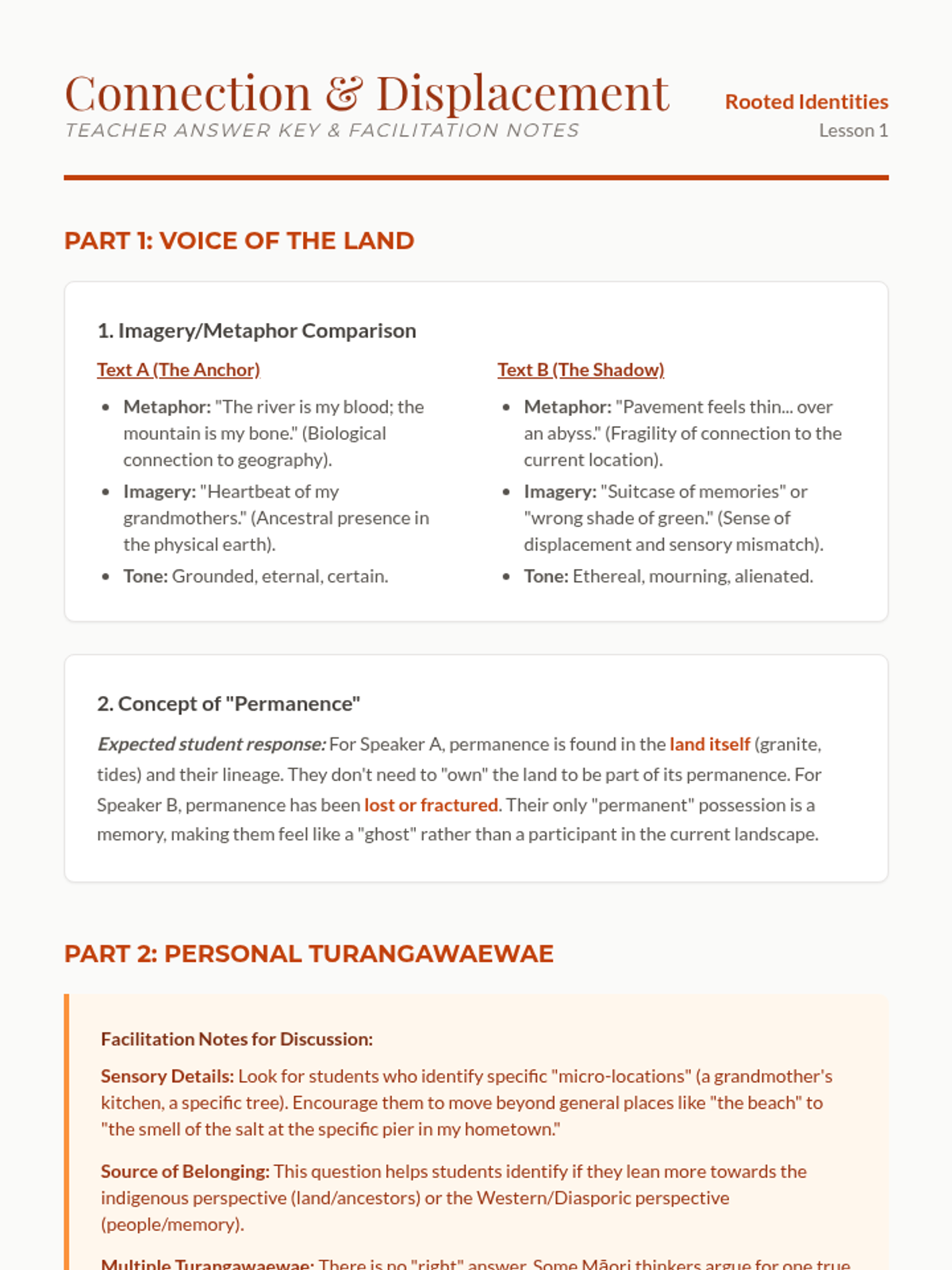
A deep dive into the Māori concept of Turangawaewae and global perspectives on belonging, identity, and the significance of land.
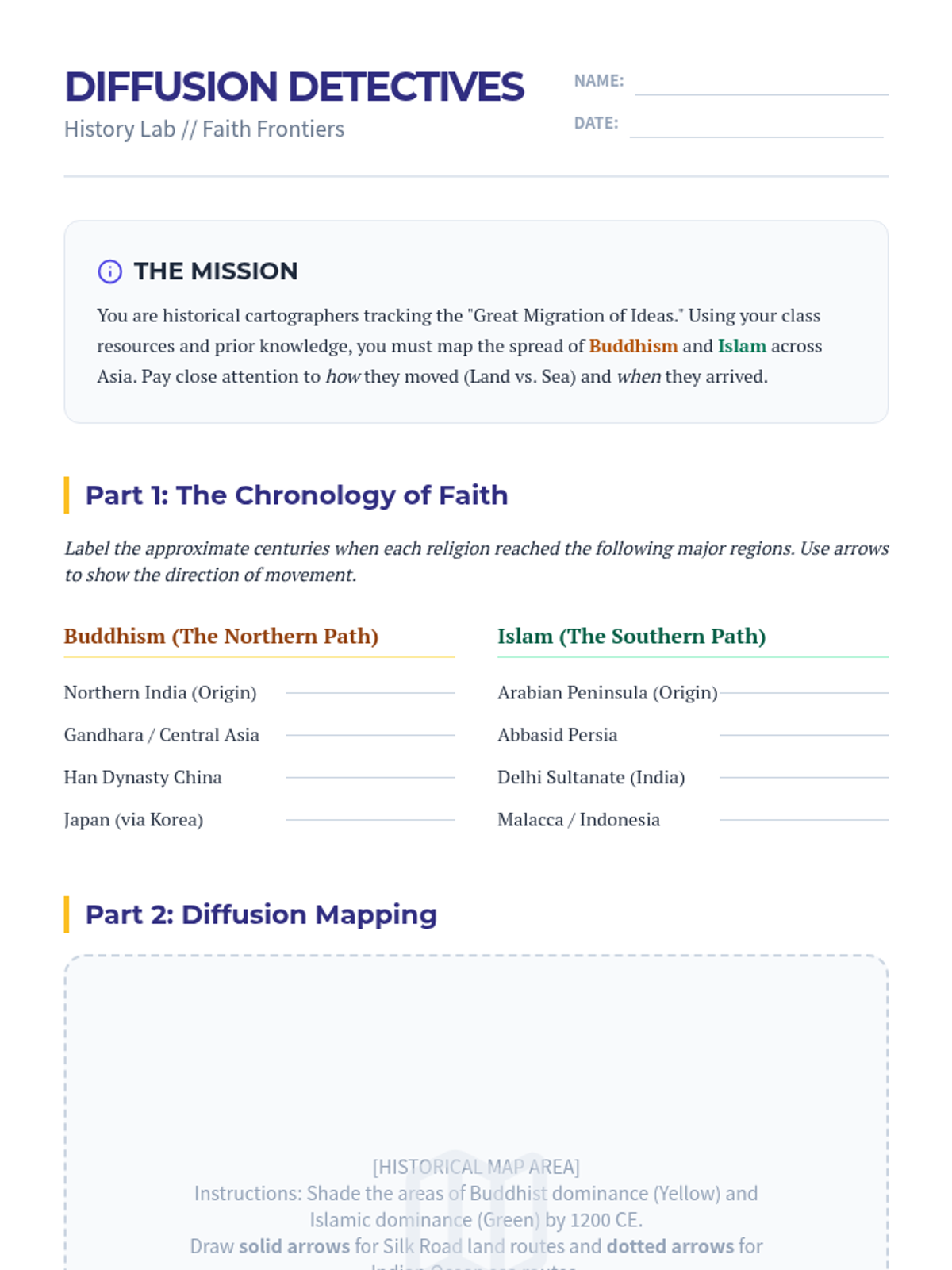
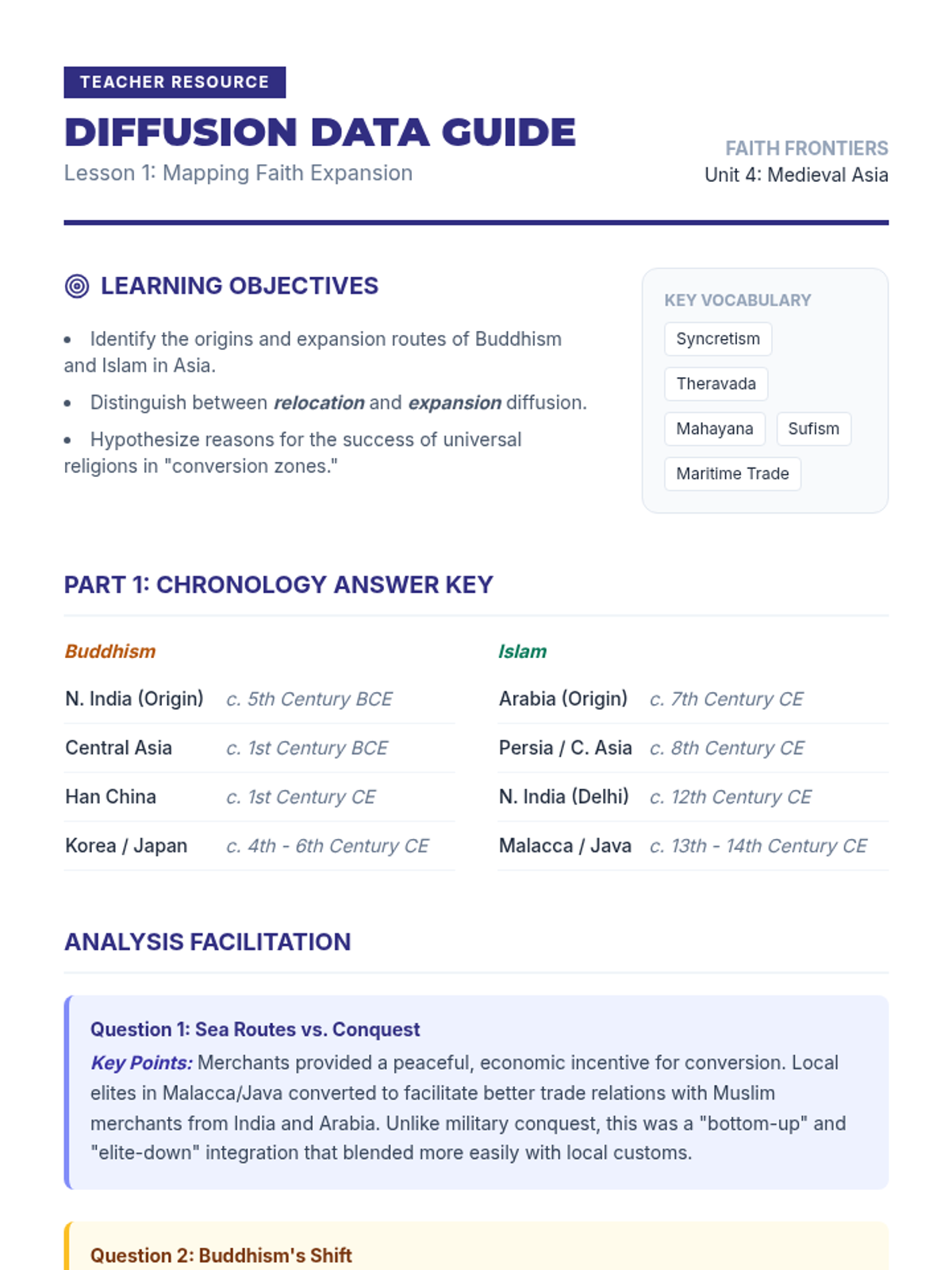
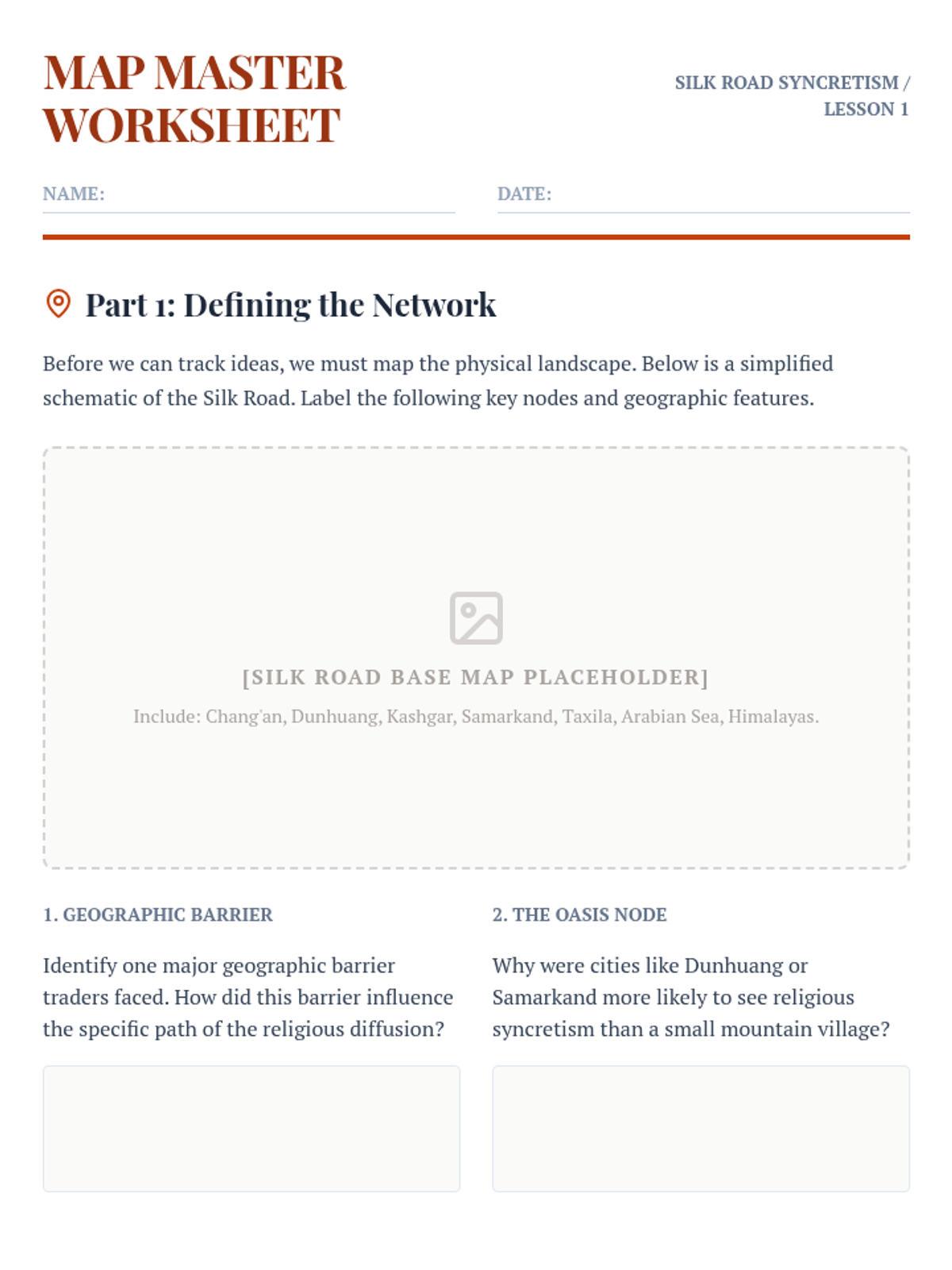
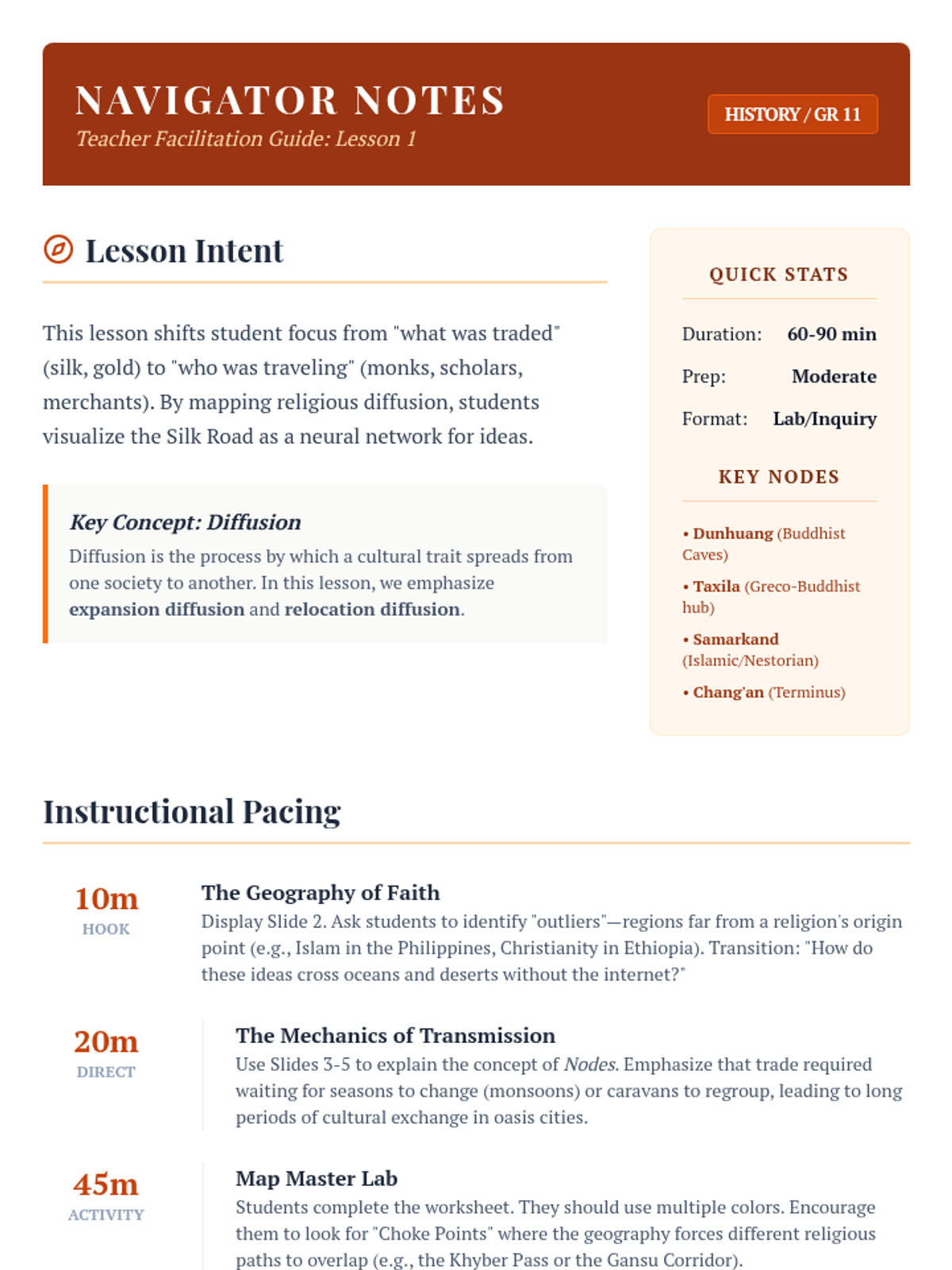
A high school history sequence investigating the diffusion and syncretism of Buddhism, Islam, and Neo-Confucianism across Medieval Asia, focusing on how religions adapt to local cultures.
Explore the Silk Road as a vehicle for religious and cultural syncretism. Students track the spread and adaptation of Buddhism, Islam, and Nestorian Christianity across Asia, culminating in a curated digital museum exhibit.
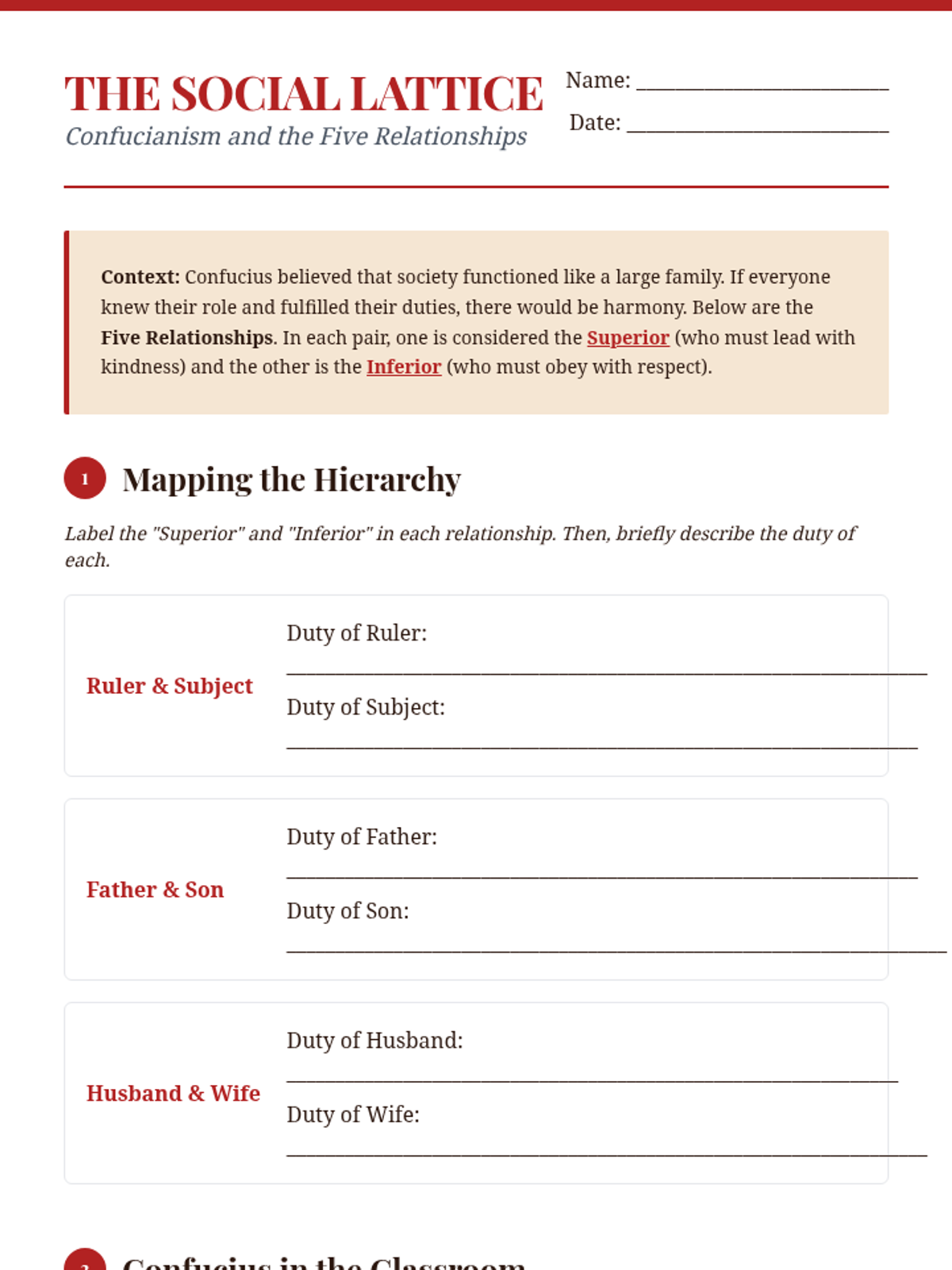
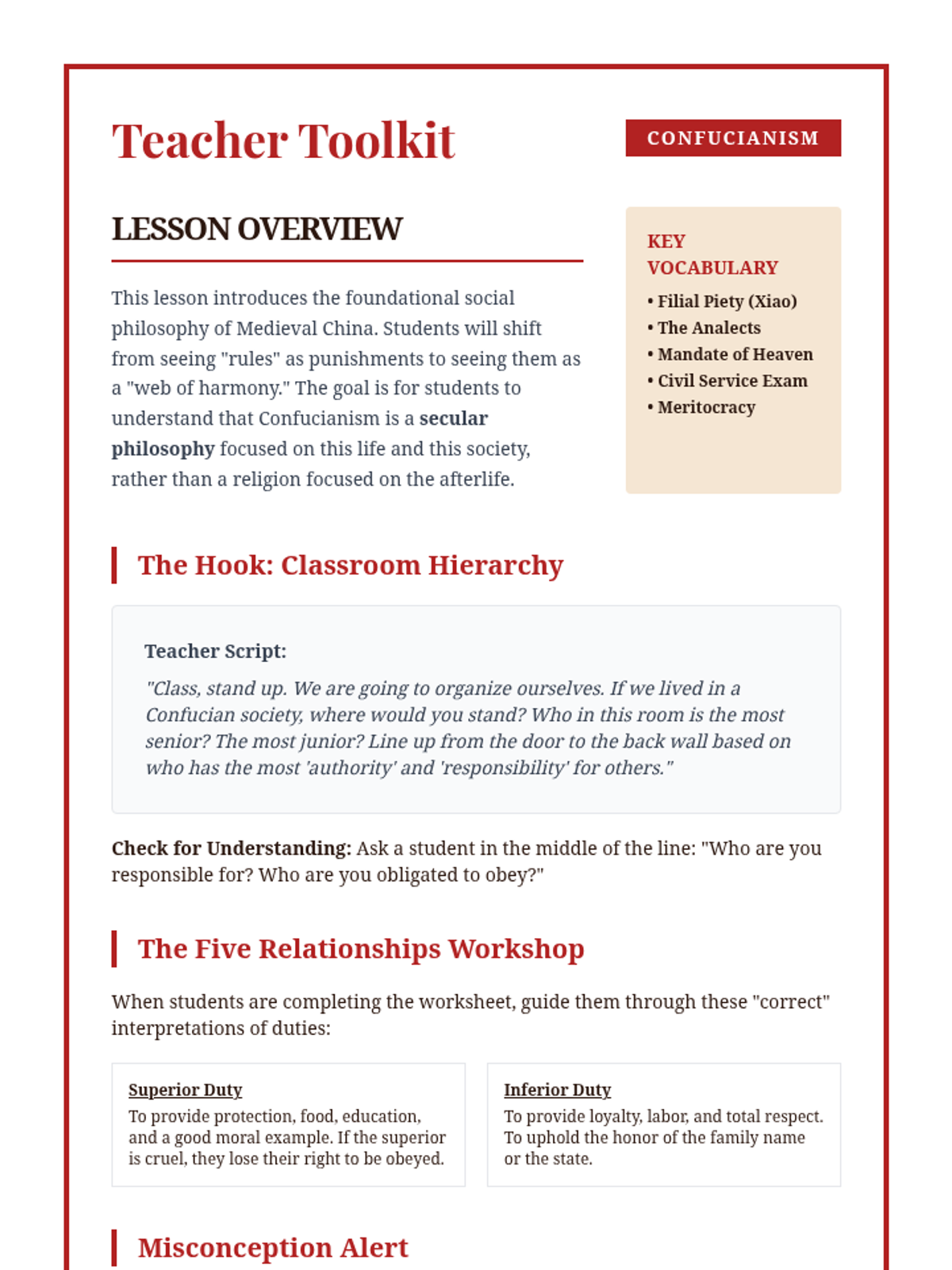
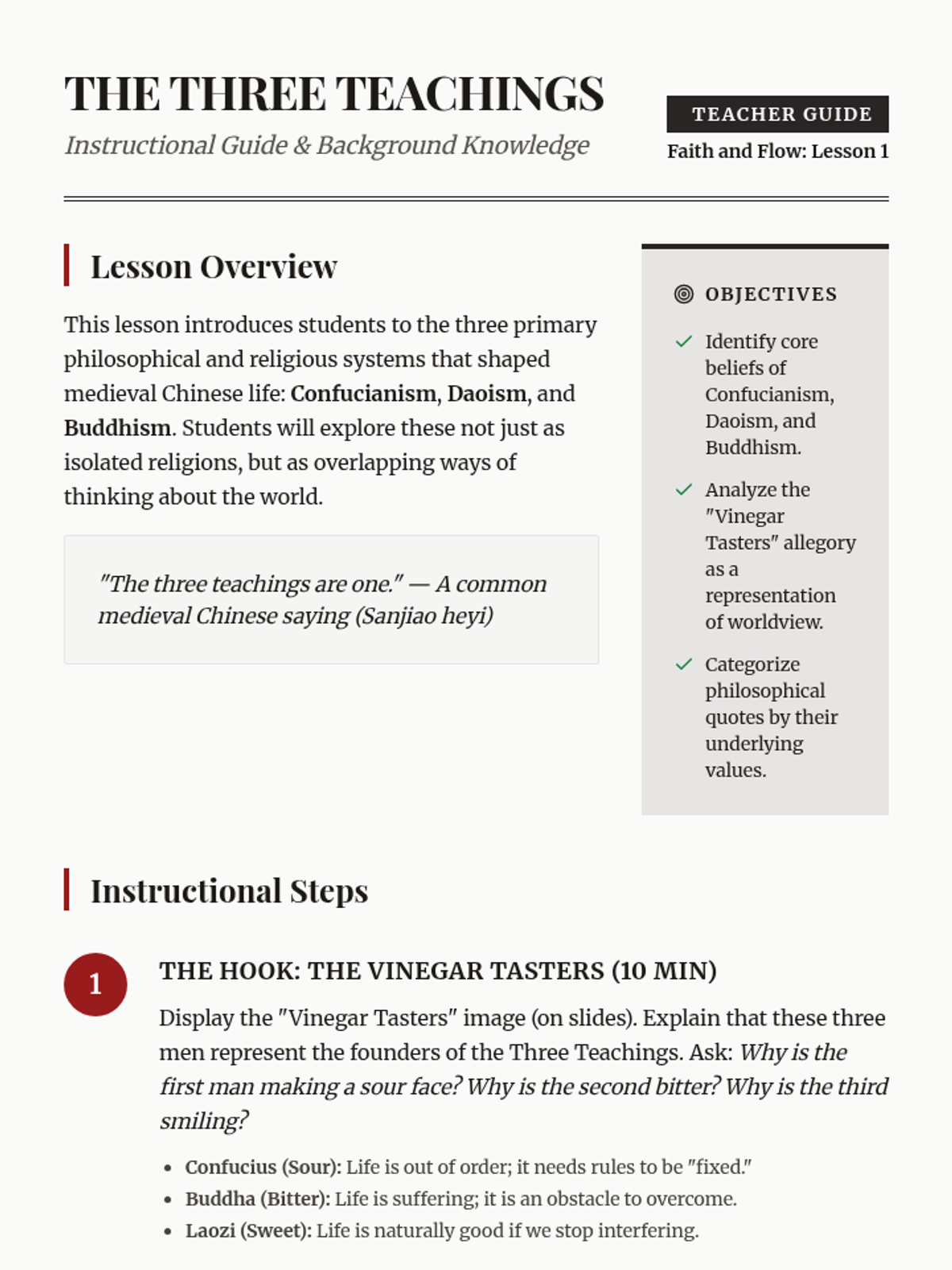
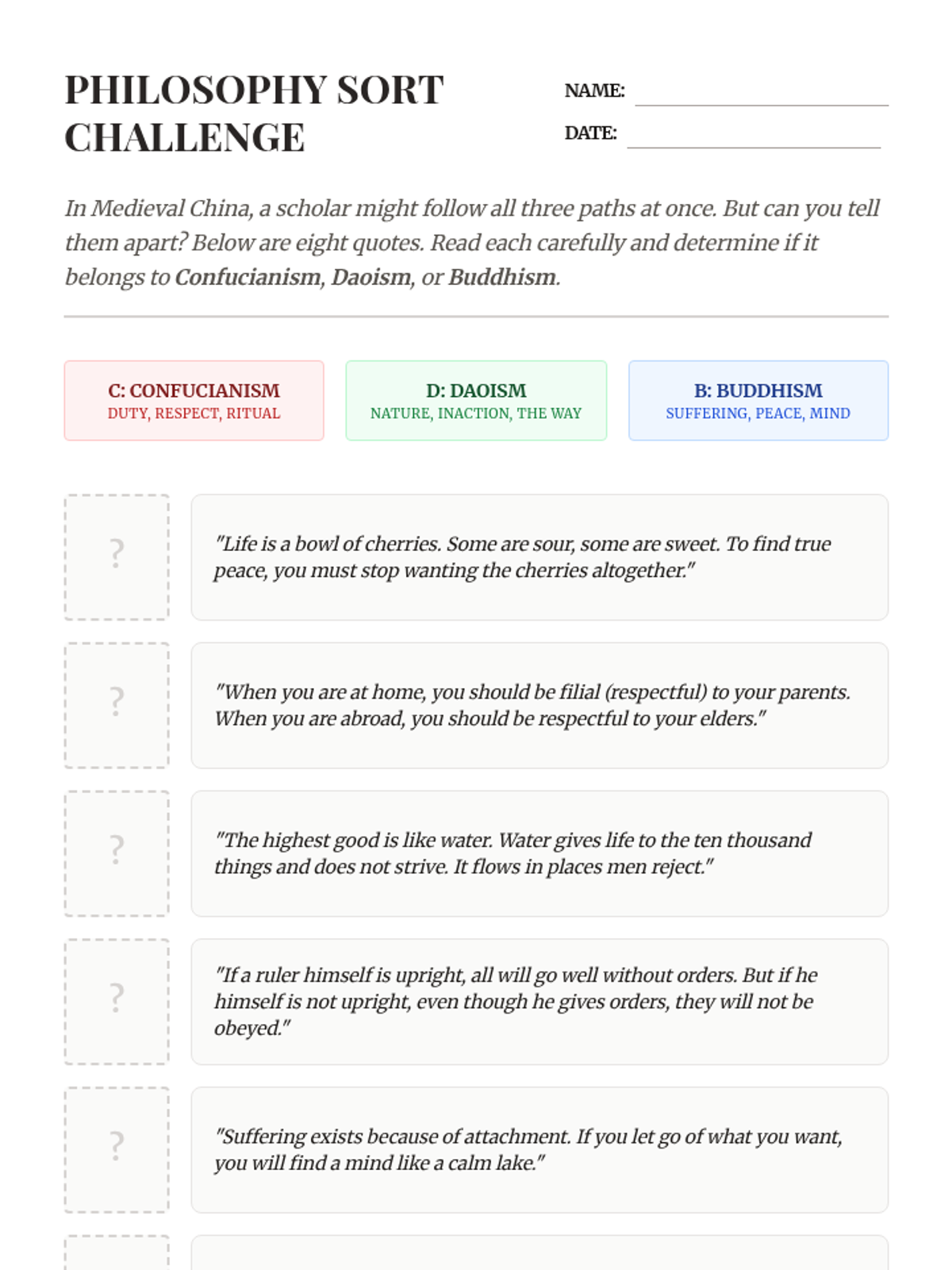
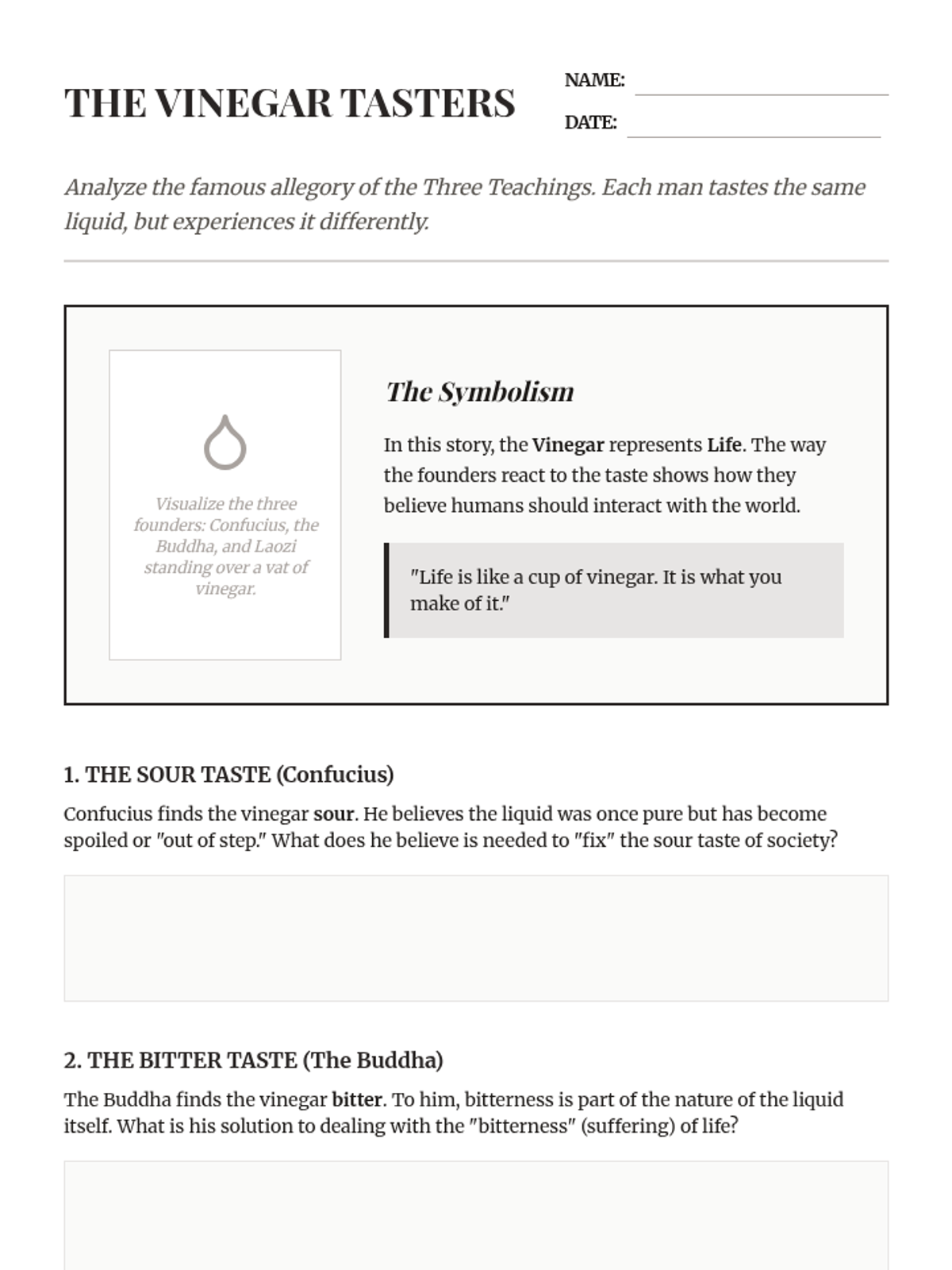
A 5-lesson sequence exploring the major religious and philosophical traditions of Medieval Asia (Buddhism, Confucianism, Daoism, and Islam), focusing on their core tenets, influence on governance, and eventual syncretism.
This sequence tracks the movement and transformation of belief systems across Medieval Asia. Students map the spread of Buddhism from India to China, Korea, and Japan, and examine the foundational role of Confucianism in Chinese society. Through case studies of specific monks and scholars, students see how religions adapt to local cultures. The sequence builds toward an understanding of how Neo-Confucianism blended these philosophies, shaping the social fabric of the Ming and Song dynasties.
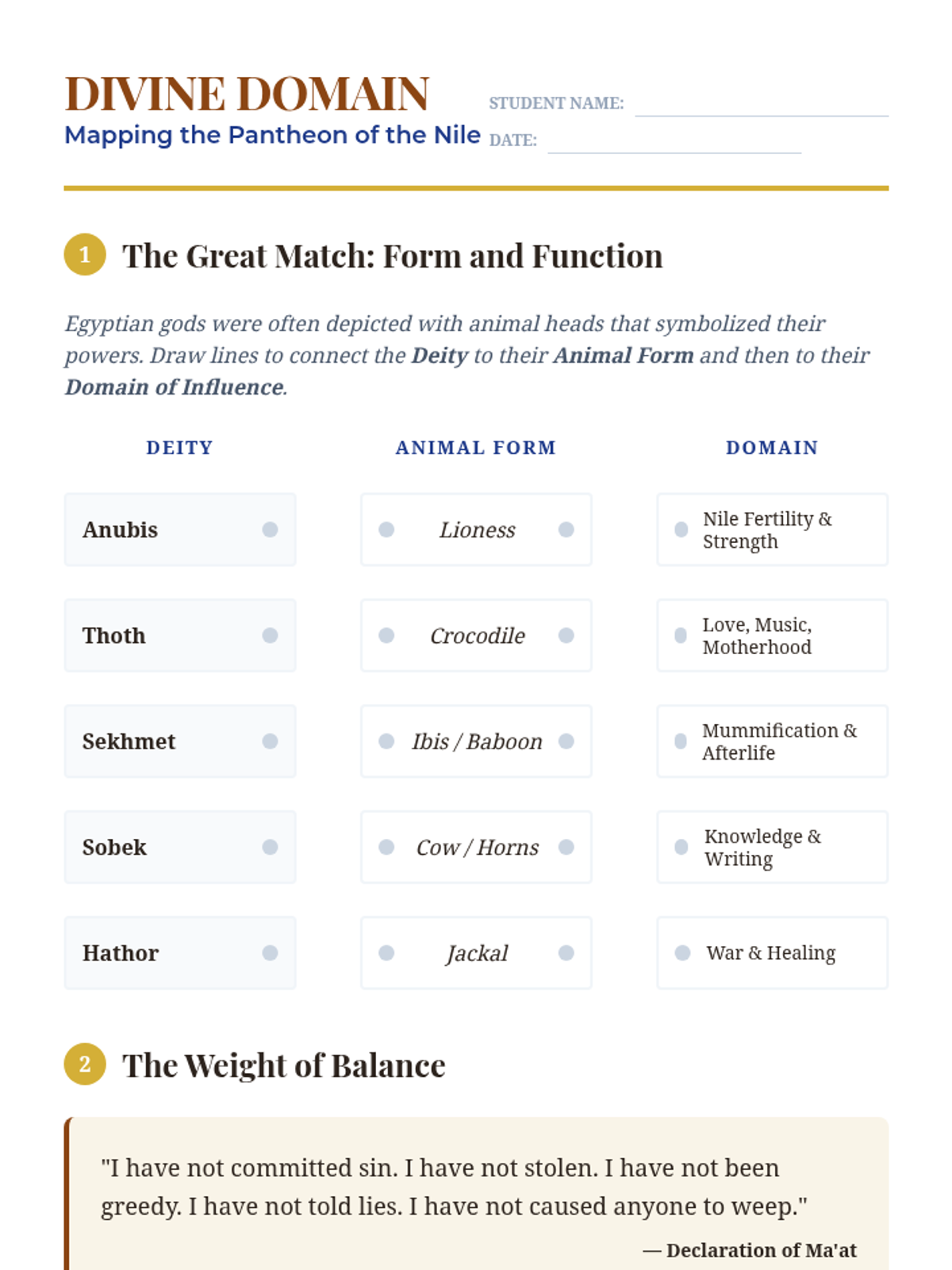
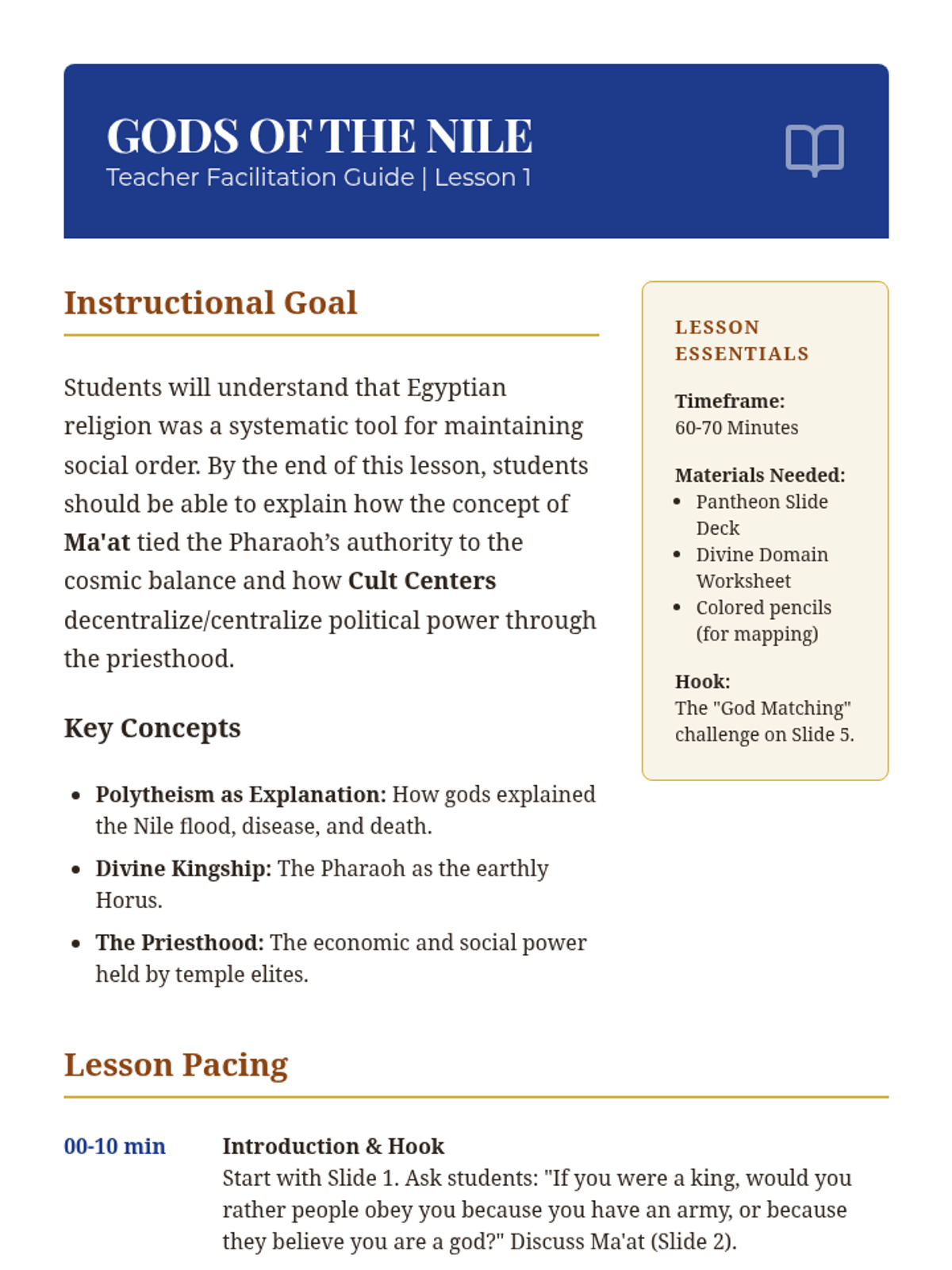
This sequence explores the intersection of religious belief and political power in Ancient Egypt, focusing on the radical Amarna period and its aftermath. Students analyze how the pharaohs used the divine to maintain social order and the consequences of disrupting that order.
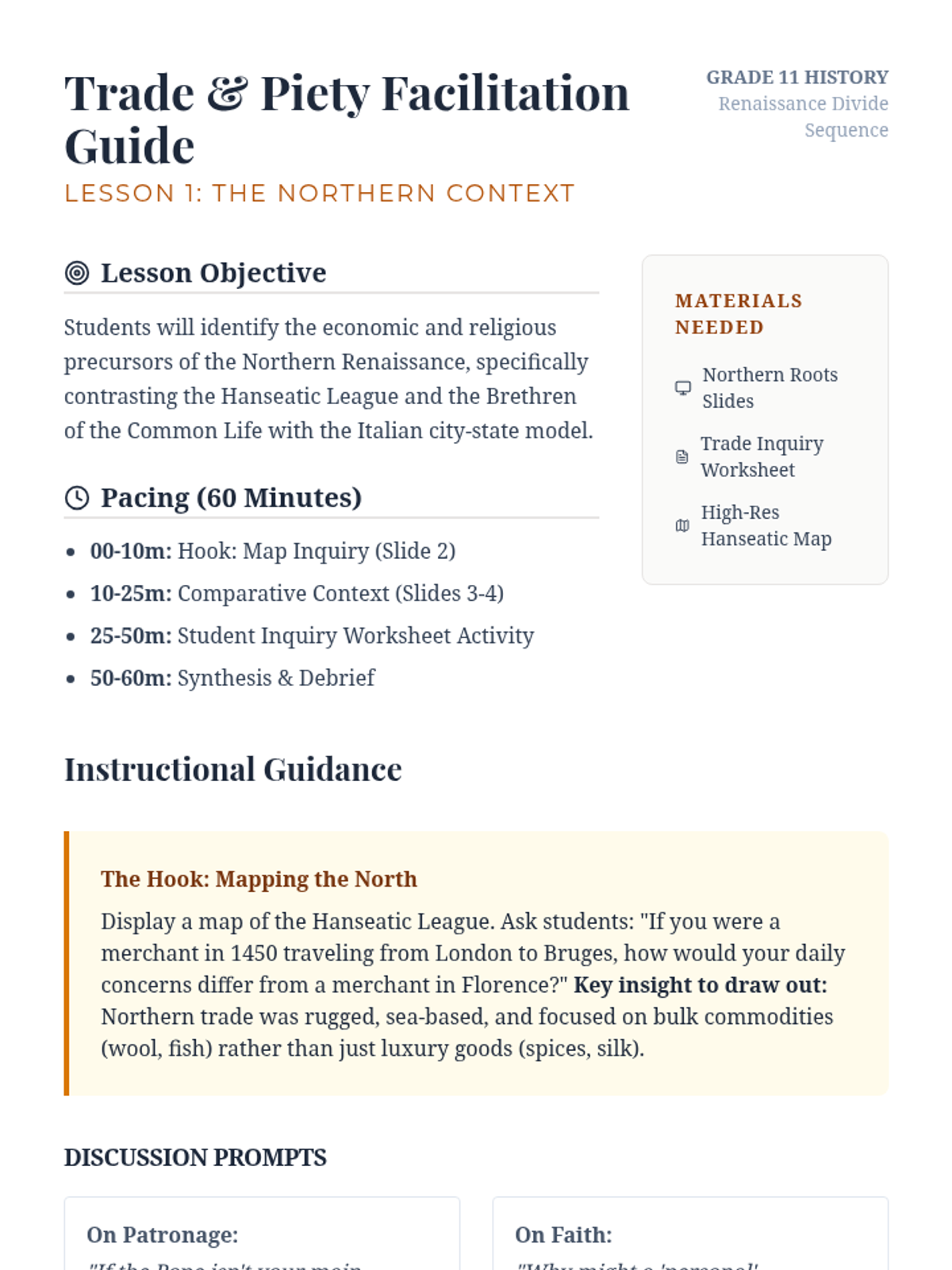
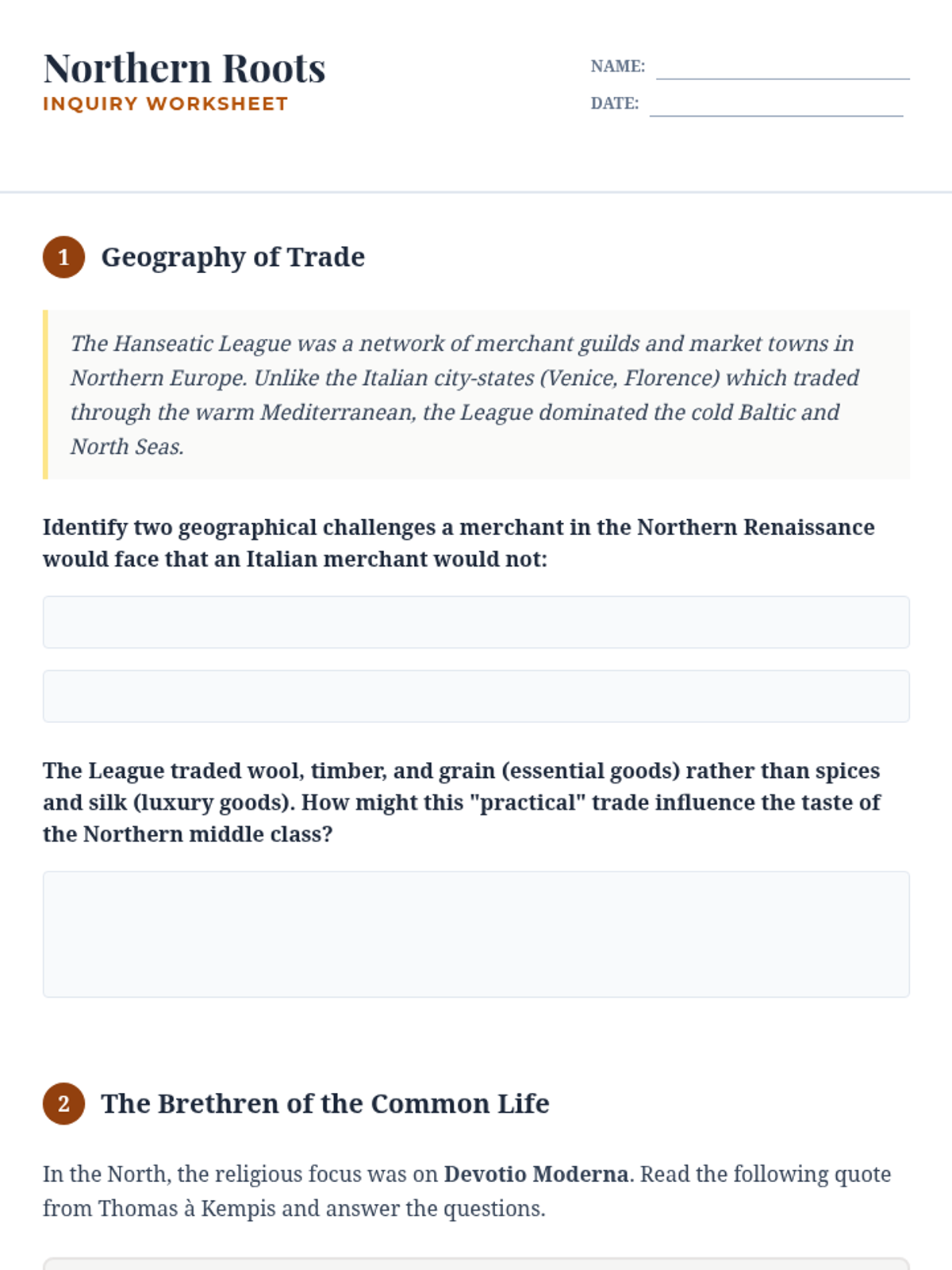
A comparative study of the Italian and Northern Renaissance movements, exploring differences in economics, art, humanism, and social reform through the lens of geography and culture.
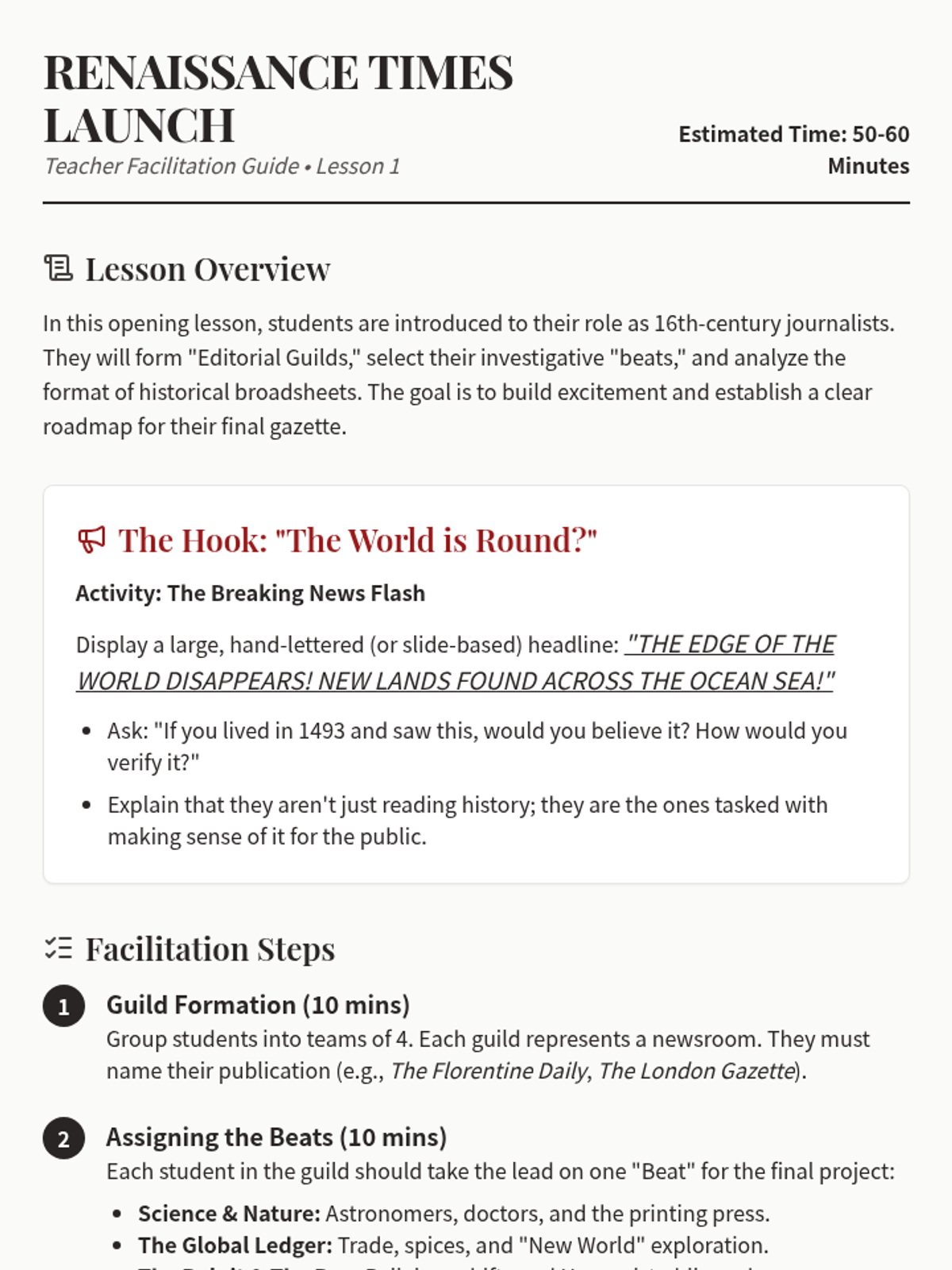
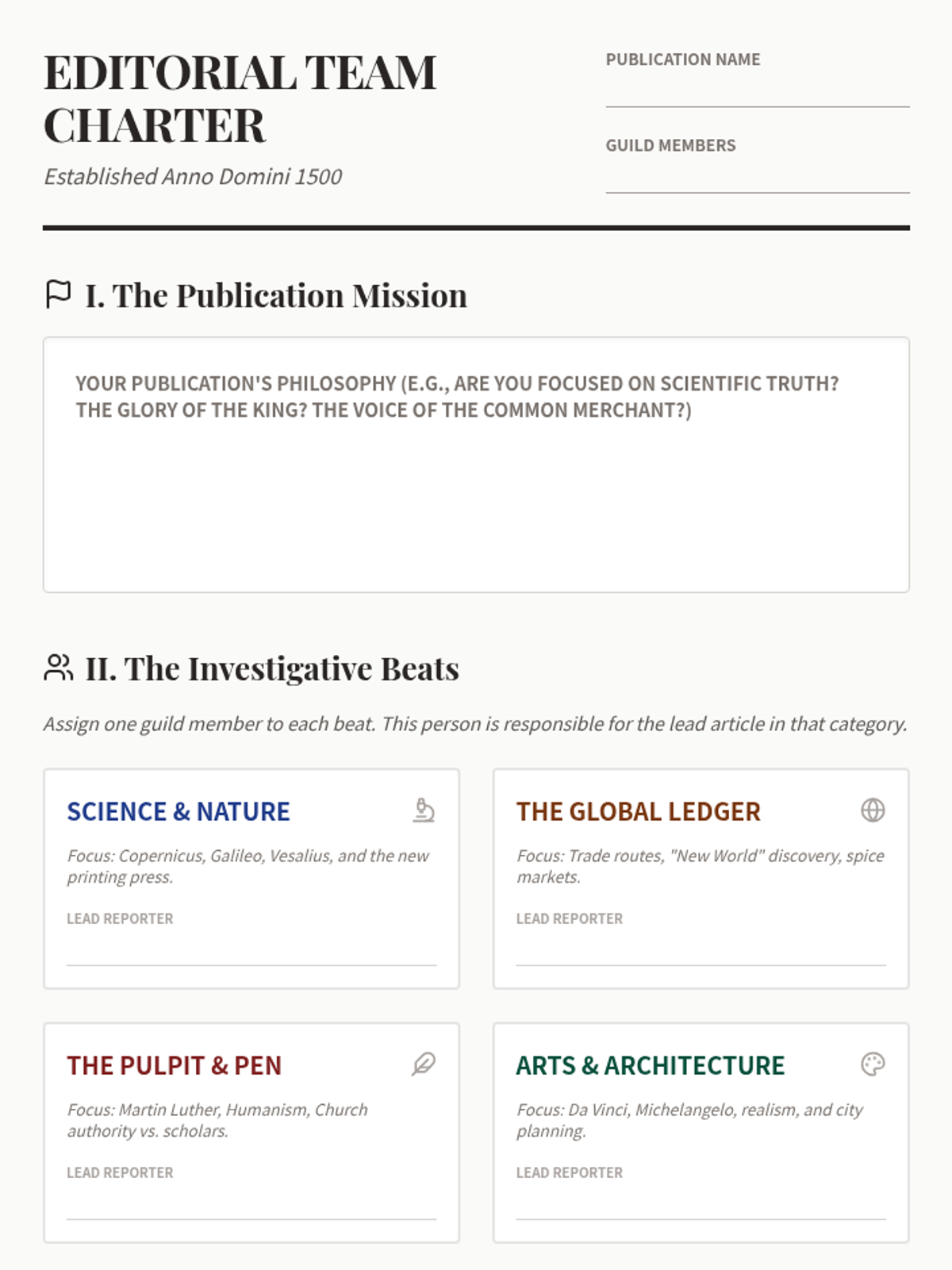
A 9th-grade history sequence where students act as journalists to report on the innovations of the Renaissance. This project-based unit covers the Scientific Revolution, global exploration, trade, and the cultural clash between humanism and tradition.
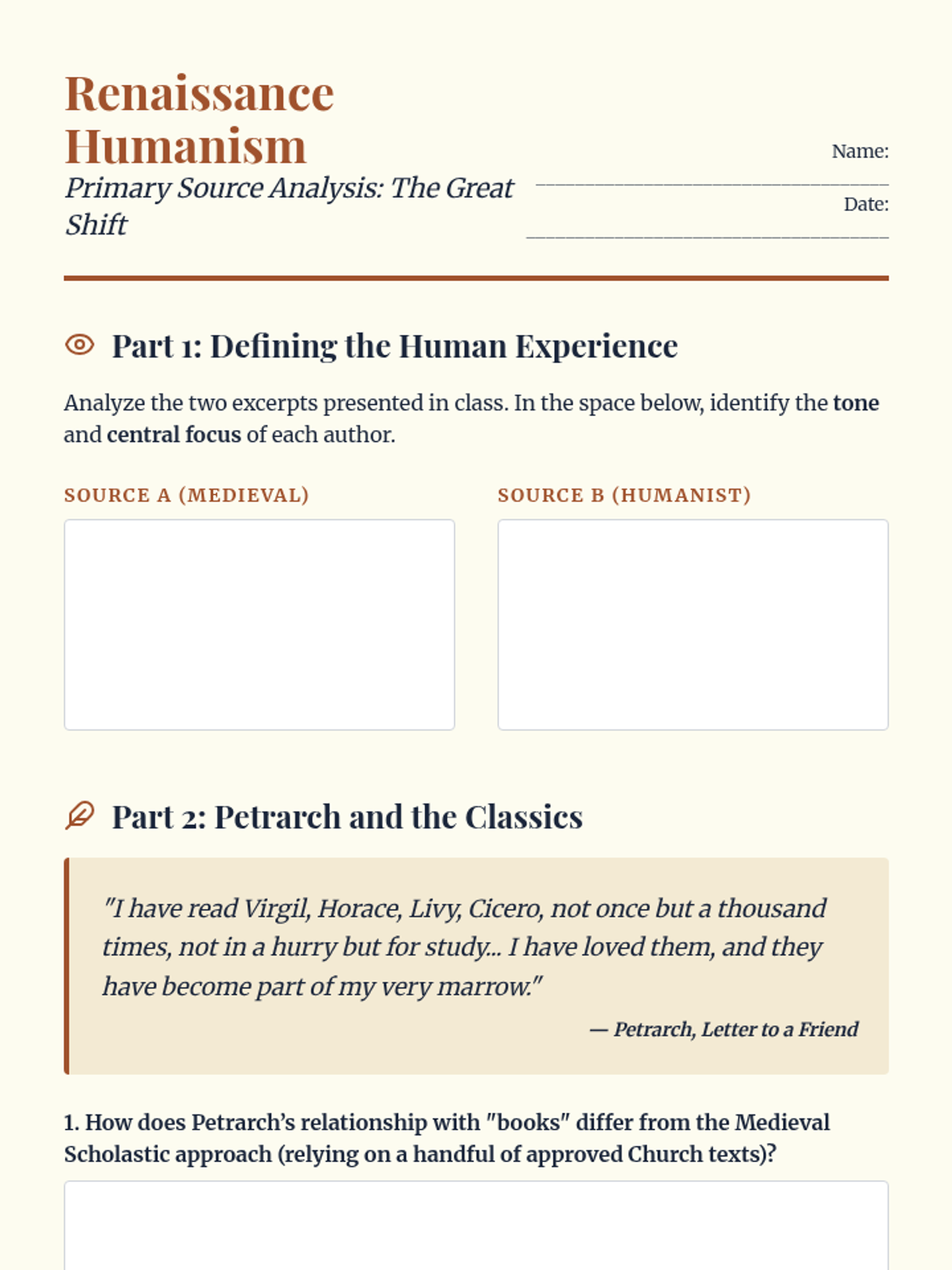
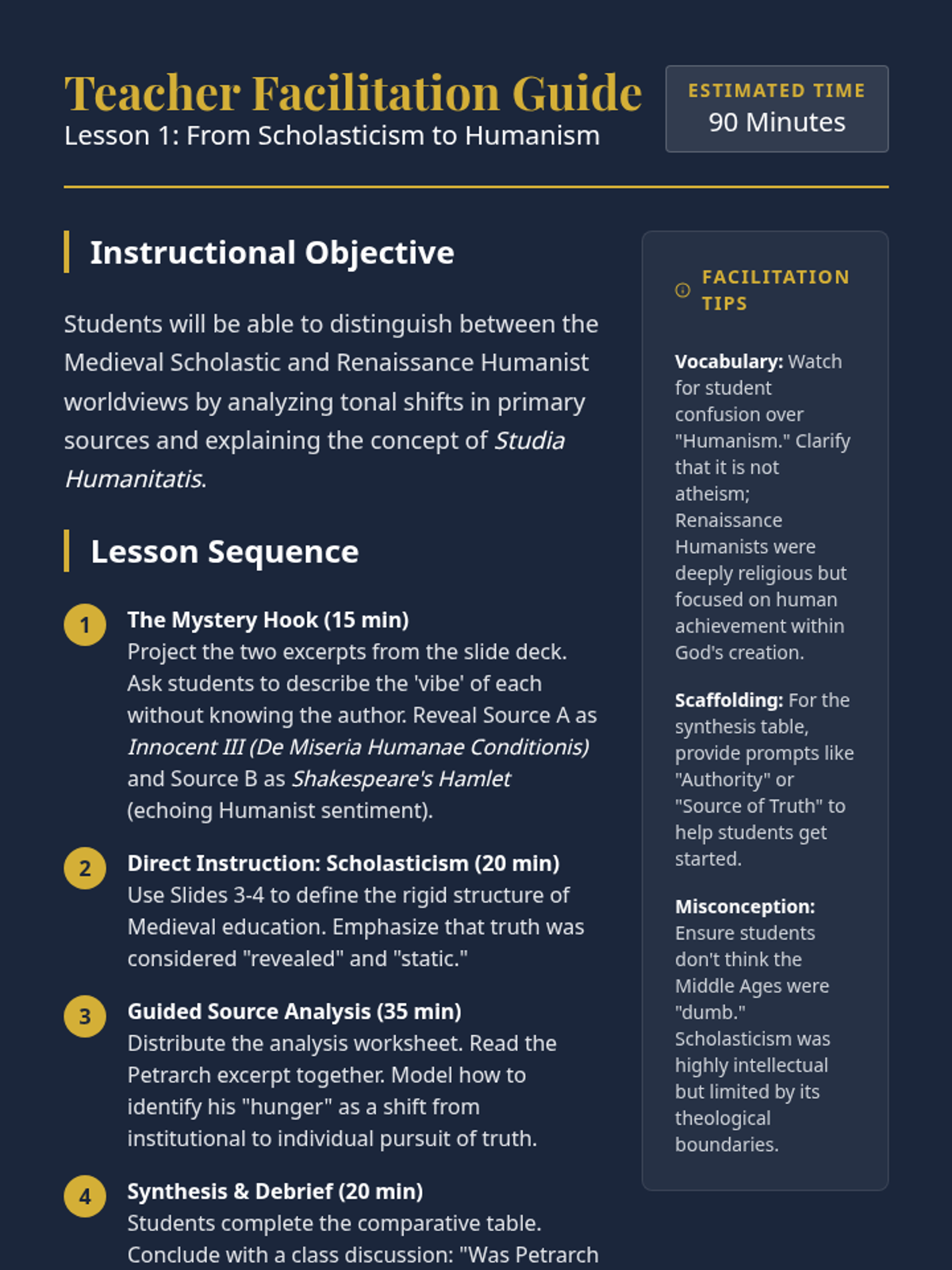
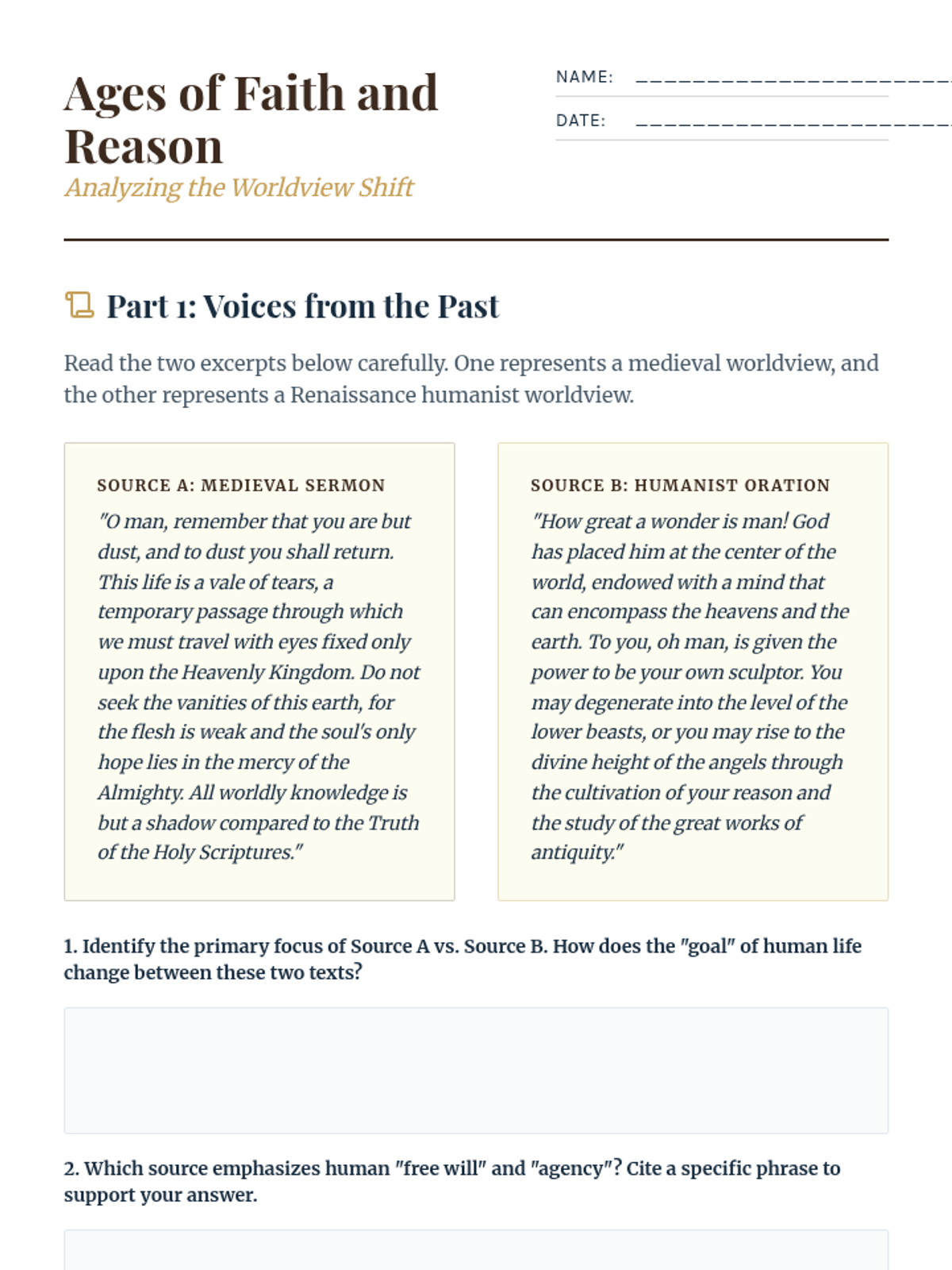
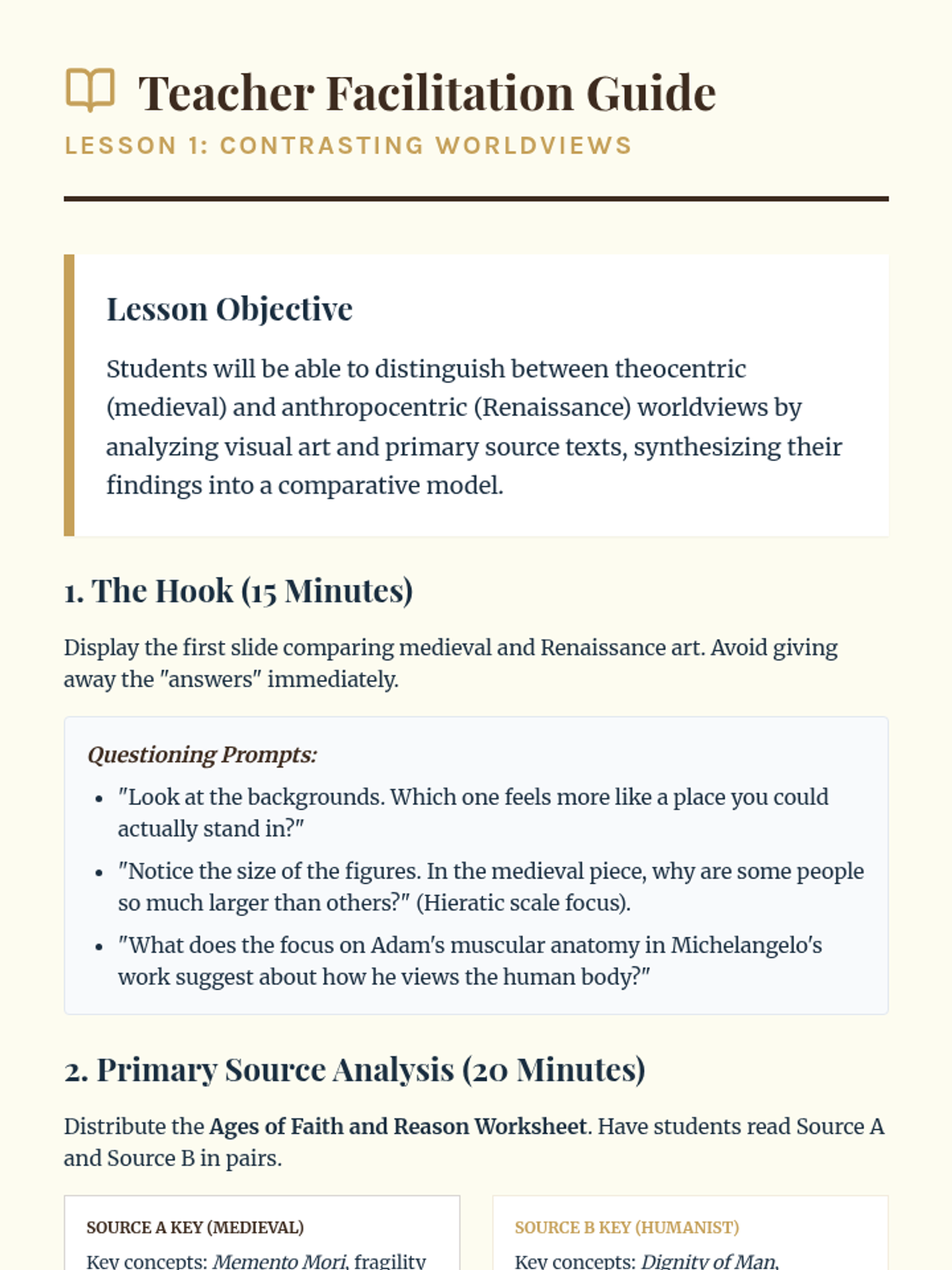
This high school history sequence explores the intellectual transformation from Medieval Scholasticism to Renaissance Humanism. Students analyze primary sources from key thinkers like Petrarch, Pico della Mirandola, and Machiavelli to understand the shift toward individualism, secular inquiry, and political realism.
This sequence explores the intellectual transformation of Europe from the Middle Ages to the Renaissance, focusing on the emergence of humanism and its impact on culture, education, and religion. Students analyze primary sources from Petrarch, Erasmus, and Castiglione to understand how shifting views on human potential reshaped society.
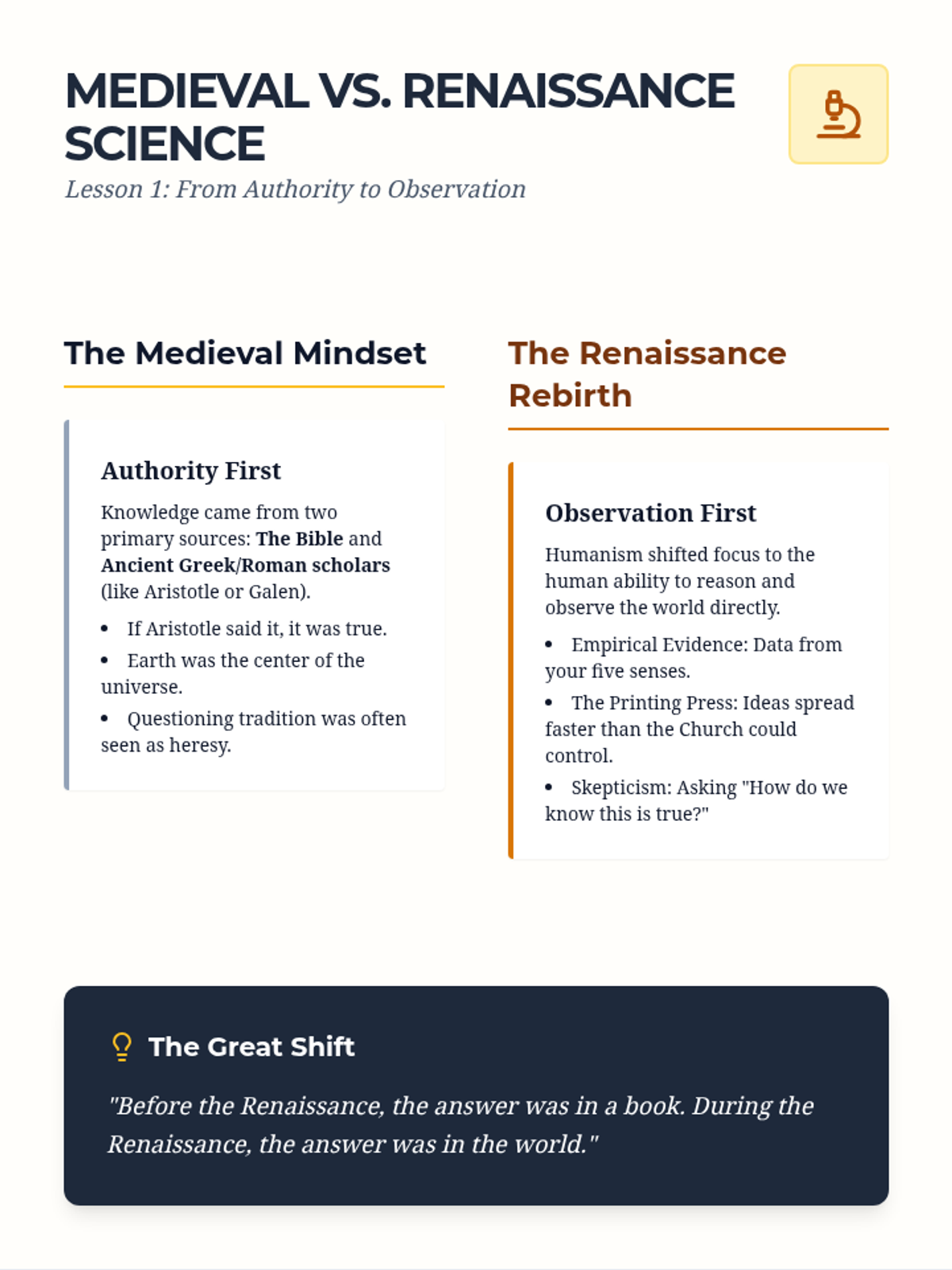
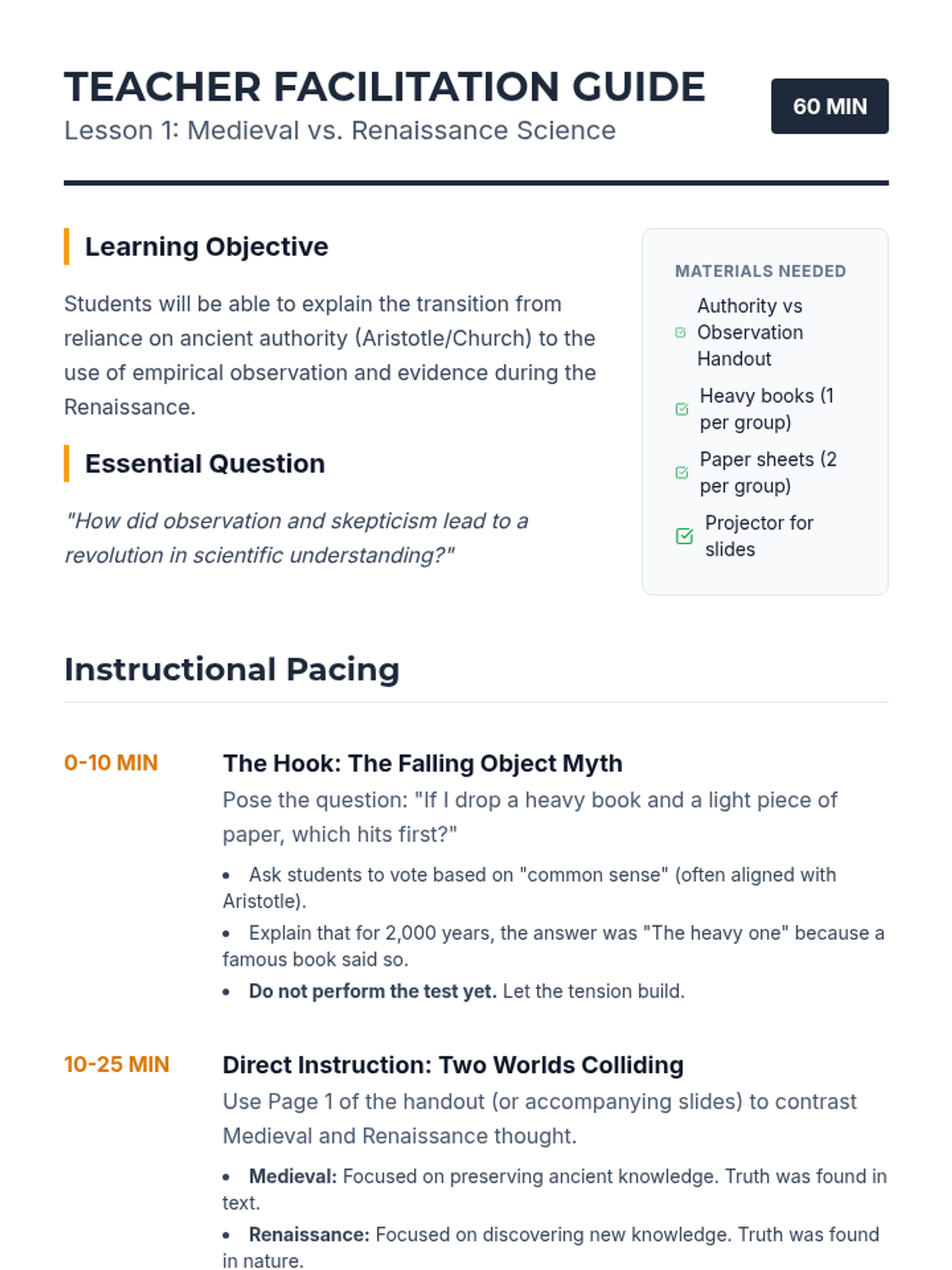
This sequence explores the shift from medieval reliance on tradition to the Renaissance focus on observation and experimentation. Students investigate key figures like Da Vinci, Vesalius, and Galileo, culminating in a project on the era's lasting scientific legacy.
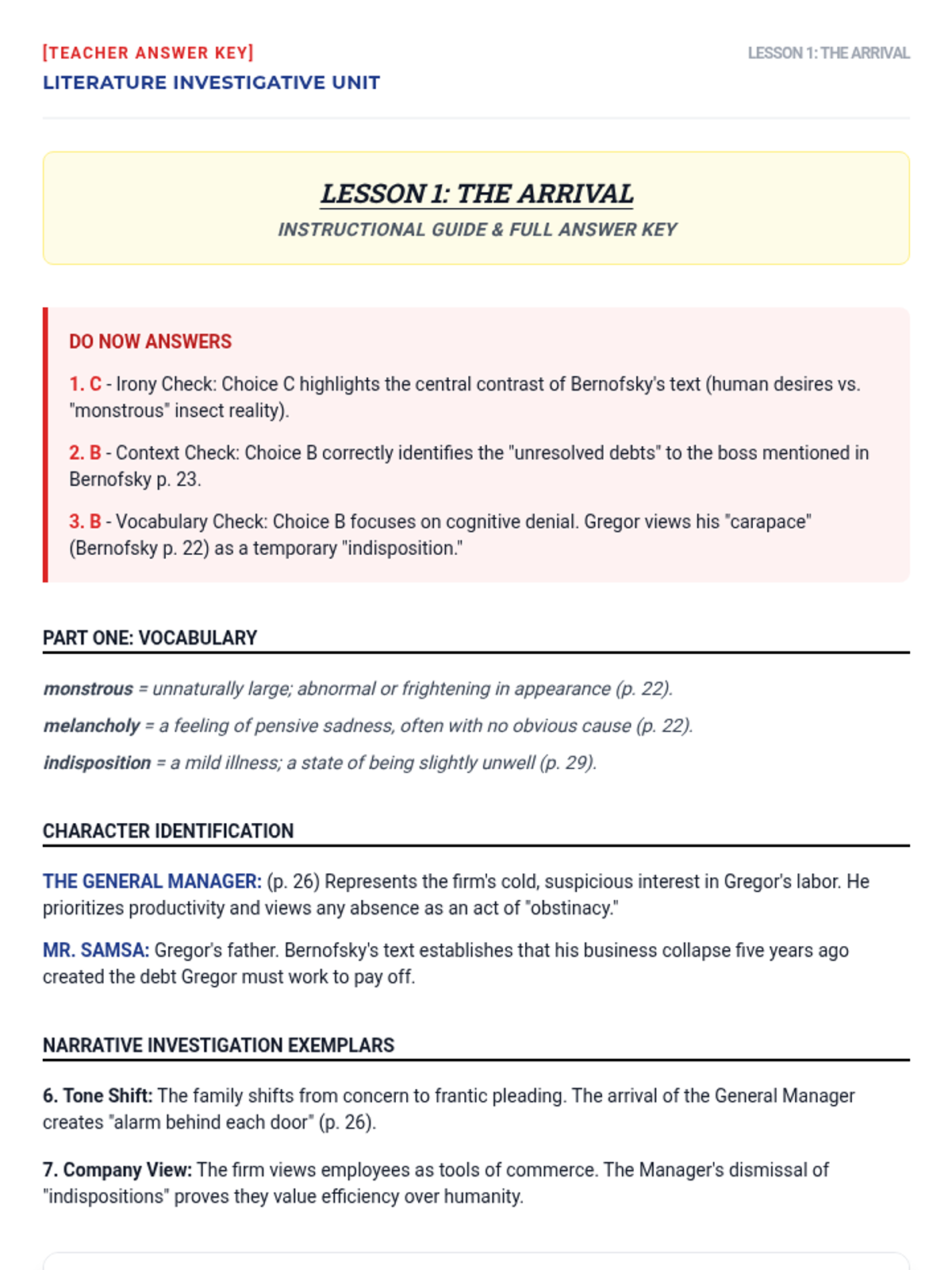
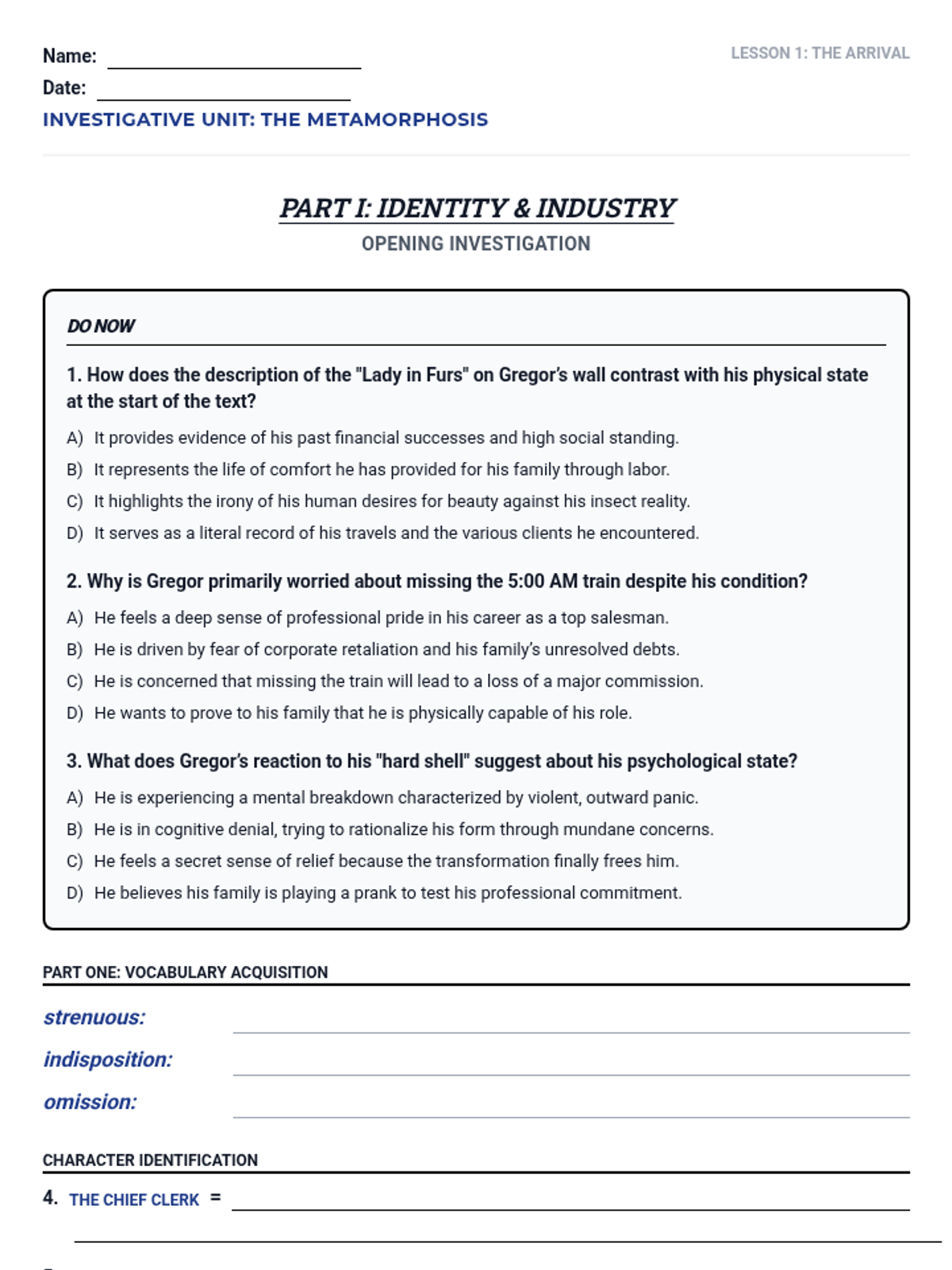
An intensive investigative unit on Franz Kafka's *The Metamorphosis* following the North Star/Uncommon Schools instructional model. The unit focuses on the thematic intersection of labor, identity, and dehumanization. Students analyze Gregor's alienation from his family and society through a structured rigorous framework including vocabulary acquisition, character identification, and thematic synthesis.
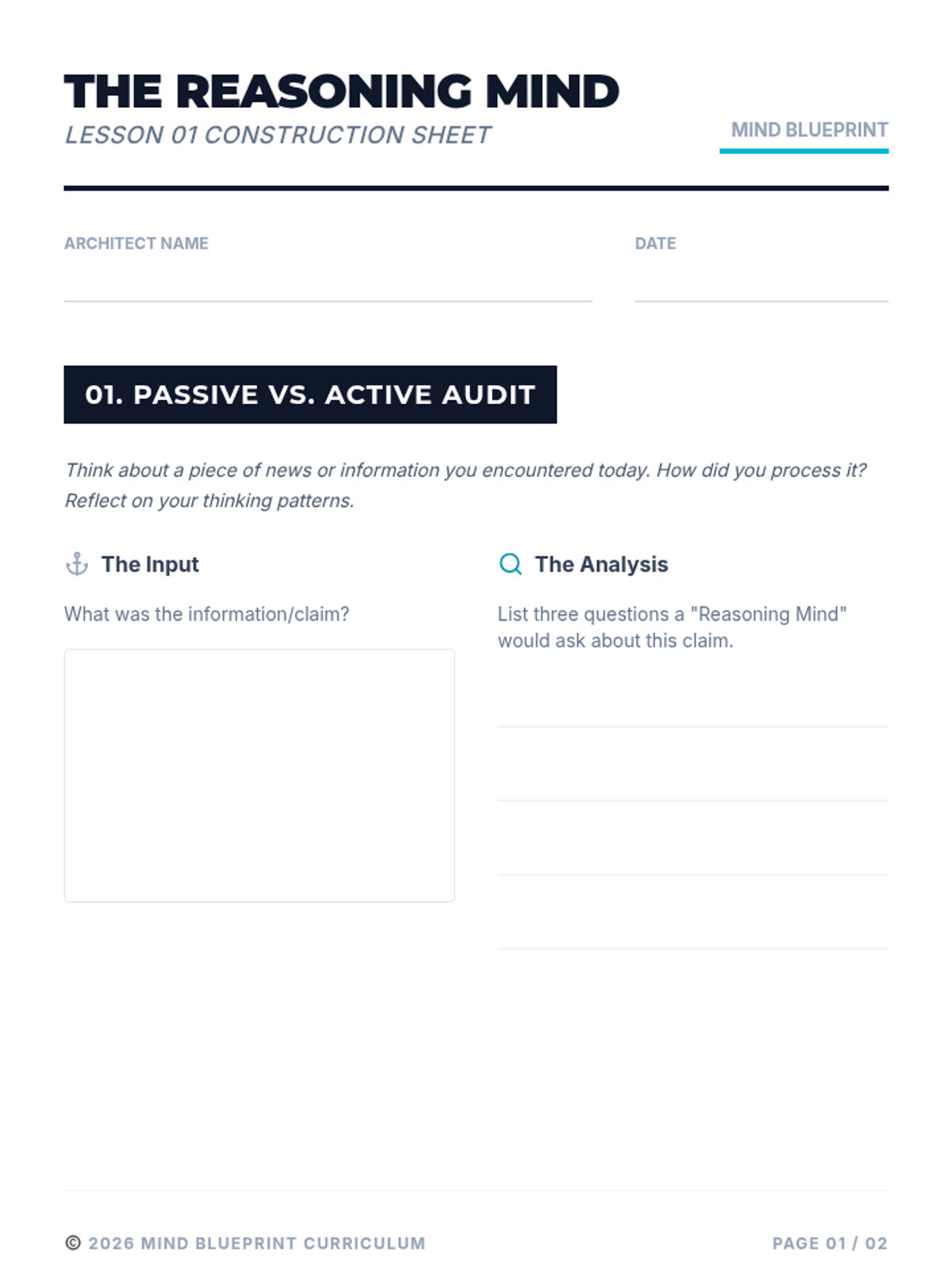
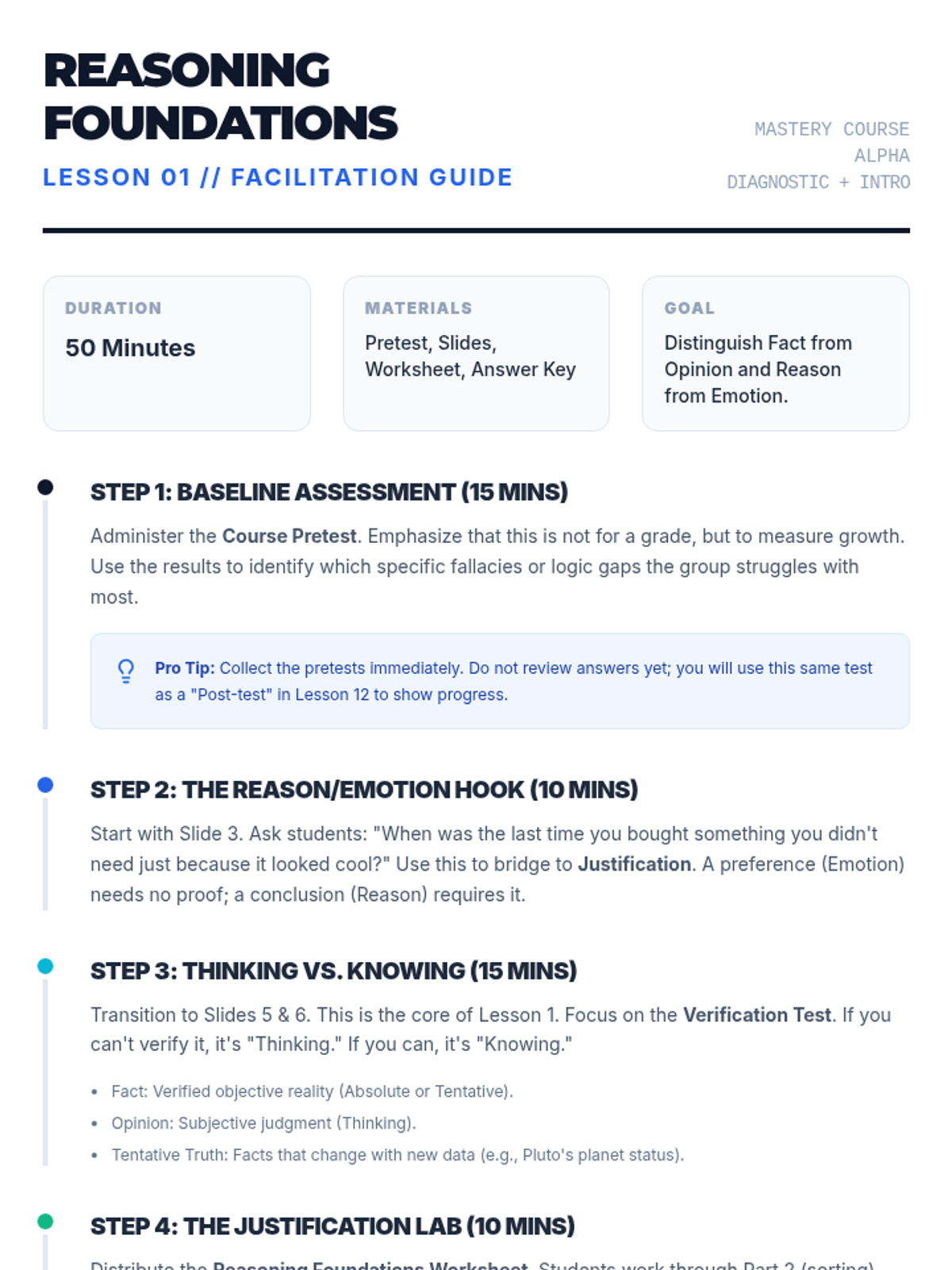
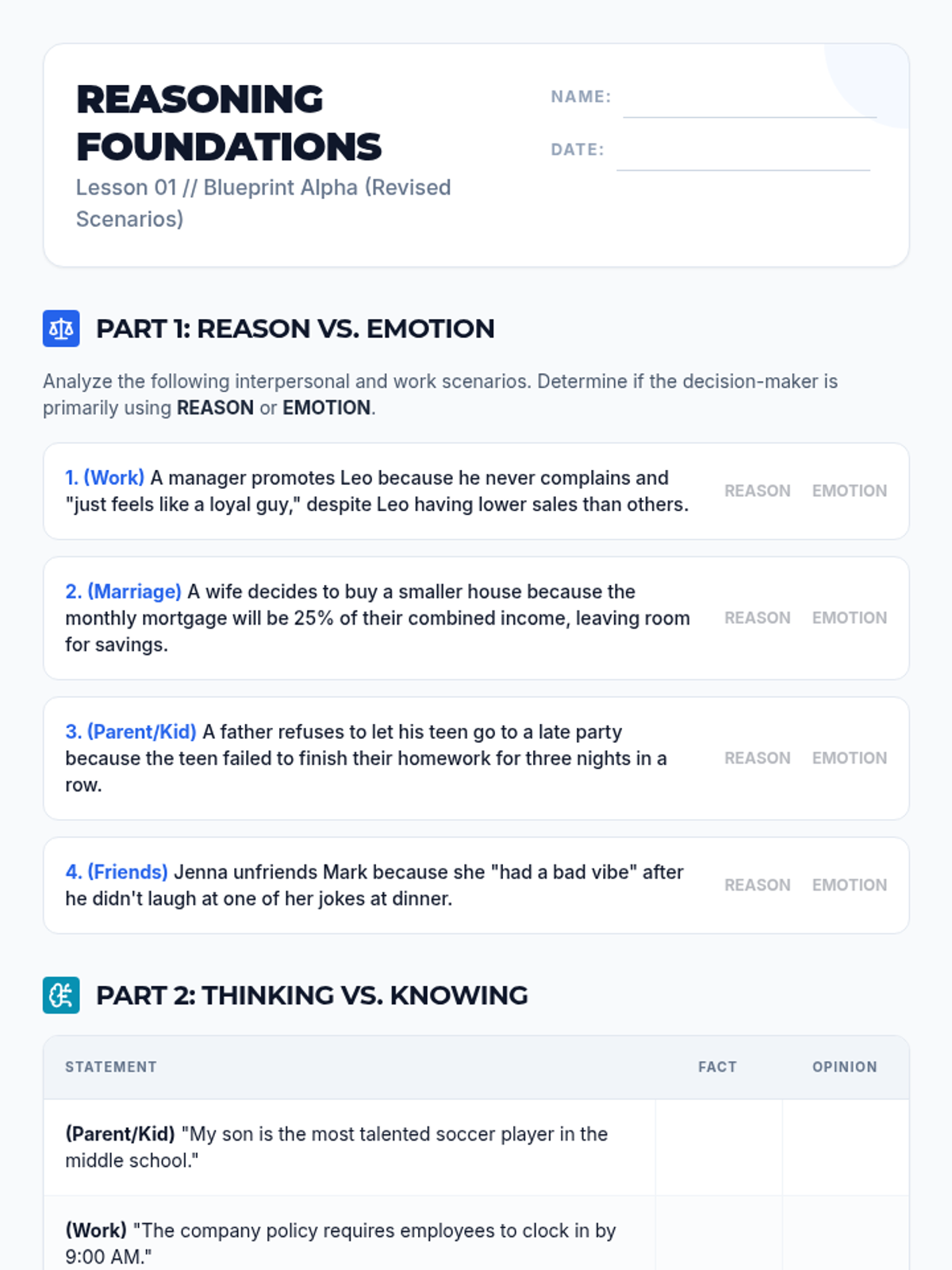
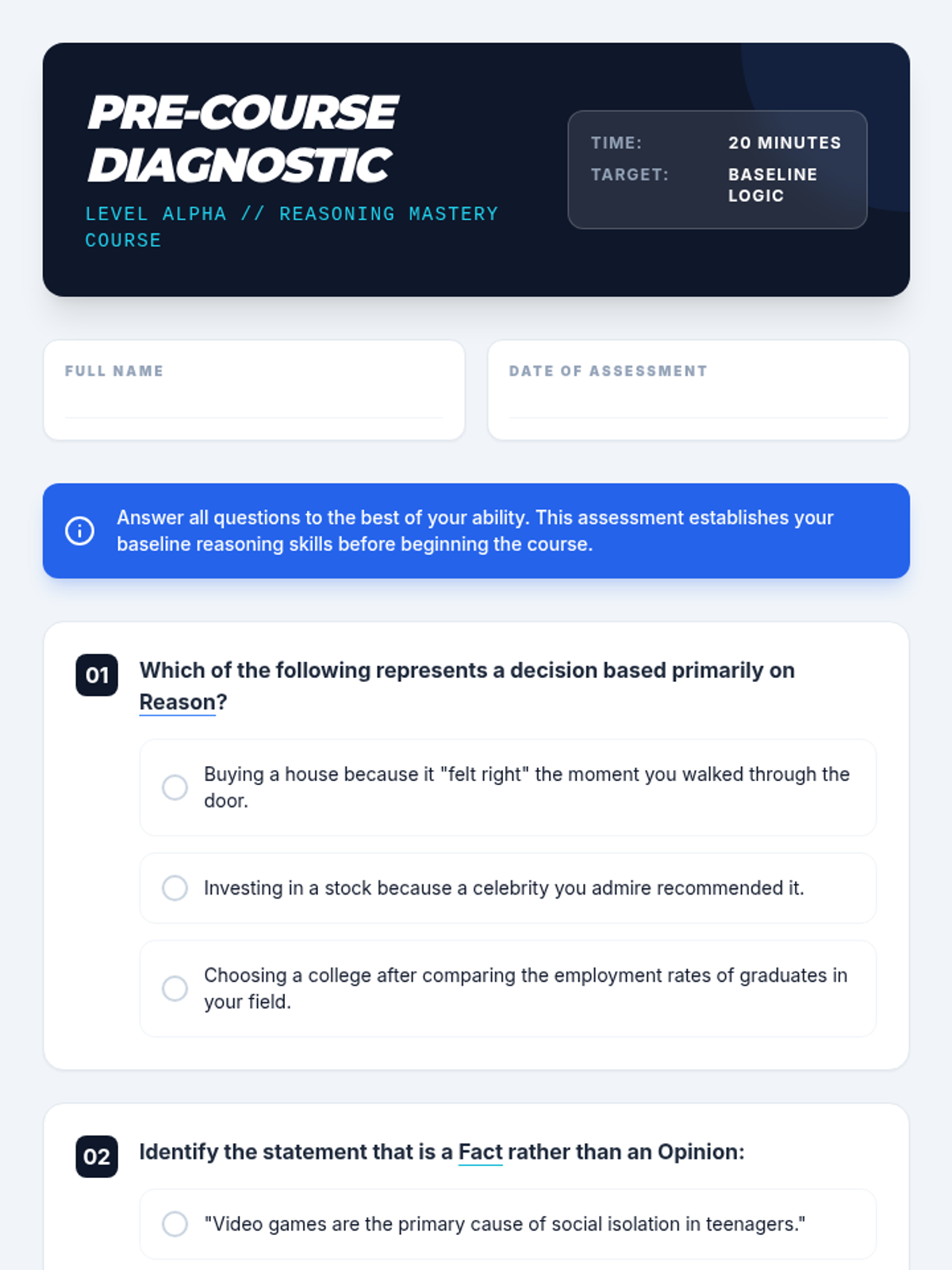
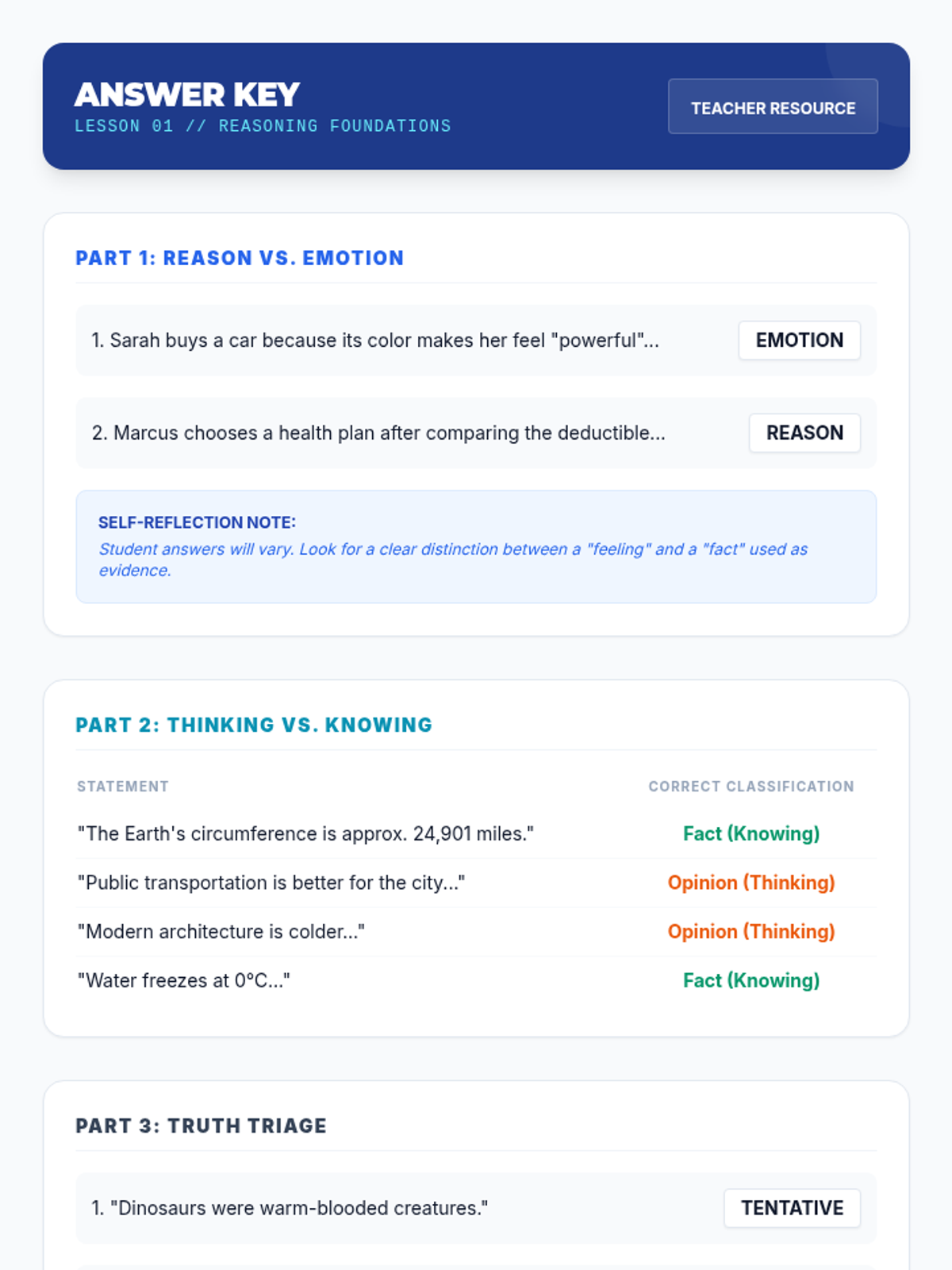
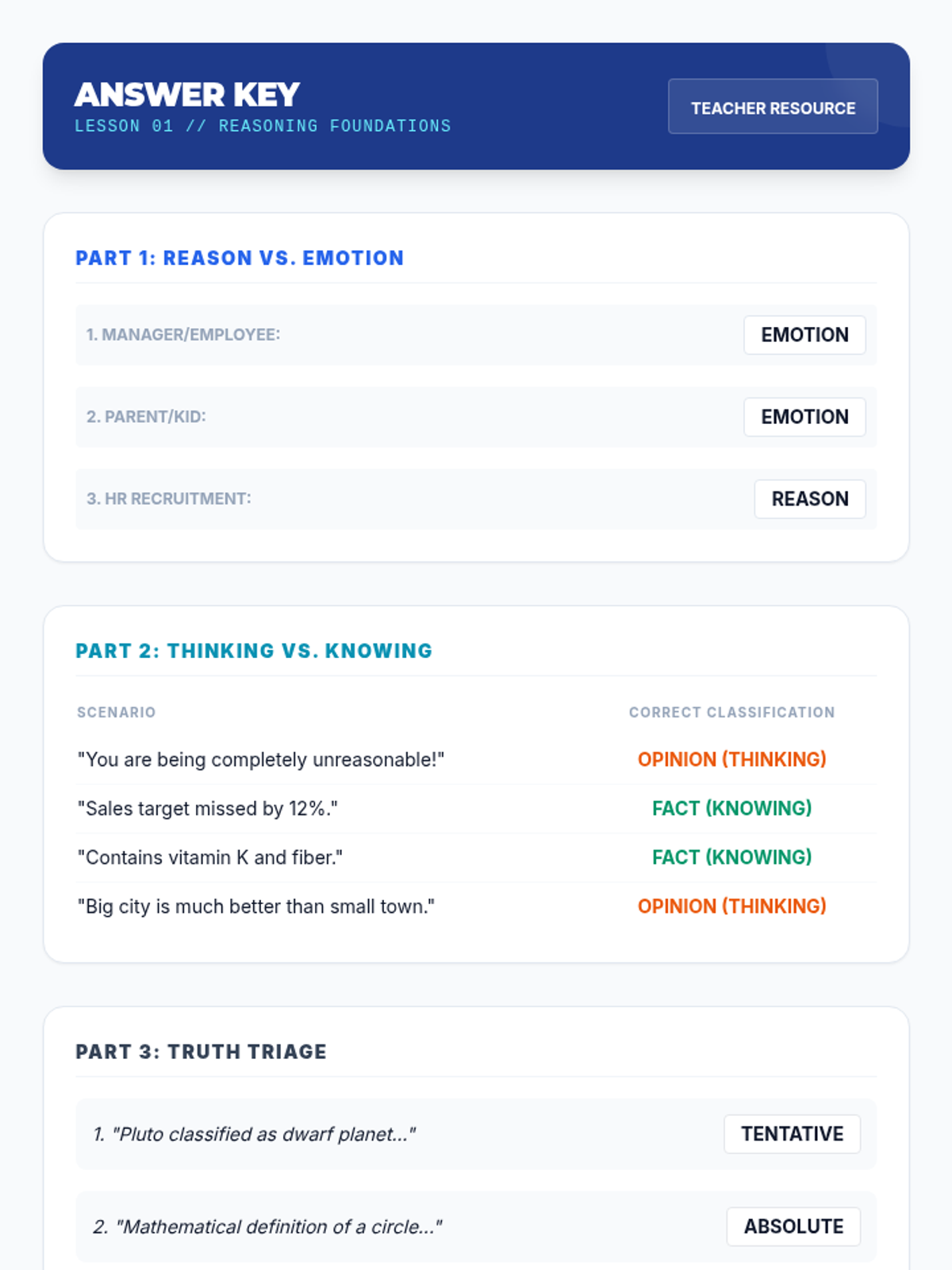
A 12-lesson intensive course on reasoning and critical thinking, aligned with the 'Reasoning Skills Success' framework. This sequence covers everything from the distinction between reason and emotion to complex logical fallacies, statistical analysis, and deductive/inductive logic.
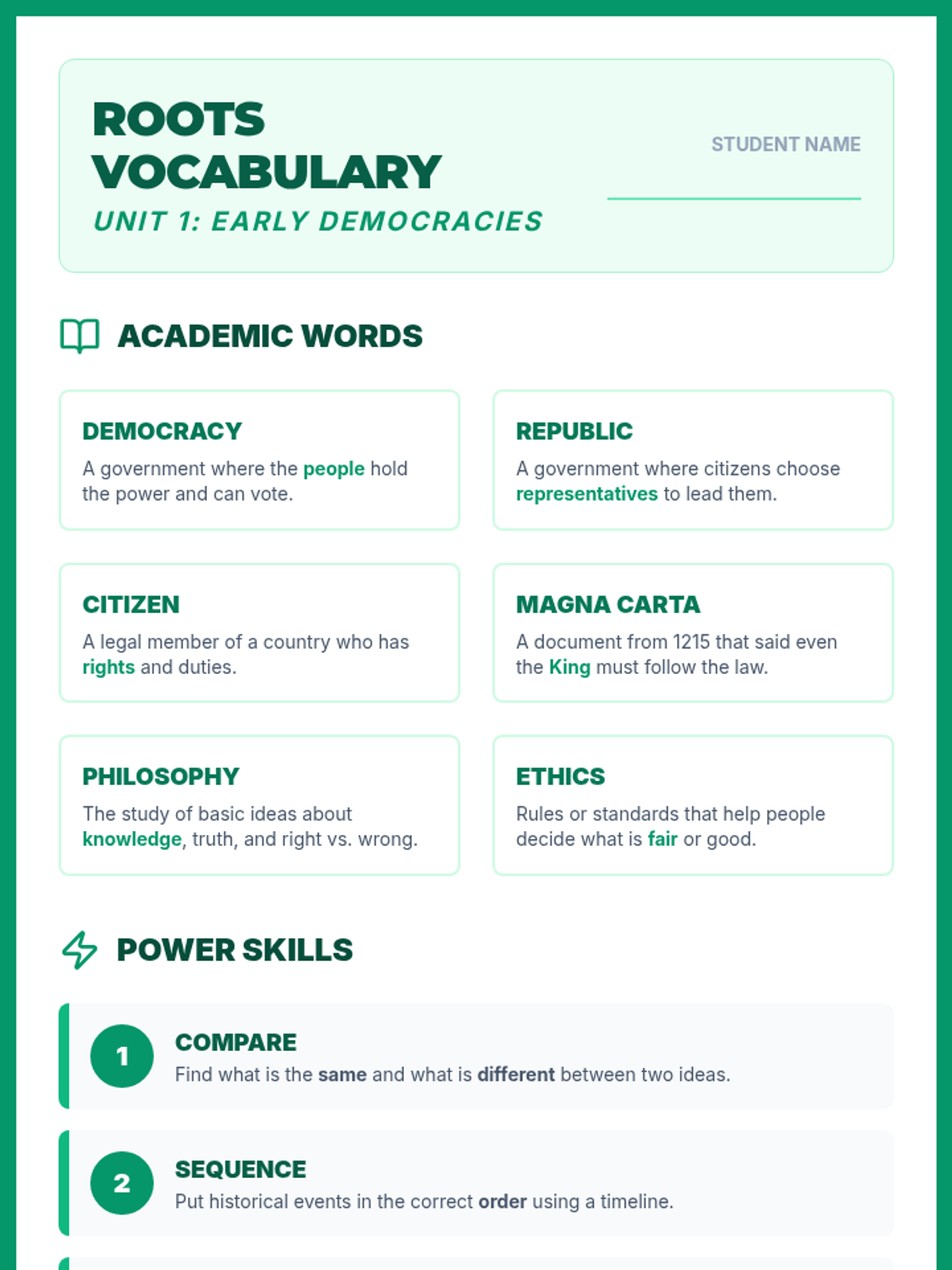
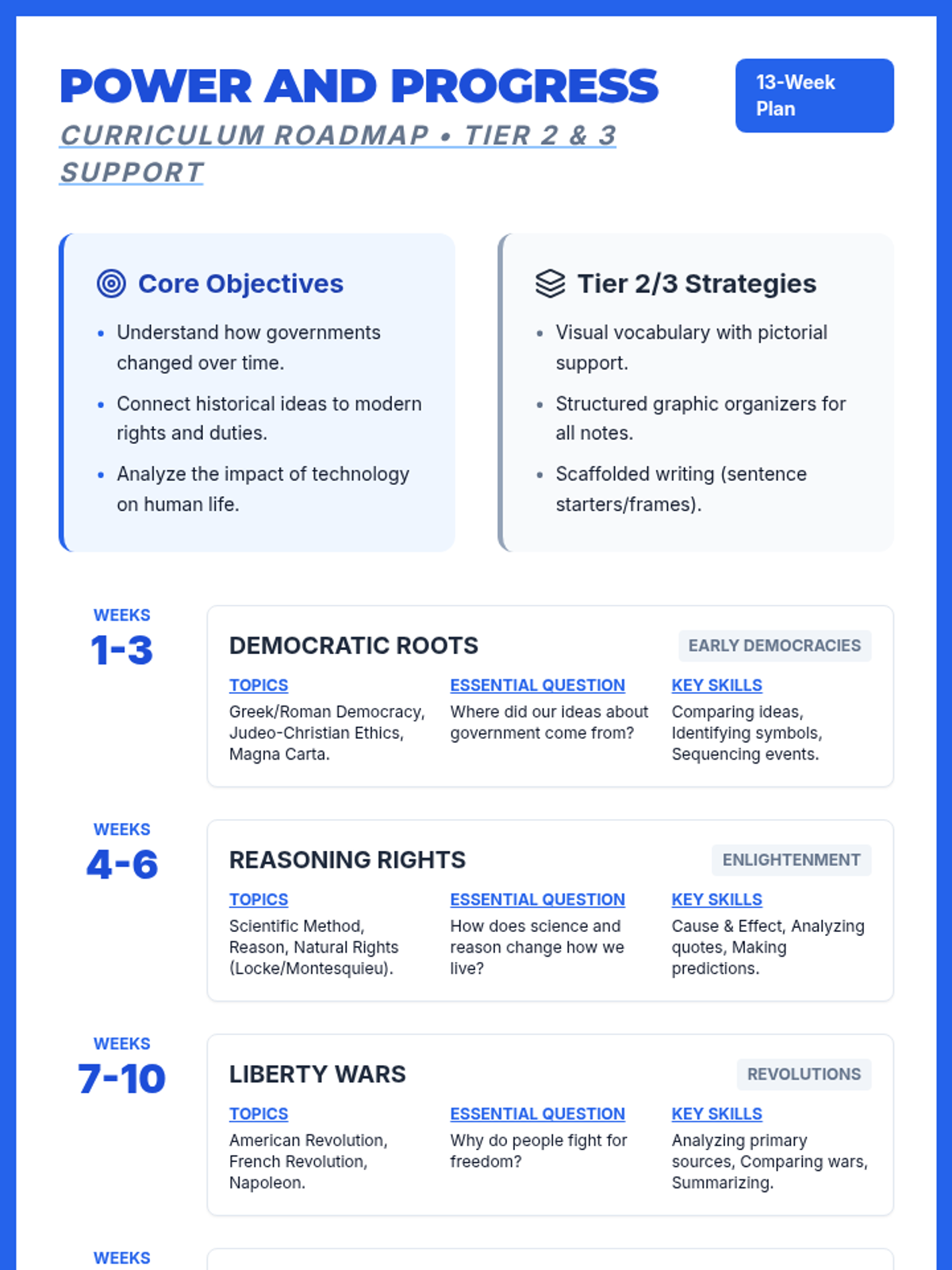
A modified World Studies 2 curriculum for Tier 2 and 3 special education students, focusing on the evolution of power, rights, and technology from early democracies through the Industrial Revolution.
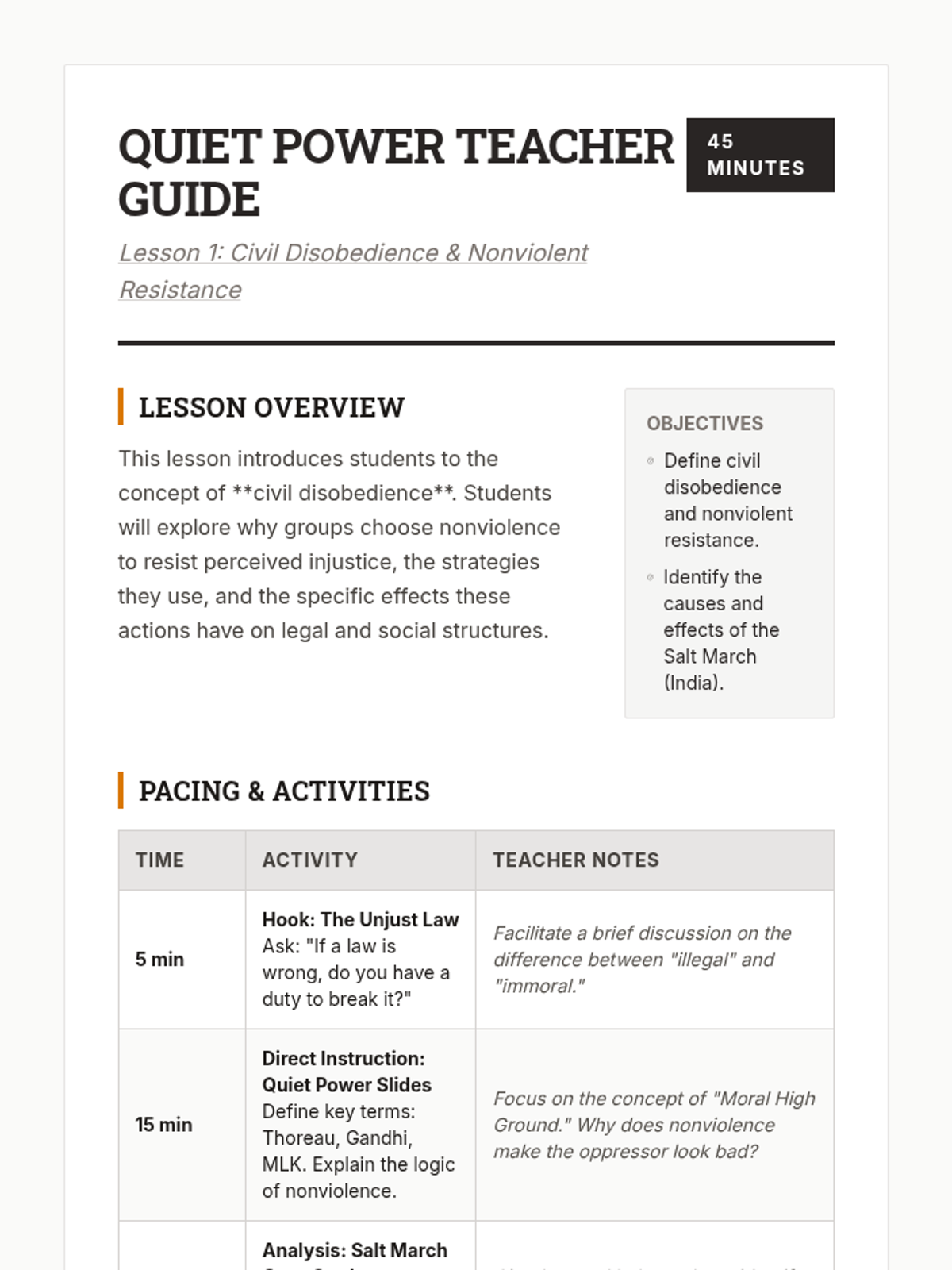
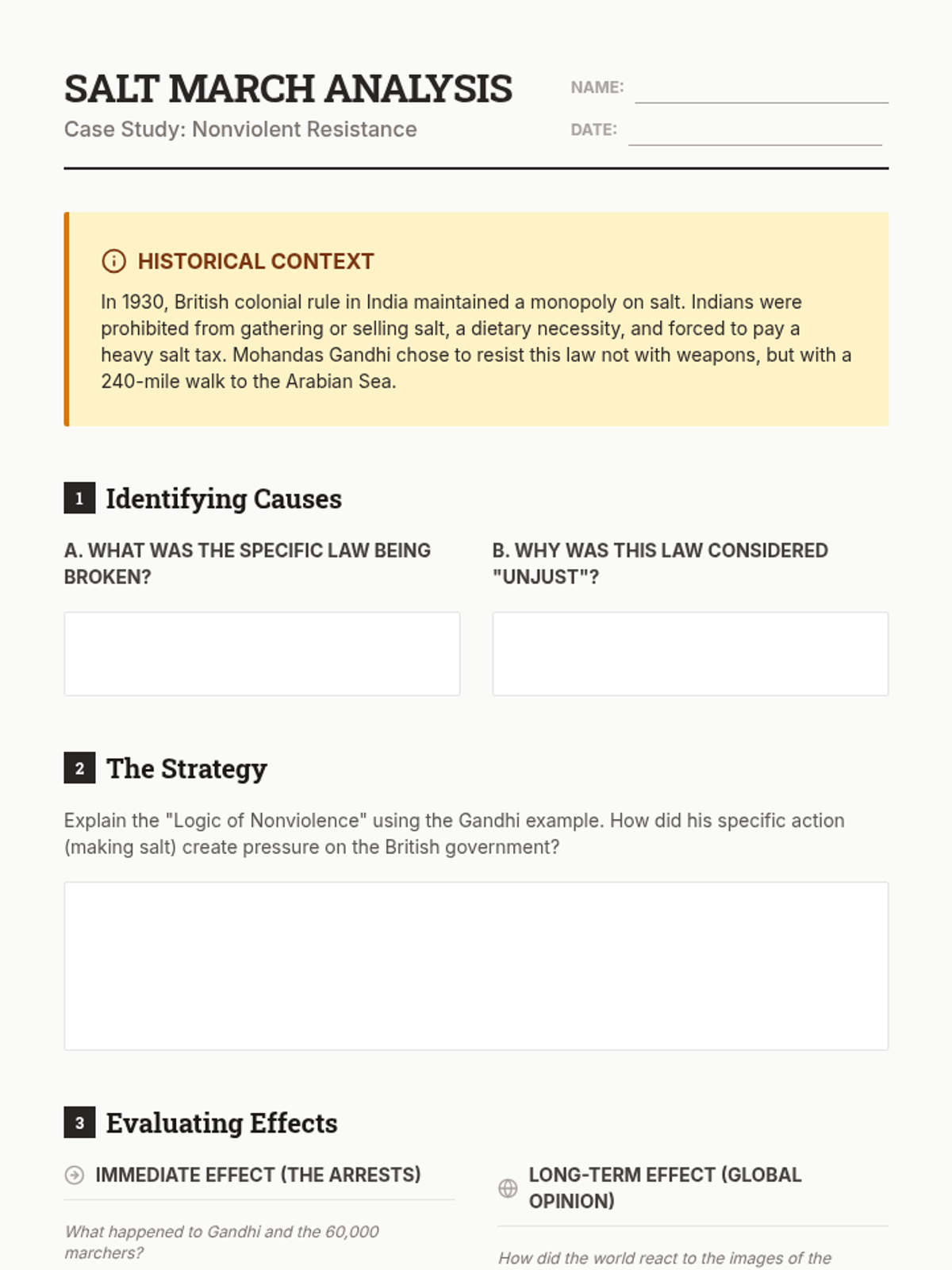
A two-part exploration of resistance movements, comparing the strategies, causes, and effects of nonviolent civil disobedience and armed rebellion through historical case studies.
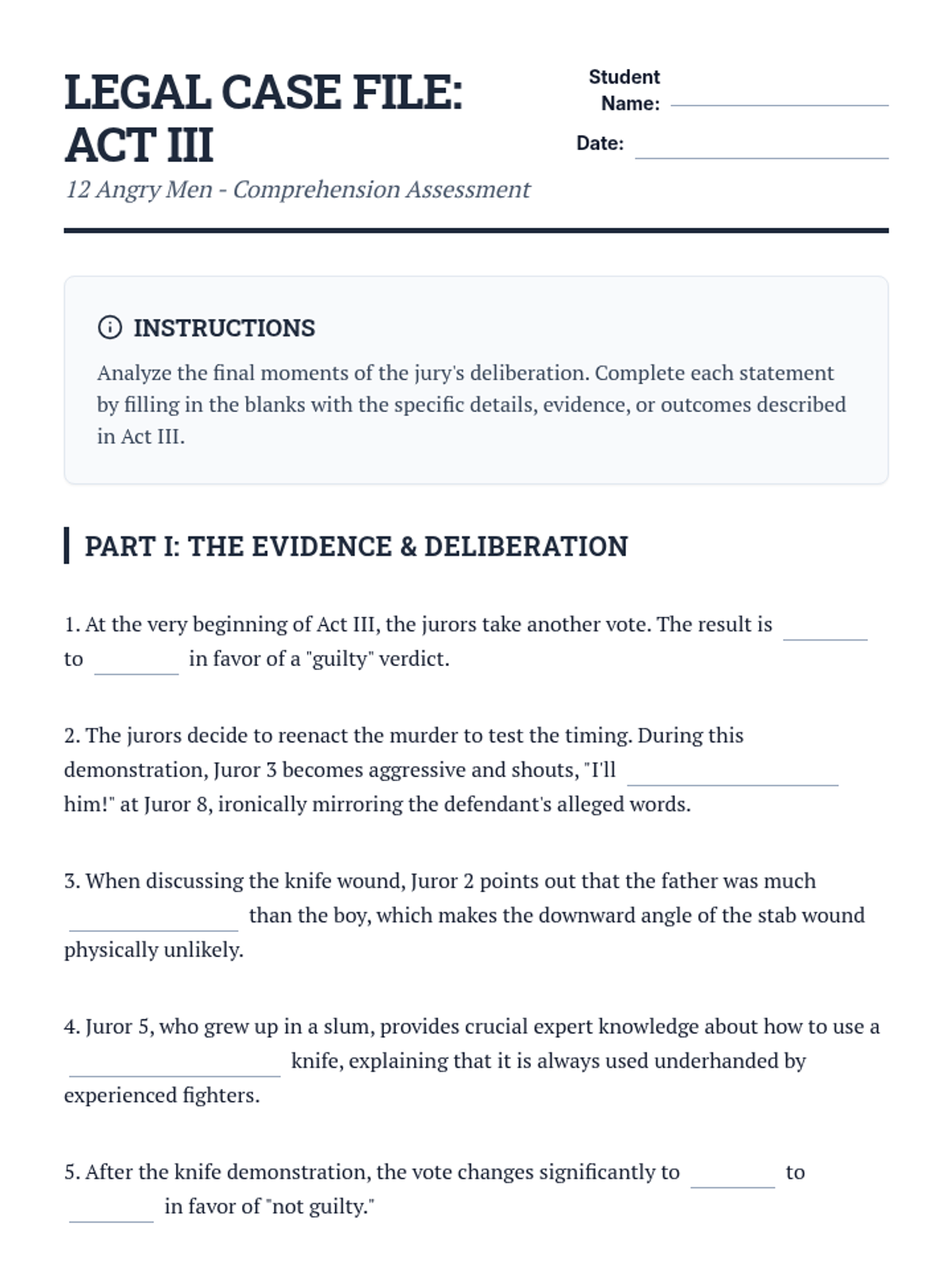
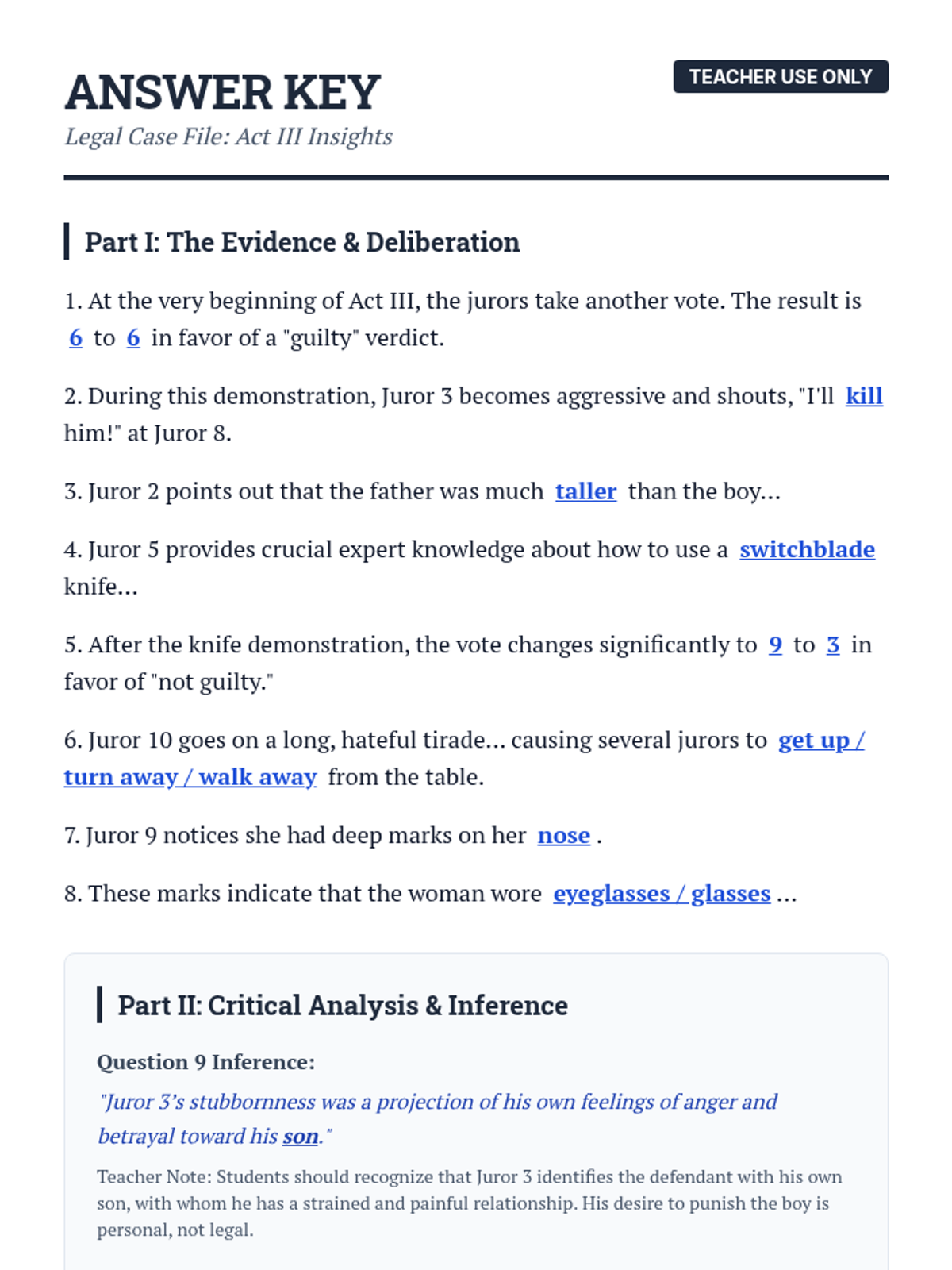
A comprehensive study of Act III of 12 Angry Men, focusing on the final shifts in juror opinions, the debunking of the final witnesses, and the themes of prejudice and reasonable doubt.
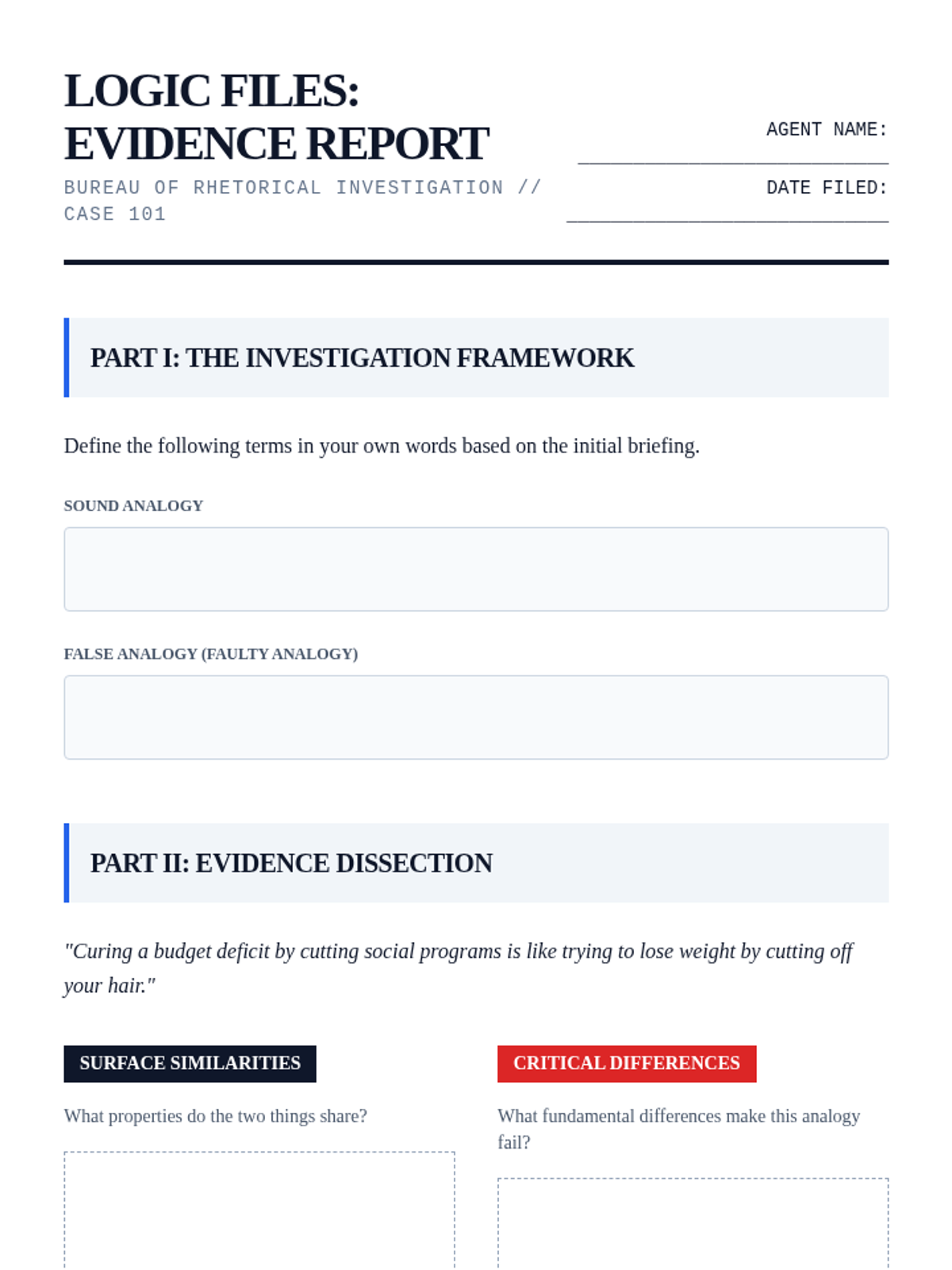
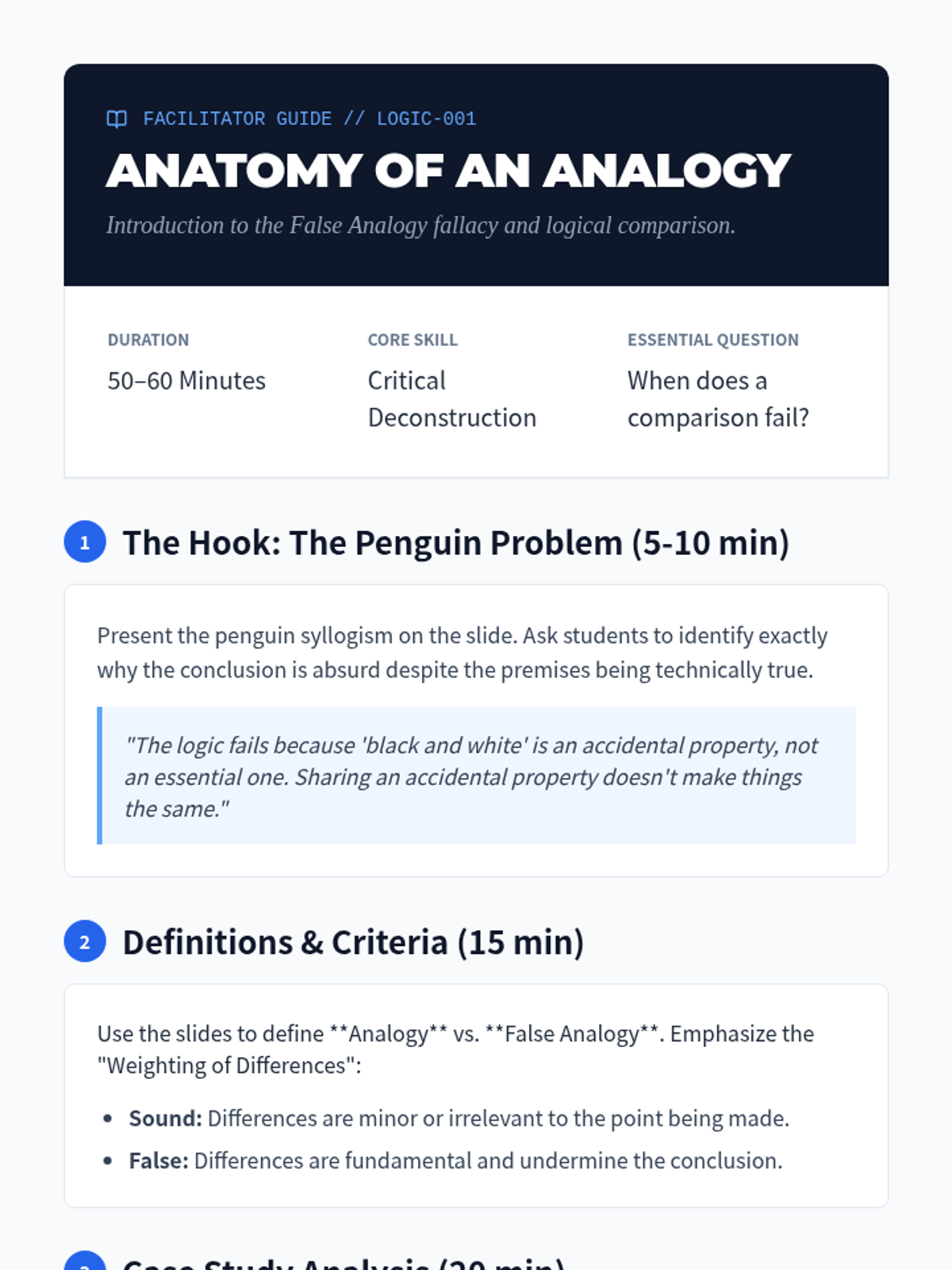
A high-school level sequence focusing on critical thinking through the lens of the False Analogy fallacy. Students learn to identify, deconstruct, and rebut faulty logic in advertising, politics, and debate.
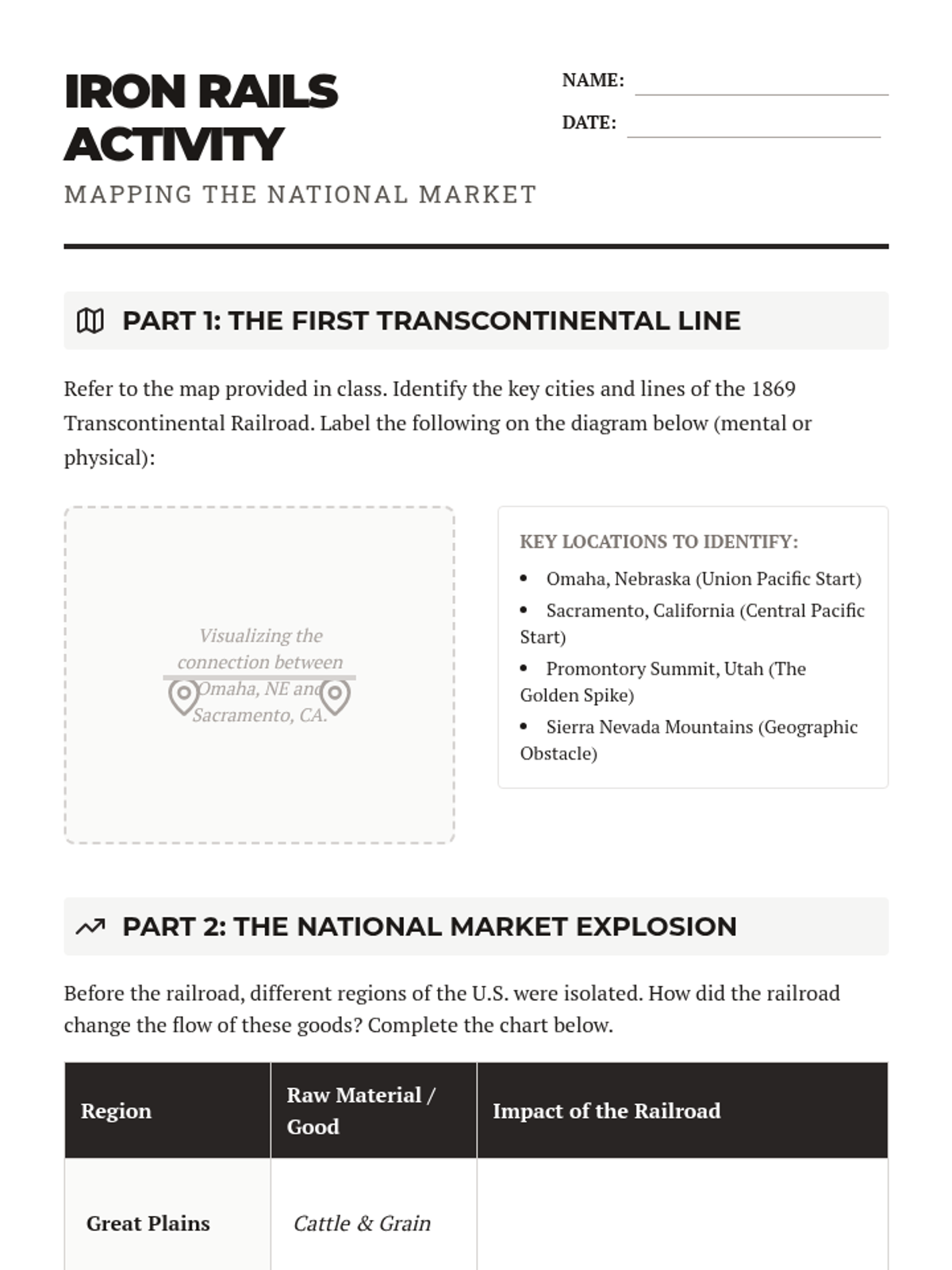
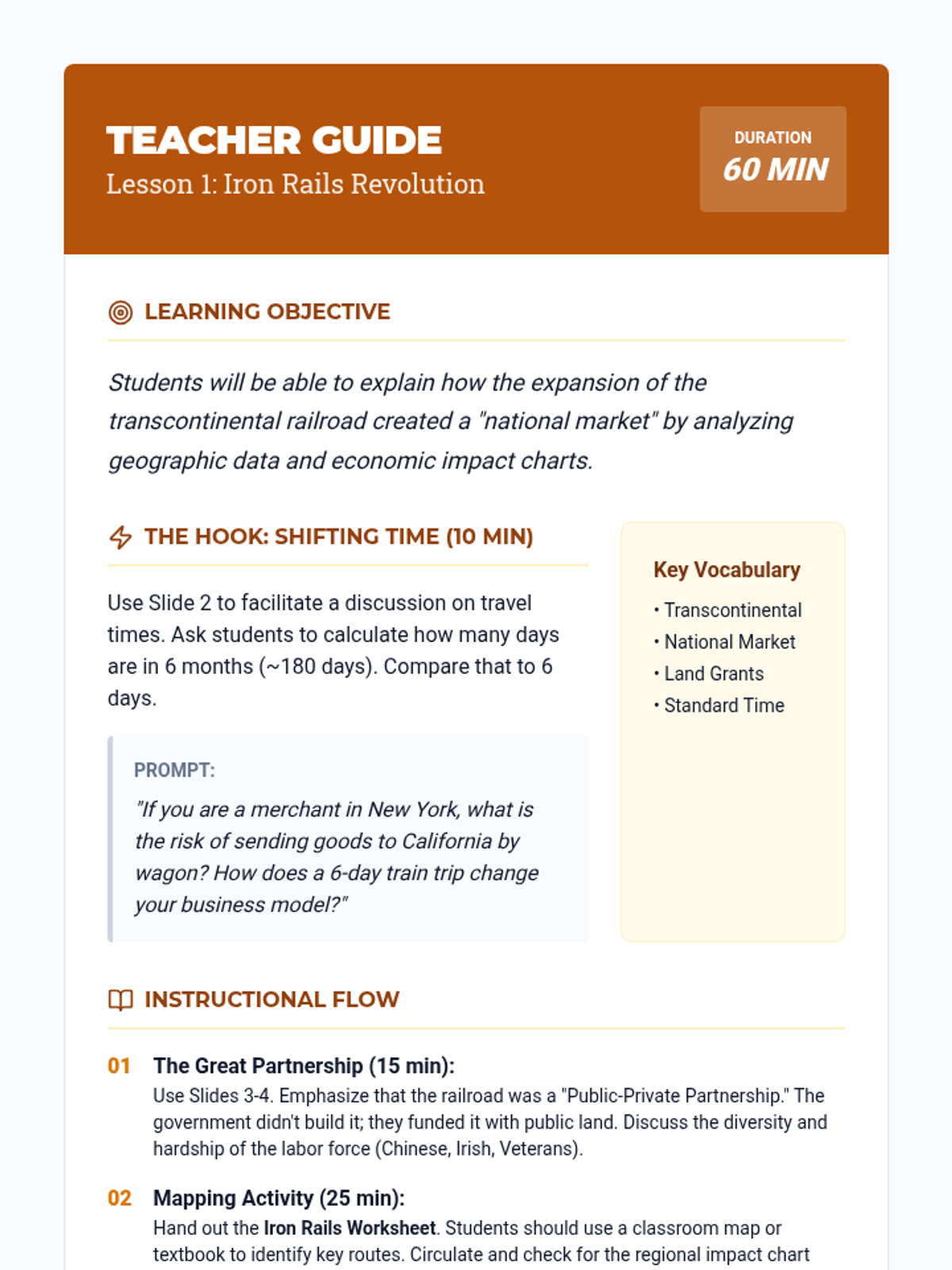
This unit explores the economic explosion of the Gilded Age, focusing on the transcontinental railroad, the rise of industrial tycoons, and the birth of modern corporate structures. Students analyze the tension between massive economic growth and the ethical costs of monopolies.
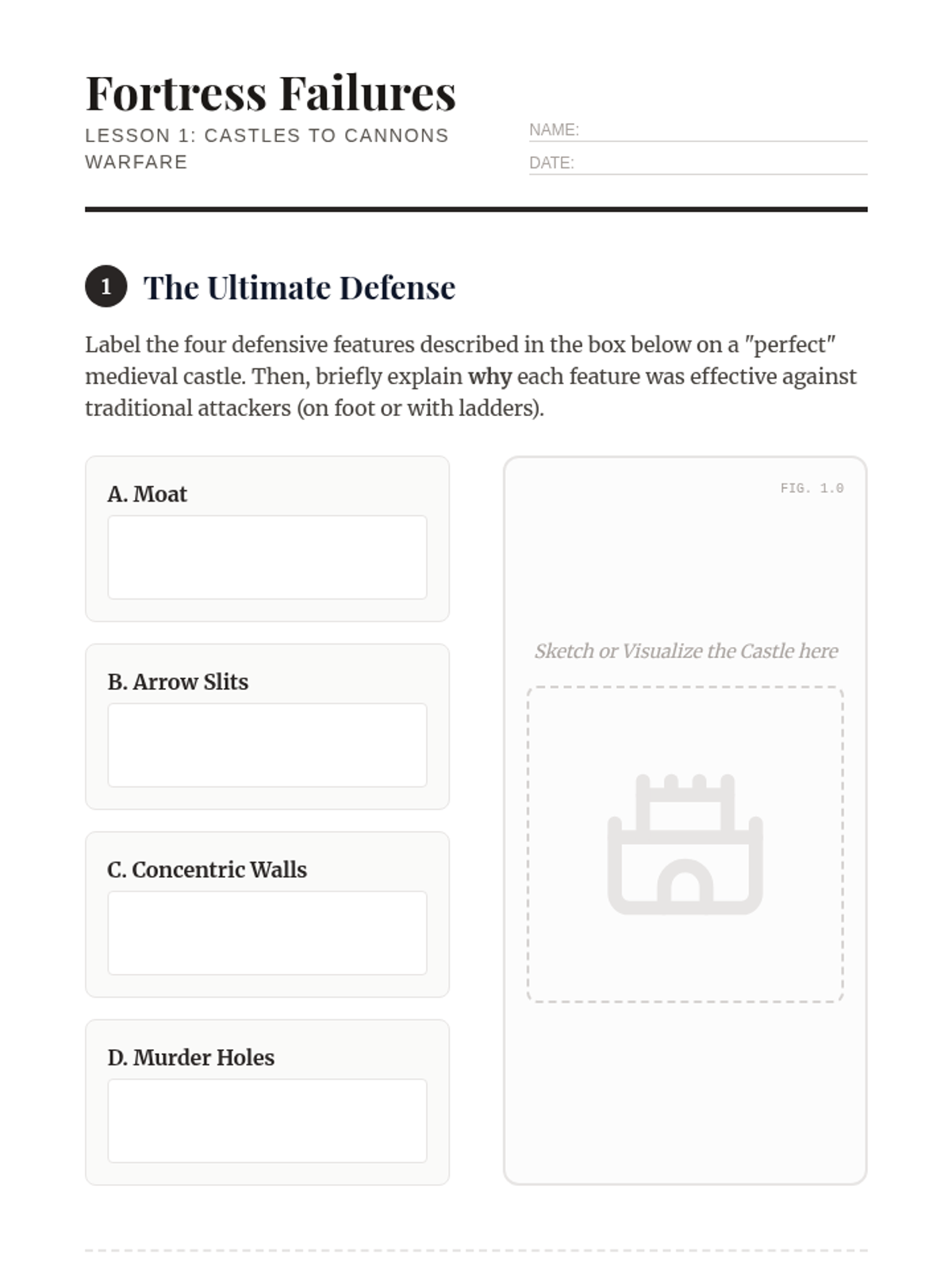
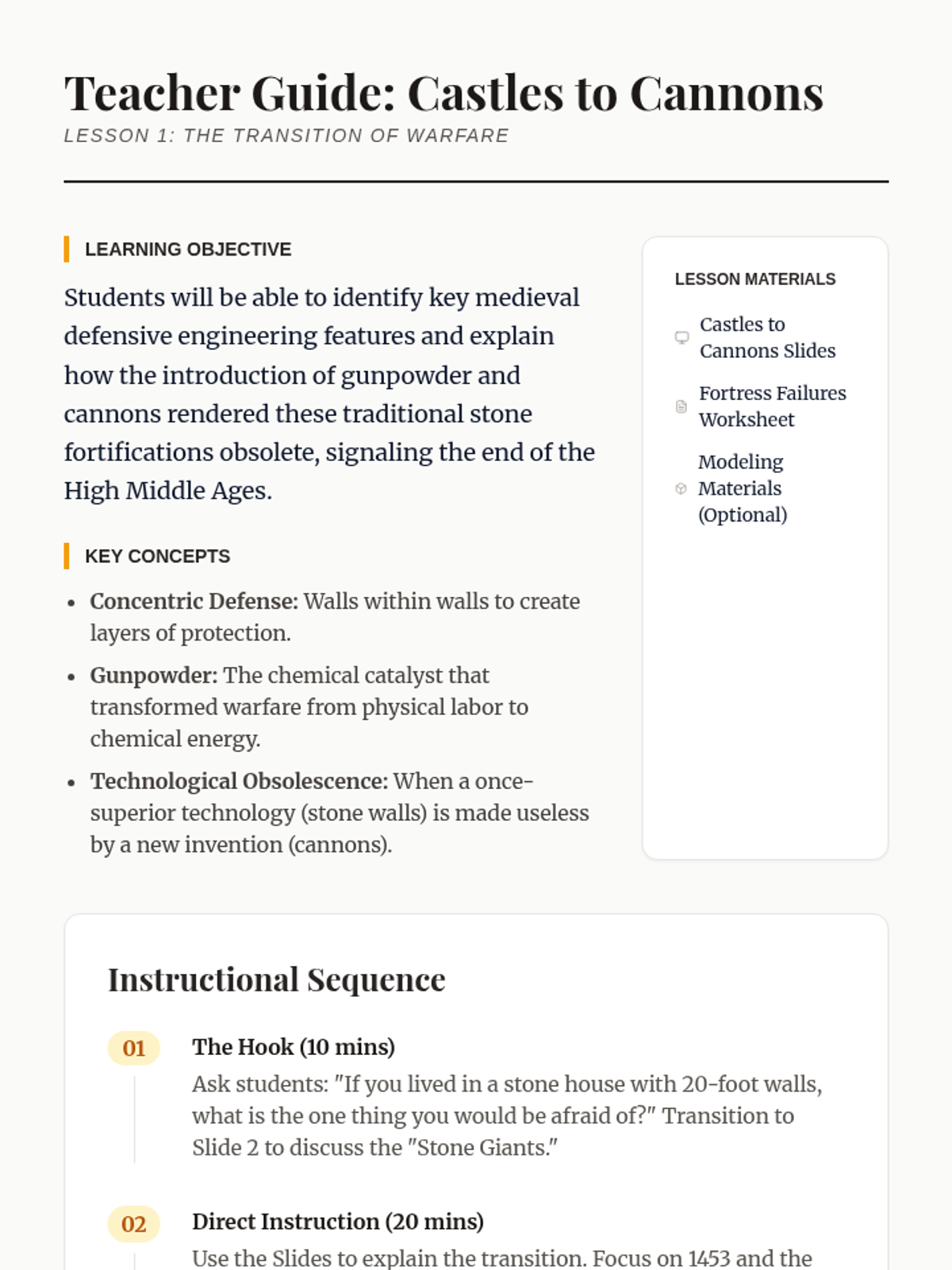
A 5-lesson unit exploring the technological, economic, political, and cultural shifts that moved Europe from the Medieval era into the Early Renaissance. students analyze the evolution of warfare, the rise of the middle class, the foundations of democracy, and the birth of humanism.
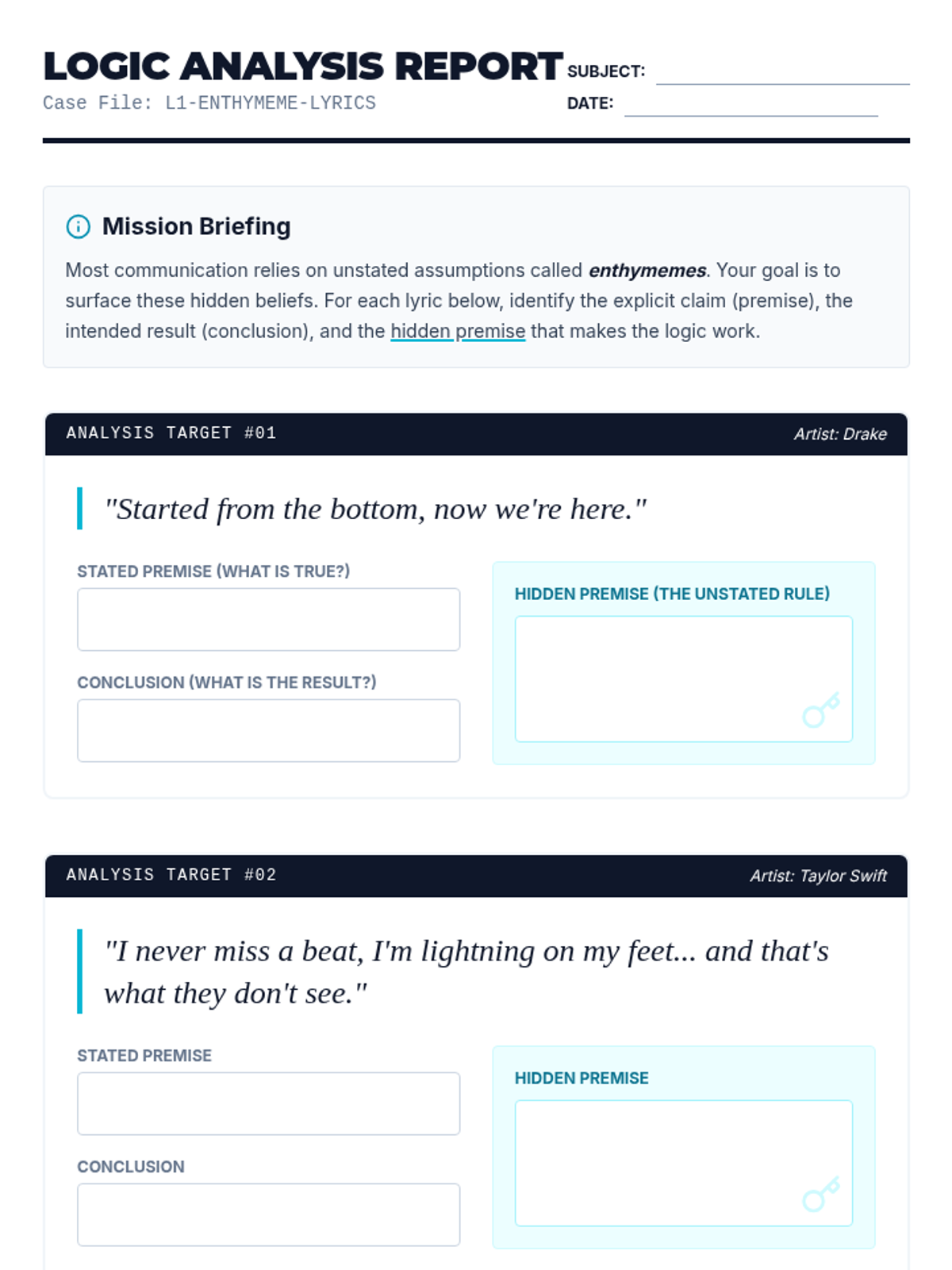
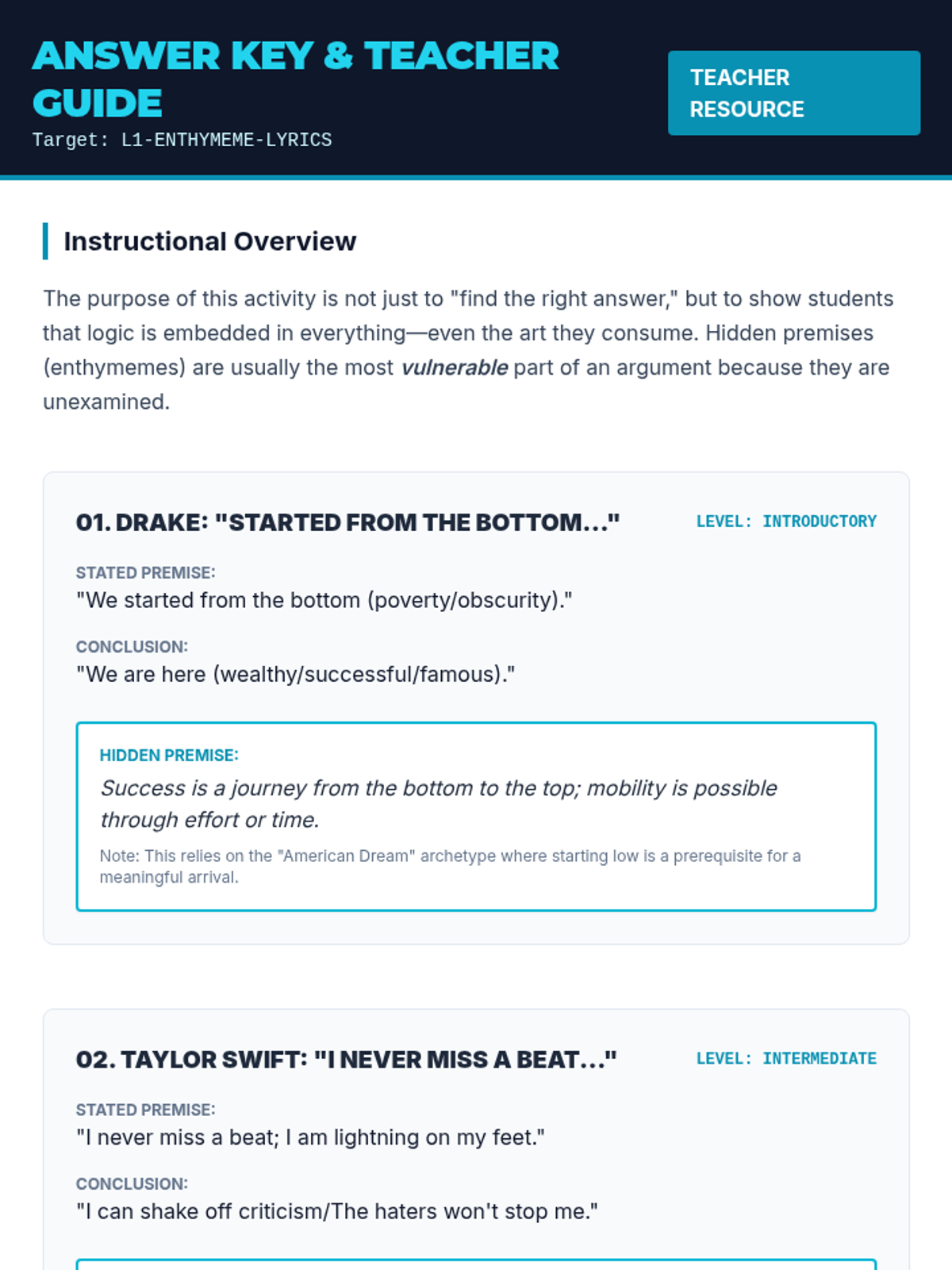
A high-school level sequence exploring the application of formal logic to real-world rhetoric, focusing on uncovering hidden assumptions and mapping complex arguments.
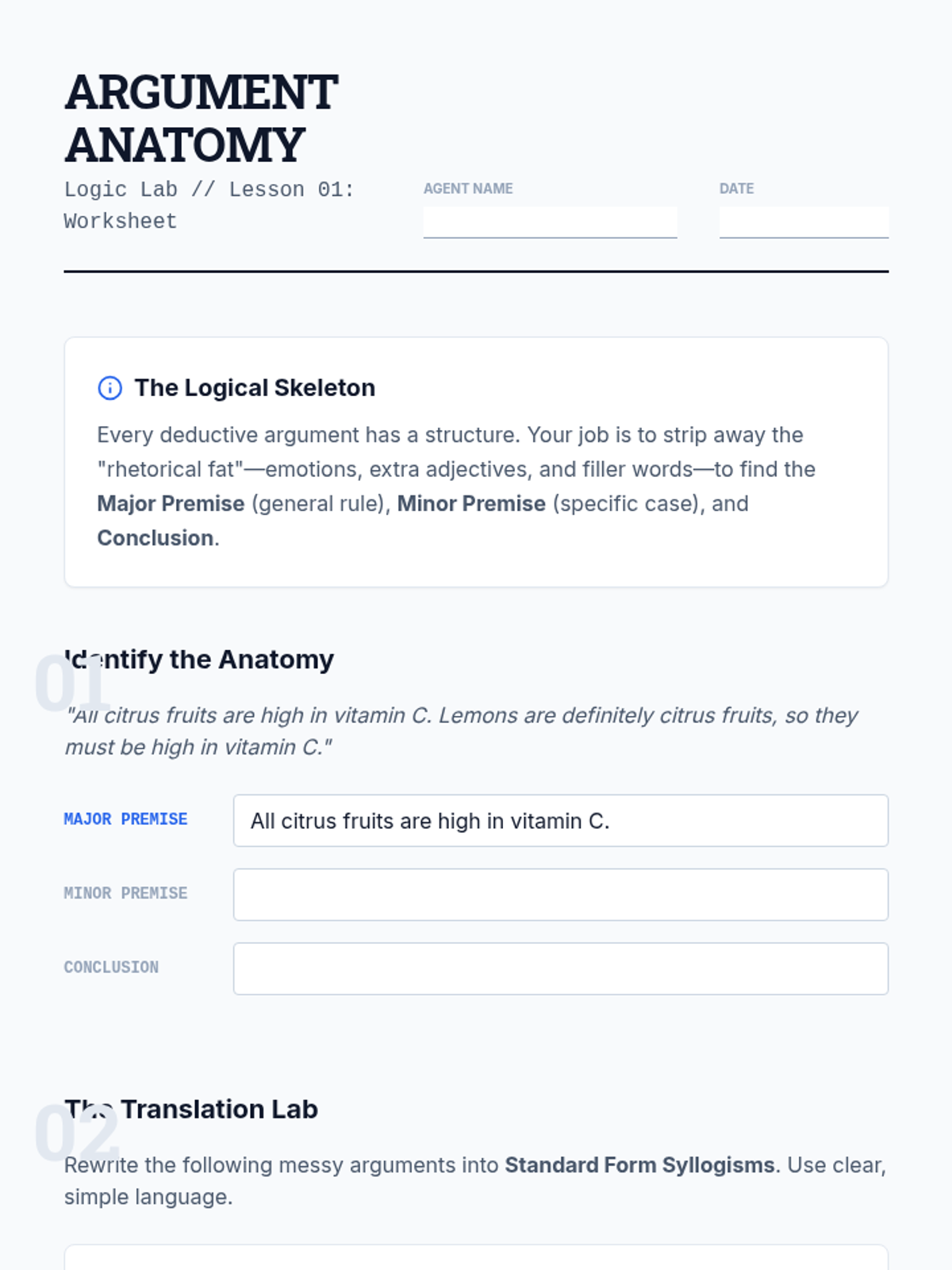
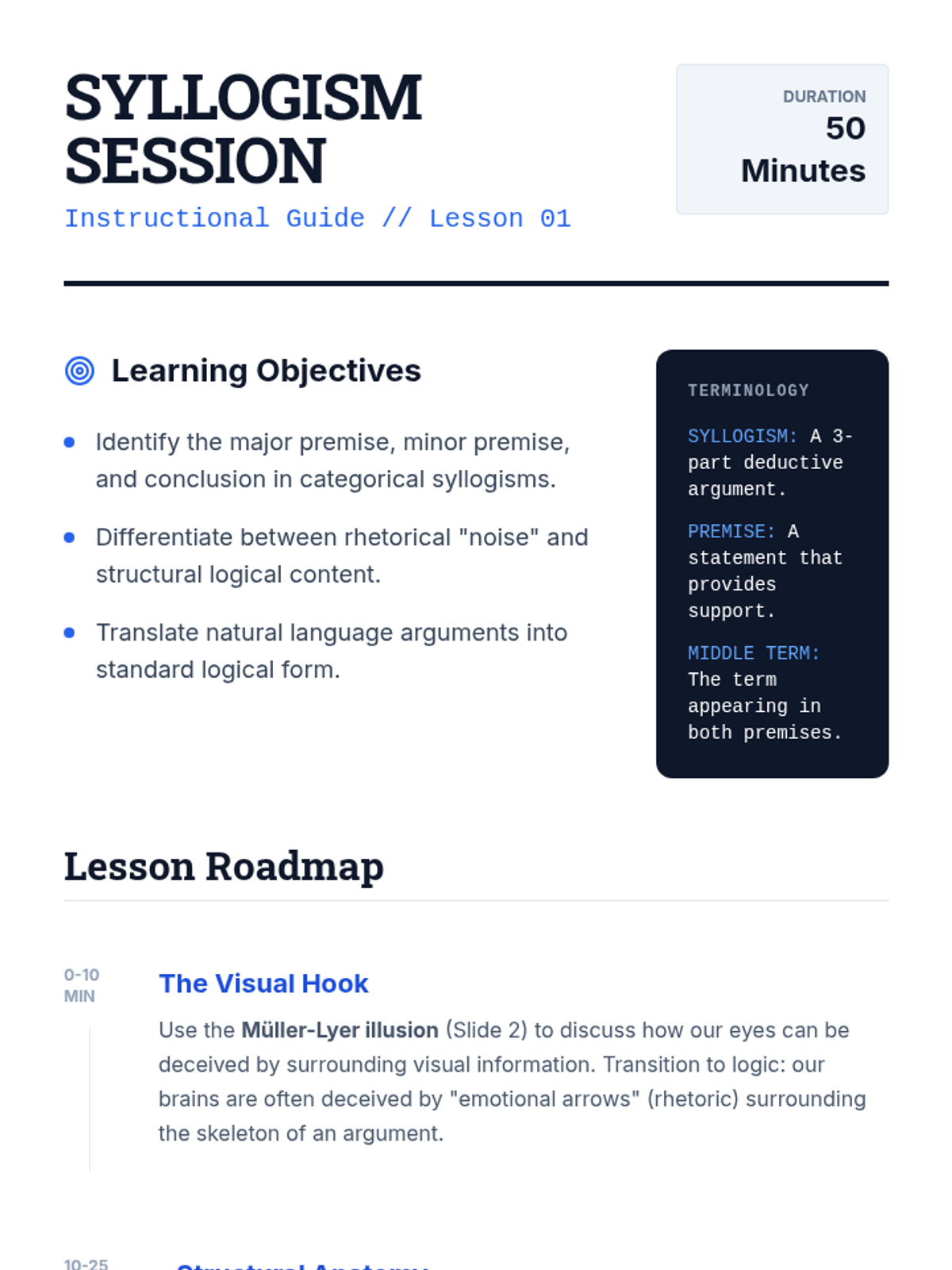
A deep dive into deductive reasoning, focusing on the structural integrity of arguments. Students learn to distinguish between validity and soundness while mastering the art of translating natural language into formal logical skeletons.
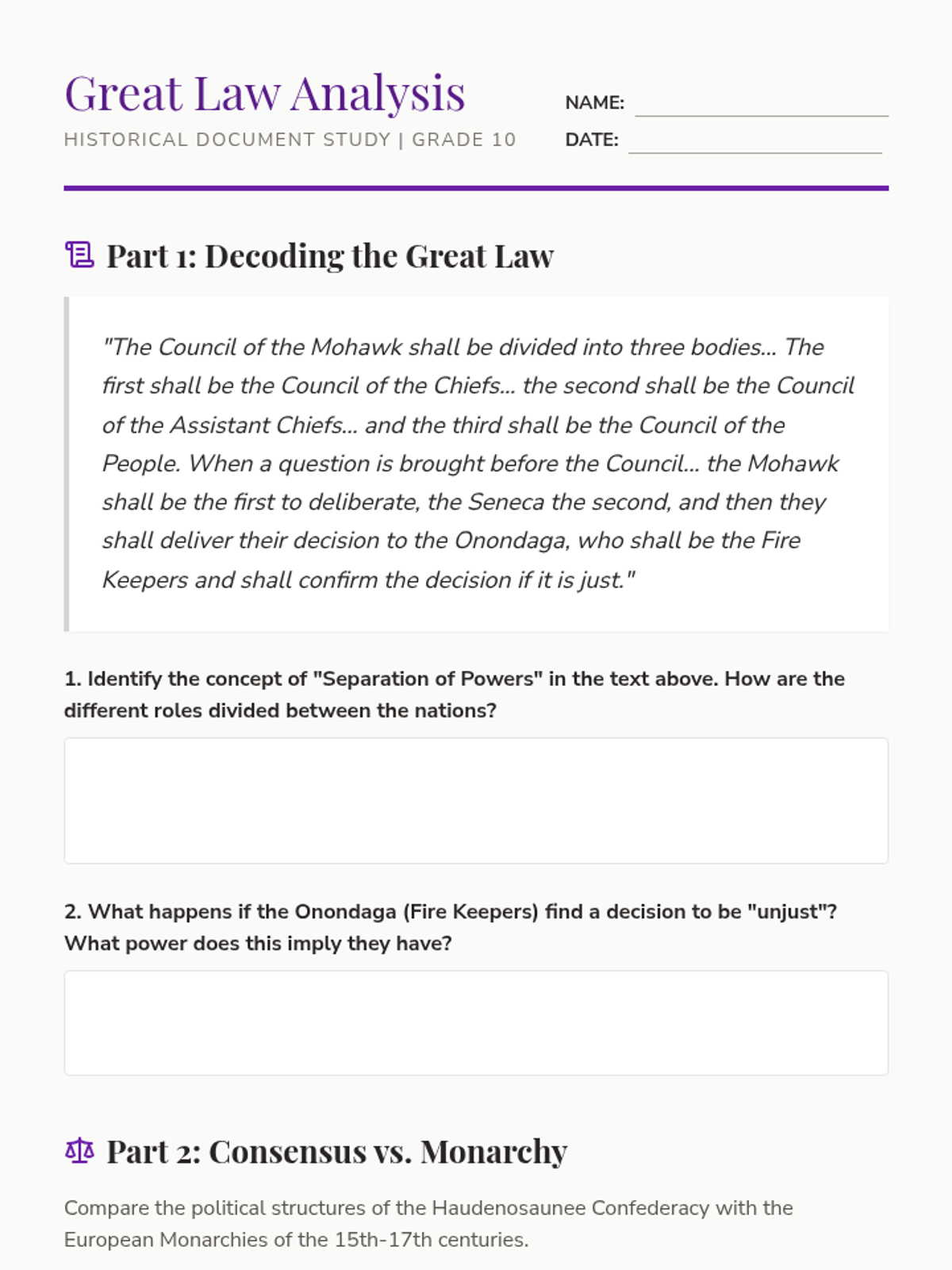
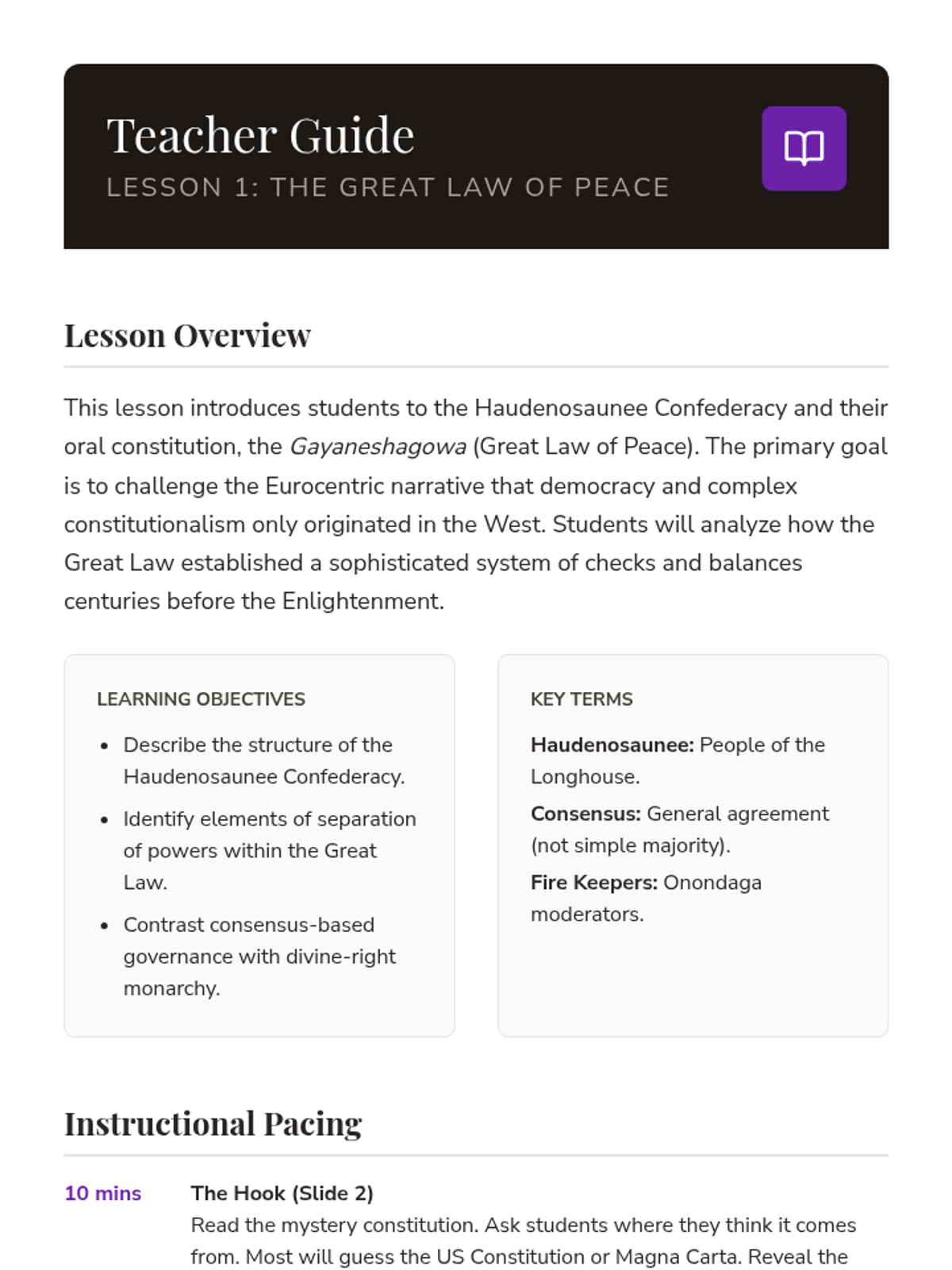
A game-based exploration of Haudenosaunee political structures and diplomatic traditions, contrasting Indigenous consensus models with European hierarchies. Students participate in simulations and analyze the Great Law of Peace to understand its global influence.
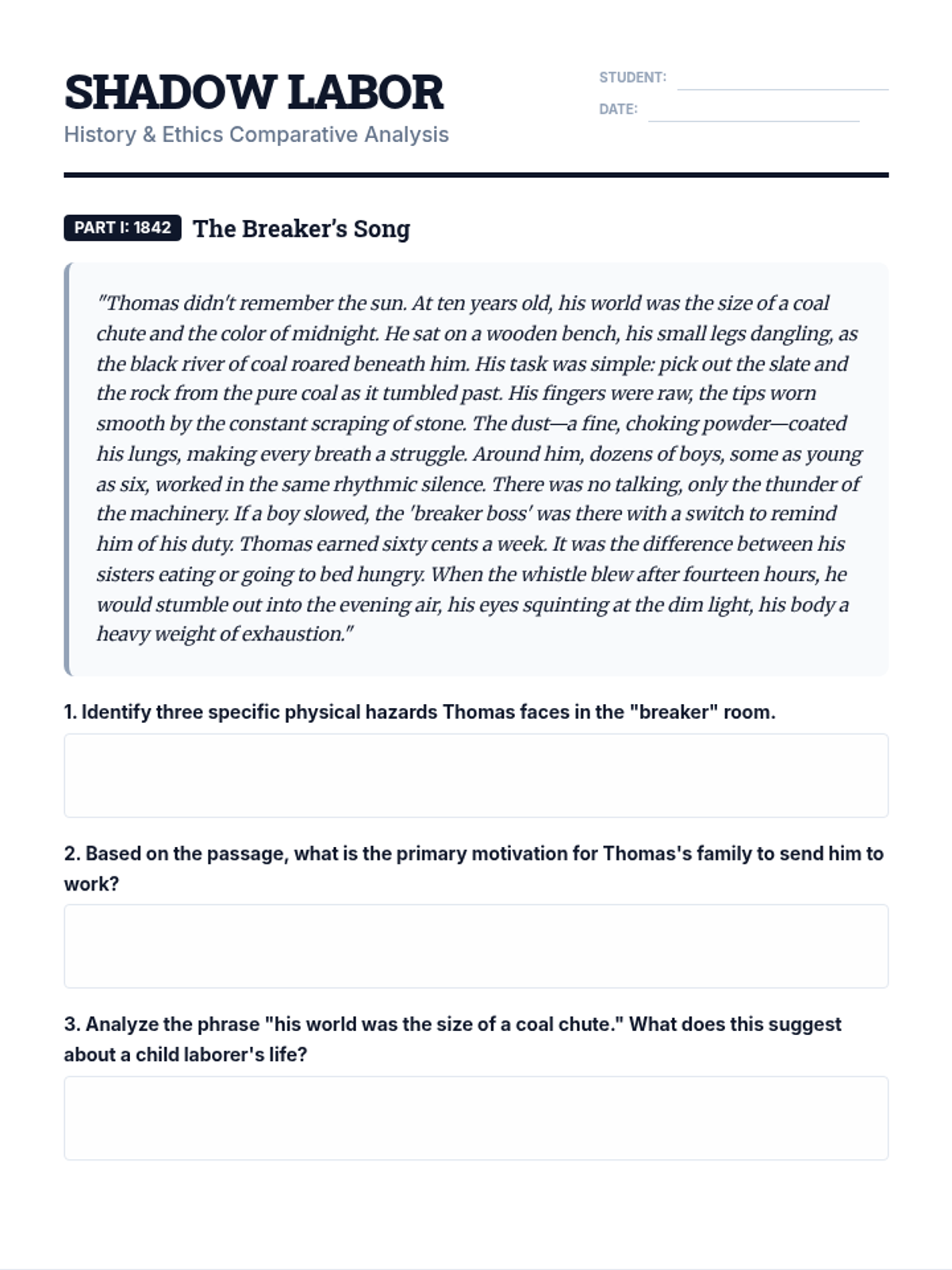
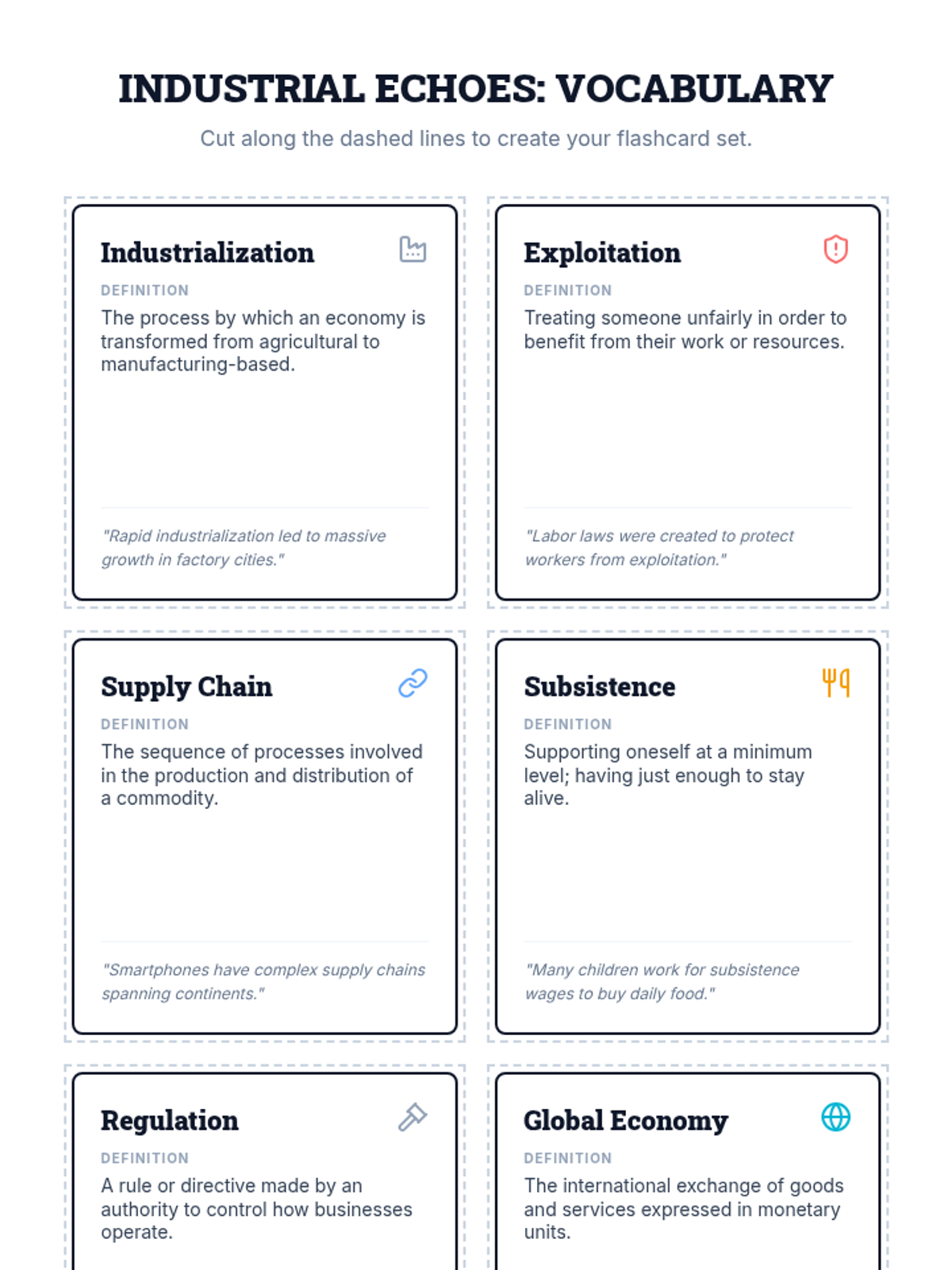
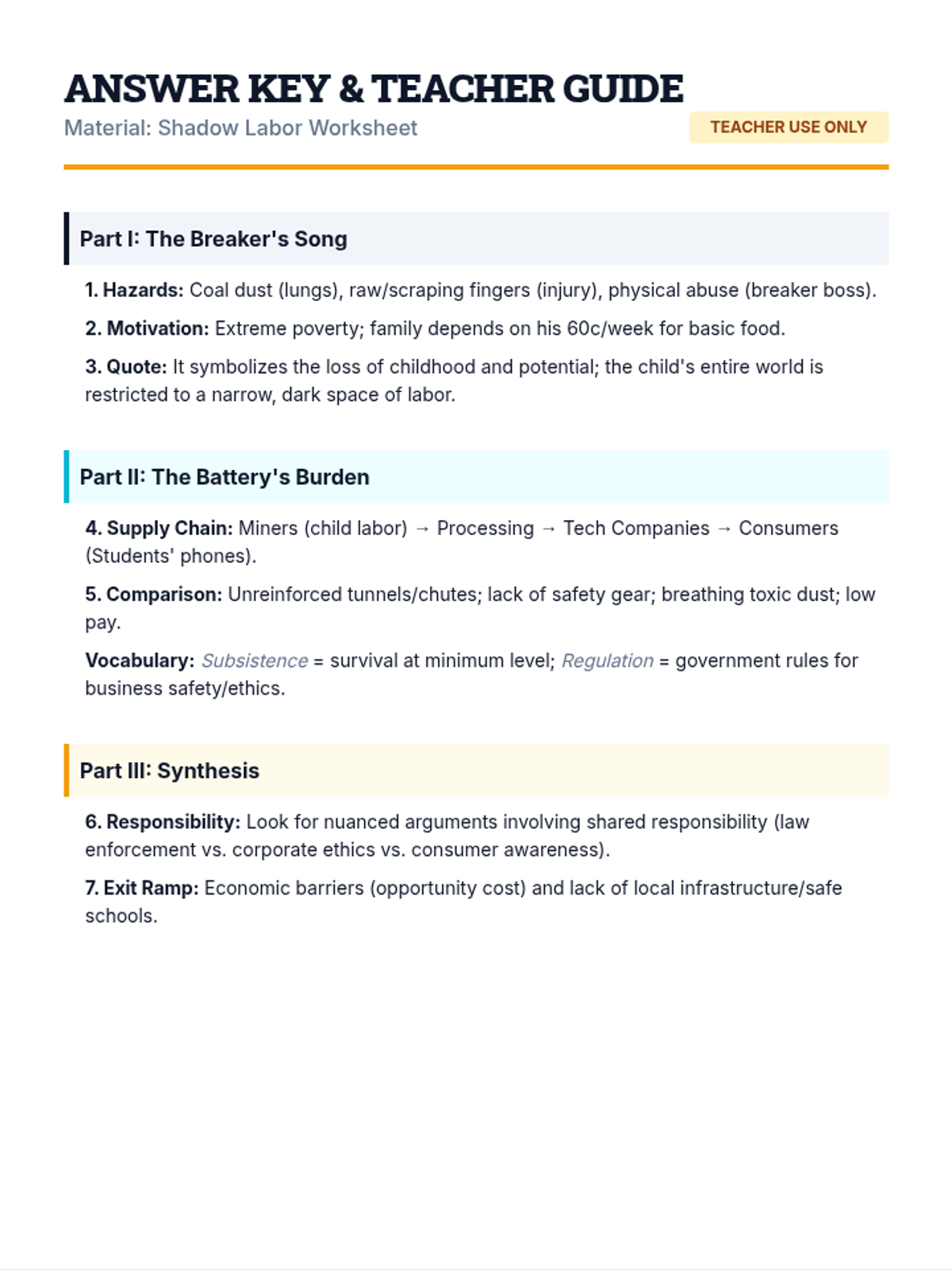
A deep dive into the history and contemporary reality of child labor, comparing the Industrial Revolution to modern global supply chains. Students analyze primary-source-inspired fiction and modern reporting to understand systemic drivers and ethical implications.
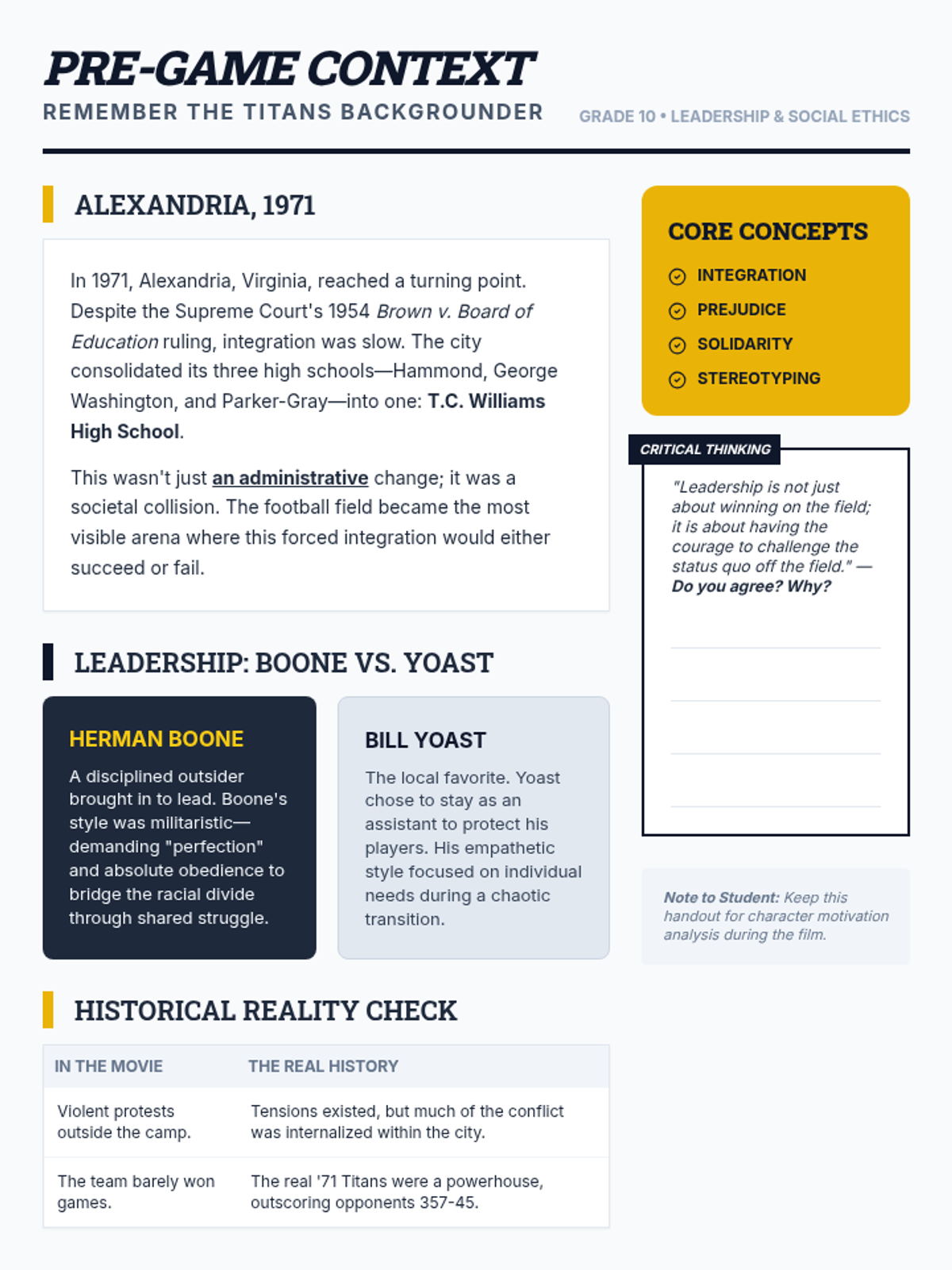
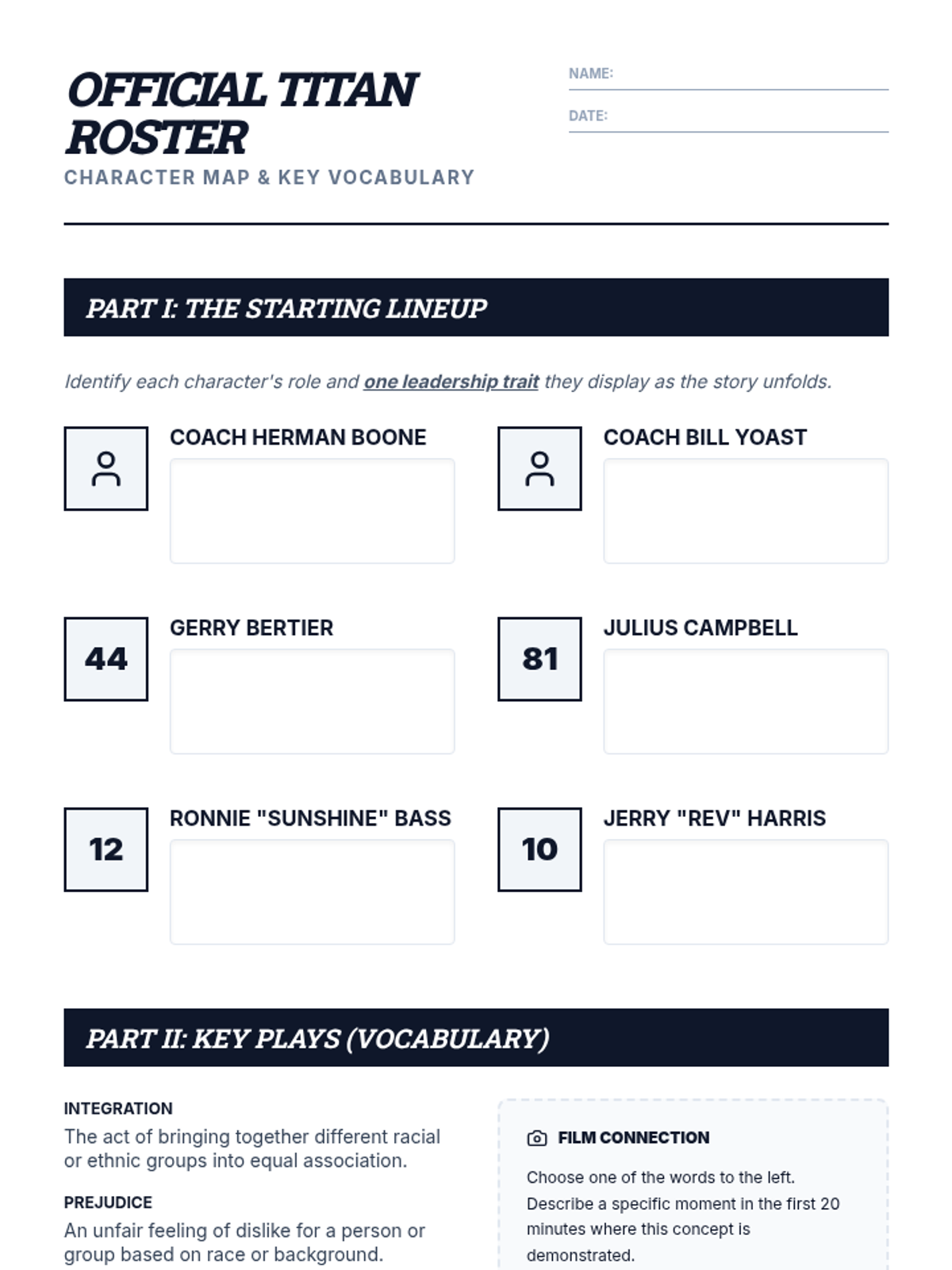
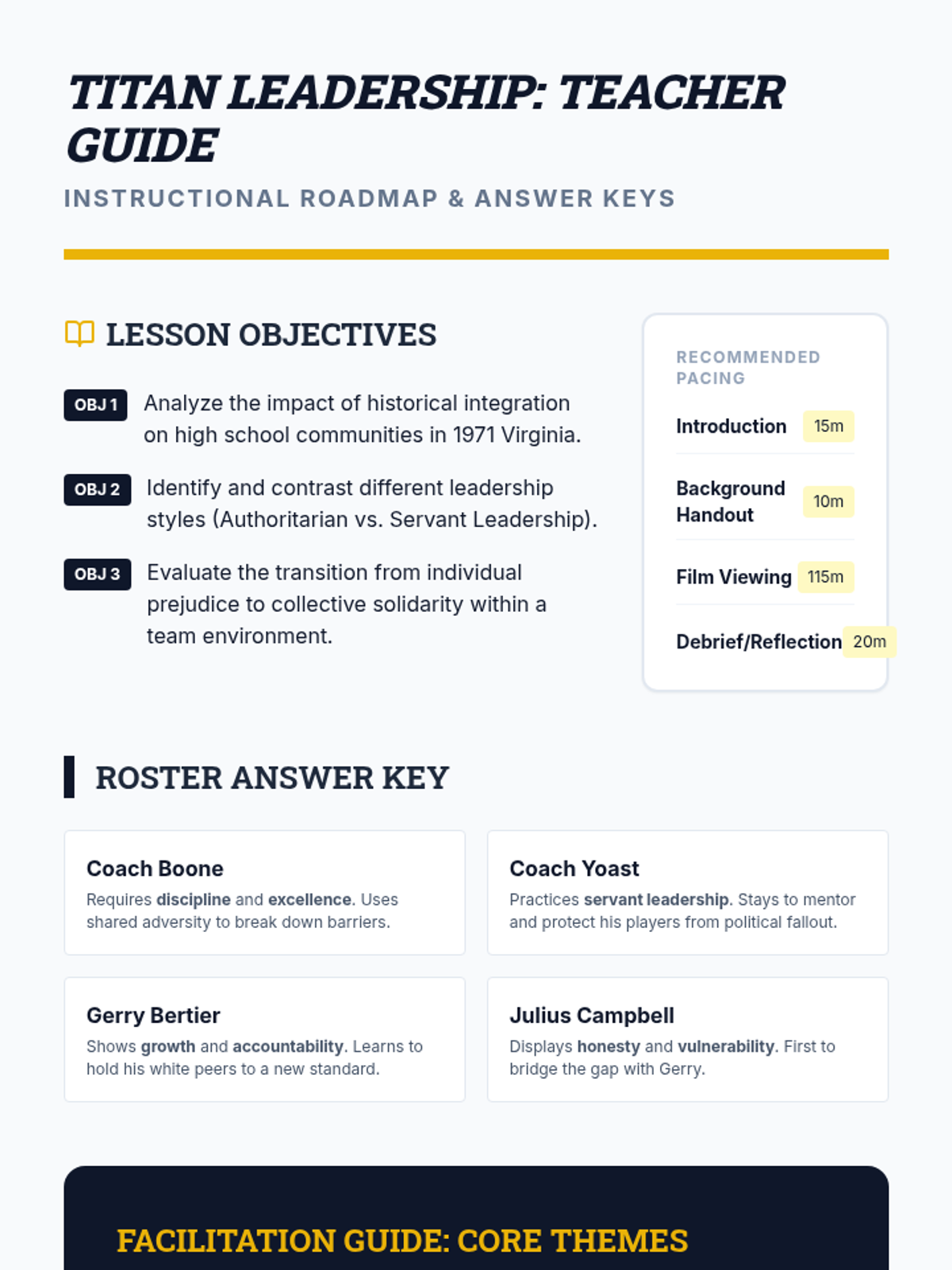
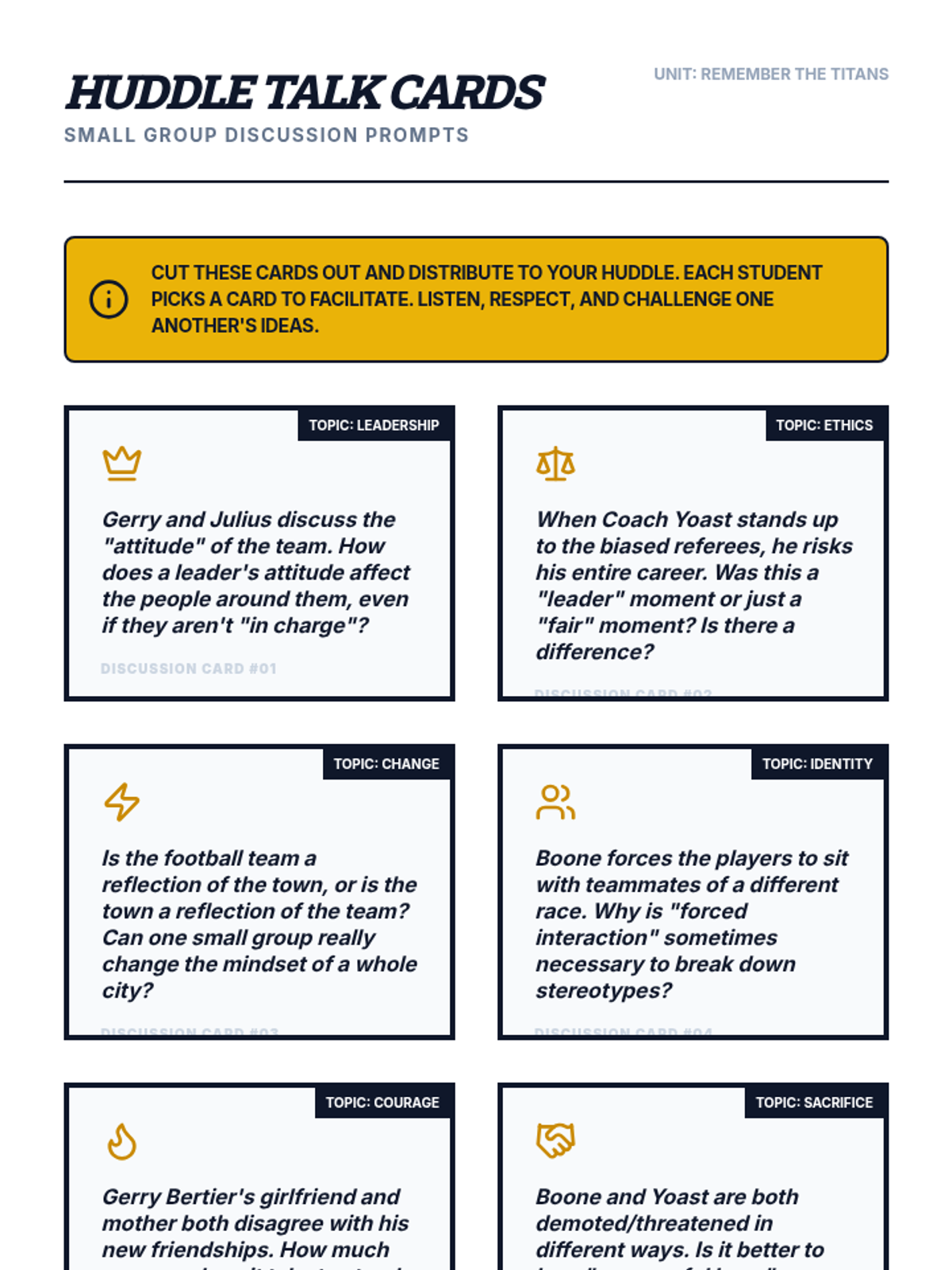
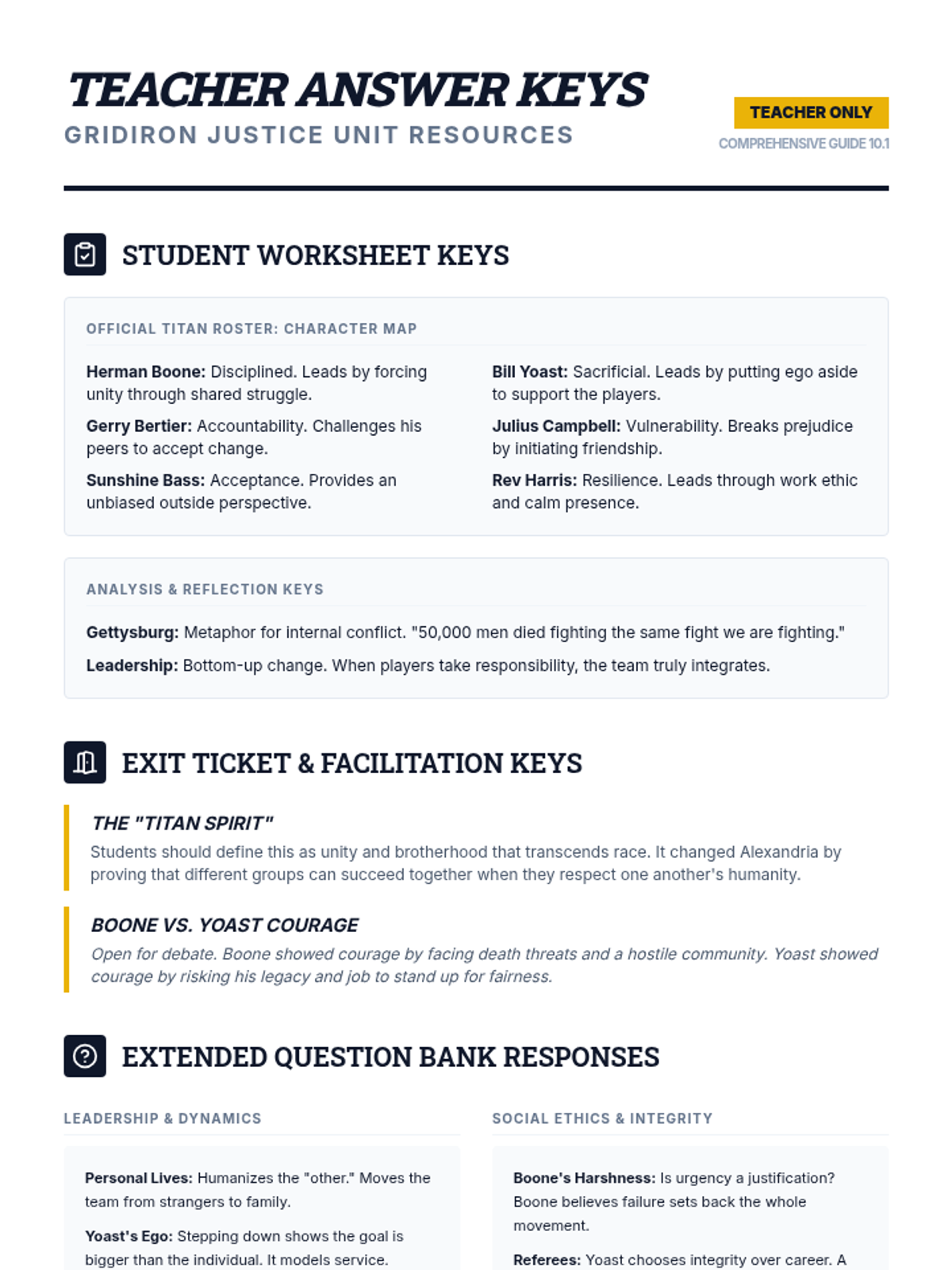
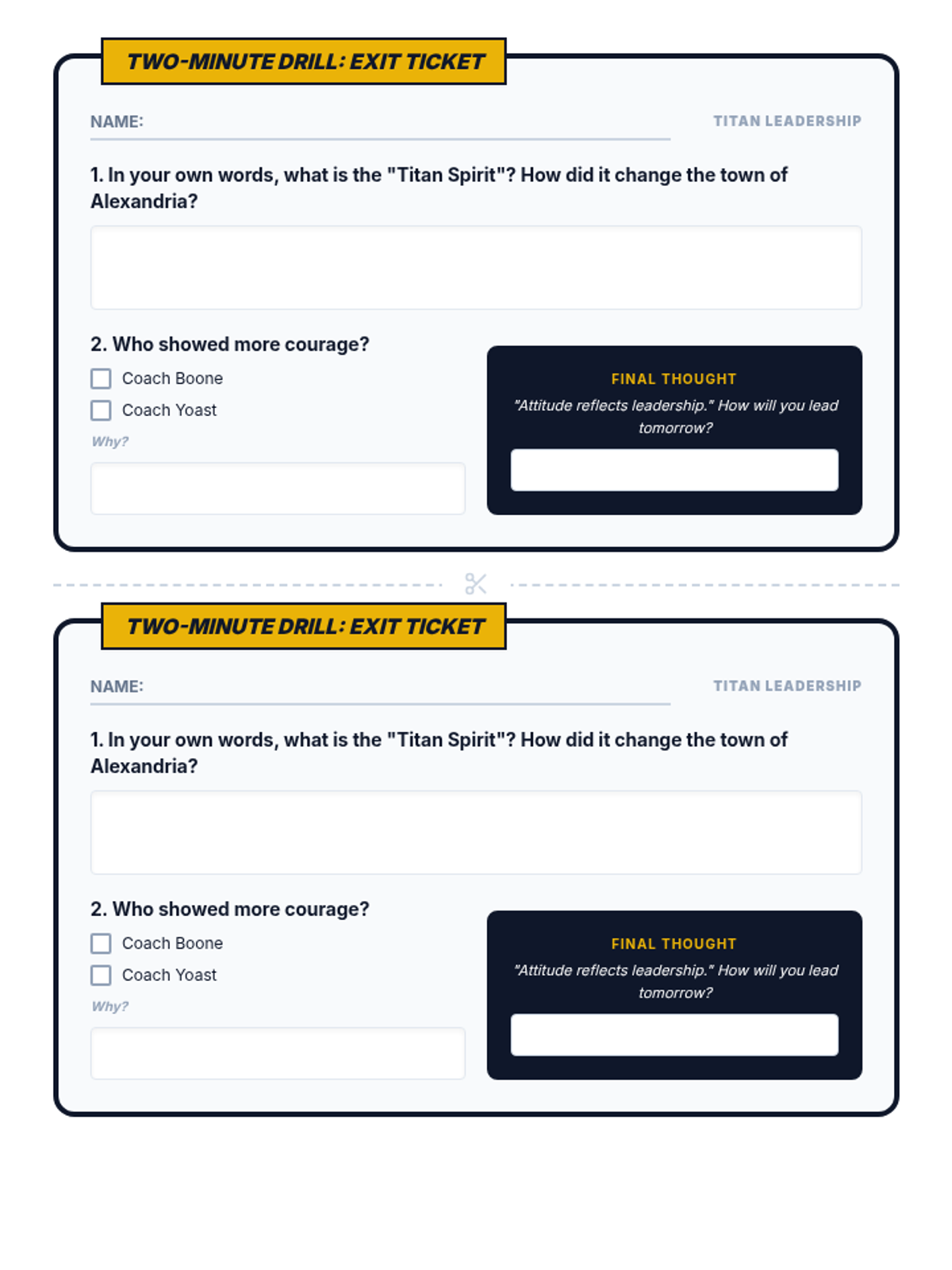
A comprehensive study of leadership, civil rights, and social ethics through the lens of the film Remember the Titans.
A comprehensive six-week unit exploring the Gilded Age, focusing on the tension between rapid industrial growth and the social/political challenges of the era. Students analyze primary sources including political cartoons and immigrant journals to understand the complexities of American life between 1870 and 1900.
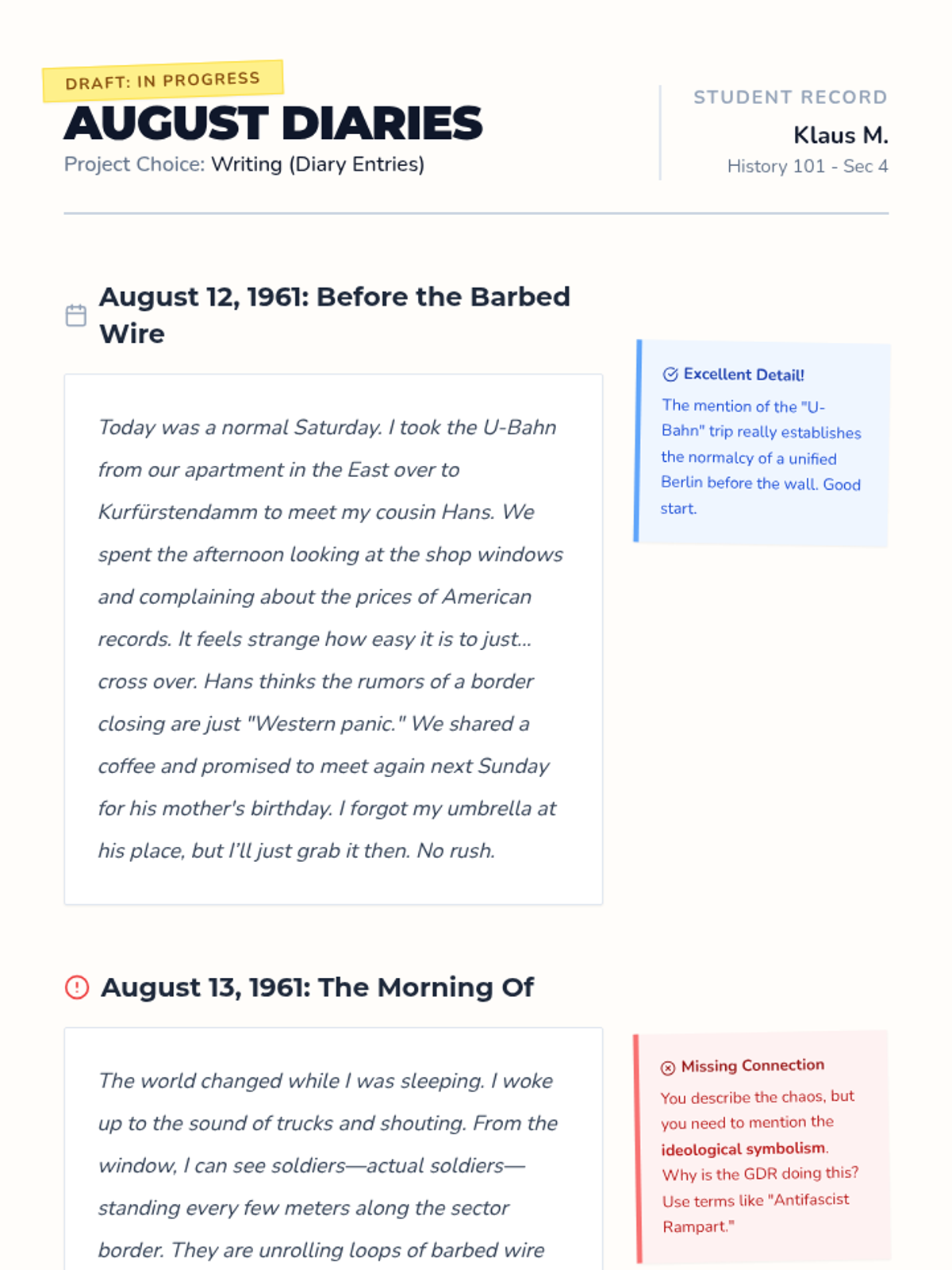
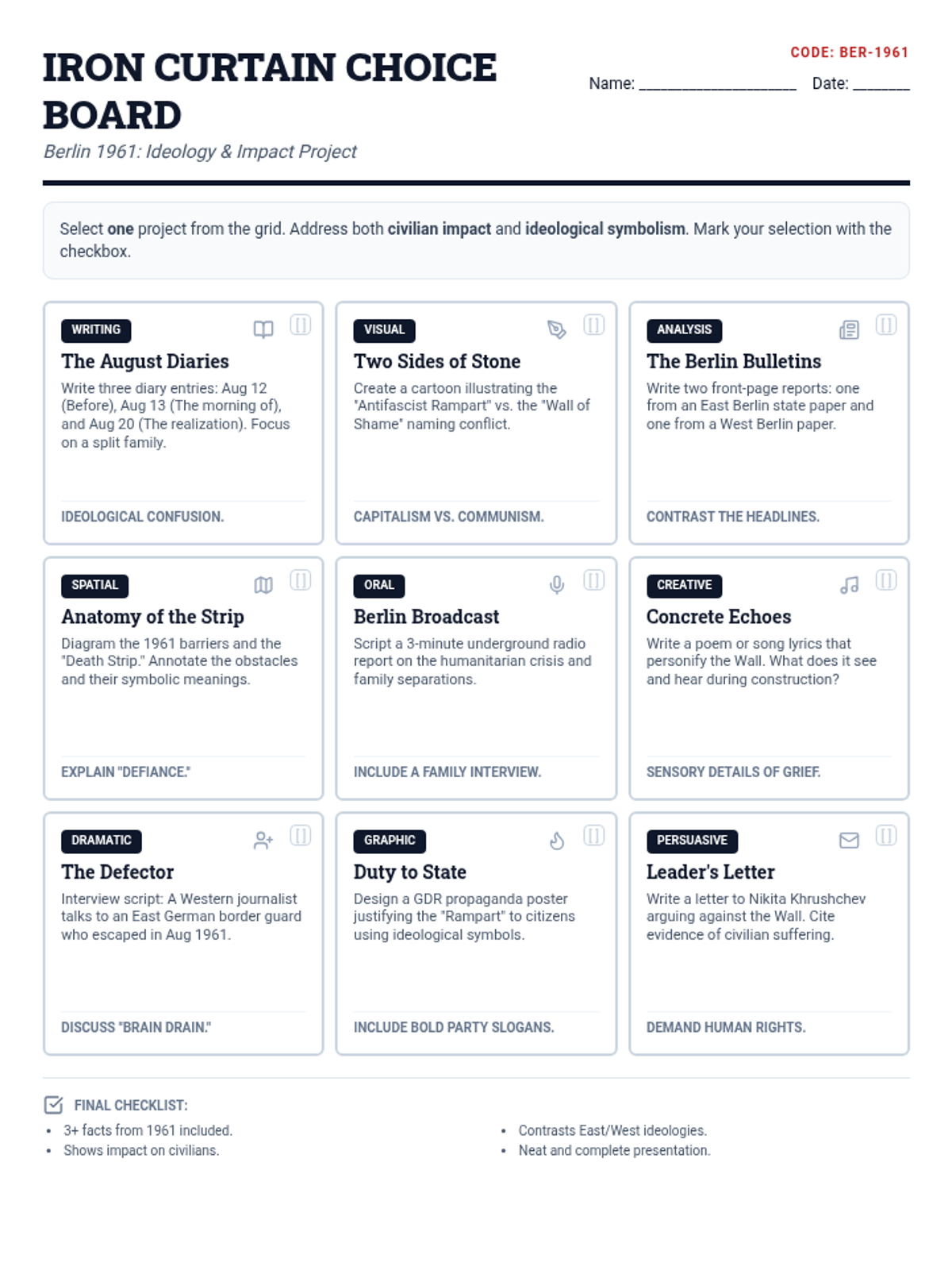
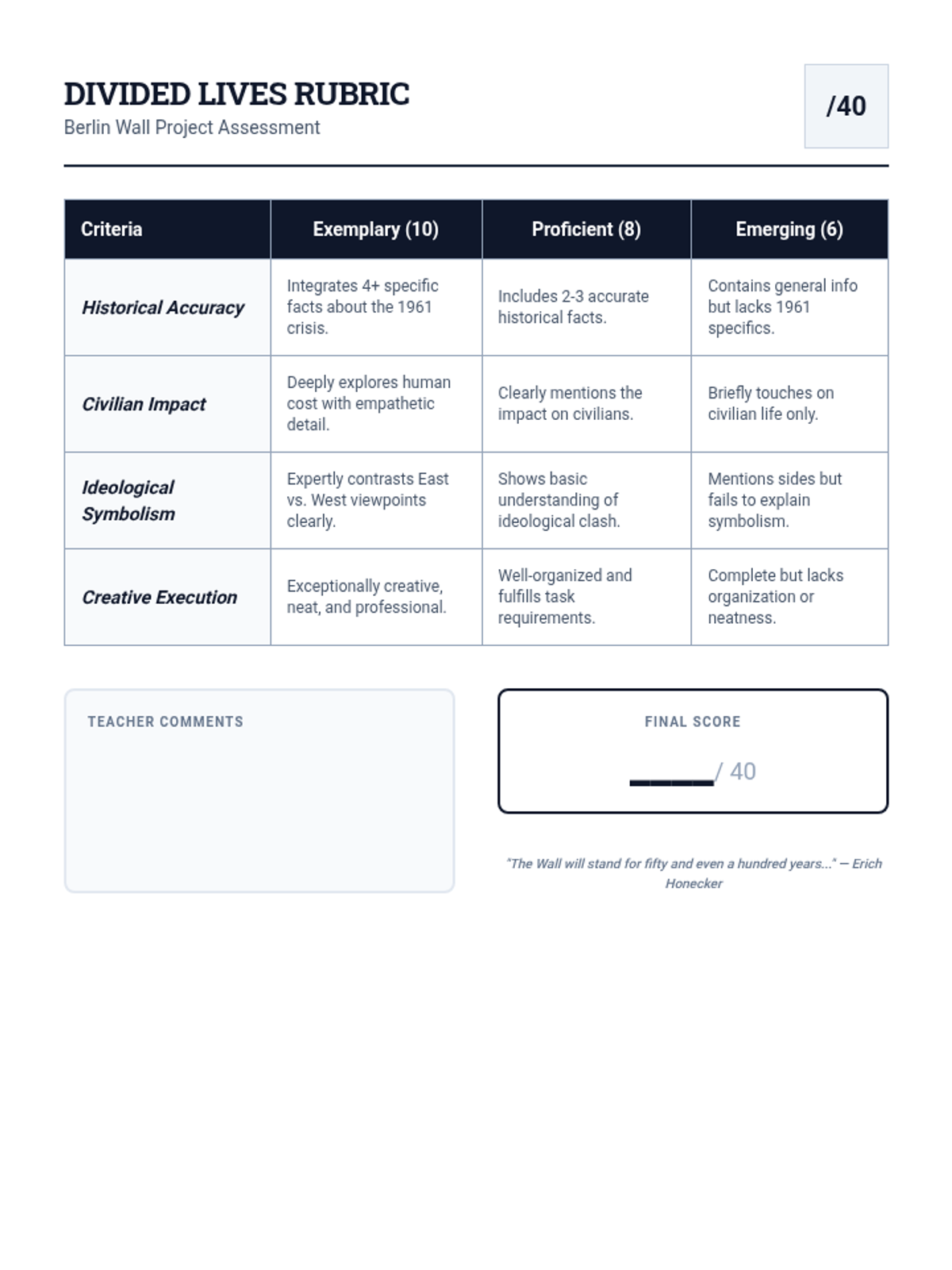
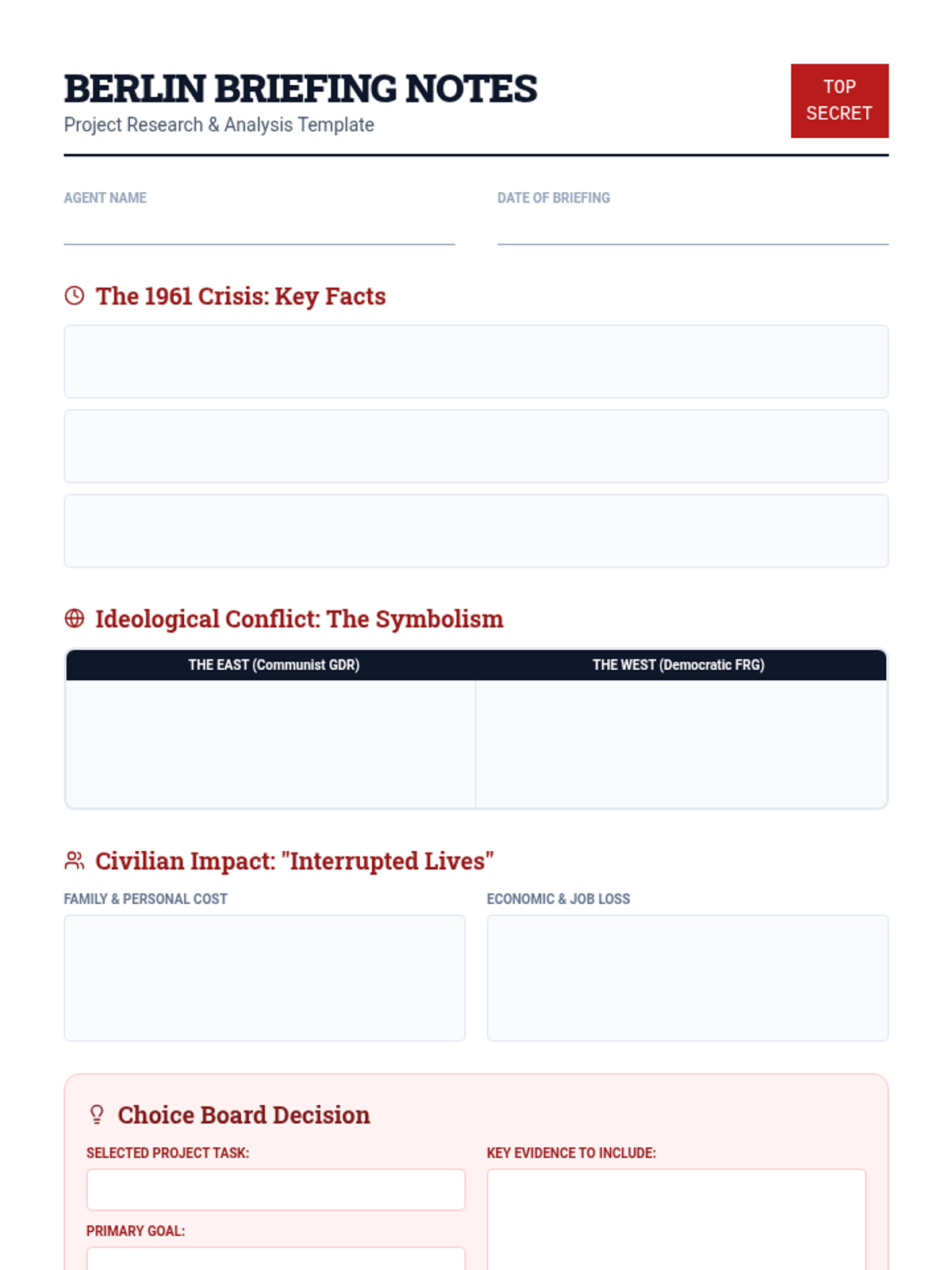
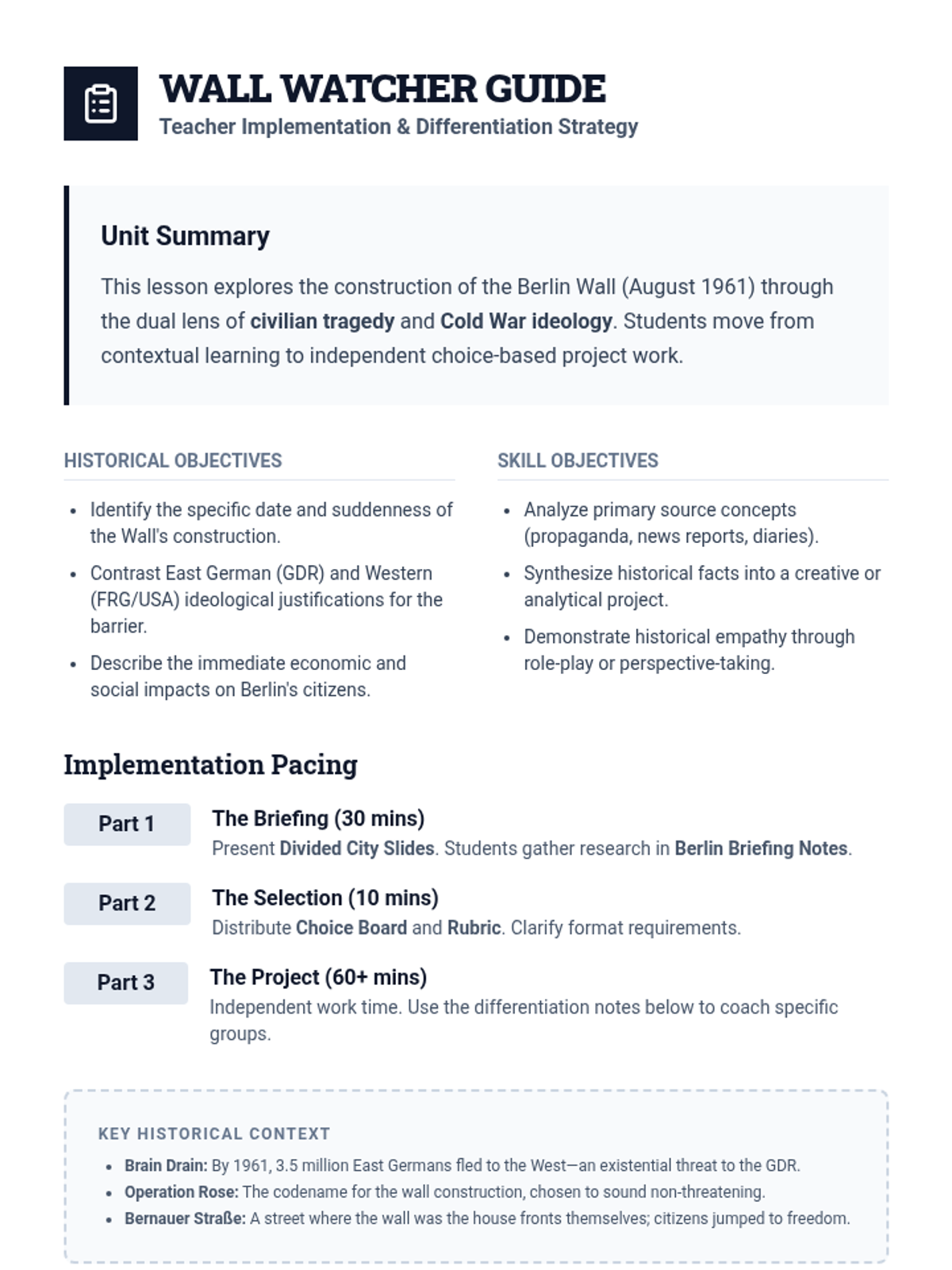
A comprehensive project-based unit exploring the construction of the Berlin Wall in 1961, its devastating impact on German civilians, and its role as a powerful symbol of Cold War ideological conflict.
A comprehensive curriculum covering financial literacy, economic principles, and civic systems through historical case studies, ethical dilemmas, and real-world simulations.
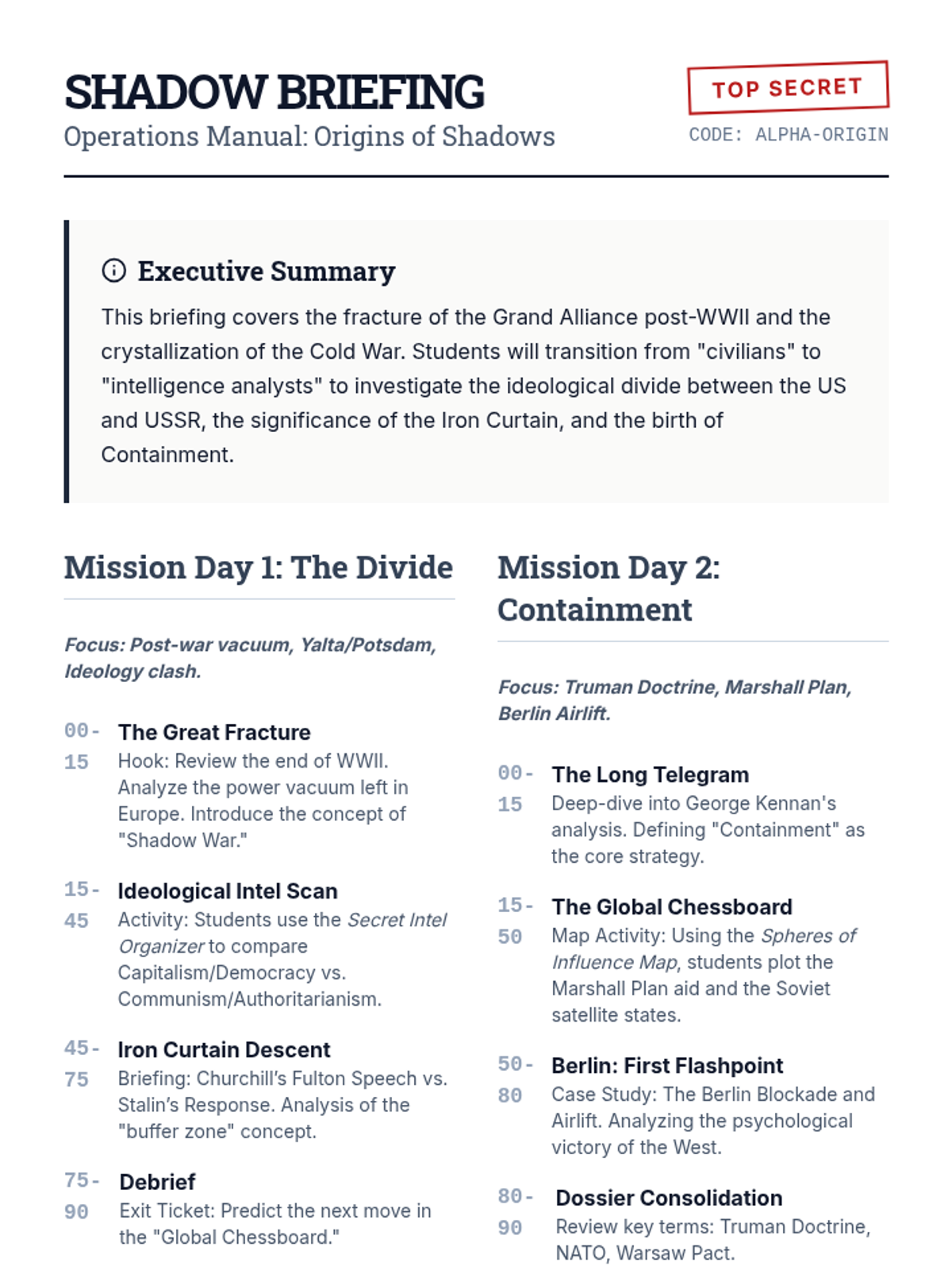
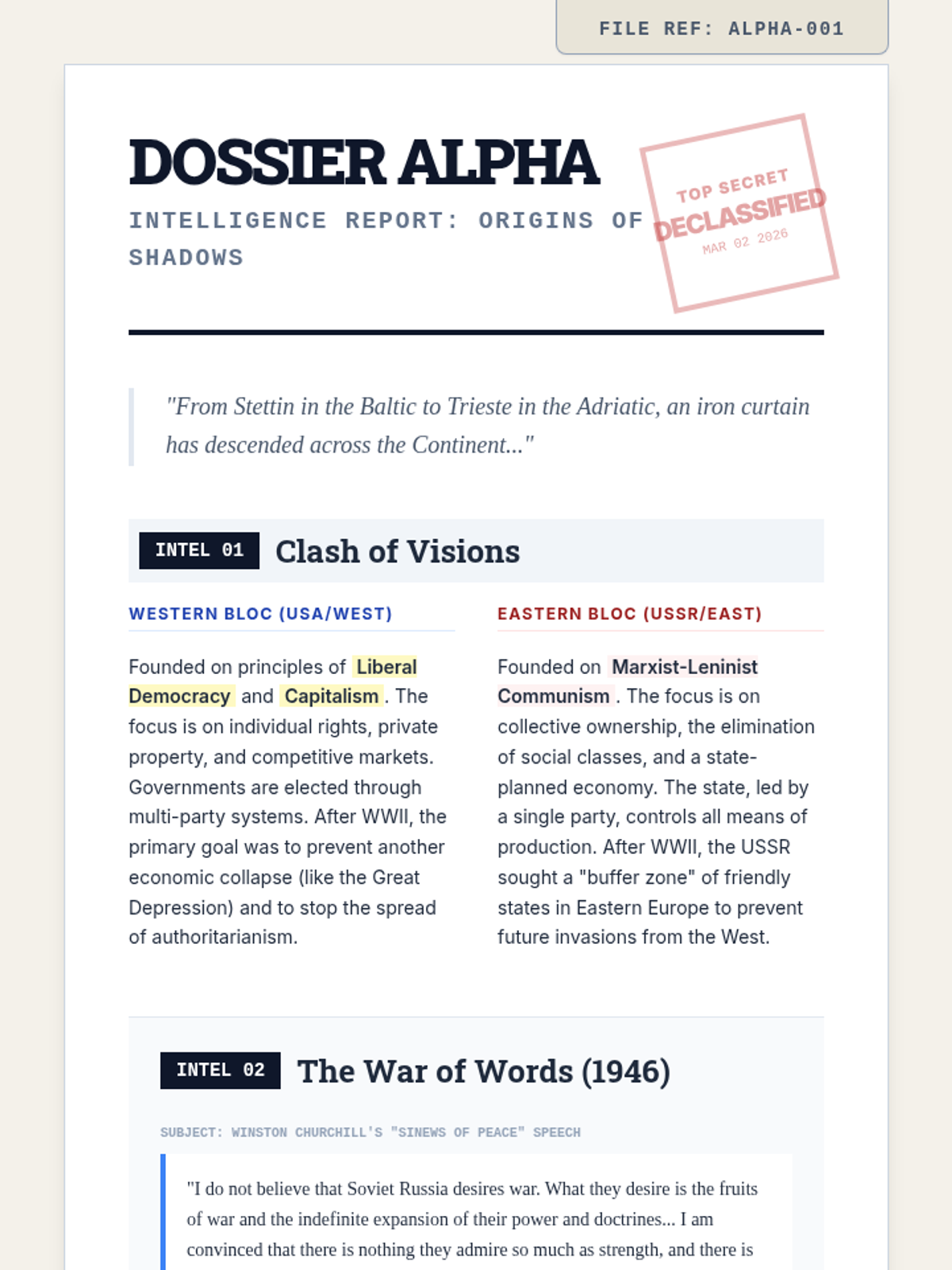
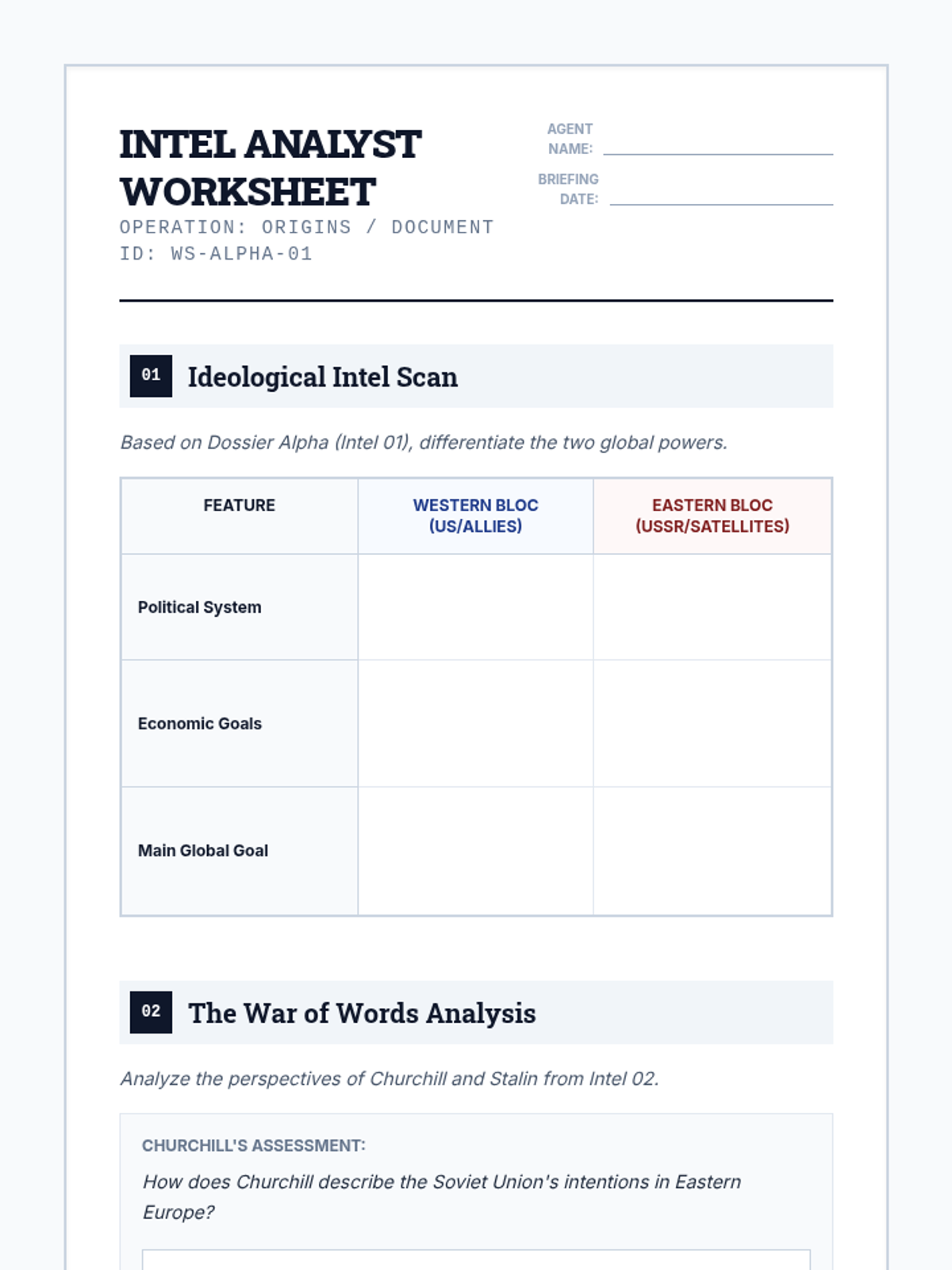
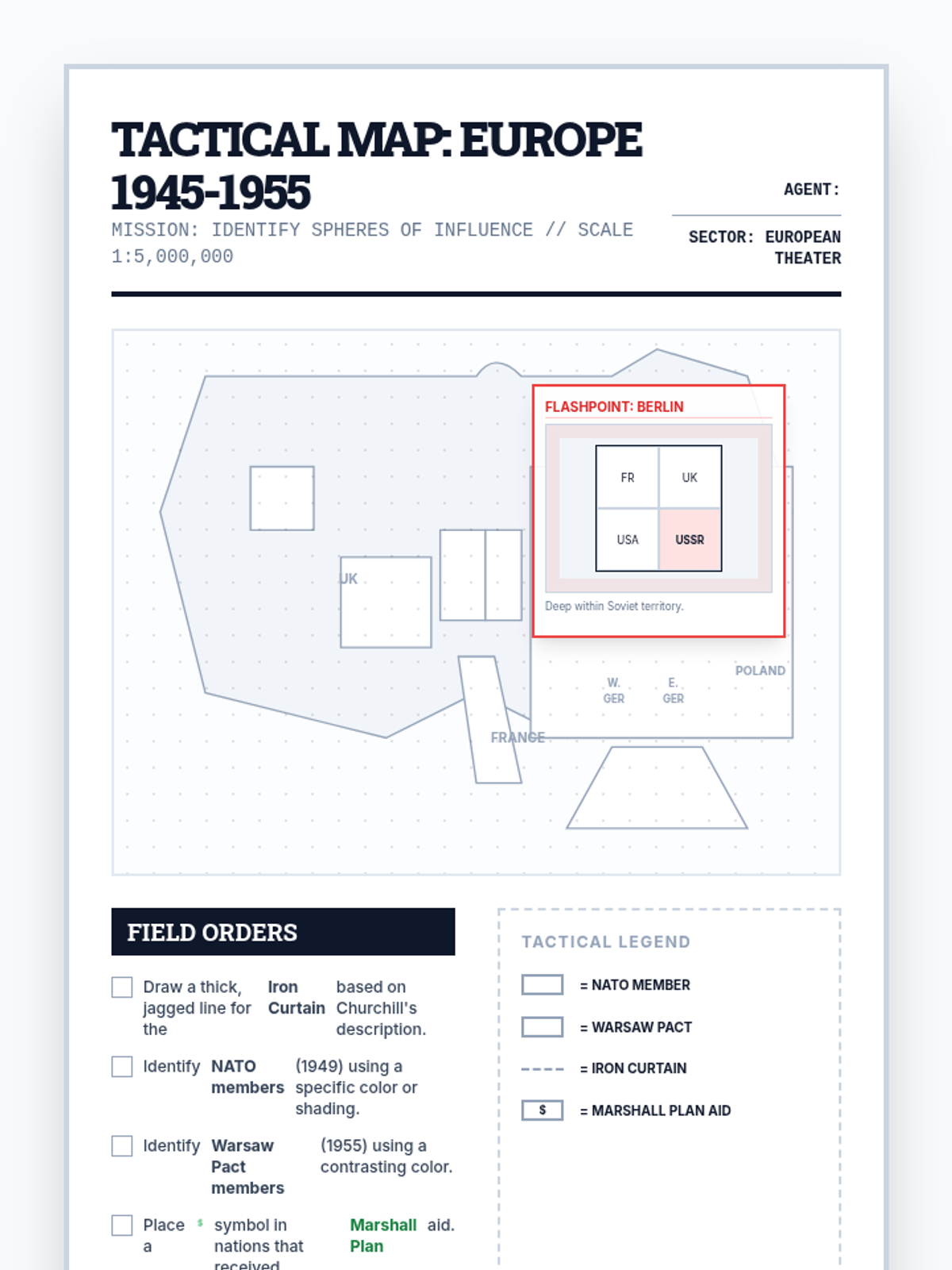
An immersive unit on the Cold War, styled as a series of declassified intelligence briefings exploring the global struggle for power between 1945 and 1991.
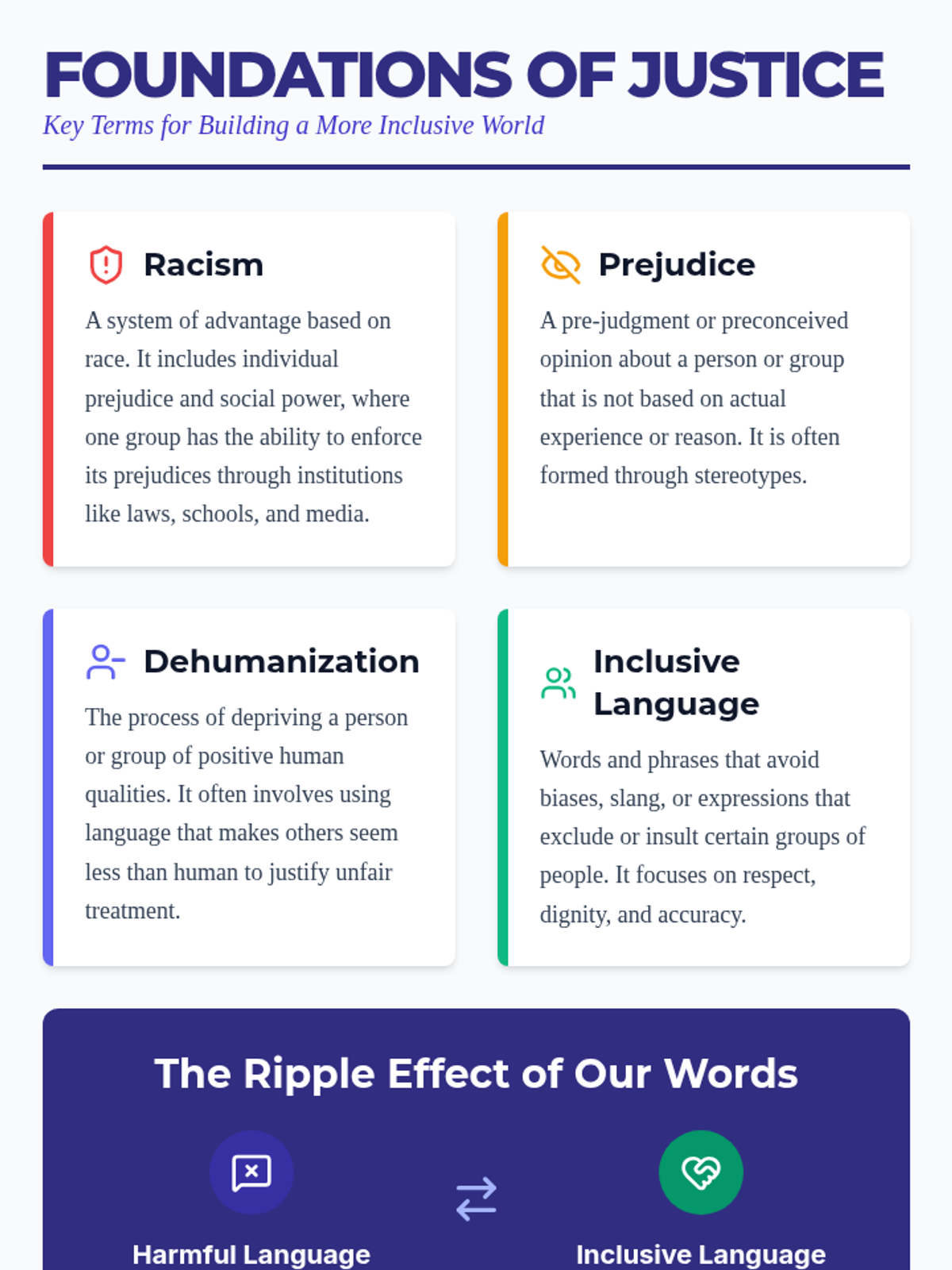
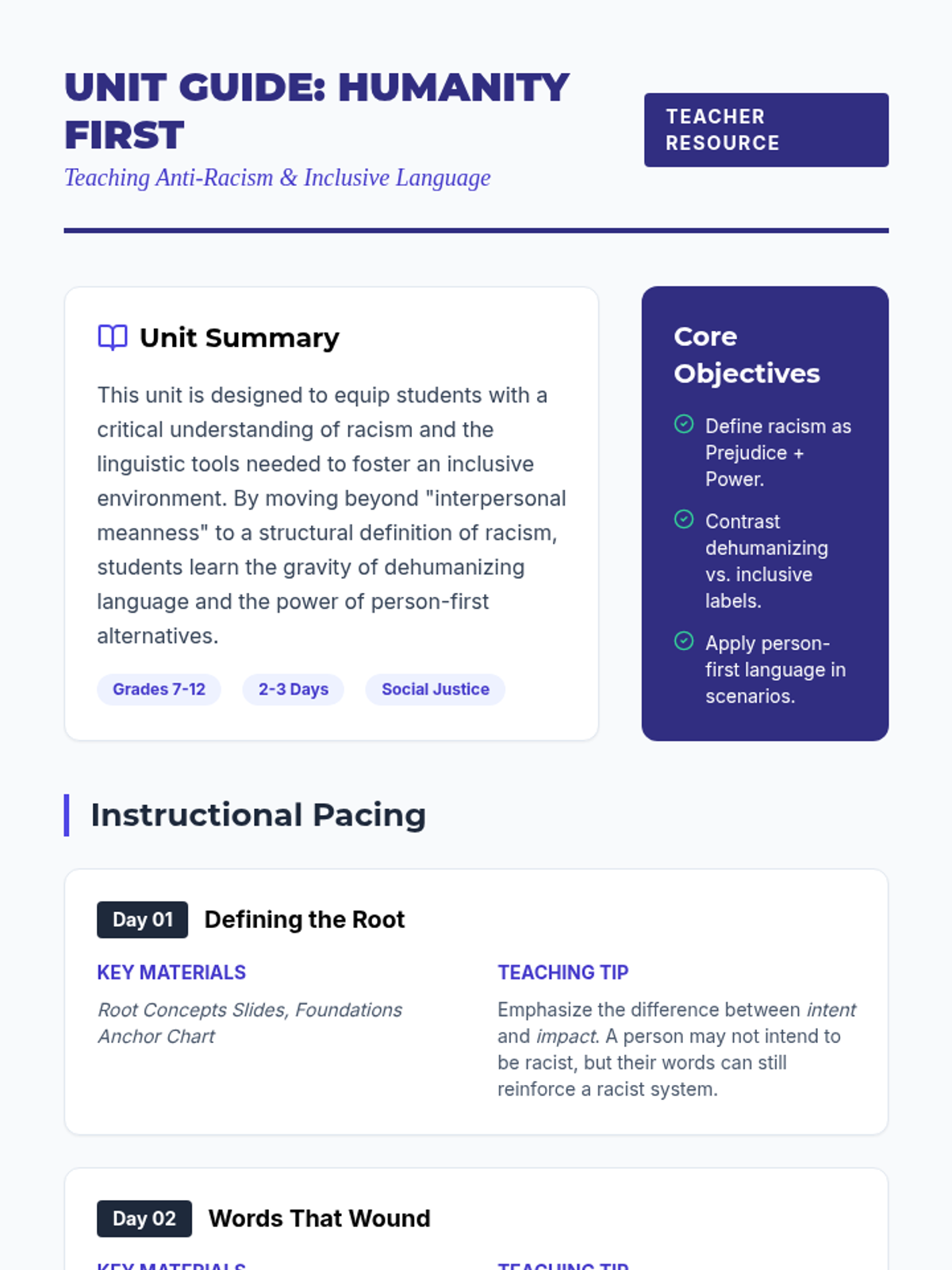
A 4th-grade unit focused on kindness, fairness, and understanding how our words can make everyone feel like they belong, regardless of their background or skin color.
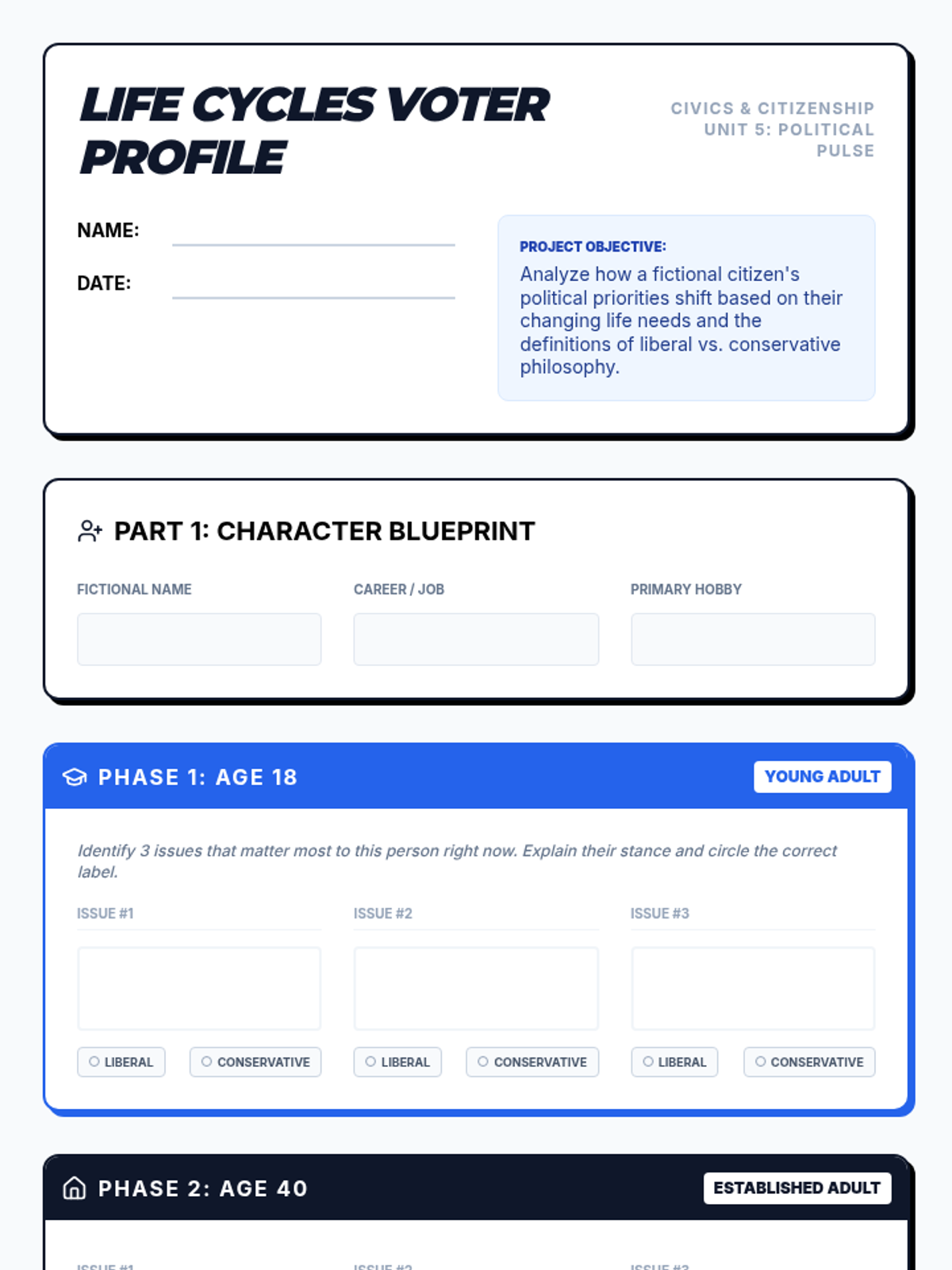
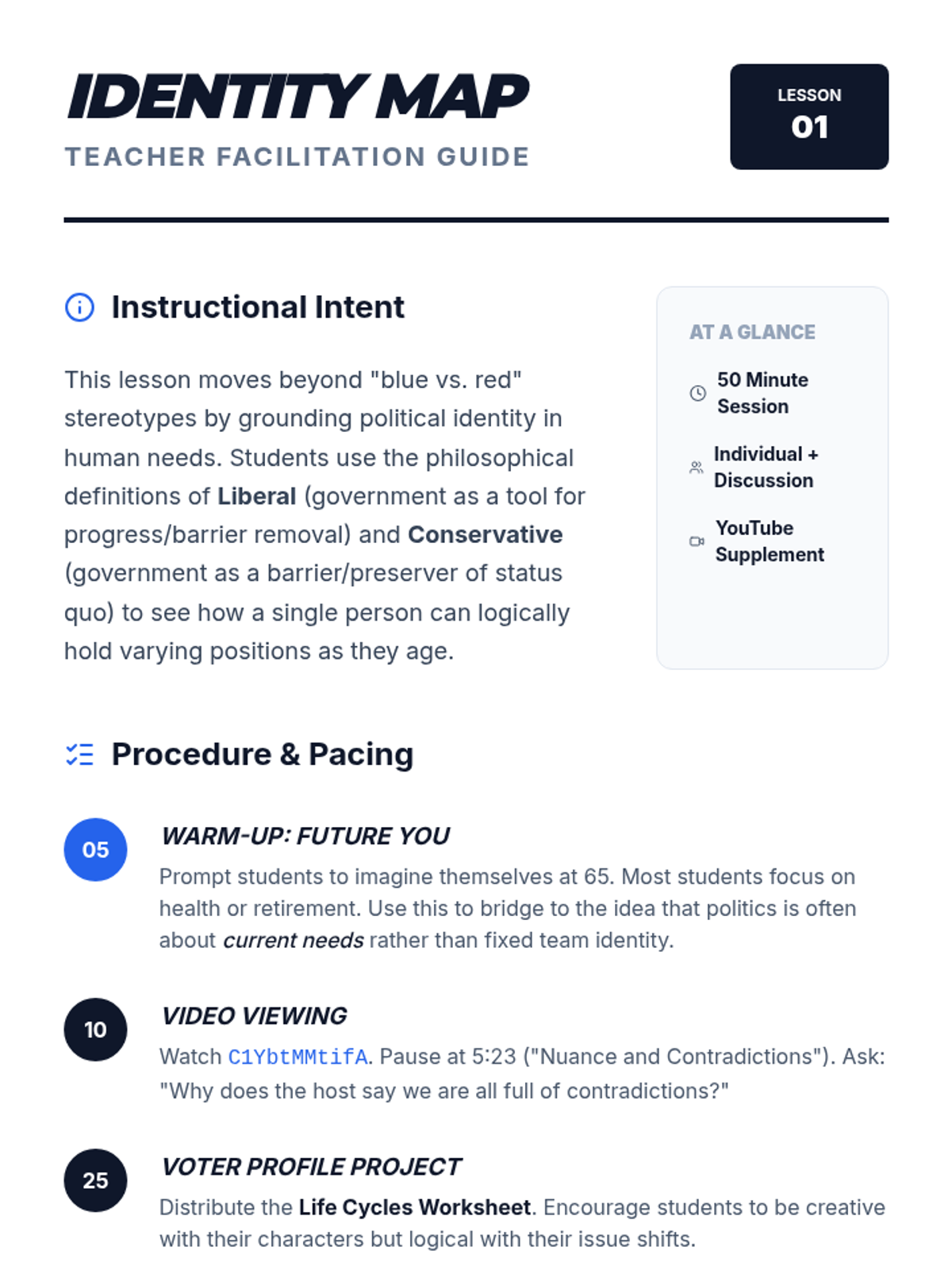
A civics sequence focused on the mechanics of American democracy, the two-party system, and the nuance of political identity.
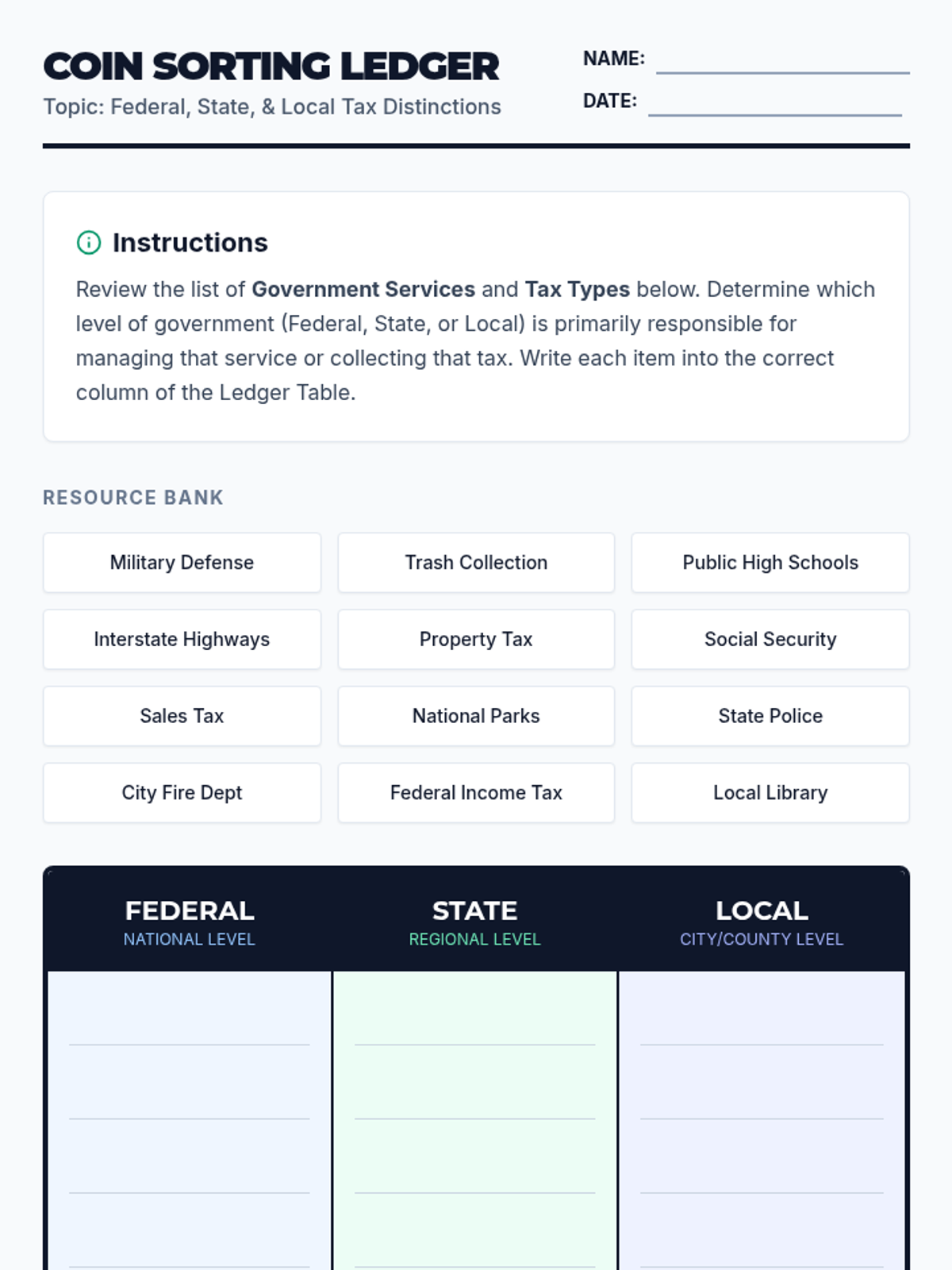
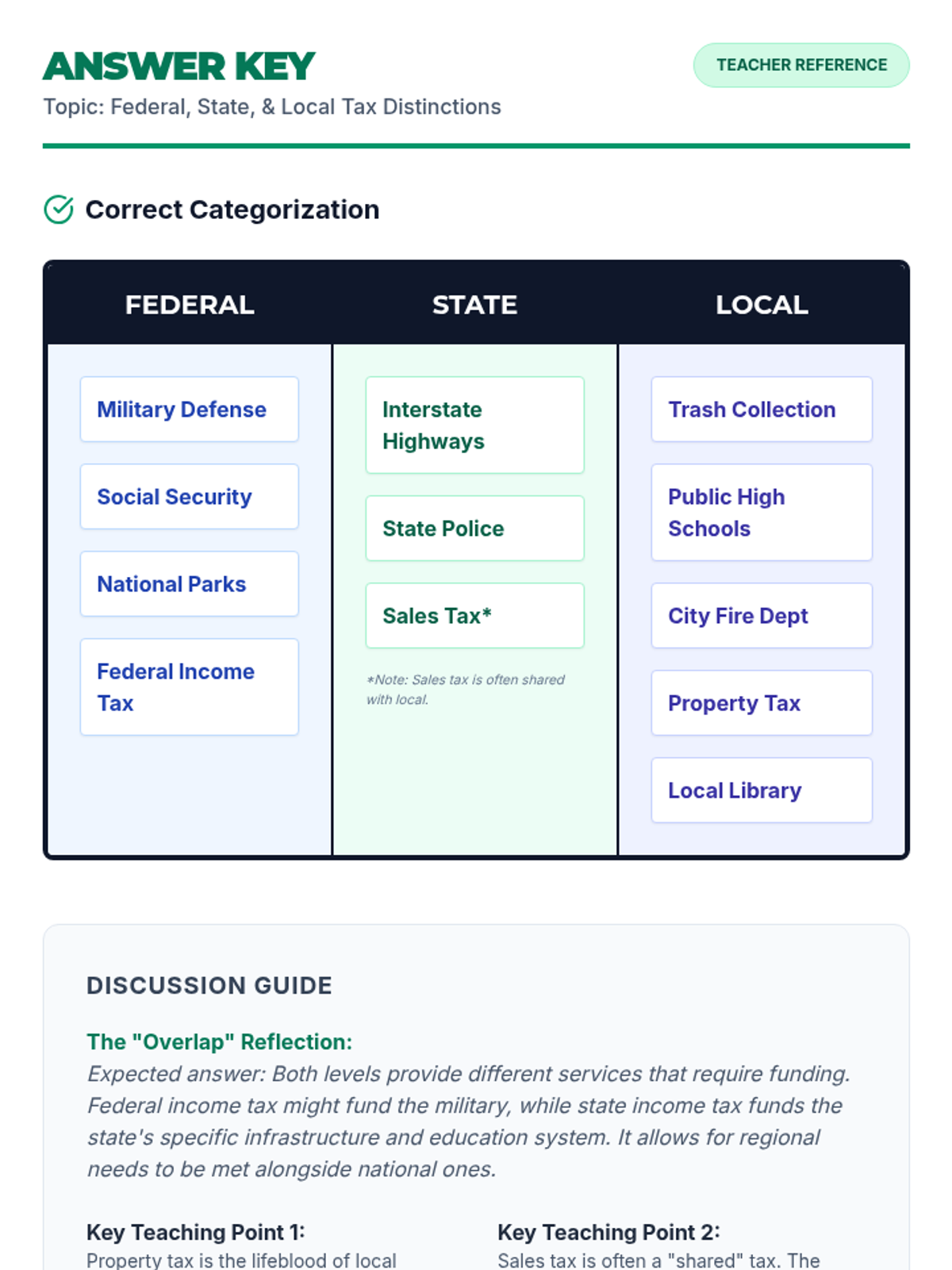
A comprehensive unit for 9th-grade students exploring the mechanics, ethics, and societal impact of the United States tax system. Students move from basic tax types to complex budget analysis and policy debates, building both financial literacy and civic understanding.
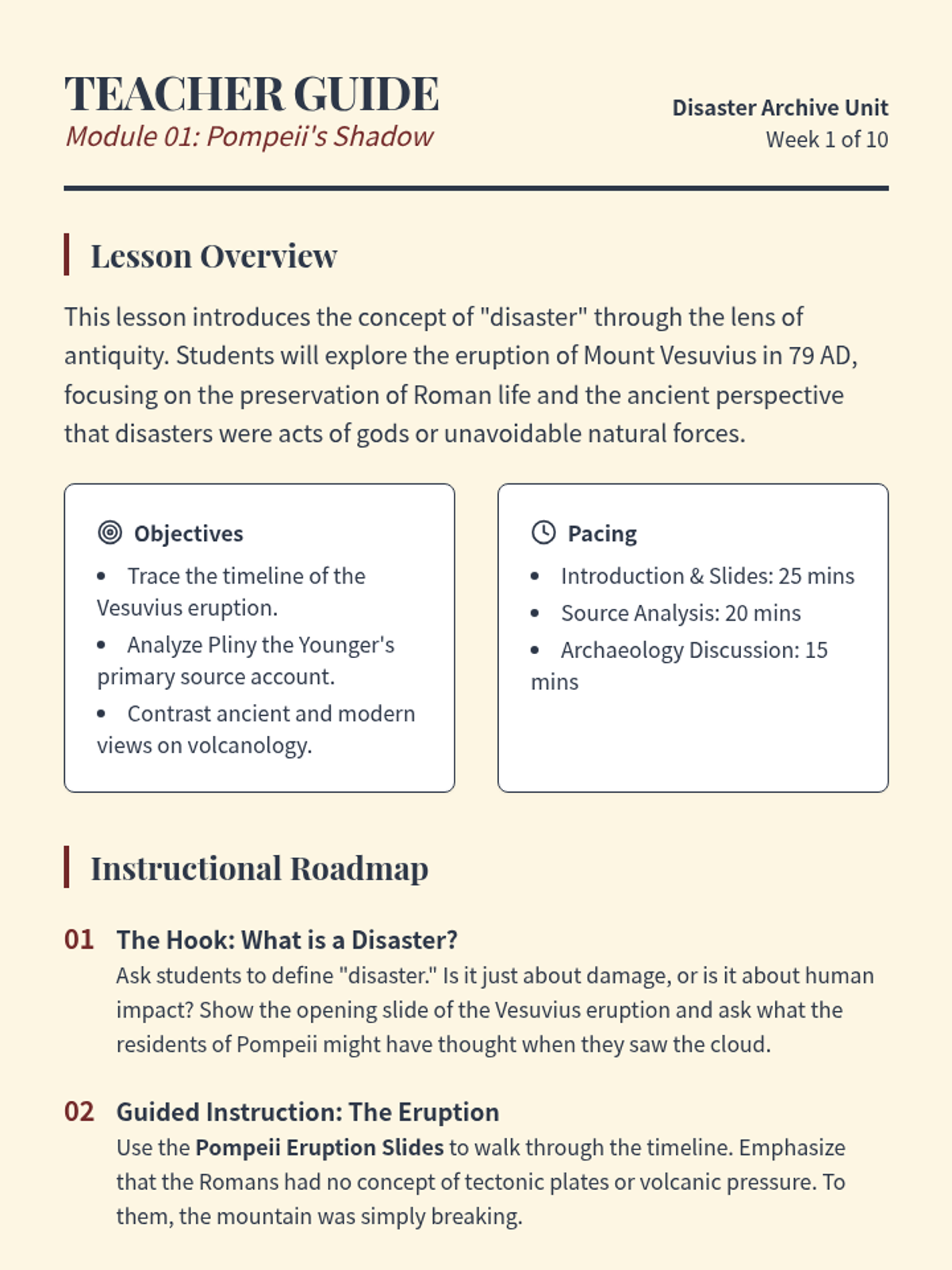
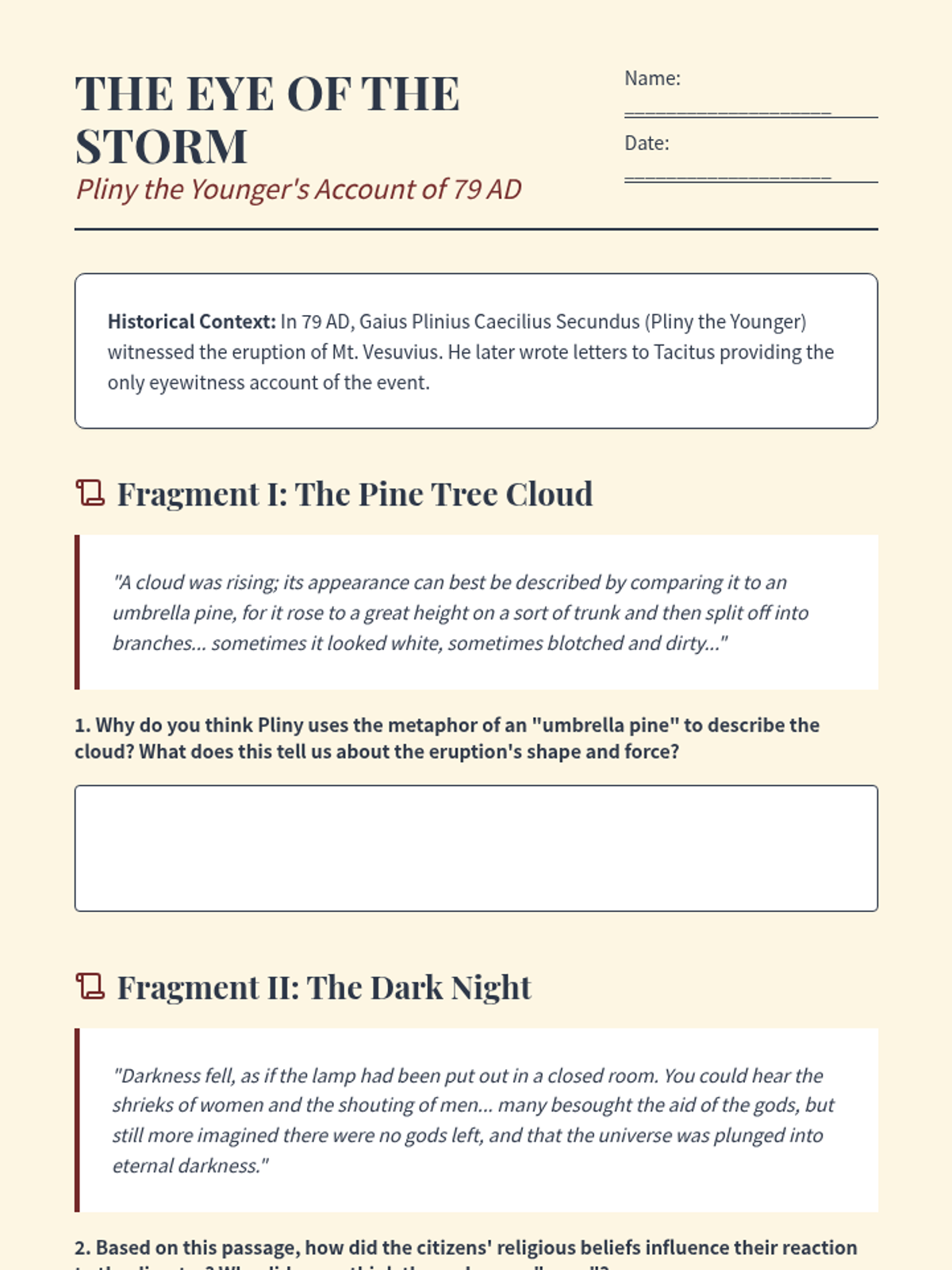
A 10-week comprehensive unit exploring the history of disasters from antiquity to the modern era, focusing on the shift from natural events to man-made catastrophes and changing human perspectives.
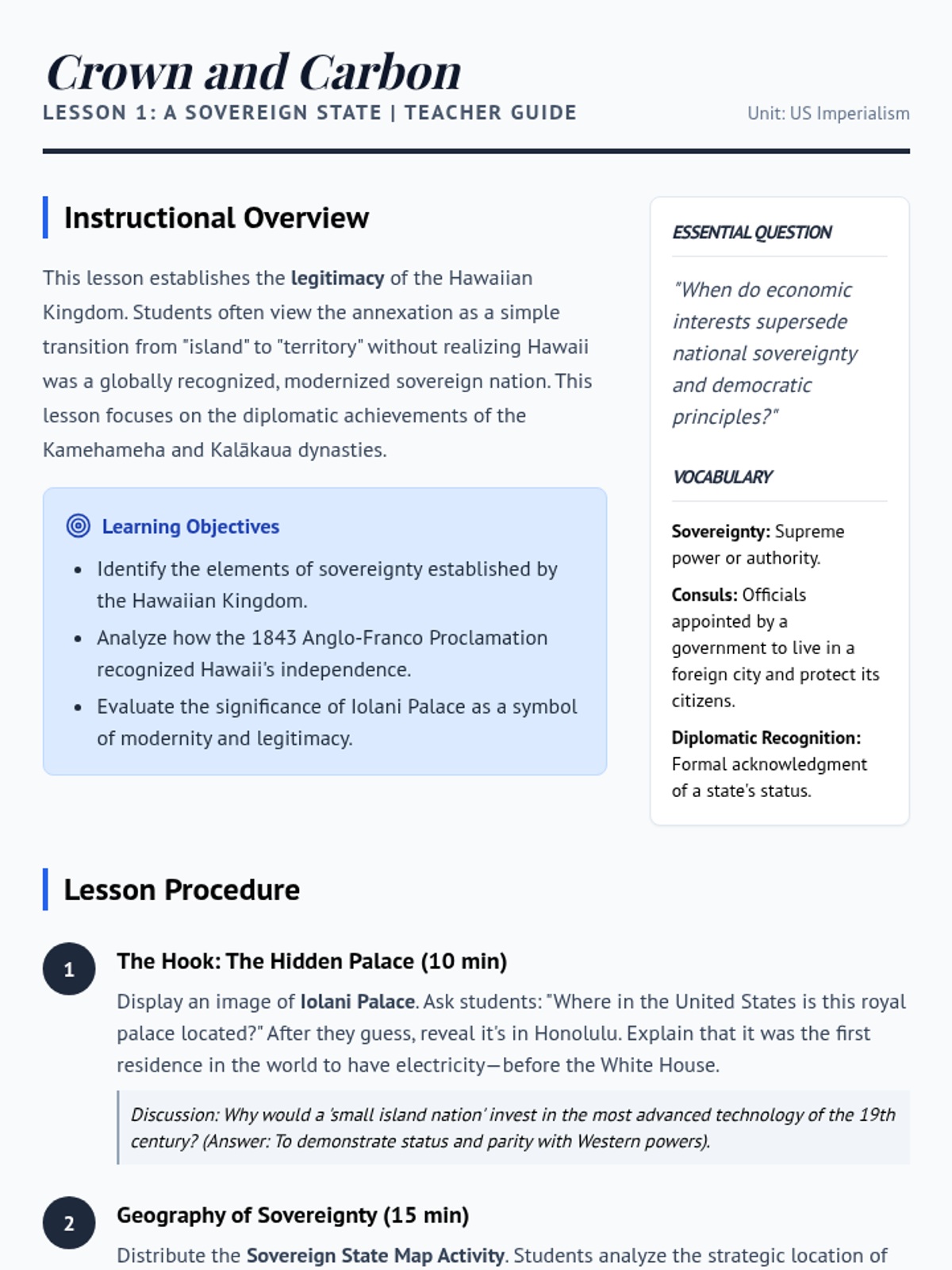
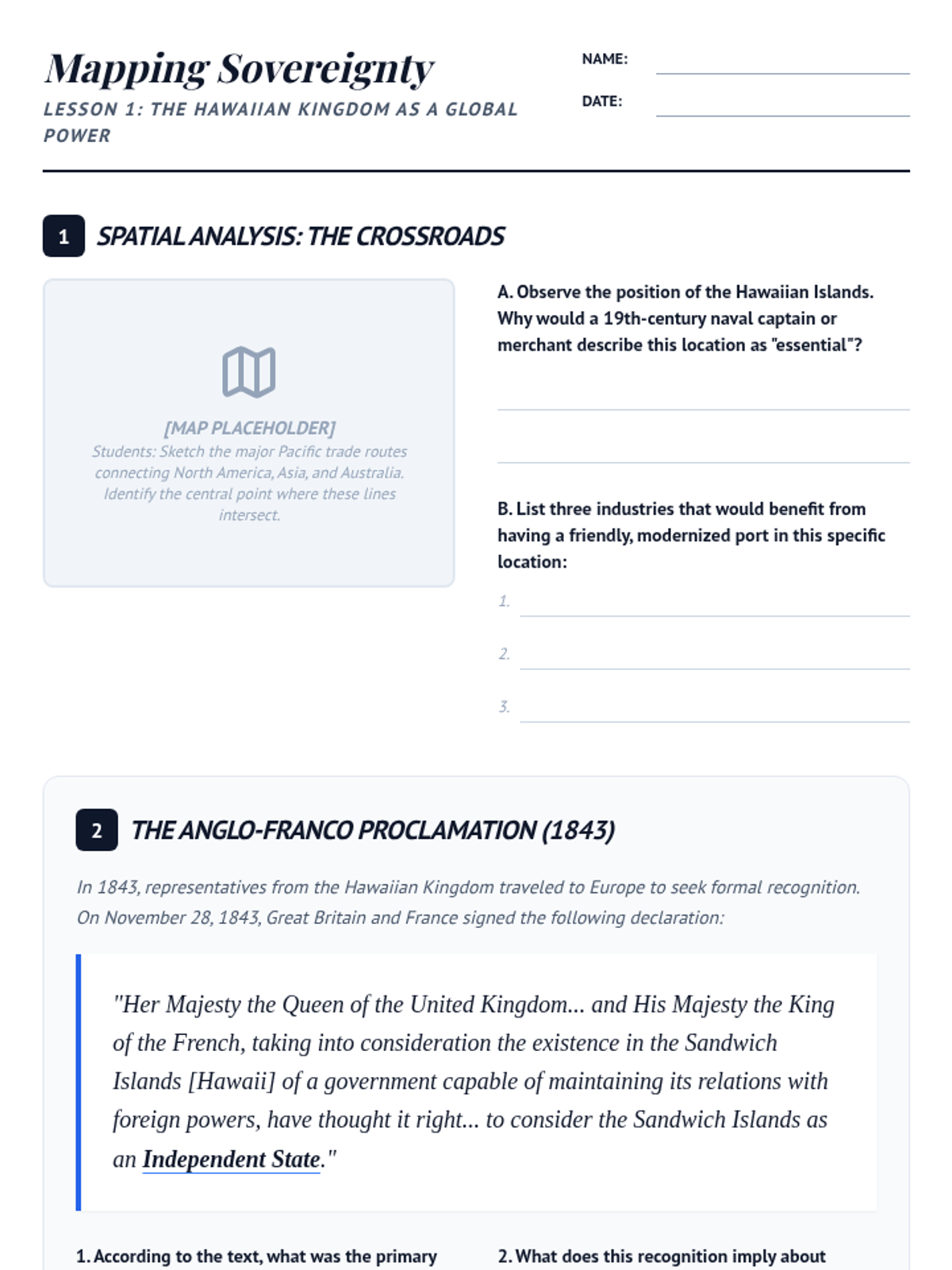
A deep-dive case study into the annexation of Hawaii, exploring the collision of indigenous sovereignty, missionary influence, and corporate interests. Students analyze the transition from a recognized sovereign monarchy to a US territory, evaluating the ethical and political implications of imperialism.
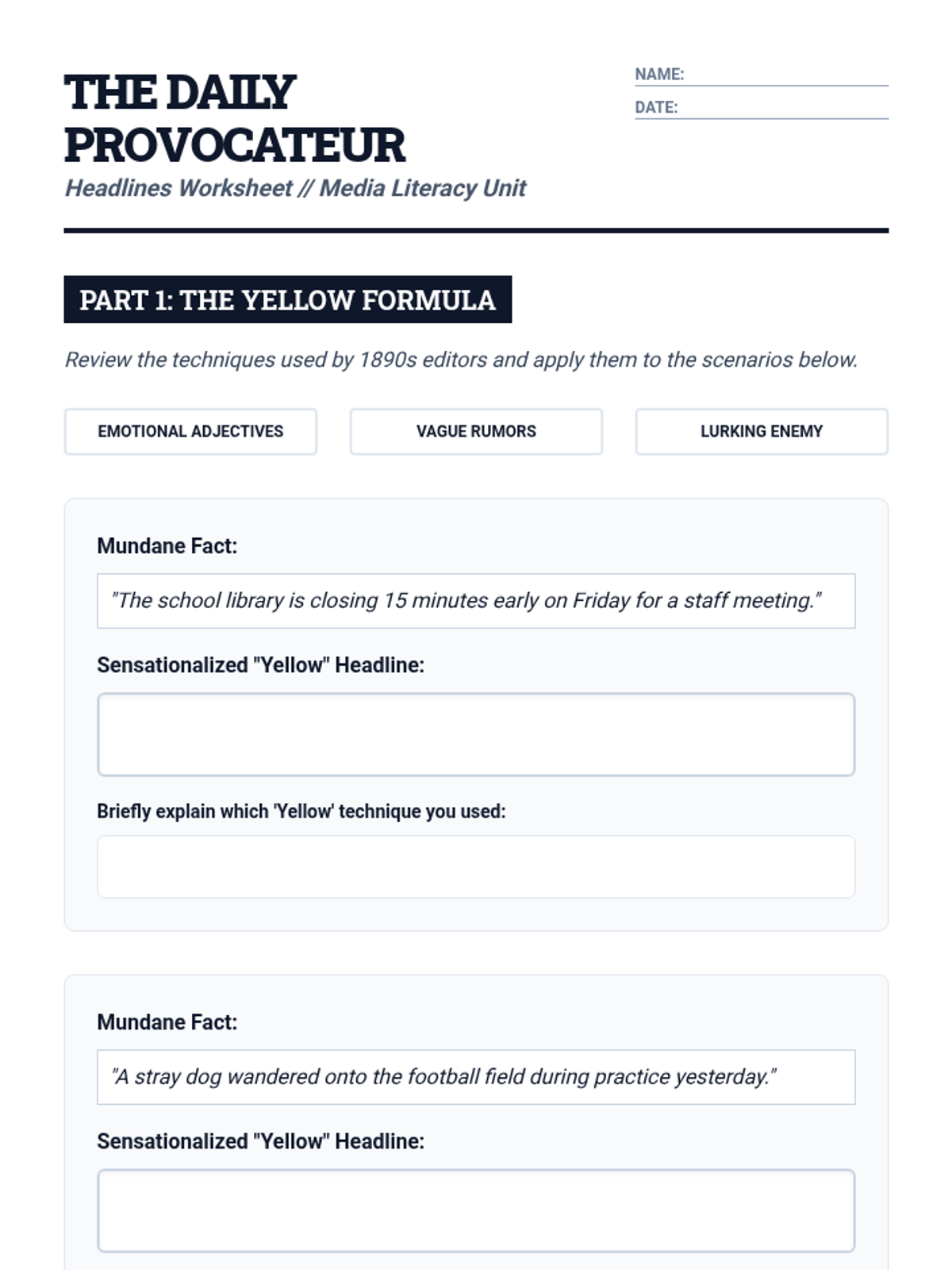
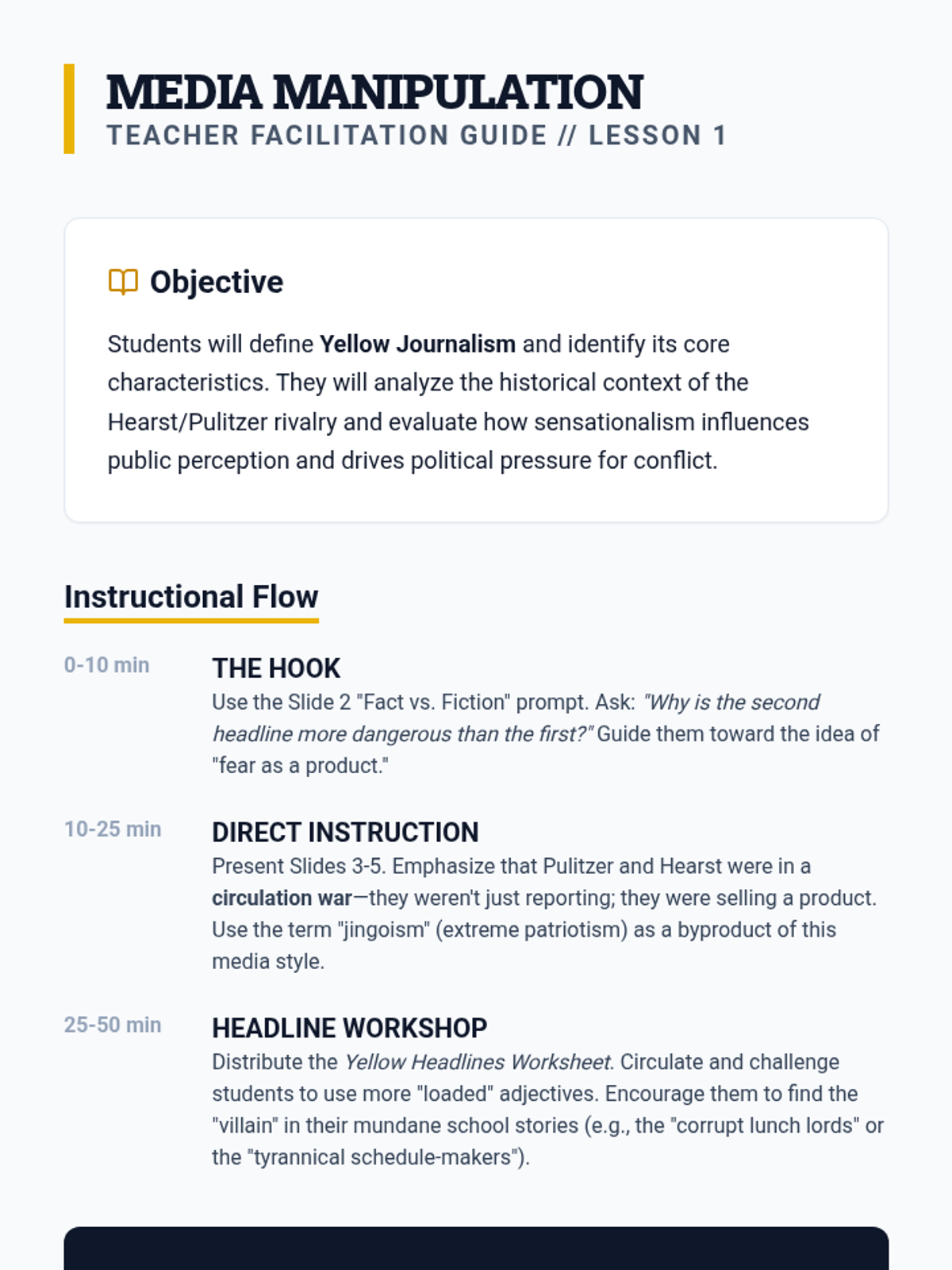
A high school history sequence exploring the intersection of mass media, public opinion, and American expansionism through the lens of the Spanish-American and Philippine-American Wars. Students analyze how 'Yellow Journalism' and strategic narratives shaped foreign policy at the turn of the 20th century.
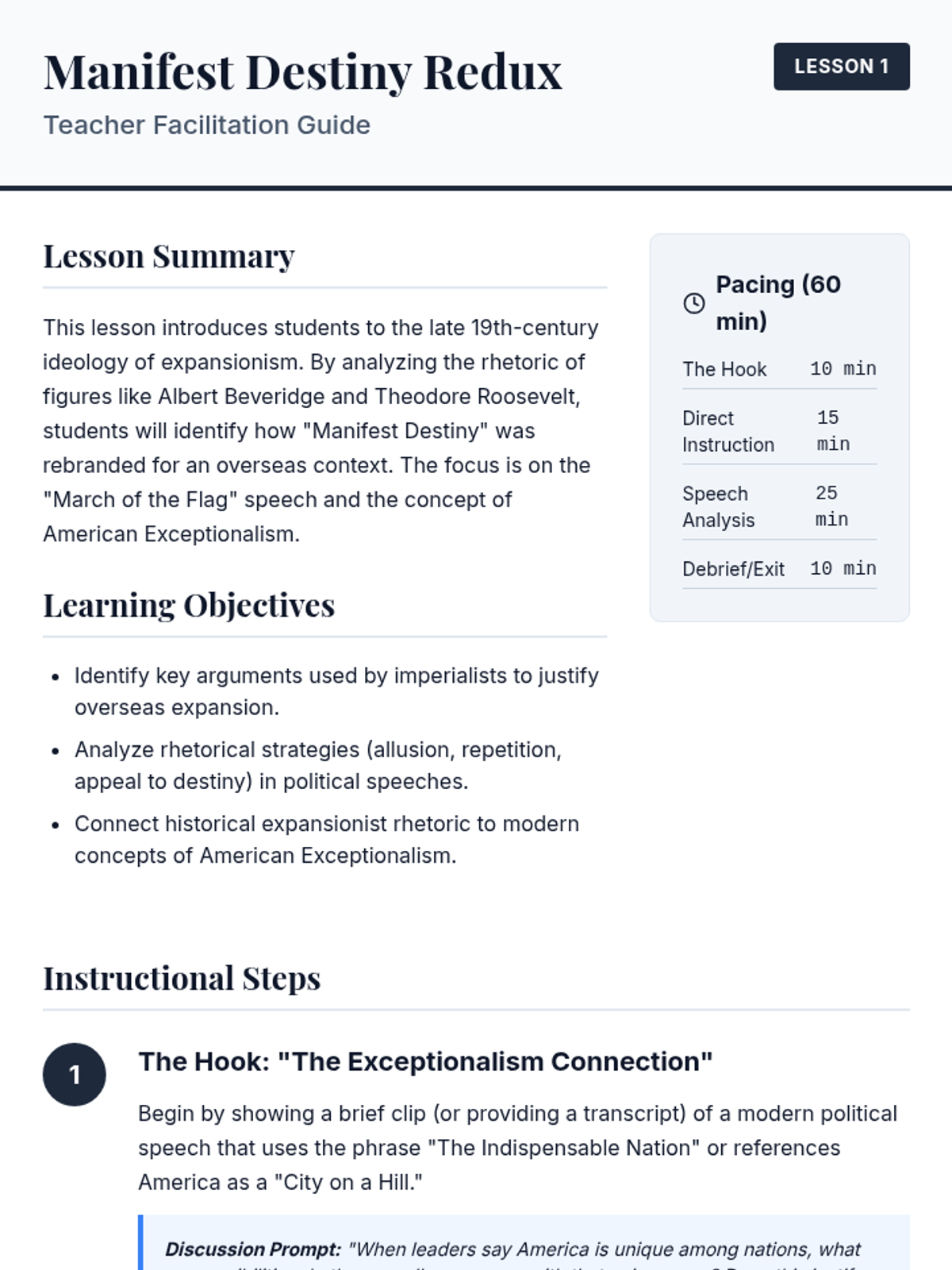
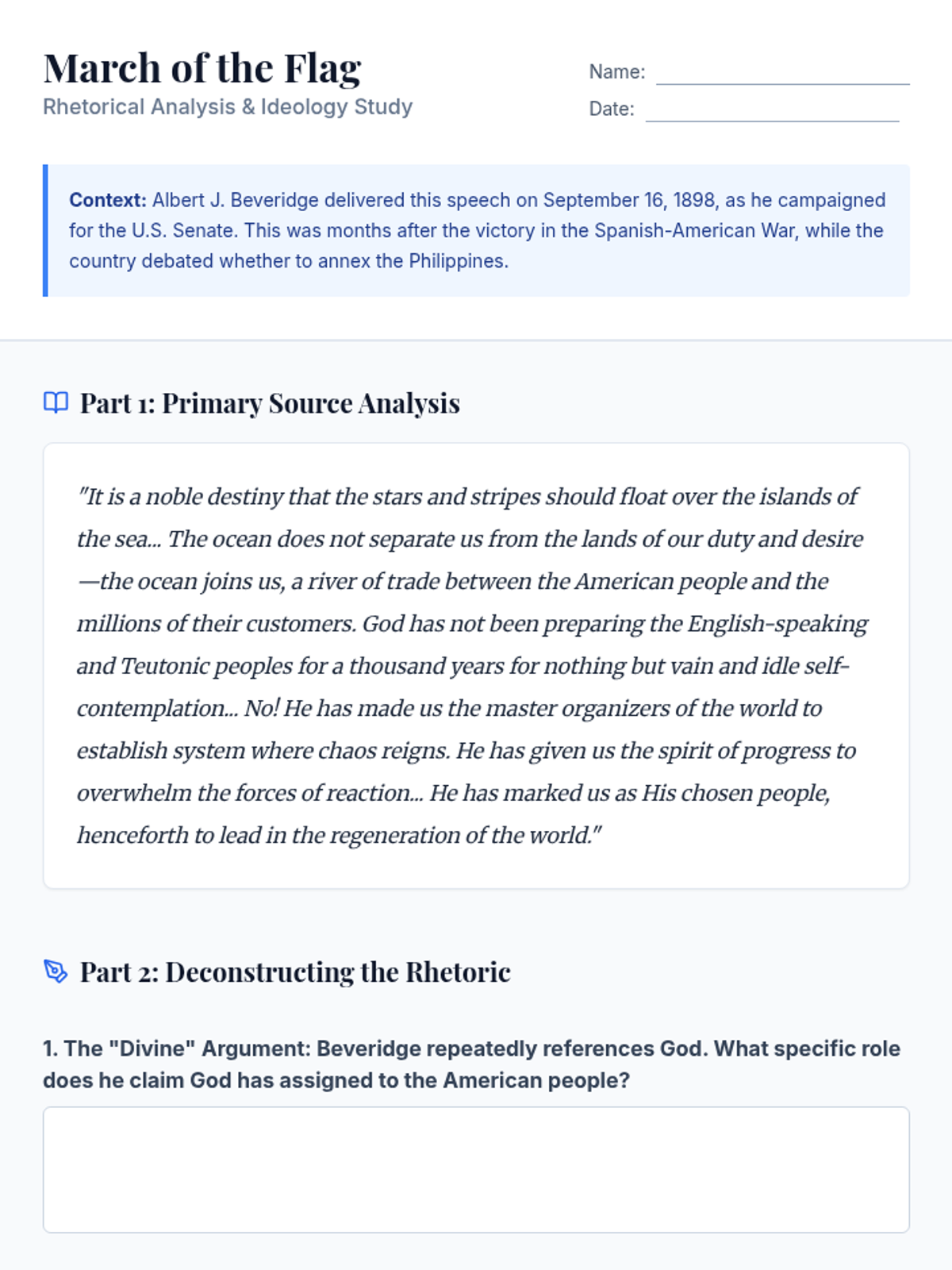
A high school history sequence exploring the fierce domestic debate over American imperialism at the turn of the 20th century. Students analyze the rhetorical, moral, and legal arguments of both expansionists and anti-imperialists, culminating in a formal debate on the compatibility of empire and democracy.
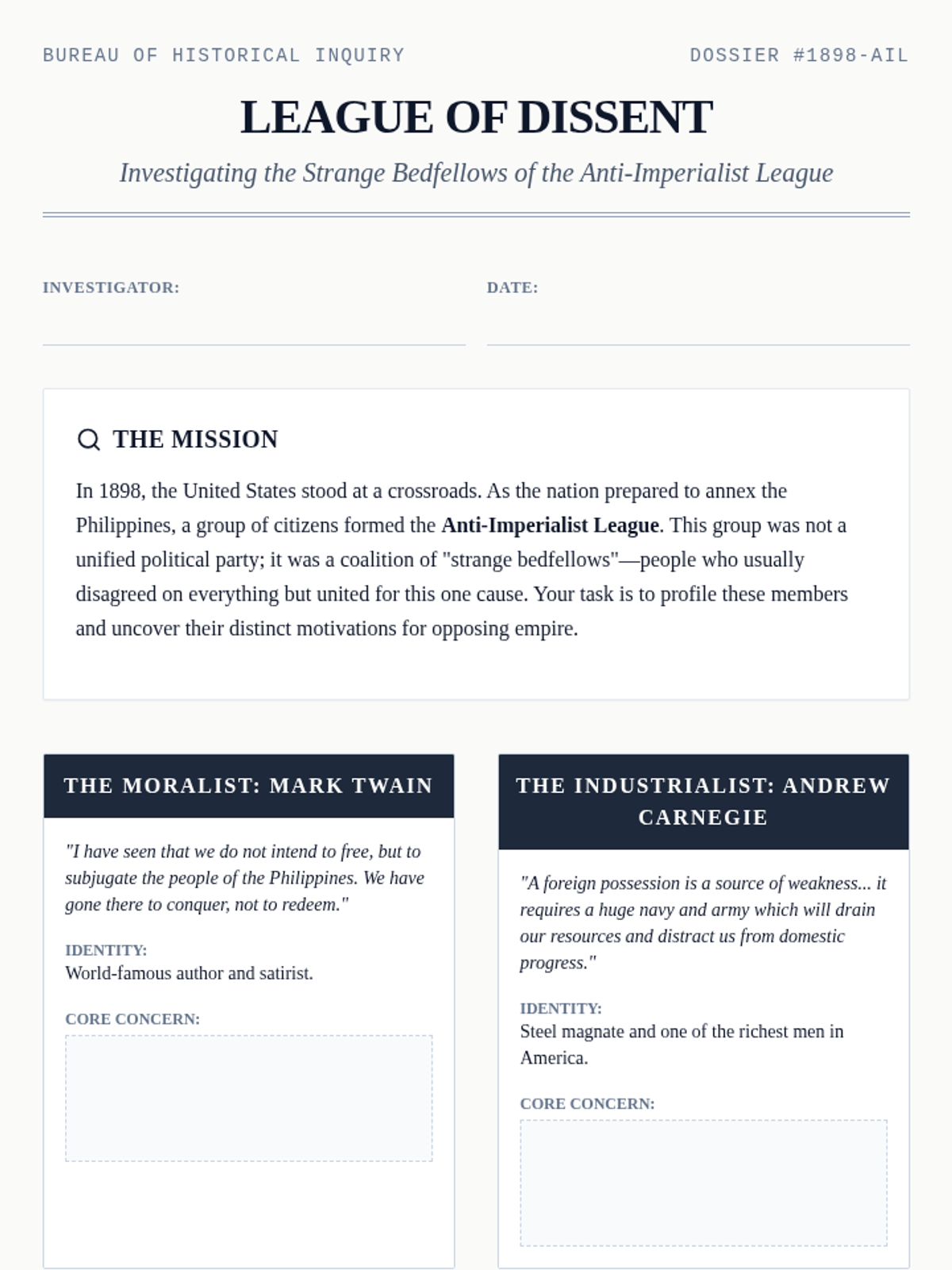
A rigorous 5-lesson unit for 9th graders exploring the domestic debate over US expansionism. Students analyze the Anti-Imperialist League, deconstruct primary source arguments, and engage in a formal debate on whether American imperialism is compatible with democratic ideals.
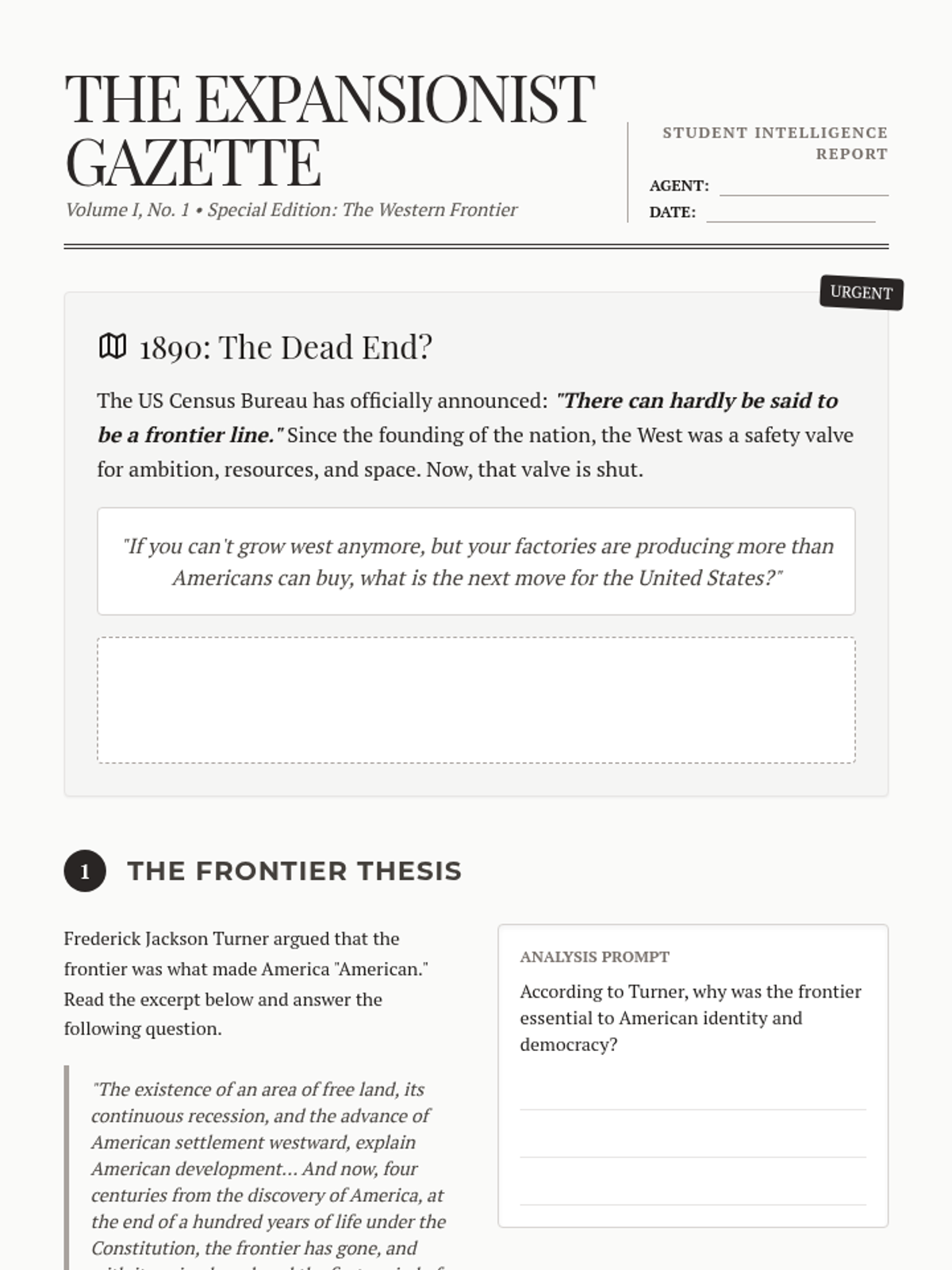
A deep dive into the intellectual, economic, and strategic foundations of American Imperialism at the turn of the 20th century, exploring the tension between profit and principle.
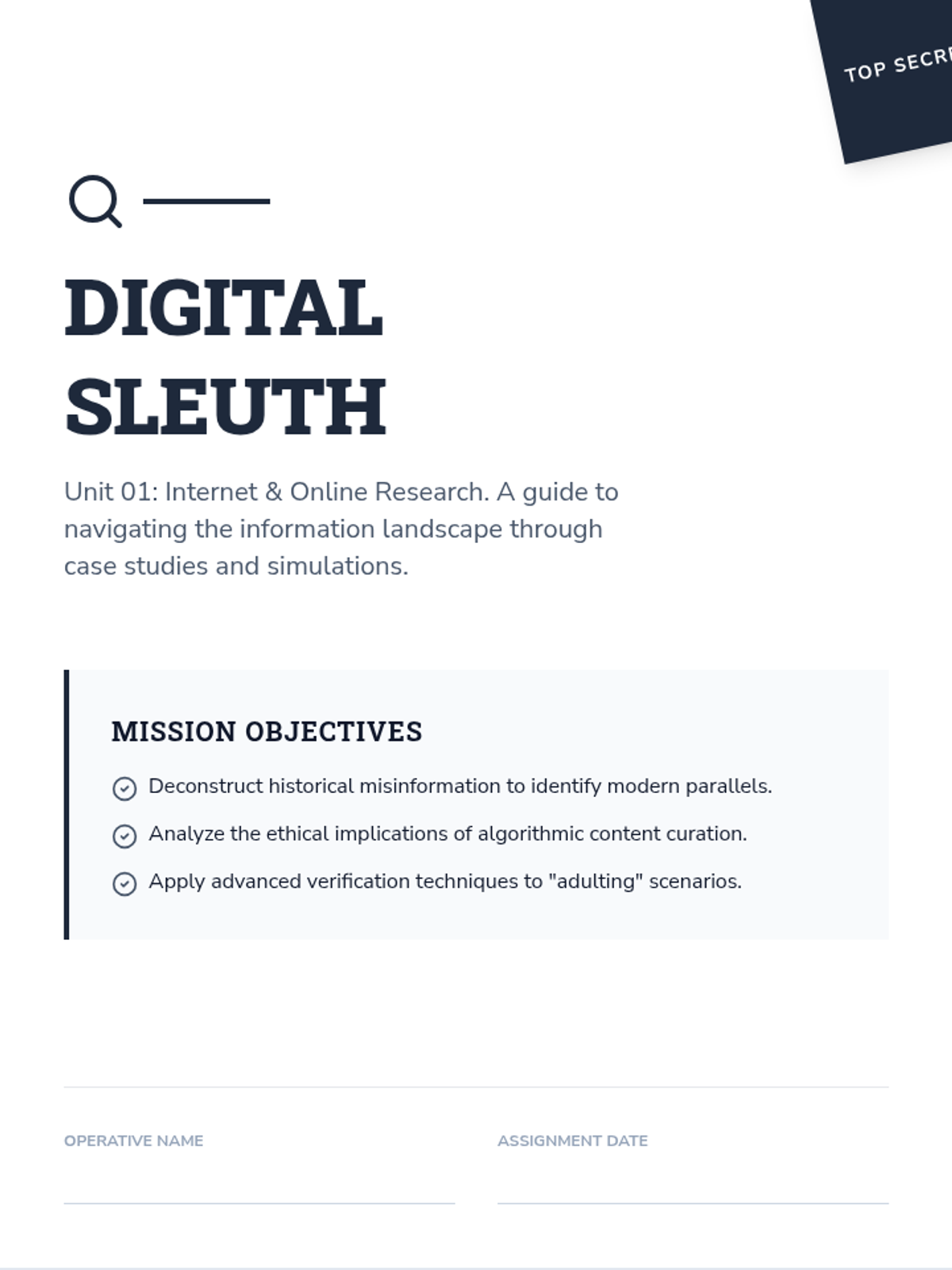
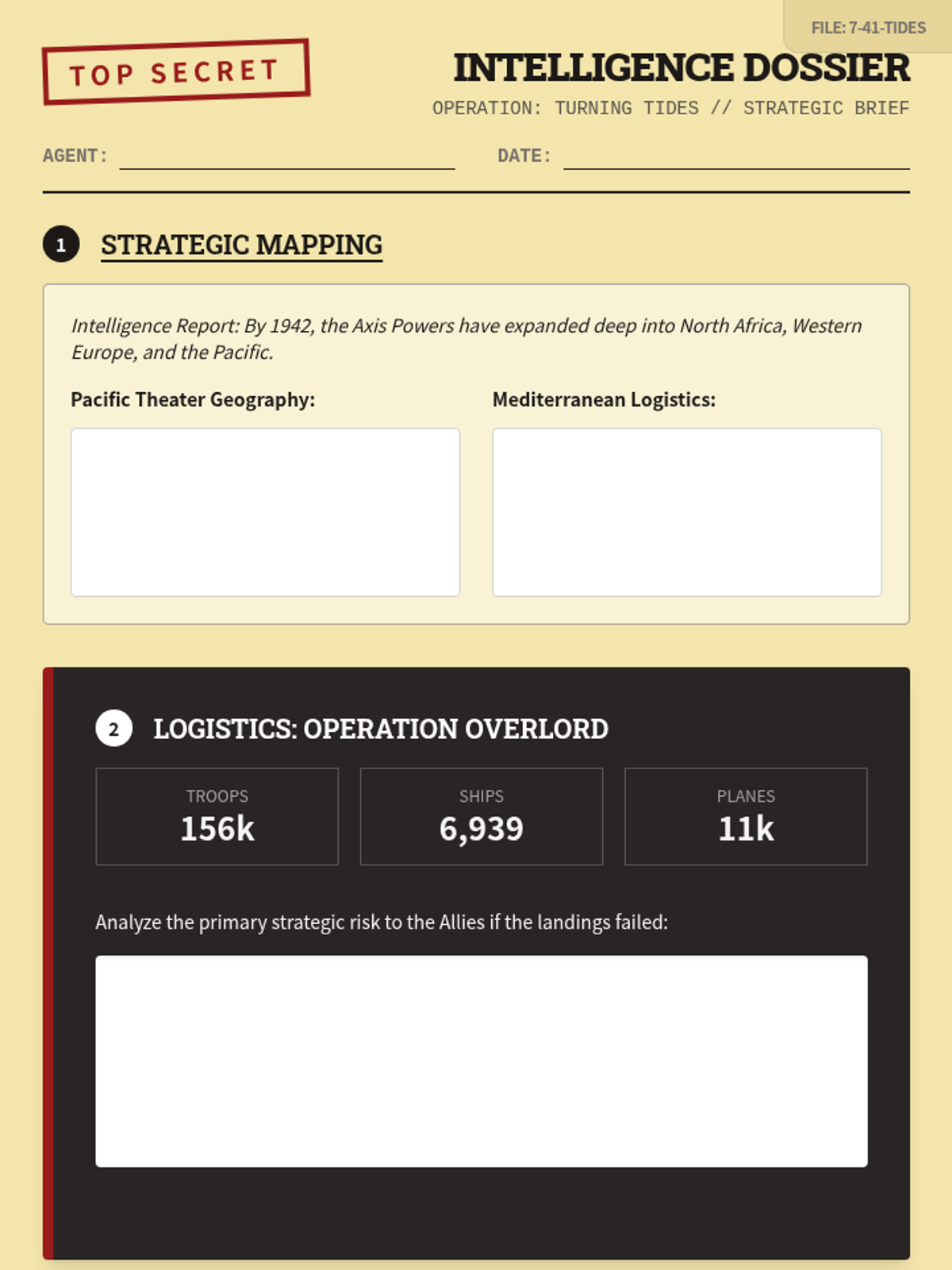
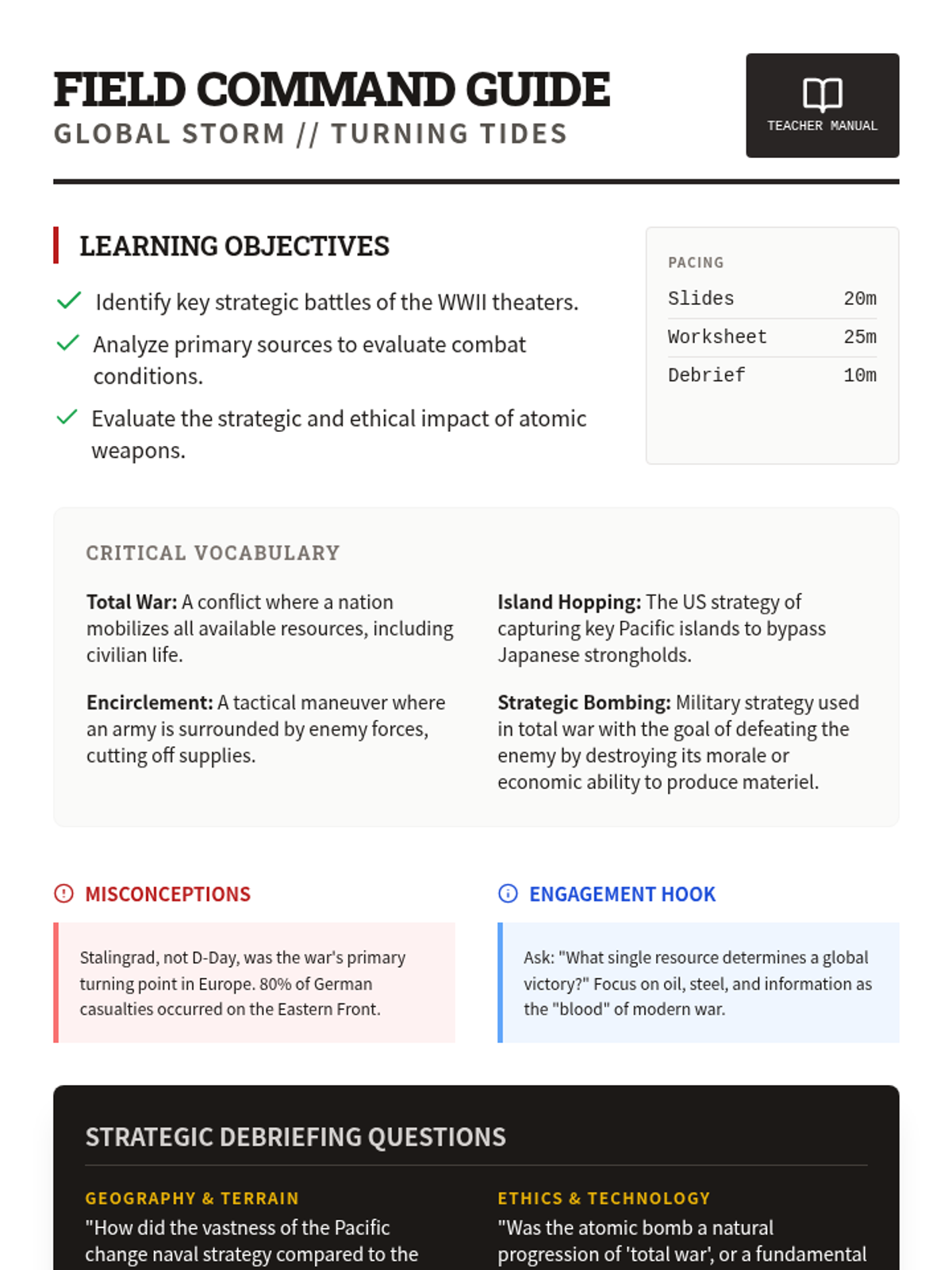
A comprehensive dive into the pivotal moments and global impact of World War II, framed through the lens of military intelligence and historical analysis.