Examining foundational arguments from major thinkers alongside contemporary debates on morality, governance, and the nature of existence. Addresses core concepts like political structures, consciousness, and the conflict between agency and fate.
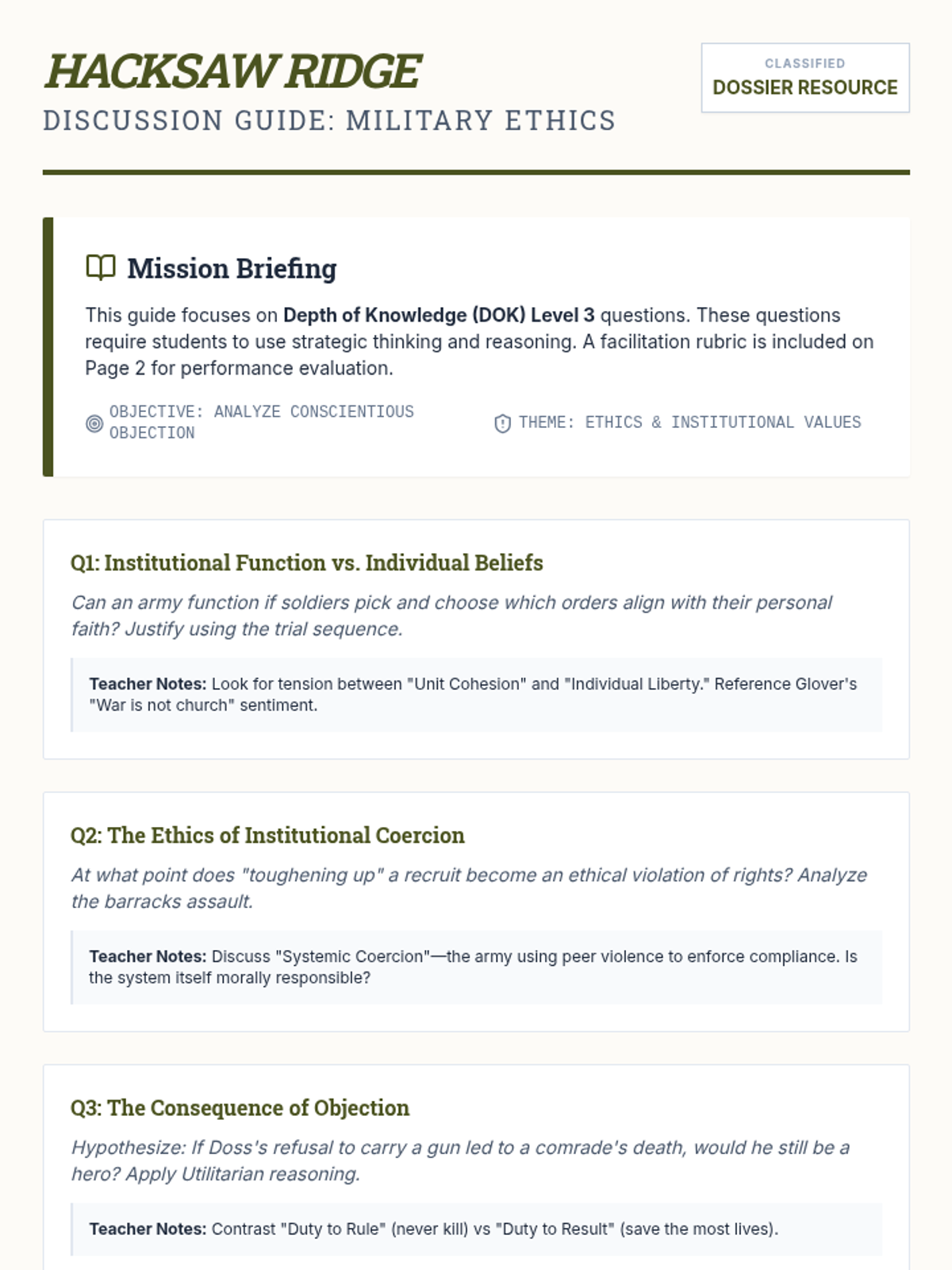
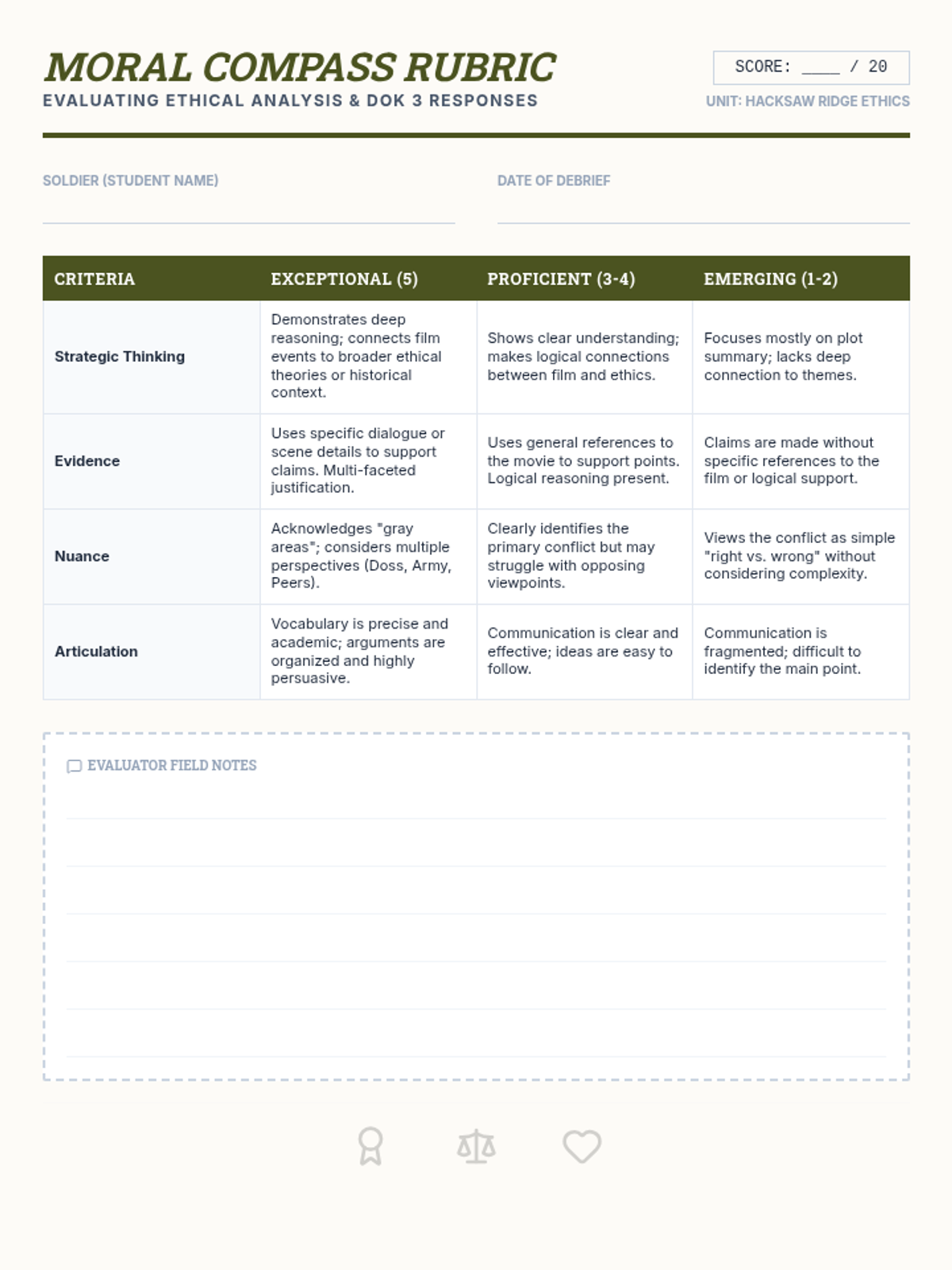
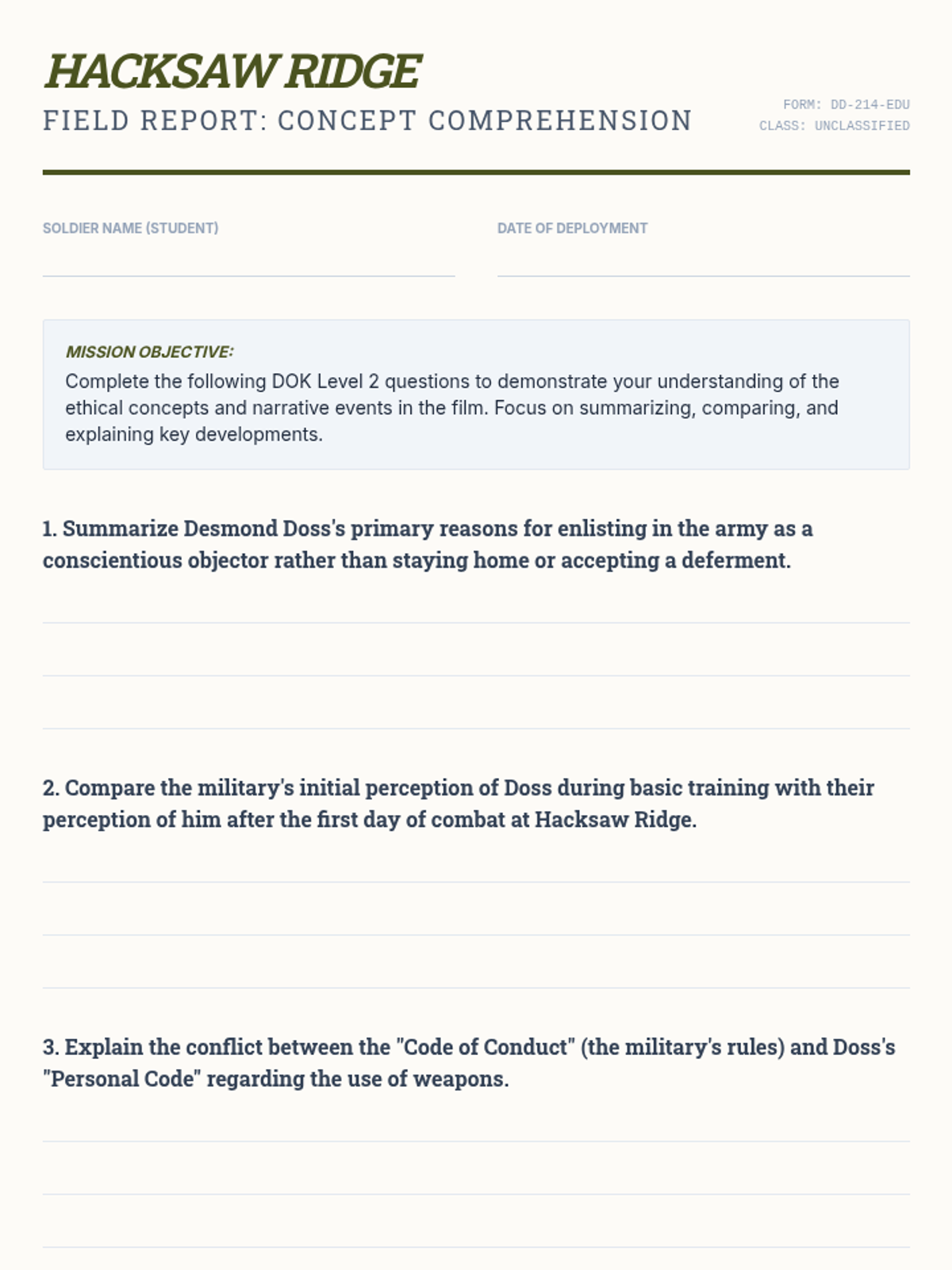
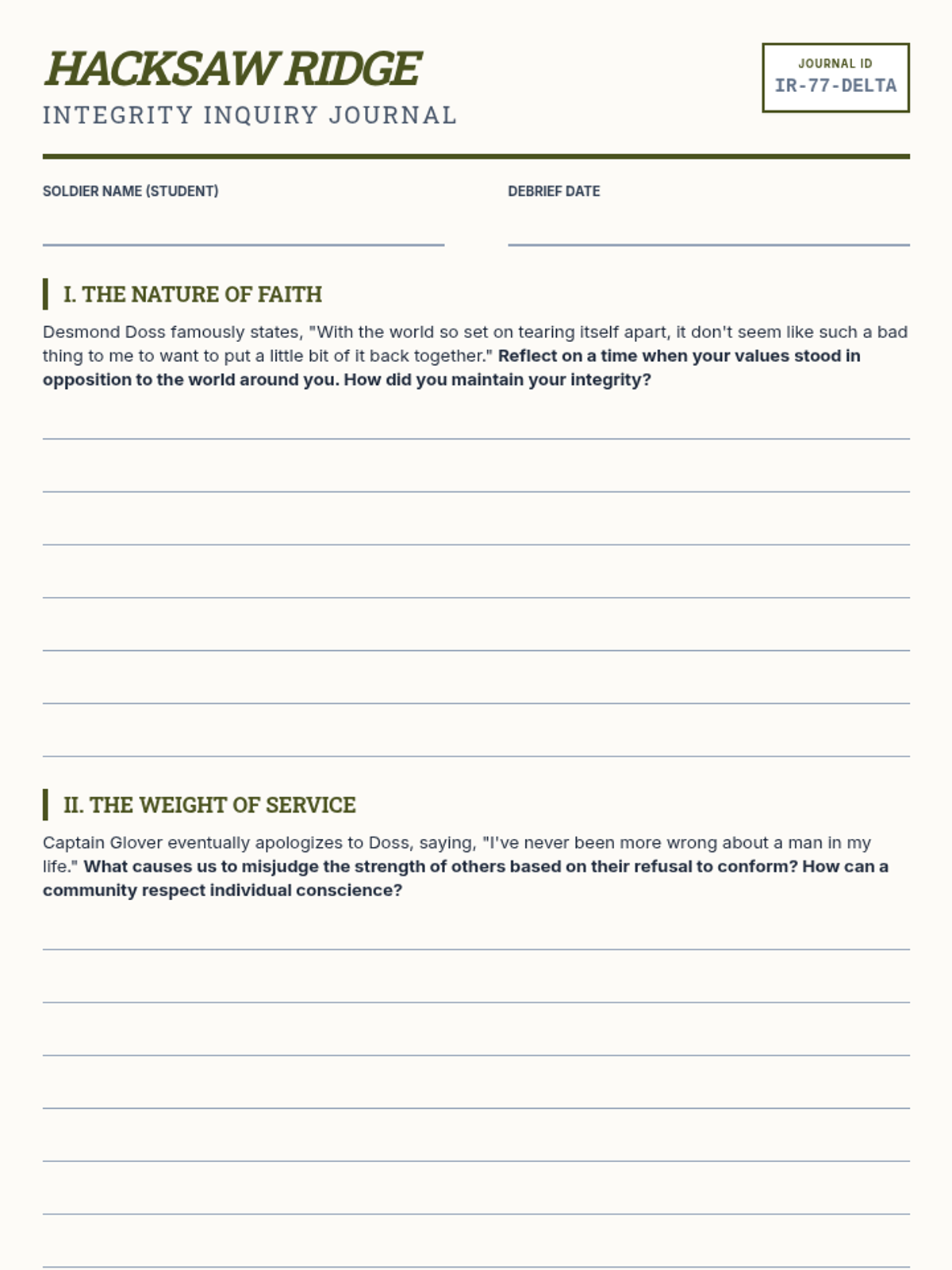
An in-depth exploration of conscientious objection and military ethics through the lens of the film Hacksaw Ridge, featuring DOK Level 3 discussion prompts and evaluation tools.
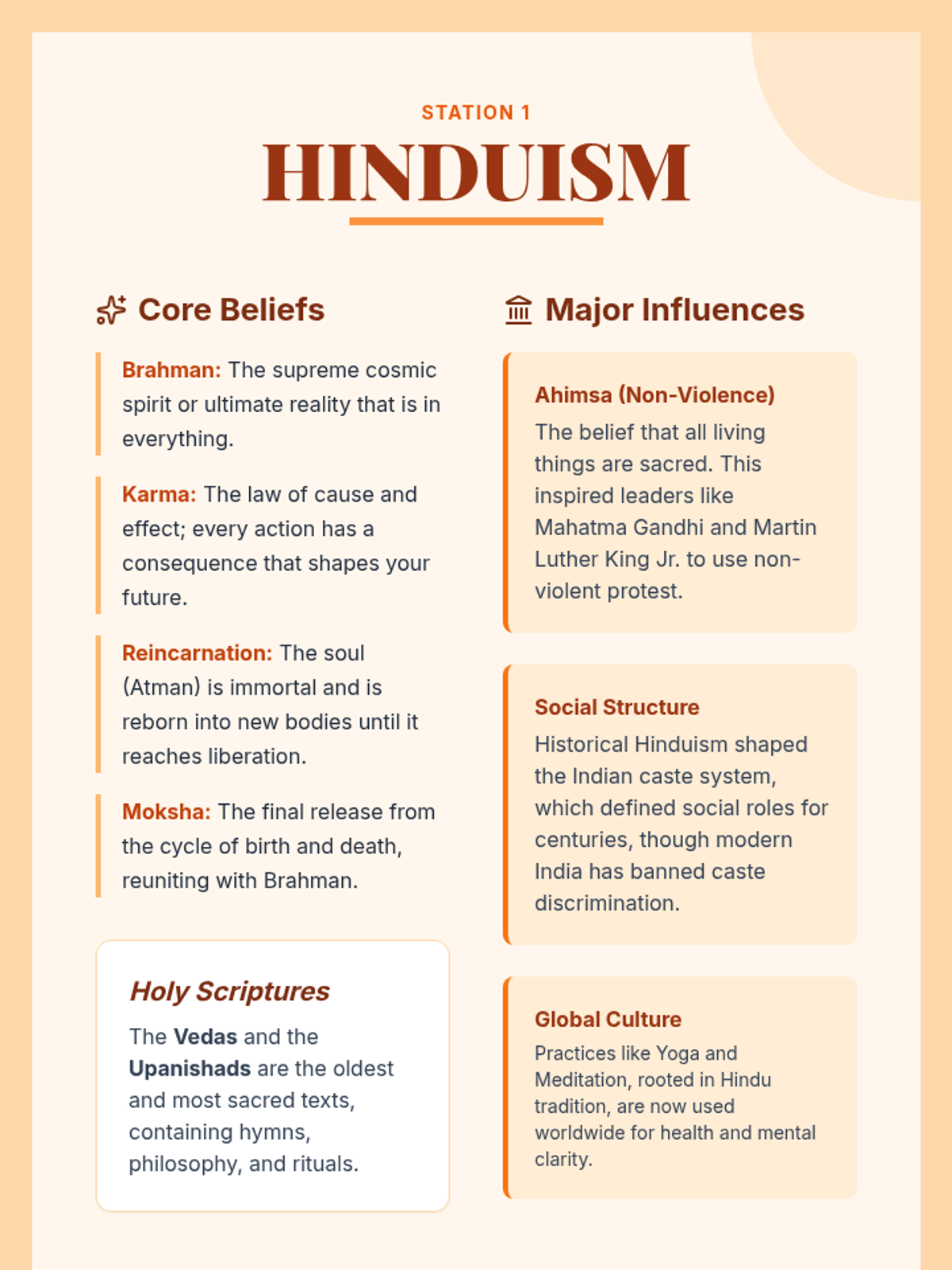
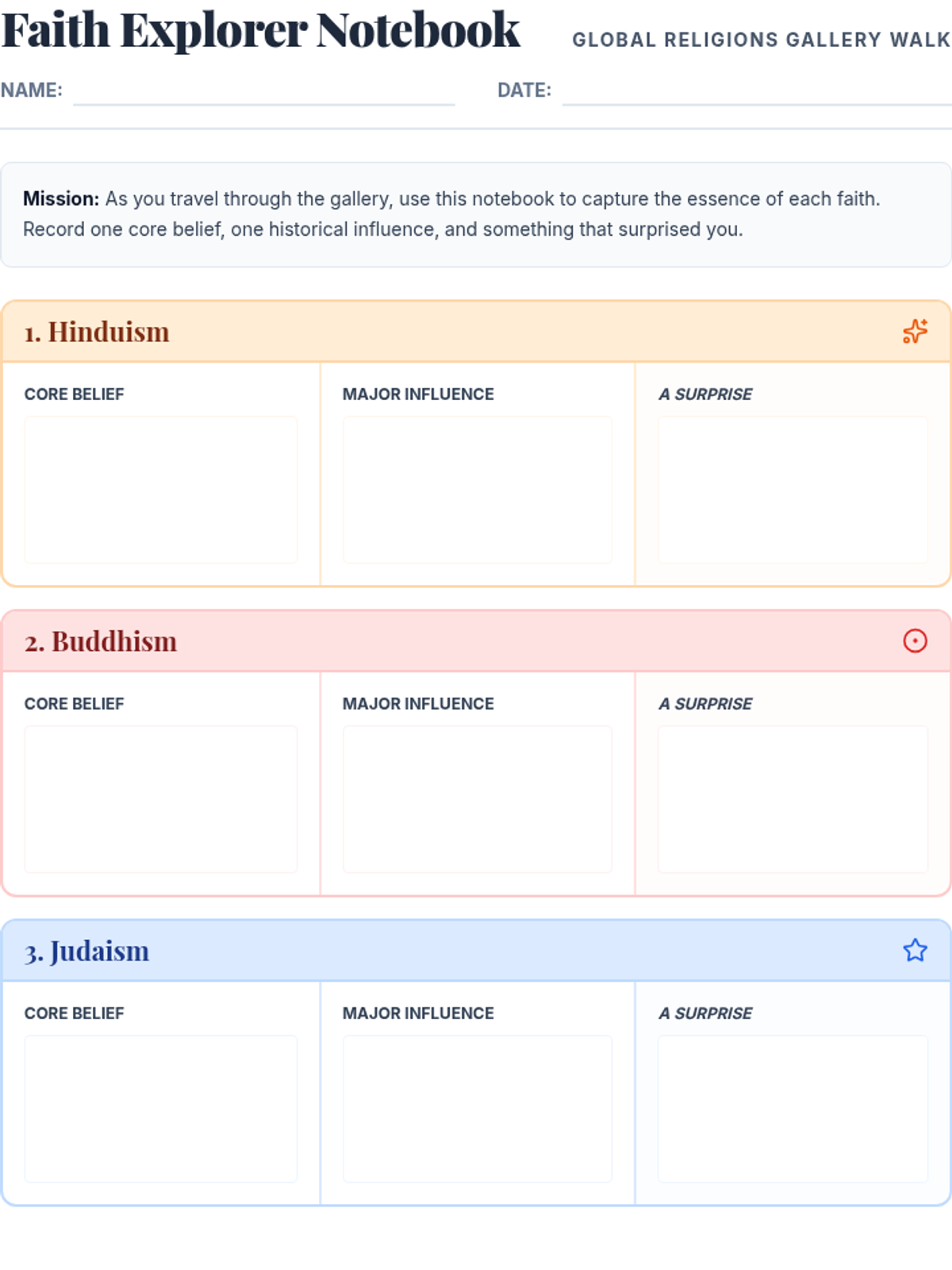
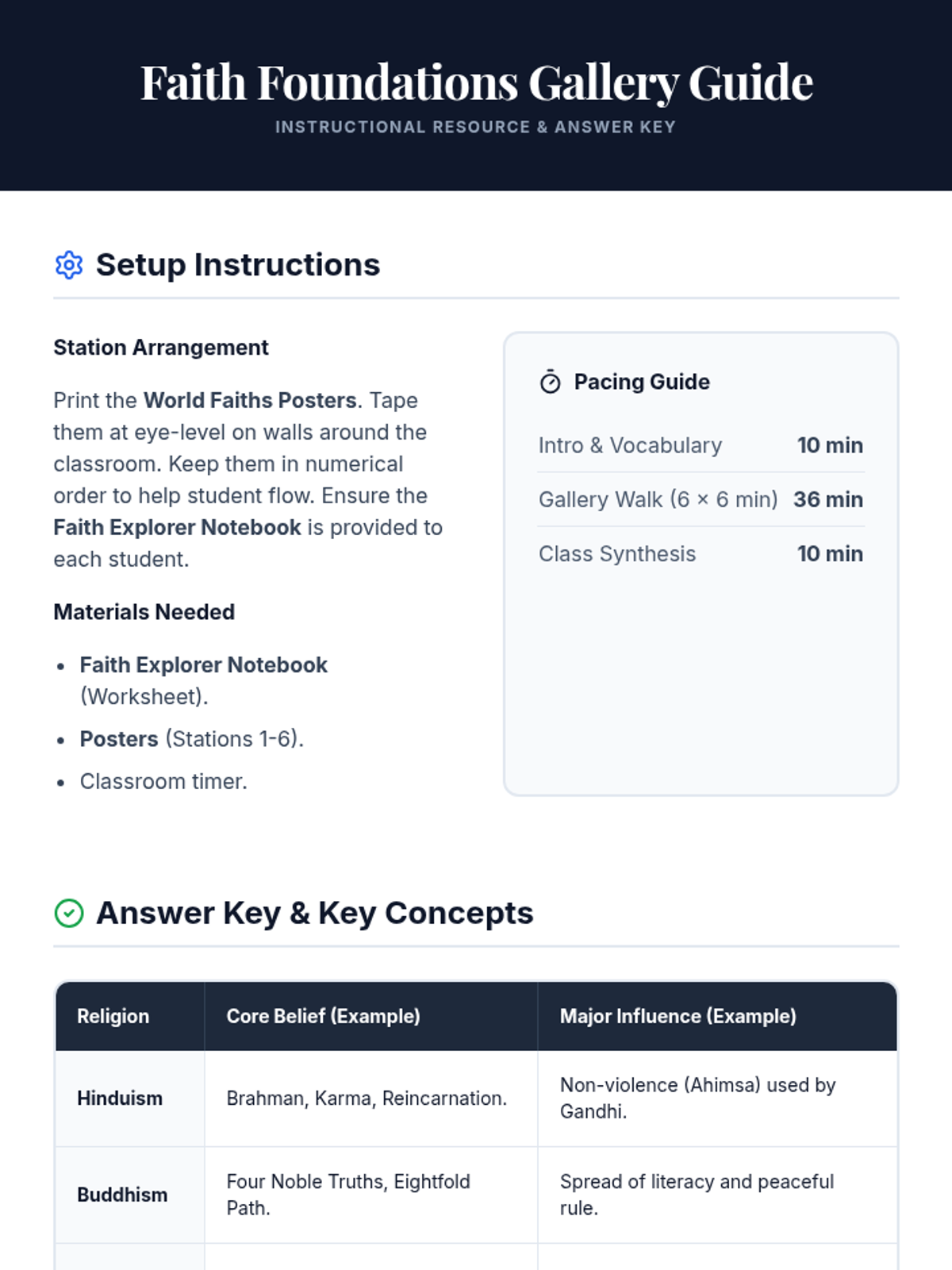
An immersive gallery walk exploring the core beliefs and historical influences of Hinduism, Buddhism, Judaism, Christianity, Islam, and Taoism. Students rotate through visual stations to build a comparative understanding of global spiritual traditions.
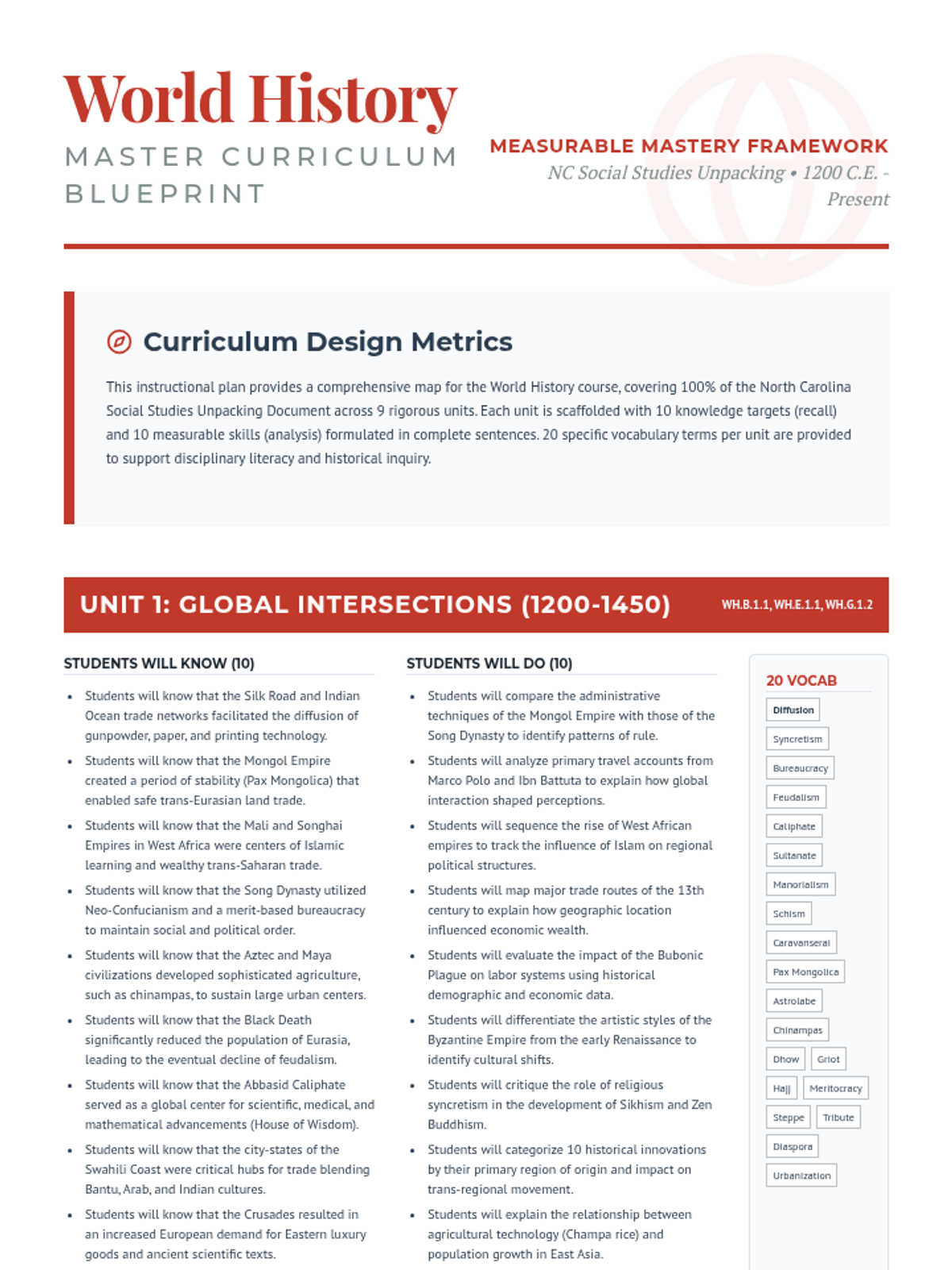
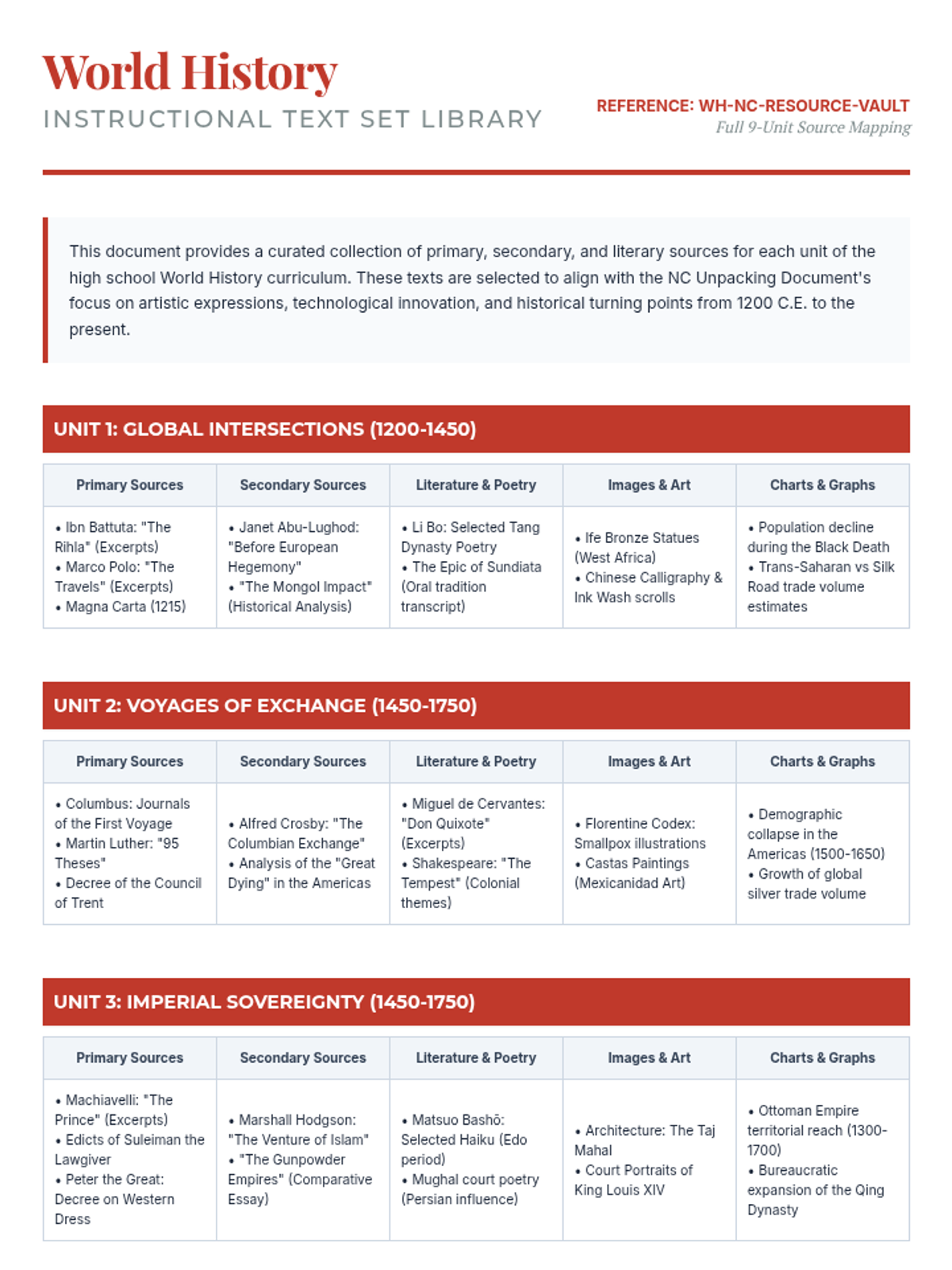
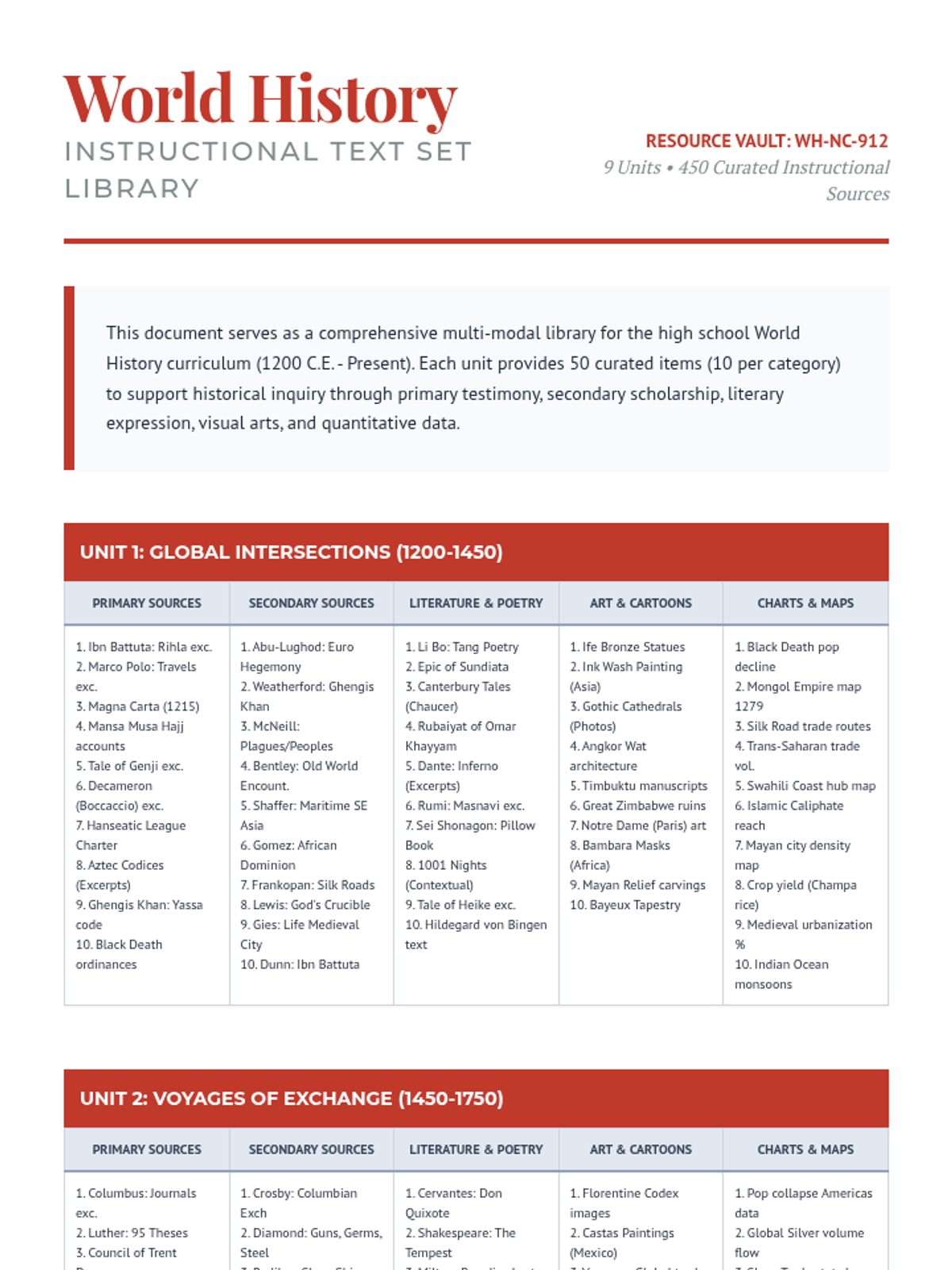
A master curriculum framework for World History that defines standards, objectives, skills, learning goals, and vocabulary for nine instructional units spanning 1200 C.E. to the present.
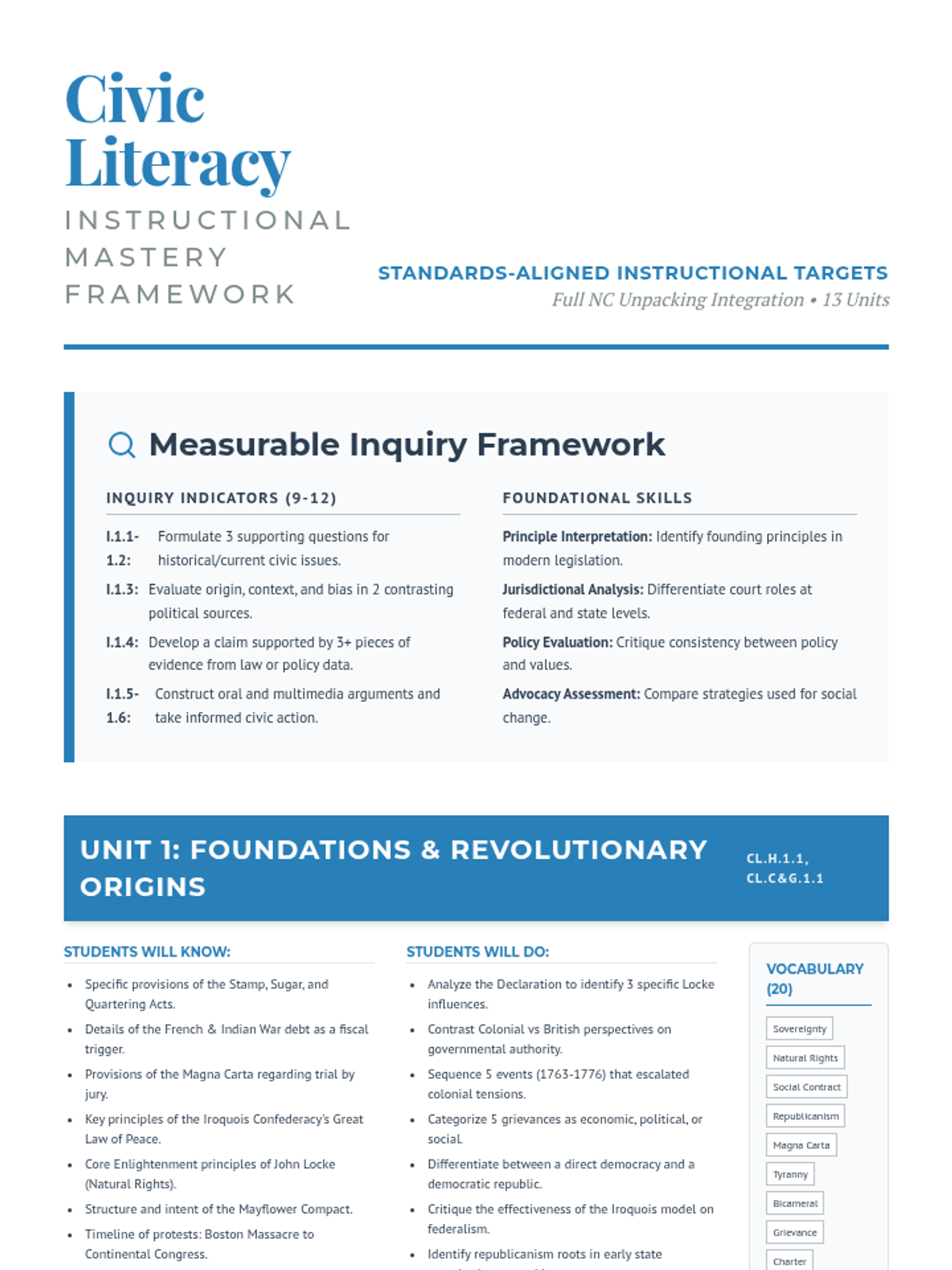
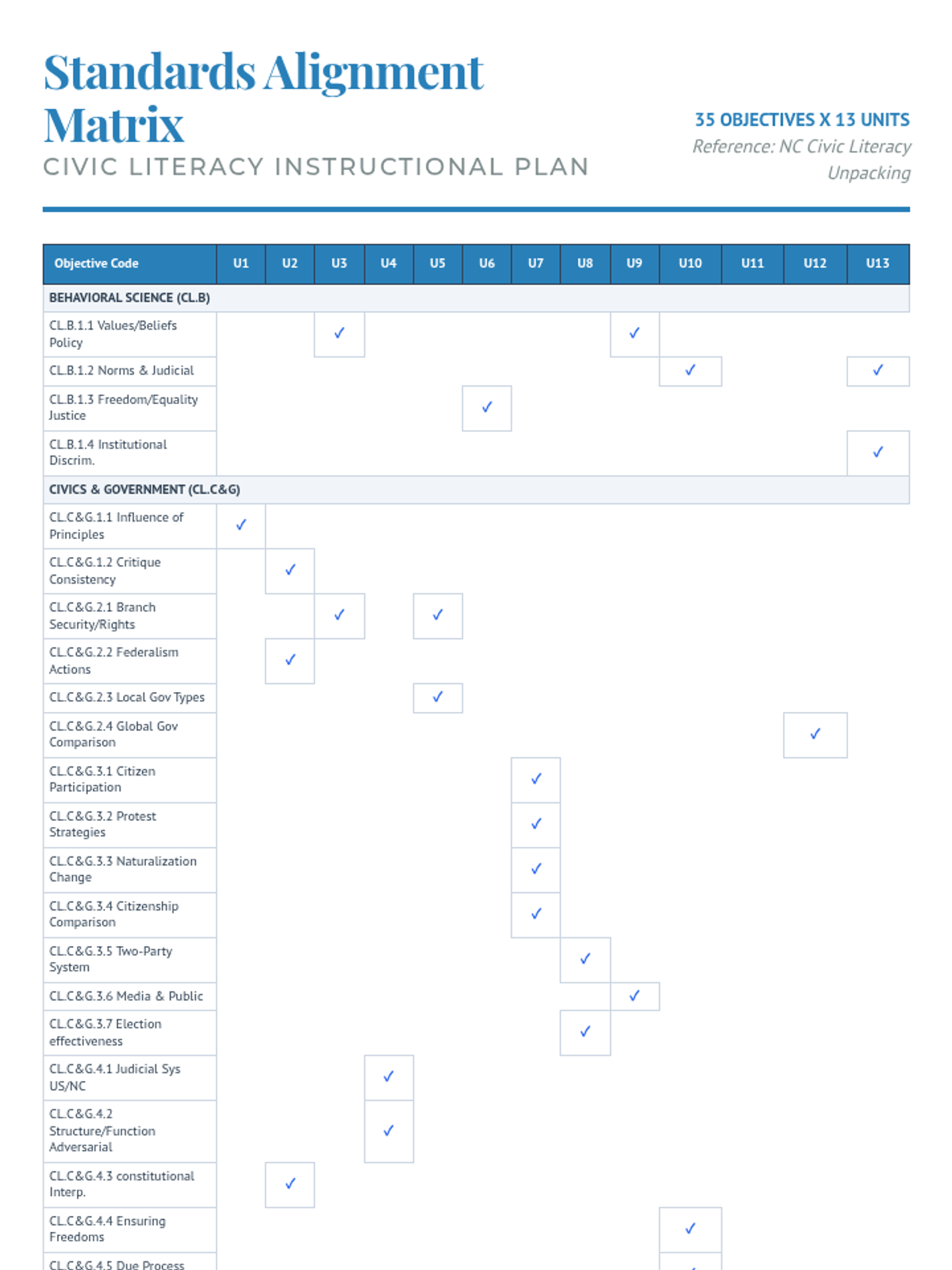
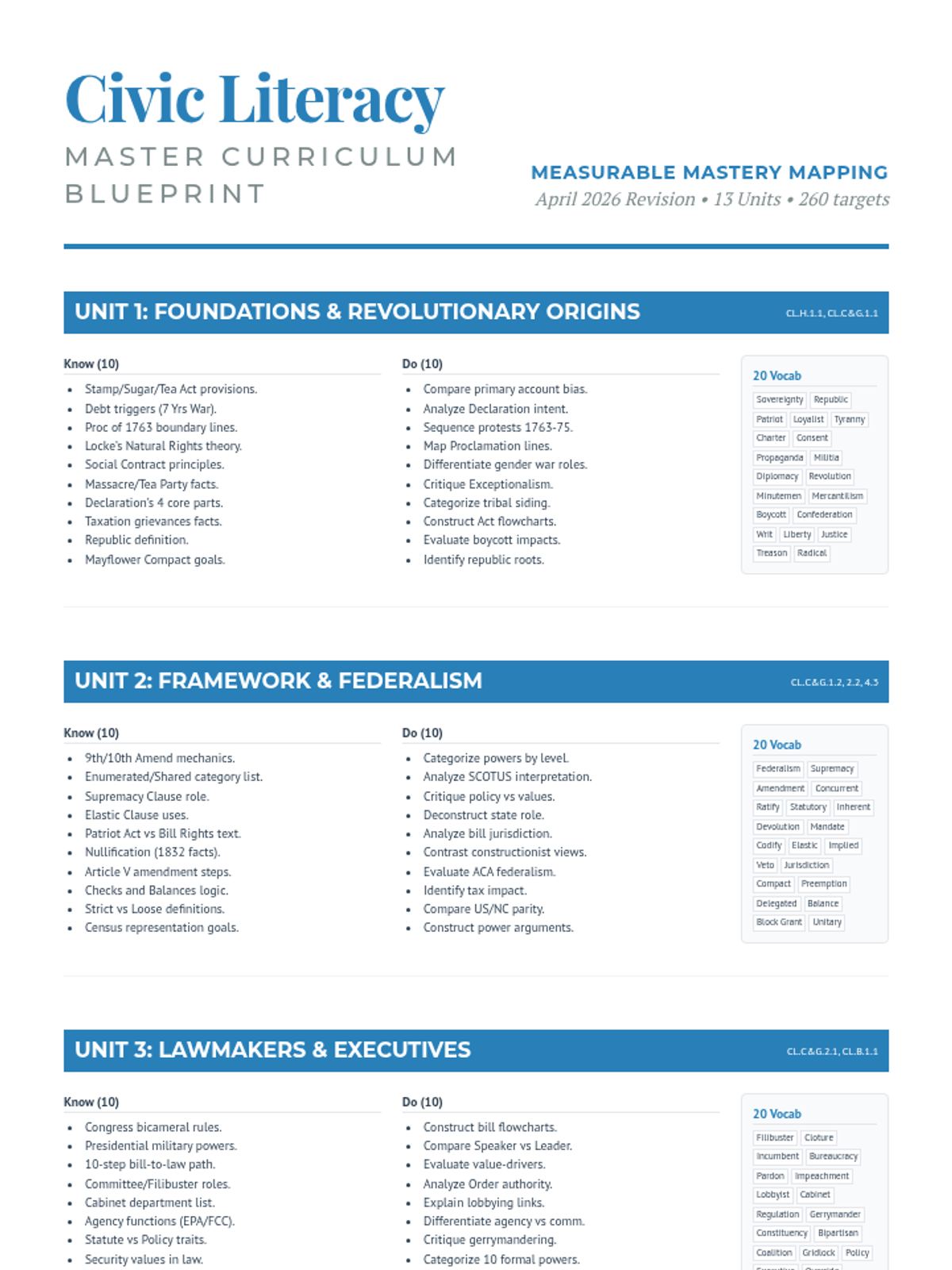
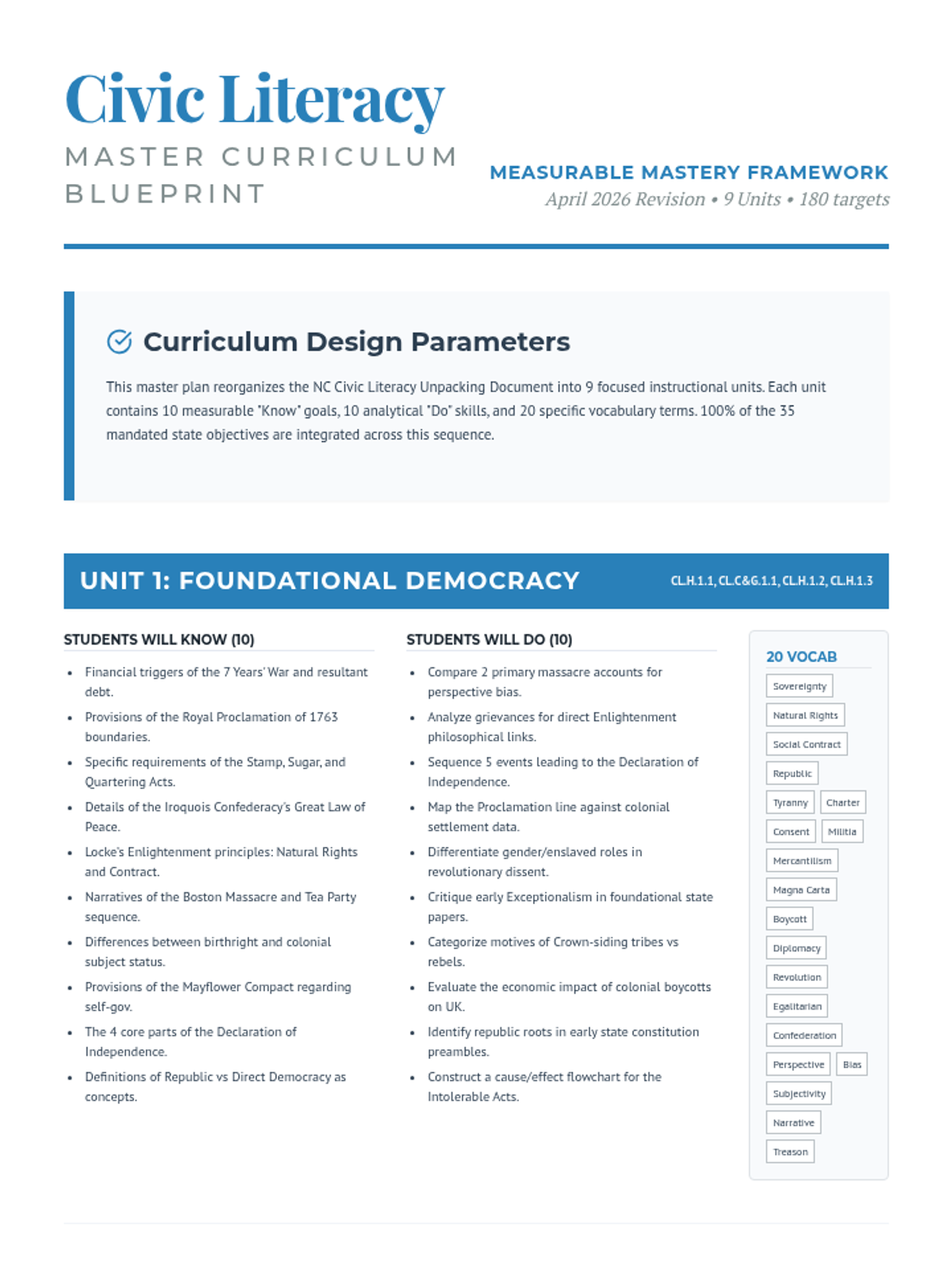
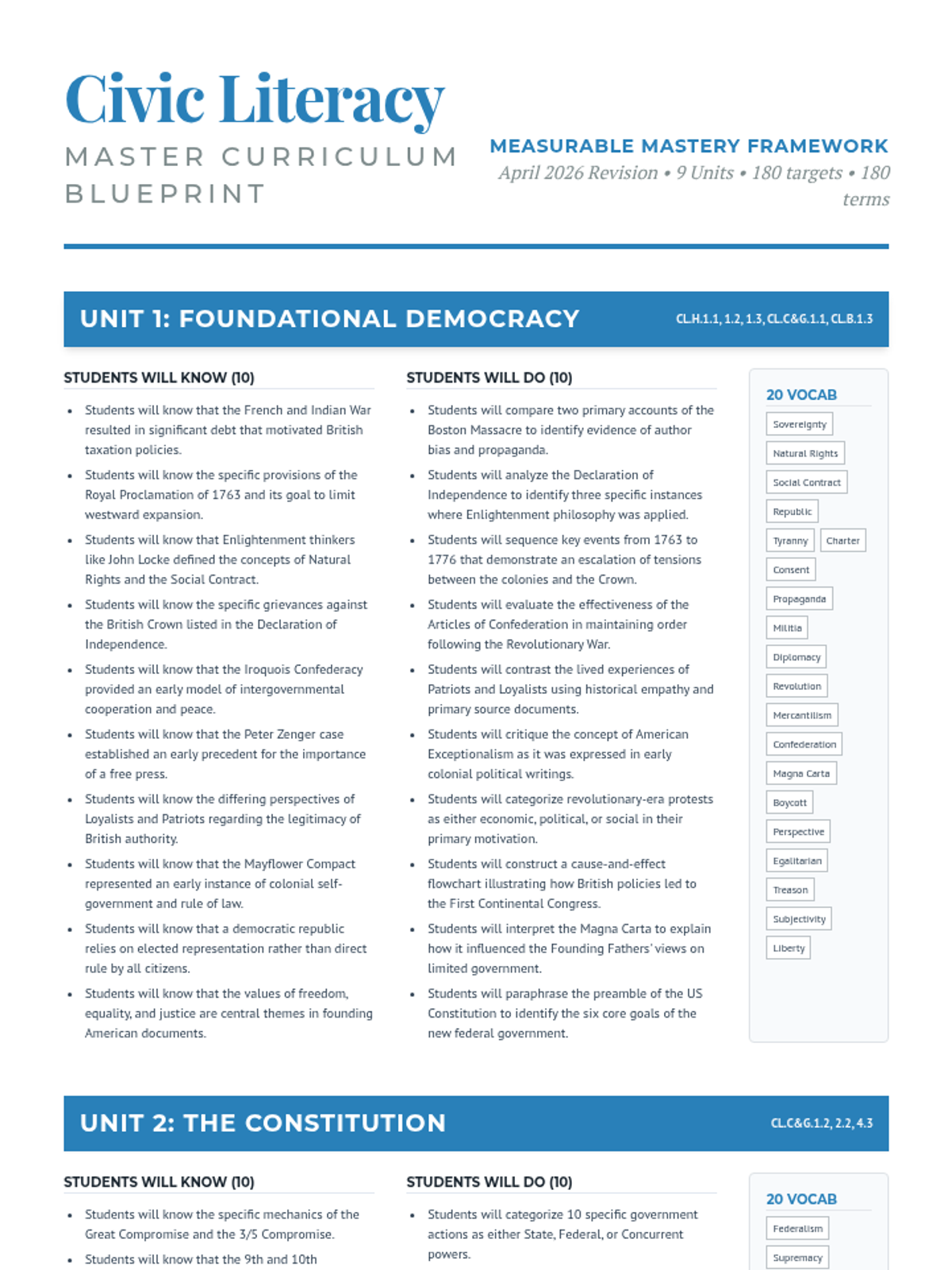
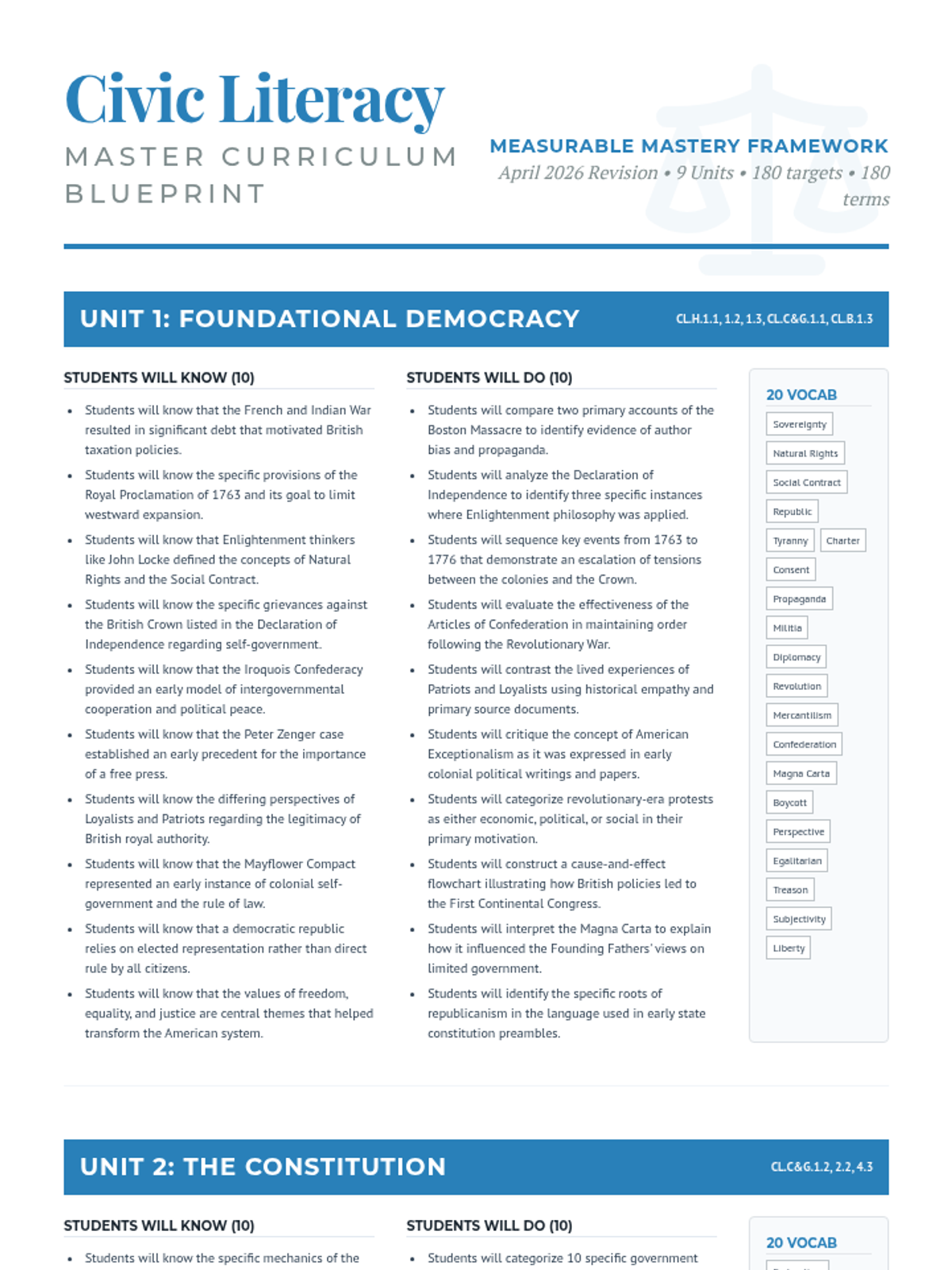
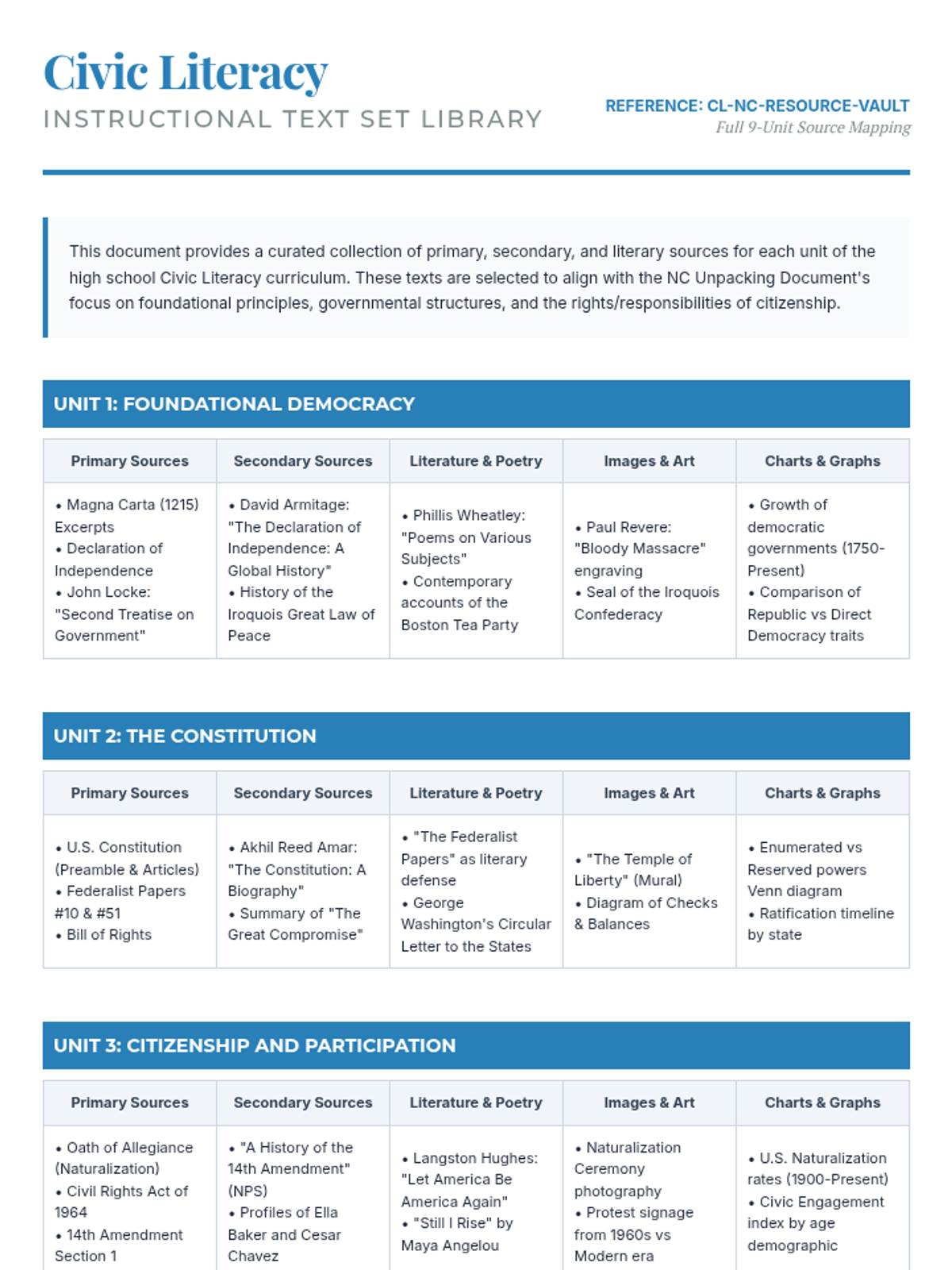
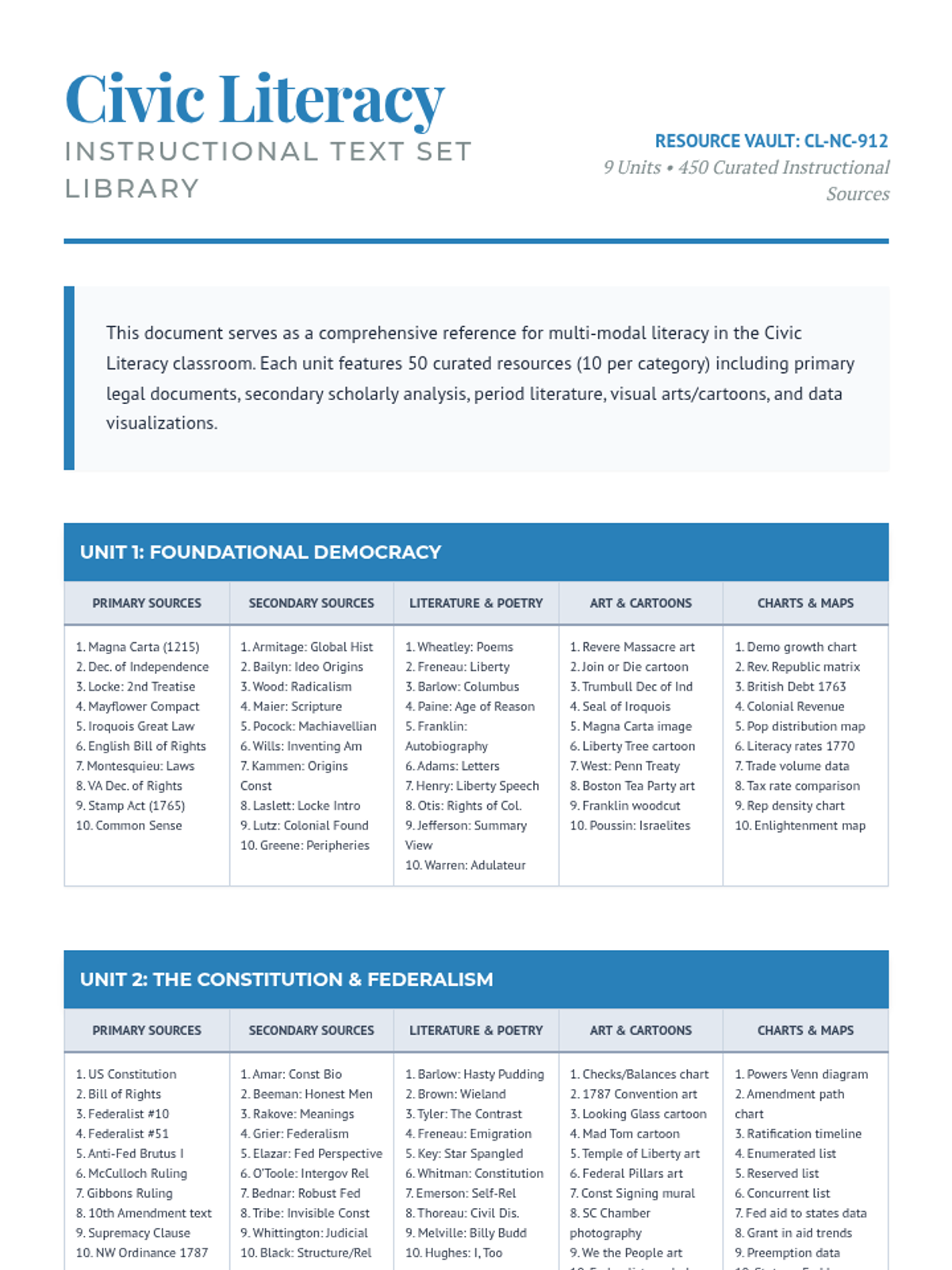
A master curriculum framework for Civic Literacy that defines standards, objectives, skills, learning goals, and vocabulary for thirteen instructional units.
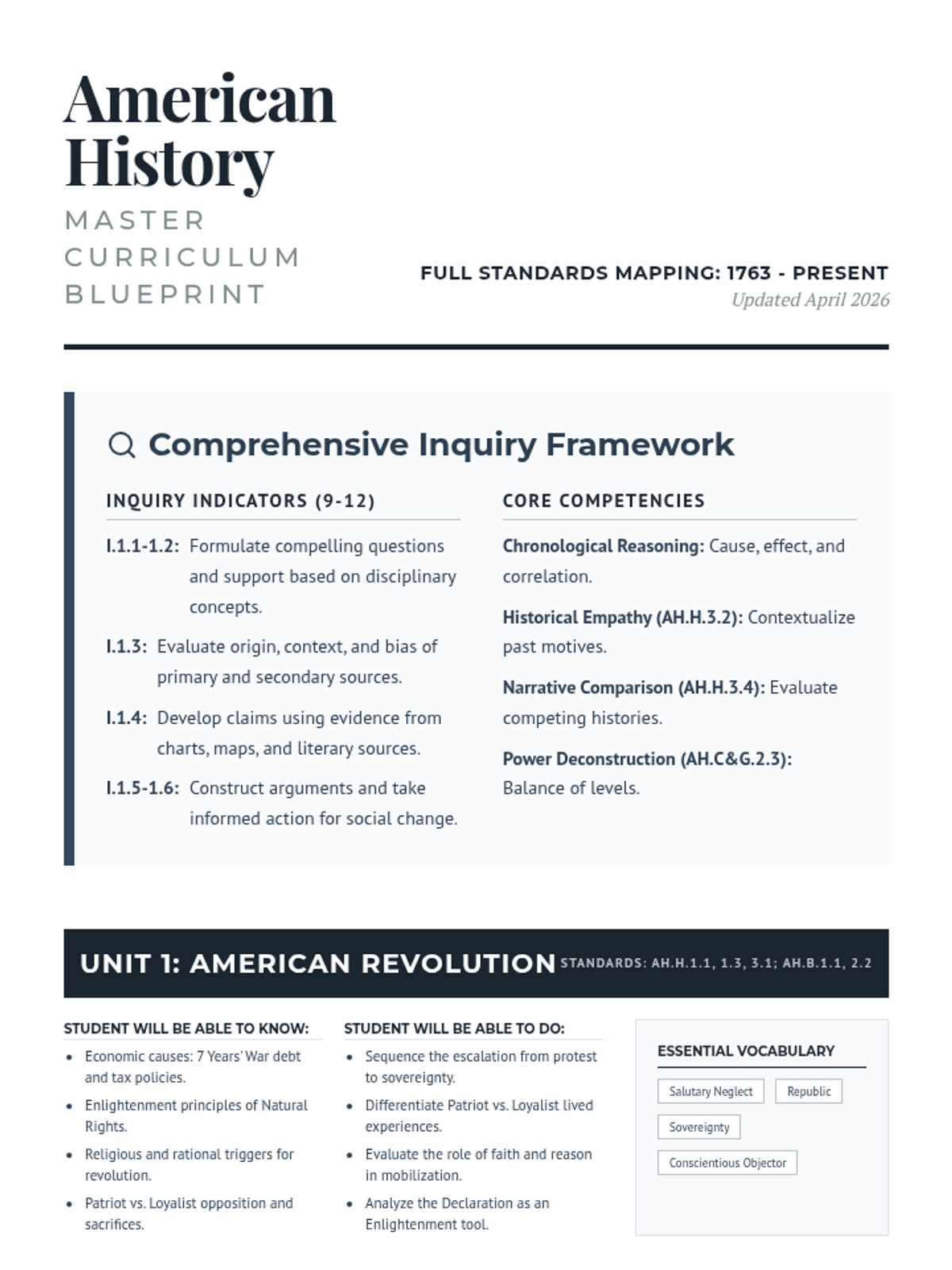
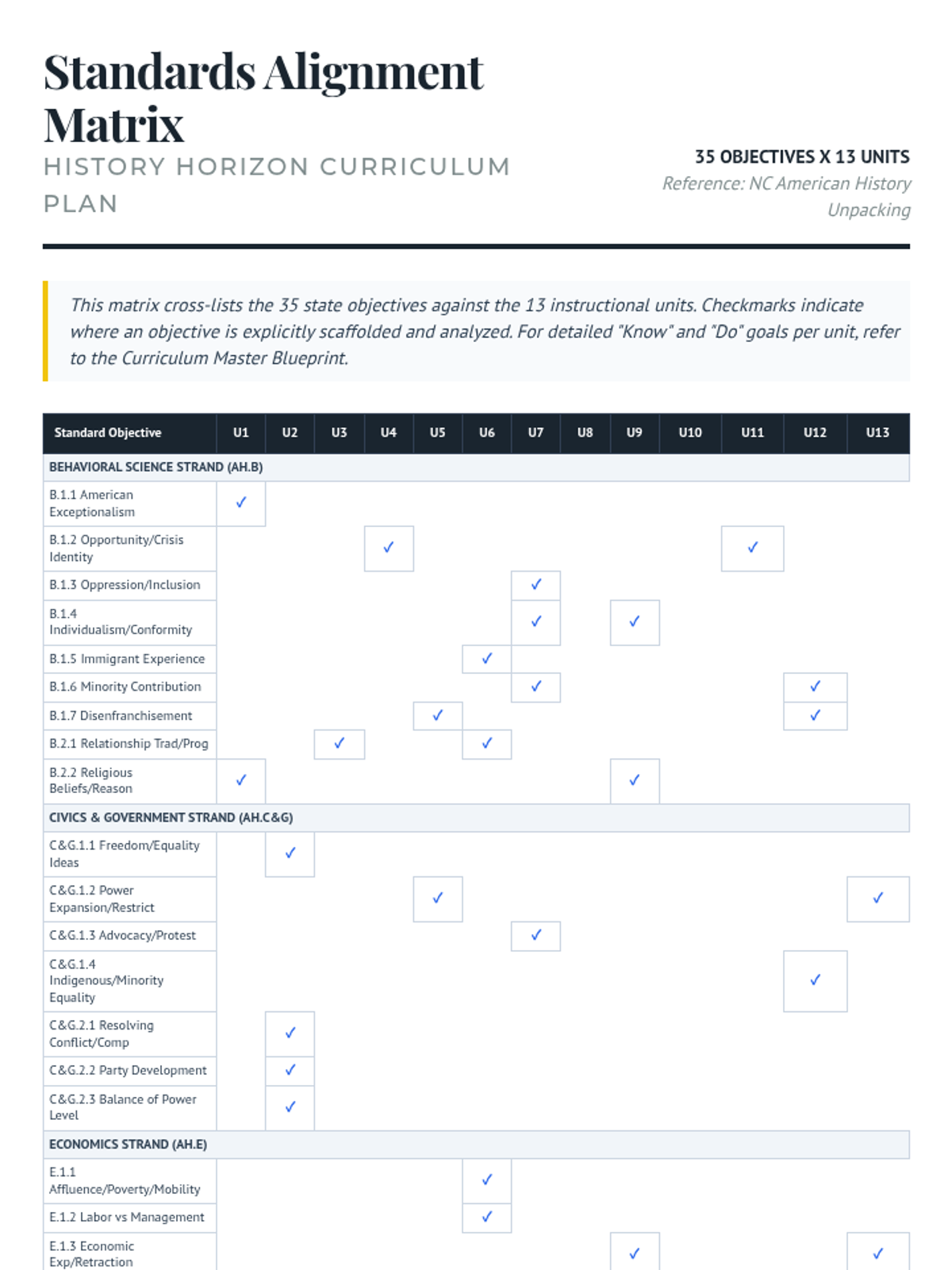
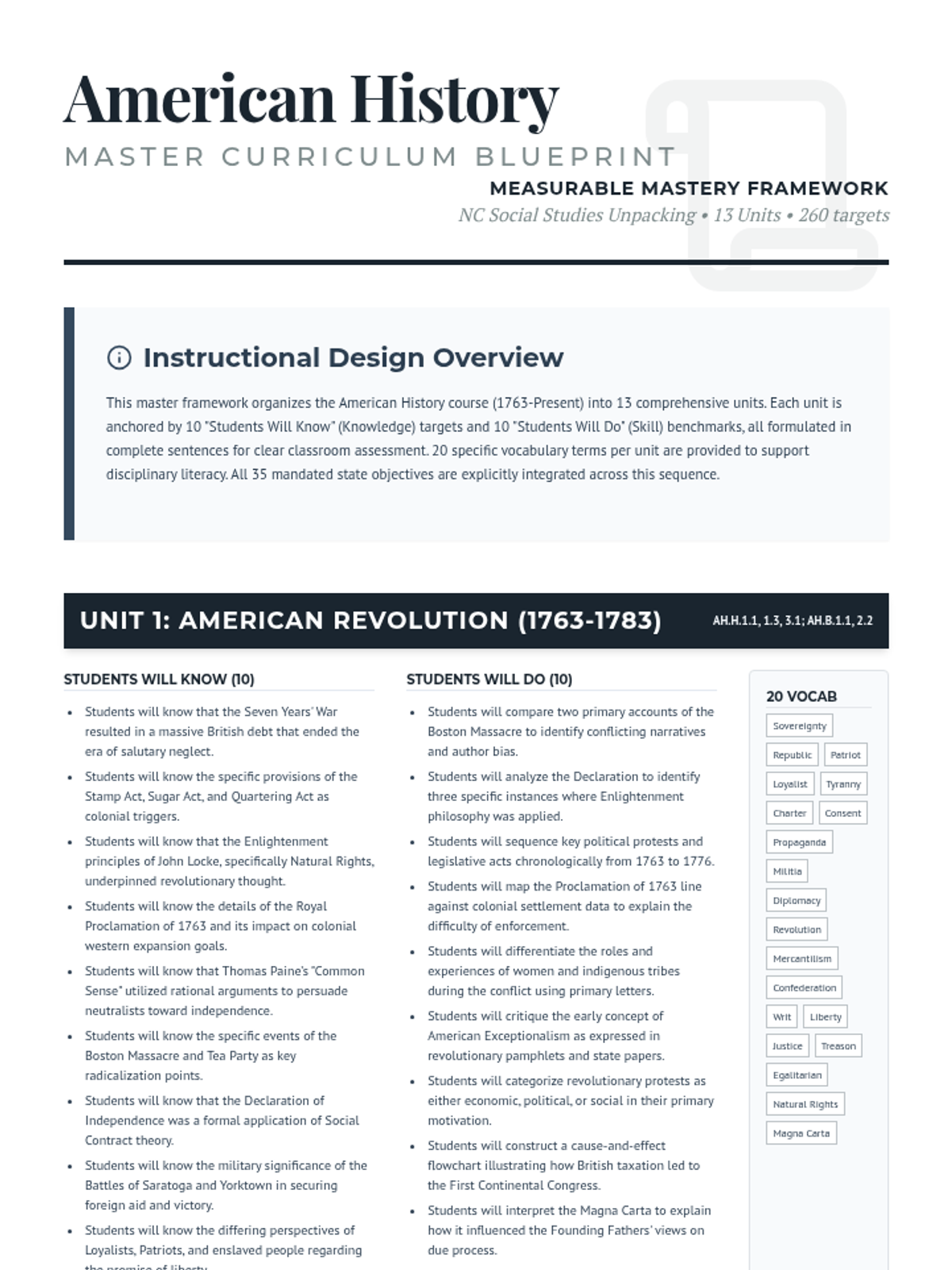
A master curriculum framework for American History that defines standards, objectives, skills, learning goals, and vocabulary for thirteen instructional units.
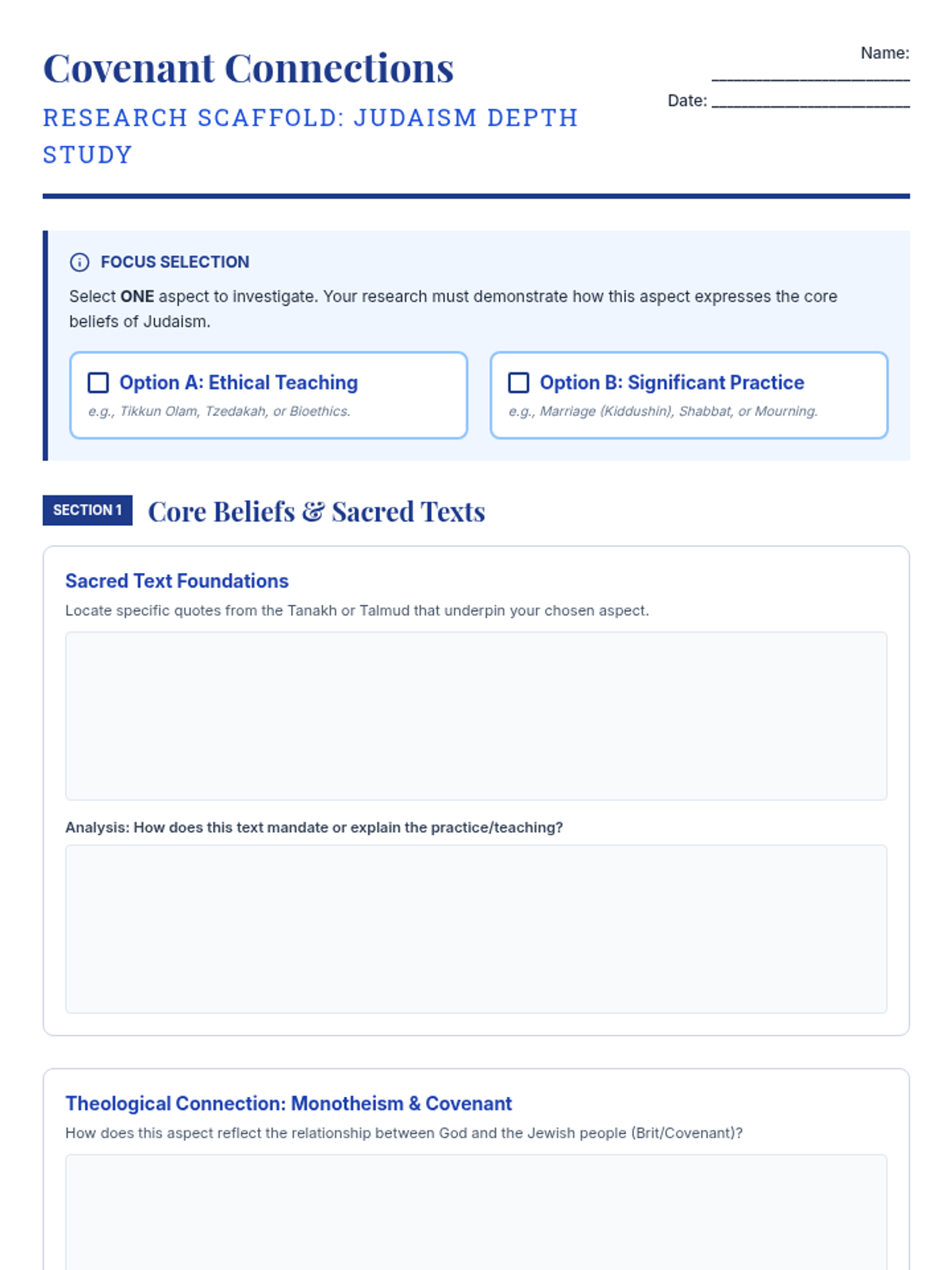
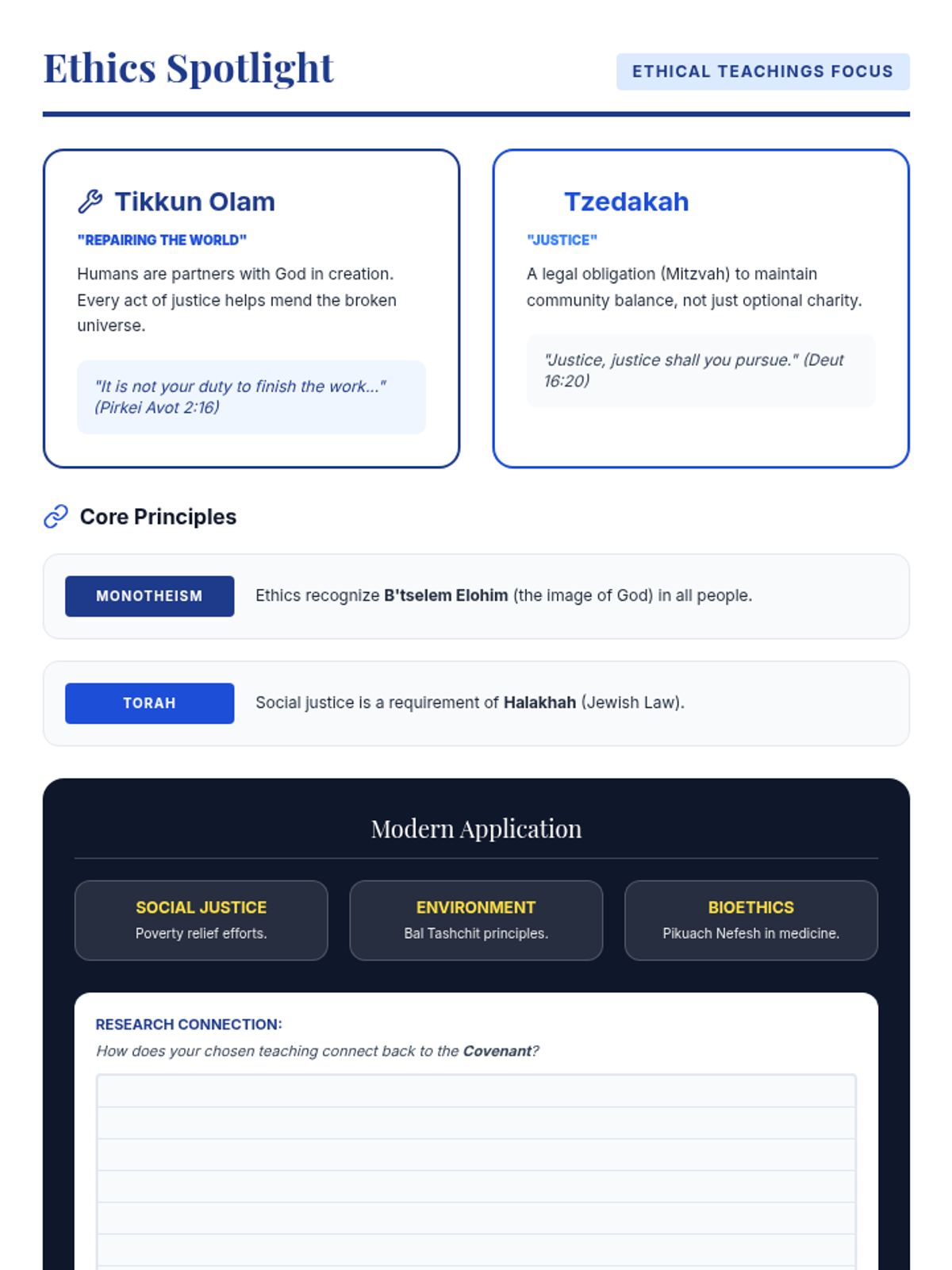
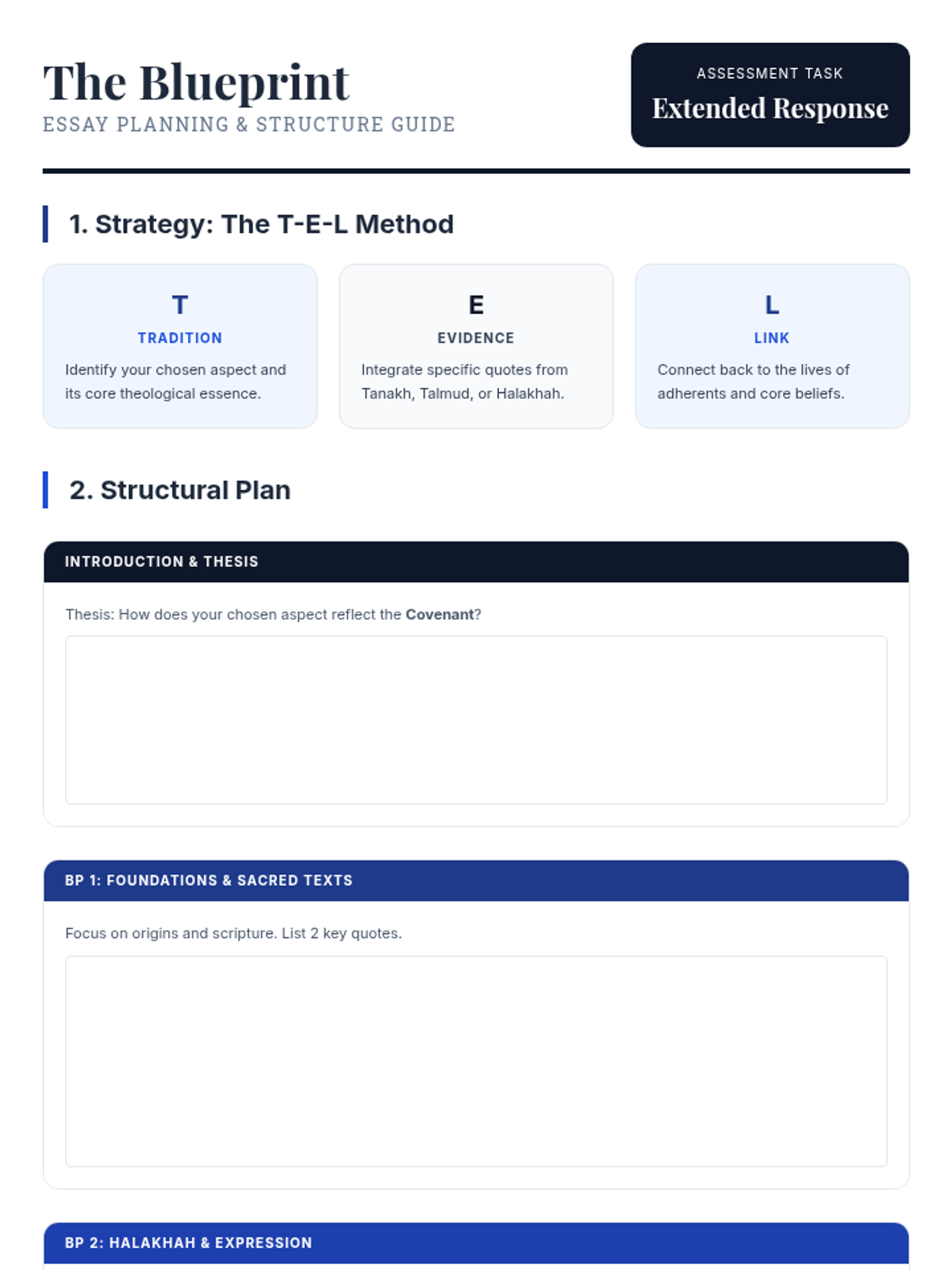
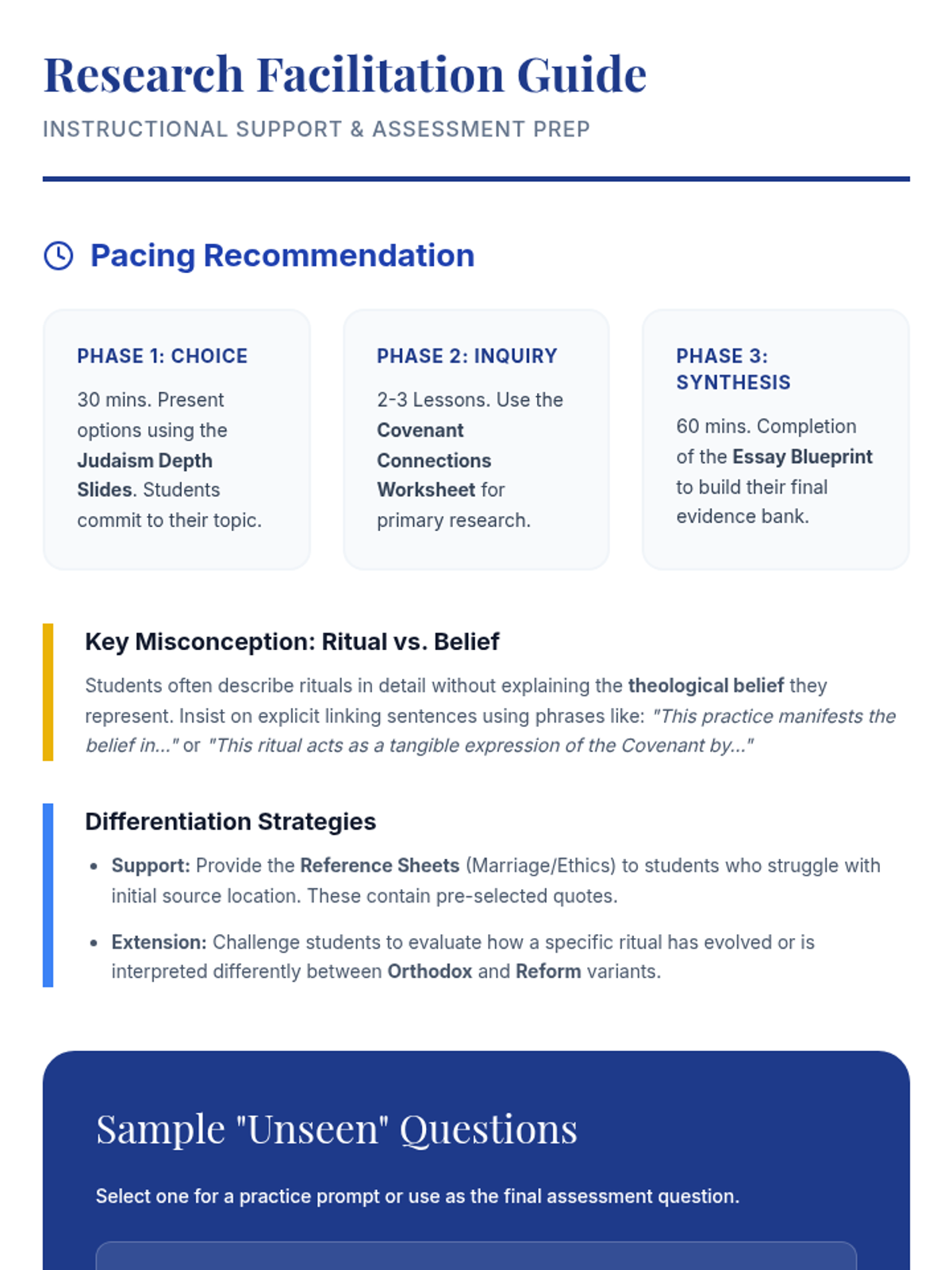
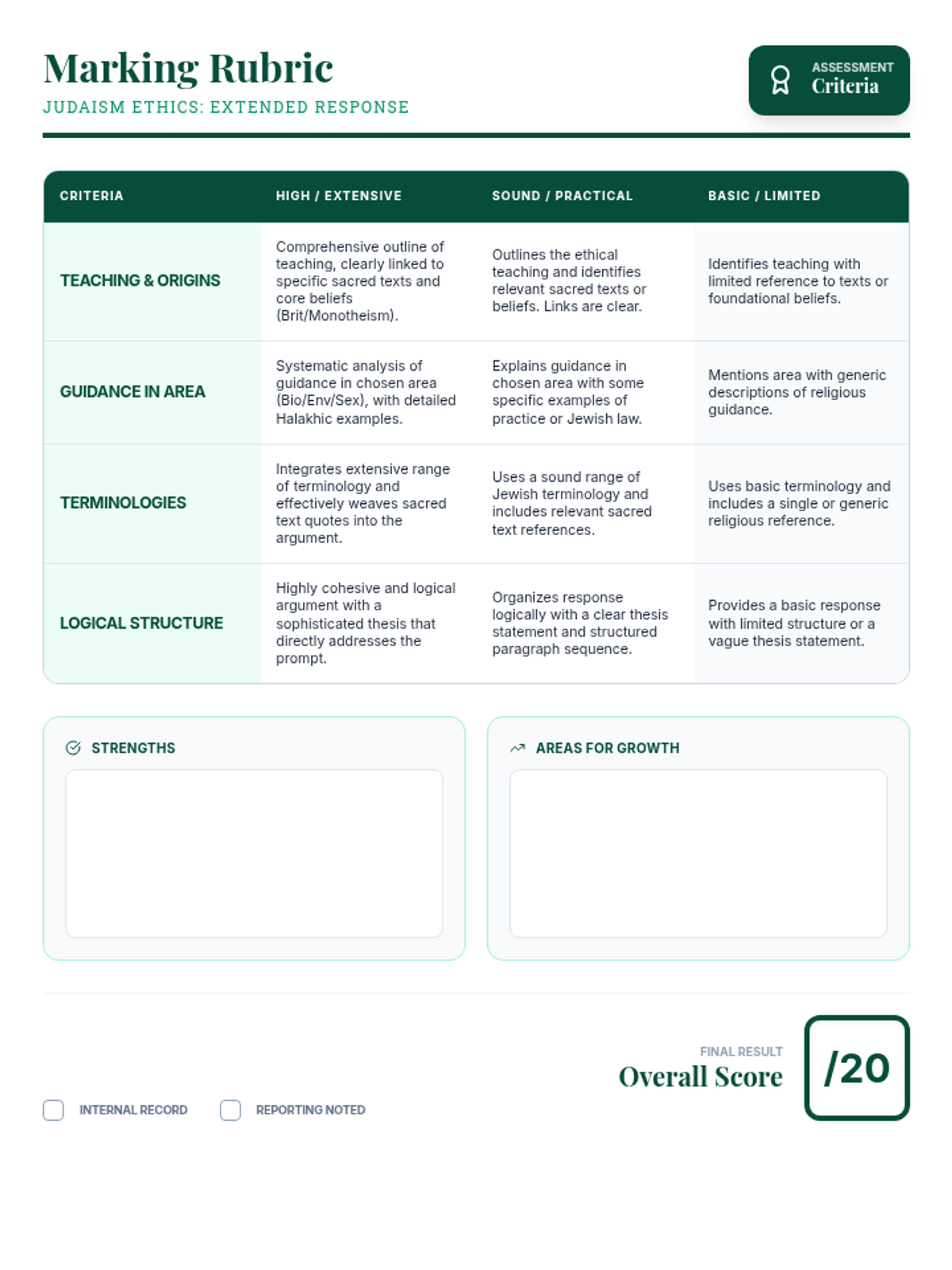
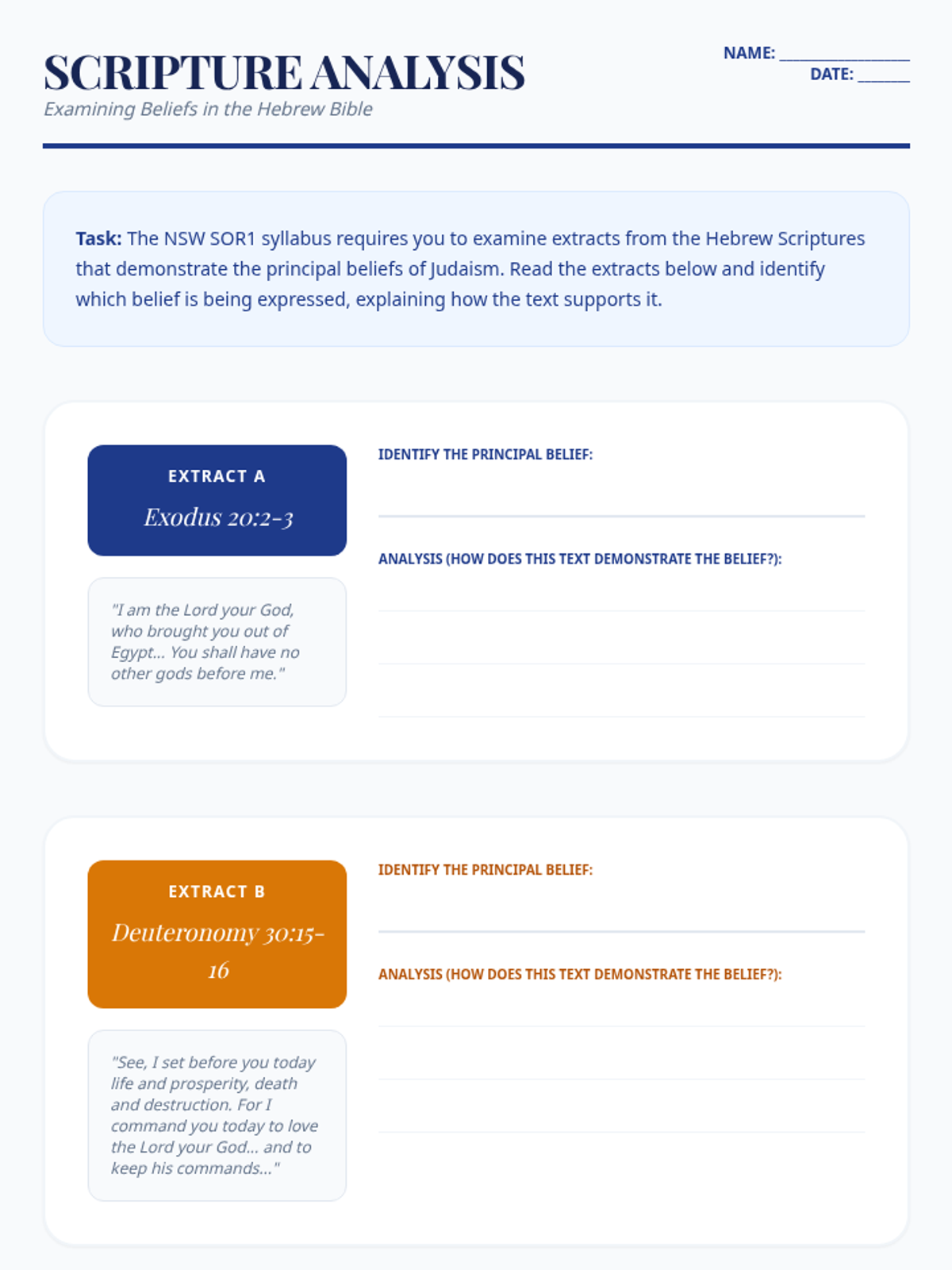
A structured research phase where students choose a focus area—either an ethical teaching or a significant practice—and map its connection to core Jewish tenets and contemporary life.
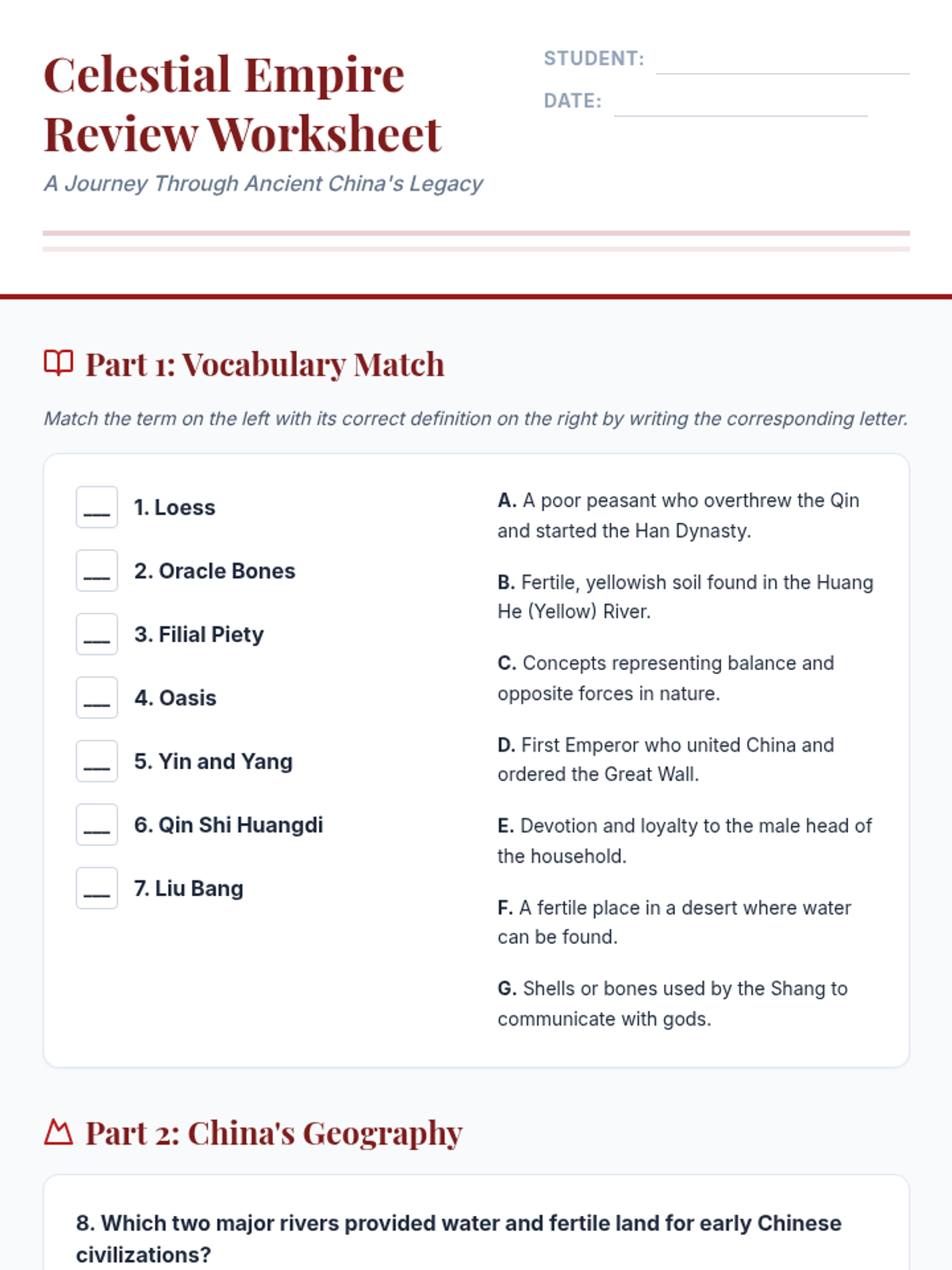
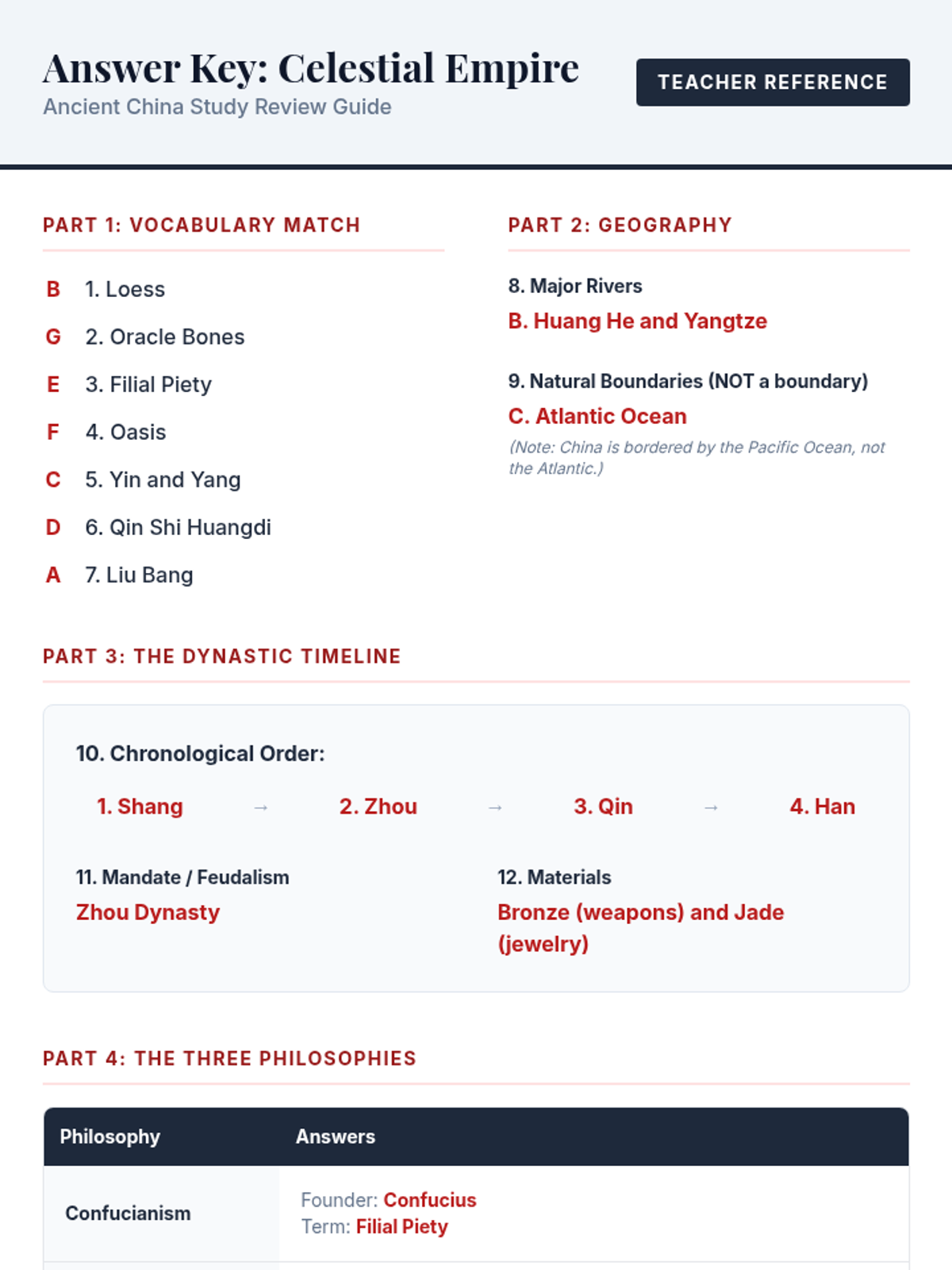
A comprehensive study guide and answer key covering the geography, dynasties, and philosophies of Ancient China, from the Shang to the Han Dynasty.
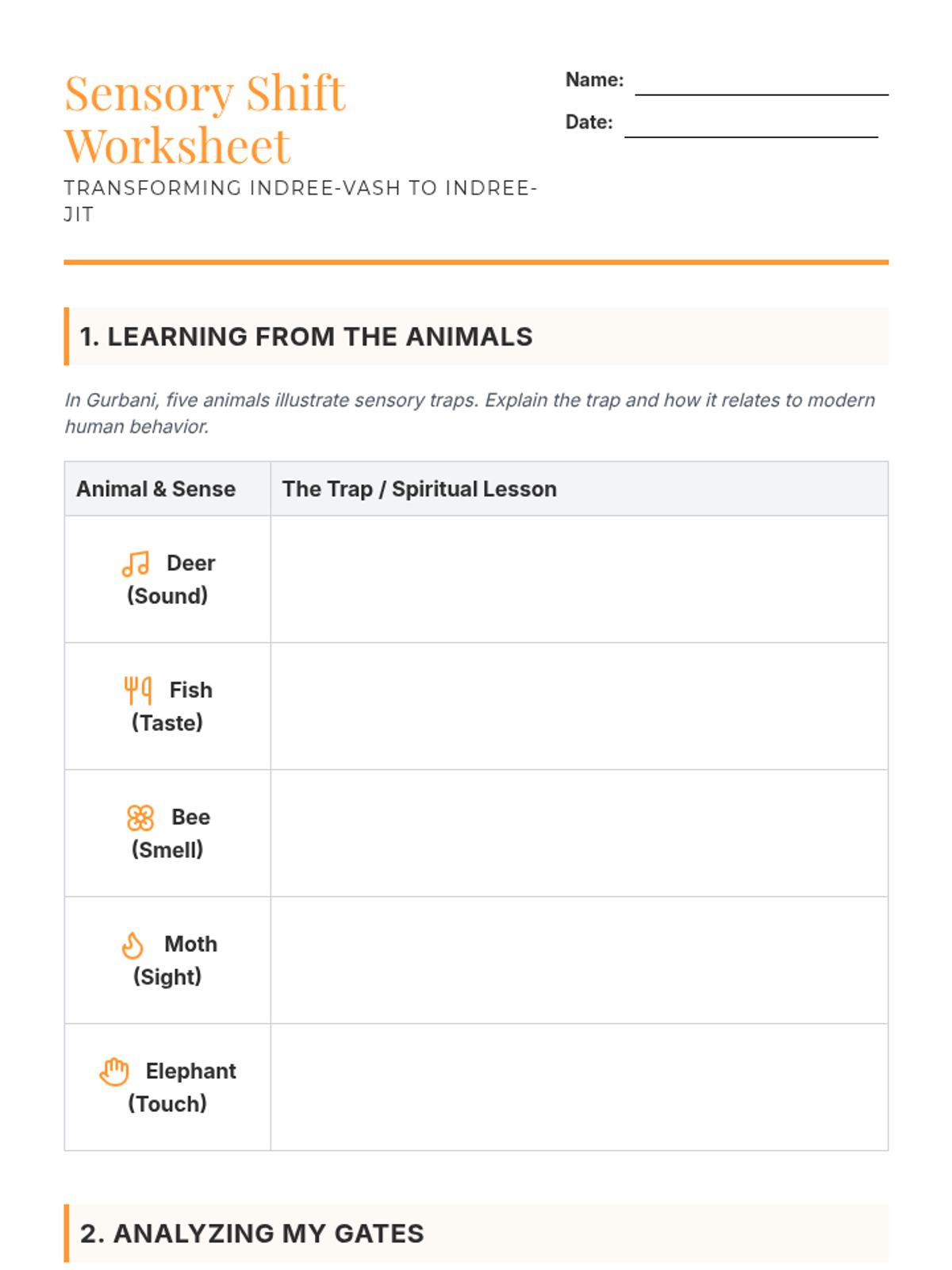
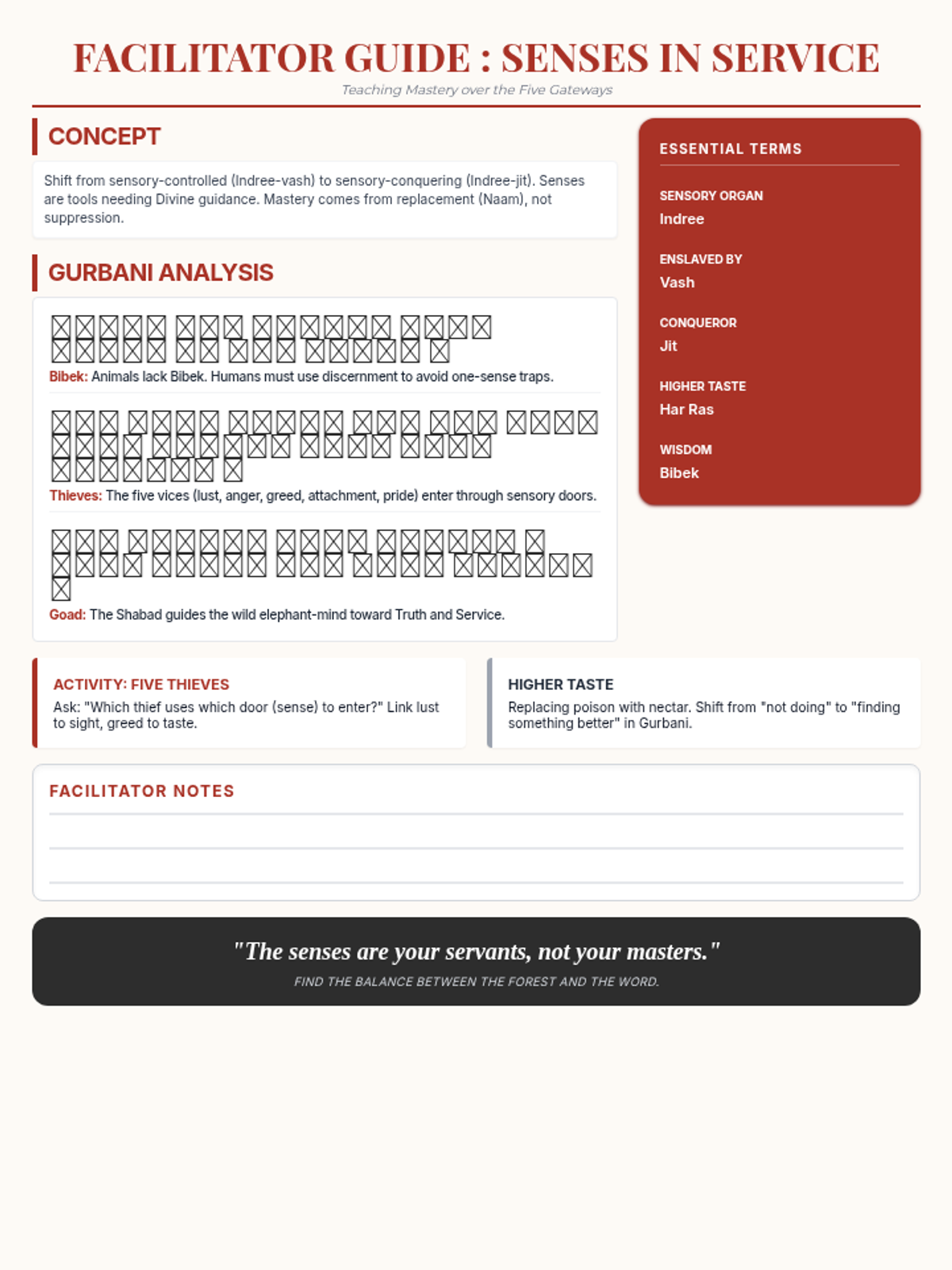
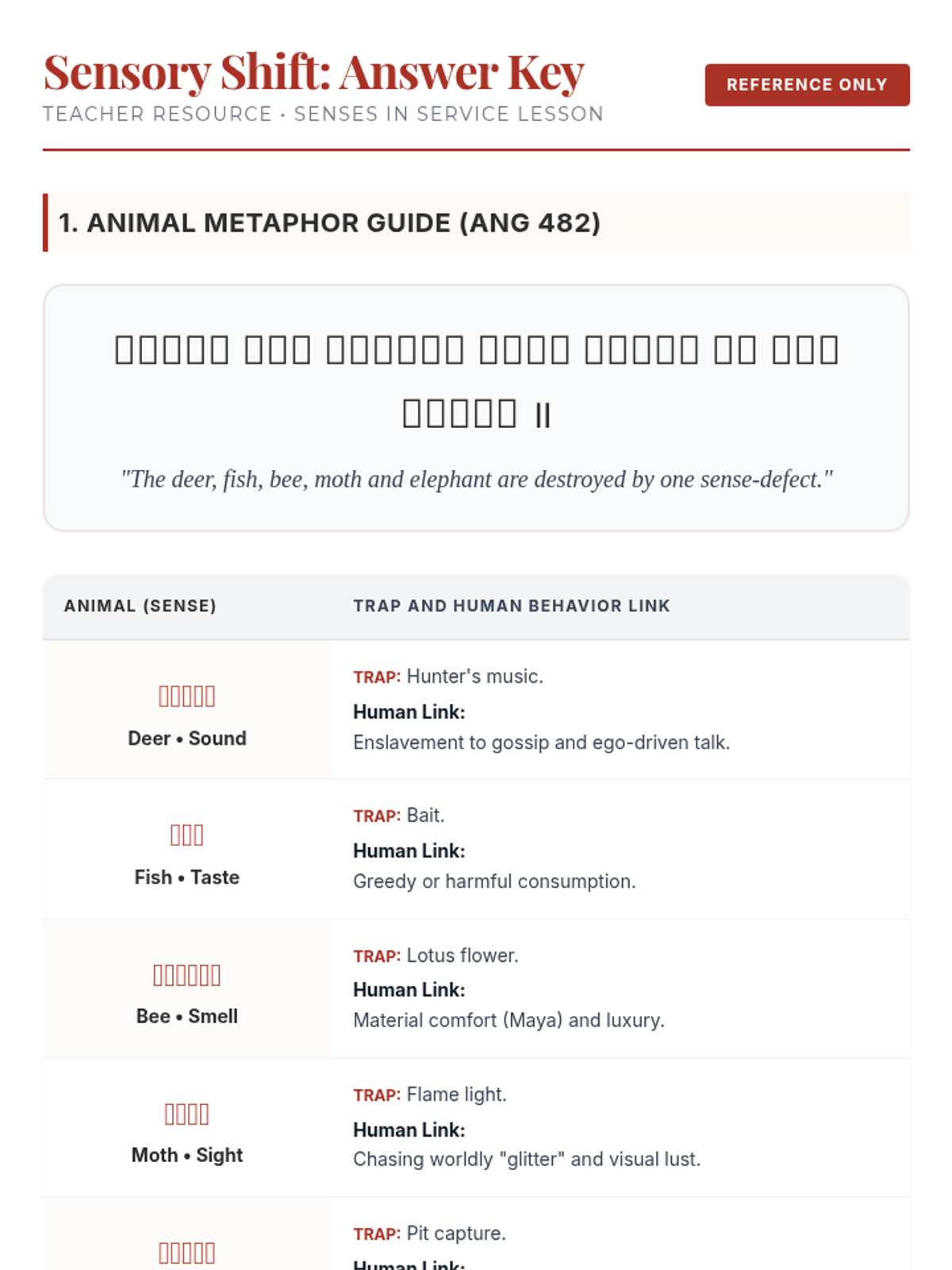
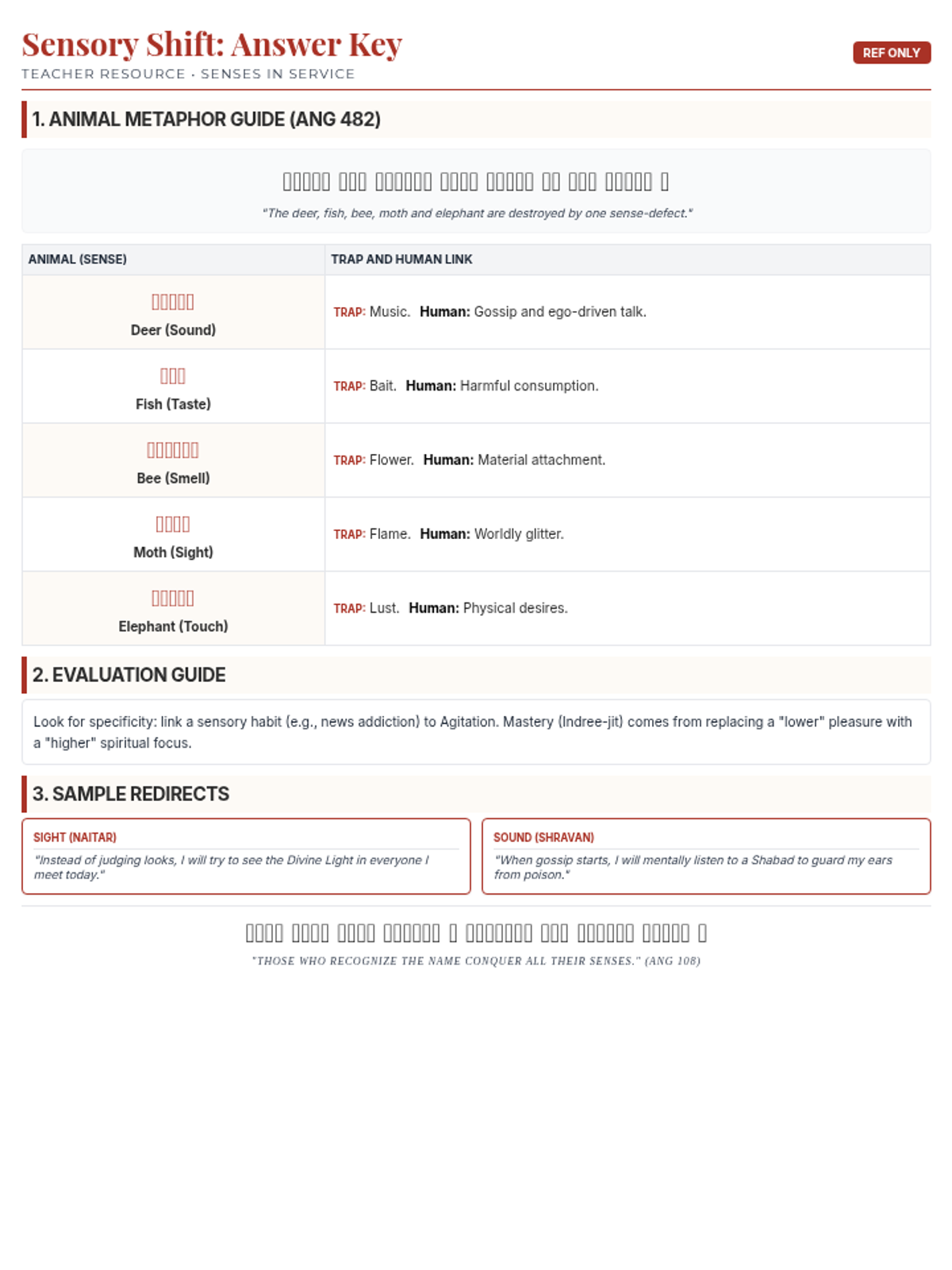
This lesson explores the Gurmat perspective on the five senses, moving from sensory bondage to spiritual mastery through the teachings found in the 'Slave to the Senses' discourse.
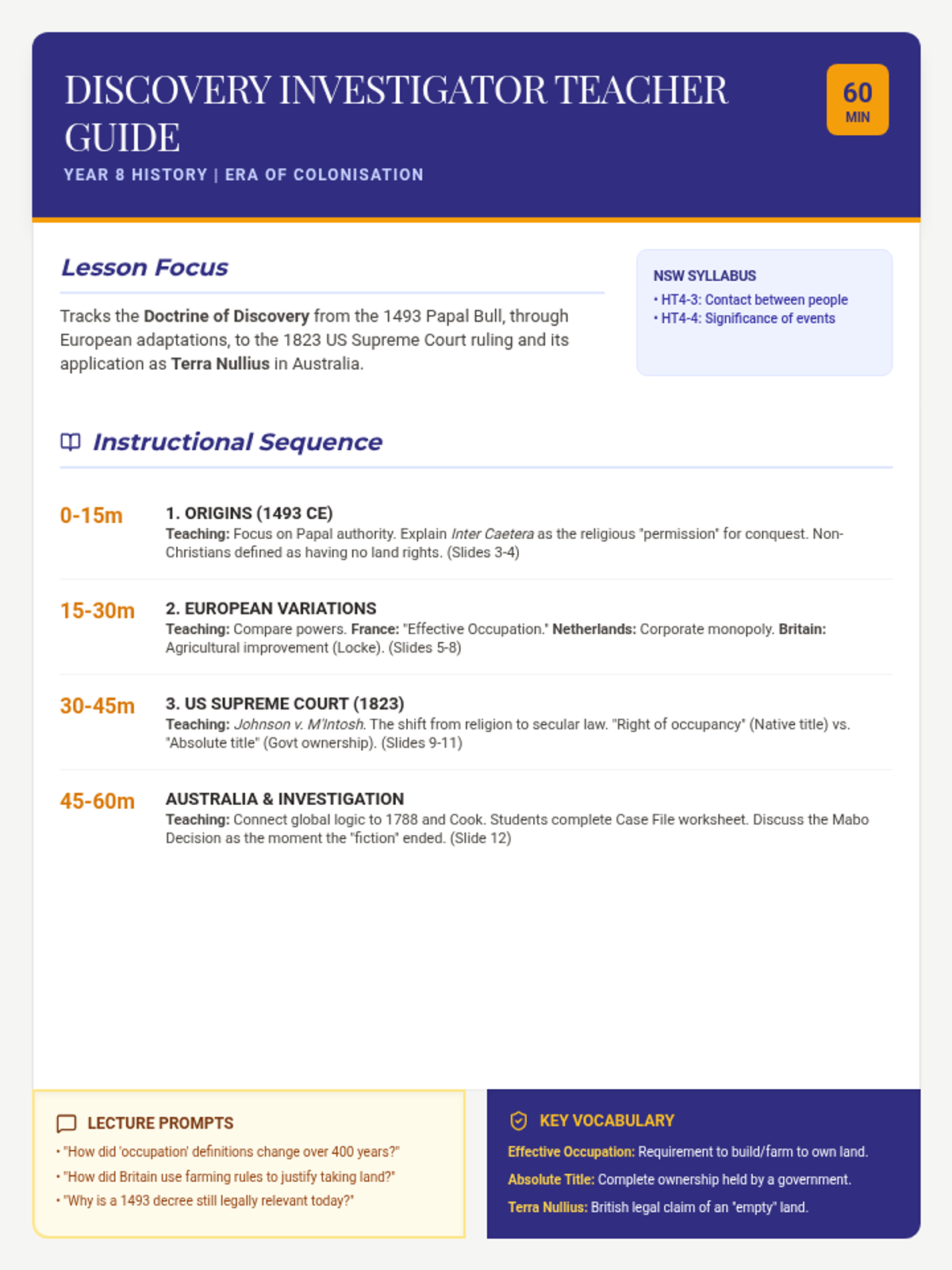
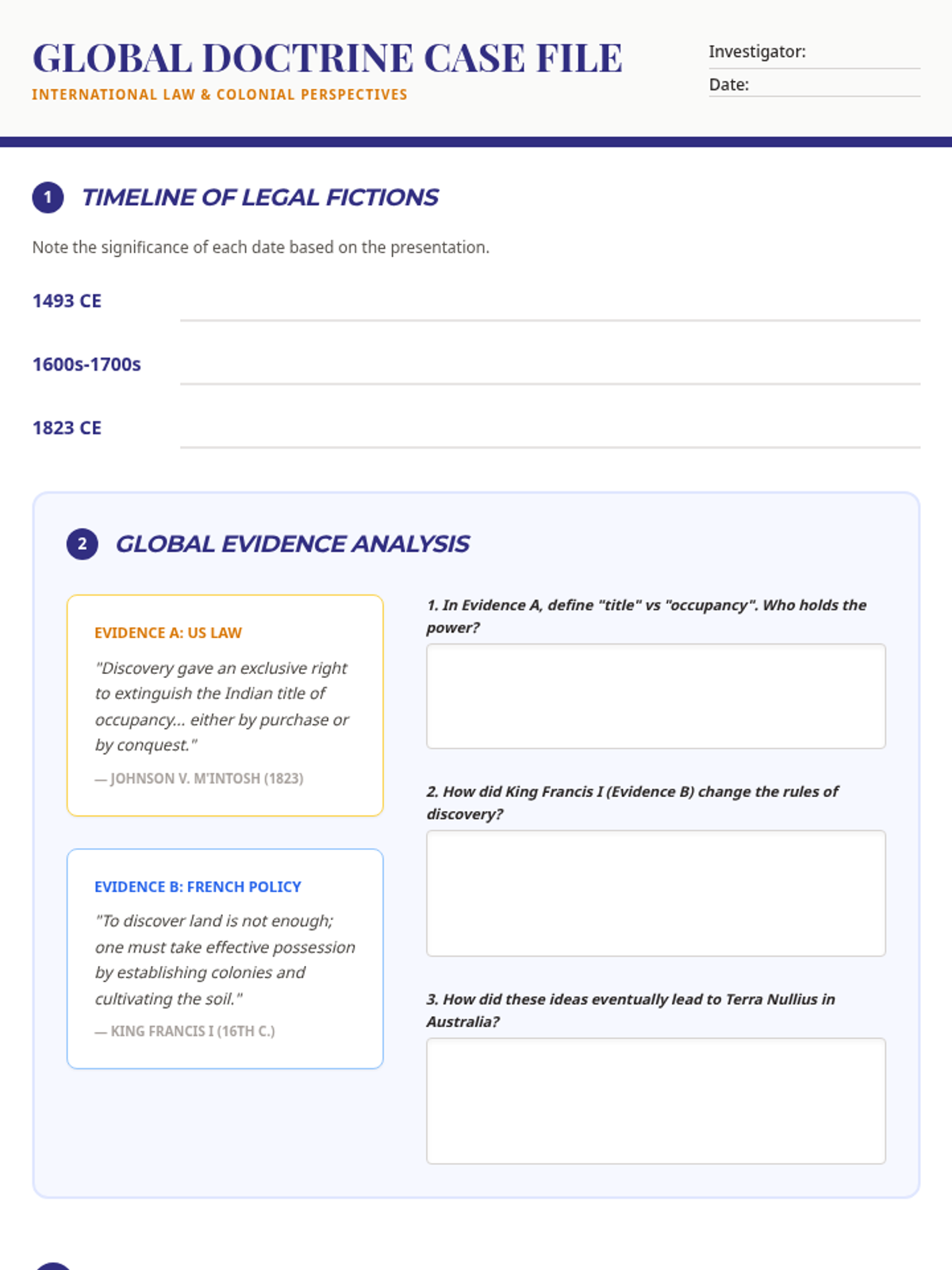
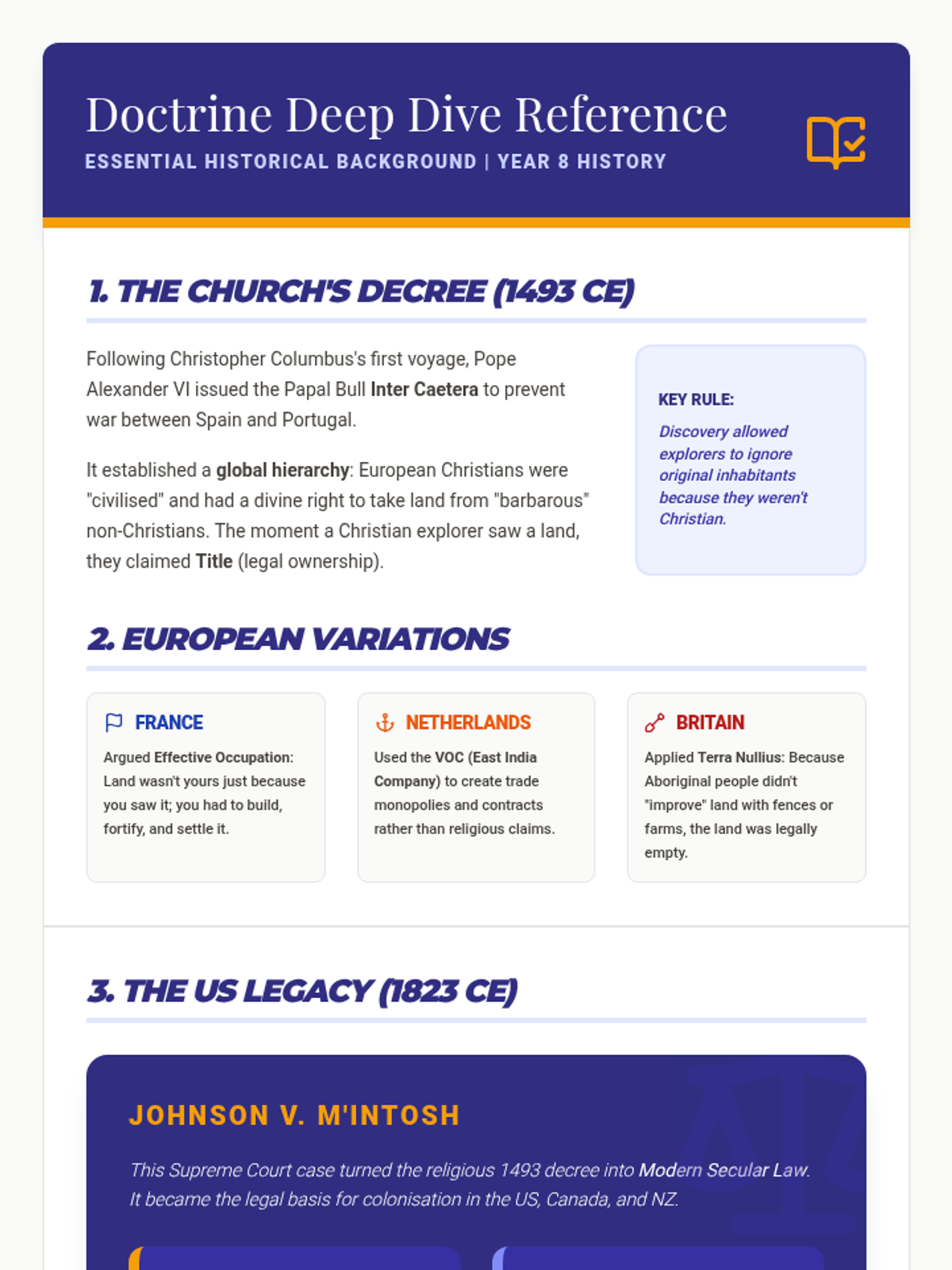
An investigation into the legal and moral frameworks of the Doctrine of Discovery and Terra Nullius, exploring their impact on Aboriginal and Torres Strait Islander Peoples.
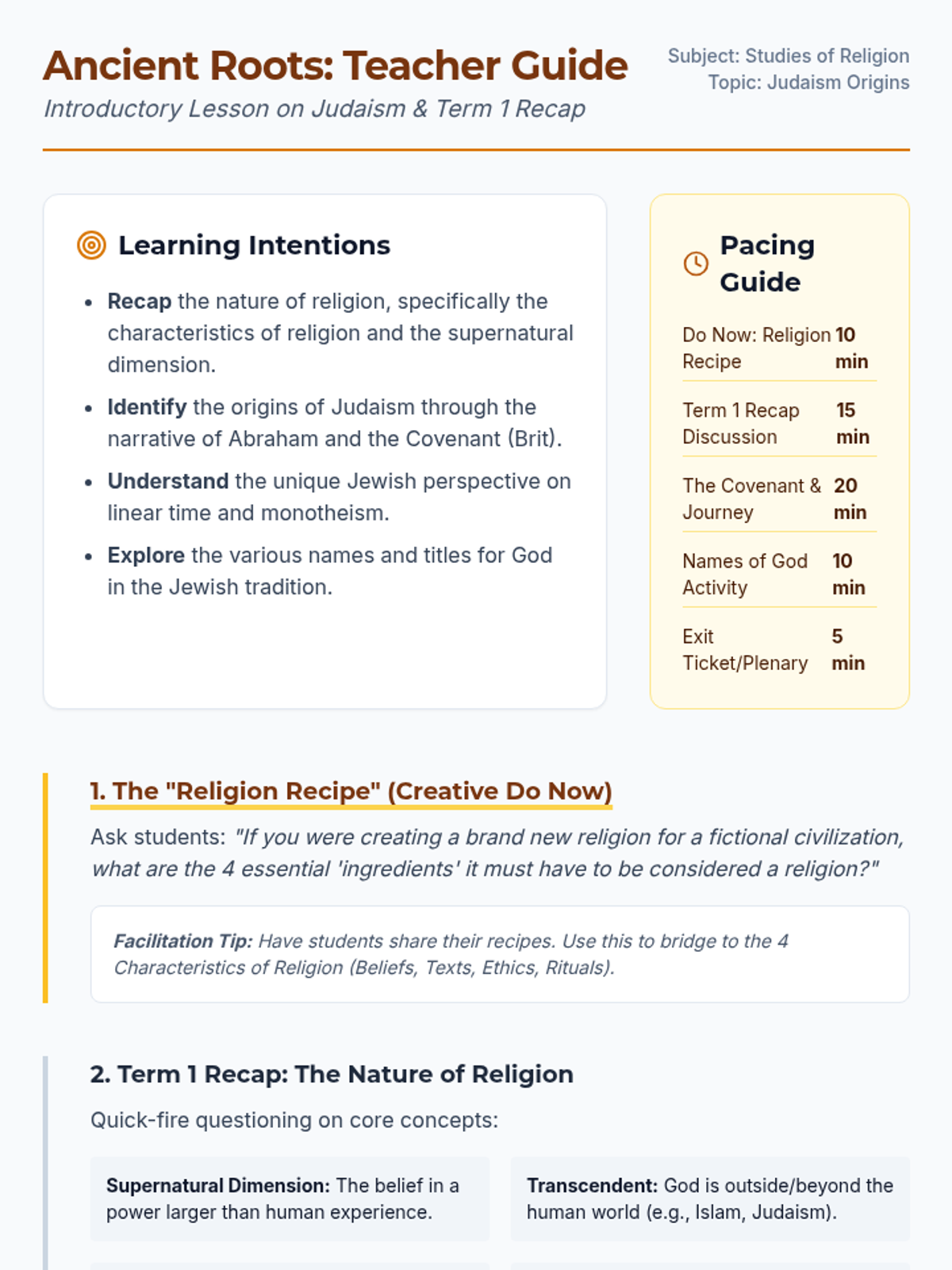
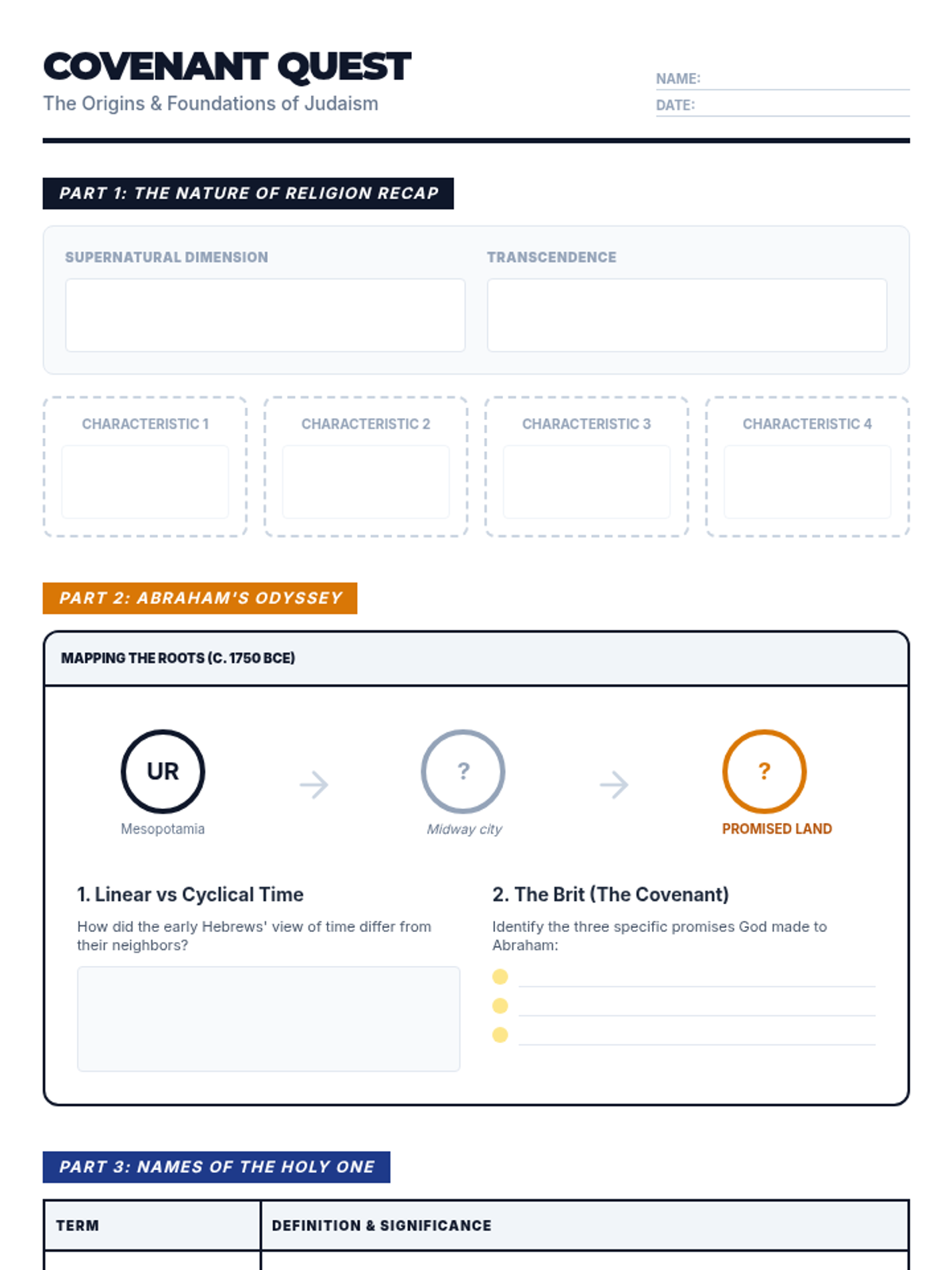
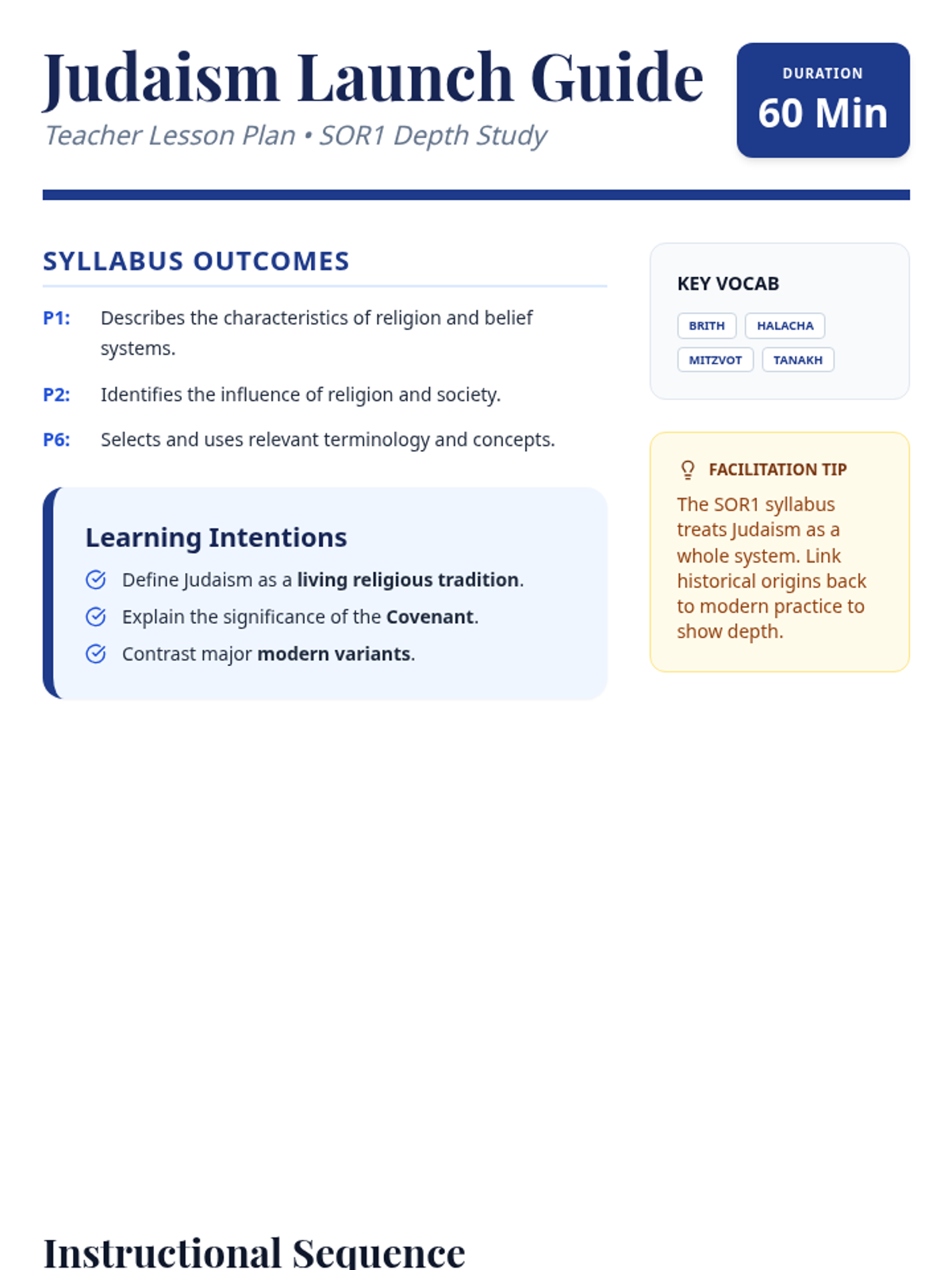
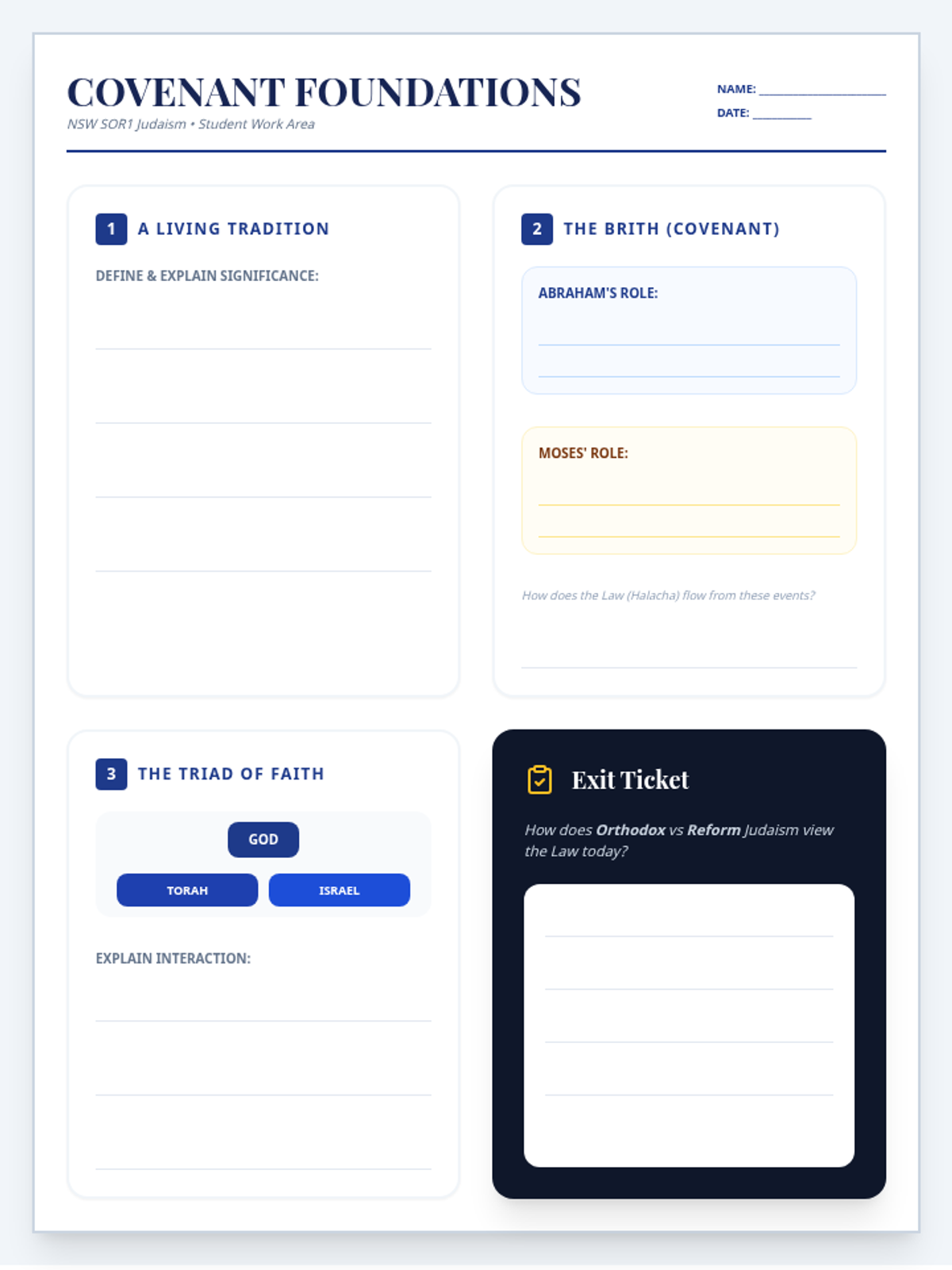
An introductory lesson on Judaism exploring its origins through the story of Abraham and the Covenant, while recapping the Nature of Religion and Beliefs from Term 1.
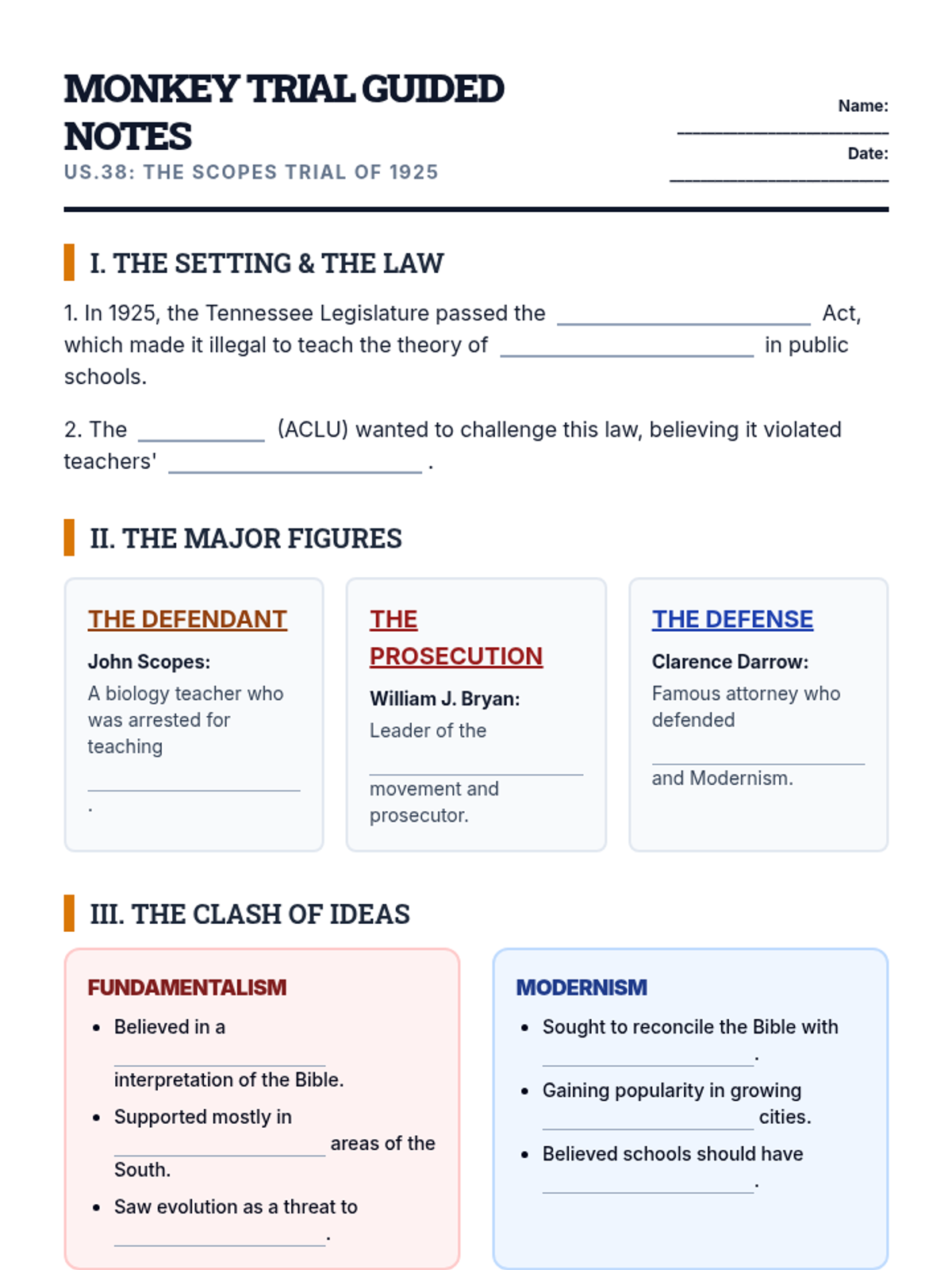
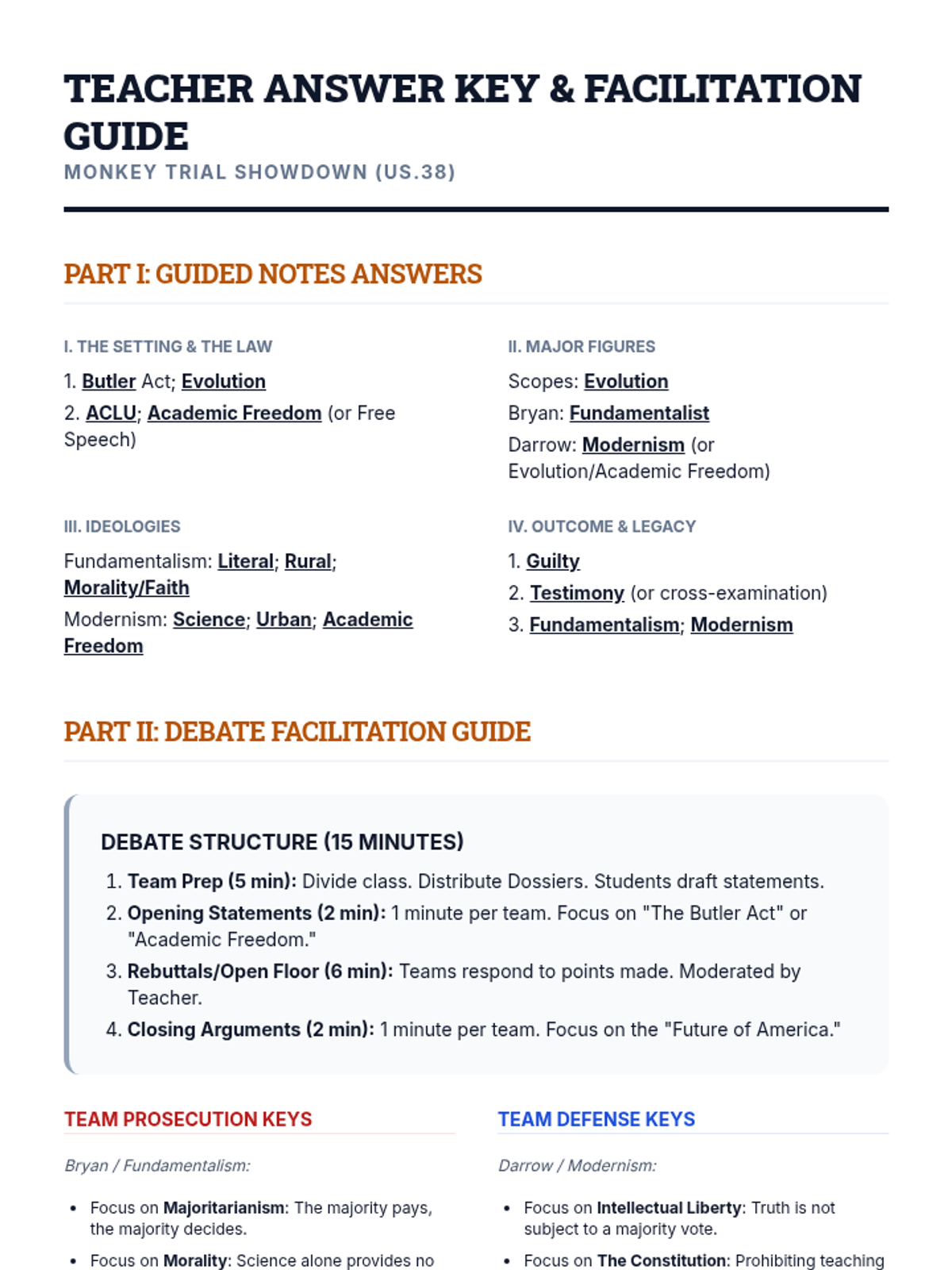
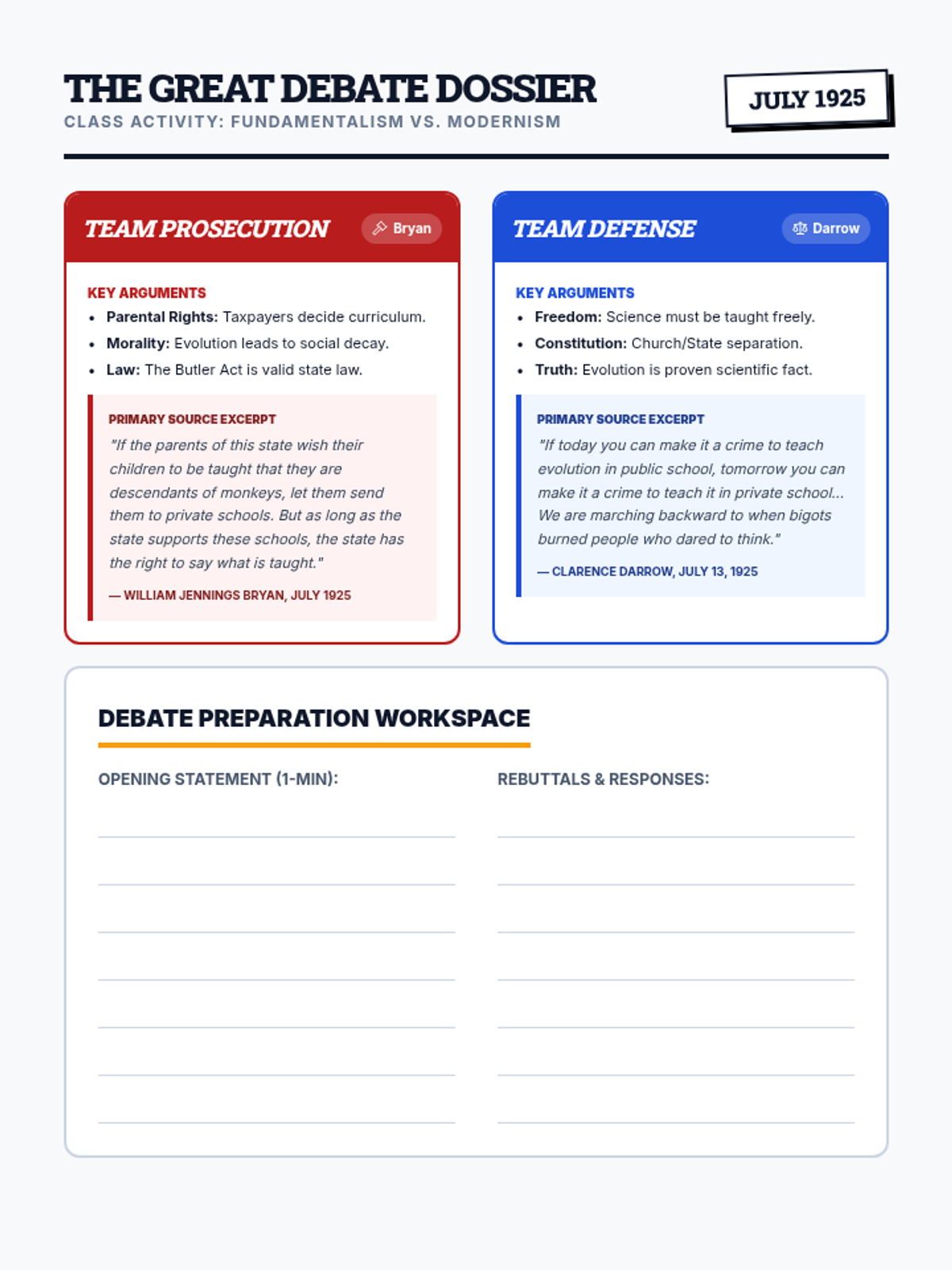
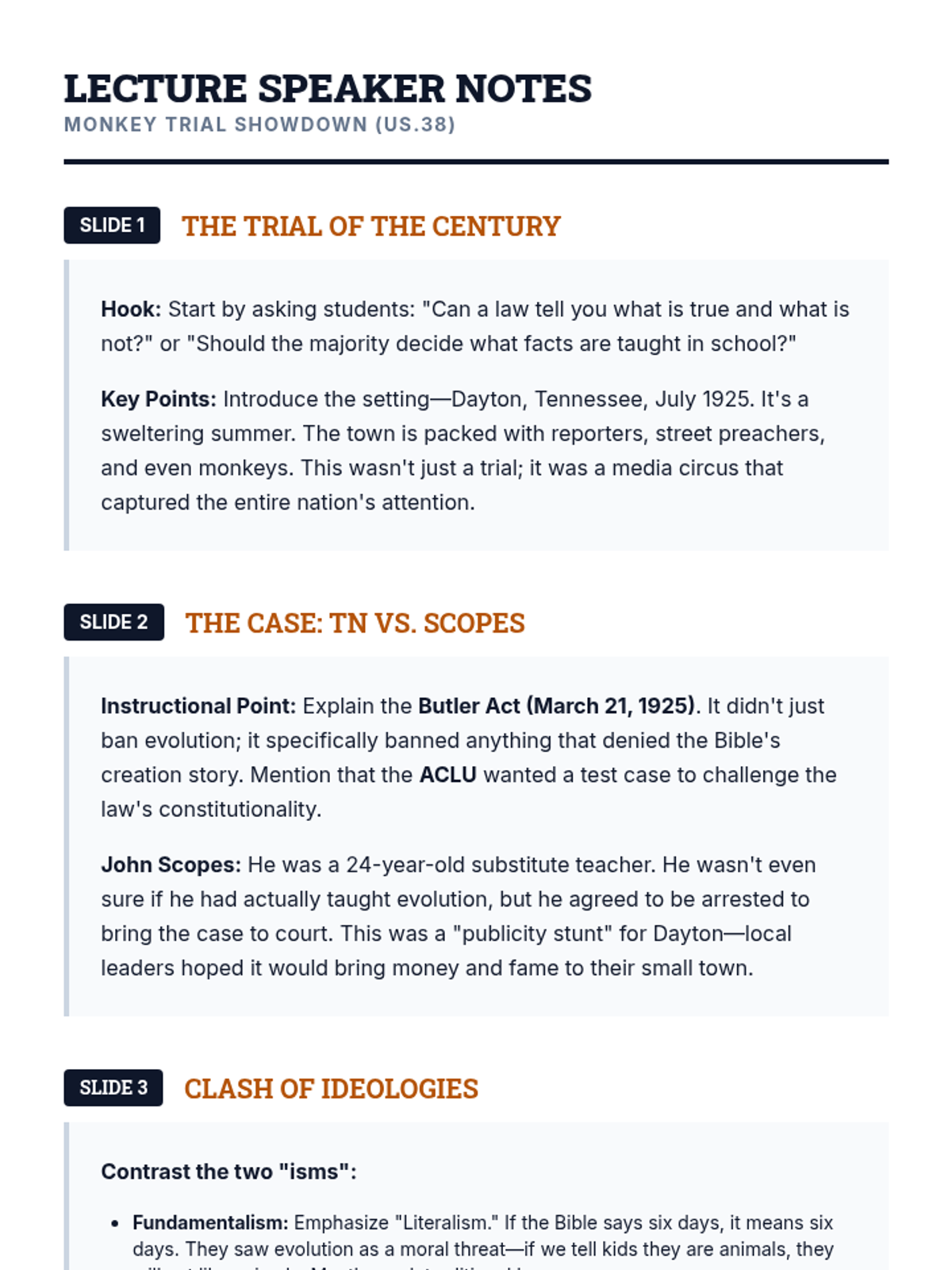
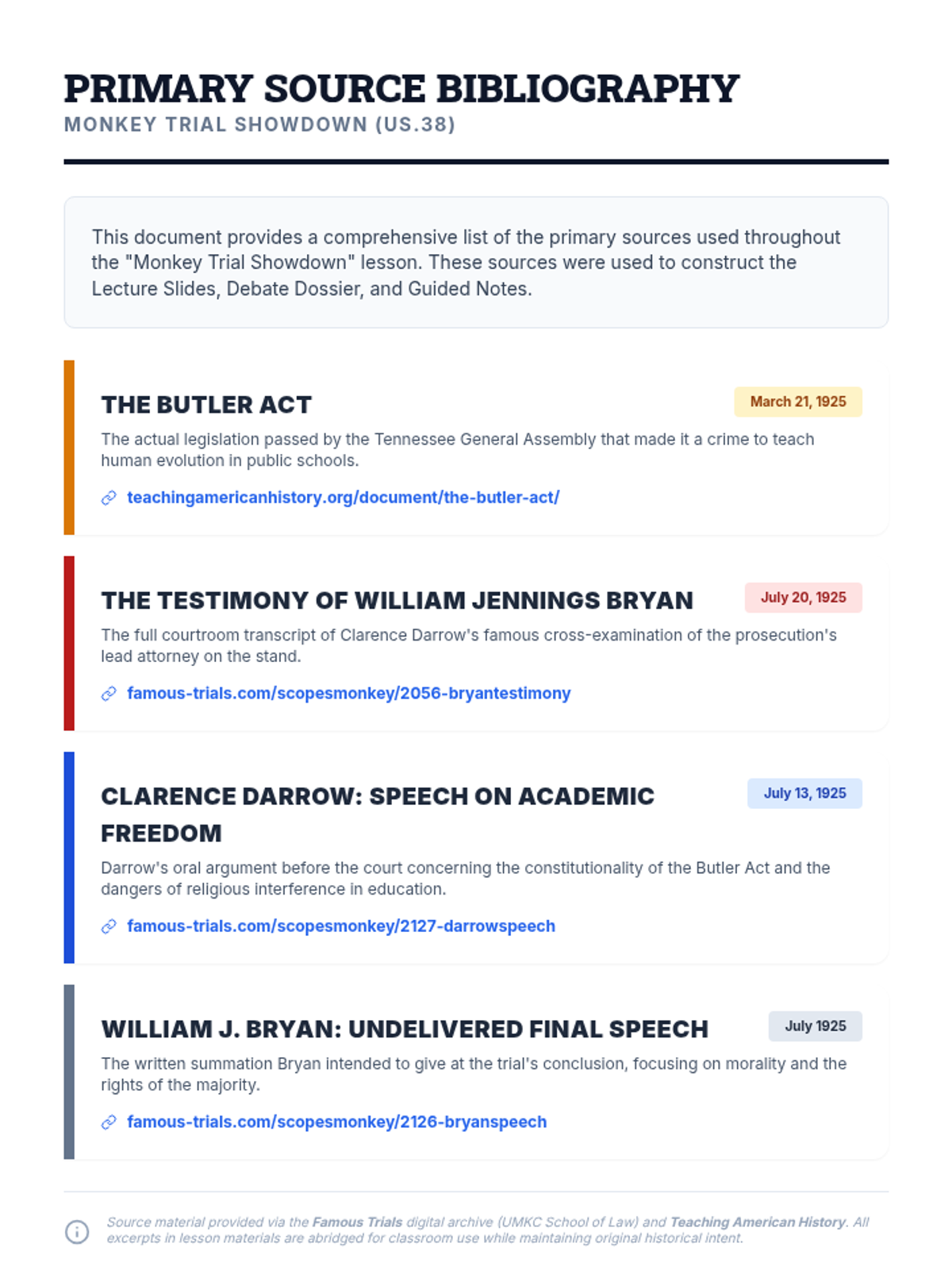
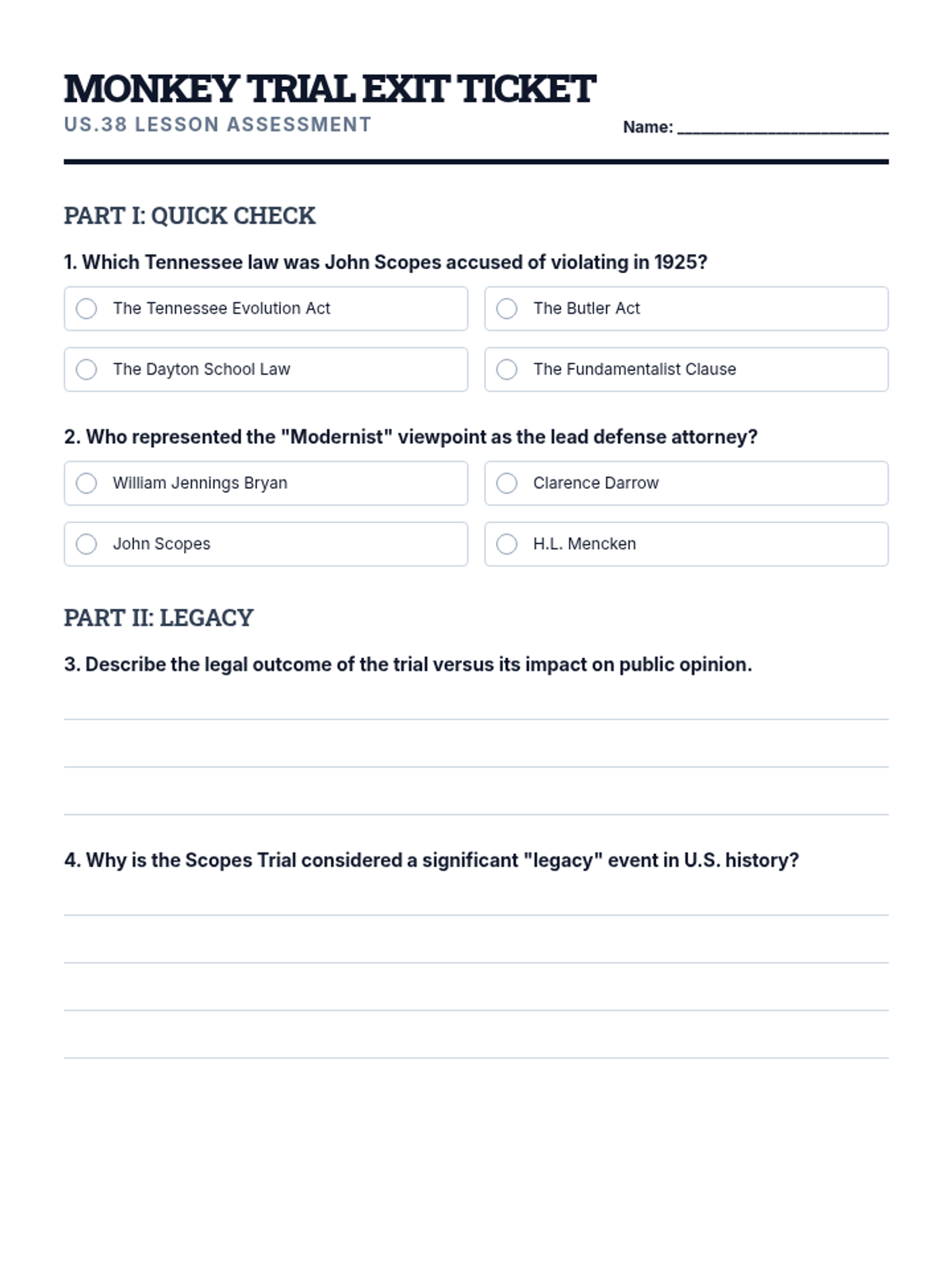
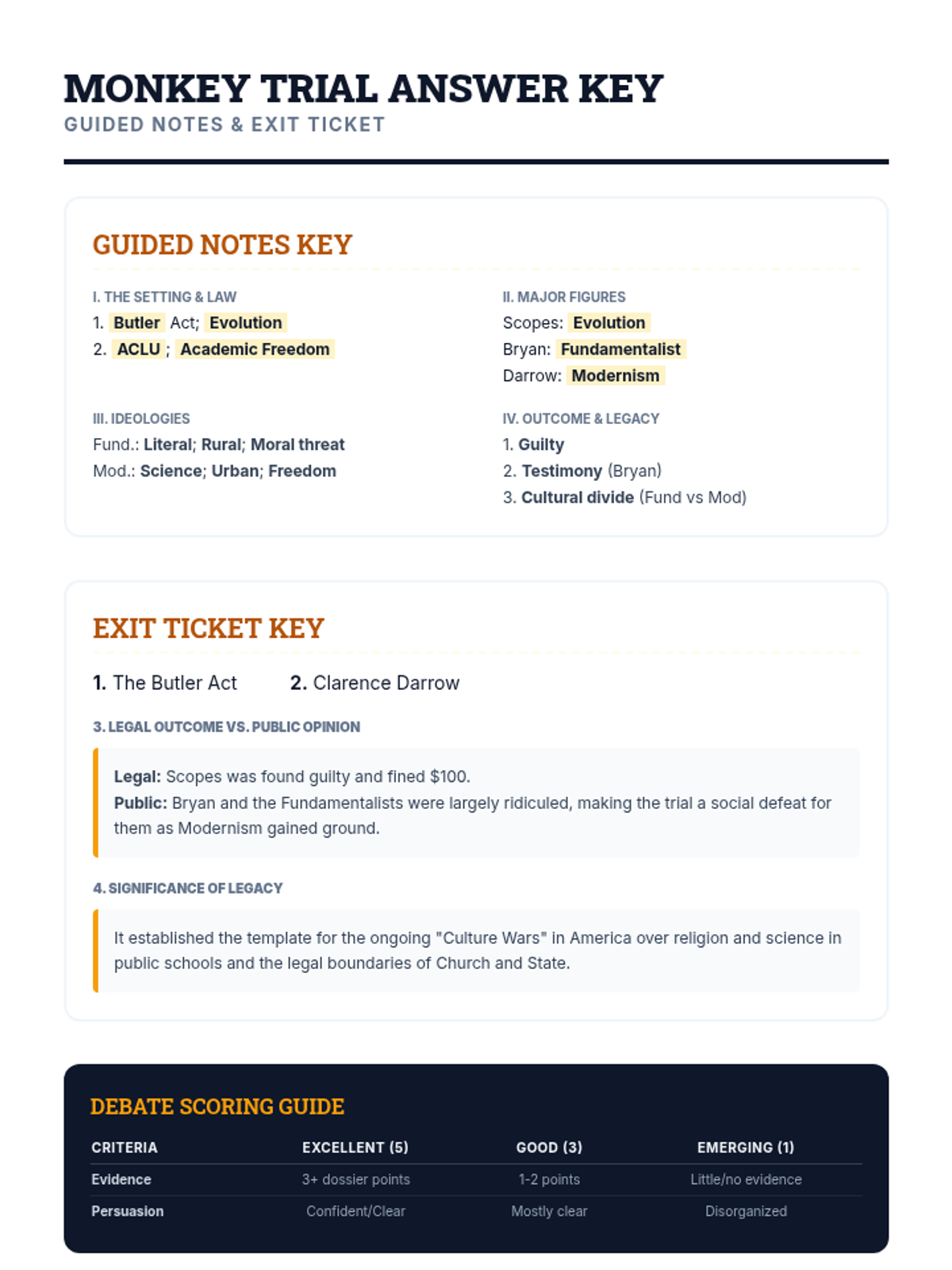
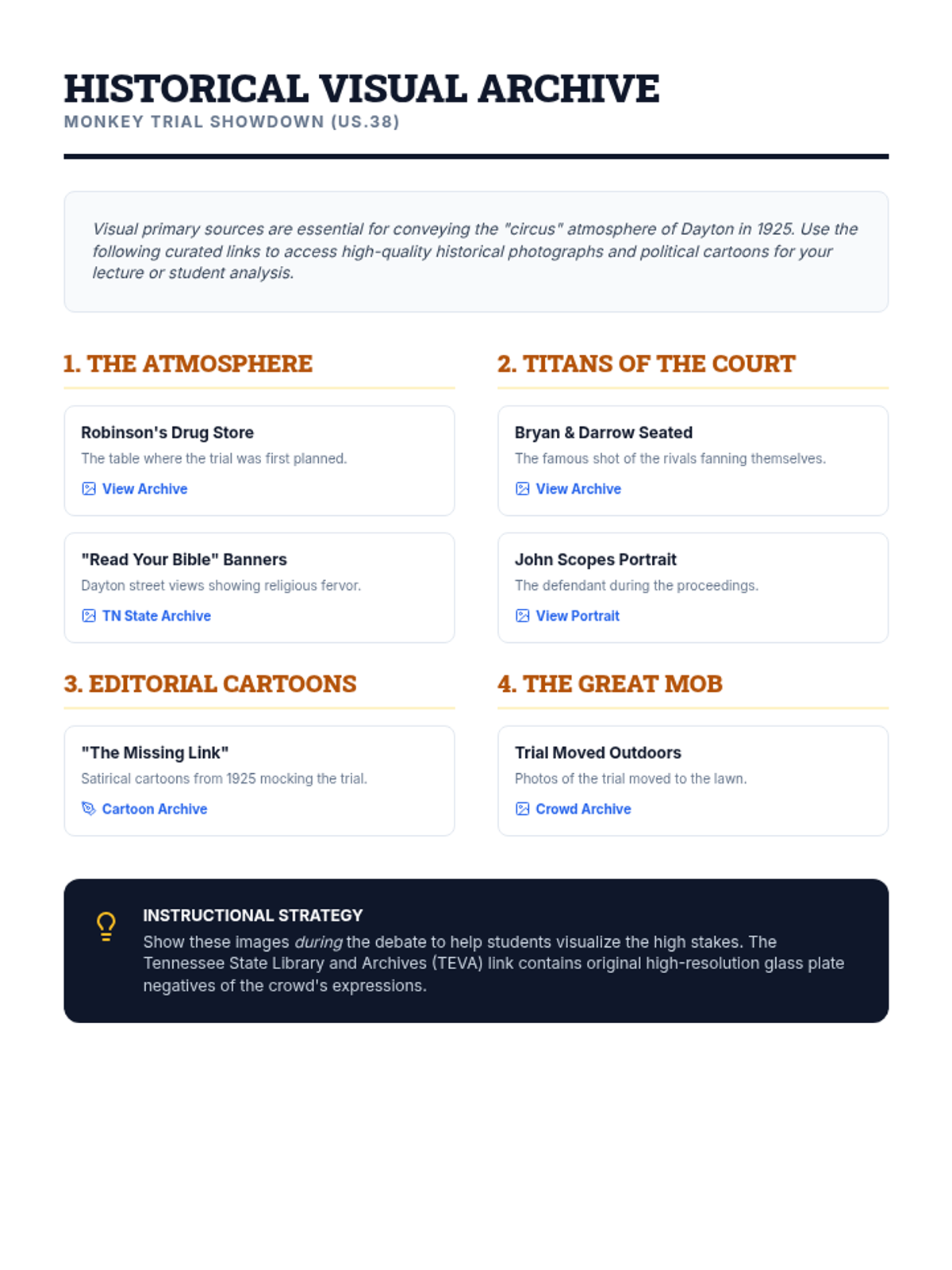
A 40-minute exploration of the 1925 Scopes Trial, focusing on the clash between fundamentalism and modernism through lecture and transcript analysis.
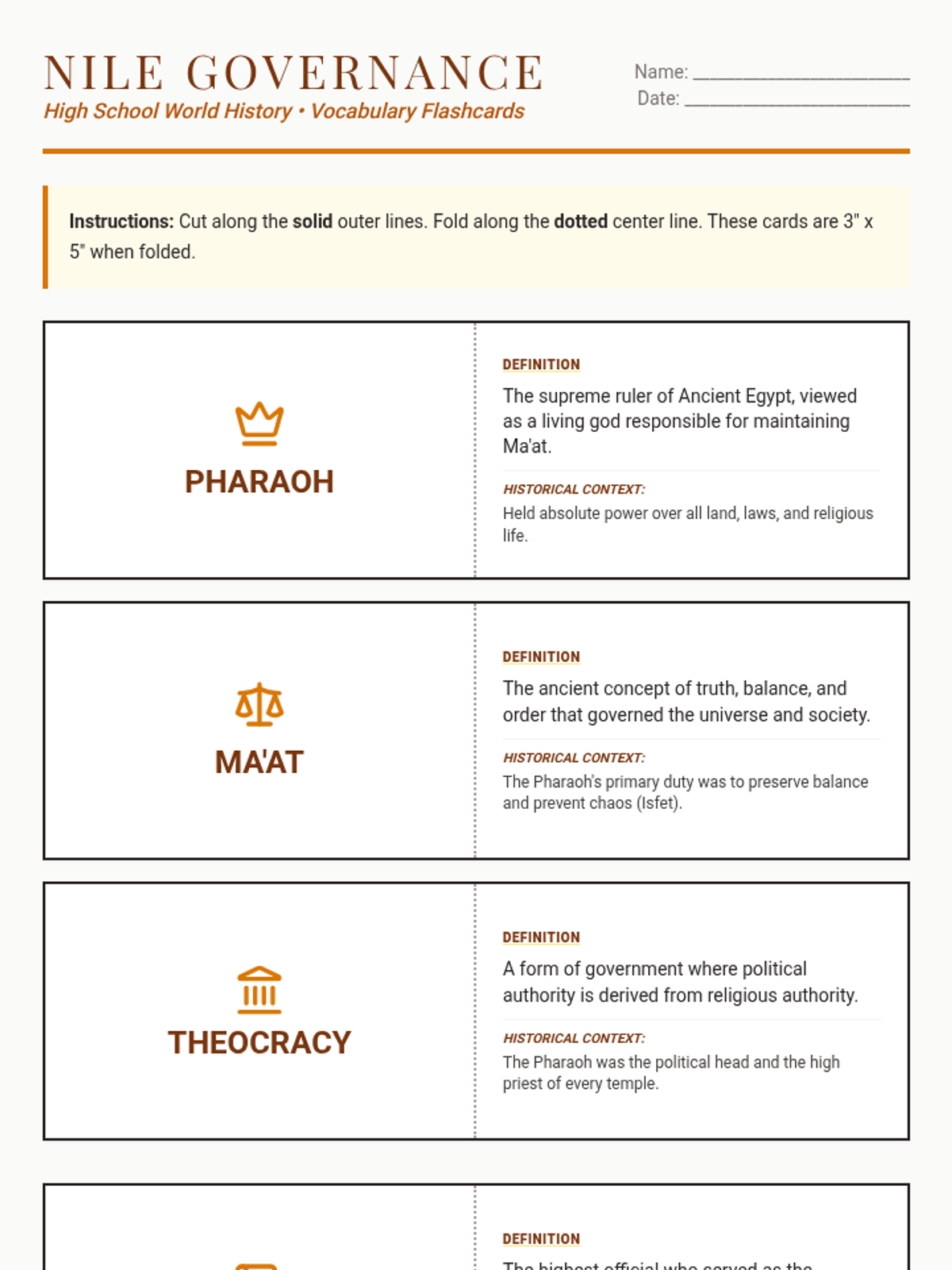
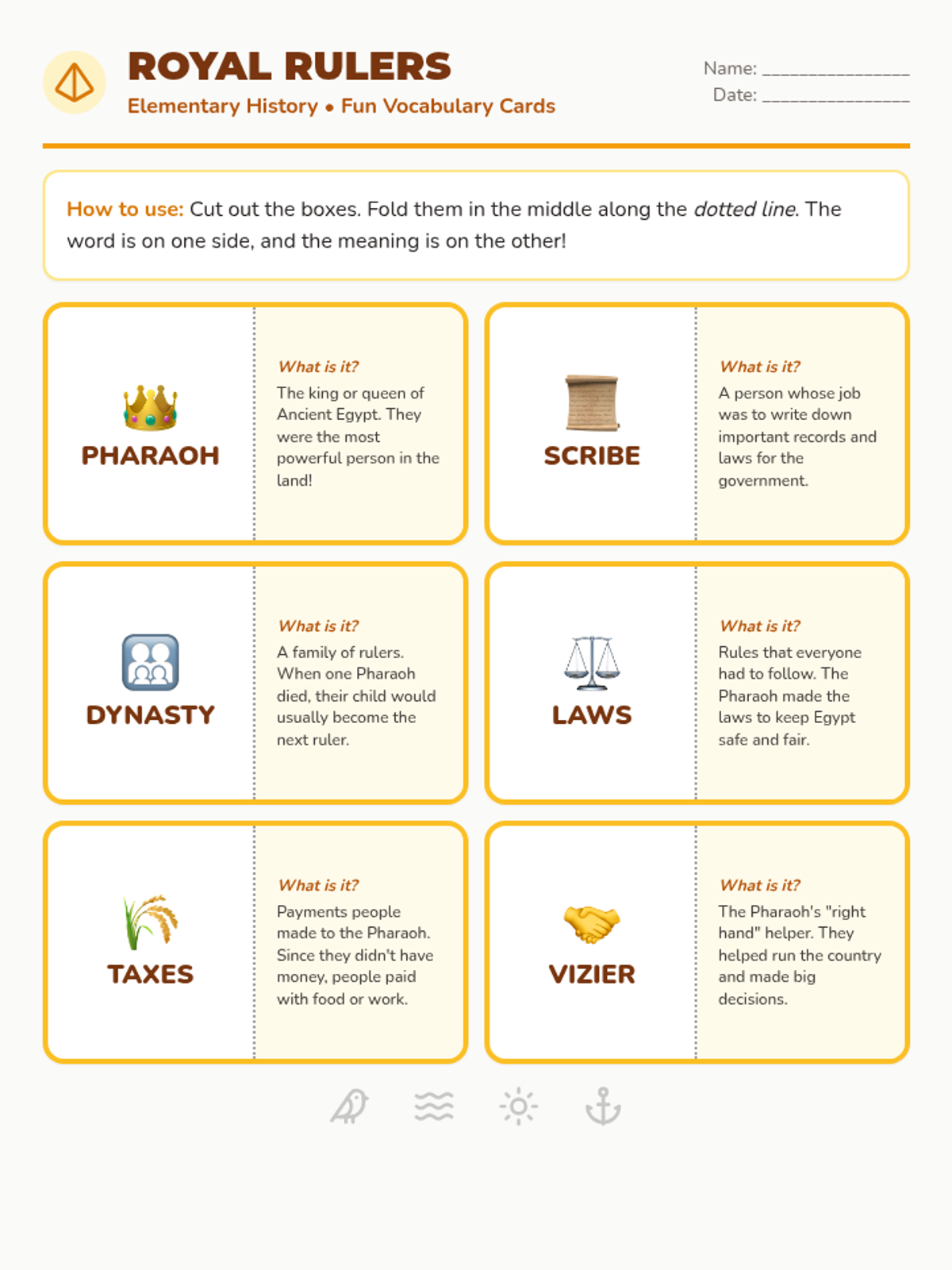
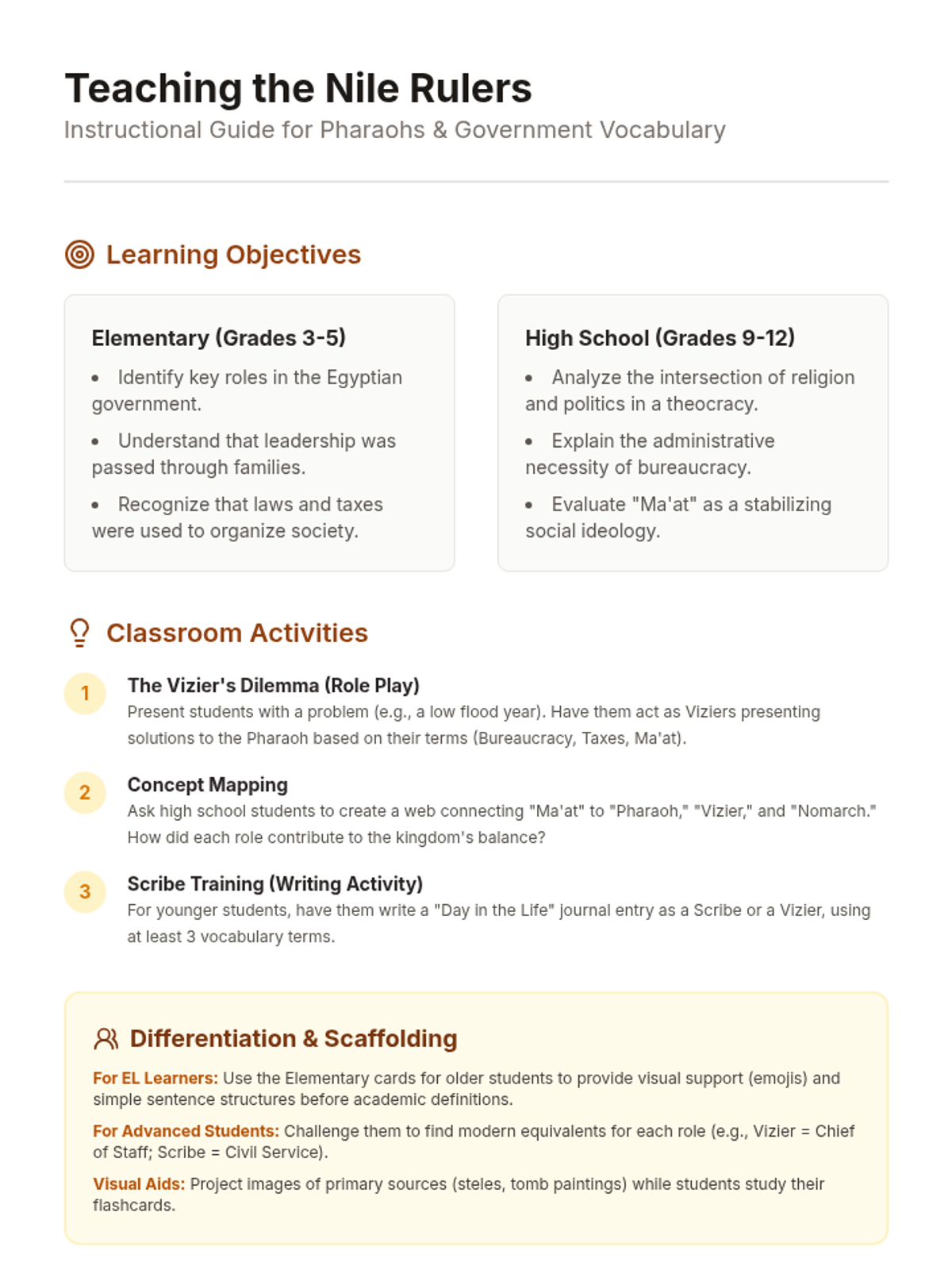
A collection of vocabulary resources focused on the structure of government and the role of the Pharaoh in Ancient Egypt, tailored for both elementary and high school levels.
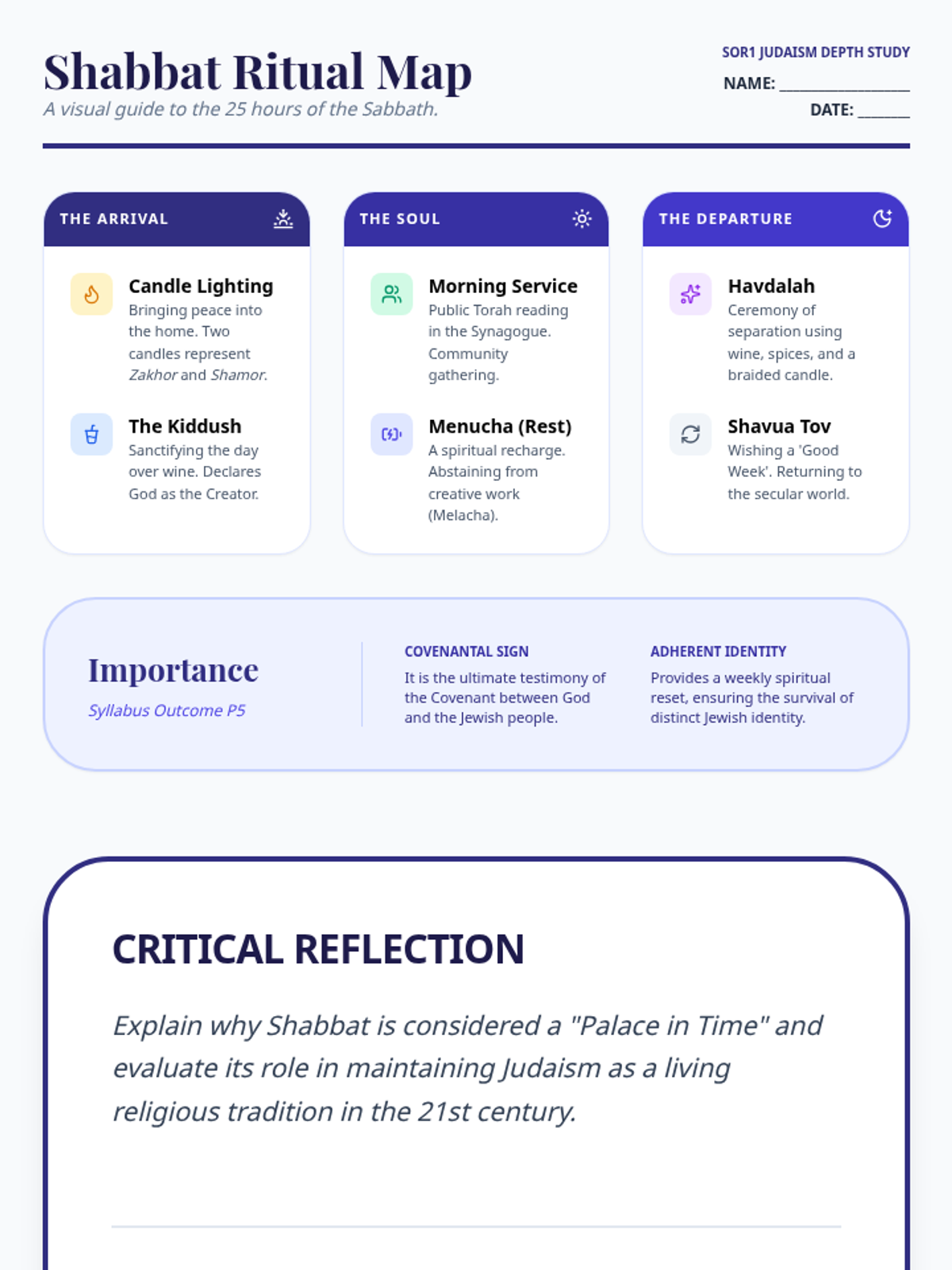
An investigation into the significance of Shabbat as the primary ritual expression of Jewish life and identity.
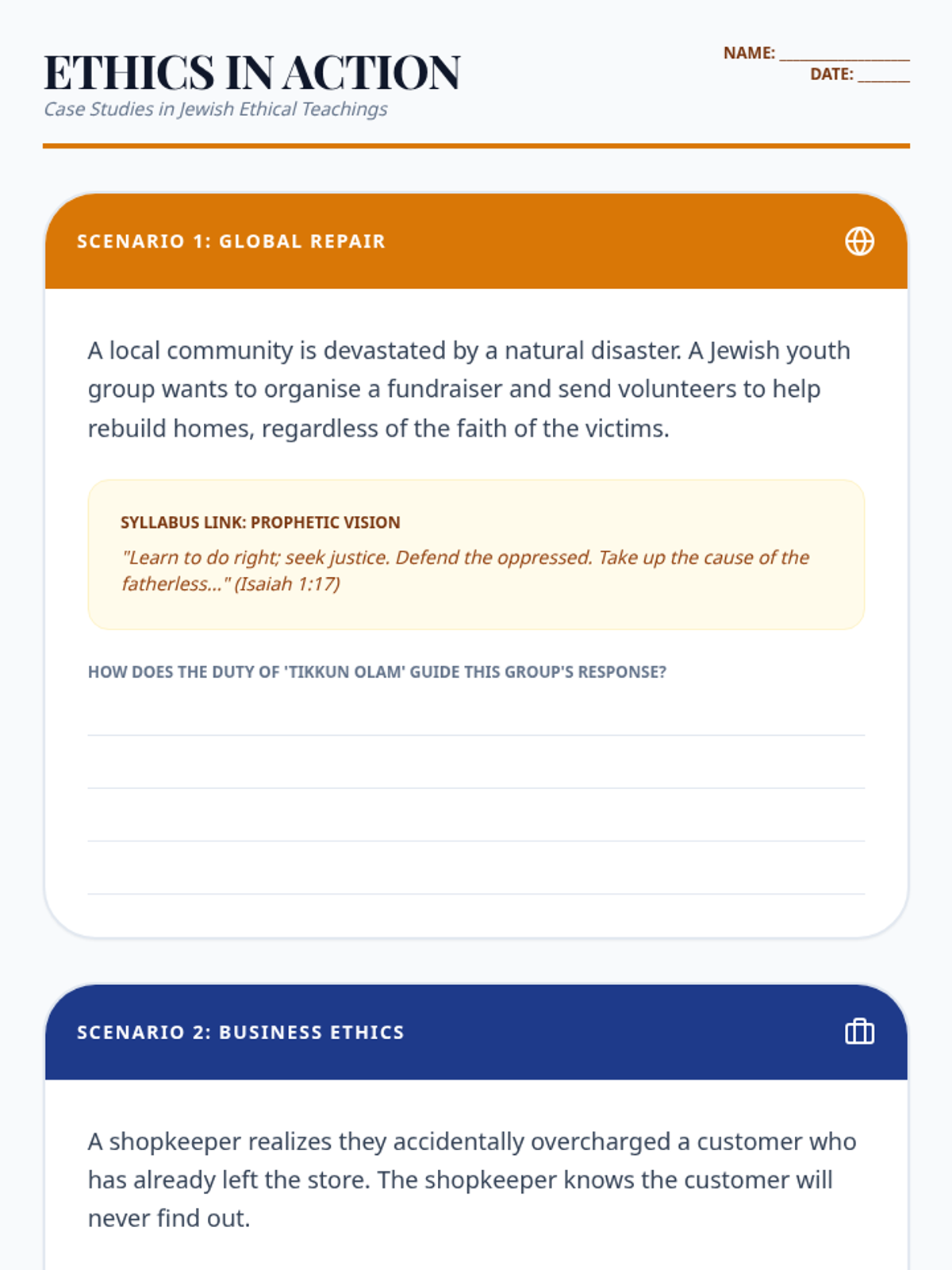
A study of the core ethical teachings of Judaism, focusing on the 613 Mitzvot, the Prophetic Vision of social justice, and the wisdom literature of Proverbs.
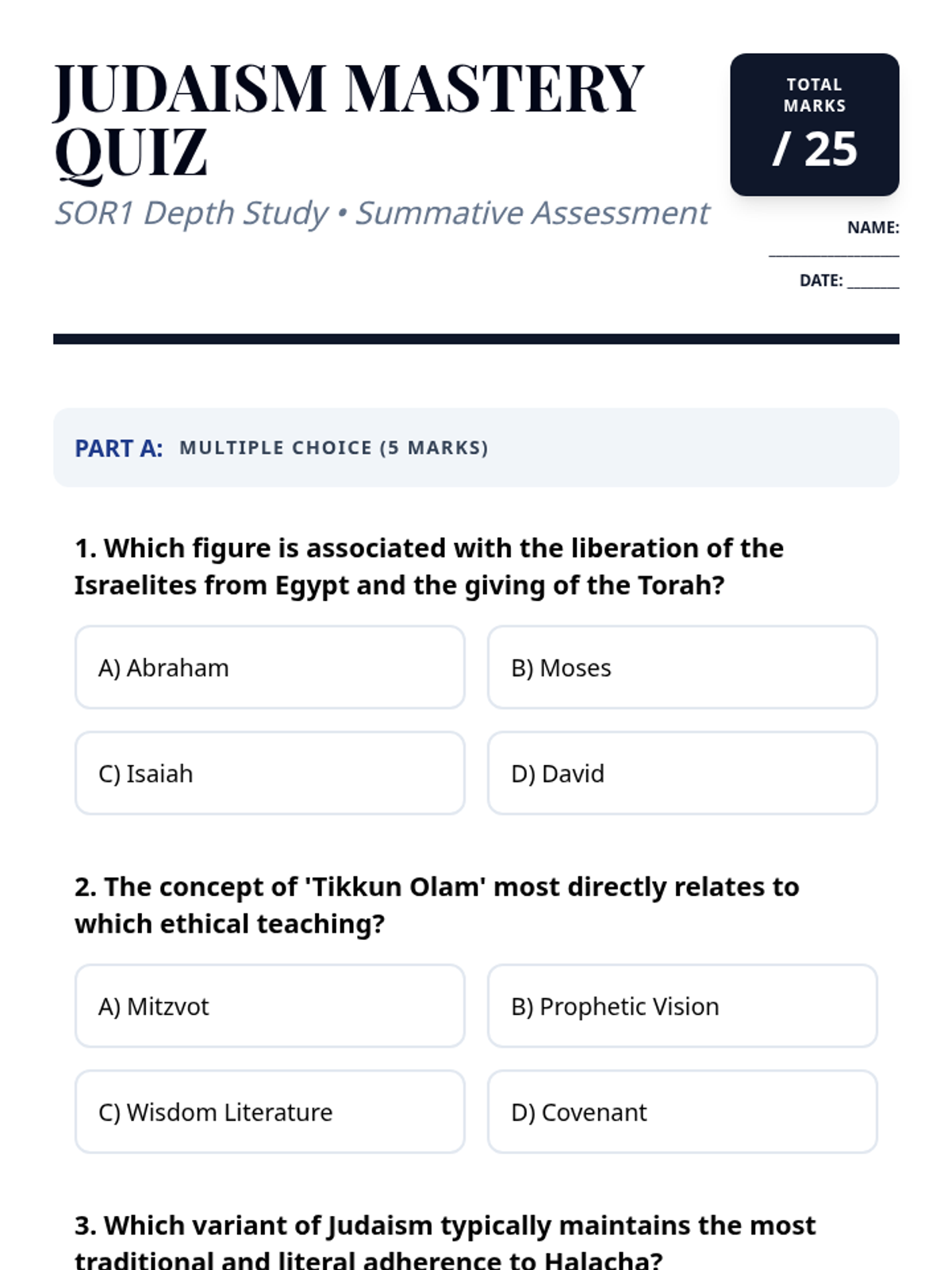
An exploration of the principal beliefs of Judaism, including Monotheism, Moral Law, and the Covenant, as revealed through the Tanakh and Talmud.
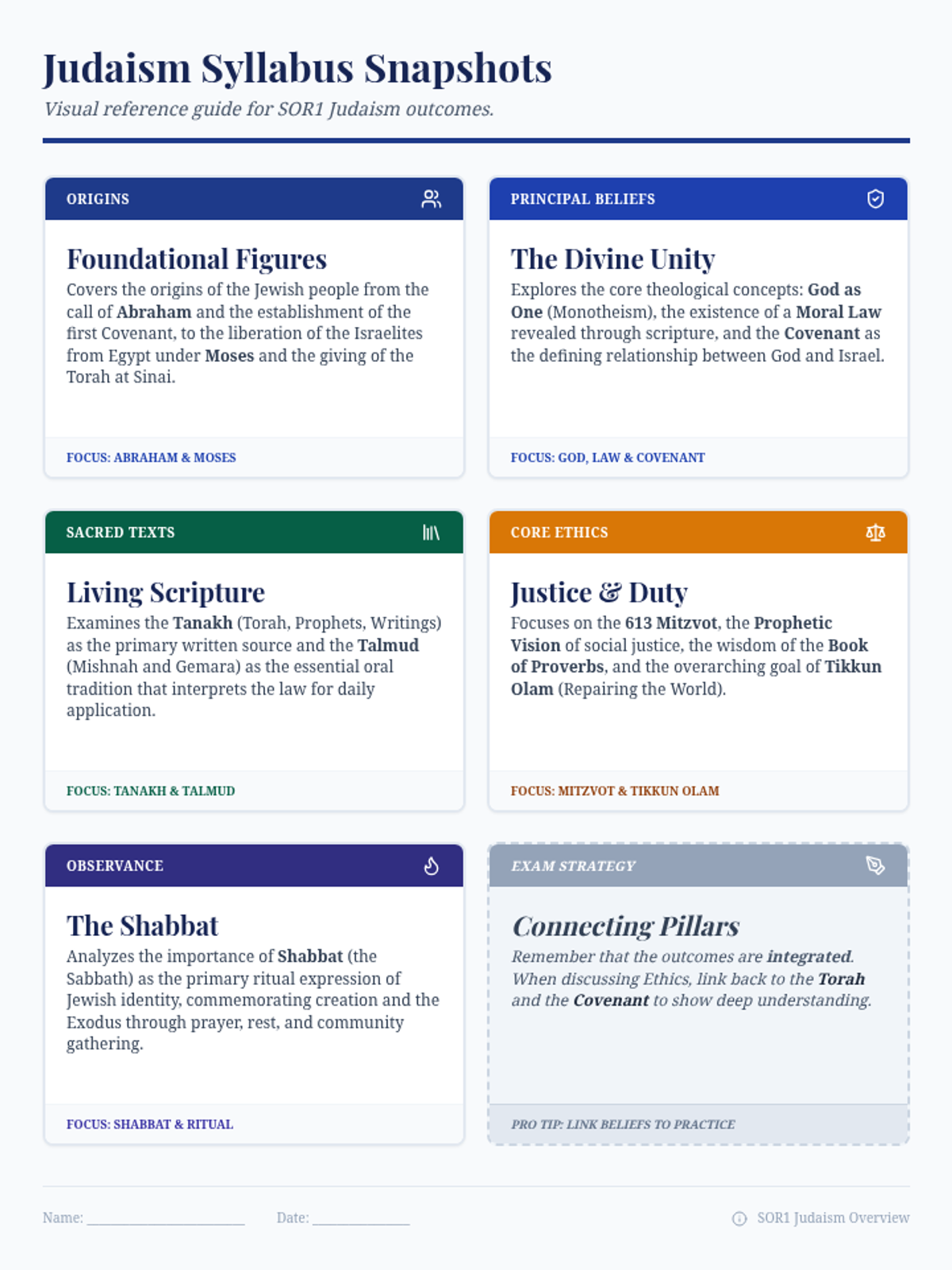
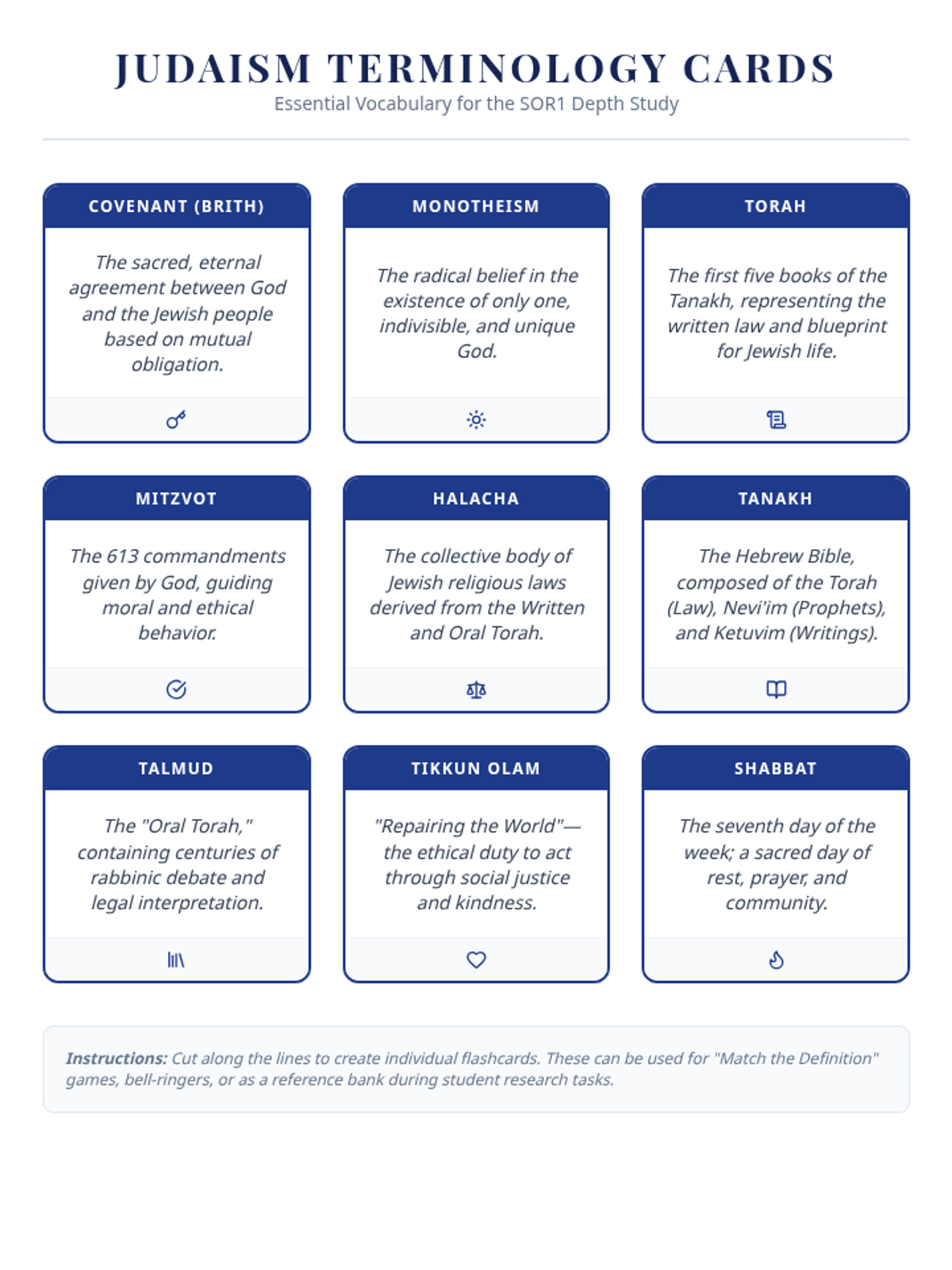
A visual overview of the core pillars of Judaism as outlined in the Studies of Religion 1 syllabus, featuring concise summaries and symbolic illustrations.
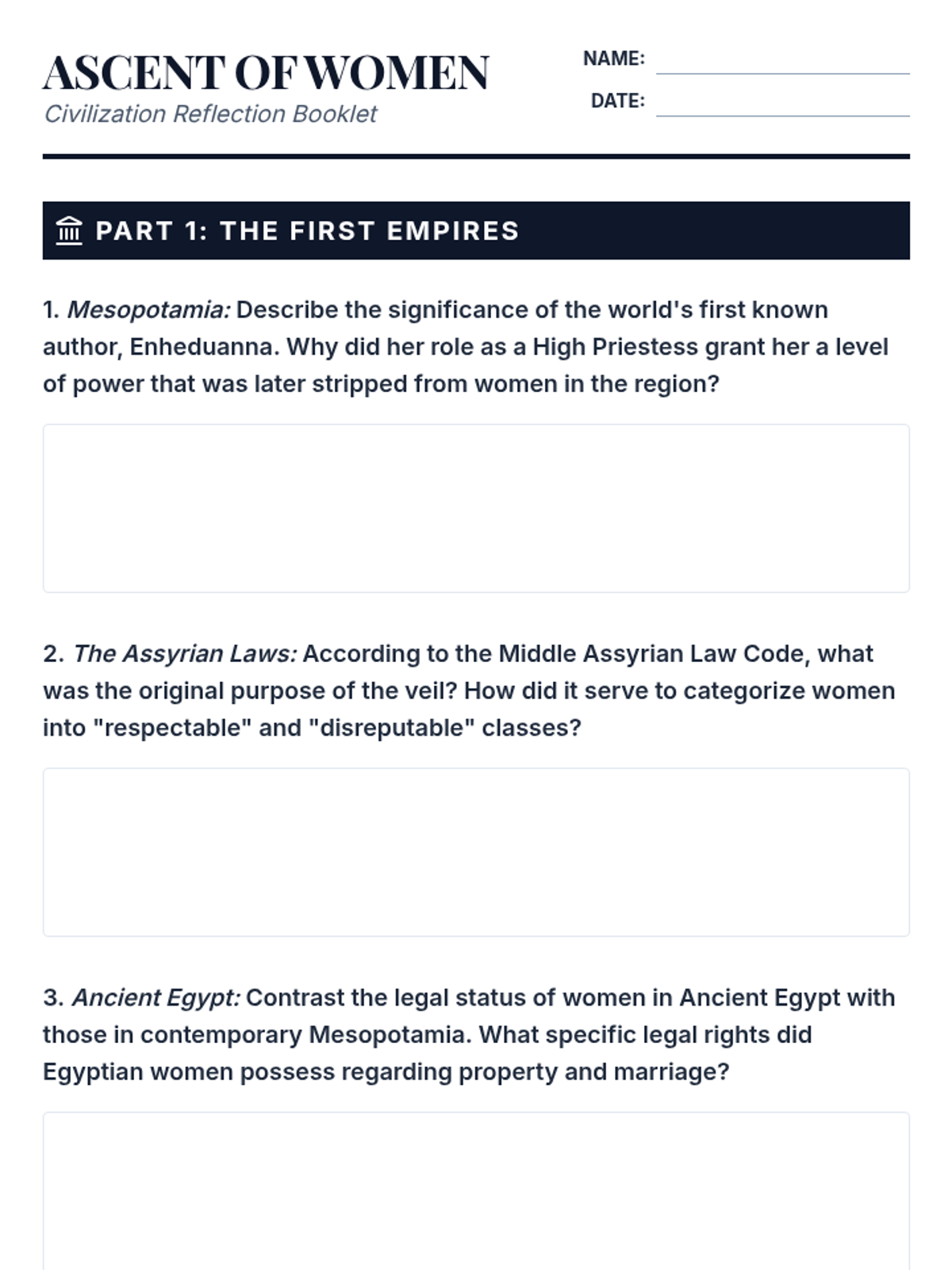
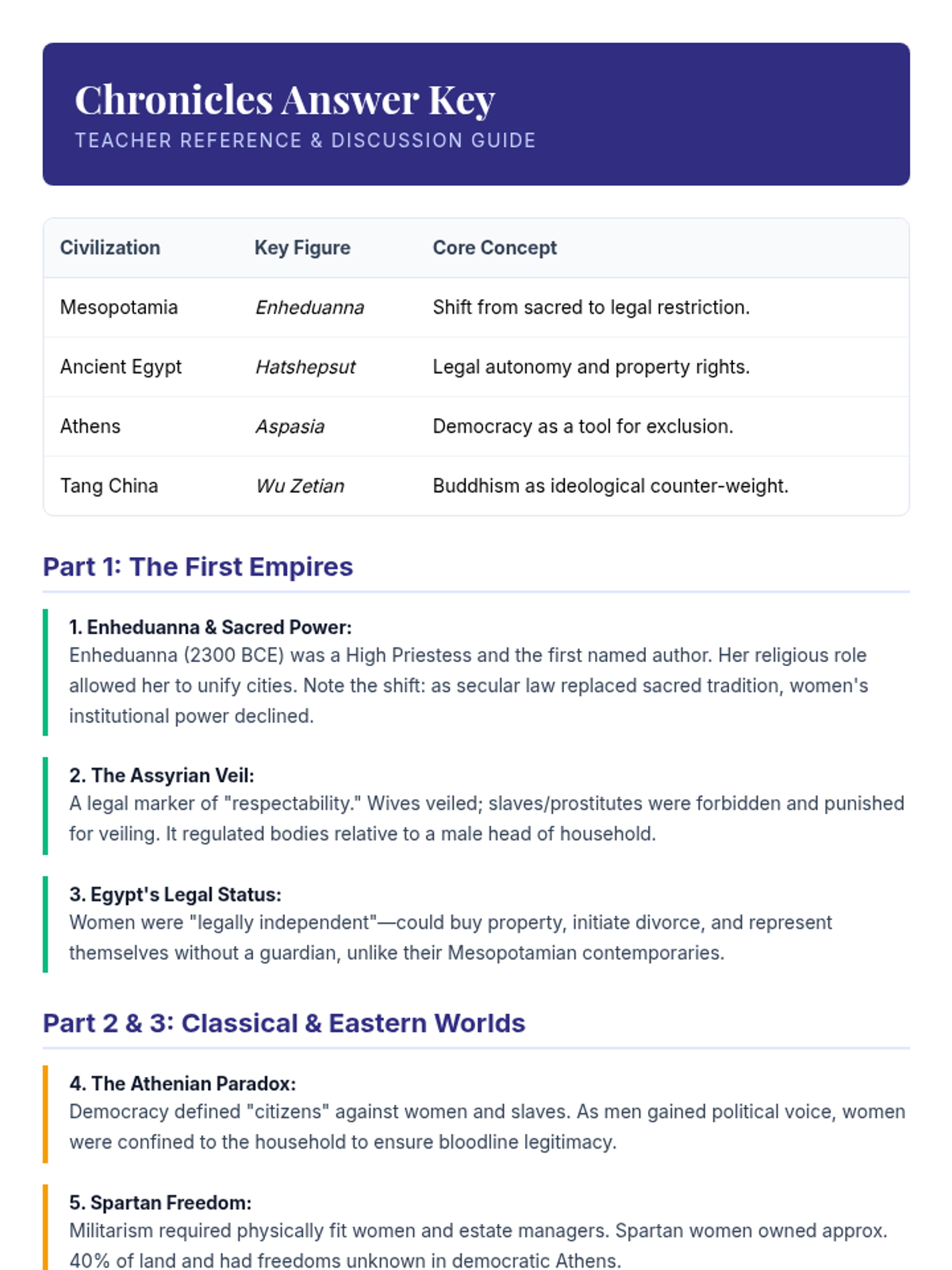
A comprehensive lesson exploring the historical roles and status of women across global civilizations, based on the Ascent of Women documentary series. Includes reflection questions for all major civilizations covered in the episodes.
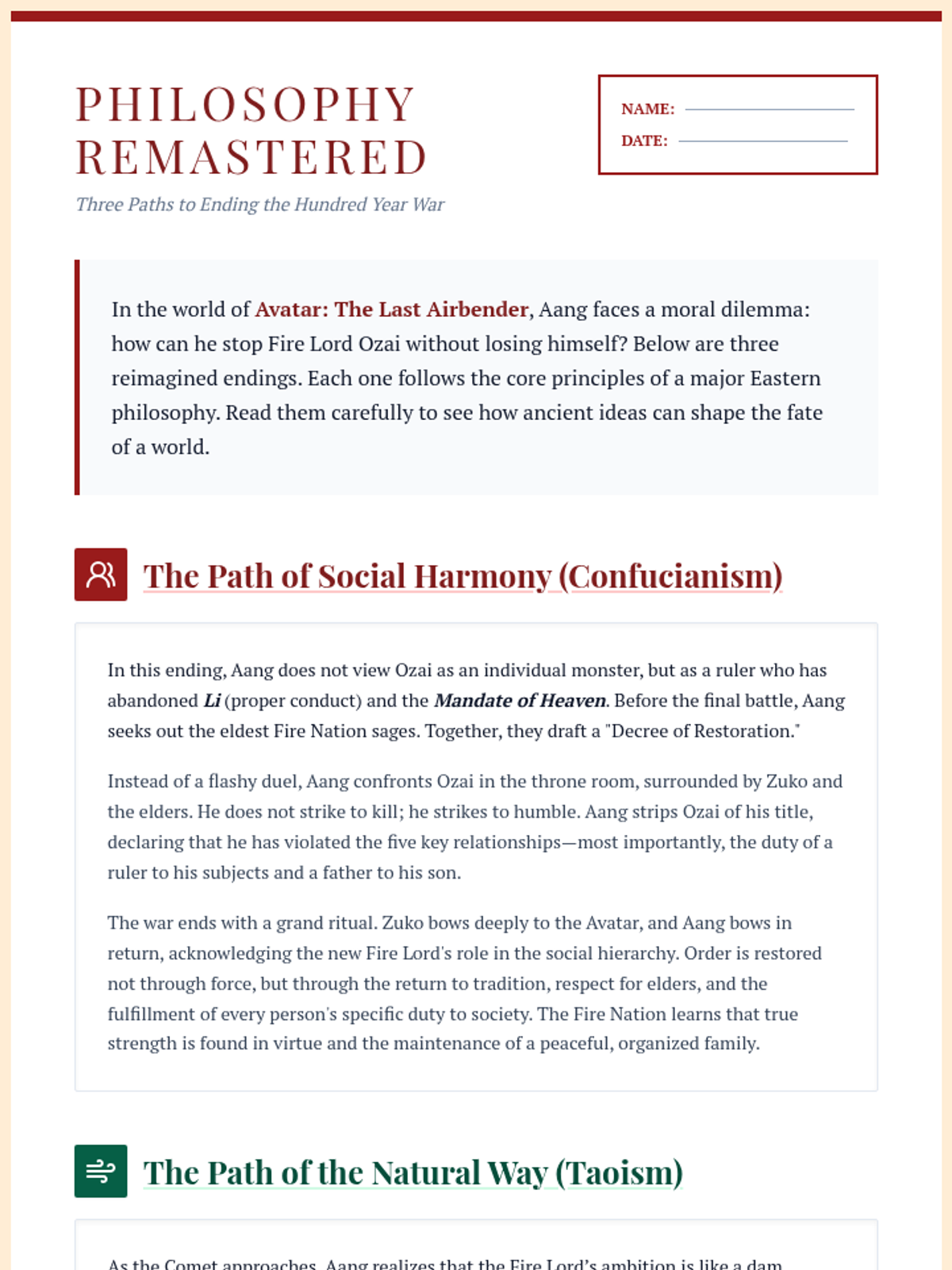
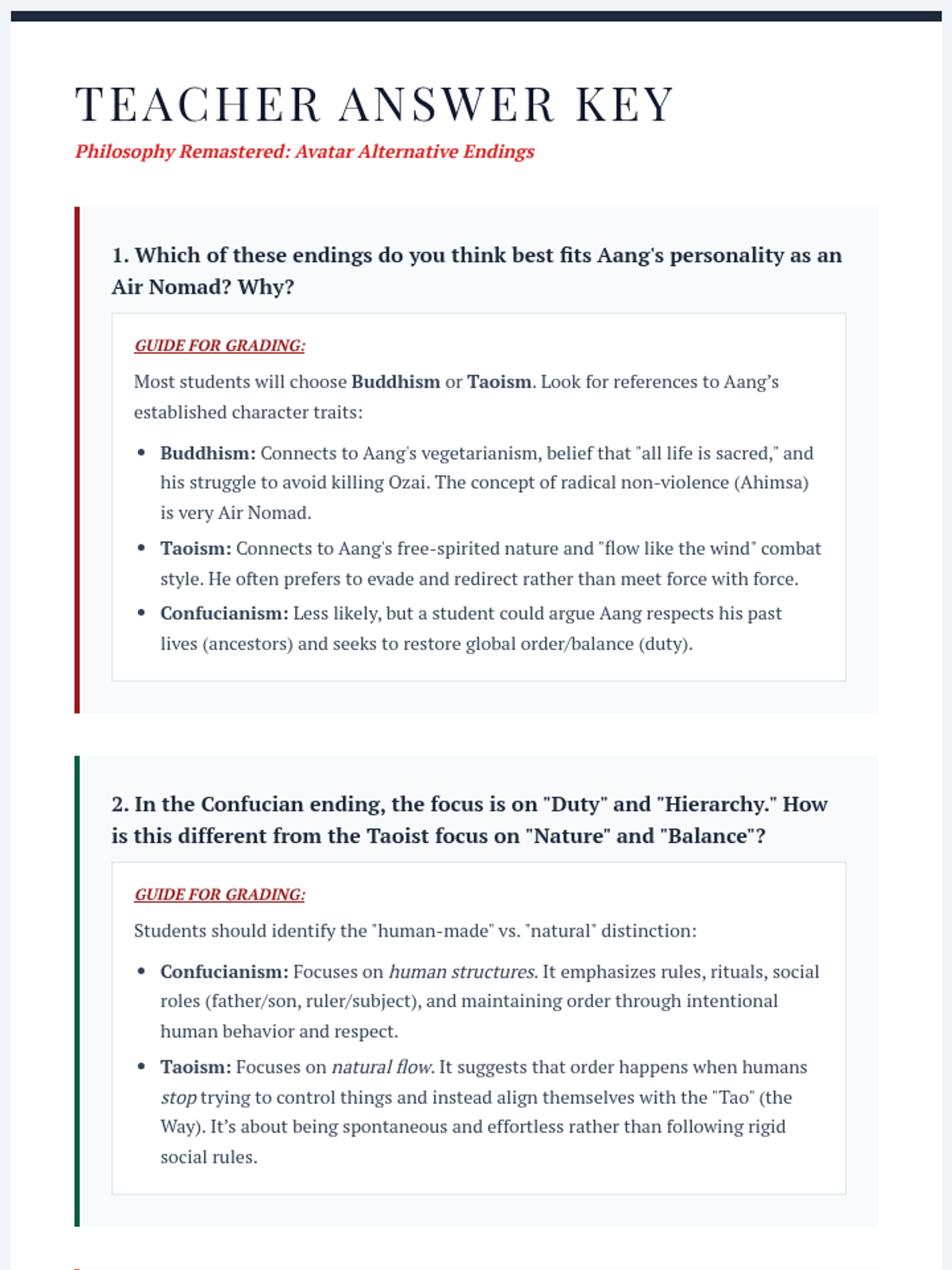
Students explore the core tenets of Confucianism, Taoism, and Buddhism by analyzing three alternative endings to the Avatar: The Last Airbender series, each reflecting a different Eastern philosophy.
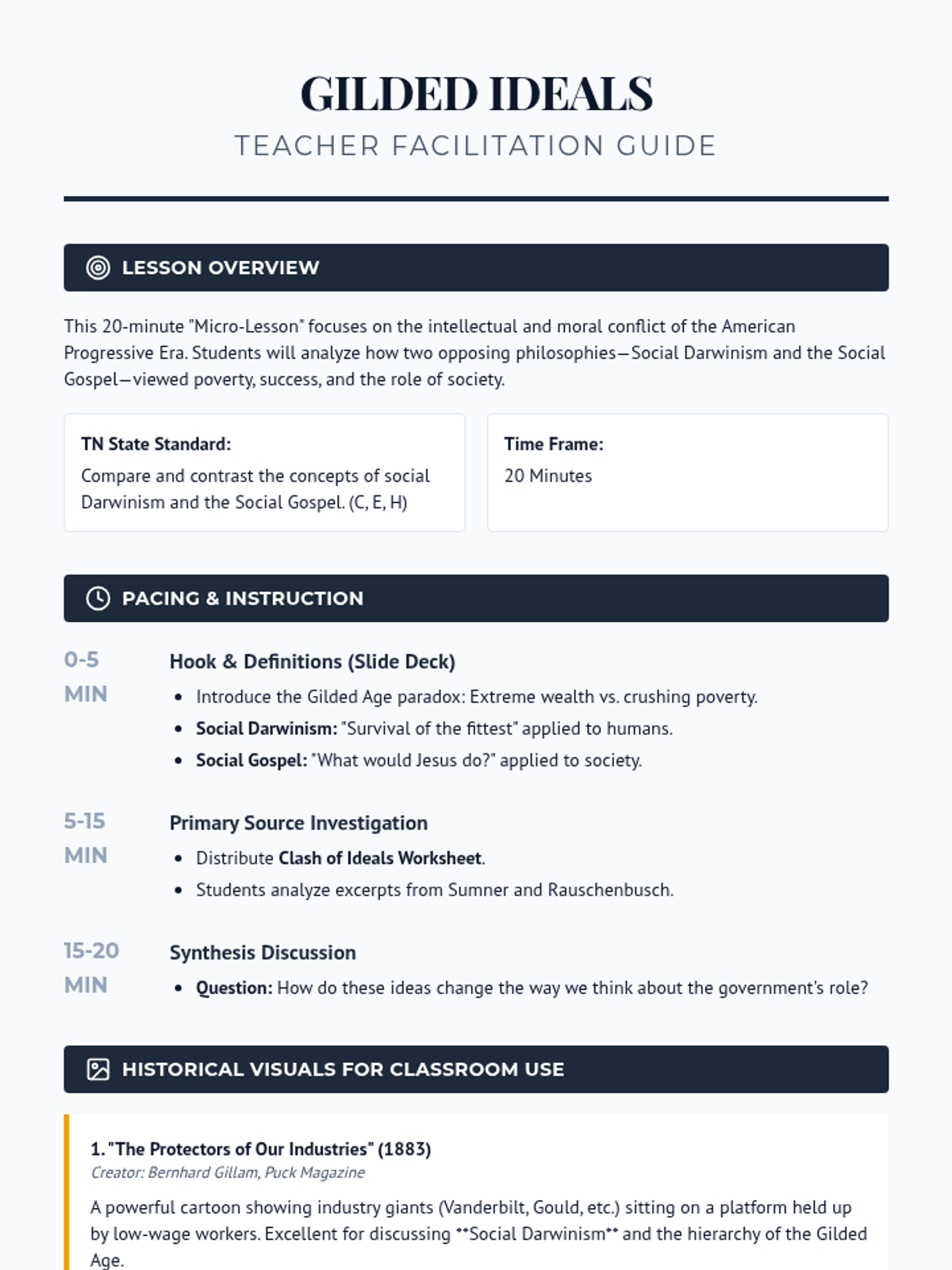
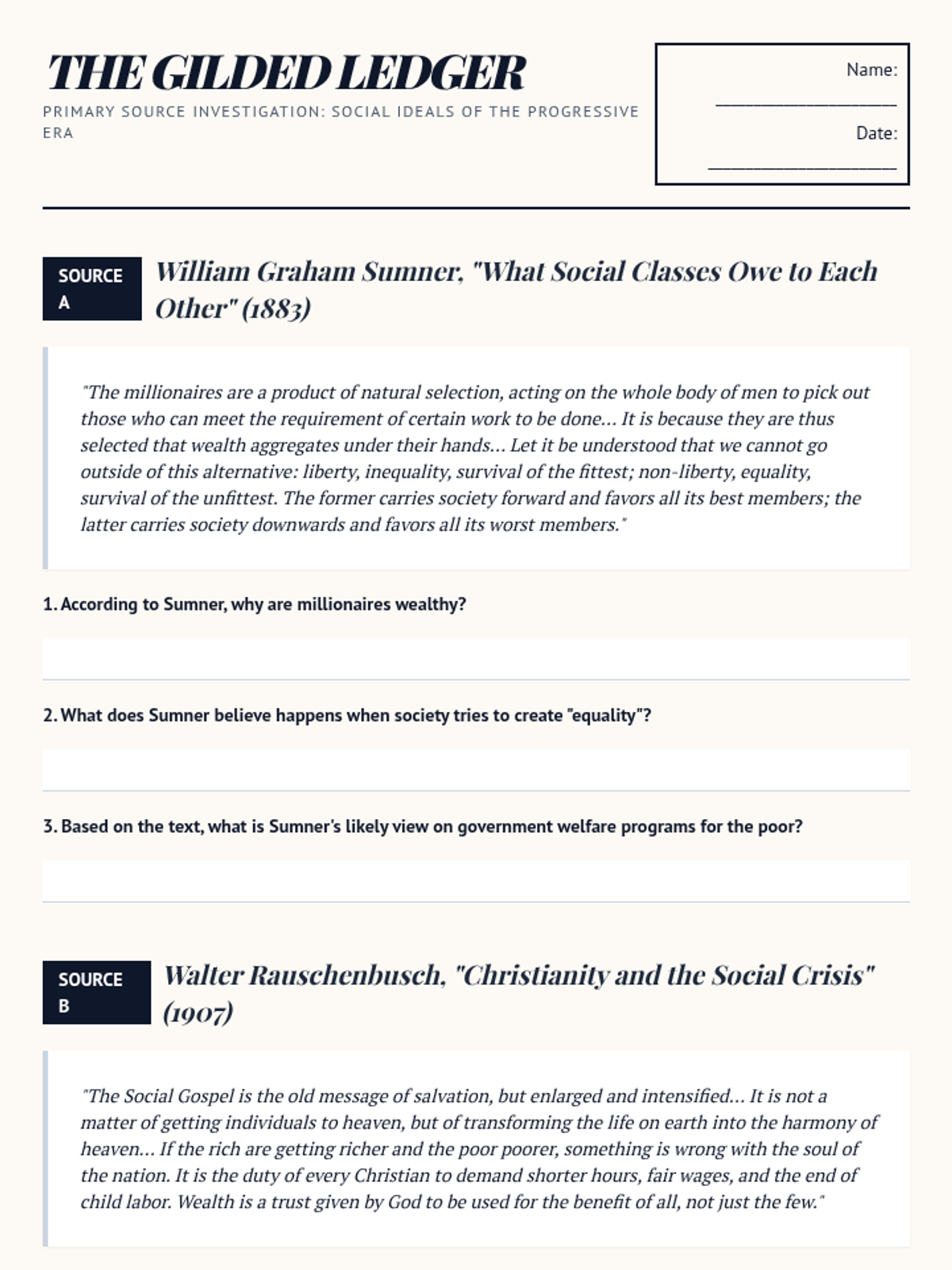
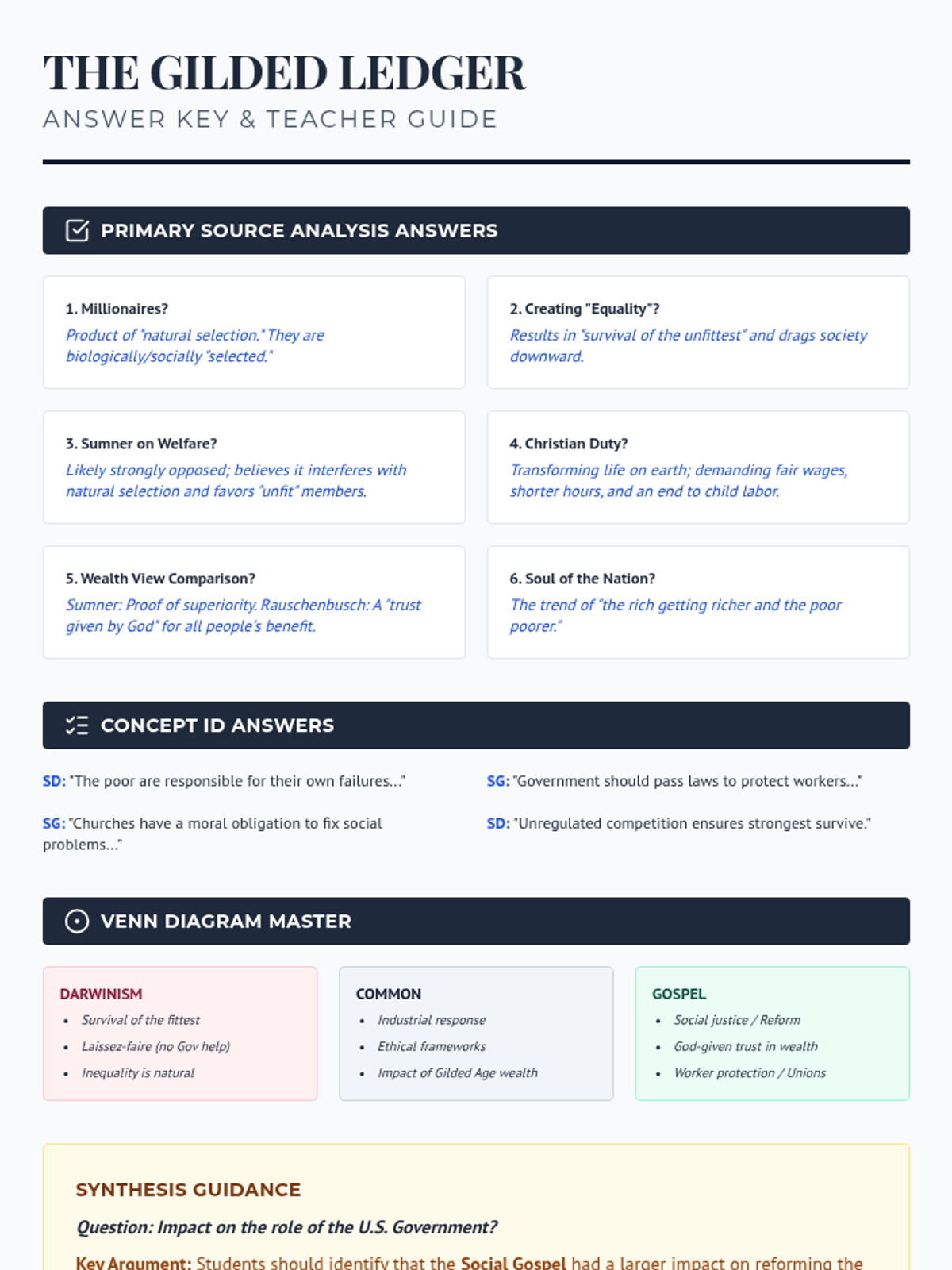
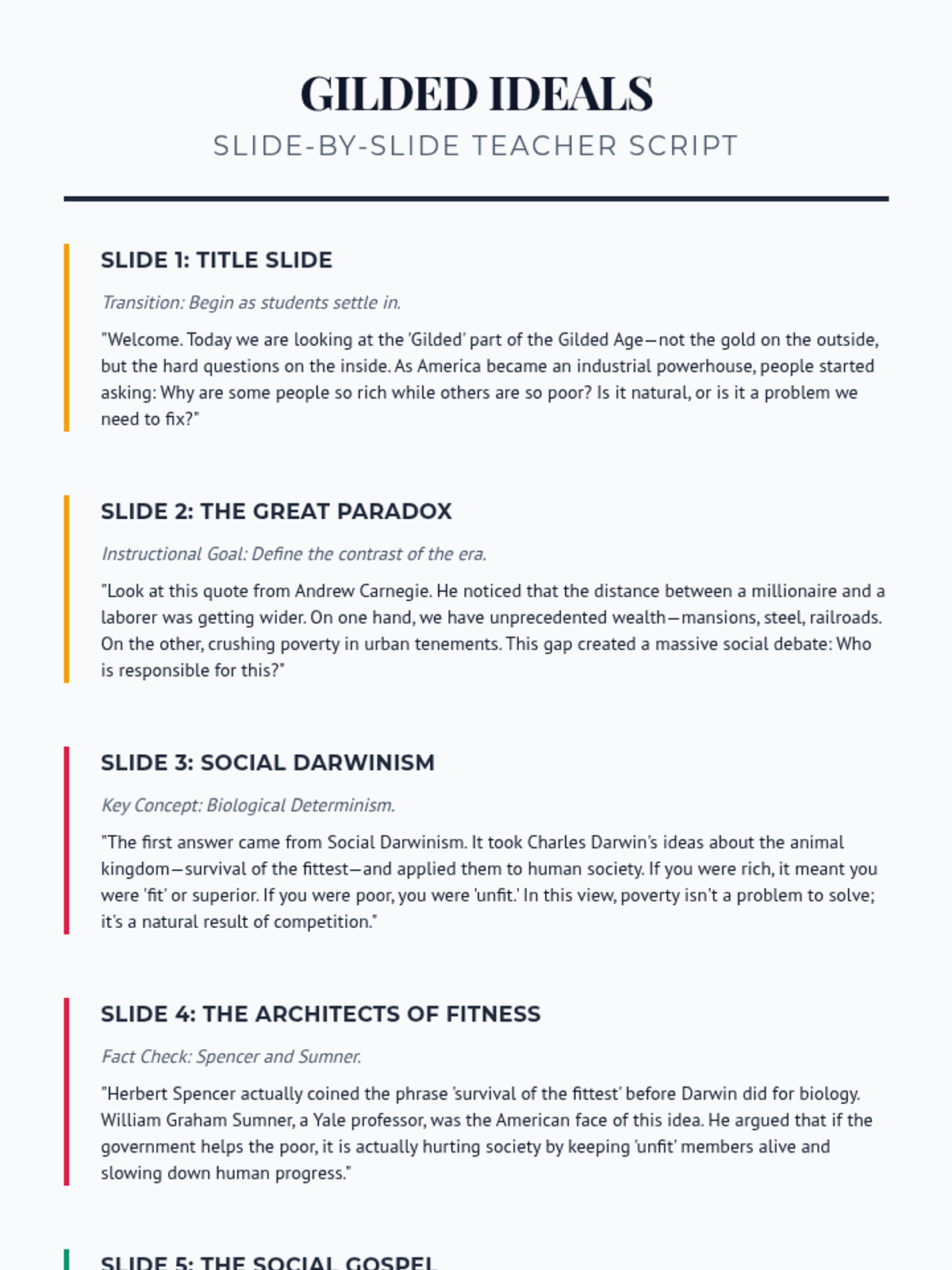
A 20-minute intensive study comparing Social Darwinism and the Social Gospel during the Progressive Era through primary source analysis.
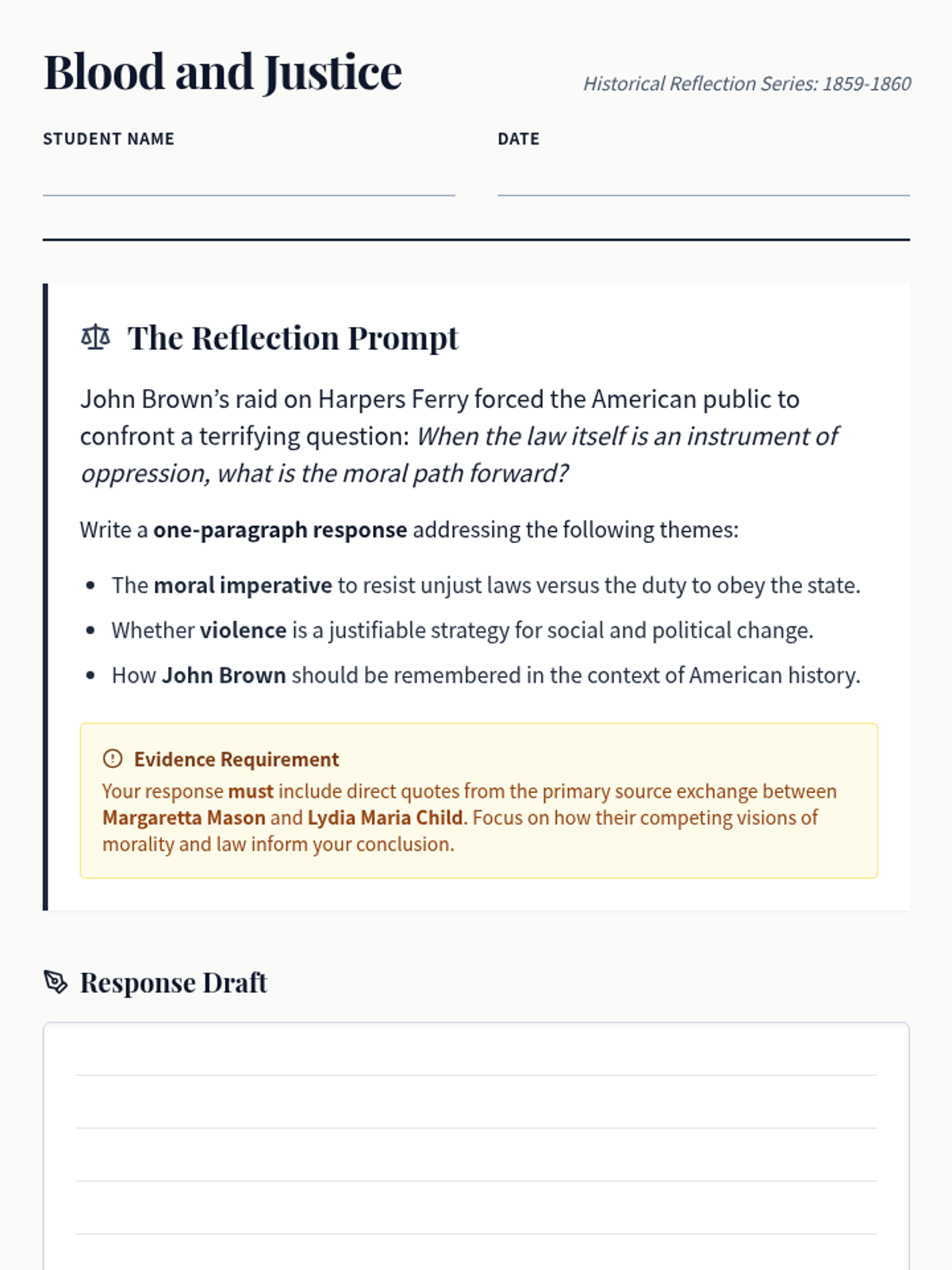
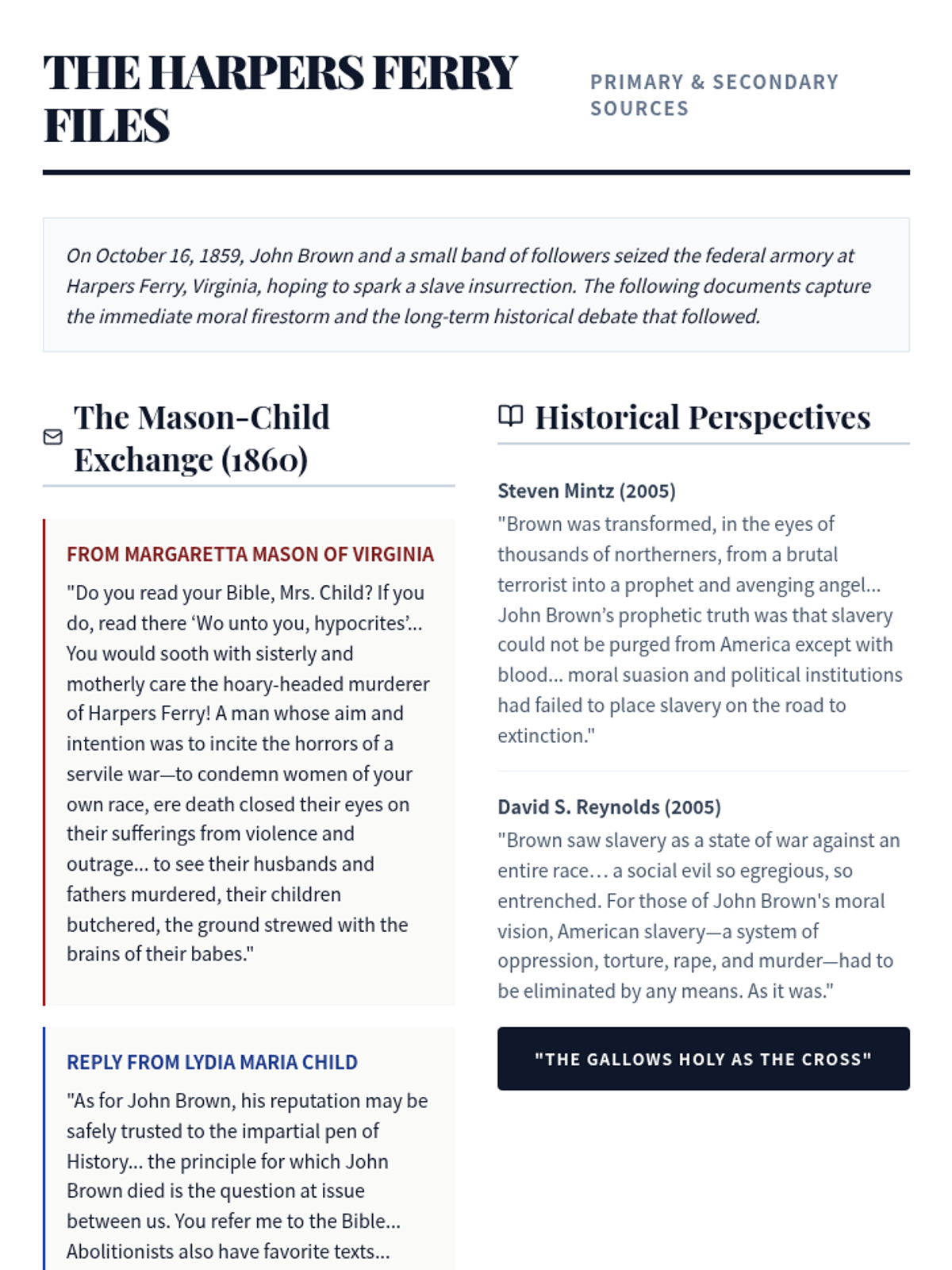
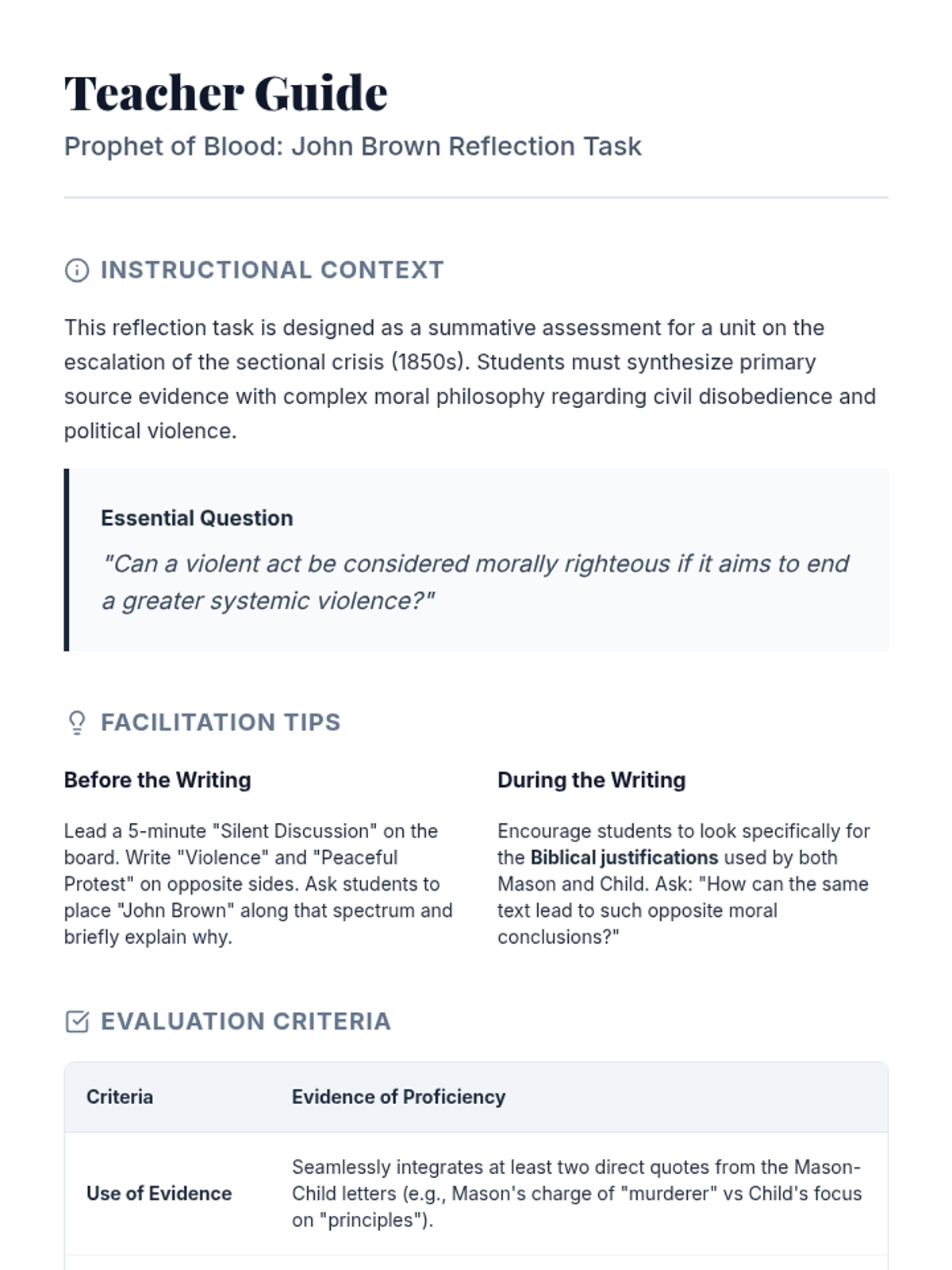
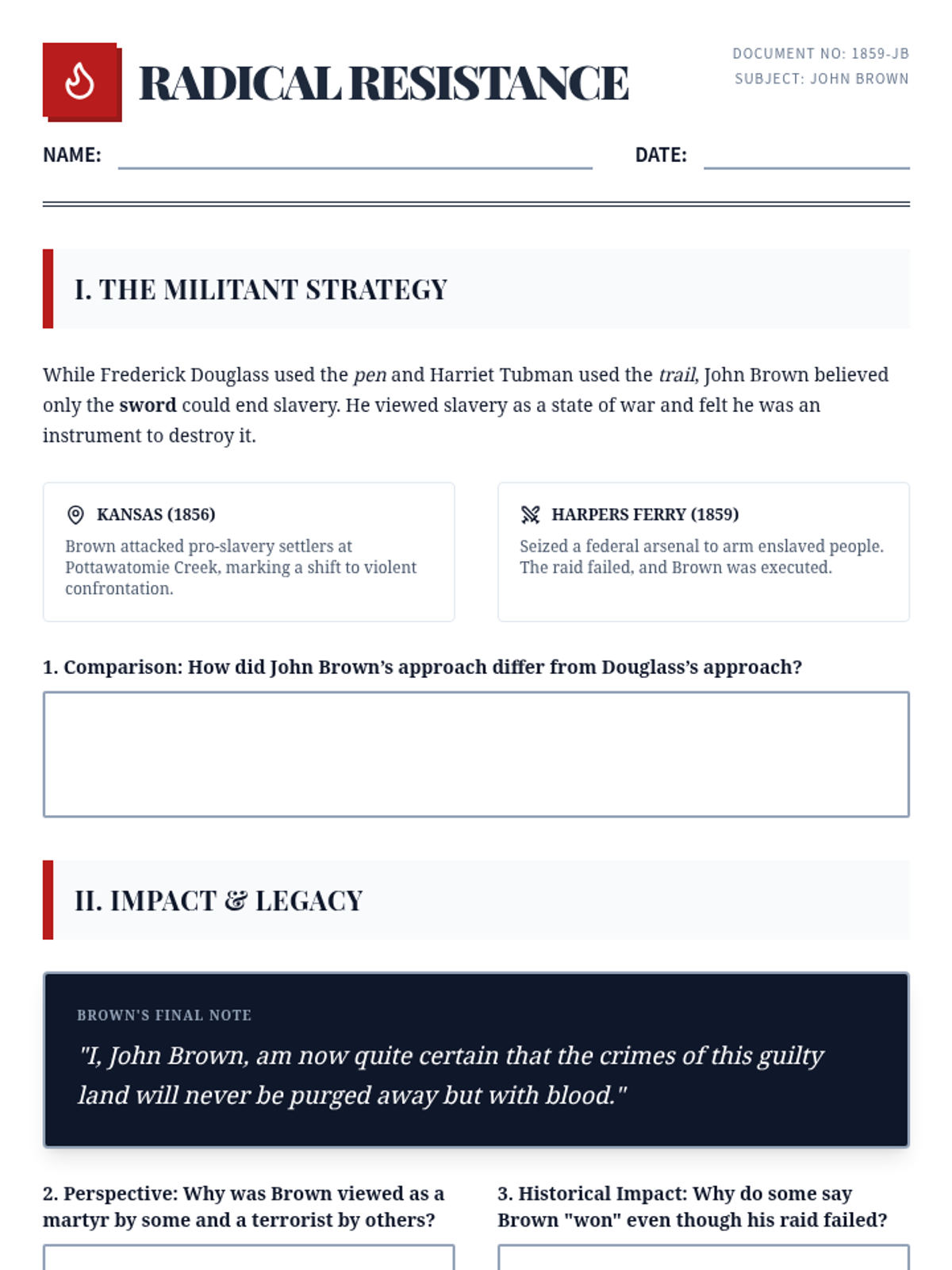
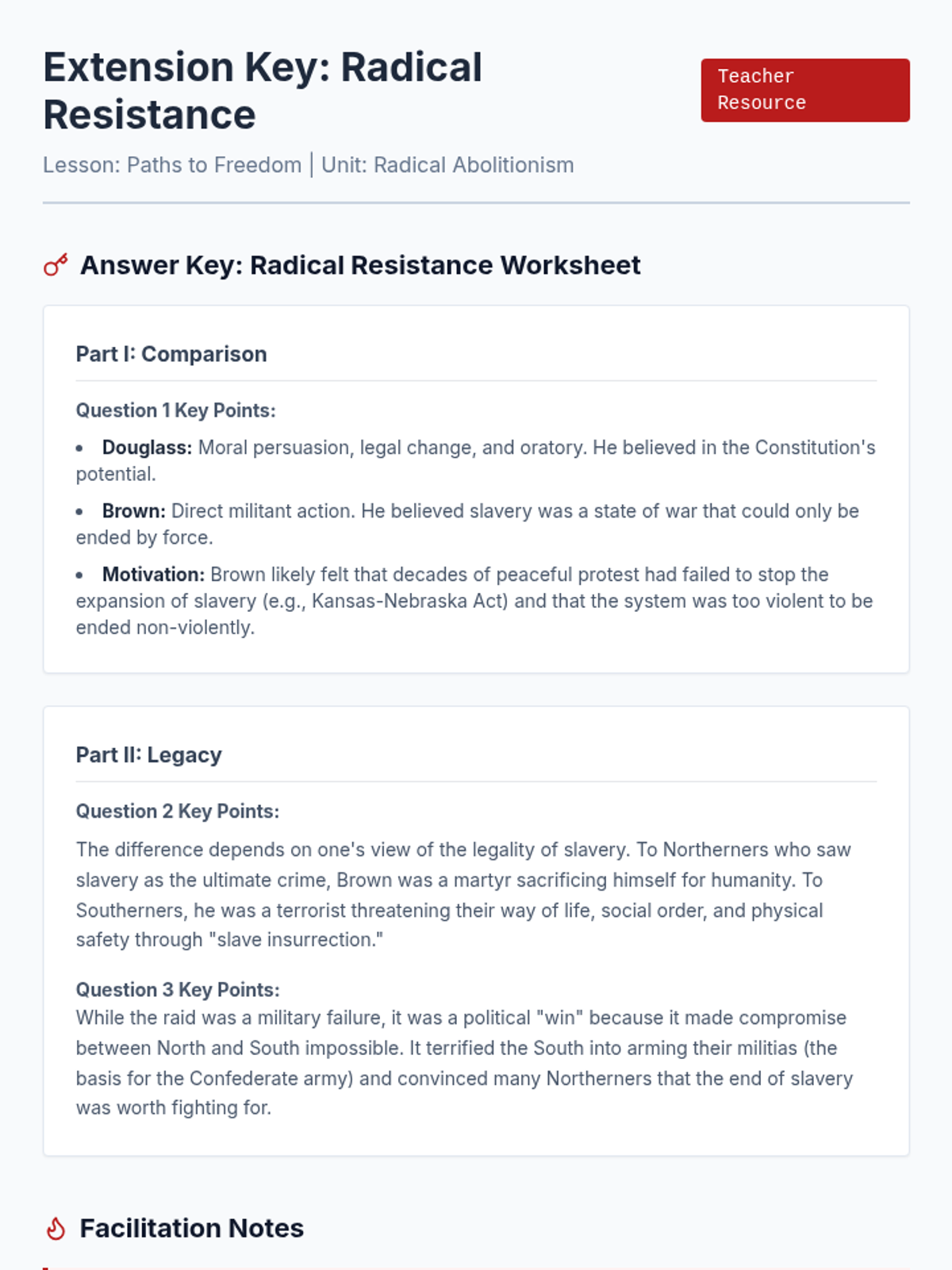
A deep dive into the moral and political complexities surrounding John Brown's raid on Harpers Ferry, focusing on the tension between legal obedience and moral conscience.
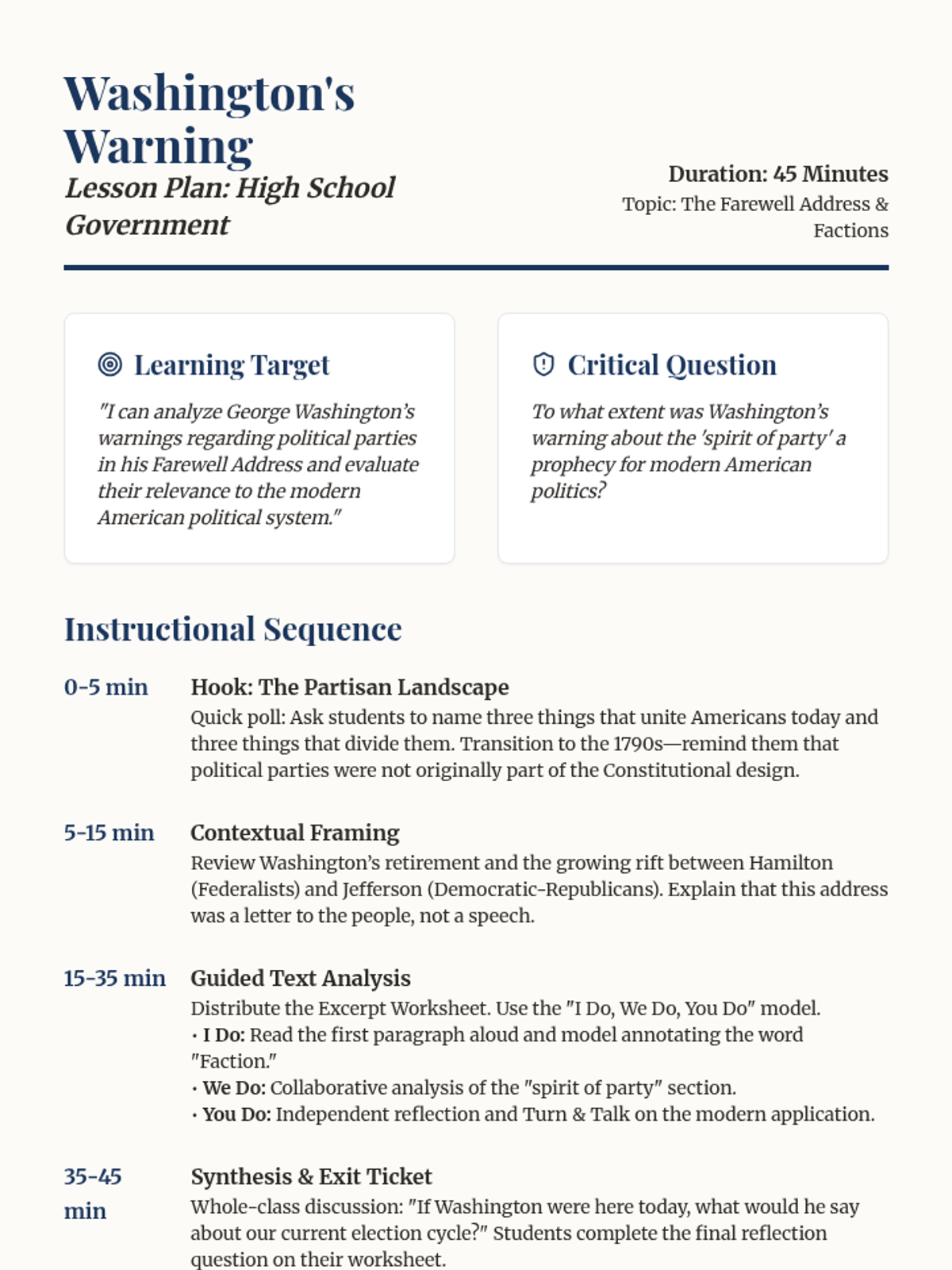
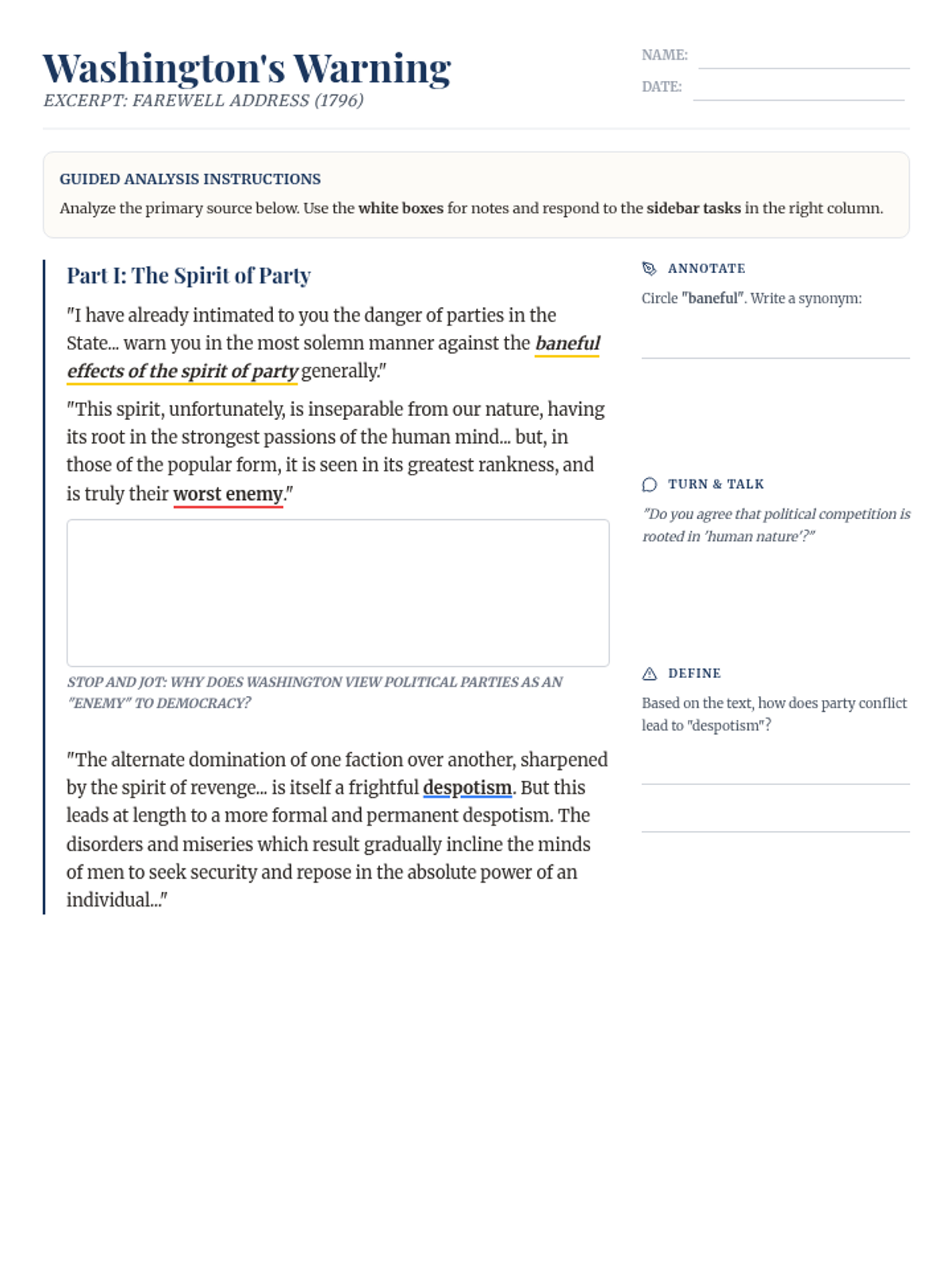
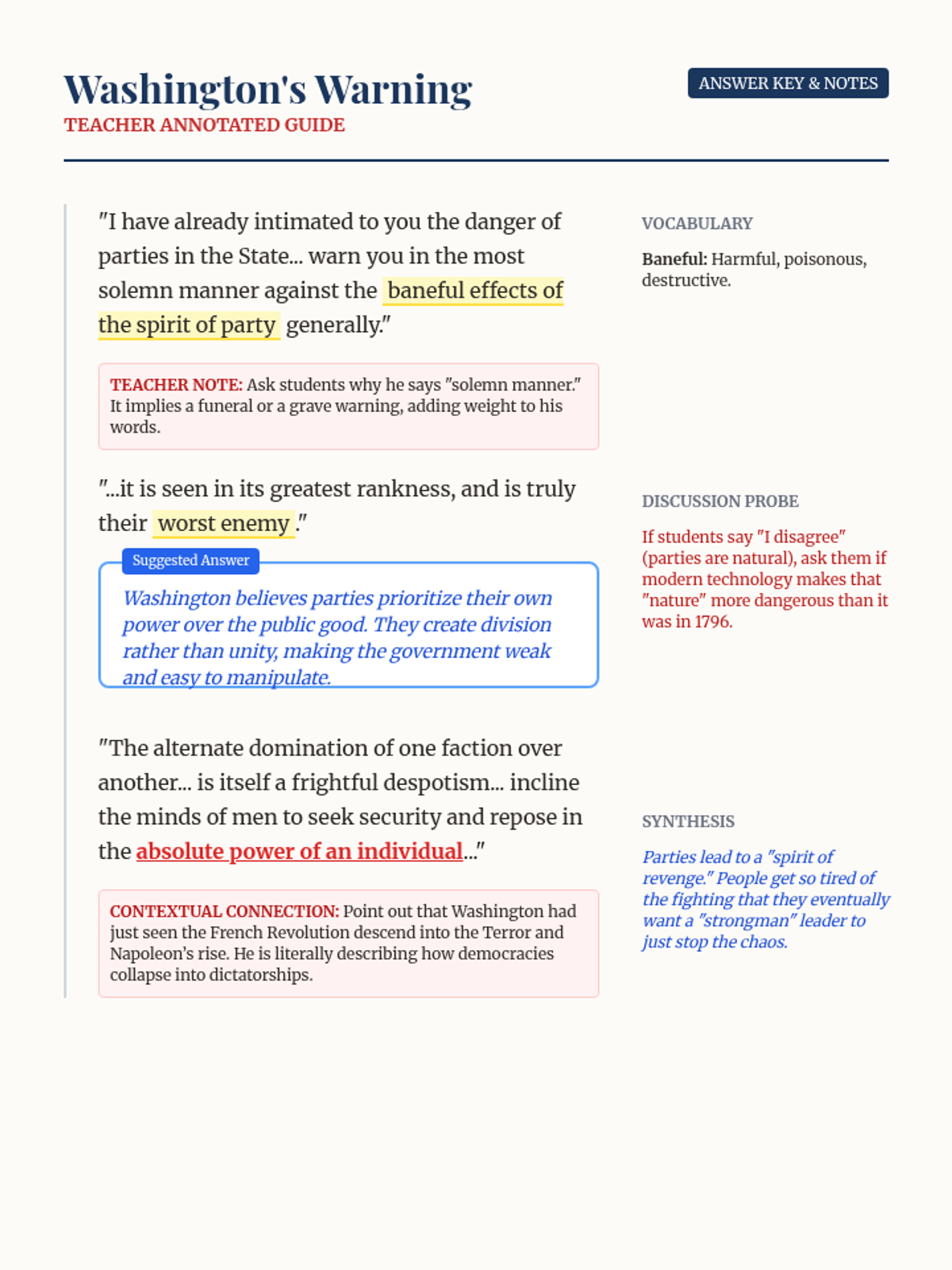
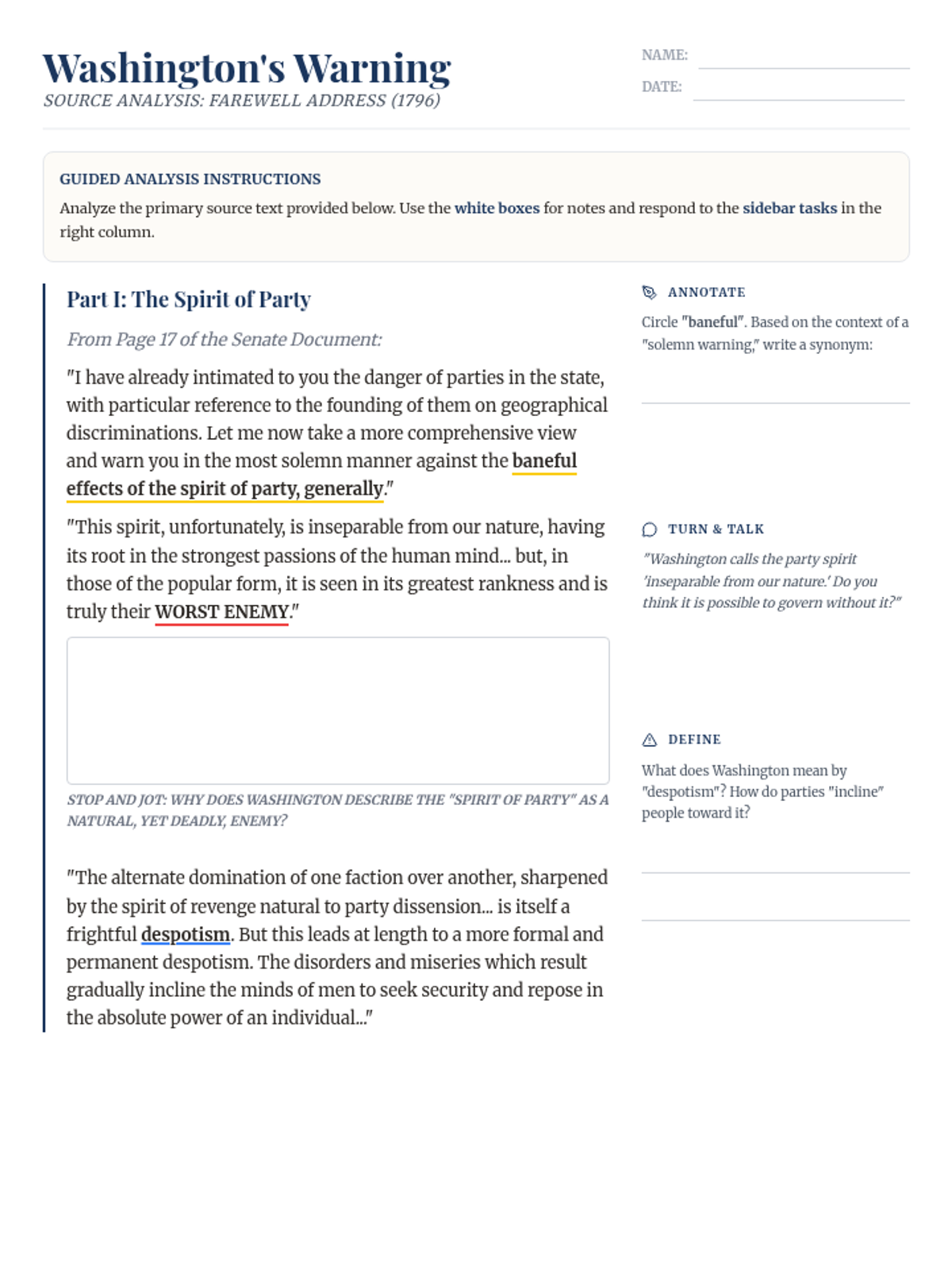
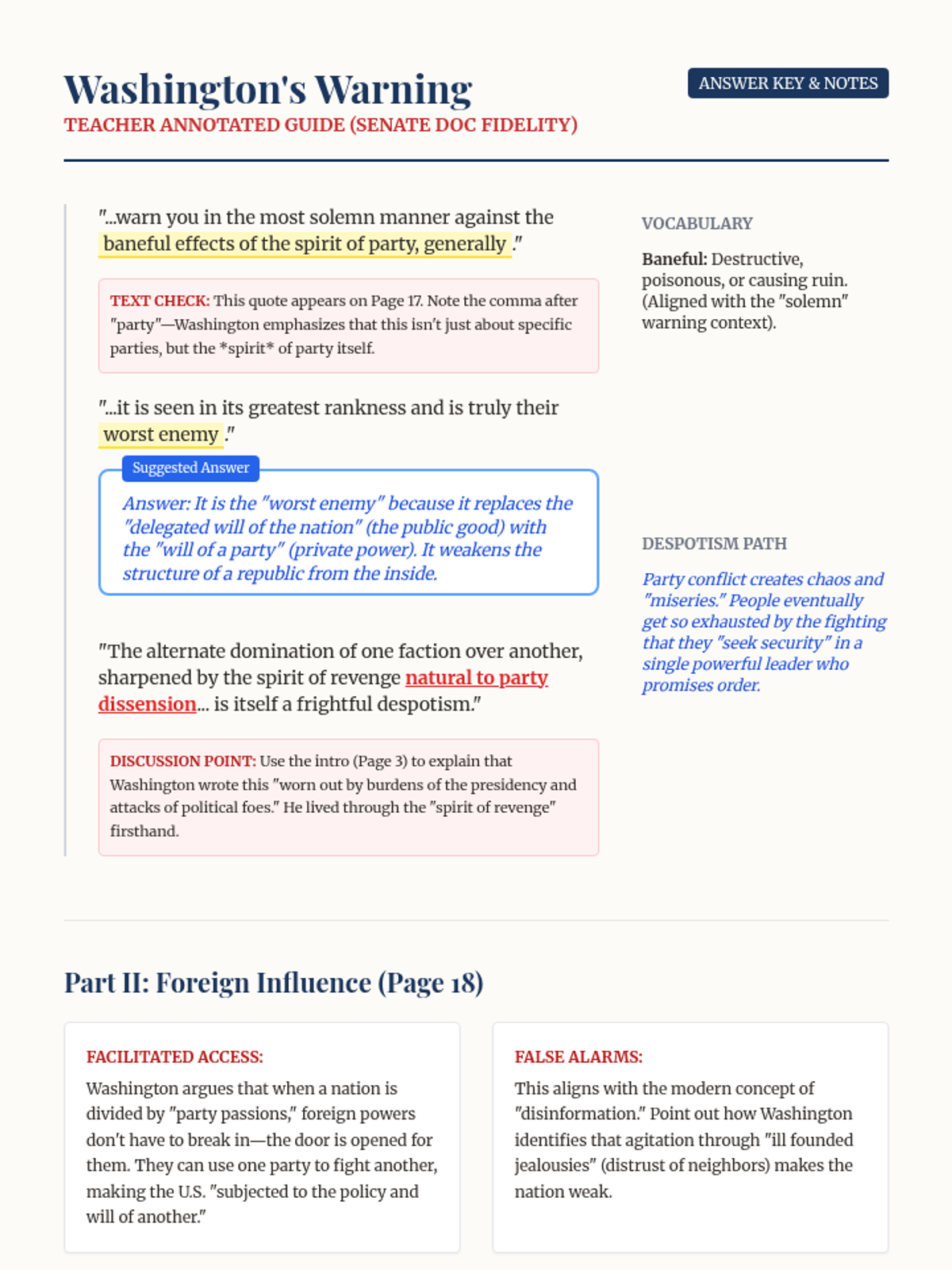
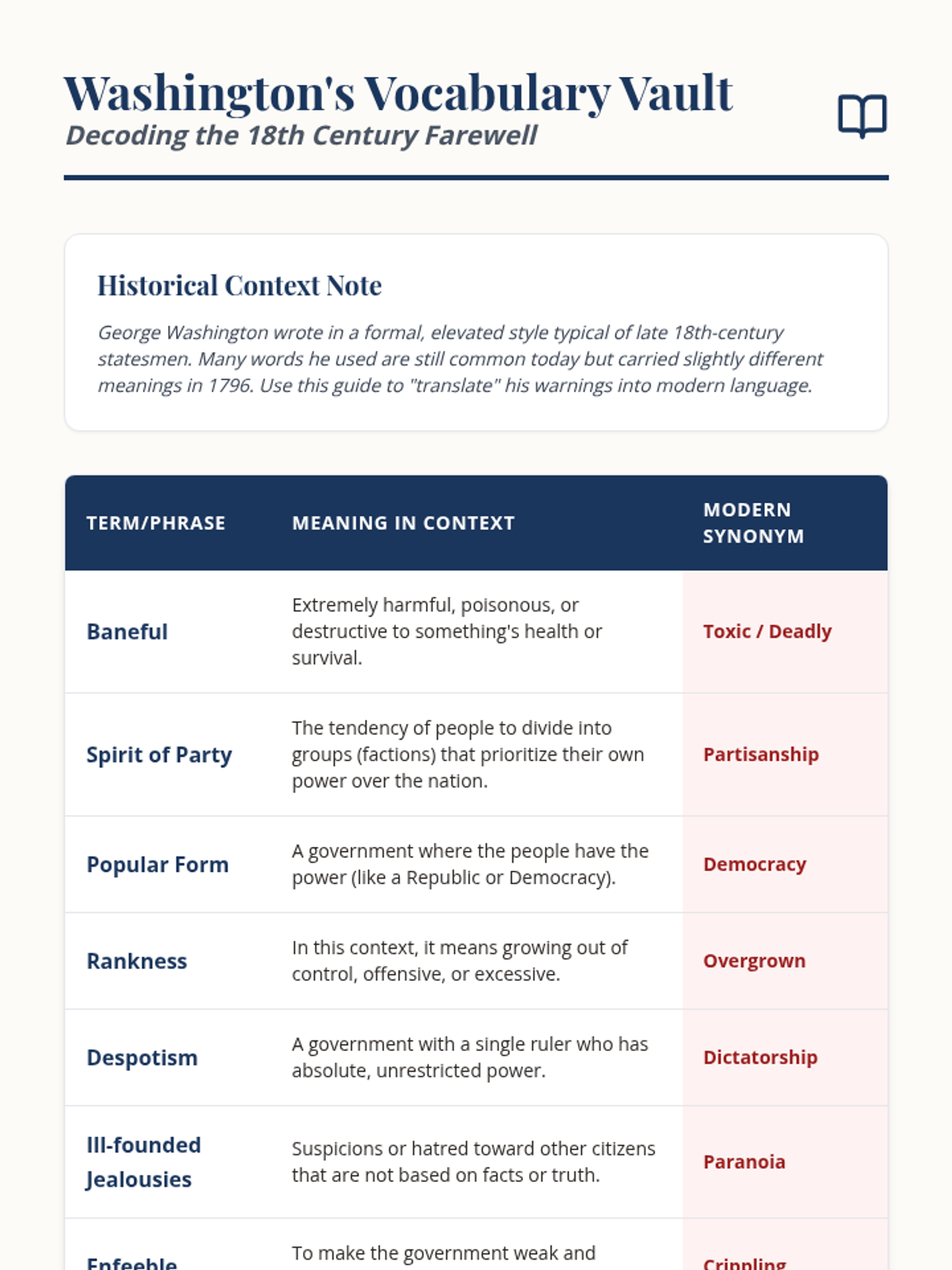
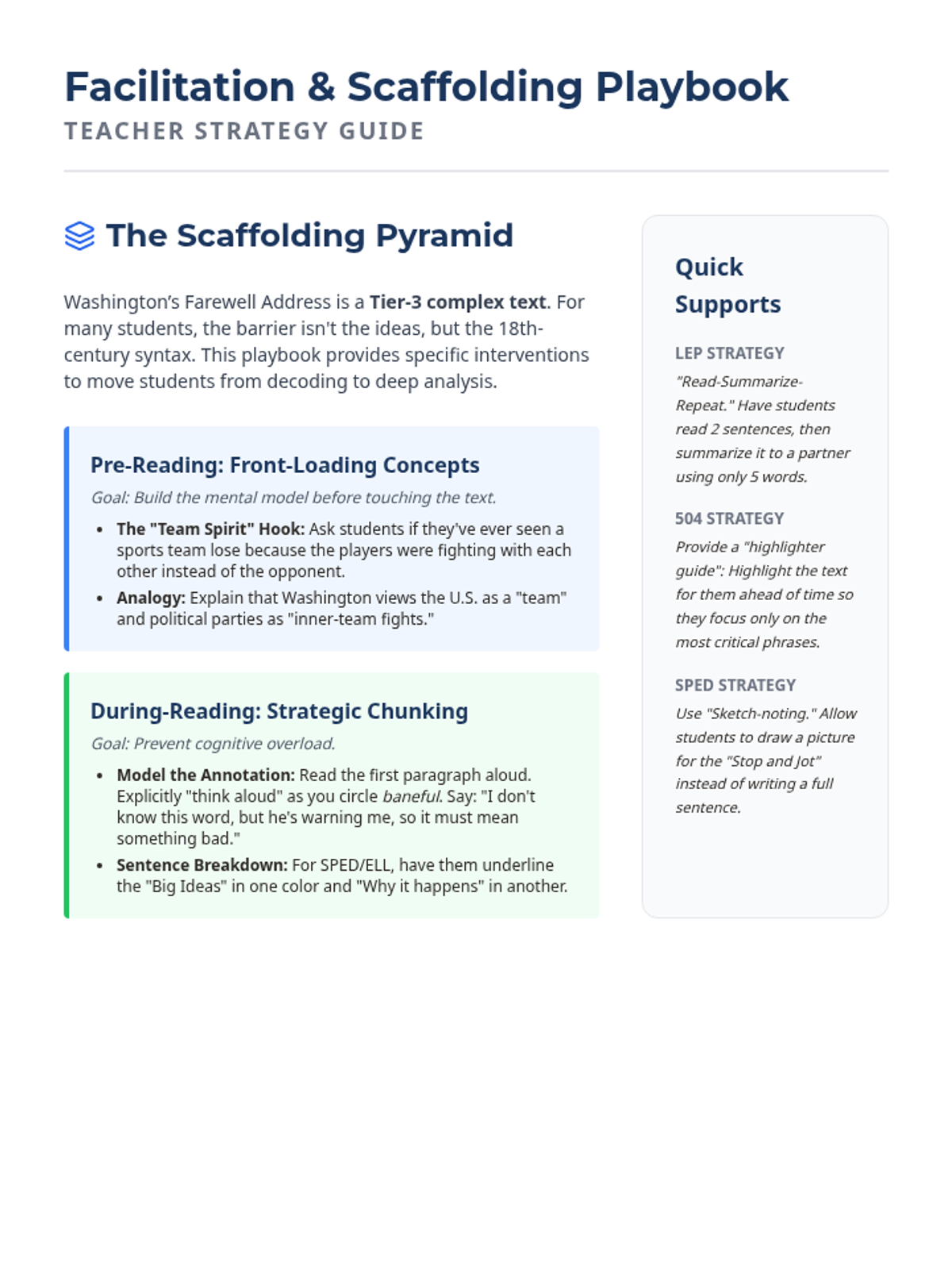
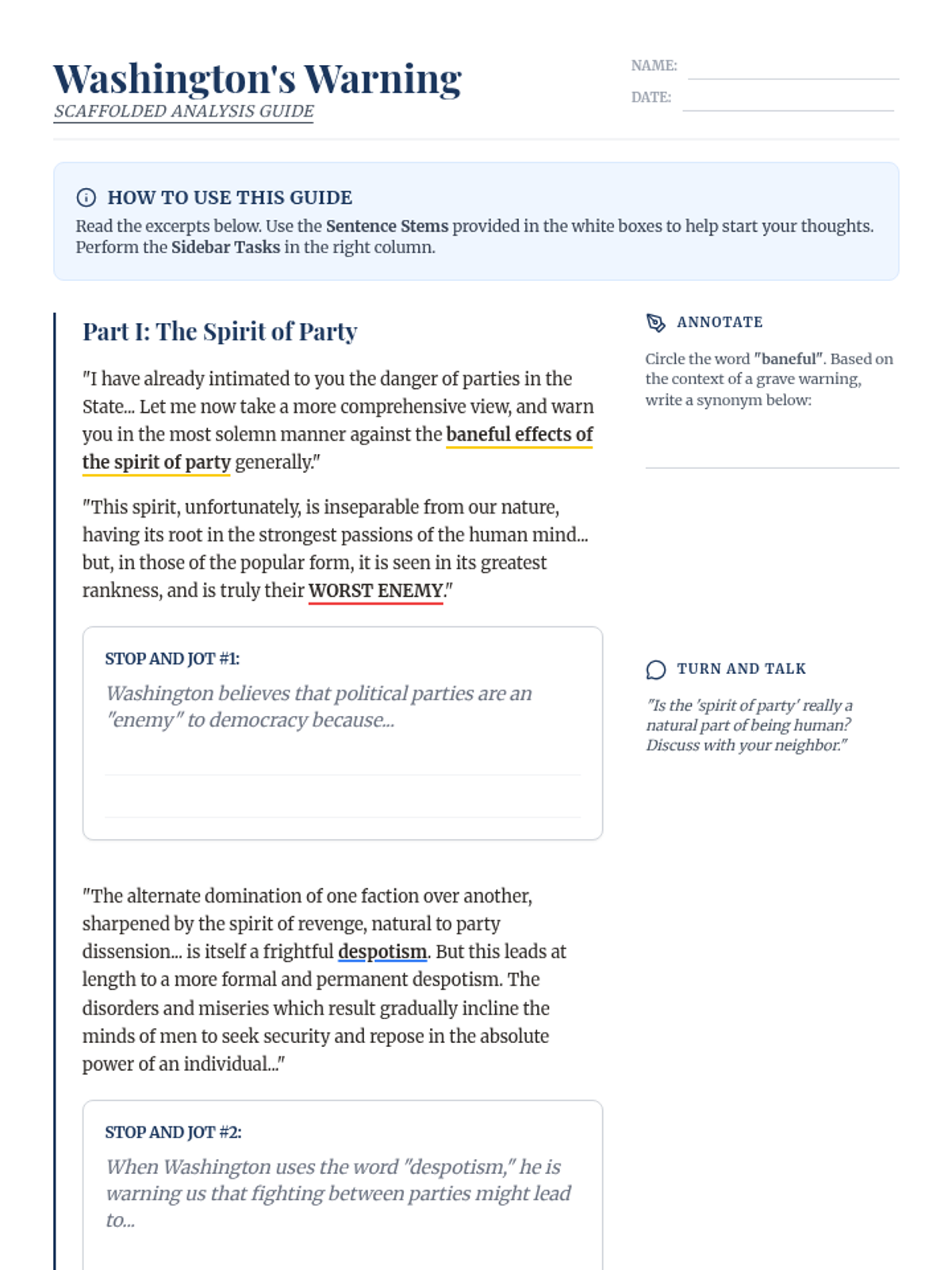
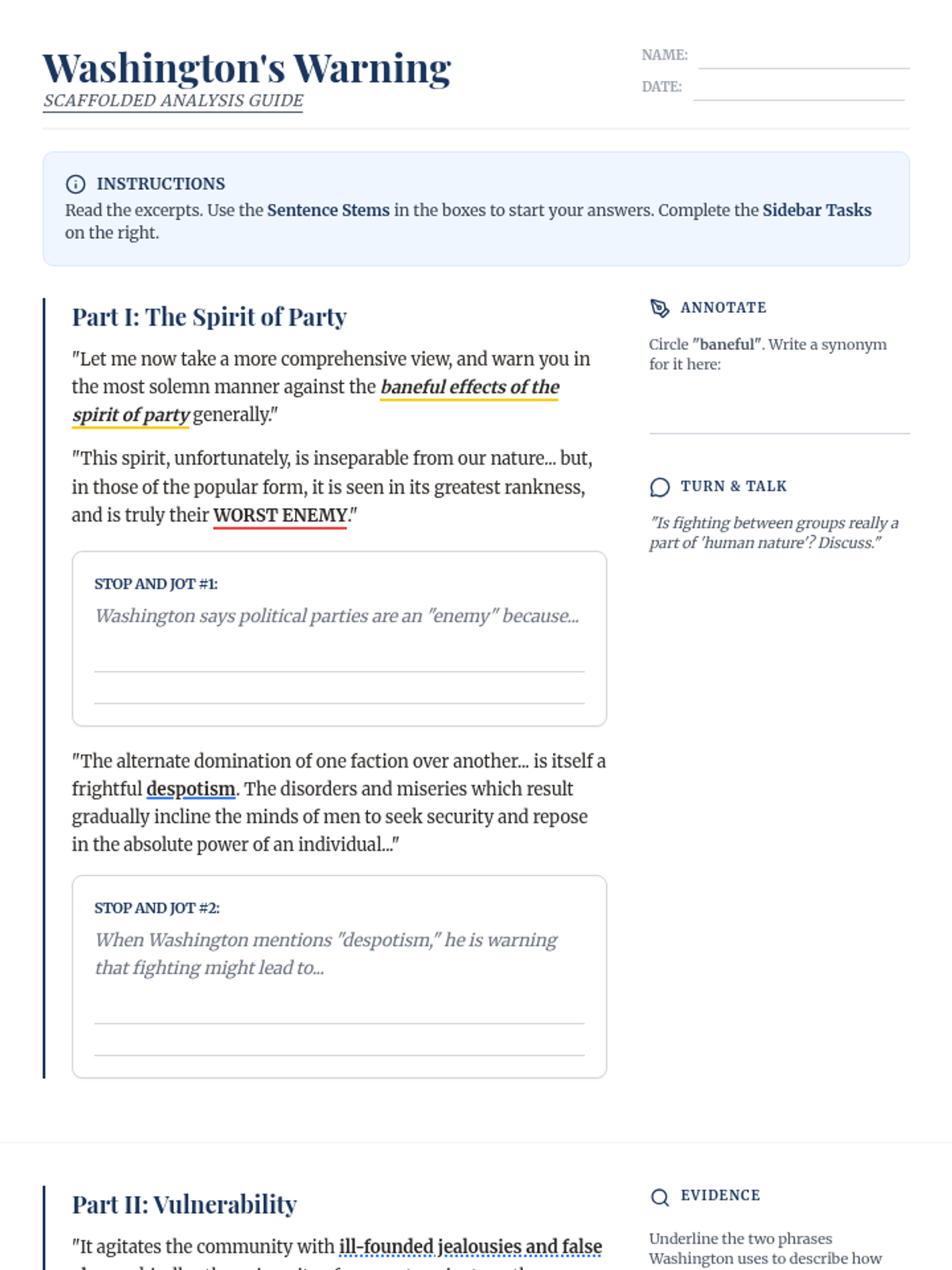
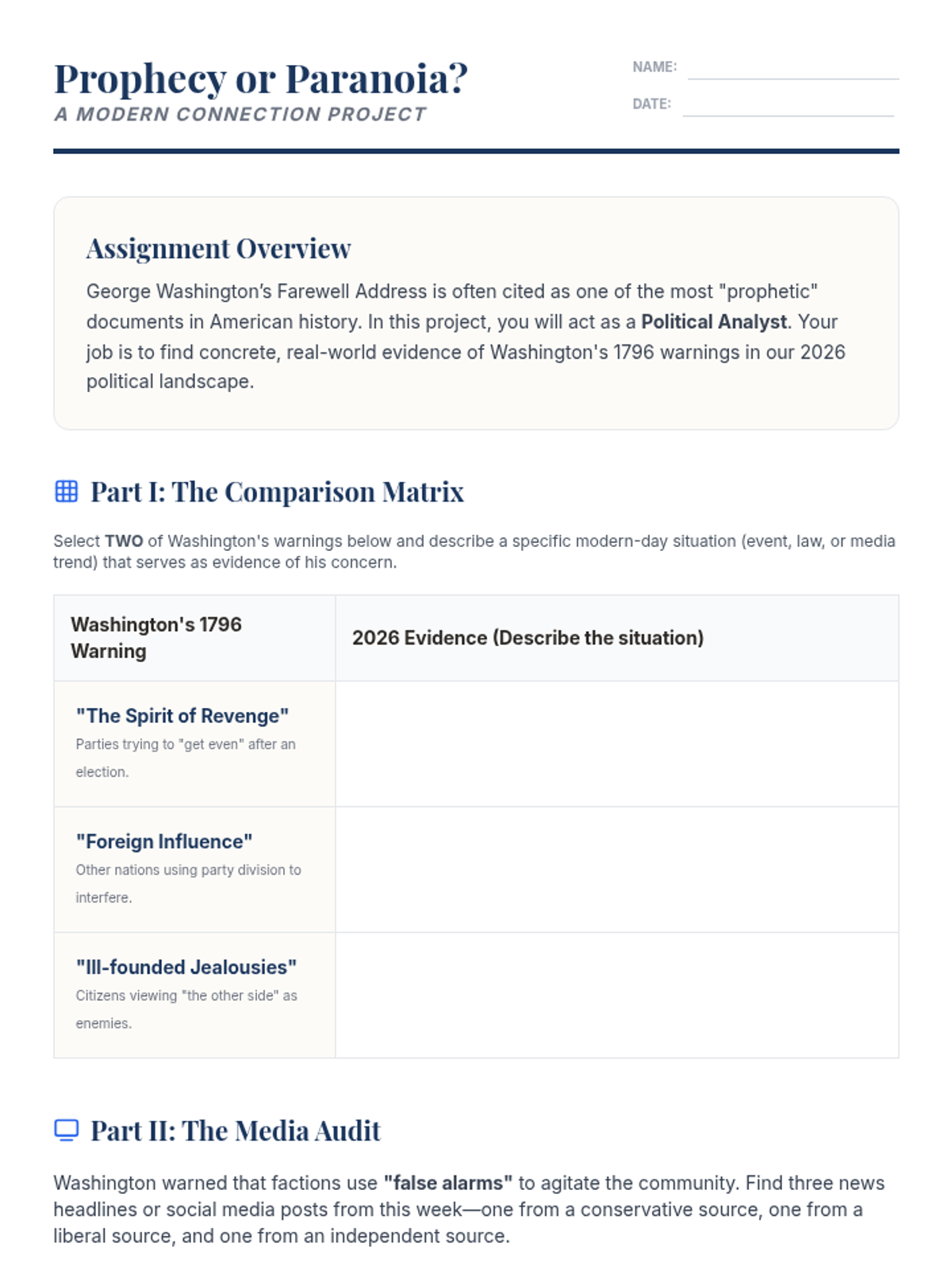
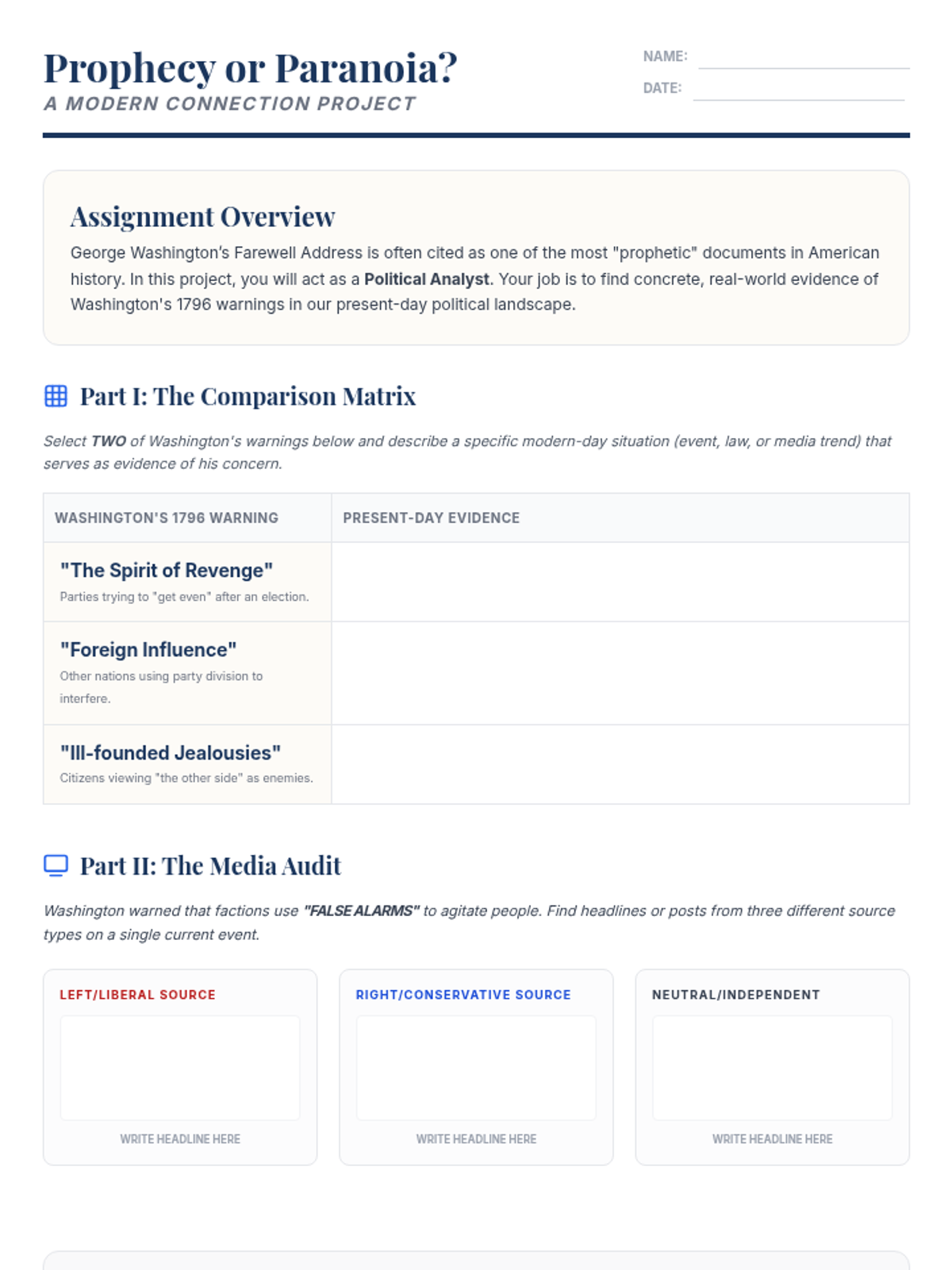
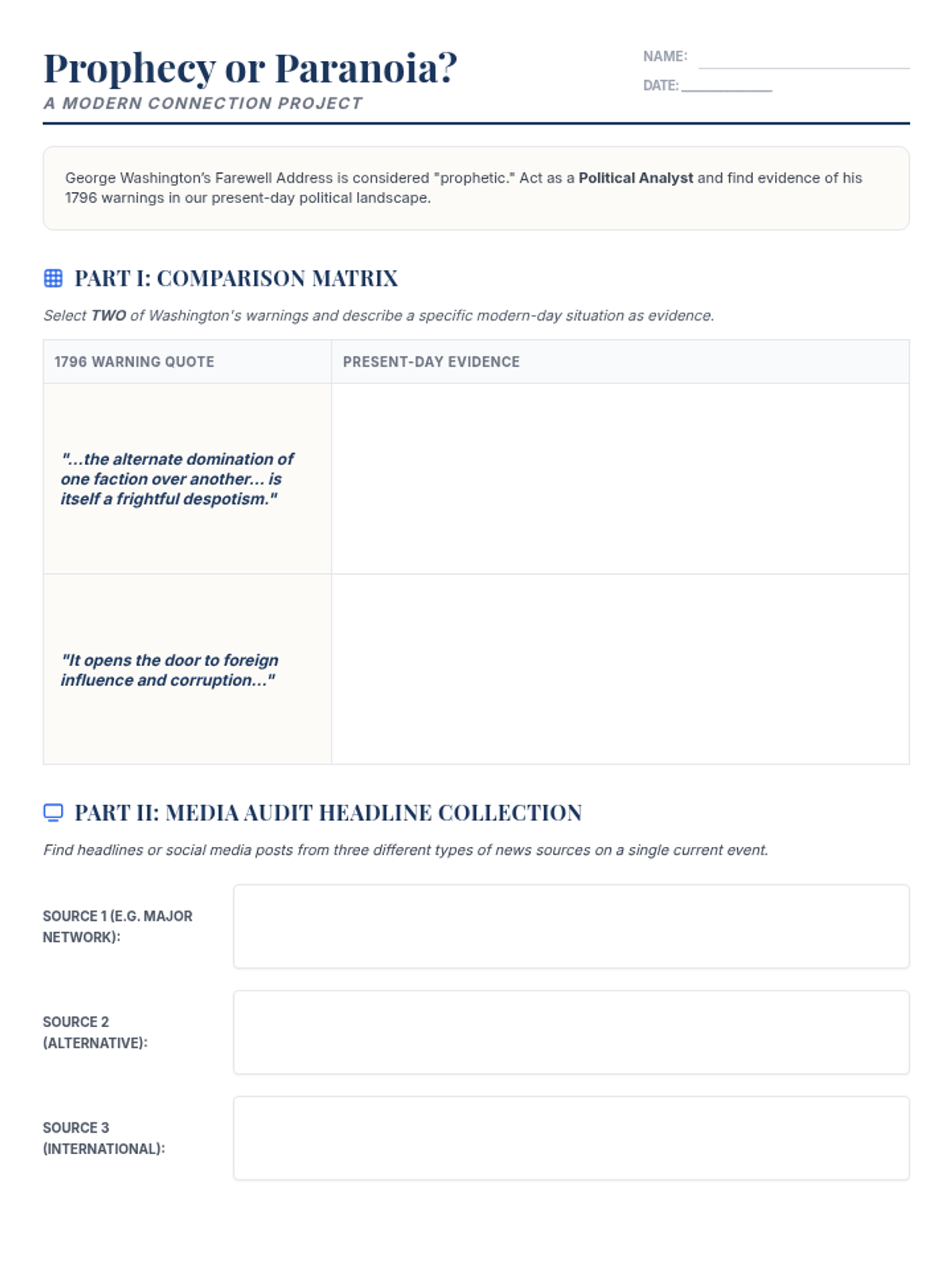
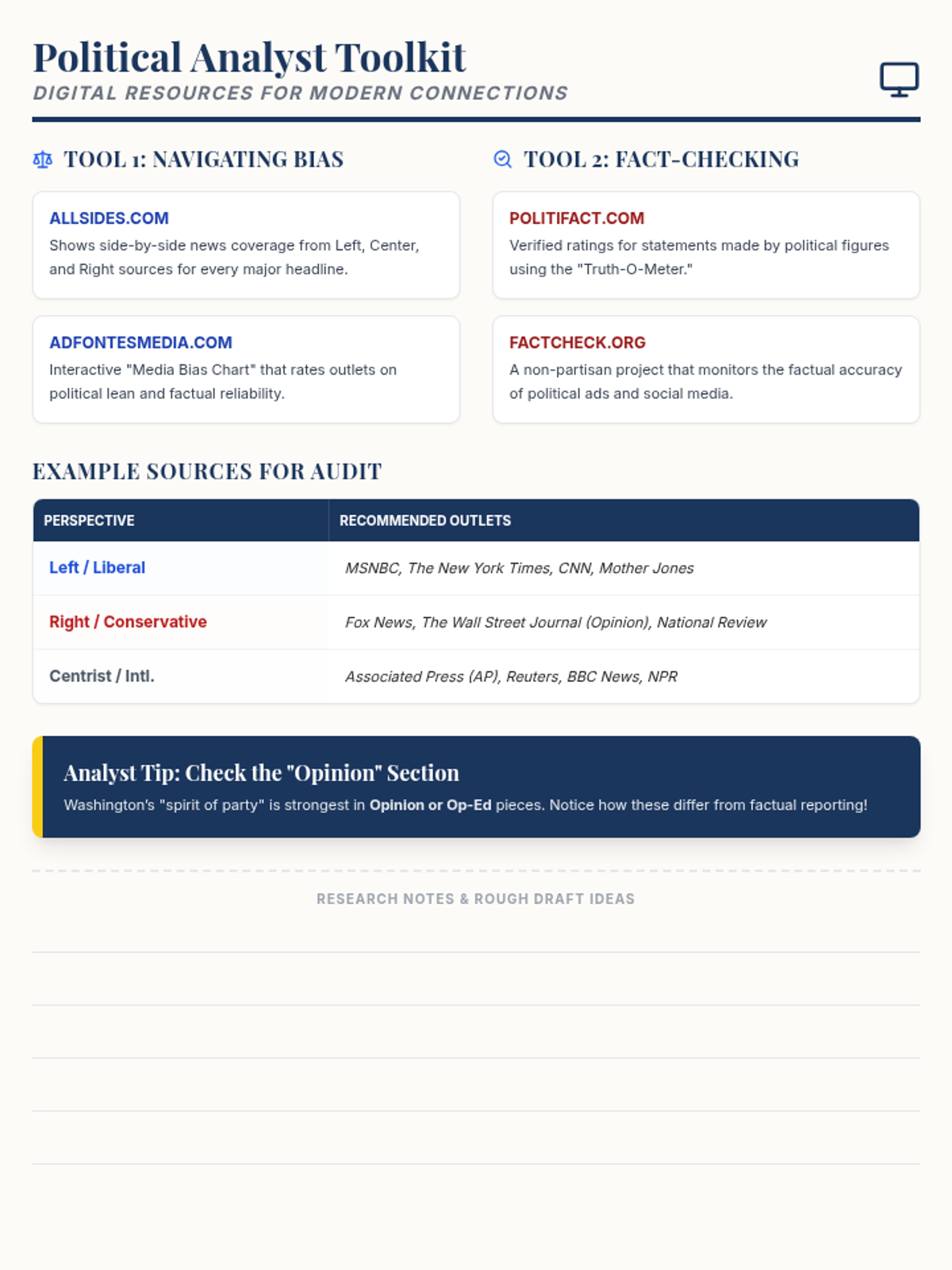
A 45-minute deep dive into George Washington's Farewell Address, focusing on his prophetic warnings regarding the dangers of political factions and their impact on national unity.
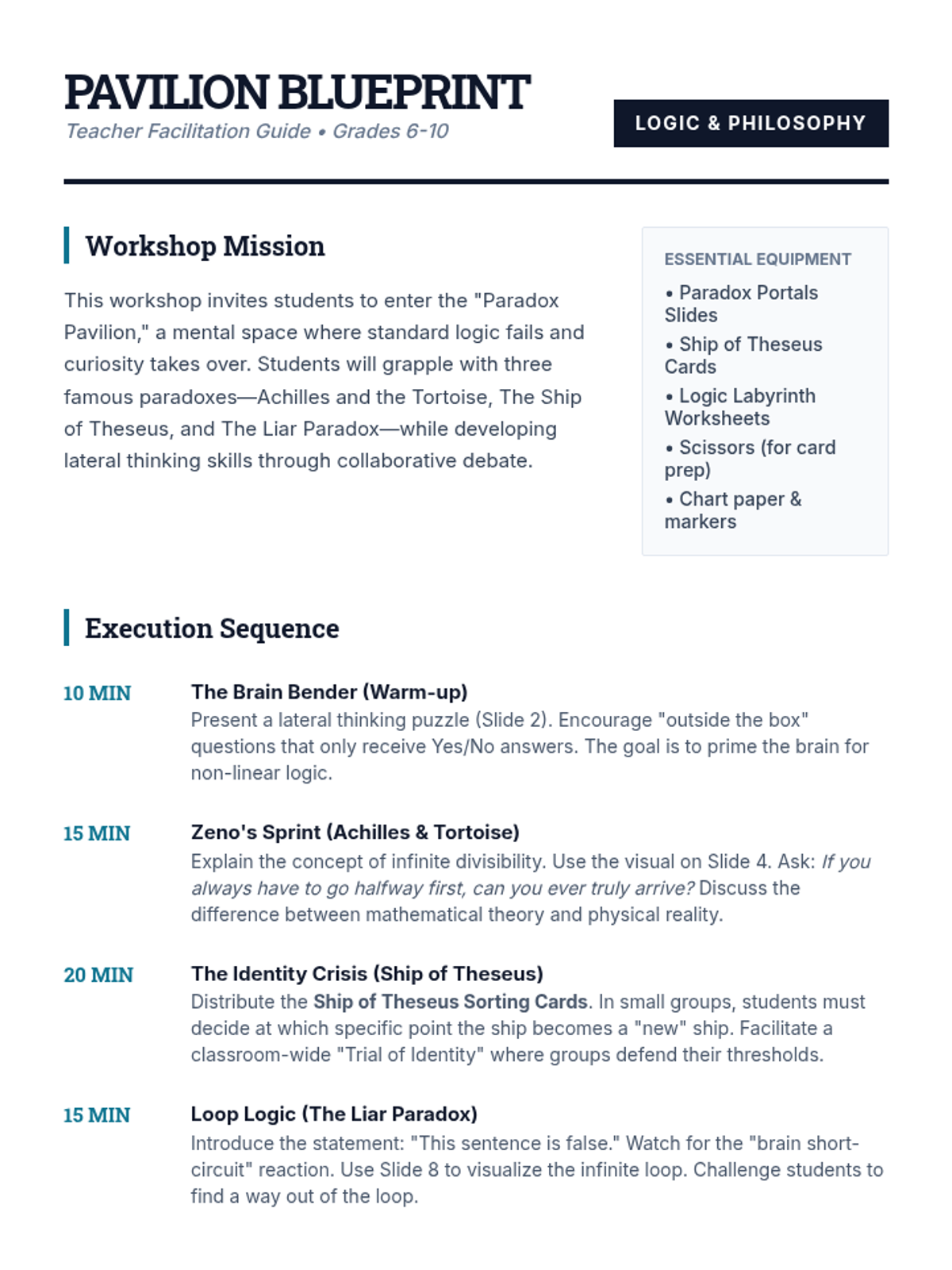
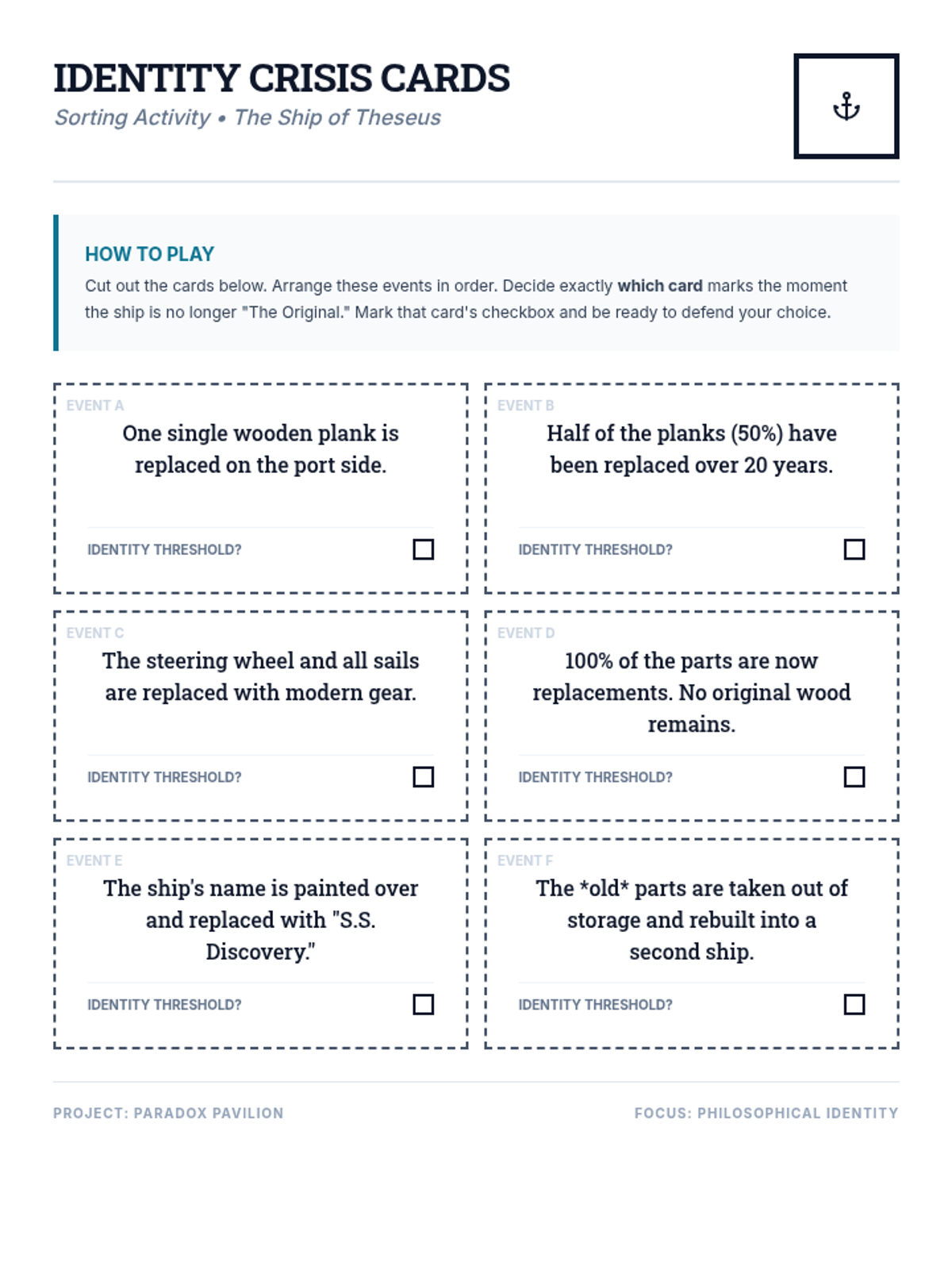
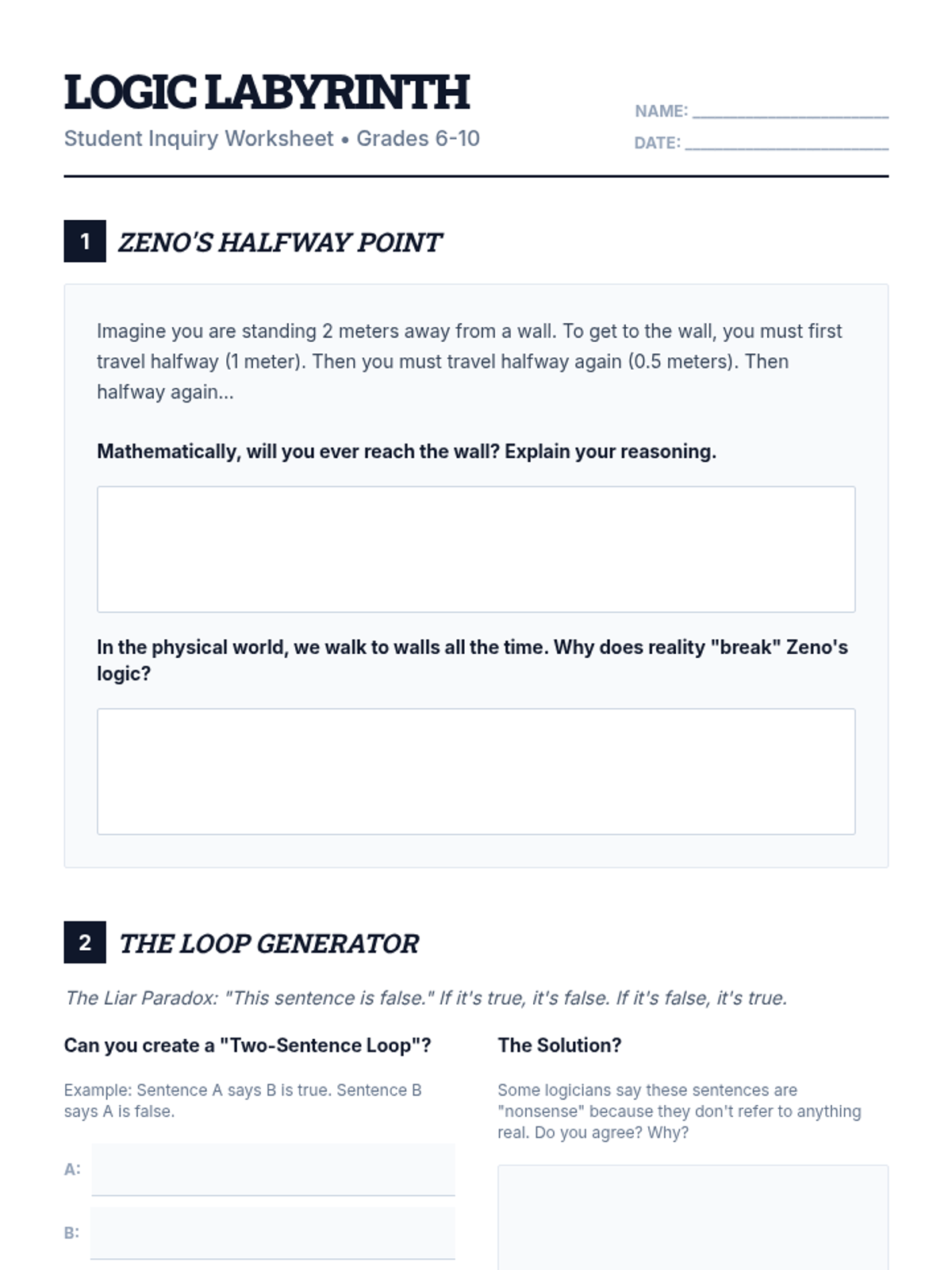
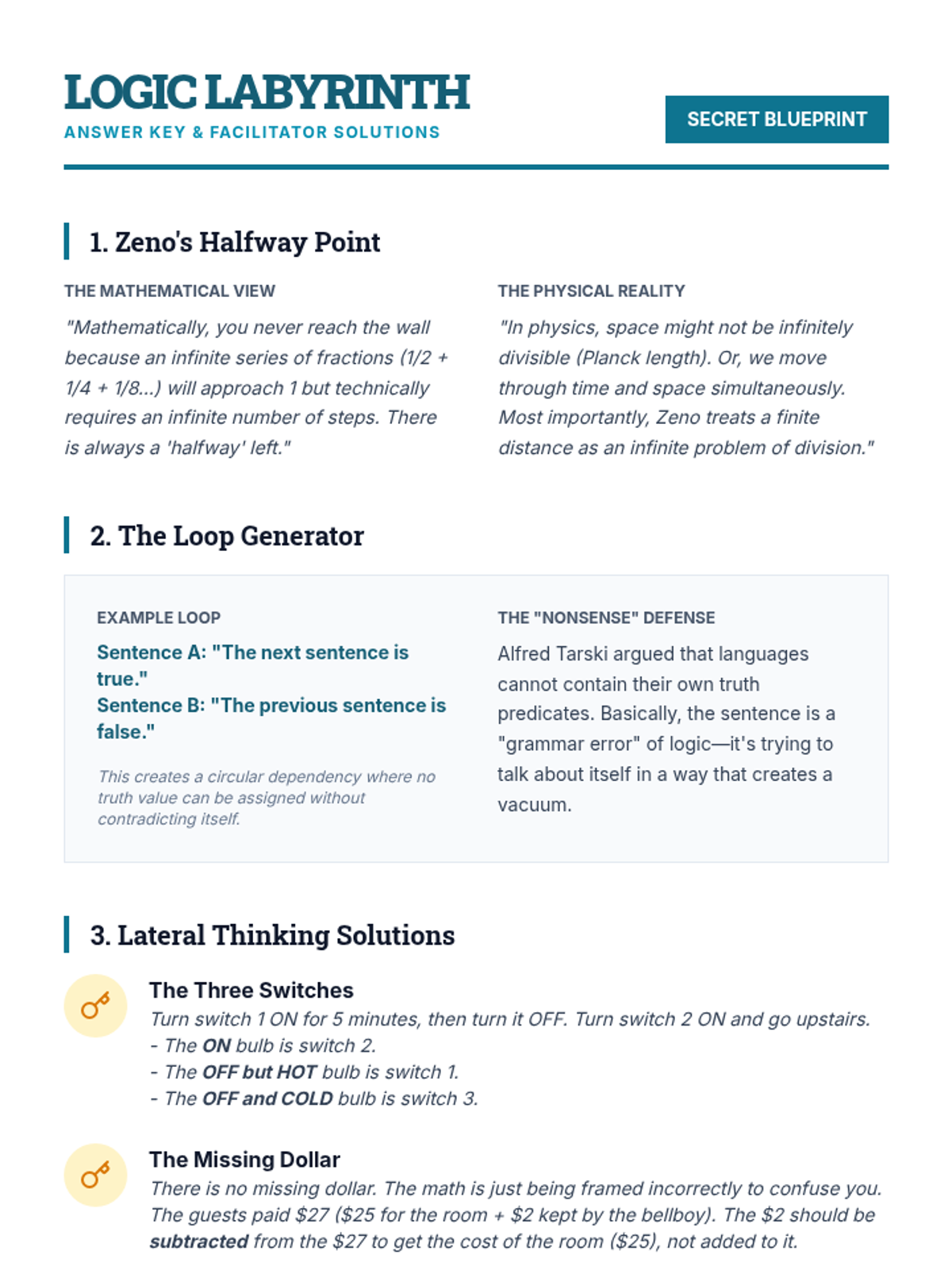
An inquiry-based workshop where students explore philosophical paradoxes and lateral thinking puzzles to sharpen critical reasoning skills.
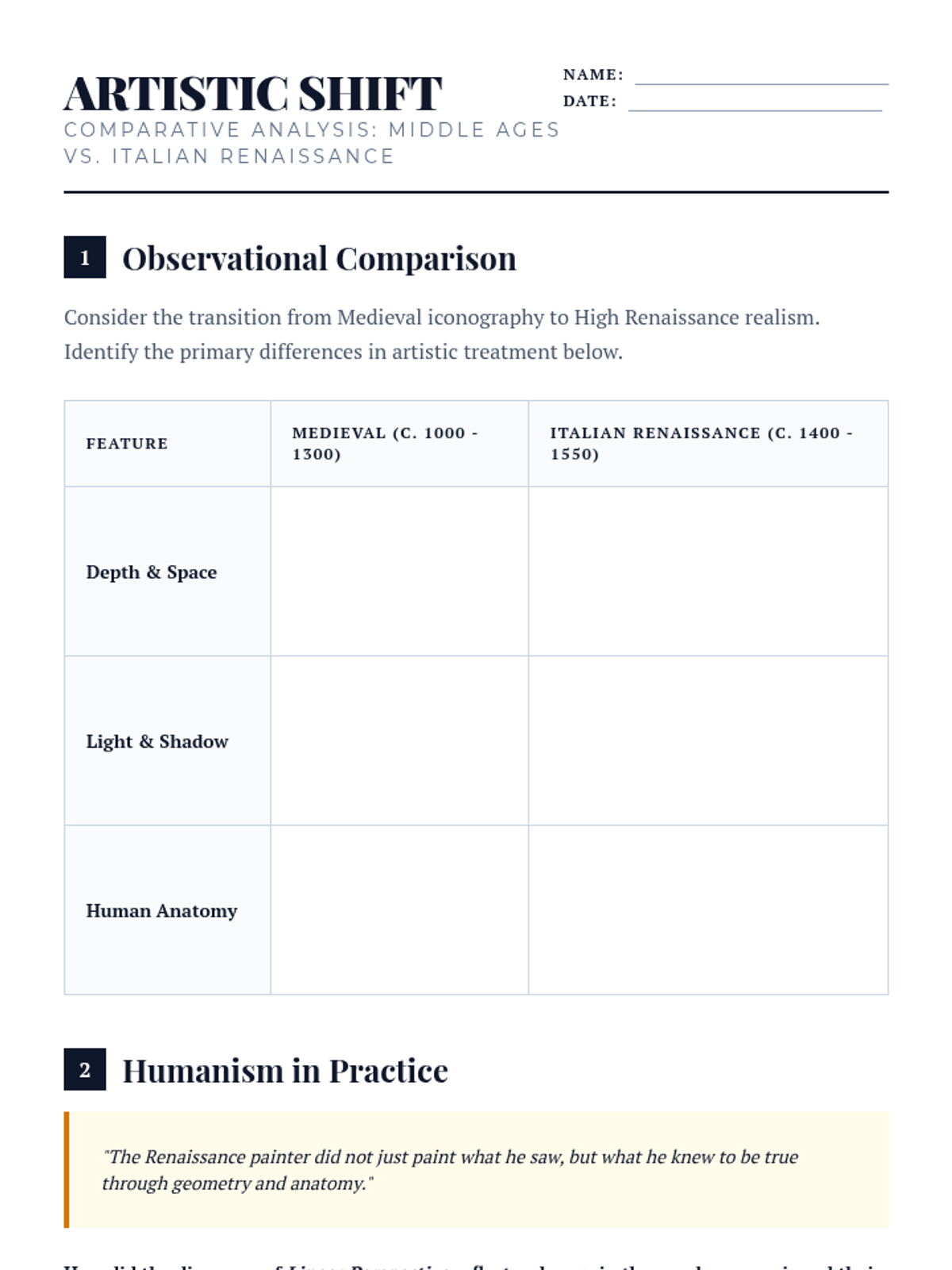
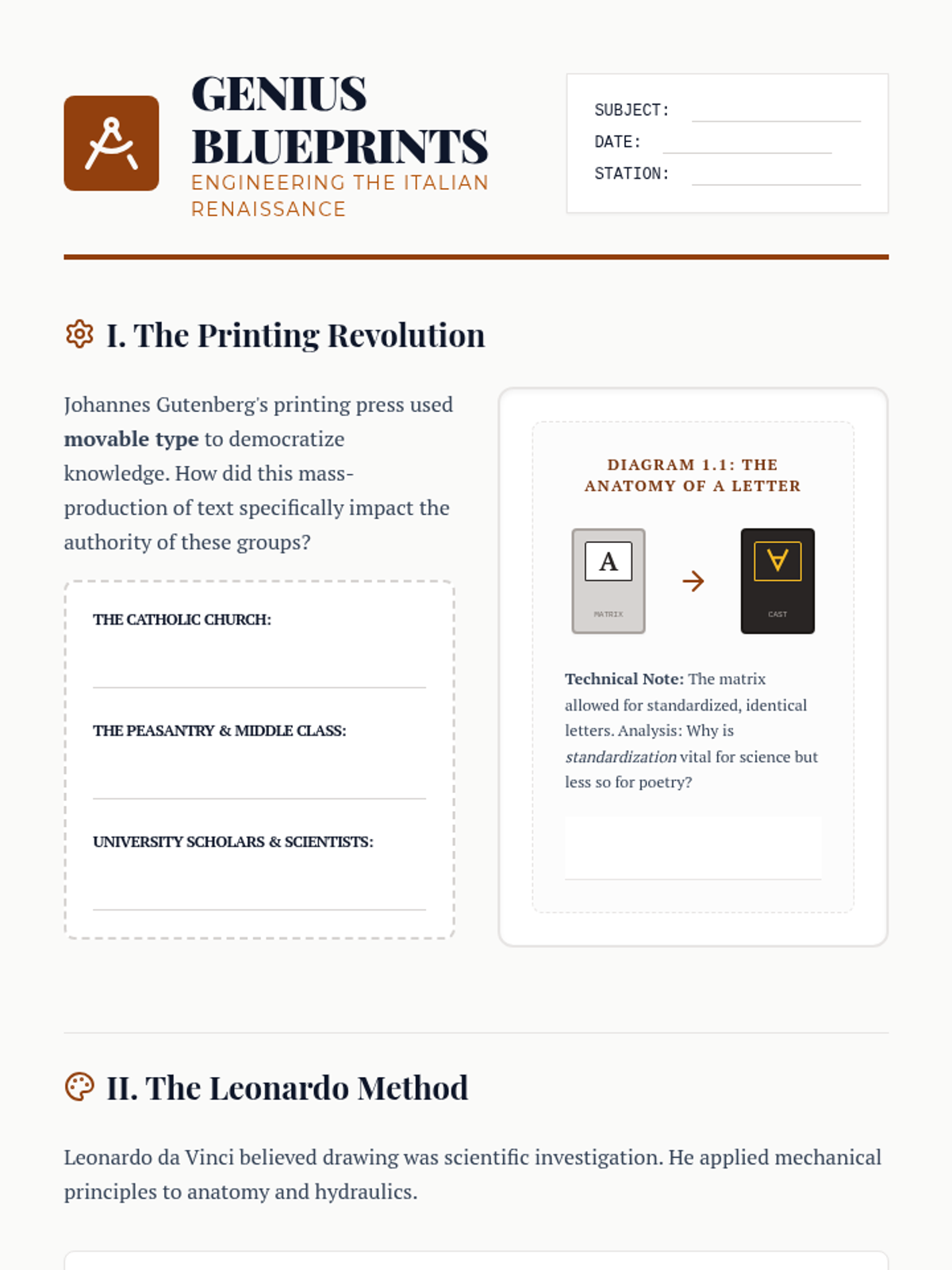
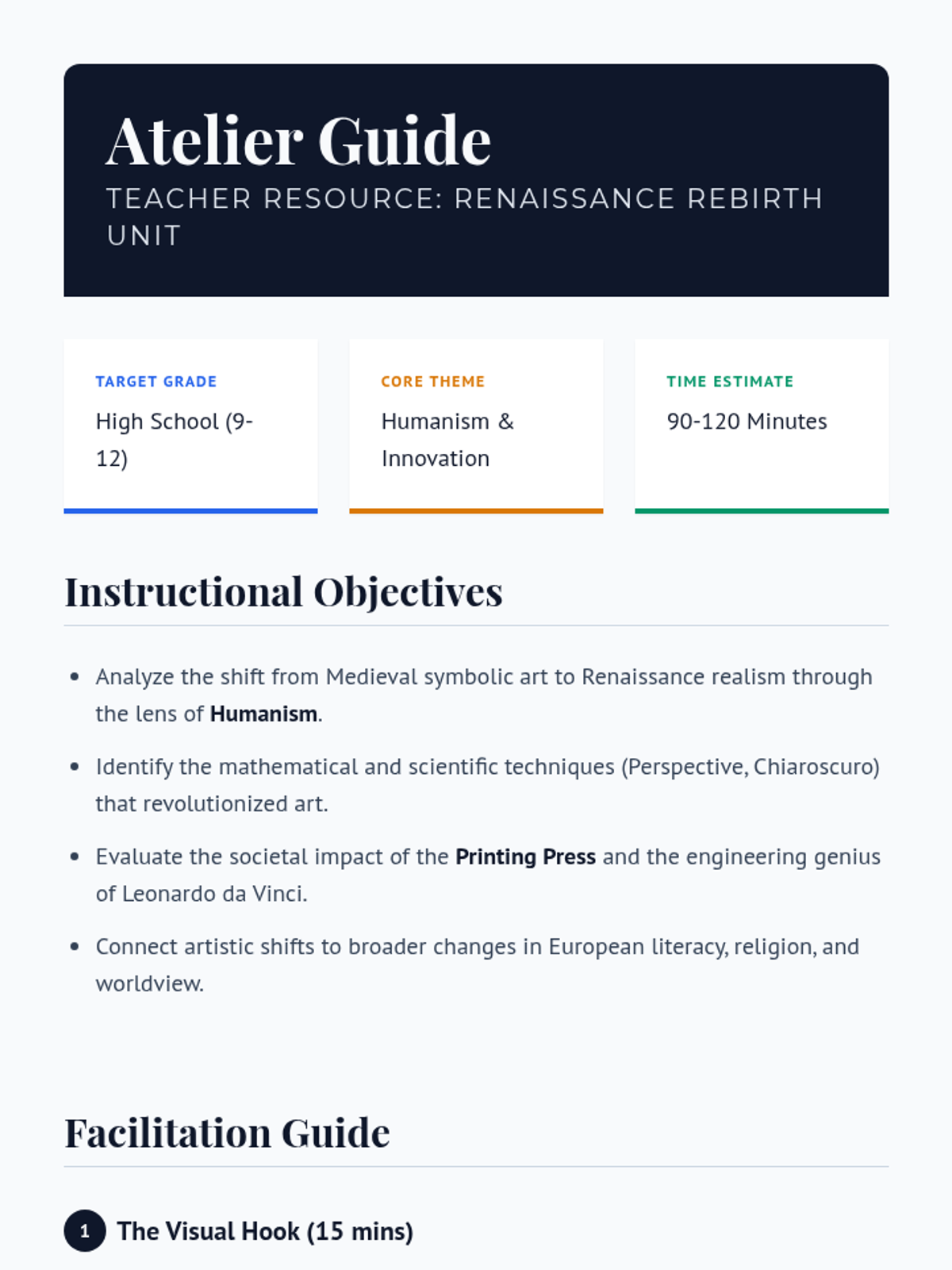
A comprehensive exploration of the transition from Medieval to Renaissance thought, focusing on the revolutionary shifts in artistic technique and the technological innovations that defined the Italian Renaissance.
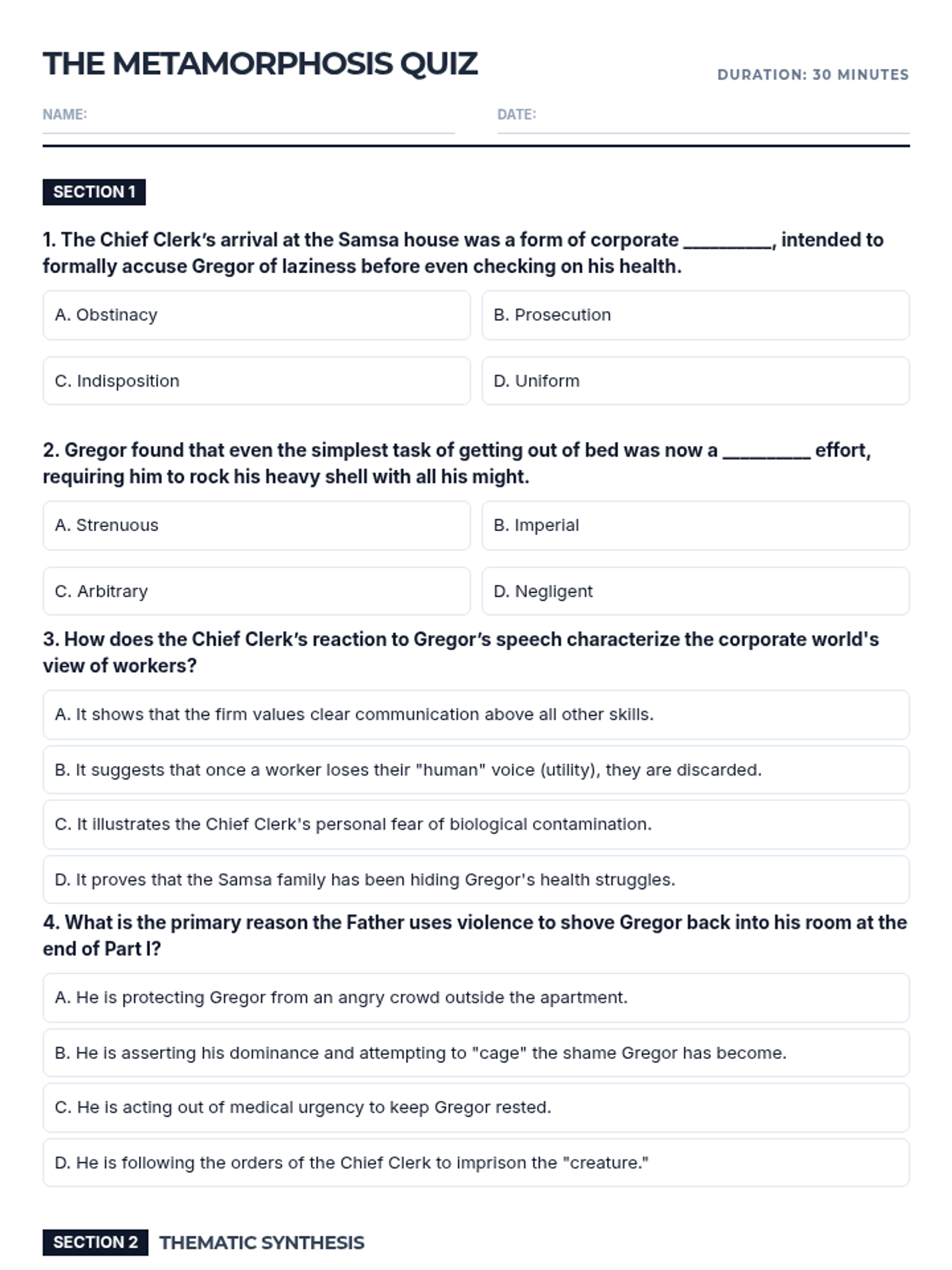
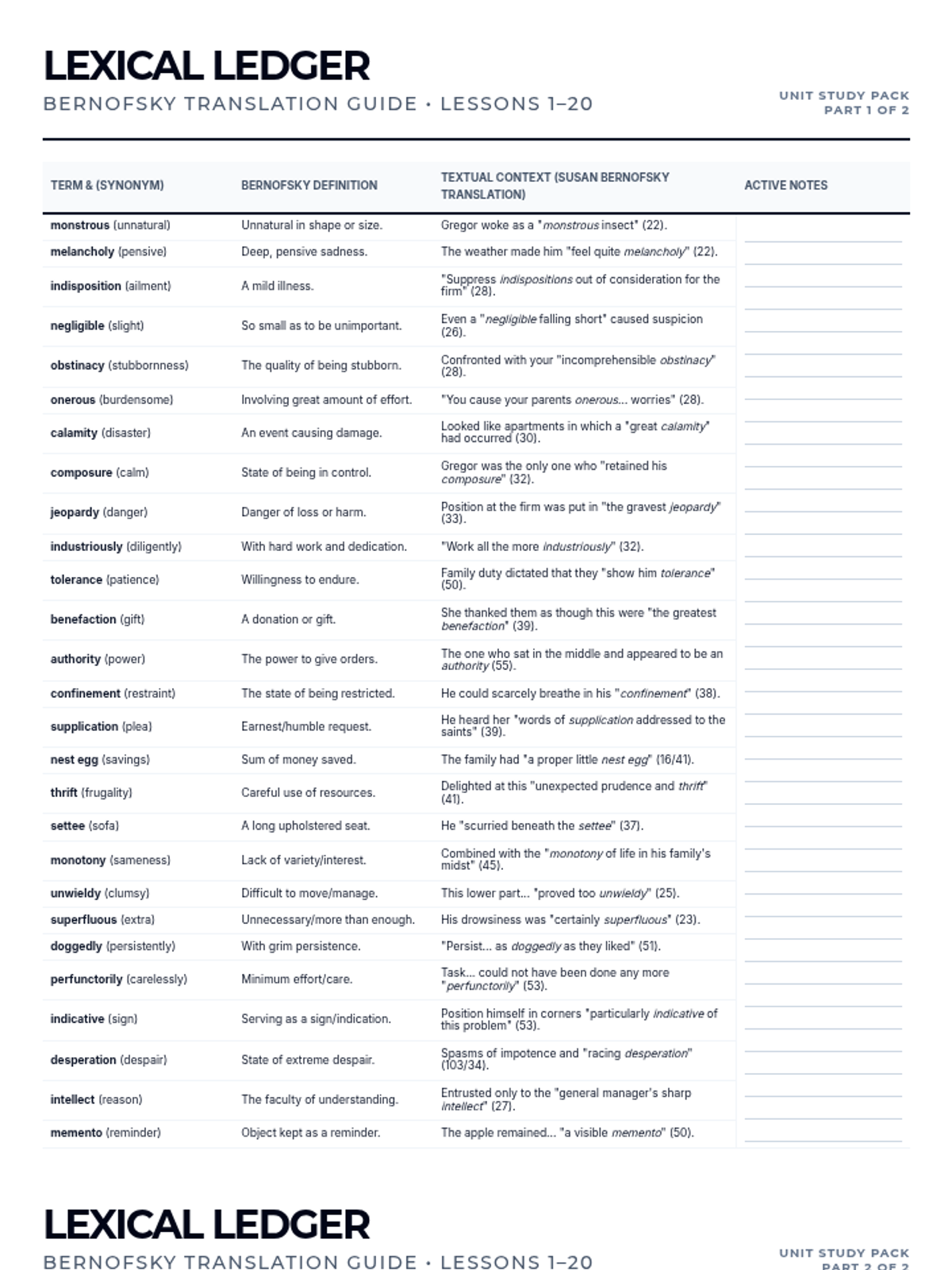
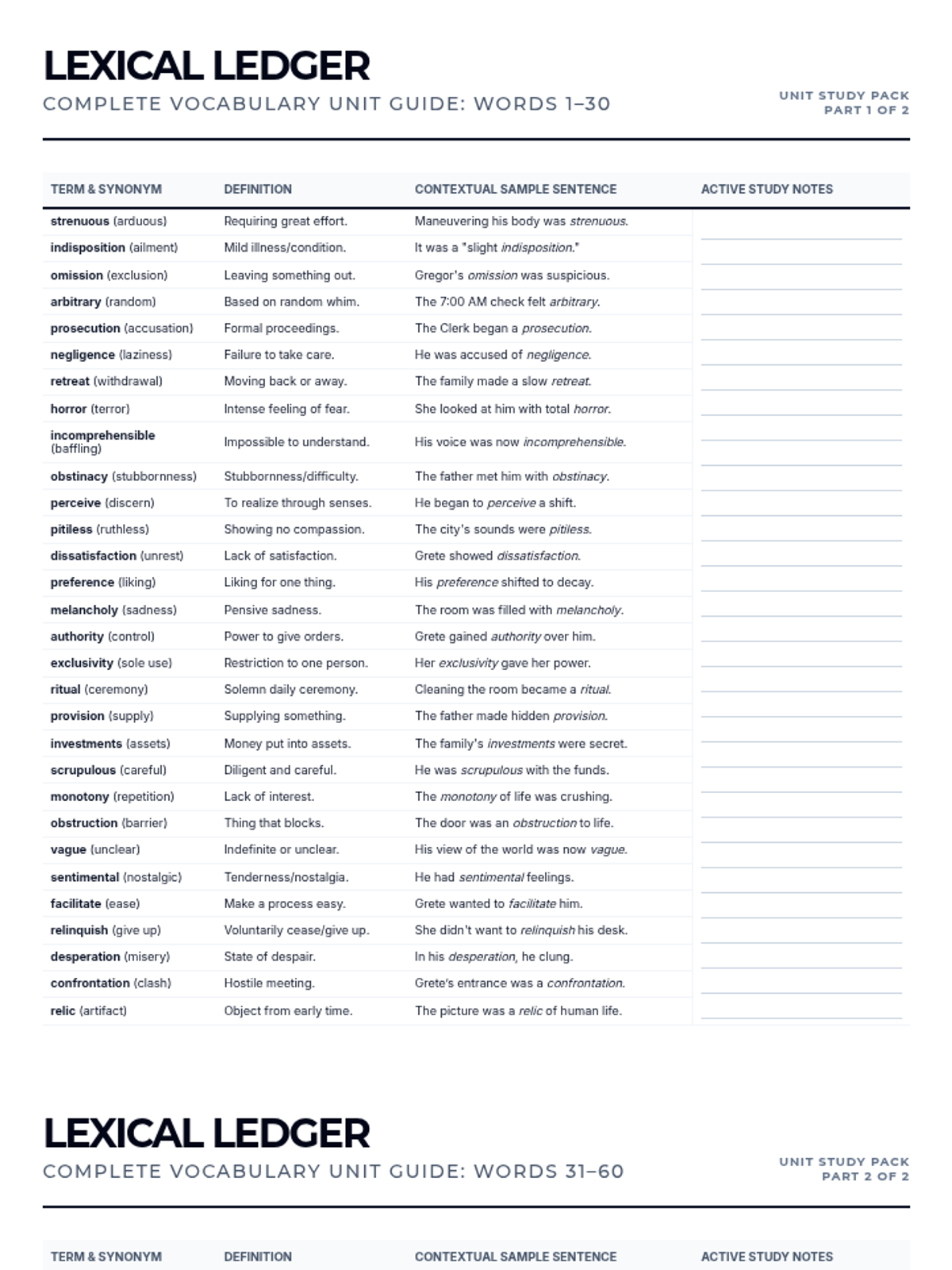
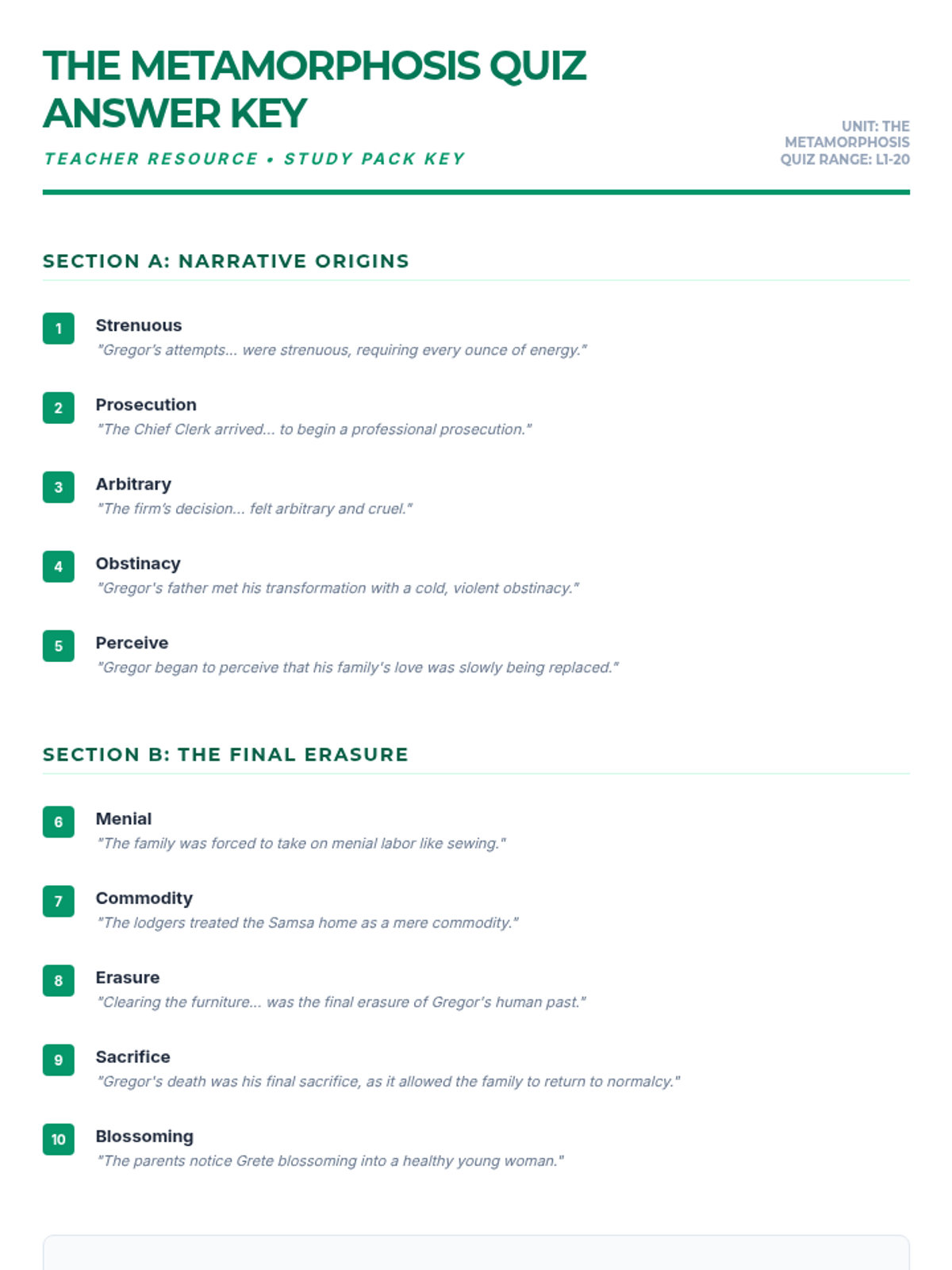
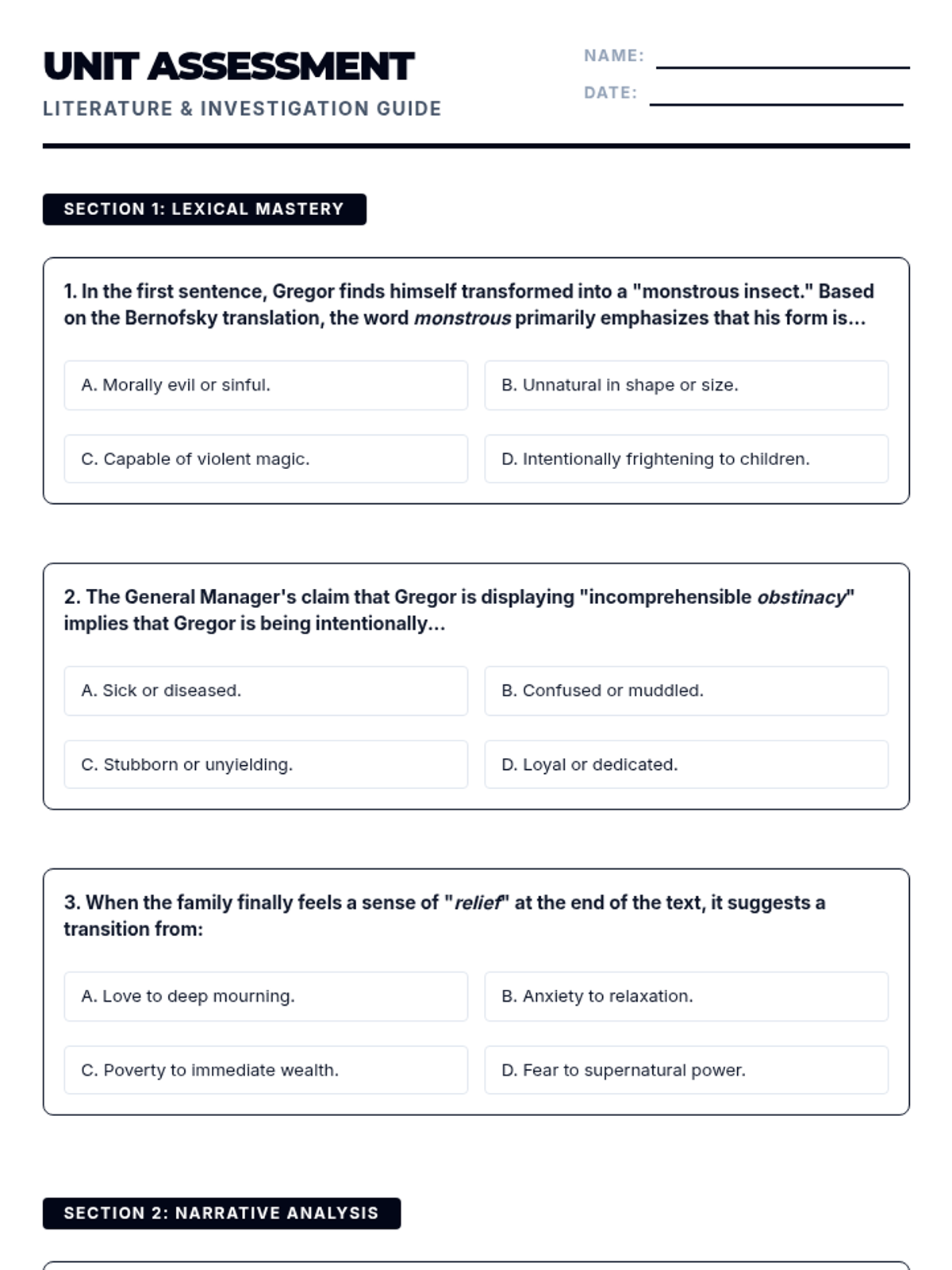
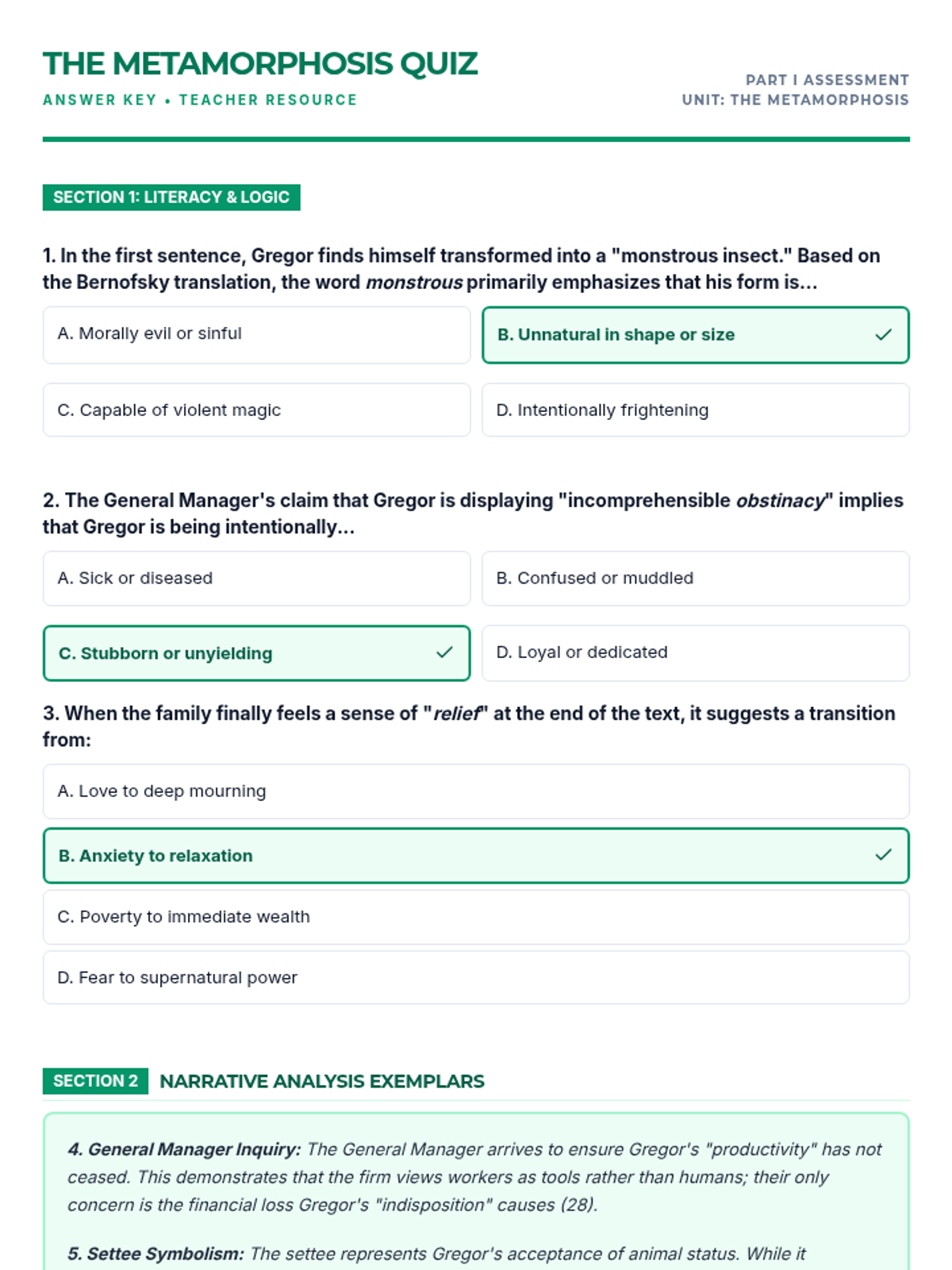
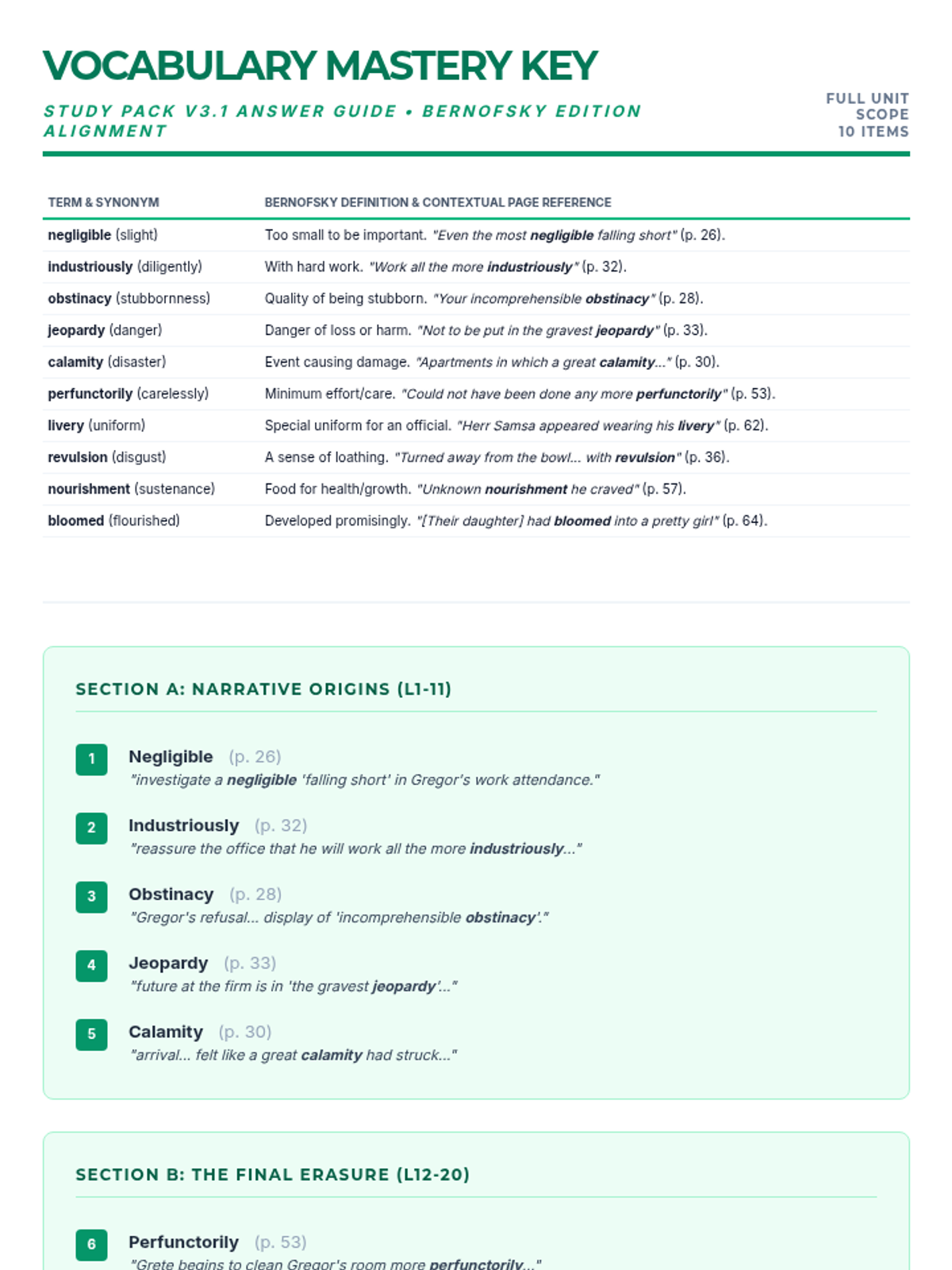
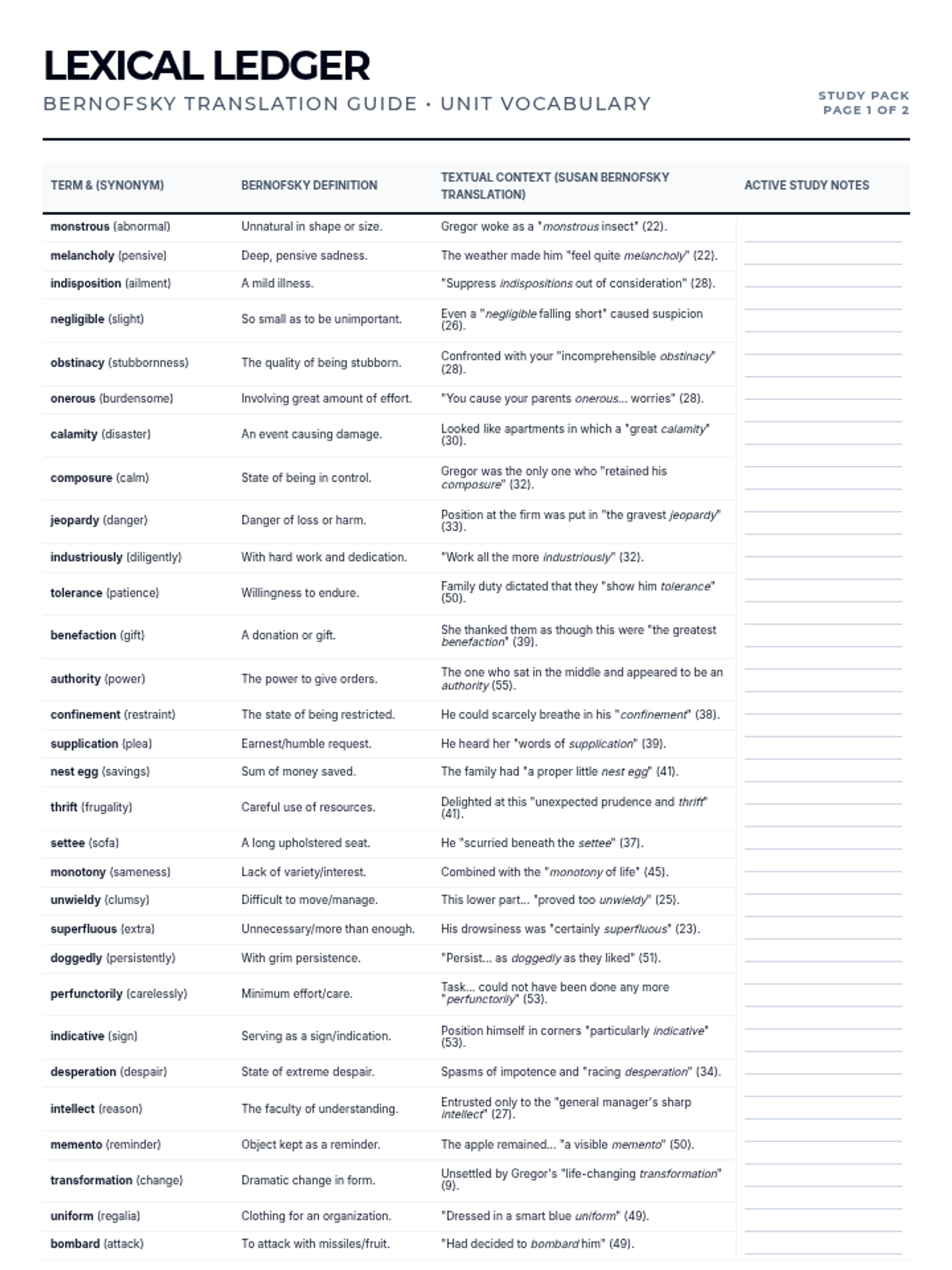
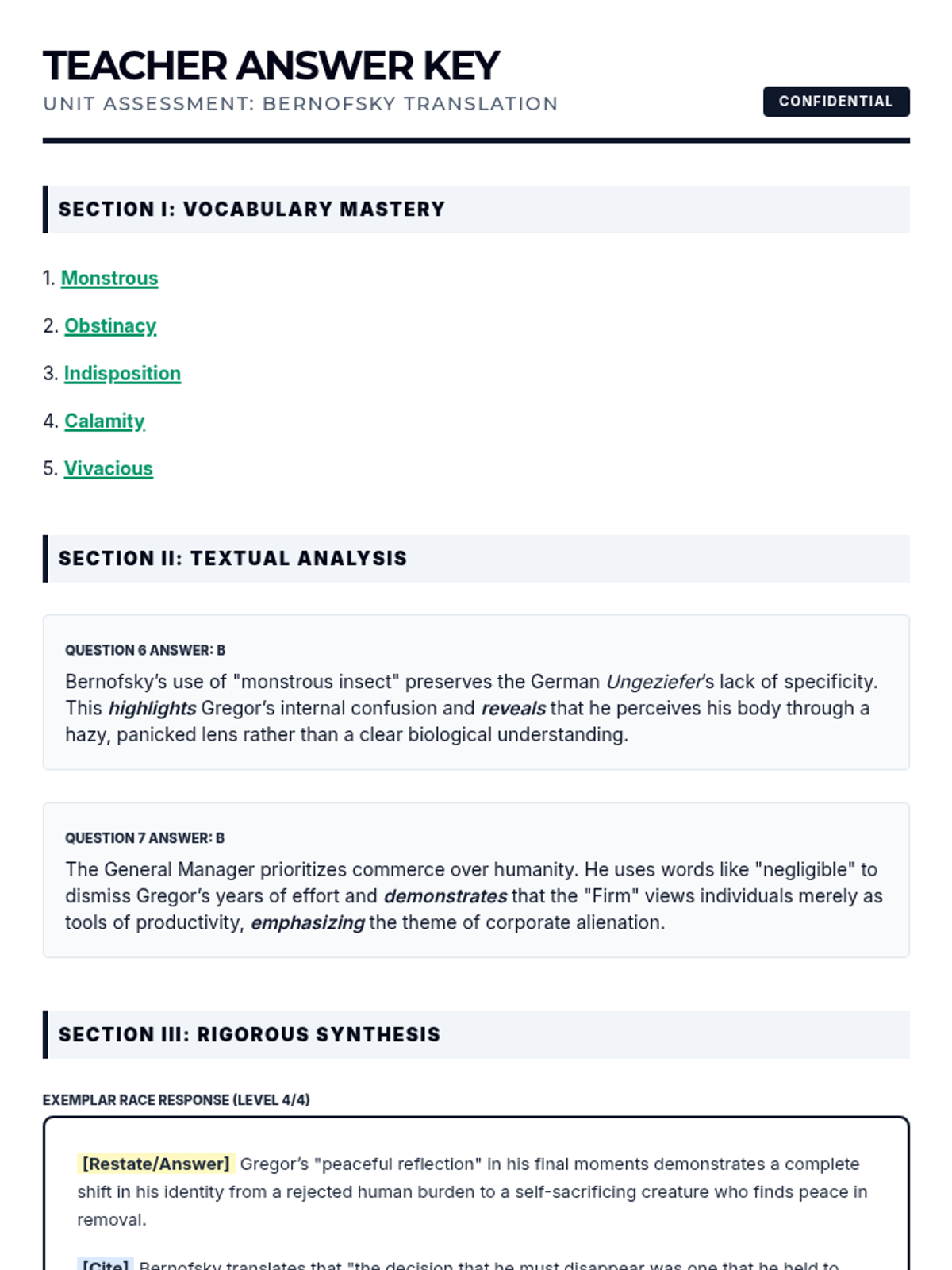
A summative assessment for the first third of the novel. Evaluates student mastery of vocabulary from Lessons 1-11, character motivation, and the central theme of corporate alienation through a mix of multiple choice, short answer, and a rigorous RACE response.
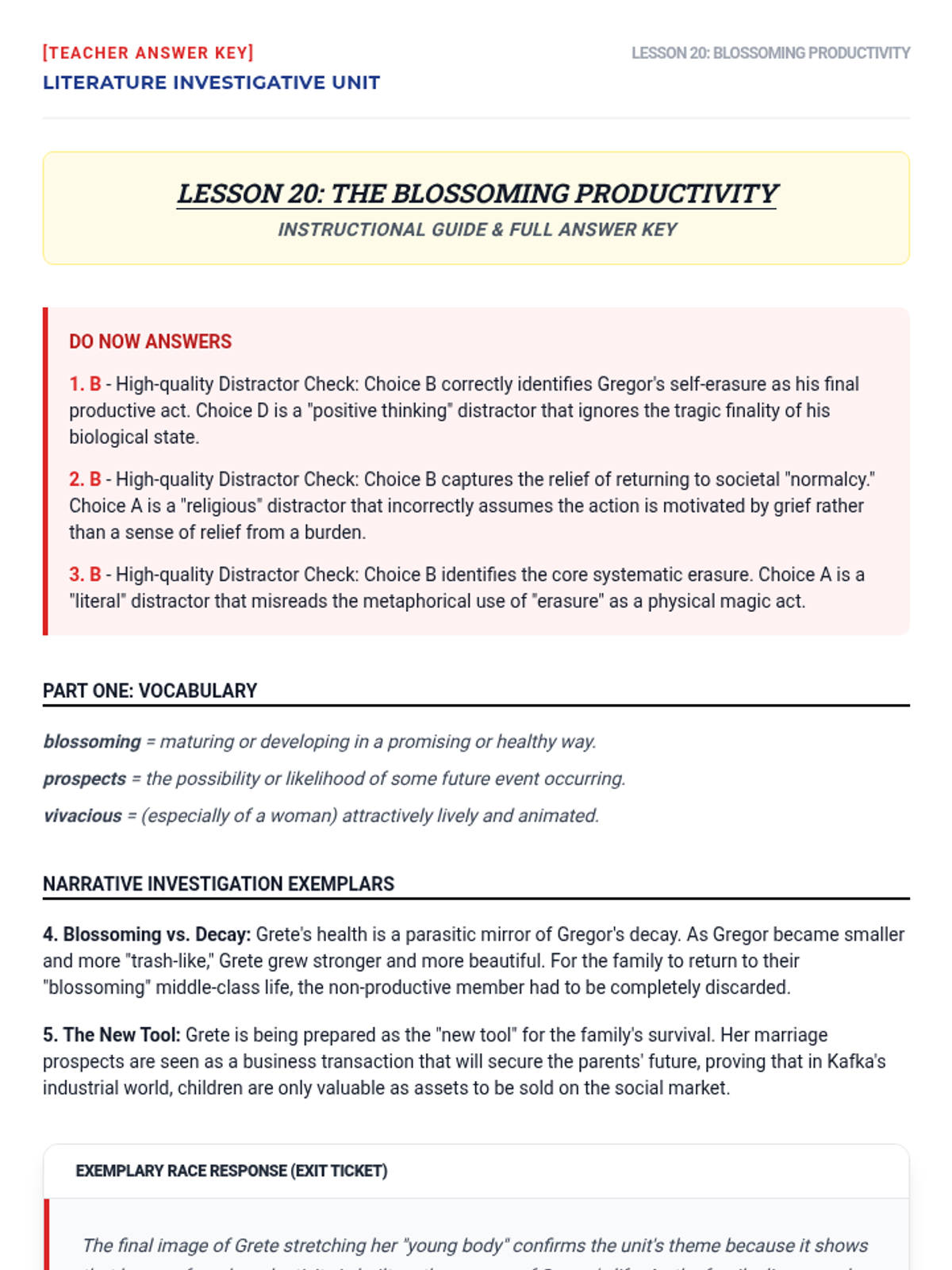
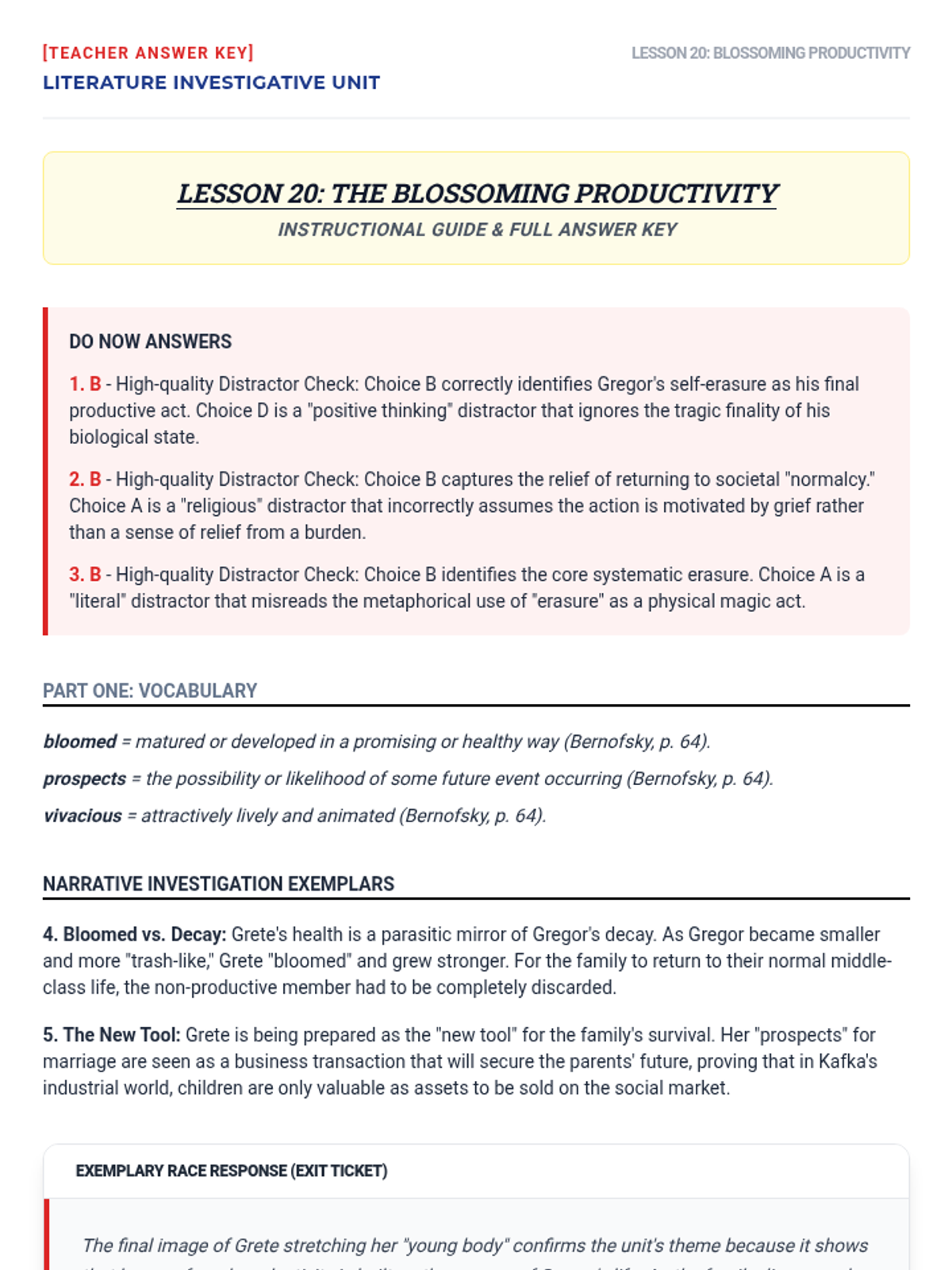
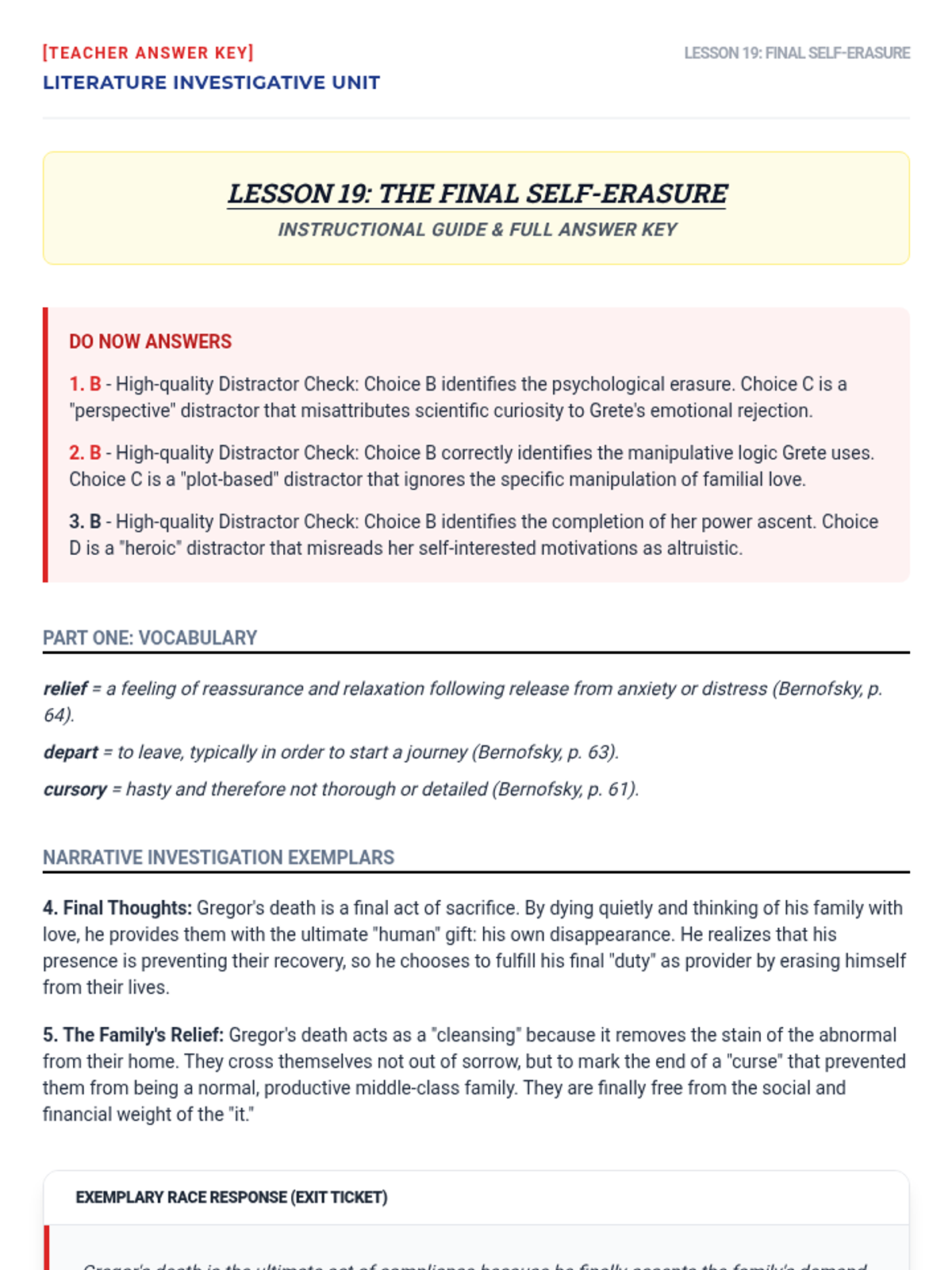
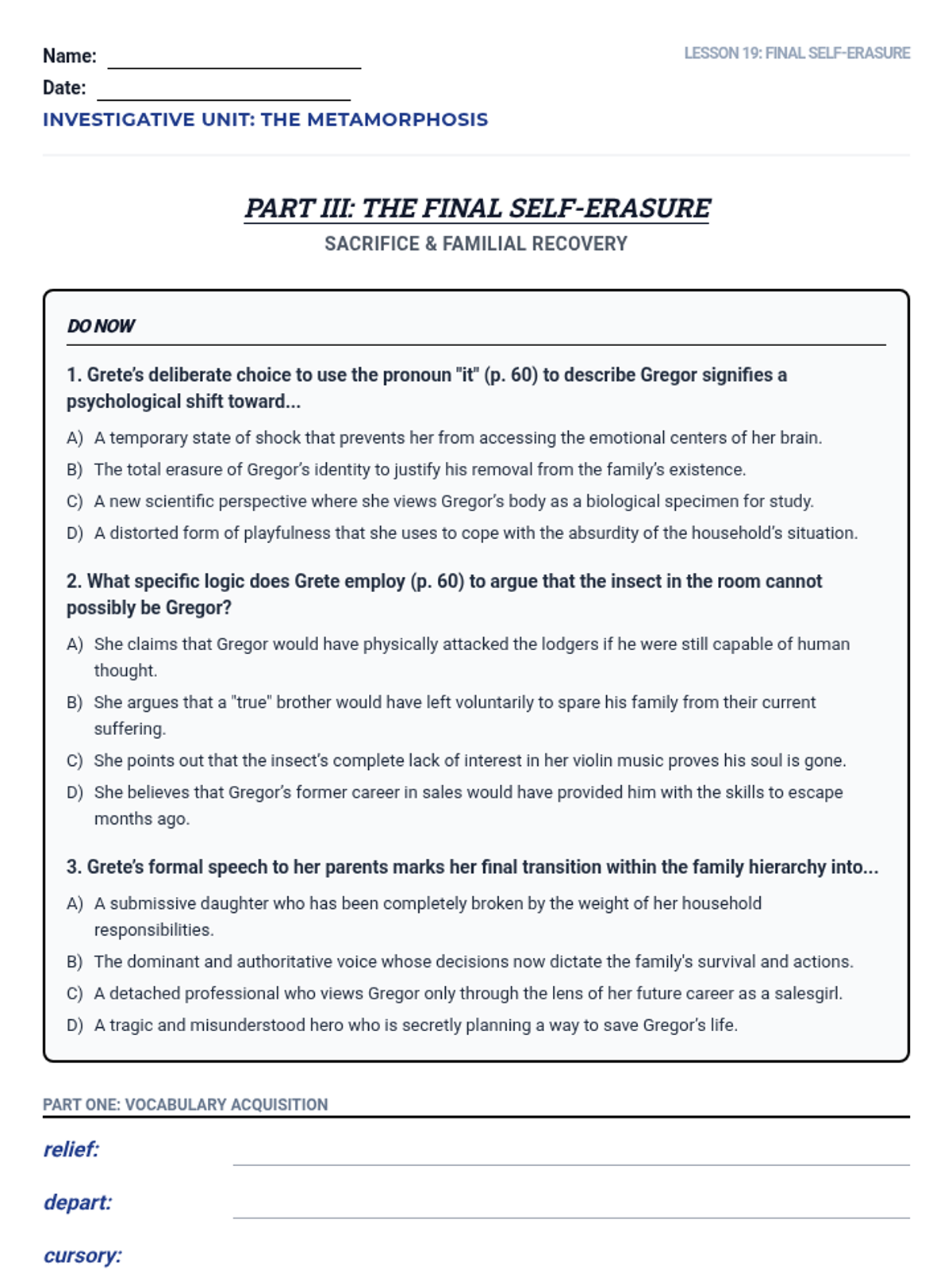
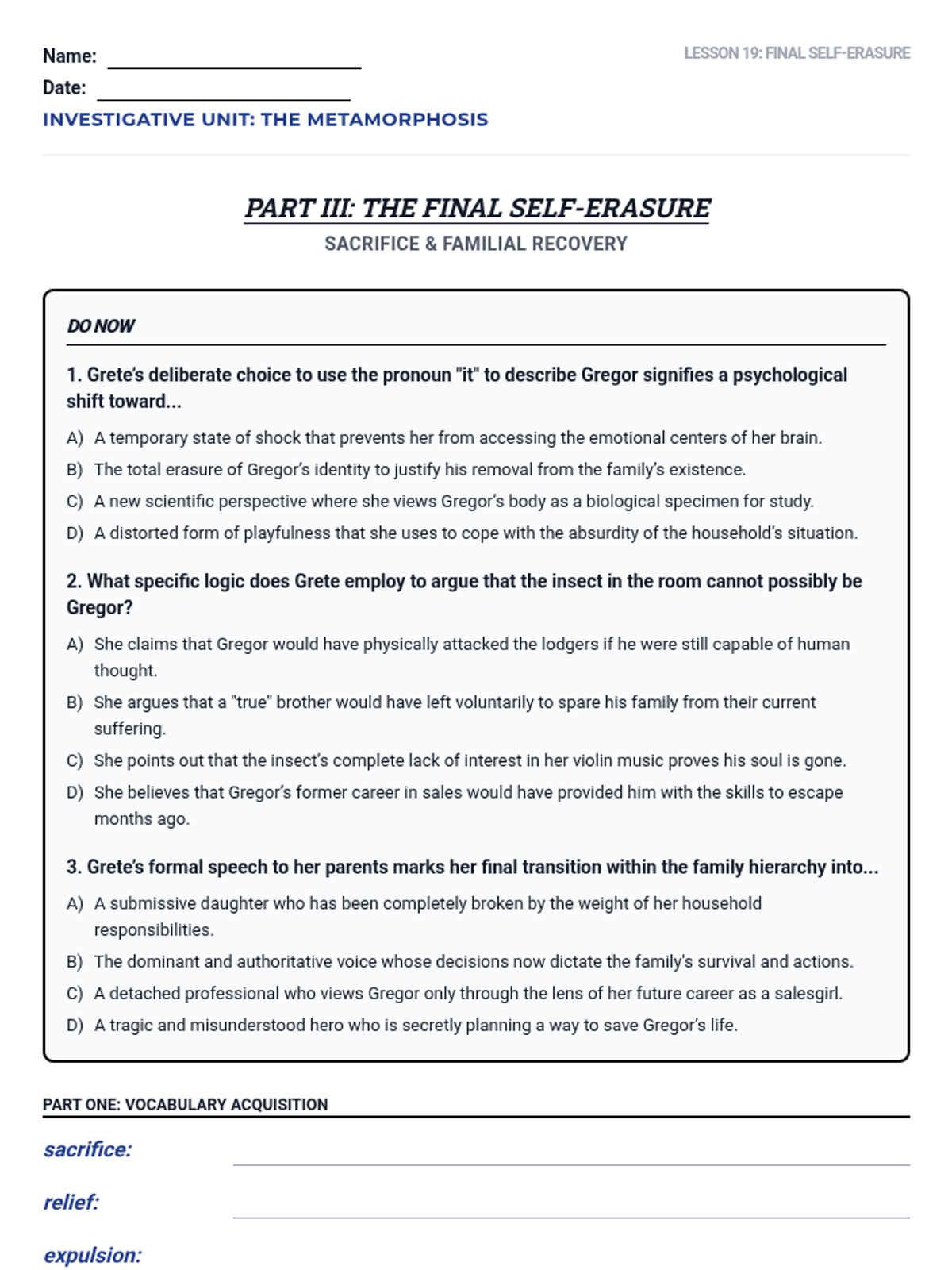
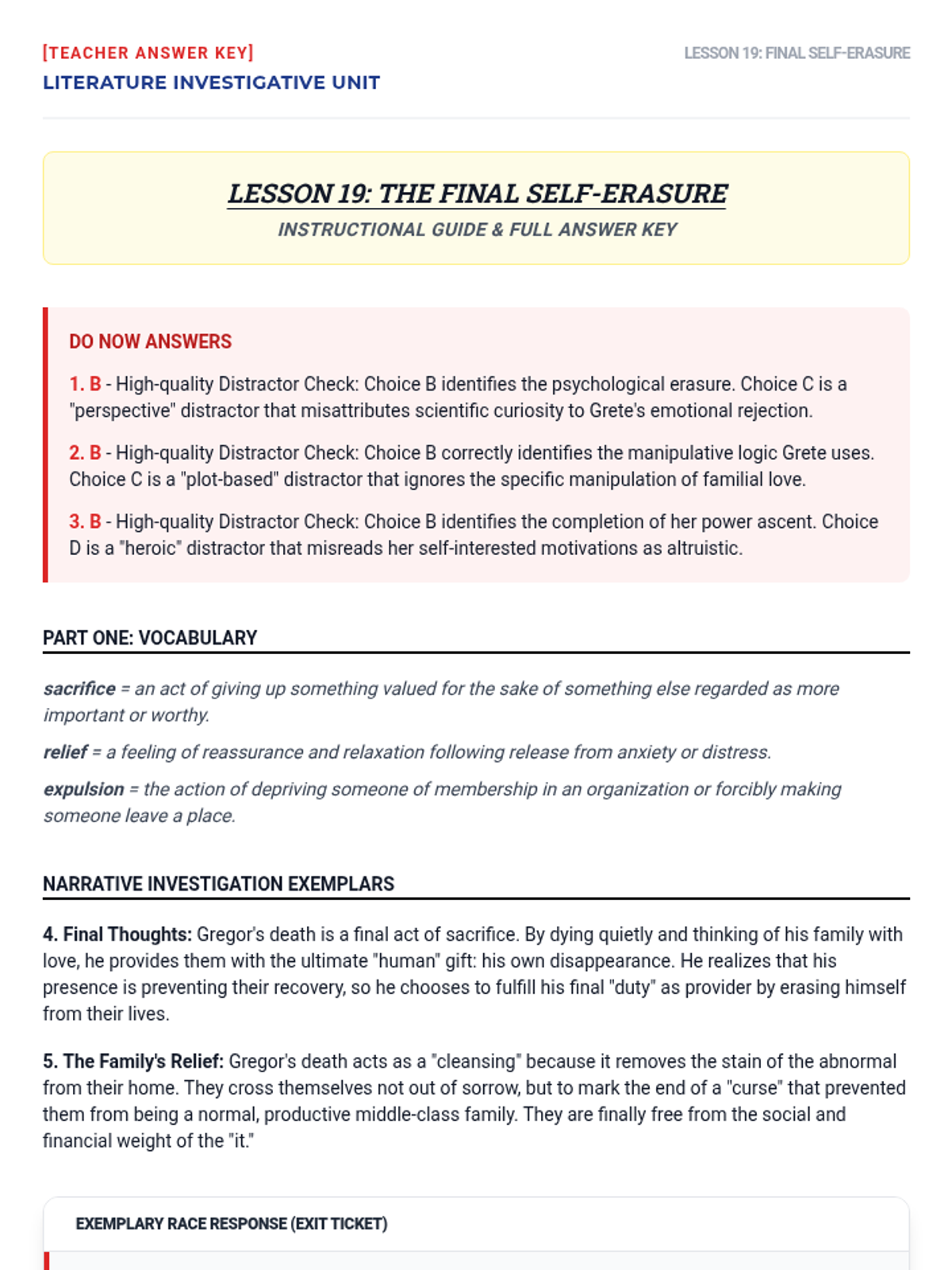
The family's recovery and the transition to a new source of productivity (Grete). Synthesis of the unit's themes.
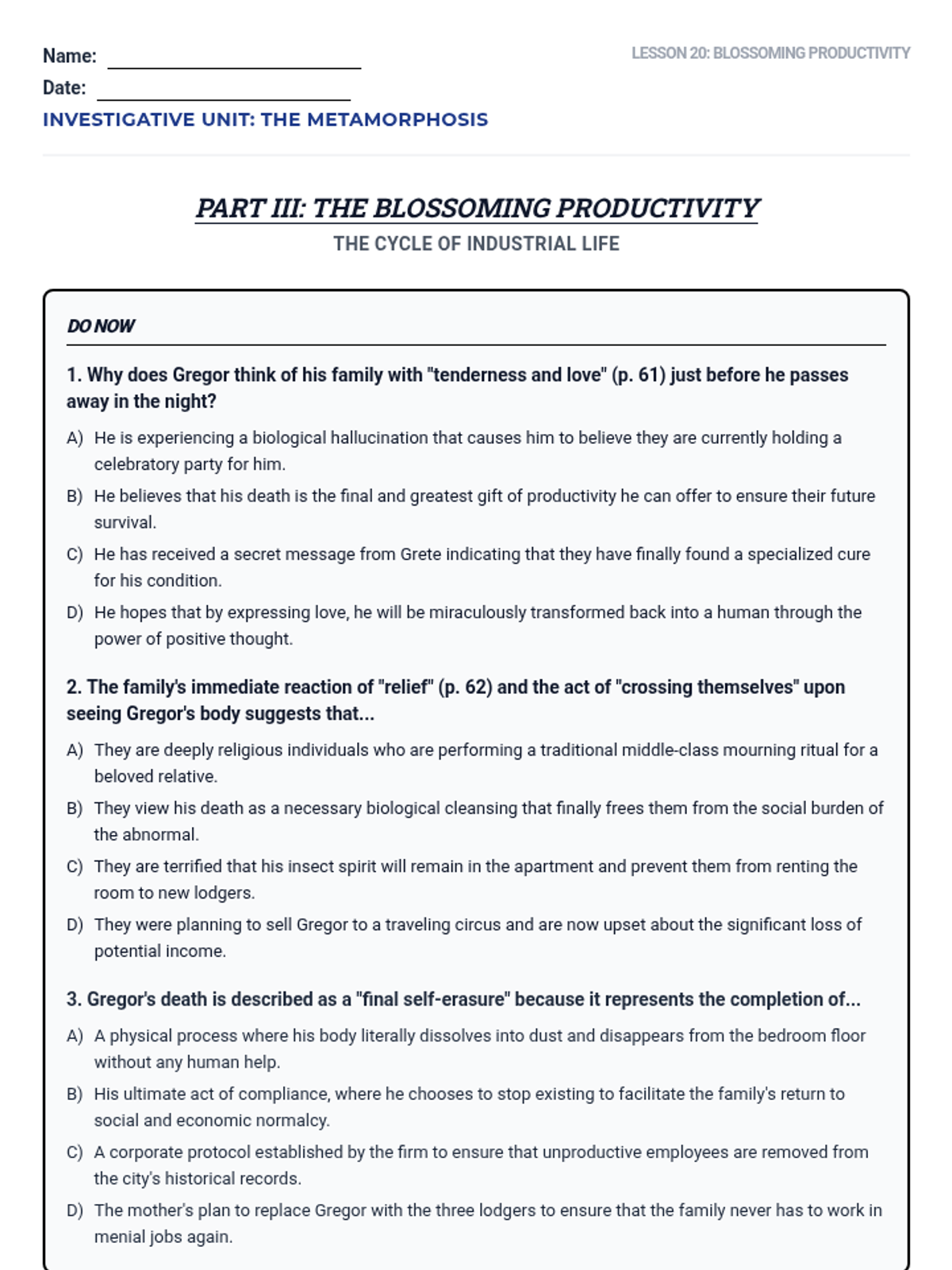
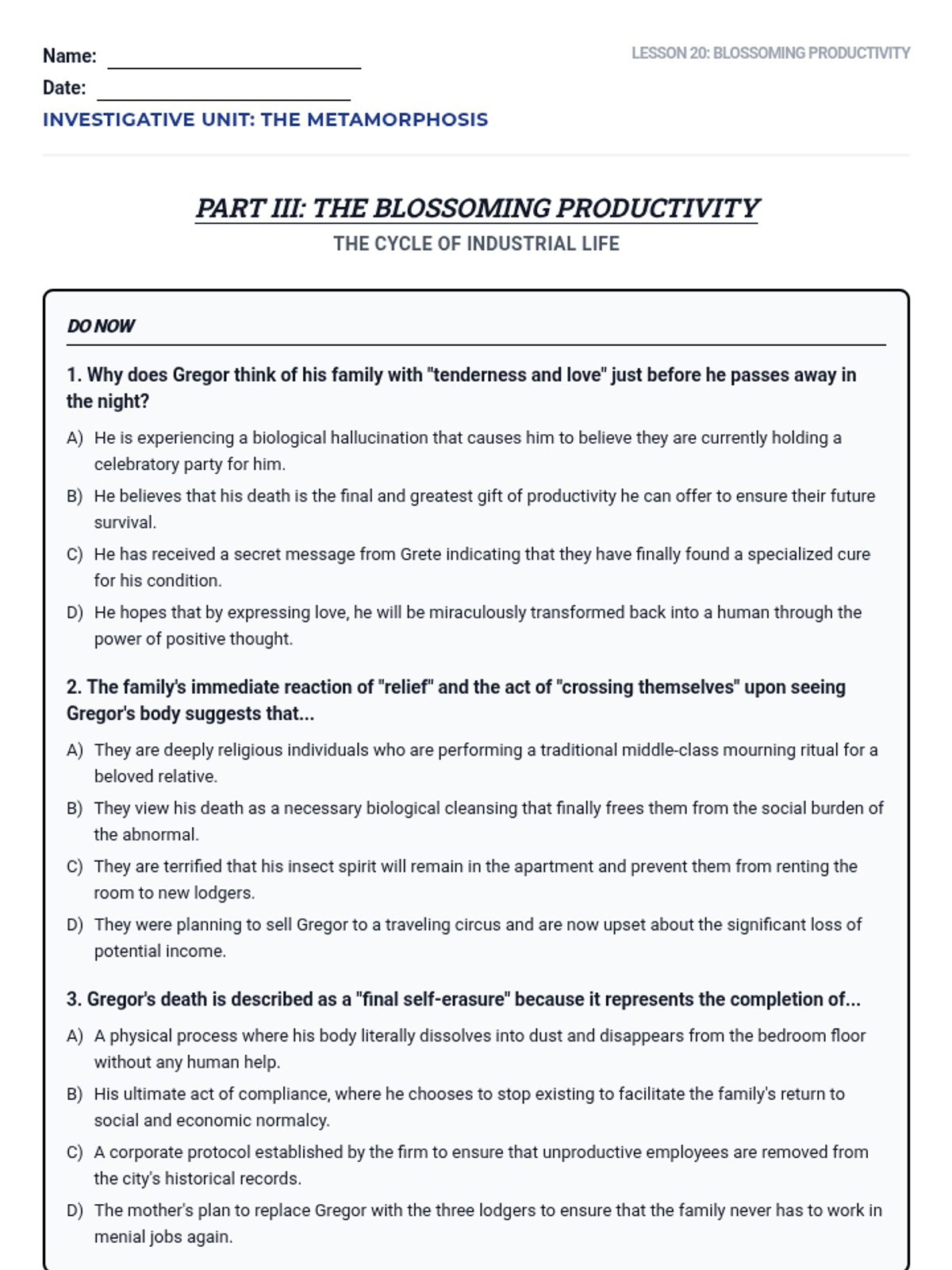
Gregor's death and self-sacrifice. Analysis of the relief of the family and the 'cleansing' of the home.
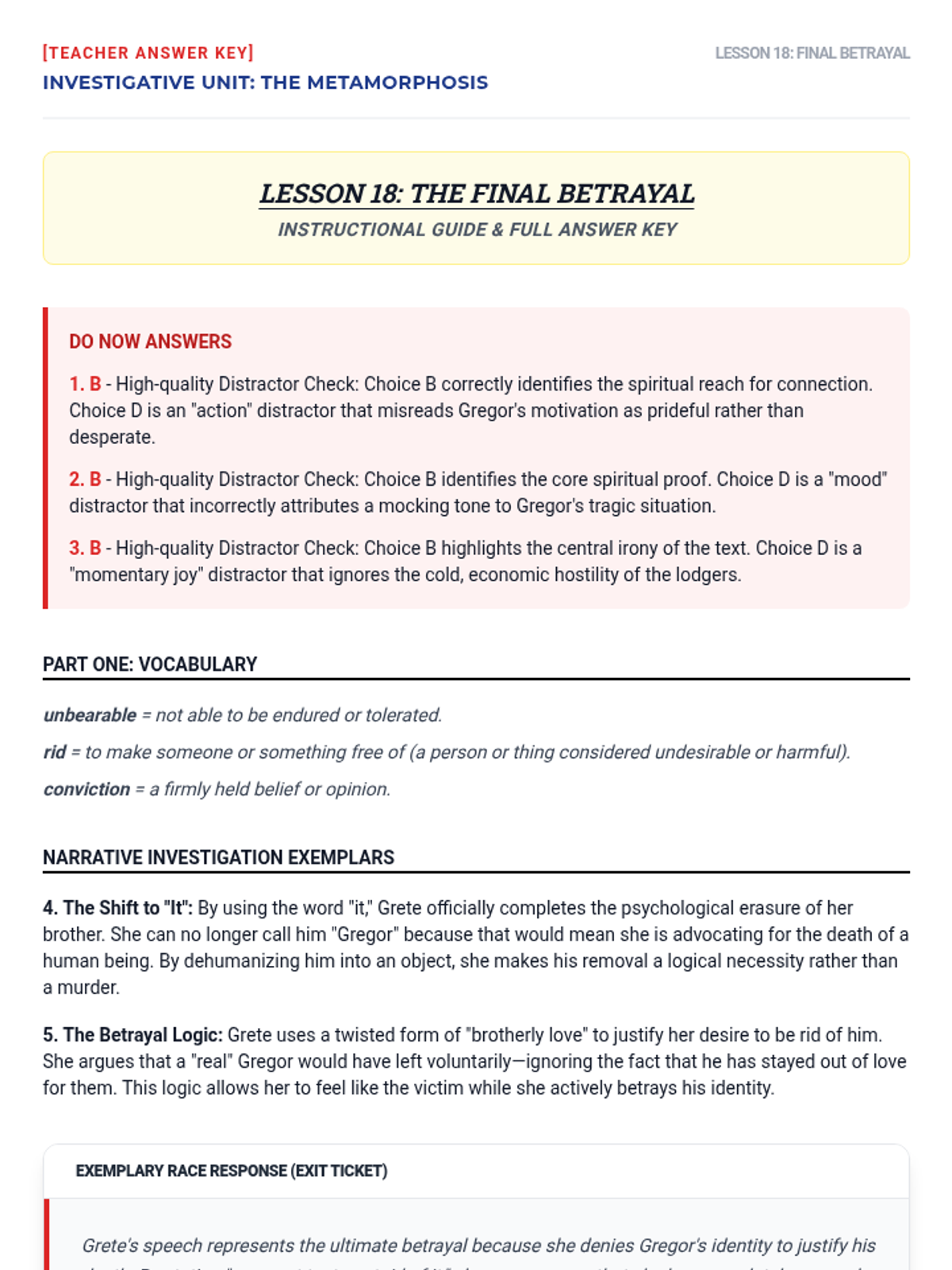
Grete's formal rejection of Gregor's identity. Analysis of the shift from sibling love to the necessity of his removal.
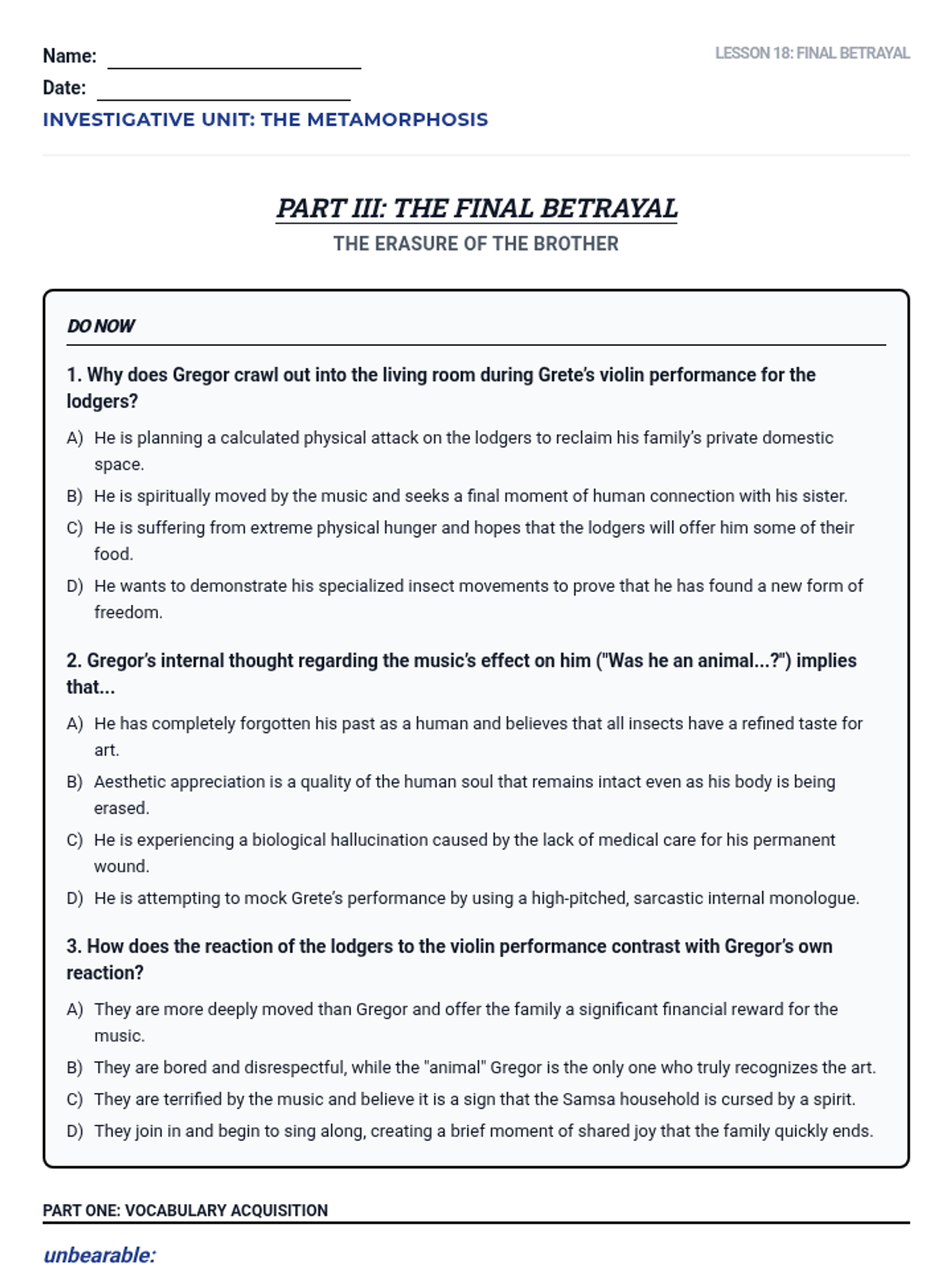
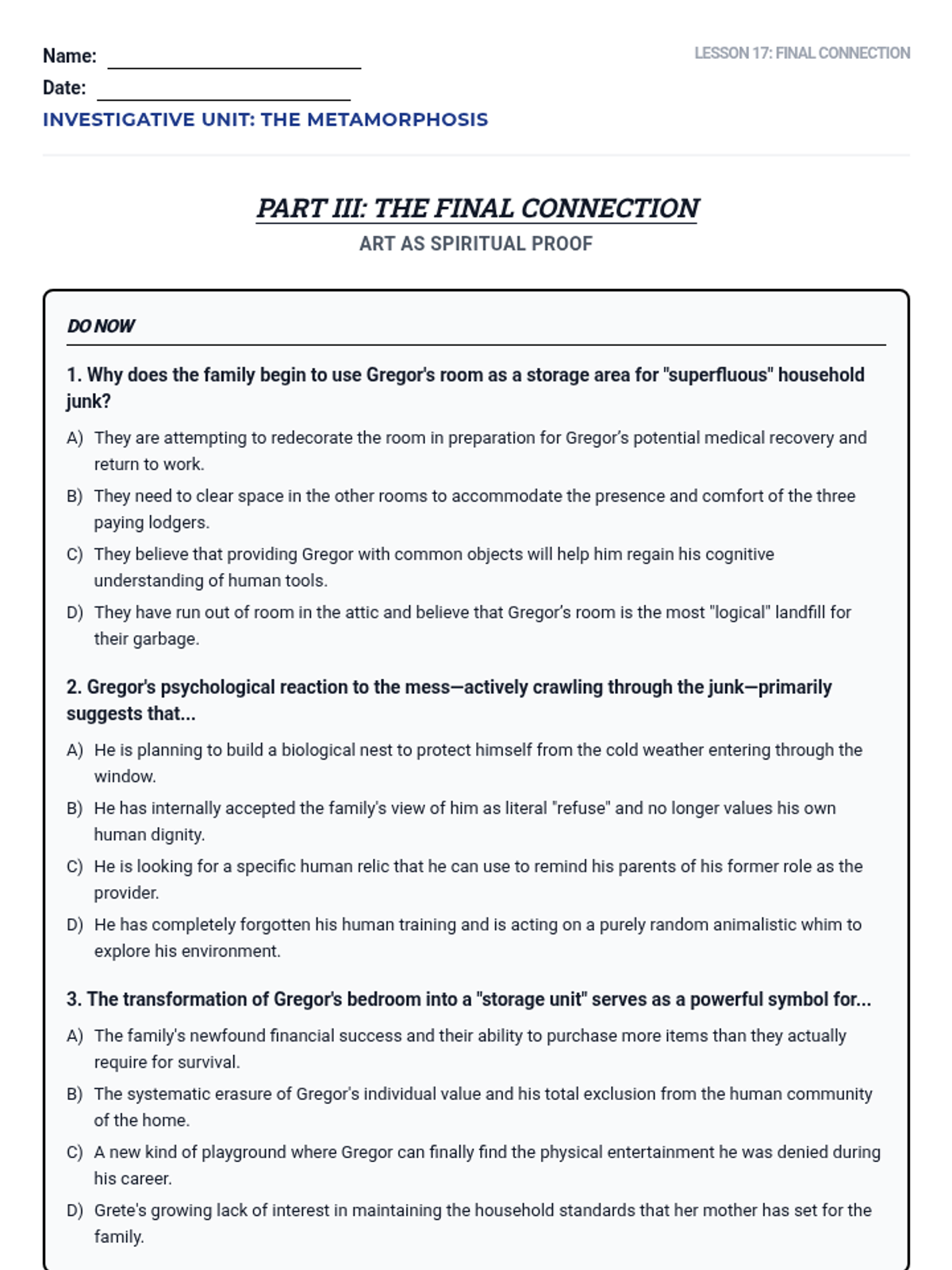
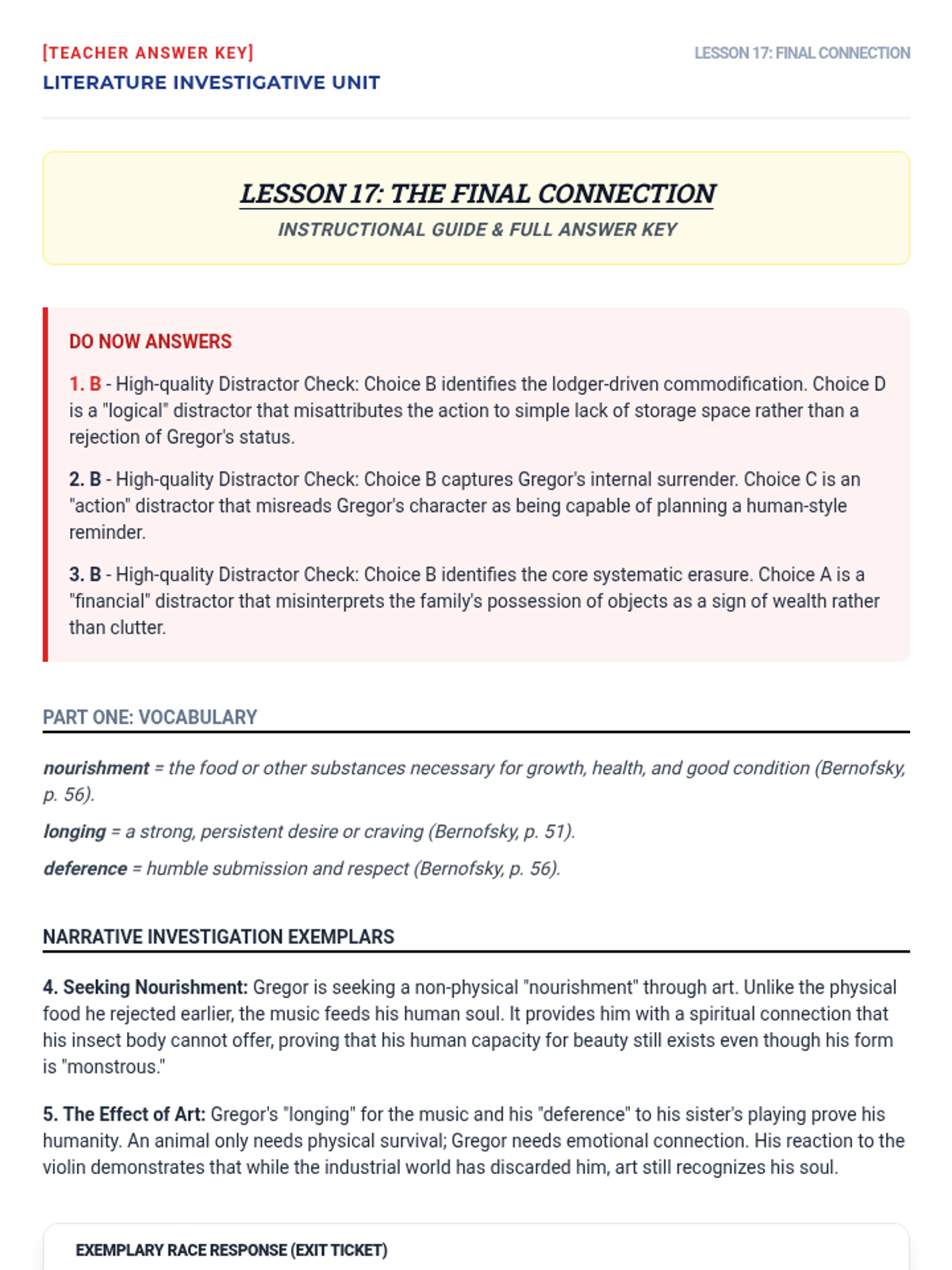
Gregor's reaction to Grete's violin performance. Themes of art, human connection, and the final reach for his human spirit.
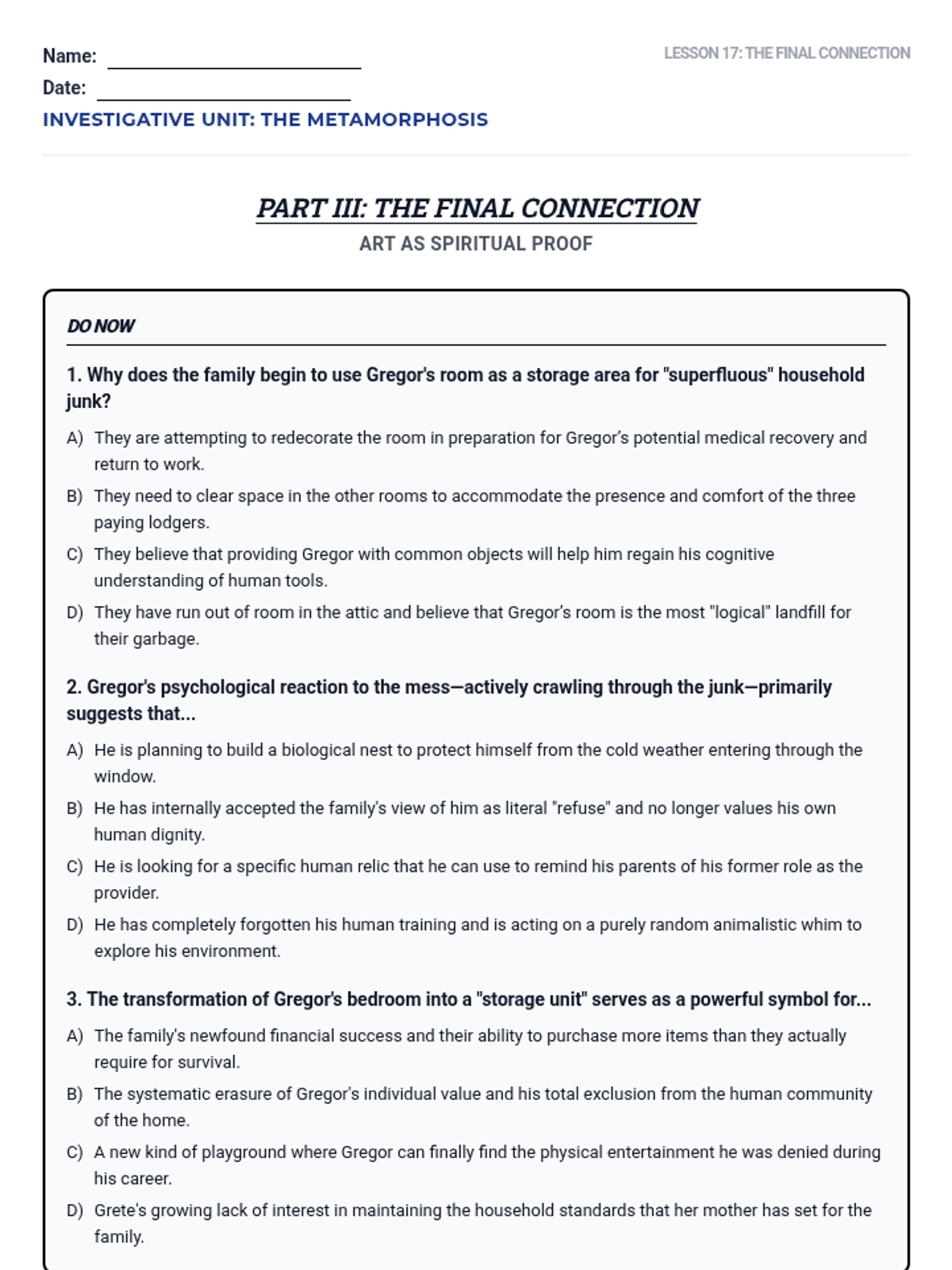
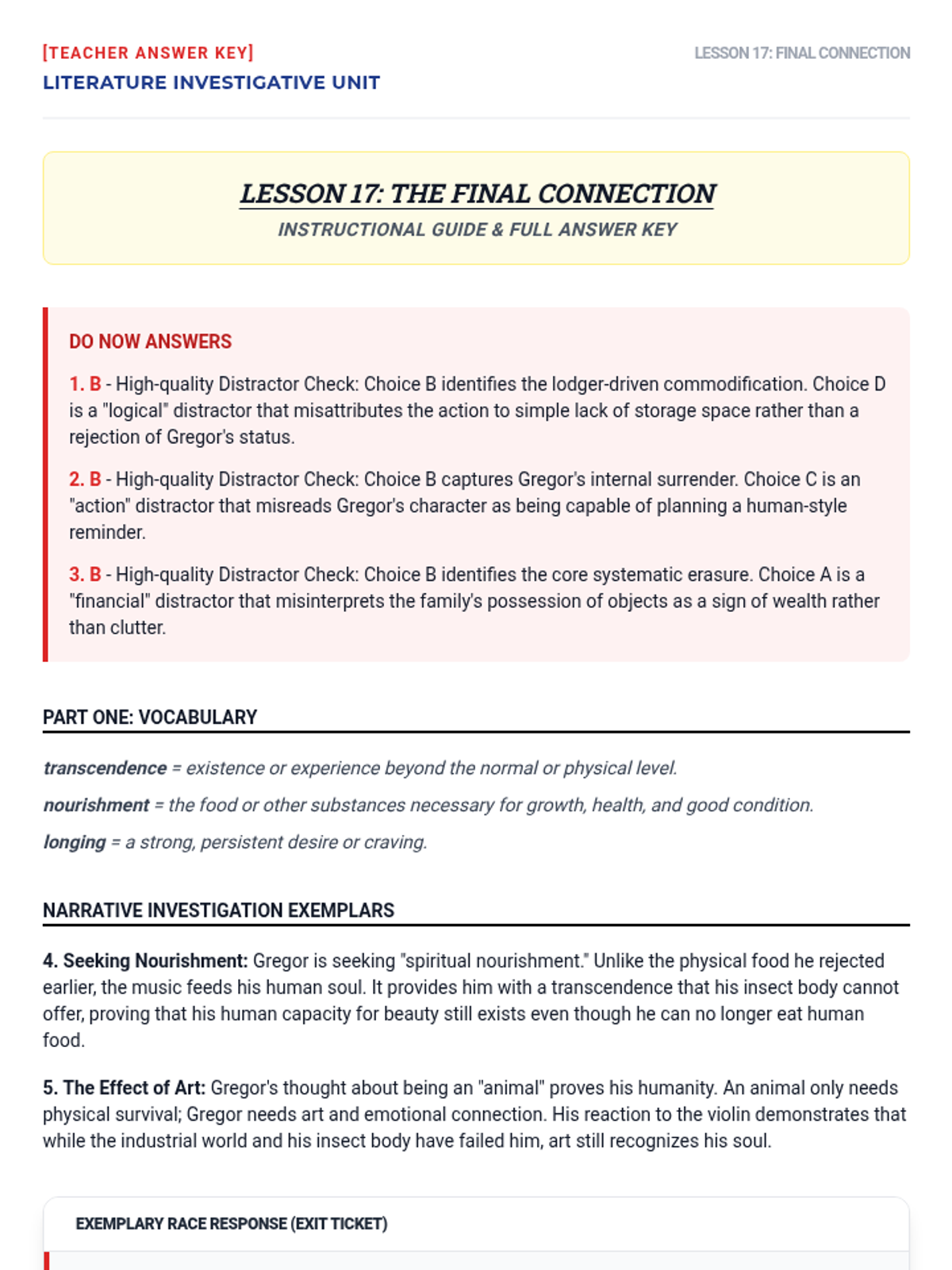
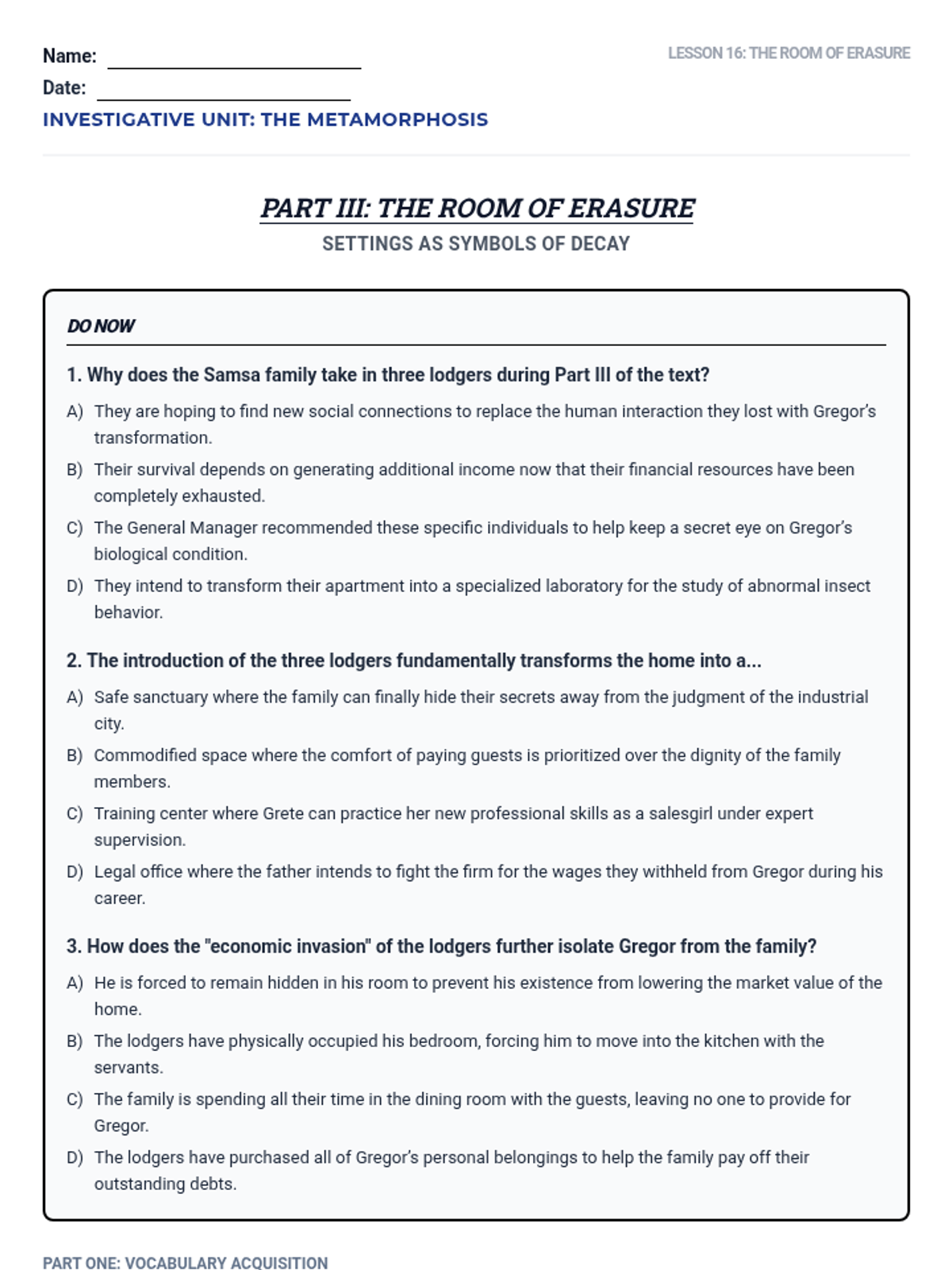
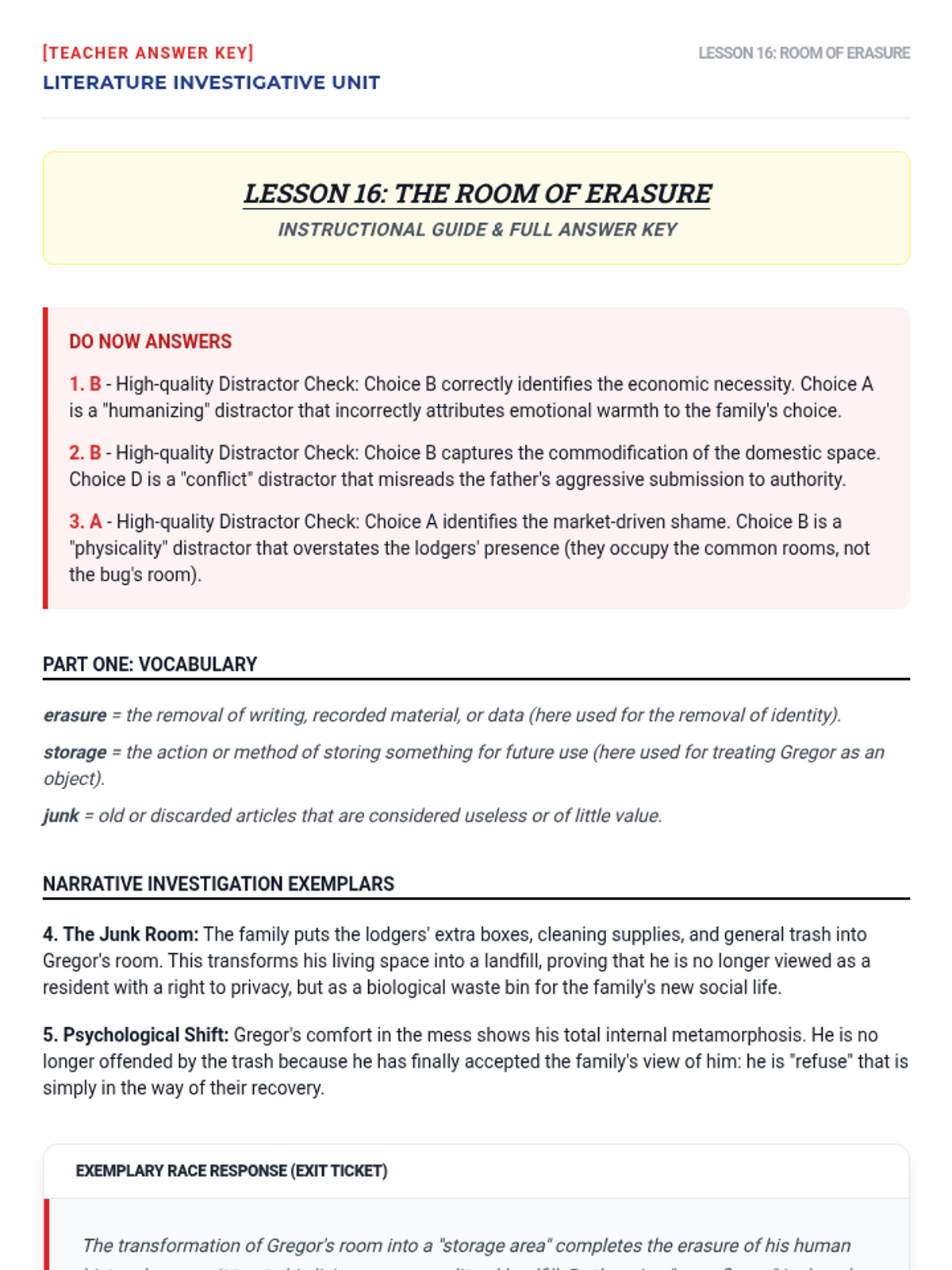
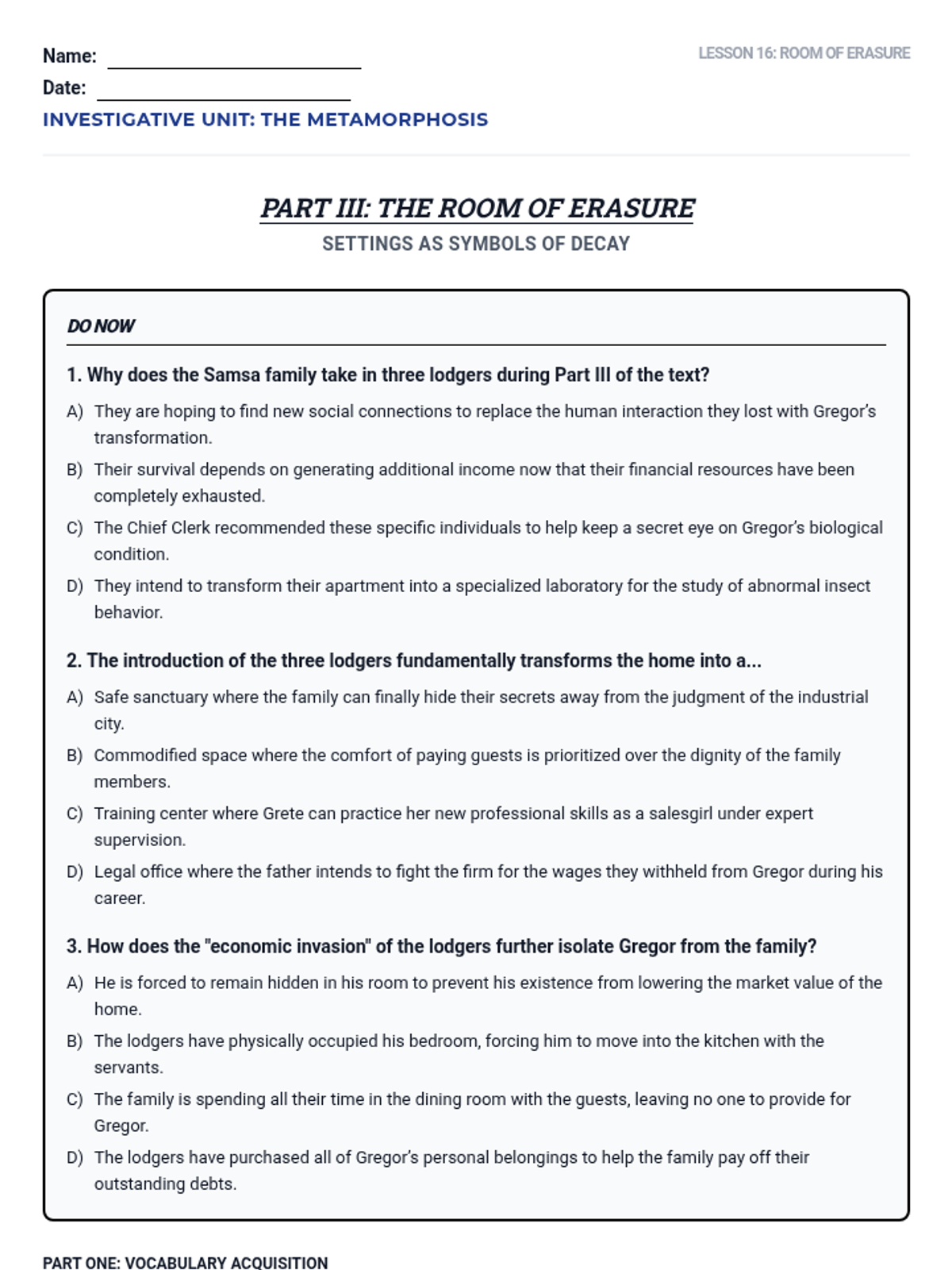
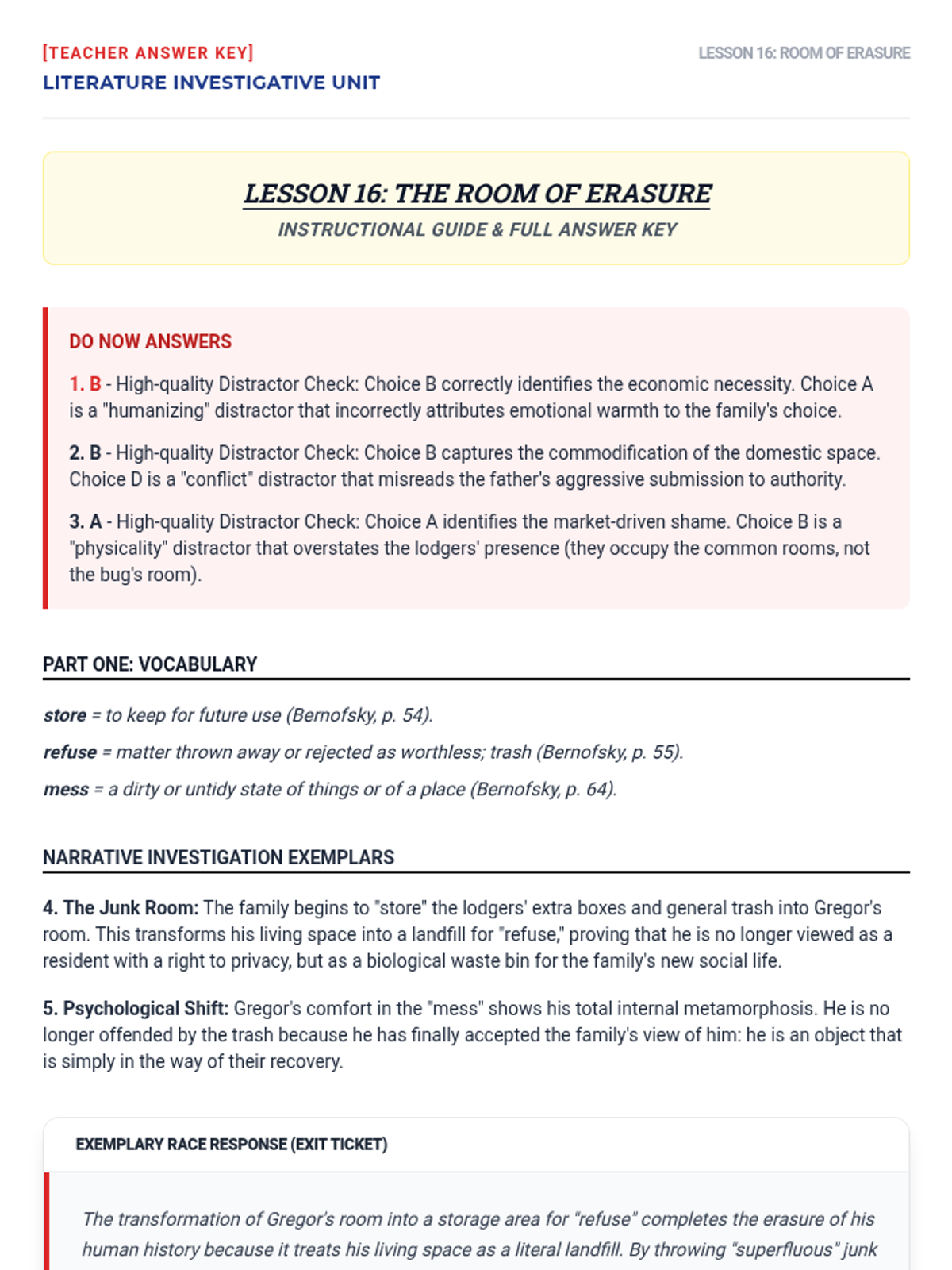
Gregor's room becomes a storage area for trash. Analysis of the complete erasure of his human space and history.
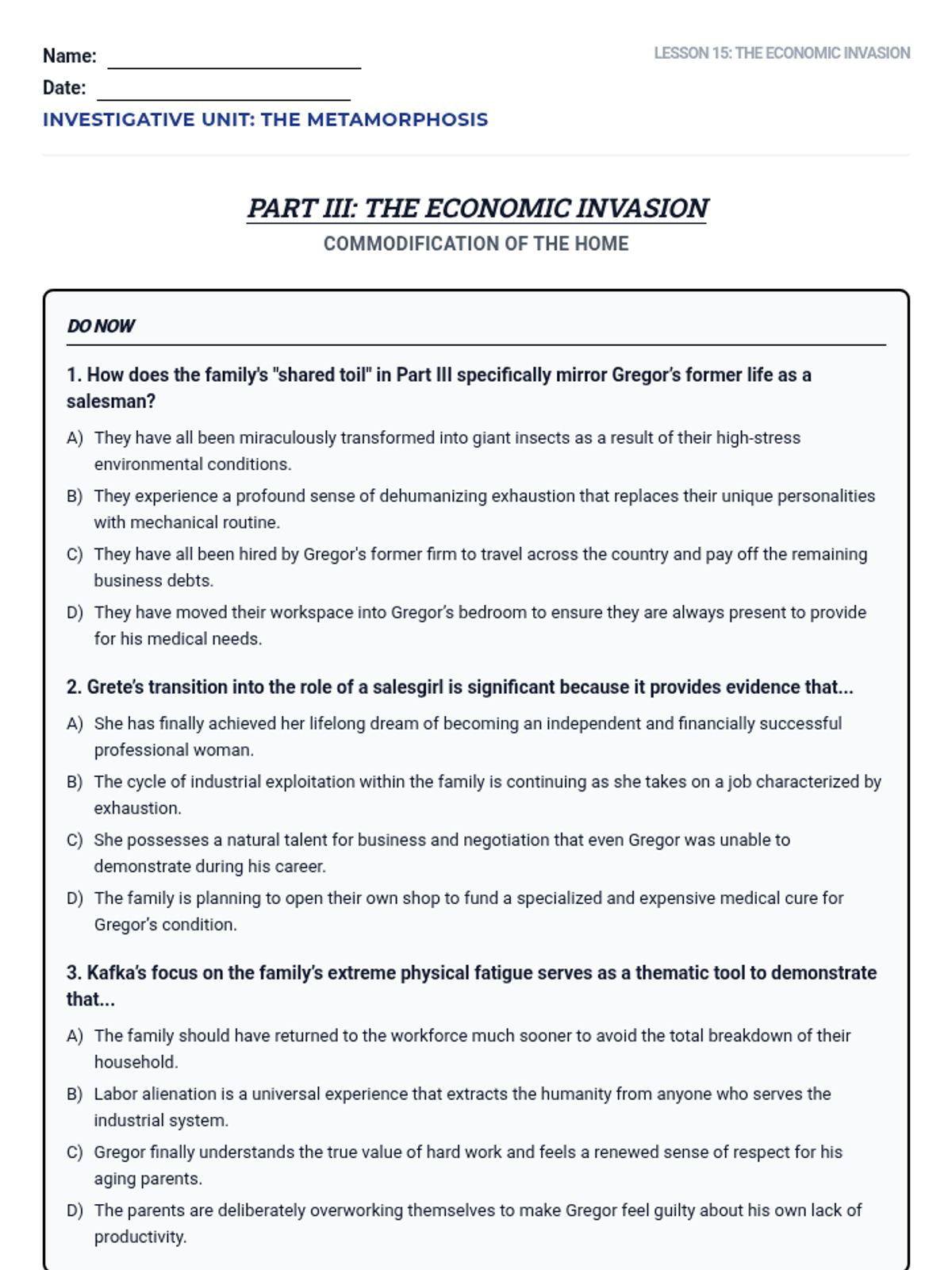
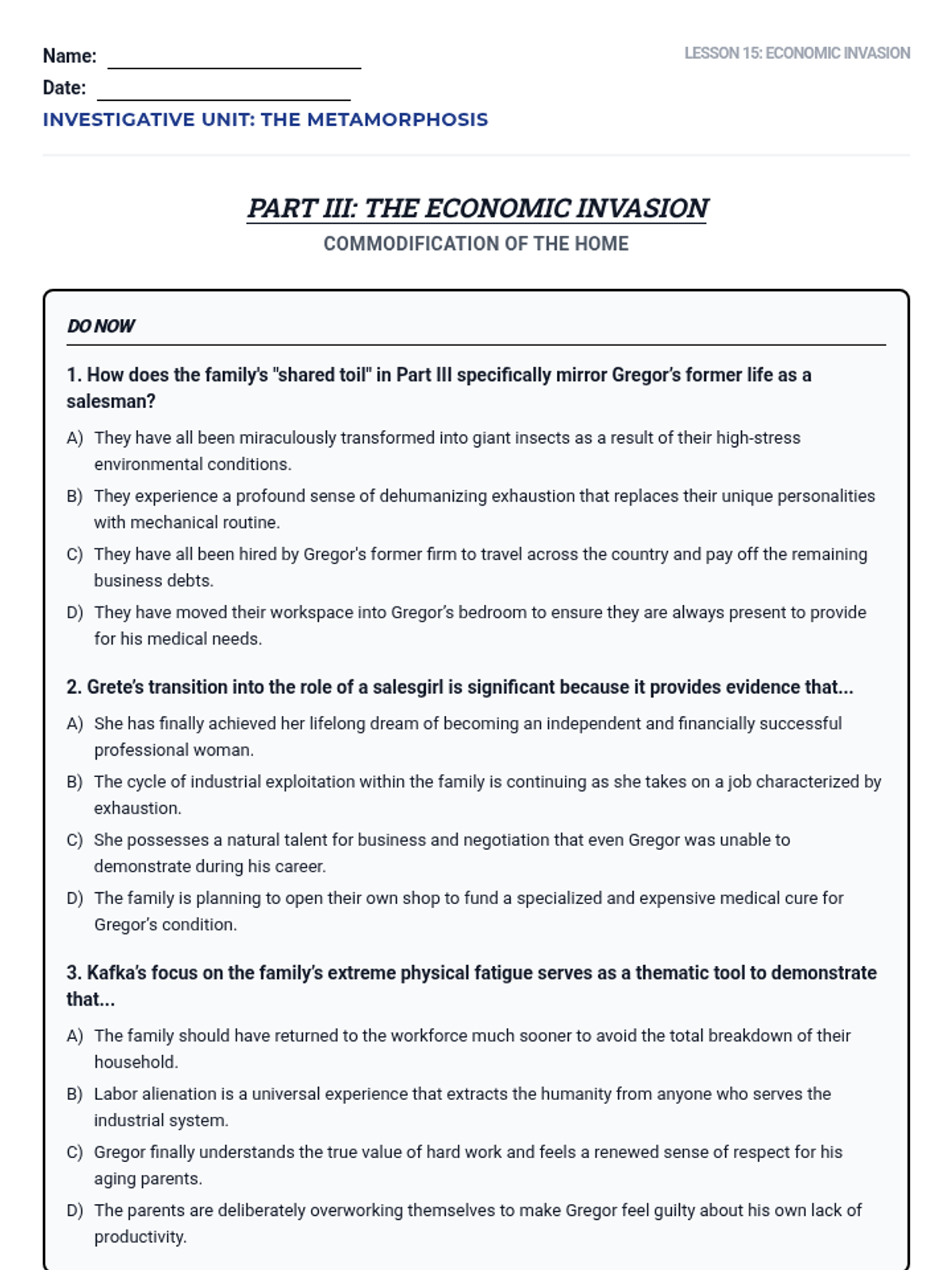
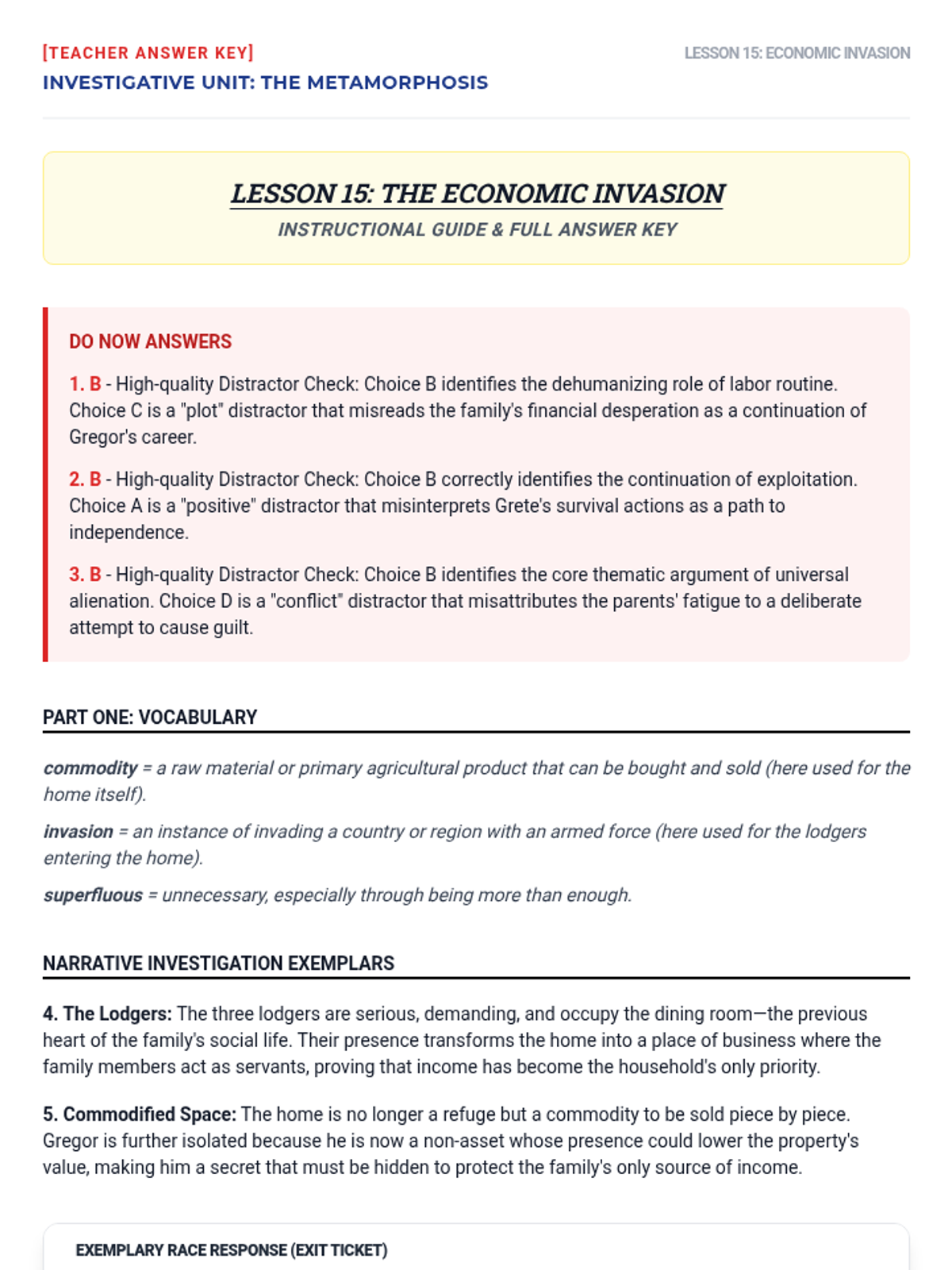
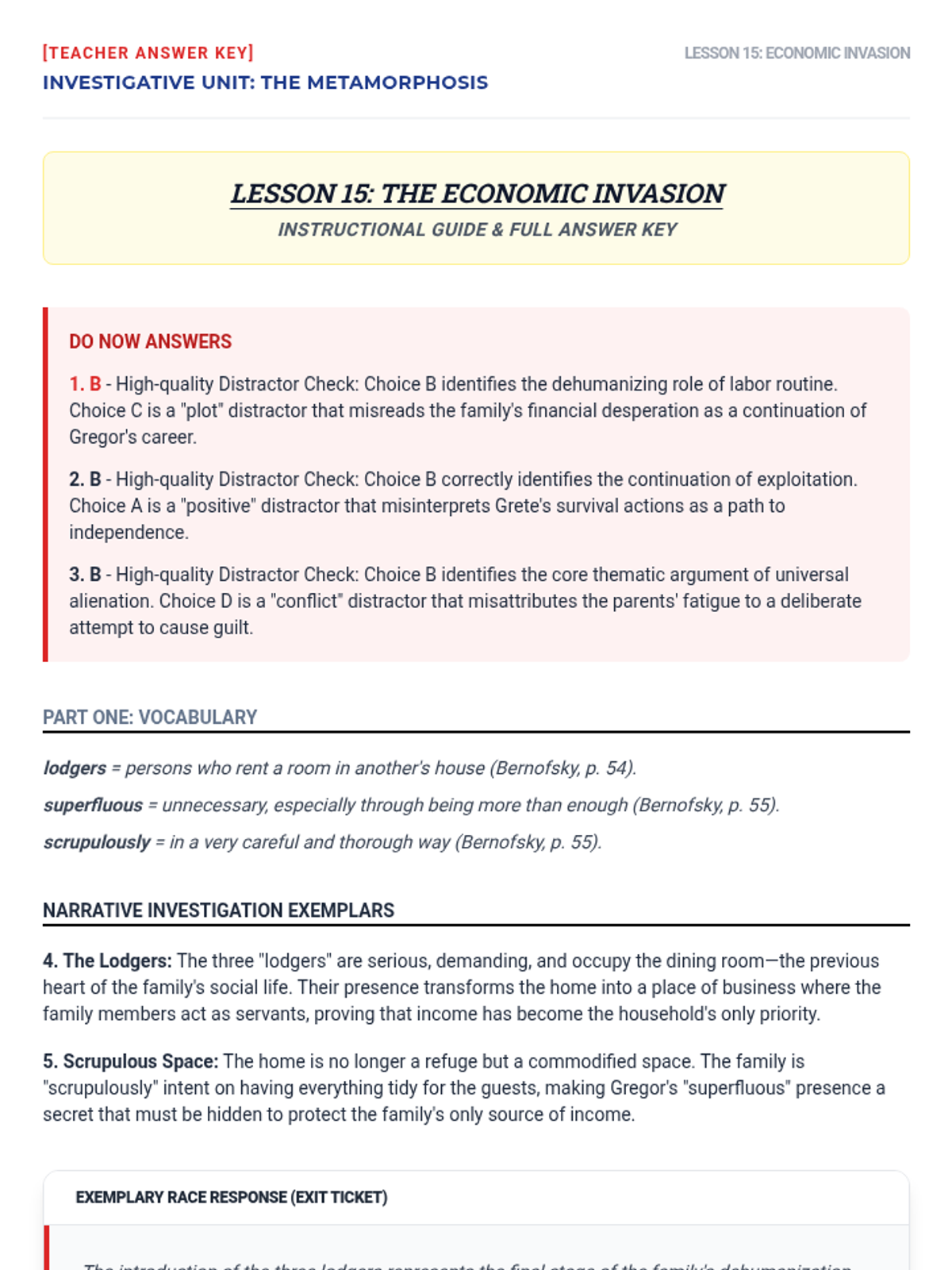
The introduction of the three lodgers. Analysis of the home as a commodified space and Gregor's further displacement.
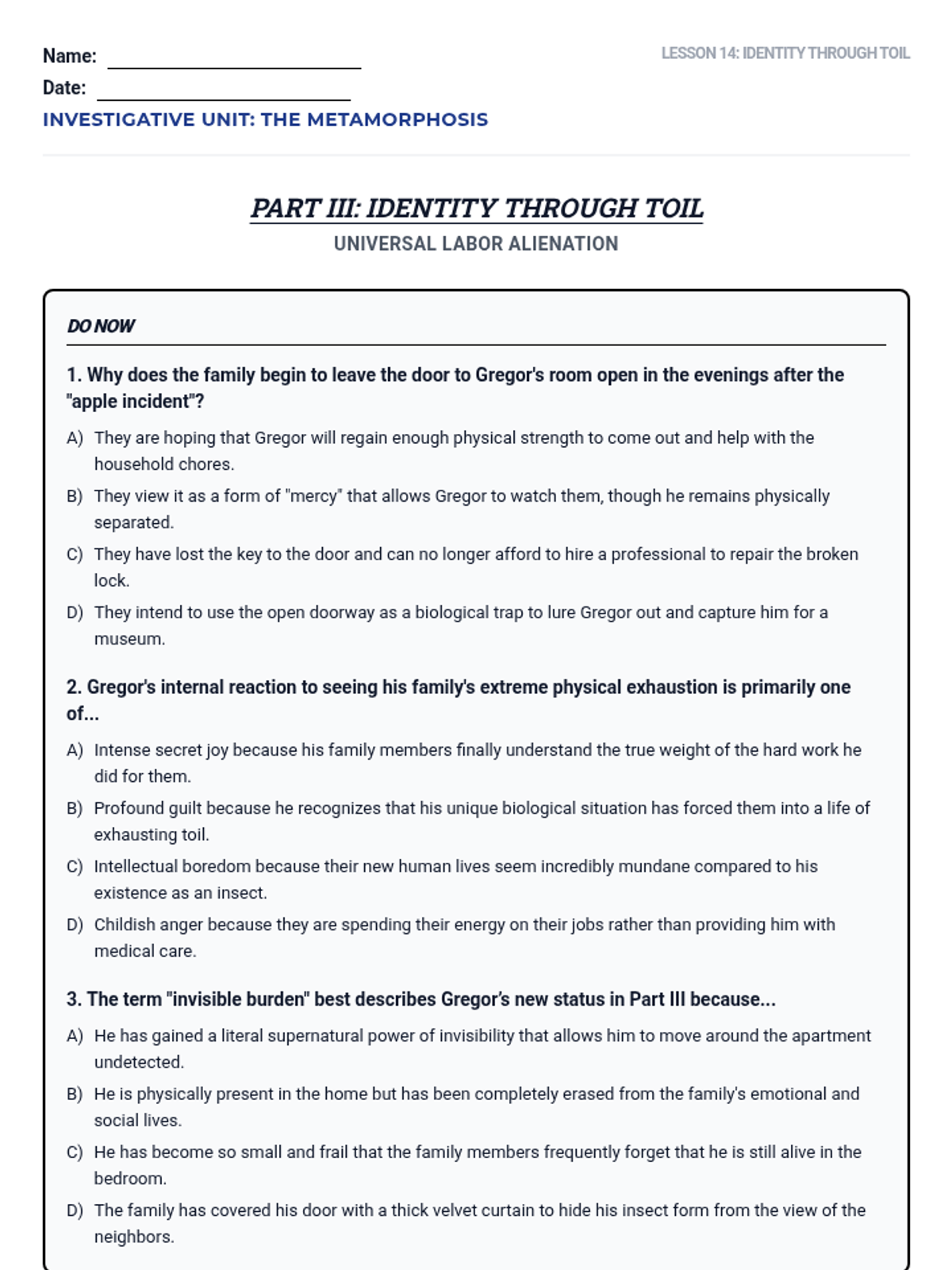
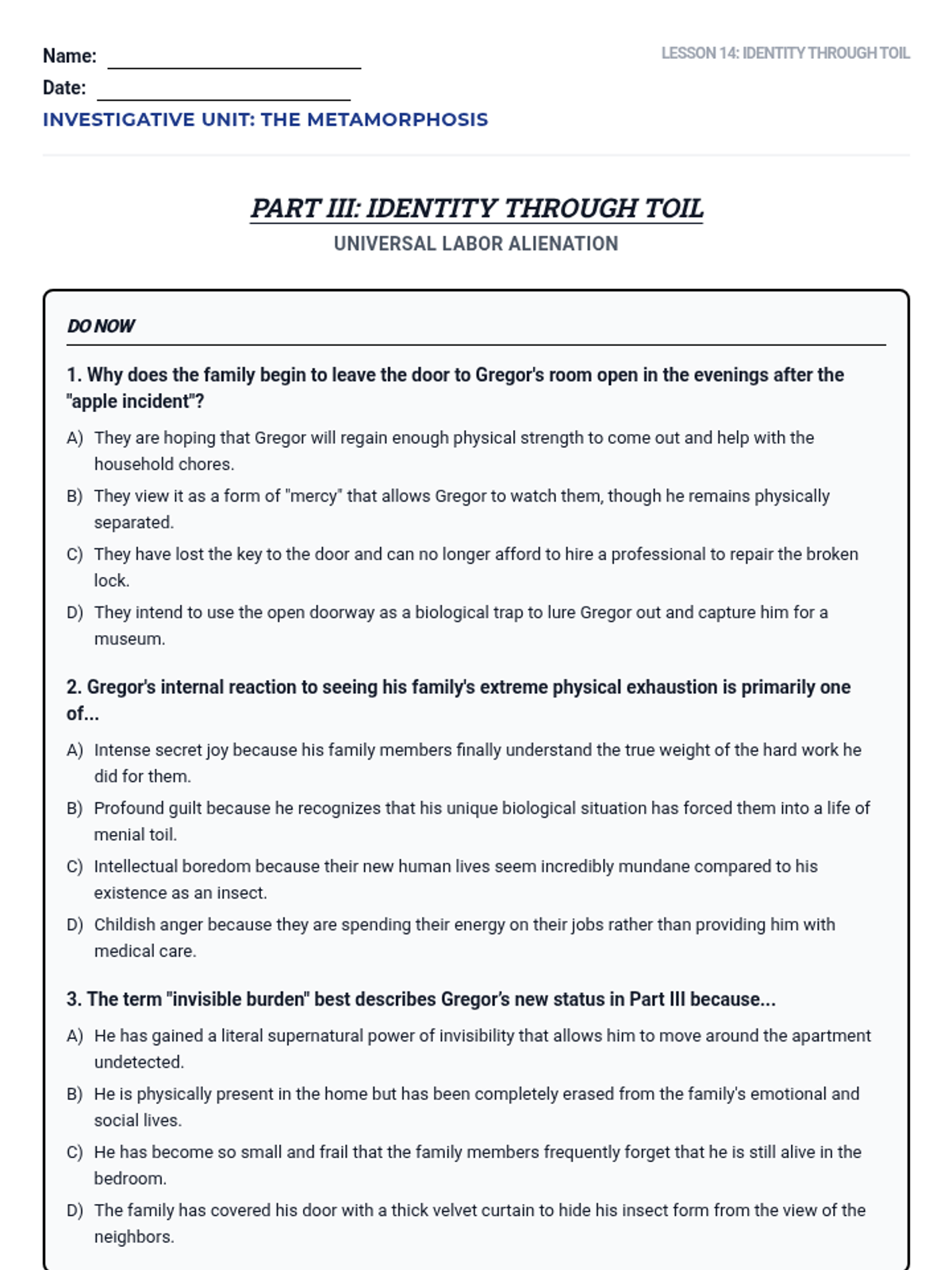
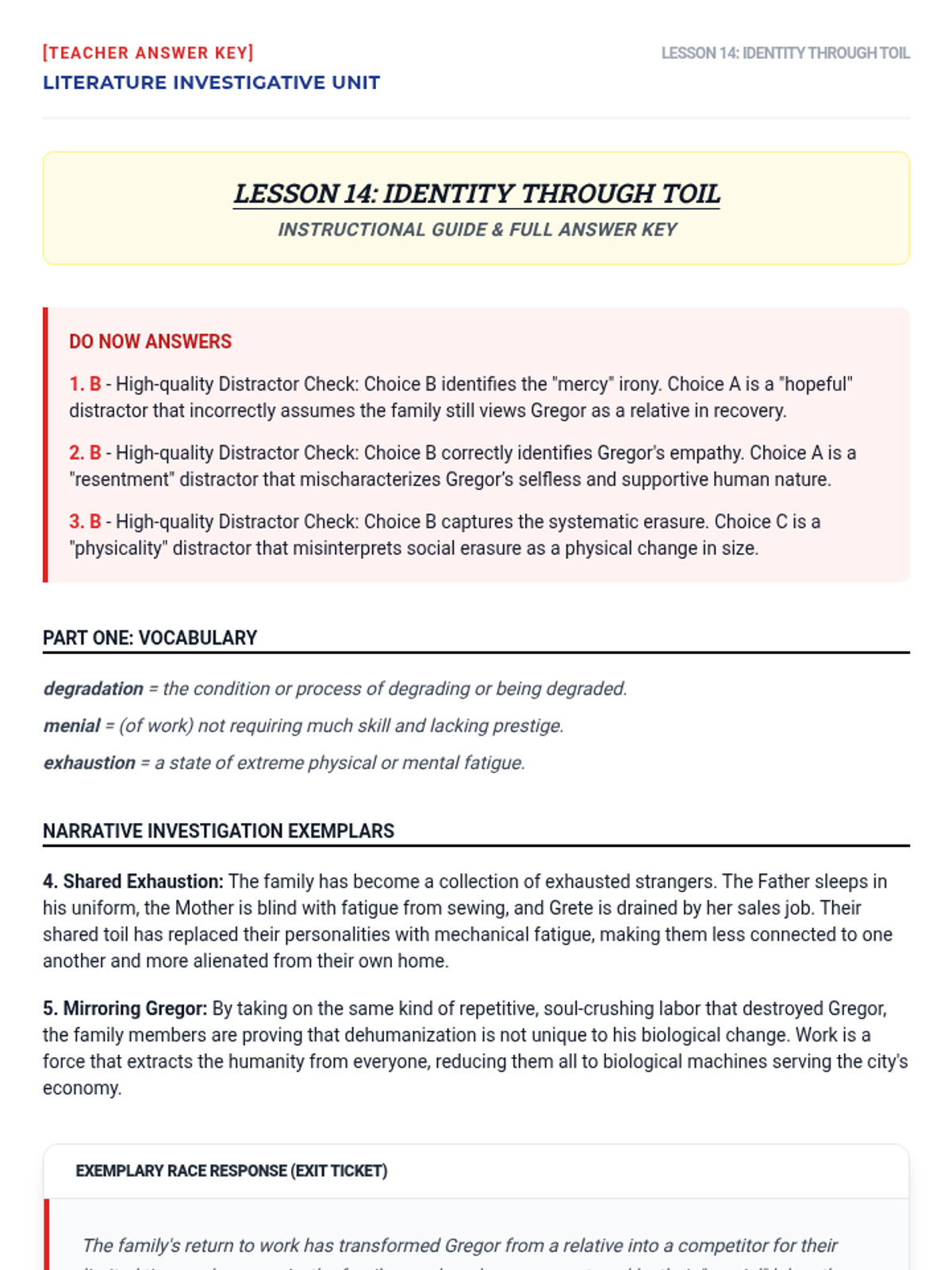
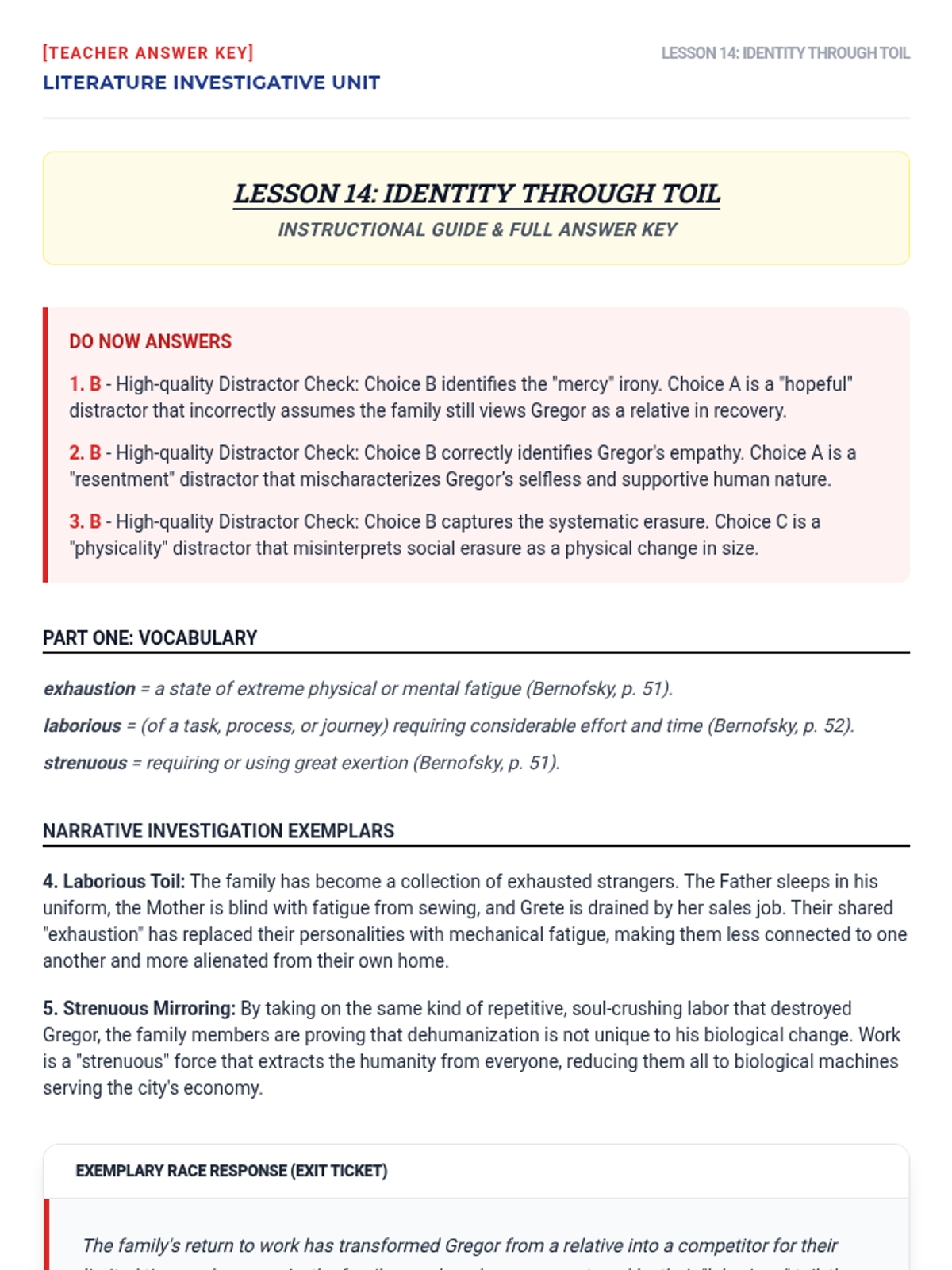
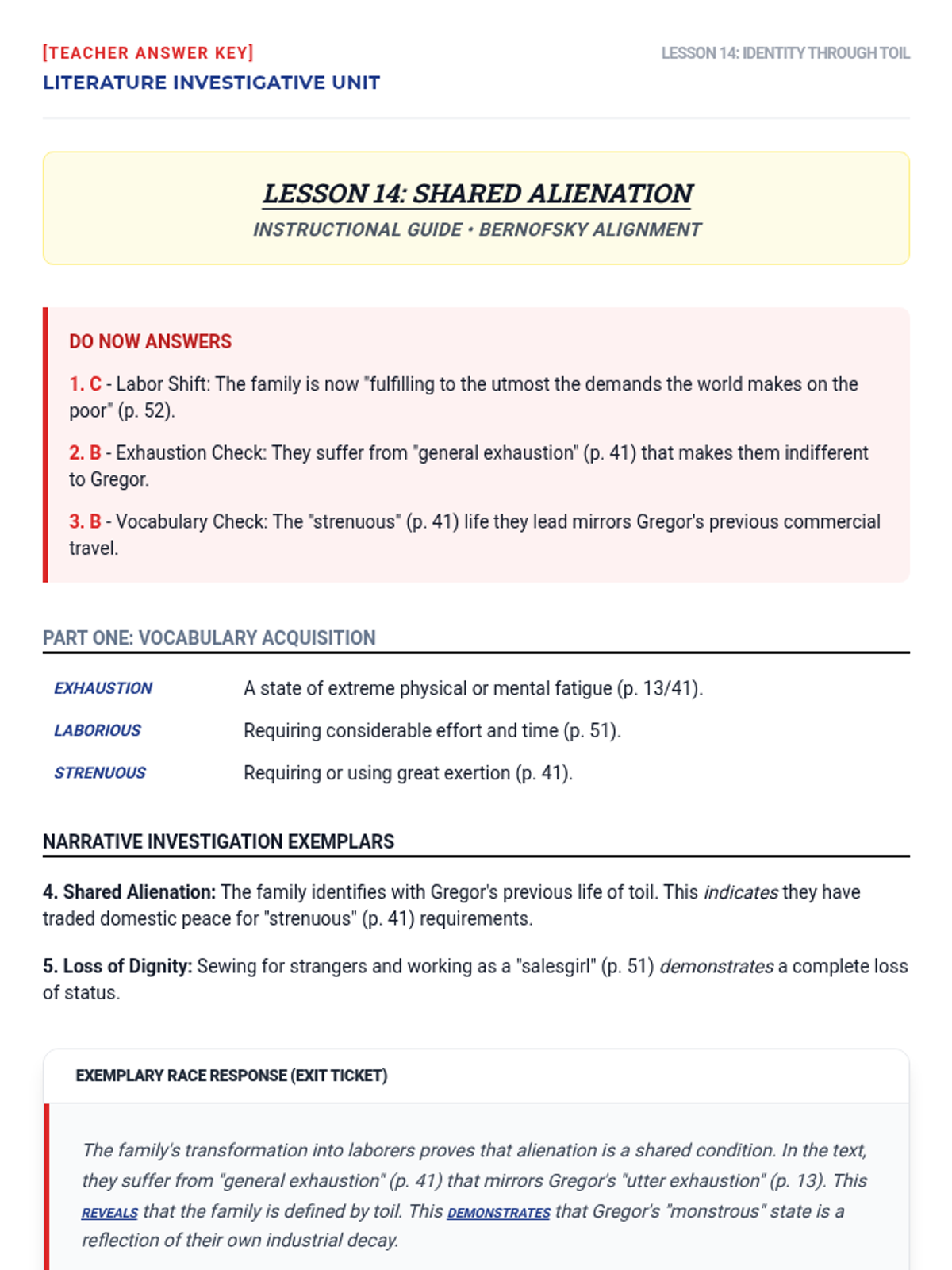
Analysis of the family taking on menial labor. Themes of exhaustion, loss of dignity, and the shared alienation of the working class.
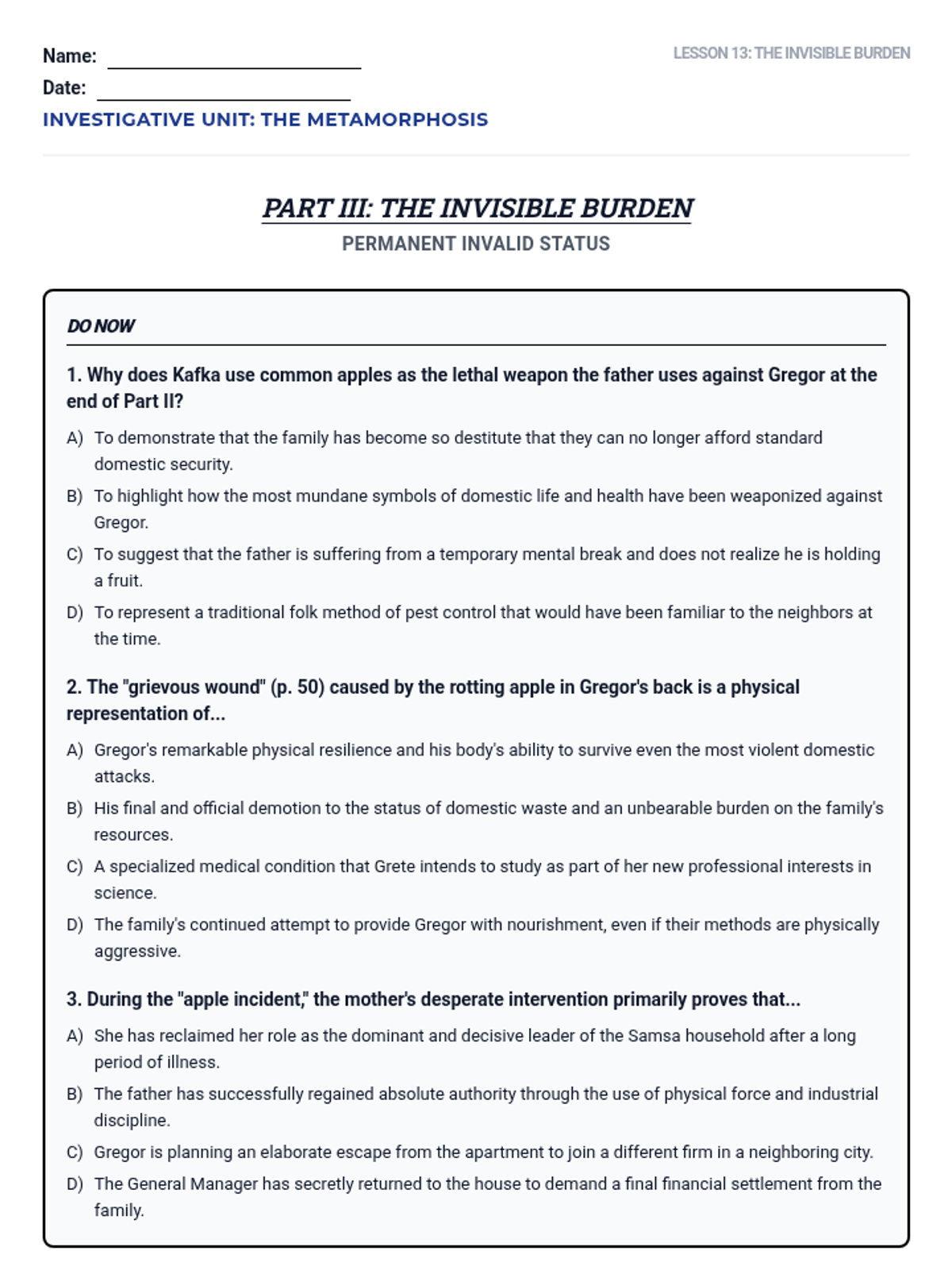
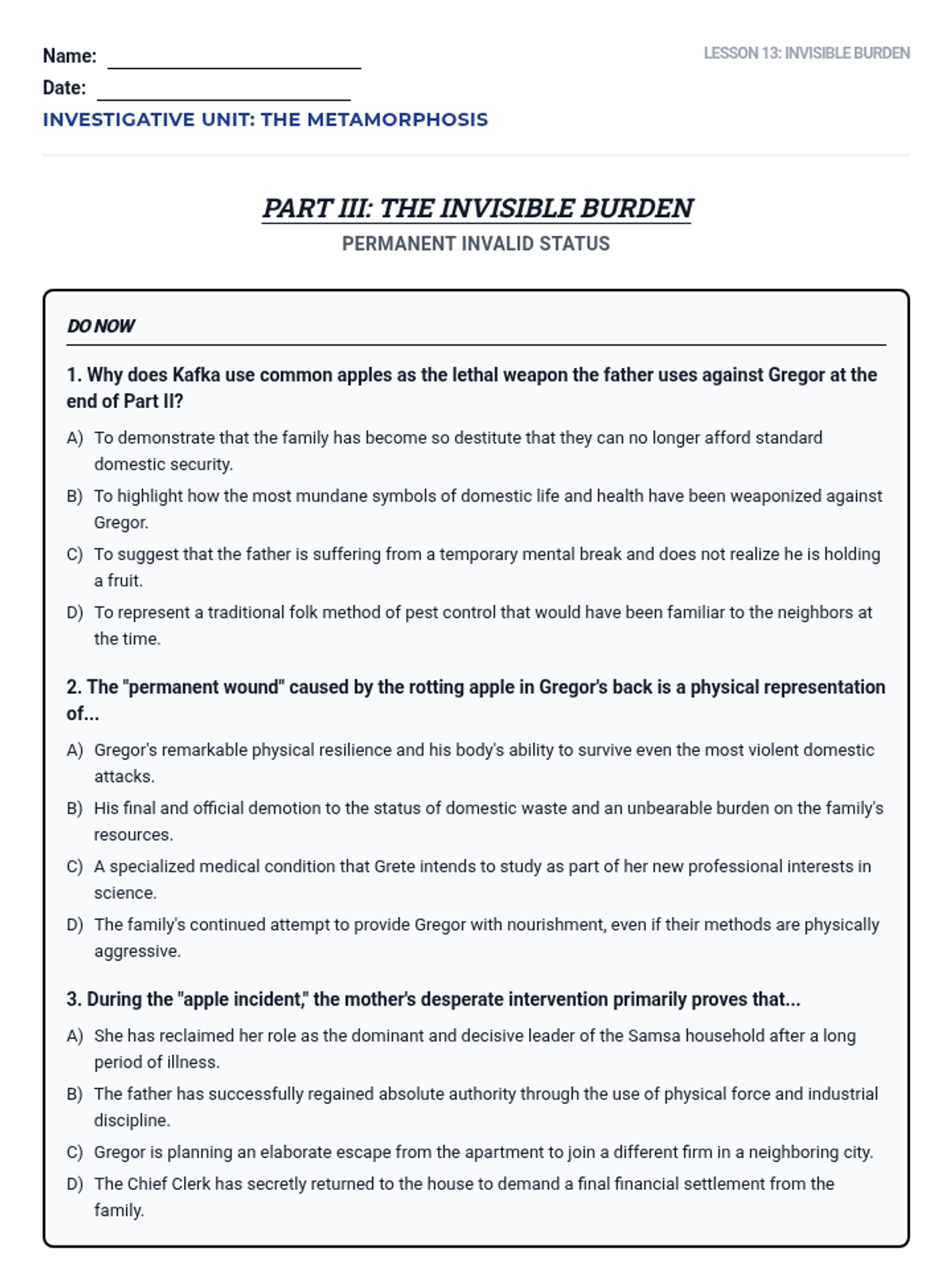
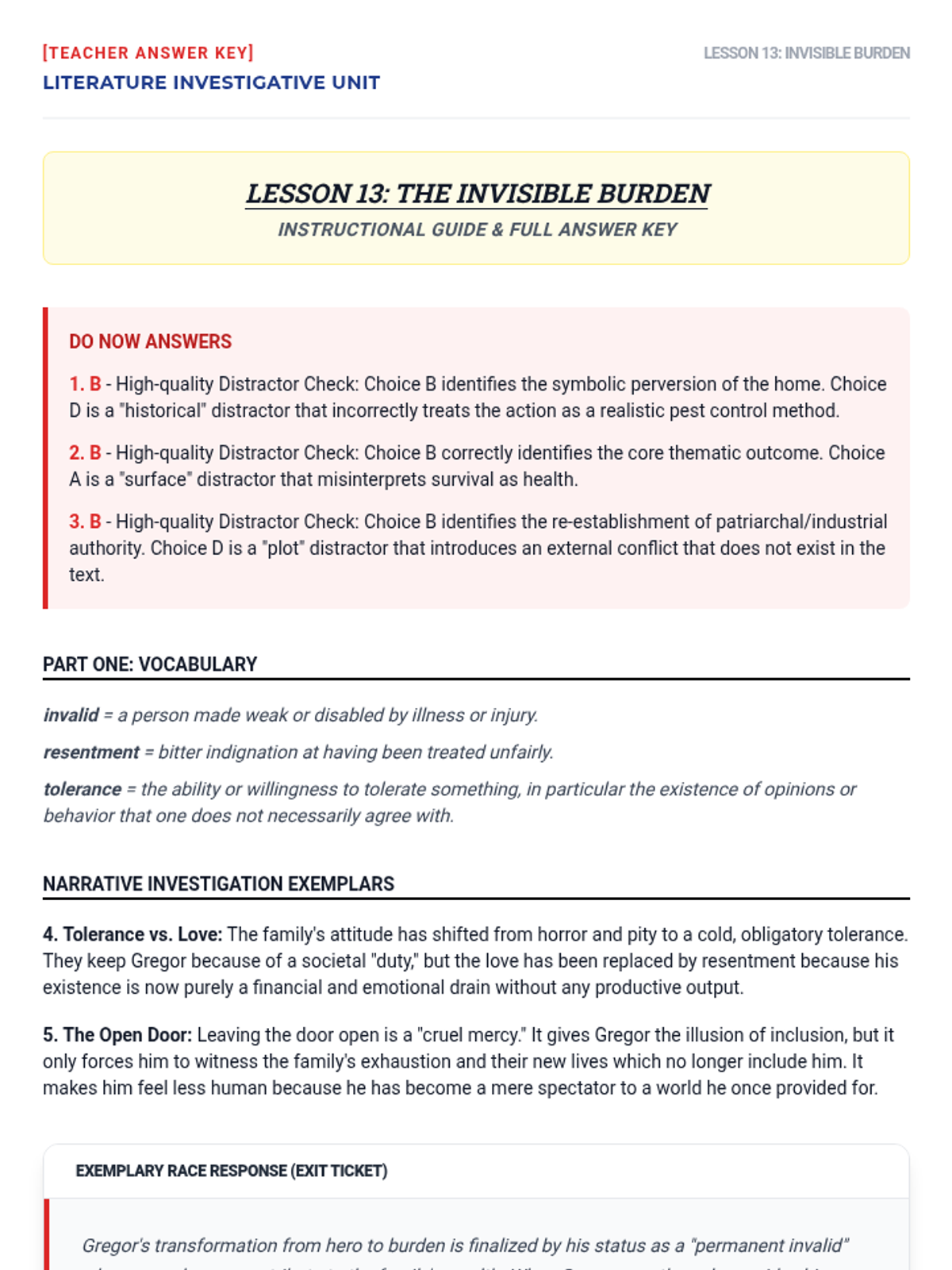
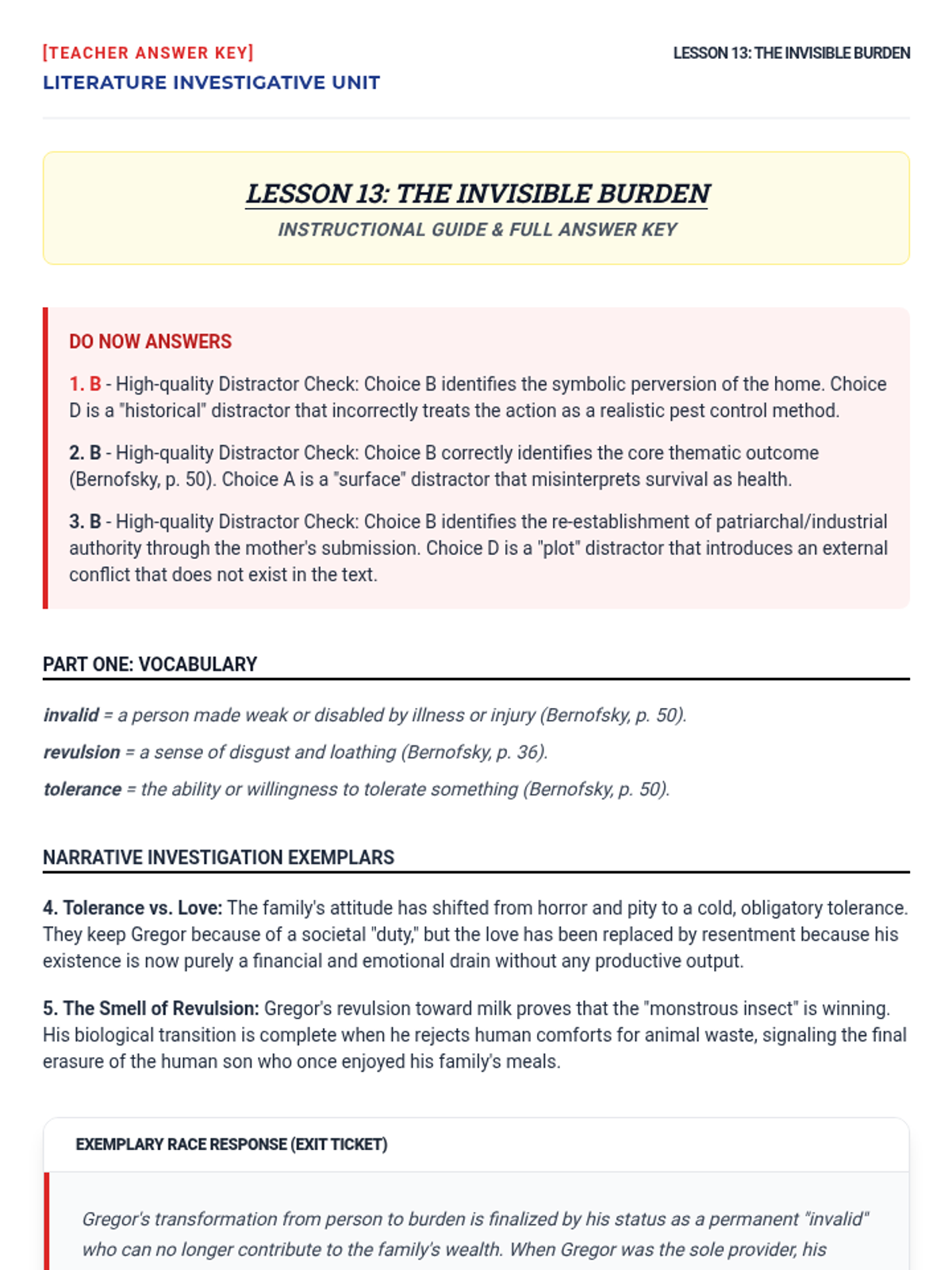
Gregor as a permanent invalid. Analysis of the family's growing resentment and the physical reminder of his non-productive status.
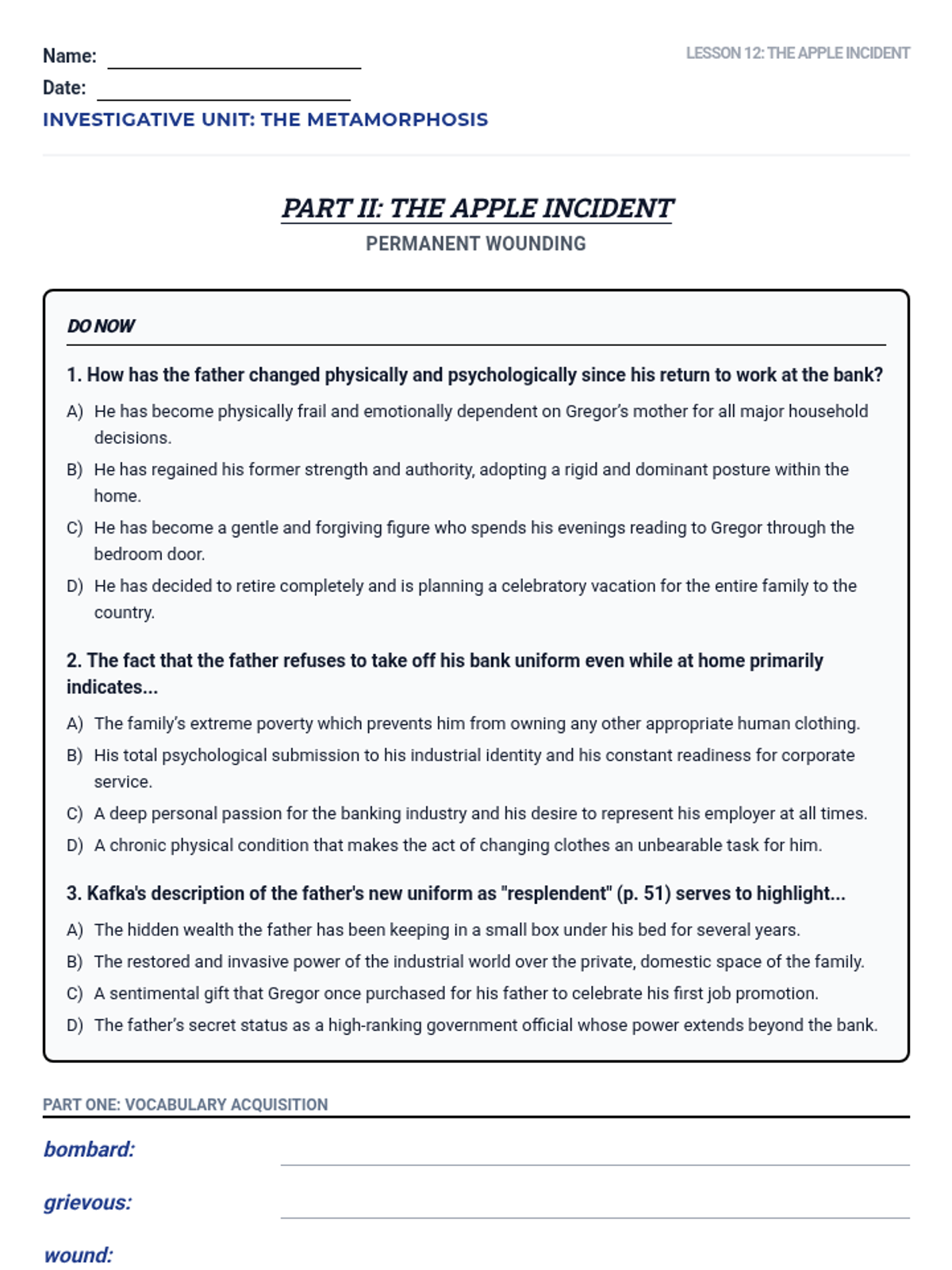
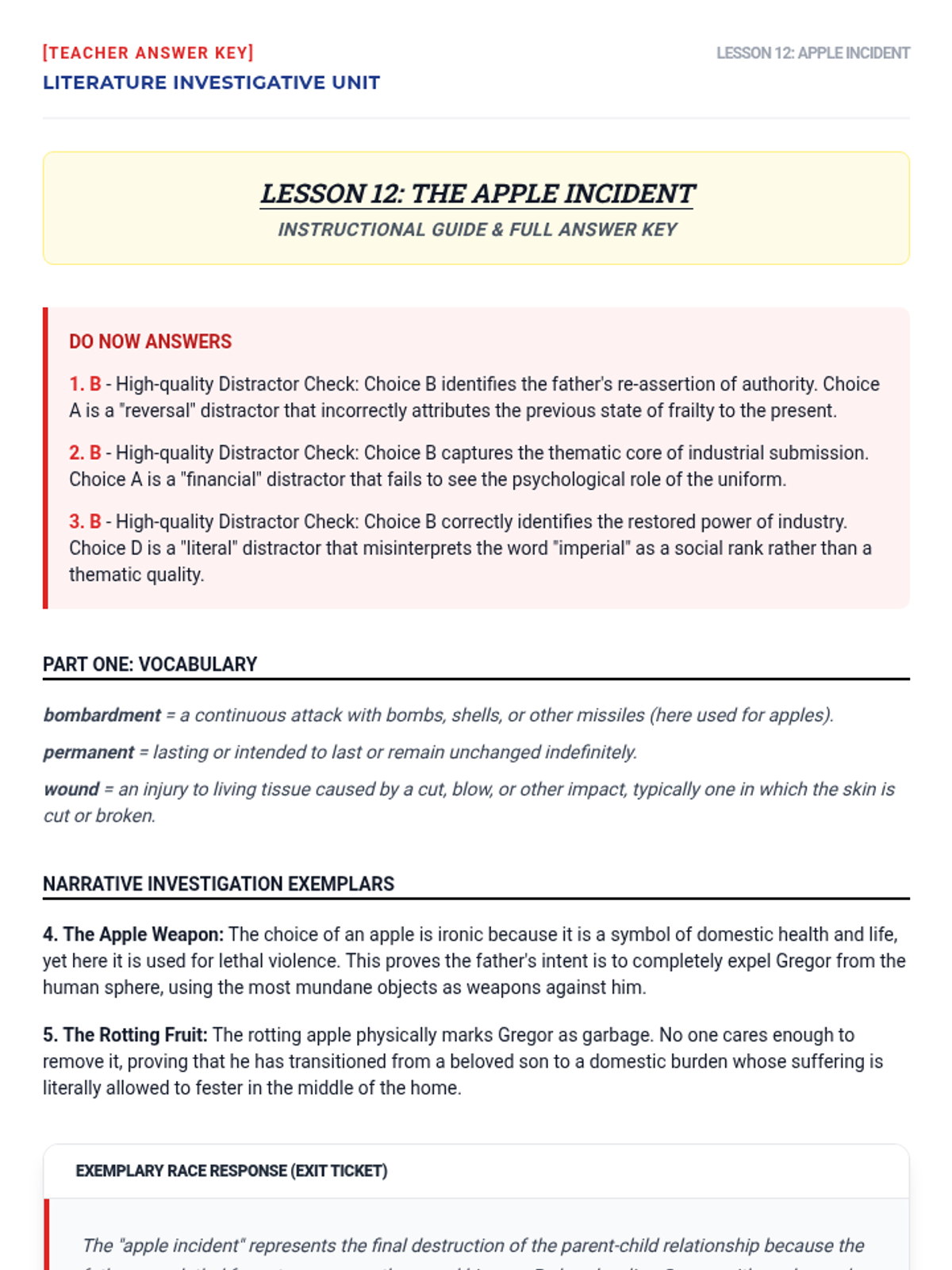
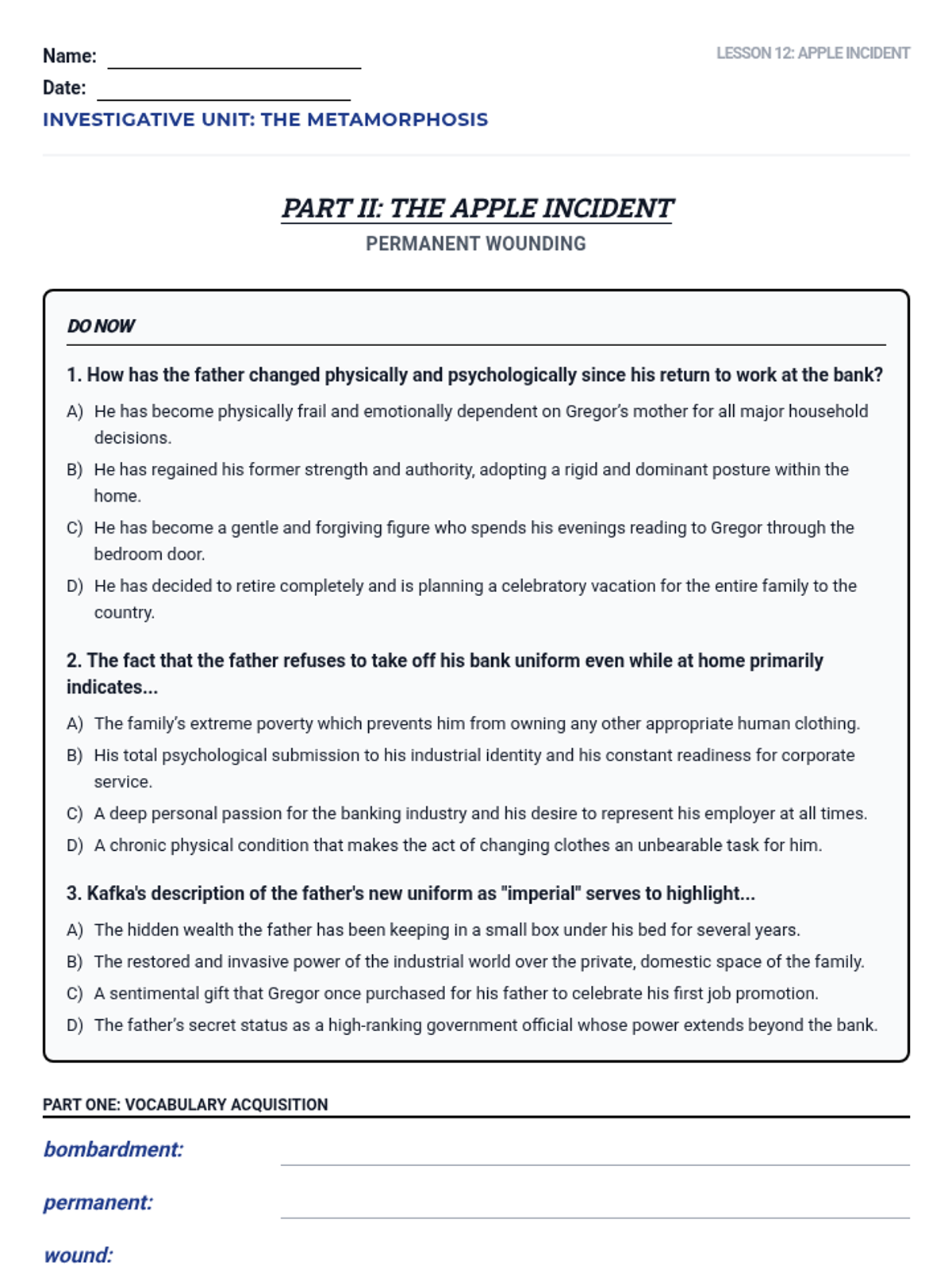
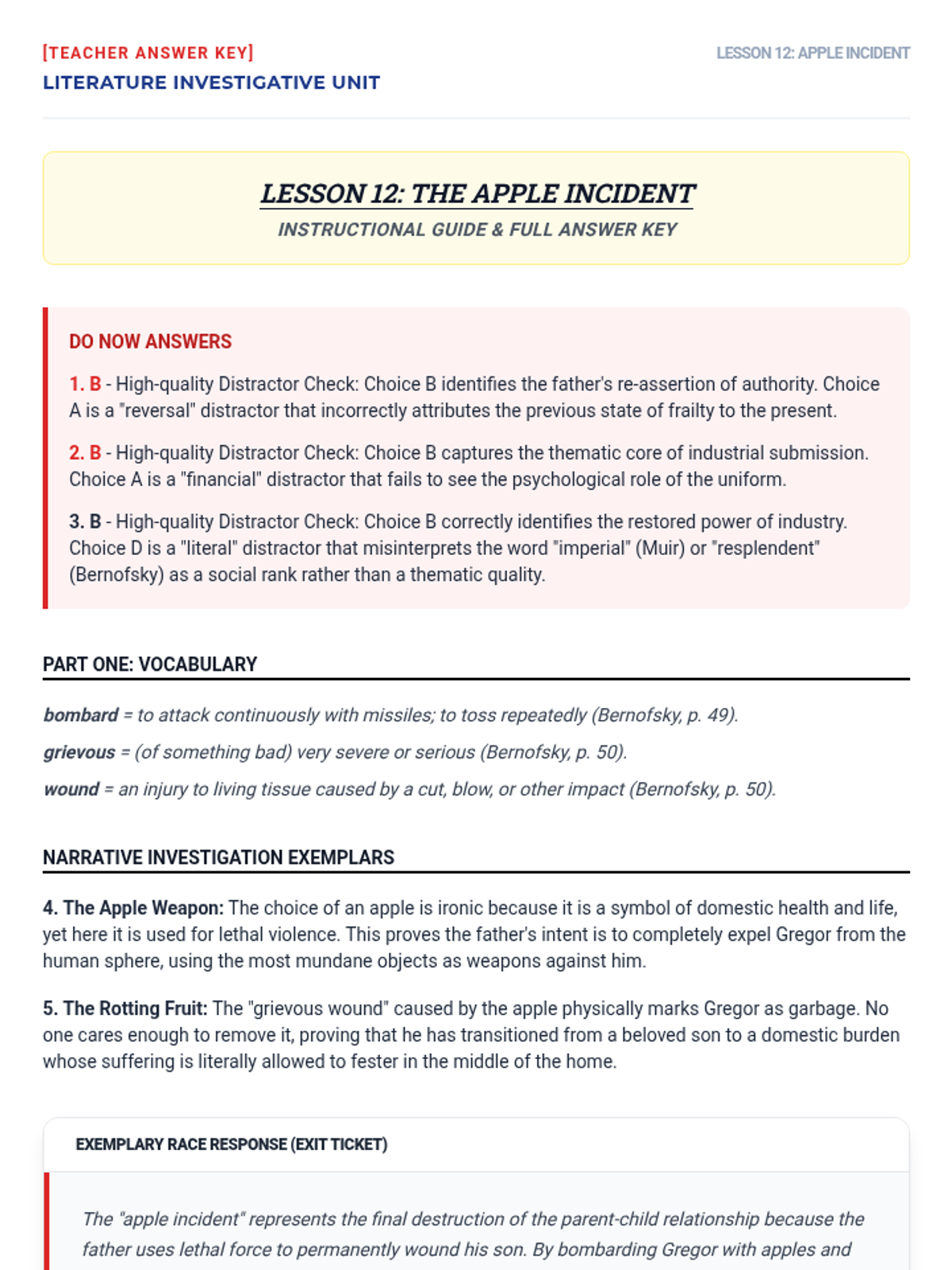
The father's violent attack with apples. Analysis of the apple as a symbol of permanent wounding and the transition from son to 'burden'.
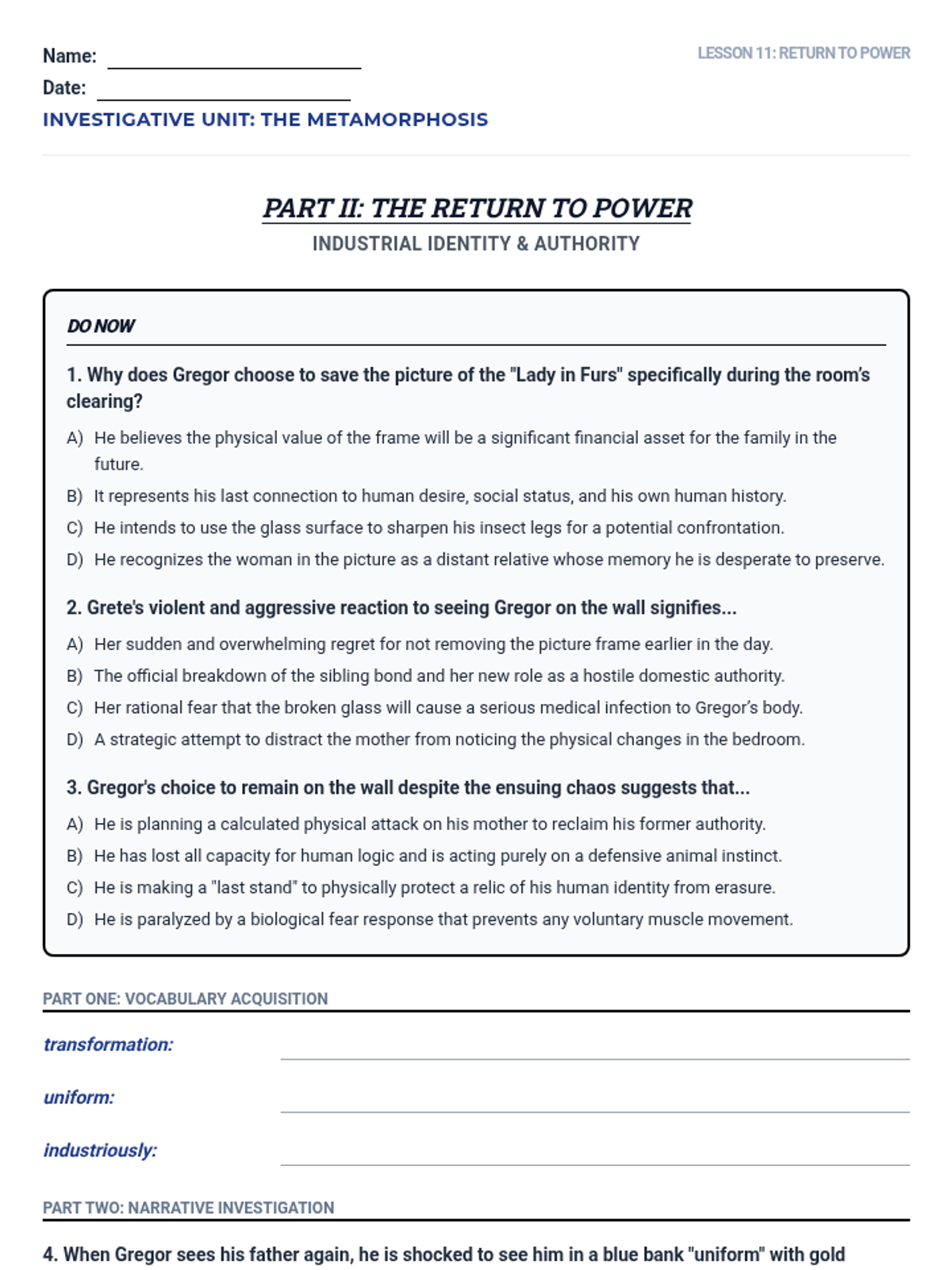
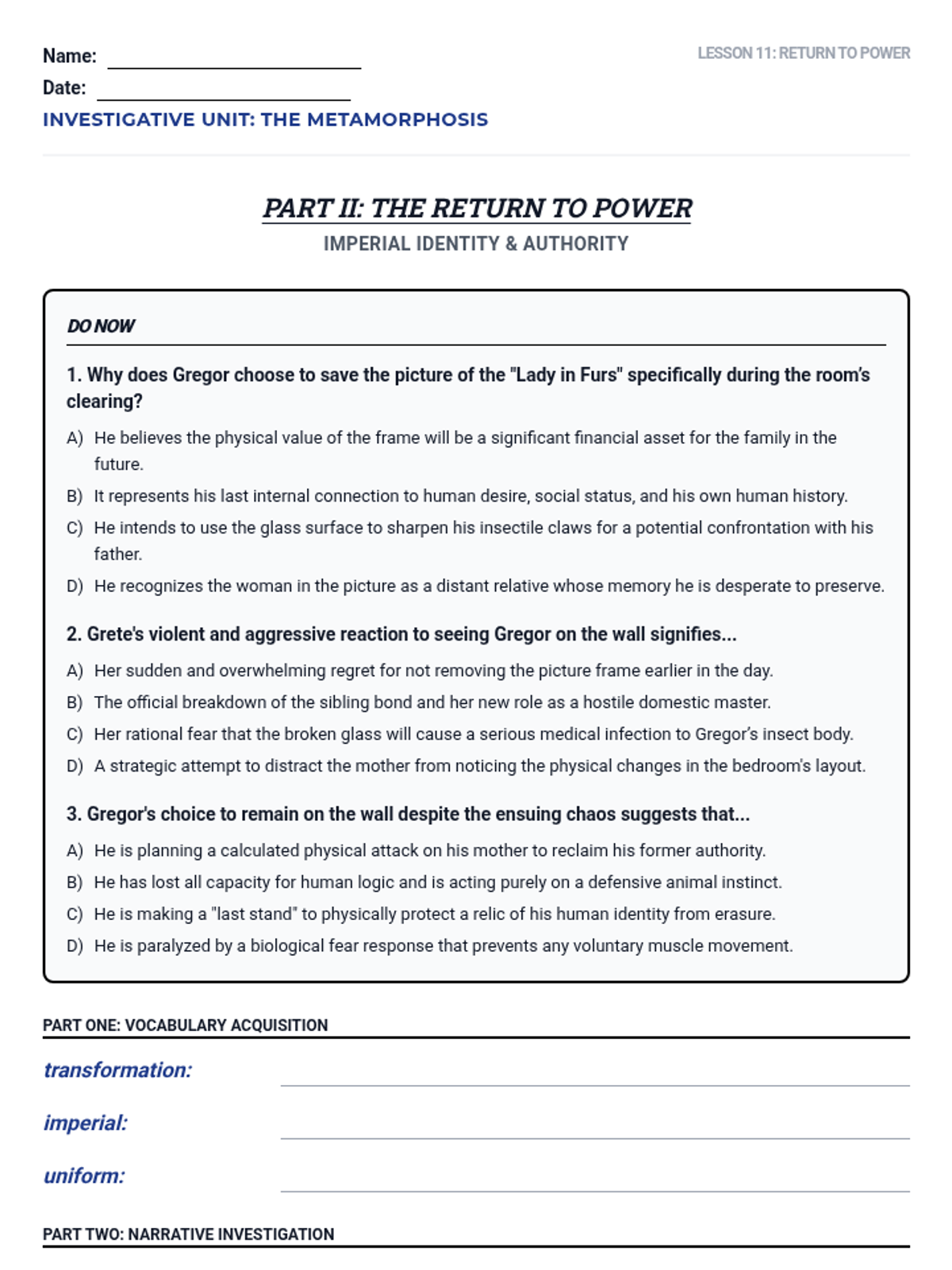
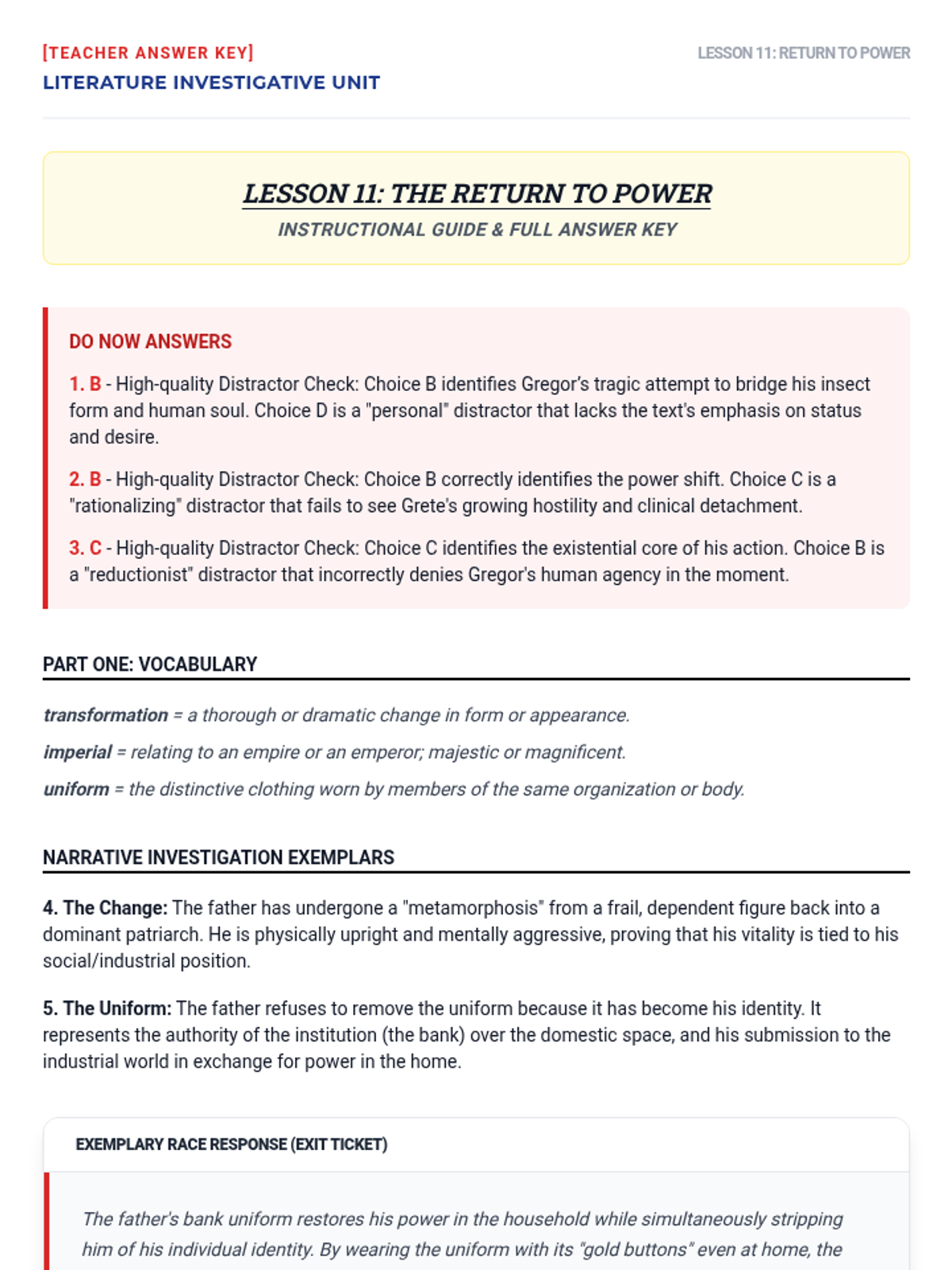
Analysis of the father's return to work and his transformation through the bank uniform. Themes of restored authority and industrial identity.
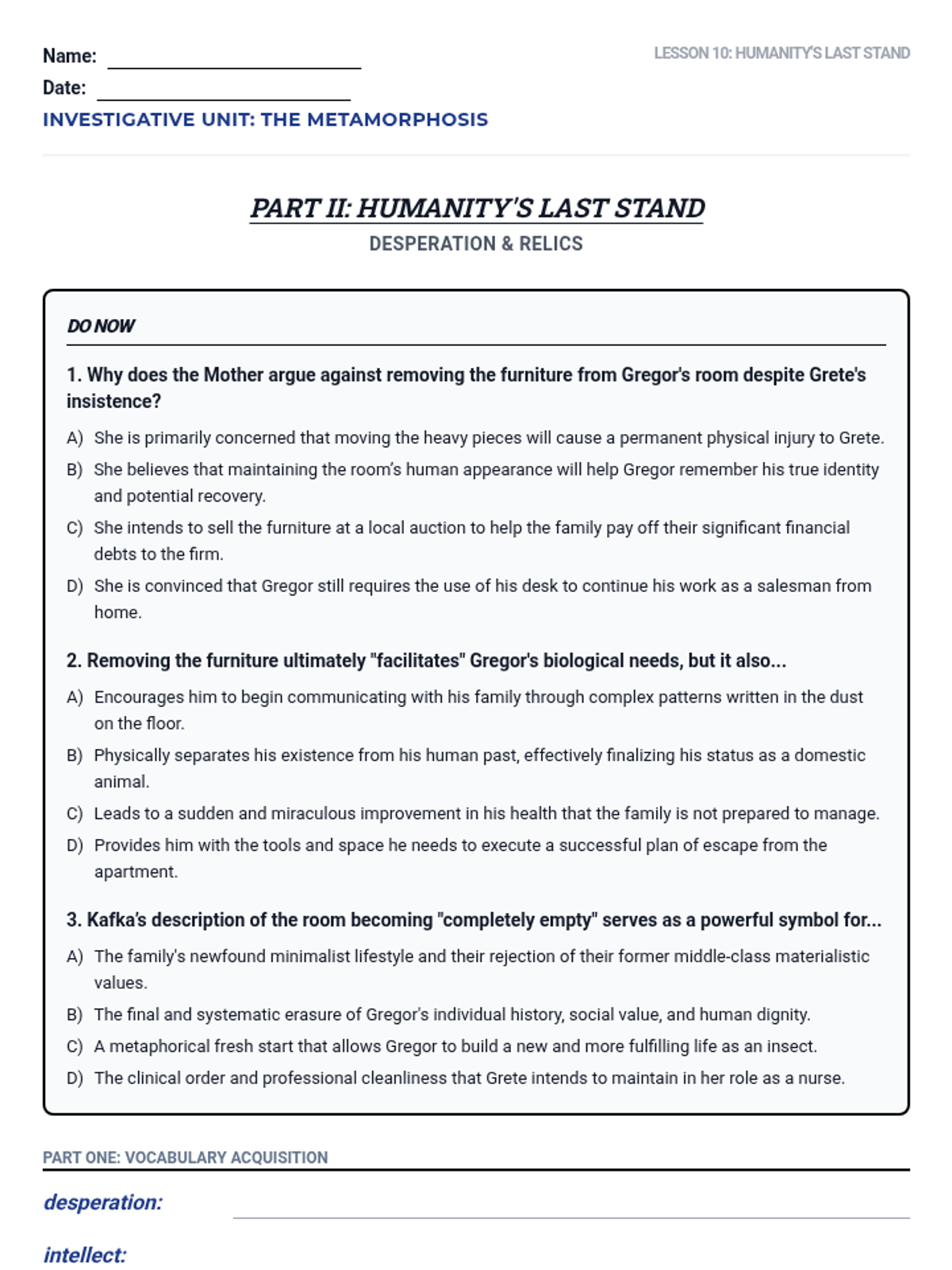
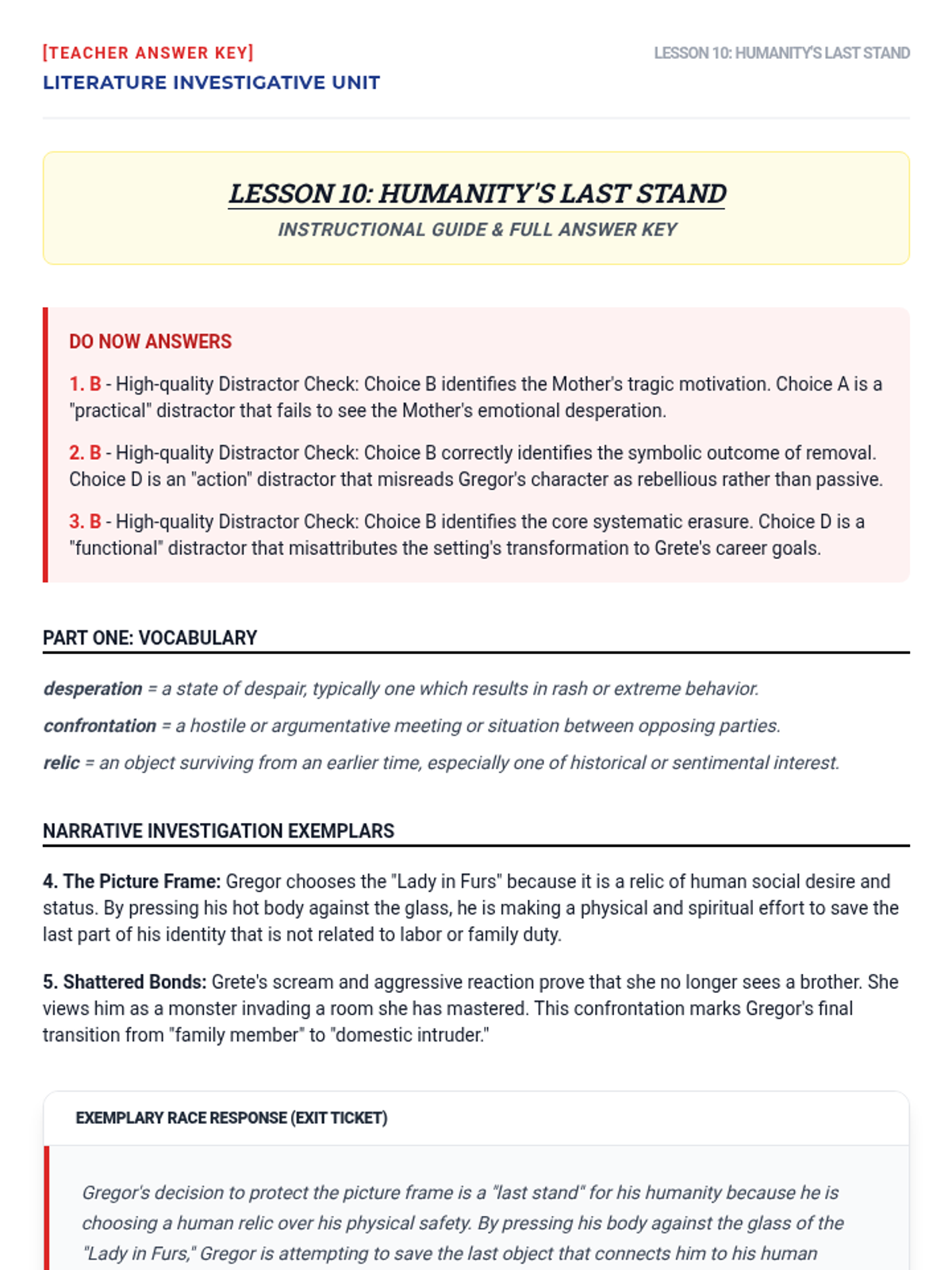
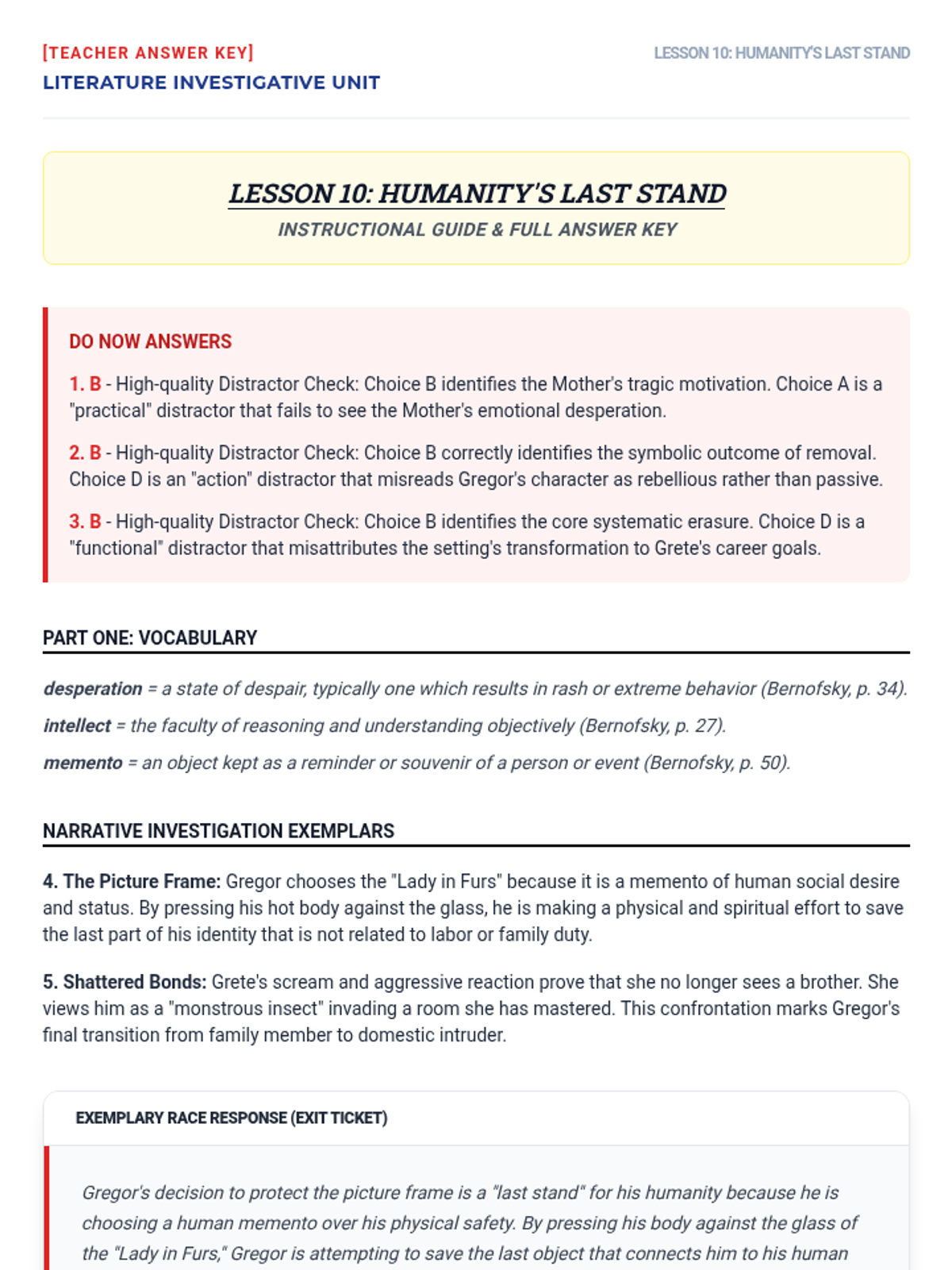
Gregor's desperate attempt to save his human identity by protecting the picture frame. Focus on the direct confrontation with Grete.
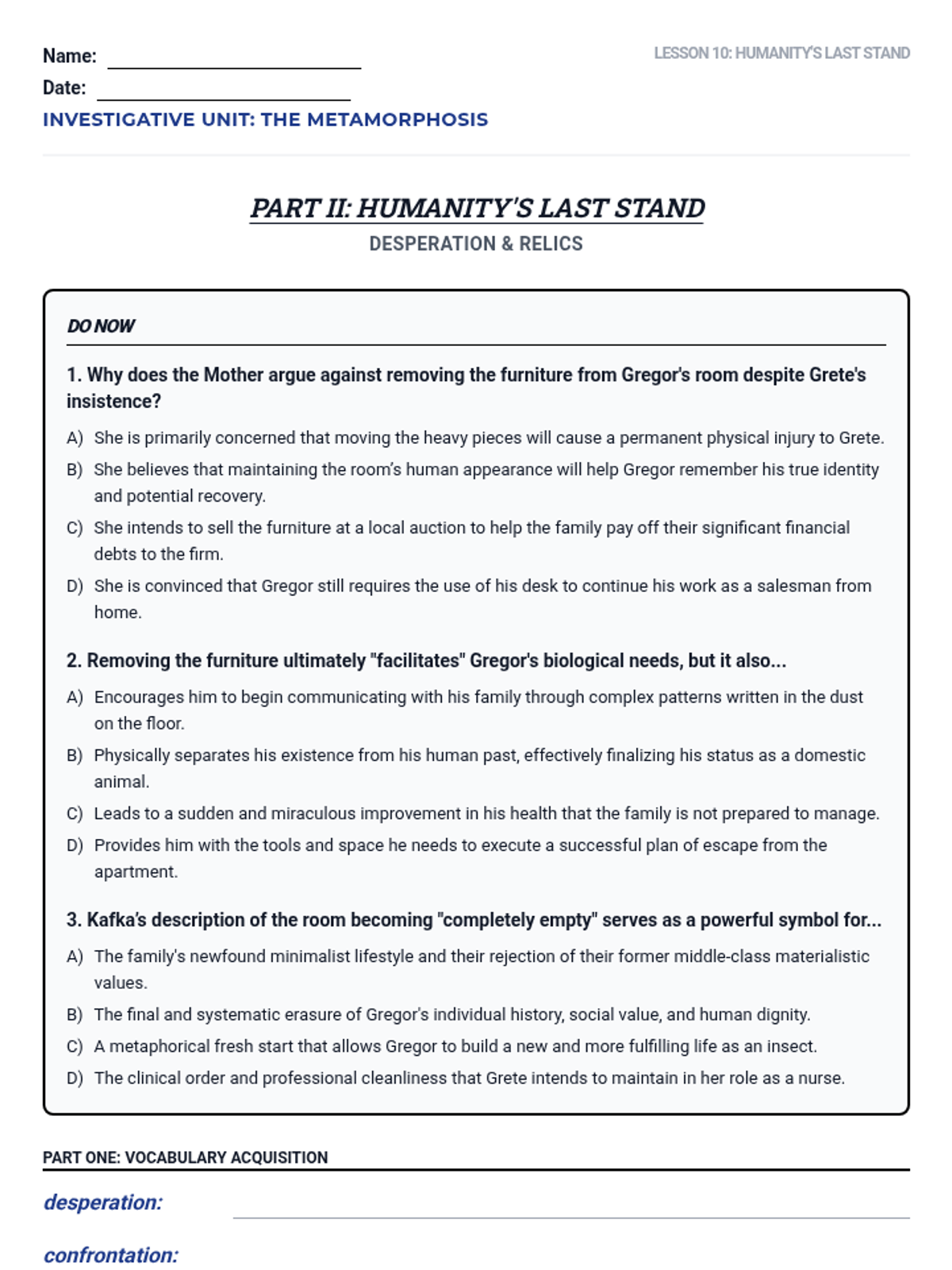
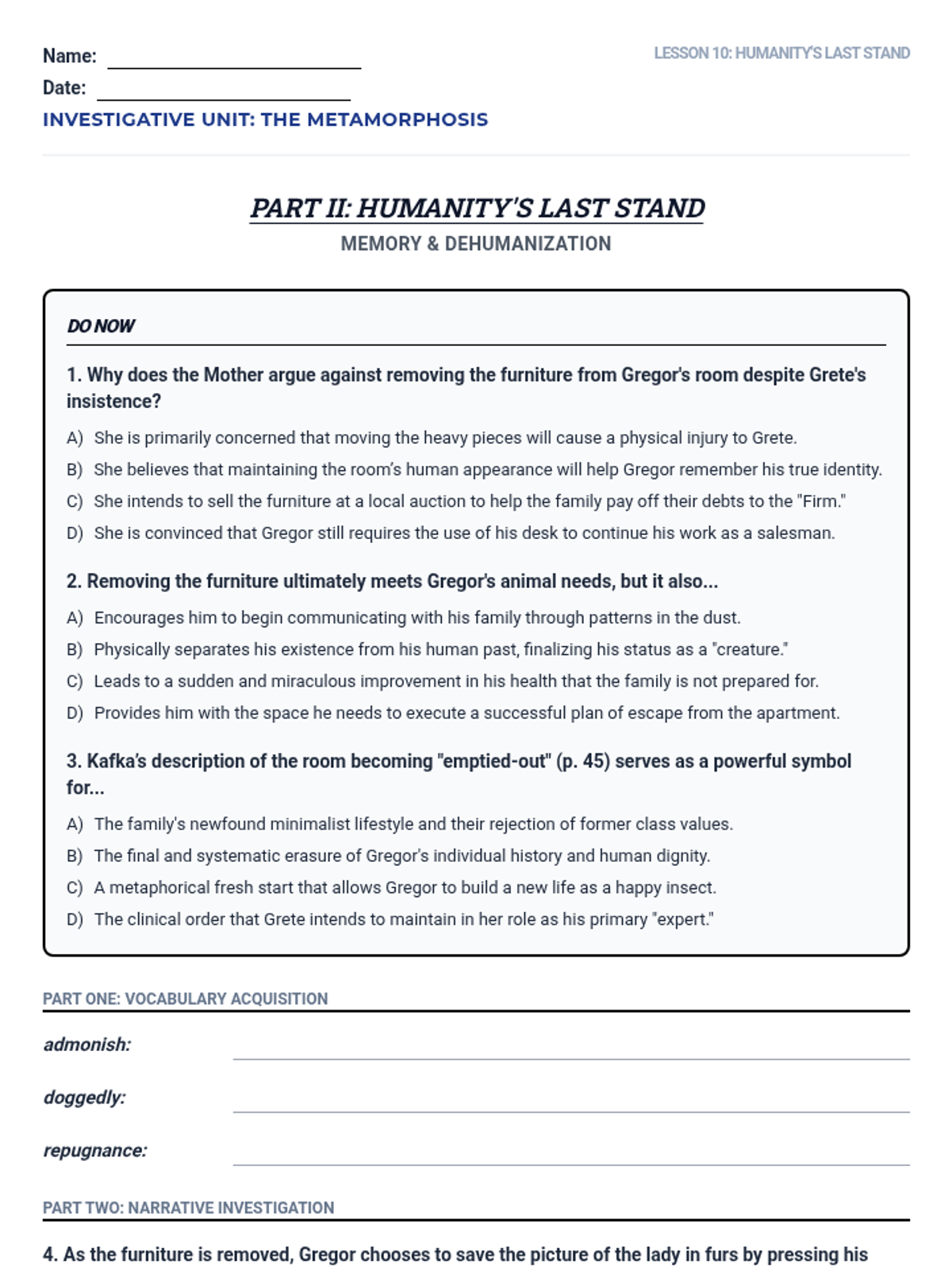
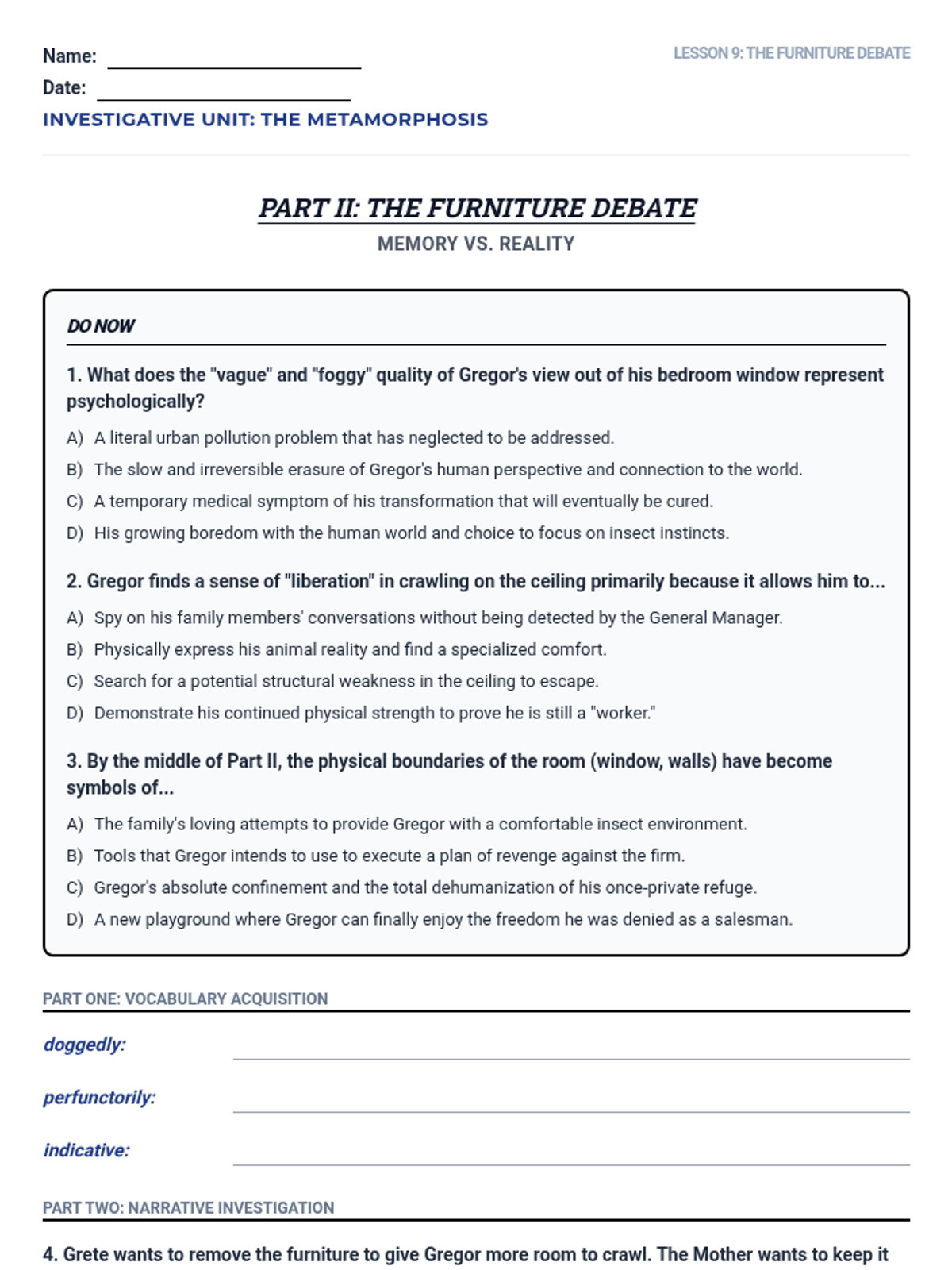
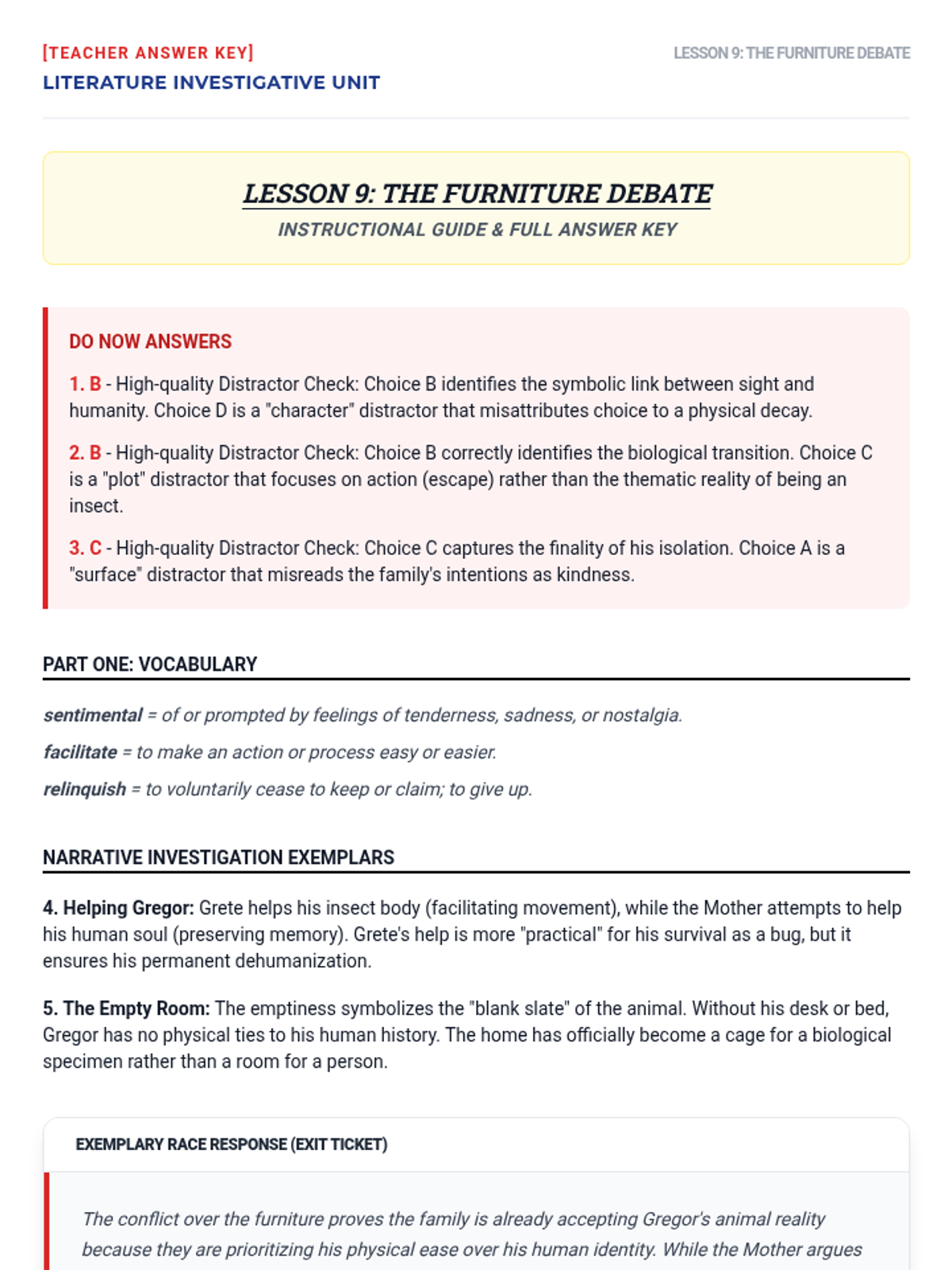
The conflict between Grete and the Mother over removing Gregor's furniture. Themes of preserving human memory vs. accepting animal reality.
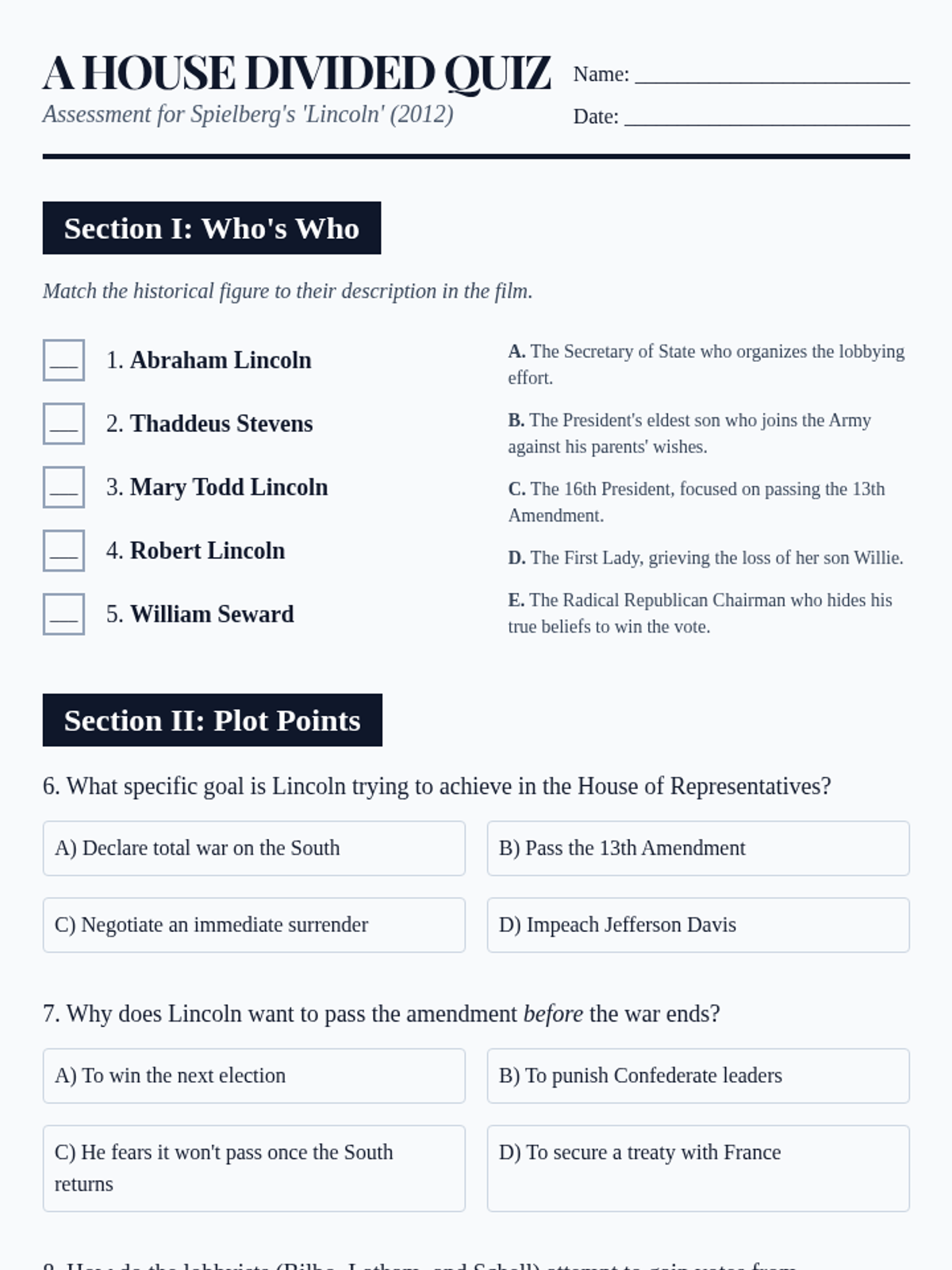
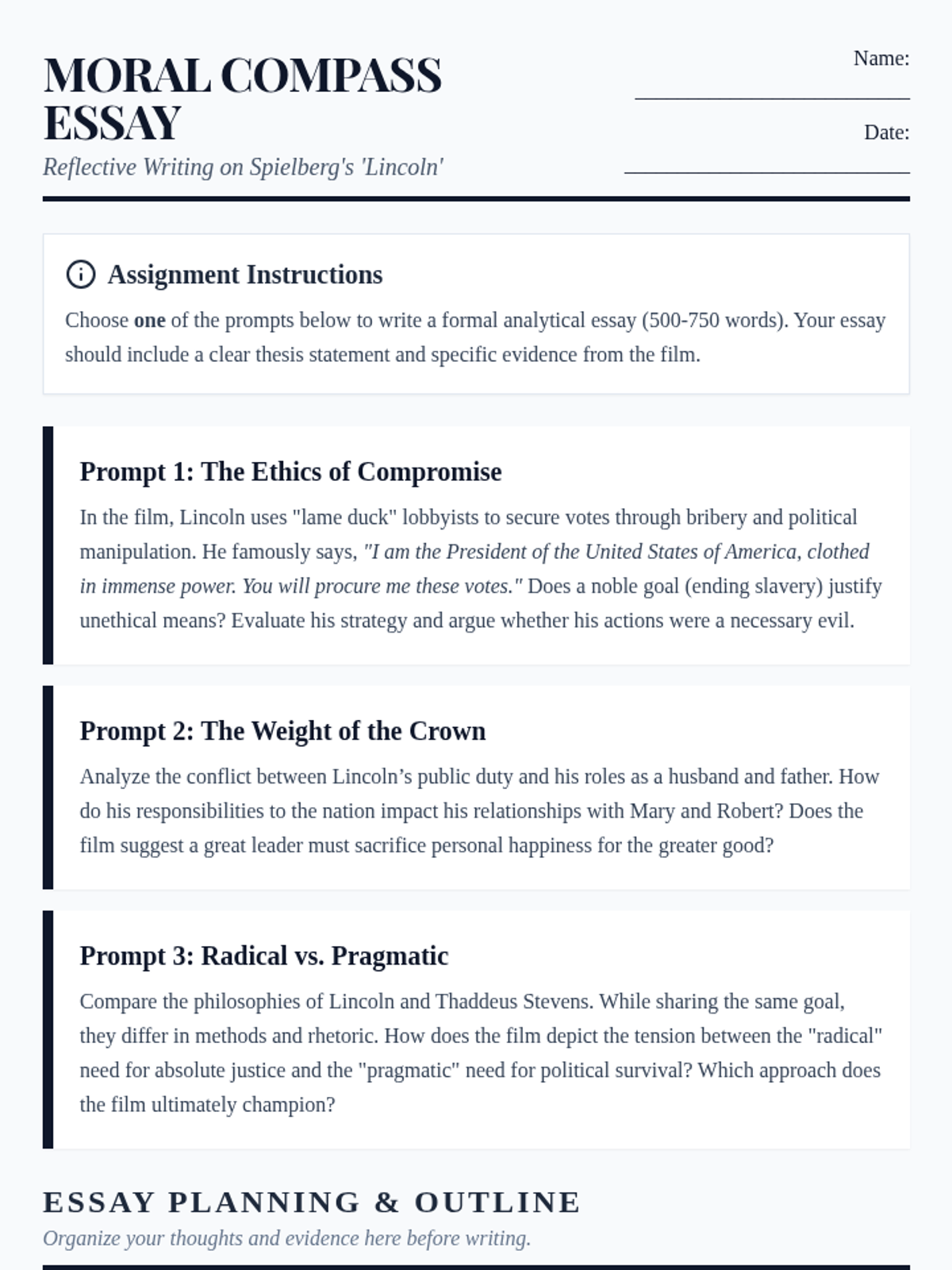
A deep dive into Steven Spielberg's 'Lincoln', focusing on the political maneuvers behind the 13th Amendment and the historical figures involved.
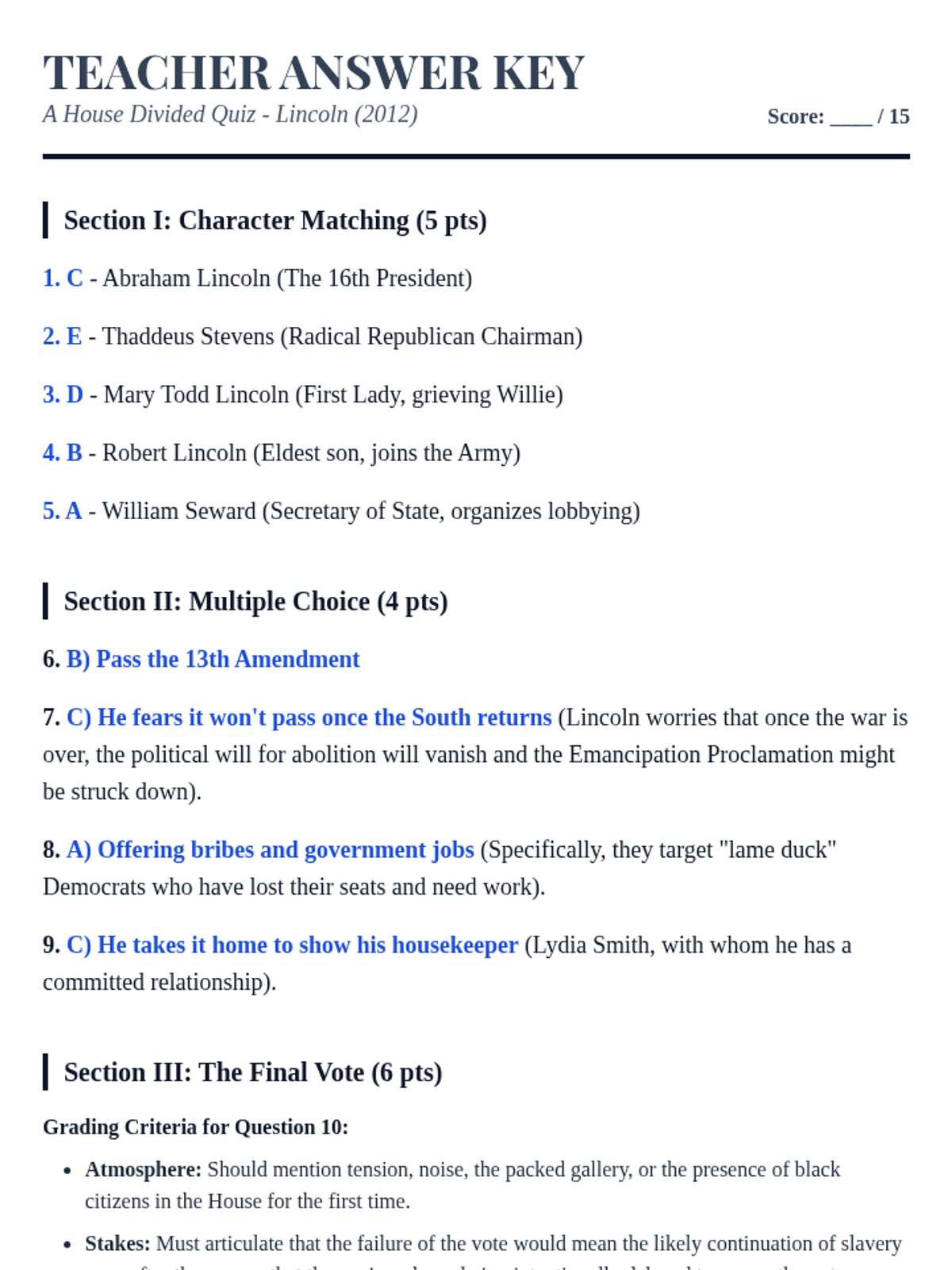
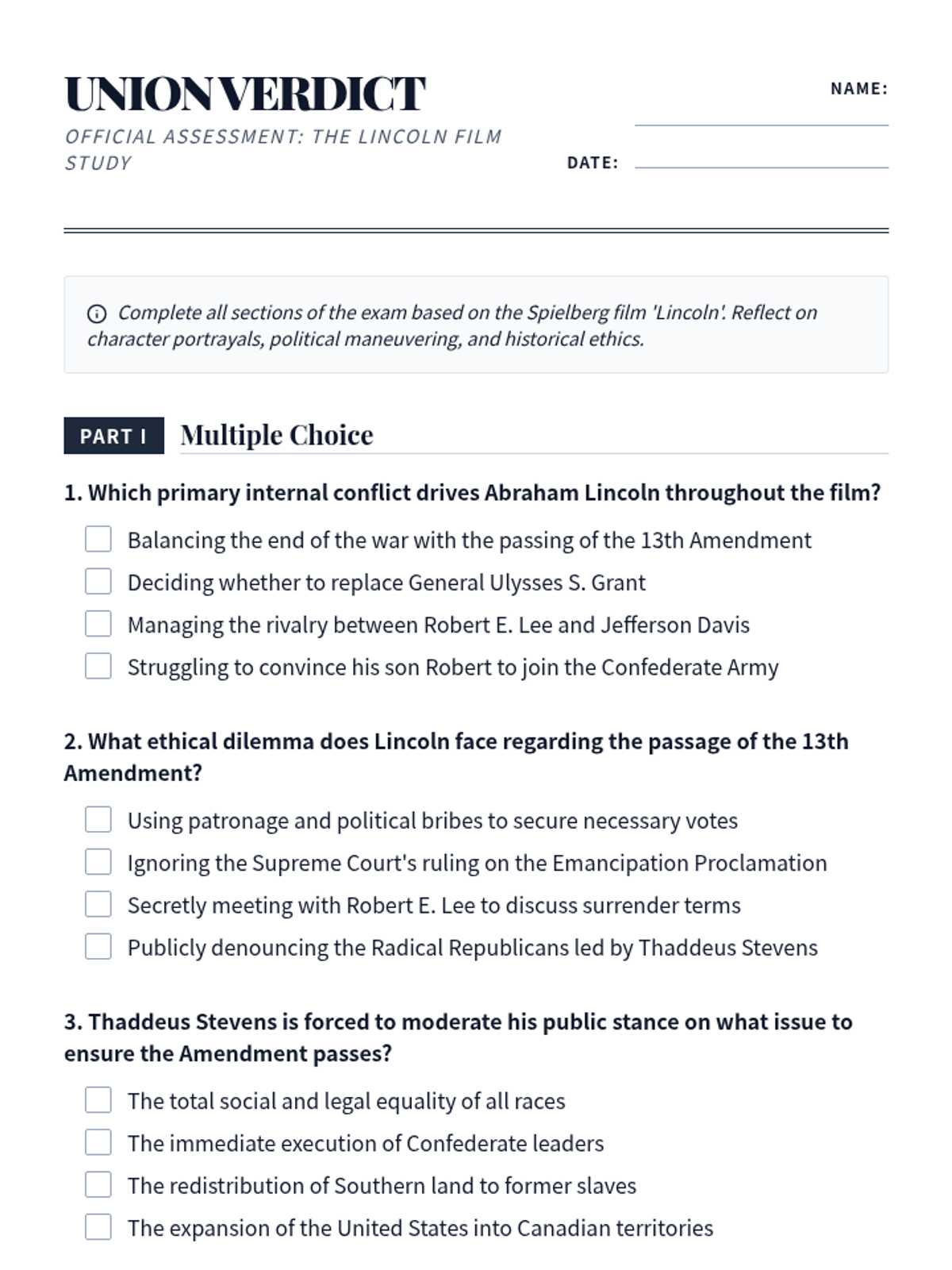
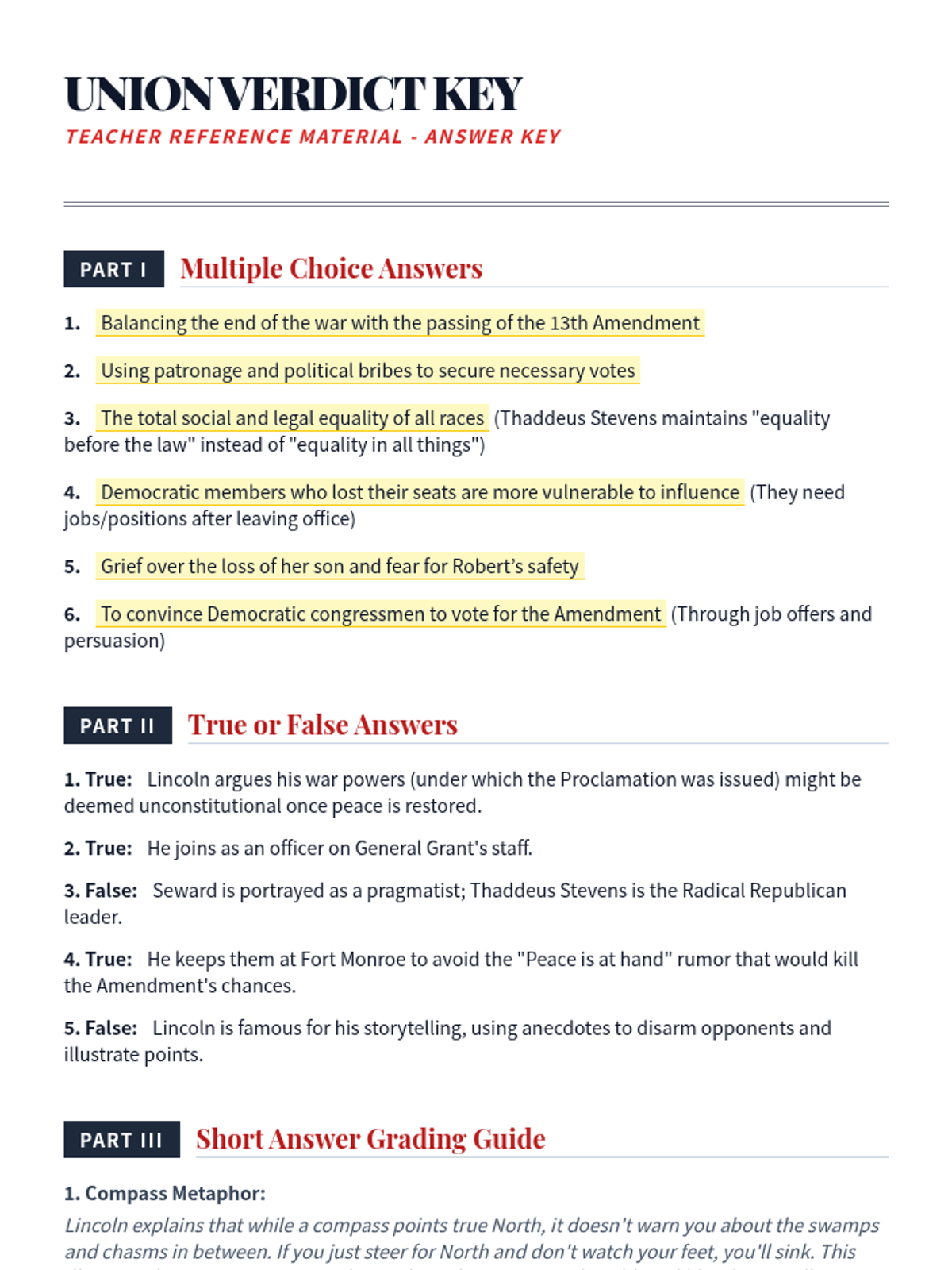
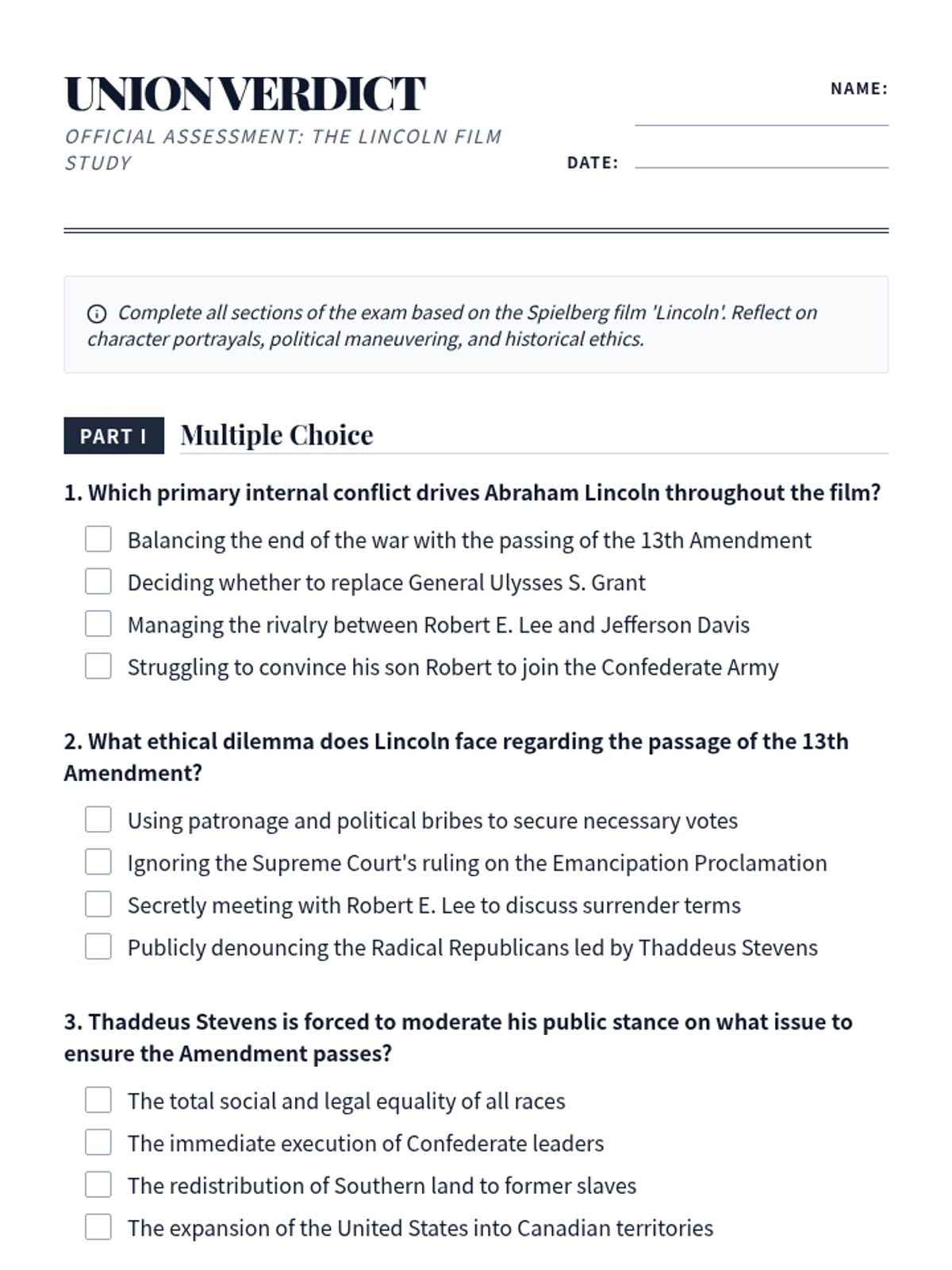
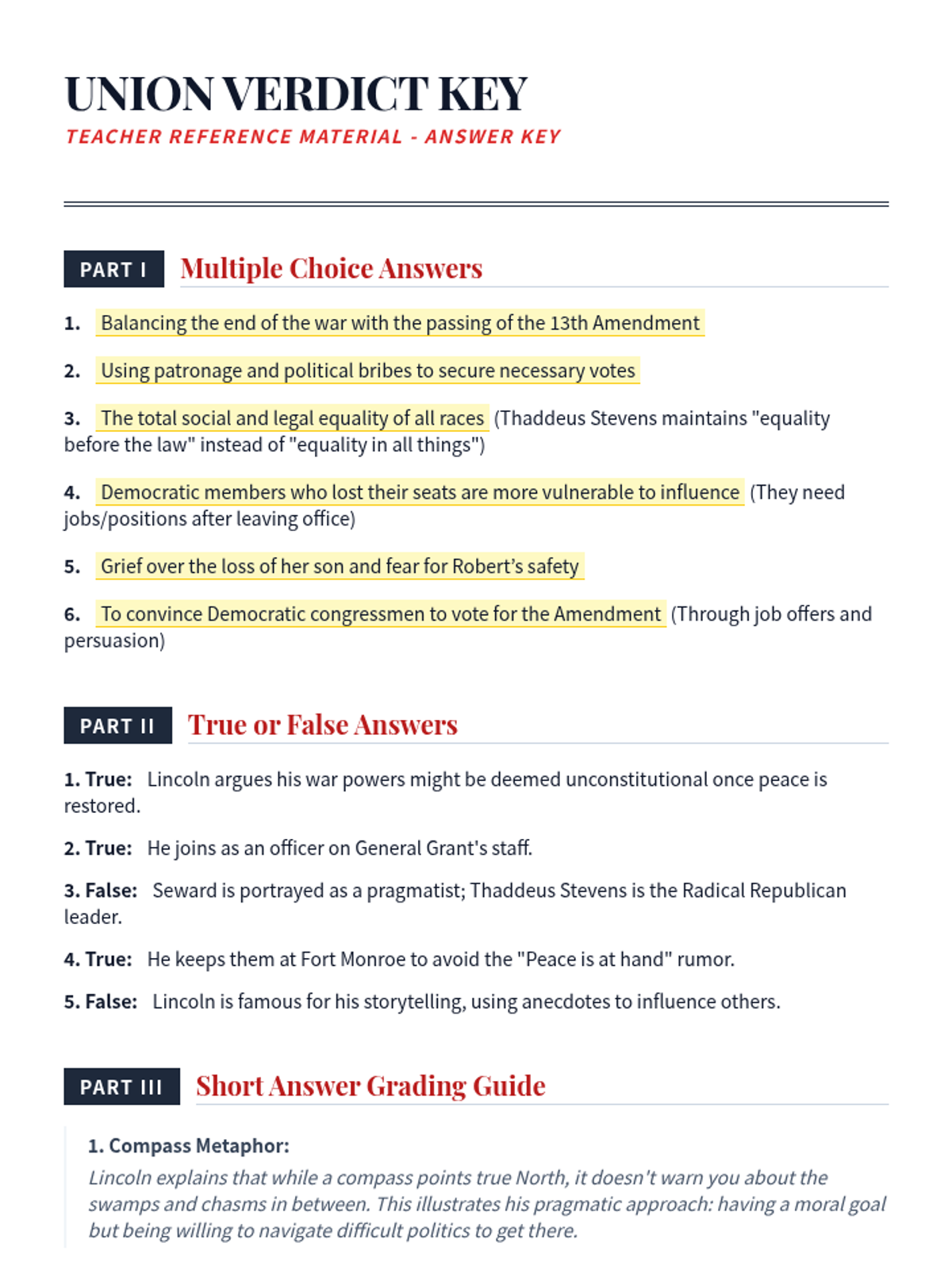
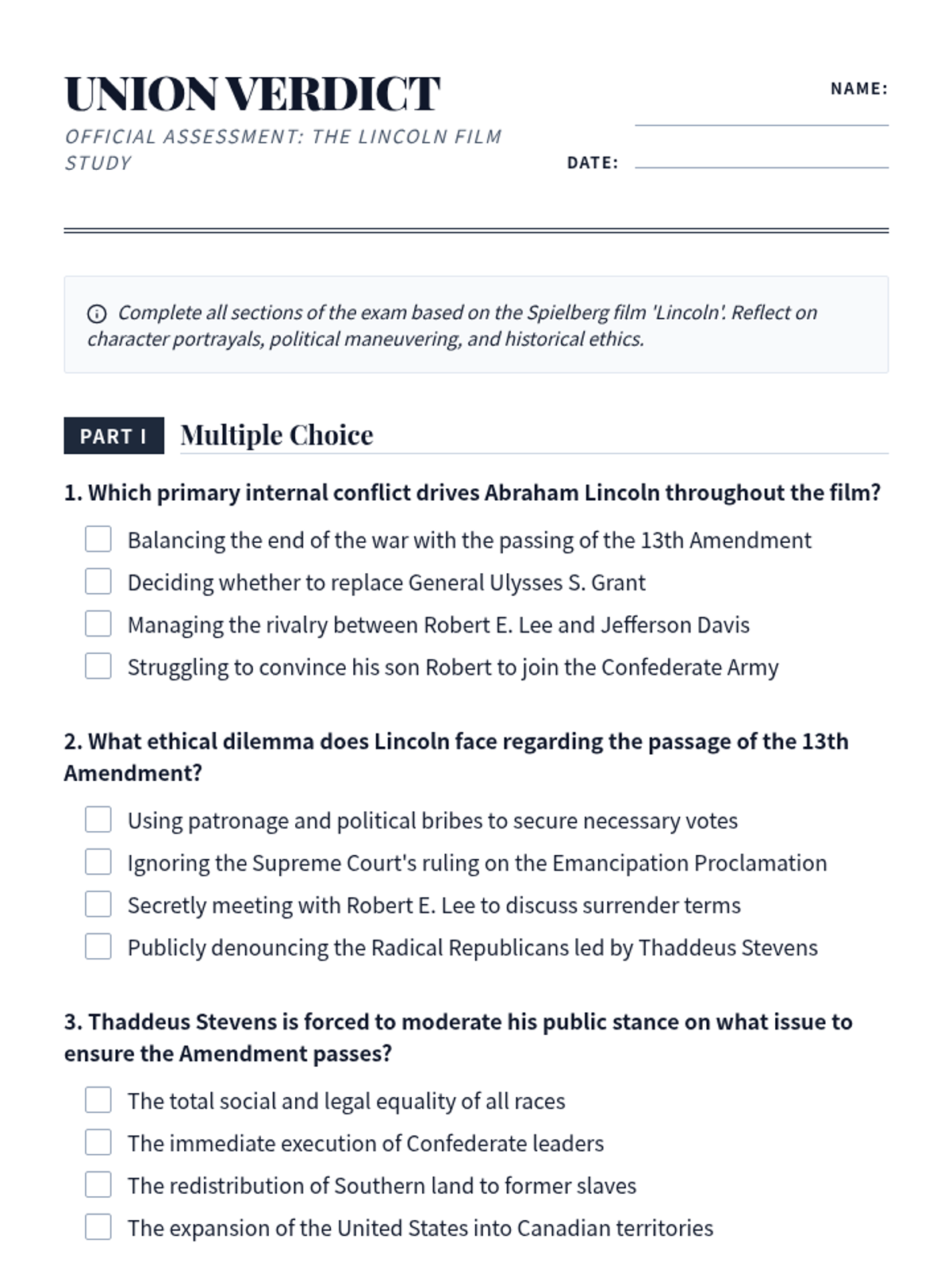
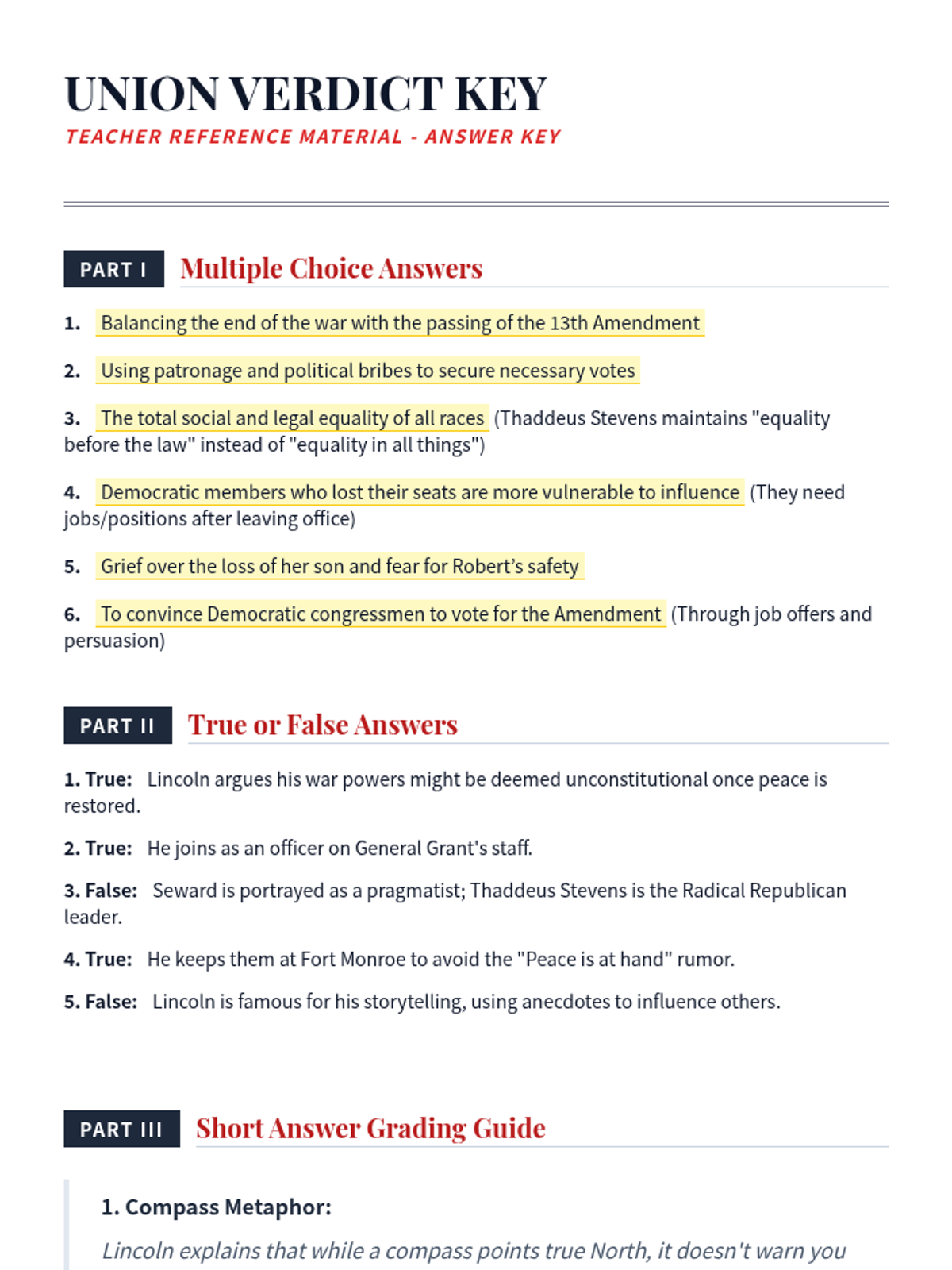
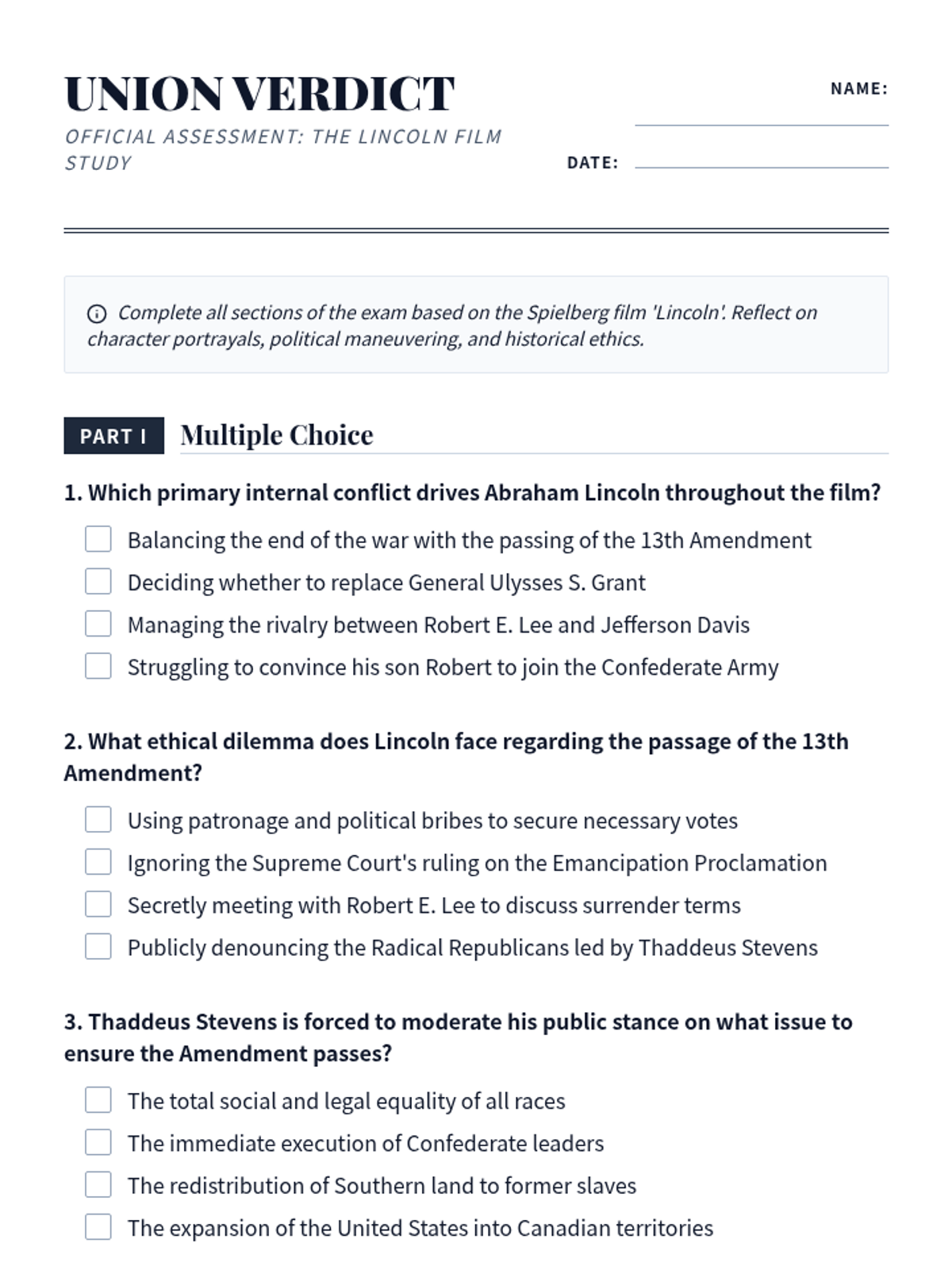
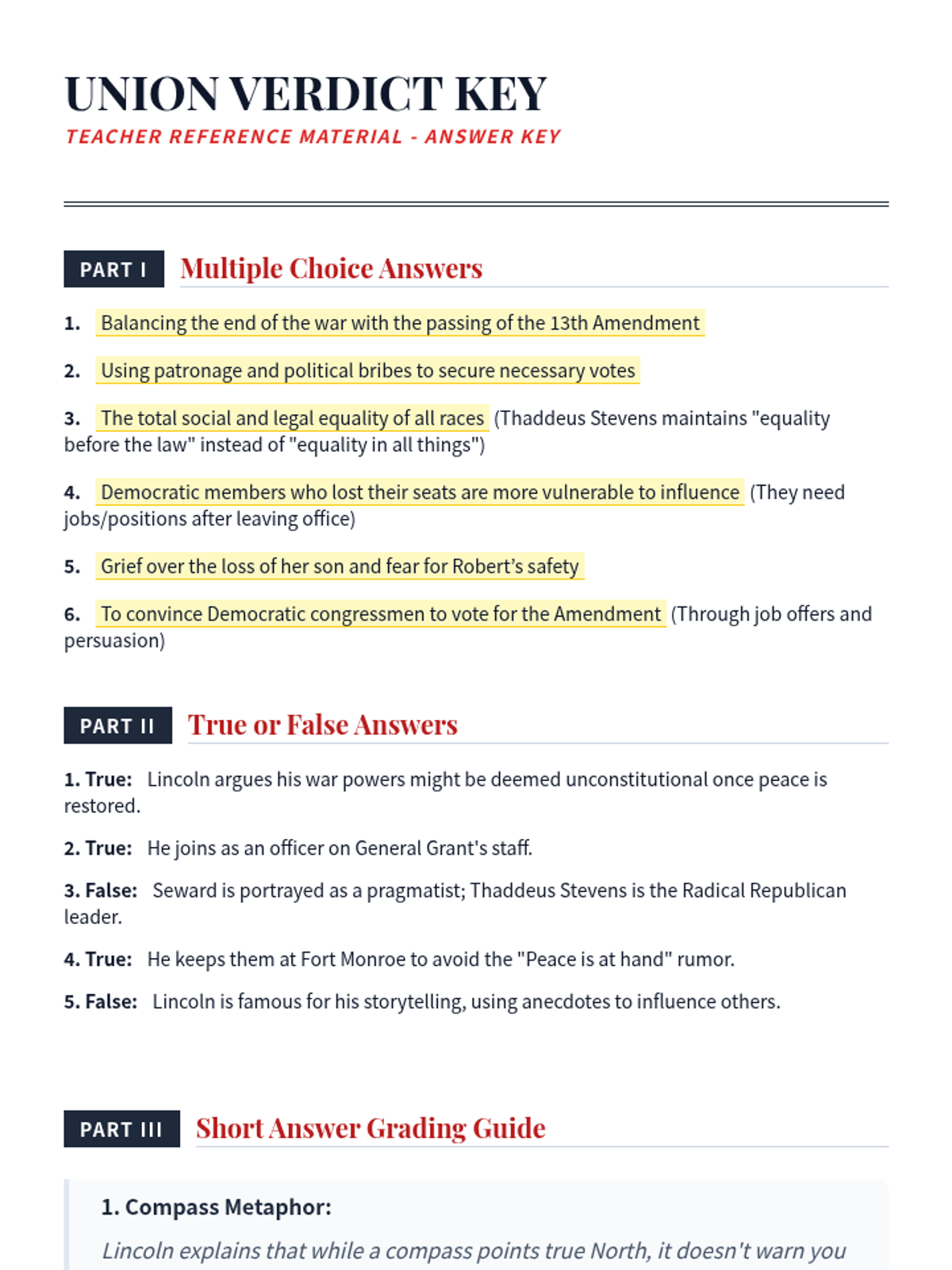
A comprehensive assessment and review of the film Lincoln, focusing on the 16th President's leadership, the ethical dilemmas of the 13th Amendment, and the political strategy of the Civil War era.
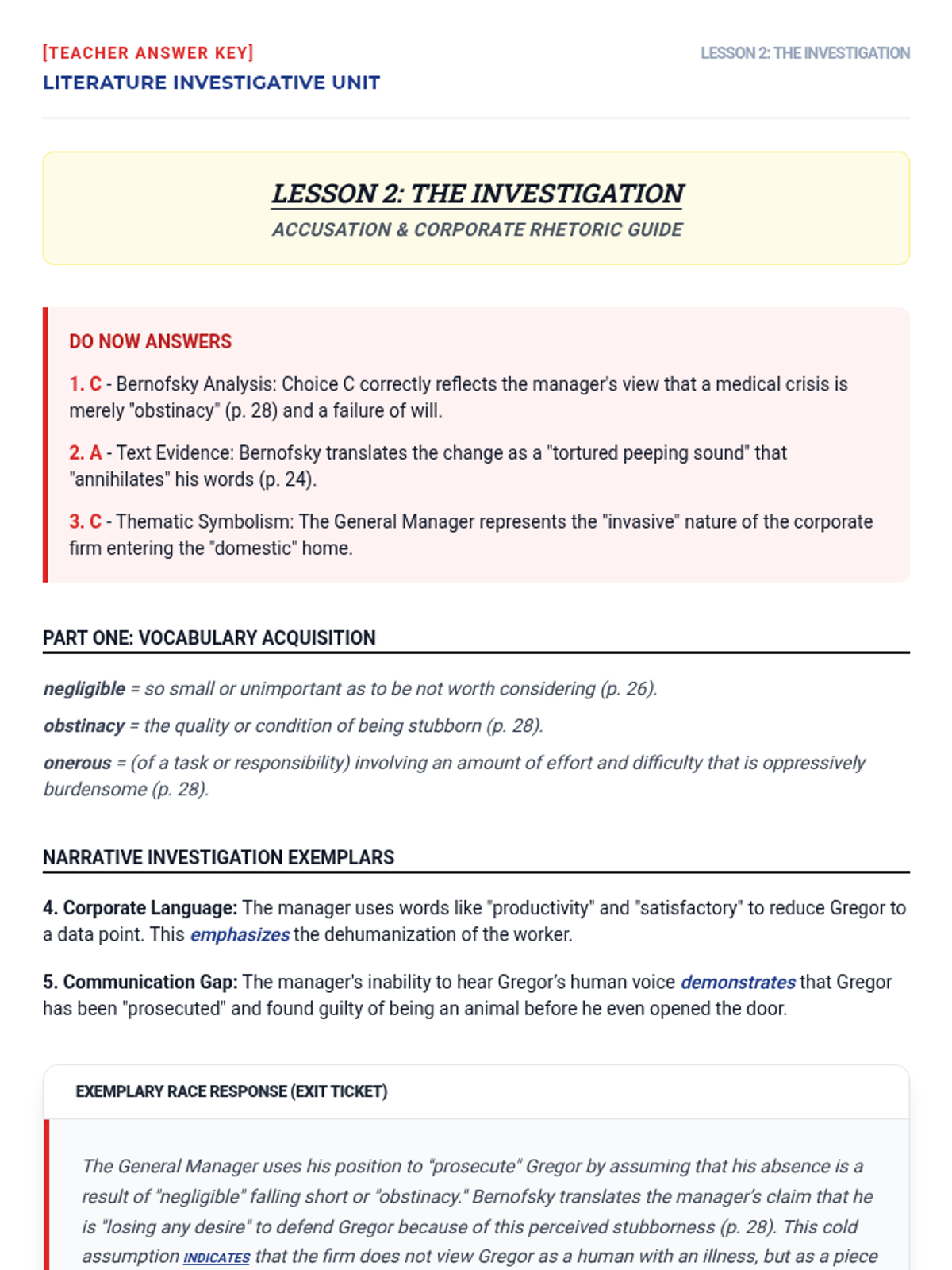
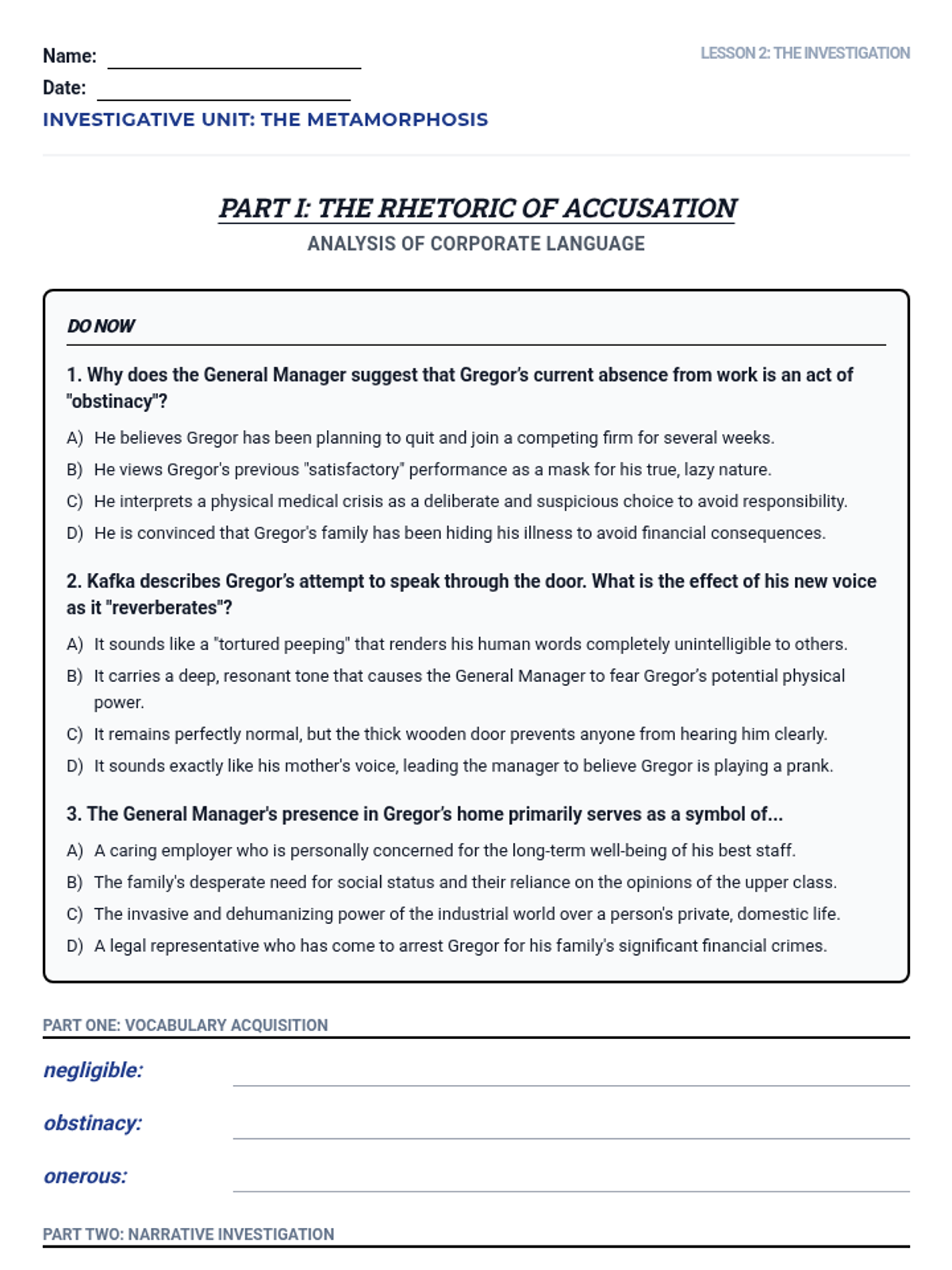
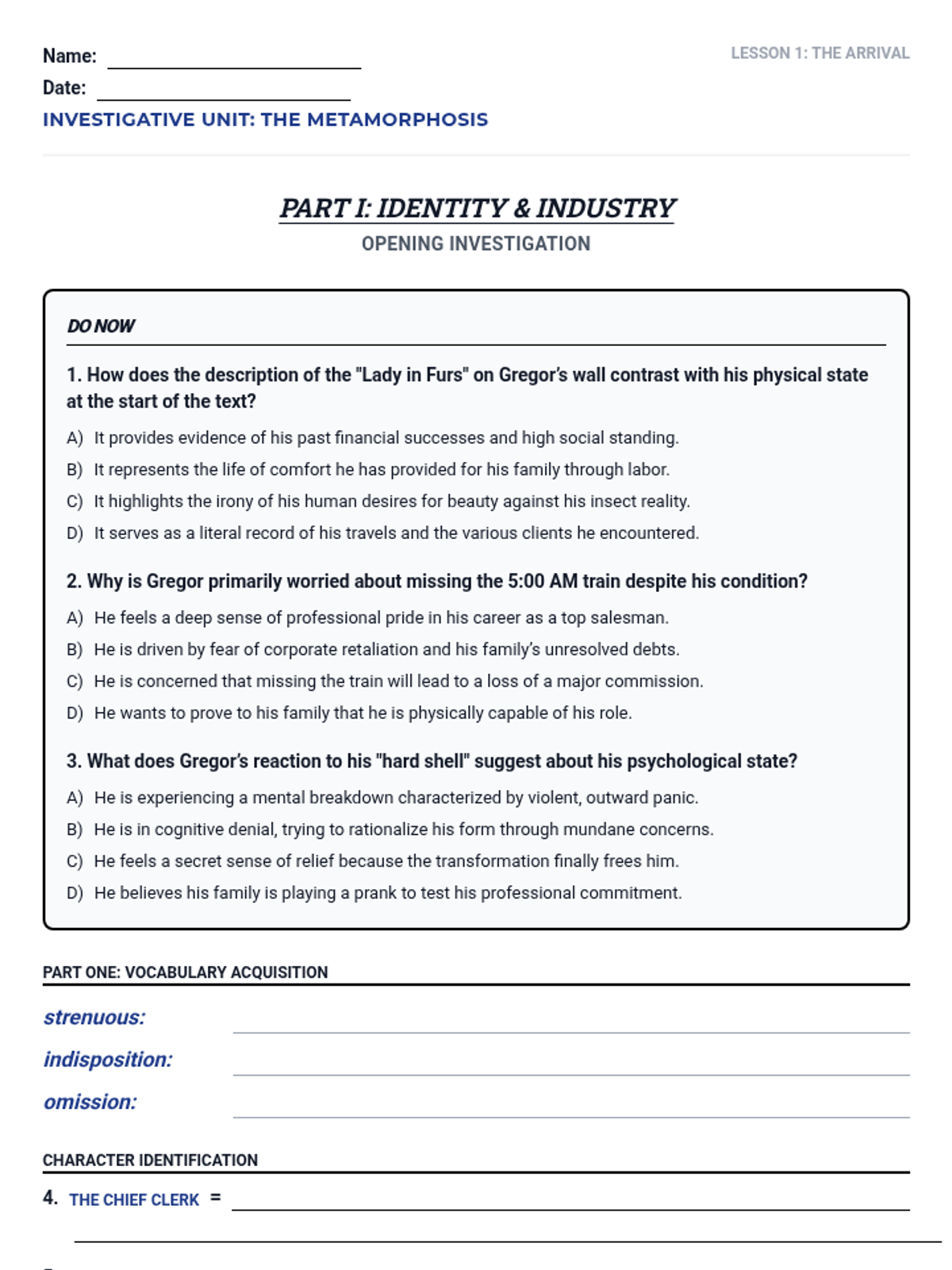
Students analyze the Chief Clerk's dialogue and how he uses corporate language to minimize Gregor's humanity and maximize his perceived 'laziness'.
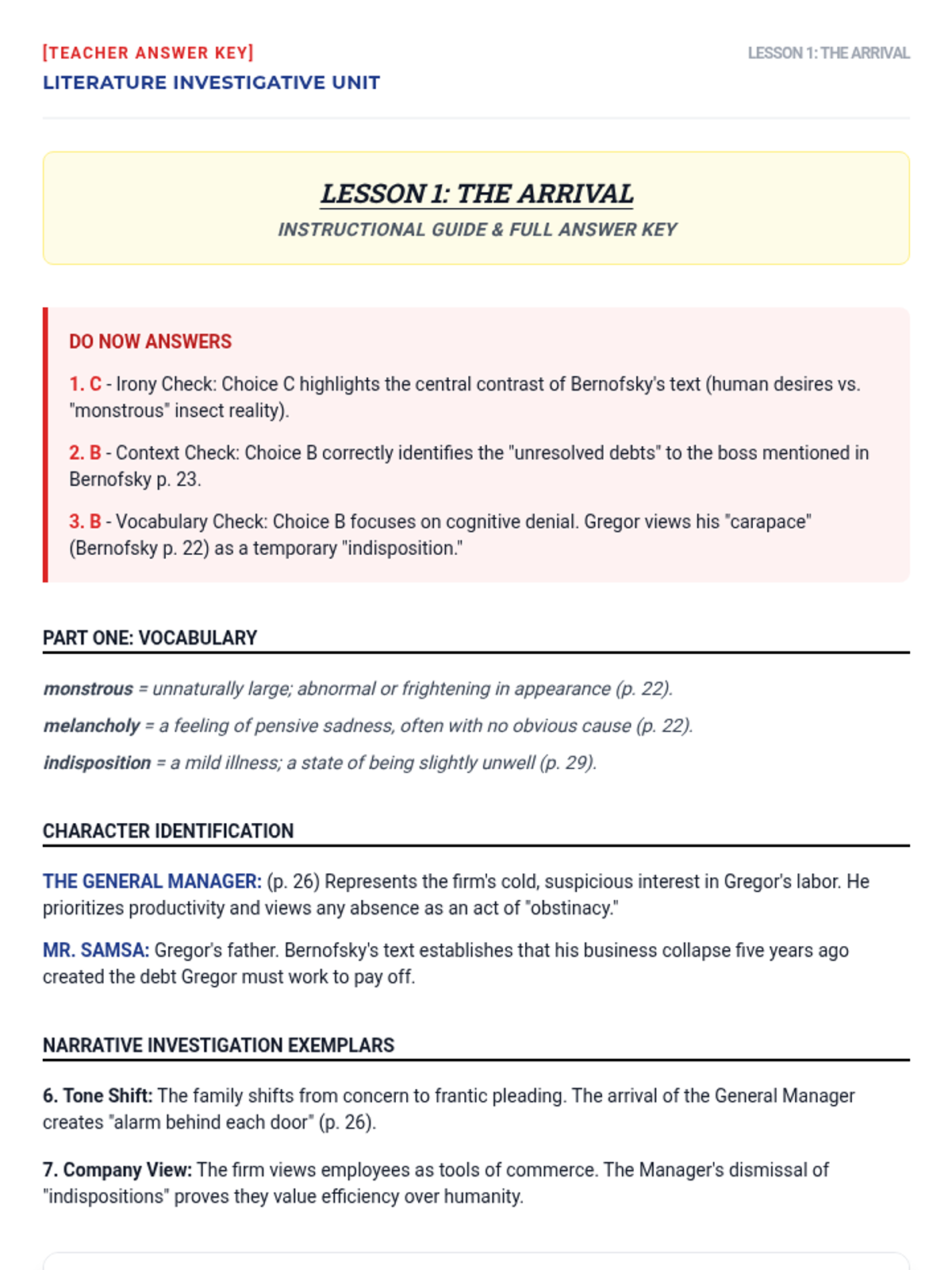
Students analyze the arrival of the Chief Clerk and the immediate shift from familial concern to corporate suspicion. Focus on the theme of 'The Firm' as a dehumanizing force.
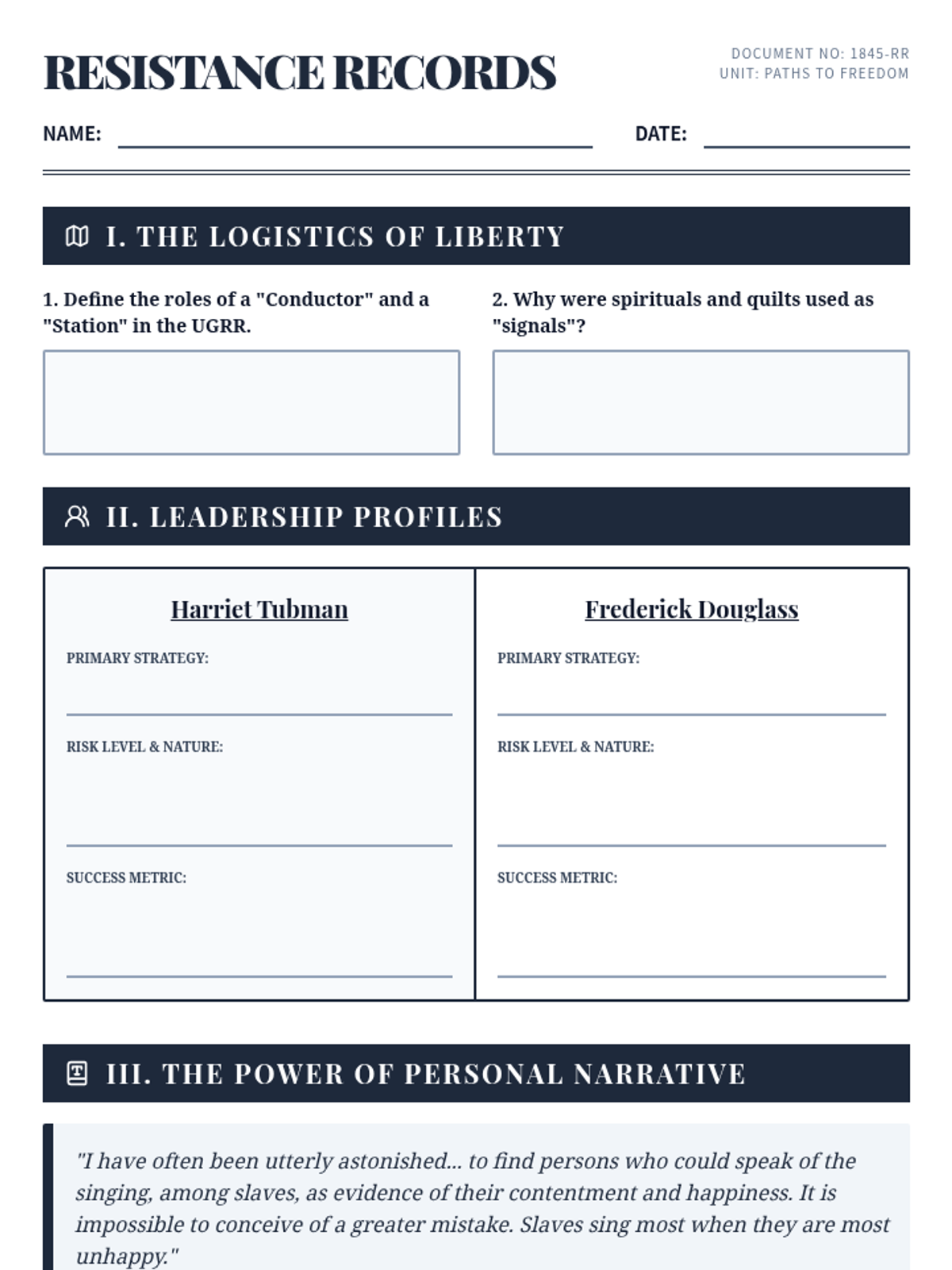
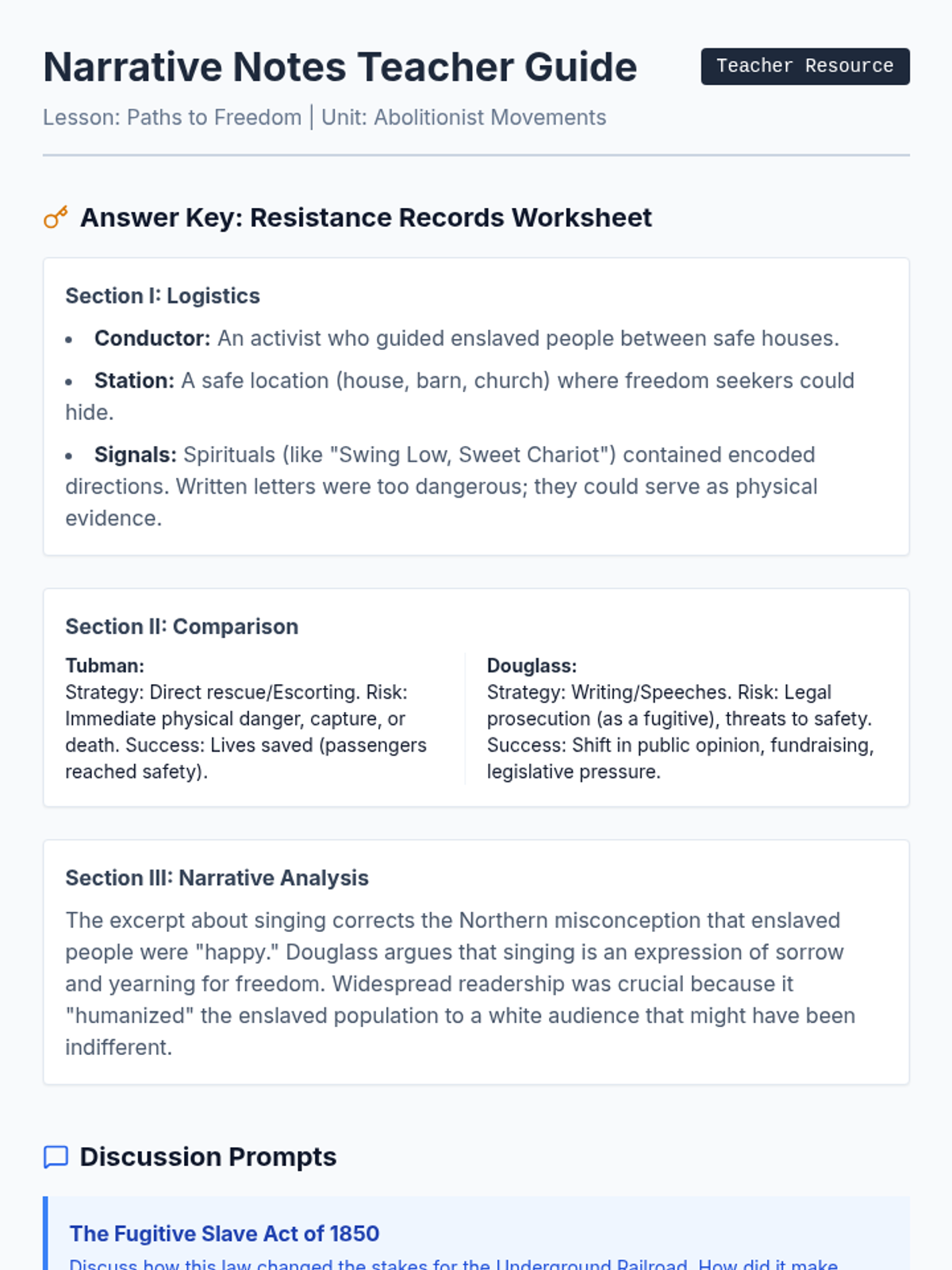
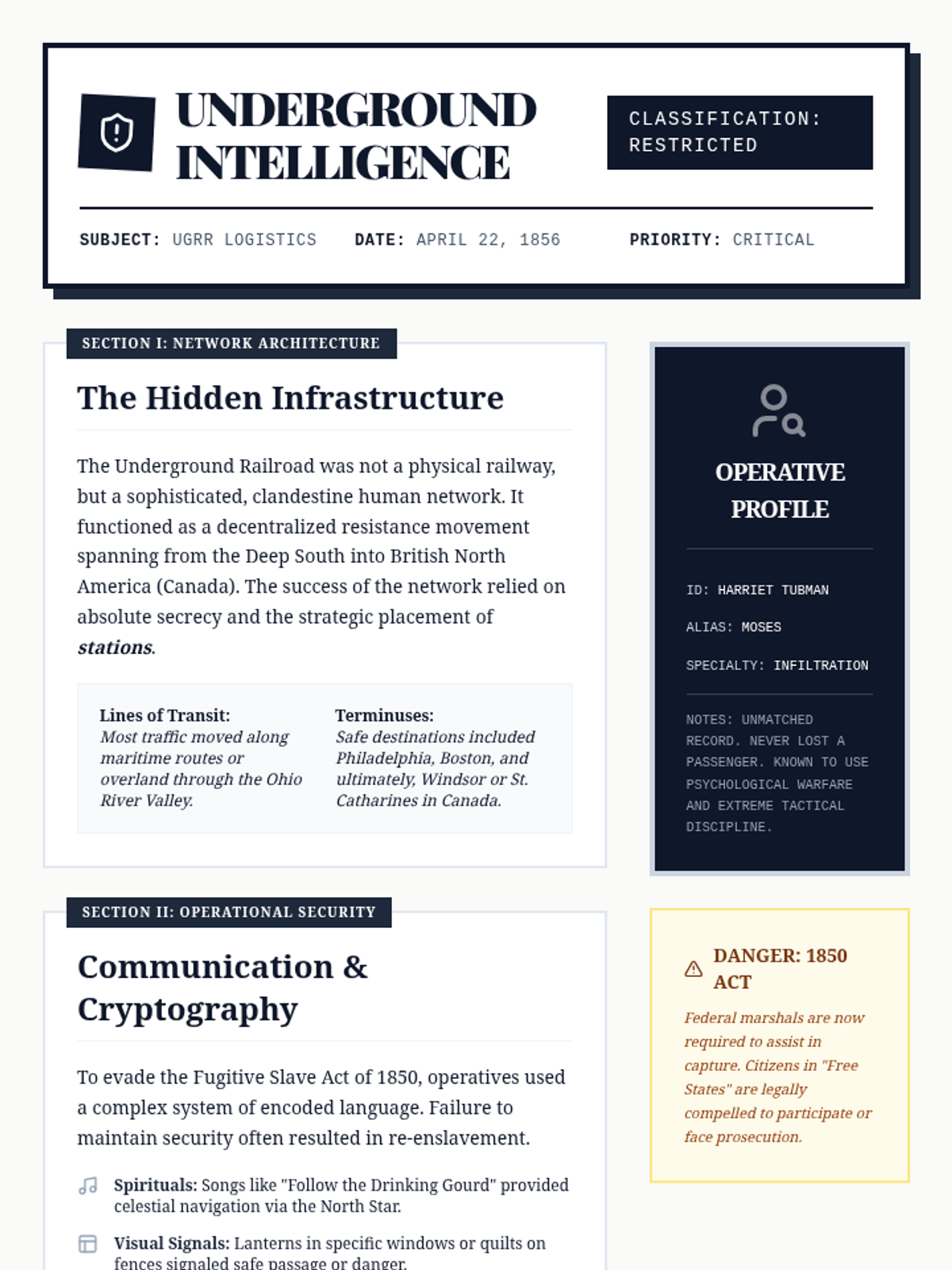
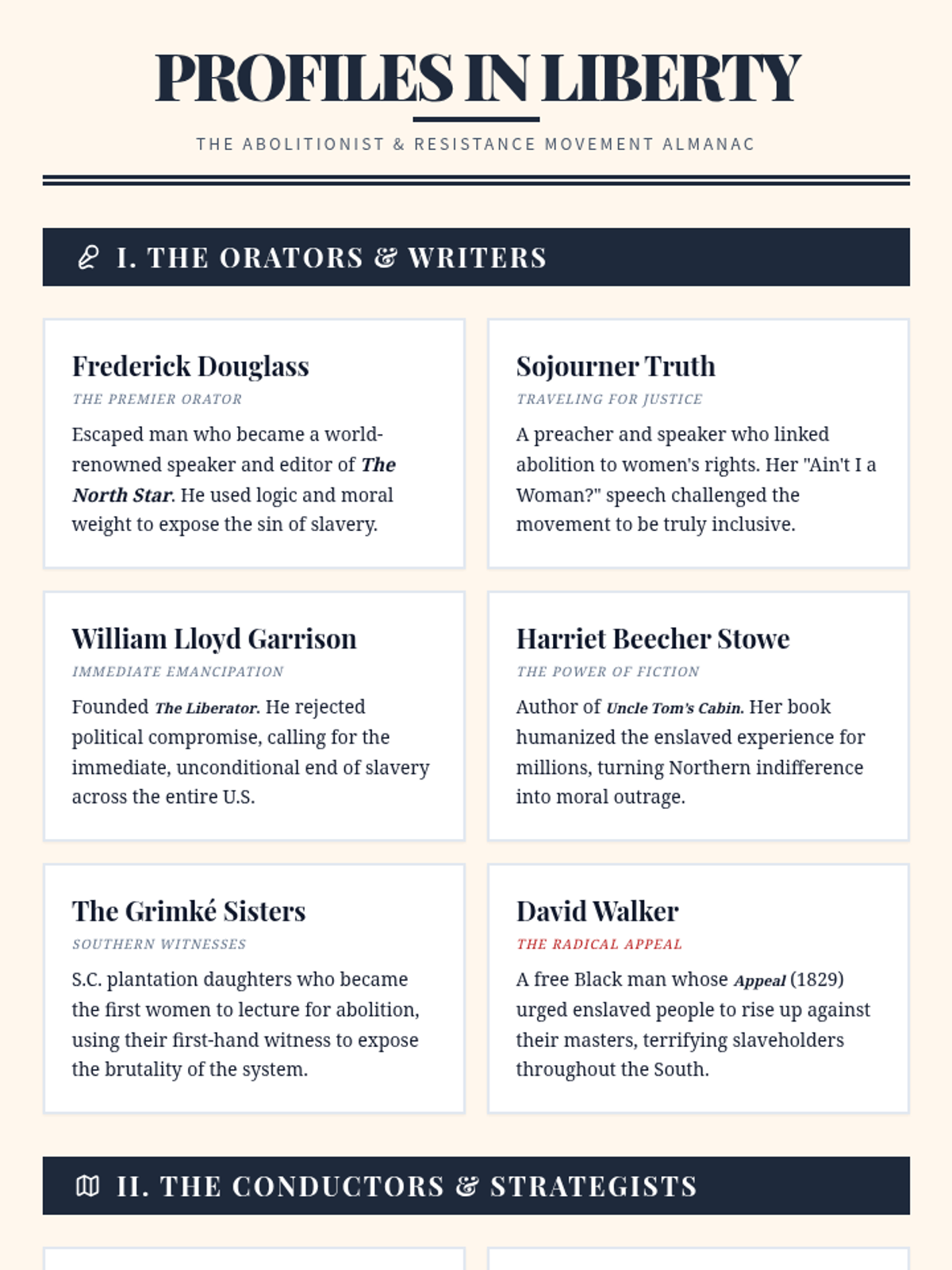
A comprehensive exploration of the Underground Railroad, comparing the leadership styles of Harriet Tubman and Frederick Douglass, and analyzing the impact of abolitionist literature.
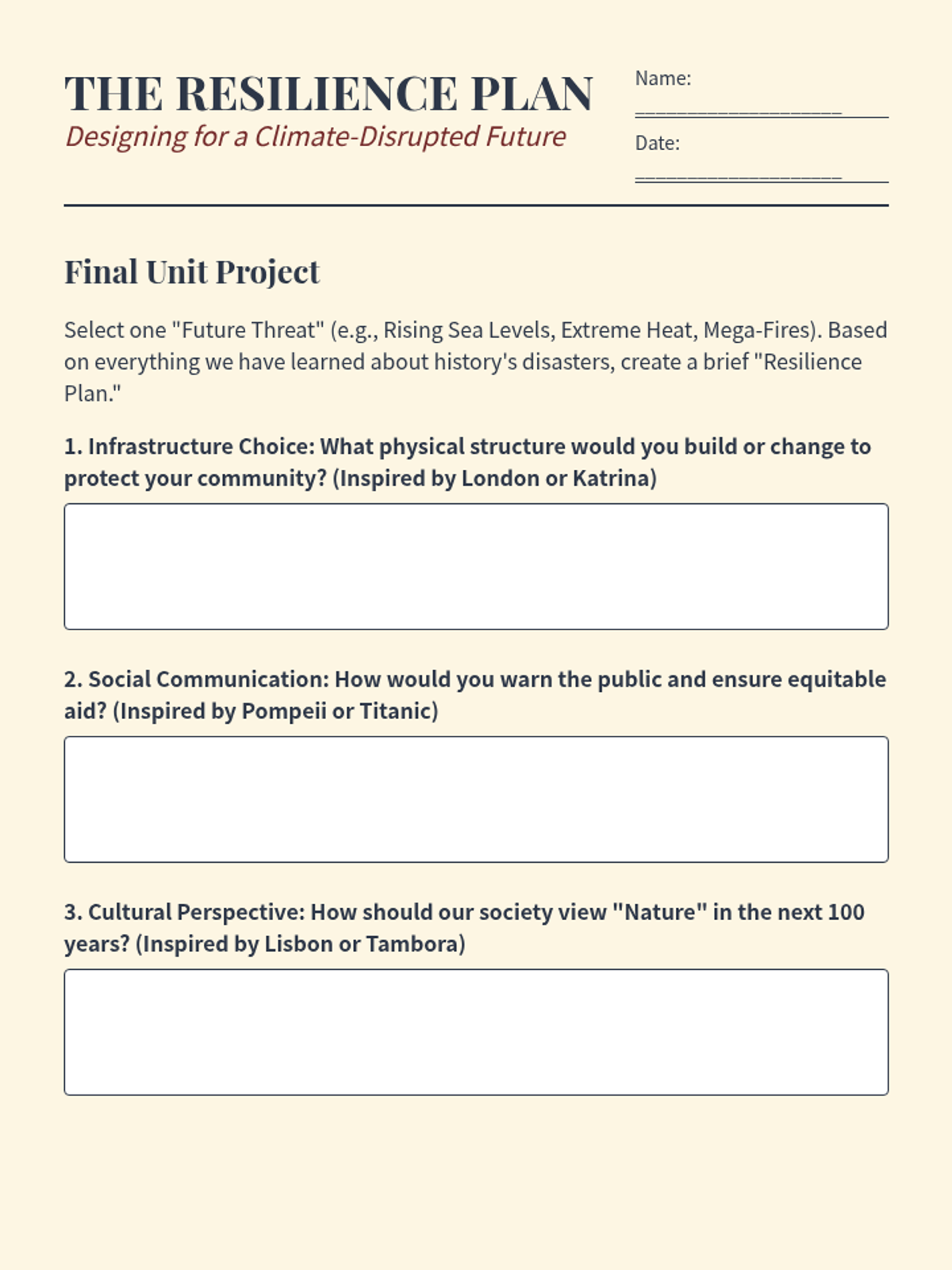
Synthesize the unit by looking at modern climate-related disasters and creating disaster management strategies for the future.
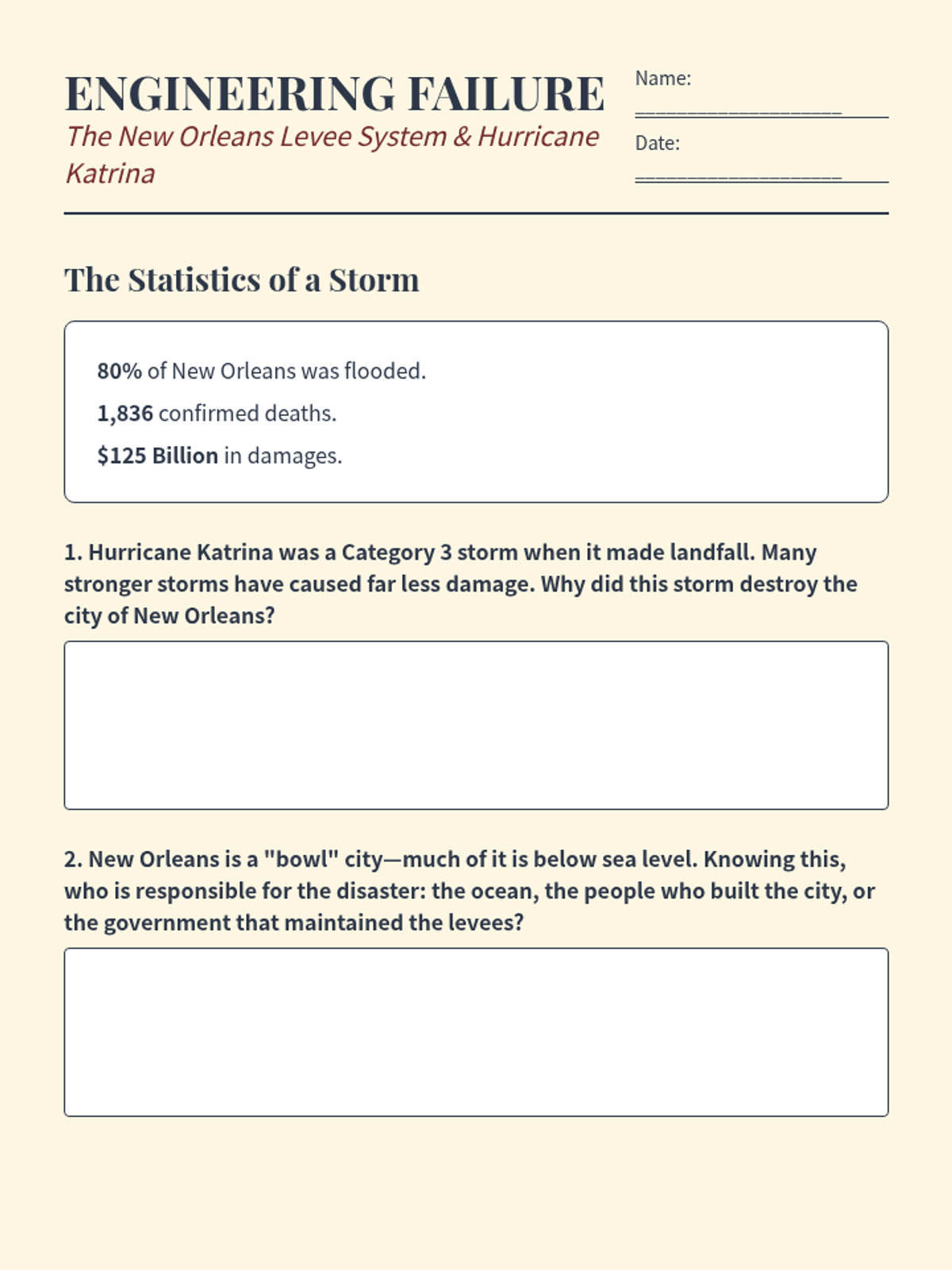
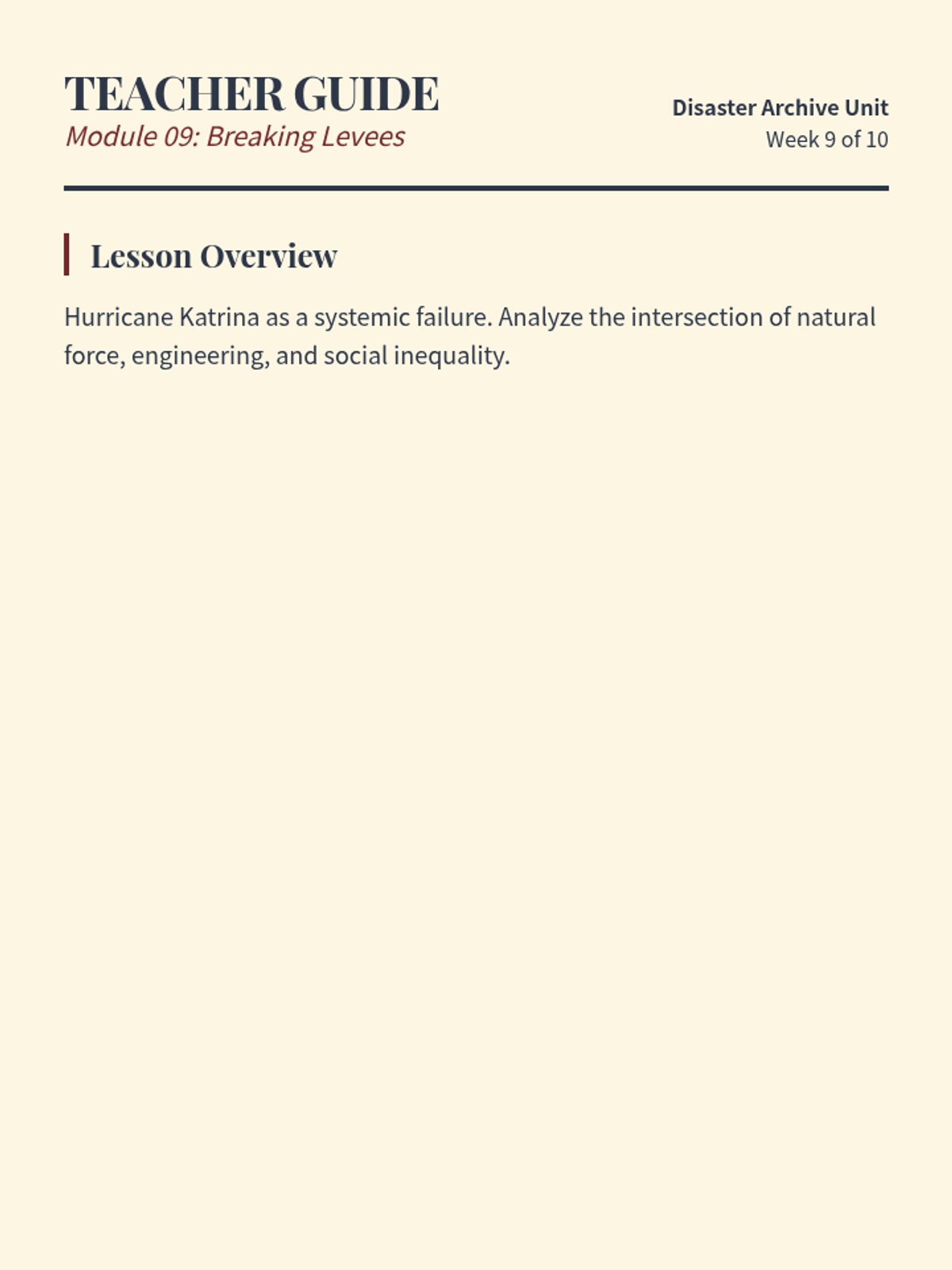
Investigate Hurricane Katrina (2005) as a disaster where natural force met infrastructure failure and socioeconomic inequality.
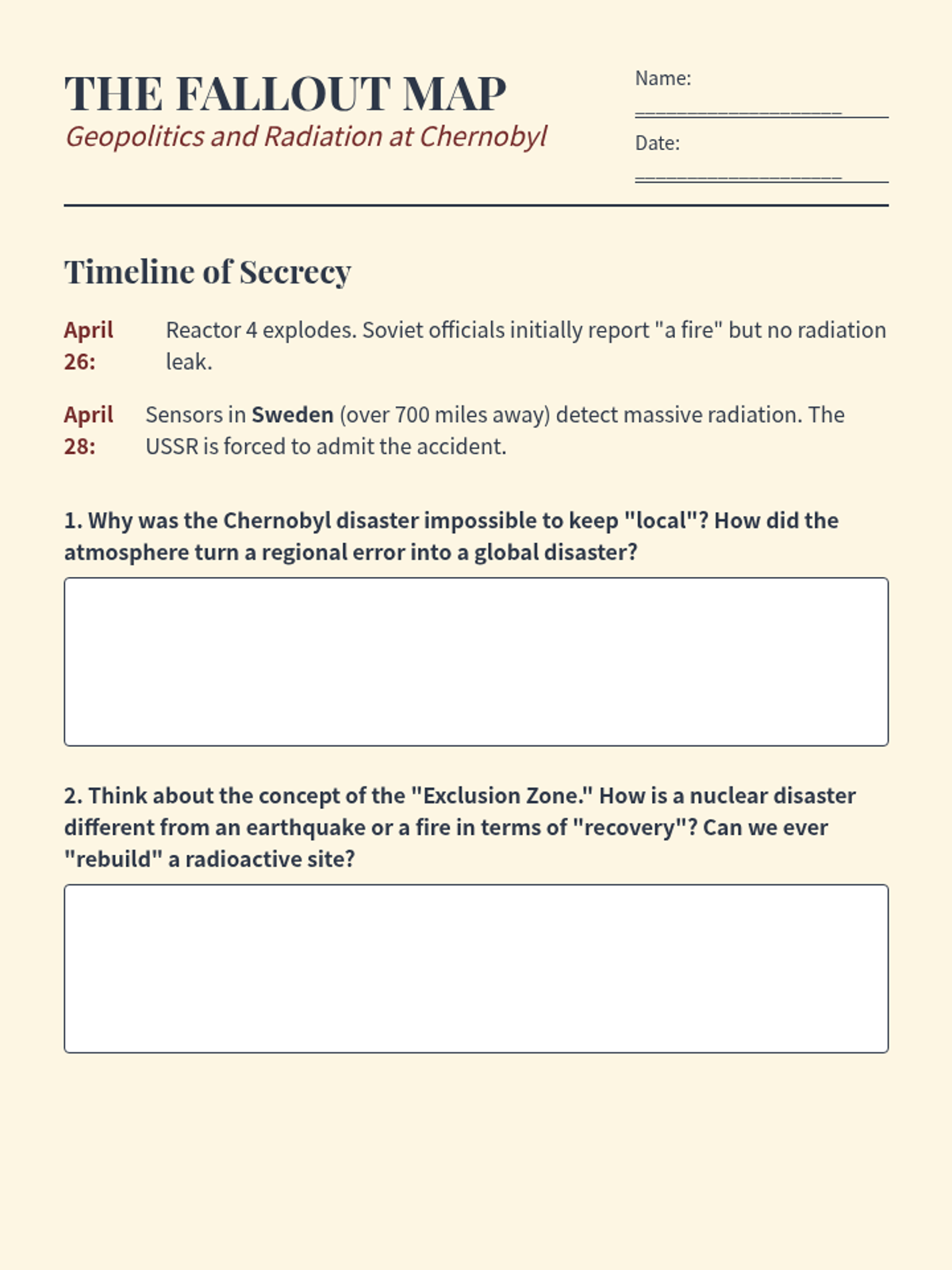
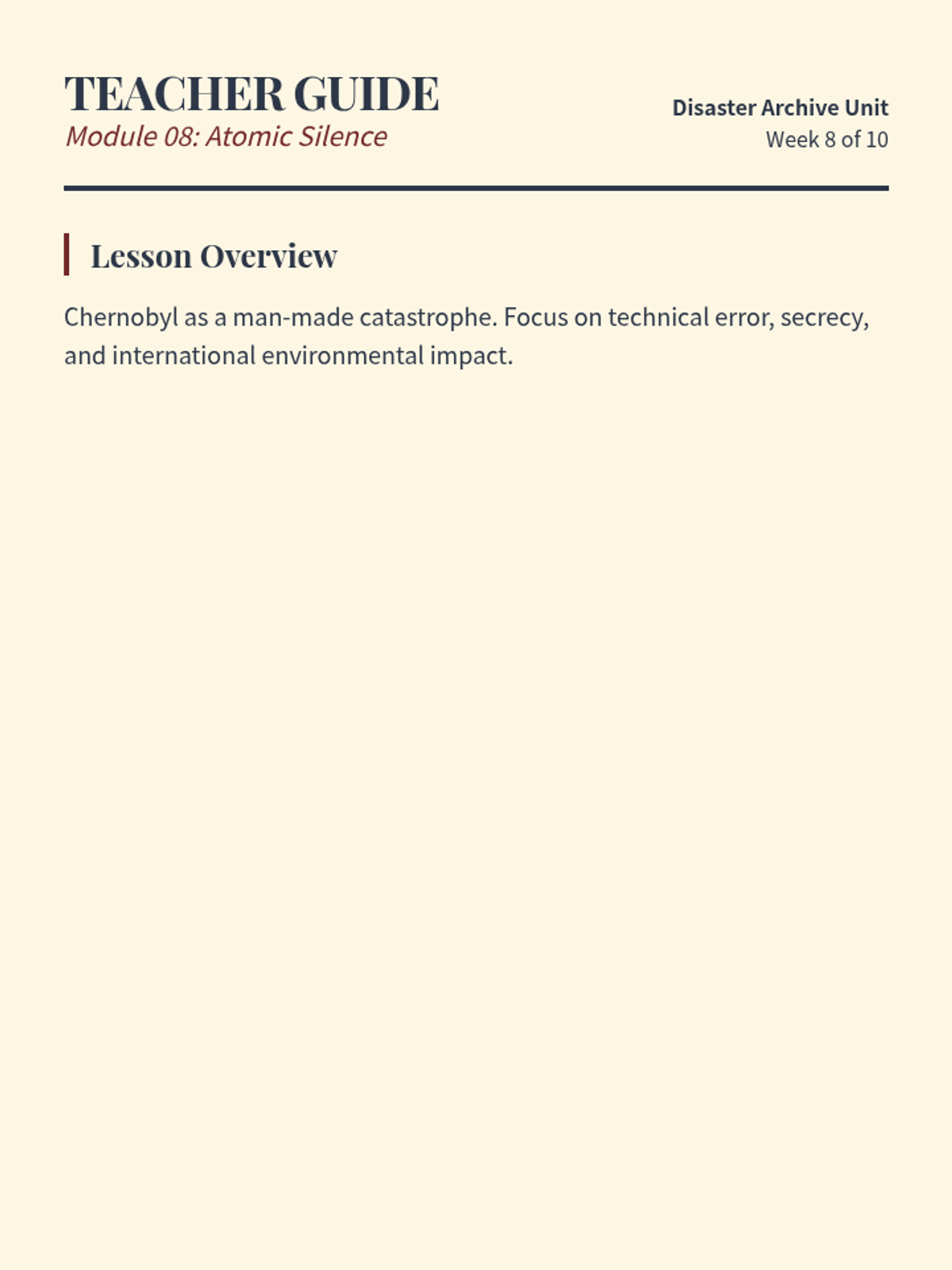
Examine the 1986 Chernobyl disaster as the quintessential man-made catastrophe, exploring the intersection of technology, secrecy, and environmental impact.
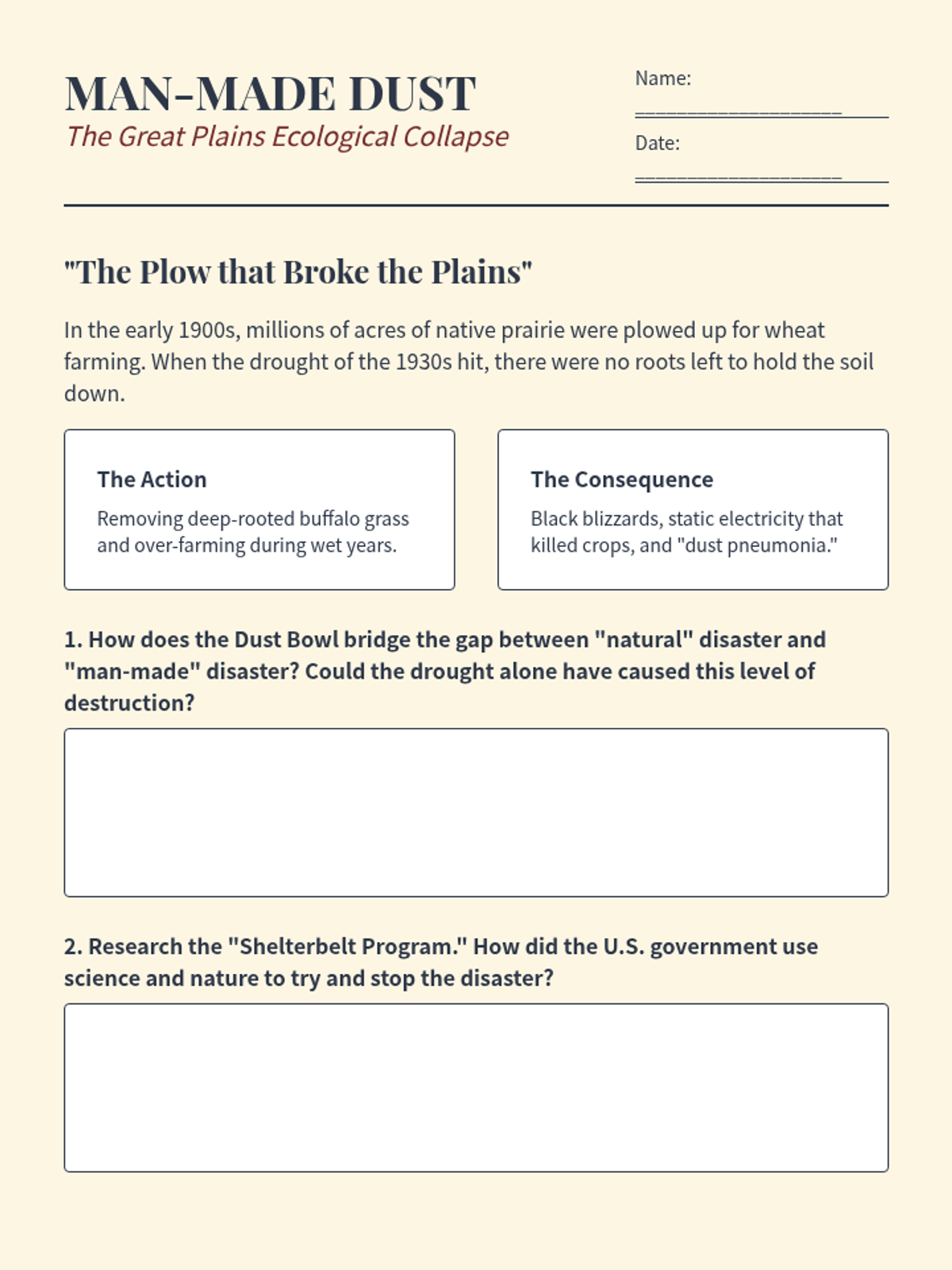
Study the 1930s Dust Bowl as an example of how human agricultural practices can turn a natural drought into an environmental and human catastrophe.
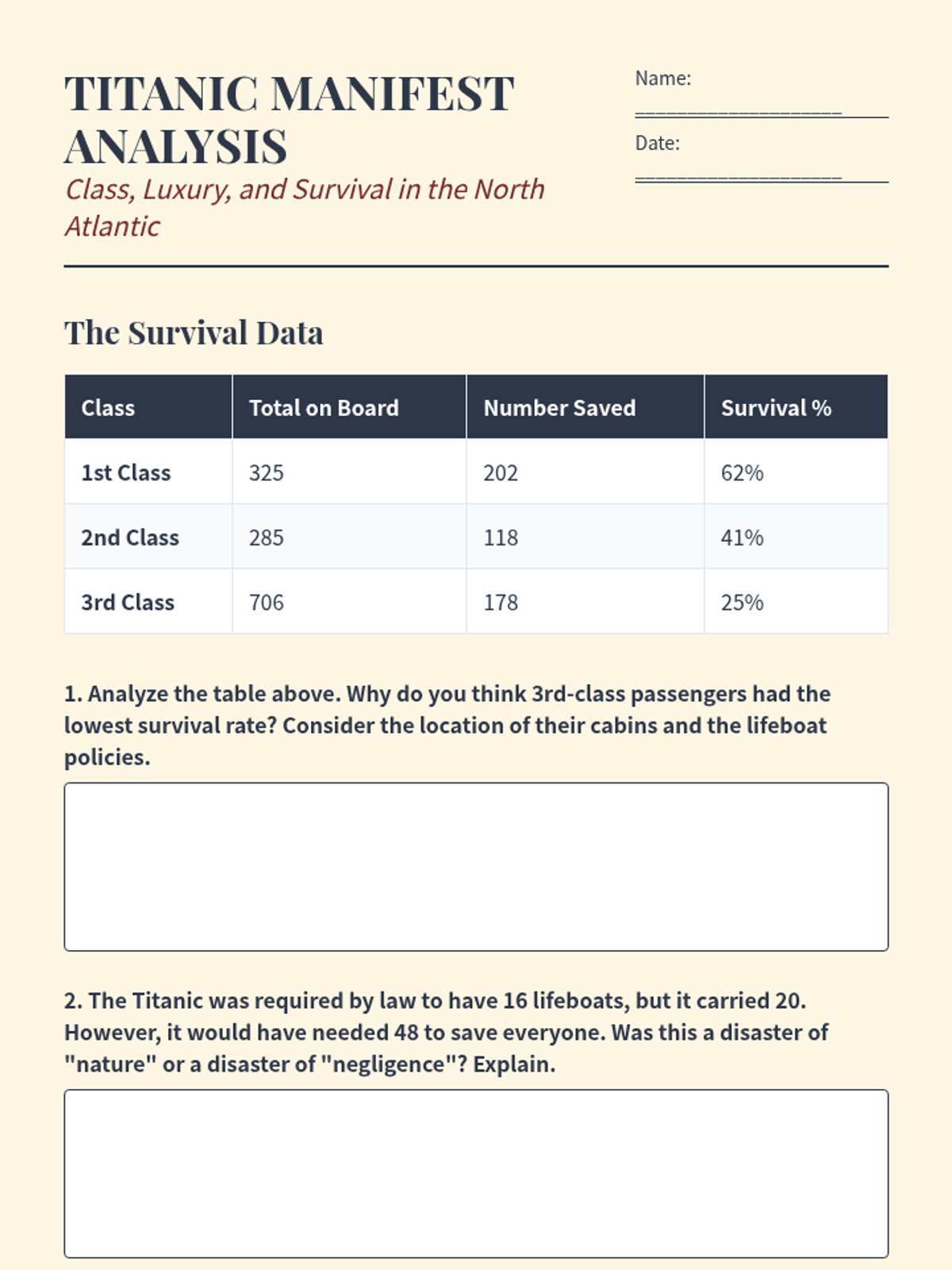
Analyze the sinking of the Titanic as a turning point where technological hubris and class disparity met a tragic natural obstacle.
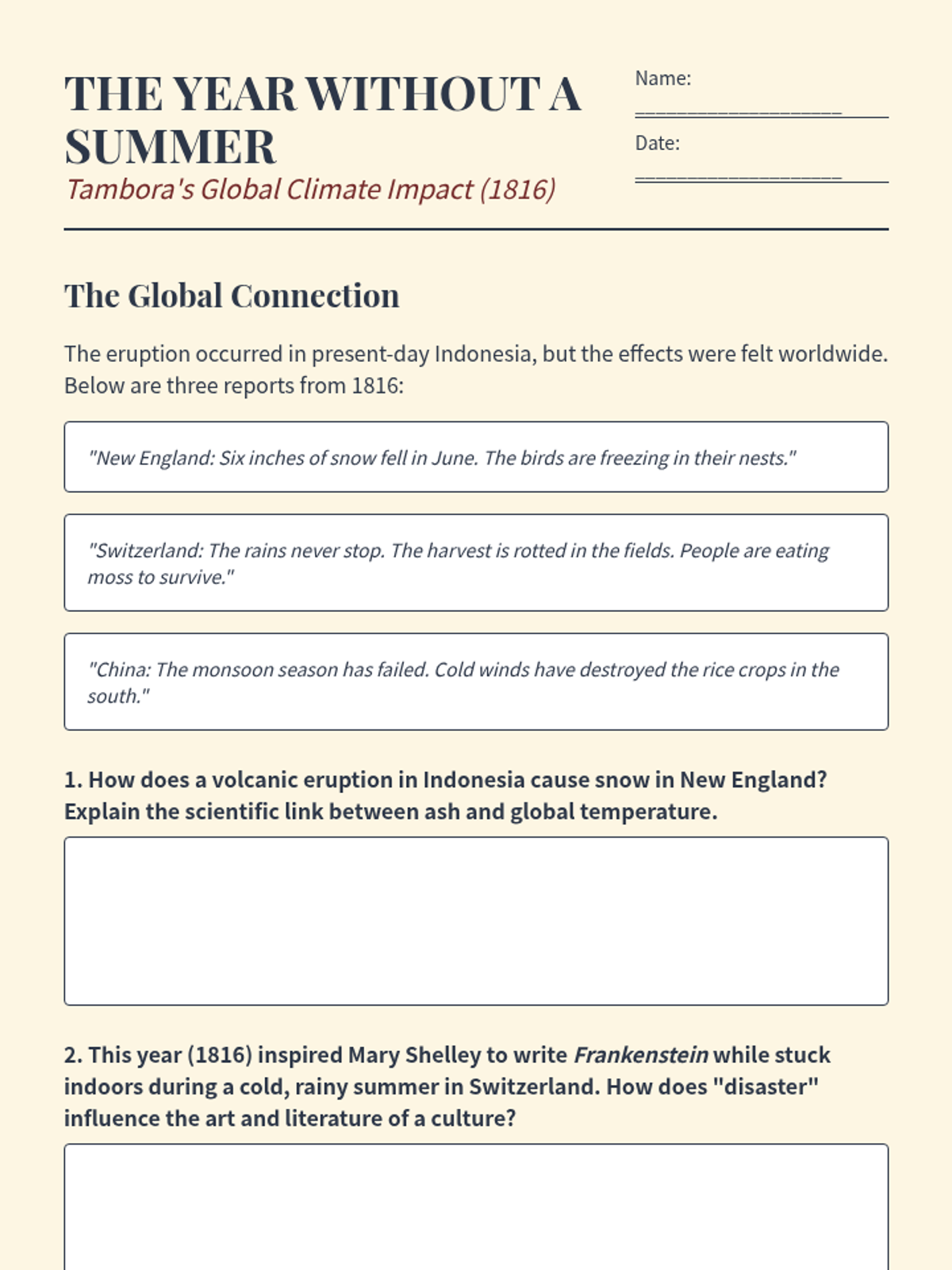
Discover the global impact of the 1815 eruption of Mount Tambora, which caused the 'Year Without a Summer' and influenced both science and literature.
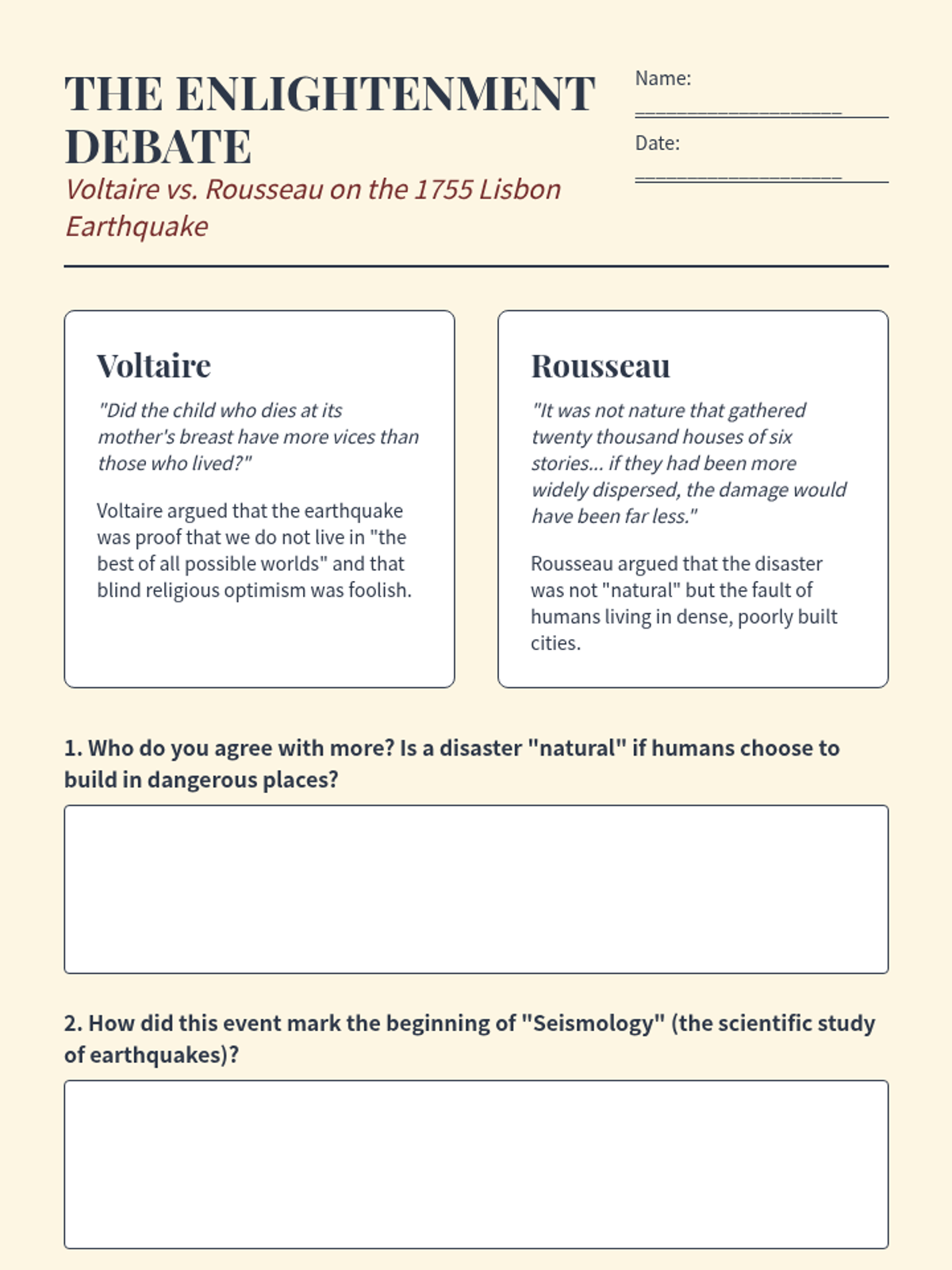
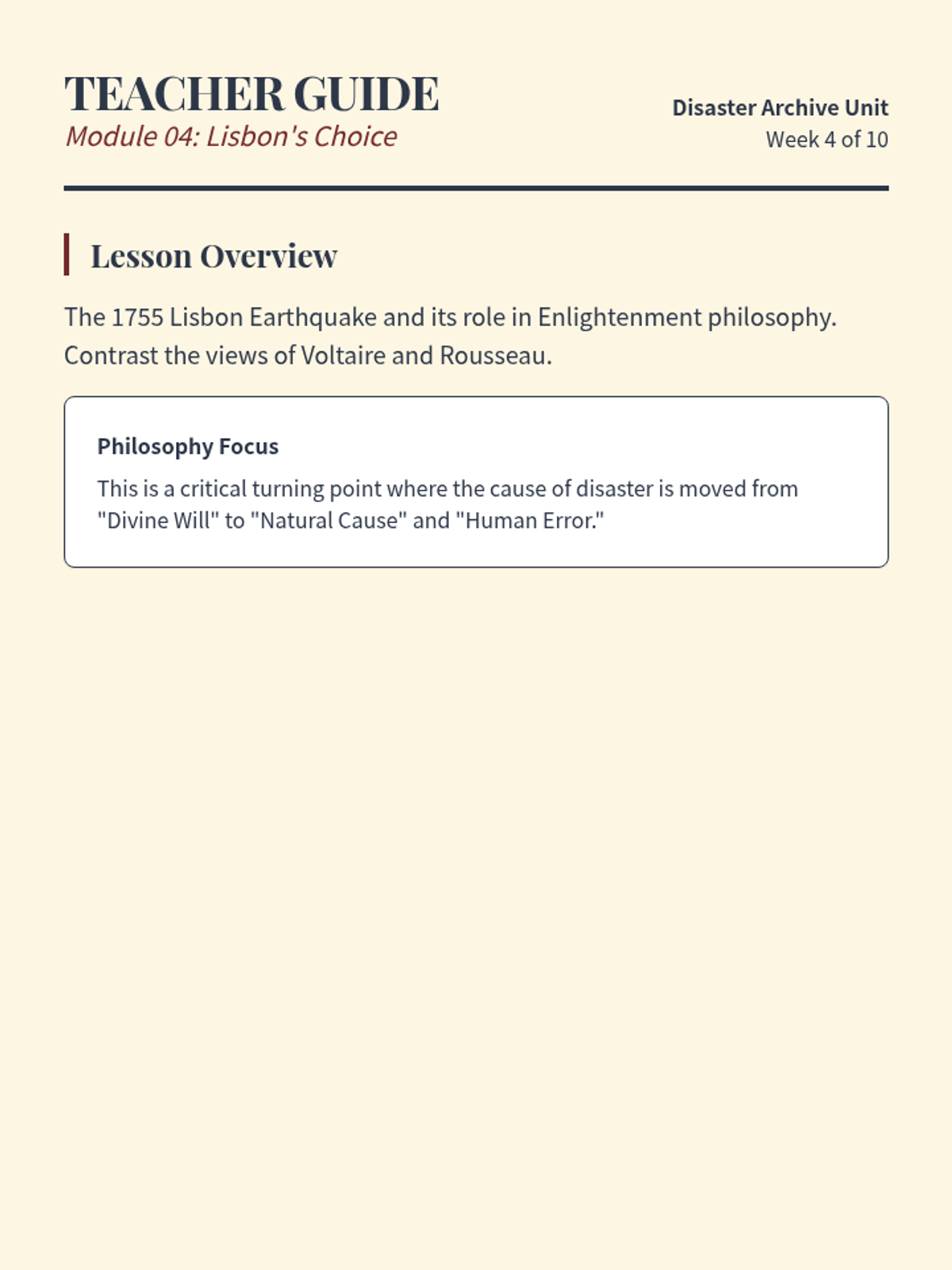
Investigate the 1755 Lisbon Earthquake and its role in the Enlightenment, as thinkers like Voltaire and Rousseau debated the nature of evil and divine intervention.
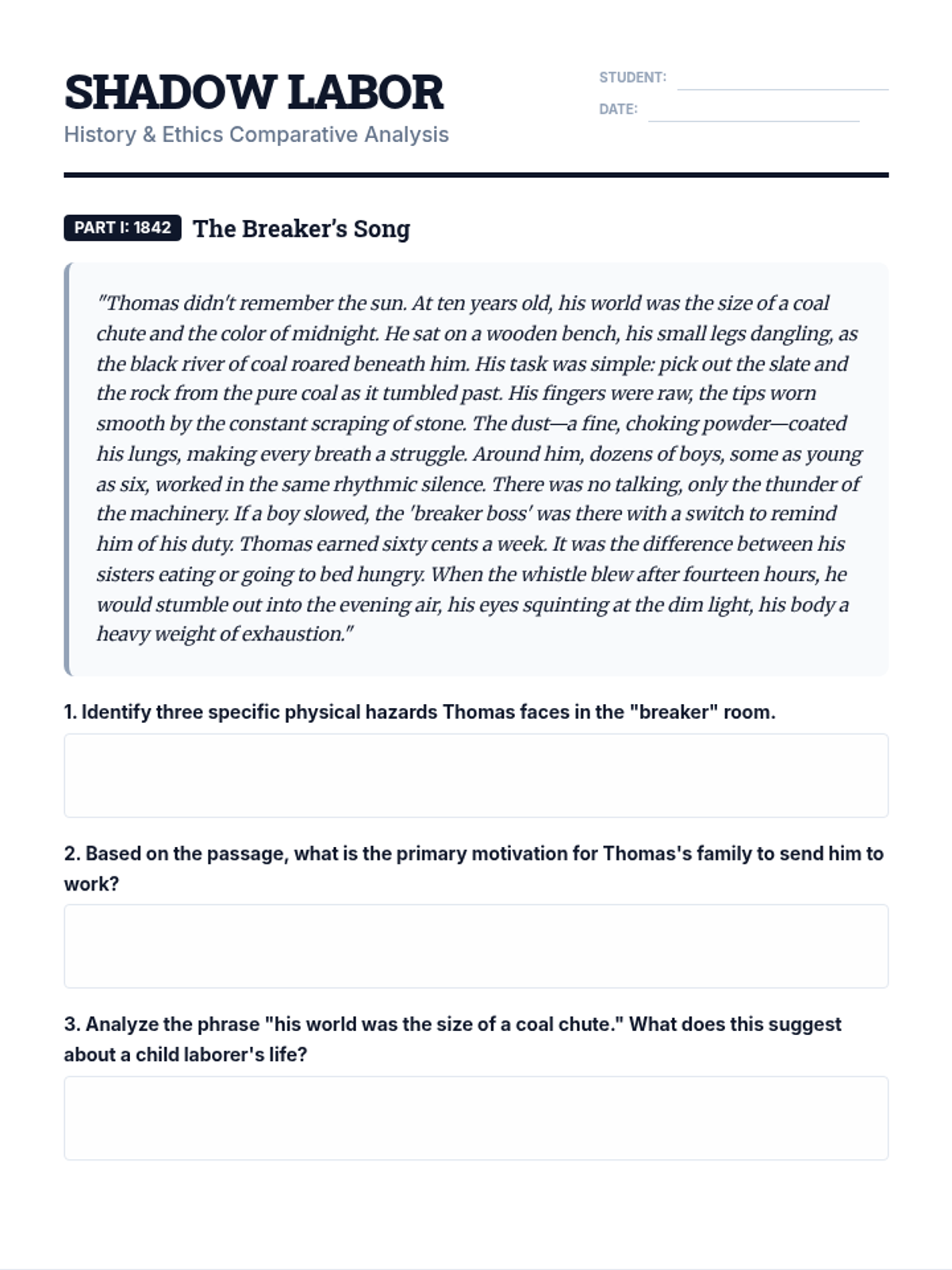
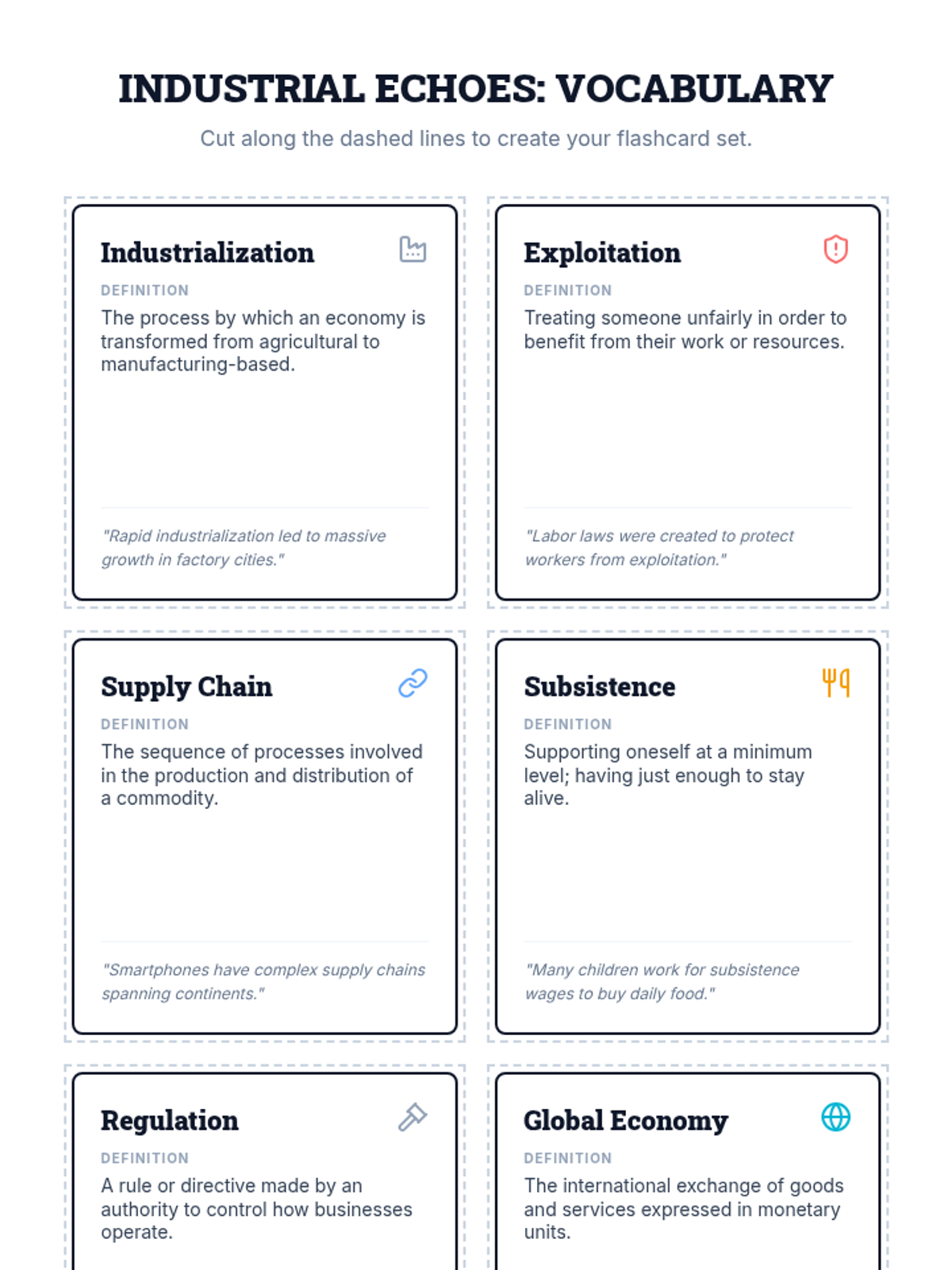
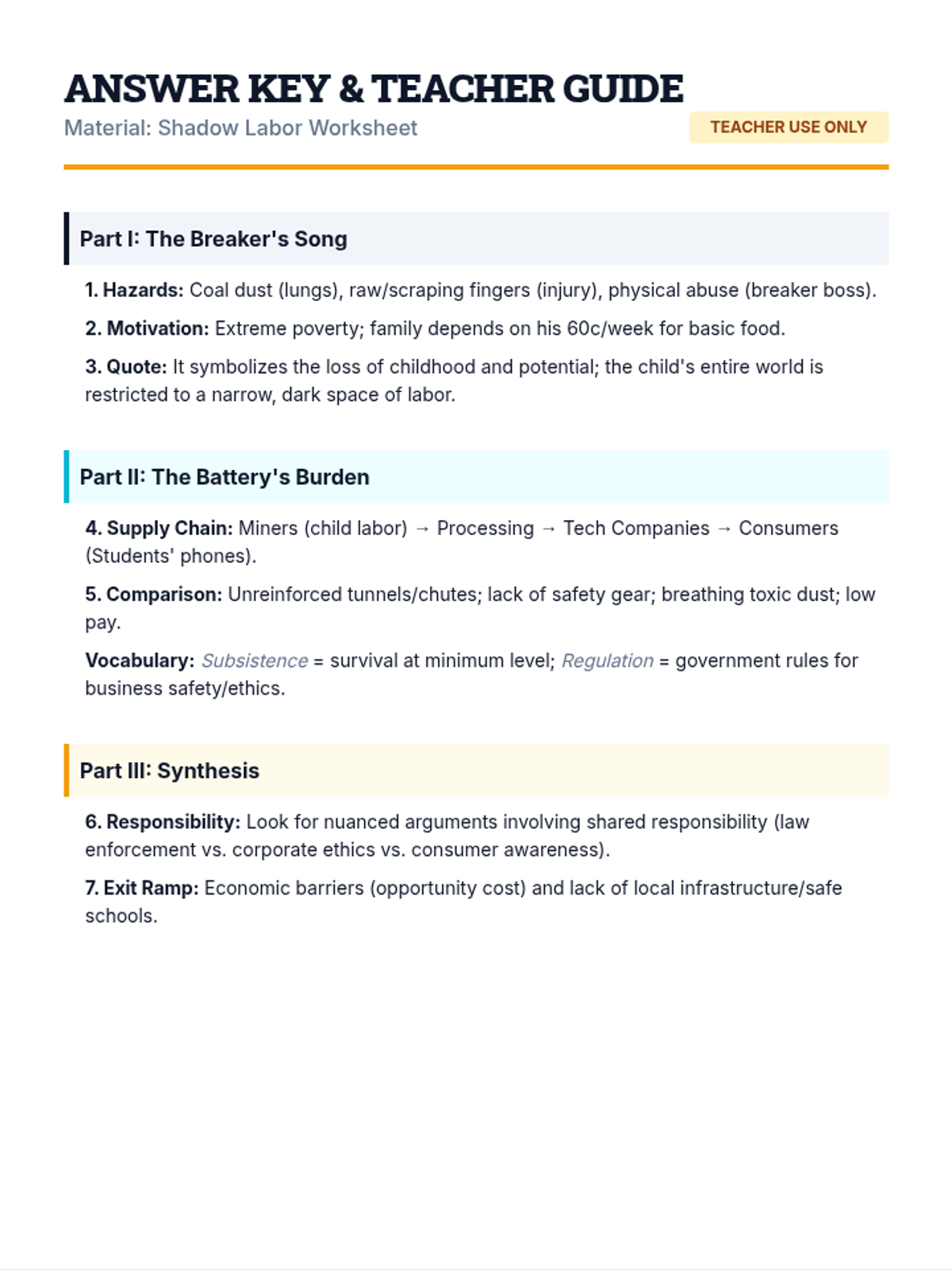
Students compare historical accounts of child labor from the Industrial Revolution with modern-day case studies in global industries. The lesson focuses on identifying patterns of exploitation and the evolution of labor laws.
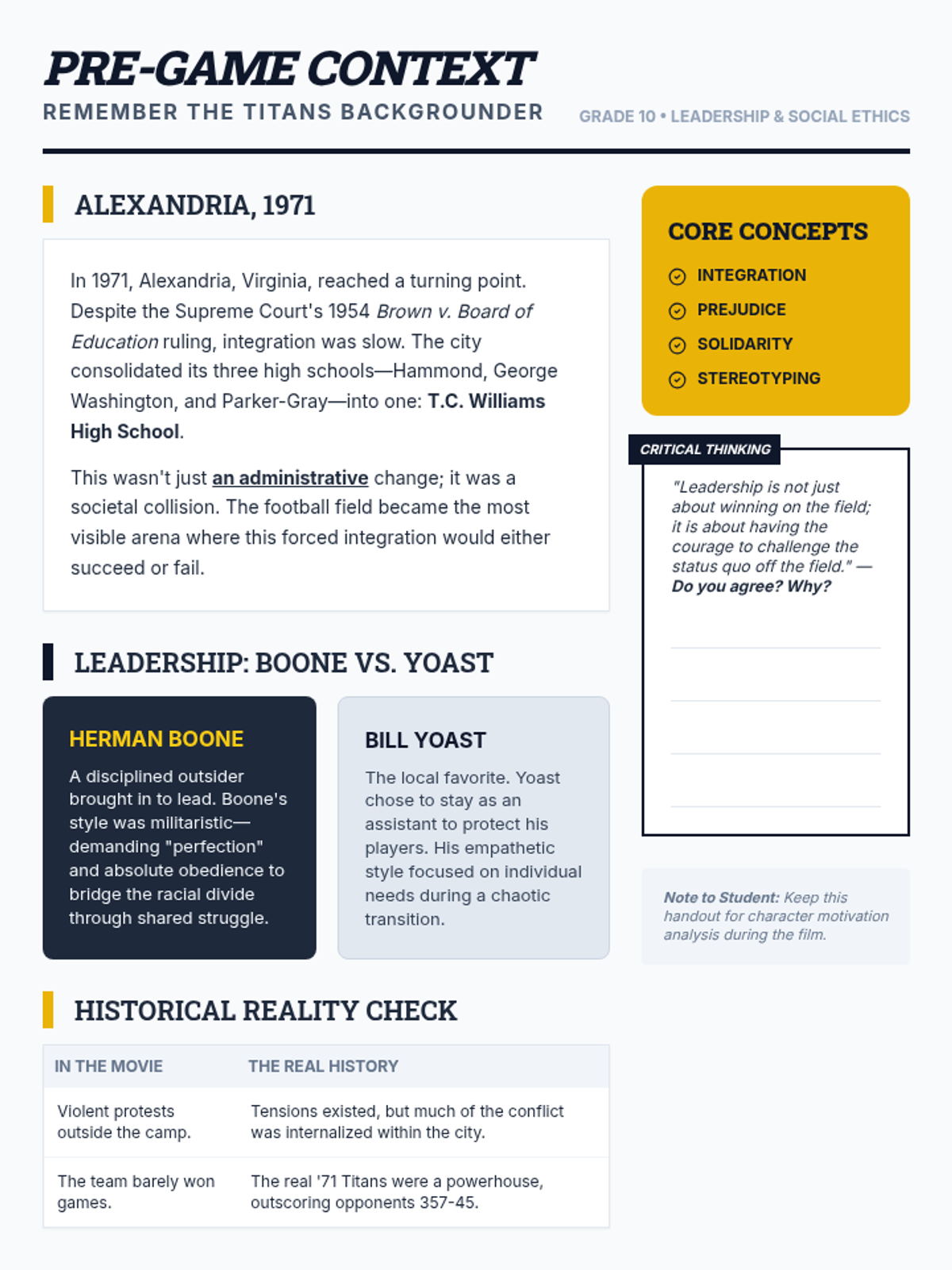
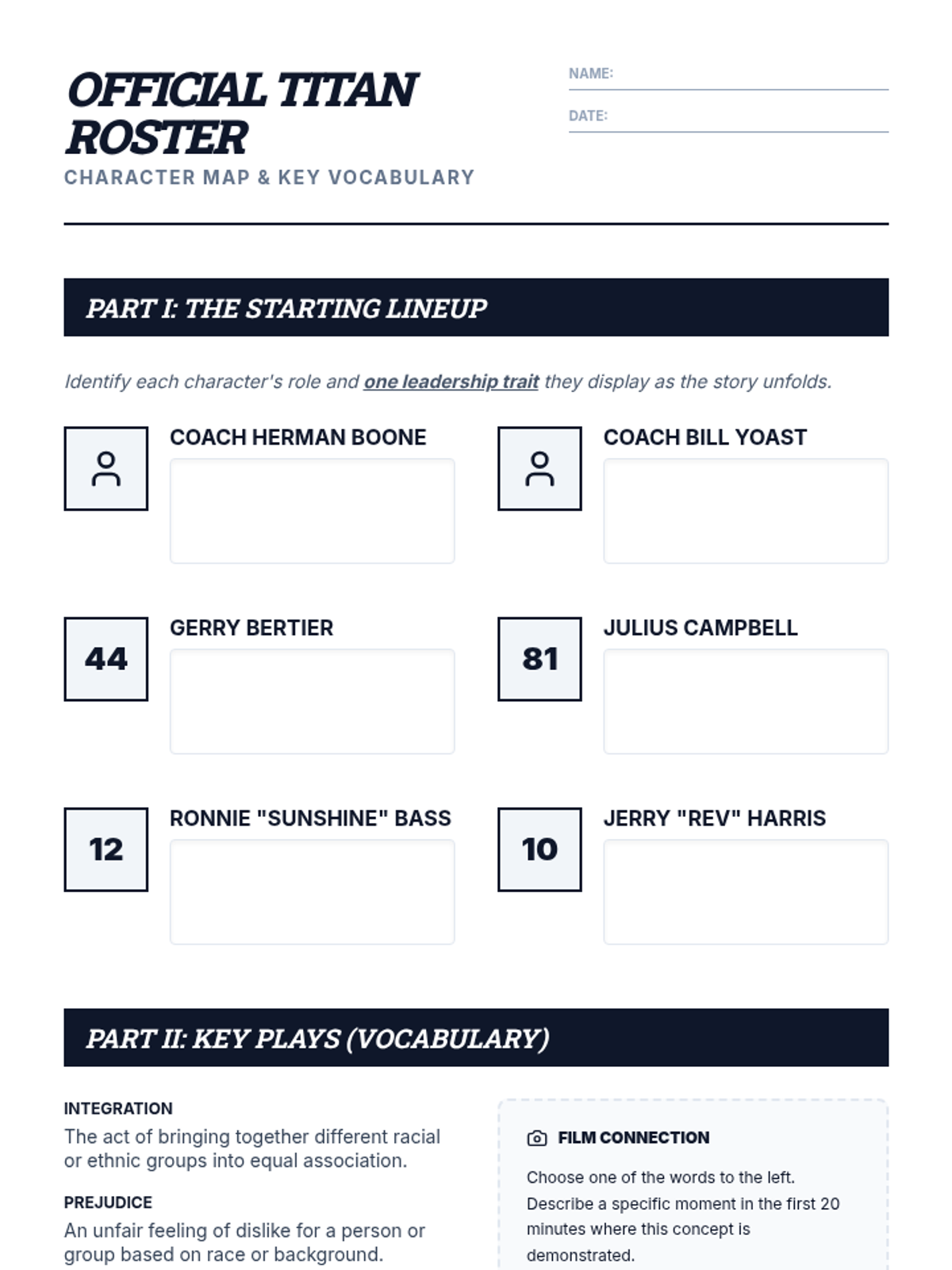
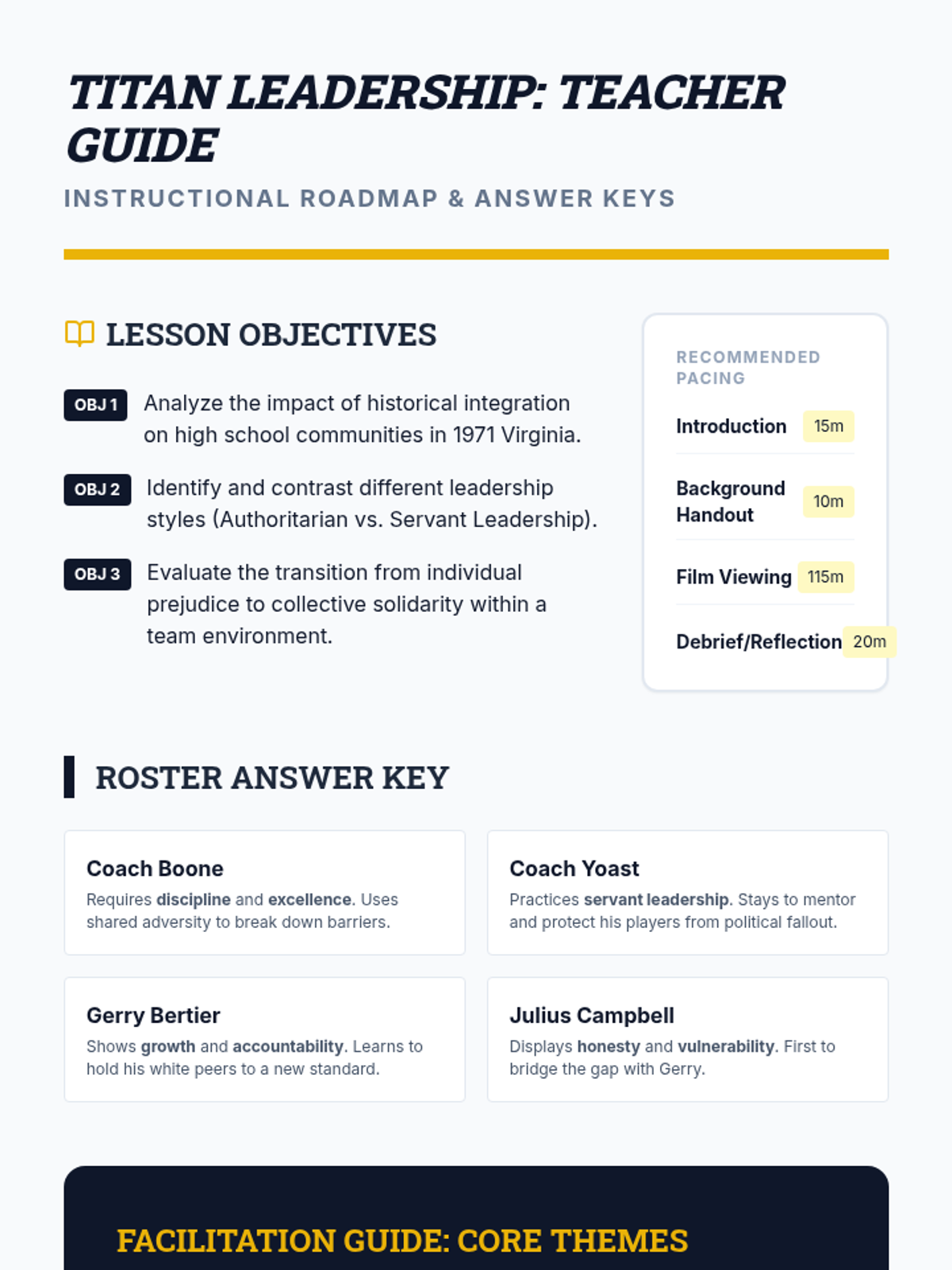
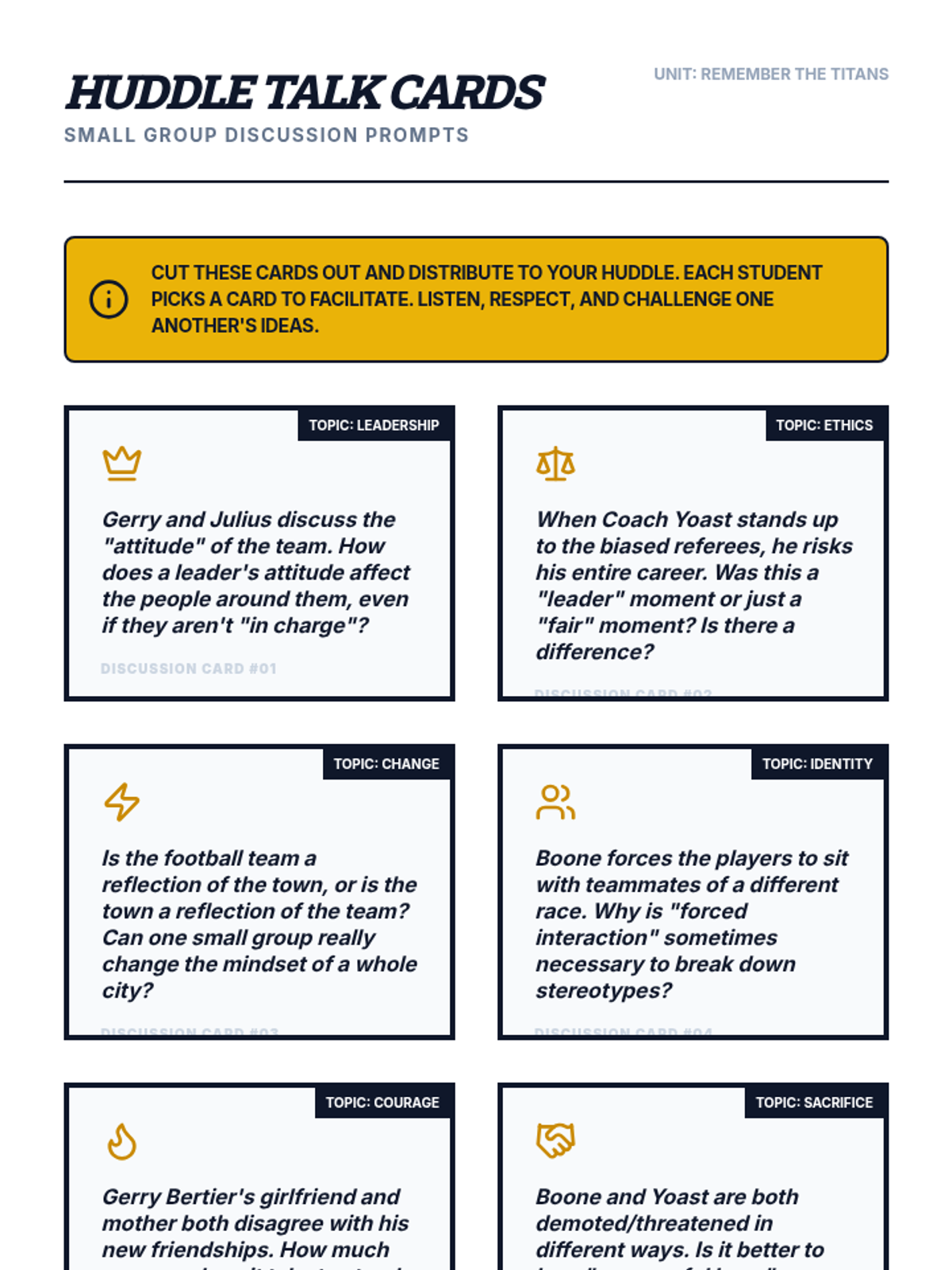
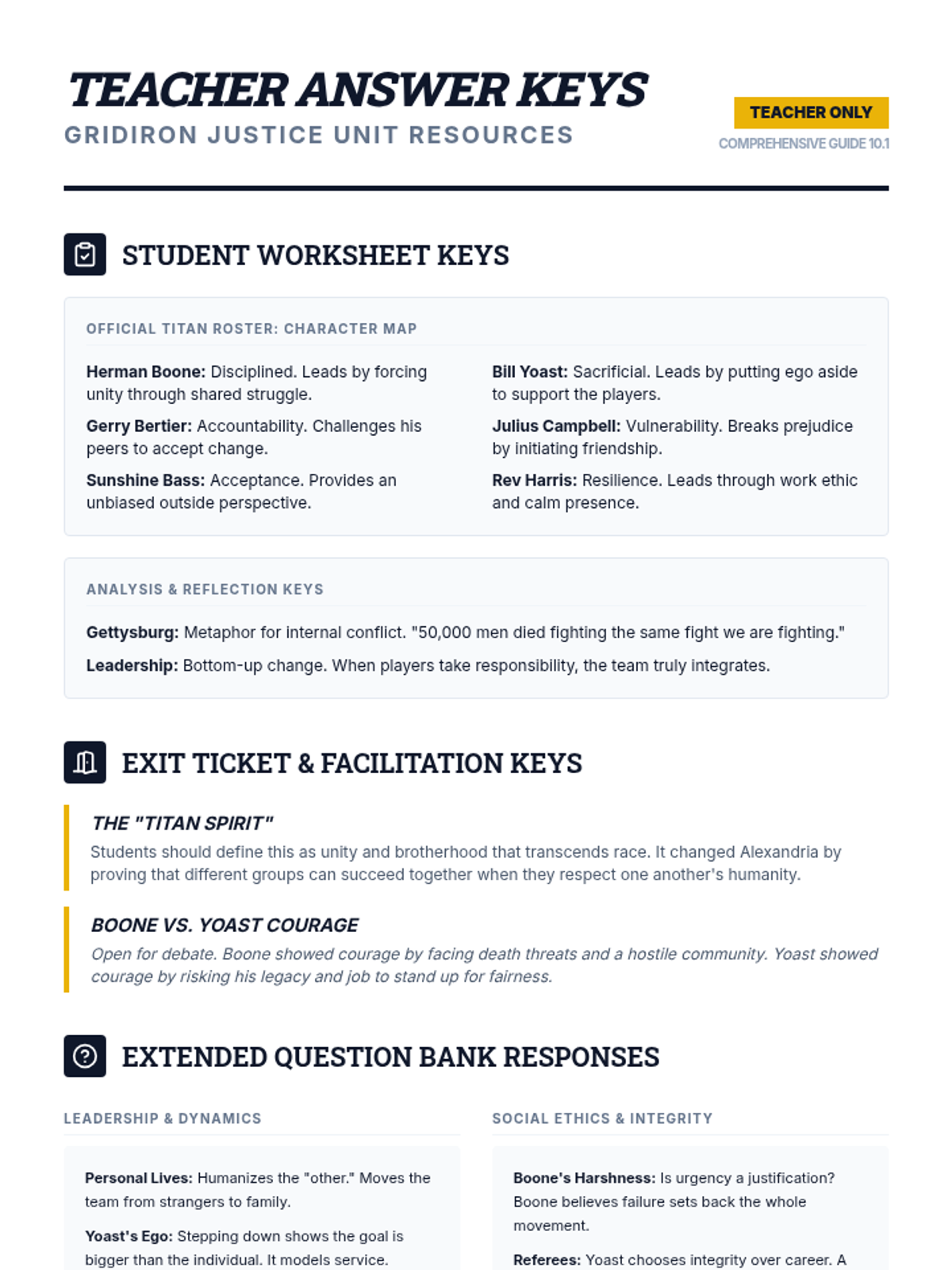
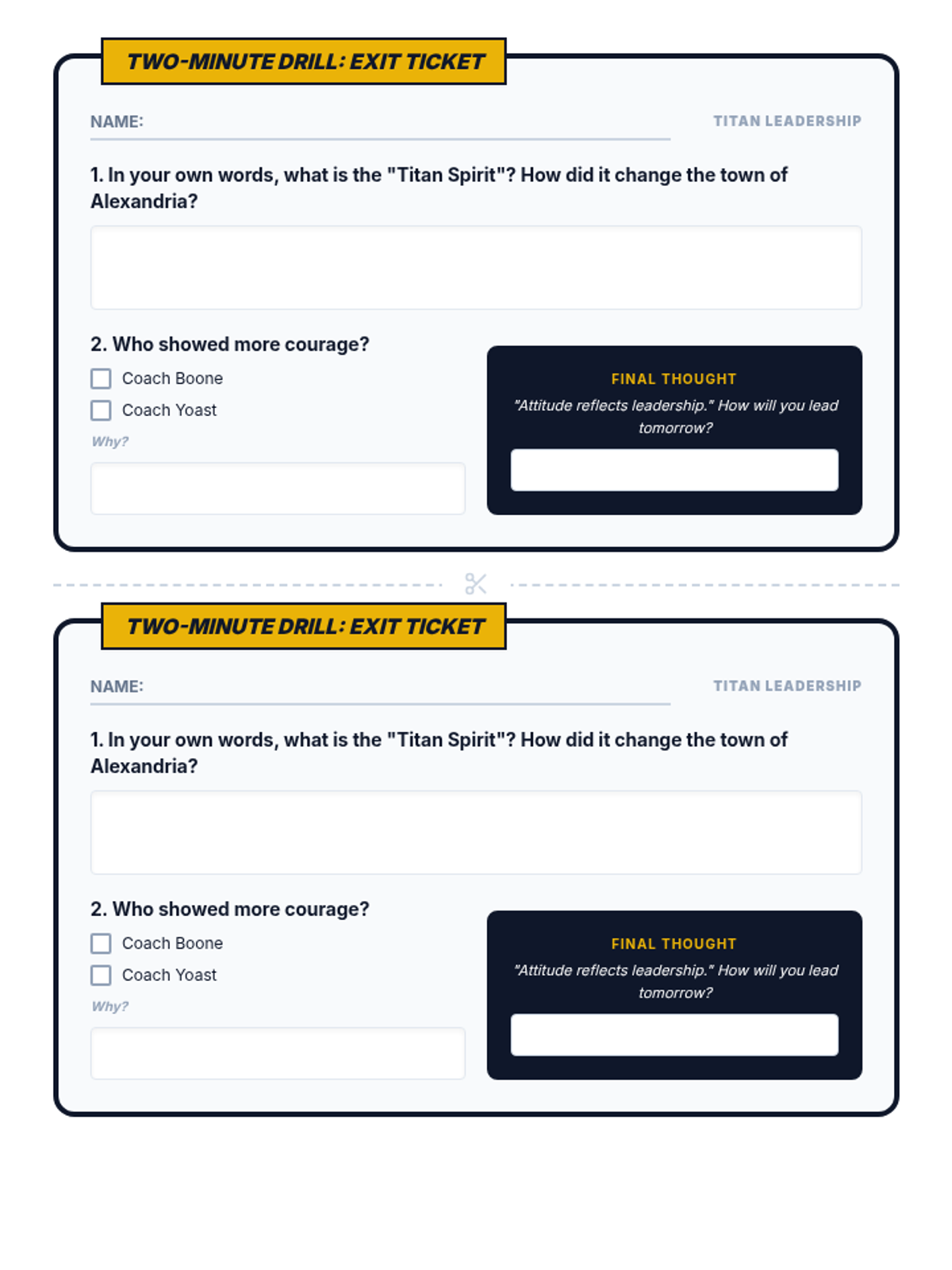
An introductory exploration of the historical and social themes in the film Remember the Titans, focusing on the 1971 integration of T.C. Williams High School and the leadership required to build a unified team.
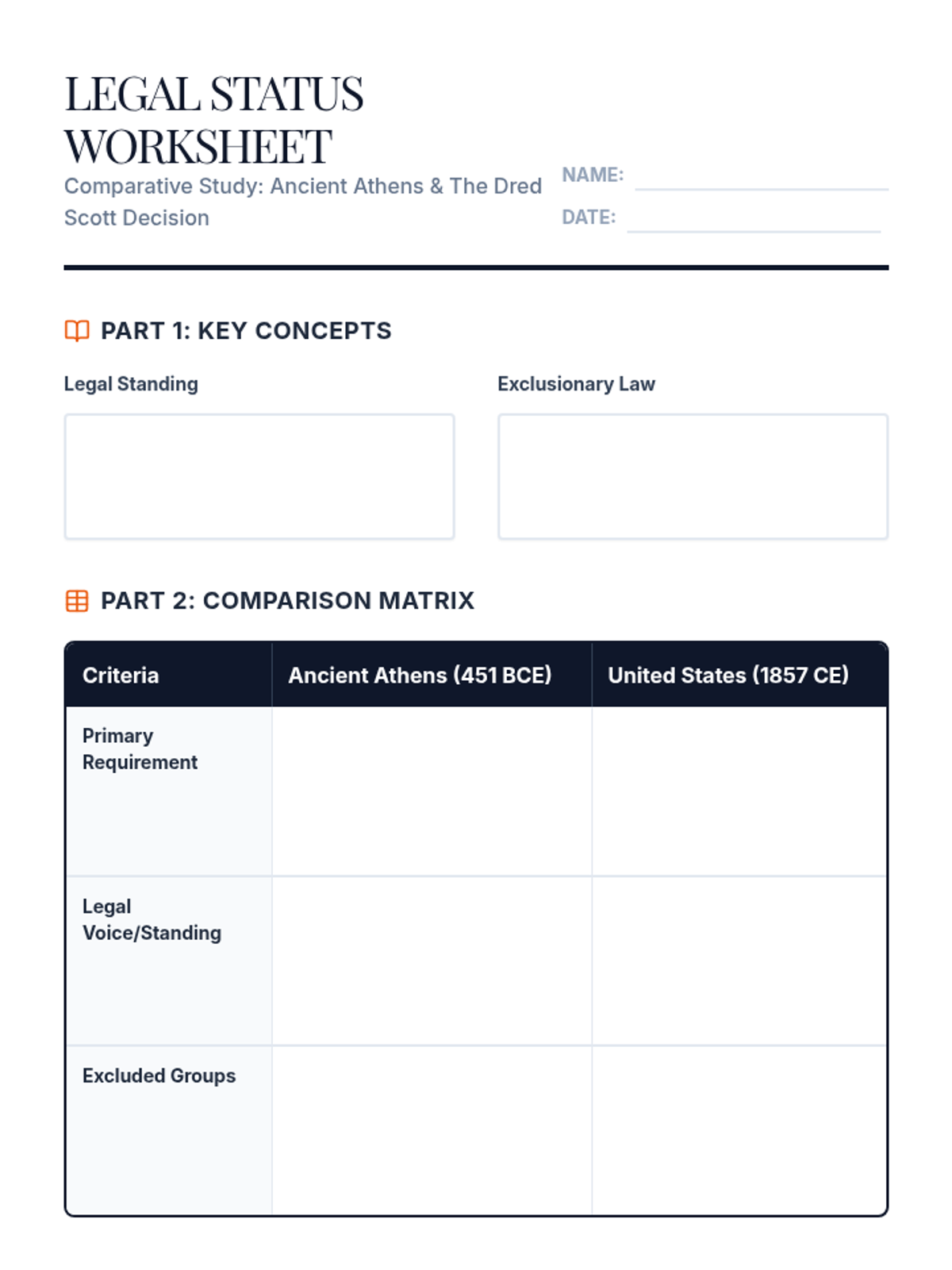
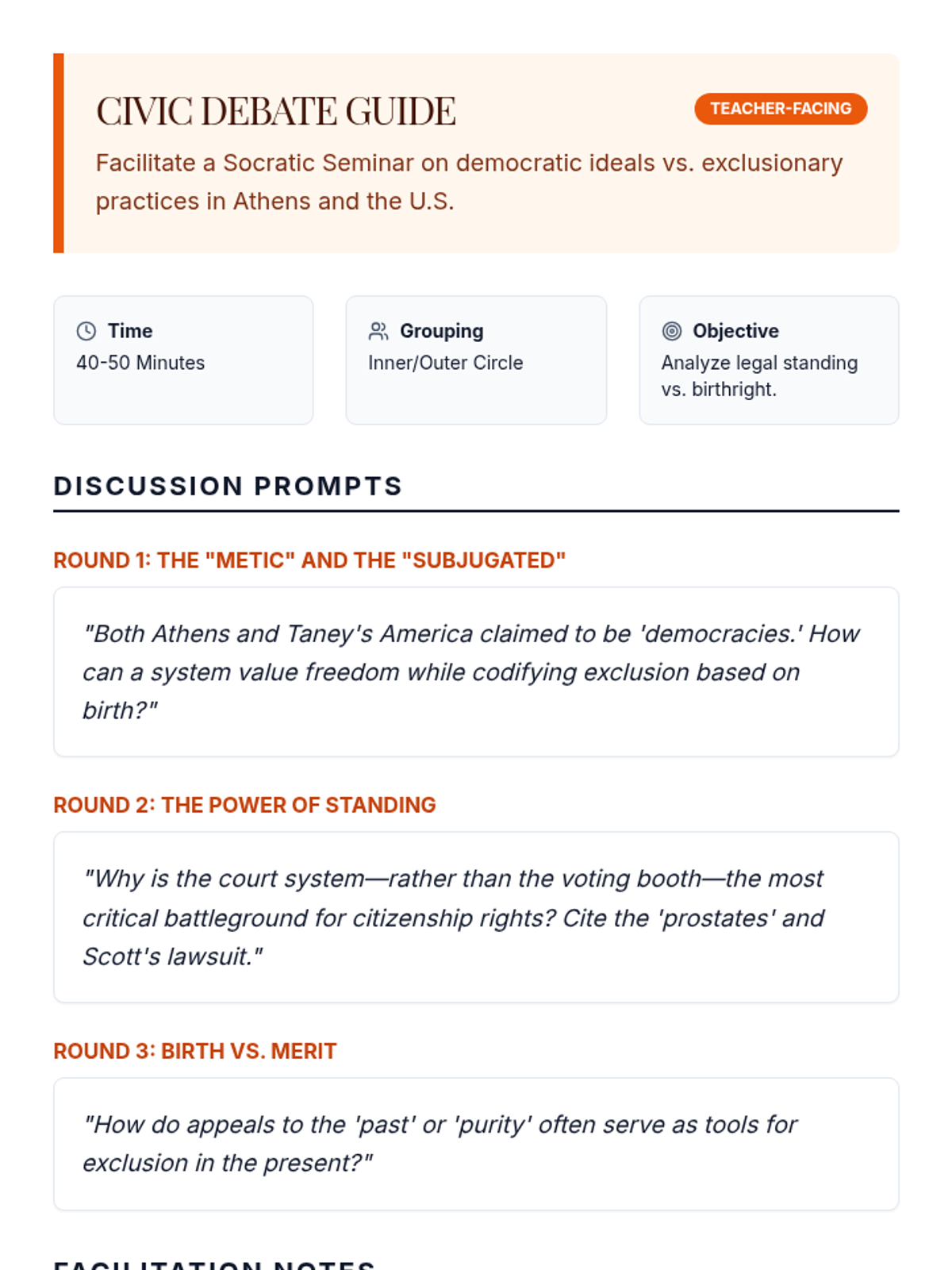
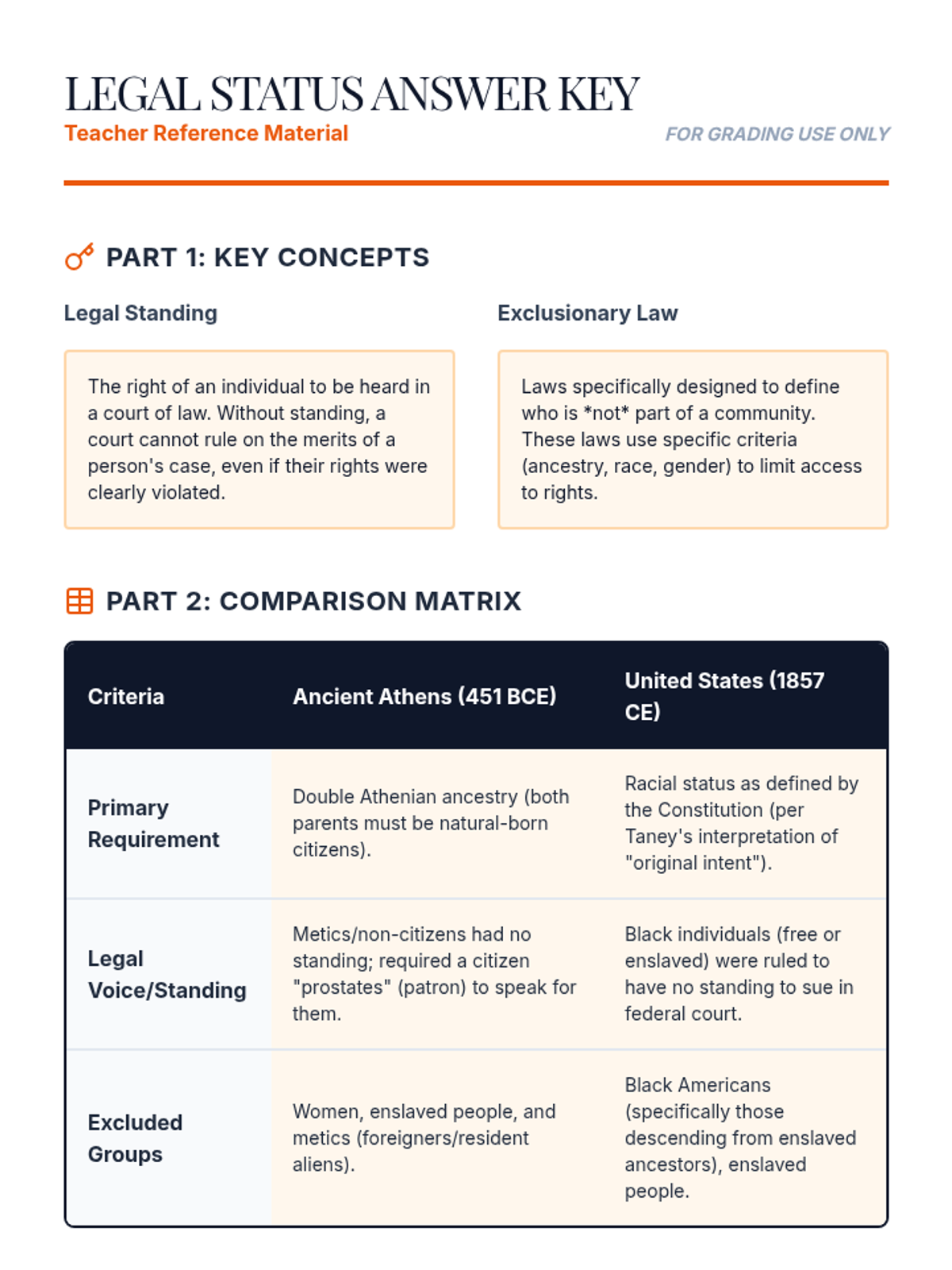
This lesson compares the exclusionary nature of citizenship in Ancient Athens with the 1857 Dred Scott decision, exploring how legal standing and individual rights were historically denied based on birth and status.
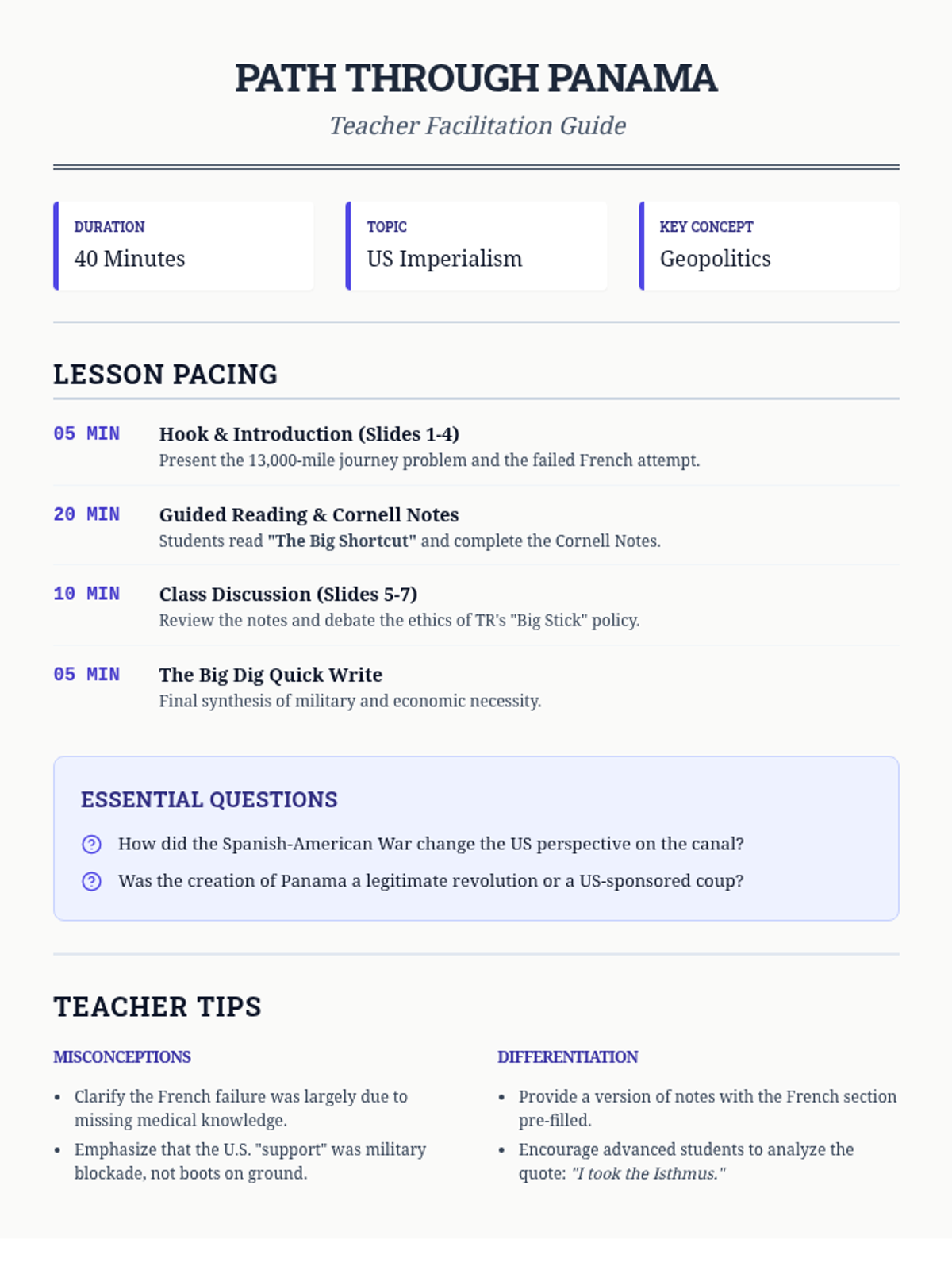
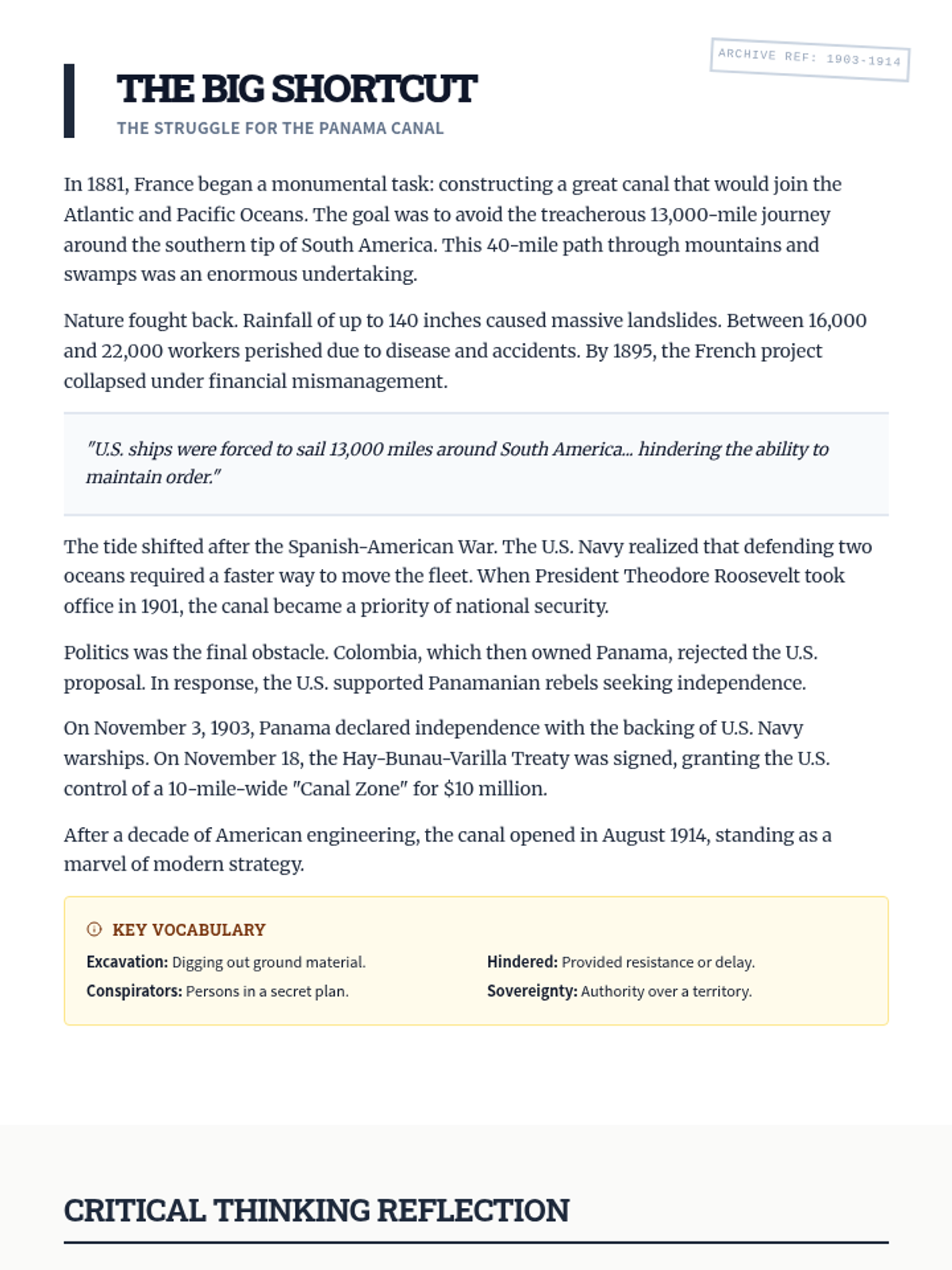
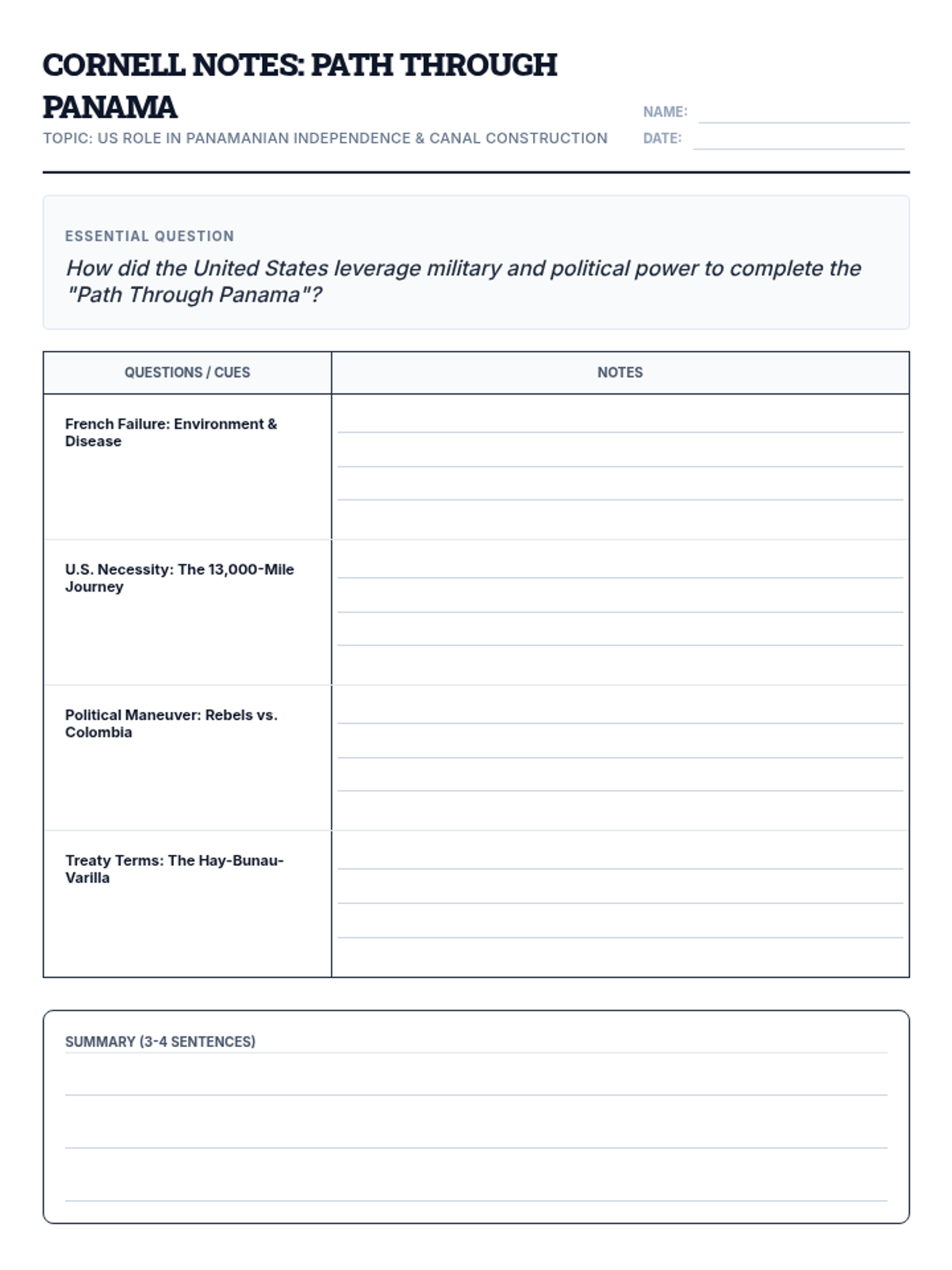
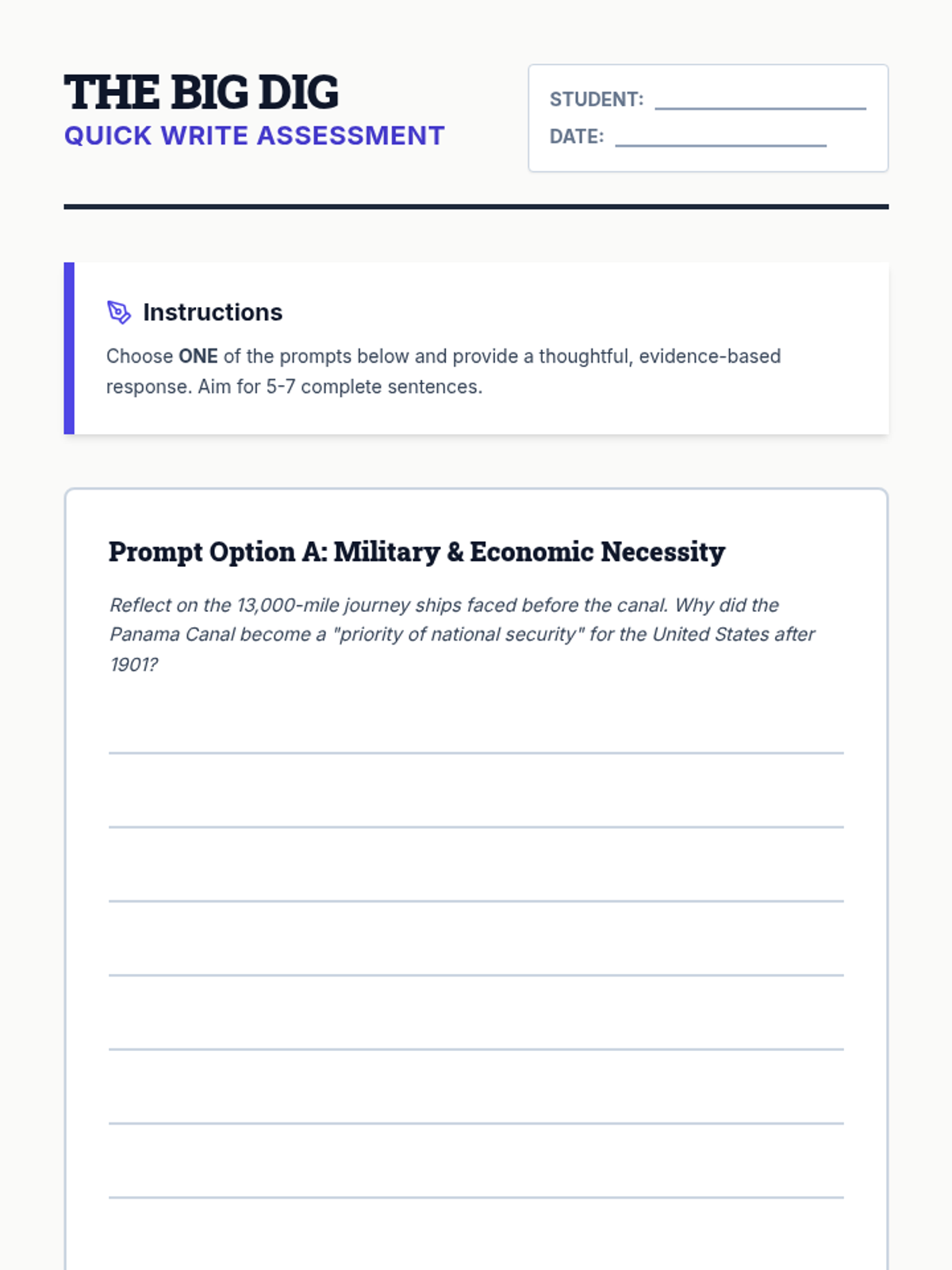
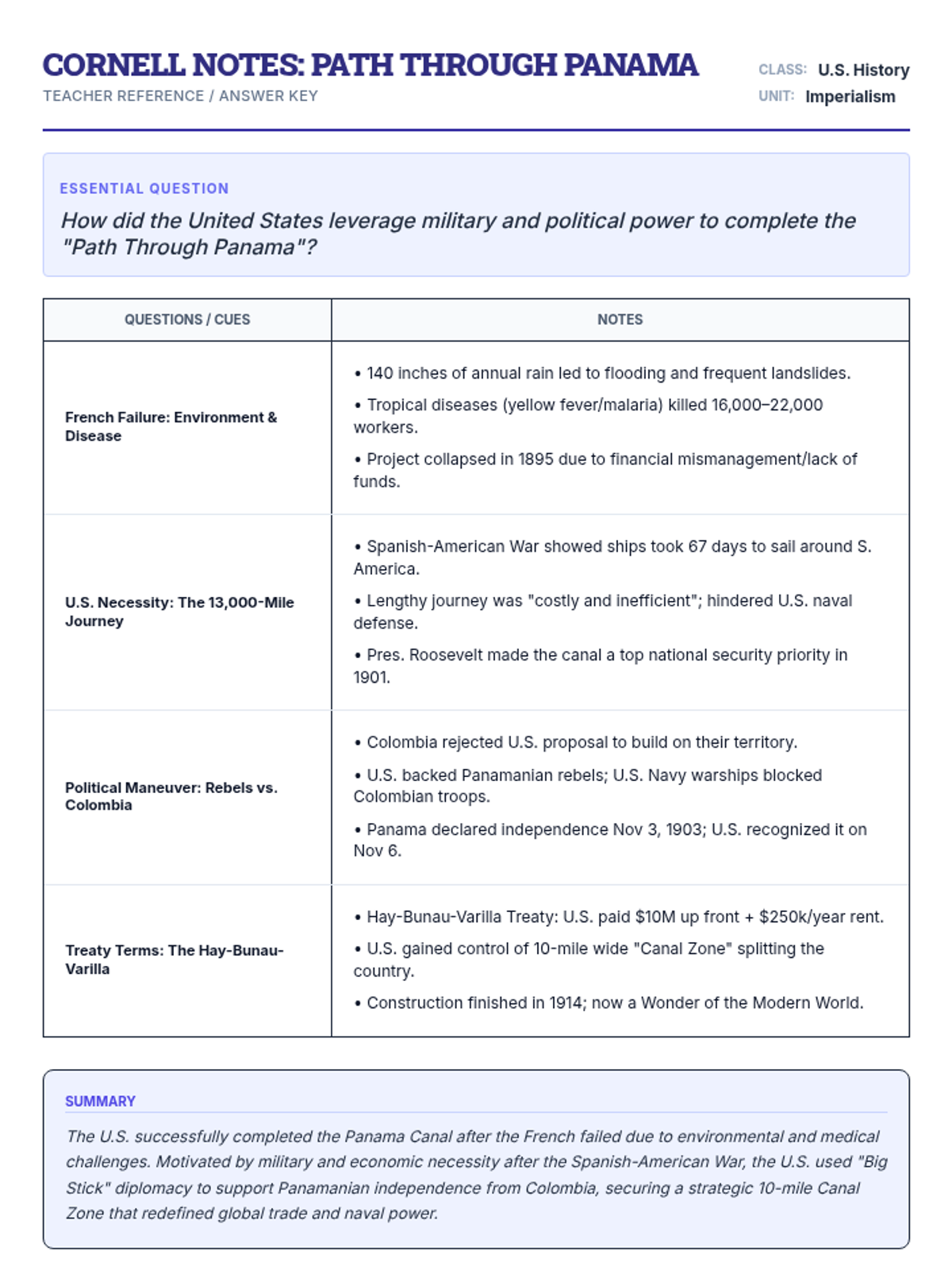
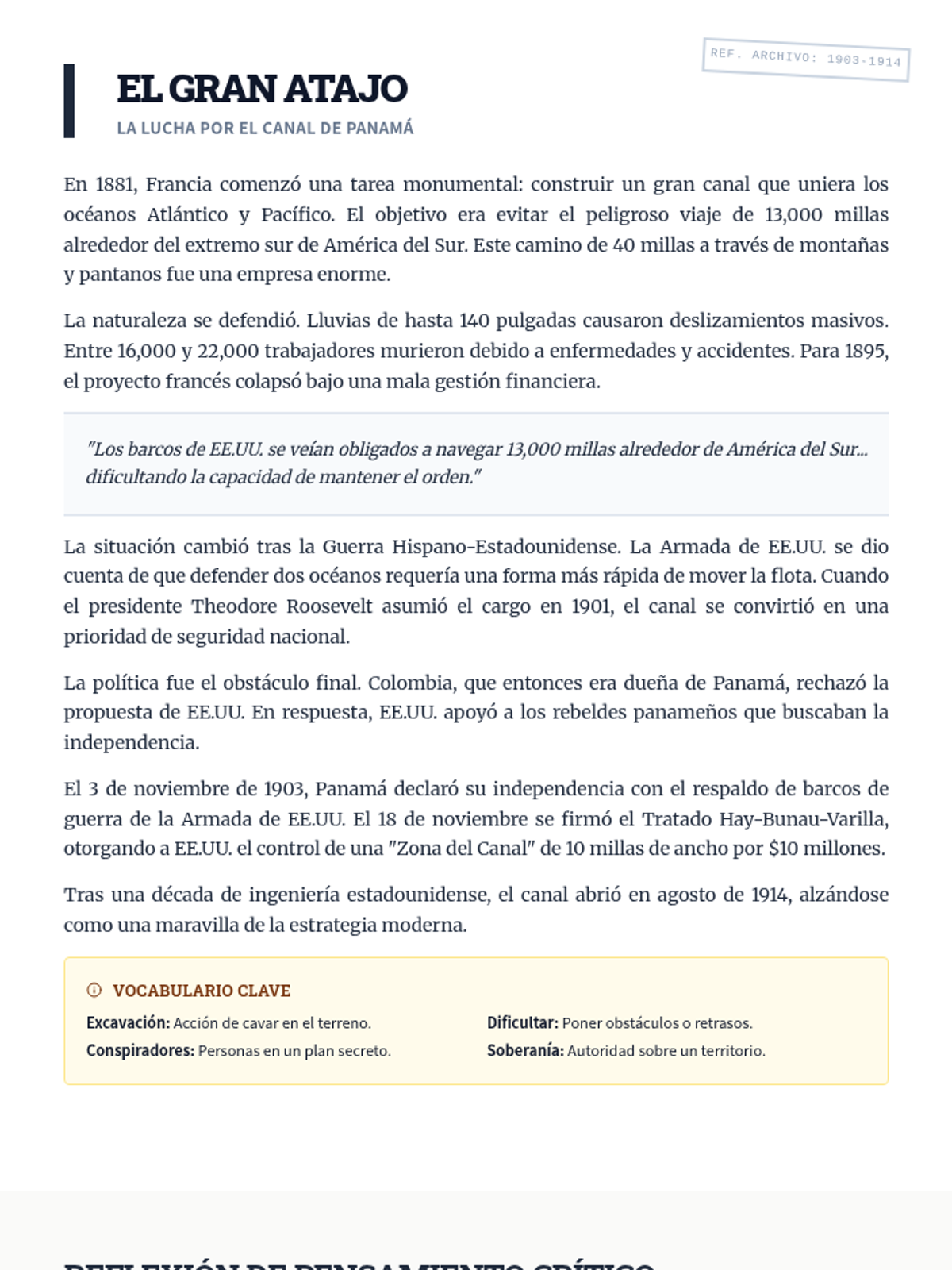
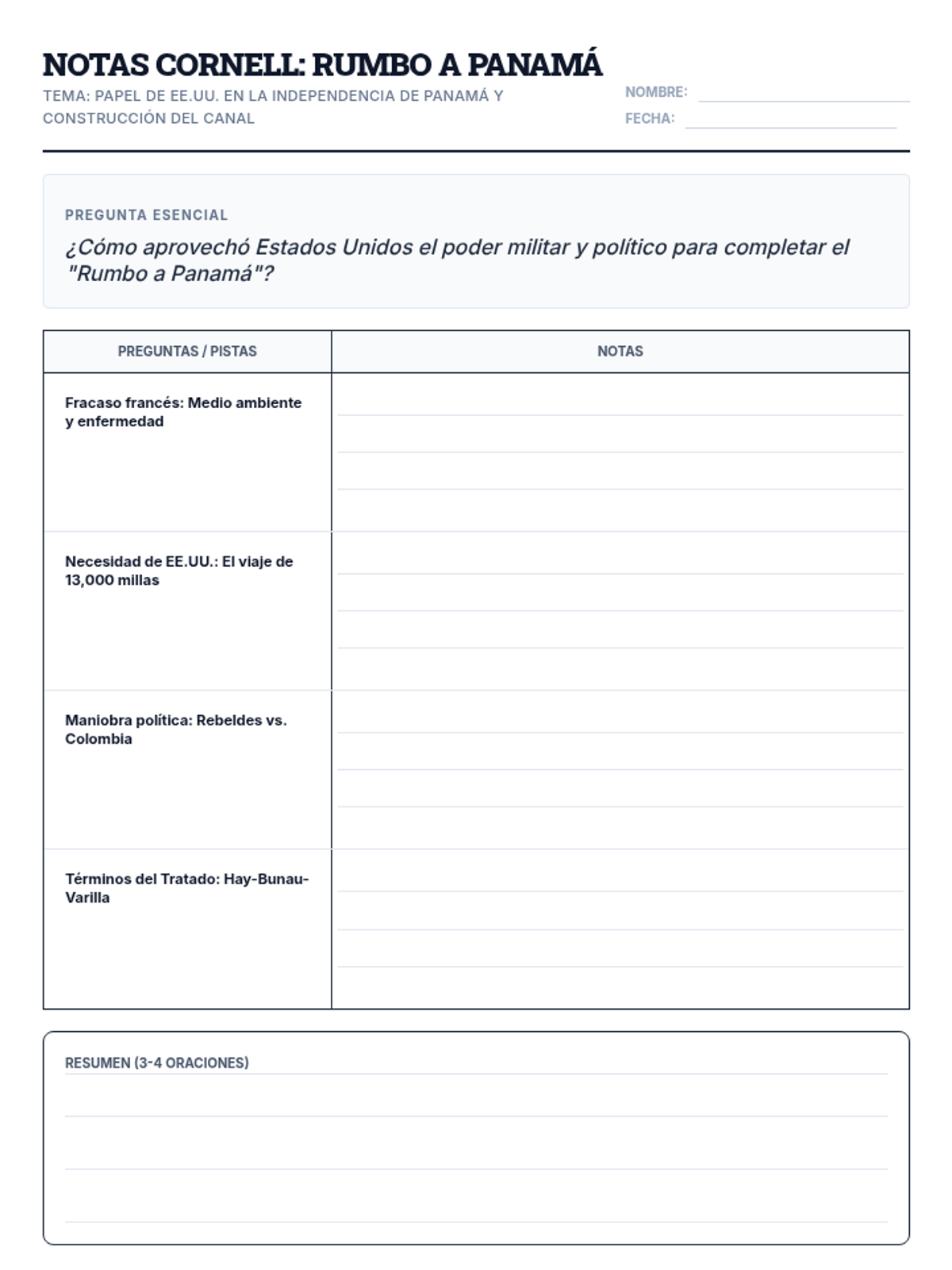
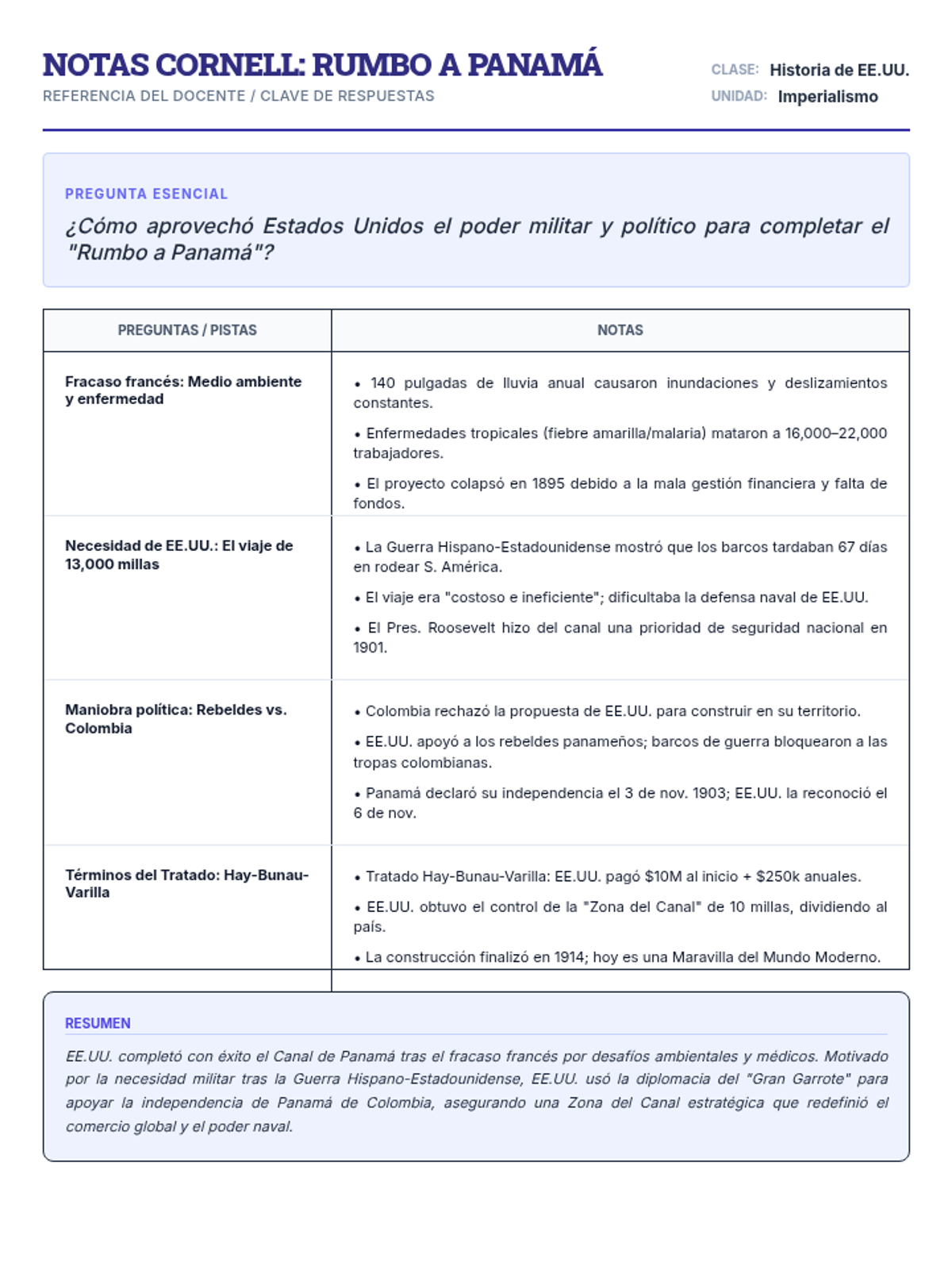
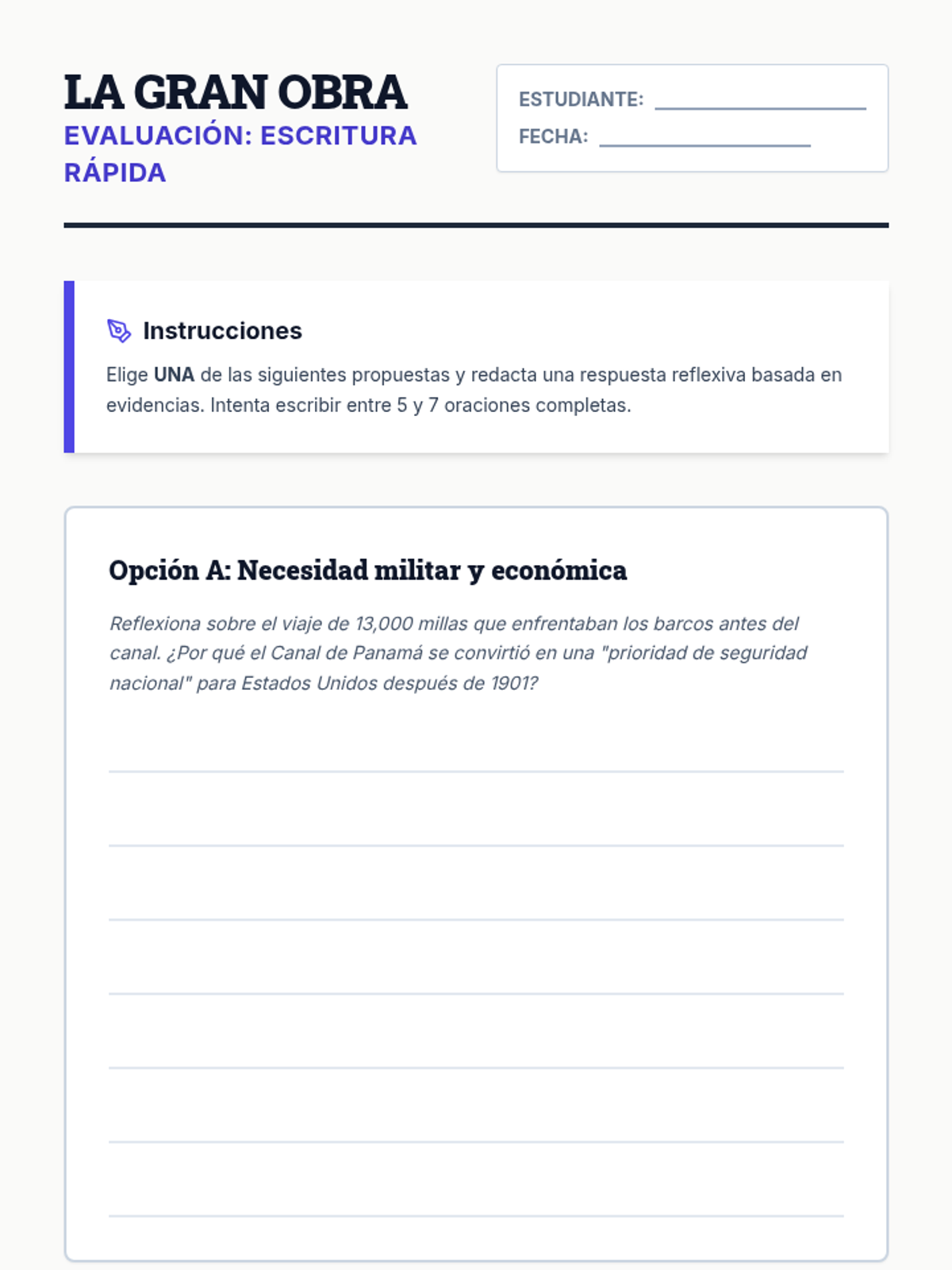
A 40-minute introductory lesson exploring the geopolitical, military, and economic motivations behind the US involvement in the Panama Canal's construction and Panamanian independence.
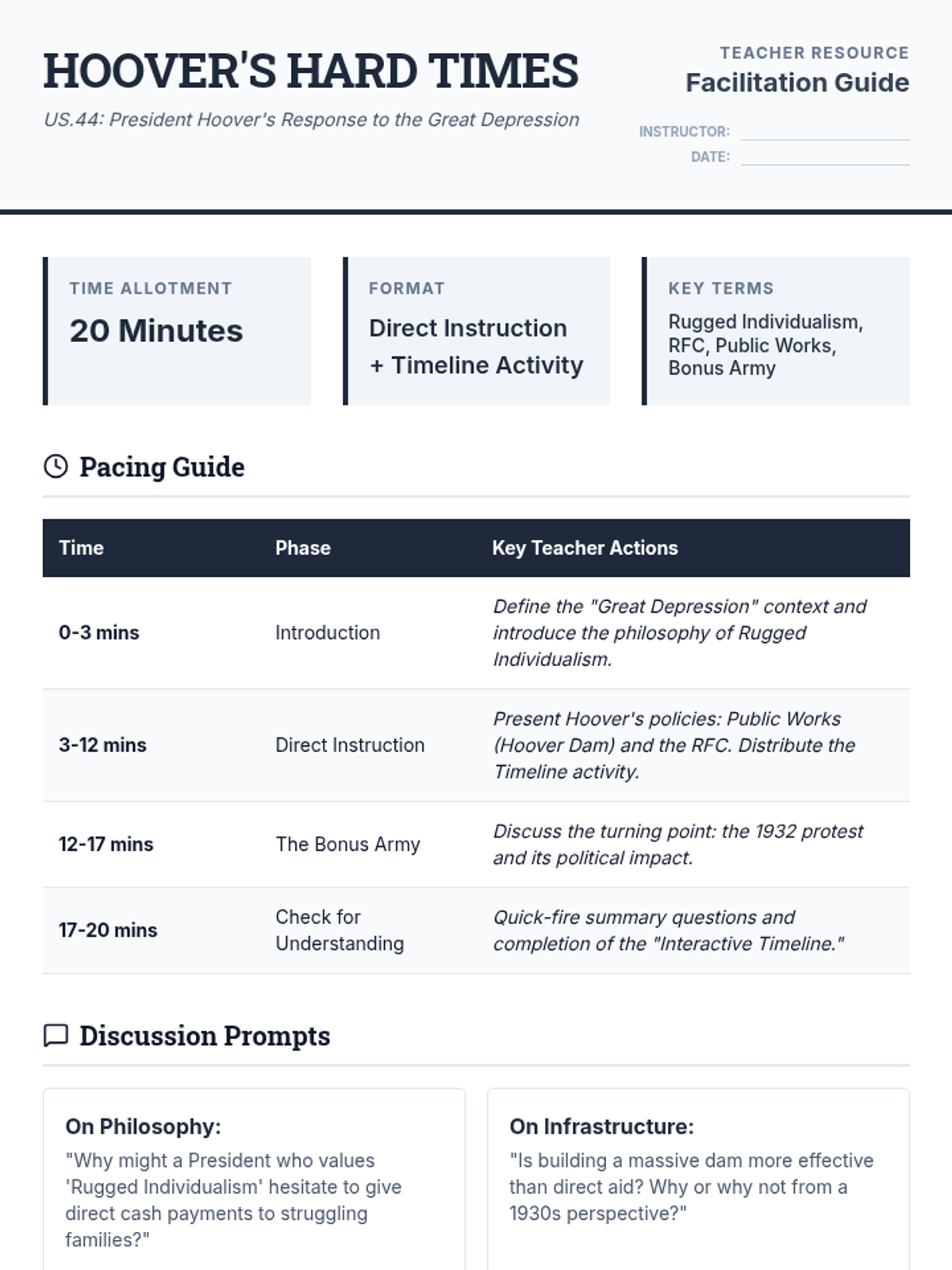
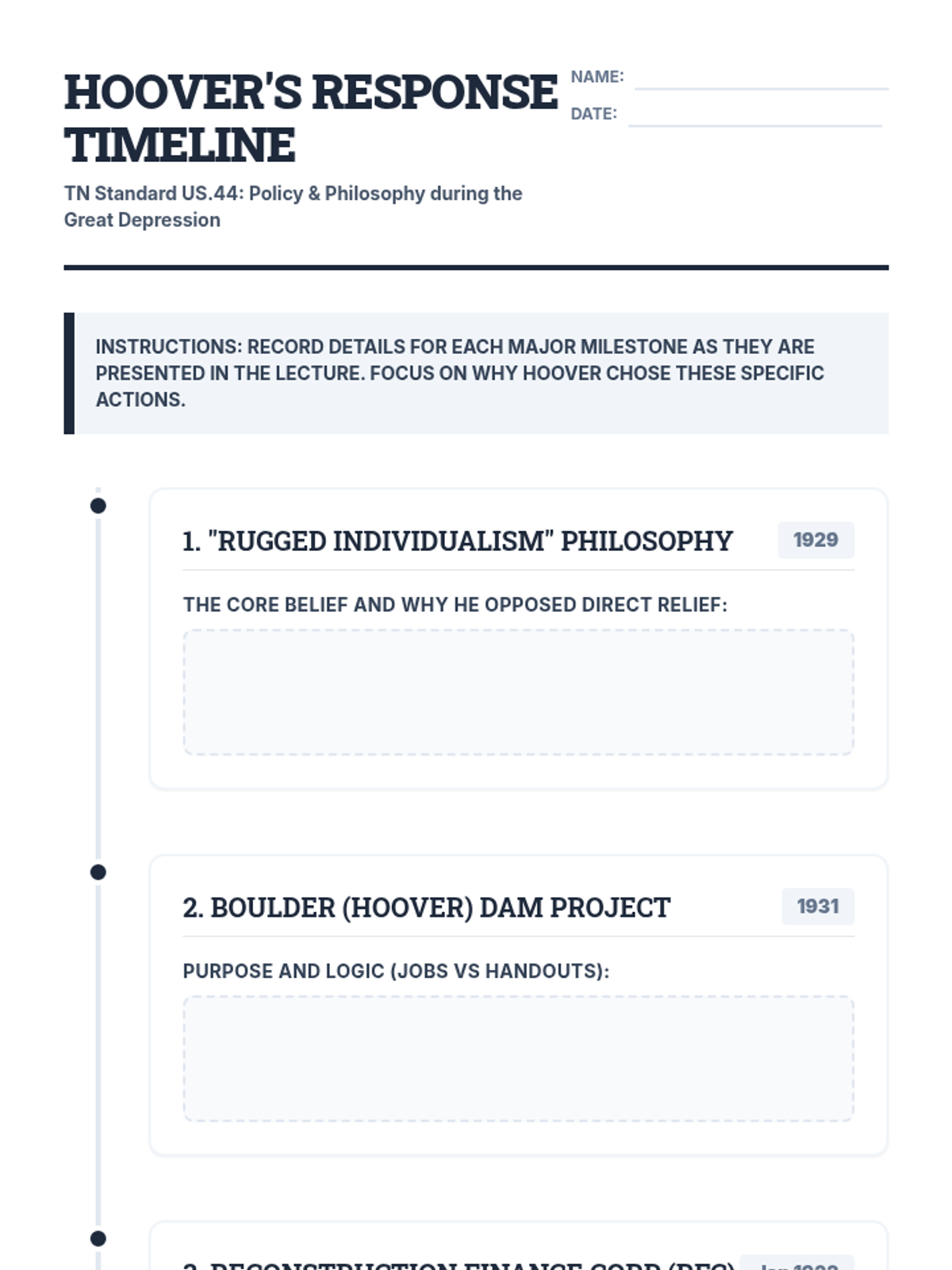
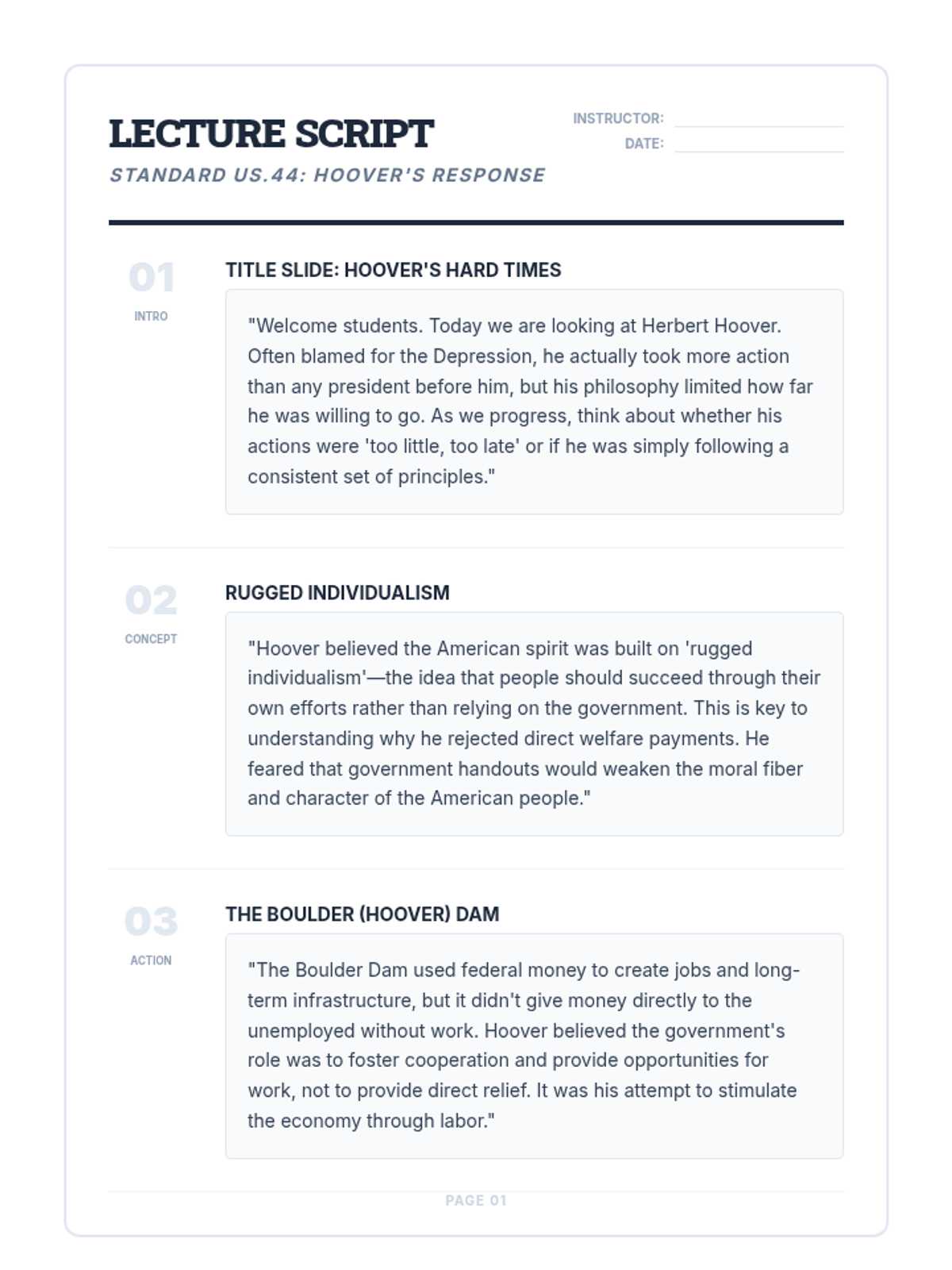
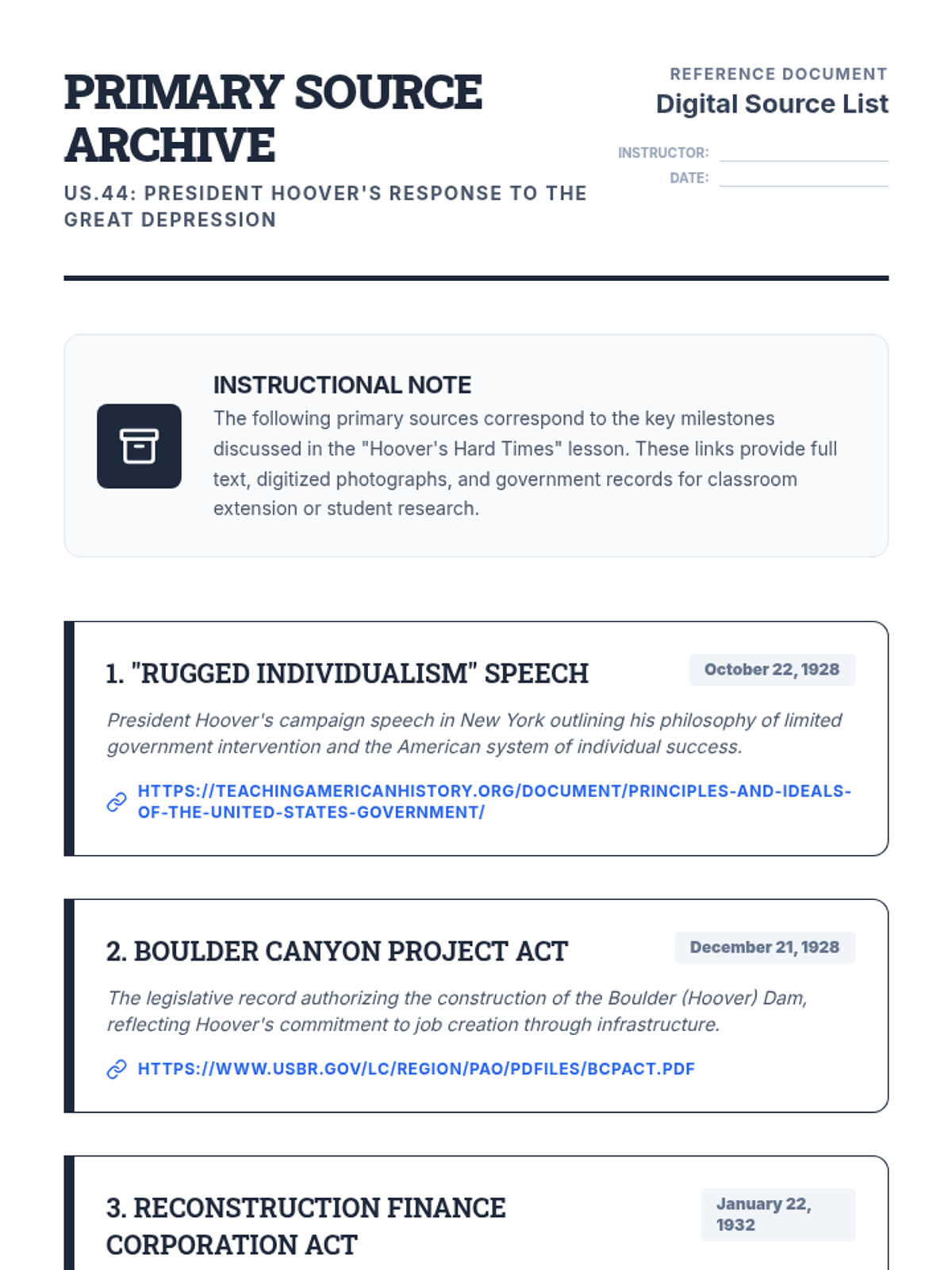
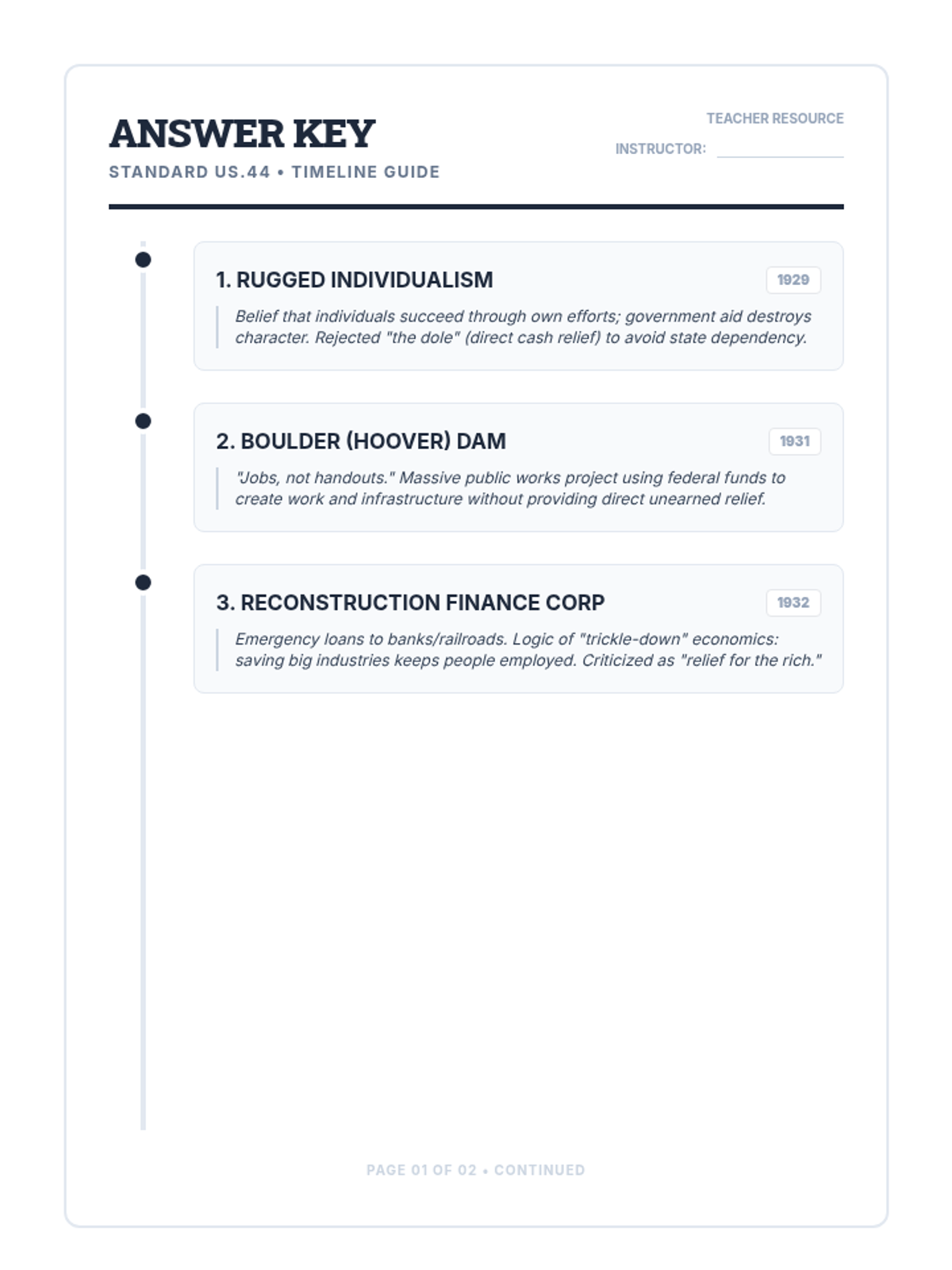
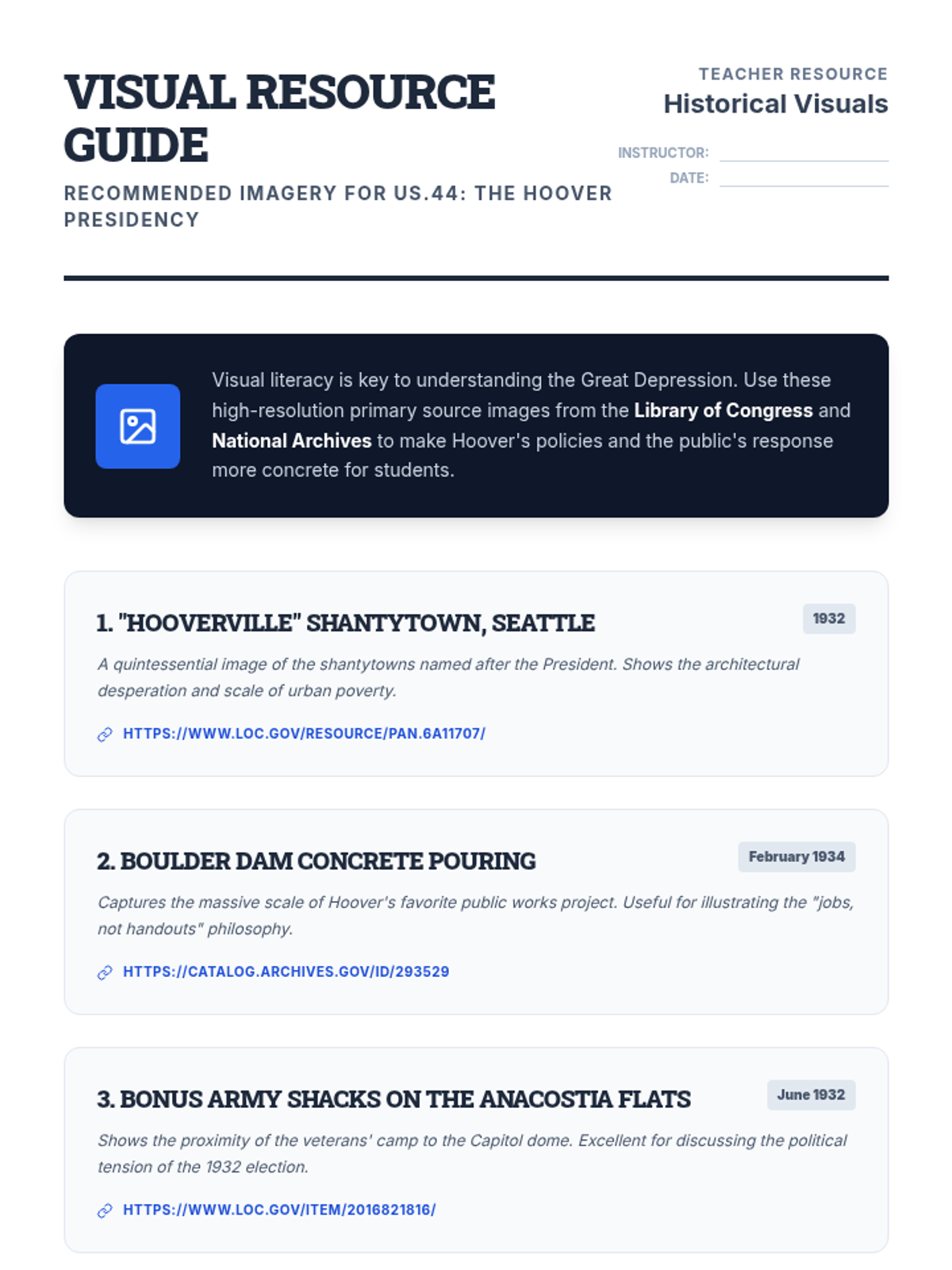
A concise 20-minute lesson covering President Herbert Hoover's response to the Great Depression, focusing on his philosophy of Rugged Individualism, the Hoover Dam, the RFC, and the Bonus Army incident.
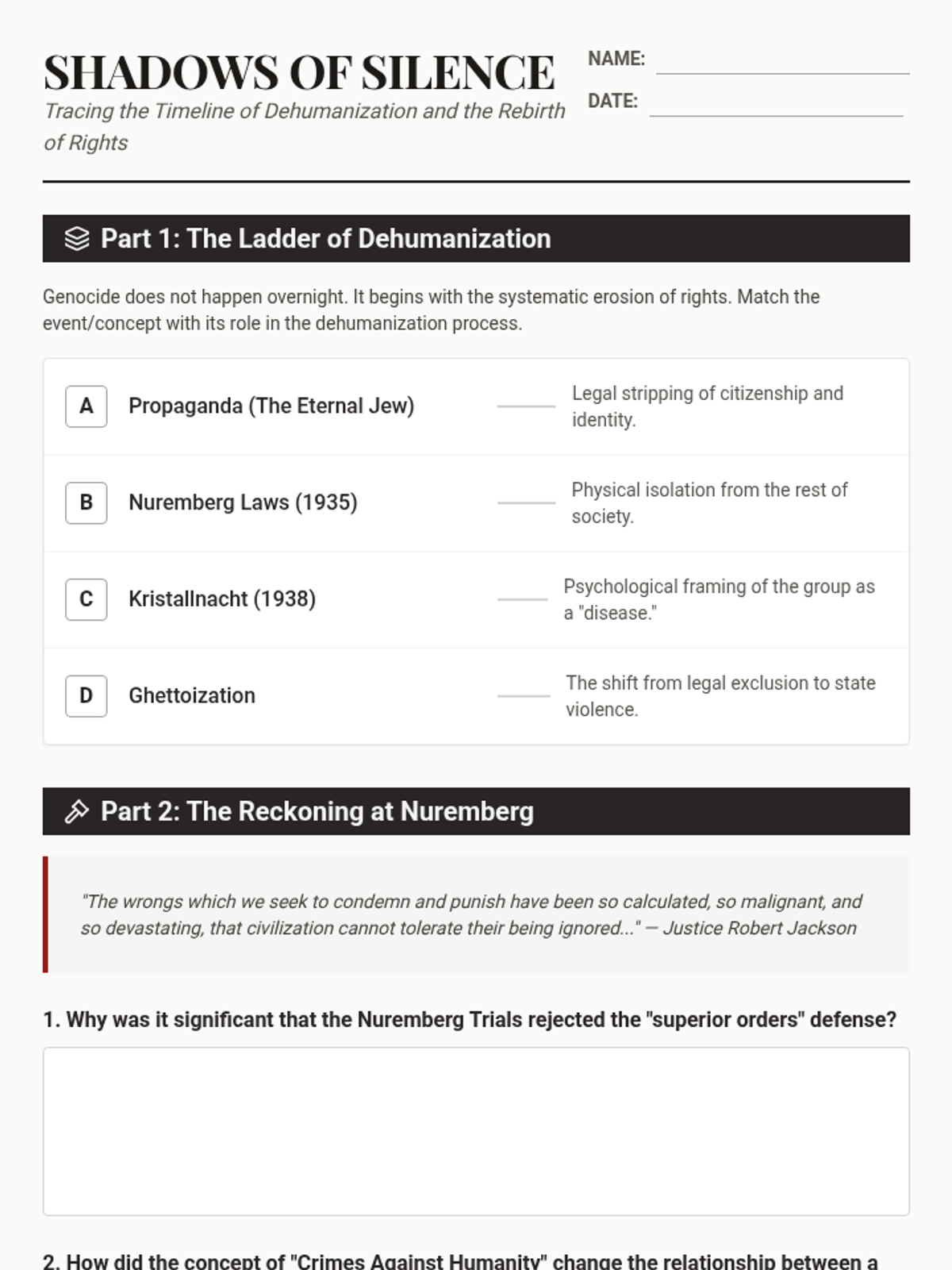
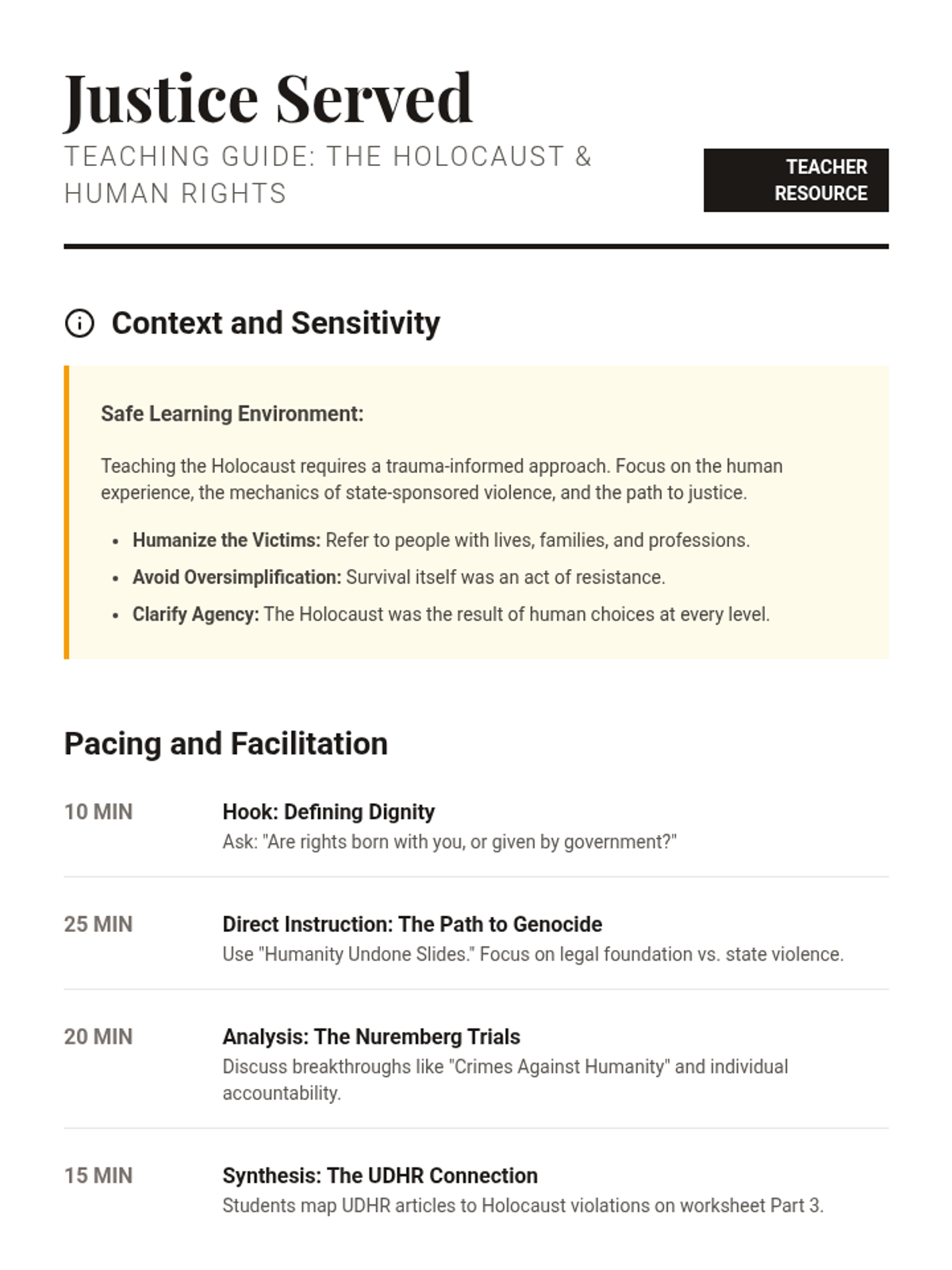
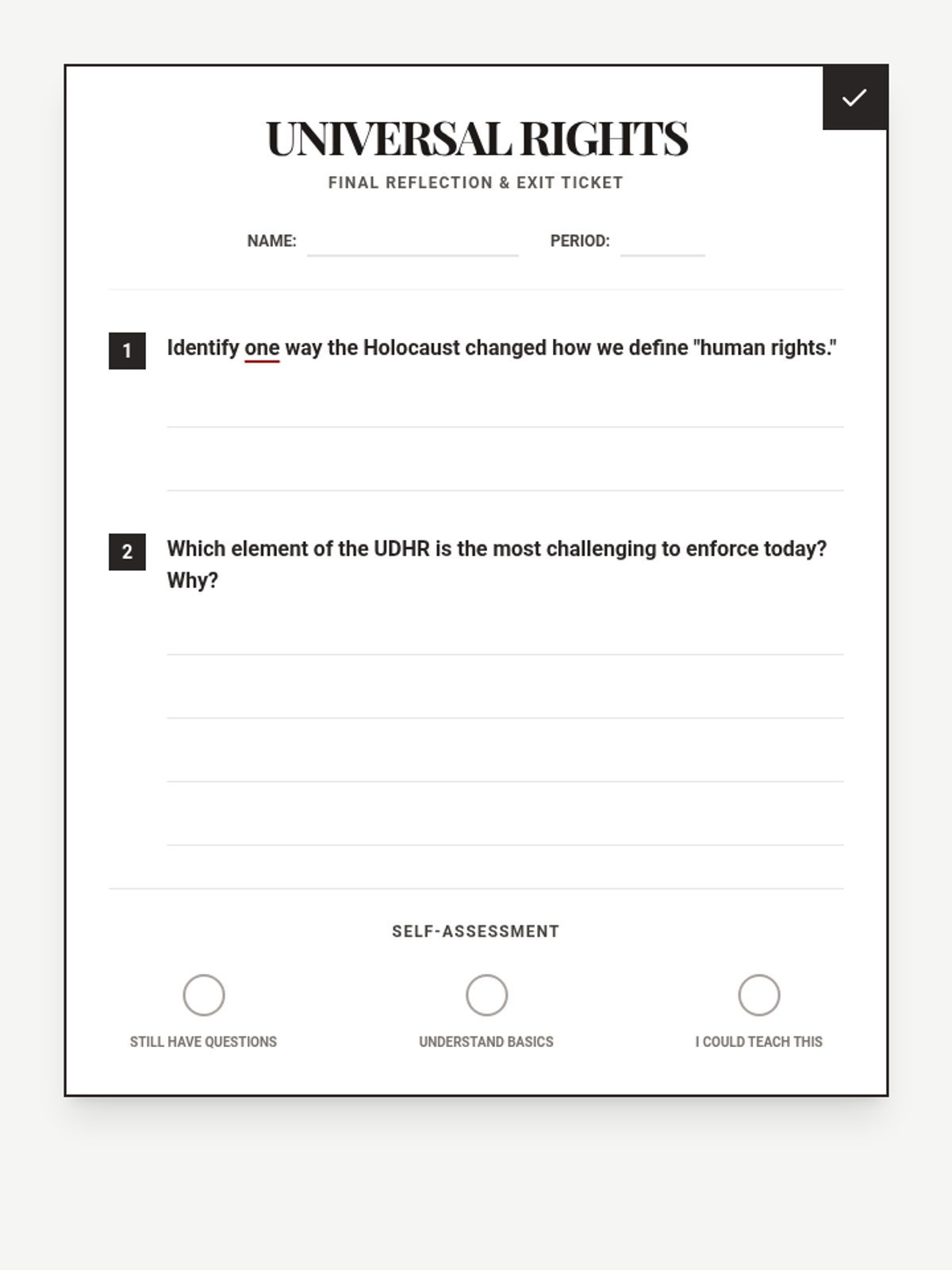
A comprehensive lesson exploring the systematic dehumanization of the Holocaust and its role in the birth of the modern international human rights movement. Students analyze primary documents, timelines of exclusion, and the legacy of the Nuremberg Trials.
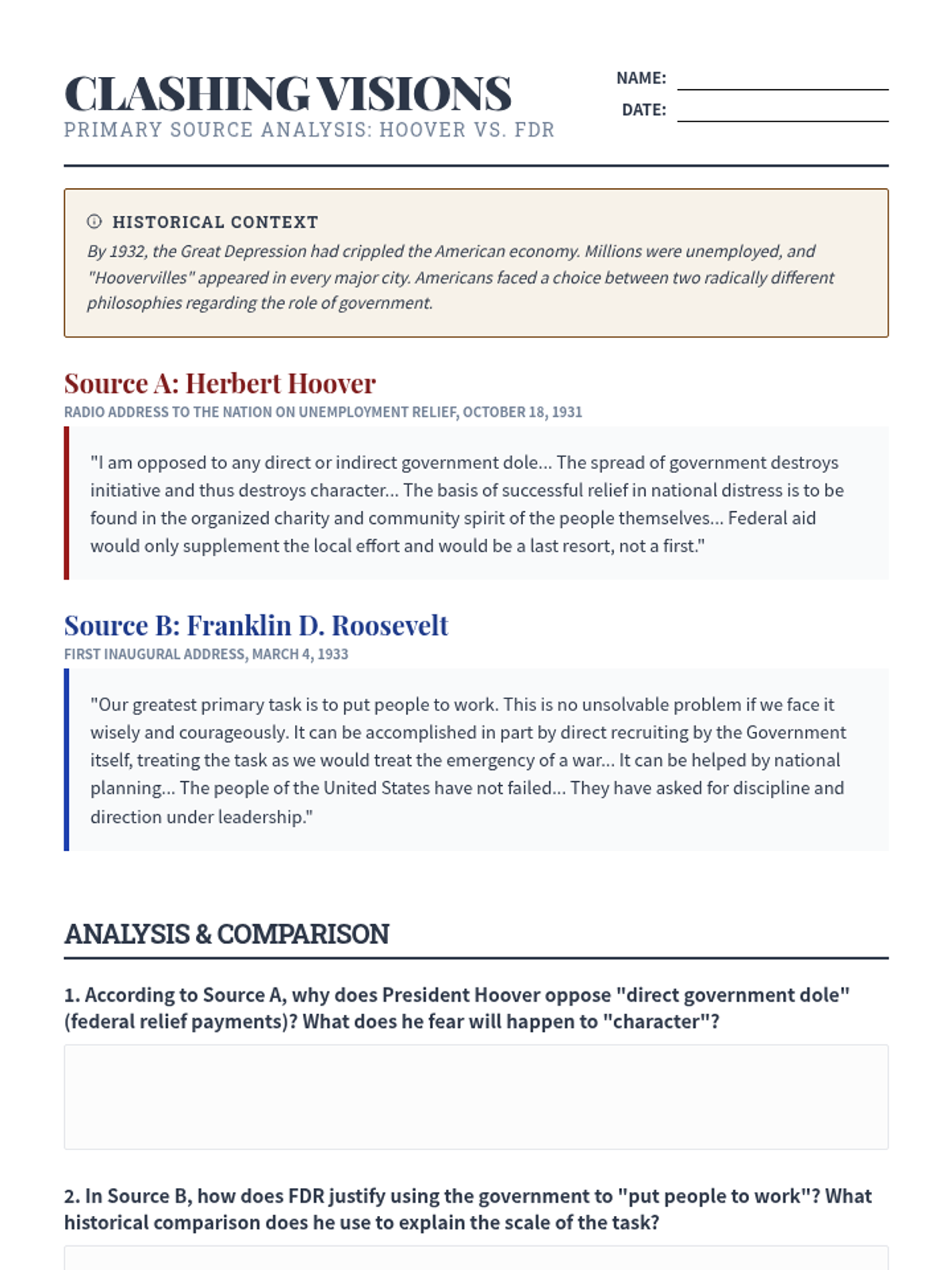
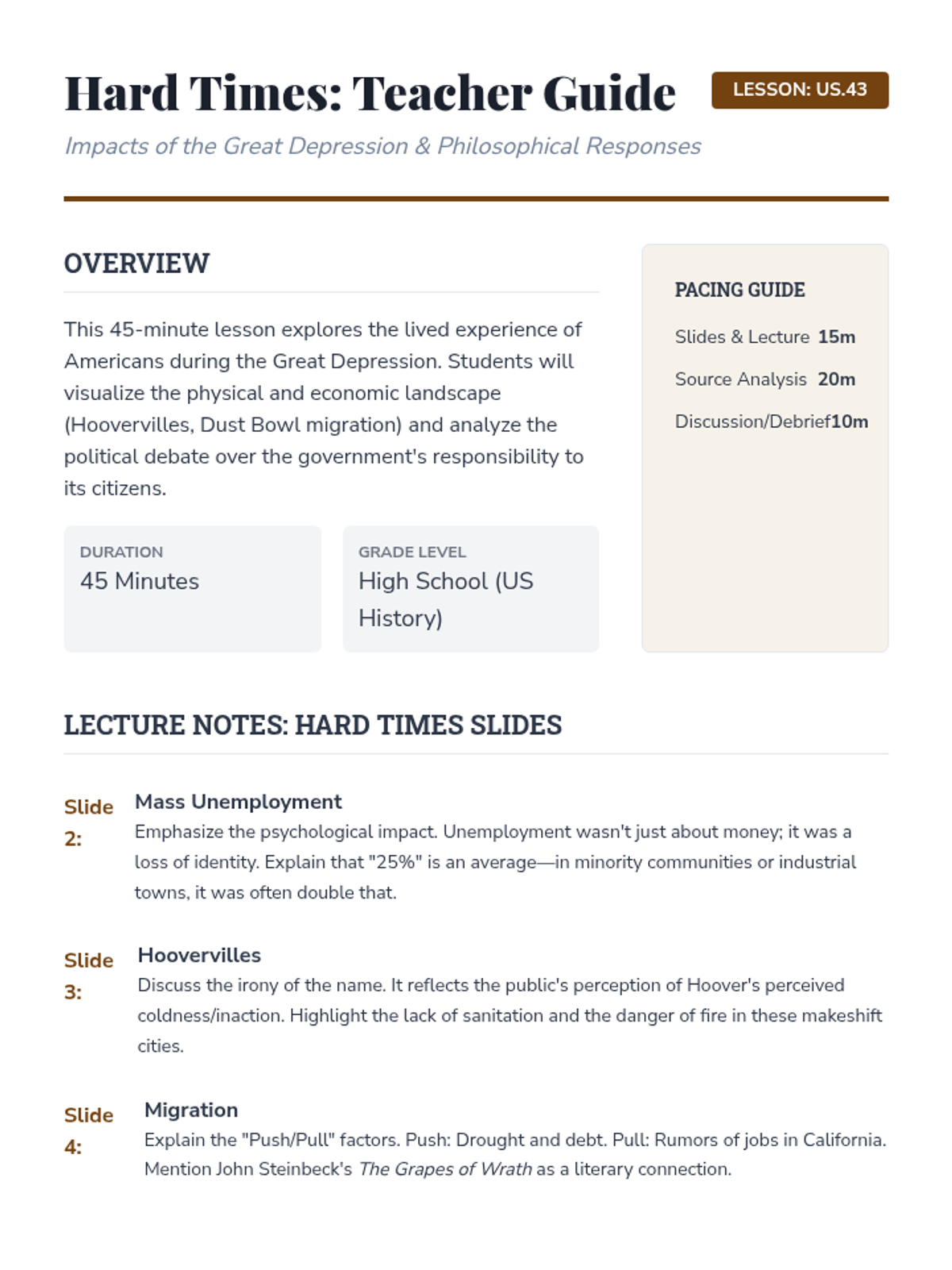
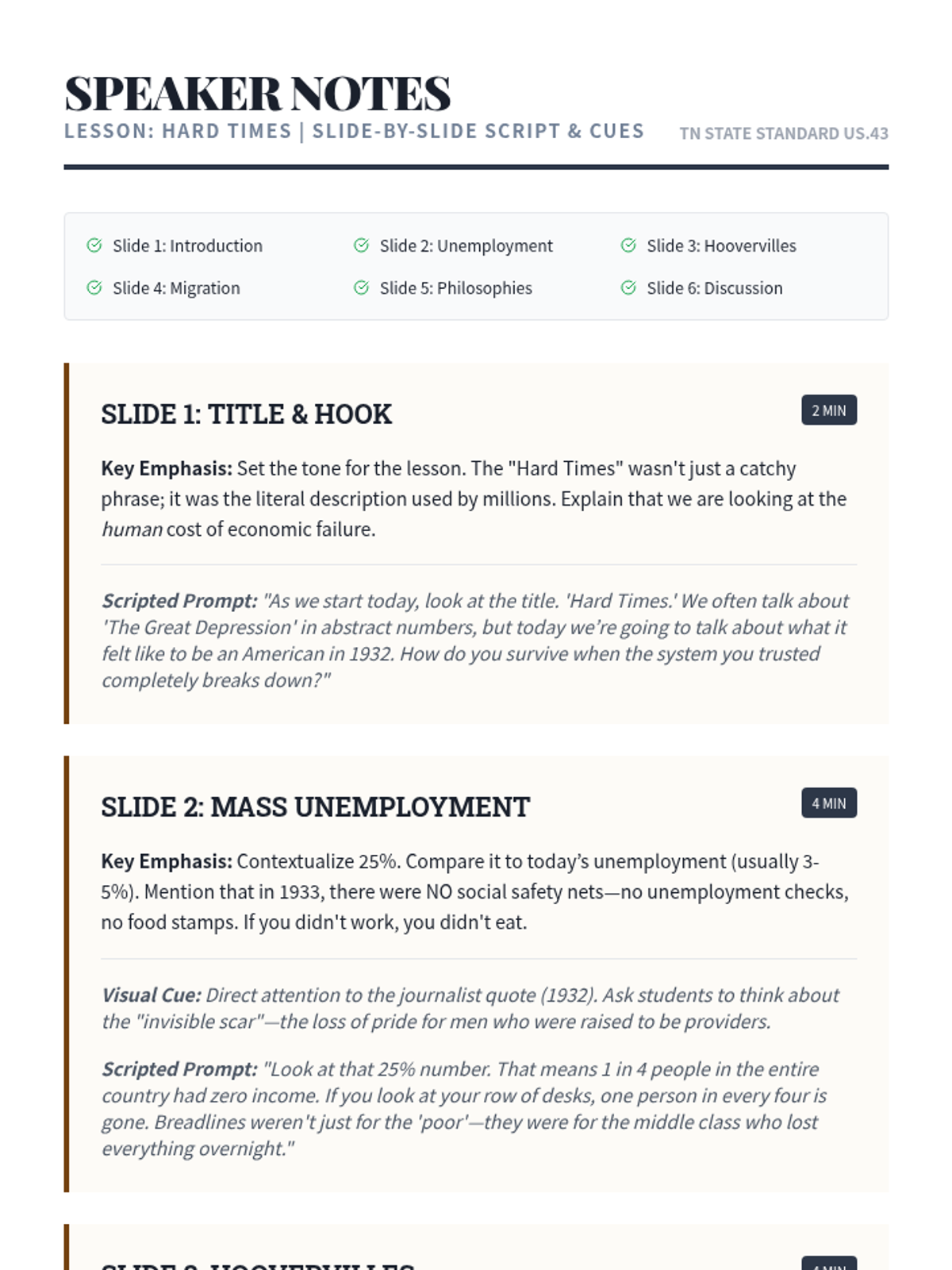
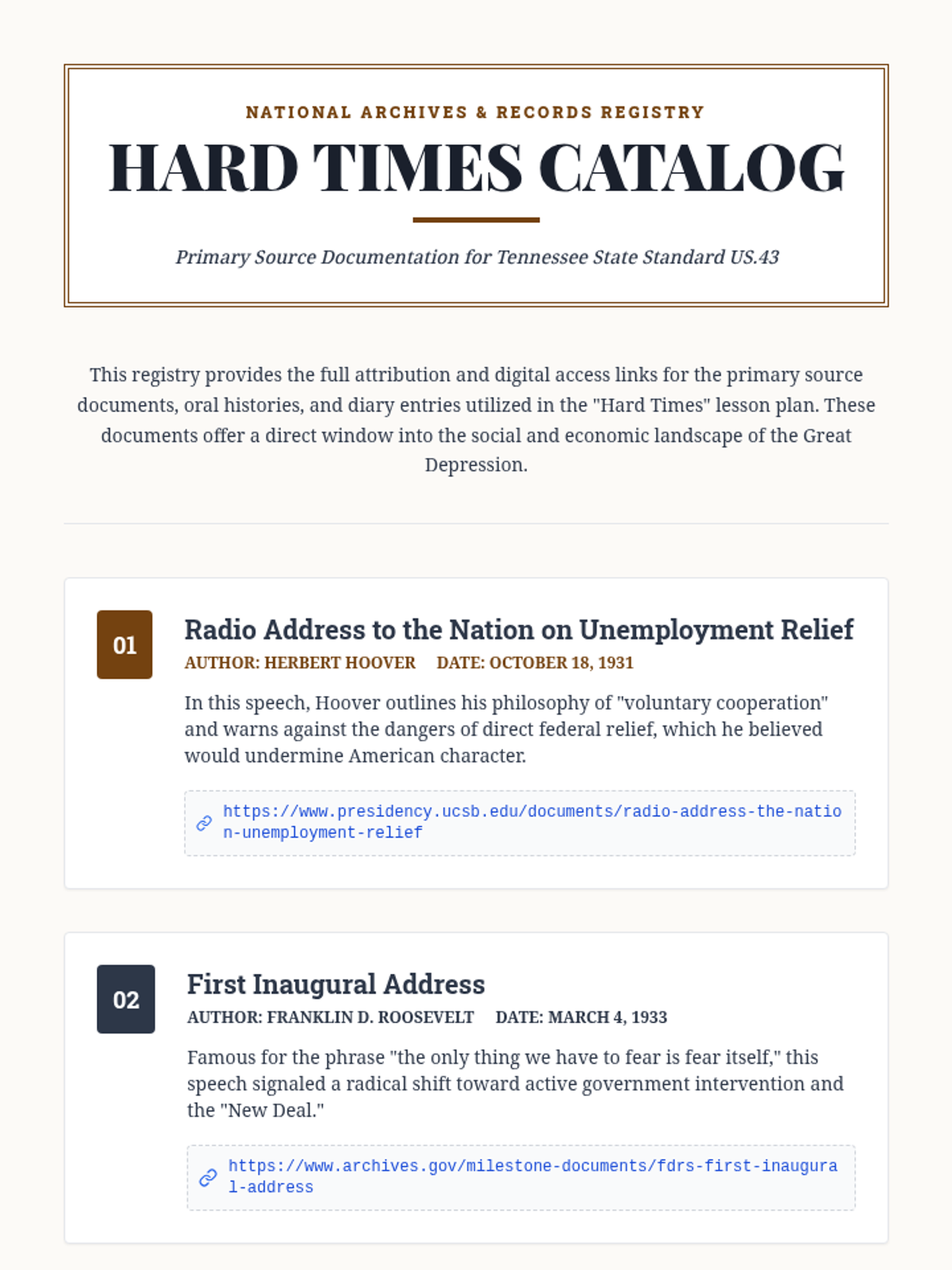
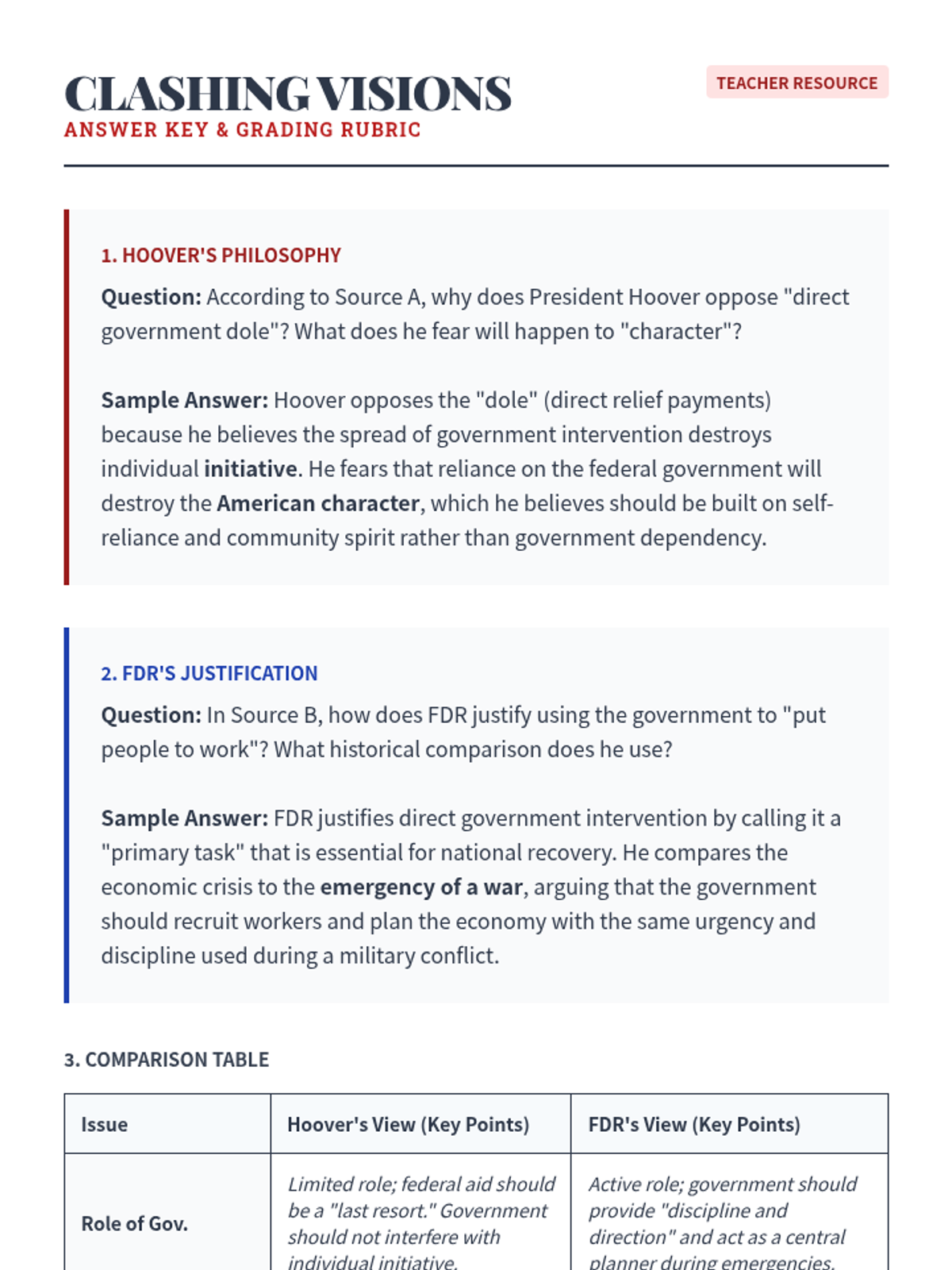
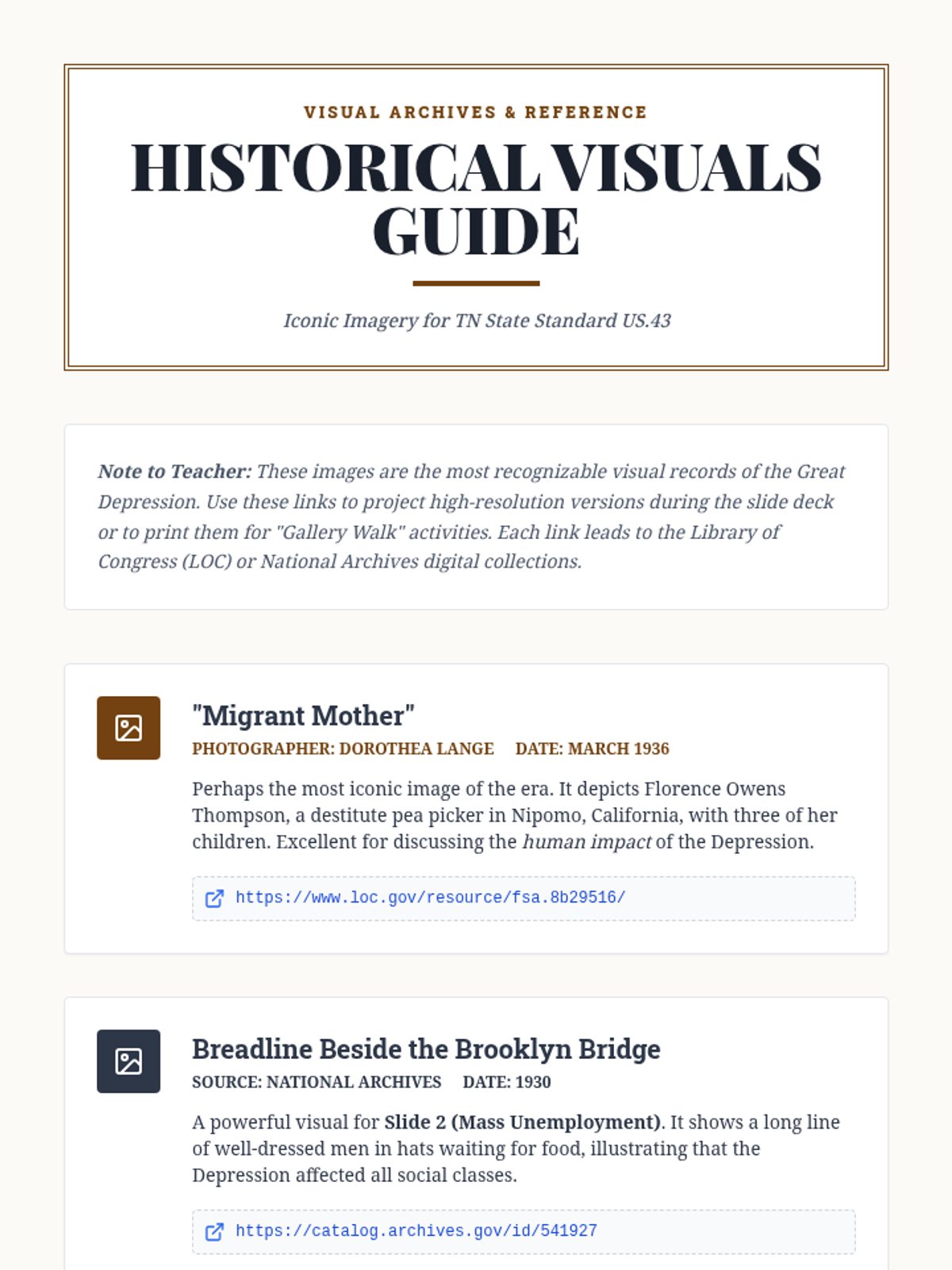
This lesson explores the devastating social and economic impacts of the Great Depression, focusing on unemployment, migration, and Hoovervilles, while challenging students to compare the contrasting philosophies of Presidents Hoover and FDR.
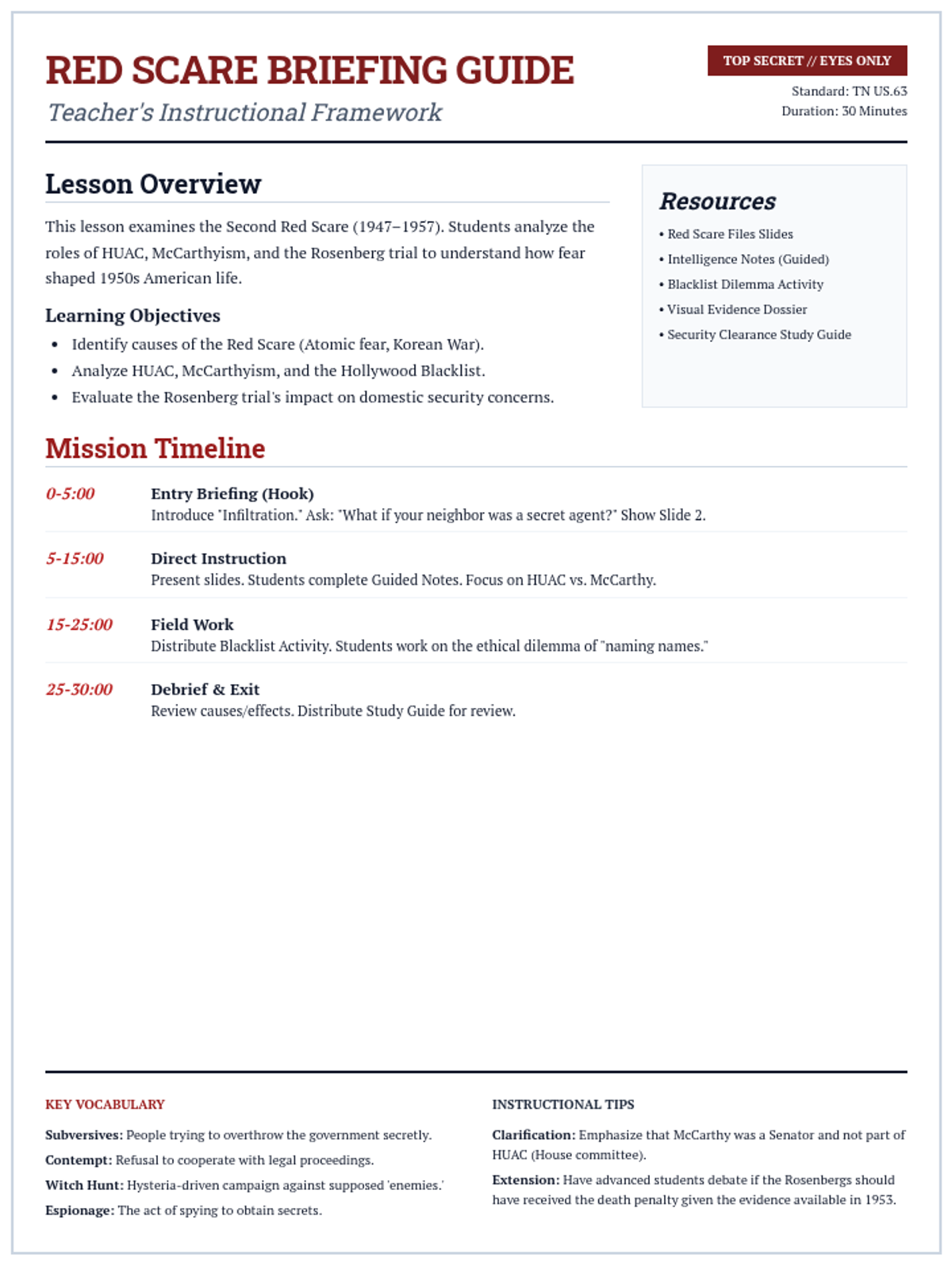
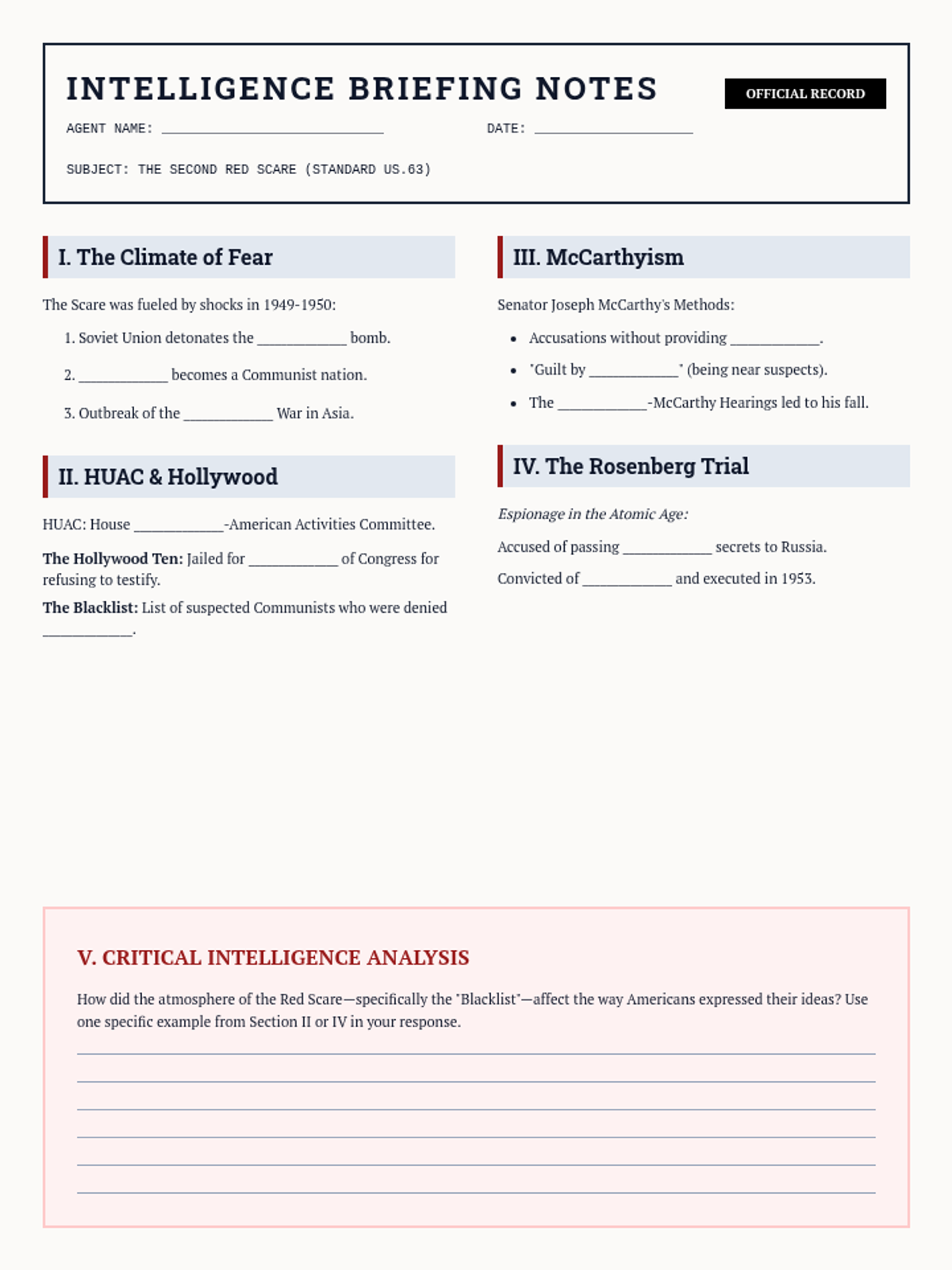
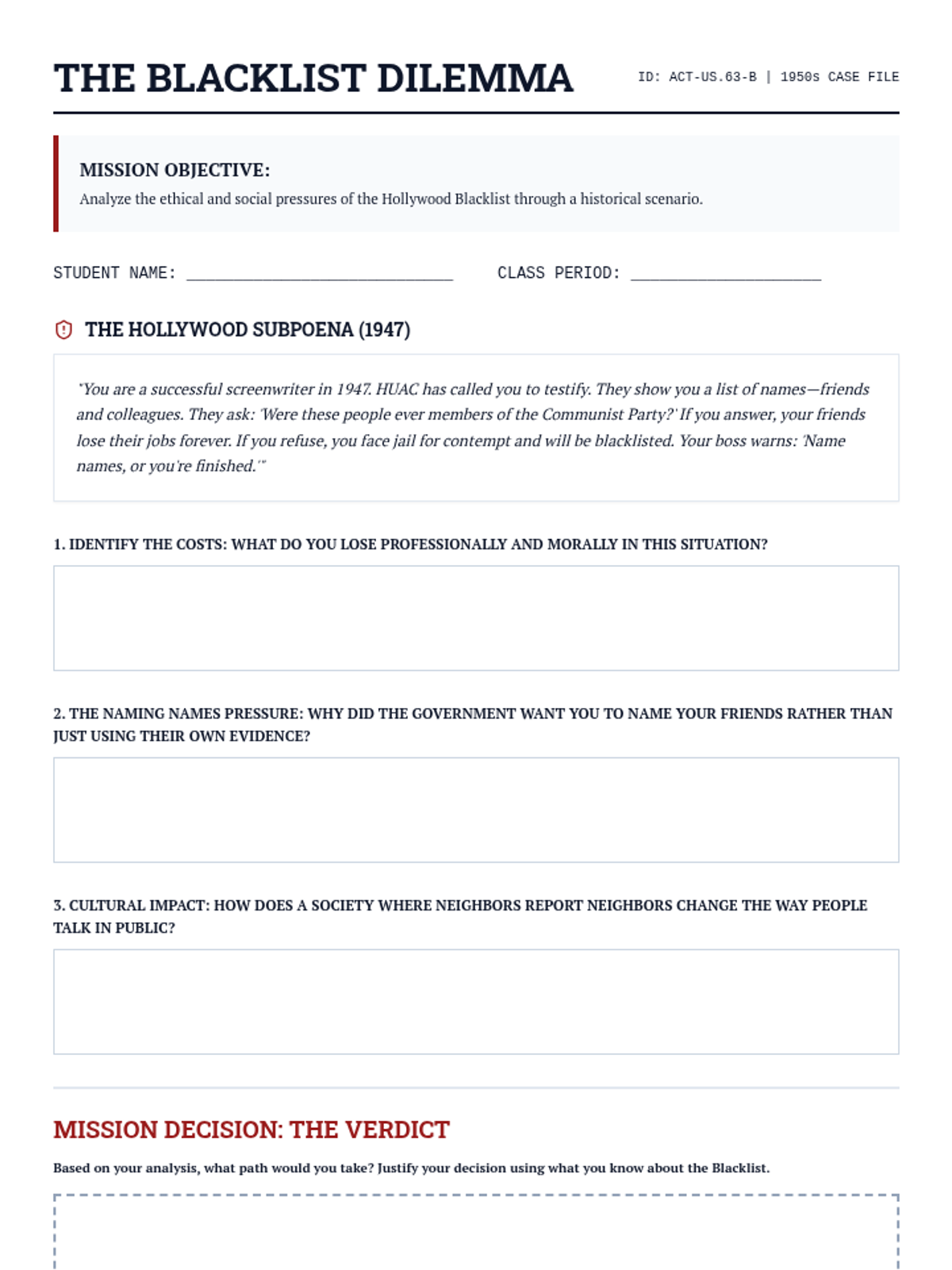
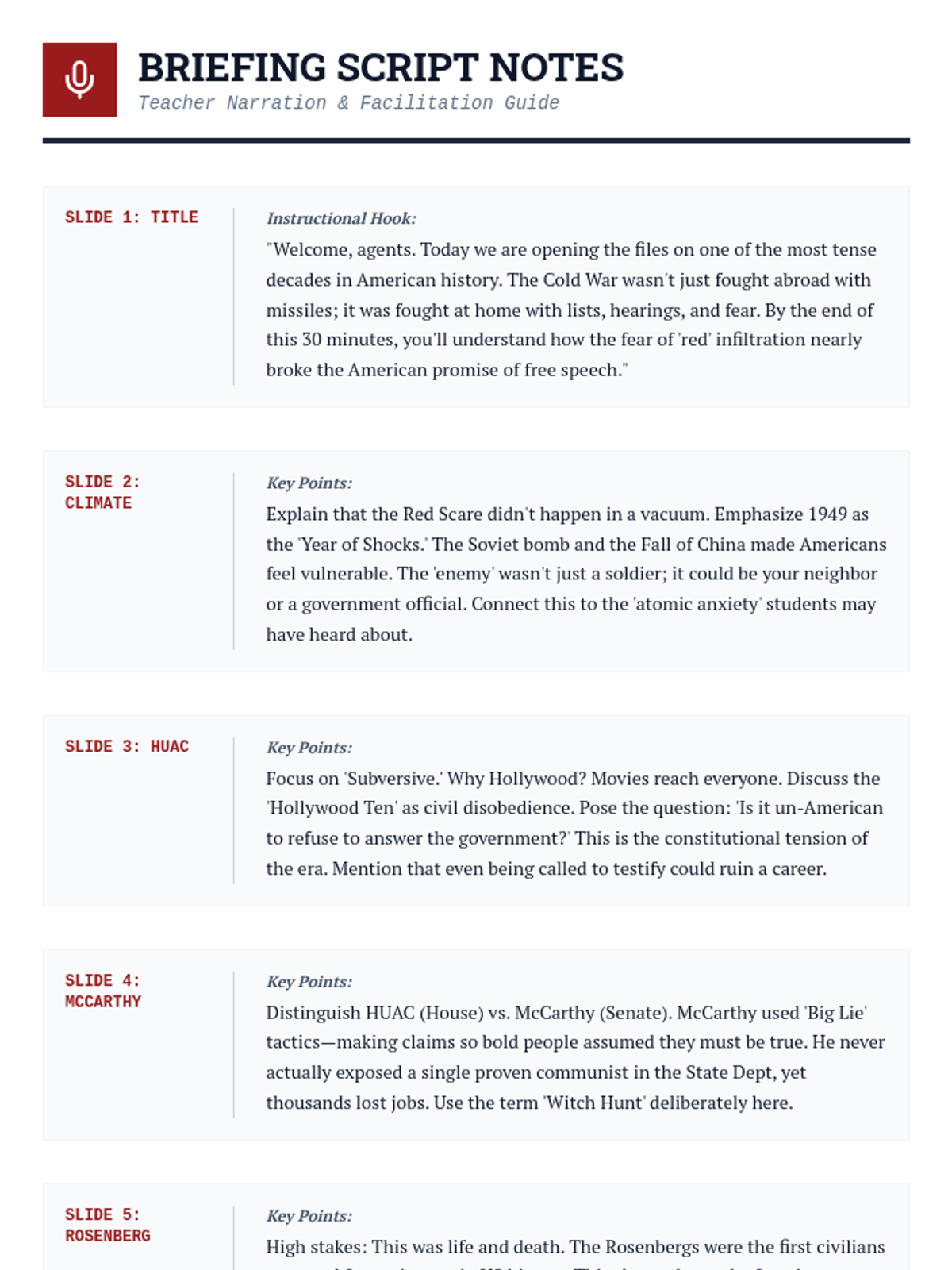
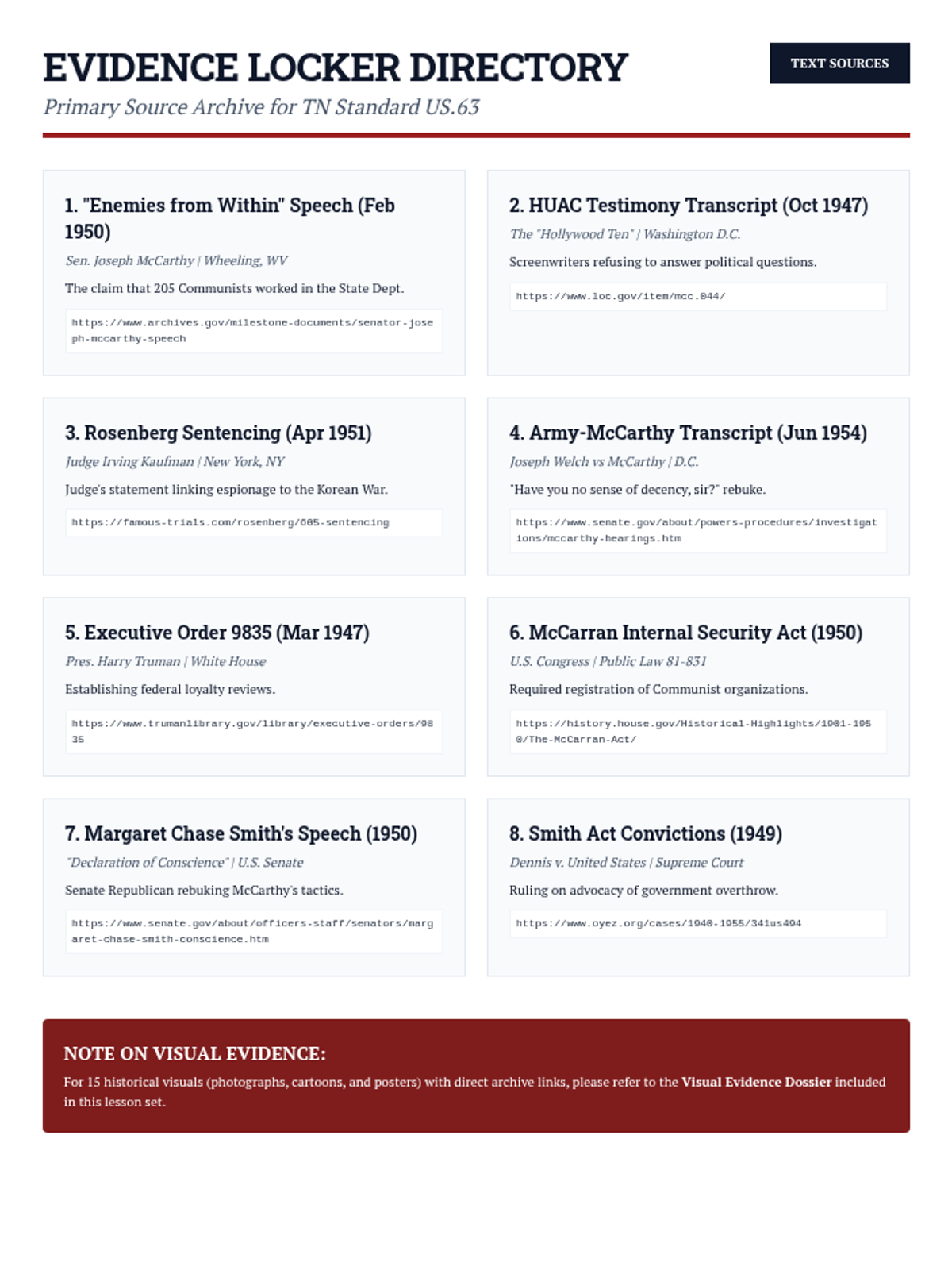
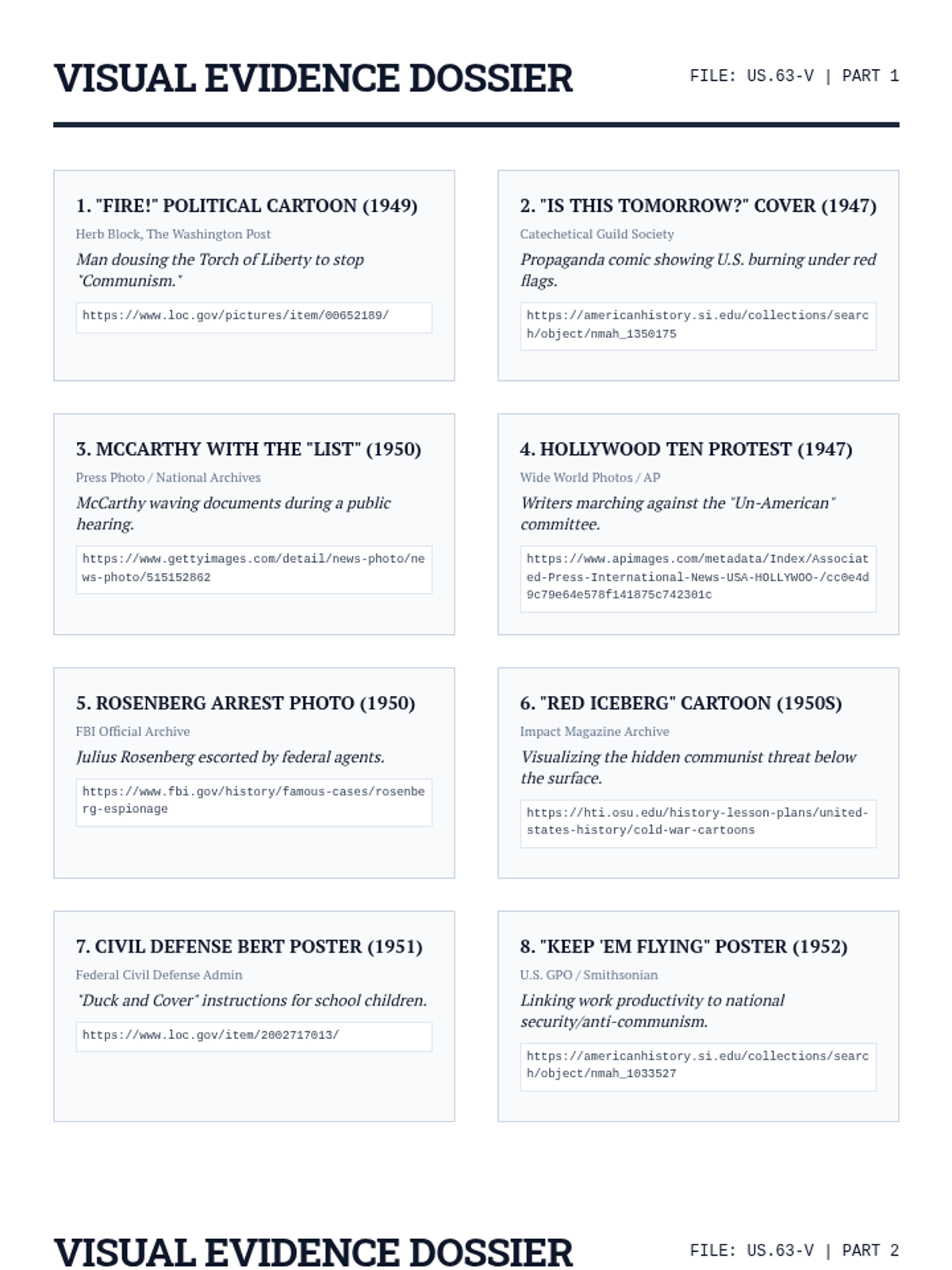
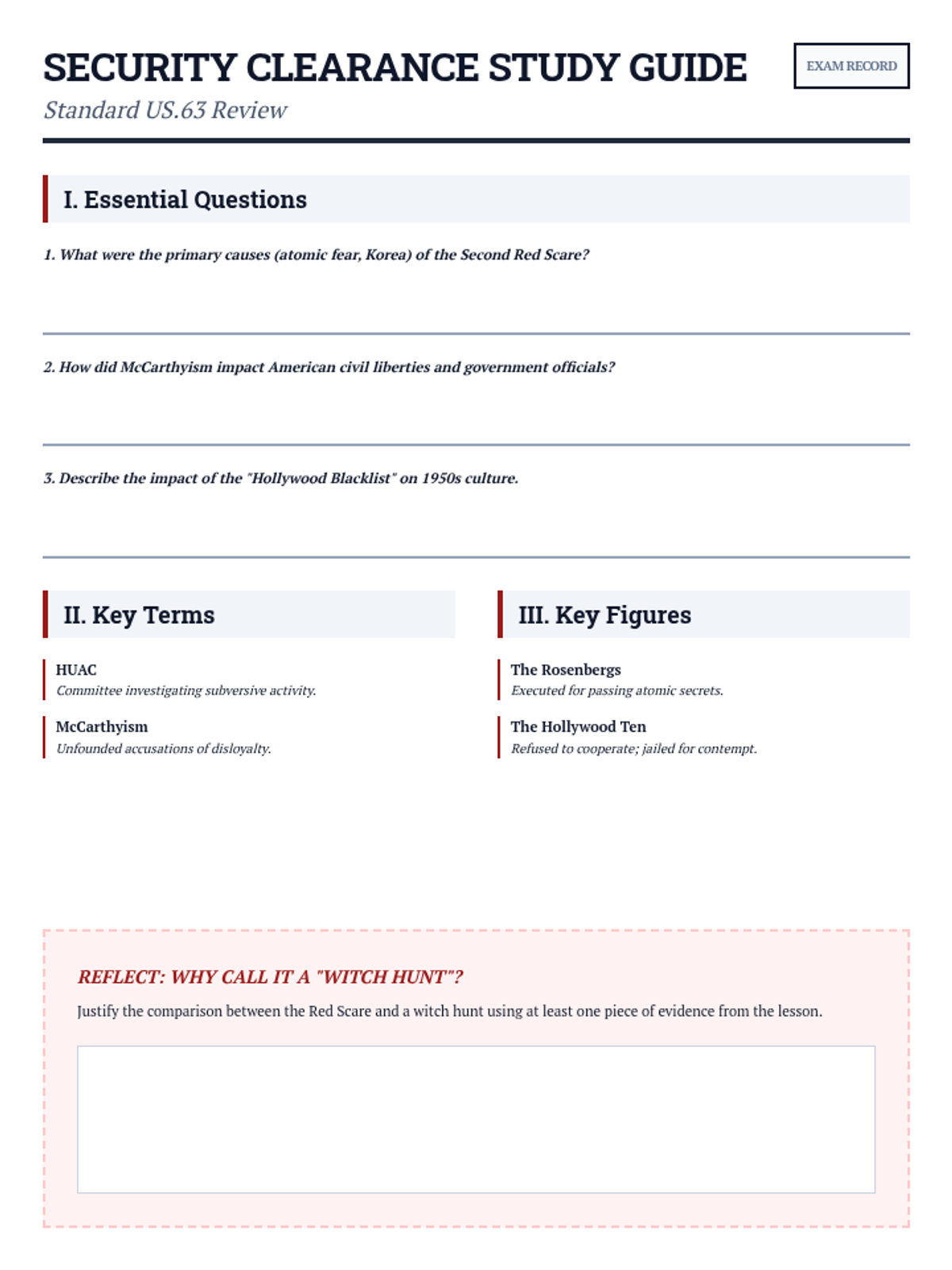
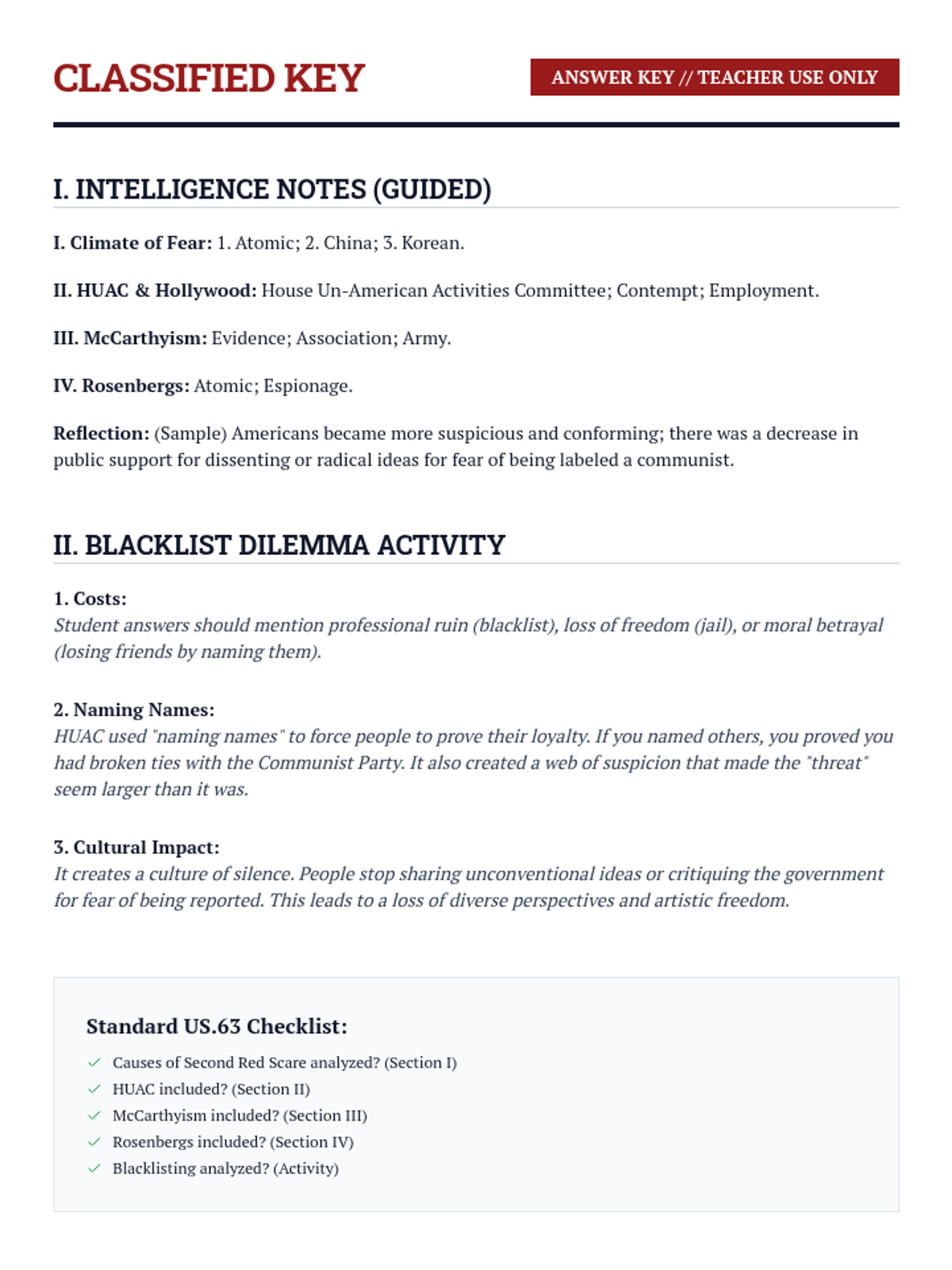
A comprehensive 30-minute lesson on the Second Red Scare, covering McCarthyism, HUAC, the Rosenbergs, and the cultural impact of anti-communist hysteria in 1950s America. Students will analyze primary sources and explore the ethical dilemmas of blacklisting.