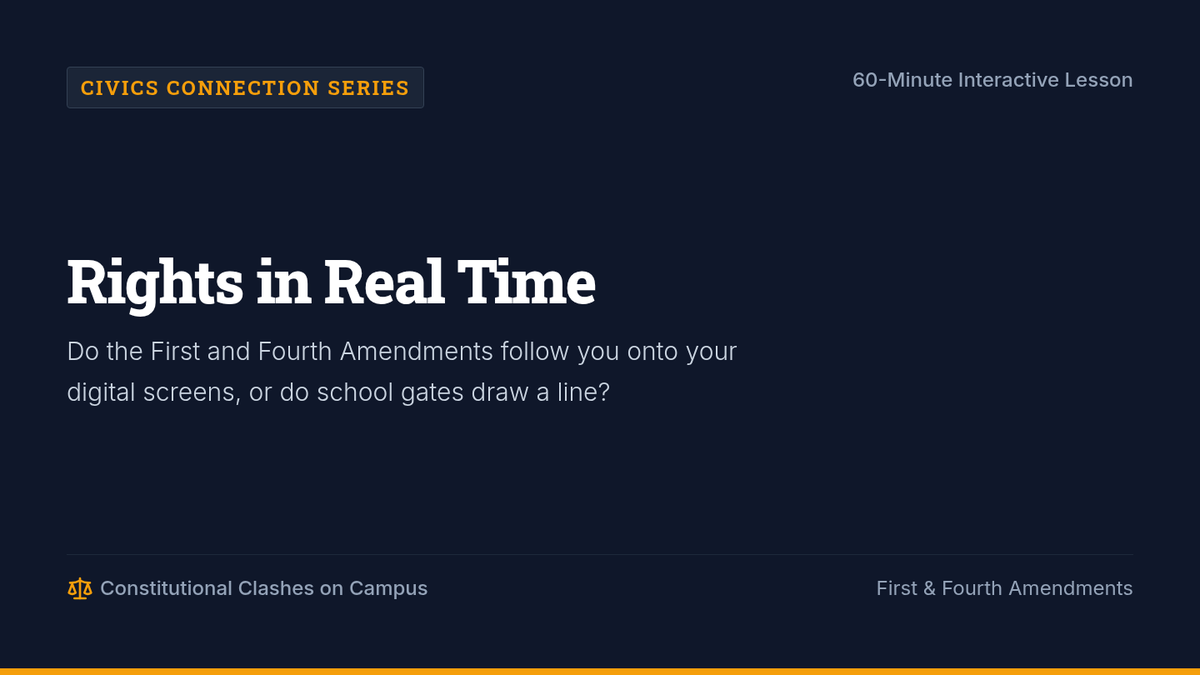
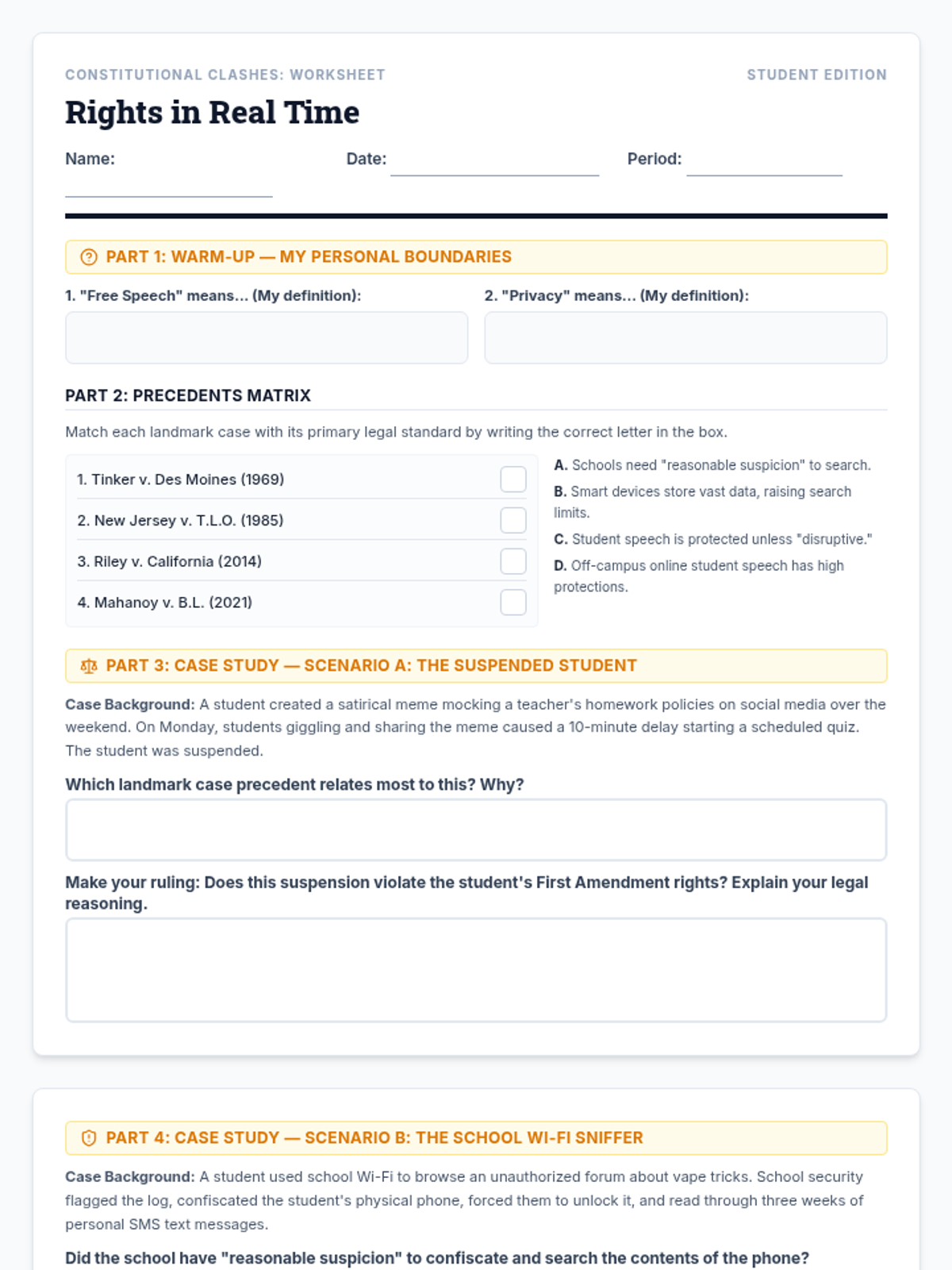
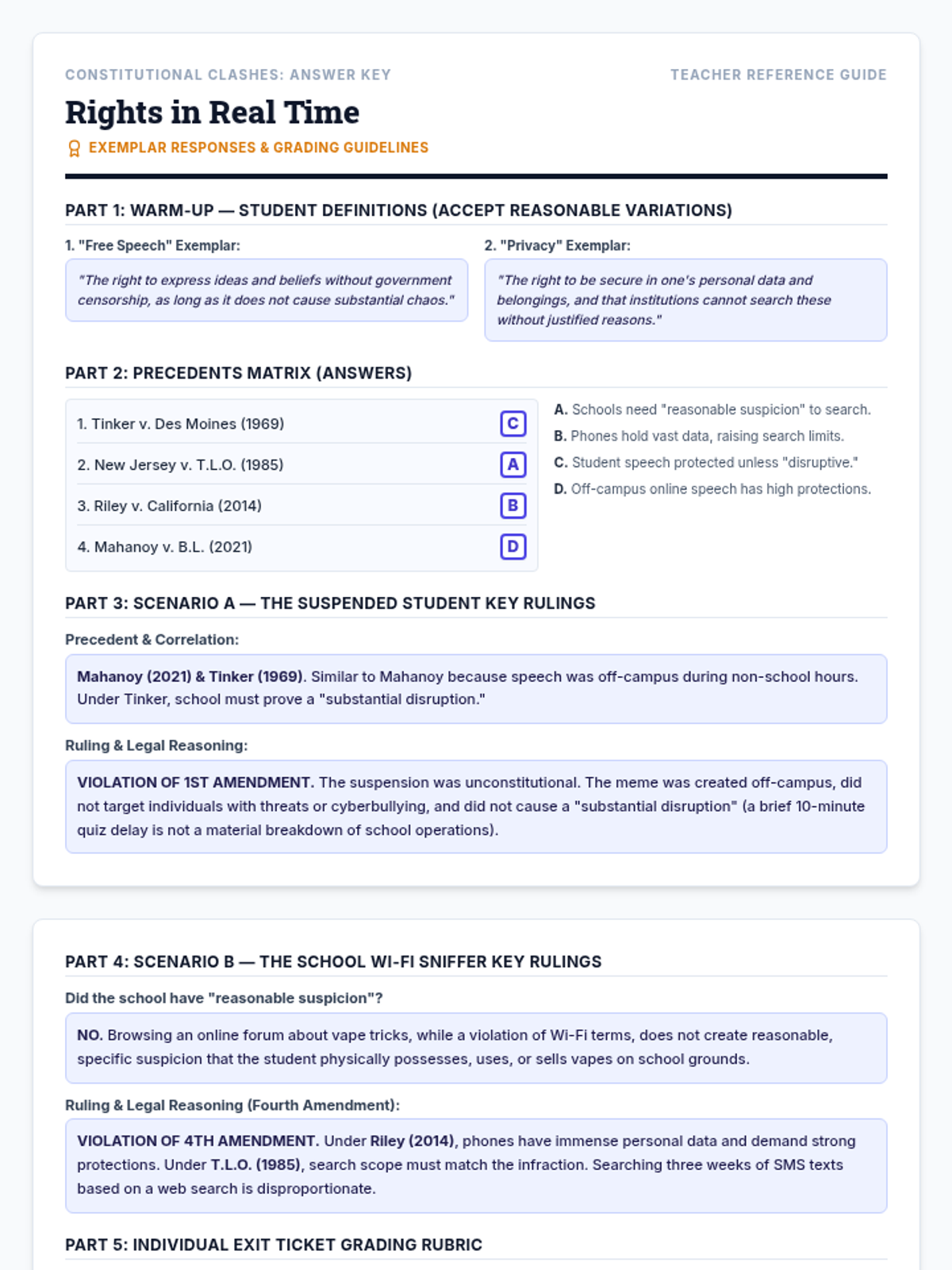
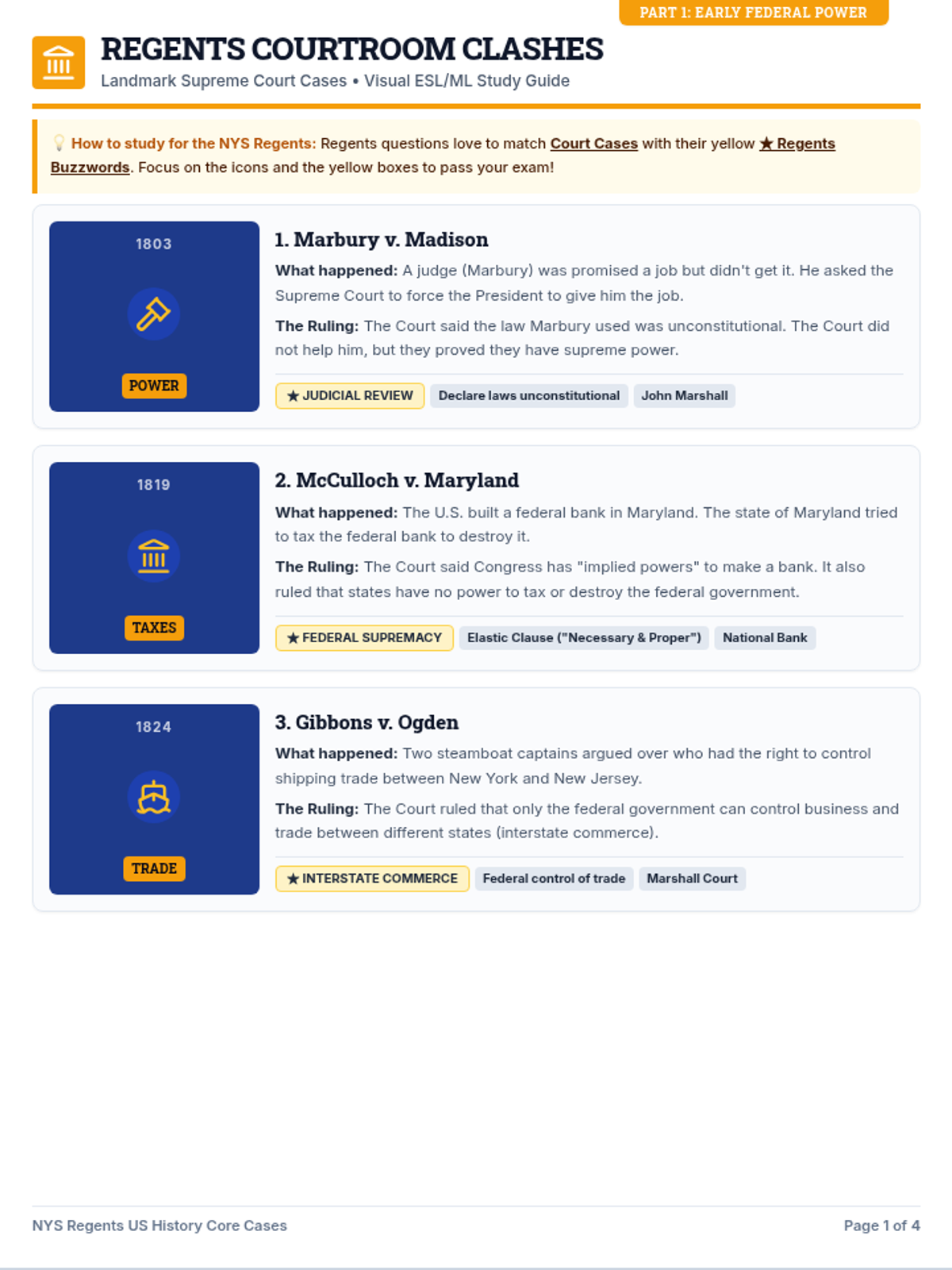
A comprehensive lesson exploring the historical roles and status of women across global civilizations, based on the Ascent of Women documentary series. Includes reflection questions for all major civilizations covered in the episodes.
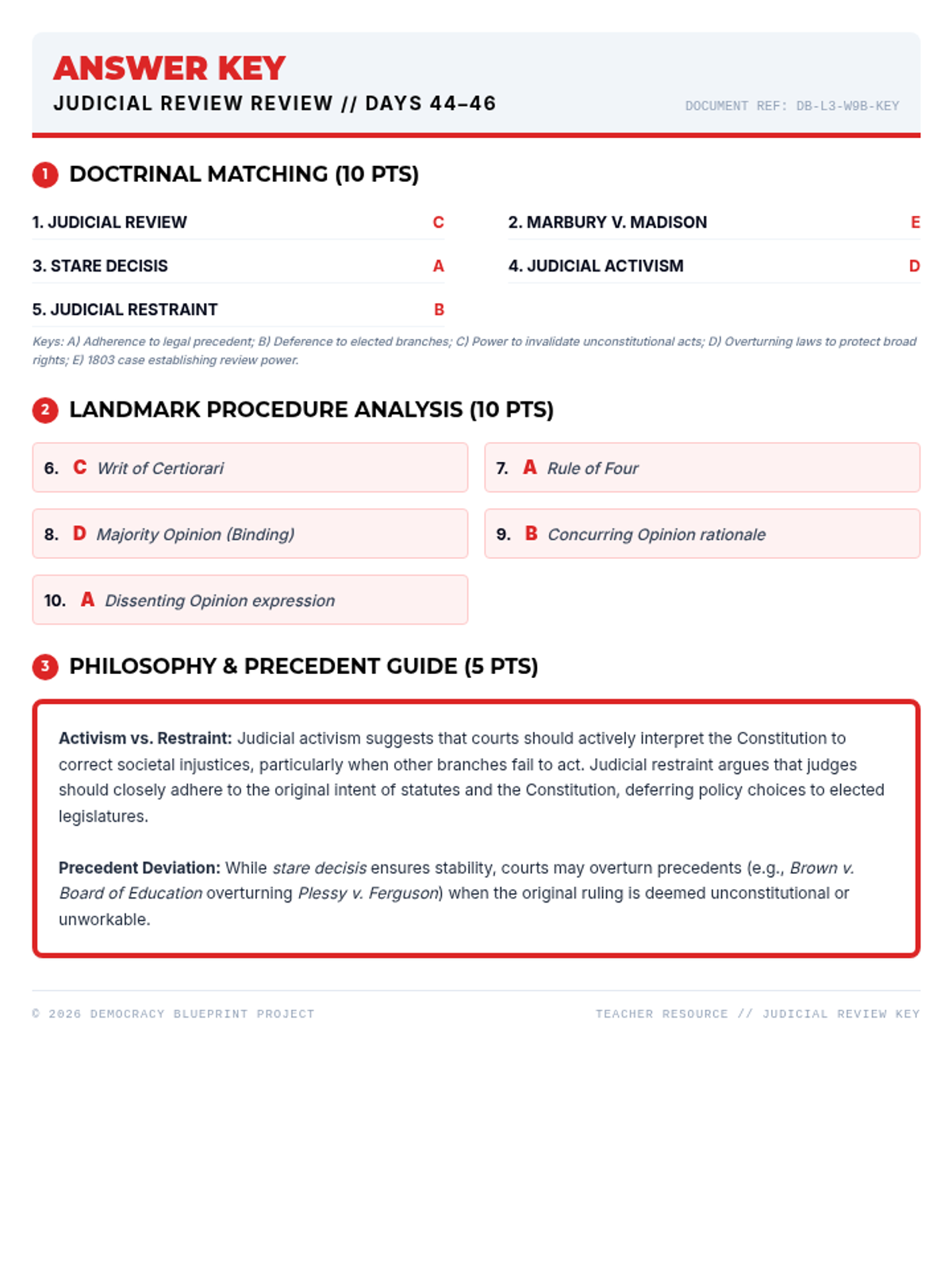
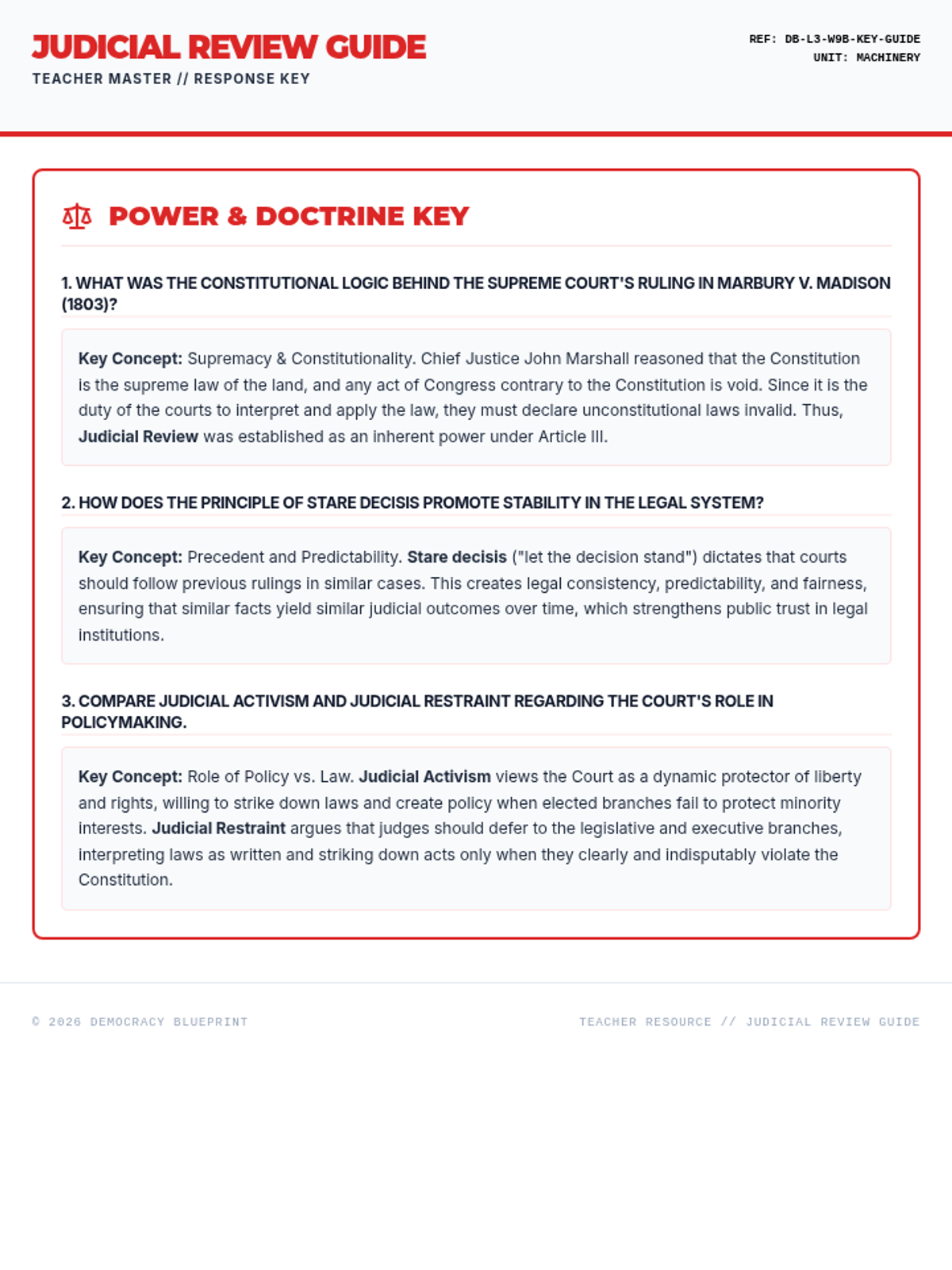
A comprehensive reteach lesson evaluating the legislative reforms of the Radical Reconstruction era, including constitutional amendments, the Freedmen's Bureau, and reconstructed state governments.
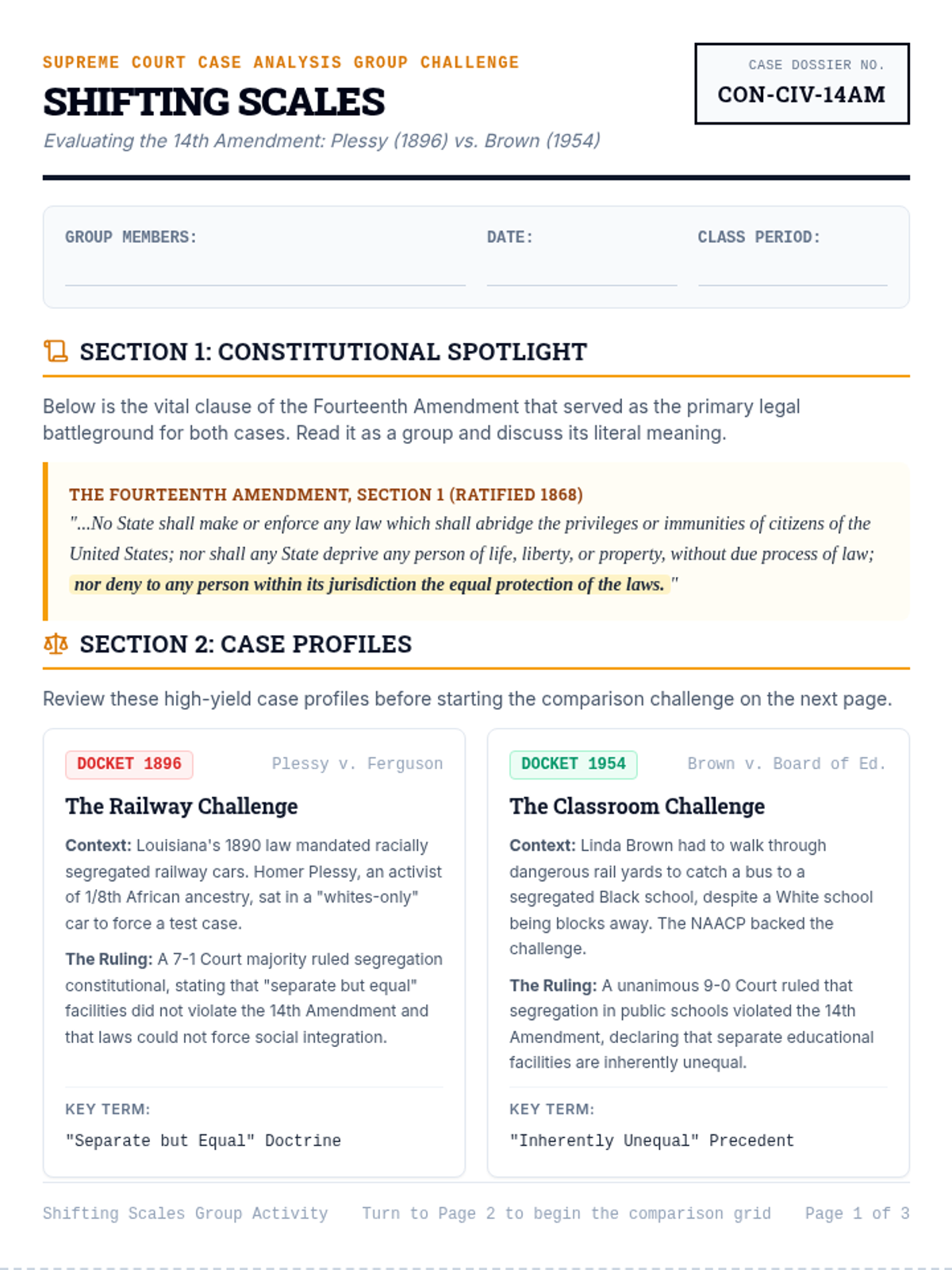
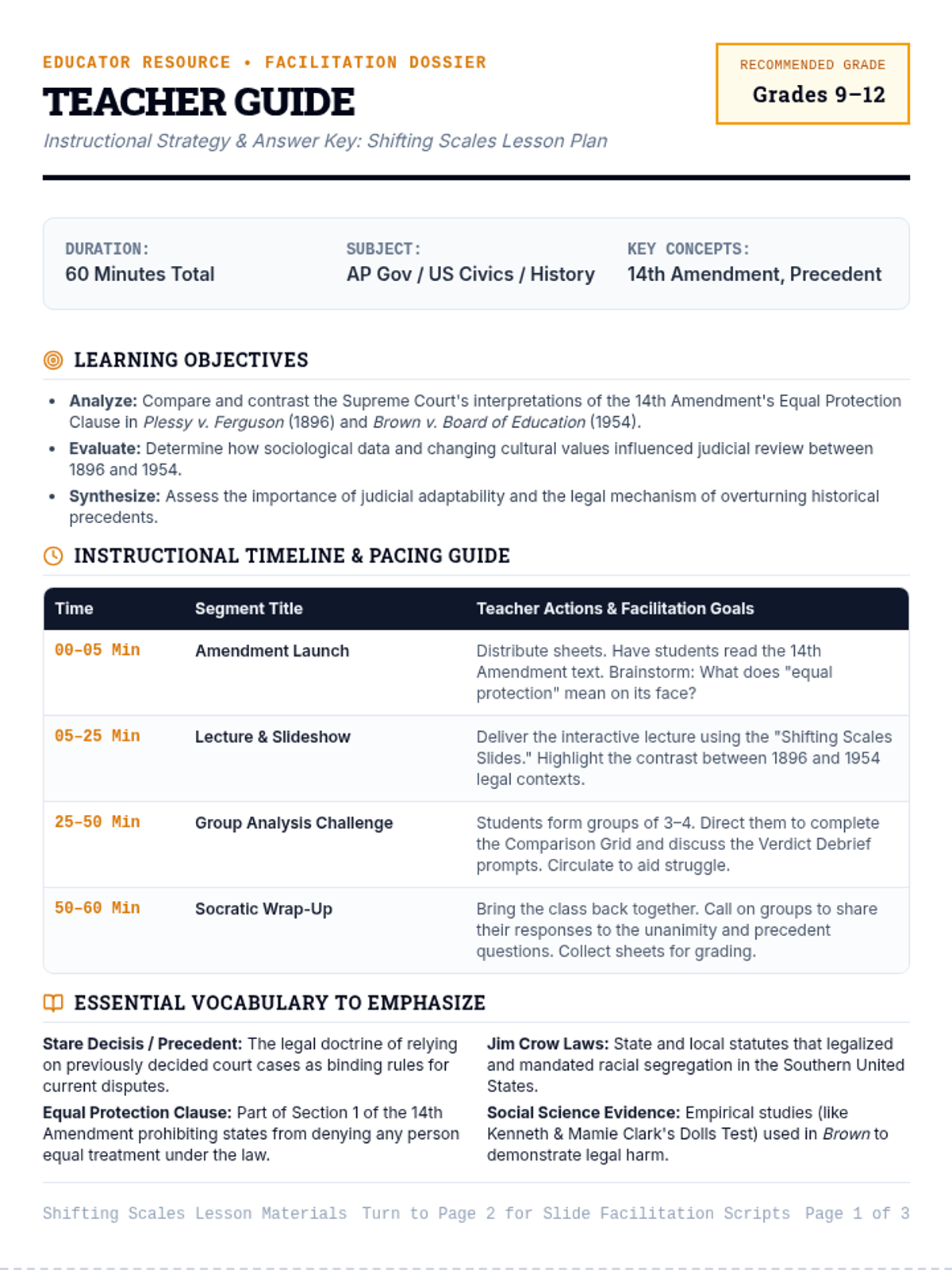
A deep dive into the historical context surrounding Abraham Lincoln's Gettysburg Address, exploring the timing, location, and societal pressures of the Civil War.
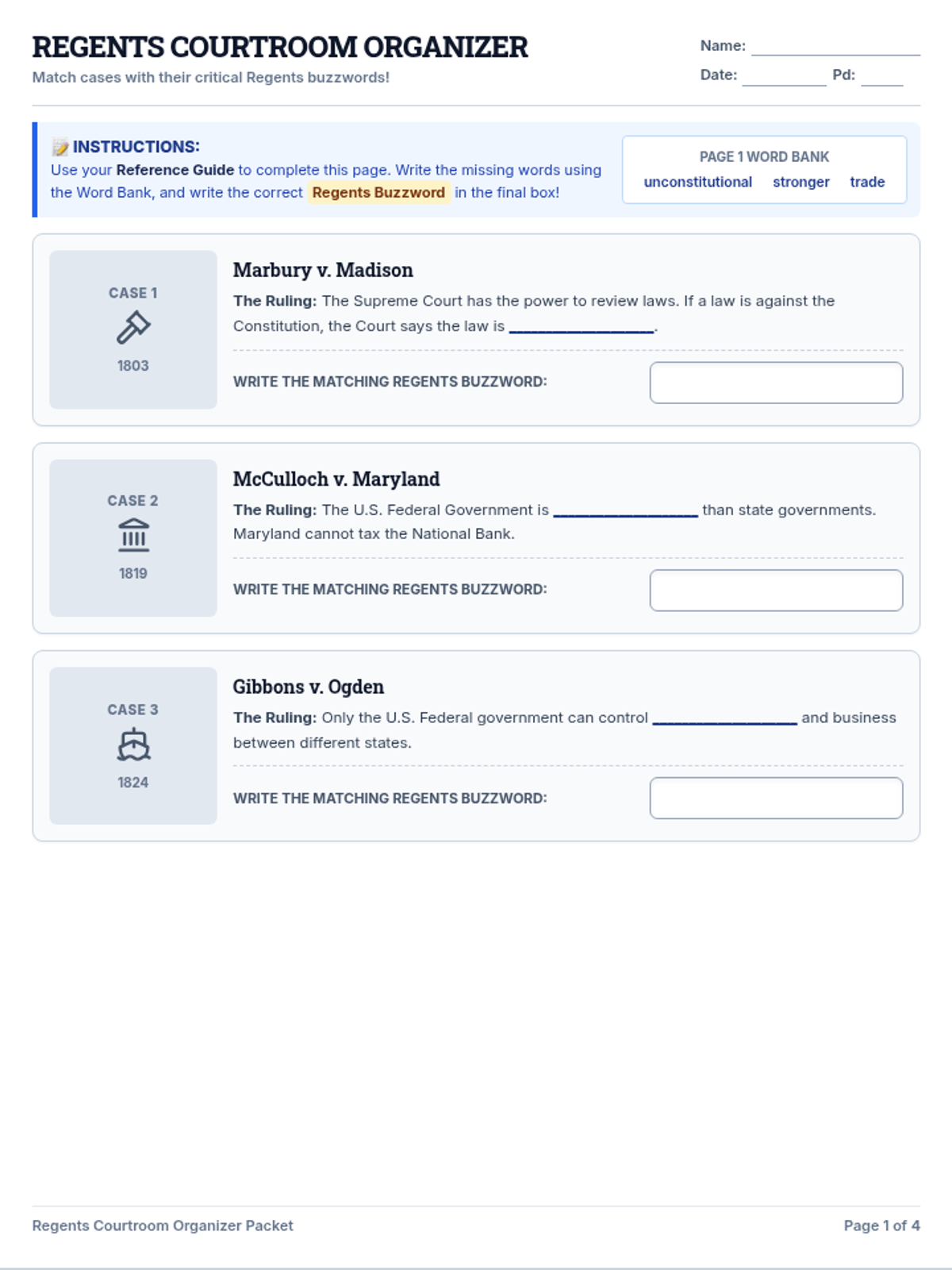
A comprehensive assessment set covering American expansionism (Imperialism) and the U.S. involvement in World War I, aligned with high school TEKS standards.
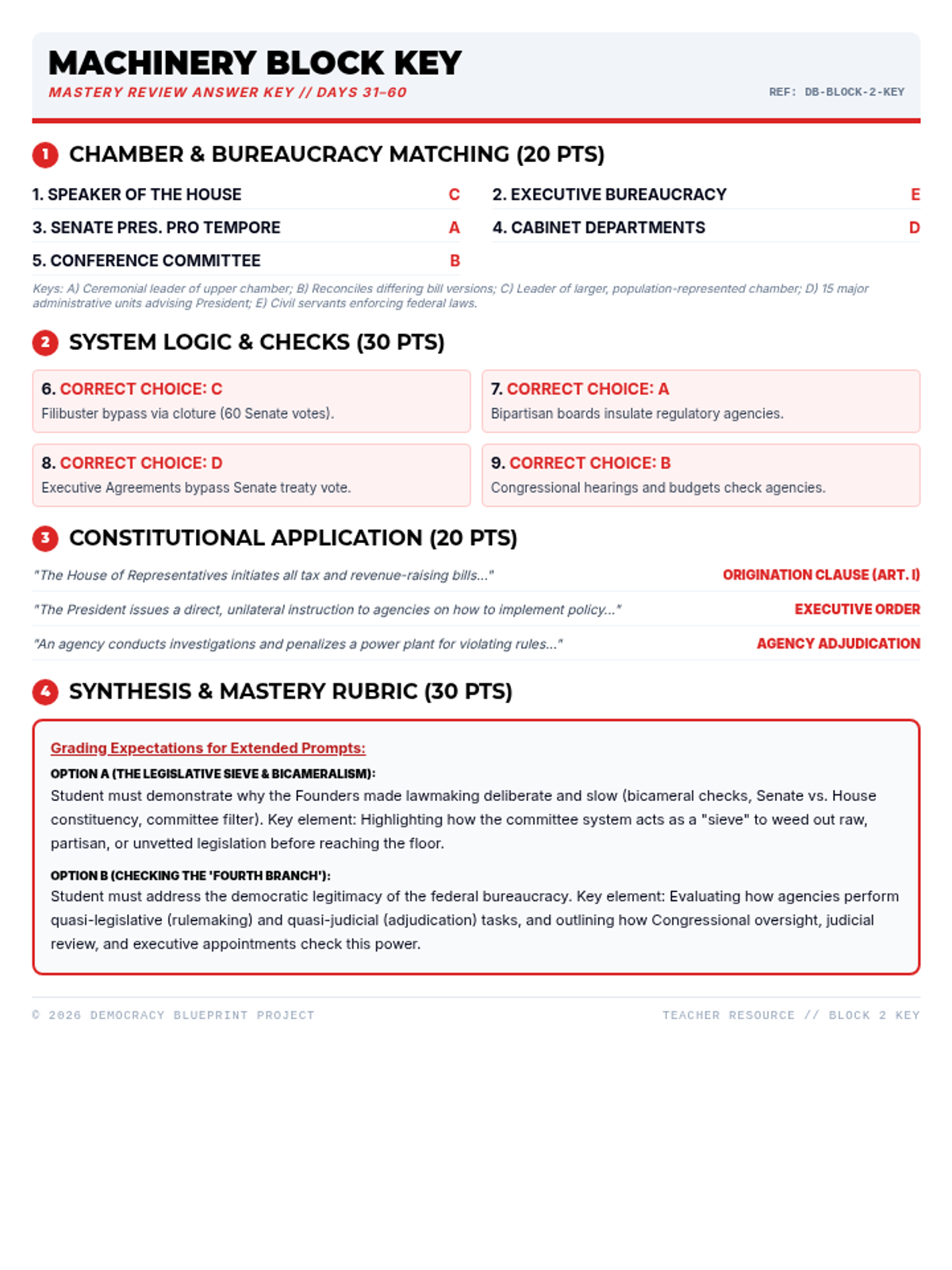
An analysis of the legislative process, the enumerated powers granted to Congress, and the specific restrictions placed on both federal and state governments.
A comprehensive 180-minute lesson covering the entire structure, enumerated powers, and restraints of the Legislative Branch as defined in Article I of the U.S. Constitution.
A deep dive into the structure and powers of the U.S. government as defined by the Constitution, featuring a chunked reader with heavy scaffolding for annotation and analysis.
This lesson explores the transition from the Scientific Revolution's focus on natural laws to the Industrial Revolution's application of those laws through technology, featuring key figures like Newton and Watt.
An intensive review session focusing on 20 critical US History EOC terms, utilizing a crossword puzzle for vocabulary reinforcement and a visual presentation for conceptual review.
An introductory exploration of Ancient Egyptian civilization, focusing on the architectural grandeur of the pyramids and the divine authority of the pharaohs. Students will examine the intersection of engineering, mythology, and social hierarchy.
A comprehensive look at the key historical and personal events in Art Spiegelman's Maus Volume I, focusing on chronological narrative and visual mapping.
A comparison of the fundamental principles, economic structures, and social impacts of Communism and Capitalism.
Students will explore the historical context of the Berlin Wall's construction in 1961, analyze its ideological significance, and select a project path to demonstrate their understanding of civilian impacts.
Examine the origins of constitutional government with the Magna Carta, the growth of medieval towns, and the transition toward the Renaissance.
Investigate the origins, symptoms, and catastrophic social and economic consequences of the Bubonic Plague in 14th-century Europe.