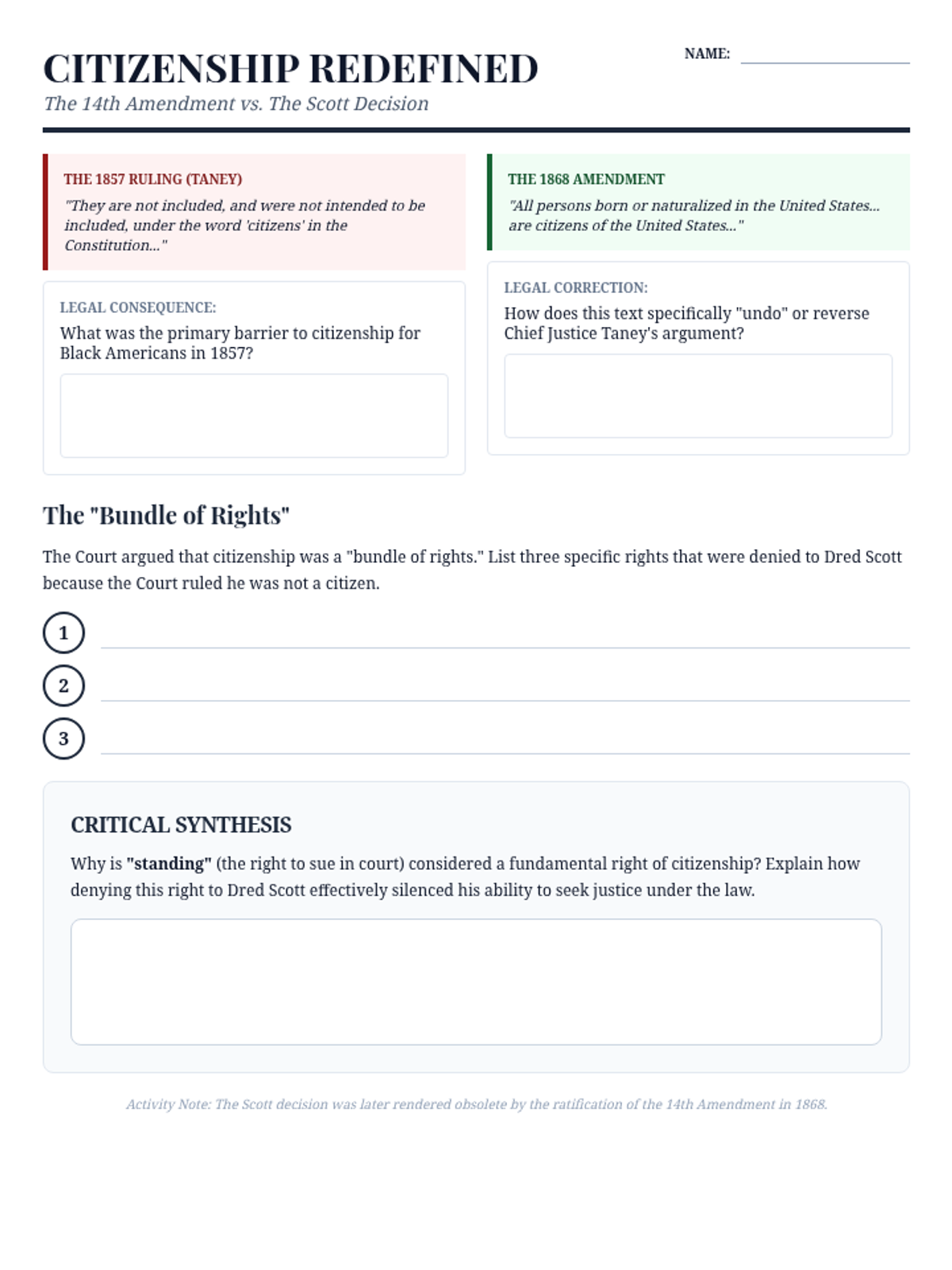
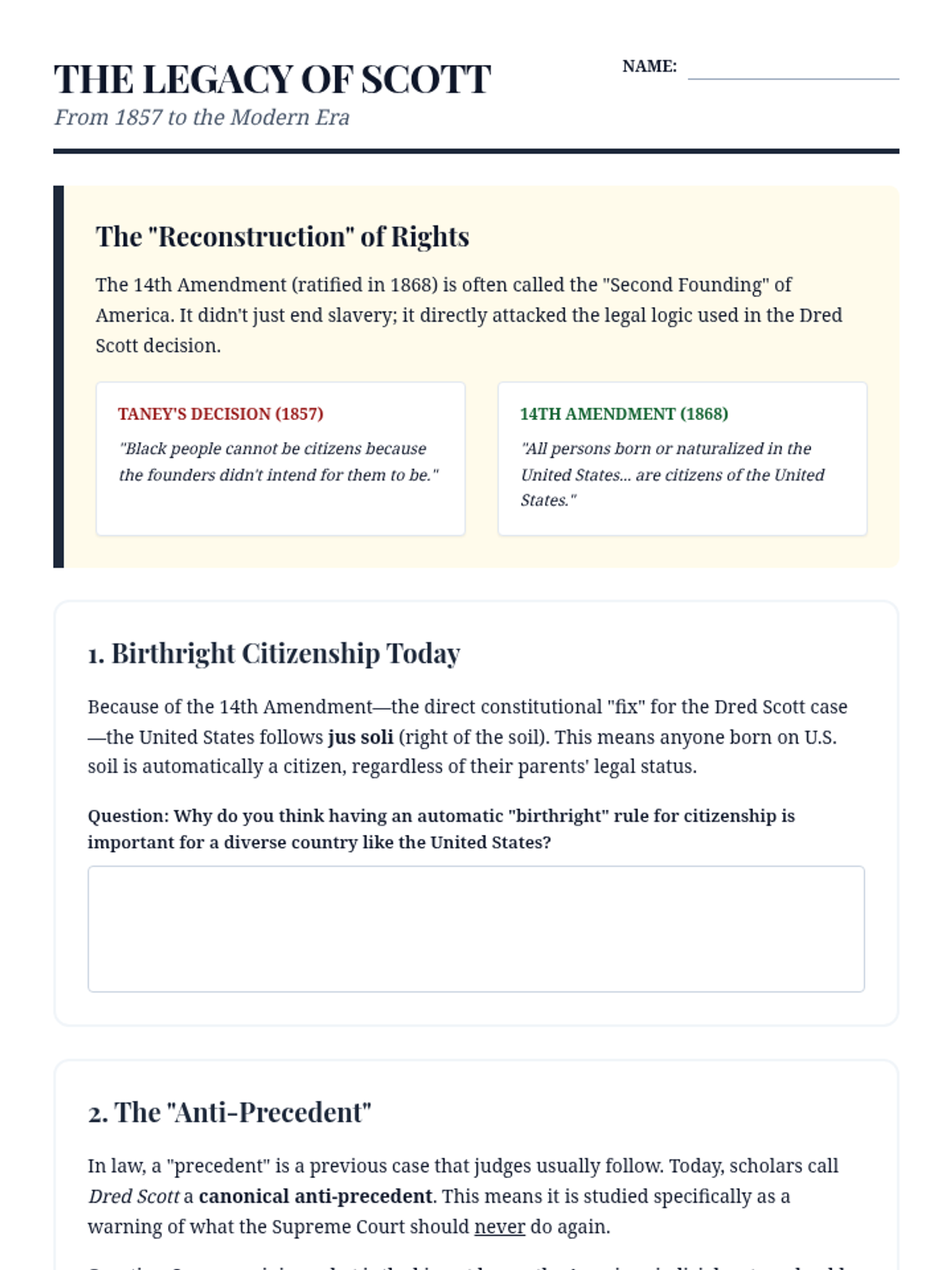
This lesson compares the exclusionary nature of citizenship in Ancient Athens with the 1857 Dred Scott decision, exploring how legal standing and individual rights were historically denied based on birth and status.
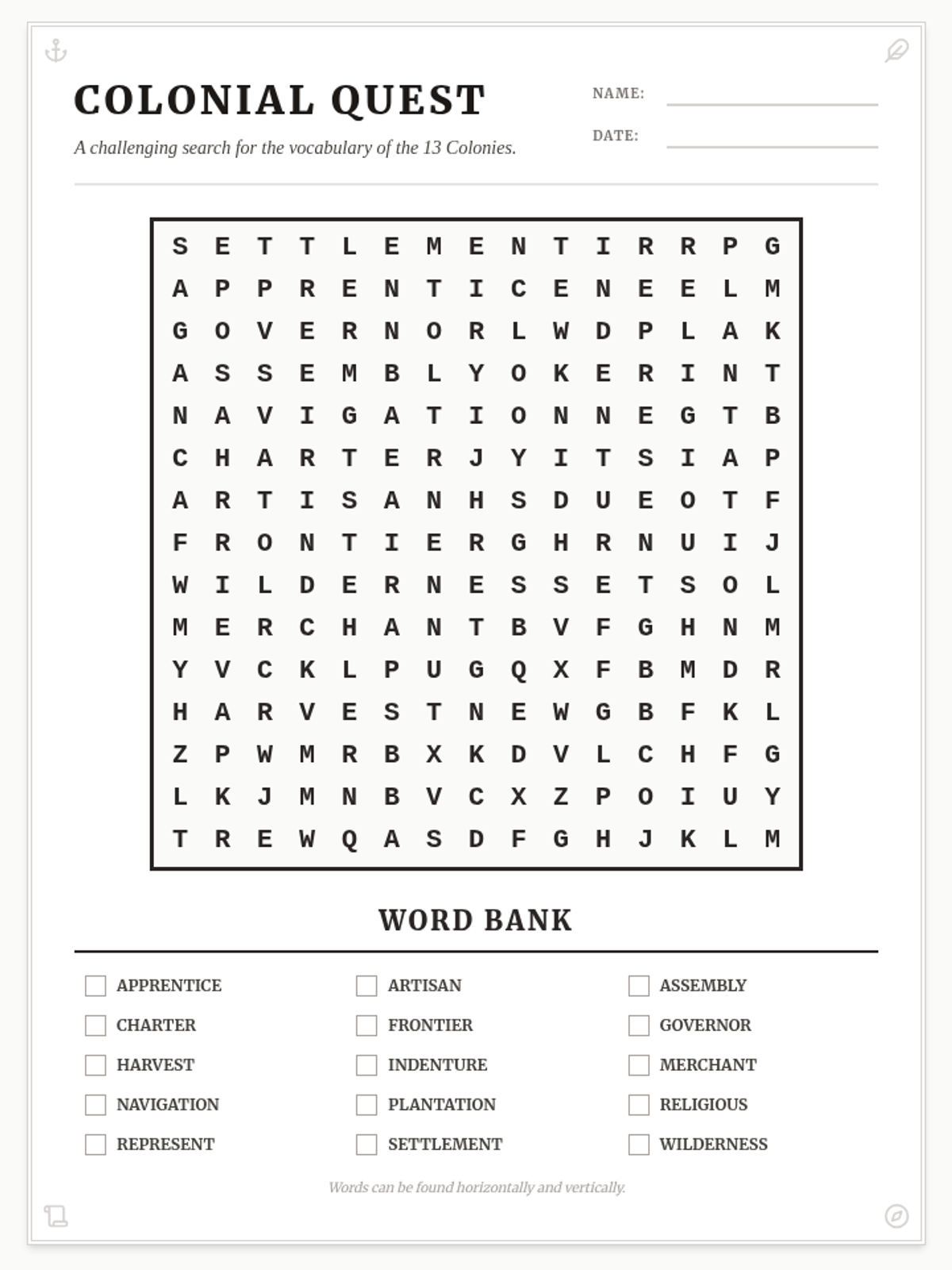
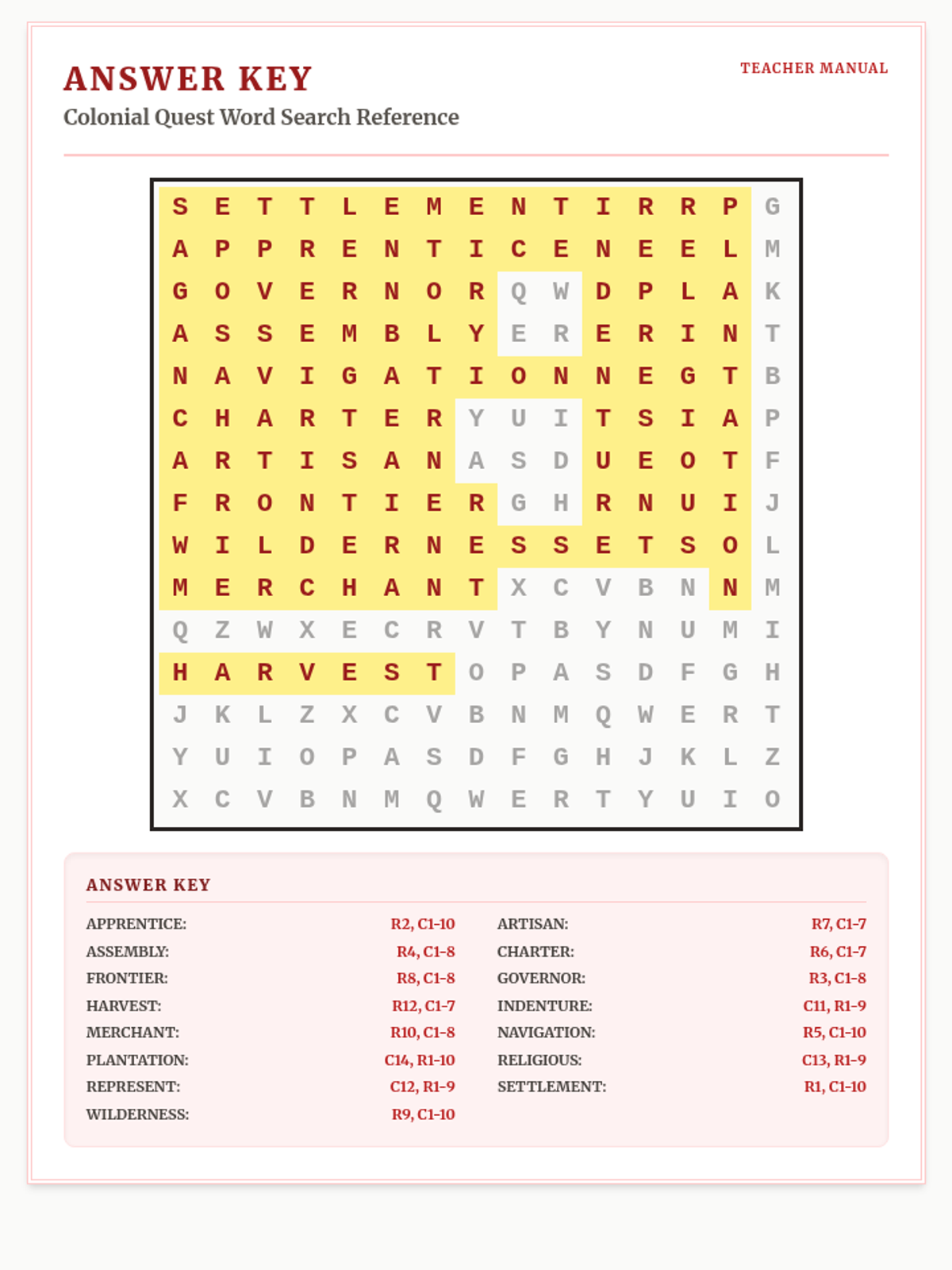
A look into the lives, systems, and vocabulary of the thirteen original American colonies.
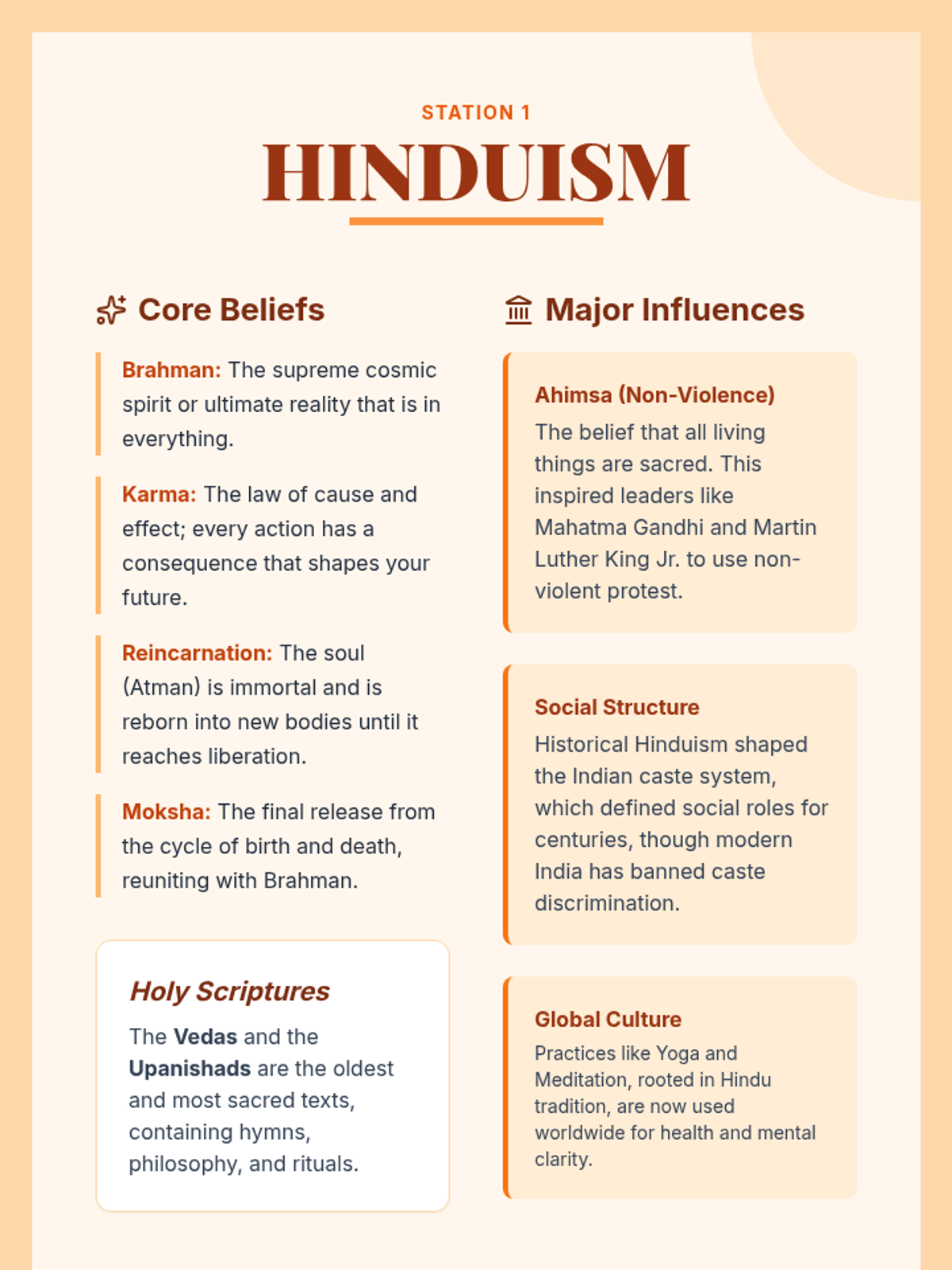
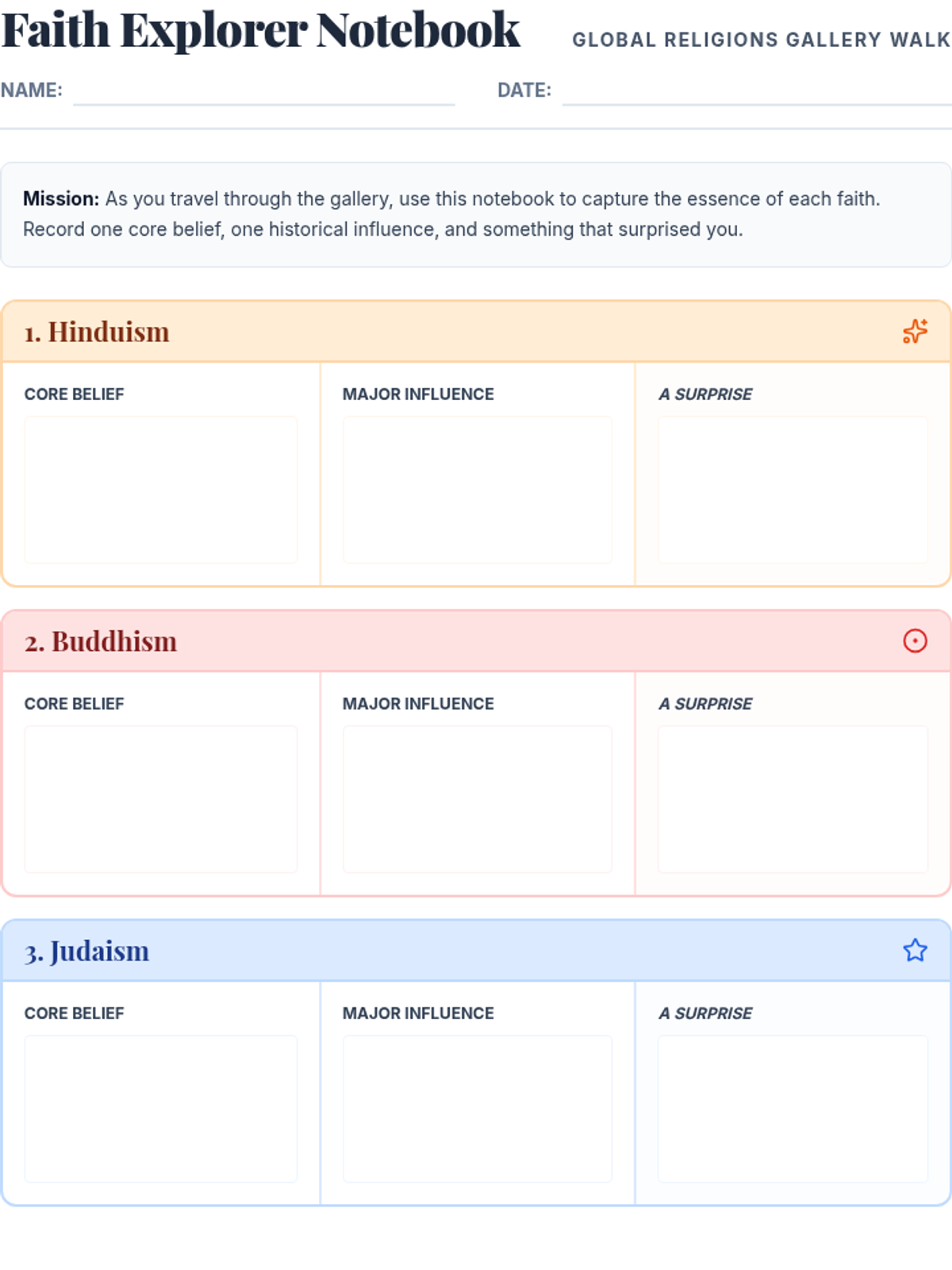
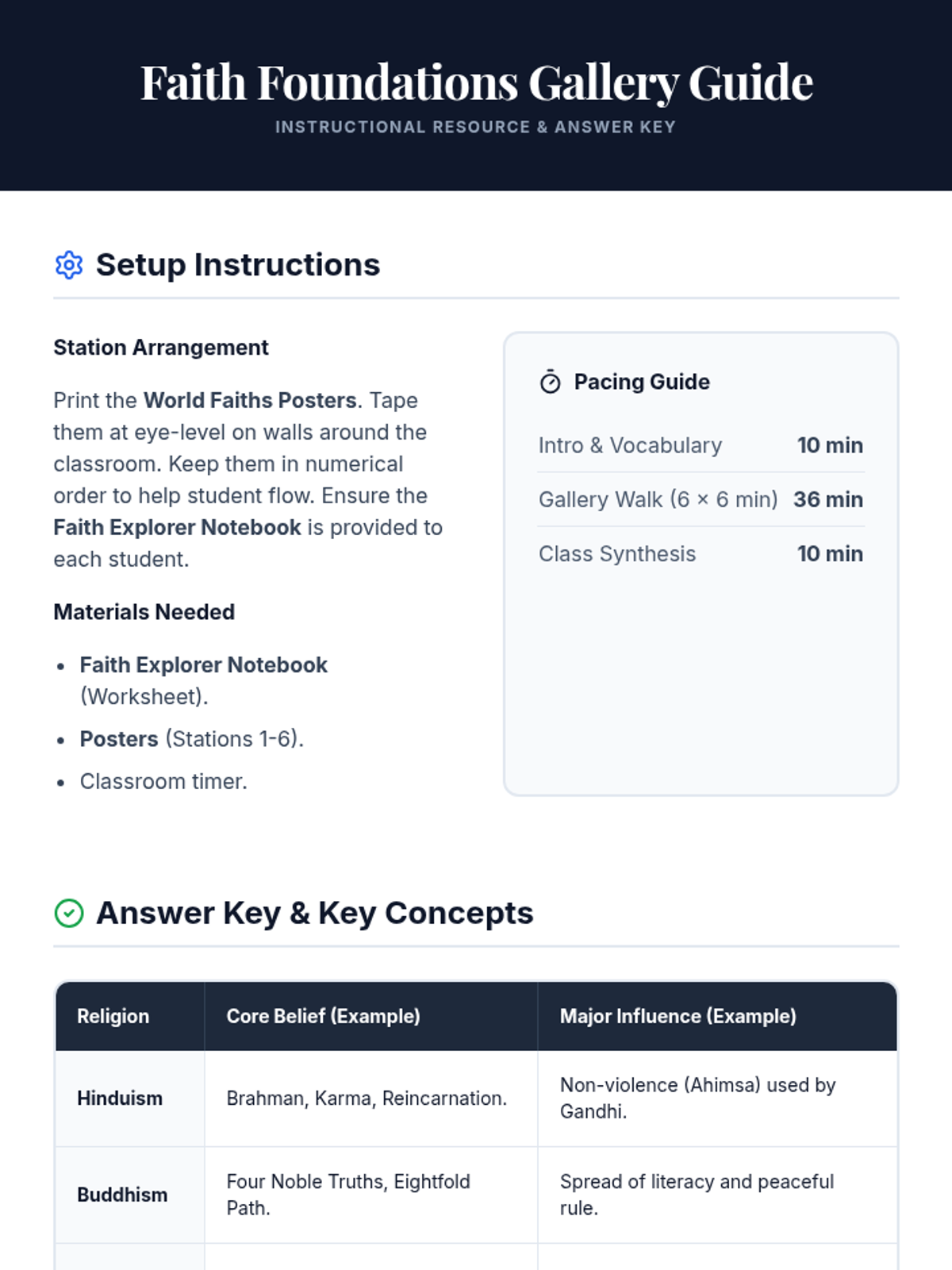
An immersive gallery walk exploring the core beliefs and historical influences of Hinduism, Buddhism, Judaism, Christianity, Islam, and Taoism. Students rotate through visual stations to build a comparative understanding of global spiritual traditions.
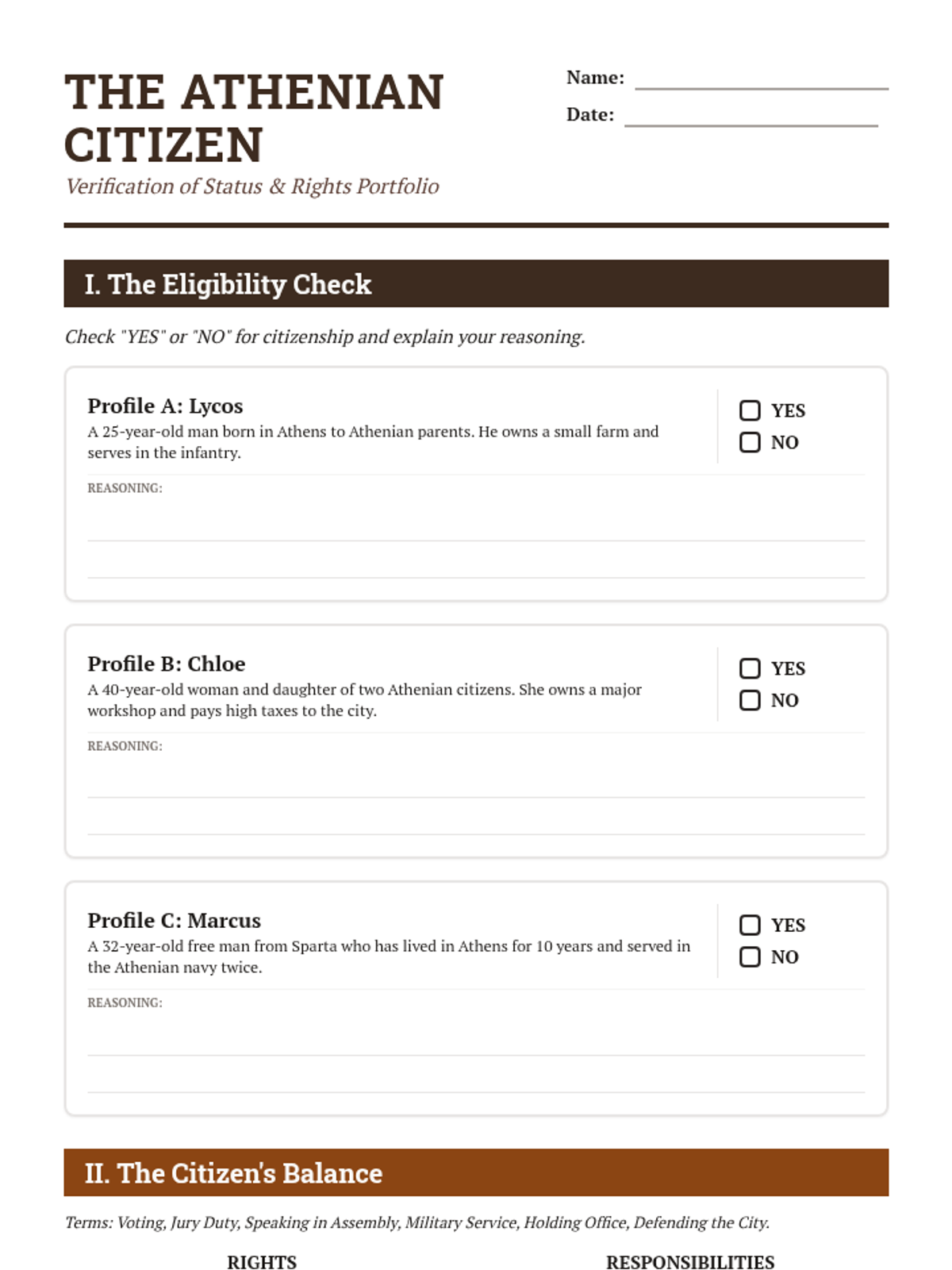
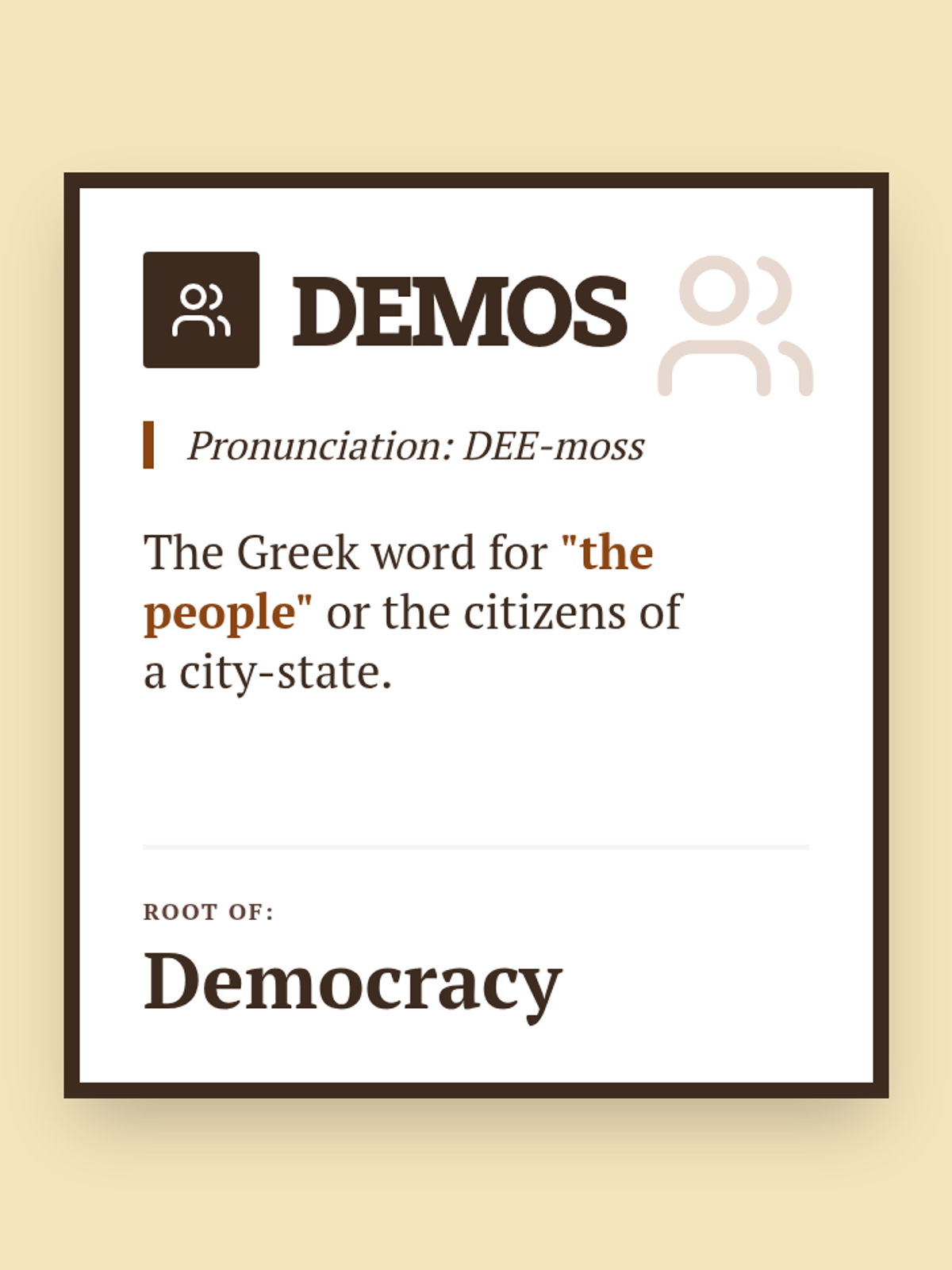
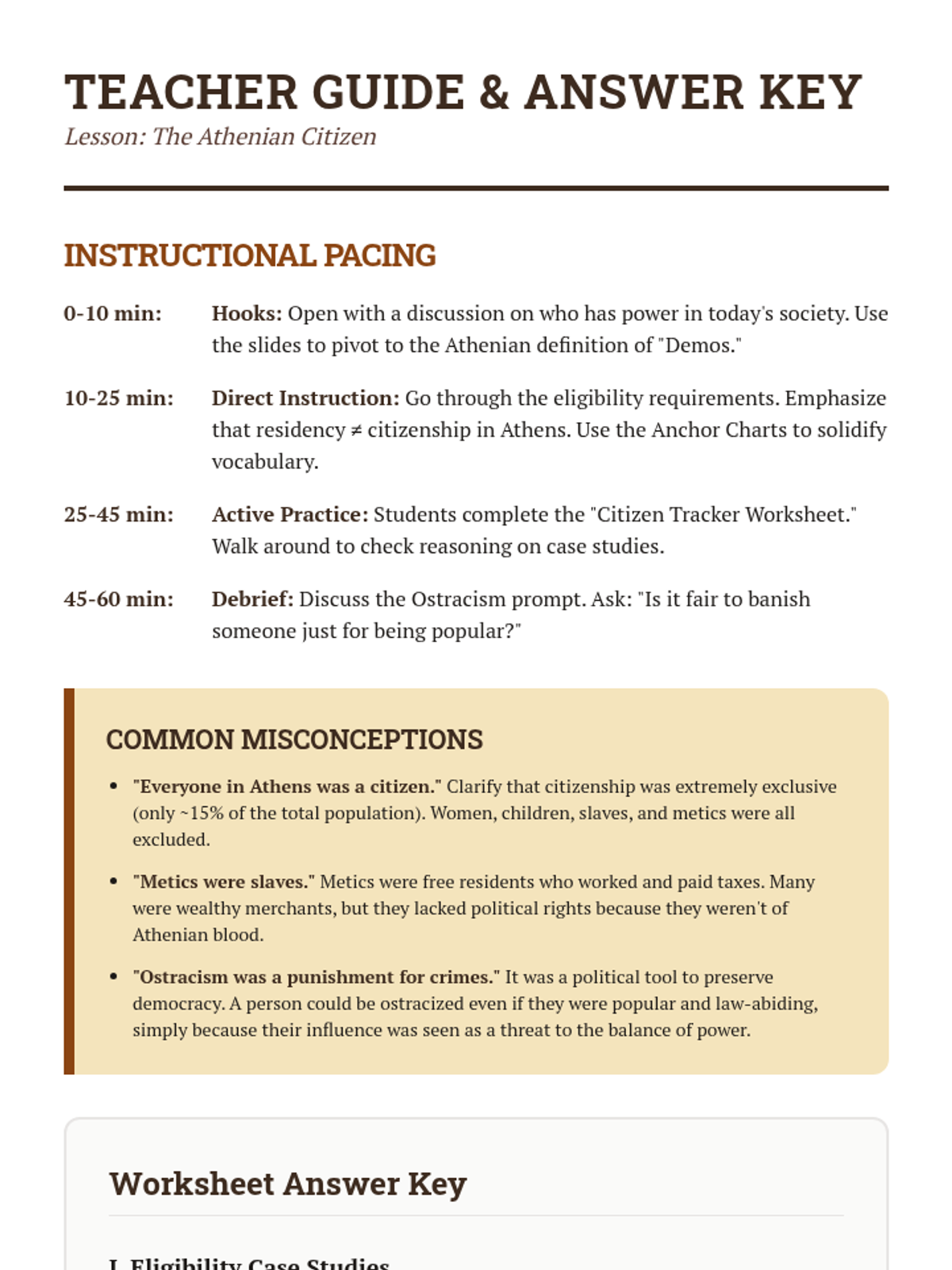
An exploration of the foundations of citizenship in ancient Athens, covering eligibility, rights, responsibilities, and the unique practice of ostracism.
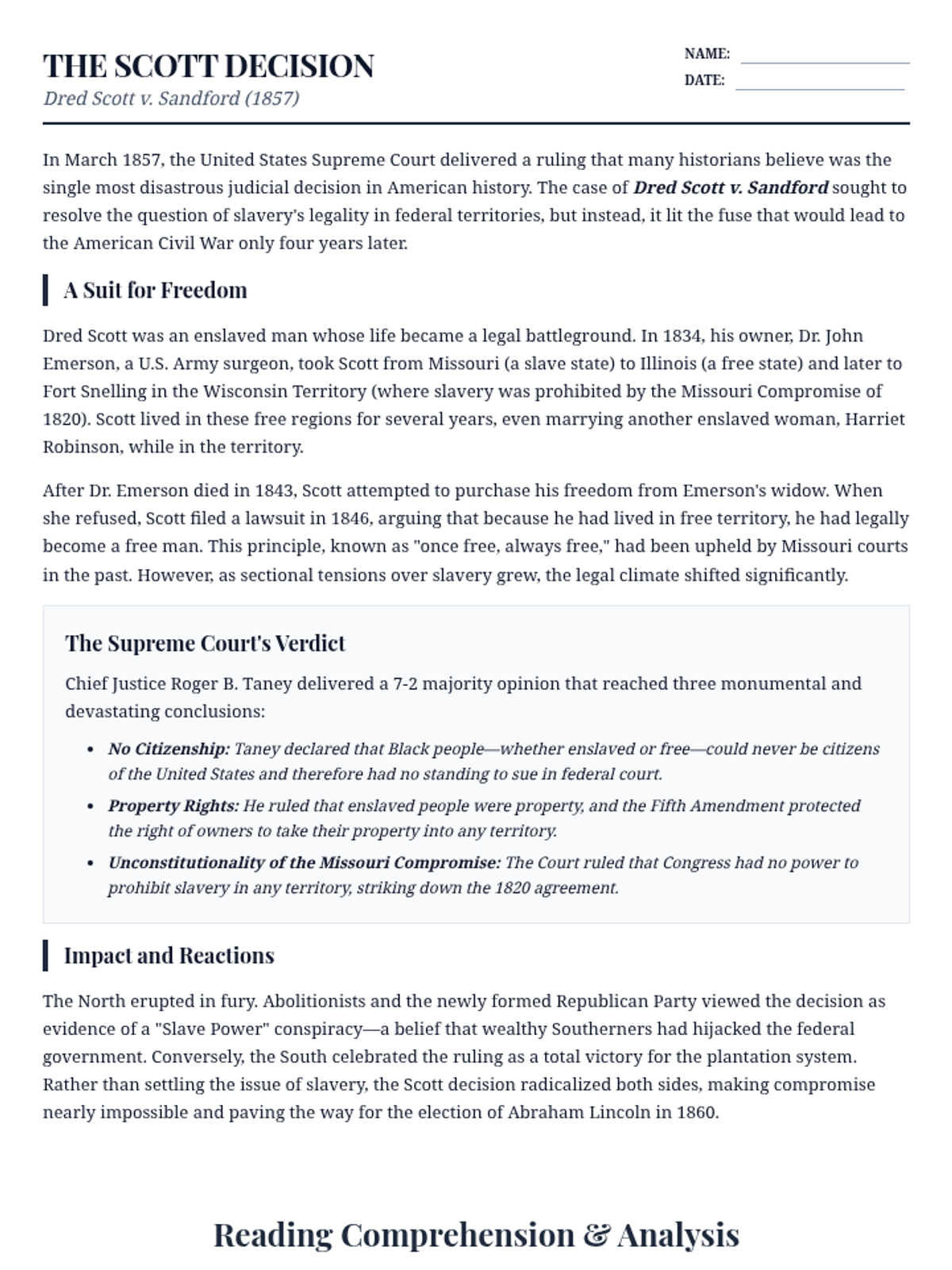
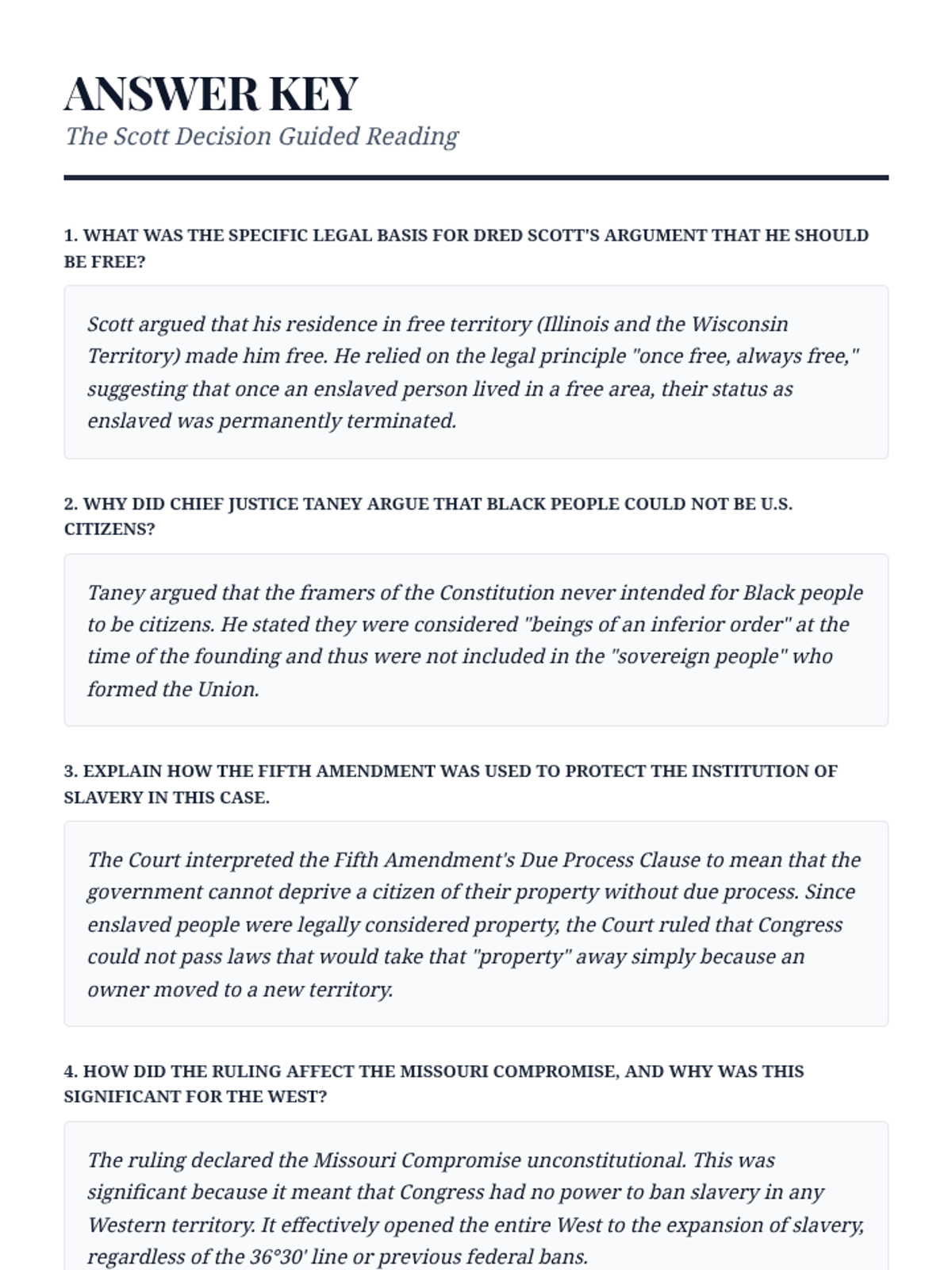
An in-depth look at the landmark Supreme Court case of Dred Scott v. Sandford, exploring its legal complexities and its role as a catalyst for the American Civil War.
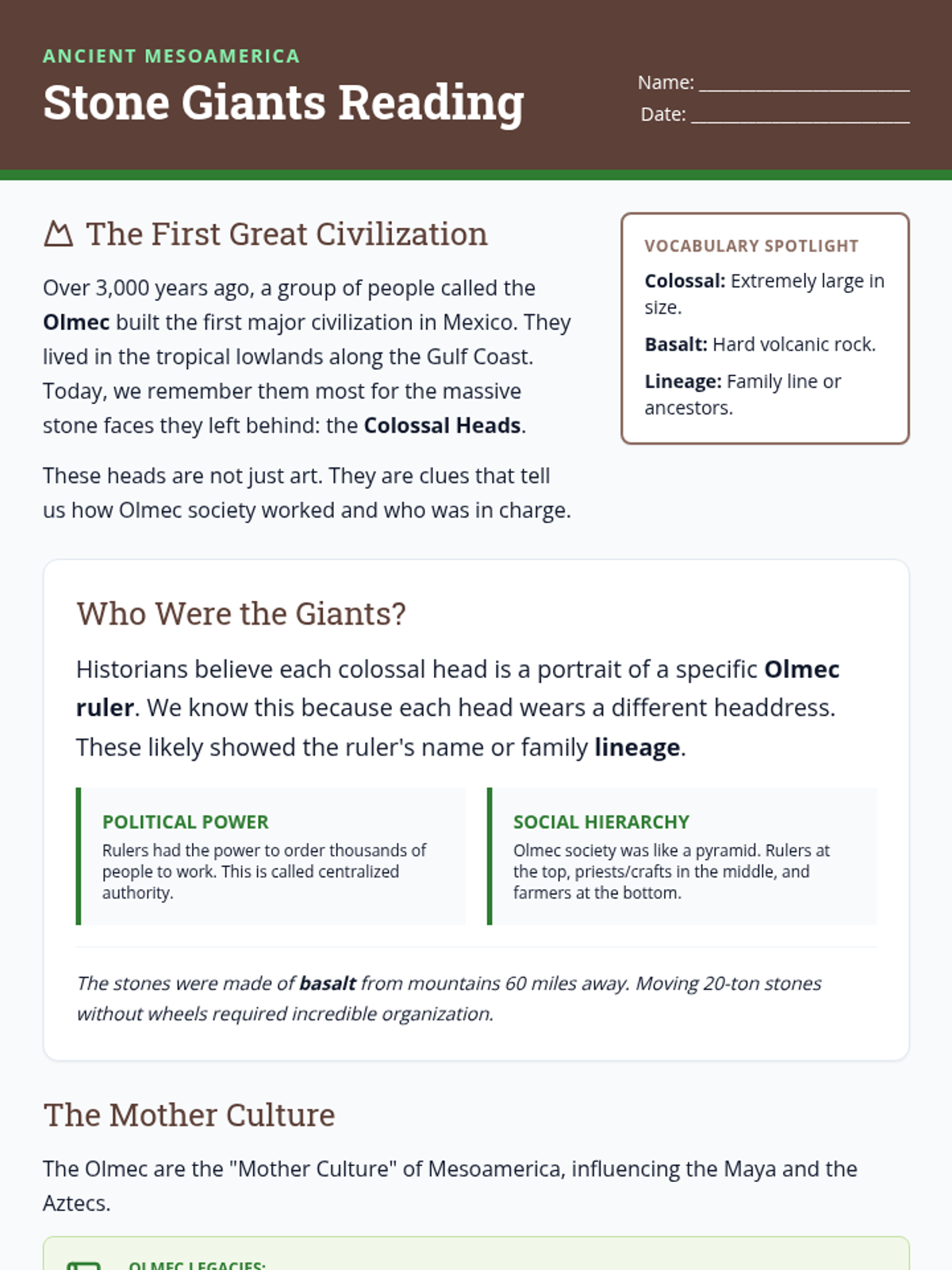
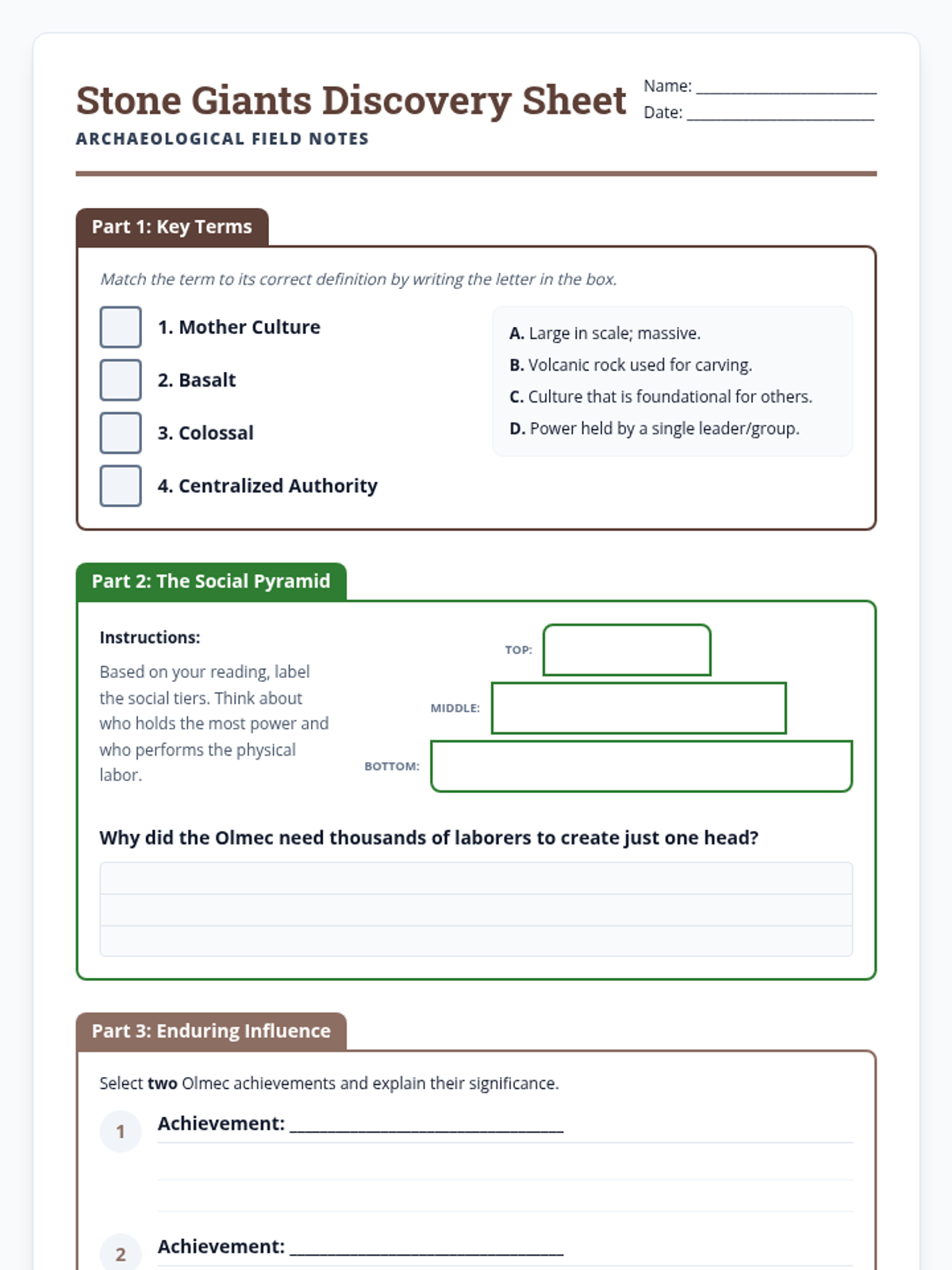
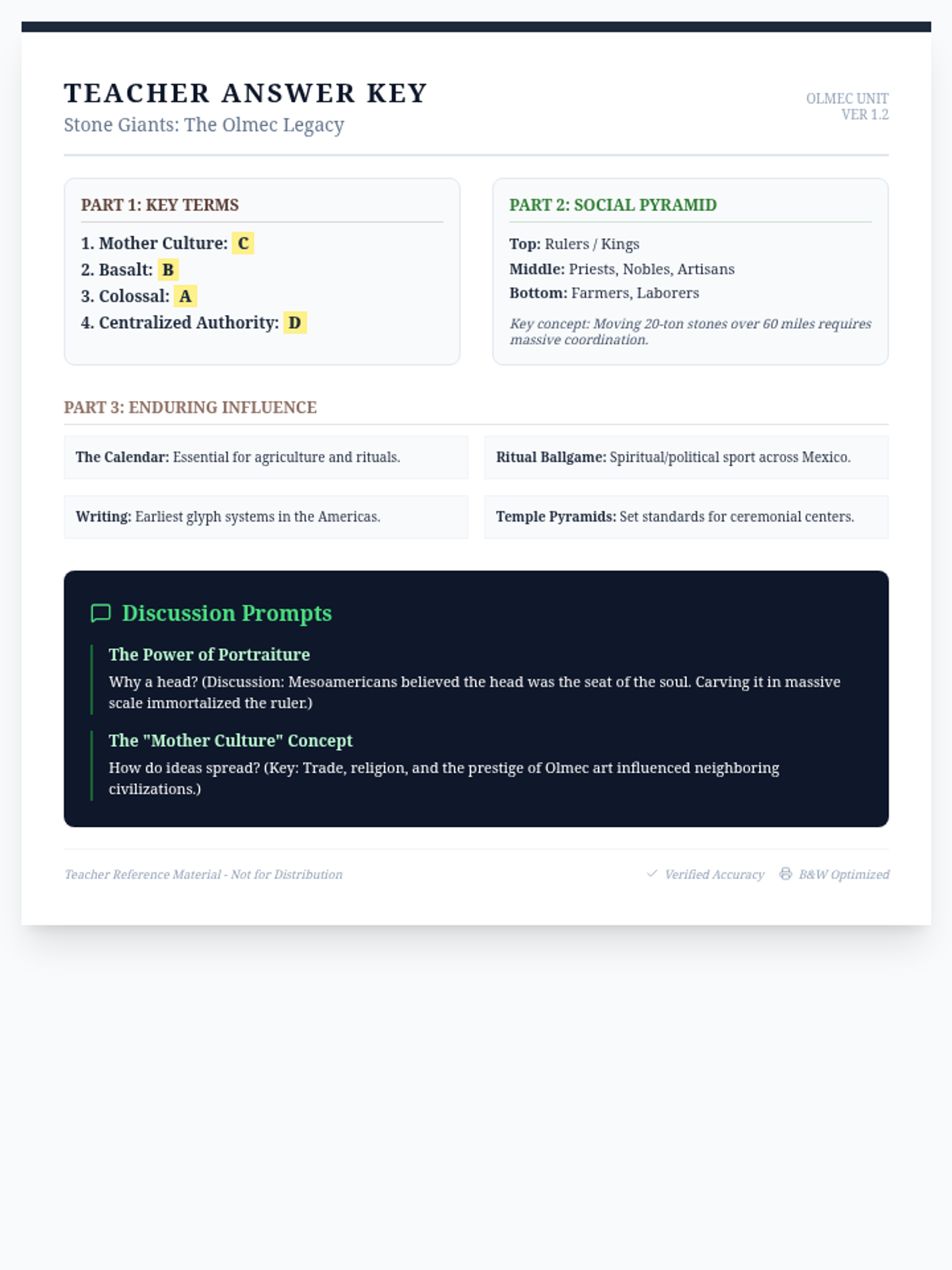
A lesson exploring the Olmec civilization through their iconic colossal heads, focusing on social hierarchy, political power, and their enduring legacy as Mesoamerica's 'Mother Culture'.
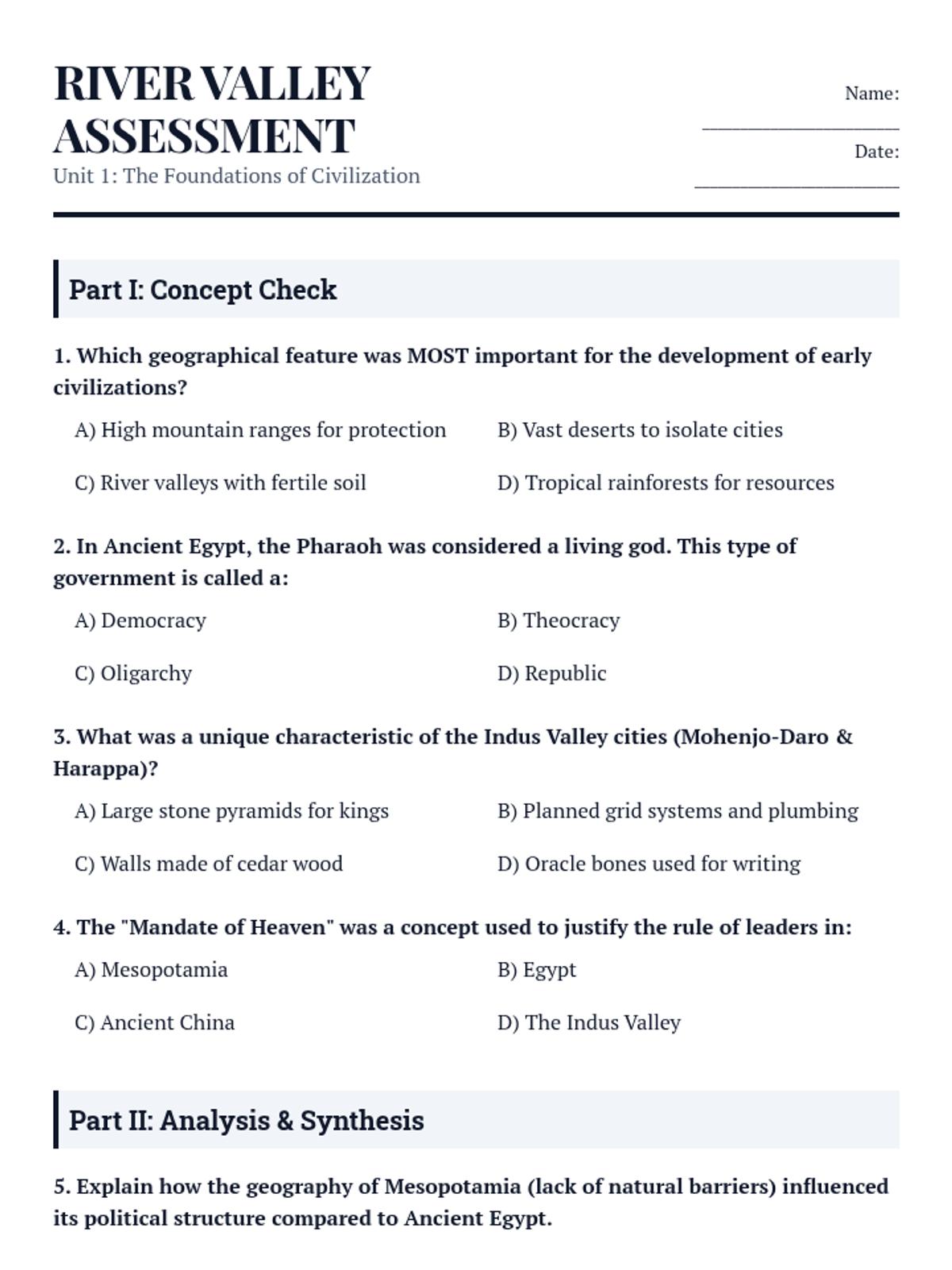
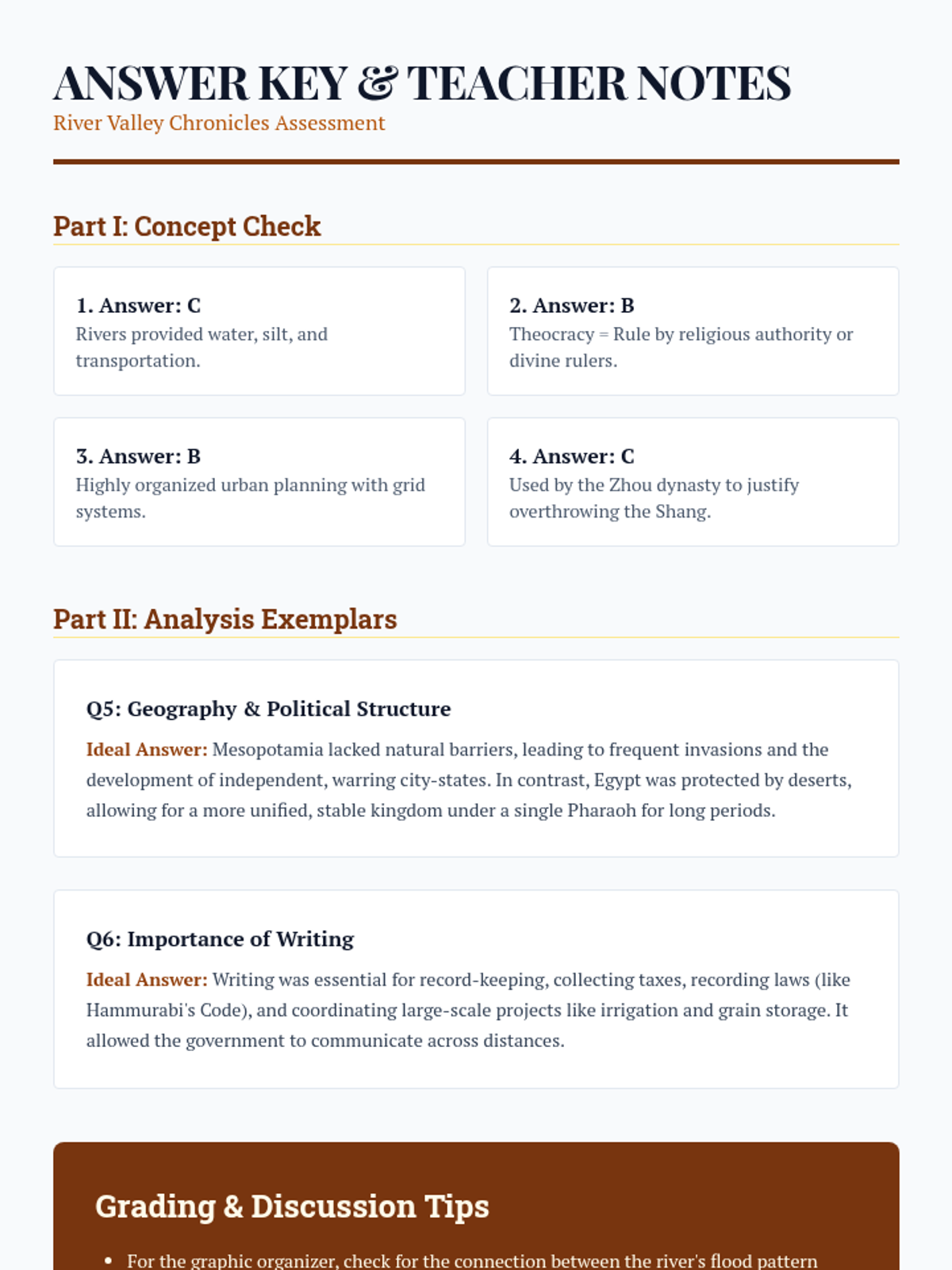
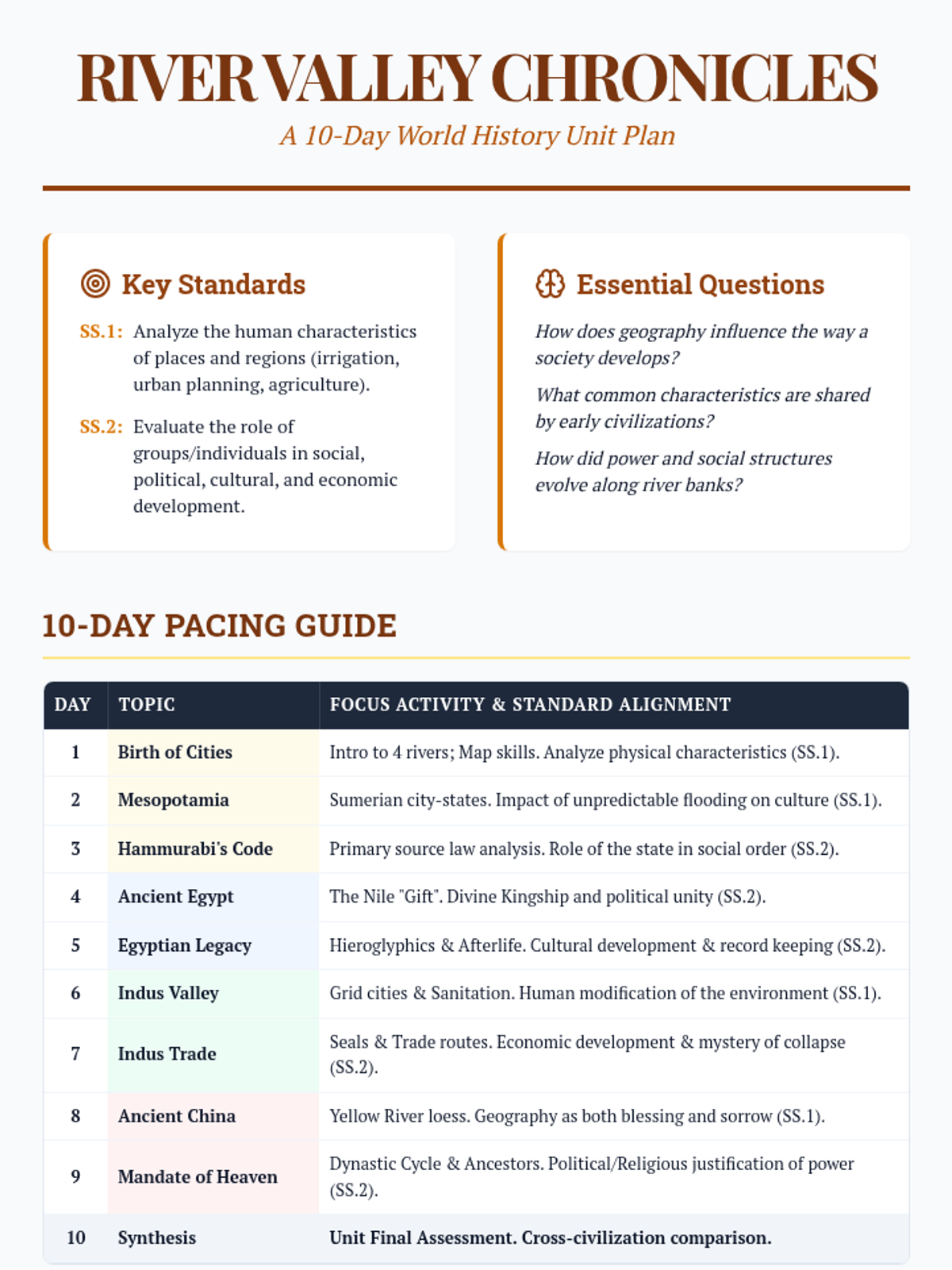
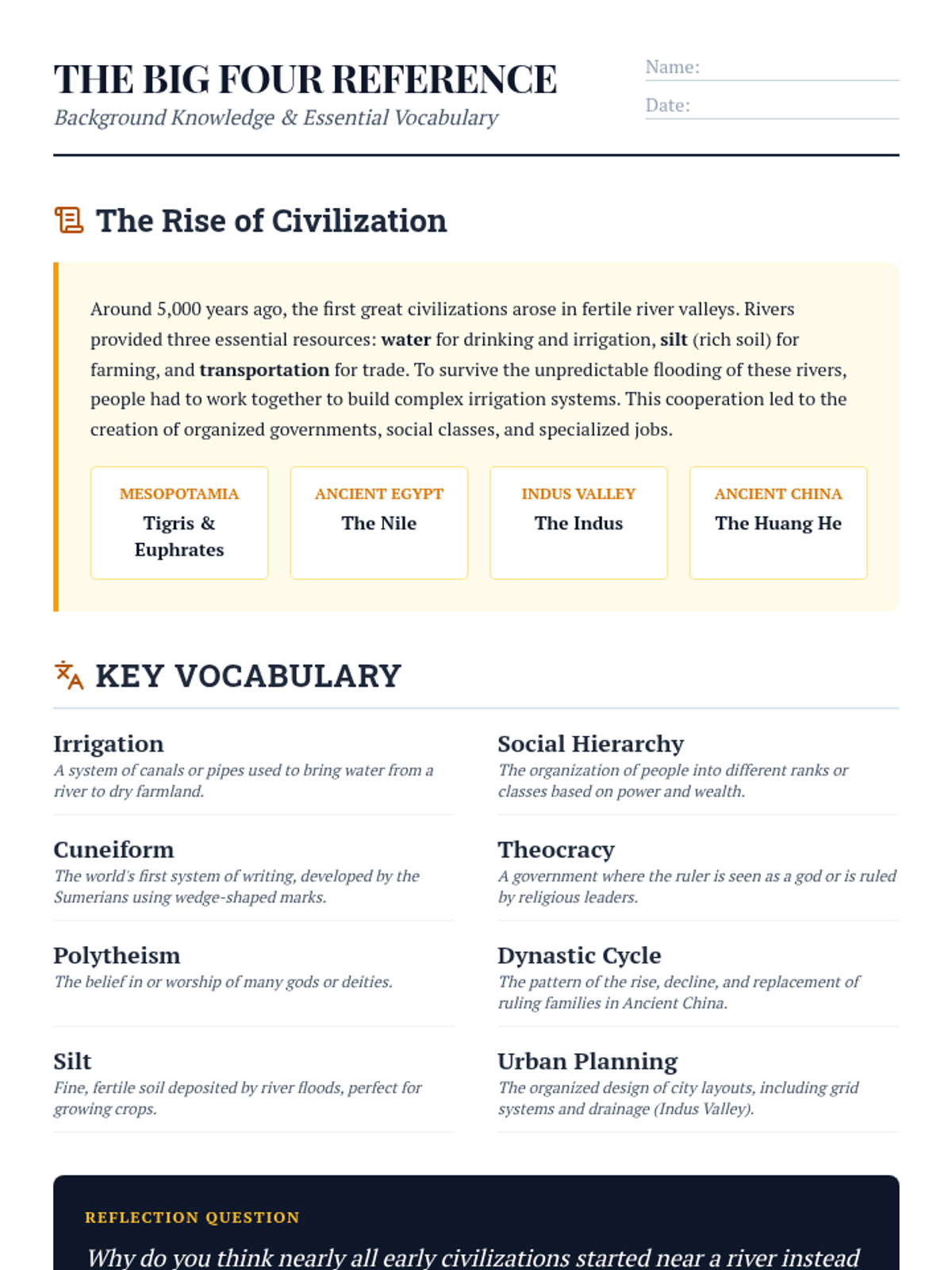
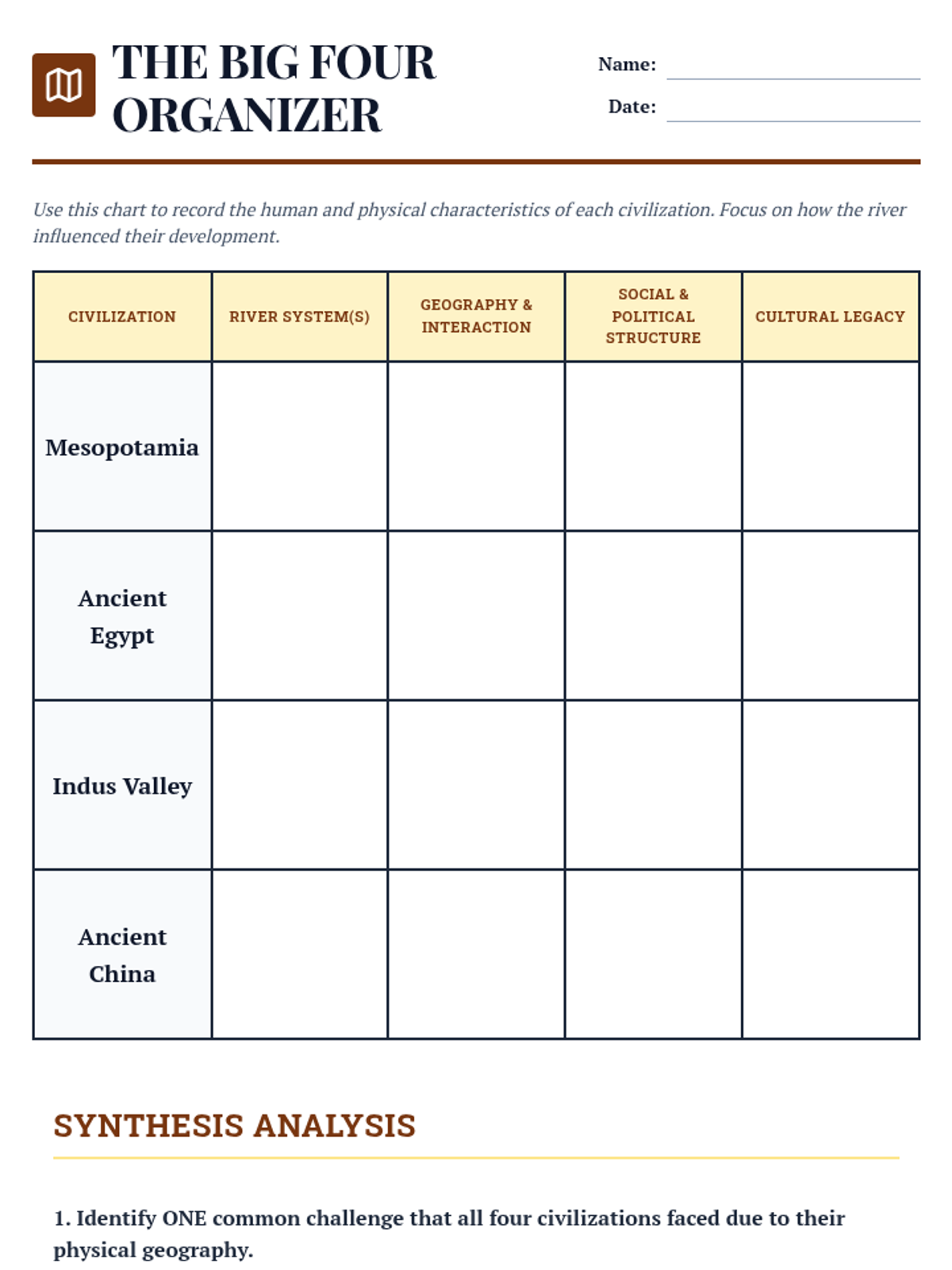
A final comparison of the four civilizations, focusing on shared characteristics like irrigation, social classes, and writing systems, culminating in a unit assessment.
Focusing on the Huang He (Yellow River), the early dynasties, the concept of the Mandate of Heaven, and the development of Confucianism and Taoism.
Investigating the advanced urban planning of Harappa and Mohenjo-Daro, the mystery of their undeciphered script, and their extensive trade networks.
An analysis of the Nile River's role in Egyptian life, the power of Pharaohs, the construction of pyramids, and the religious beliefs of the afterlife.
An exploration of the Tigris and Euphrates rivers, the development of city-states, the Code of Hammurabi, and the social hierarchy of Sumer.