Analytical frameworks for interpreting history, geography, and civic information. Equips learners with tools for chronological sequencing, map literacy, and critical evaluation of primary and secondary sources.
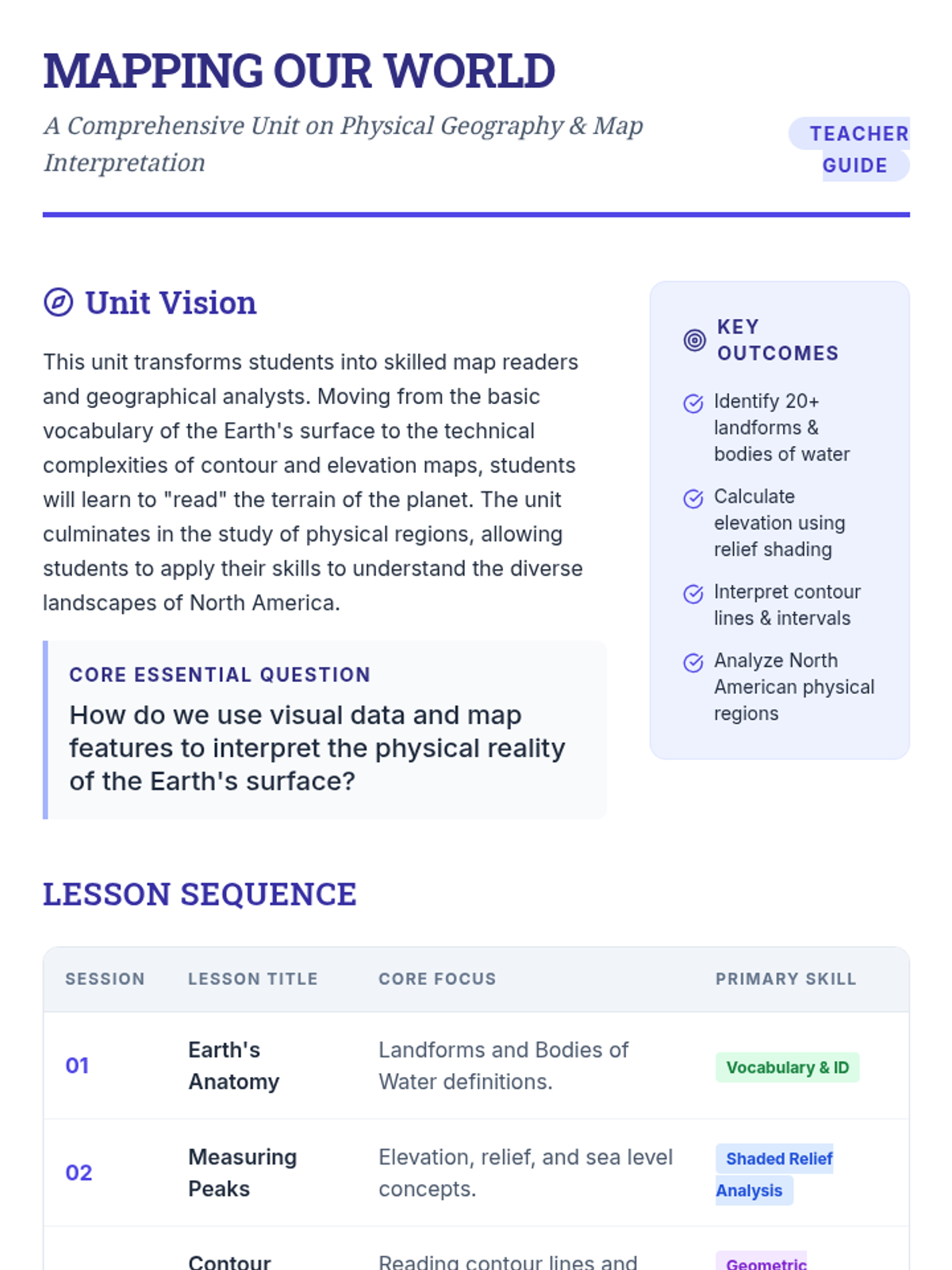
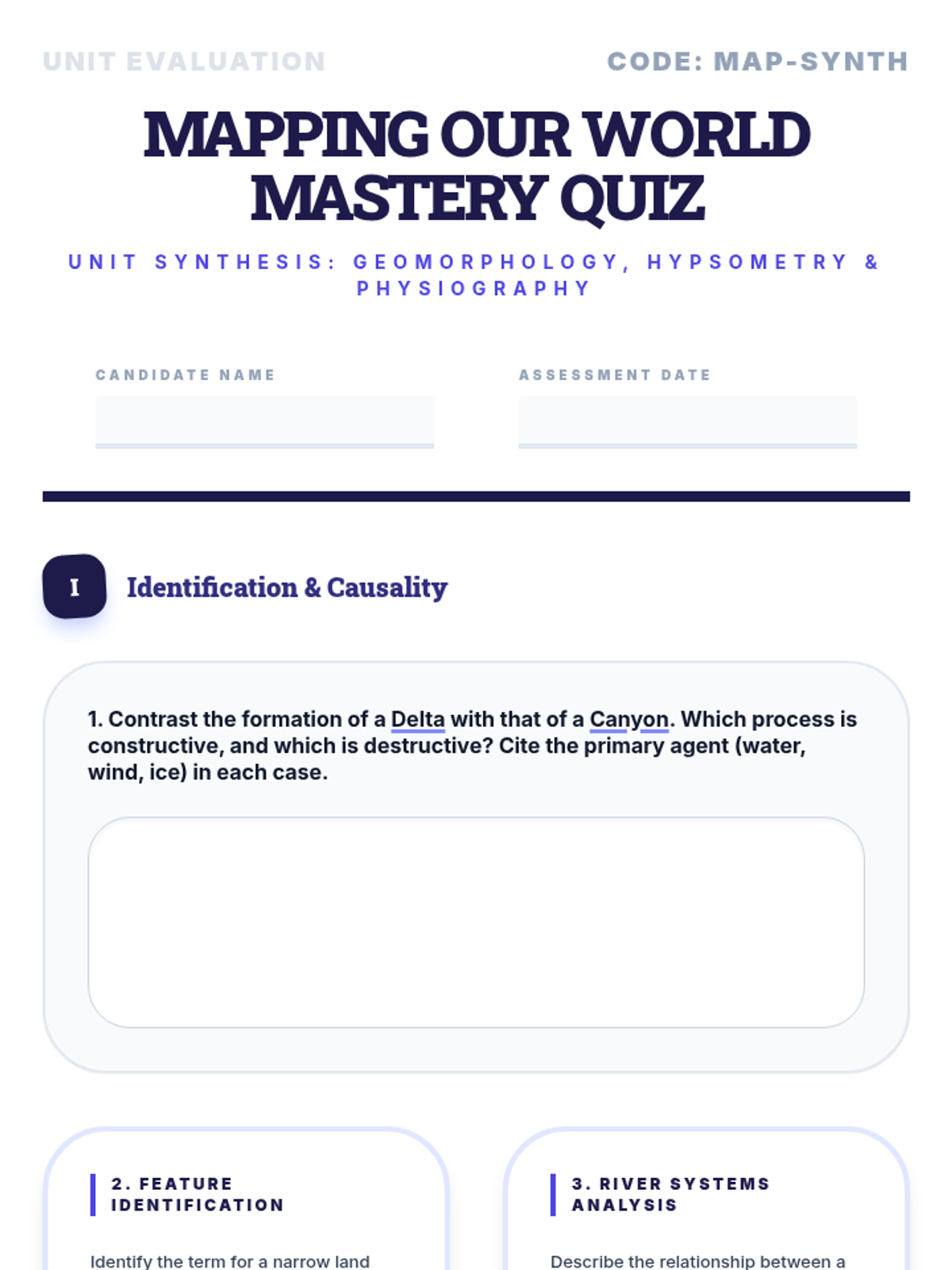
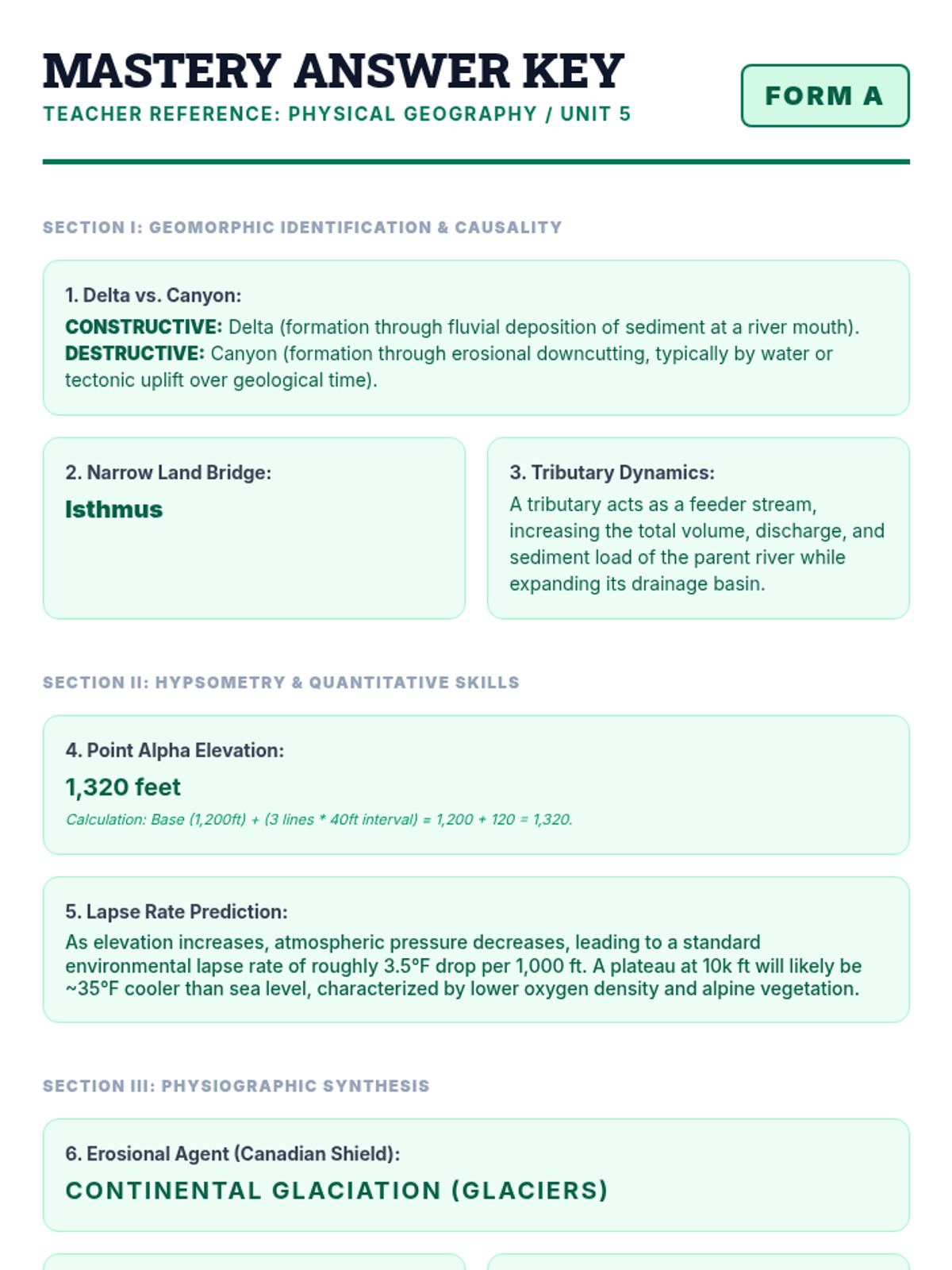
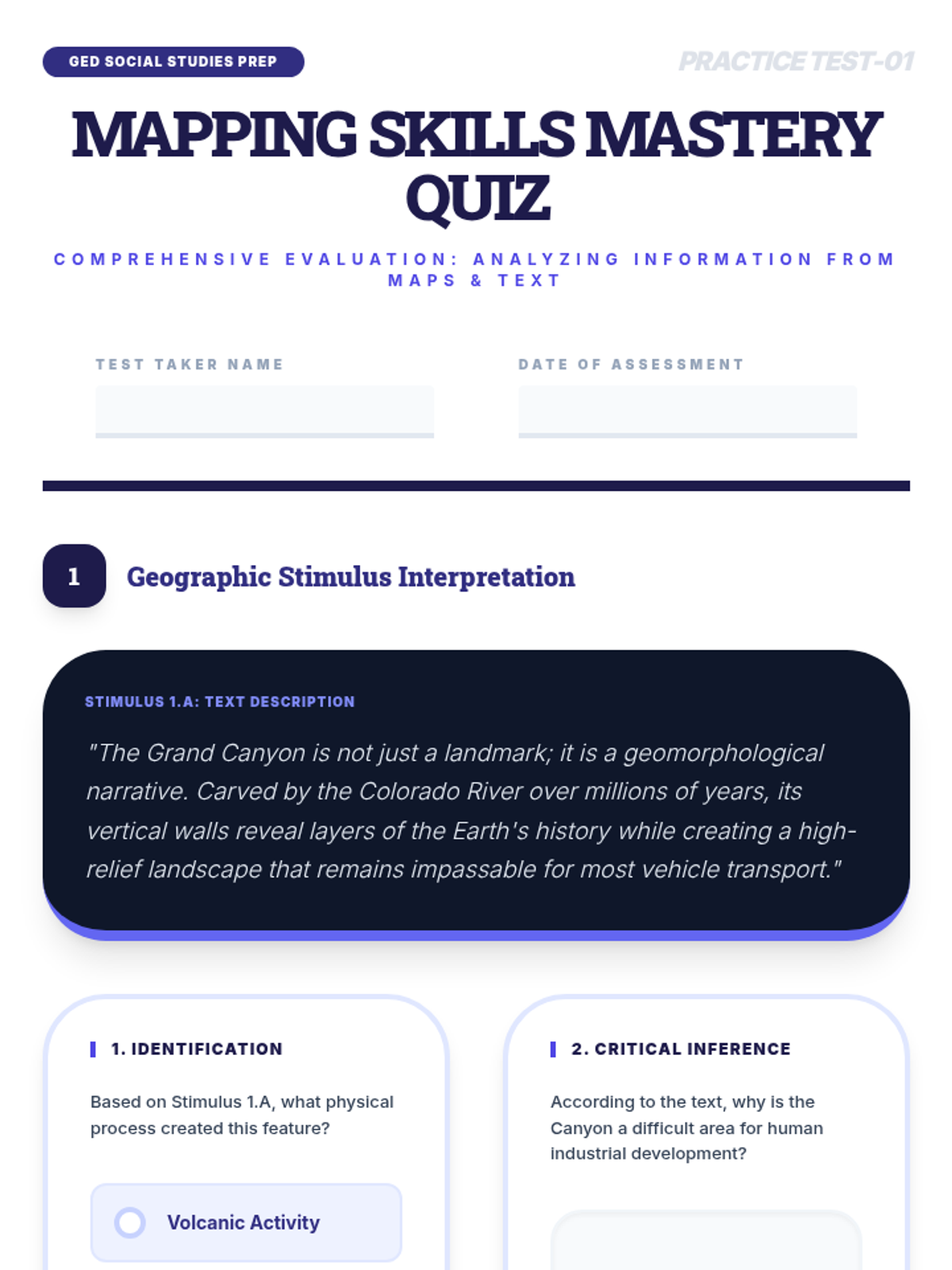
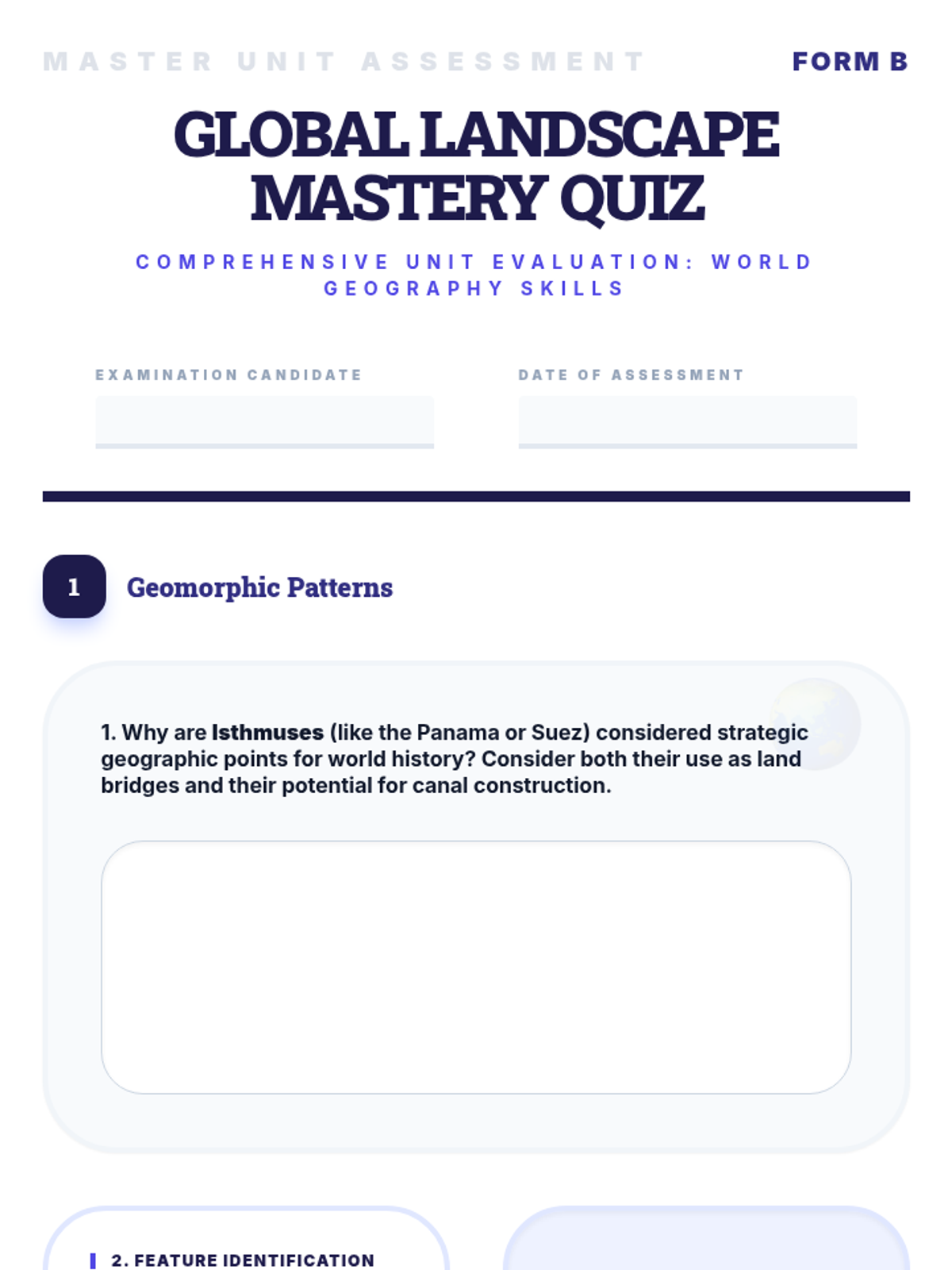
A final assessment and review lesson to verify student mastery of the unit's geography skills.
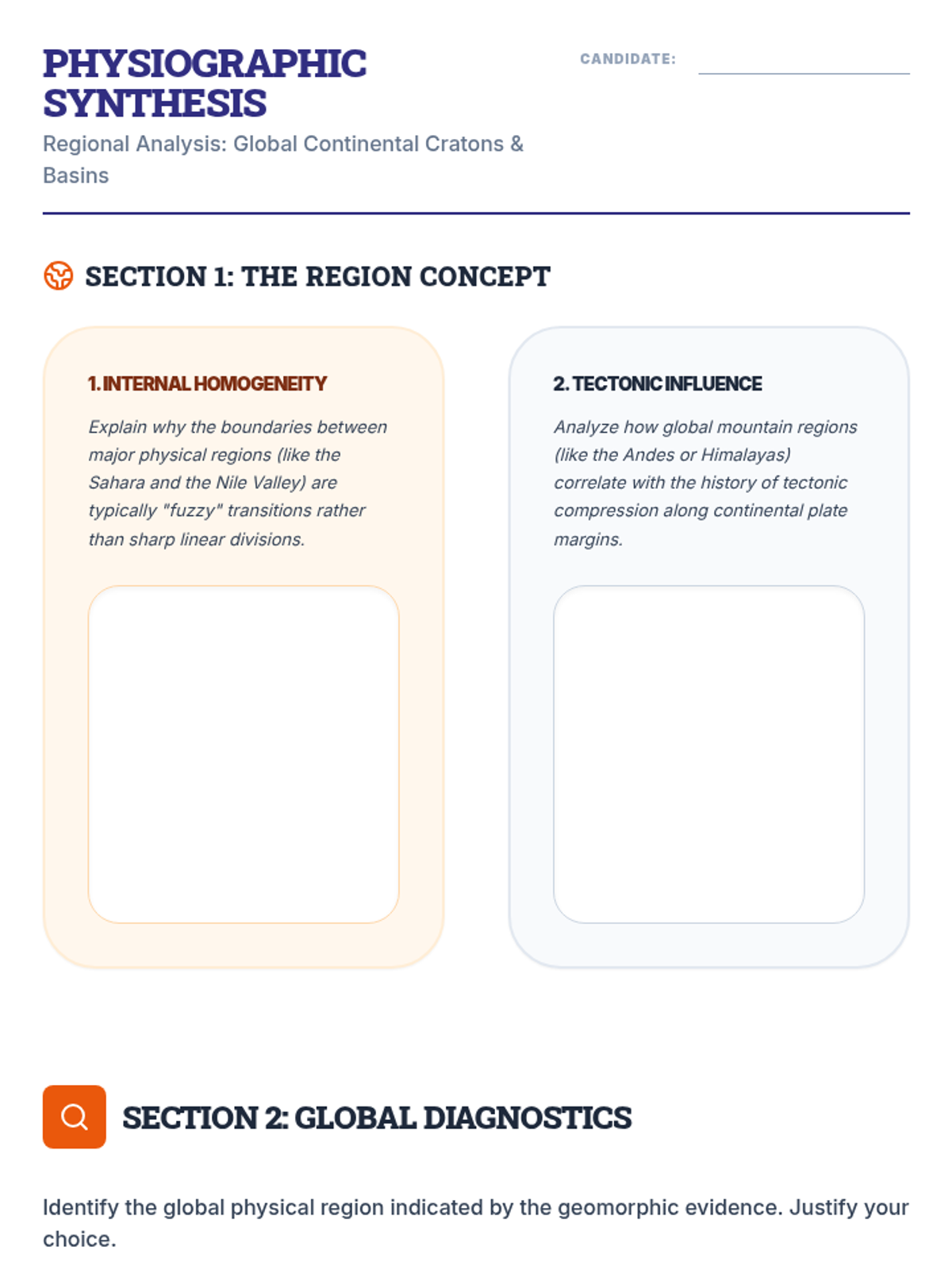
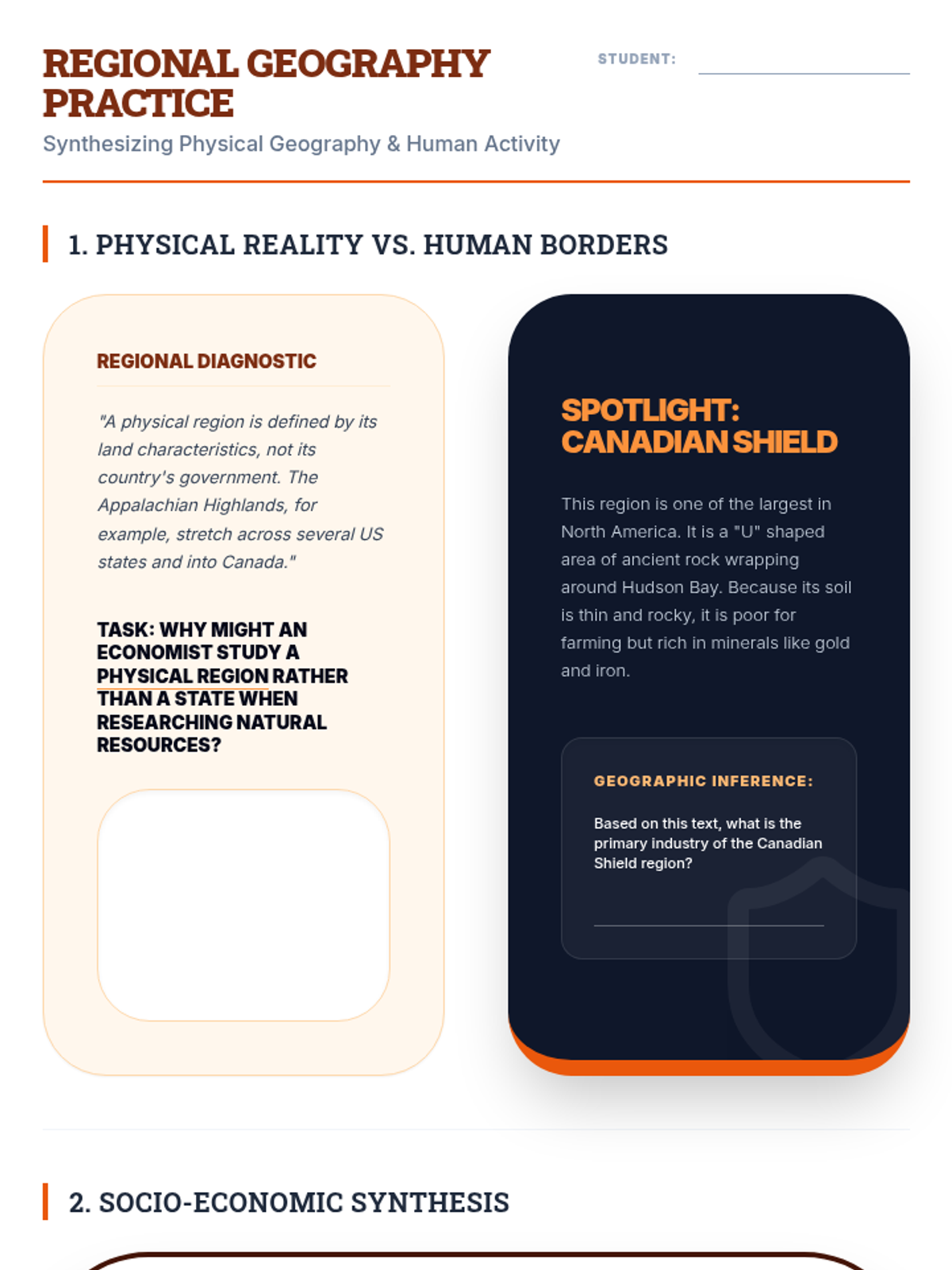
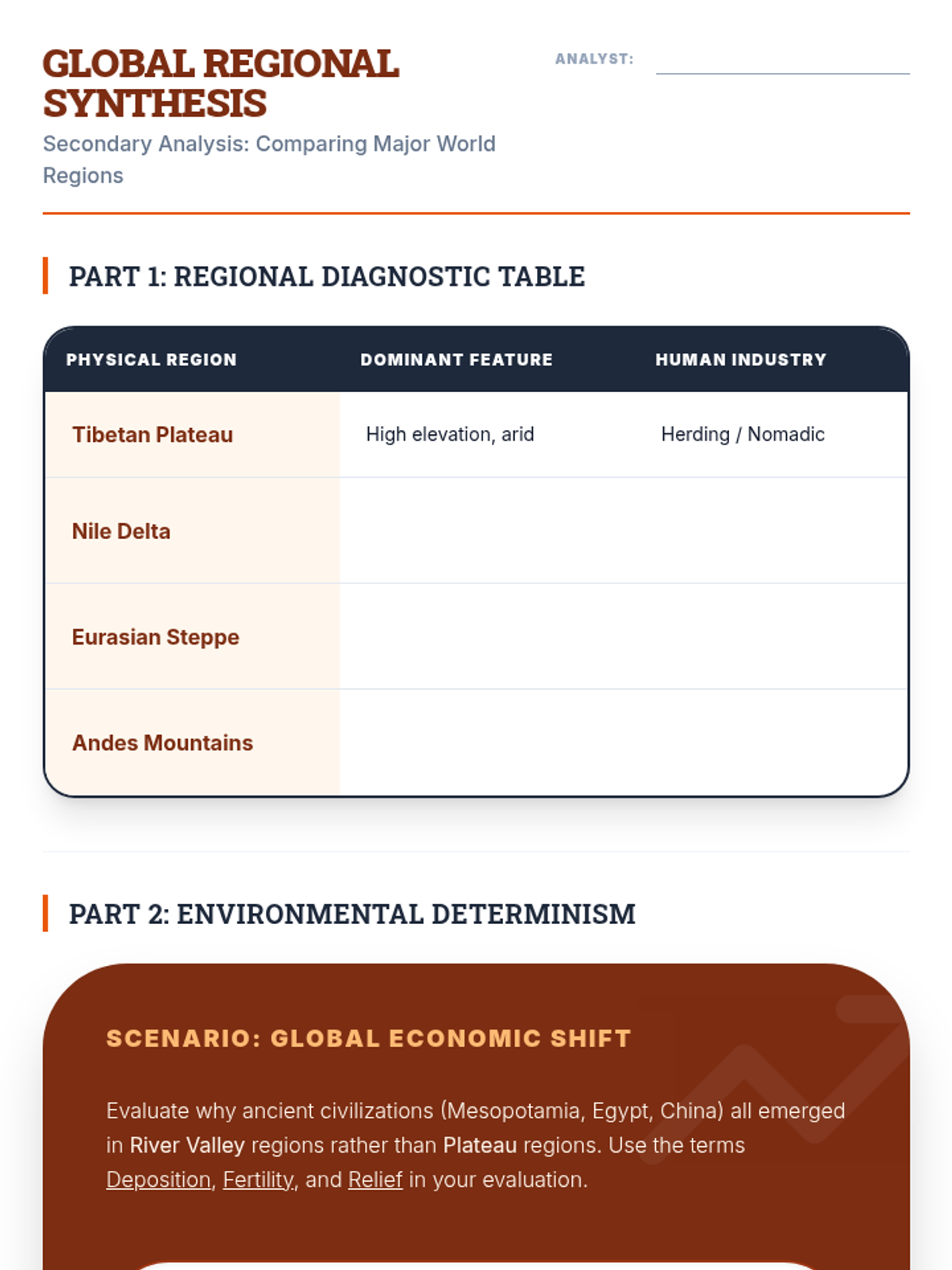
Analyzing the major physical regions of the world and their impact on human settlement and activity.
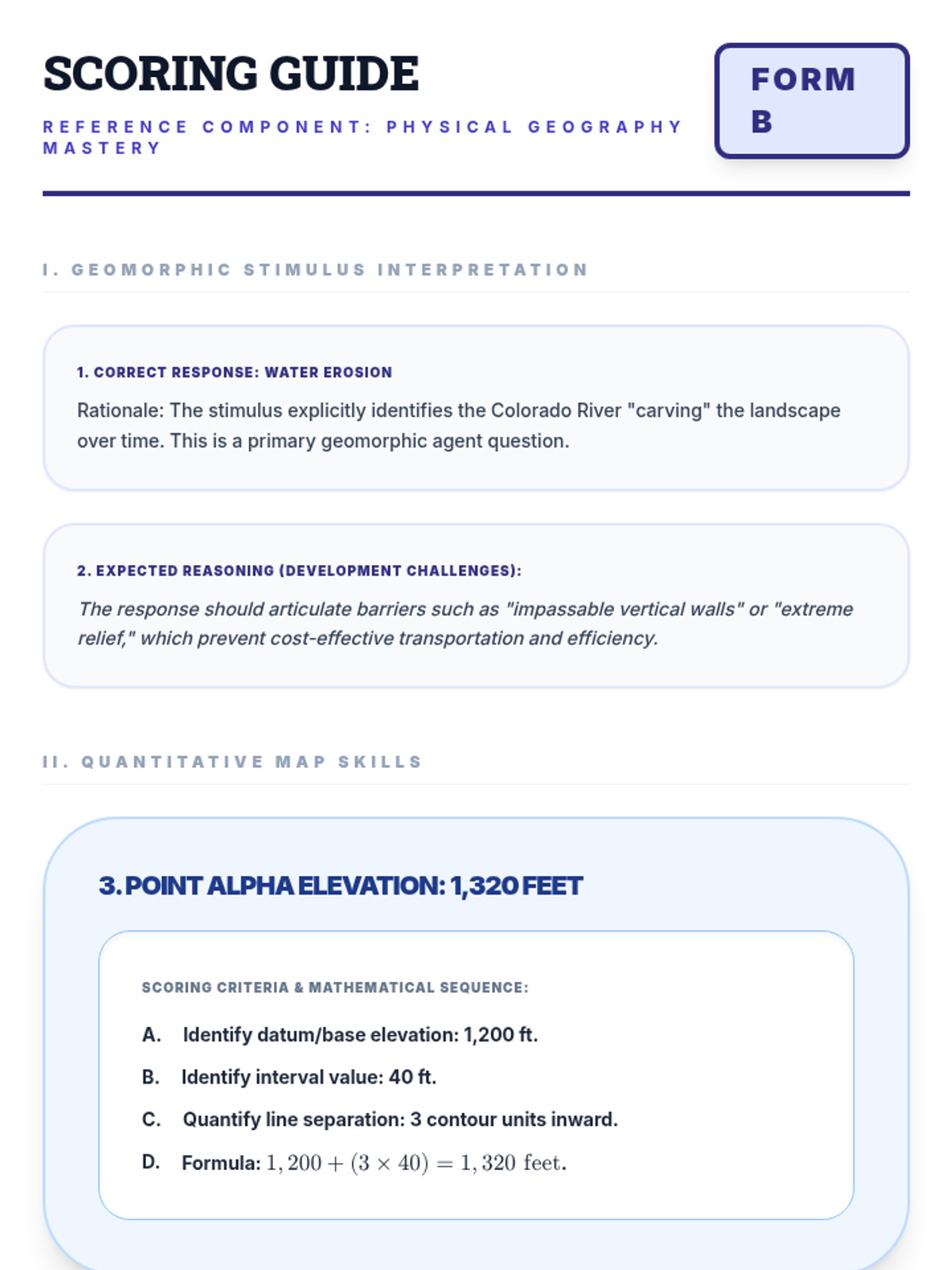
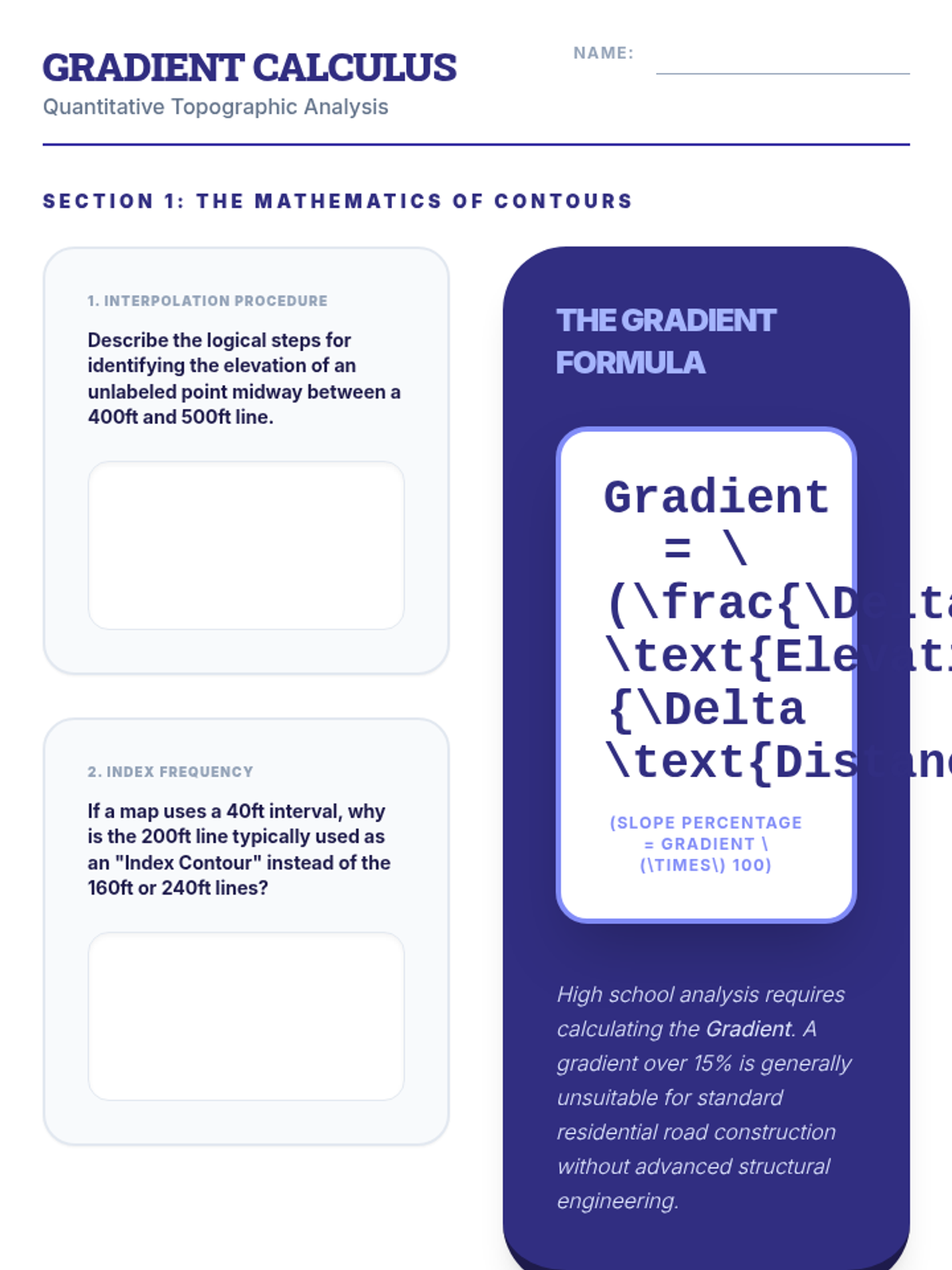
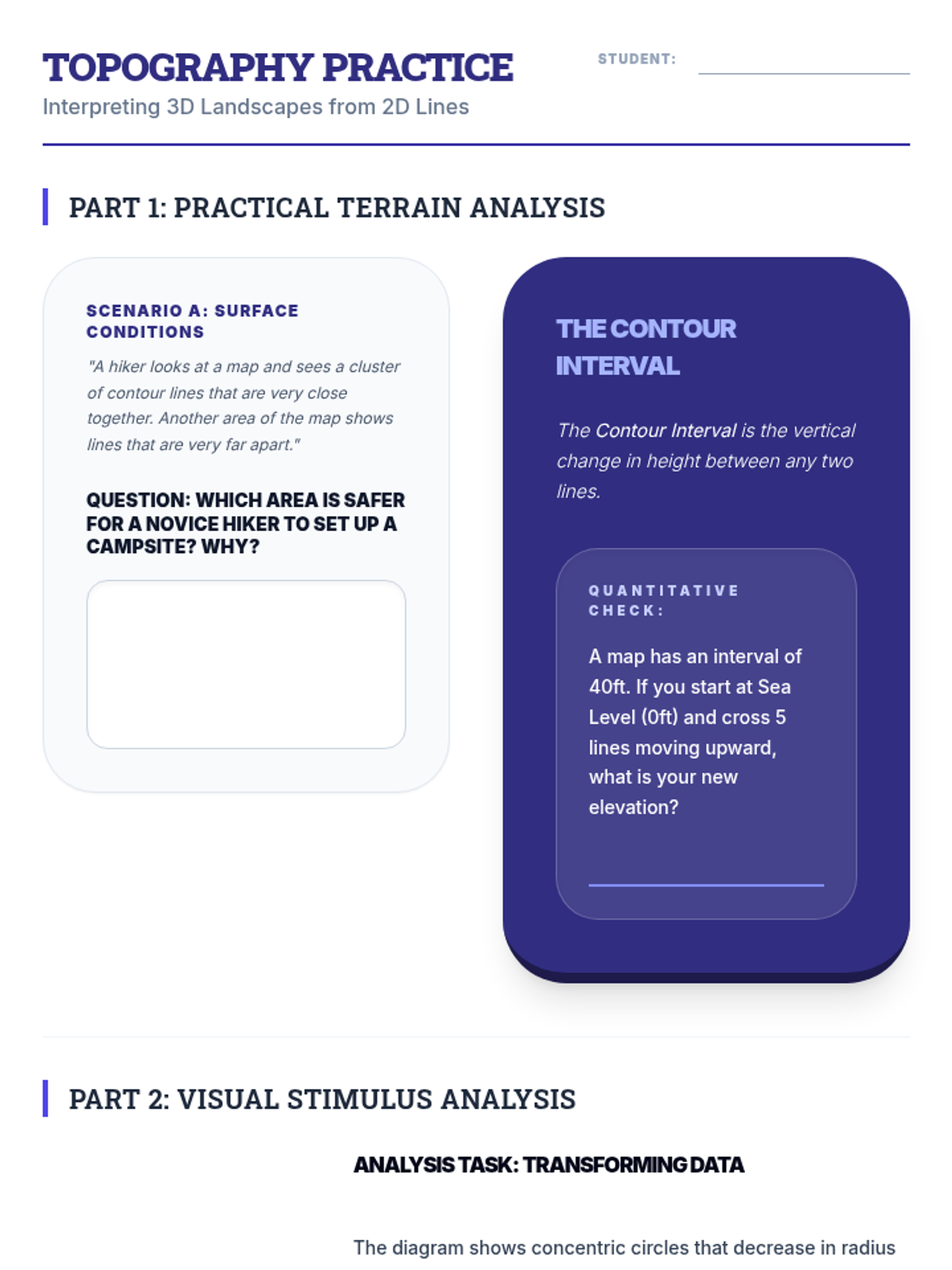
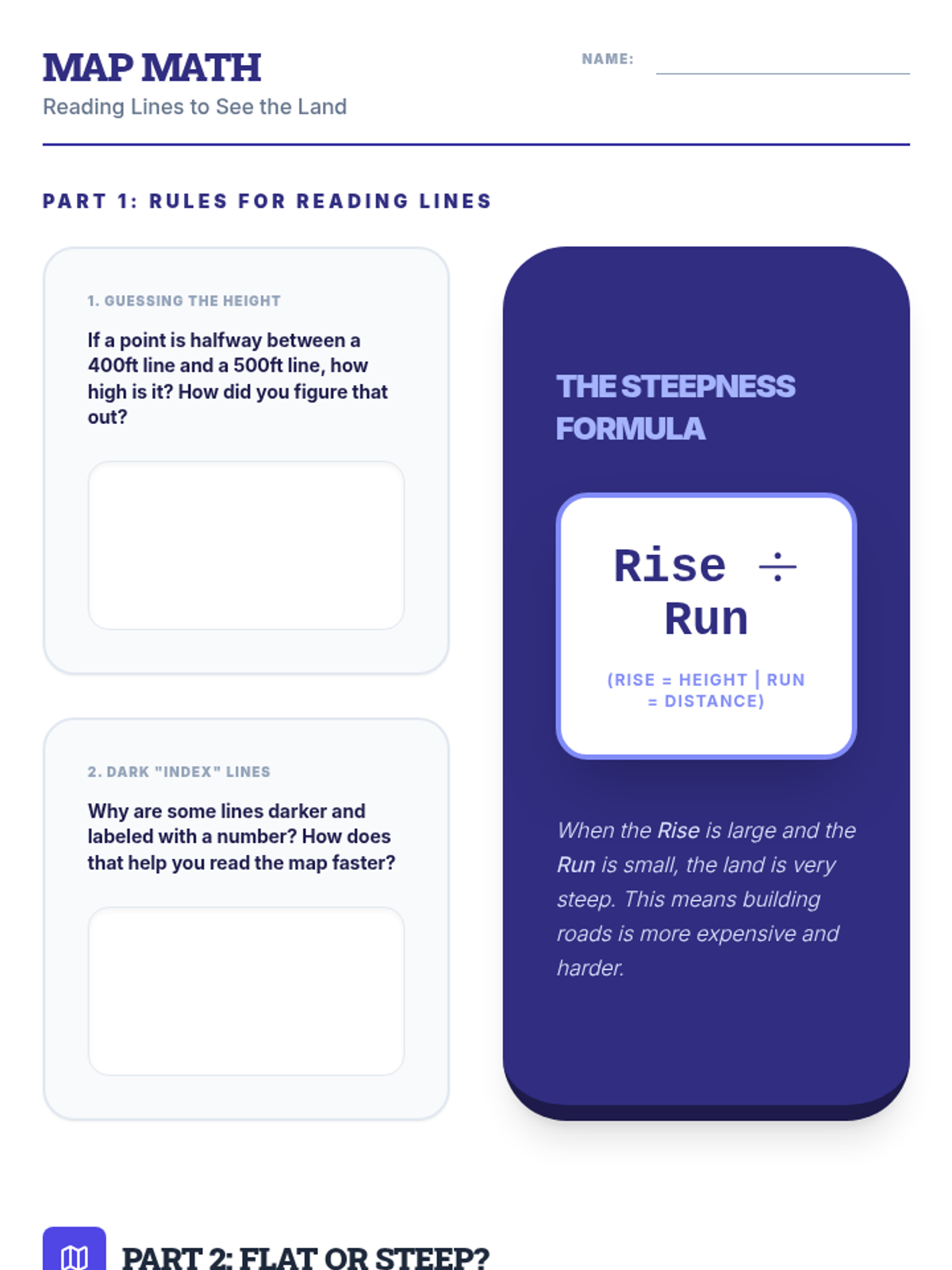
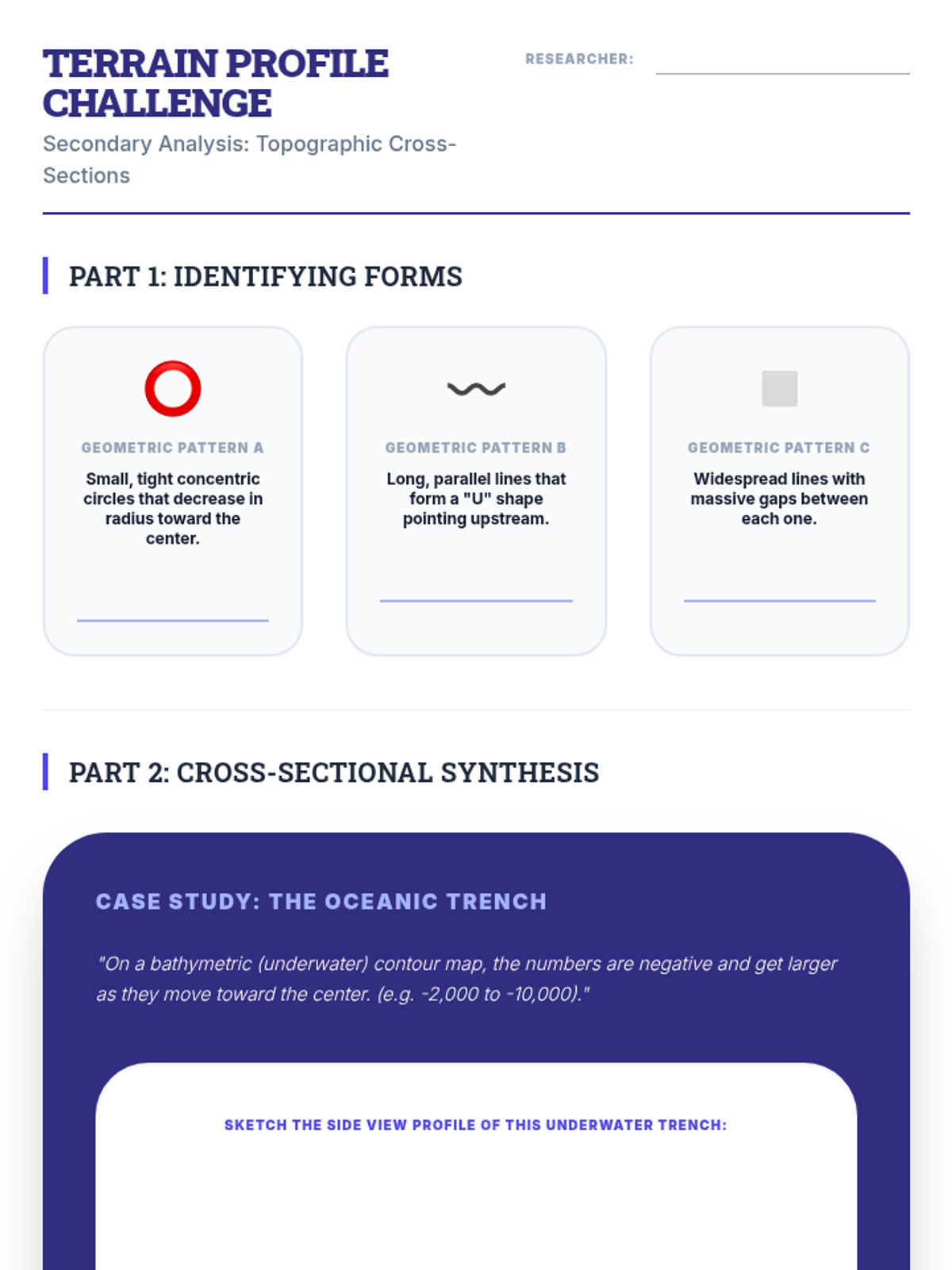
Using contour maps to visualize 3D terrain and calculate gradients across various global landscapes.
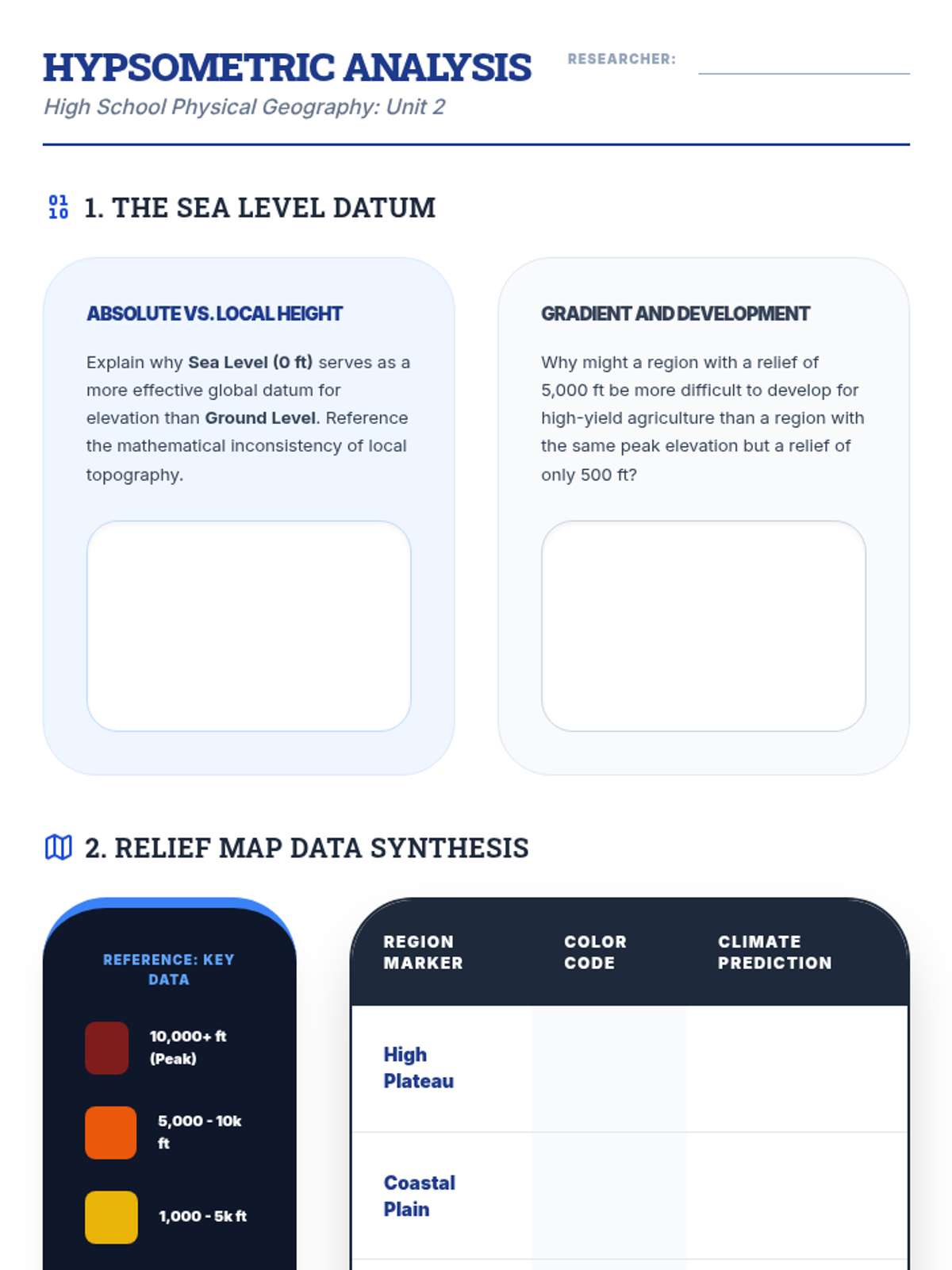
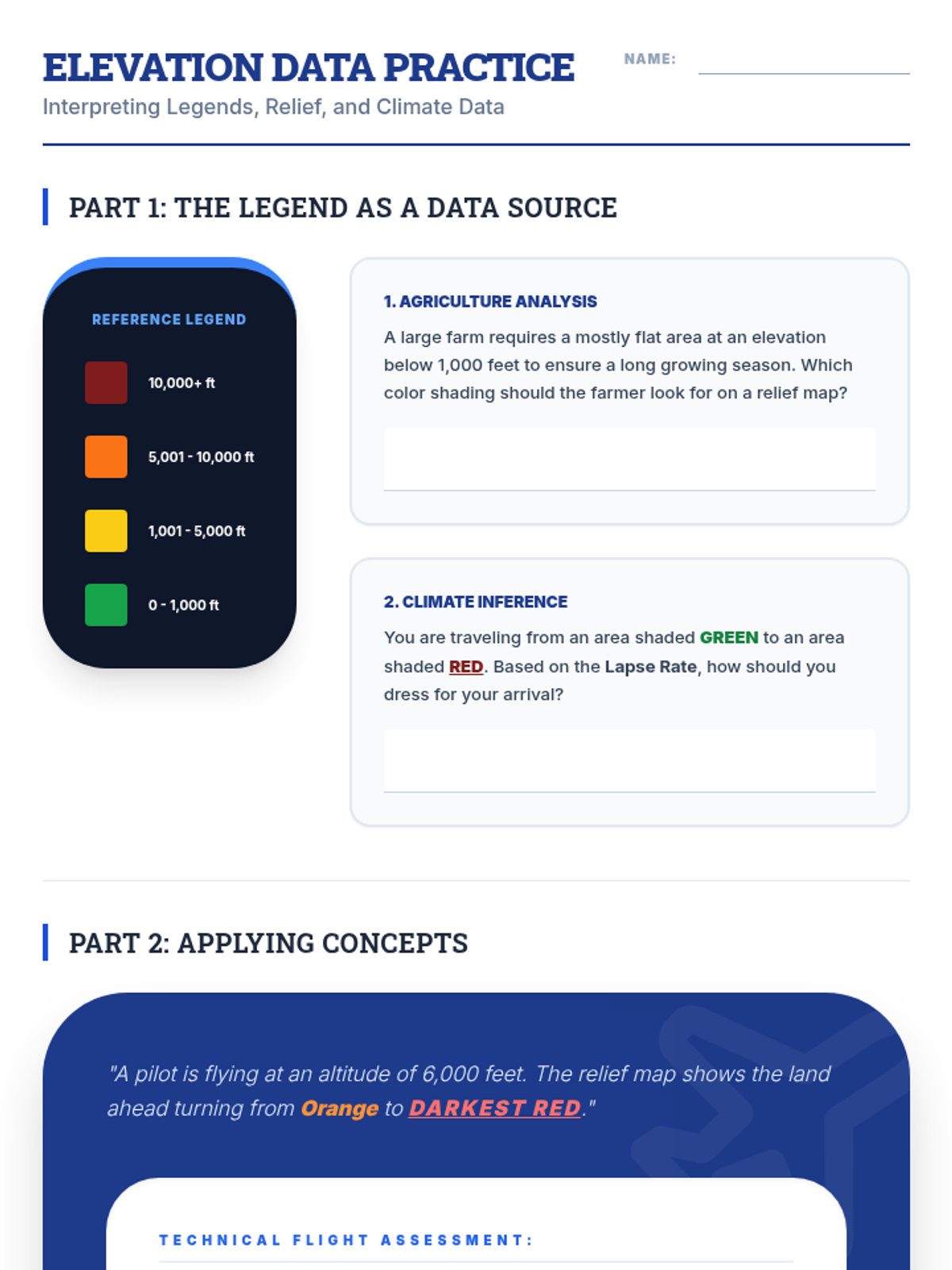
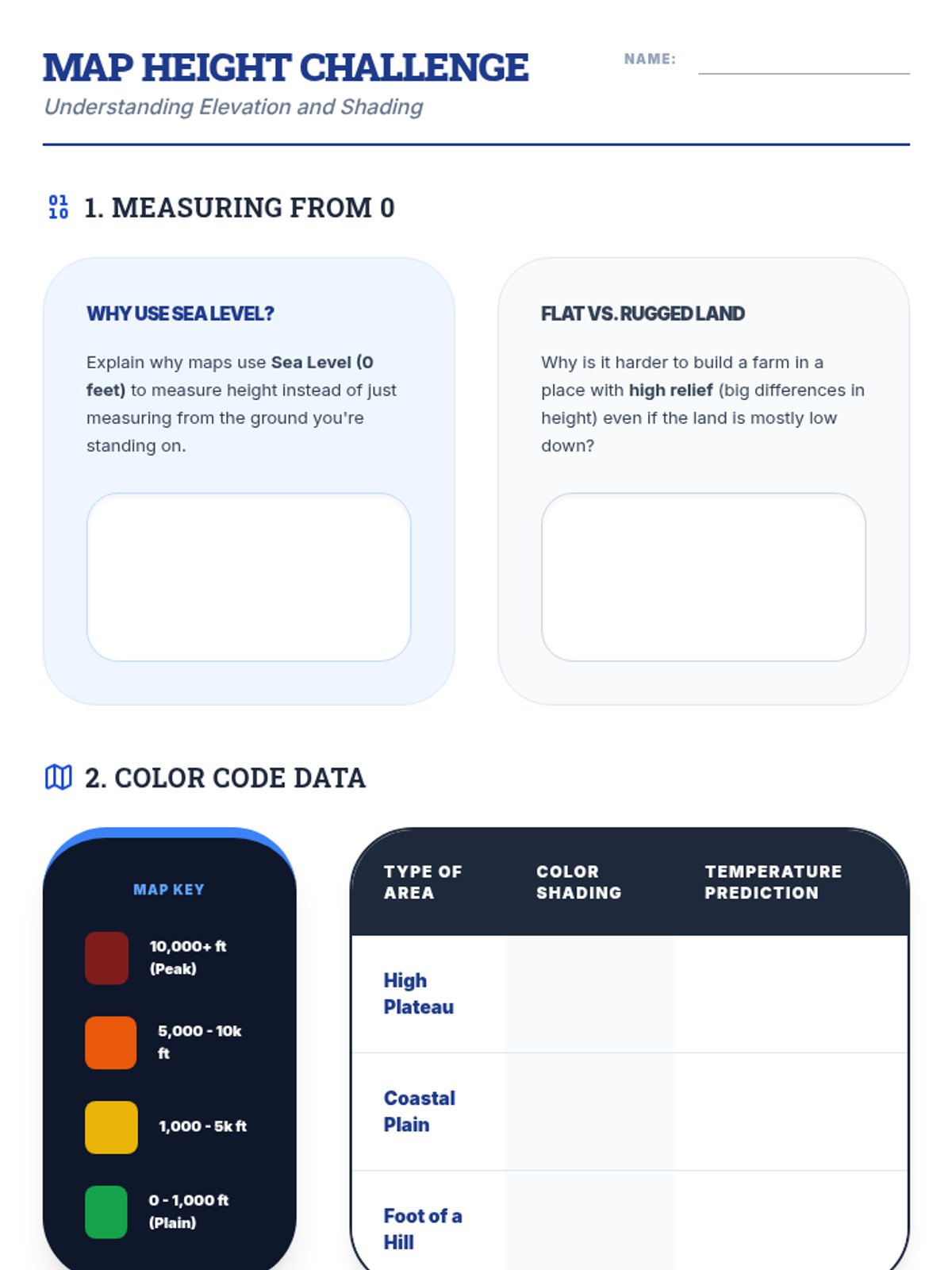
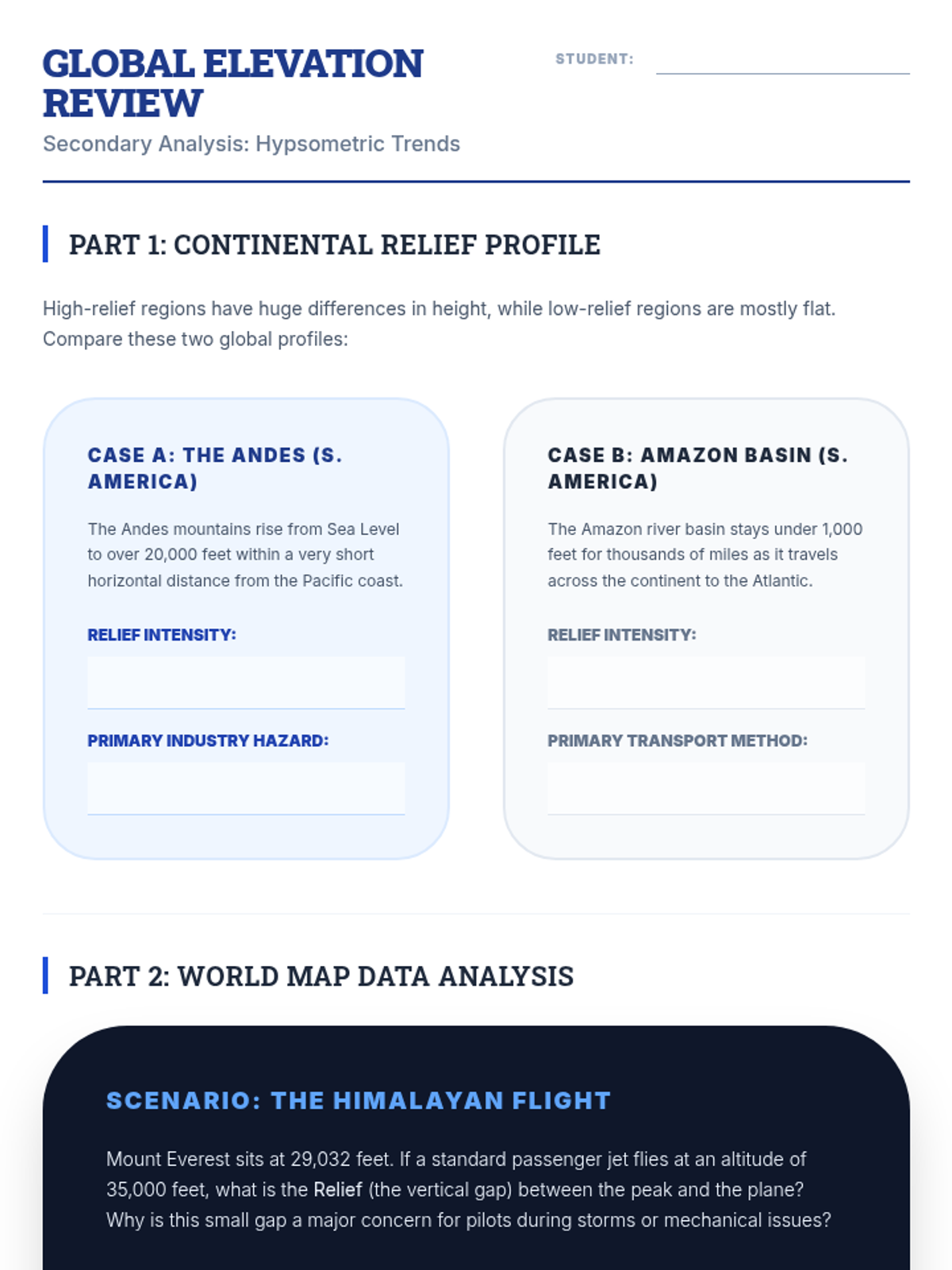
Mastering the use of relief shading and elevation data to interpret global mountain ranges and basins.
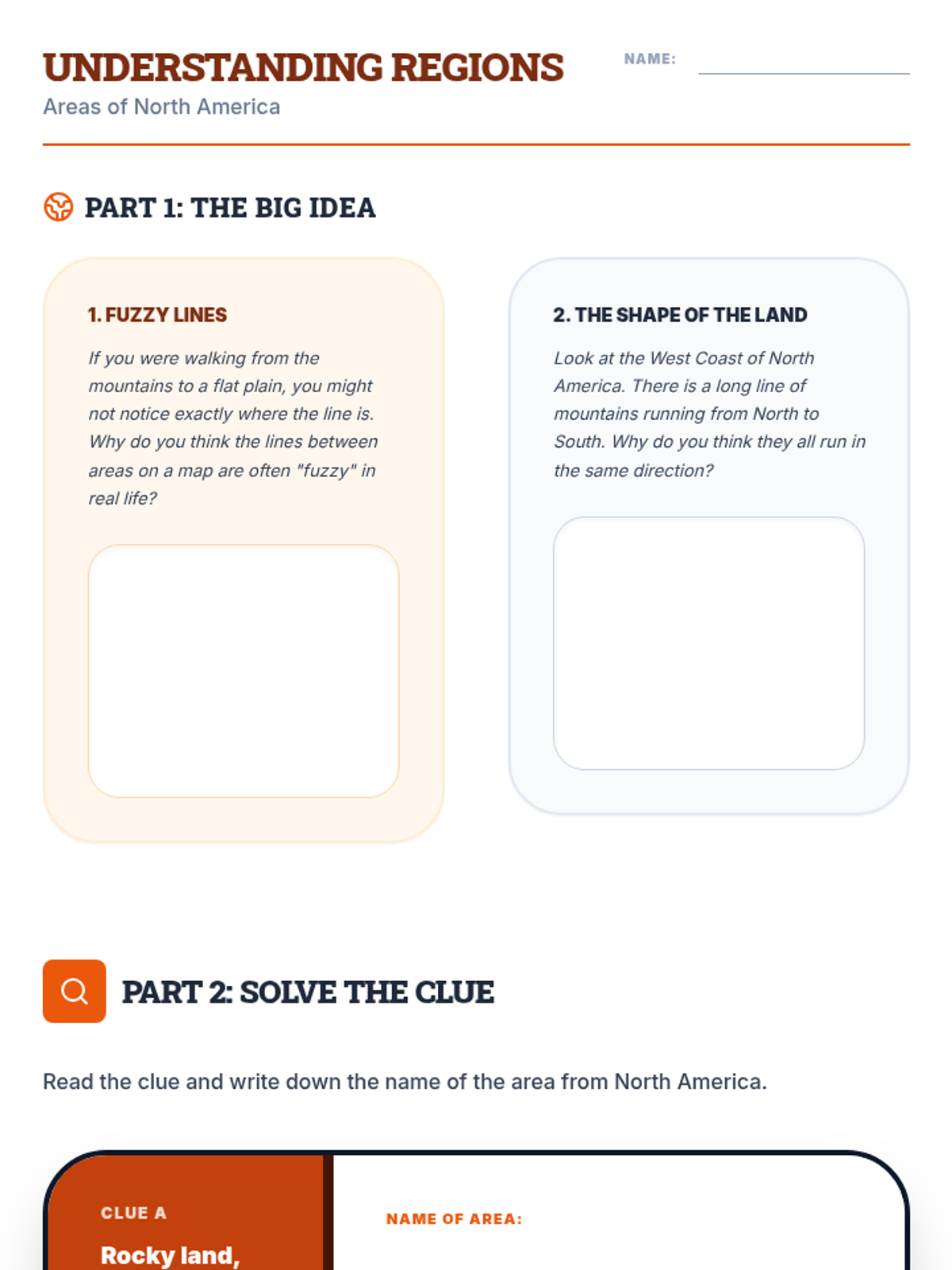
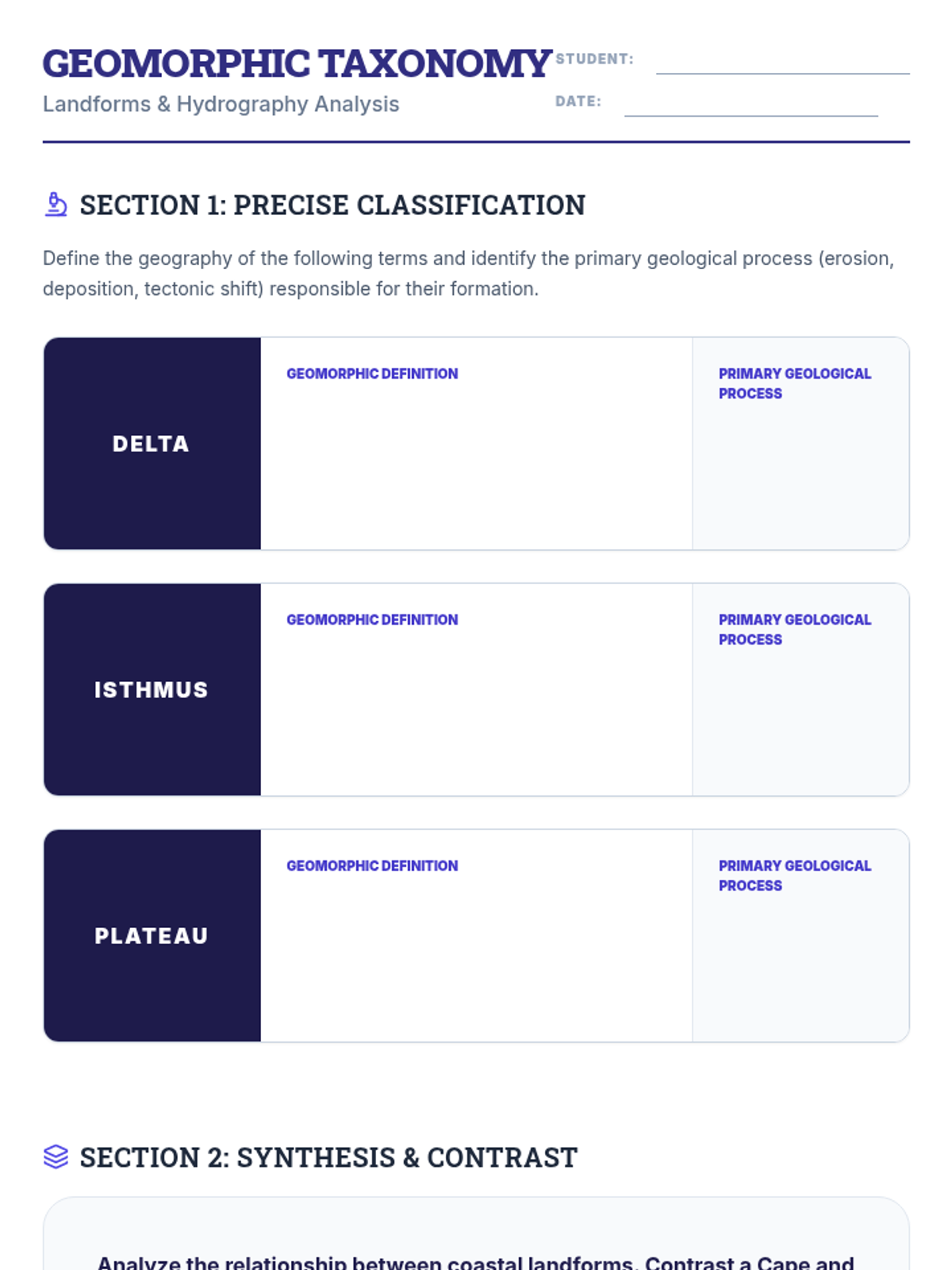
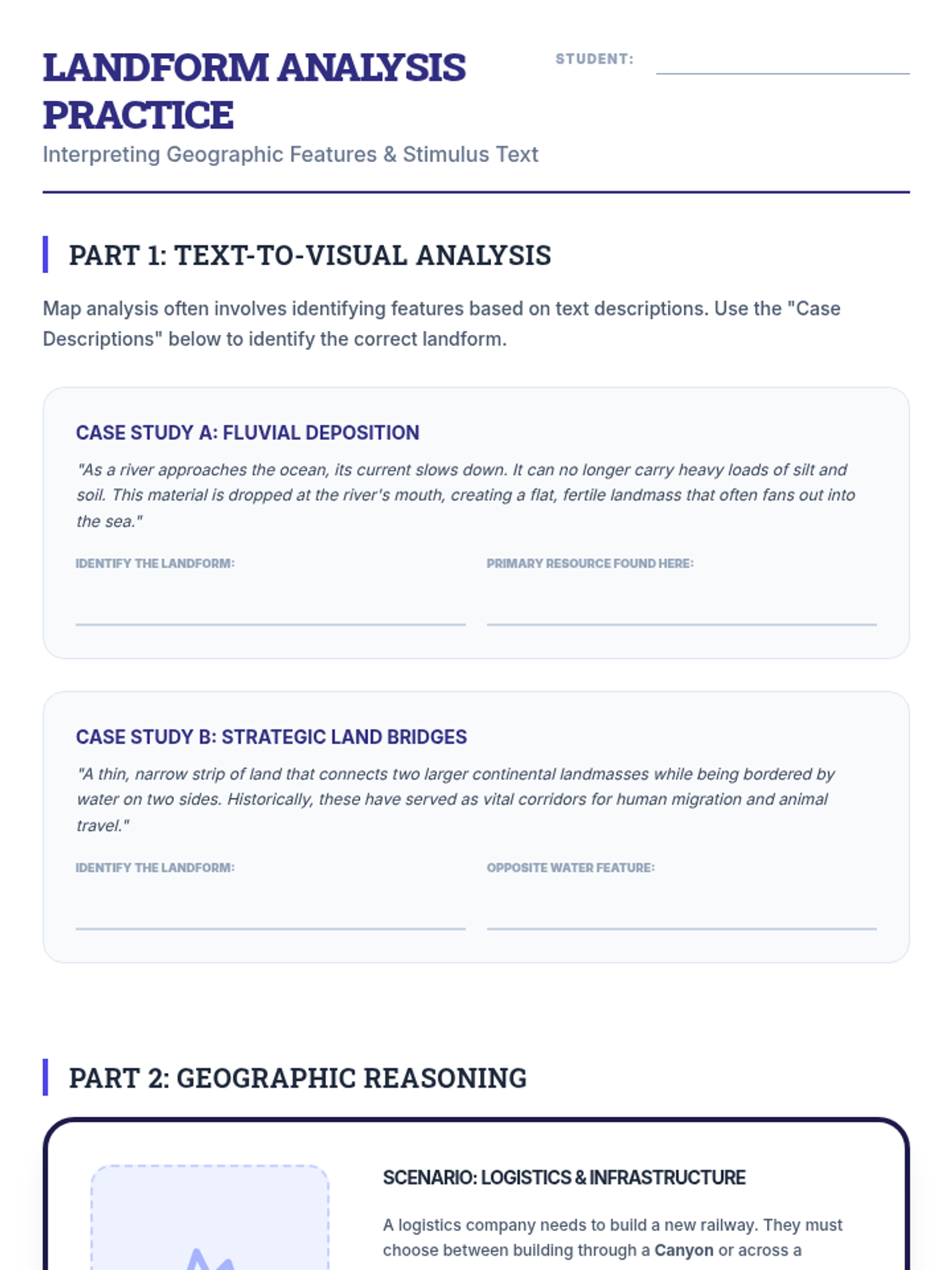
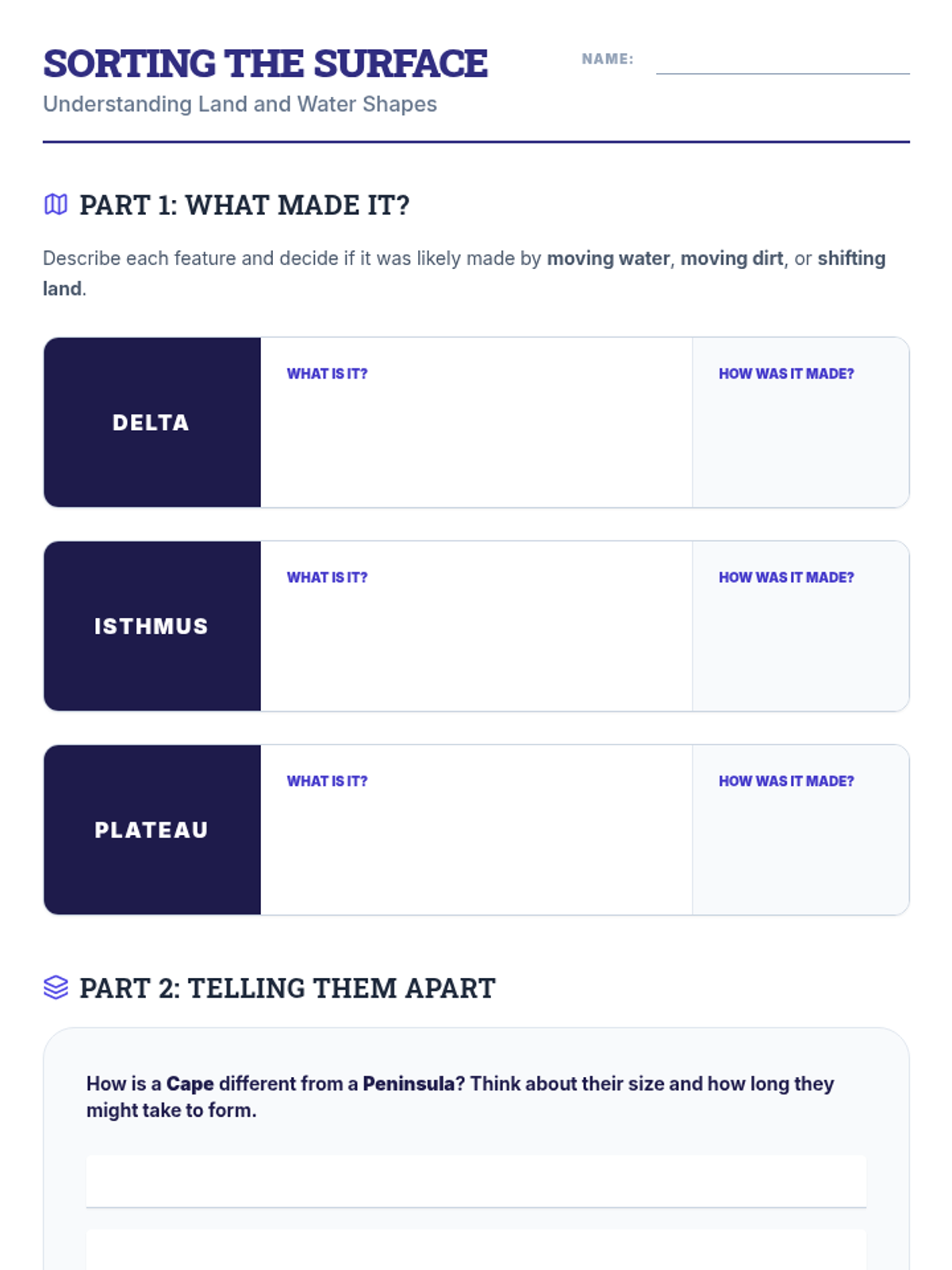
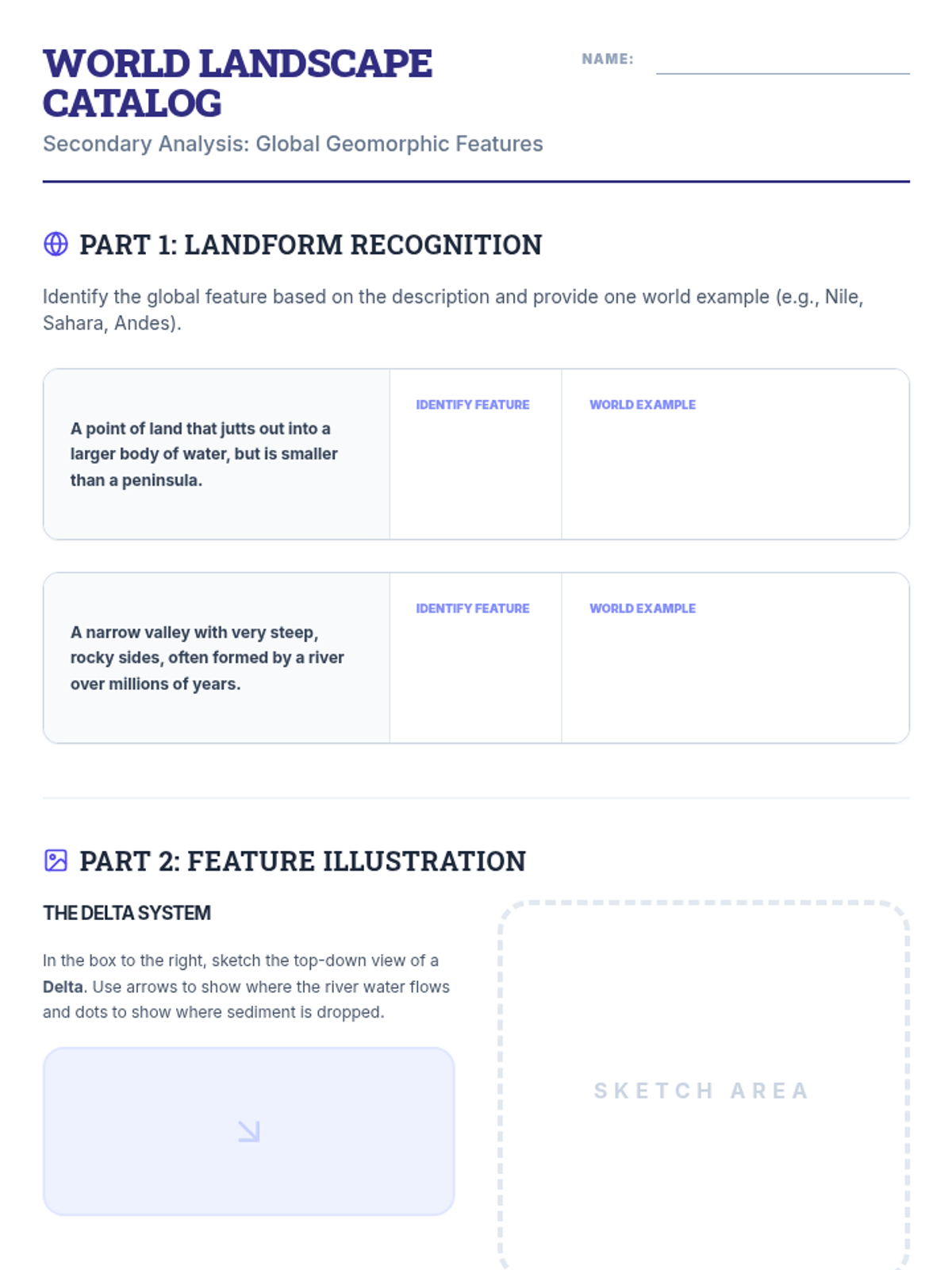
Identification of major landforms and bodies of water found across the seven continents.
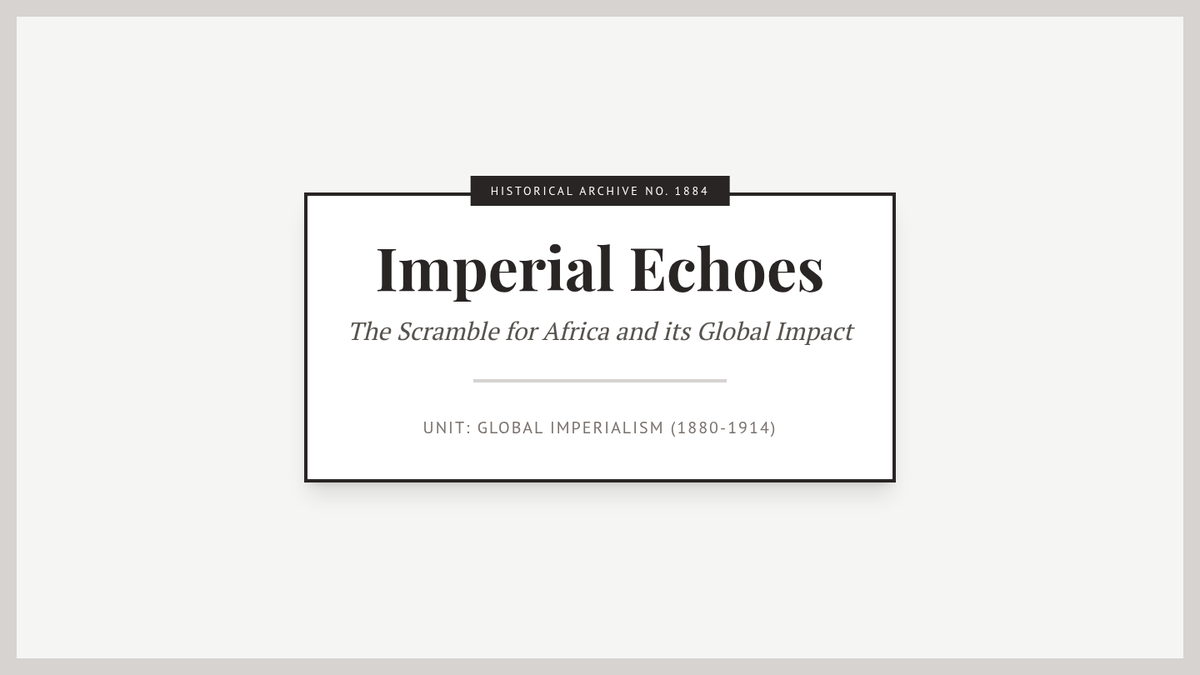
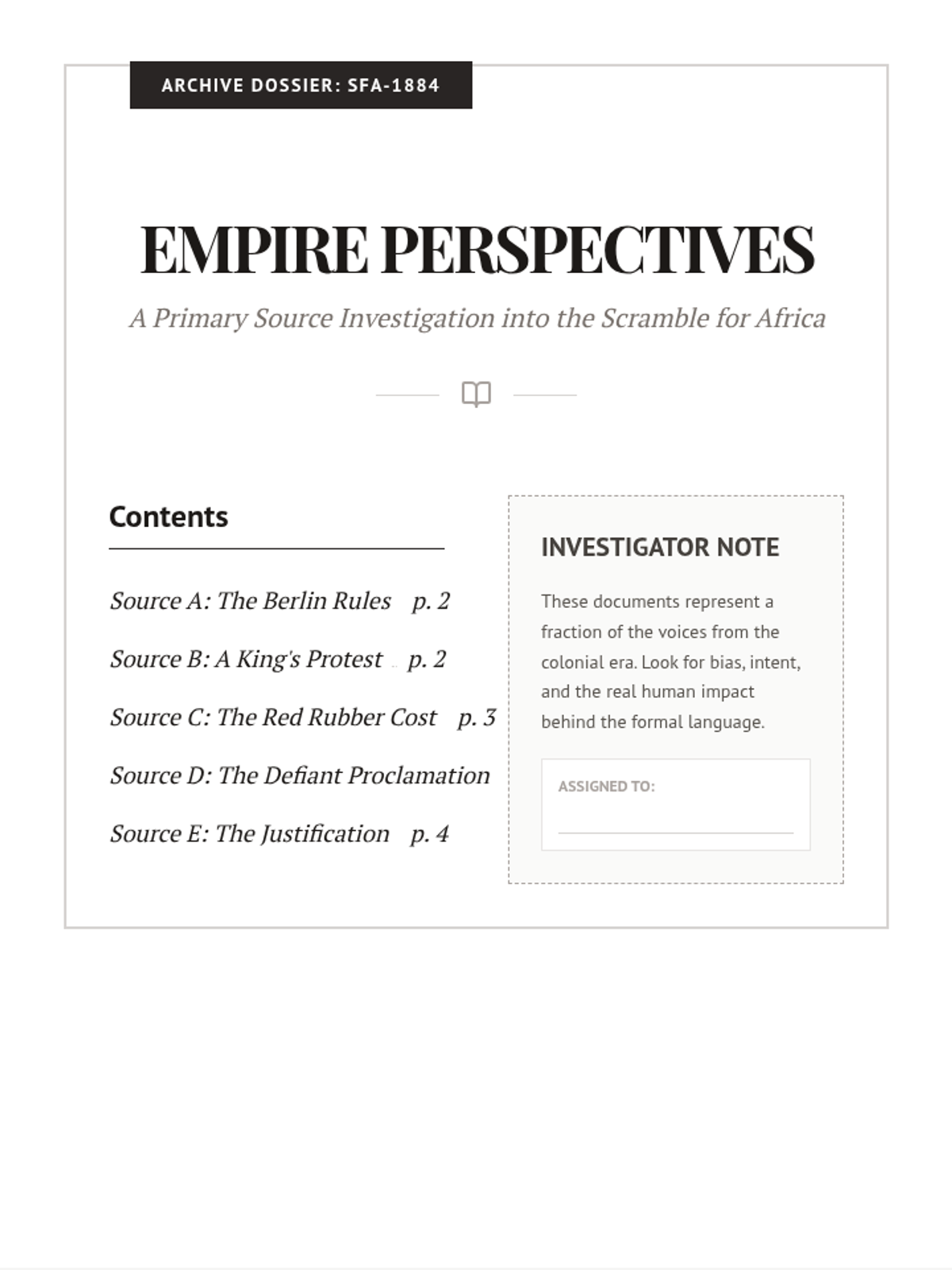
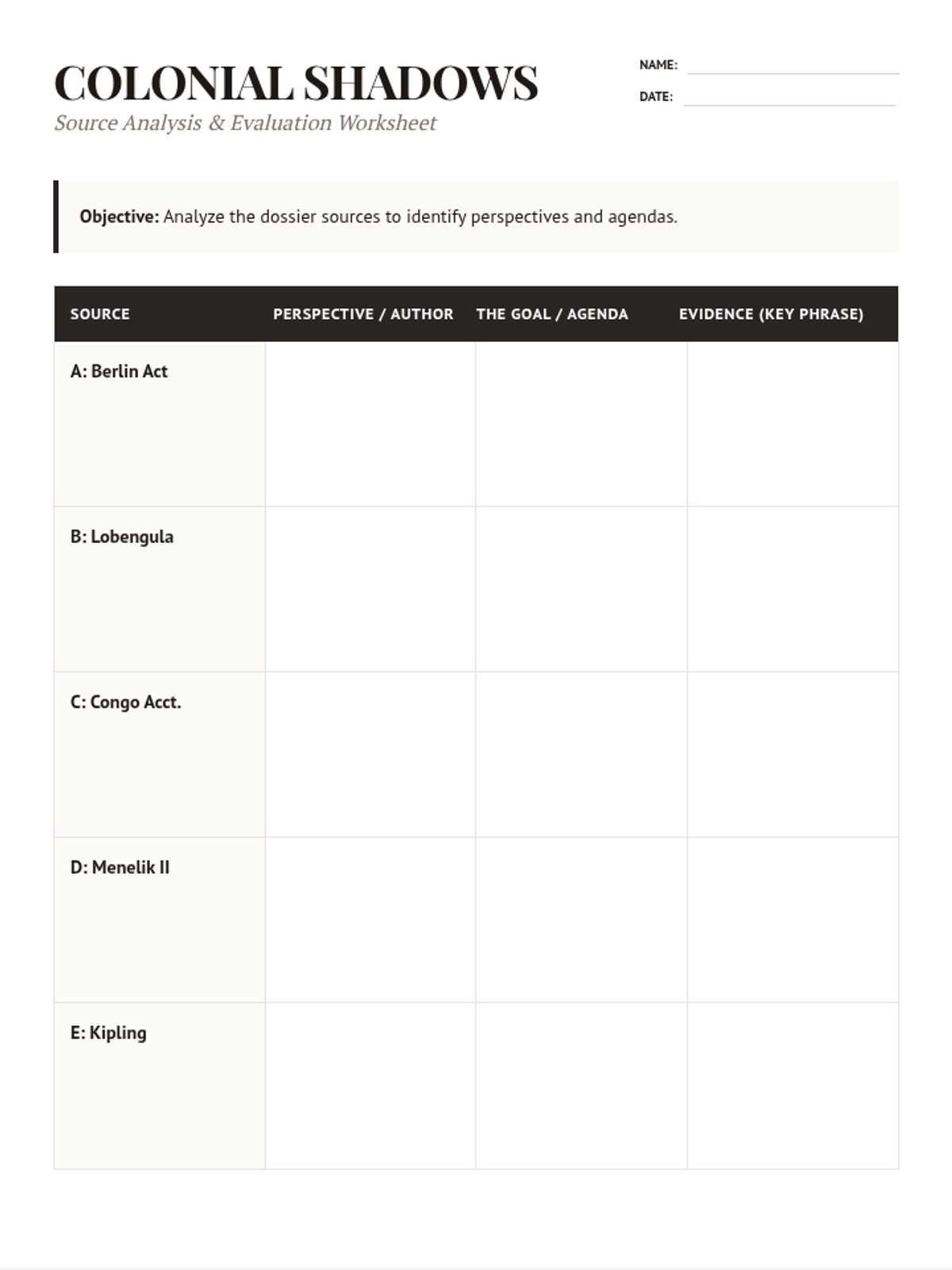
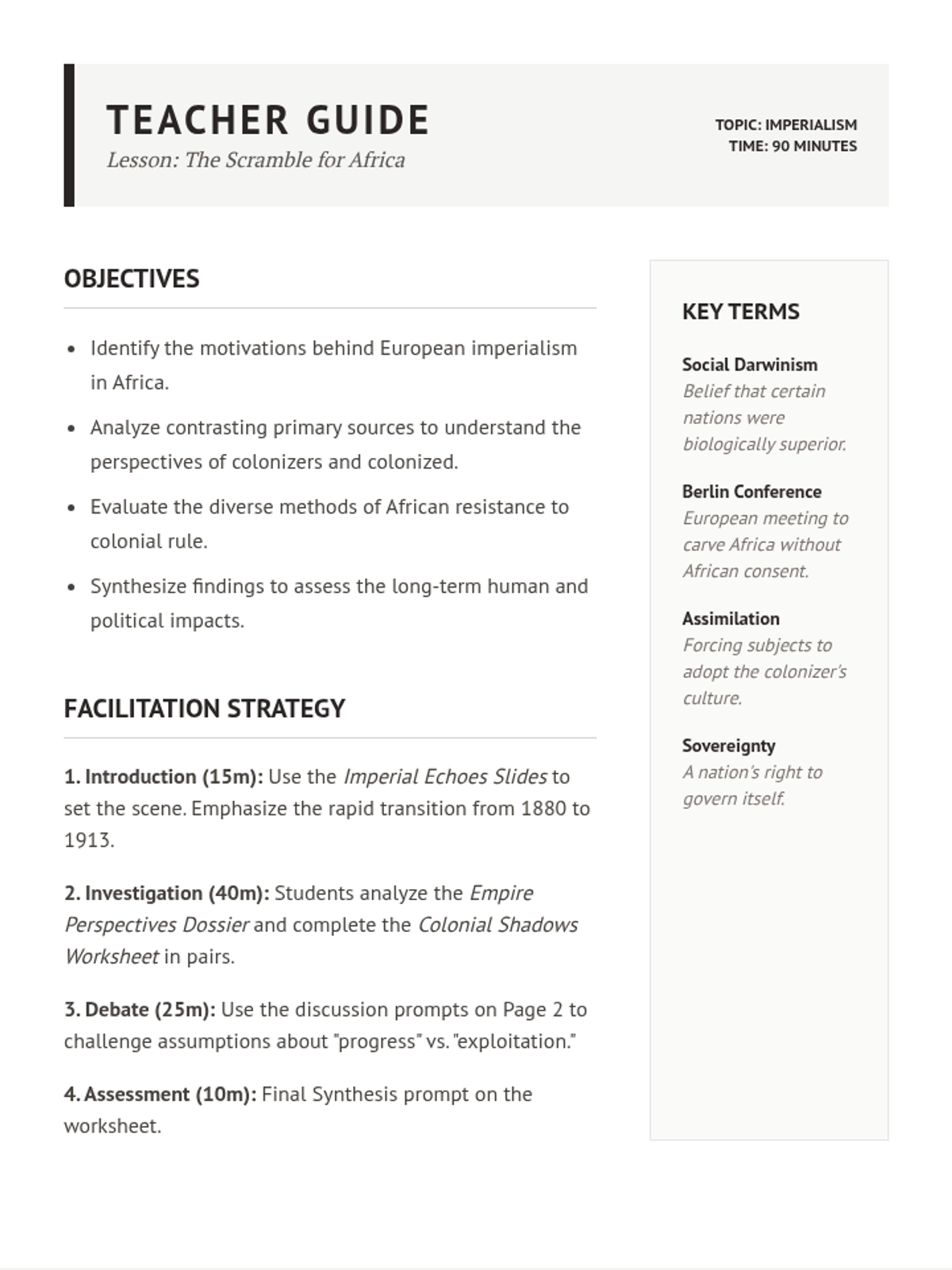
A comprehensive exploration of the European colonization of Africa, featuring diverse primary sources that highlight both imperialist motivations and African resistance. Students will analyze the human, economic, and political impacts of the 'Scramble for Africa'.
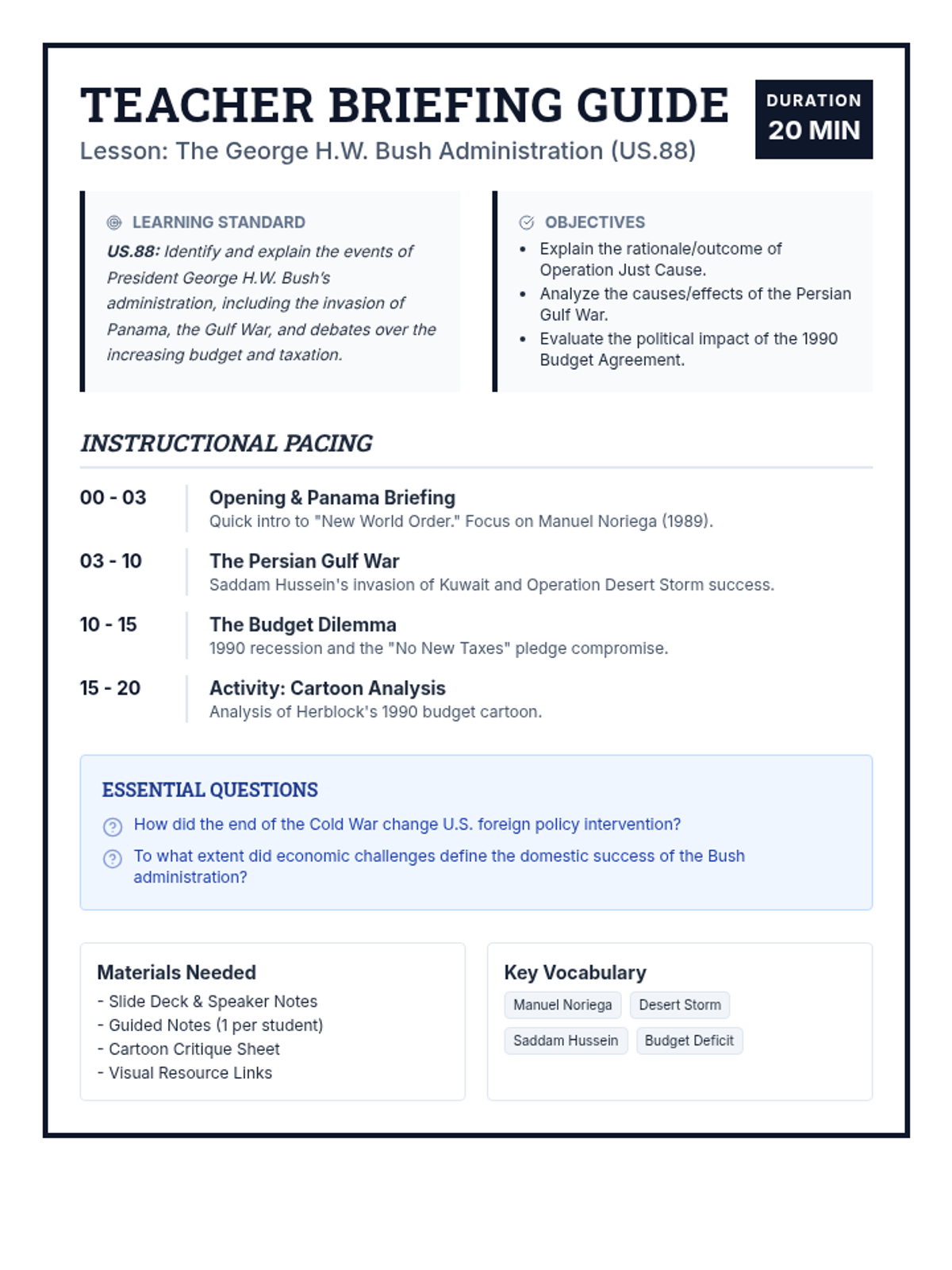
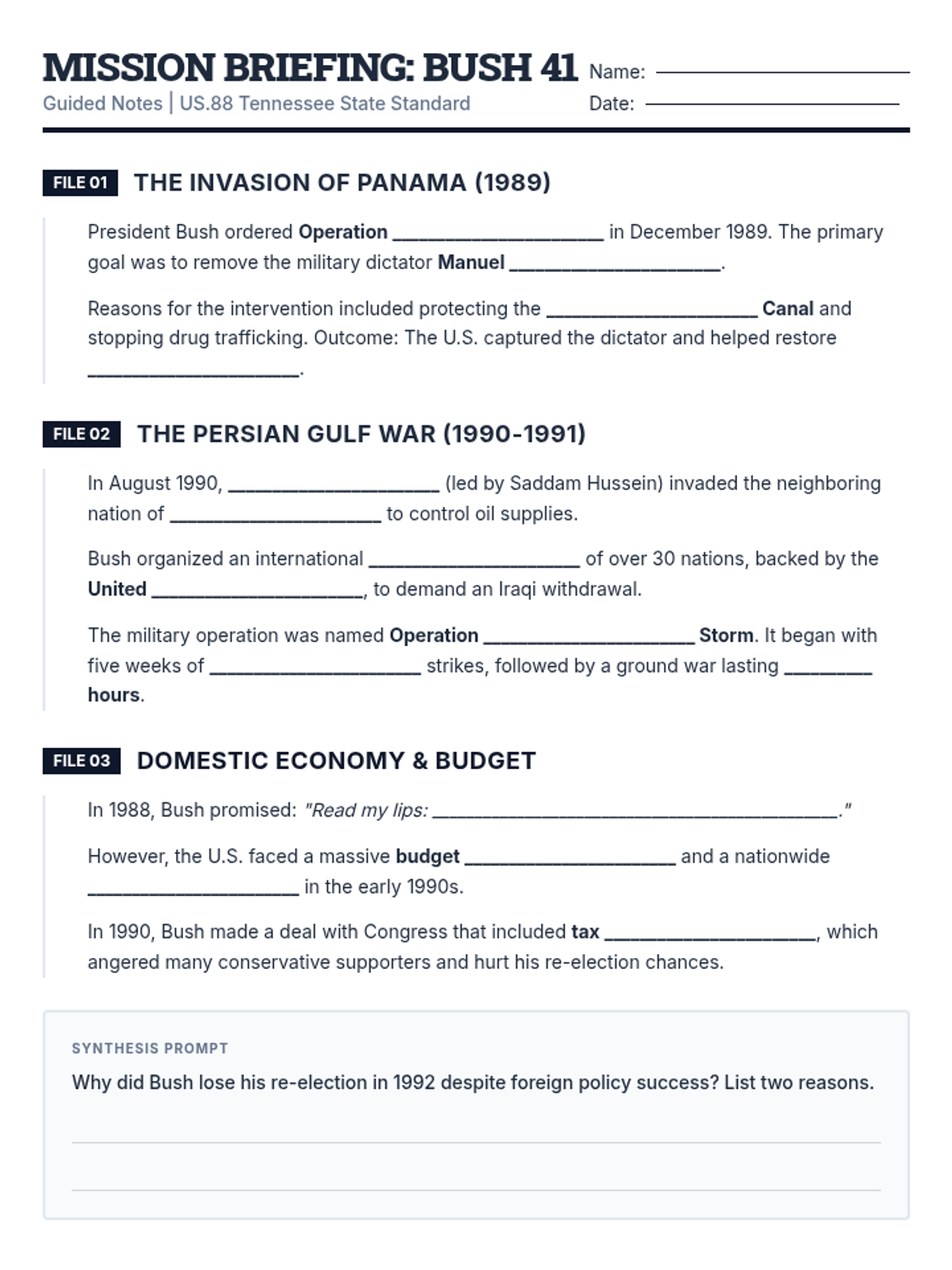
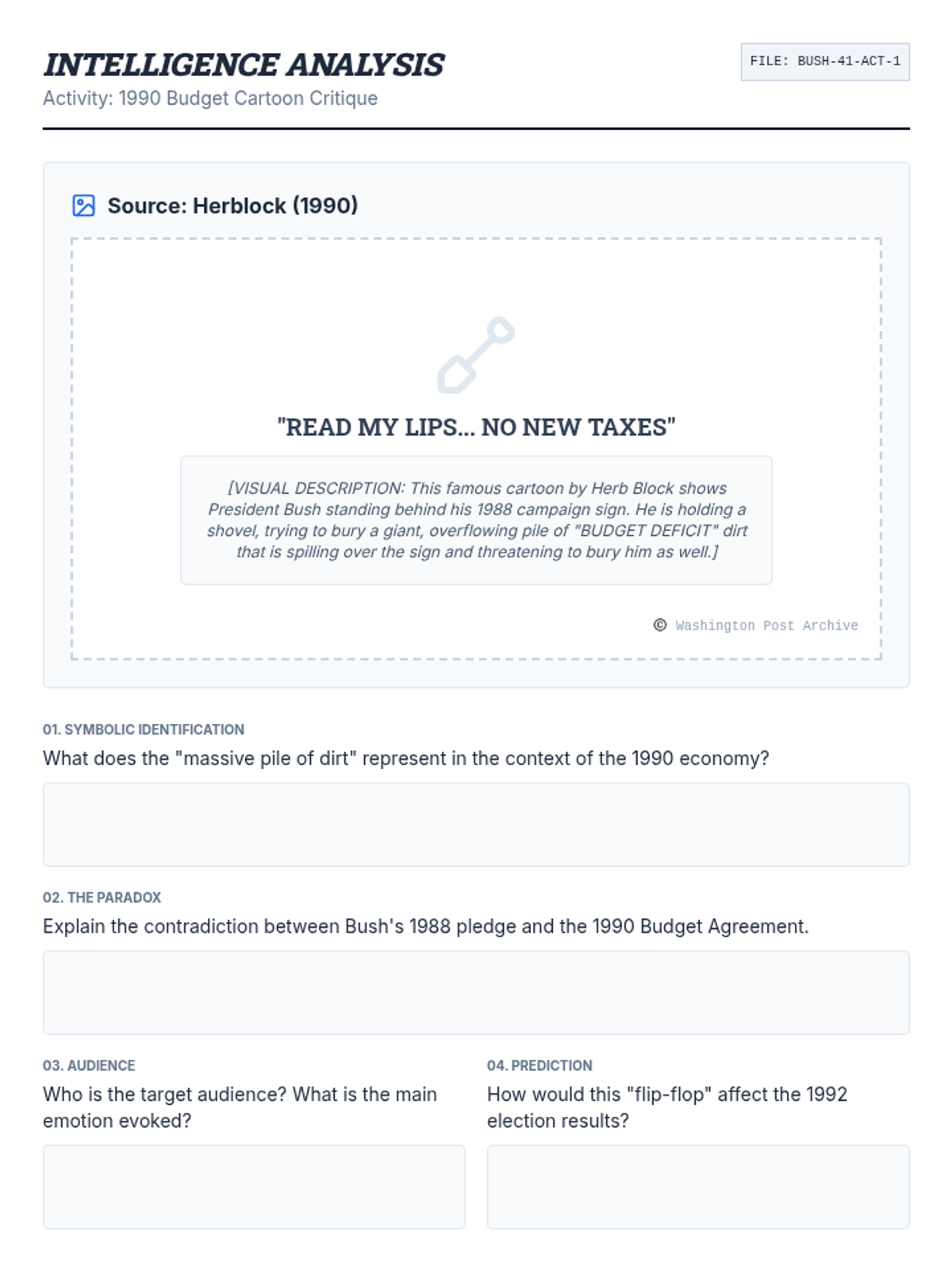
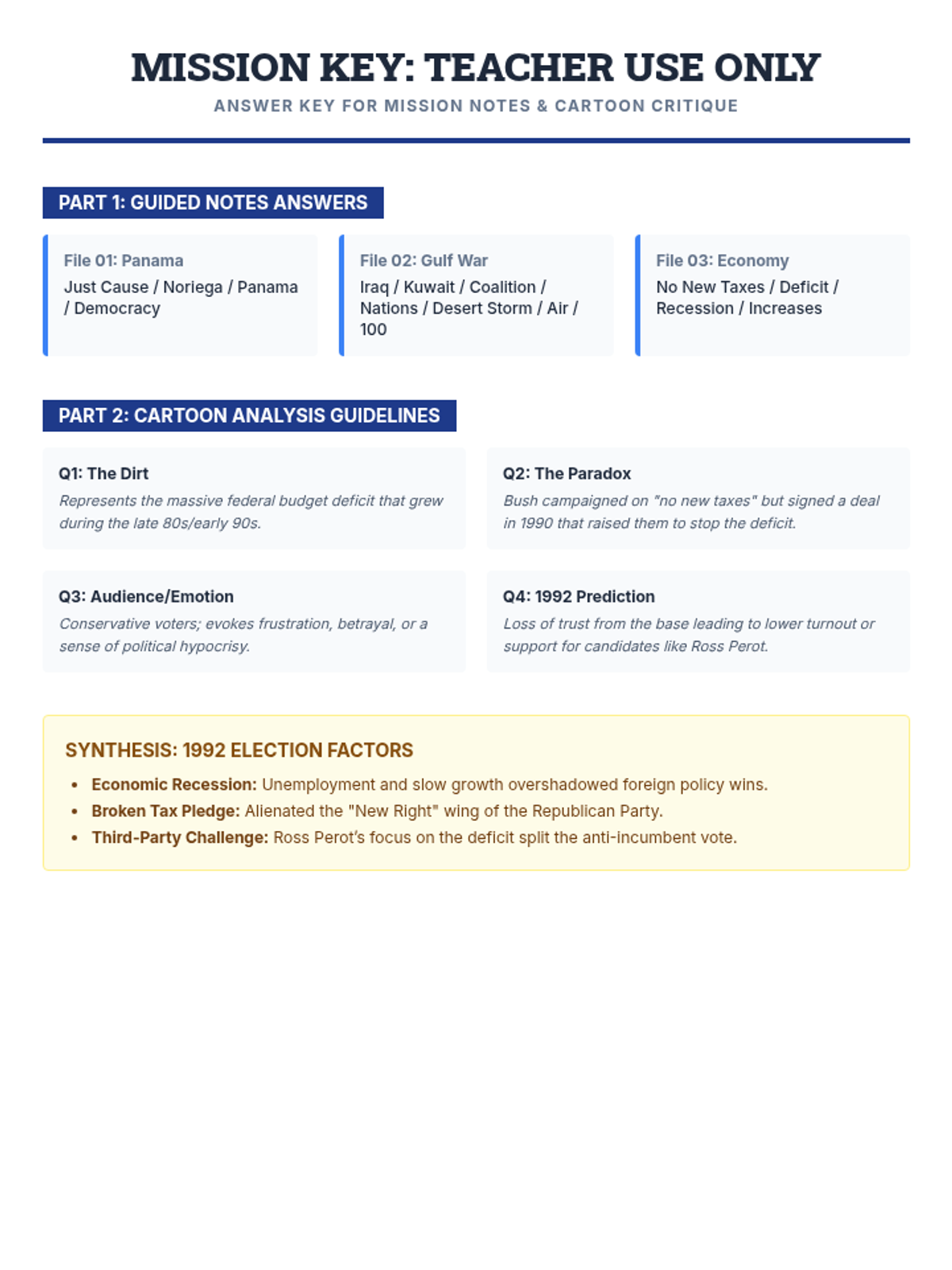
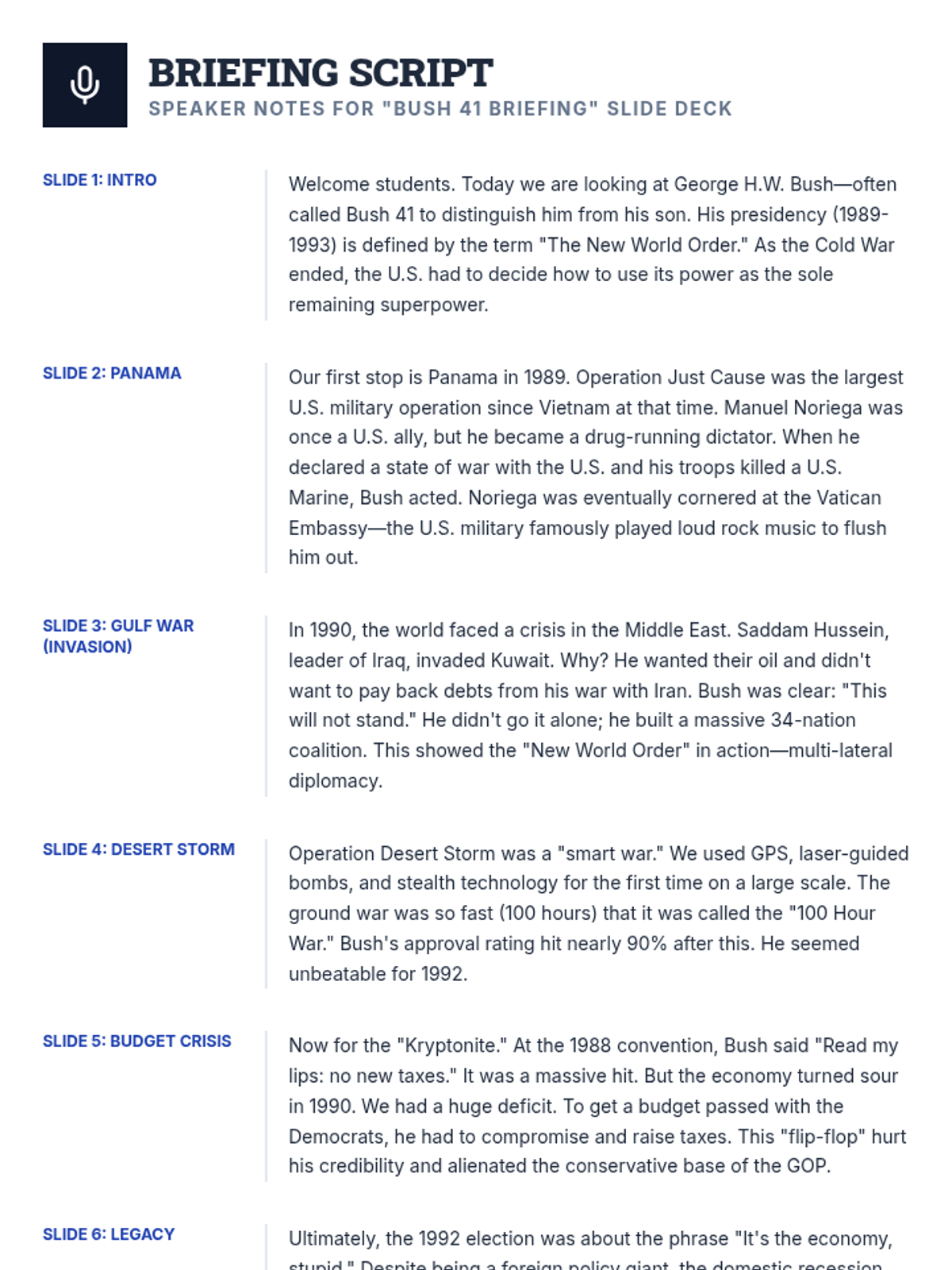
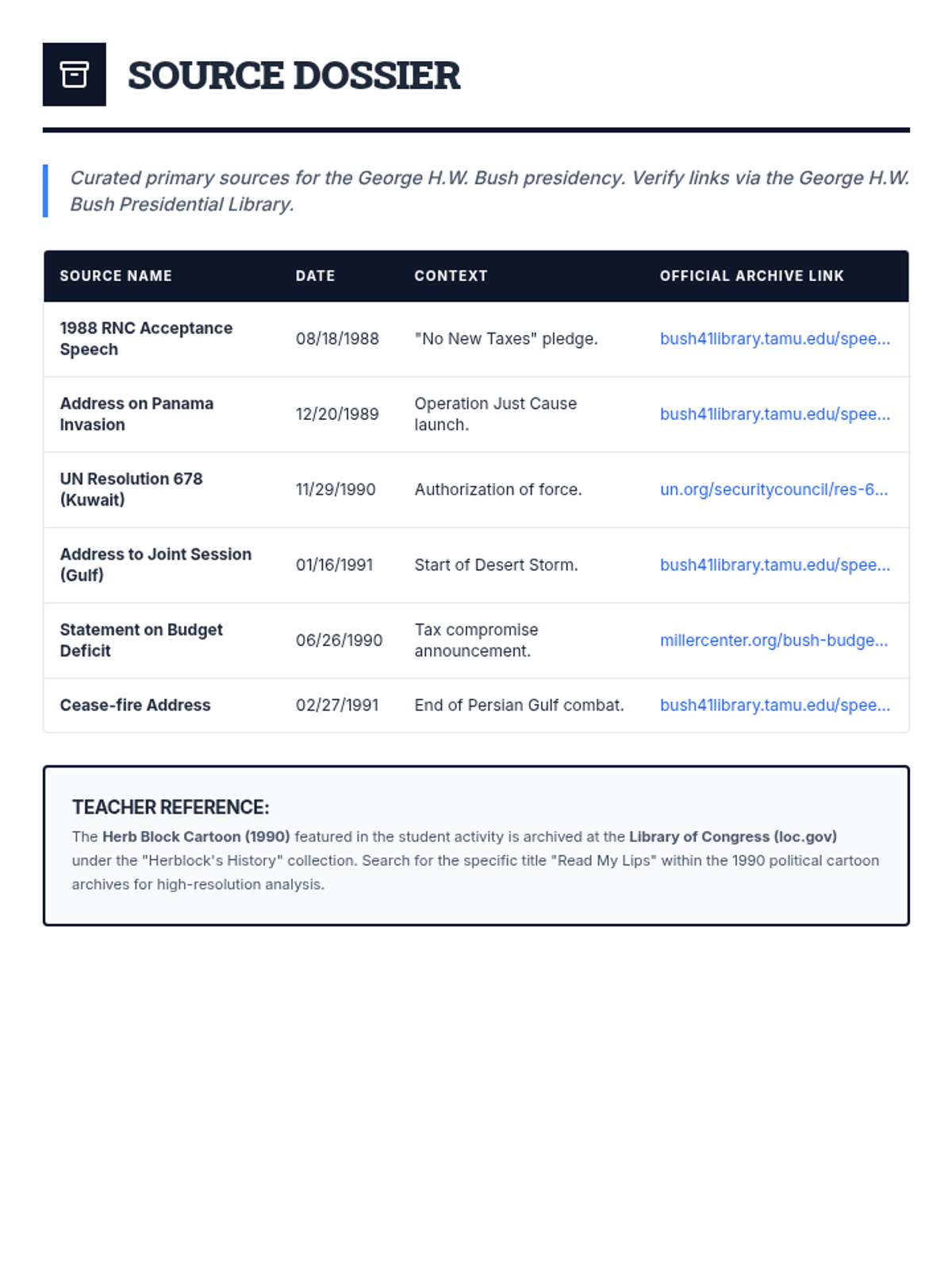
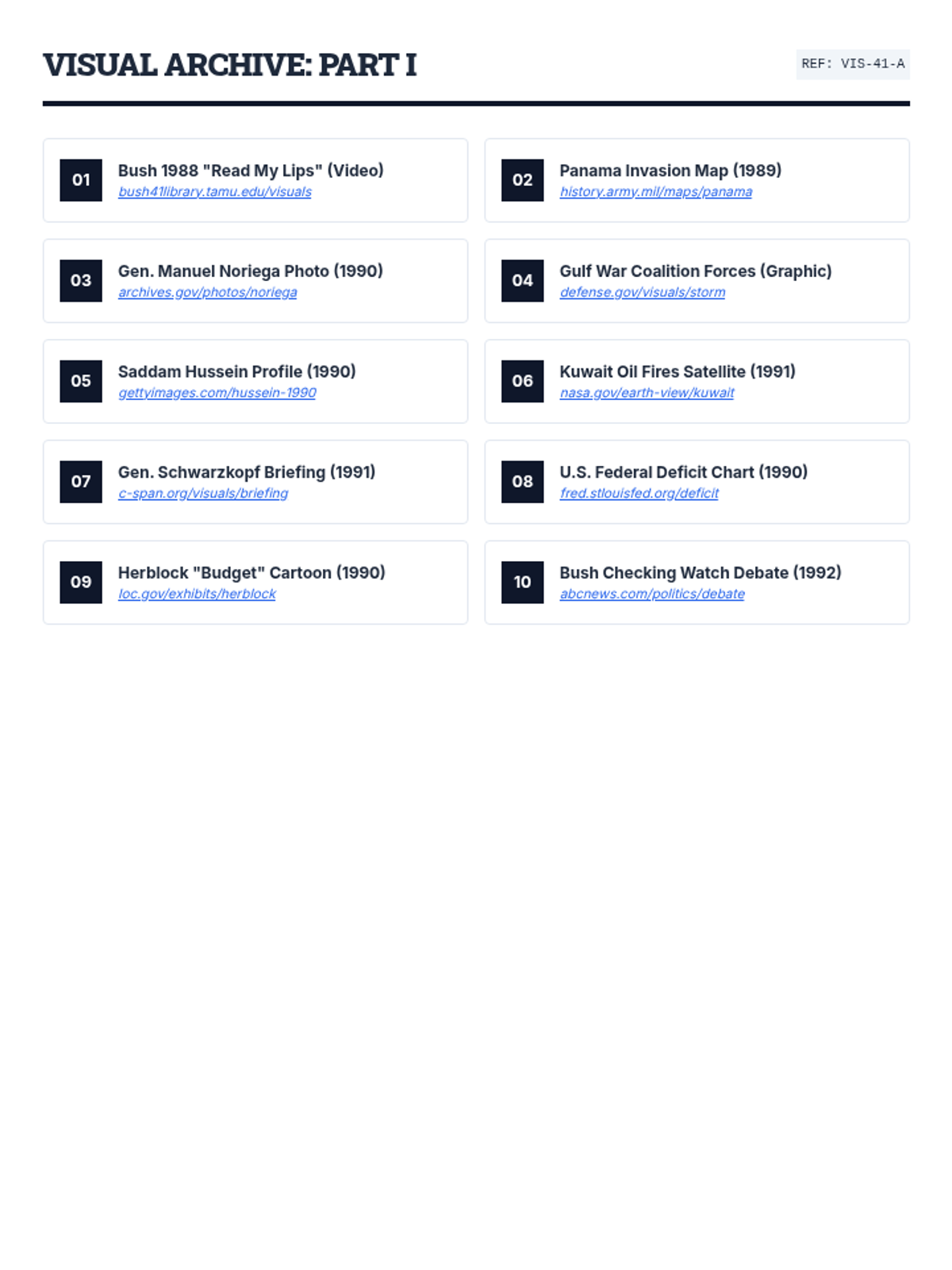
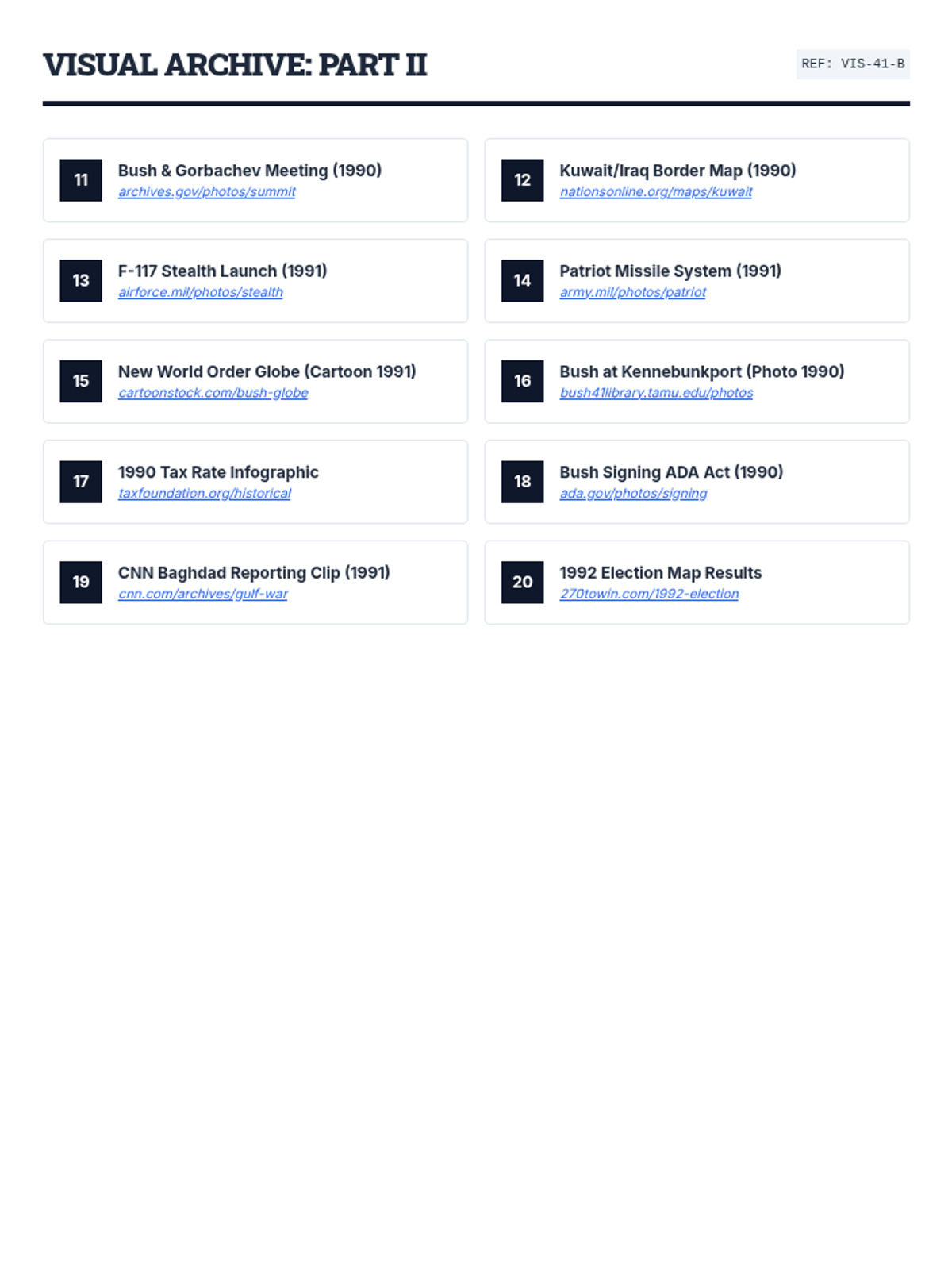
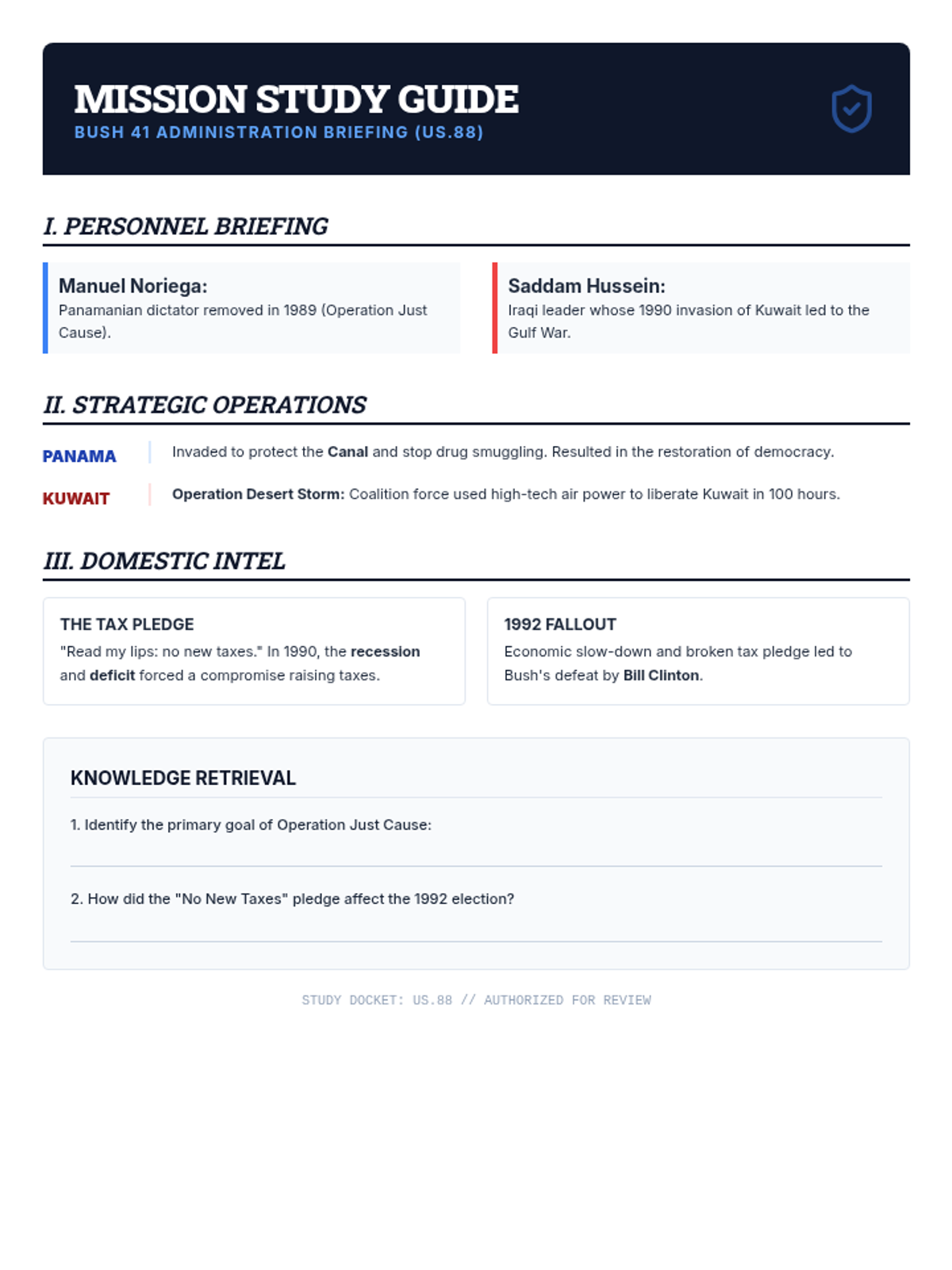
A focused 20-minute lesson covering the George H.W. Bush administration, specifically the invasion of Panama, the Gulf War, and the domestic budget debates.
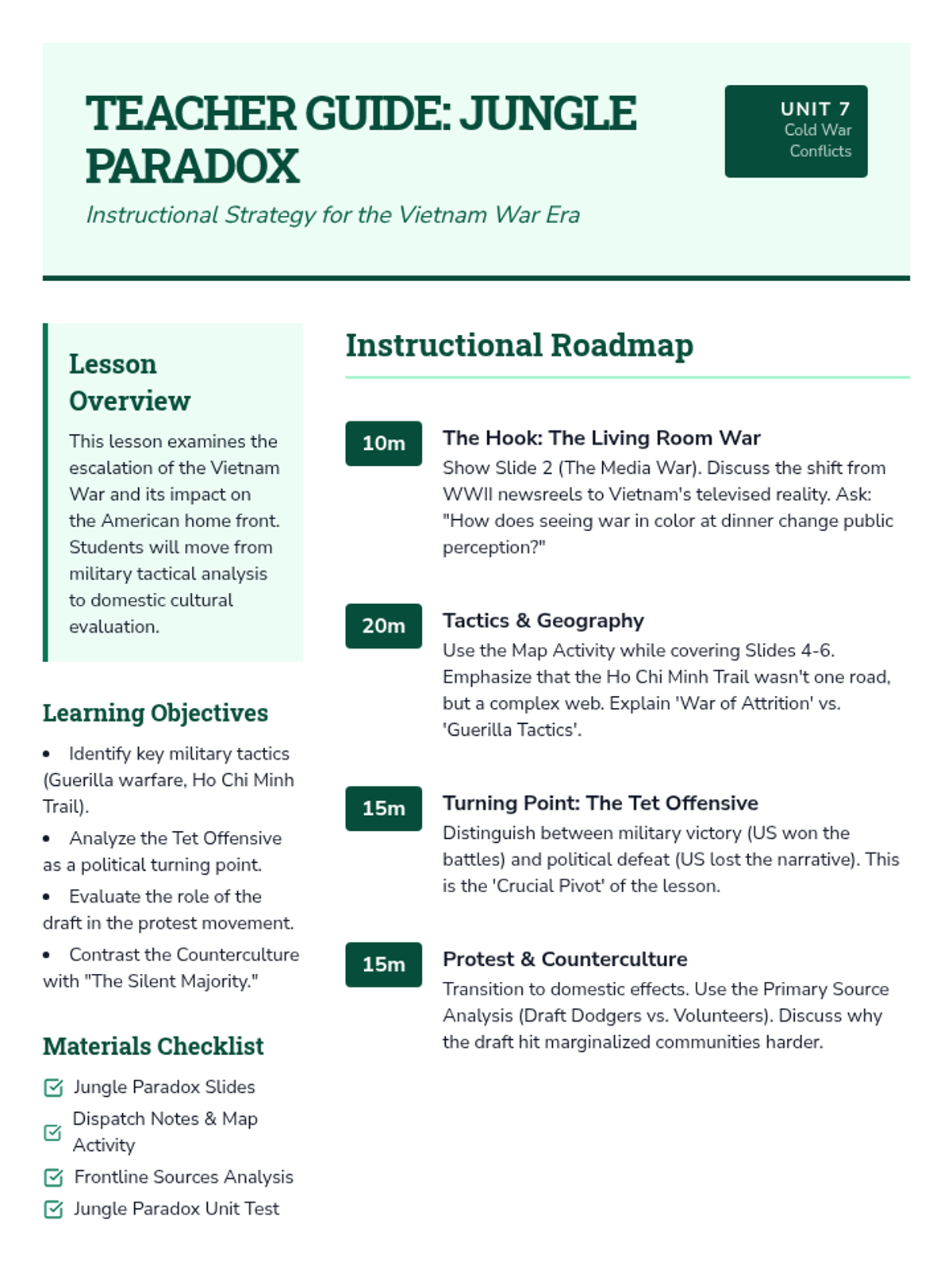
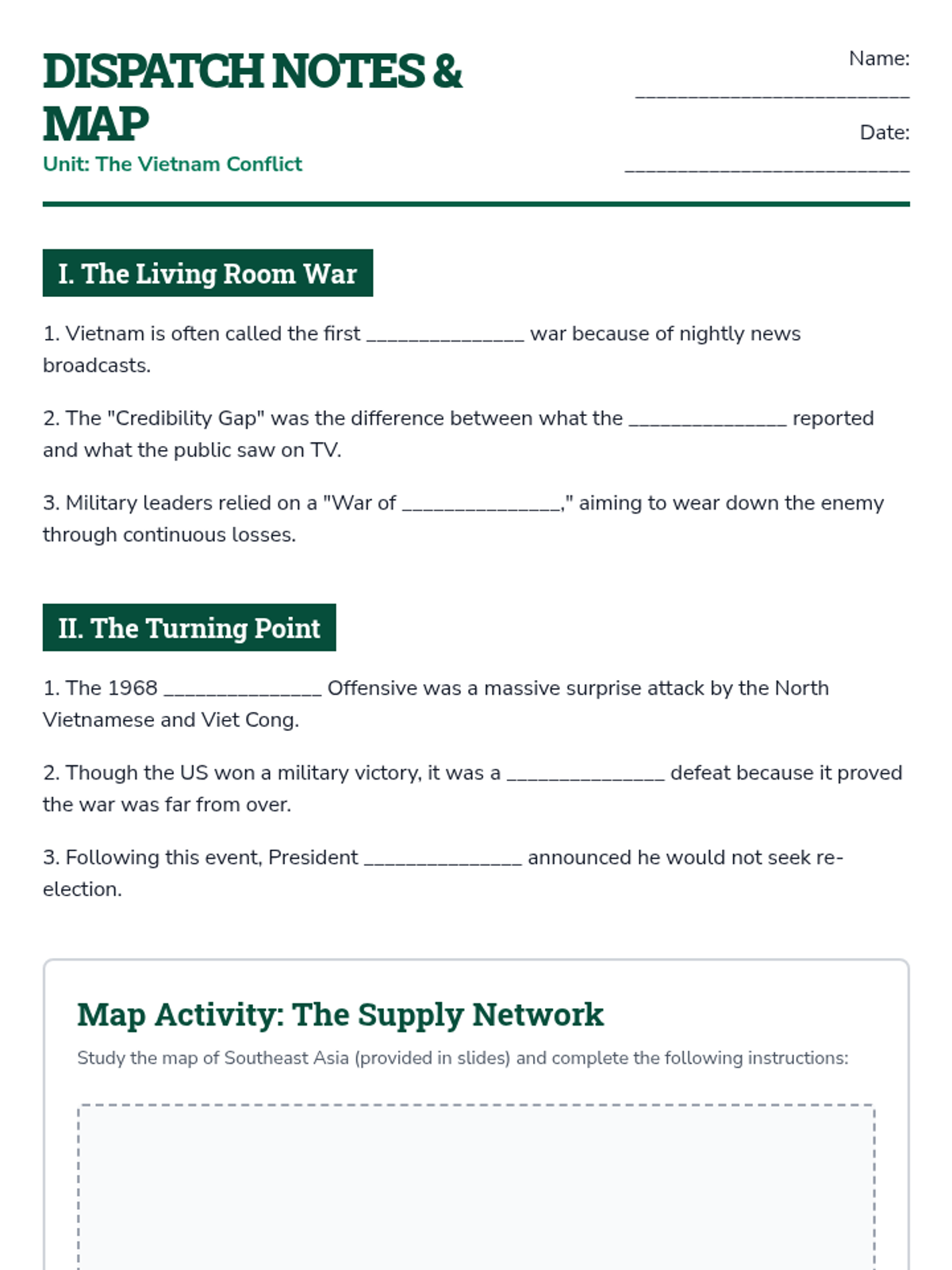
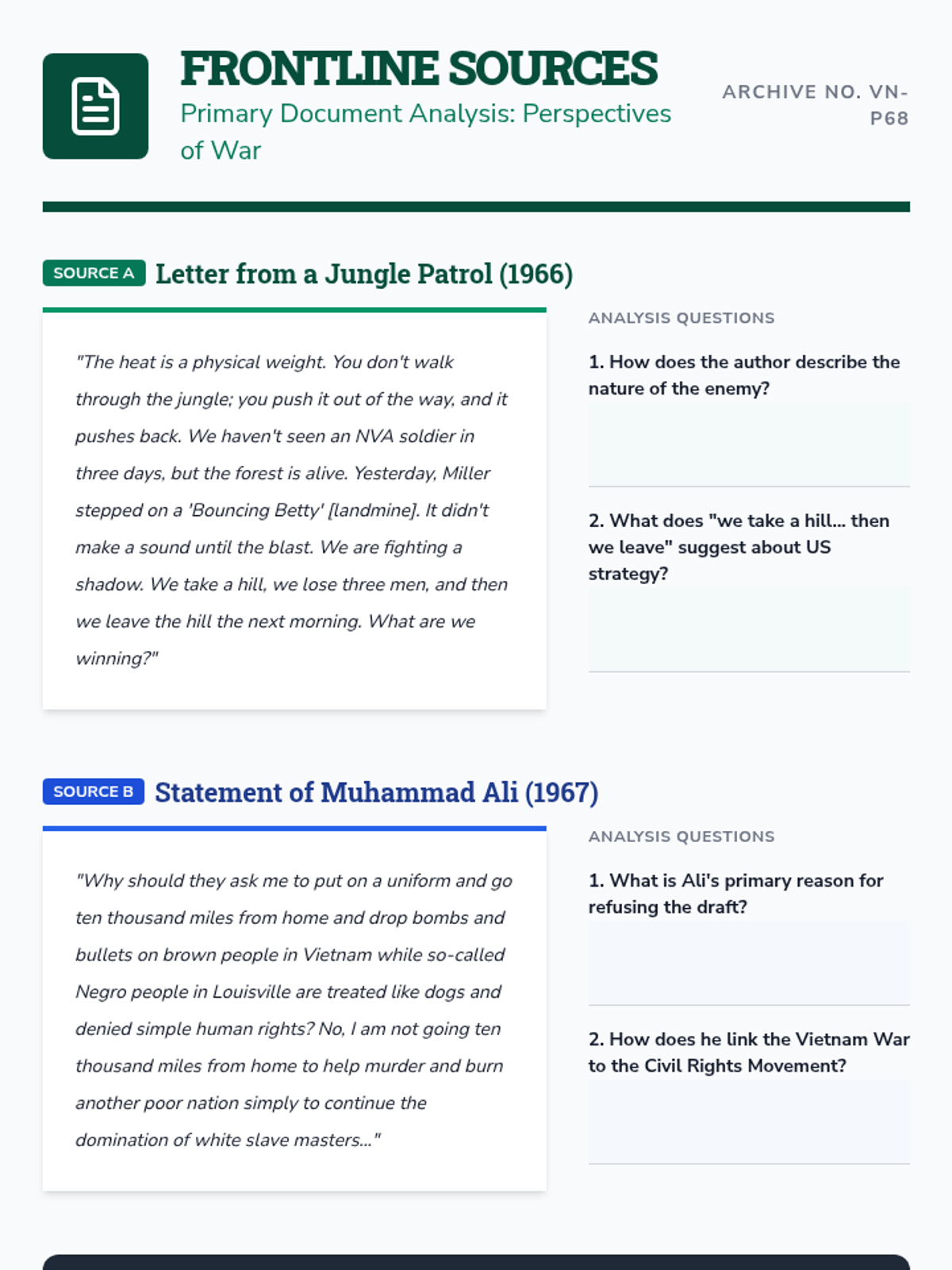
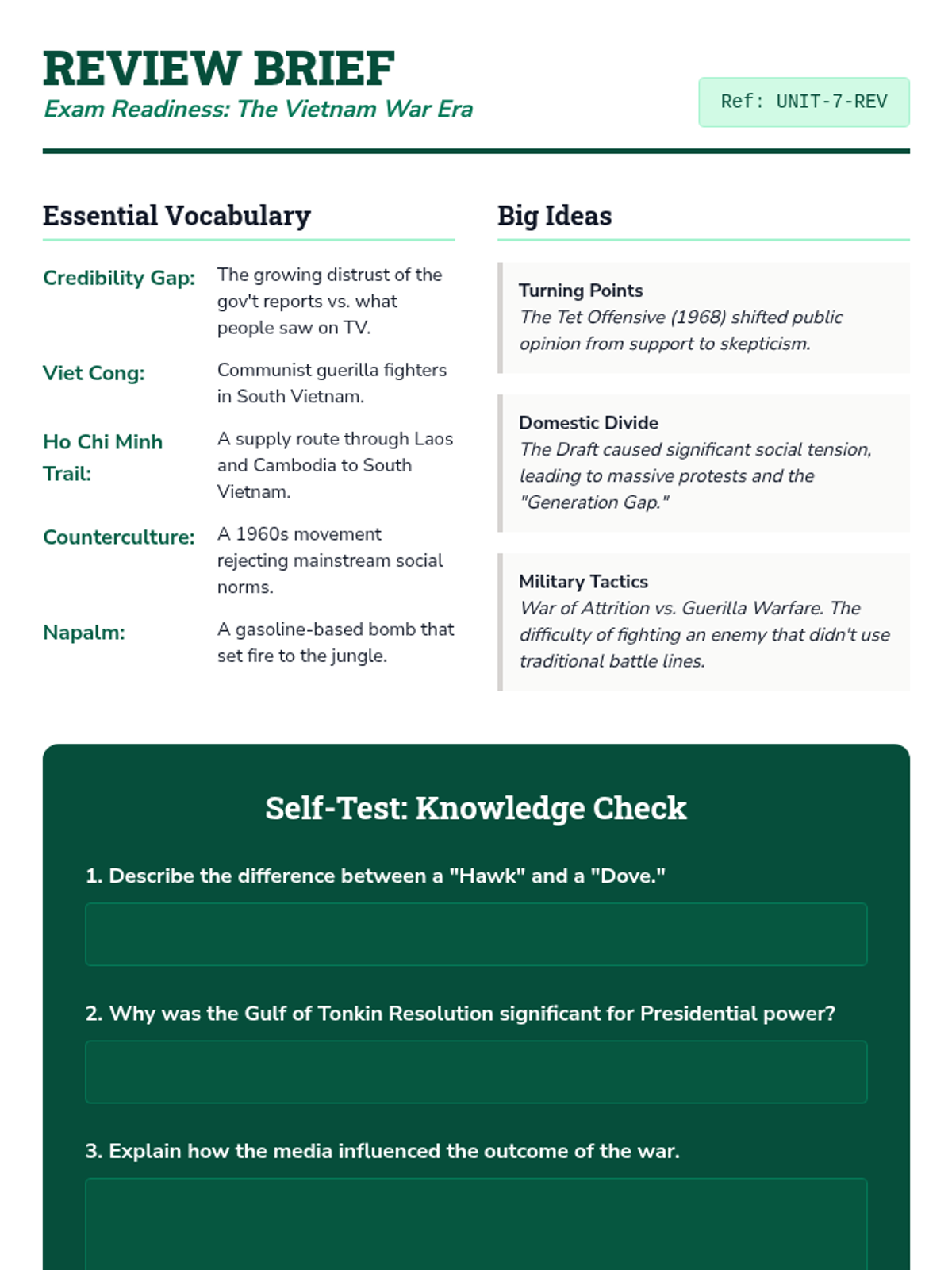
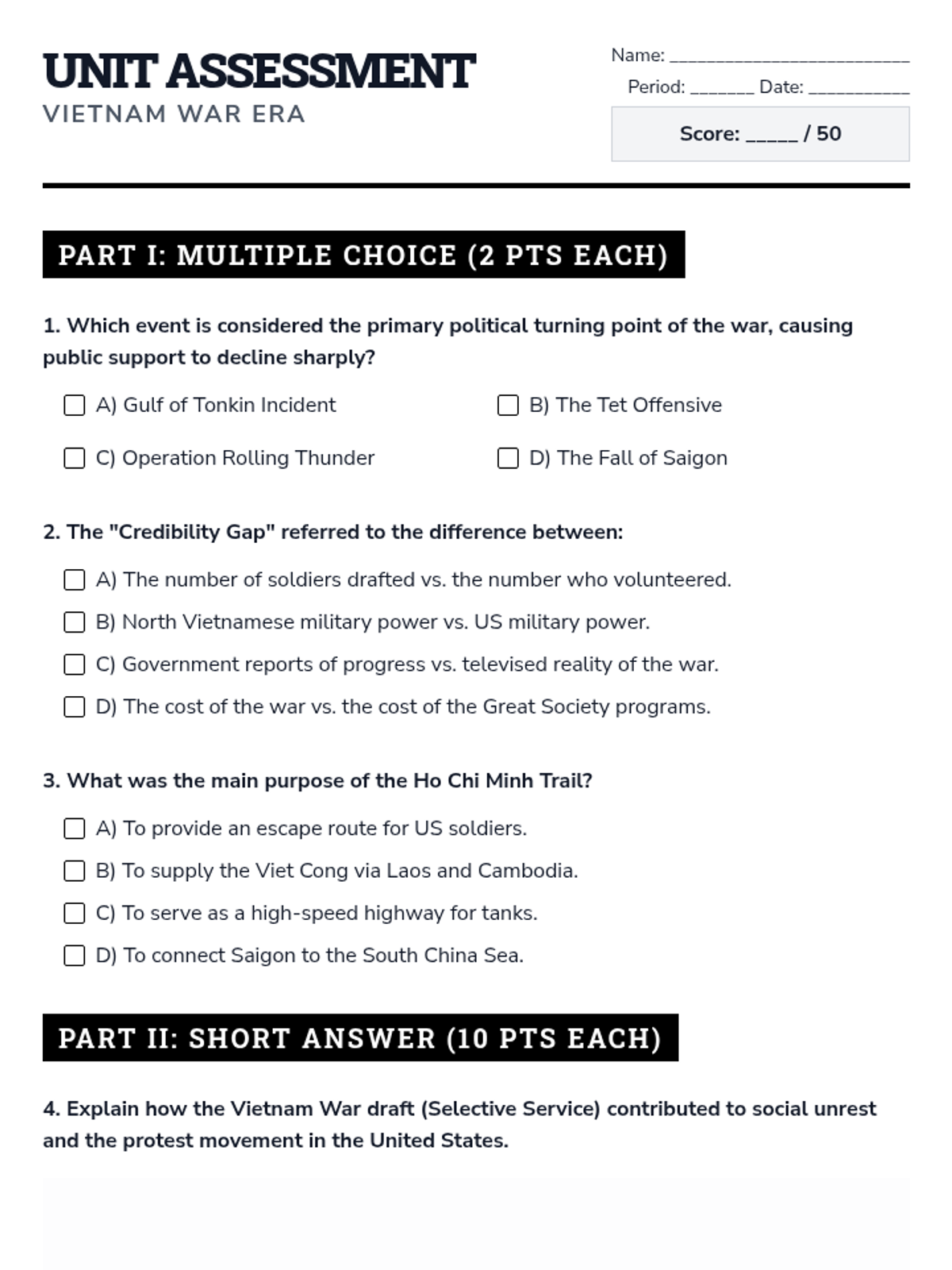
A comprehensive exploration of the Vietnam War era, covering military tactics, political turning points, and the seismic cultural shifts of the 1960s. Students analyze primary sources, map the conflict, and evaluate the domestic impact of the war.
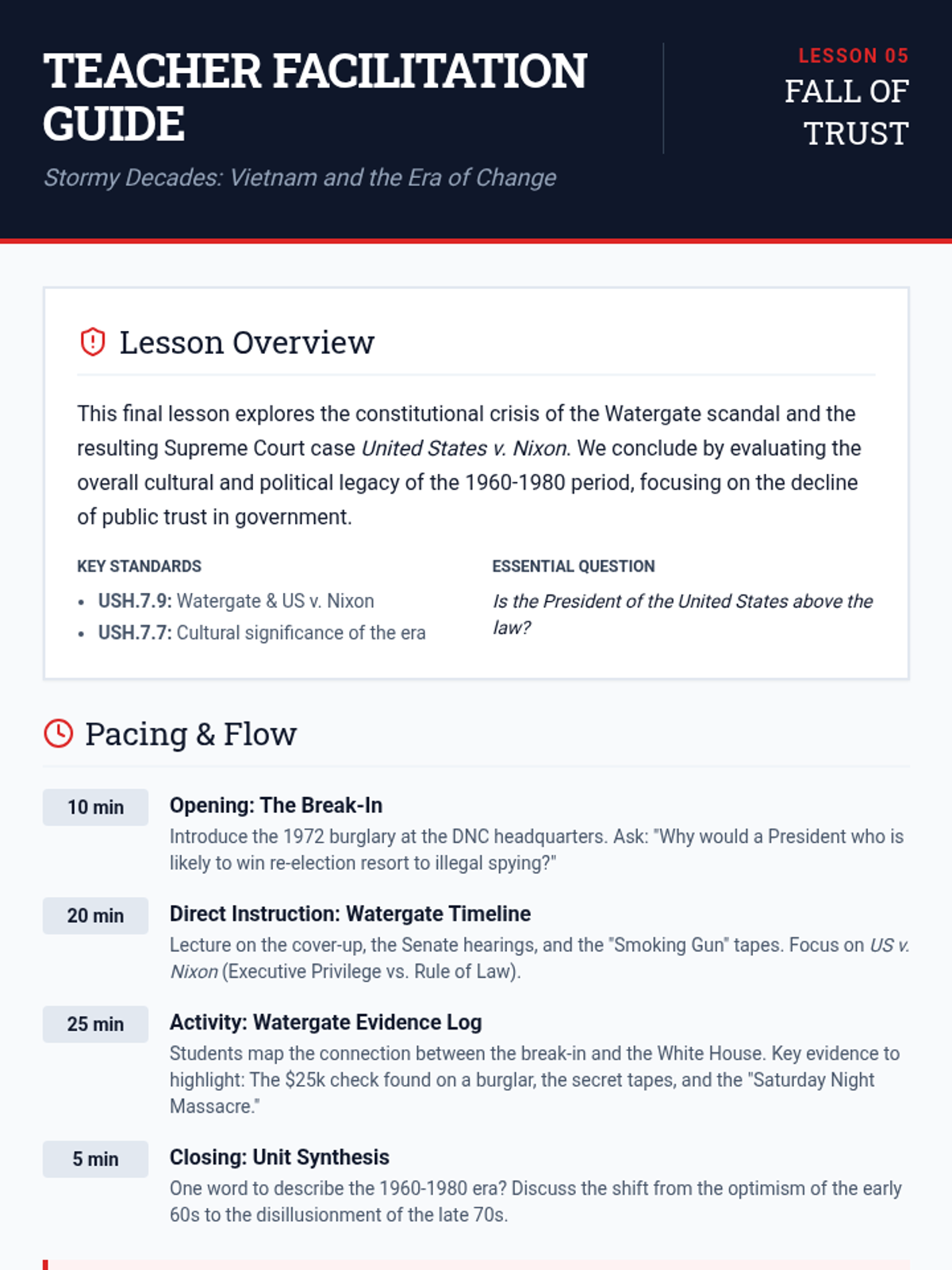
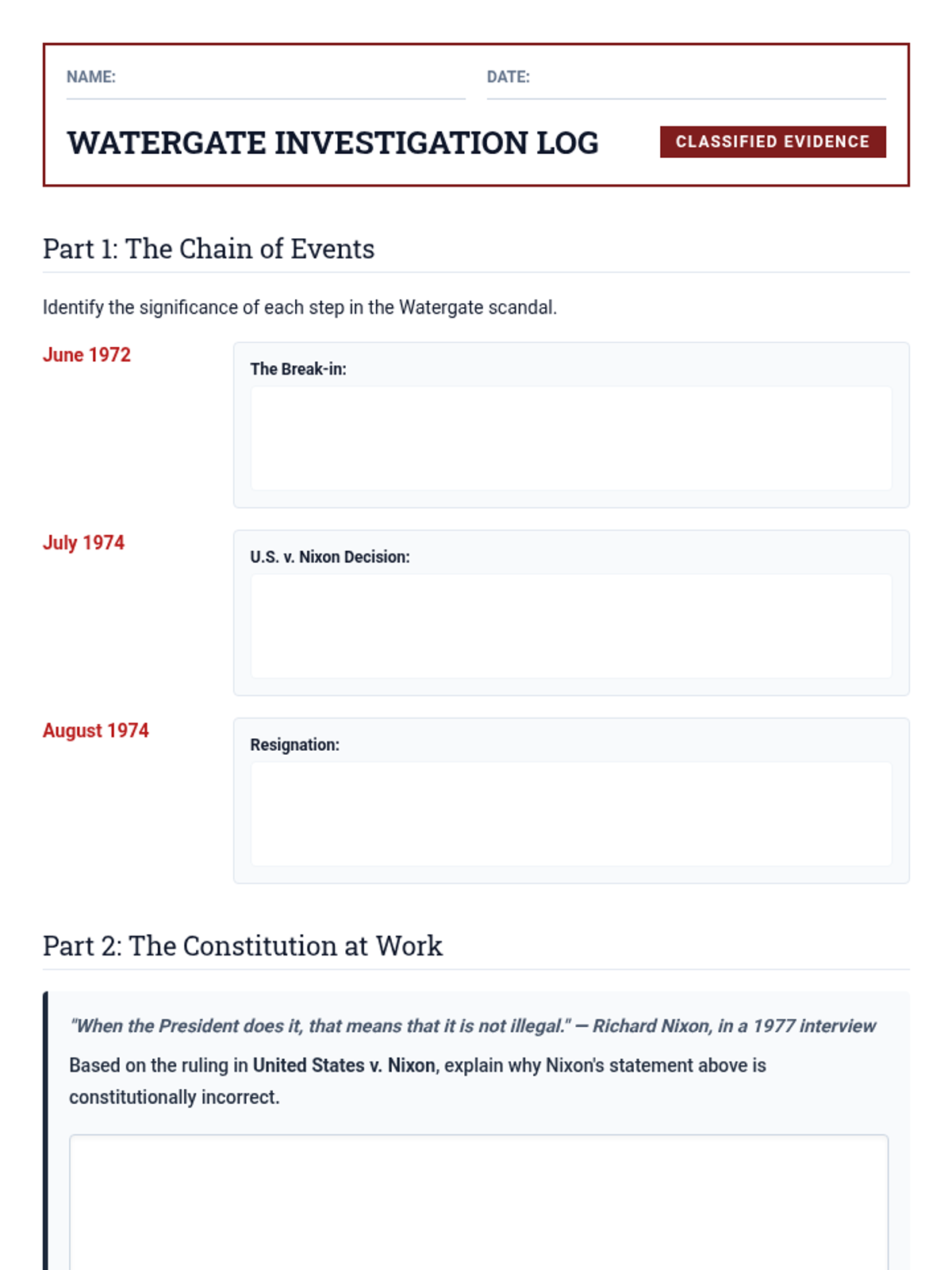
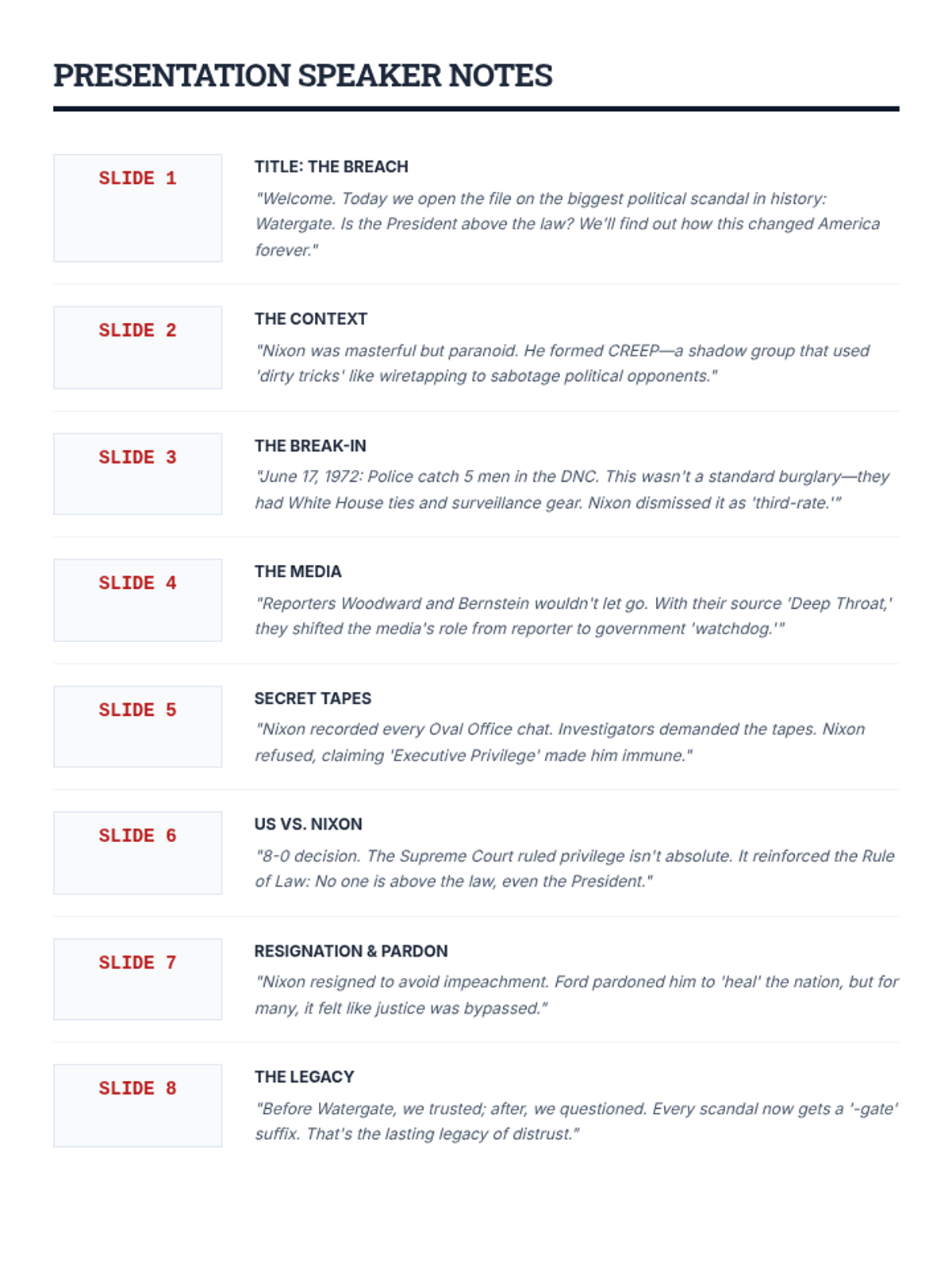
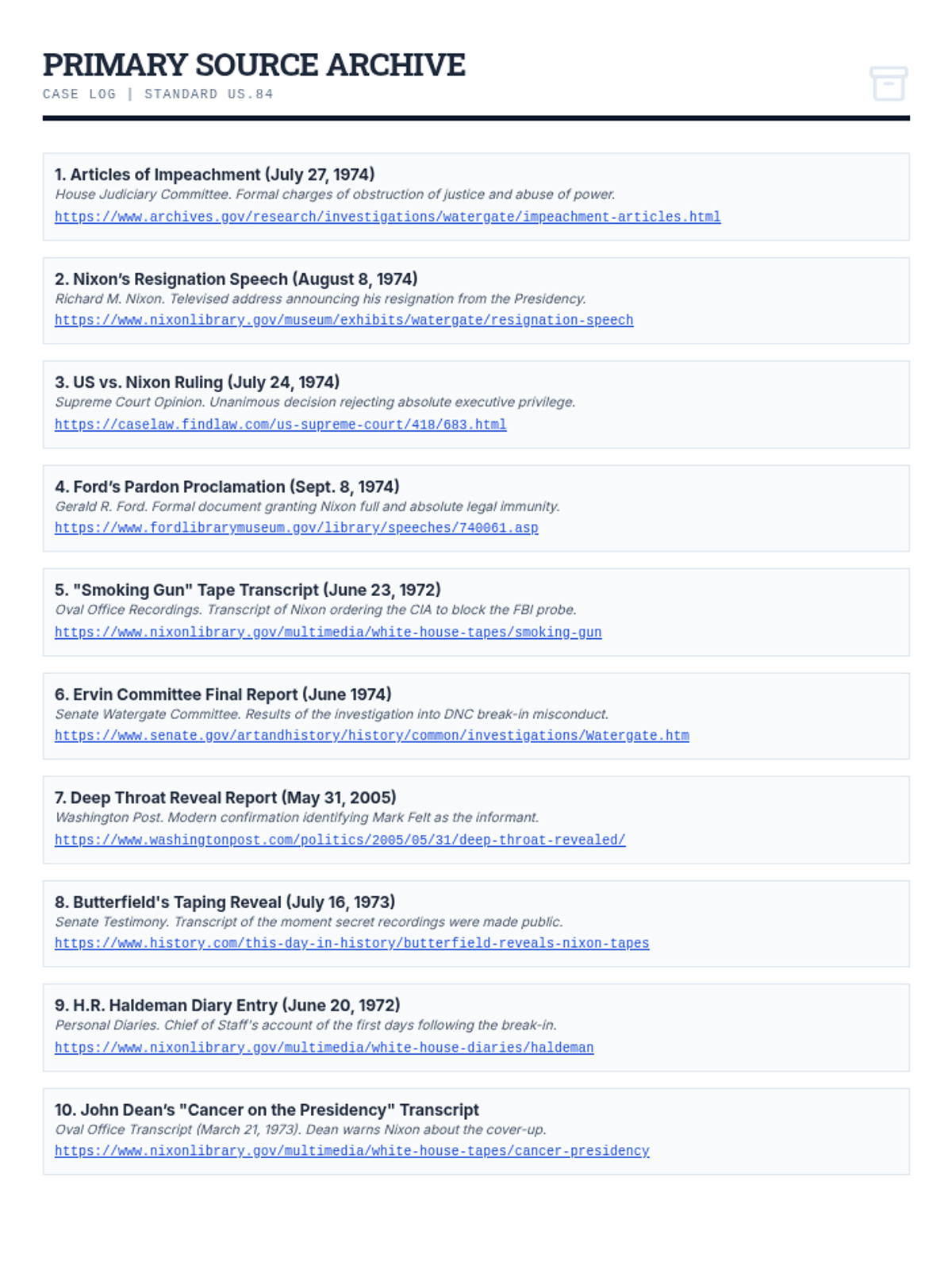
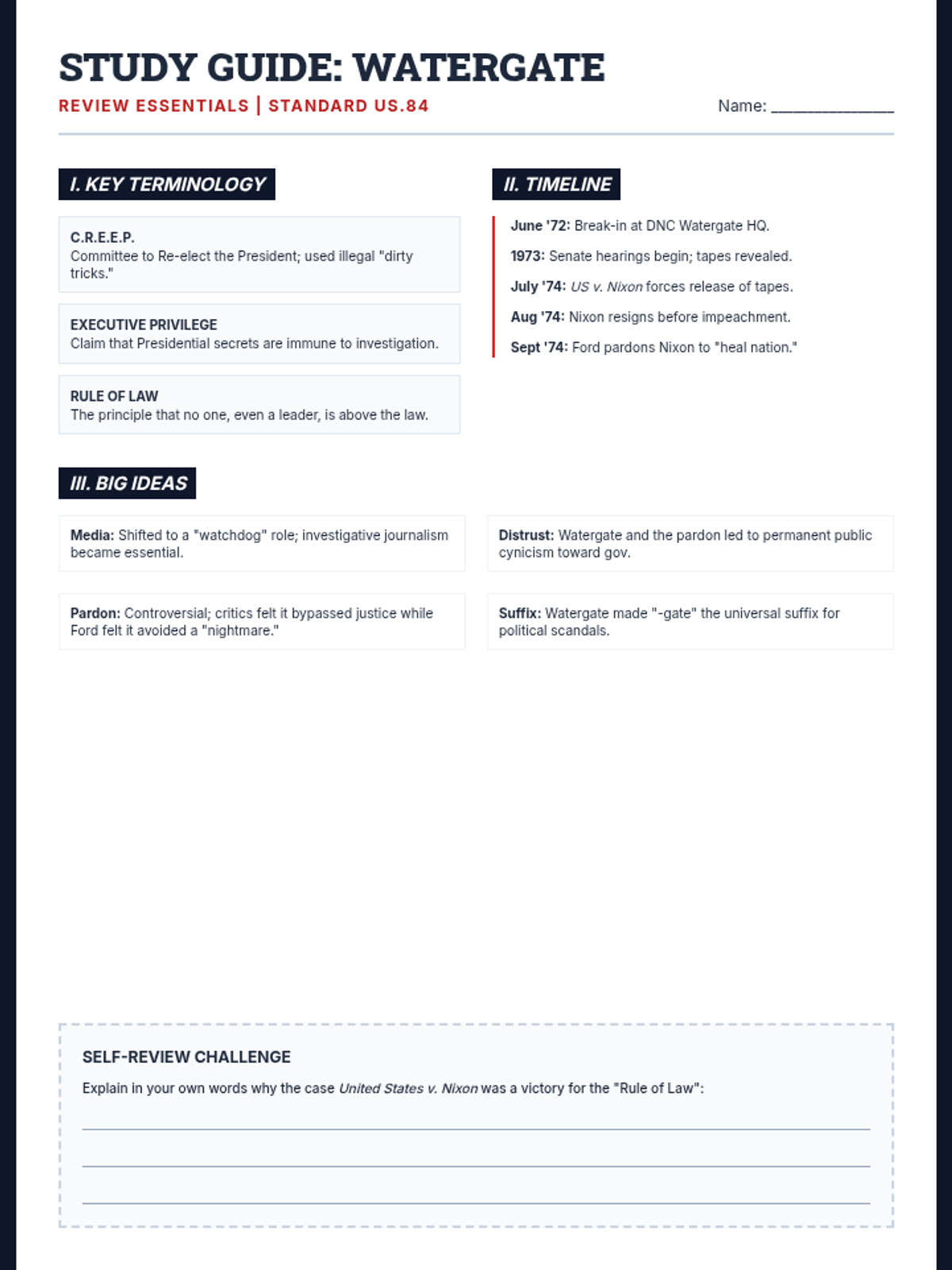
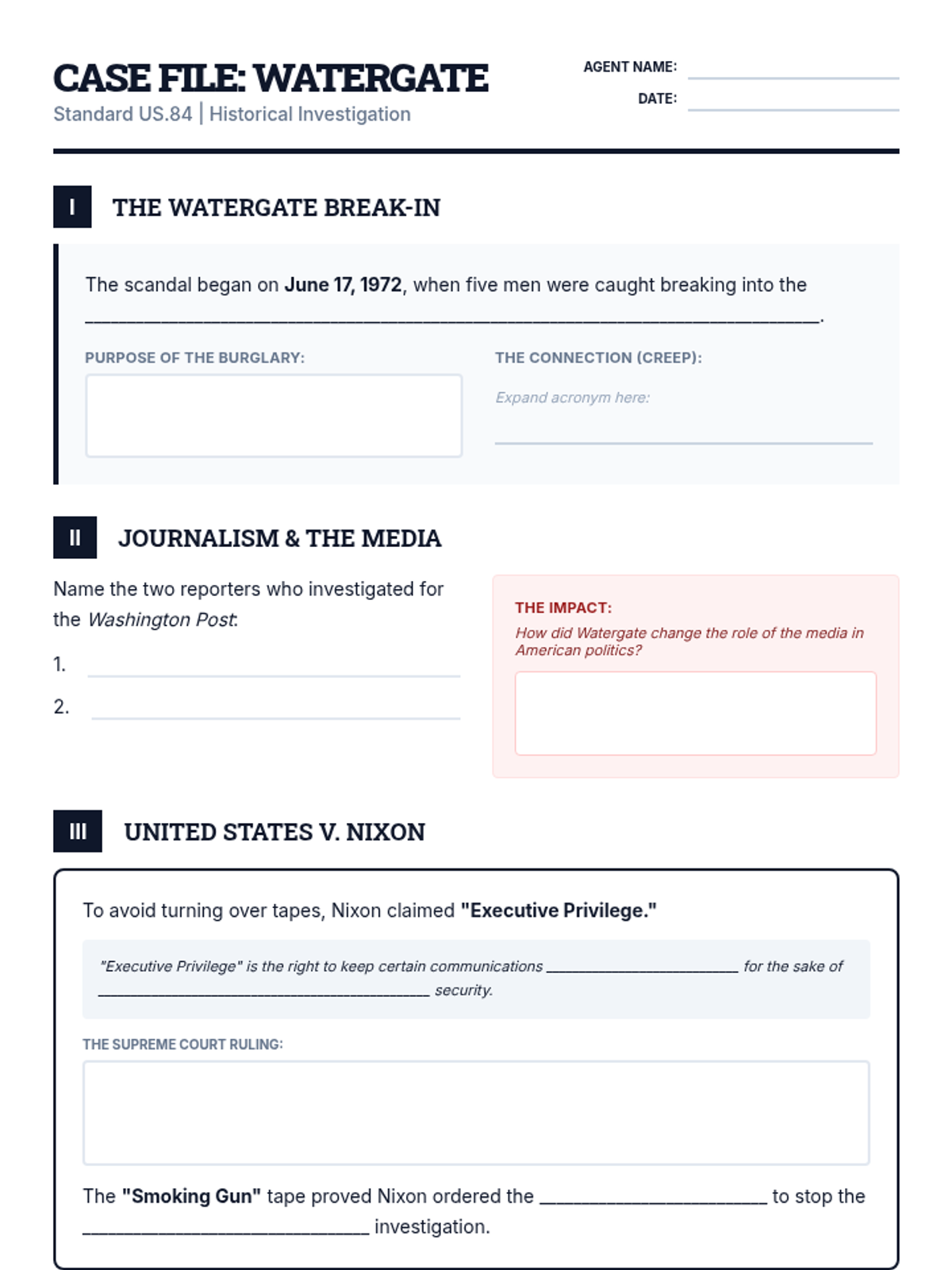
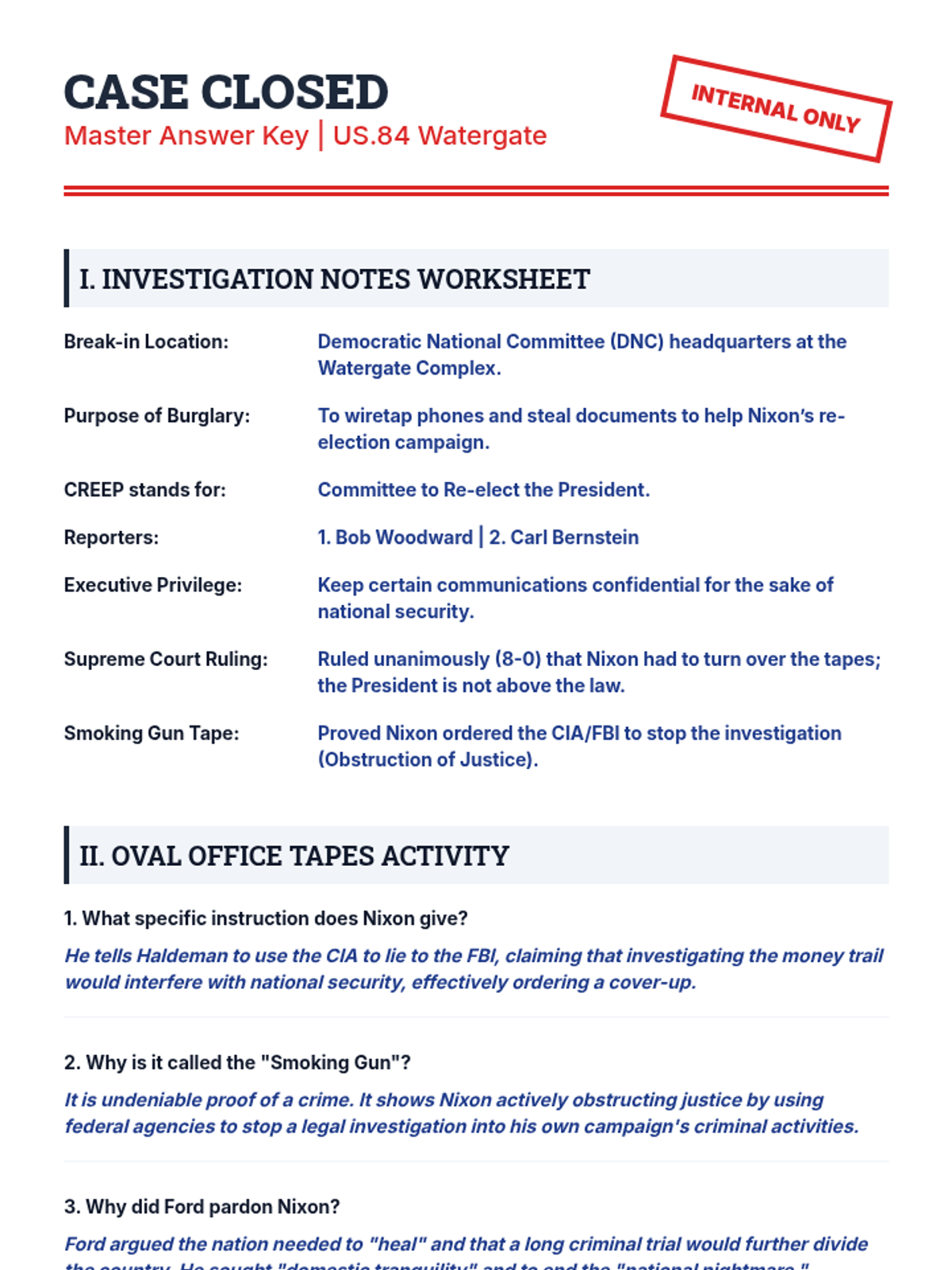
Analyze the Watergate scandal, the Supreme Court's ruling in US v. Nixon, and the resulting shift in American trust in government and the presidency.
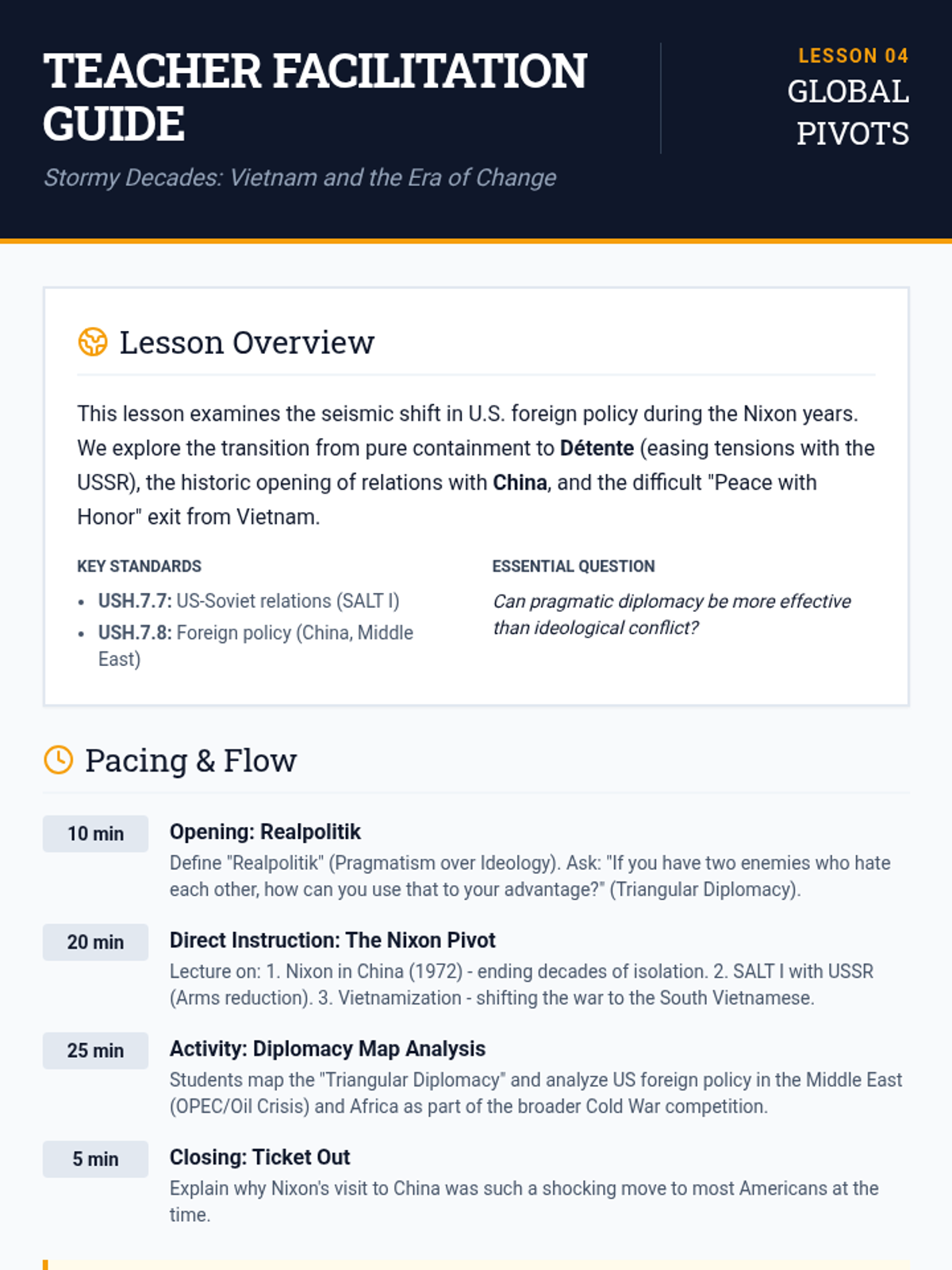
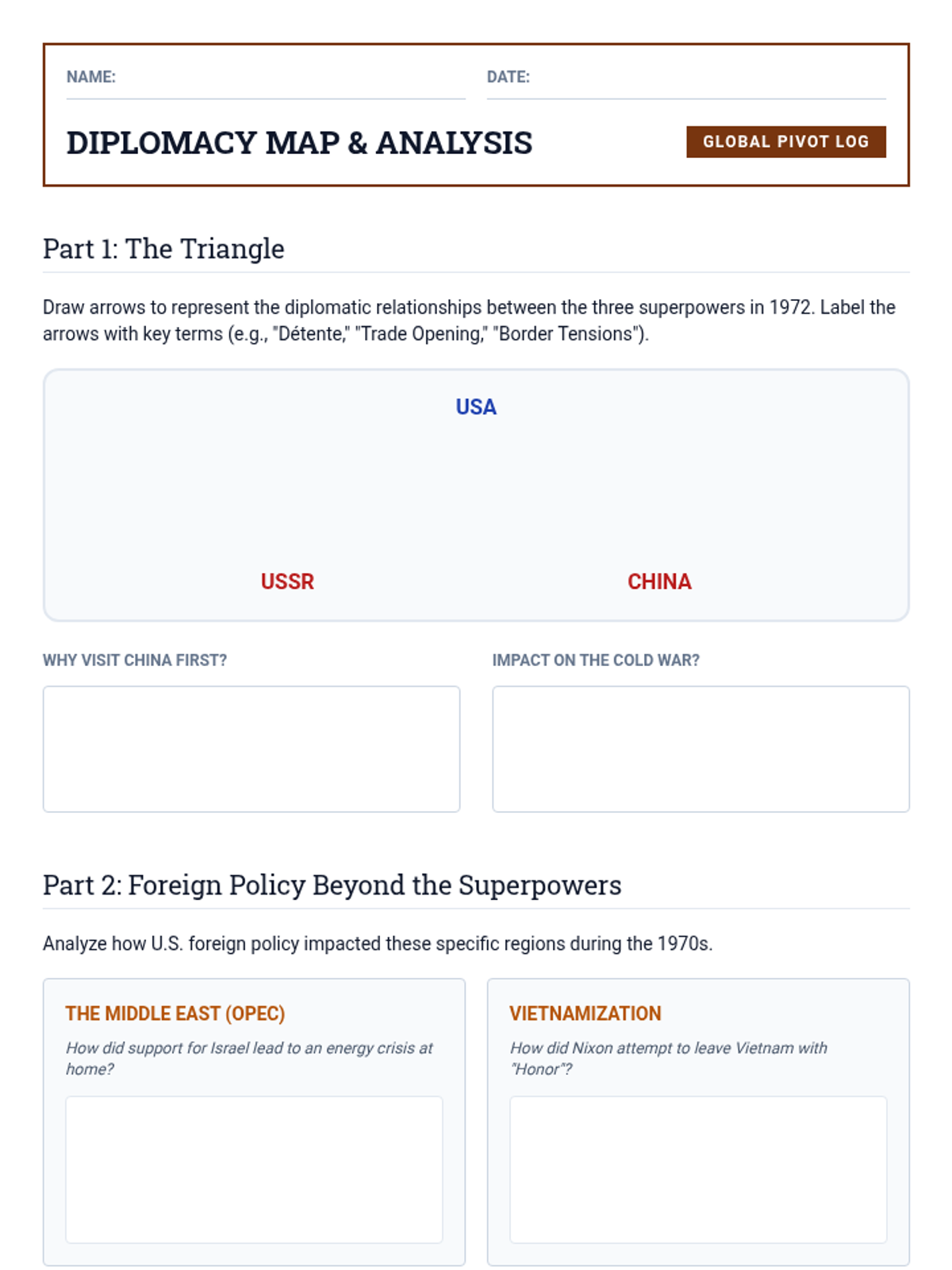
Investigate the shift in U.S. foreign policy under Richard Nixon, including the policy of détente with the Soviet Union, the opening of relations with China, and the complex path to exiting Vietnam.
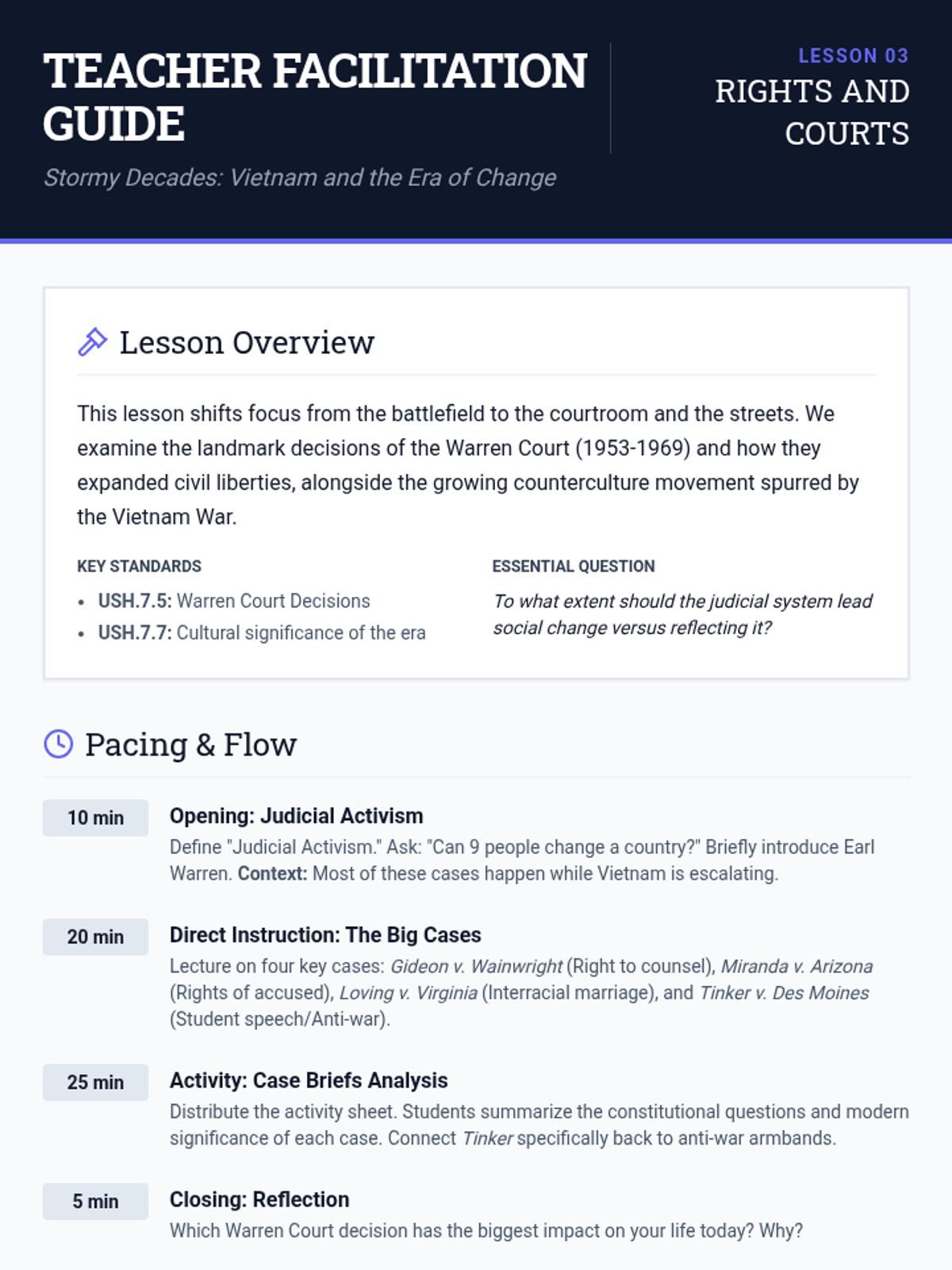
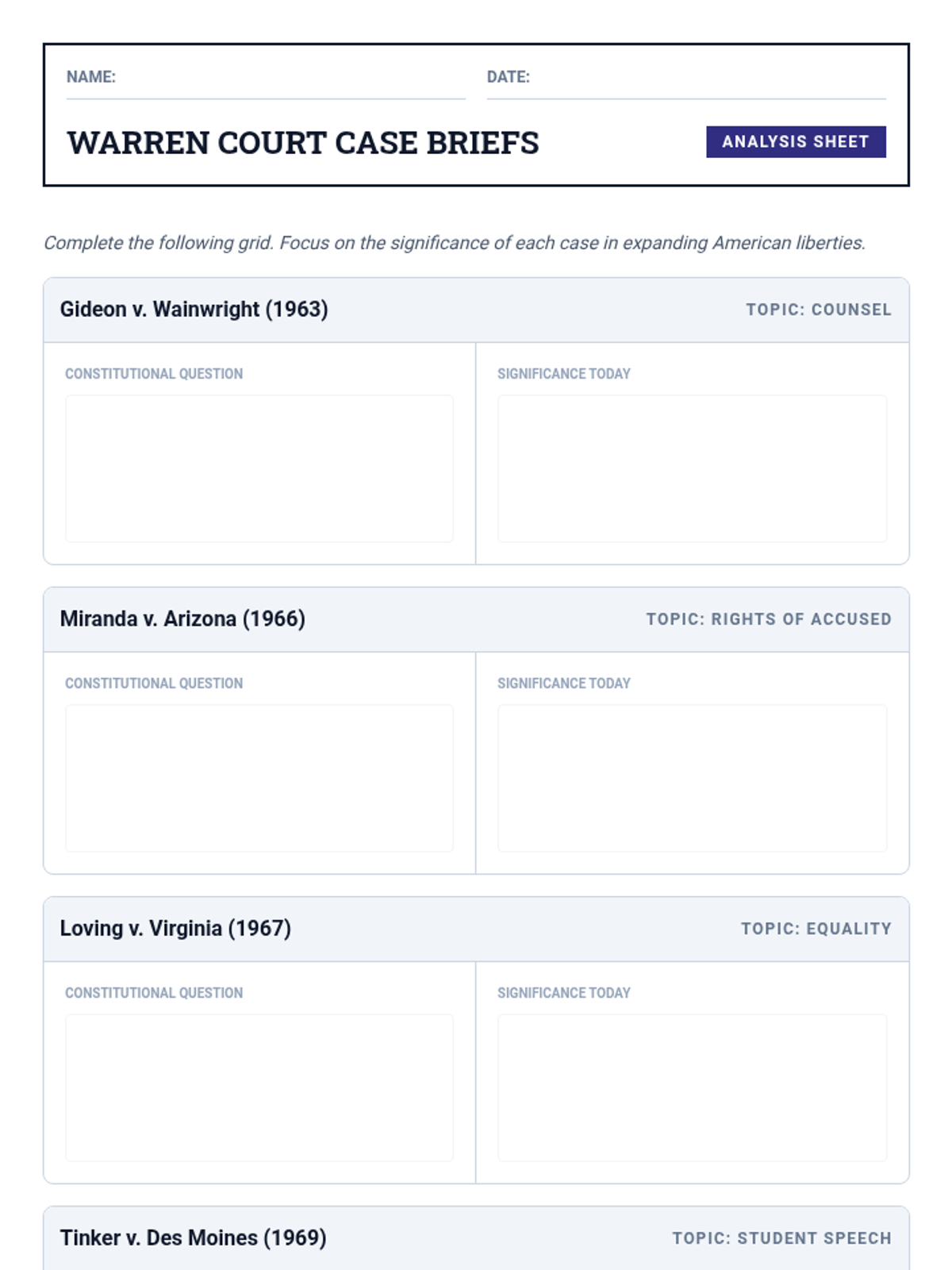
Examine the transformative legal landscape of the 1960s through the key decisions of the Warren Court and the rise of the counterculture movement during the Vietnam era.
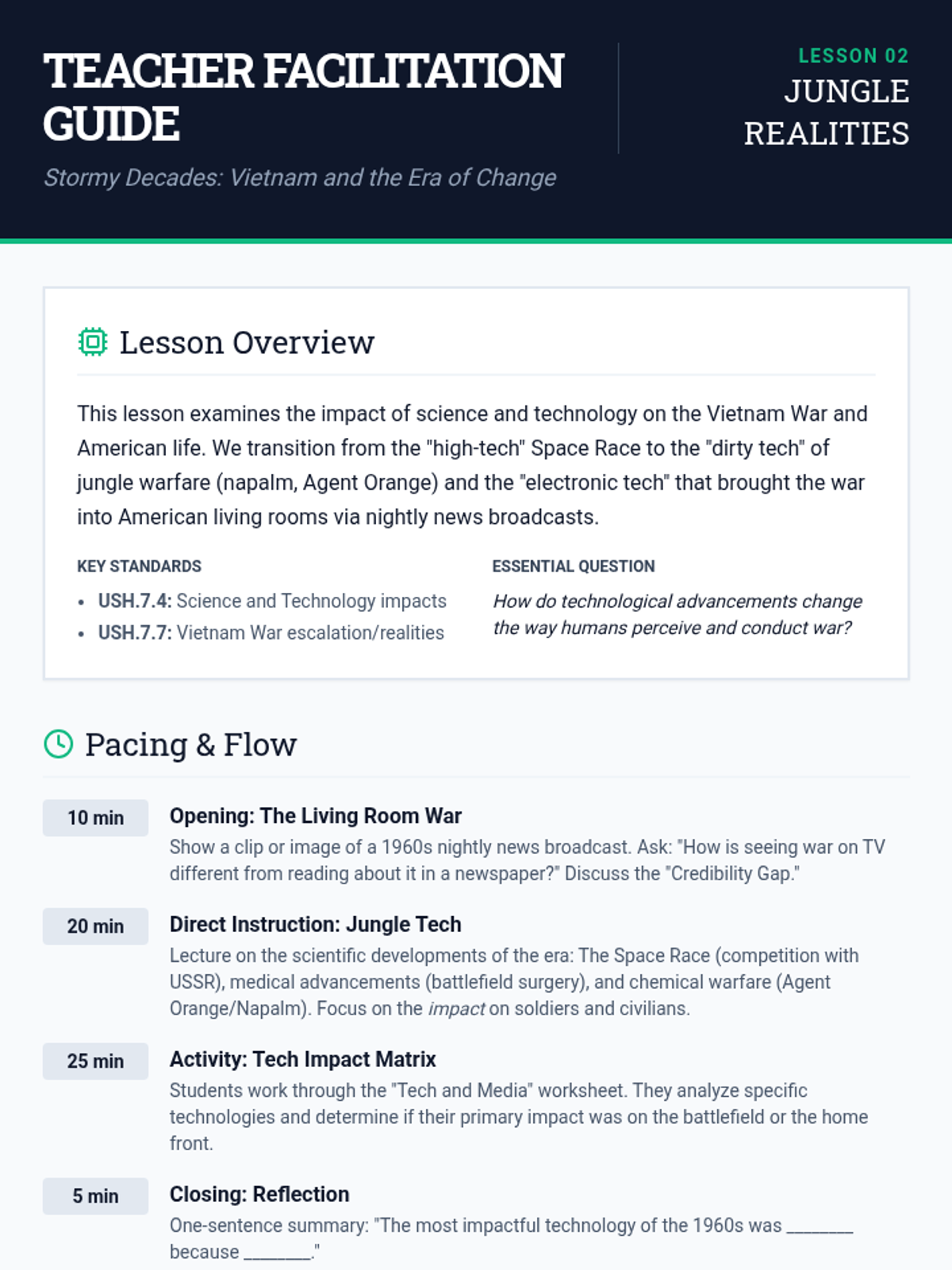
Analyze how scientific and technological advancements, from satellite communications to chemical weaponry like Agent Orange, transformed the American experience of the Vietnam War and the Space Race.
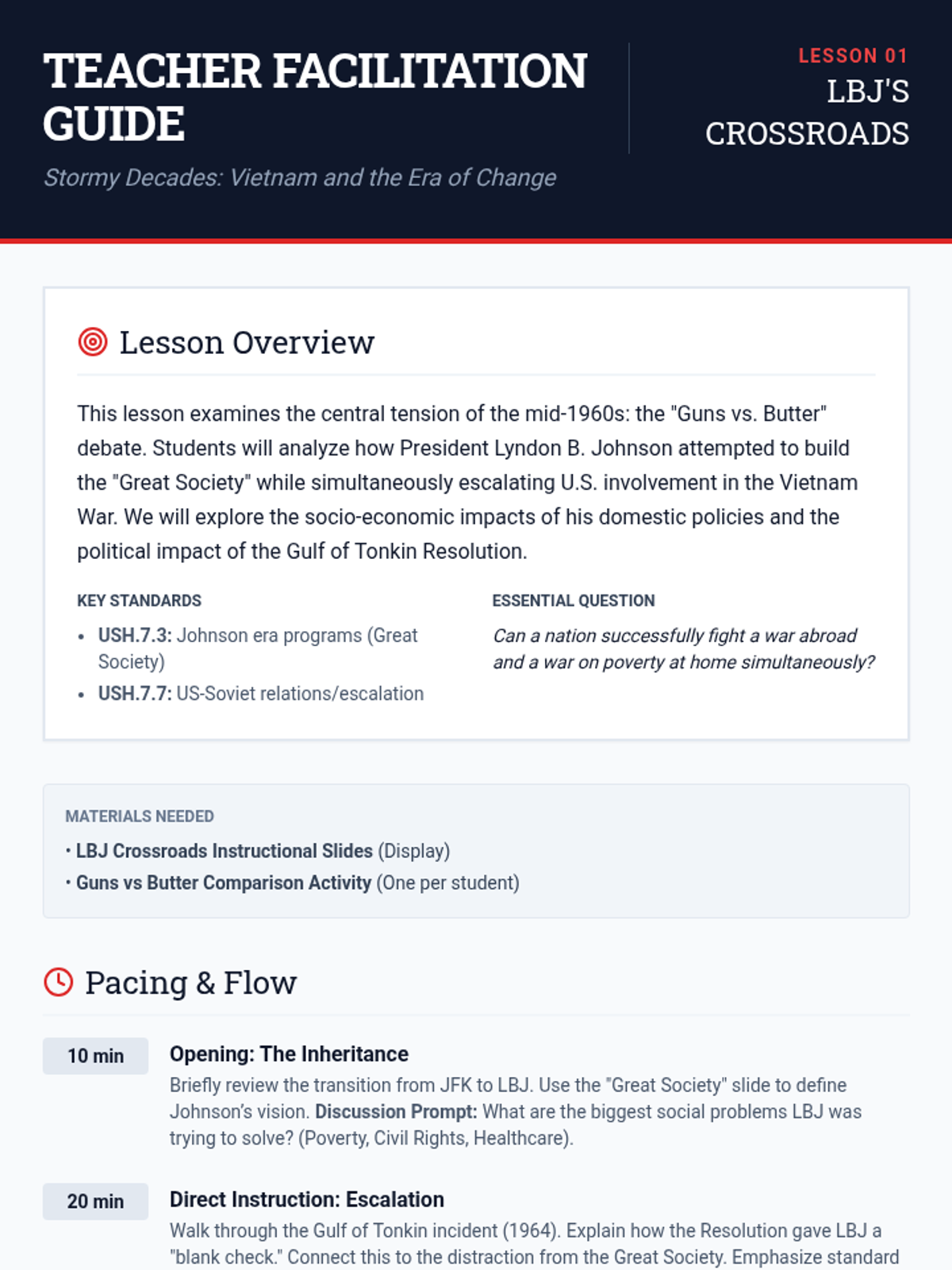
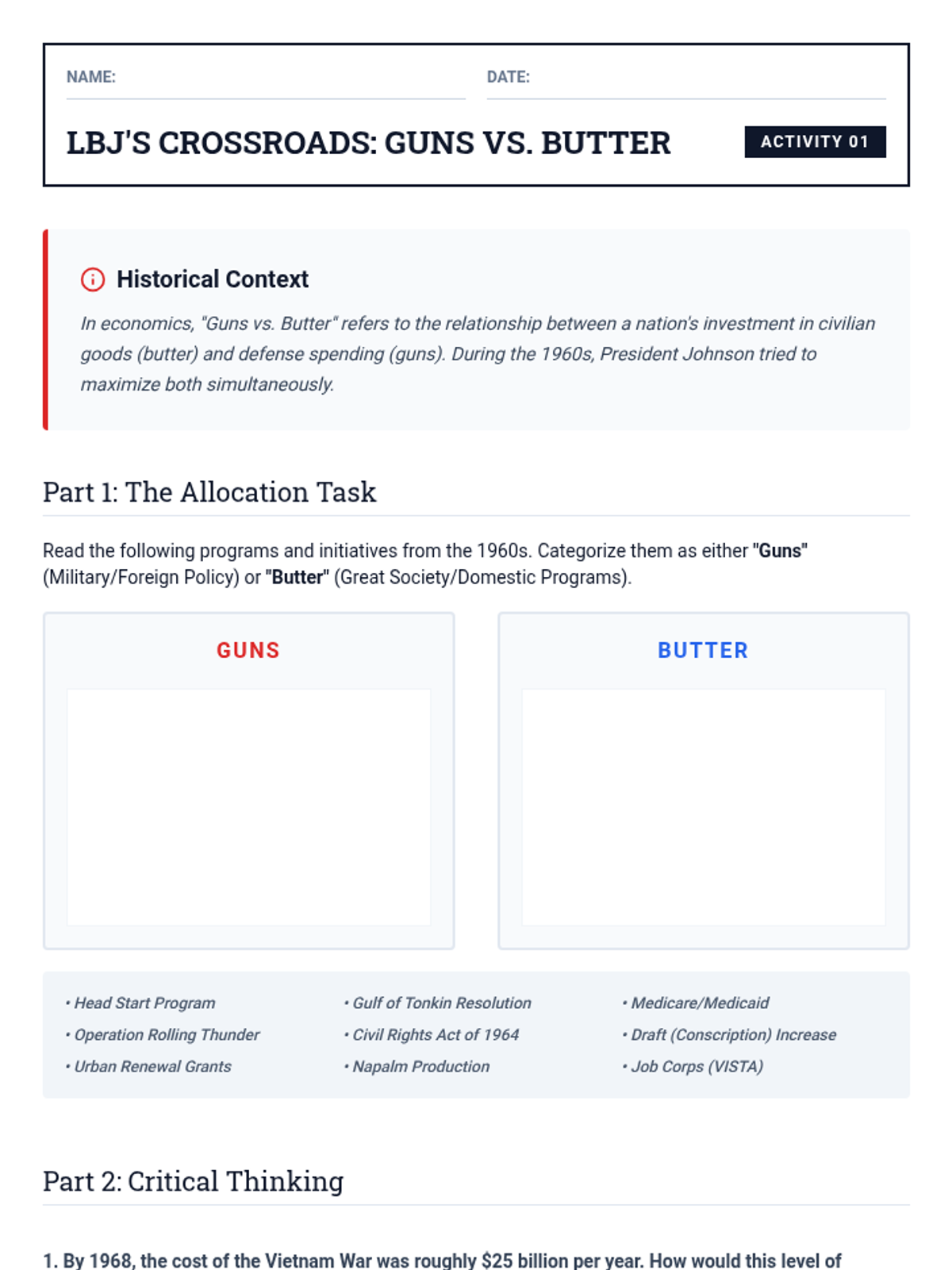
Explore the dual priorities of Lyndon B. Johnson's presidency: the ambitious 'Great Society' domestic programs and the escalating commitment to the Vietnam War following the Gulf of Tonkin Resolution.
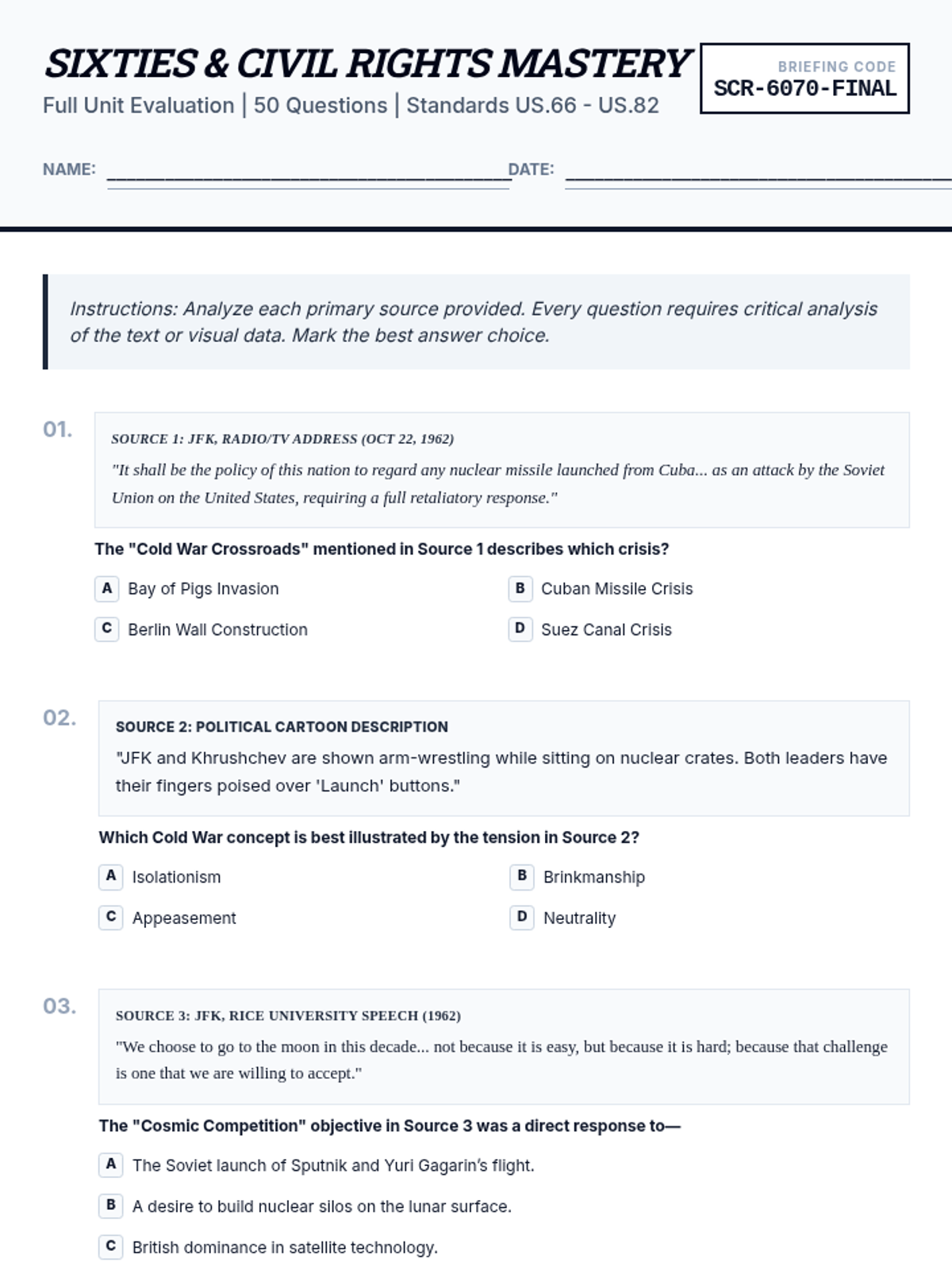
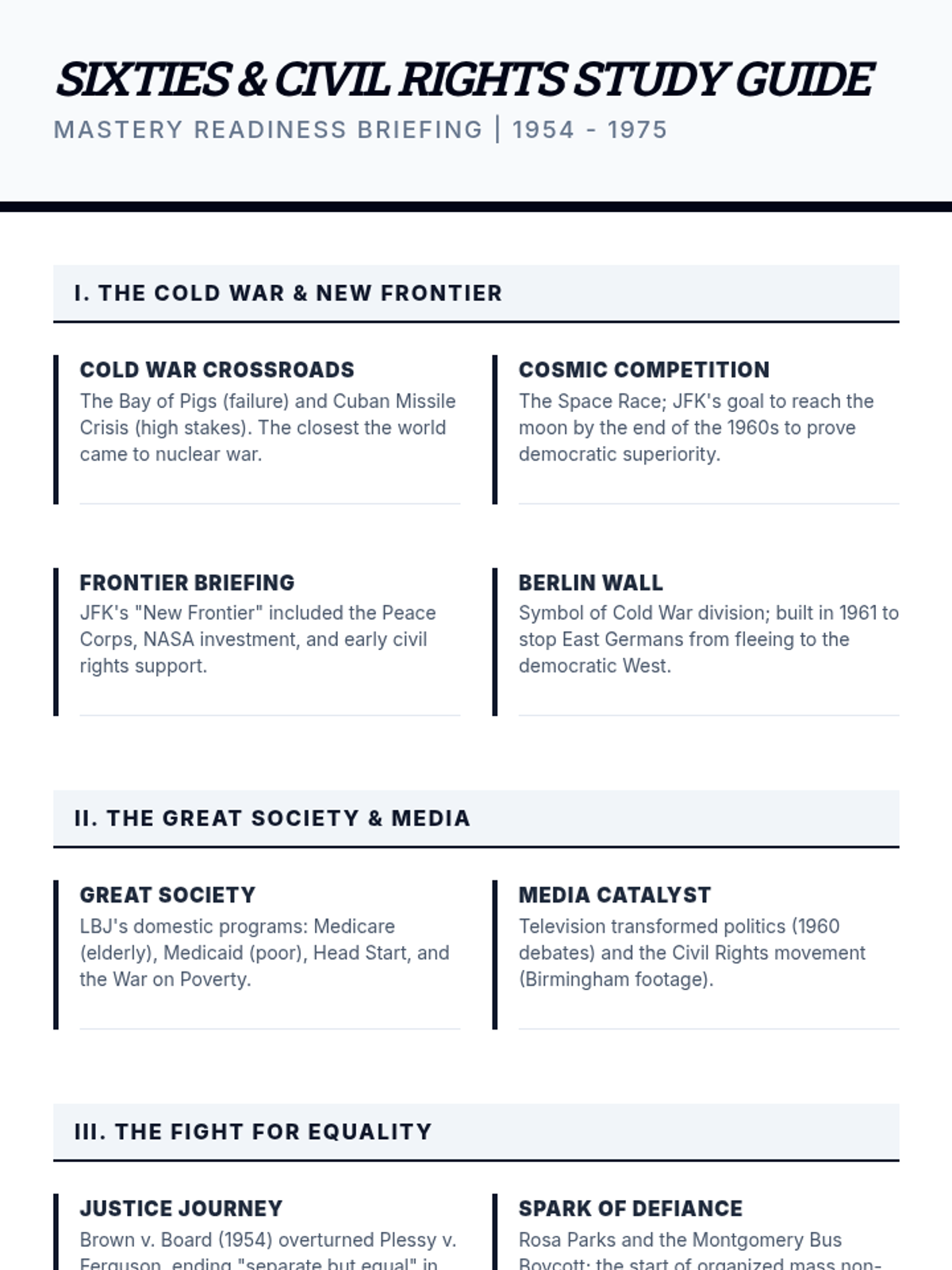
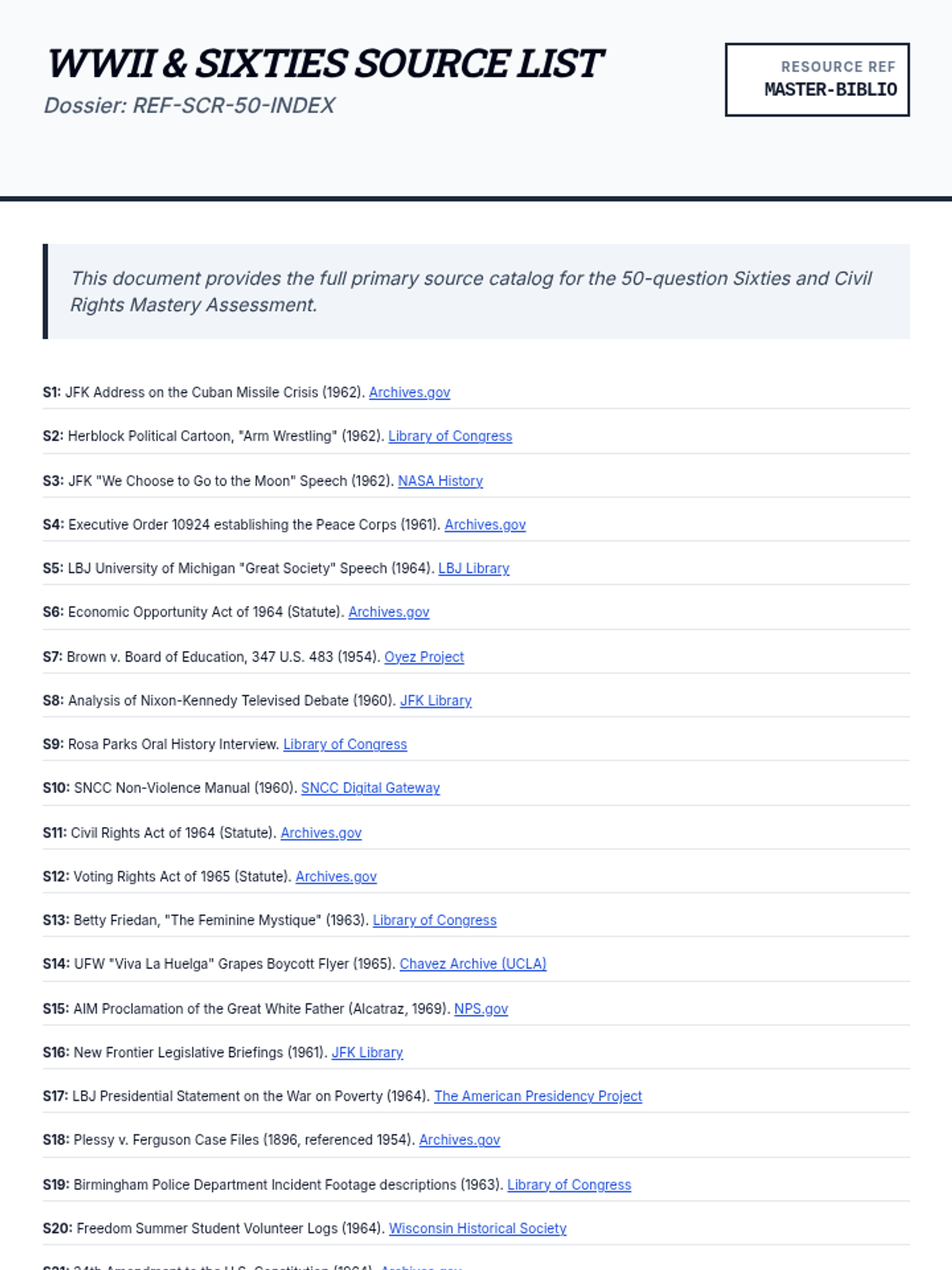
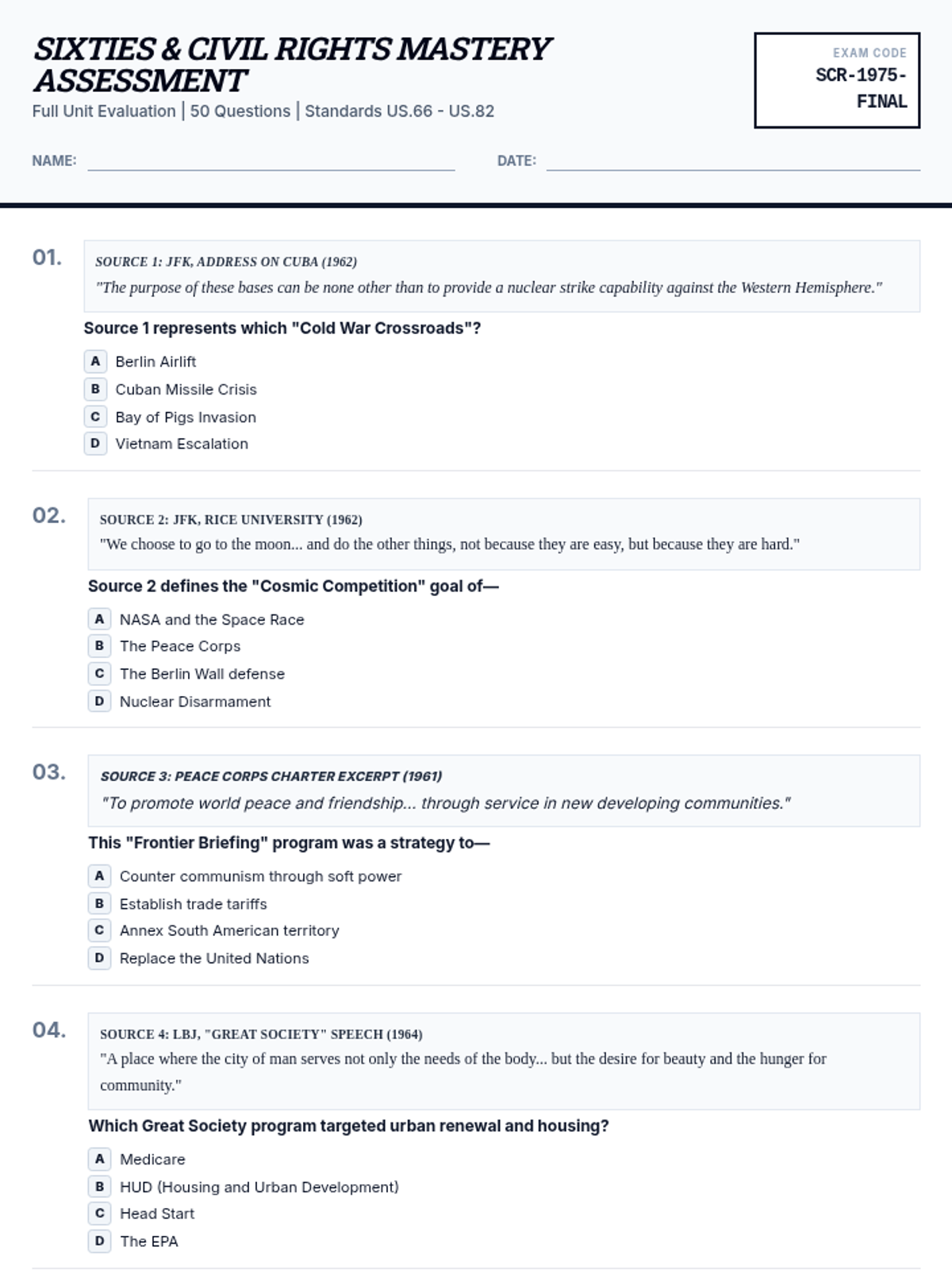
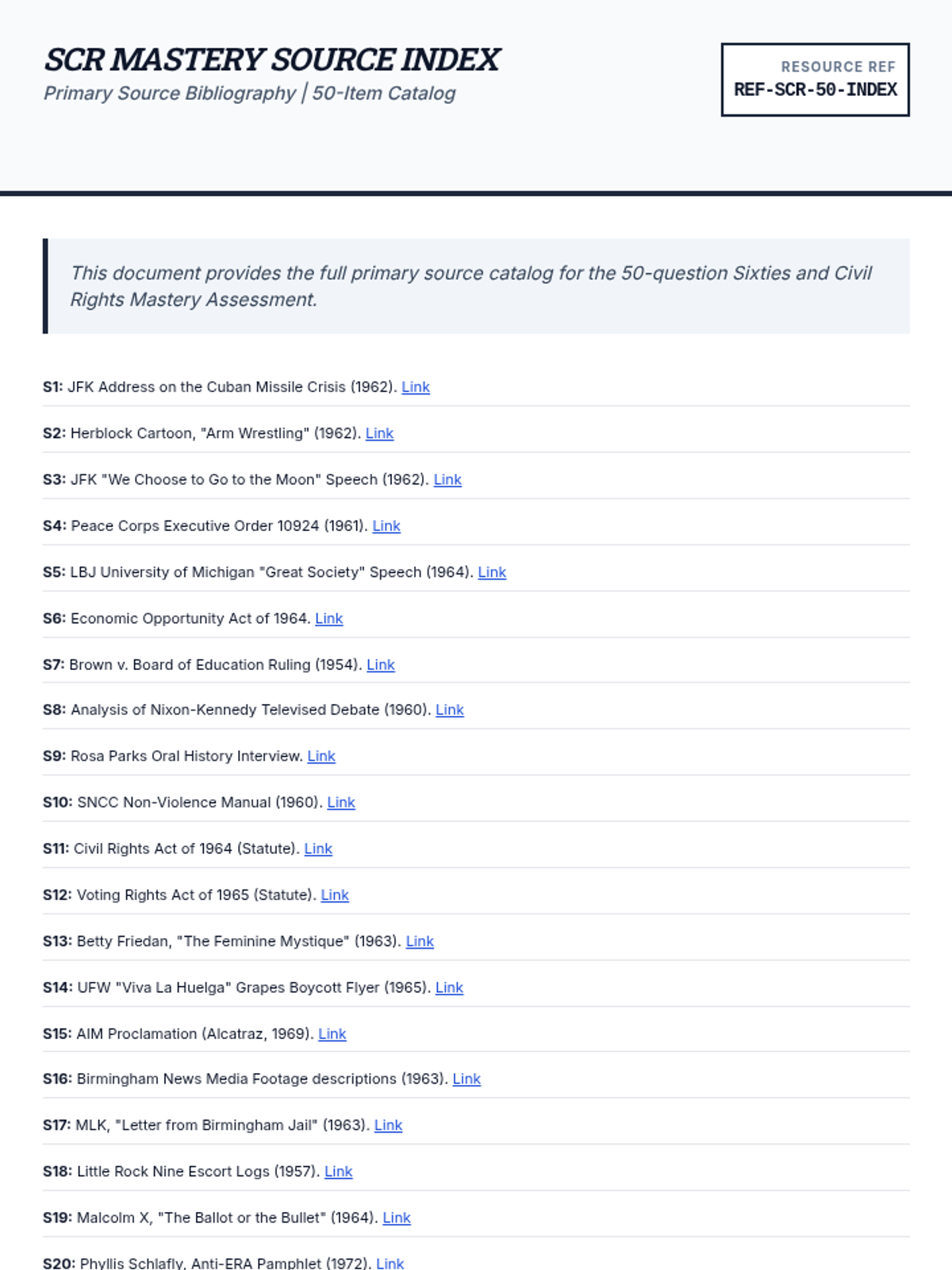
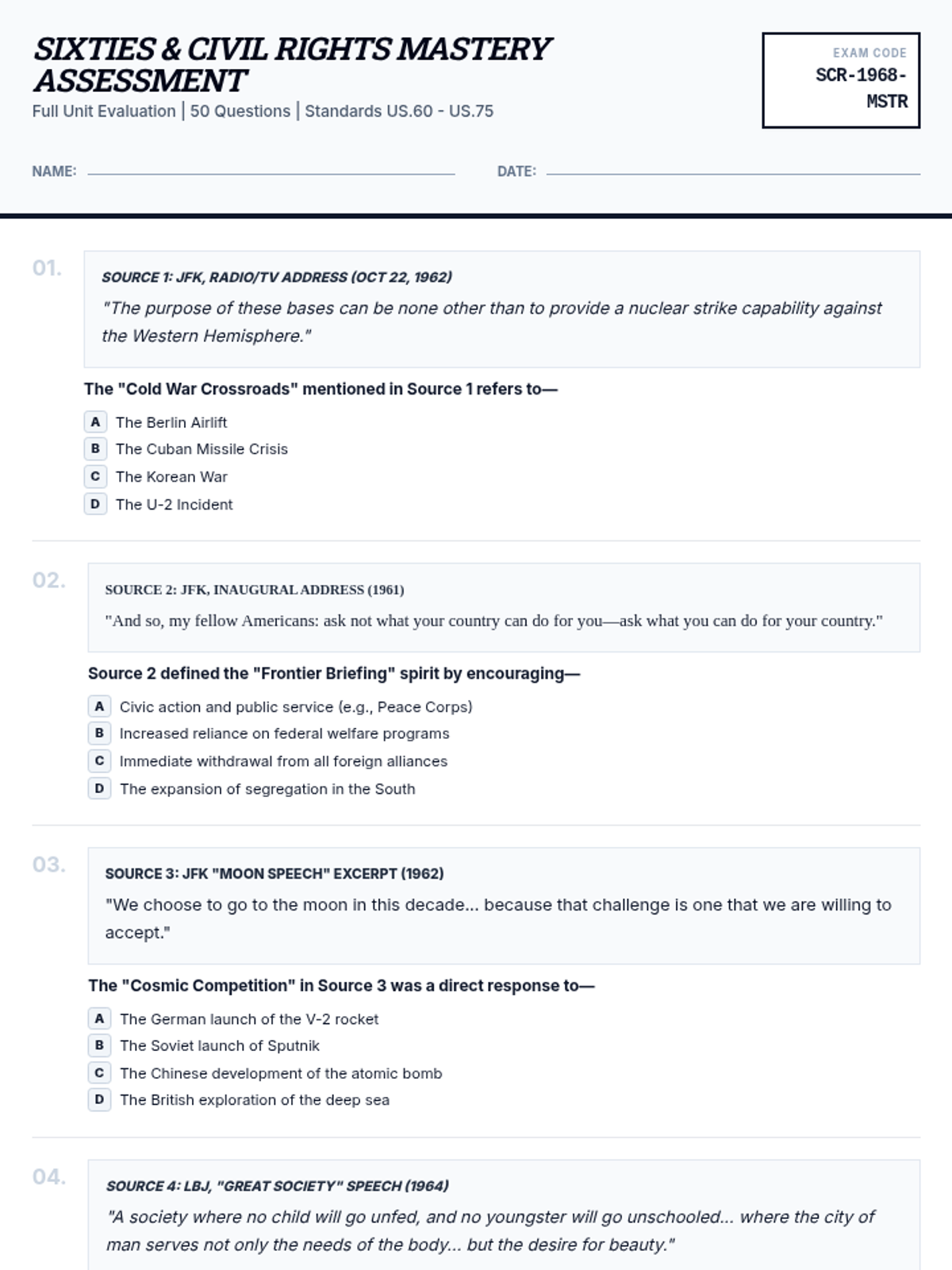
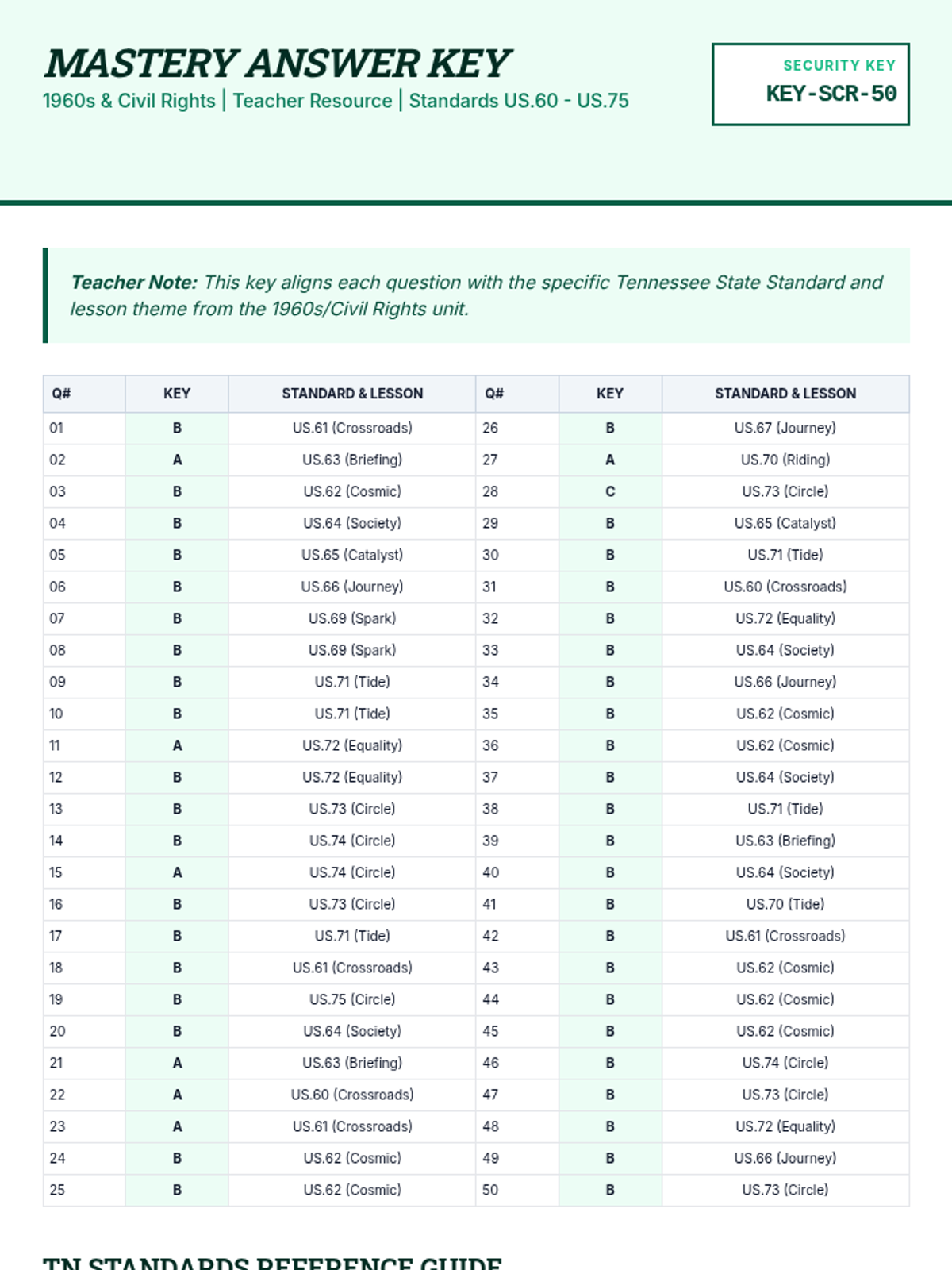
Mastery assessment for the 1960s and Civil Rights Era, covering JFK, LBJ, the Space Race, and the various movements for equality.
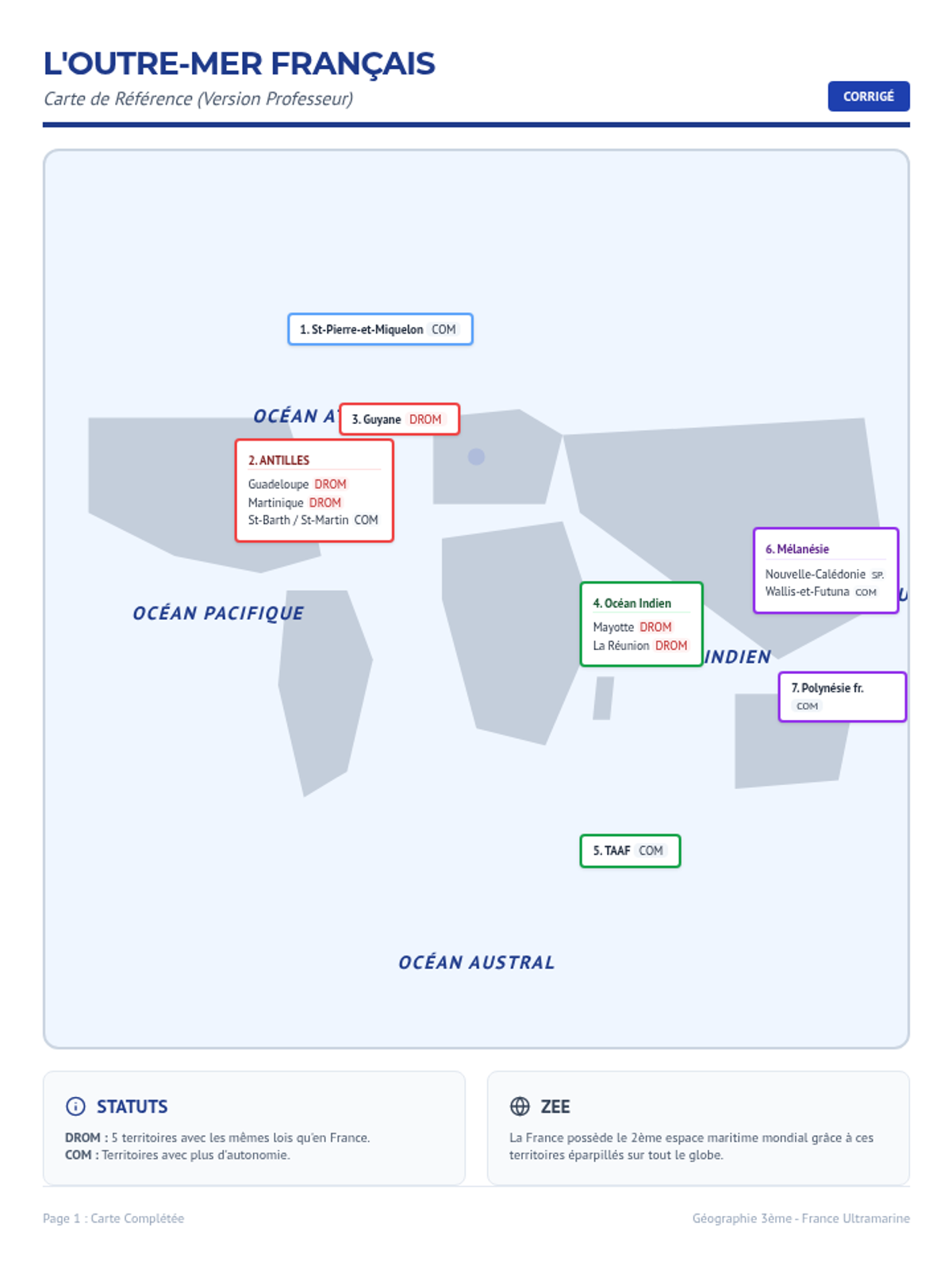
Cette leçon permet aux élèves de 3ème de localiser et d'identifier les différents territoires de la France d'outre-mer (DROM et COM) ainsi que les grands espaces maritimes mondiaux.
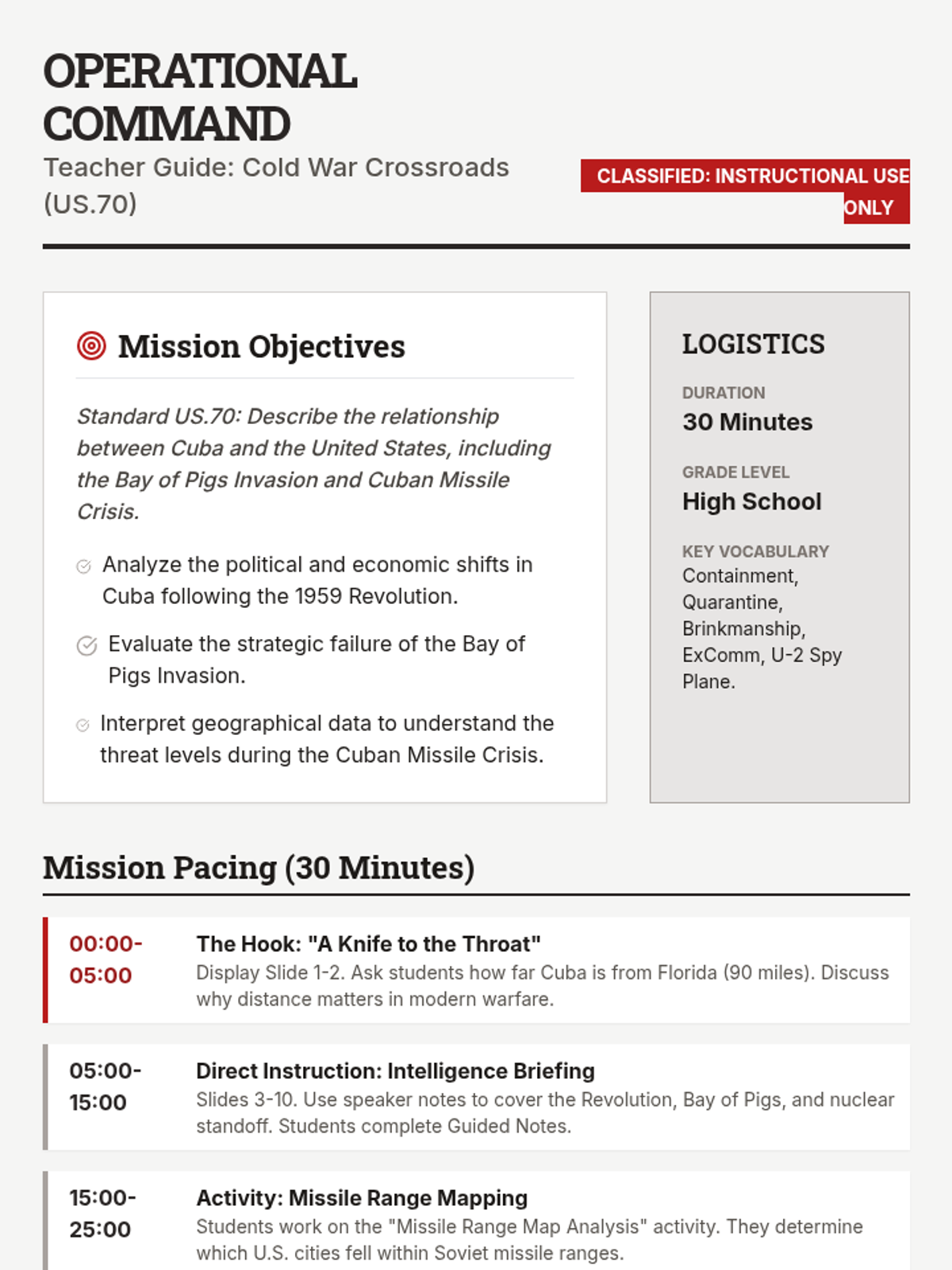
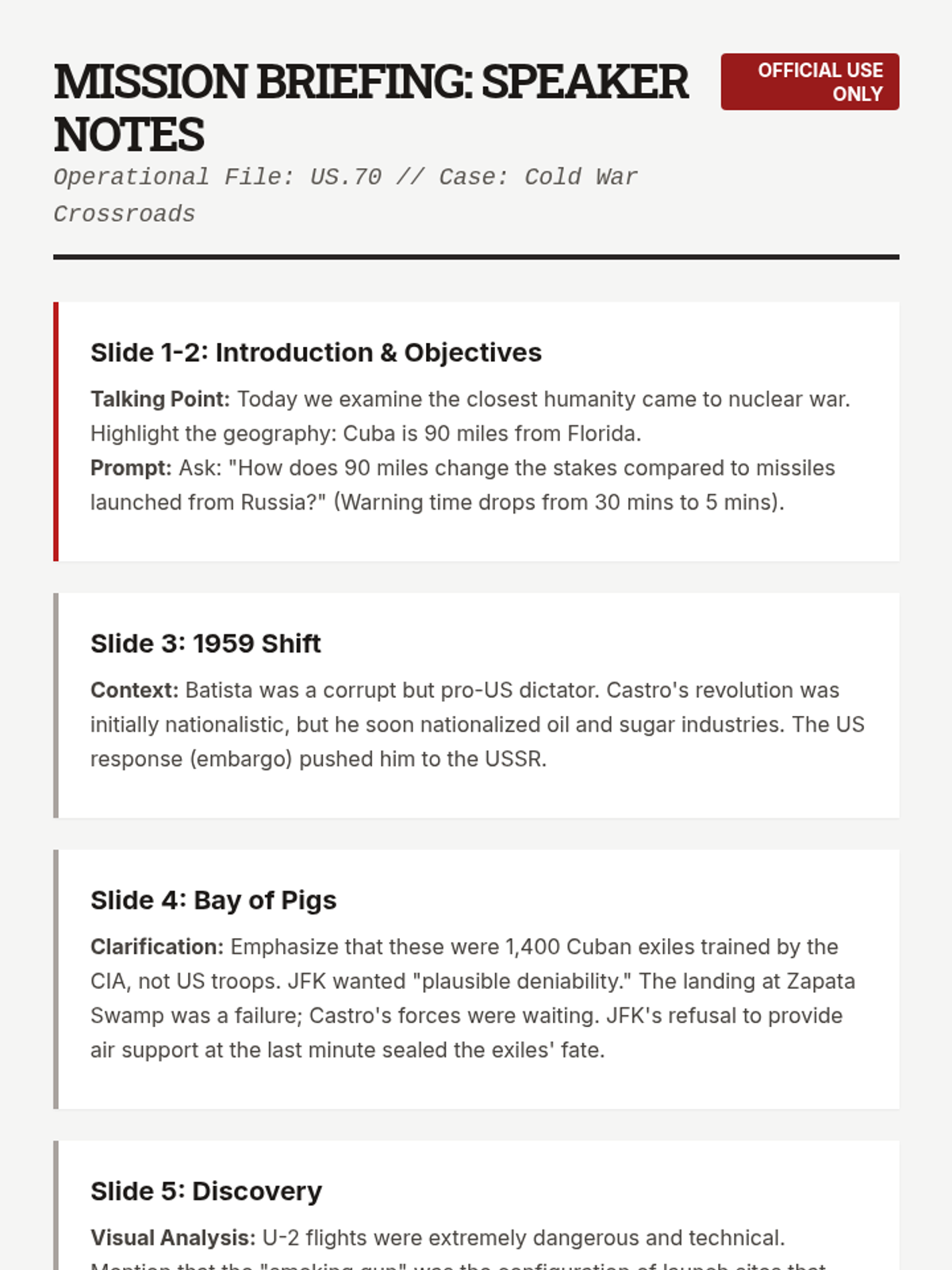
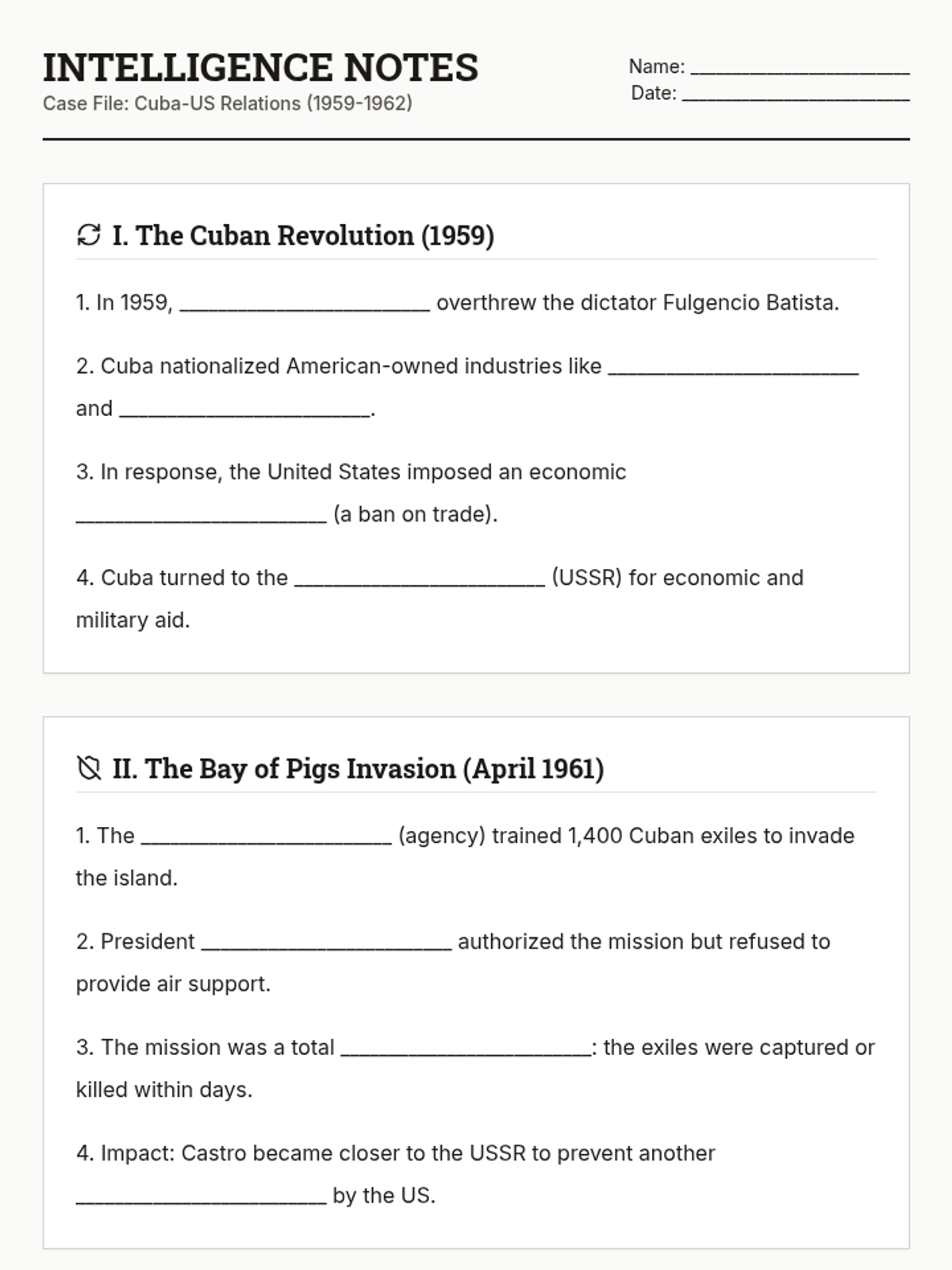
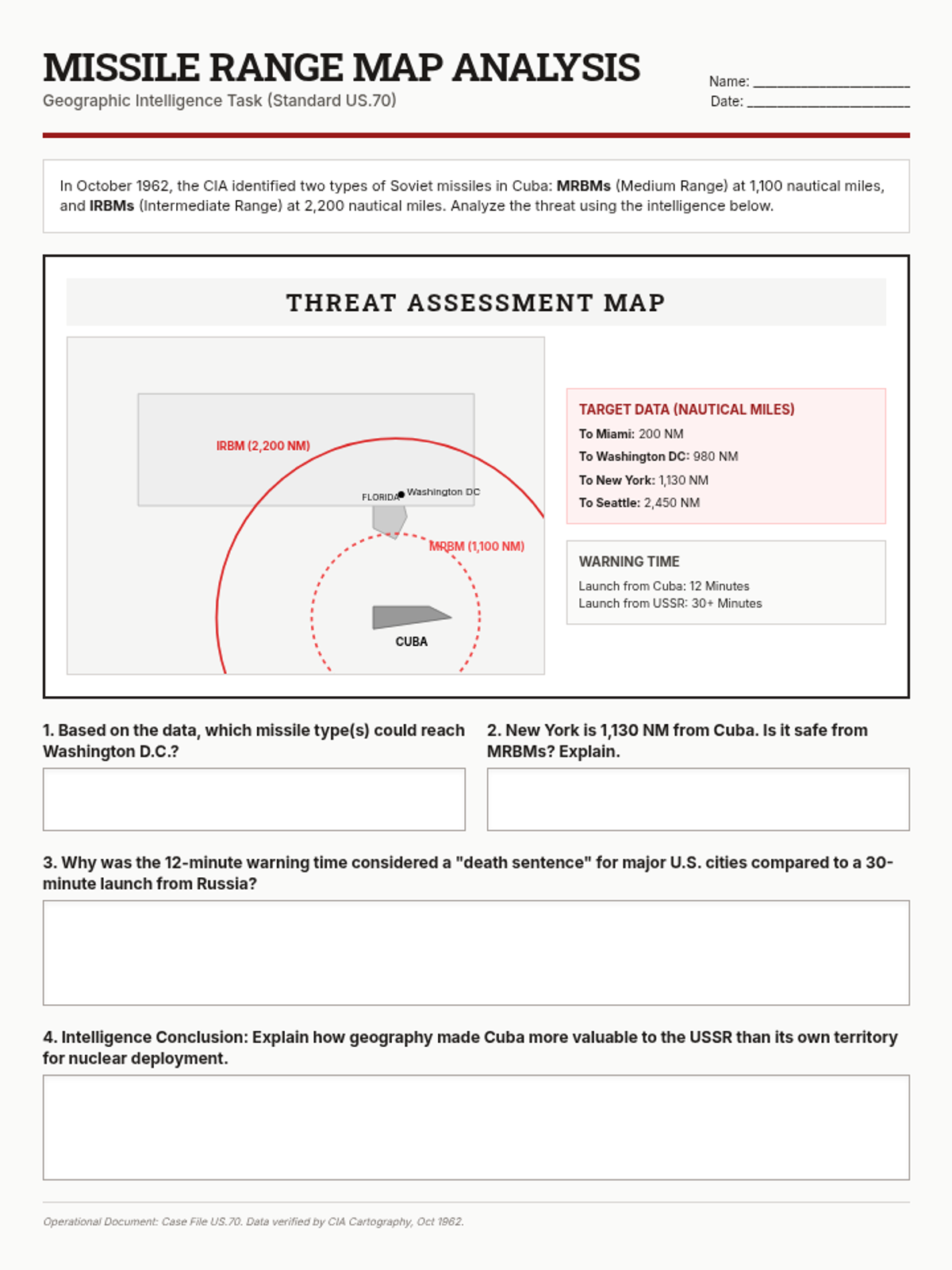
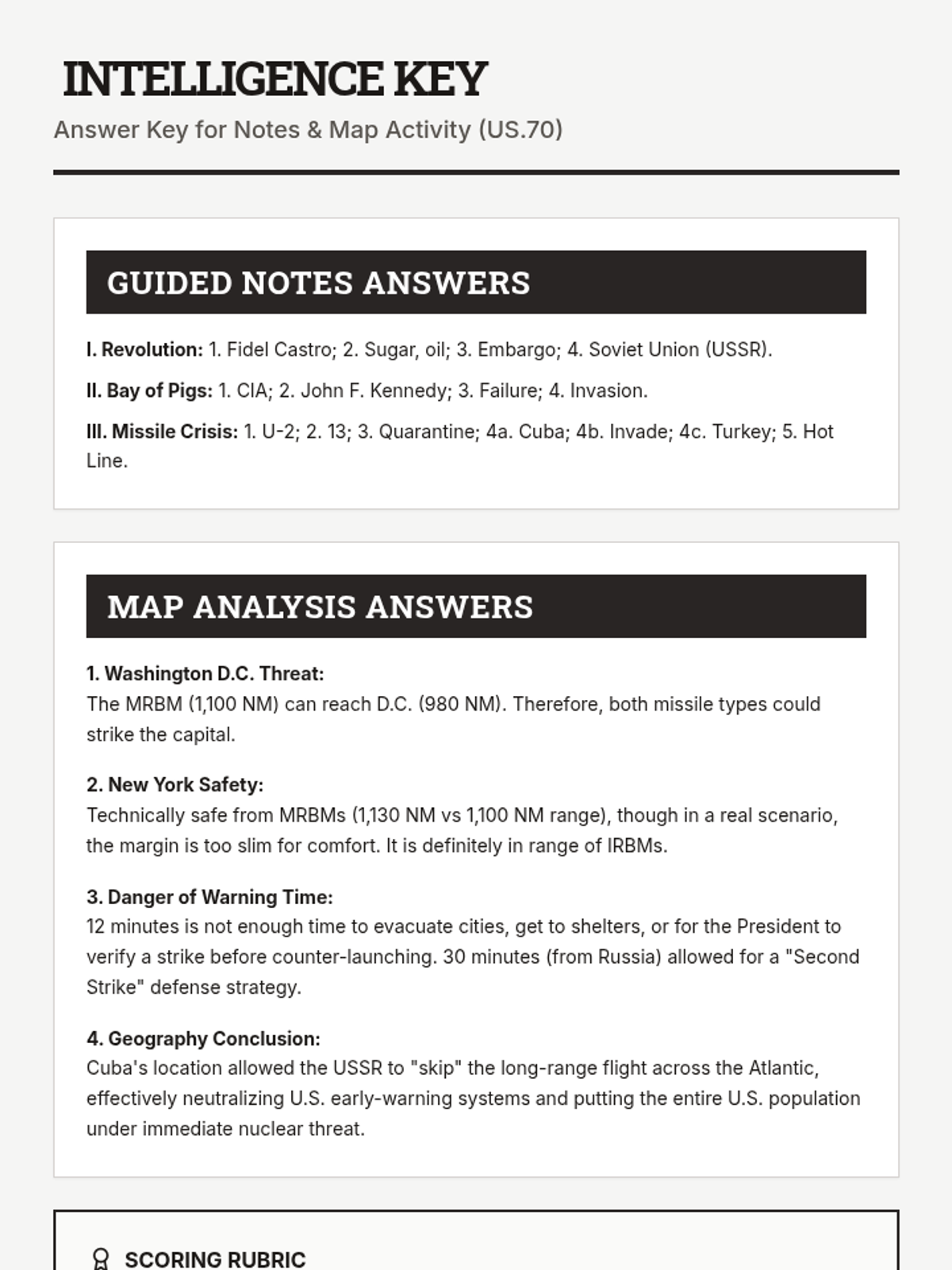
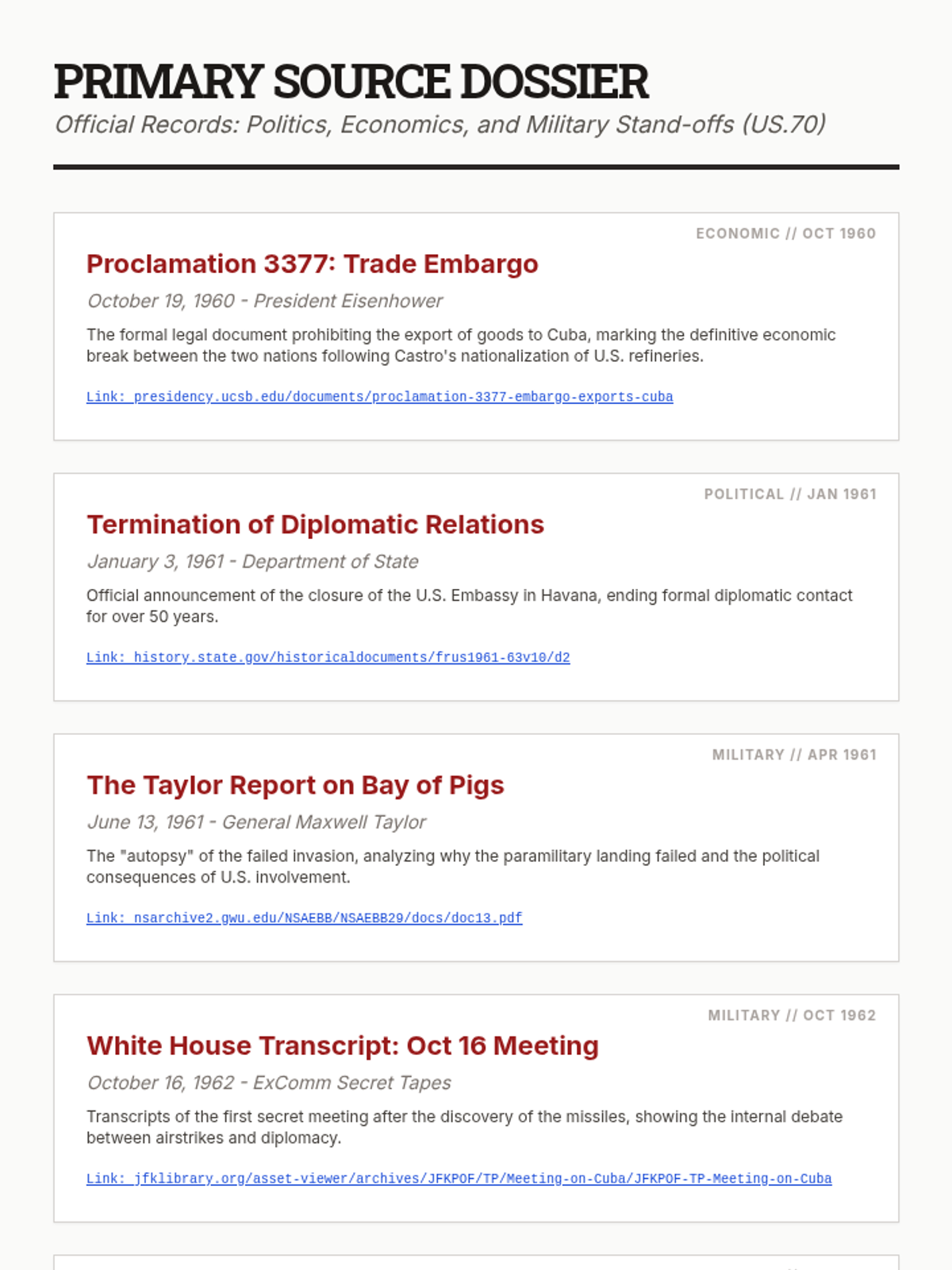
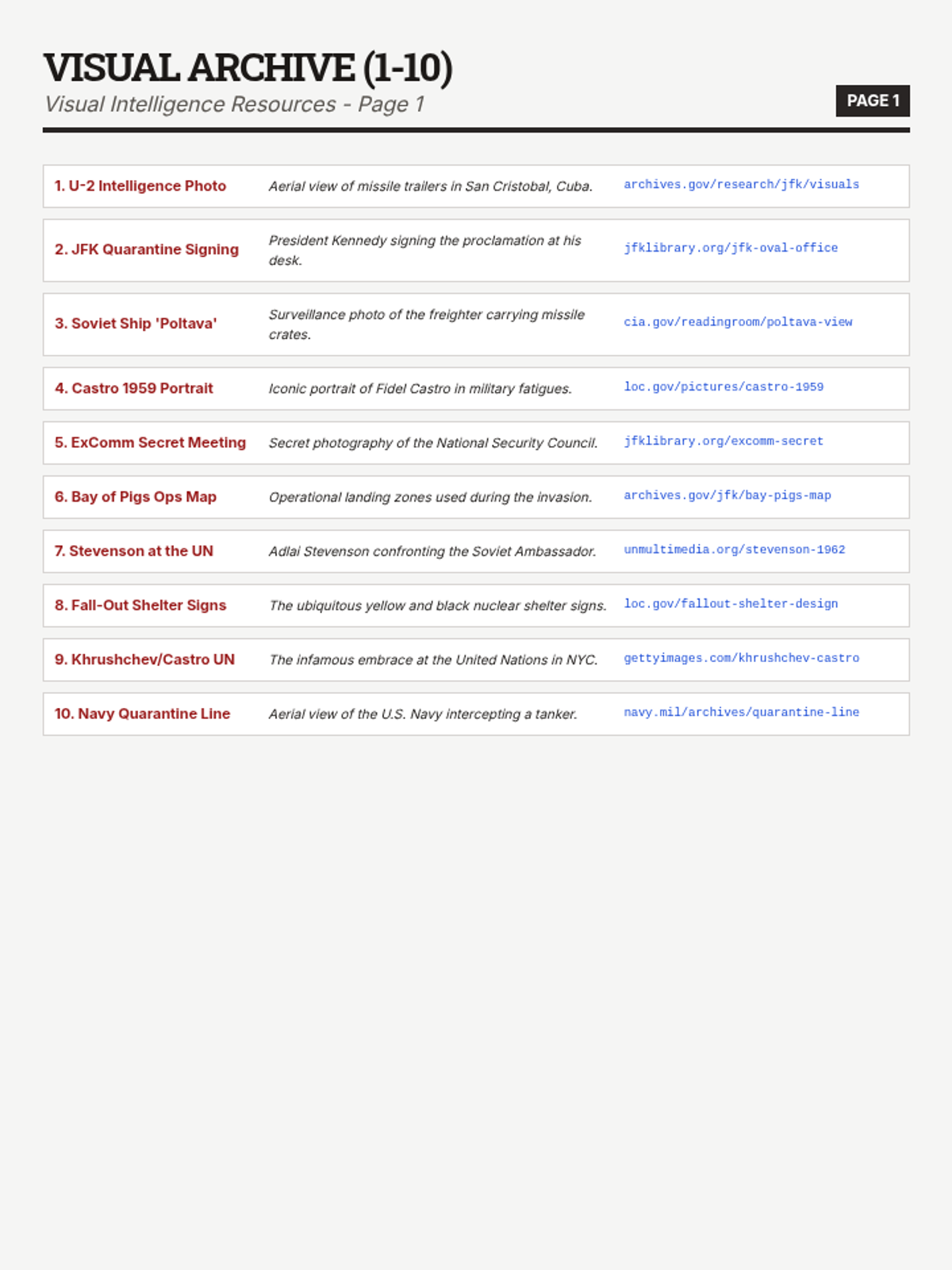
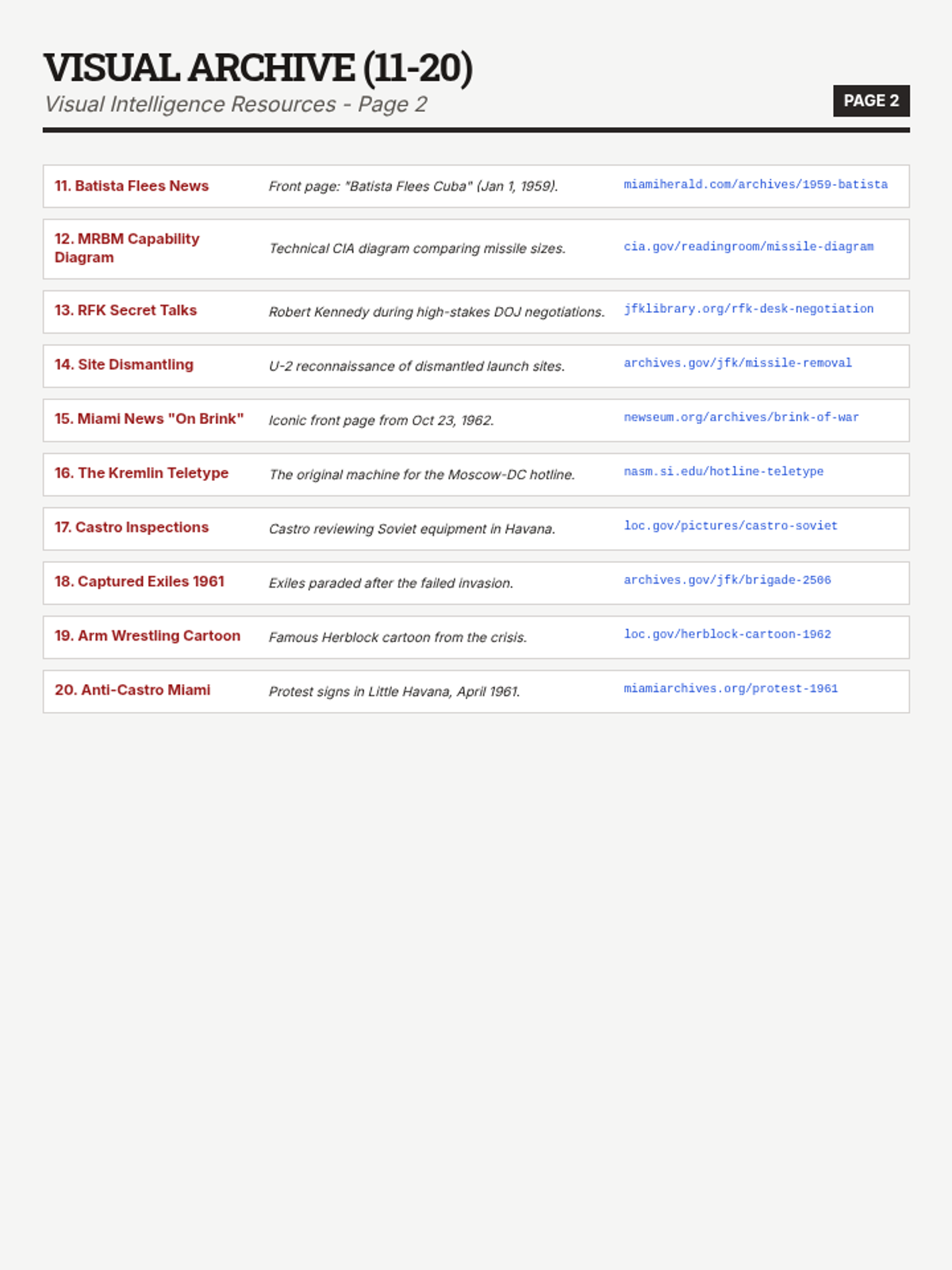
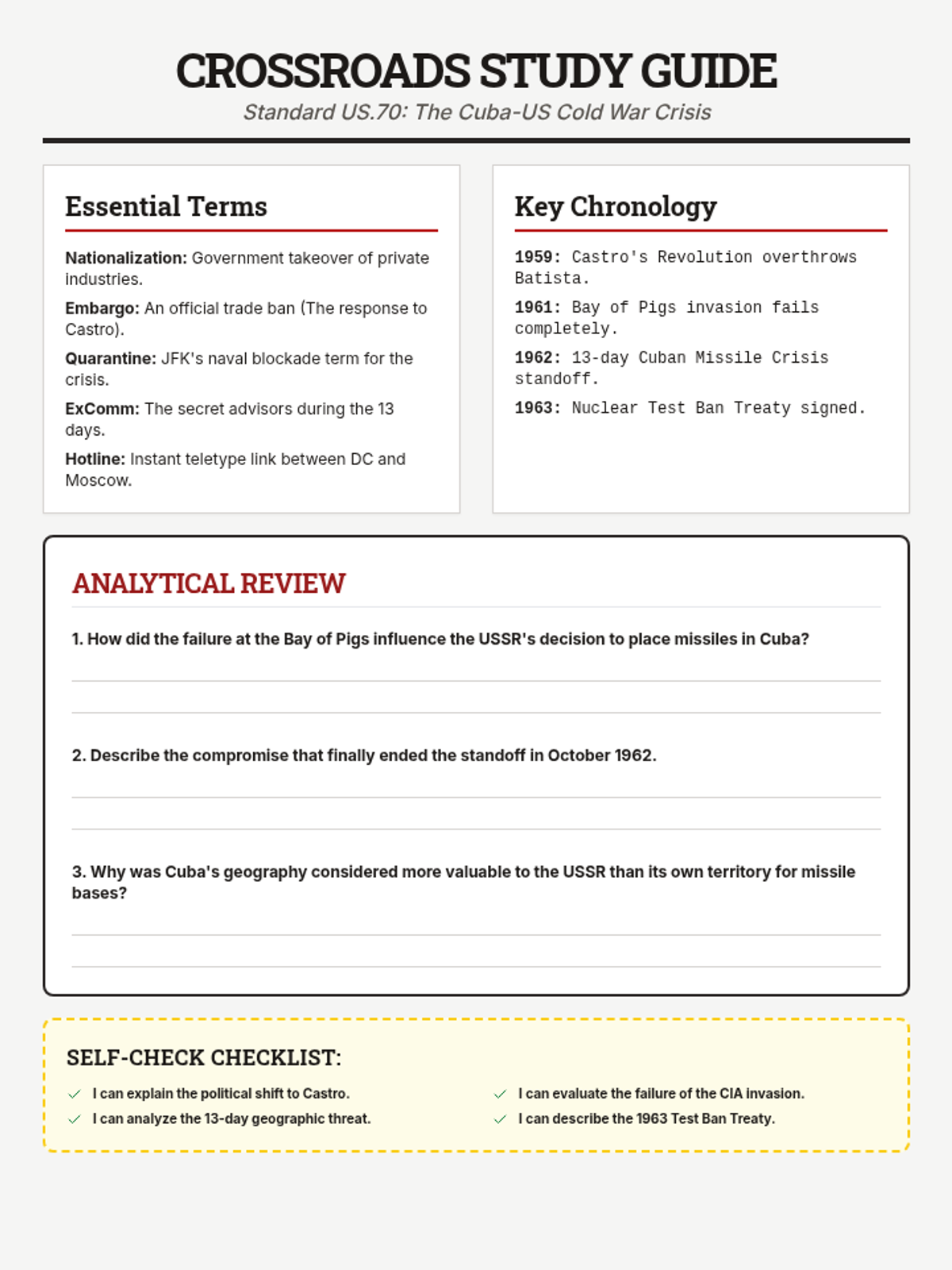
A 30-minute exploration of the high-stakes relationship between Cuba and the U.S. during the Cold War, focusing on the Bay of Pigs and the Cuban Missile Crisis. Students will analyze primary sources and map missile ranges to understand the gravity of the nuclear standoff.
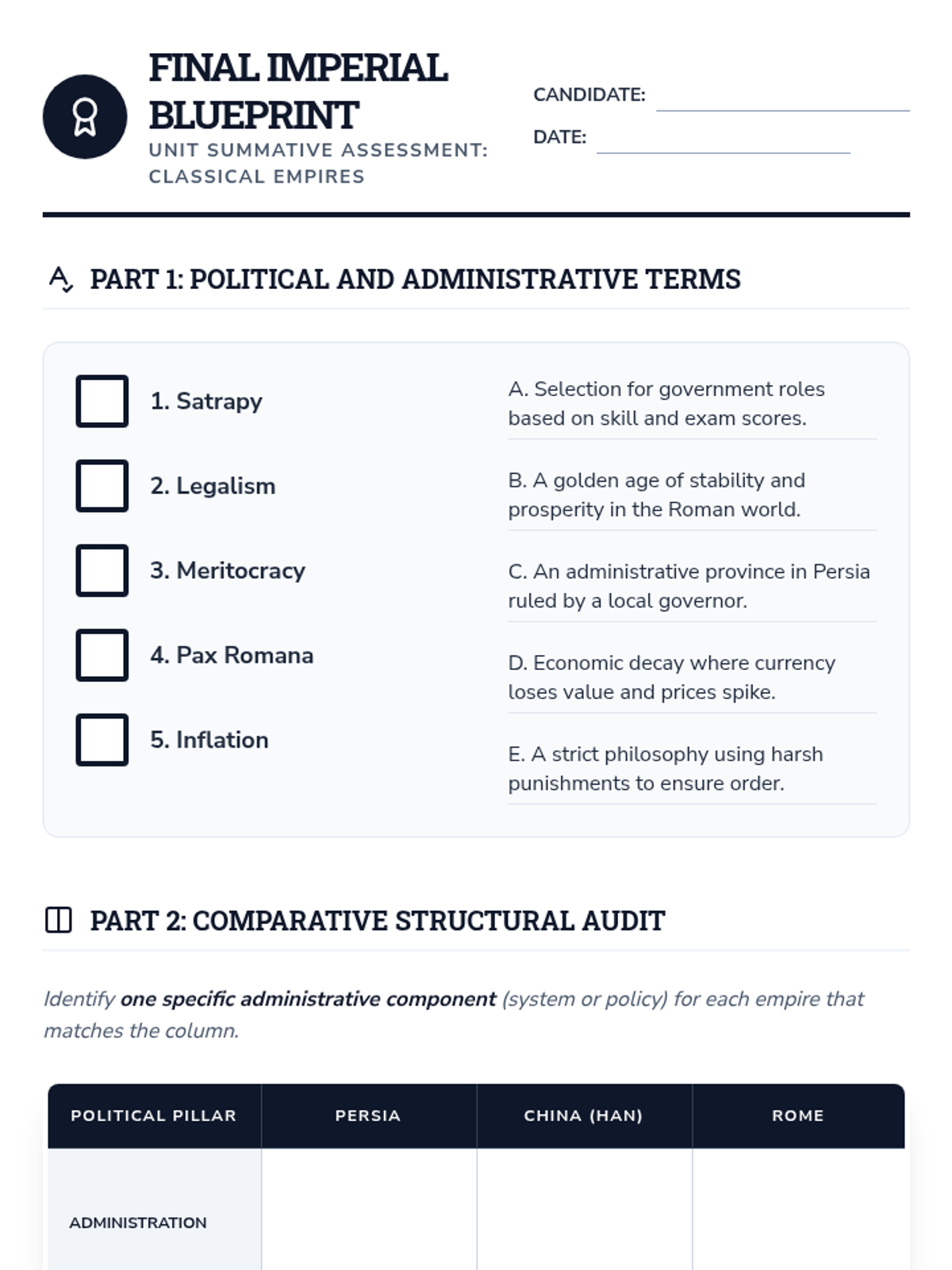
A final comparative analysis of all three empires (Persia, China, Rome), evaluating the universal patterns of imperial rise and fall.
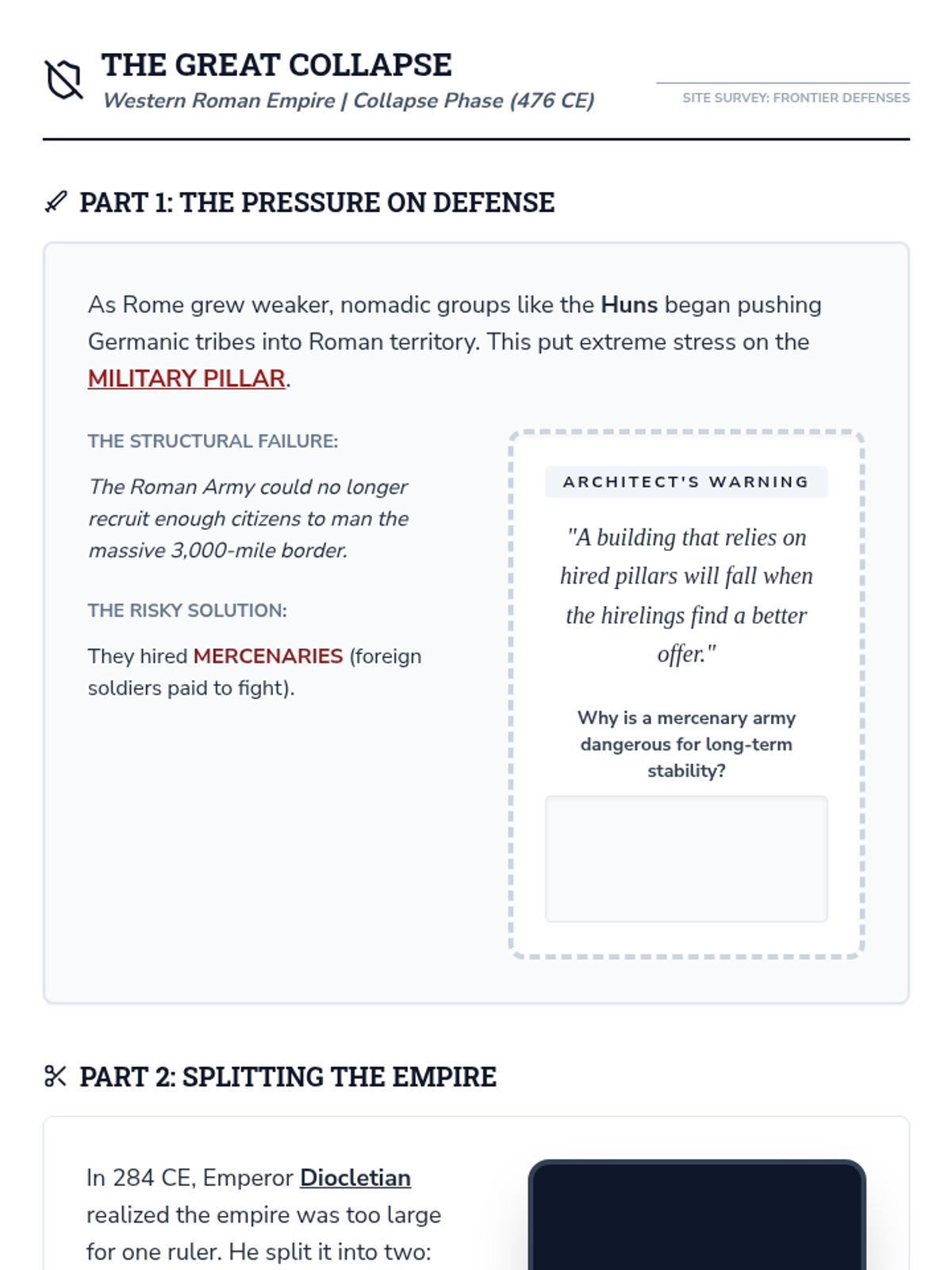
Examine the external pressures and final stages of the Roman Empire's collapse in the West.
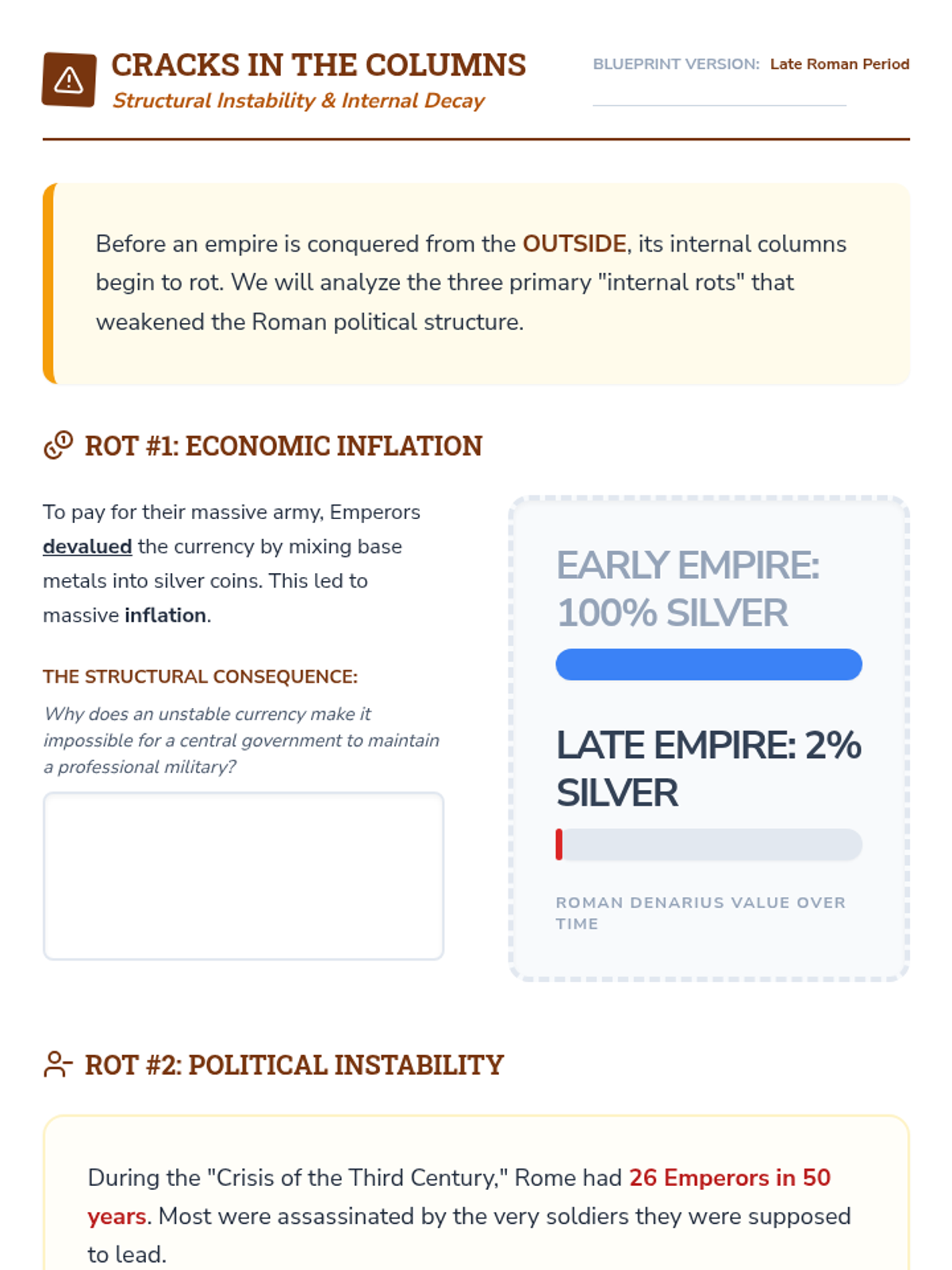
Identify the internal factors—economic inflation, political corruption, and social inequality—that weakened the Roman Empire.
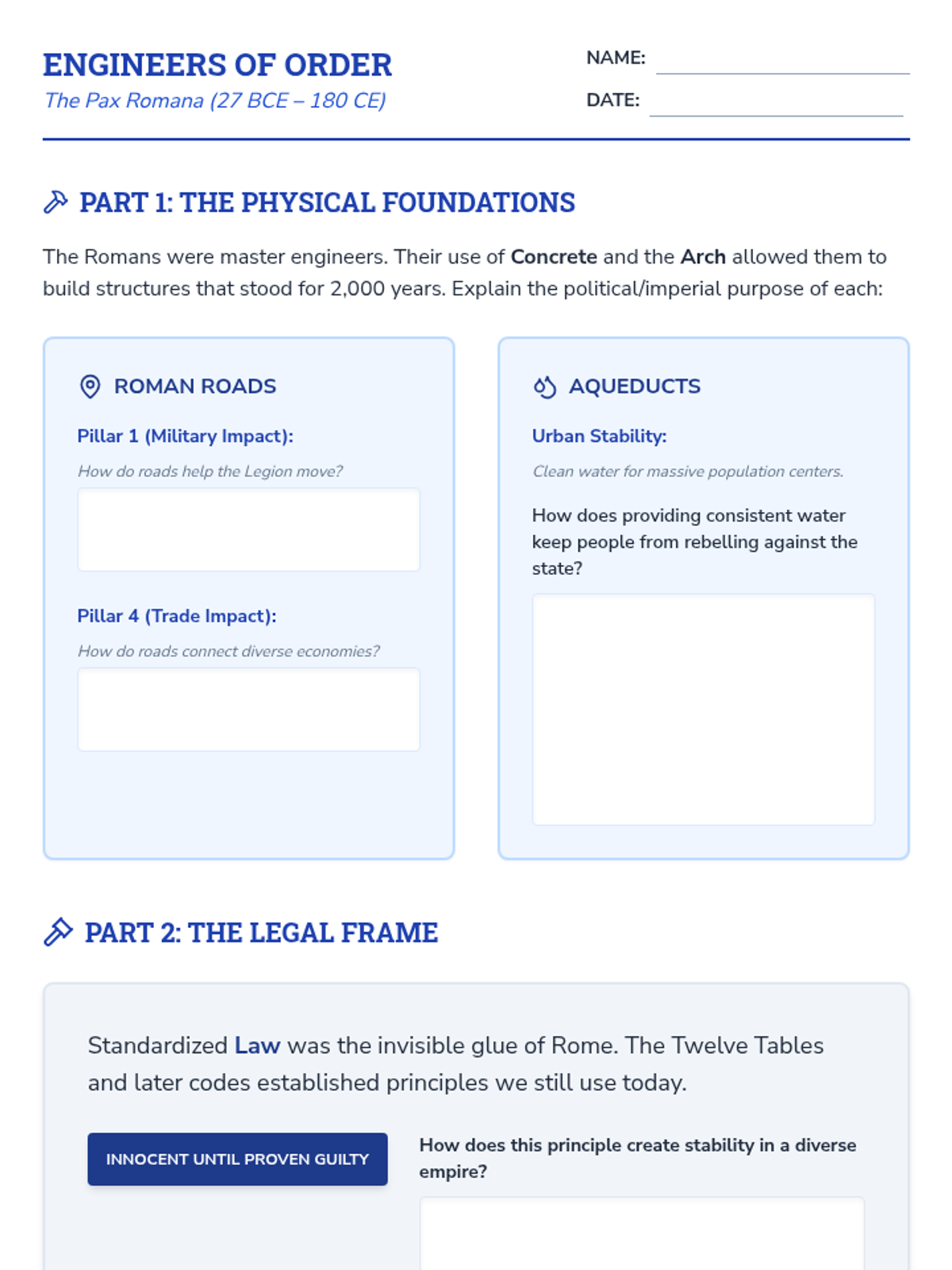
Investigate the peak of Roman power, characterized by engineering marvels, codified law, and the Pax Romana.
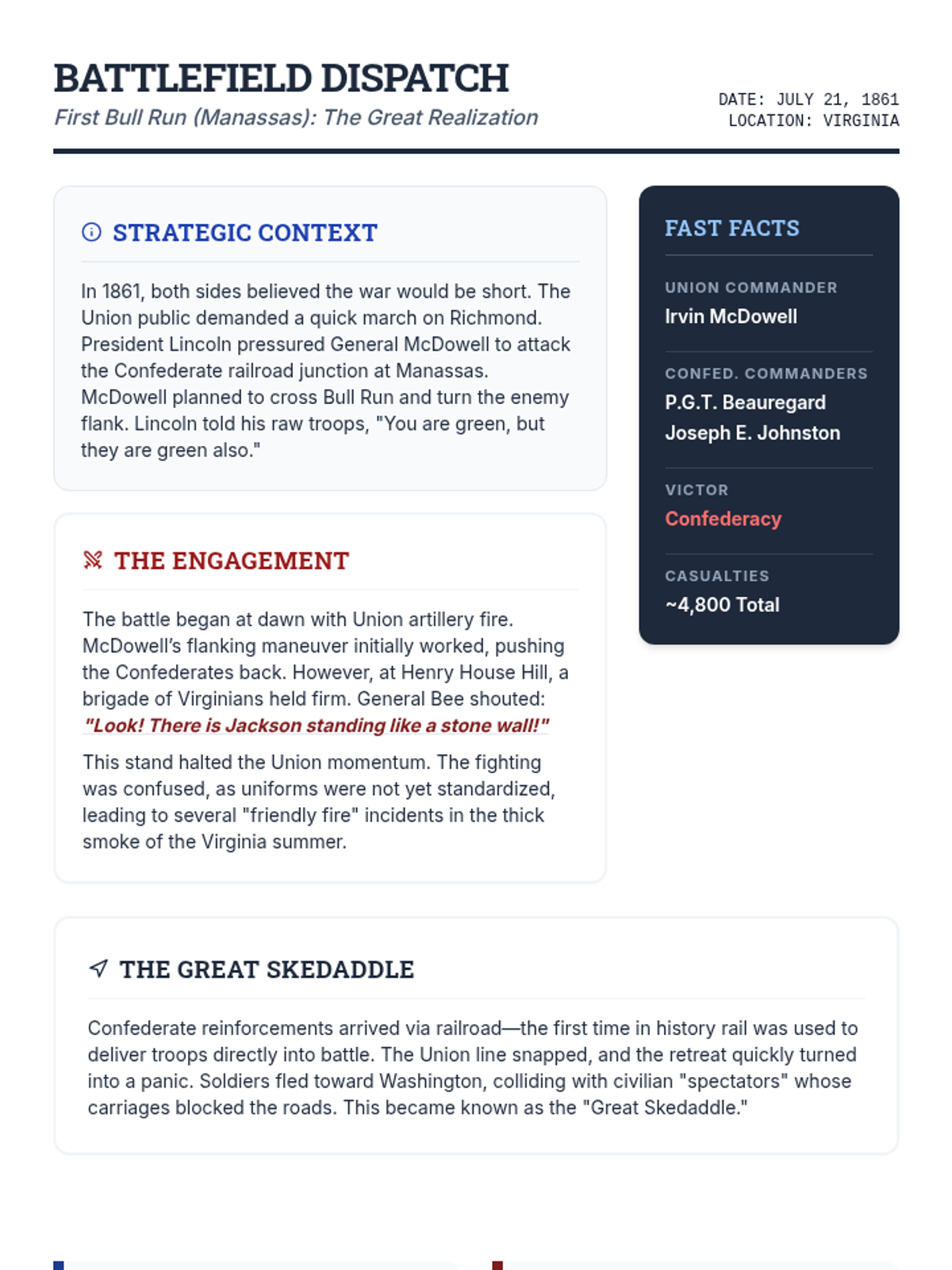
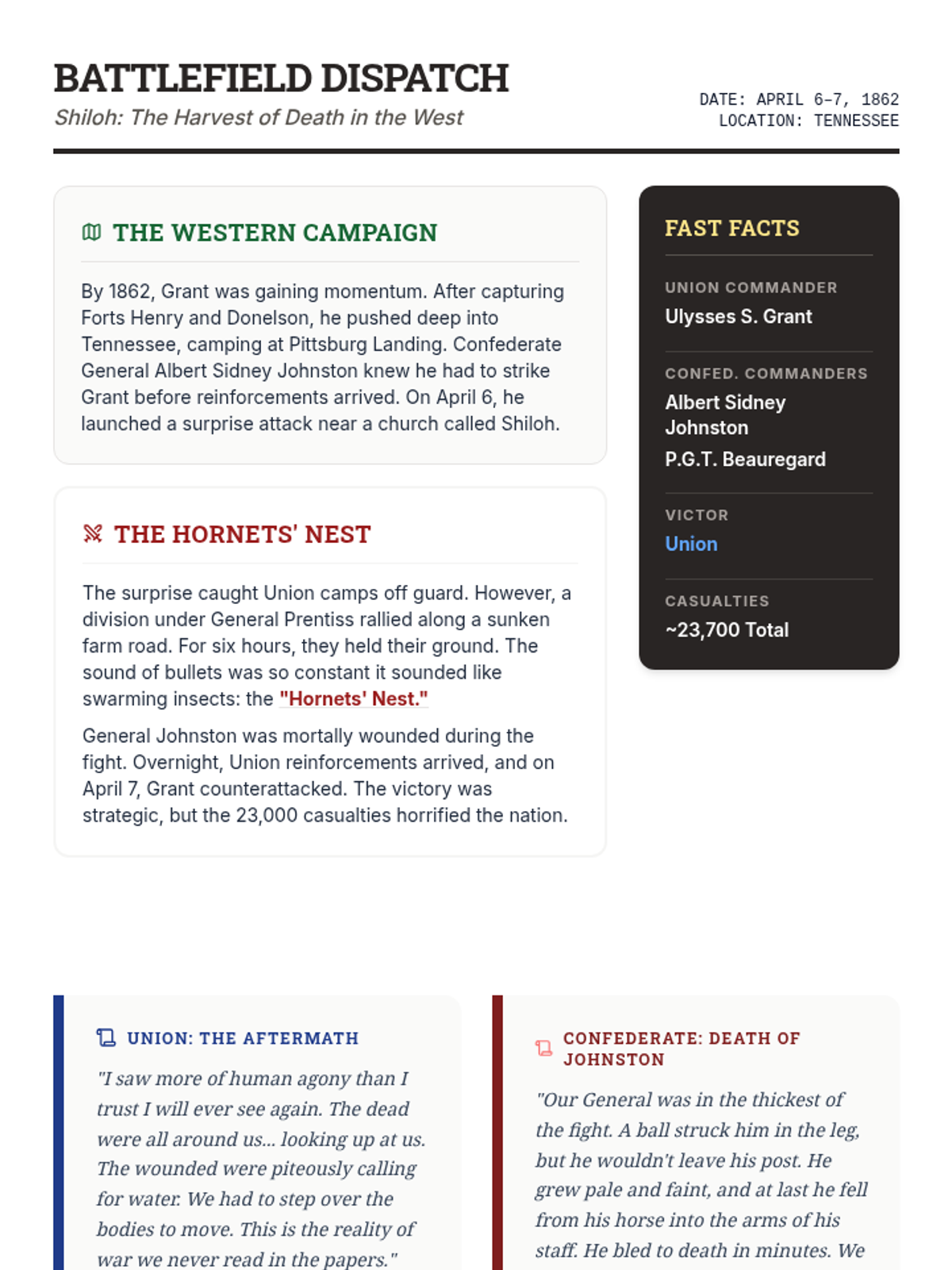
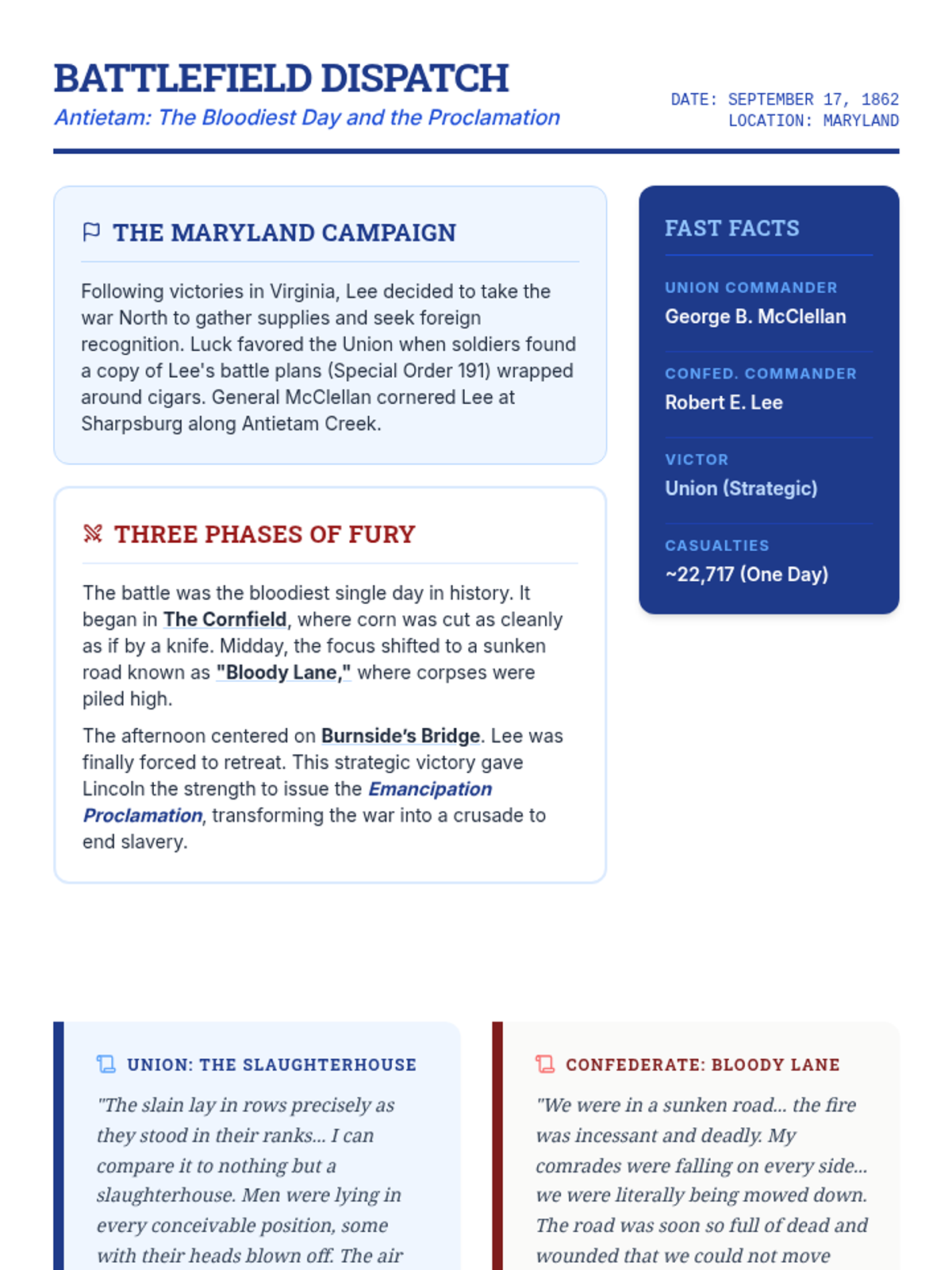
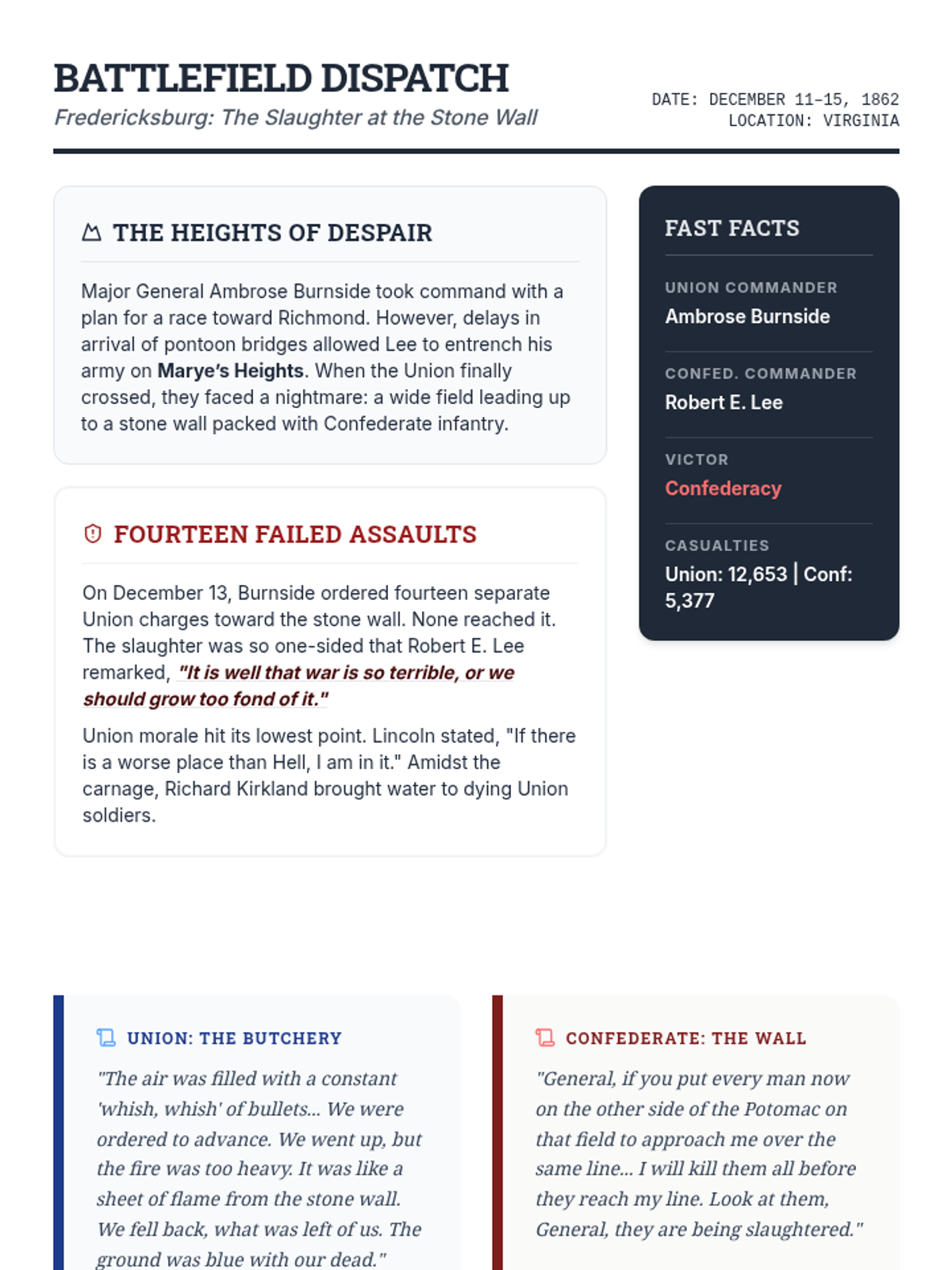
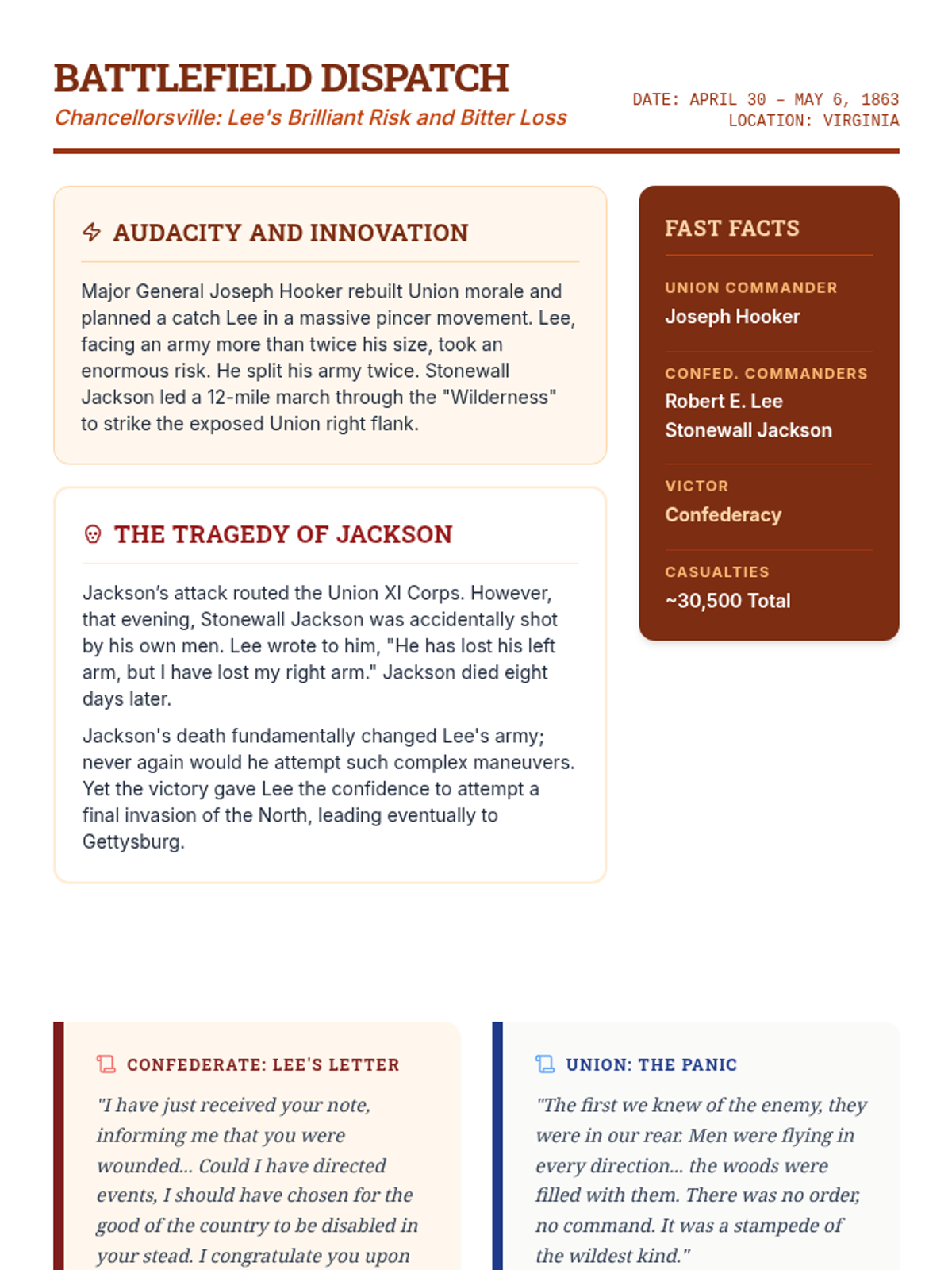
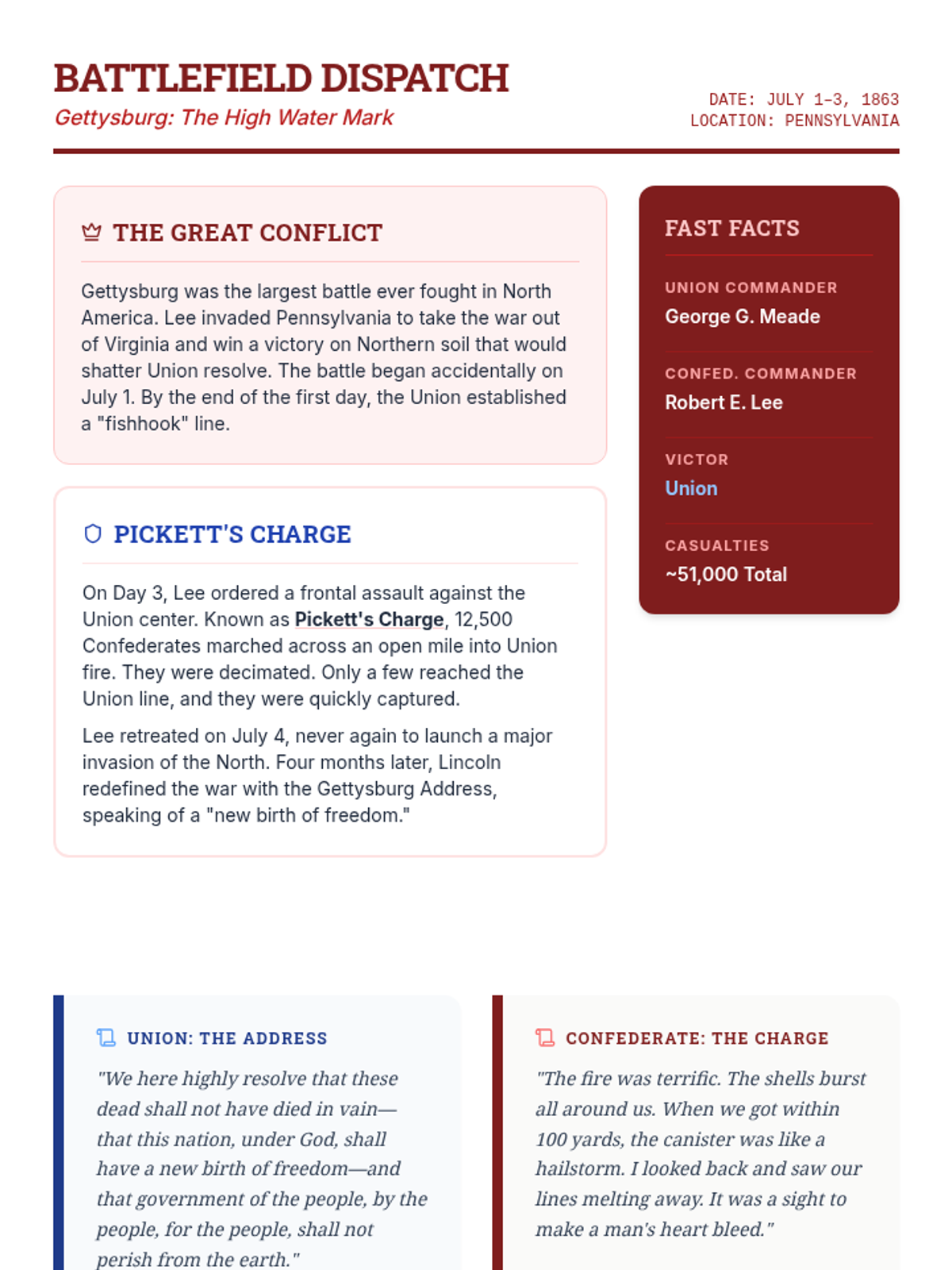
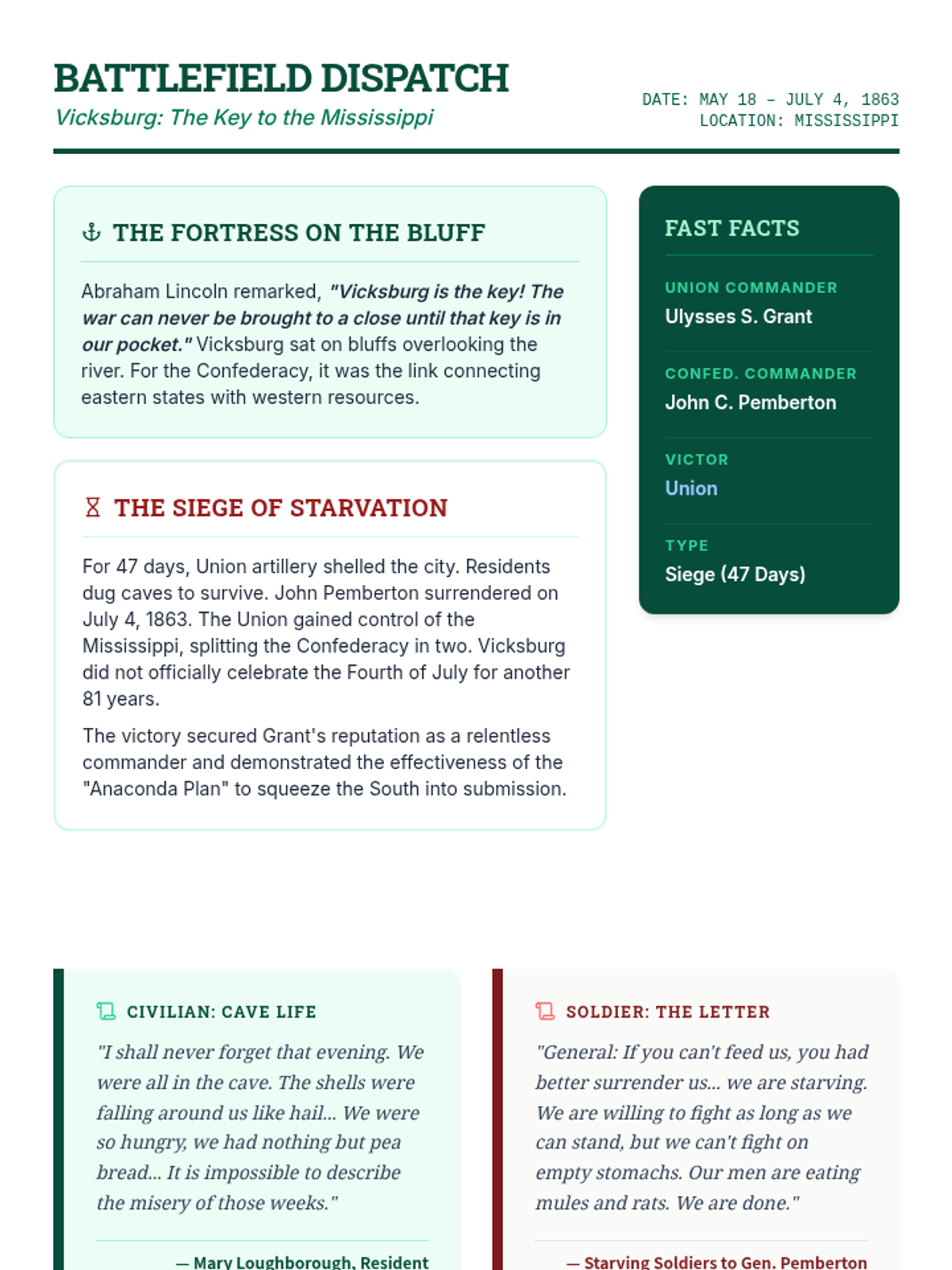
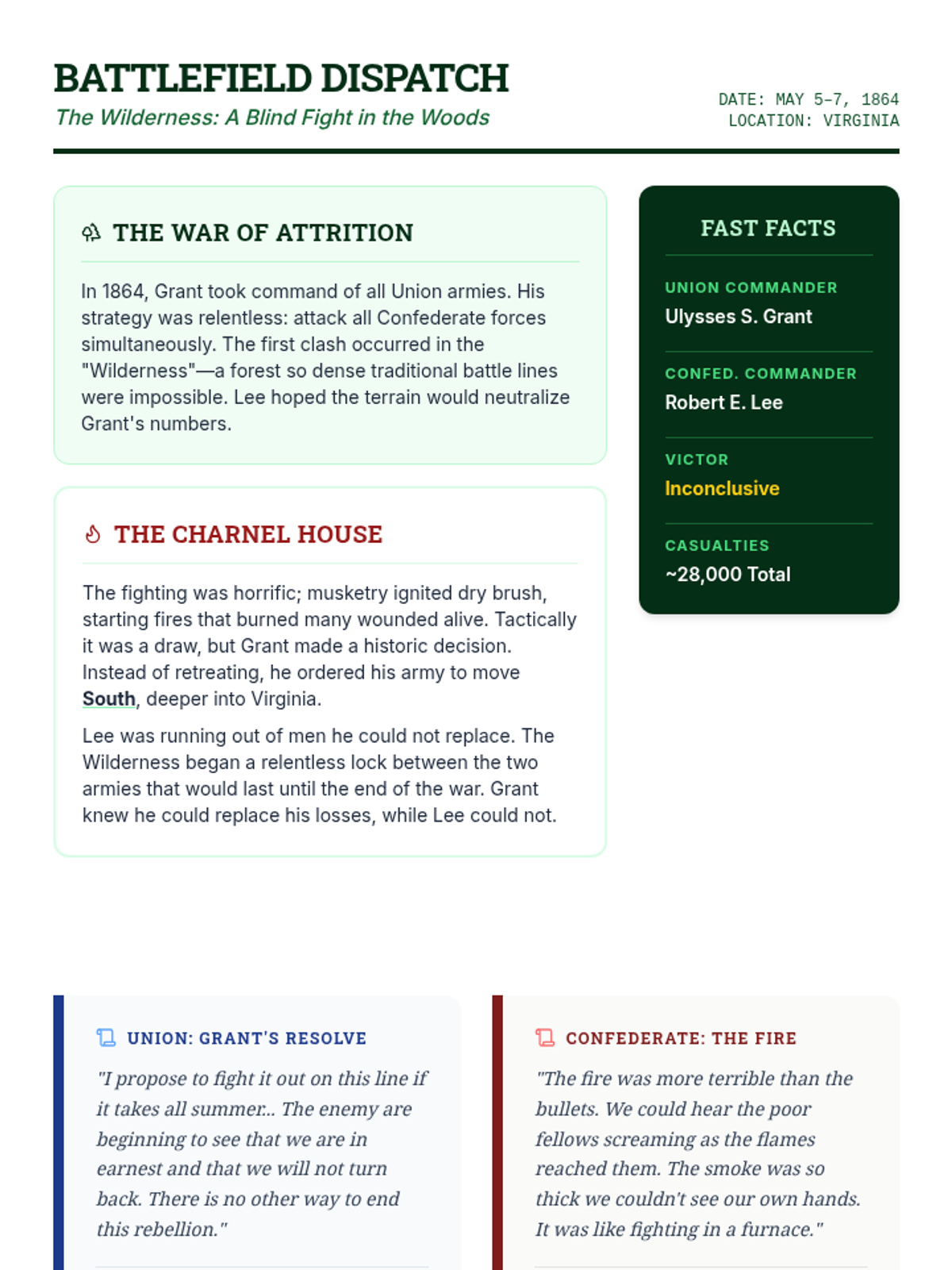
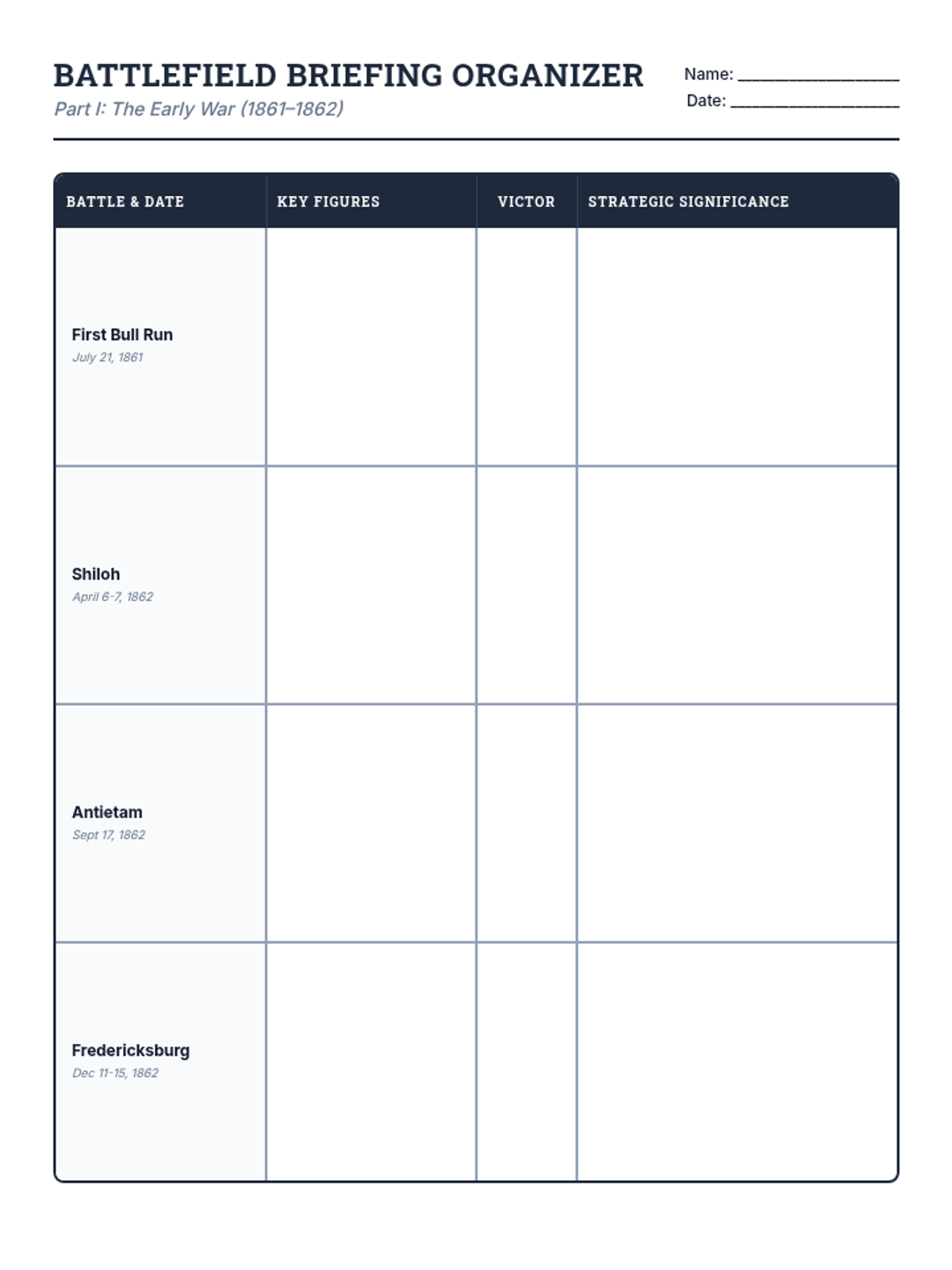
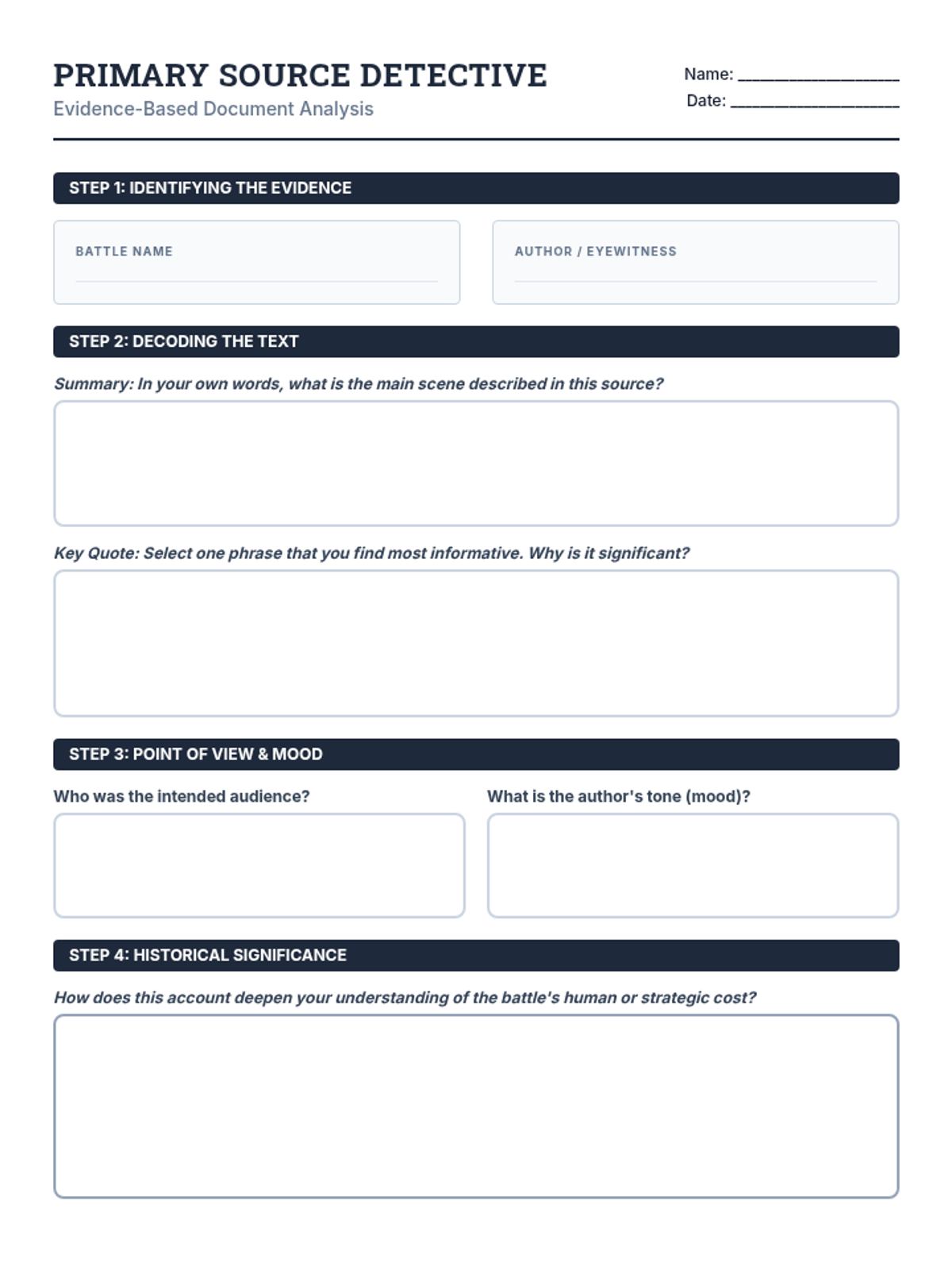
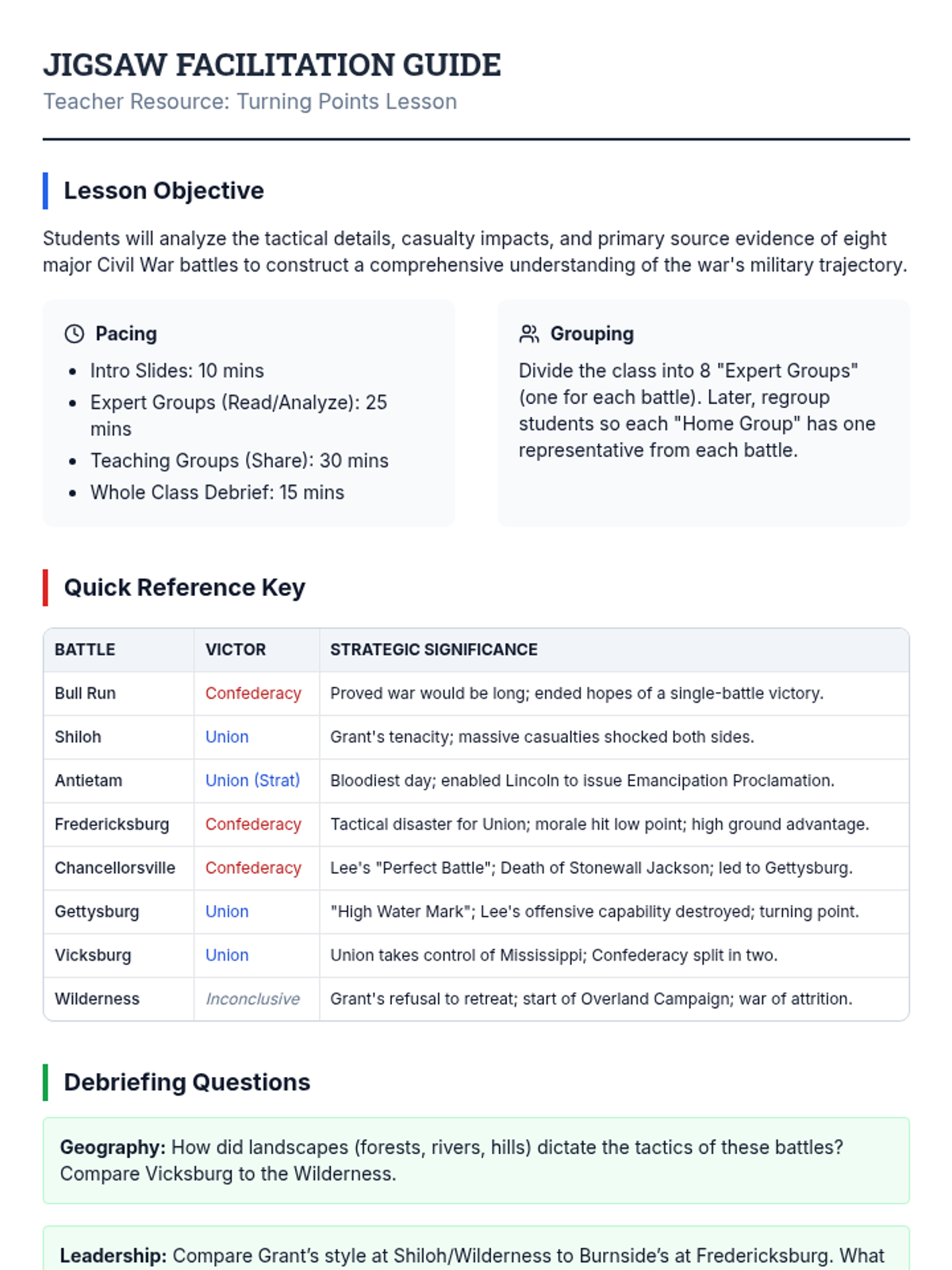
Students will examine eight major battles of the American Civil War using a jigsaw strategy to build a collective understanding of military strategy, casualty impacts, and the soldier's experience.
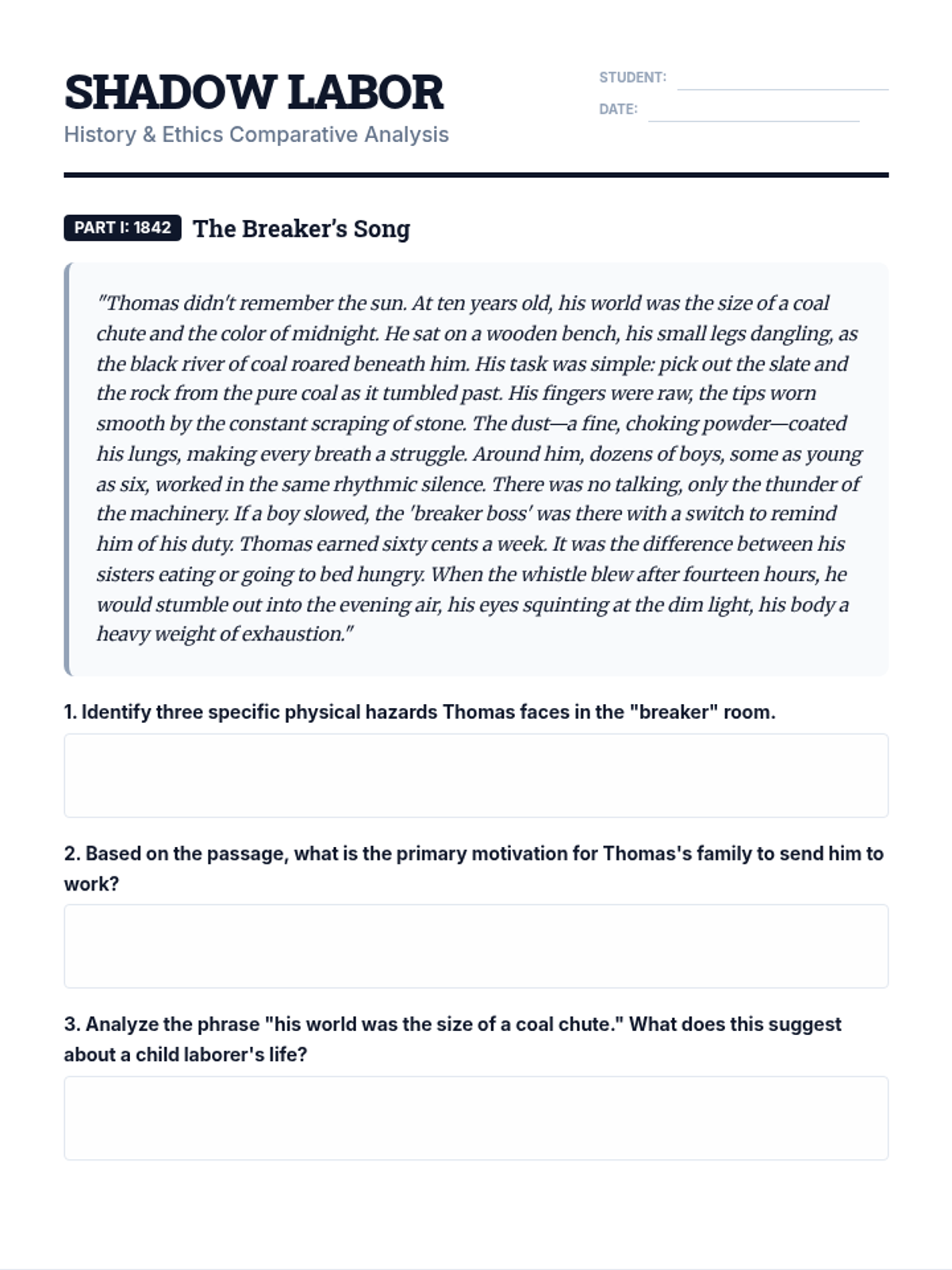
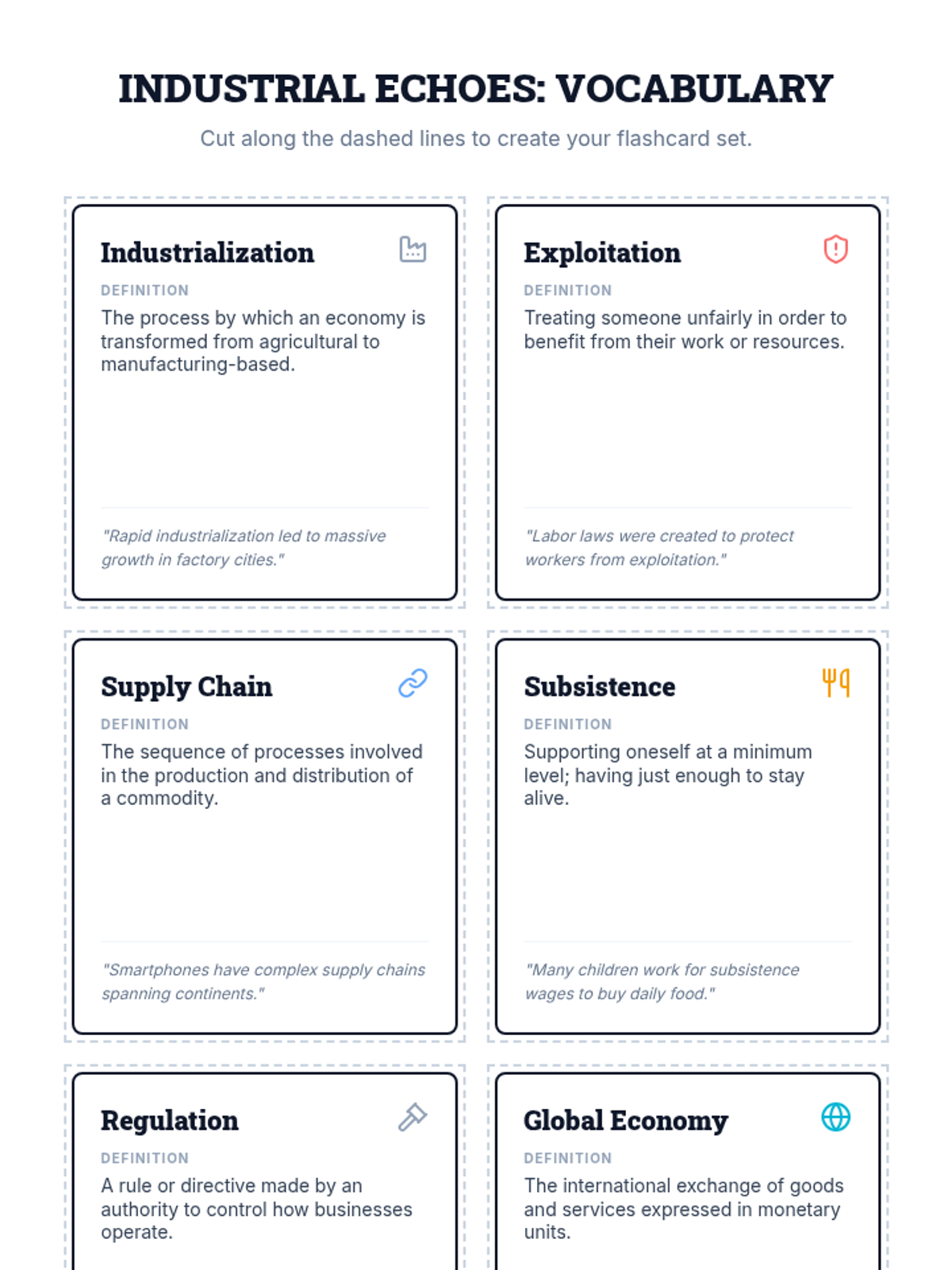
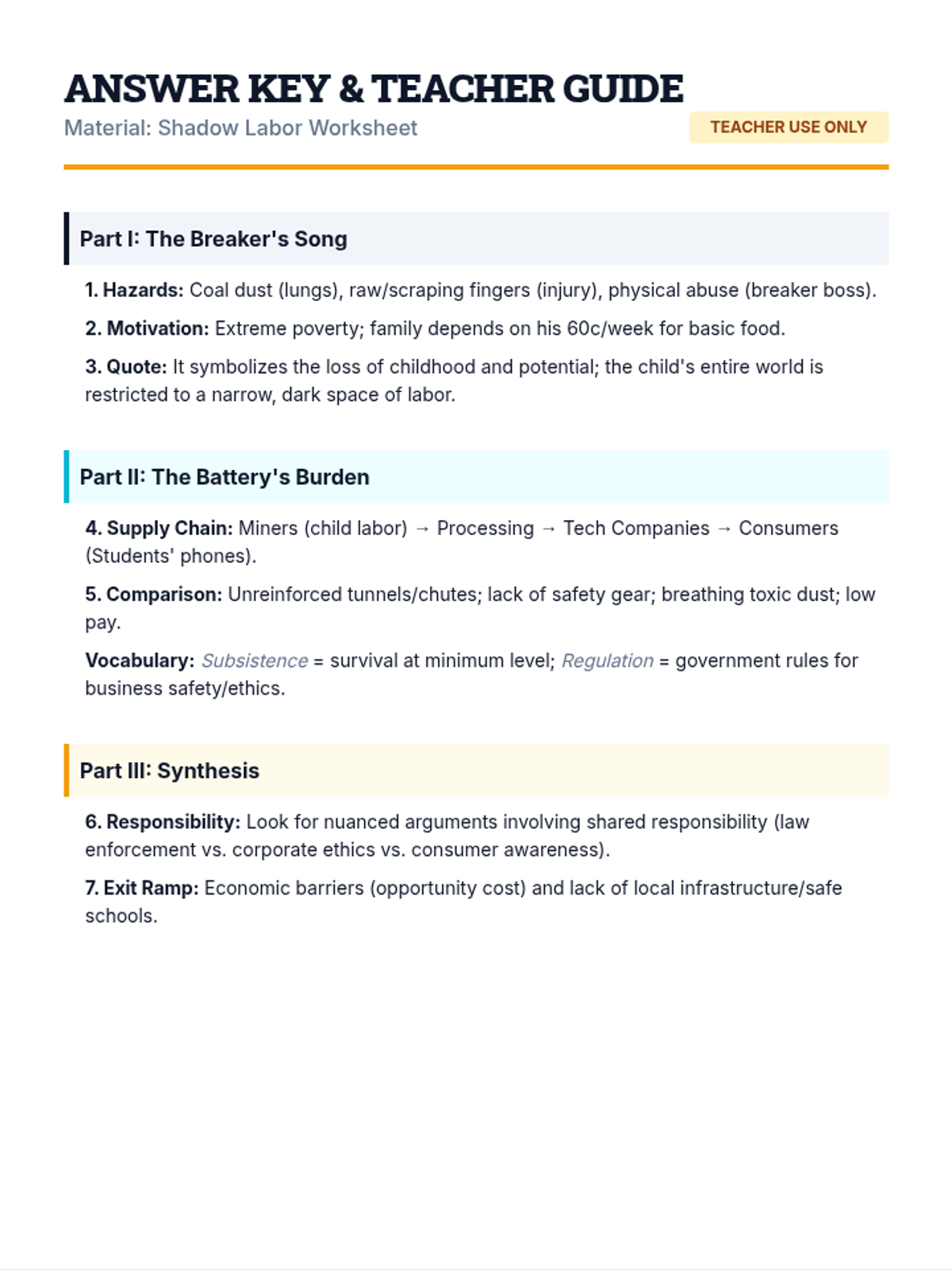
Students compare historical accounts of child labor from the Industrial Revolution with modern-day case studies in global industries. The lesson focuses on identifying patterns of exploitation and the evolution of labor laws.
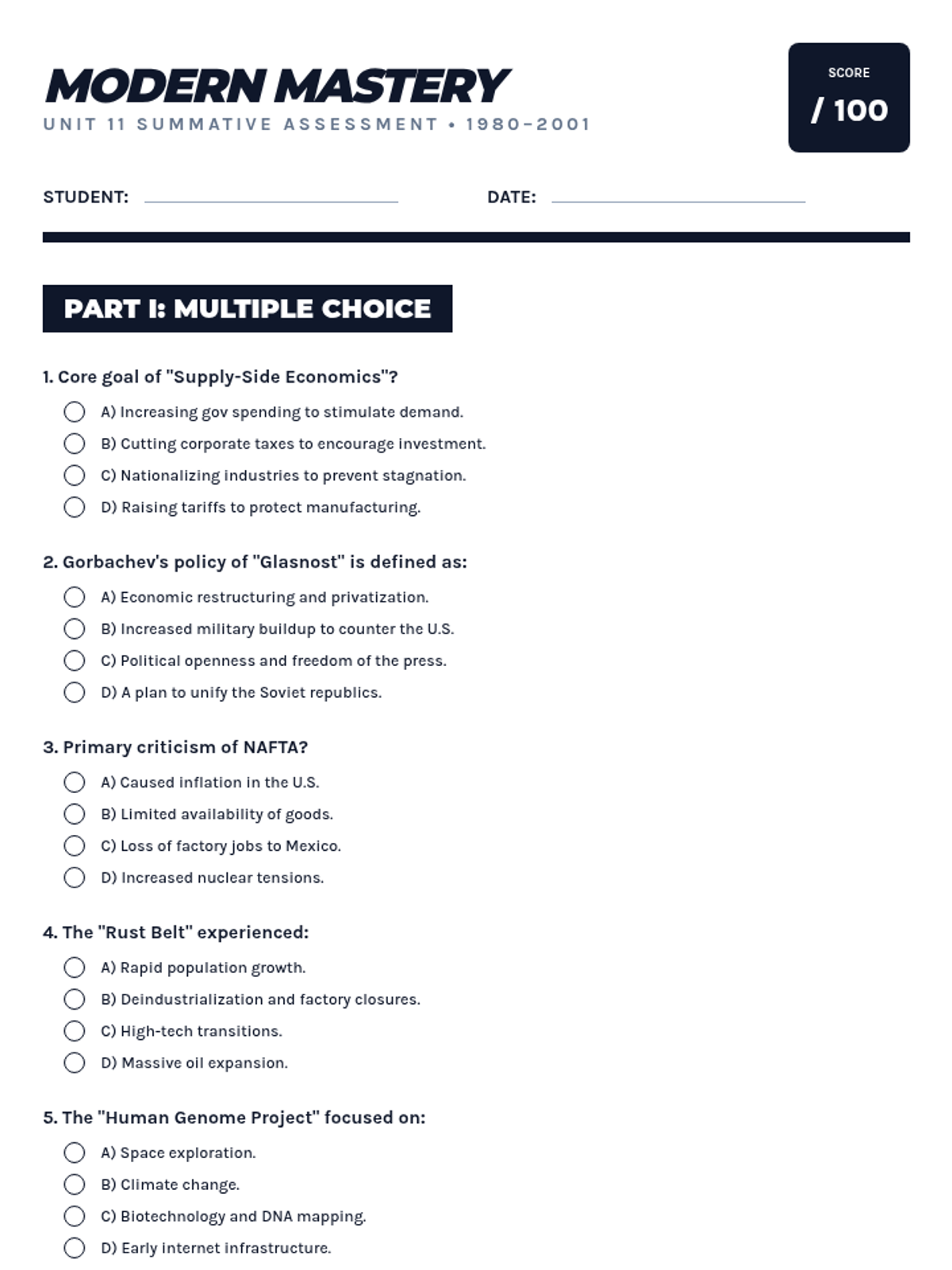
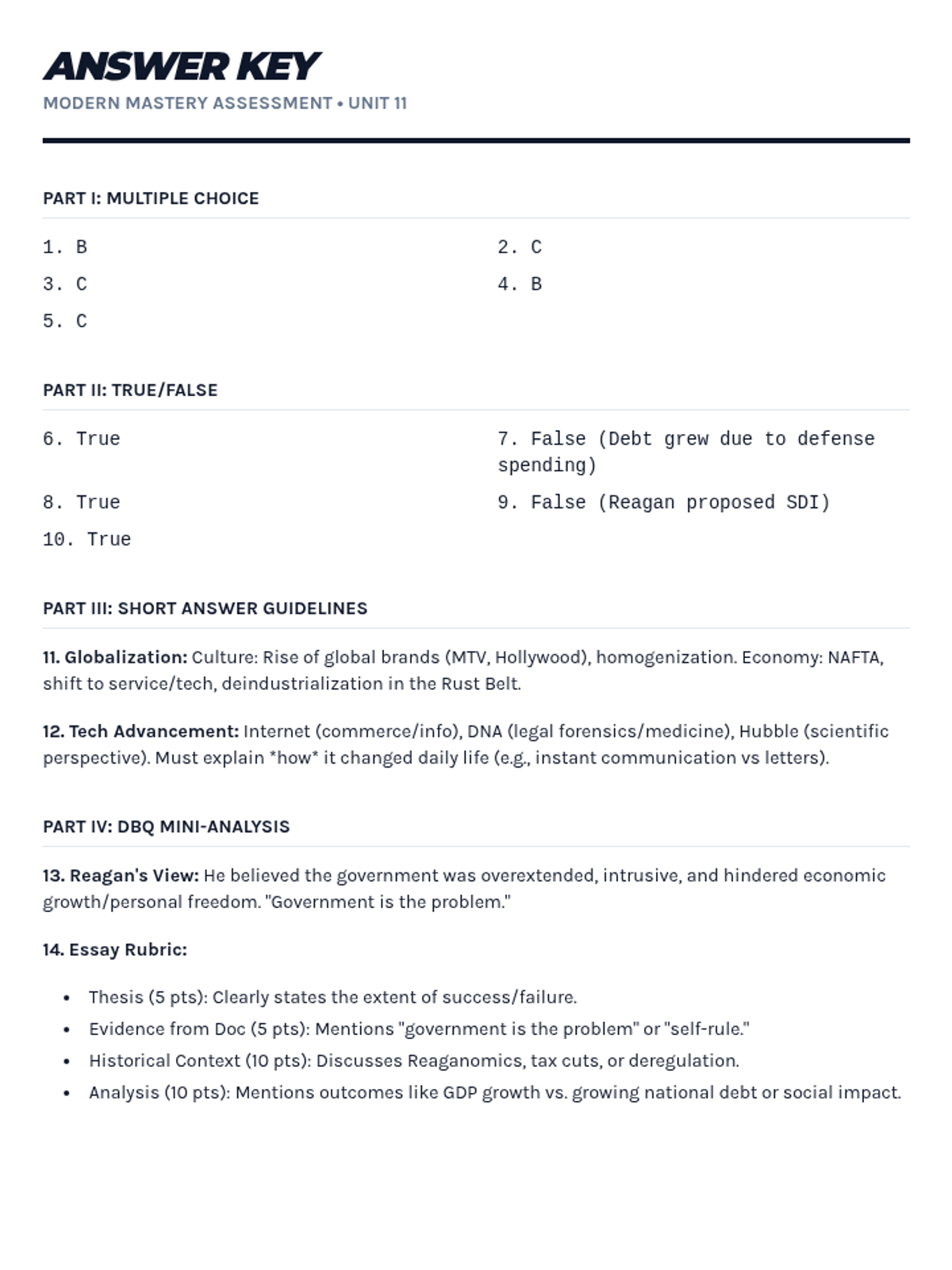
A summative assessment evaluating student mastery of the 1980s and 90s through multiple-choice, true/false, short answer, and DBQ questions.
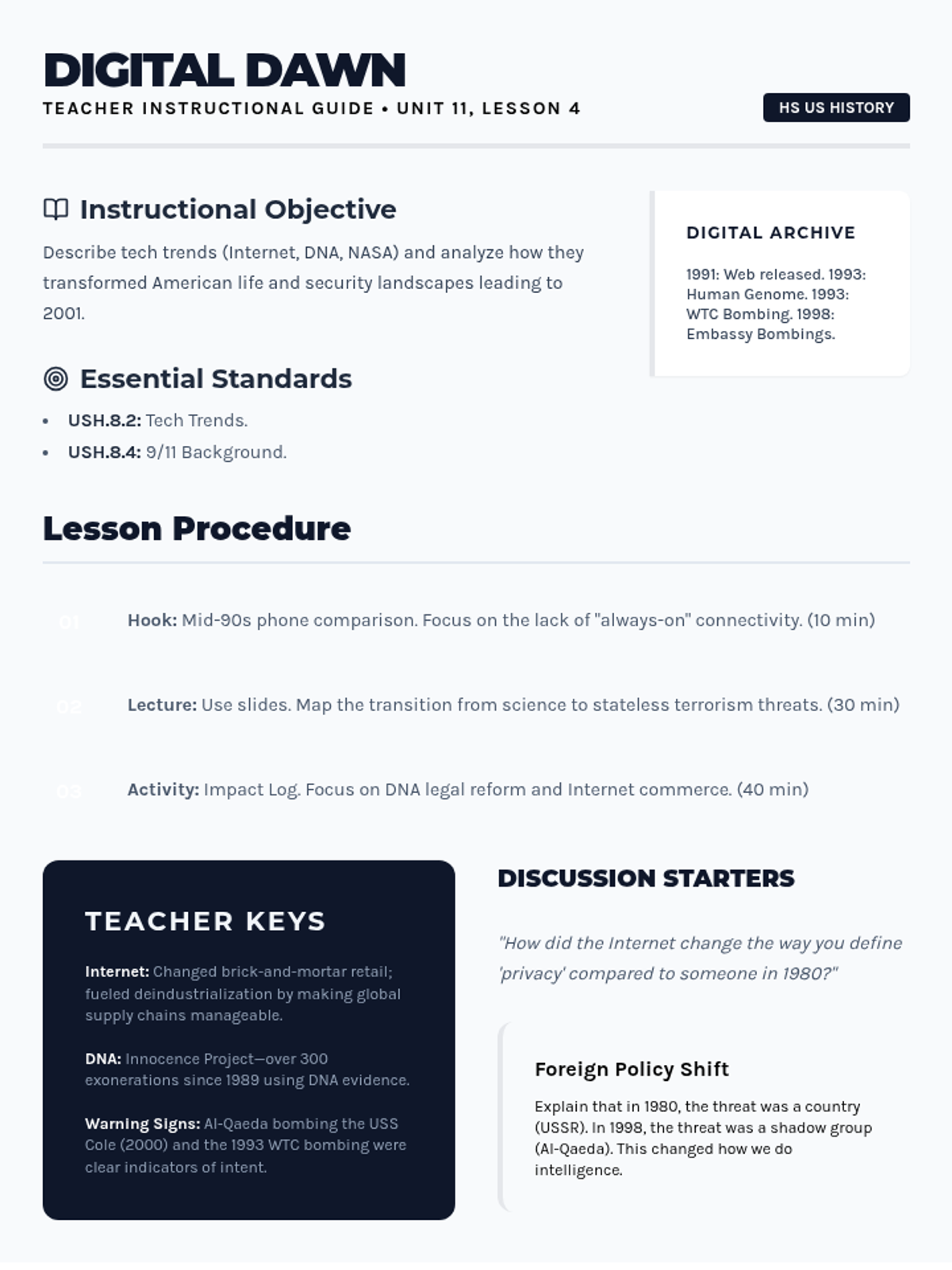
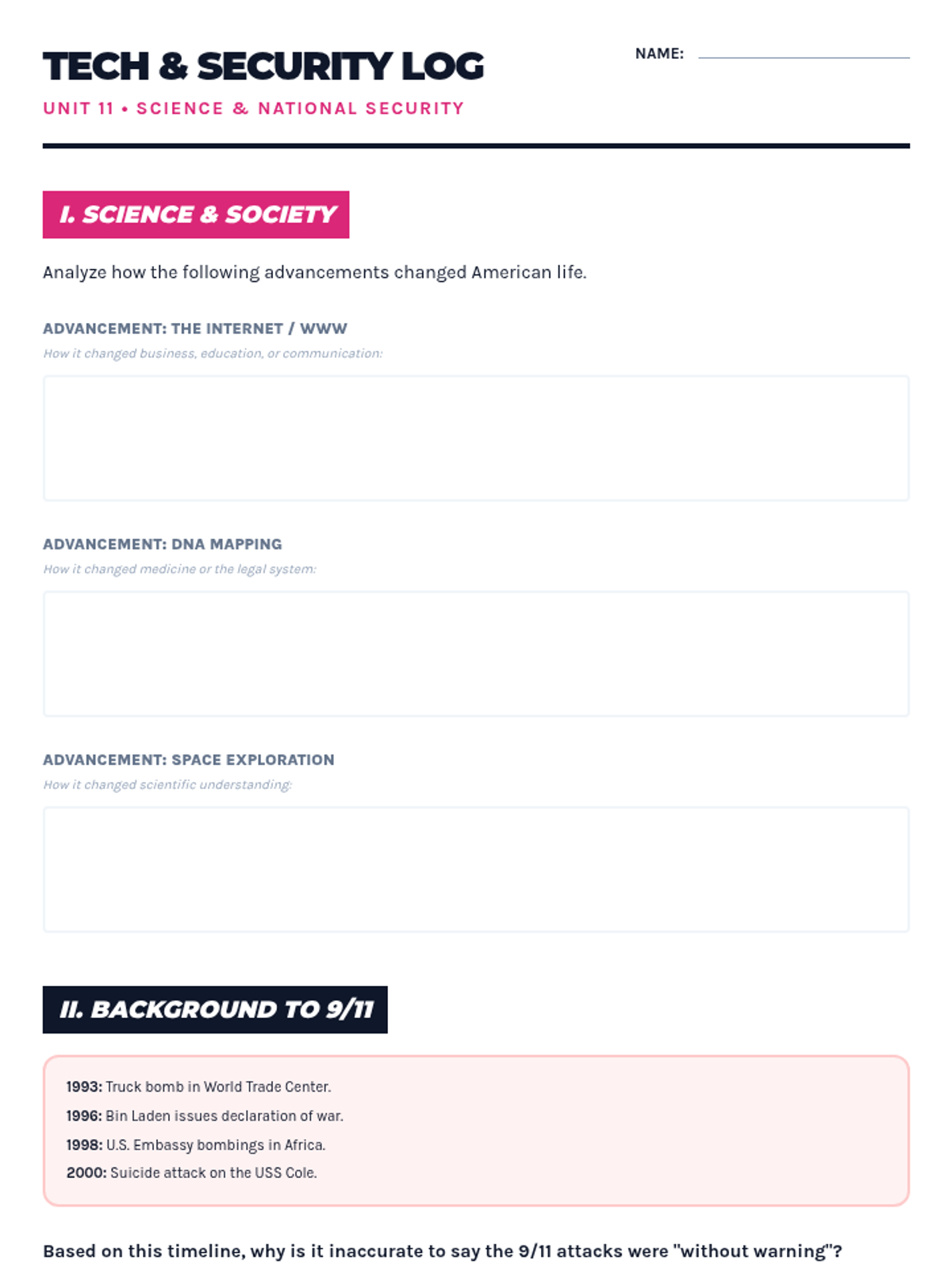
Investigate the technological revolution of the Internet, advancements in DNA, and the shifting landscape of global security leading toward 2001.
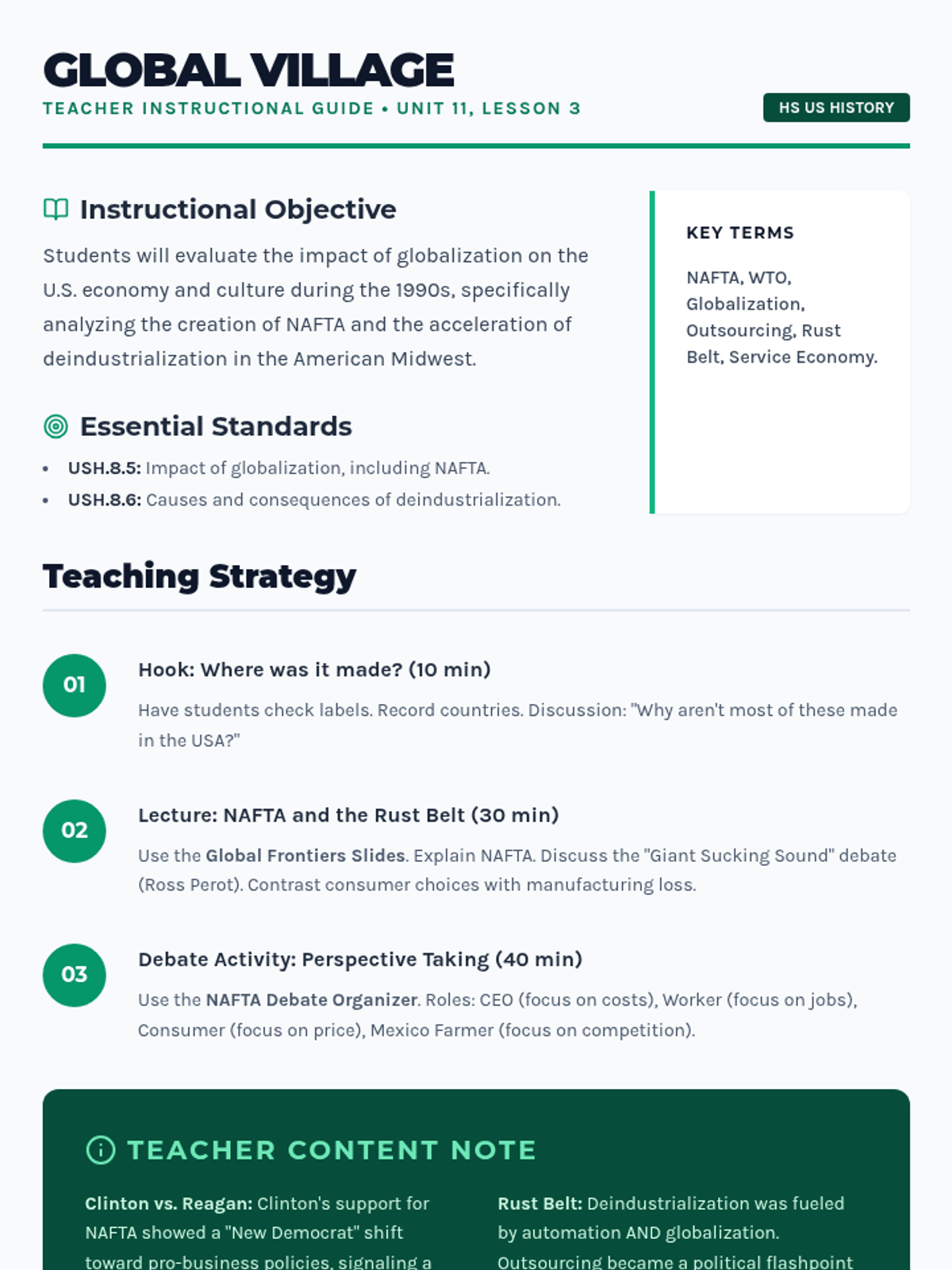
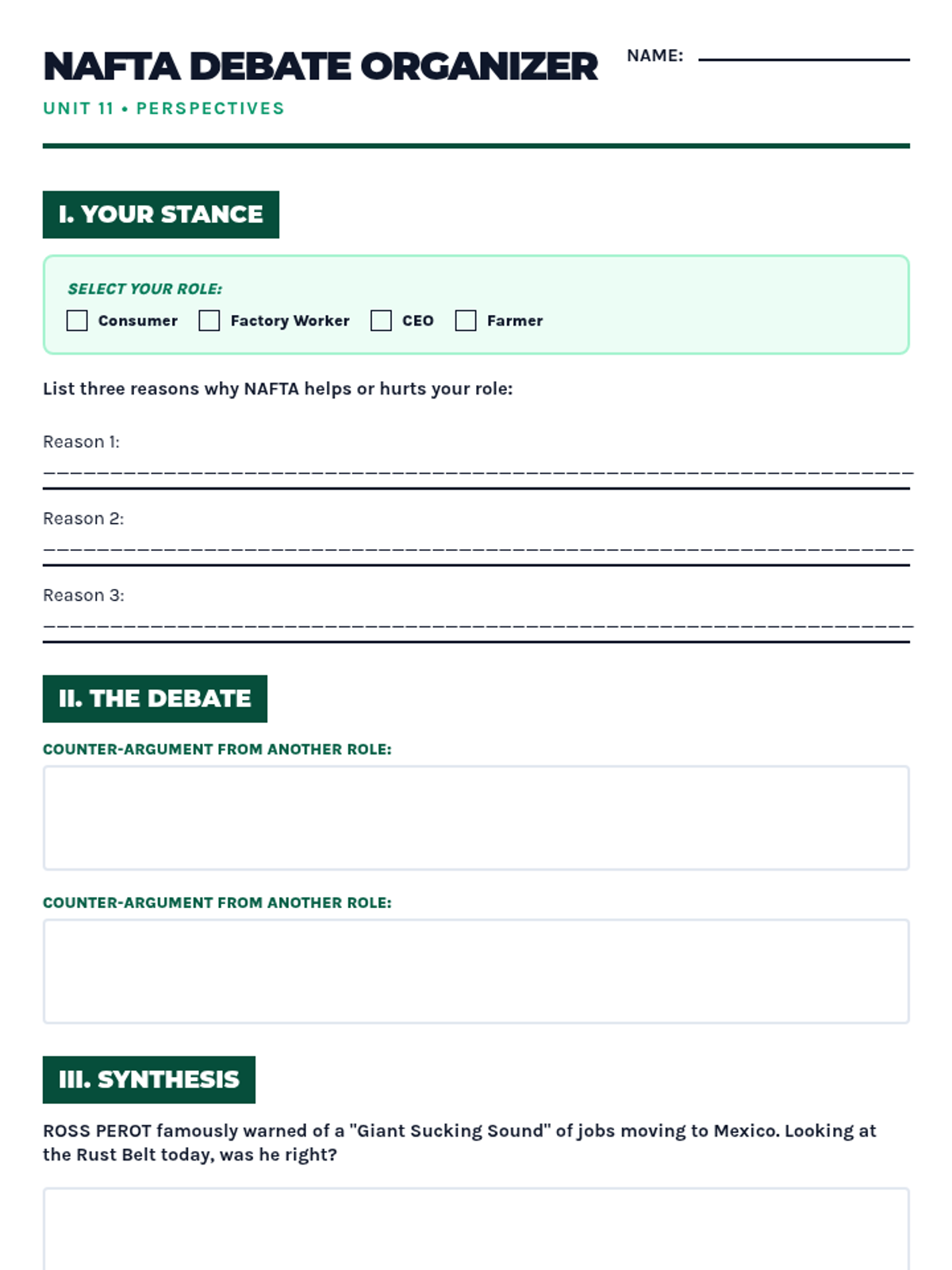
Examine the economic boom of the 90s, the impacts of NAFTA, and the process of deindustrialization.
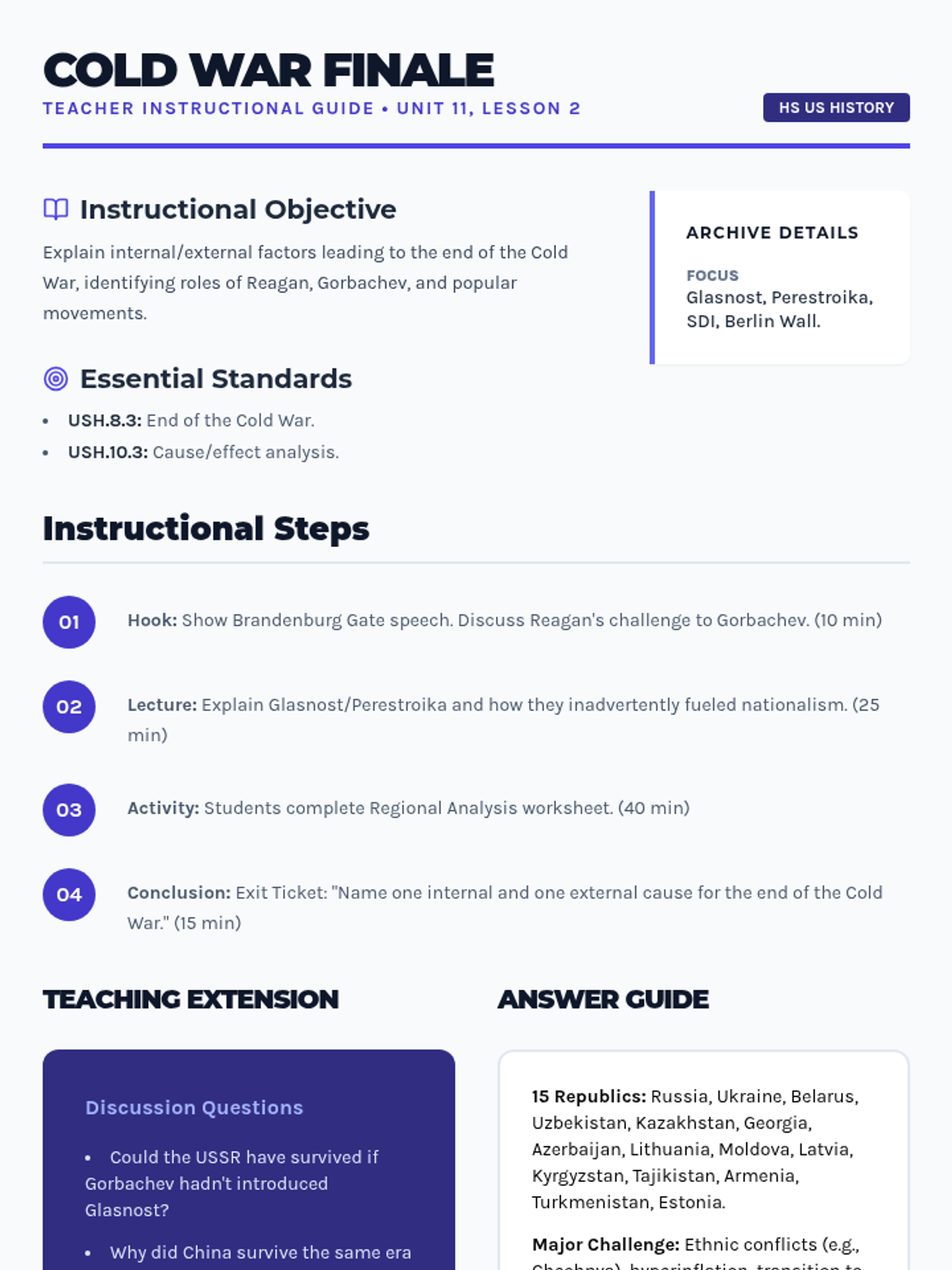
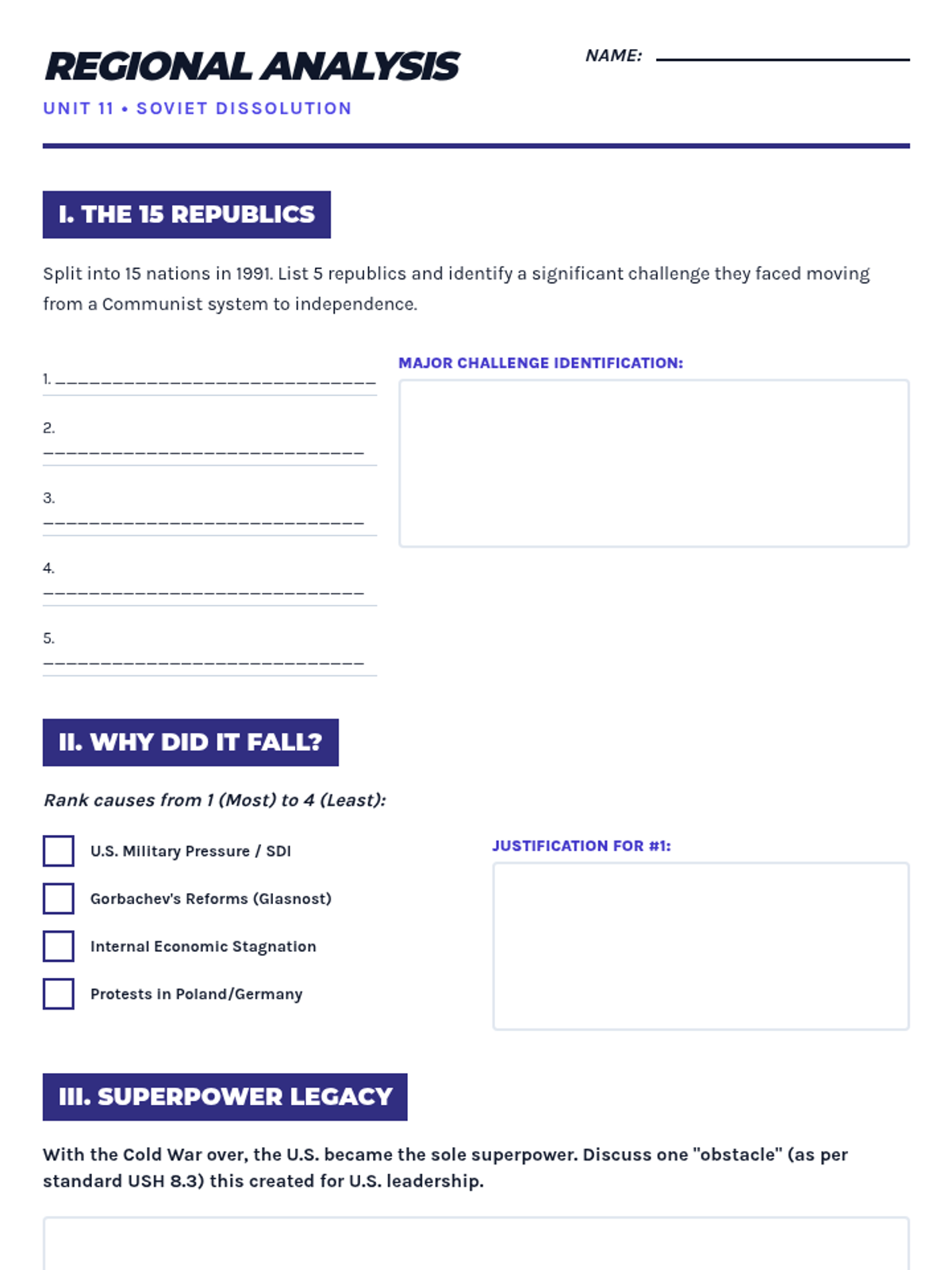
Analyze the collapse of the Soviet Union, the fall of the Berlin Wall, and the end of the Cold War.
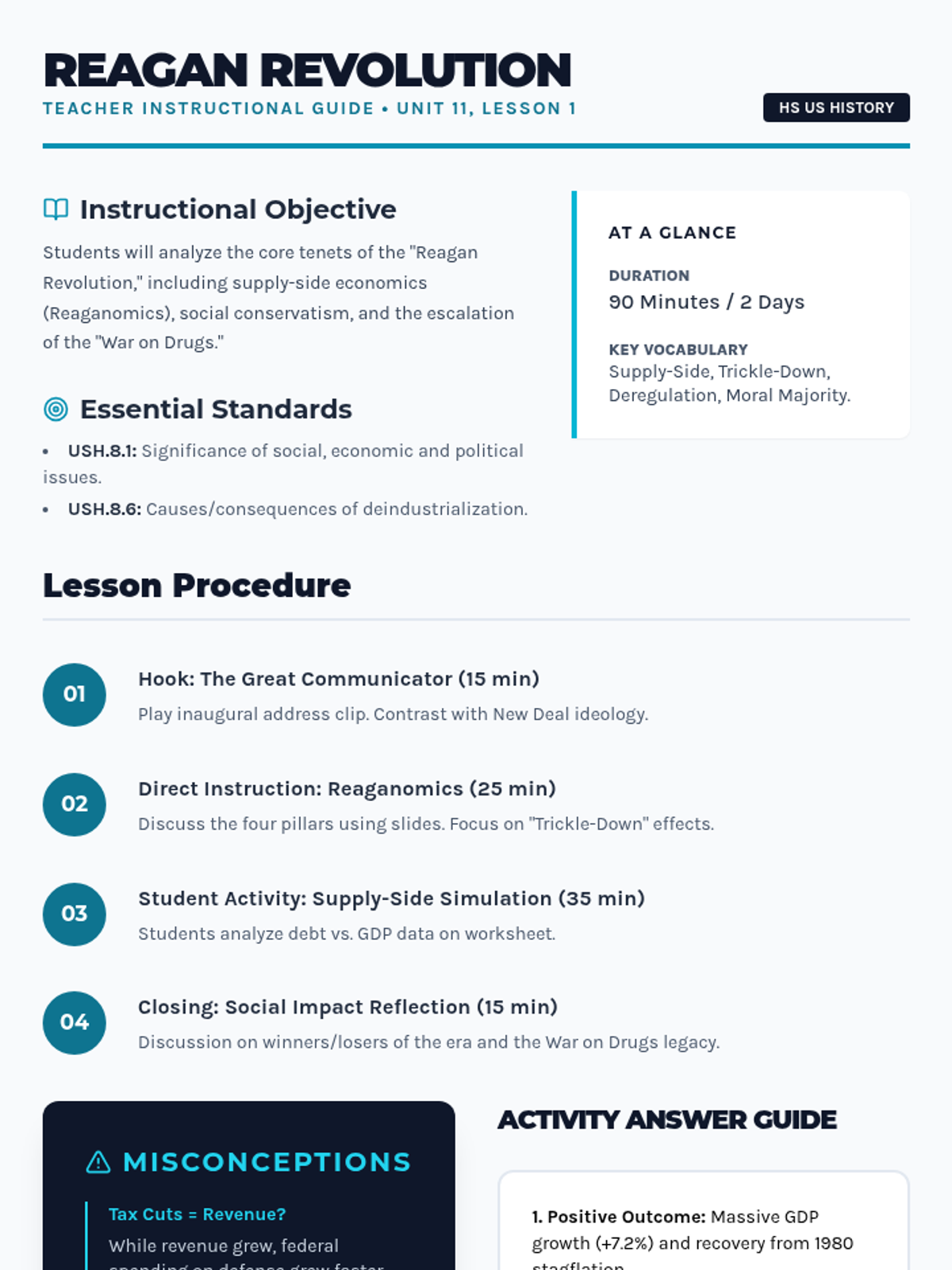
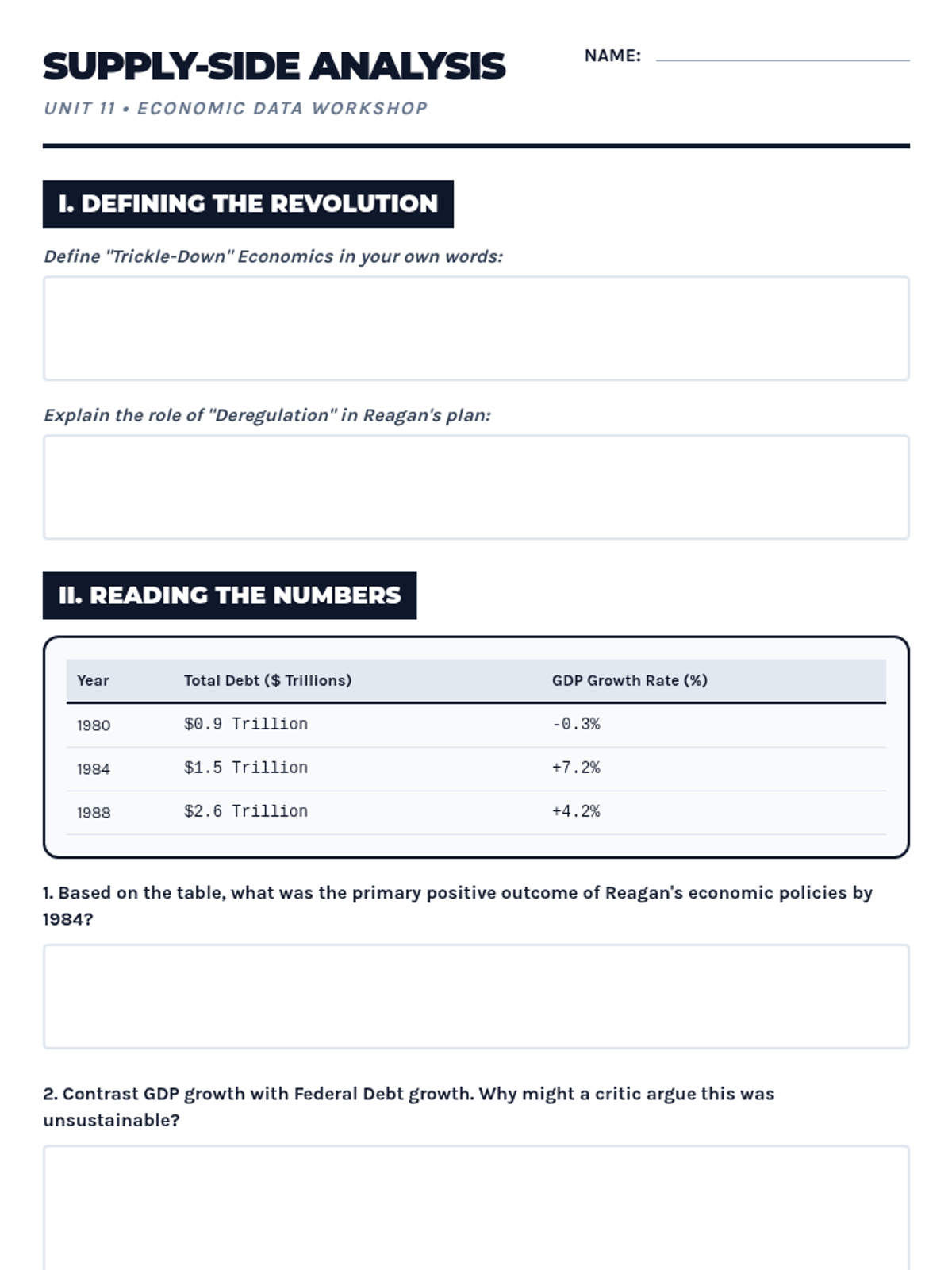
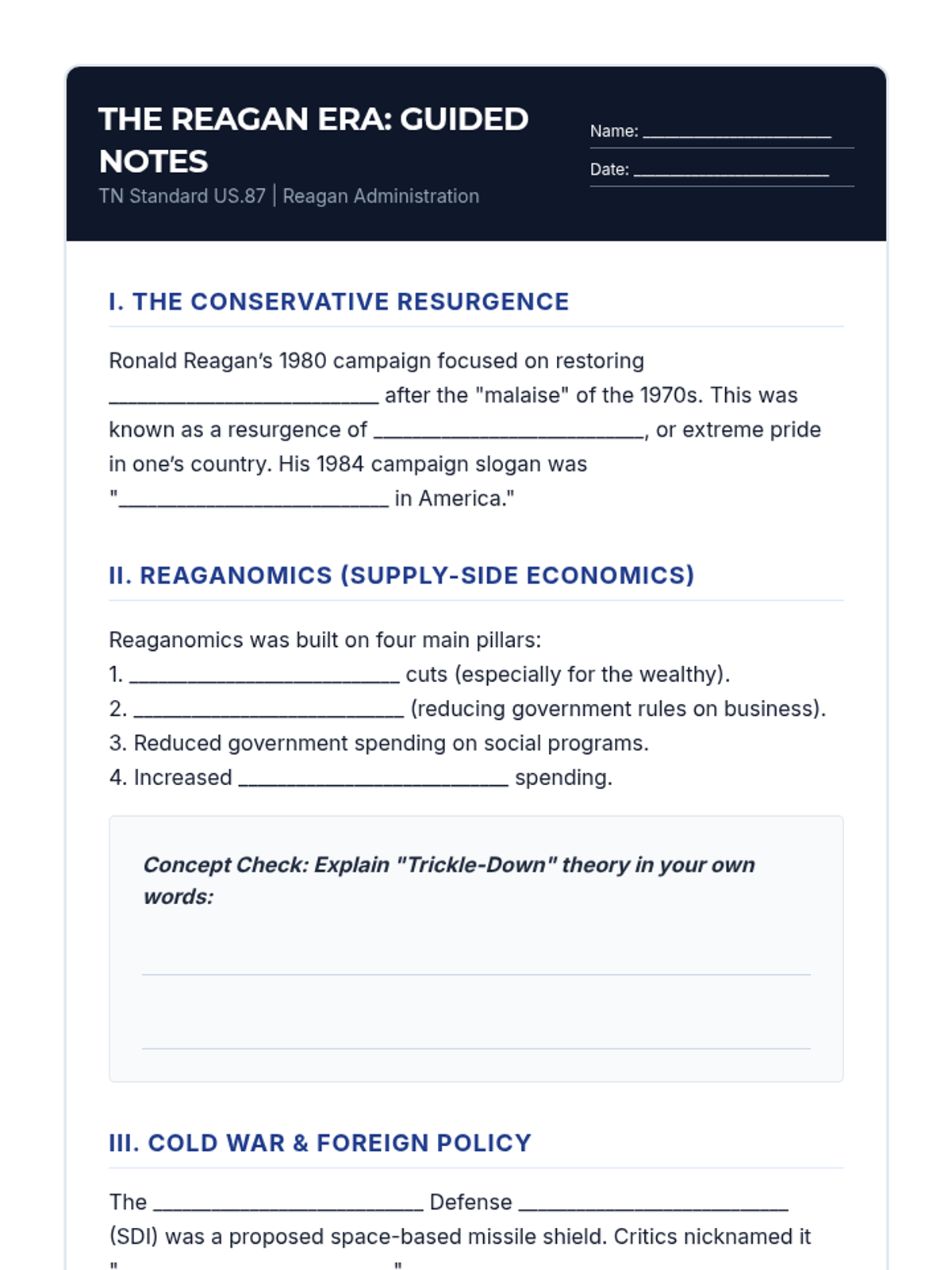
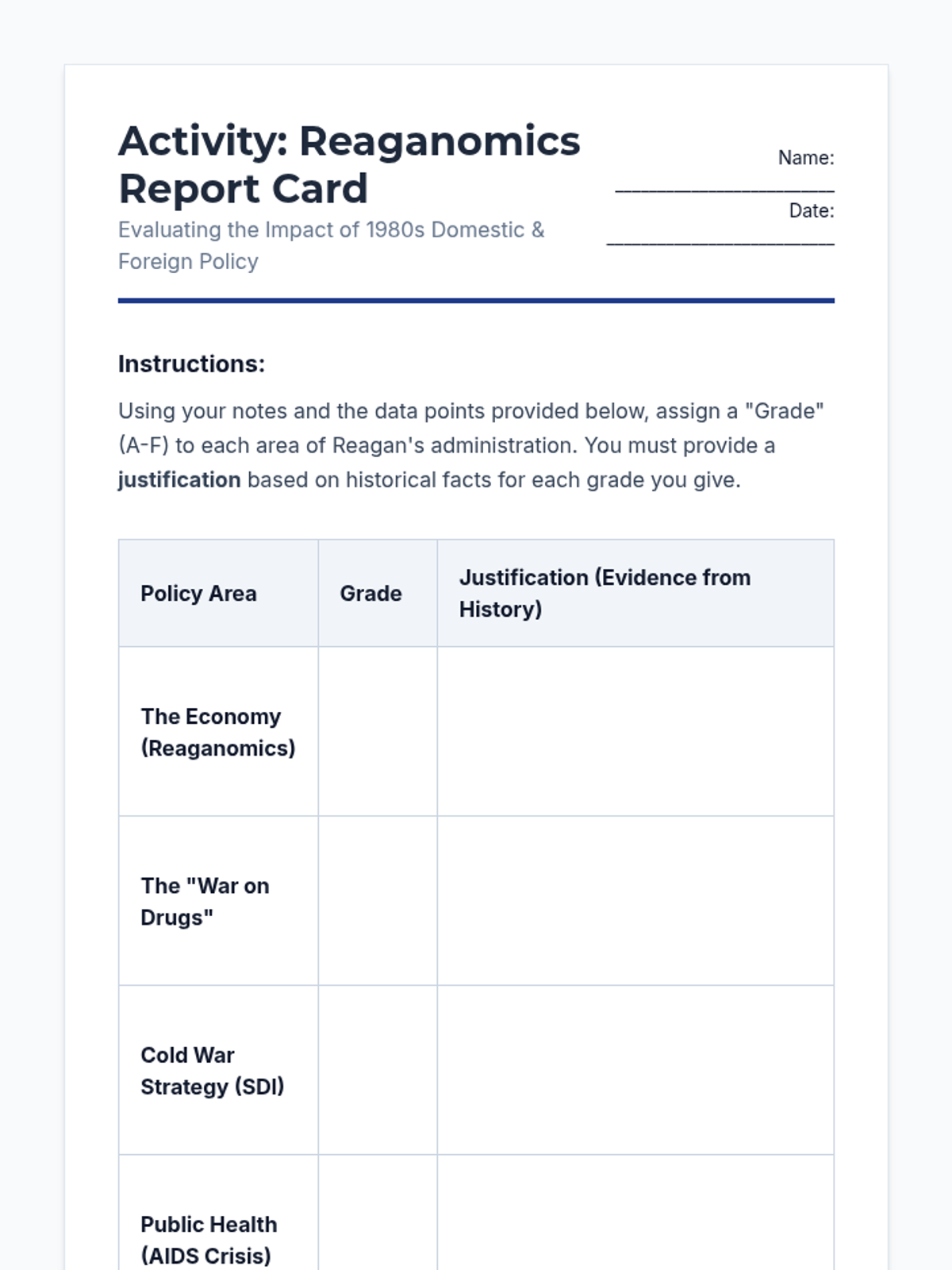
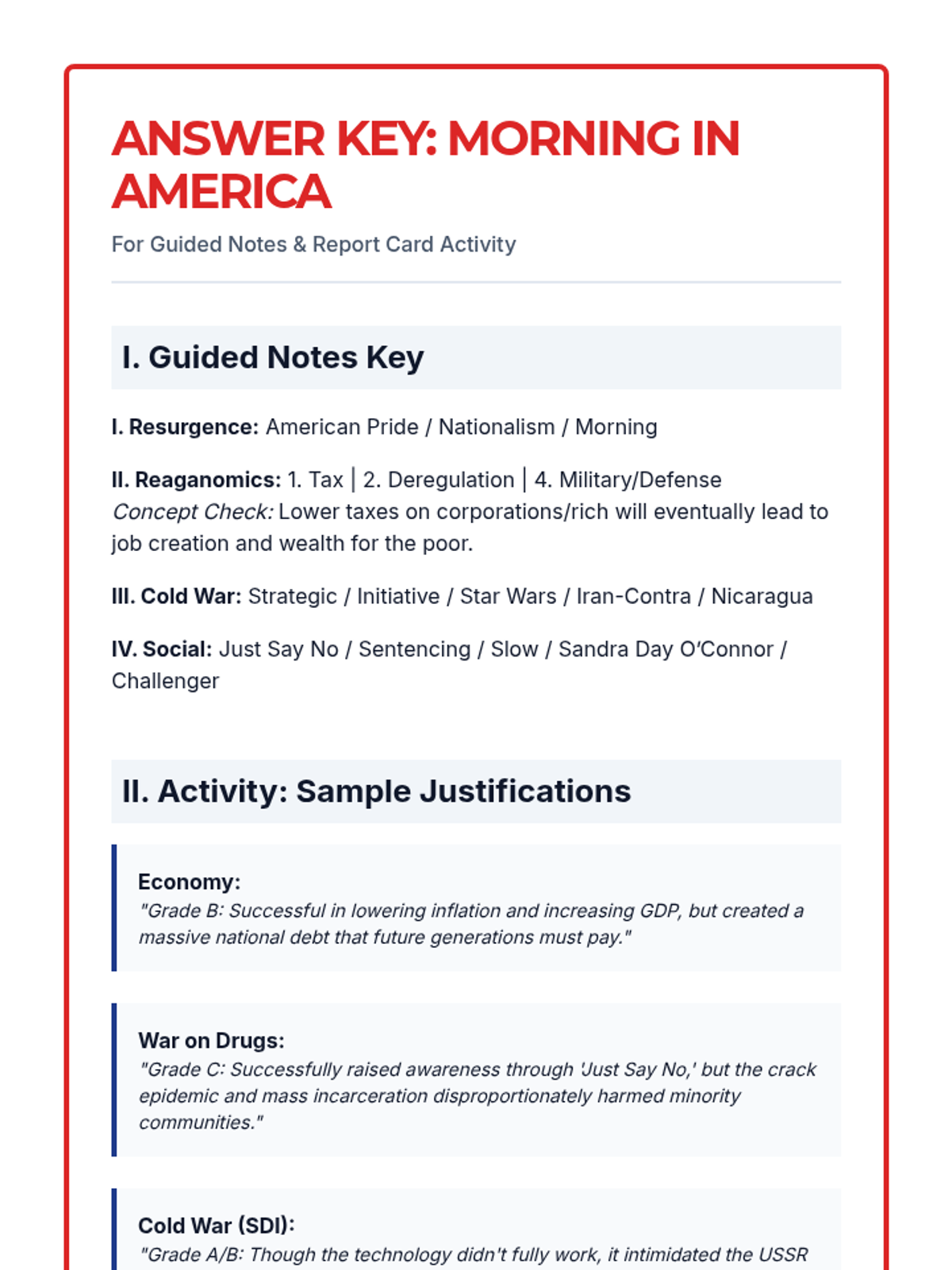
Explore the rise of conservatism, 'Reaganomics', and the social shifts of the 1980s.
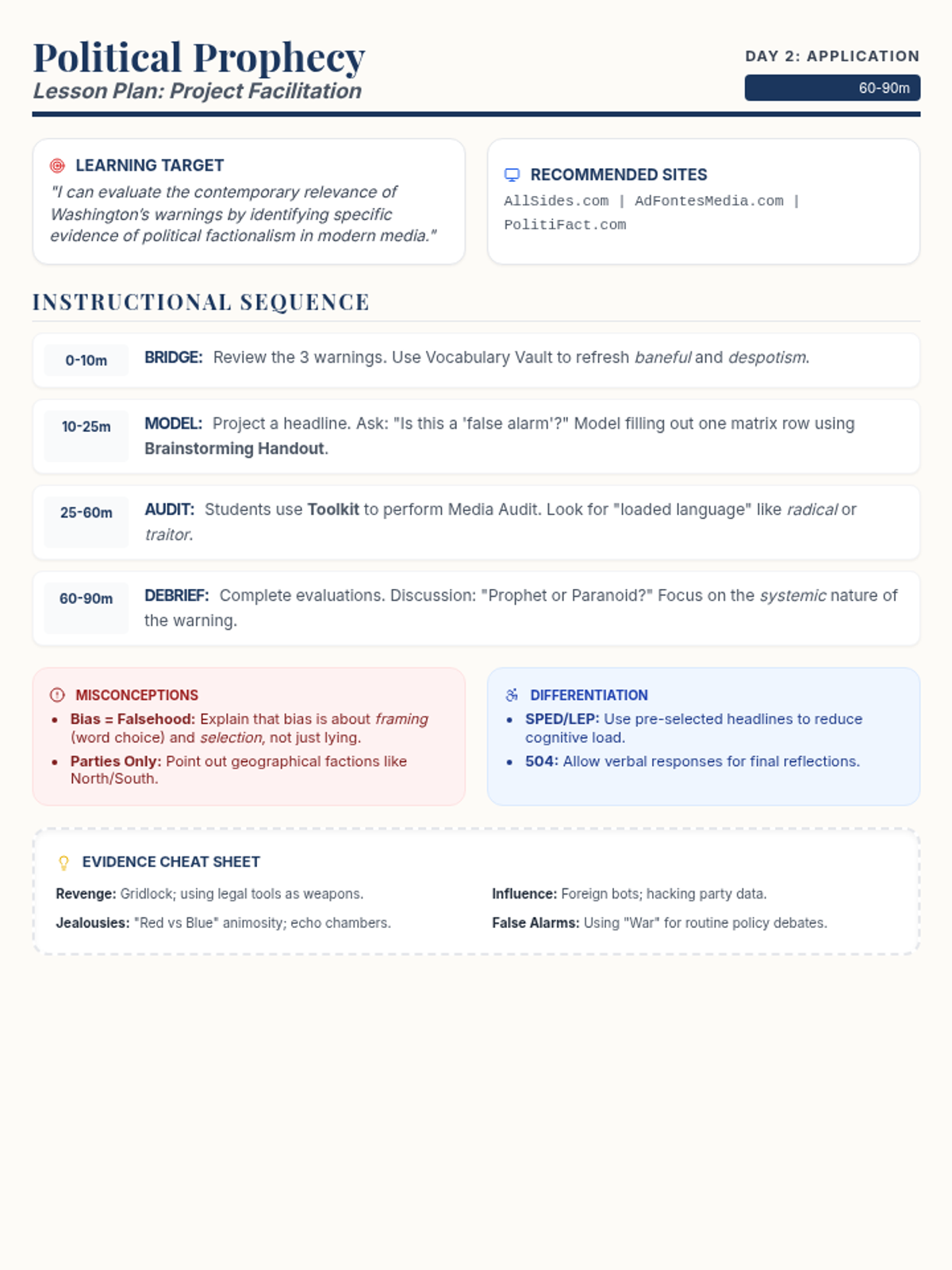
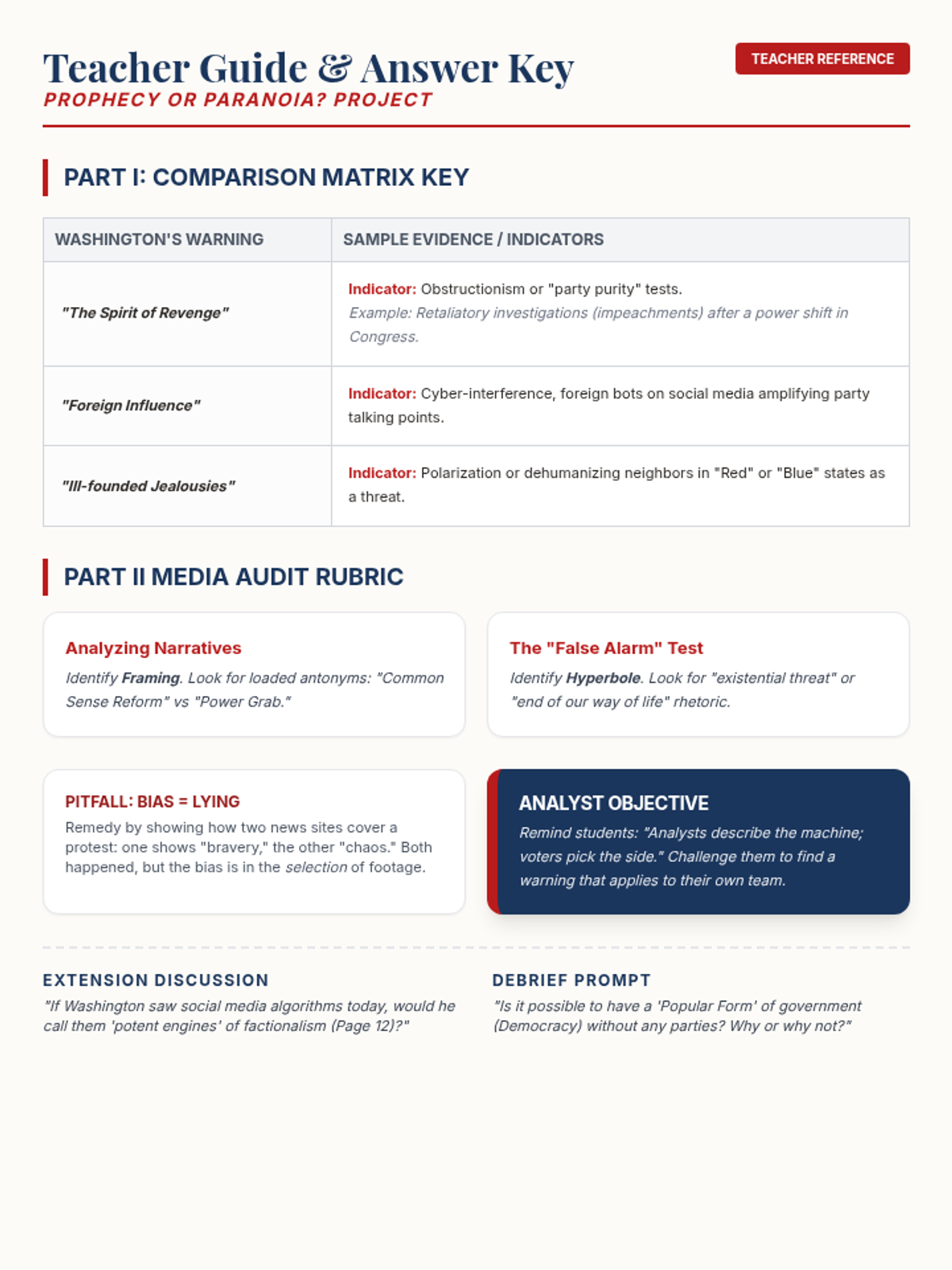
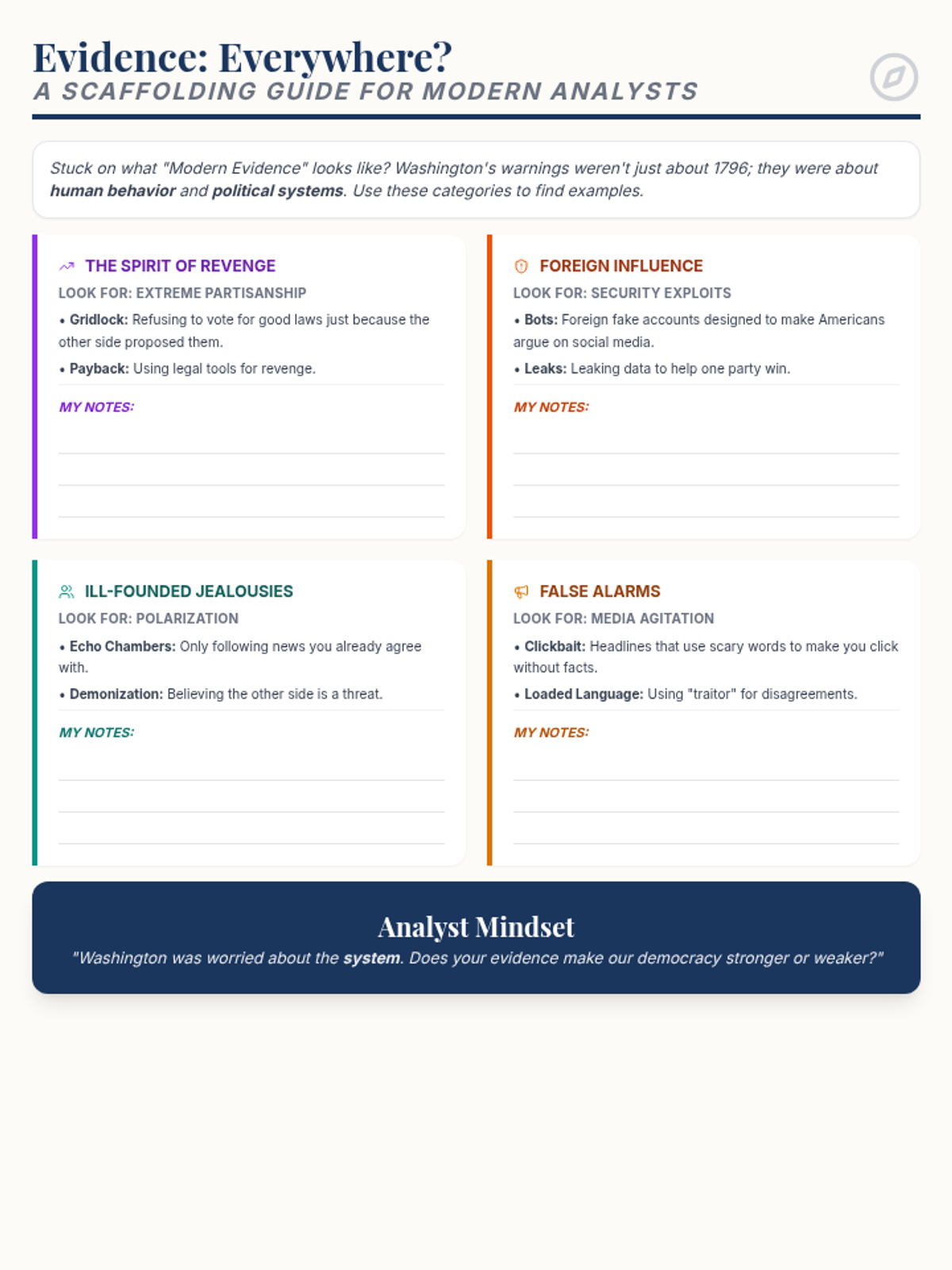
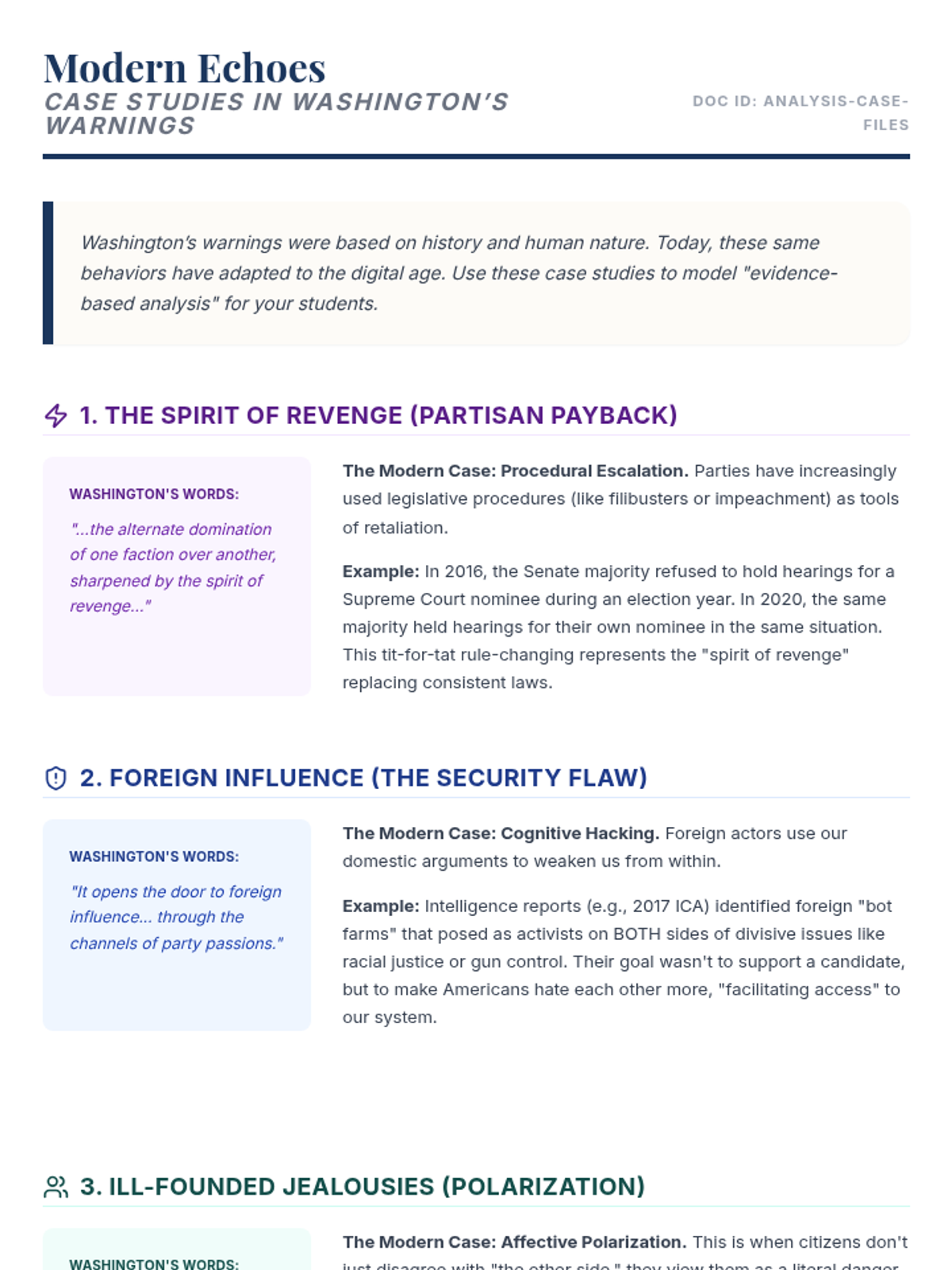
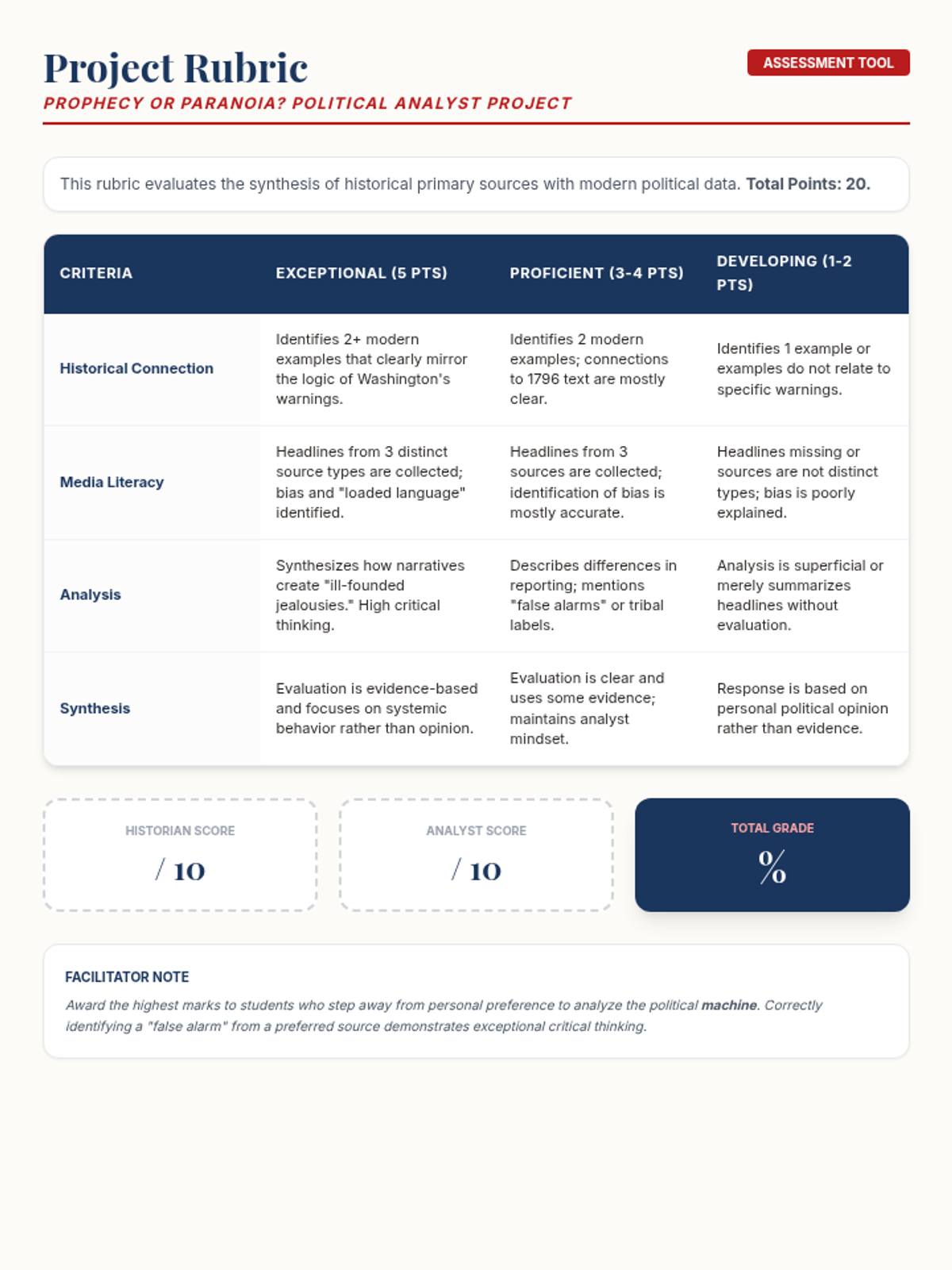
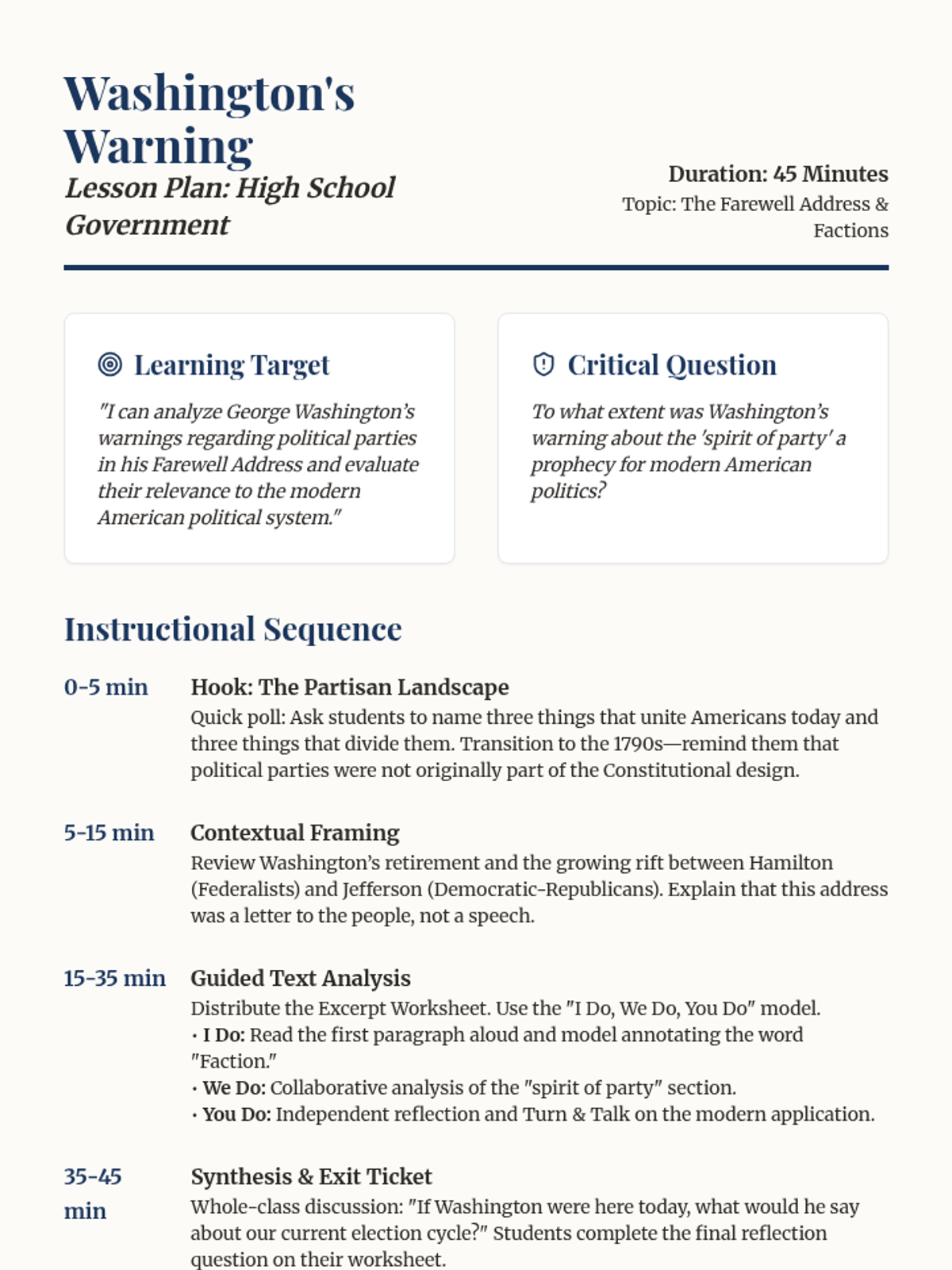
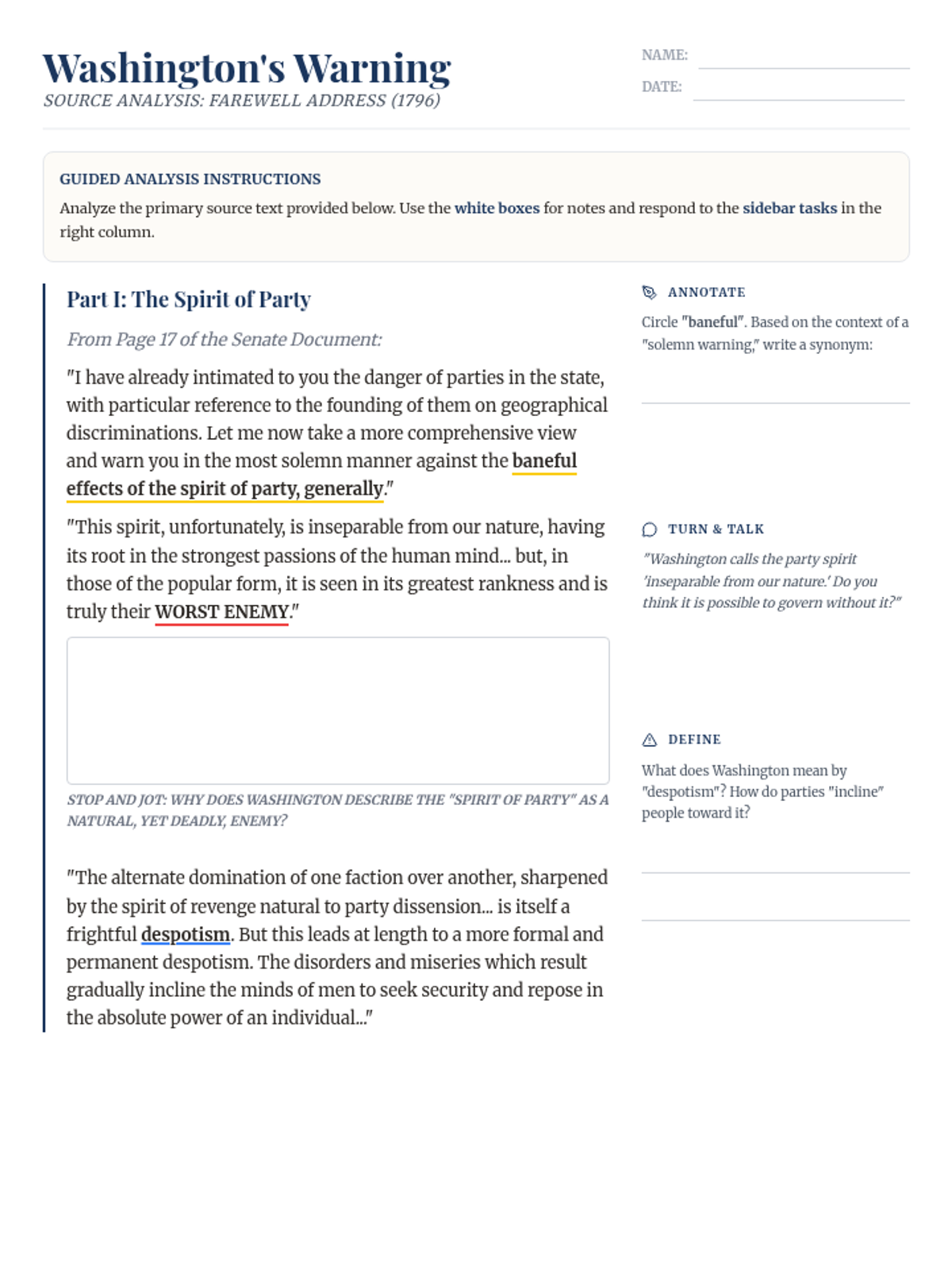
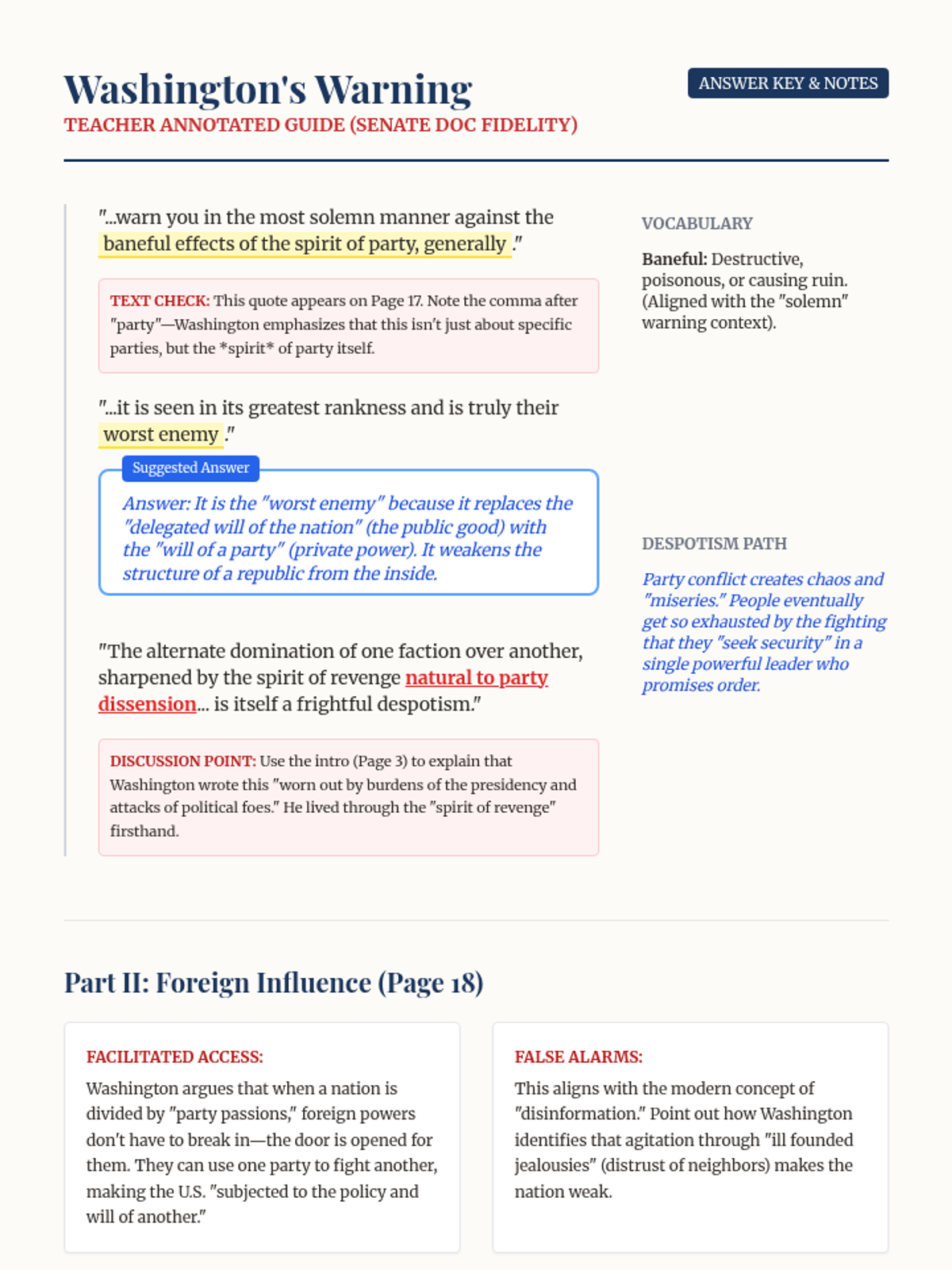
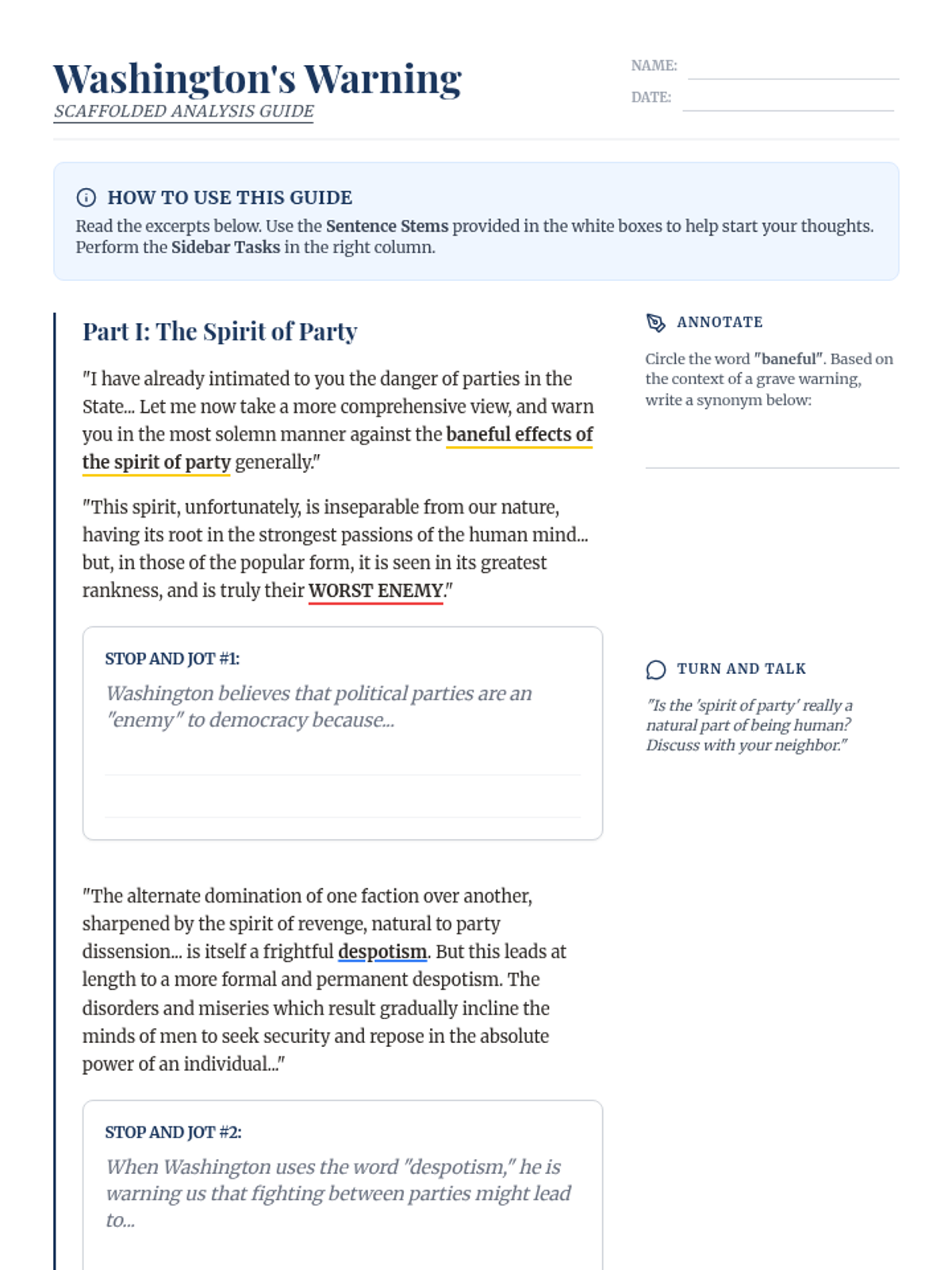
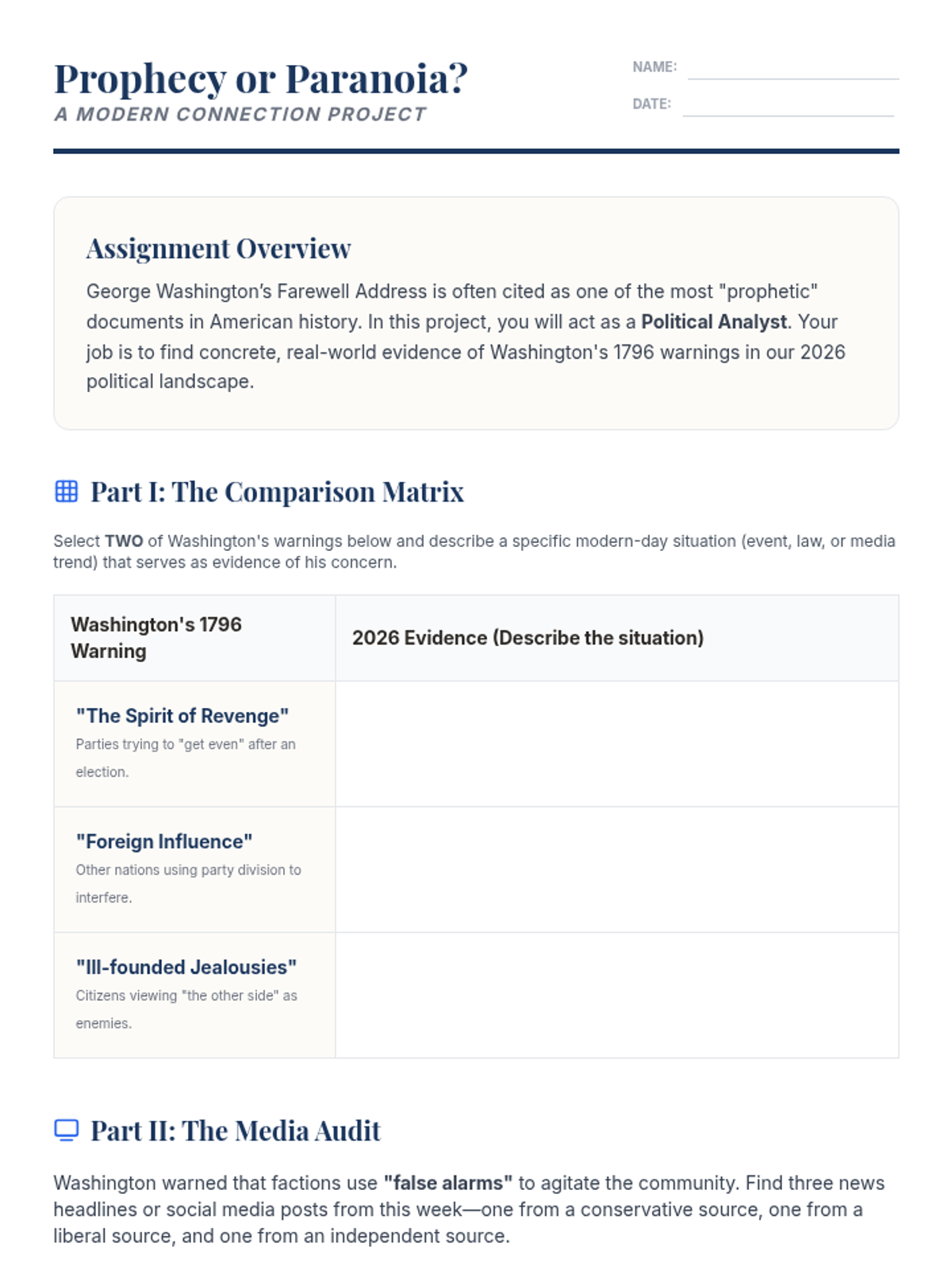
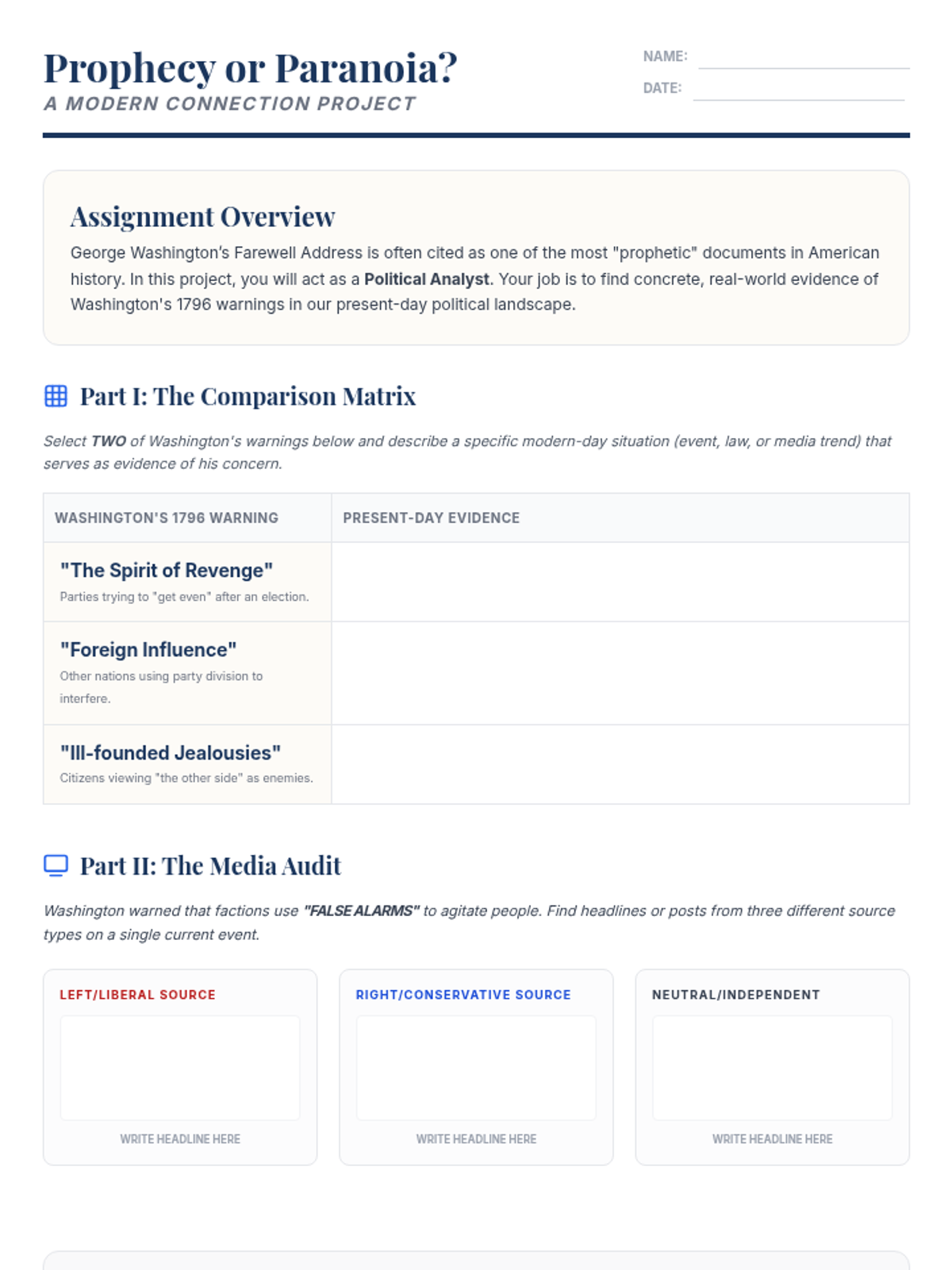
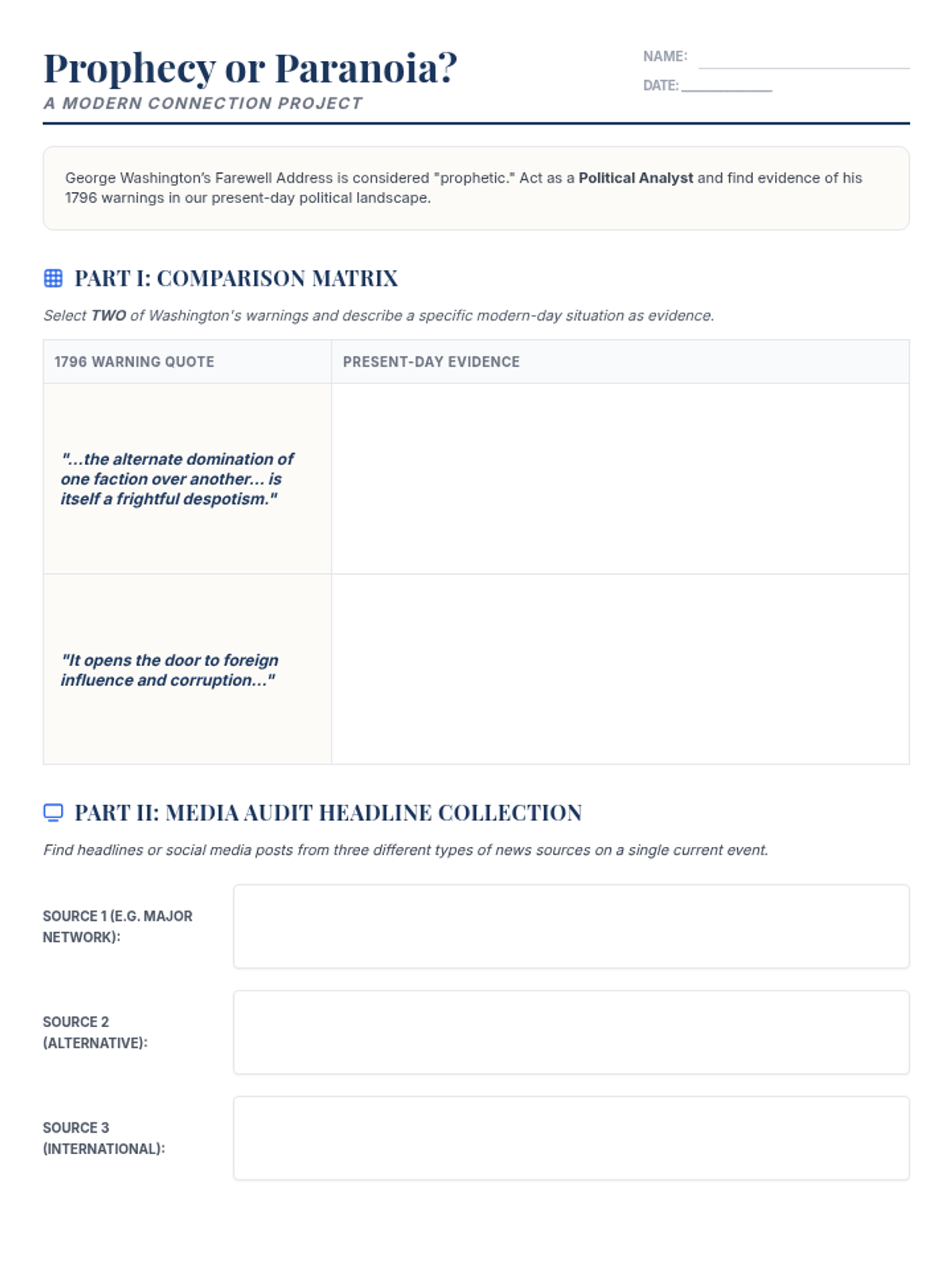
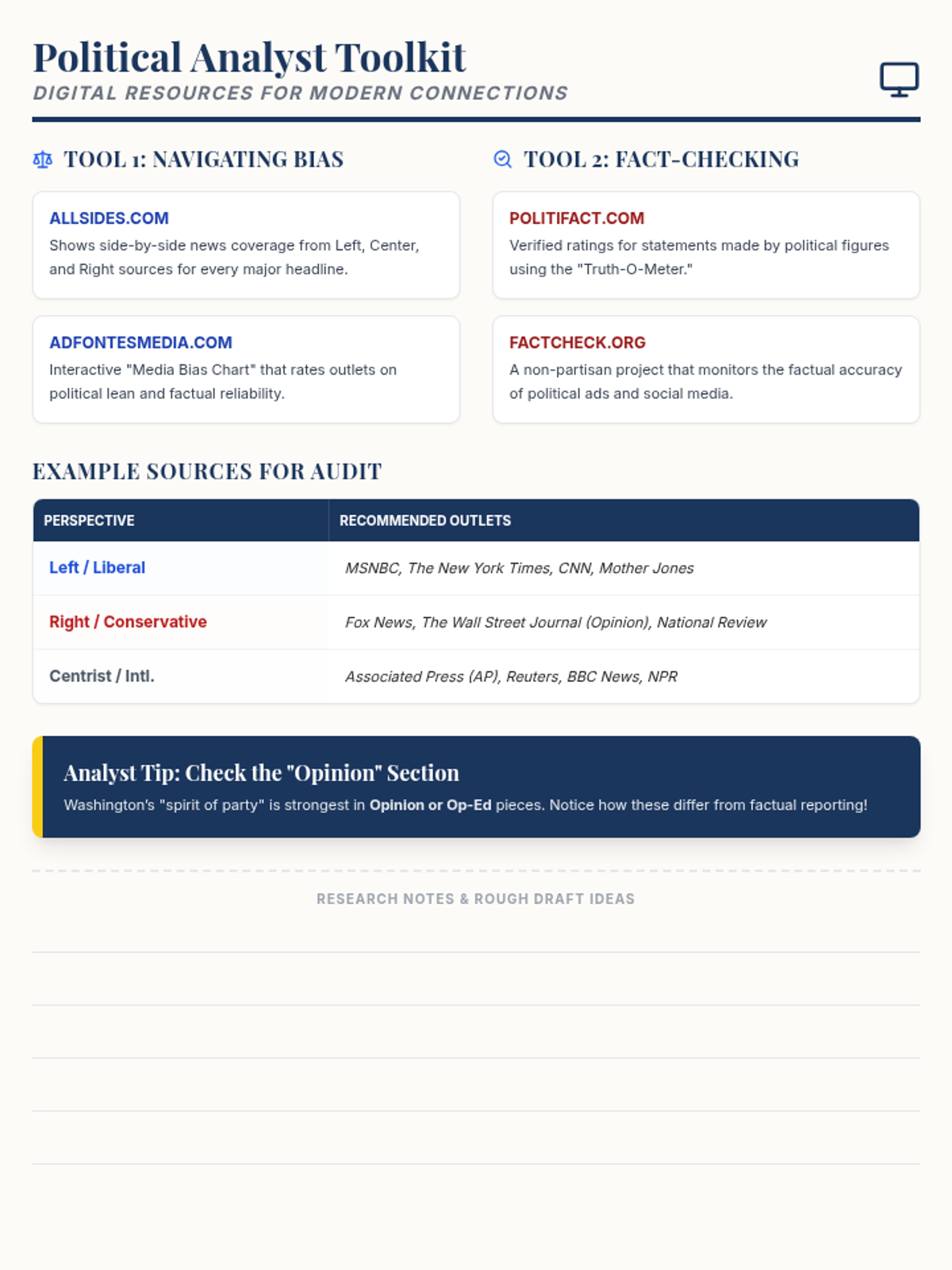
A project-based lesson where students act as political analysts to evaluate the modern-day relevance of George Washington's 1796 warnings using current news media and political events.
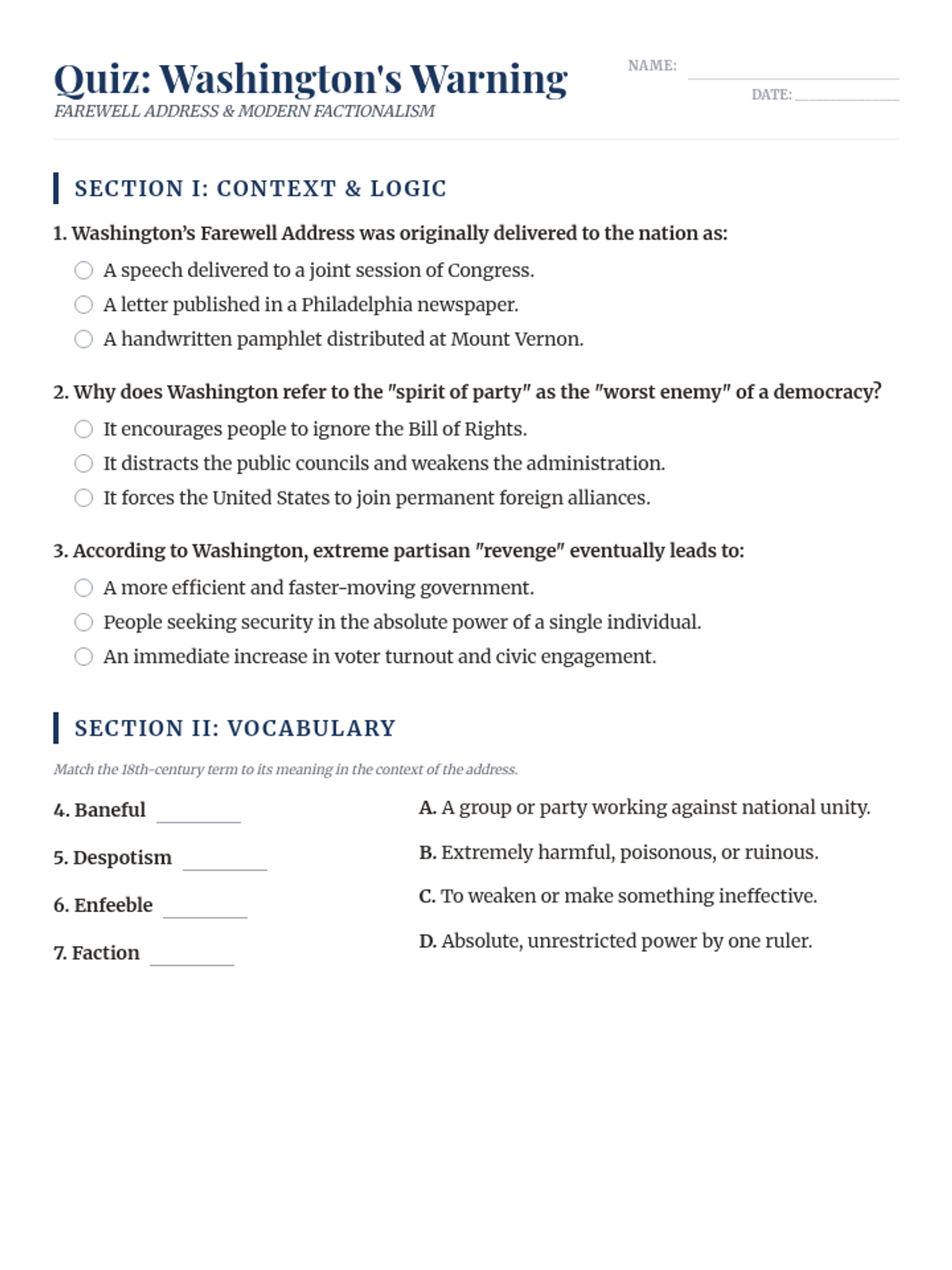
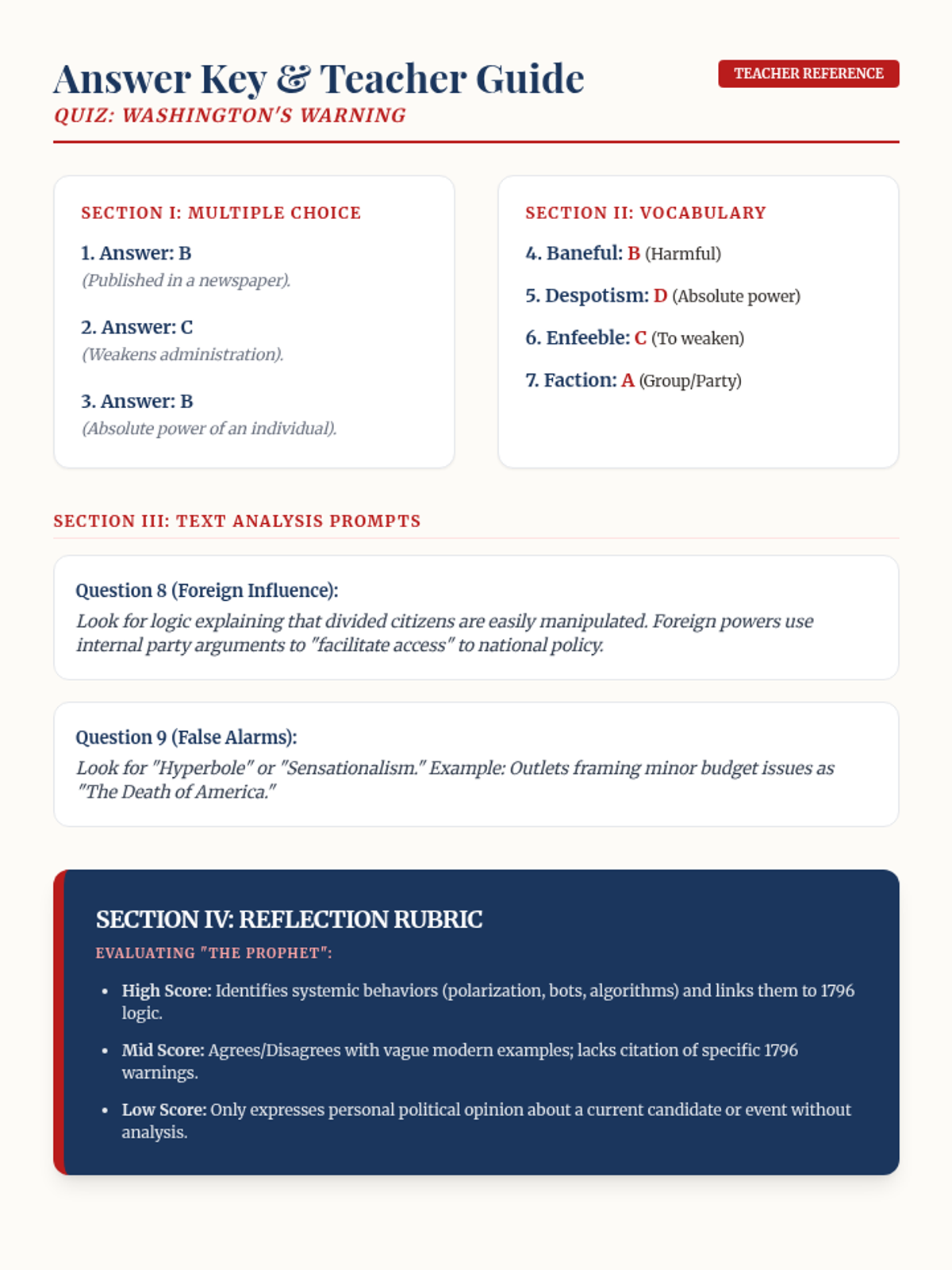
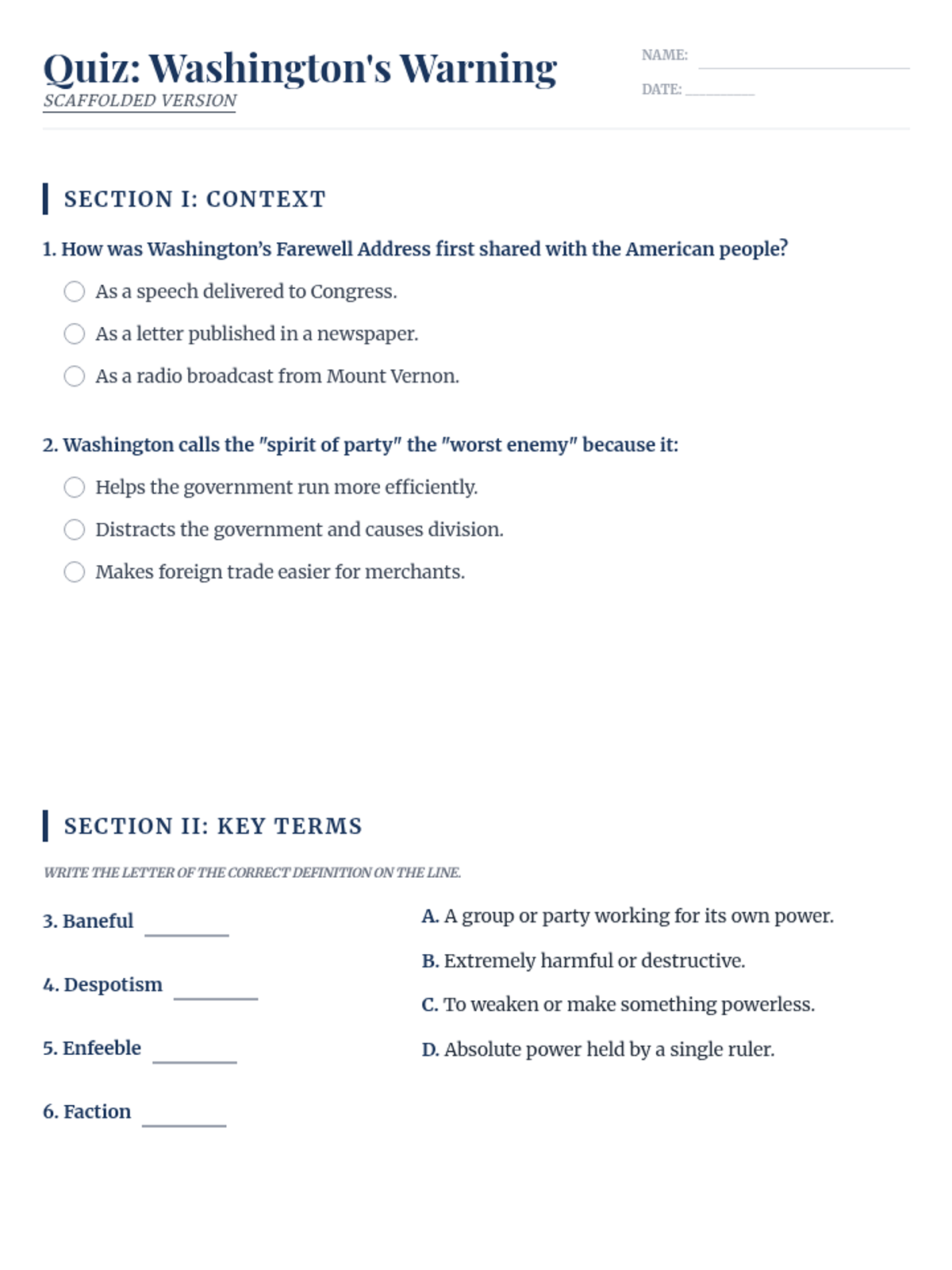
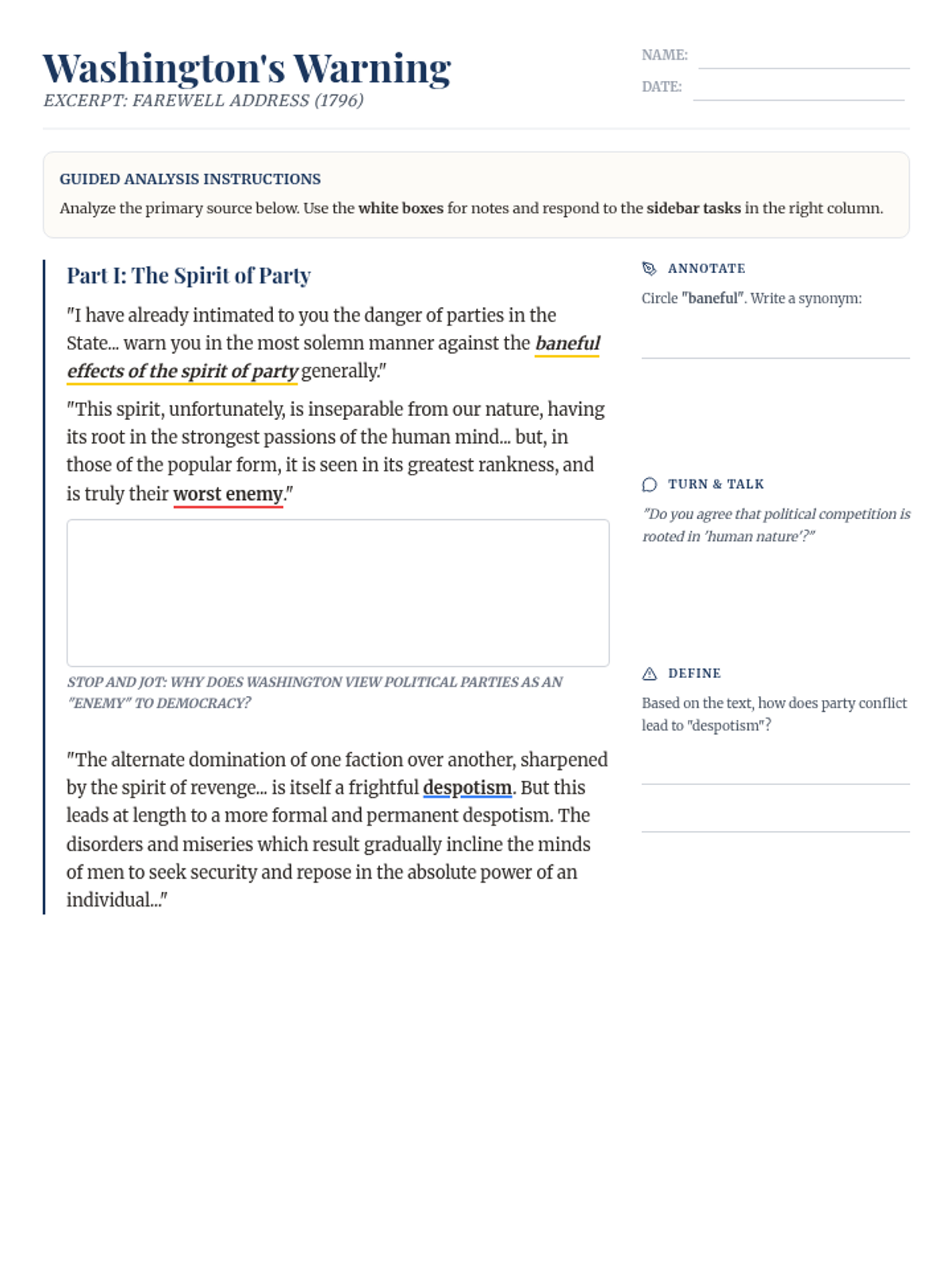
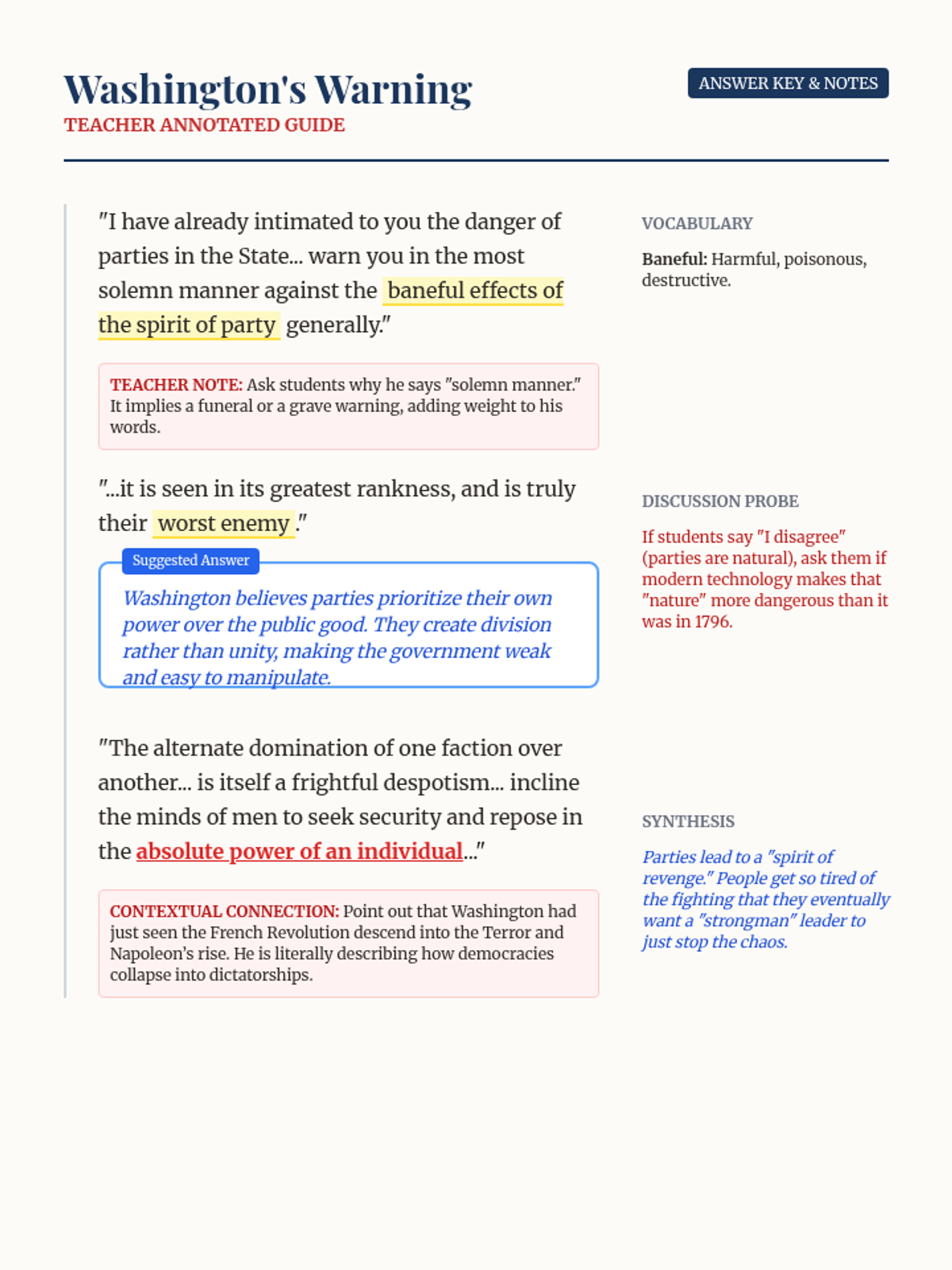
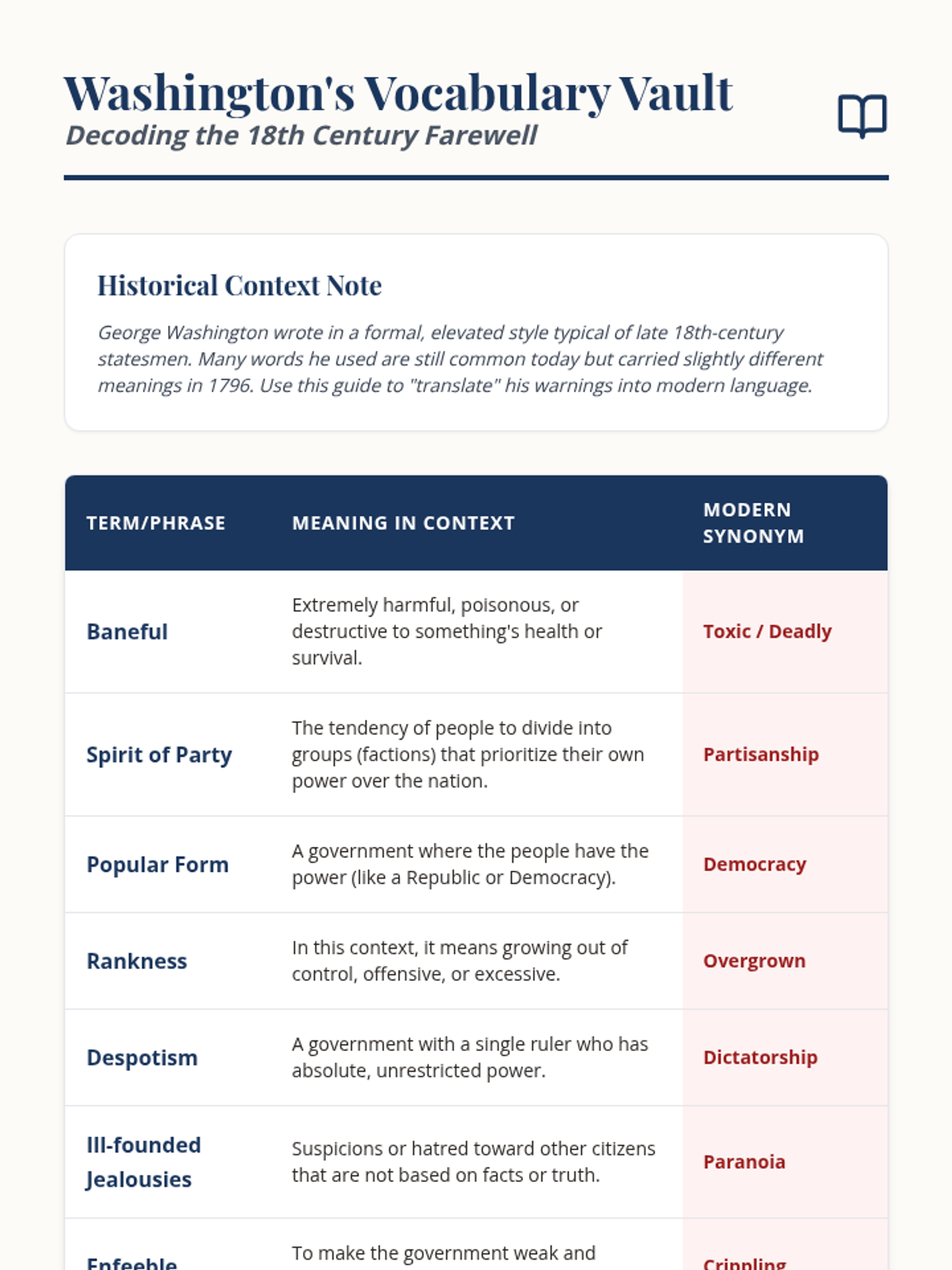
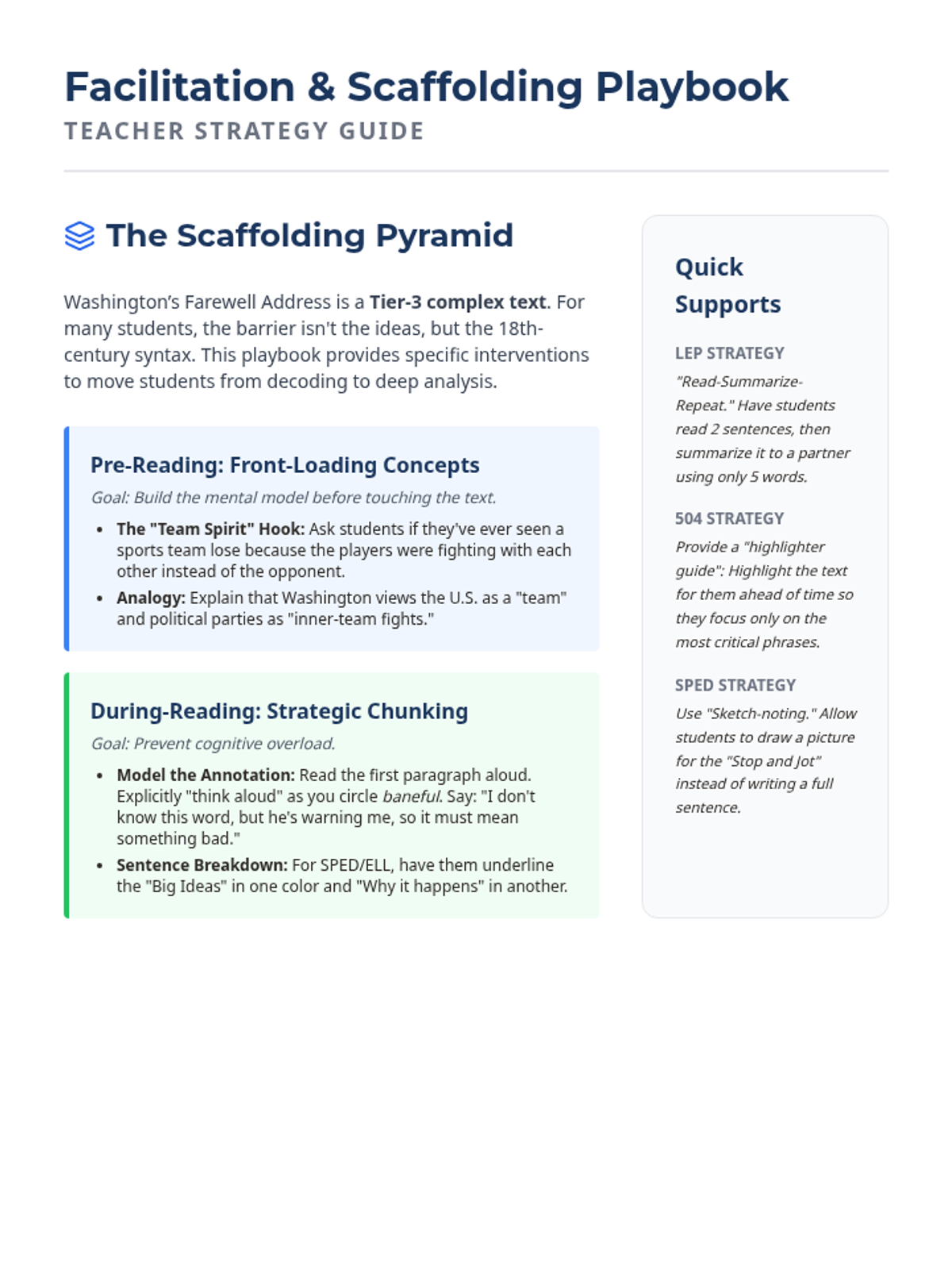
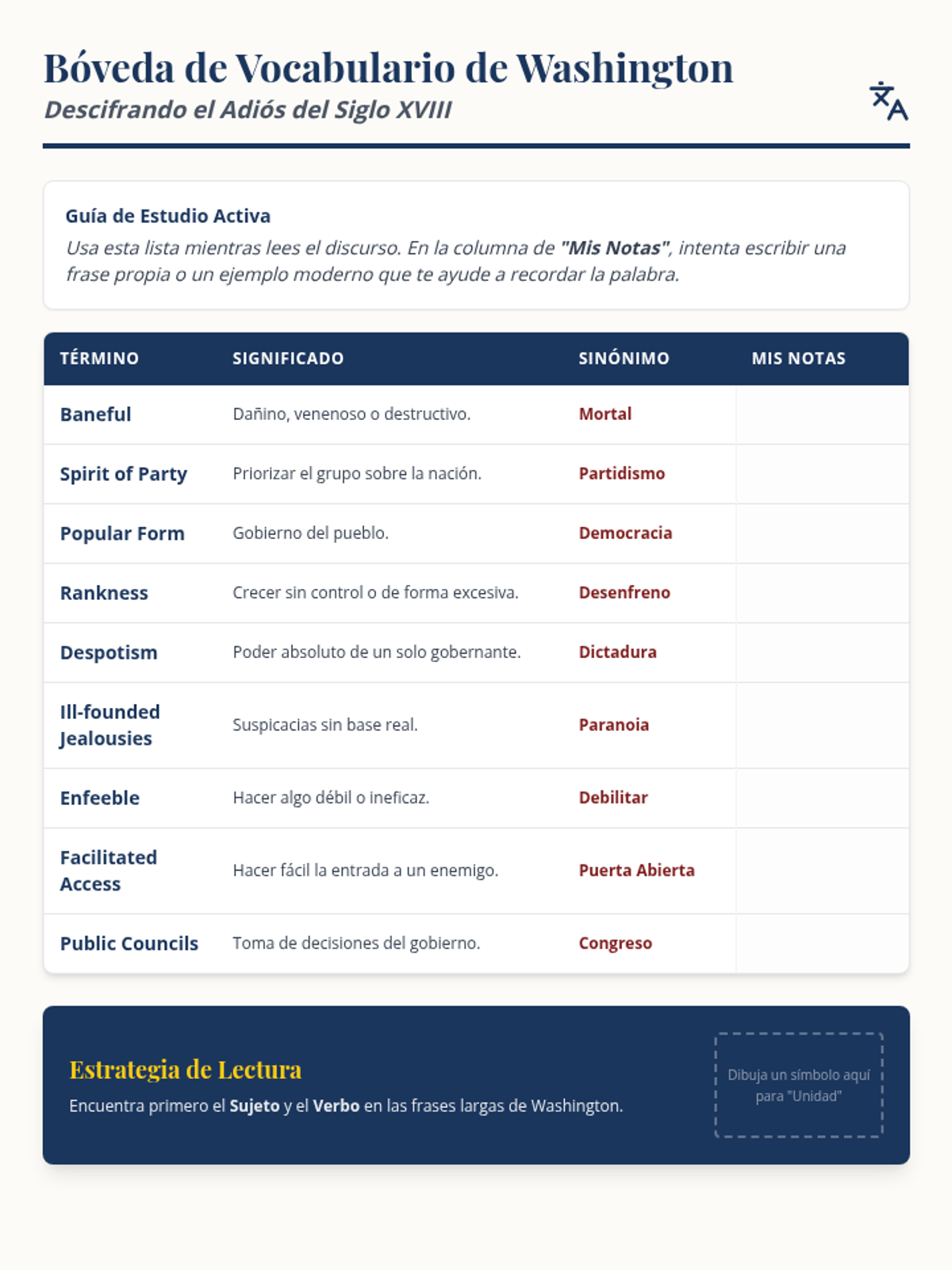
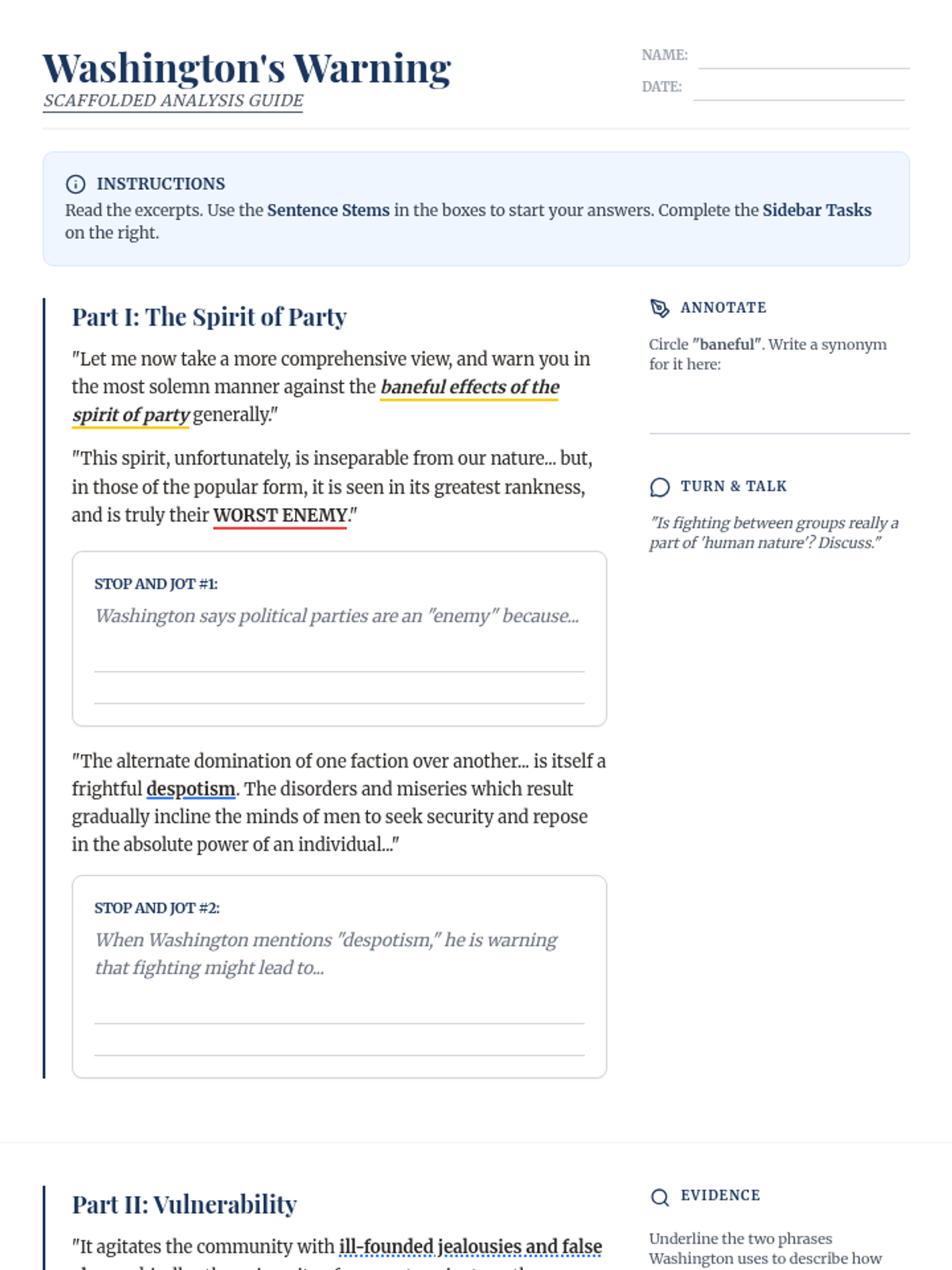
A 45-minute deep dive into George Washington's Farewell Address, focusing on his prophetic warnings regarding the dangers of political factions and their impact on national unity.
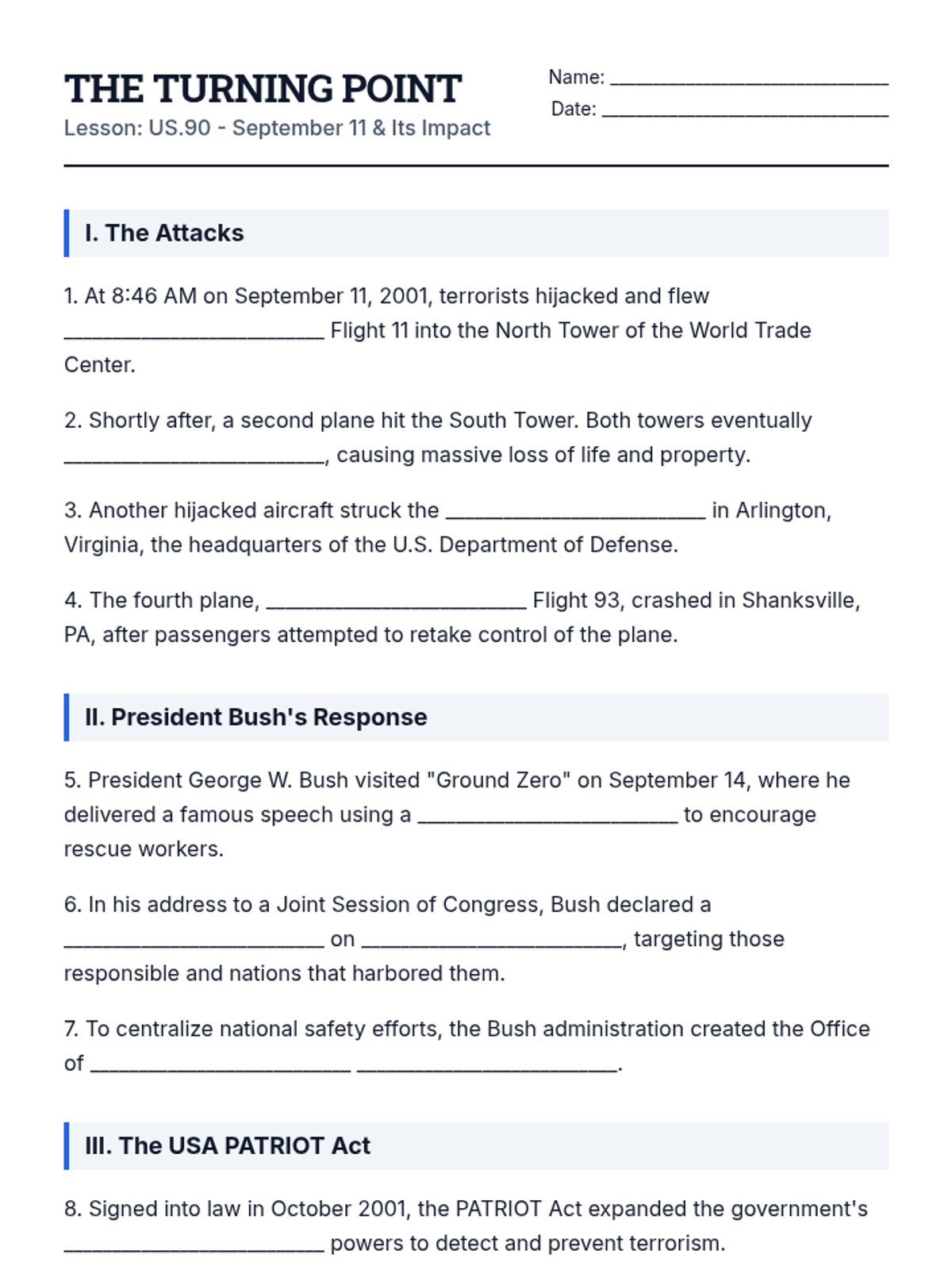
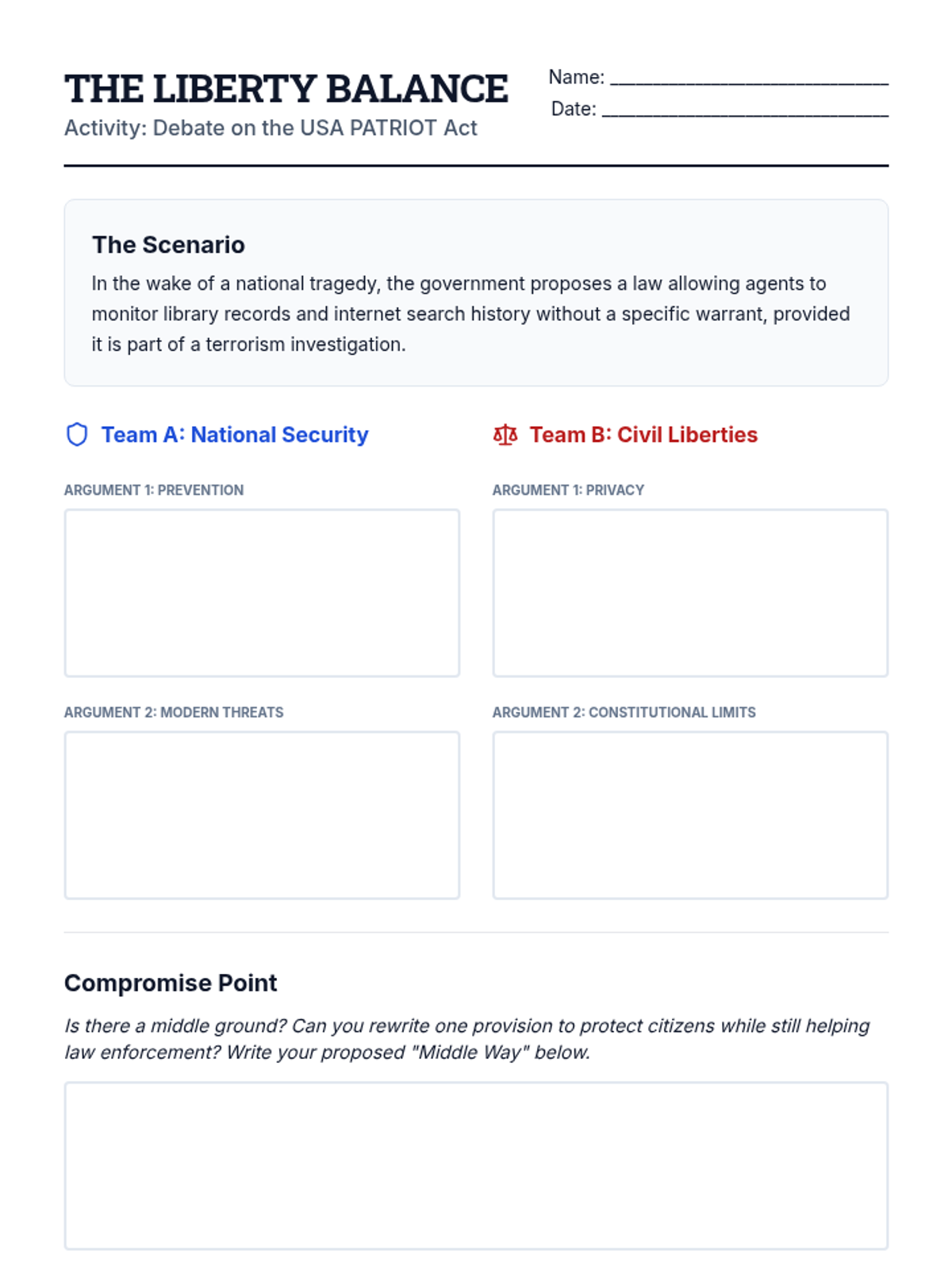
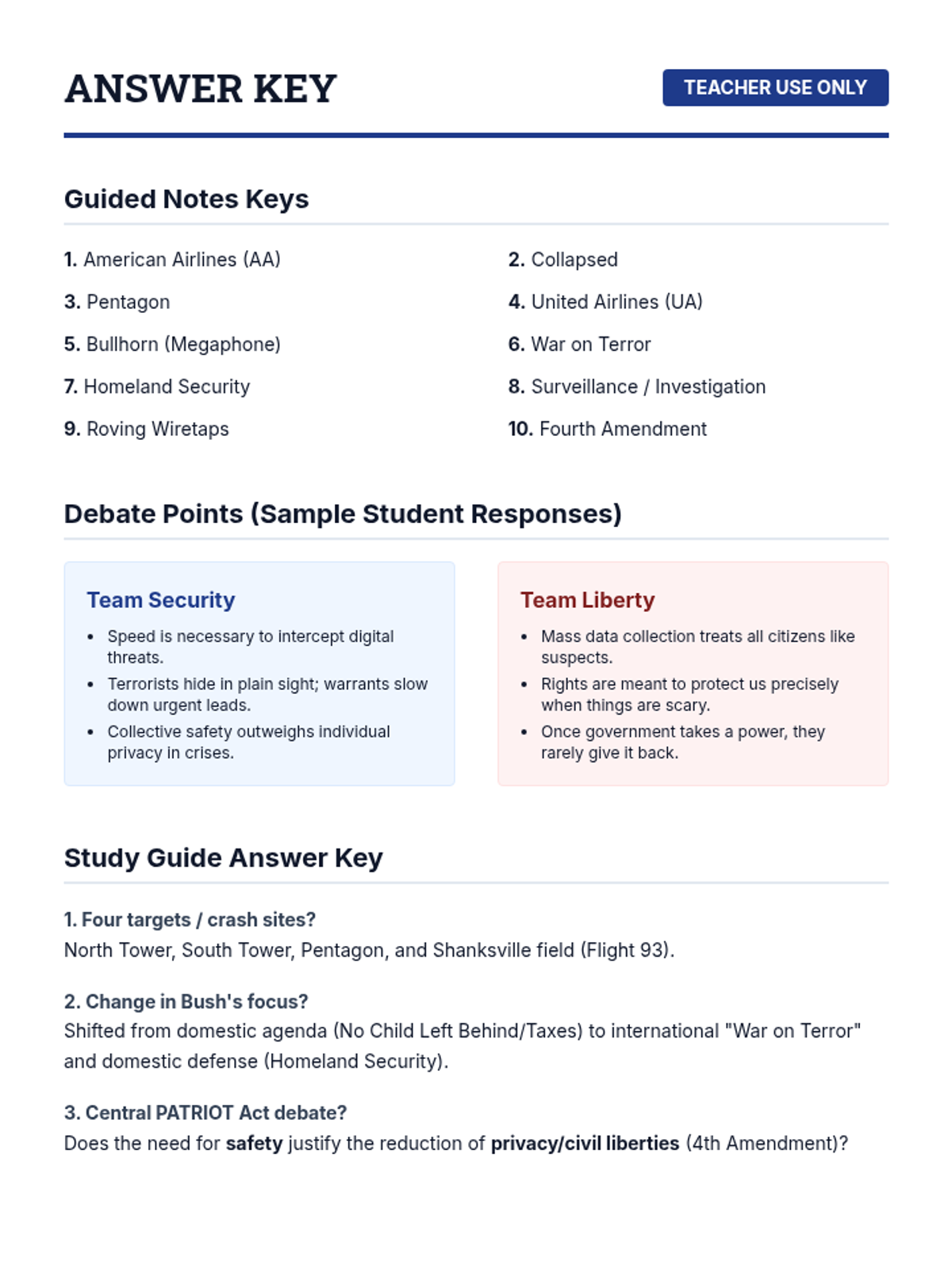
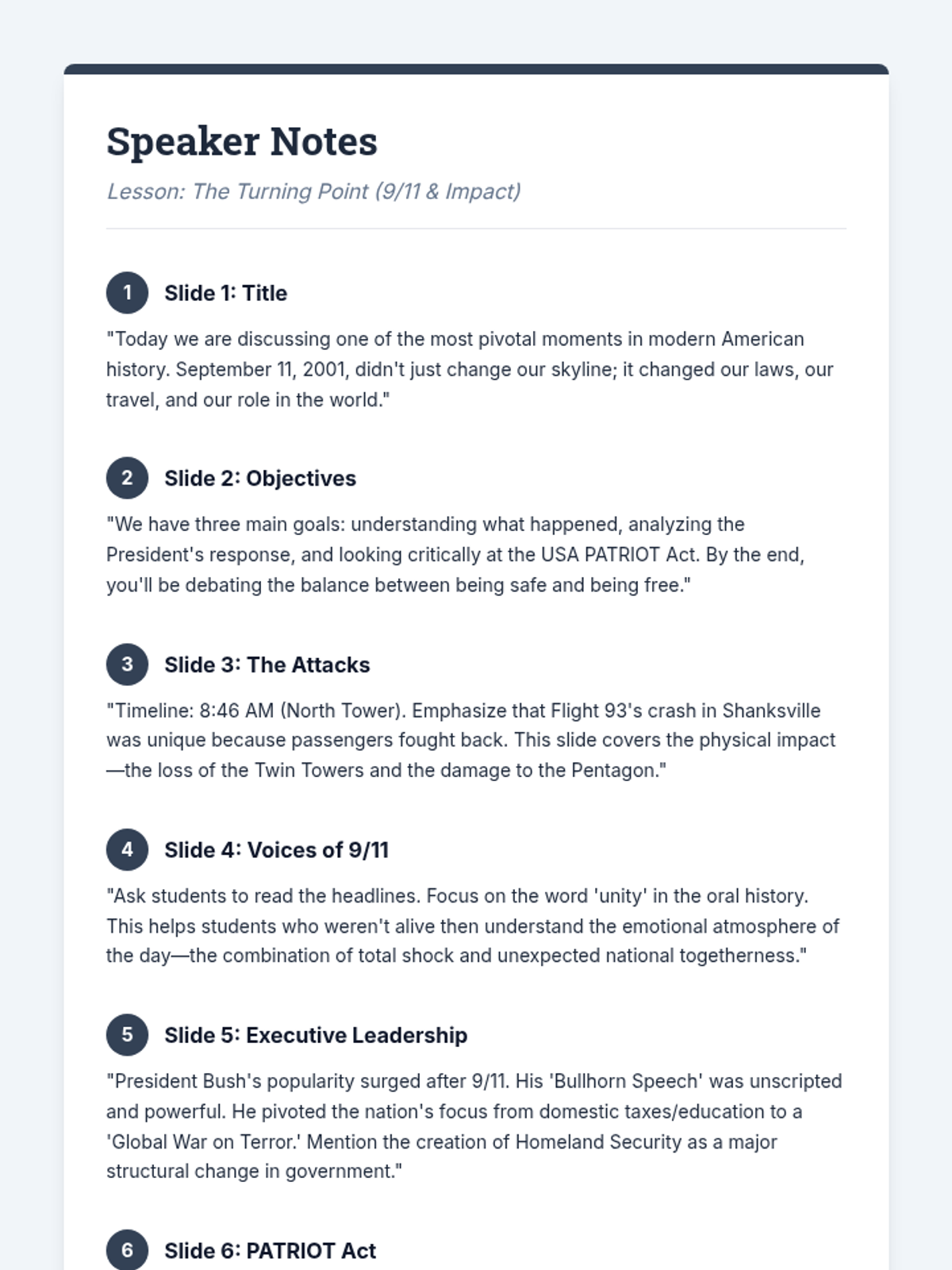
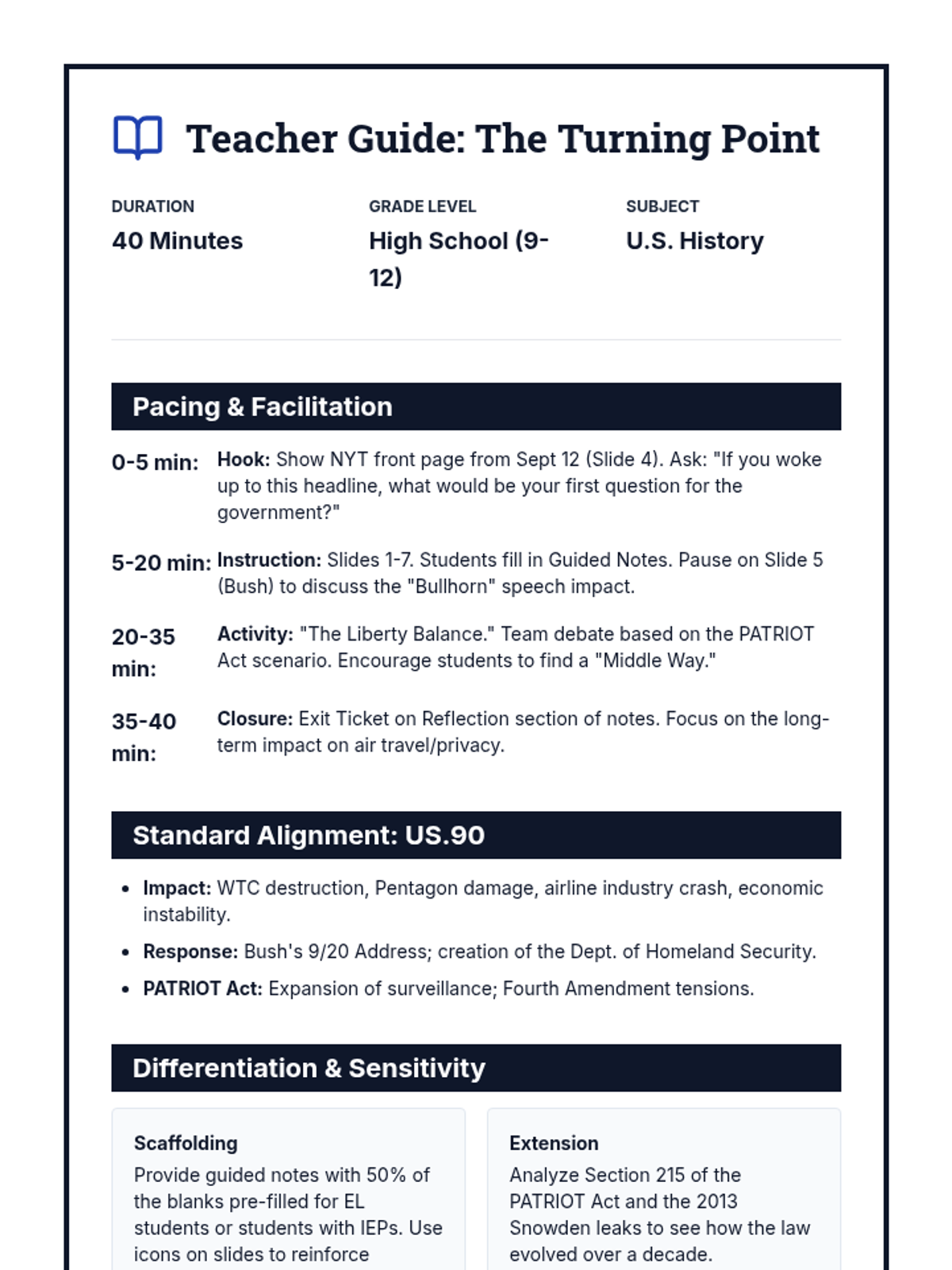
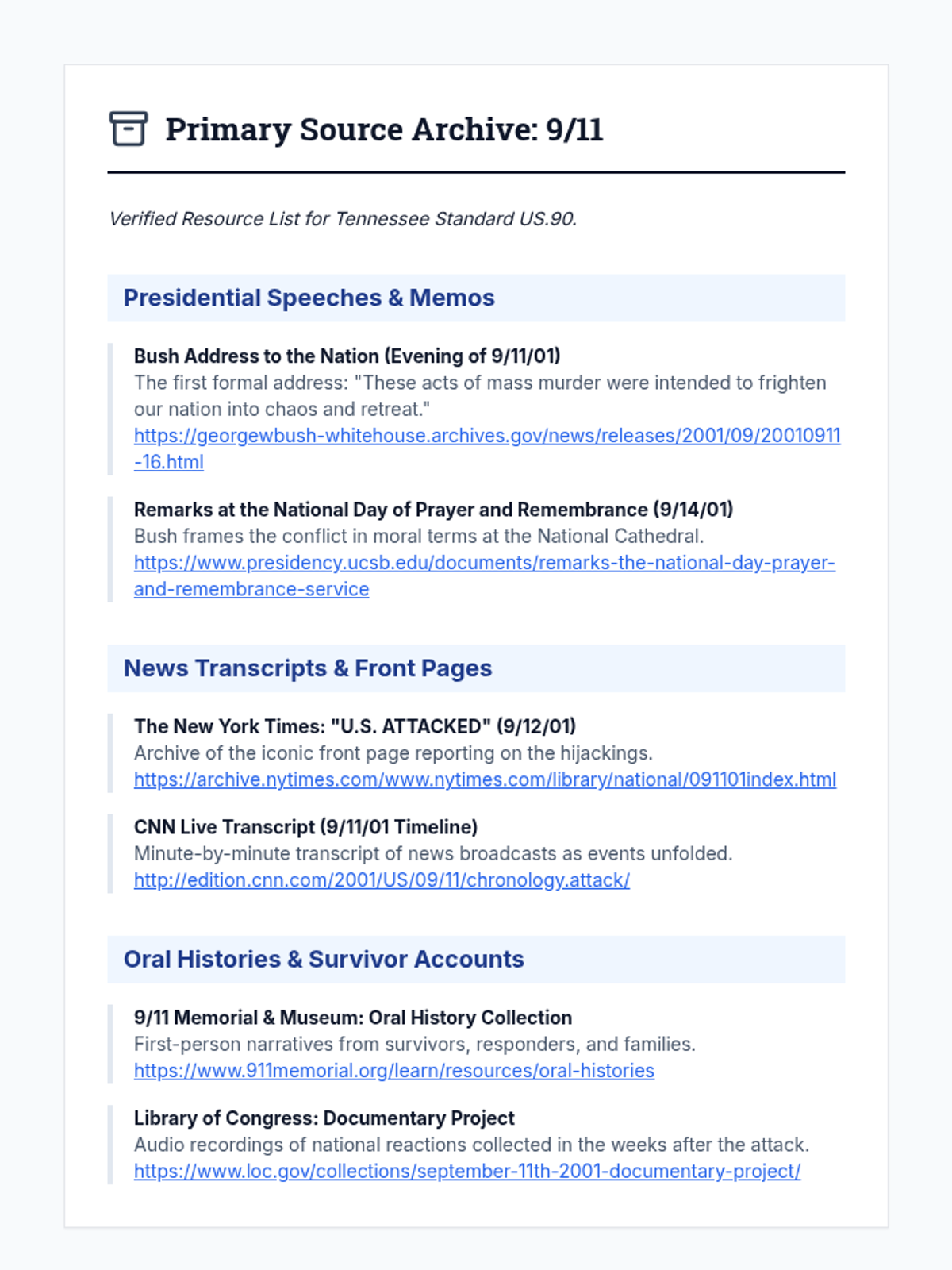
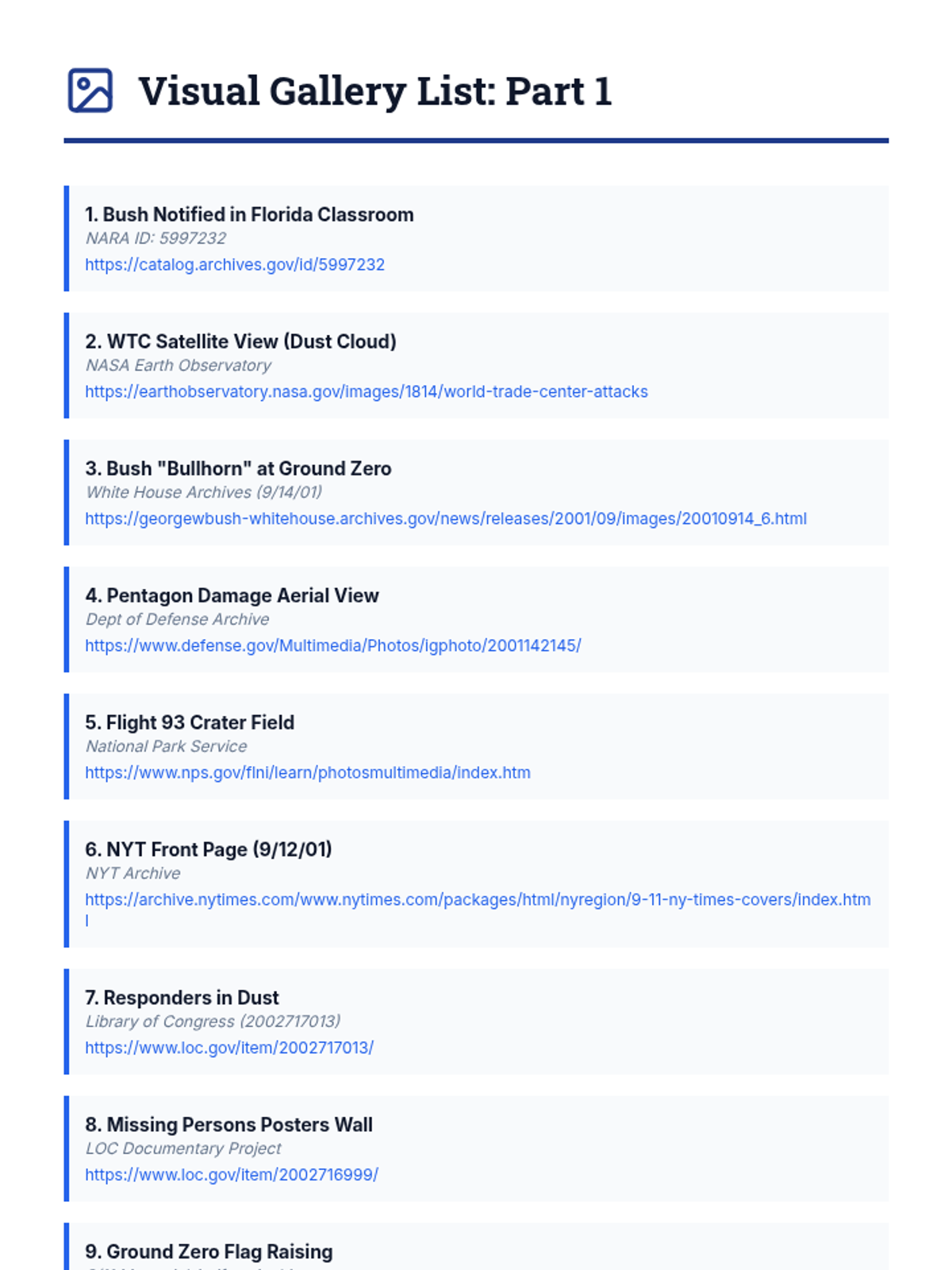
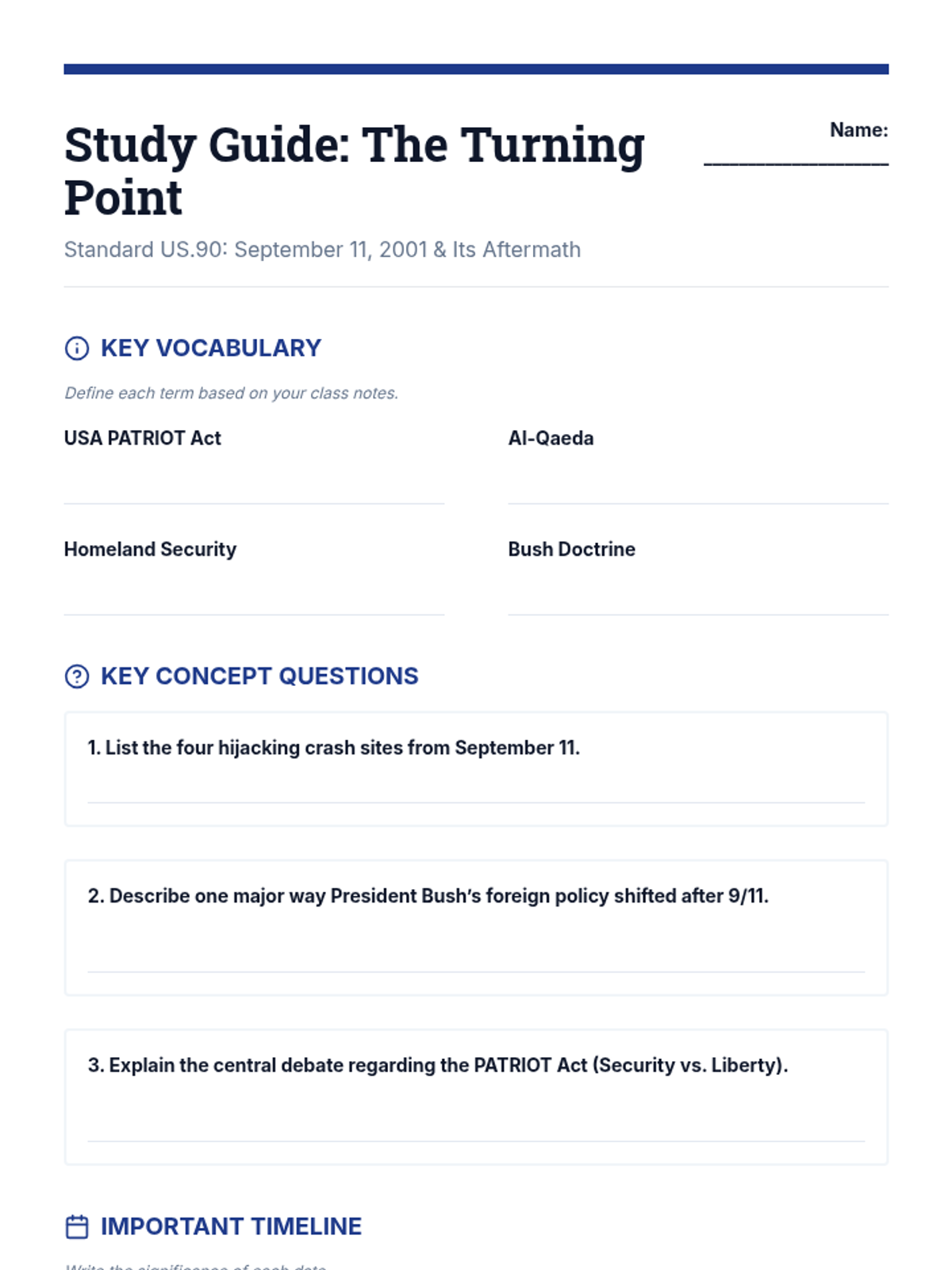
A comprehensive 40-minute lesson on the impact of the September 11 attacks, President Bush's response, and the legislative aftermath of the USA PATRIOT Act, tailored to Tennessee state standards.
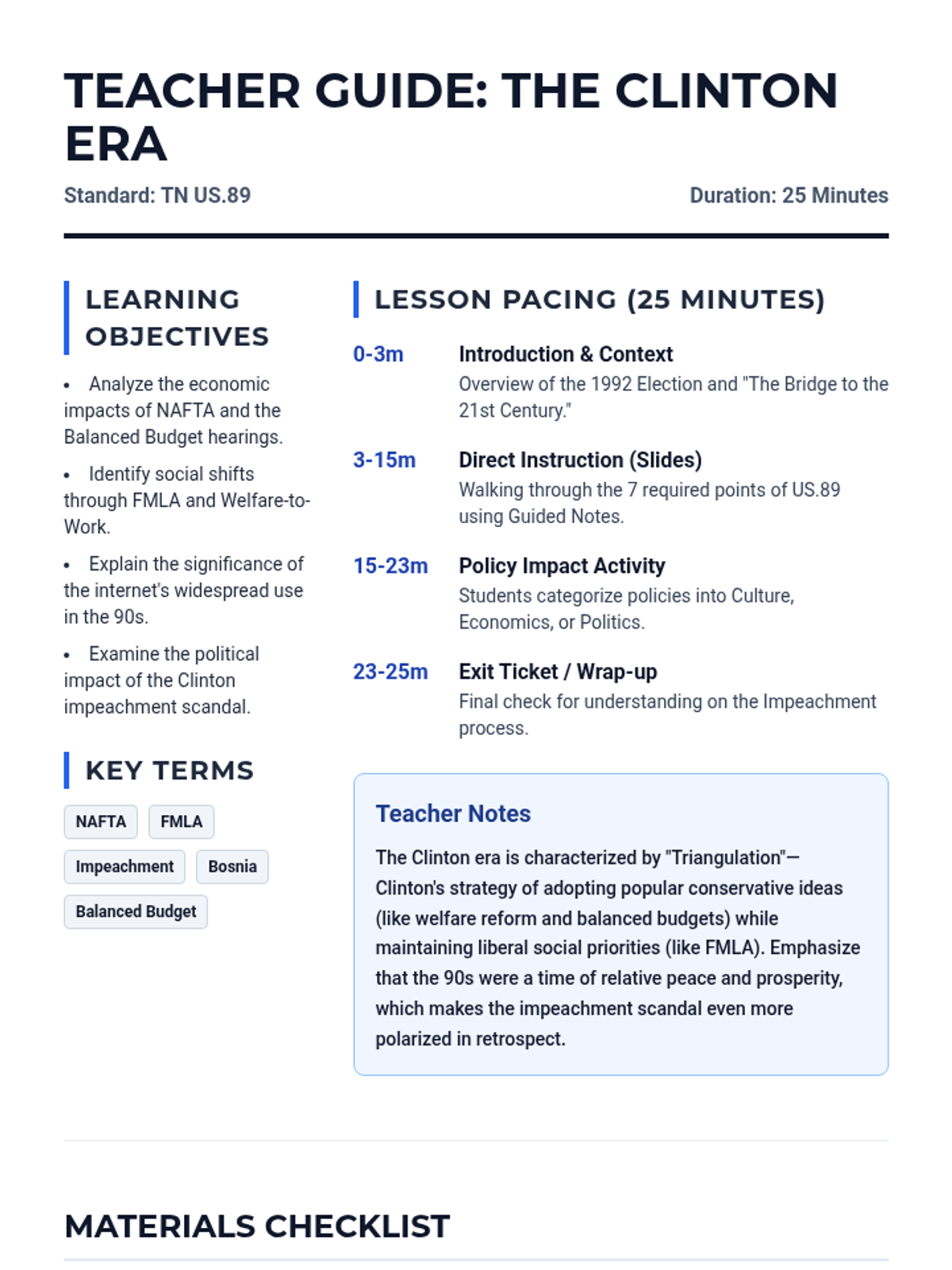
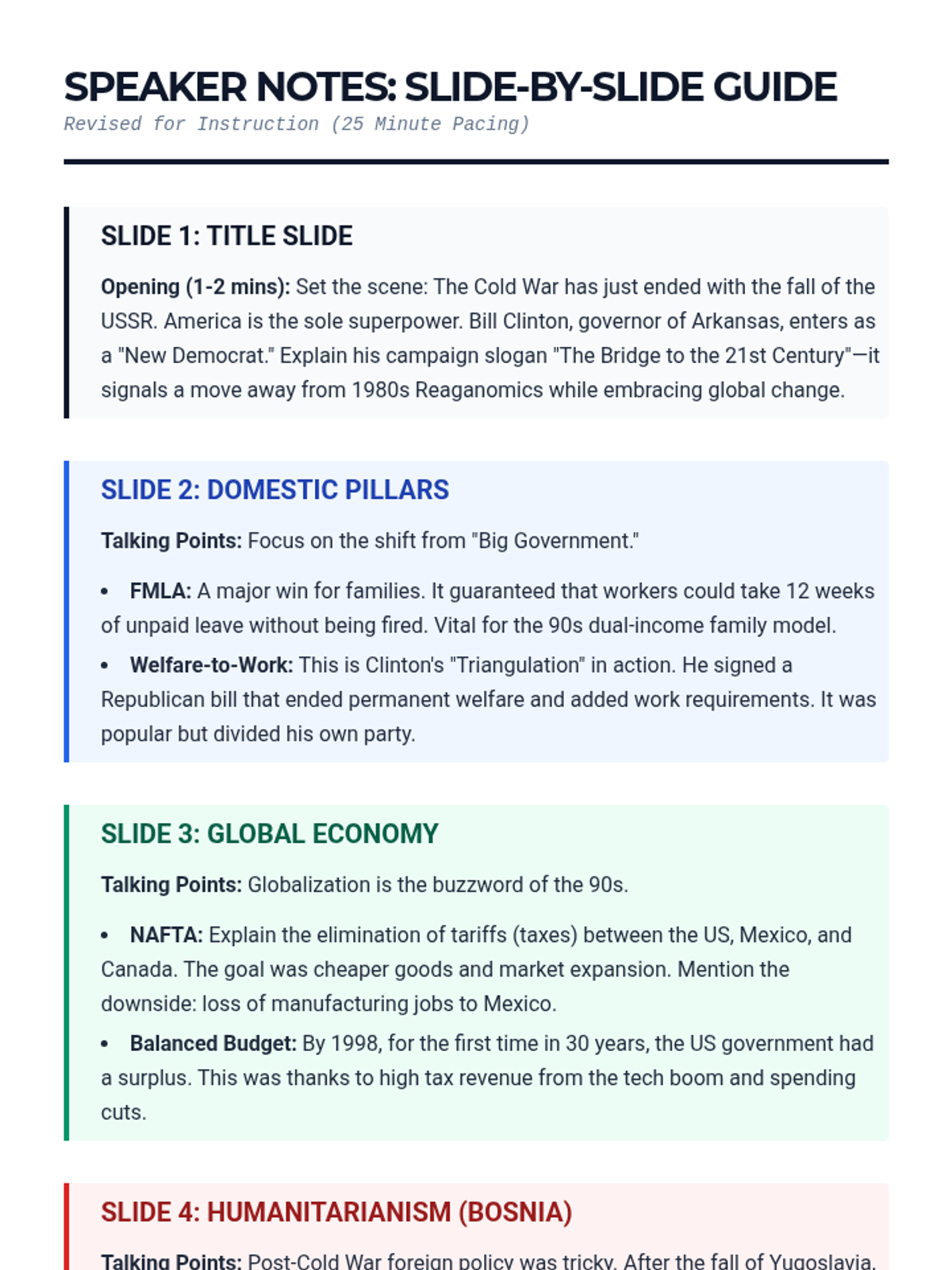
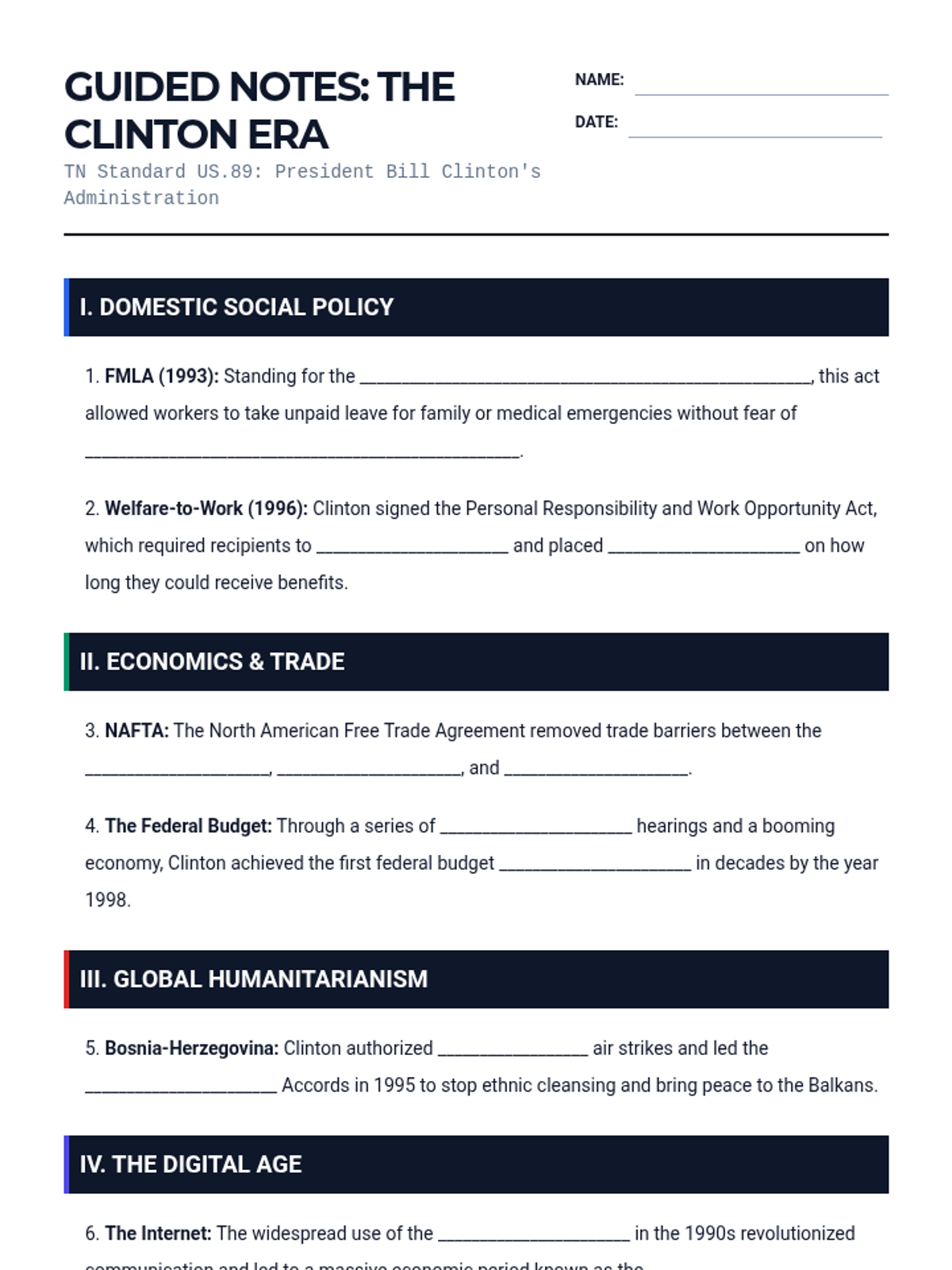
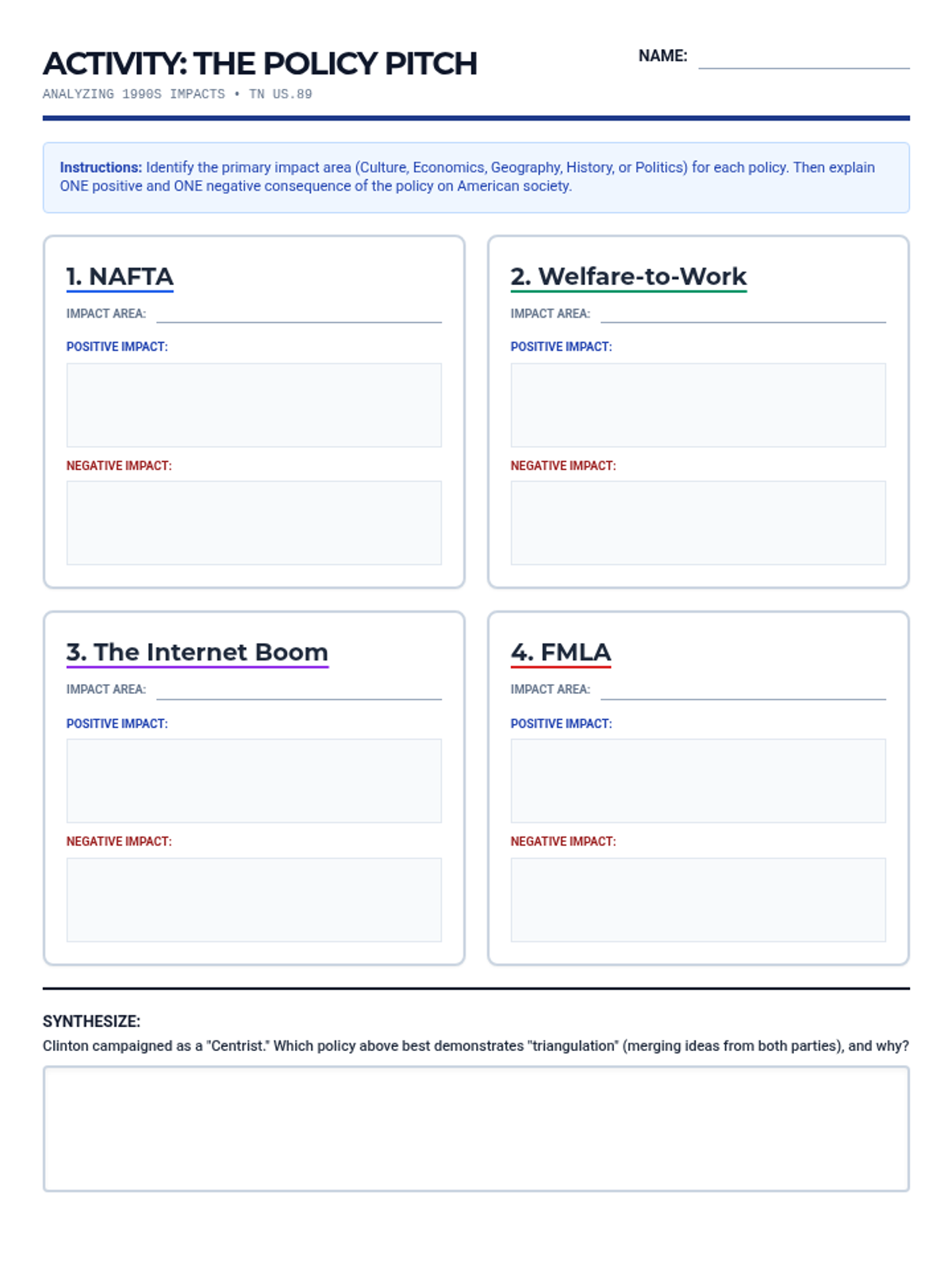
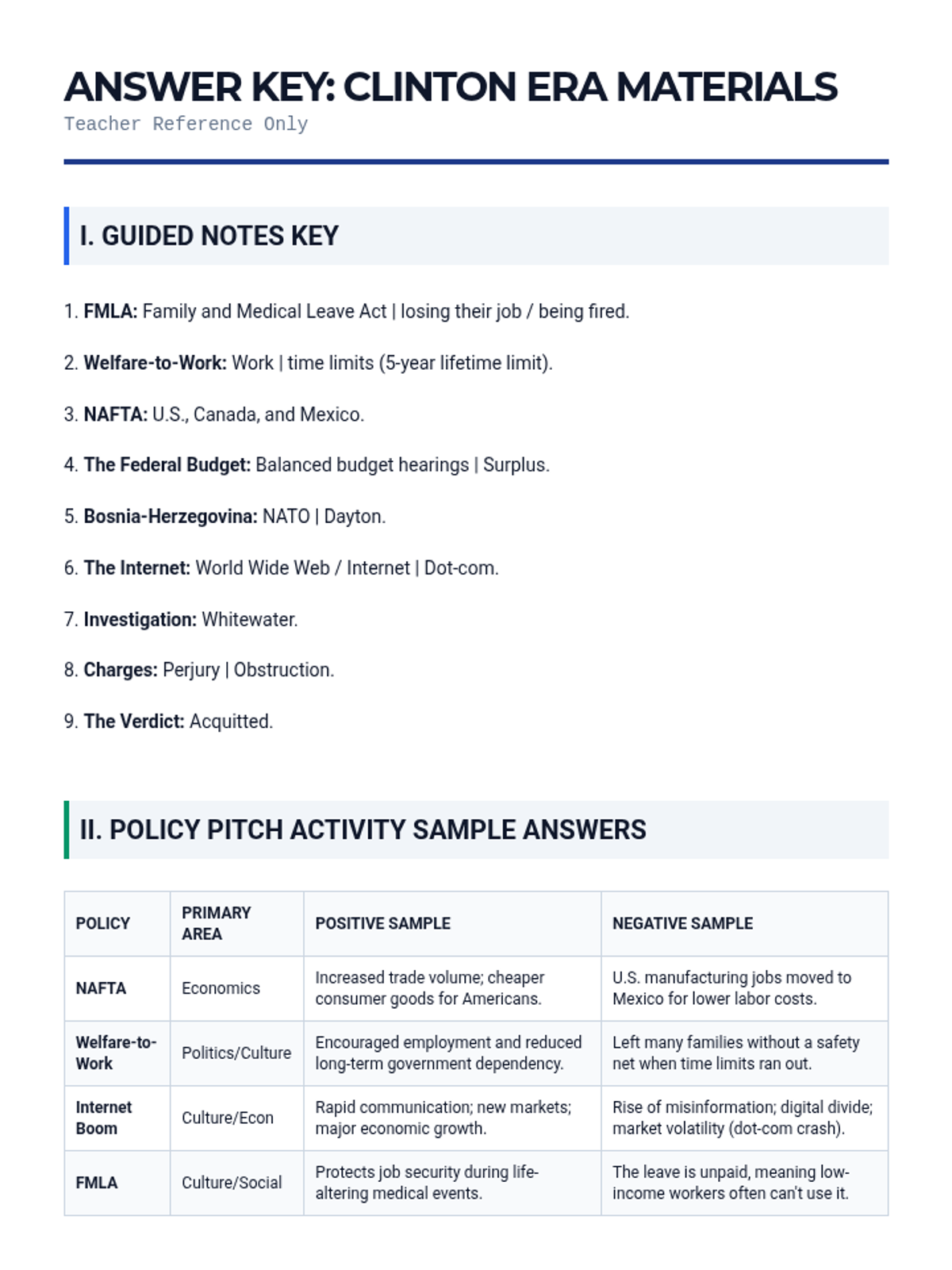
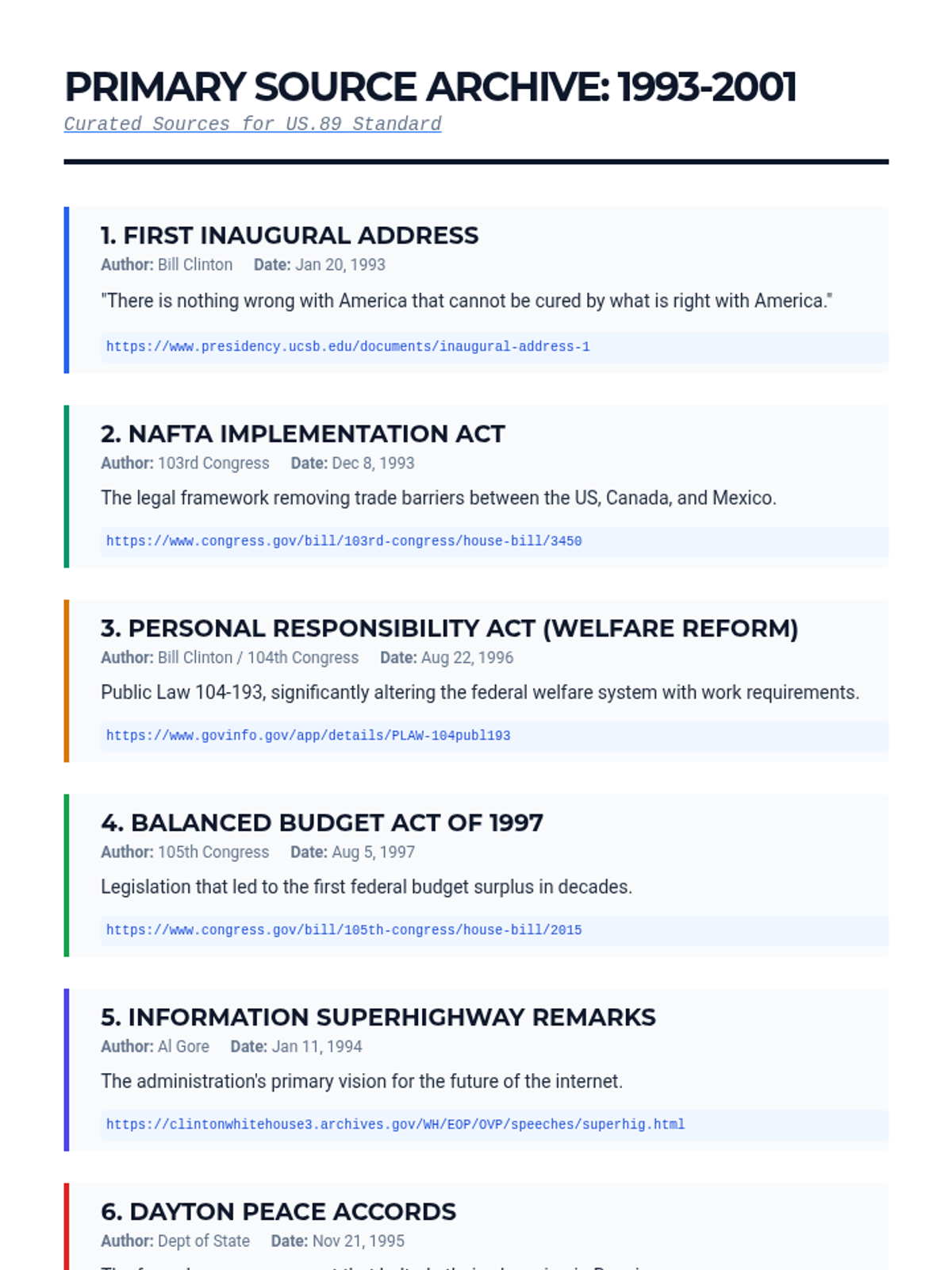
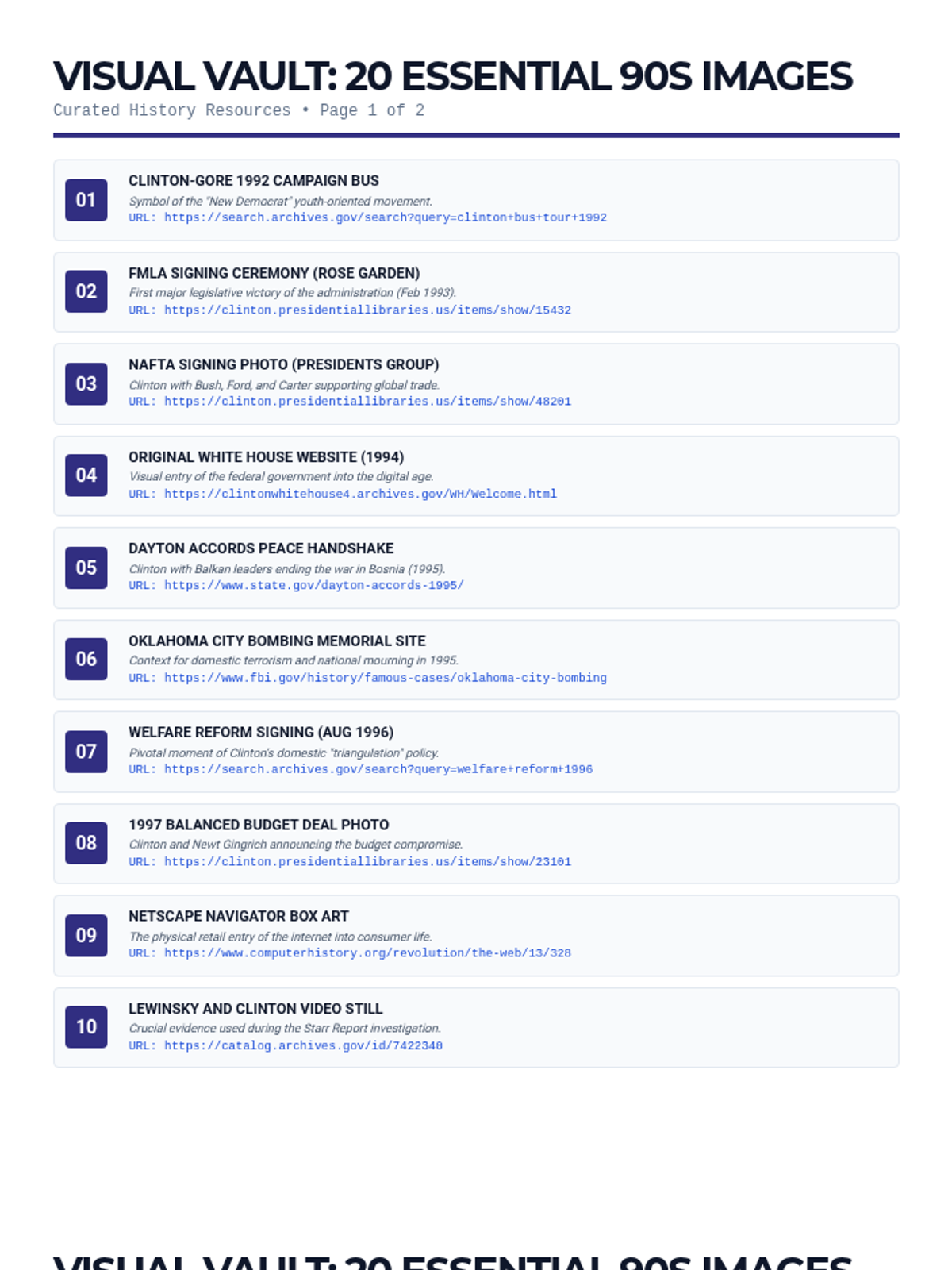
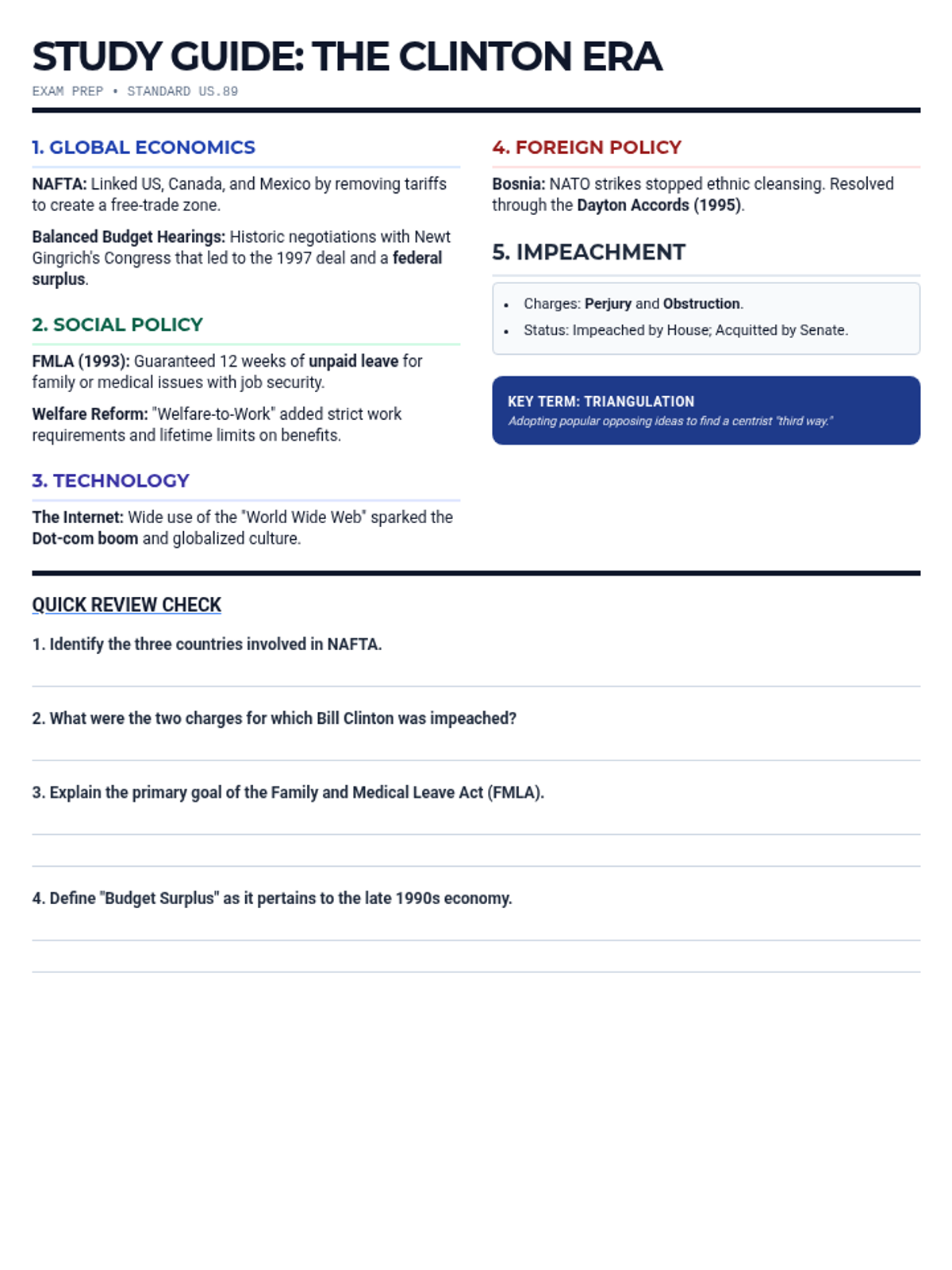
A 25-minute deep dive into the Clinton Administration, covering major domestic policies, foreign interventions, and the technological boom of the 1990s. This lesson addresses TN Standard US.89 through direct instruction and a policy-impact activity.
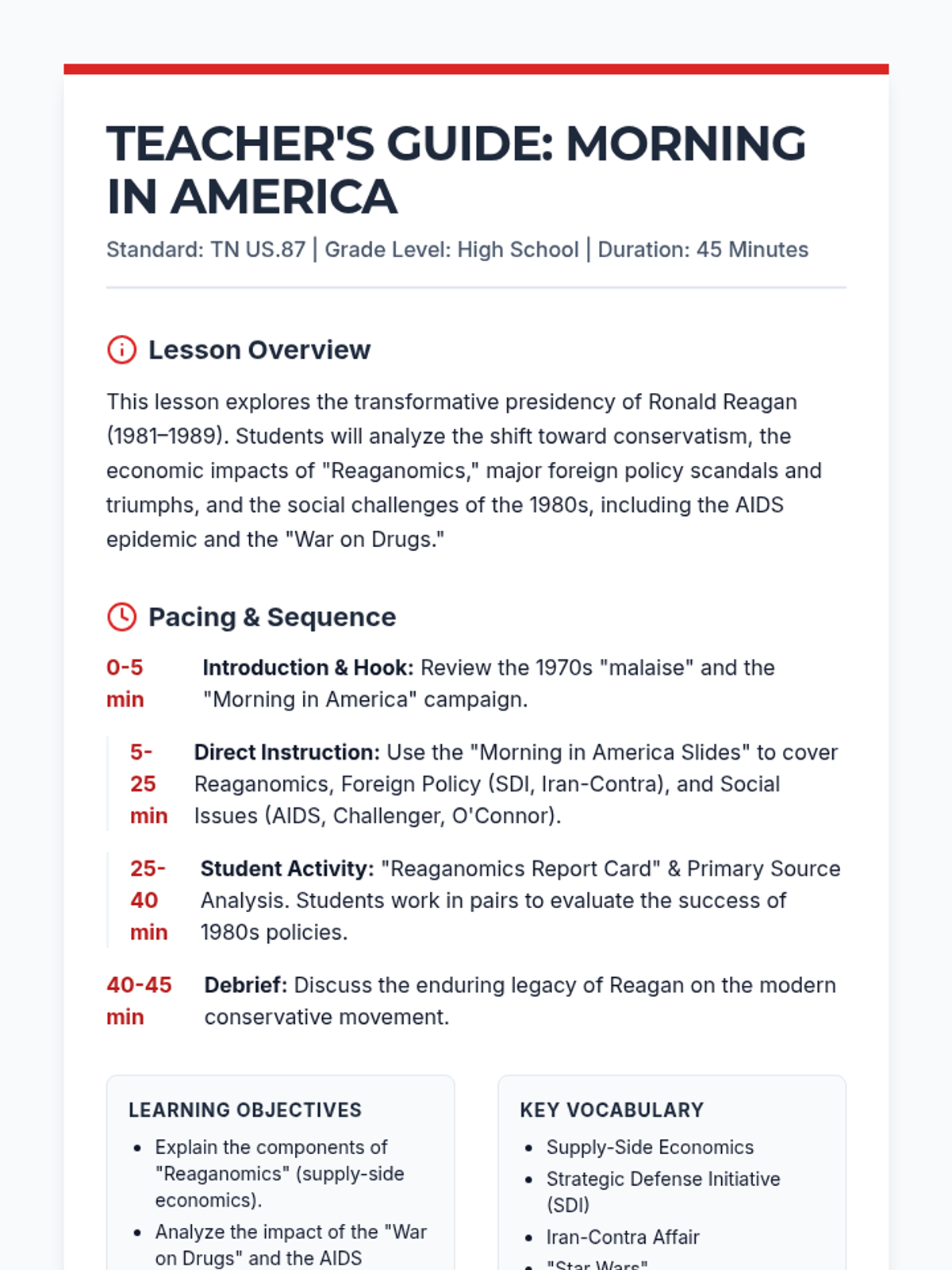
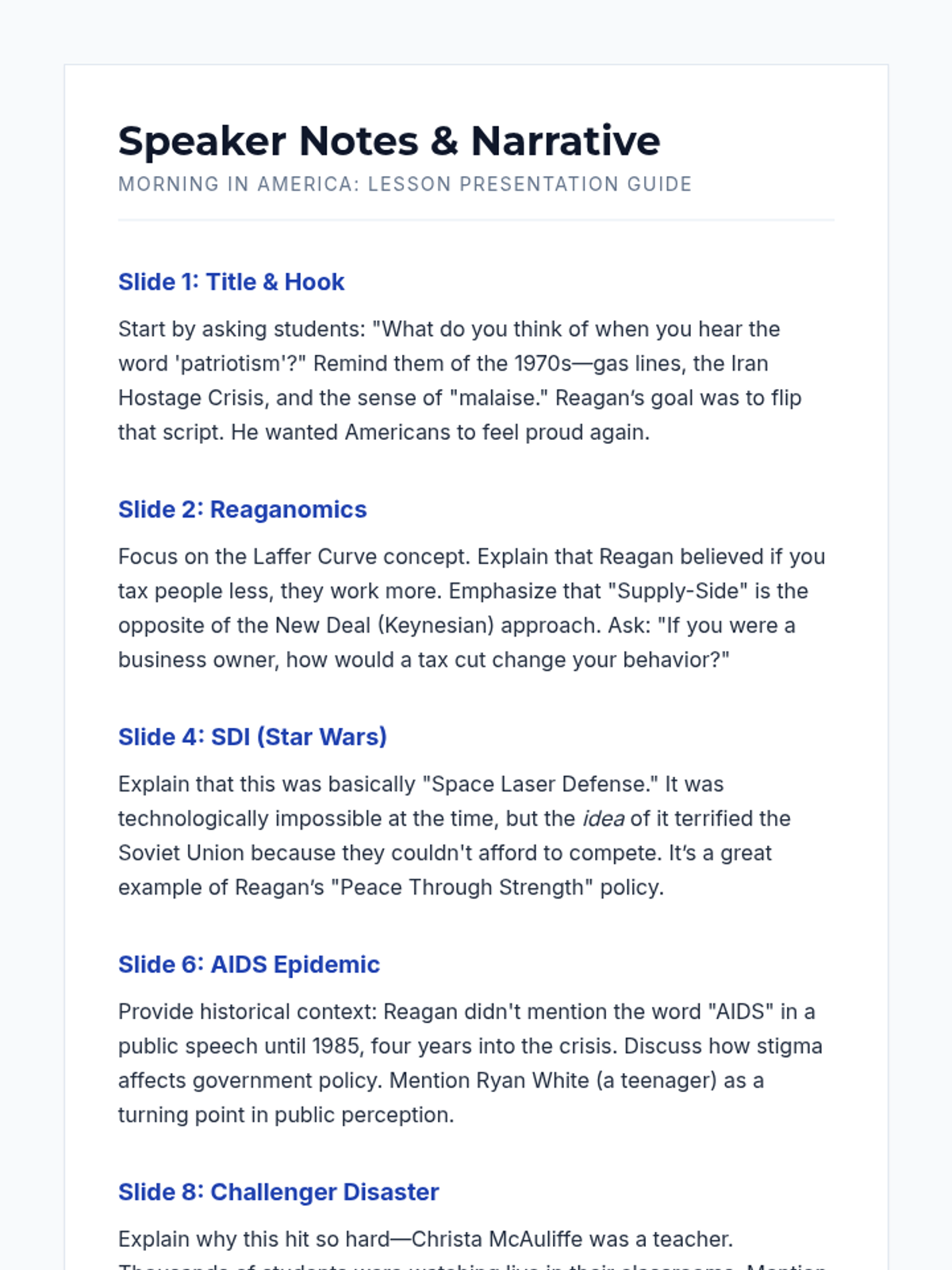
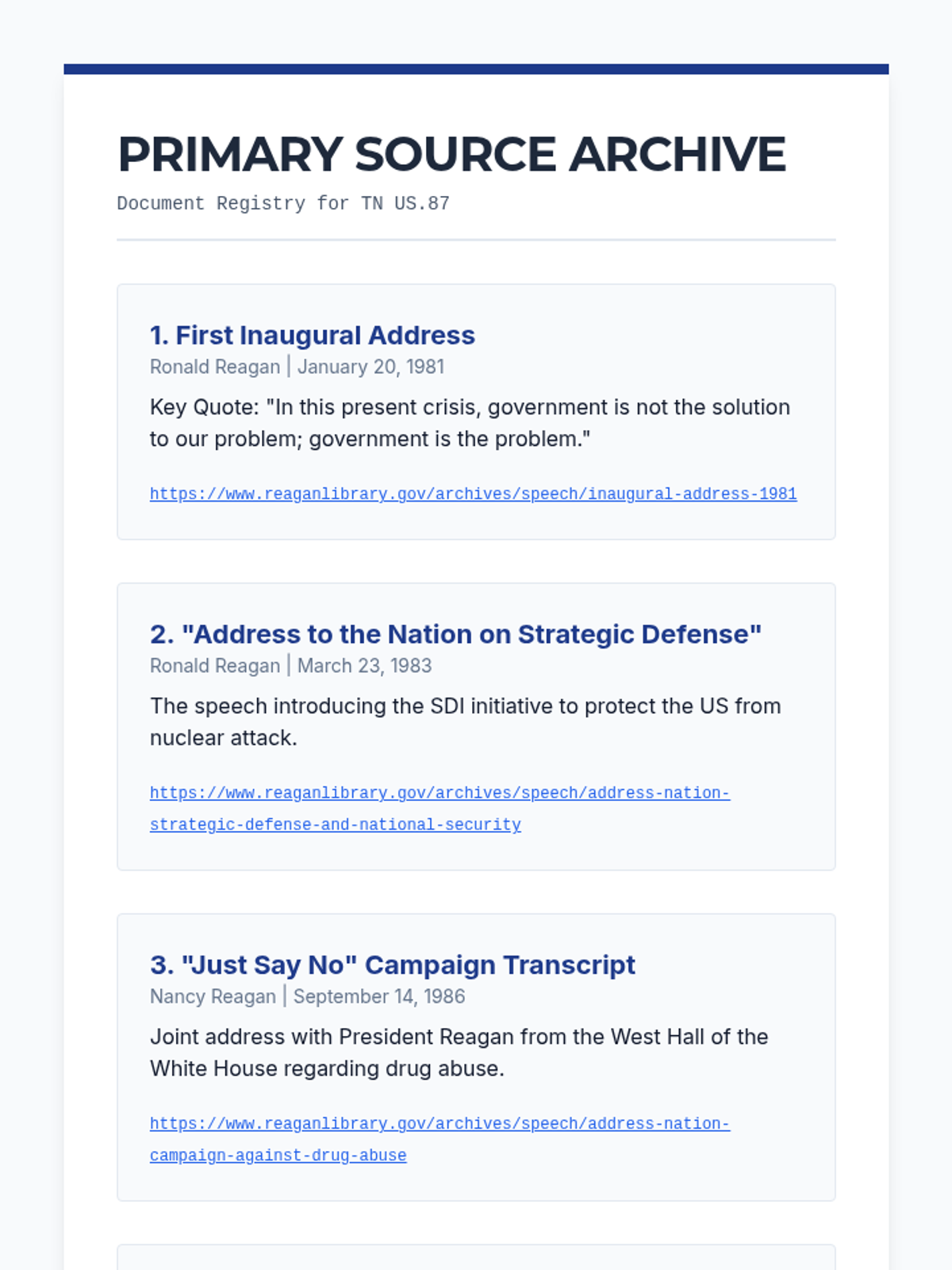
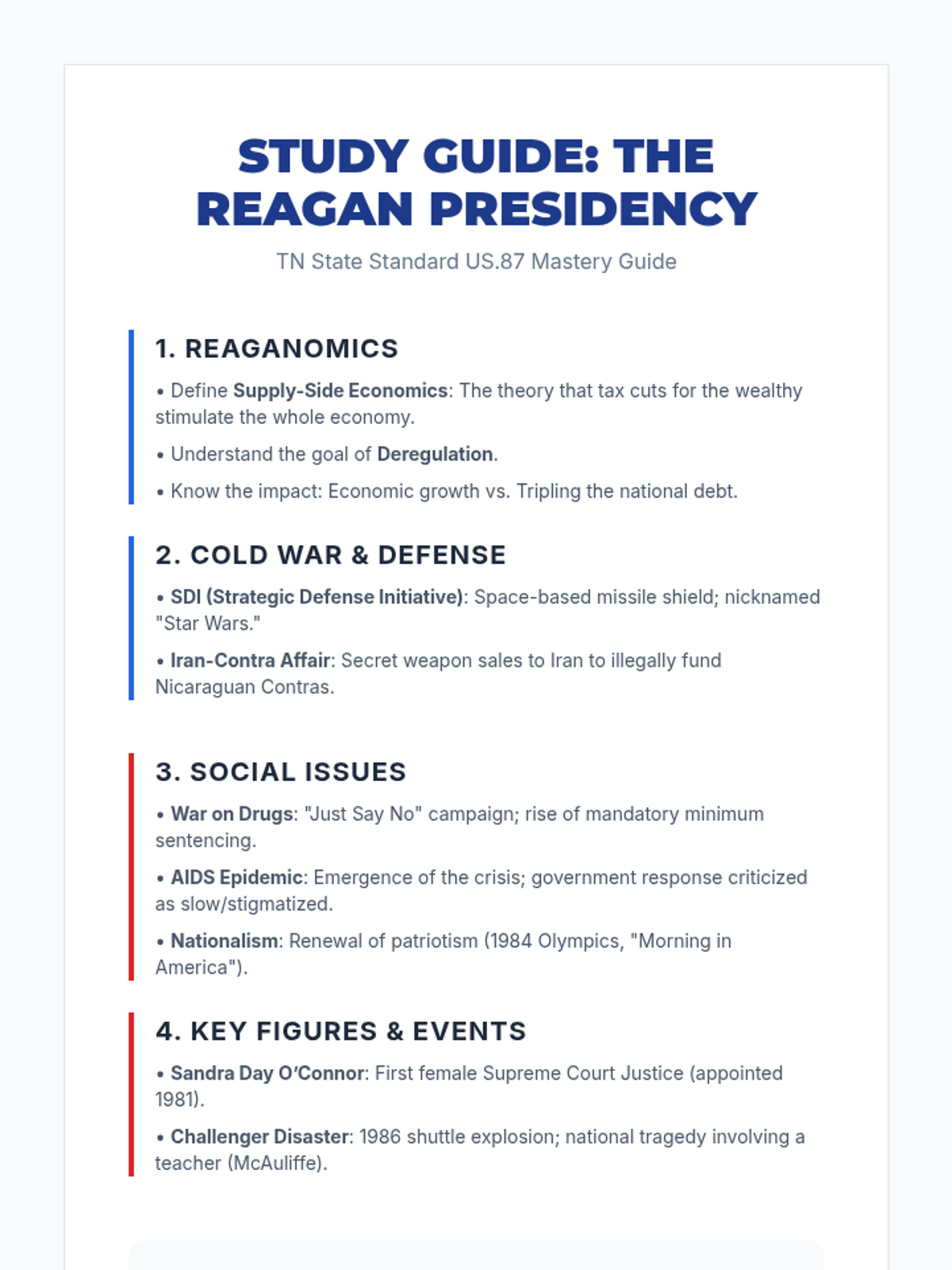
A comprehensive high school history lesson covering the presidency of Ronald Reagan, focusing on Reaganomics, the Cold War, and domestic social issues as aligned with TN Standard US.87.
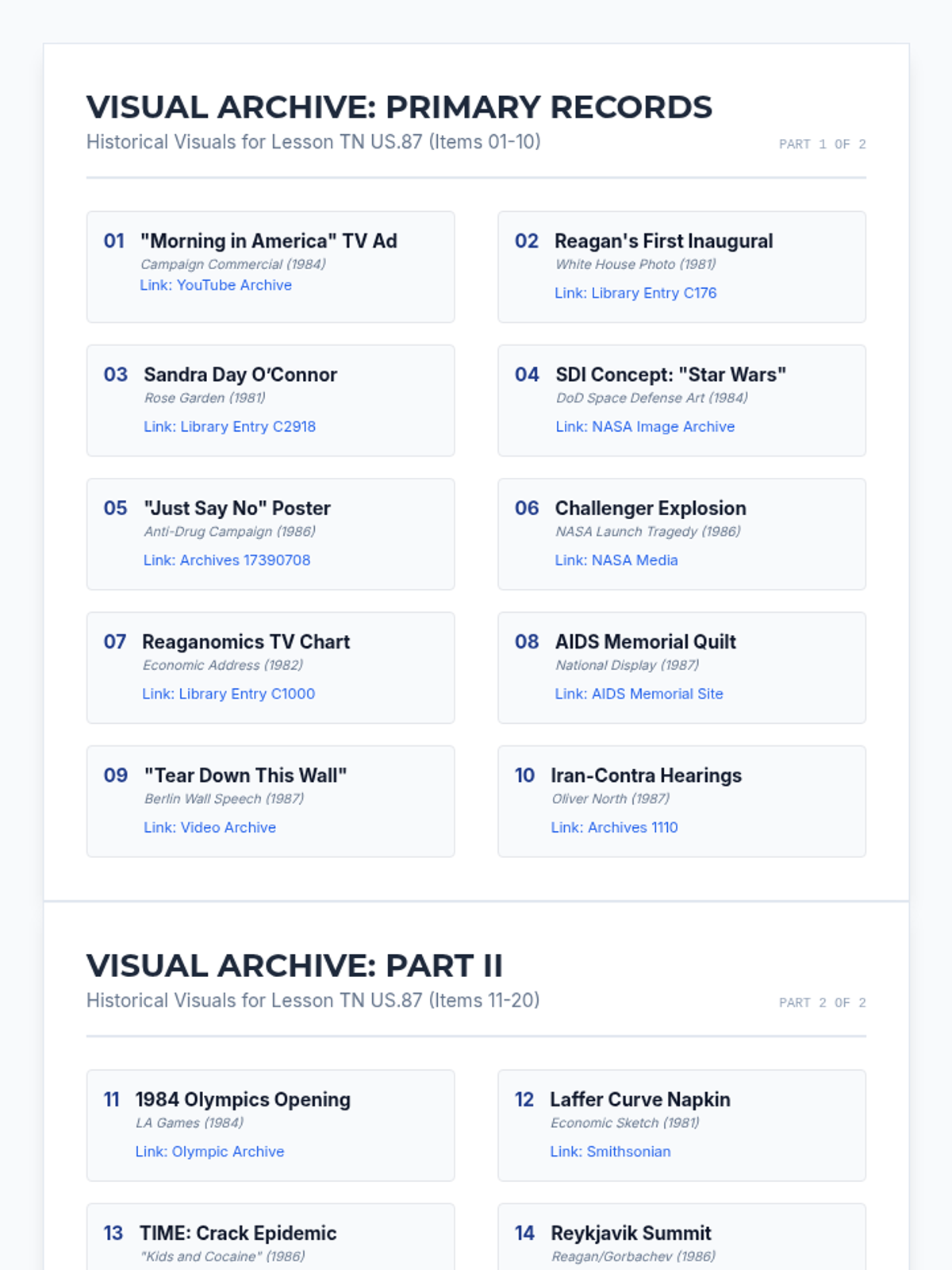
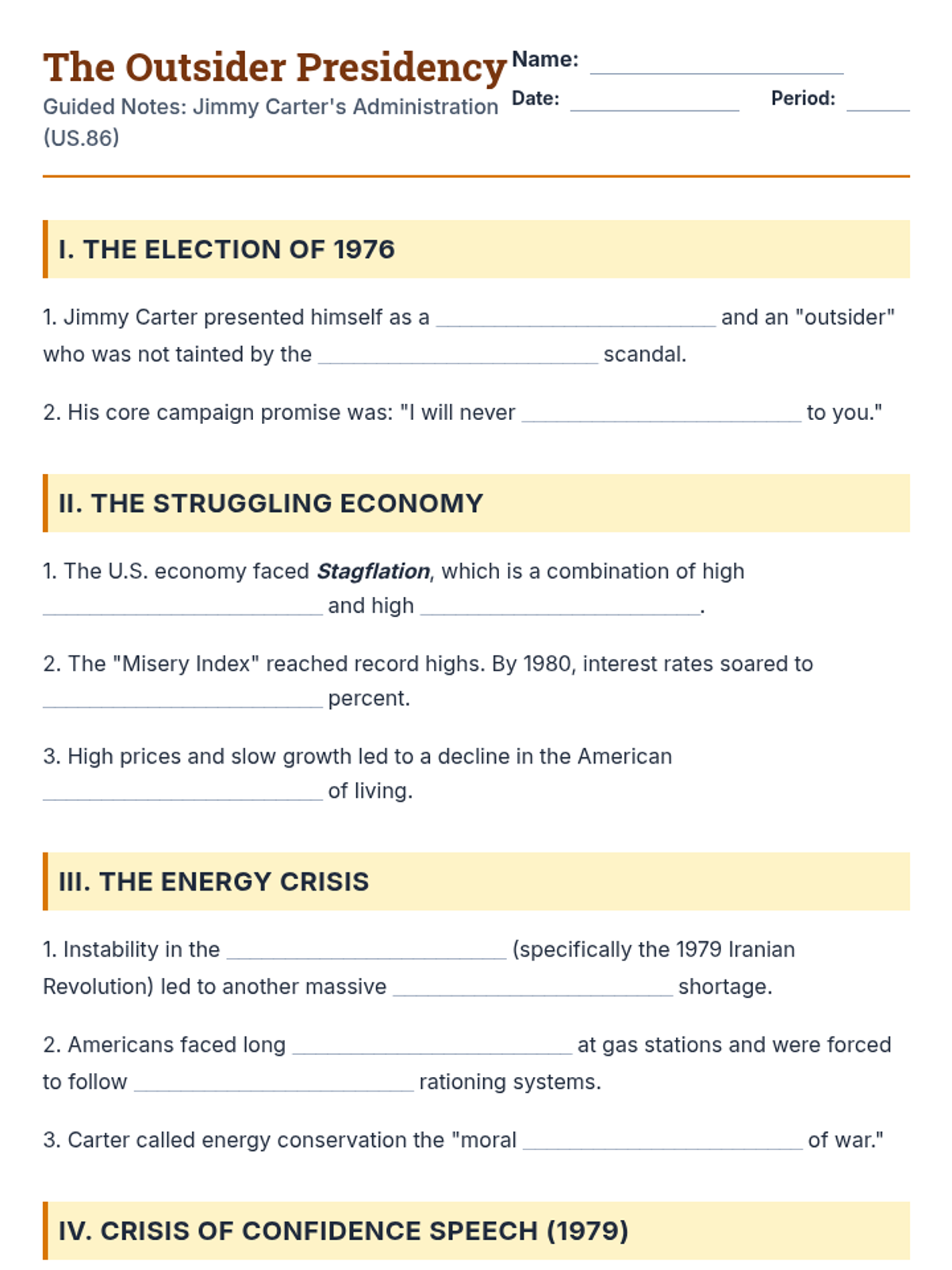
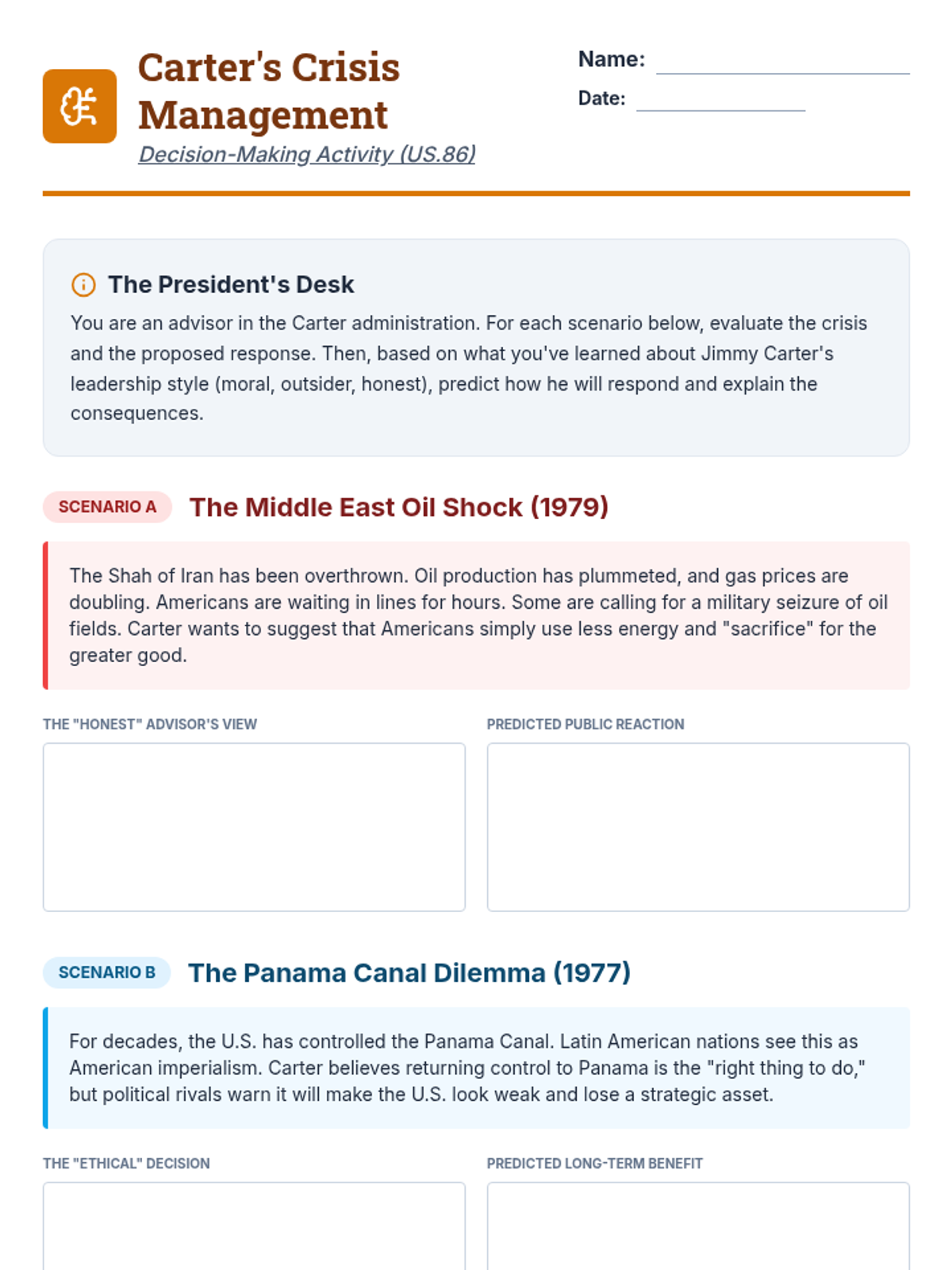
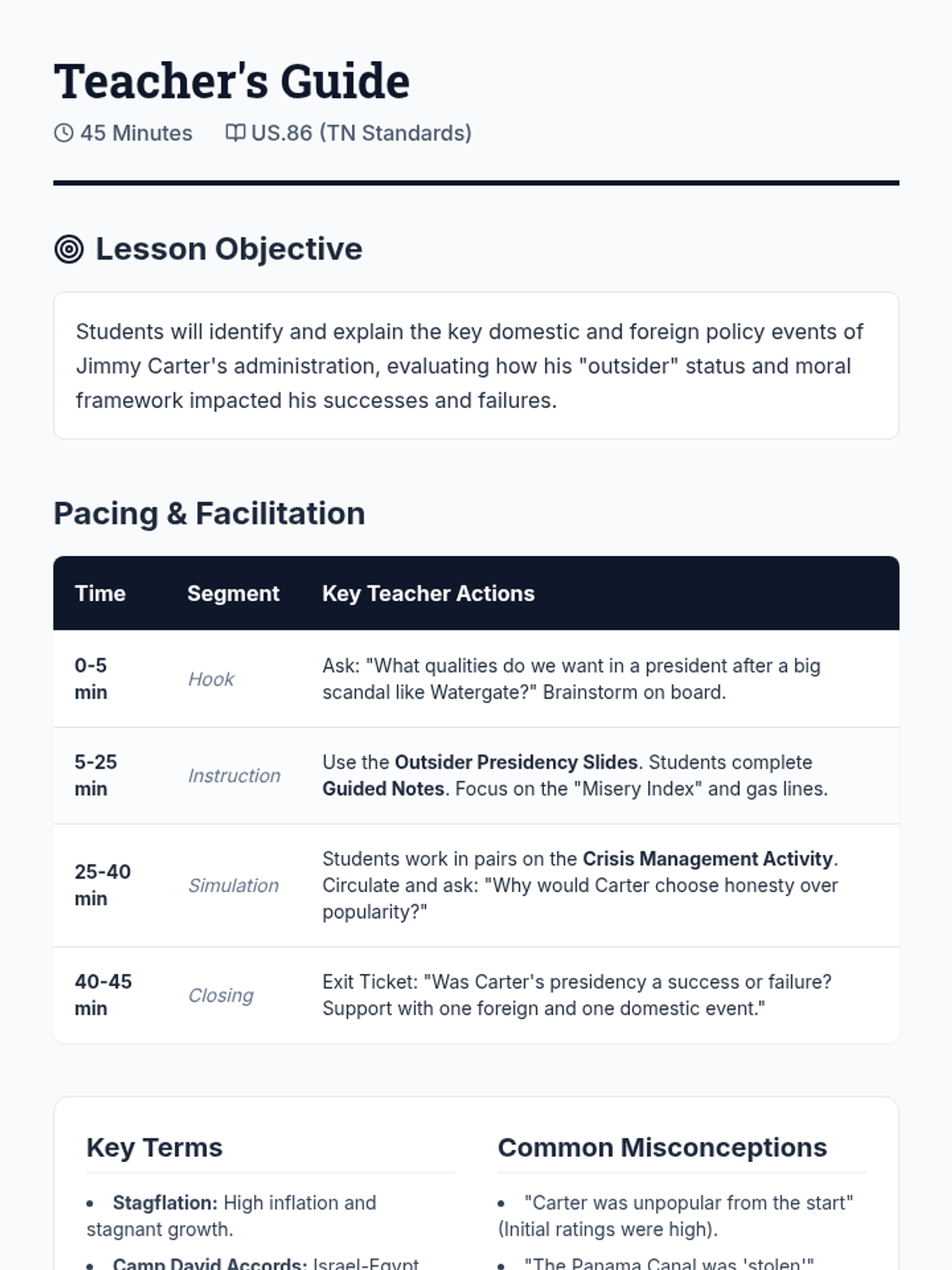
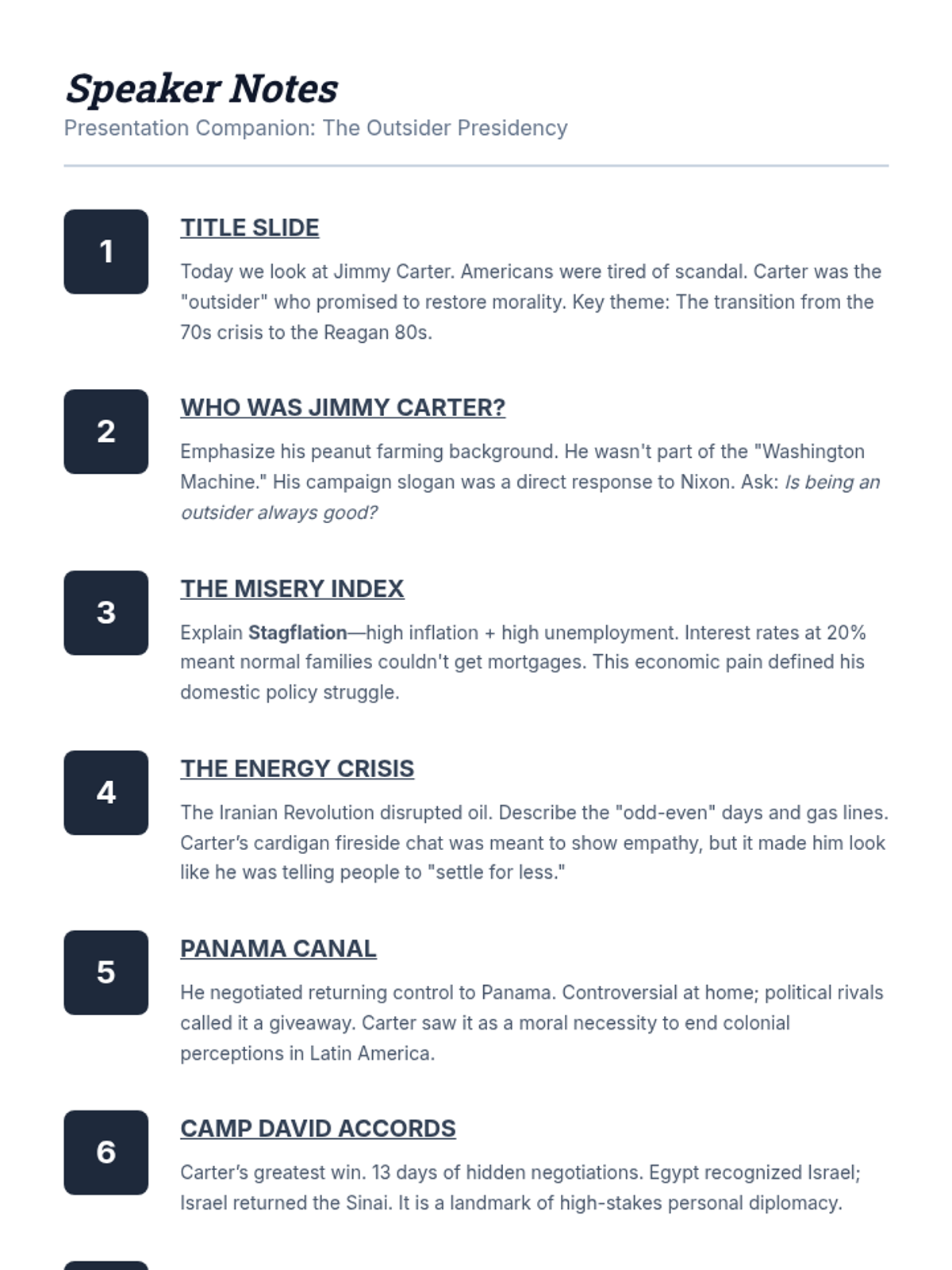
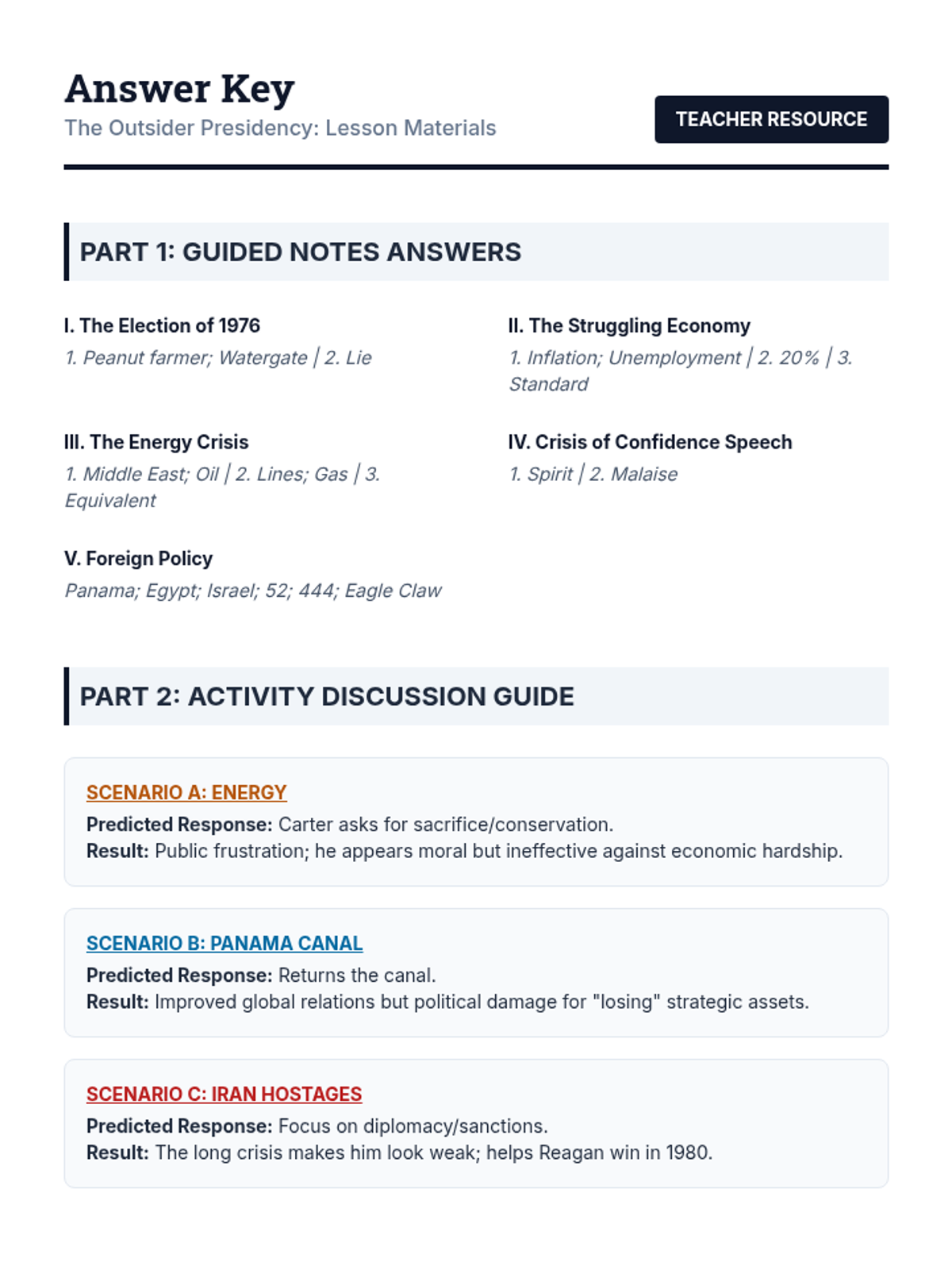
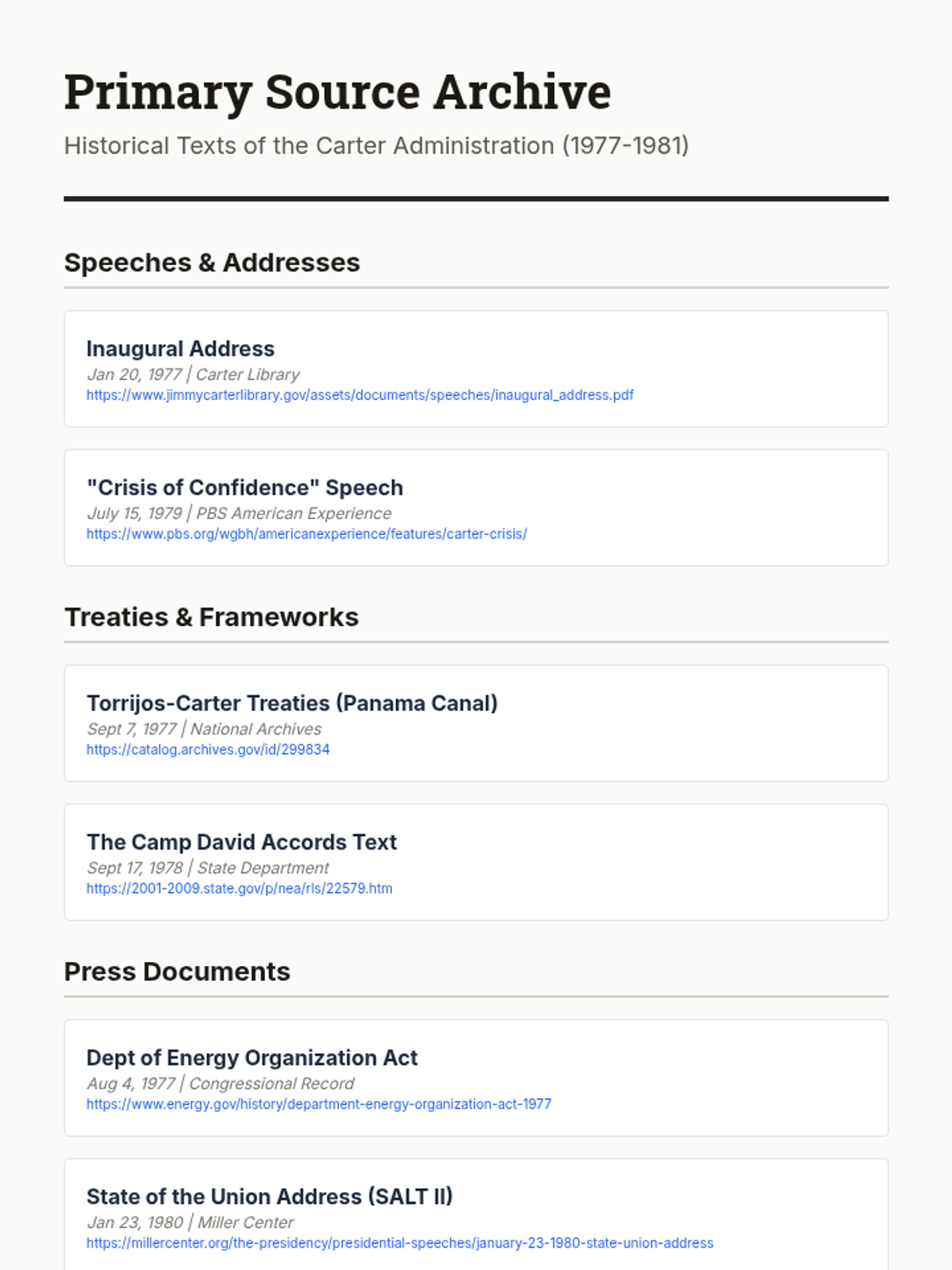
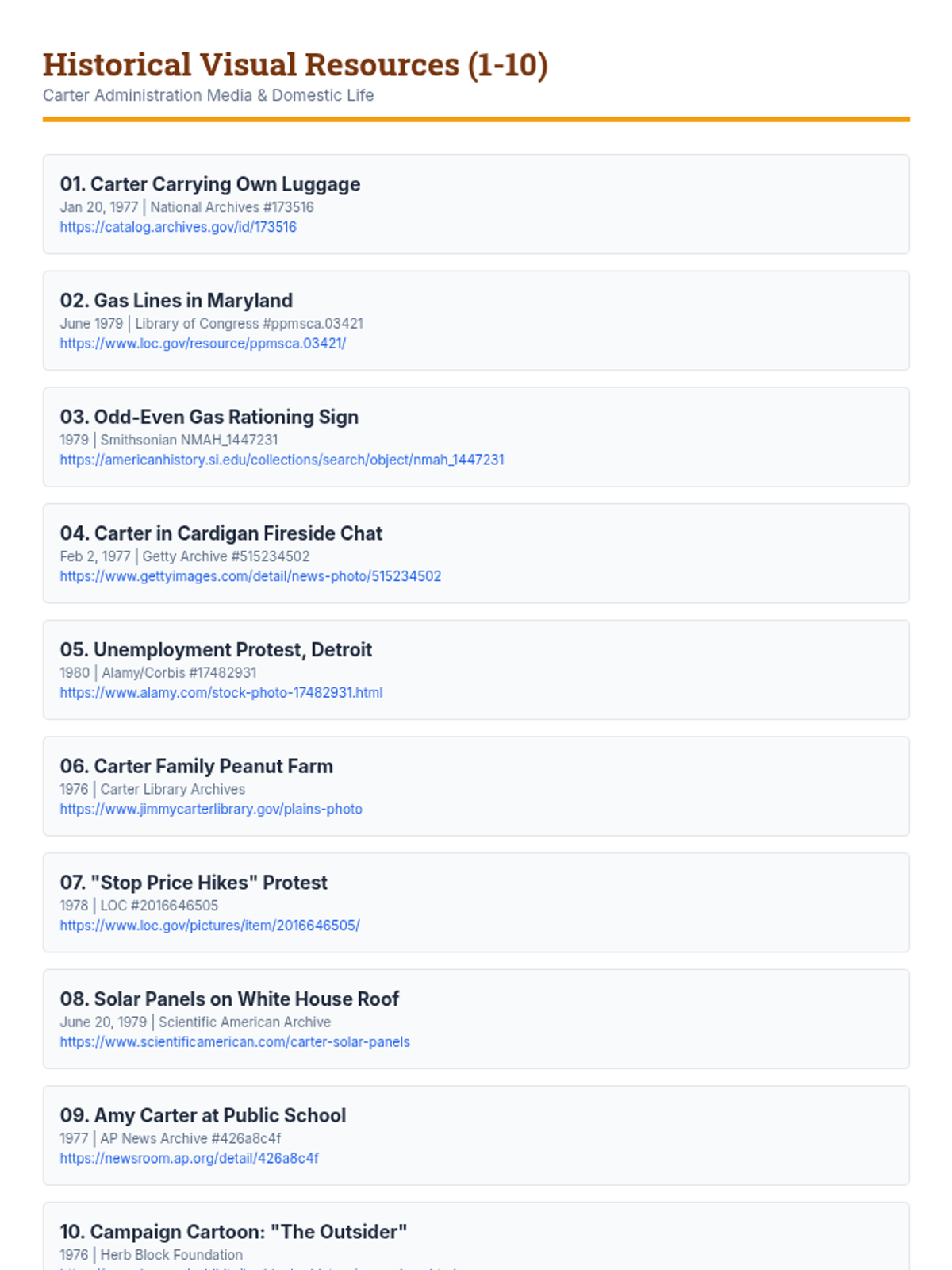
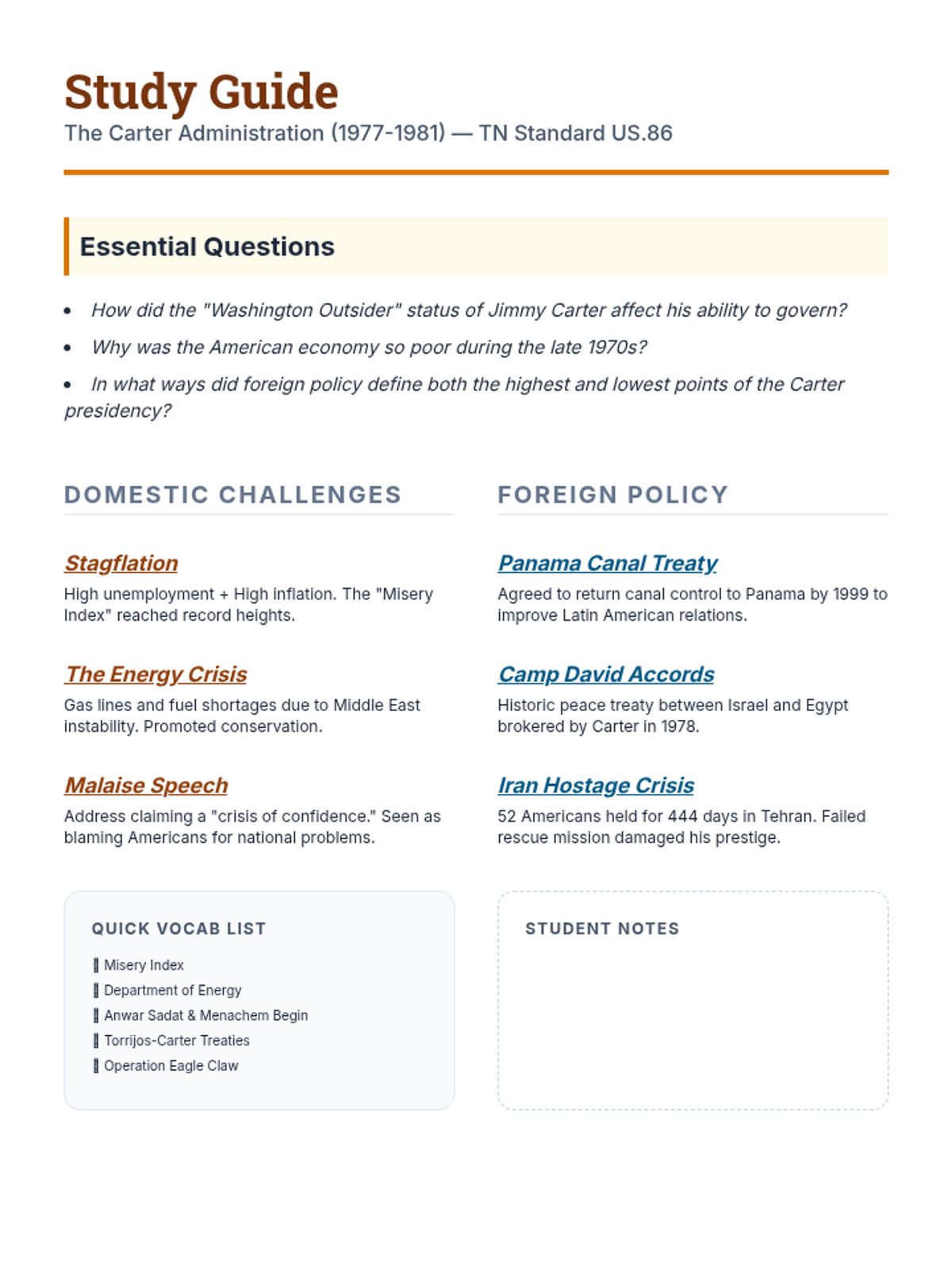
A comprehensive lesson on Jimmy Carter's administration, covering the economic challenges, foreign policy triumphs and failures, and the cultural shift of the late 1970s. Includes slides, notes, activities, and extensive primary/visual resources.
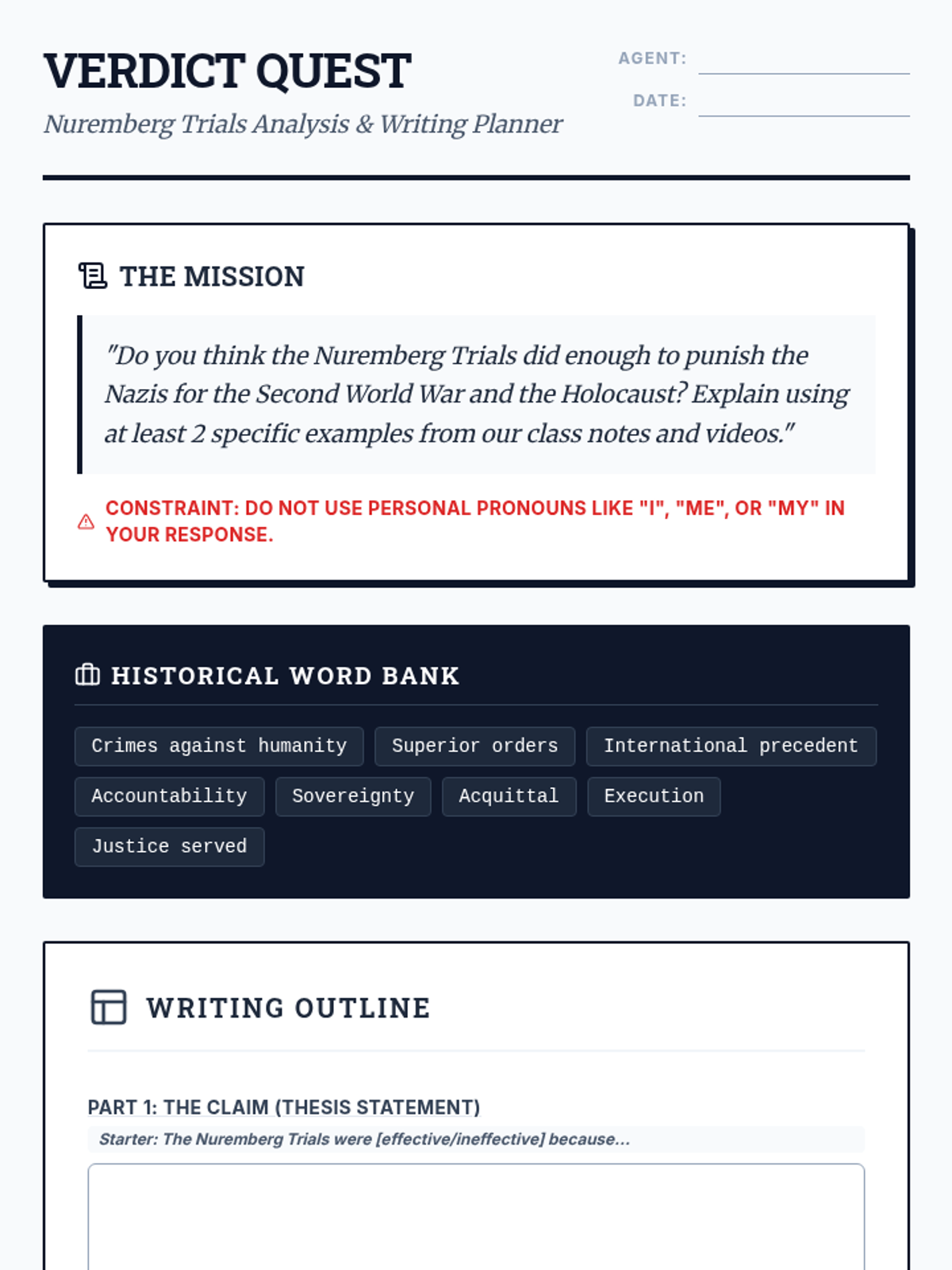
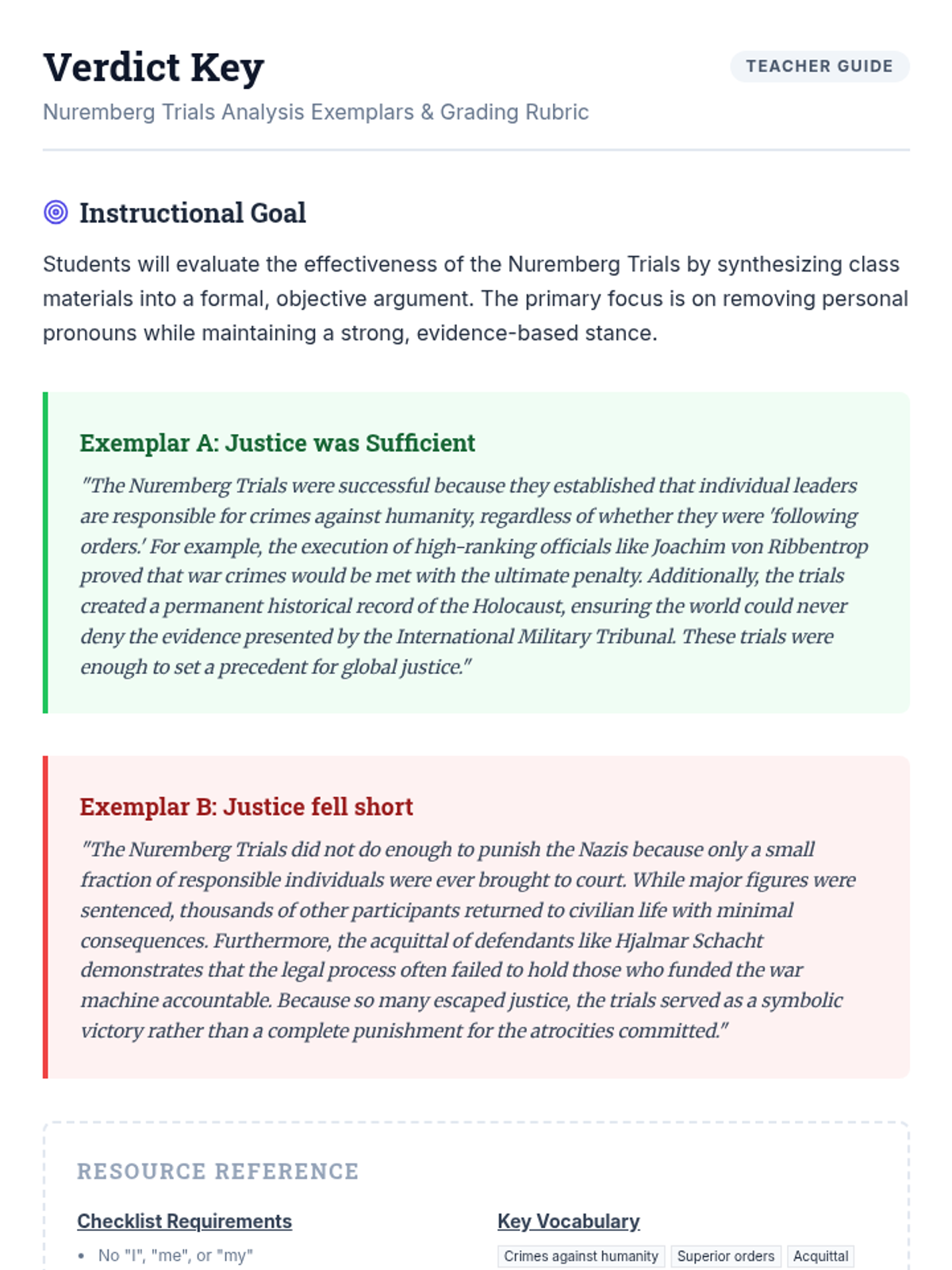
A lesson focused on evaluating the historical impact and adequacy of the Nuremberg Trials through structured writing and evidence-based argumentation.
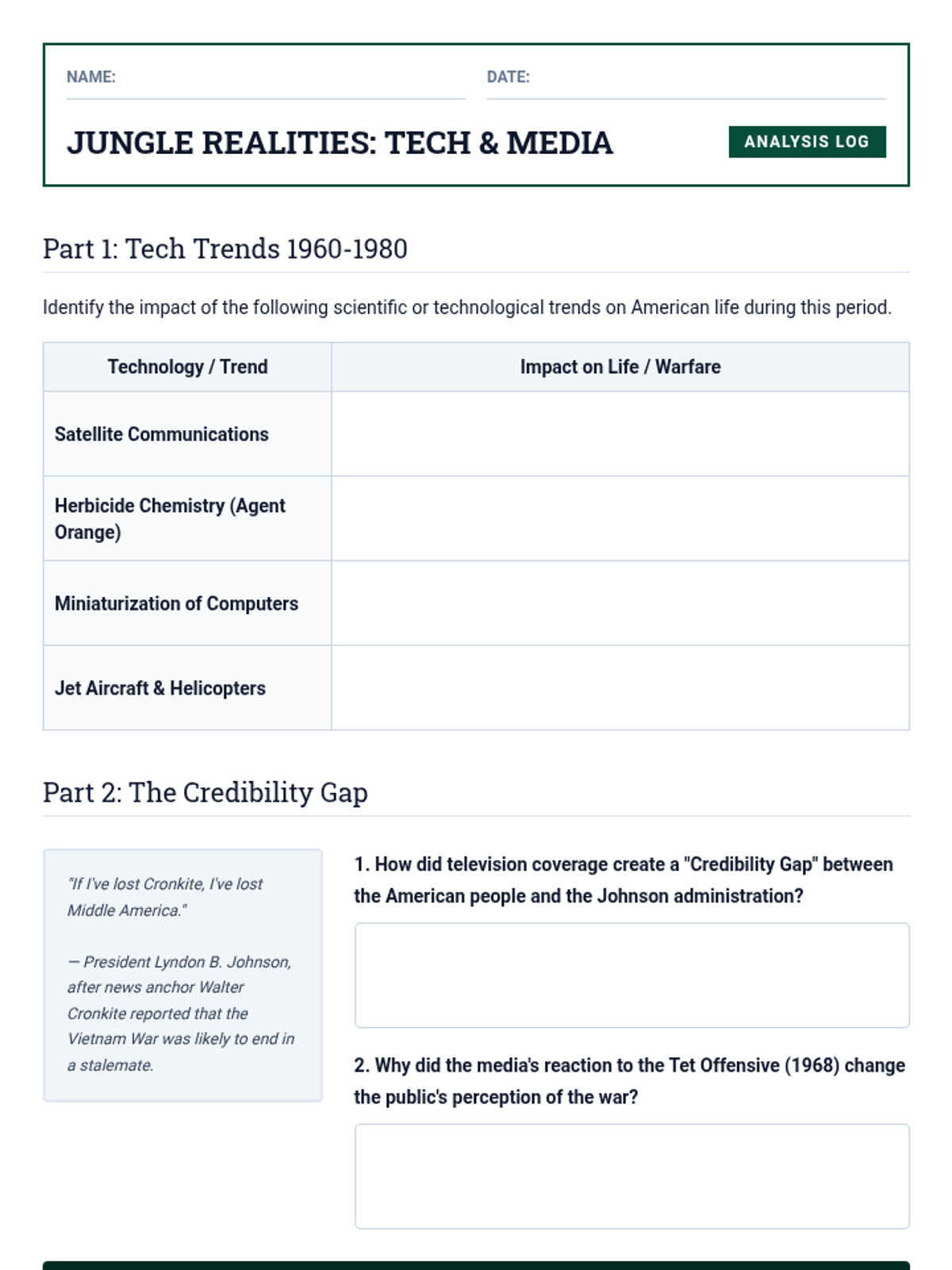
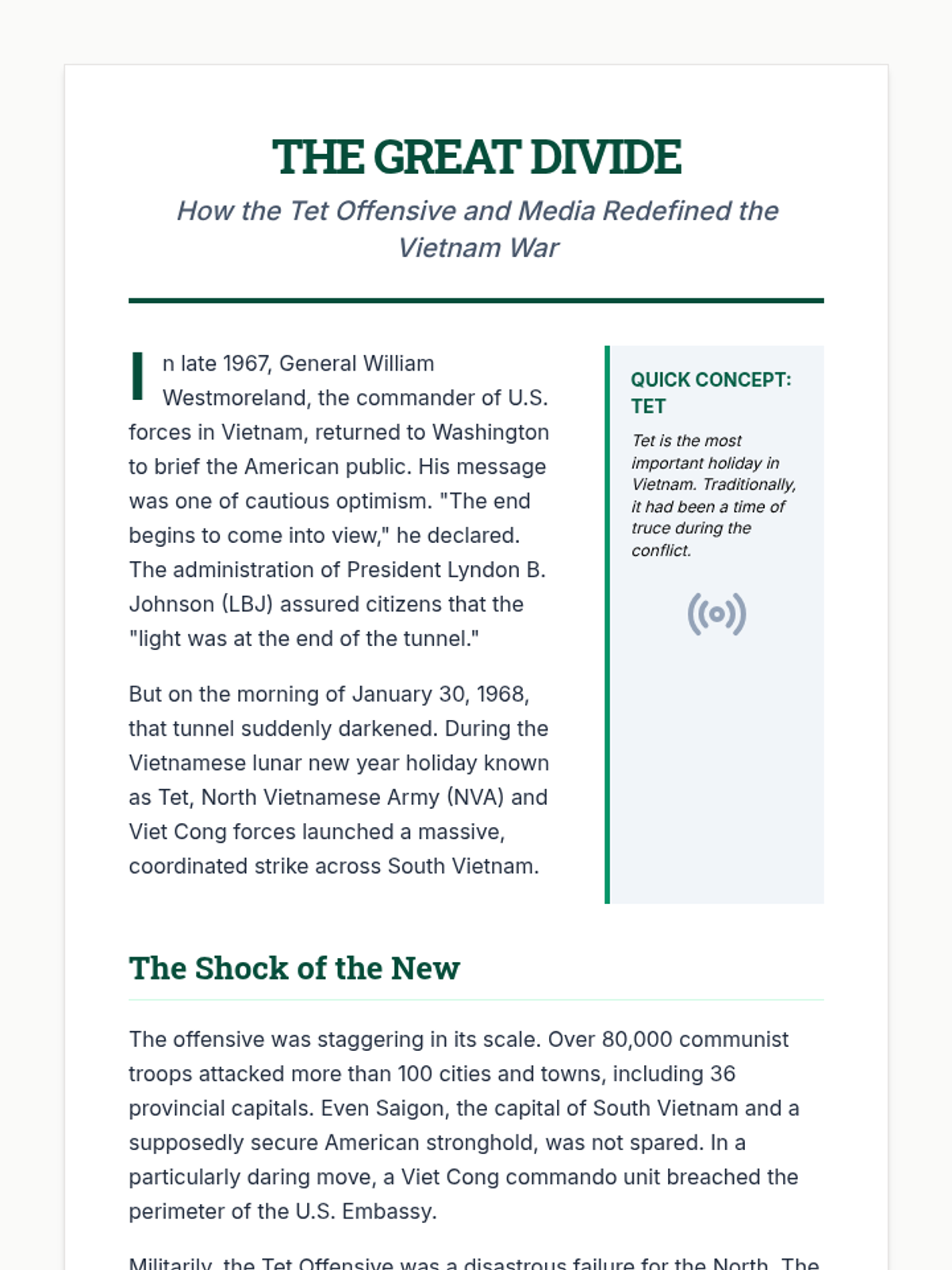
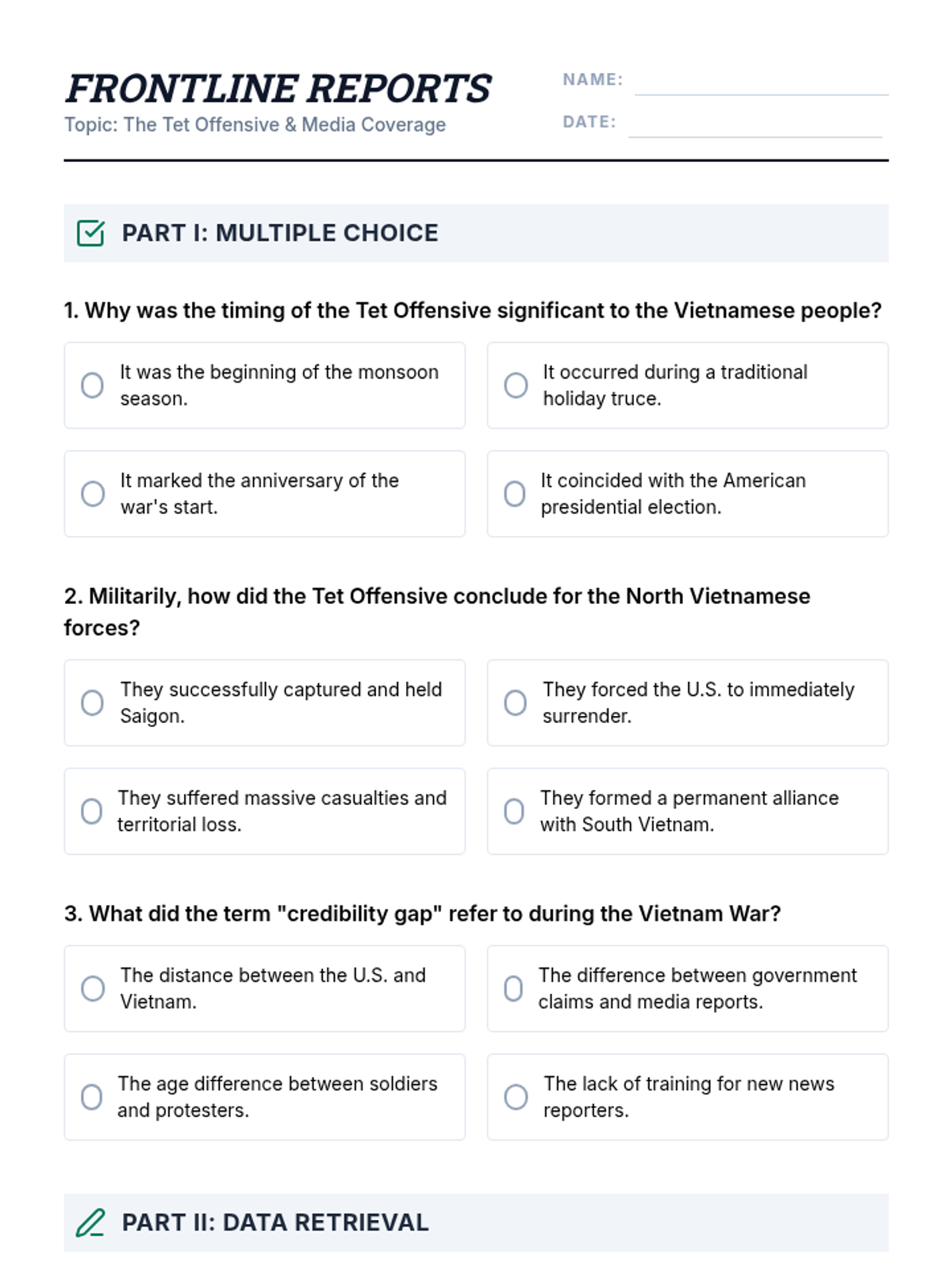
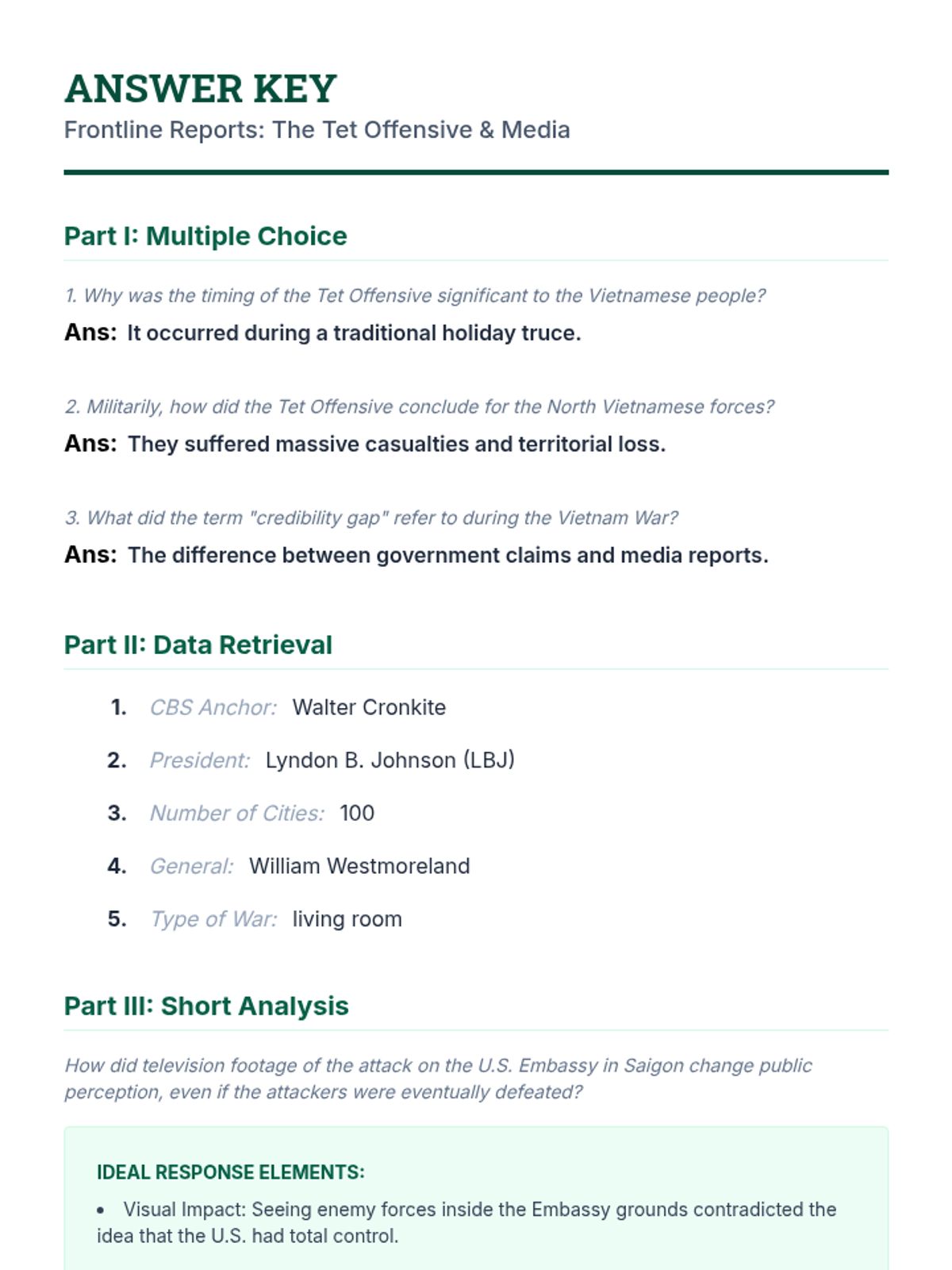
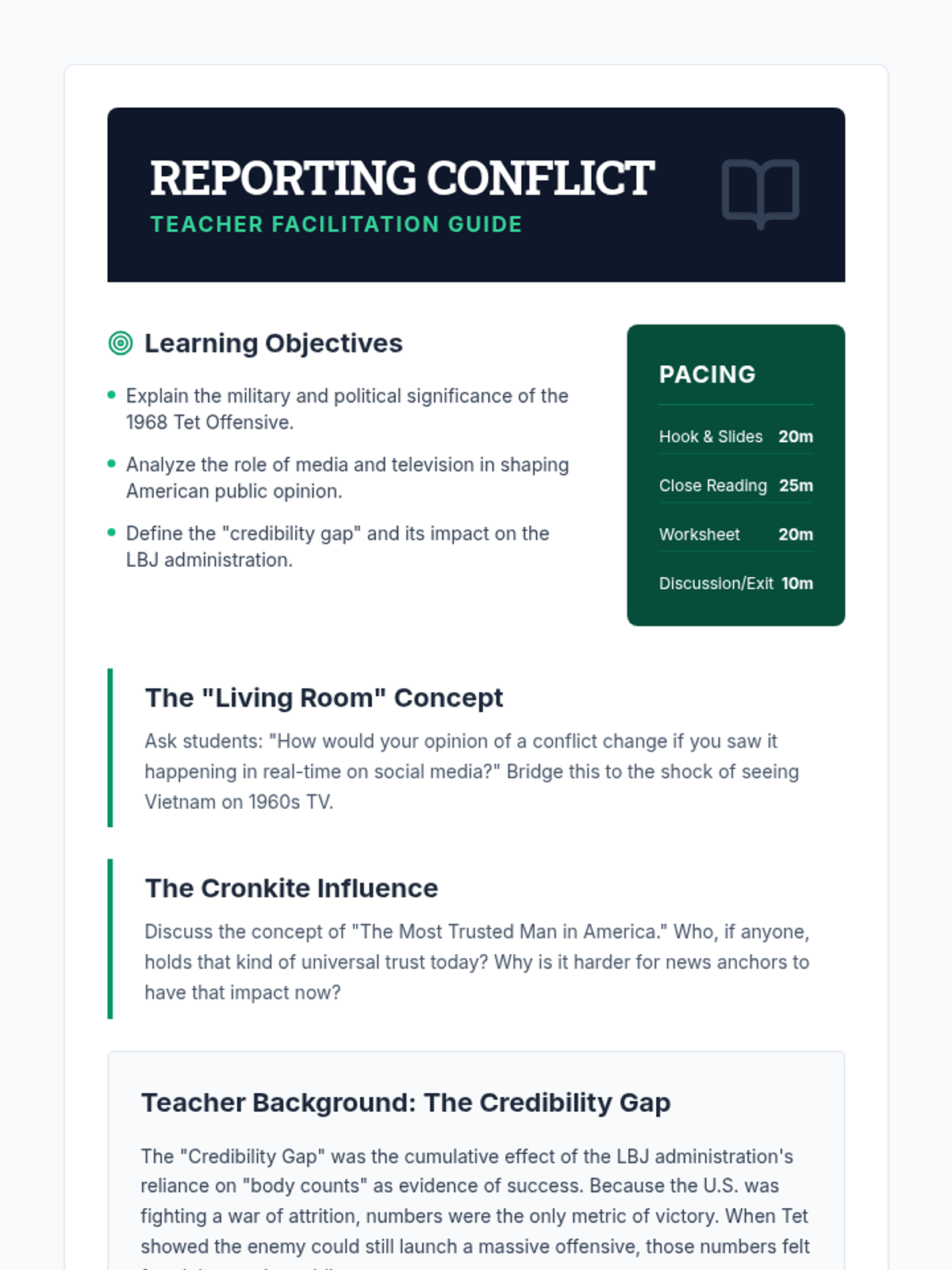
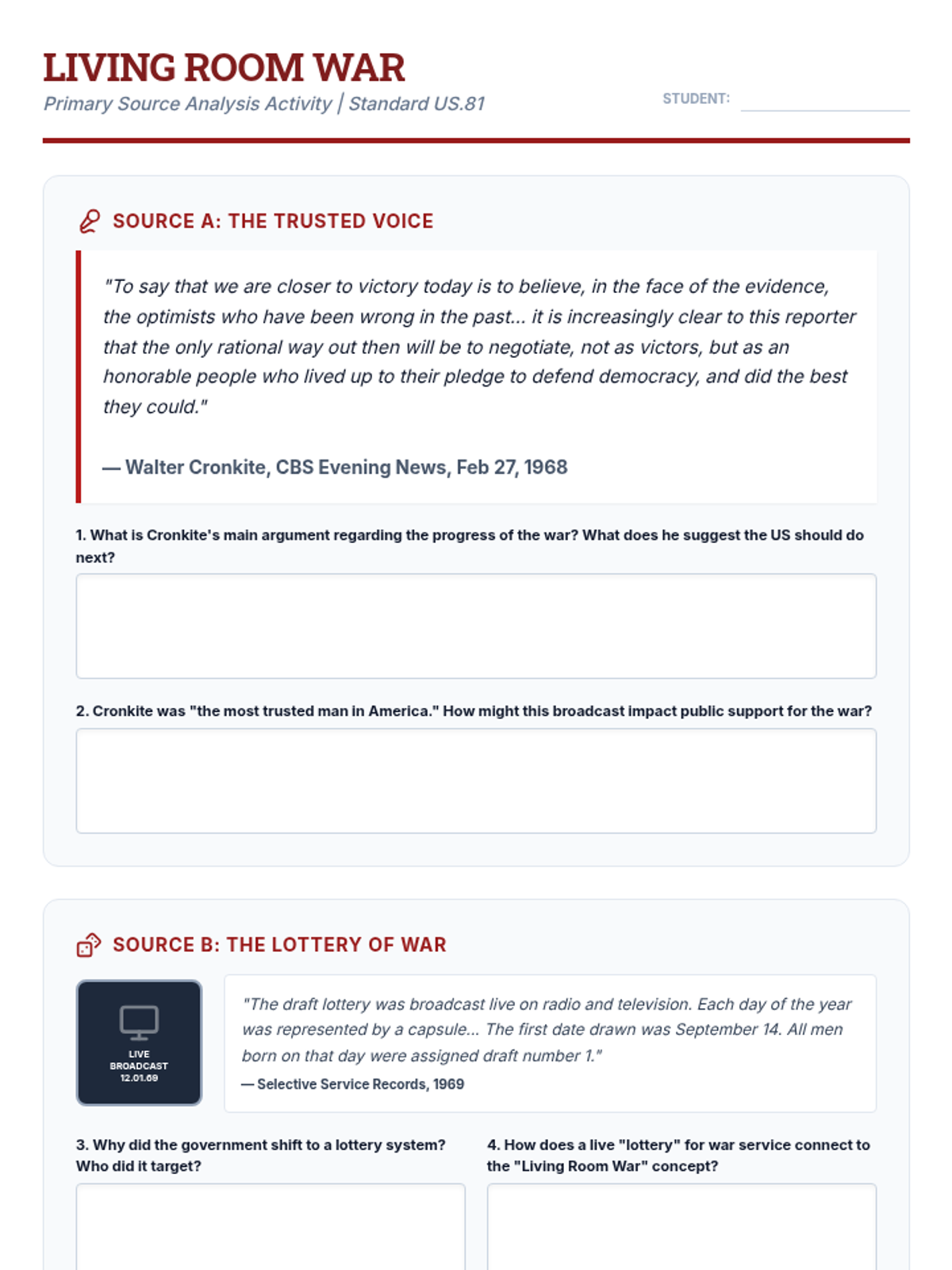
An in-depth exploration of the Tet Offensive and the pivotal role of media coverage during the Vietnam War, examining how the 'Living Room War' changed American public opinion and created a credibility gap.
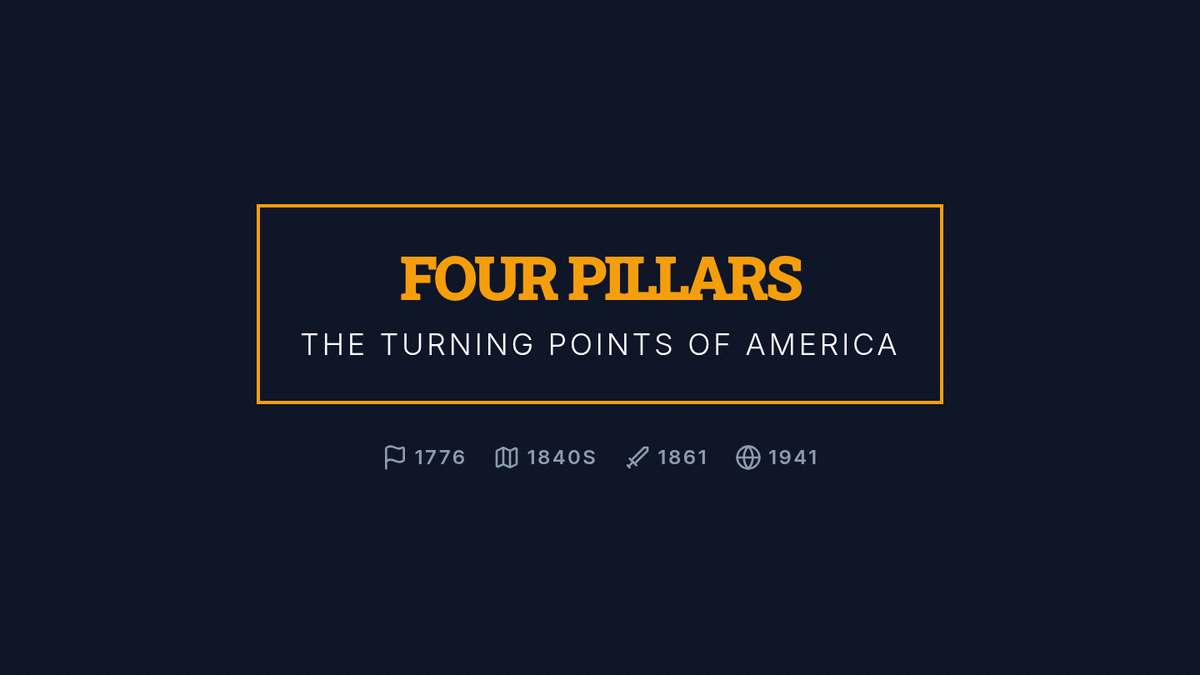
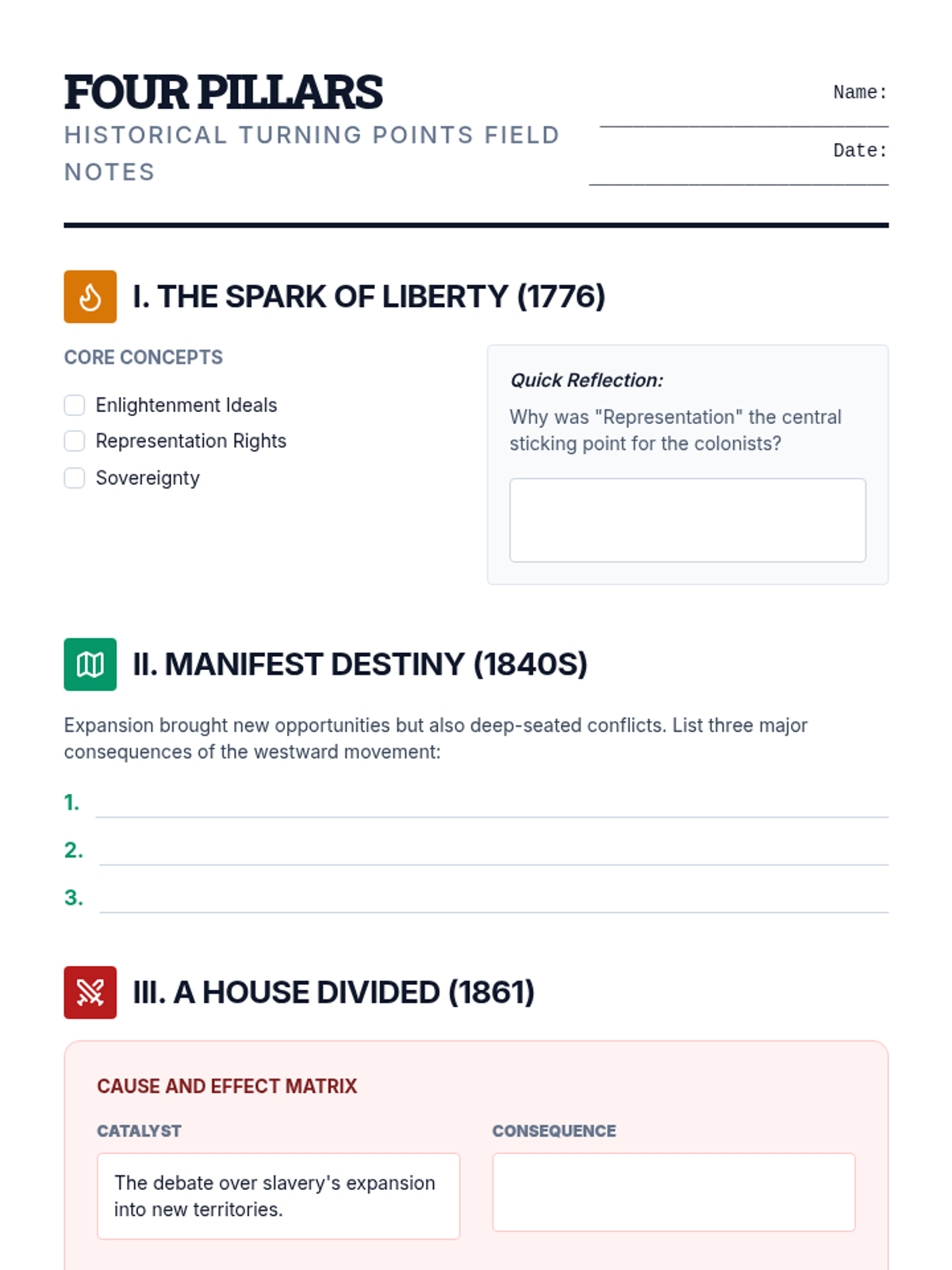
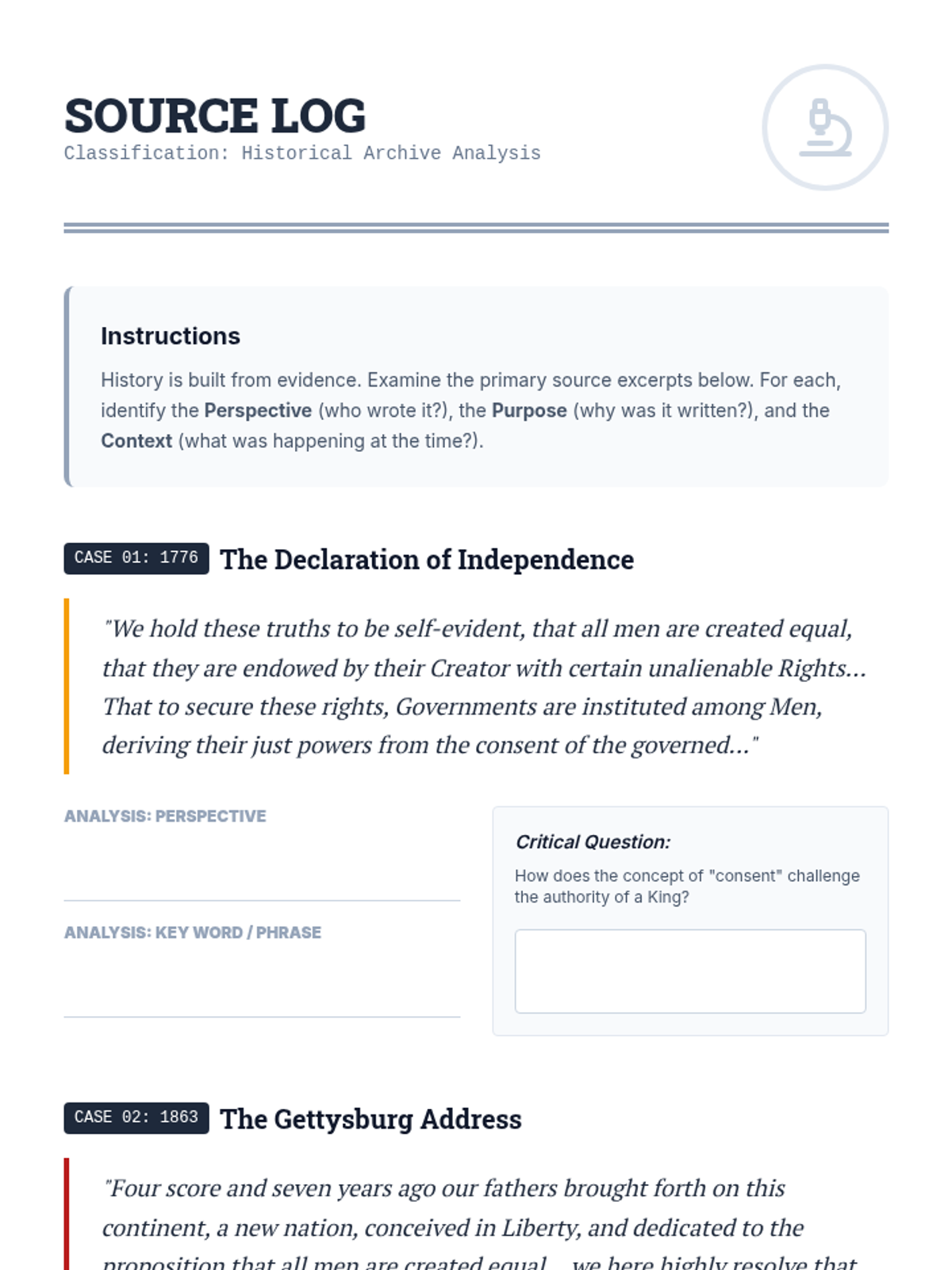
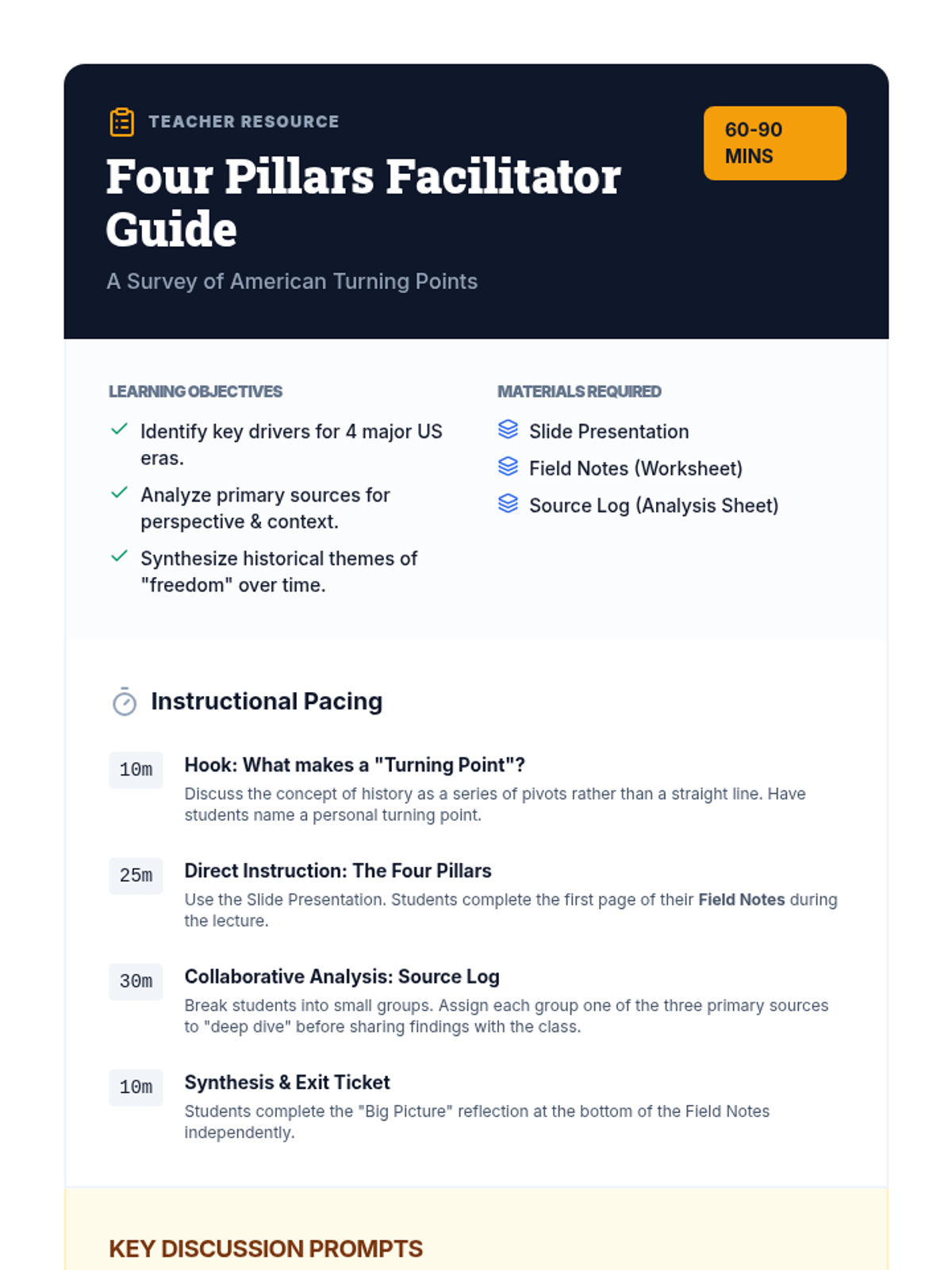
An intensive survey lesson covering the critical events and lasting impacts of the American Revolution, Westward Expansion, the Civil War, and World War II. Students will analyze primary sources and synthesize information across different eras to understand historical continuity and change.
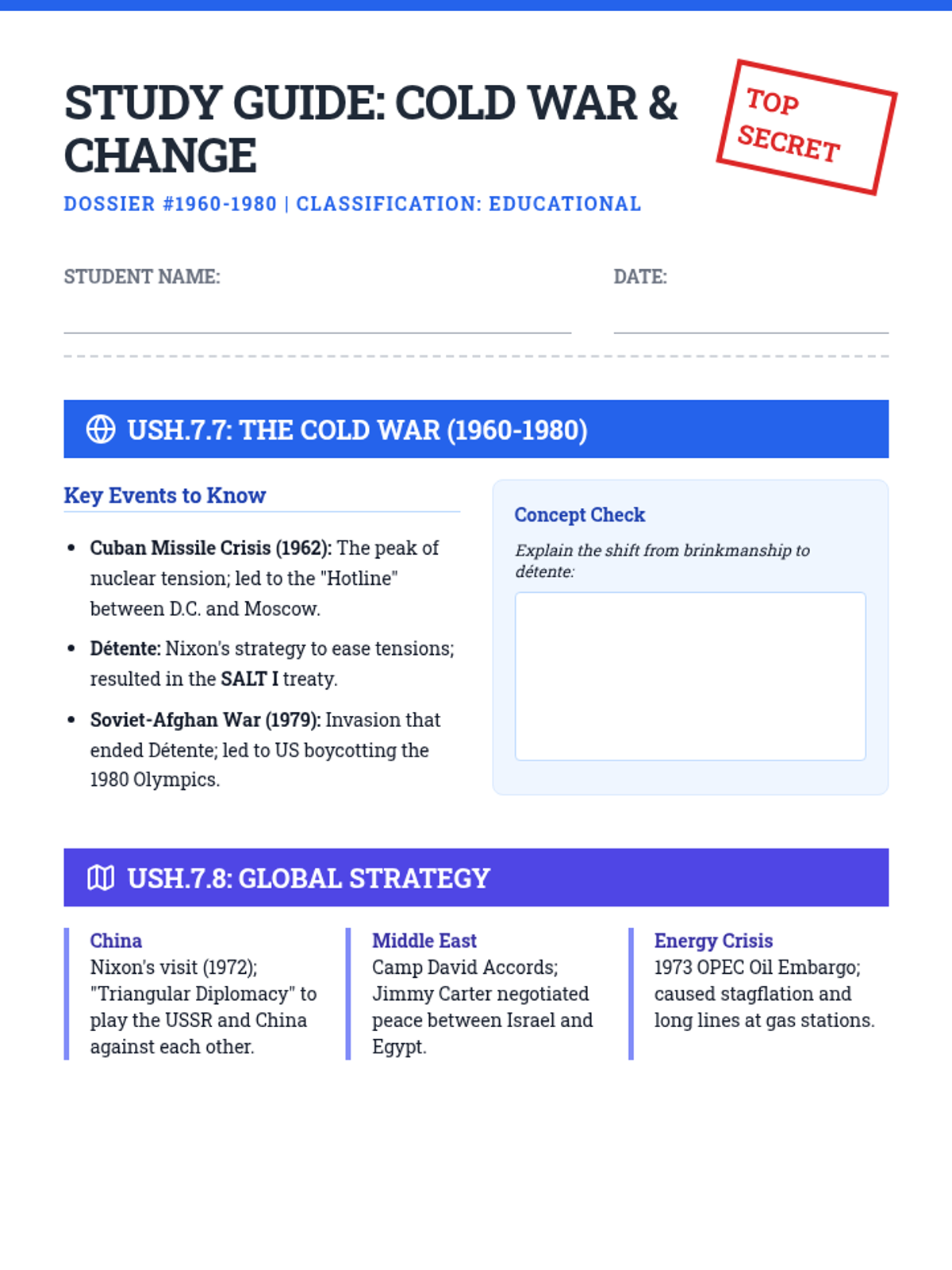
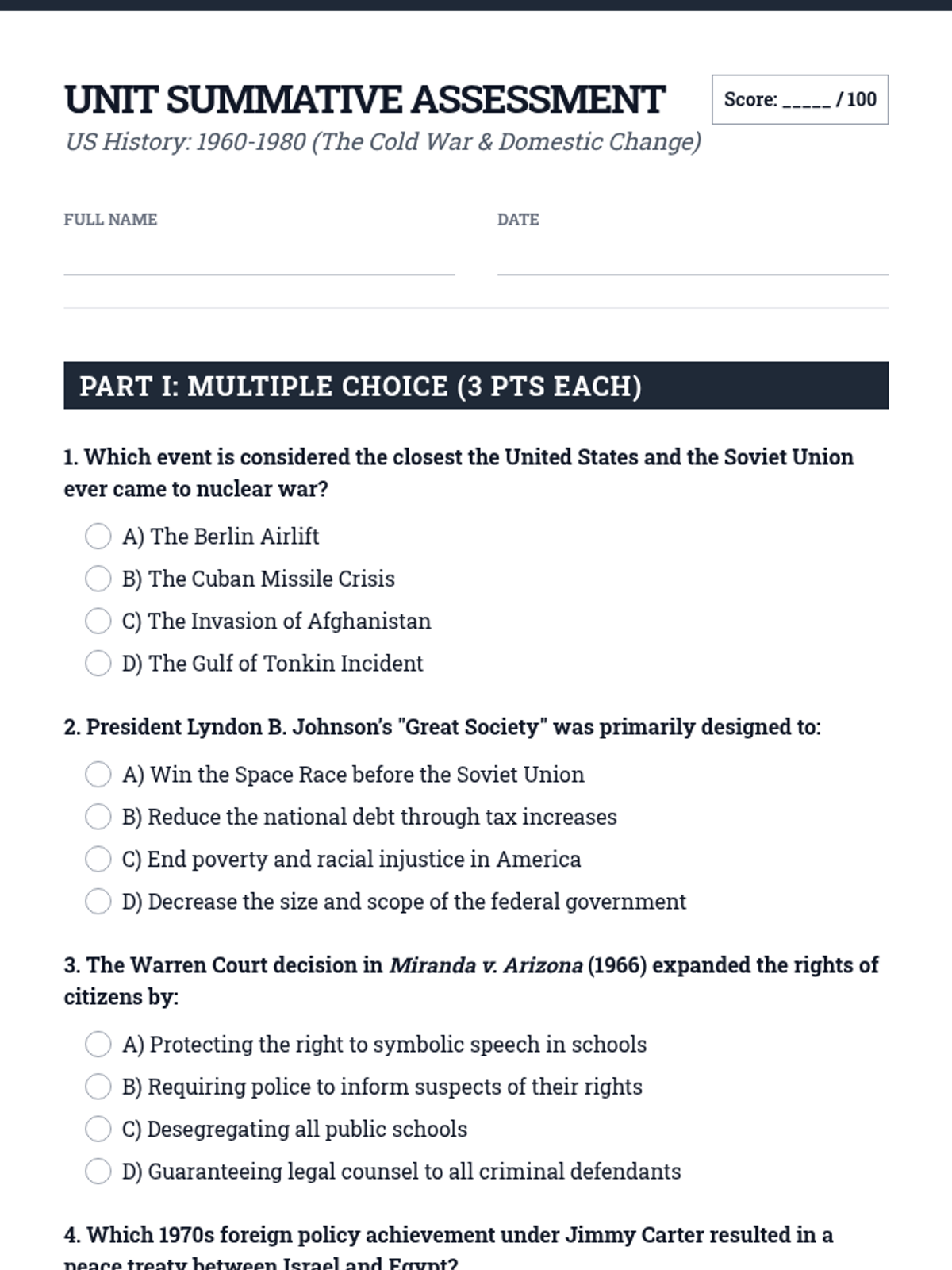
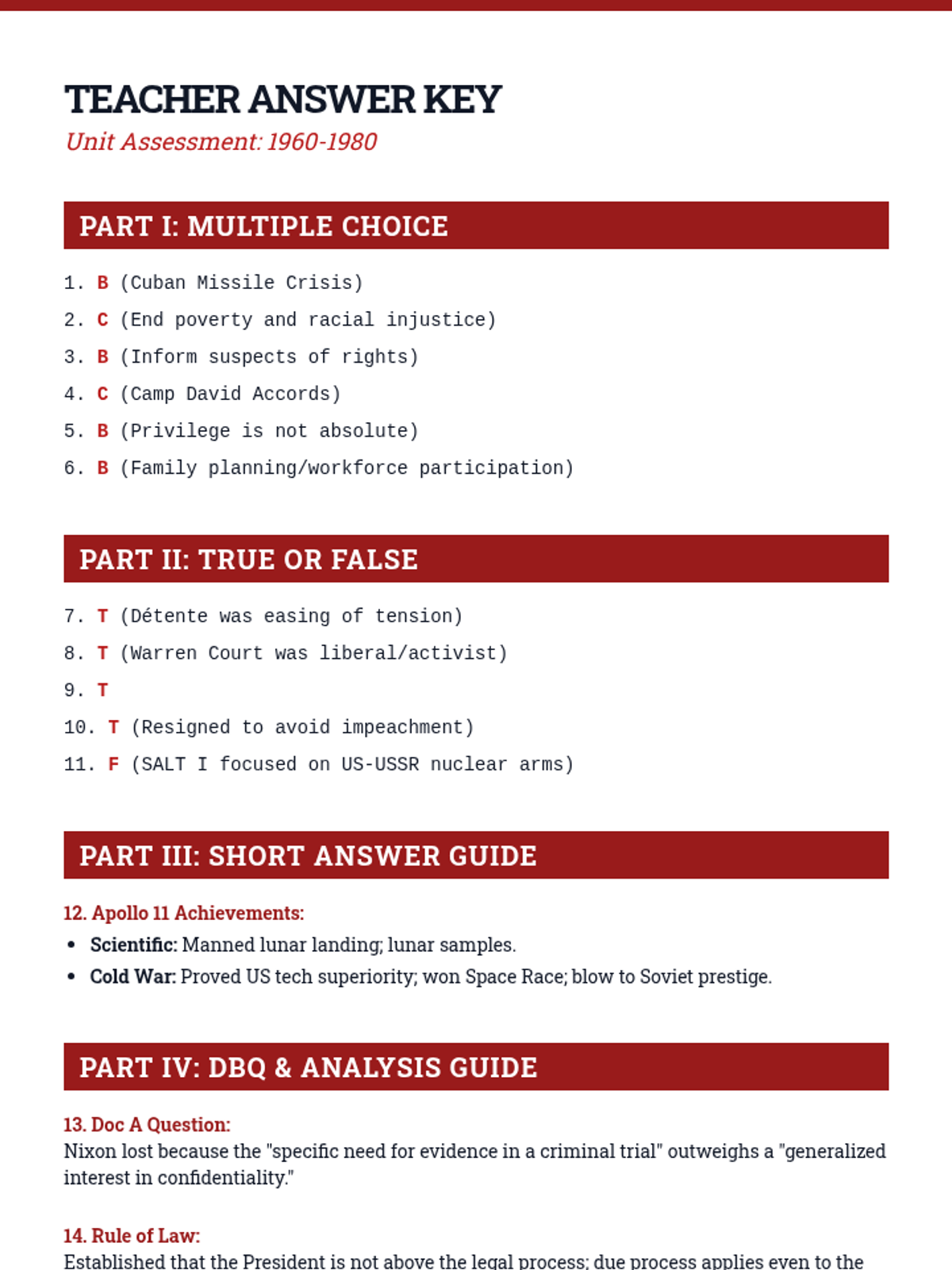
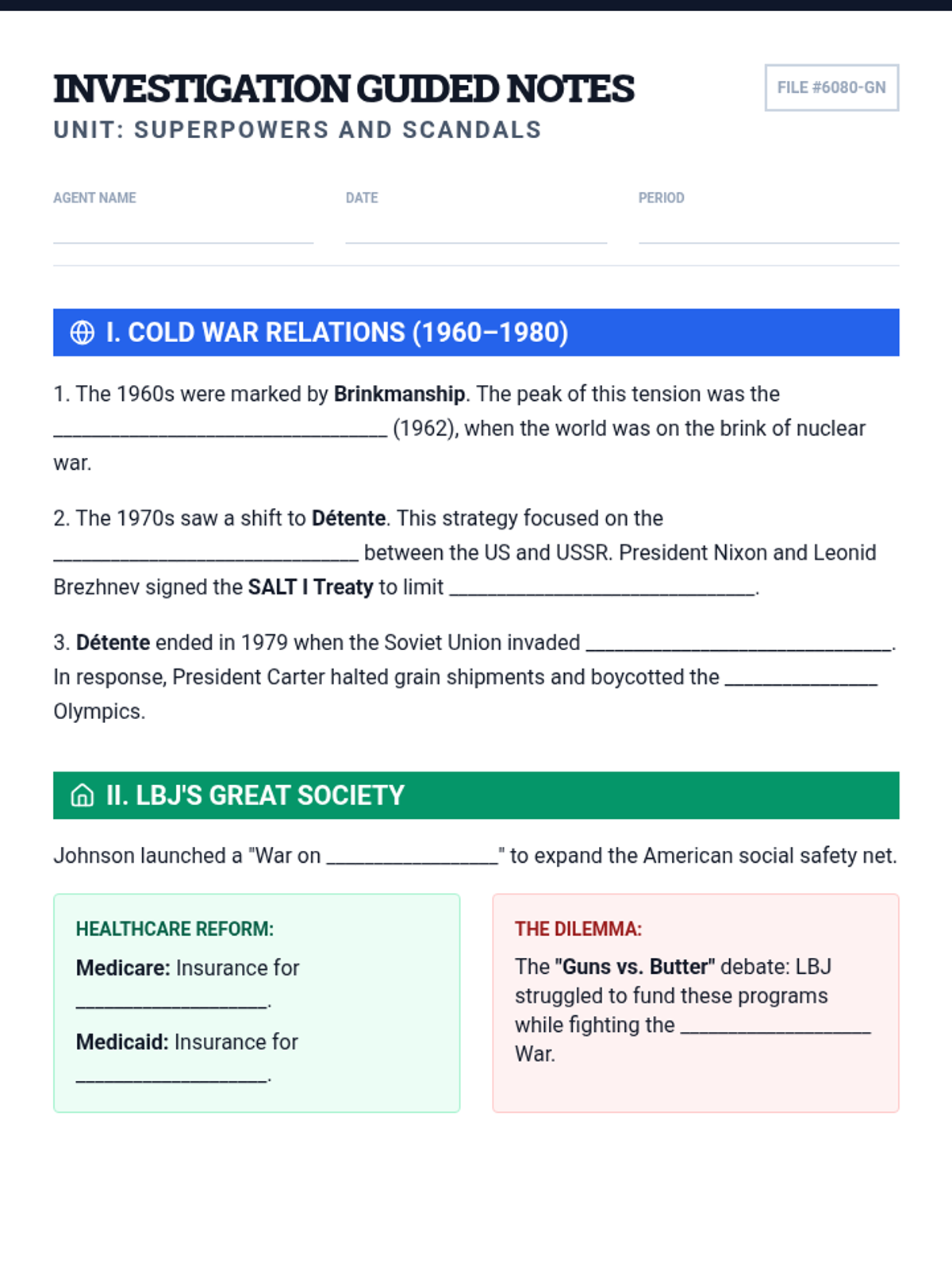
The final assessment and preparation materials for the unit on 1960-1980 US History.
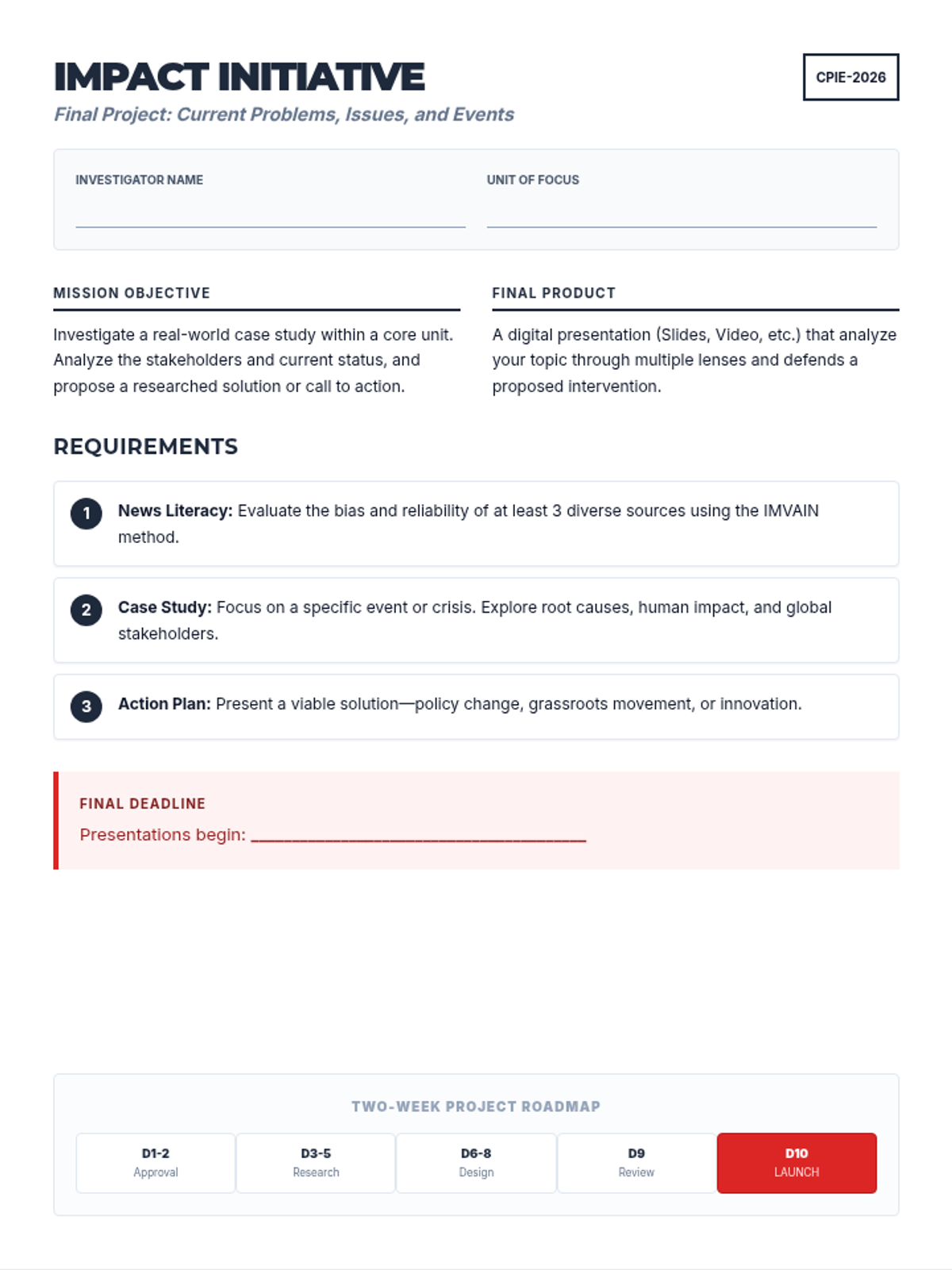
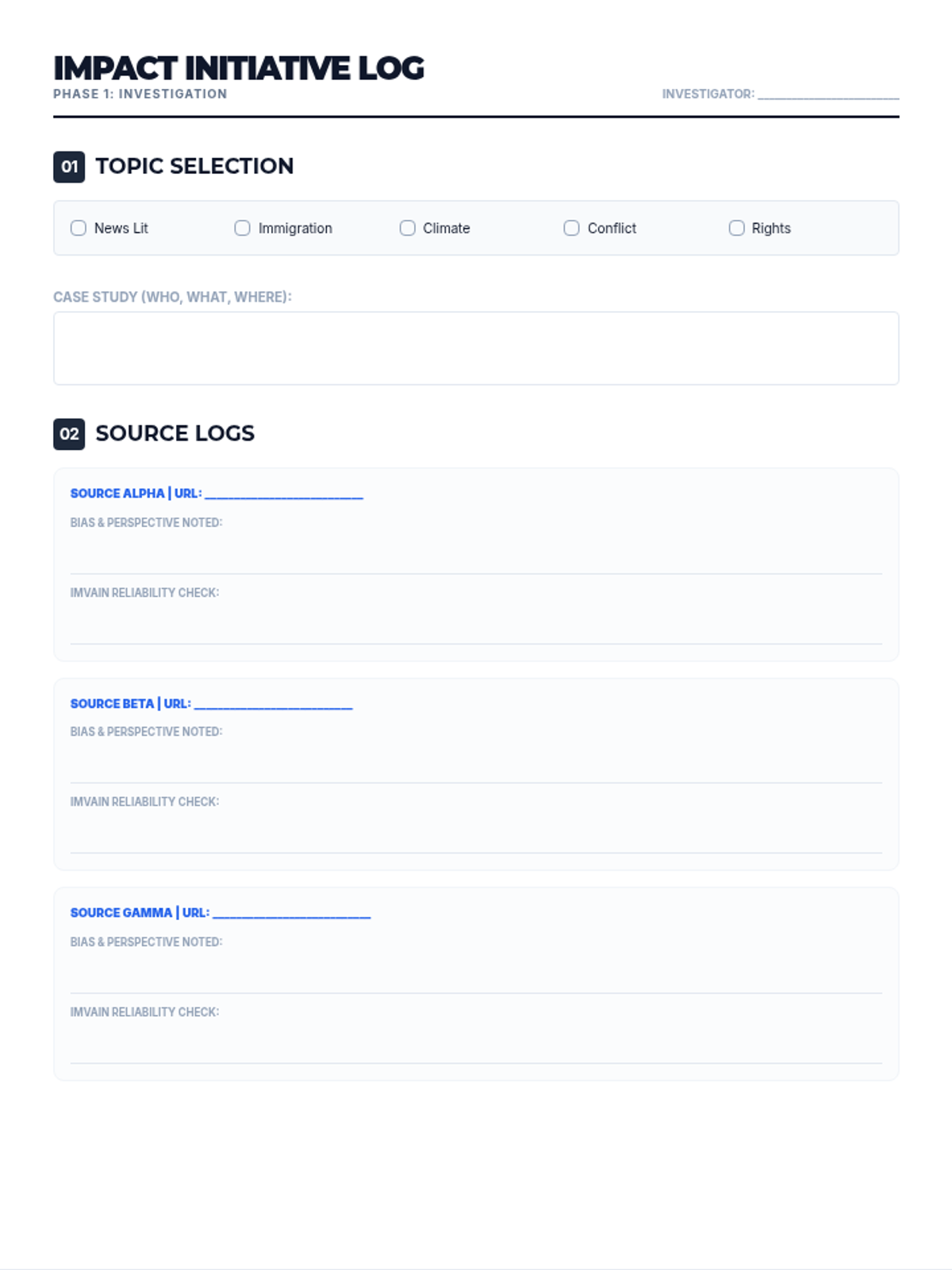
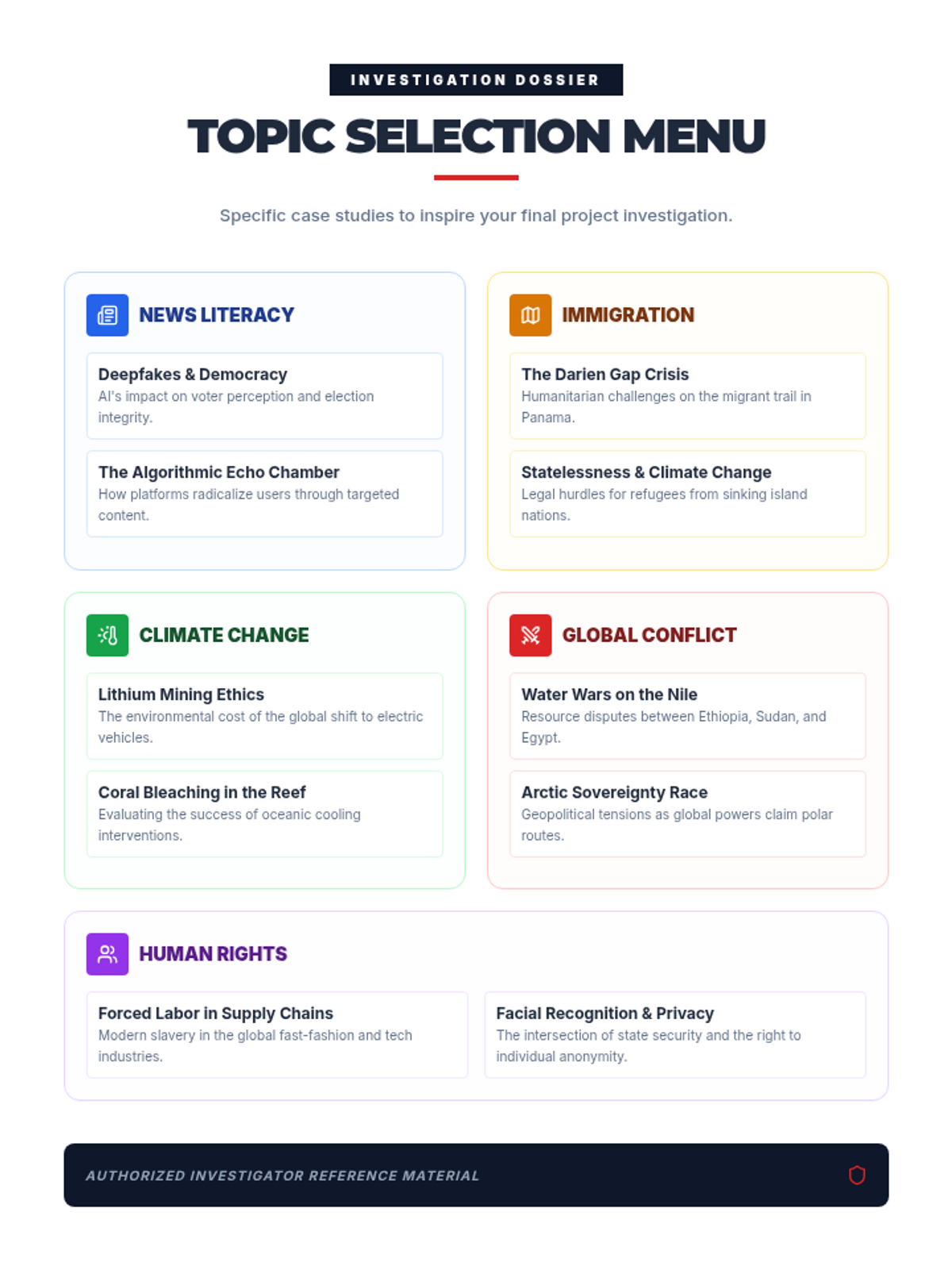
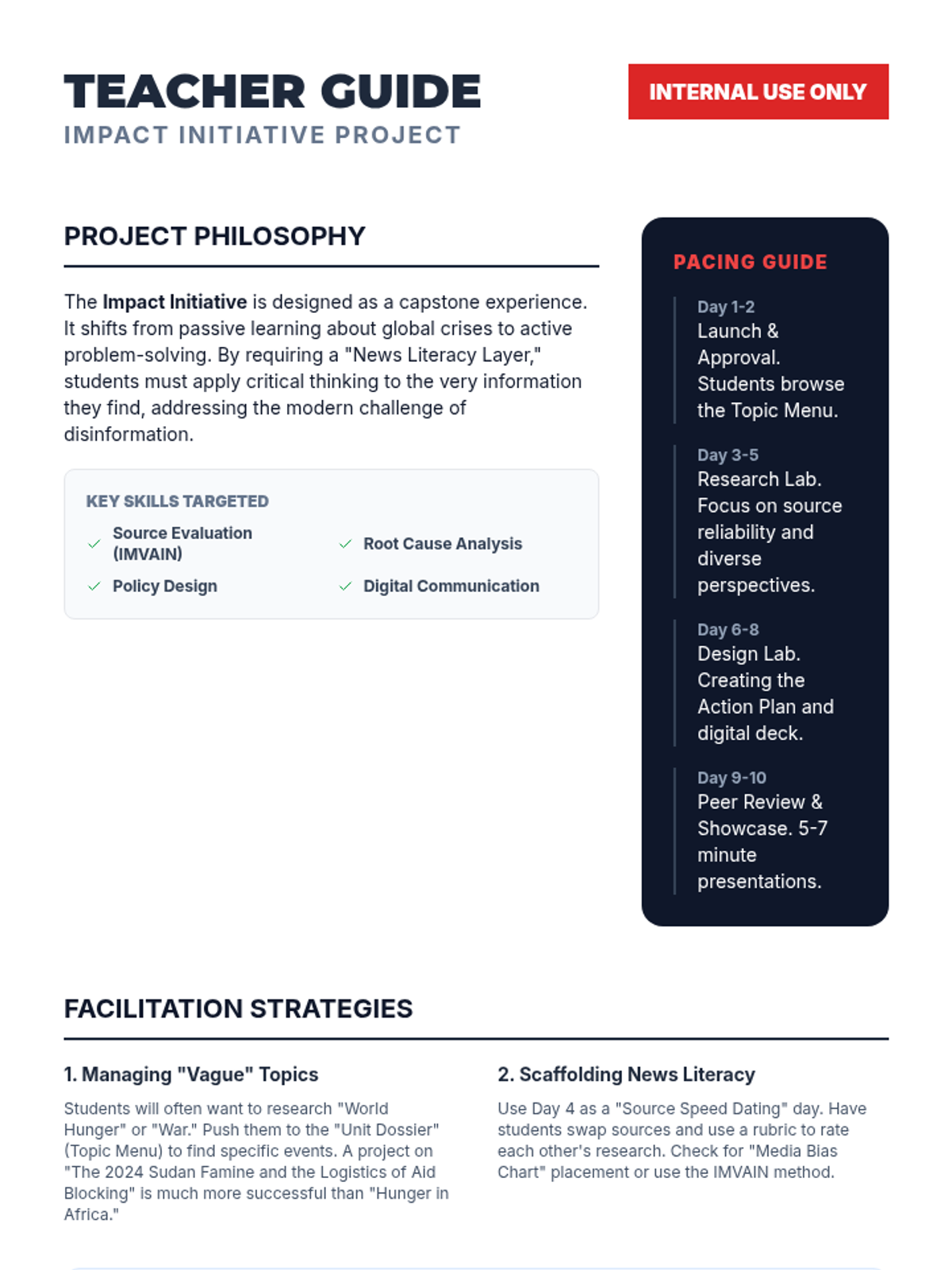
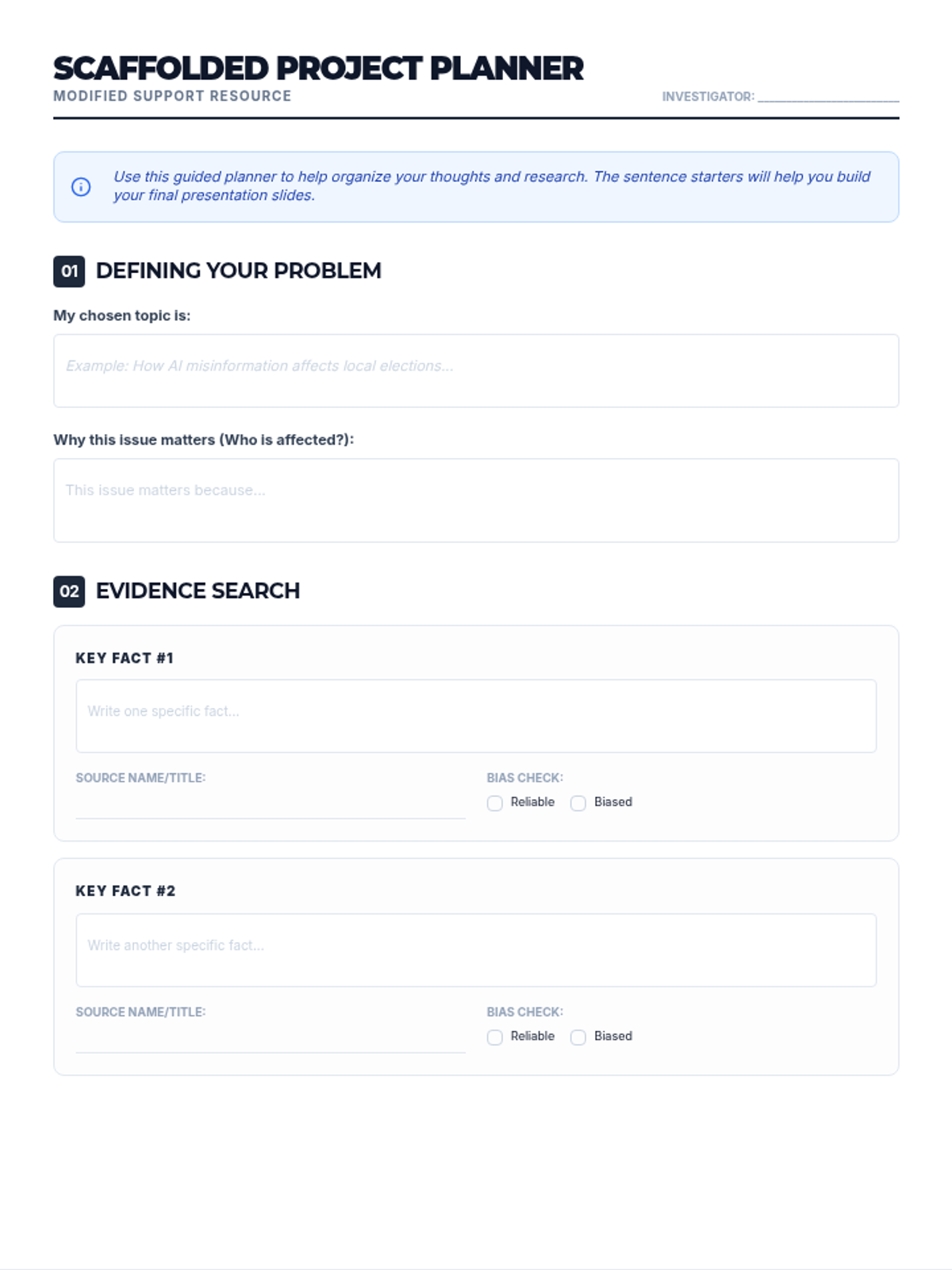
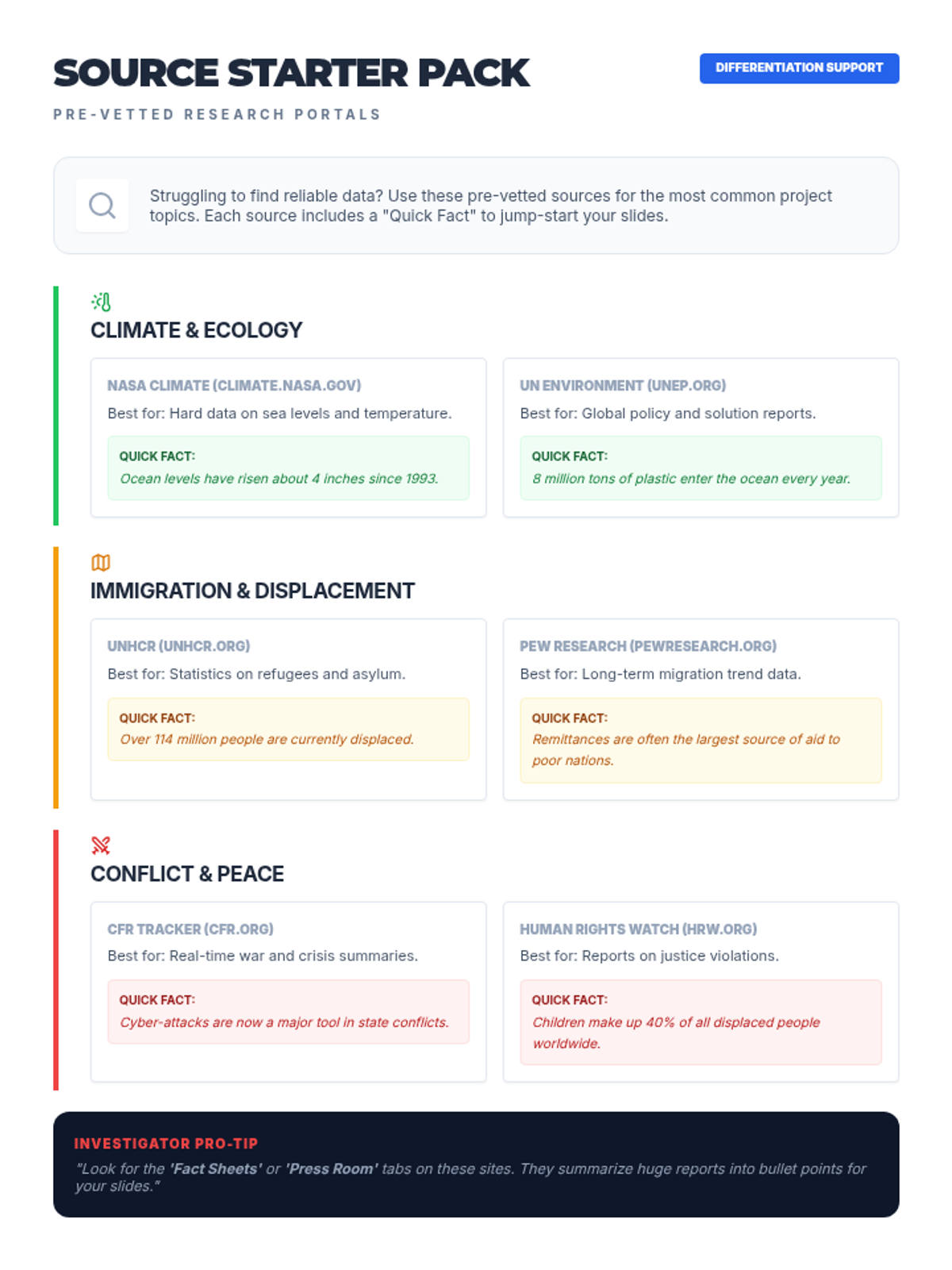
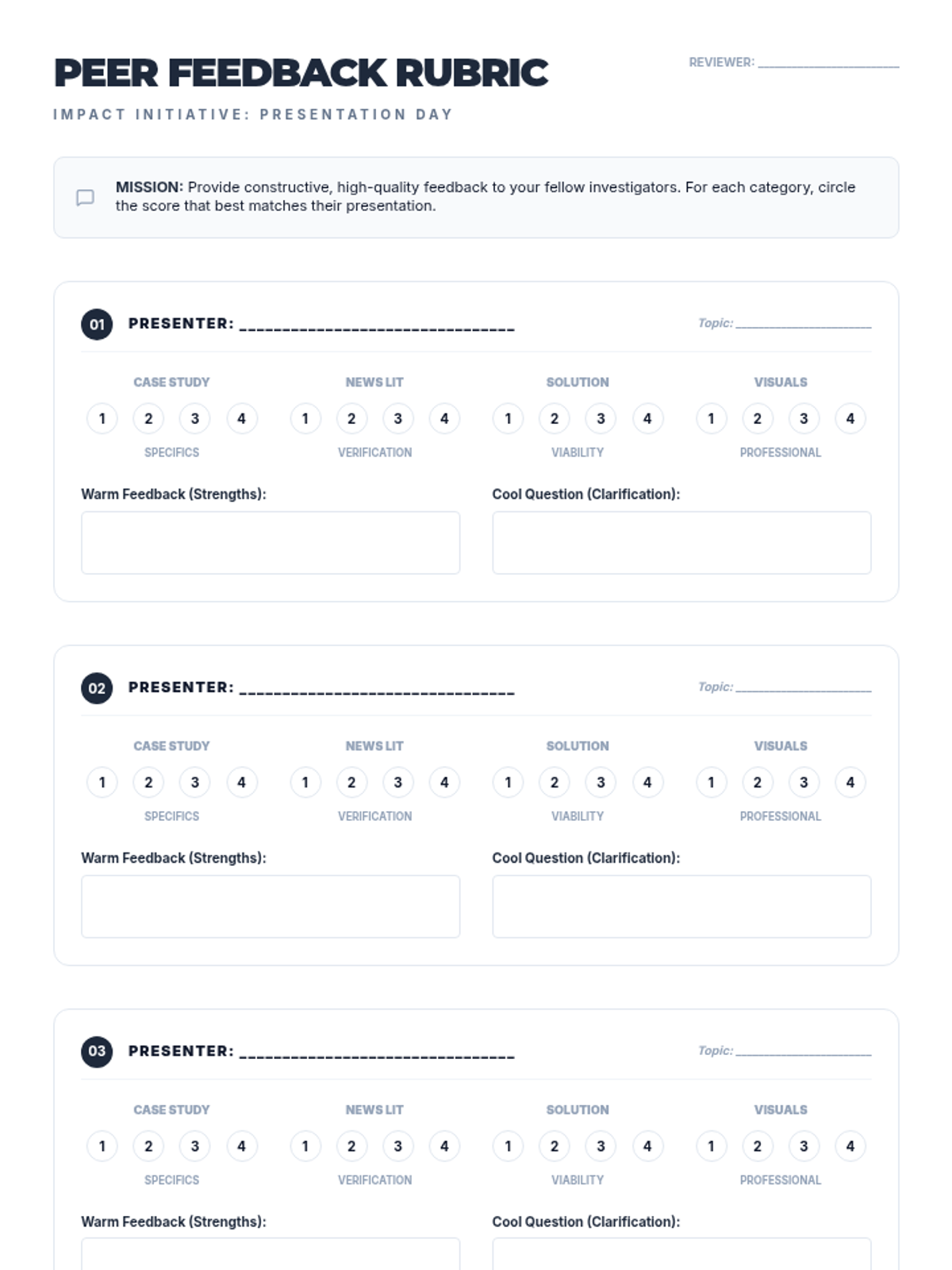
A comprehensive two-week final project for high school students to investigate and propose solutions for a major global issue from one of five core units: News Literacy, Immigration, Climate Change, Global Conflict, or Human Rights.
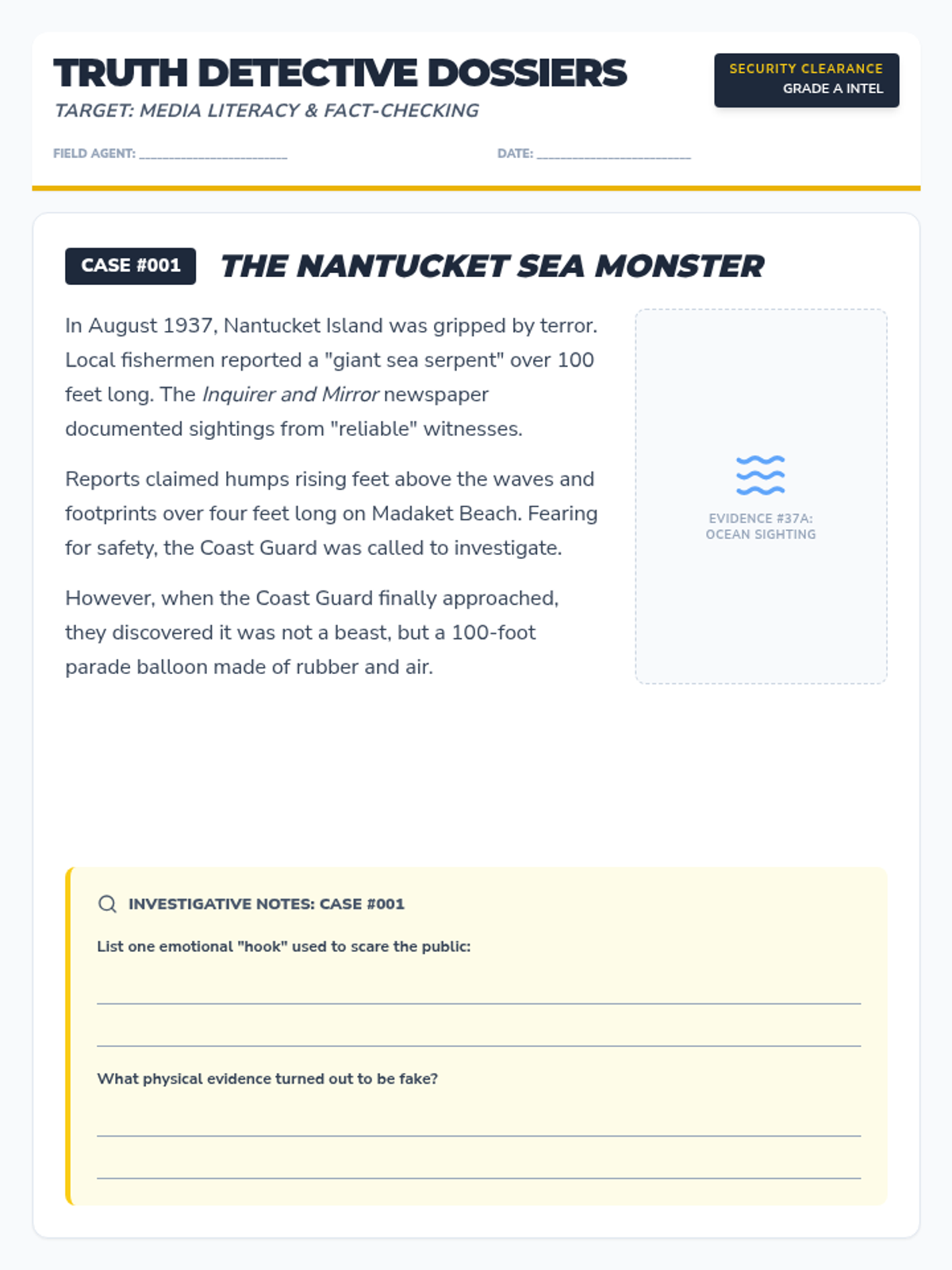
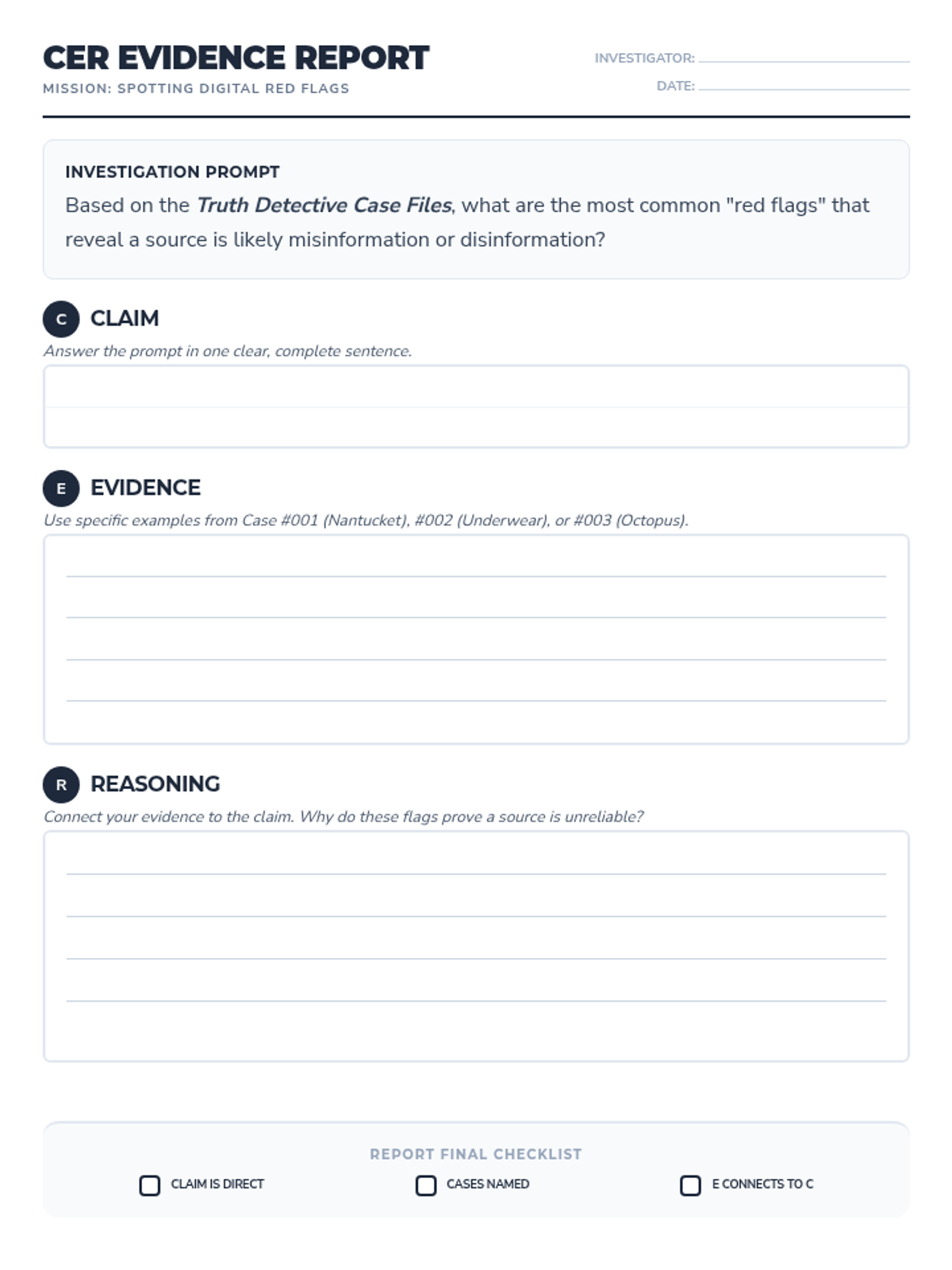
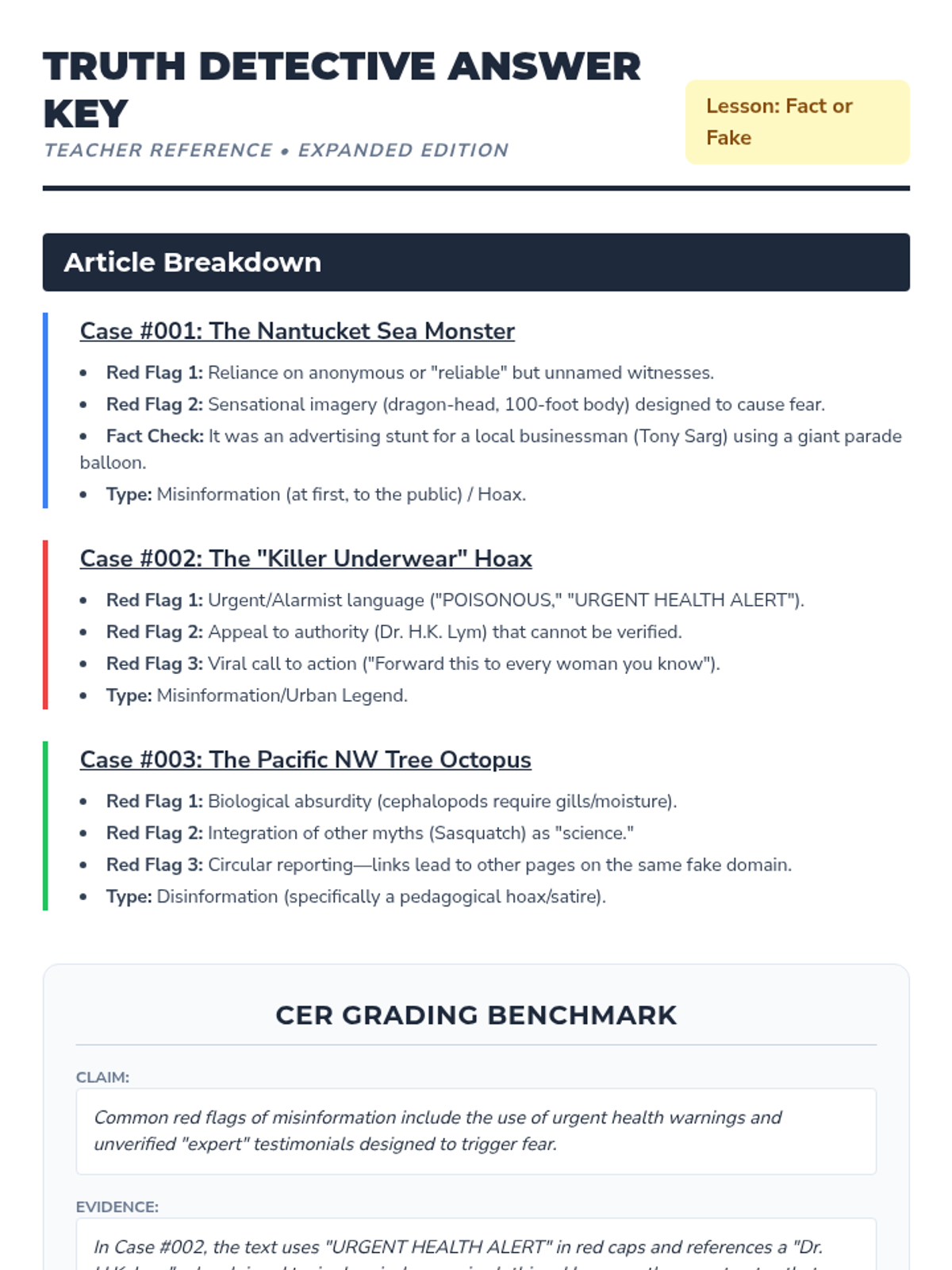
A lesson focused on identifying misinformation and disinformation through short case studies, culminating in a CER (Claim, Evidence, Reasoning) paragraph about spotting digital red flags.
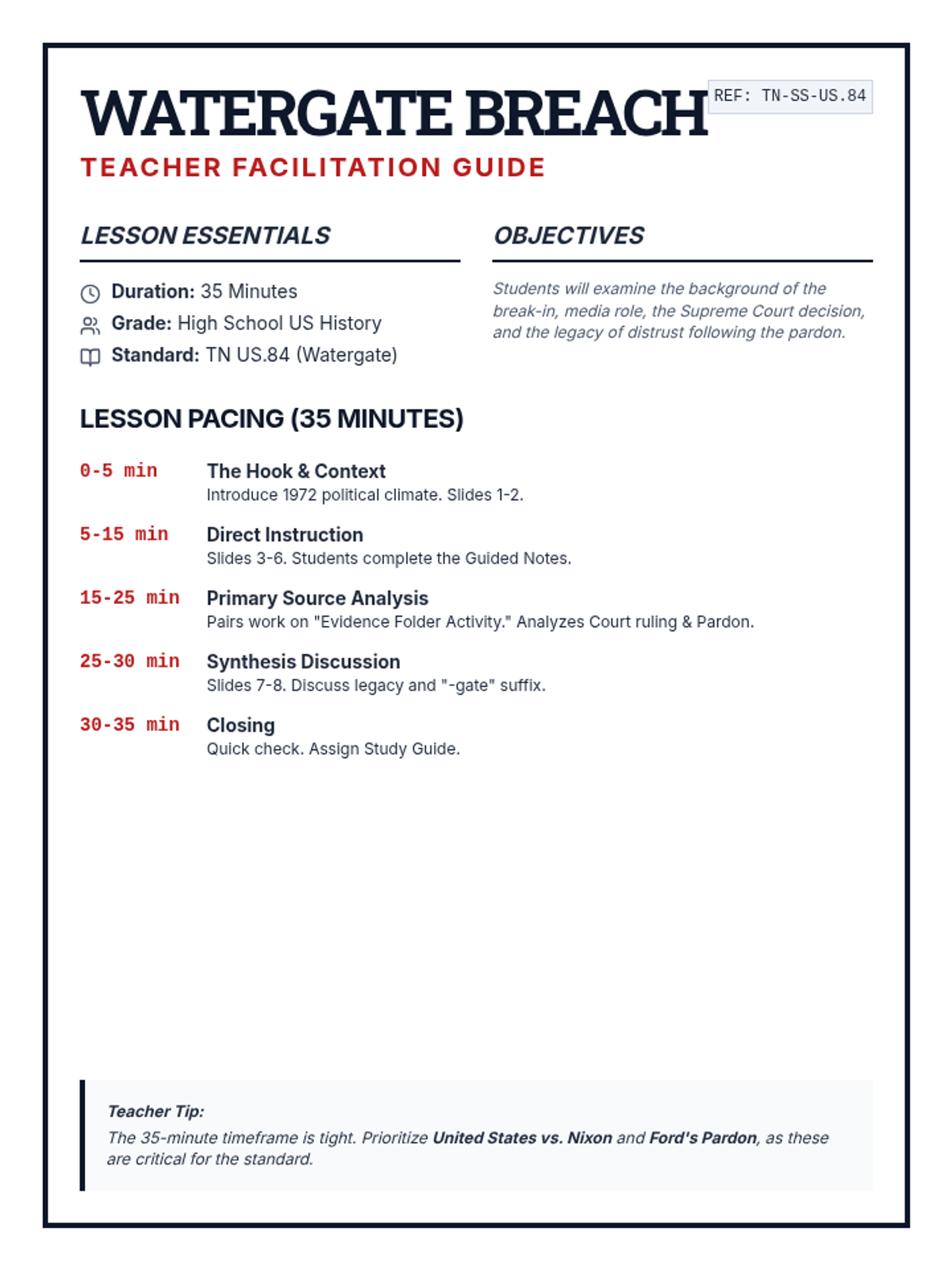
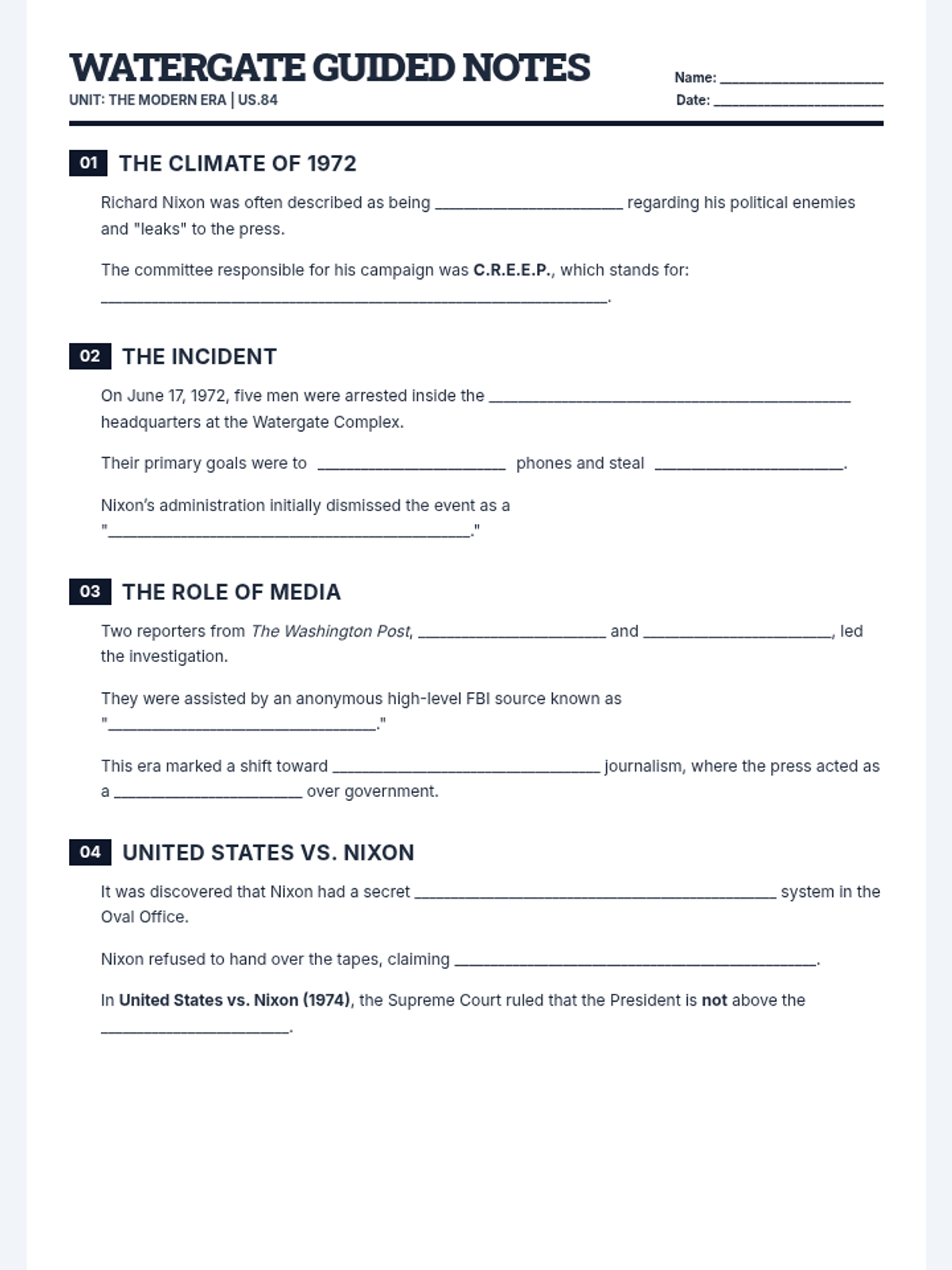
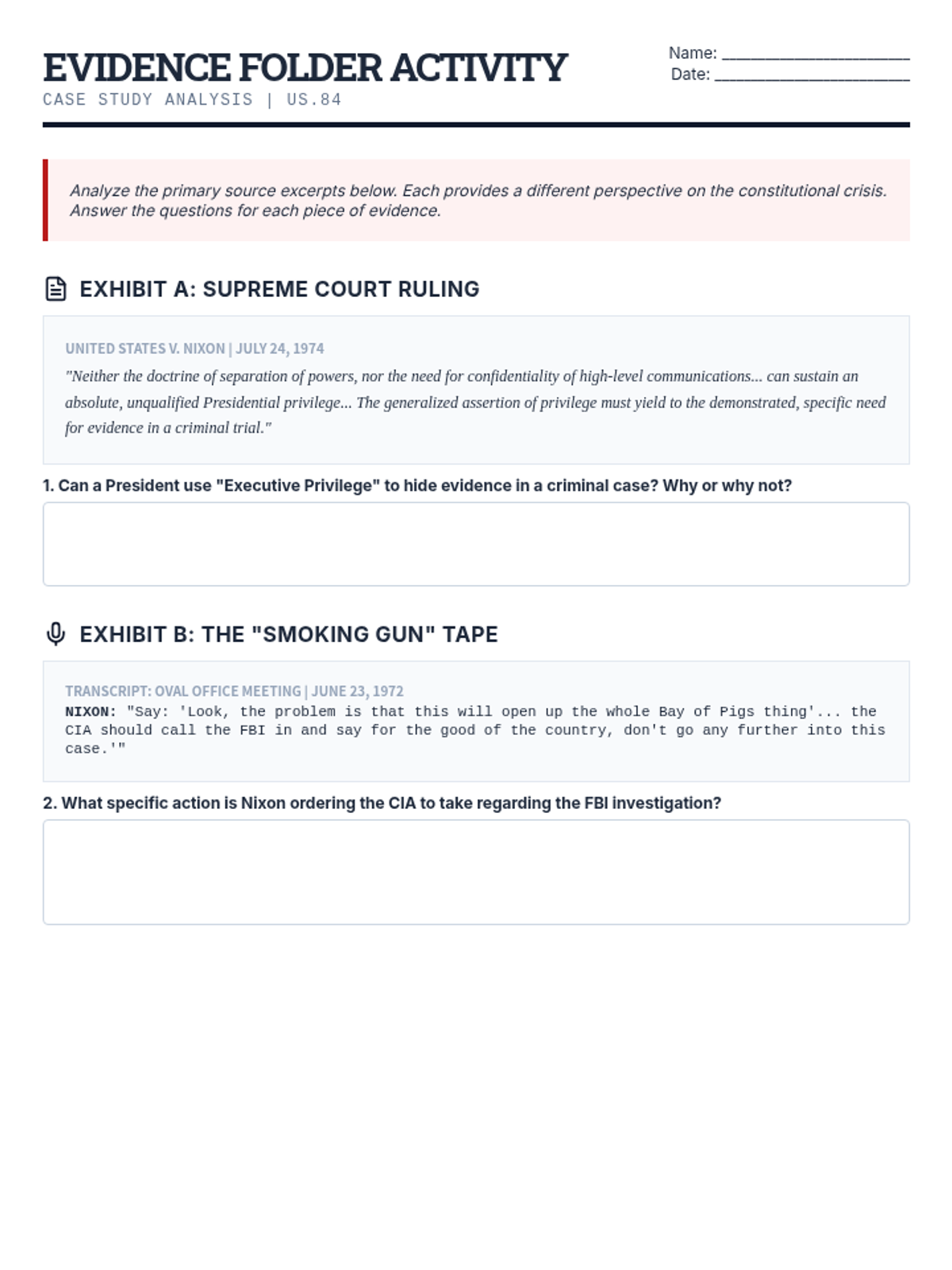
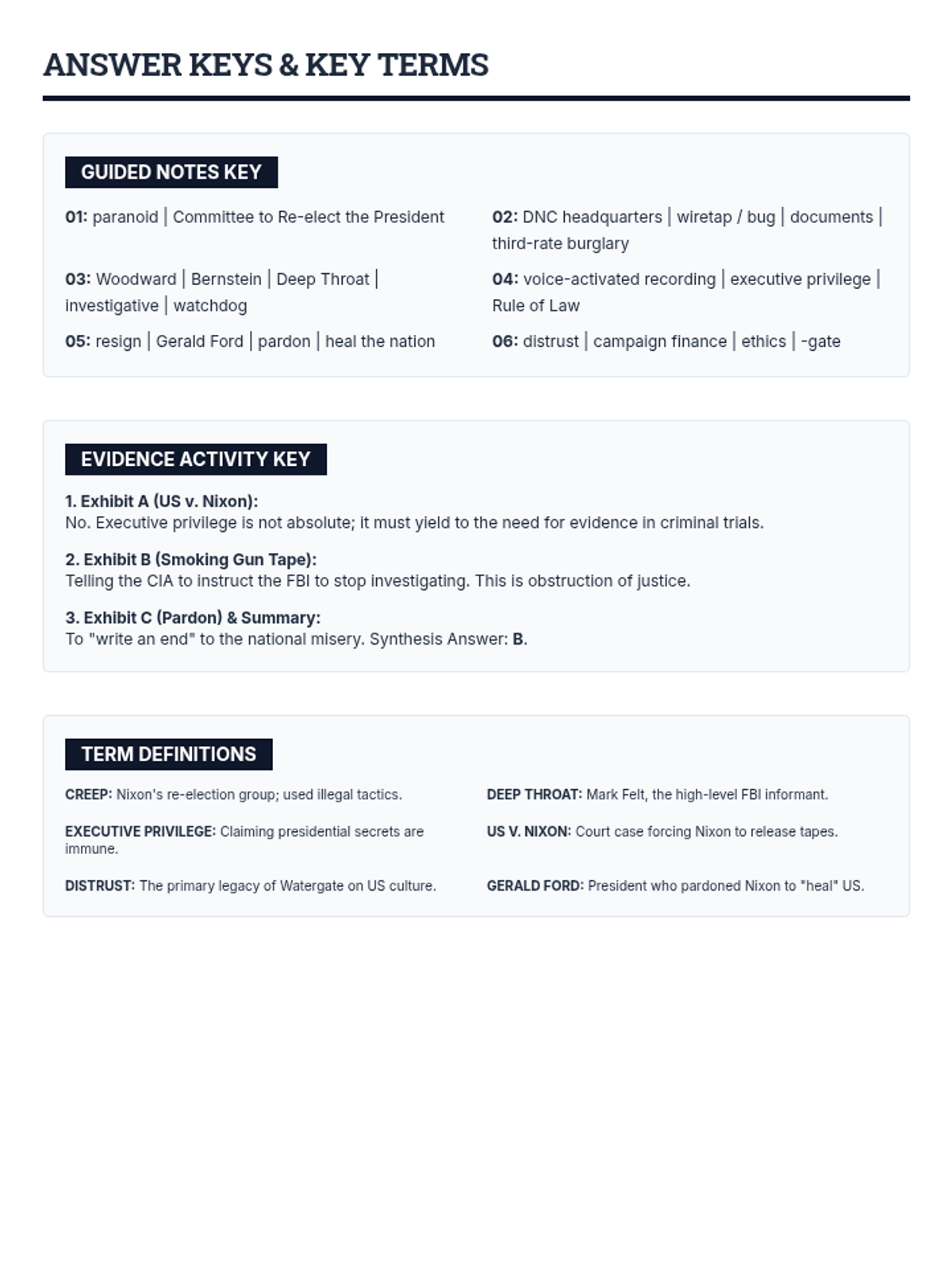
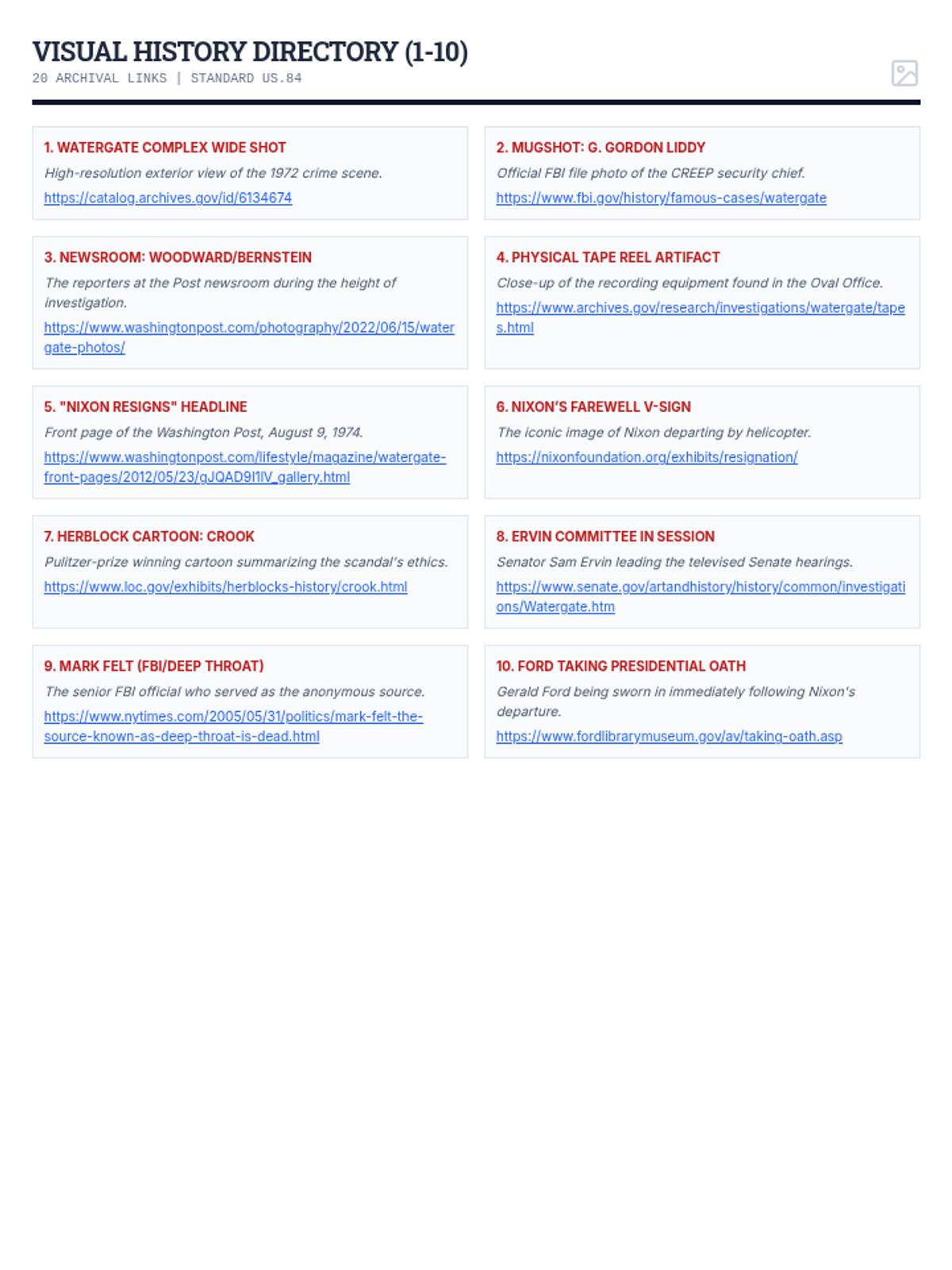
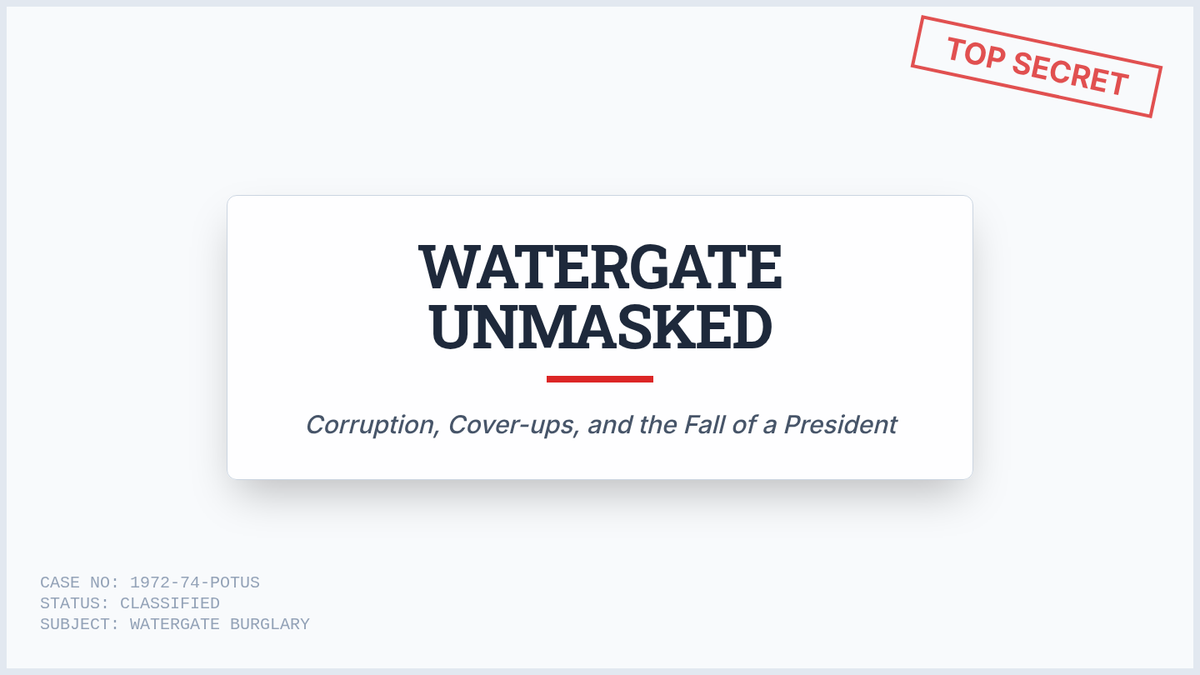
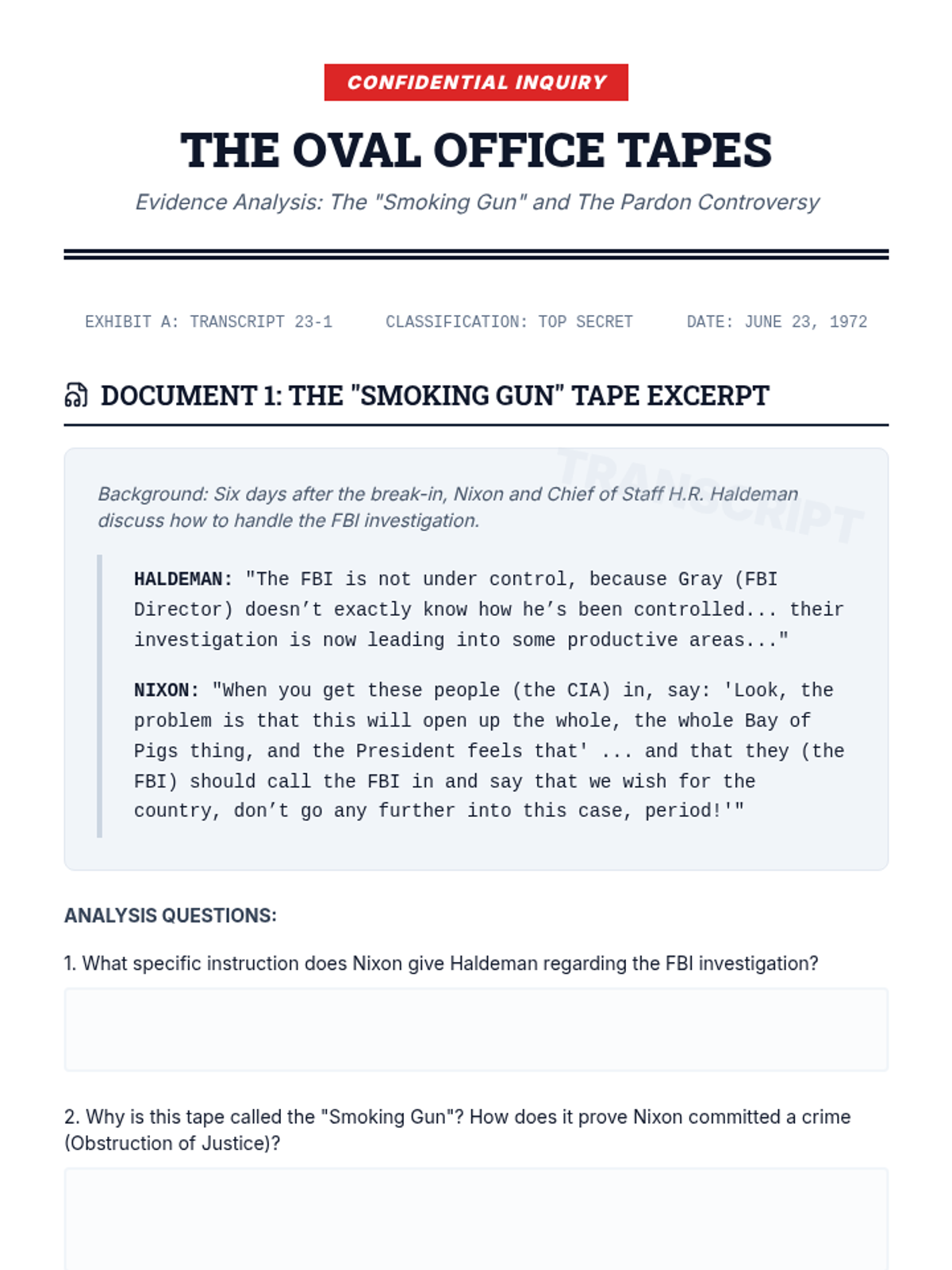
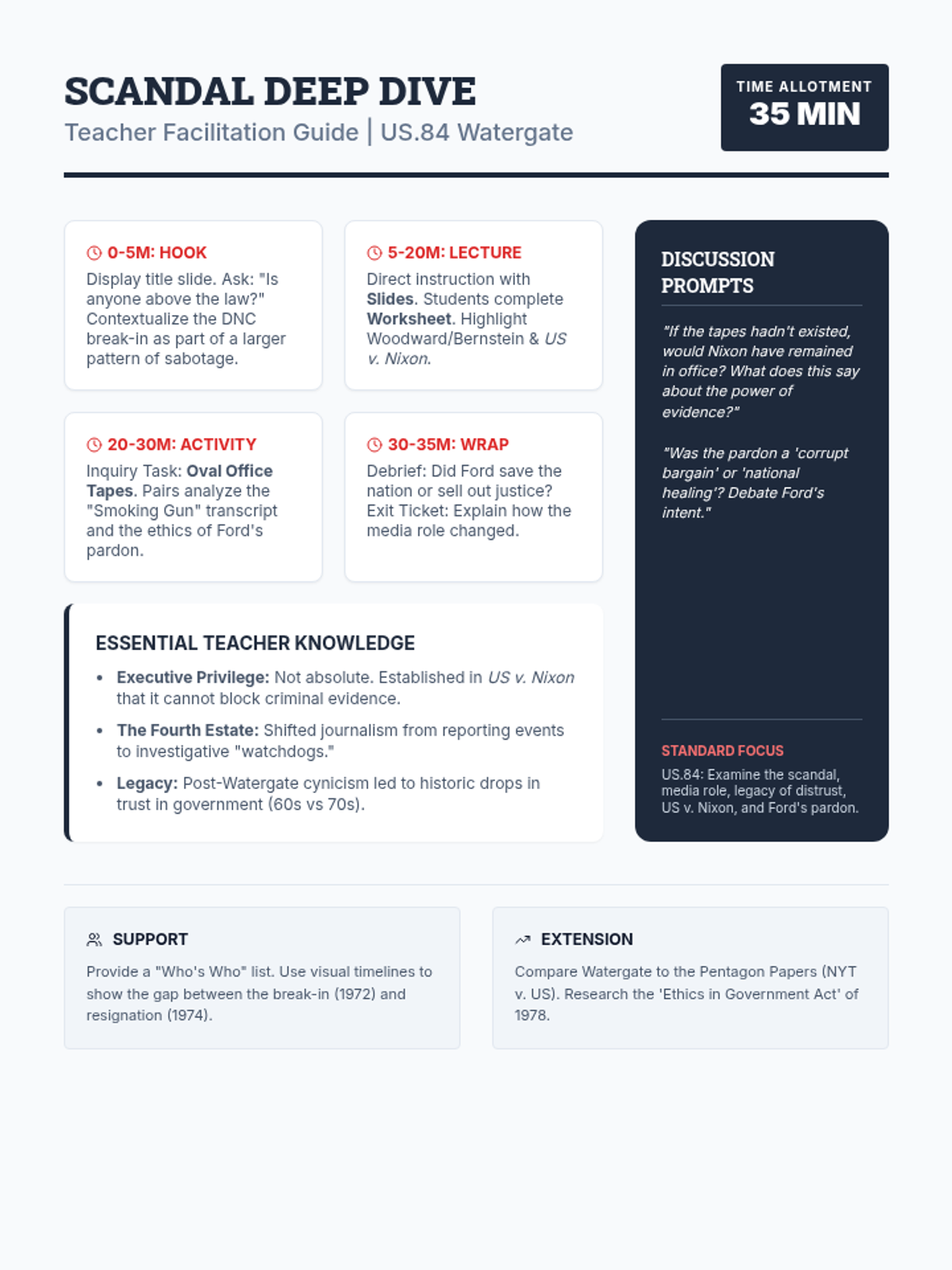
A comprehensive 35-minute lesson on the Watergate scandal, covering the break-in, media role, Supreme Court case, and historical legacy. Includes slides, guided notes, primary source activities, and a detailed study guide.
A comprehensive 35-minute lesson on the Watergate scandal, covering the break-in, the role of investigative journalism, the Supreme Court case US v. Nixon, and the lasting impact on American trust in government.
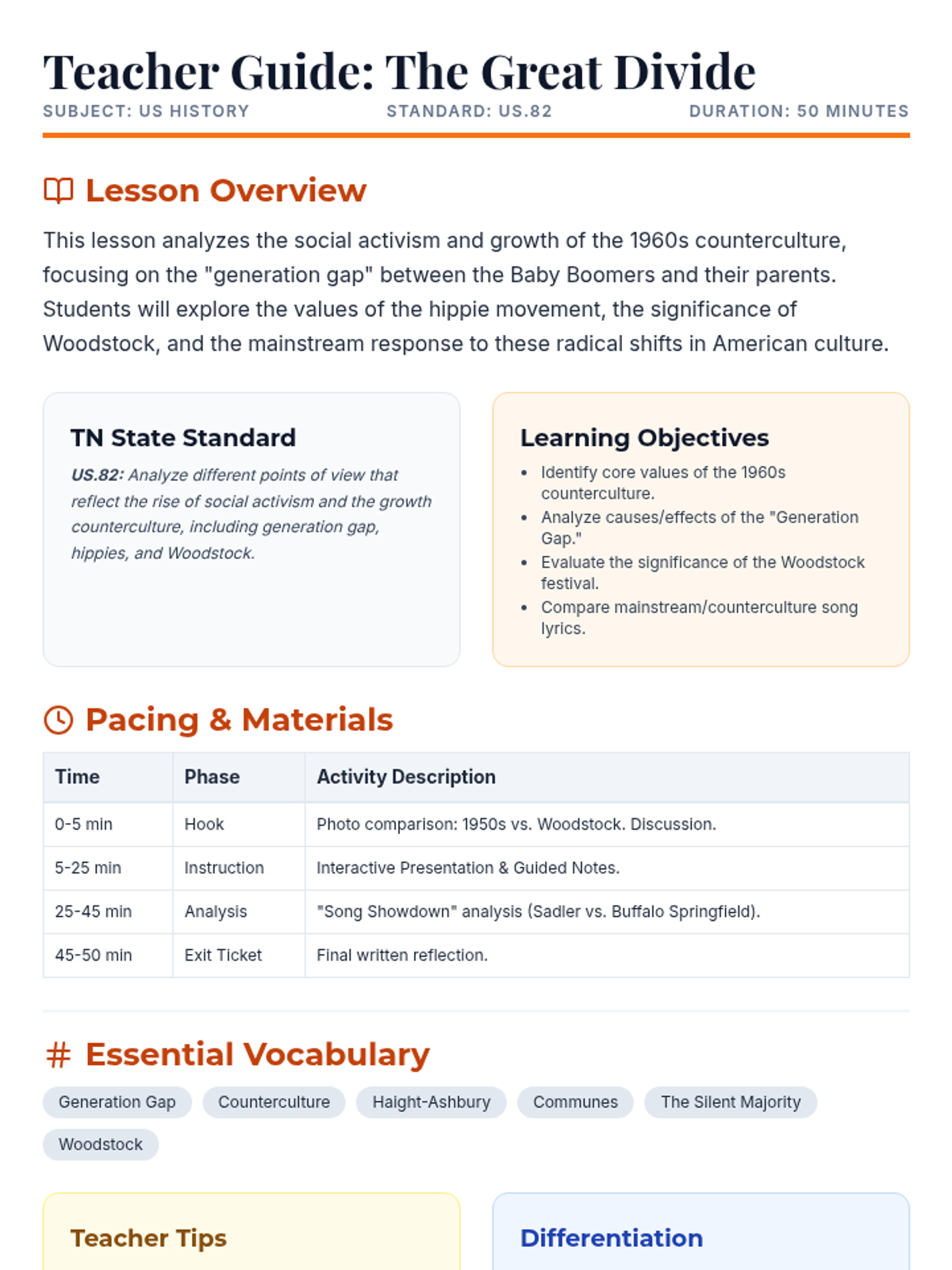
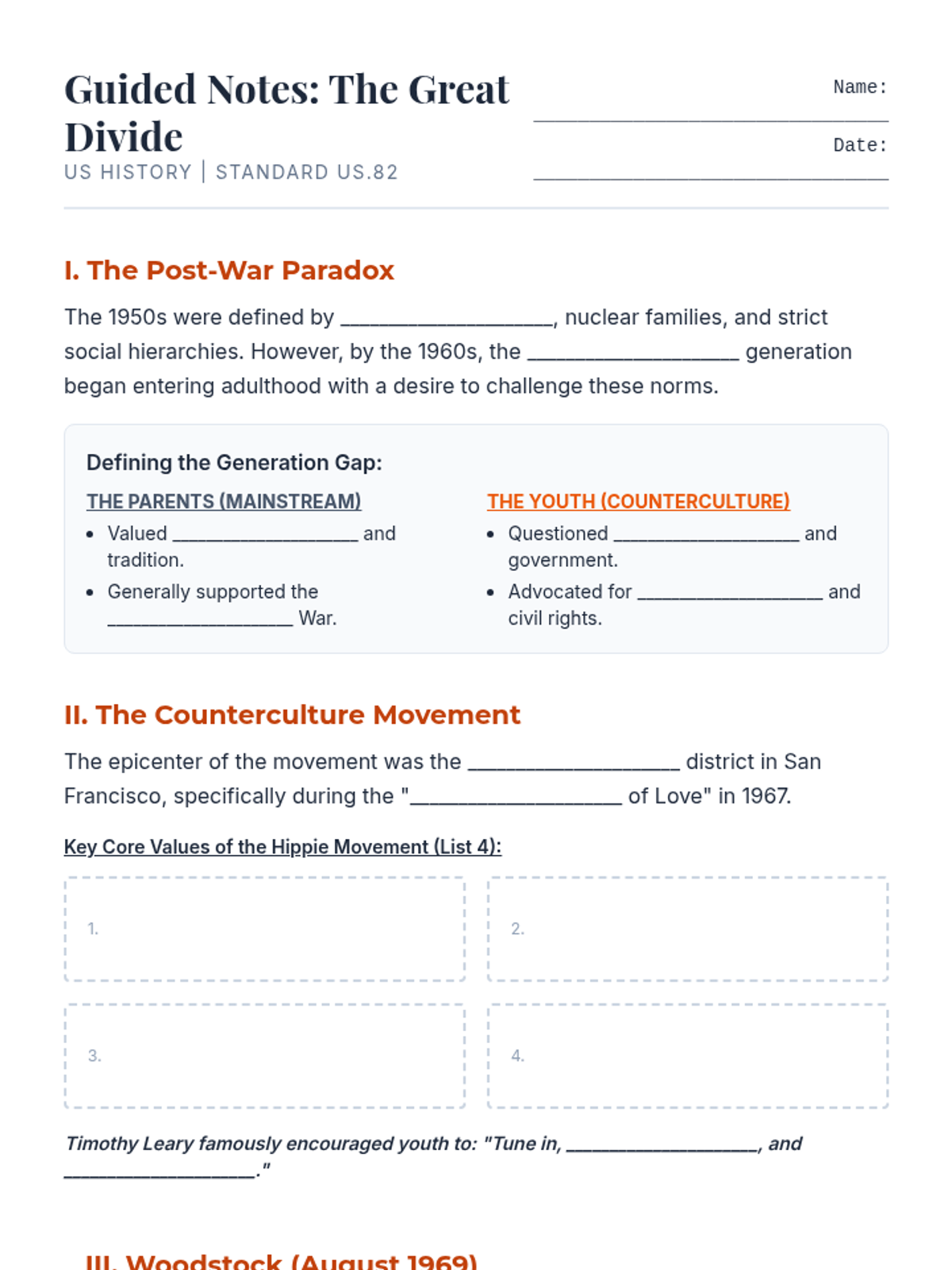
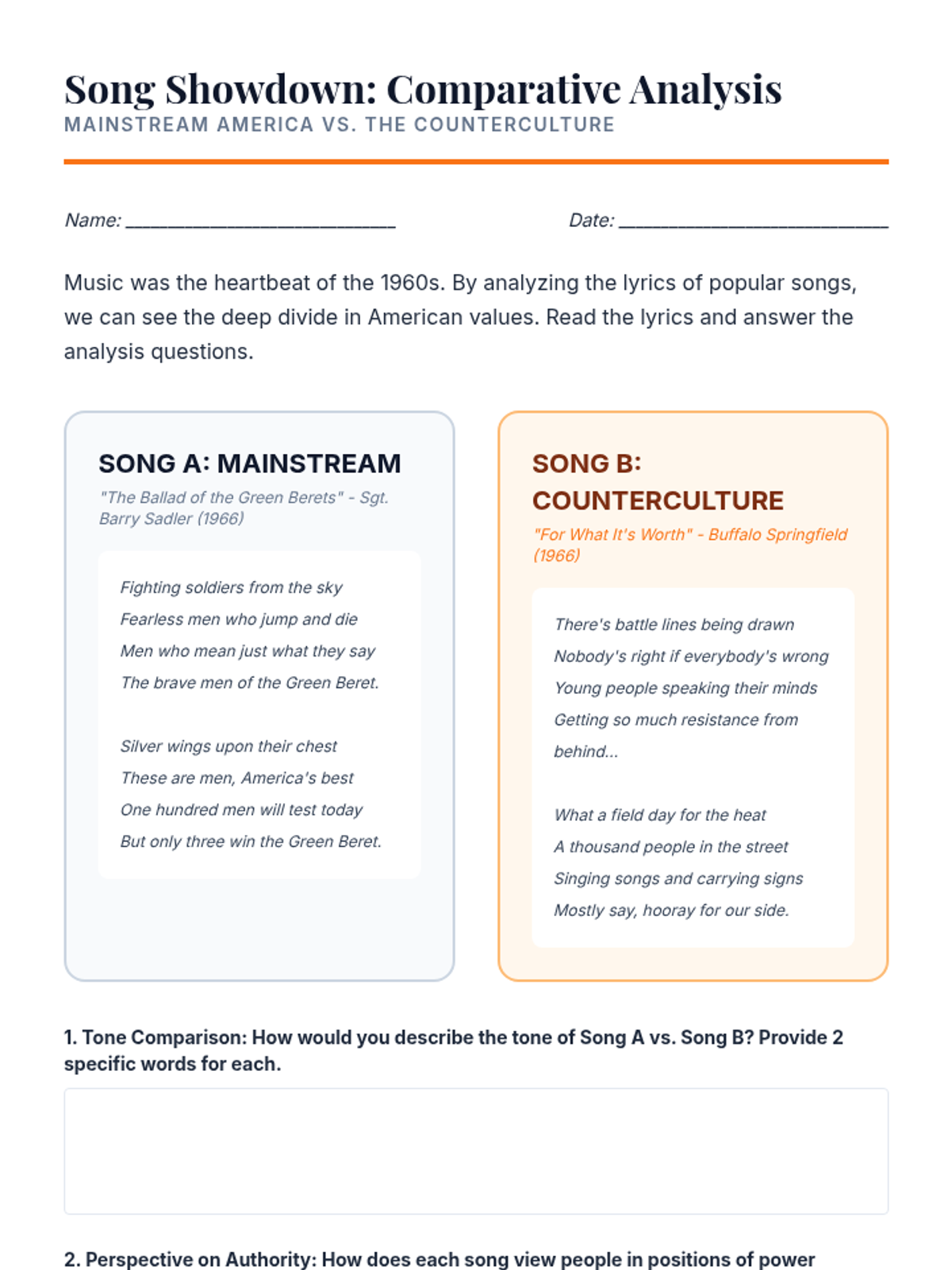
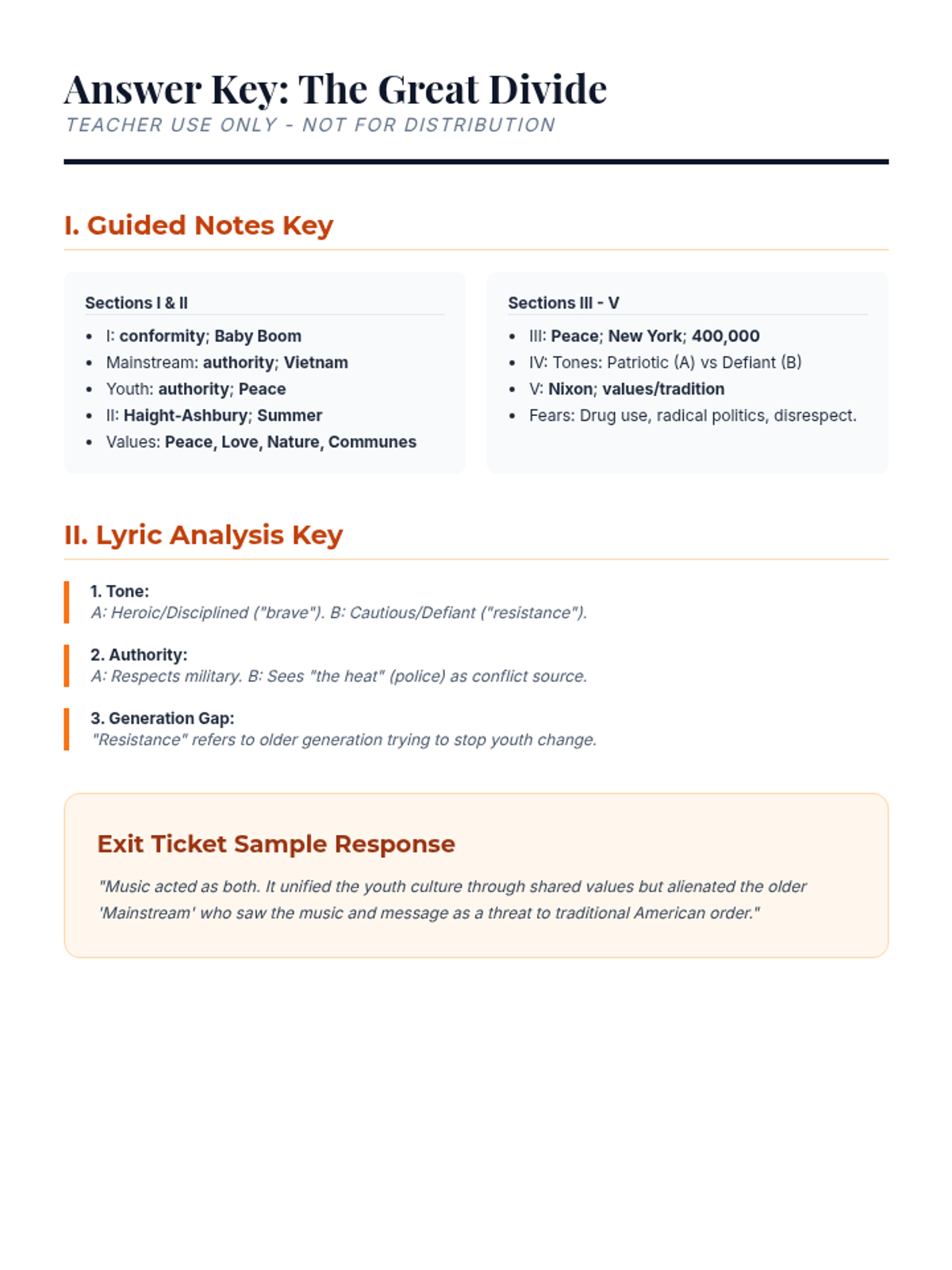
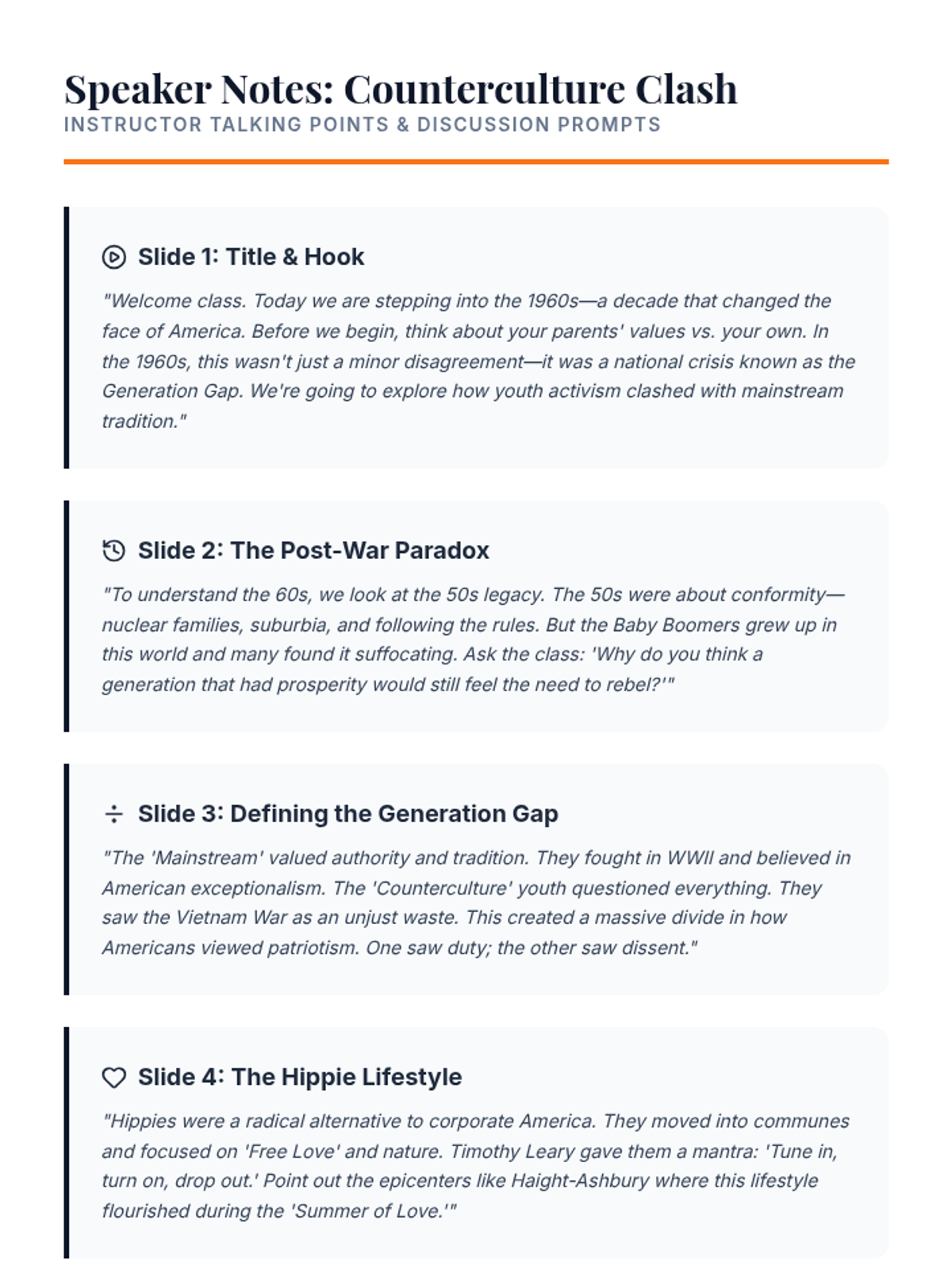
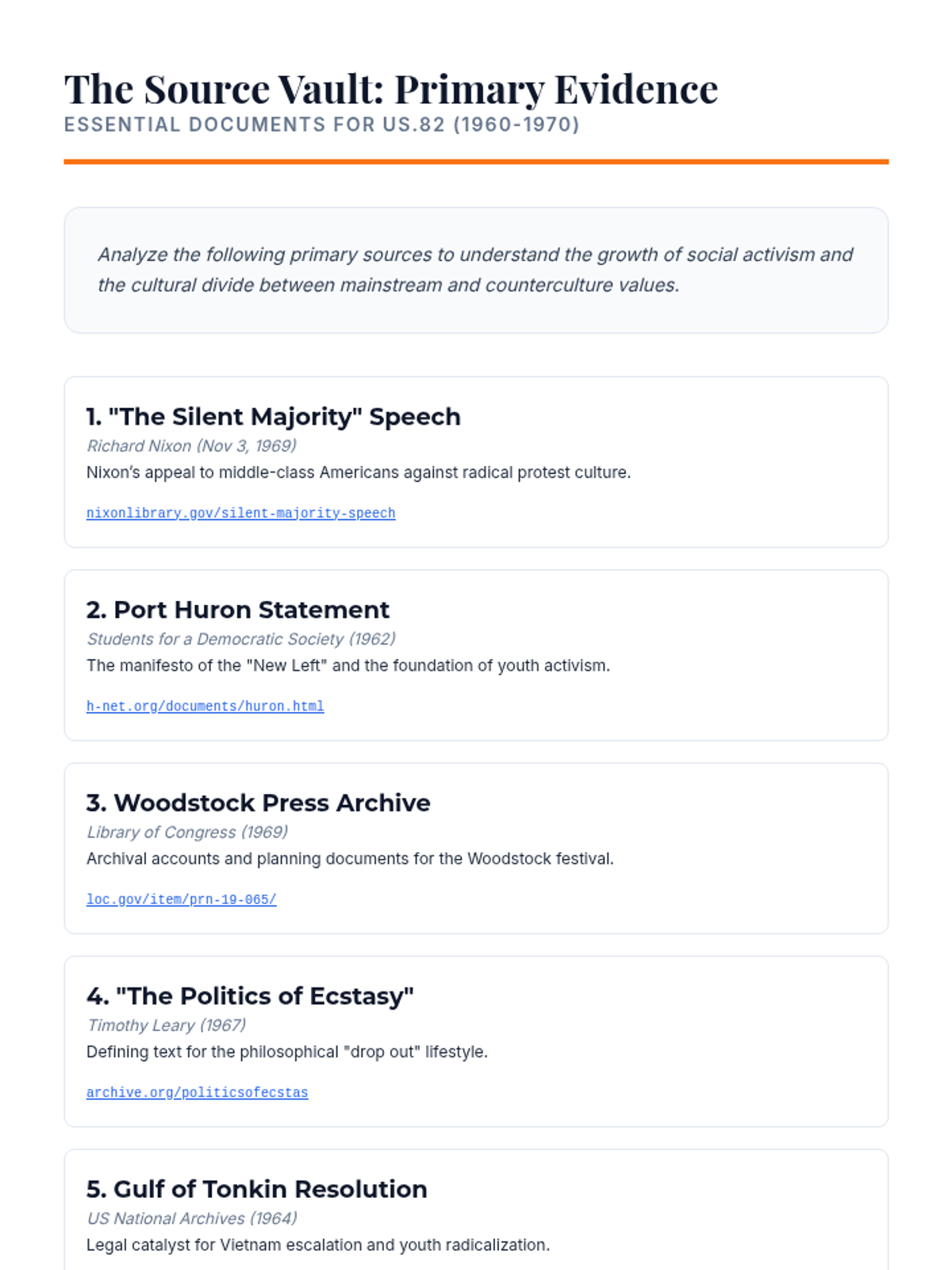
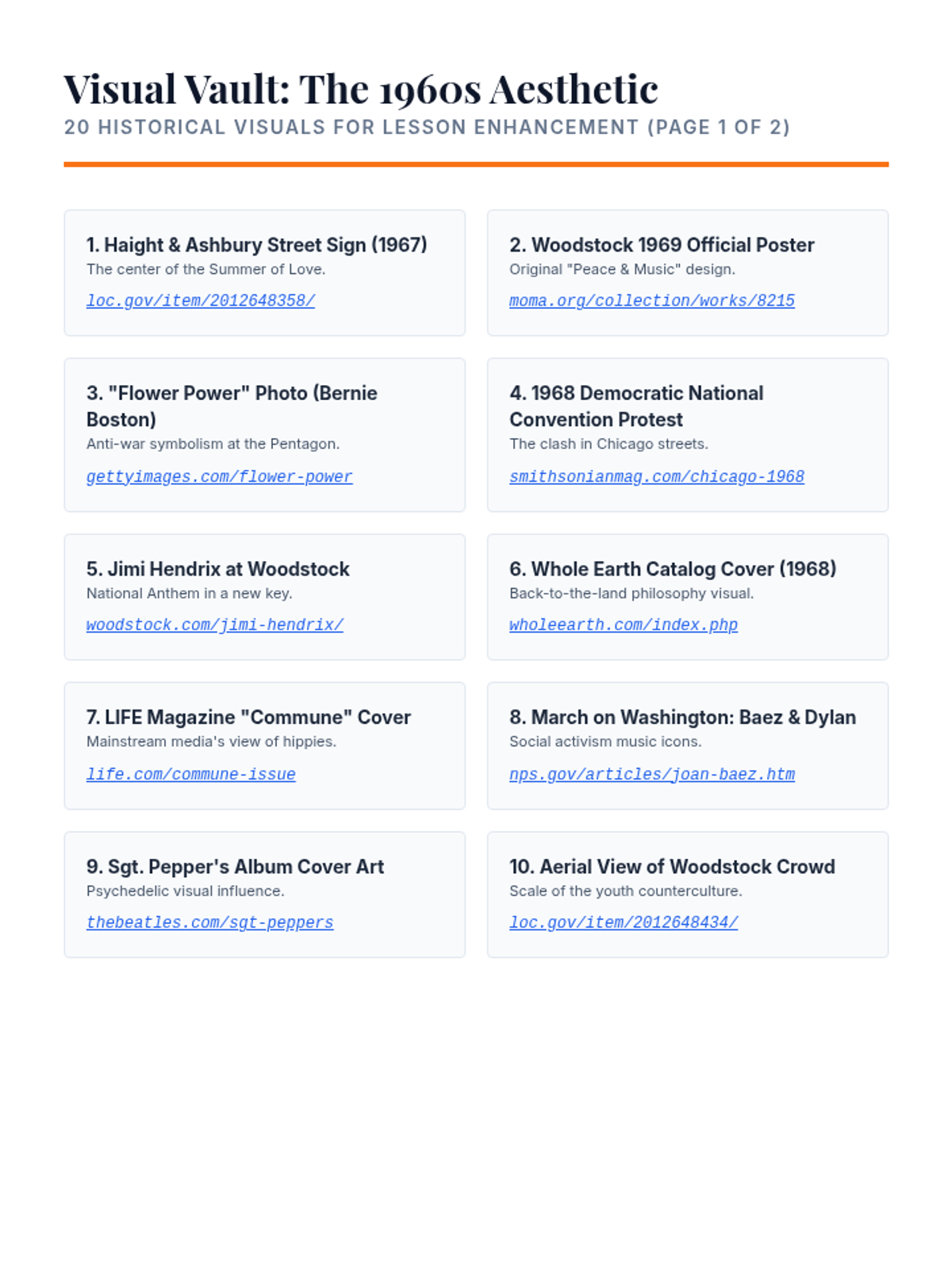
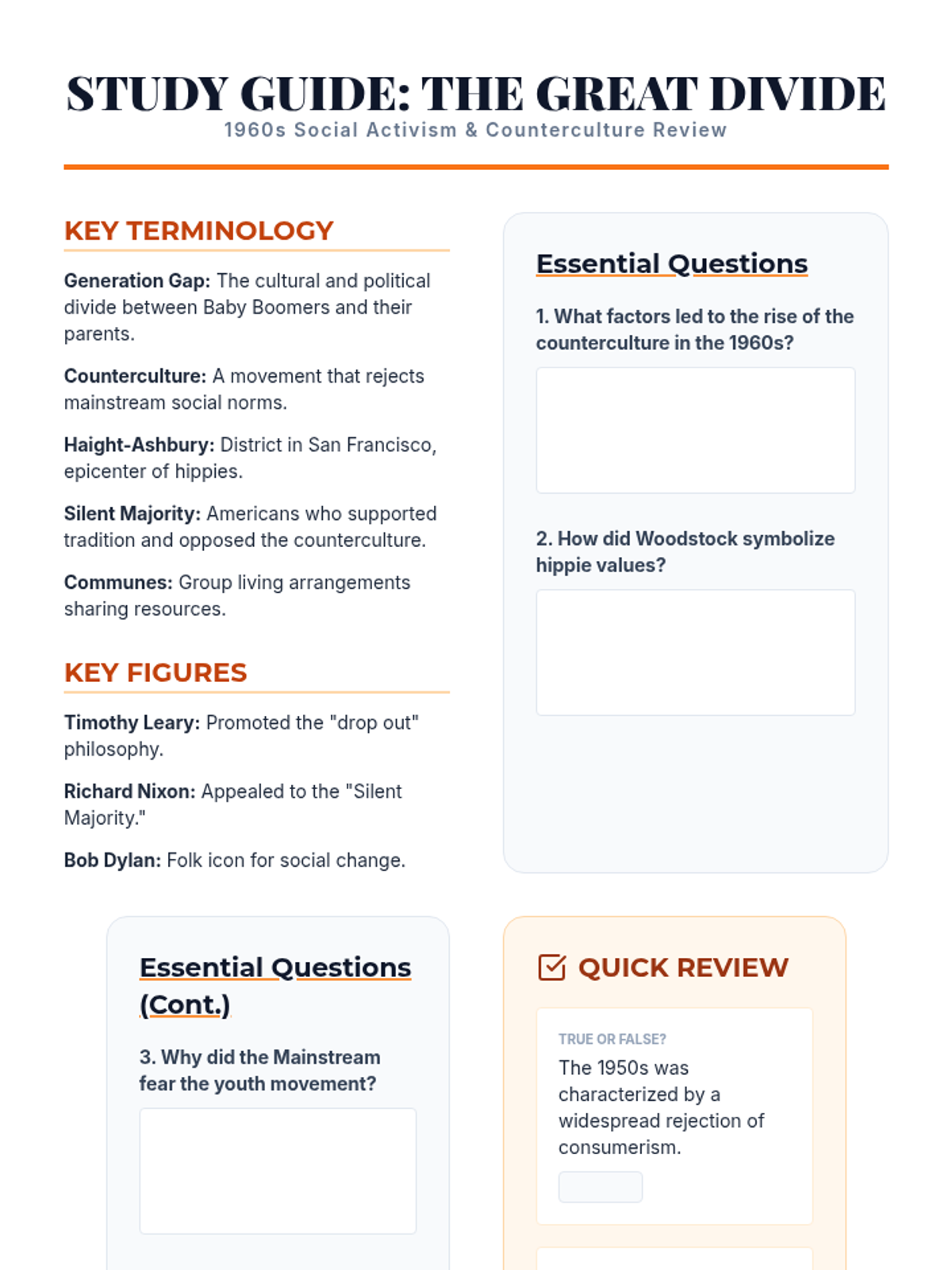
A 50-minute exploration of the 1960s counterculture movement, the generation gap, and the clash between mainstream values and the rise of social activism as defined by TN Standard US.82.
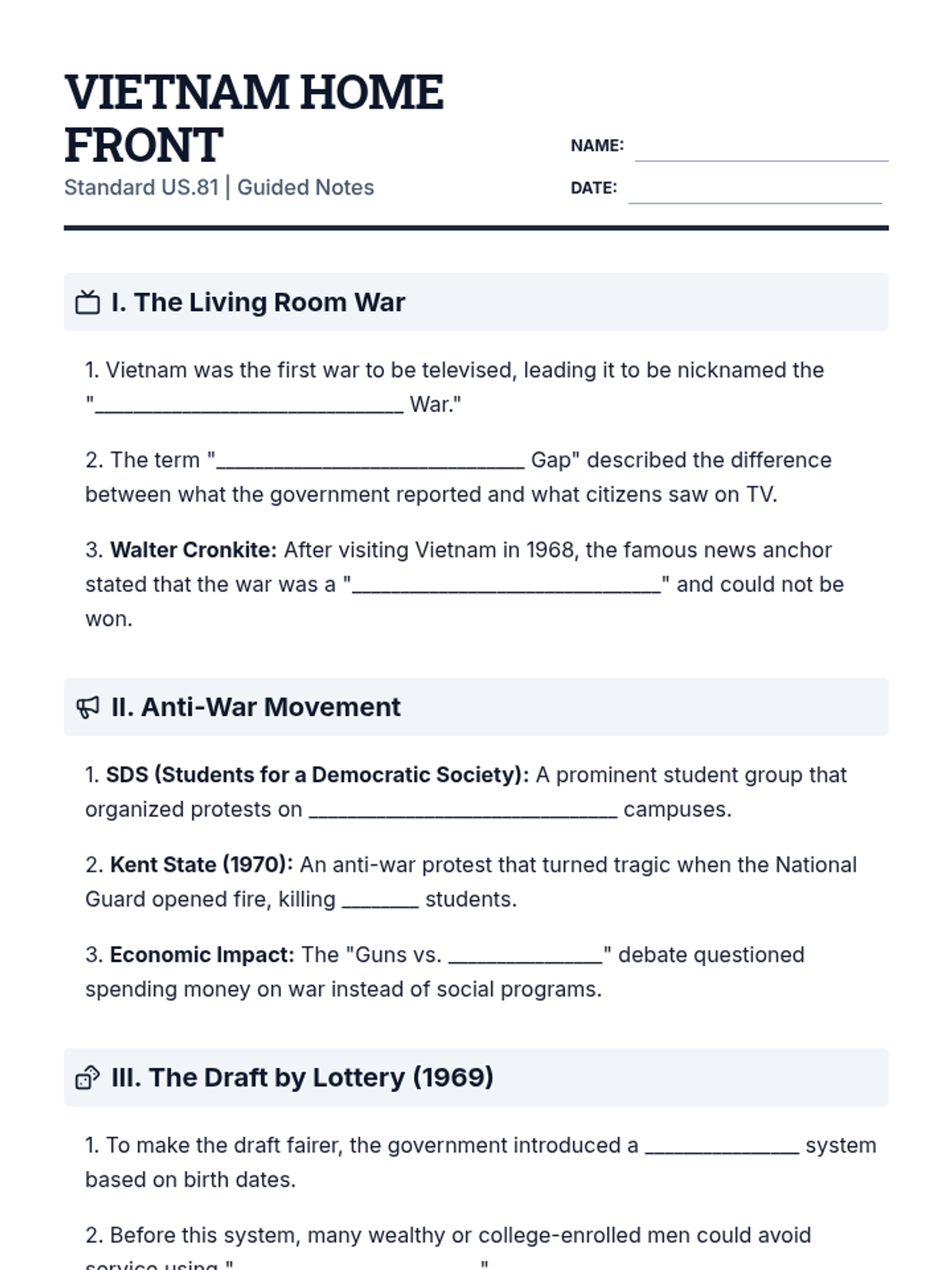
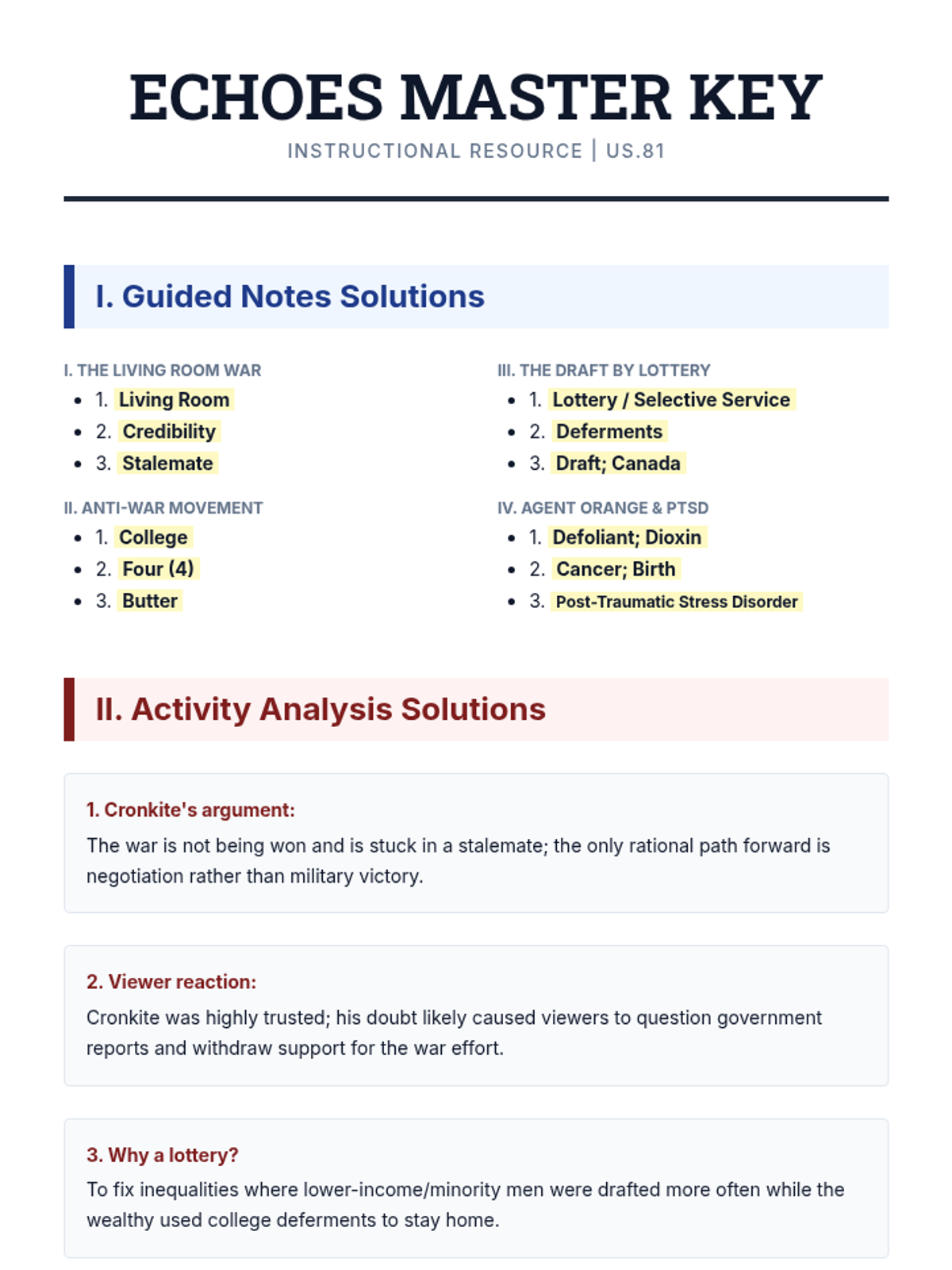
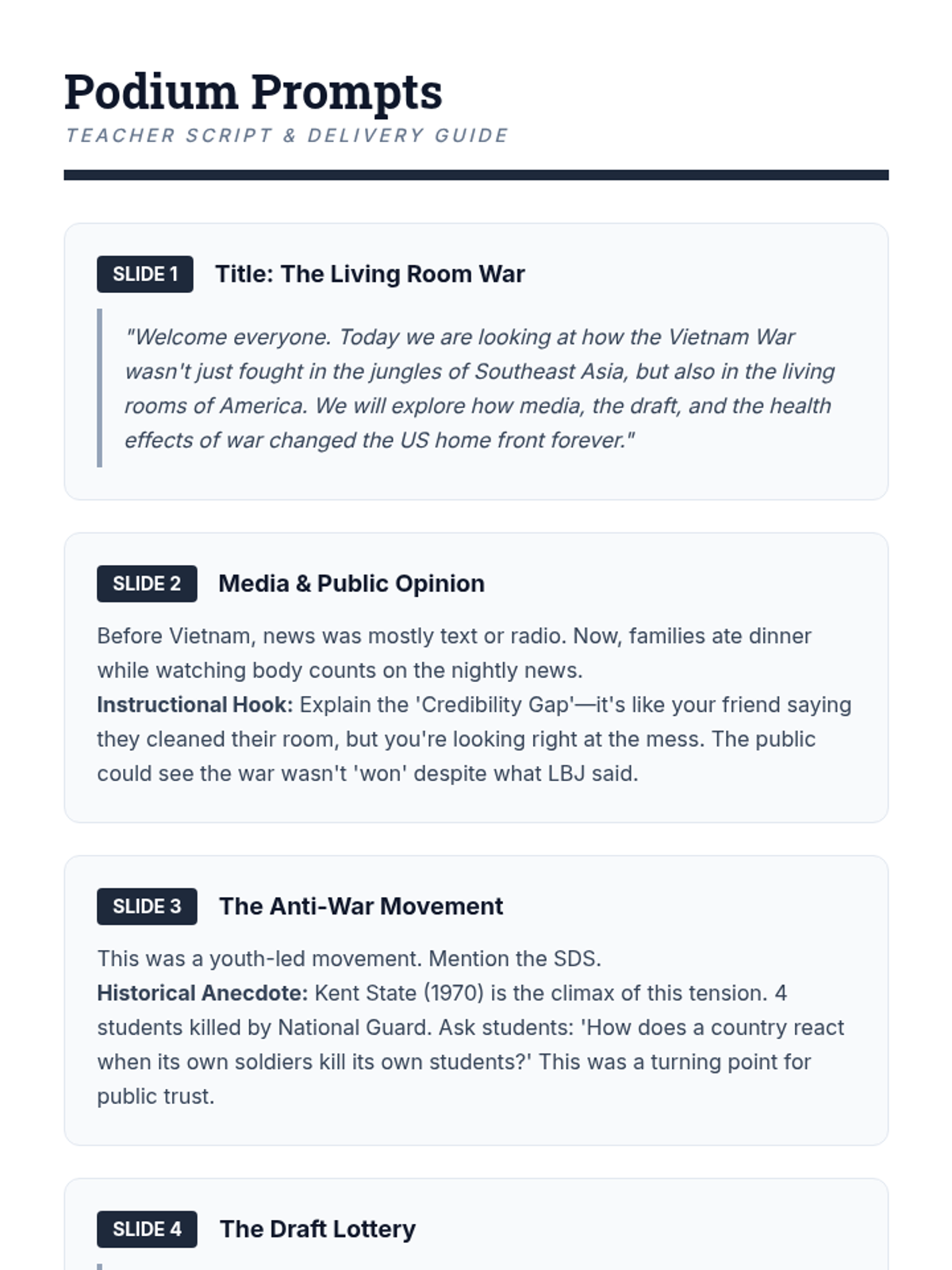
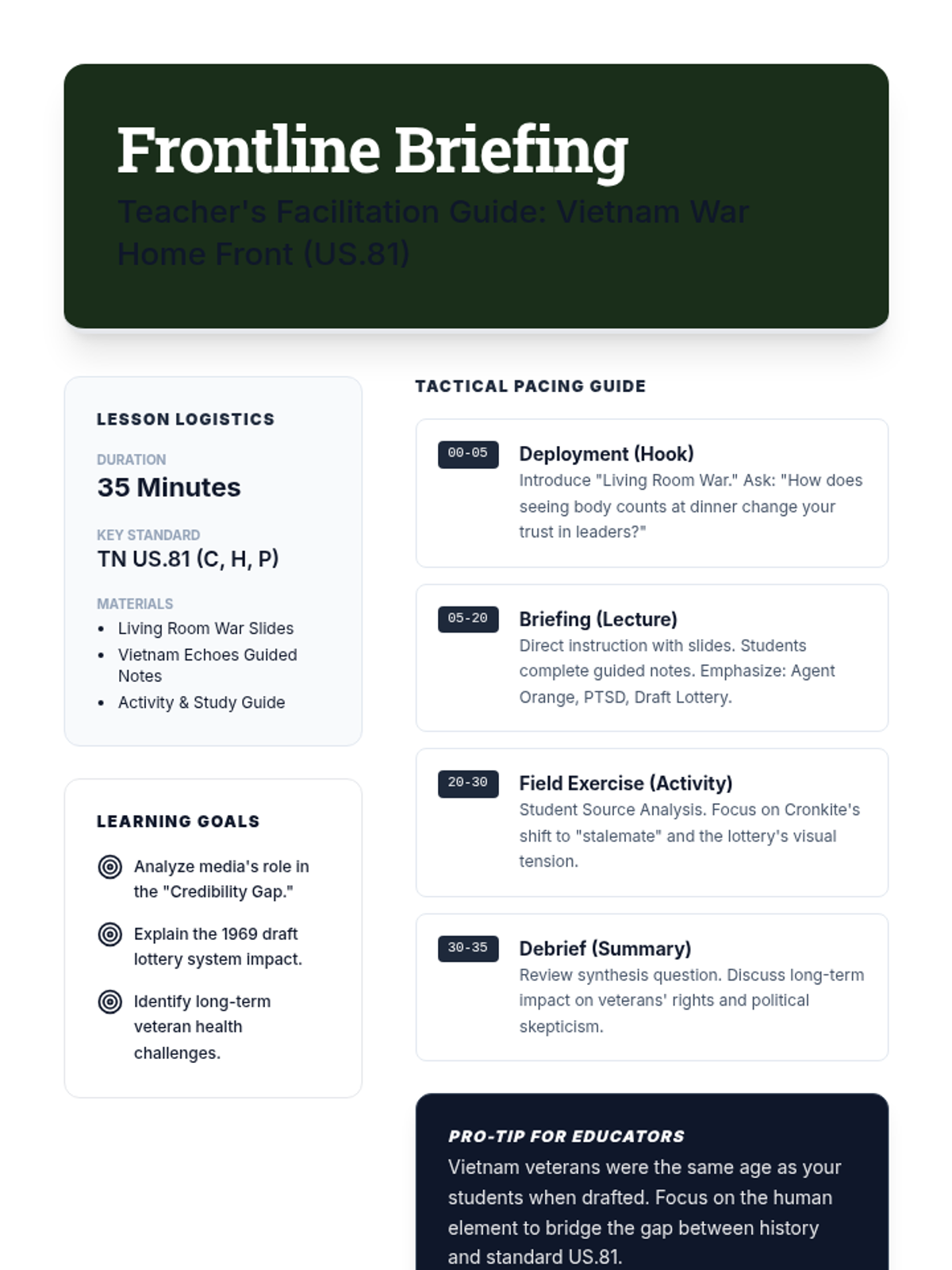
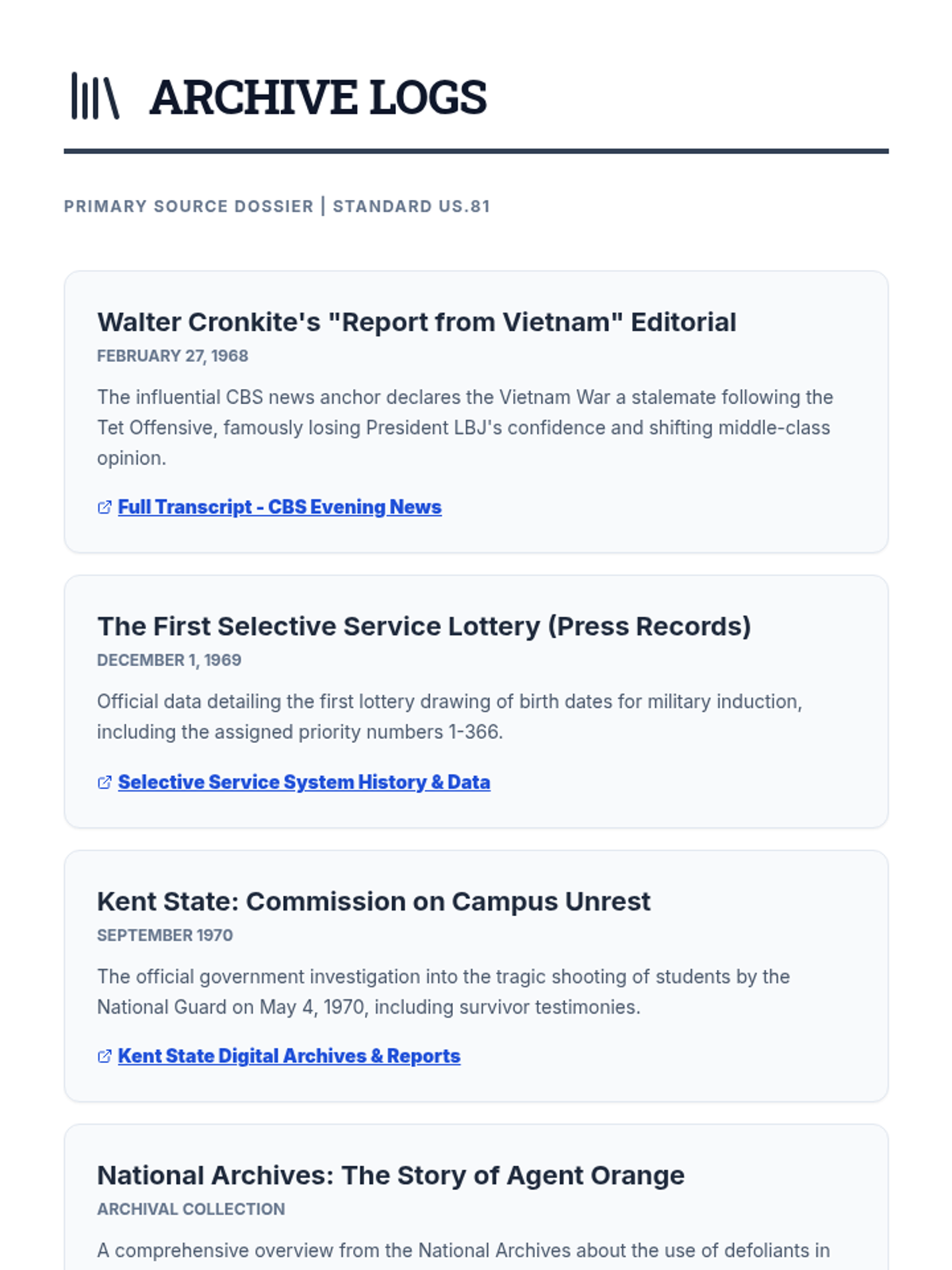
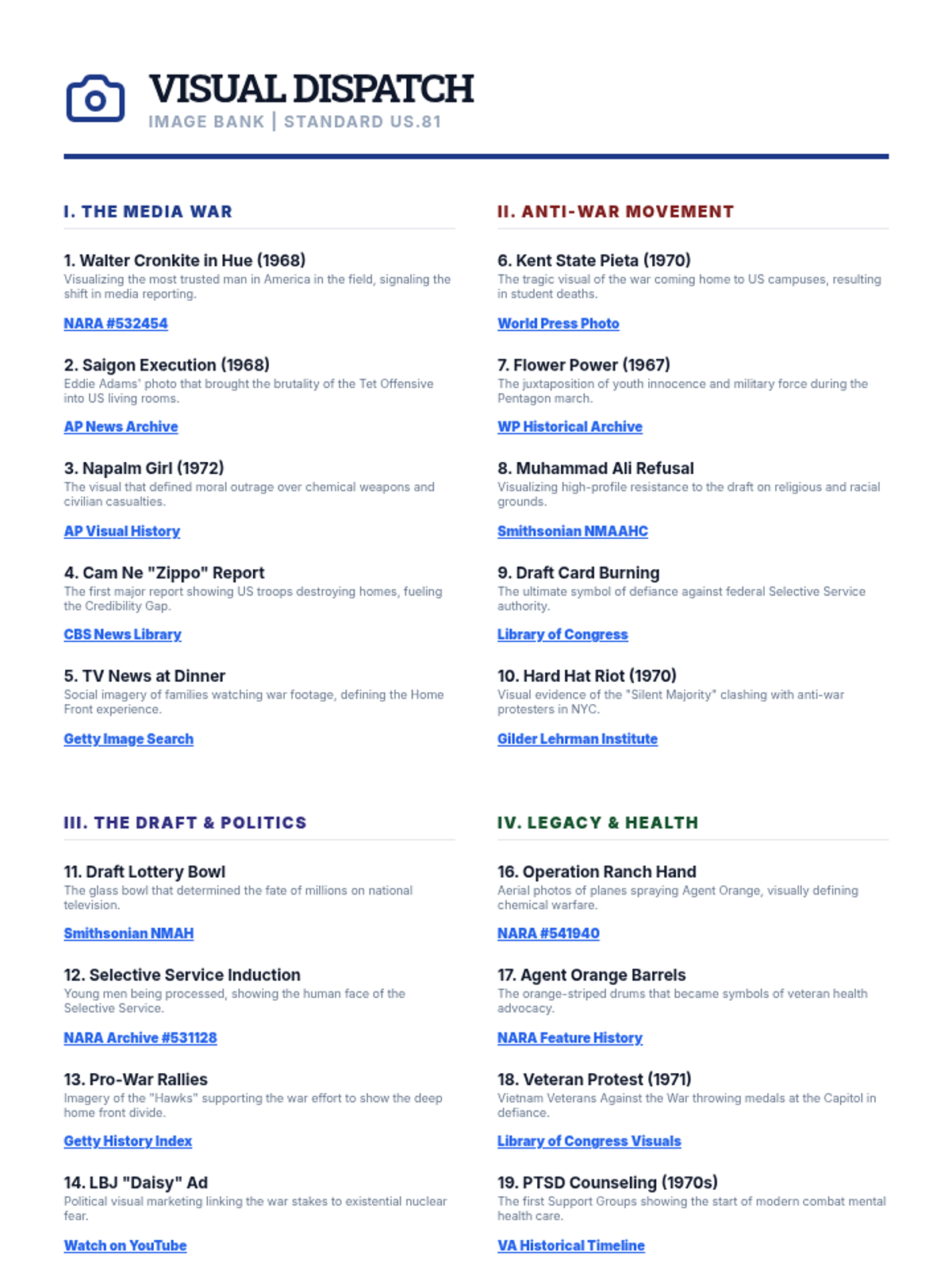
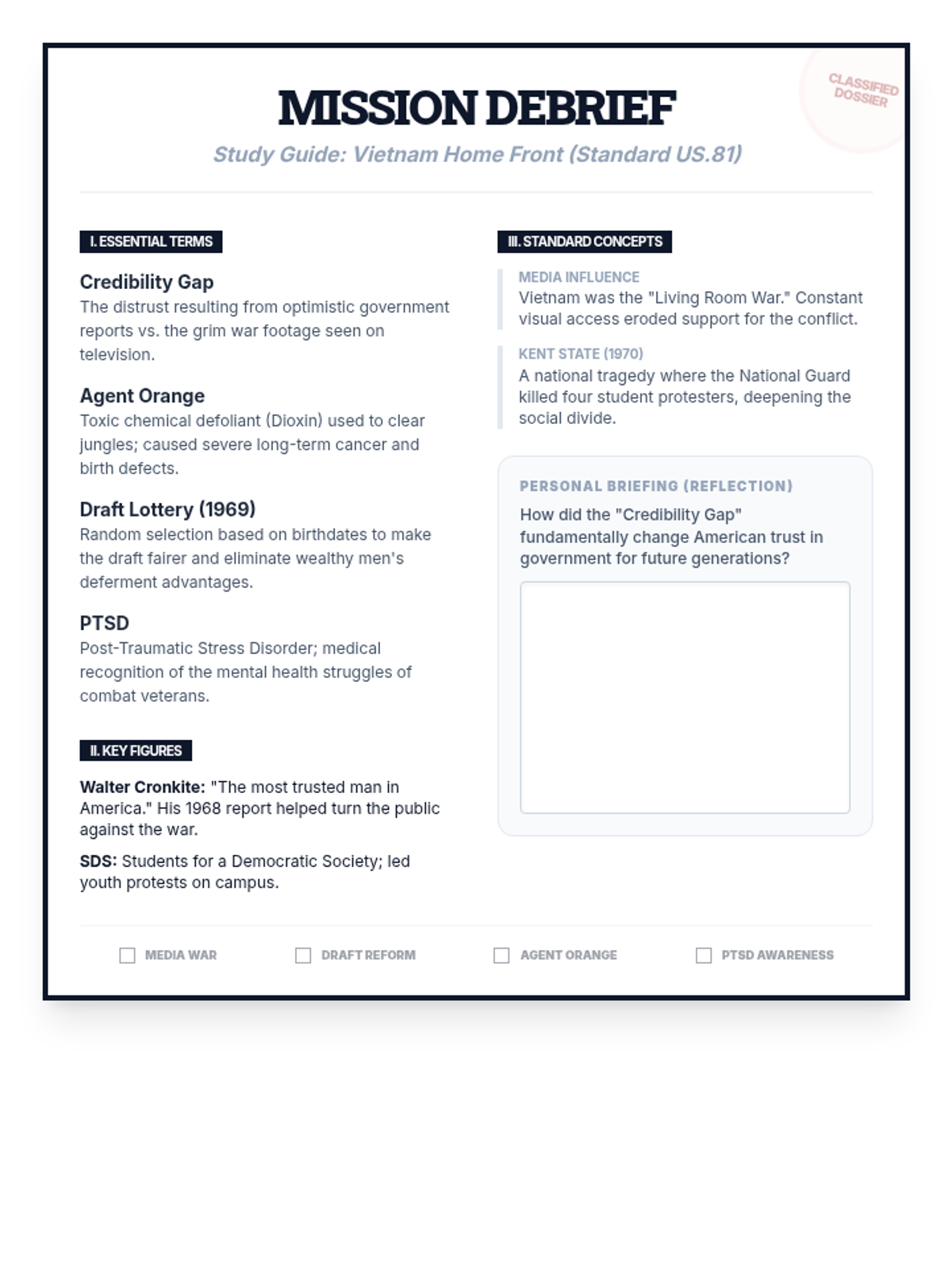
A comprehensive 35-minute high school lesson exploring the impact of the Vietnam War on the American home front, focusing on media, protest, the draft, and the long-term health effects on veterans.
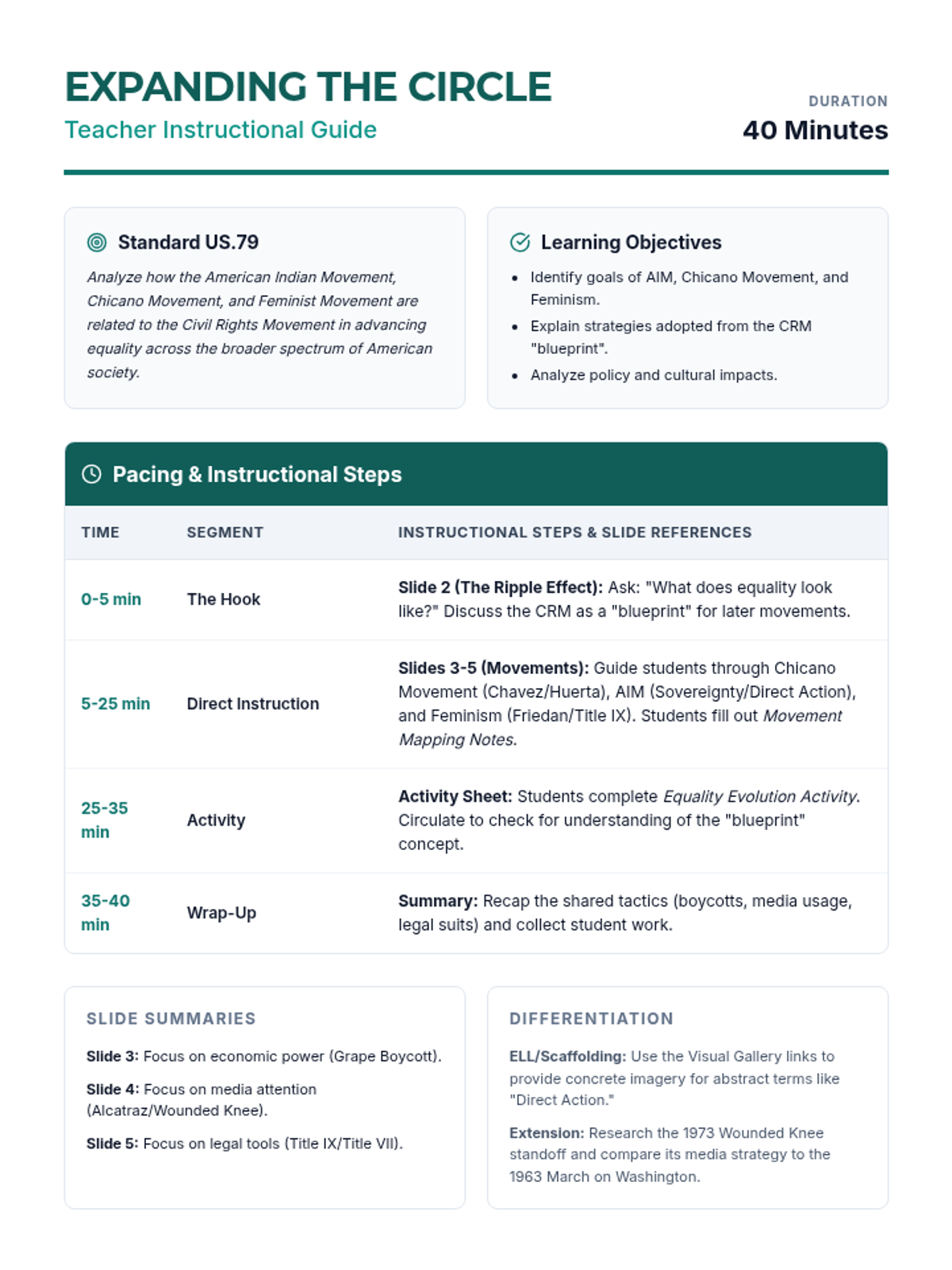
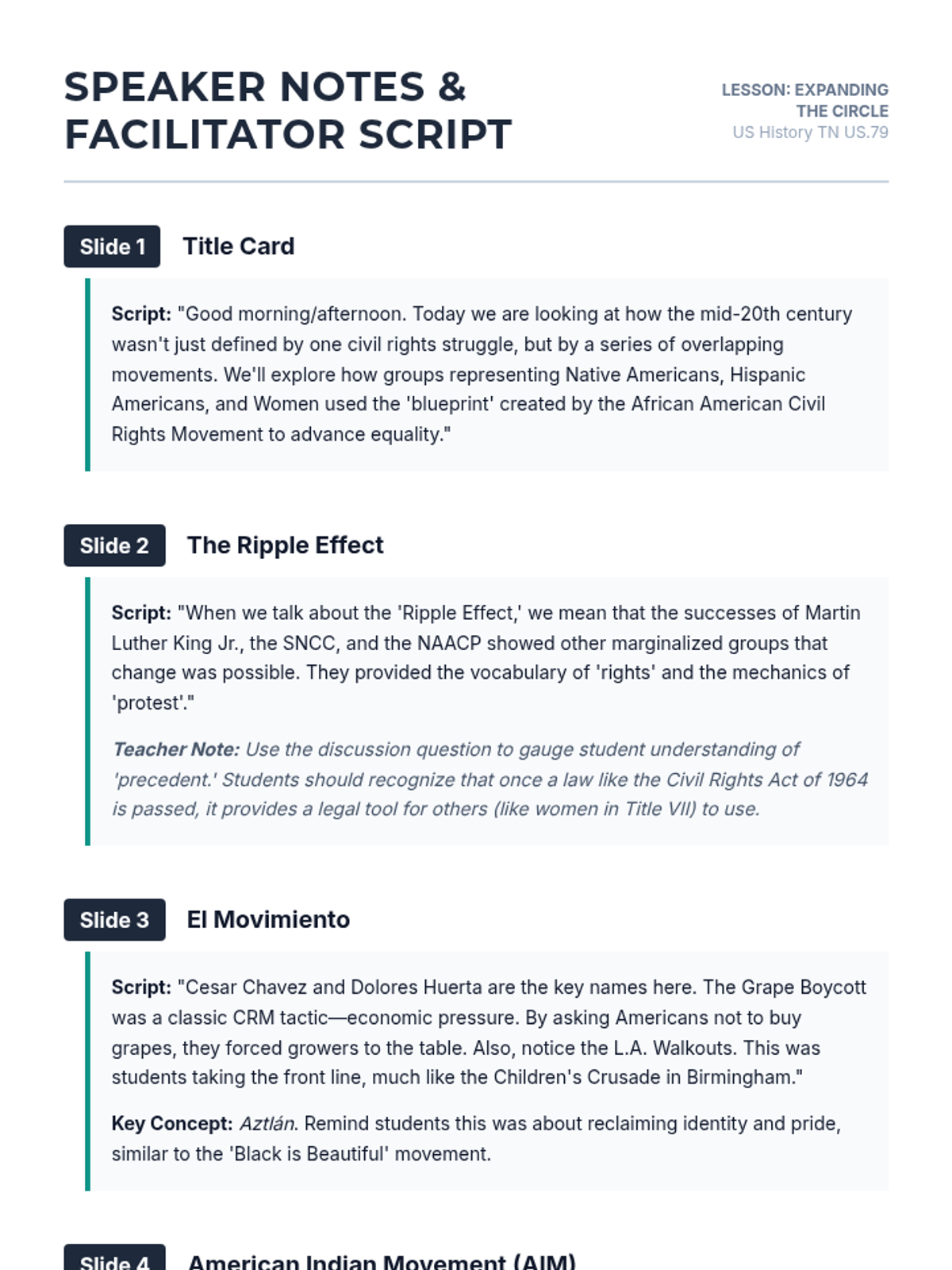
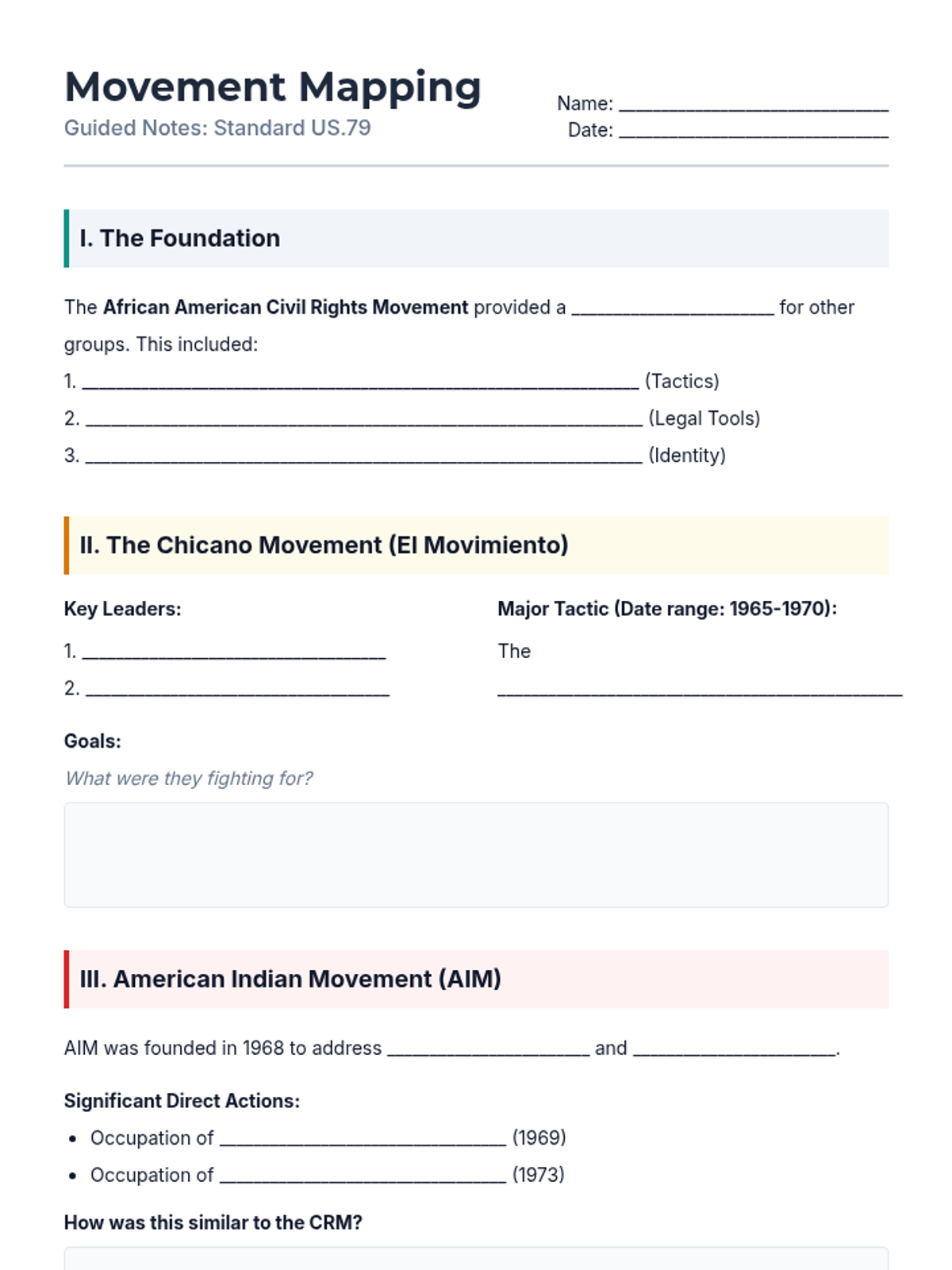
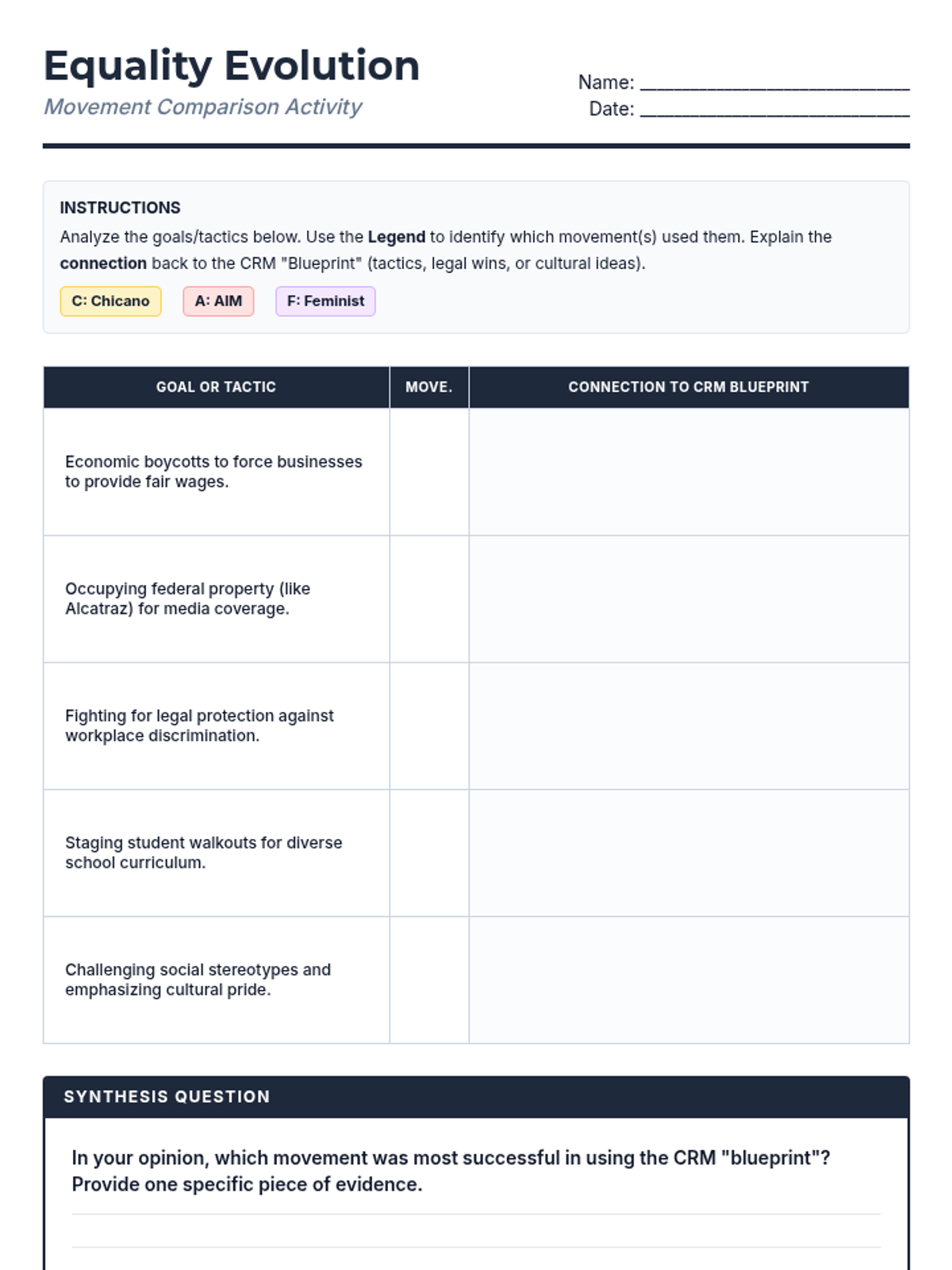
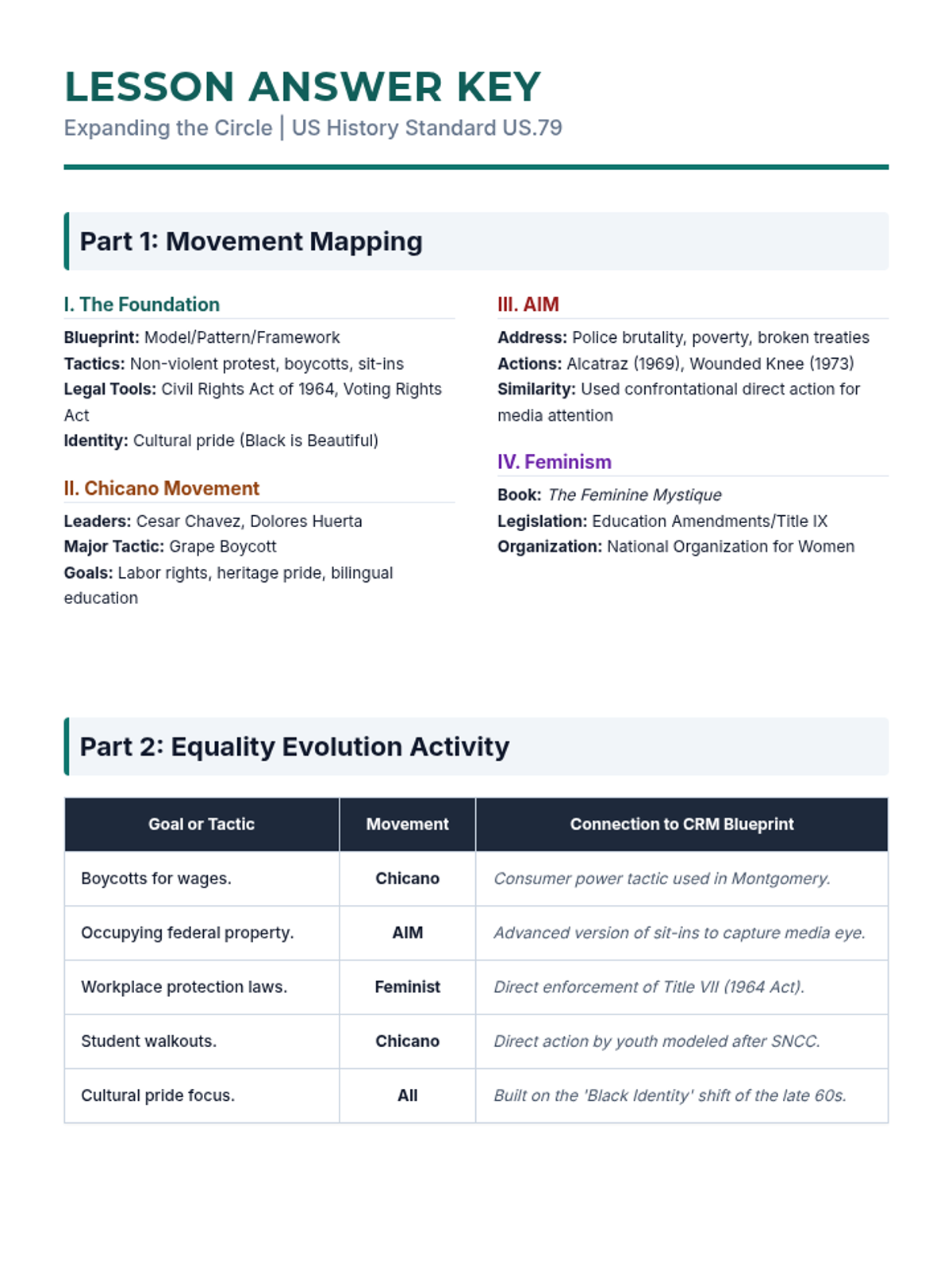
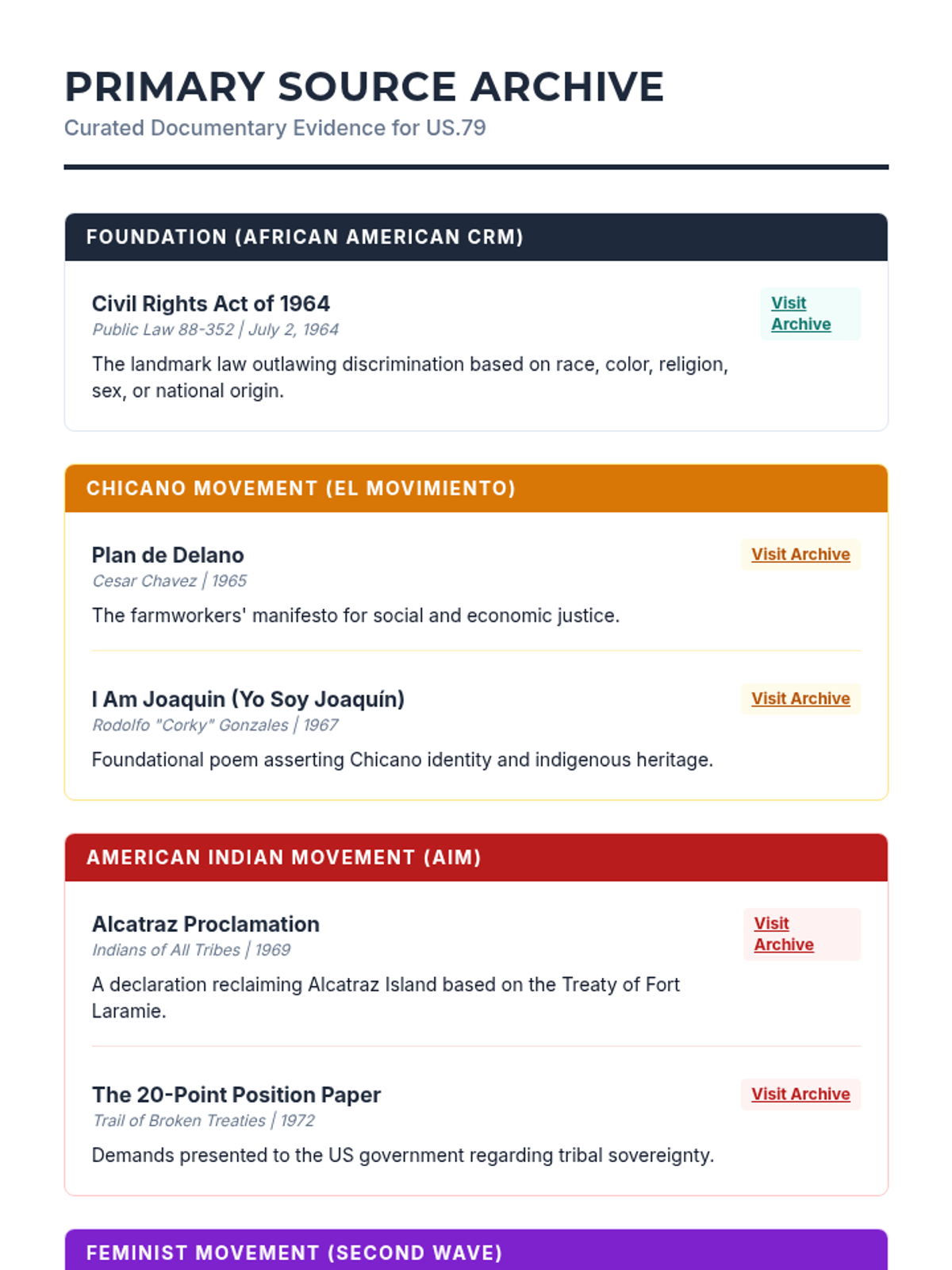
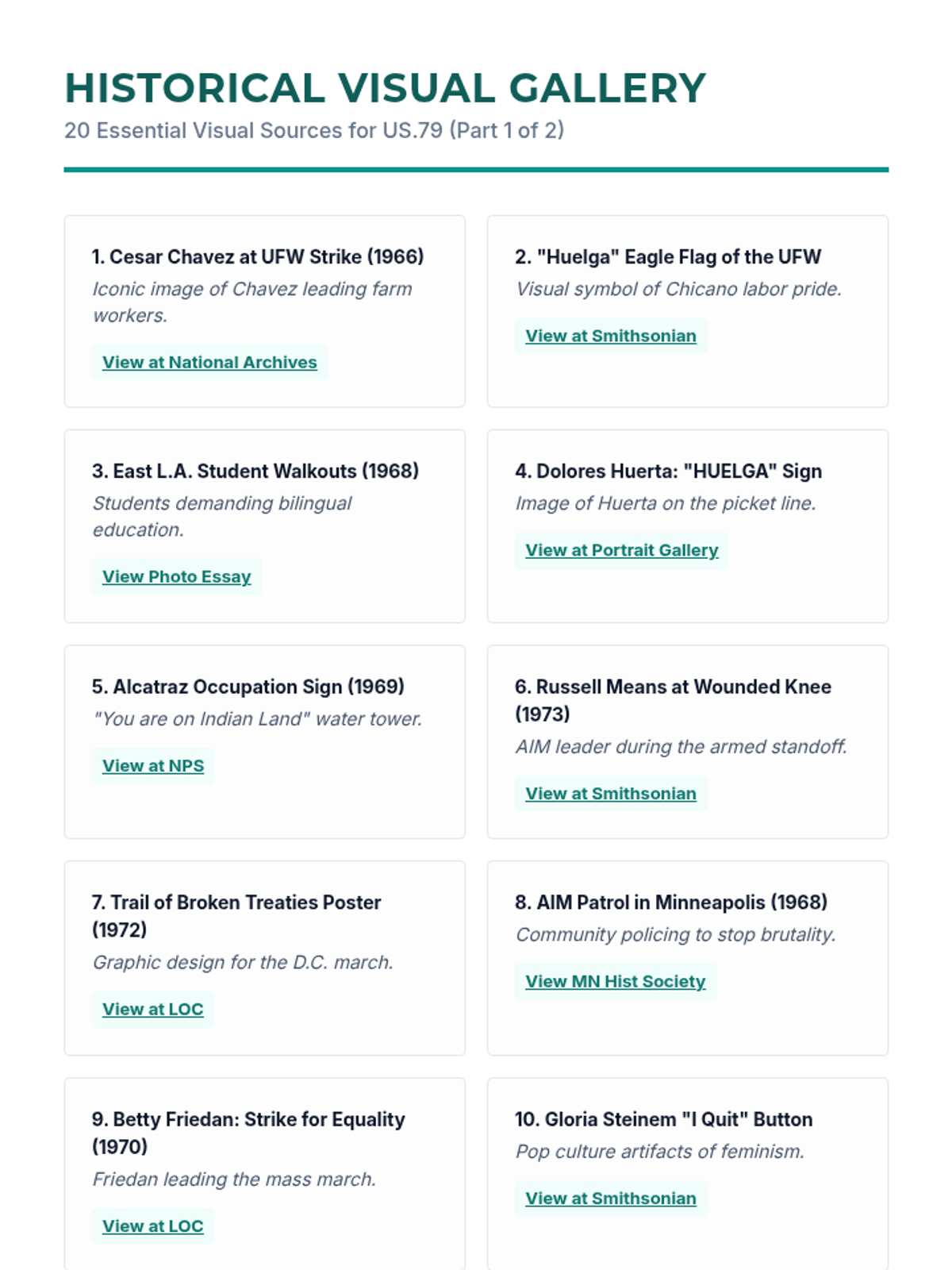
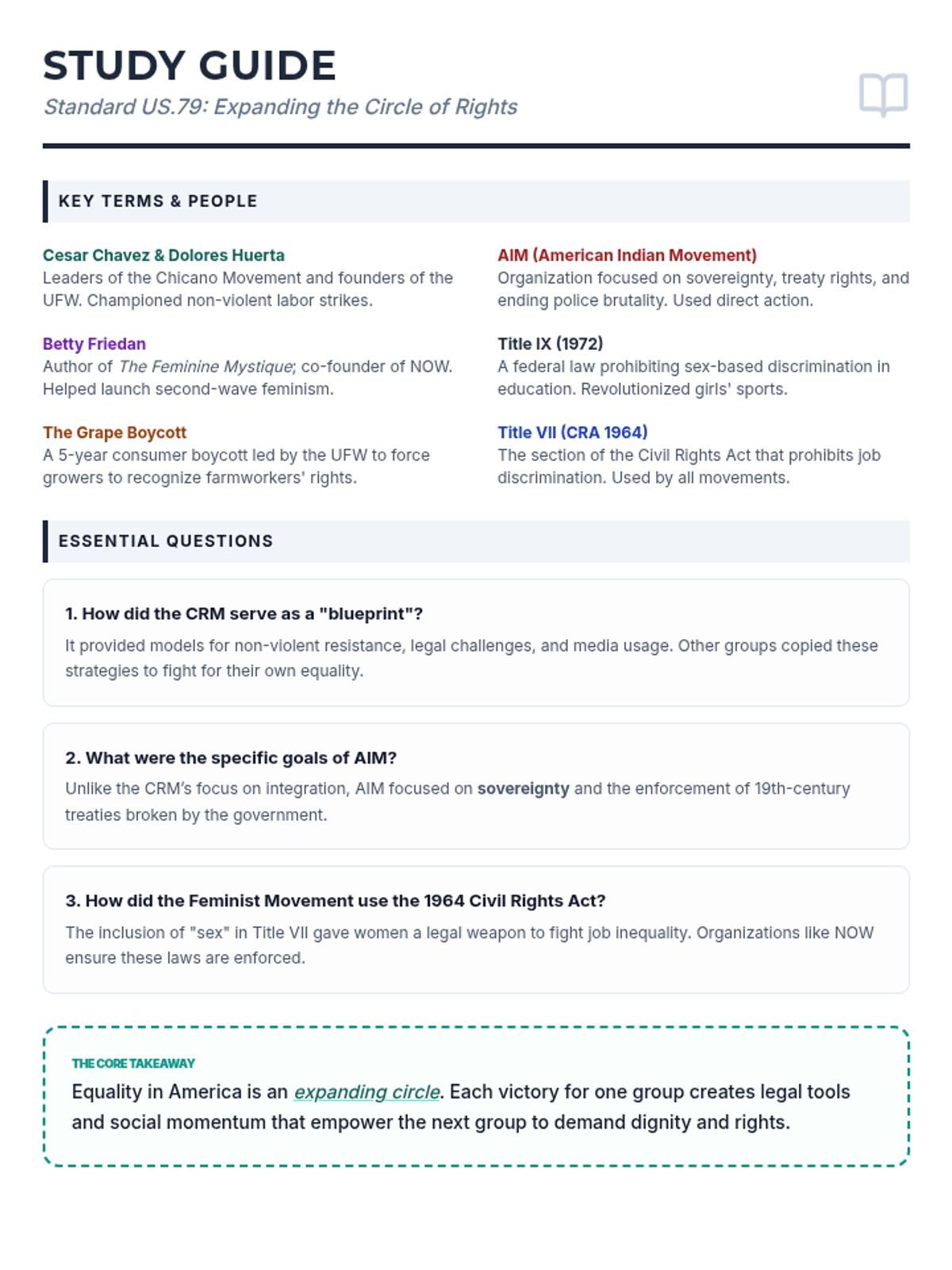
A 40-minute high school US History lesson exploring the interconnectedness of the American Indian Movement, Chicano Movement, and Feminist Movement with the broader Civil Rights Movement, as per TN Standard US.79.
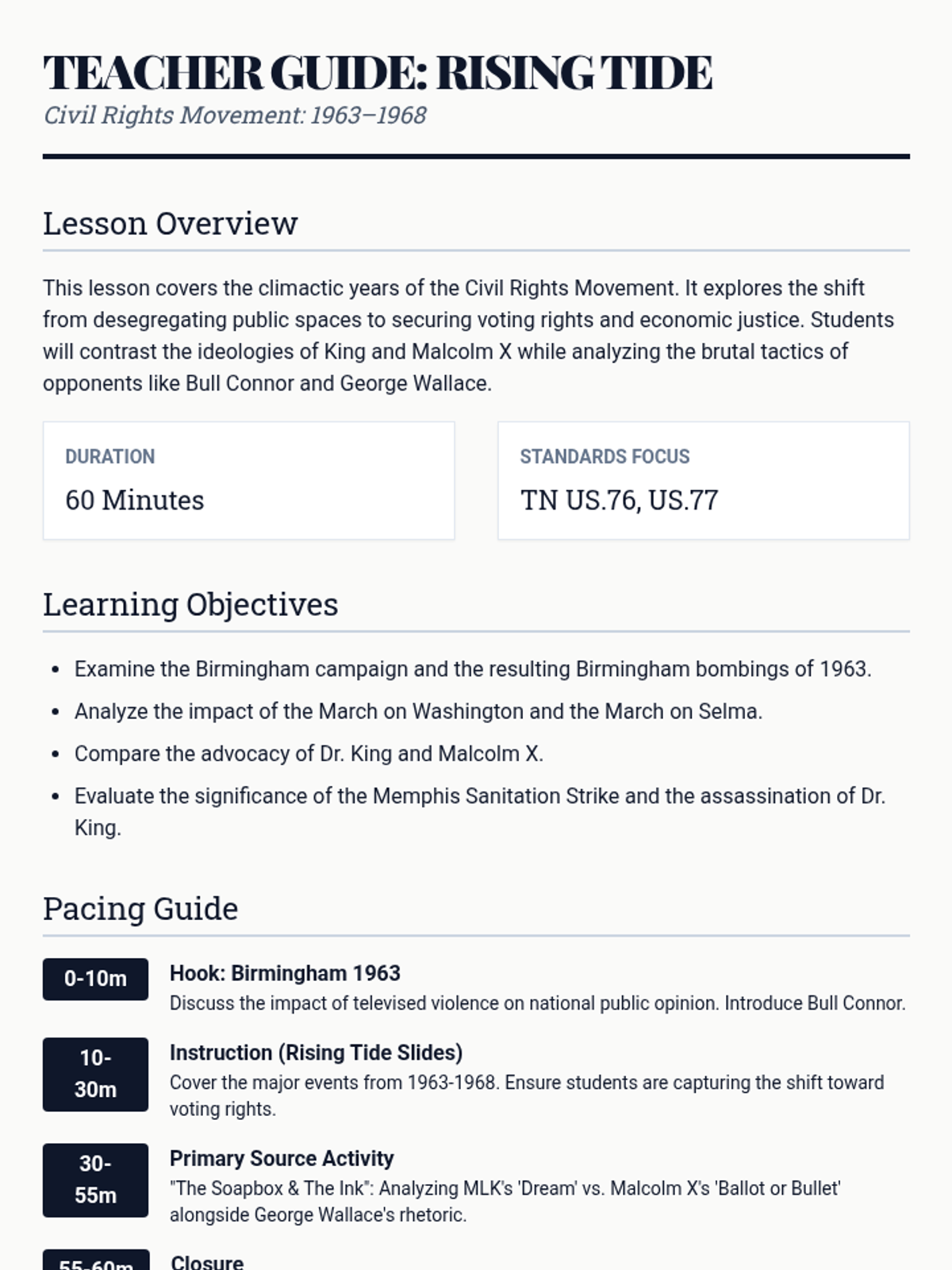
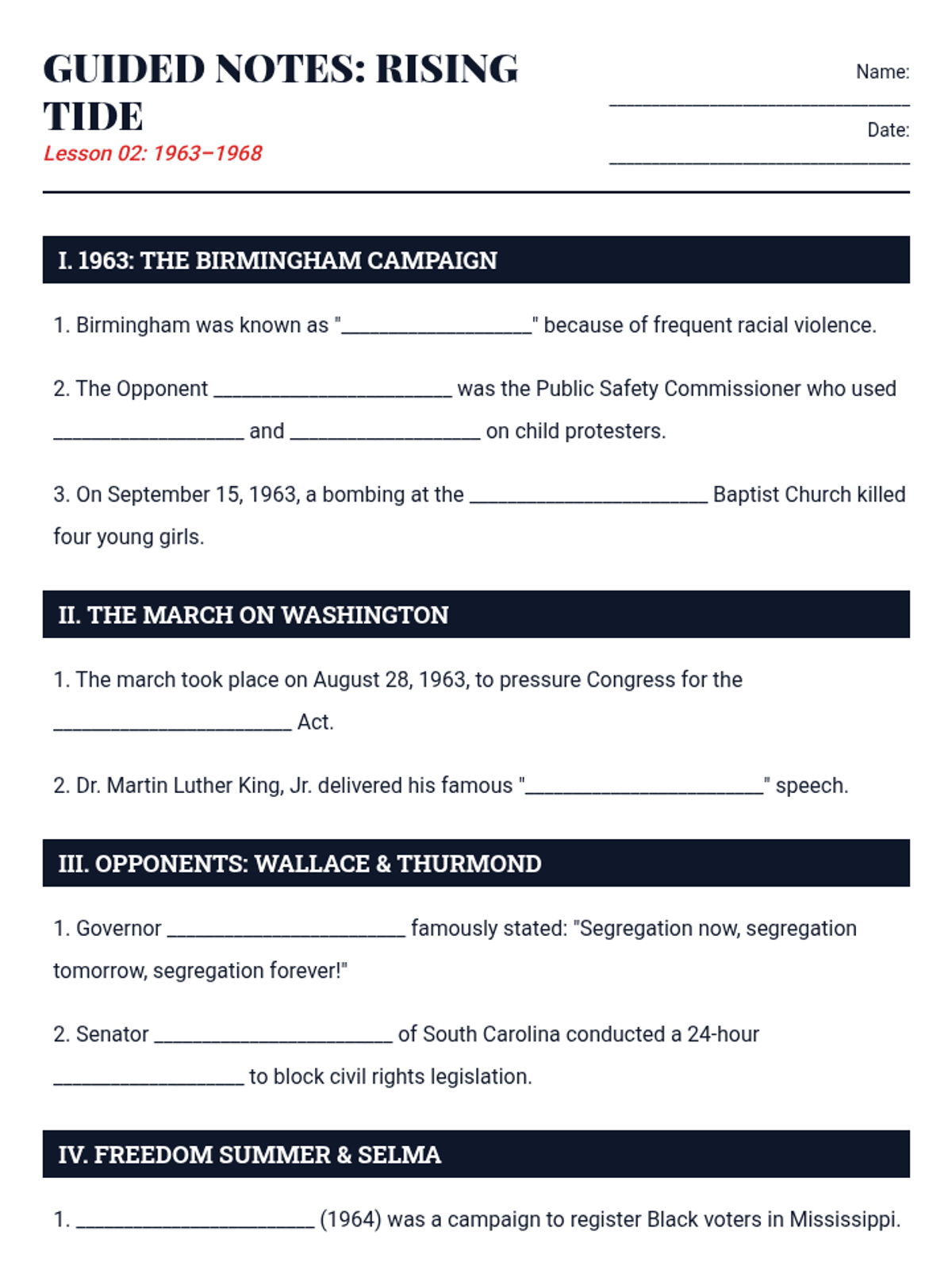
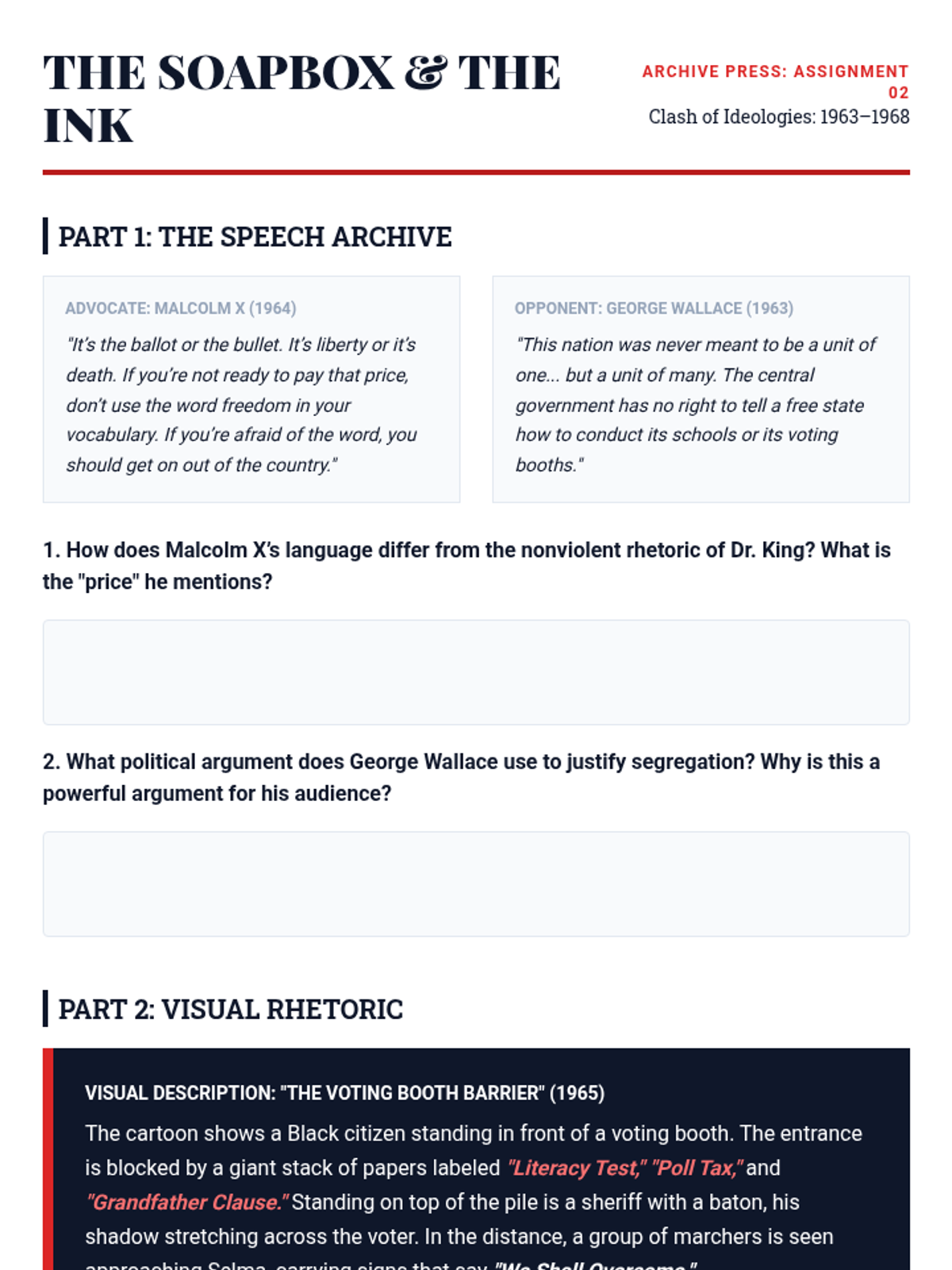
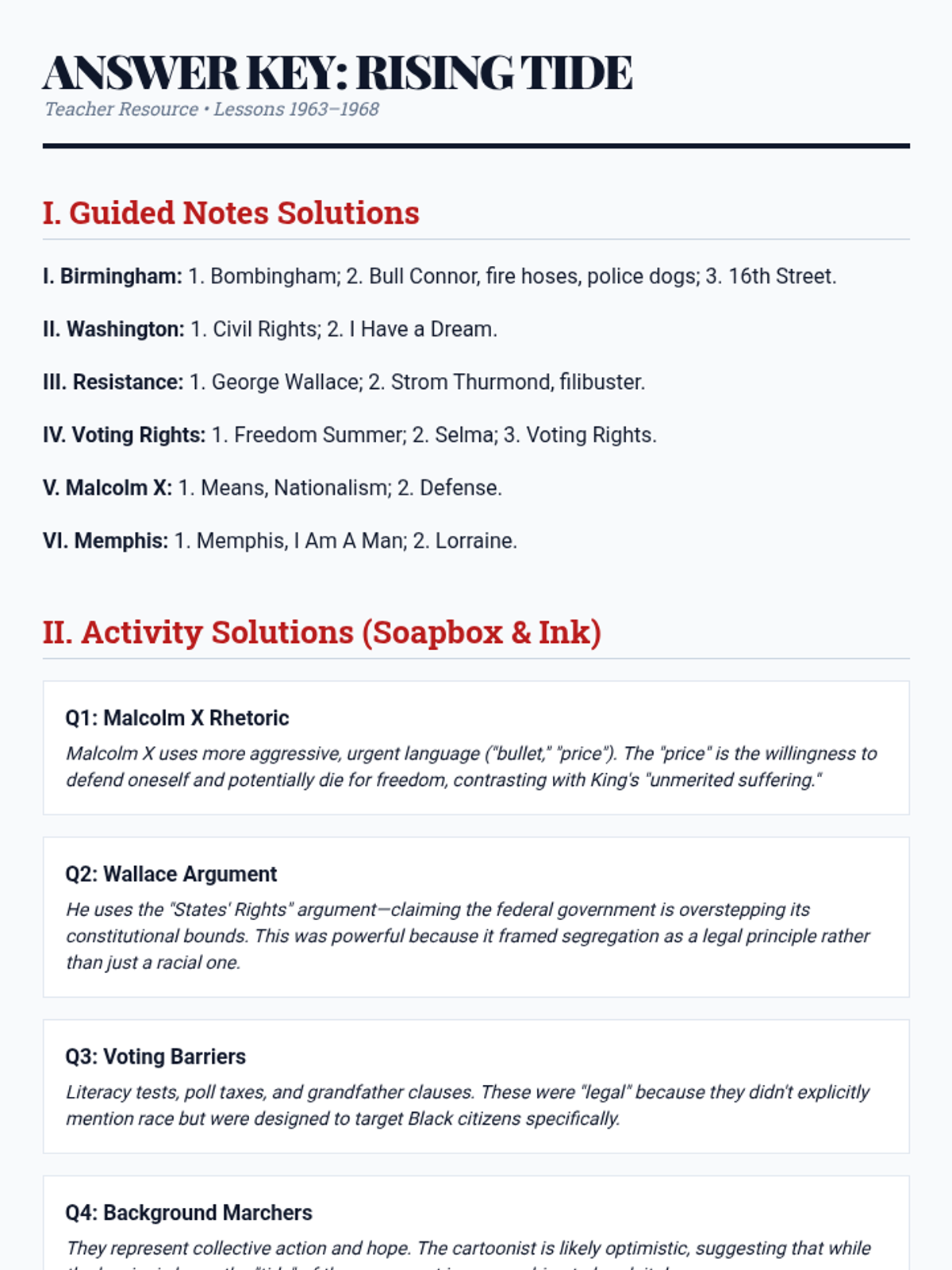
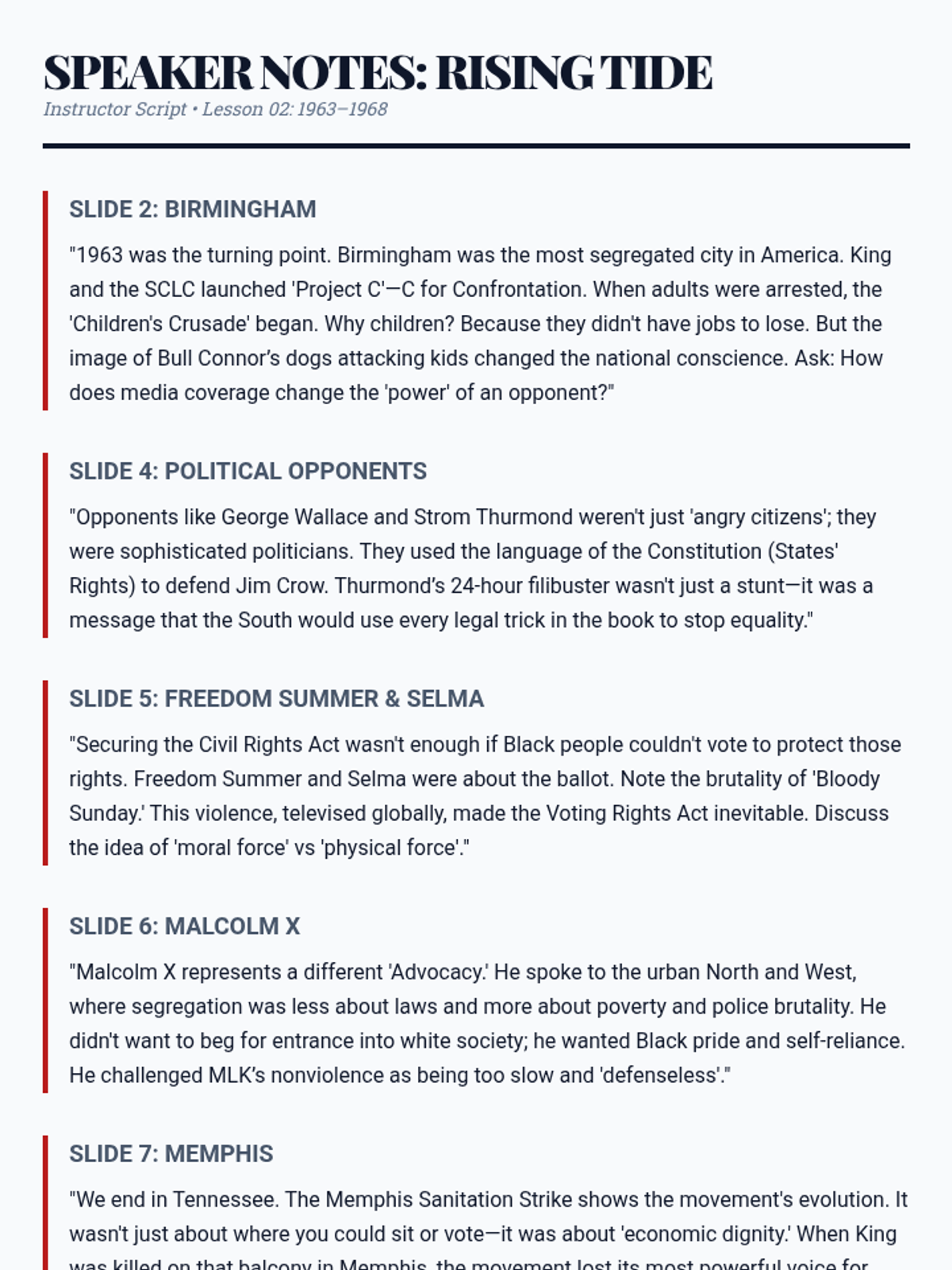
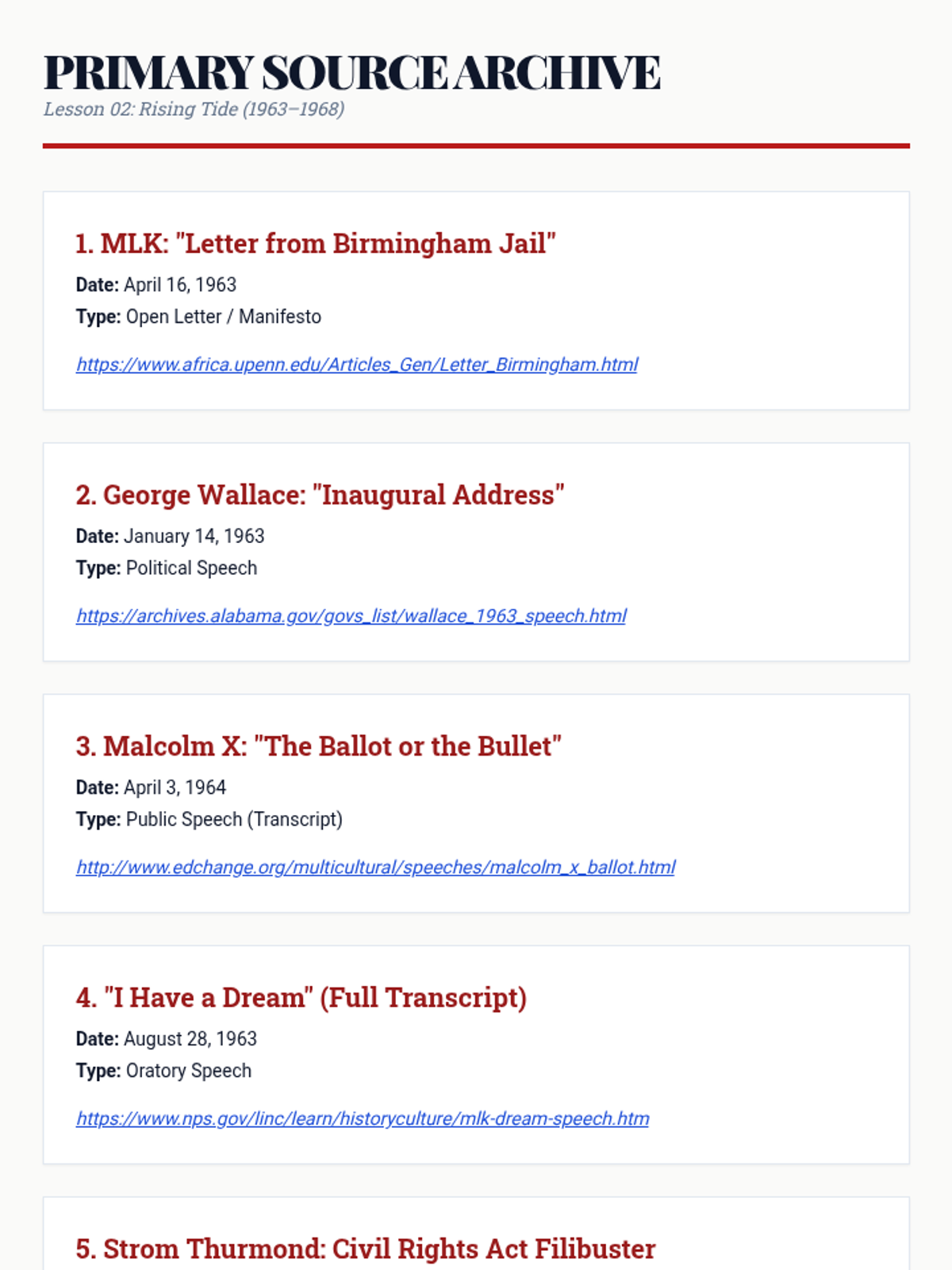
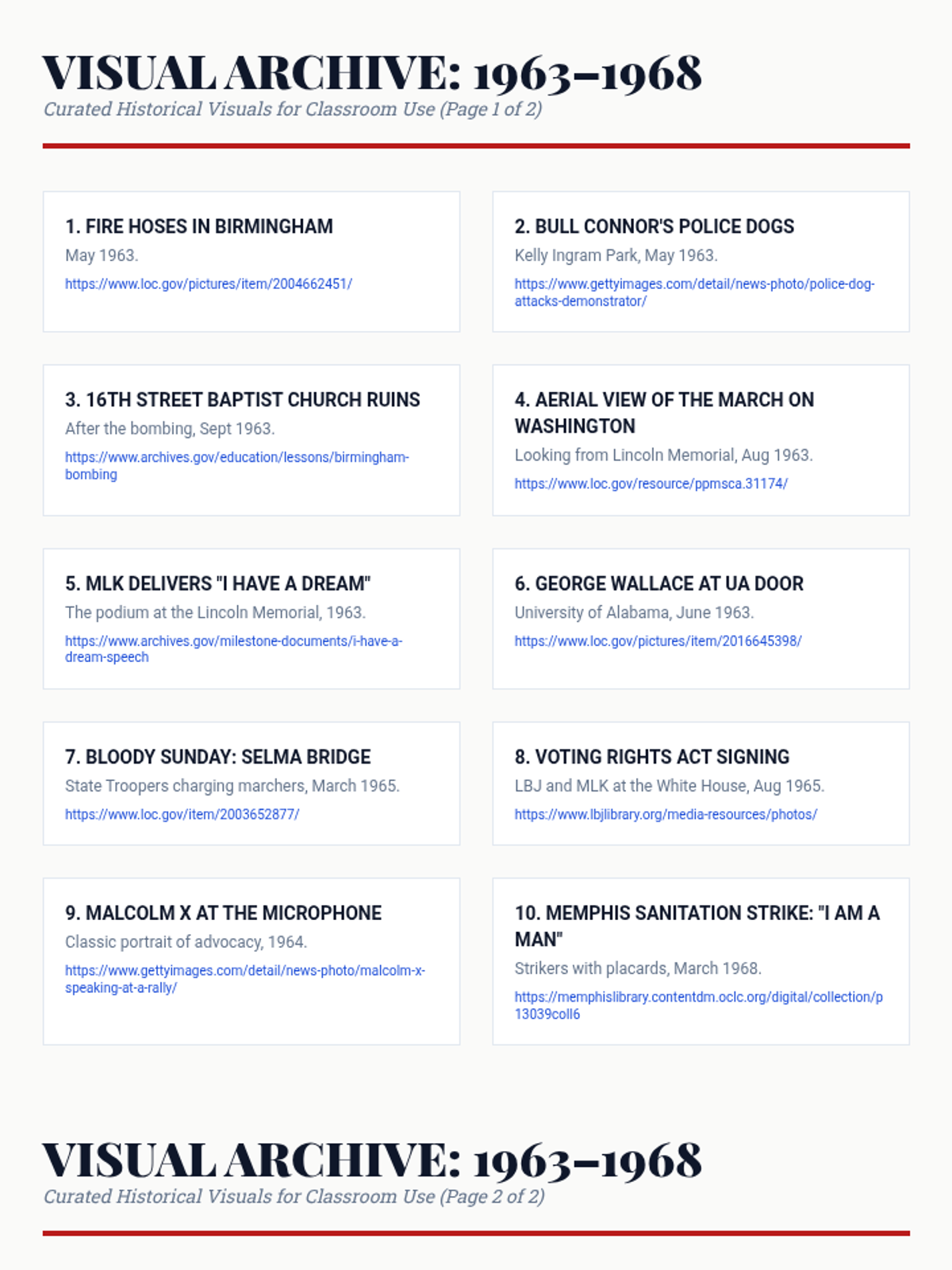
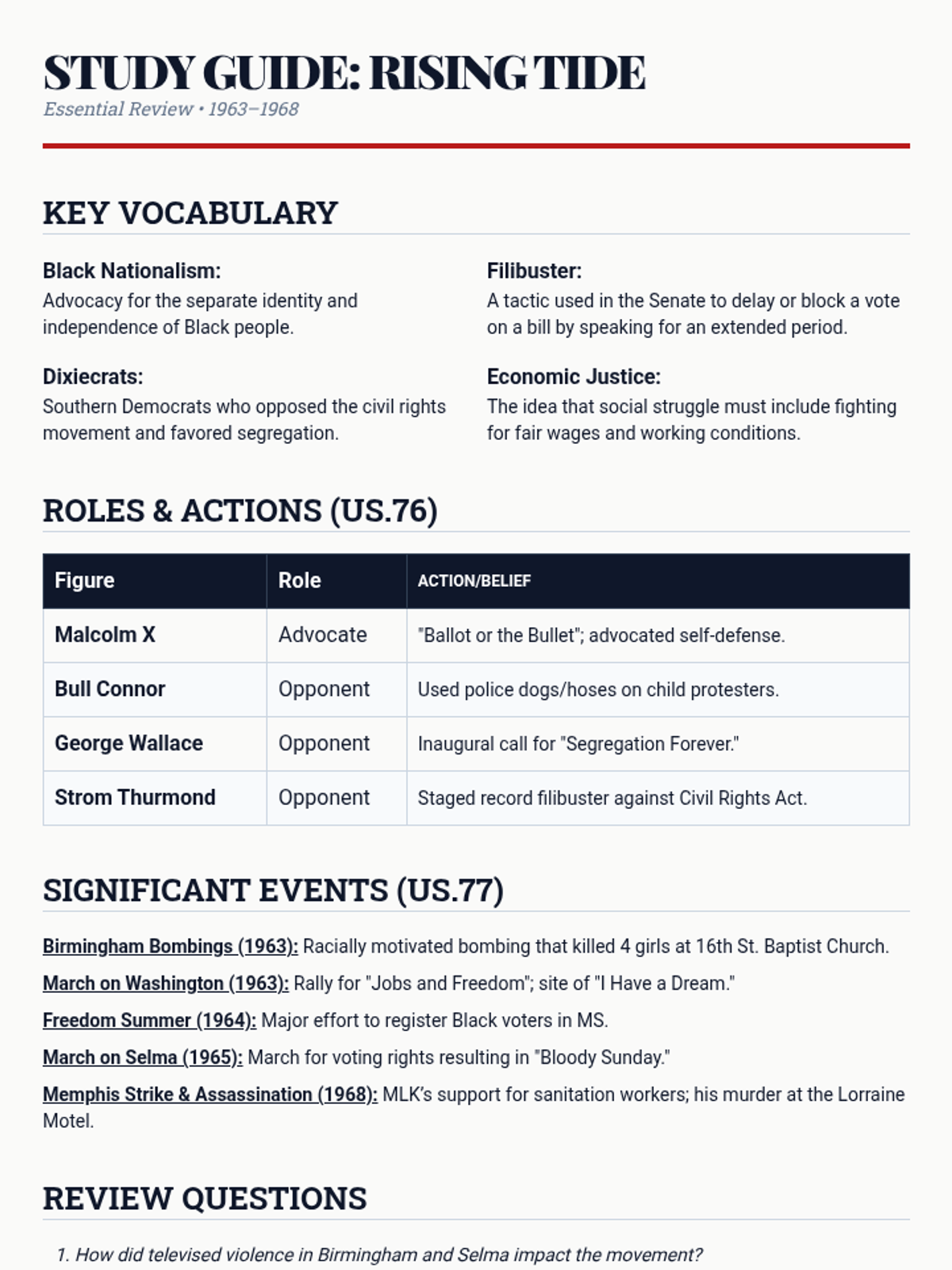
Covers the high-intensity years of the Civil Rights Movement (1963-1968), from the Birmingham campaign and the March on Washington to the Voting Rights Act and the Memphis Sanitation Strike.
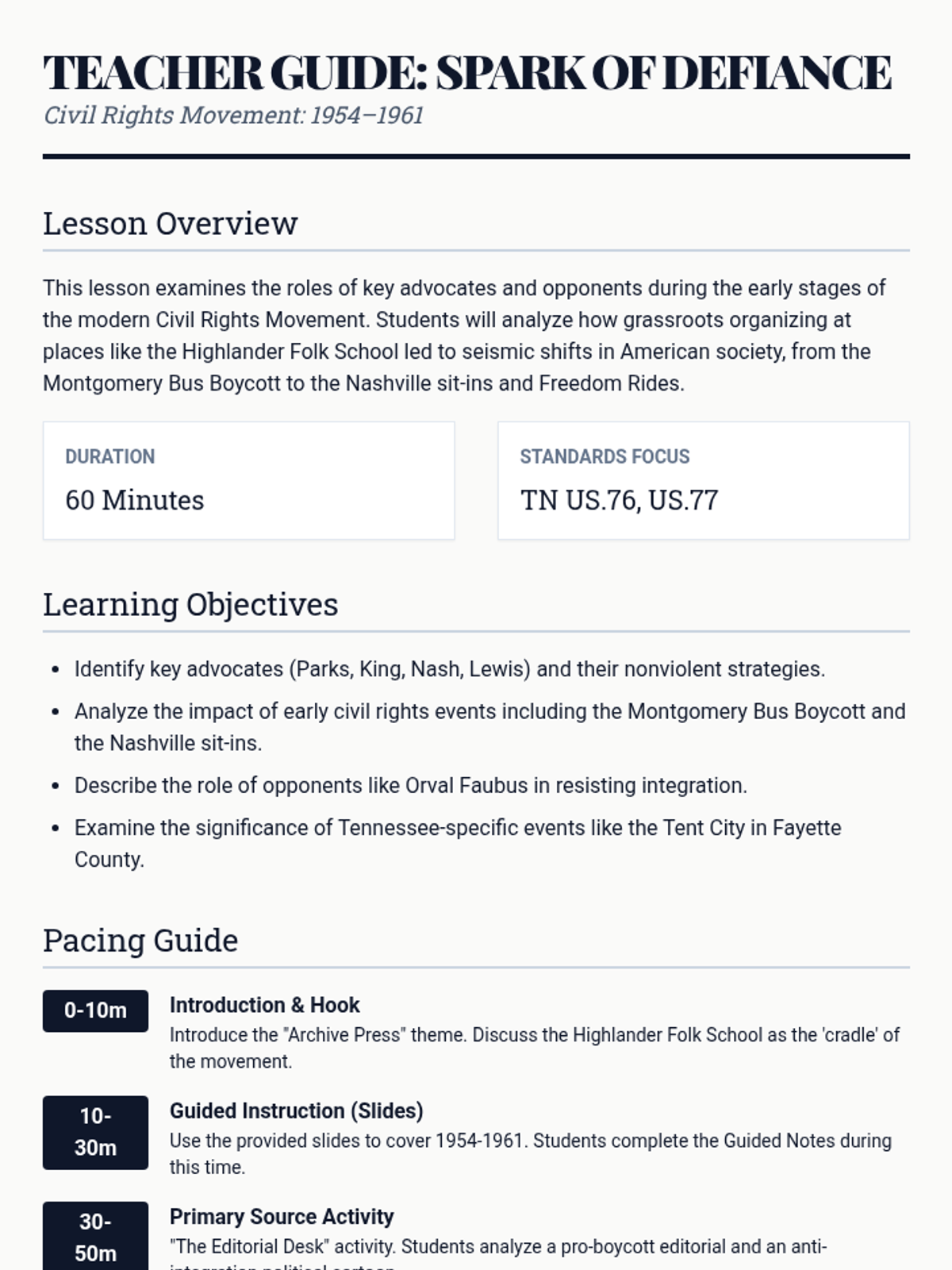
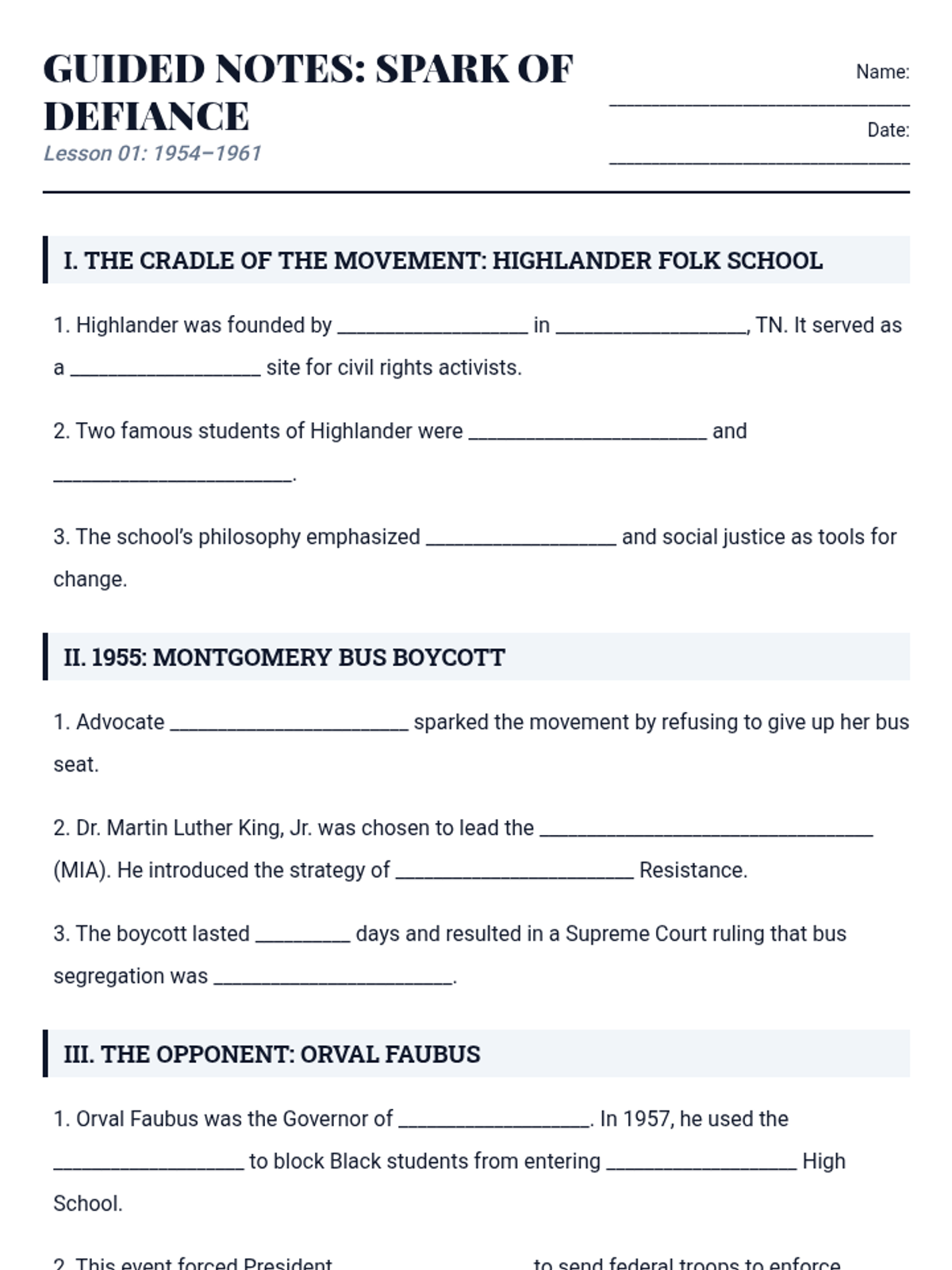
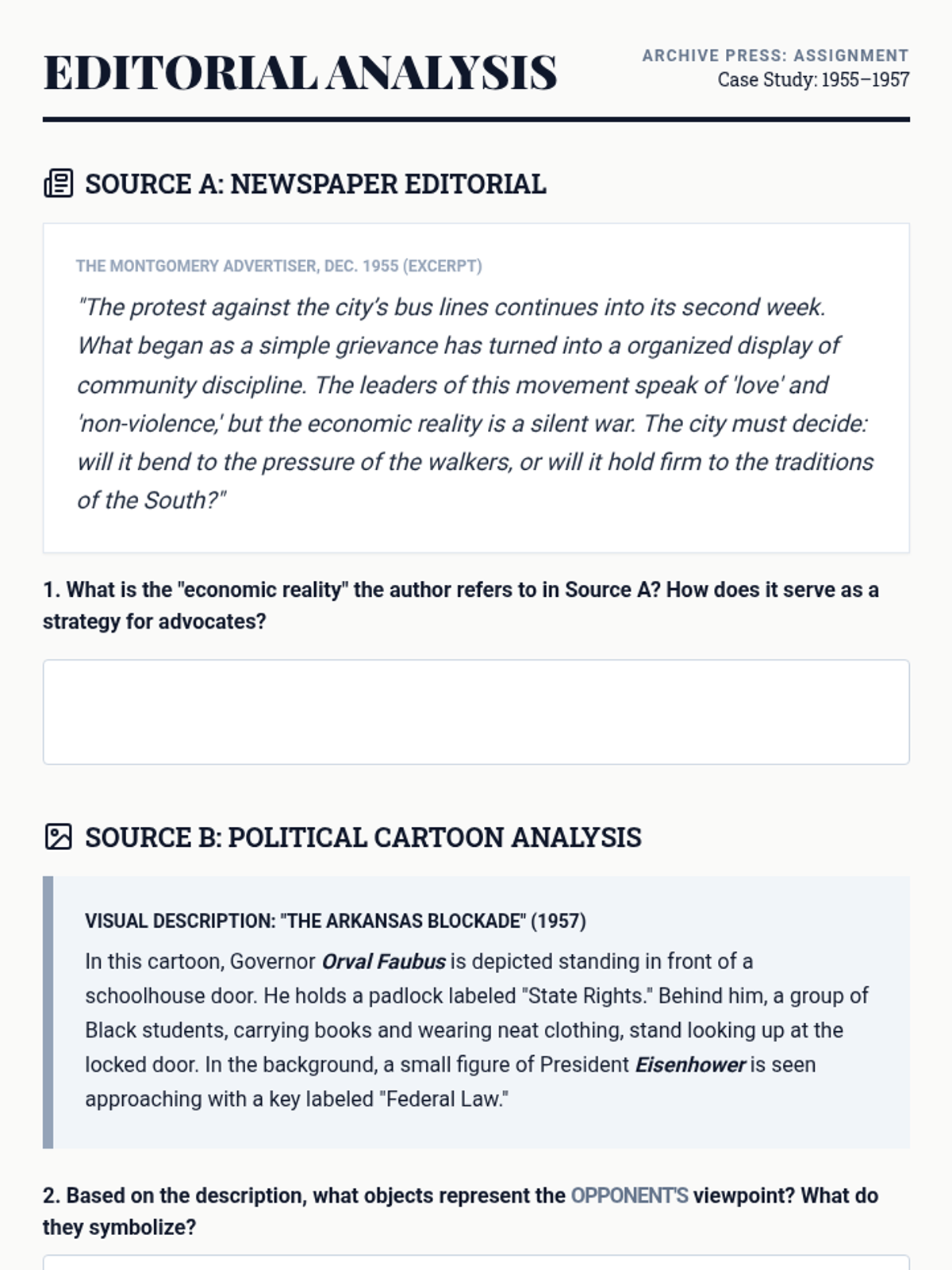
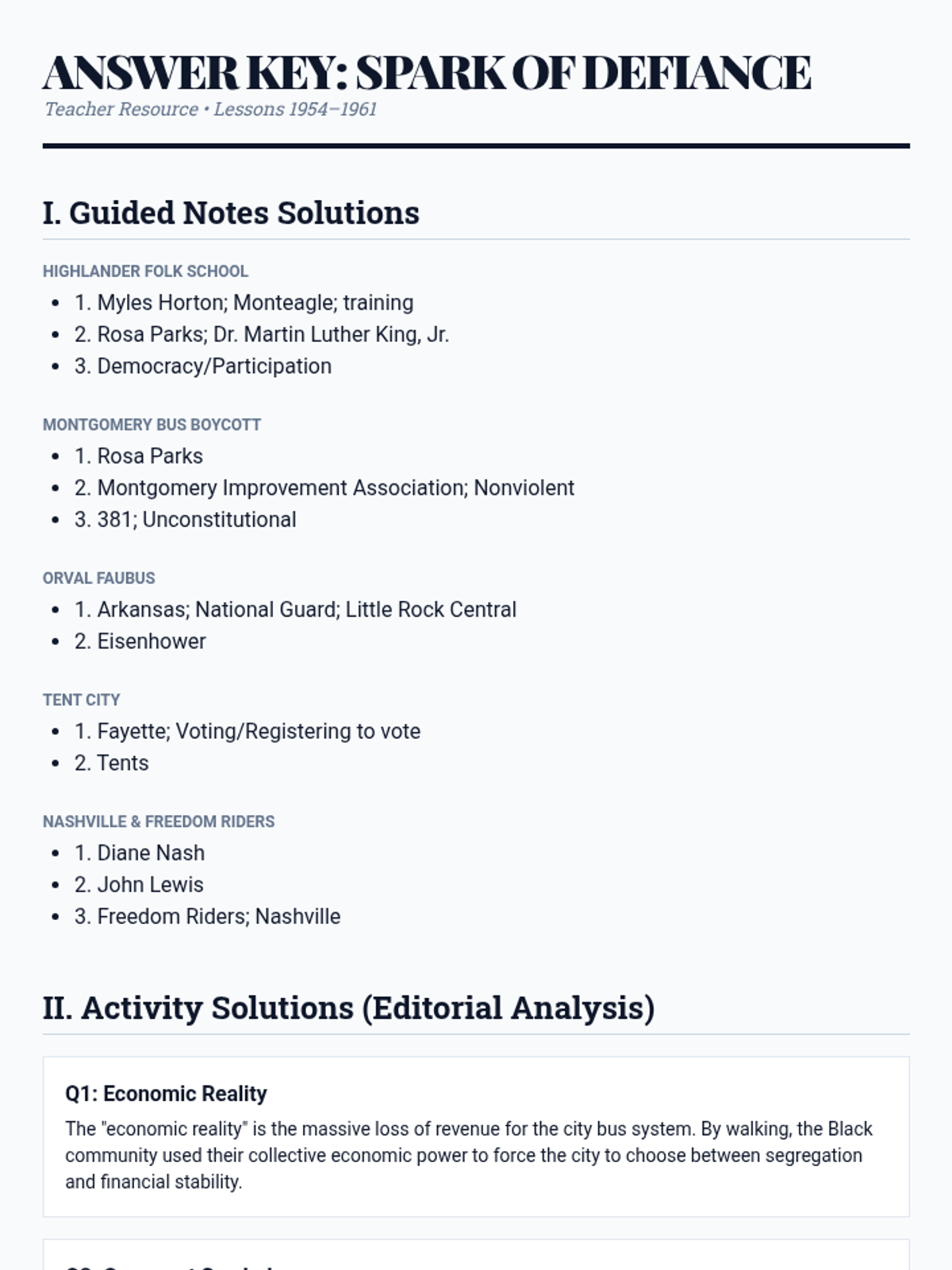
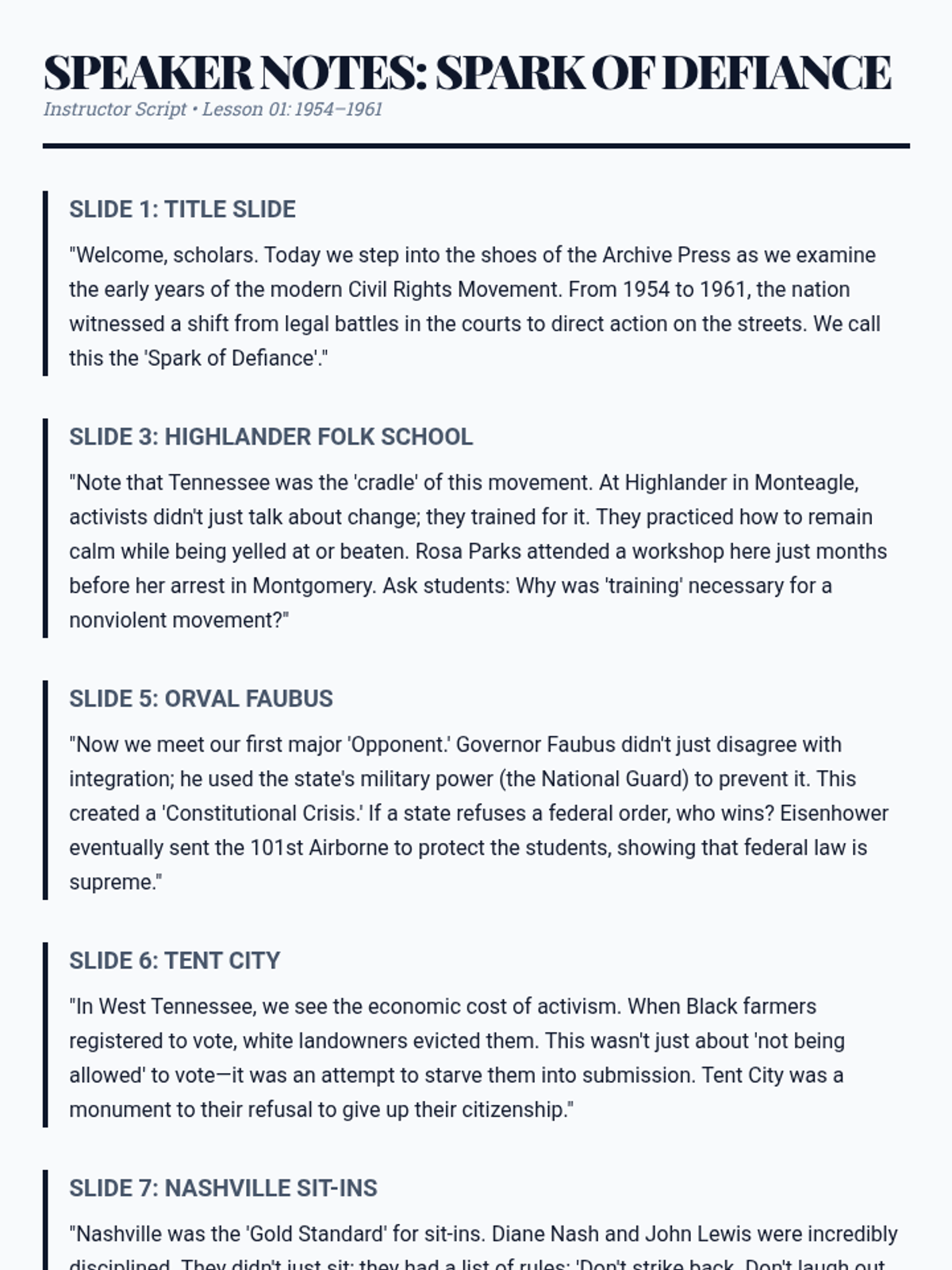
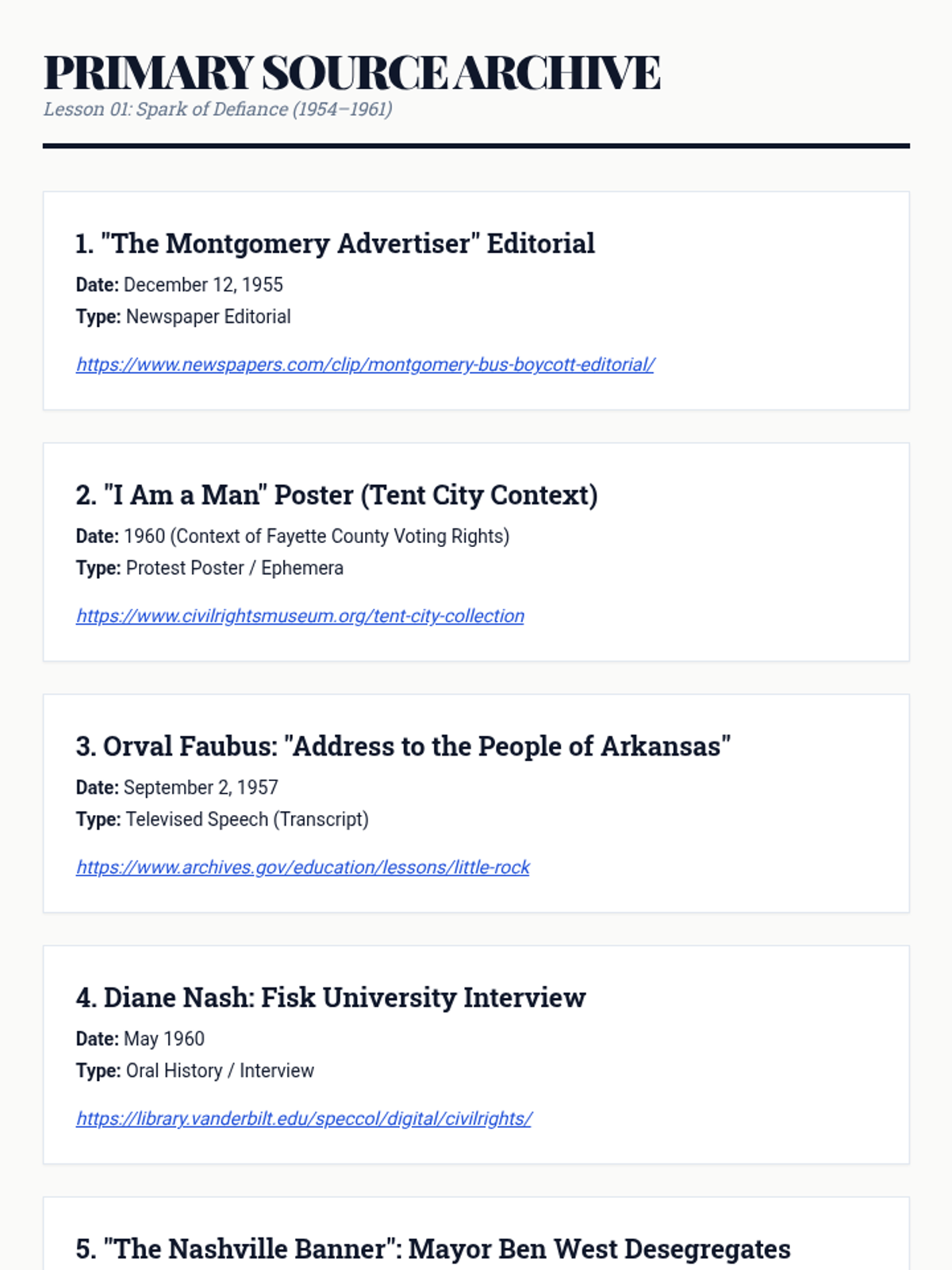
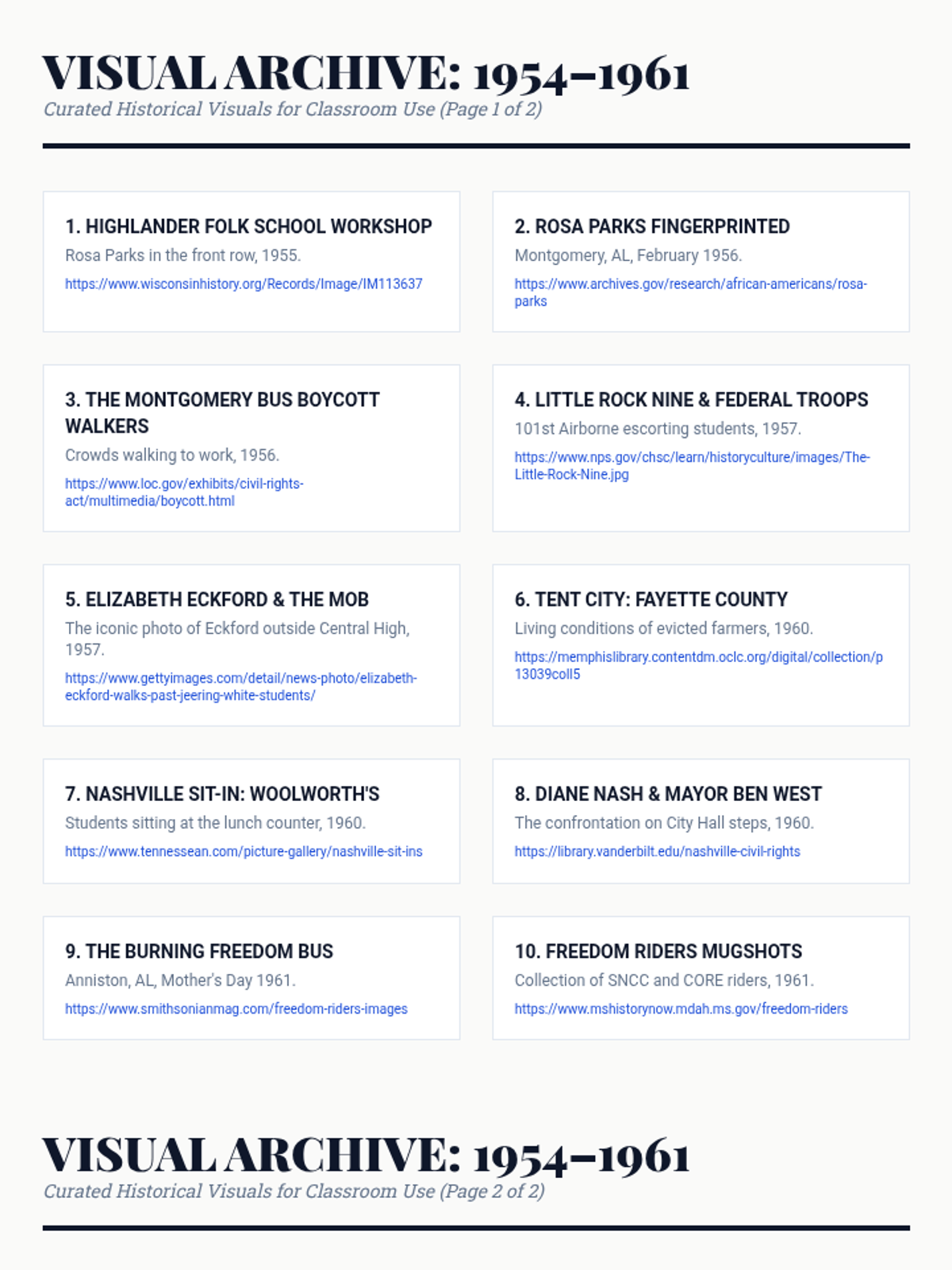
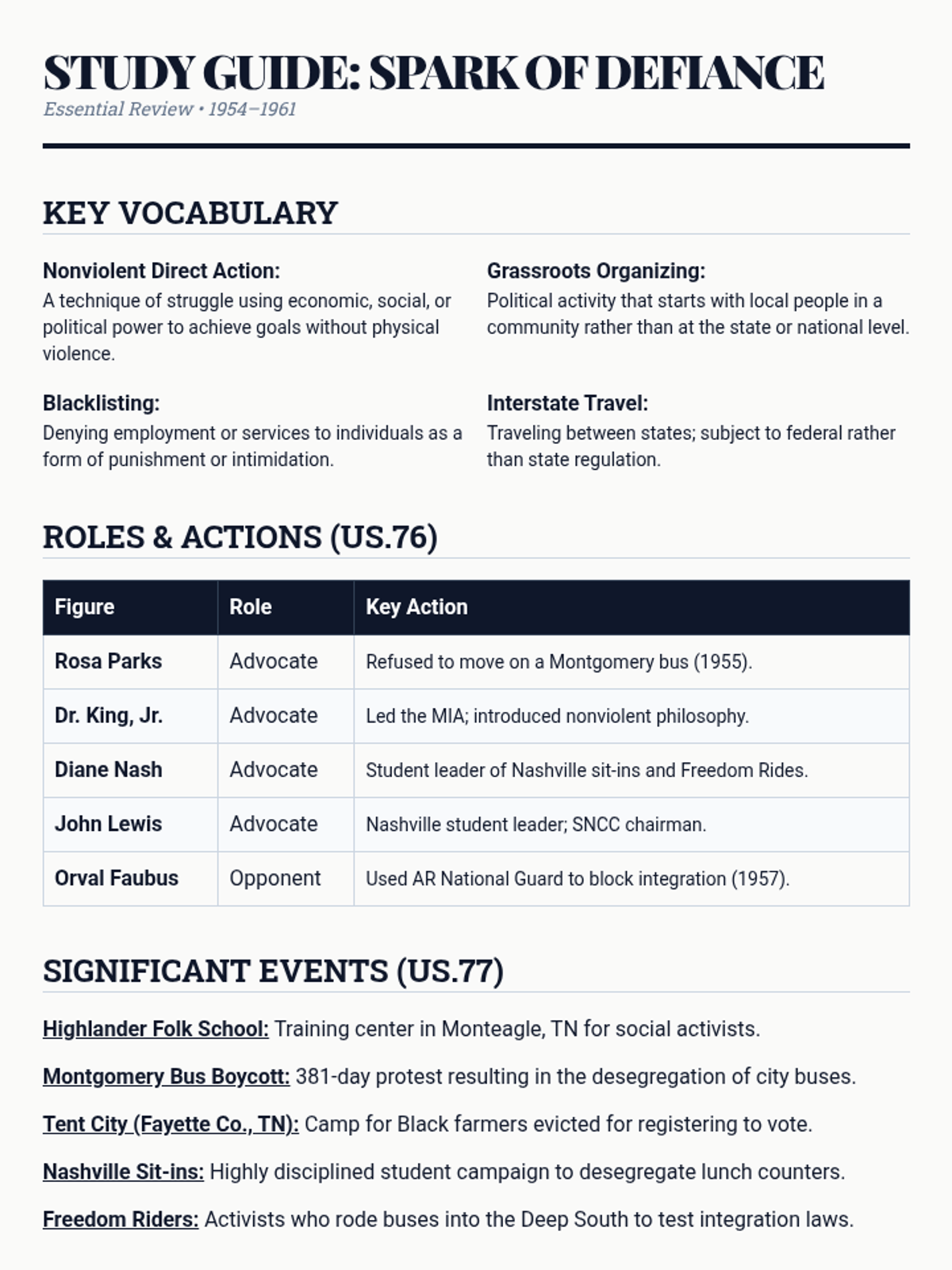
Explores the early years of the modern Civil Rights Movement (1954-1961), focusing on the Montgomery Bus Boycott, the Nashville sit-ins, and the rise of nonviolent direct action.
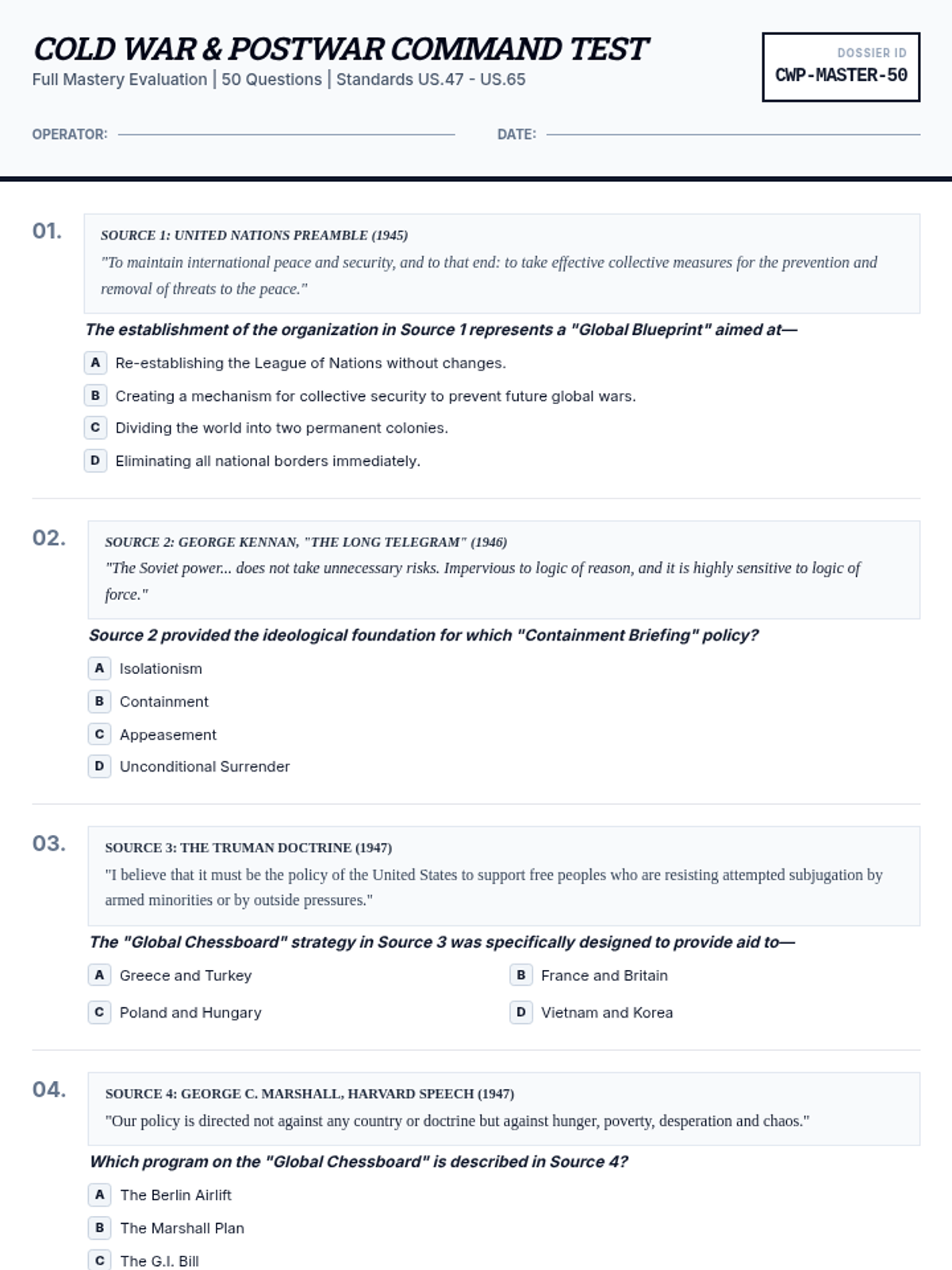
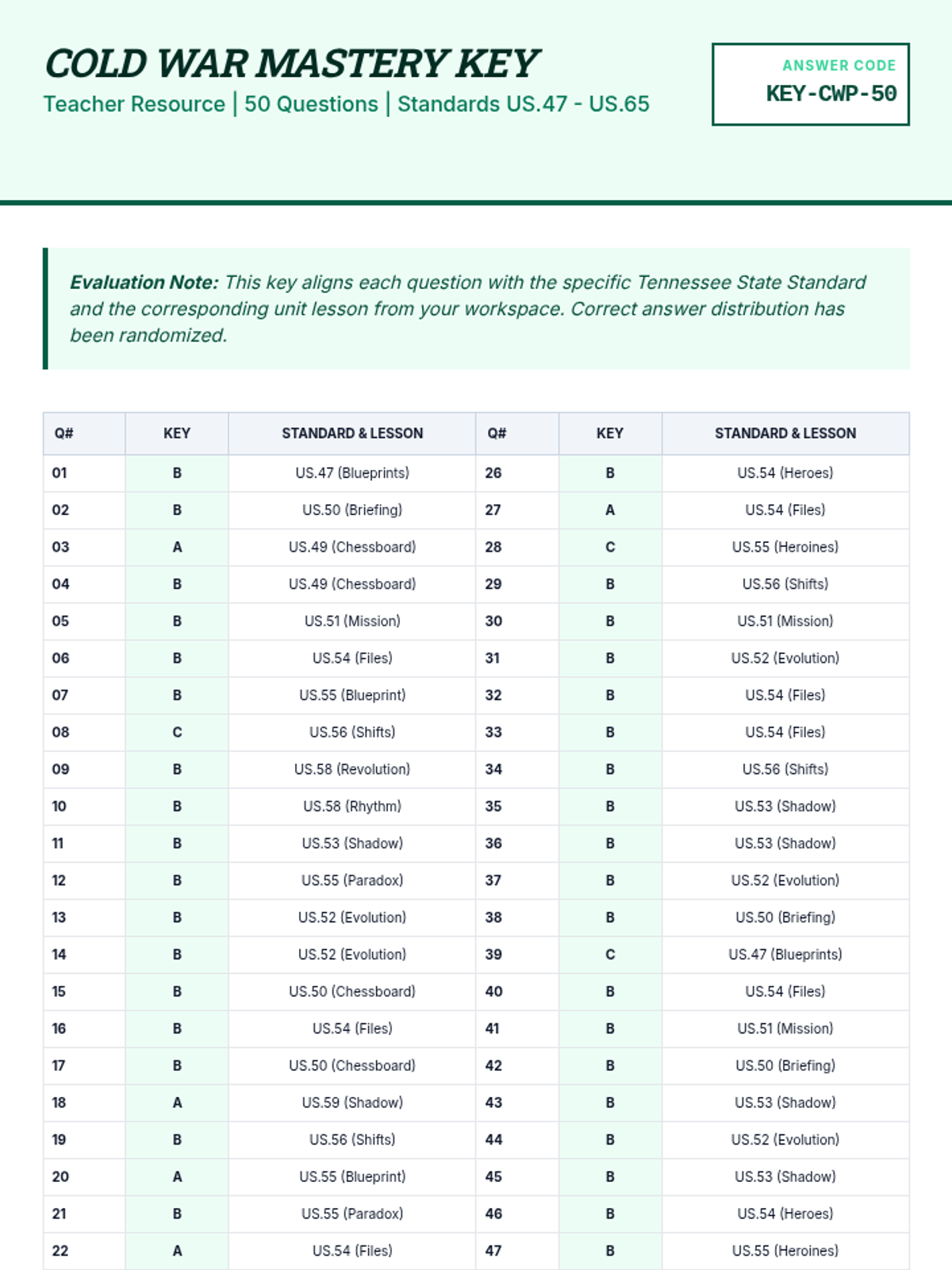
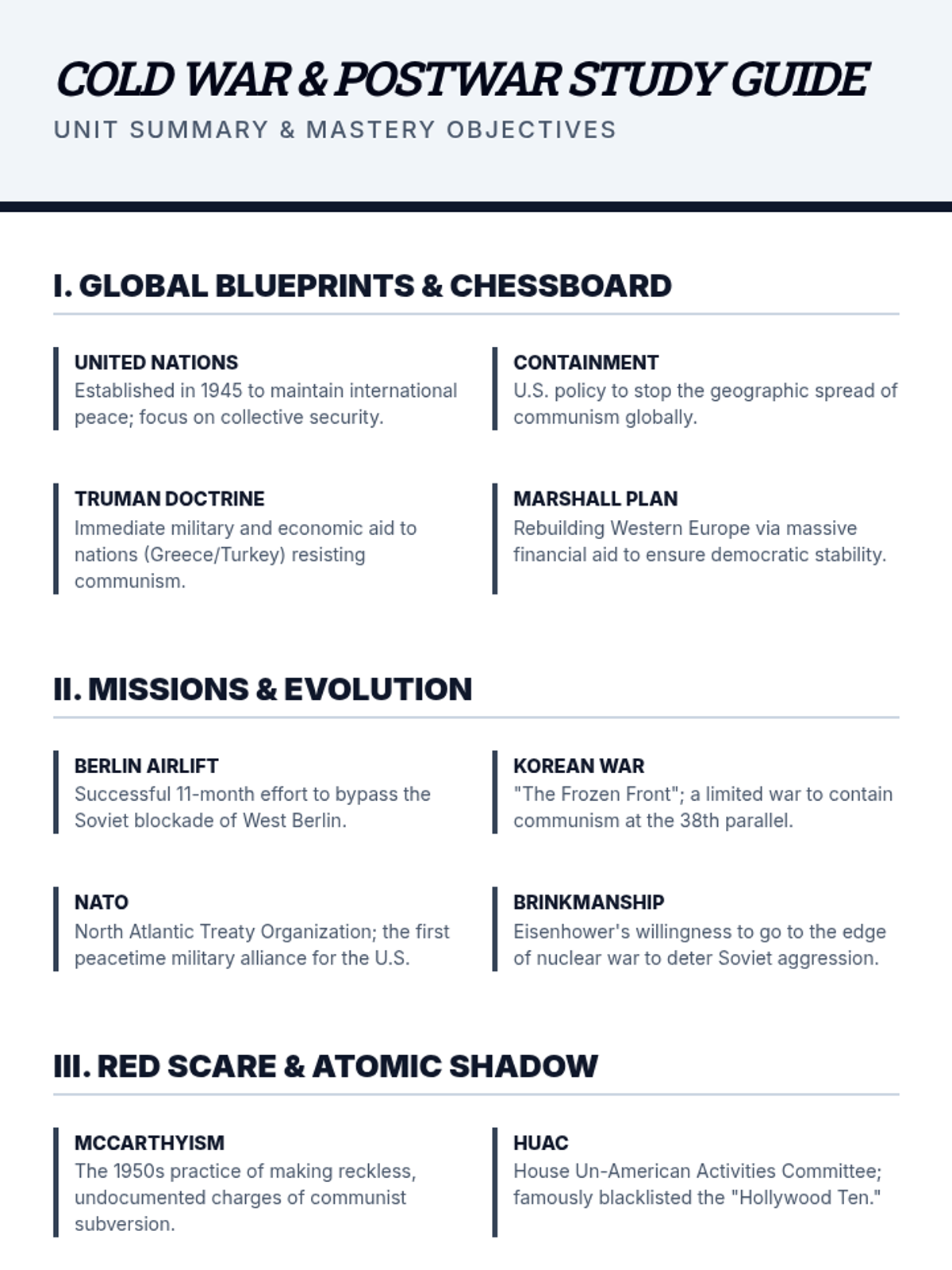
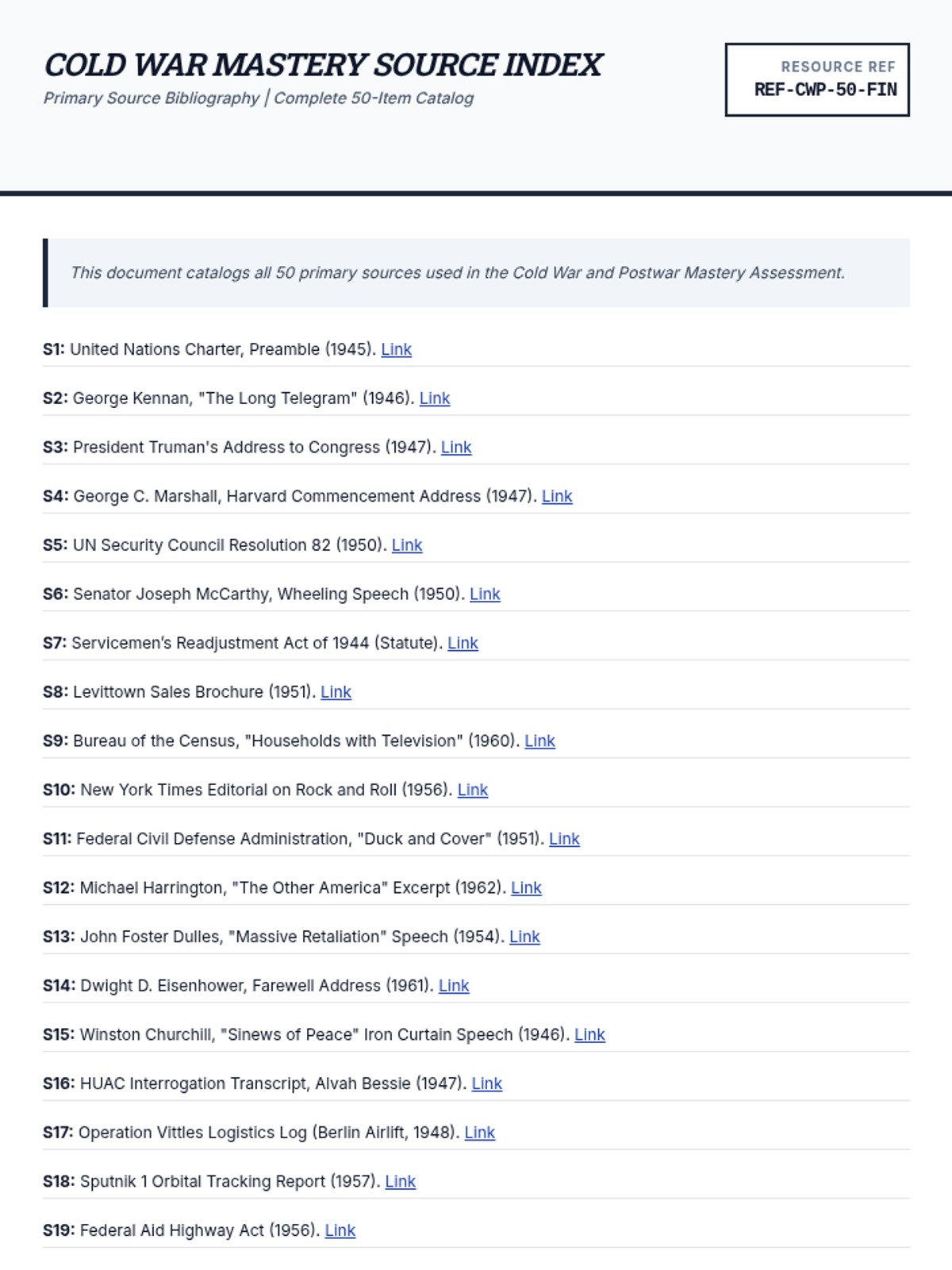
Global Blueprints, Global Chessboard, Containment Briefing, Frozen Front Mission, Containment Evolution, Red Scare Files, Prosperity Paradox, Boomer Blueprint, Suburban Shifts, Living Room Revolution, Rhythm Revolution, and Atomic Shadow.
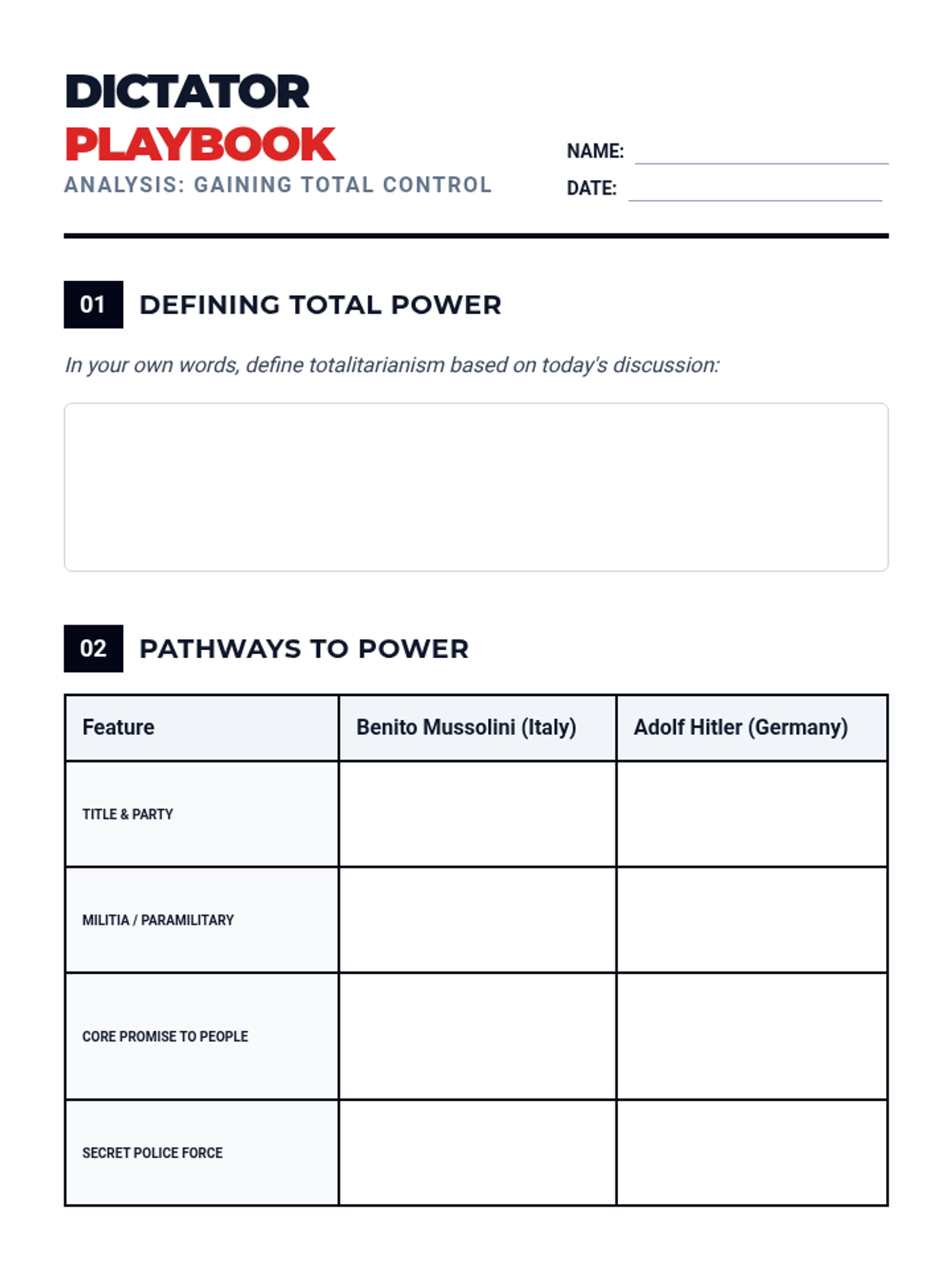
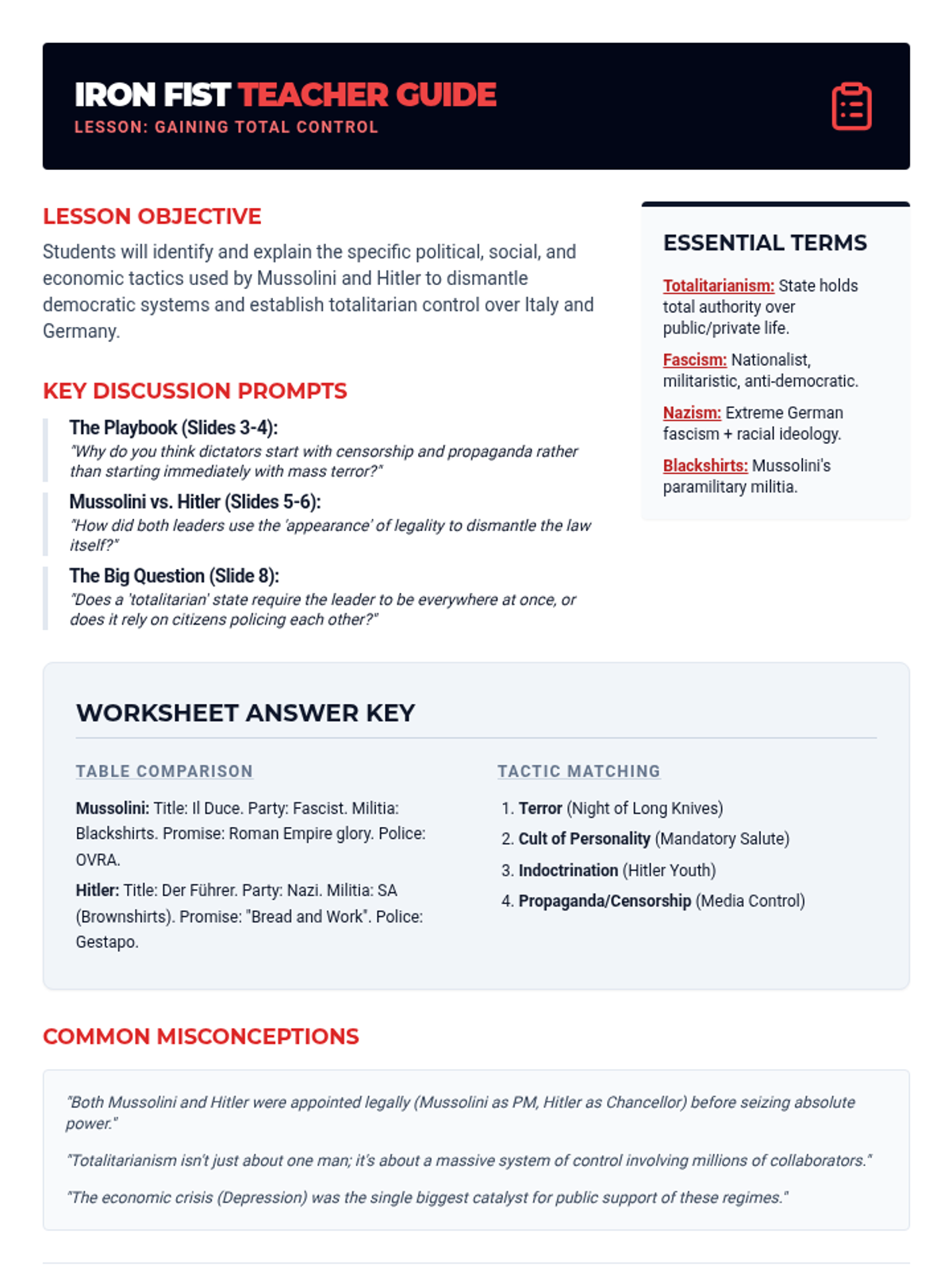
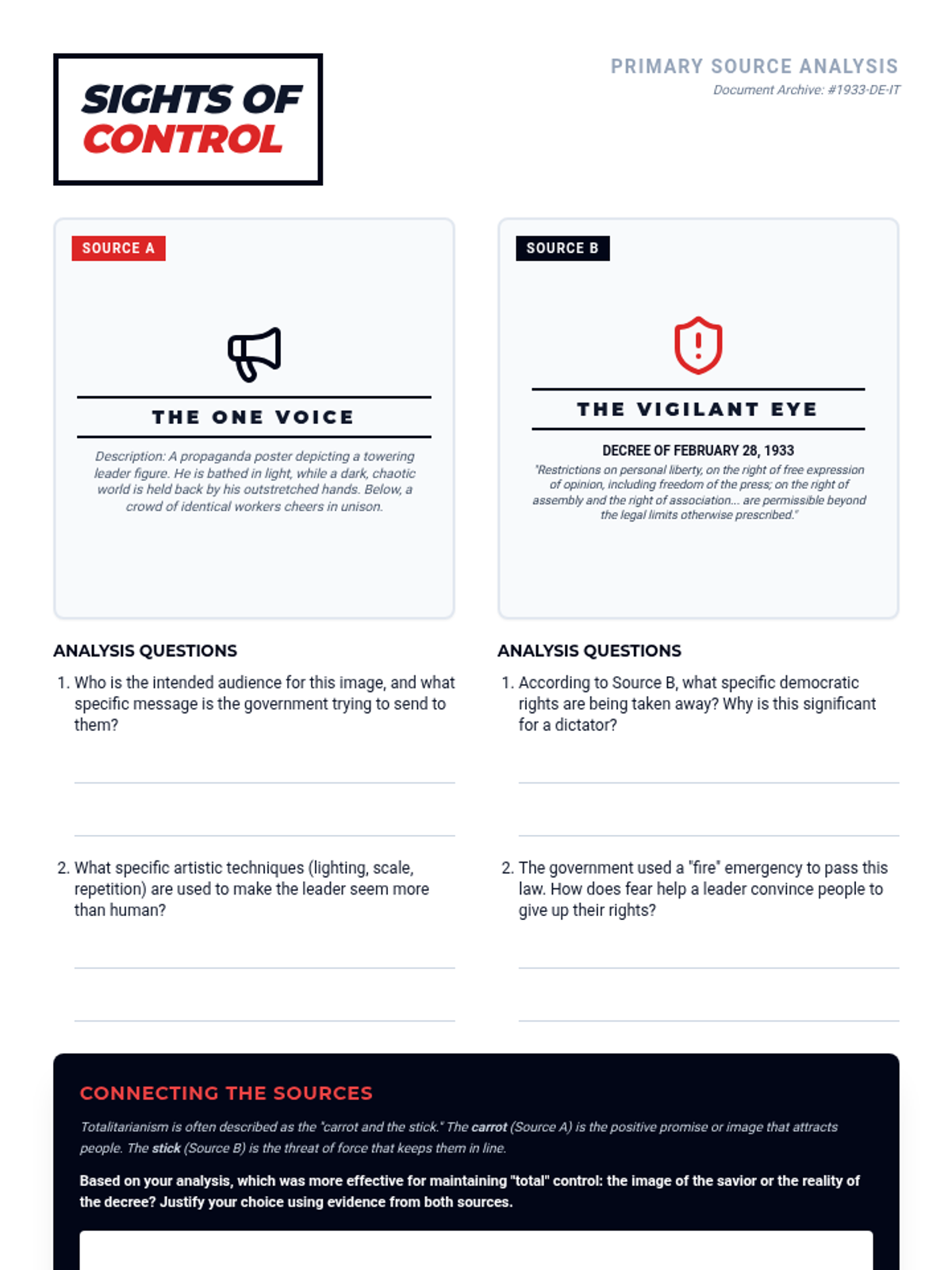
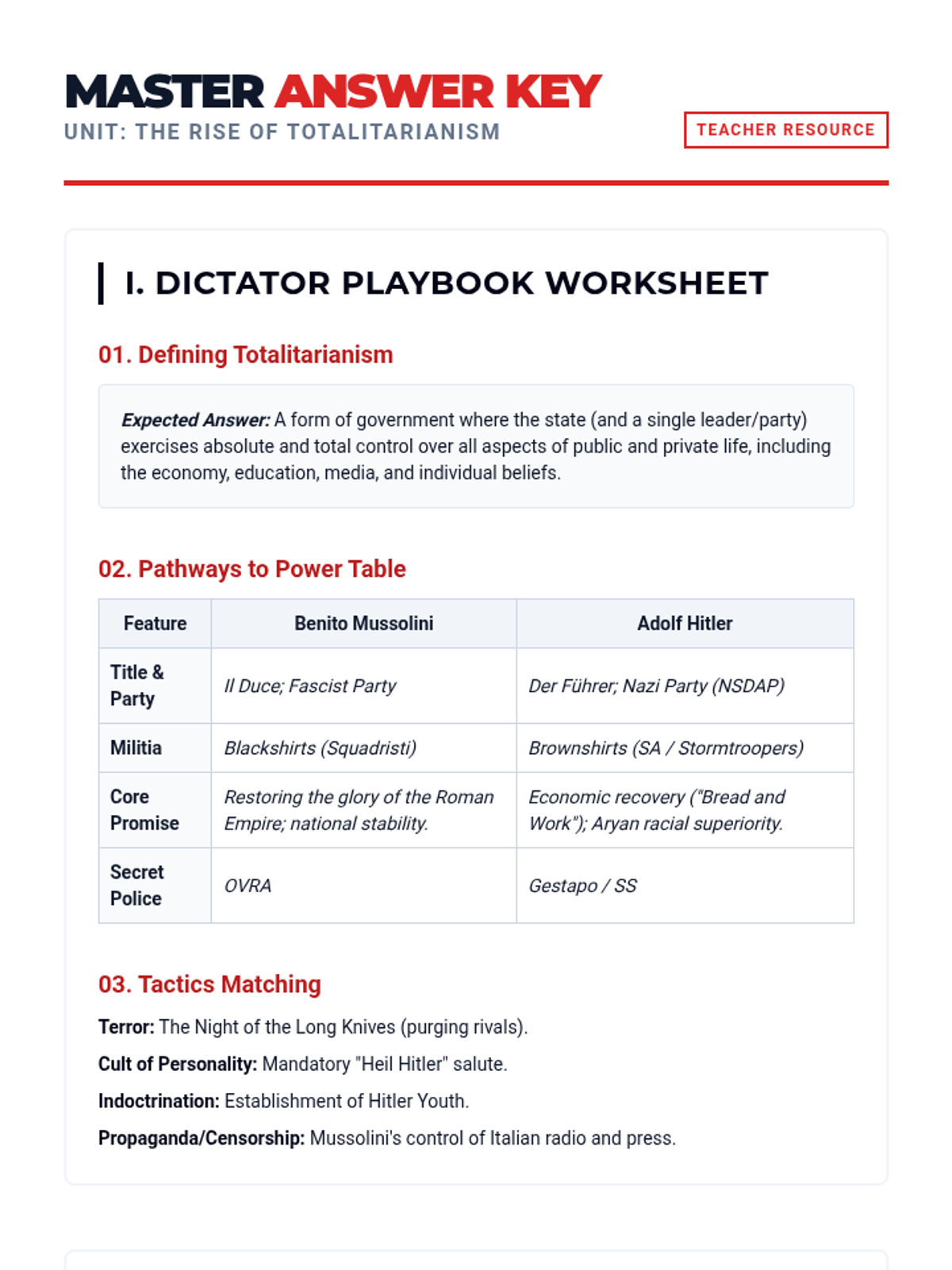
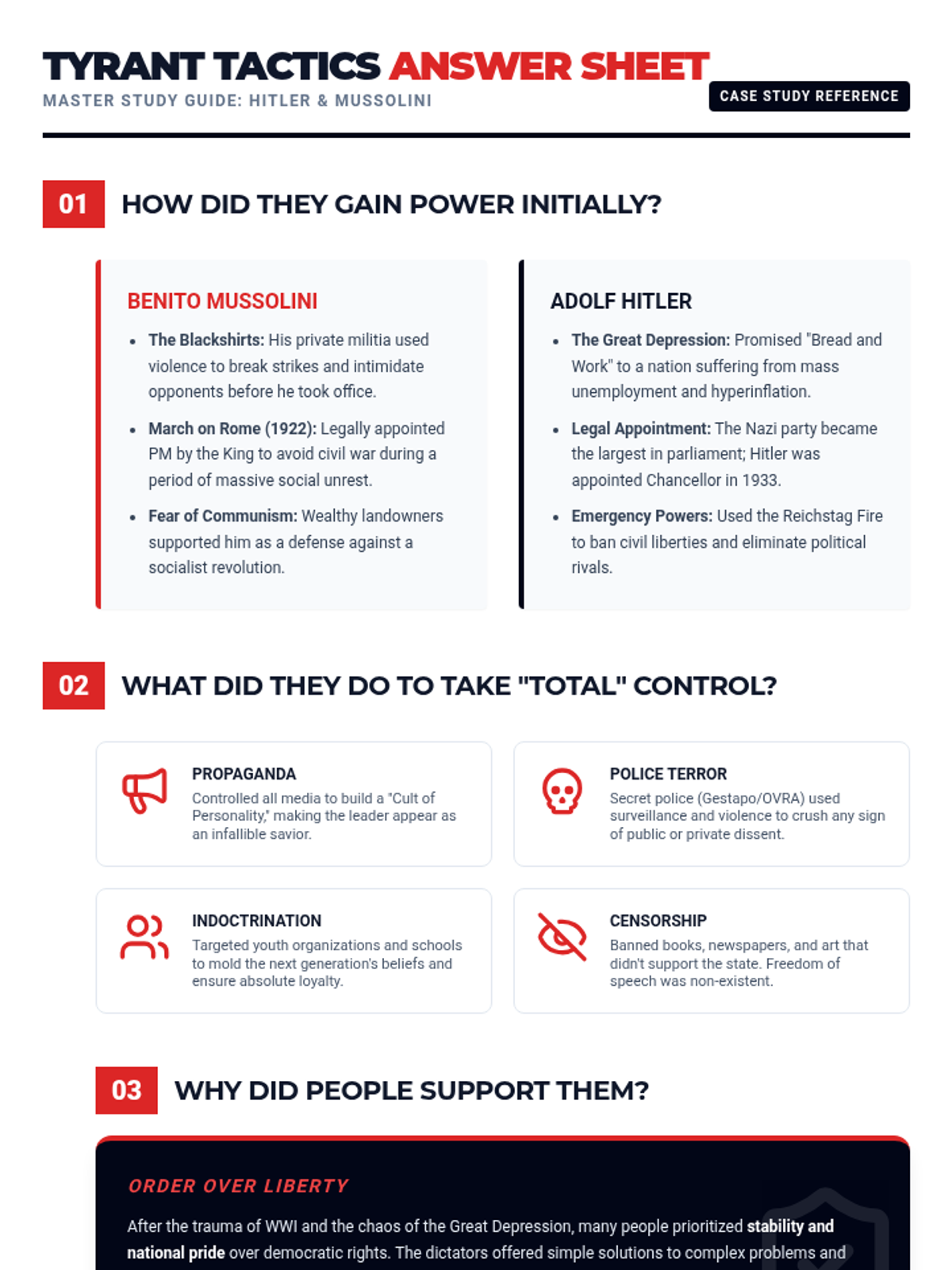
This lesson explores the methods used by Benito Mussolini and Adolf Hitler to establish totalitarian regimes in Italy and Germany. Students will analyze tactics such as propaganda, terror, economic manipulation, and cults of personality to understand how 'total' control was achieved.