Analytical frameworks for interpreting history, geography, and civic information. Equips learners with tools for chronological sequencing, map literacy, and critical evaluation of primary and secondary sources.
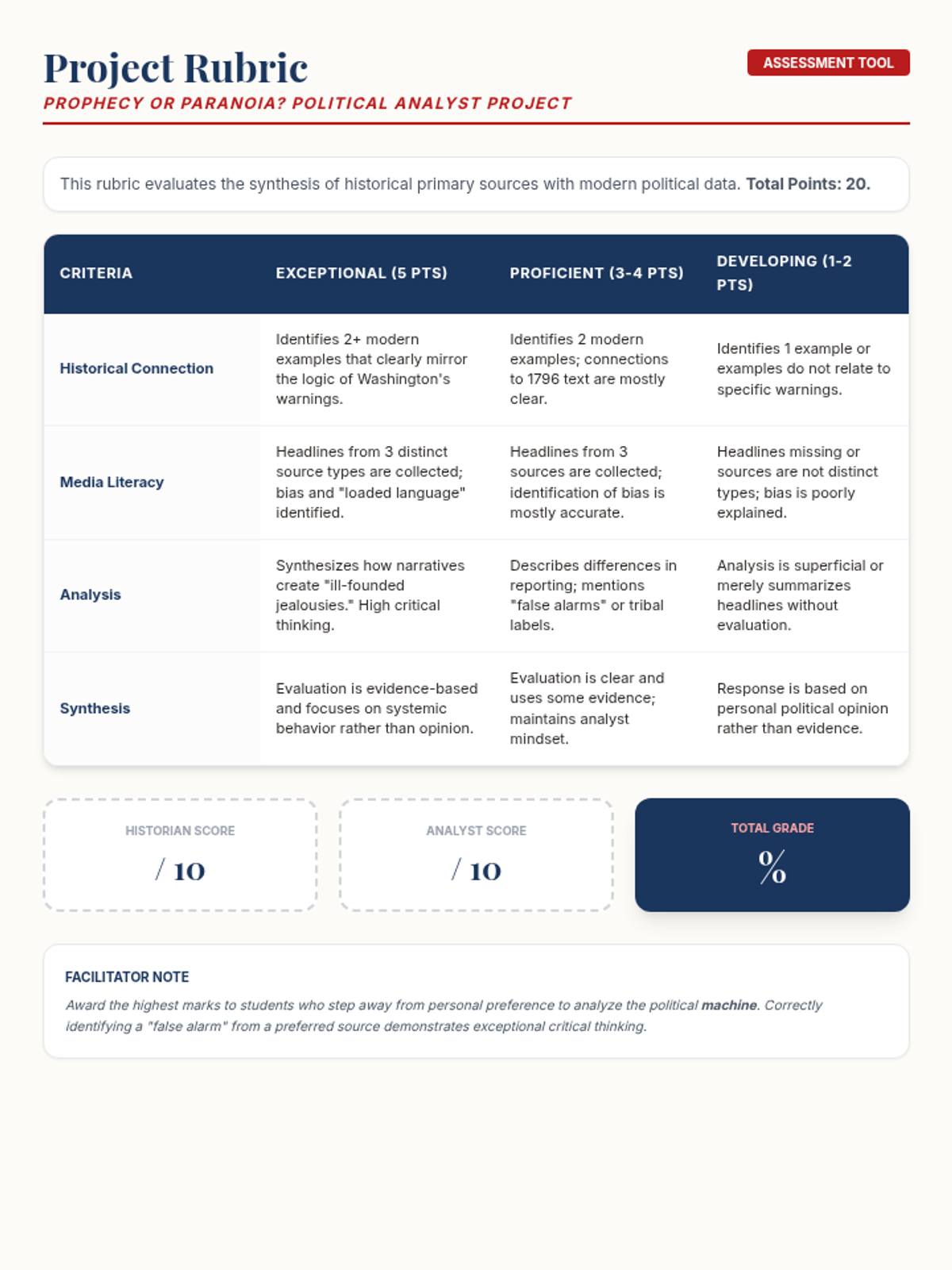
A detailed grading rubric for the 'Prophecy or Paranoia?' project, evaluating students on historical connection, media literacy, critical analysis, and synthesis. This version is optimized for single-page use.
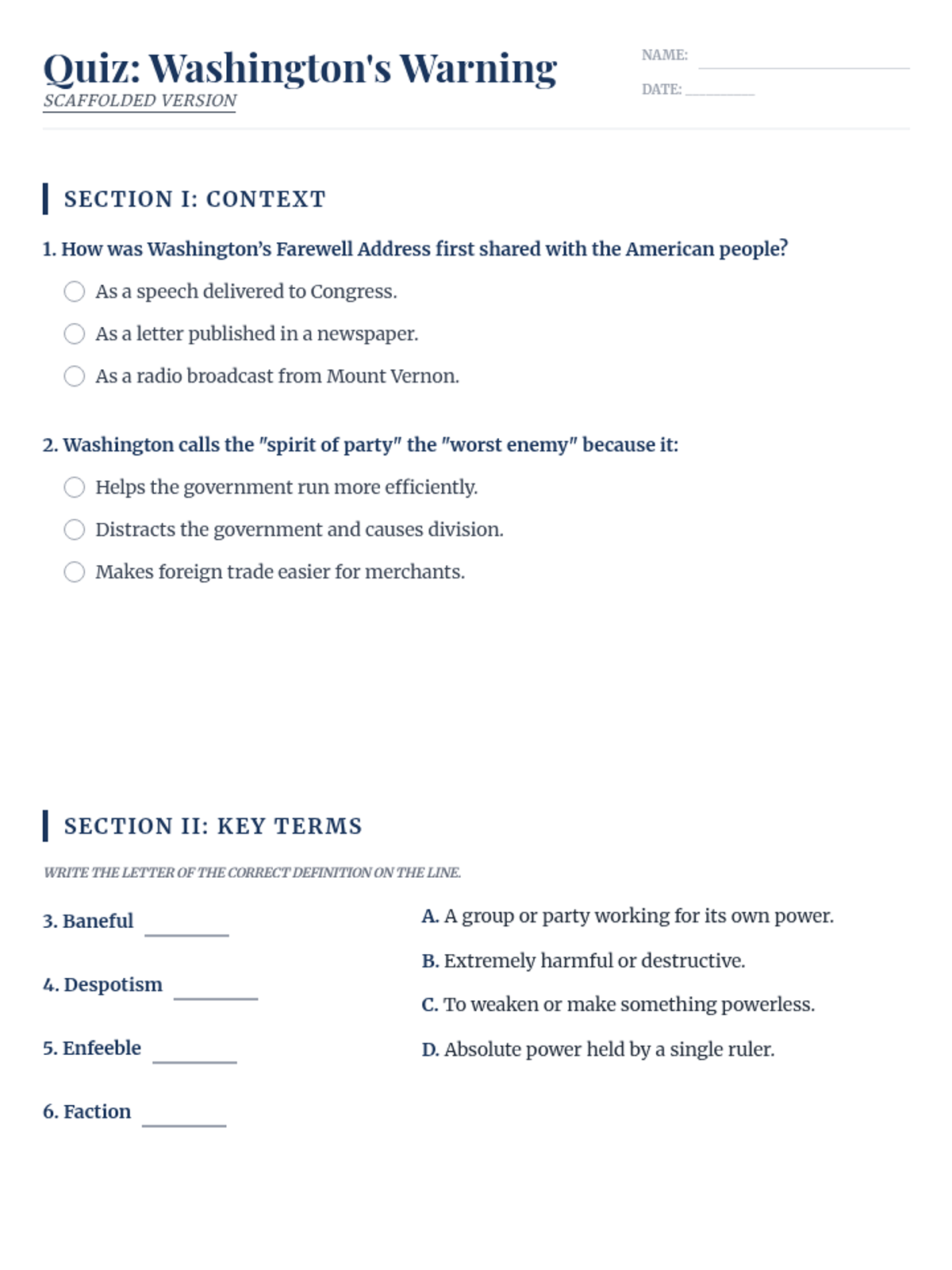
A scaffolded version of the Washington's Warning quiz, featuring built-in sentence stems and structured response areas to support students with writing and critical thinking while assessing their understanding of the address. This version fixes major layout and page break issues.
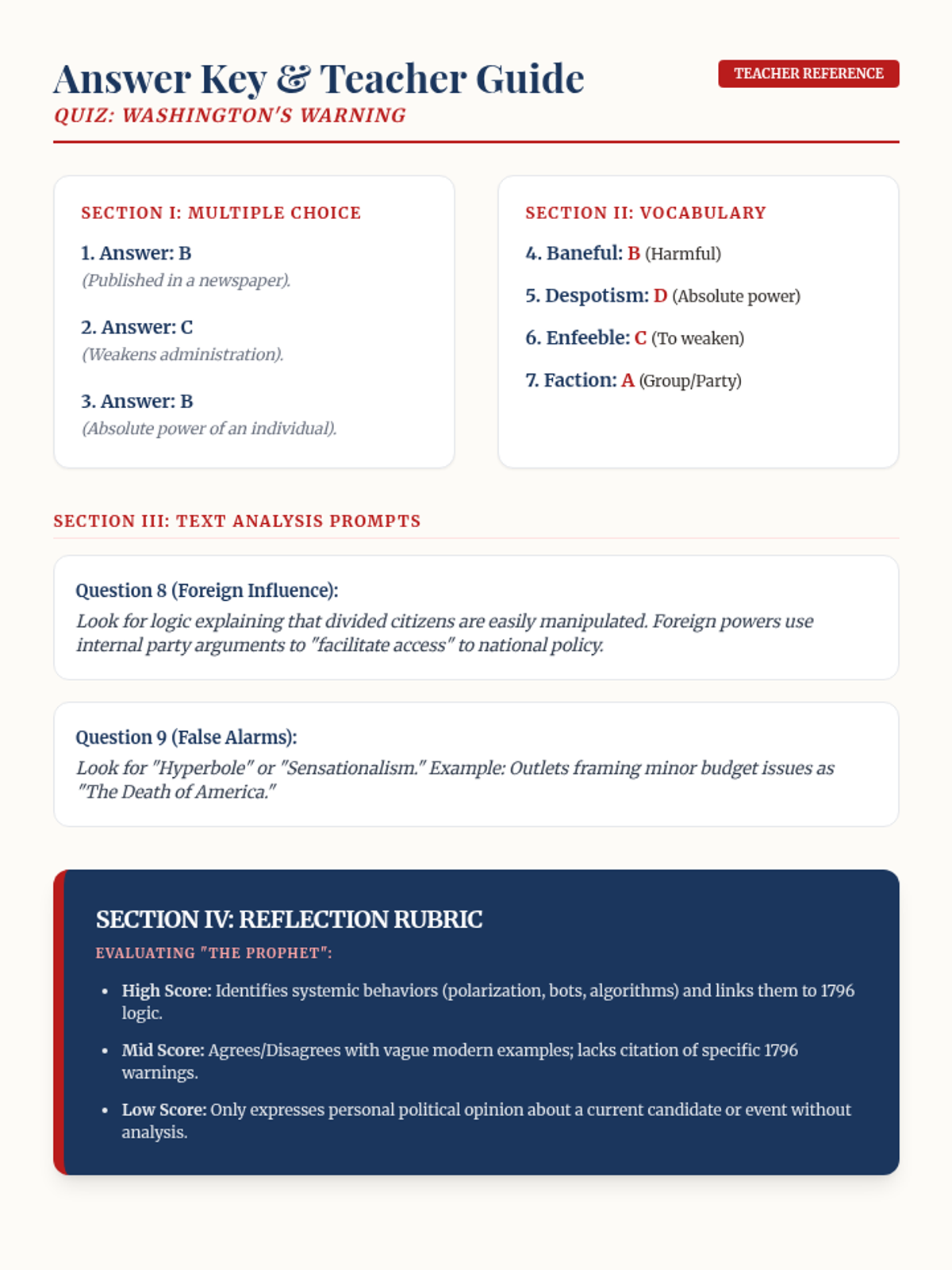
A teacher's answer key and grading guide for the Washington's Warning Quiz, including correct multiple choice answers, vocabulary matching, and suggested response criteria for short answer questions. Revised for layout consistency and page breaks.
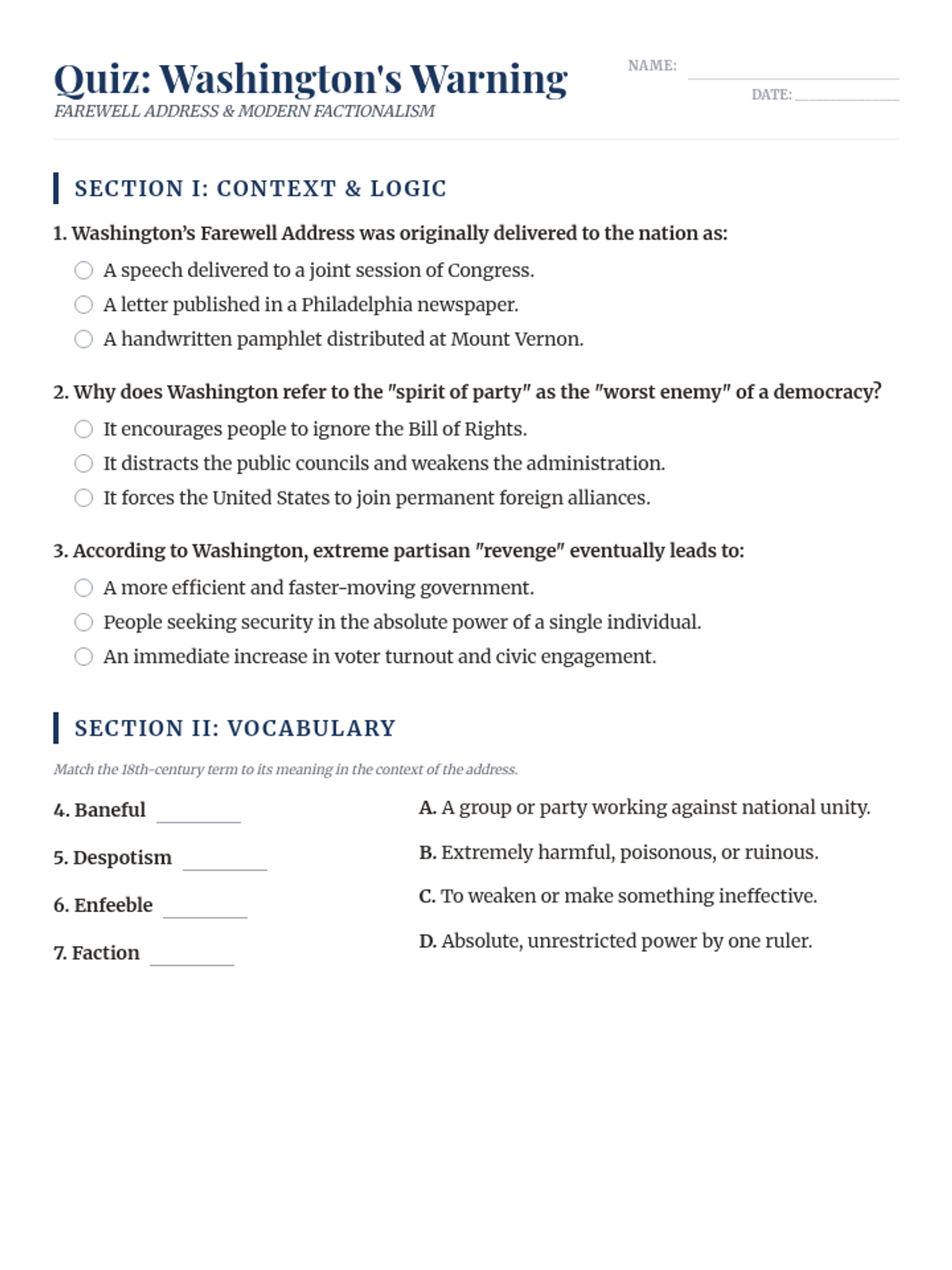
A comprehensive quiz for high school government students assessing their understanding of Washington's Farewell Address, its vocabulary, and its modern-day relevance. Includes multiple choice, matching, and short answer questions. Revised for historical tone and improved student work areas.
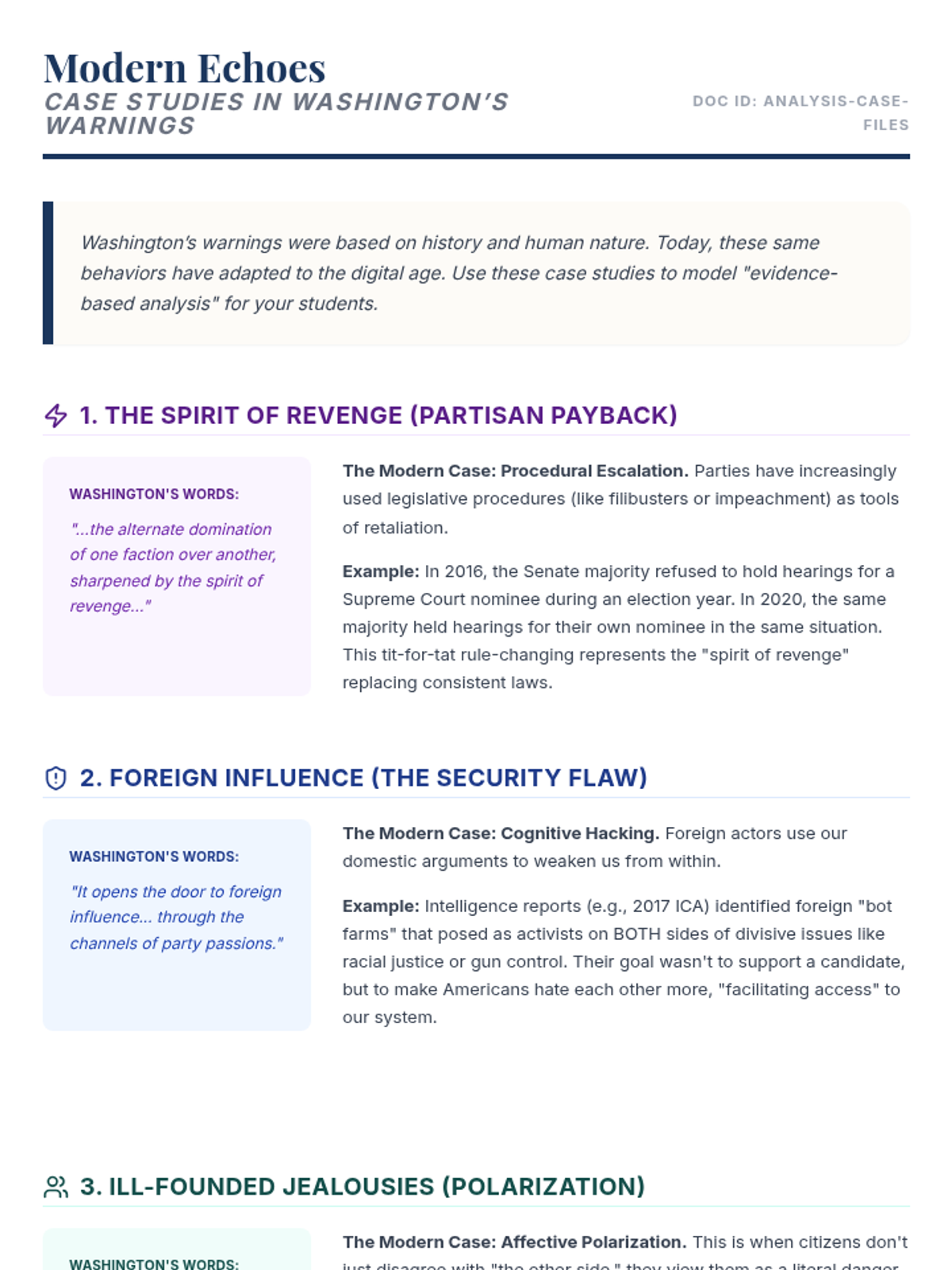
A detailed list of modern political examples and case studies that connect George Washington's 1796 warnings to current events, media trends, and political behaviors. Includes teacher facilitation tips for maintaining objectivity. This version is balanced for 2-page printing and fixes contrast issues.
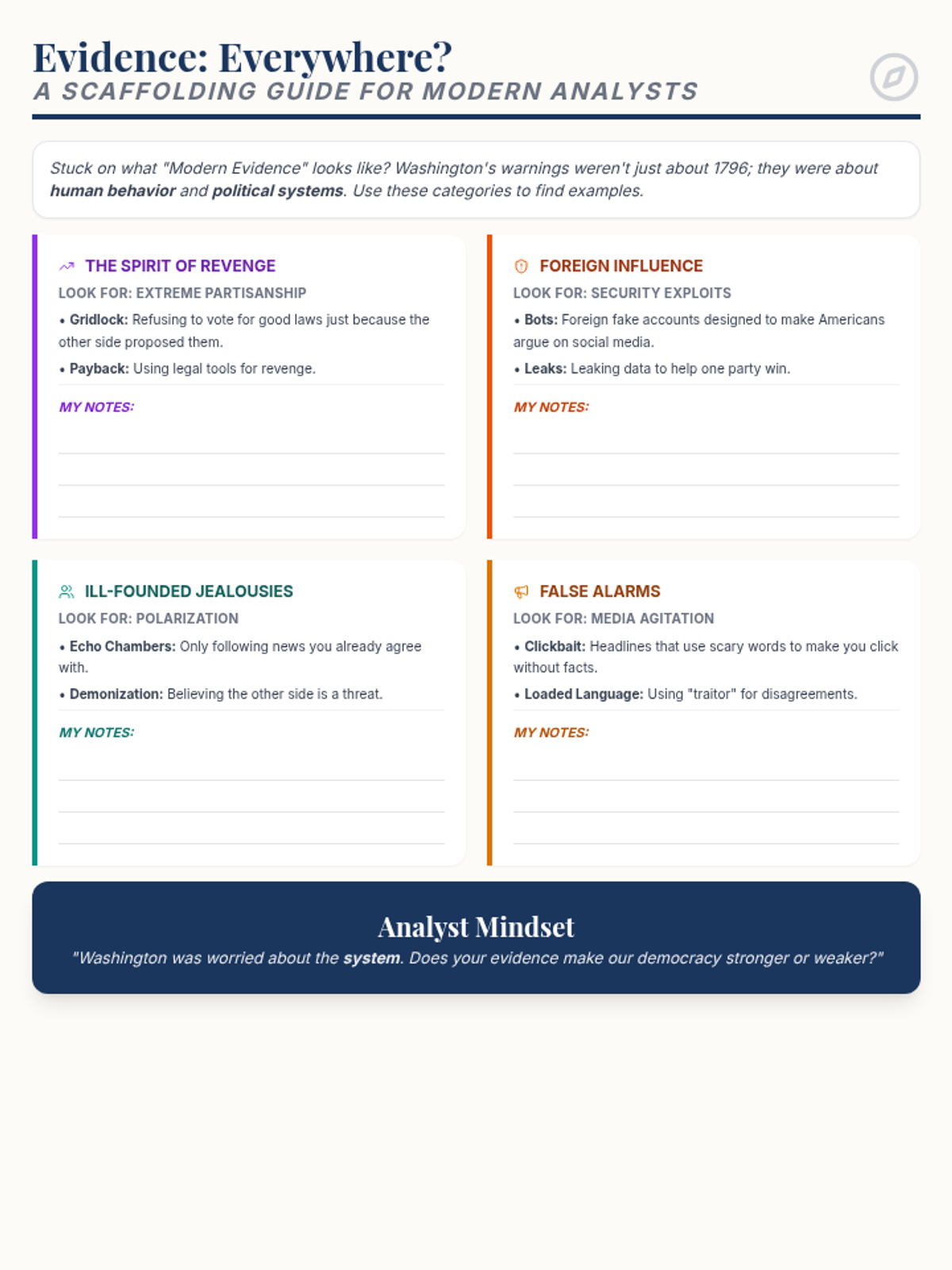
A brainstorming guide for students that categorizes Washington's warnings (Spirit of Revenge, Foreign Influence, Polarization, False Alarms) and provides concrete modern-day examples to support their project research. This version improves student work space, increases line-height for handwriting, and fixes color contrast.
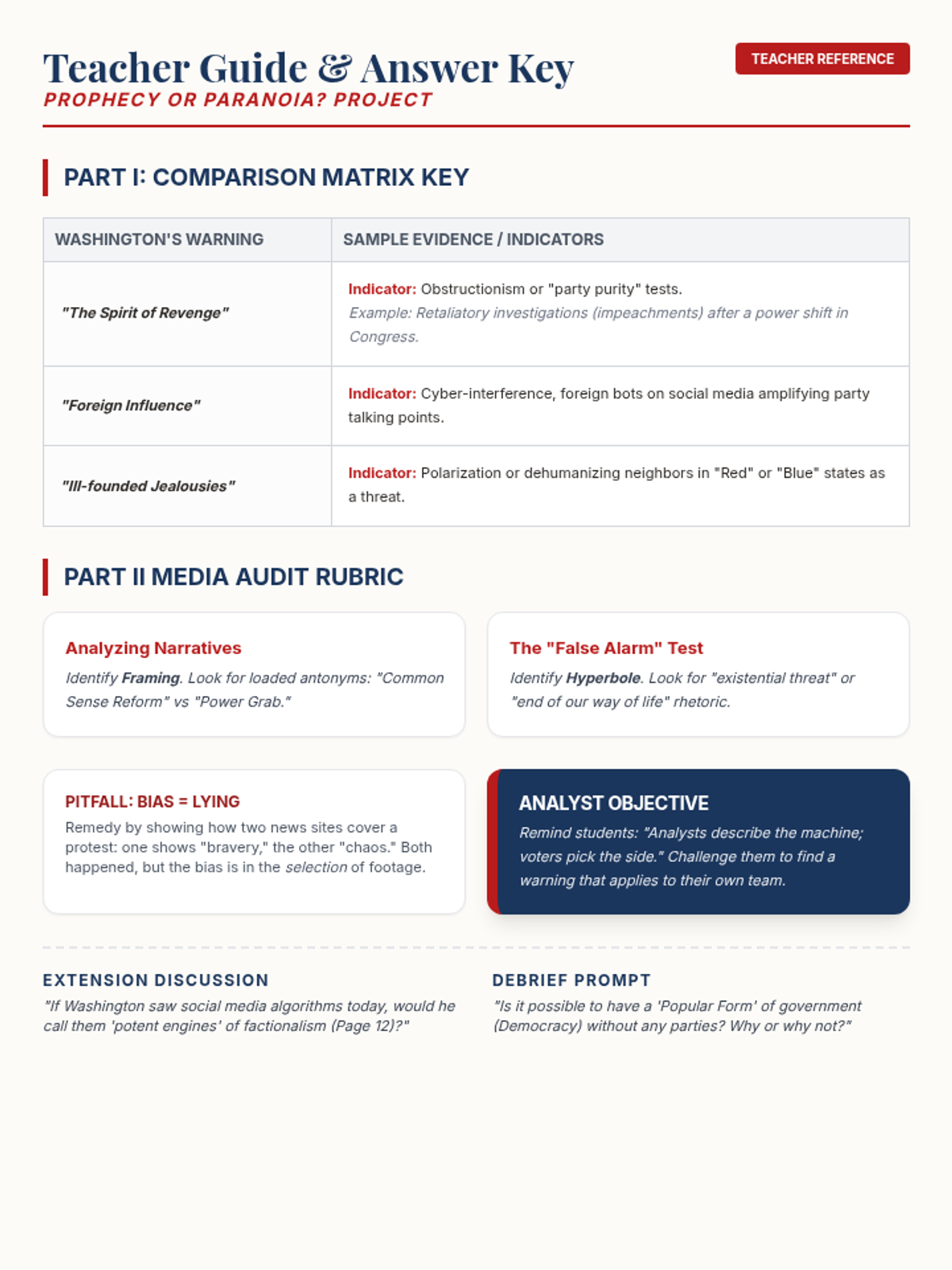
An annotated version of the 'Prophecy or Paranoia?' assignment for teachers, providing specific modern indicators, example student responses, and facilitation strategies for maintaining objectivity. This version includes remediations and fixes layout issues.
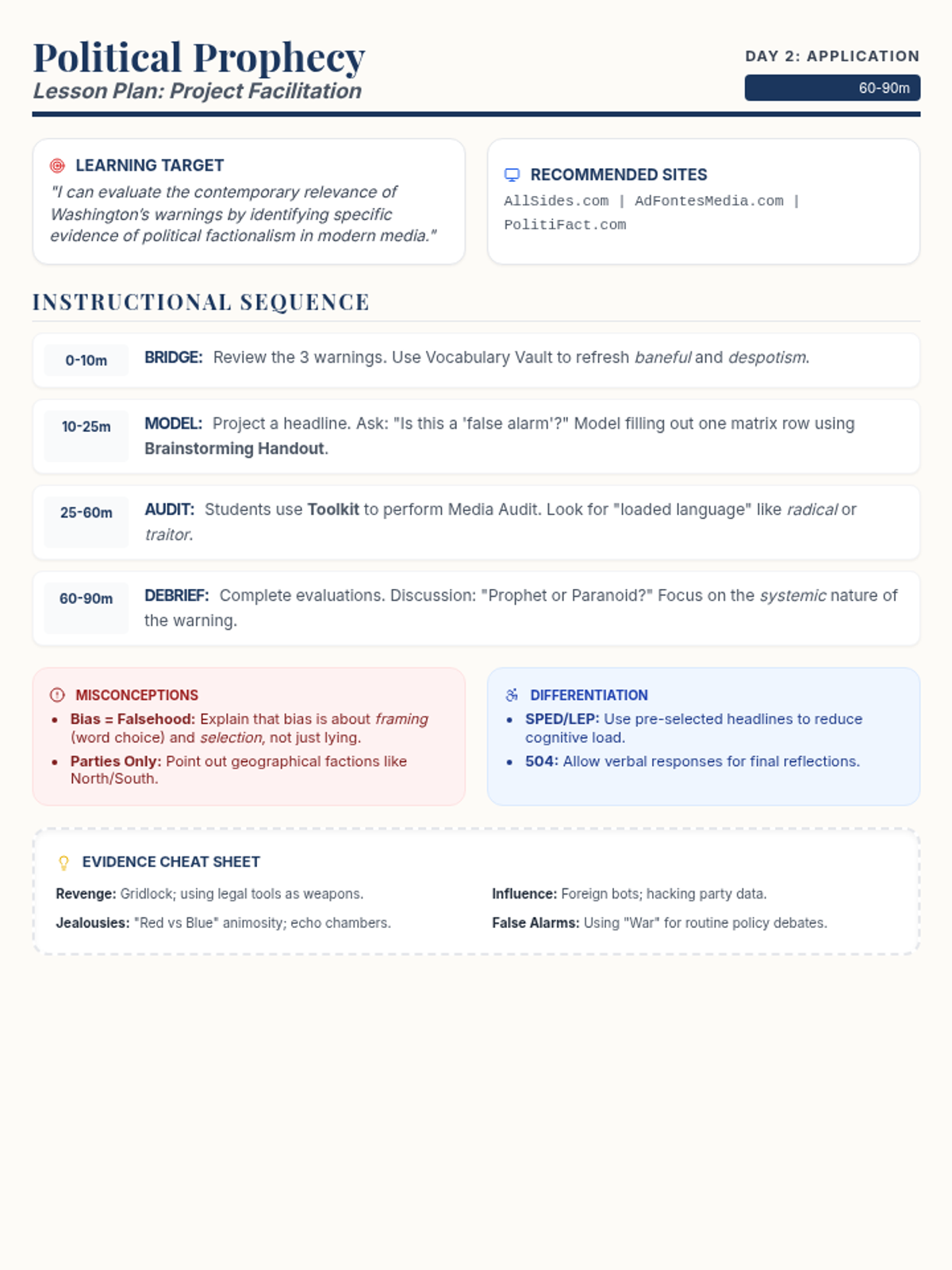
A detailed lesson plan for the 'Prophecy or Paranoia?' follow-up project, including learning targets, instructional sequence, common misconceptions, and differentiation strategies. Consolidates content into a single professional page and fixes minor styling issues.
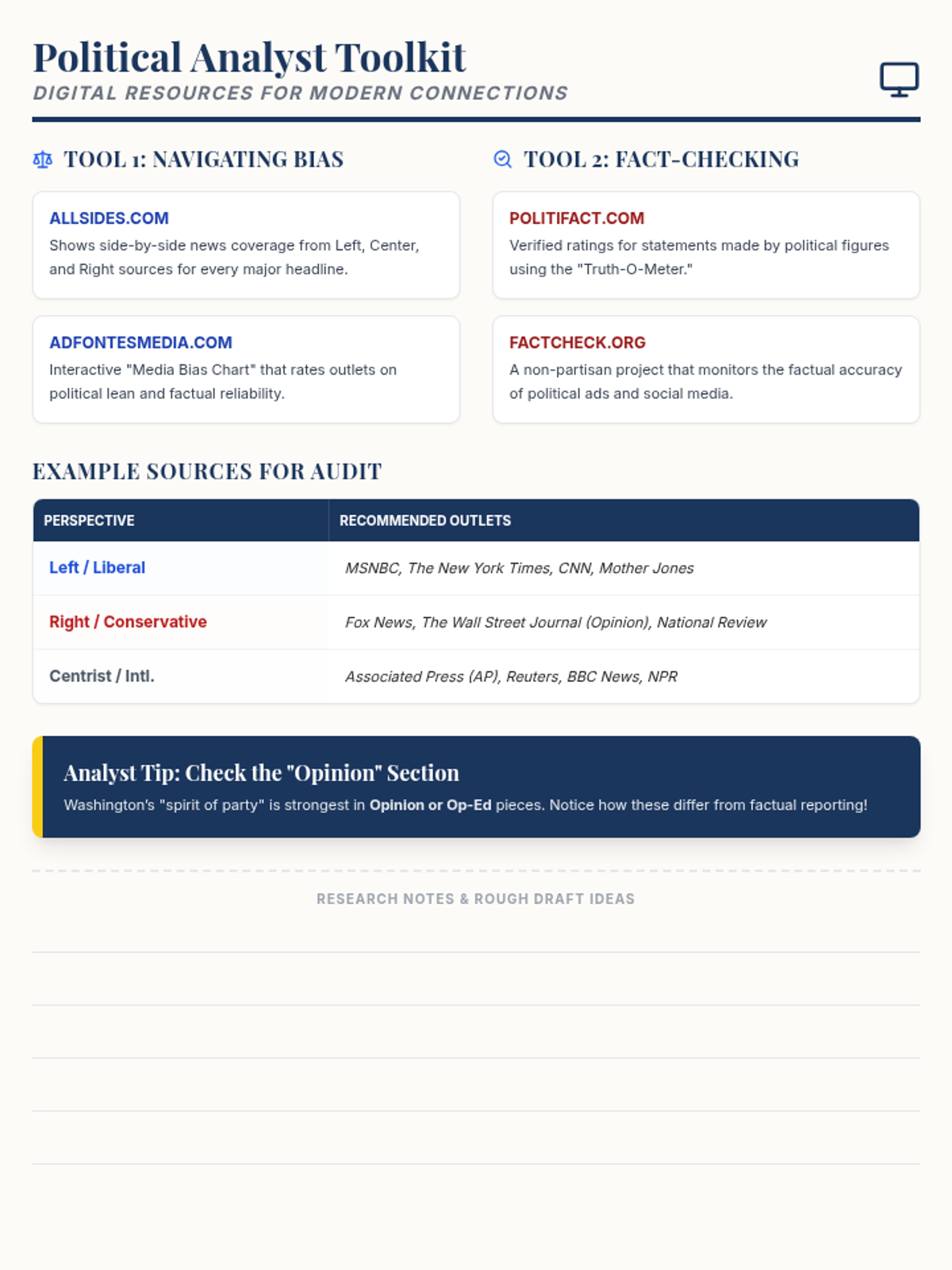
A digital resource guide for students to use while completing the 'Prophecy or Paranoia?' project. It includes media bias tools, fact-checking sites, and categorized news outlets to support their media audit. This version is optimized for a clean 1-page layout with improved work space.
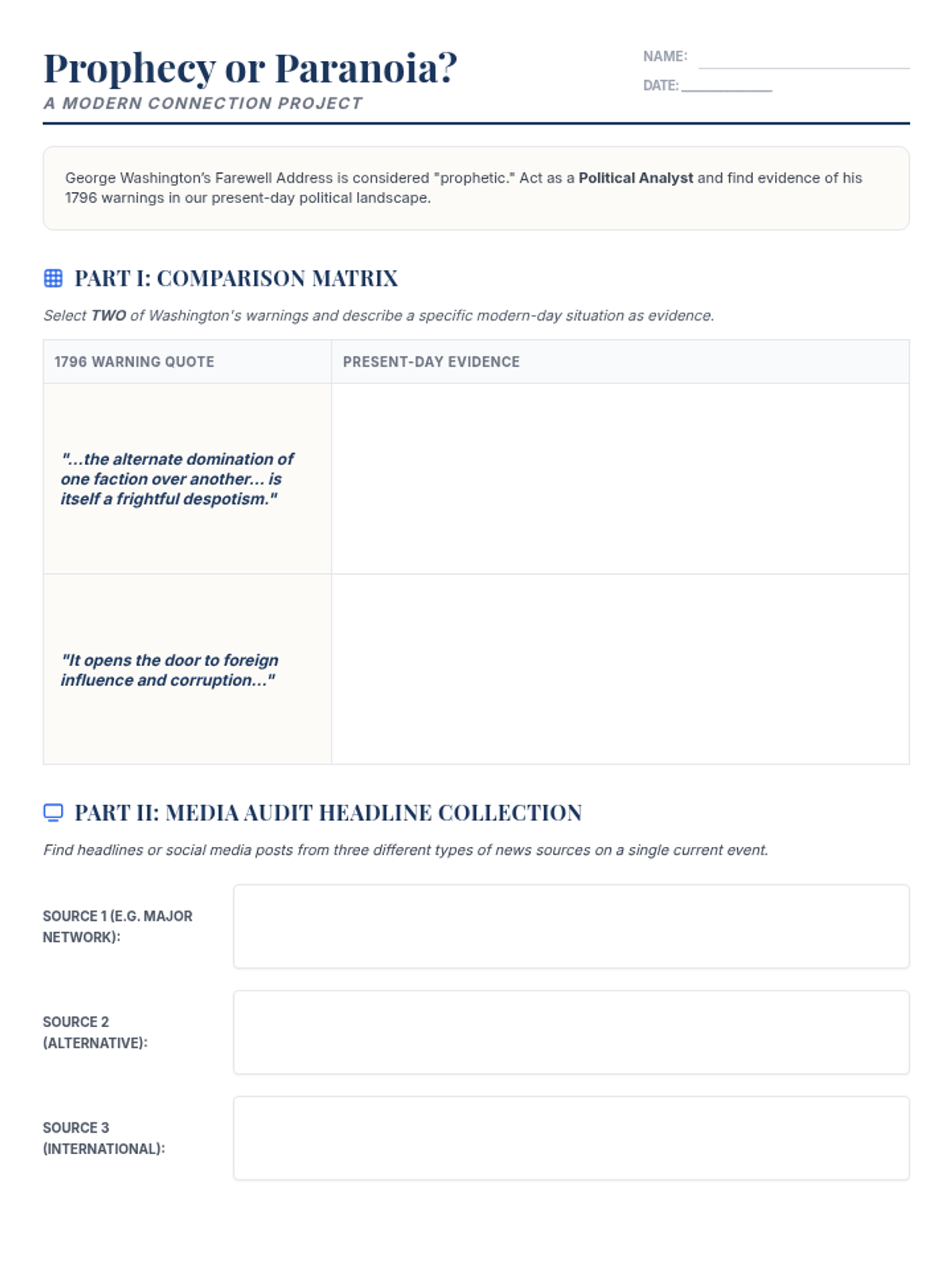
A follow-up assignment for high school government students that connects Washington's 1796 warnings to modern political parties, media bias, and current events through a comparison matrix and a media audit. This version ensures a strict 2-page layout with ample student work space and improved font legibility.
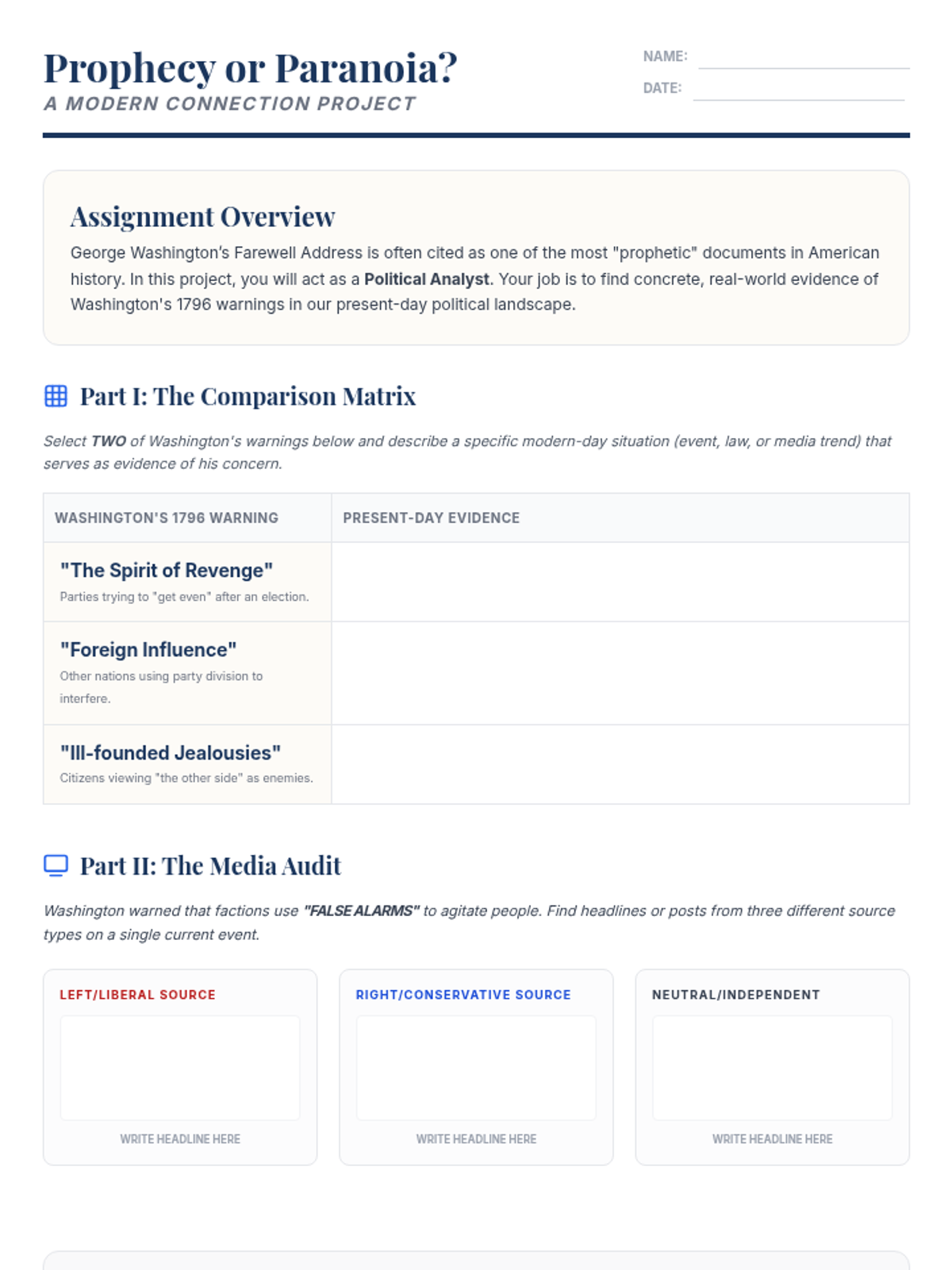
A follow-up assignment for high school government students that connects Washington's 1796 warnings to modern political parties, media bias, and current events through a comparison matrix and a media audit. This version fixes layout issues and optimizes the document for 2-page printing.
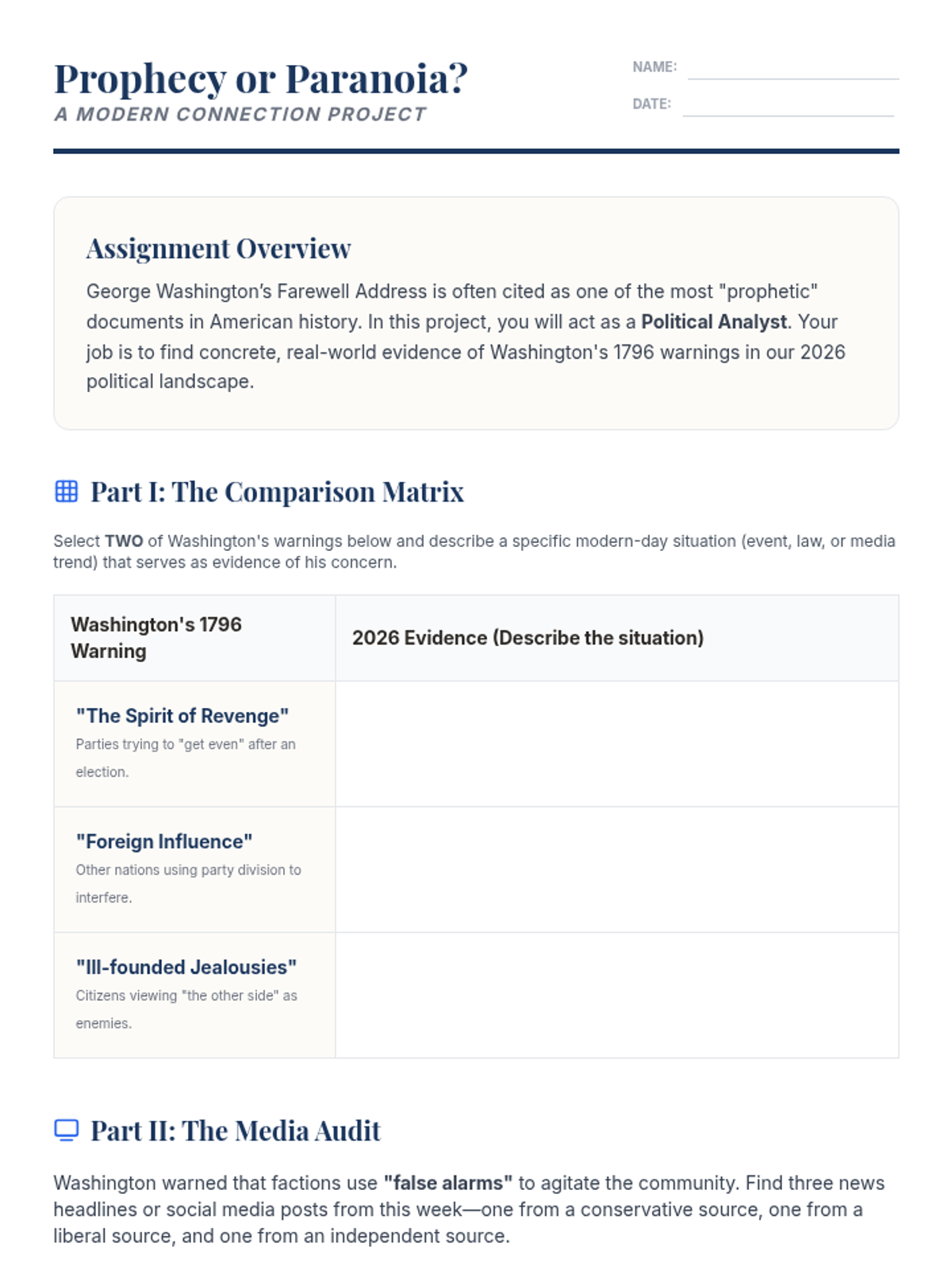
A follow-up assignment for high school government students that connects Washington's 1796 warnings to modern political parties, media bias, and current events through a comparison matrix and a media audit.
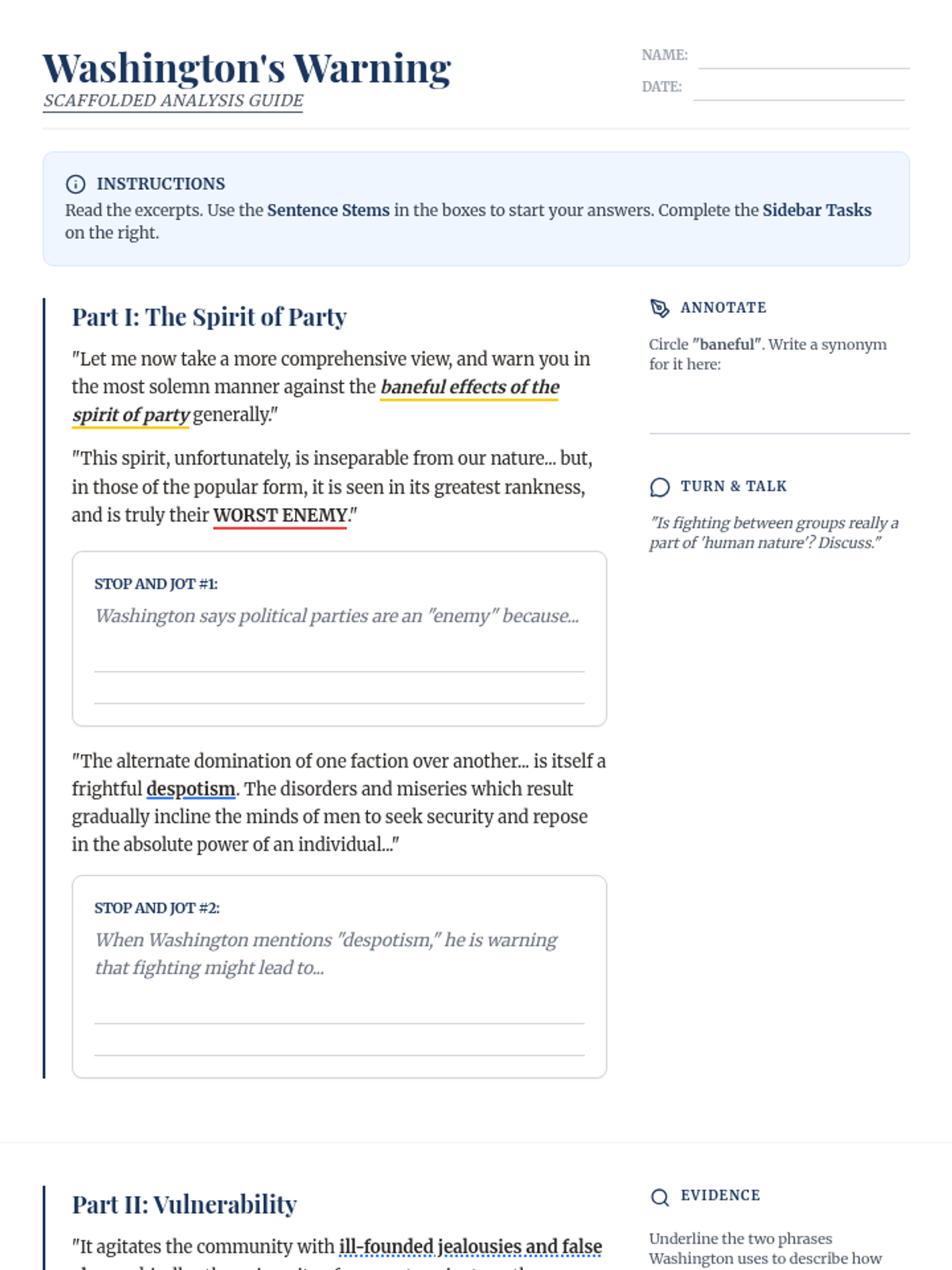
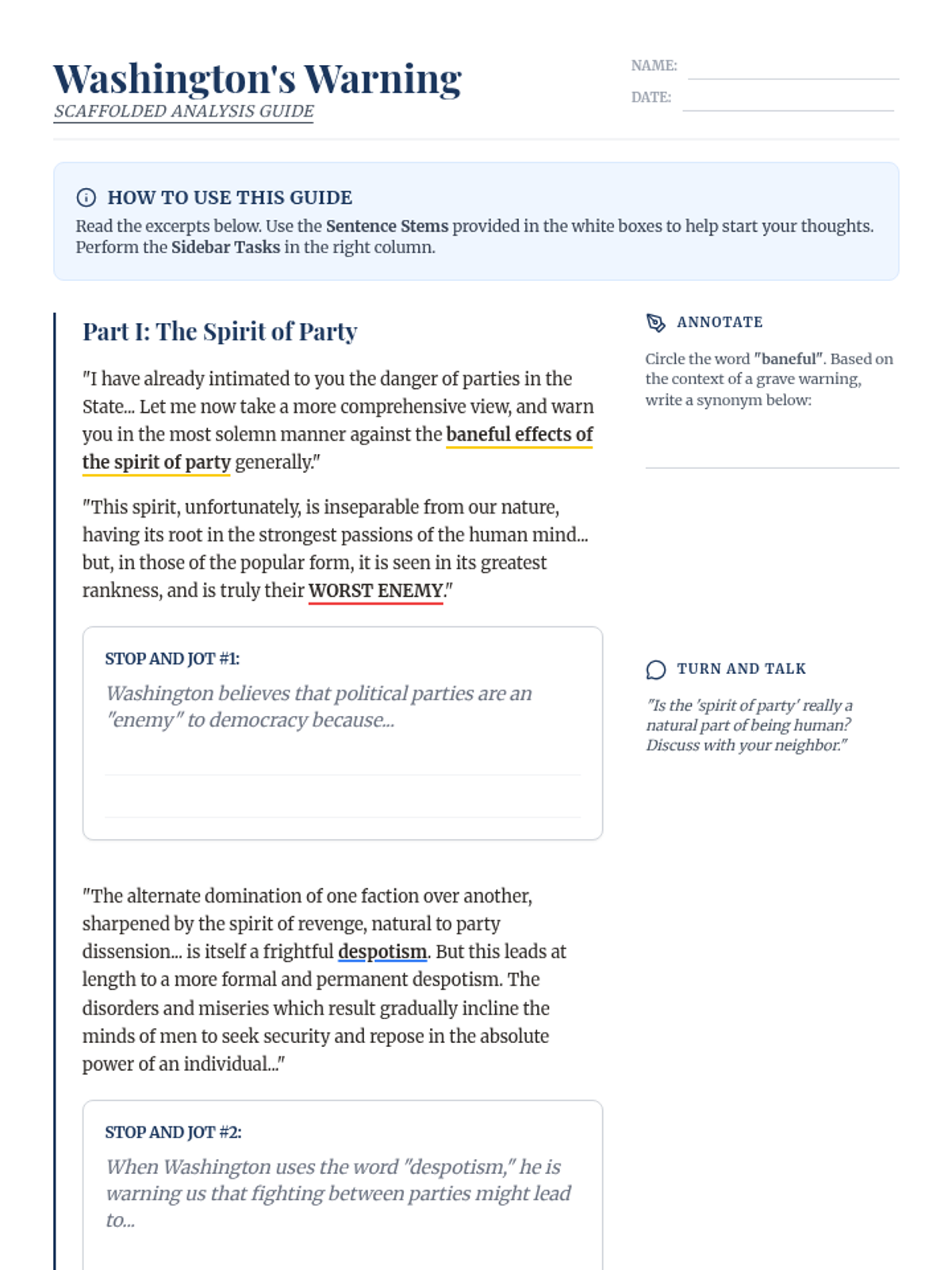
A scaffolded version of the Washington's Warning analysis worksheet for students, featuring the same primary source excerpts but with built-in sentence stems in every work area to support writing and critical thinking. This version fixes major layout and page break issues.
A scaffolded version of the Washington's Warning analysis worksheet for students, featuring the same primary source excerpts but with built-in sentence stems in every work area to support writing and critical thinking.
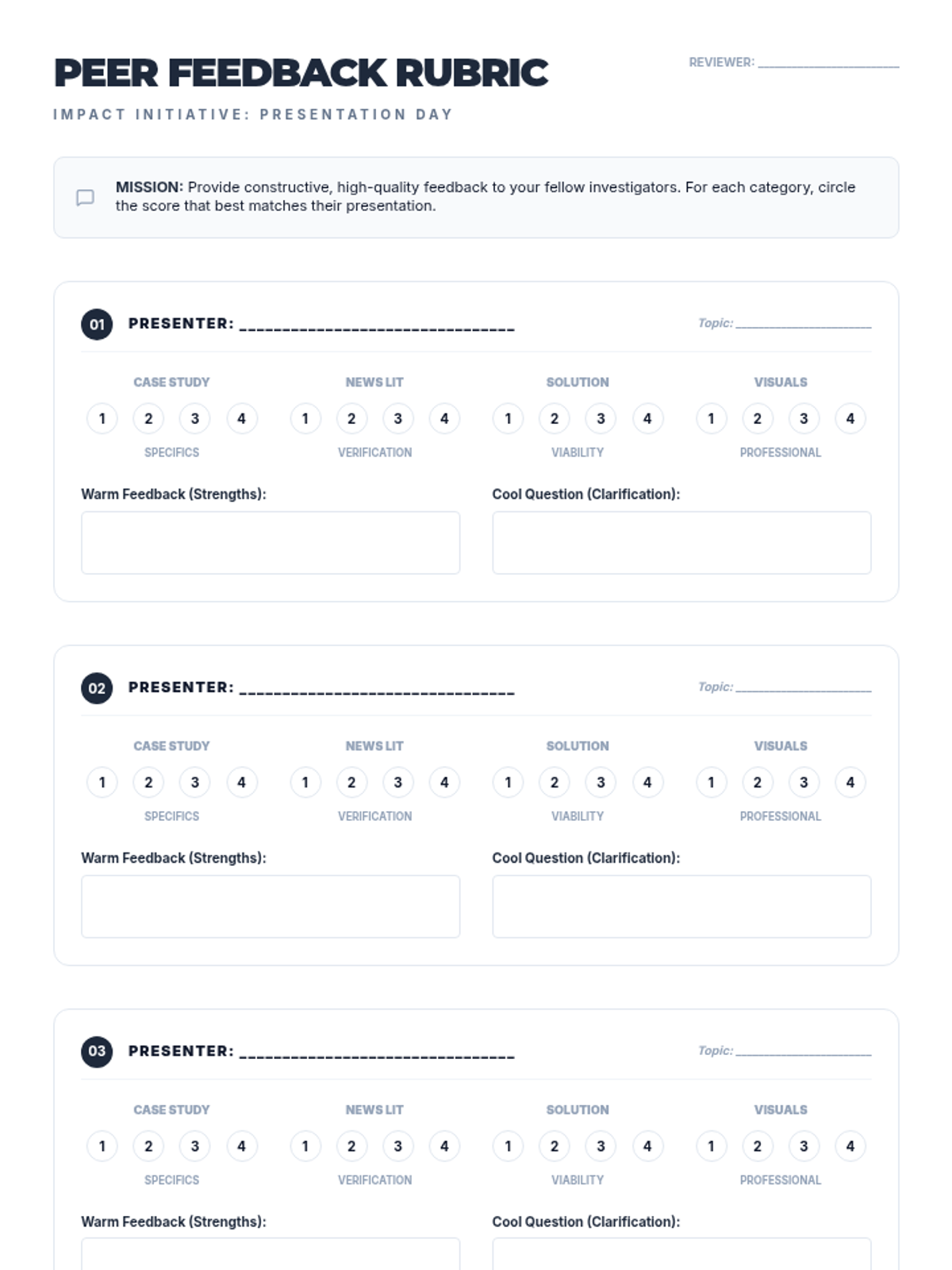
A peer feedback rubric for students to use during final project presentations, featuring rating scales for research, news literacy, and action plan viability.
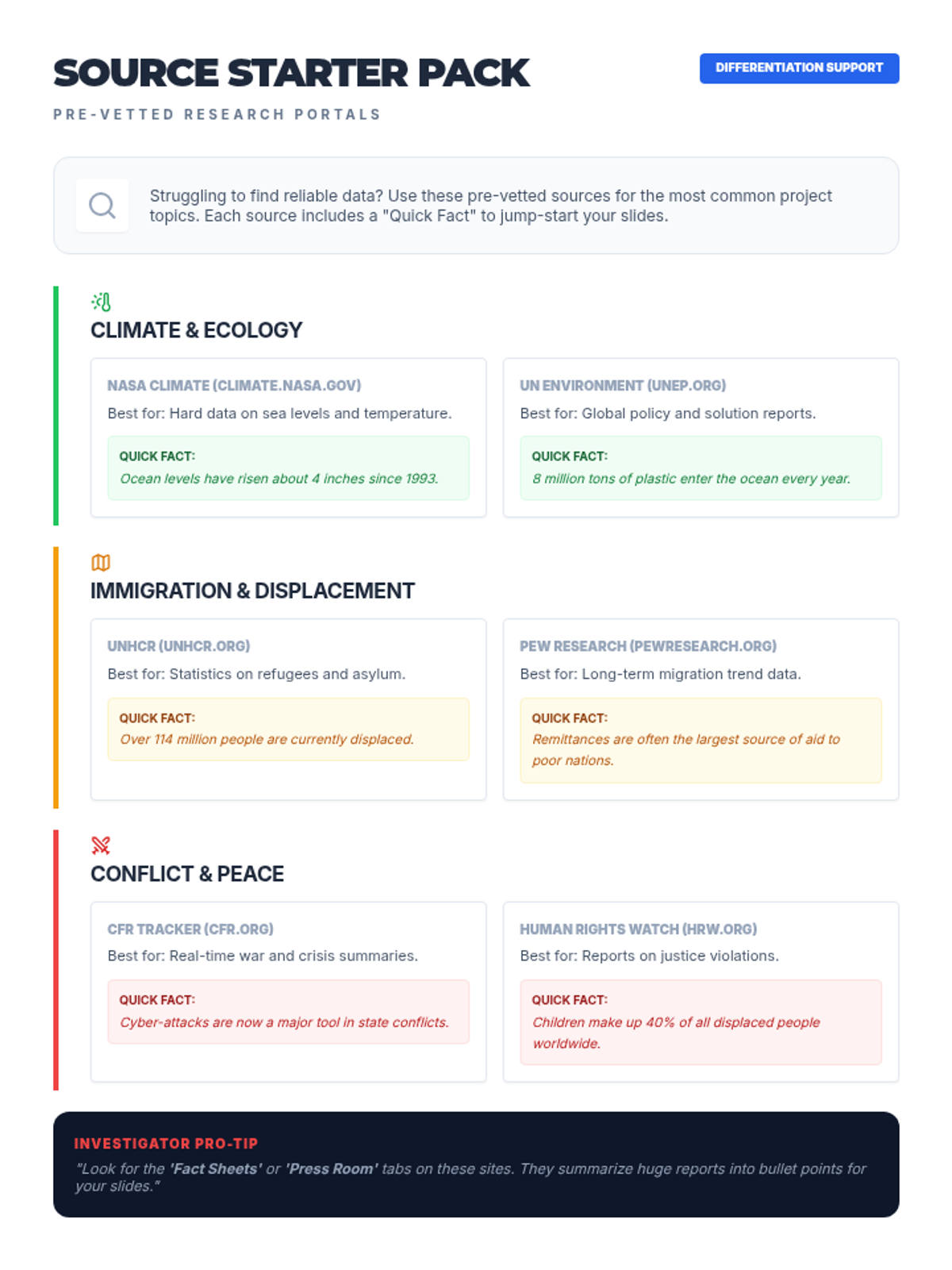
A curated reference sheet with pre-vetted, high-quality sources for common project topics, designed to help students who struggle with the initial research phase.
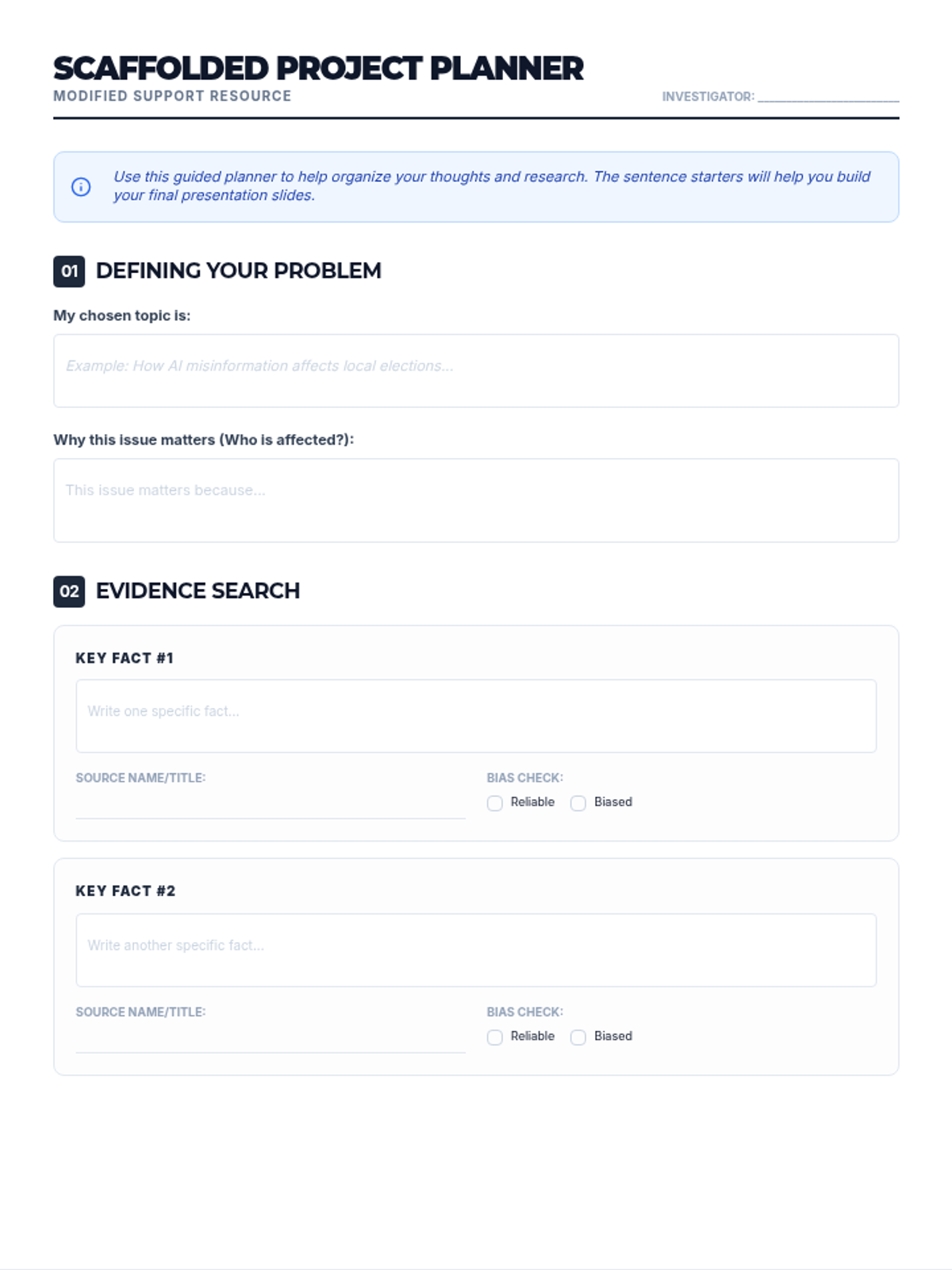
A highly structured version of the project researcher log for students needing additional scaffolding, featuring sentence starters, simplified source evaluation, and a slide-by-slide guide.
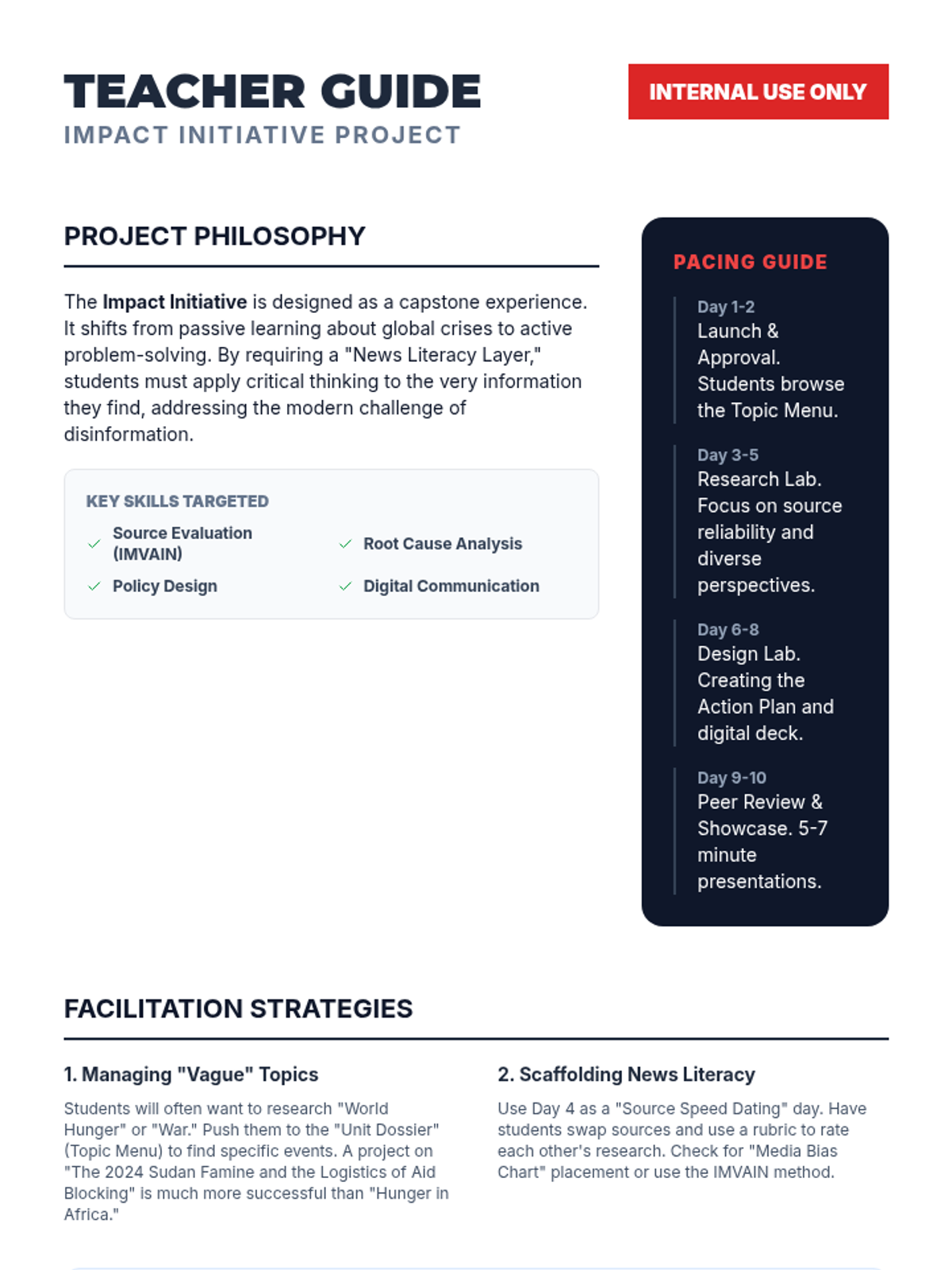
A teacher-facing facilitation guide for the Impact Initiative, including project philosophy, a 10-day pacing guide, and strategies for scaffolding news literacy and differentiation.
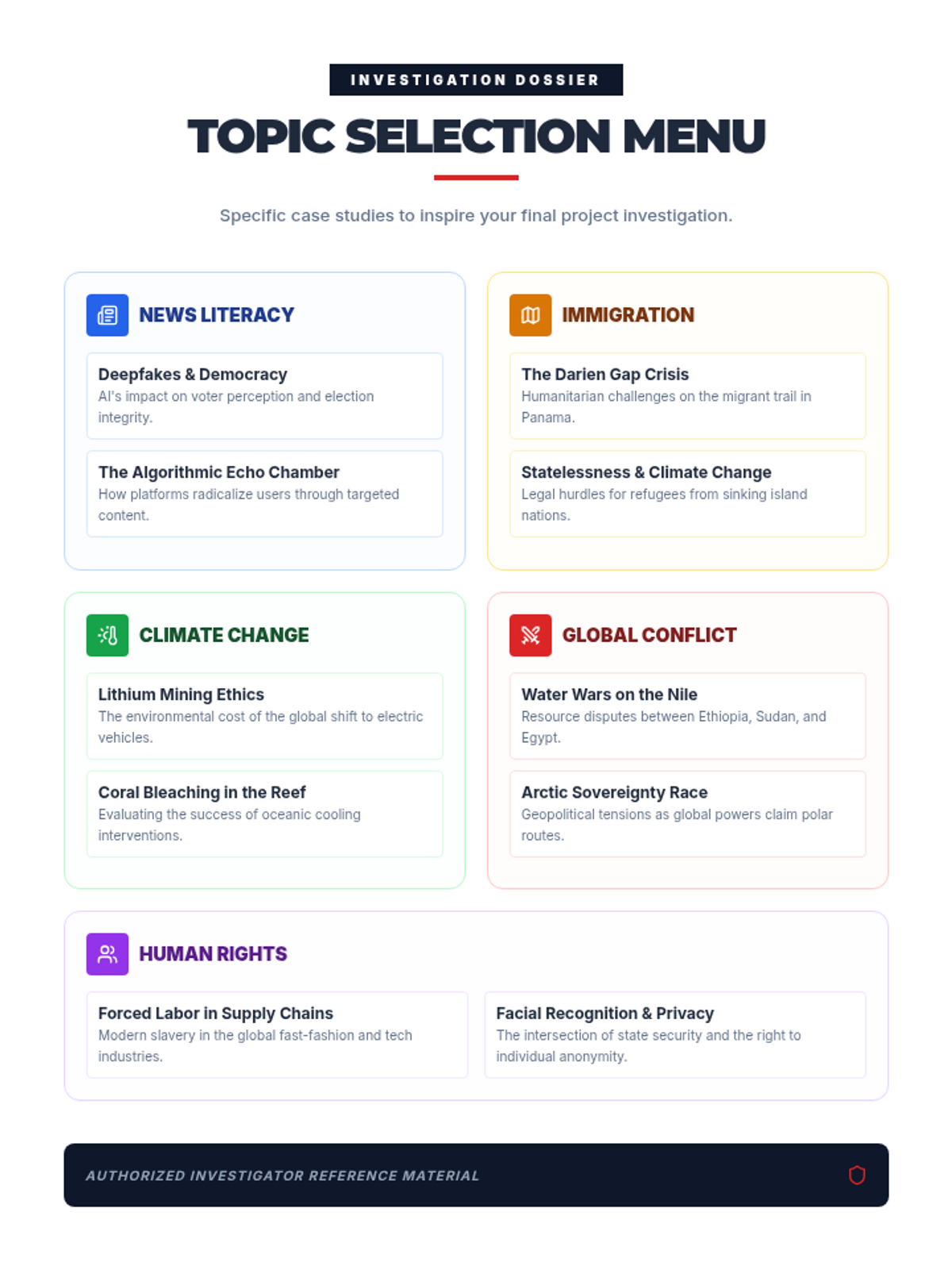
A curated list of specific case studies for each unit (News Literacy, Immigration, Climate Change, Global Conflict, Human Rights) to help students select high-impact project topics.
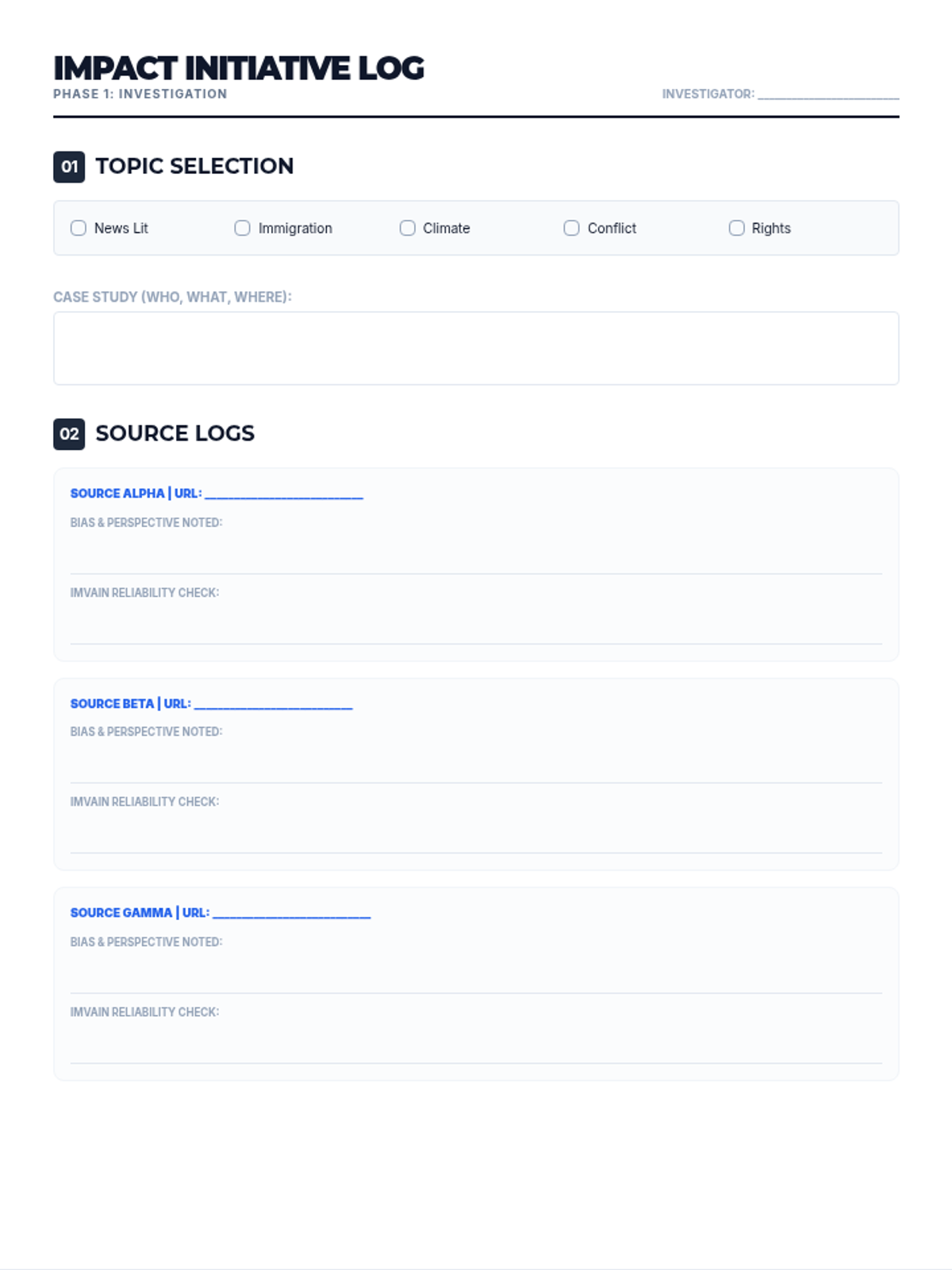
A 2-page student workbook to scaffold the two-week project, including topic selection, source verification logs, action plan brainstorming, and peer review sections.
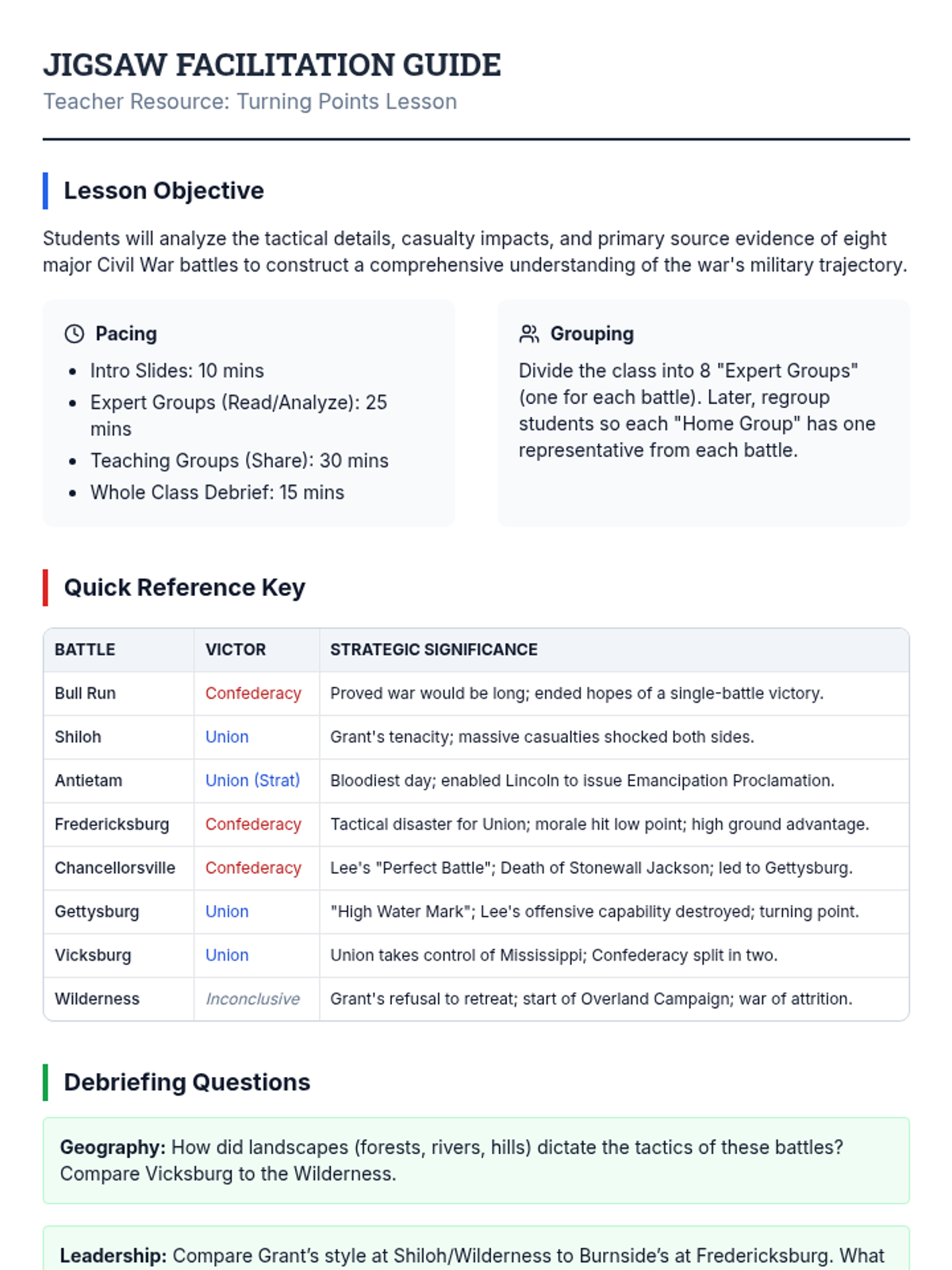
A teacher's guide for facilitating the Civil War Jigsaw activity, including pacing, grouping strategies, a quick-reference answer key, and discussion prompts.
Introductory slides for the Civil War Battles Jigsaw lesson, explaining the jigsaw method and providing an overview of the battles to be studied.
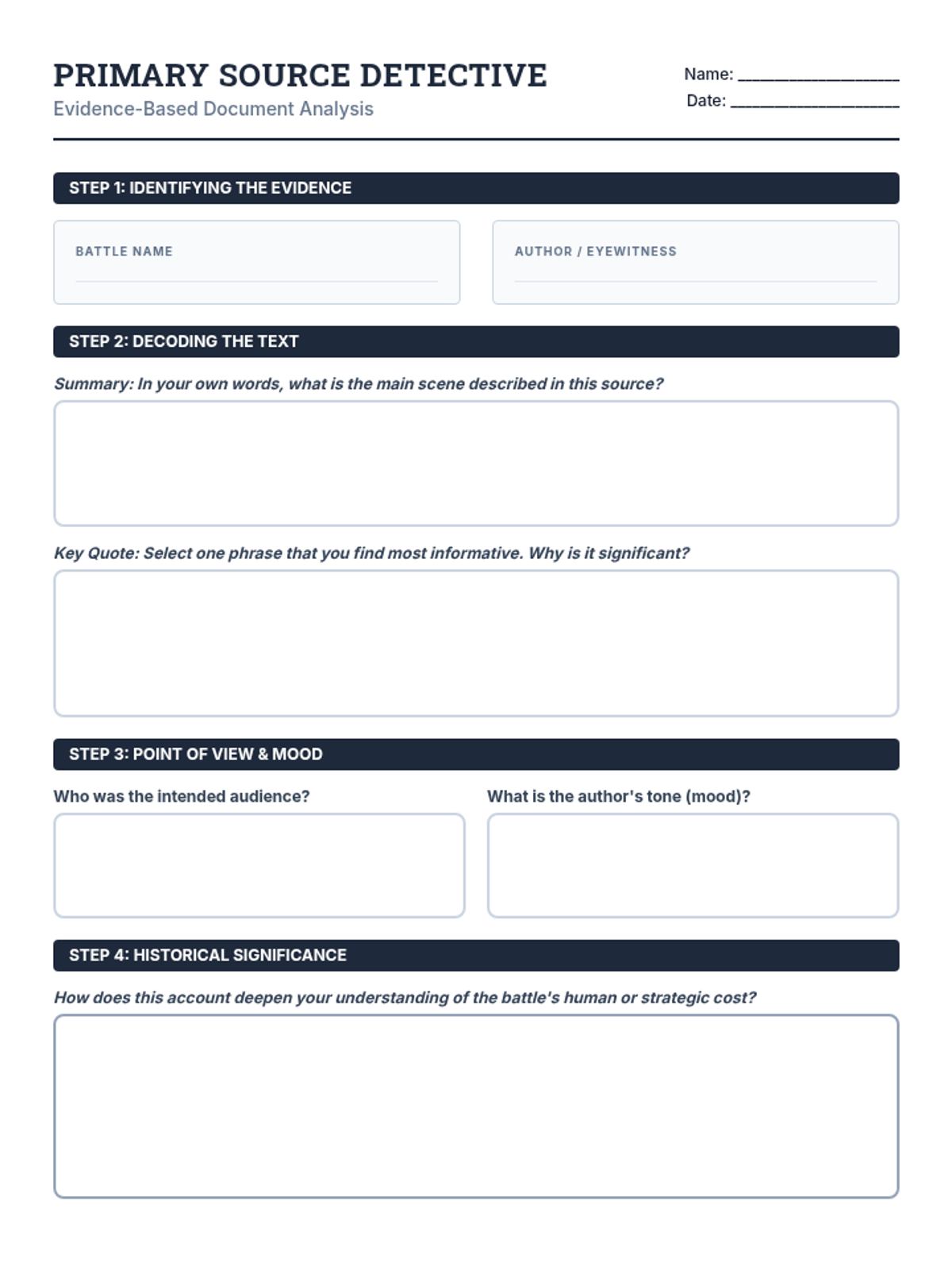
An analysis worksheet for students to examine the primary sources embedded in their battle readings, focusing on evidence identification, decoding, perspective, and historical significance.
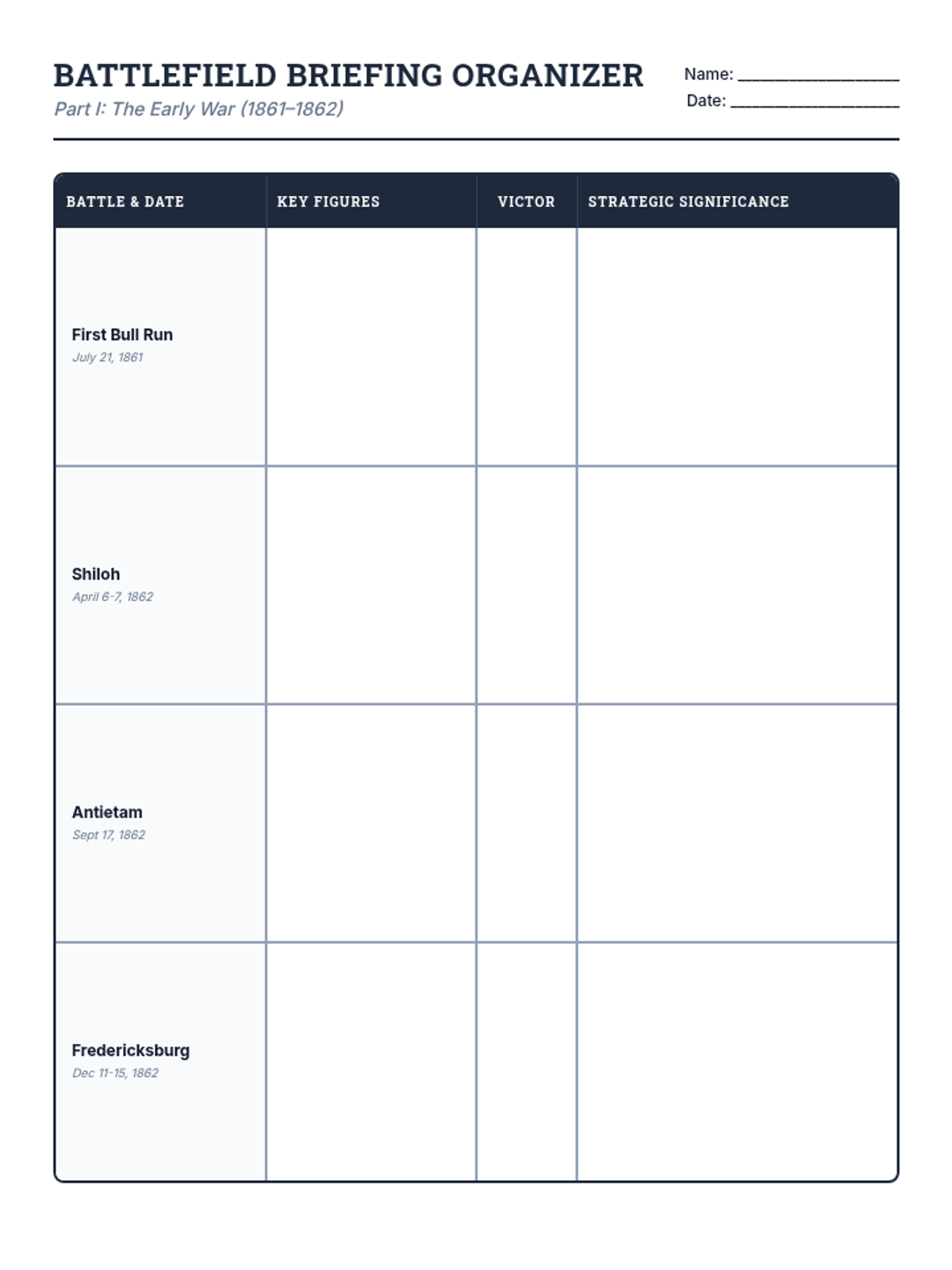
A graphic organizer for students to summarize key figures, victors, and strategic significance for all eight Civil War battles discussed in the jigsaw activity.
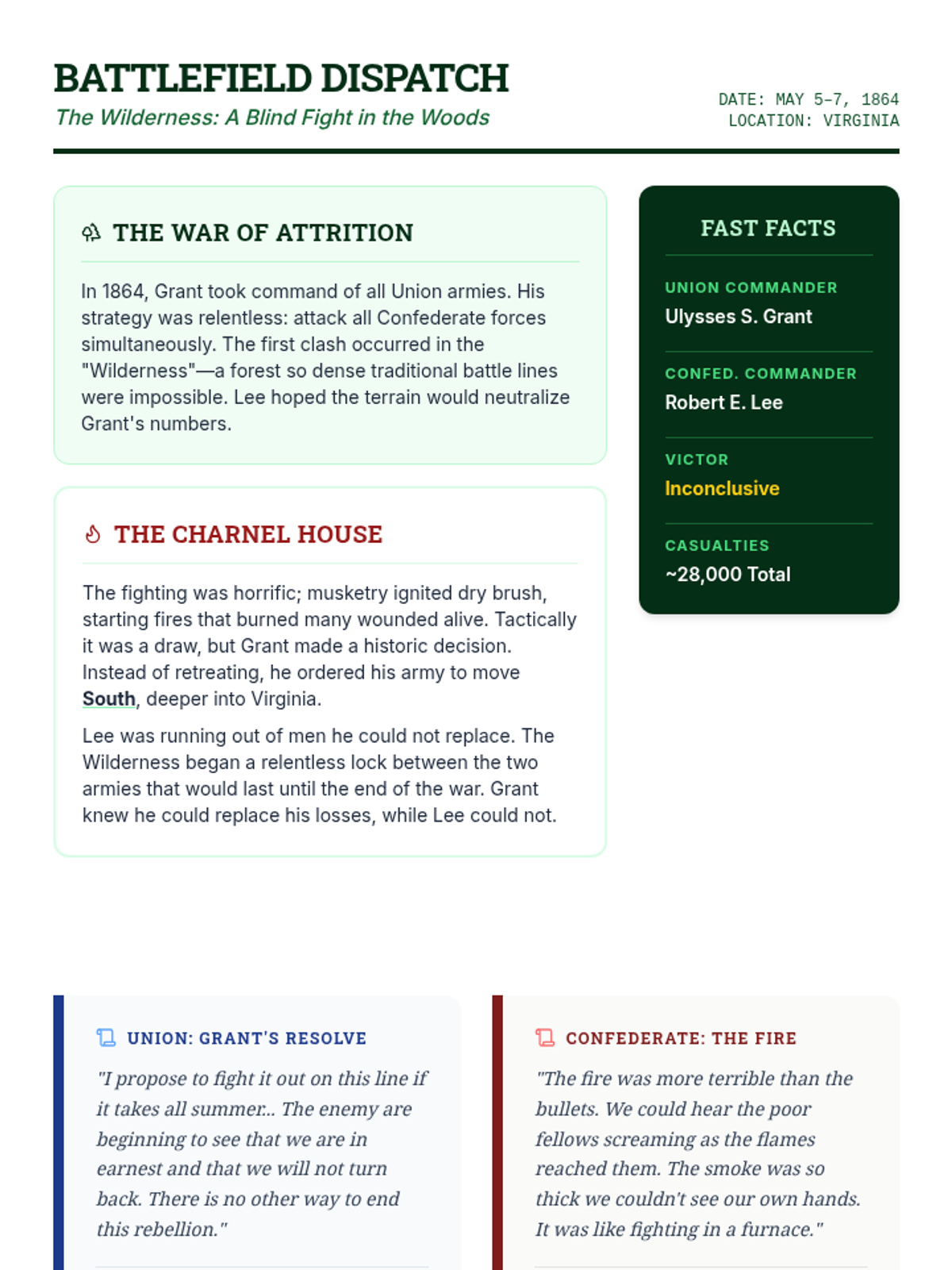
A reading material on the Battle of the Wilderness, featuring primary source excerpts from both General Grant and a Confederate private to highlight the brutal nature of forest combat.
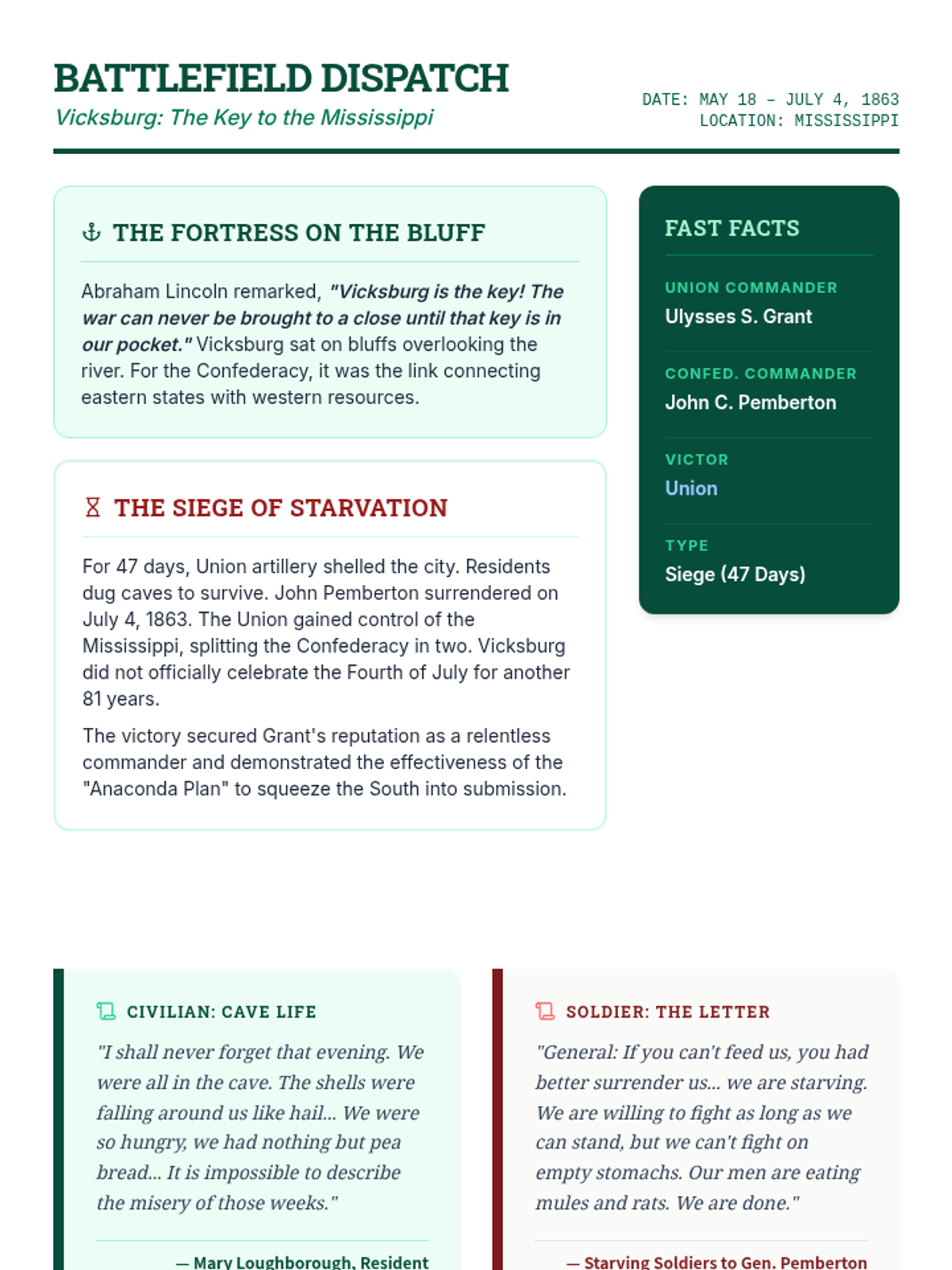
A reading material on the Siege of Vicksburg, featuring primary source excerpts from a resident living in a cave and starving soldiers to illustrate the human cost of the siege.
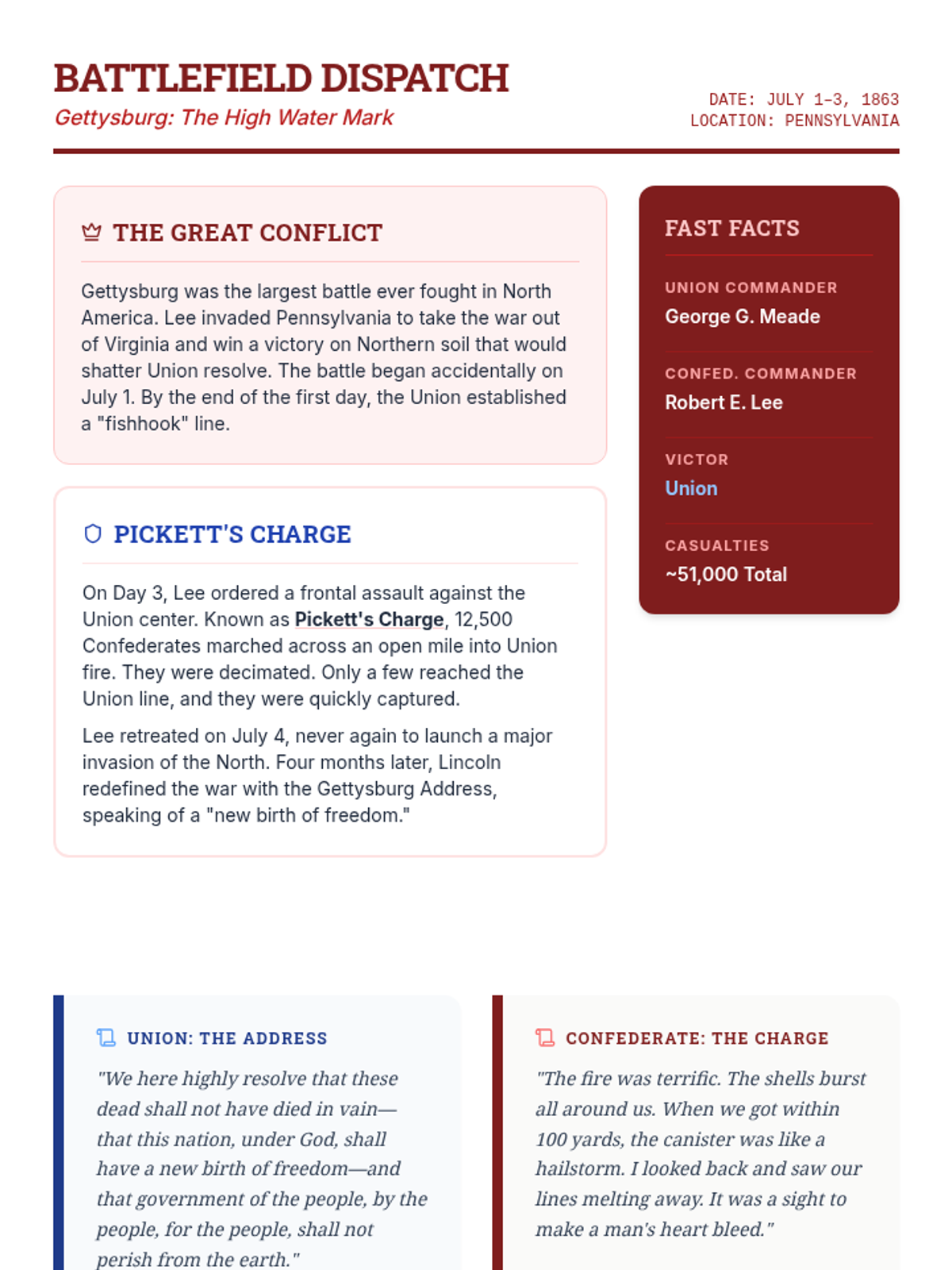
A comprehensive reading material on the Battle of Gettysburg, featuring primary source excerpts from both Abraham Lincoln and a Confederate captain to illustrate the scale and significance of the conflict.
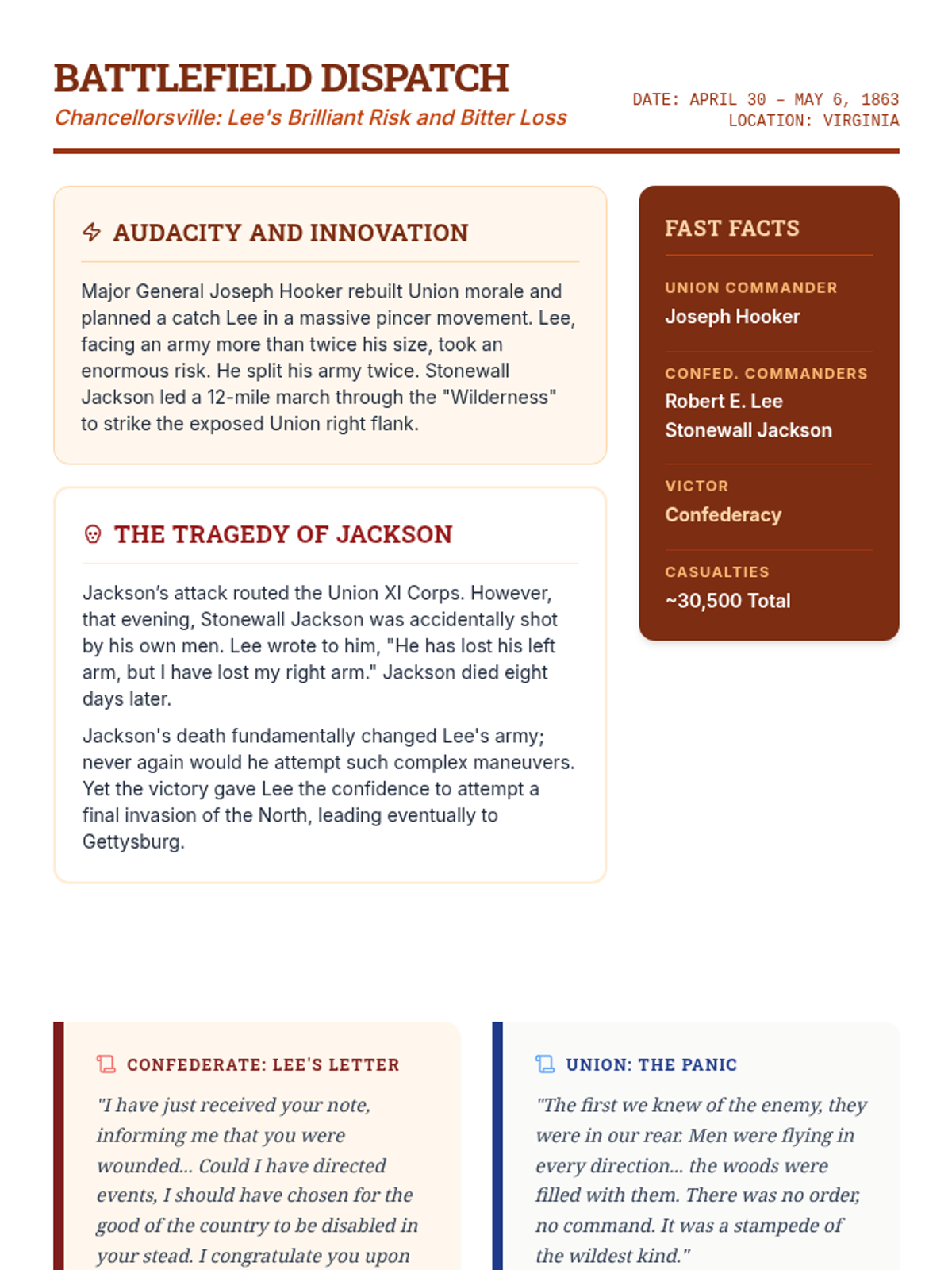
A reading passage on the Battle of Chancellorsville, featuring primary source excerpts from both General Lee and a Union soldier to illustrate the brilliant but chaotic flank attack.
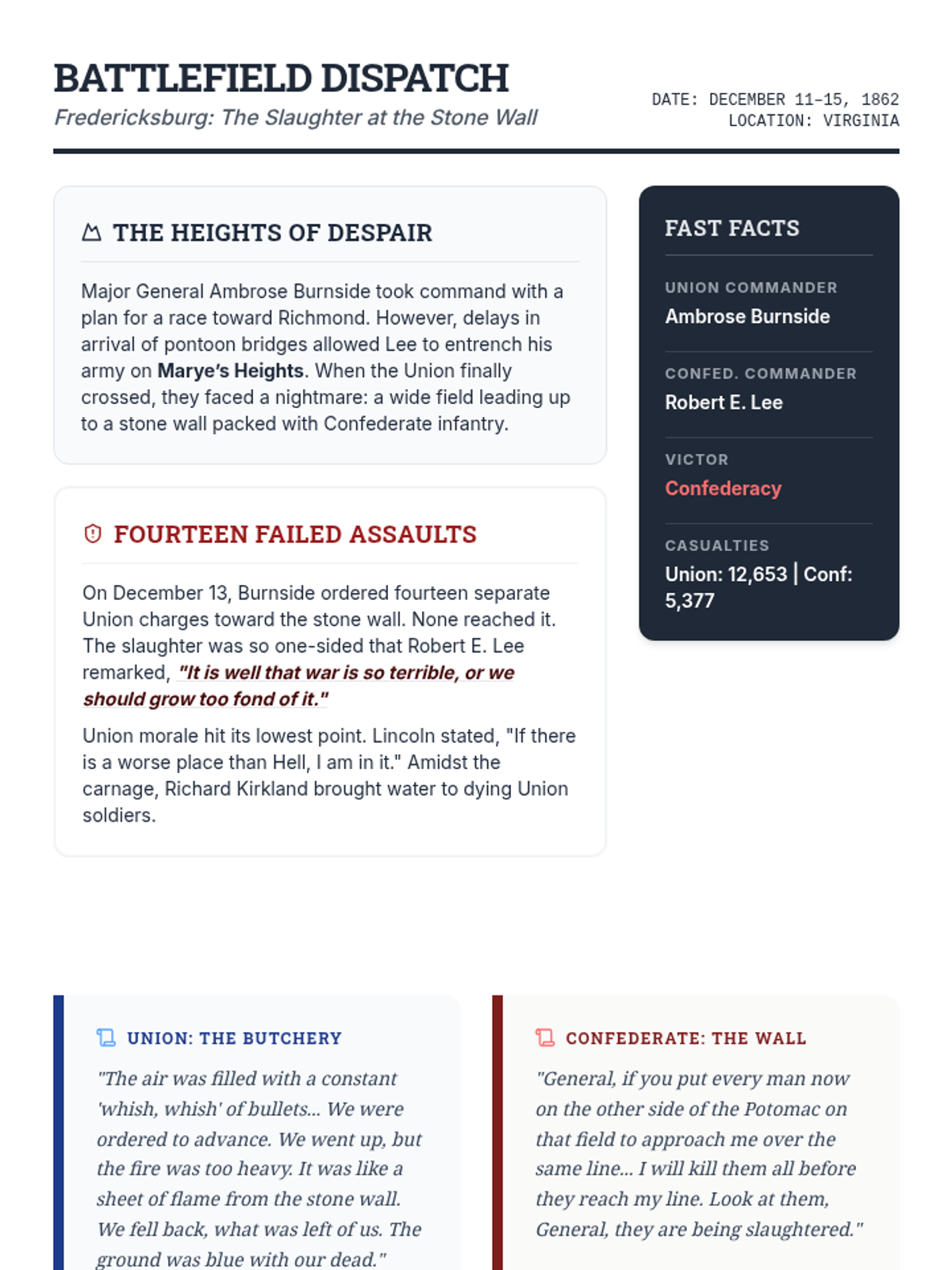
A reading passage on the Battle of Fredericksburg, featuring primary source excerpts from both a Union sergeant and Confederate General James Longstreet to highlight the defensive slaughter at Marye's Heights.
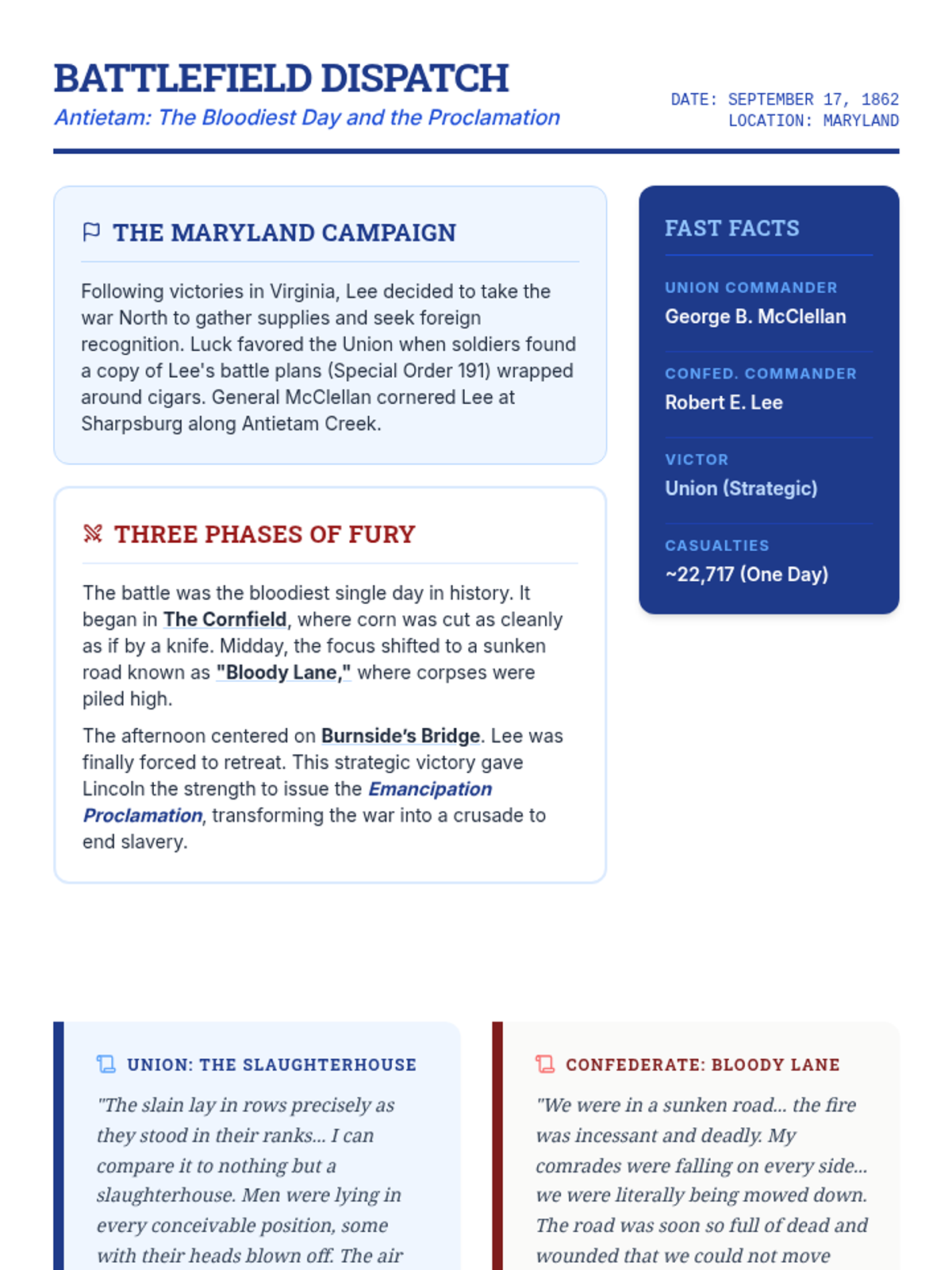
A reading passage on the Battle of Antietam, highlighting Lee's Maryland Campaign and featuring two primary source excerpts from soldiers on both sides of the "Bloody Lane."
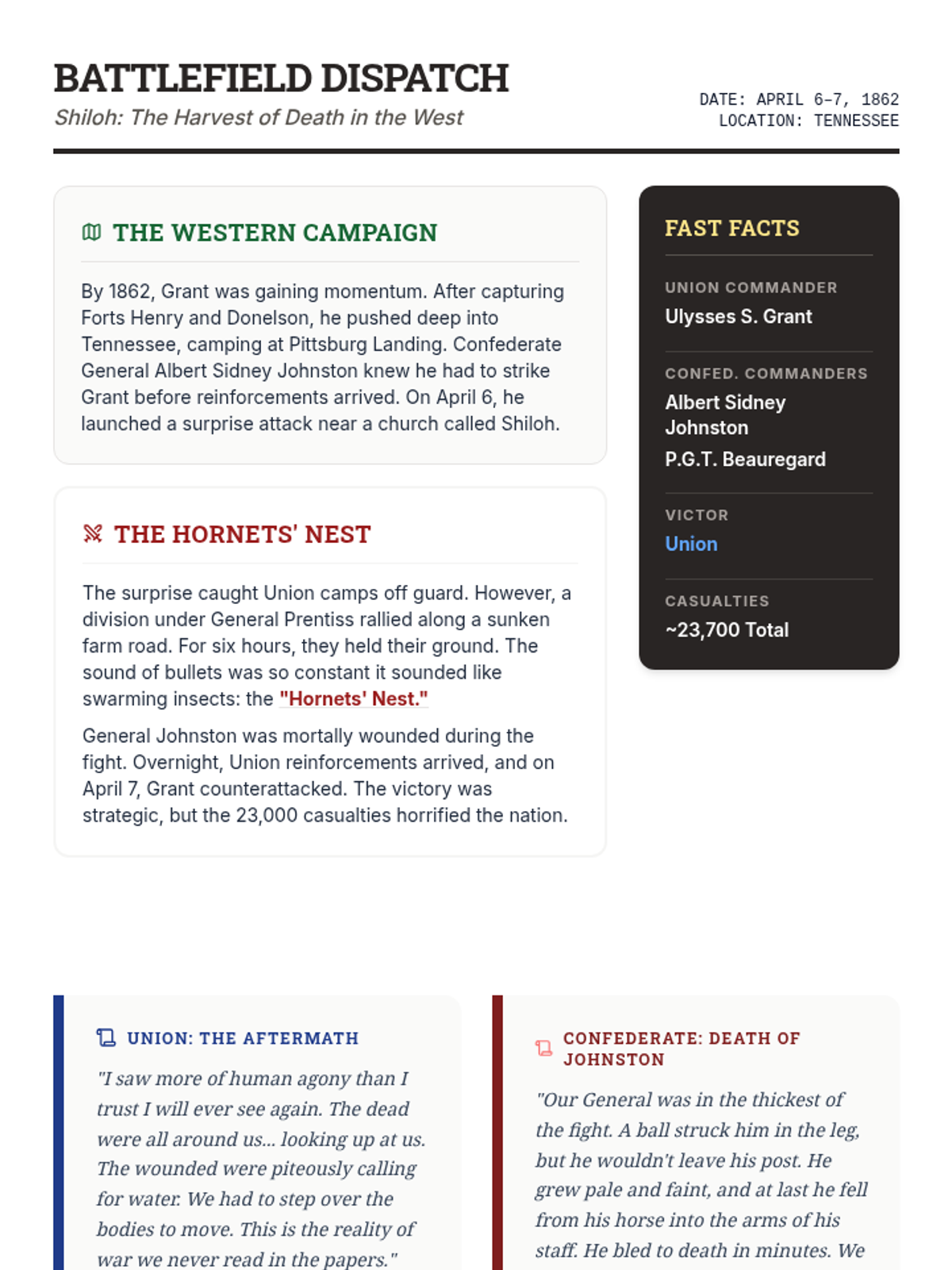
A reading material focused on the Battle of Shiloh, detailing the Western Theater strategy, the 'Hornets' Nest' engagement, and featuring two primary source excerpts from both sides of the conflict.
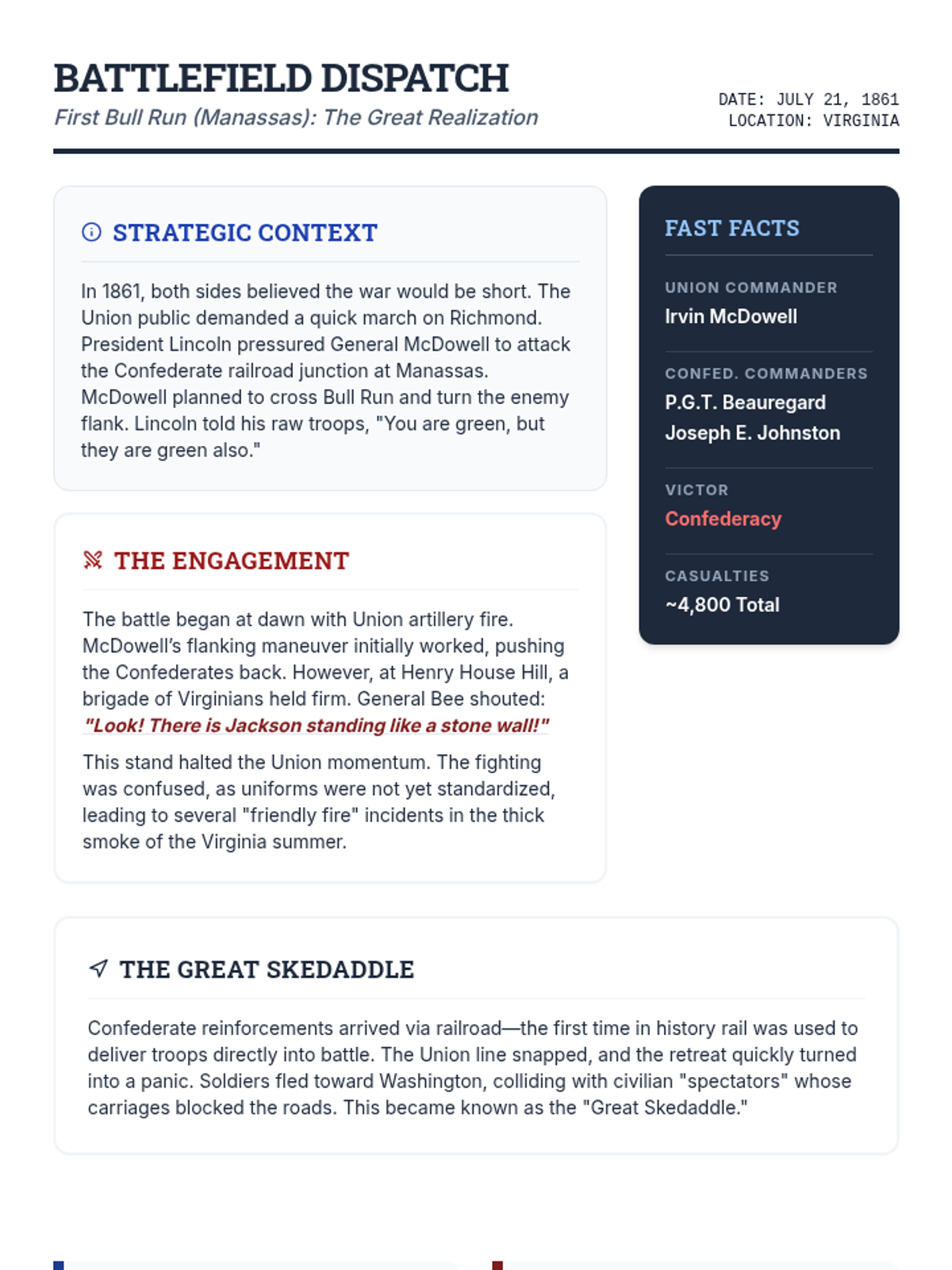
A detailed reading passage about the First Battle of Bull Run (Manassas), including strategic context, battle details, and two primary source excerpts offering both Union and Confederate perspectives.
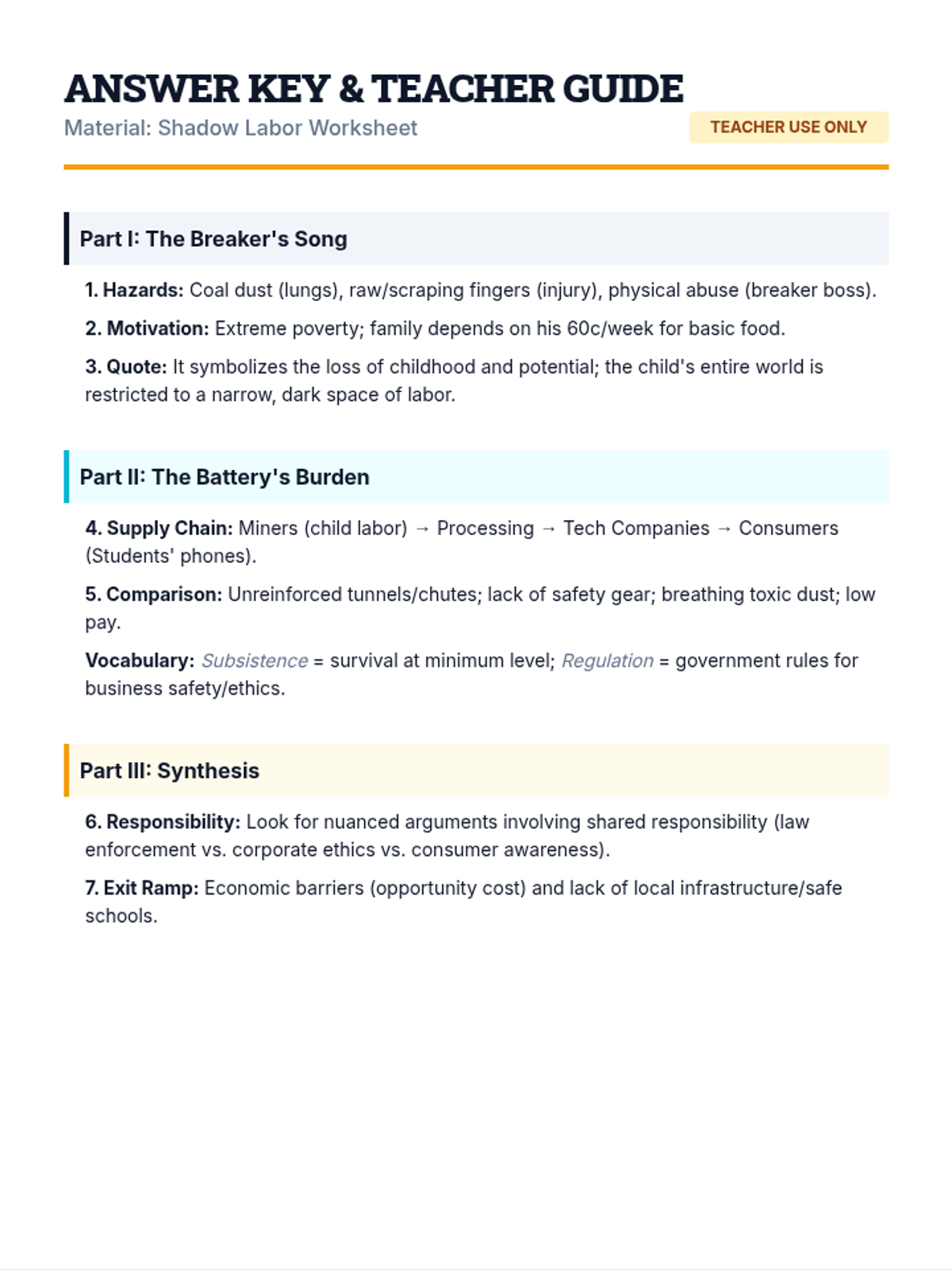
A teacher-facing answer key and facilitation guide for the 'Shadow Labor' worksheet, providing suggested responses and instructional tips.
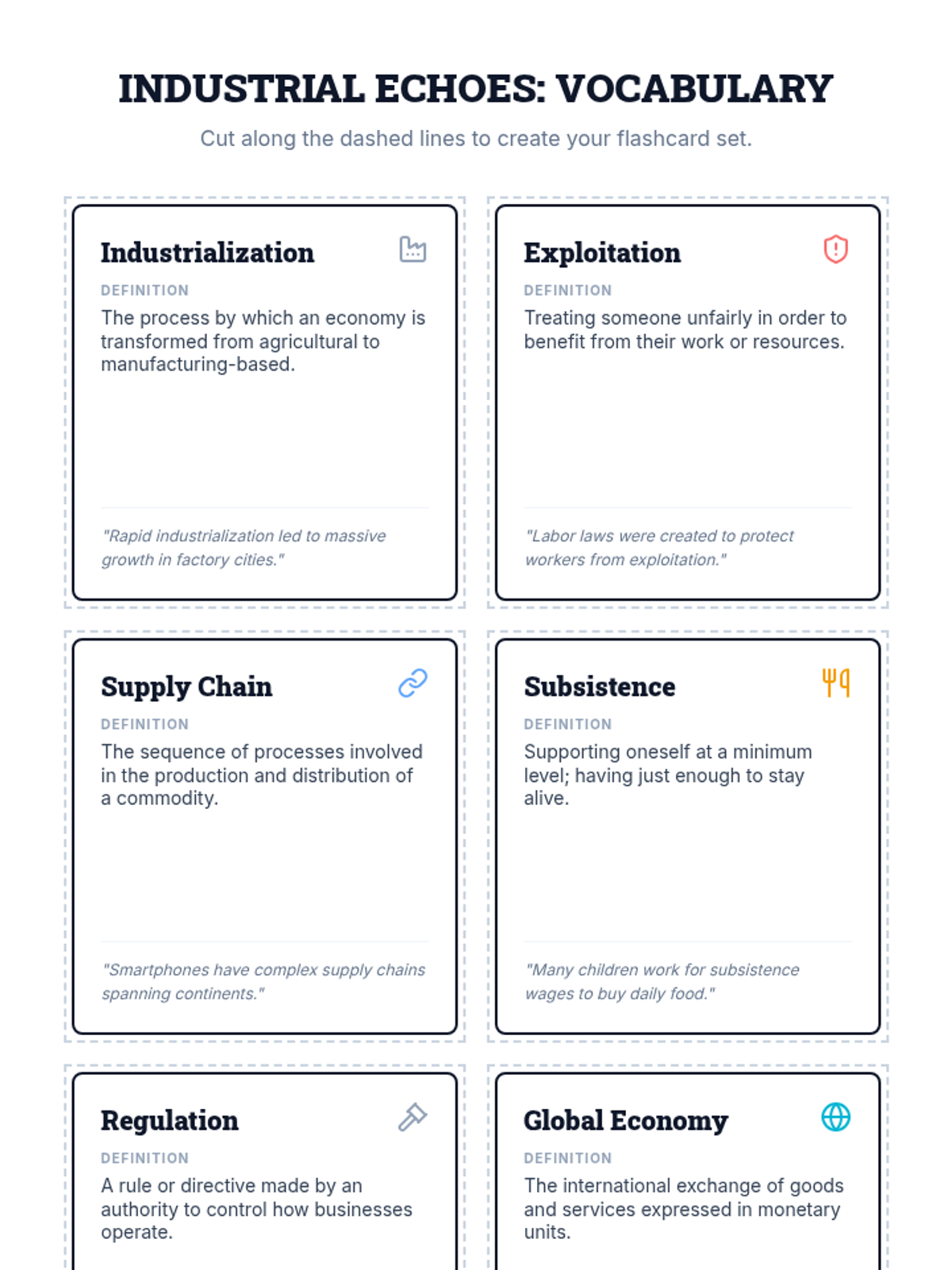
A set of 6 printable vocabulary cards with key terms, definitions, and usage examples for the child labor unit.
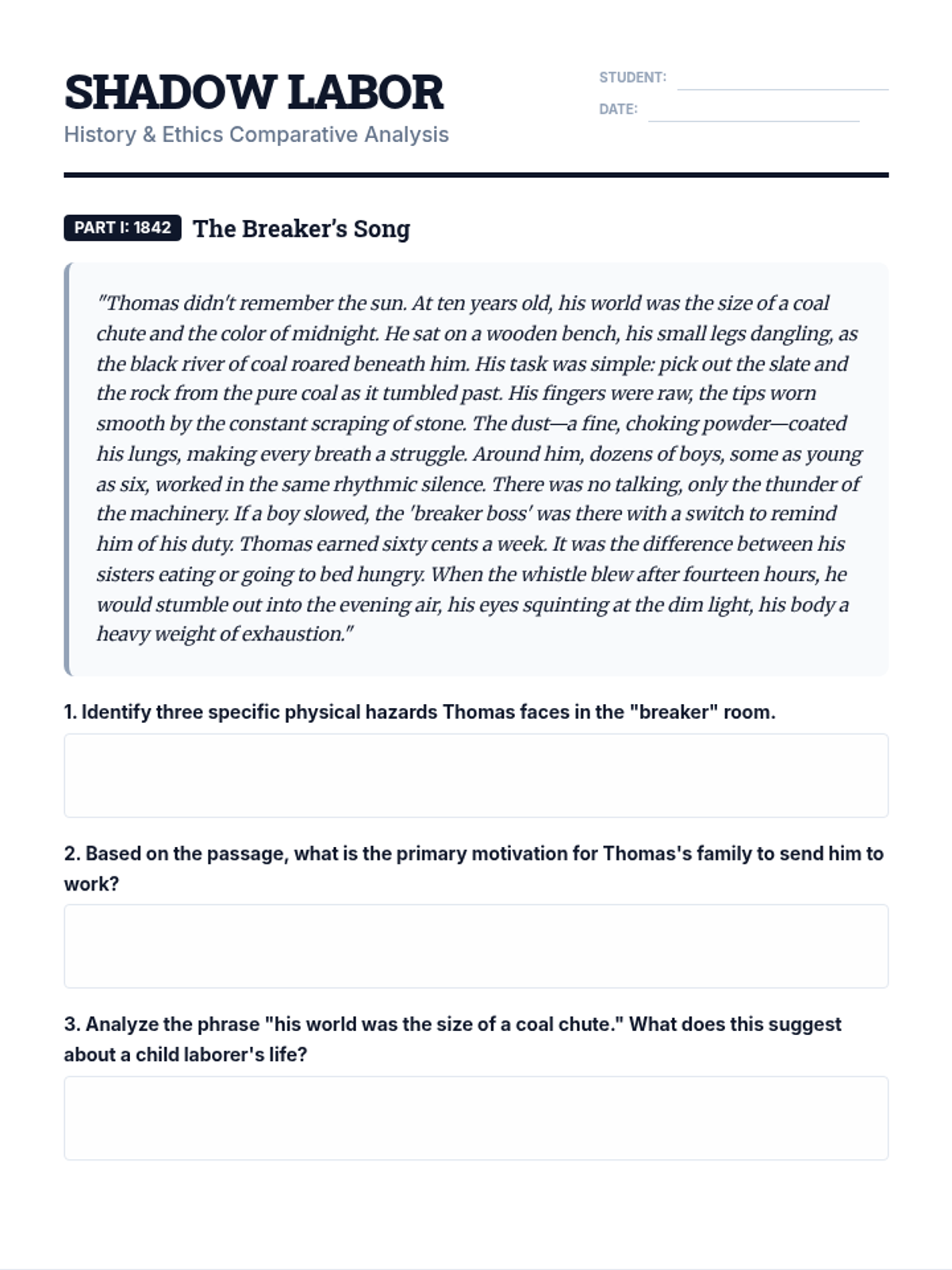
A comprehensive 3-page worksheet featuring two comparative reading passages (historical fiction and modern non-fiction) with comprehension, analysis, and critical thinking questions.
A visually striking slide presentation comparing historical and modern child labor, featuring data, key drivers, and comparison tables for 9th-grade students.
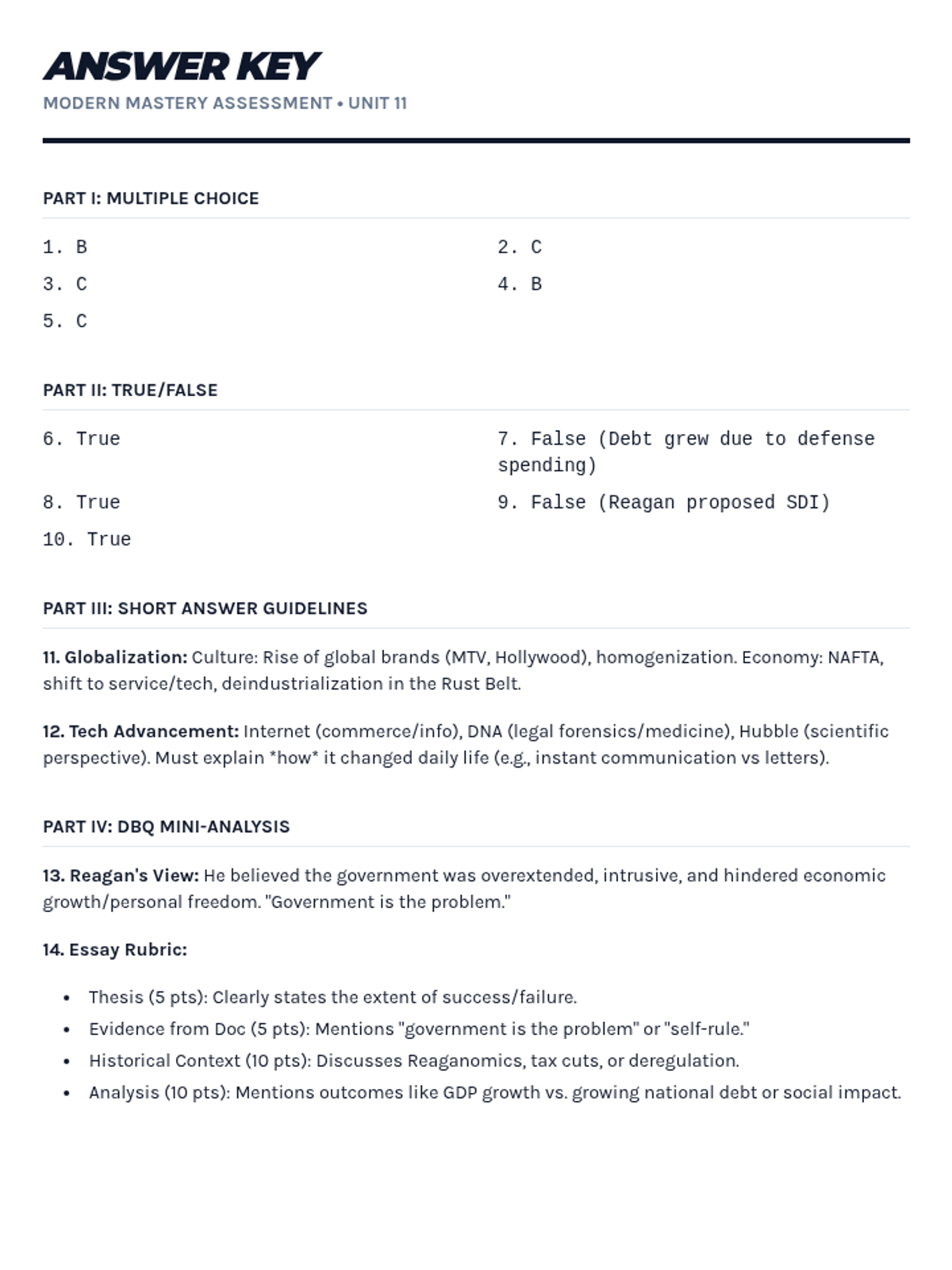
An answer key and grading rubric for the Unit 11 Modern Mastery Assessment.
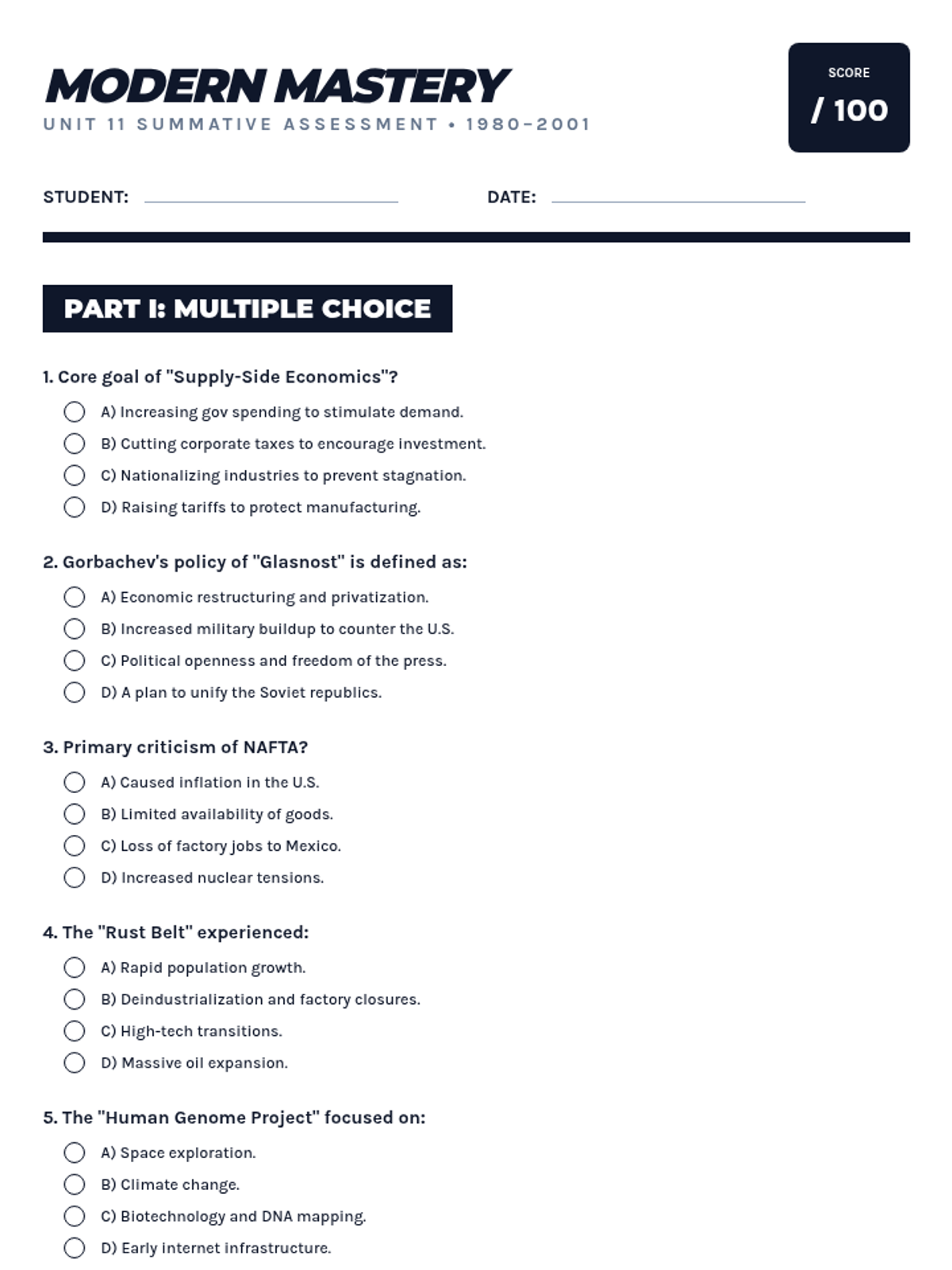
A summative assessment for Unit 11, including multiple-choice, true/false, short answer, and a mini-DBQ focused on the Reagan Revolution and the shifts of the 1980s and 90s.
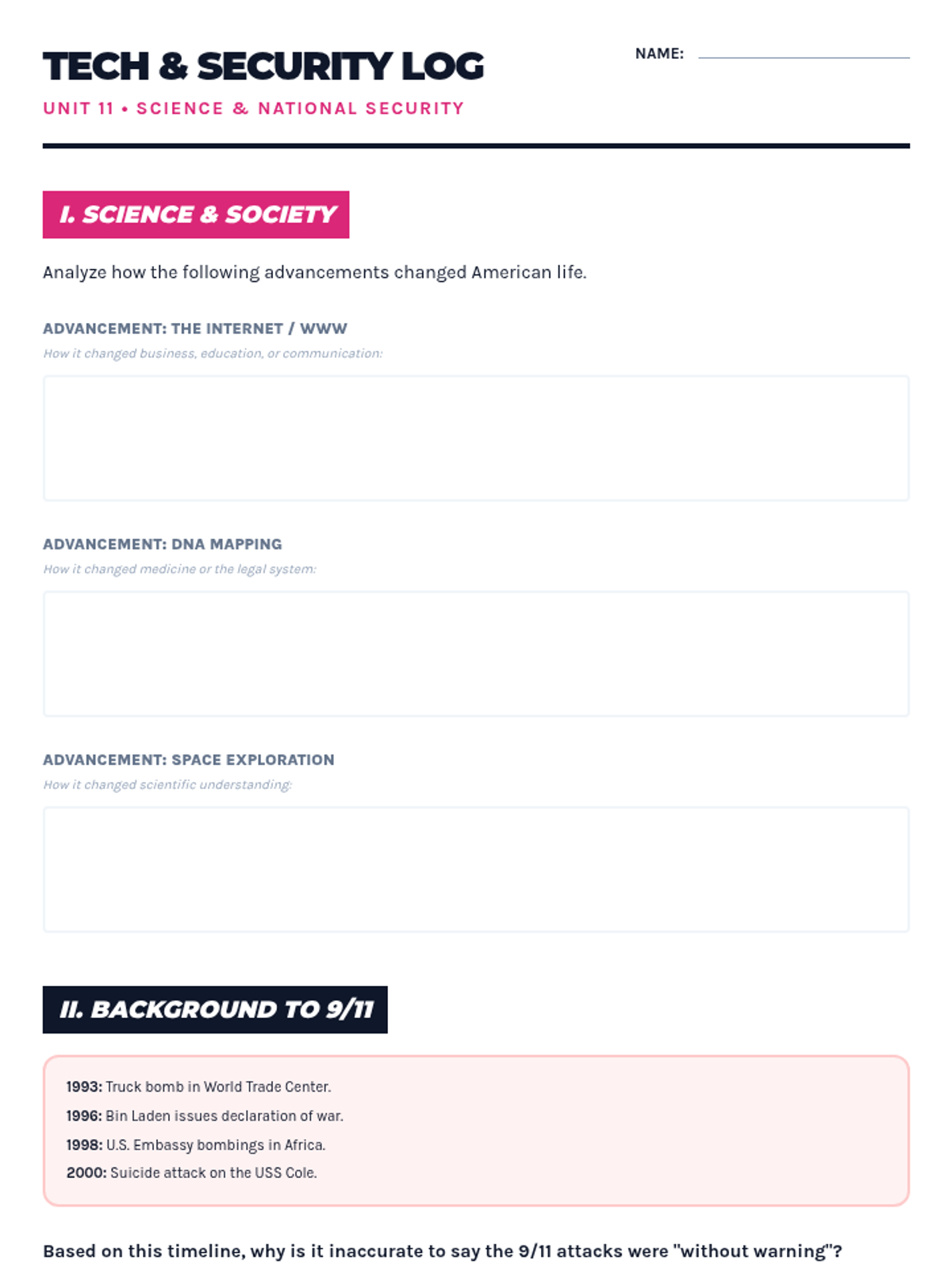
A student research and analysis log for tracking technological advancements and the emerging security challenges of the late 20th century.
Expanded presentation slides covering the Internet revolution, the Human Genome Project, NASA's 90s milestones, energy policy/climate change, and the emerging threat of Al-Qaeda leading to 9/11.
Expanded introductory slides for Lesson 1 covering the full range of landforms and bodies of water with a global focus, featuring comparative visuals and global examples like the Andes and Italy.
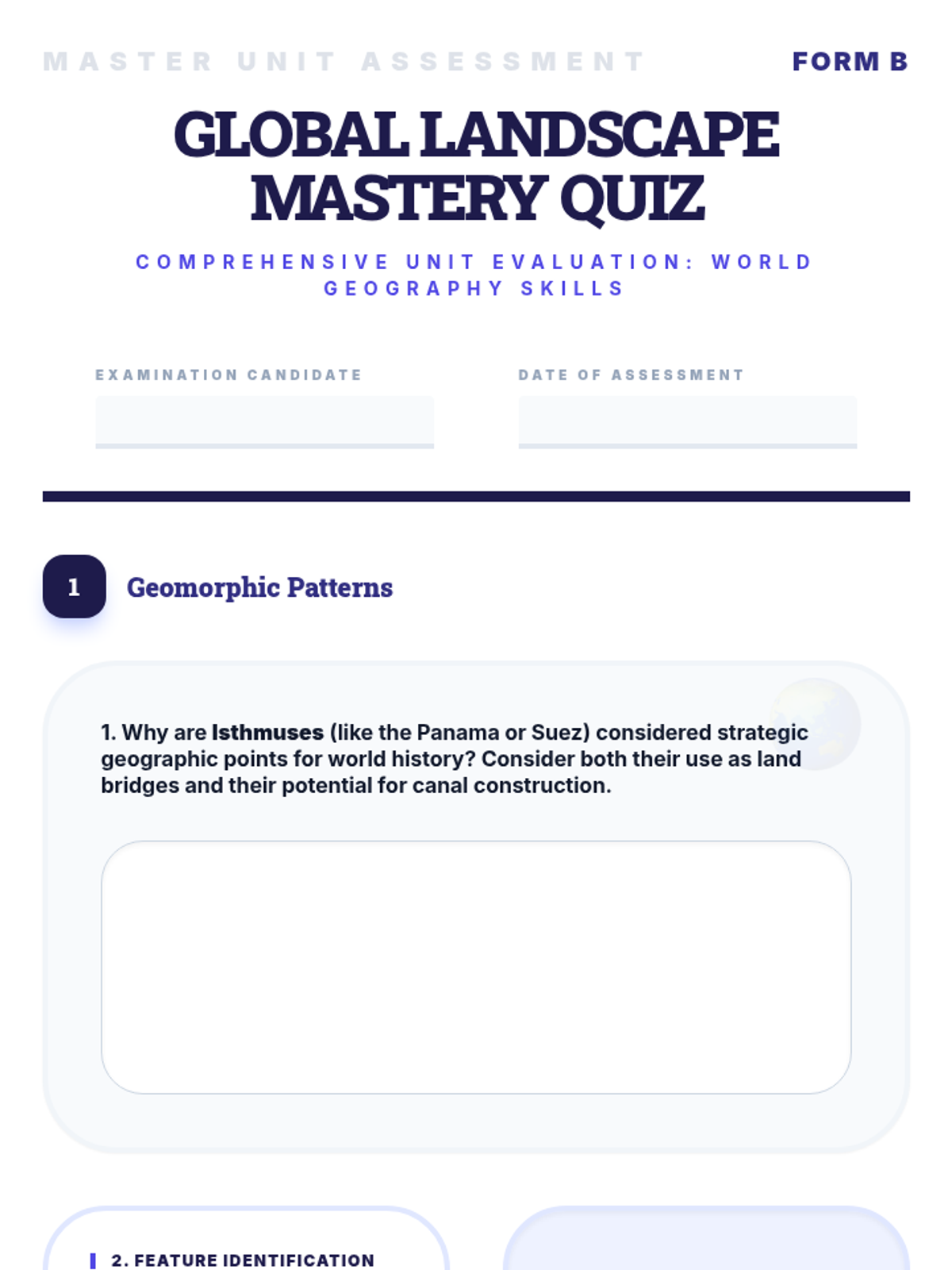
Global-focused final mastery quiz (Form B) featuring questions on isthmuses, world elevation averages, and regional economic advantages. Part of a secondary assessment set.
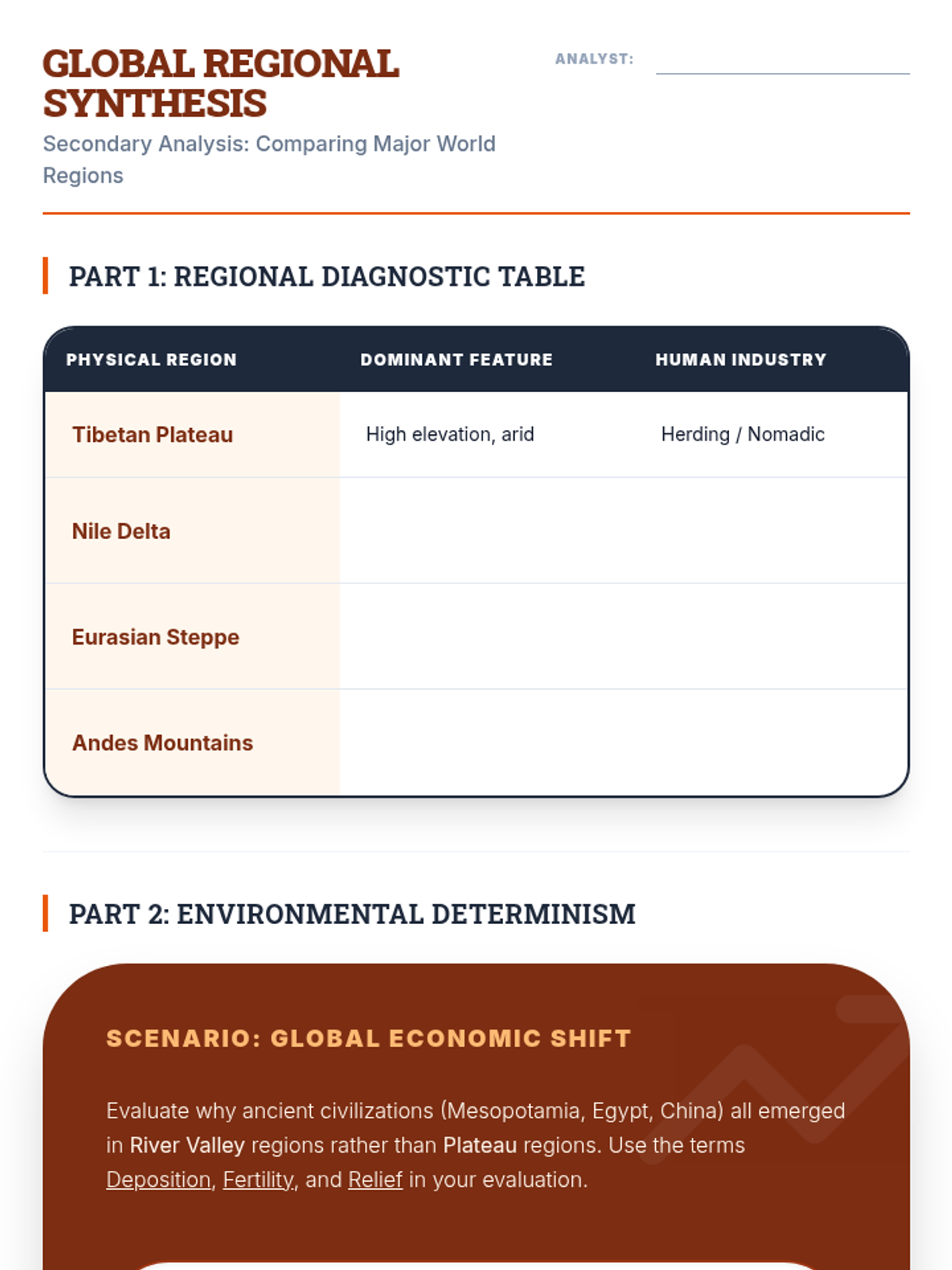
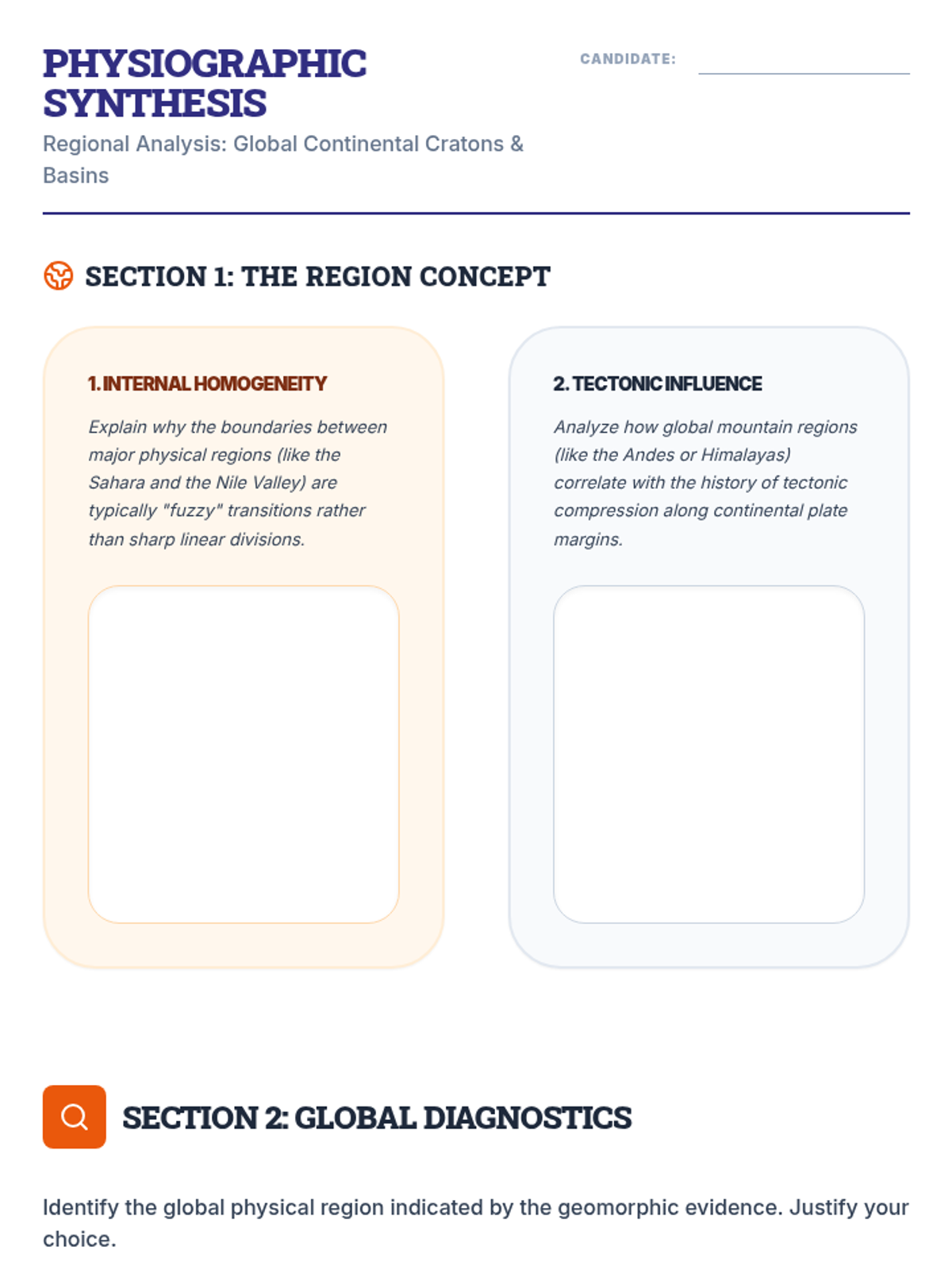
Secondary worksheet for Lesson 4 focusing on global regional diagnostics and the socio-economic analysis of river valleys vs. plateaus.
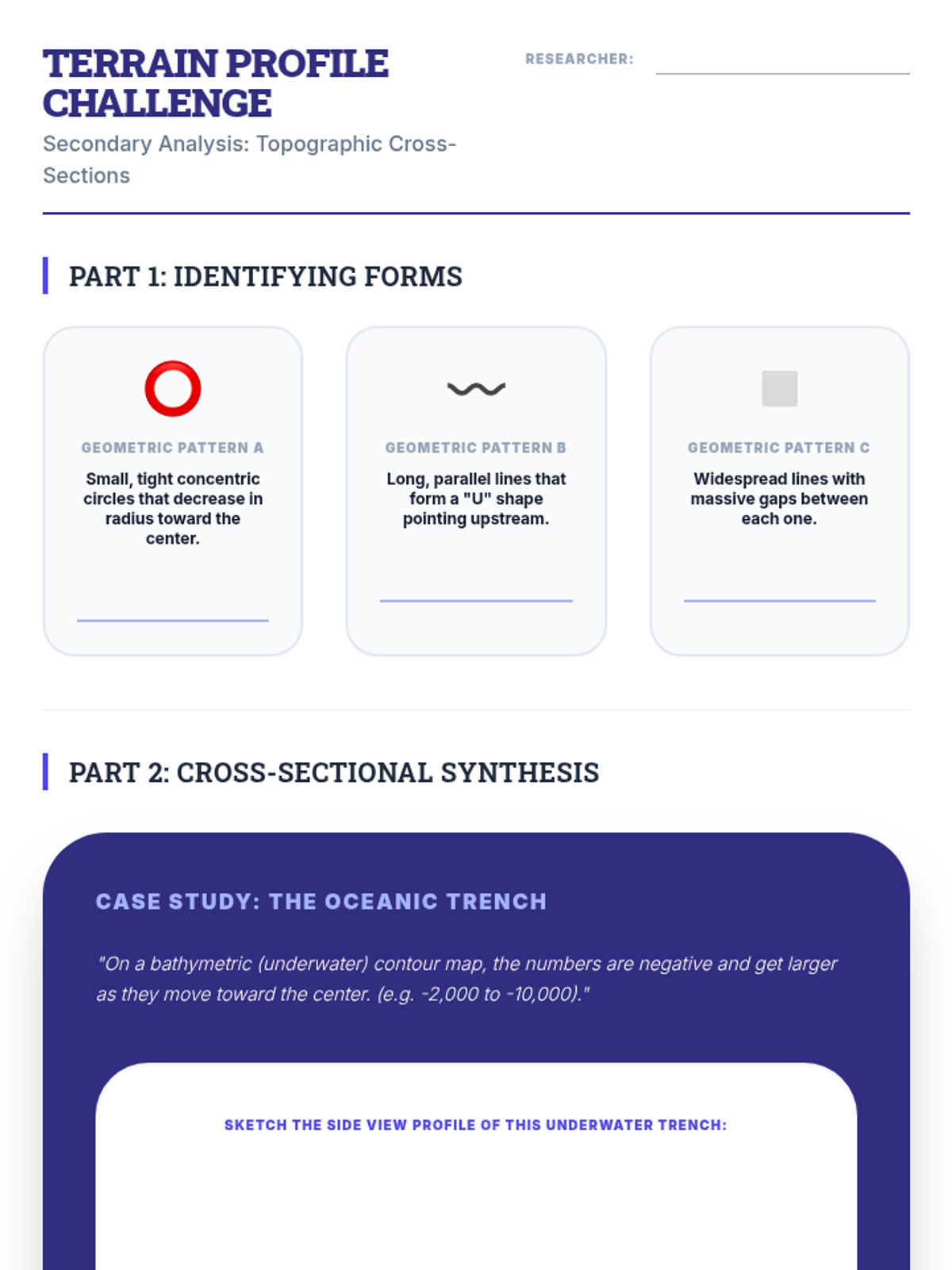
Secondary worksheet for Lesson 3 focusing on topographic pattern recognition and the construction of vertical profiles from contour data.
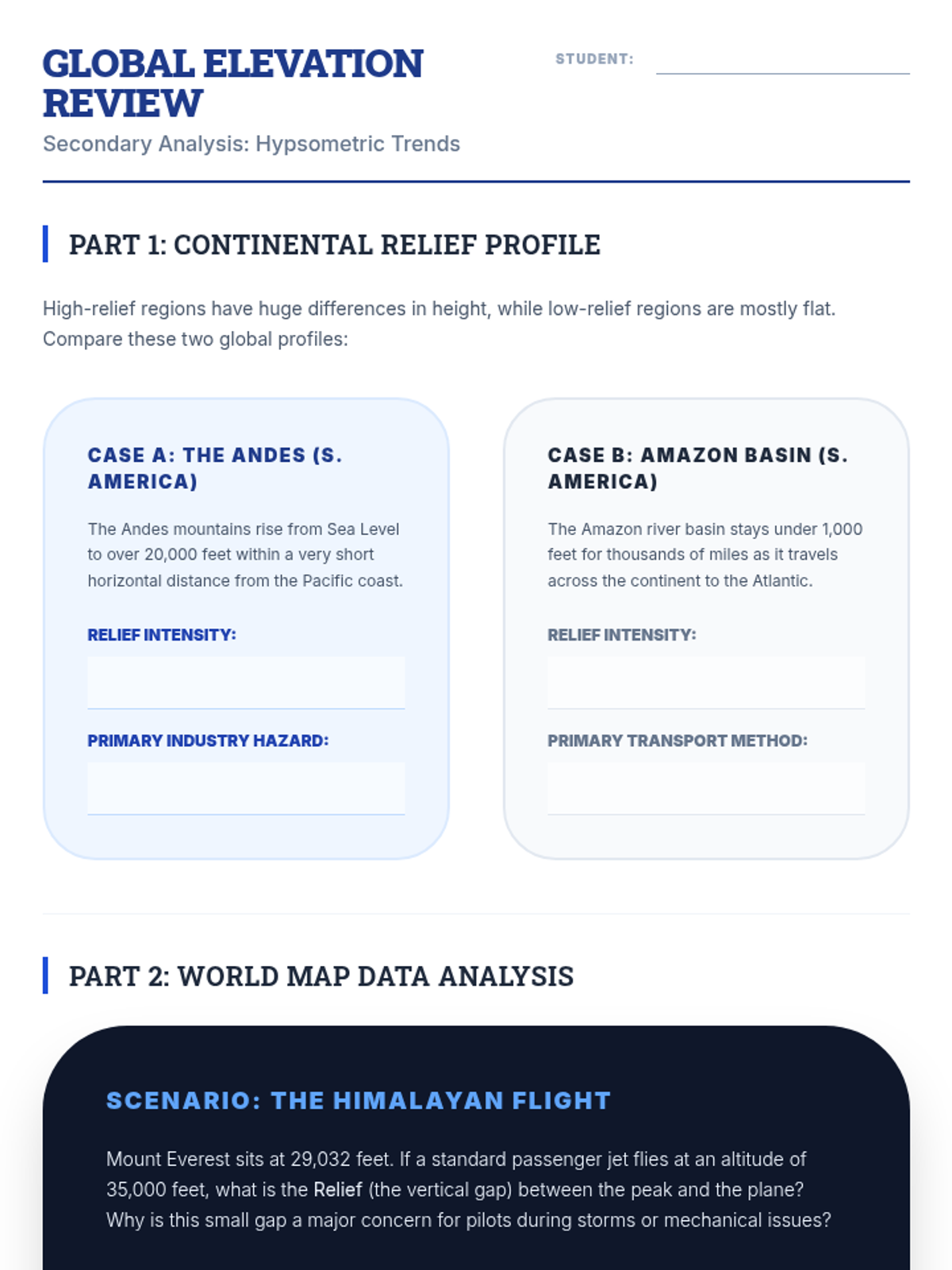
Secondary worksheet for Lesson 2 focusing on global relief comparisons, continental elevation profiles, and mathematical synthesis of flight data relative to world peaks.
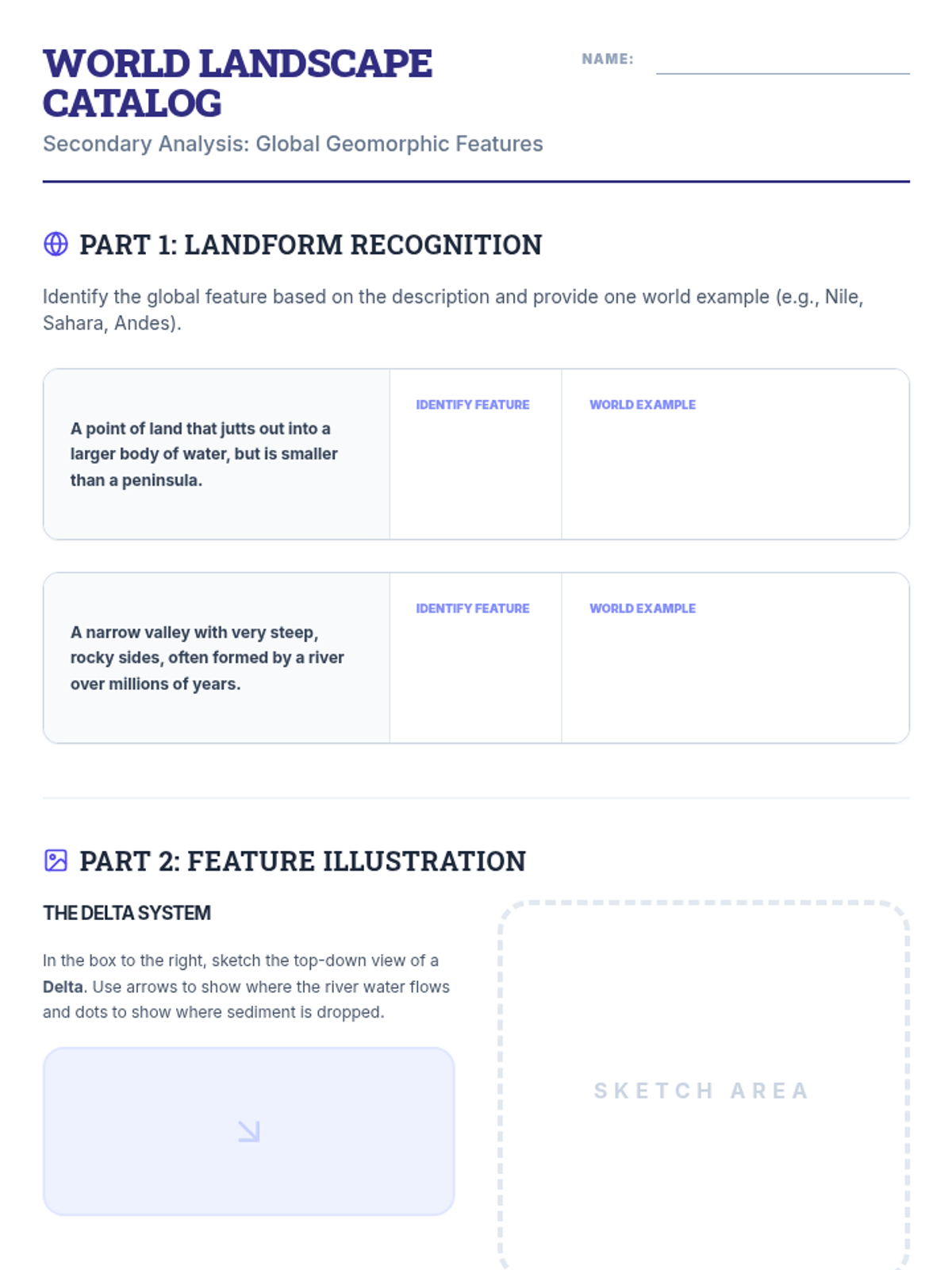
Secondary worksheet for Lesson 1 focusing on global landform identification and visual representation of geomorphic systems.
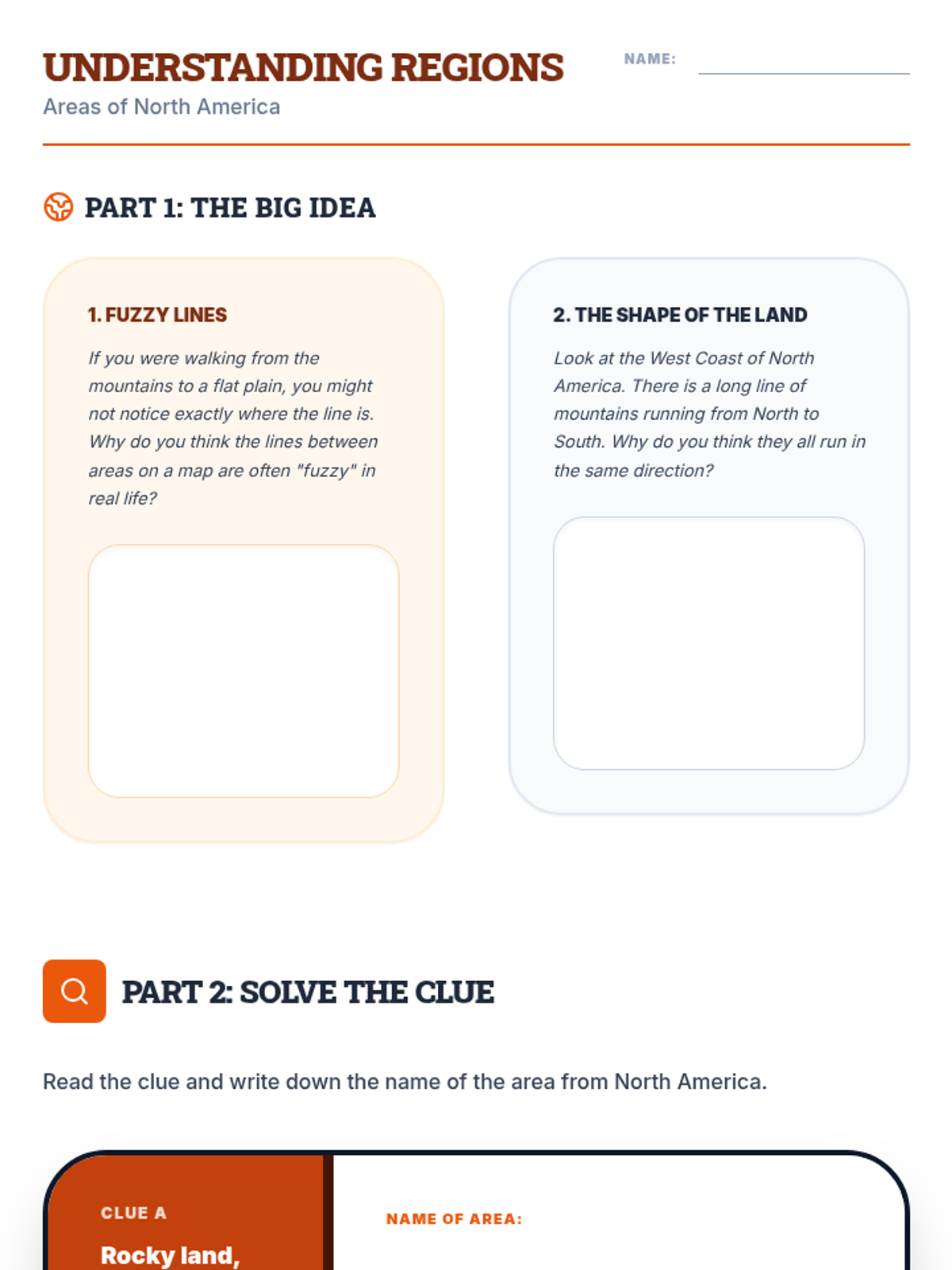
Worksheet for understanding the physical regions of North America and how they affect where people work and live, using simple language.
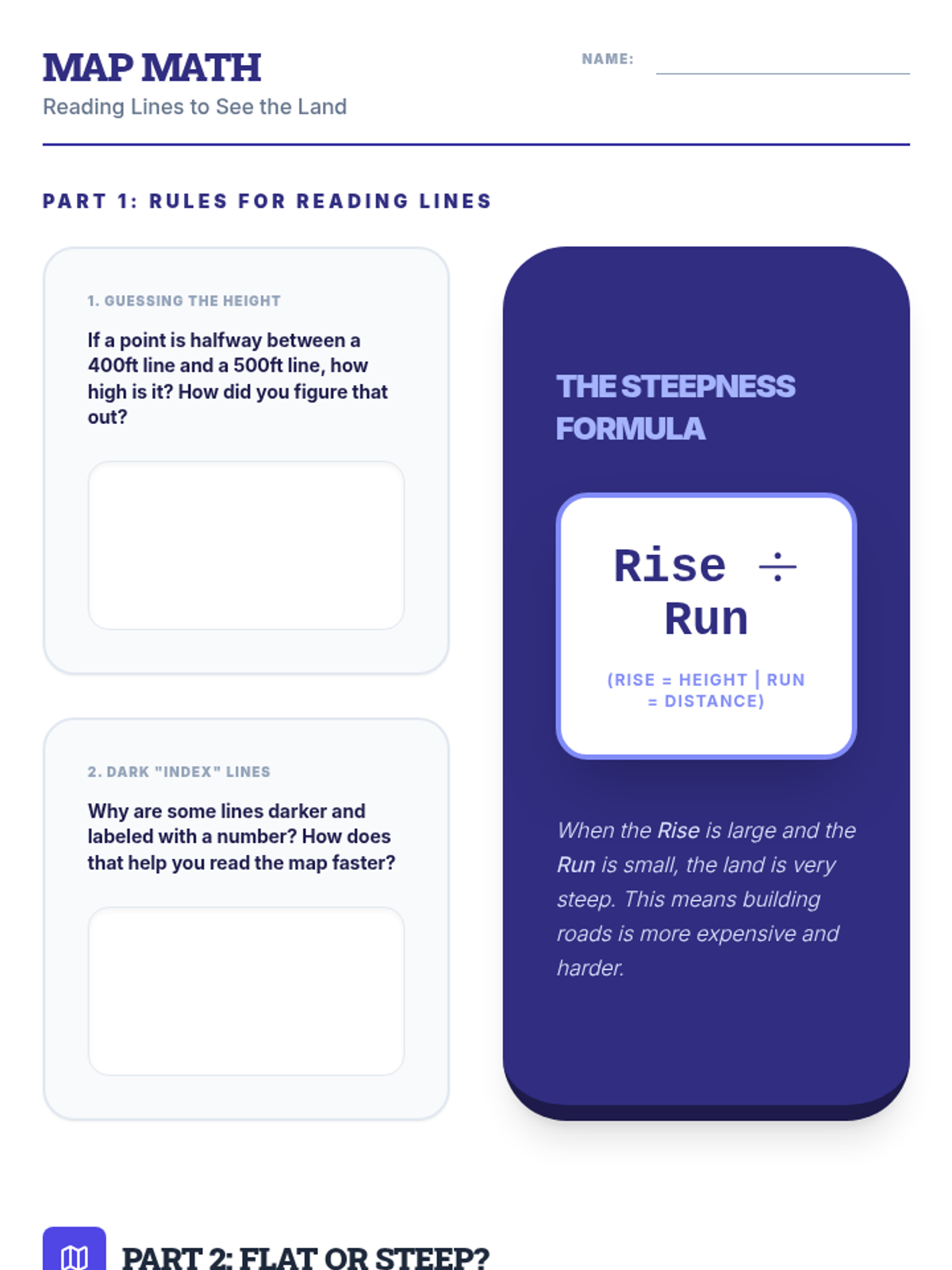
Worksheet for understanding contour lines, intervals, and terrain steepness using simple, easy-to-follow language.
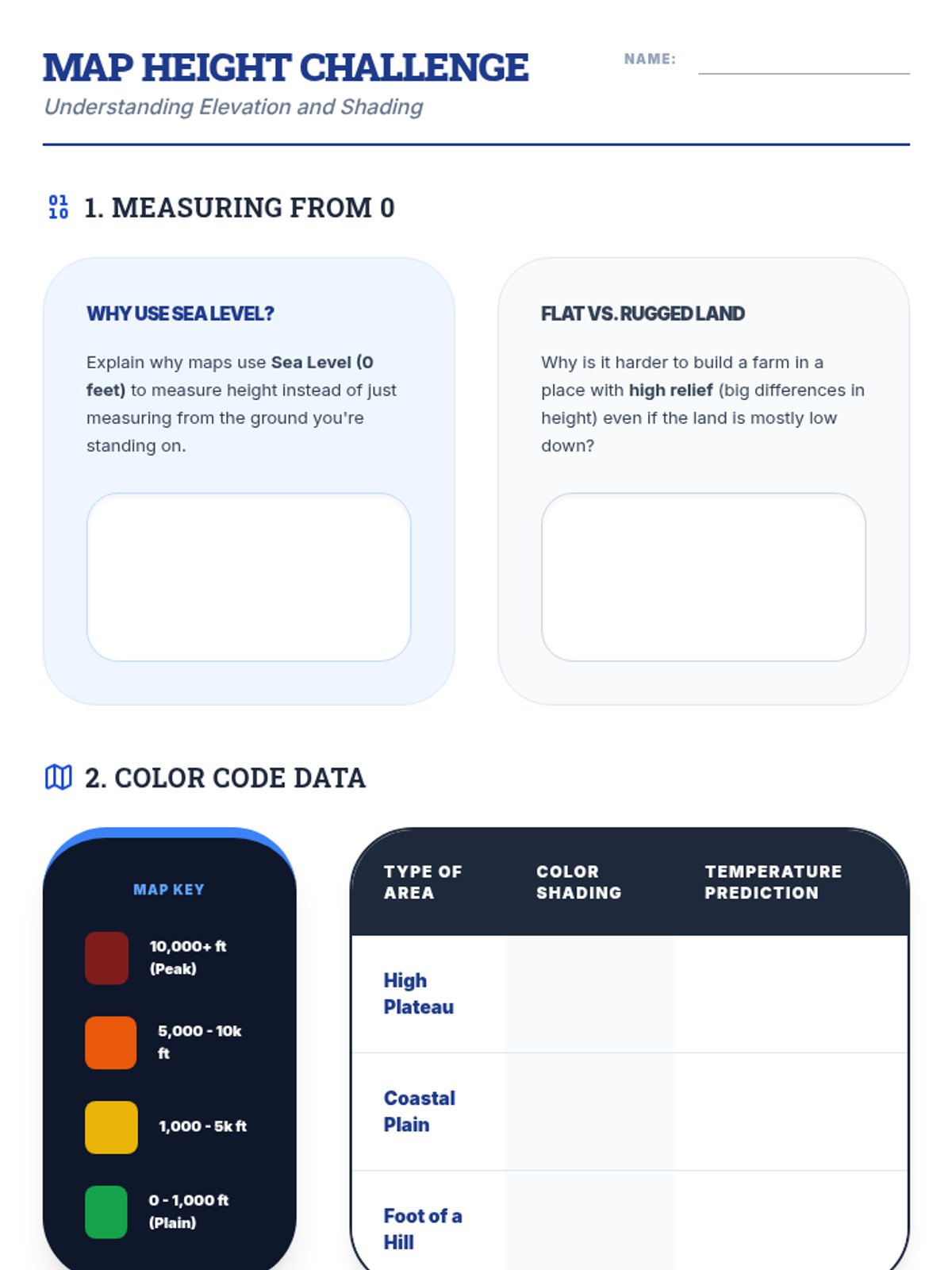
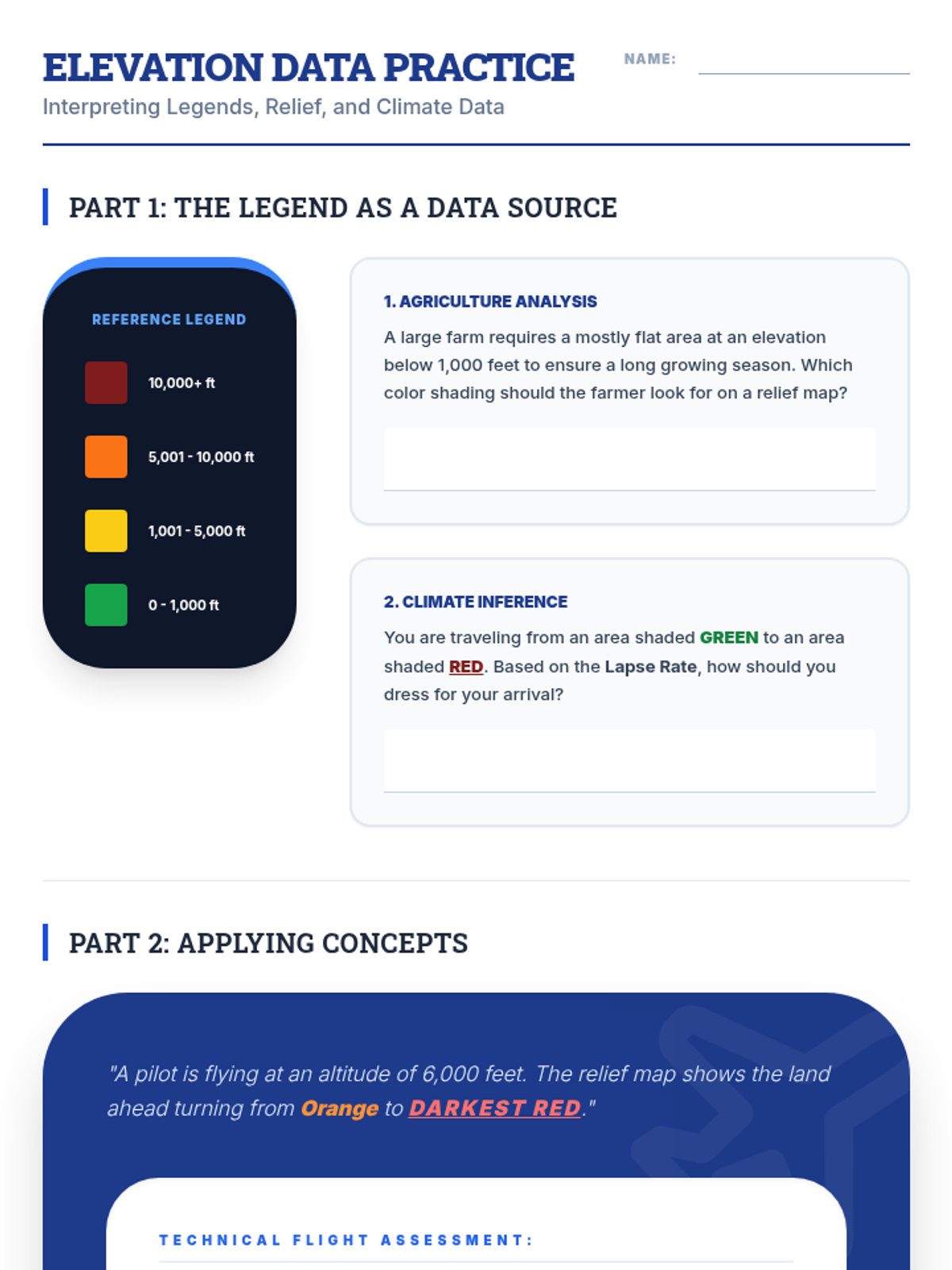
Worksheet for understanding elevation maps, legends, and temperature changes with height, using simple language.
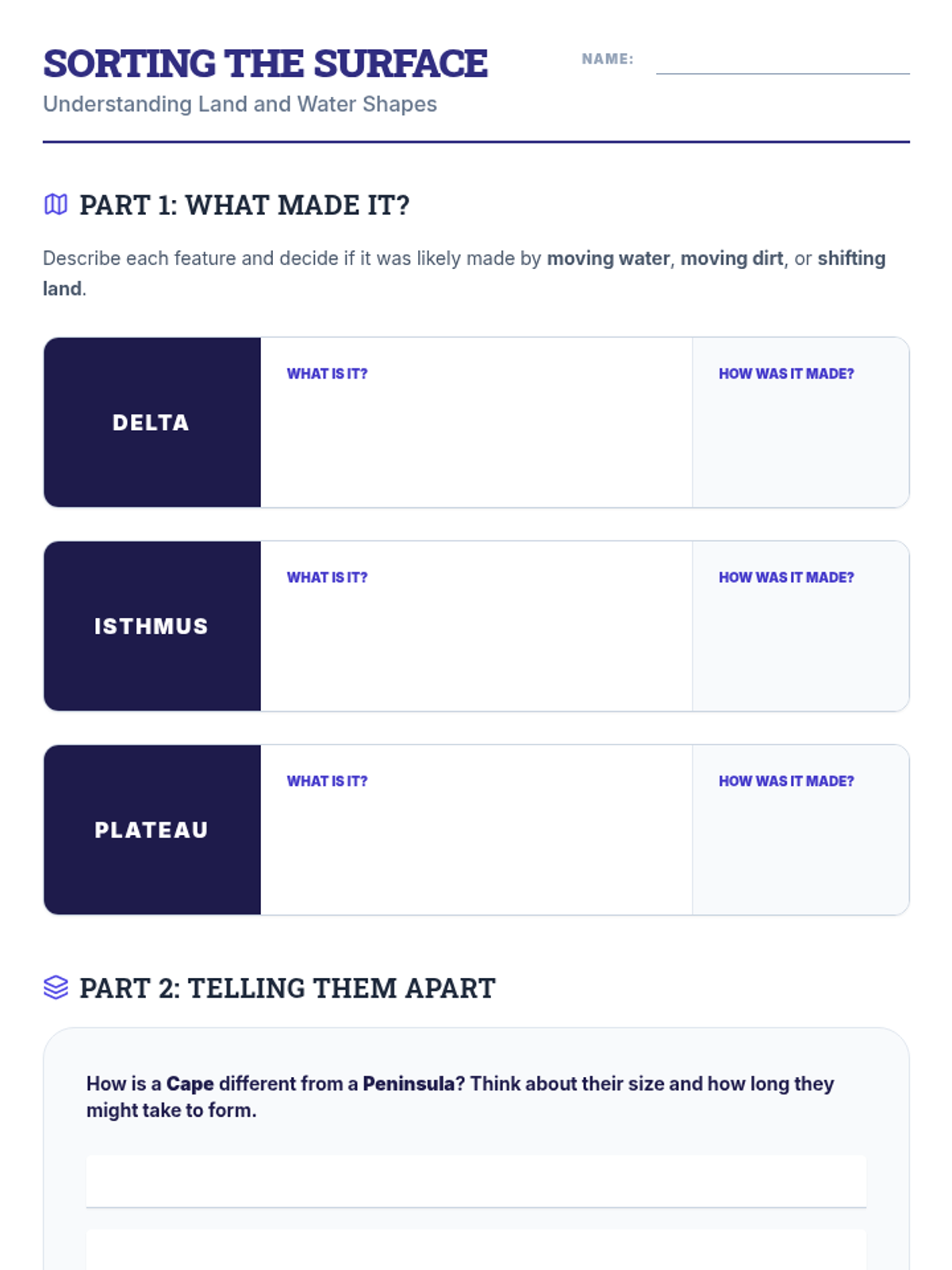
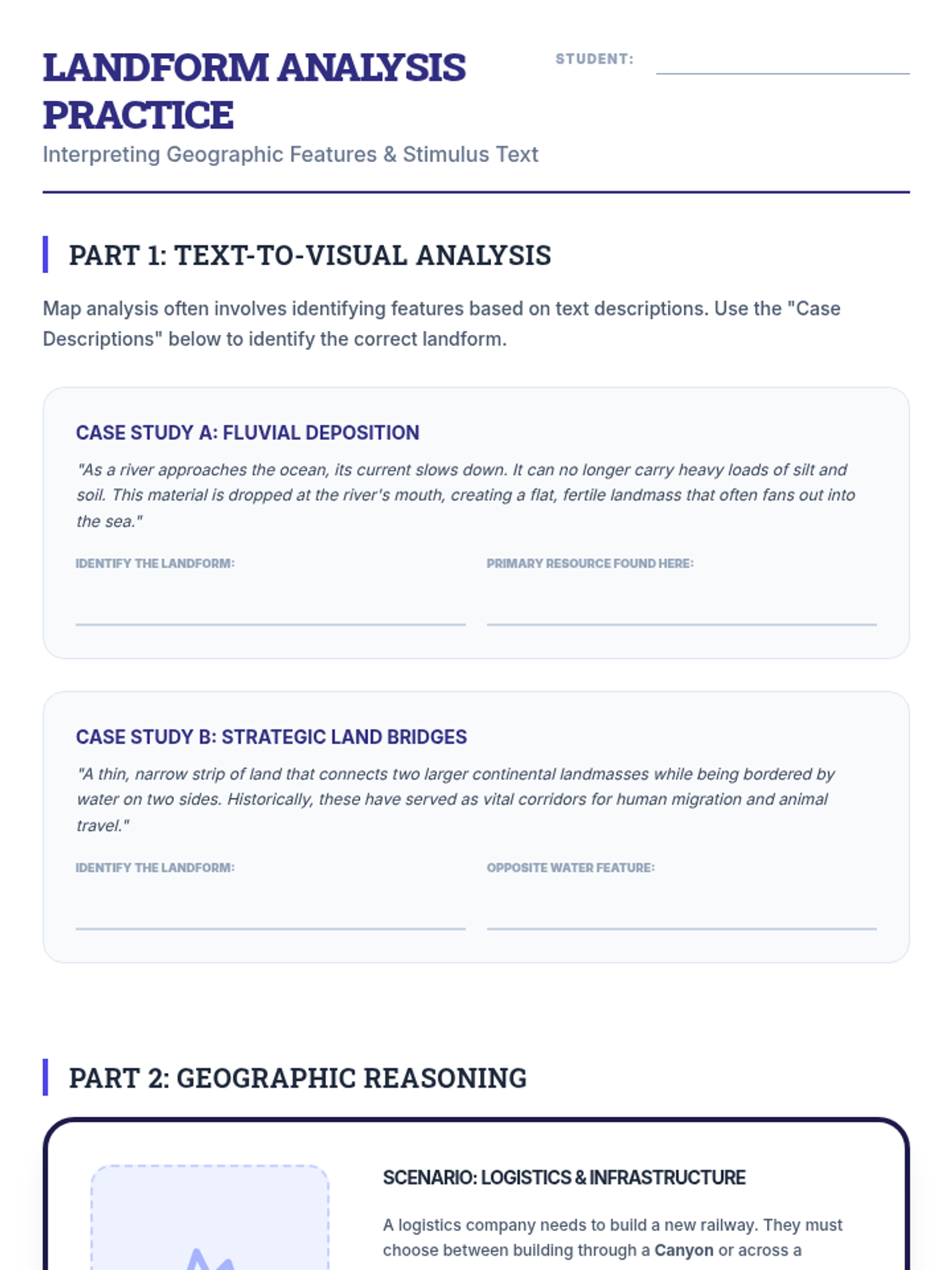
Worksheet focusing on landform shapes and how they affect human life, using clear and accessible language.
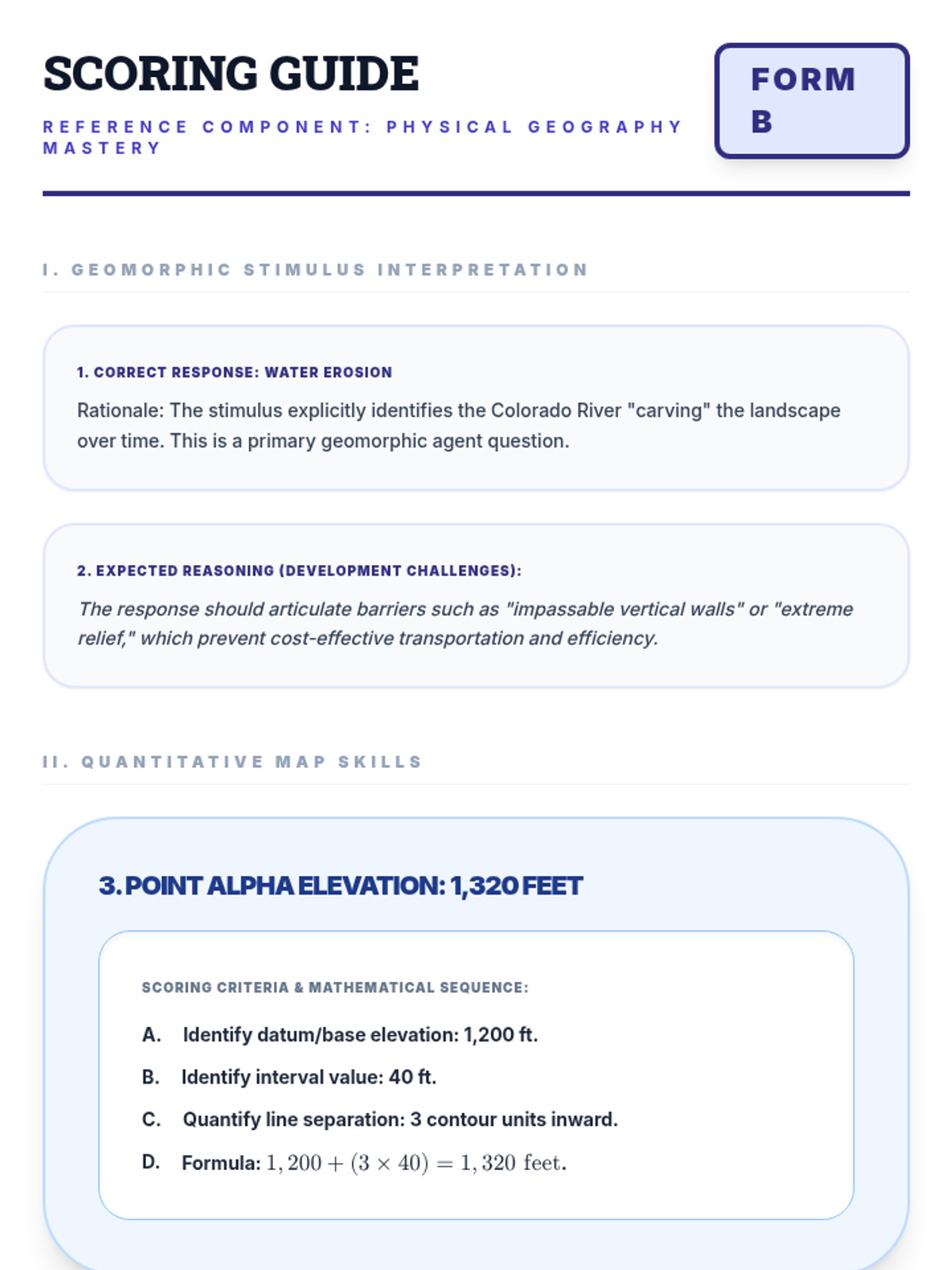
Scoring key for the Mapping Mastery Quiz, providing detailed rationales and evaluation criteria for text interpretation and quantitative map skills. All level labels removed for general use.
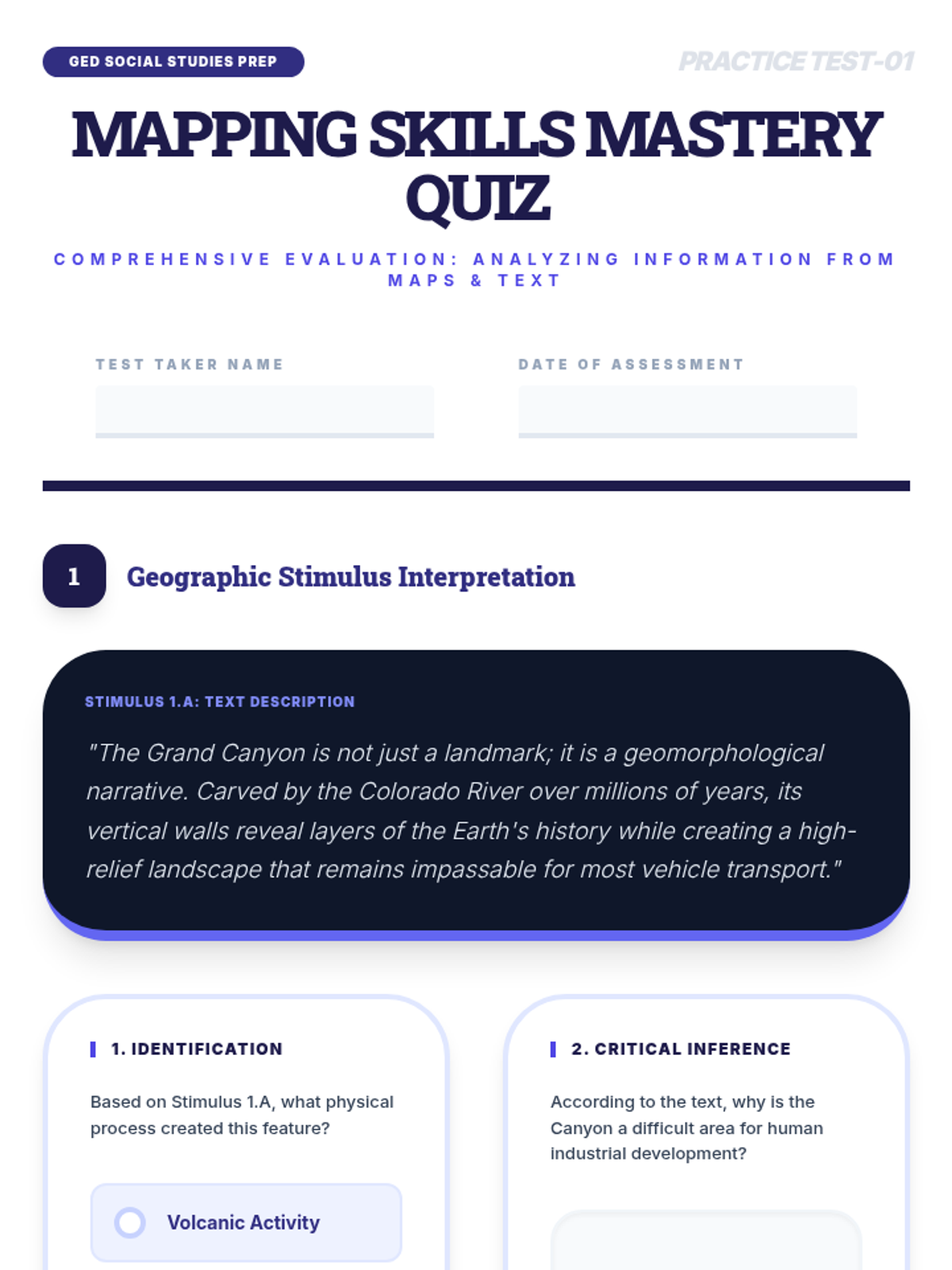
GED-formatted final mastery quiz focusing on interpreting informational text stimulus, quantitative contour calculations, and synthesizing geographic data for economic analysis.
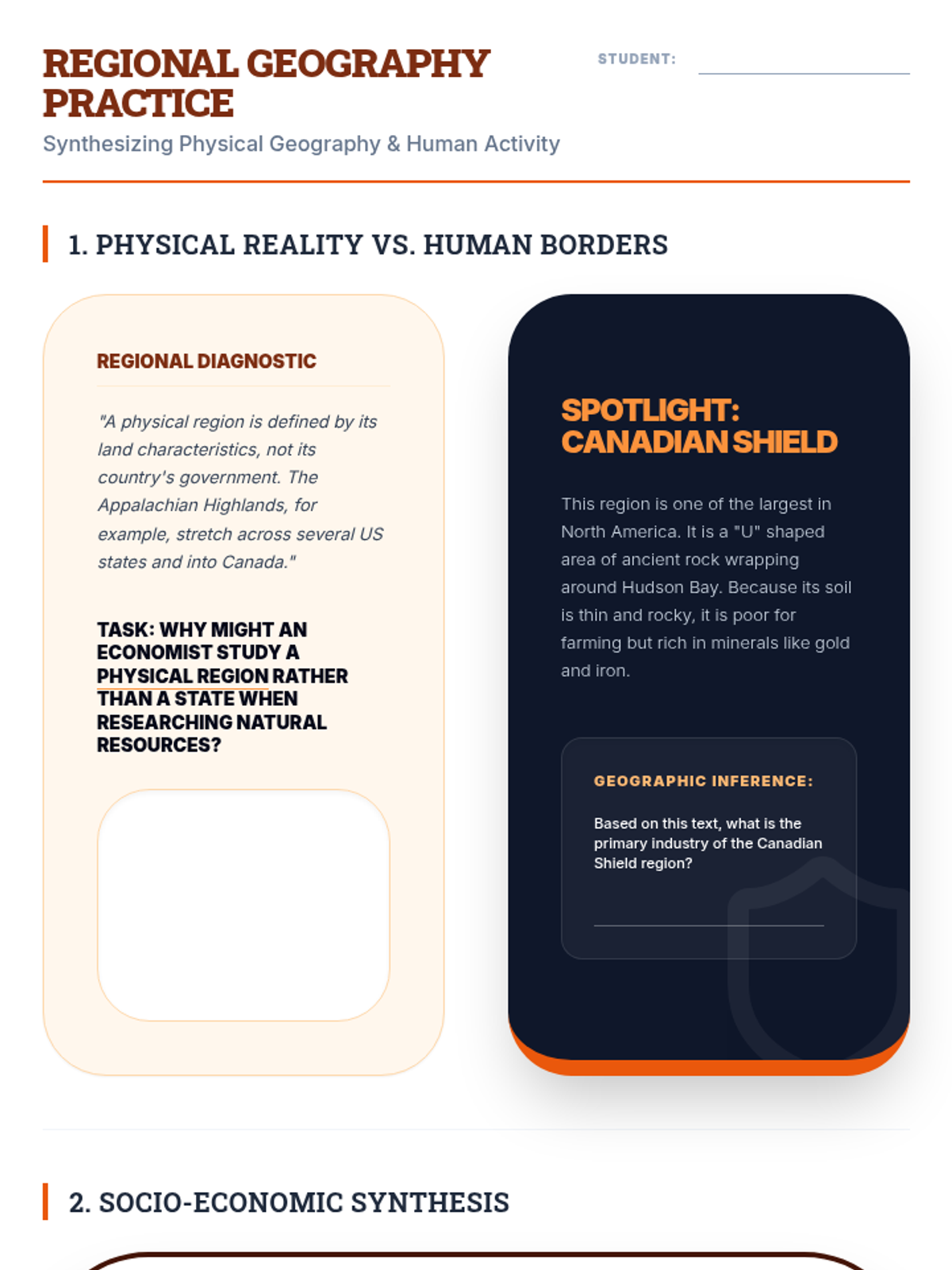
Worksheet for physiographic regions, focusing on interpreting regional text descriptions and analyzing how physical terrain dictates regional economies and industry. Level labels removed for general use.
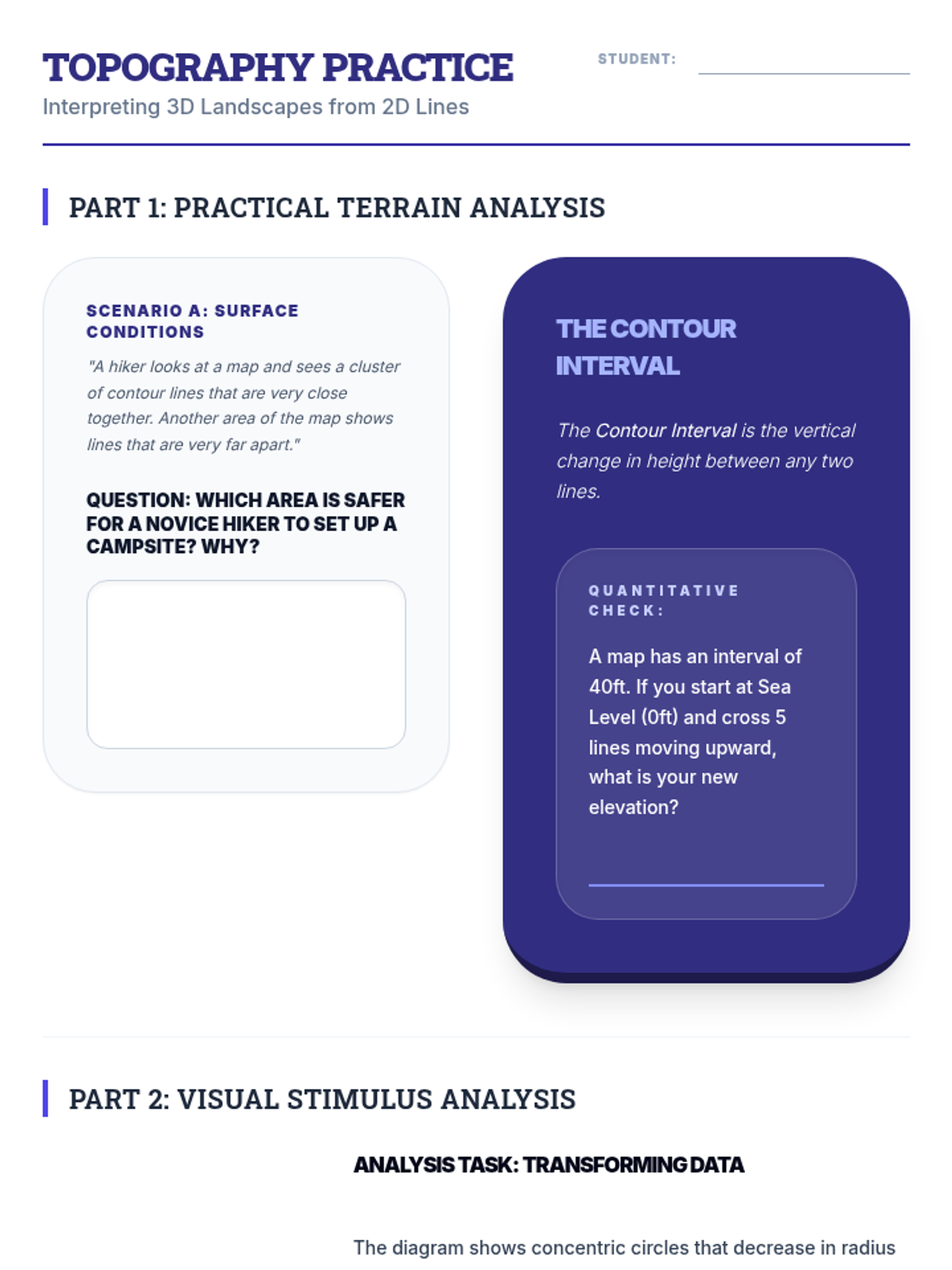
Worksheet for topographic maps, focusing on practical terrain application, contour interval math, and visualizing 3D landforms from 2D diagrams. Level labels removed for general use.
Worksheet for elevation maps, focusing on using legends to make inferences about agricultural suitability, climate shifts, and aviation safety. Level labels removed for general use.
Worksheet focusing on identifying landforms from text-based stimulus and applying geographic reasoning to transportation and resource scenarios. Level labels removed for general use.
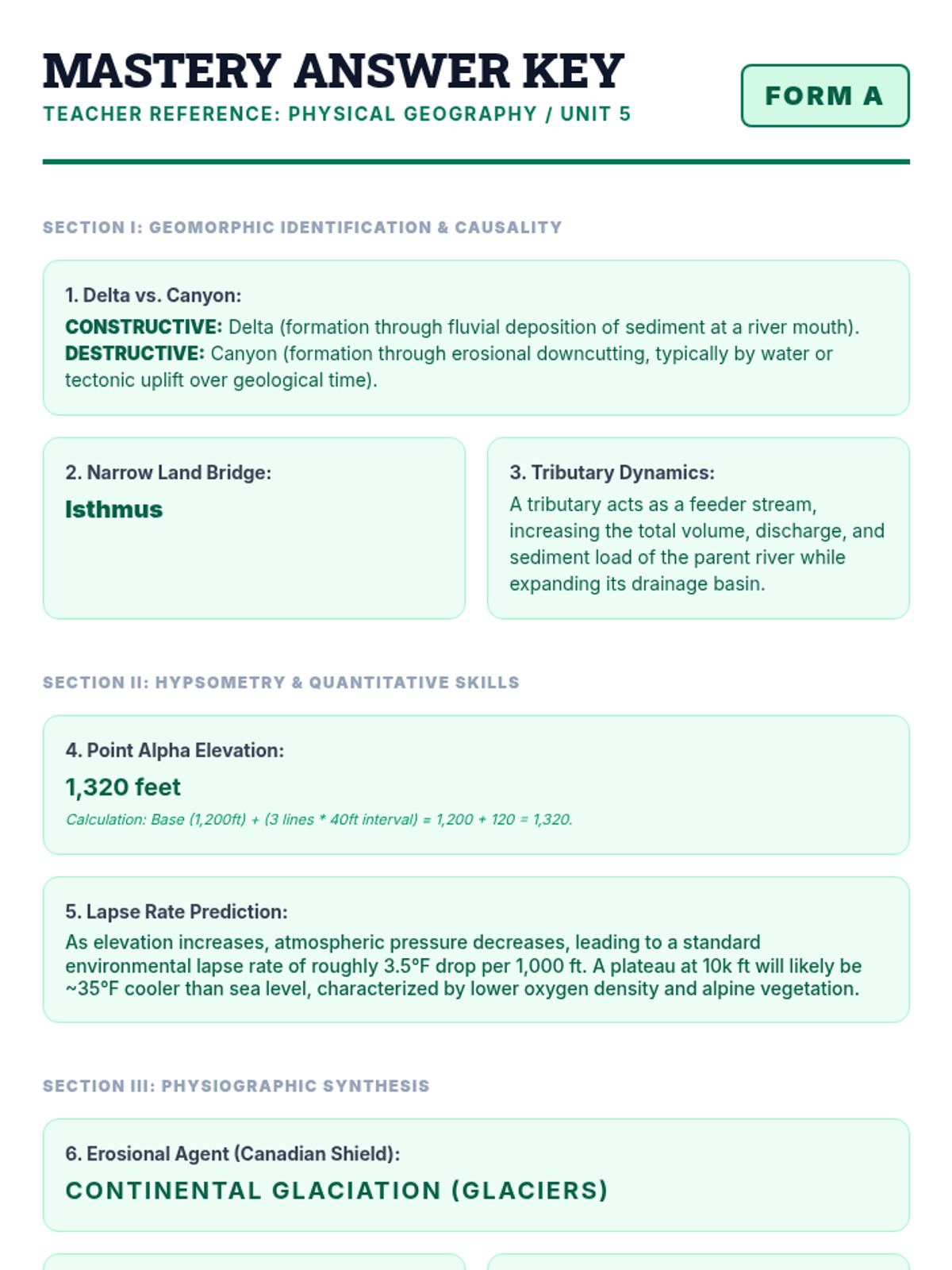
Teacher-facing answer key for the Mapping Mastery Quiz, providing technical geological explanations and mathematical solutions for high-school level analysis. All level labels removed for general use.
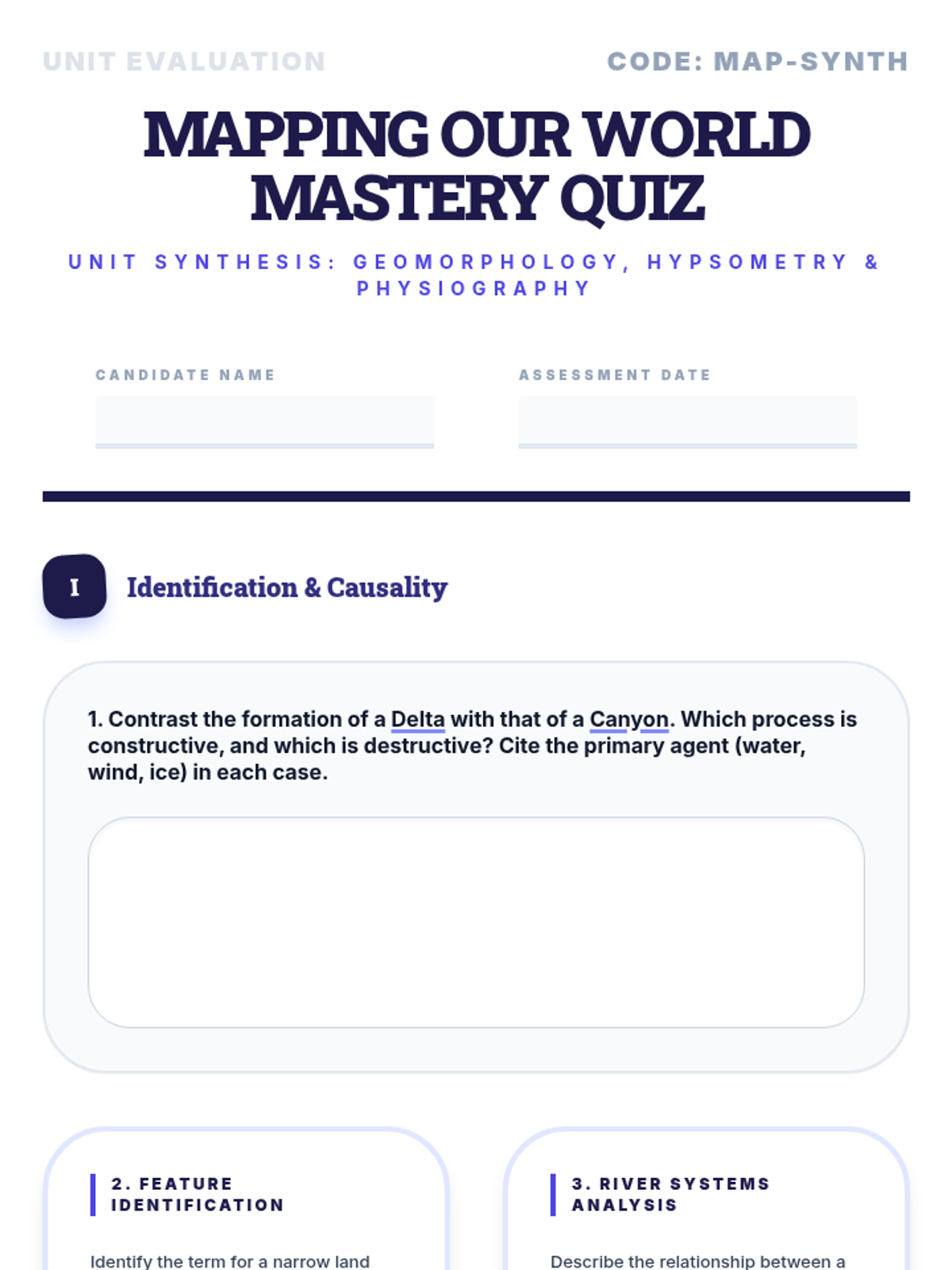
Mastery quiz covering landforms, elevation, and North American regions. All level labels removed for a general assessment experience.
High-school level worksheet for Lesson 4 focusing on physiographic analysis, tectonic influences on regional formation, and the synthesis of physical geography with economic industrialization patterns. Fixed page breaks and contrast.
Exploration of global physical regions, their characteristics, and their impact on human development. Updated to a world-wide focus with visual context.