Geometric classification, measurement of area and volume, and the study of transformations and rigid motions. Builds toward complex proofs, trigonometry for general triangles, and the algebraic representation of conic sections.
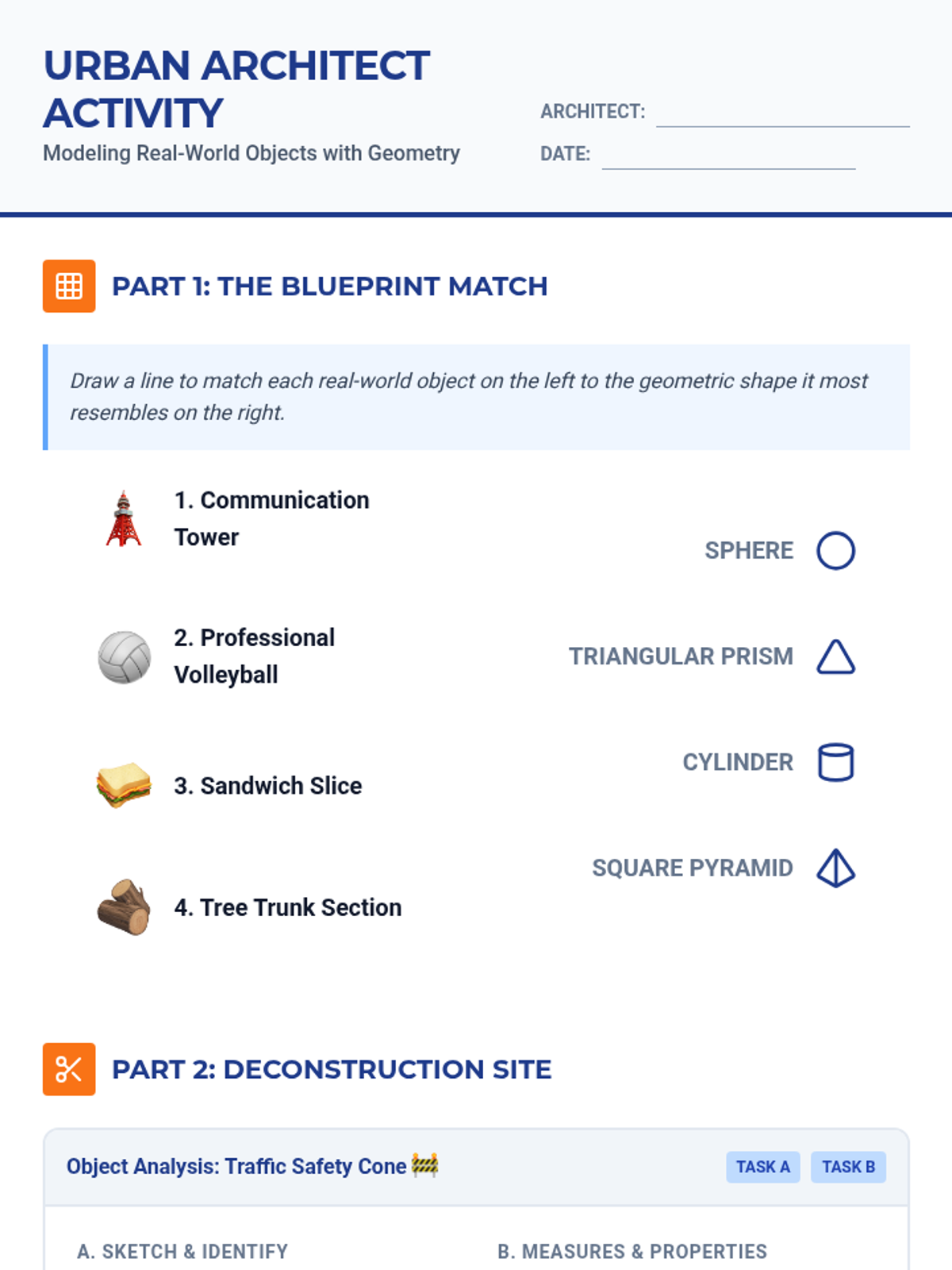
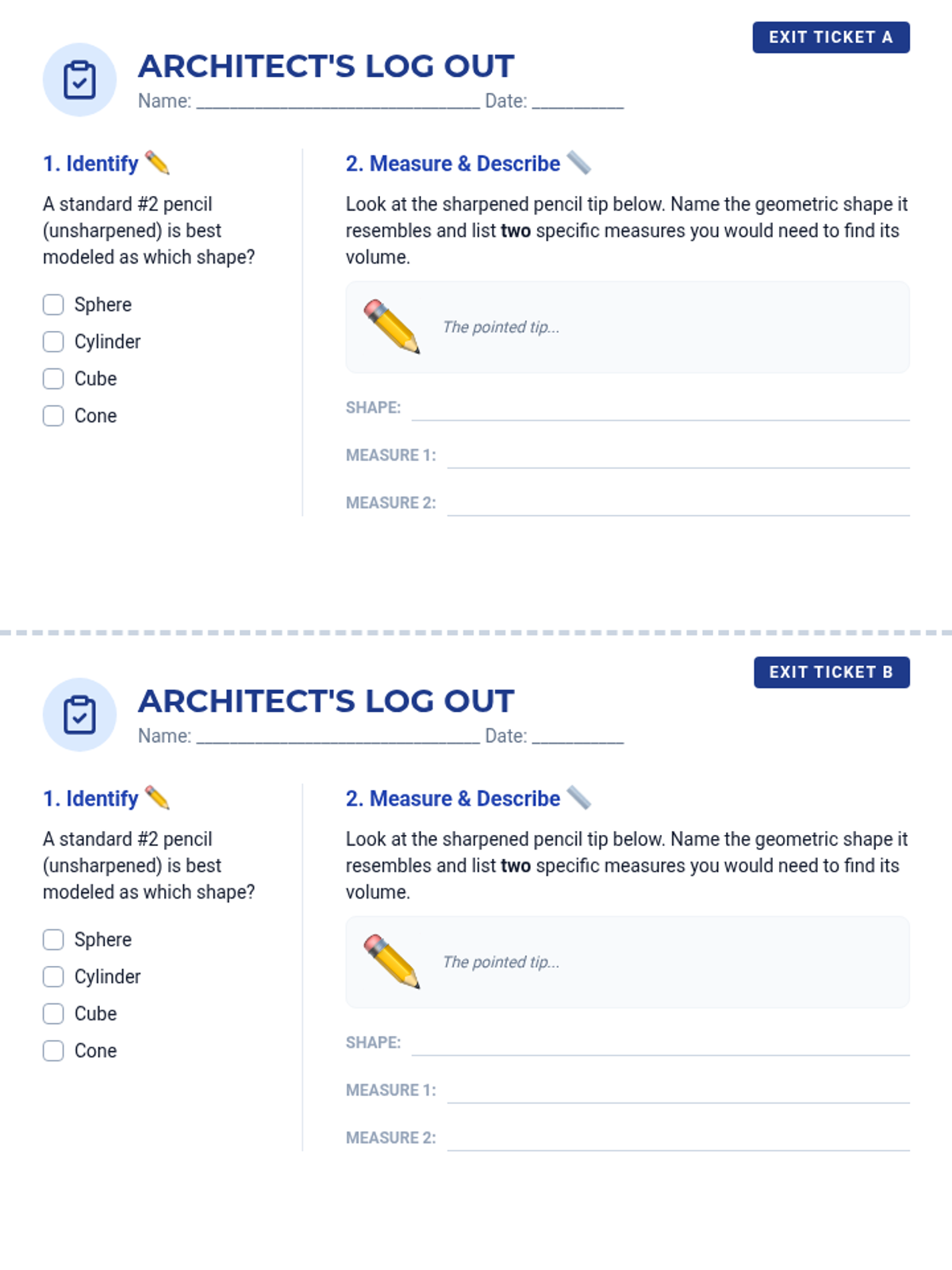
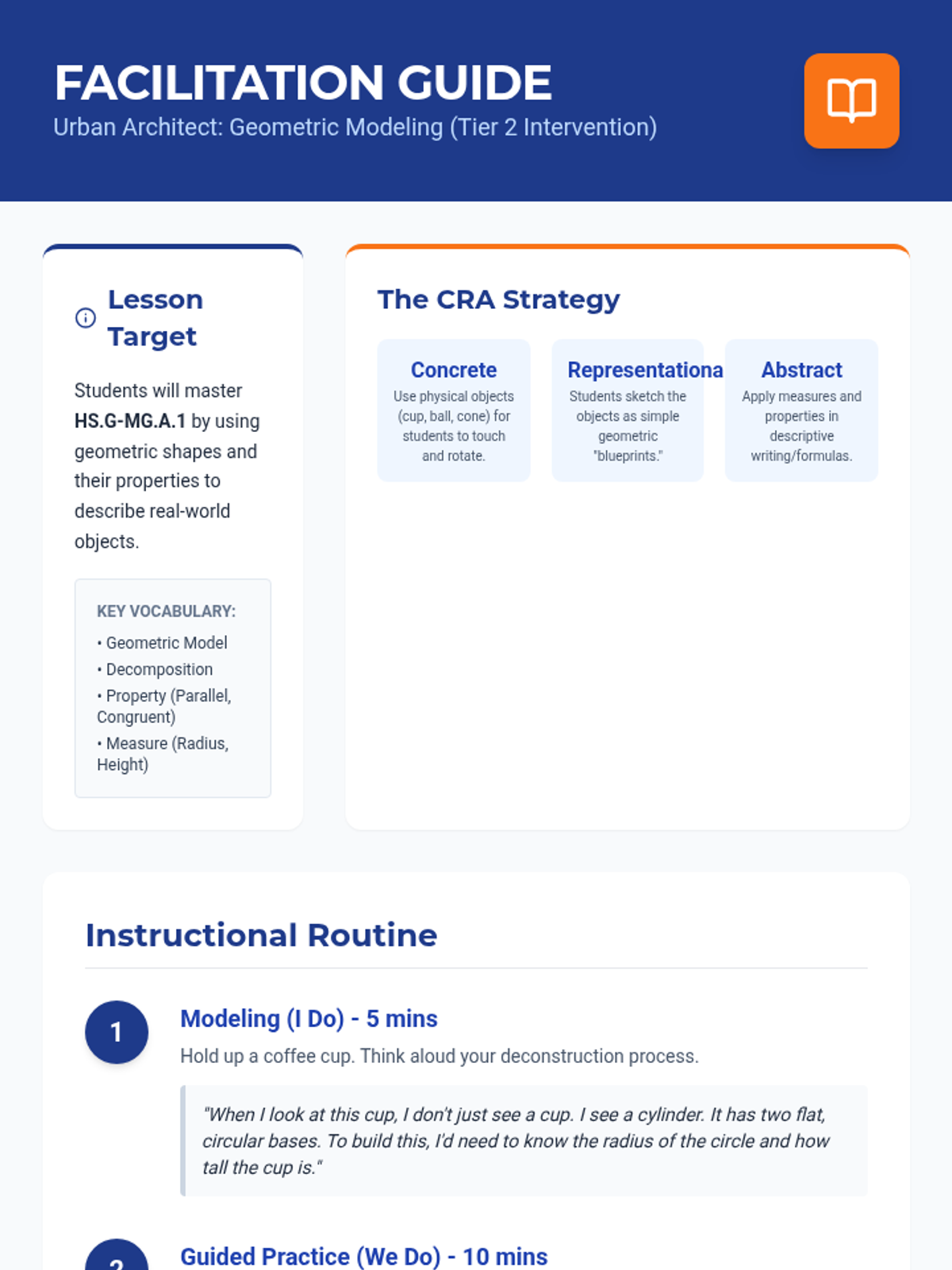
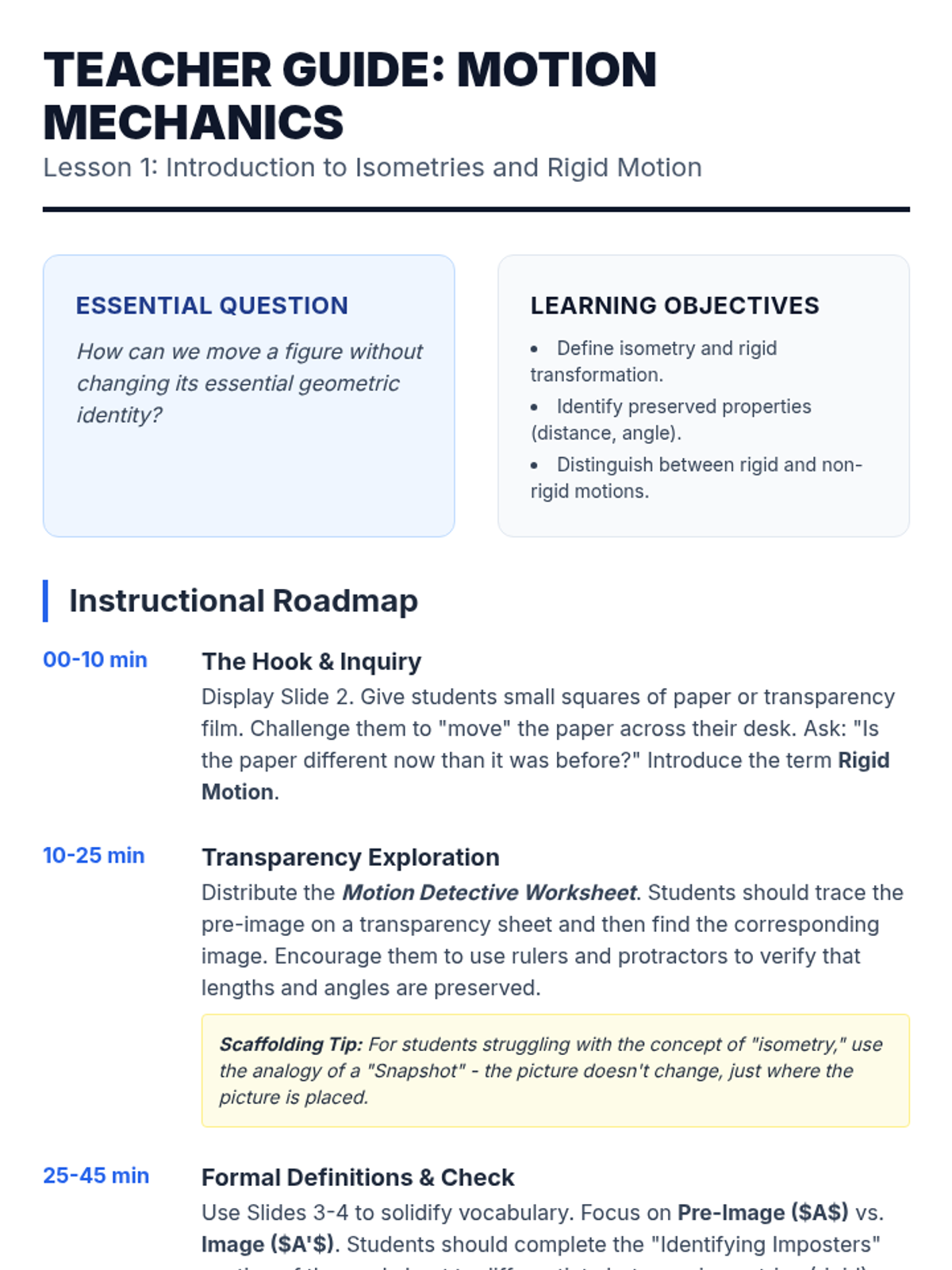
A Tier 2 intervention sequence focused on modeling real-world objects using geometric shapes, measures, and properties. Designed for small group instruction to support students in mastering Colorado High School Geometry standard HS.G-MG.A.1.
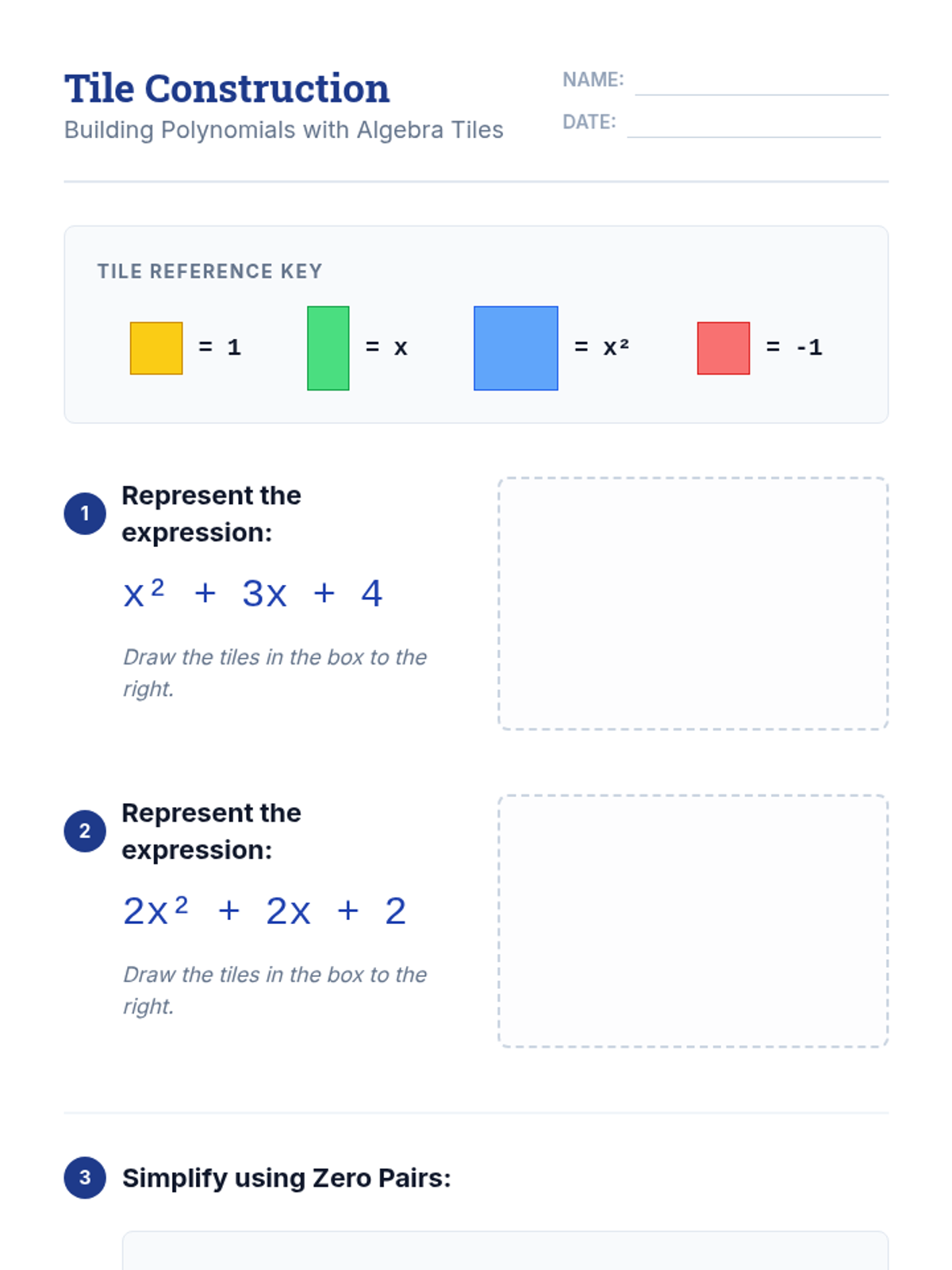
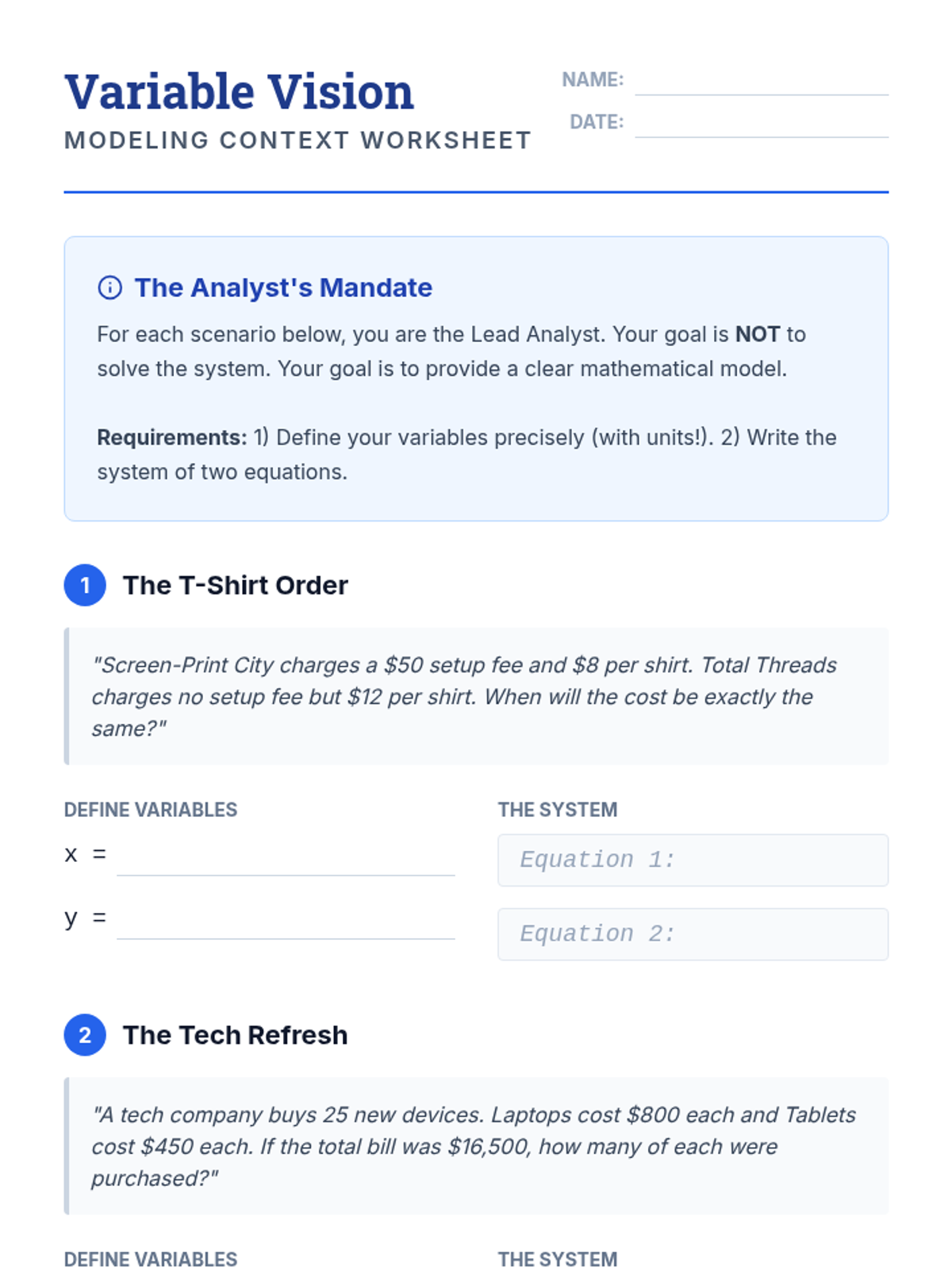
This sequence uses geometric area models (algebra tiles and the box method) to provide a concrete foundation for polynomial arithmetic and factoring, specifically designed for students needing academic support.
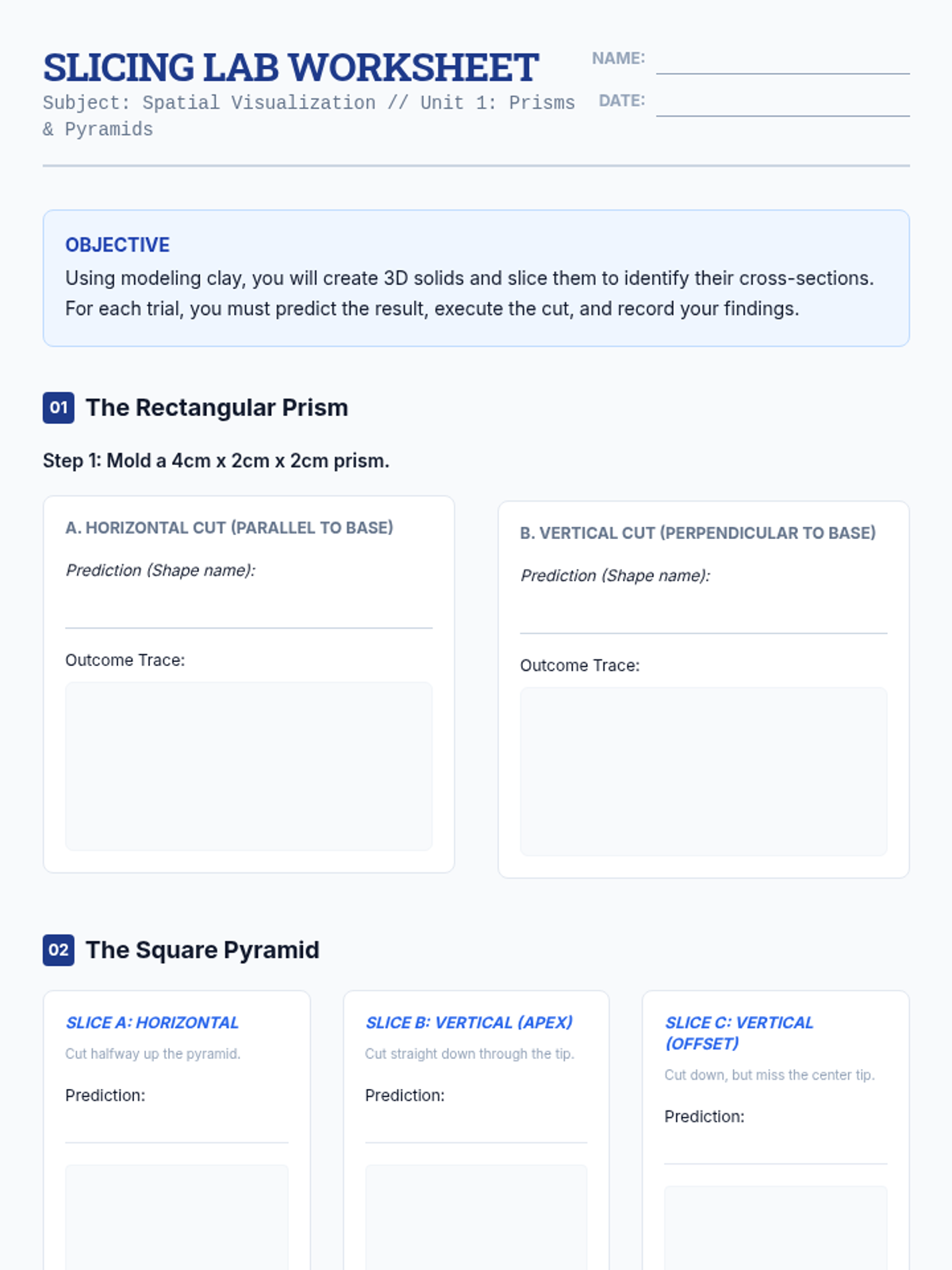
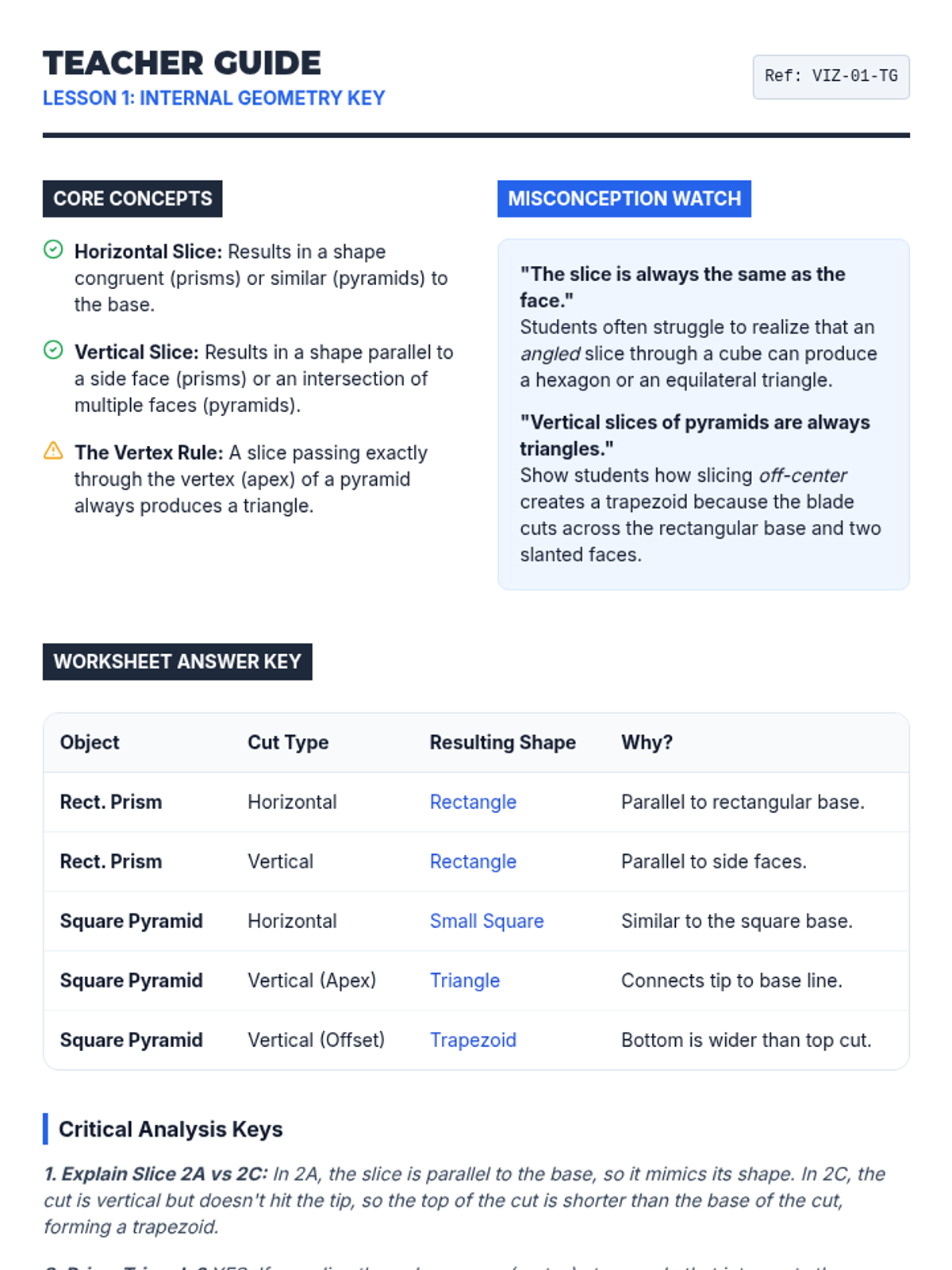
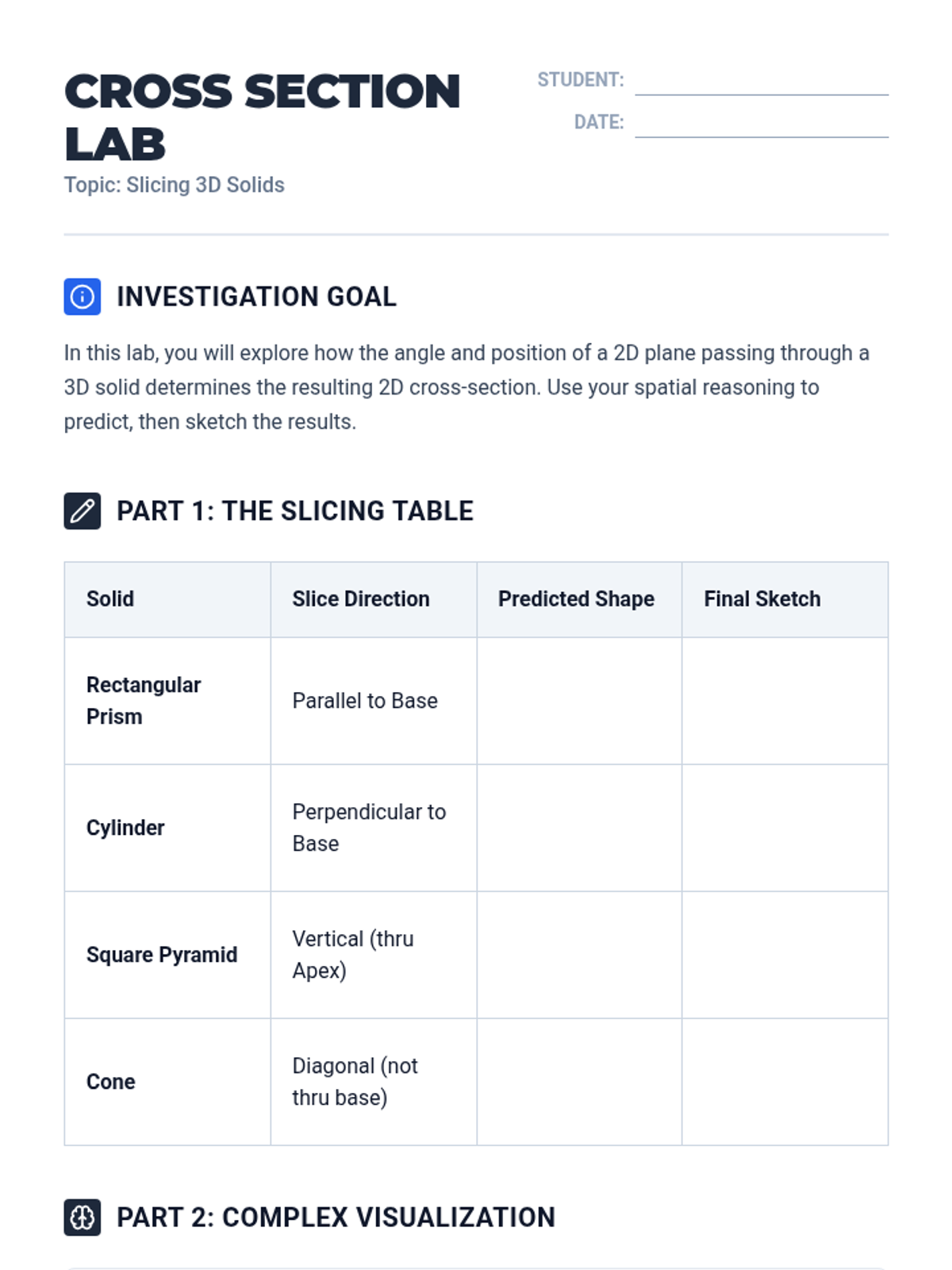
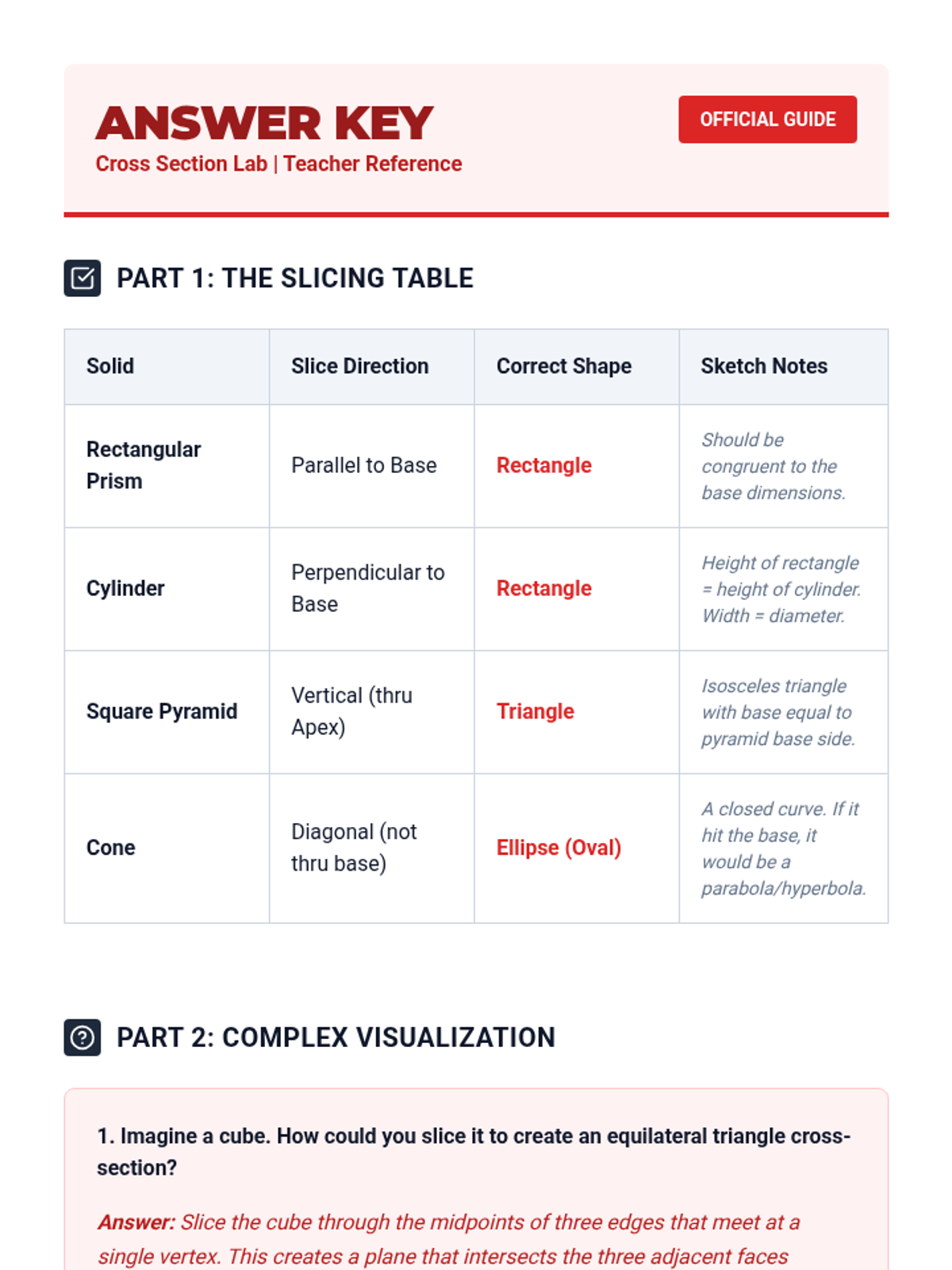
This hands-on sequence focuses on spatial visualization, specifically the relationship between three-dimensional solids and two-dimensional figures. Students explore how slicing 3D objects creates 2D cross-sections, progressing from basic classification to complex angled cuts and orthographic projections.
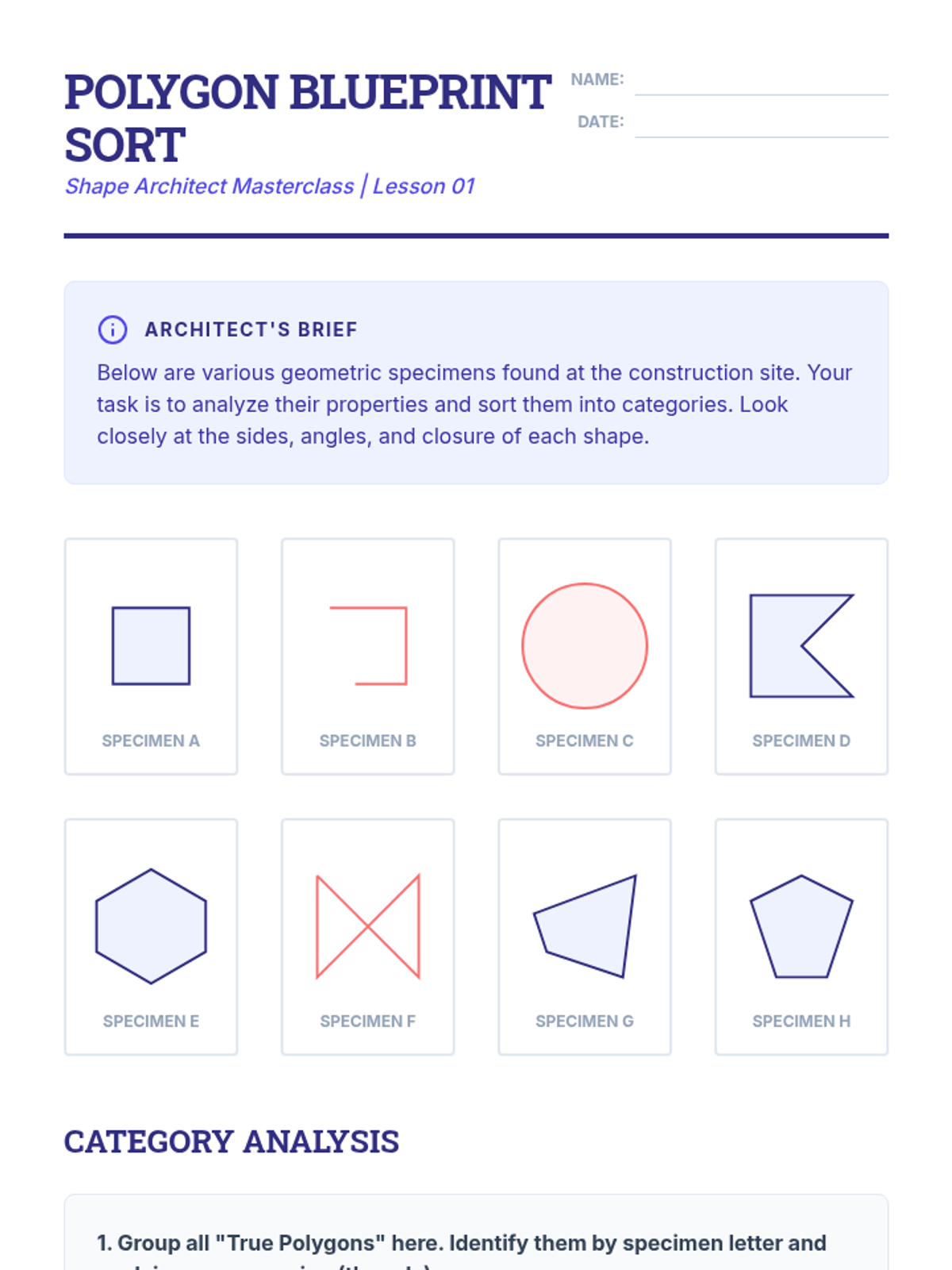
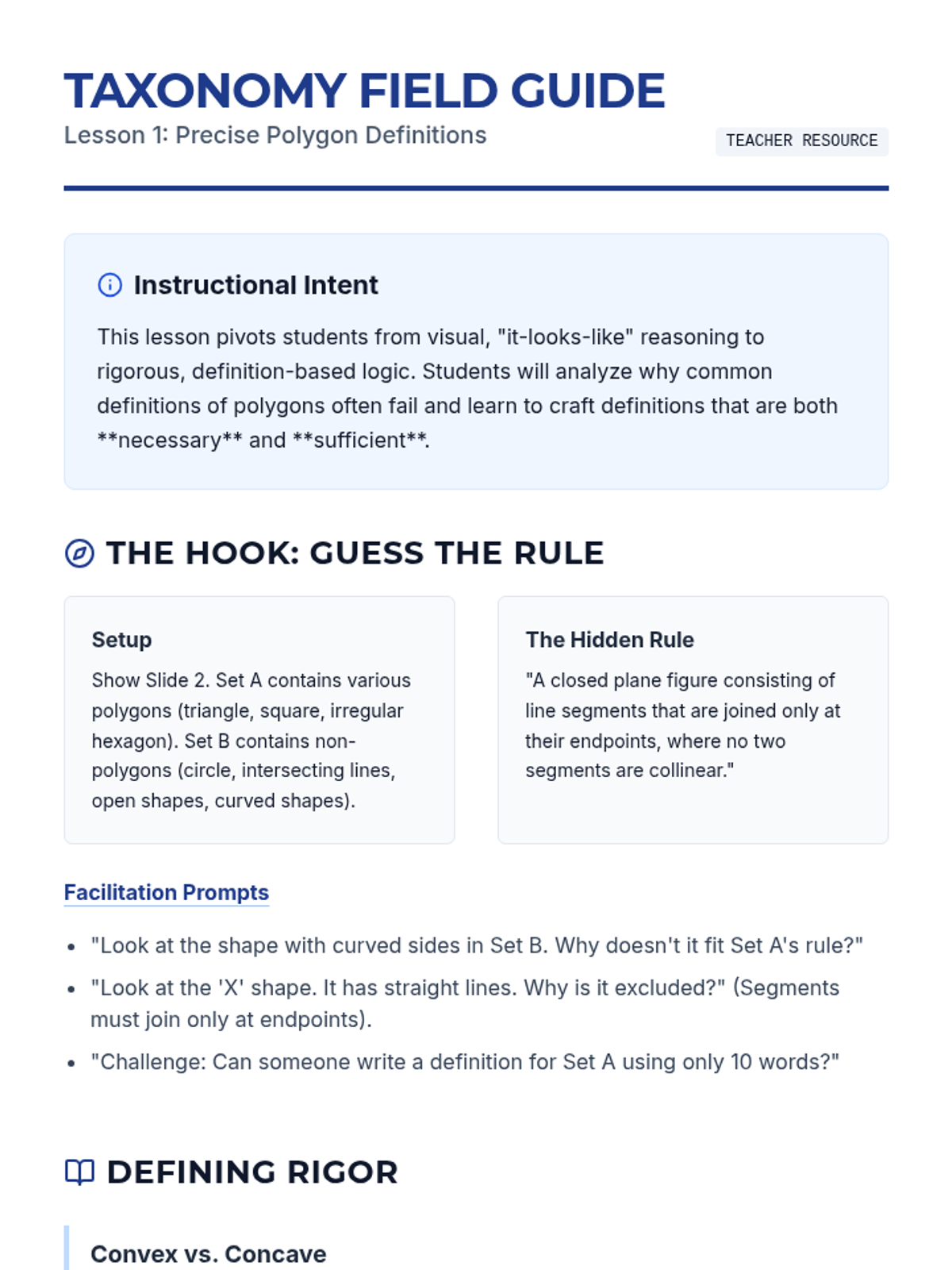
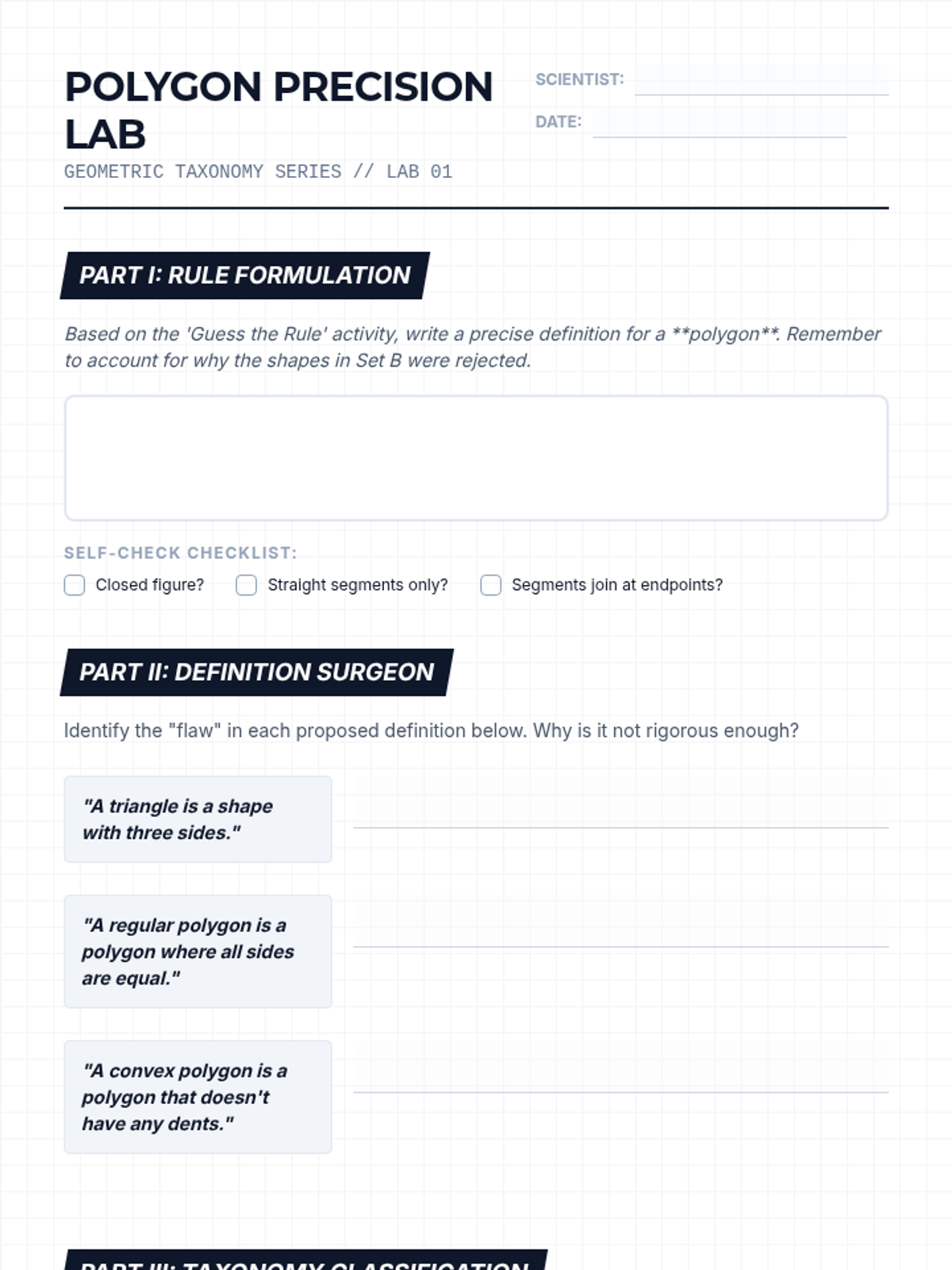
A comprehensive geometry sequence for 9th-grade students focusing on the classification, properties, and algebraic analysis of polygons. Students progress from basic definitions to complex hierarchical relationships and angle sum derivations.
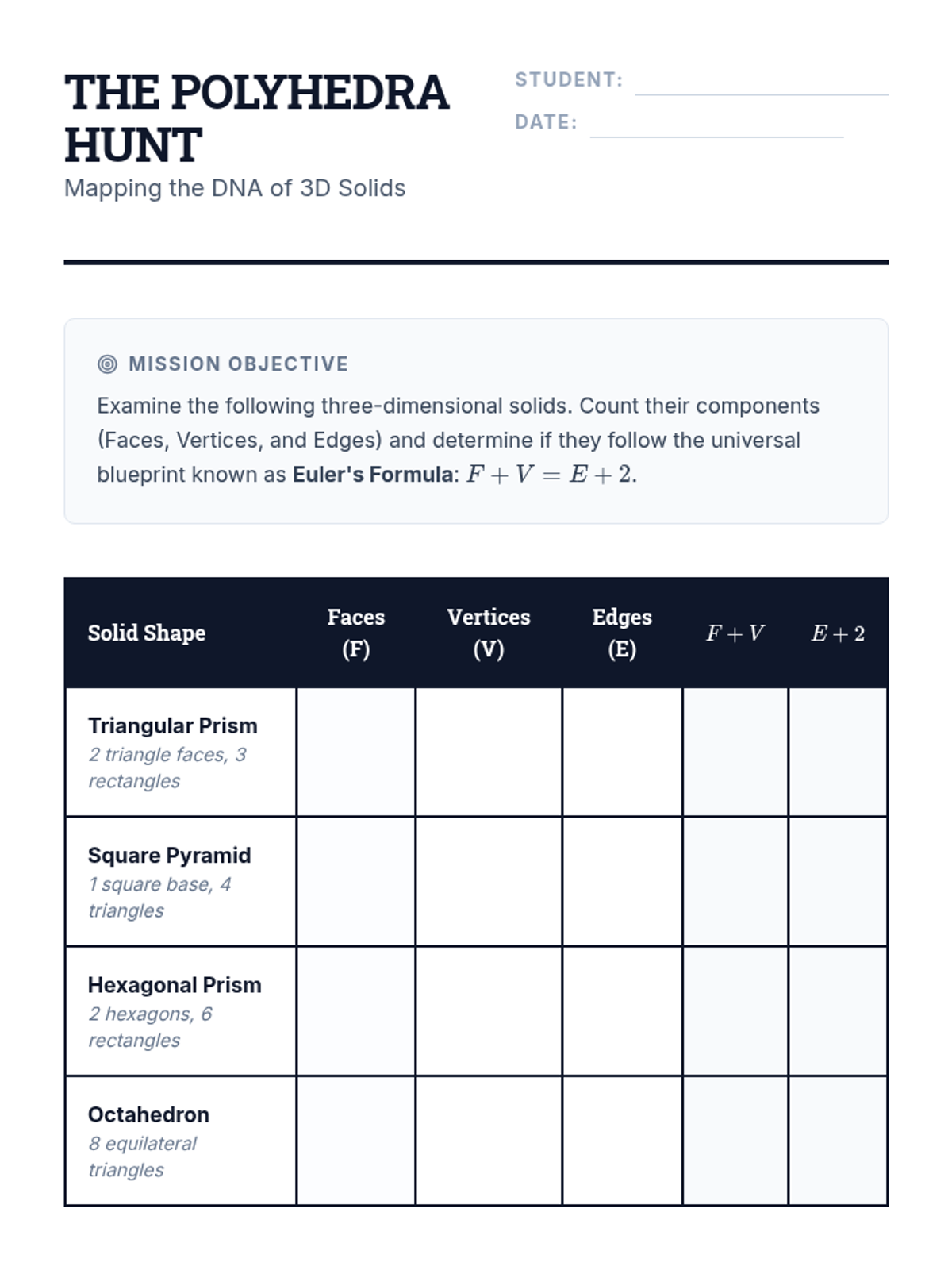
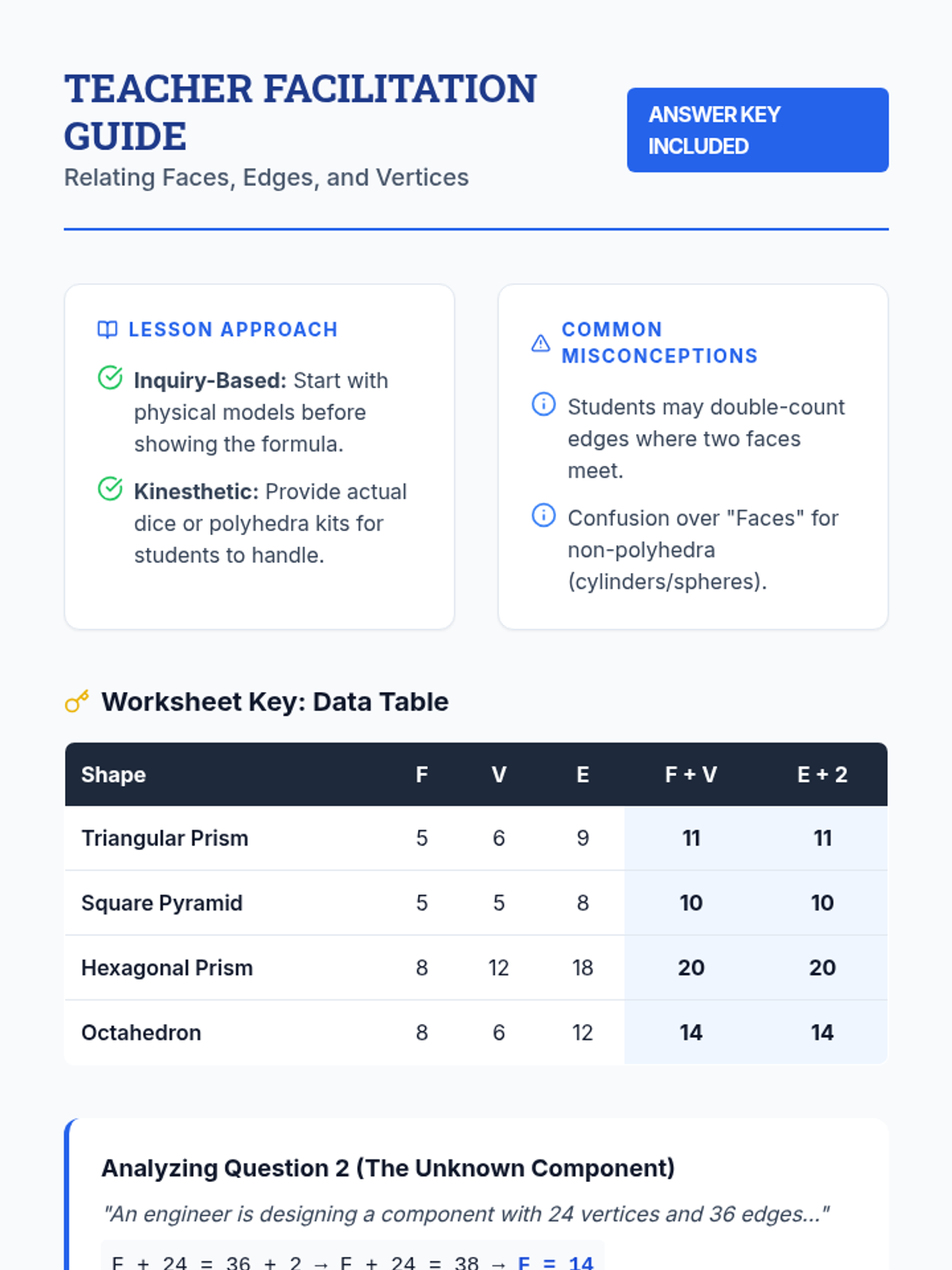
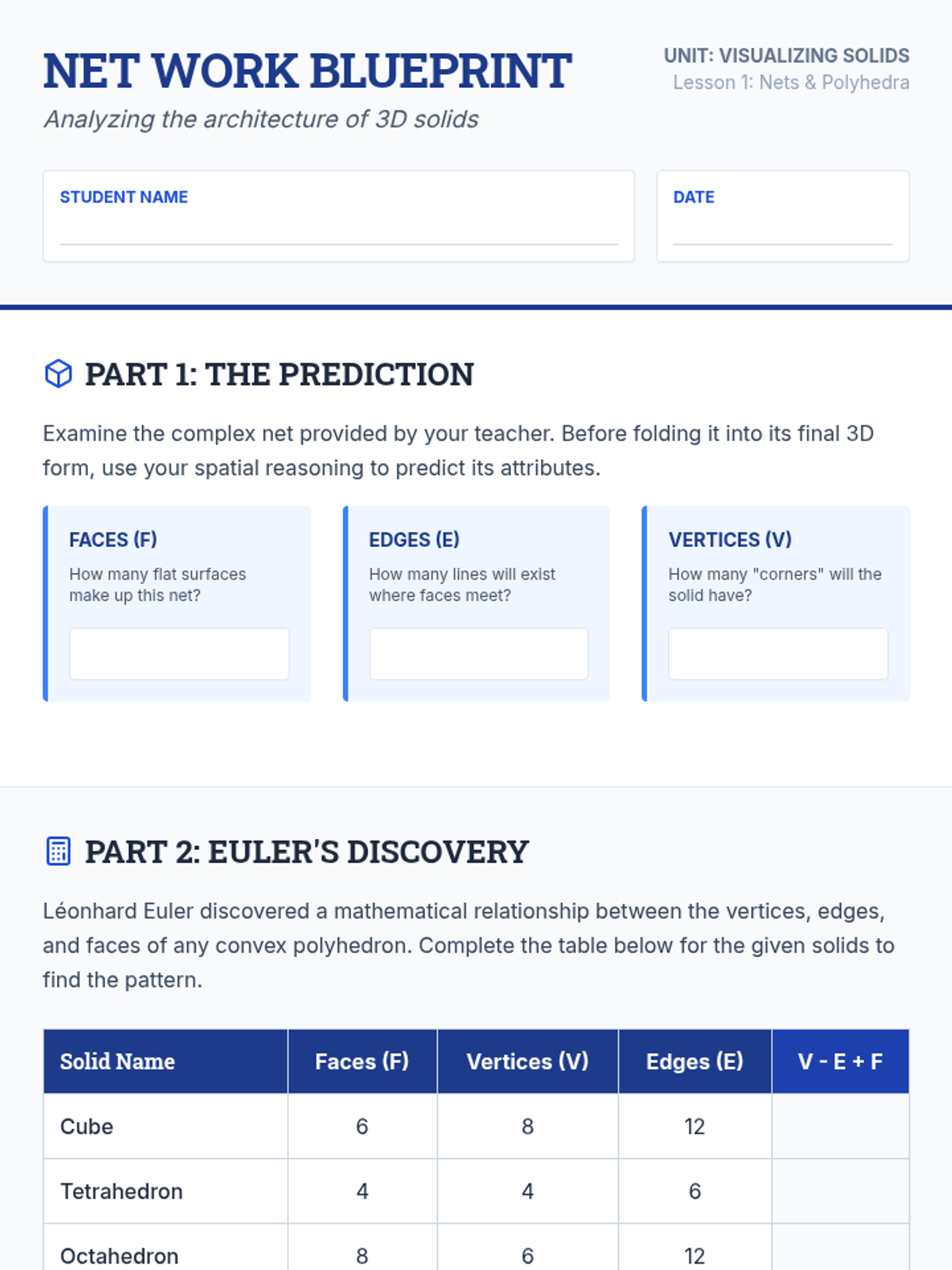
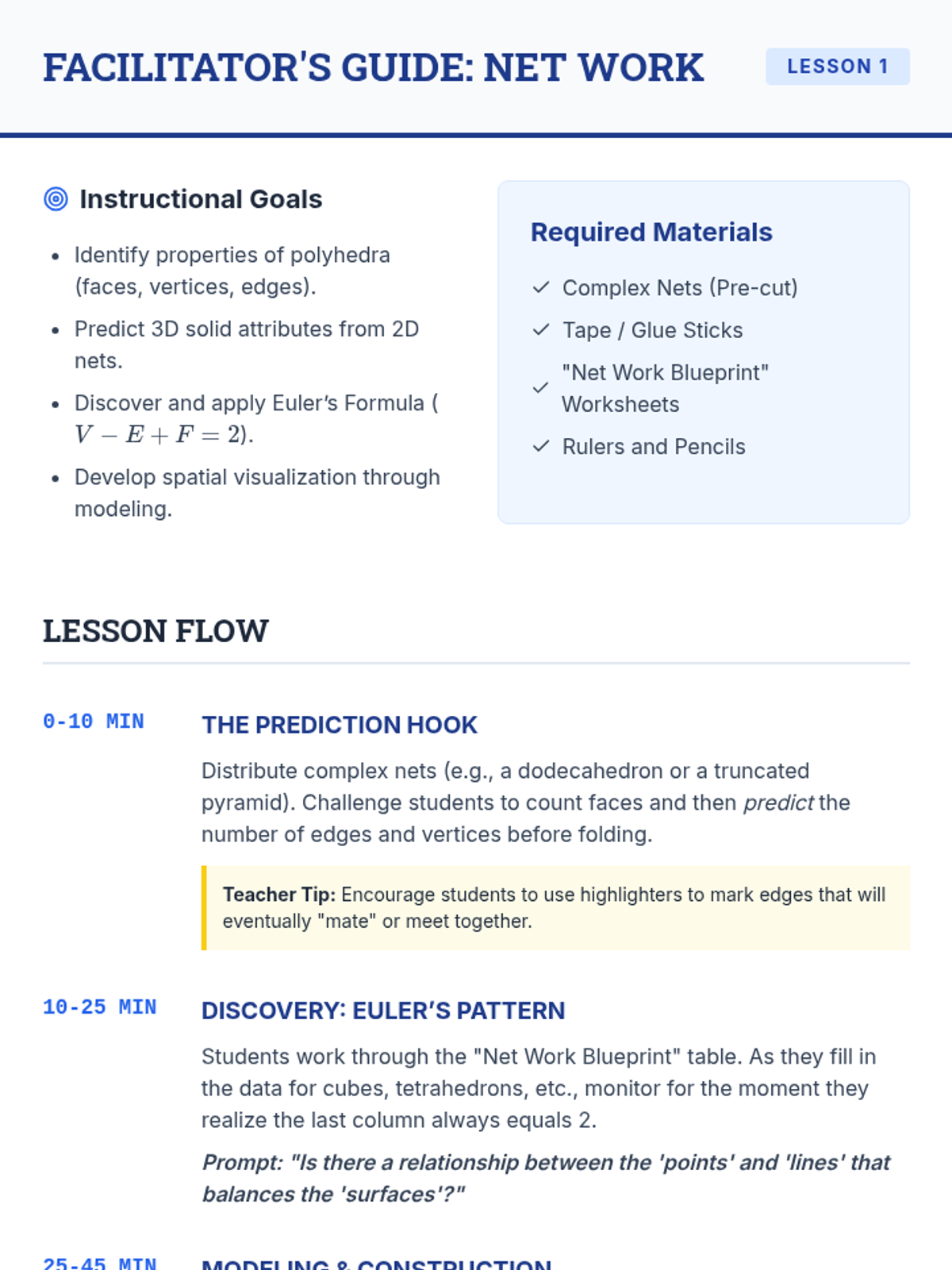
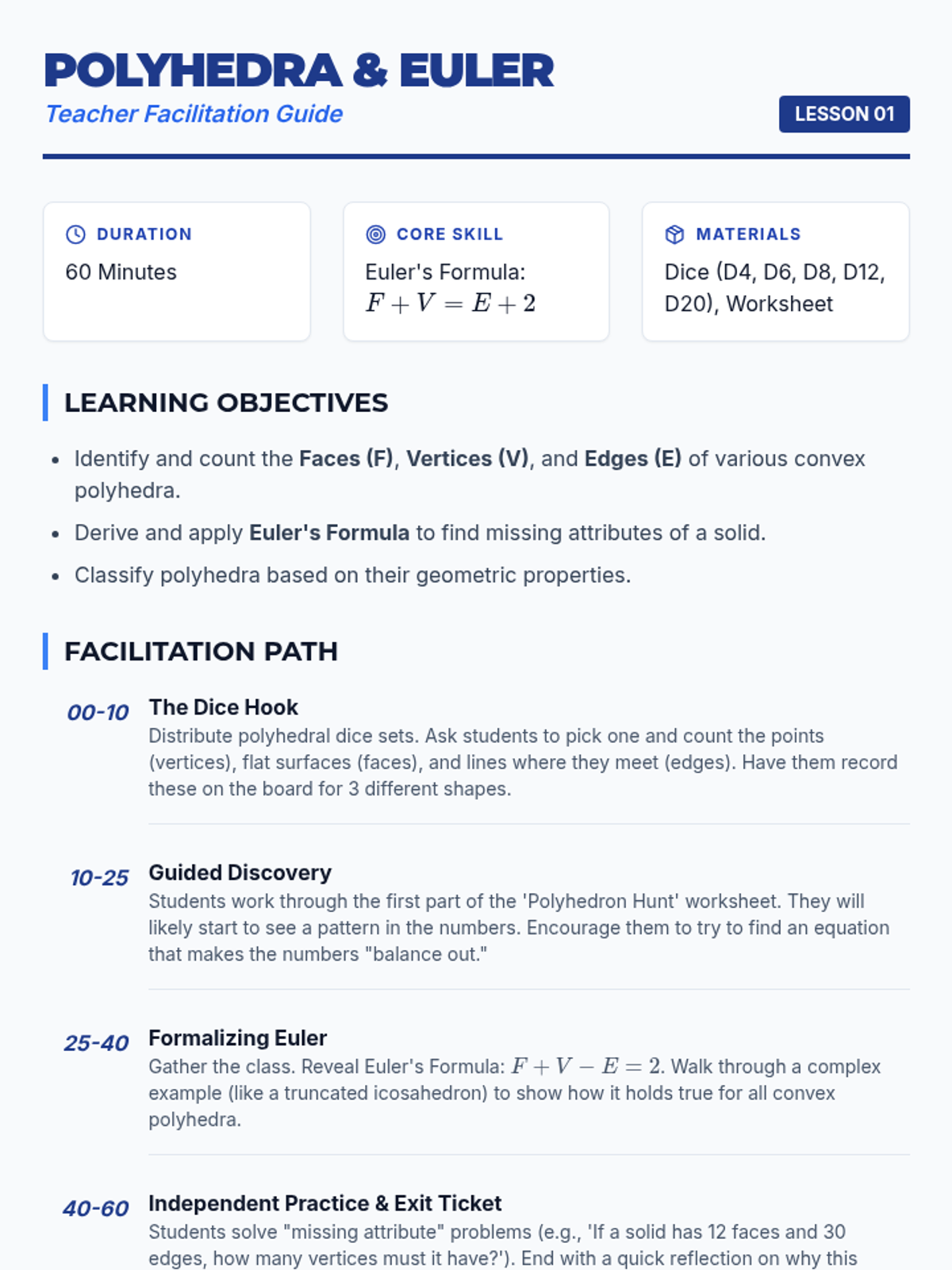
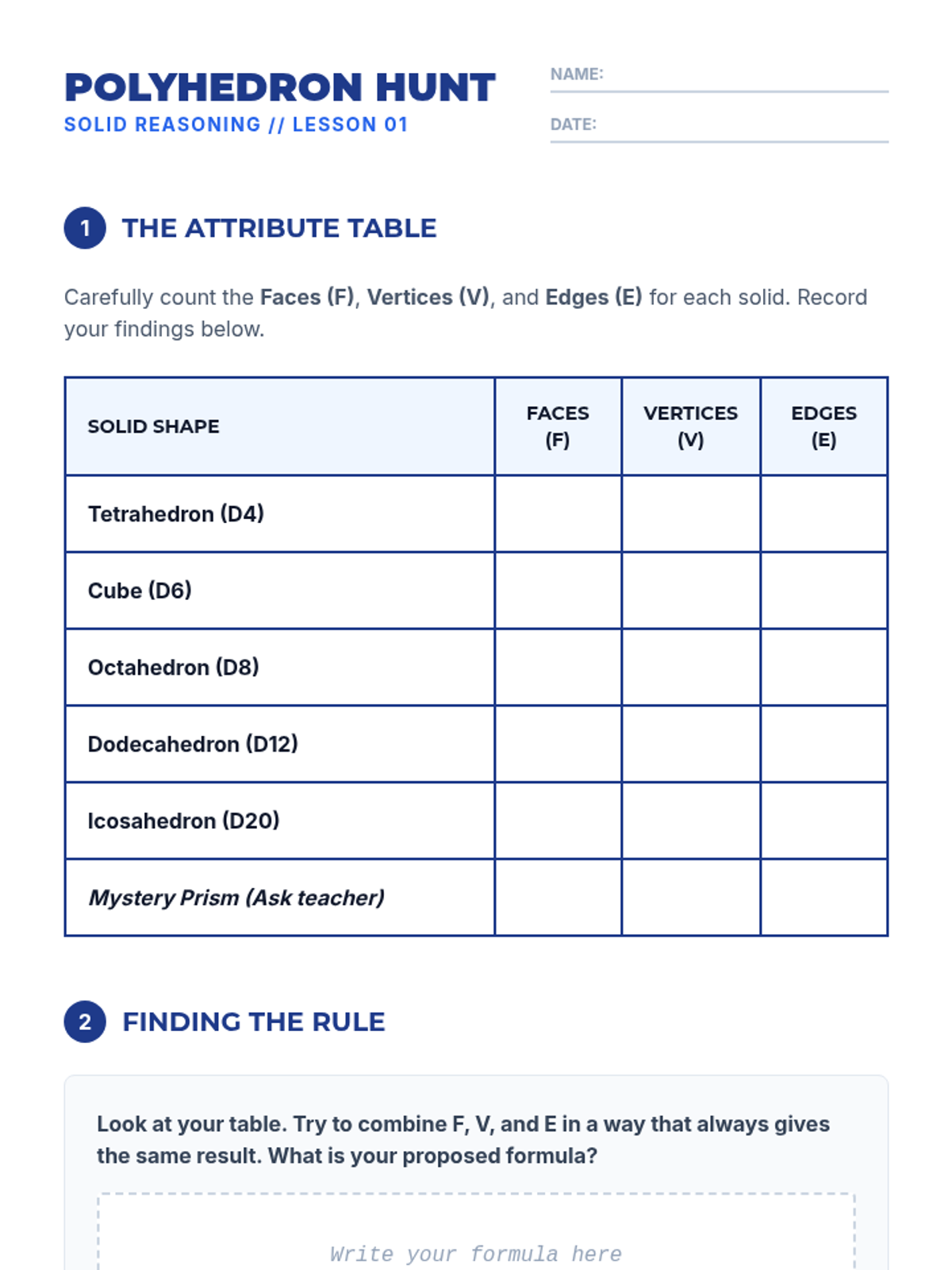
A comprehensive 9th-grade physics and geometry sequence where students transition from 2D components to 3D modeling, covering Euler's Formula, nets, solids of revolution, and cross-sections.
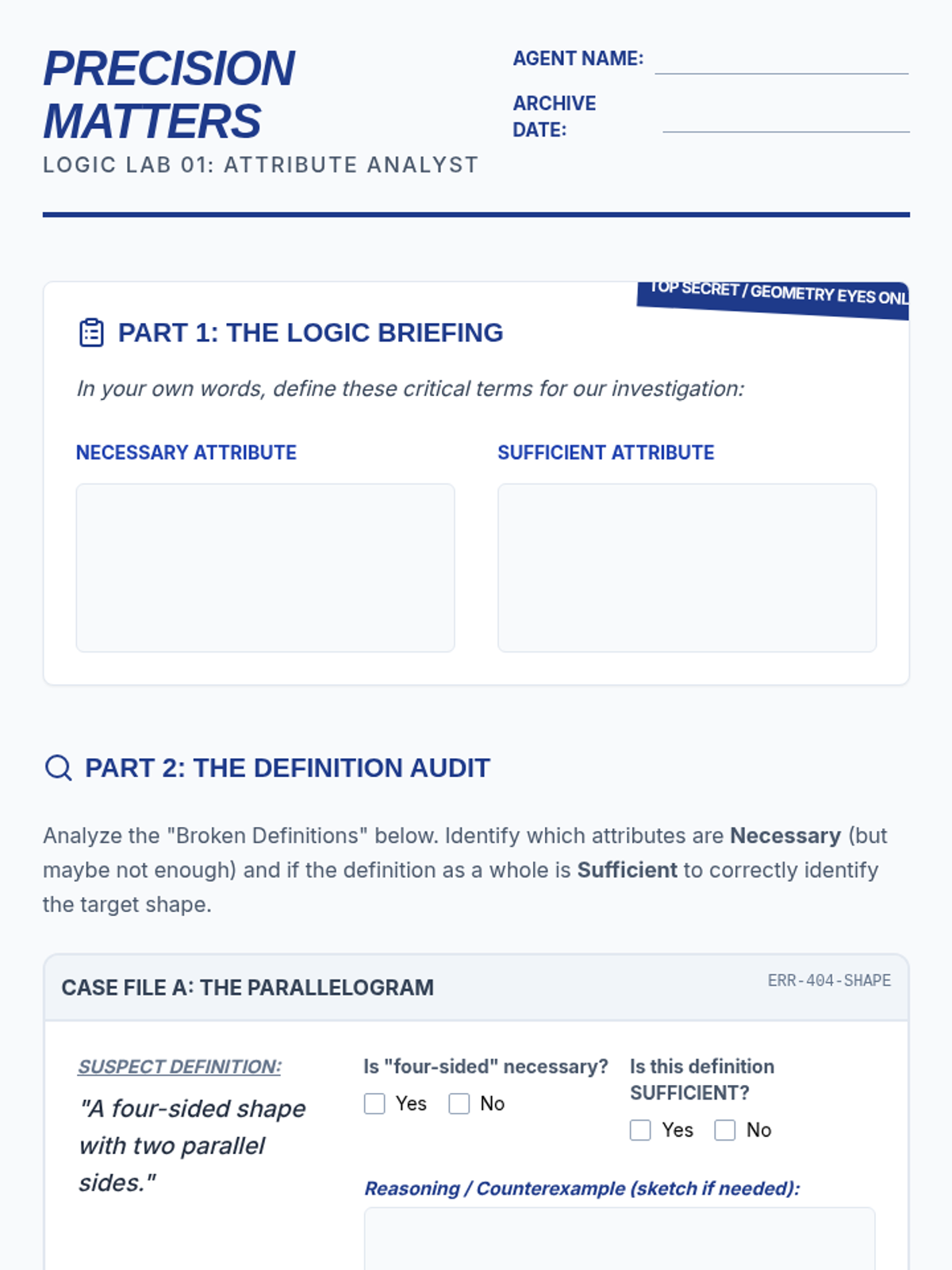
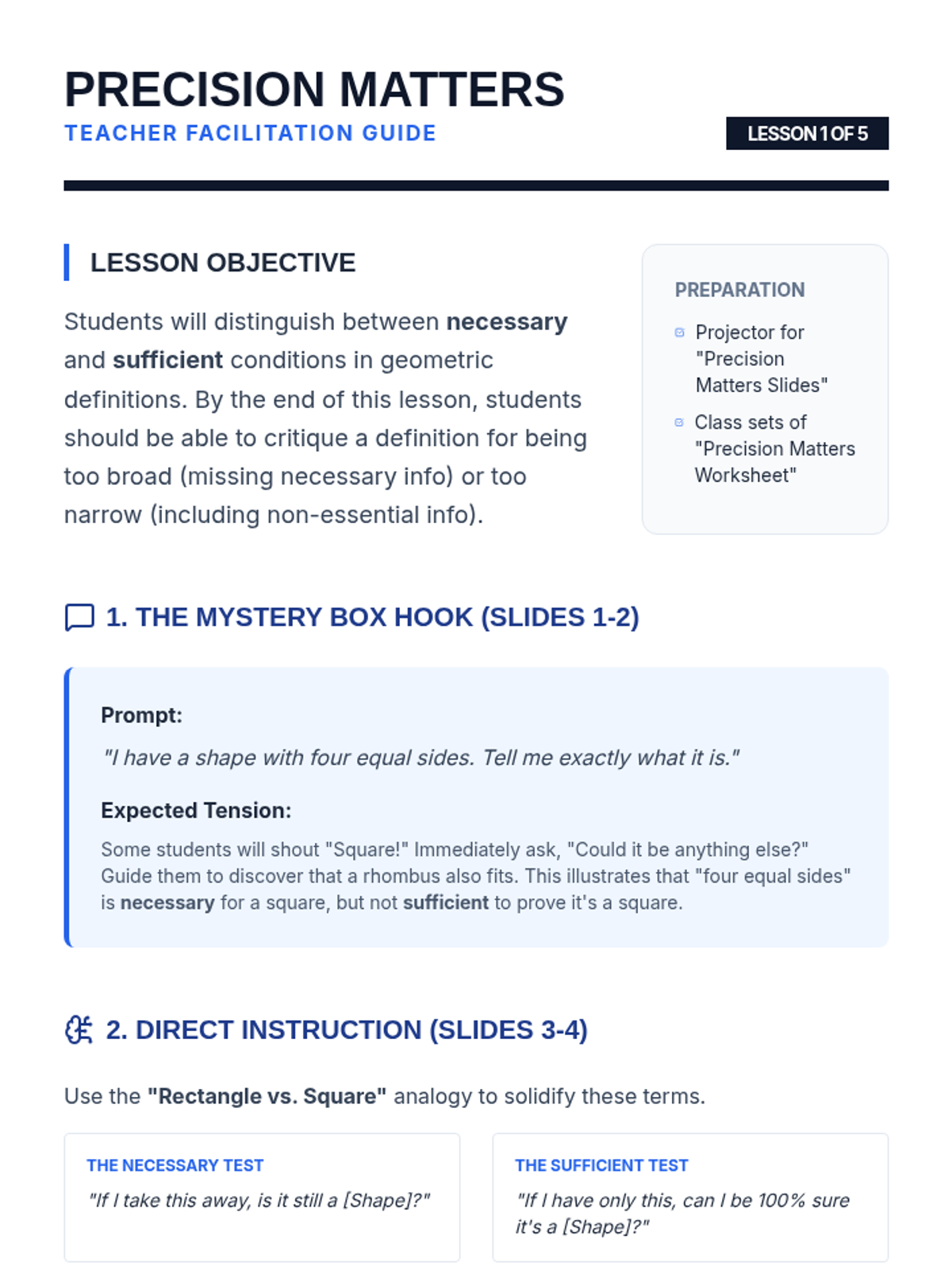
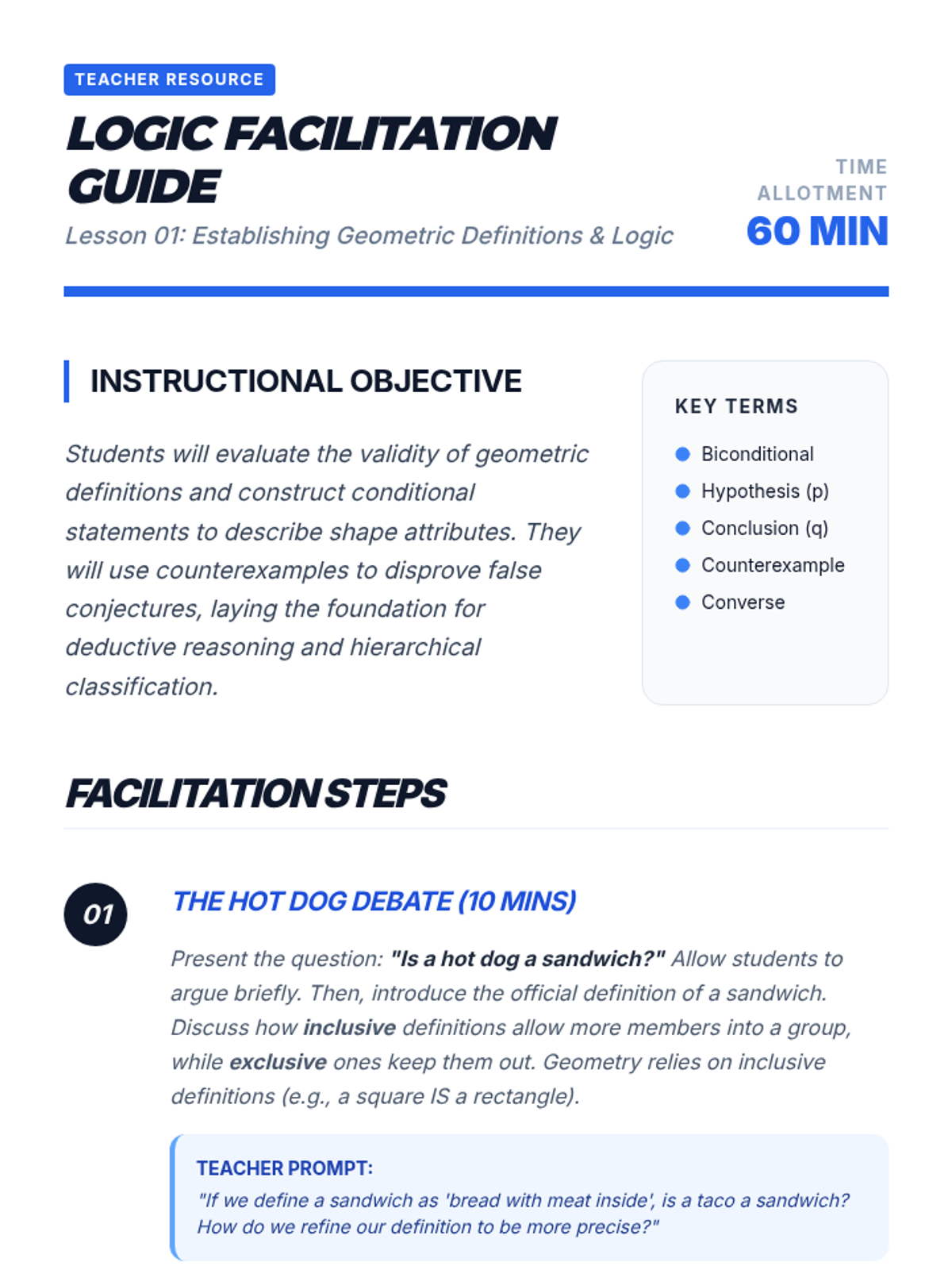
An 8th-grade geometry sequence focused on the logical classification of shapes using necessary and sufficient conditions, hierarchies, and diagonal properties. Students transition from simple identification to rigorous logical reasoning and set theory.
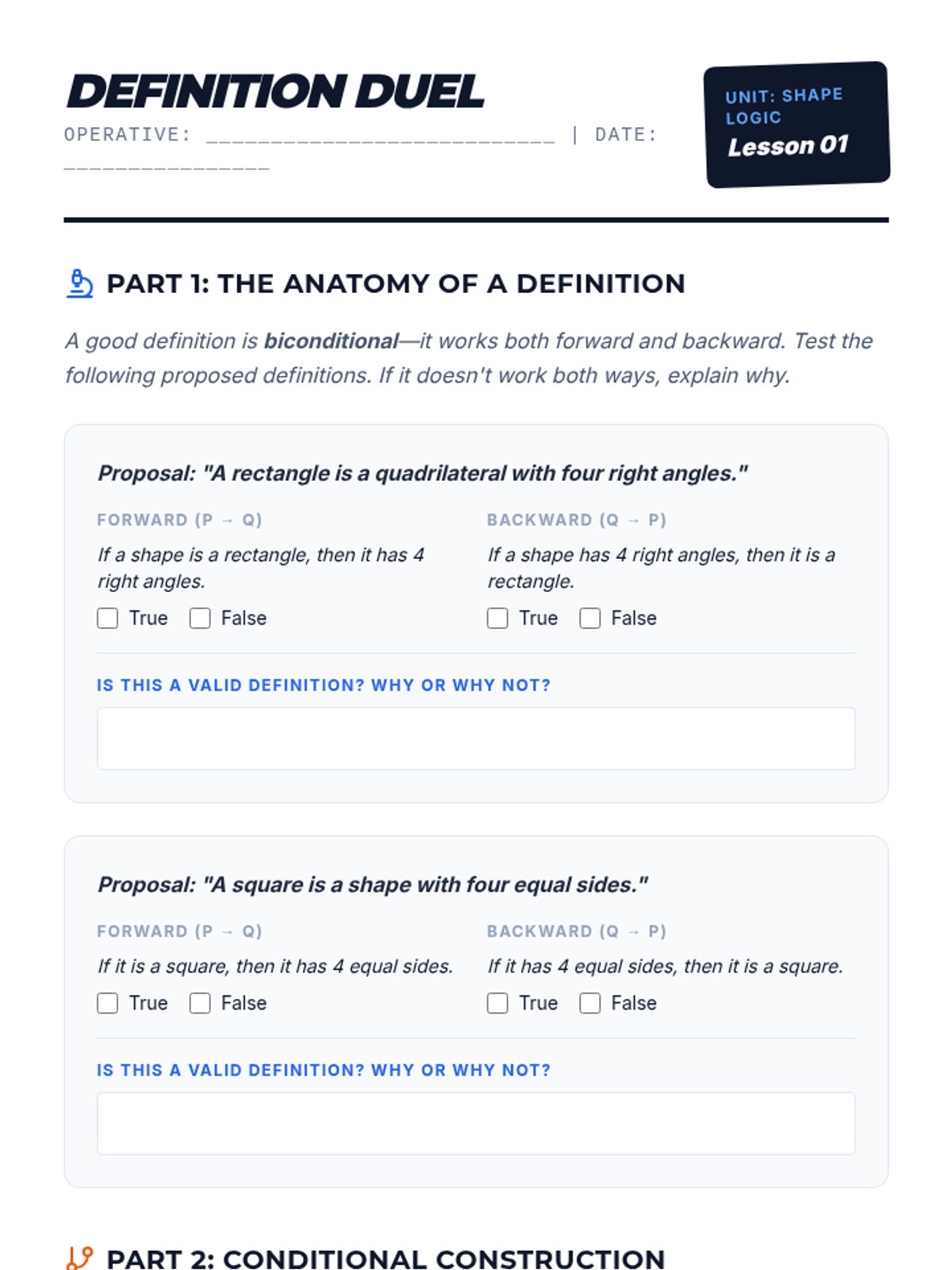
A 9th-grade geometry sequence exploring the logical hierarchy of polygons, focusing on rigorous definitions, property inheritance, and conditional logic. Students transition from visual identification to formal classification using Venn and Euler diagrams.
A comprehensive geometry unit for 9th grade exploring the transition from 2D shapes to 3D solids through nets, rotations, cross-sections, and Cavalieri's Principle. Students apply spatial reasoning to model and design complex geometric forms.
A rigorous exploration of geometric classification, focusing on logical hierarchies of quadrilaterals, properties of diagonals, 3D polyhedra attributes via Euler's Formula, and the visualization of cross-sections. Students move from visual identification to formal geometric reasoning and proof construction.
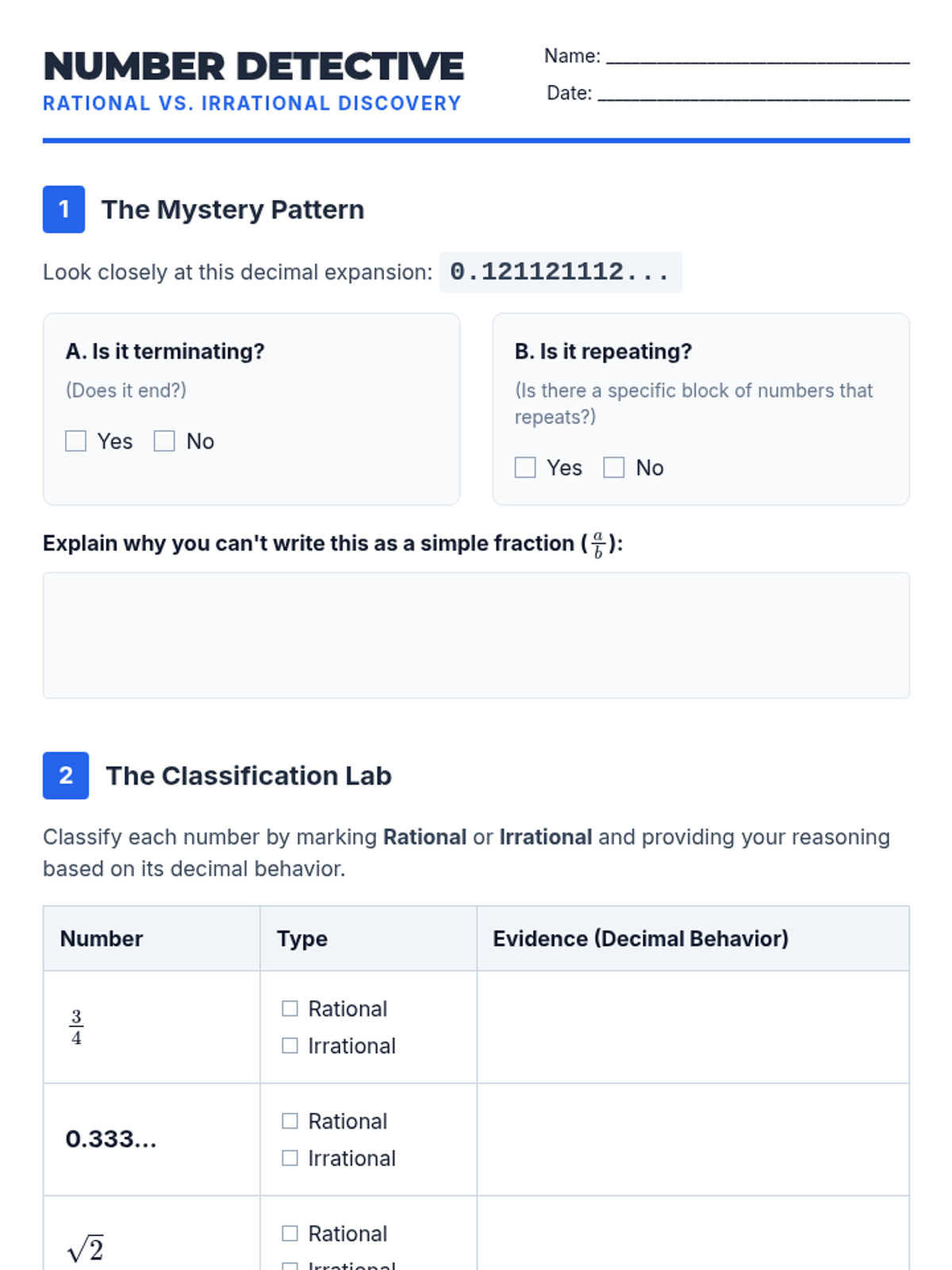
This sequence guides 9th-grade students through the conceptual shift from rational to irrational numbers. Students explore decimal expansions, geometric models of square roots, estimation techniques using perfect square benchmarks, and precision plotting on the real number line, culminating in the comparison and ordering of real numbers in various formats.
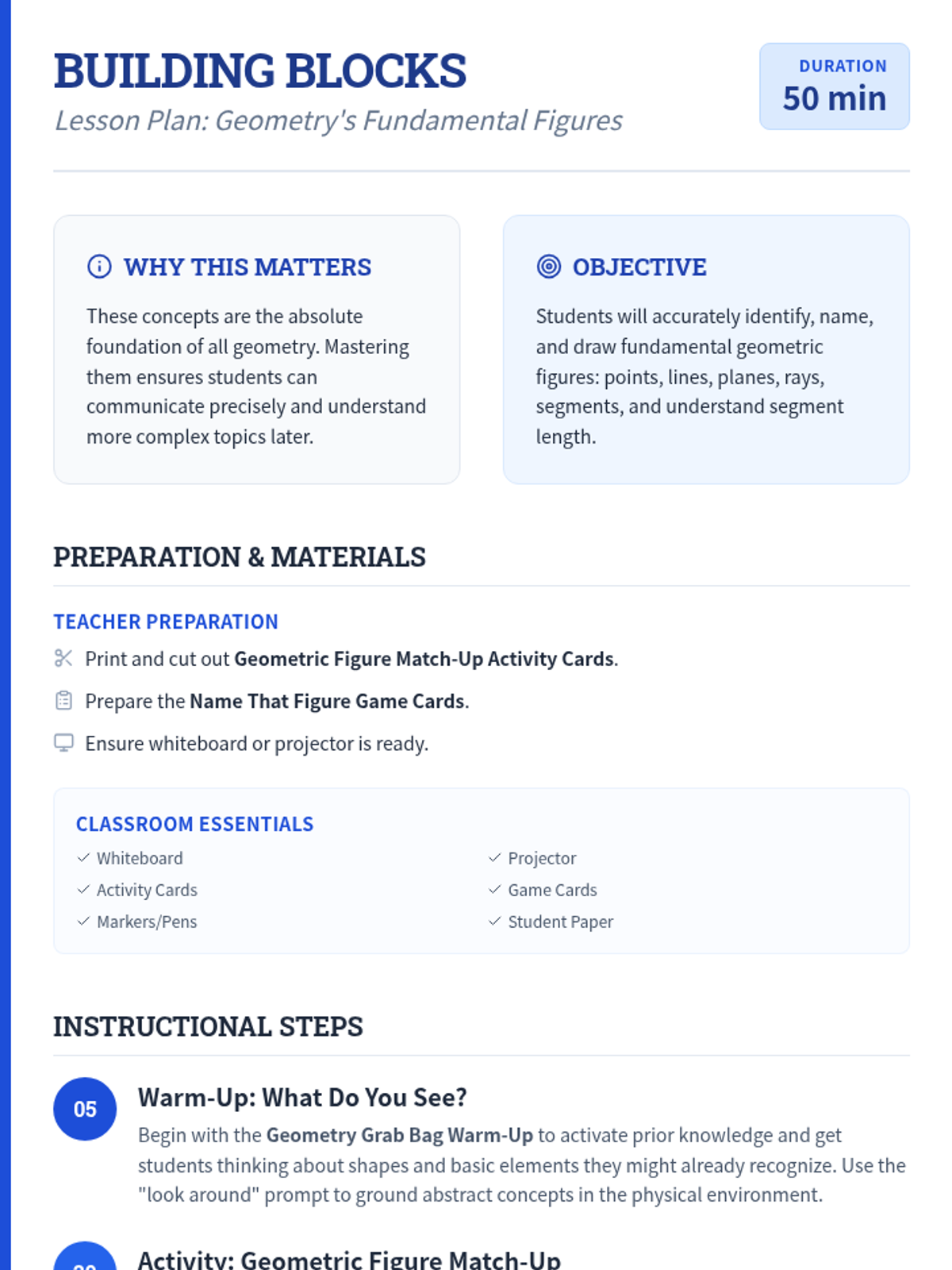
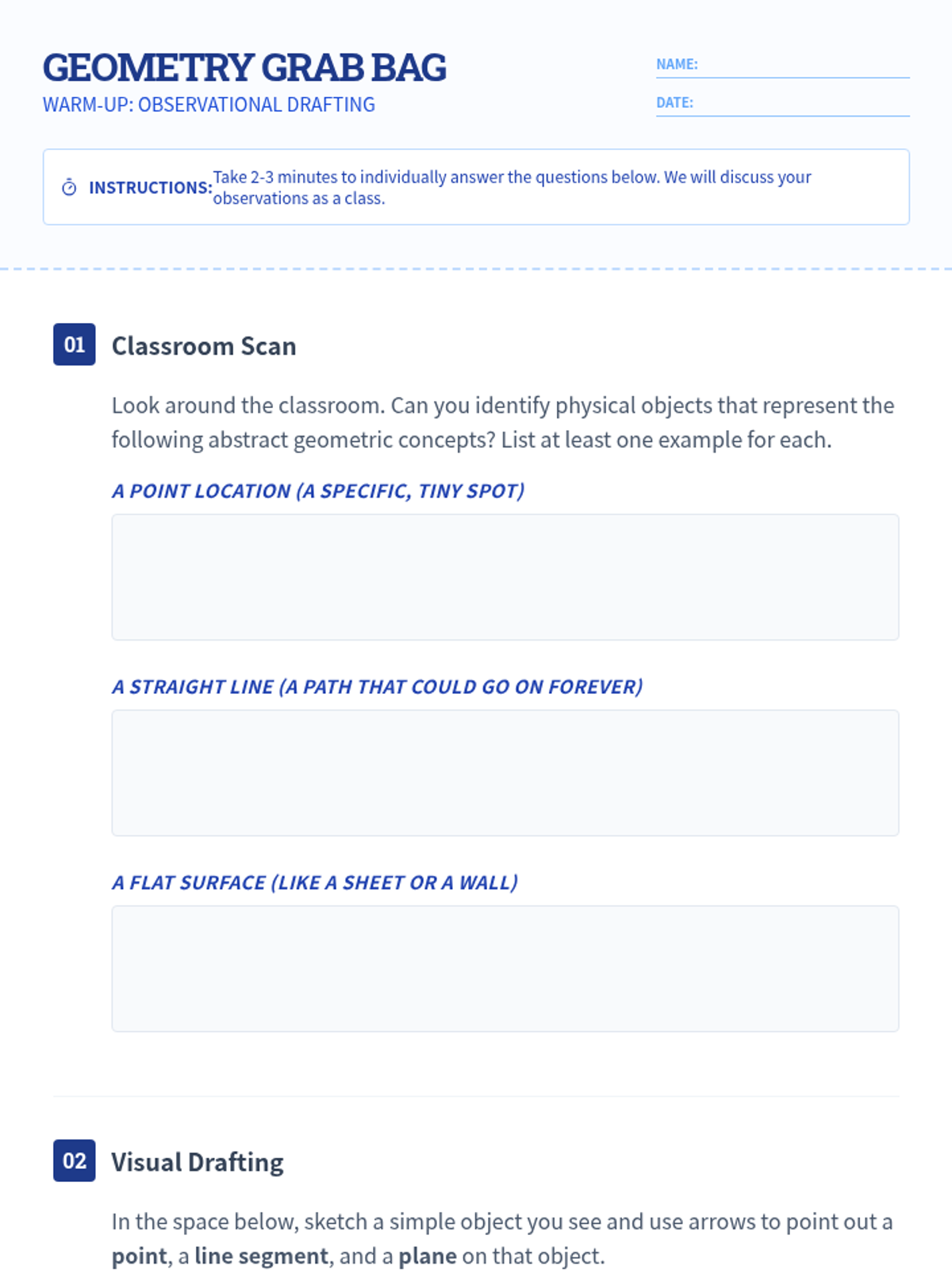
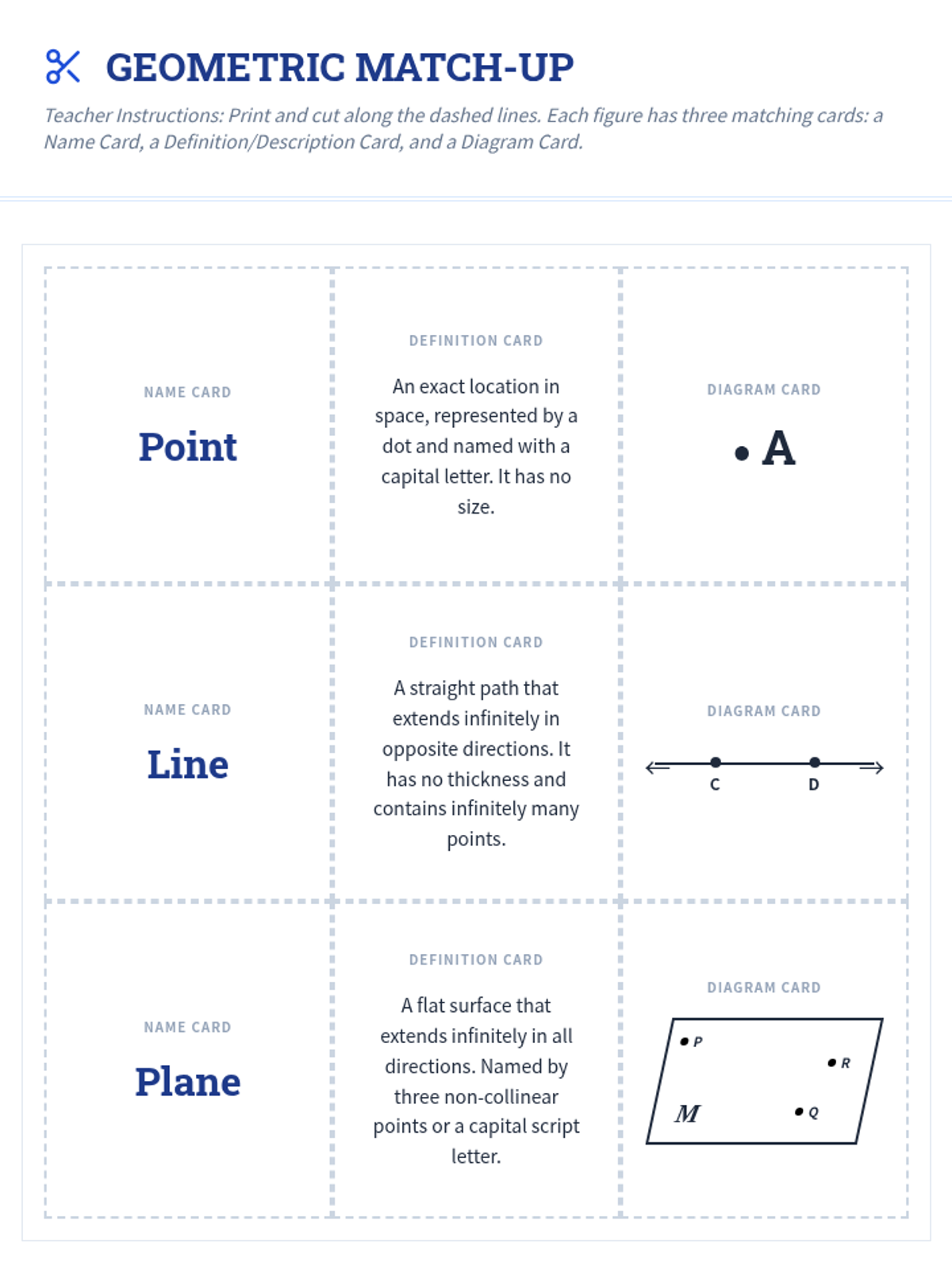
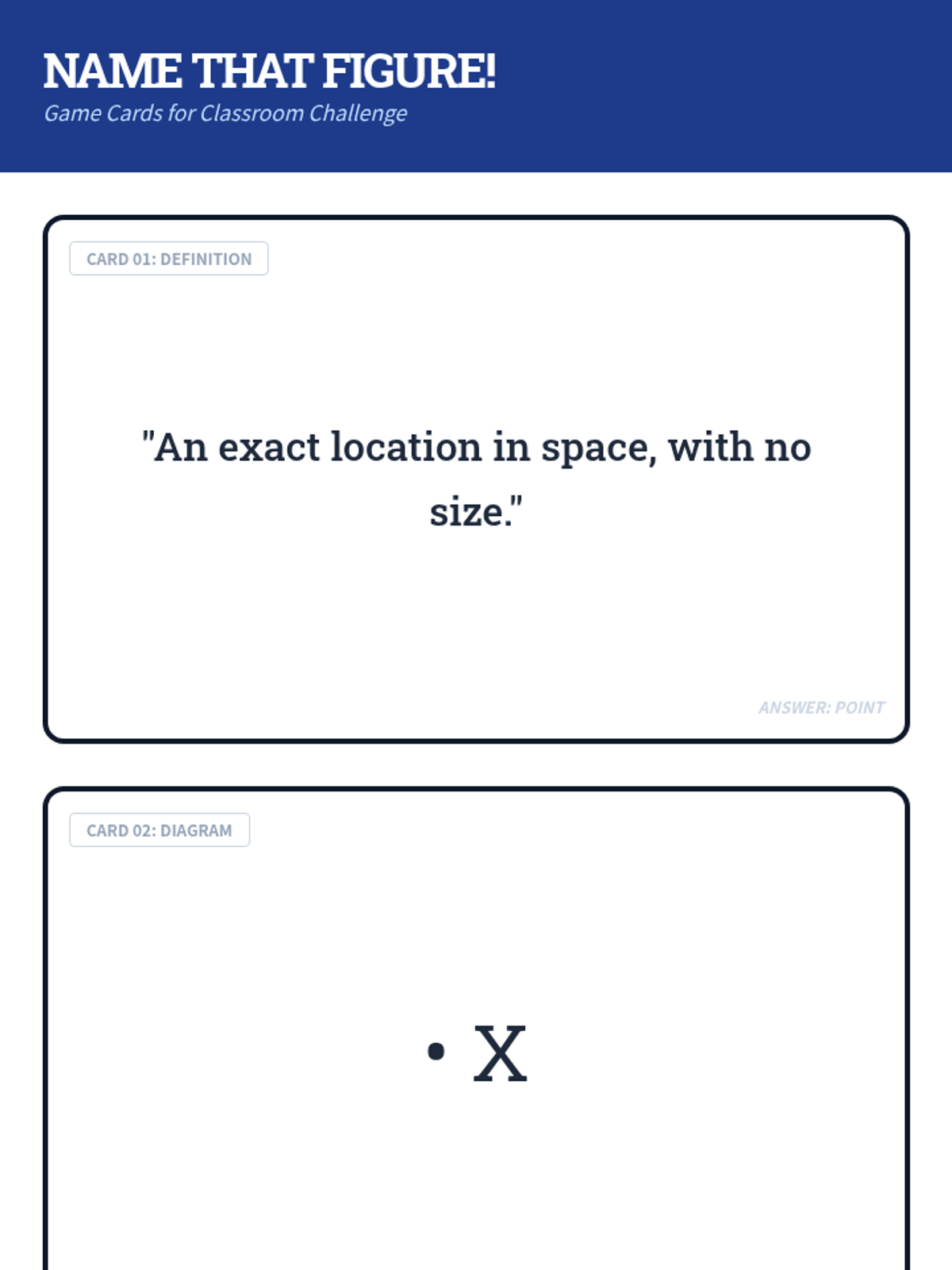
A series of lessons focused on the fundamental elements of geometry, starting with points, lines, and planes and progressing to more complex spatial relationships.
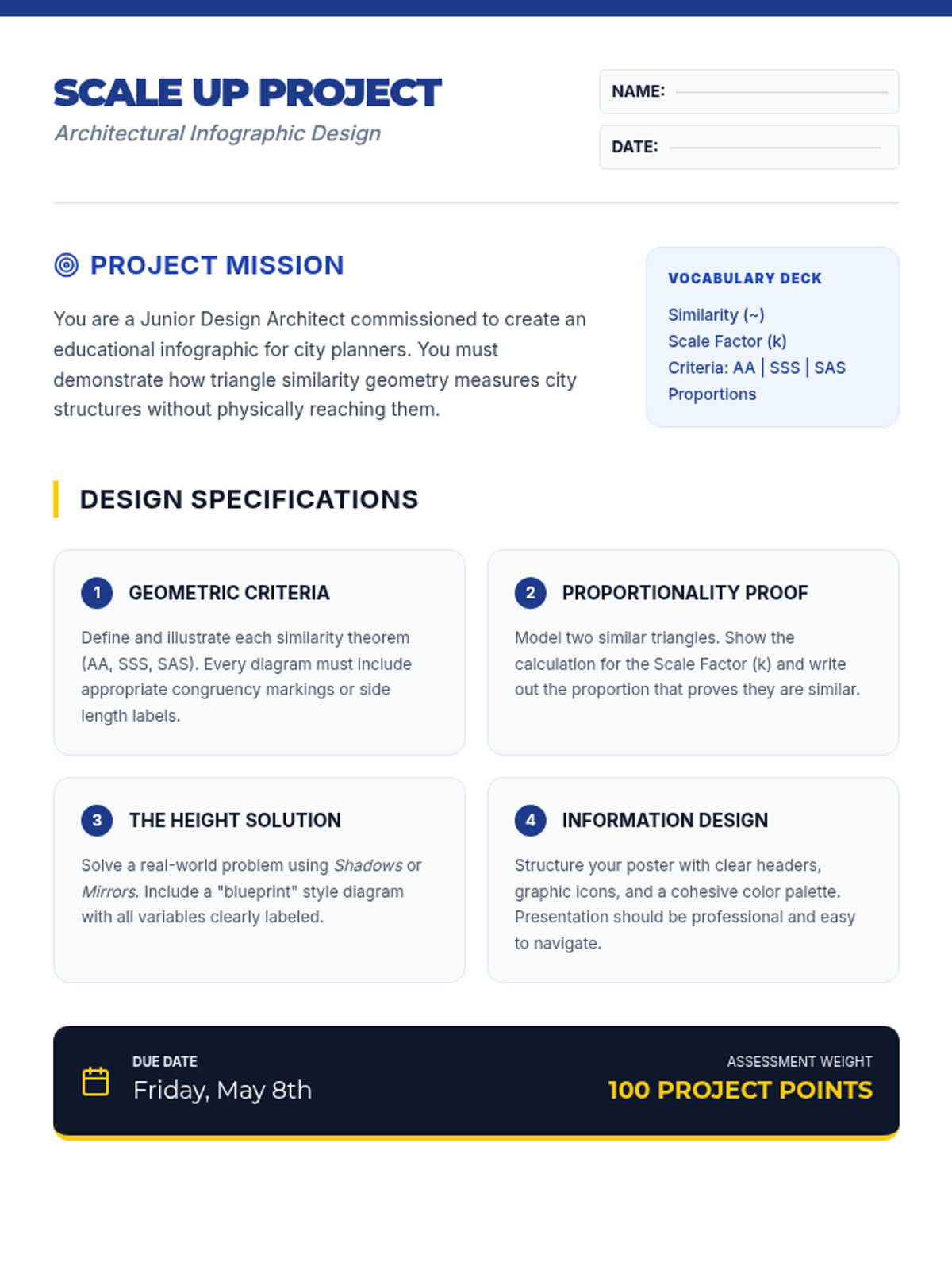
A geometric exploration of similar triangles, focusing on identification criteria and real-world applications of scale factors and proportions.
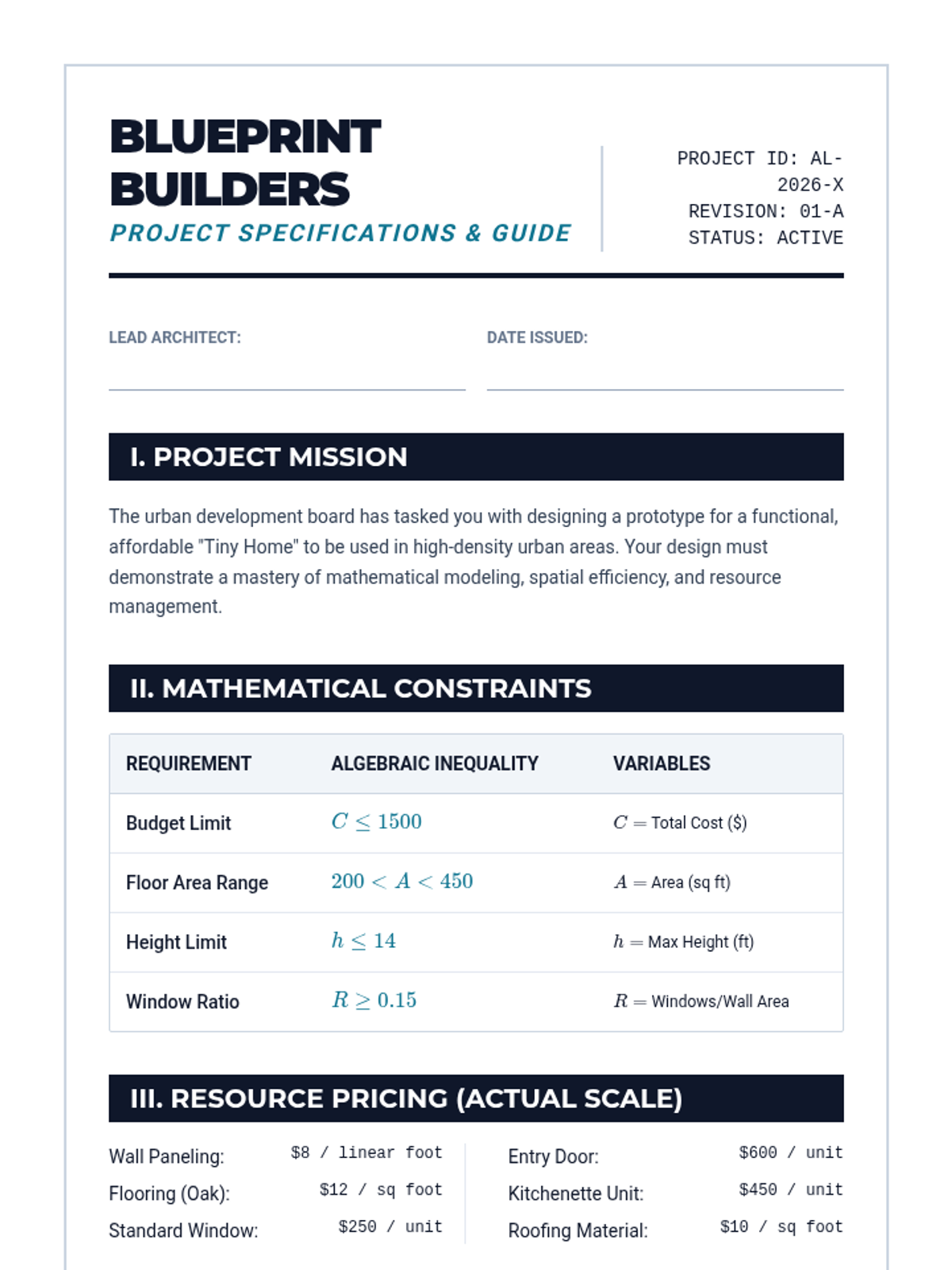
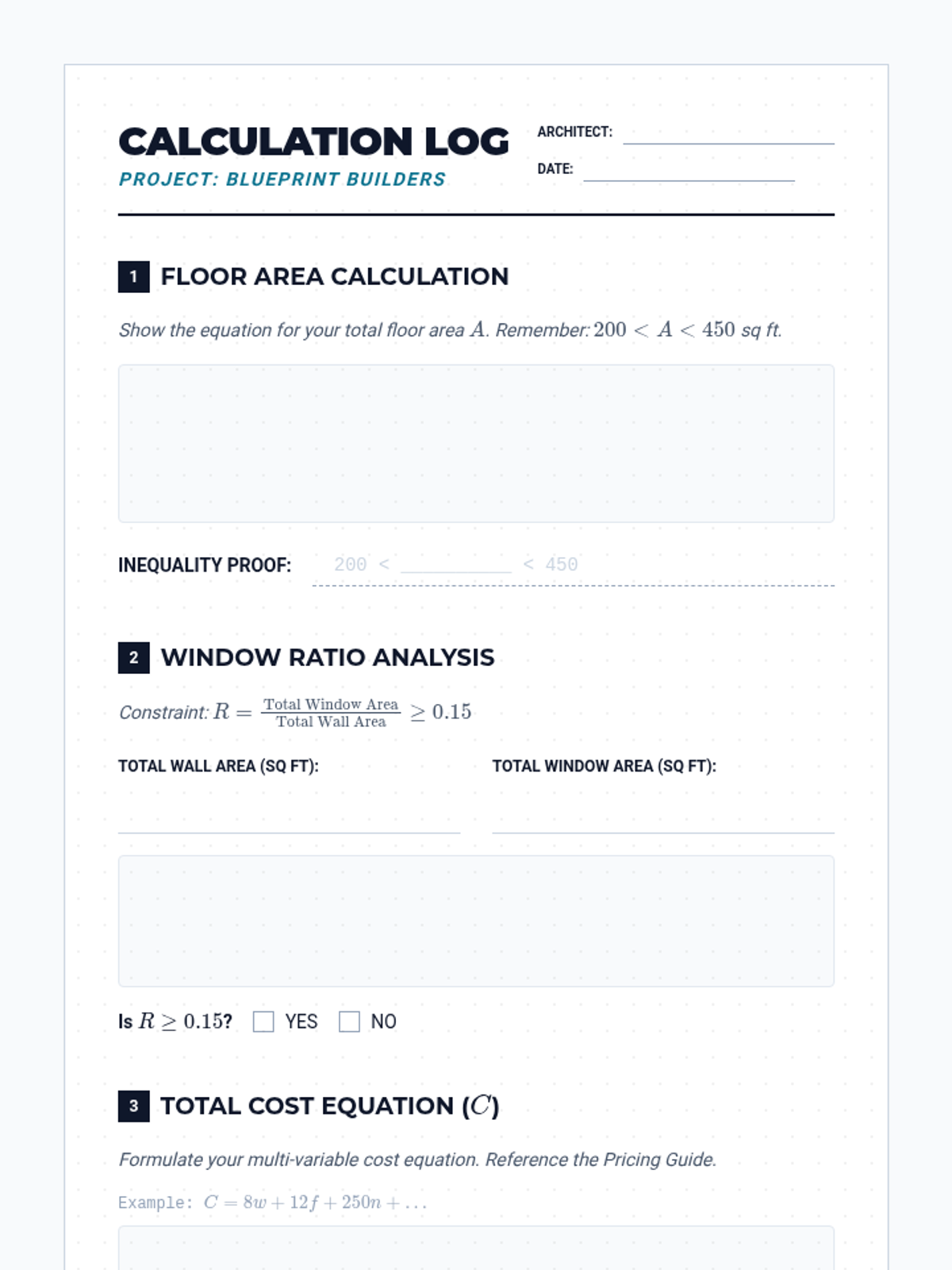
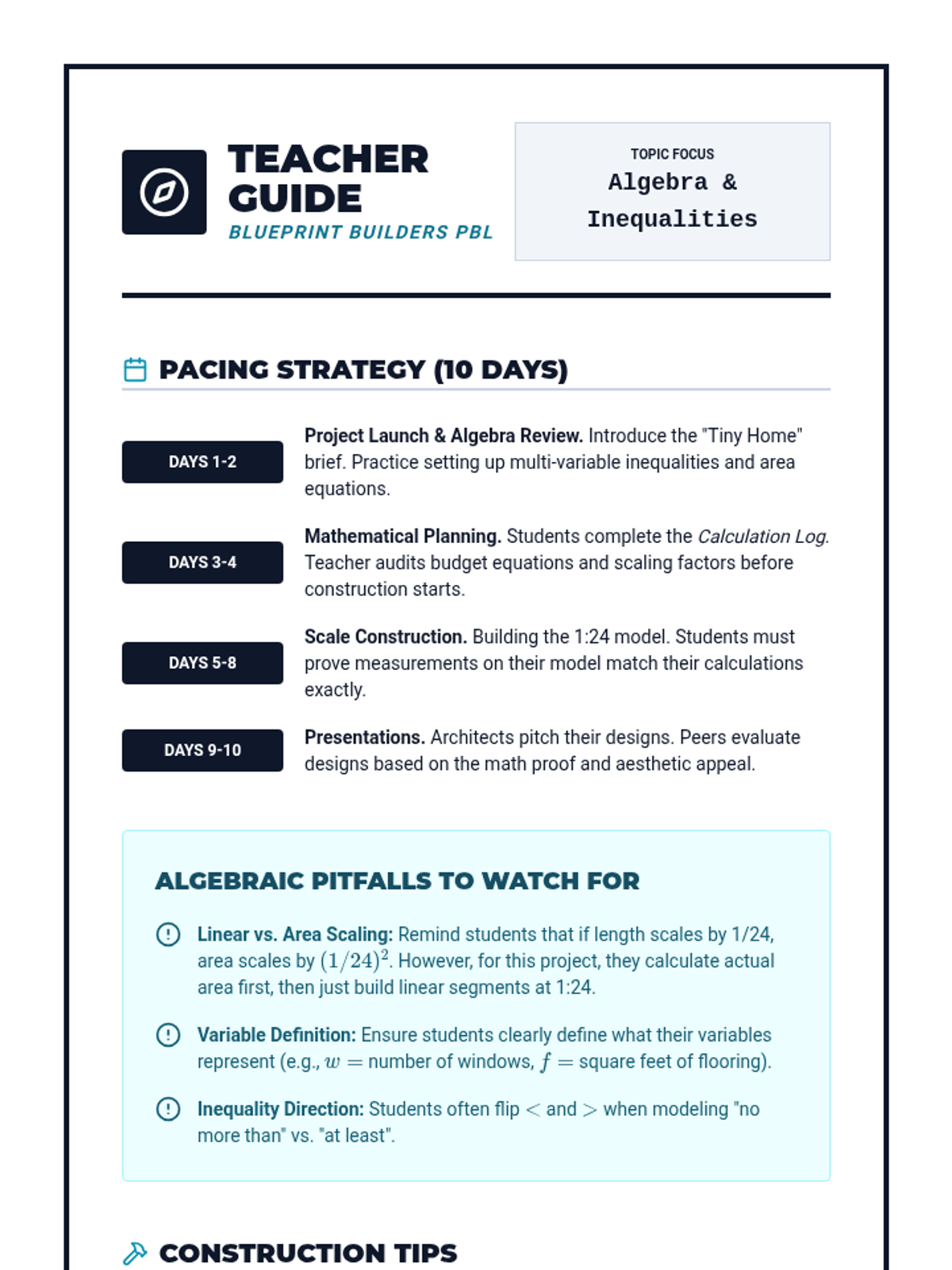
A project-based learning unit where students apply algebraic equations and inequalities to design and build a scale model of a functional living space. Students must manage budgets, spatial constraints, and material requirements using mathematical modeling.
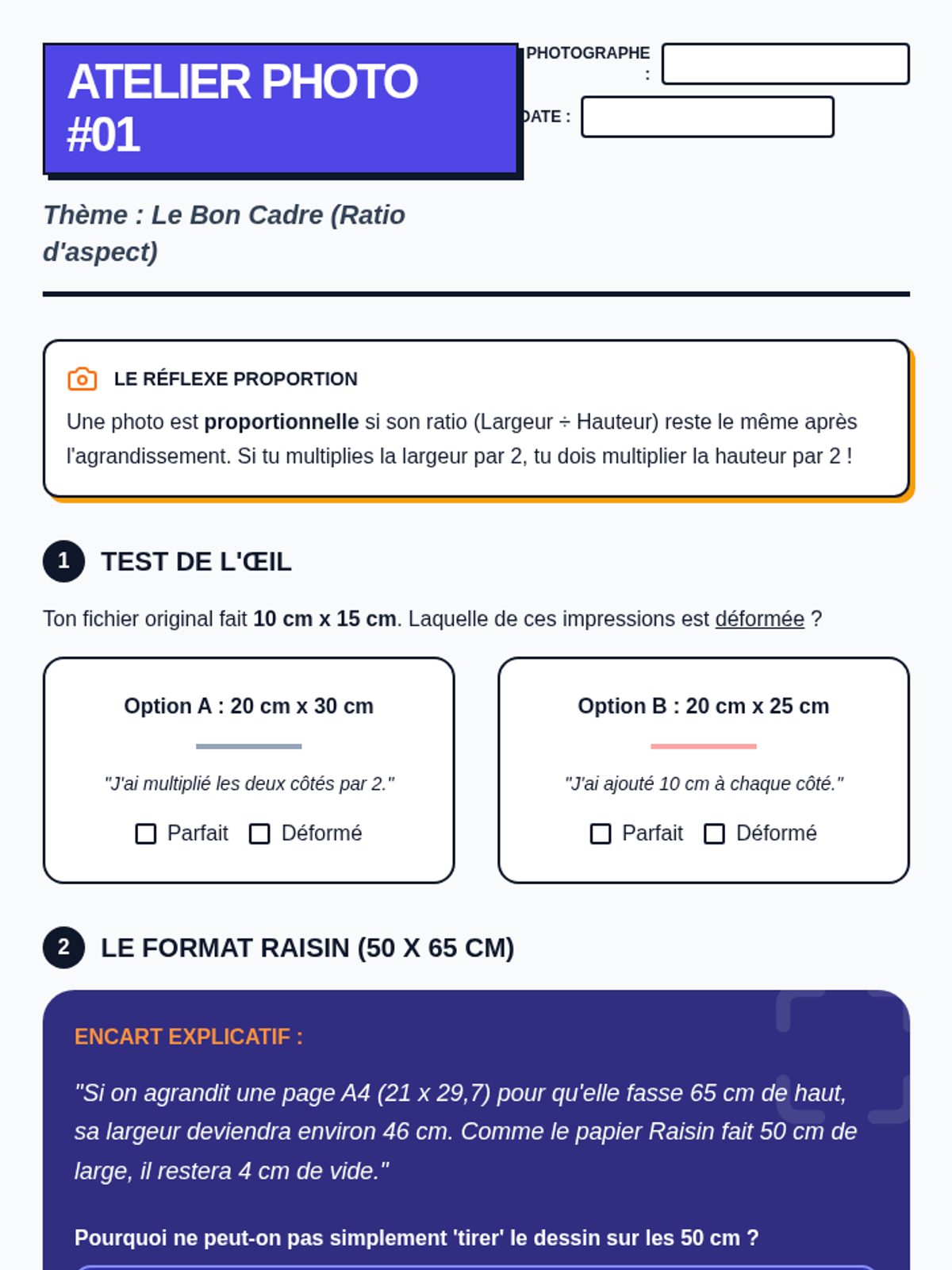
Une série de micro-leçons de 10 minutes centrée sur l'optimisation de l'espace papier. Les élèves apprennent à mettre à l'échelle une mise en page de 6 photos (format A4) vers le format Raisin (50x65 cm) en minimisant les chutes.
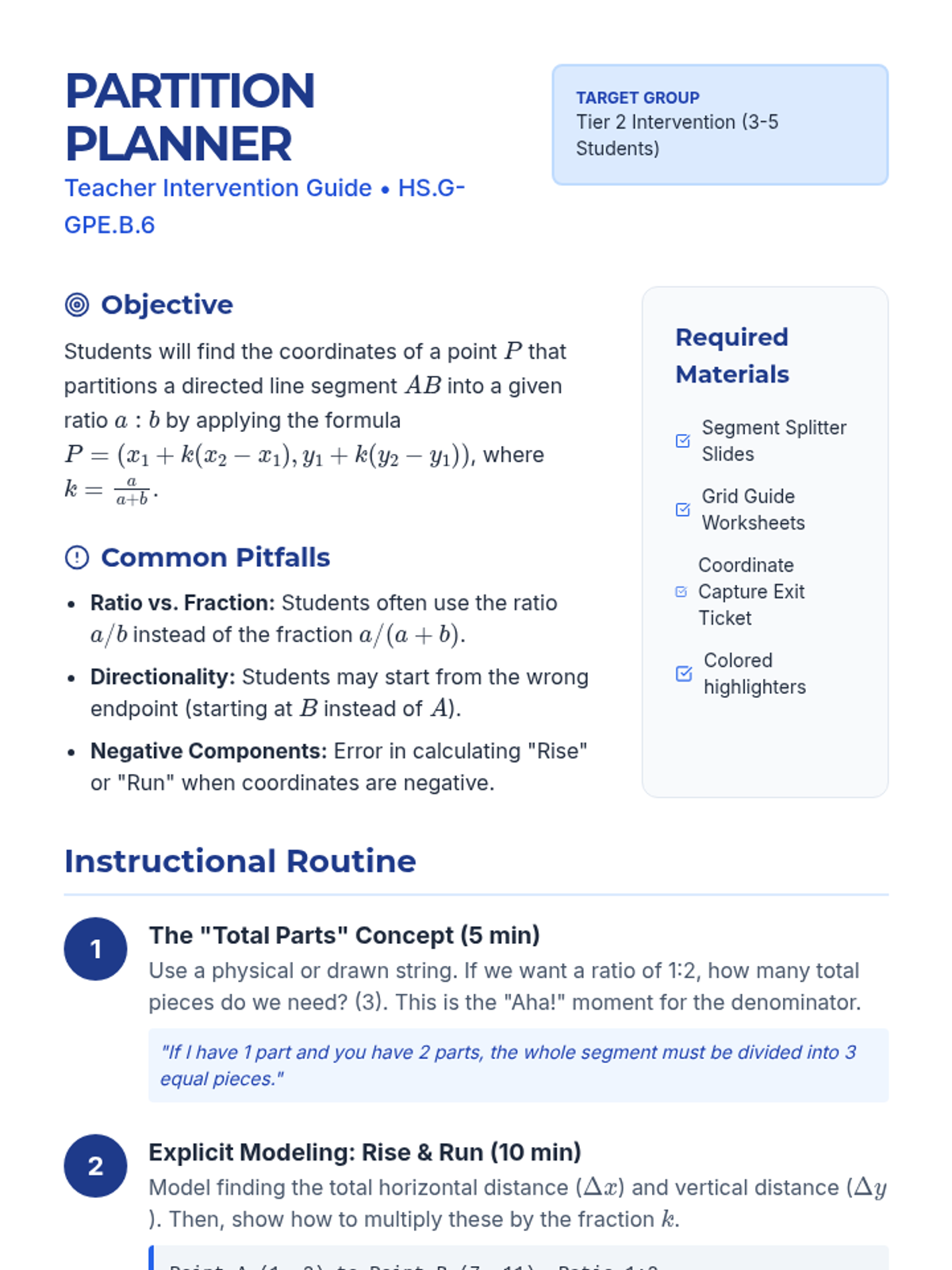
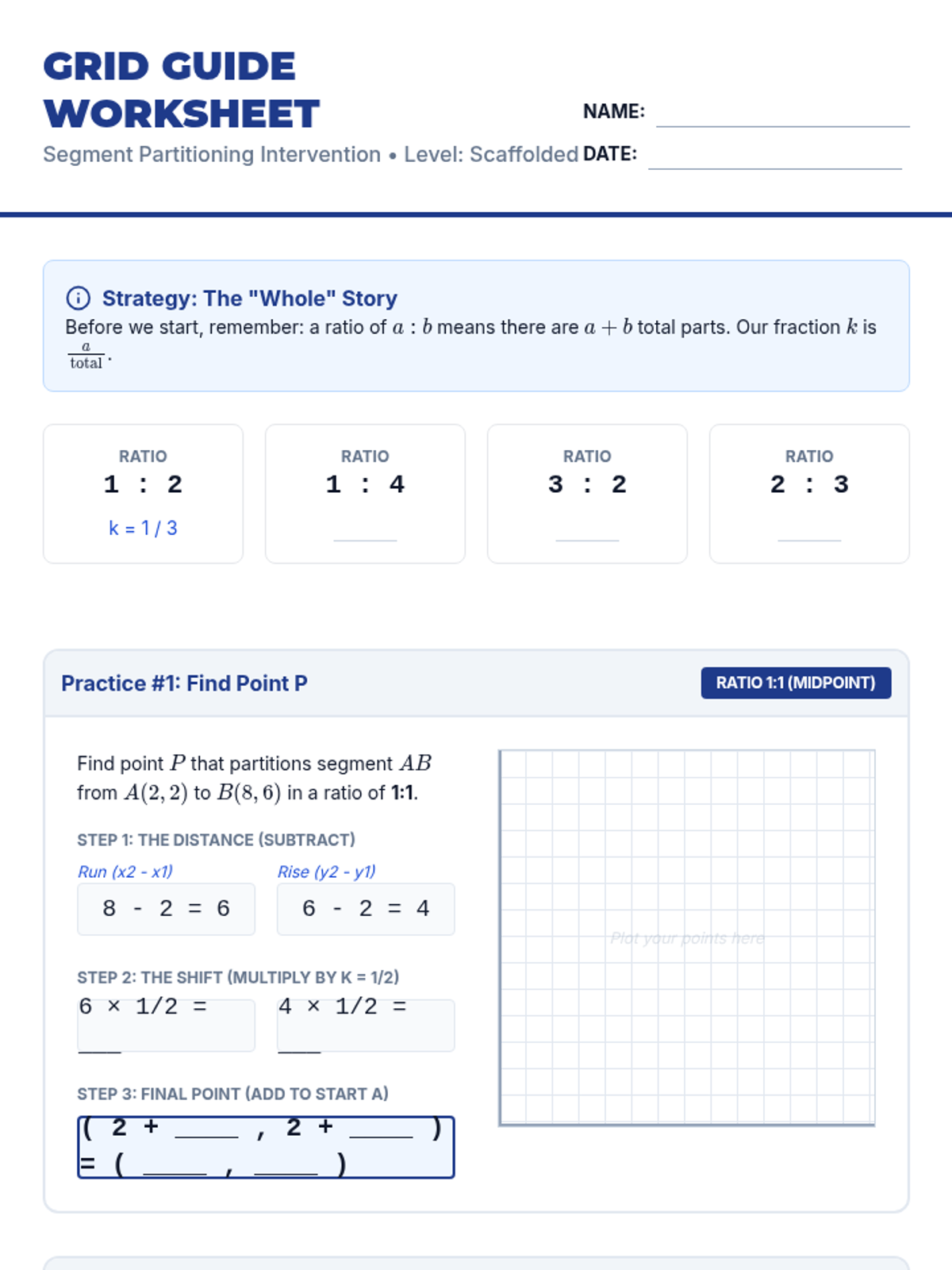
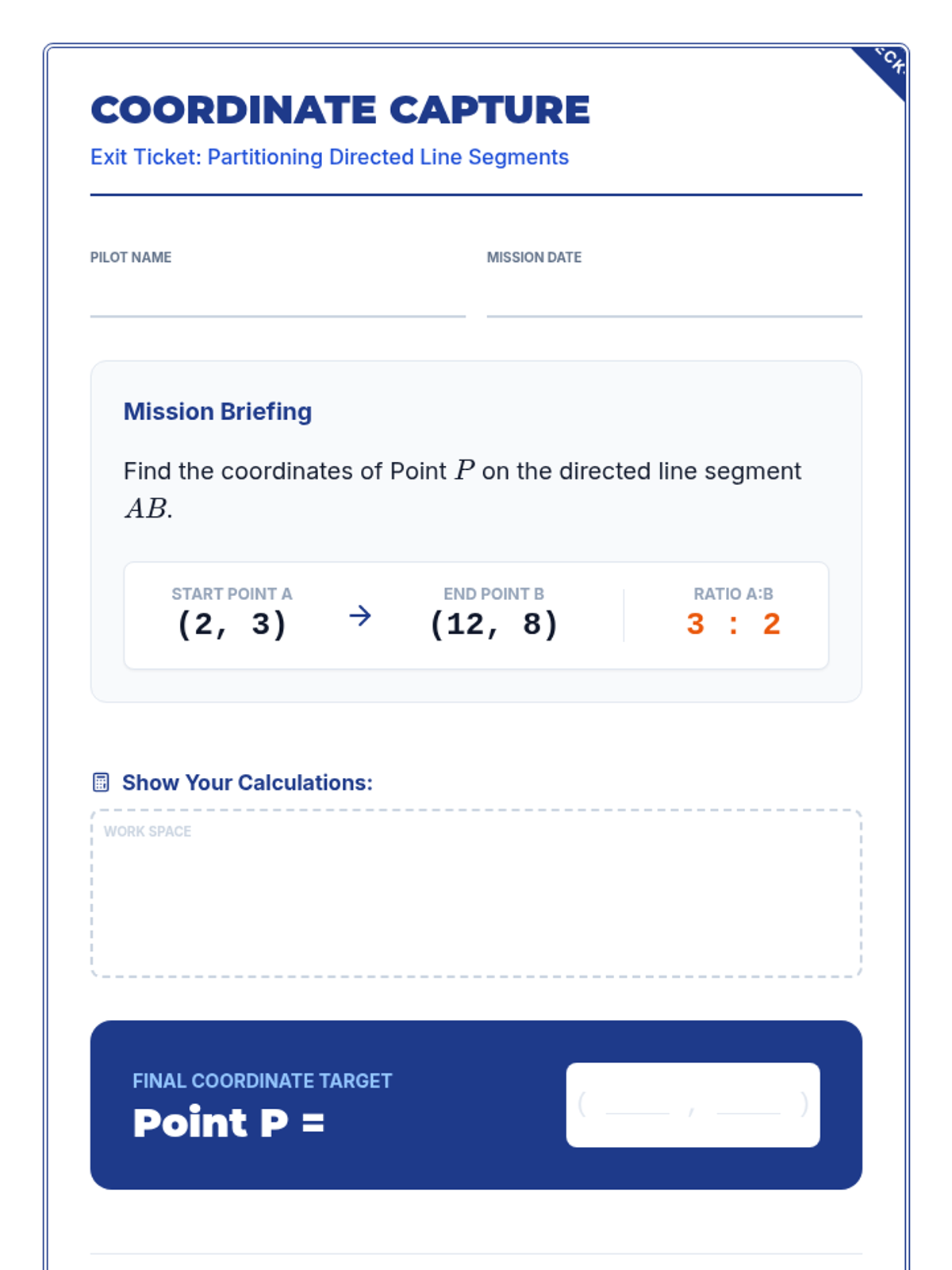
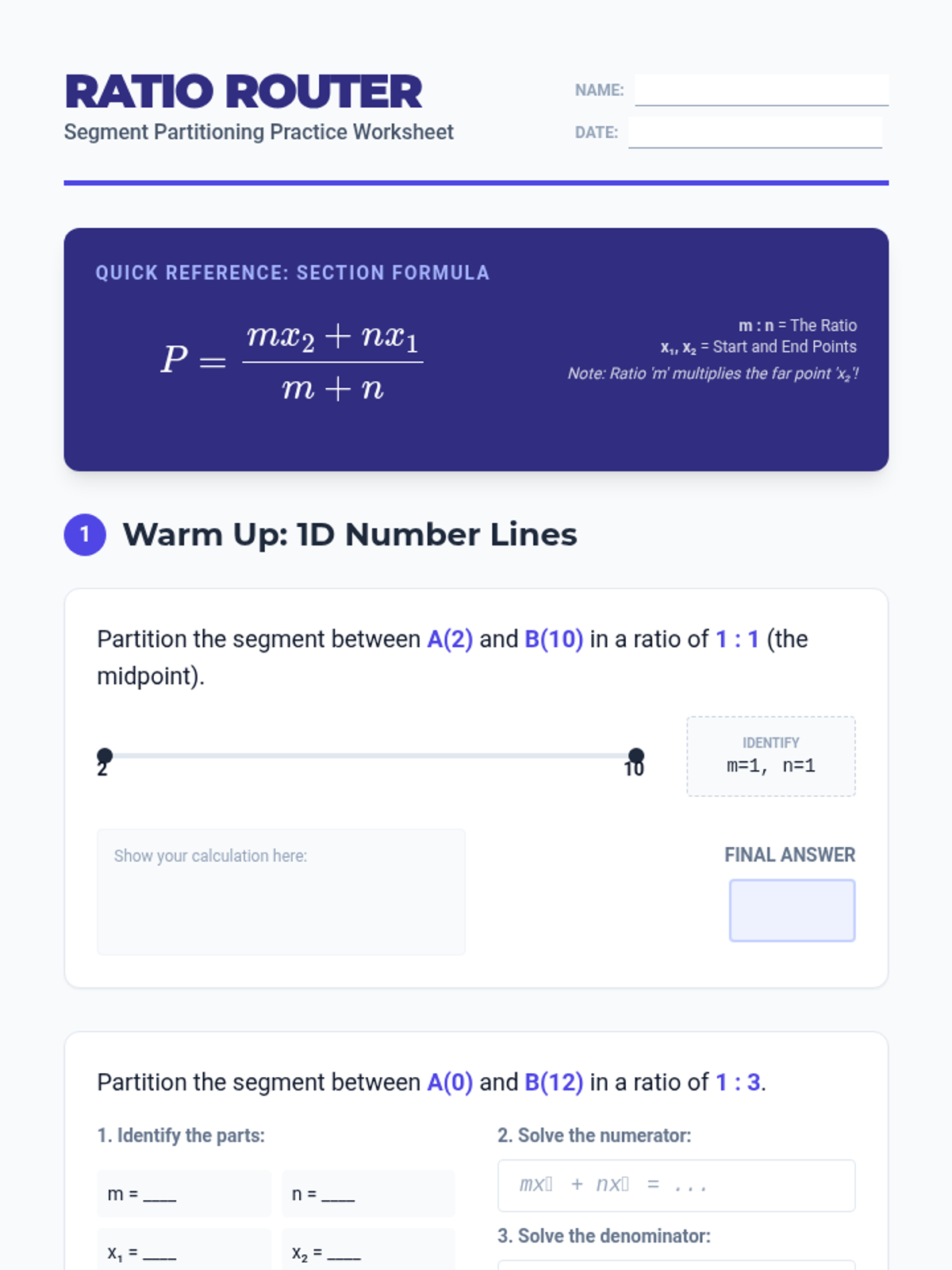
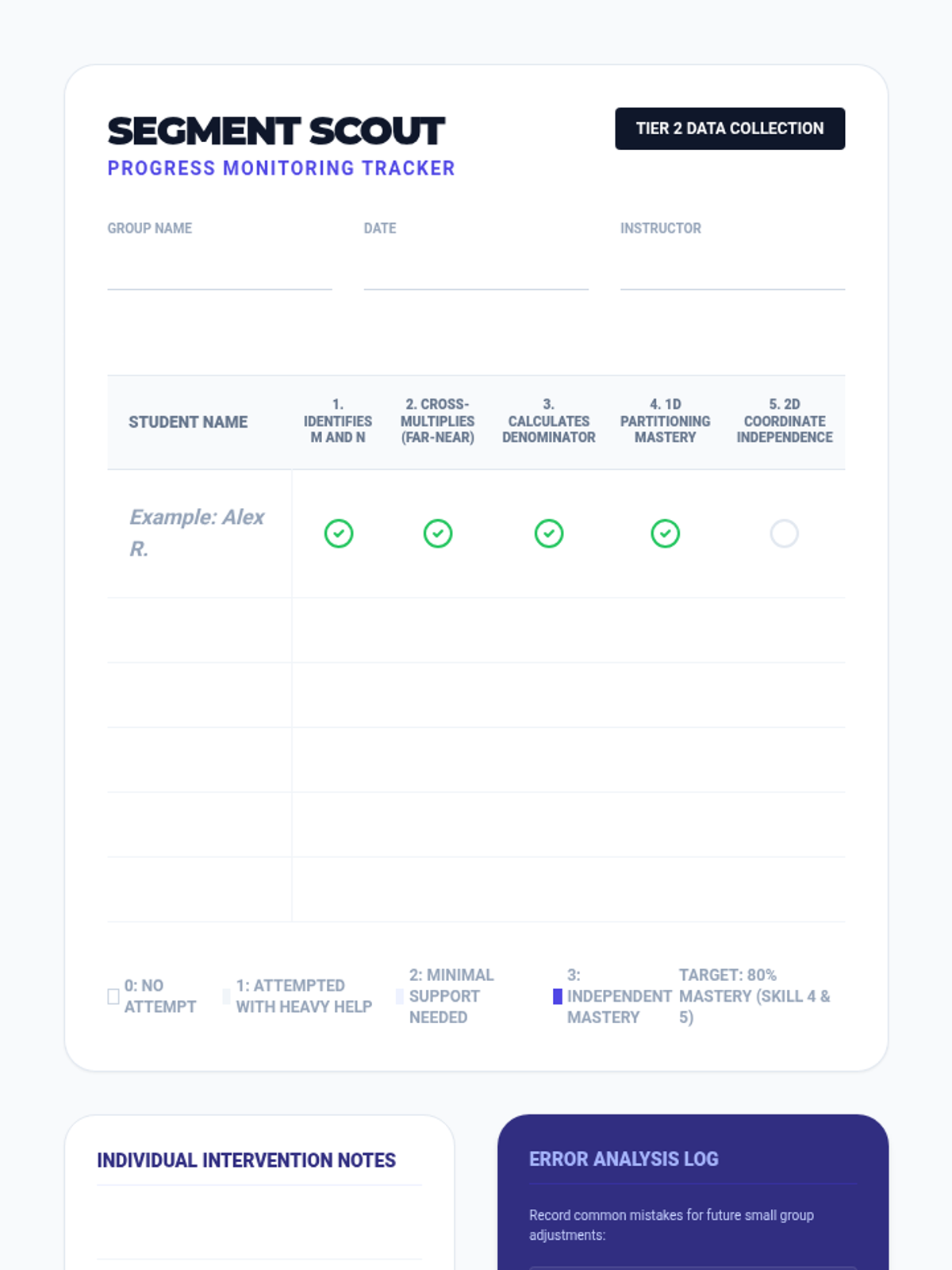
A targeted intervention sequence focused on helping students master the process of partitioning directed line segments in specific ratios. This sequence provides high-scaffold support, visual aids, and step-by-step procedures to ensure student success.
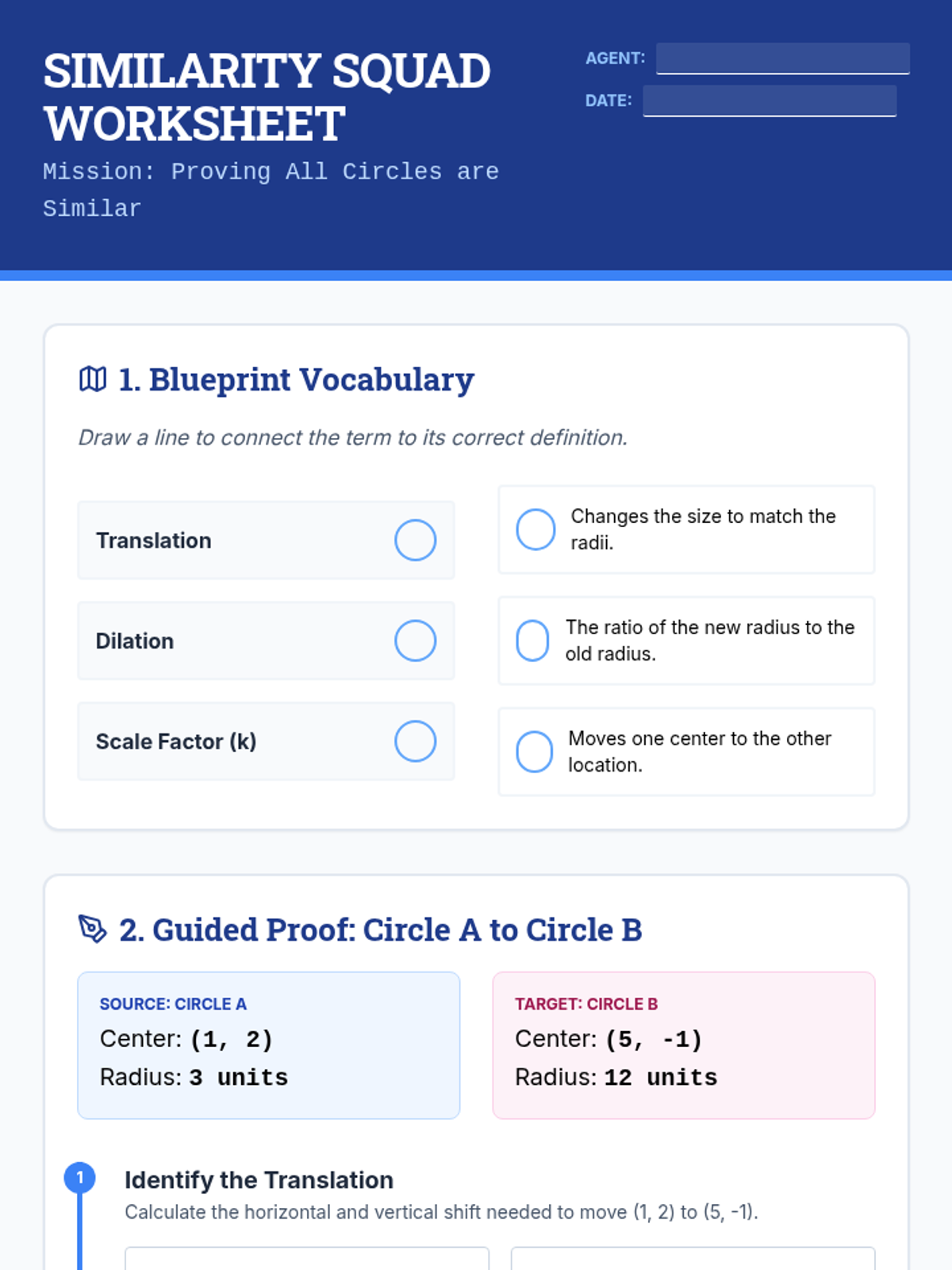
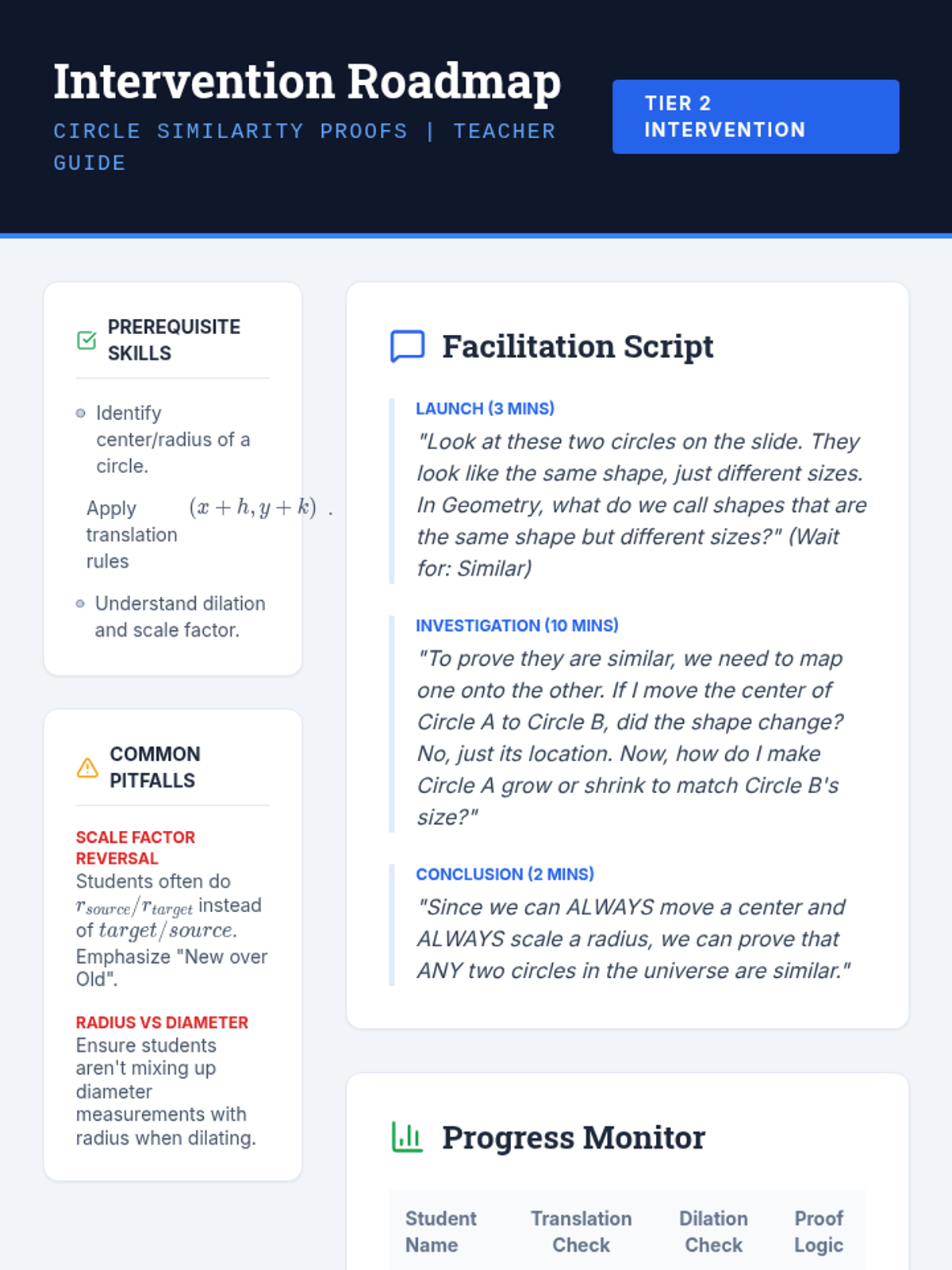
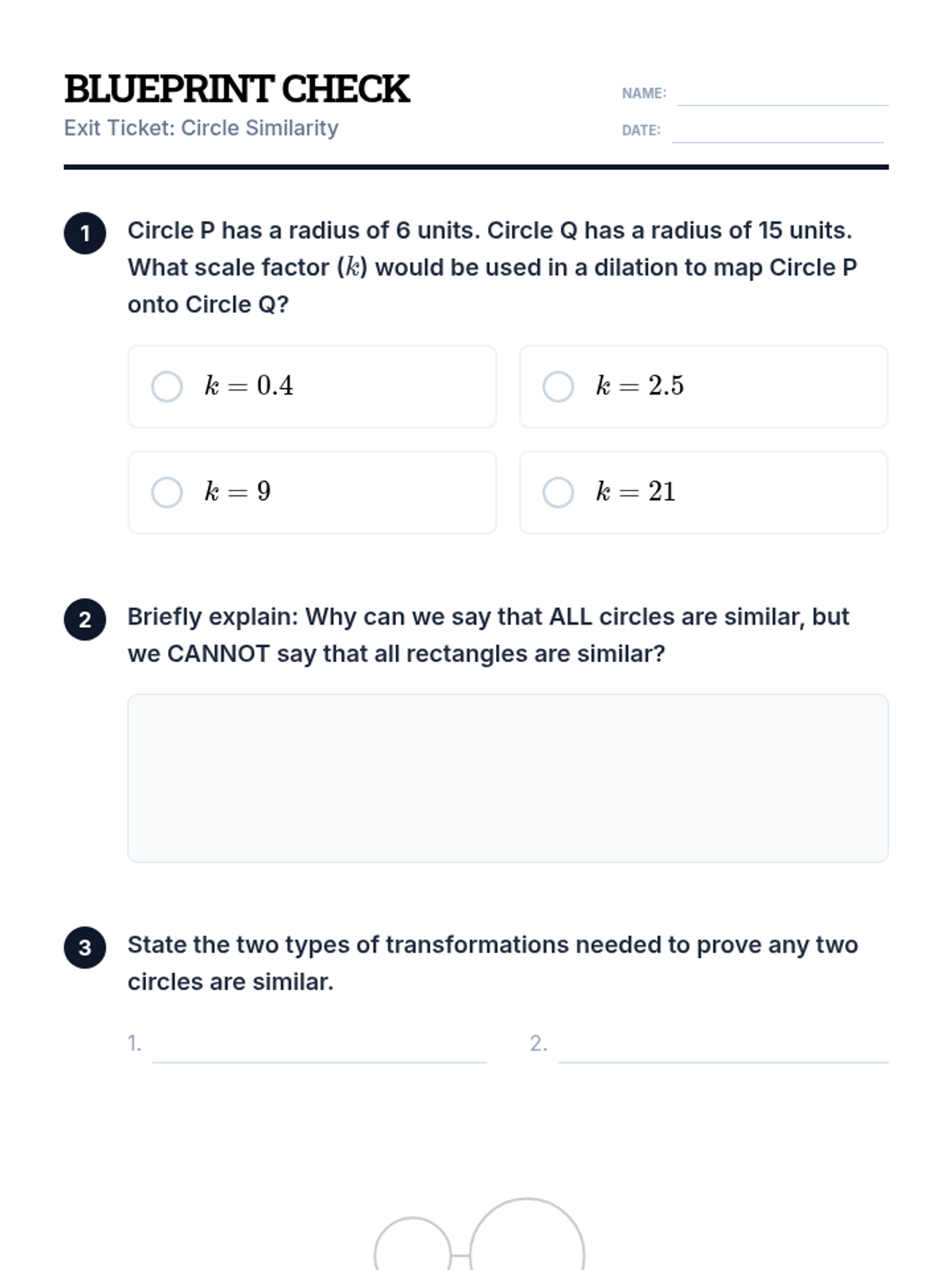
A targeted intervention sequence for high school geometry students to master circle similarity through transformations and coordinate proofs.
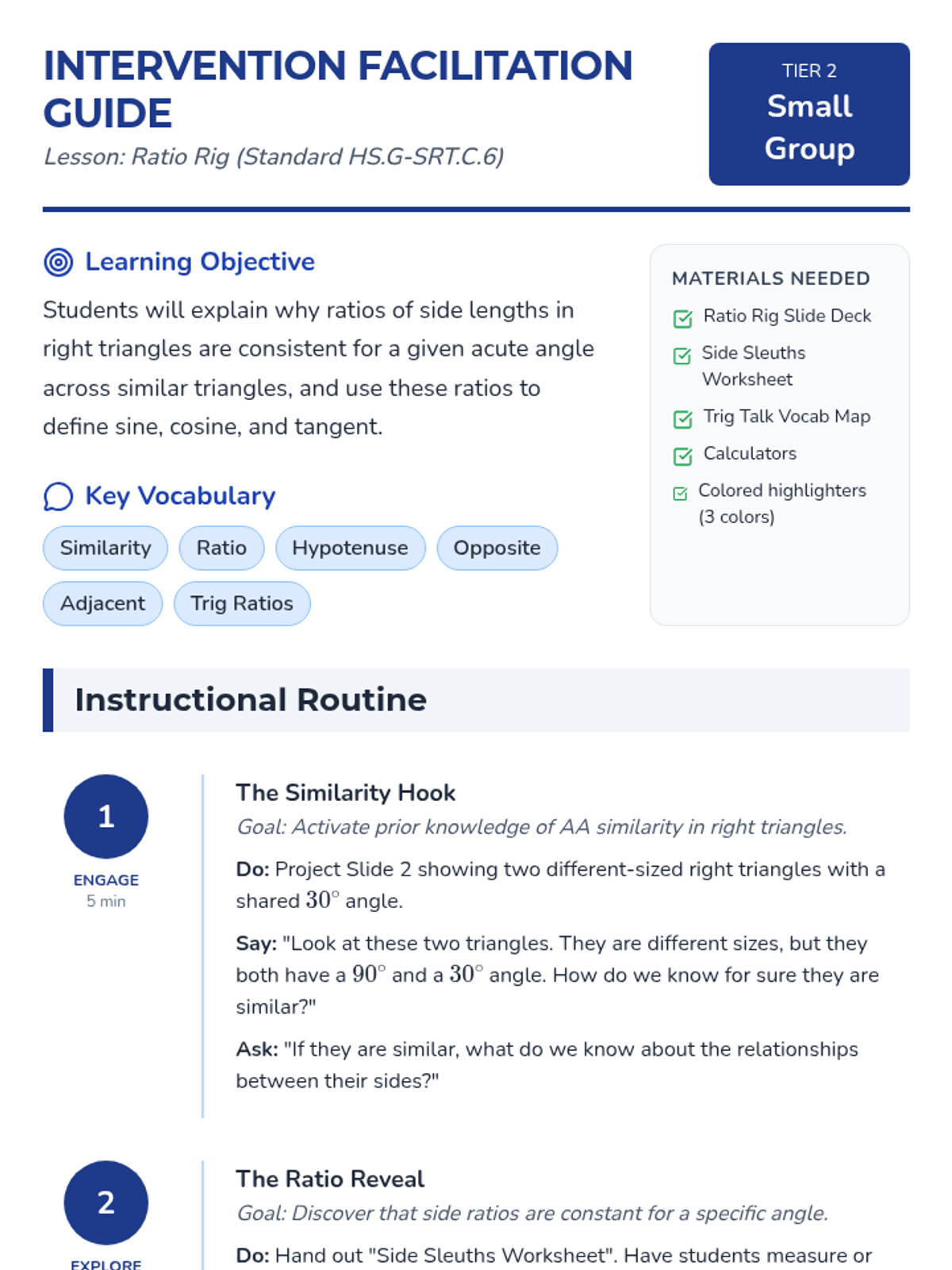
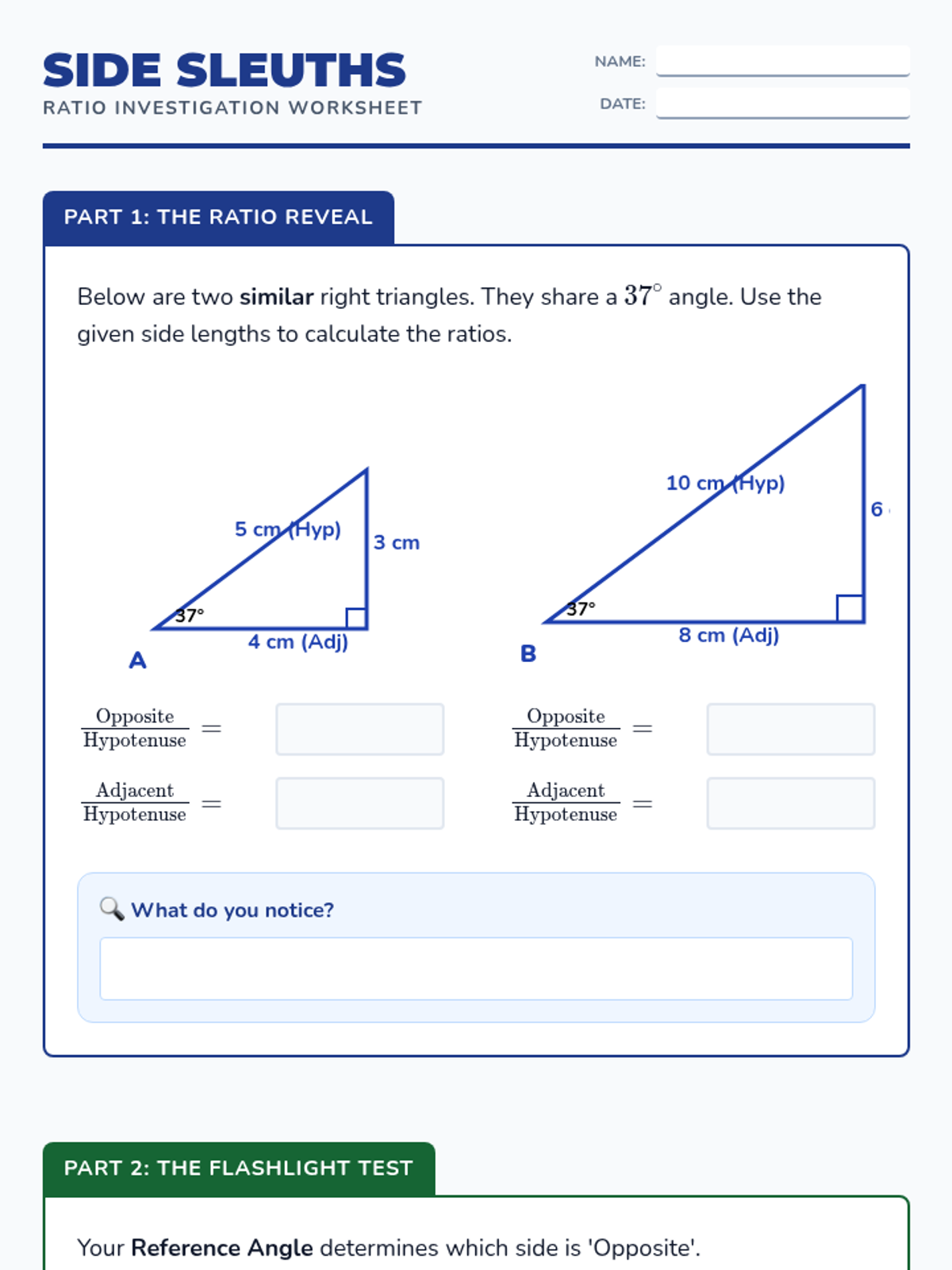
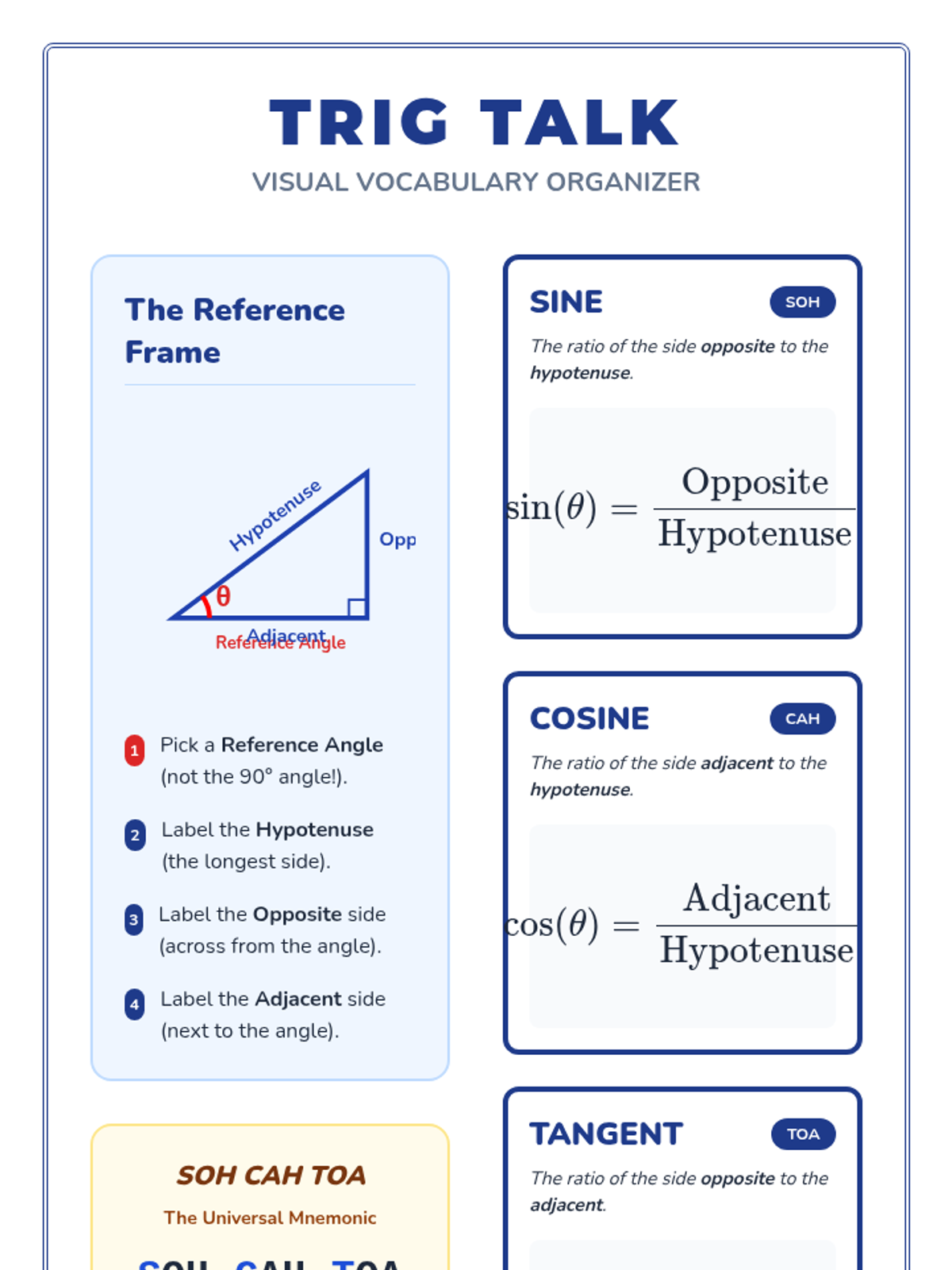
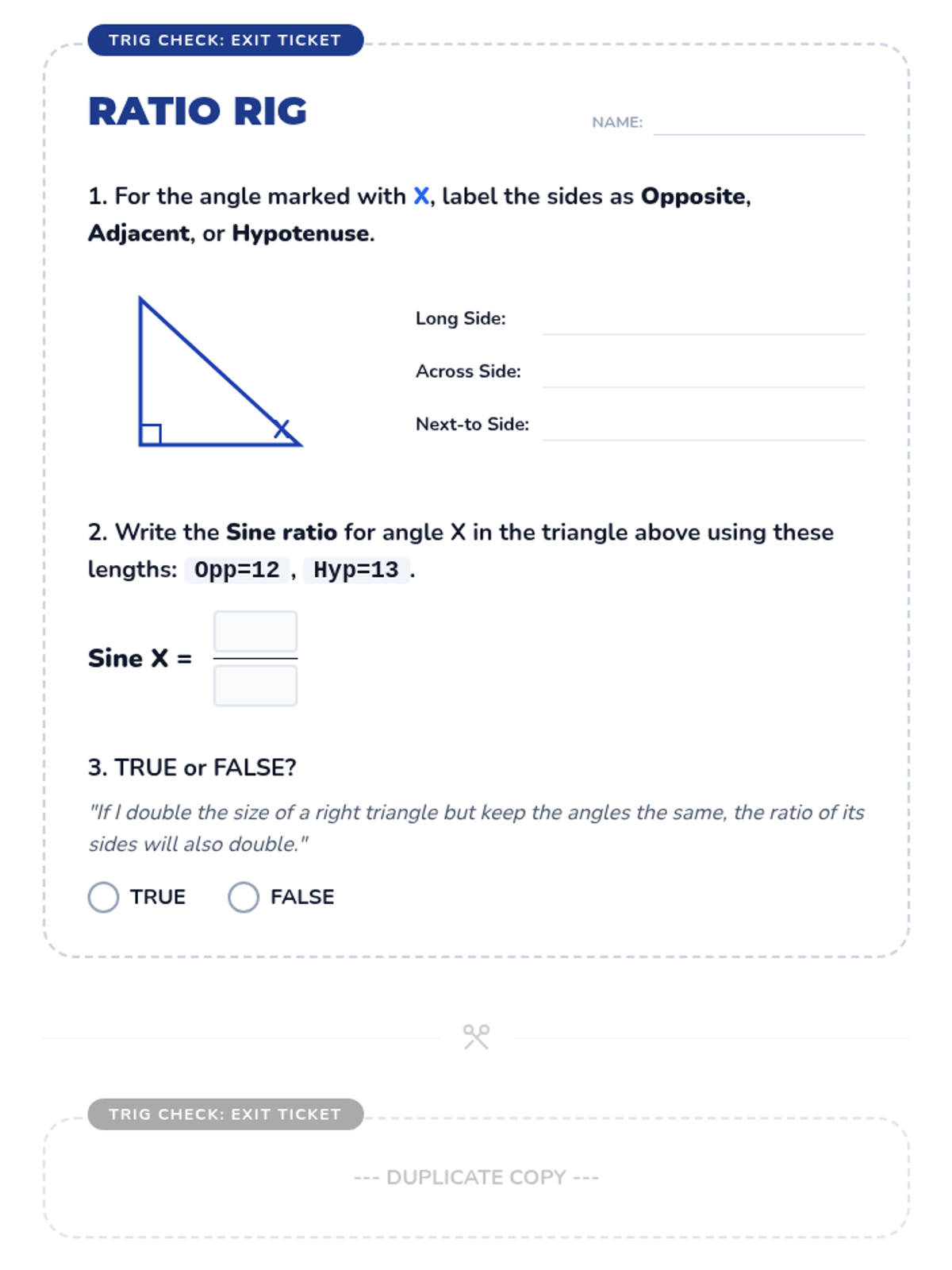
A series of targeted intervention lessons designed to bridge the gap between triangle similarity and basic trigonometry, focusing on conceptual understanding and ratio consistency.
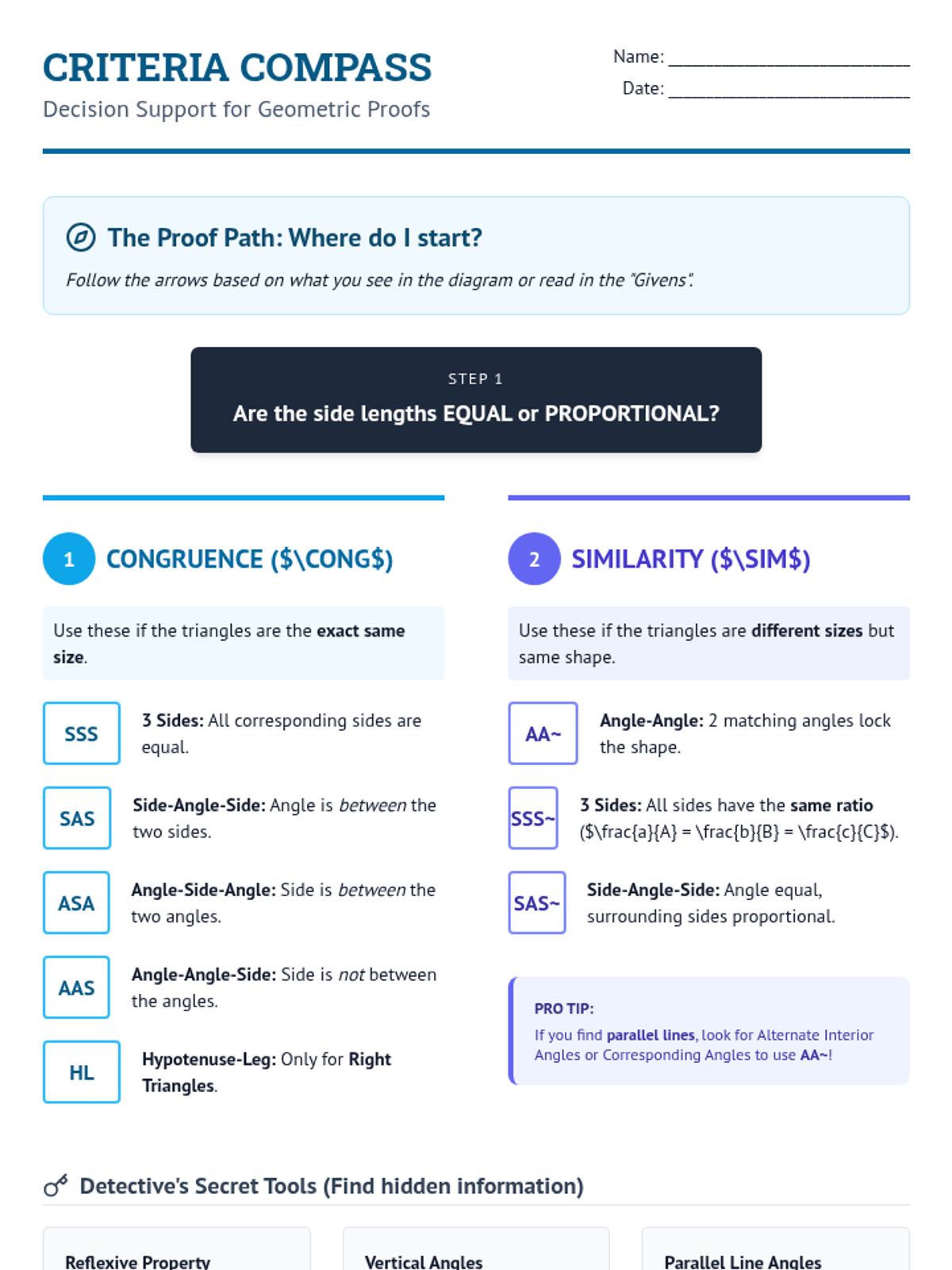
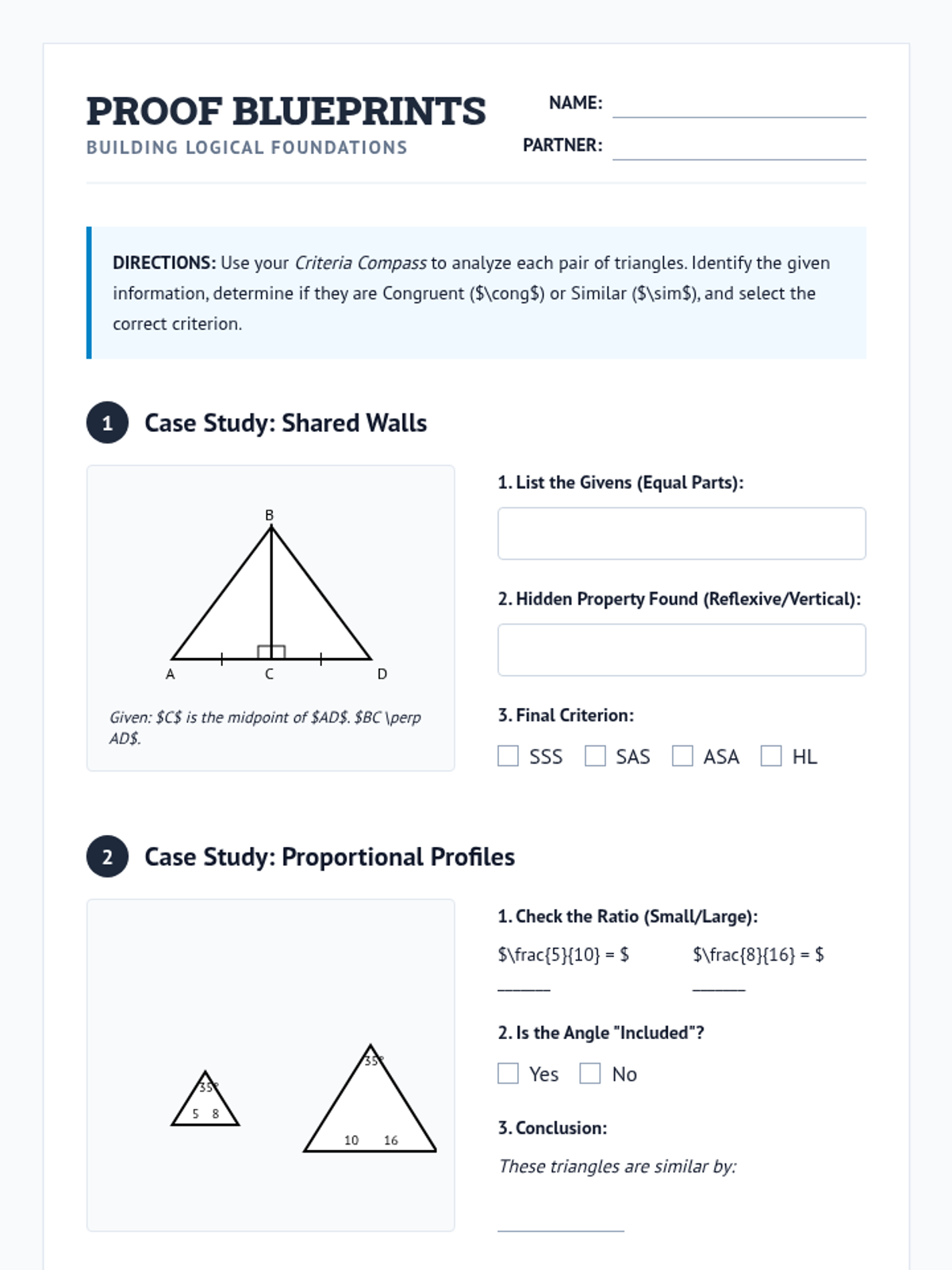
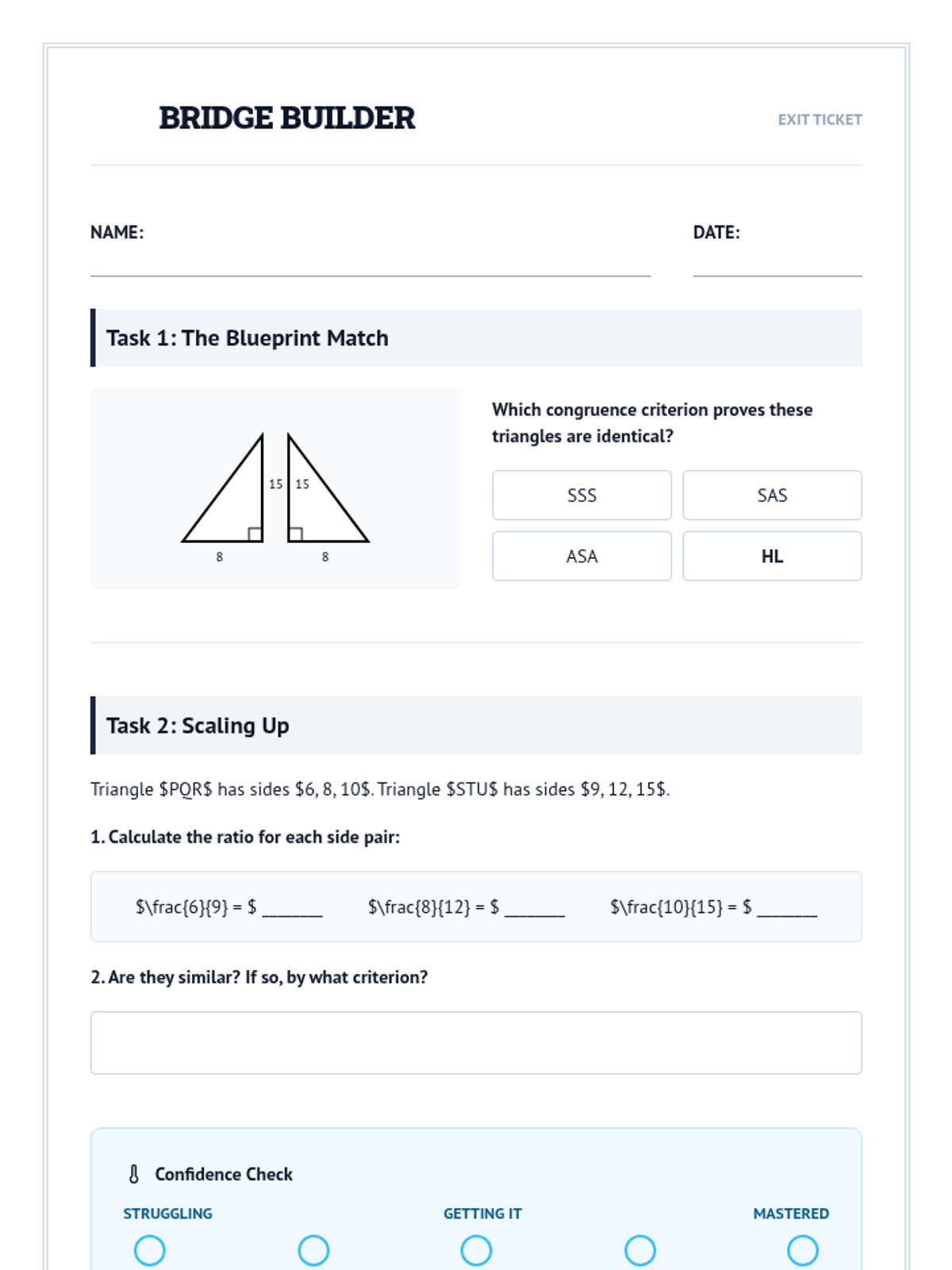
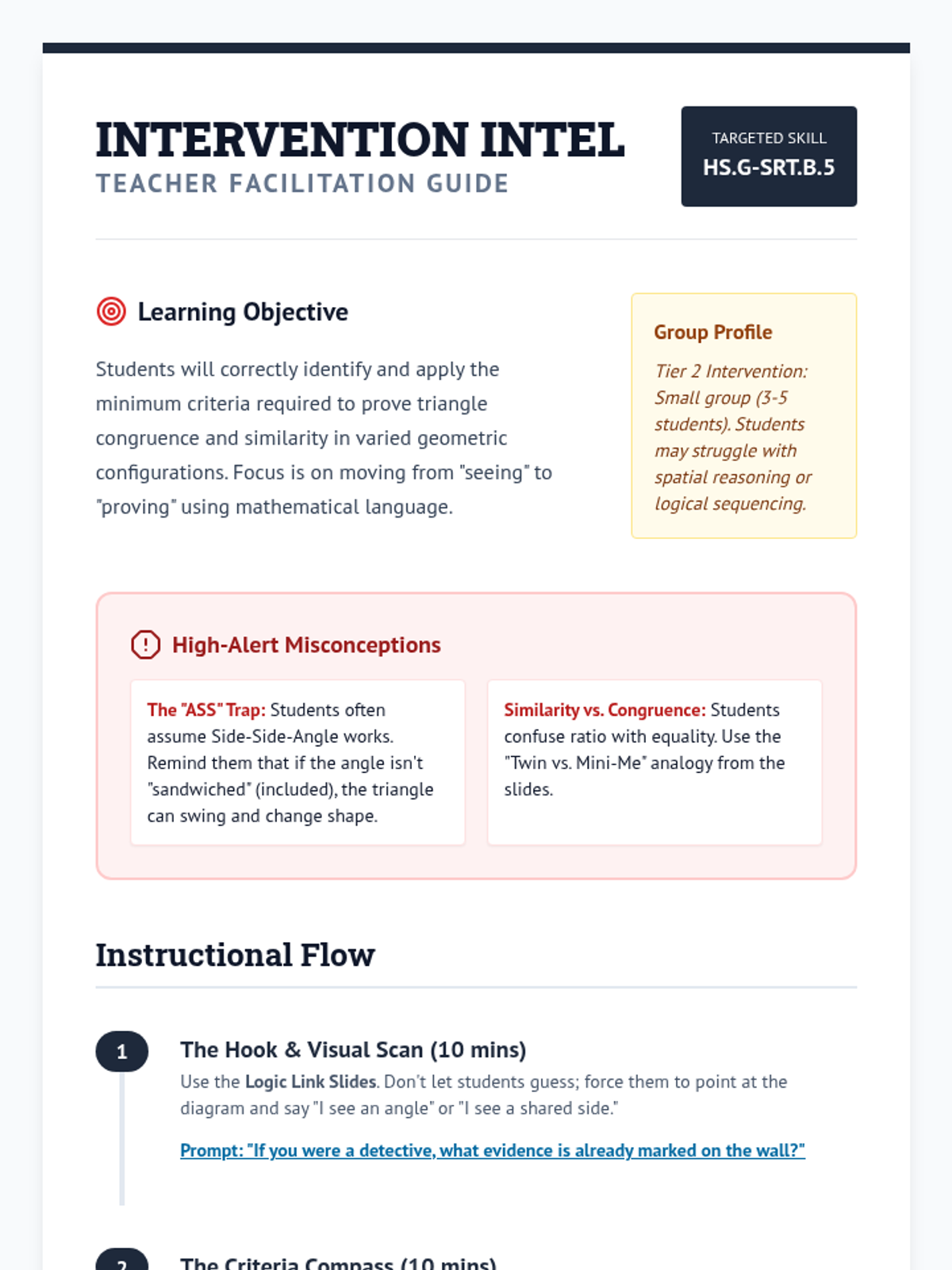
A targeted intervention sequence focused on helping students master triangle congruence and similarity criteria through scaffolded logic and collaborative problem-solving.
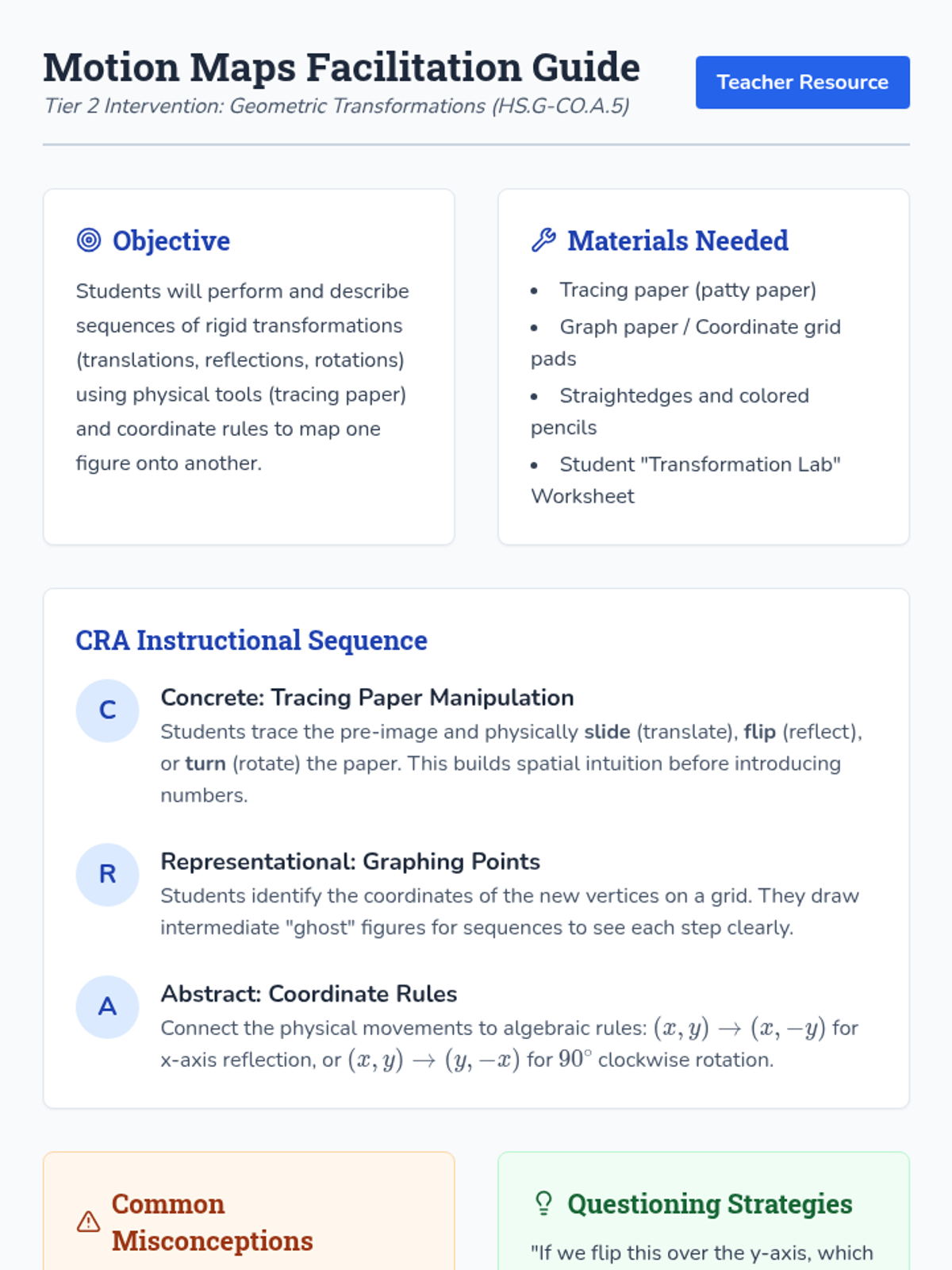
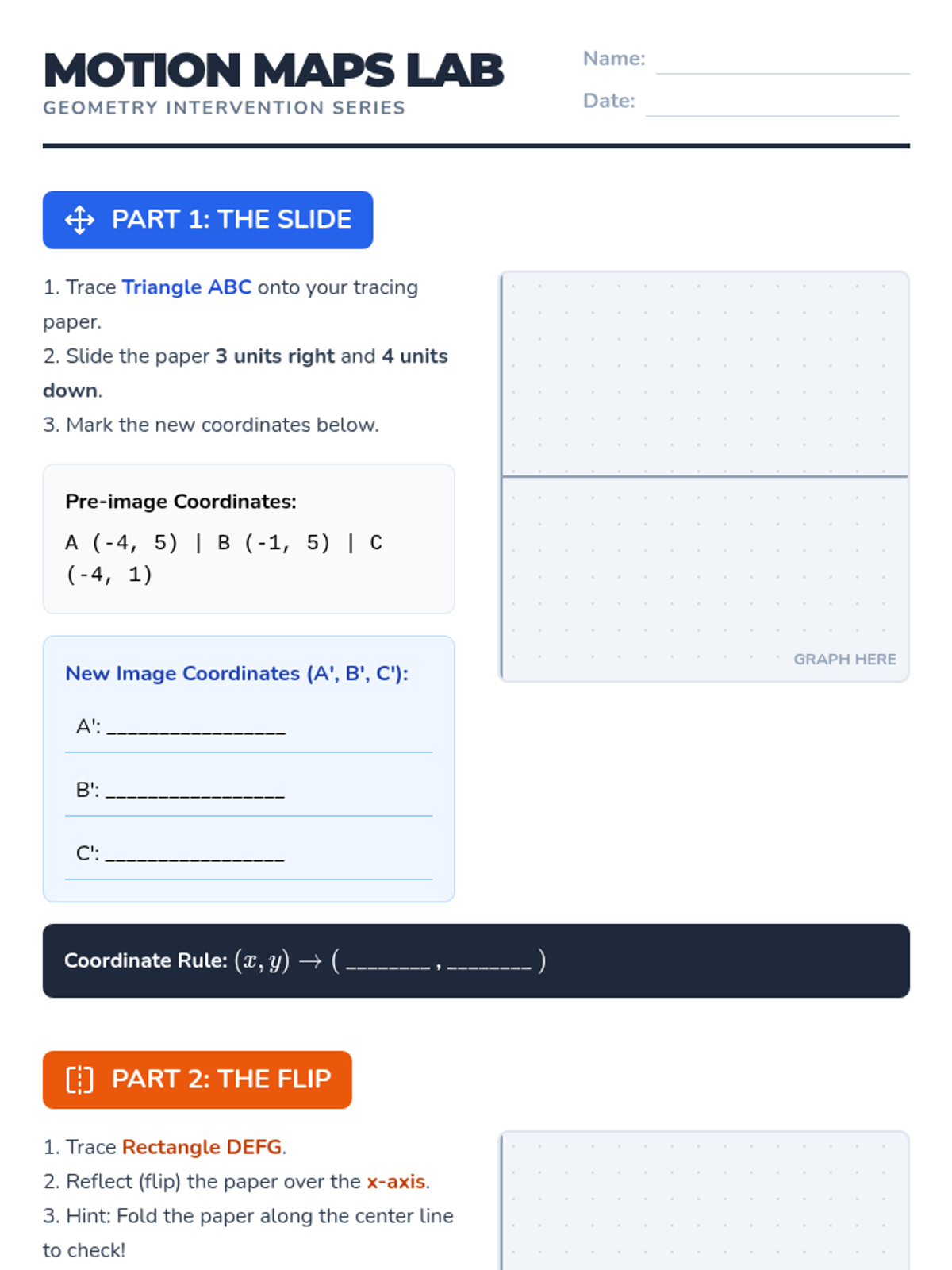
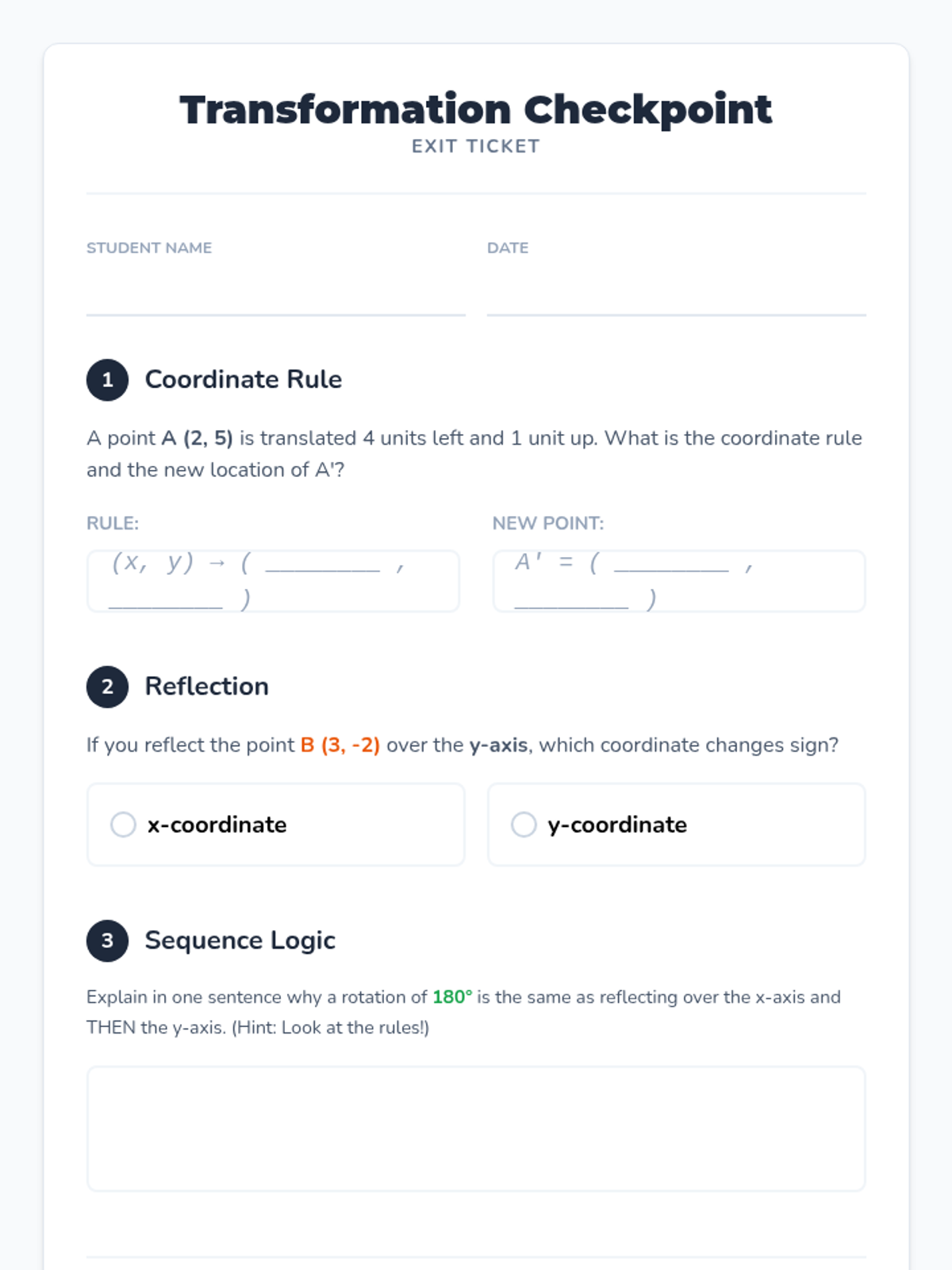
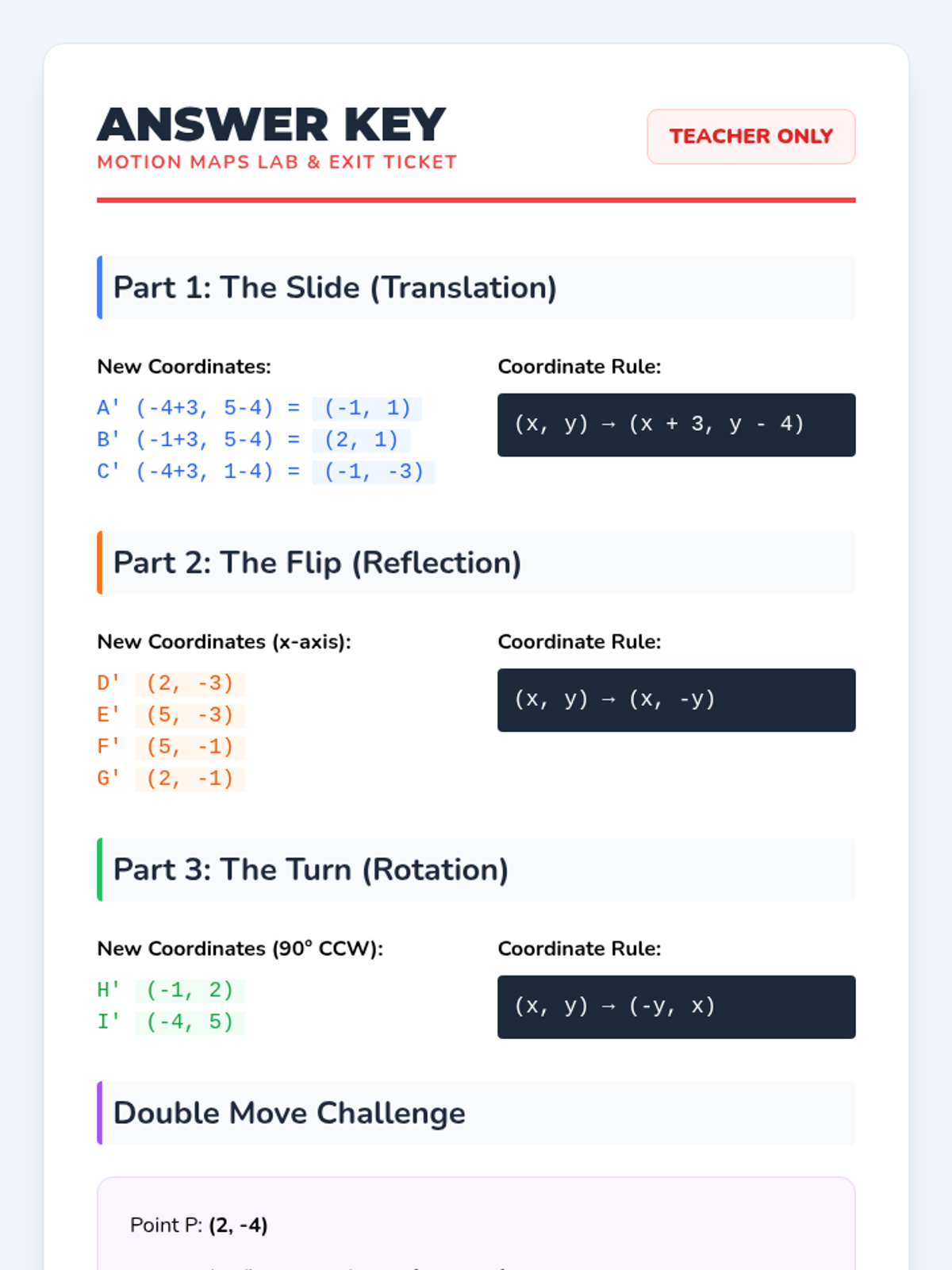
A targeted Tier 2 intervention sequence focused on geometric transformations. It utilizes a Concrete-Representational-Abstract (CRA) approach, guiding struggling learners from physical manipulation with tracing paper to coordinate-based abstract rules.
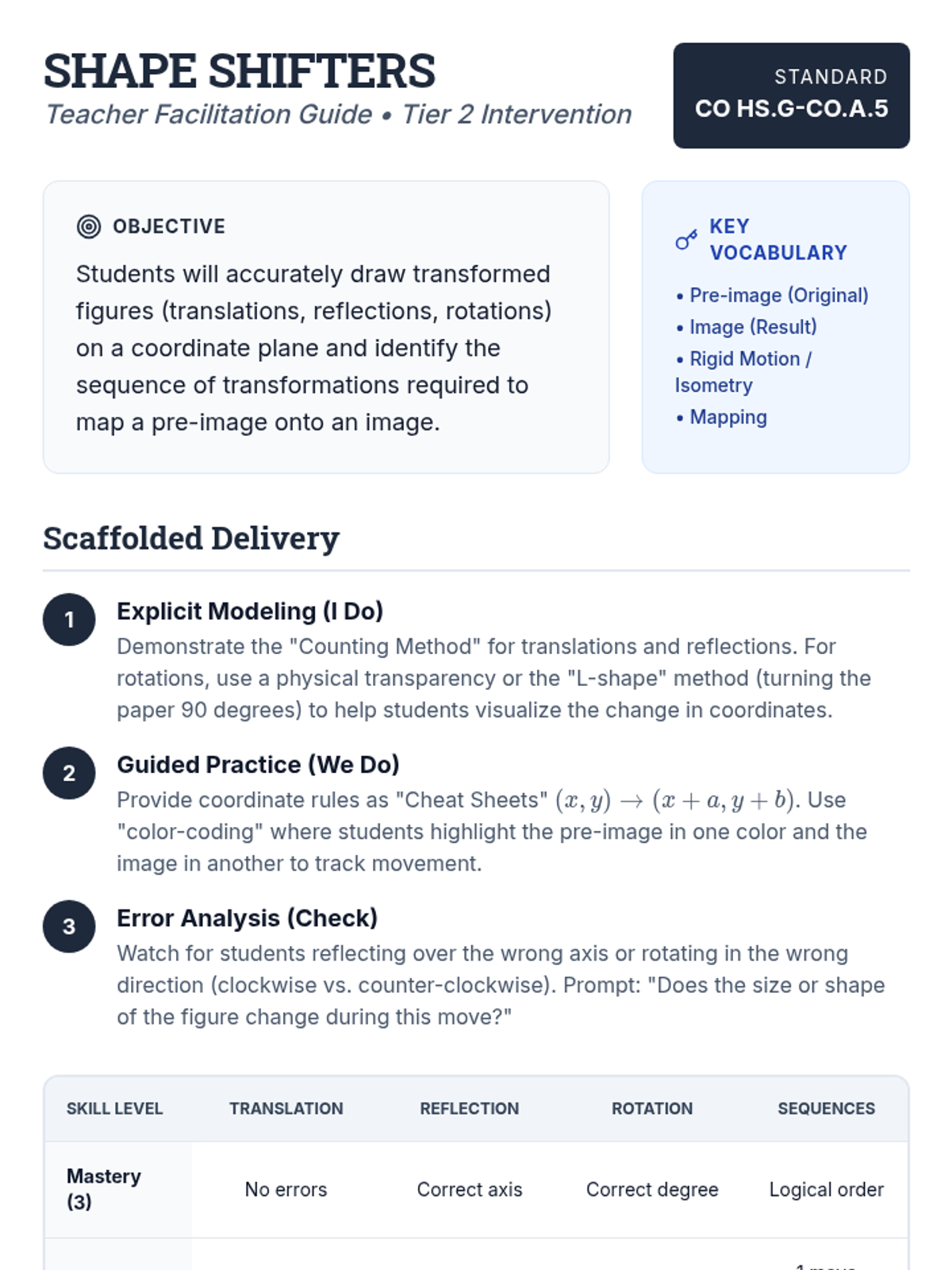
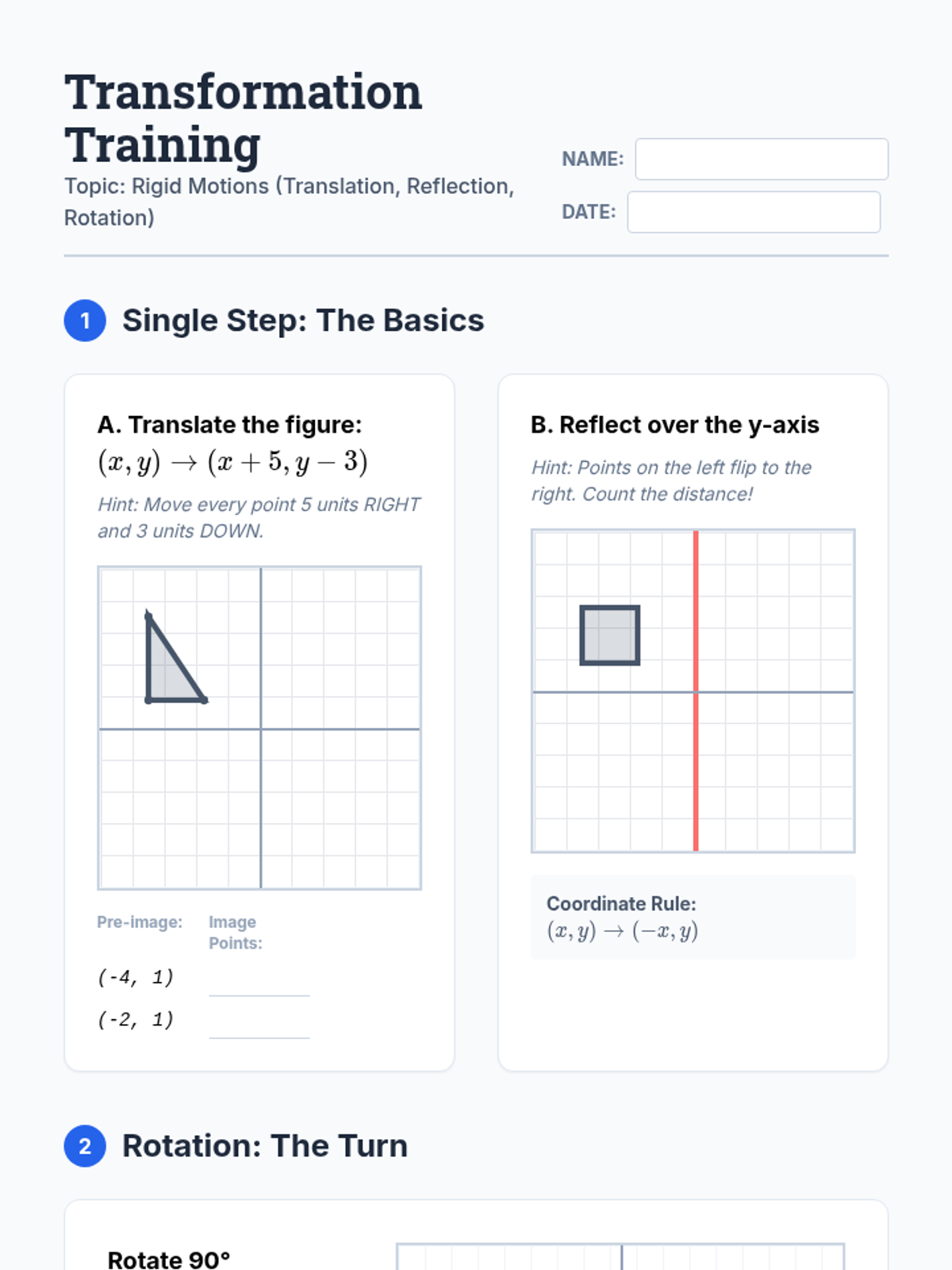
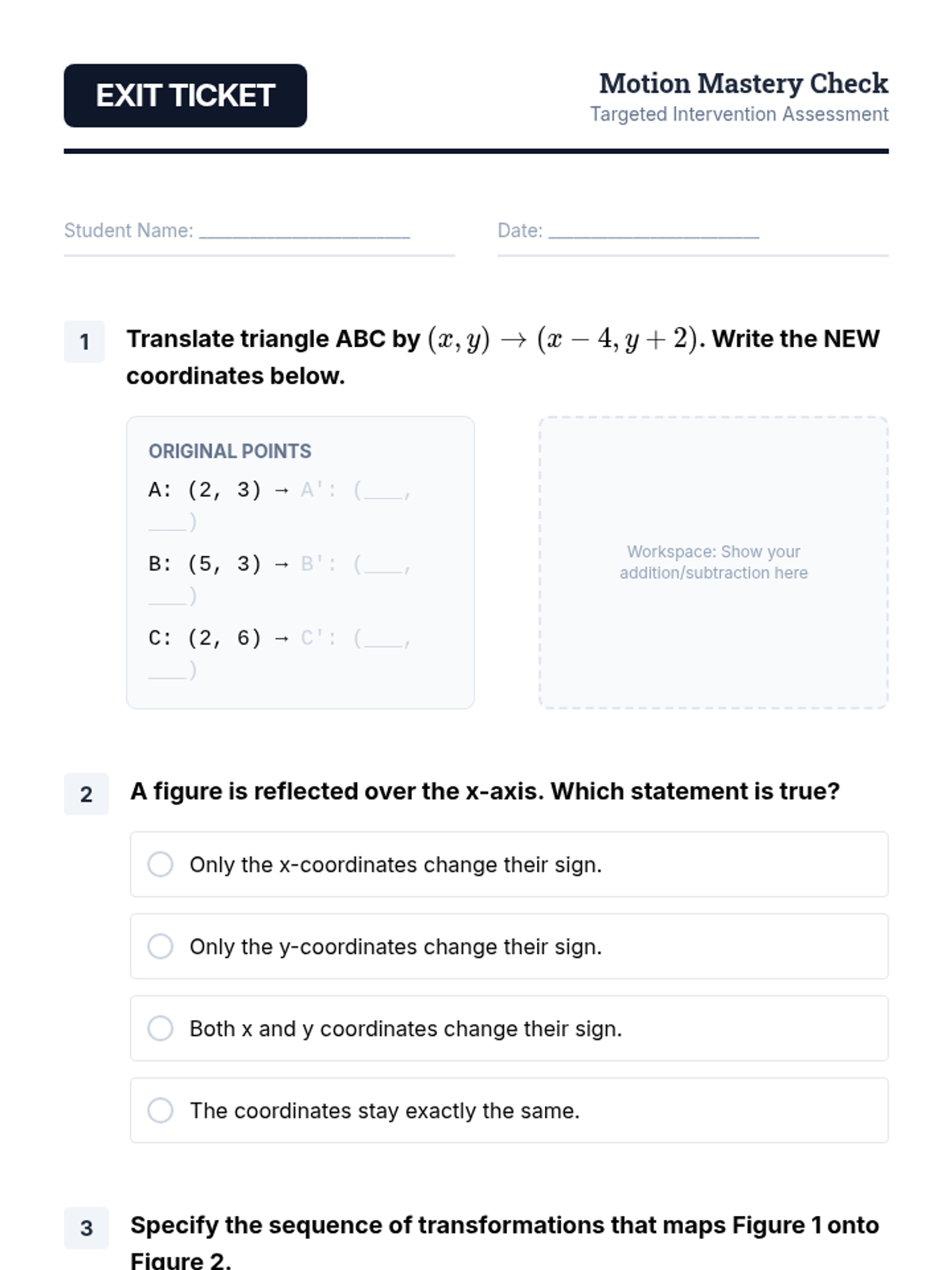
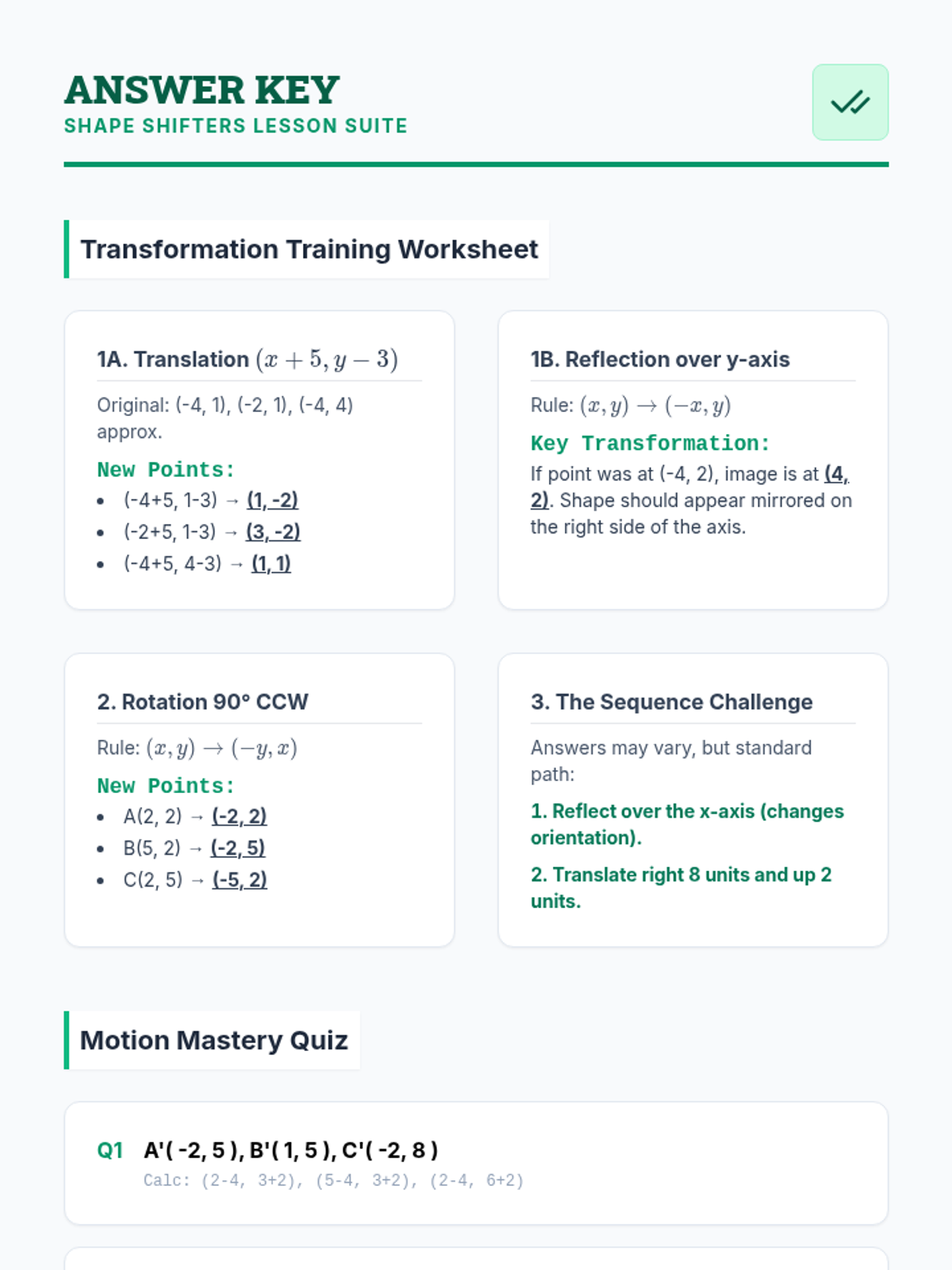
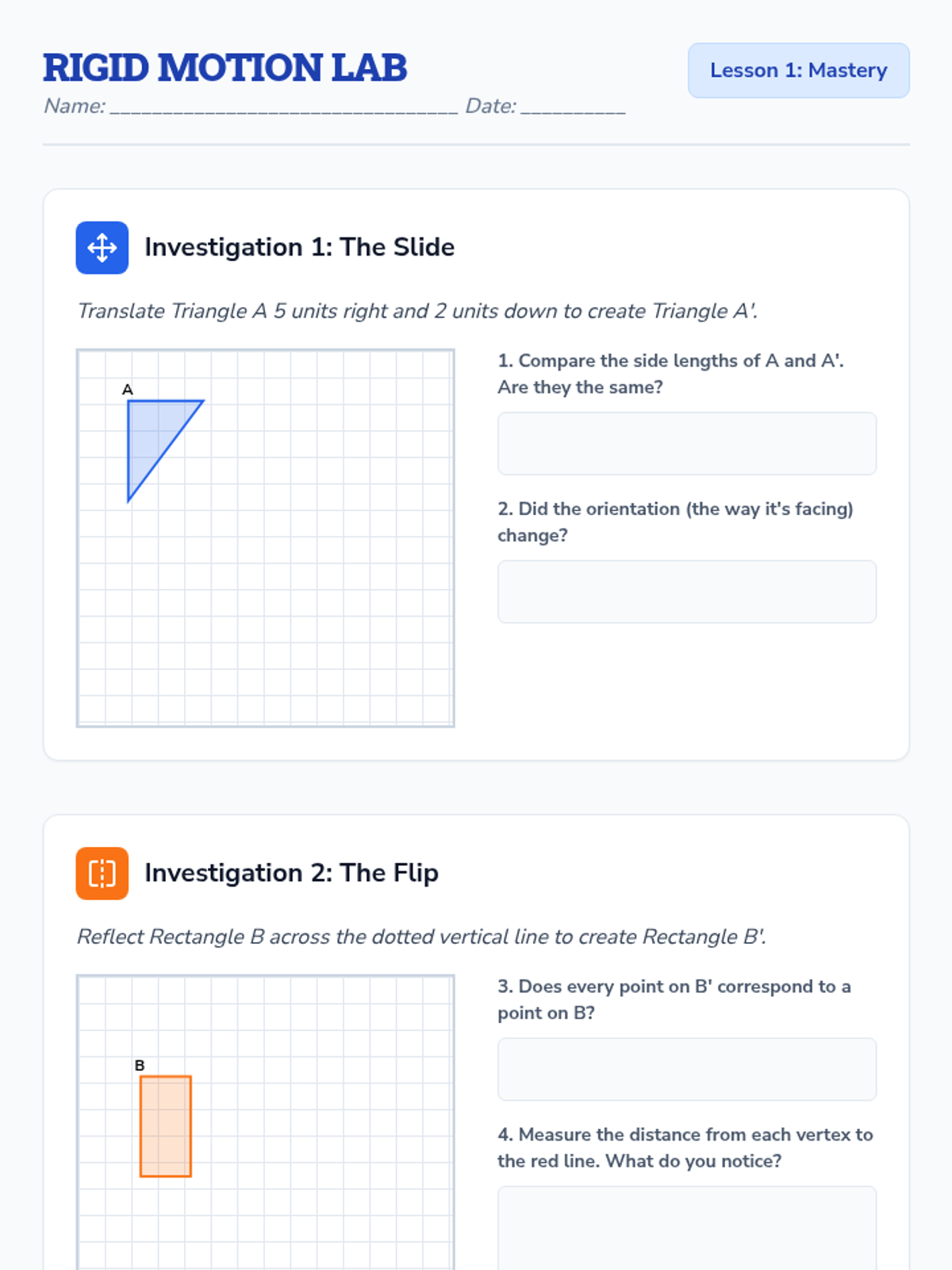
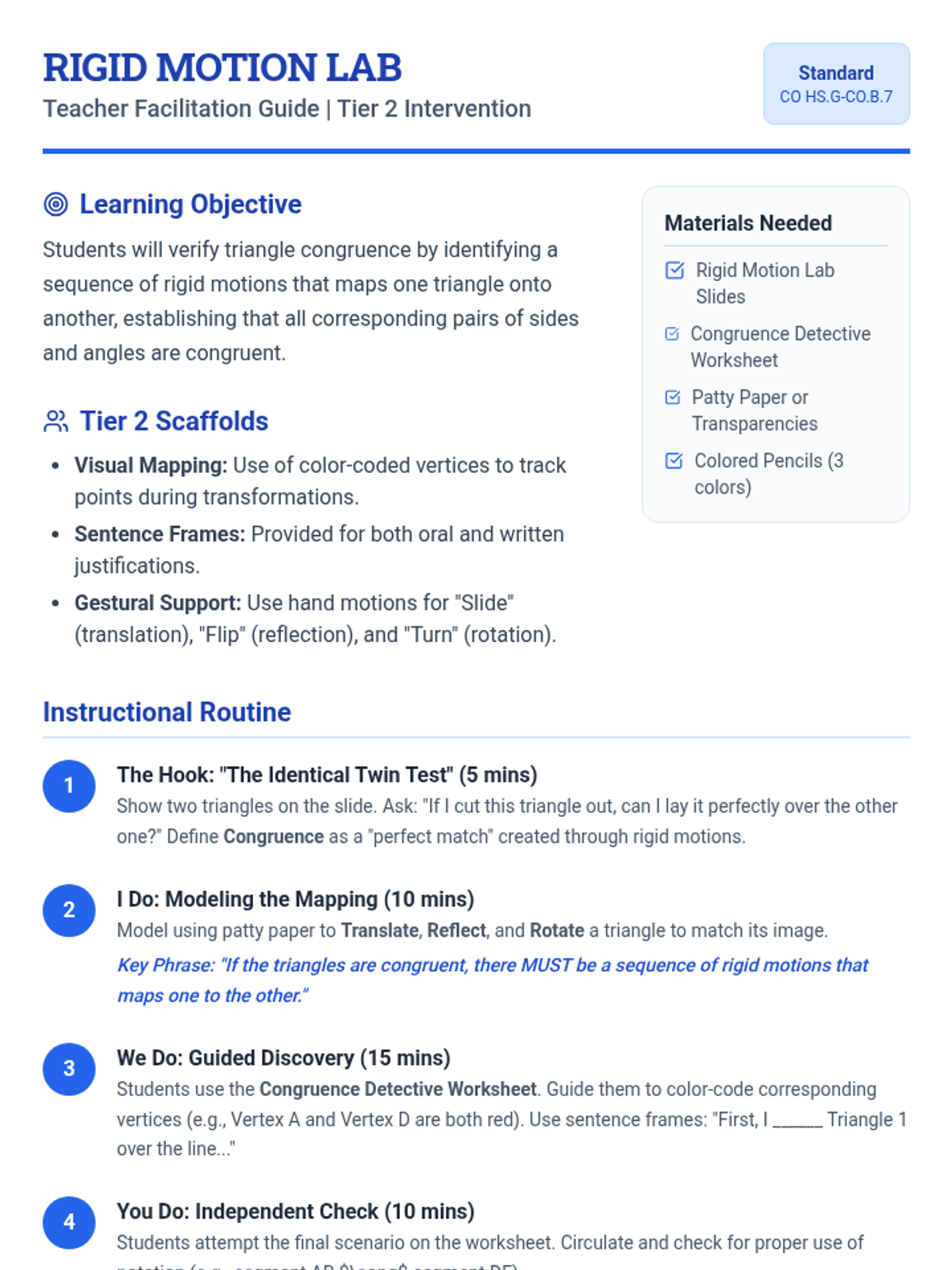
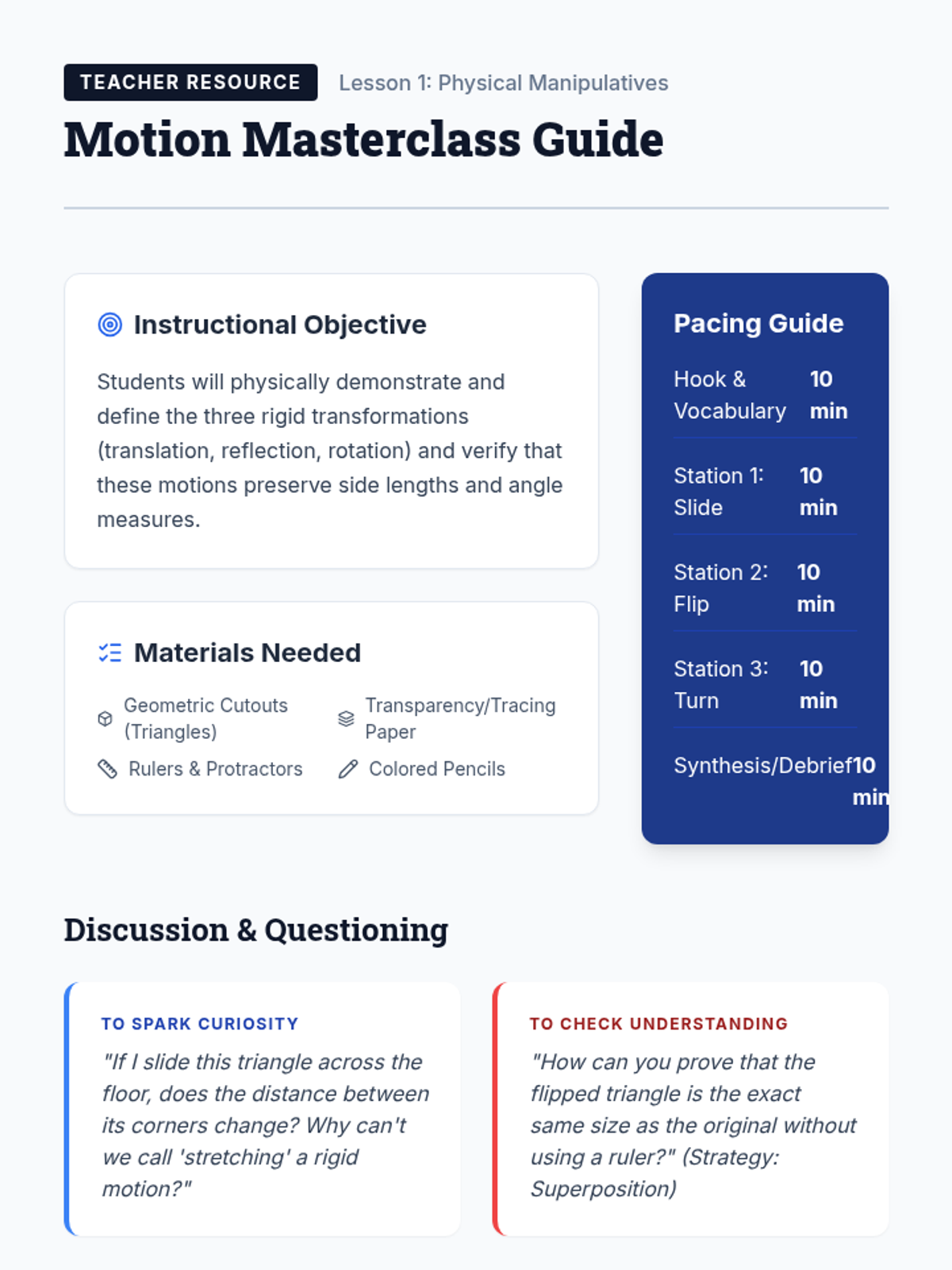
A targeted intervention sequence for high school geometry students focusing on mastering rigid transformations and sequences of motions to map figures. This unit provides scaffolded support for translation, reflection, and rotation, aligned with Colorado standard HS.G-CO.A.5.
Students explore symmetry and rigid transformations (reflections, rotations, translations) through simulations, coordinate mapping, and creative projects. The unit culminates in the design of complex tessellations using transformation composition.
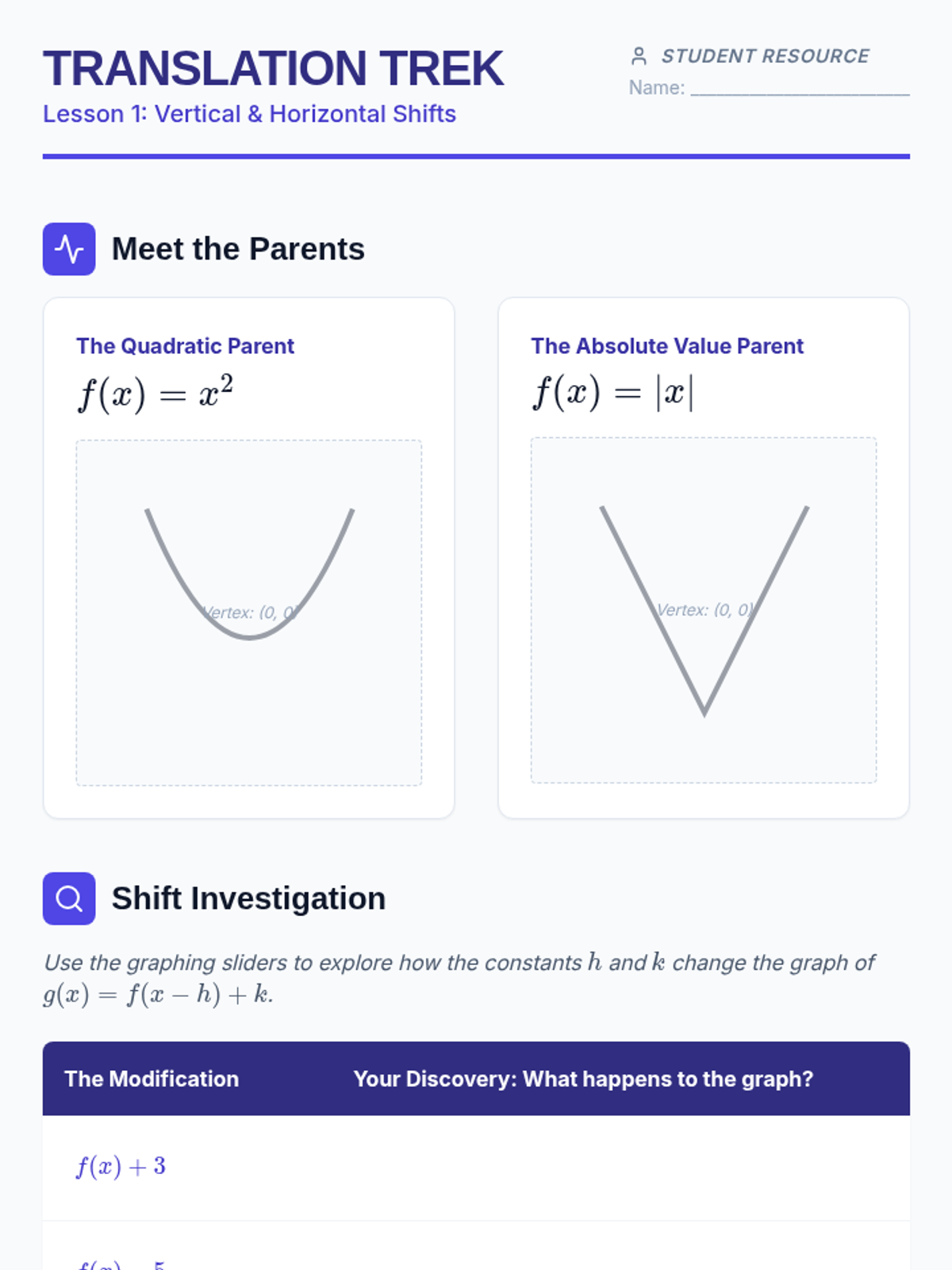
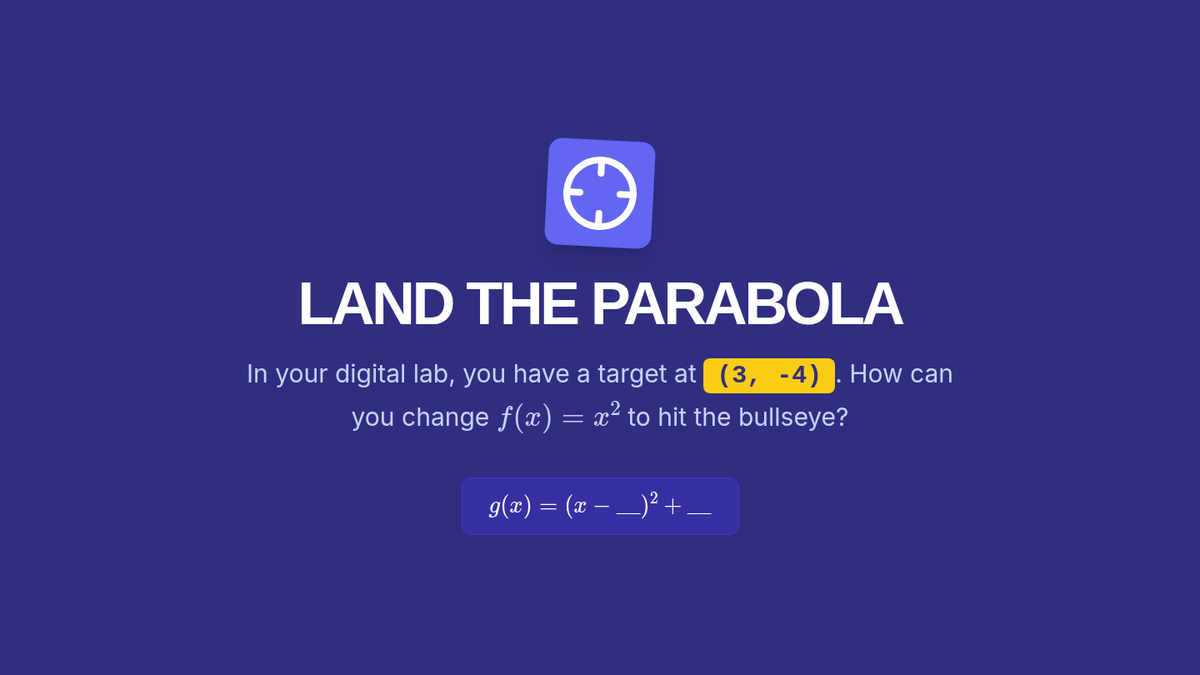
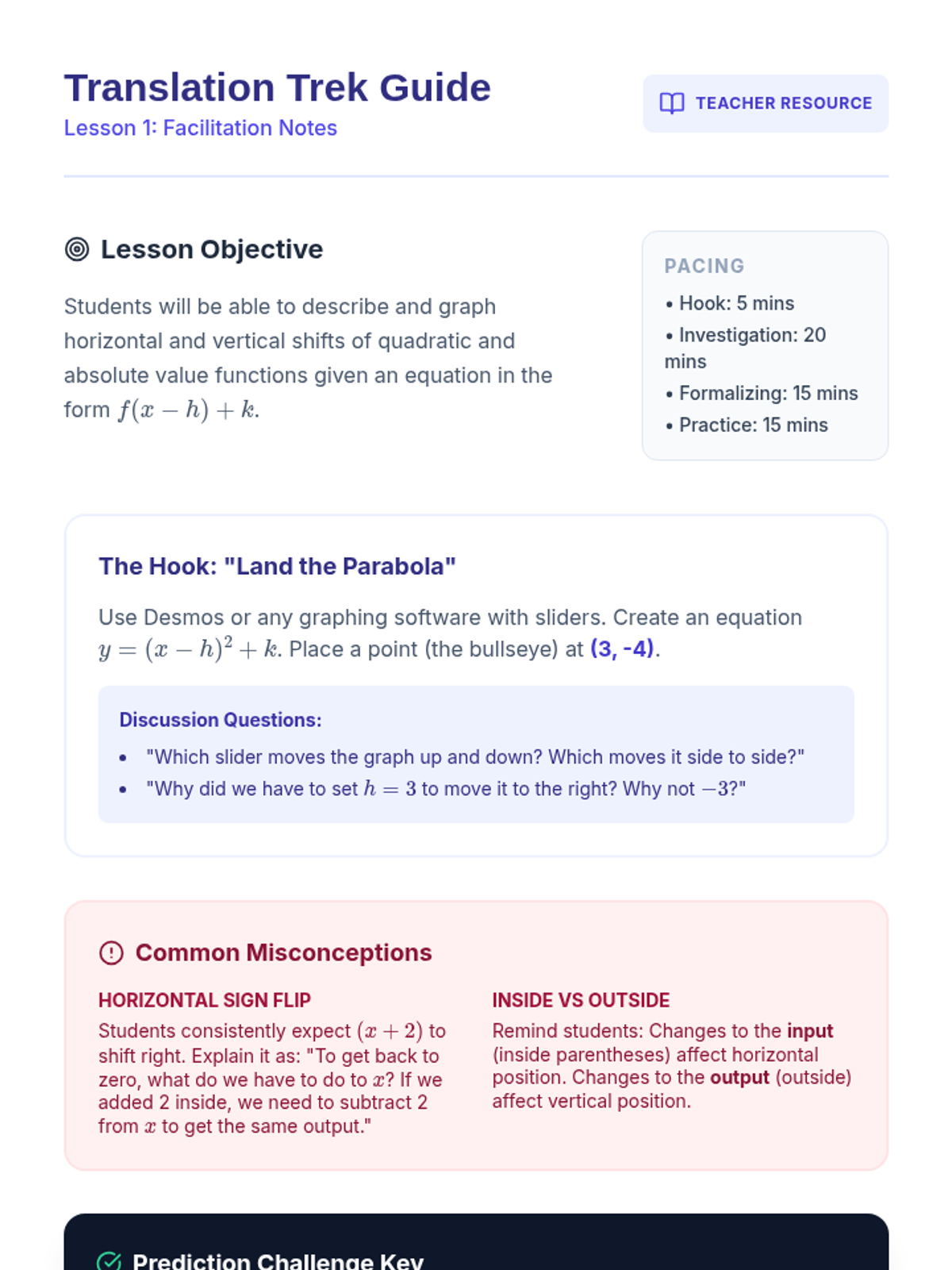
A comprehensive 9th-grade math sequence exploring the geometric transformations of parent functions. Students move from basic translations to complex dilations and reflections, culminating in a creative design project using transformed functions.
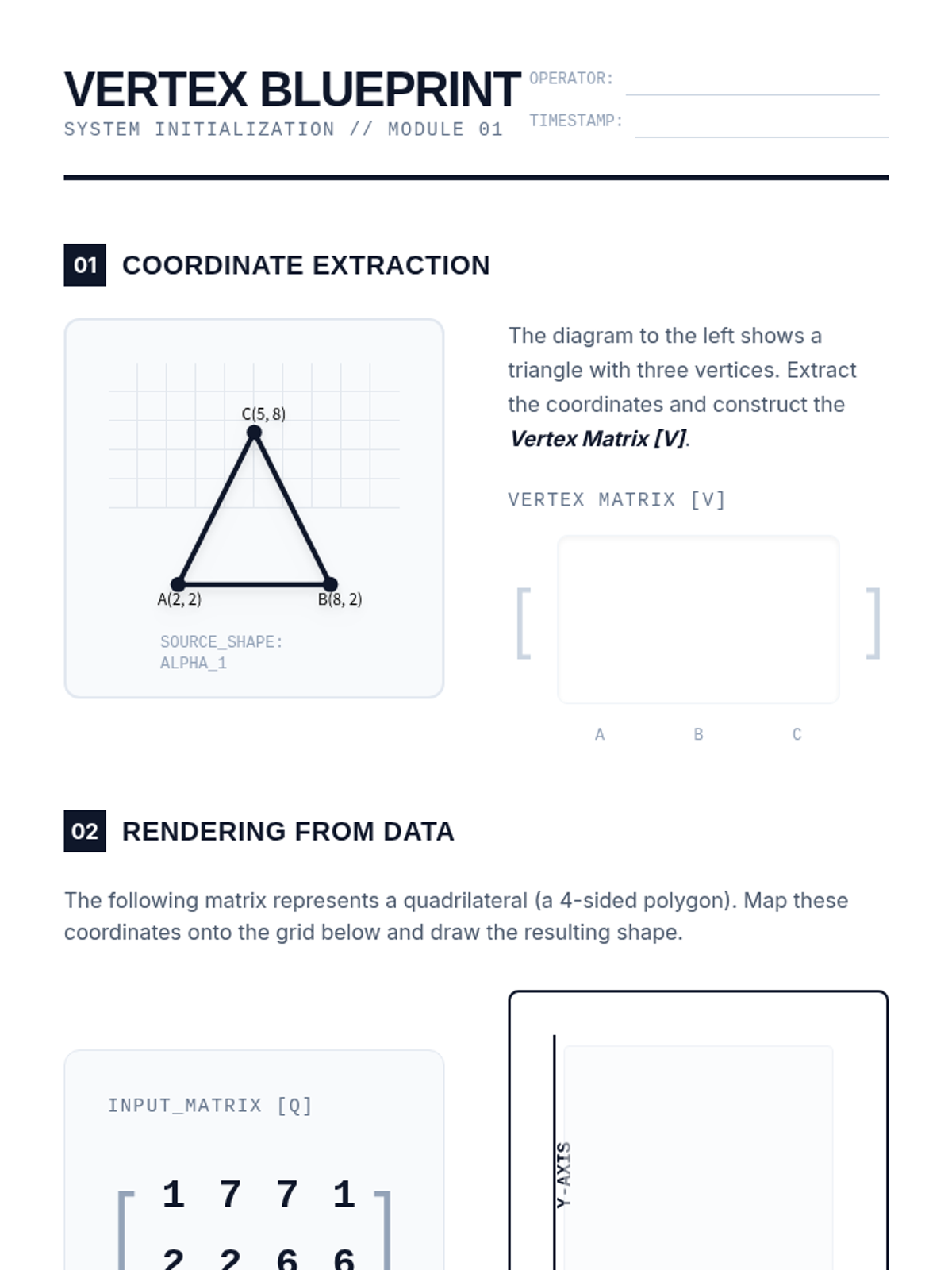
This sequence explores the geometric interpretation of matrices, treating them as operators that transform space. Students move from calculation to visual application, using matrices to represent coordinates, perform translations/dilations, and apply rotations/reflections via matrix multiplication.
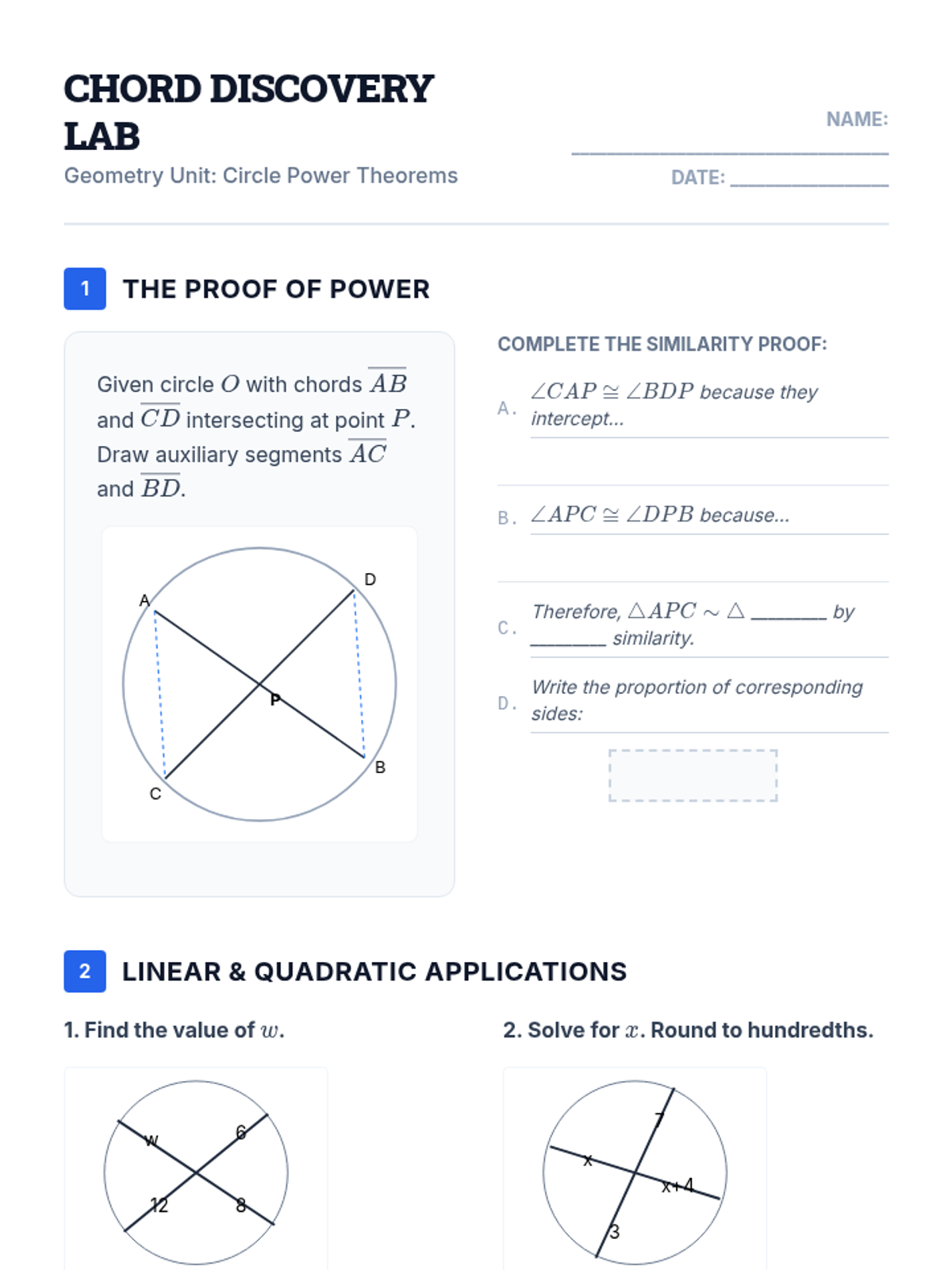
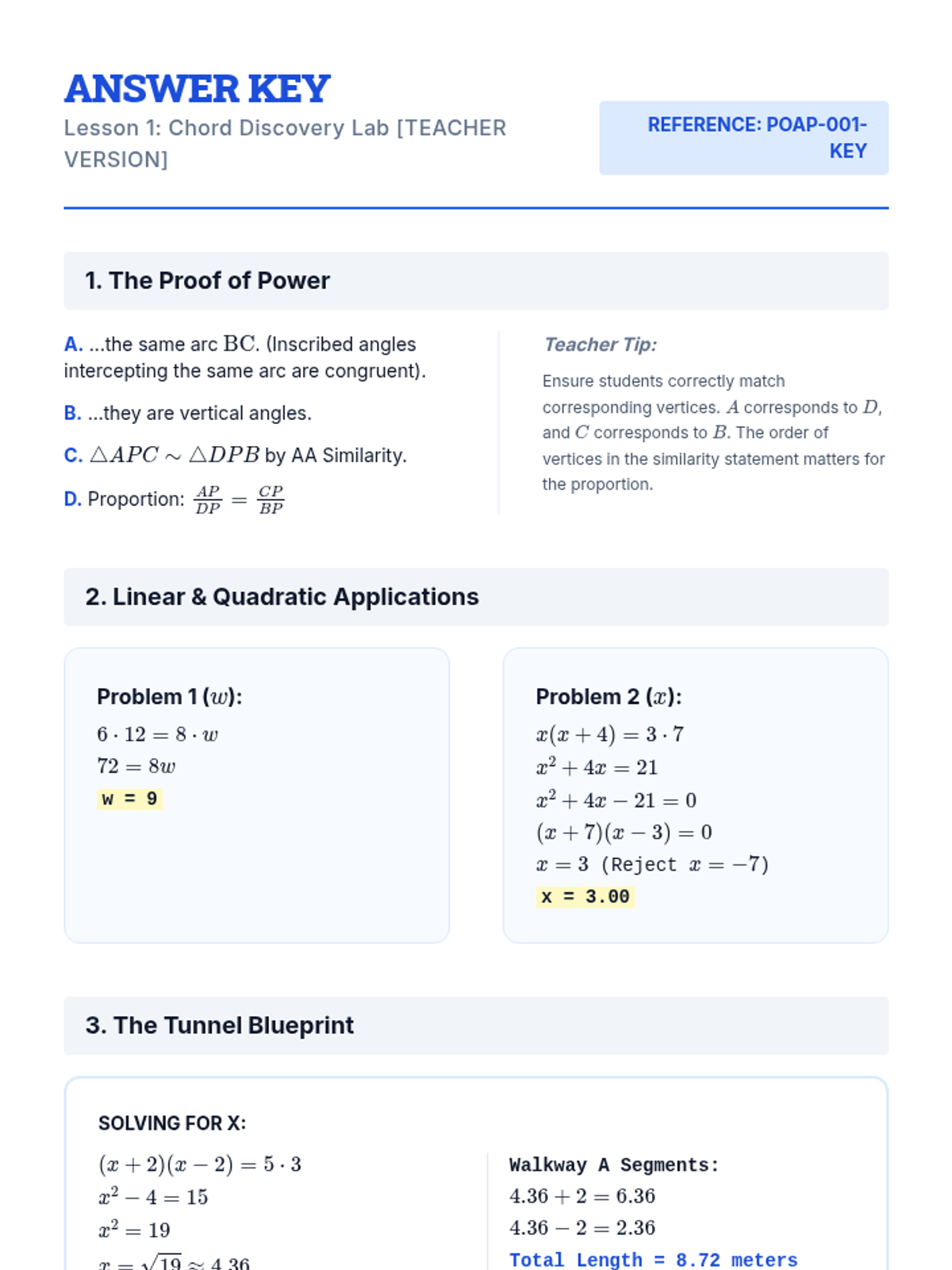
This sequence explores the metric relationships of circles, focusing on the Power of a Point theorems (chords, secants, and tangents) and their applications in engineering and geometry. Students will derive these relationships using similarity and apply them to solve complex algebraic problems, including common tangents in pulley systems.
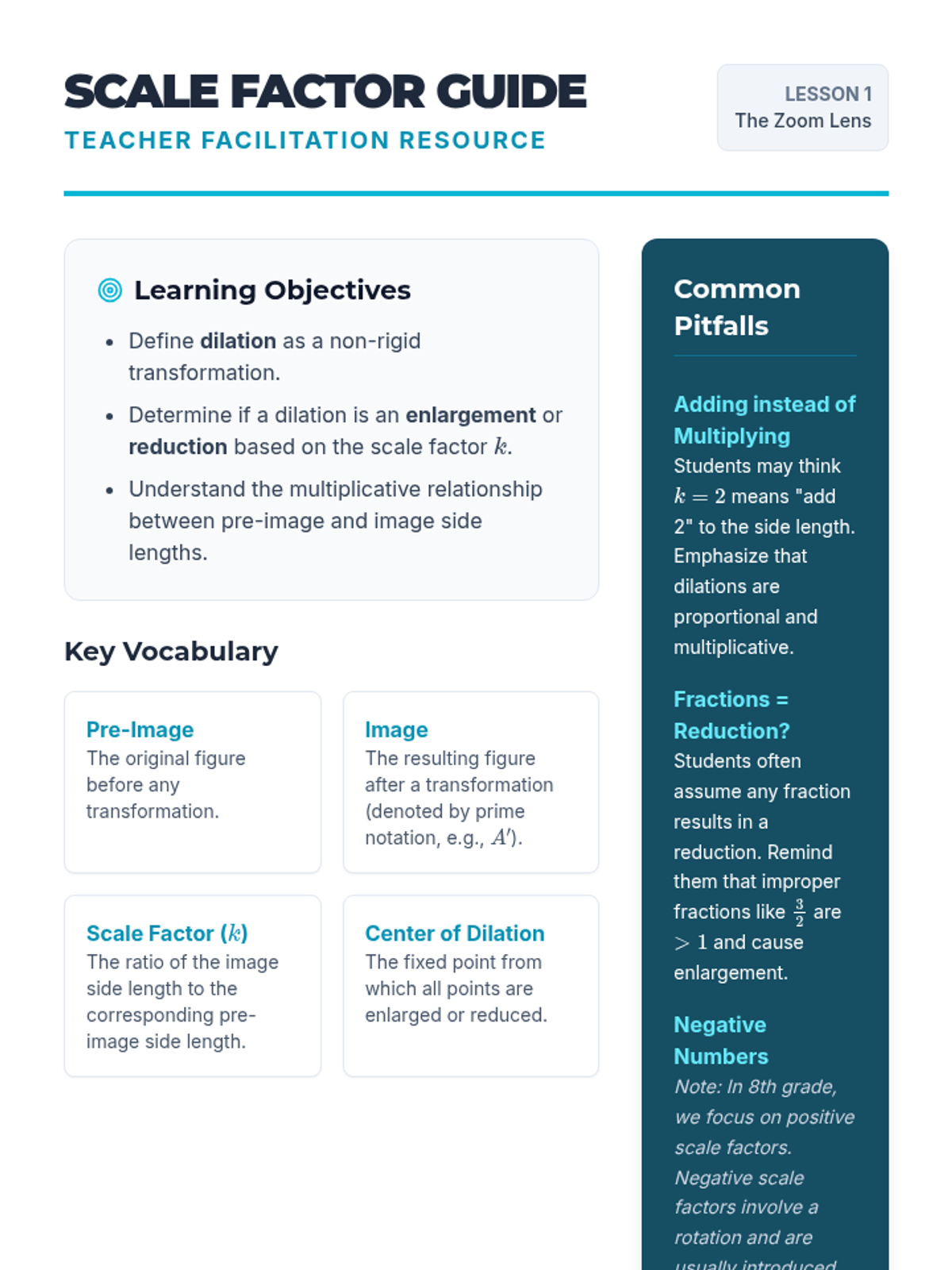
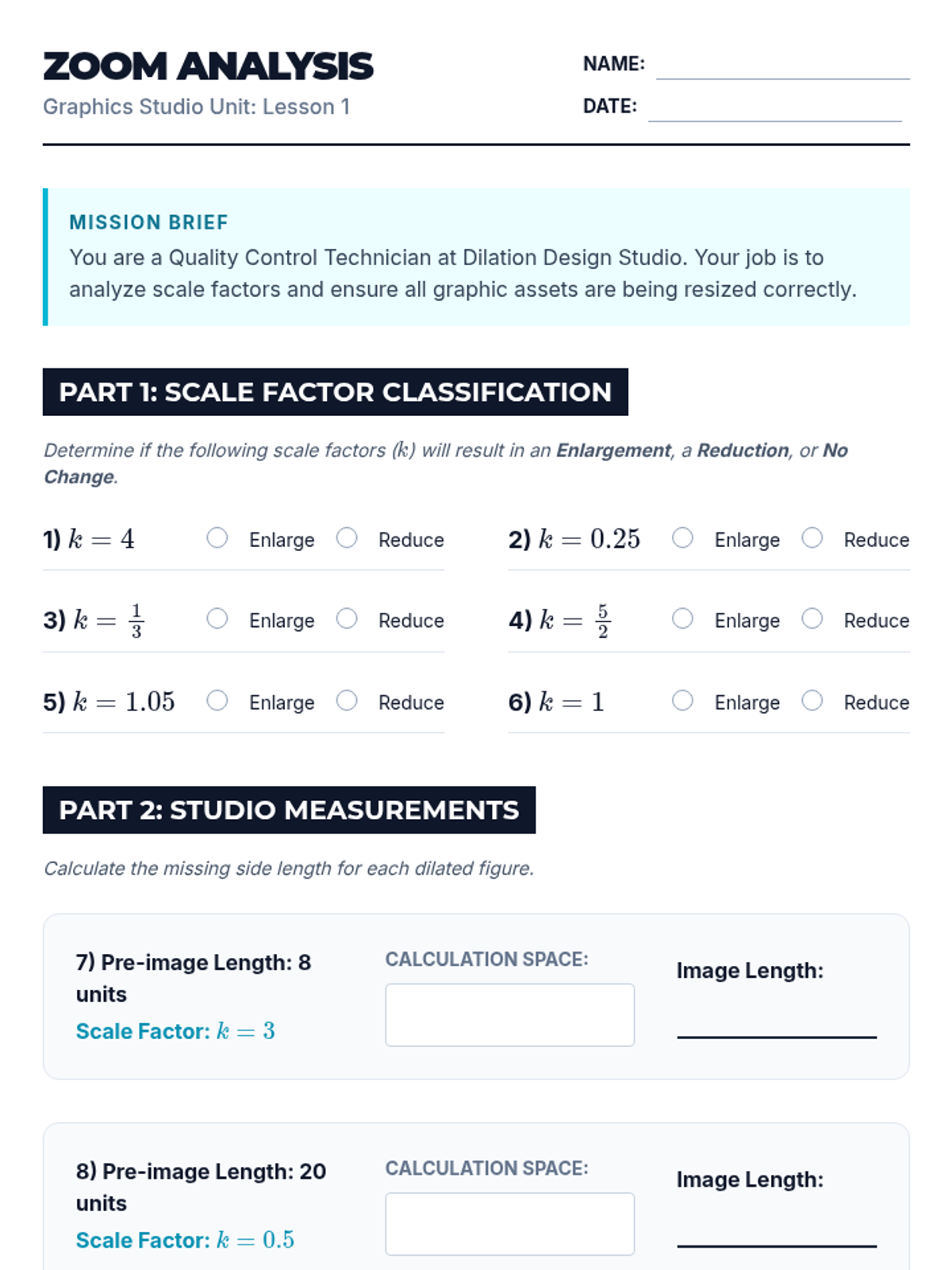
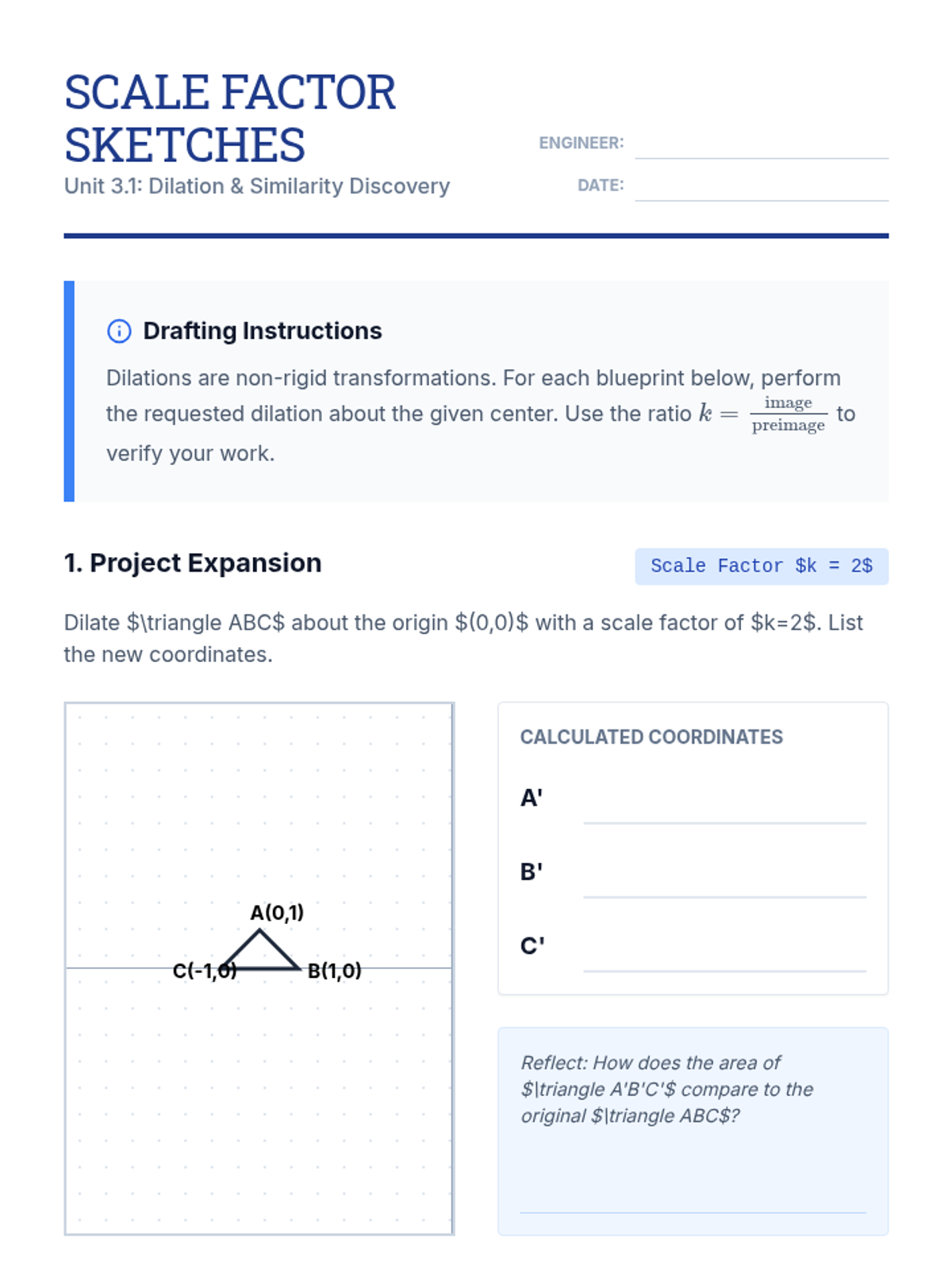
A project-based unit exploring non-rigid transformations. Students learn to apply scale factors, perform dilations on the coordinate plane, and distinguish between similarity and congruence, culminating in a logo design scaling project.
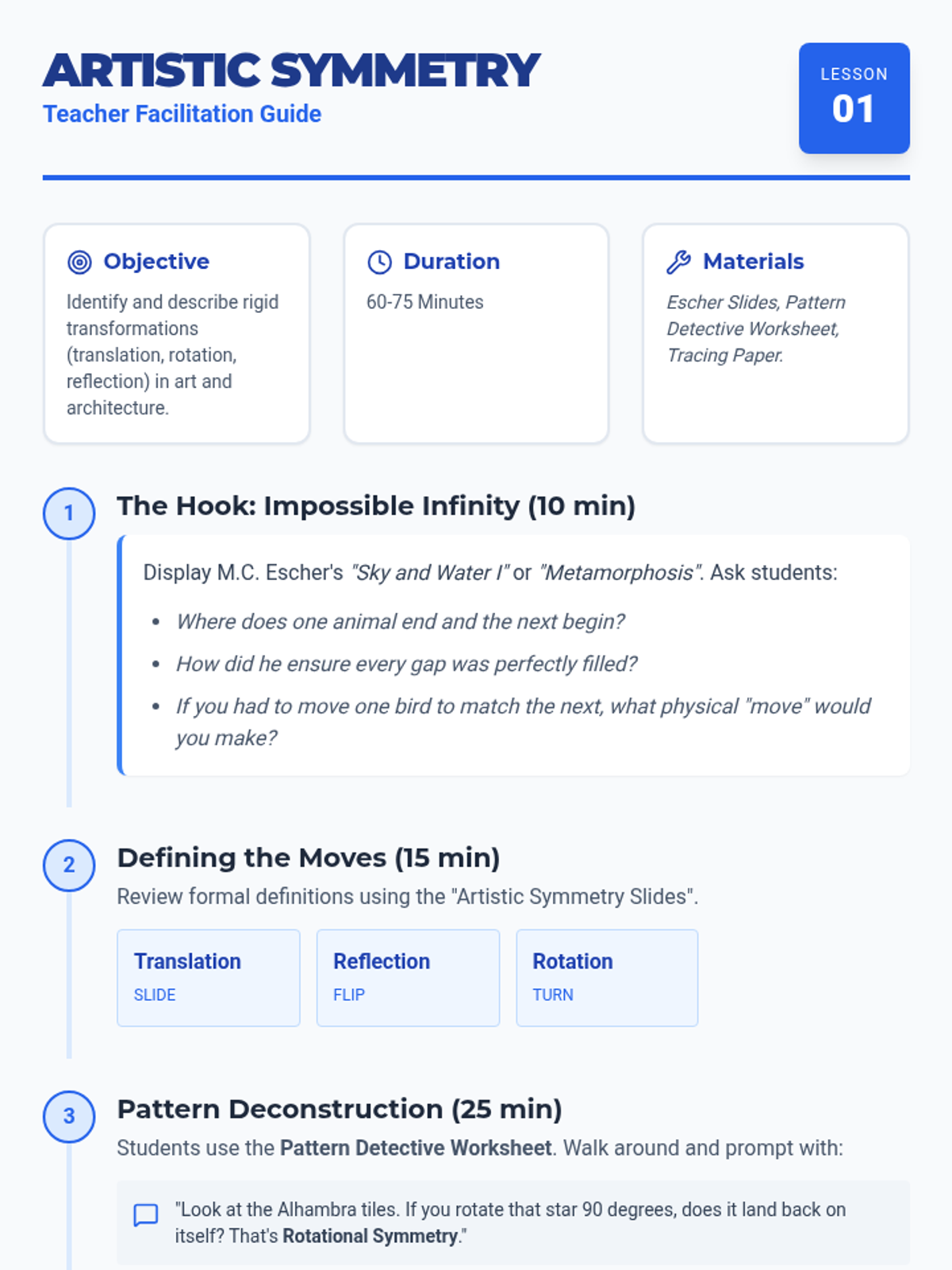
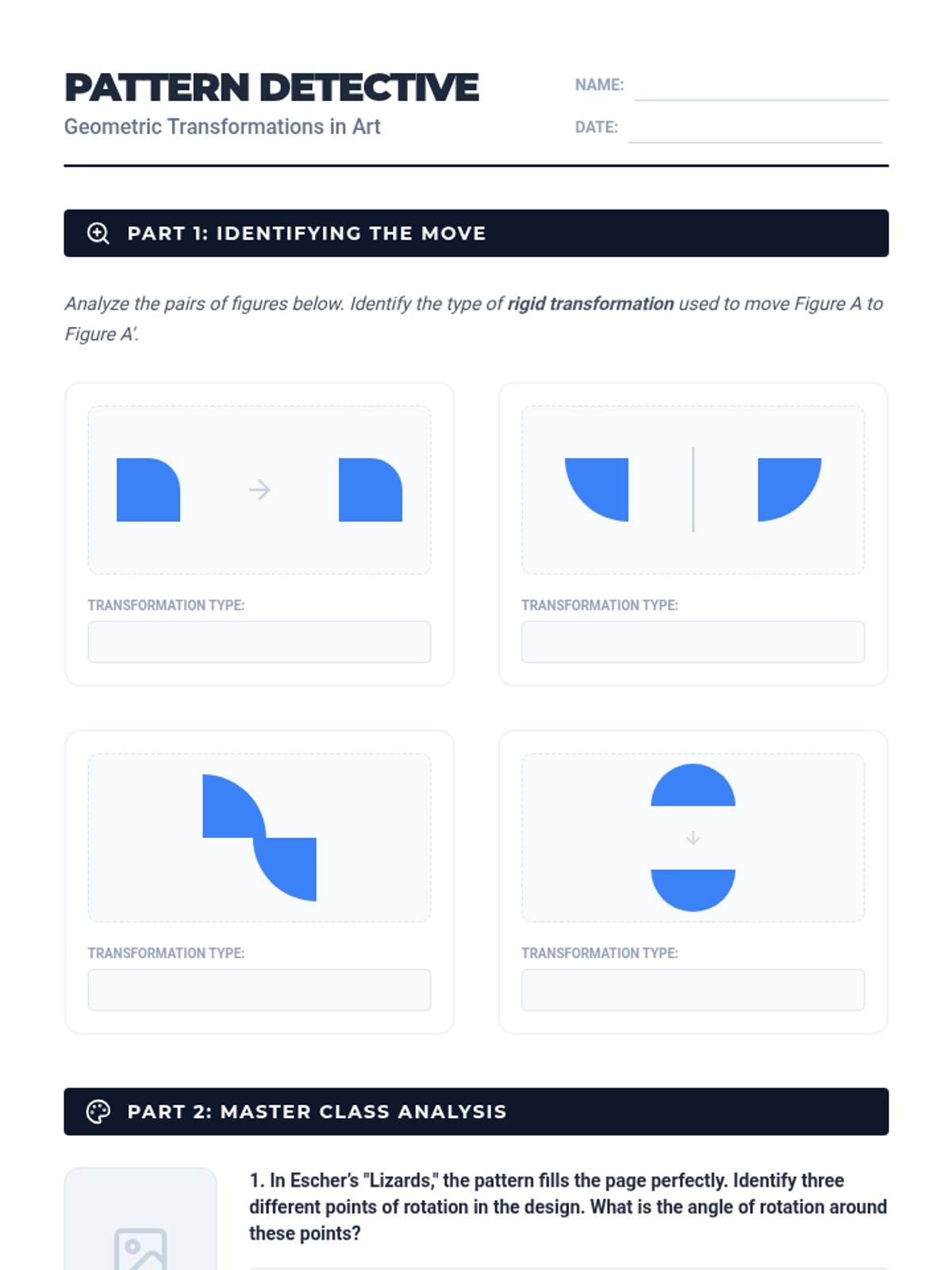
A project-based sequence exploring rigid and non-rigid transformations through the lenses of art, architecture, and digital animation. Students transition from identifying patterns in Escher prints to engineering their own geometric designs and animations using precise coordinate rules.
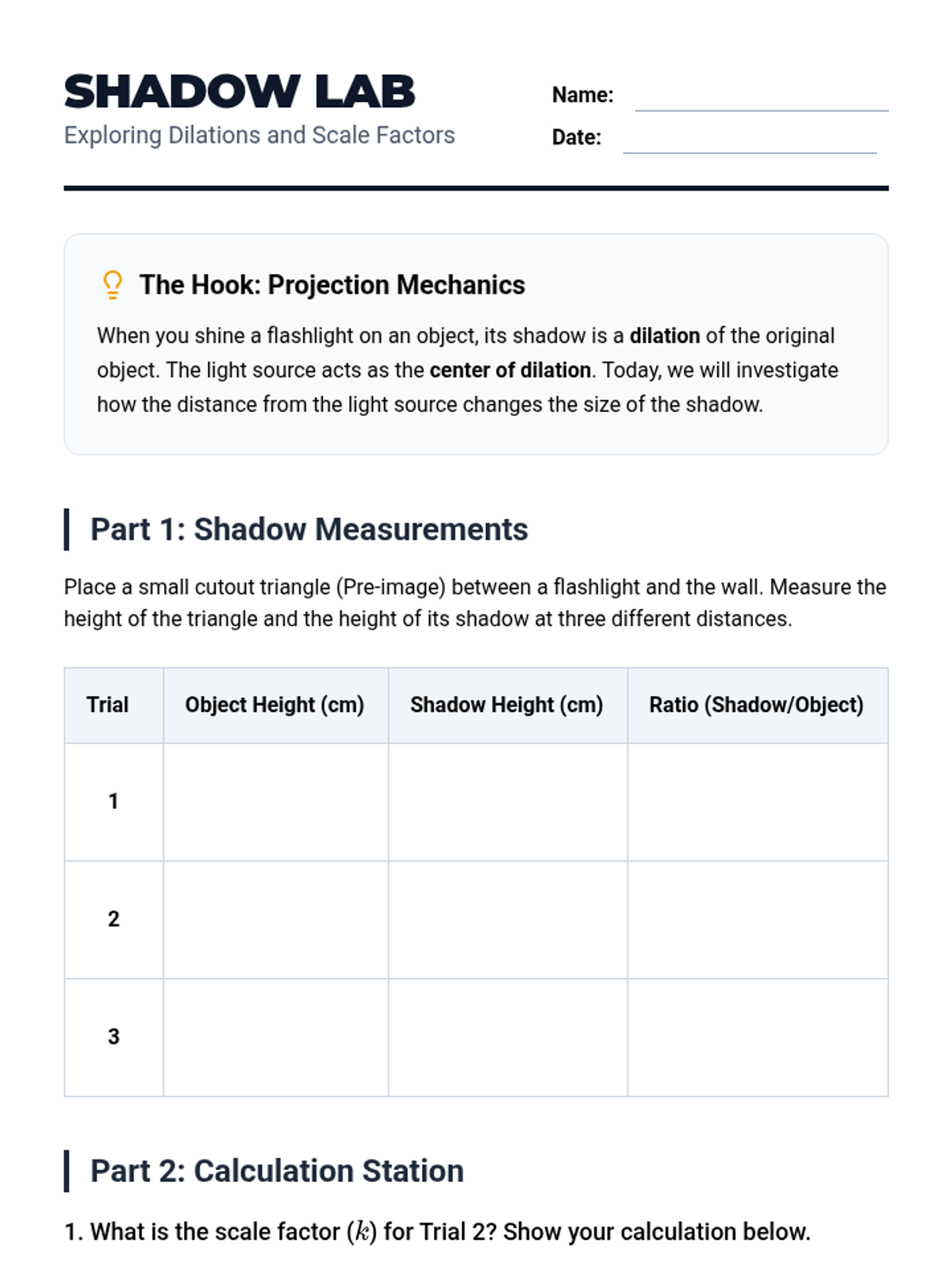
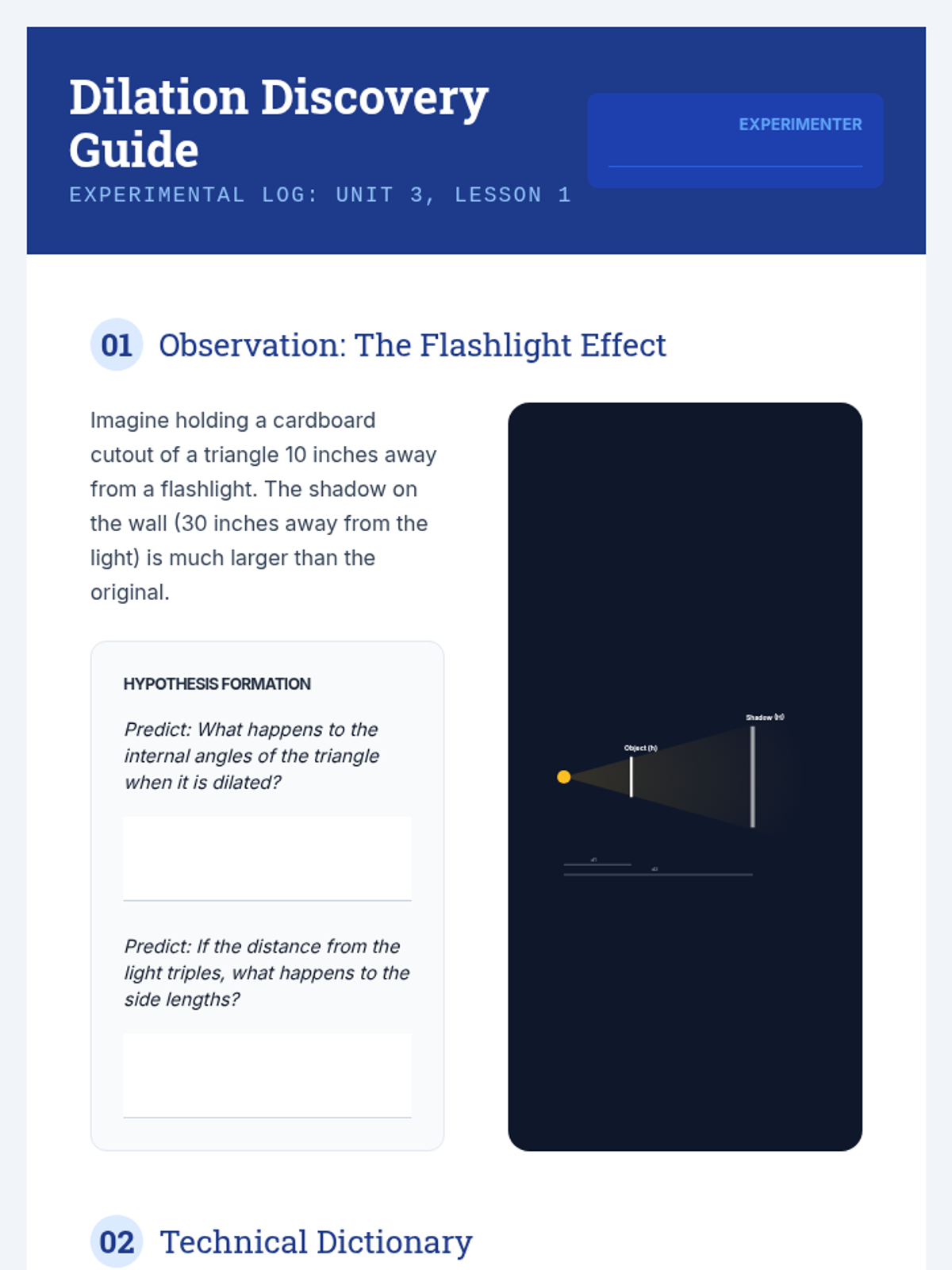
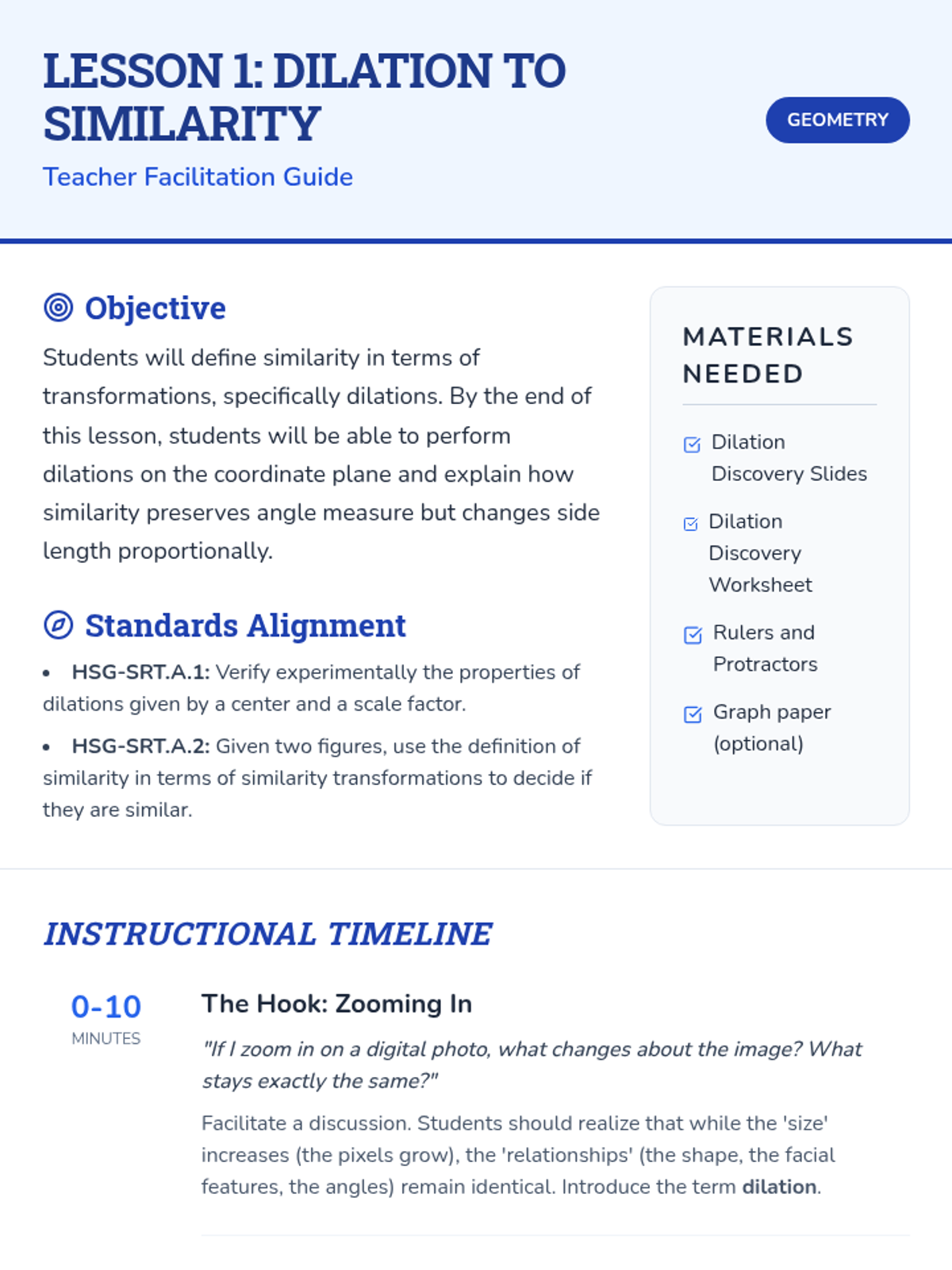
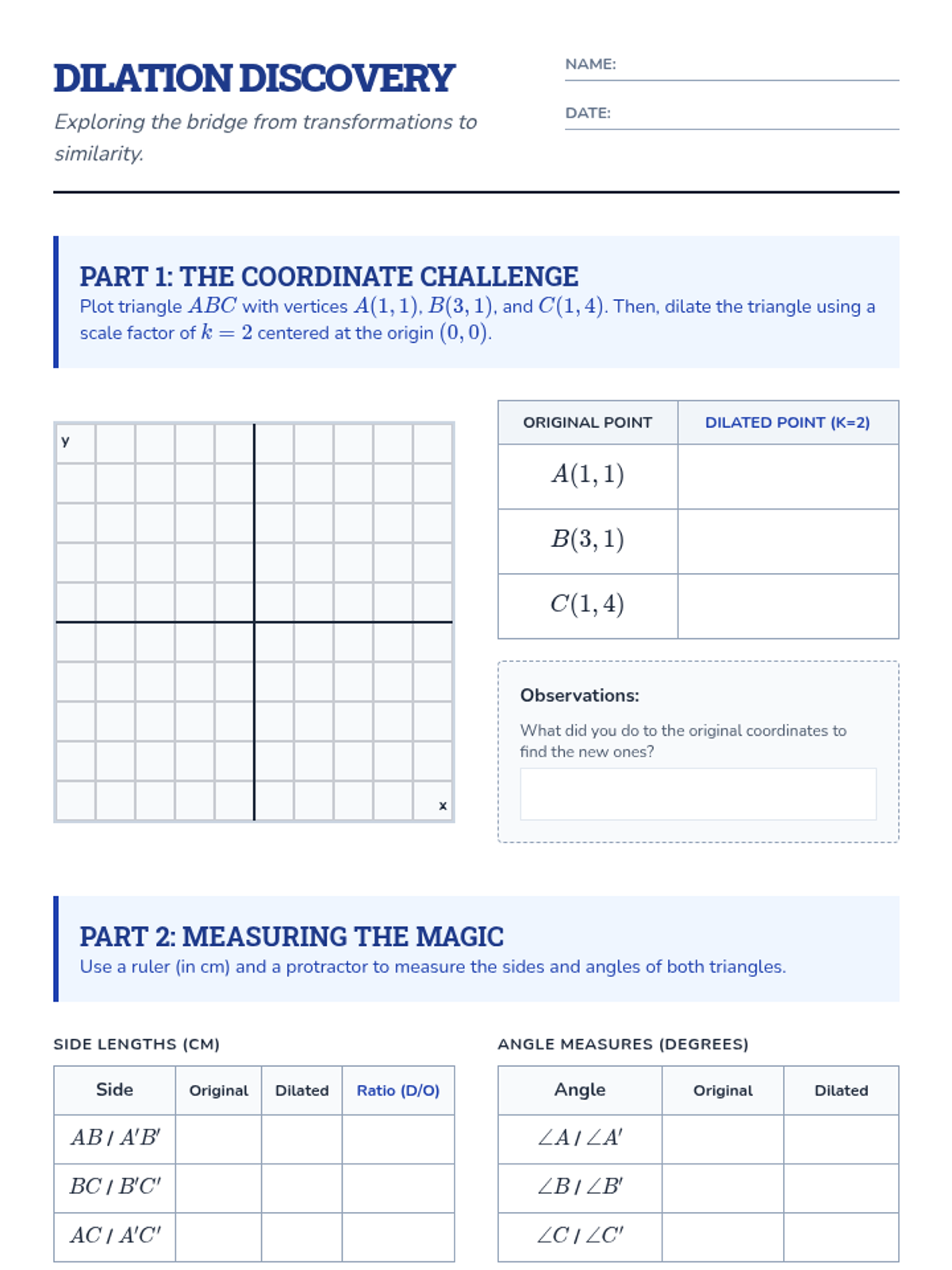
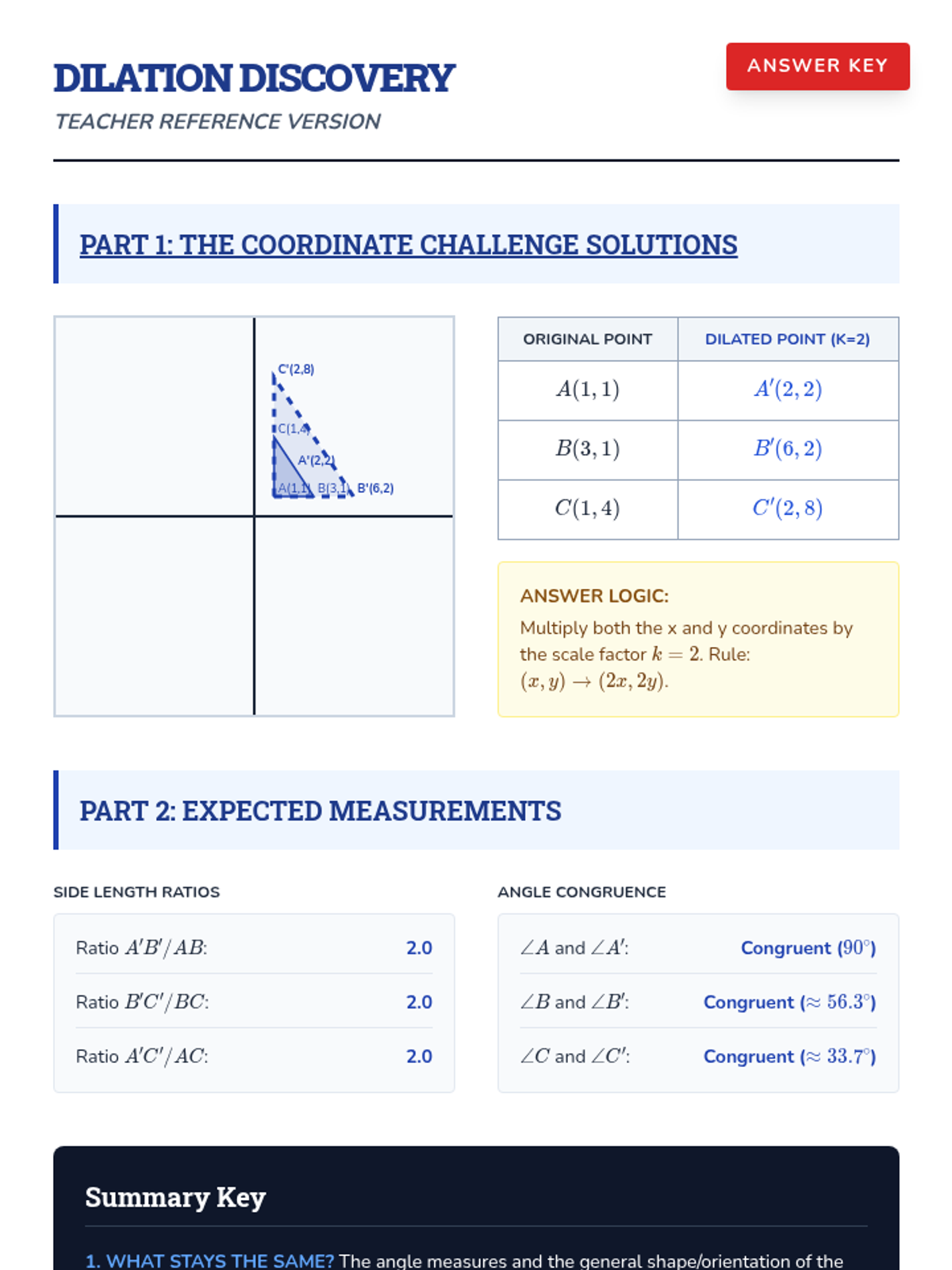
This sequence introduces non-rigid transformations, specifically focusing on dilations and the concept of similarity. Students explore how dilations change size while preserving shape, investigating the roles of the center of dilation and the scale factor.
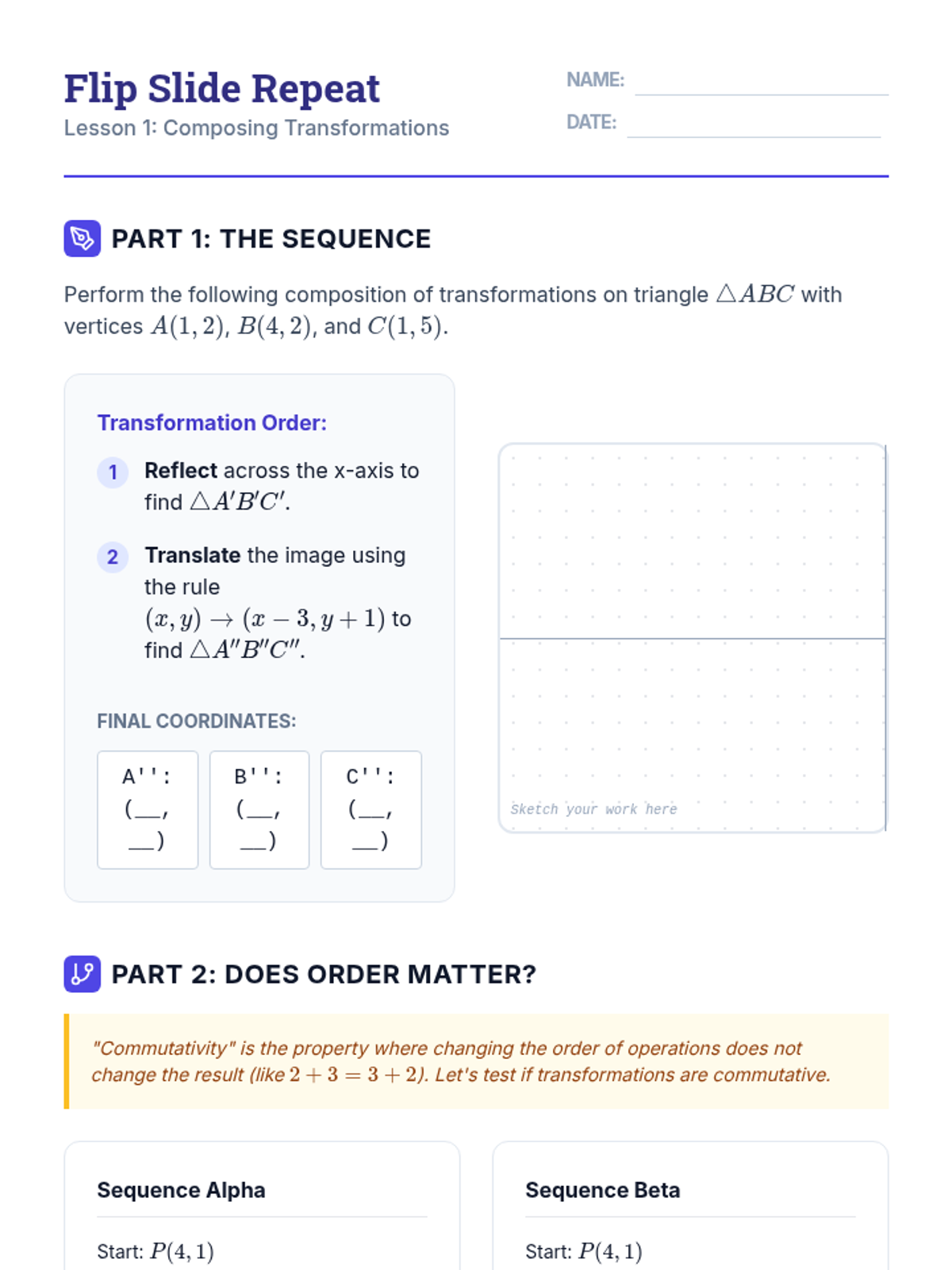
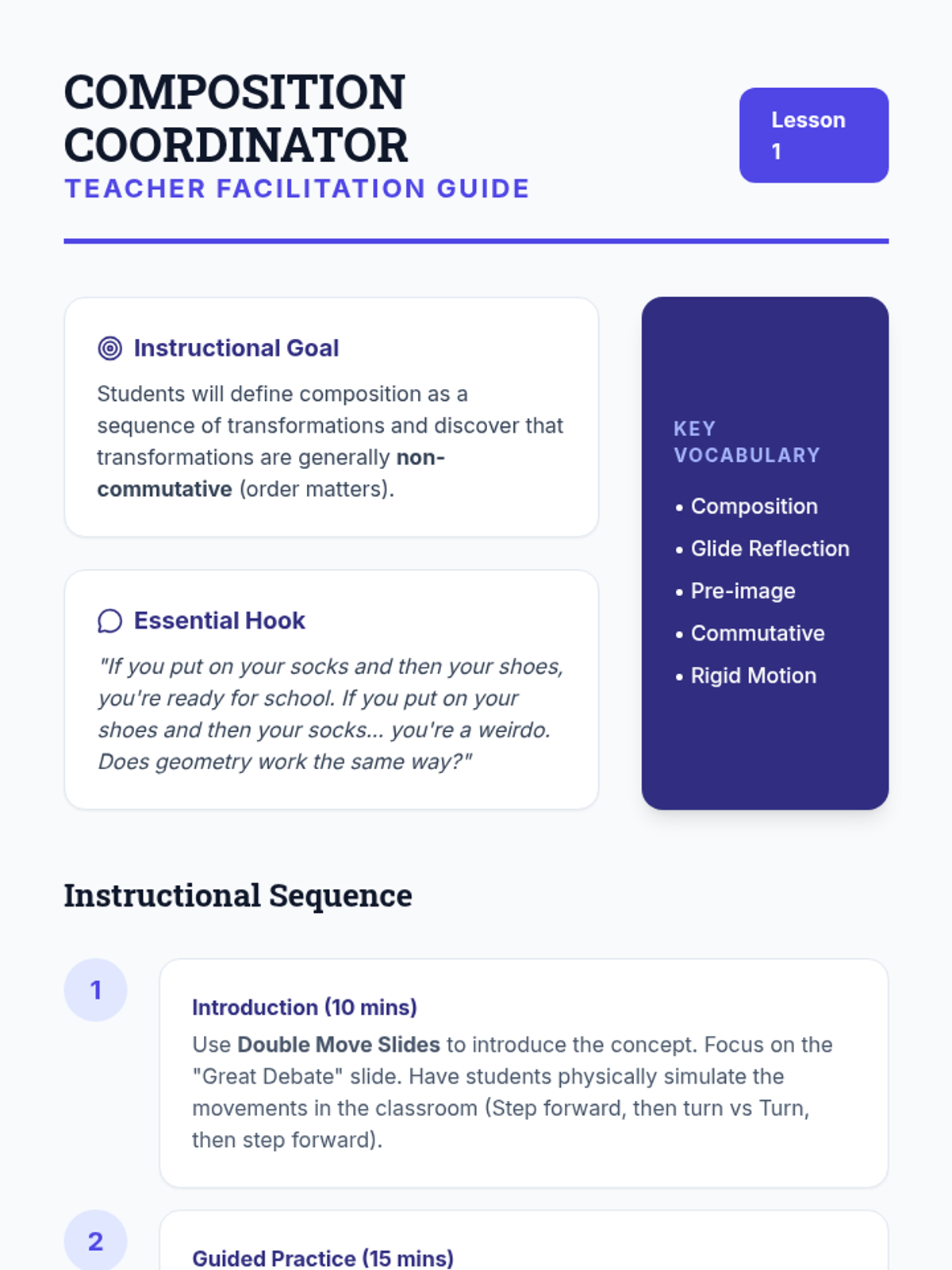
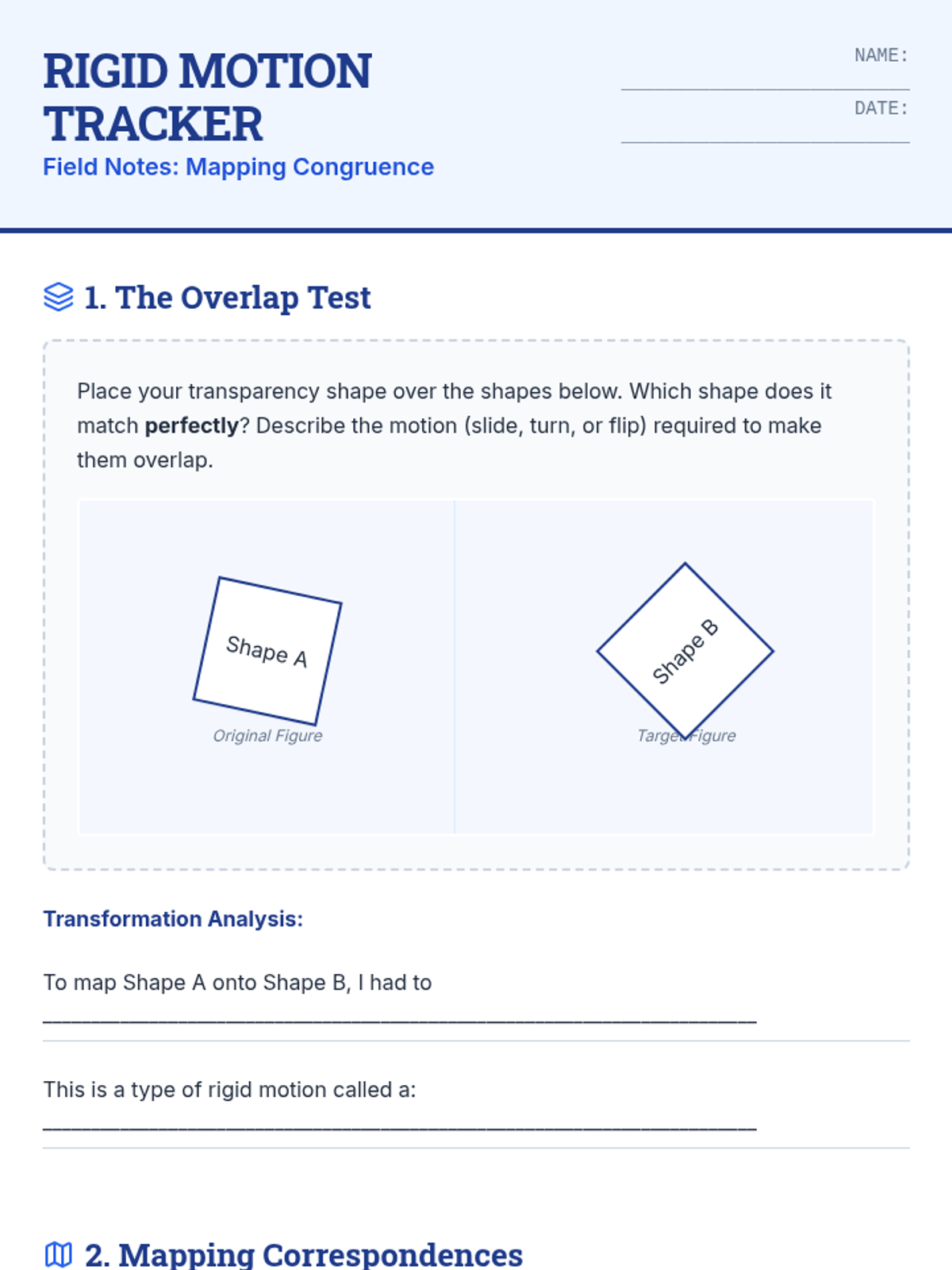
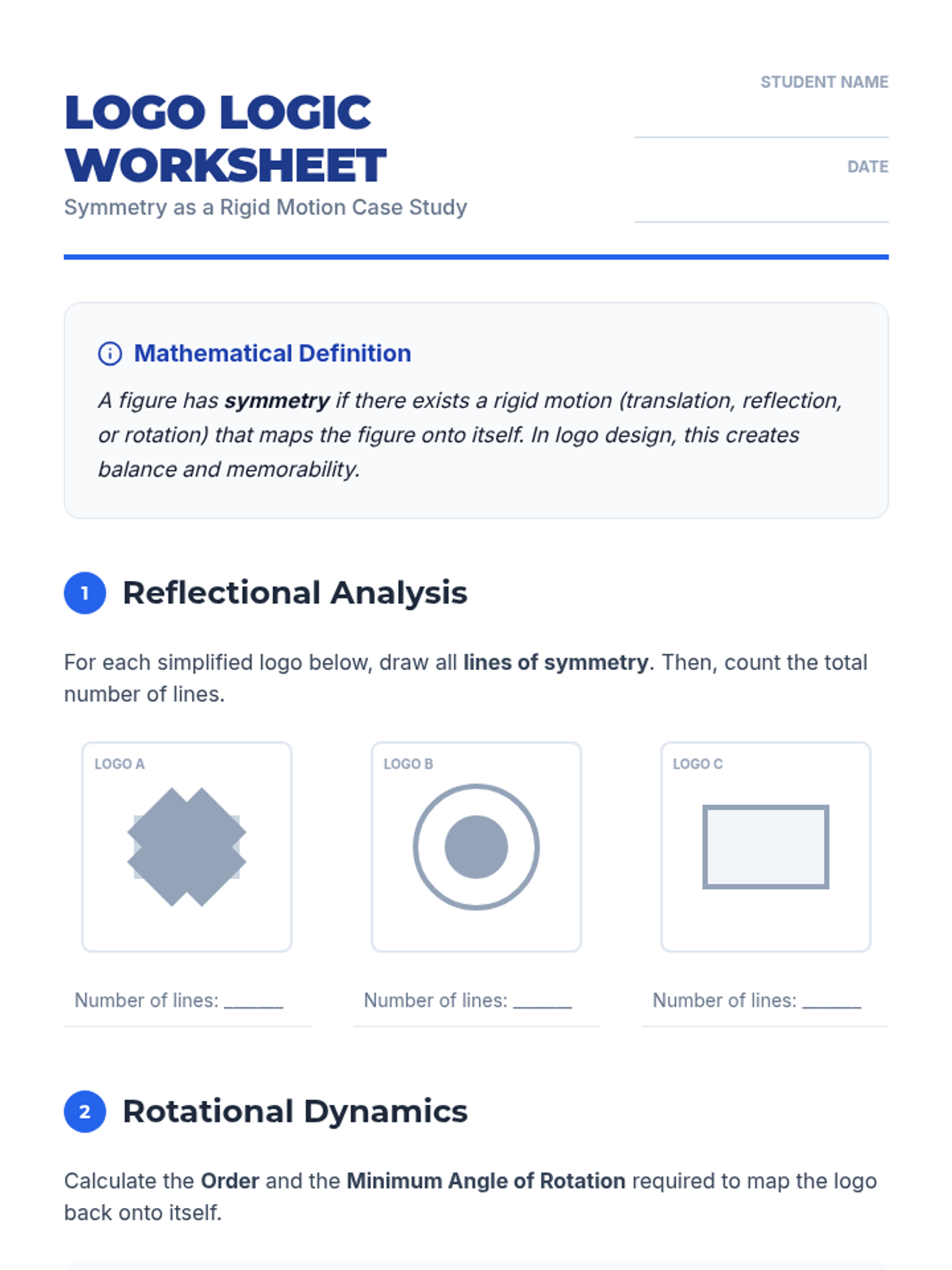
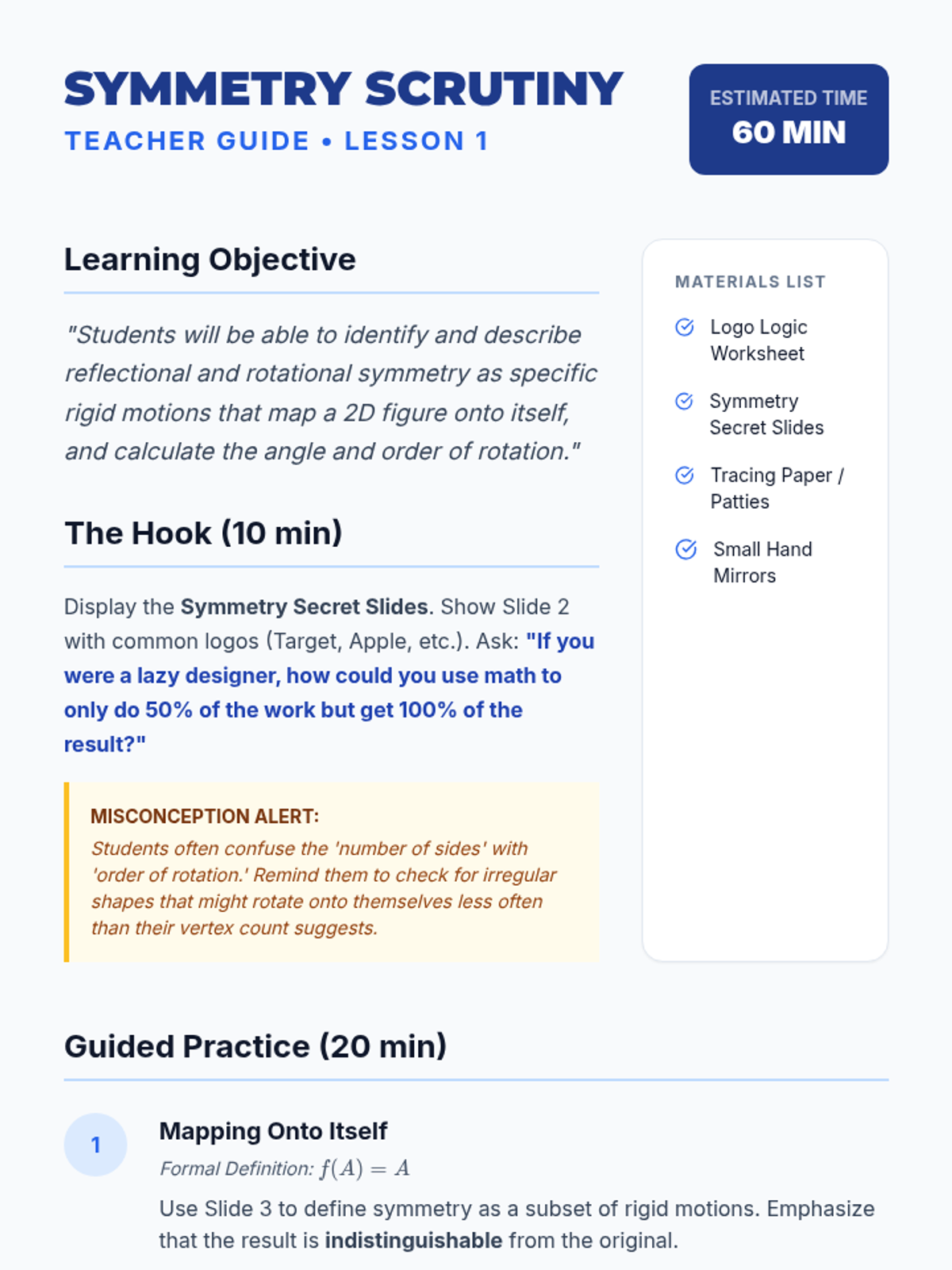
A comprehensive 9th Grade Geometry sequence on rigid transformations, focusing on composition, mapping congruence, and symmetry using a transformational approach.
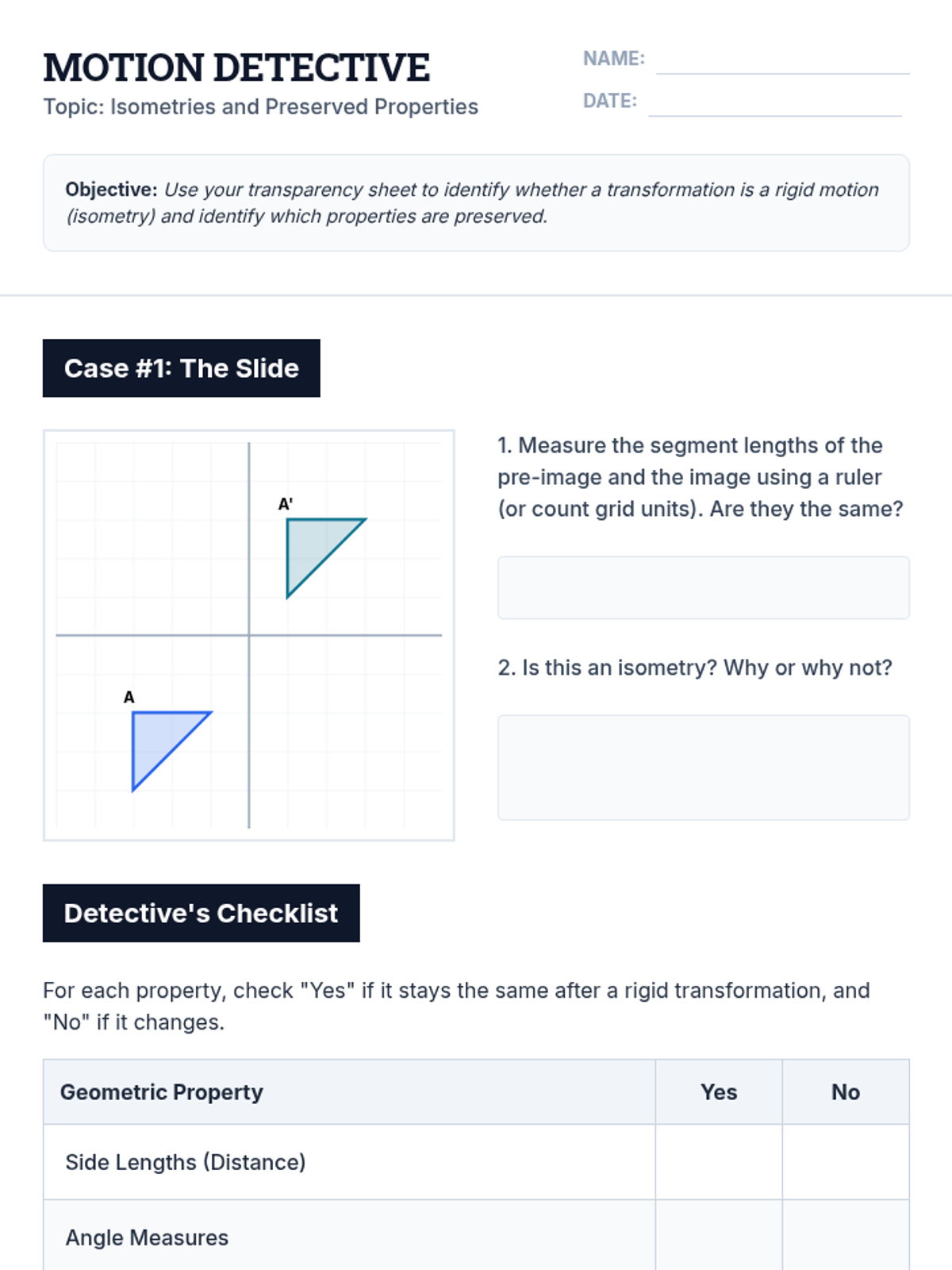
A comprehensive unit for 9th-grade geometry covering rigid transformations (isometries) in the coordinate plane. Students explore translations, reflections, and rotations, transitioning from physical manipulation to formal algebraic rules.
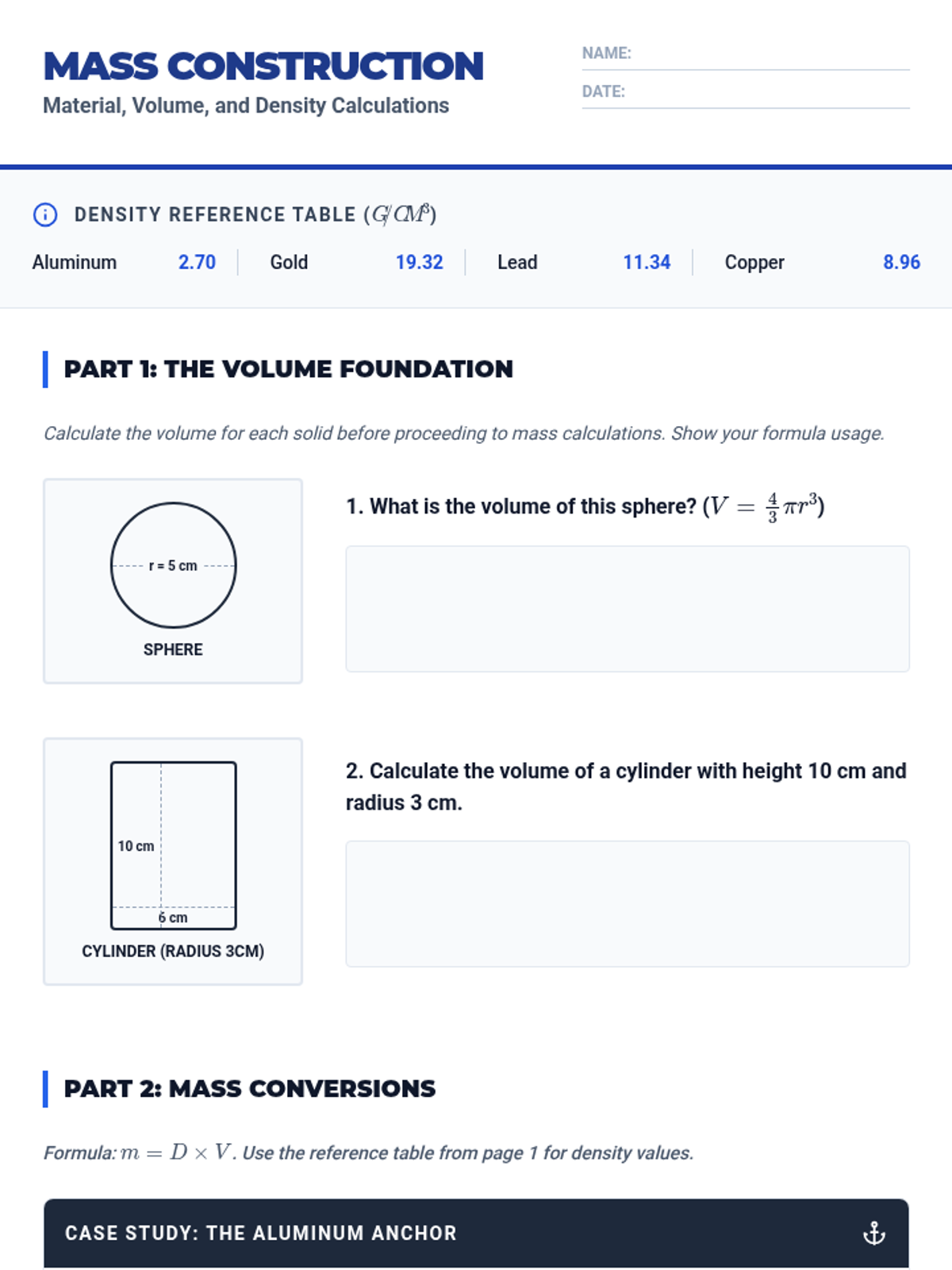
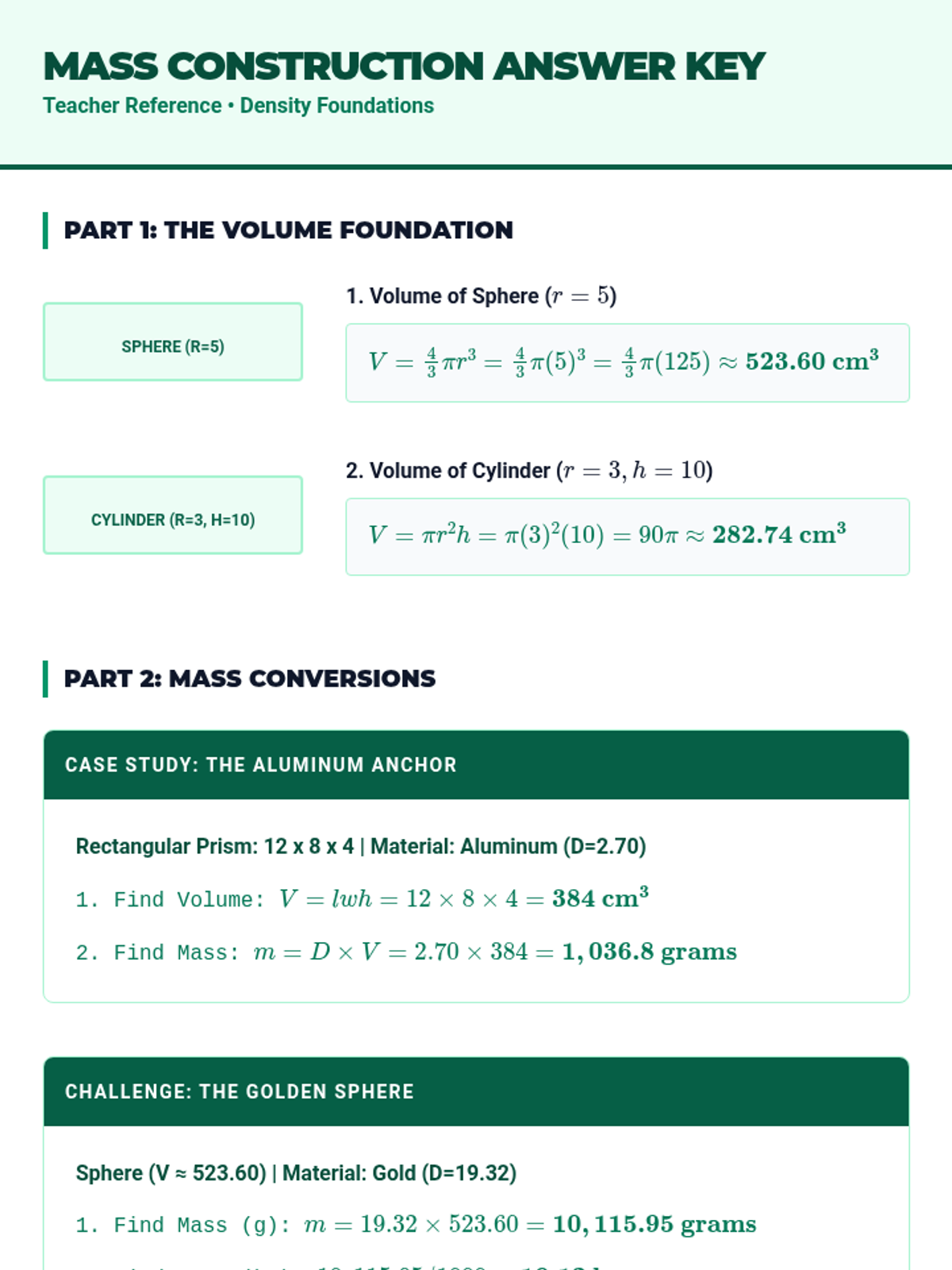
This sequence explores the relationship between volume, density, and mass, moving from basic material calculations to complex 3-dimensional scaling and logistics optimization. Students will investigate the Square-Cube Law and apply geometric principles to real-world occupancy and shipping scenarios.
A comprehensive geometry unit exploring similarity, dilations, and proportionality theorems. Students progress from intuitive transformations to formal proofs and real-world applications of geometric ratios.
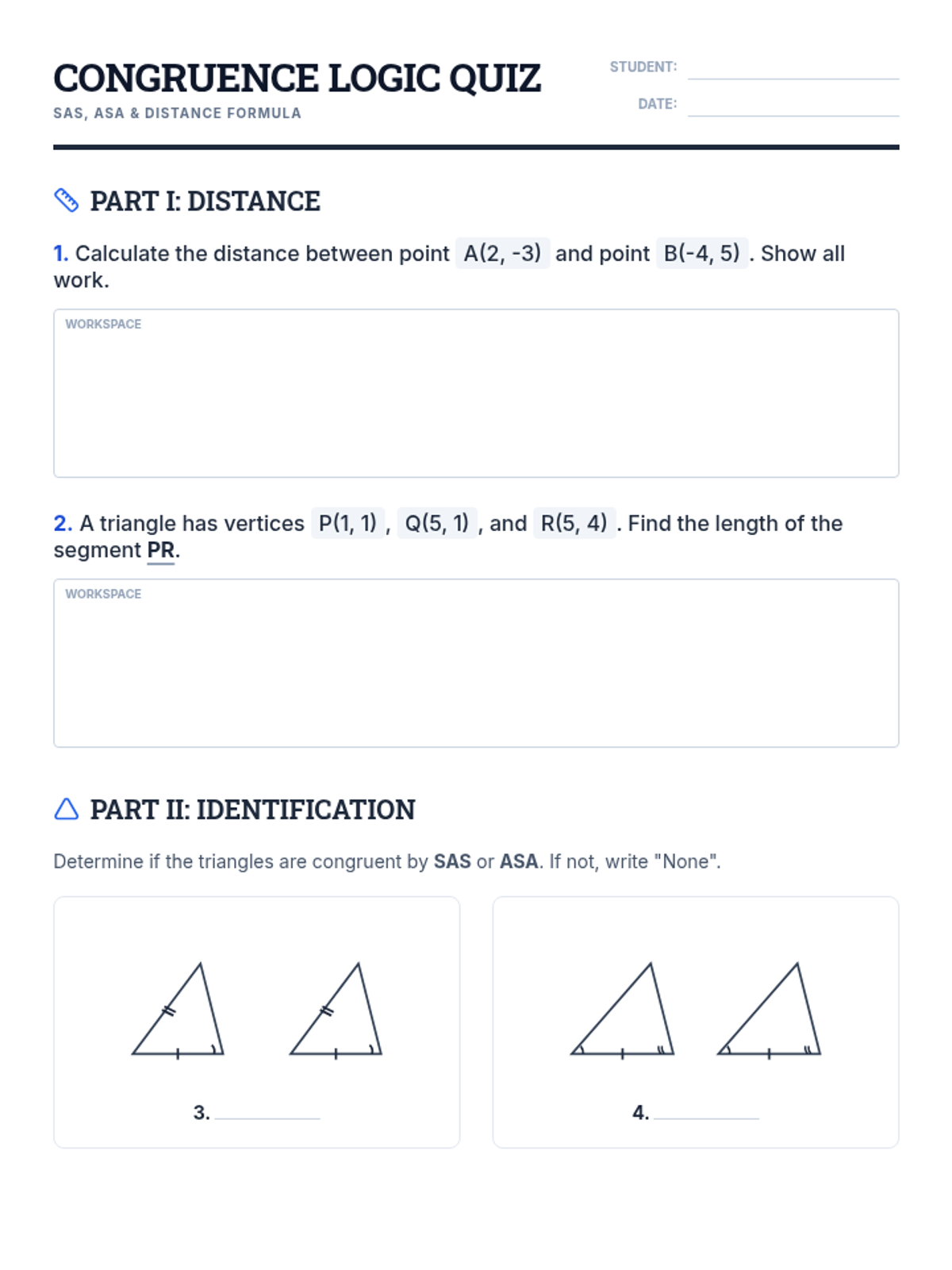
An exploration of geometric congruence, coordinate geometry, and the formal logic required for mathematical proofs.
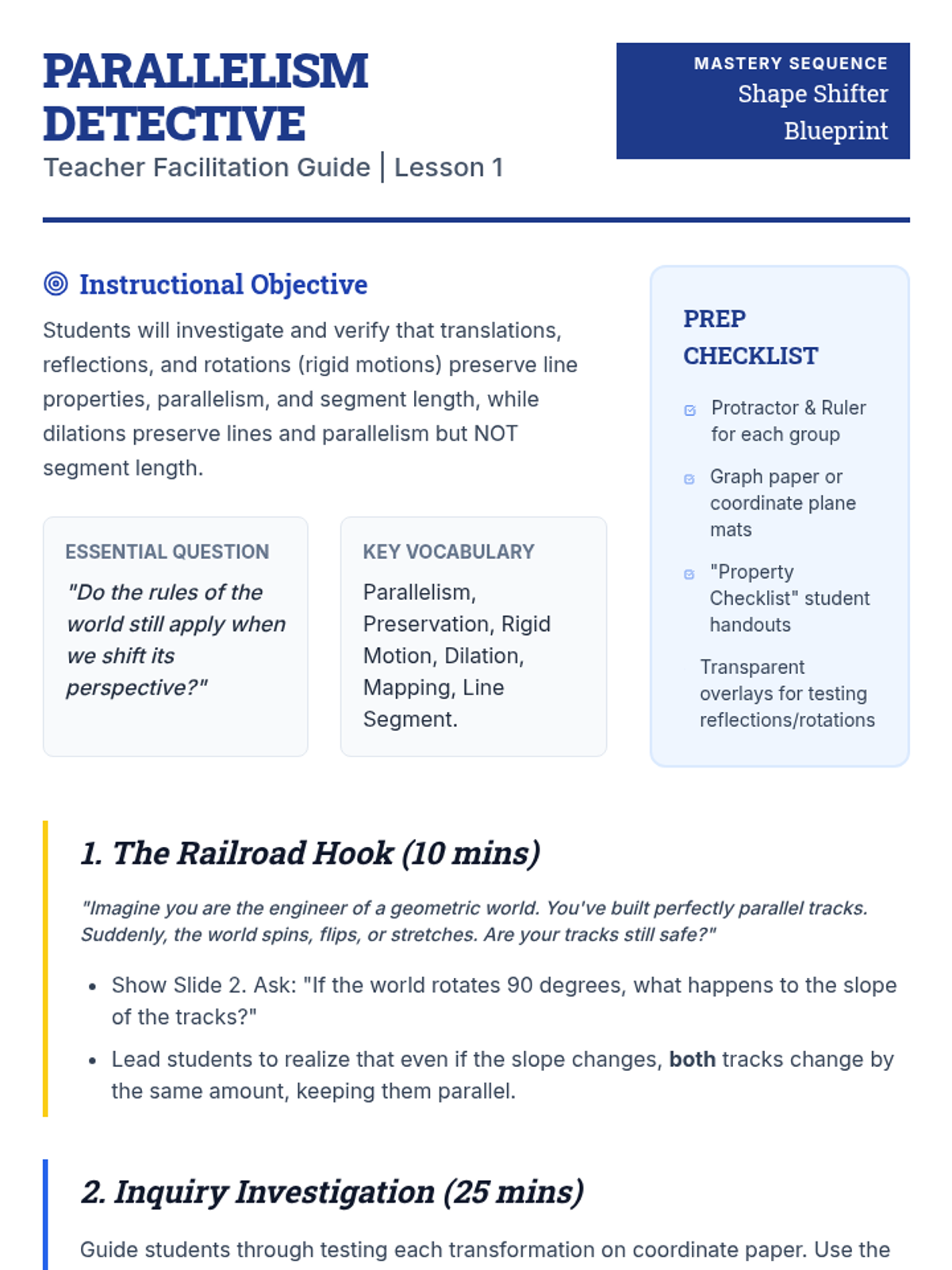
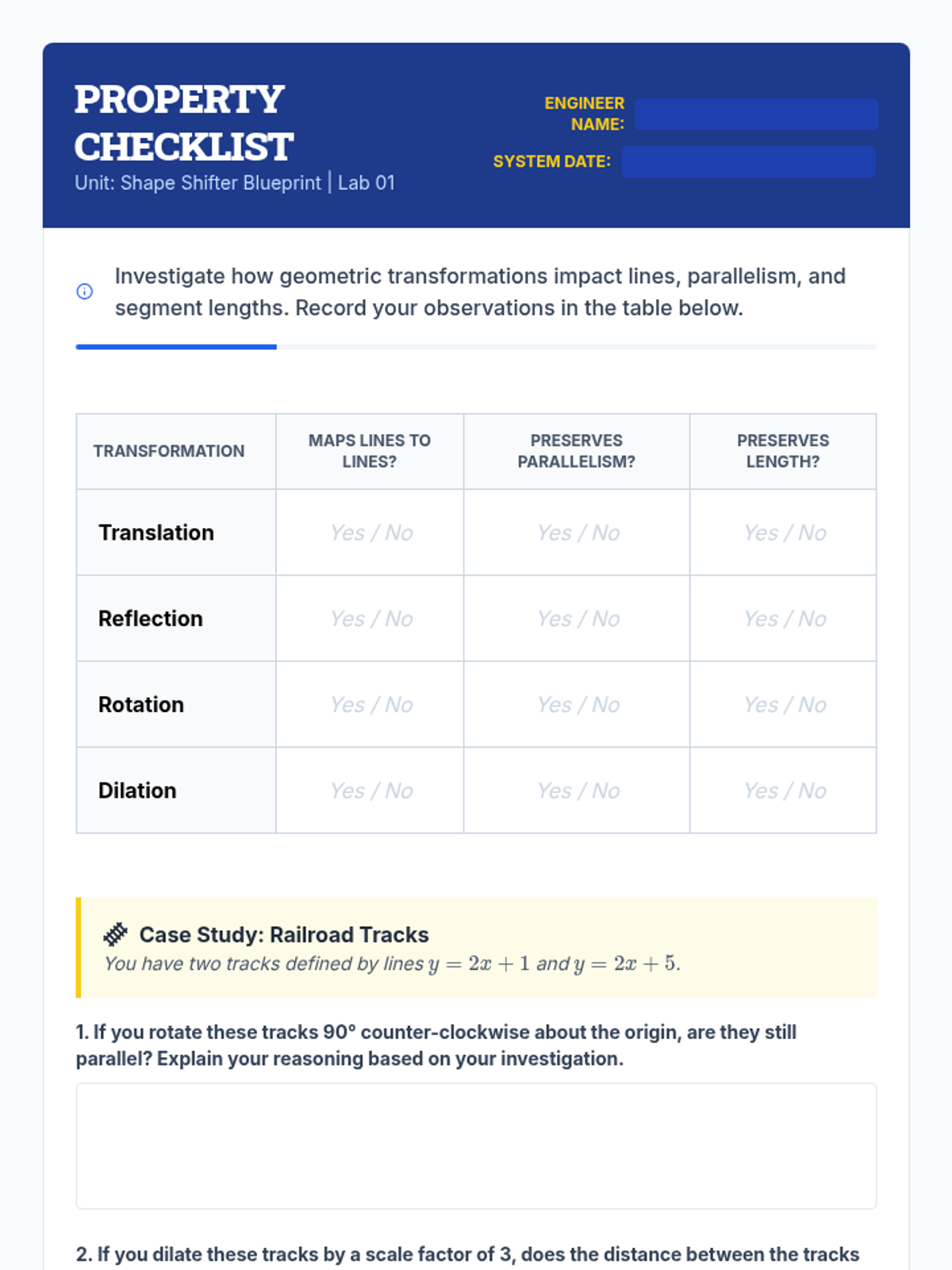
This mastery-based sequence focuses on the properties of transformations (translations, reflections, rotations, and dilations) and how they preserve or change geometric relationships. Students build arguments for congruence and similarity by analyzing parallelism, orientation, and angle preservation.
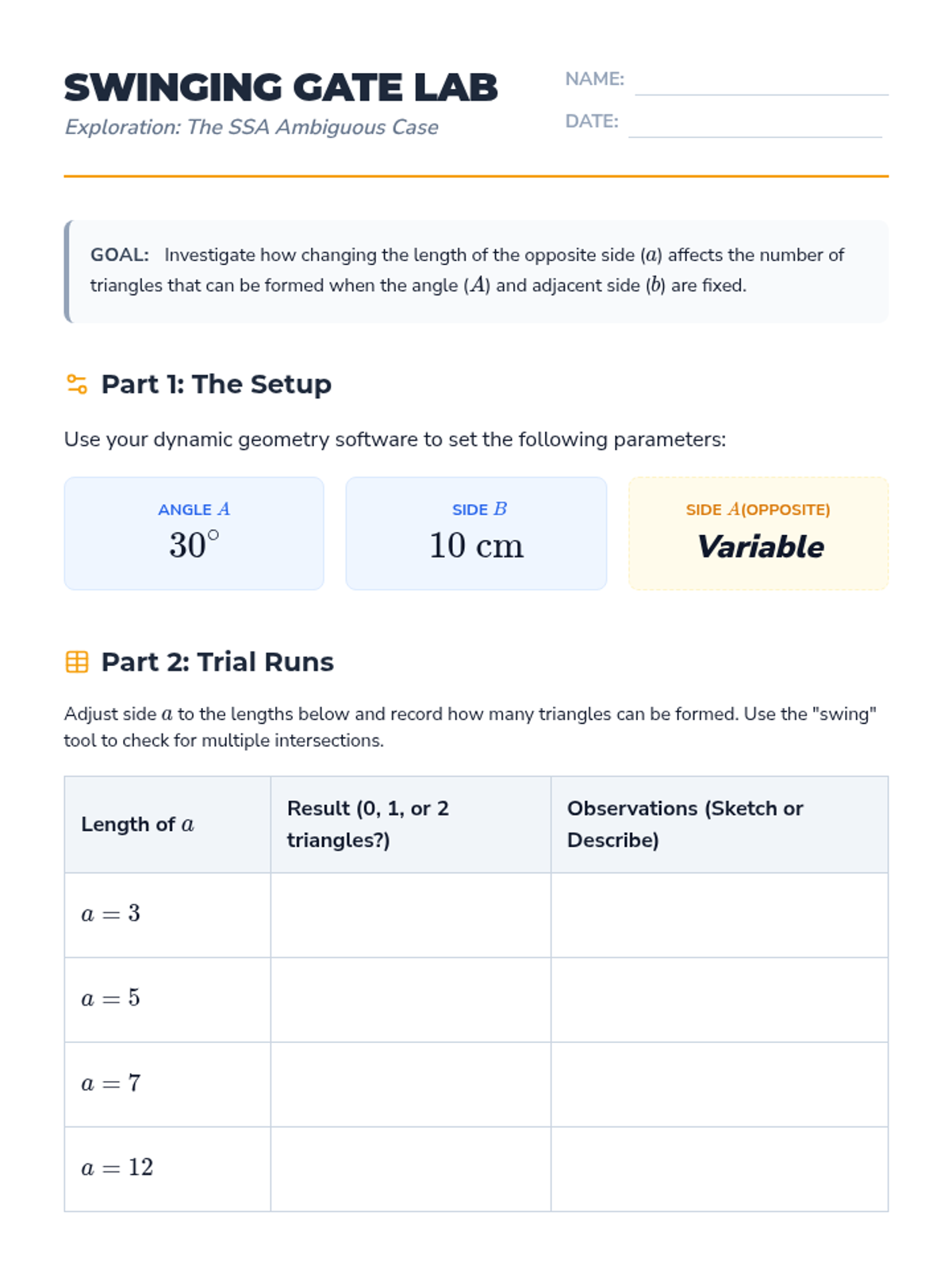
A comprehensive geometry sequence for 9th-grade students exploring the SSA ambiguous case in trigonometry. Through a mix of visual simulation, algebraic calculation of altitudes, and real-world context, students master why certain geometric constraints lead to zero, one, or two possible triangles.
An 8th-grade geometry unit exploring congruence through the lens of rigid transformations. Students define congruence by mapping figures via translations, rotations, and reflections, building up to formal triangle congruence criteria and their applications in real-world problem-solving.
A comprehensive geometry unit for 9th-grade students focusing on triangle congruence criteria. Students progress from rigid motion definitions to multi-step formal proofs using SSS, SAS, ASA, AAS, and HL, culminating in the application of CPCTC and the analysis of complex overlapping figures.
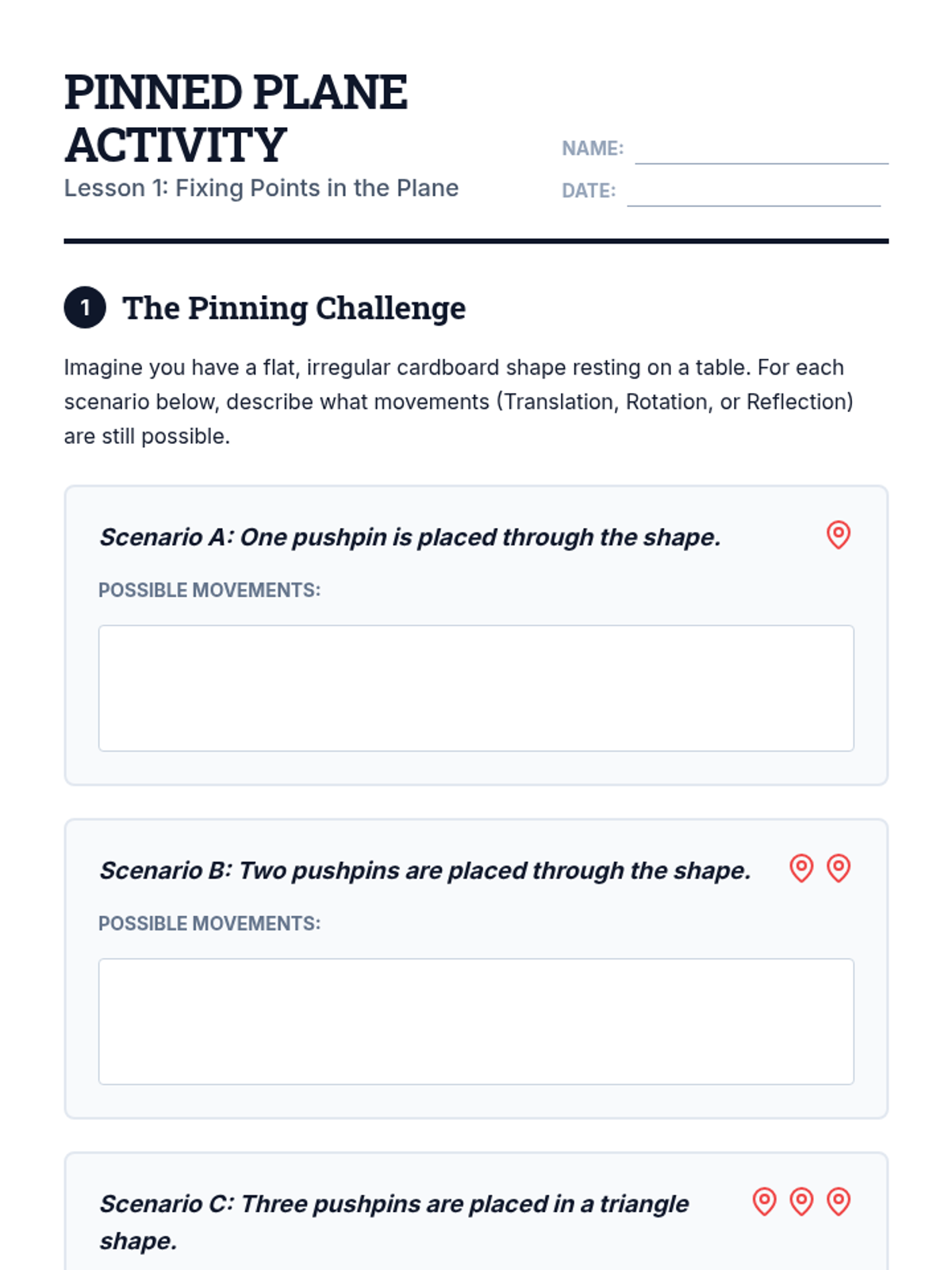
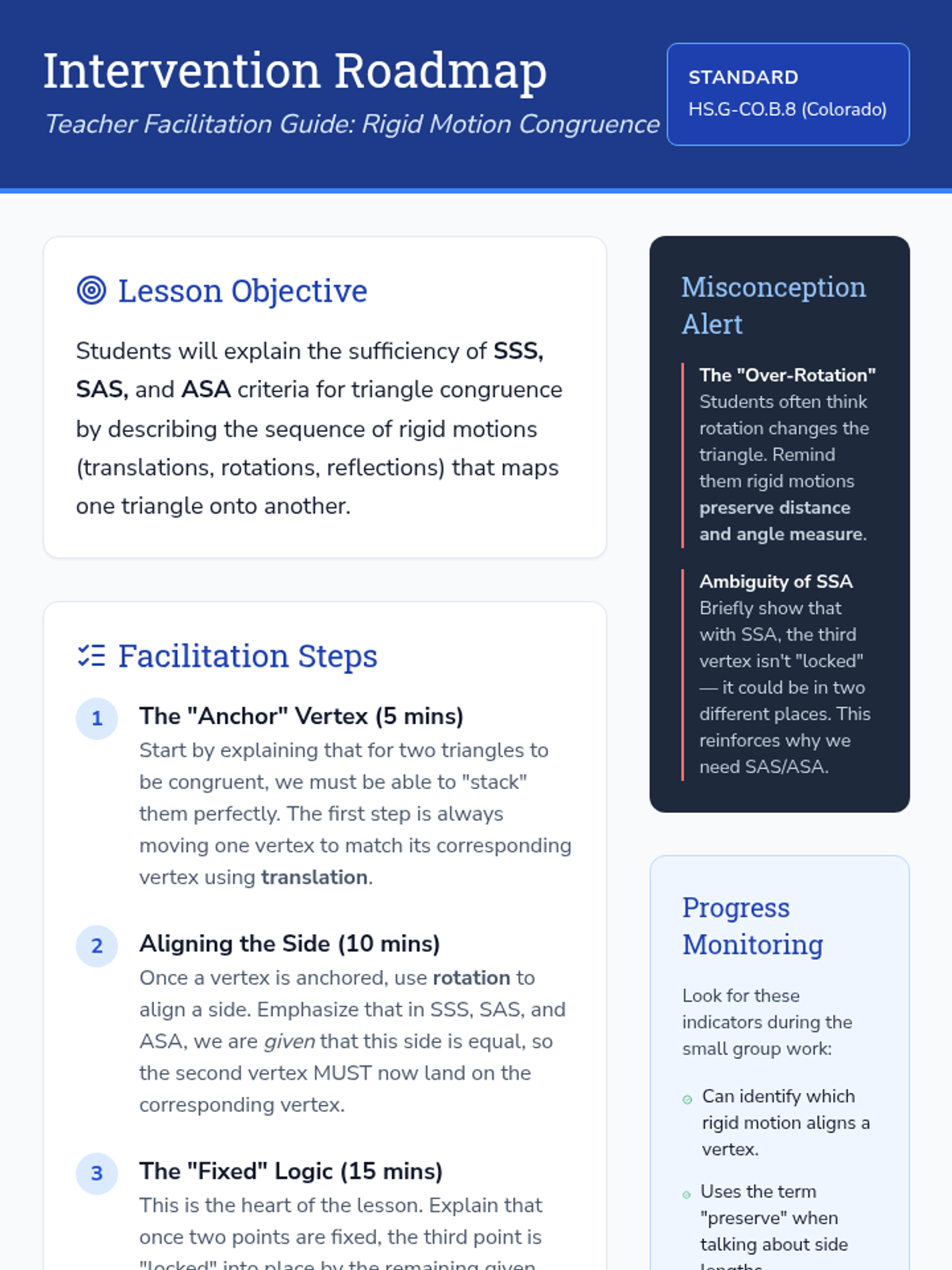
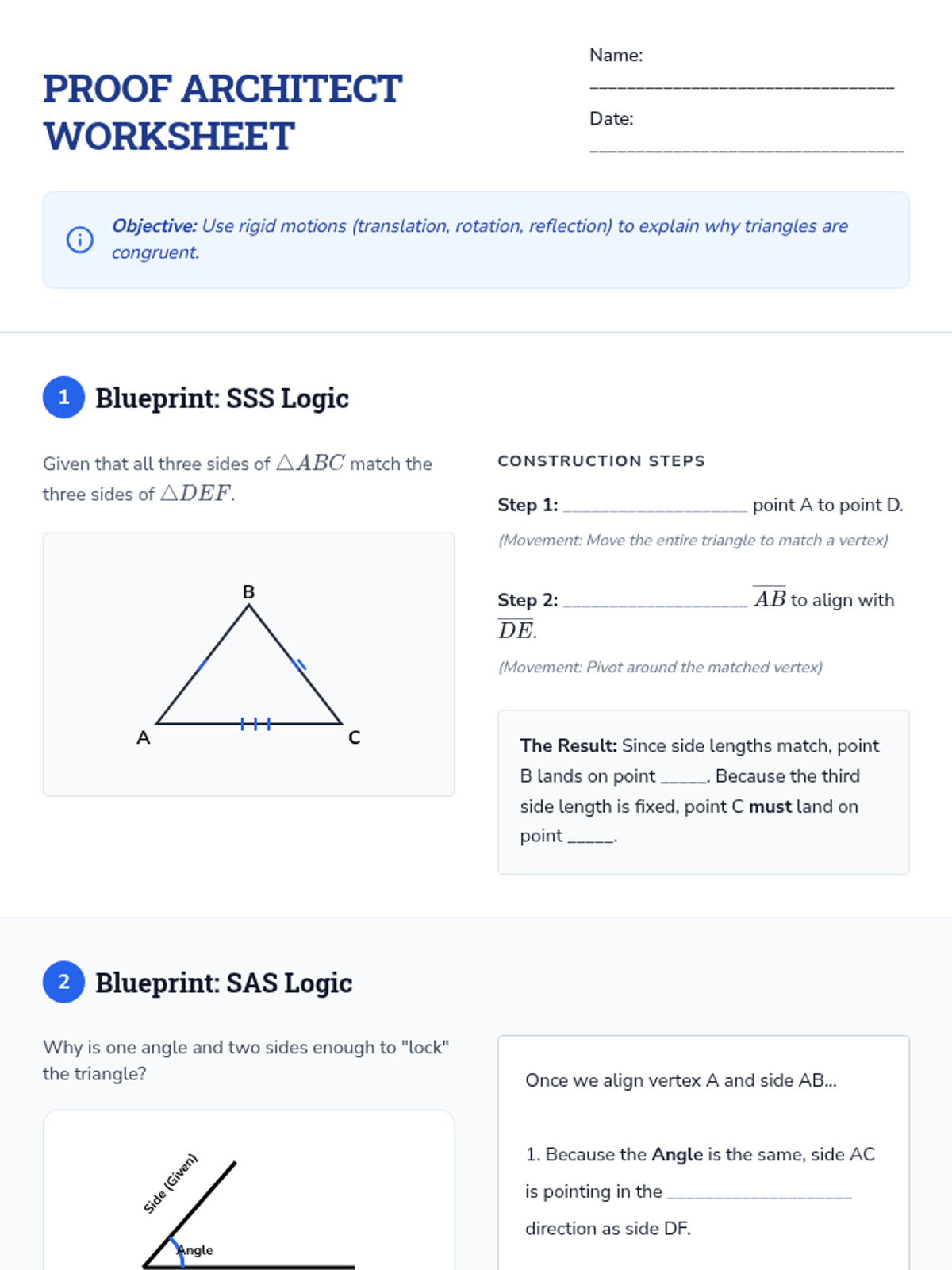
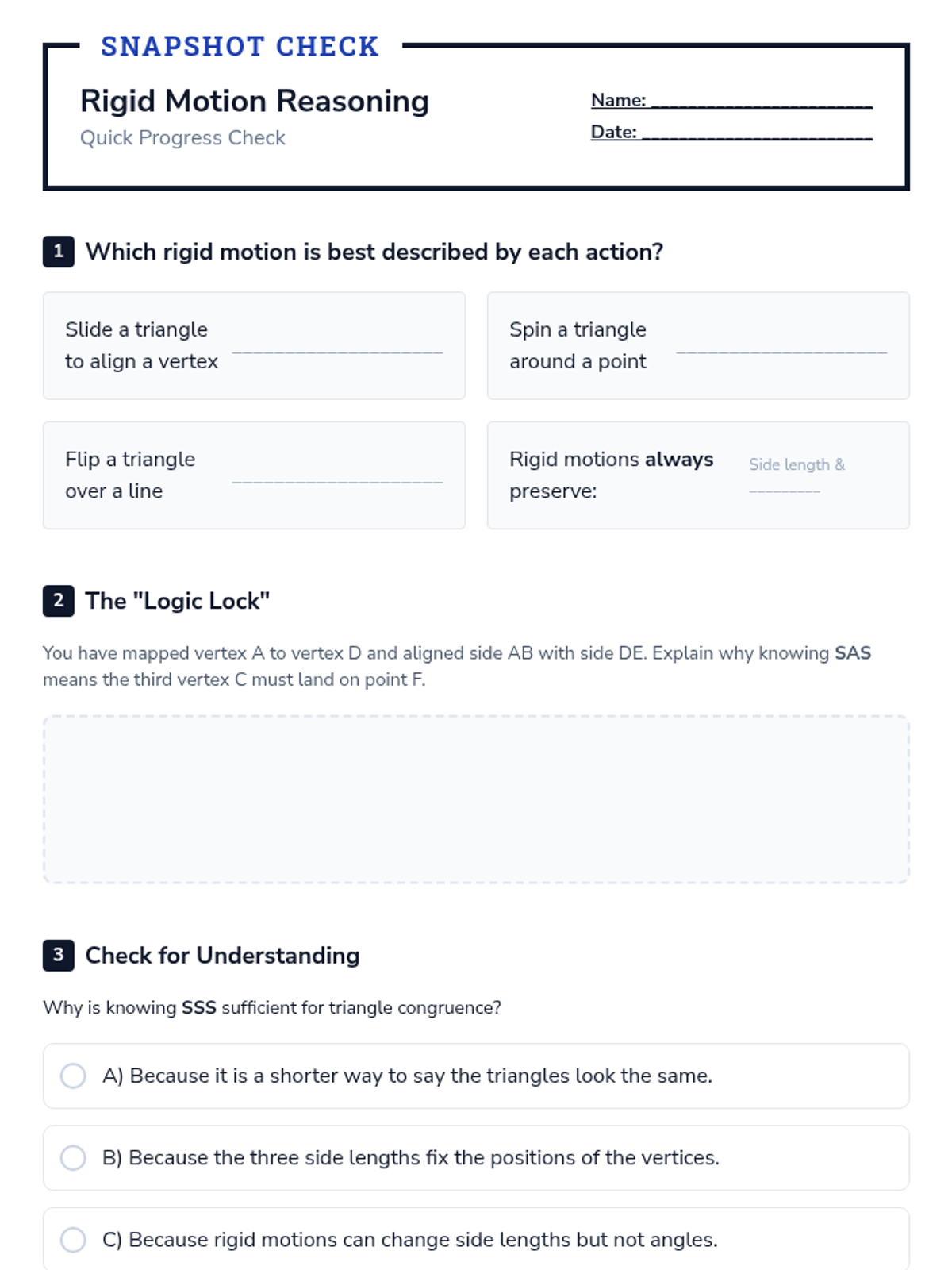
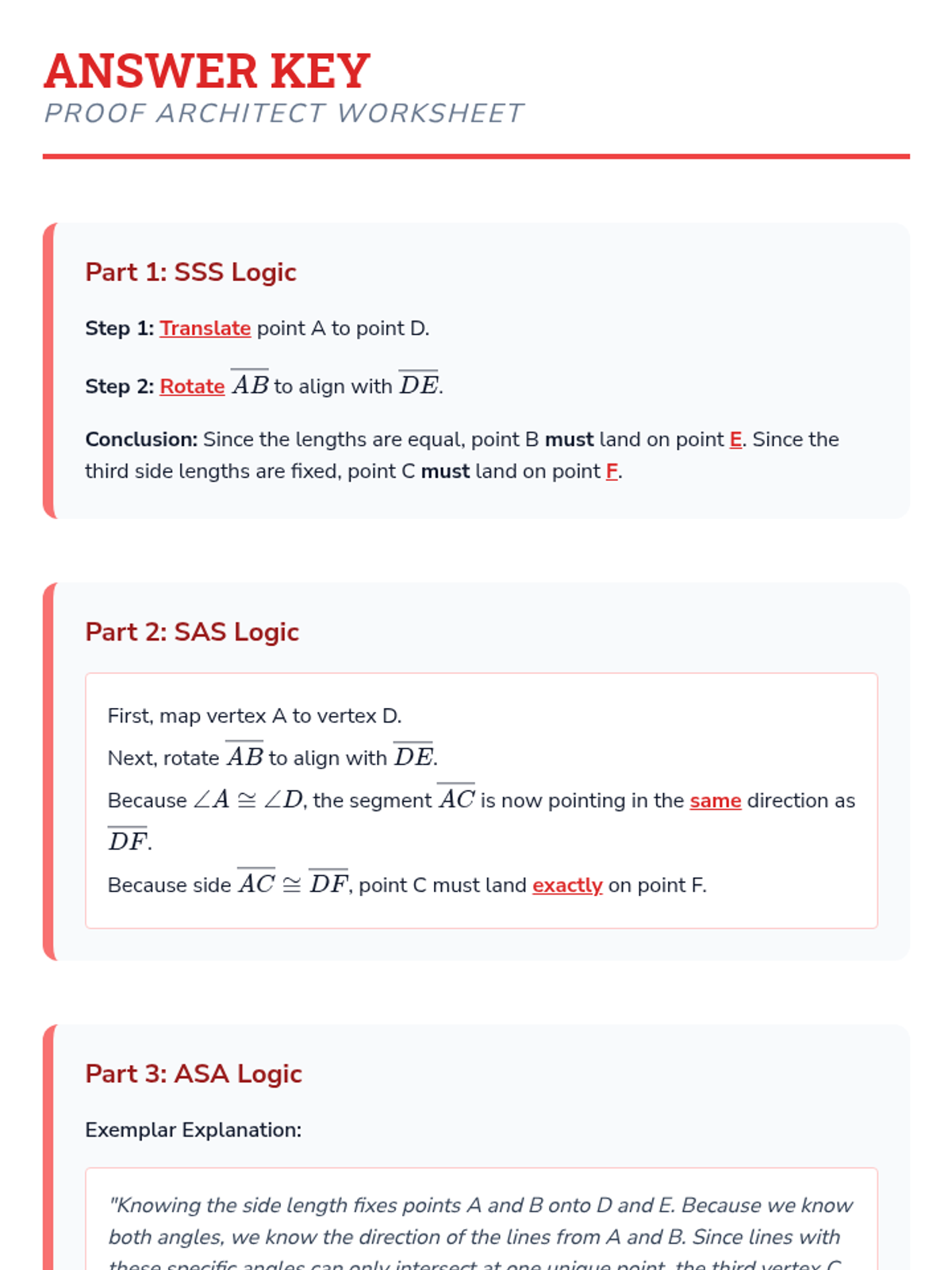
This sequence bridges the gap between physical rigid motions and formal geometric proof. Students explore how pinning down specific parts of a triangle (SAS, SSS, ASA) creates a rigid structure that forces congruence, while other combinations (SSA) fail.
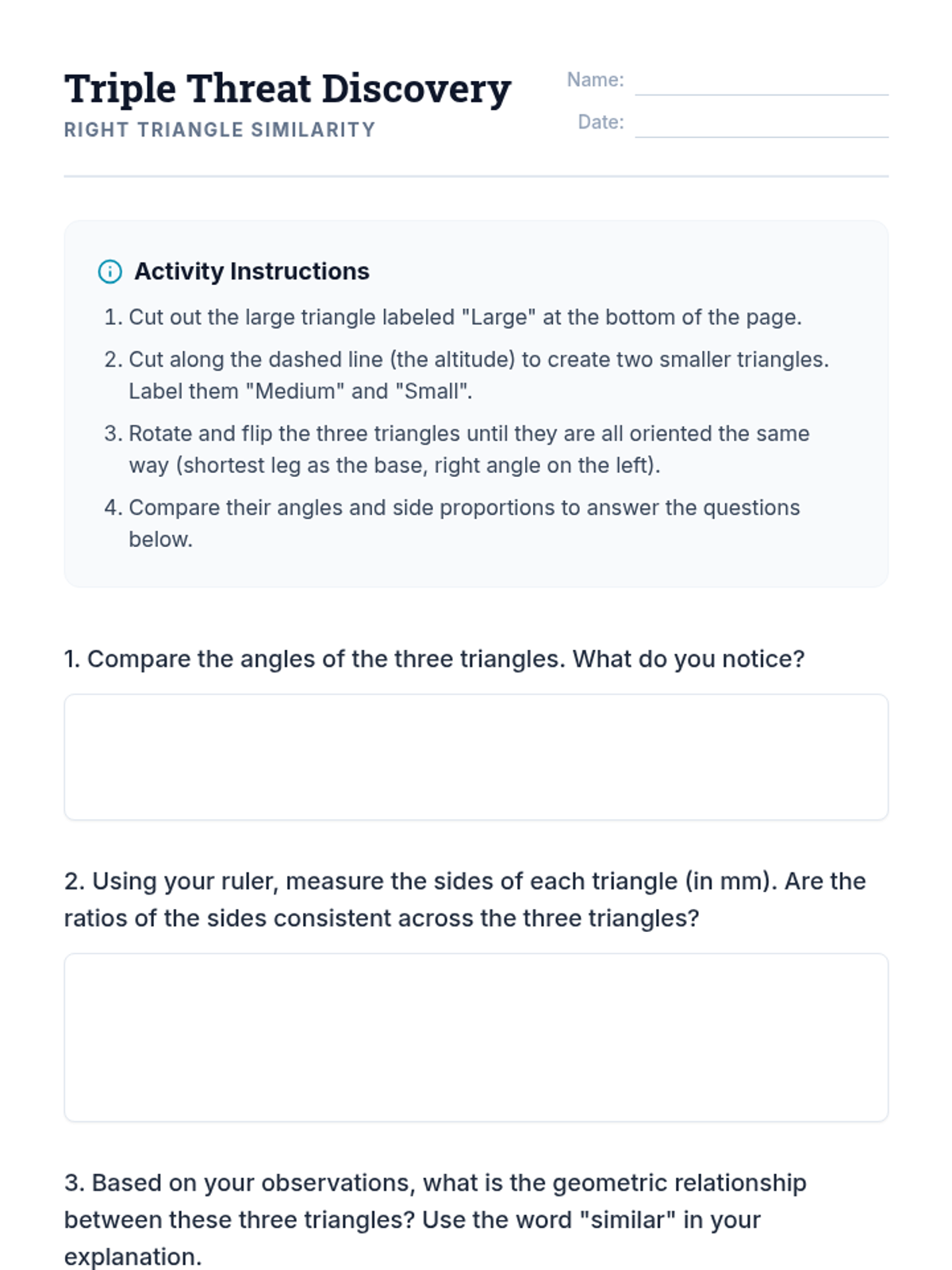
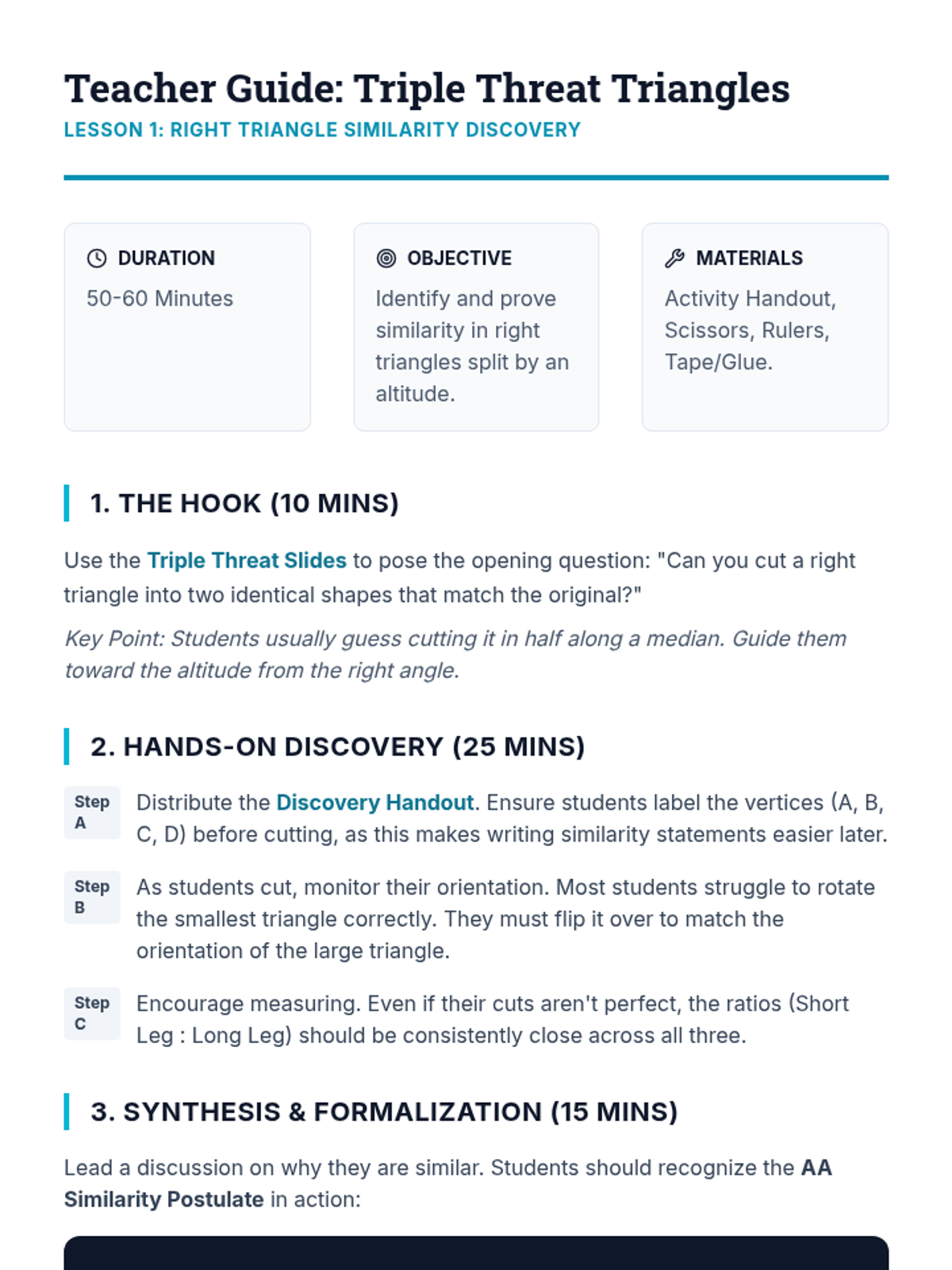
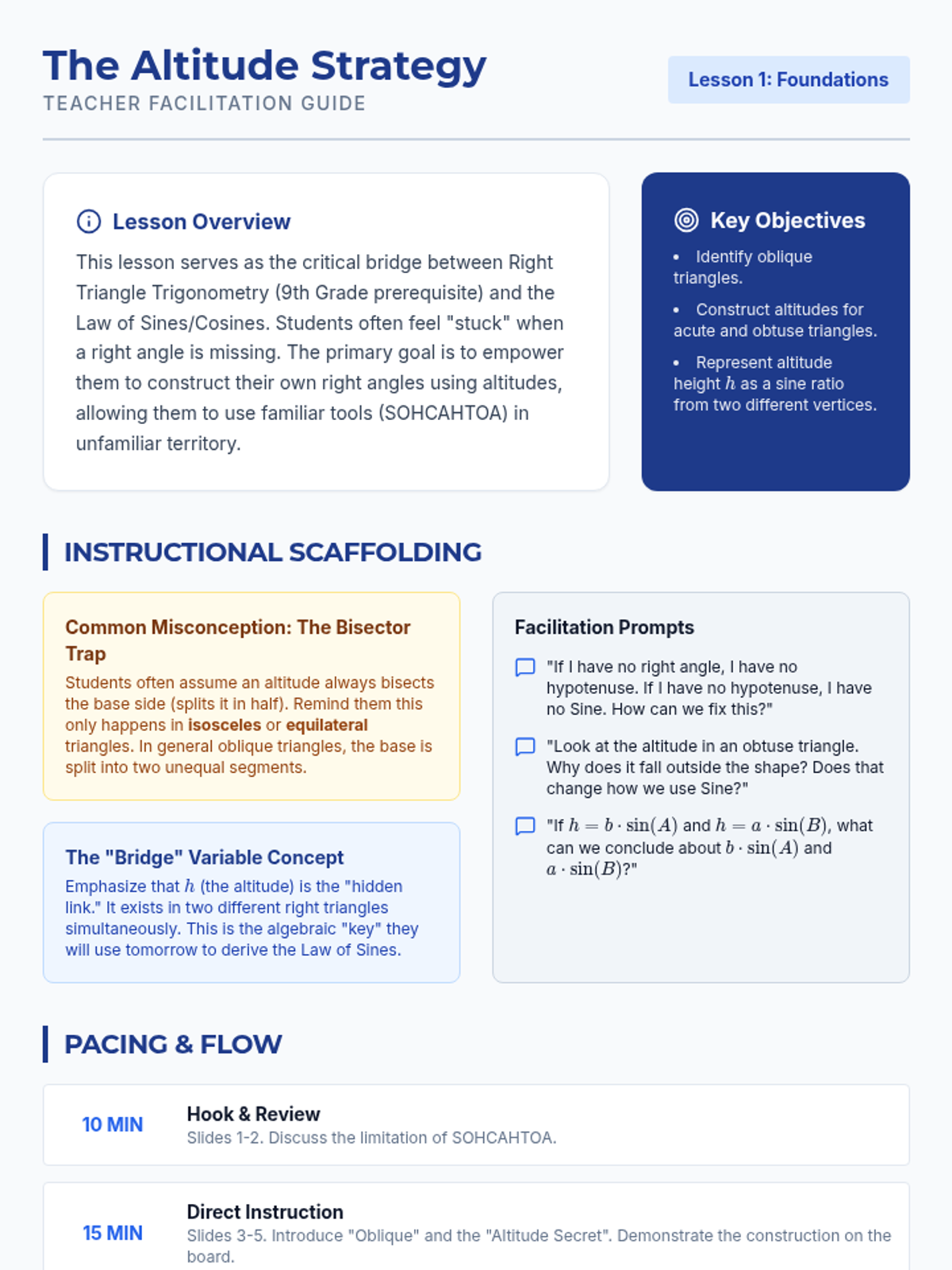
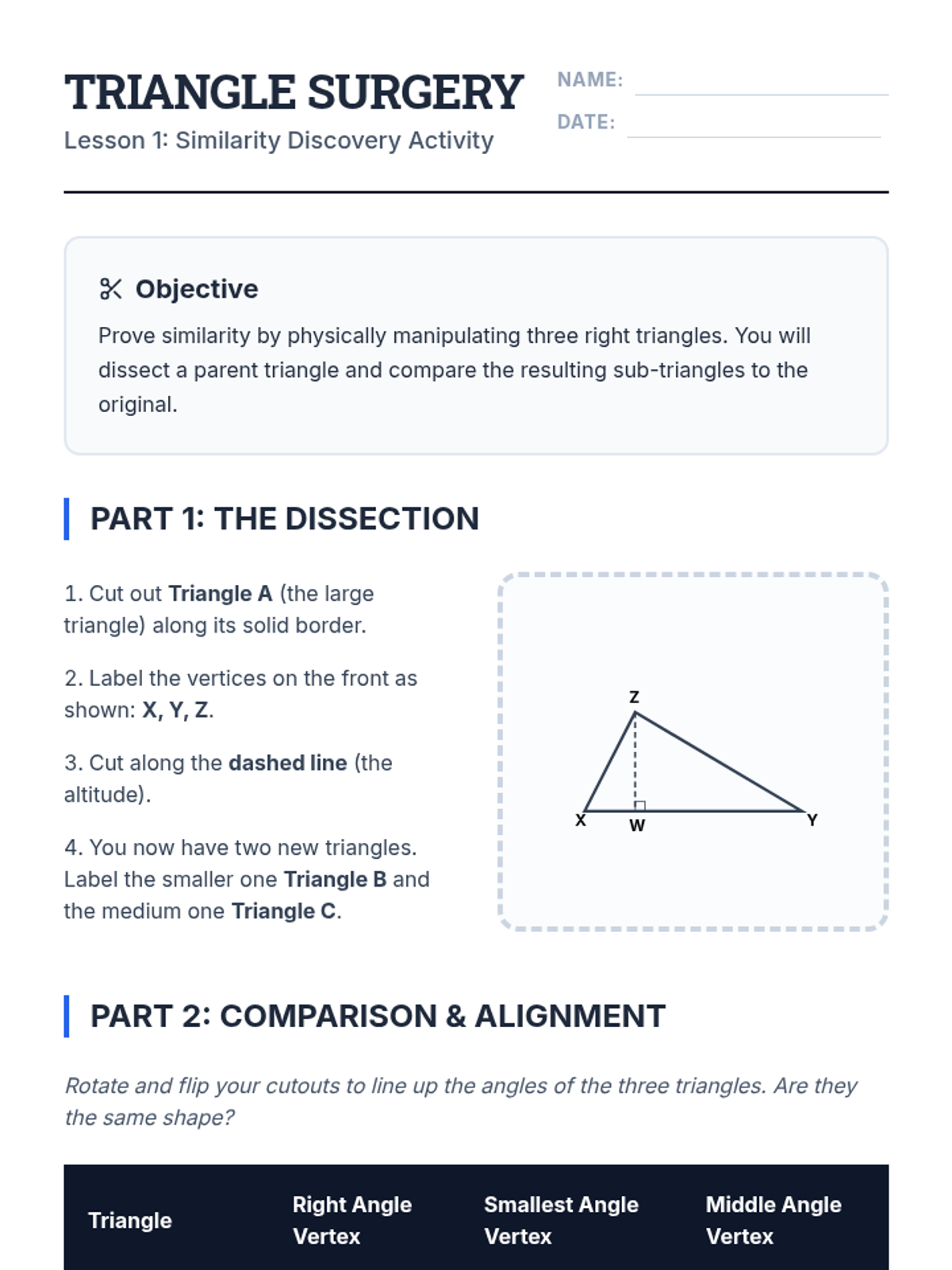
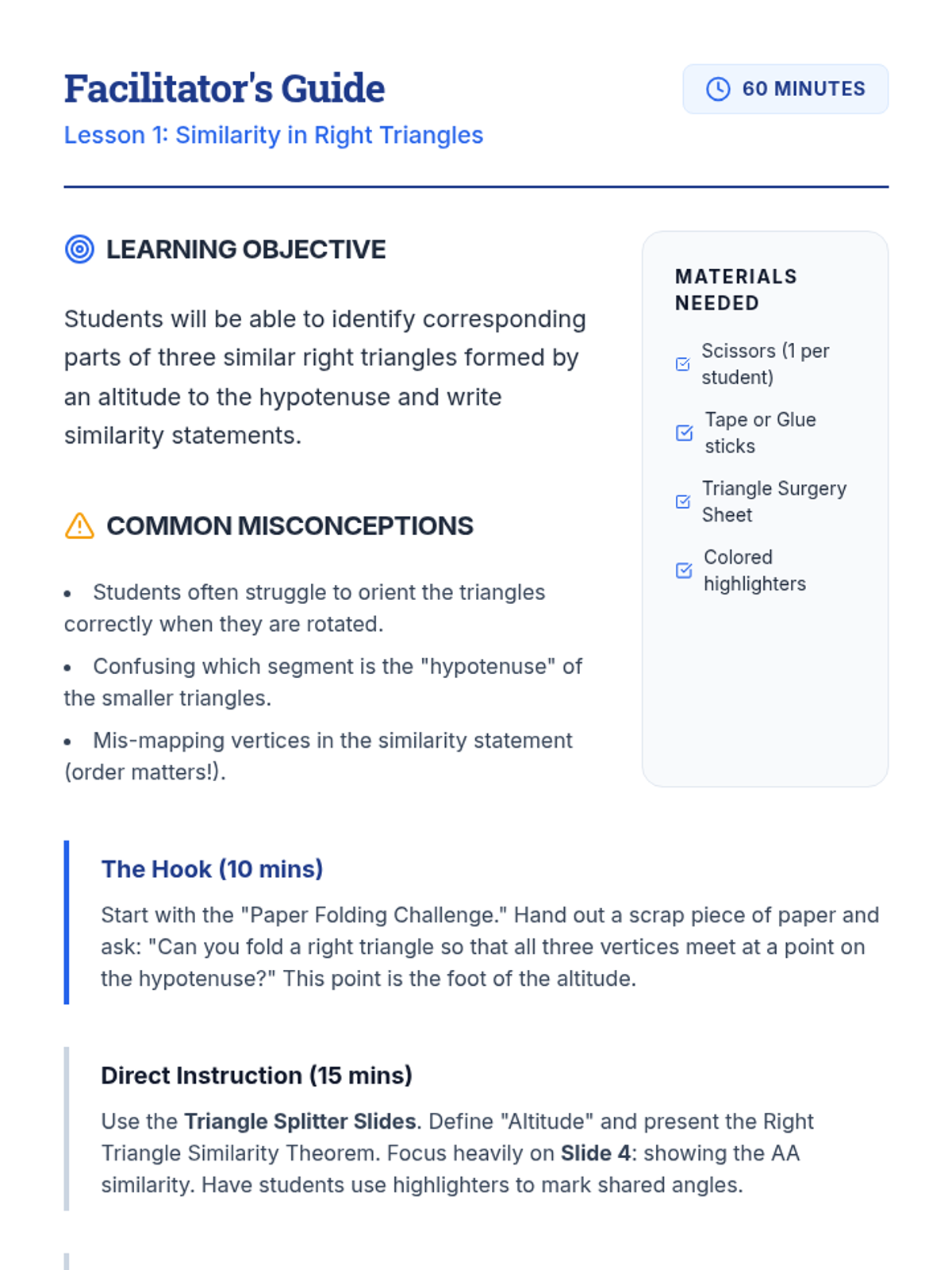
This sequence explores the geometric relationships within right triangles when an altitude is drawn to the hypotenuse. Students will discover triangle similarity, derive geometric mean theorems, and ultimately prove the Pythagorean Theorem using similarity ratios.
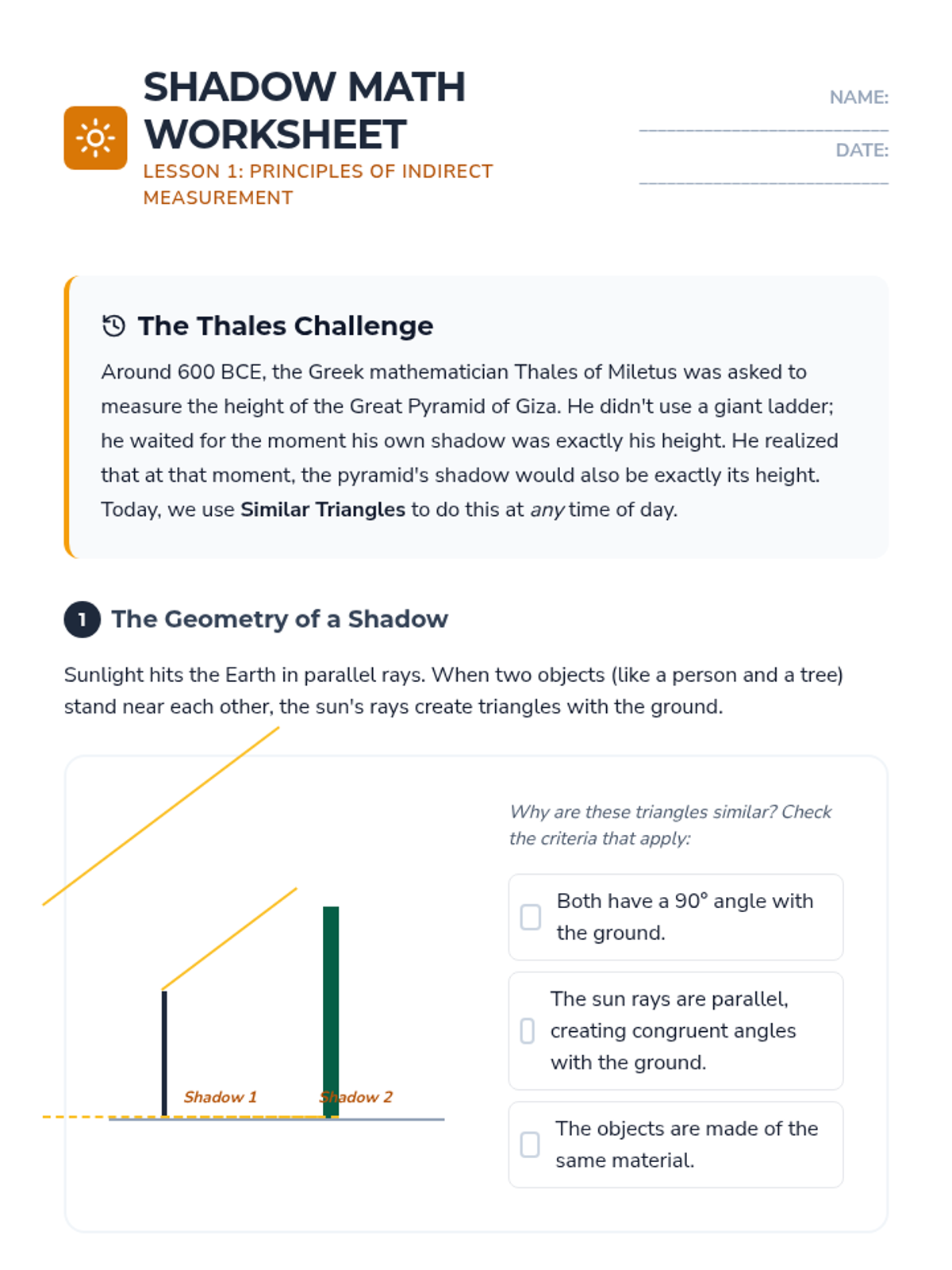
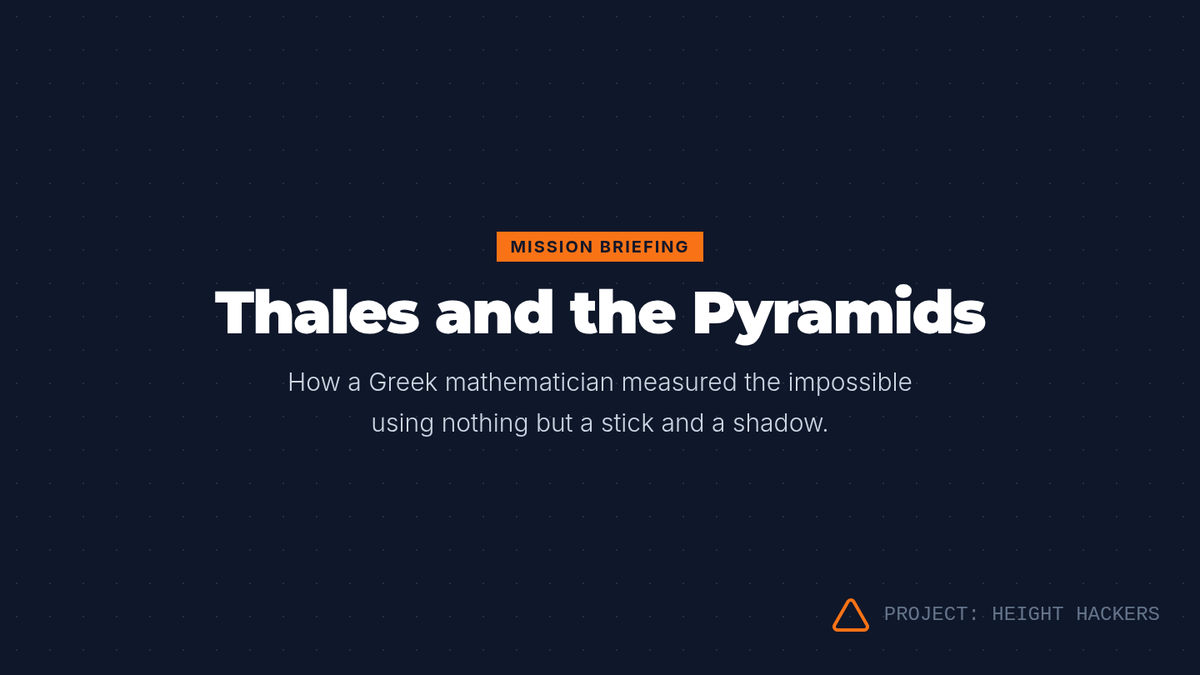
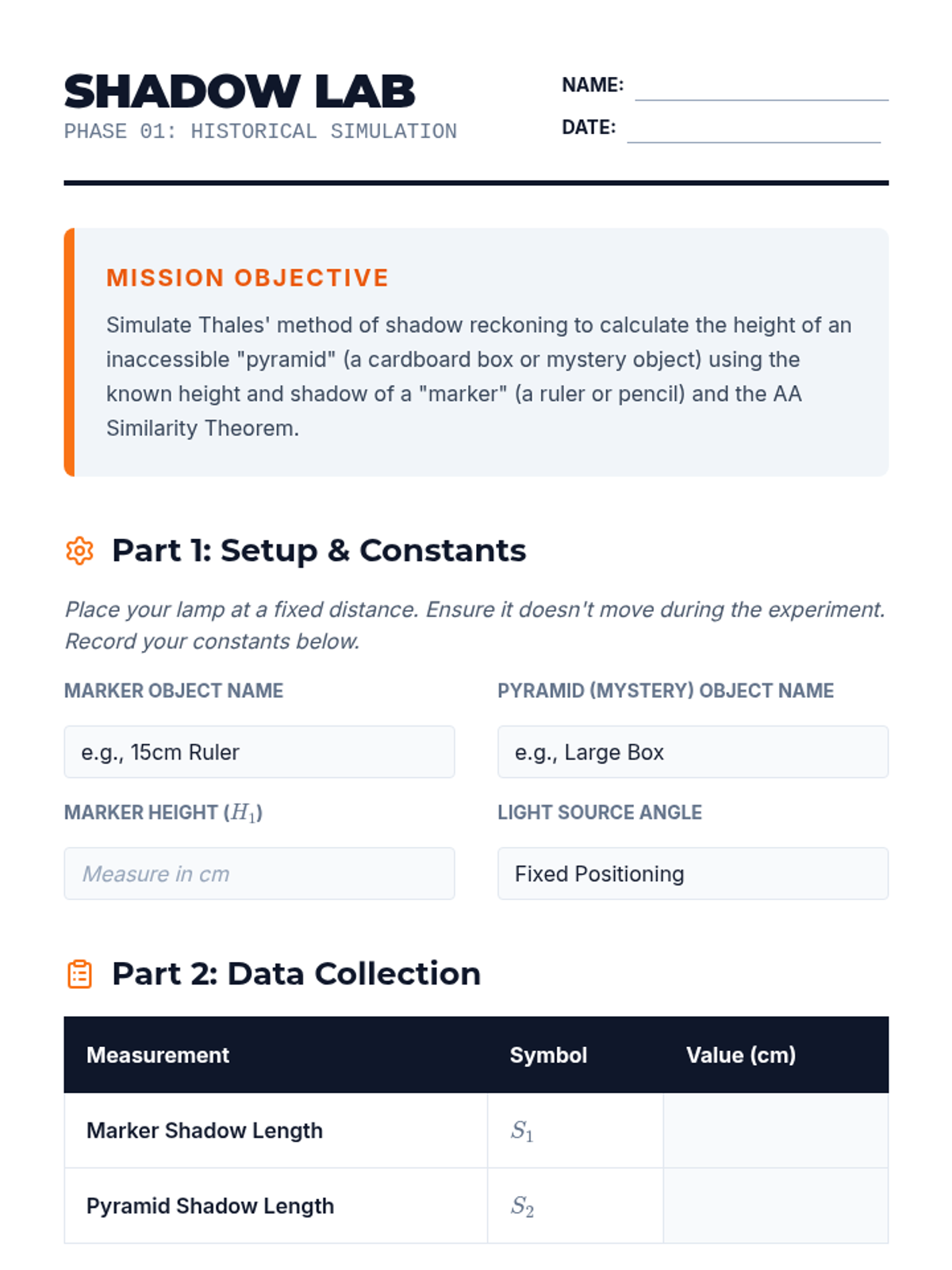
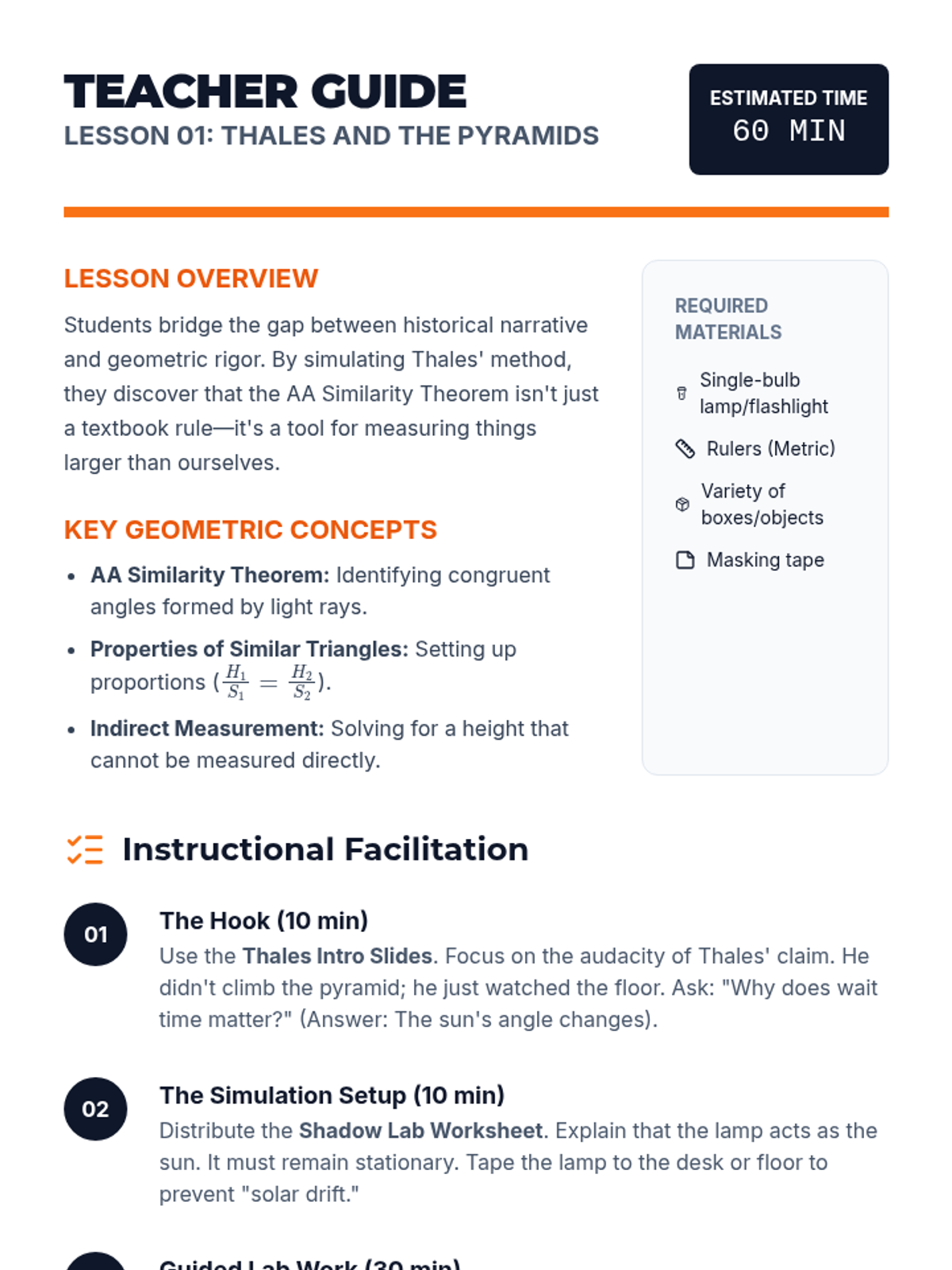
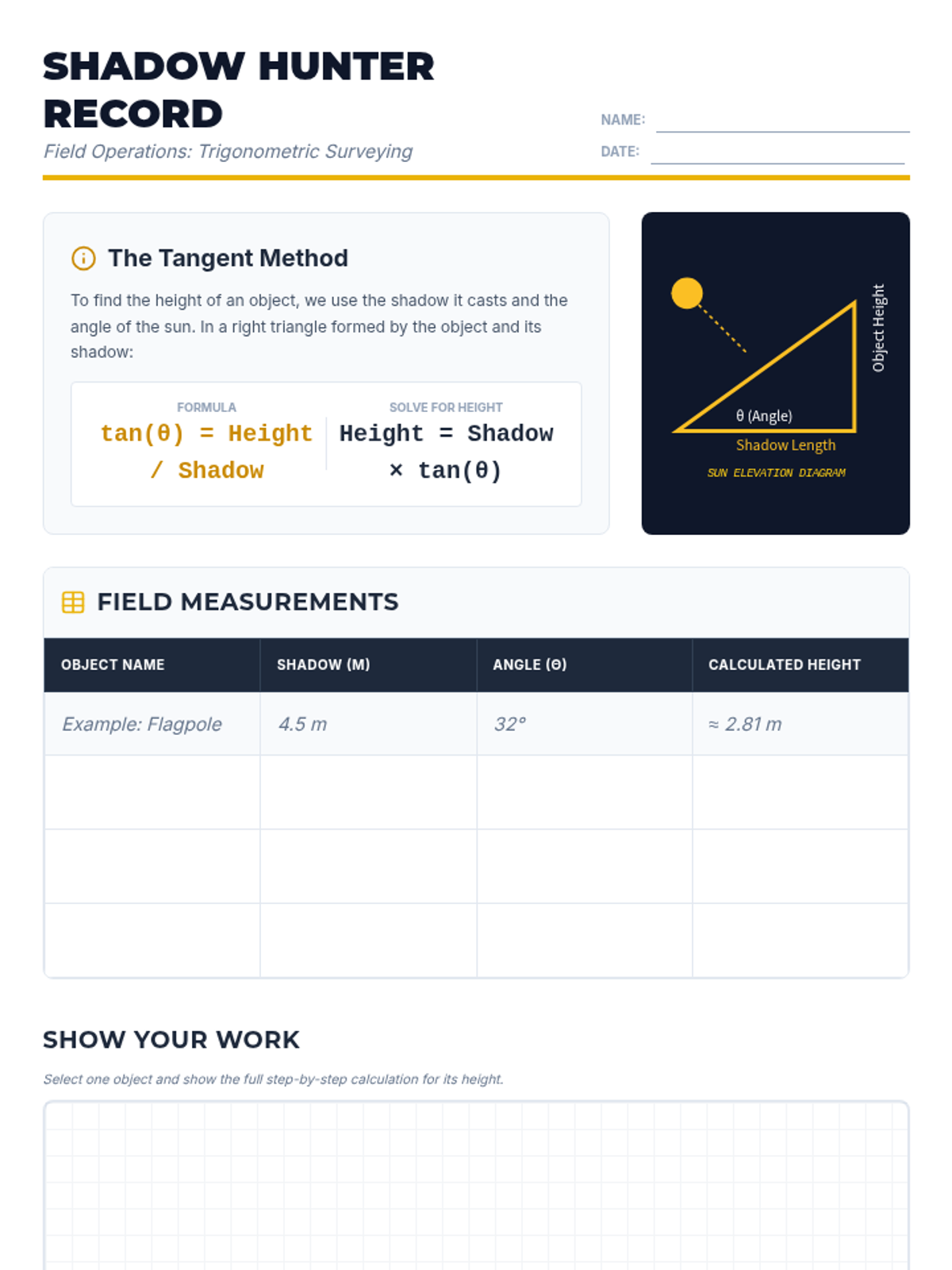
A project-based geometry sequence where 9th-grade students apply similarity theorems and proportions to measure inaccessible heights using shadow and mirror methods, culminating in a formal geometric proof and field report.
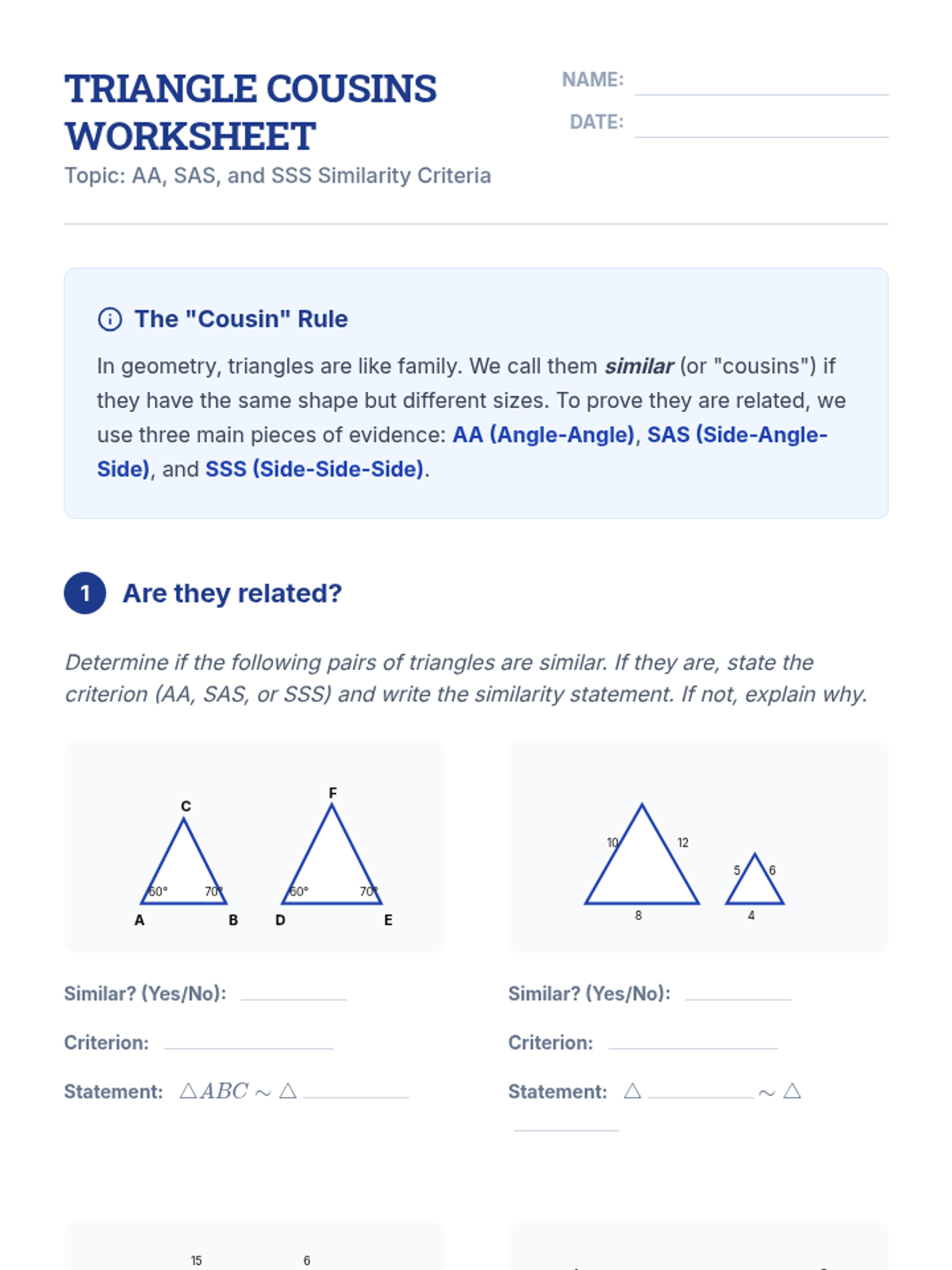
A comprehensive geometry sequence for 9th-grade students focused on proving triangle similarity. Students progress from understanding transformations and dilations to constructing formal flowchart and two-column proofs using AA, SAS, and SSS criteria.
A 10th-grade geometry project where students apply similarity theorems to measure inaccessible heights using historical methods (Thales' shadows) and modern tools (clinometers). The unit blends historical context, hands-on construction, field data collection, and rigorous mathematical proof.
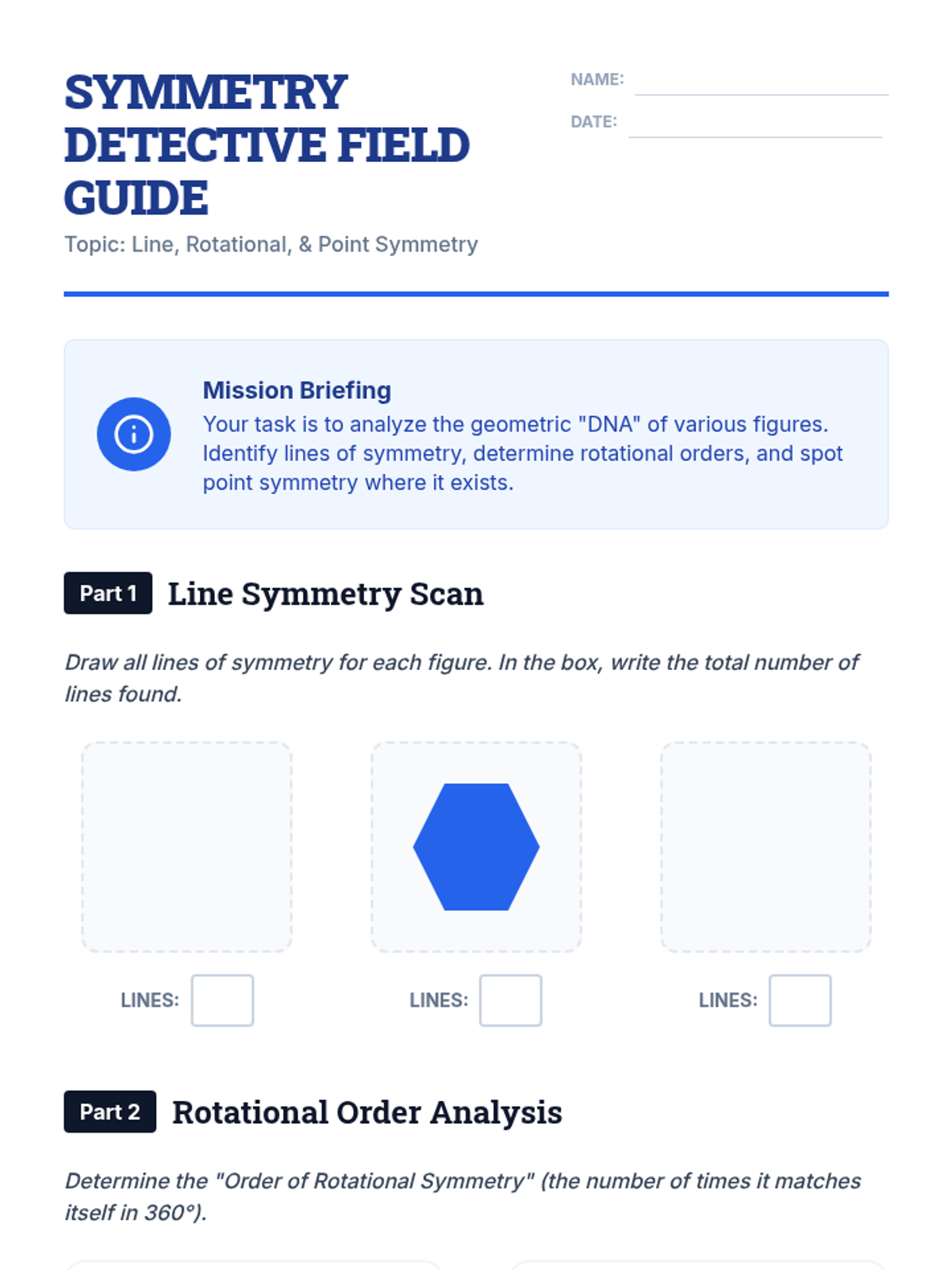
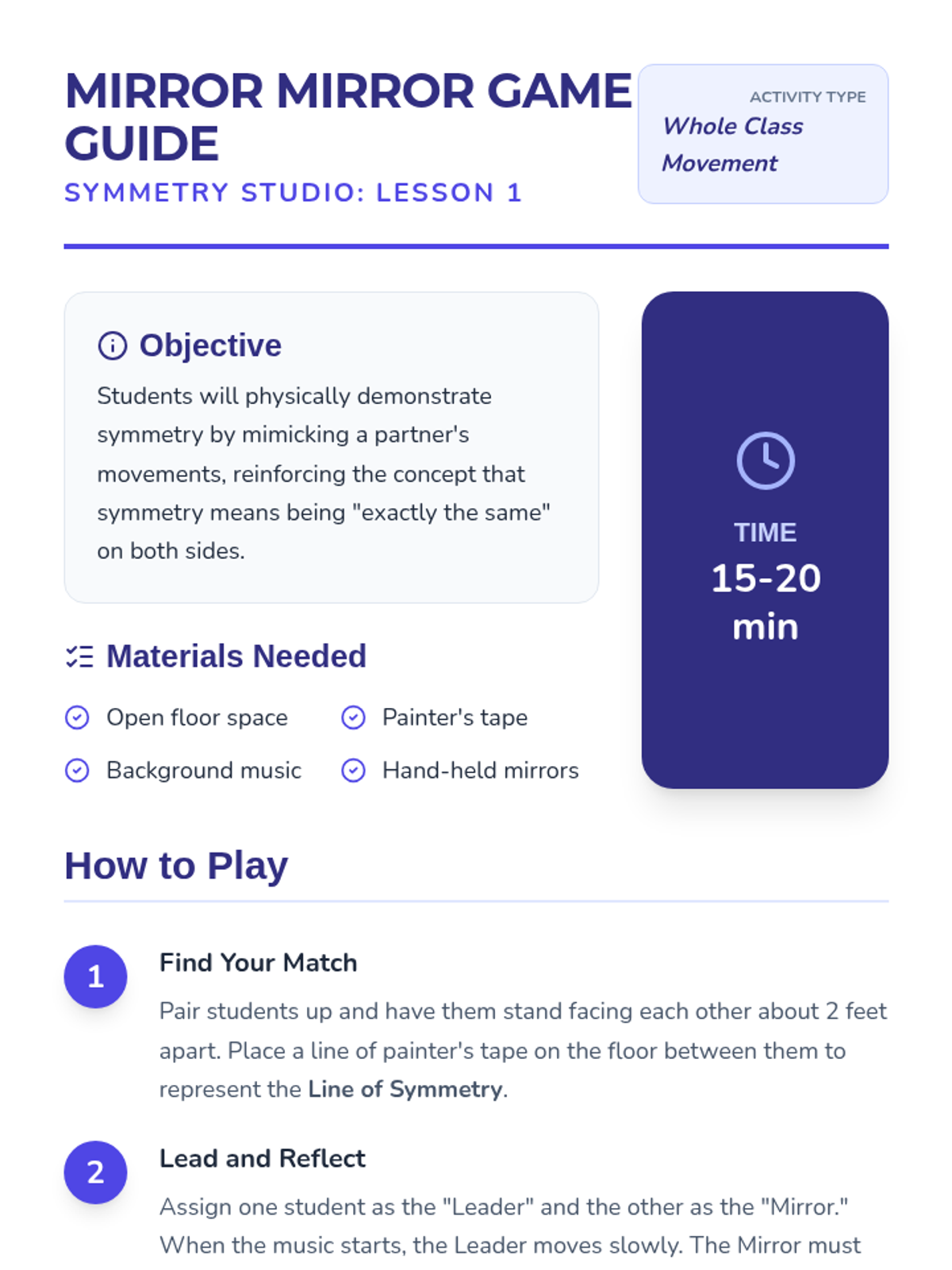
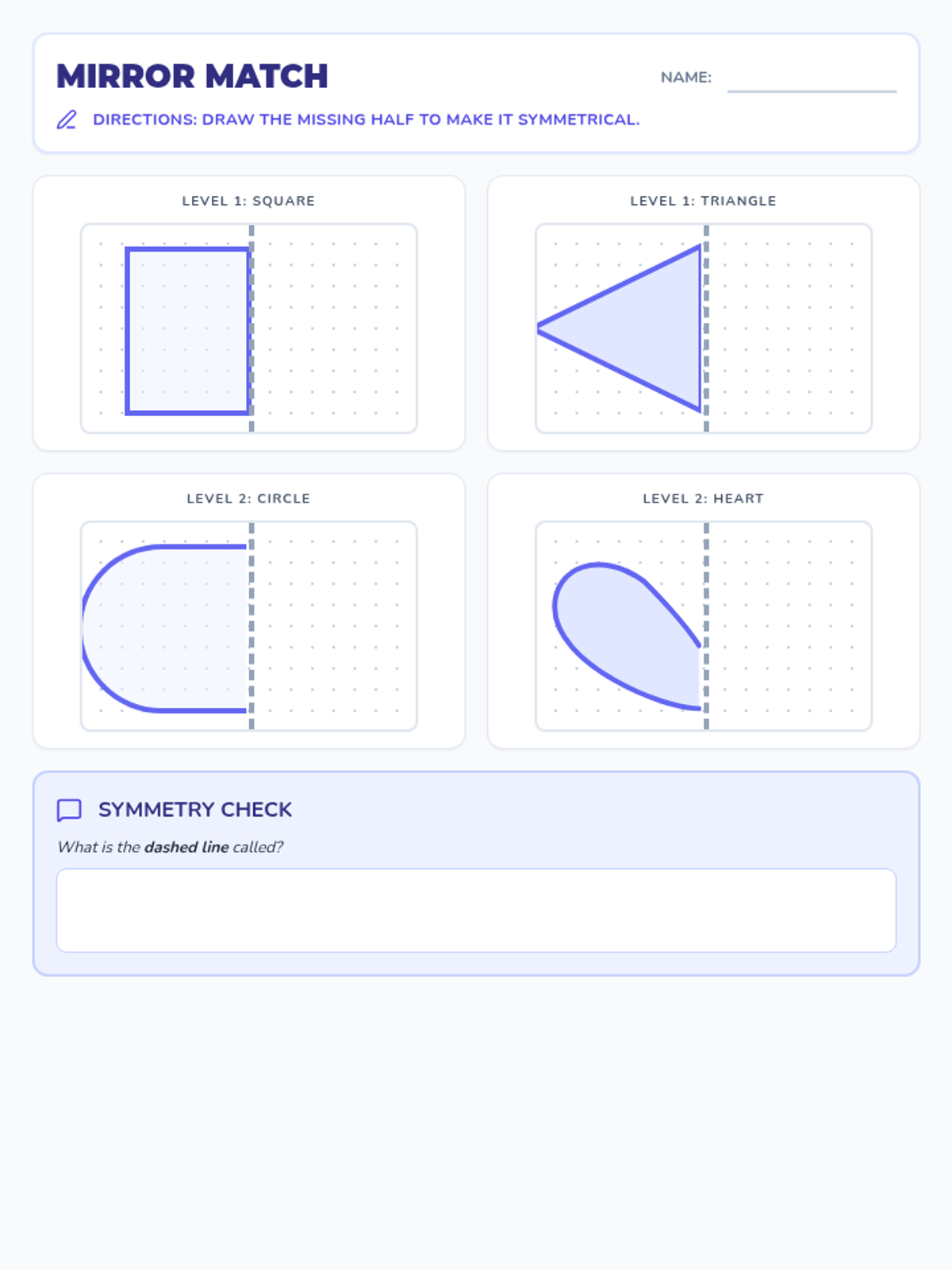
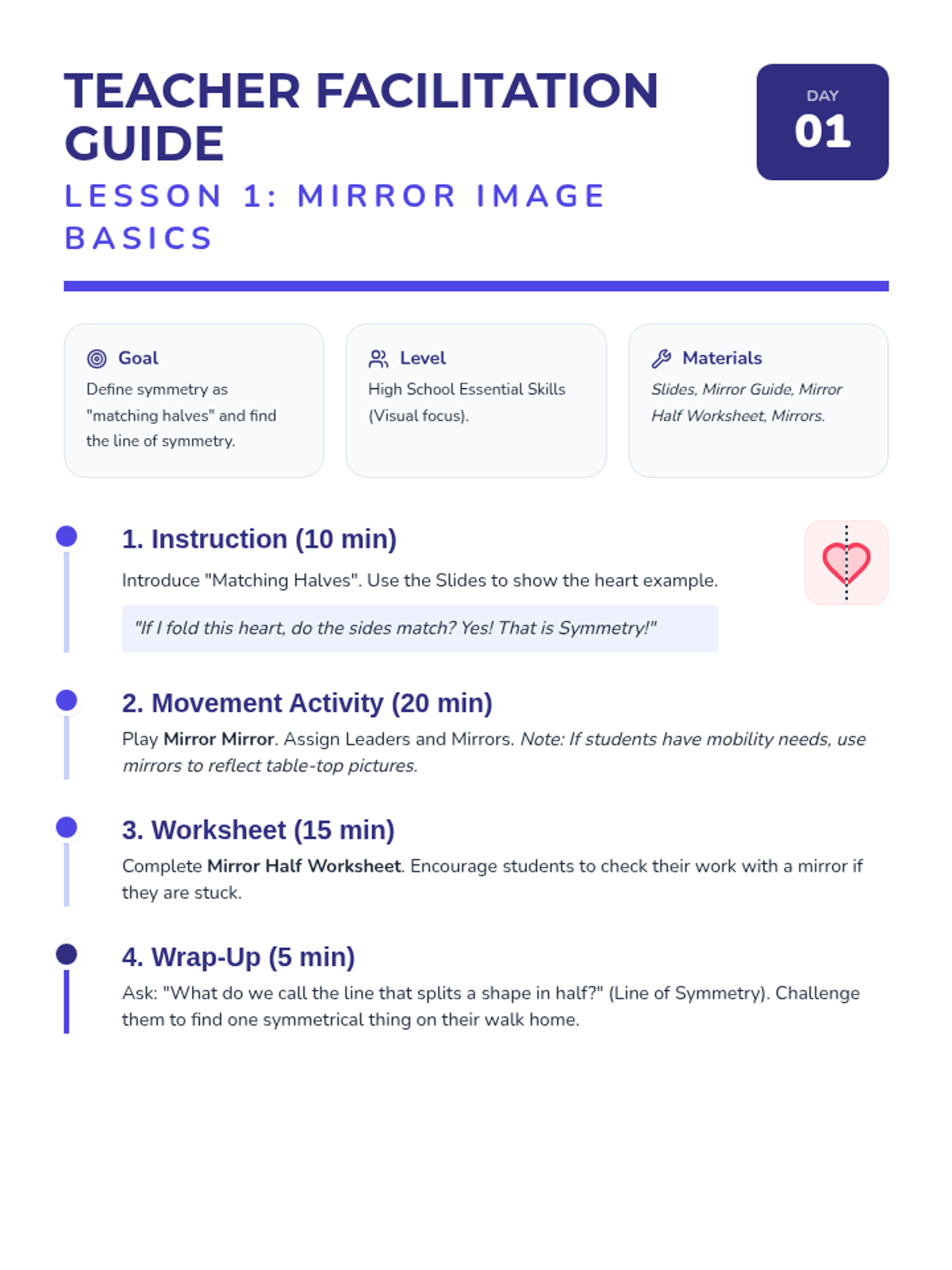
A four-day unit for high school essential skills students focused on identifying and creating symmetry in geometric shapes and everyday objects through hands-on activities and visual supports.
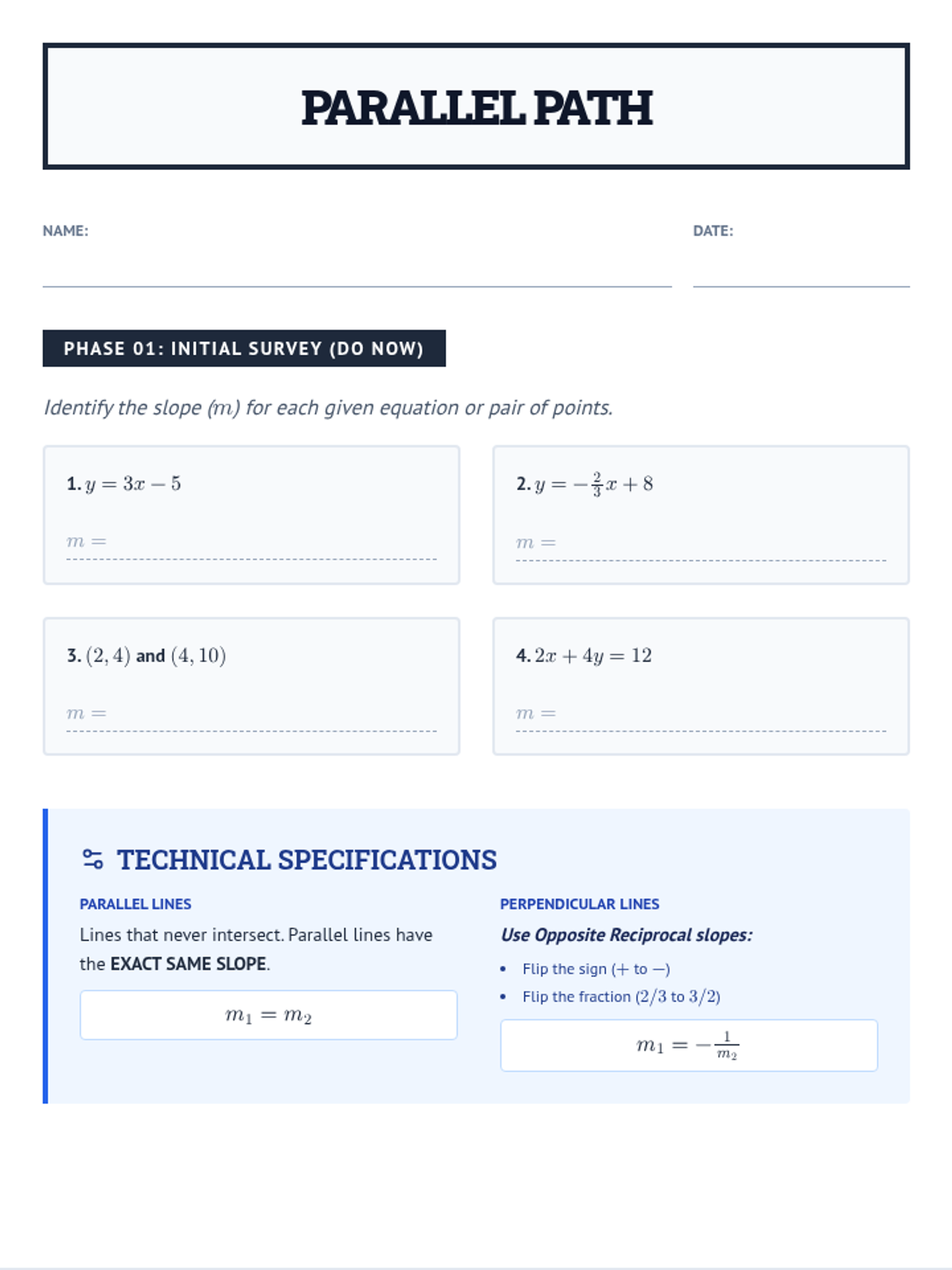
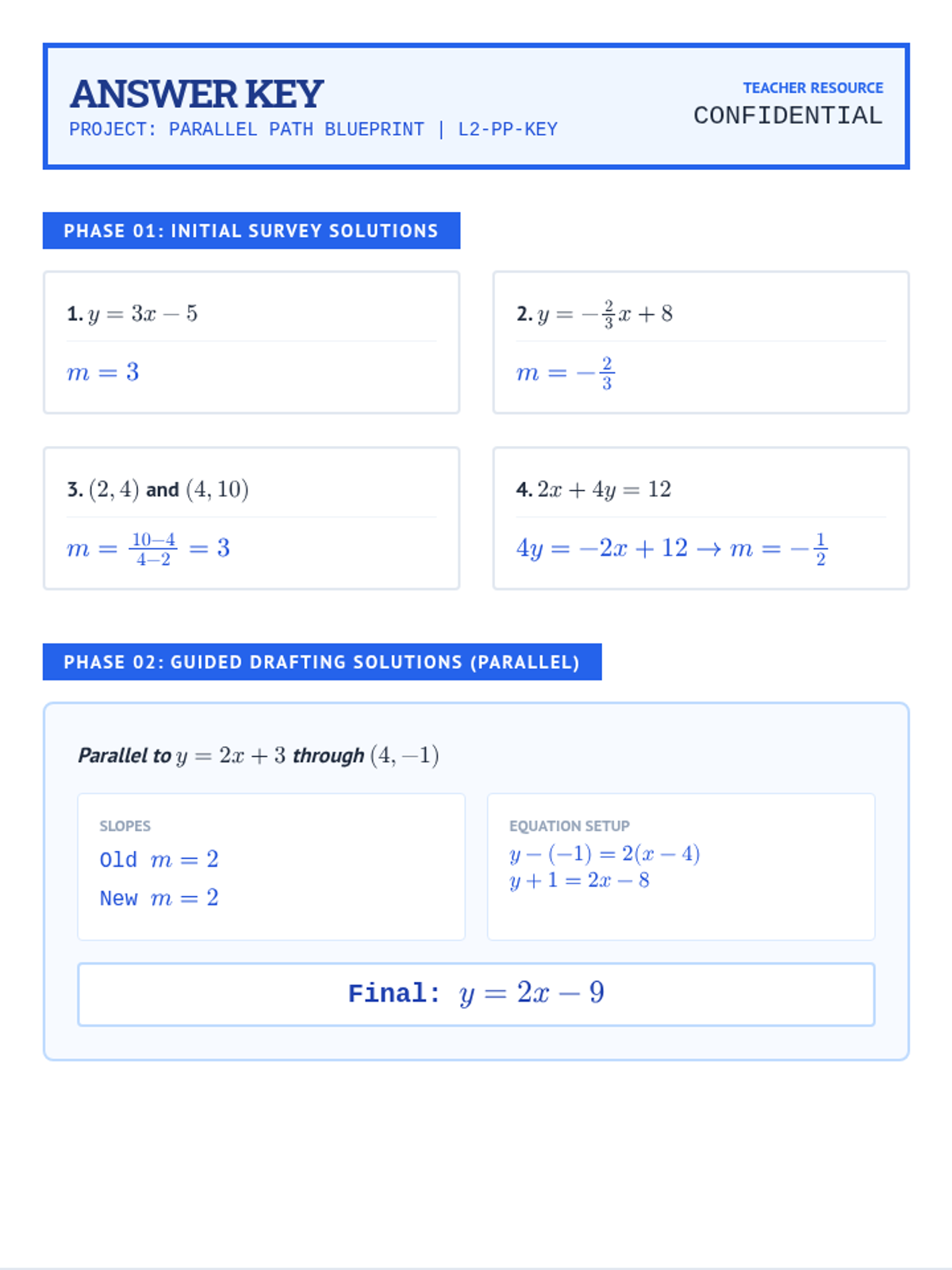
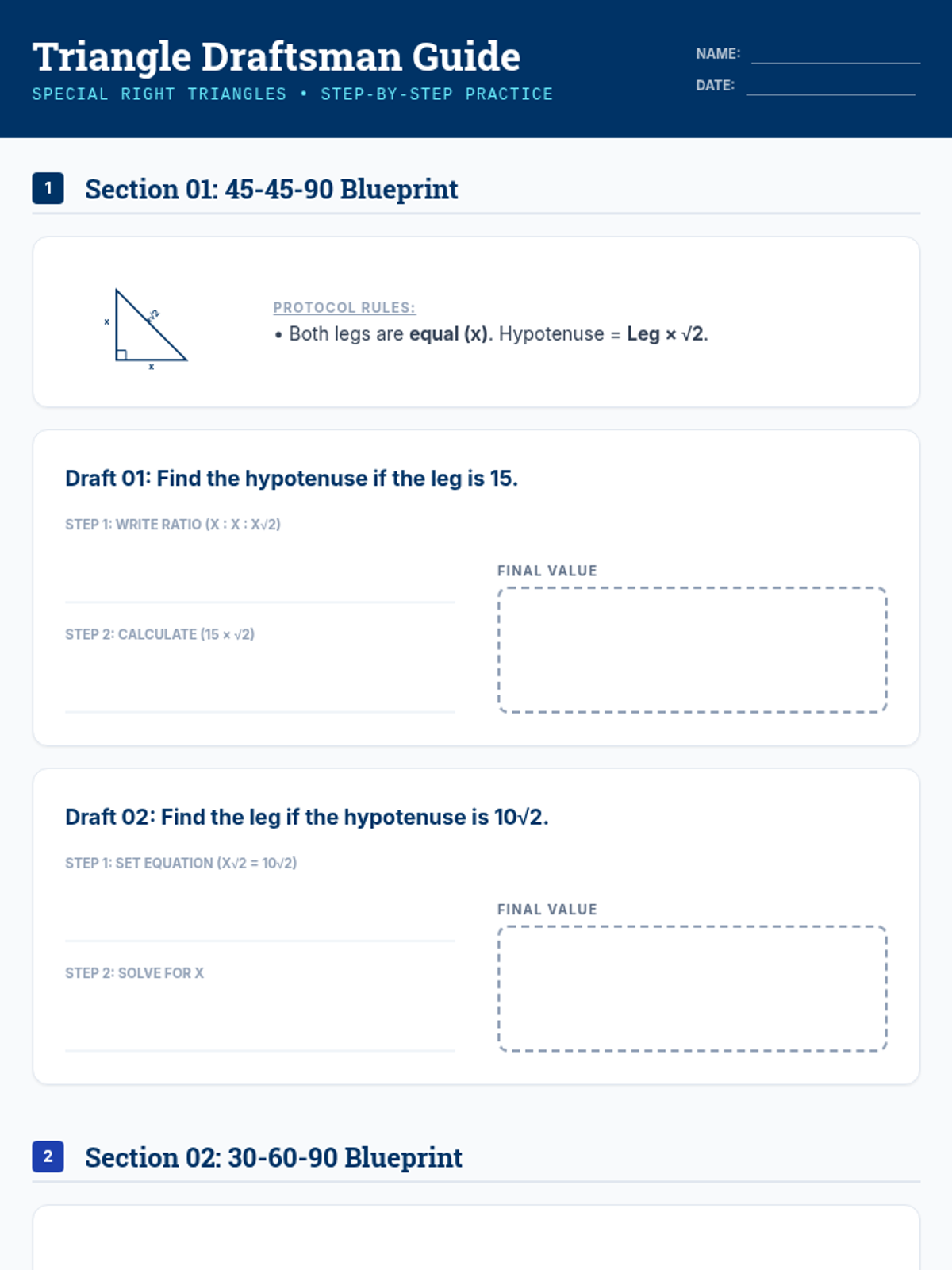
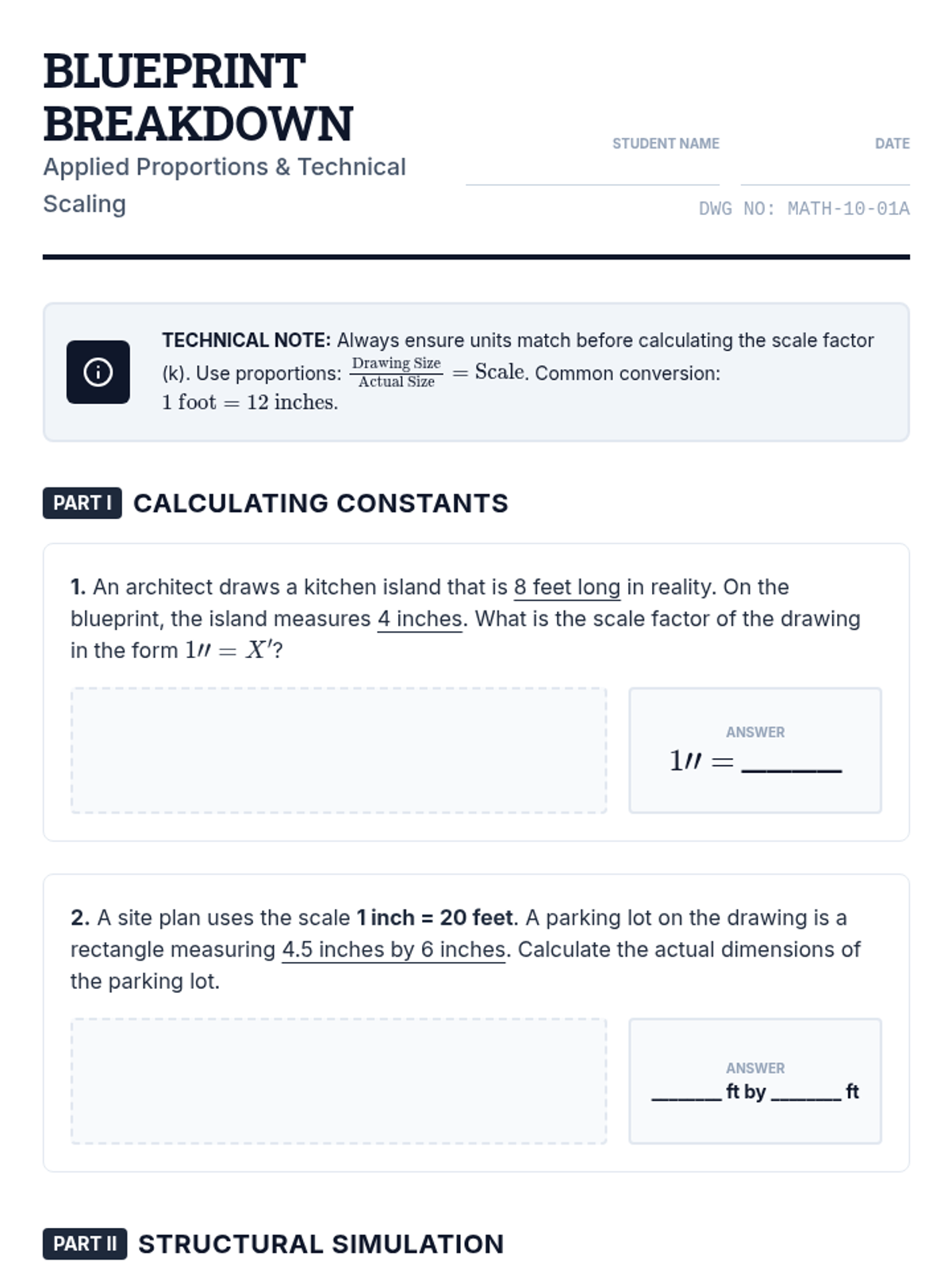
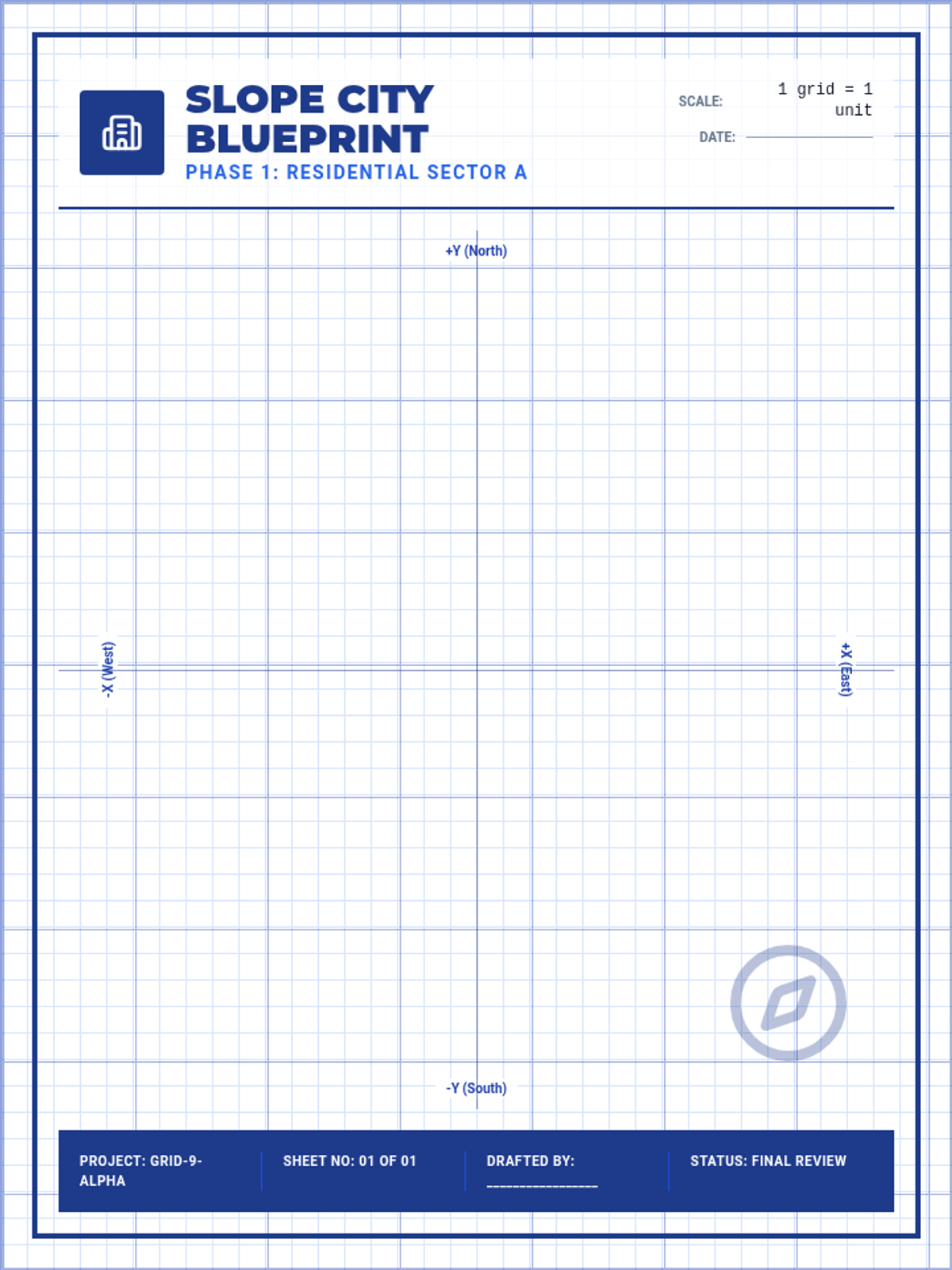
A series of algebra and geometry foundation lessons designed with a technical blueprint aesthetic, focusing on precision, organized computation, and visual clarity in mathematical steps.
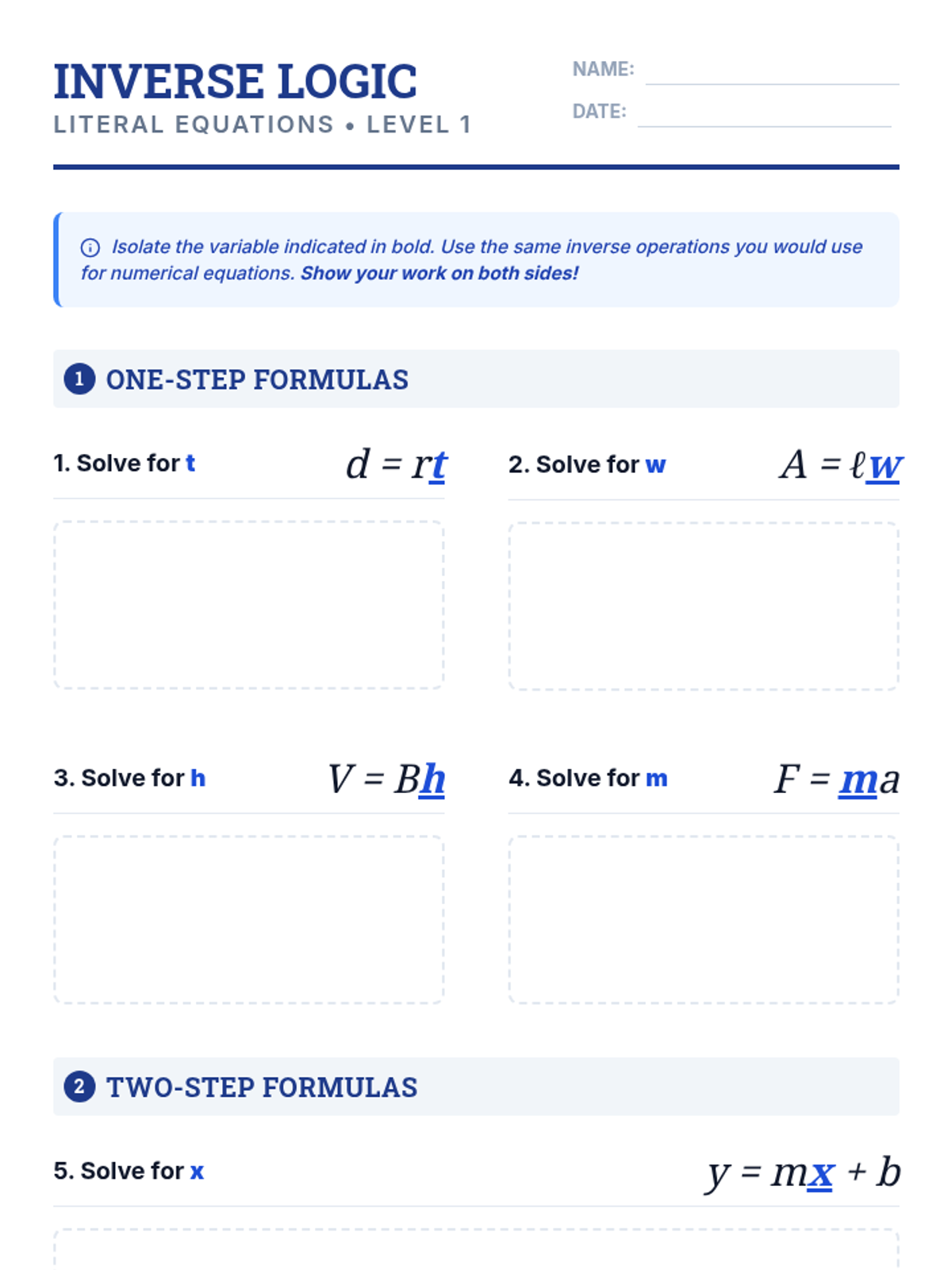
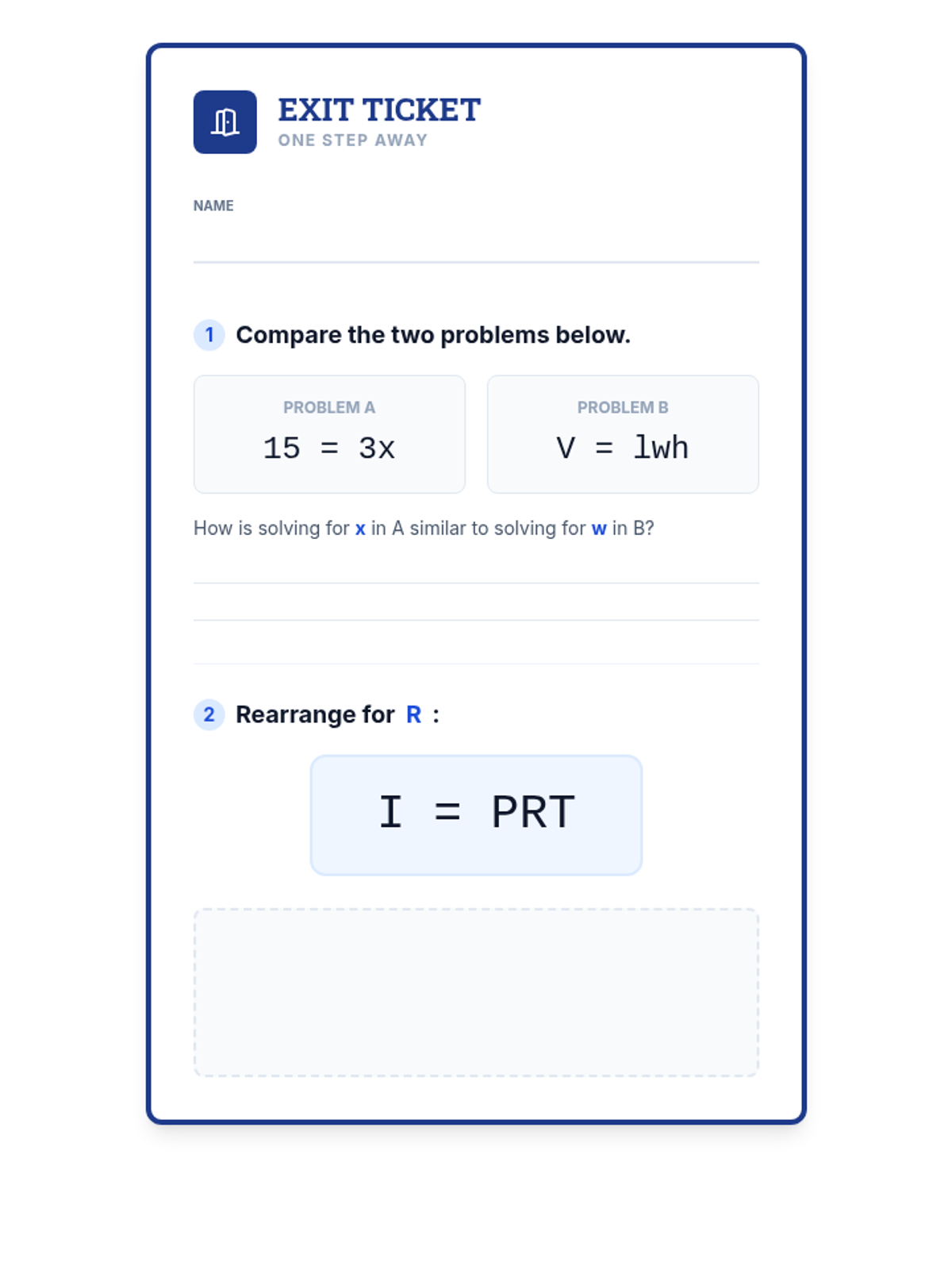
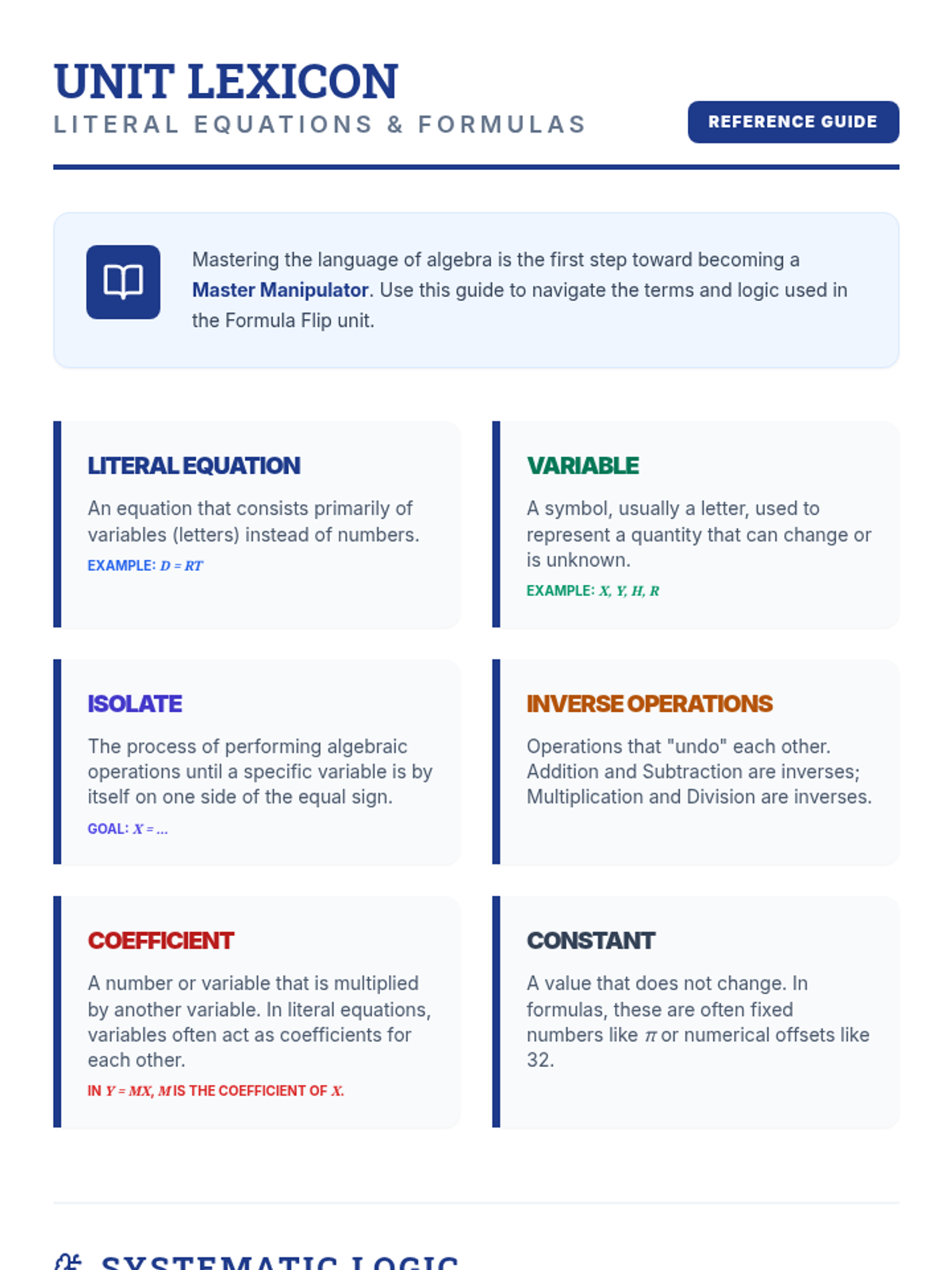
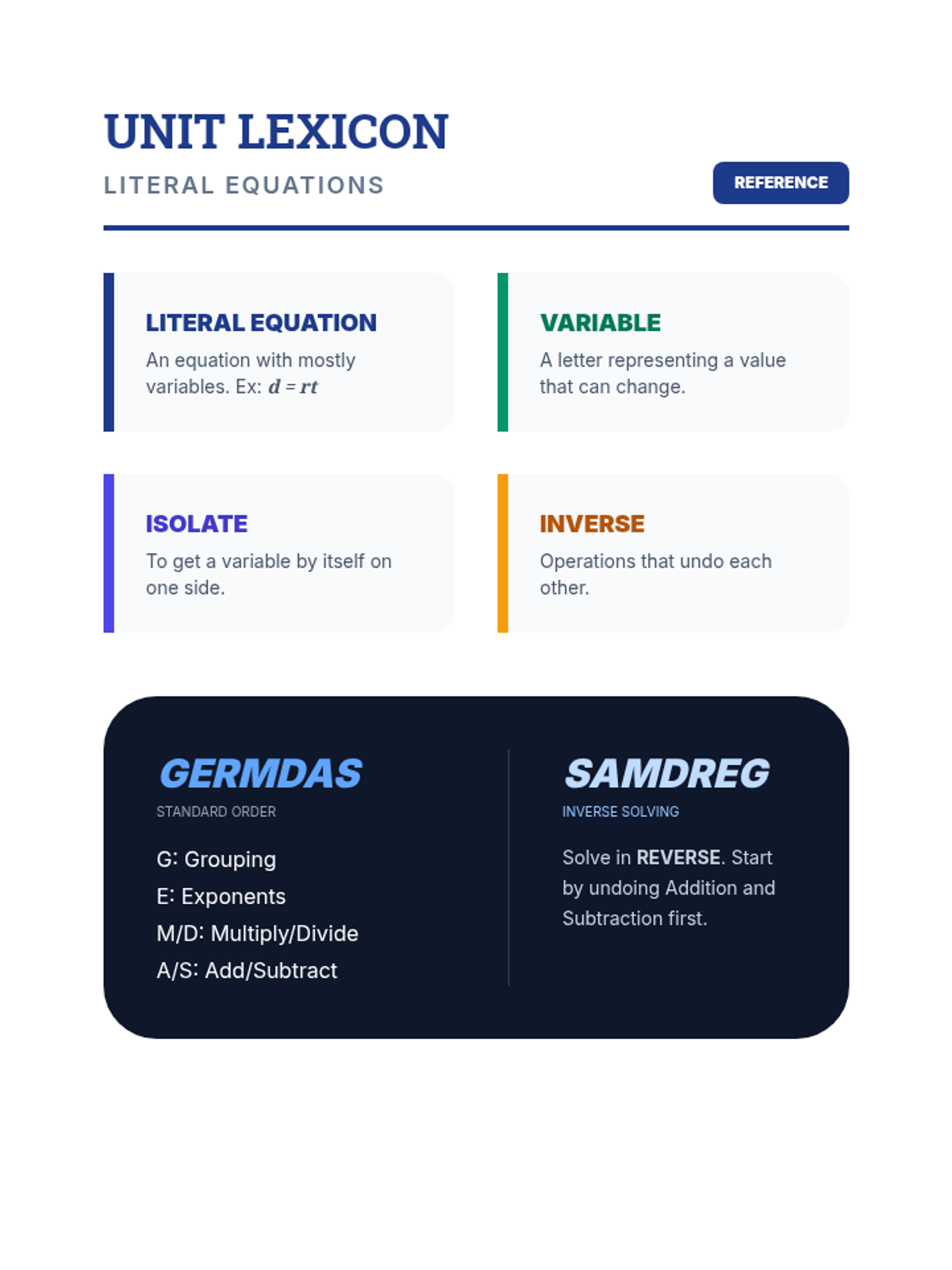
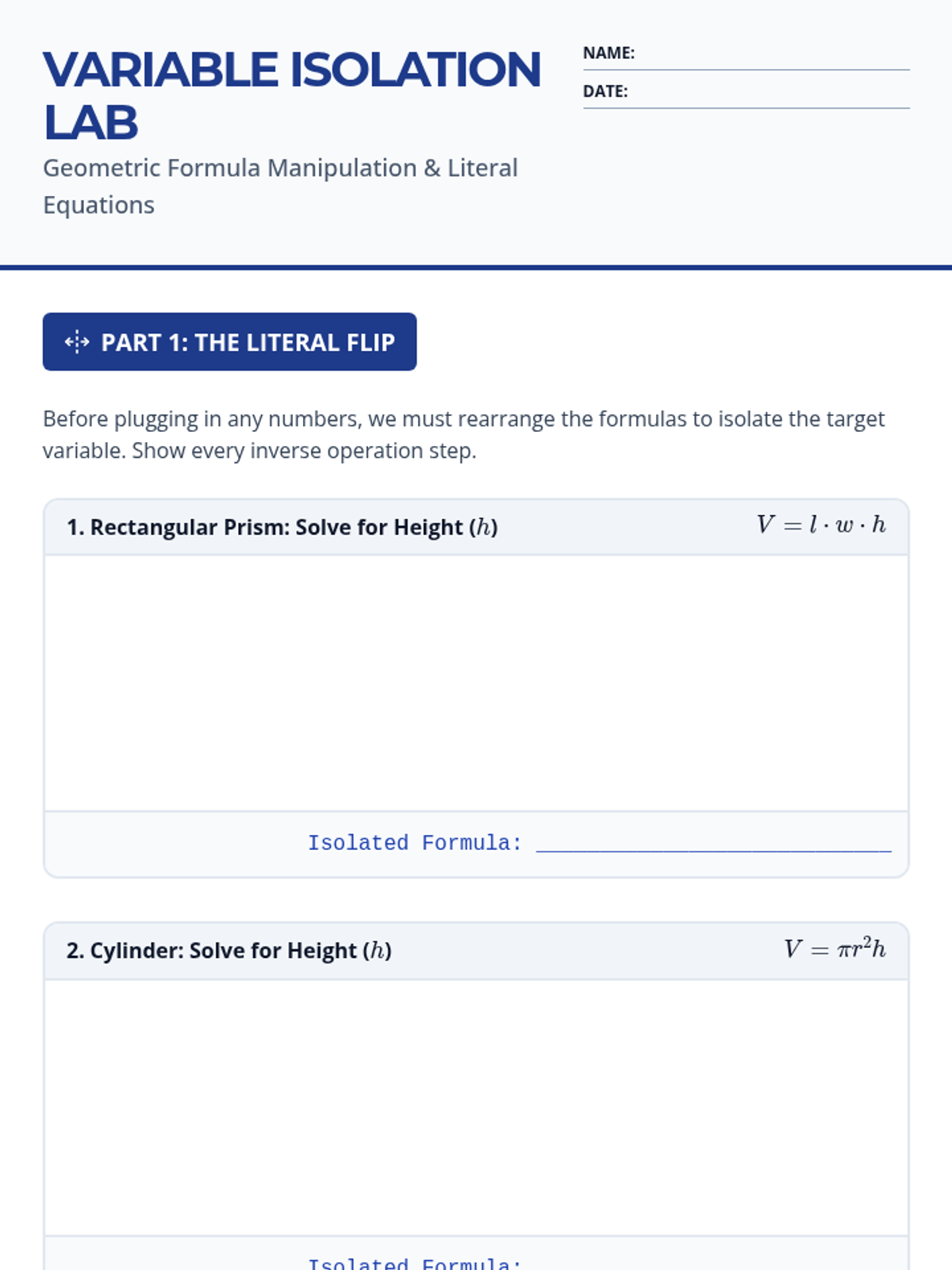
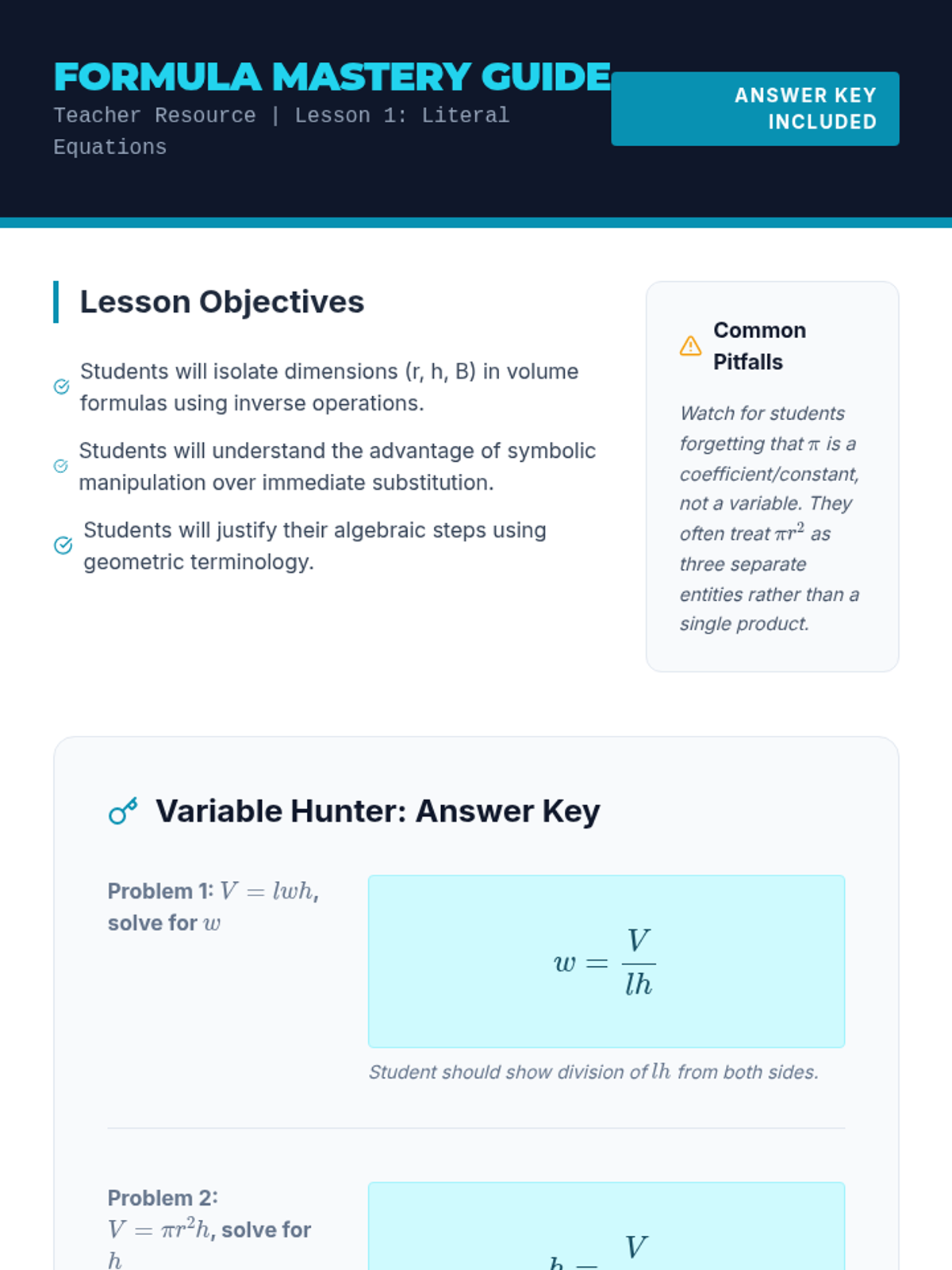
A comprehensive unit on literal equations and formula manipulation, focusing on using inverse operations to rearrange variables in geometry and physics contexts.
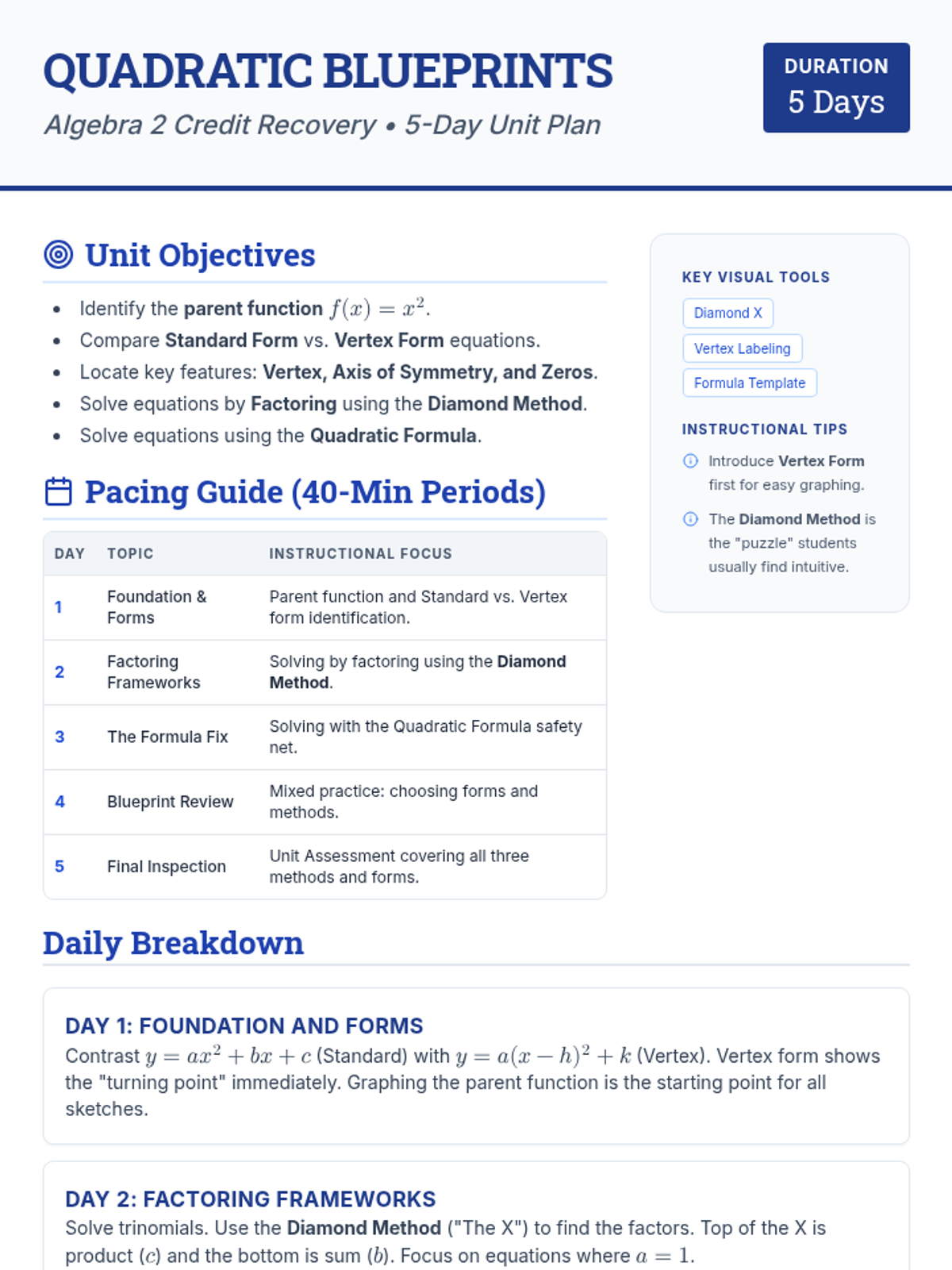
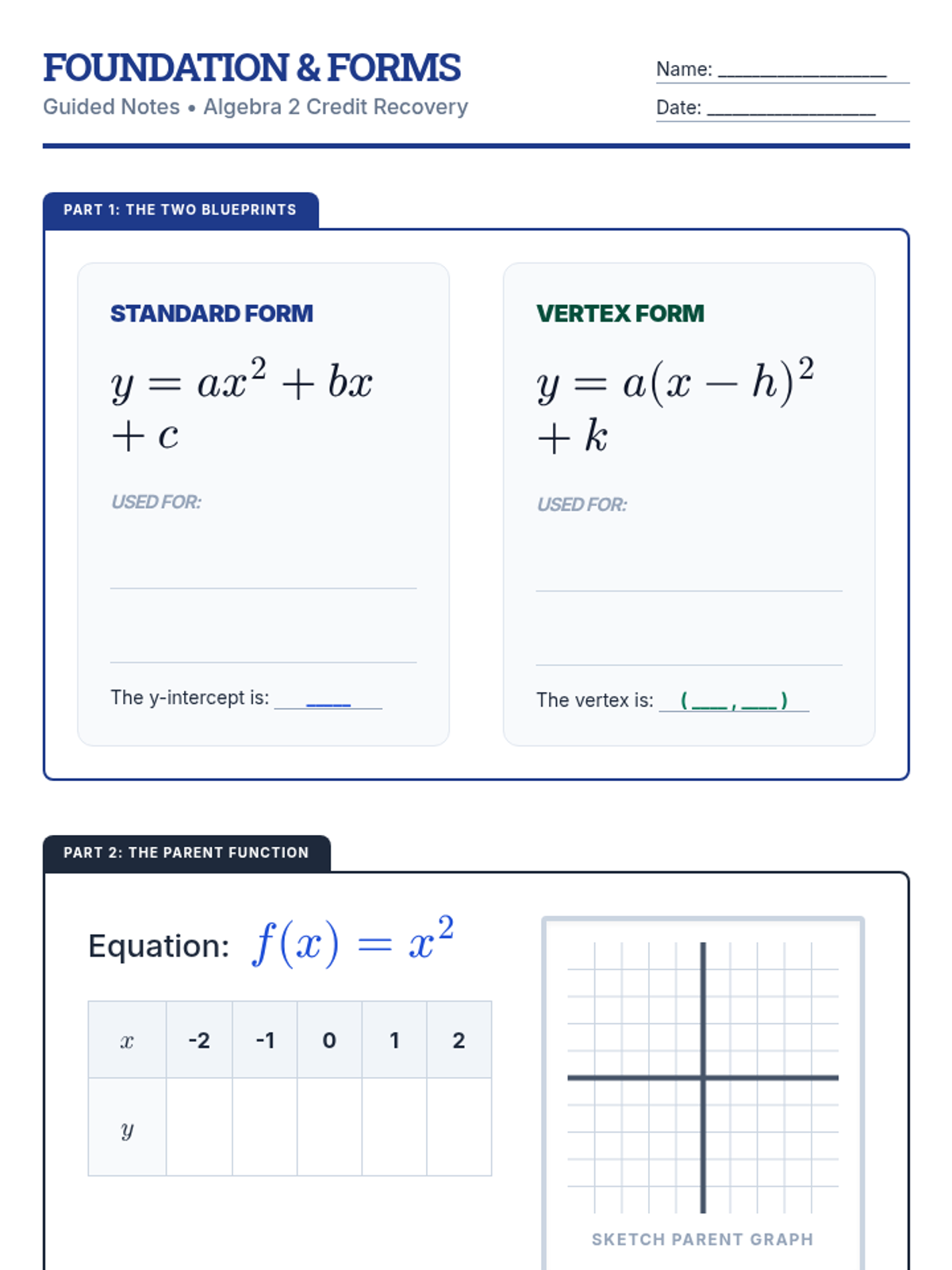
A 5-day Algebra 2 Credit Recovery unit focused on quadratic equations, covering parent functions, key features of graphs, factoring, and the quadratic formula. Designed for 40-minute class periods with a blueprint-inspired visual theme.
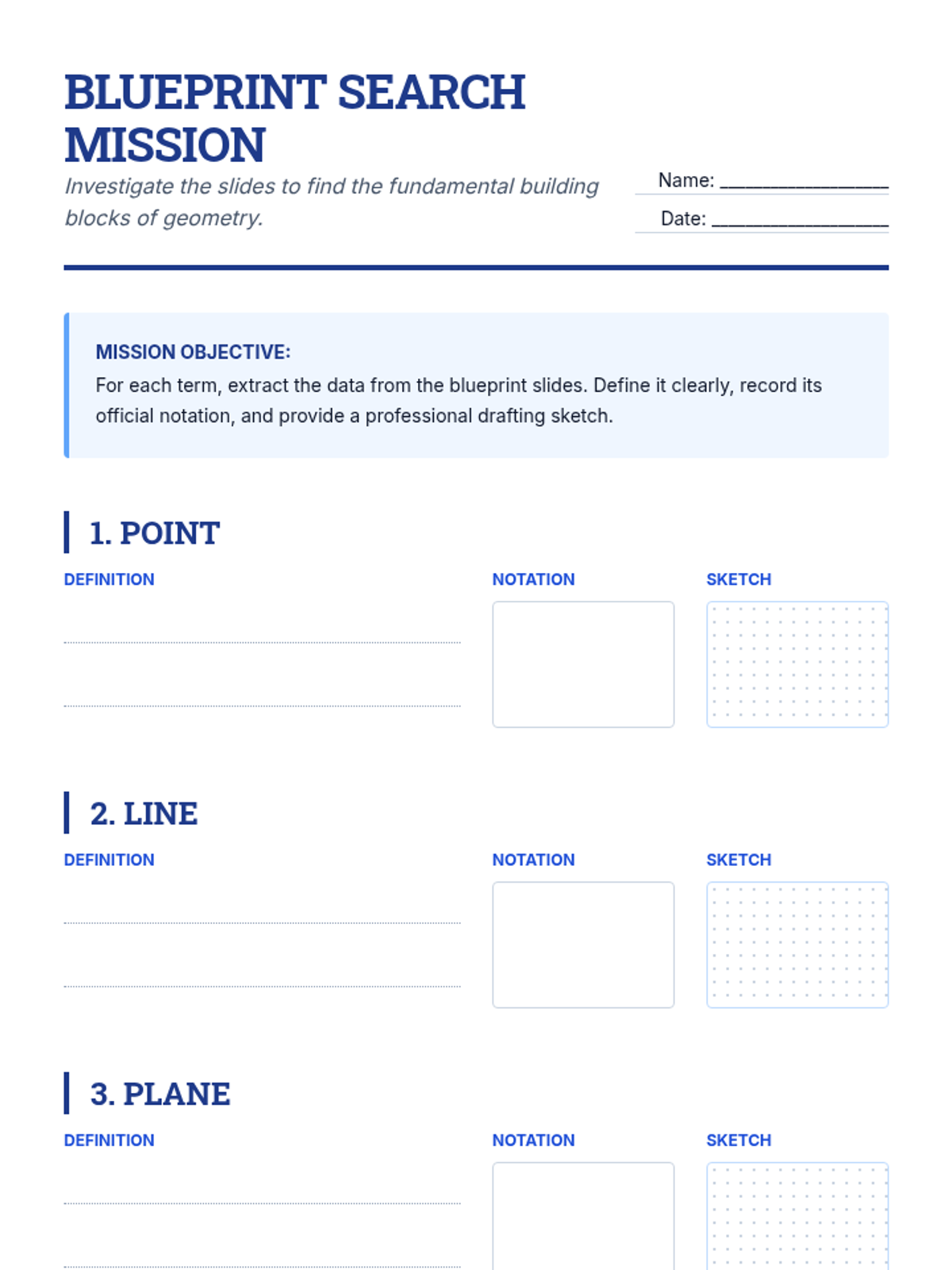
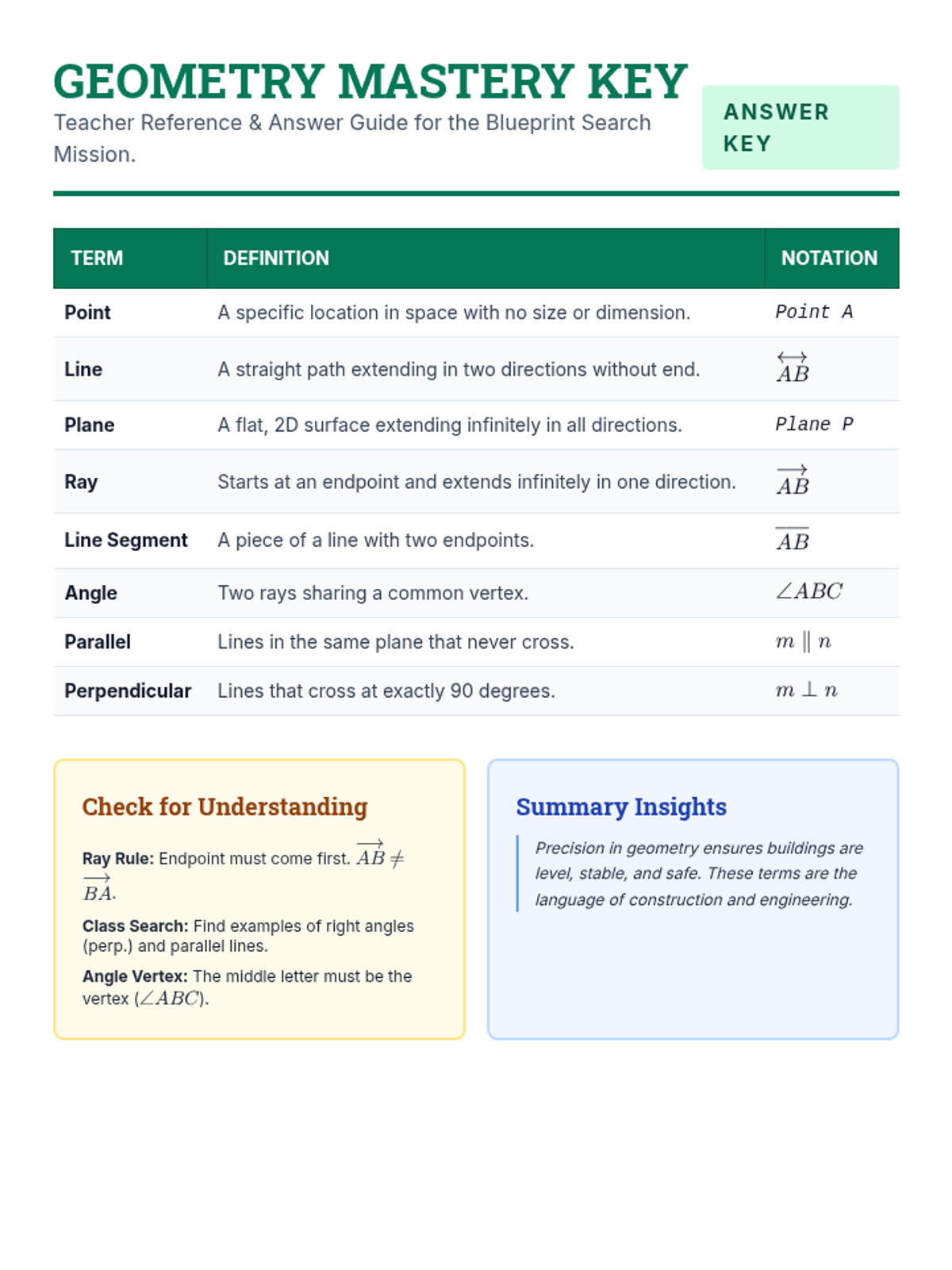
A comprehensive unit on foundational geometry concepts, focusing on visualization, notation, and the vocabulary used to describe the spatial world.
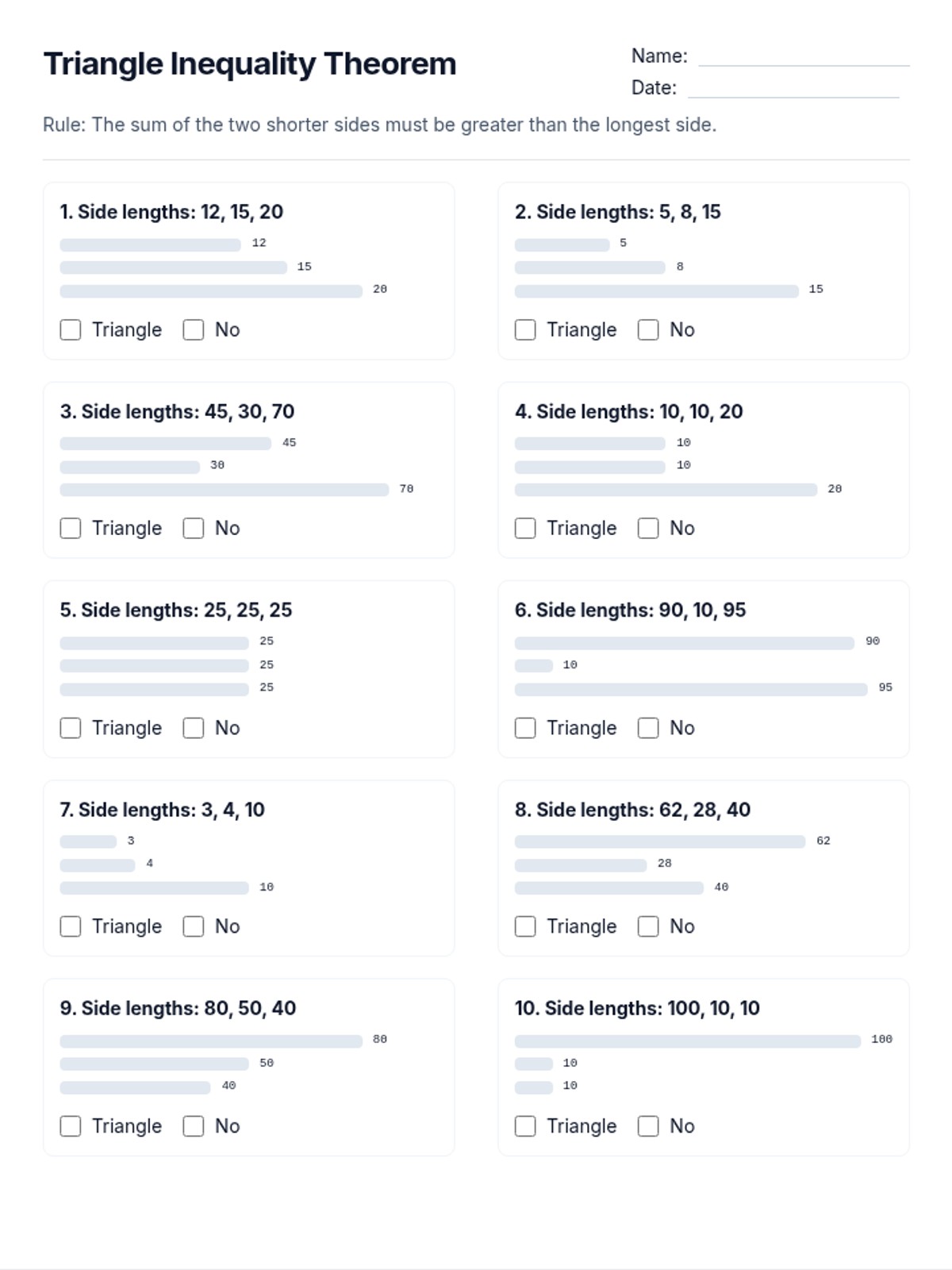
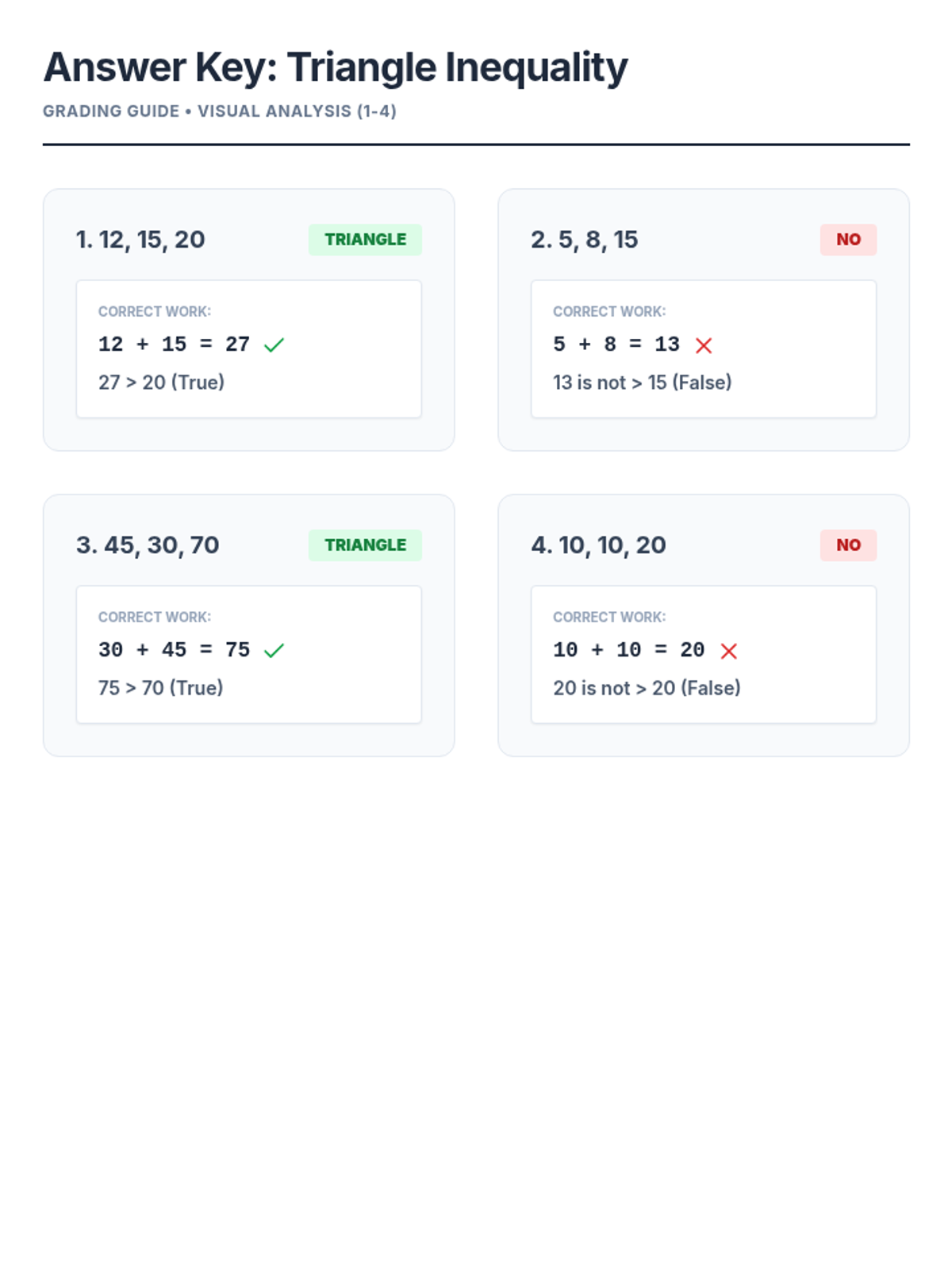
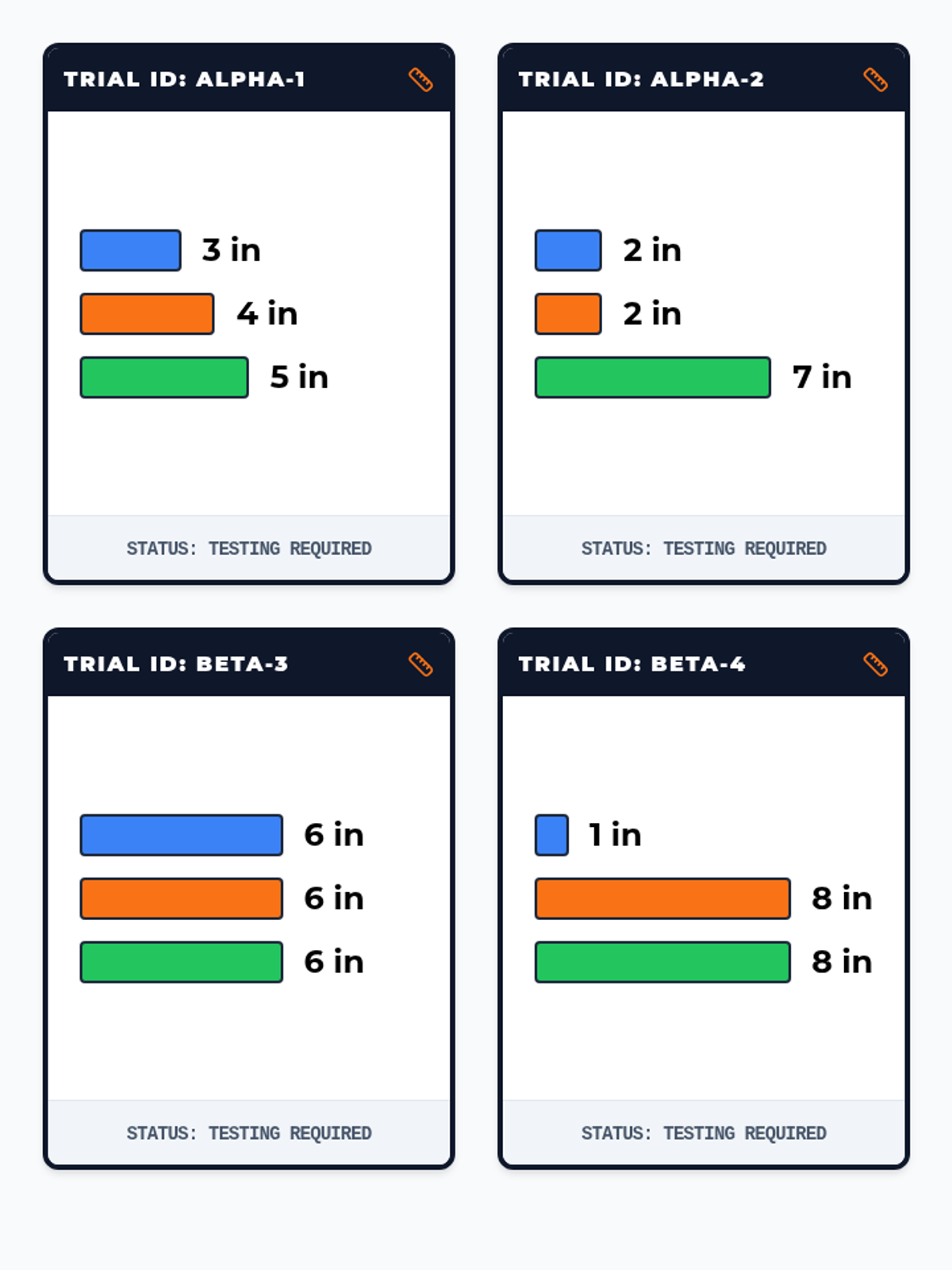
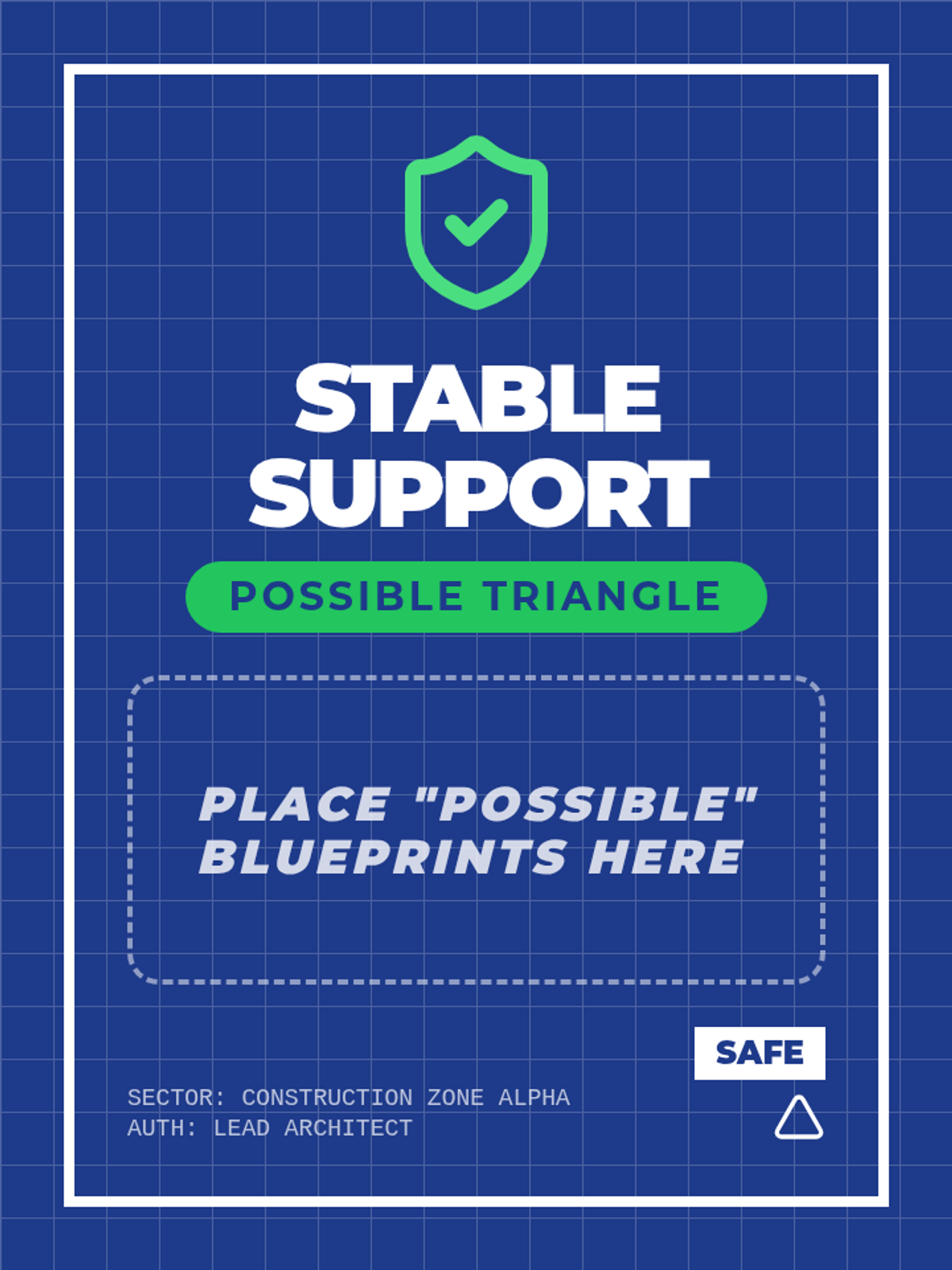
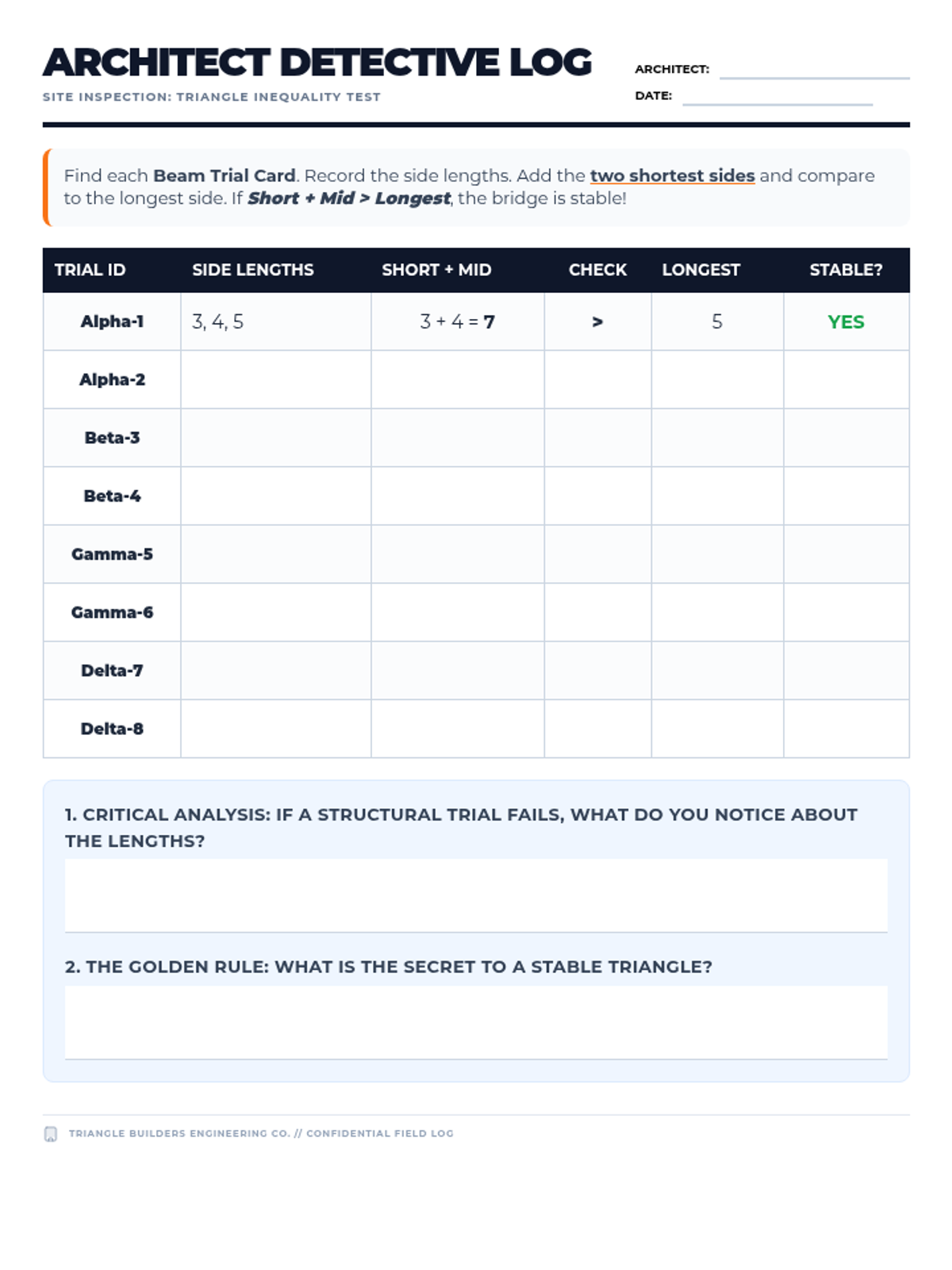
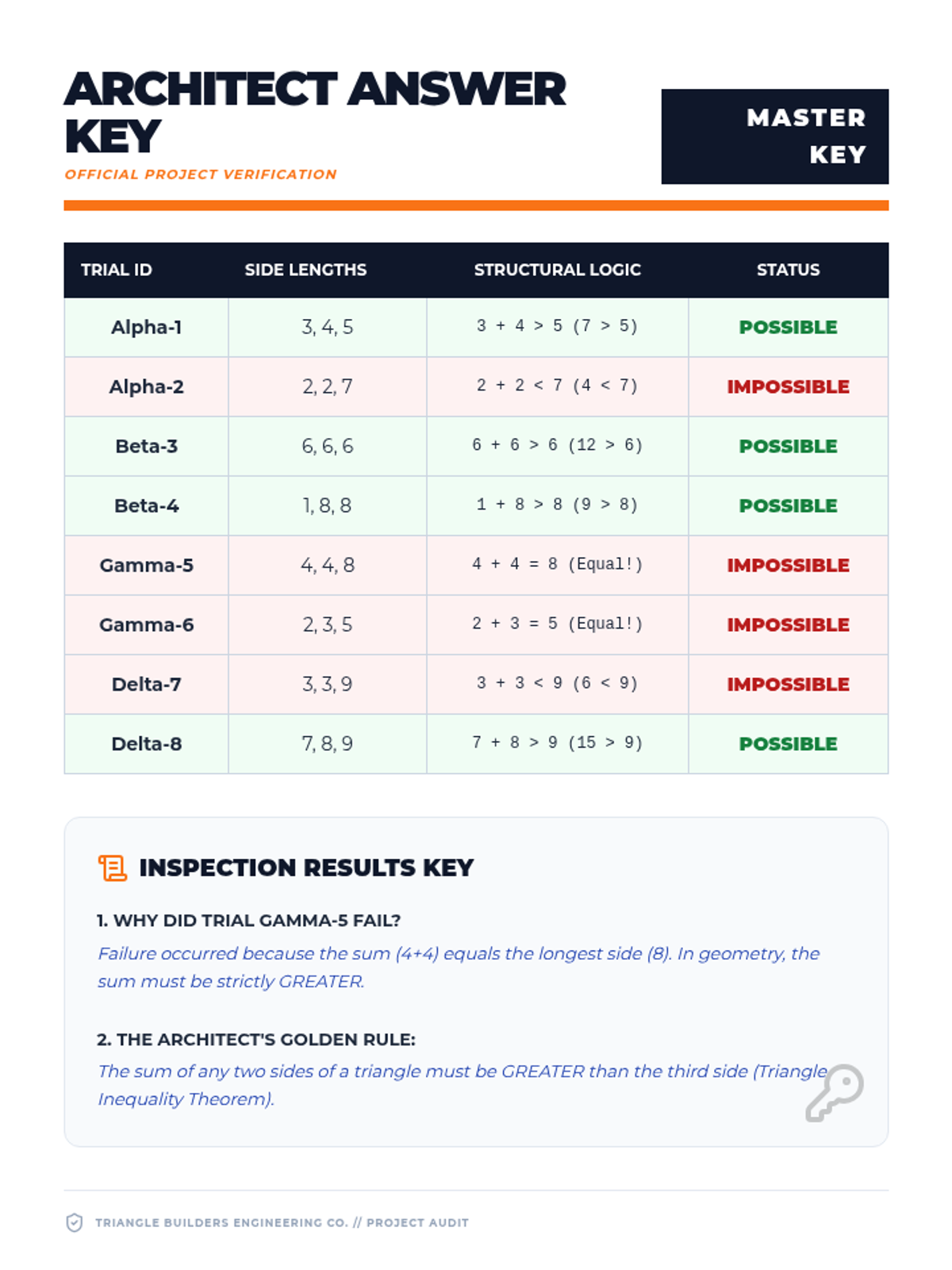
A unit on the properties of triangles, specifically focusing on the Triangle Inequality Theorem and how side lengths determine the possibility of forming a triangle.
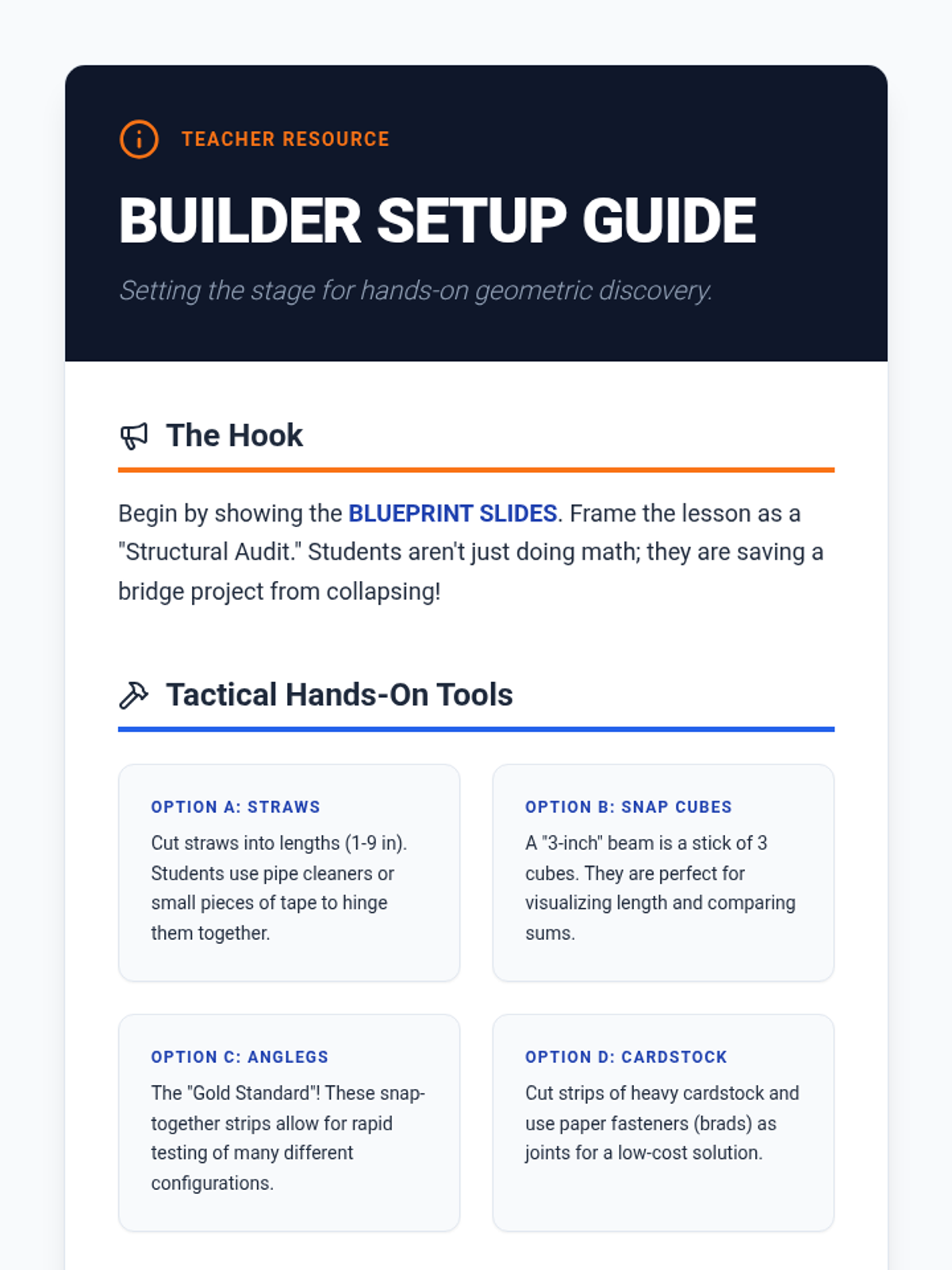
A series of lessons focused on fundamental geometric properties and spatial reasoning through hands-on construction and architectural themes.
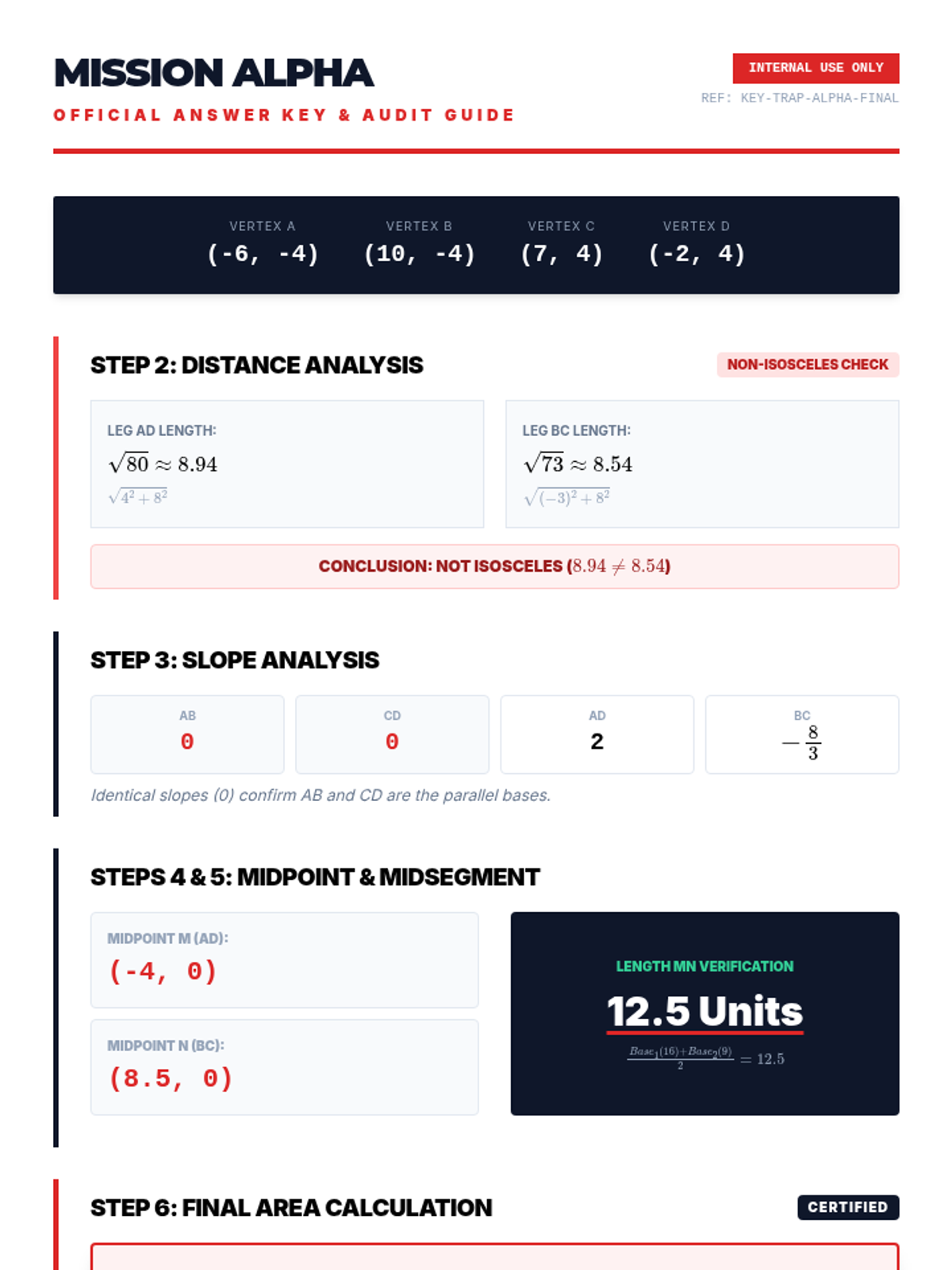
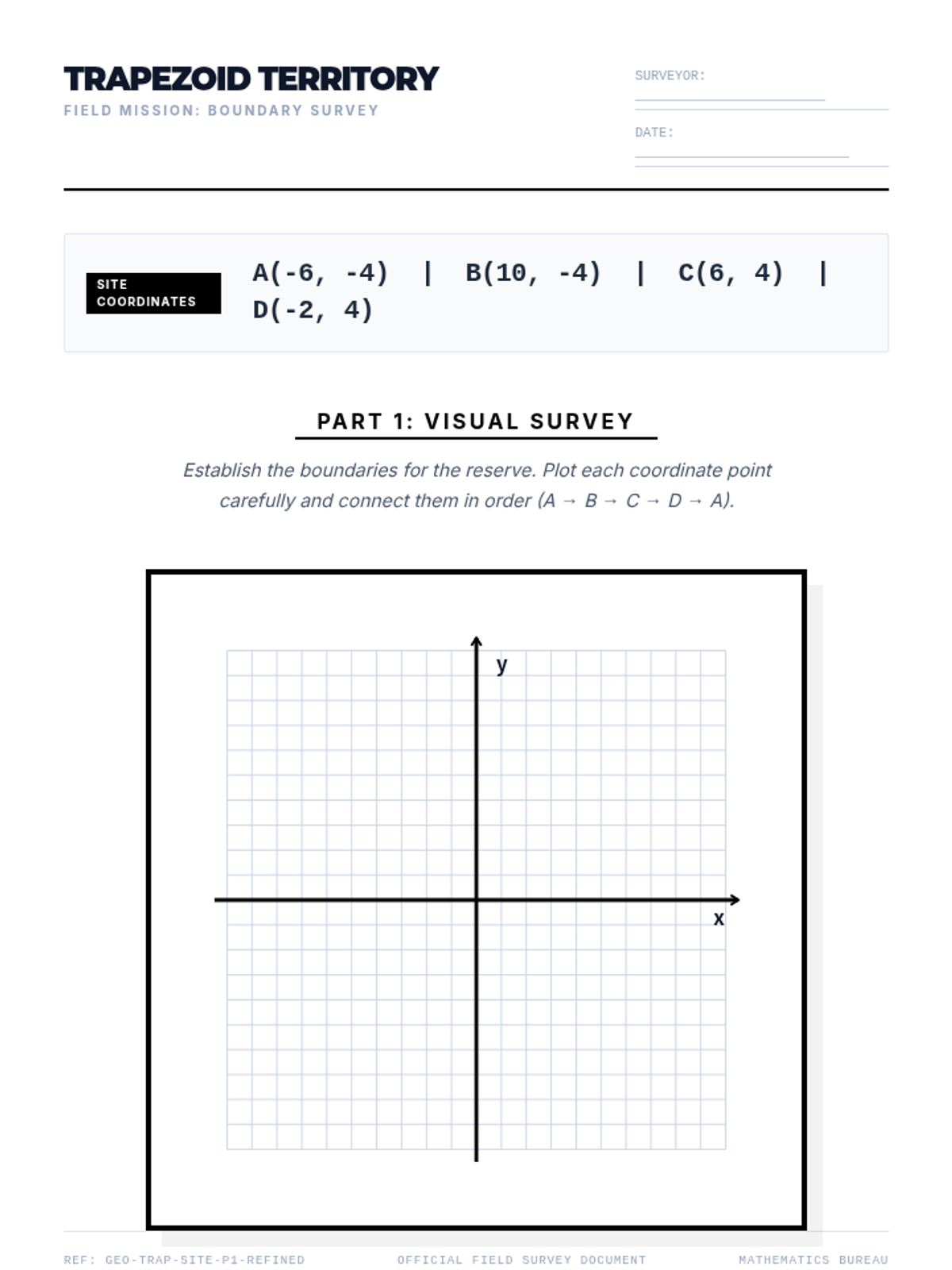
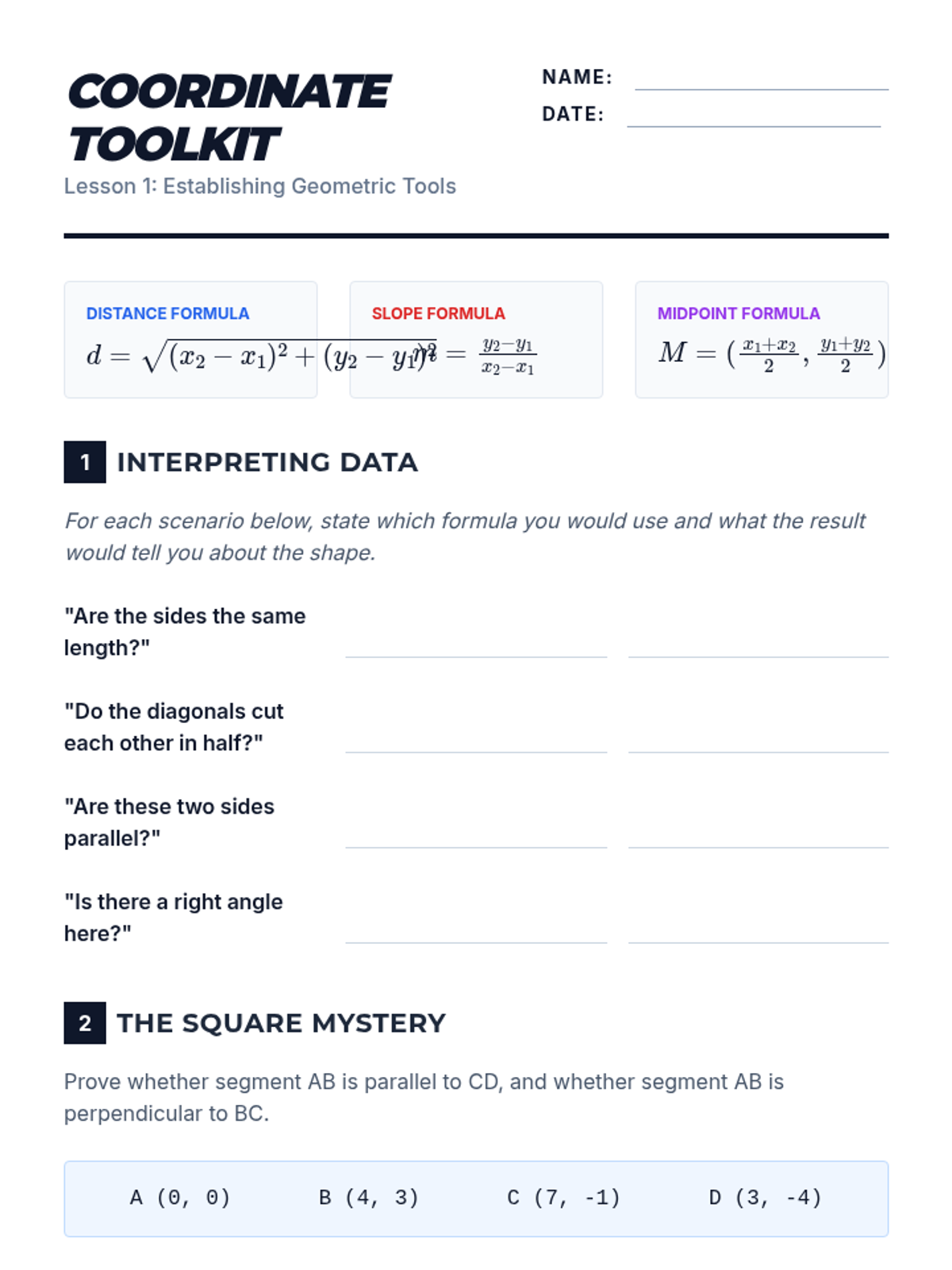
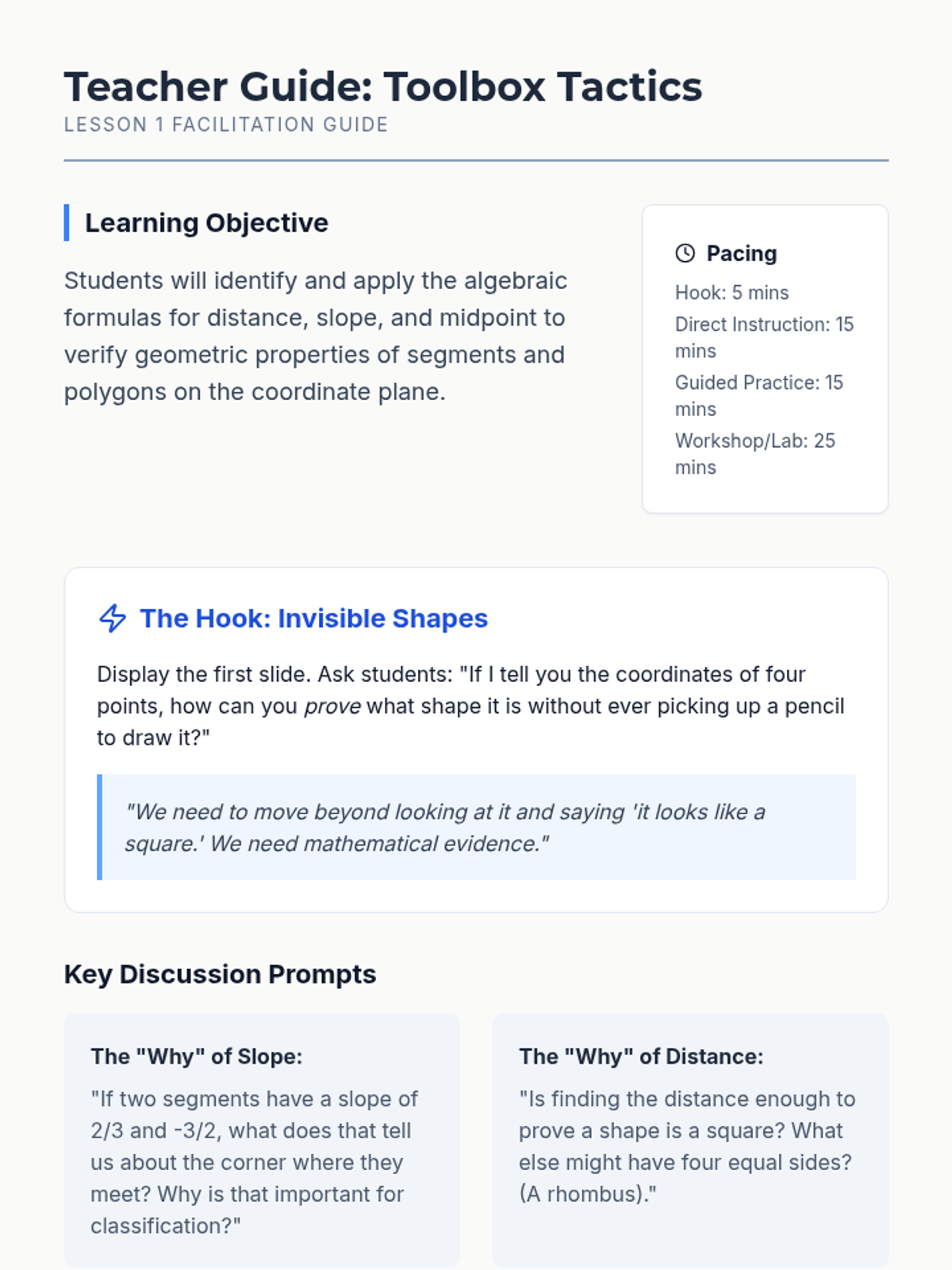
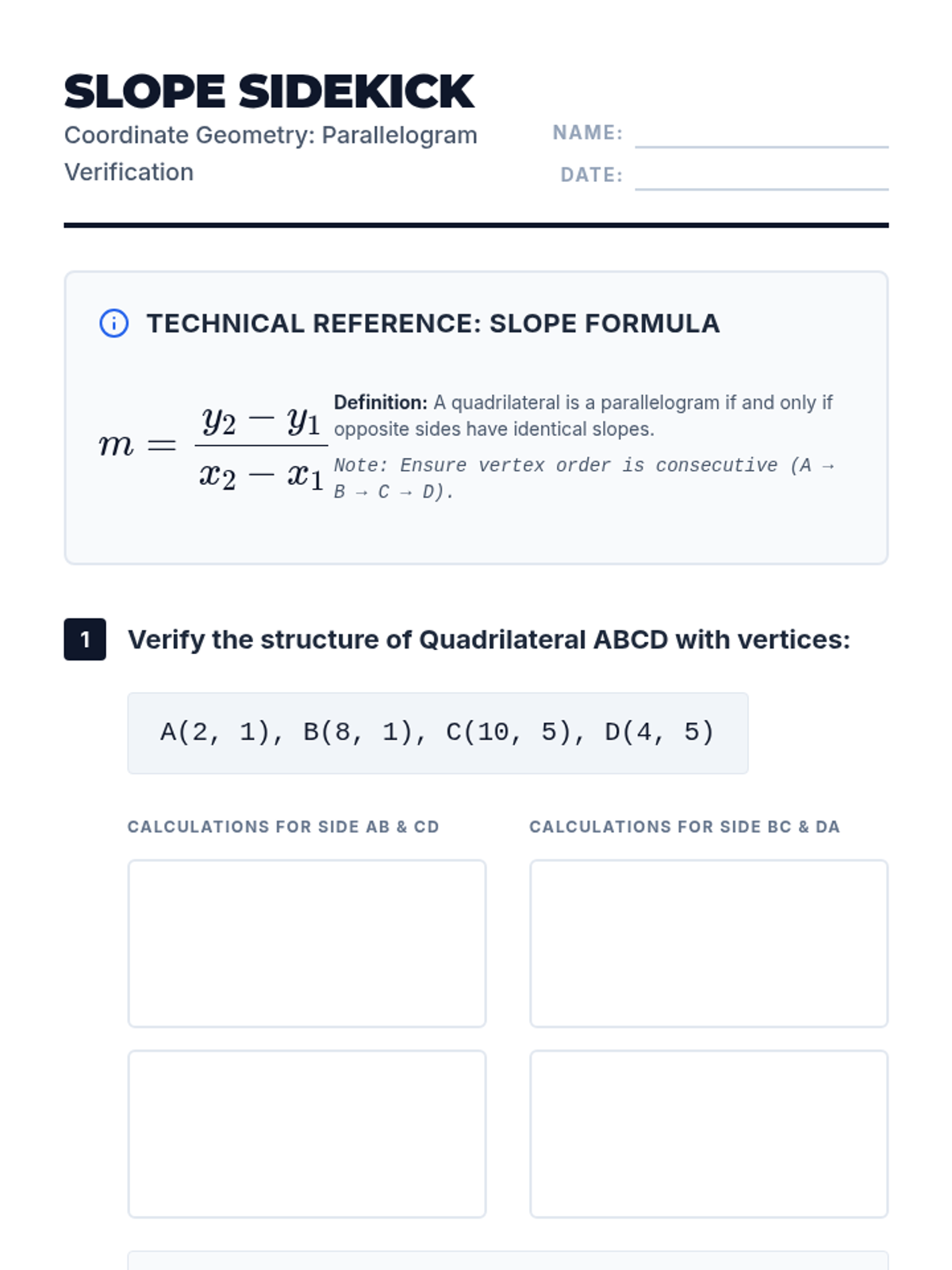
A high-level coordinate geometry sequence where students apply coordinate algebra formulas to identify and verify the properties of quadrilaterals and other polygons on the coordinate plane.
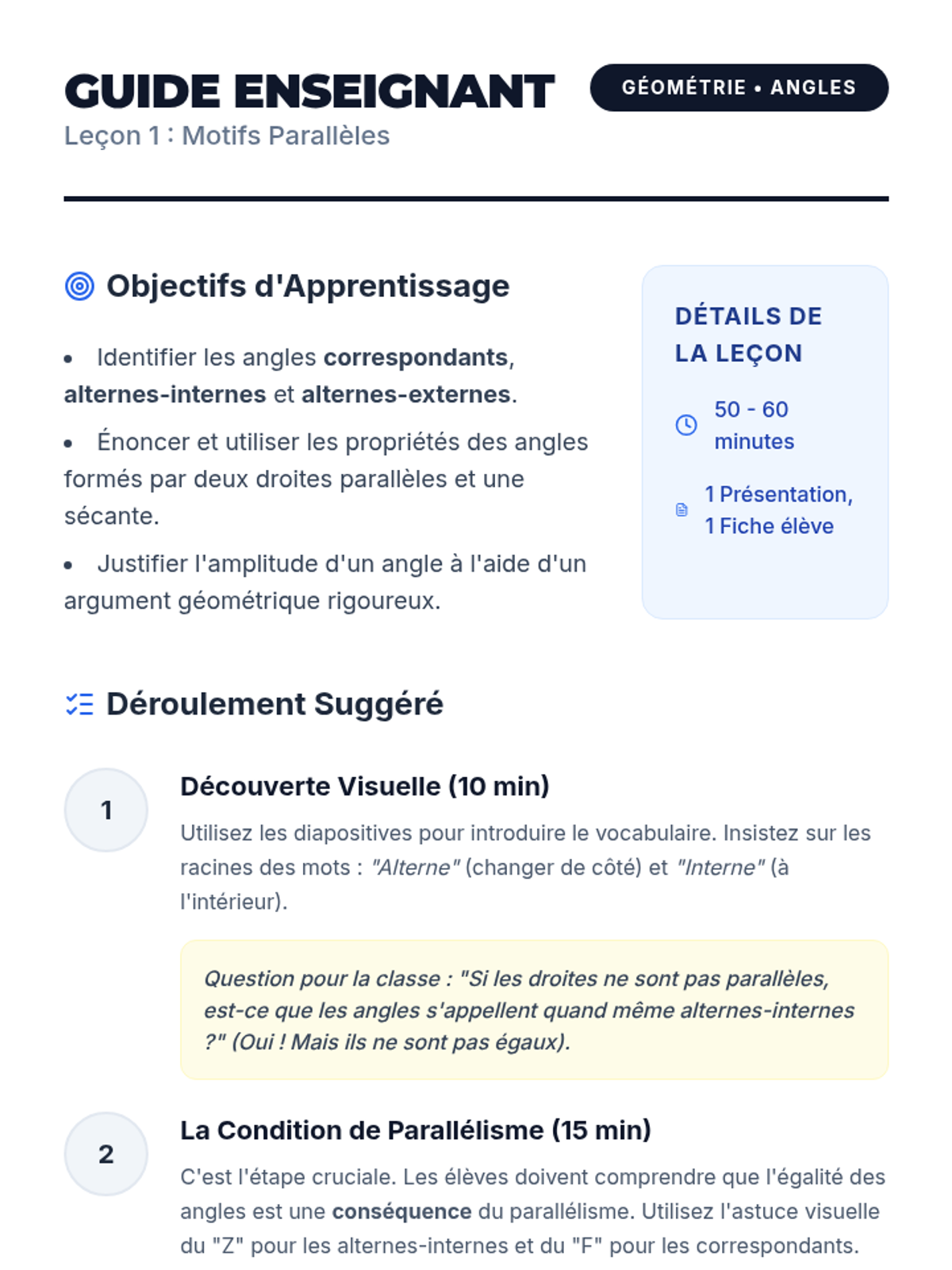
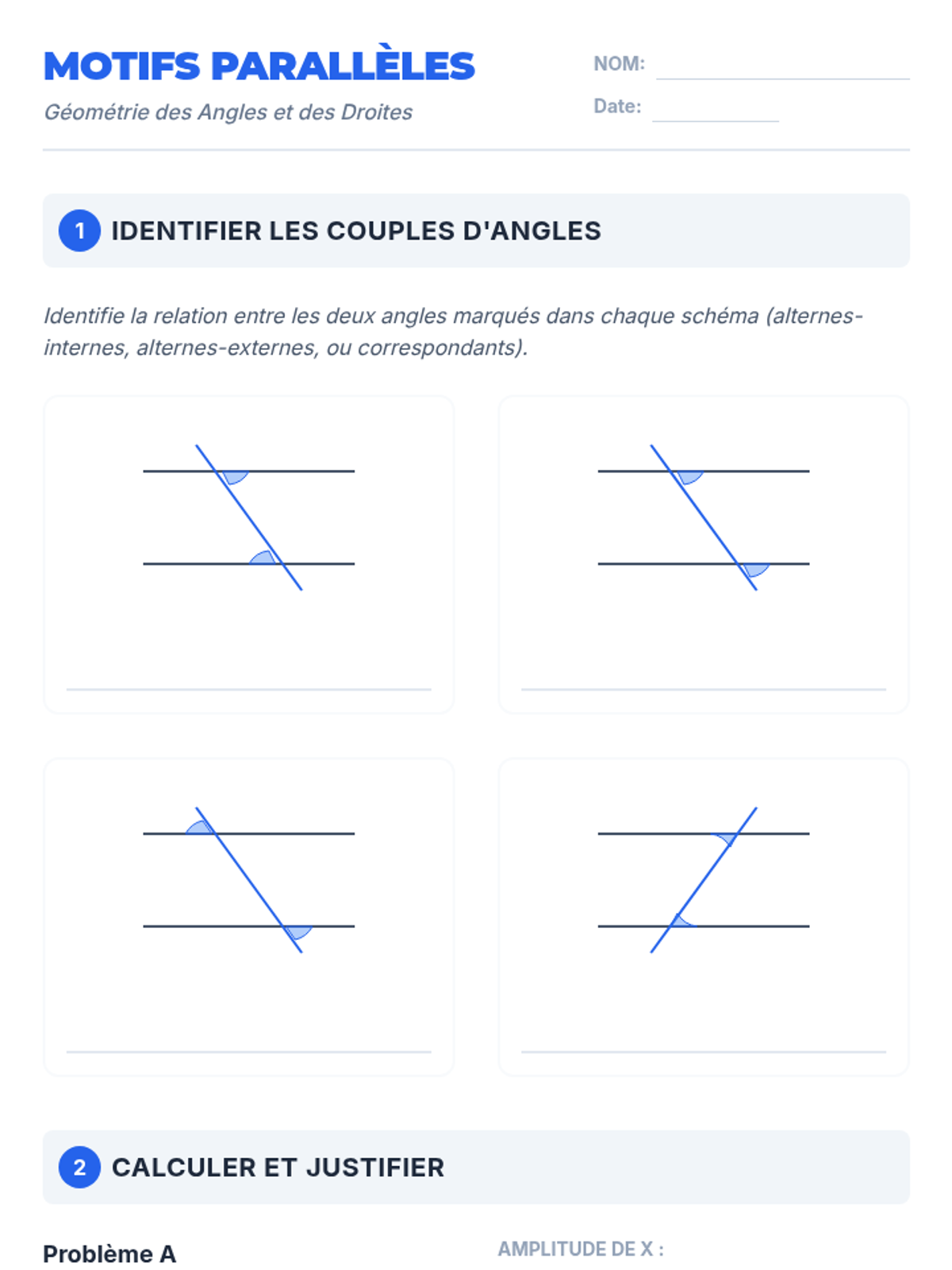
Un parcours complet sur les angles, les droites parallèles et les polygones, mettant l'accent sur l'identification, le calcul et la justification géométrique.
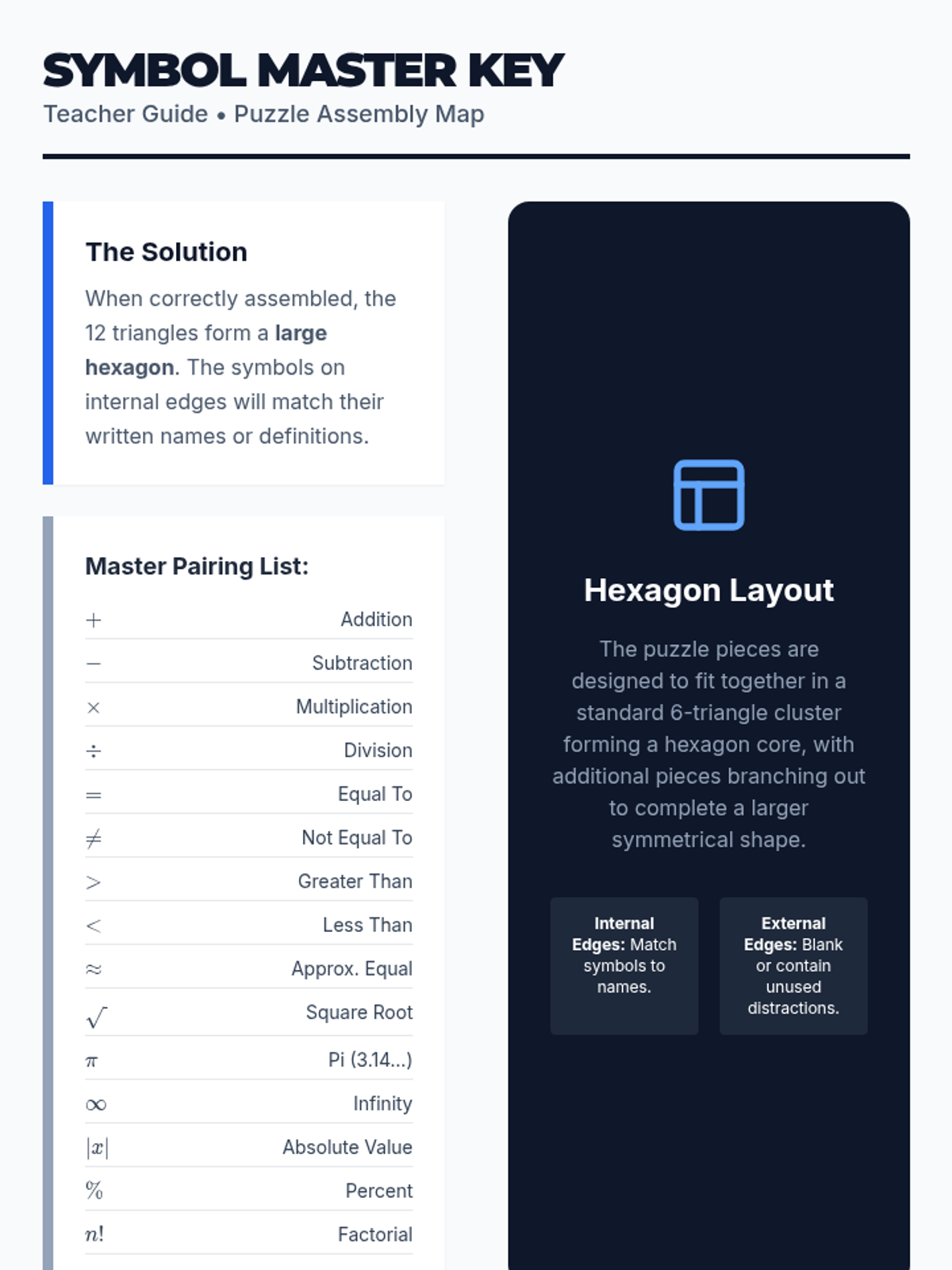
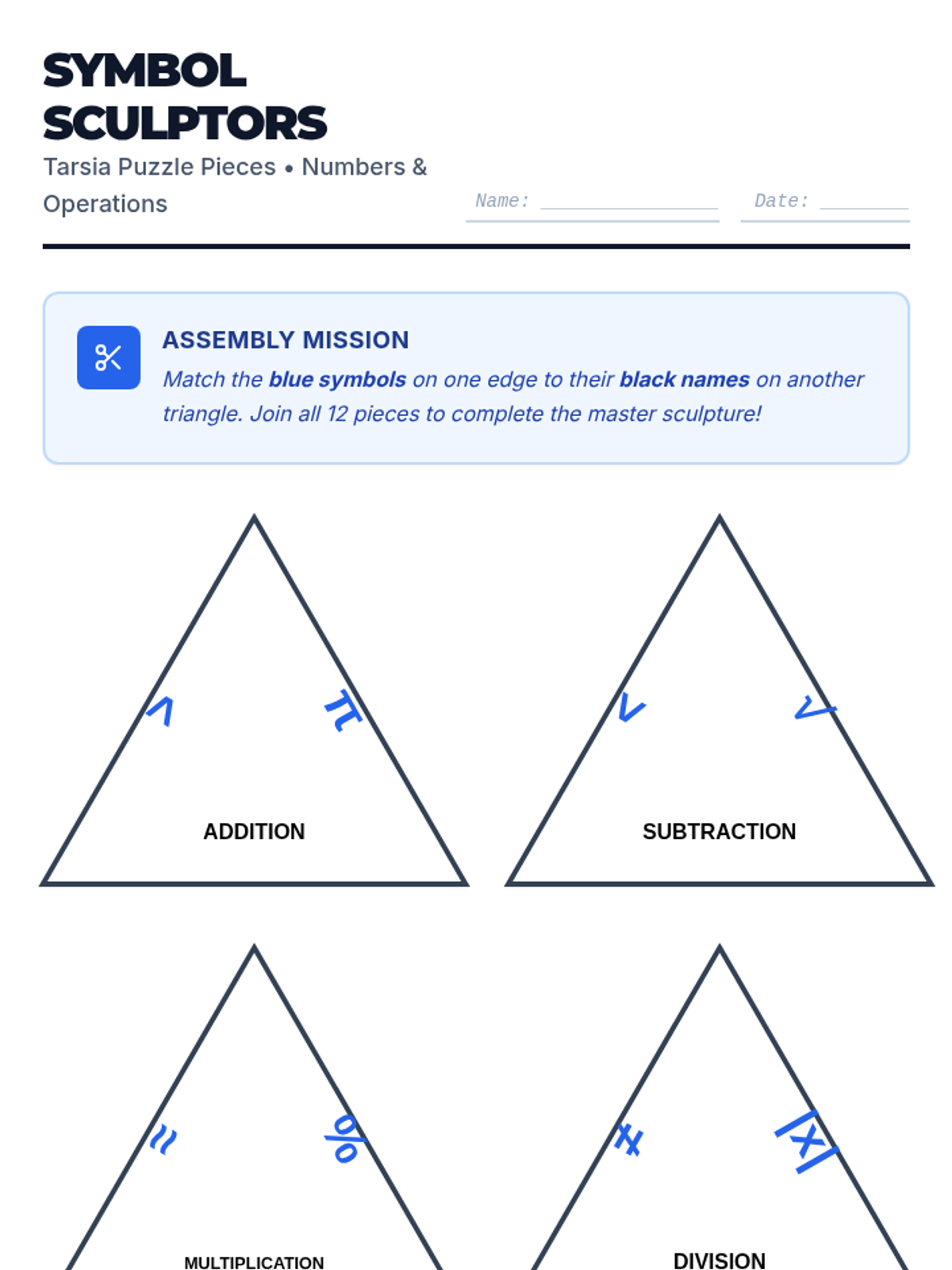
A series of lessons designed to build fluency in mathematical notation and operations through visual and tactile learning.
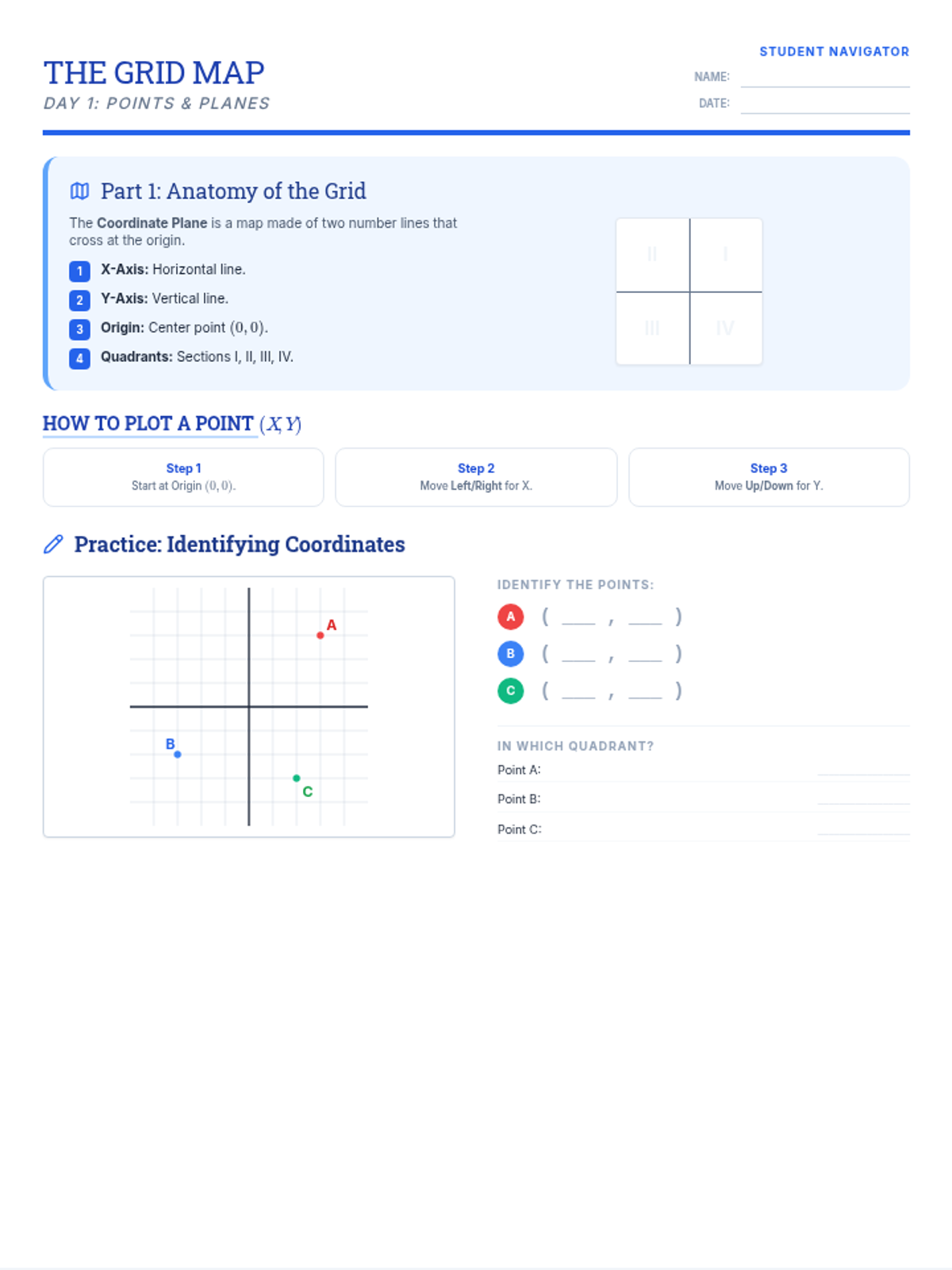
A comprehensive 5-day self-paced packet for remedial Algebra 1 students focusing on the fundamentals of graphing, from basic coordinate planes to finding slope.
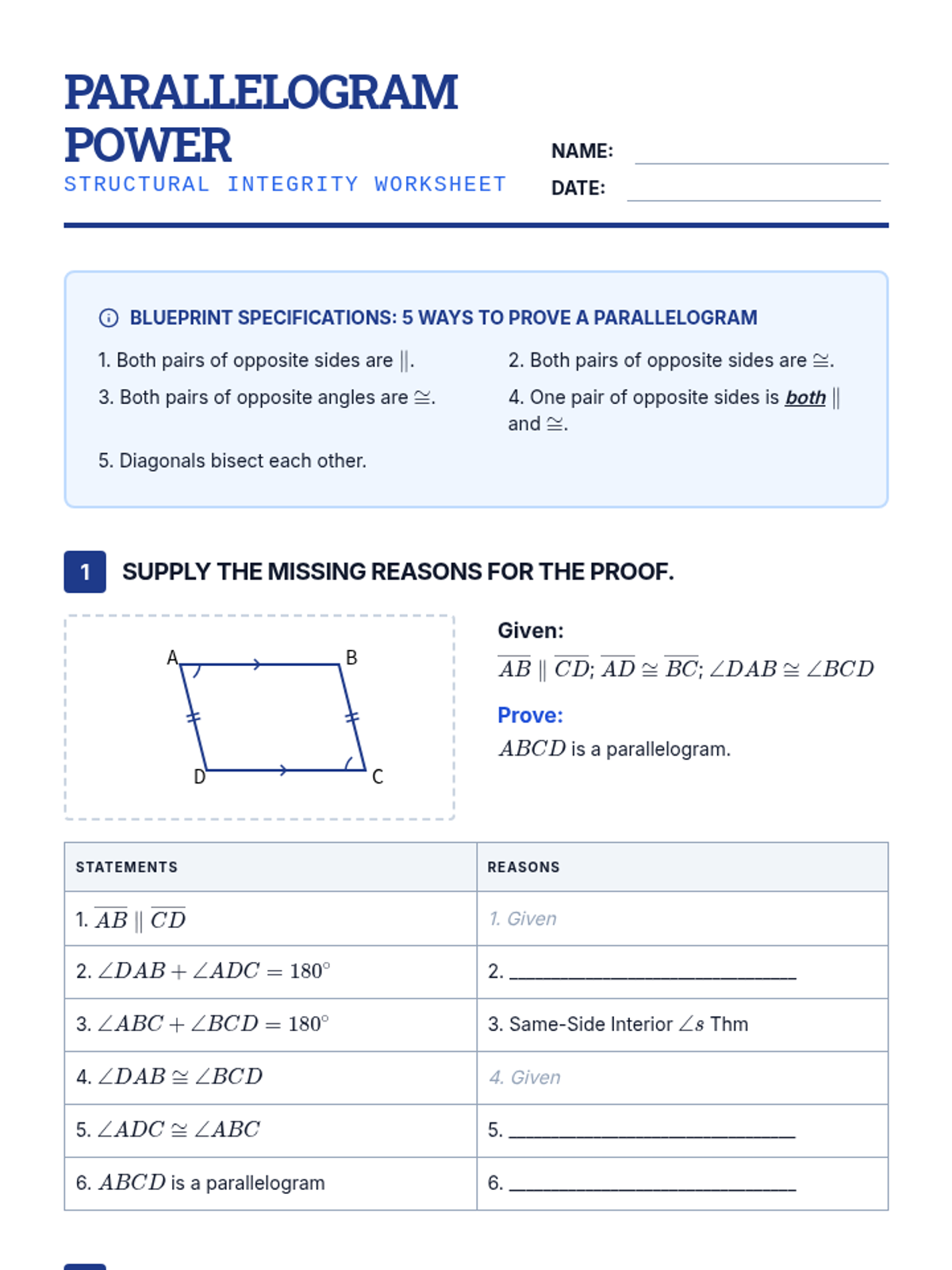
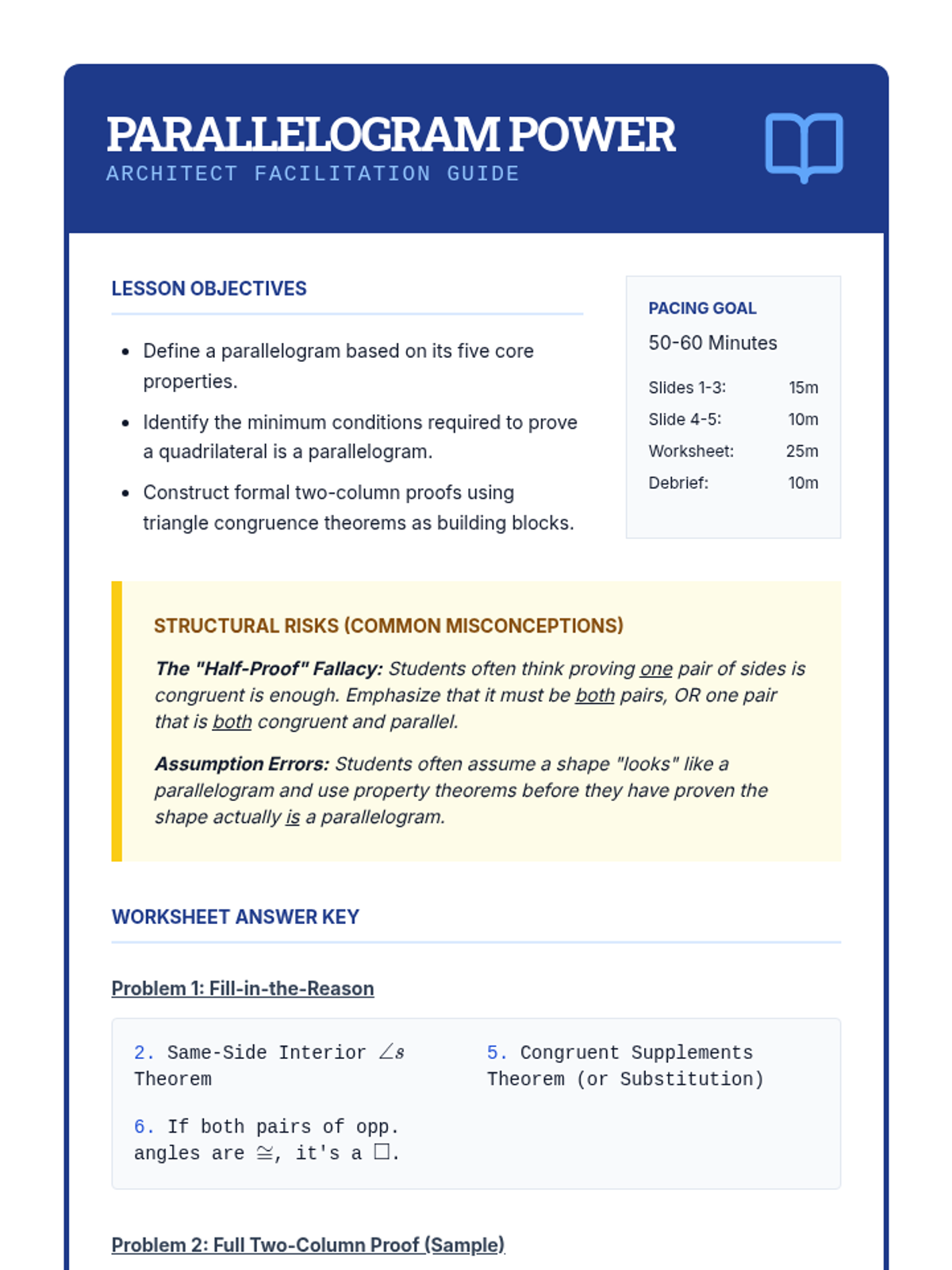
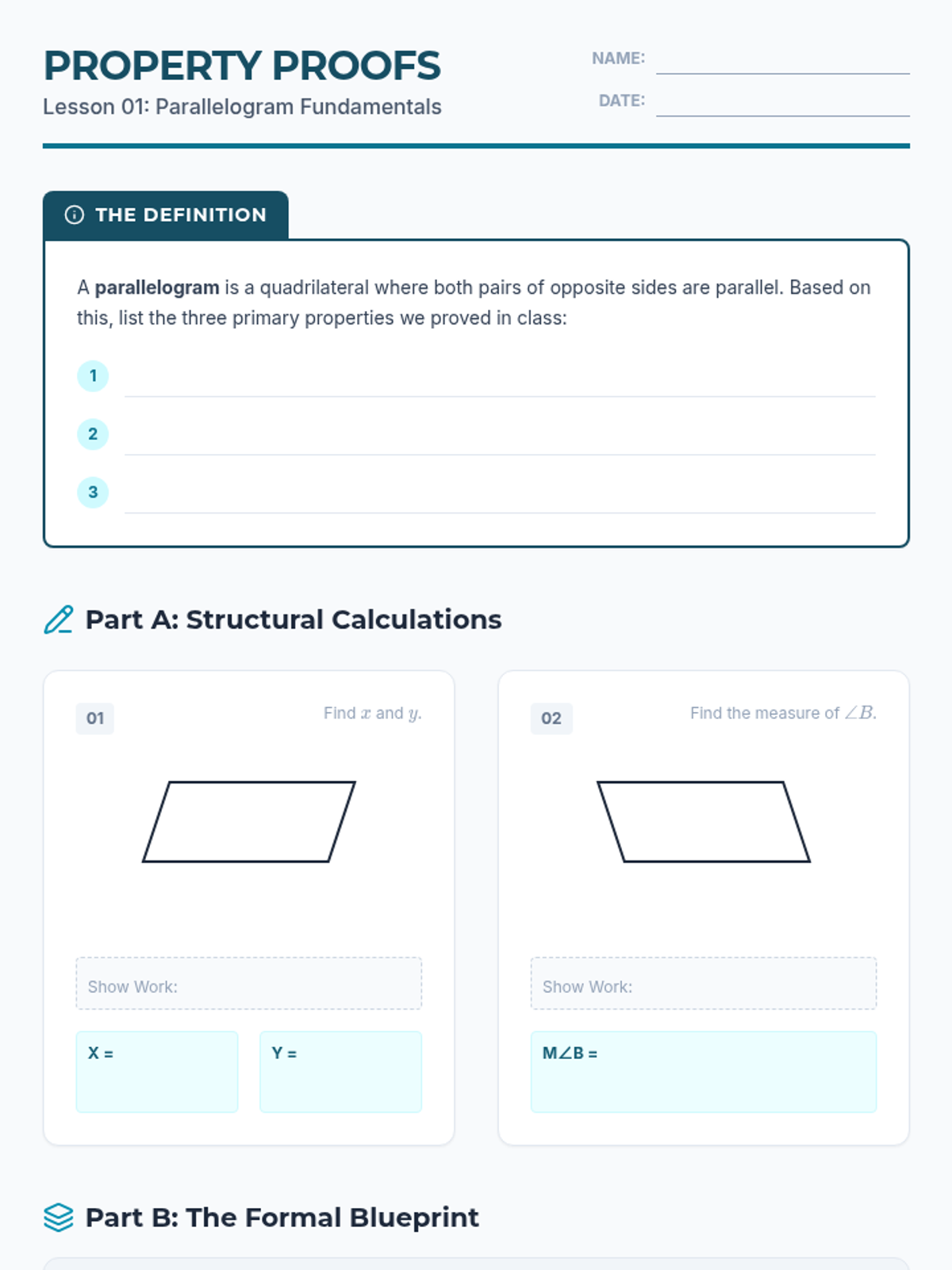
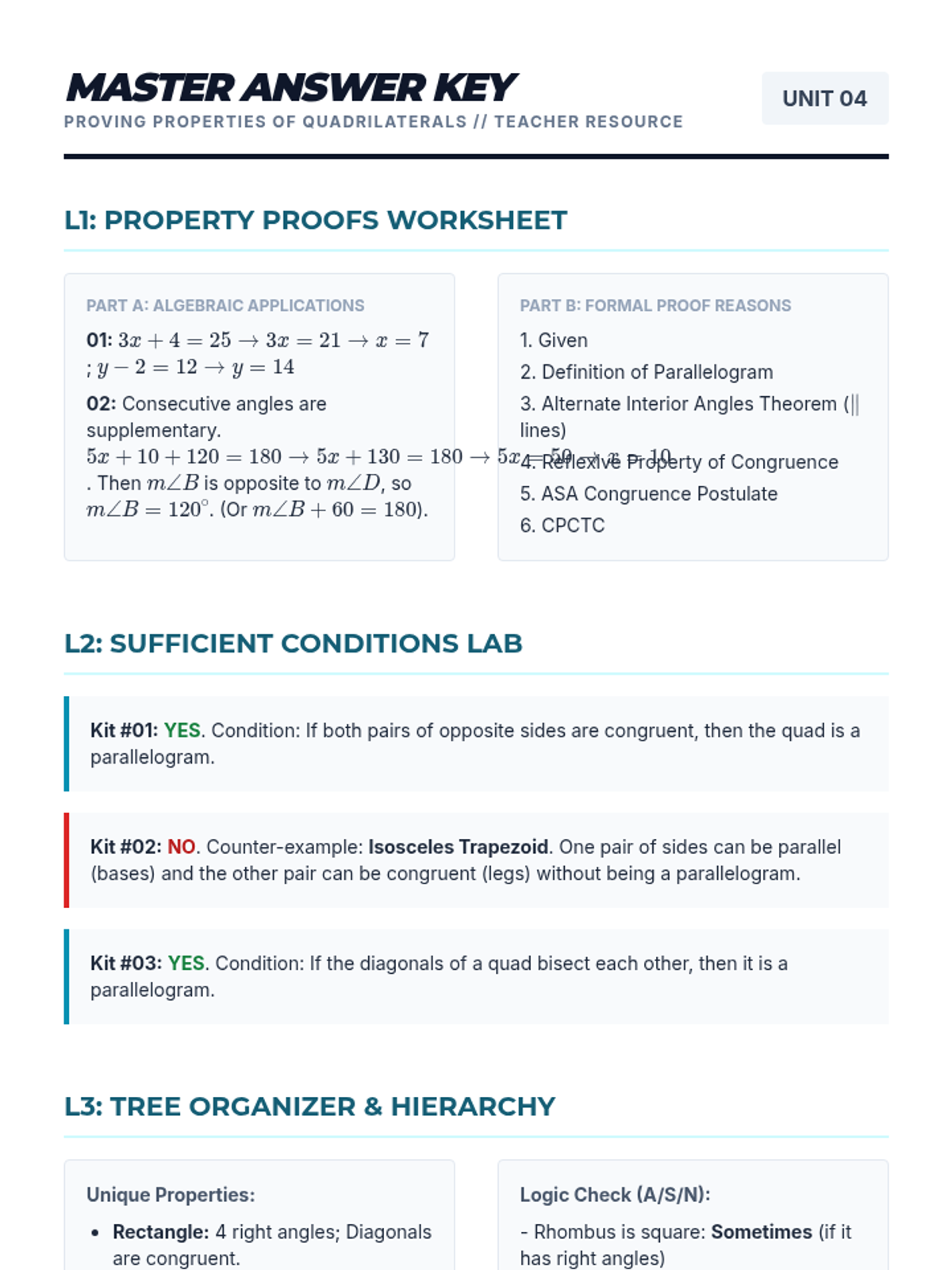
A comprehensive Geometry unit on quadrilateral proofs, covering parallelograms, special quadrilaterals, trapezoids, kites, and coordinate geometry through various proof methods.
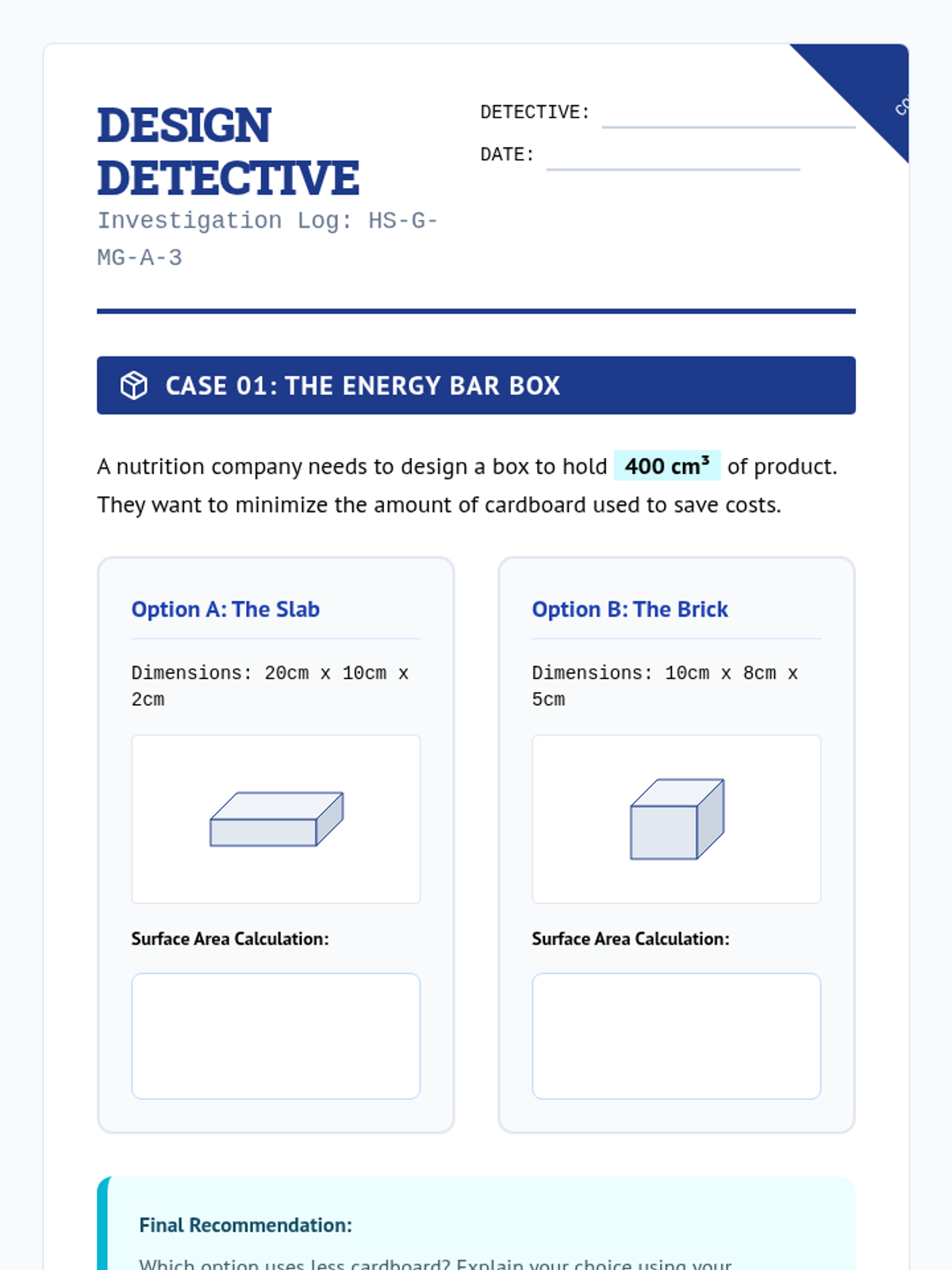
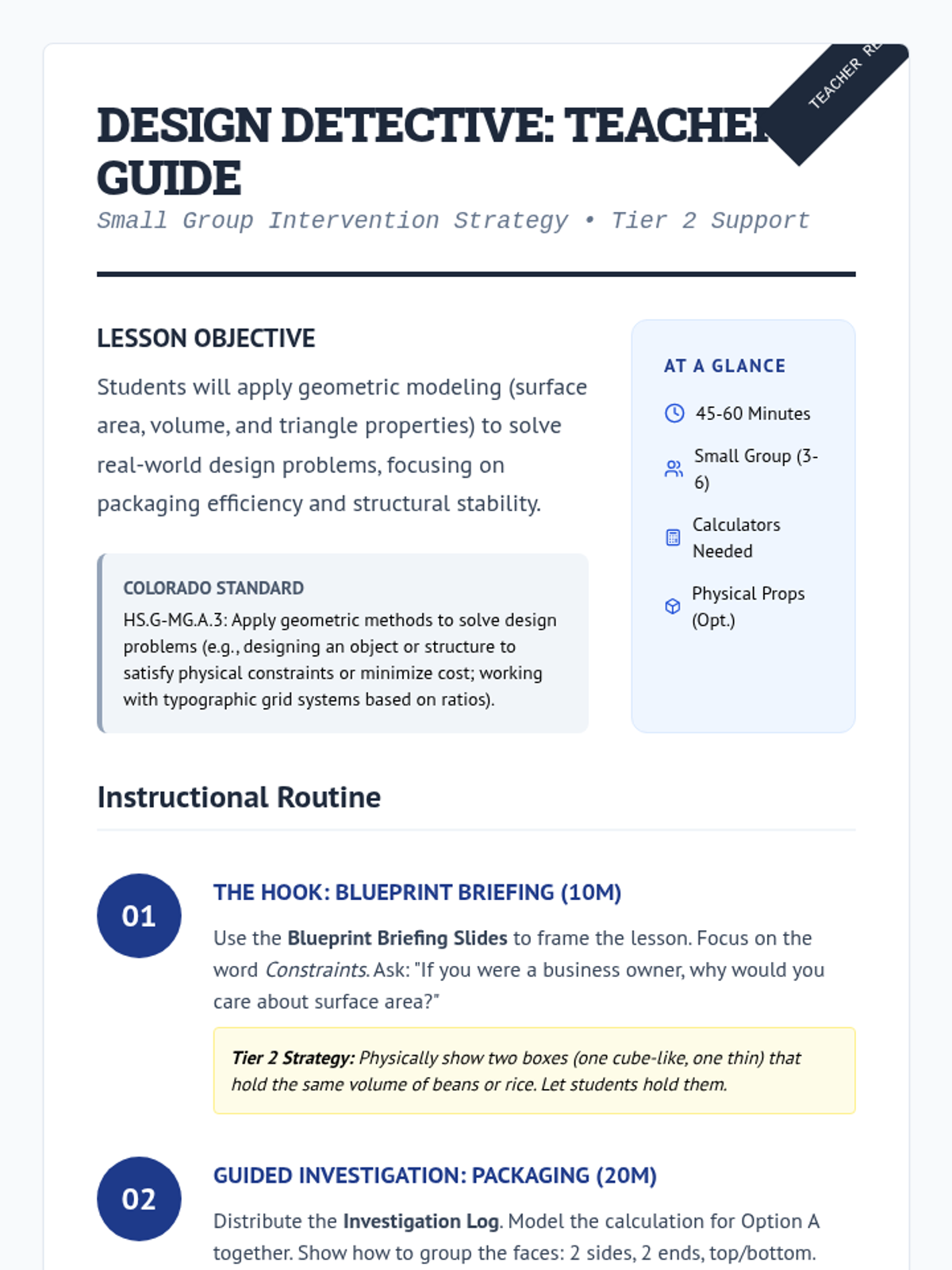
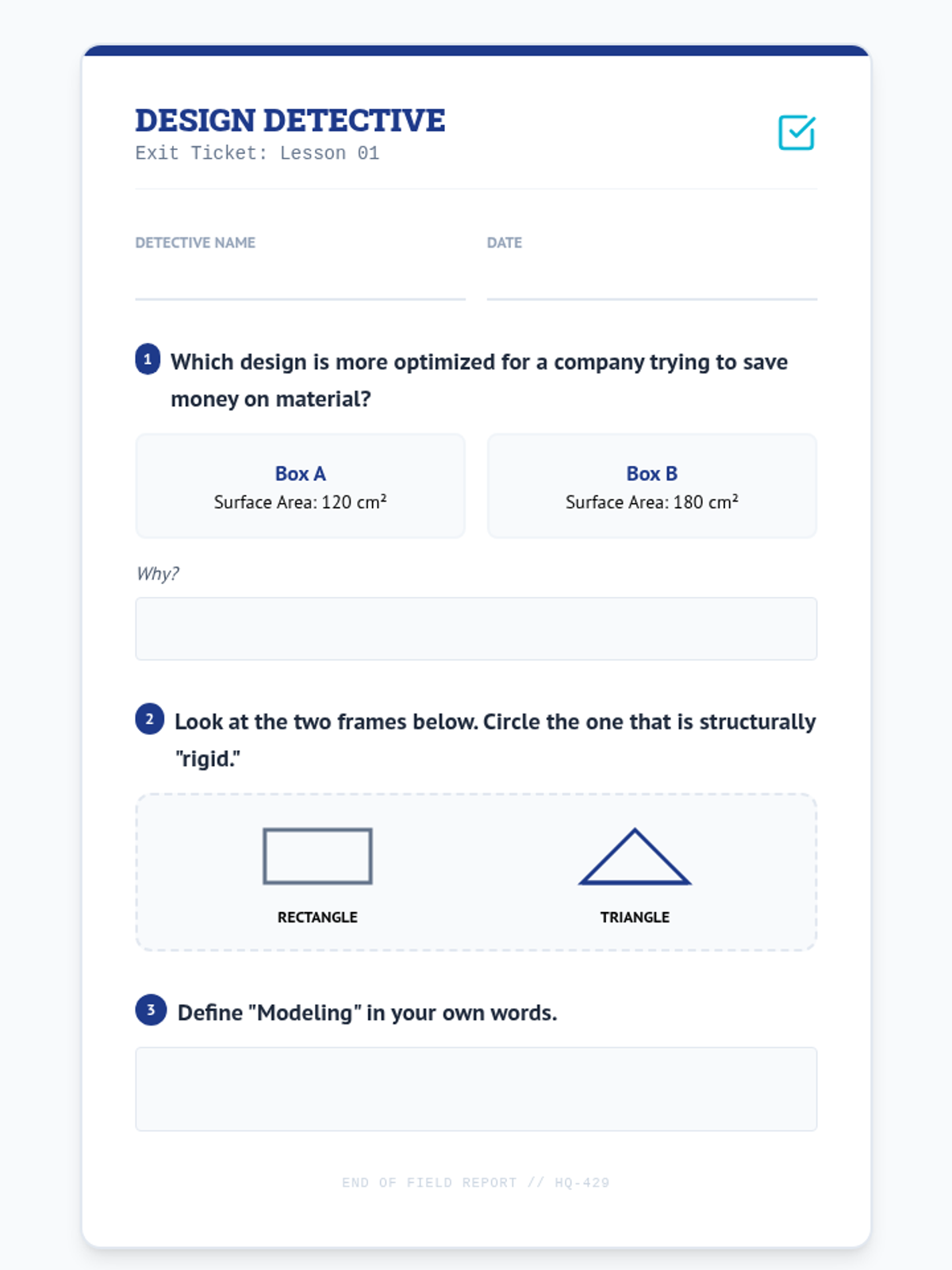
A specialized geometry intervention sequence focused on applying geometric principles to real-world design challenges, specifically tailored for Tier 2 high school learners. The sequence emphasizes modeling, optimization, and structural integrity through hands-on design tasks.
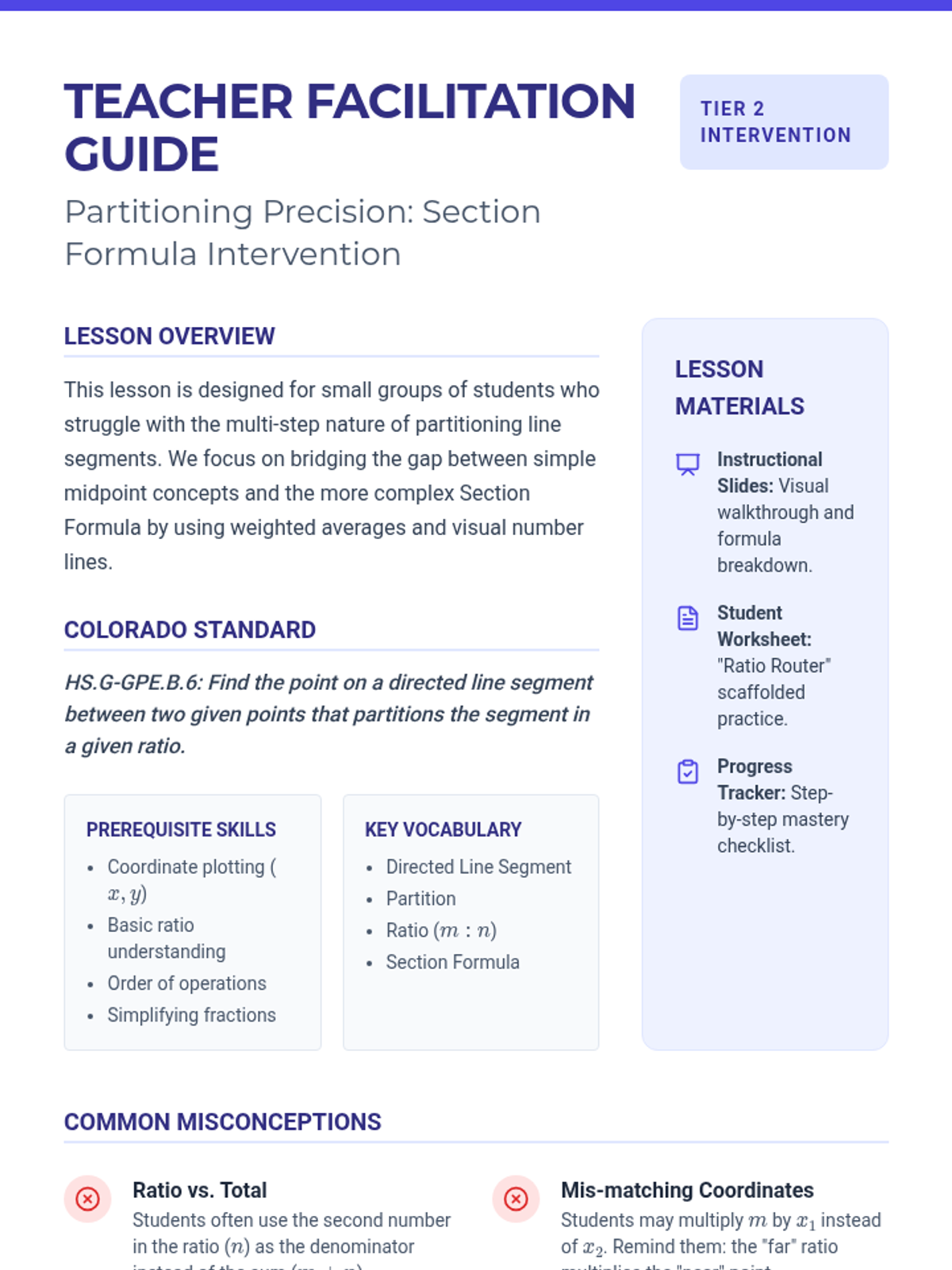
A targeted intervention sequence for high school geometry students focusing on partitioning line segments in given ratios. This unit breaks down the section formula through visual supports, number line bridging, and scaffolded coordinate plane practice.
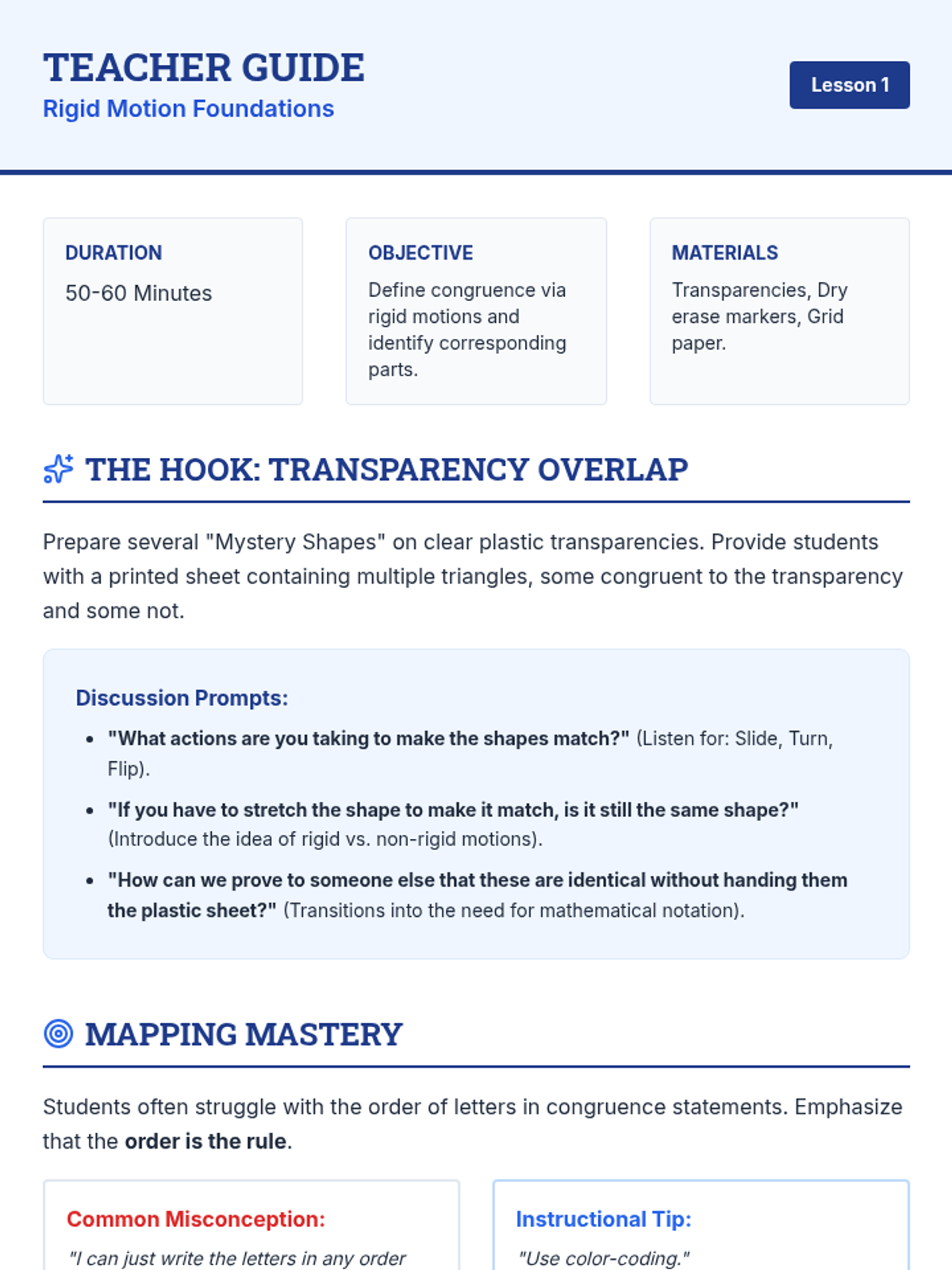
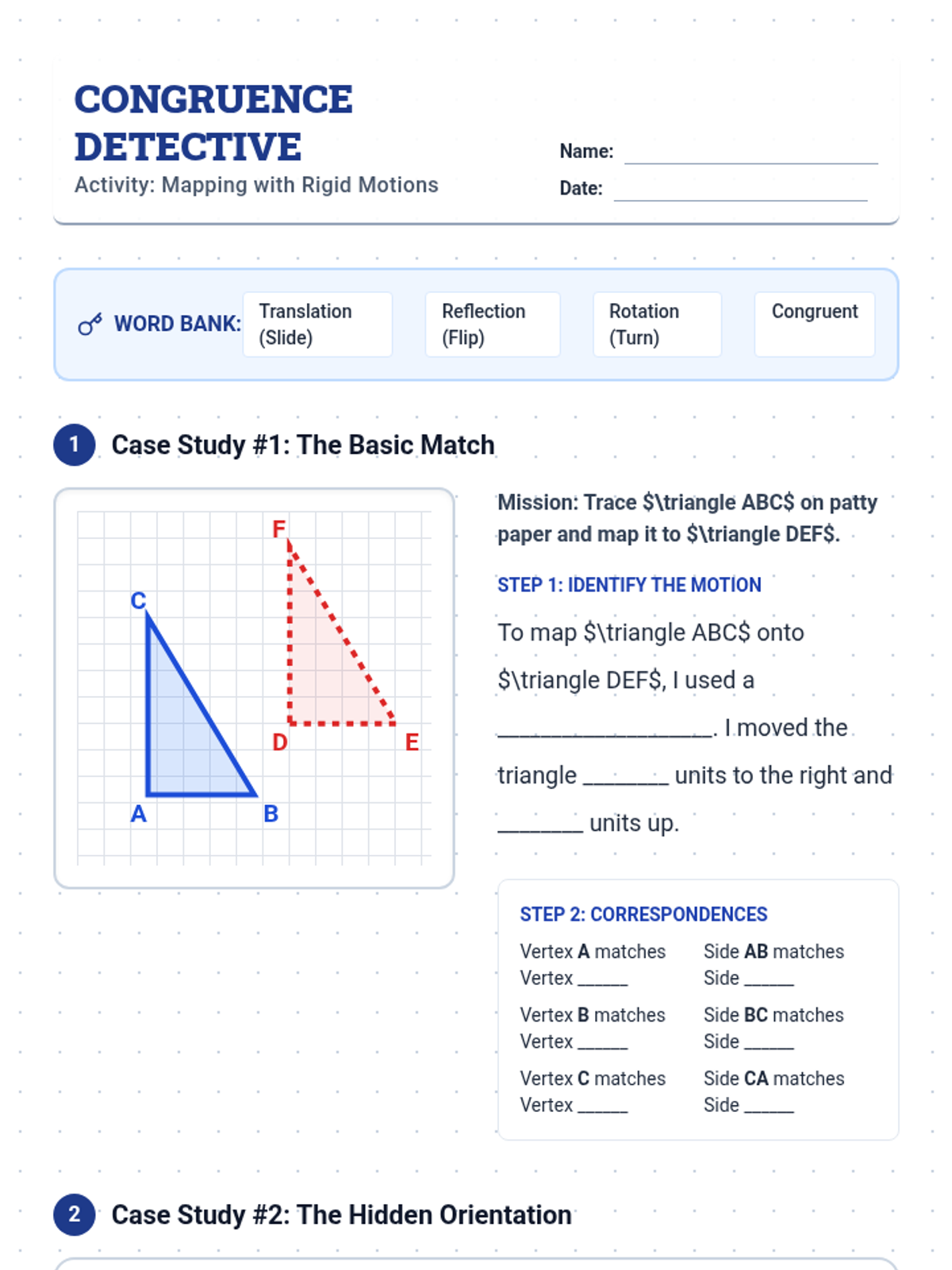
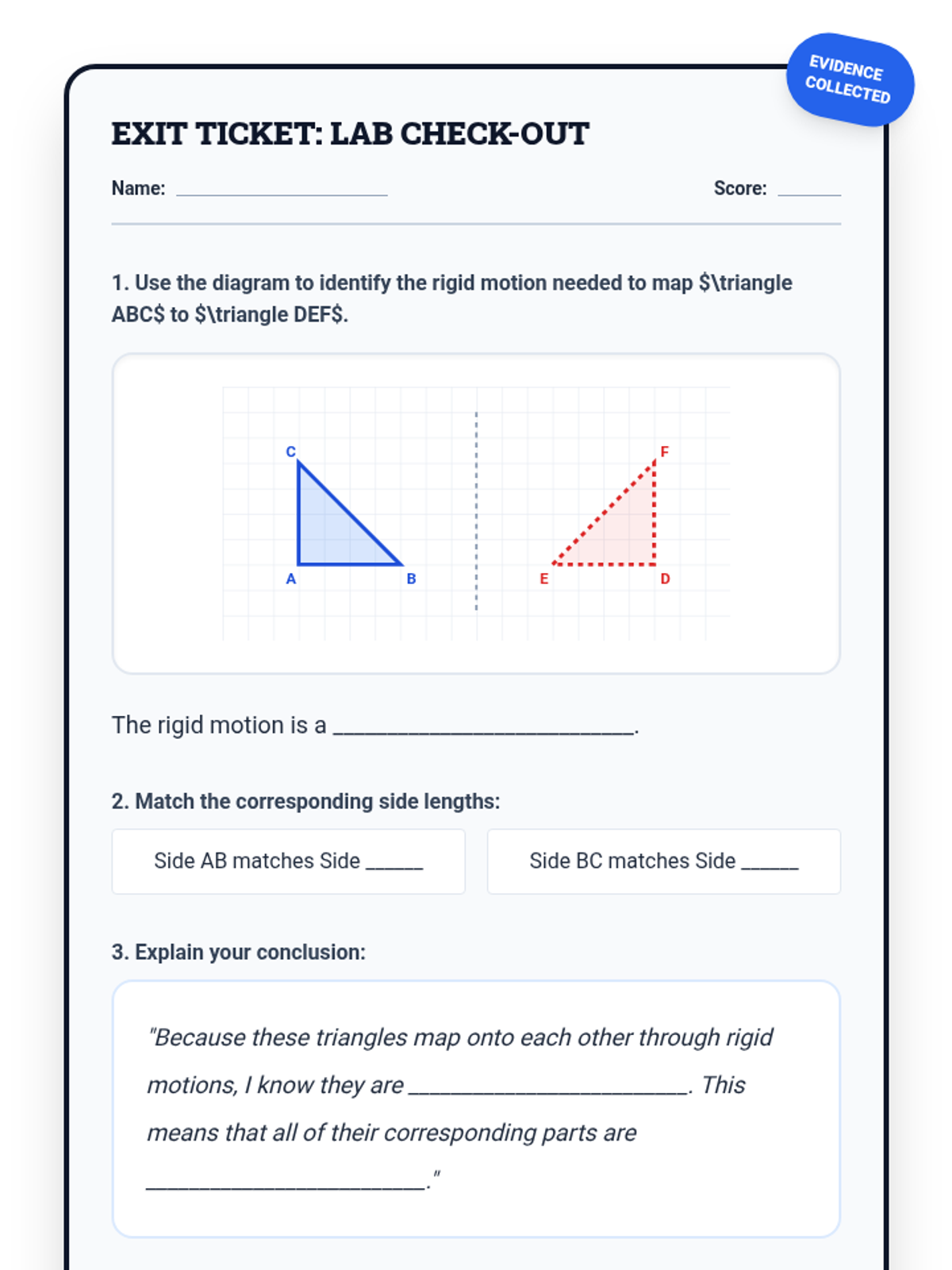
A targeted intervention sequence focused on verifying triangle congruence through rigid motions and corresponding parts, specifically designed for Tier 2 small group support.
A series of intensive intervention lessons focused on foundational geometry concepts through hands-on construction and formal definitions. This sequence supports Tier 2 learners in mastering transformations and proofs.
A targeted intervention sequence focused on understanding triangle congruence (SSS, SAS, ASA) through the lens of rigid motions, specifically designed for Tier 2 small group support.
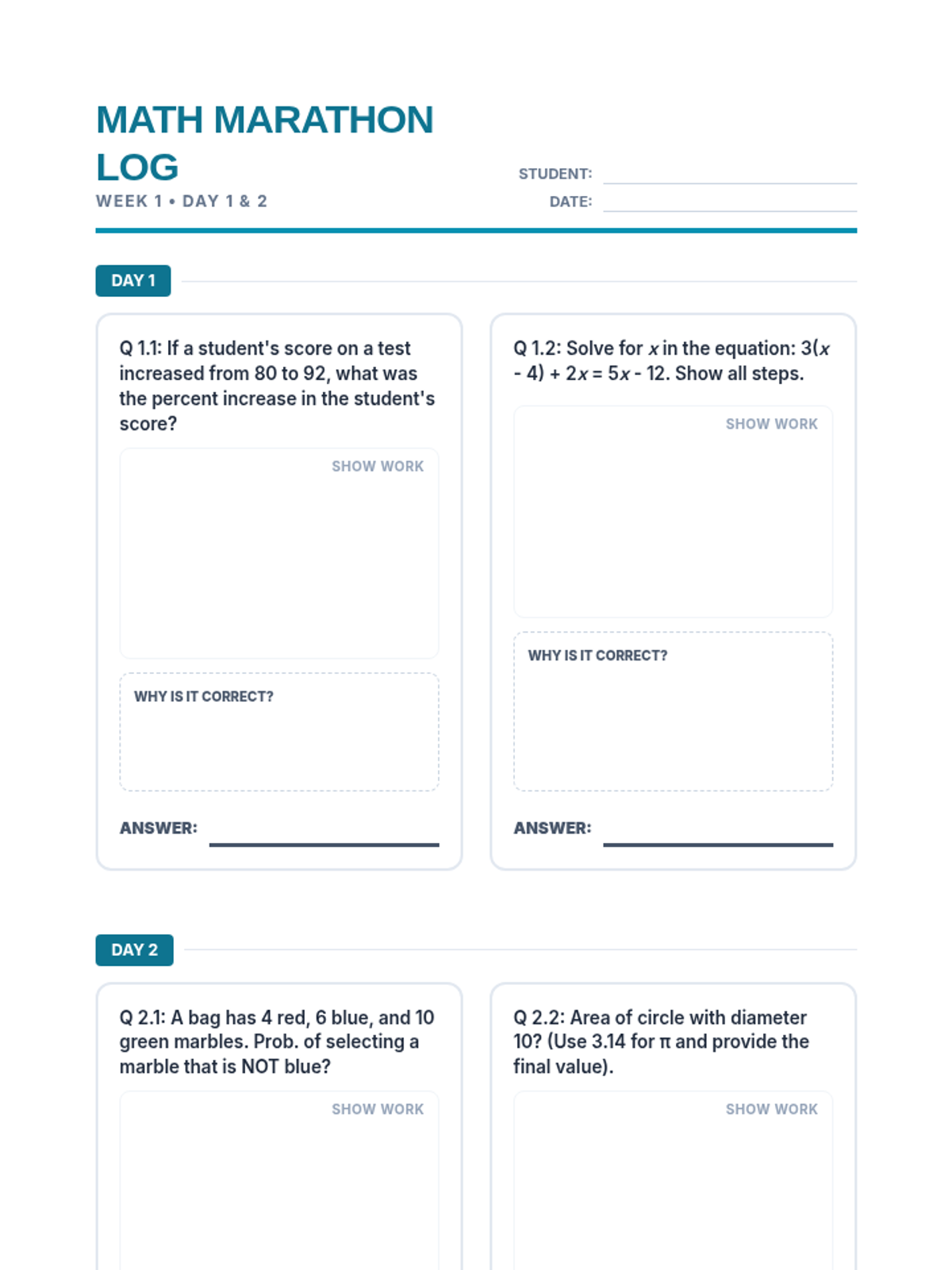
A comprehensive 15-day TSIA2 math review sequence featuring daily warm-up questions and weekly progress logs for students. The program covers all four TSIA2 domains through a "Math Marathon" theme.
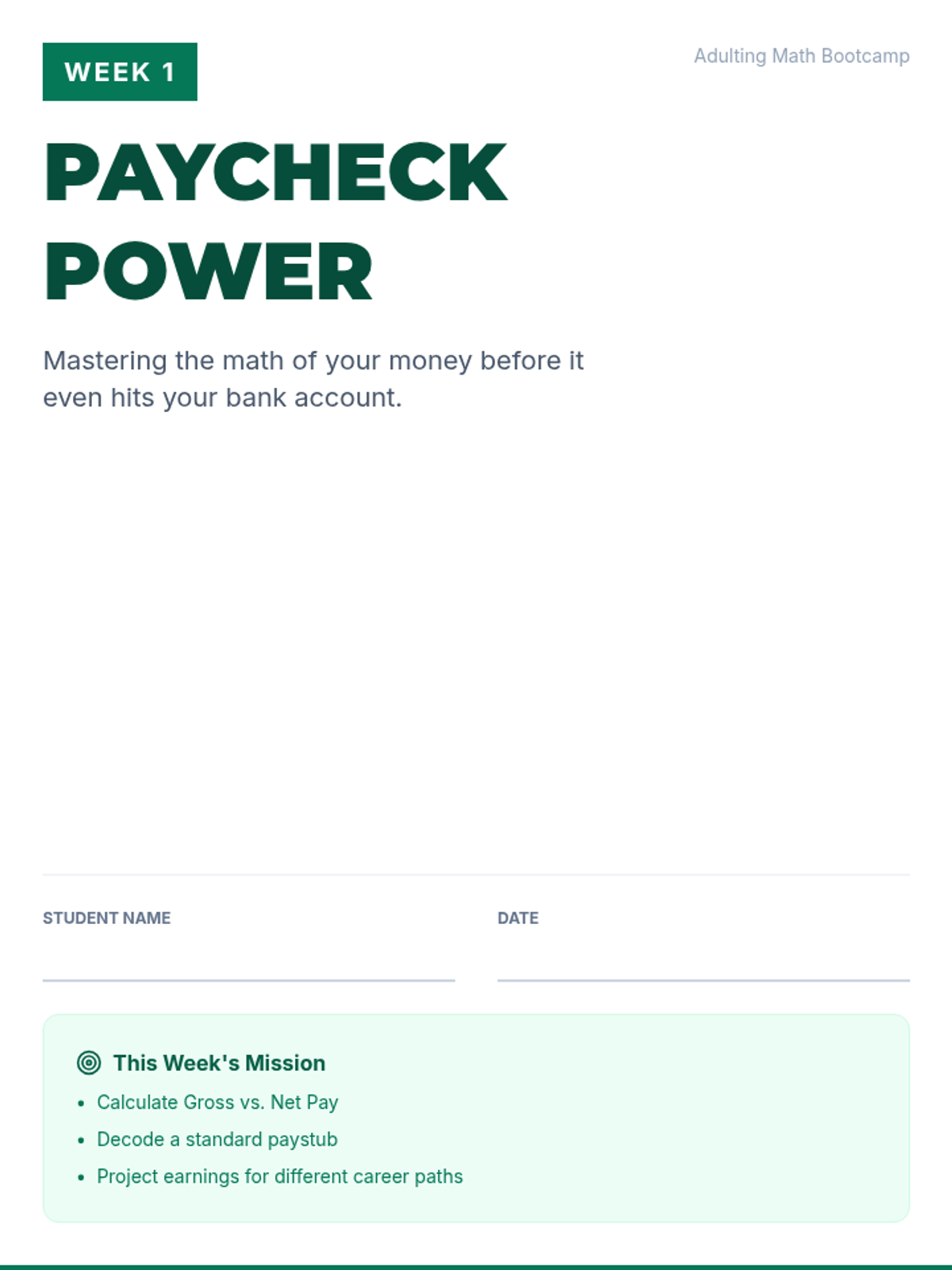
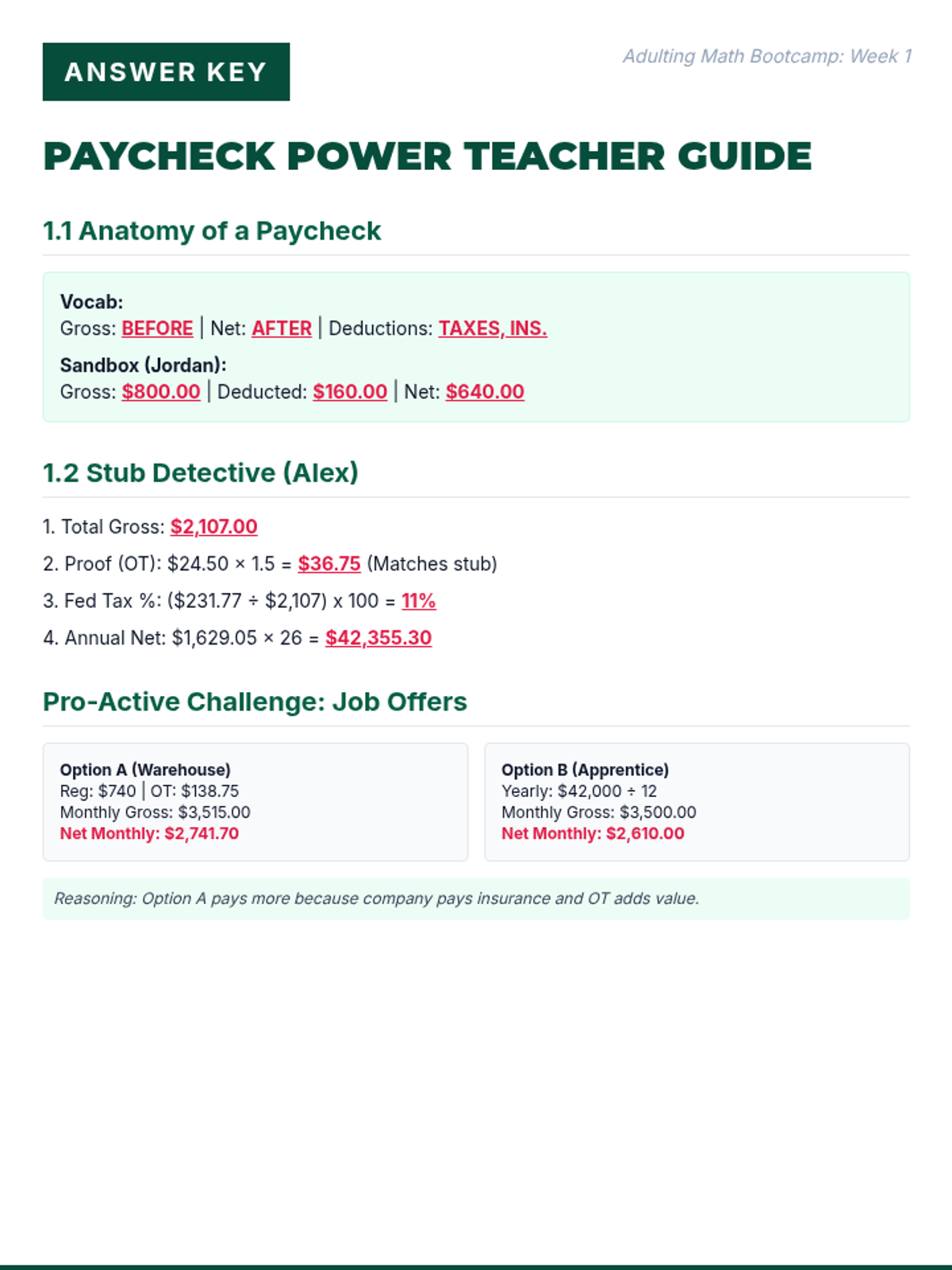
A 6-week curriculum designed to bridge the gap between high school math and real-world financial and practical independence, covering paychecks, budgeting, credit, shopping, housing, and measurement.
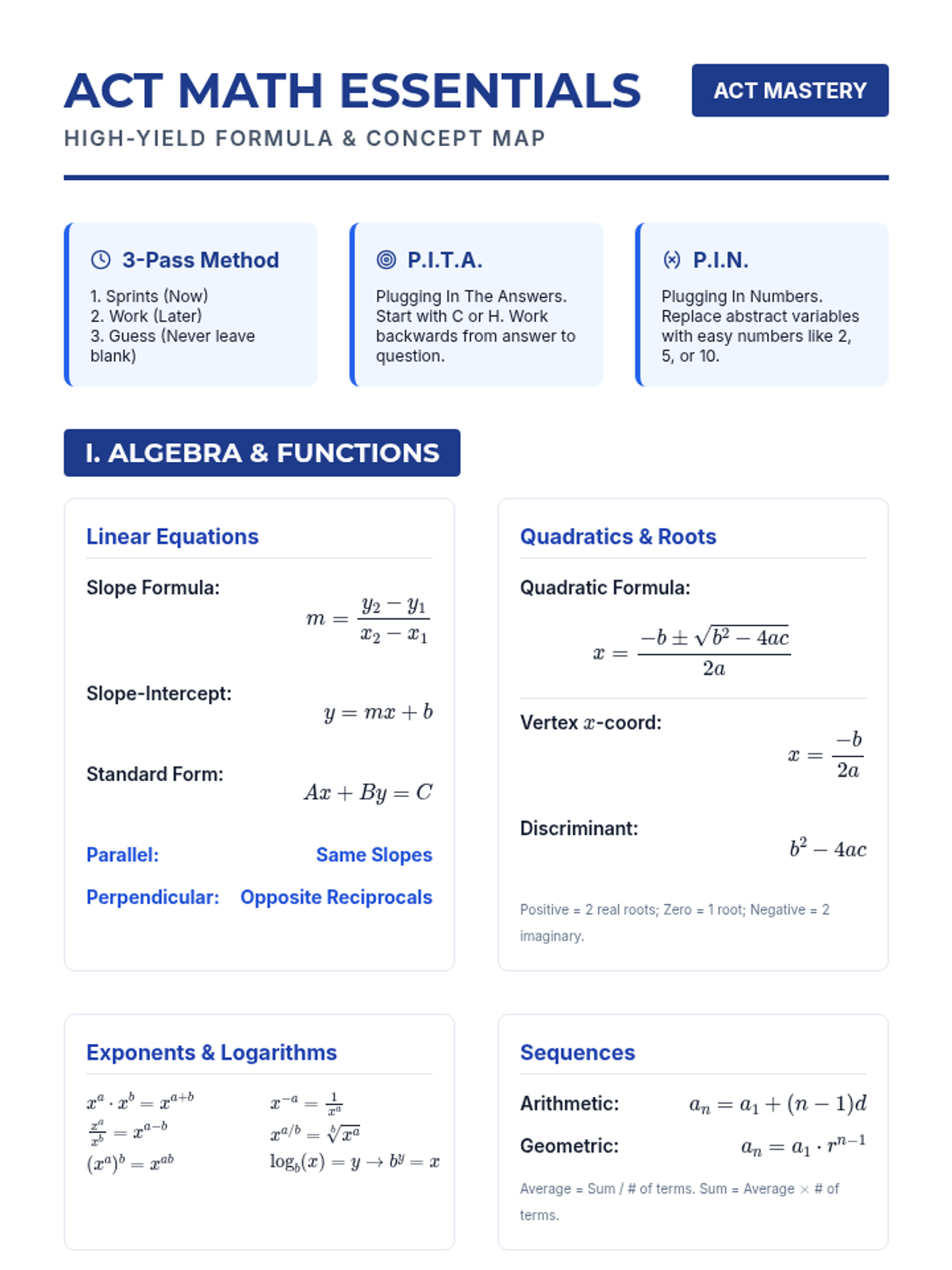
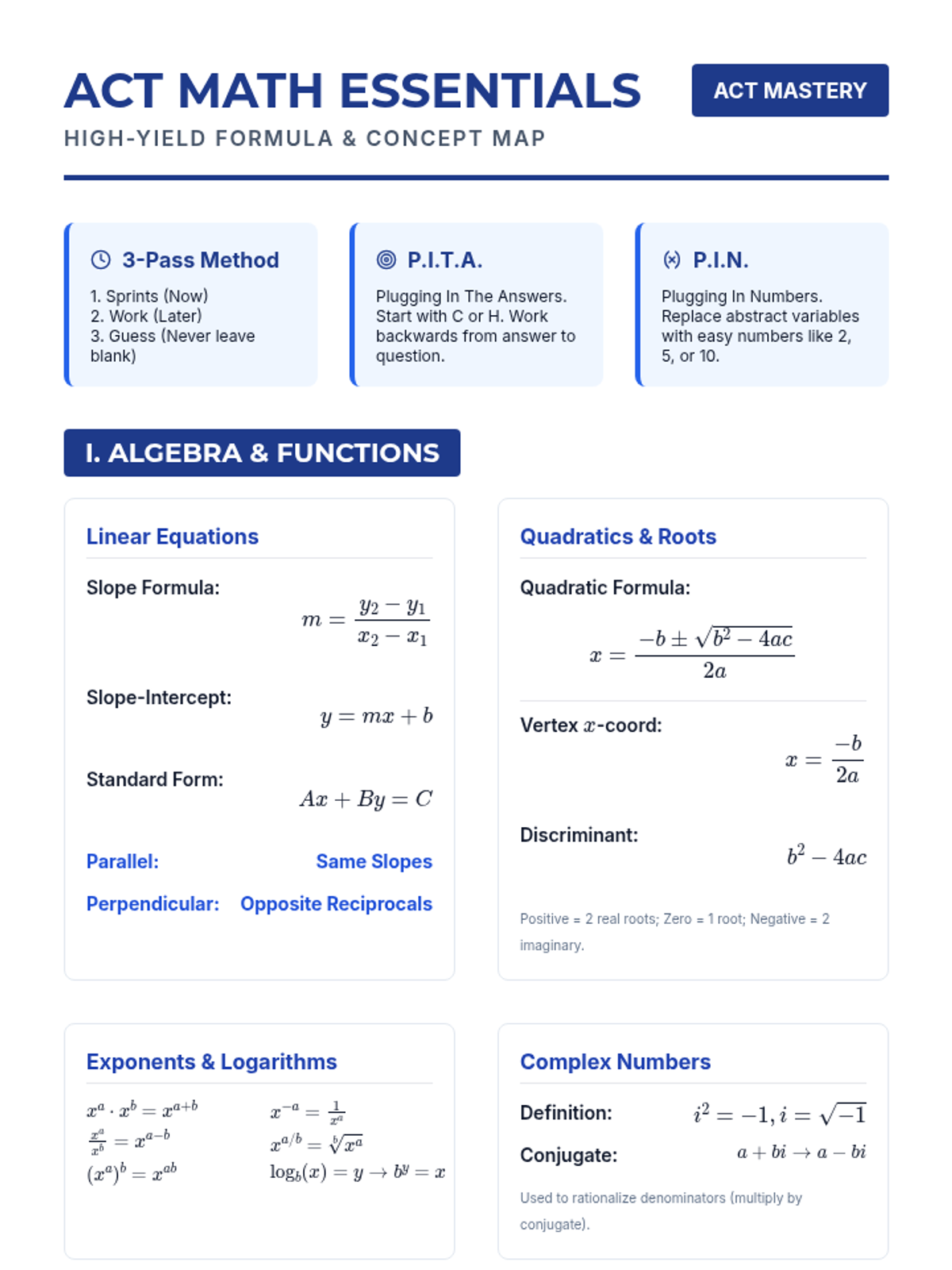
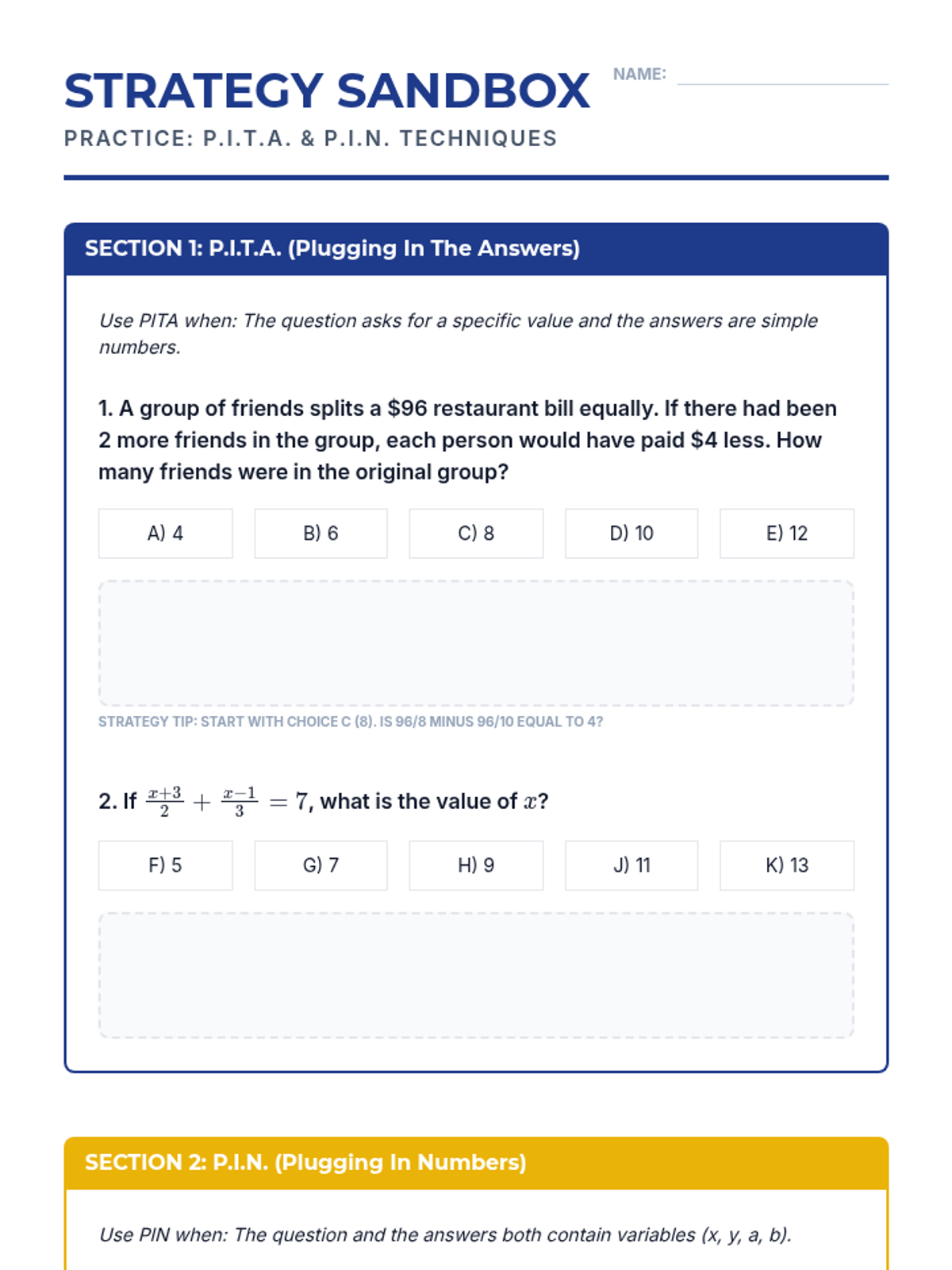
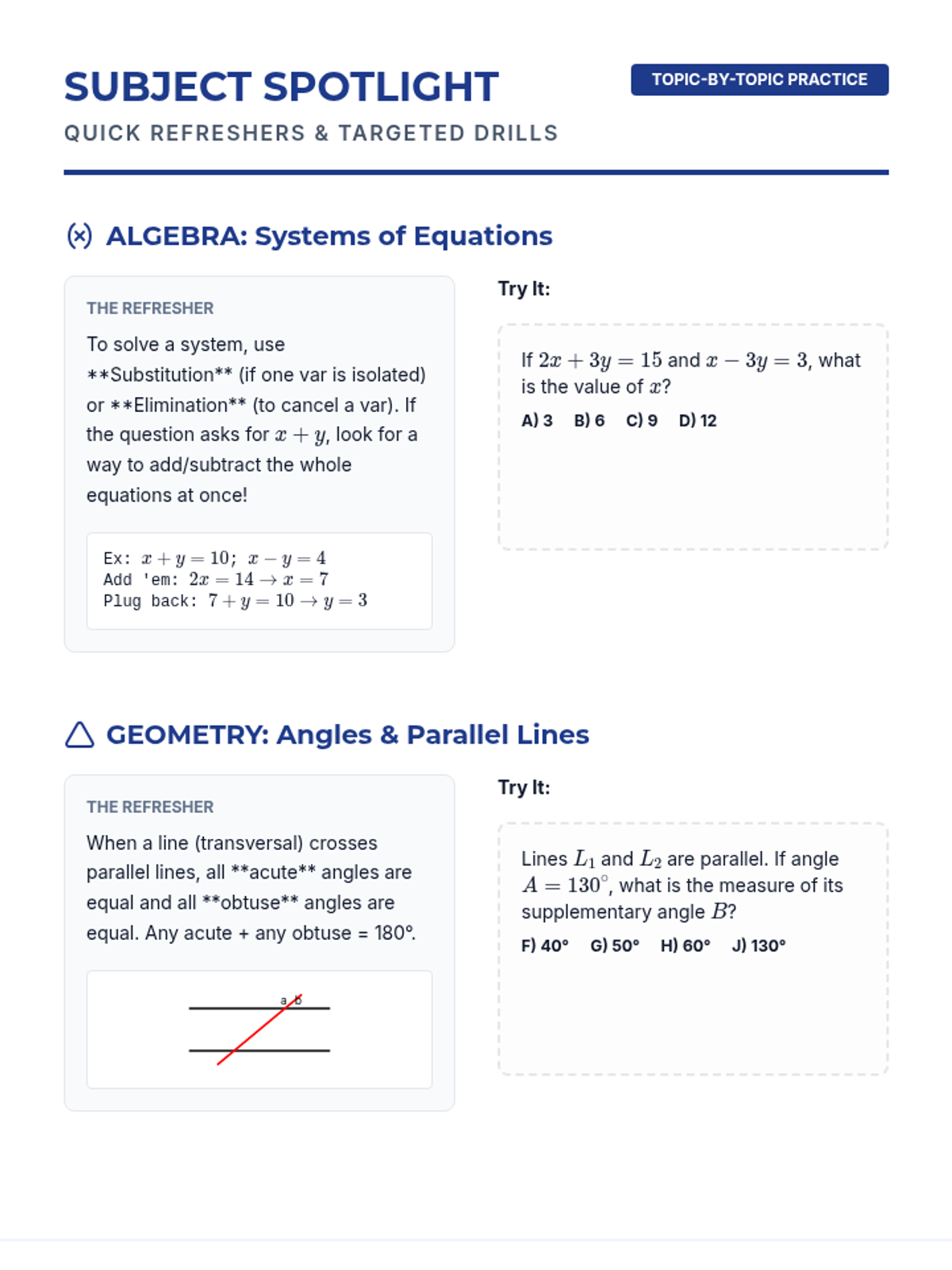
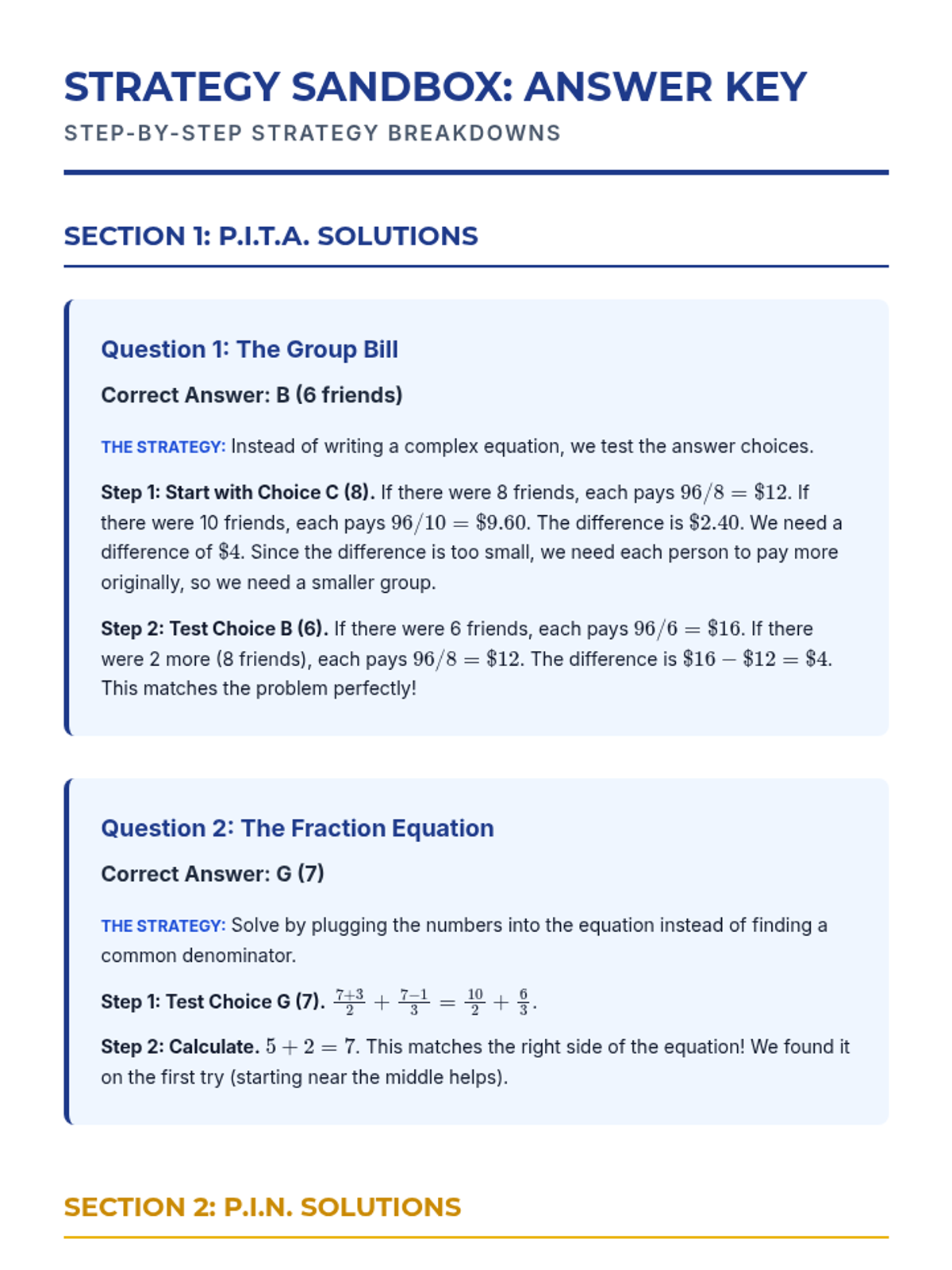
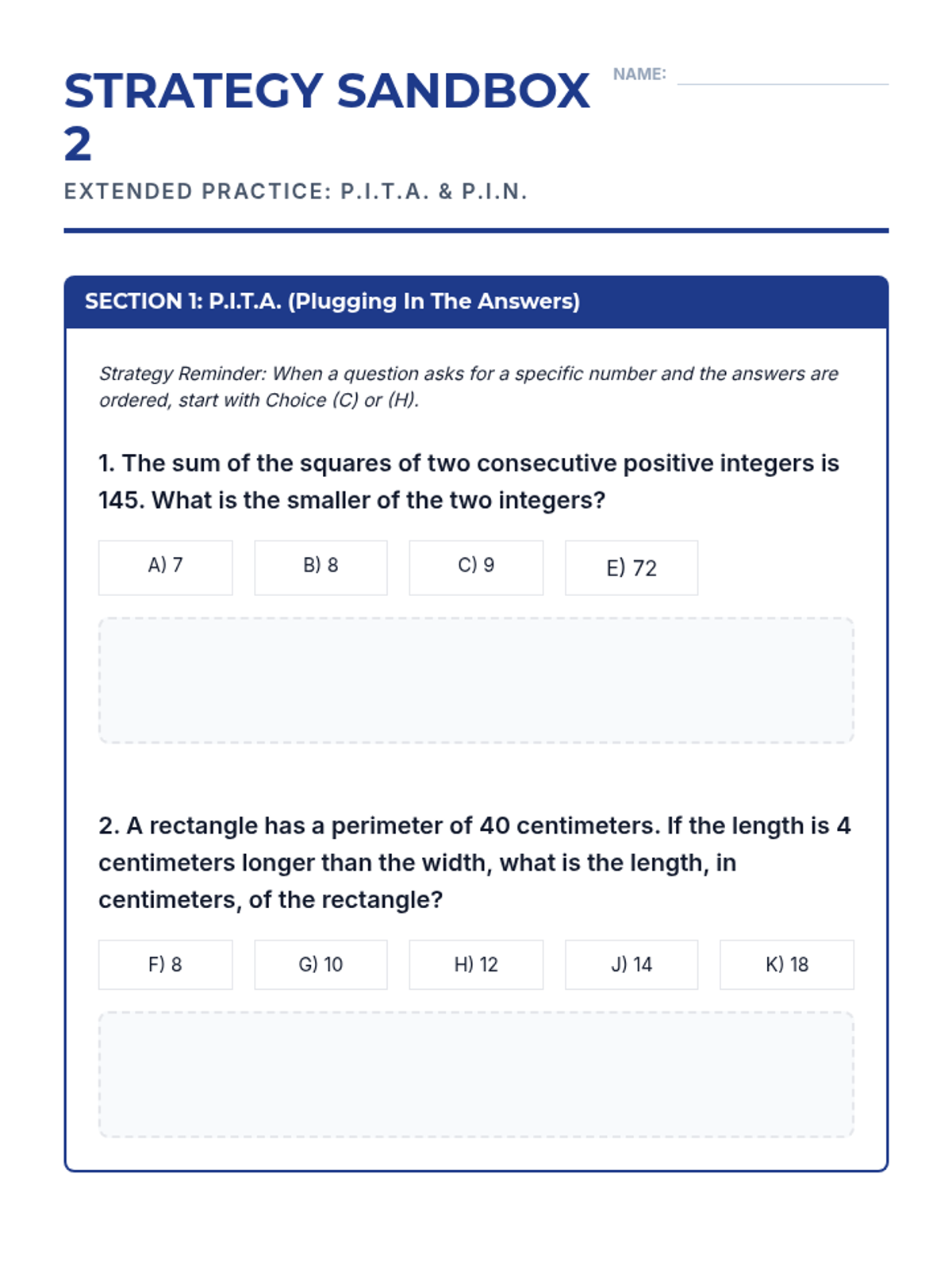
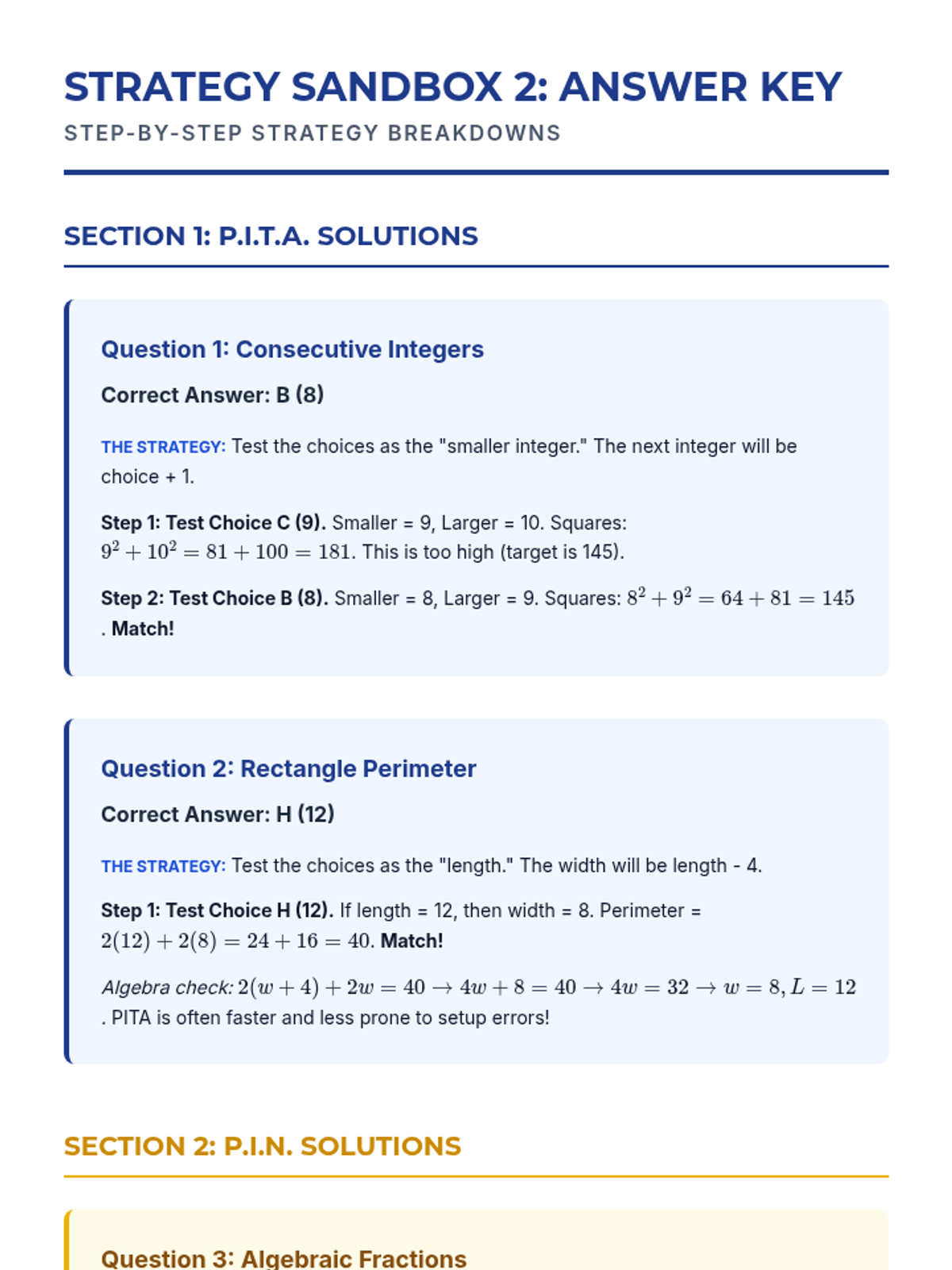
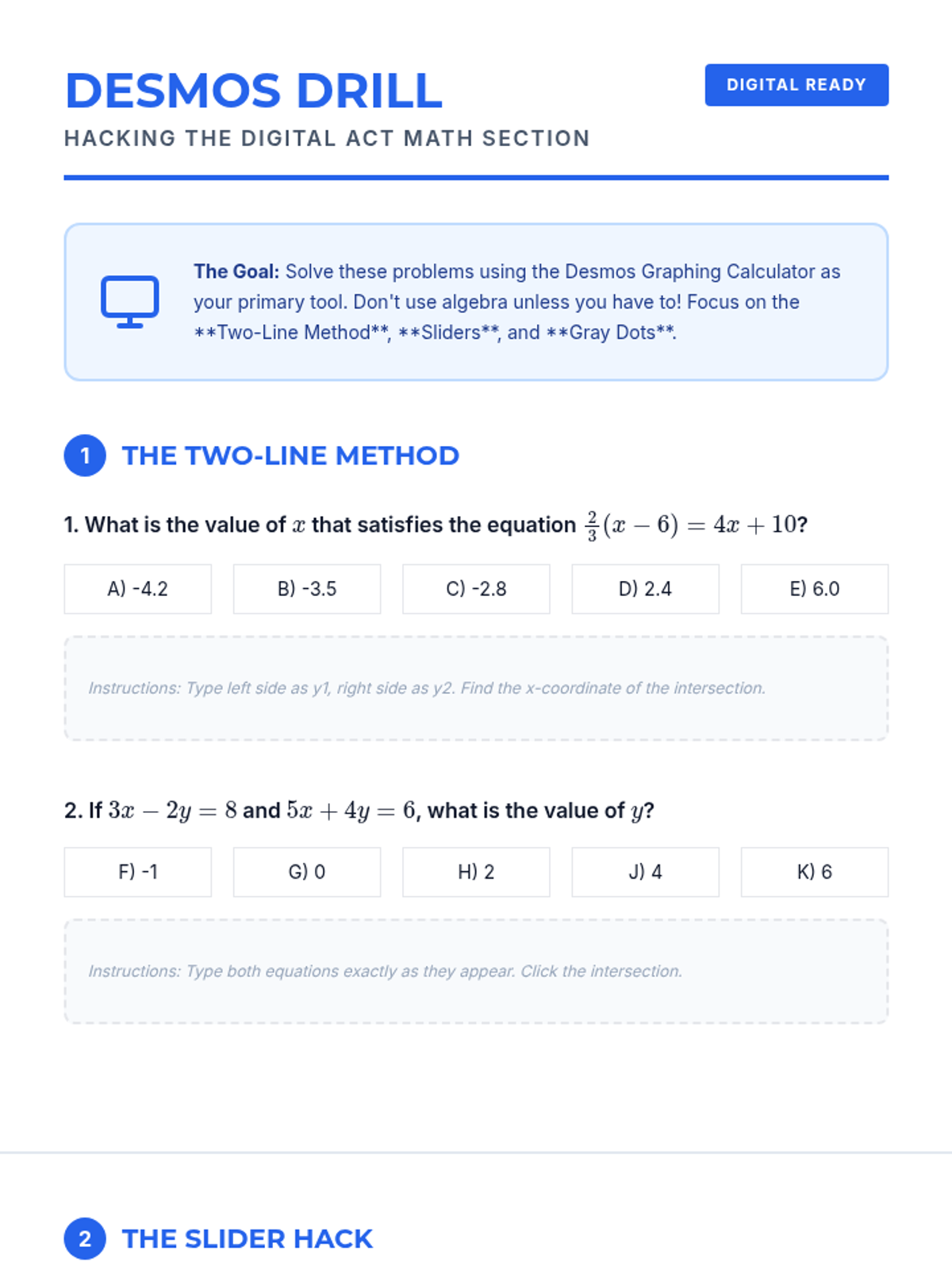
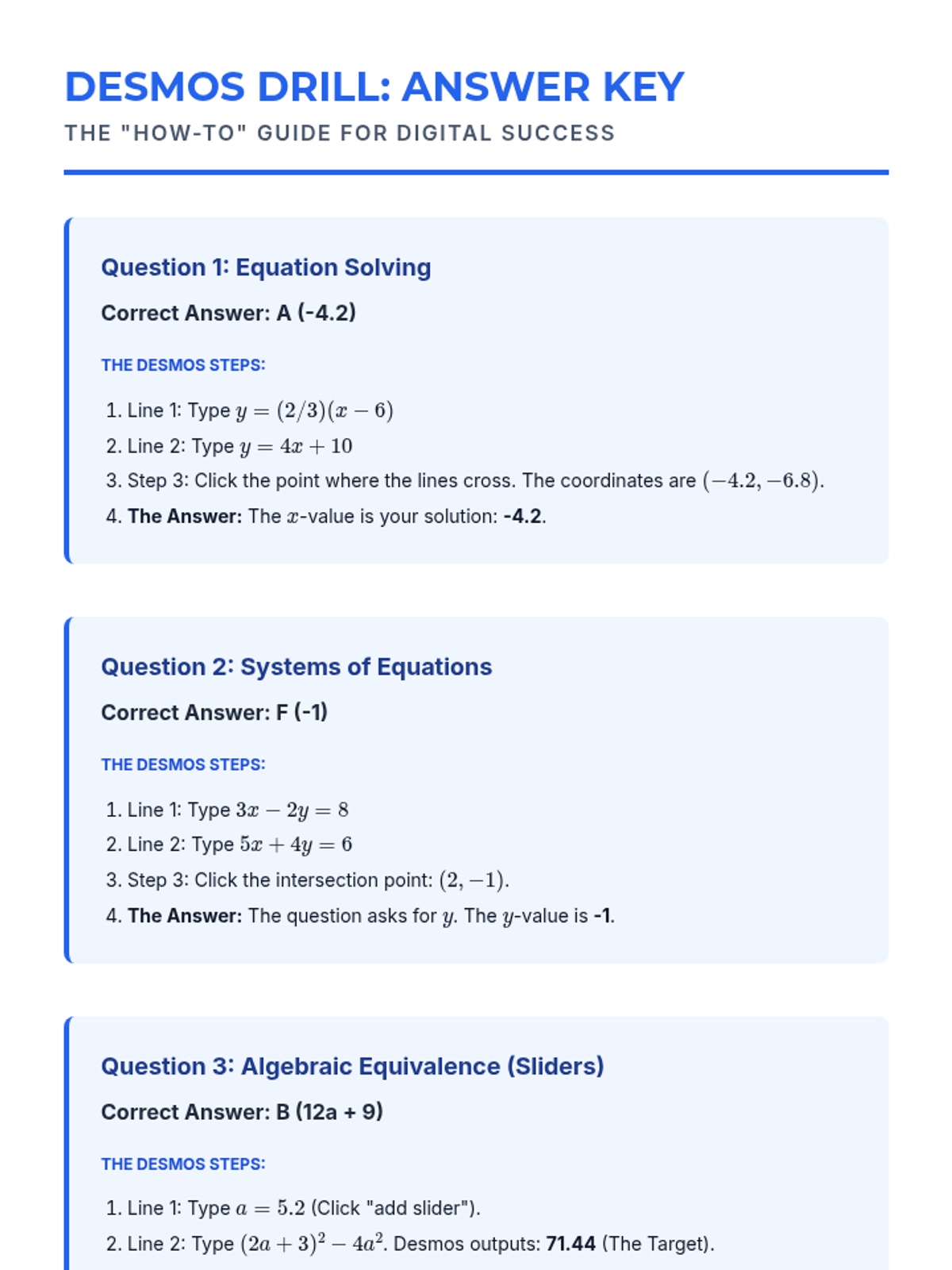
A comprehensive ACT Math preparation program focusing on essential strategies, high-yield Algebra and Geometry concepts, and realistic practice to boost scores.
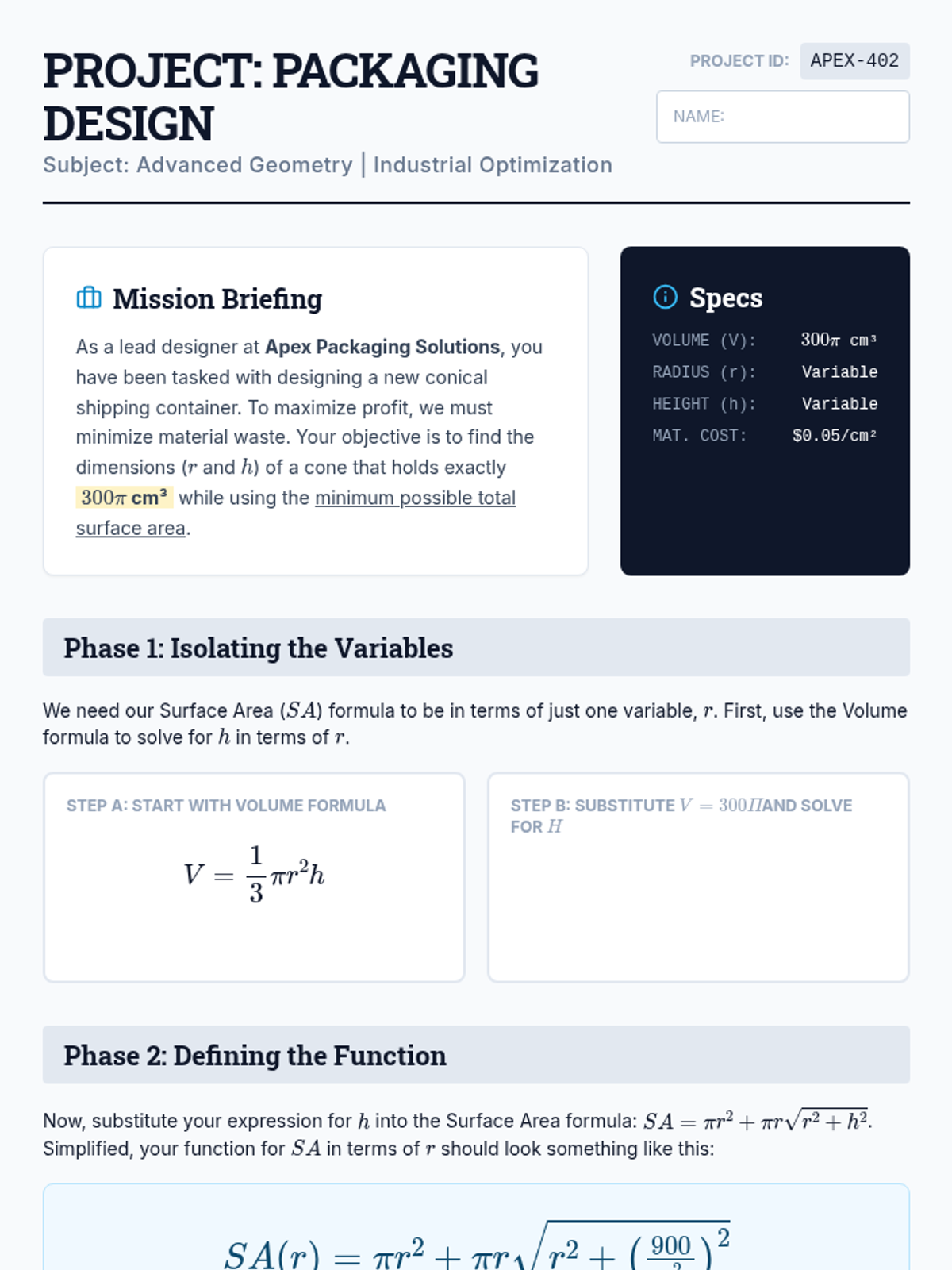
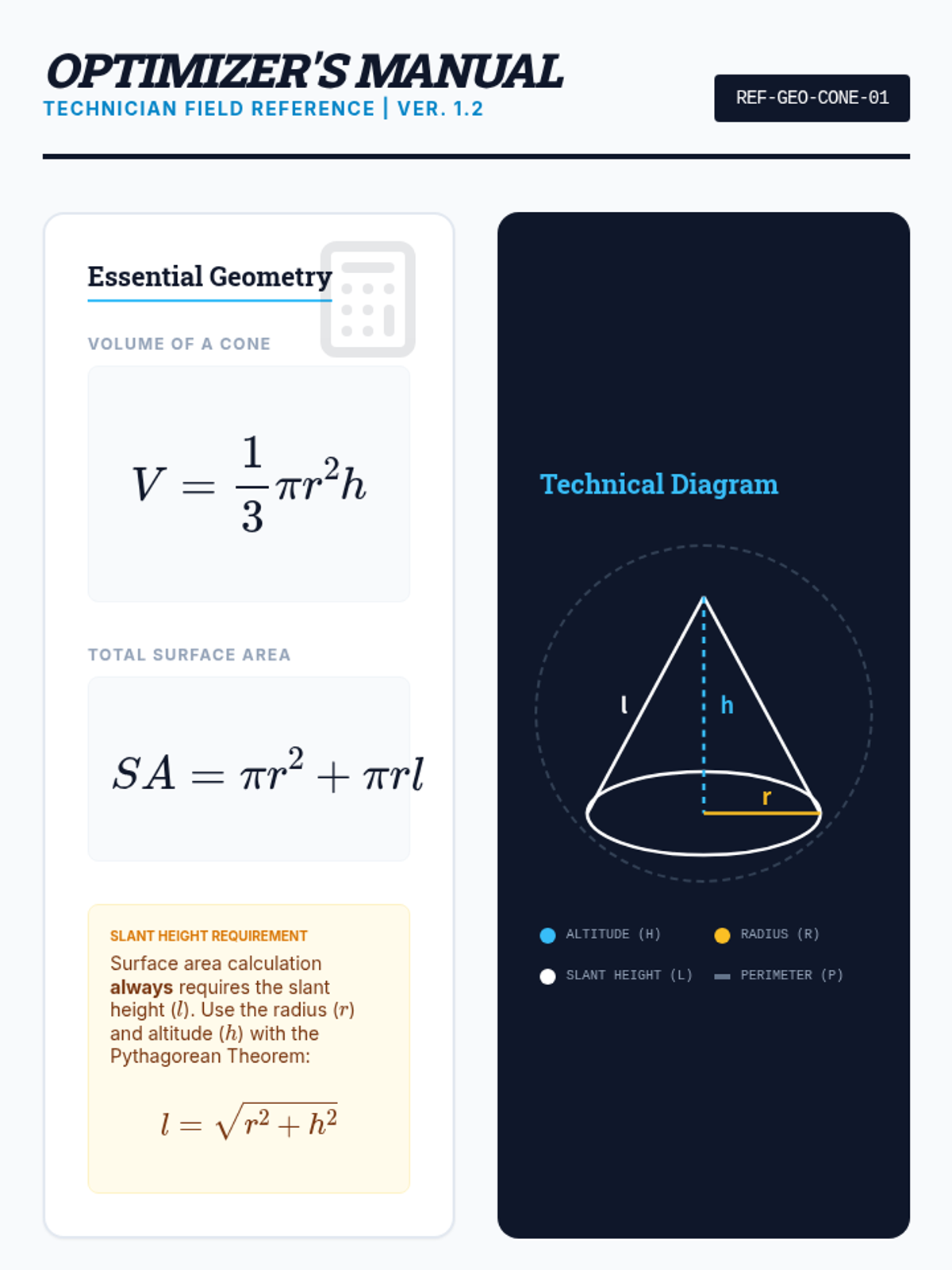
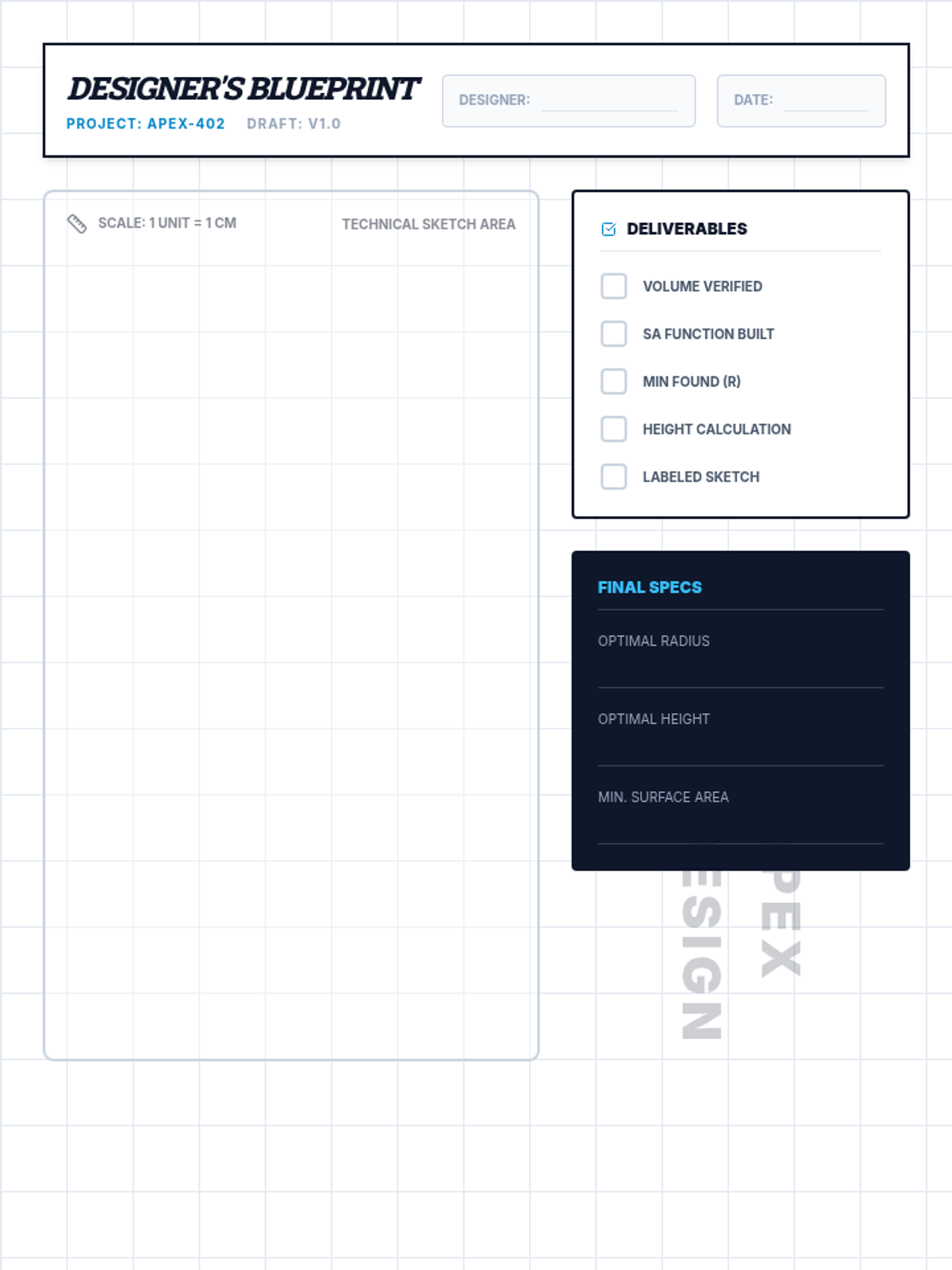
A high school geometry and algebra sequence focused on applying 3D geometry formulas to real-world optimization problems, specifically focusing on cones.
This sequence bridges geometry and physics, investigating the structural properties of 2D and 3D shapes. Students analyze rigidity, tessellation, and surface area-to-volume ratios to understand how geometric attributes influence physical performance in engineering and nature.
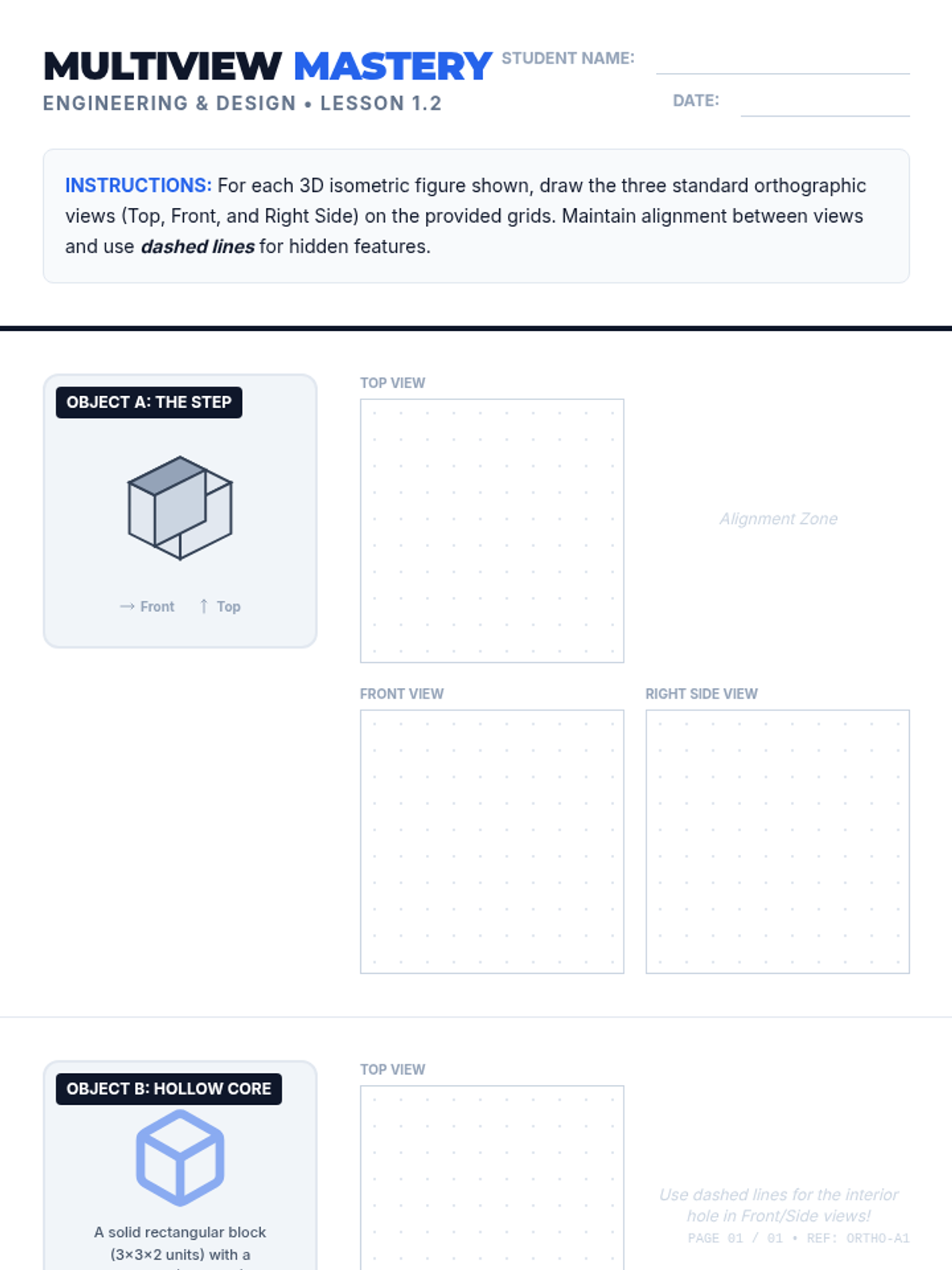
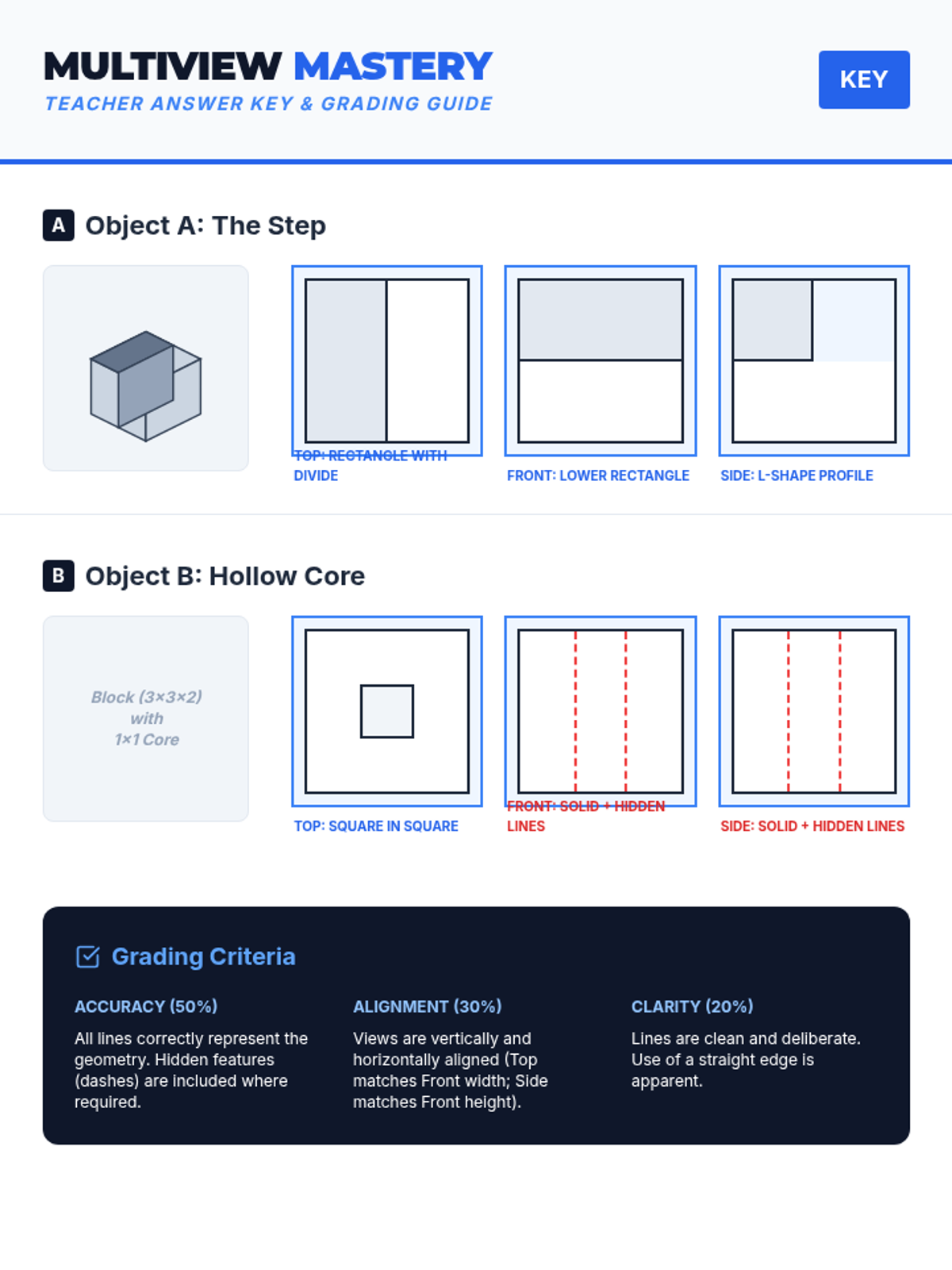
This sequence explores the intersection of geometry and engineering, focusing on 3D visualization, technical drawing, and the optimization of physical forms. Students develop spatial reasoning skills through orthographic and isometric sketching and apply geometric modeling to solve real-world design constraints.
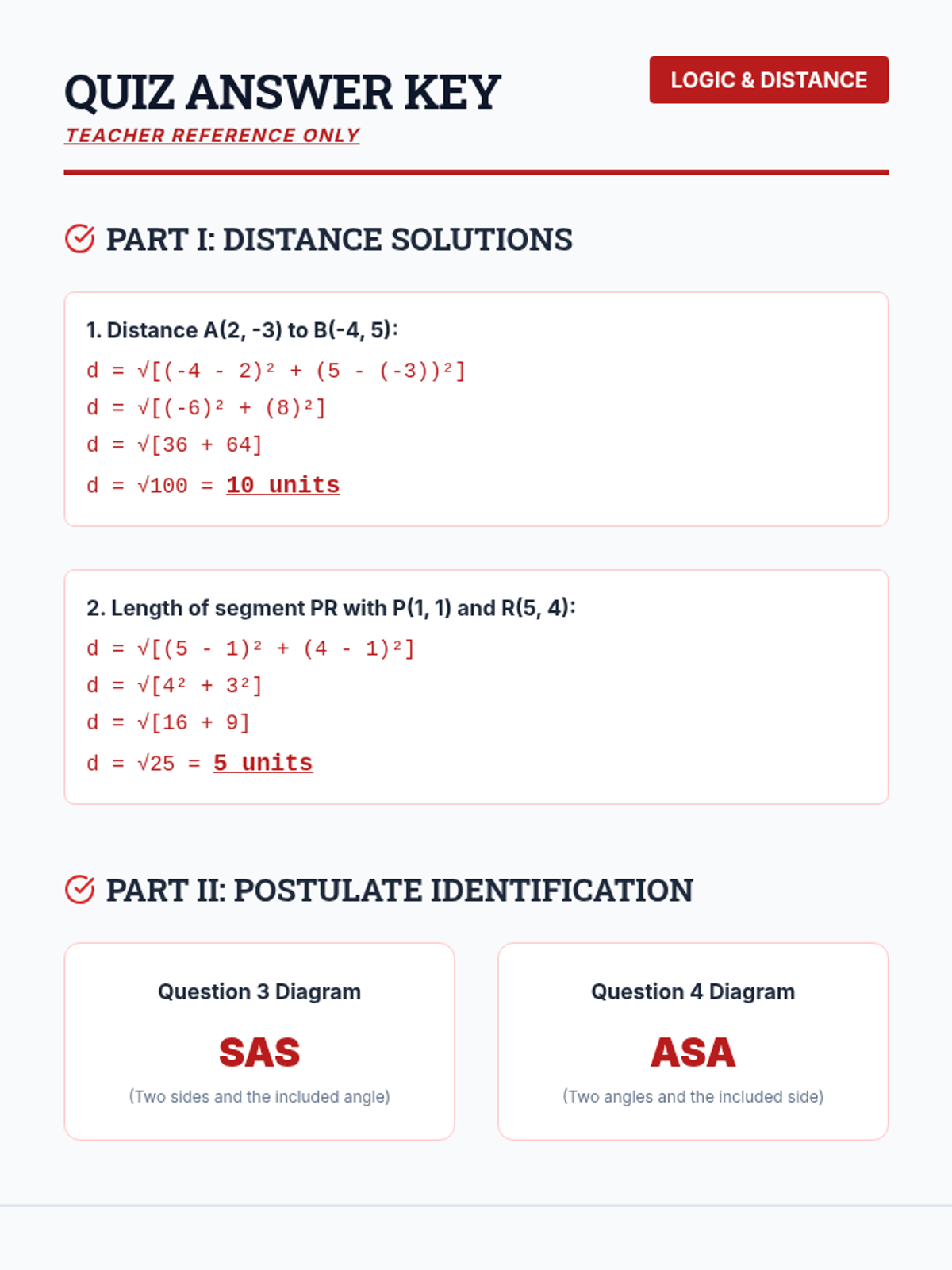
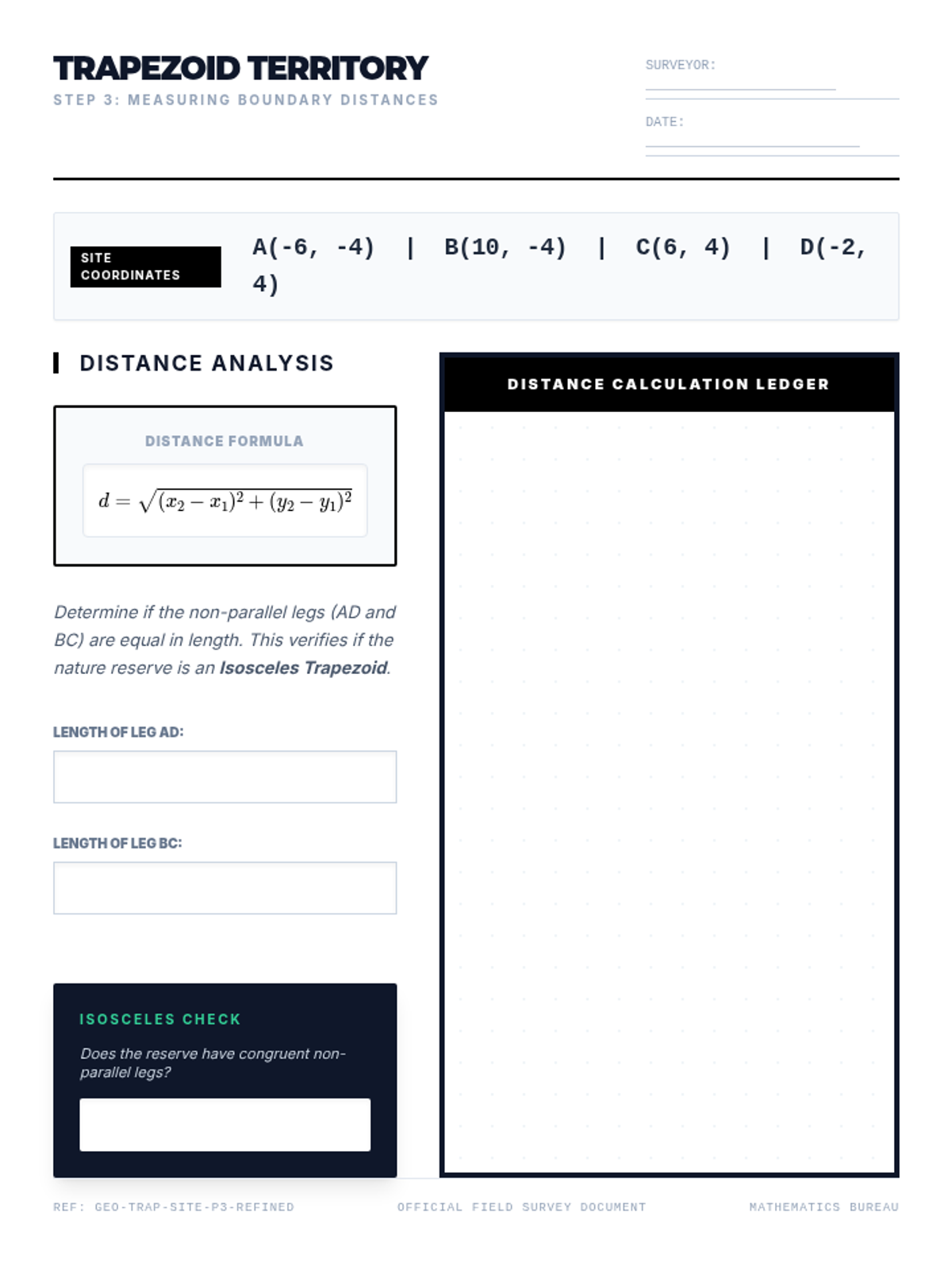
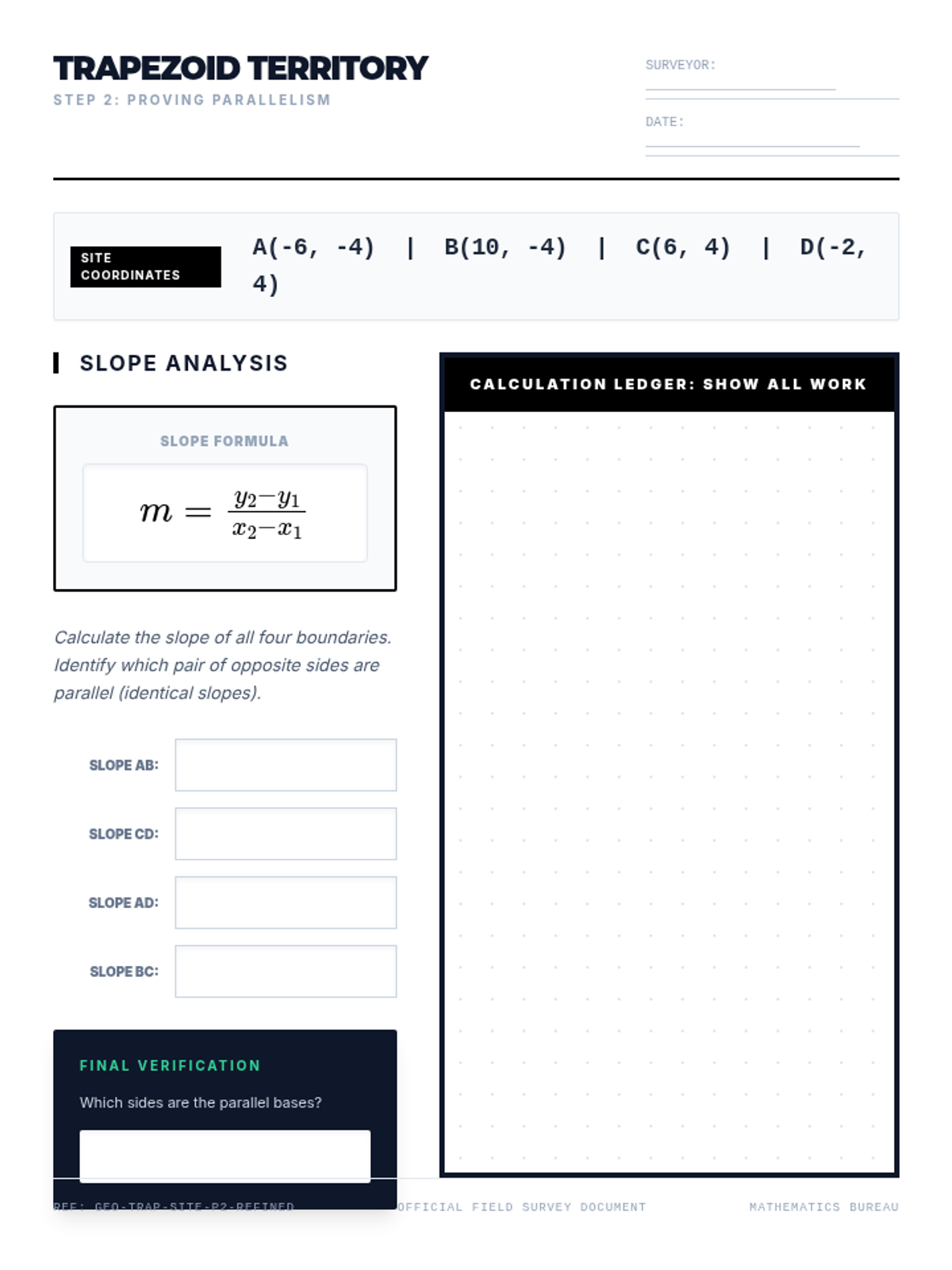
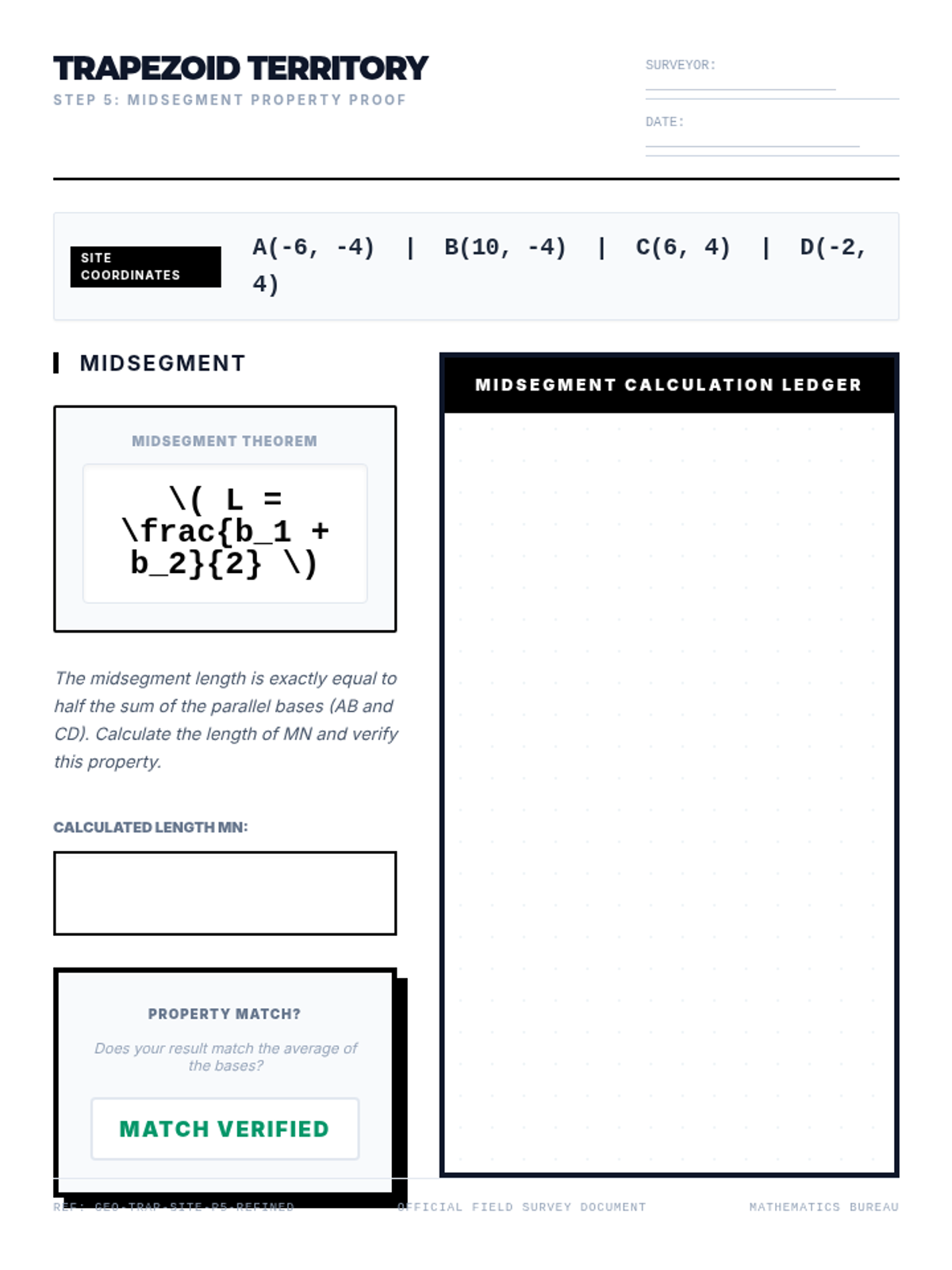
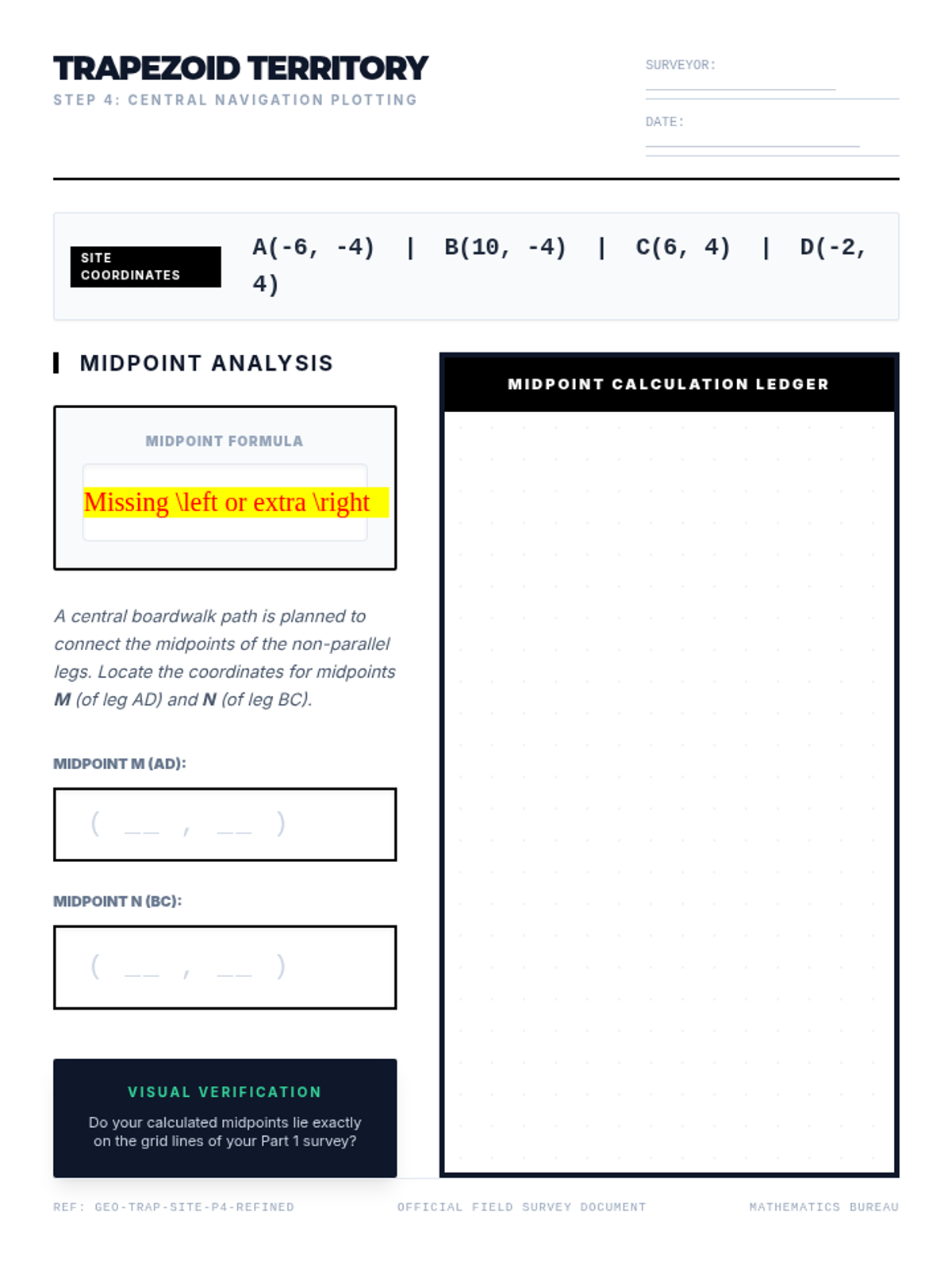
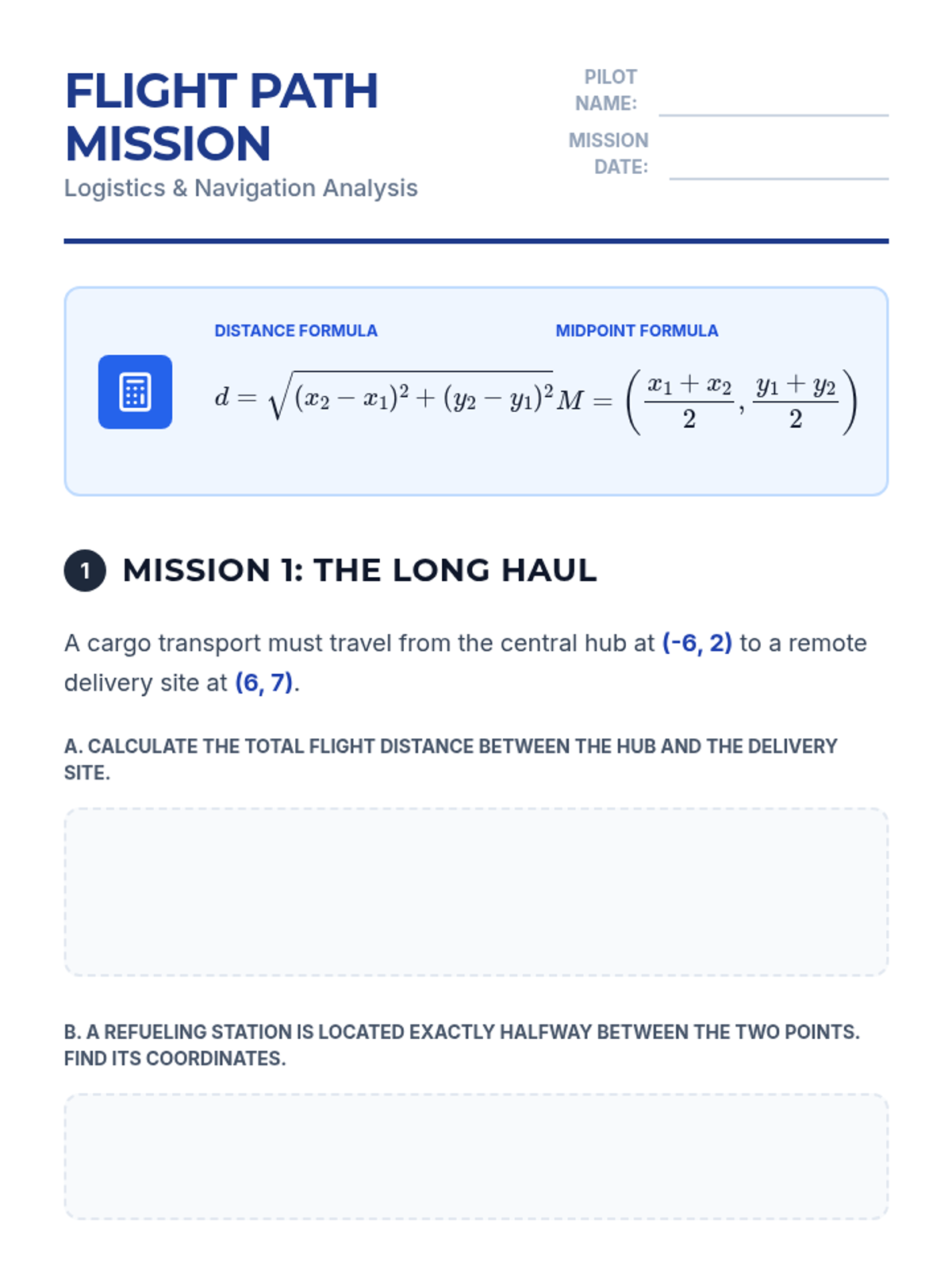
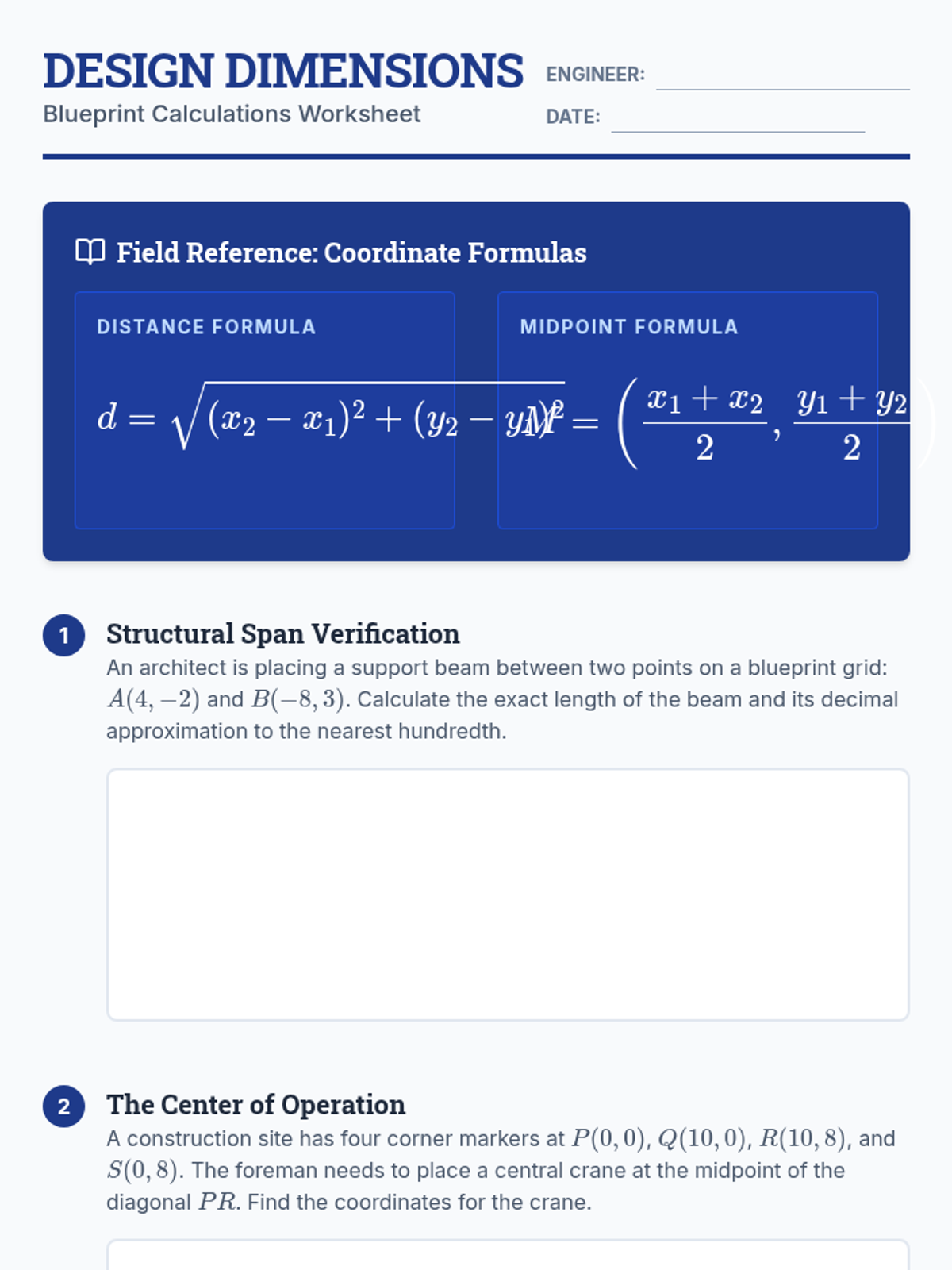
A high school geometry unit that integrates algebra and geometry by using coordinate systems to verify geometric properties. Students use distance, midpoint, and slope formulas to classify shapes and prove properties with algebraic rigor.
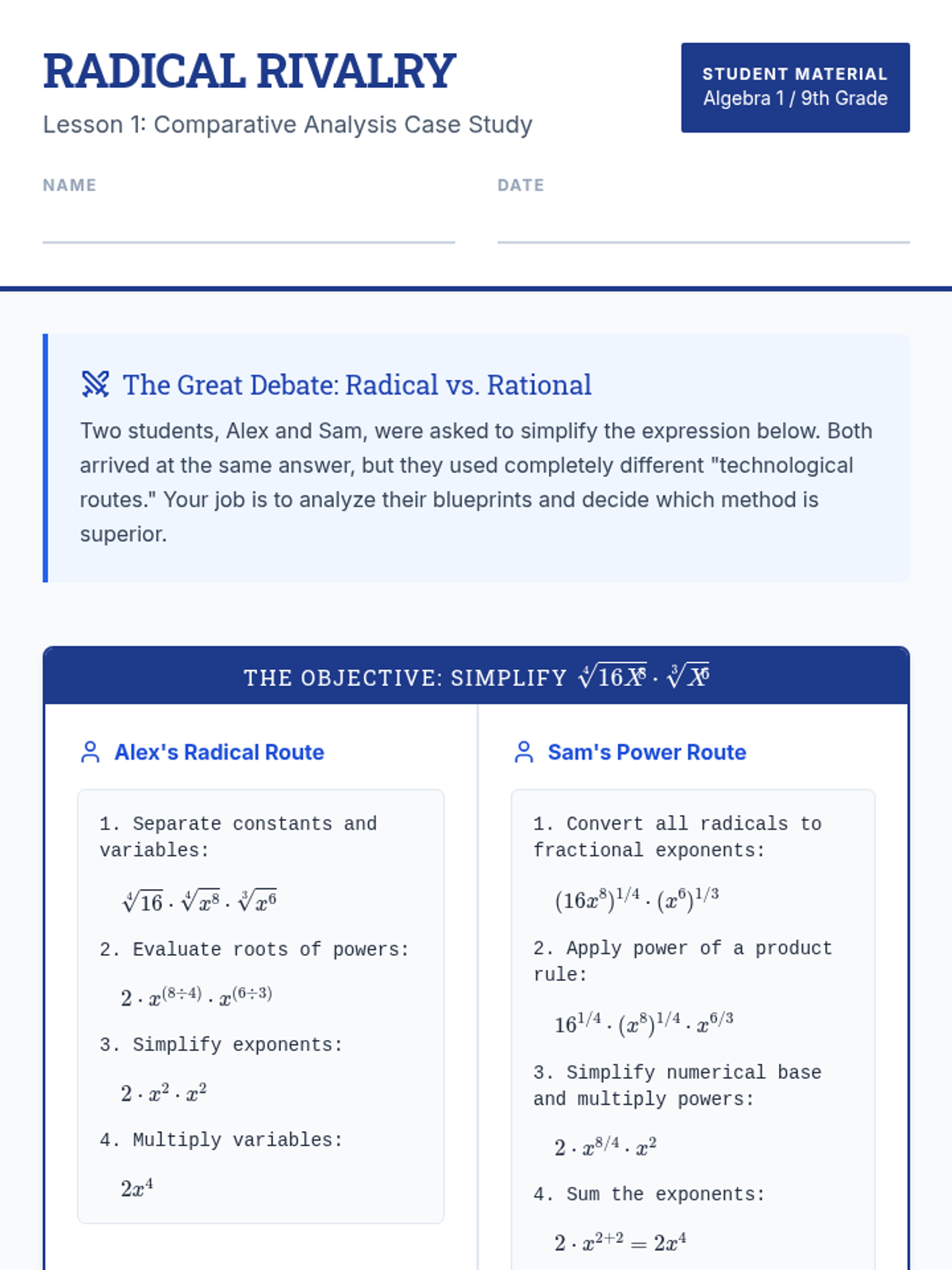
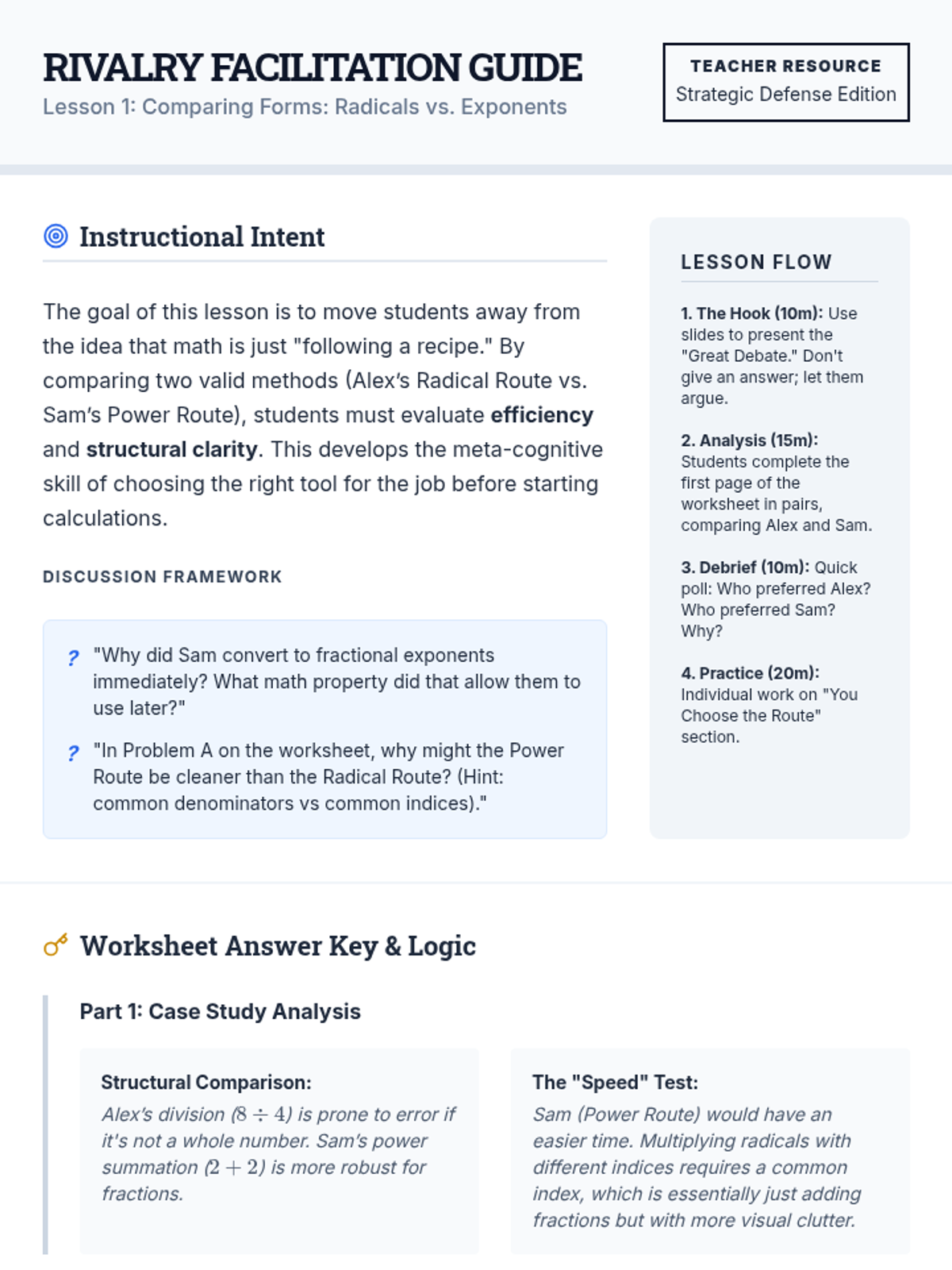
A mastery-based algebra sequence for 9th graders focusing on the structural properties of rational exponents and radicals. Students analyze, compare, and defend mathematical forms to deepen conceptual understanding beyond rote calculation.
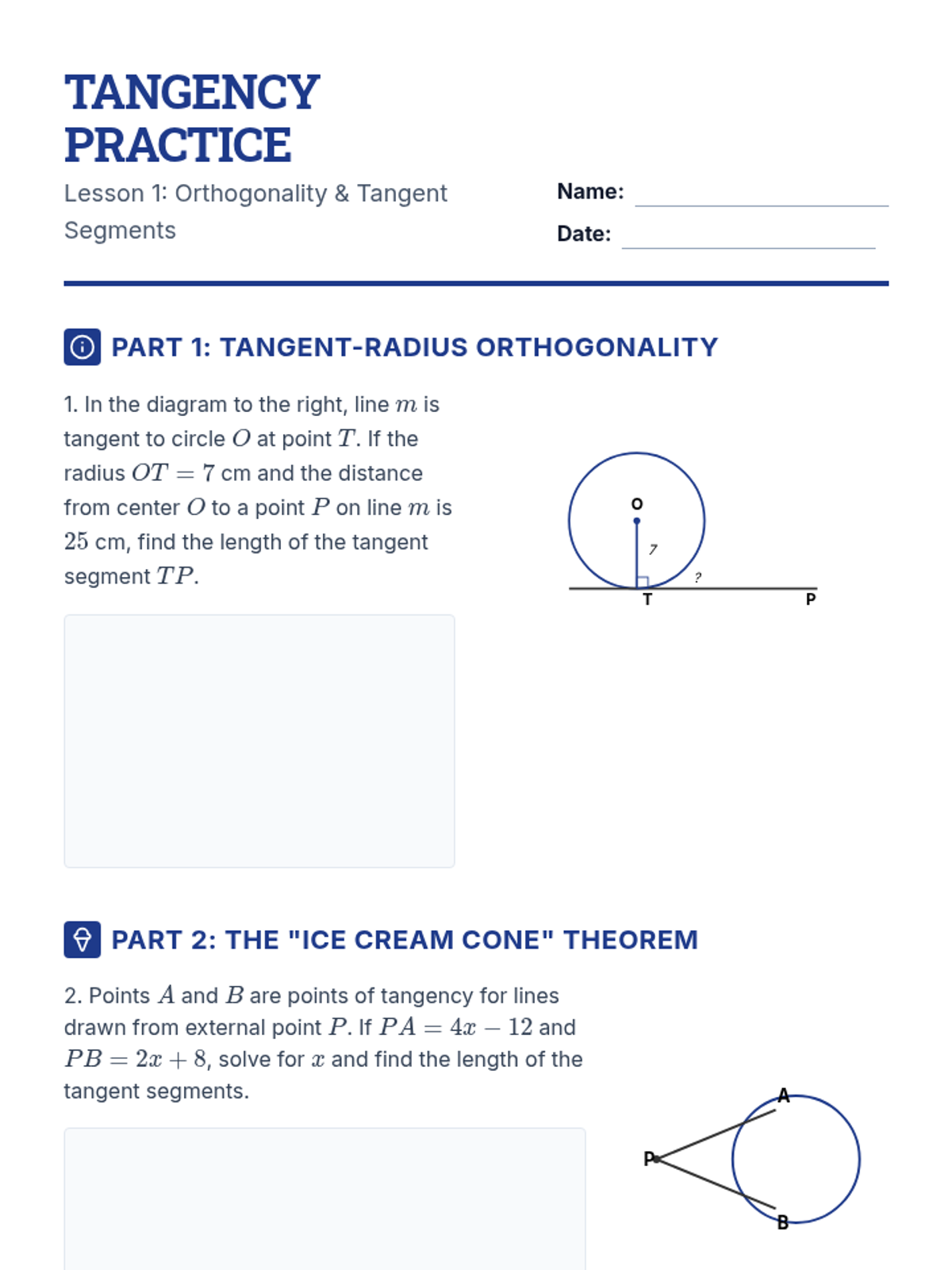
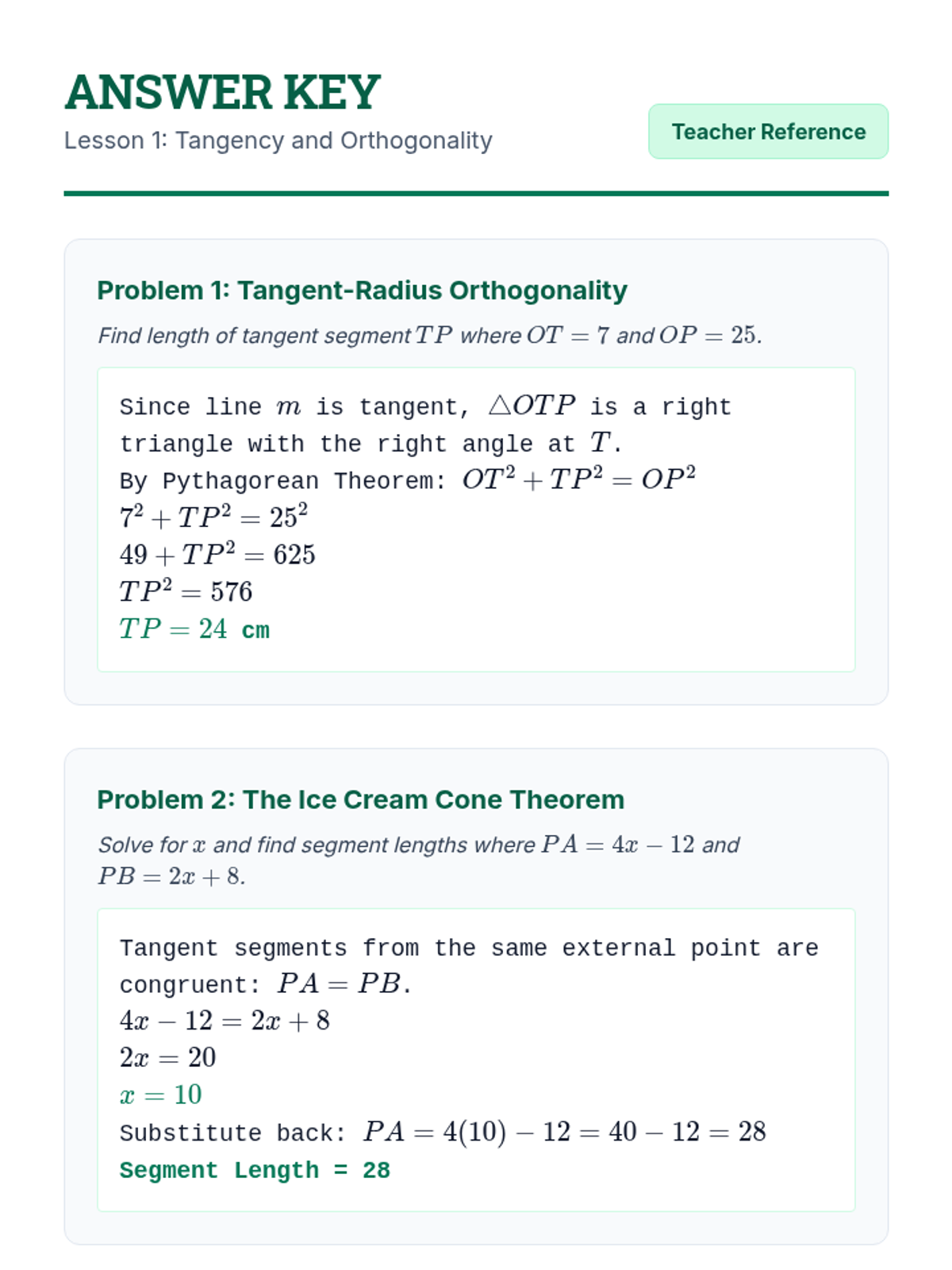
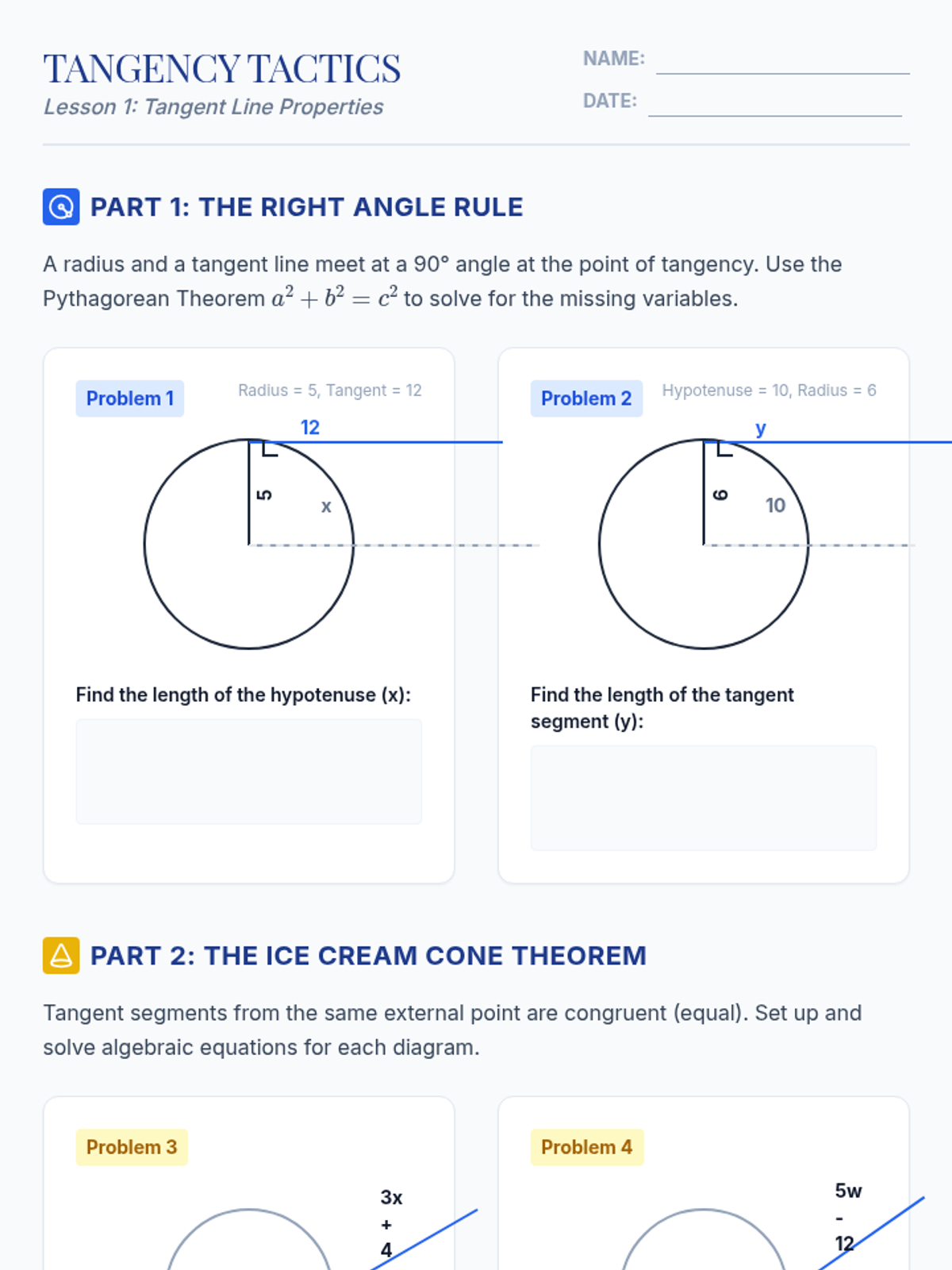
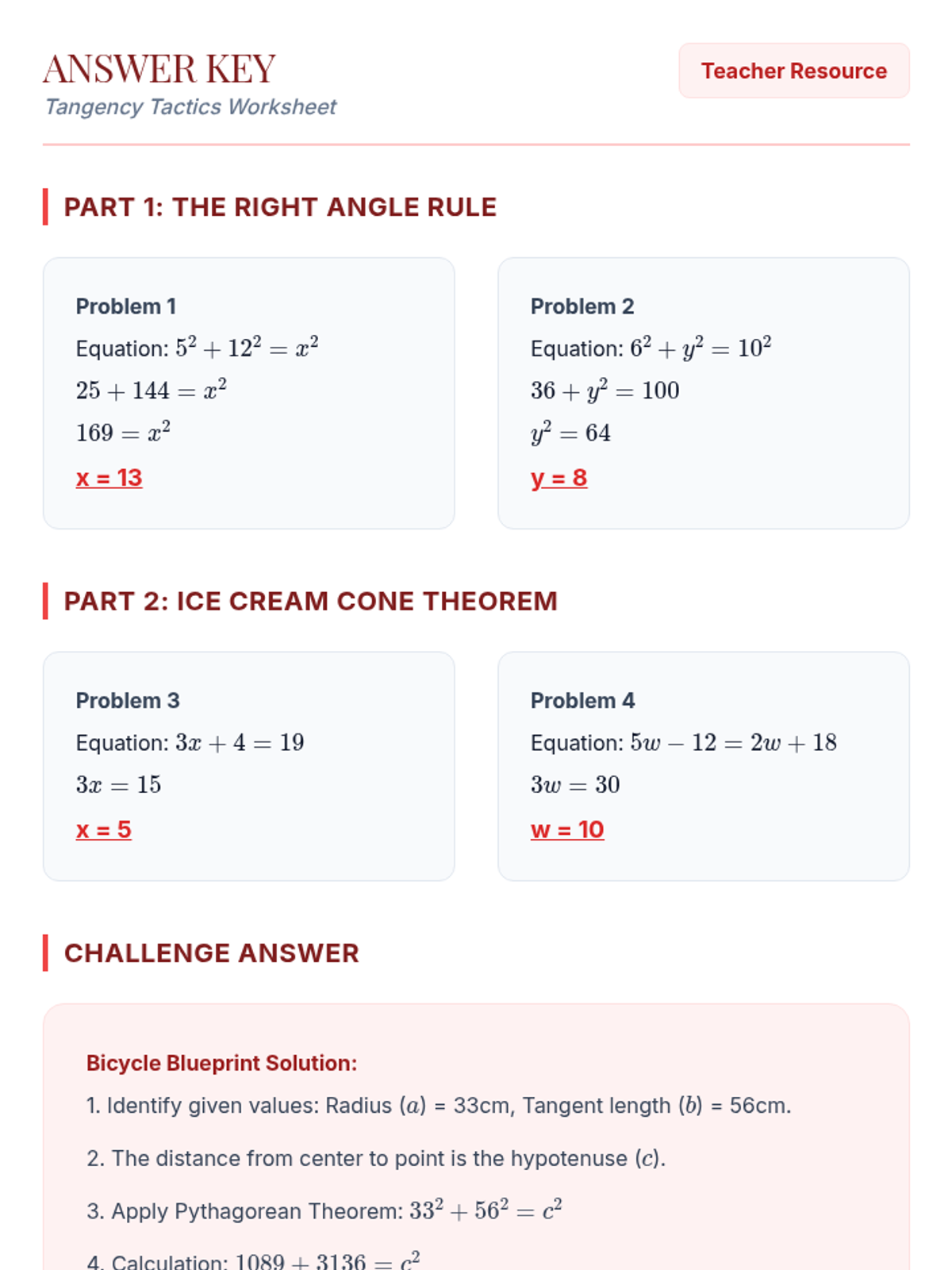
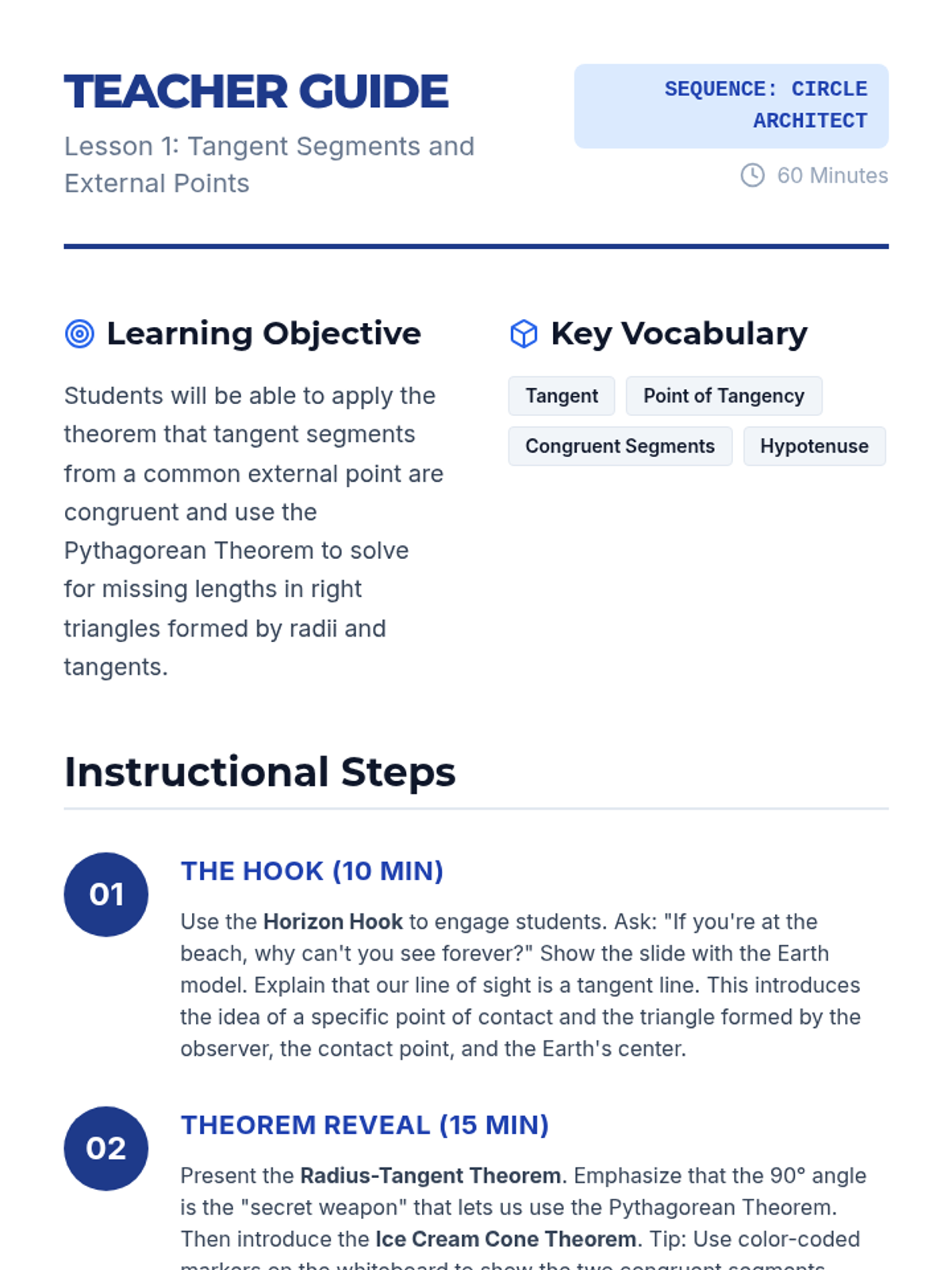
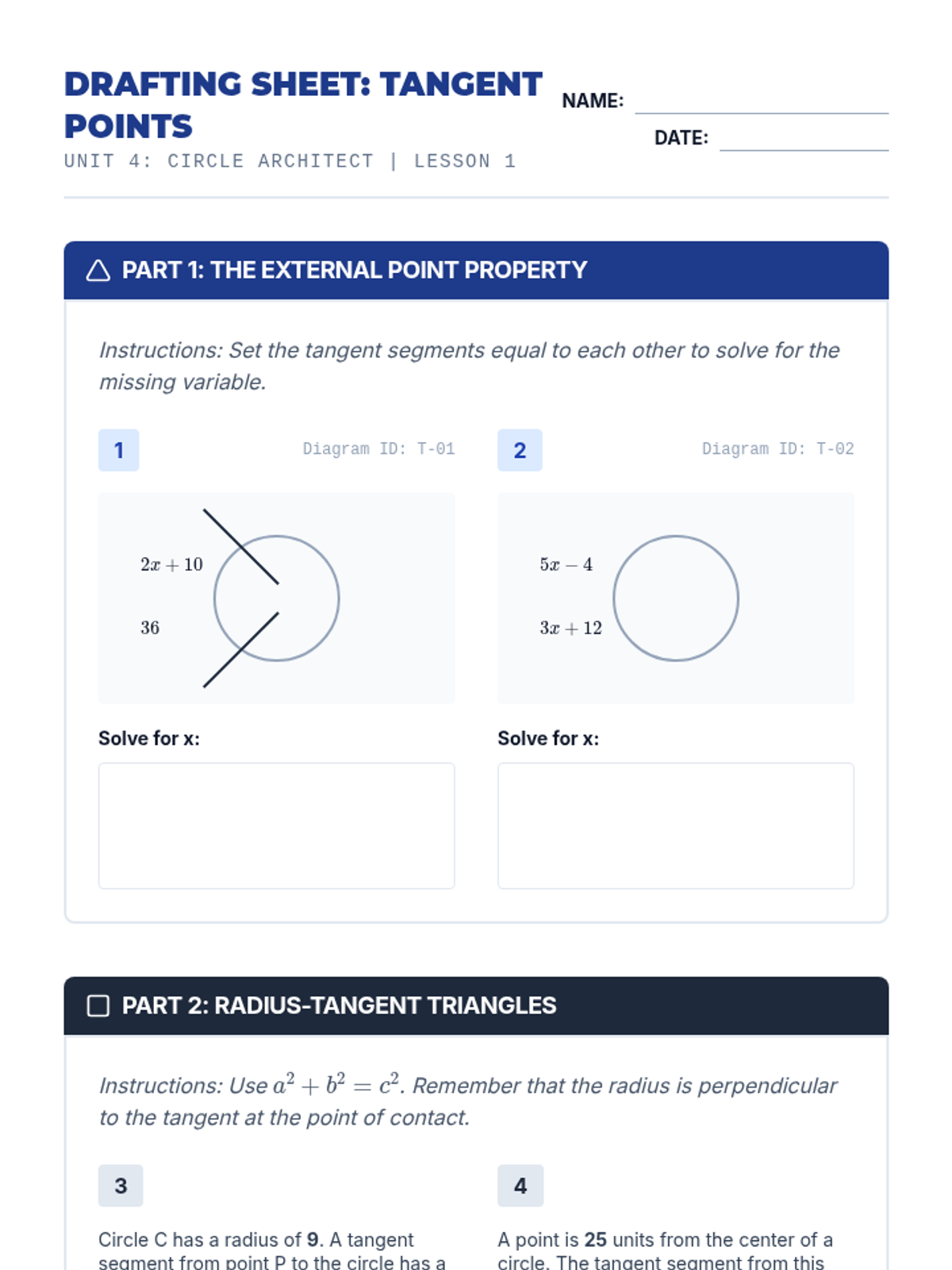
This sequence explores the metric relationships of segments in circles, covering tangent-radius orthogonality, the 'Ice Cream Cone' theorem, and the Power of a Point theorems for chords, secants, and tangents. Students apply these geometric principles to solve algebraic problems and model real-world scenarios like horizon distance and GPS trilateration.
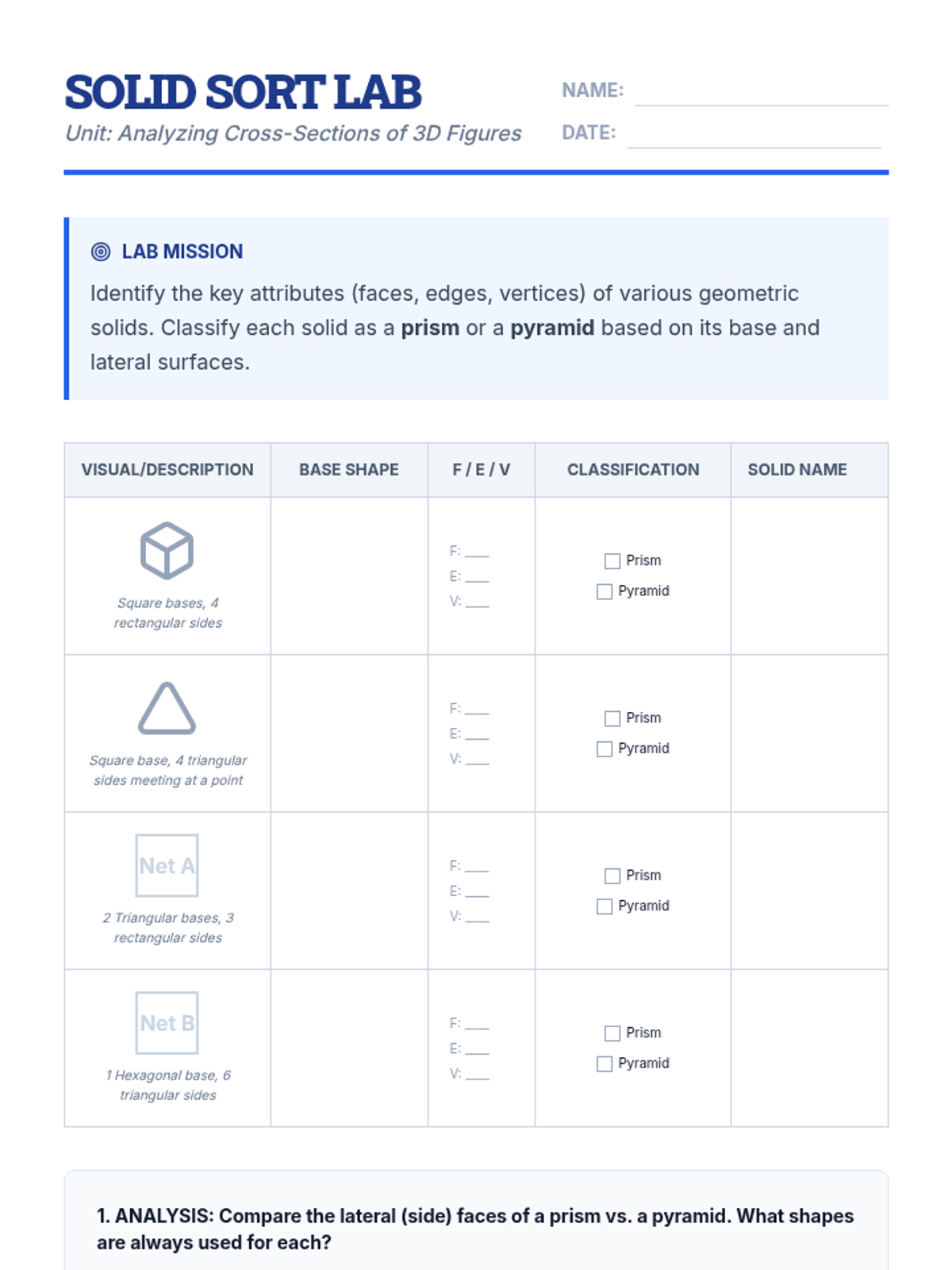
A 5-lesson geometry unit for 9th grade focused on spatial reasoning, 3D solids, cross-sections, and geometric modeling. Students move from basic polyhedra properties to complex architectural design using 2D and 3D transformations.
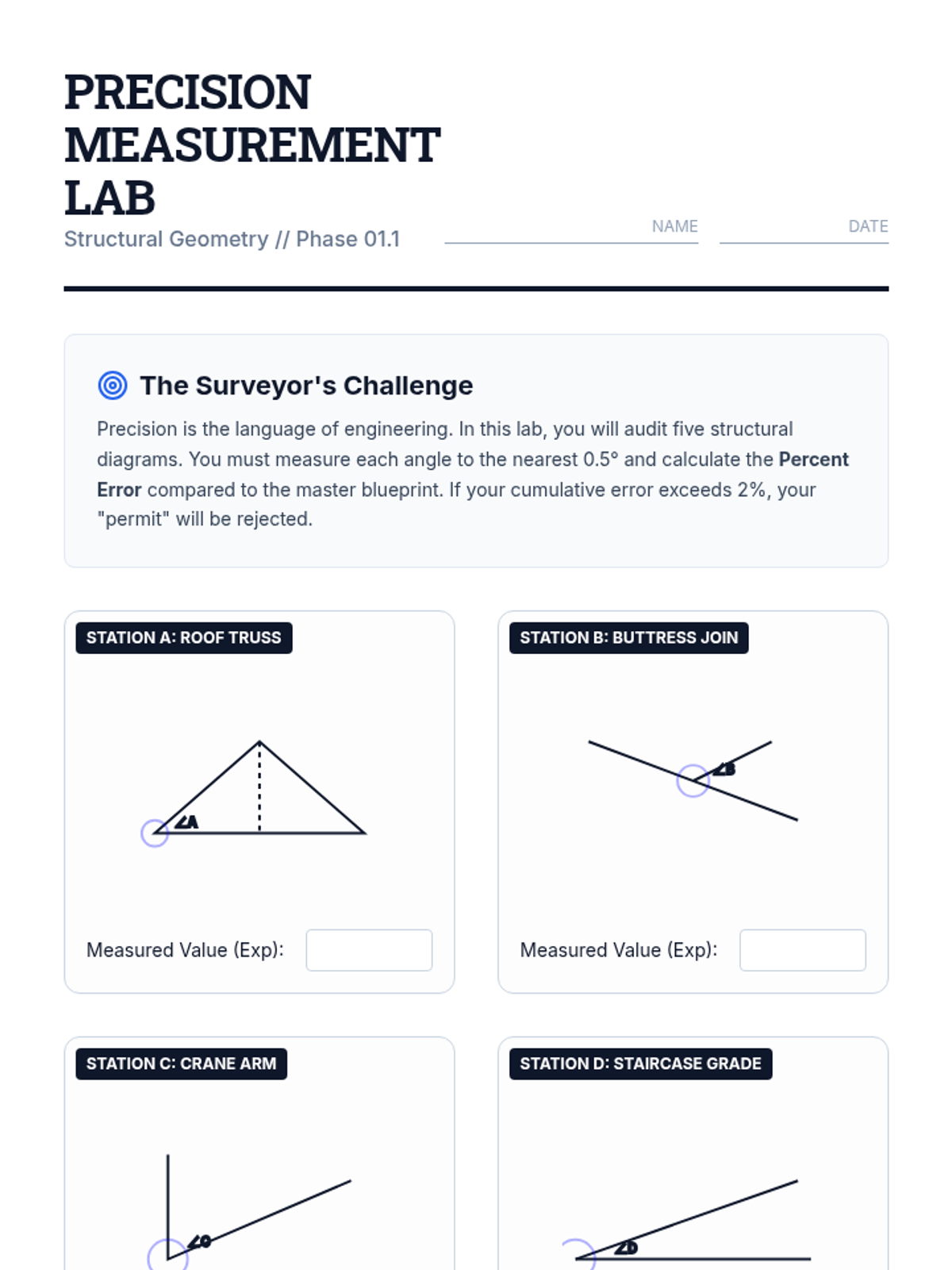
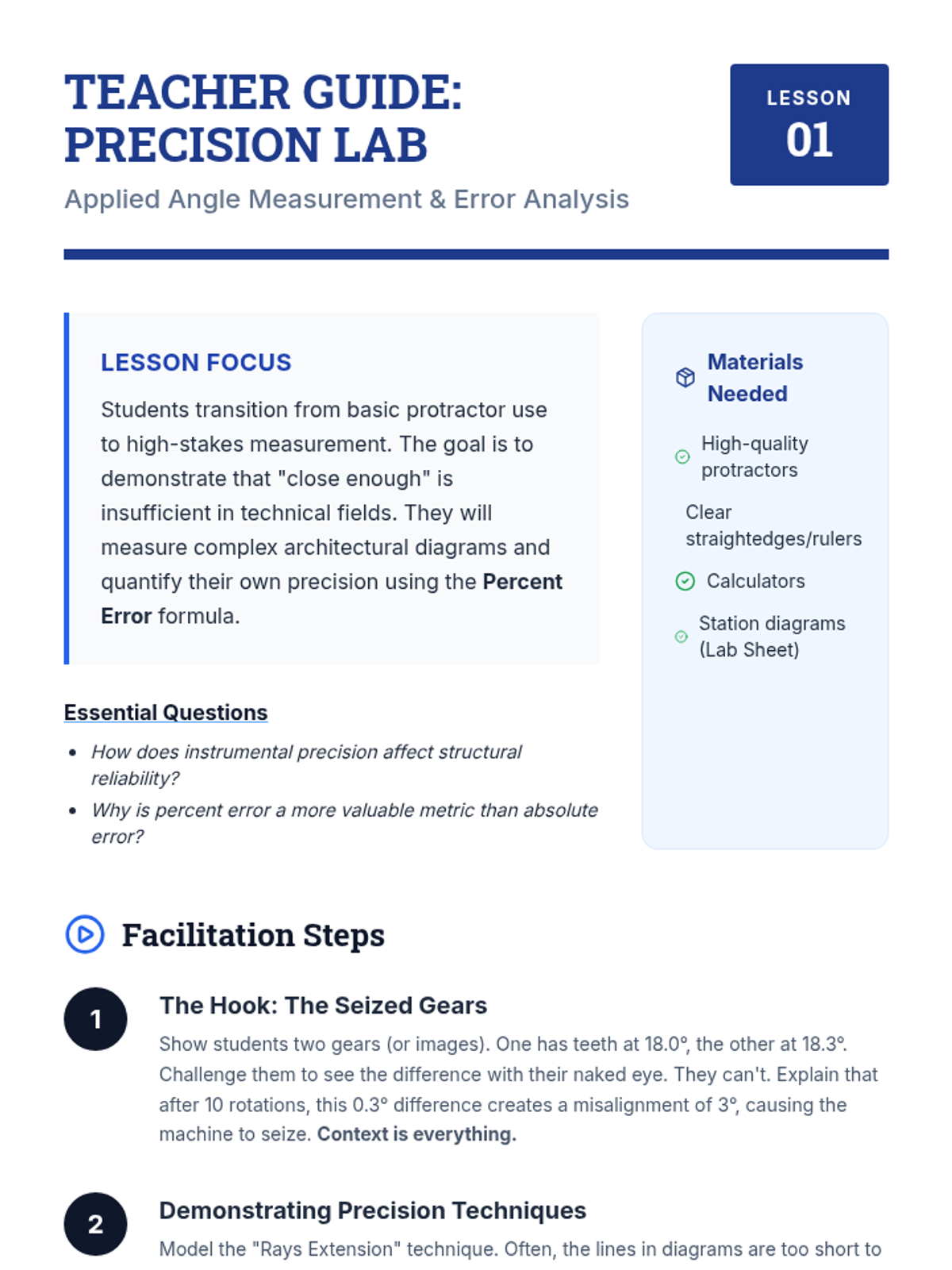
This project-oriented sequence bridges theoretical geometry with physical application, tasking 9th-grade students to act as surveyors and designers. From precision measurement and error analysis to architectural blueprinting and vector navigation, students explore how angular accuracy impacts structural integrity and functionality in the real world.
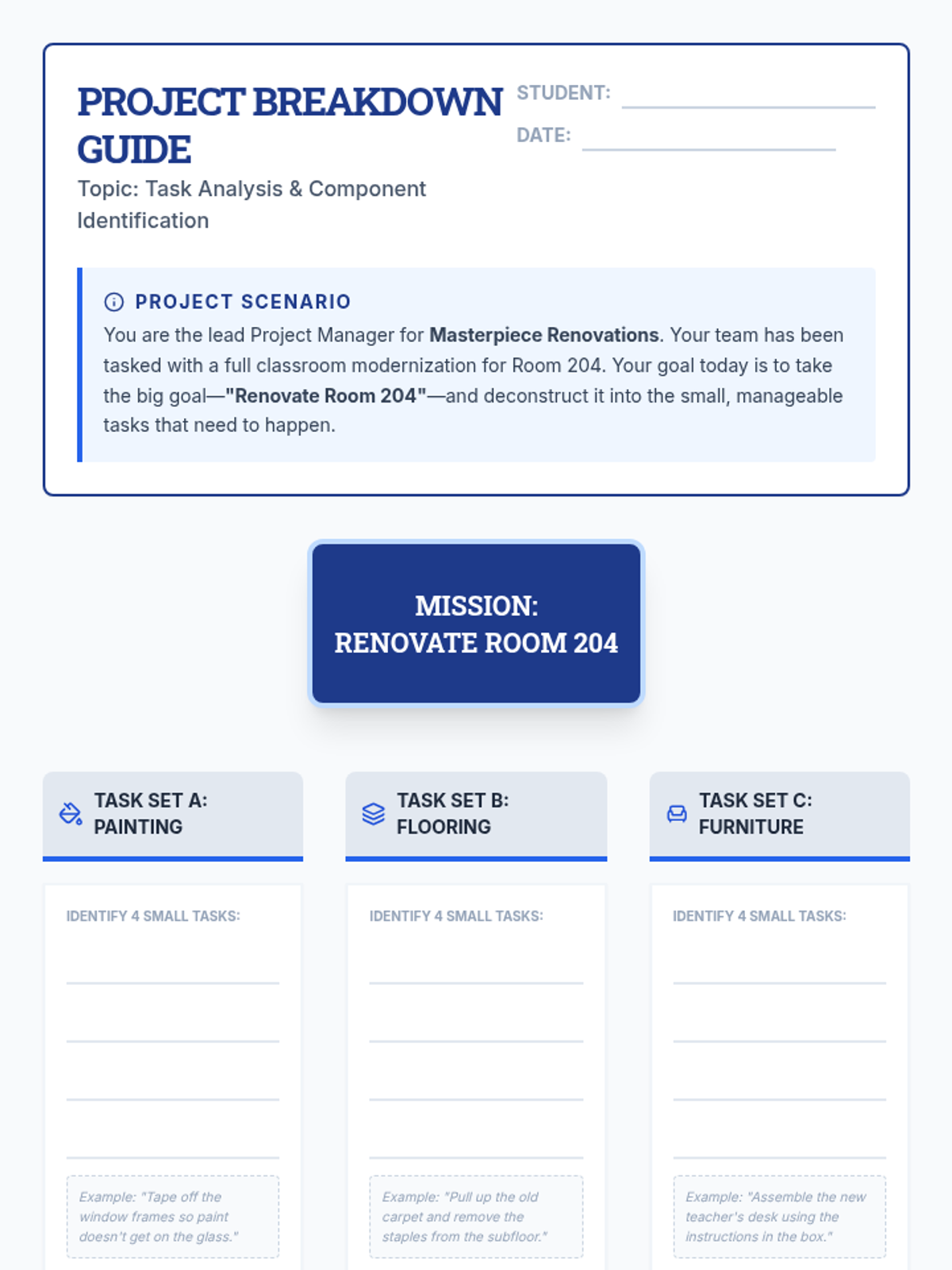
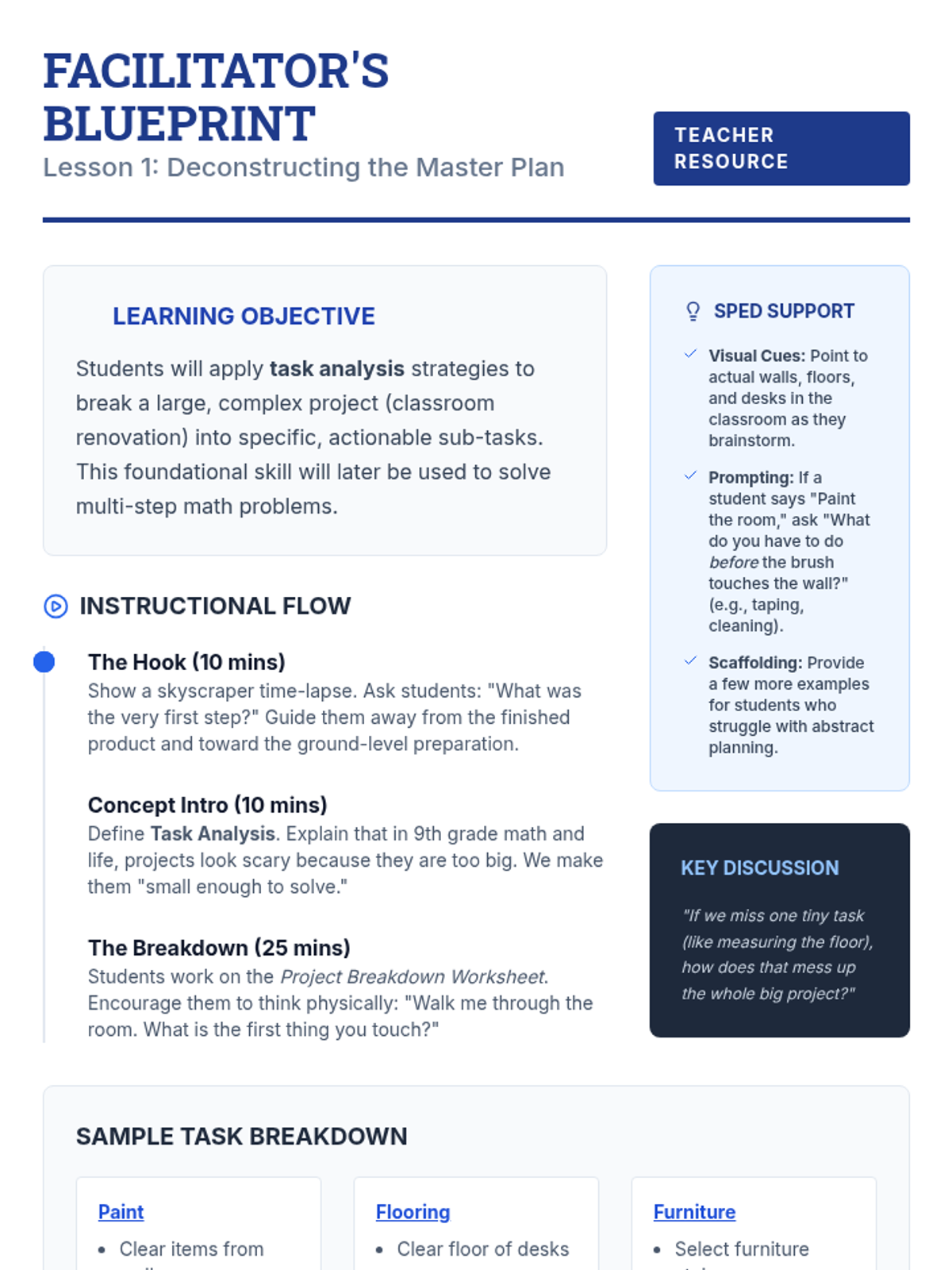
This sequence teaches 9th-grade students how to break down complex mathematical problems by simulating a real-world classroom renovation project. Students learn task analysis, translating tasks into equations, logical sequencing, and data synthesis to solve large-scale problems.
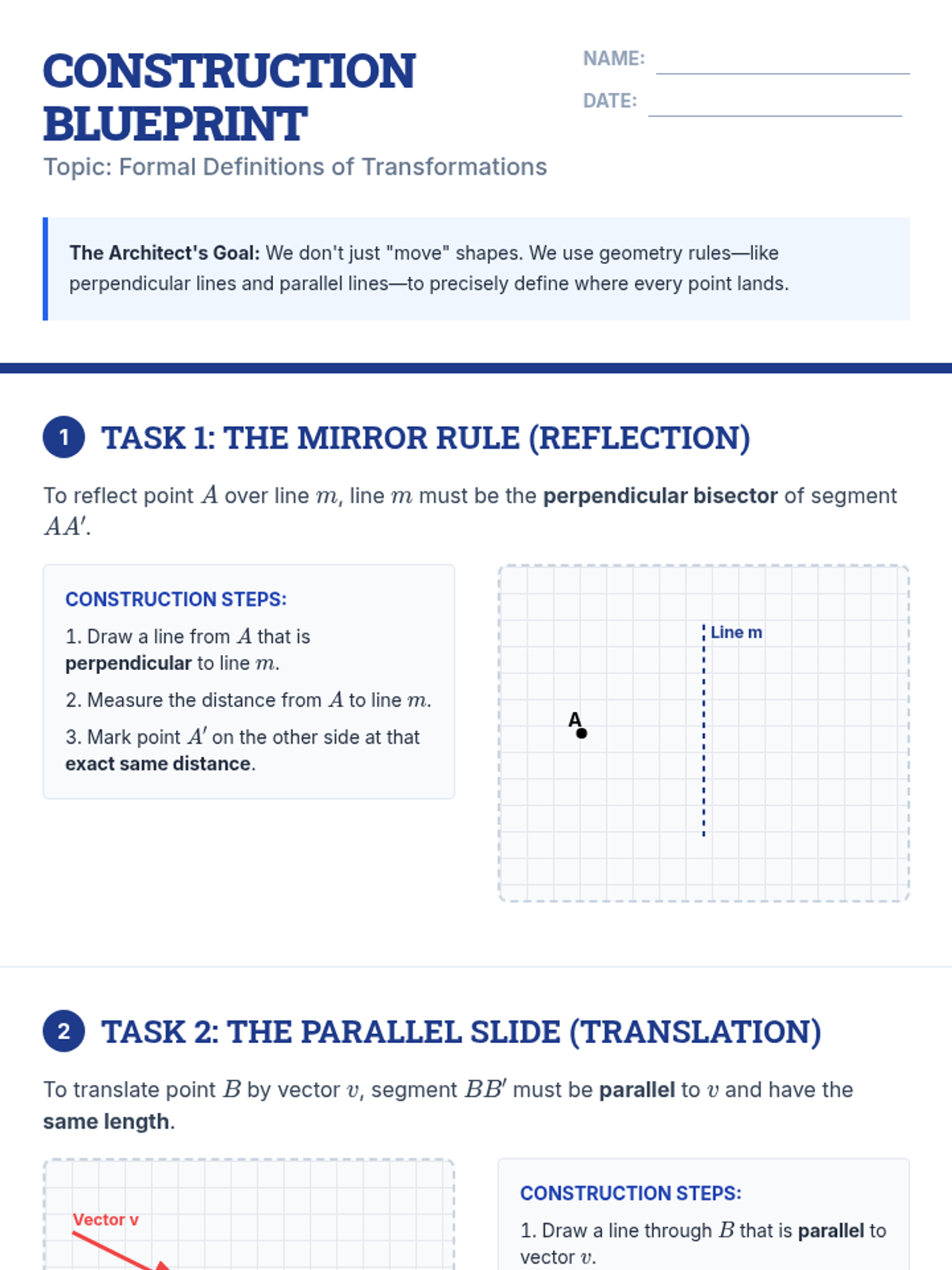
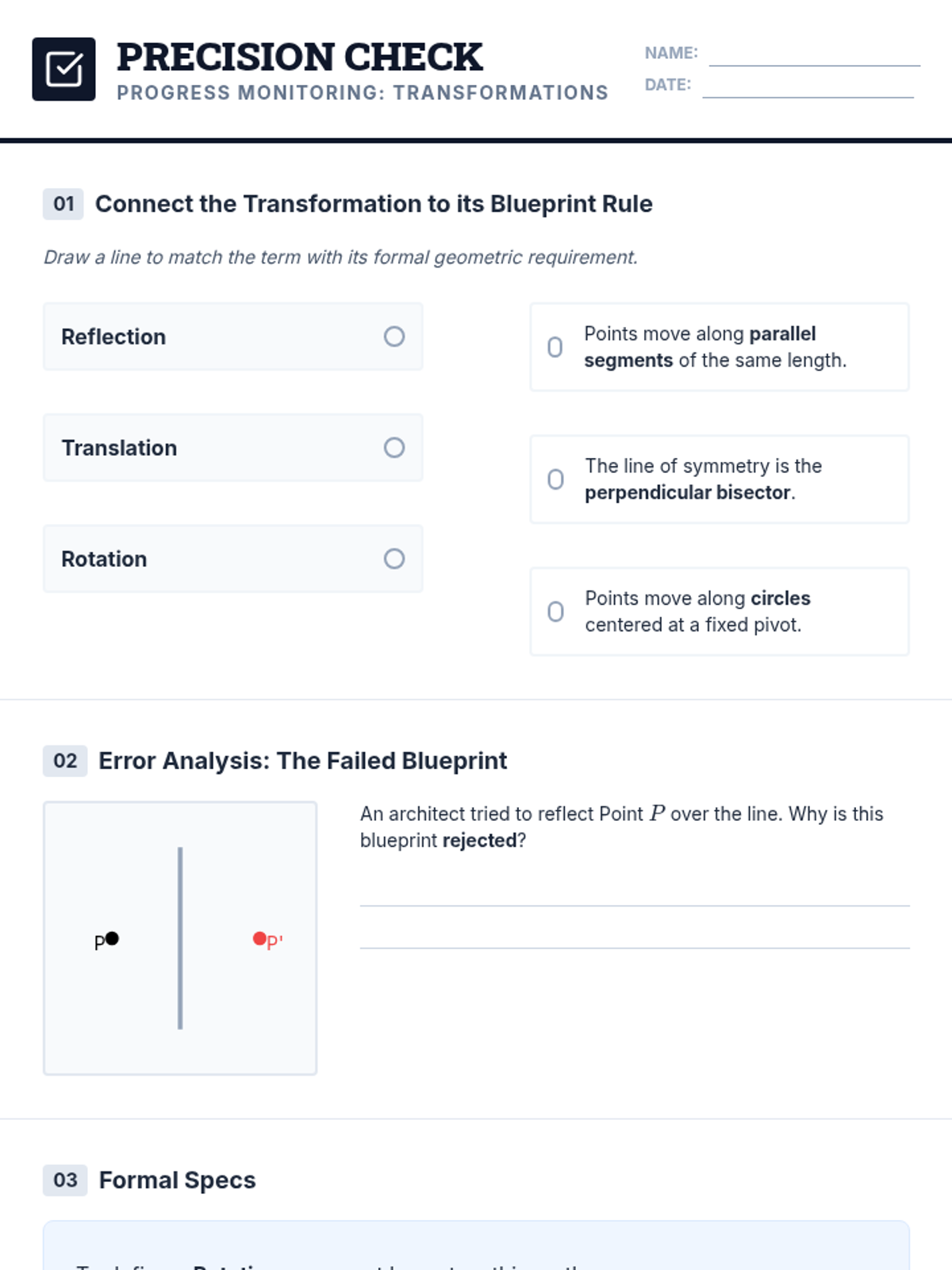
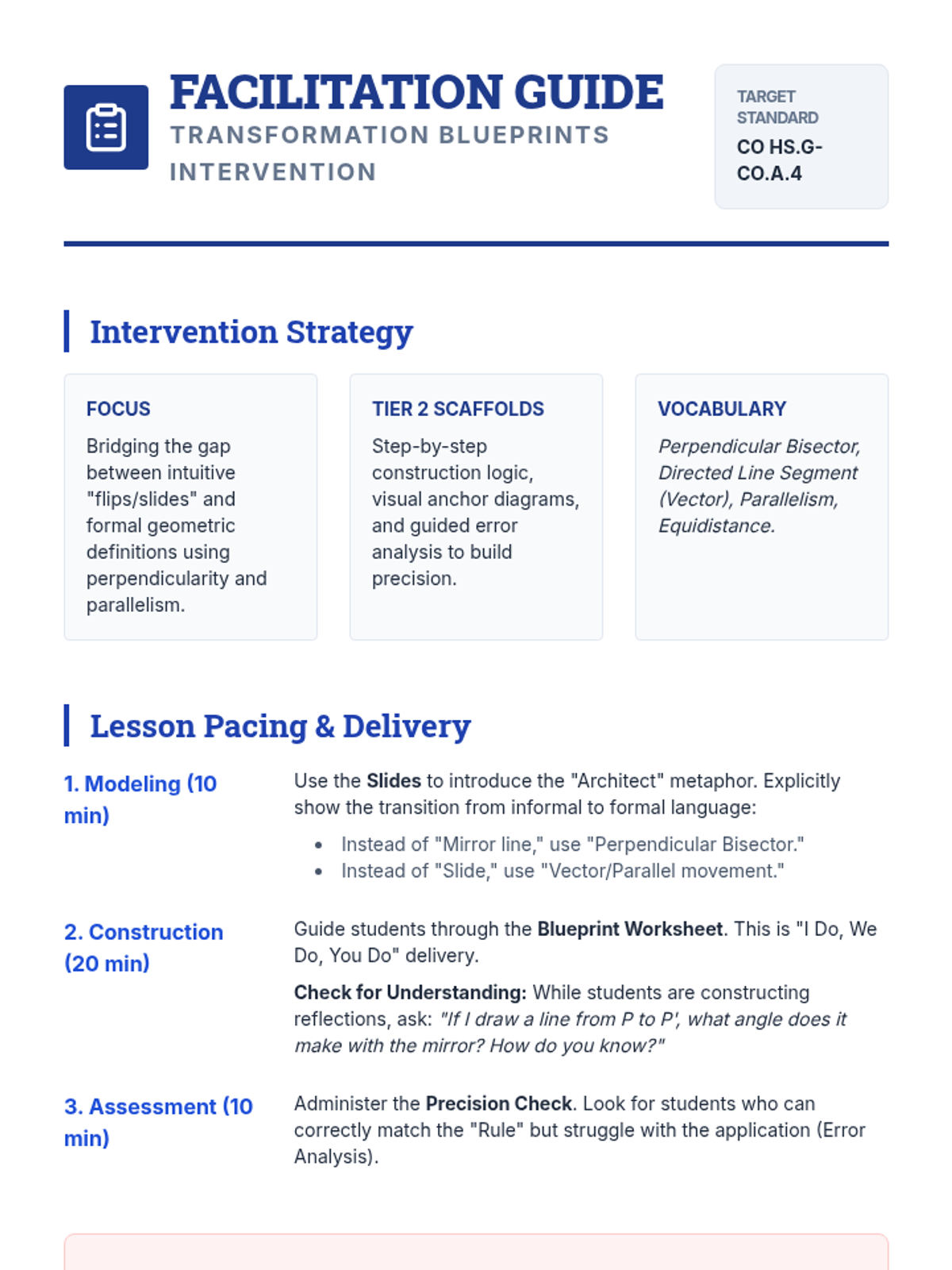
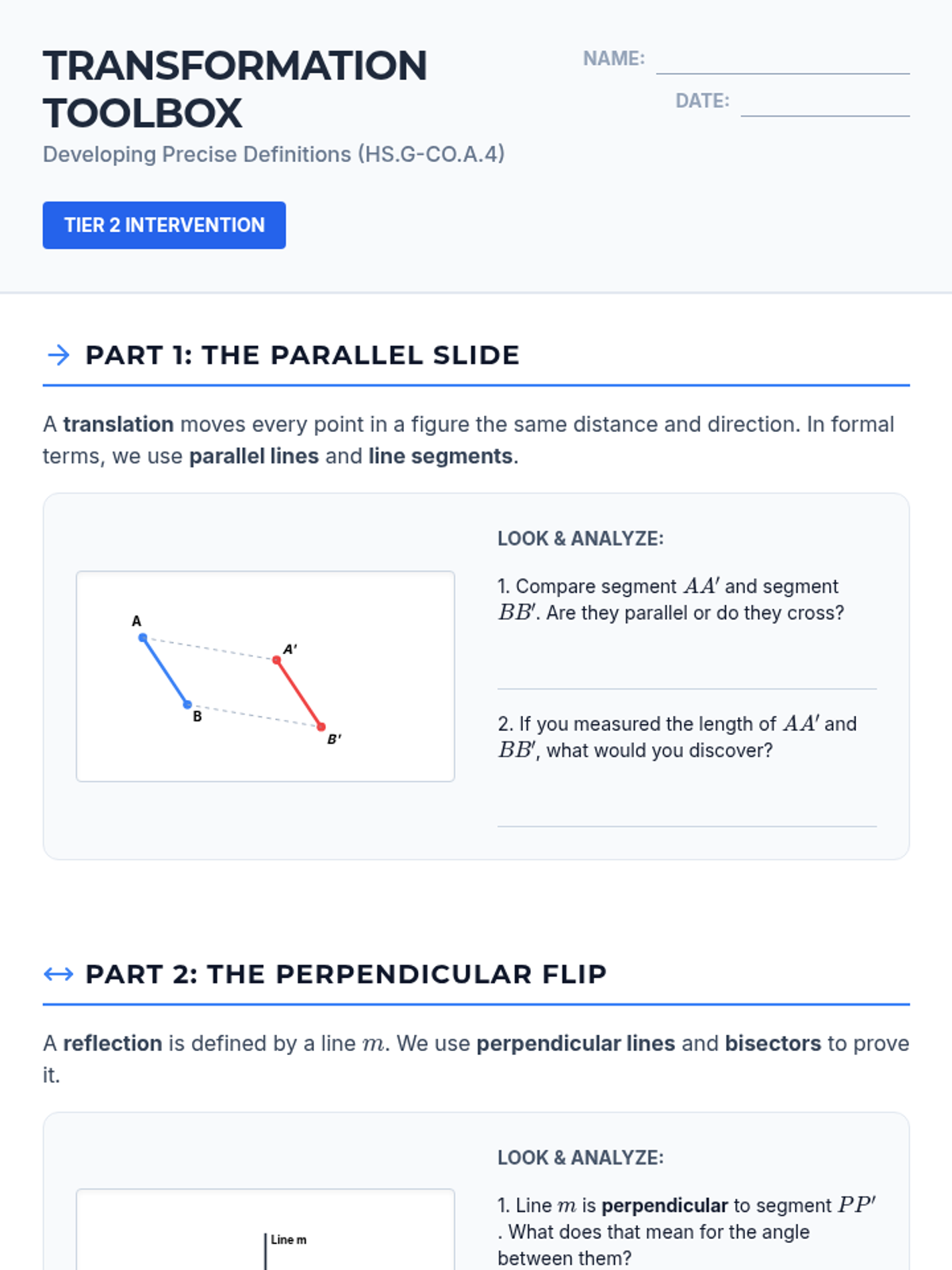
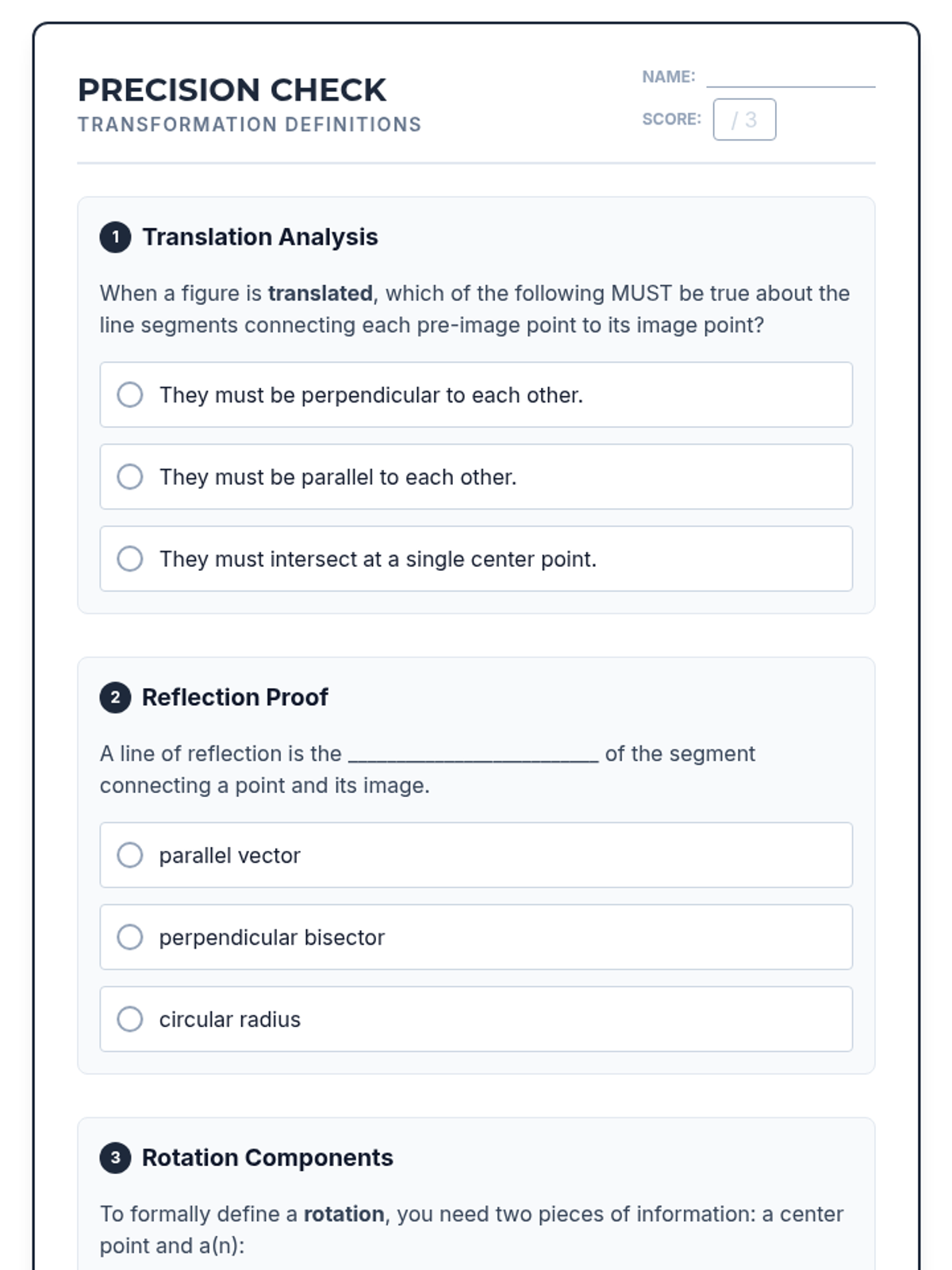
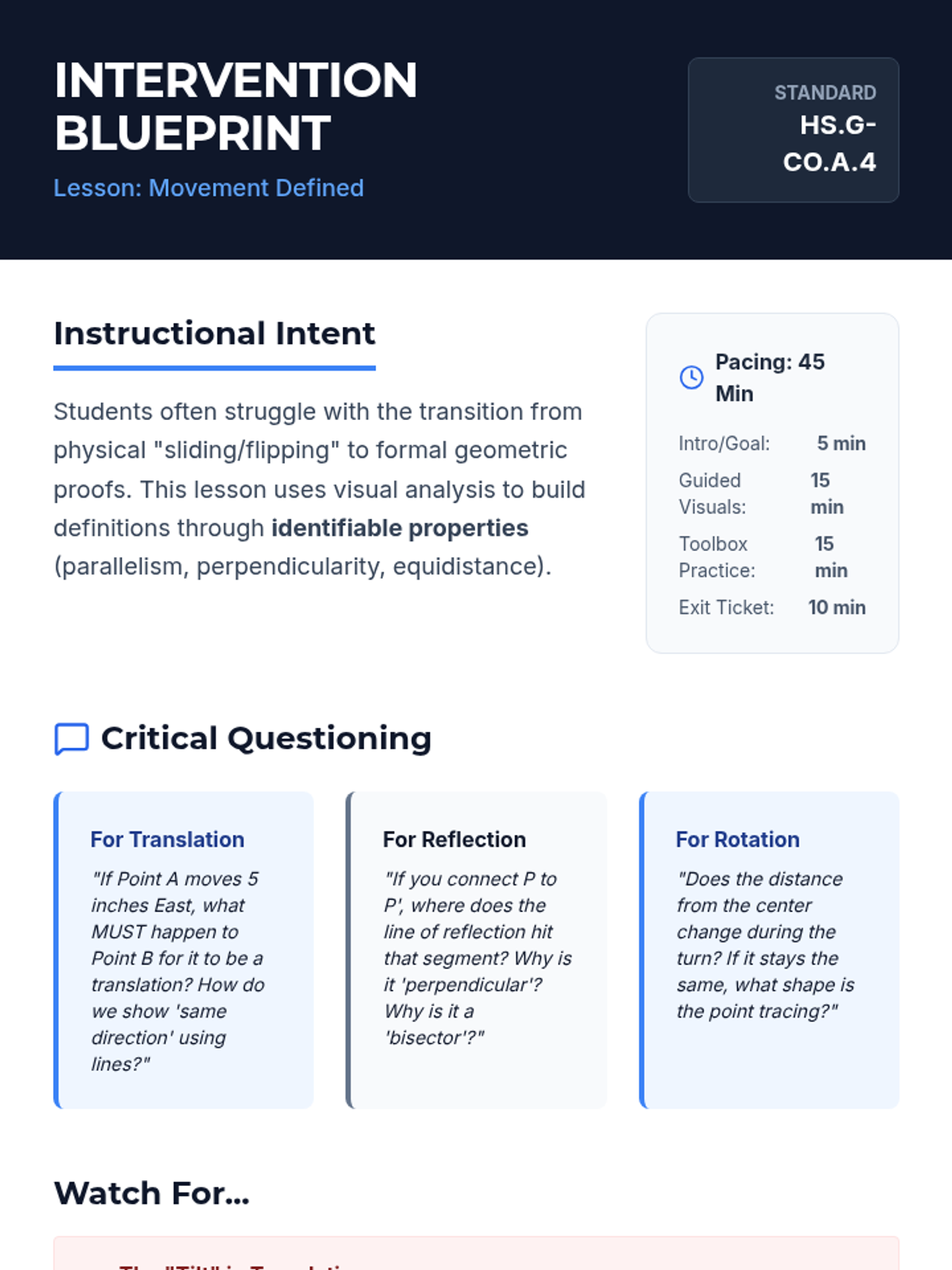
A targeted intervention sequence focused on formalizing geometric transformations using precise language and fundamental constructions. This sequence helps students move from intuitive 'sliding, flipping, turning' to formal mathematical definitions.
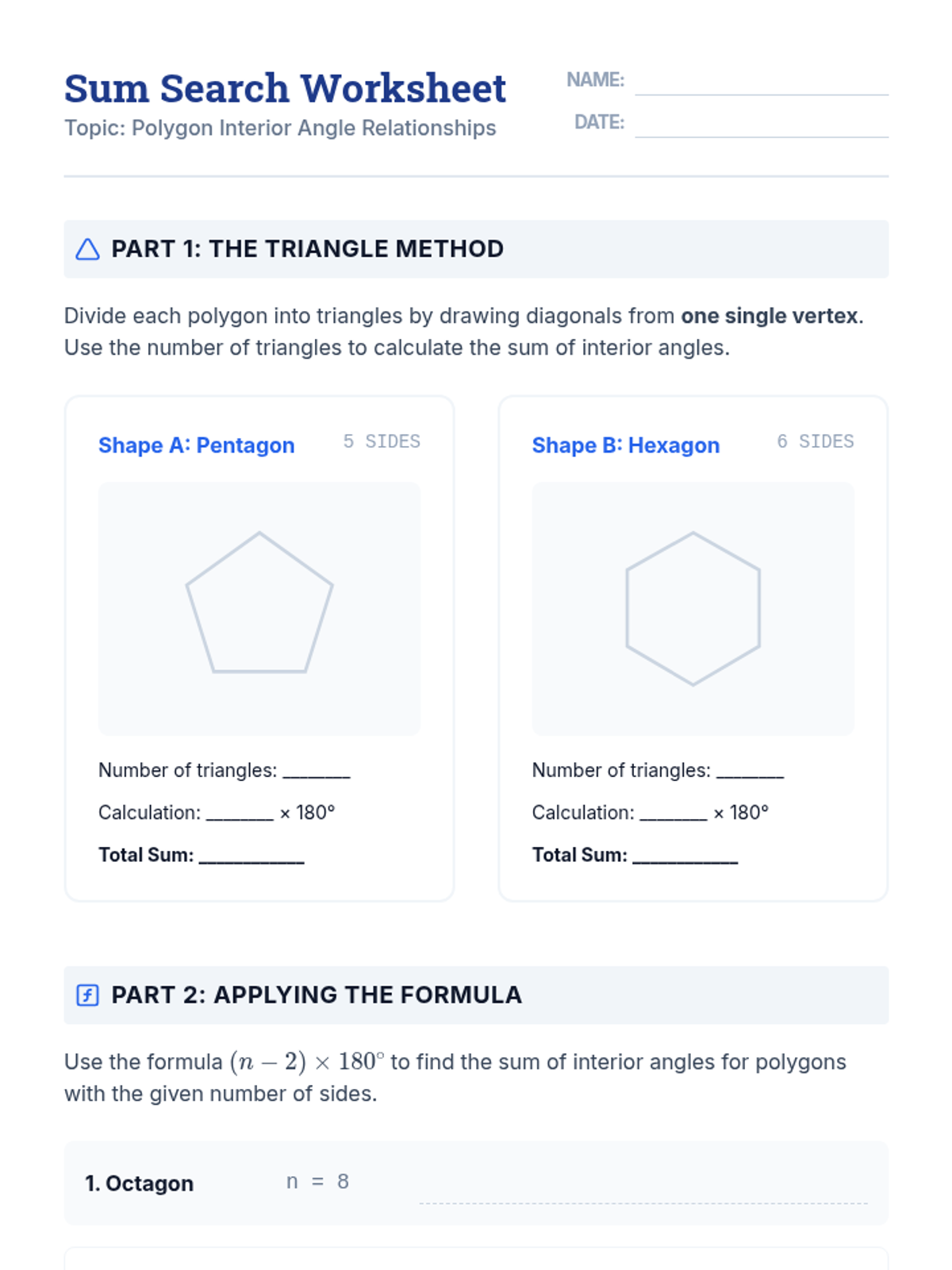
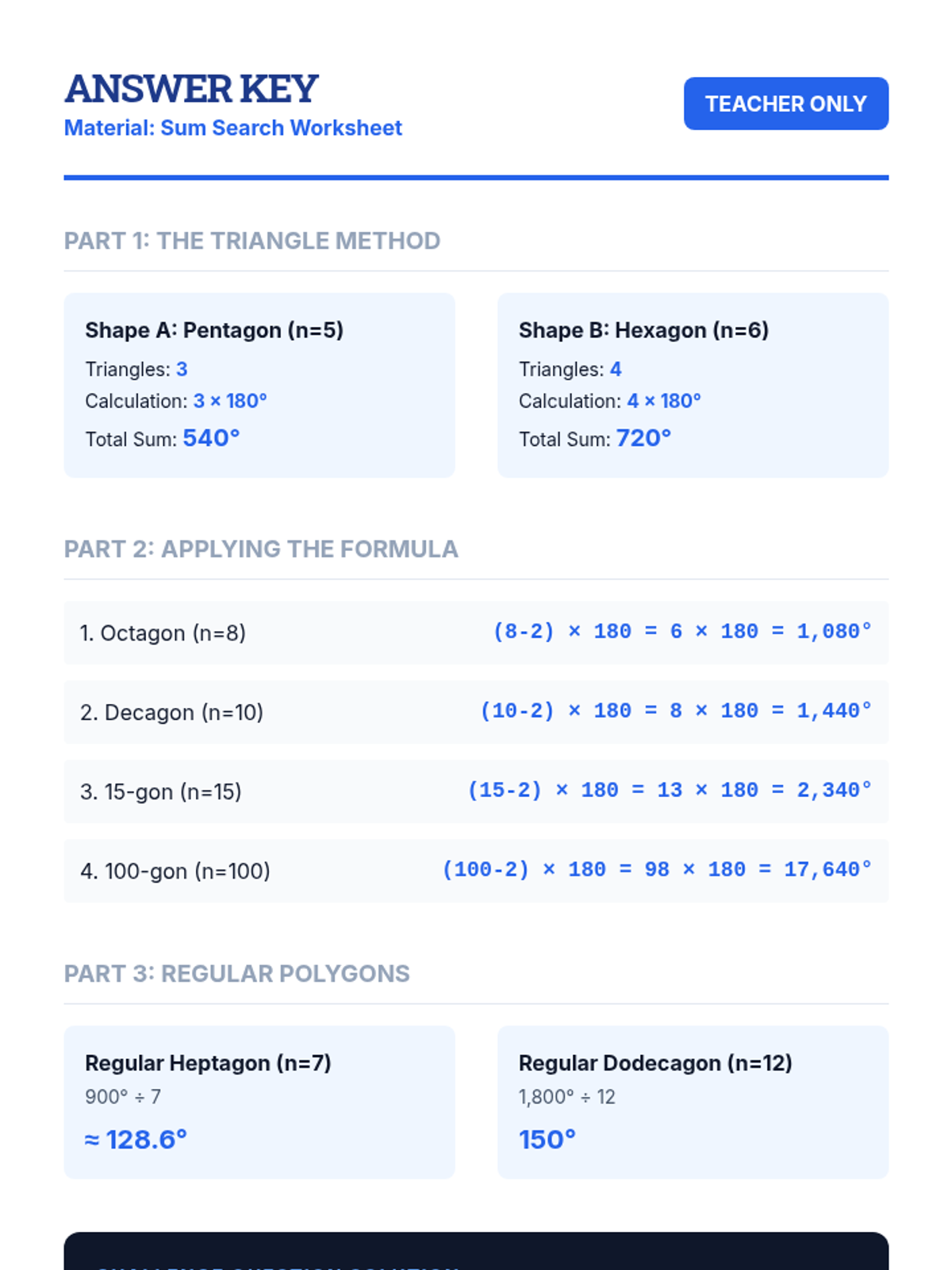
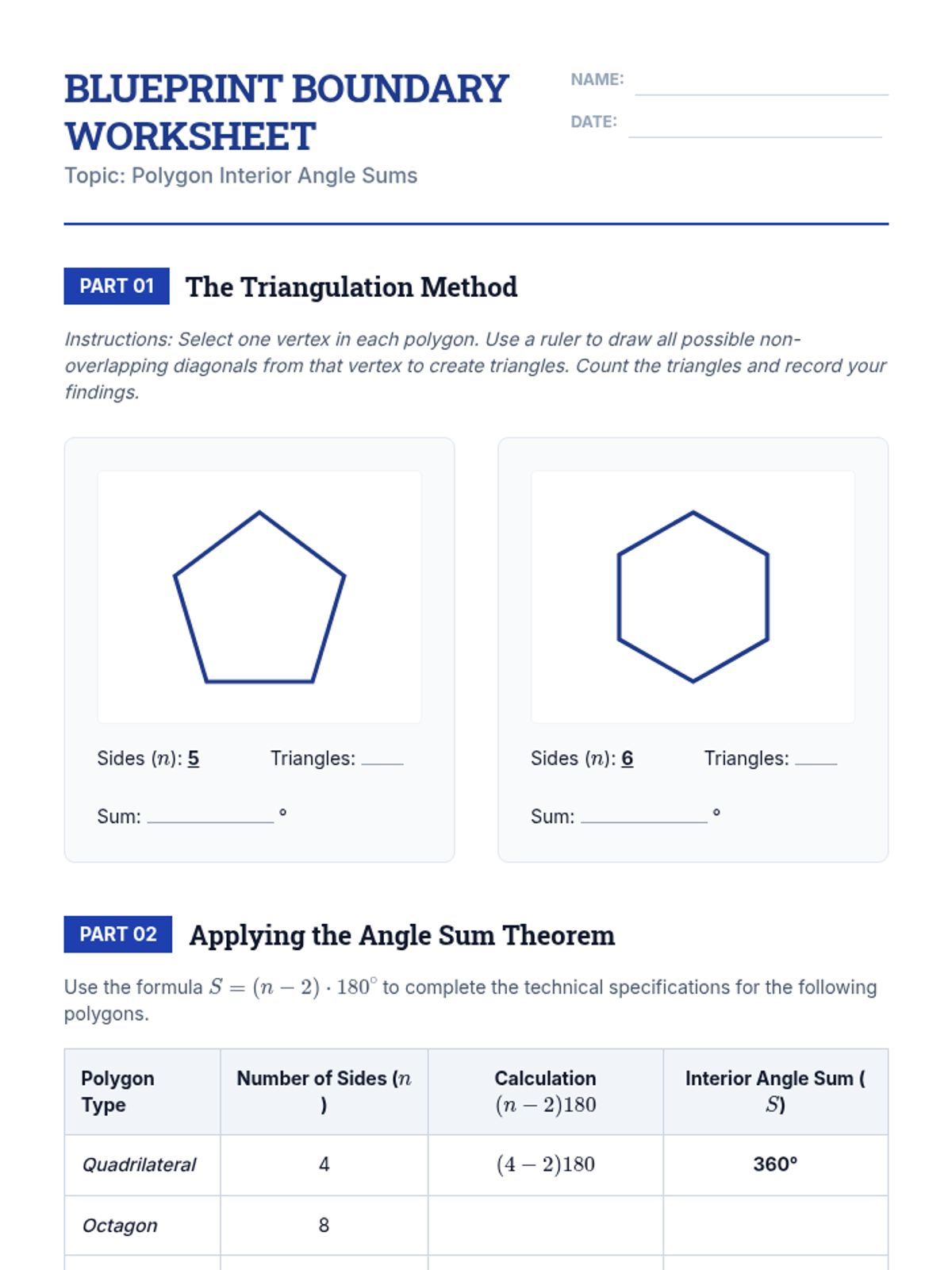
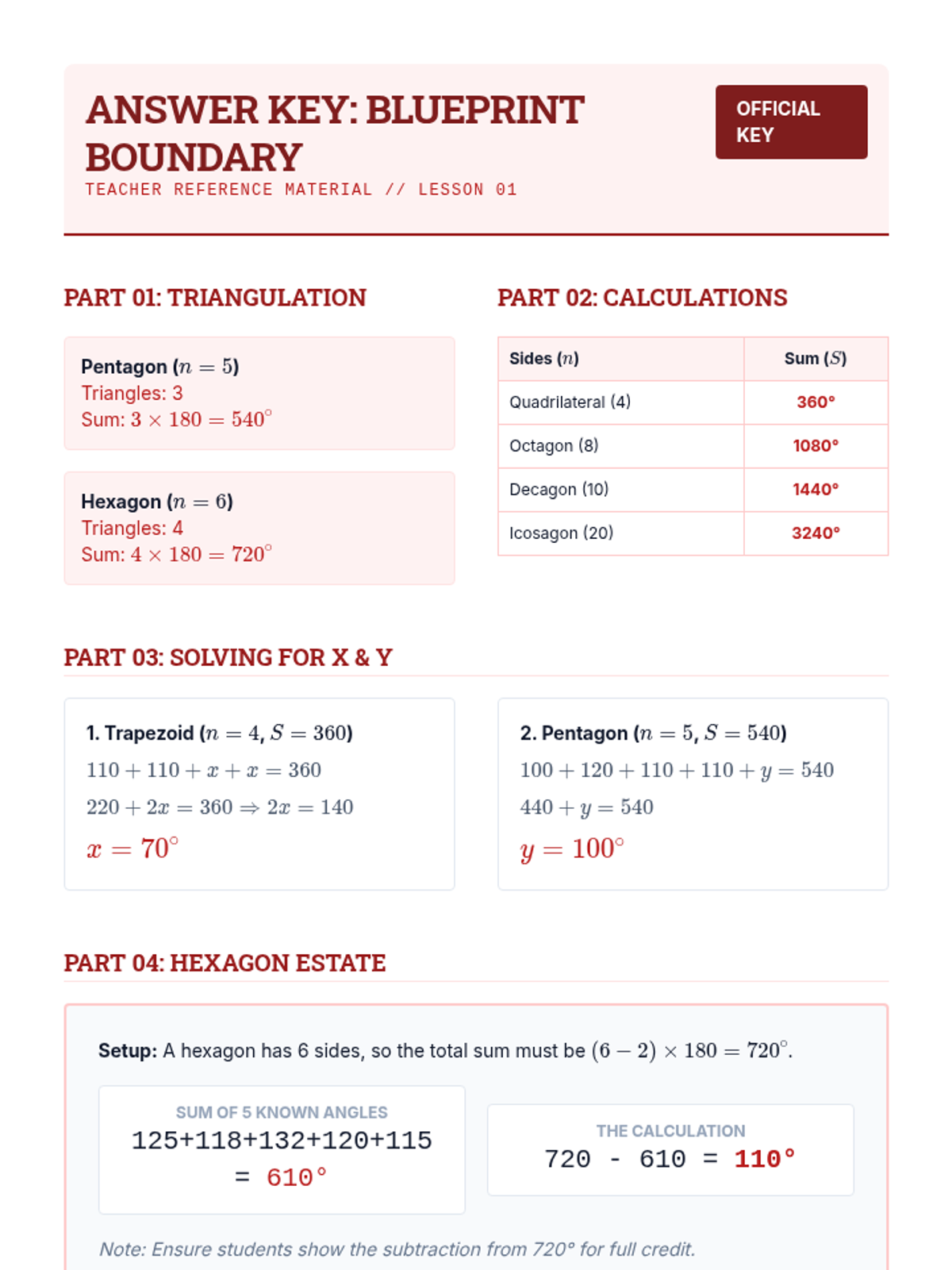
This sequence explores the geometric logic of polygons, focusing on the relationship between sides and angles. Students will derive formulas for interior and exterior angles and apply this knowledge to determine which shapes can tessellate a plane, culminating in the creation of original geometric art.
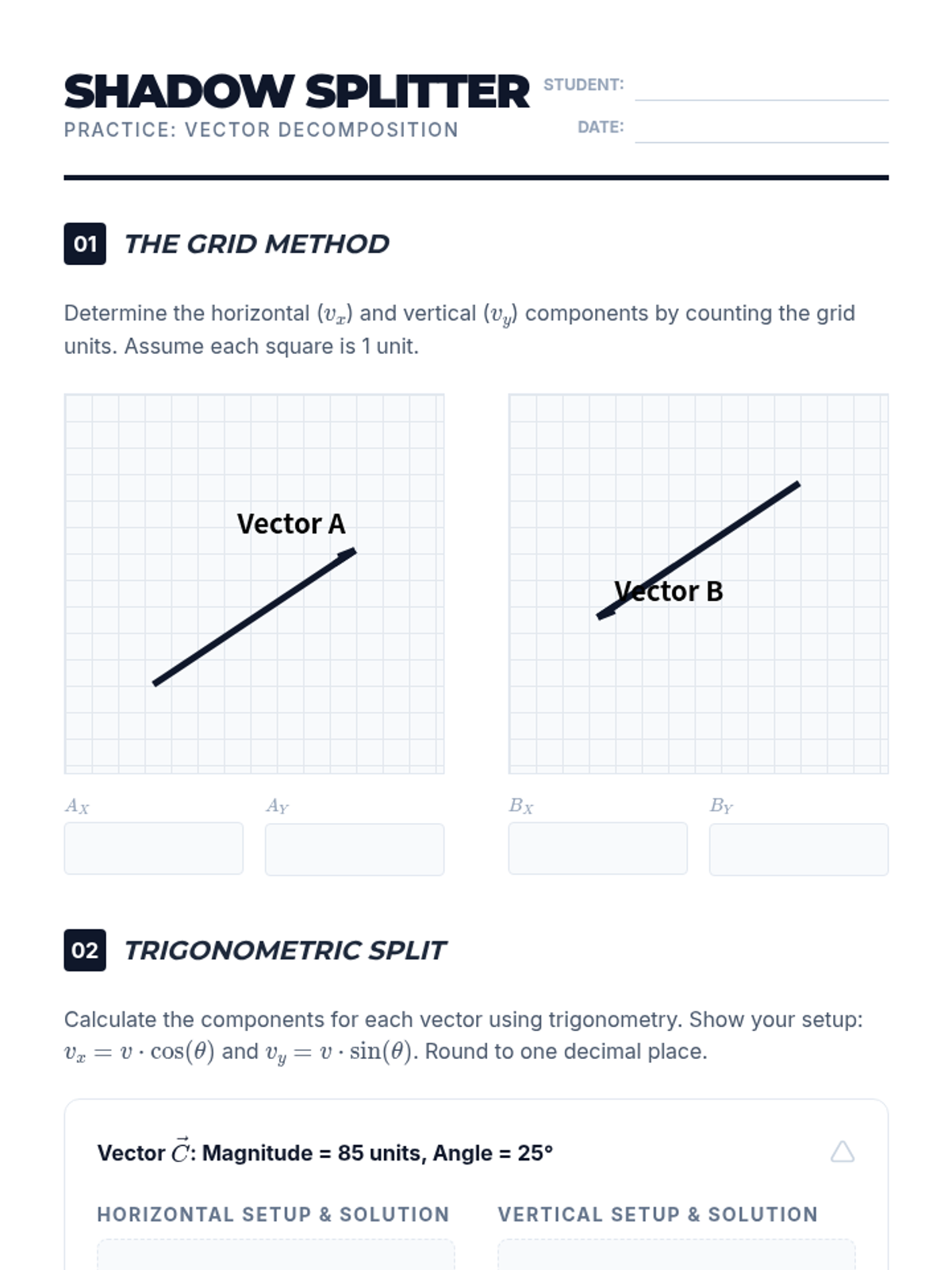
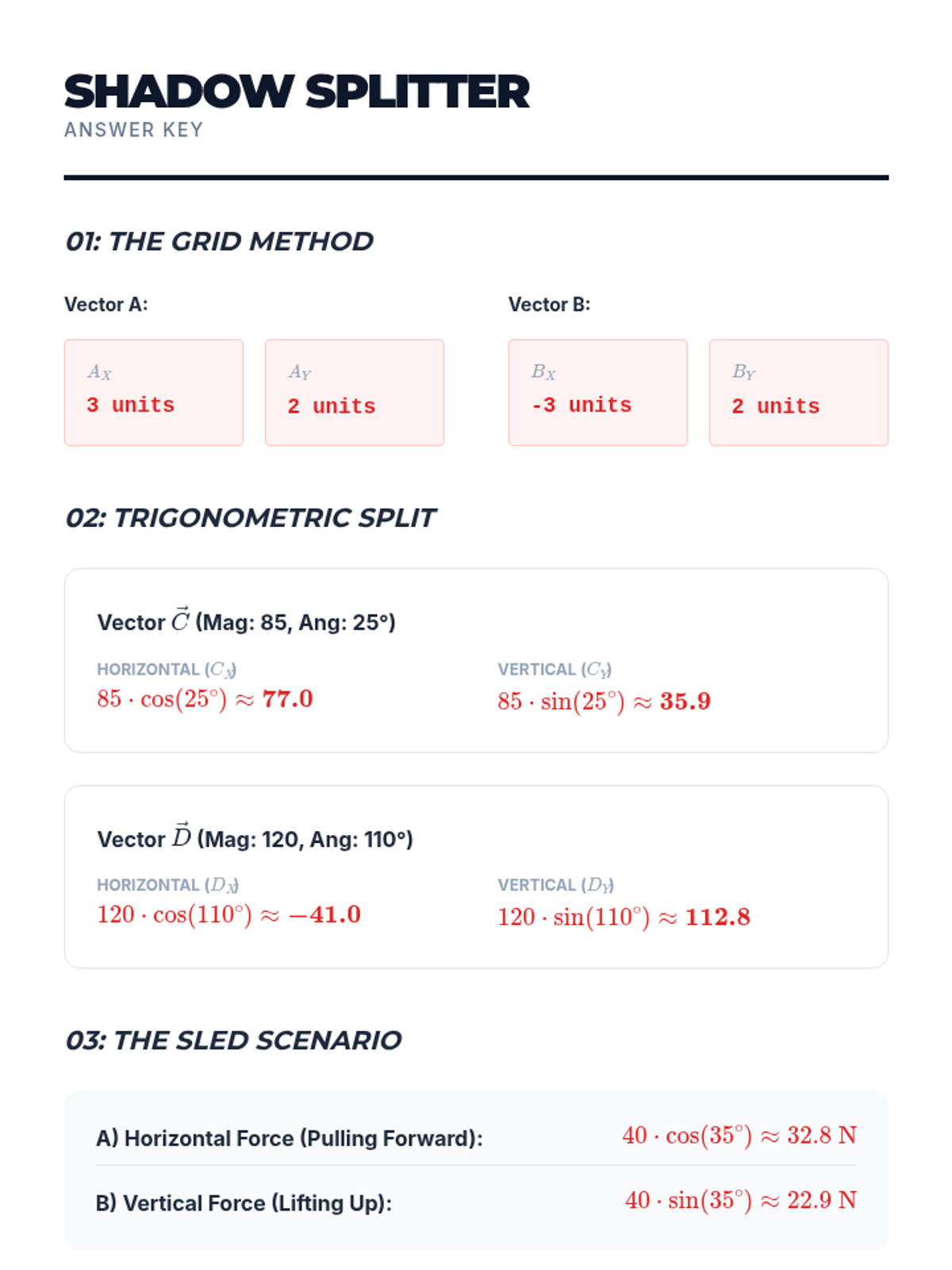
This sequence guides 9th-grade students through the algebraic representation of vectors. Moving from geometric drawings to coordinate components, students use trigonometry and the Pythagorean theorem to decompose, reconstruct, and add vectors with precision.
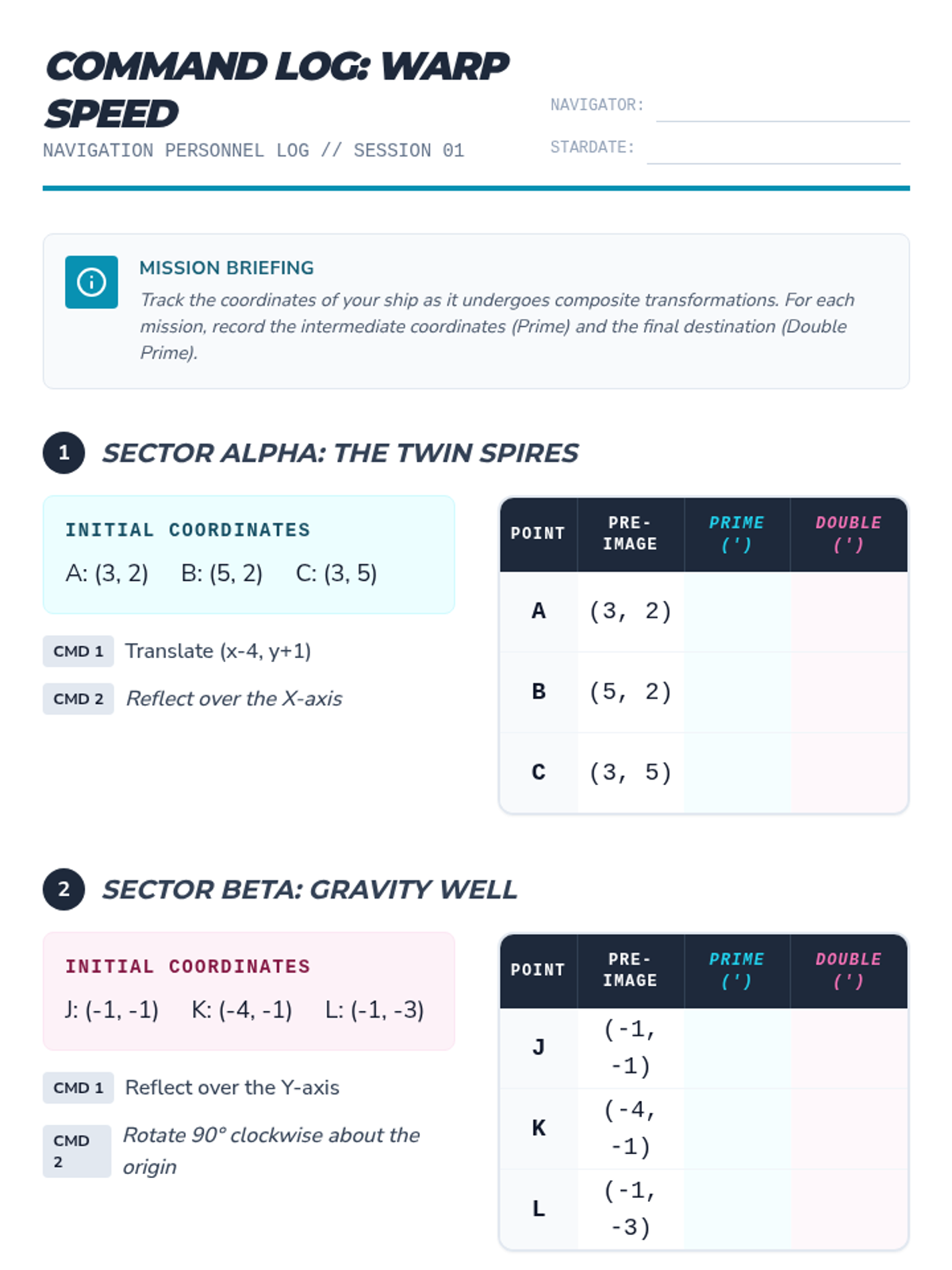
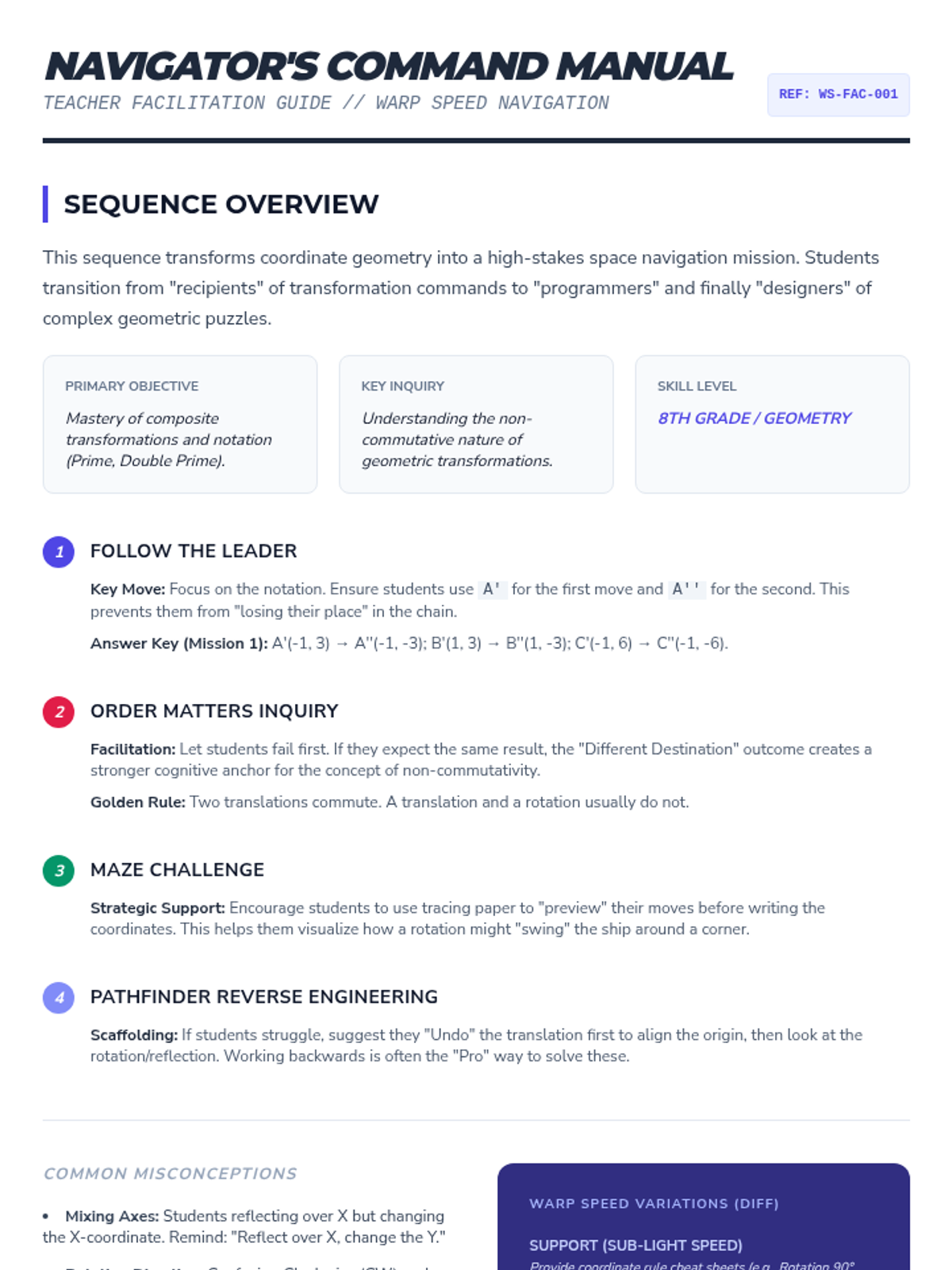
A game-based exploration of composite geometric transformations where students act as navigators, programming shapes through coordinate mazes and investigating how the order of transformations affects final positions.
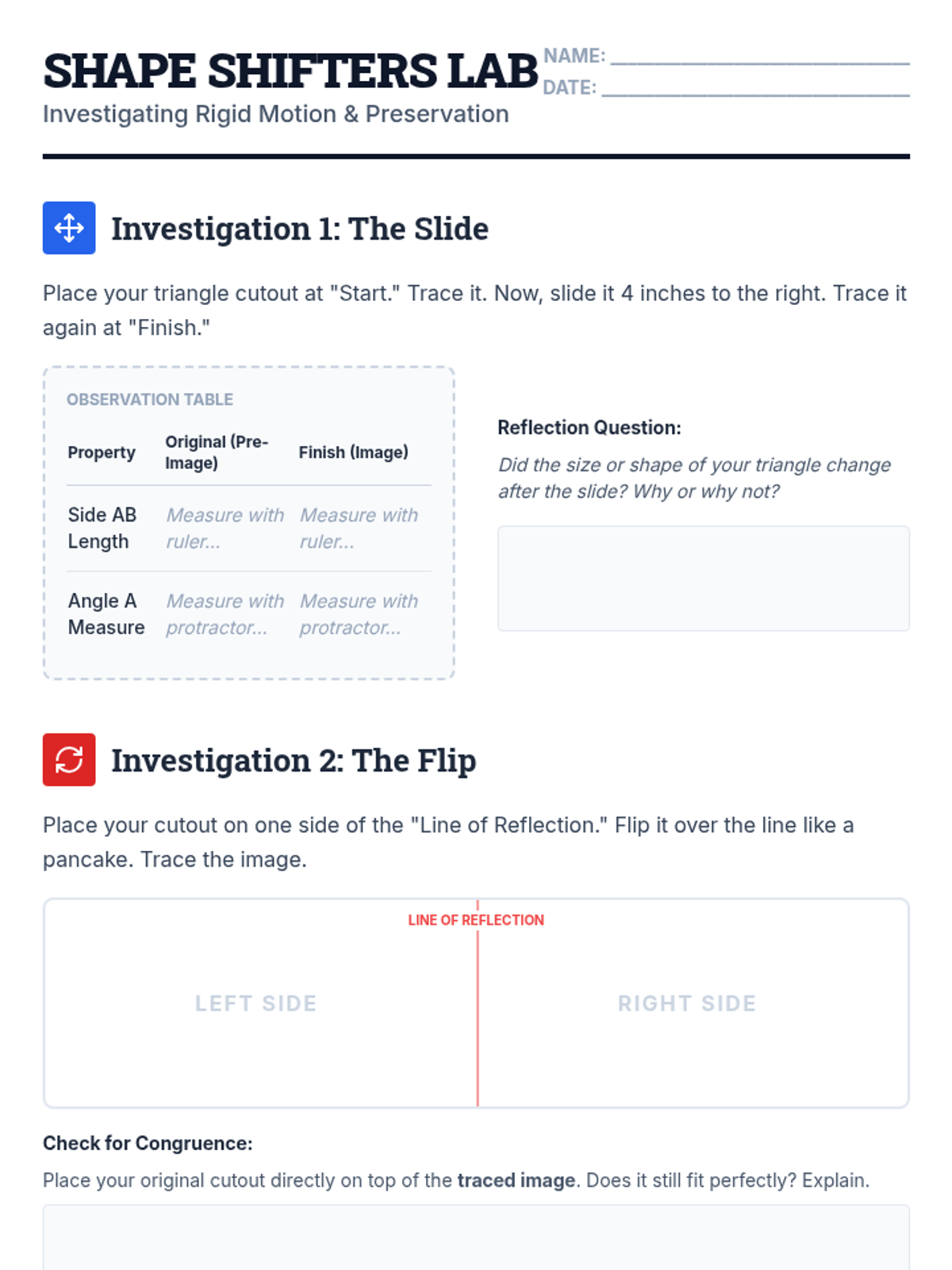
A comprehensive 8th-grade geometry unit that explores rigid transformations (translations, reflections, rotations) through inquiry-based activities and coordinate plane analysis to define congruence. Students move from physical manipulatives to algebraic rules, culminating in proving congruence through sequences of transformations.
A 9th-grade geometry project-based sequence exploring rigid motions through symmetry, frieze patterns, and tessellations, culminating in an Escher-style design project.
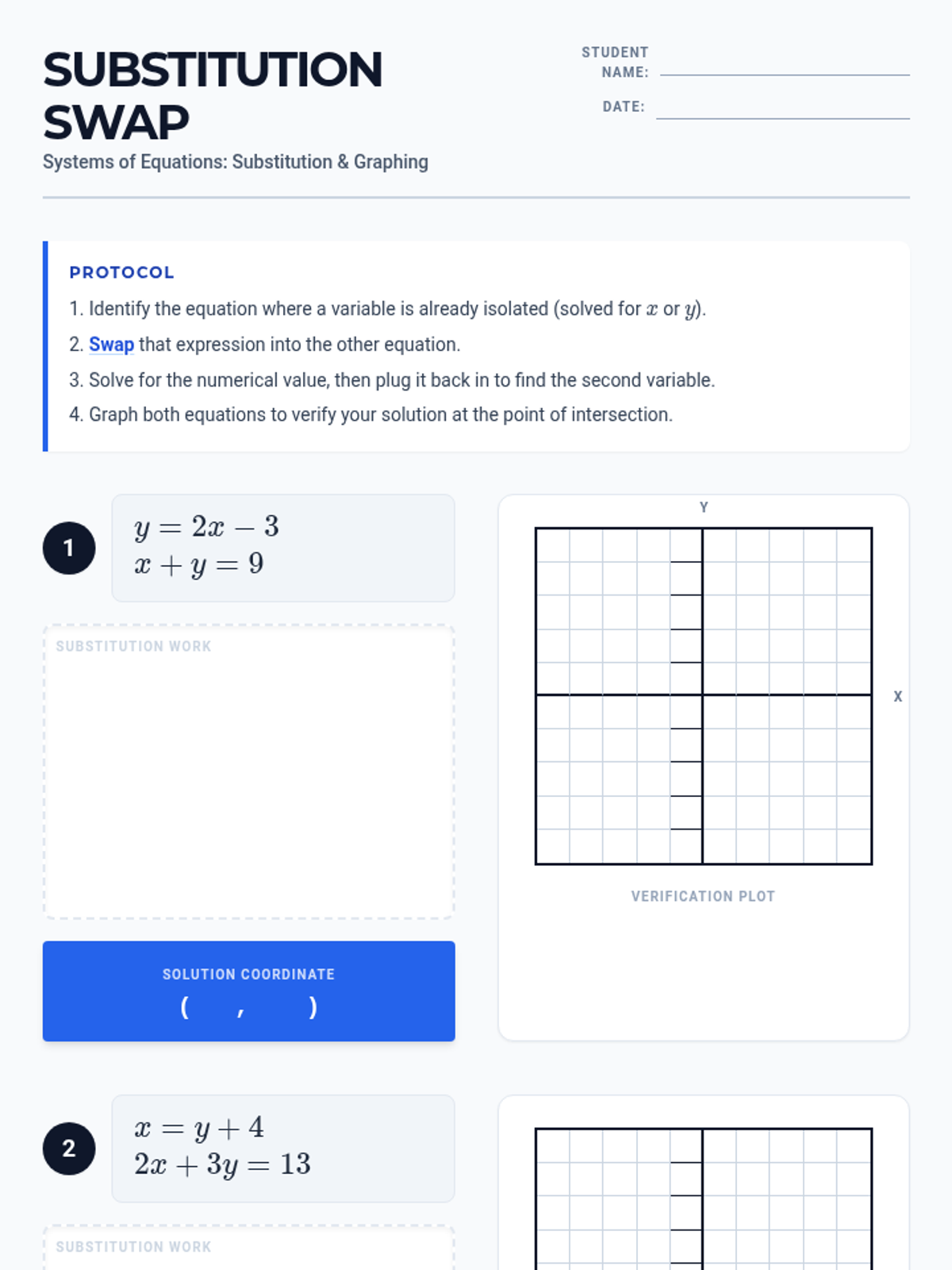
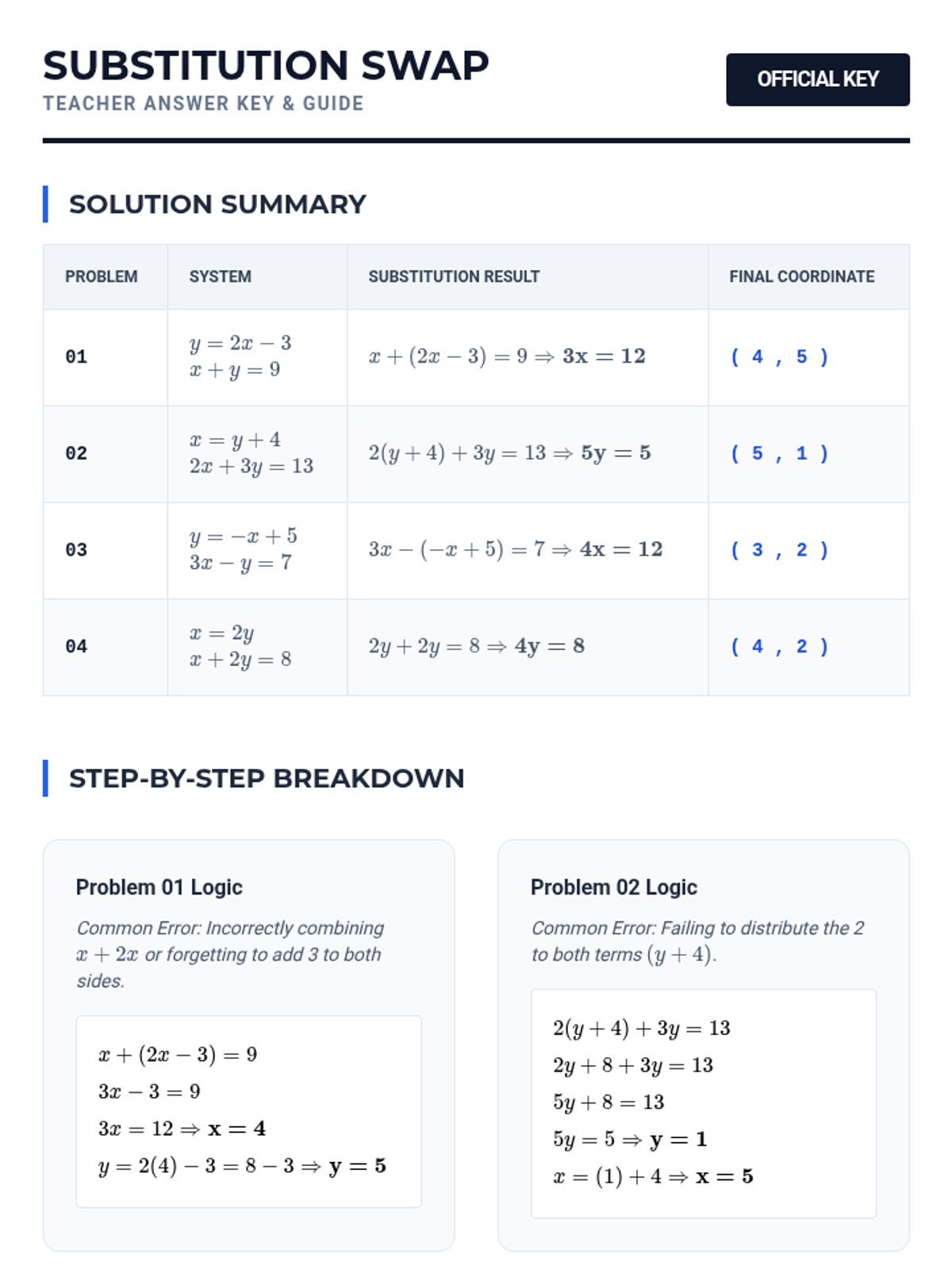
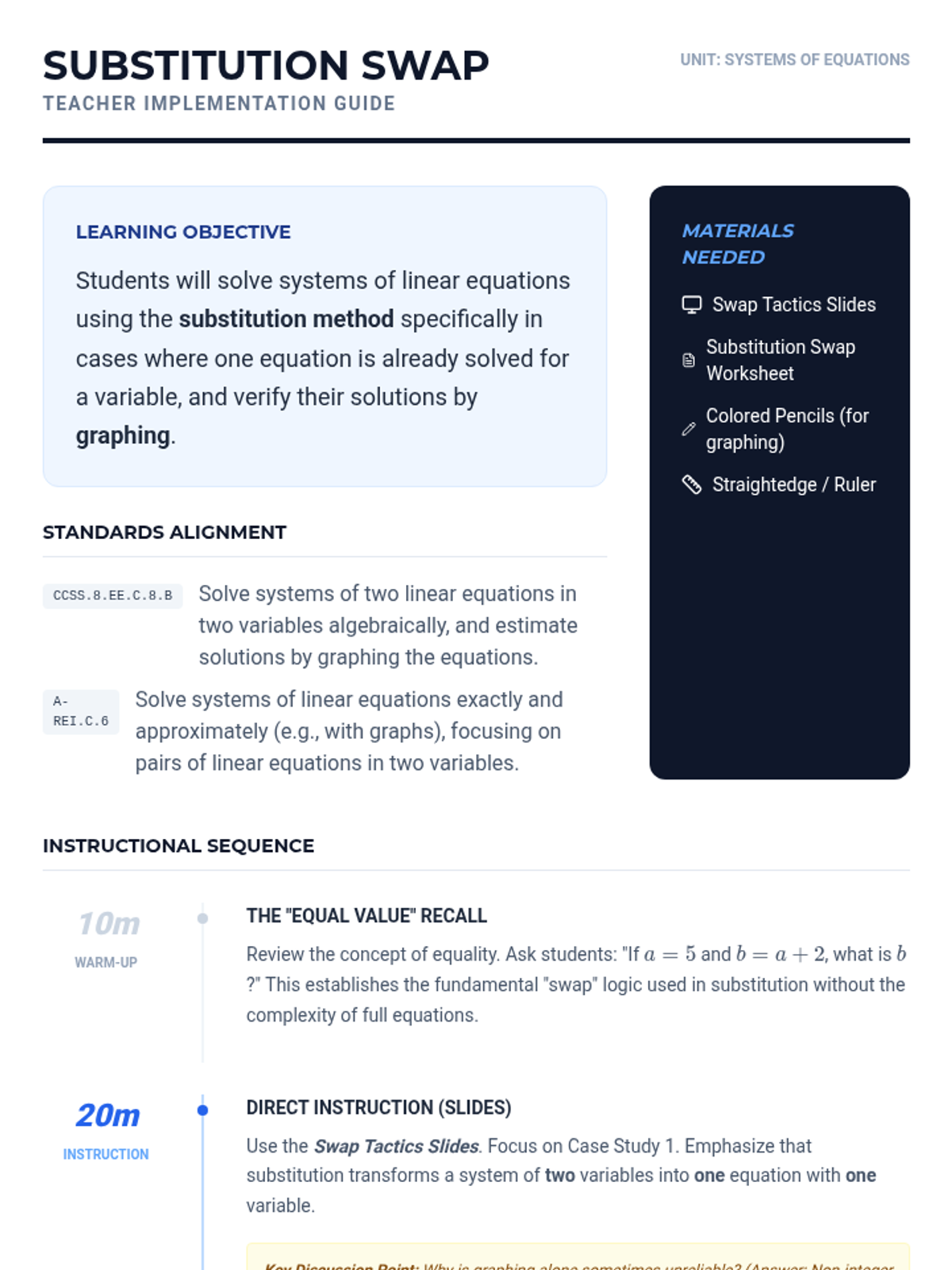
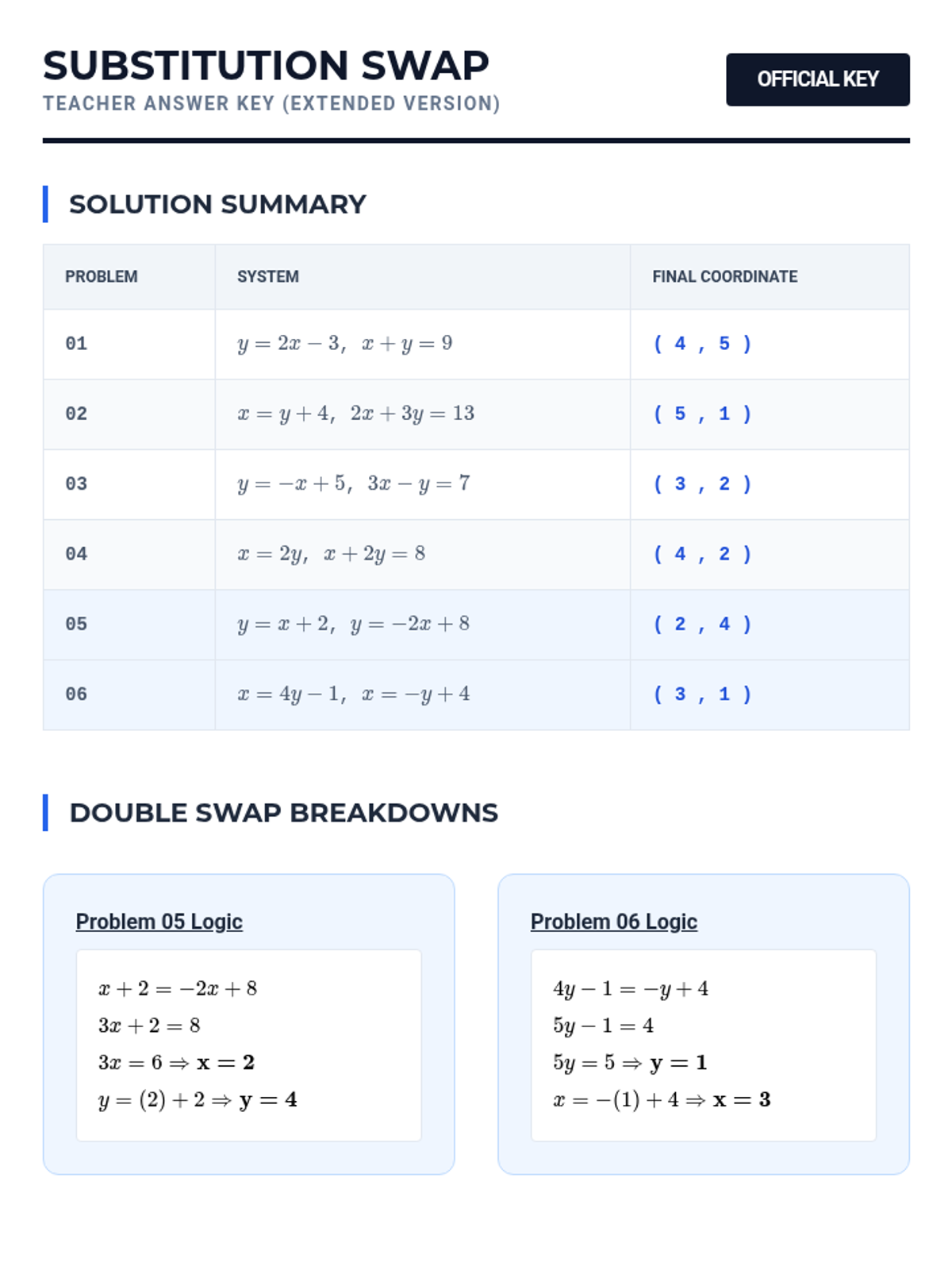
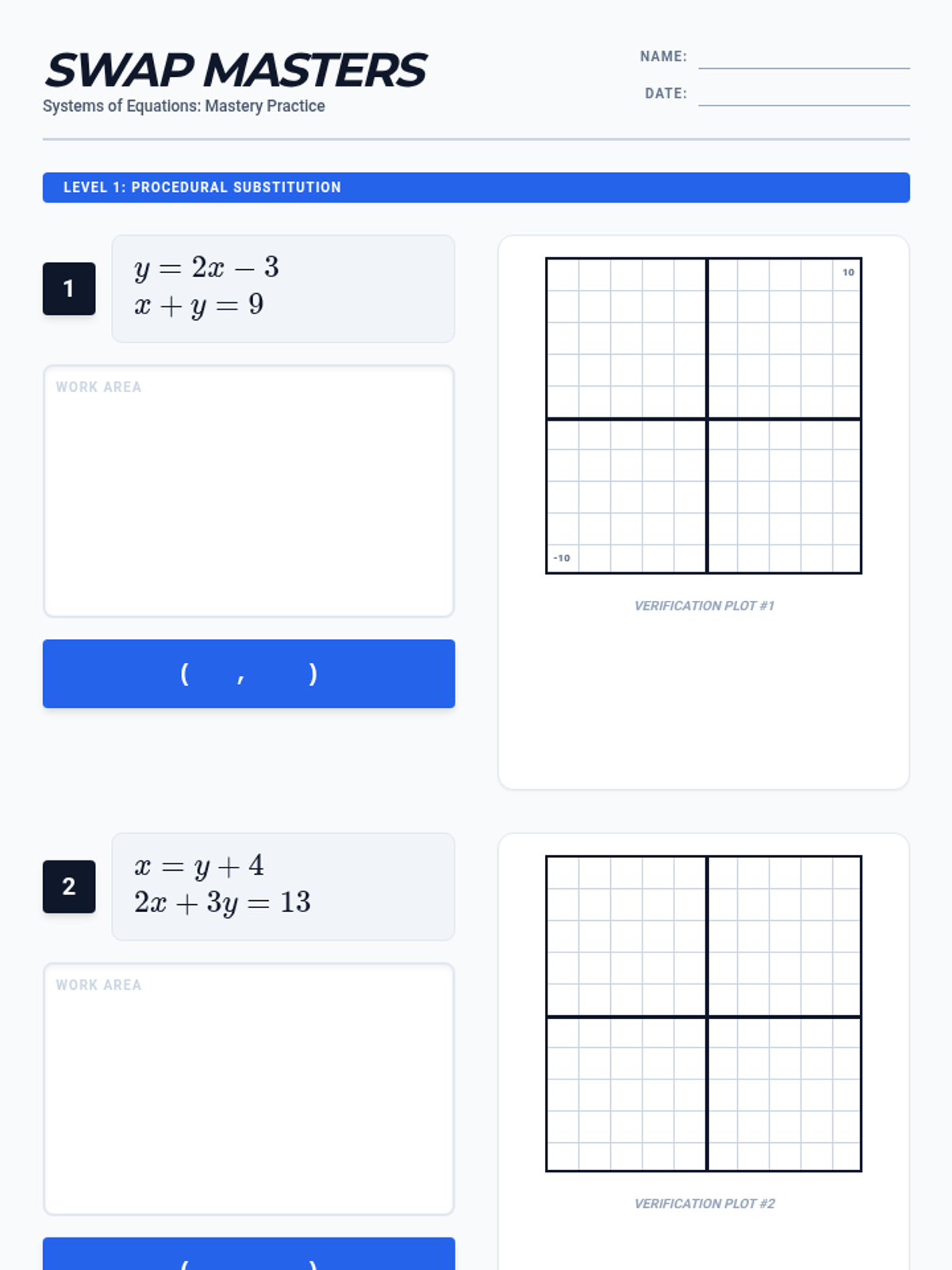
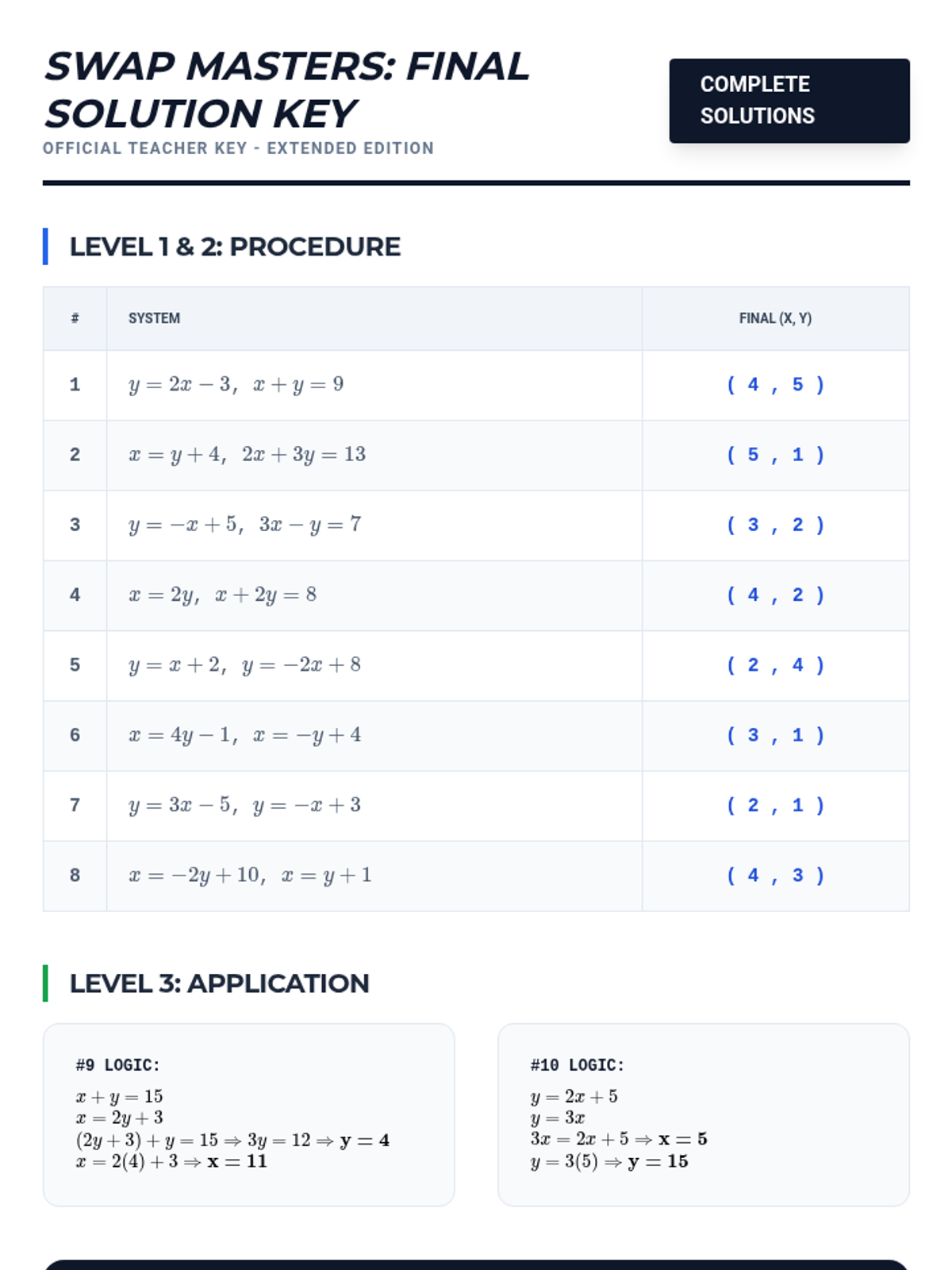
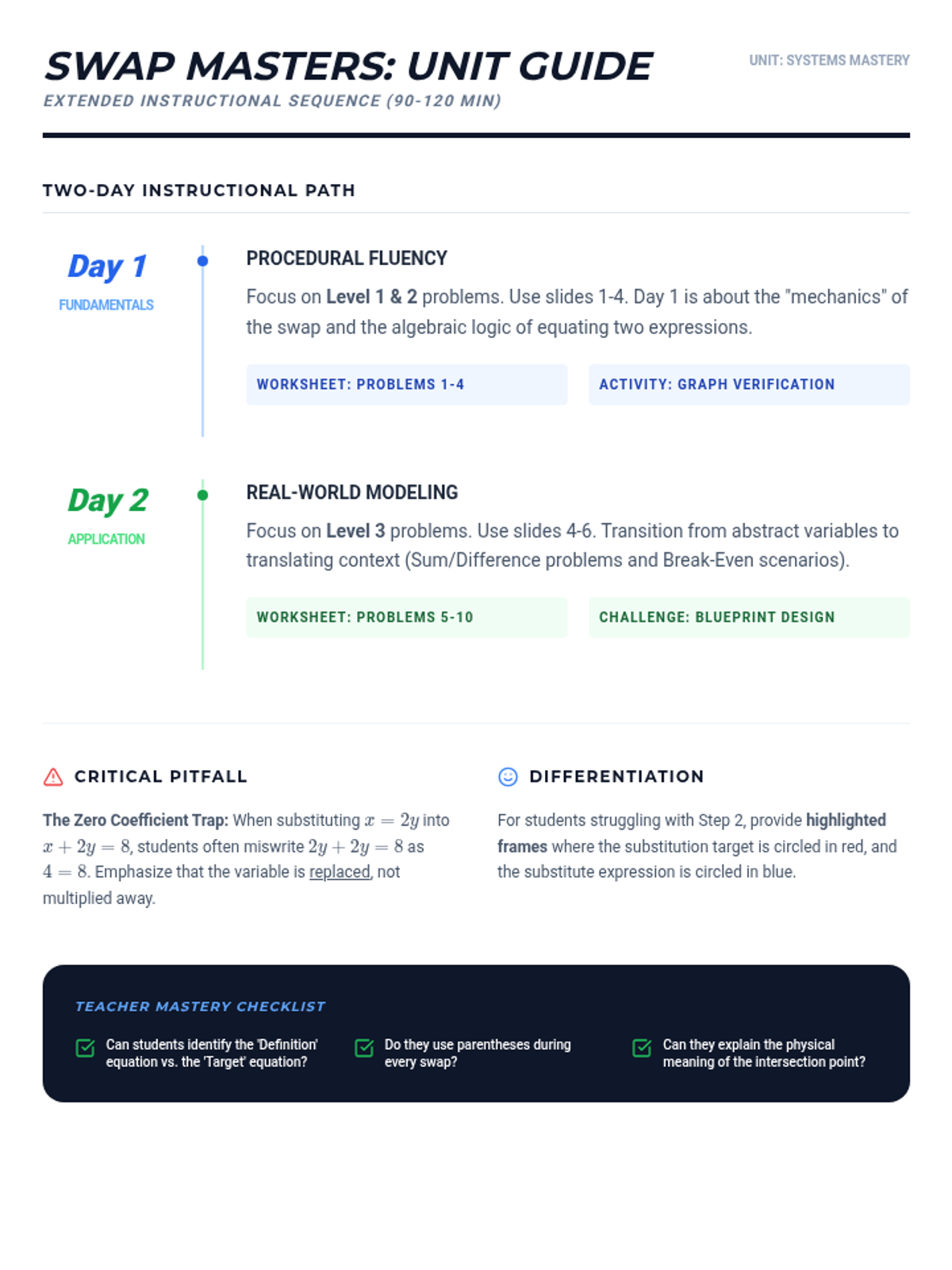
A comprehensive unit on solving systems of linear equations using the substitution method, covering procedural steps, graphical verification, and real-world modeling.
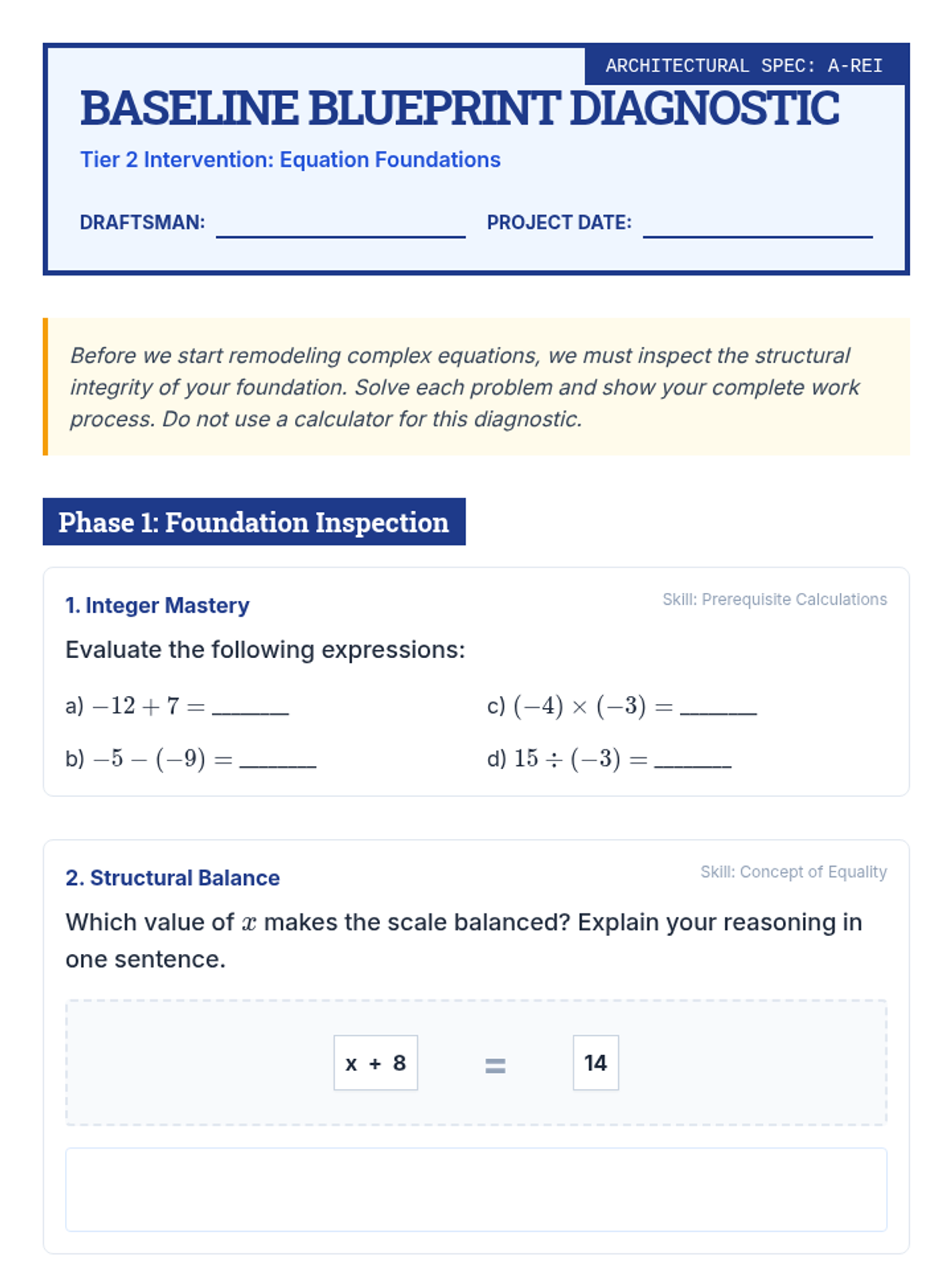
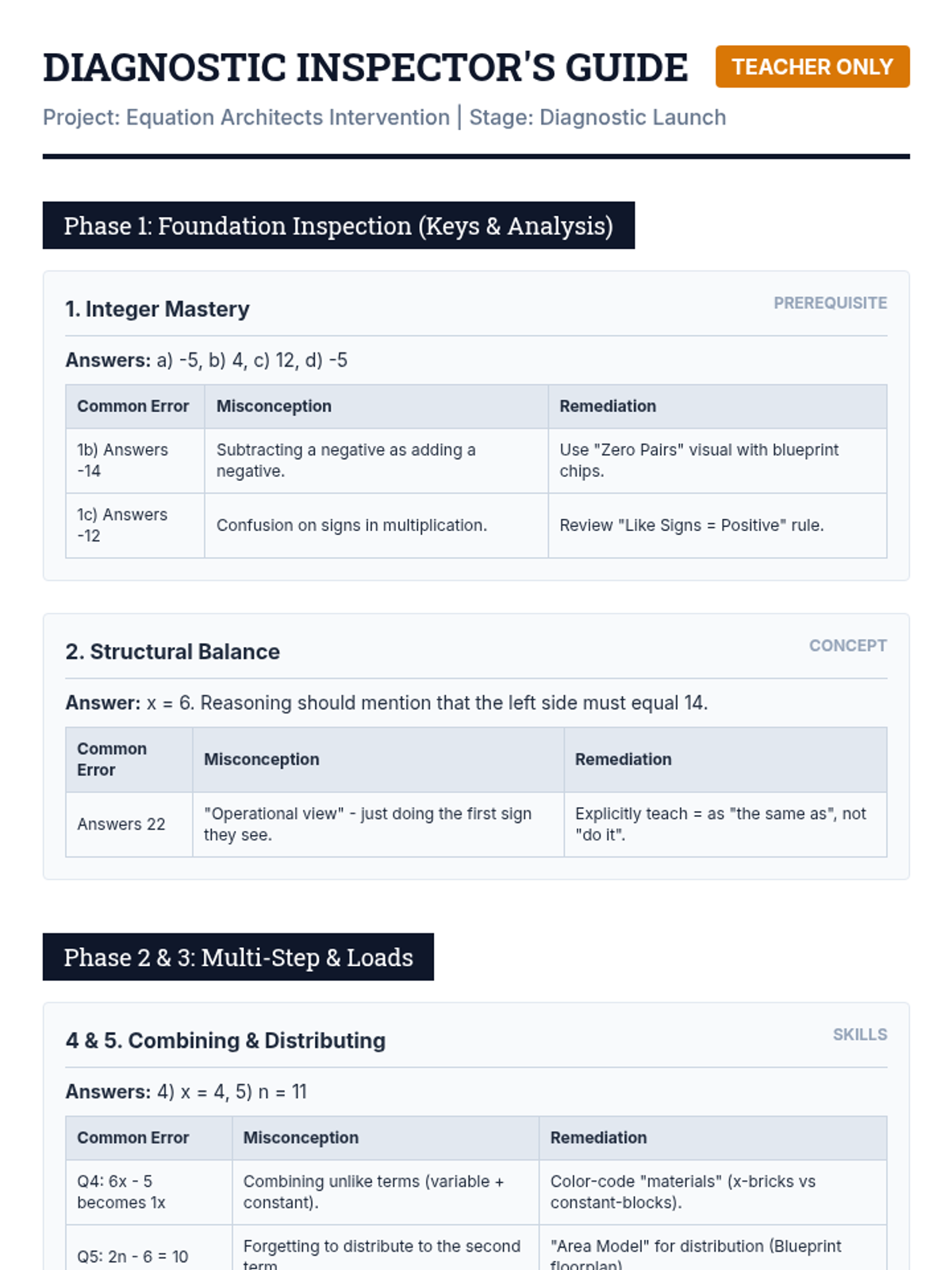
A comprehensive Tier 2 intervention sequence for high school Algebra students focused on solving and graphing linear equations and inequalities. This sequence uses an architectural 'blueprint' theme to help students build conceptual understanding and procedural fluency while addressing common misconceptions.
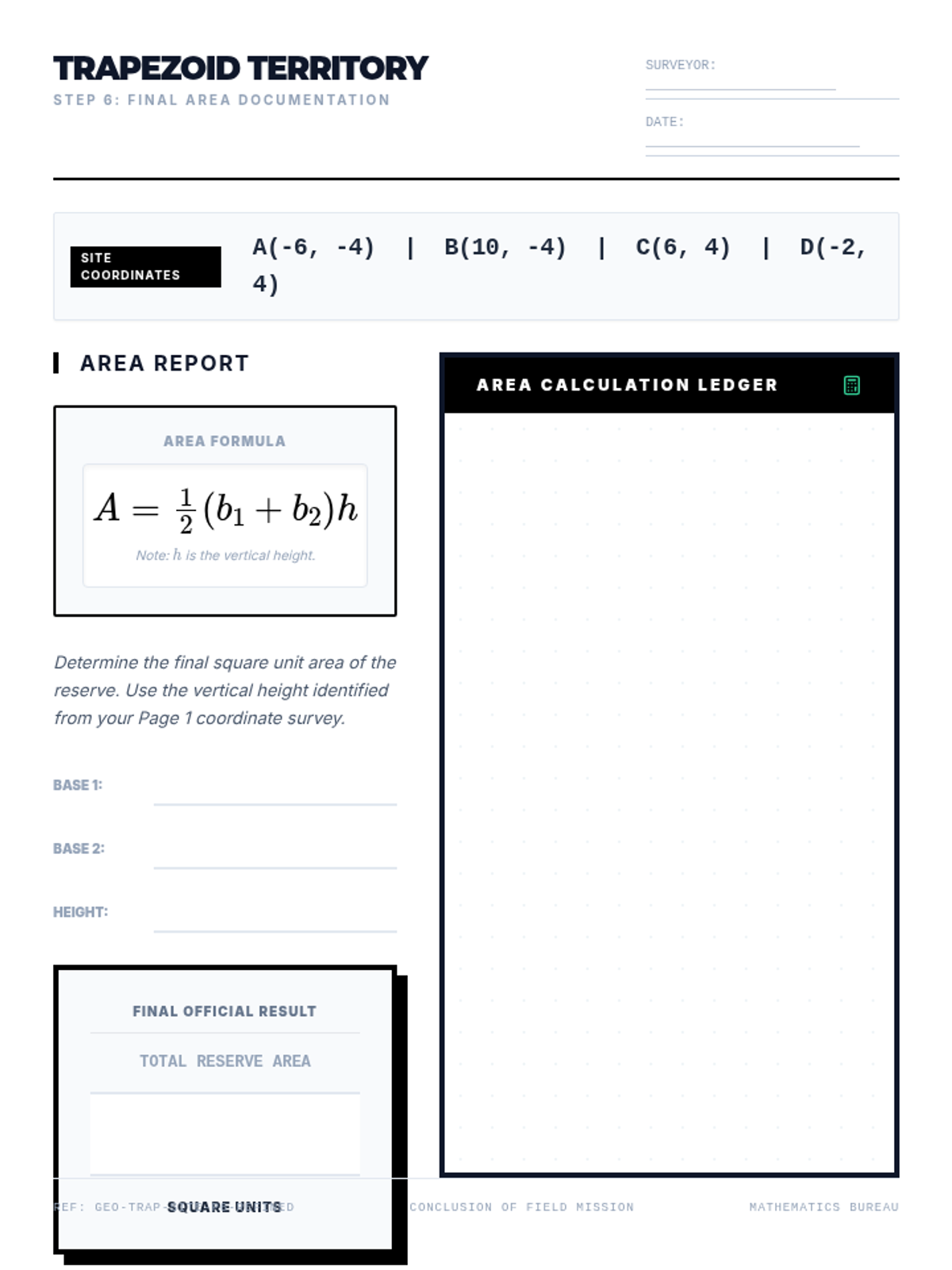
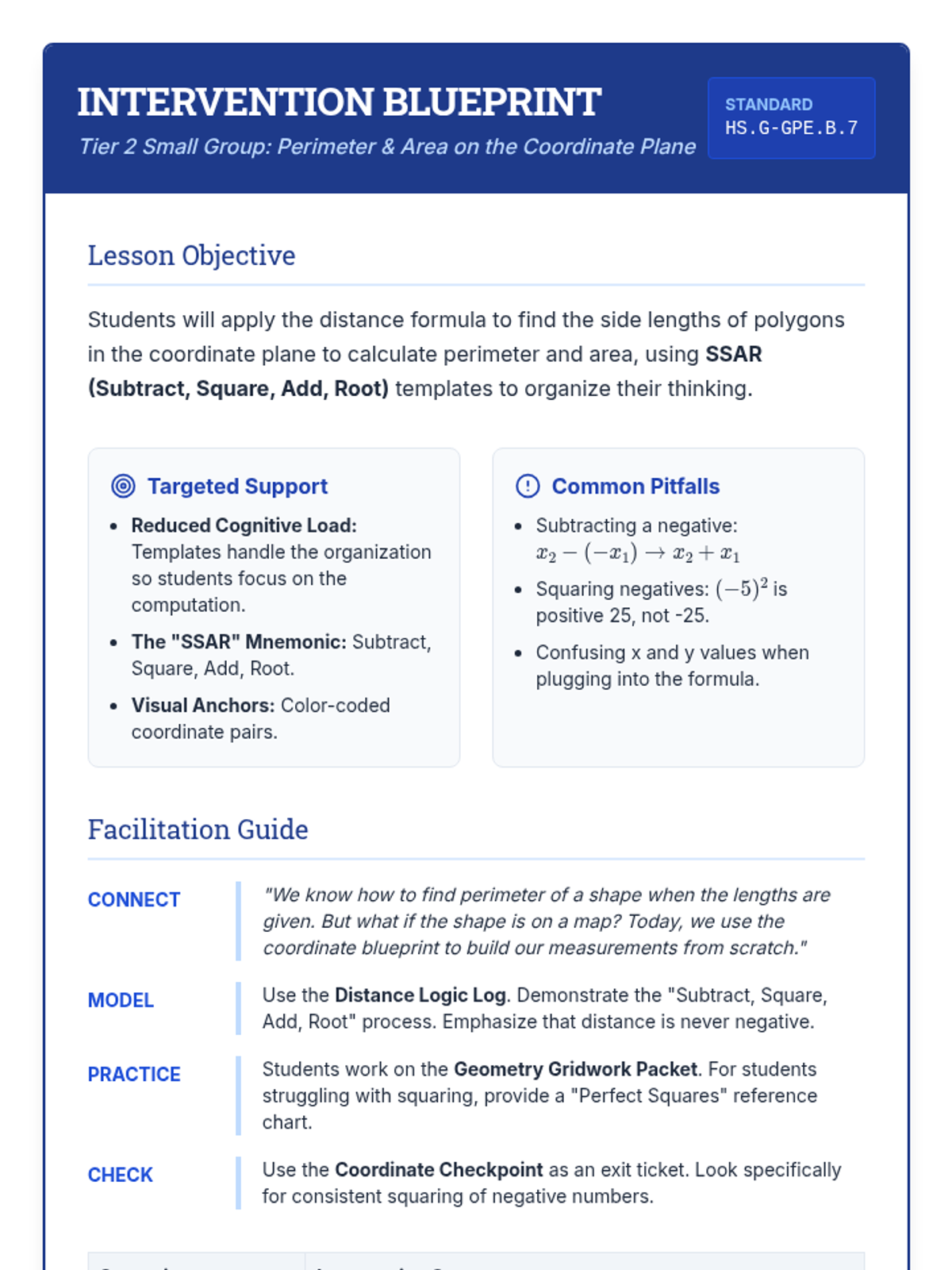
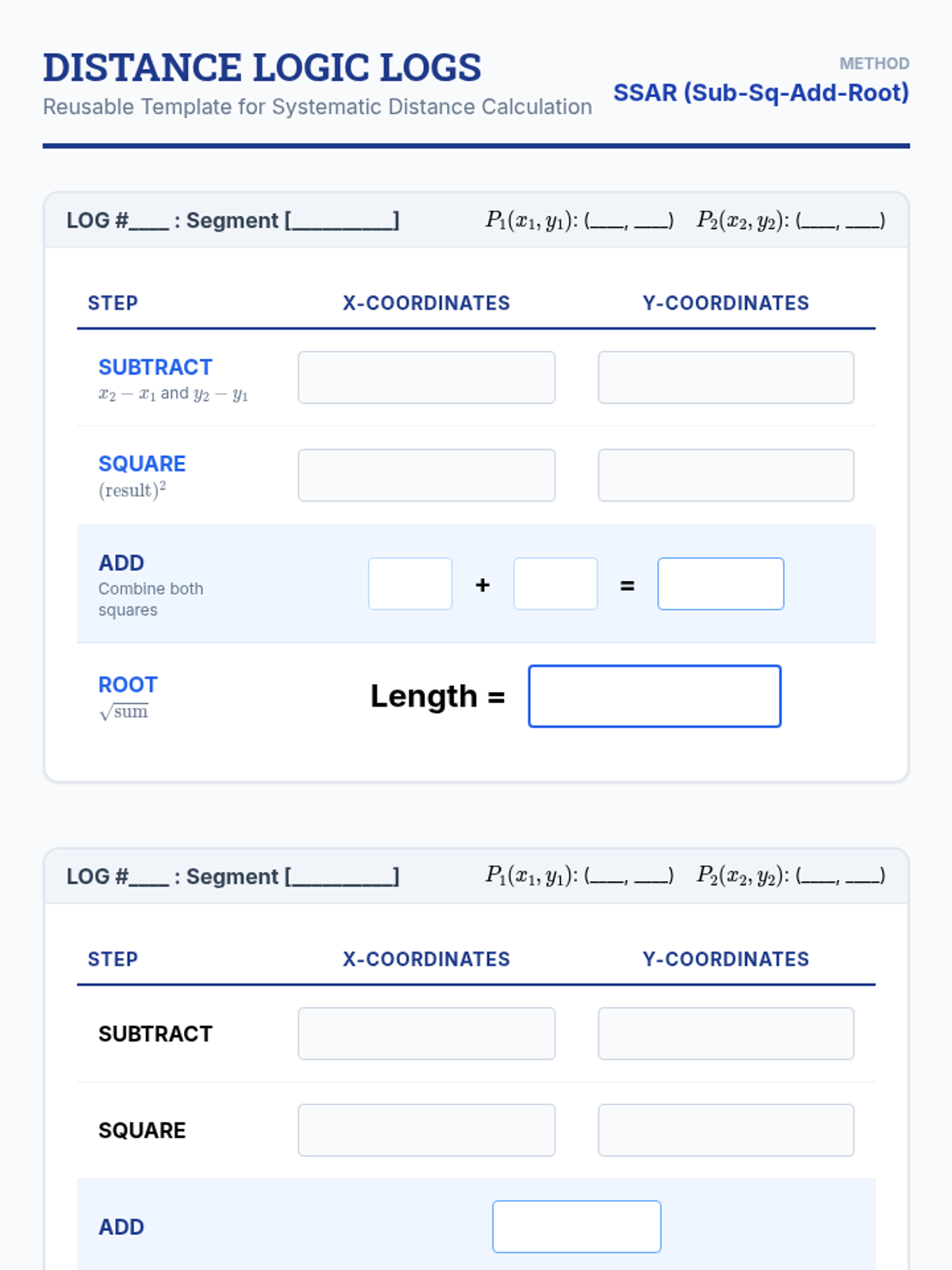
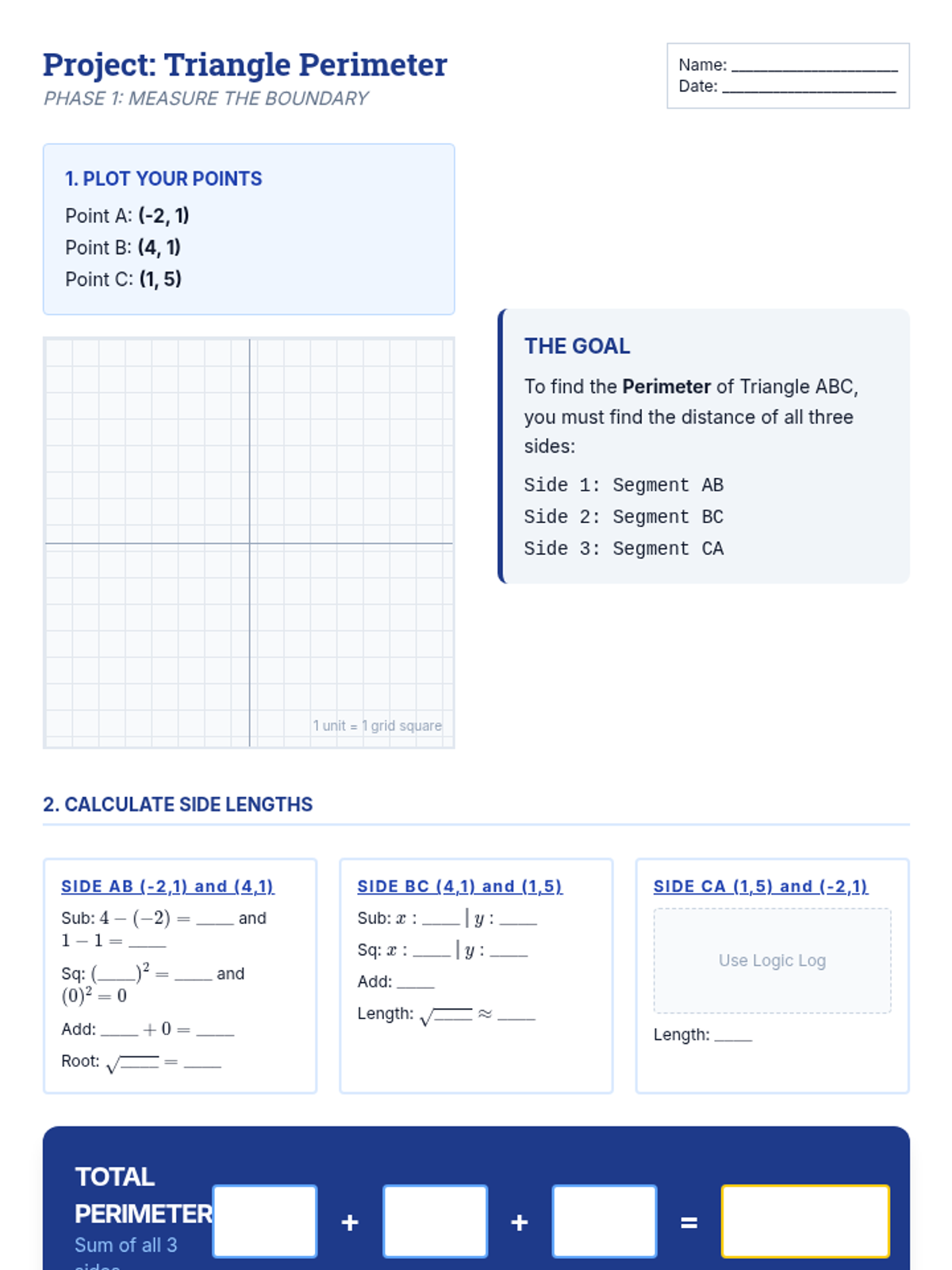
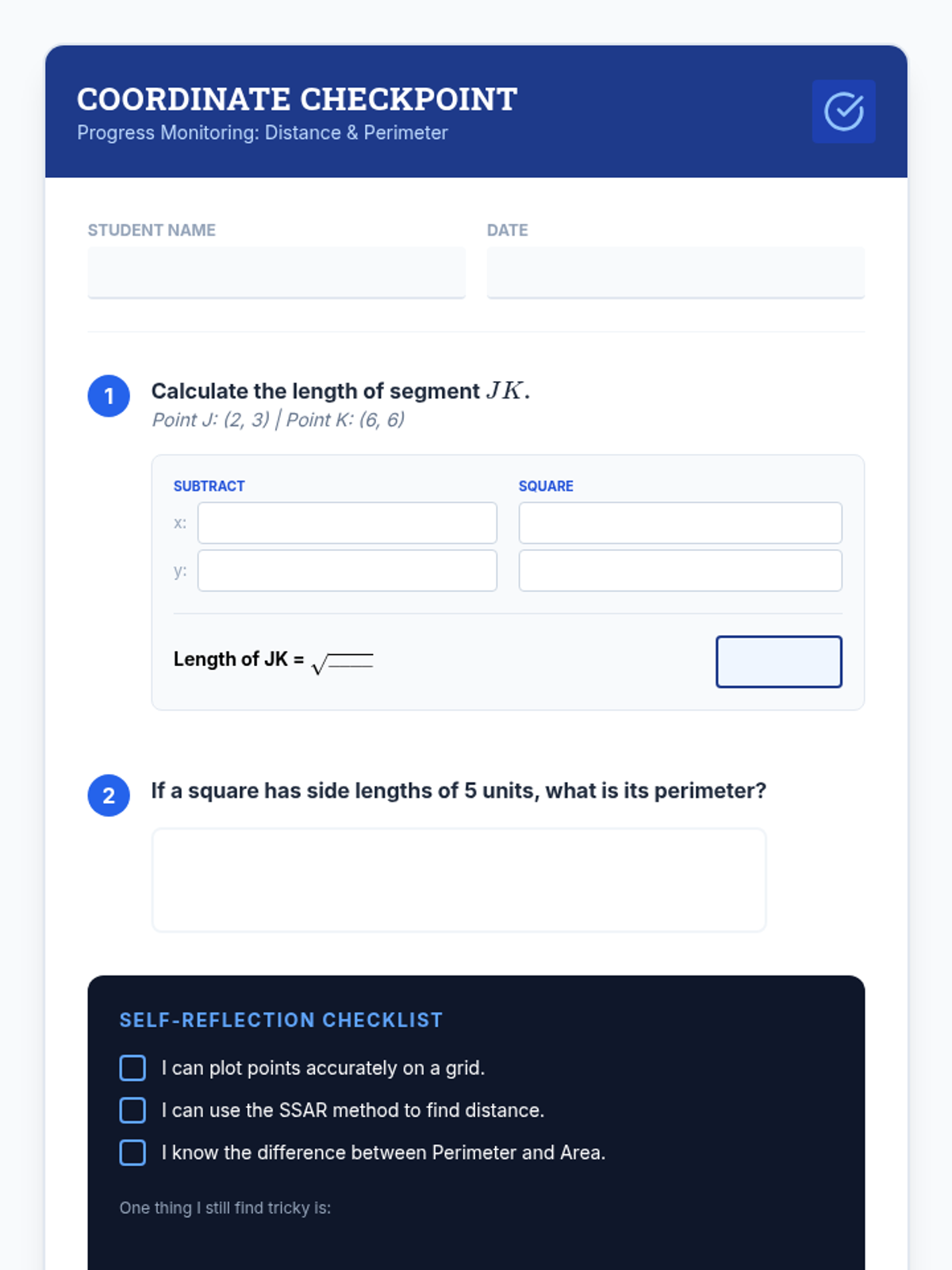
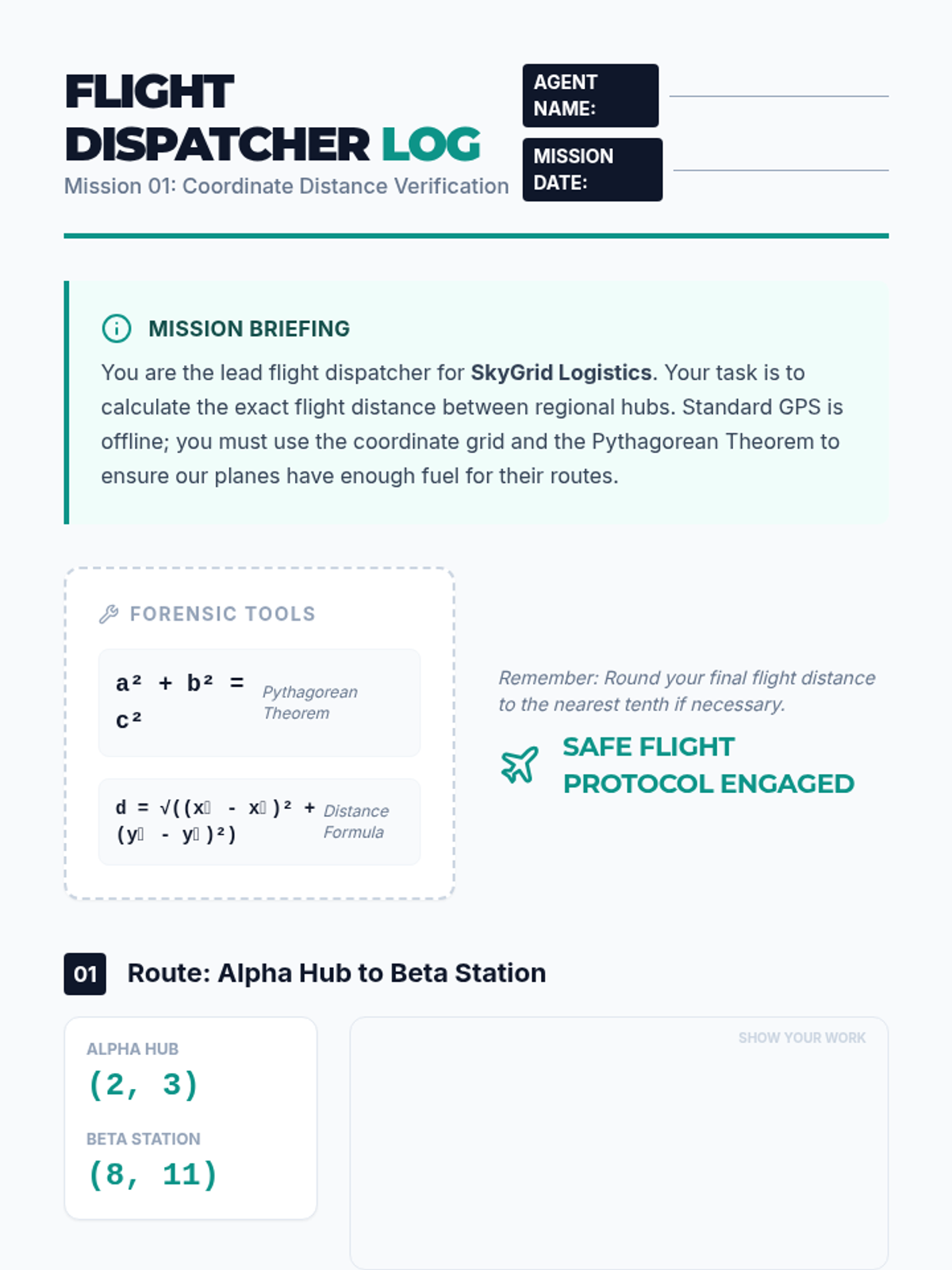
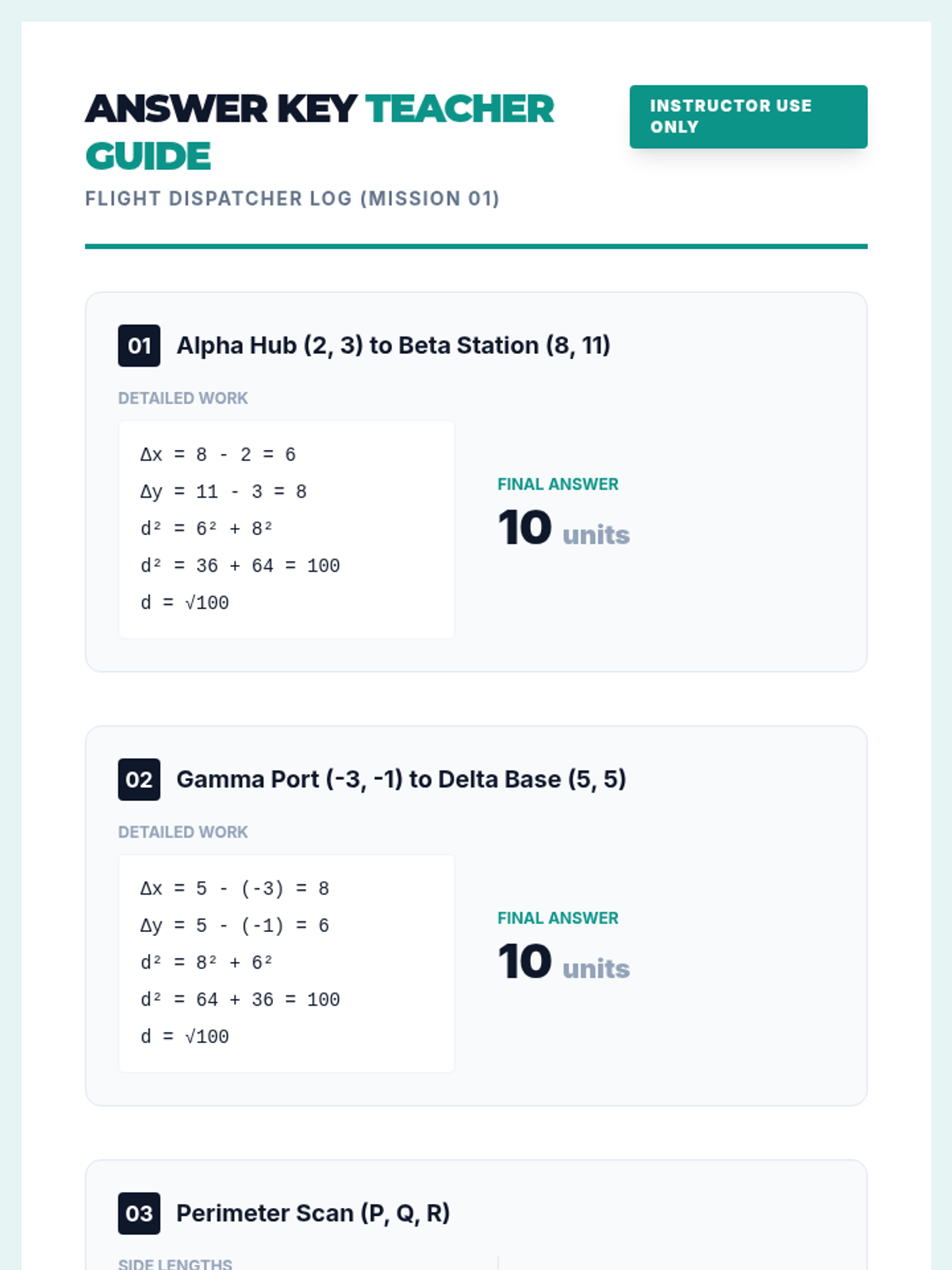
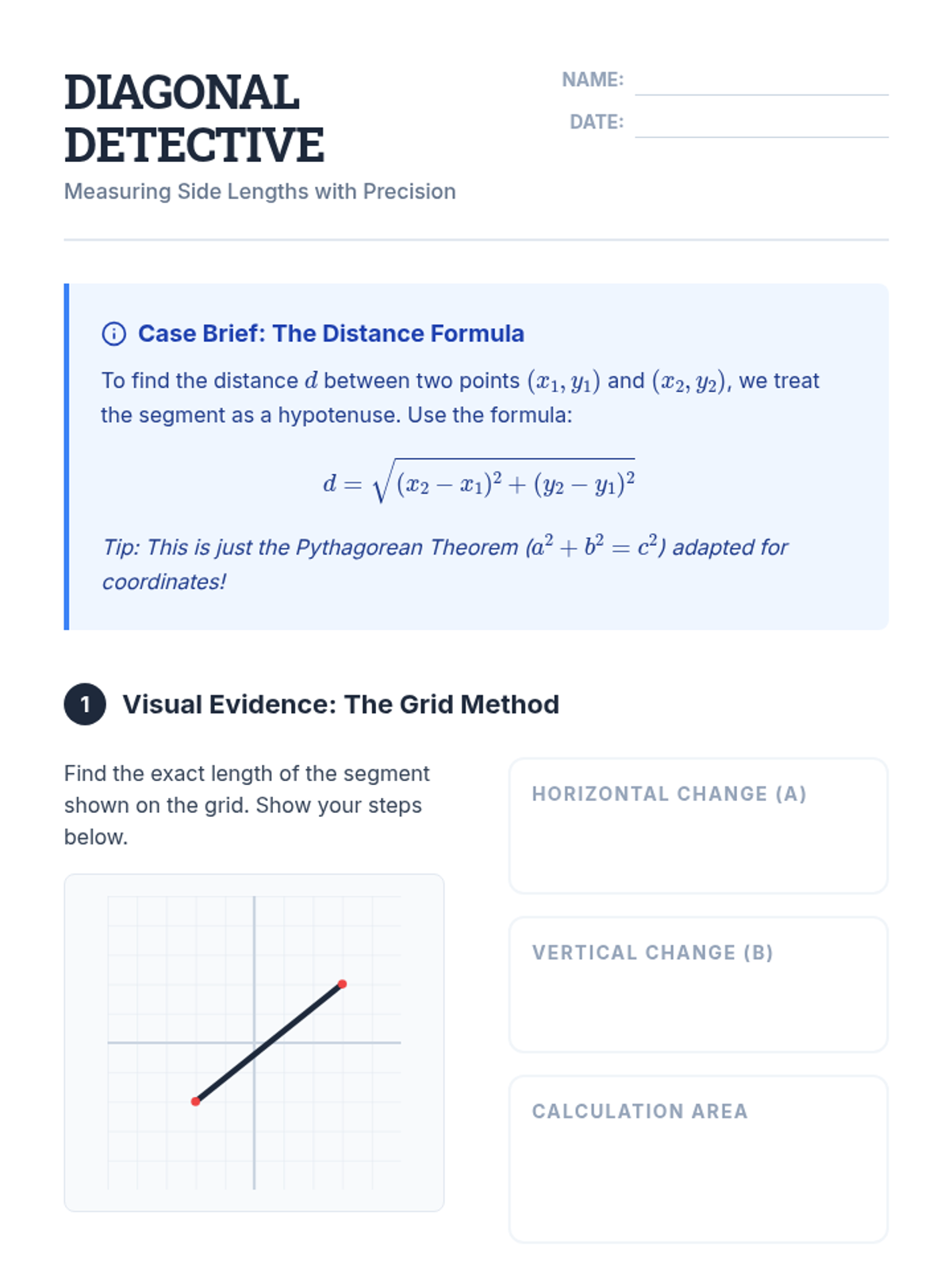
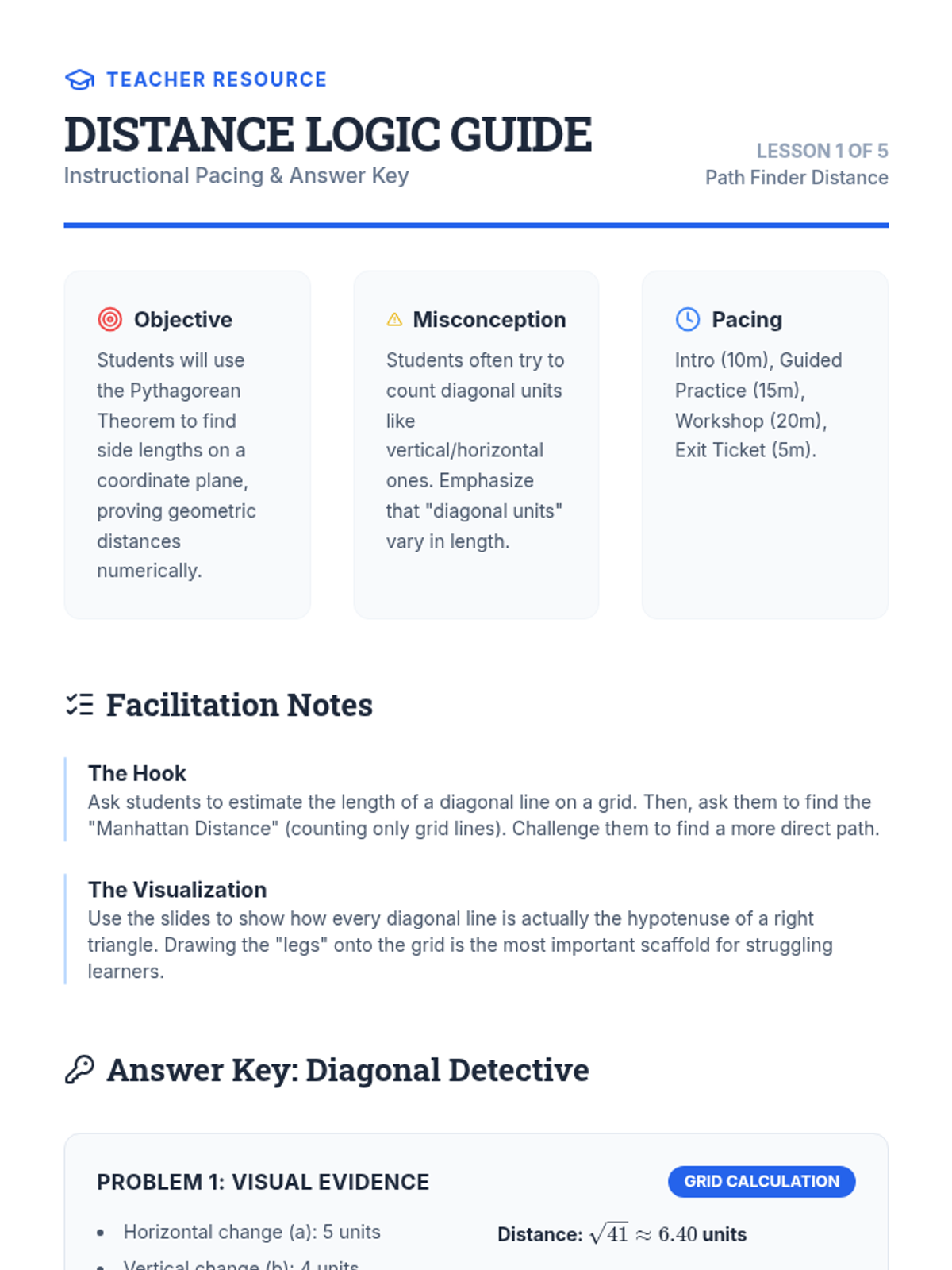
A targeted intervention sequence focused on helping High School students master the application of the distance formula to find perimeter and area in the coordinate plane. This unit uses structured calculation templates and scaffolded practice to support Tier 2 learners.
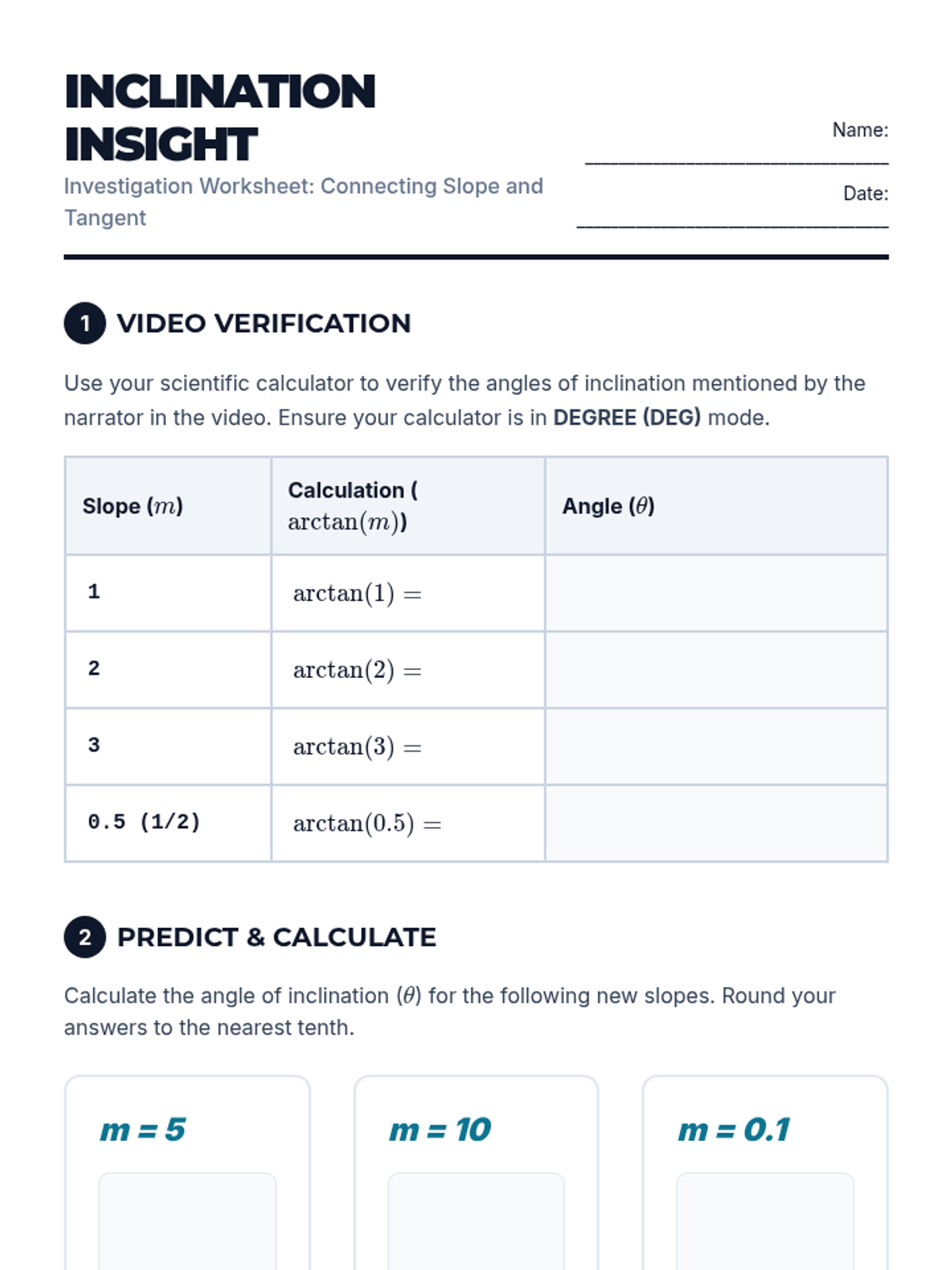
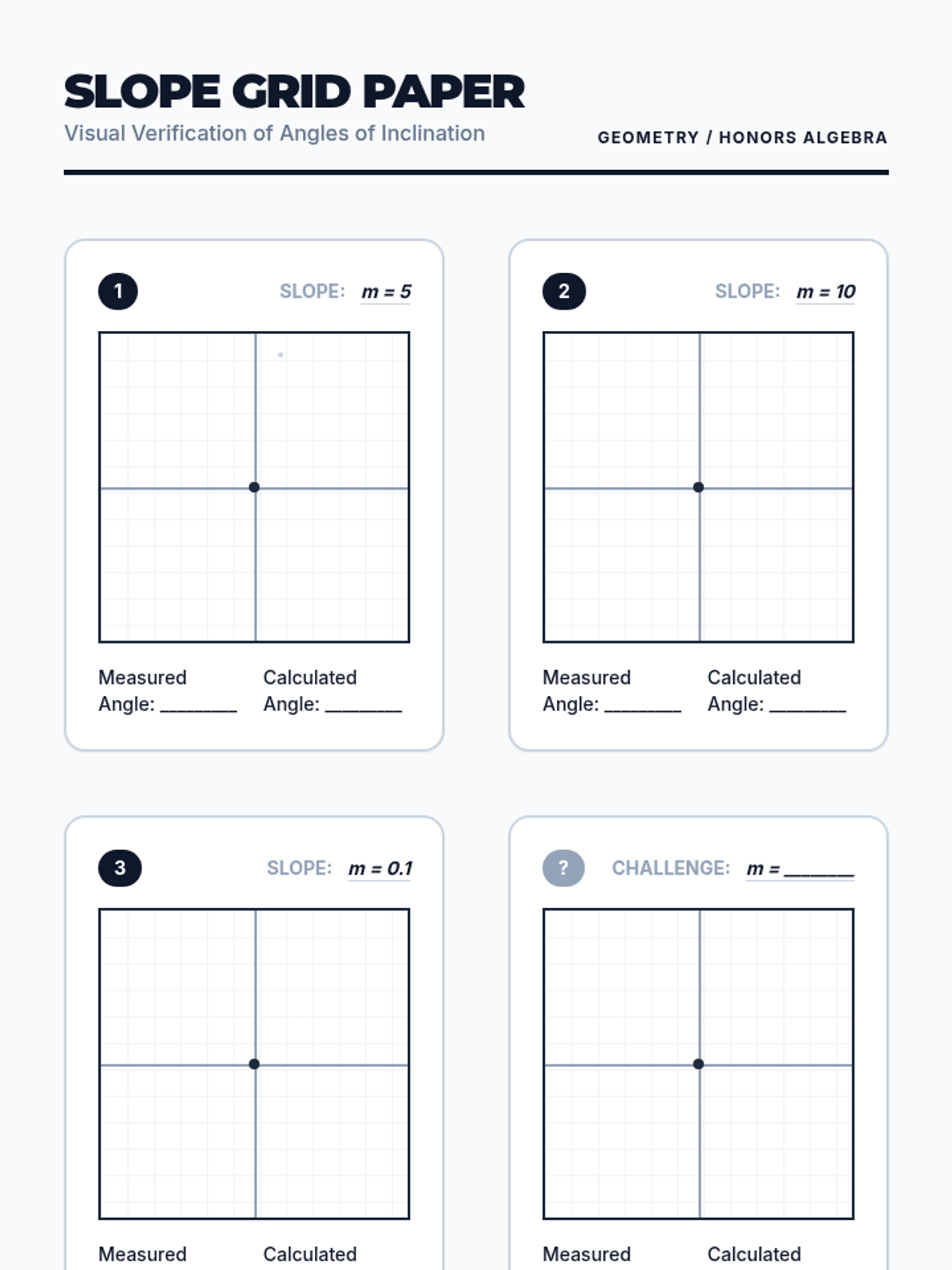
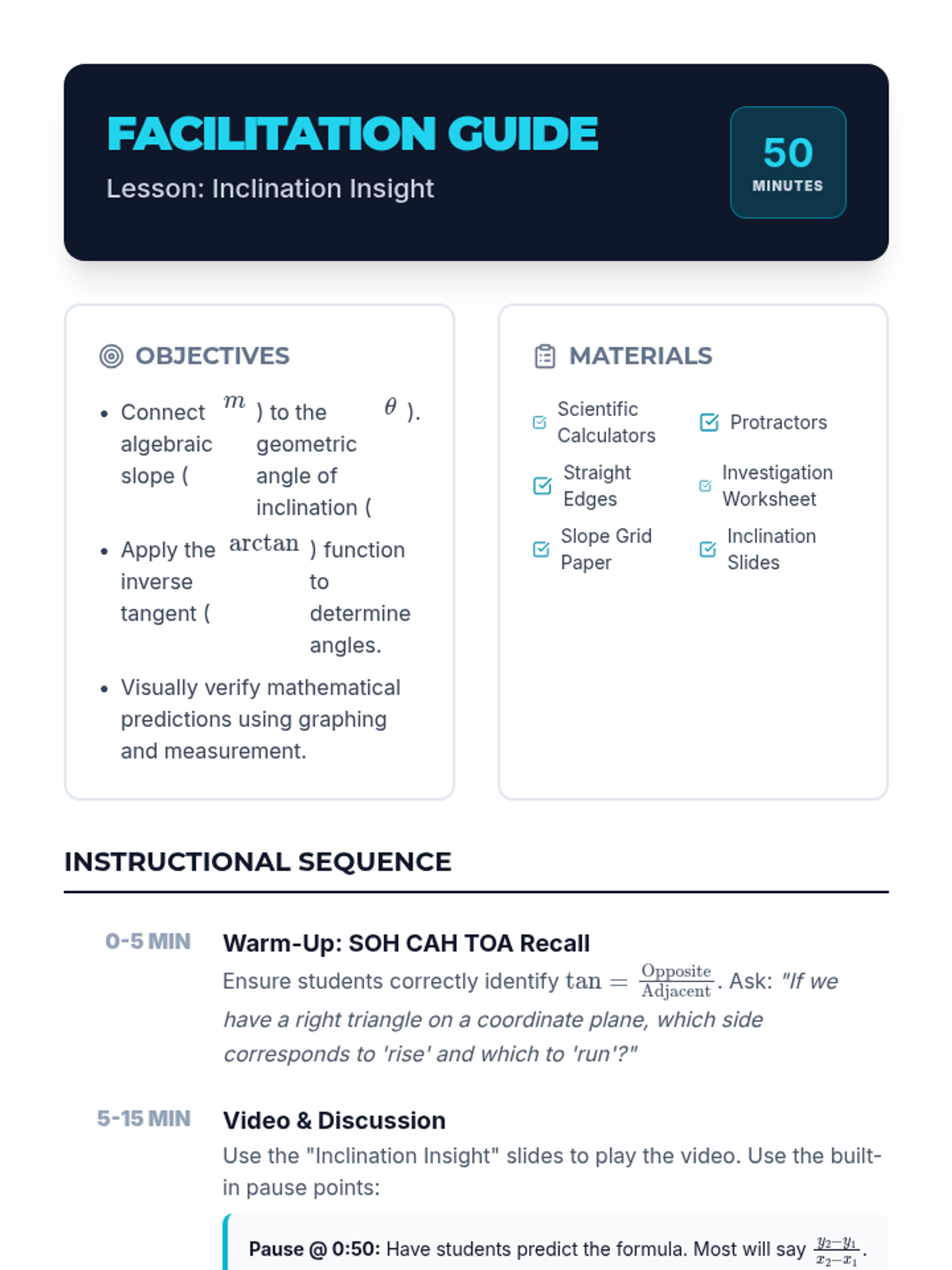
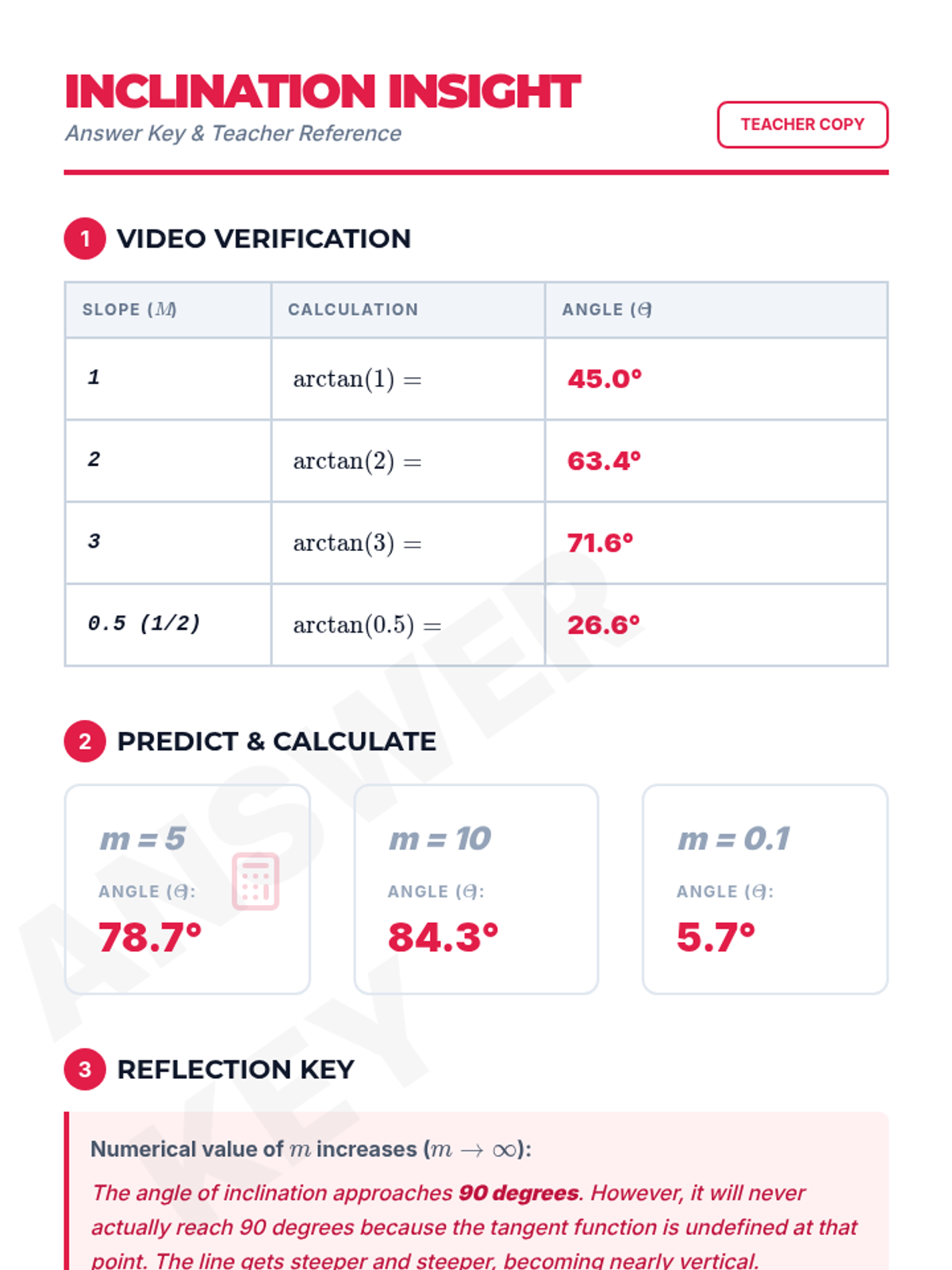
A specialized unit exploring the geometric properties of slope, connecting algebraic rates of change to trigonometric functions and the geometry of inclination.
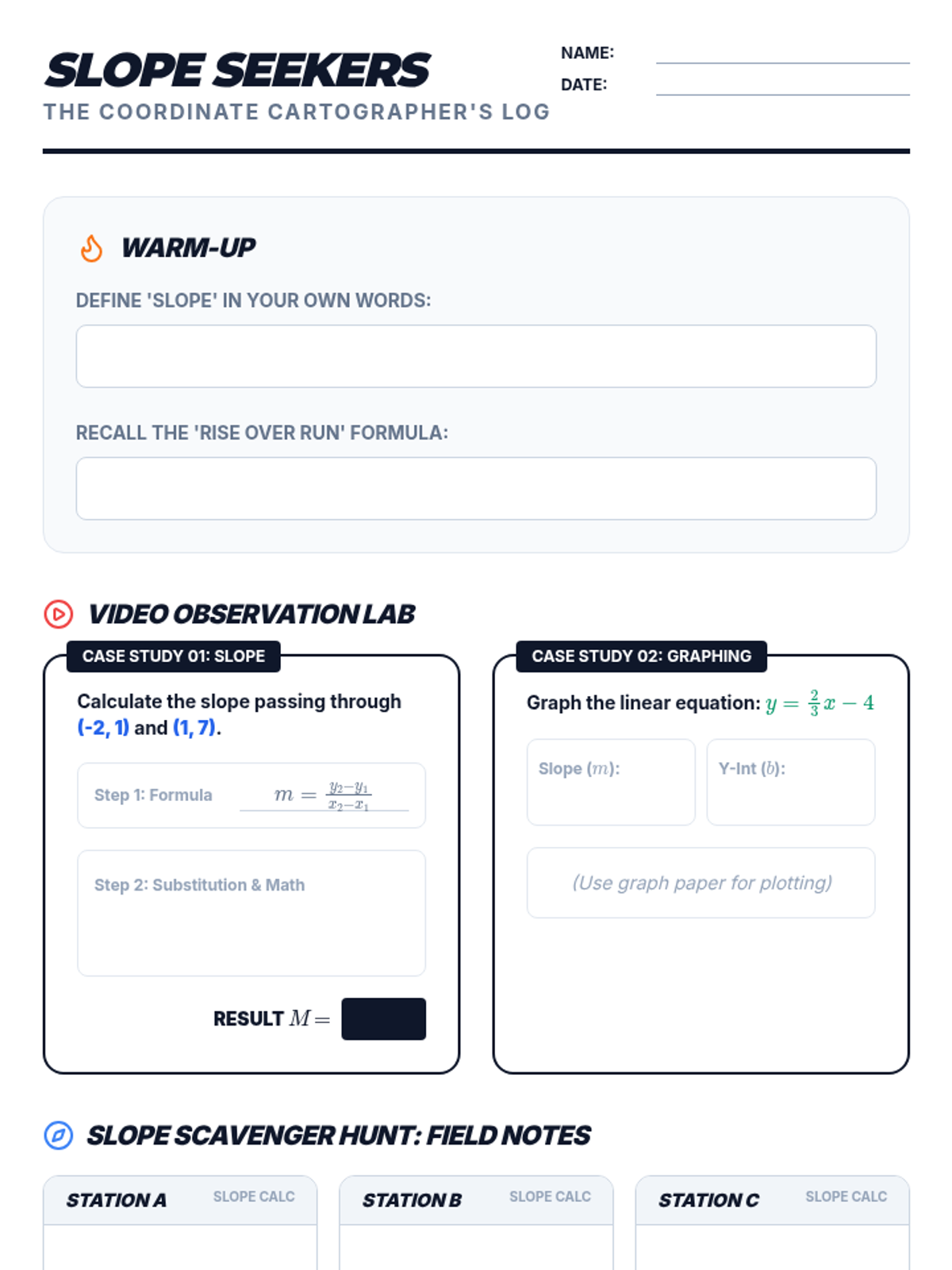
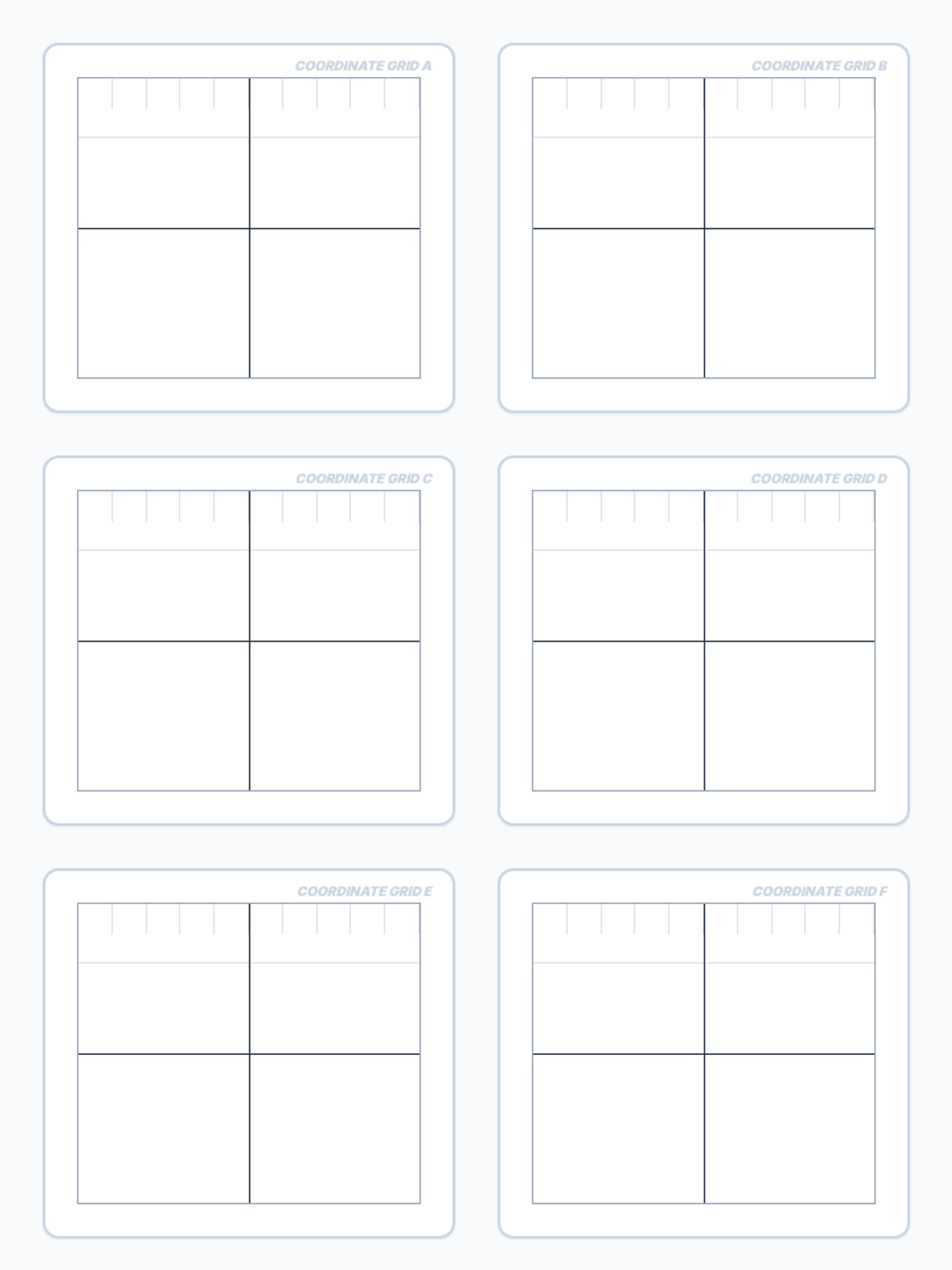
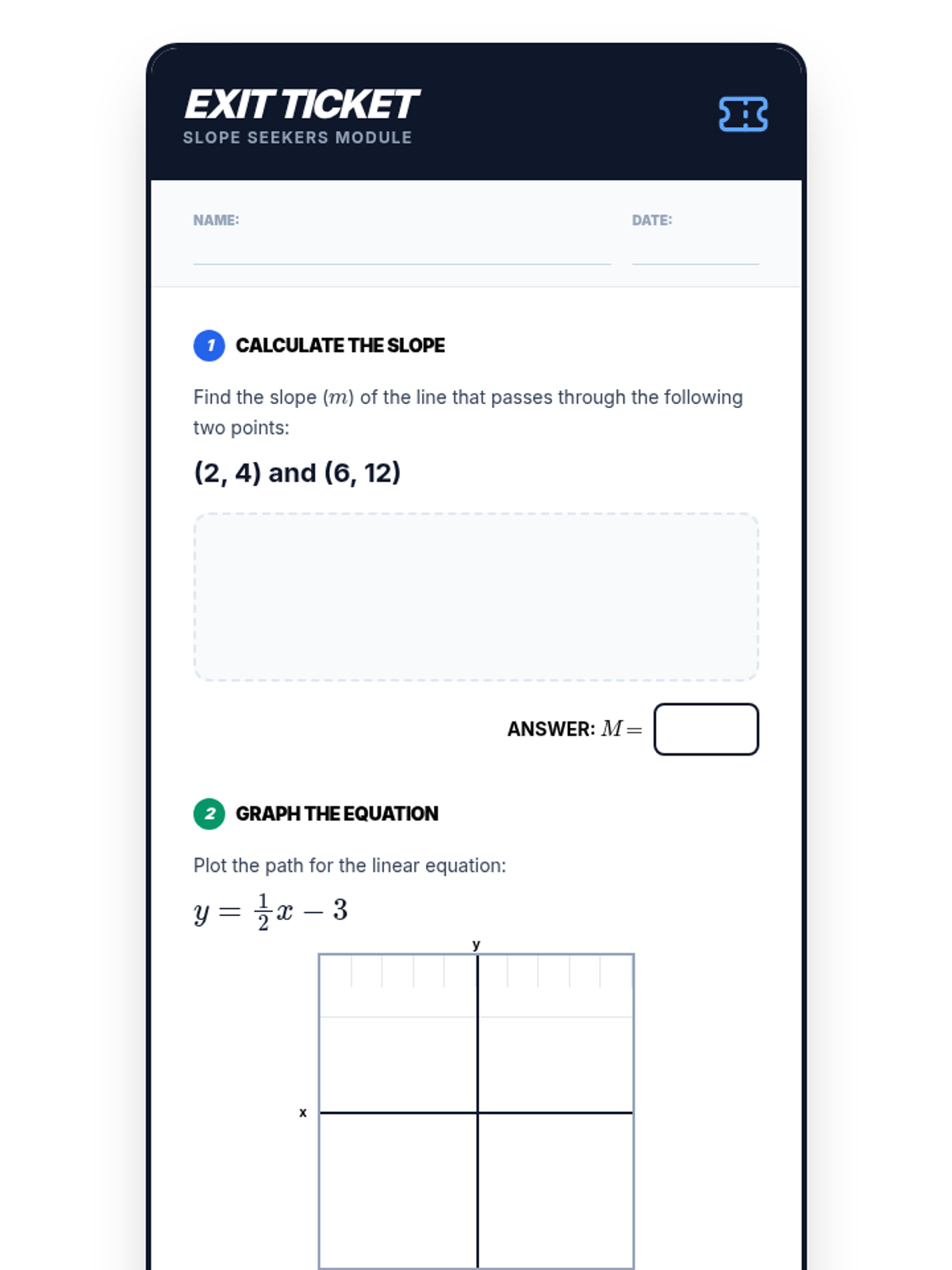
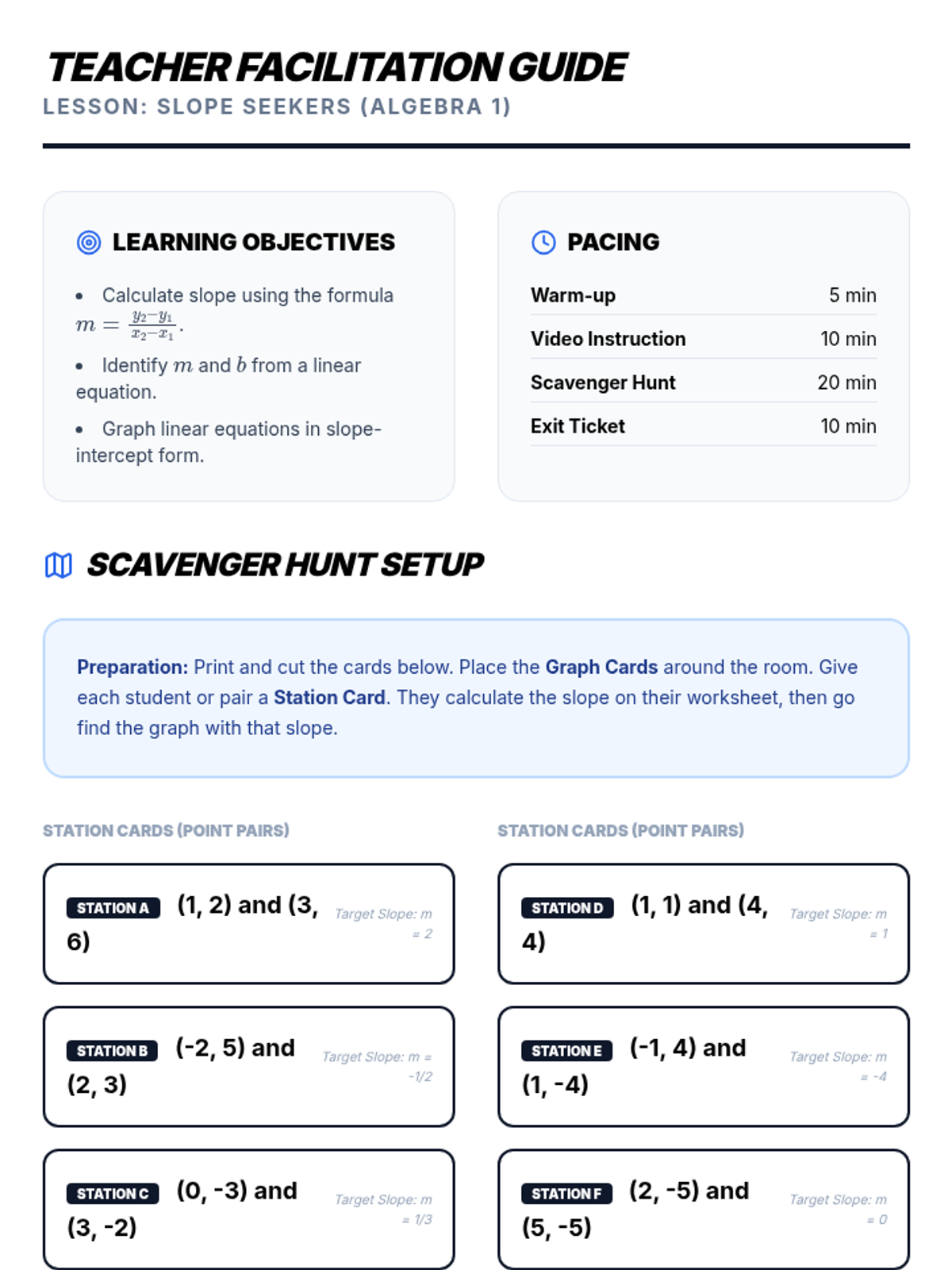
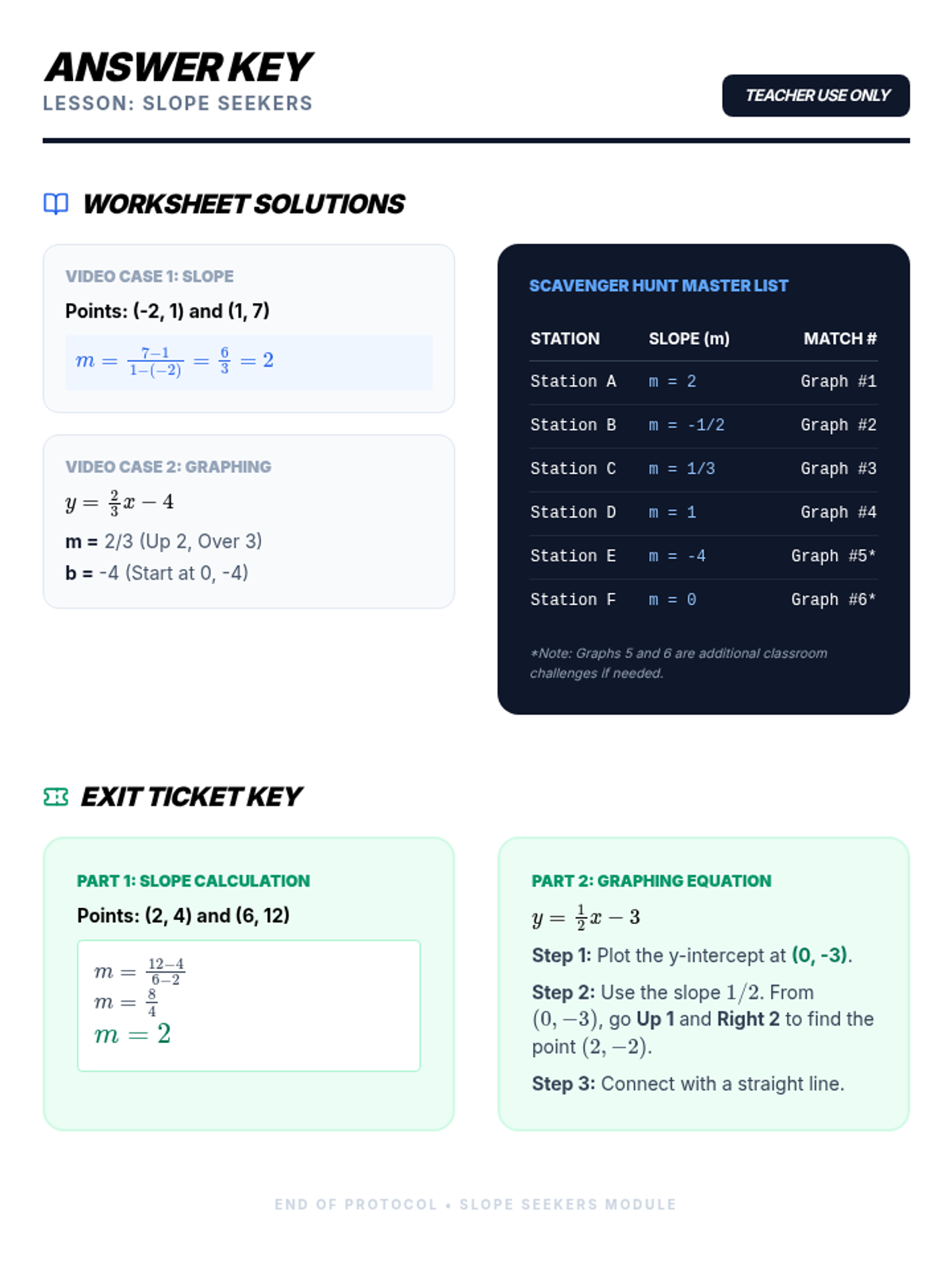
A foundational algebra sequence focused on linear relationships, starting with the calculation of slope and graphing equations in slope-intercept form. Students progress from conceptual understanding to procedural fluency using visual and kinesthetic activities.
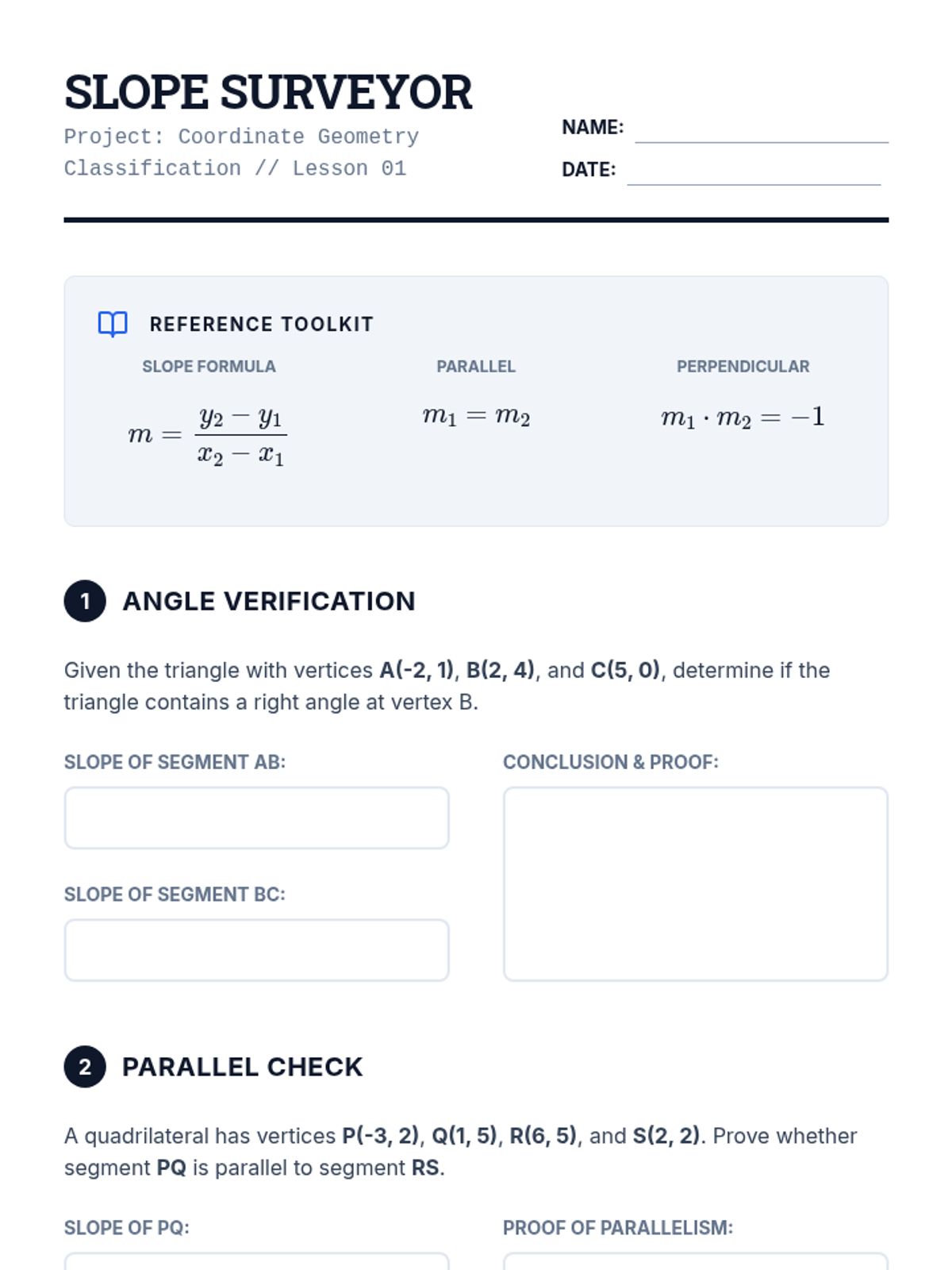
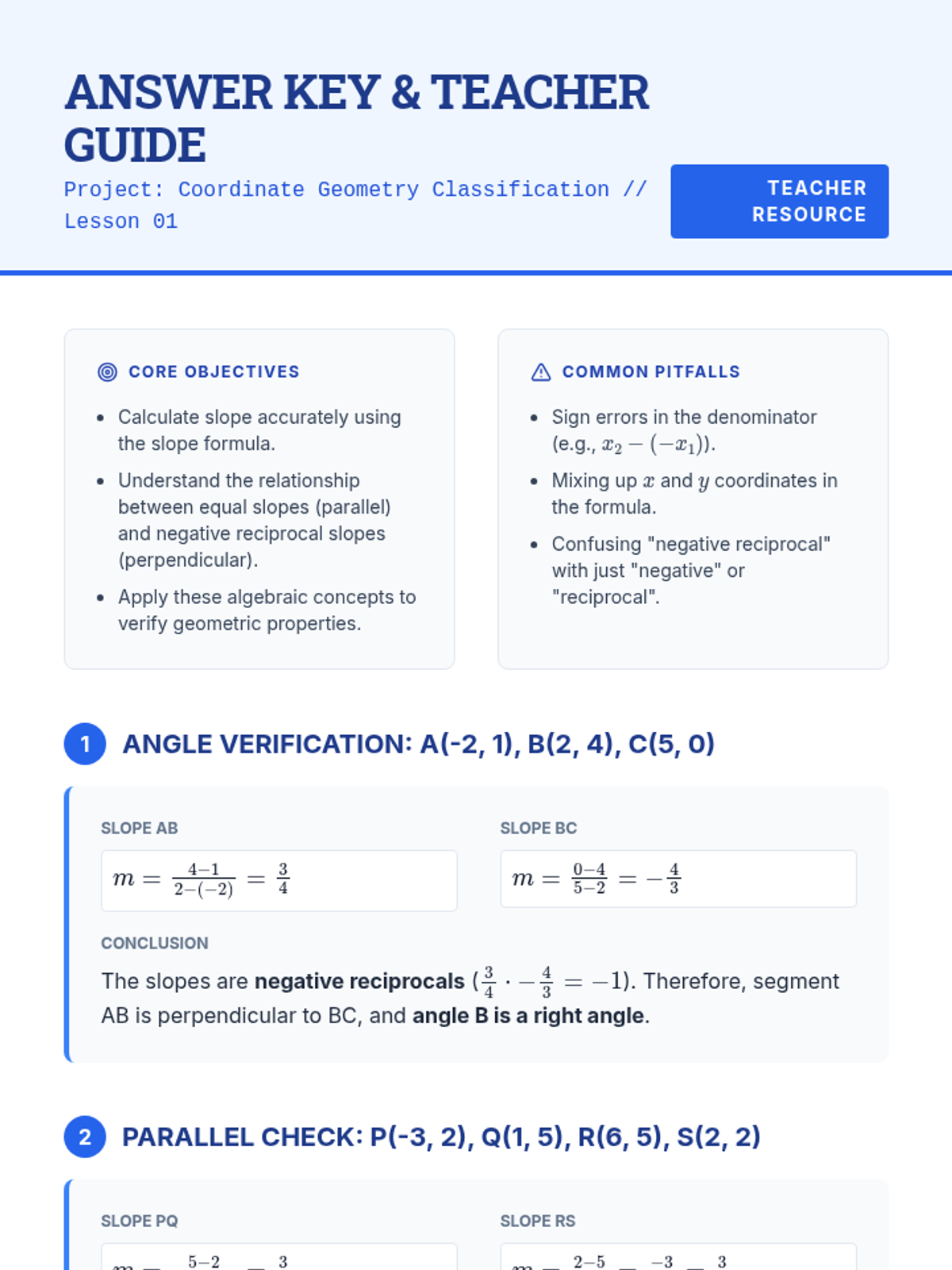
This sequence applies coordinate geometry to the classification of polygons, moving students from visual estimation to mathematical proof using distance and slope formulas. Students act as geometric investigators, verifying the properties of triangles and quadrilaterals through rigorous calculation.
This sequence bridges algebra and geometry by applying coordinate methods to the classification of geometric figures. Students use distance, midpoint, and slope formulas to verify properties of triangles and quadrilaterals, preparing them for vector physics and computer-aided design.
This sequence integrates algebra and geometry by using the coordinate plane to verify shape attributes. Students move beyond visual estimation to rigorous verification using the distance formula (Pythagorean Theorem) and slope.
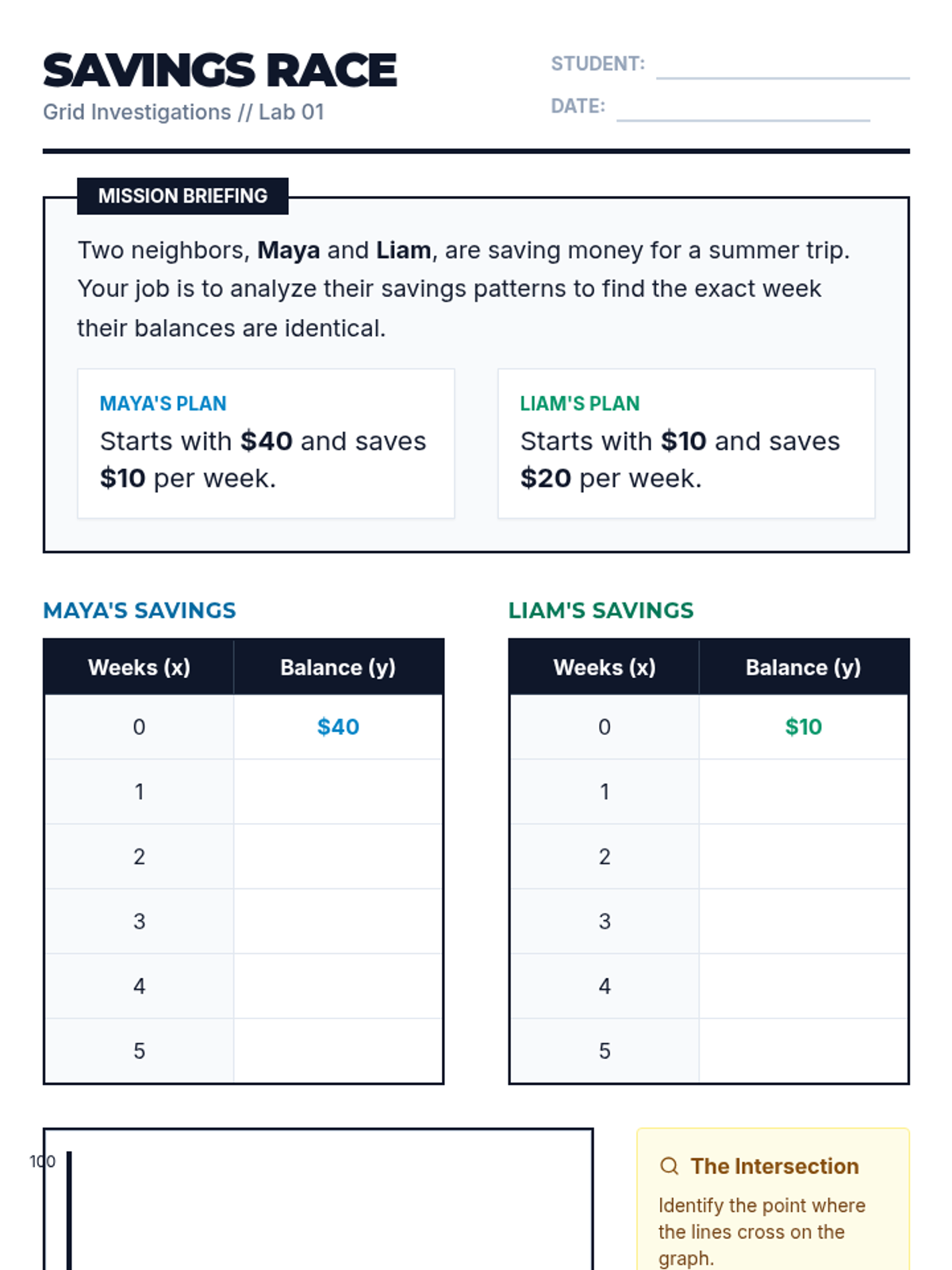
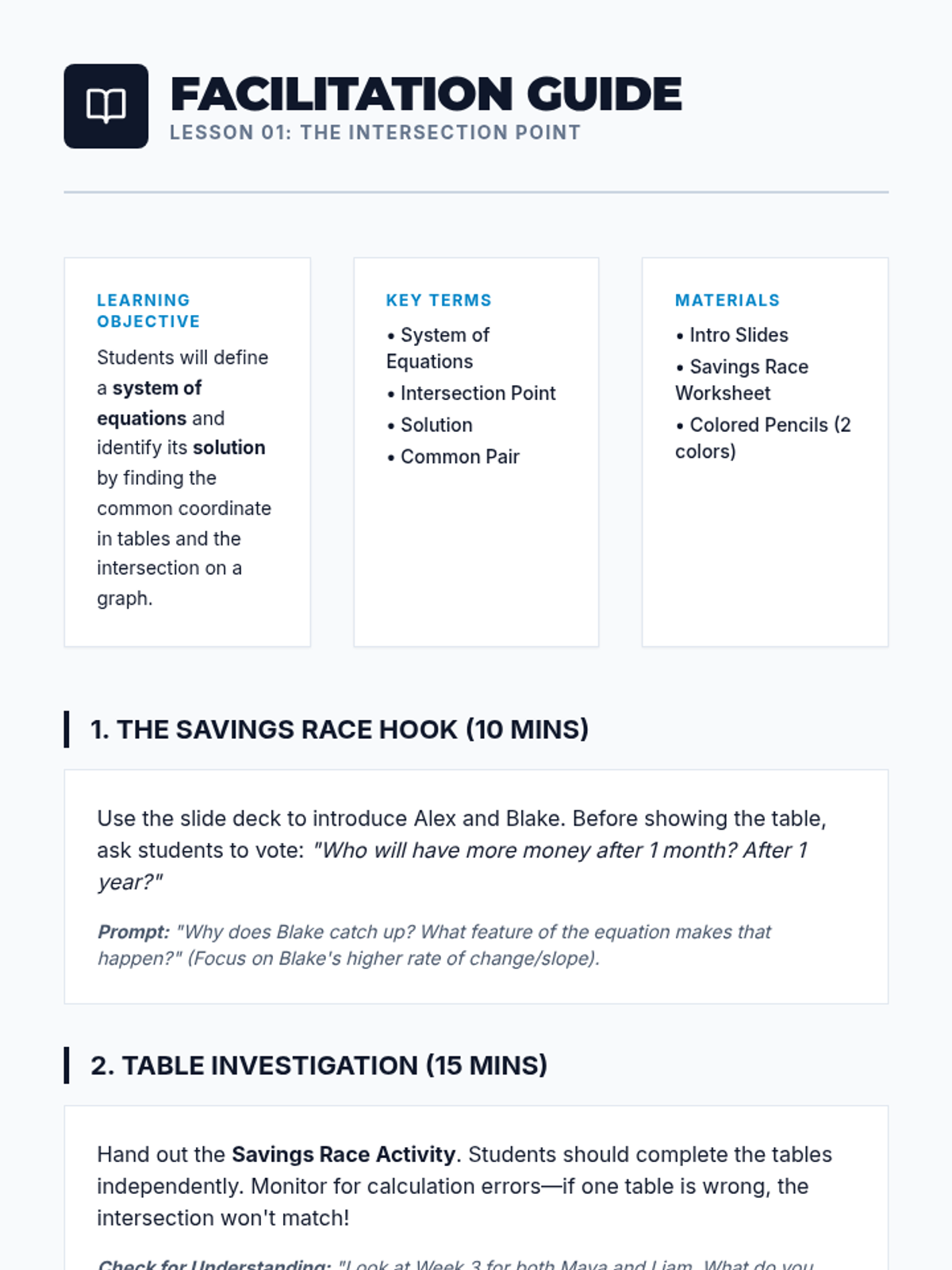
An inquiry-based exploration of systems of equations using graphing and visual inspection. Students progress from comparing tables to graphing lines and identifying special cases like parallel and coinciding lines.
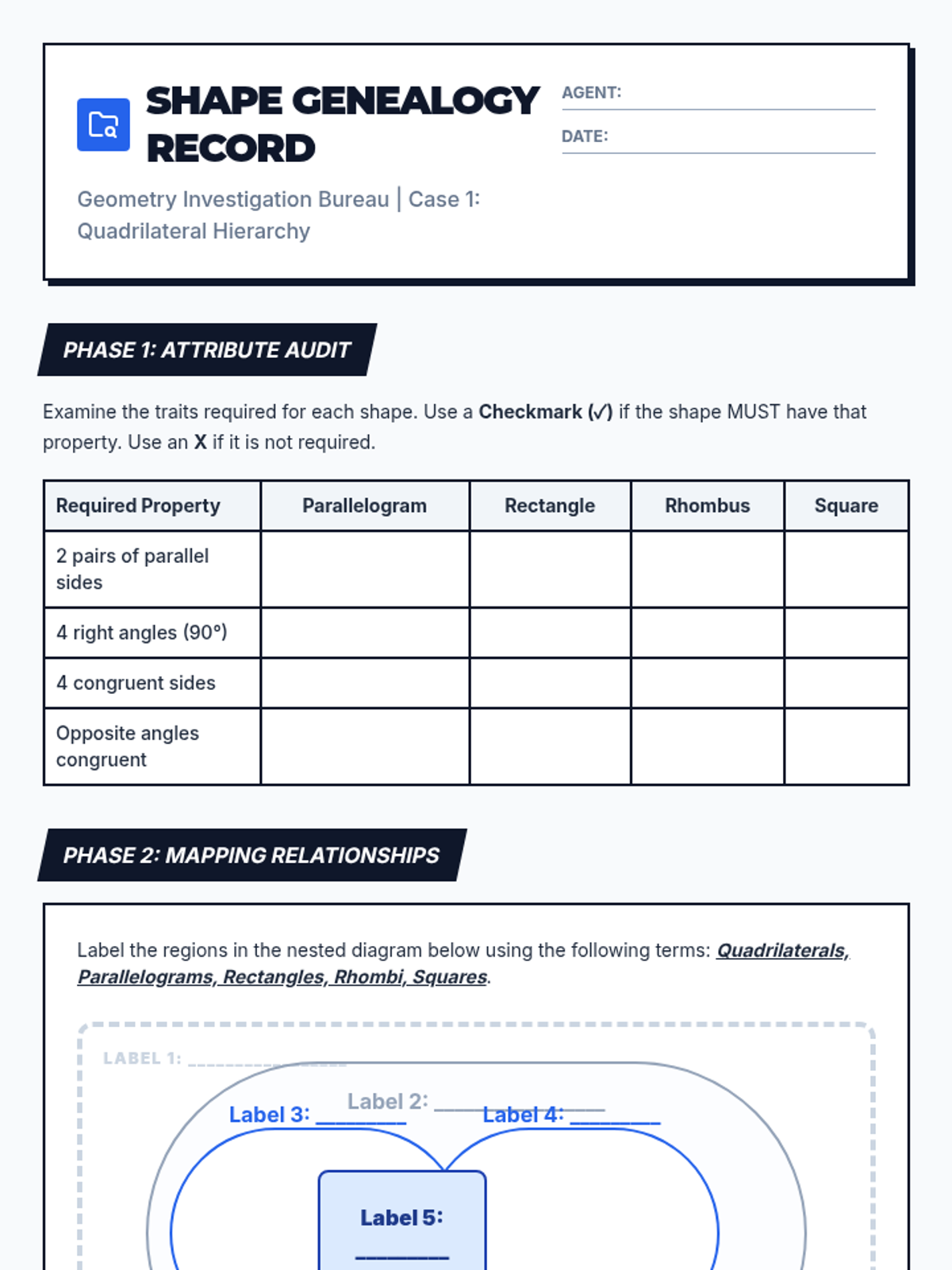
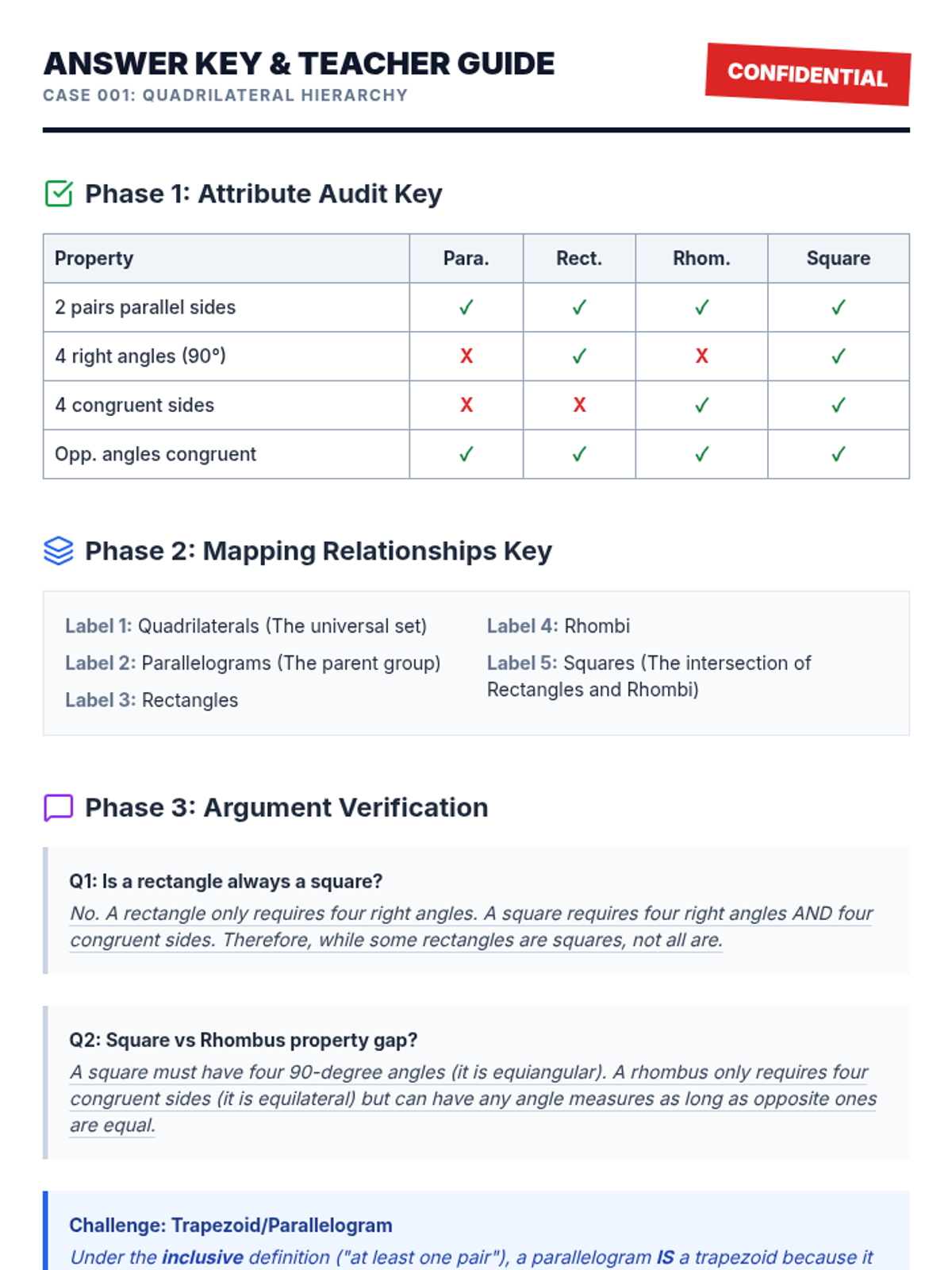
A comprehensive 9th-grade geometry unit focused on the logical classification of quadrilaterals and the verification of geometric properties using coordinate geometry. Students move from intuitive definitions to rigorous proofs, exploring hierarchical relationships and using algebraic tools to defend mathematical claims.
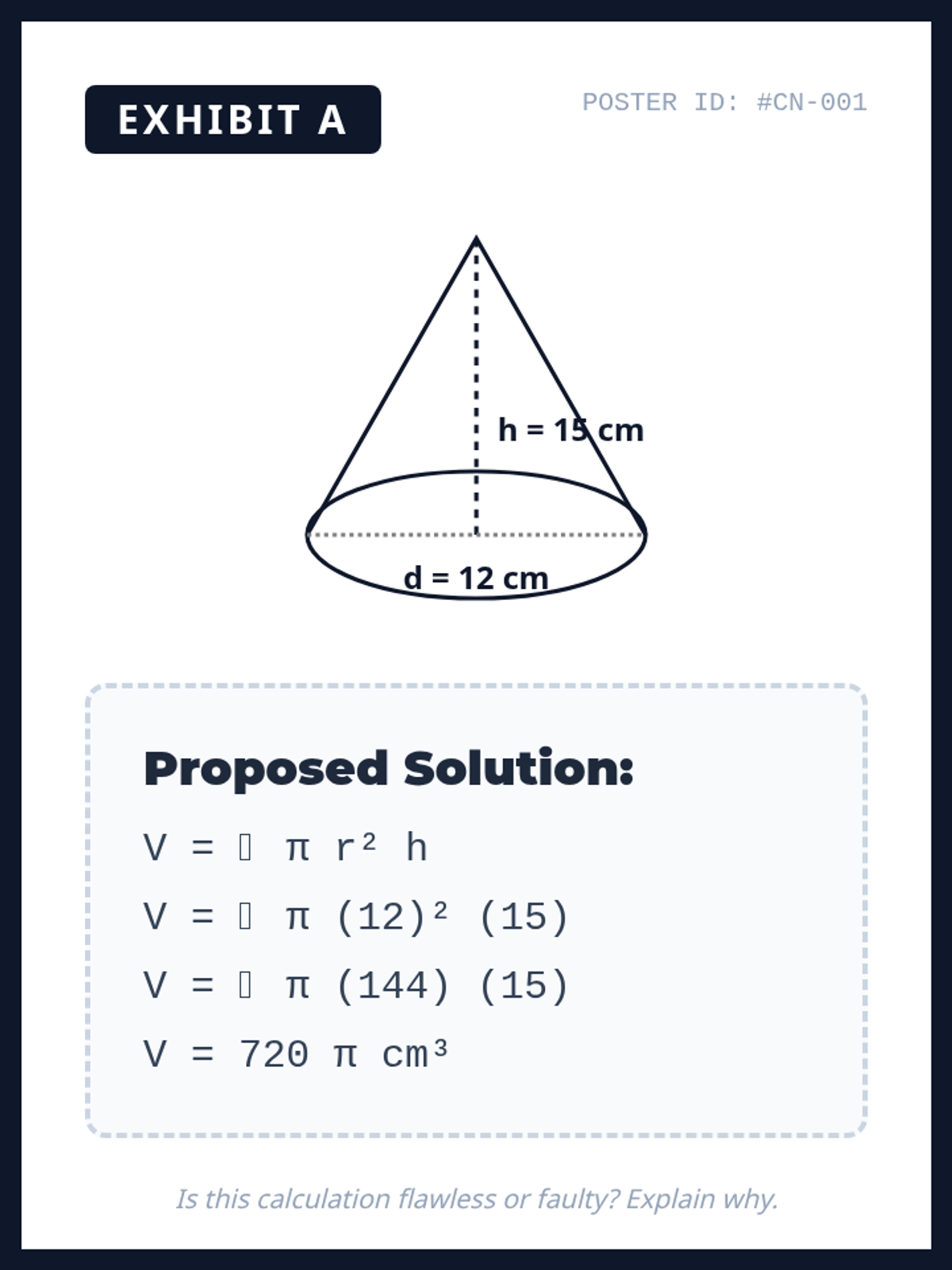
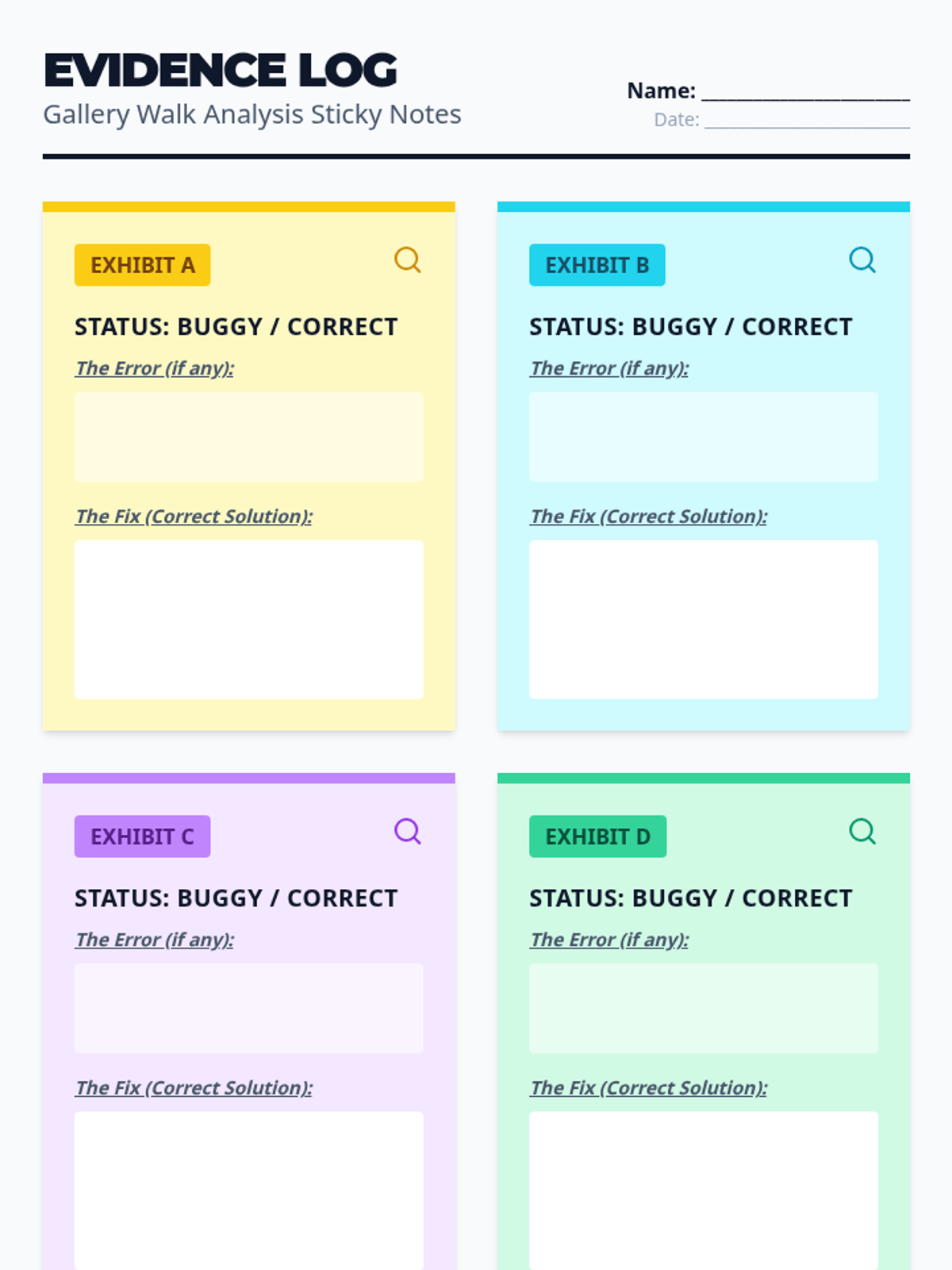
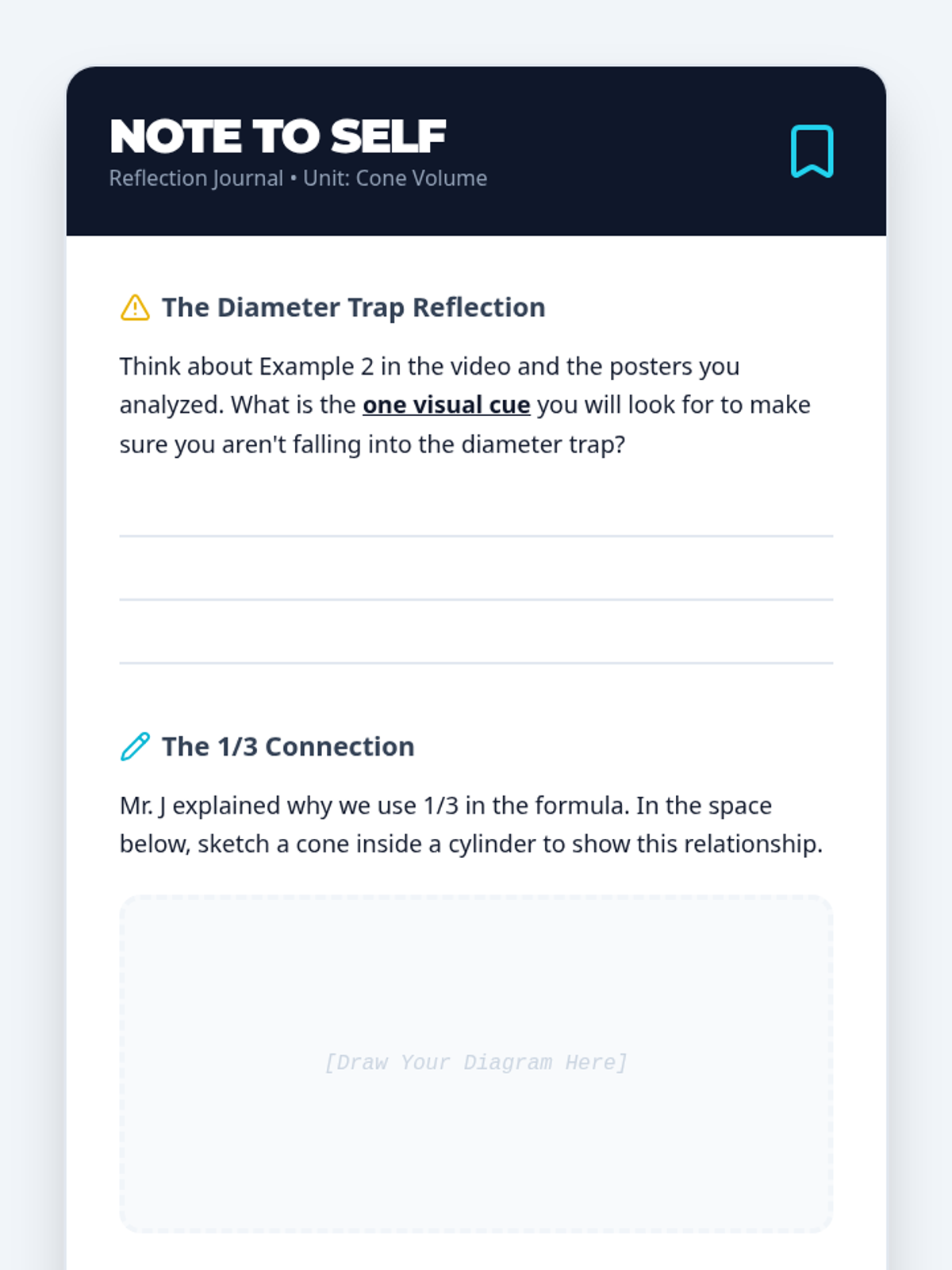
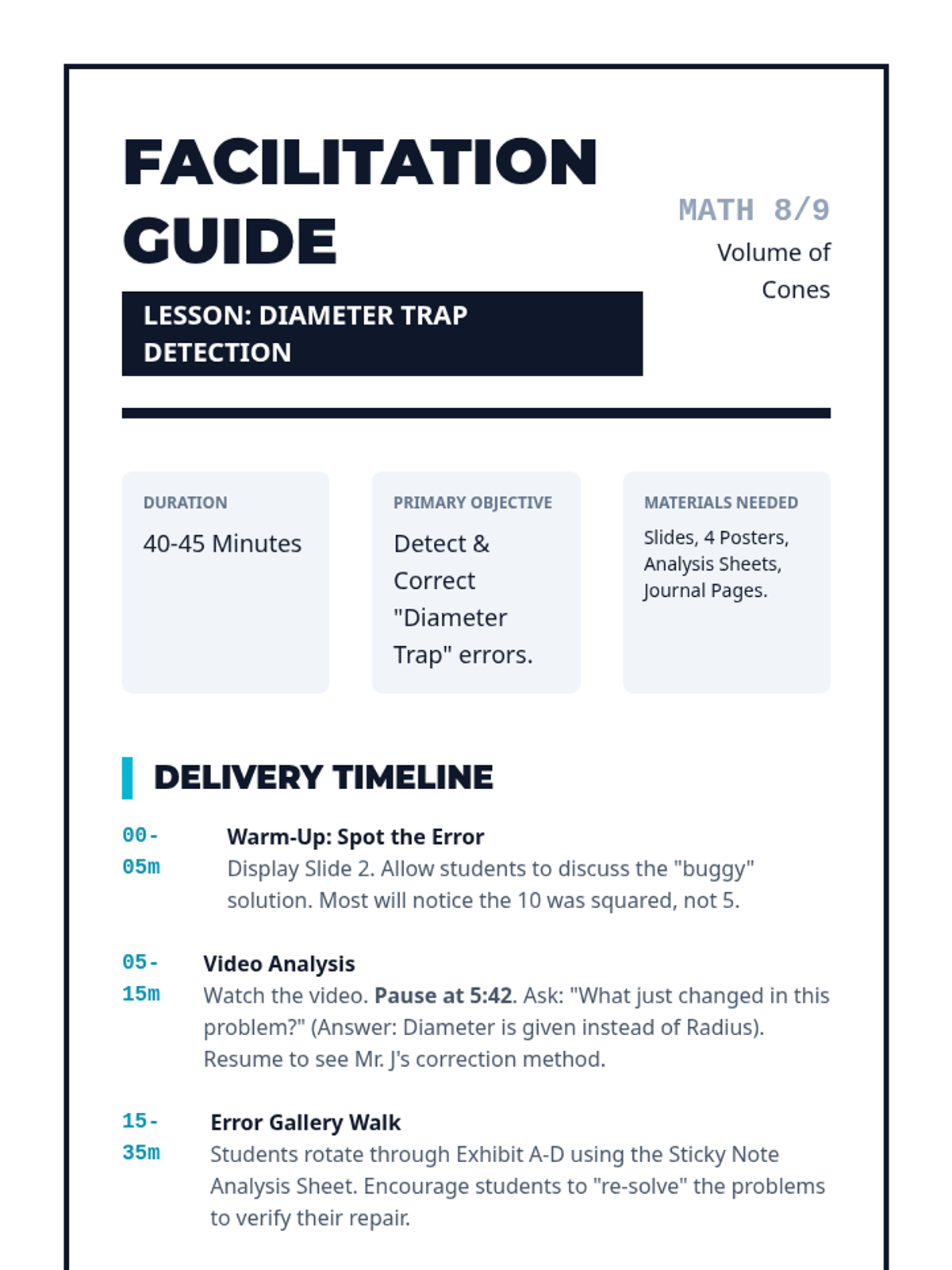
A focused unit on mastering the volume of cones, specifically identifying and correcting common calculation errors like the 'diameter trap'.
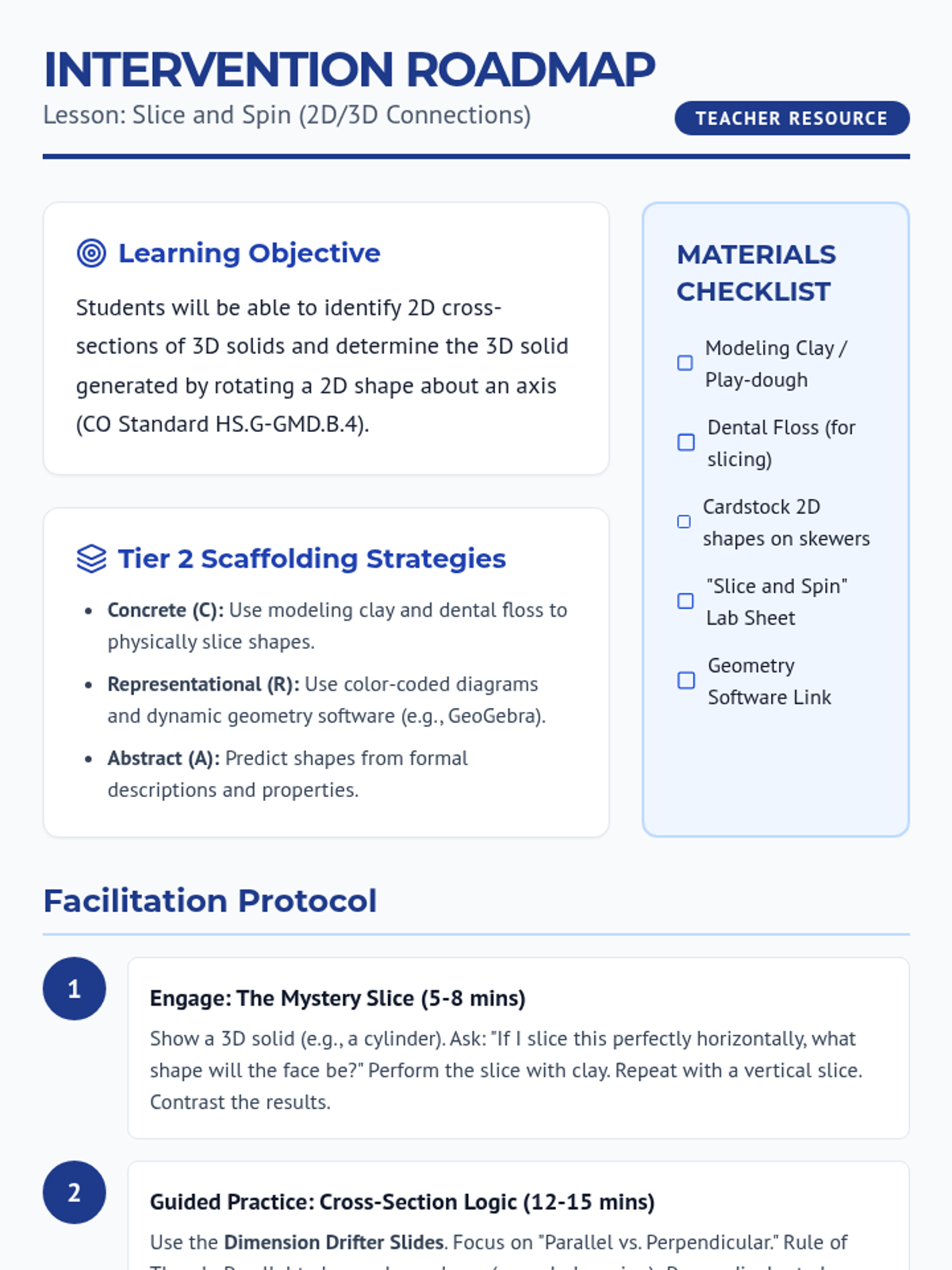
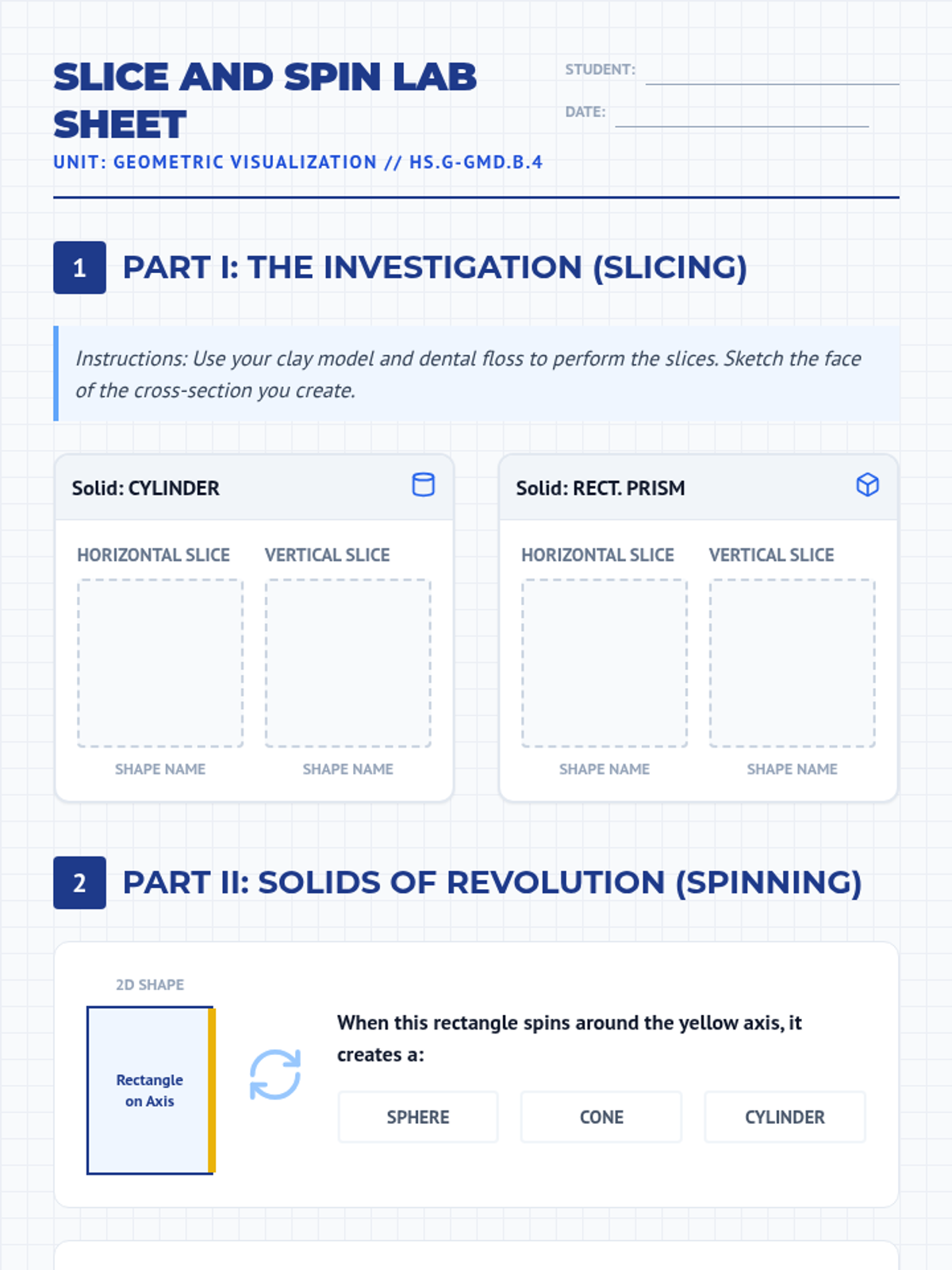
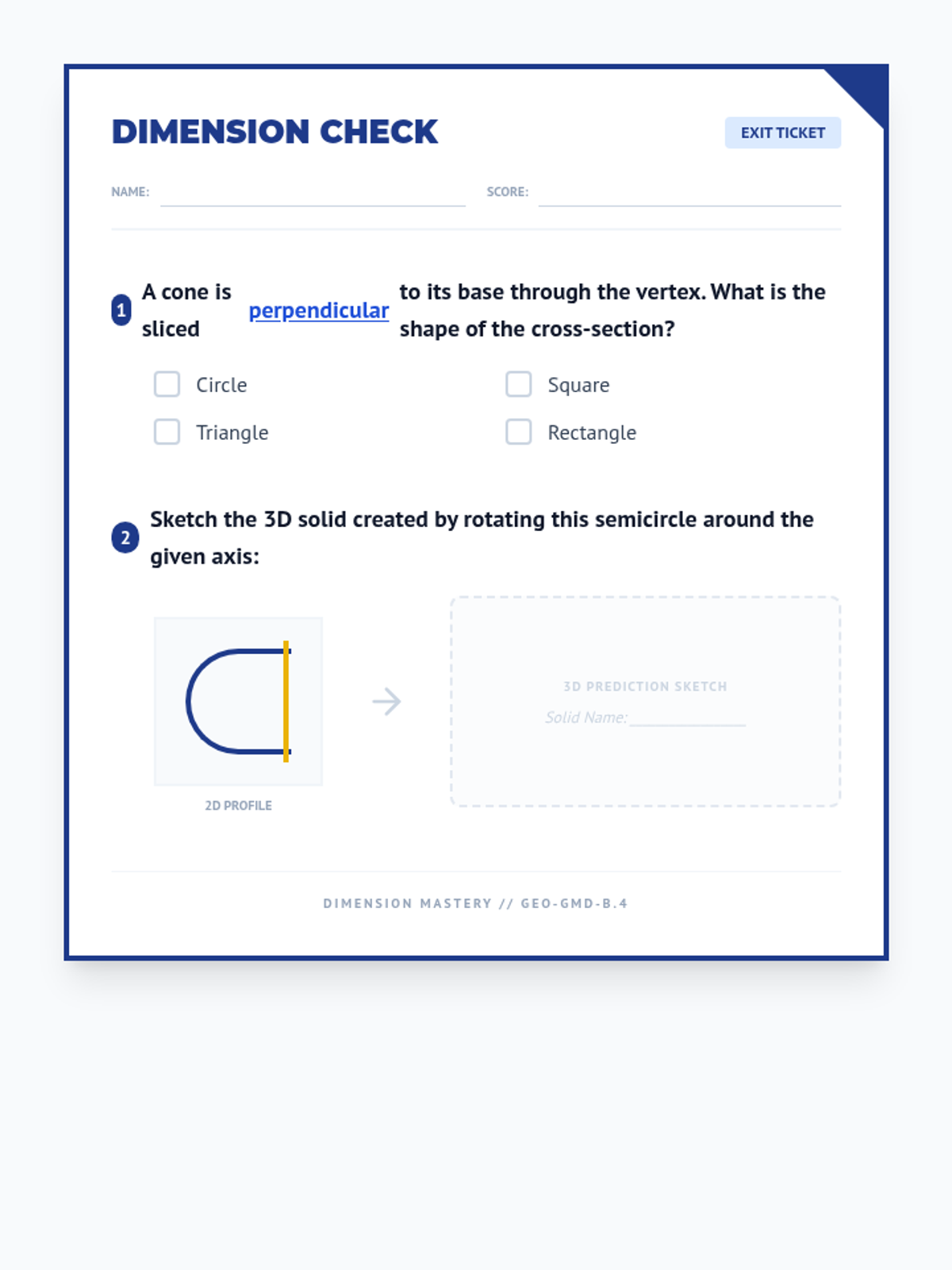
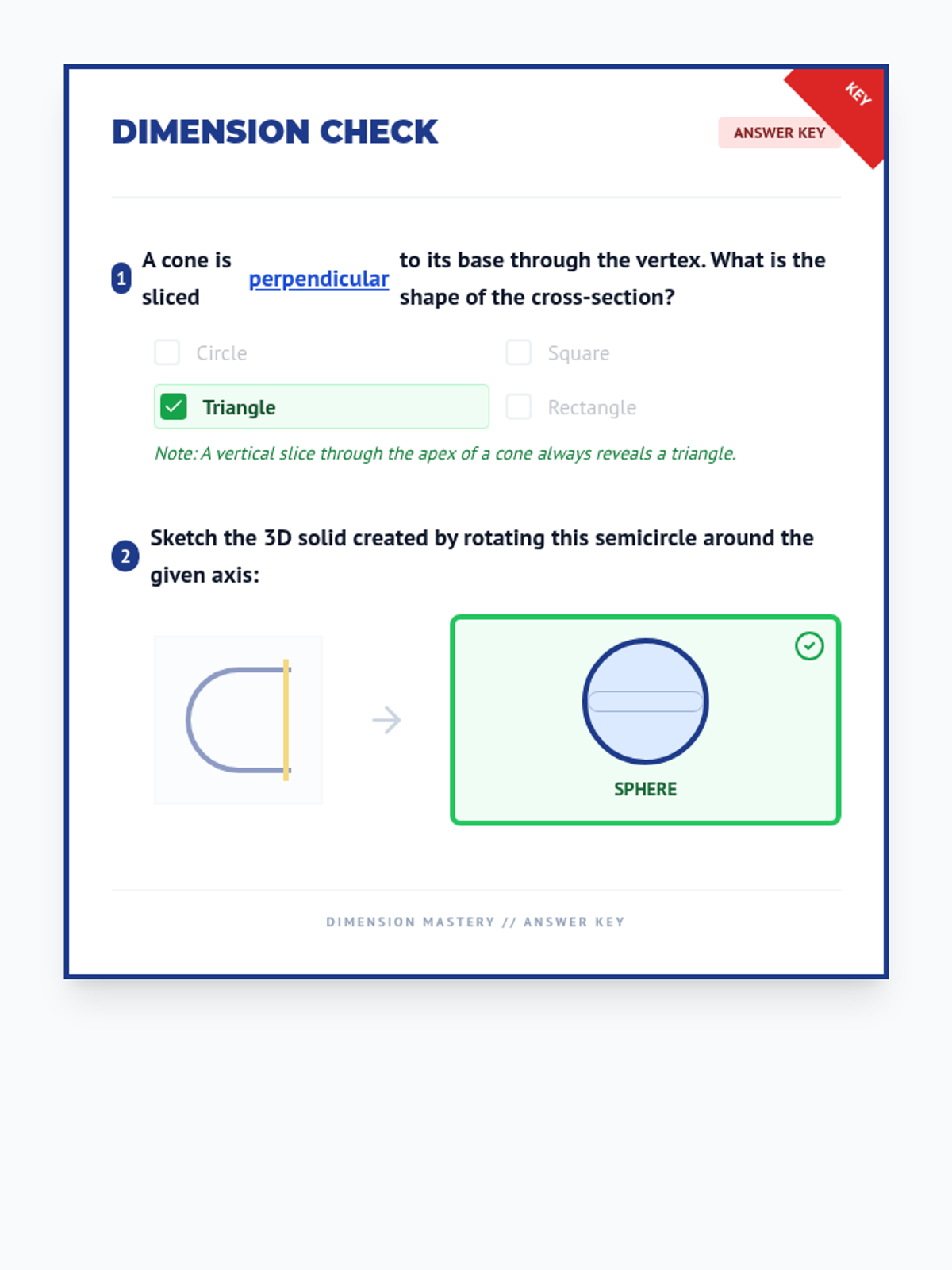
This sequence explores spatial visualization through the study of cross-sections and solids of revolution. Students learn to translate between 2D and 3D representations, a critical skill for engineering, physics, and advanced mathematics.
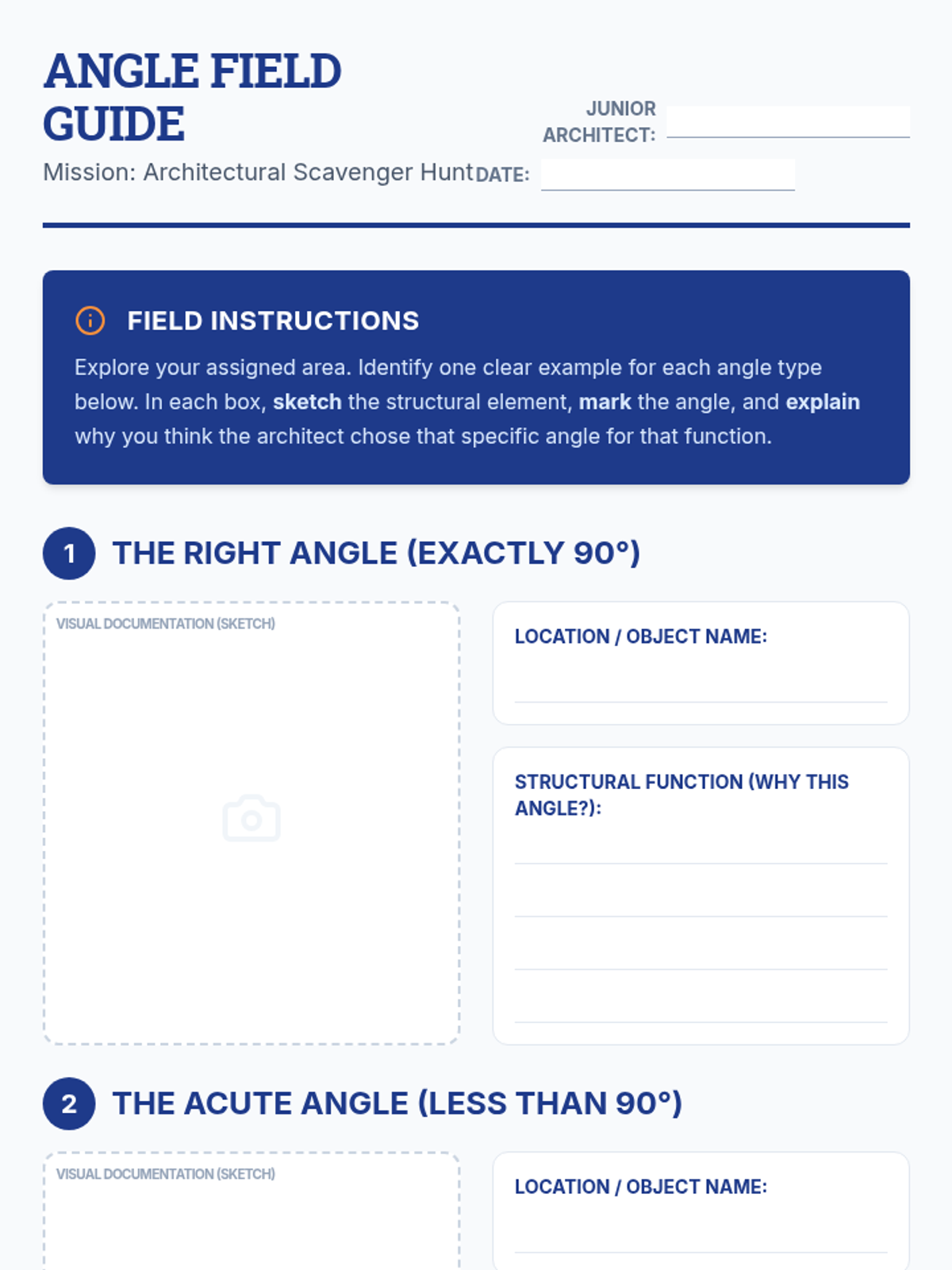
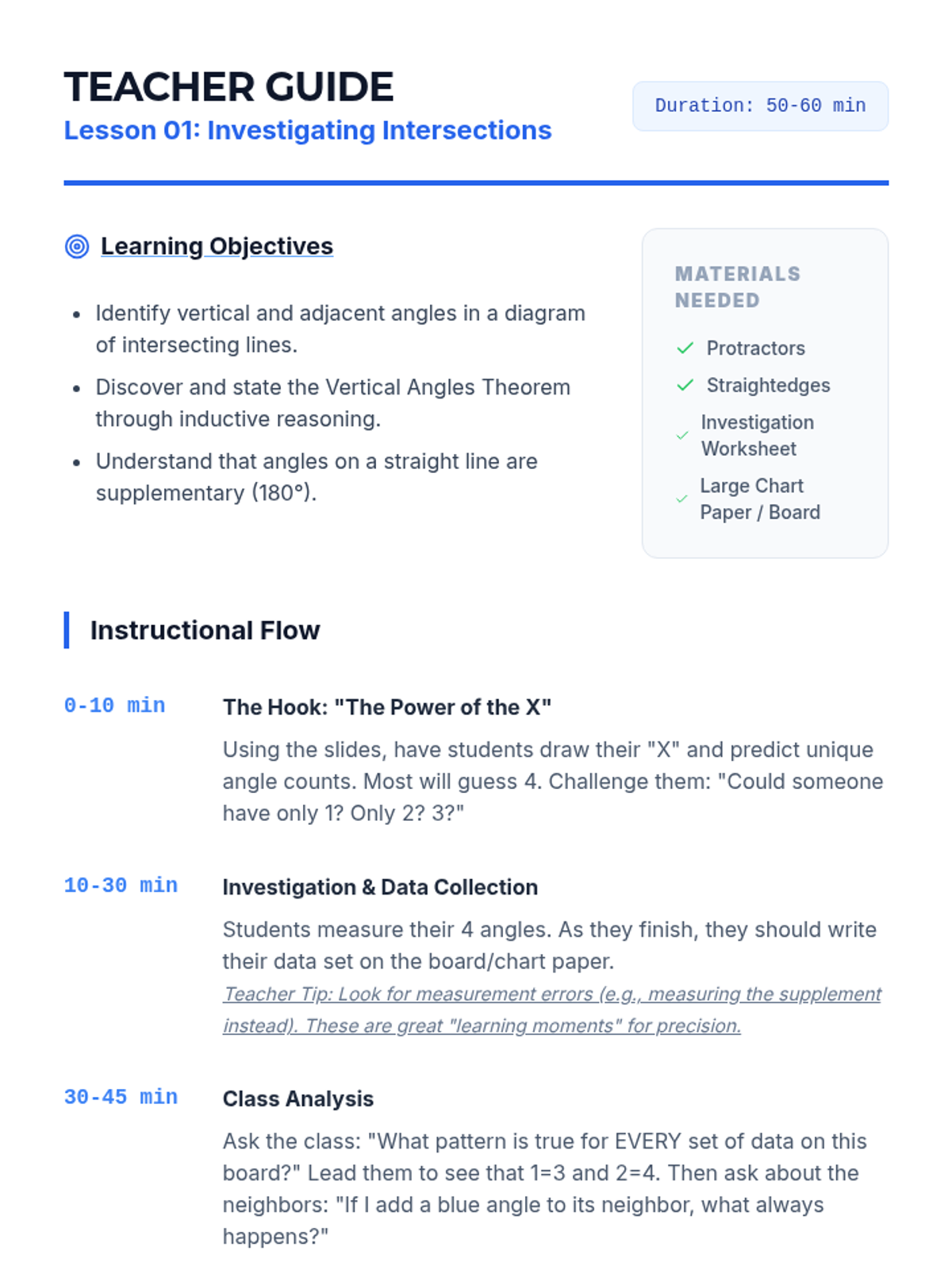
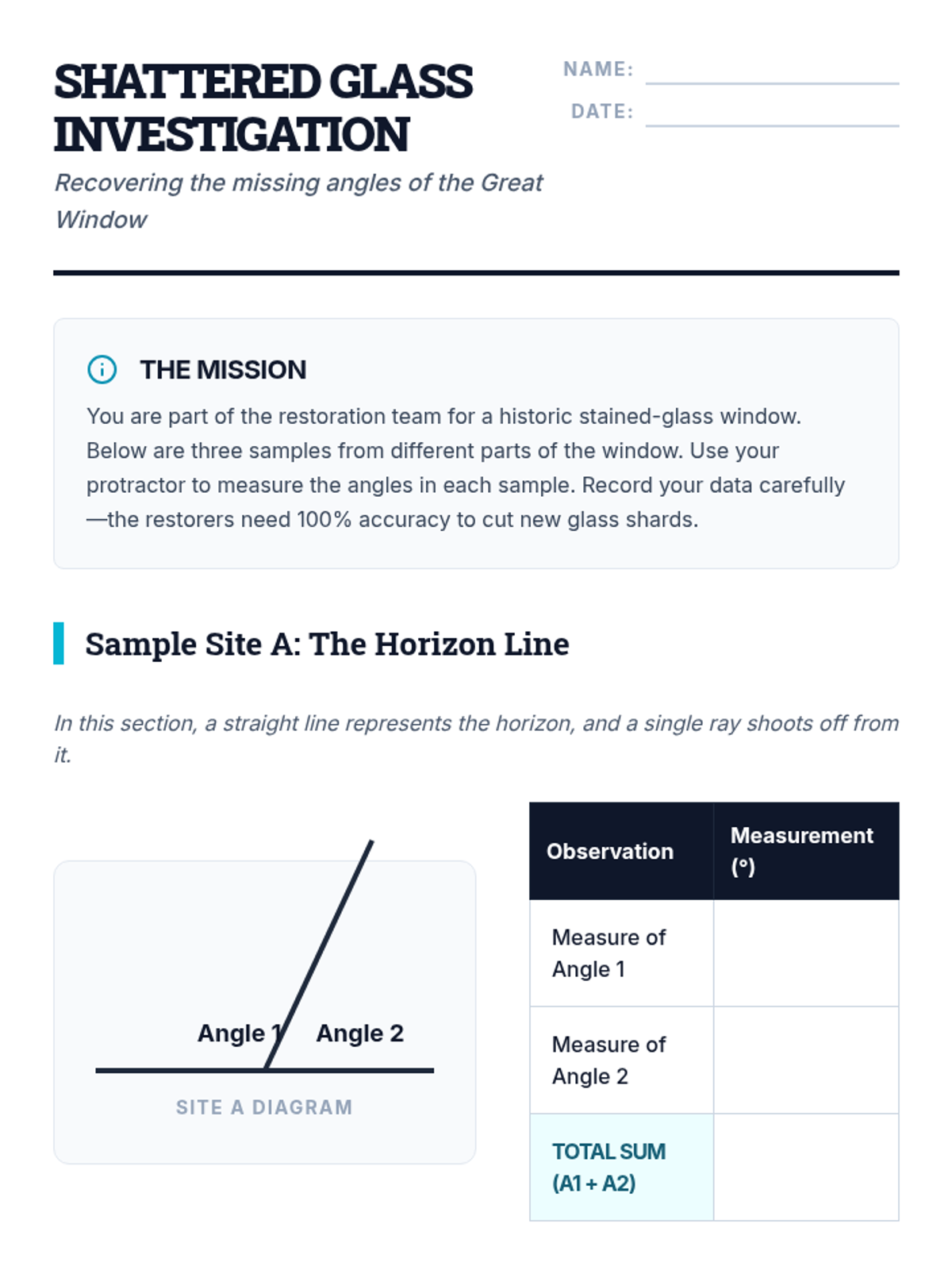
A 5-lesson math sequence where students explore angle relationships through the lens of architectural design, moving from identifying angles in the environment to drafting their own structural blueprints.
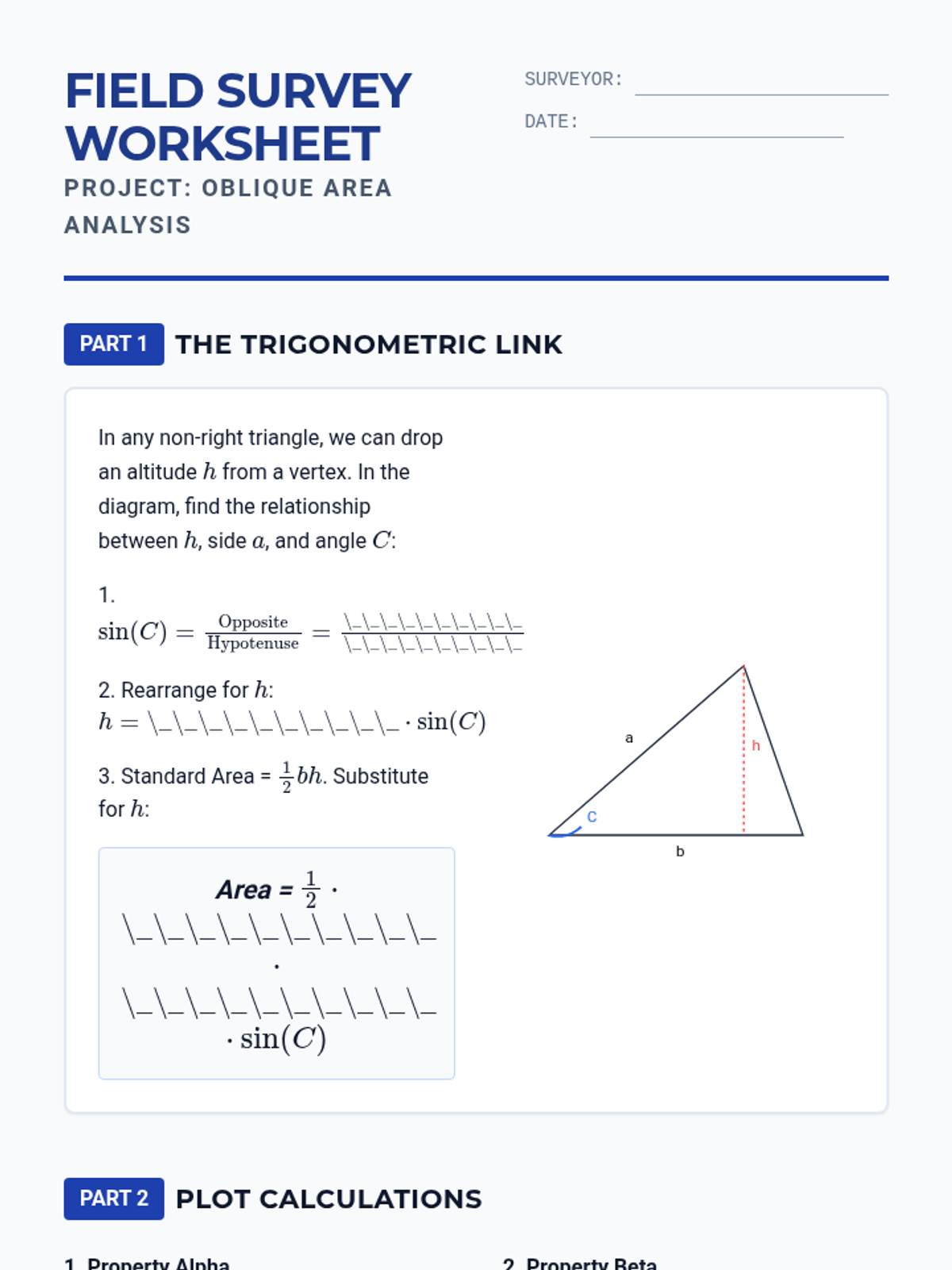
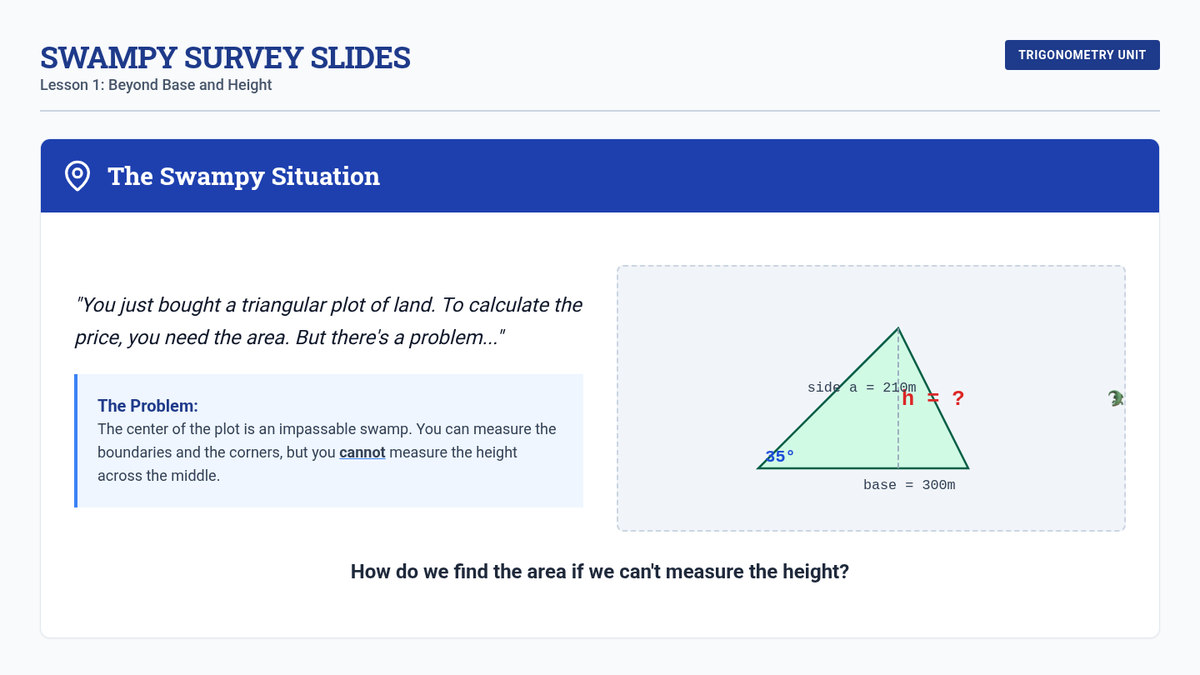
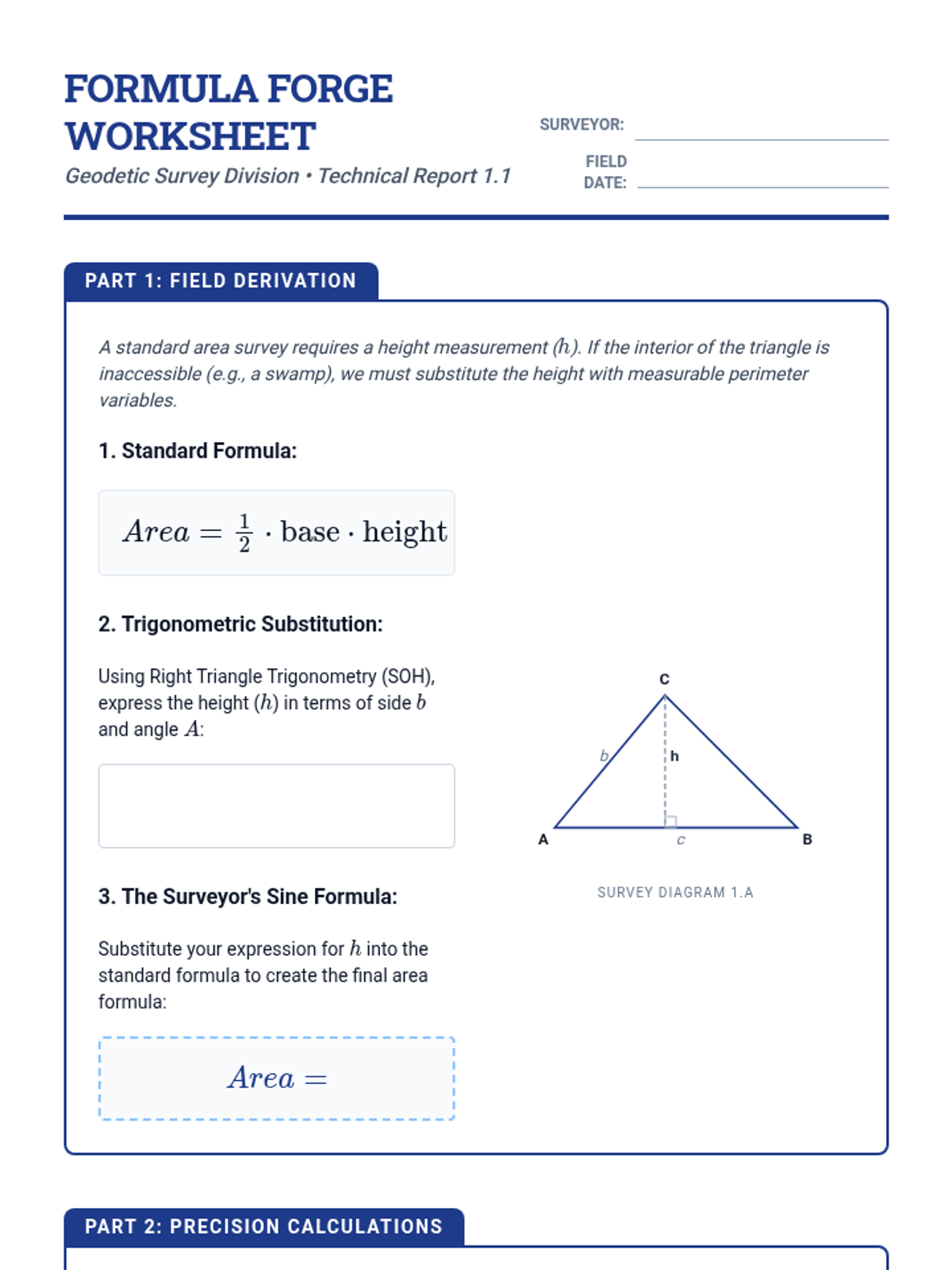
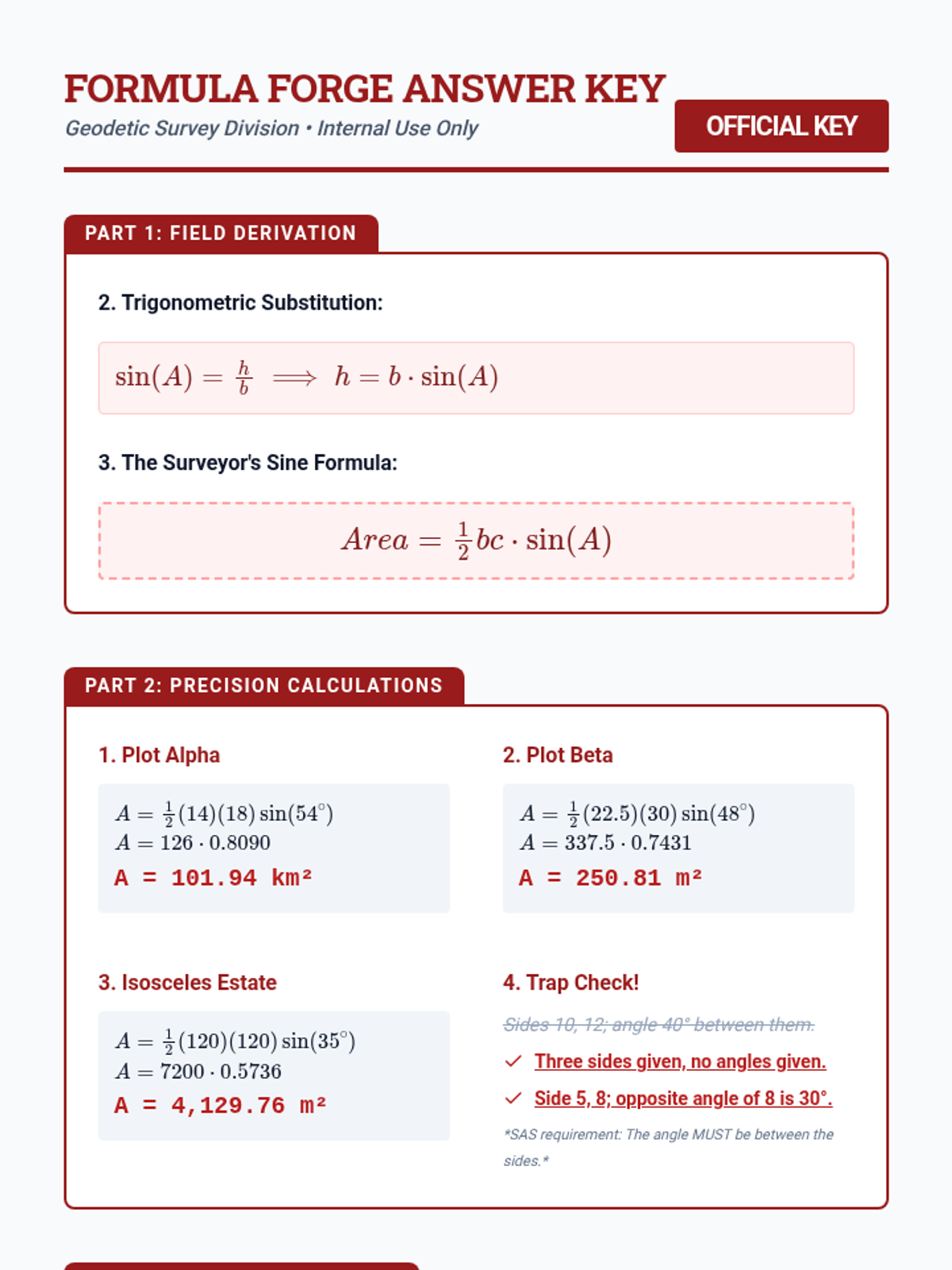
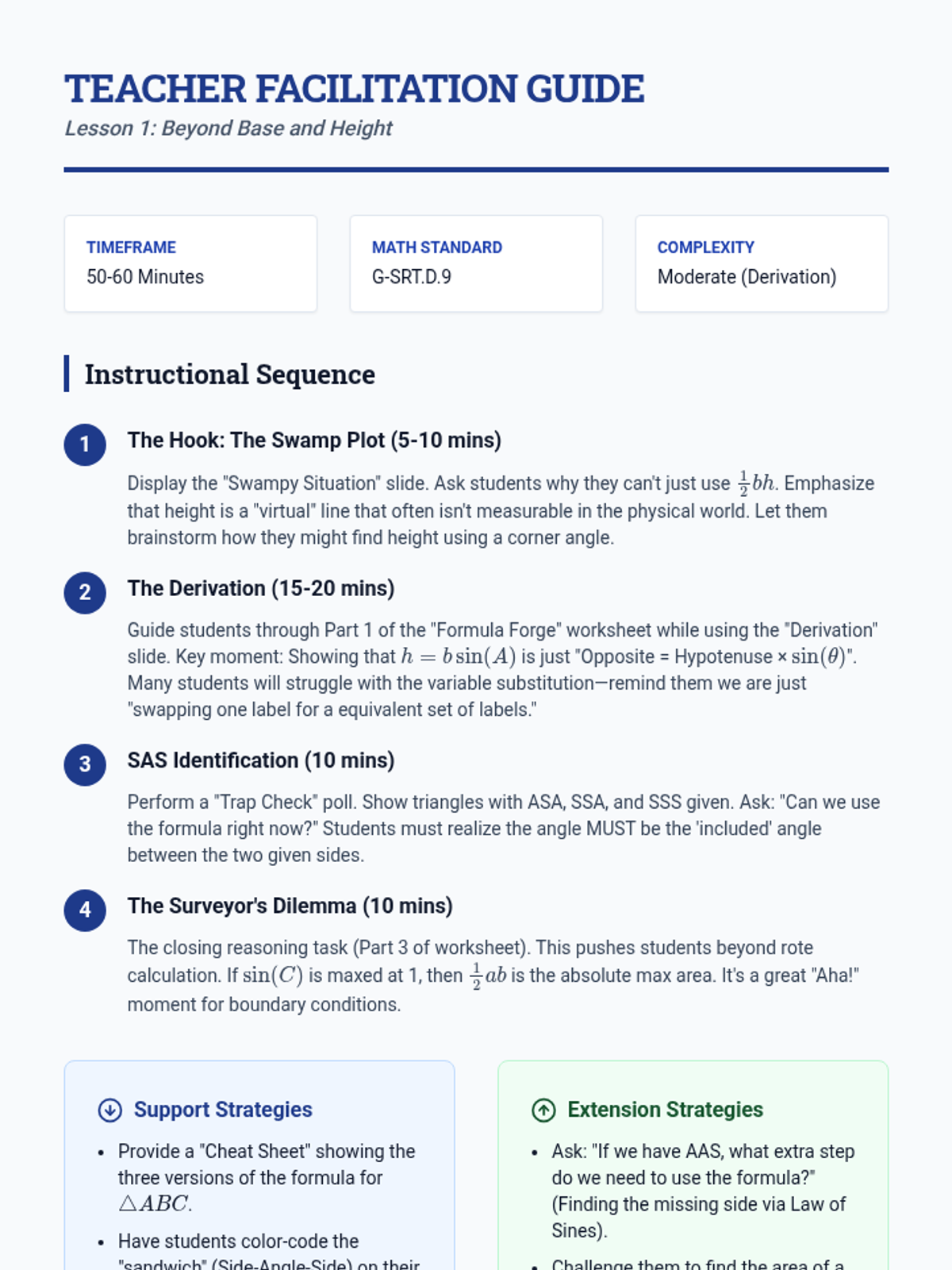
This sequence explores the measurement of area and the analysis of forces using general triangles. Students move beyond the basic 1/2 bh formula to discover how sine and perimeter can define area in oblique scenarios, specifically using Heron's Formula and vector analysis.
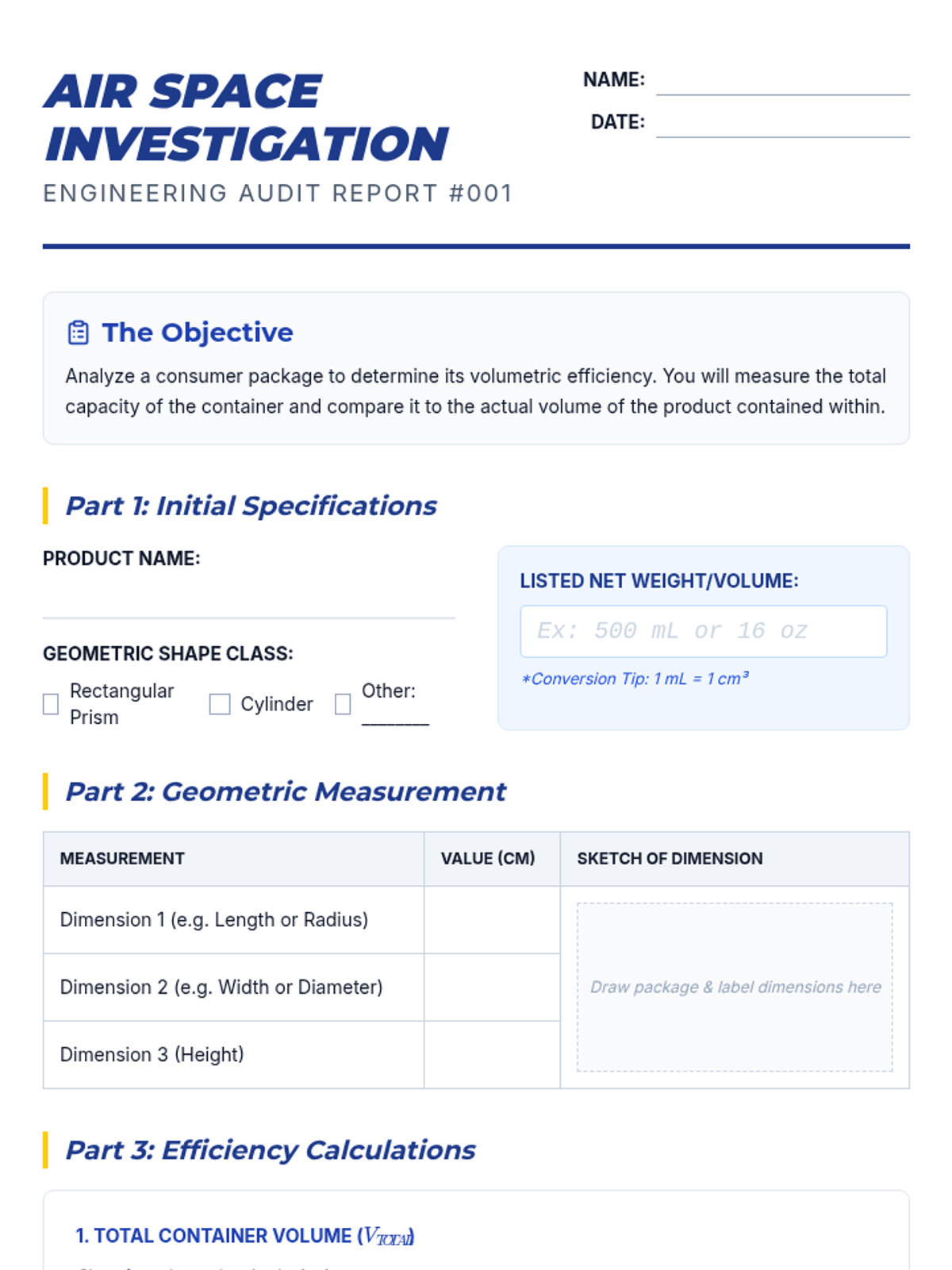
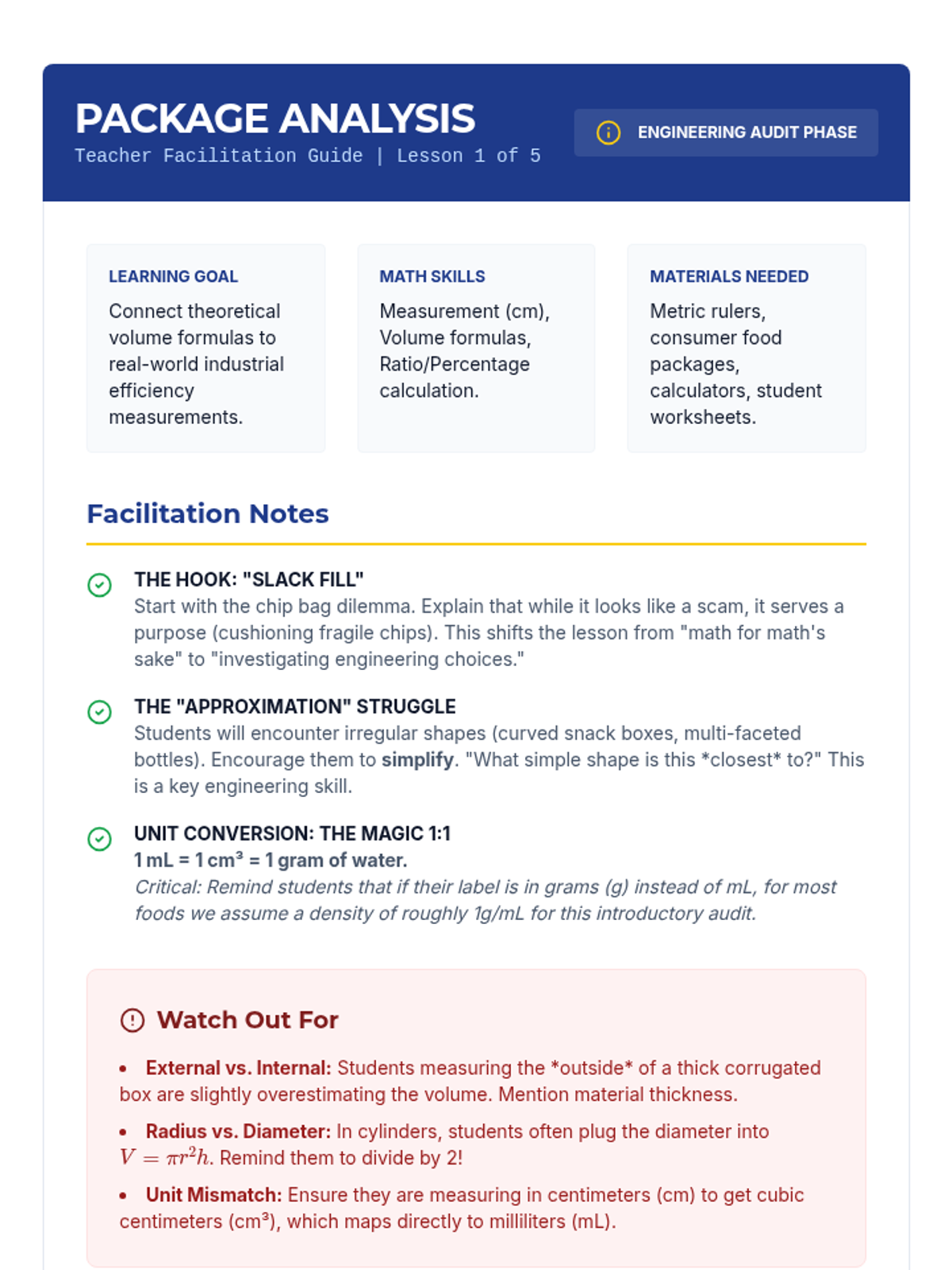
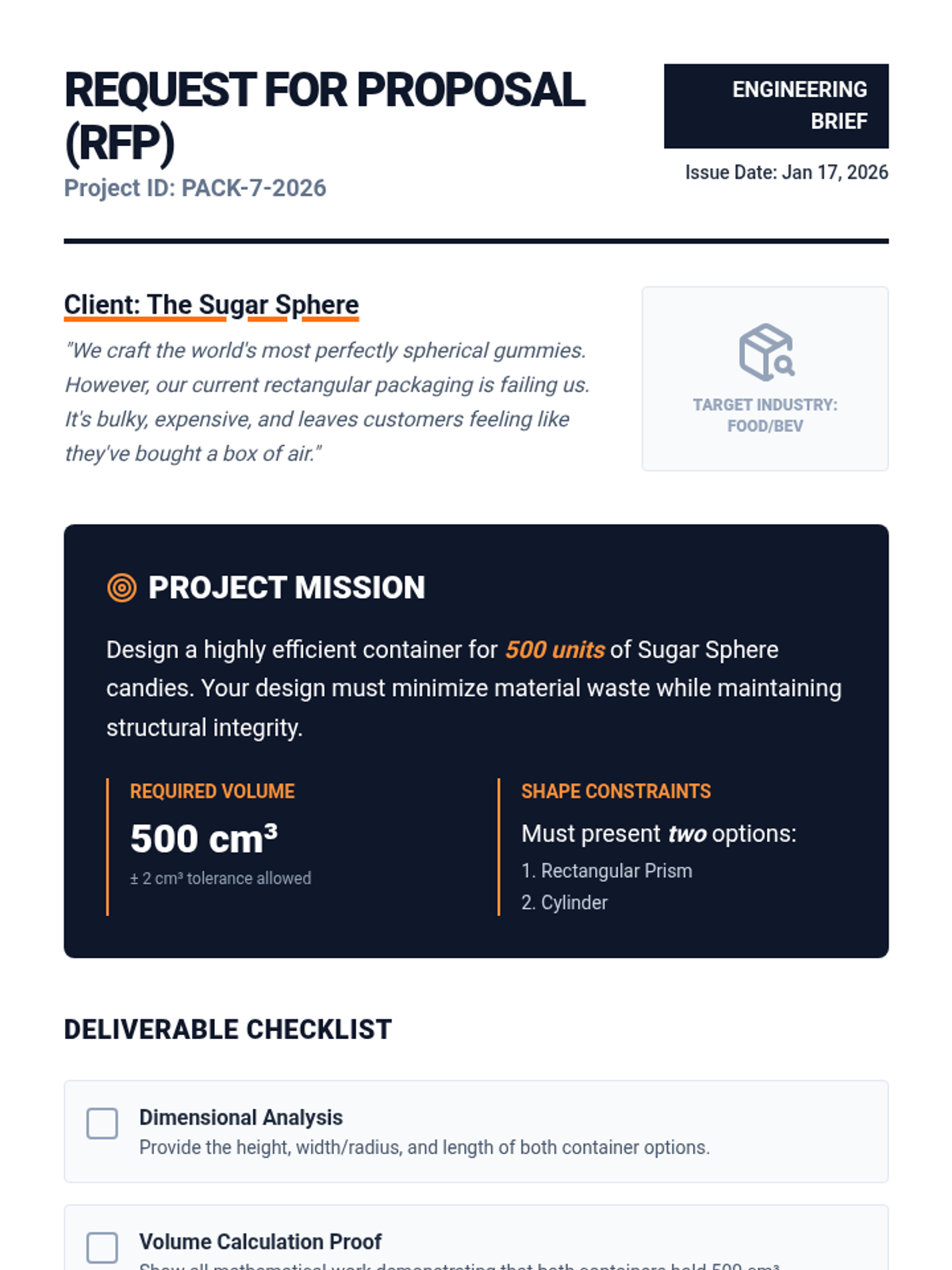
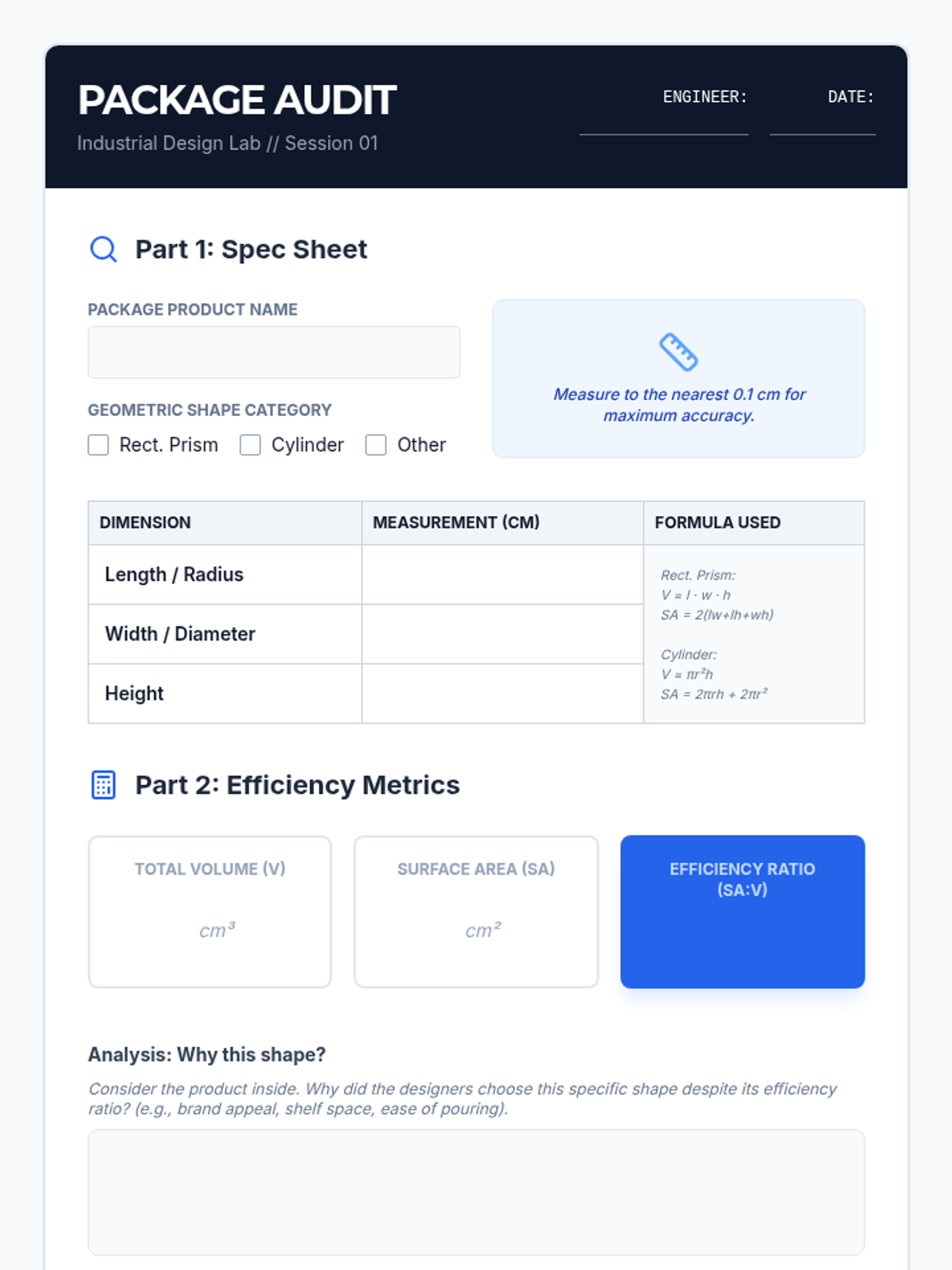
A capstone project where 9th-grade students act as packaging engineers, designing containers that balance volume requirements, surface area costs, and shipping logistics. Students move from analyzing real-world packaging to creating and pitching their own mathematically optimized designs.
This sequence bridges geometry, algebra, and physics by challenging students to work backwards from volume to find missing dimensions and using those volumes to calculate density. Students act as analysts and designers, moving from formula manipulation to forensic material identification.
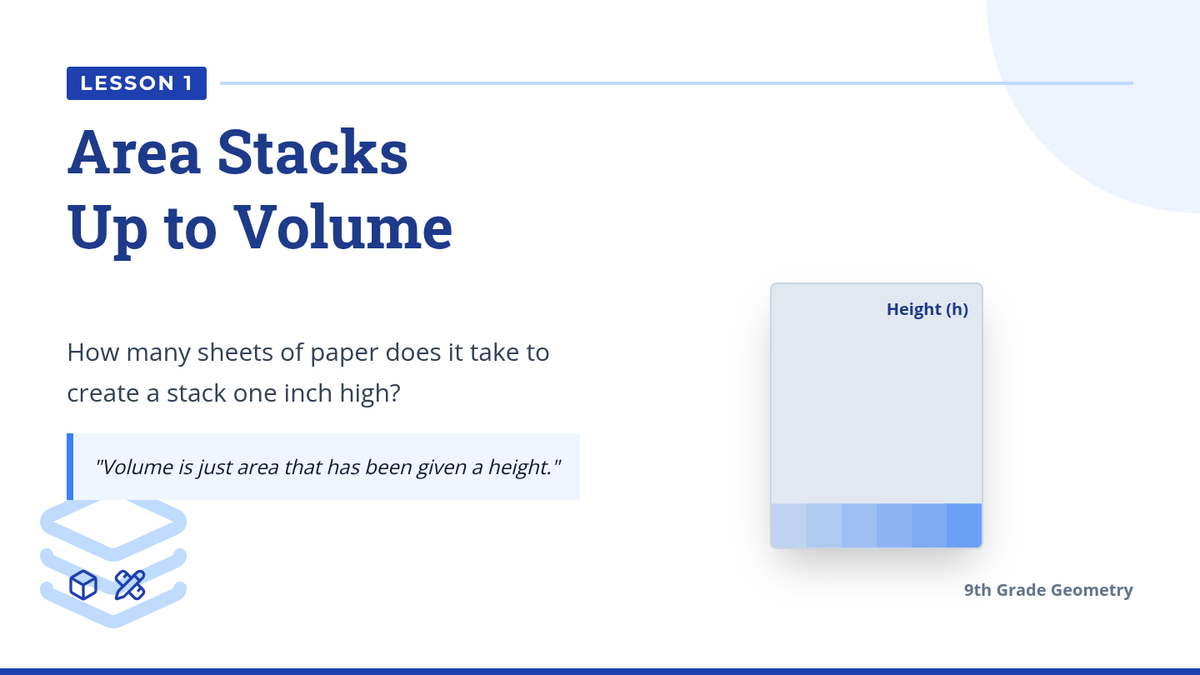
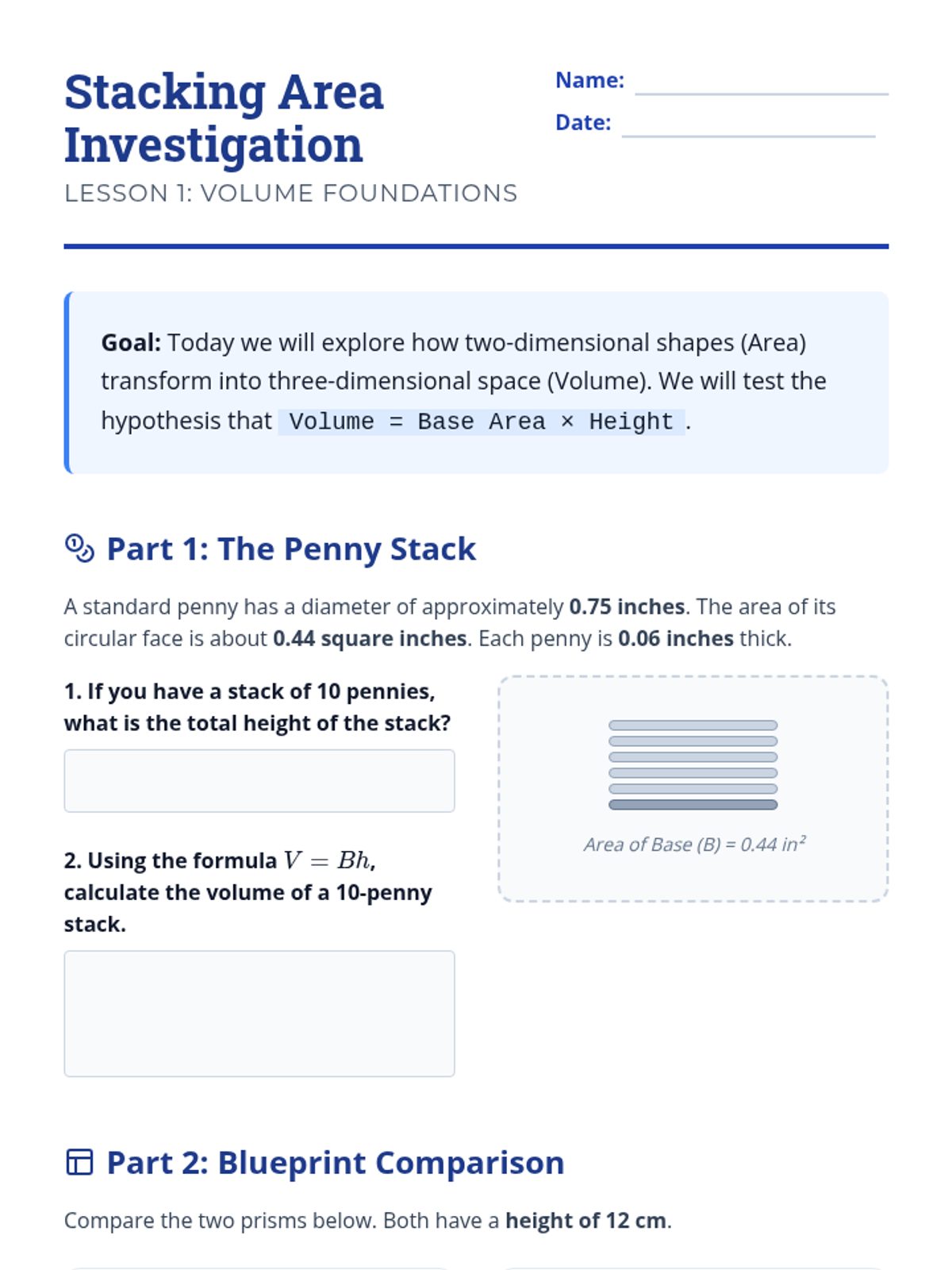
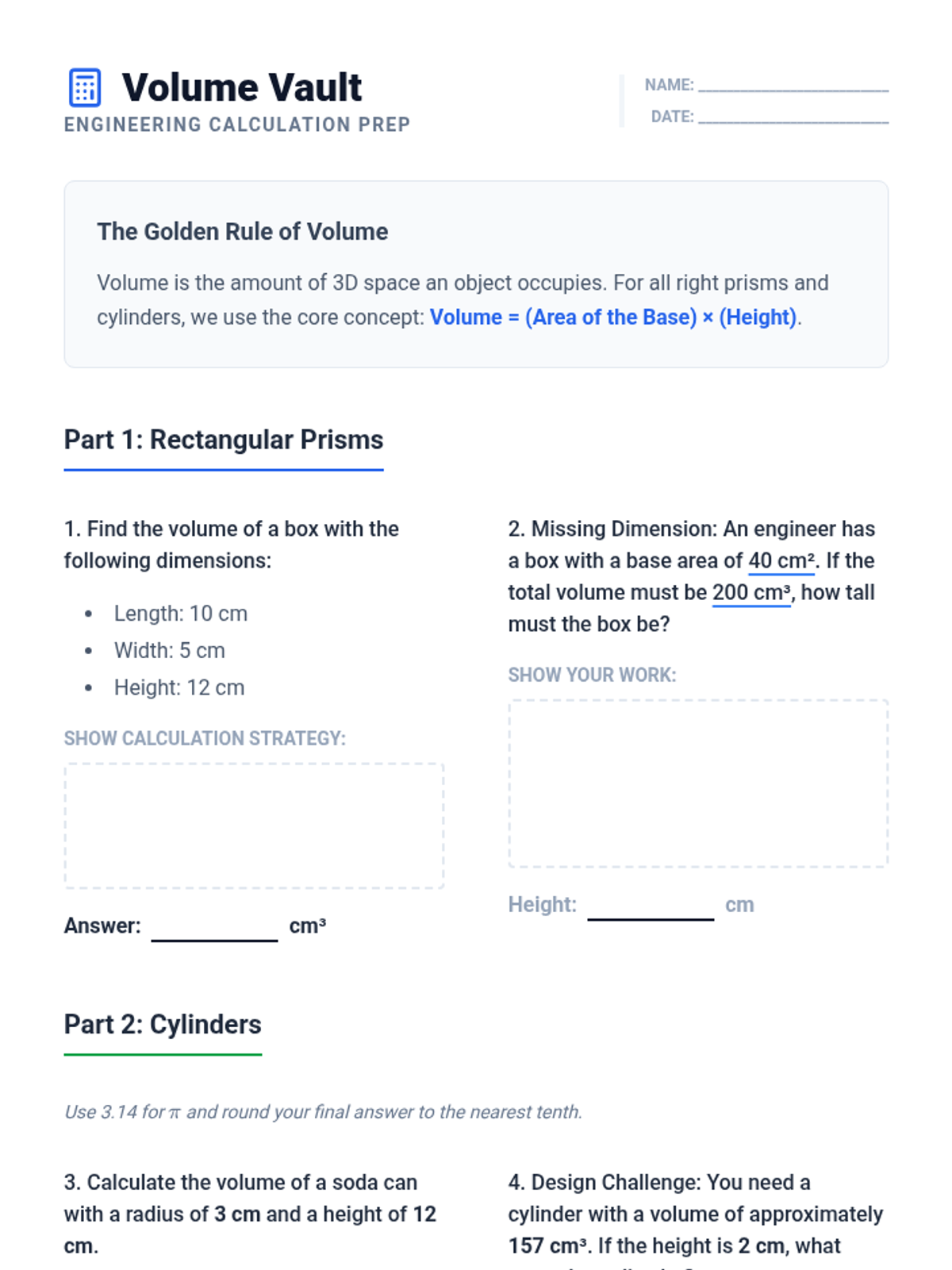
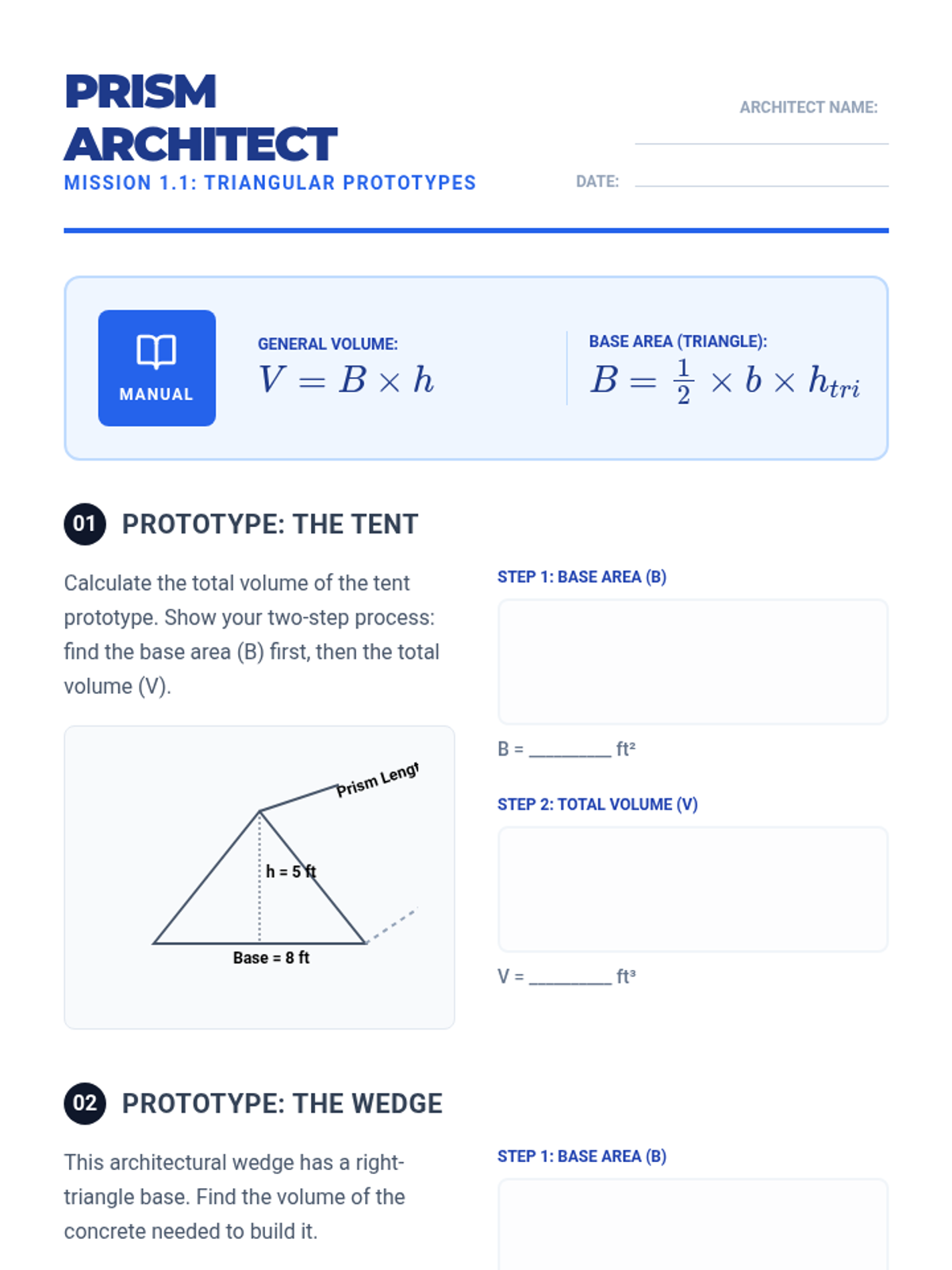
This foundational sequence introduces 9th-grade students to volume as the accumulation of area through height, covering prisms, cylinders, Cavalieri's Principle, and composite solids. students progress from conceptual visualization to algebraic application and real-world capacity problem-solving.
A project-based geometry sequence where students act as packaging engineers to design cost-effective containers. Students apply volume and surface area formulas for prisms and cylinders to optimize product packaging and minimize wasted space.
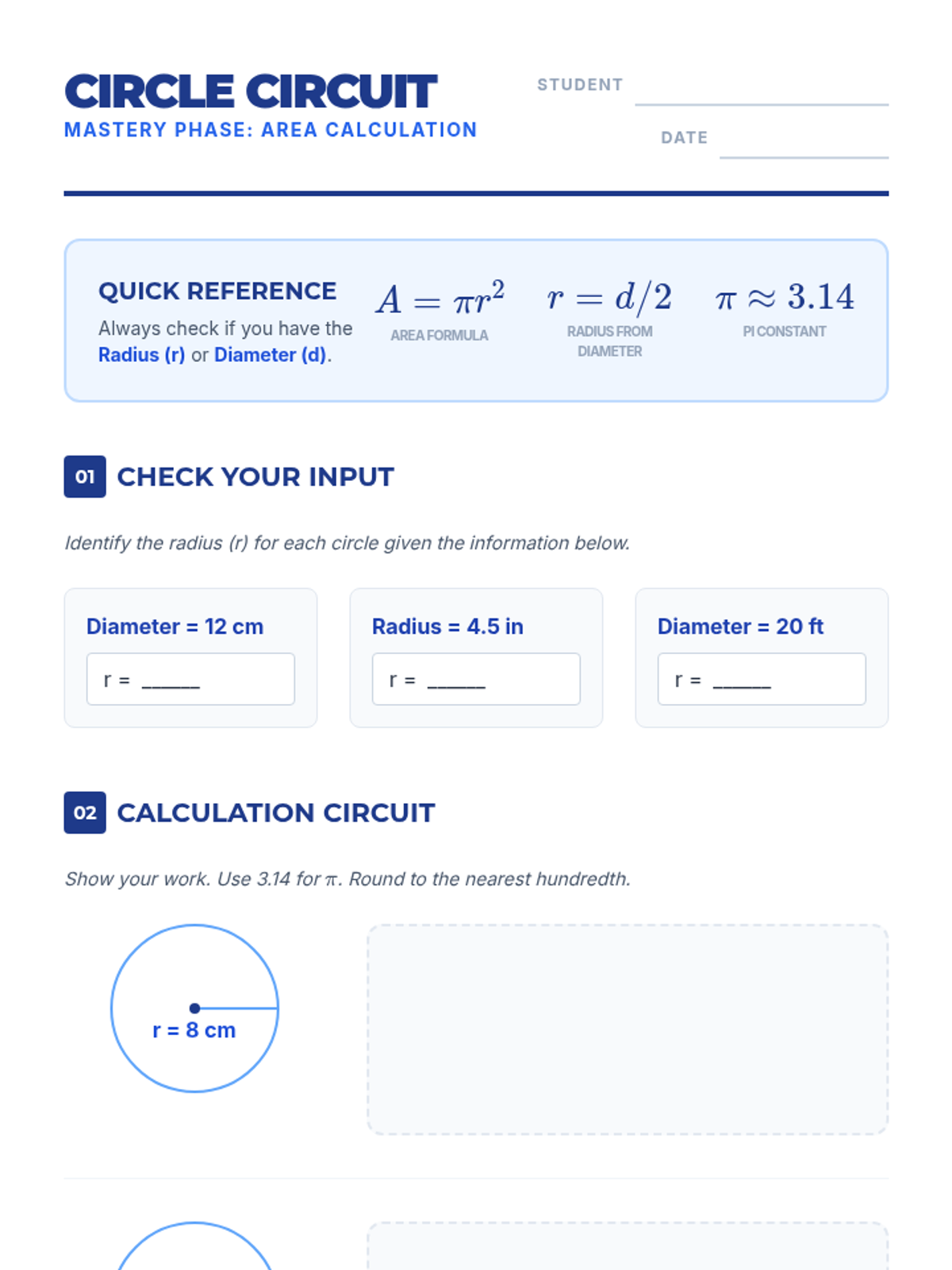
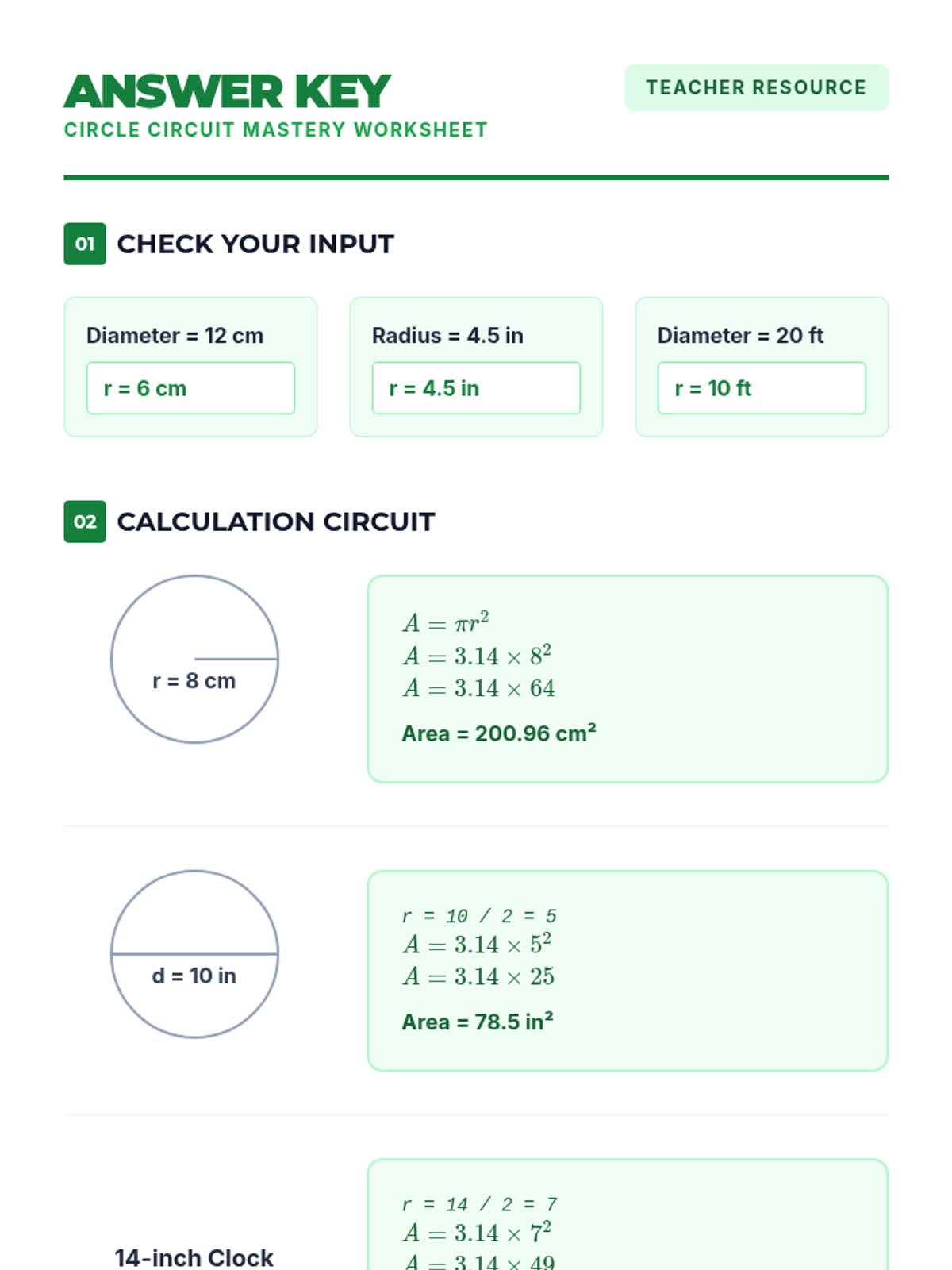
This geometry sequence guides 7th-grade students from circle area mastery to cylindrical volume calculations. It uses the concept of stacking circles to bridge 2D and 3D geometry, culminating in real-world engineering and packaging applications.
A comprehensive geometry unit where students explore the relationships between different geometric solids through hands-on discovery, inquiry-based labs, and architectural application. Students transition from simple rectangular prisms to complex shapes like pyramids, cones, and spheres by understanding the core V=Bh relationship.
A 9th-grade geometry sequence where students act as packaging engineers to optimize volume while minimizing surface area, culminating in a prototype and business pitch.
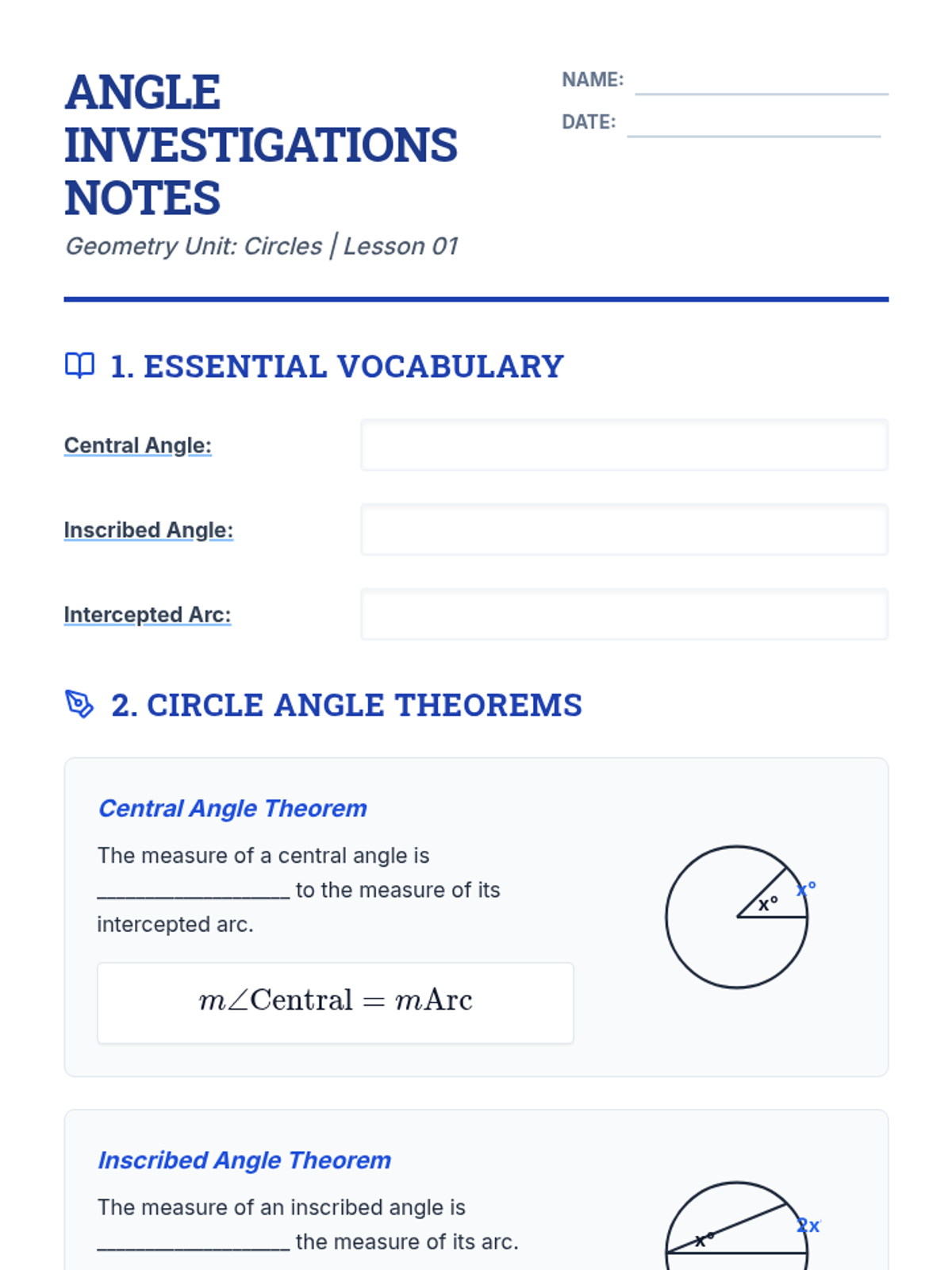
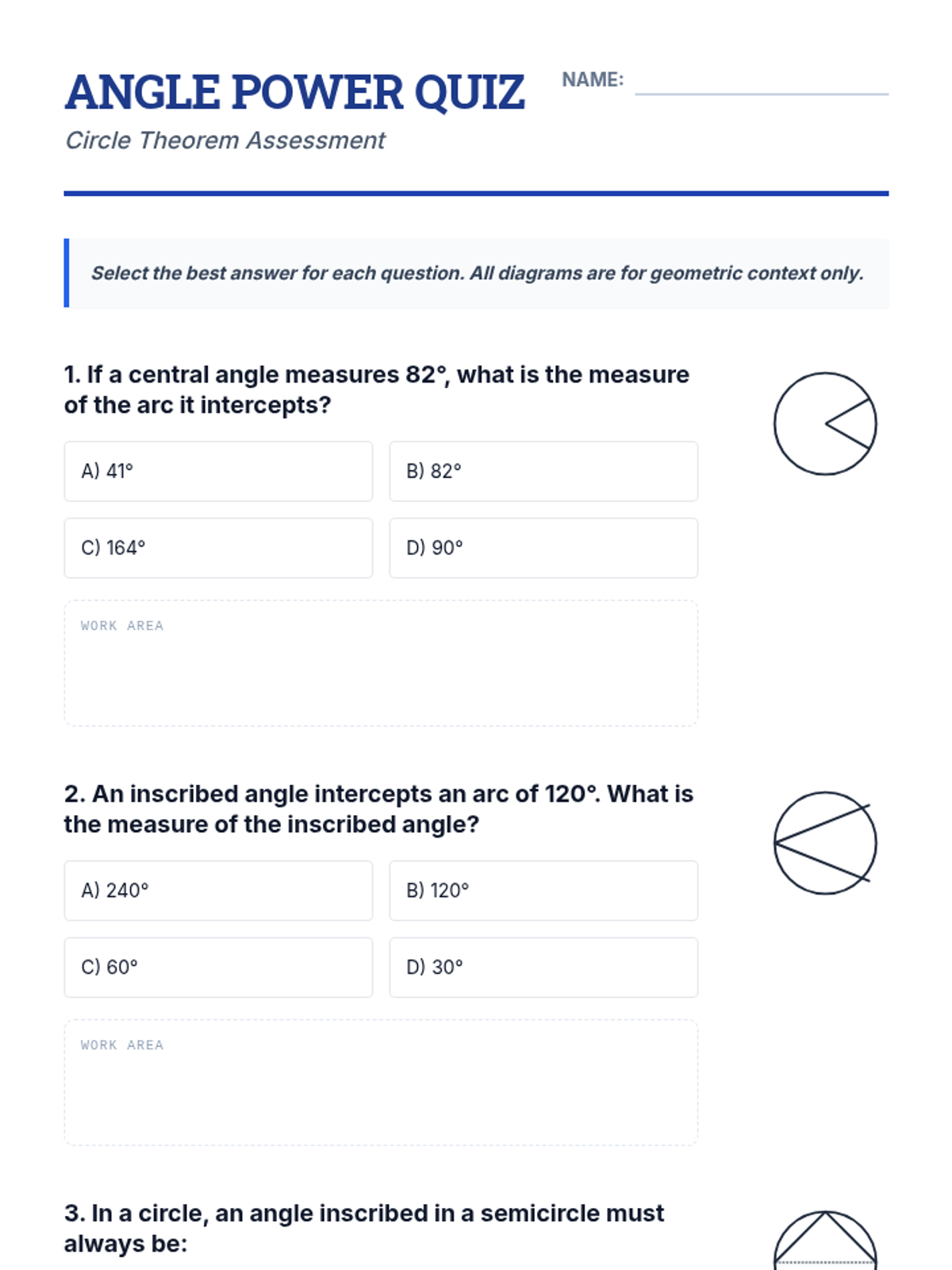
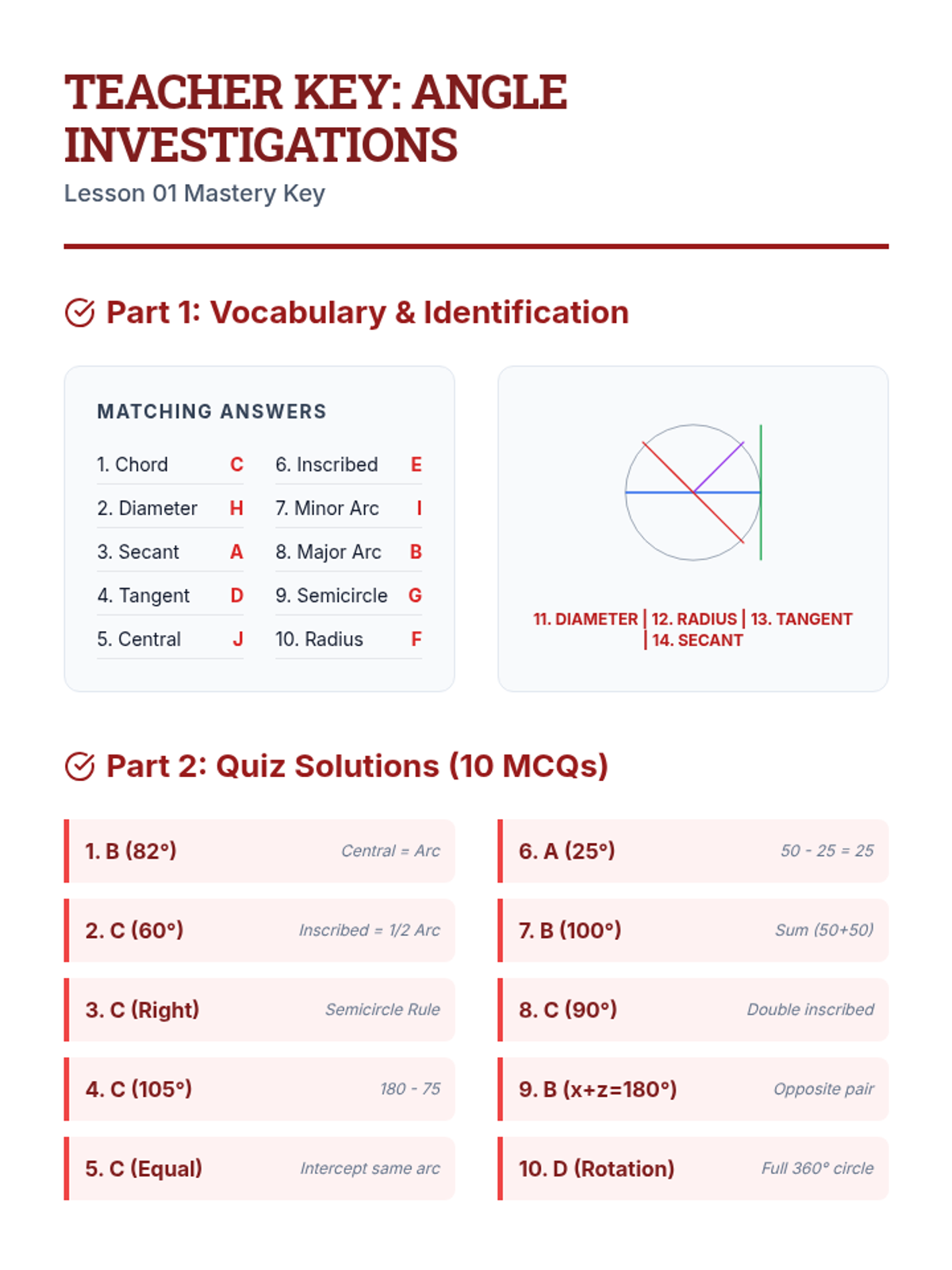
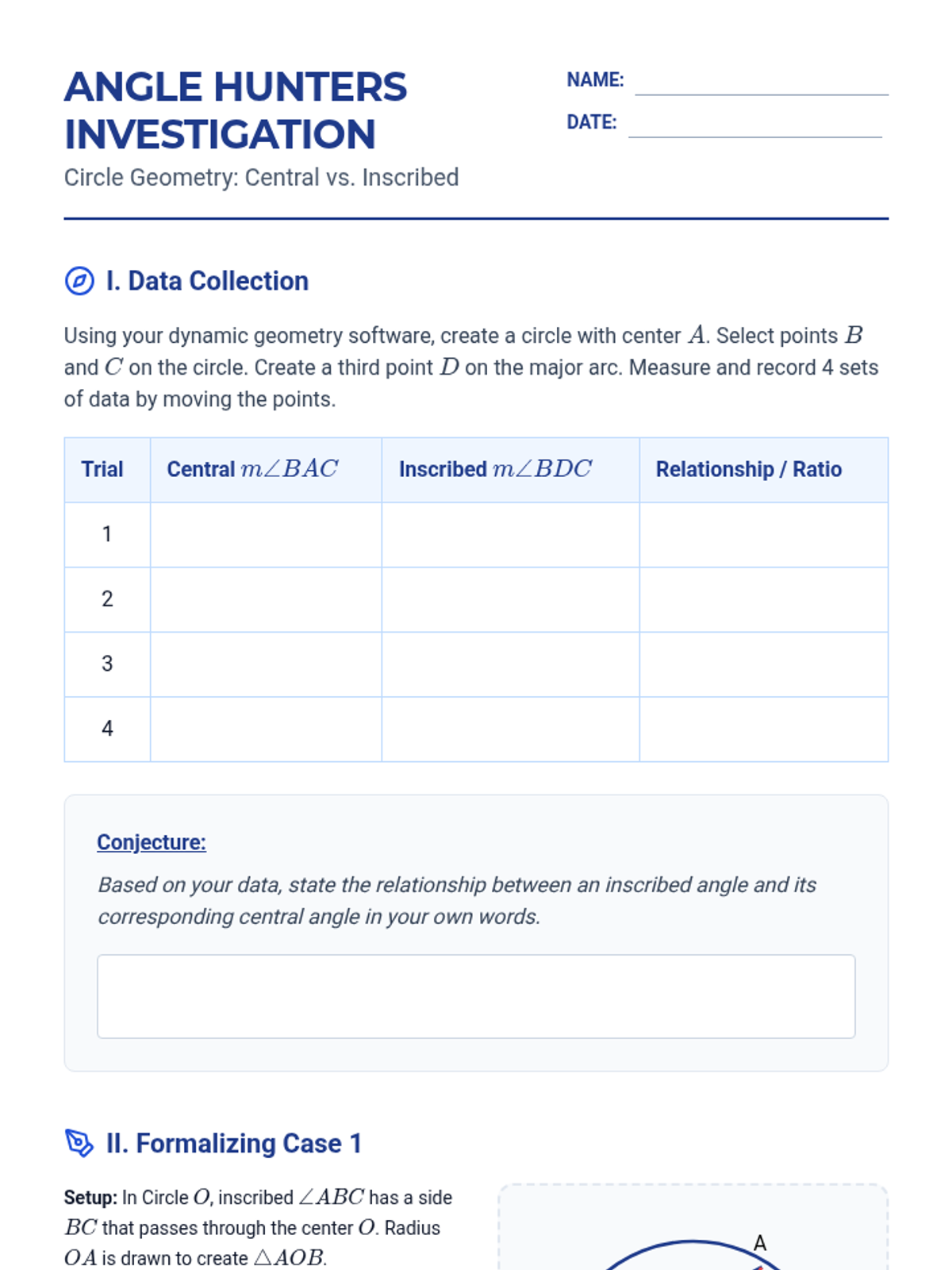
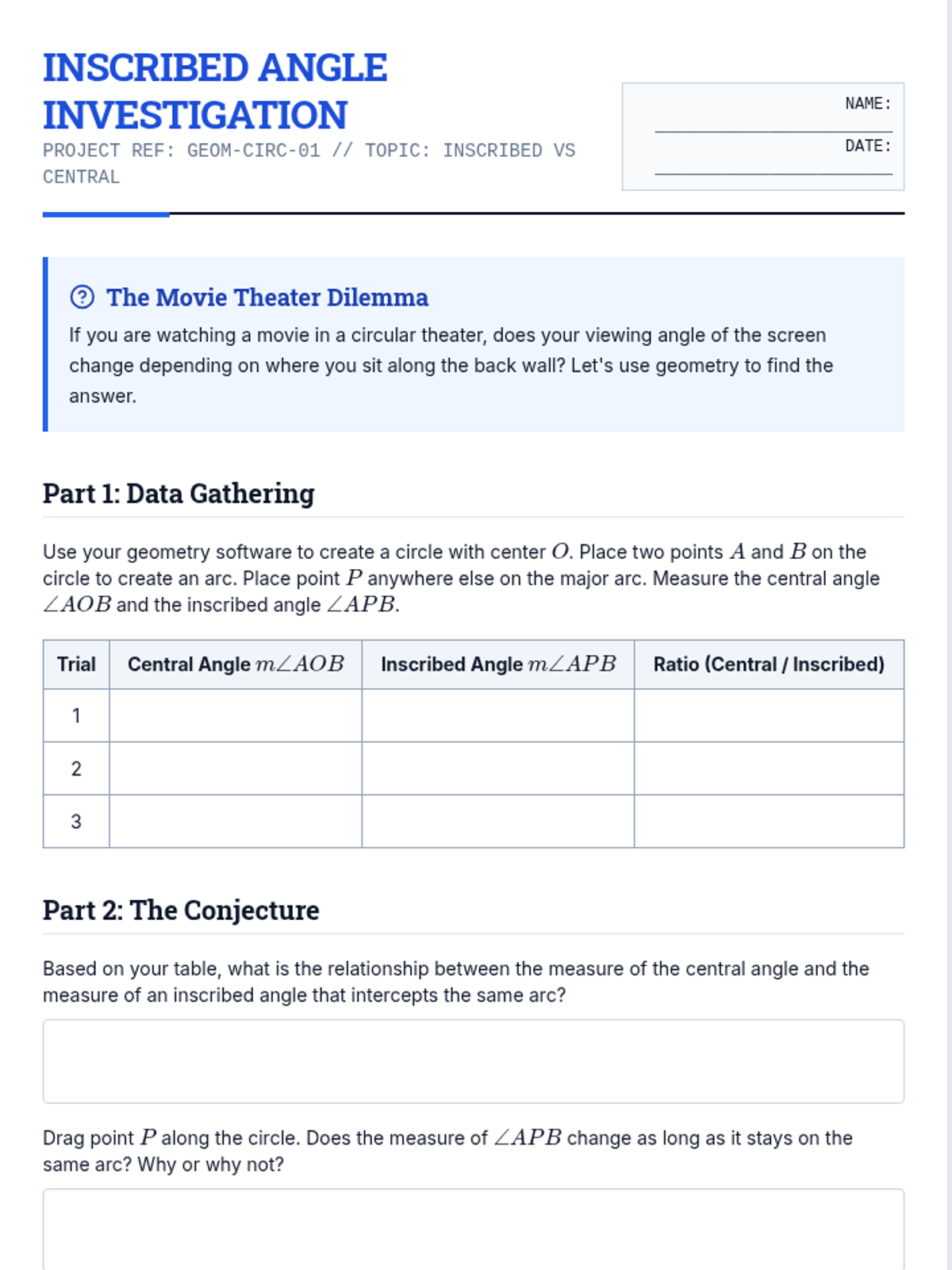
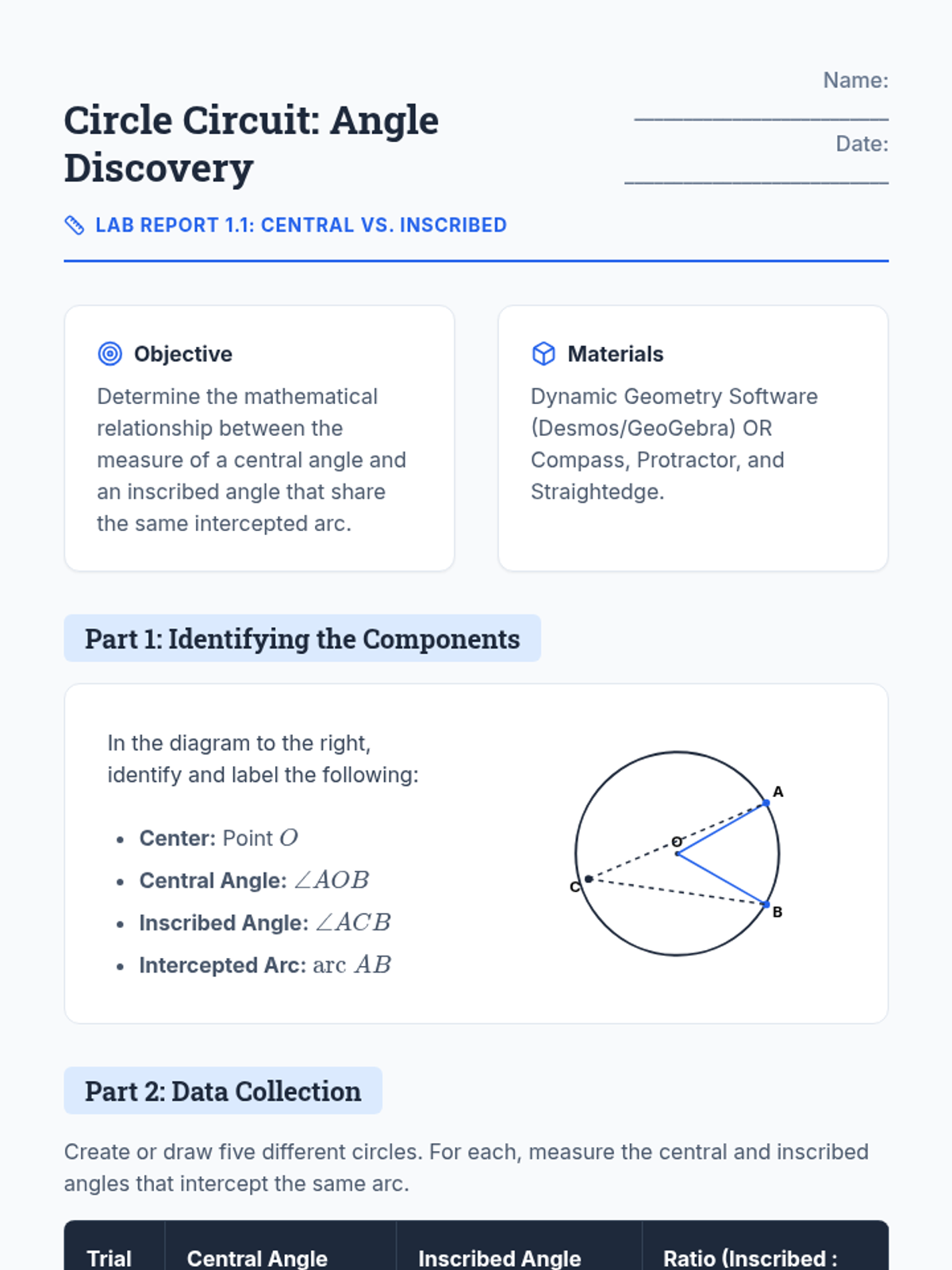
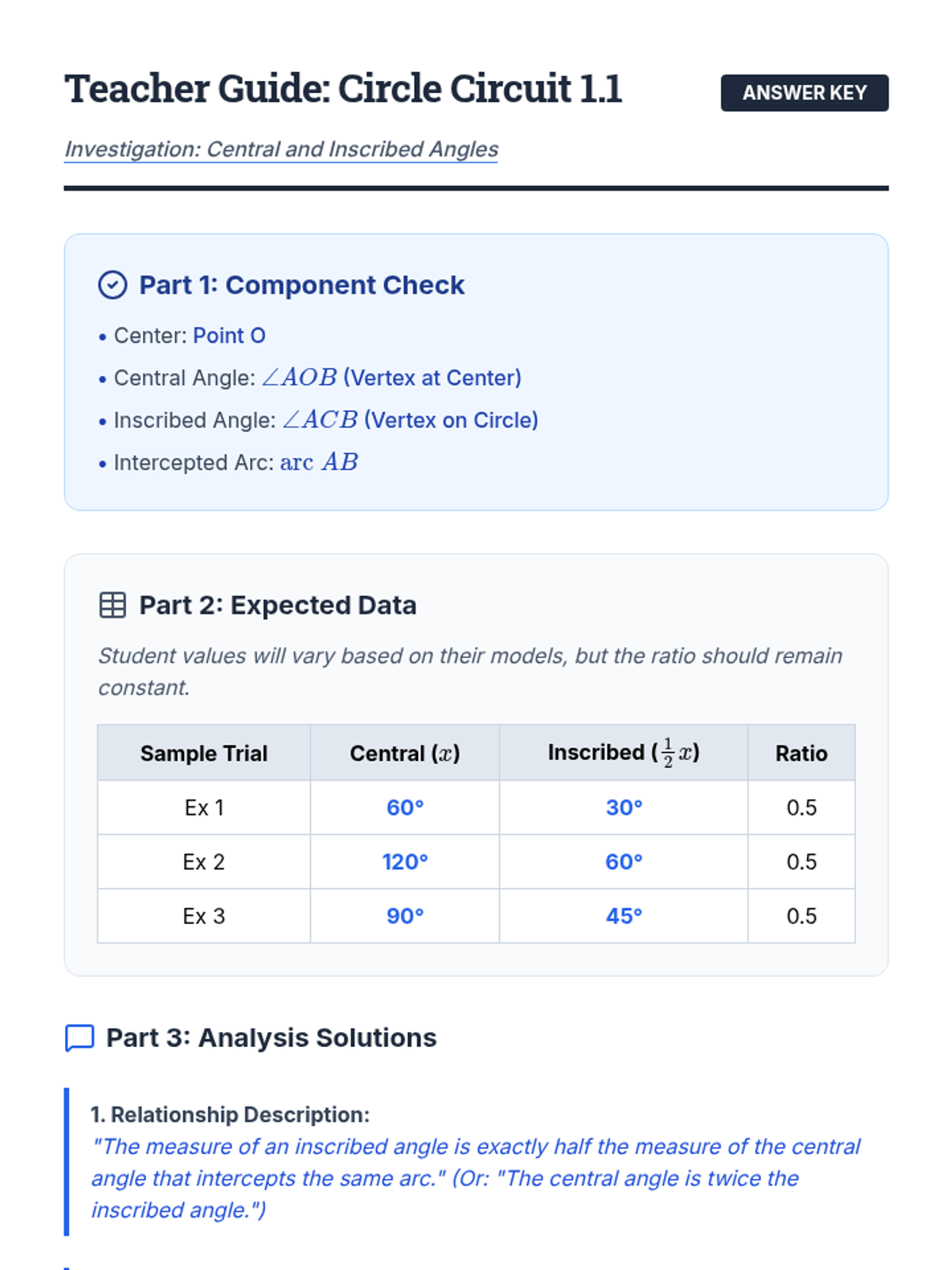
A comprehensive two-lesson sequence covering the geometric properties of circles, including angle relationships and segment lengths. Students will explore inscribed angles, central angles, tangents, chords, and secants through guided discovery and practice.
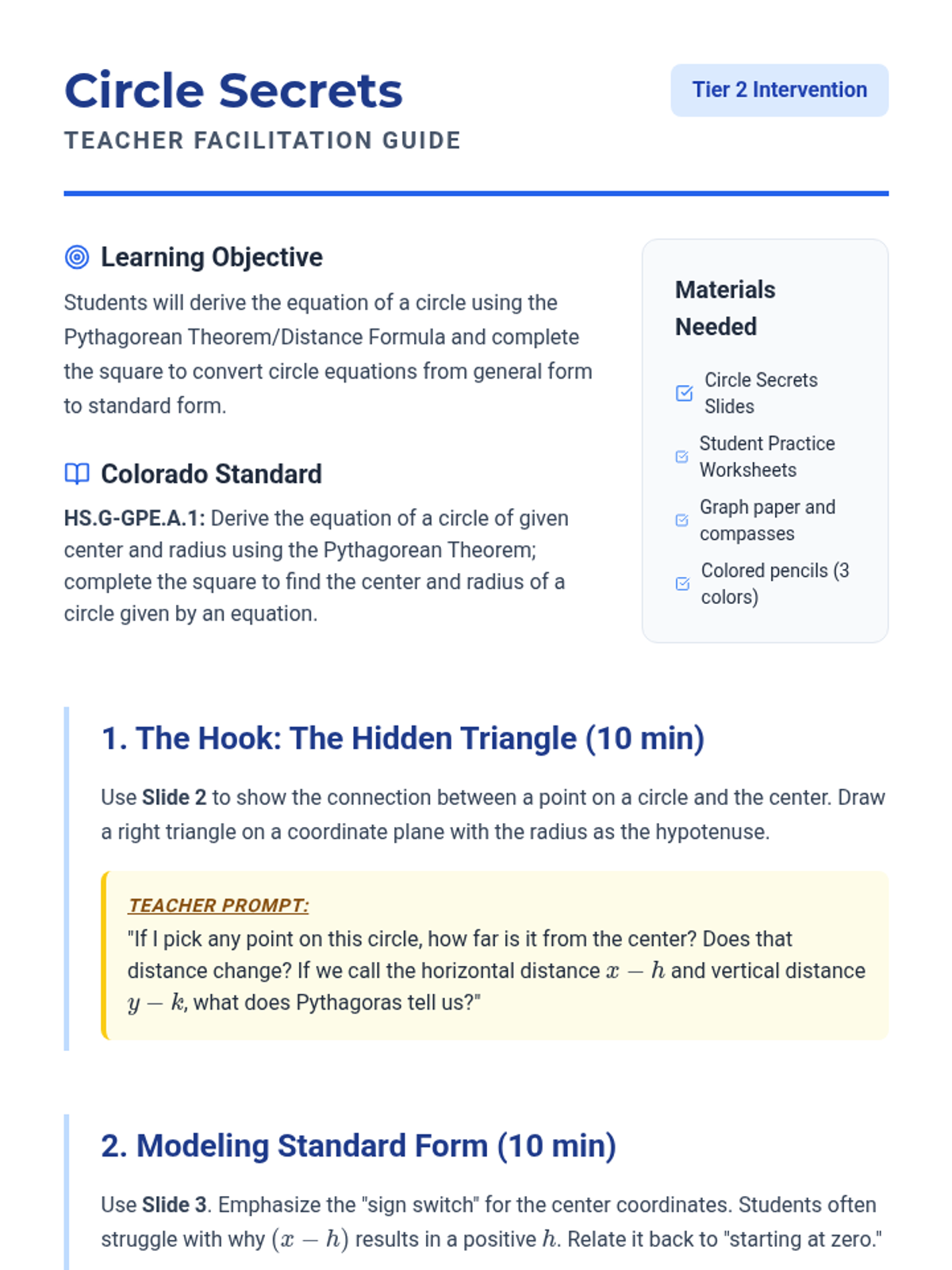
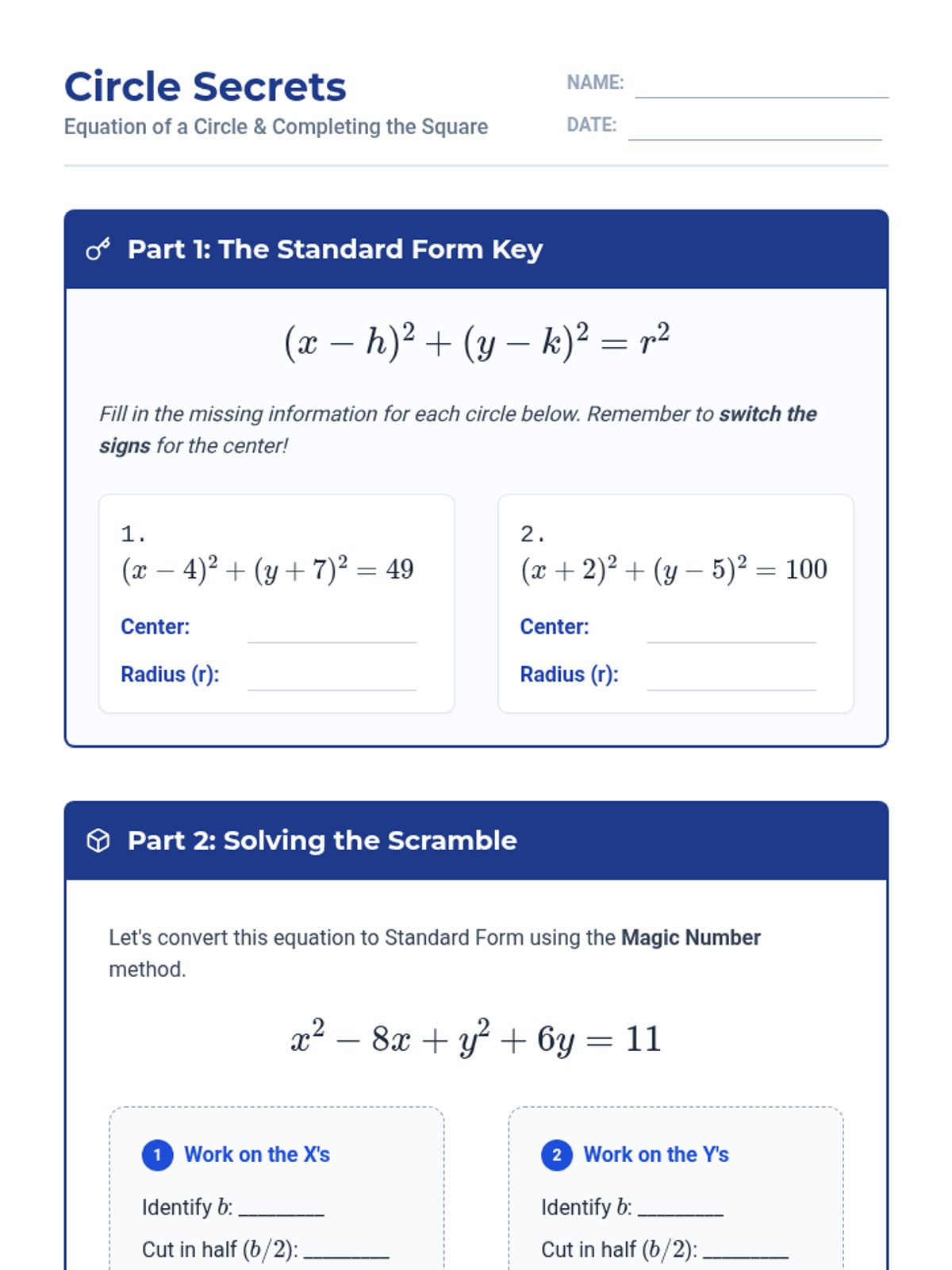
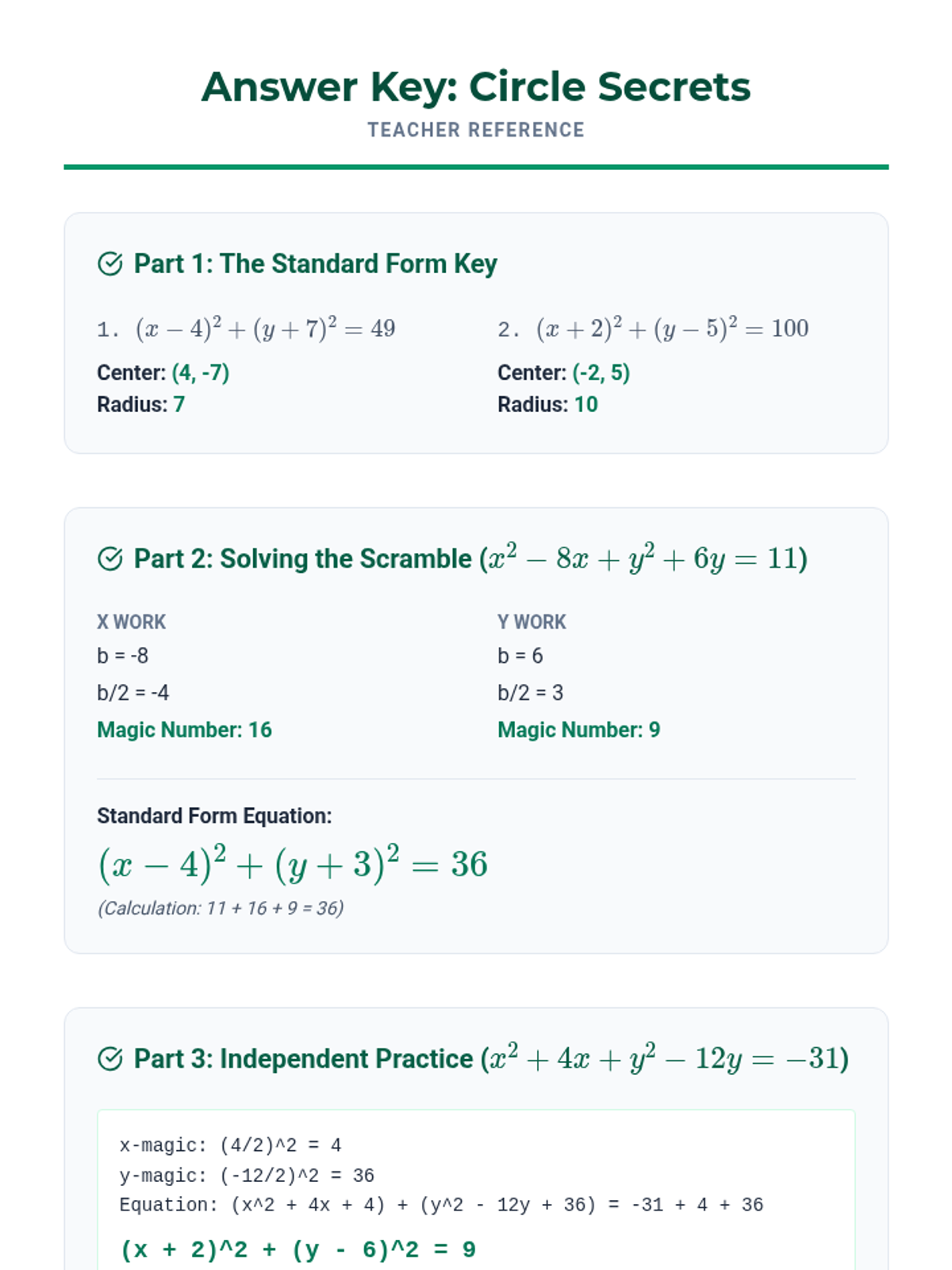
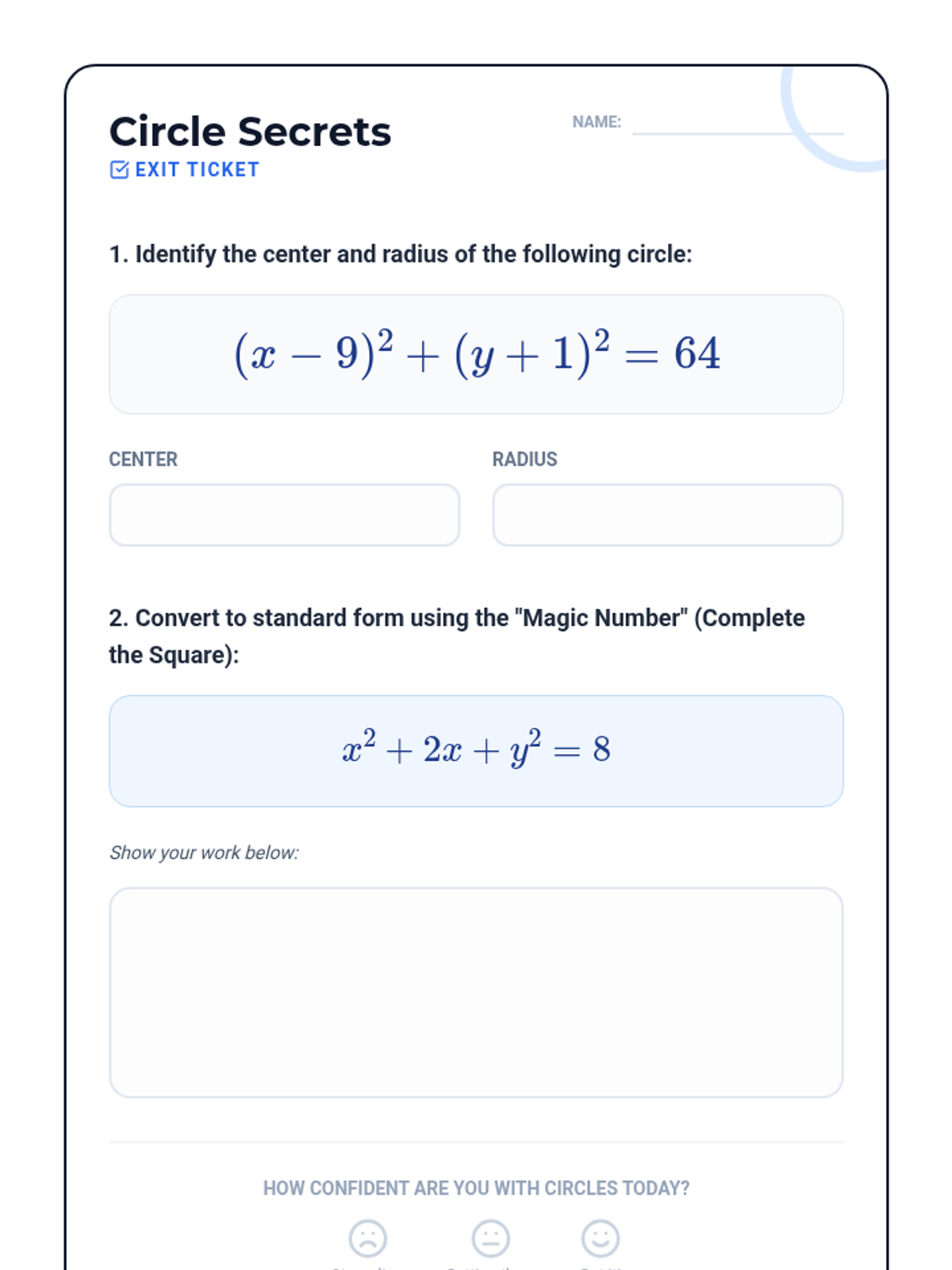
A targeted Tier 2 intervention for High School Geometry focusing on the derivation of the circle equation and completing the square. Includes scaffolded student worksheets and teacher facilitation guides designed for struggling learners.
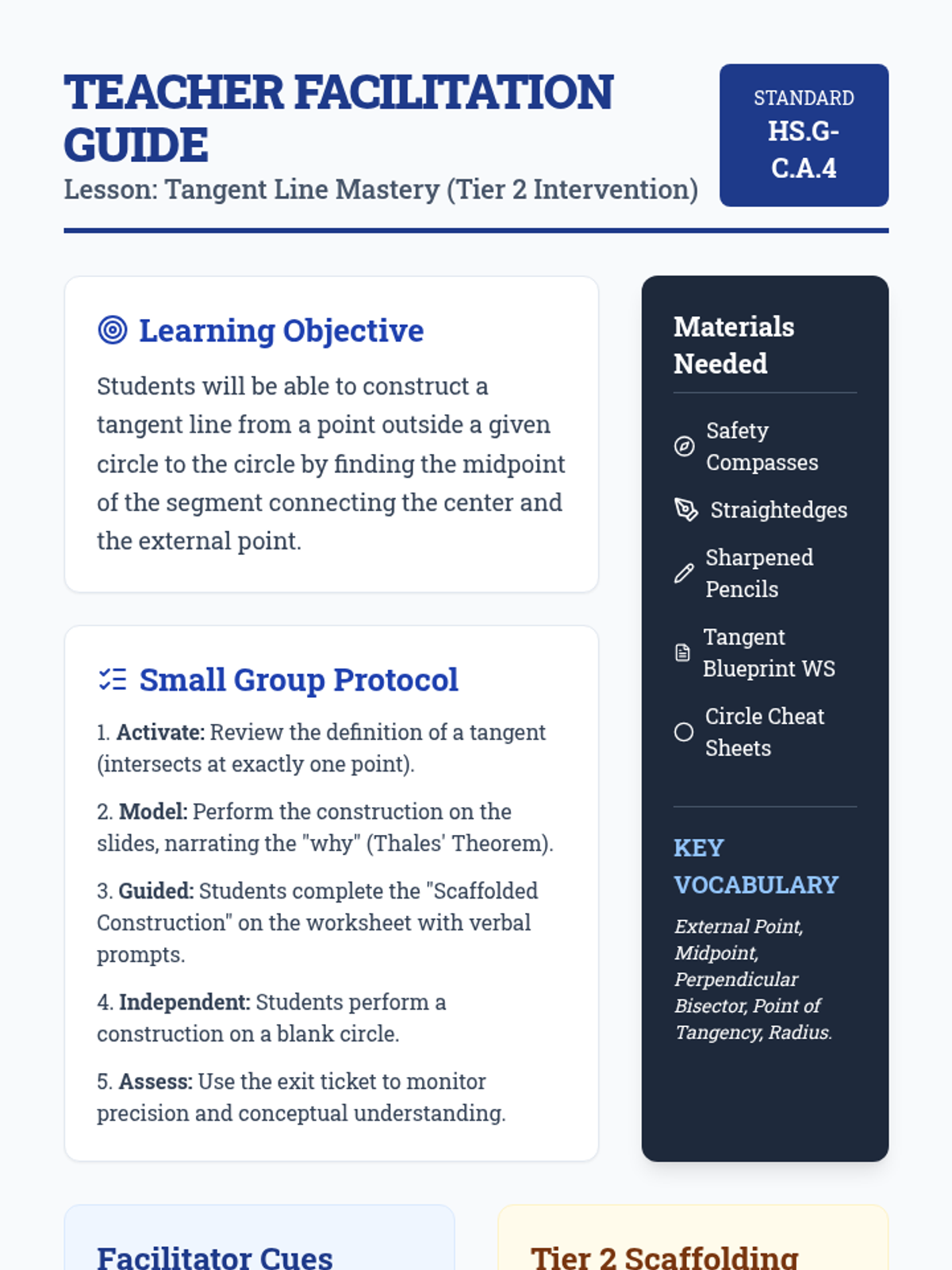
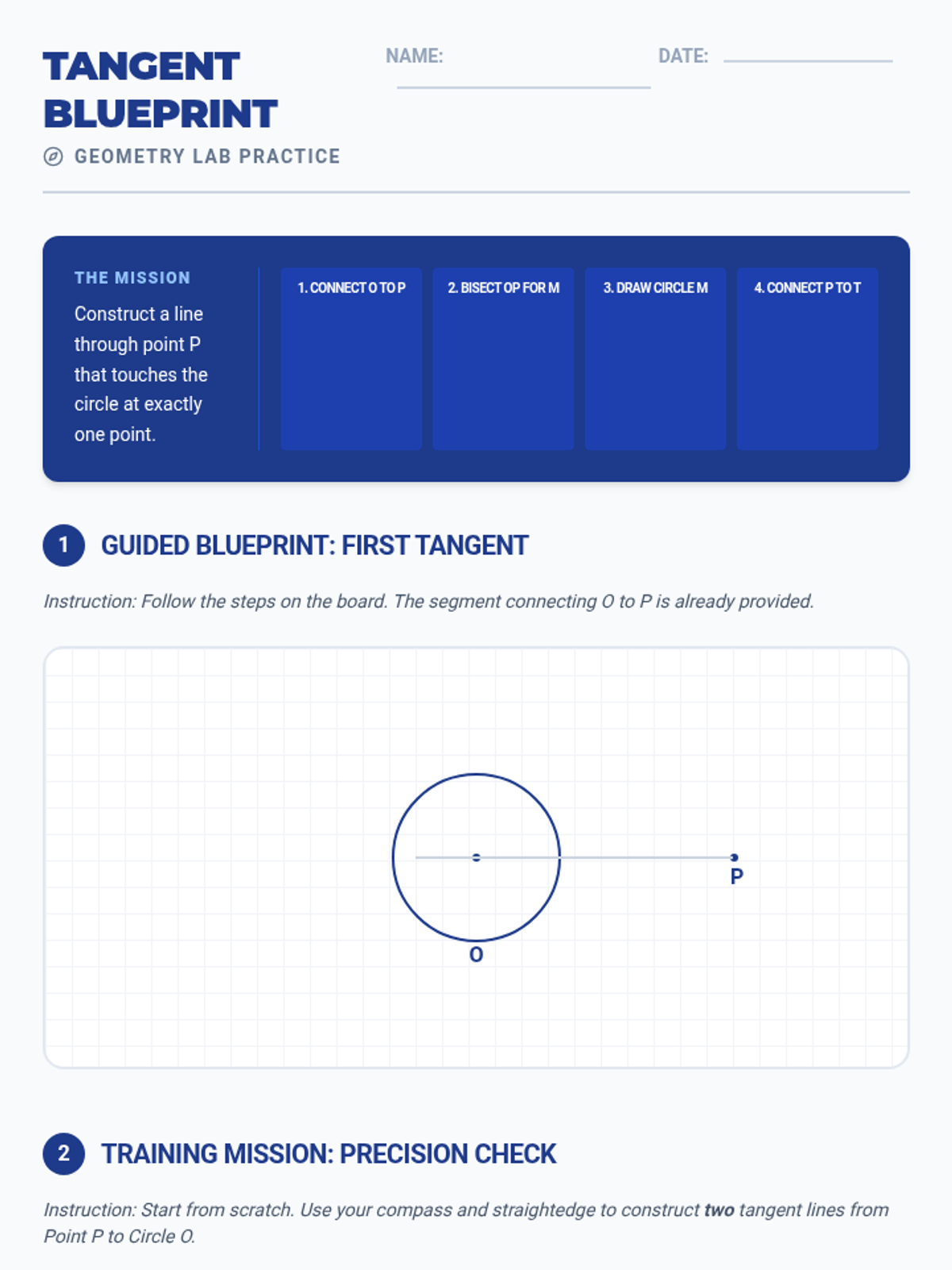
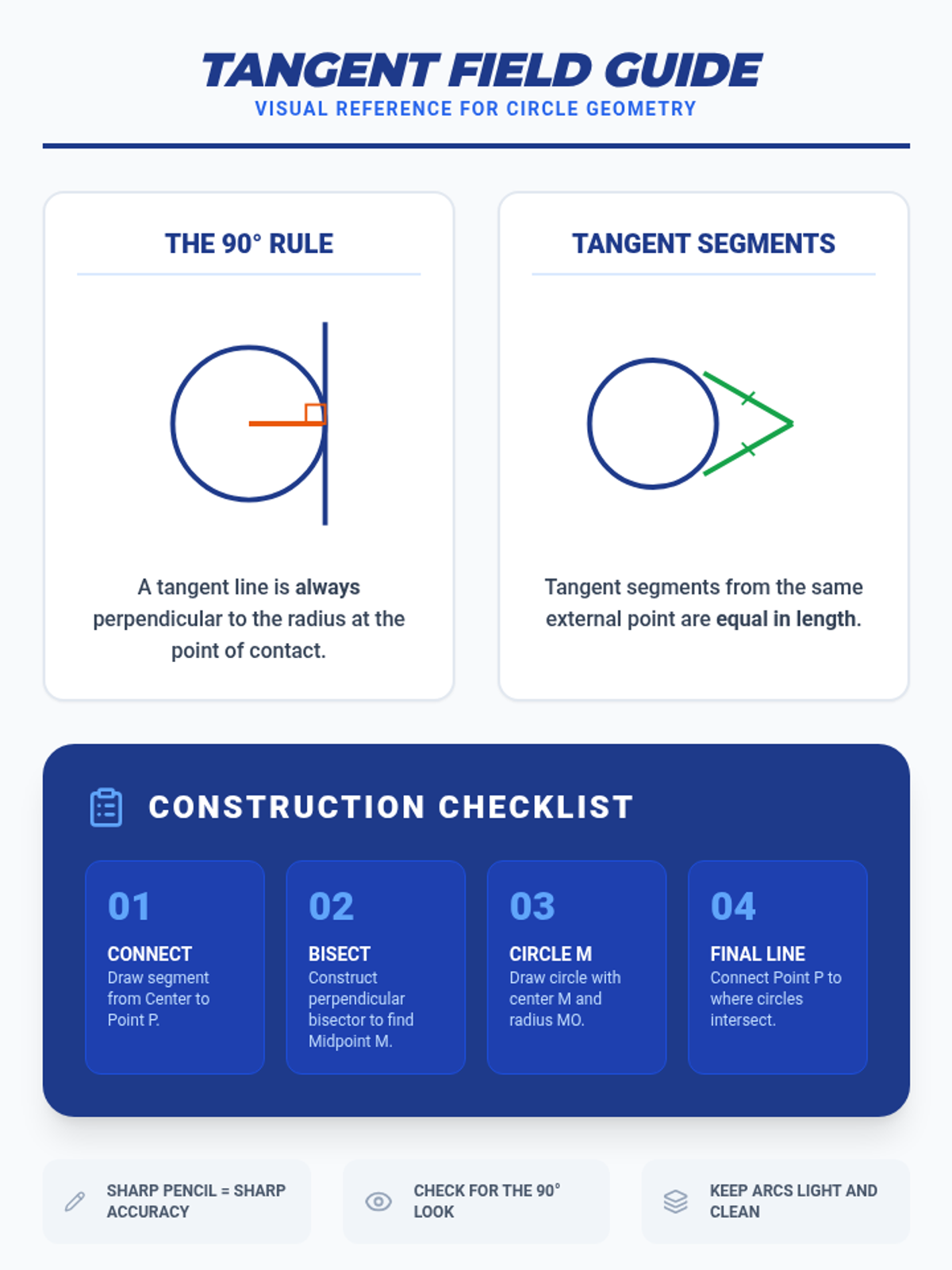
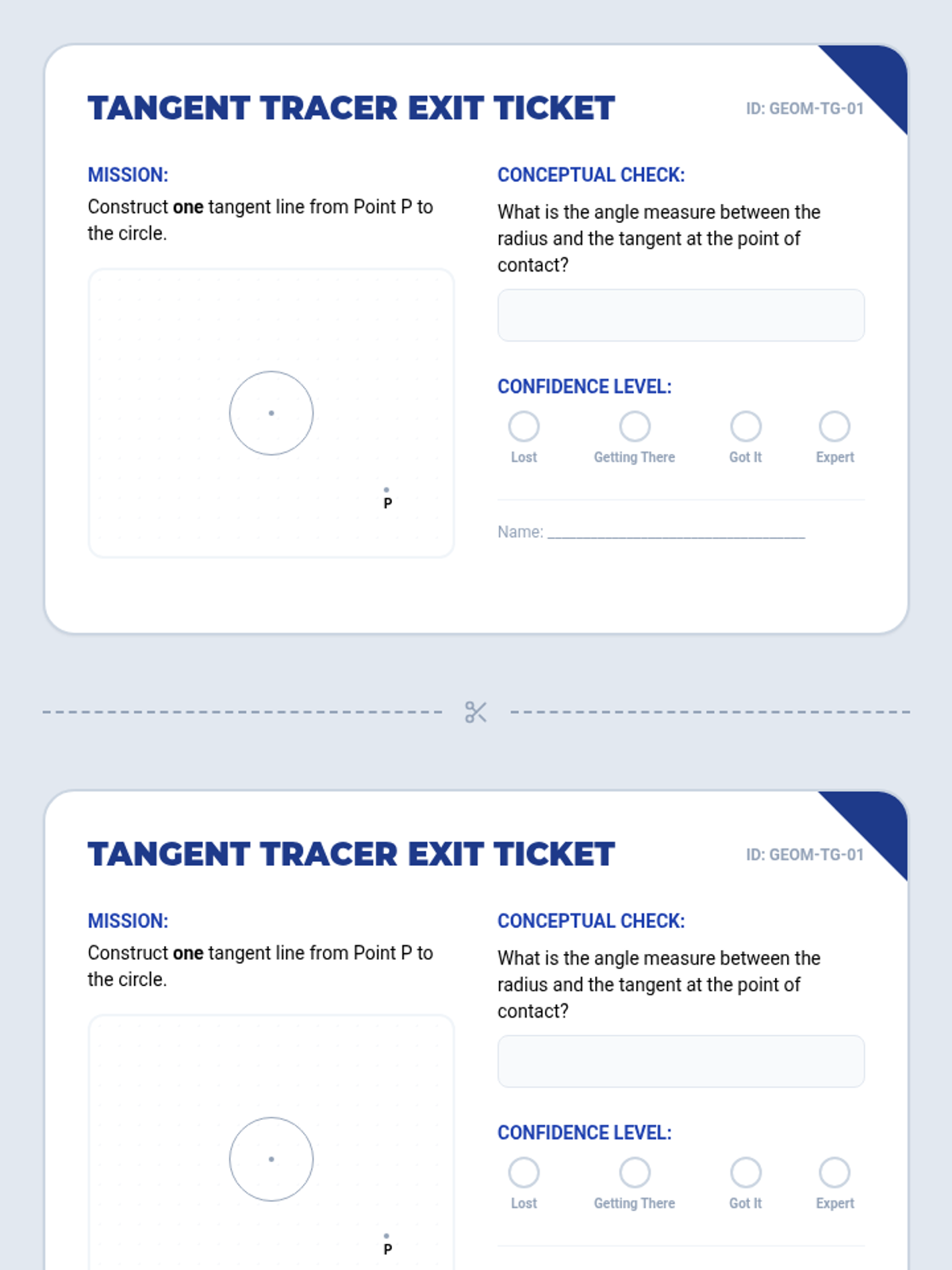
A targeted intervention sequence focused on geometric constructions, specifically tangent lines from external points to circles, designed for Tier 2 small group support with visual scaffolds and step-by-step mastery.
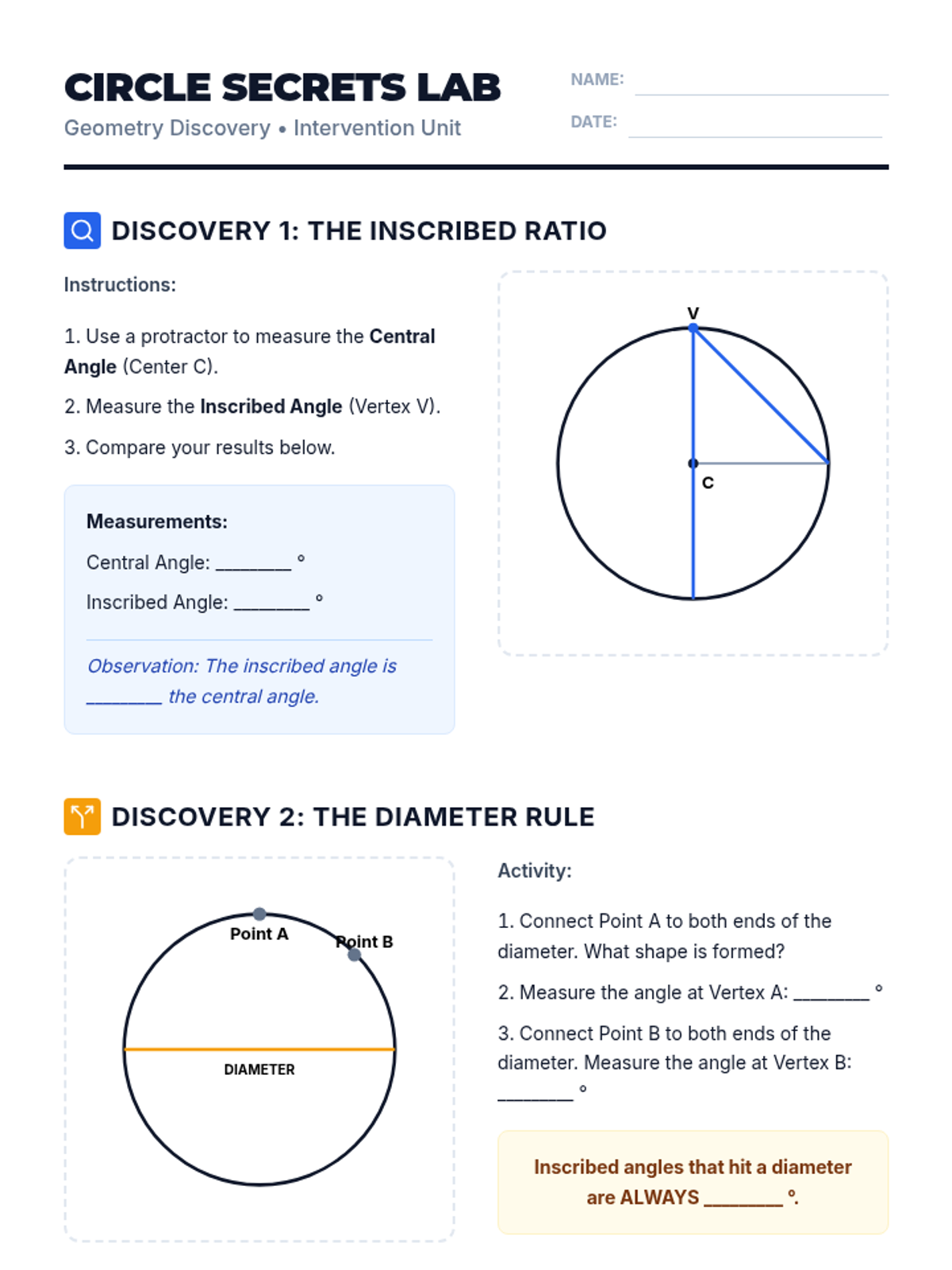
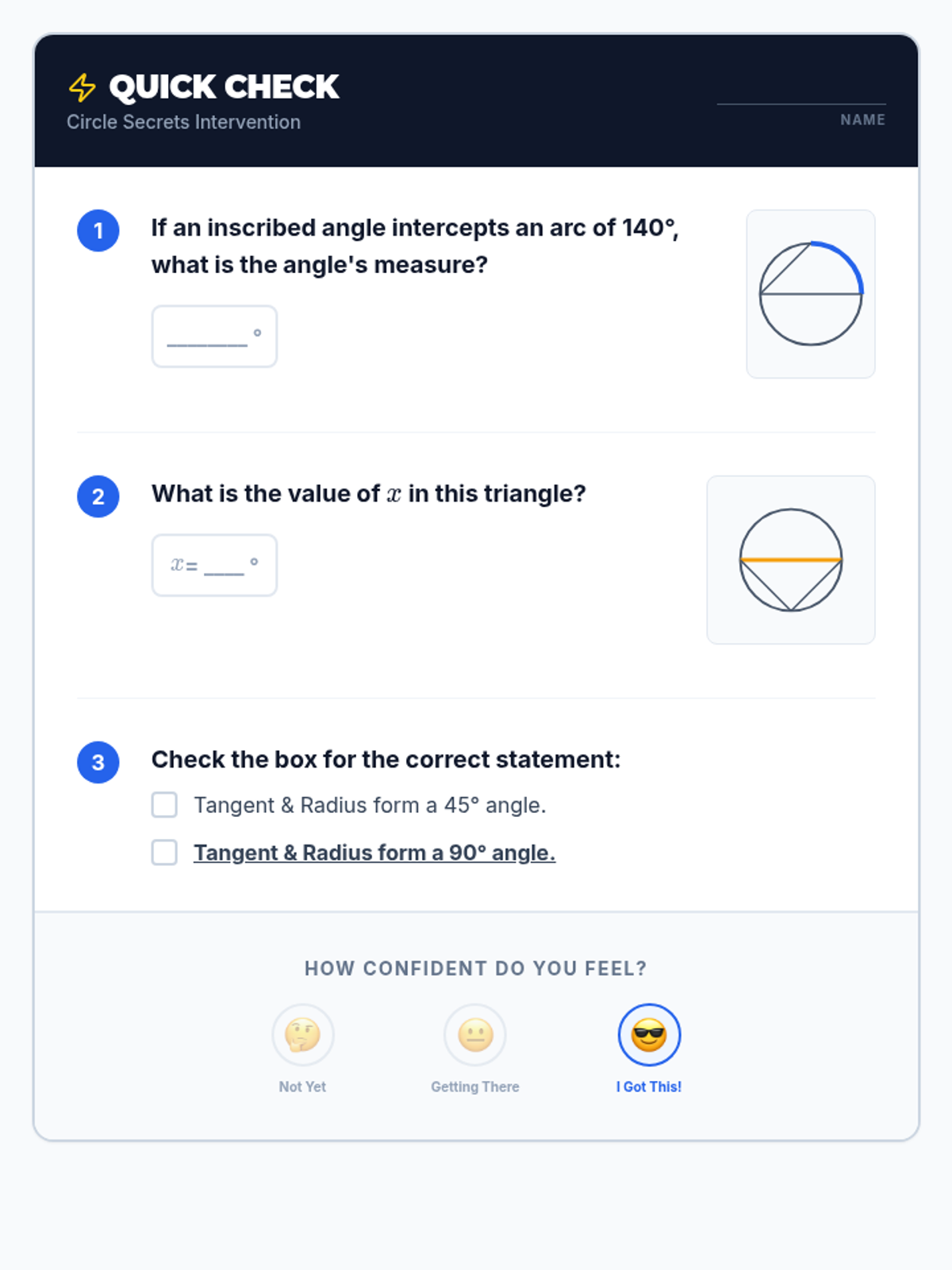
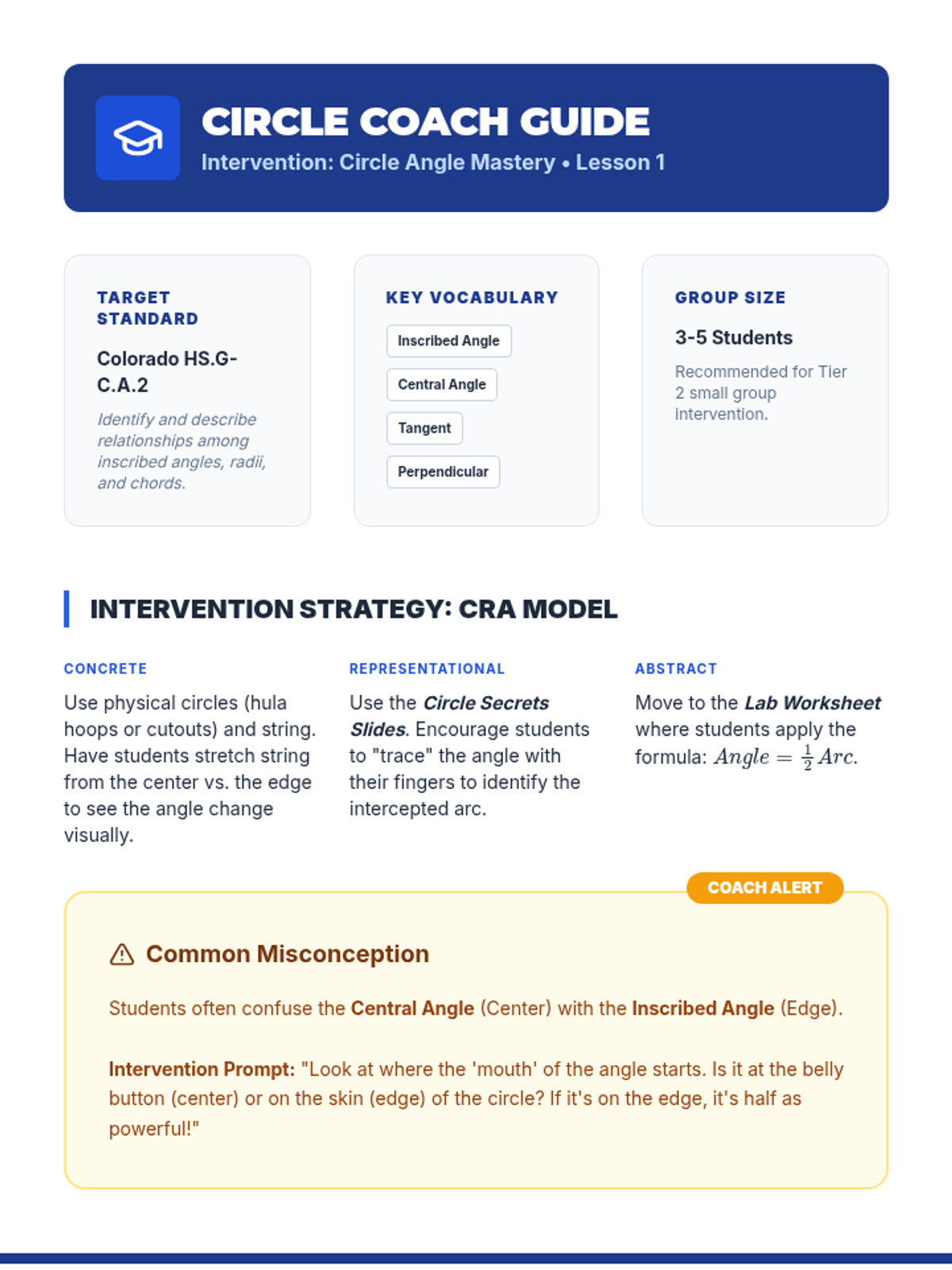
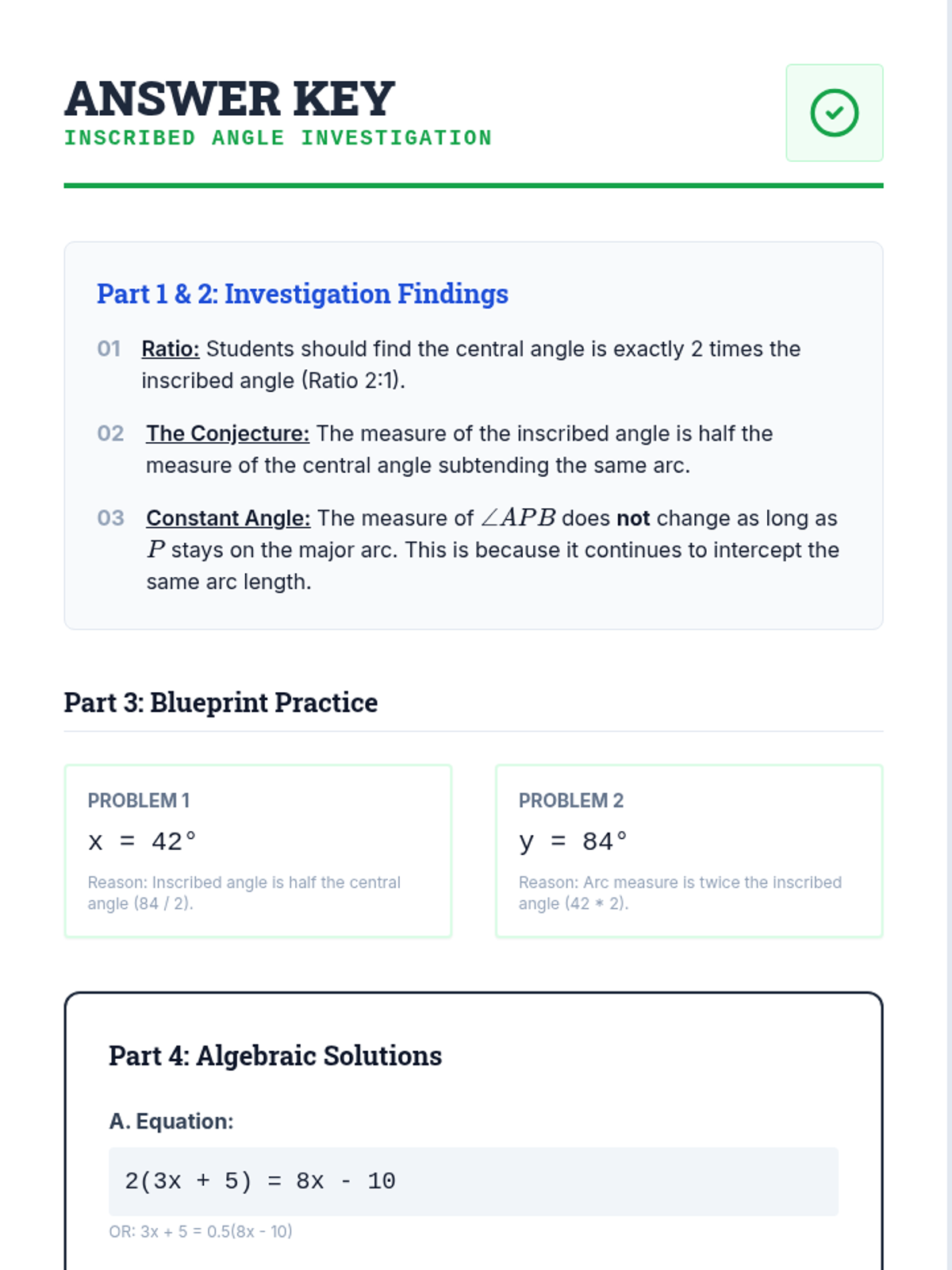
A targeted intervention sequence for high school geometry students focusing on circle theorems. The sequence emphasizes visual discovery and scaffolded practice to help Tier 2 learners master inscribed angles and tangent properties.
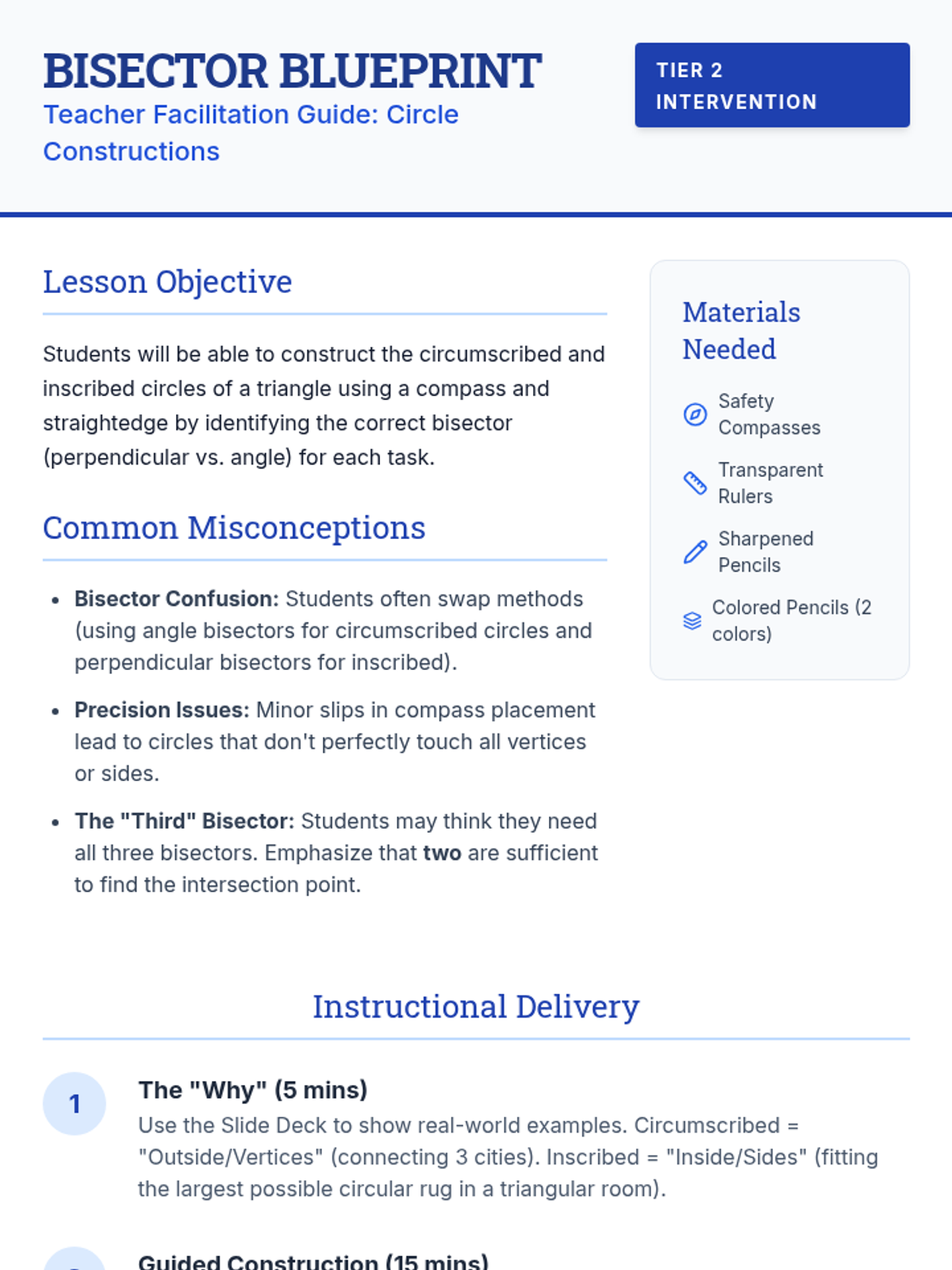
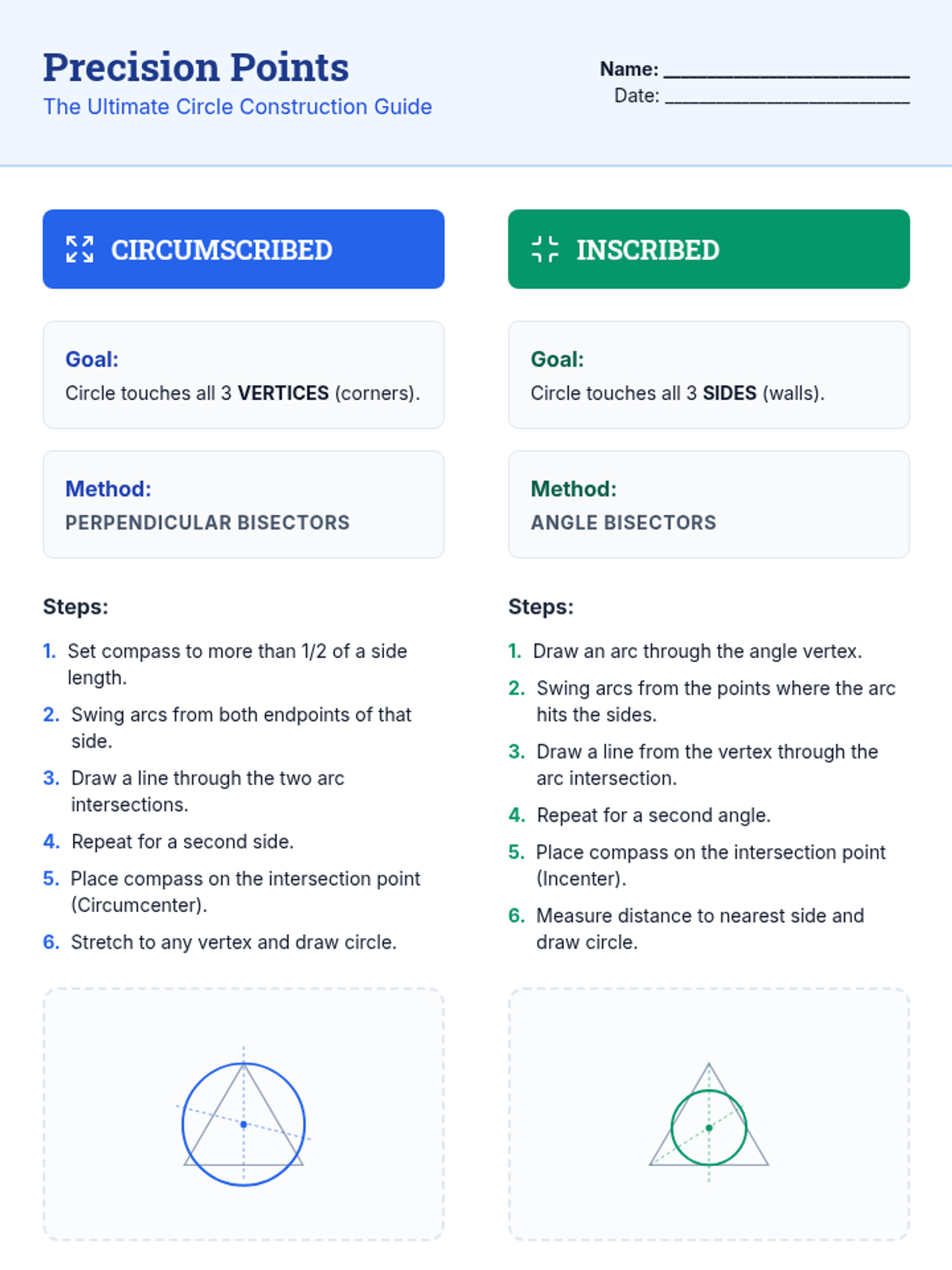
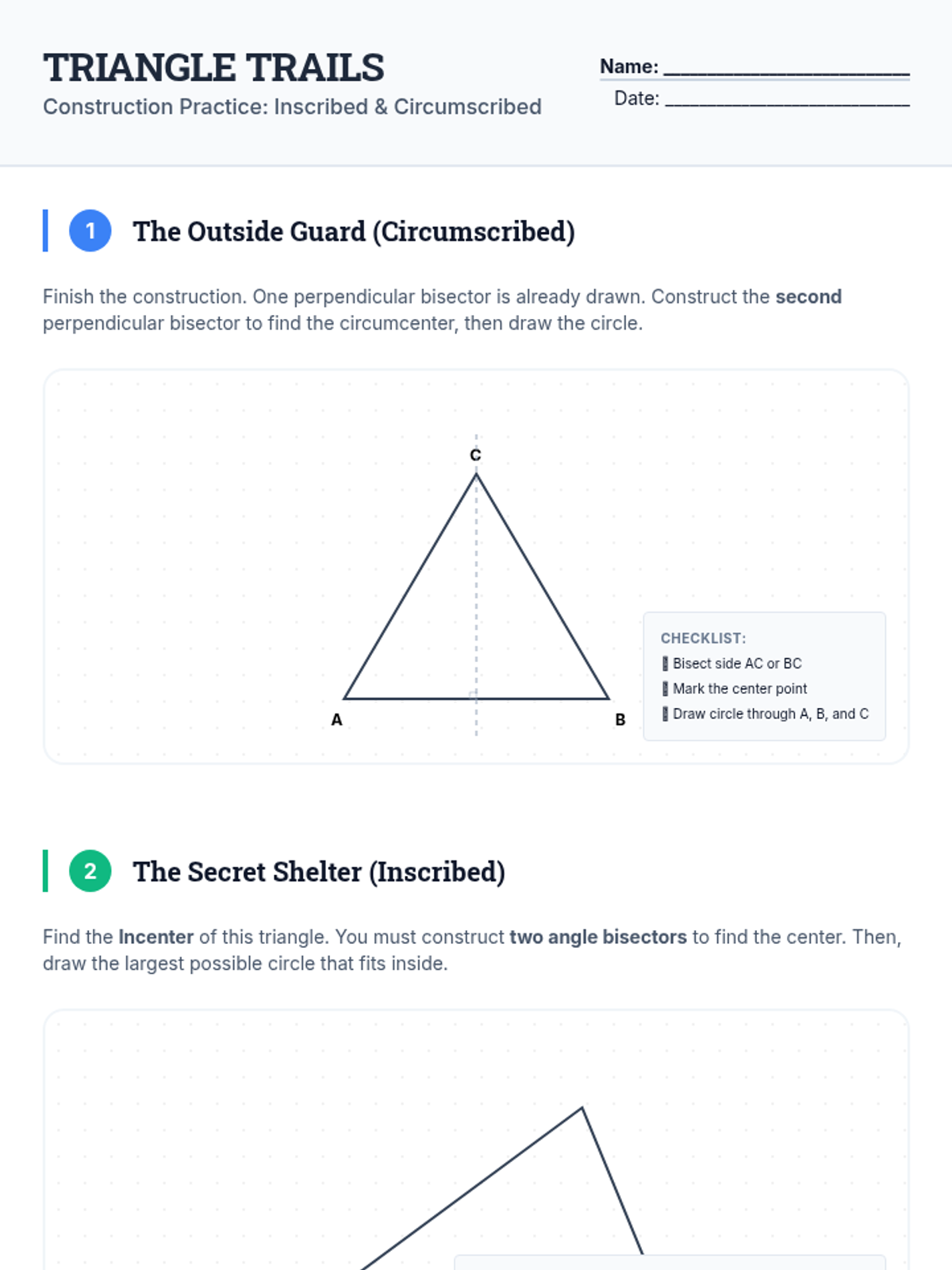
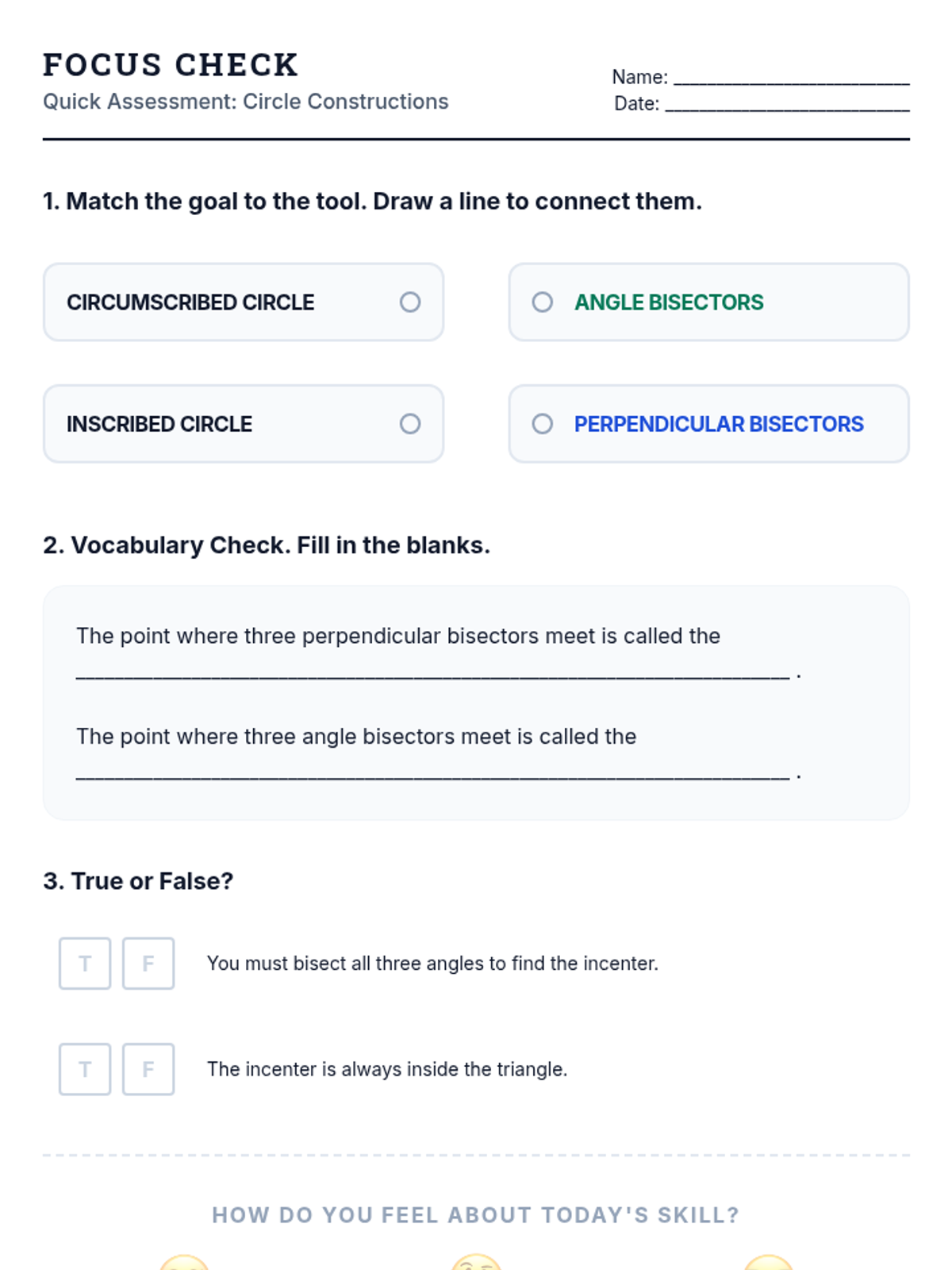
A targeted intervention sequence focusing on geometric constructions related to triangles and circles, specifically designed for Tier 2 support.
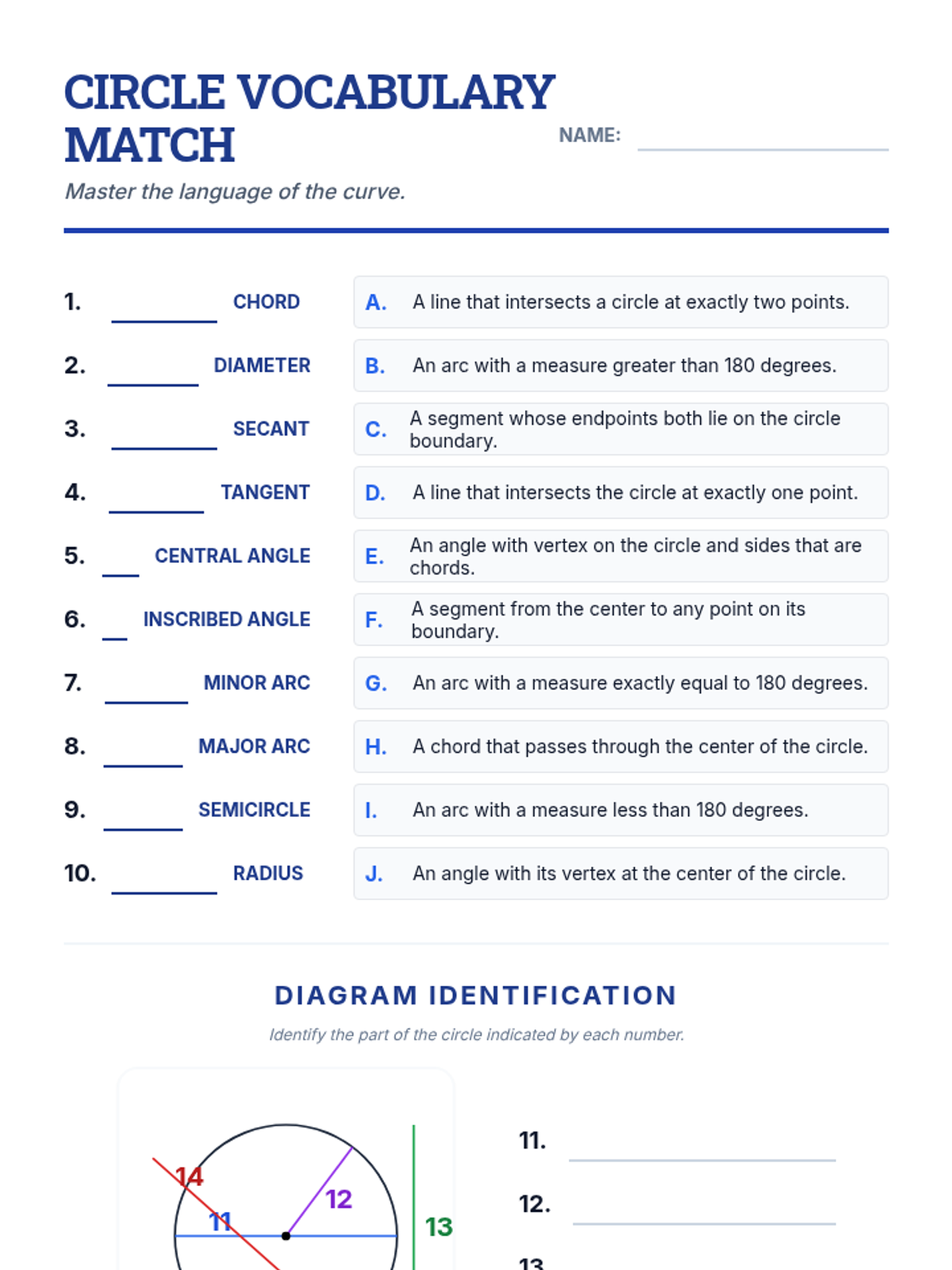
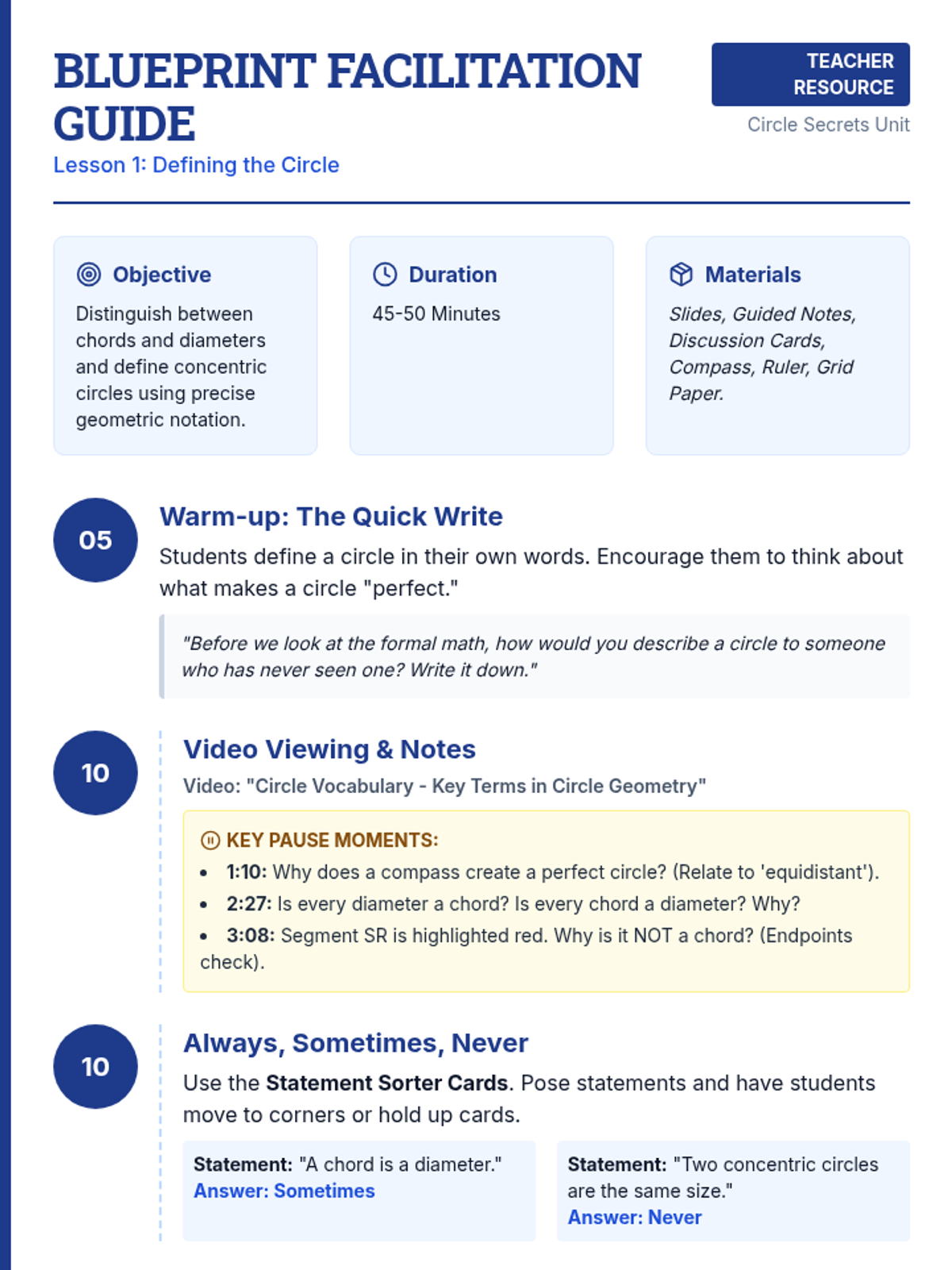
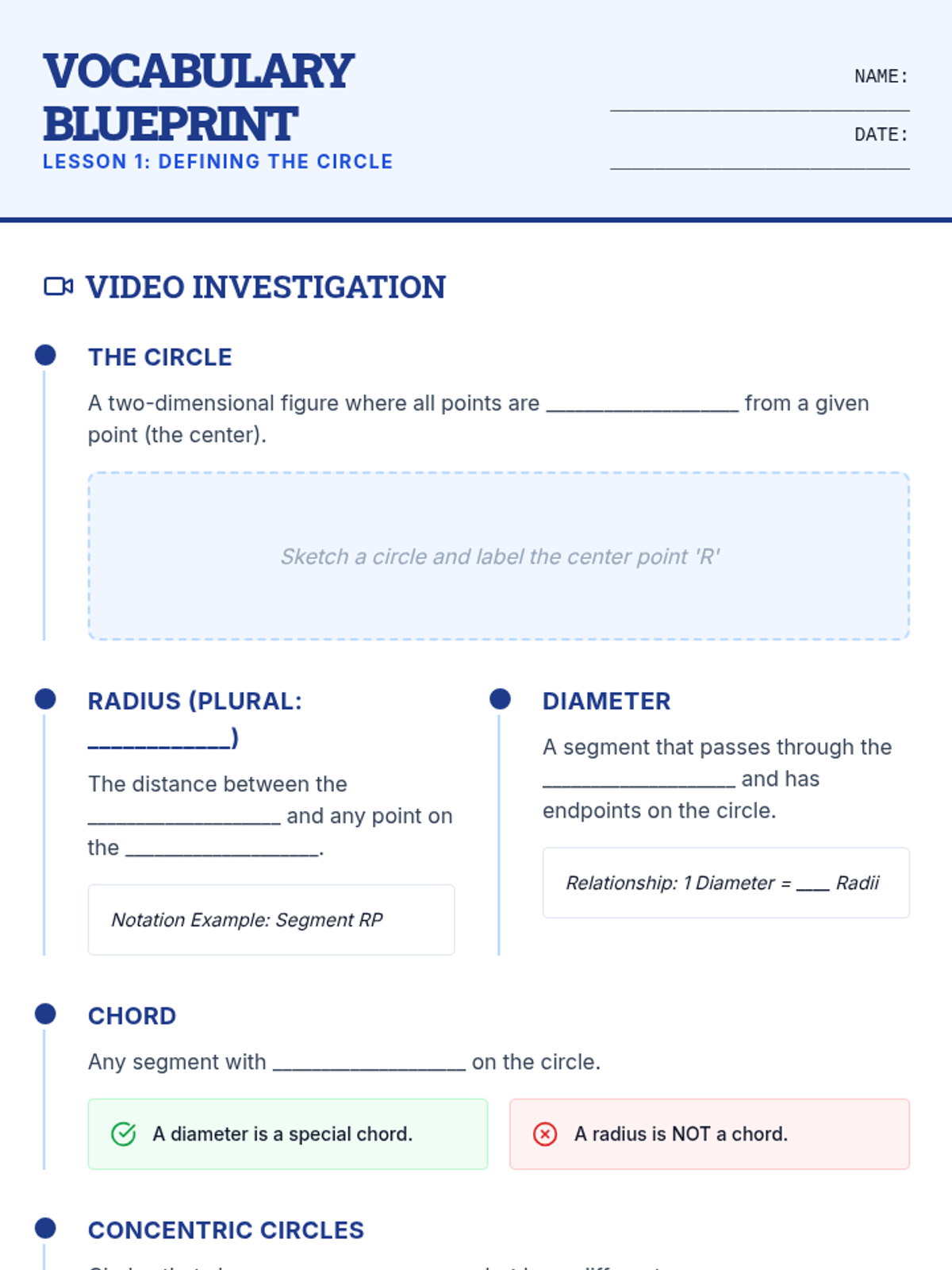
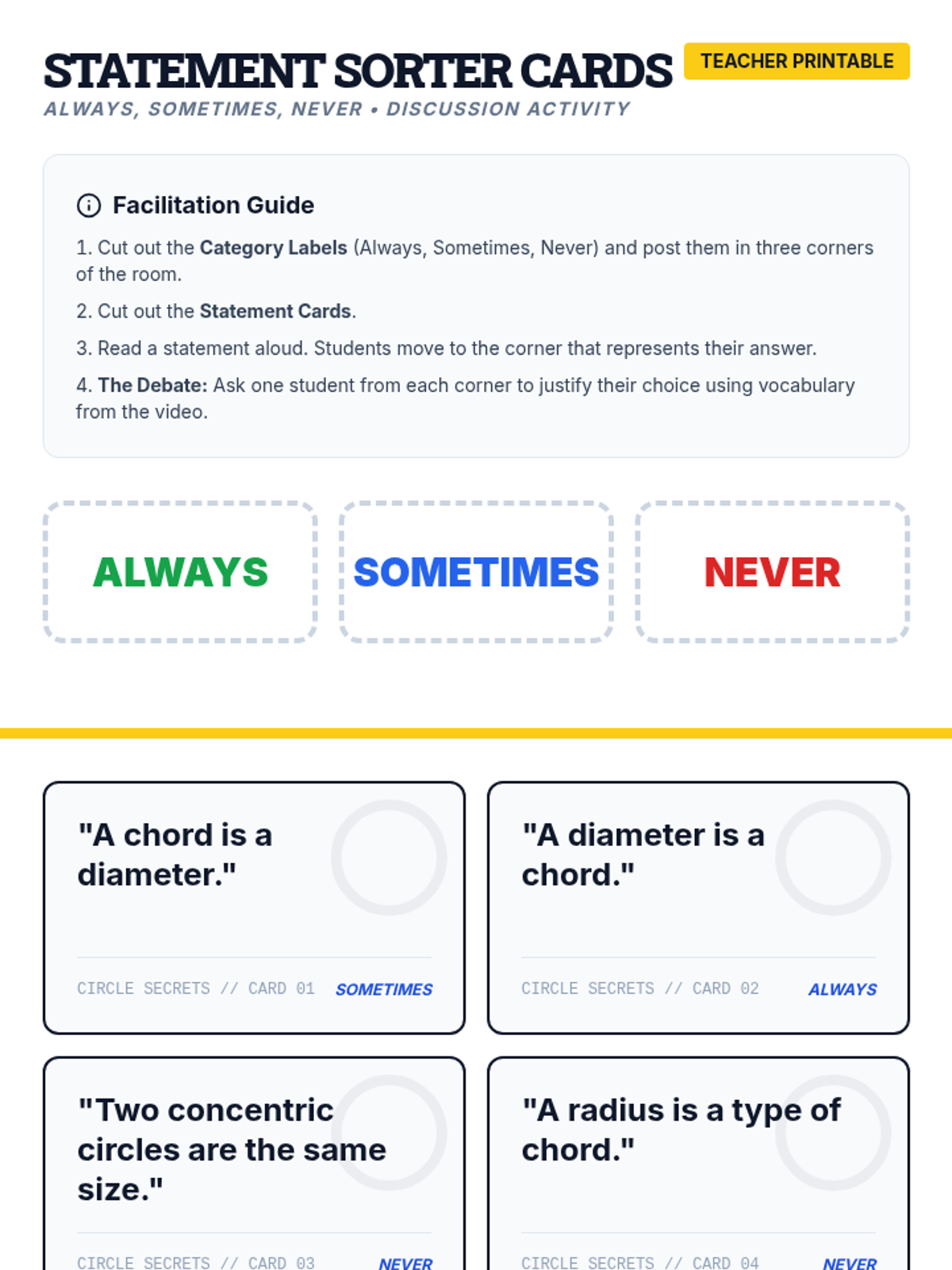
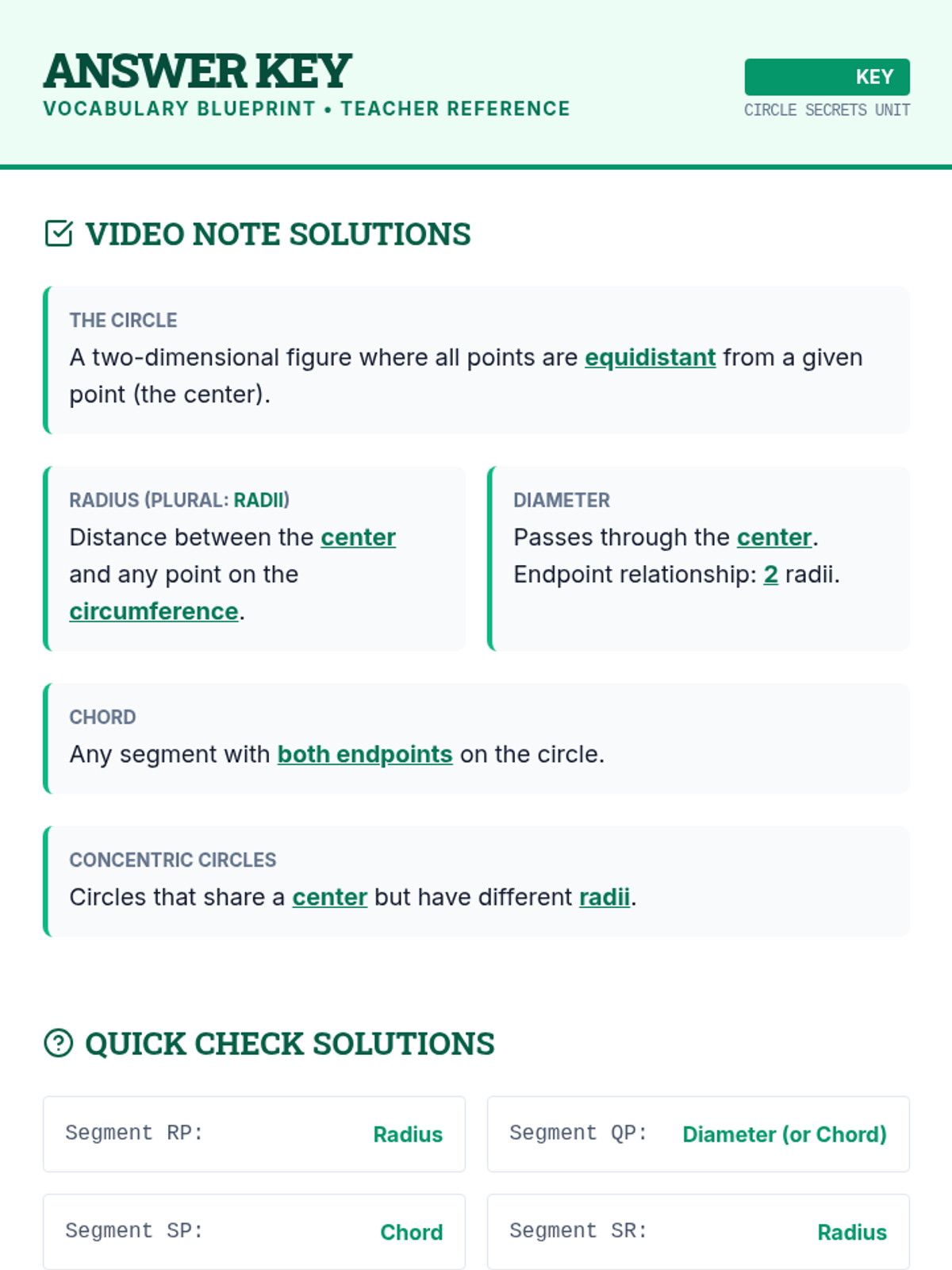
A comprehensive unit exploring circle geometry, vocabulary, arcs, angles, and properties through visual and hands-on investigation.
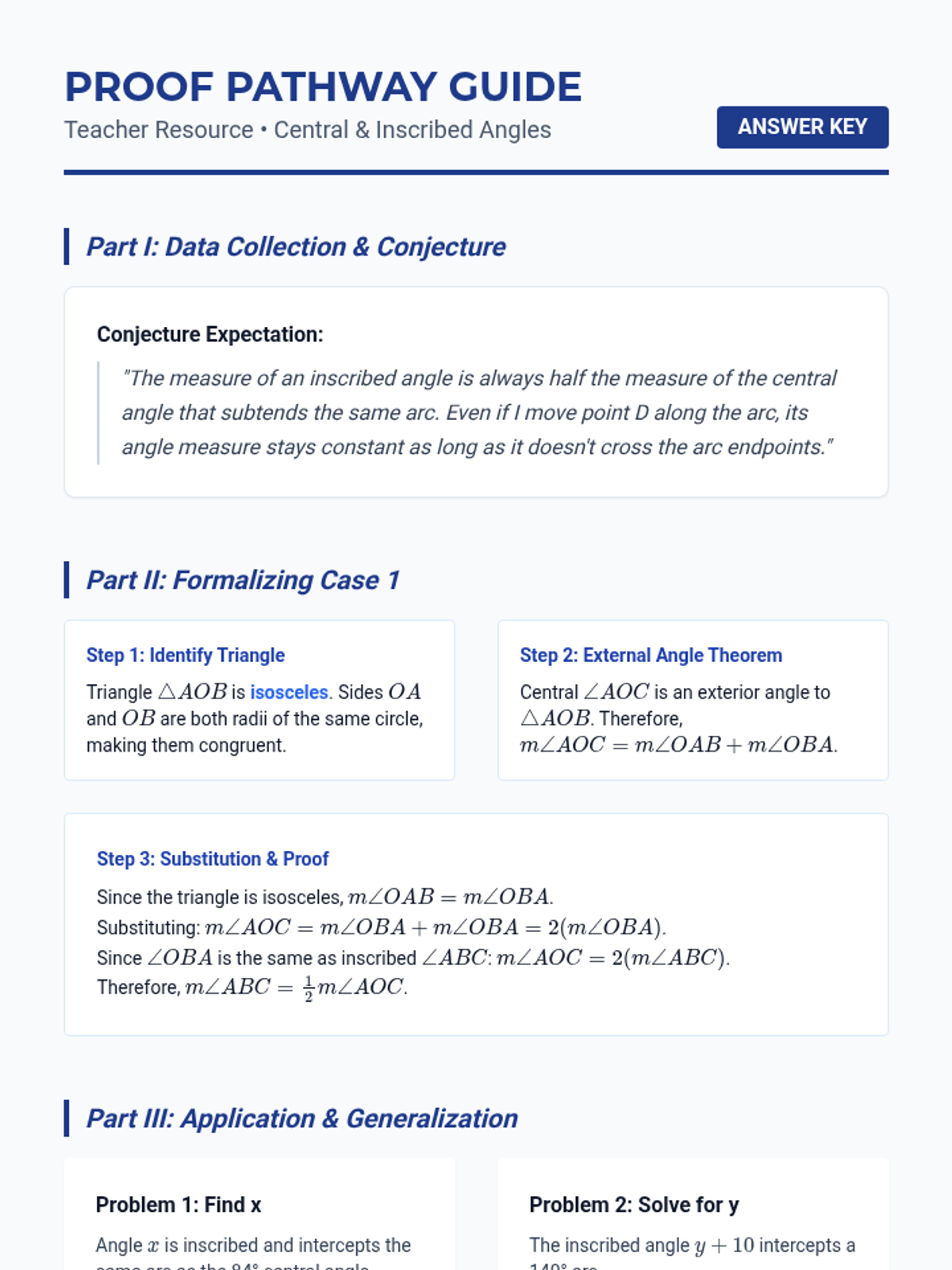
A high school geometry sequence focused on the logical derivation and formal proof of circle angle relationships, moving from basic inscribed angles to complex multi-step proofs.
This sequence explores the fundamental theorems of circle geometry, from inscribed angles and semicircles to cyclic quadrilaterals and tangent properties. Students use inquiry-based methods and formal proofs to master the relationships between angles, arcs, and line segments in circles.
This sequence explores the metric relationships of segments in circles, including chords, secants, and tangents. Students progress from basic tangent properties to complex 'Power of a Point' theorems, culminating in a real-world modeling project.
This inquiry-based sequence guides students through the discovery and formalization of angle relationships within and around circles. Students progress from central and inscribed angles to cyclic quadrilaterals and intersections involving chords, secants, and tangents.
This sequence explores the metric properties of circles, specifically segment lengths formed by tangents, chords, and secants. Students progress from basic tangent properties to complex 'Power of a Point' theorems, culminating in a real-world archaeological reconstruction project.
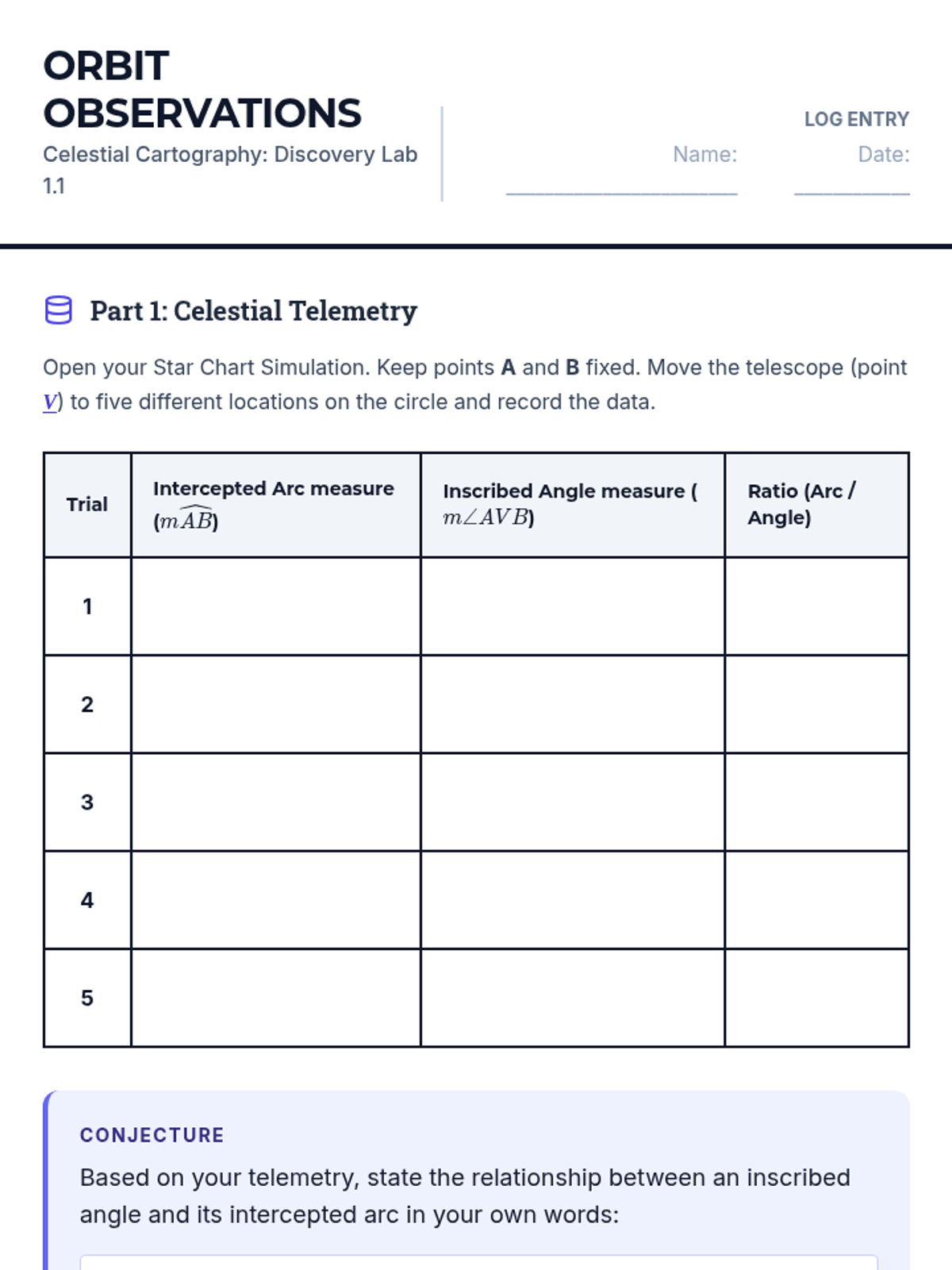
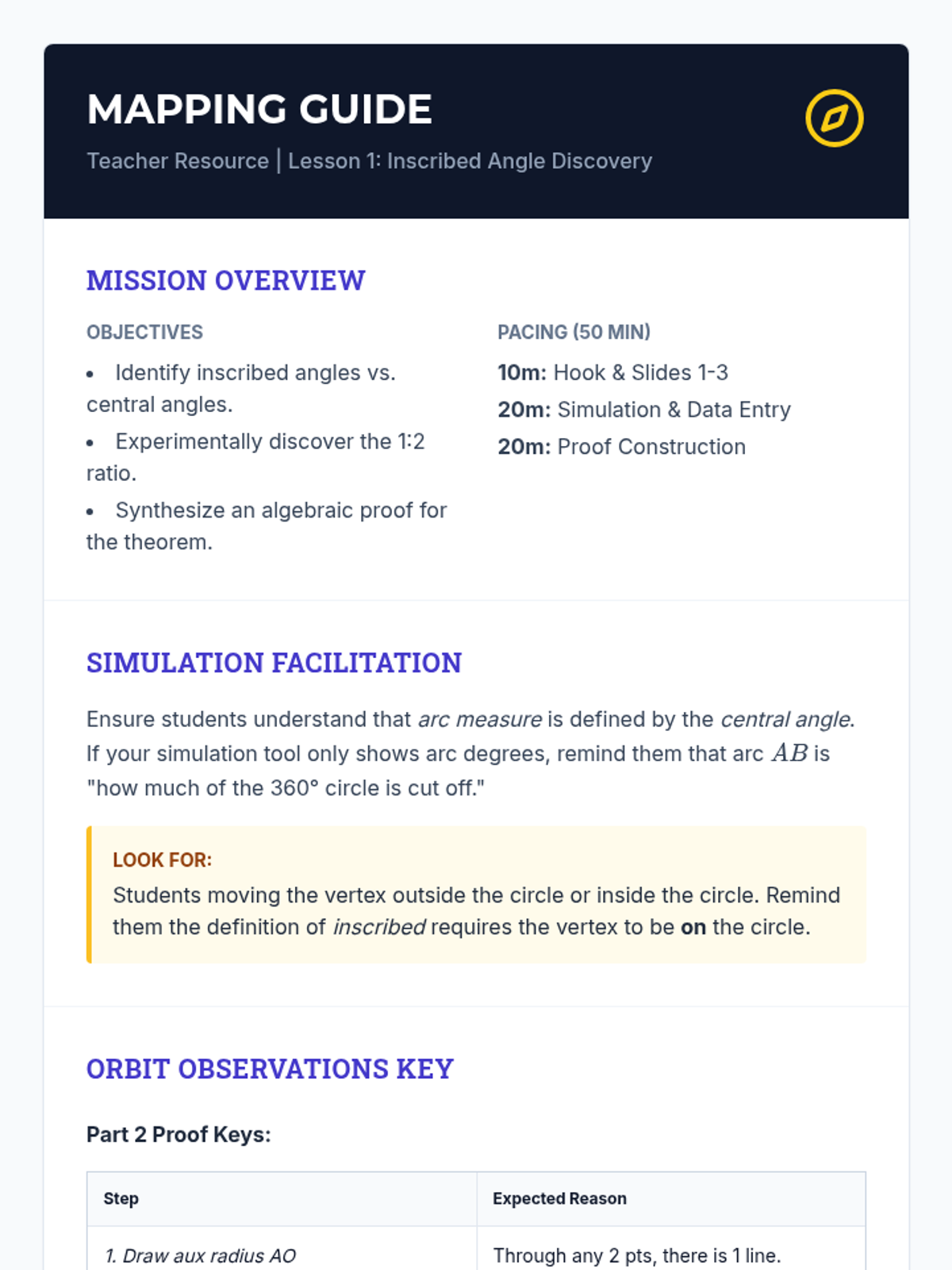
An inquiry-based exploration of circular geometry, focusing on the relationships between angles and arcs. Students move from basic inscribed angles to complex intersections of secants and tangents through a celestial cartography theme.
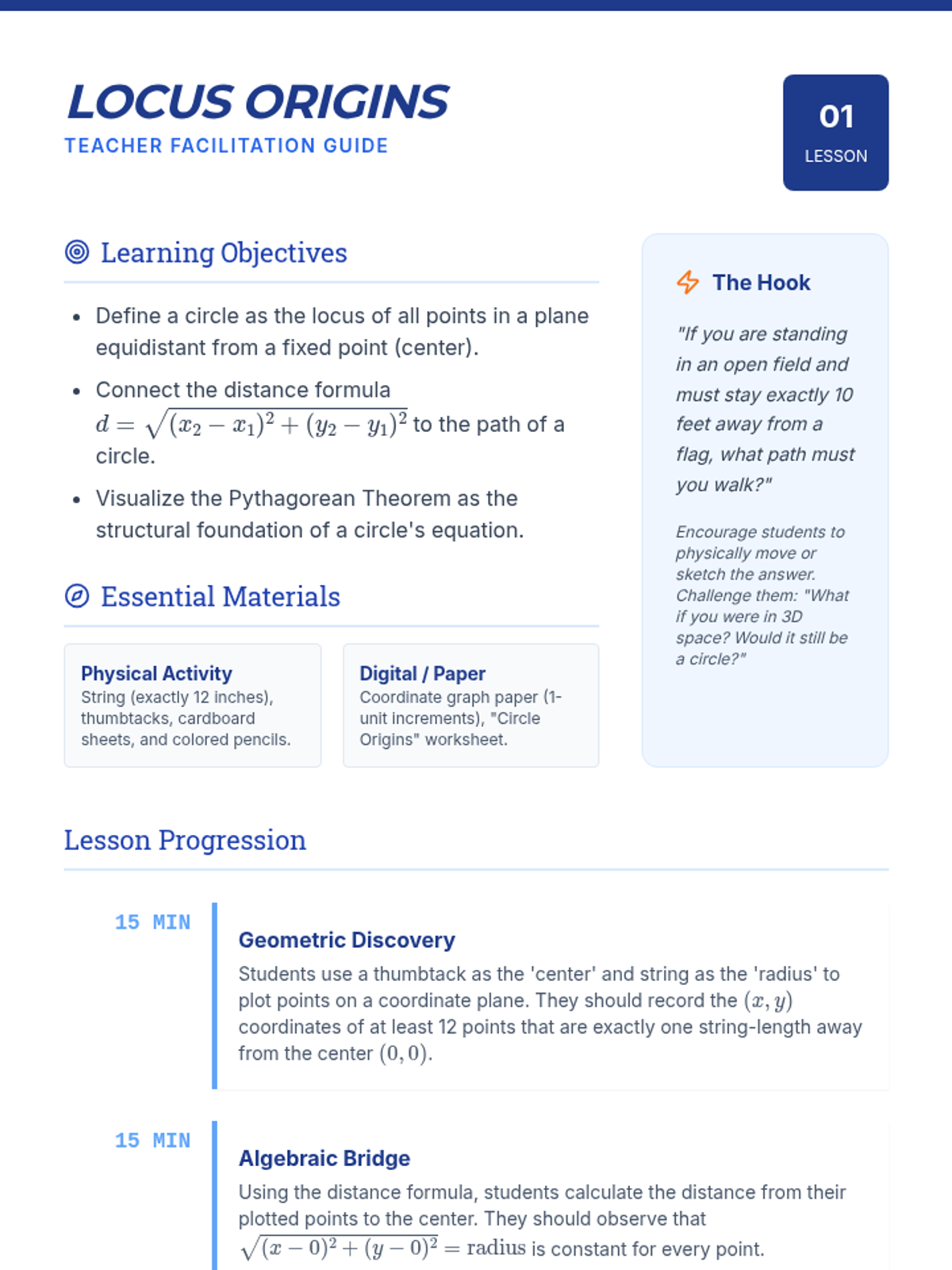
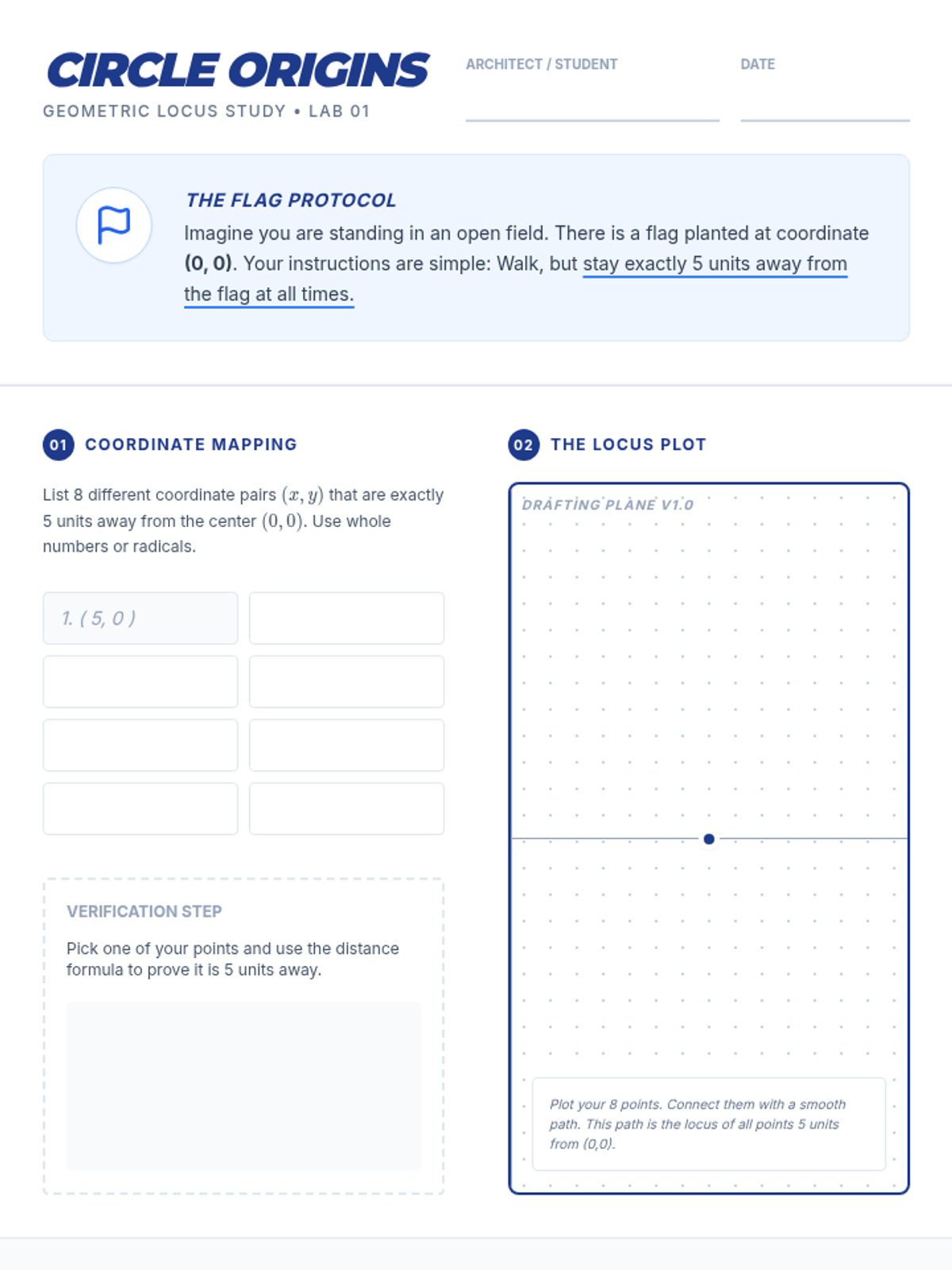
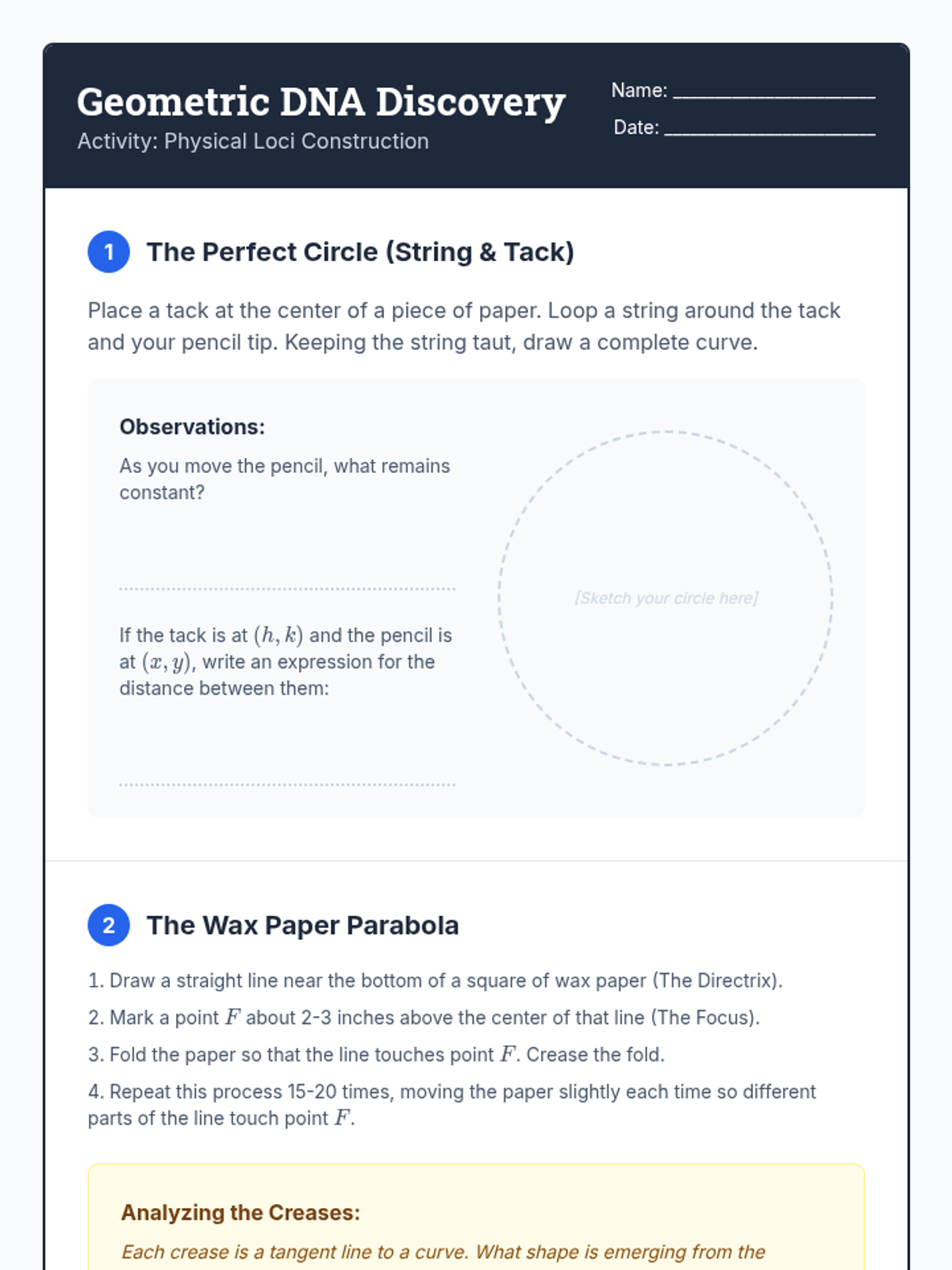
This sequence explores the geometric and algebraic properties of circles. Students progress from defining a circle as a locus of points to deriving its standard equation, converting between forms by completing the square, and solving complex coordinate geometry problems involving tangents and geofencing.
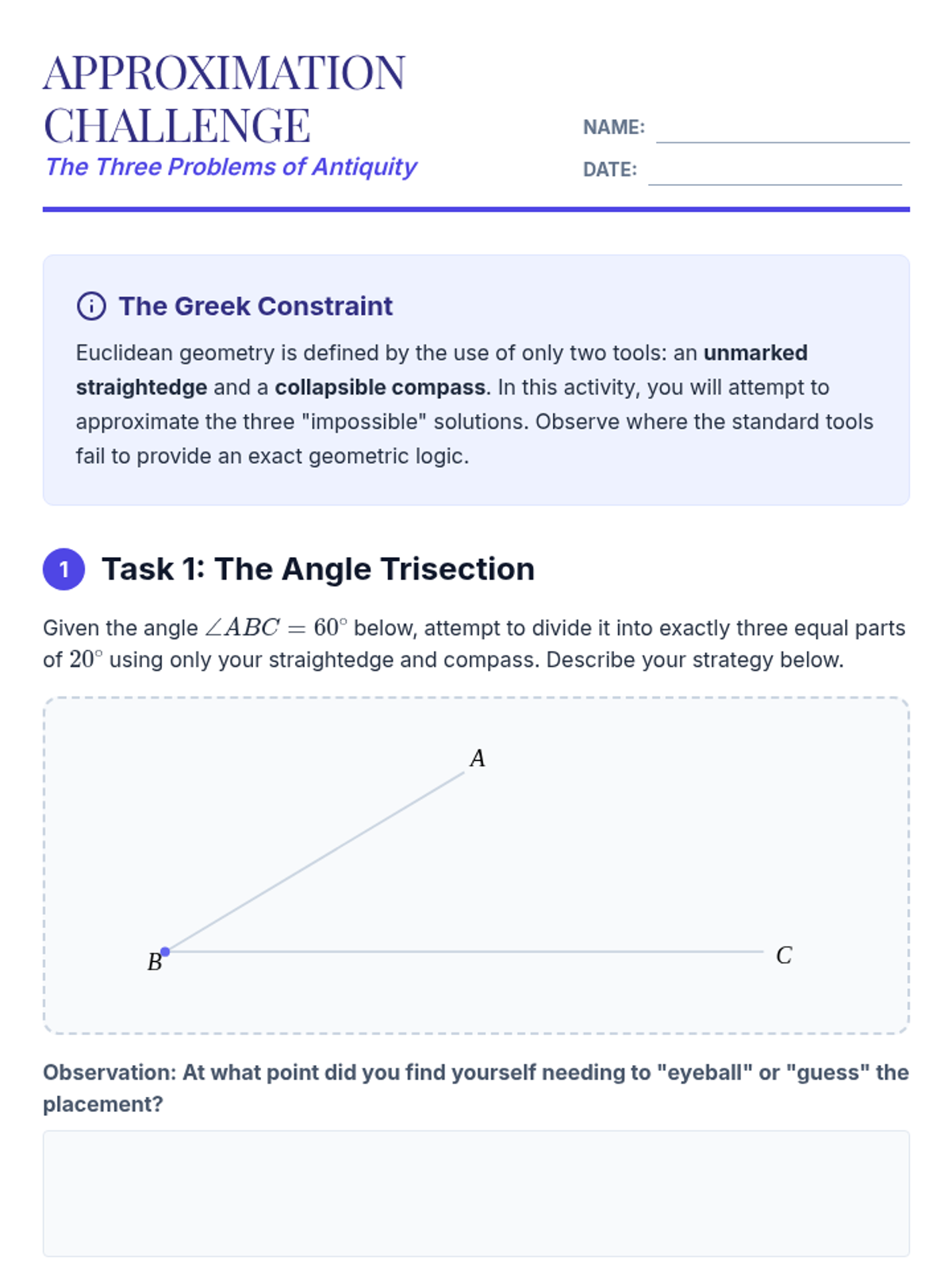
This sequence explores the three famous problems of antiquity (squaring the circle, doubling the cube, trisecting the angle) and the alternative construction methods that solve them. Students analyze why standard tools fail and experiment with 'Neusis' constructions, Origami (paper folding) axioms, and conic sections. It highlights how changing the axioms changes the solvable universe.
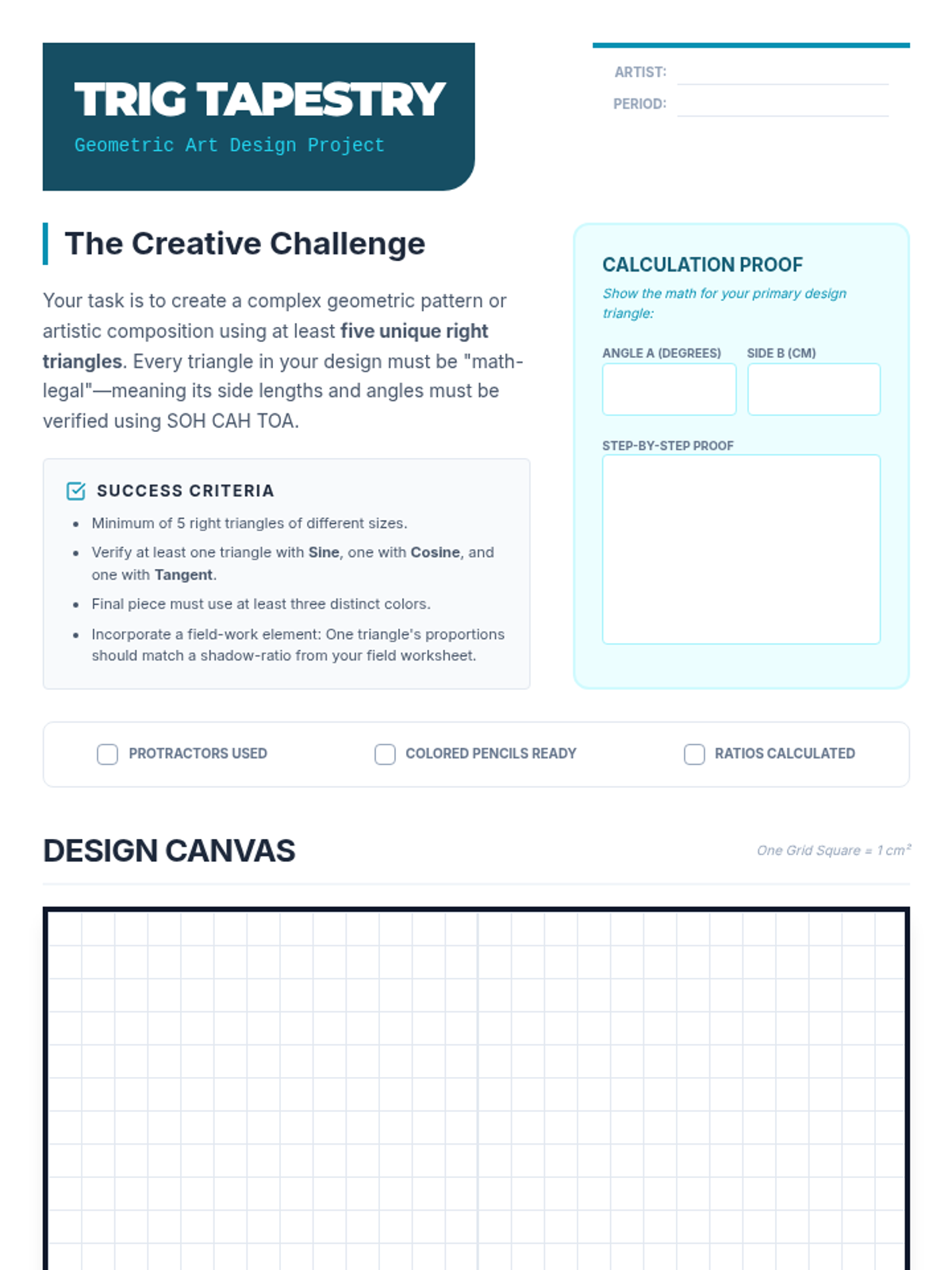
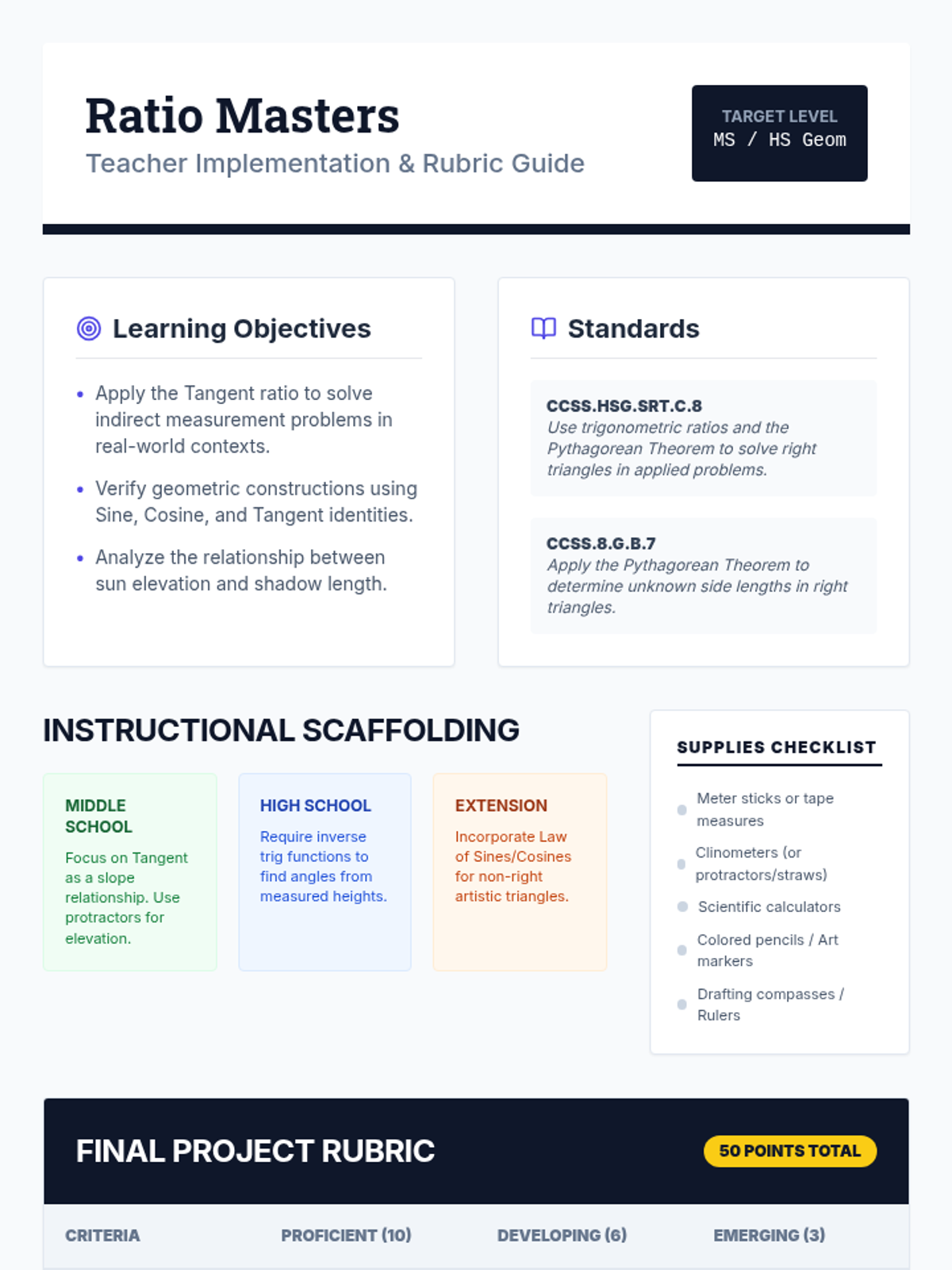
A comprehensive project-based learning unit where students apply trigonometric ratios to measure the heights of local landmarks and create intricate geometric art based on mathematical proportions.
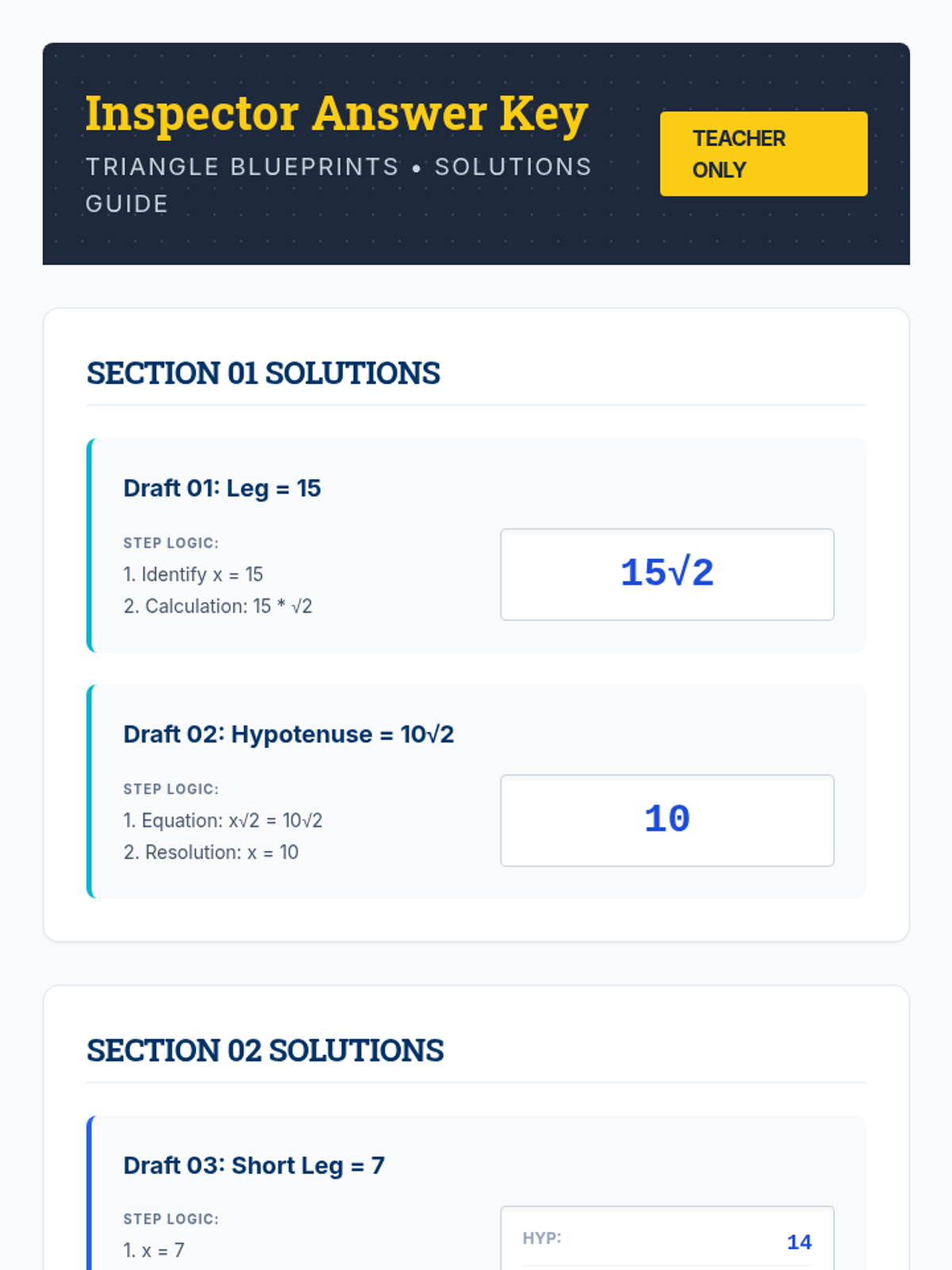
A series of geometry lessons focusing on right triangle relationships and trigonometry, starting with special right triangles.
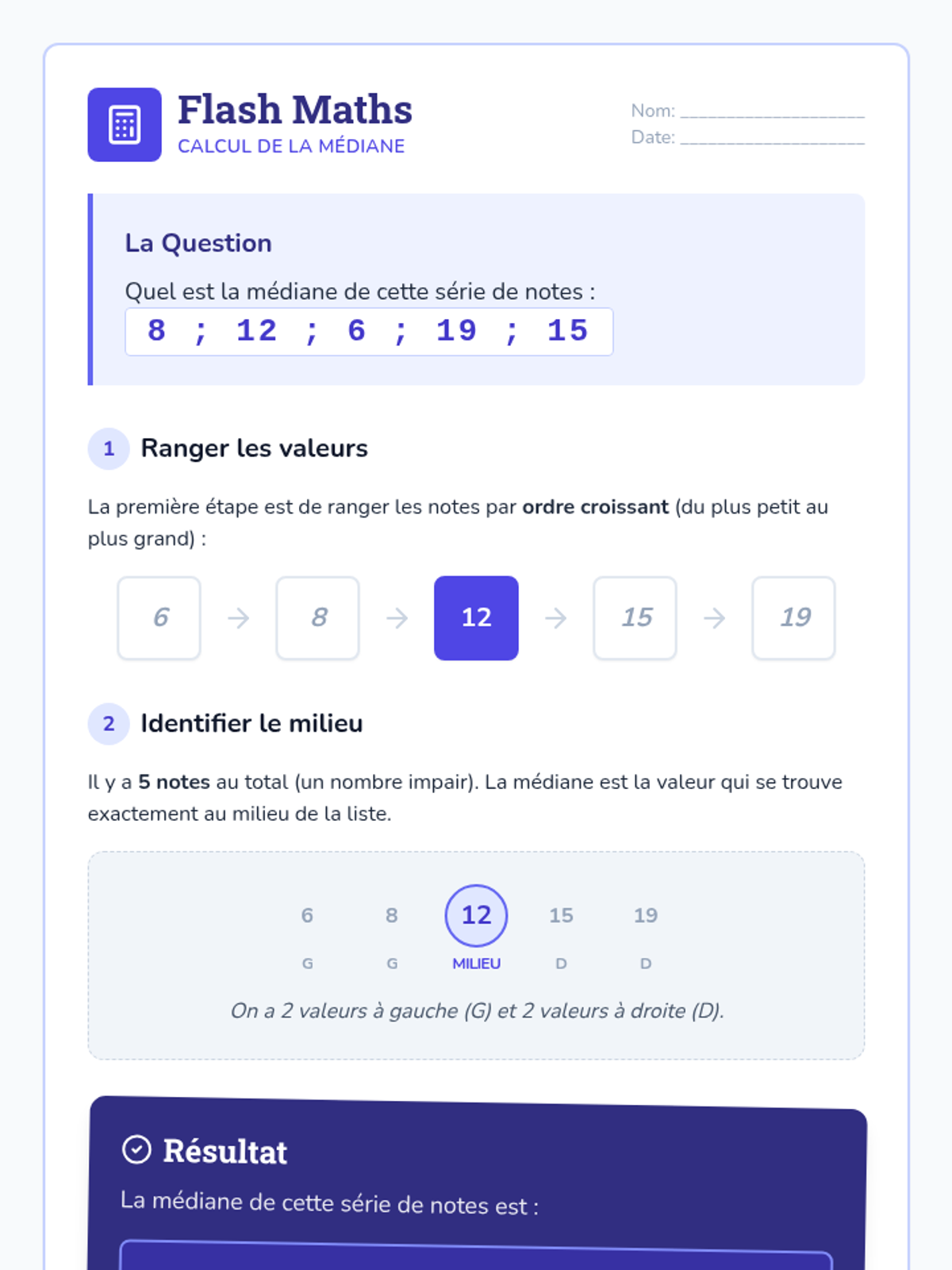
Une série de ressources éducatives couvrant divers concepts mathématiques essentiels comme les statistiques et la trigonométrie.
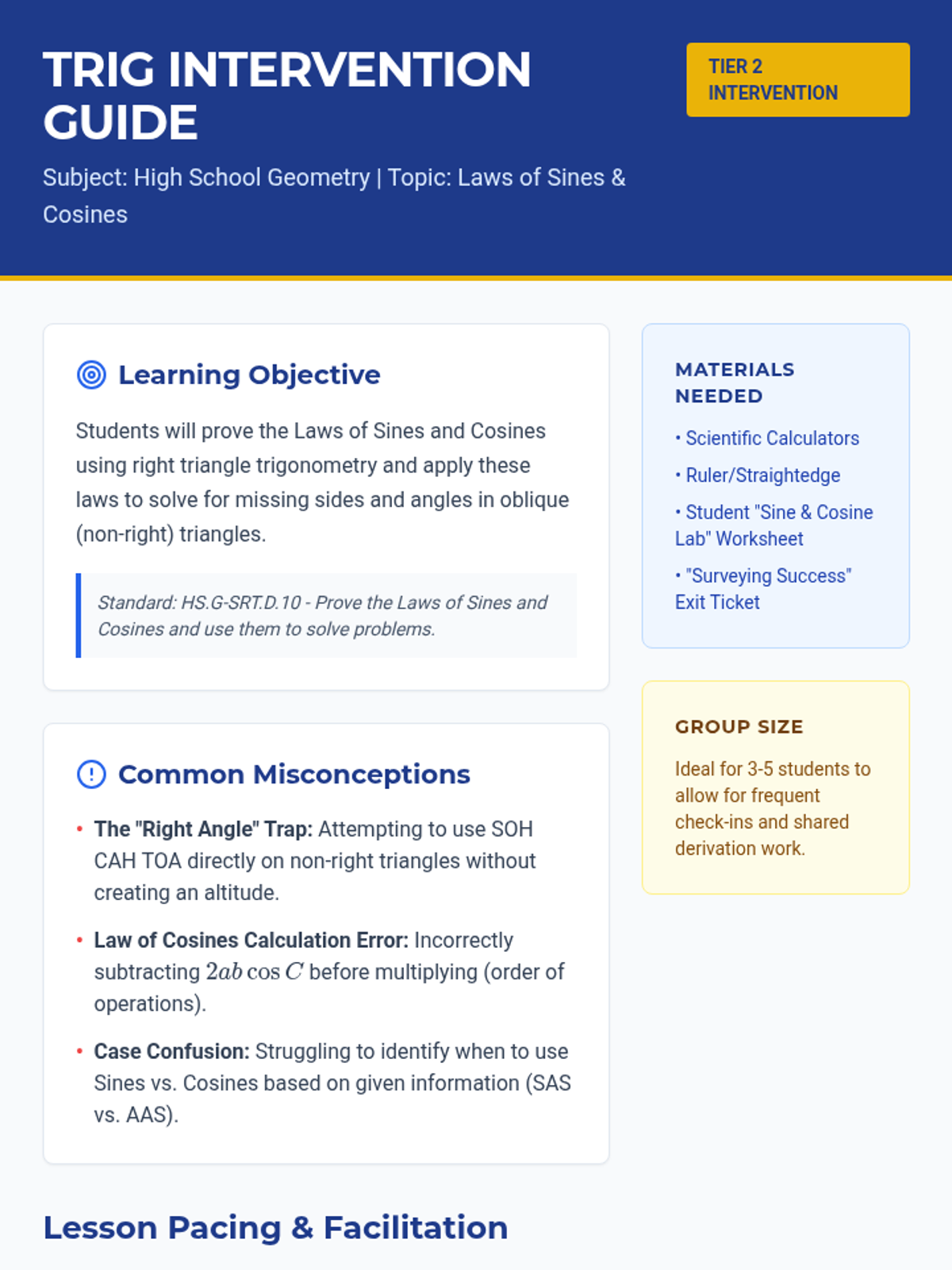
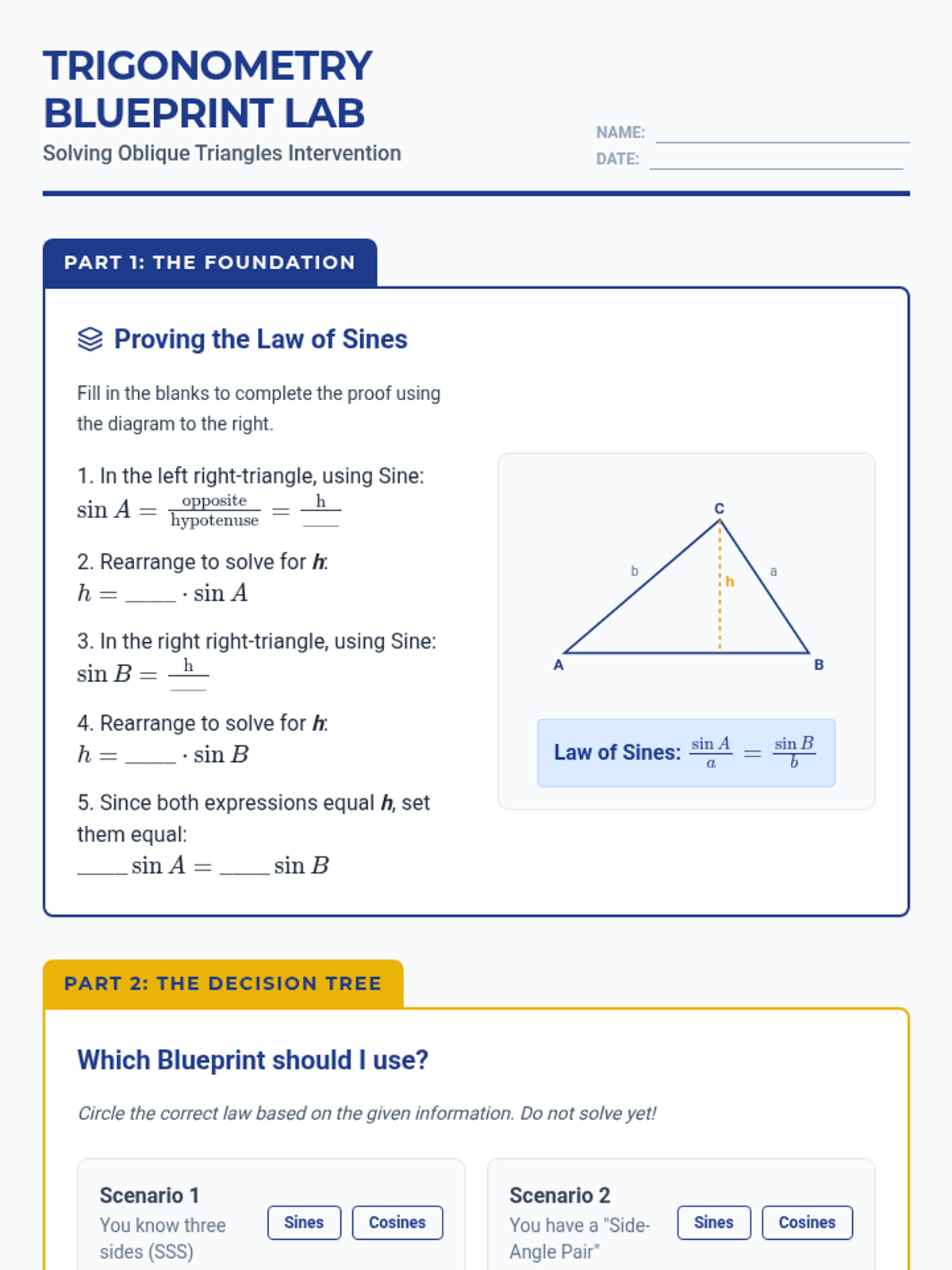
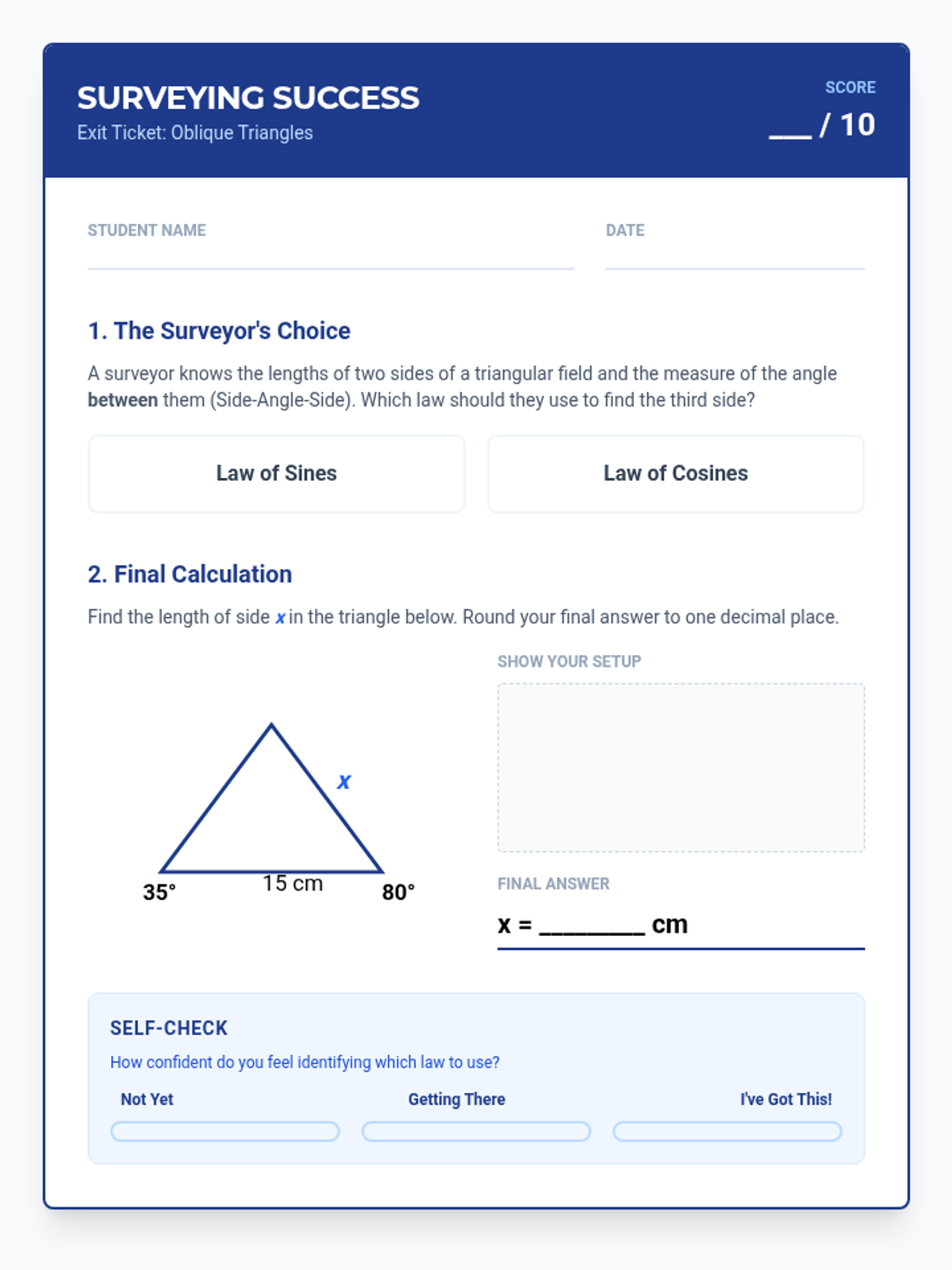
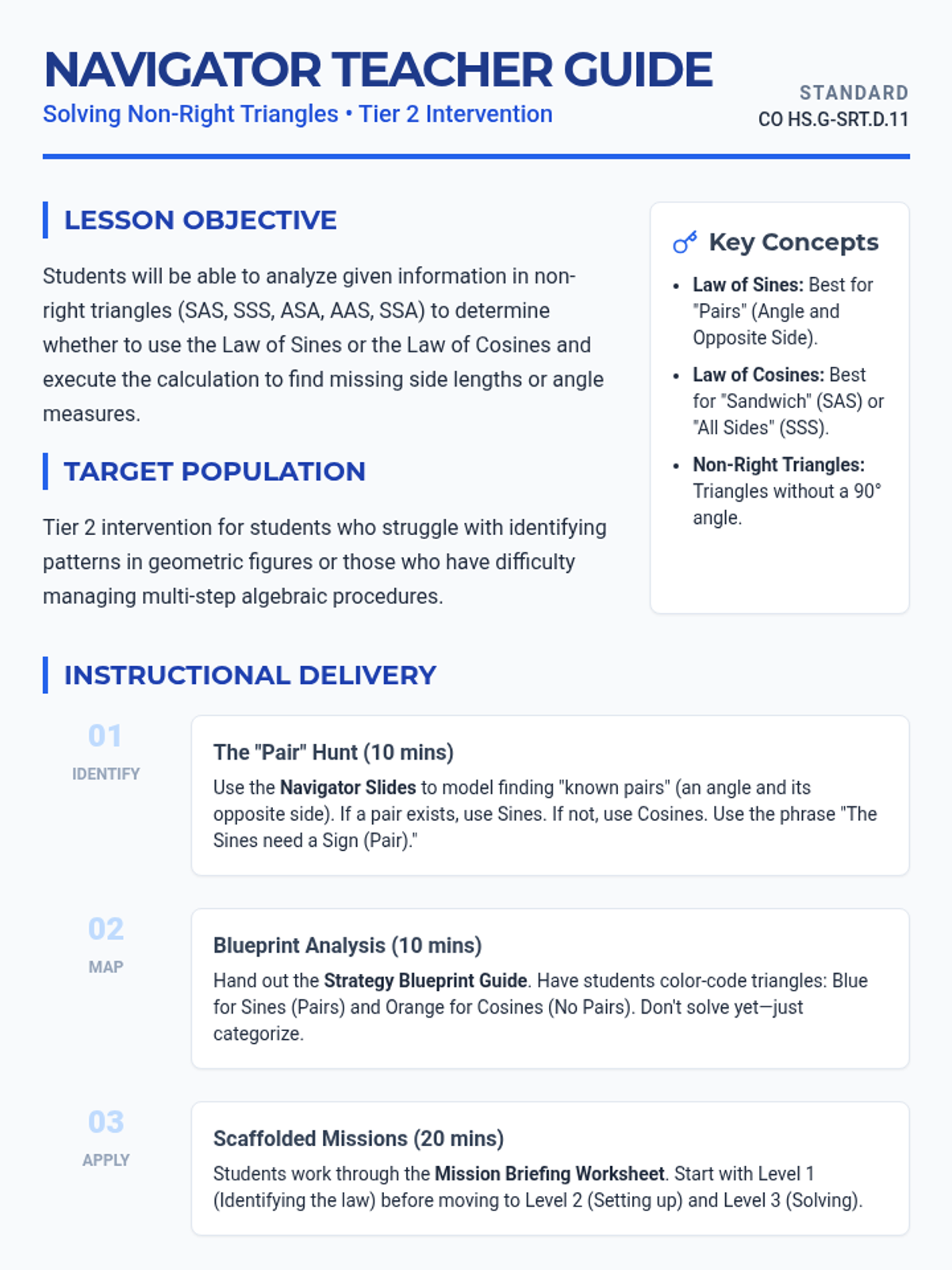
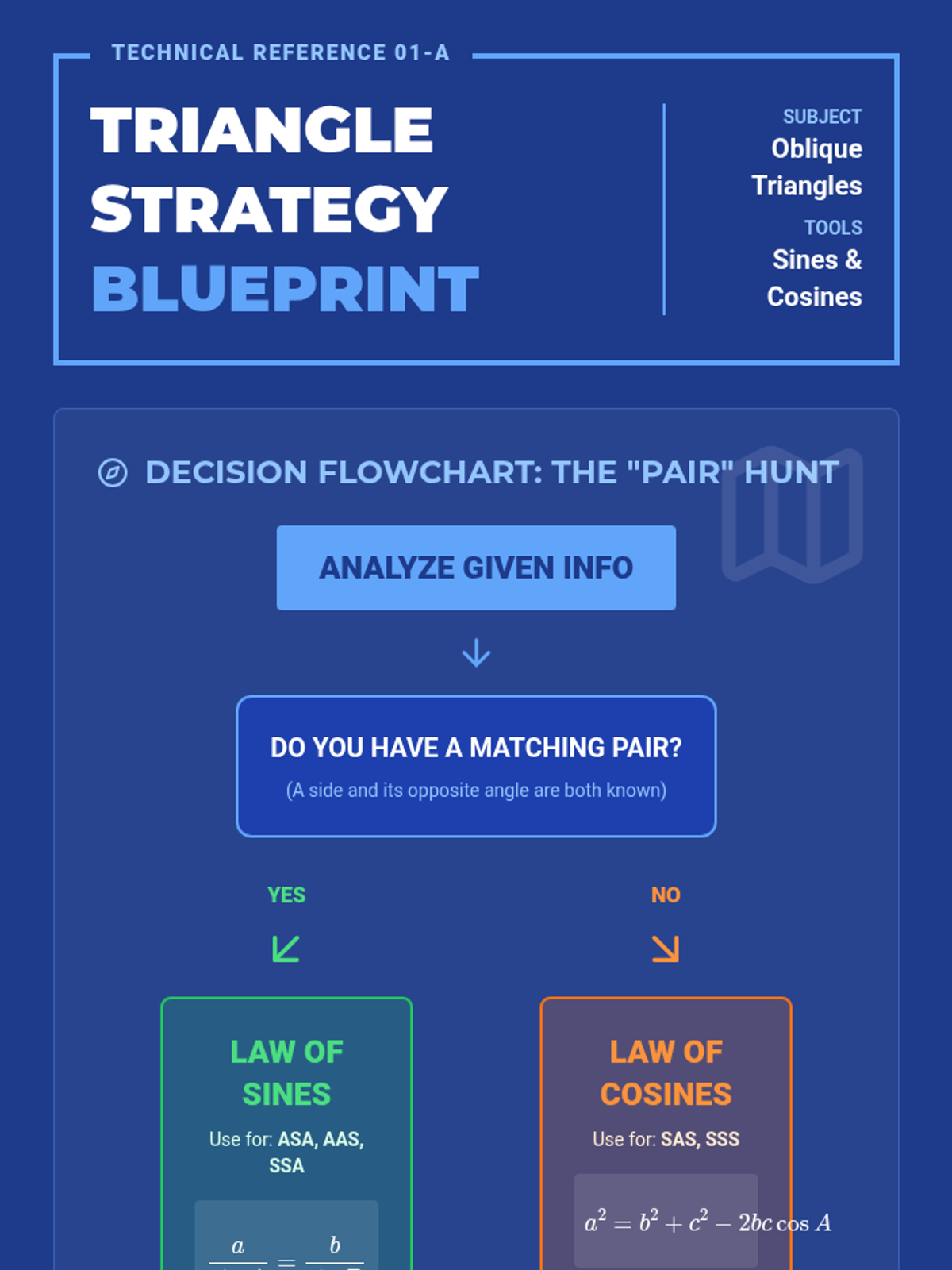
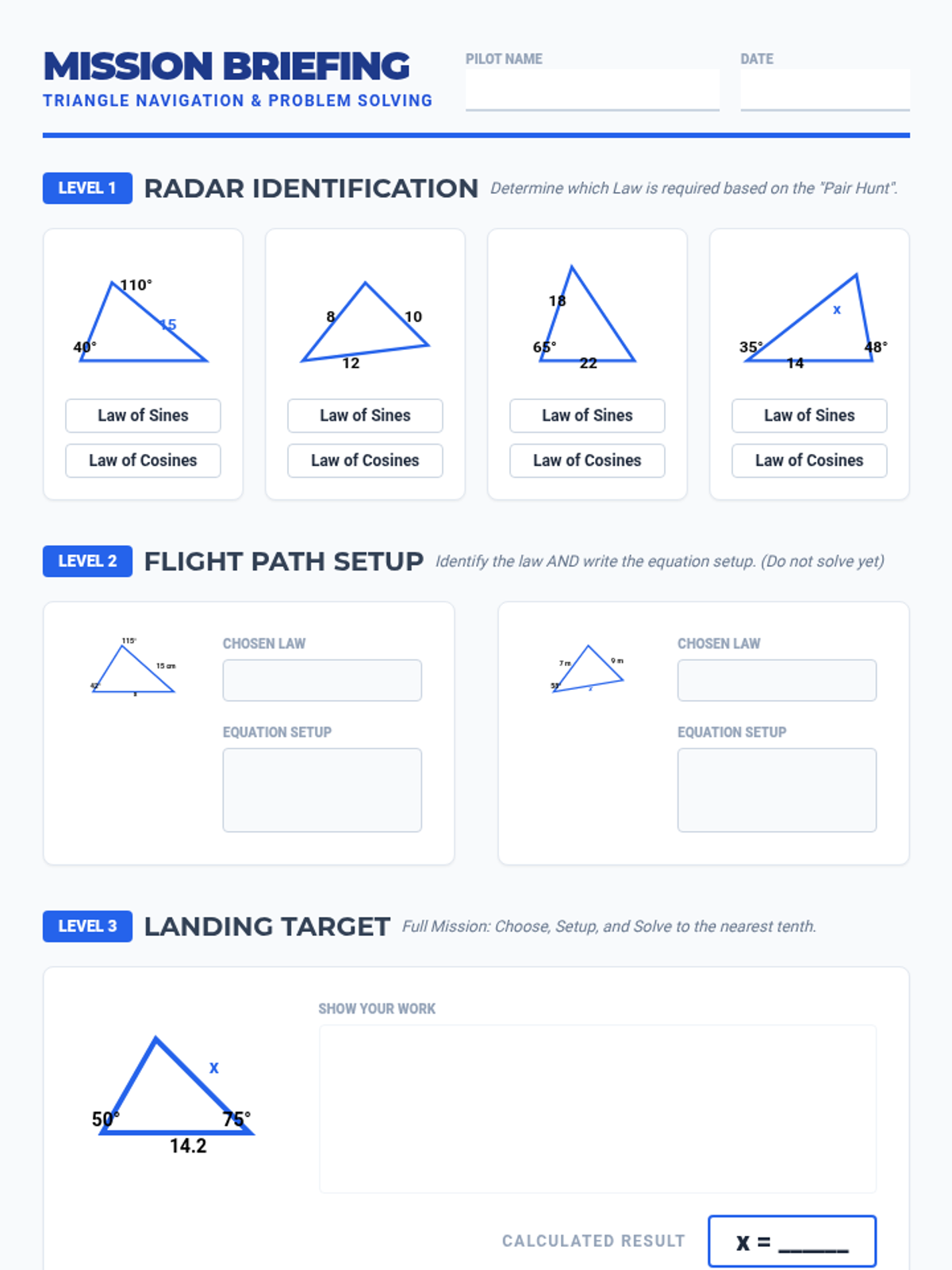
A targeted intervention sequence for High School Geometry students to master the Laws of Sines and Cosines through scaffolded proofs and practical application. The materials use a blueprint-inspired visual theme to emphasize the structural nature of trigonometry.
A specialized intervention sequence designed for high school geometry students to master solving non-right triangles using the Law of Sines and Law of Cosines, with a focus on decision-making and scaffolded practice.
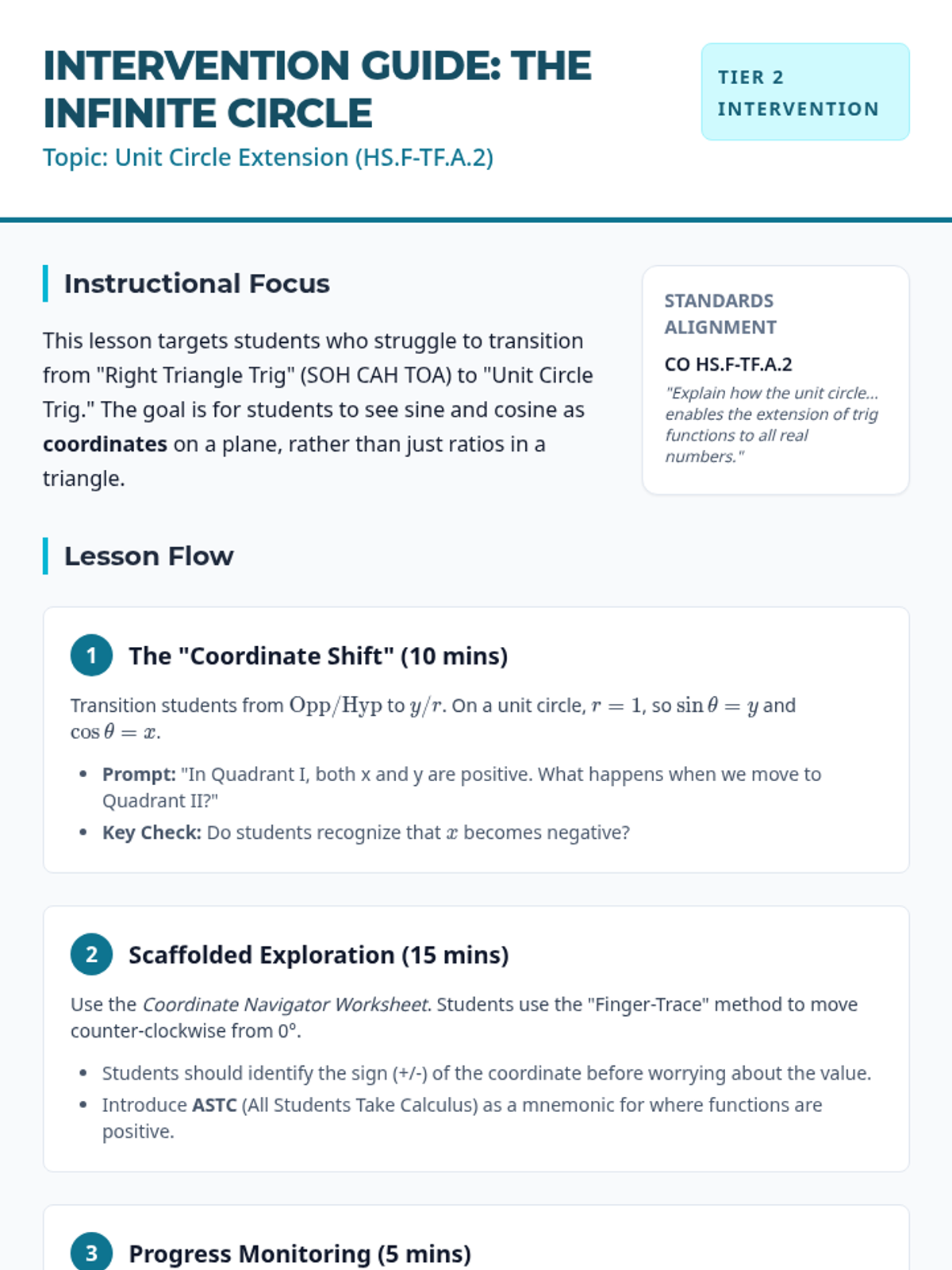
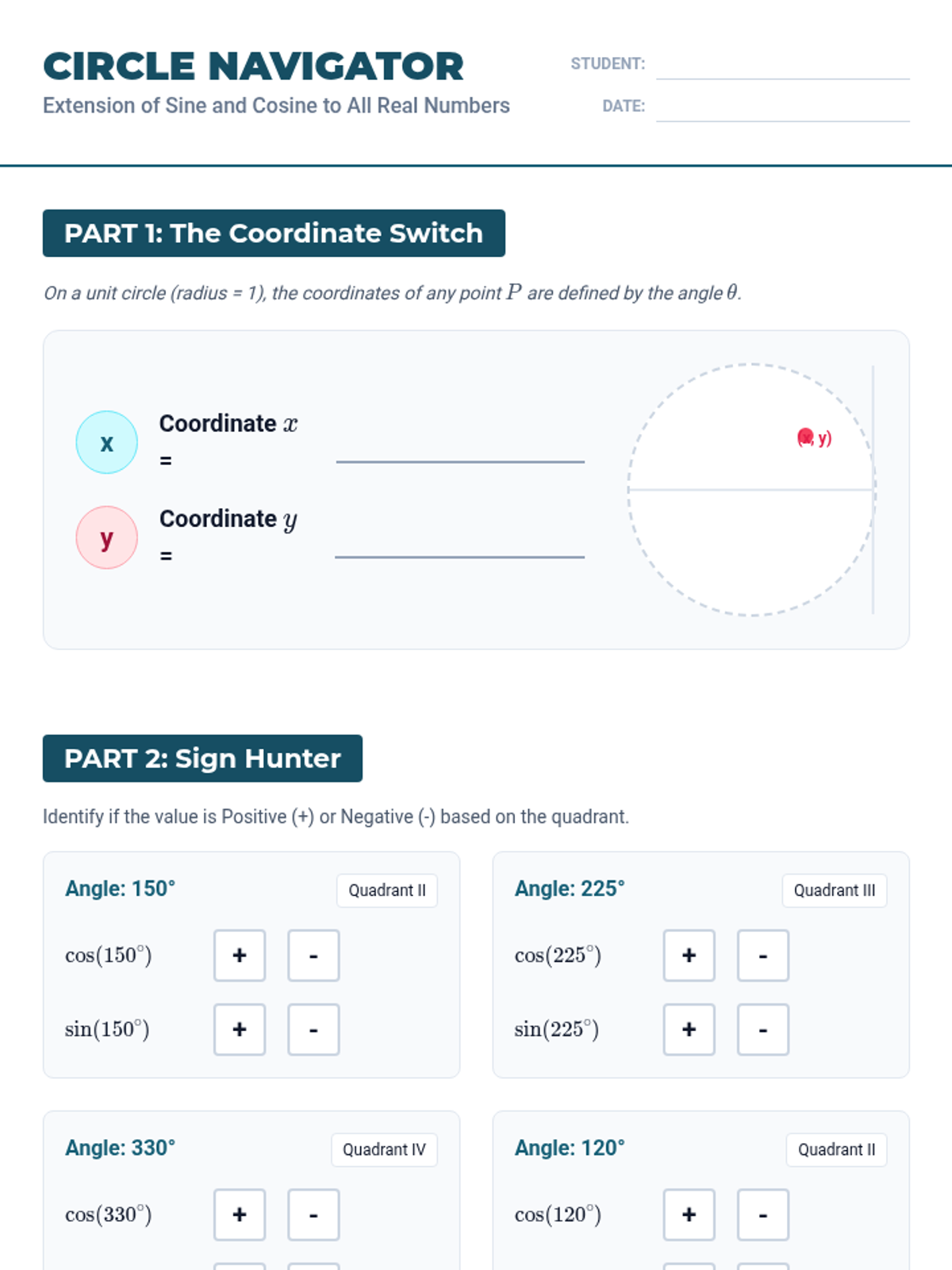
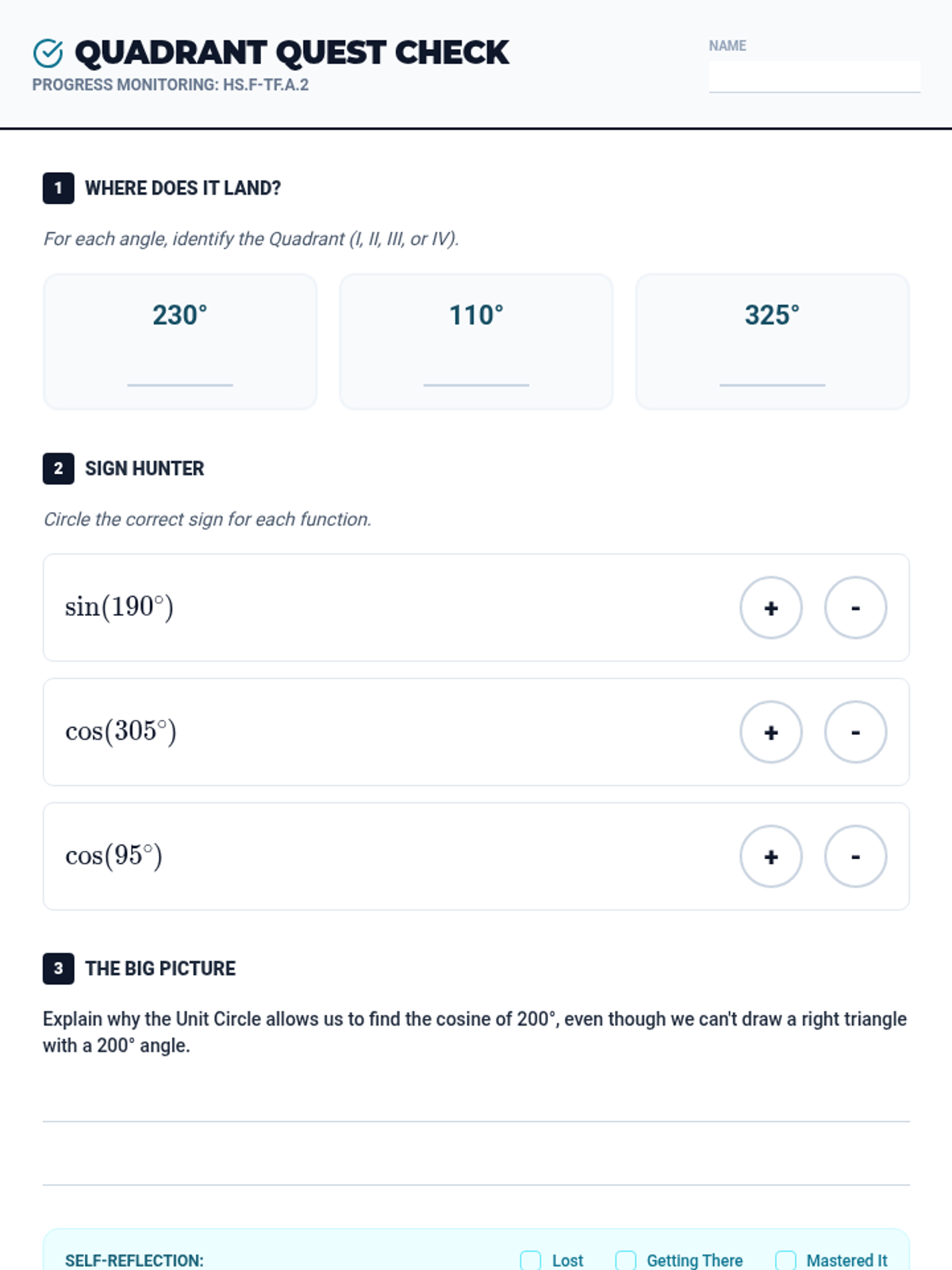
A targeted intervention sequence focused on extending trigonometric functions beyond right triangles using the unit circle. This sequence bridges the gap between basic trigonometry and periodic functions for students needing additional support.
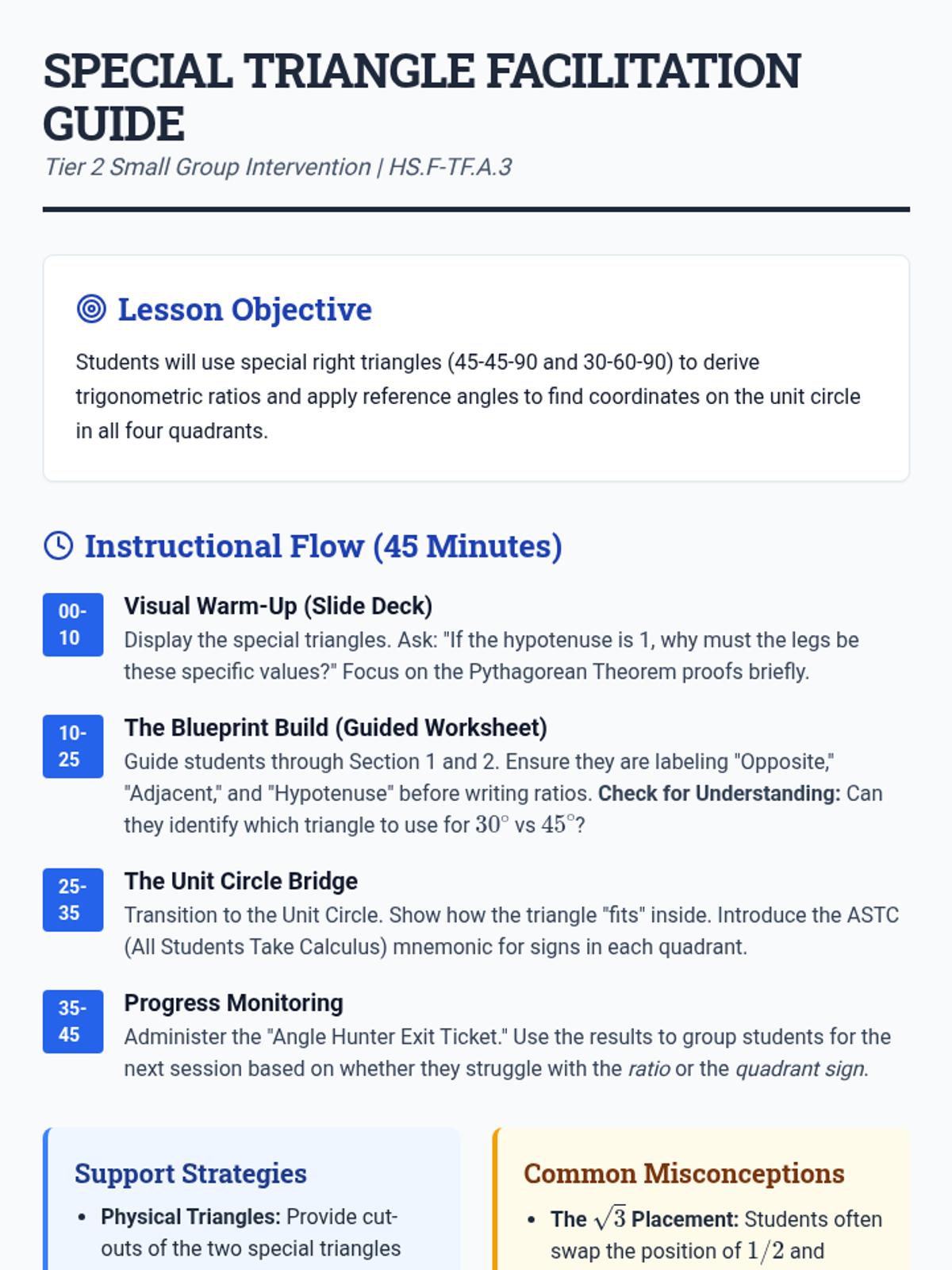
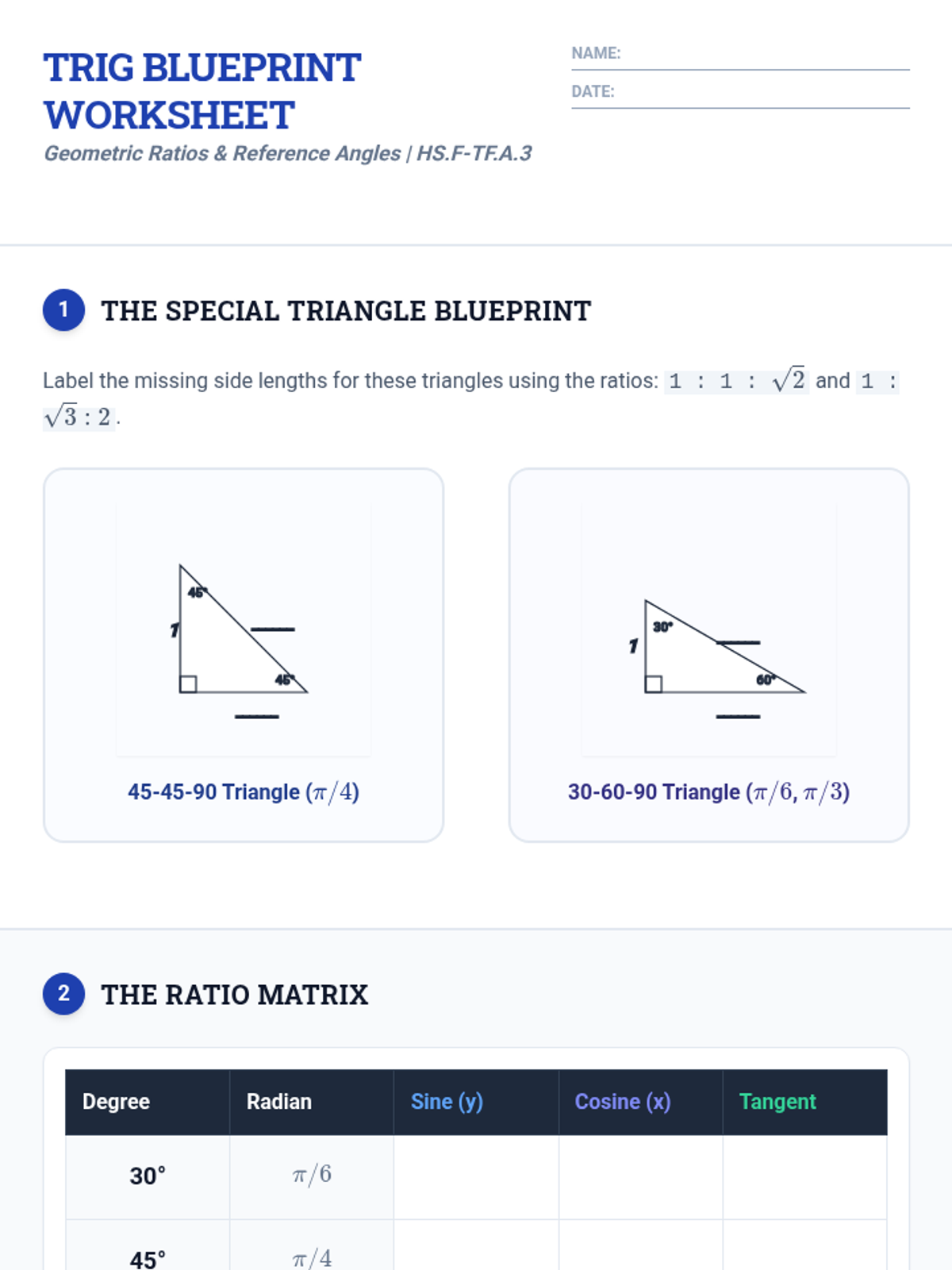
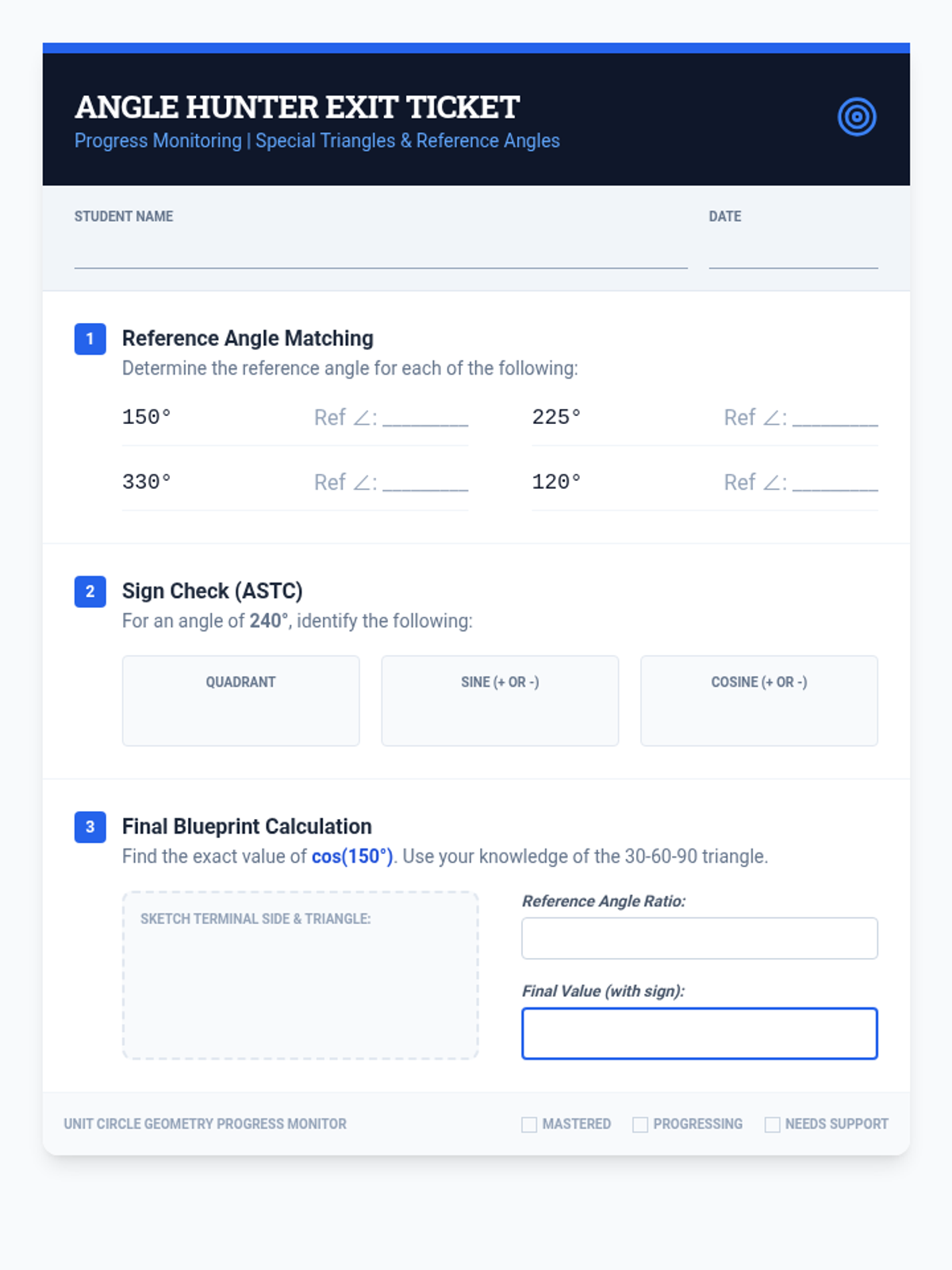
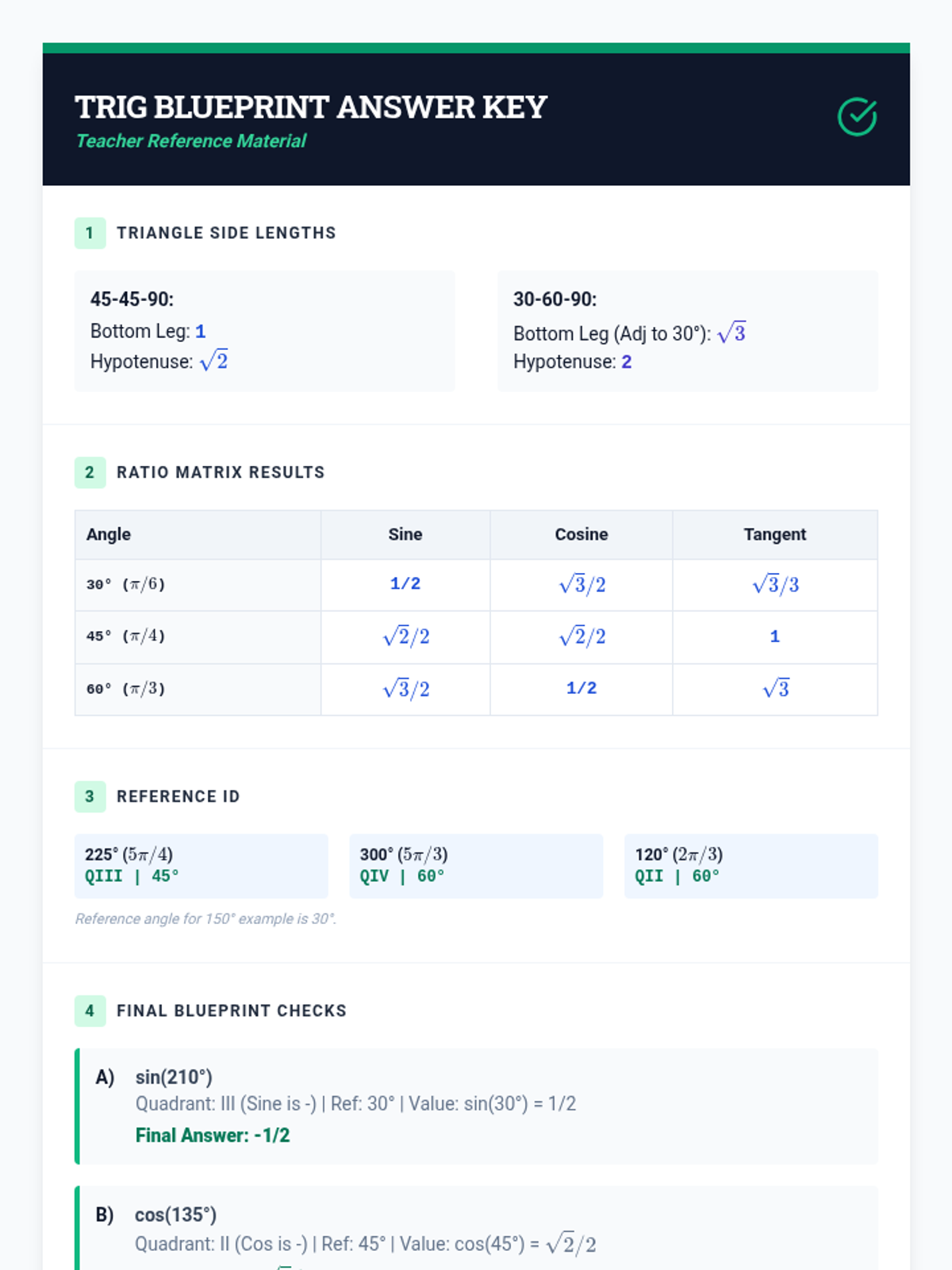
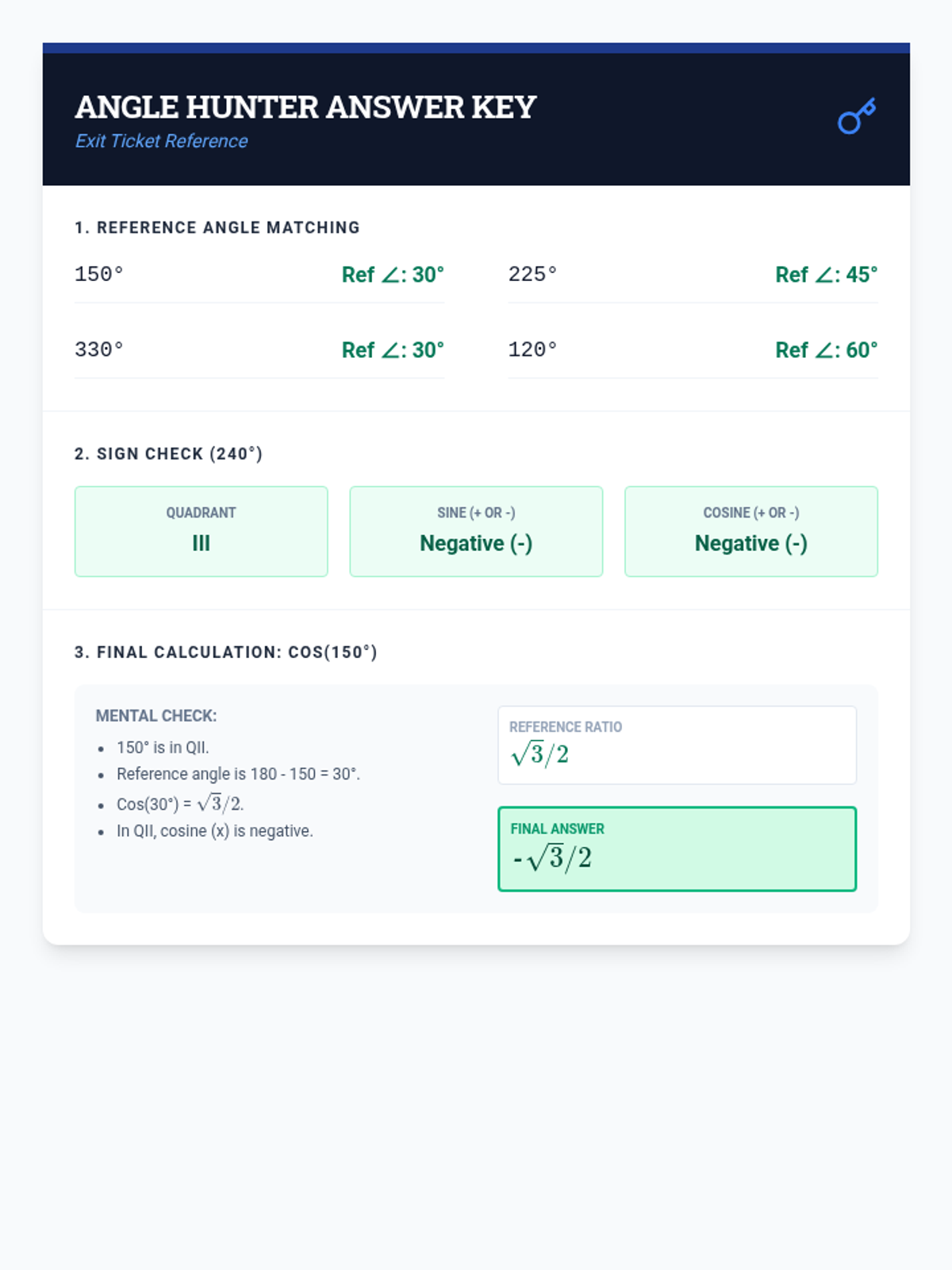
A Tier 2 intervention sequence focused on foundational trigonometry, moving from special right triangles to reference angles on the unit circle. This sequence provides scaffolded support for students struggling with geometric interpretations of sine, cosine, and tangent.
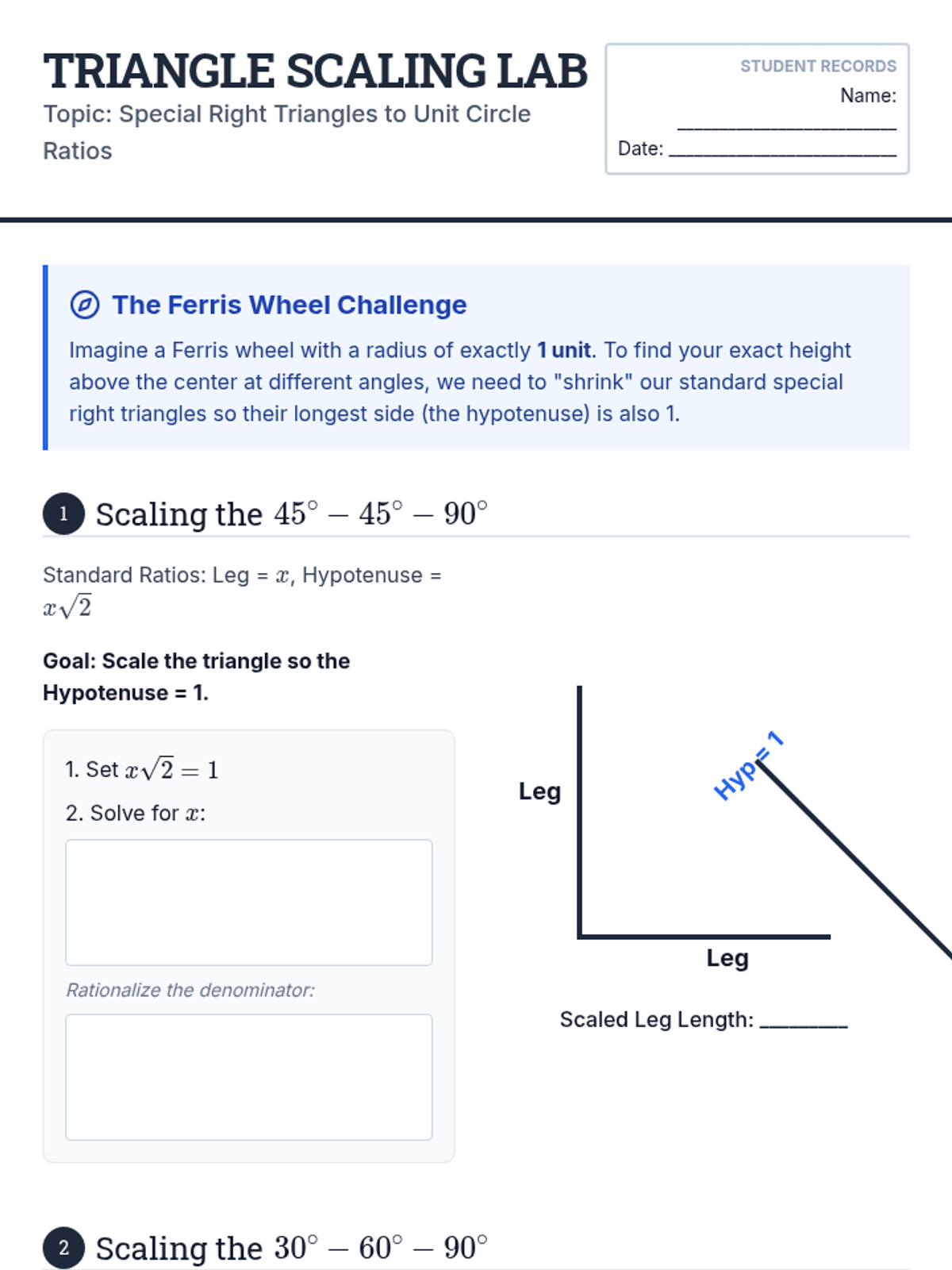
A comprehensive exploration of the unit circle, bridging geometry and trigonometry by scaling triangles, defining radians, and utilizing symmetry to evaluate trigonometric functions.
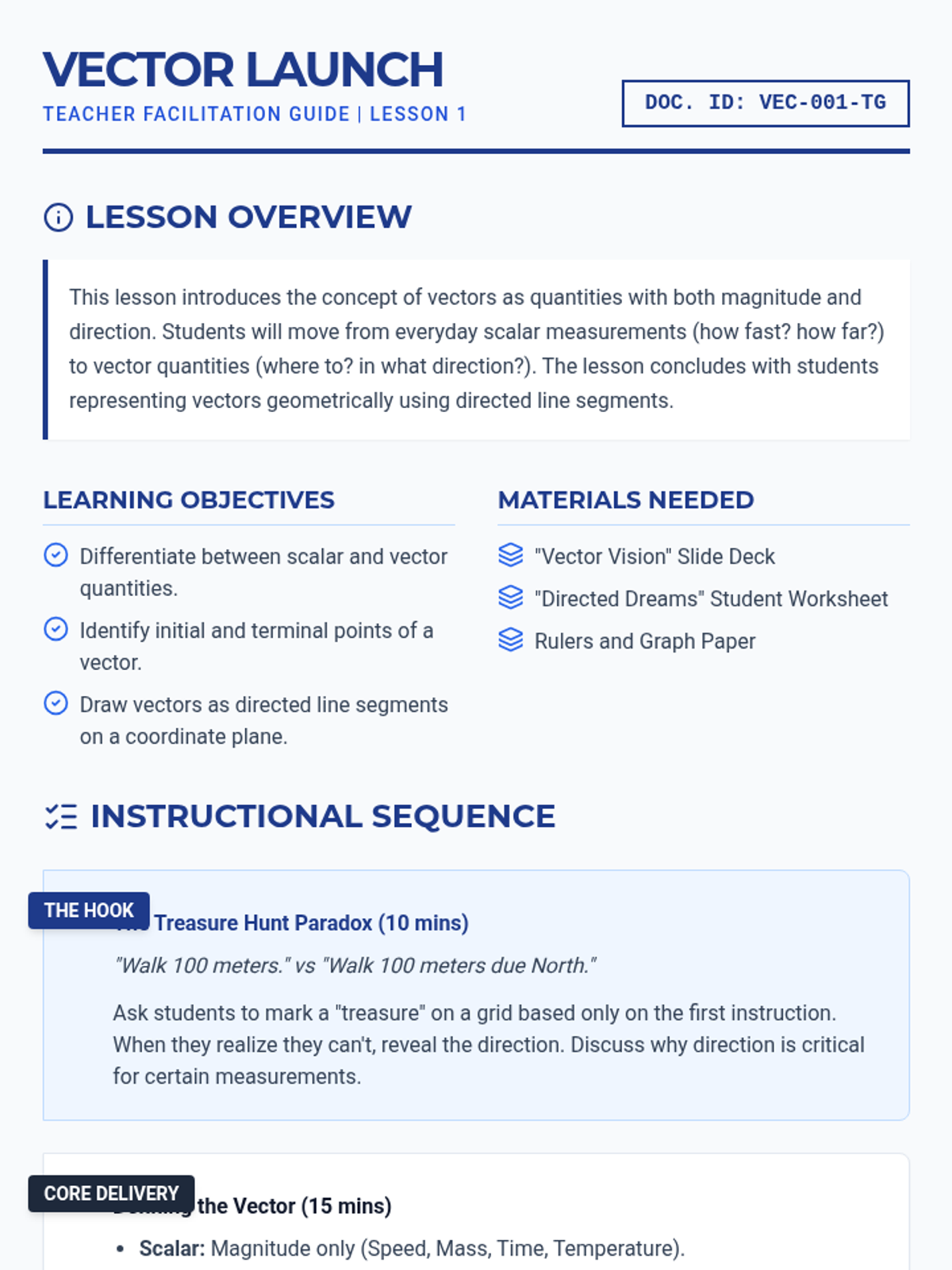
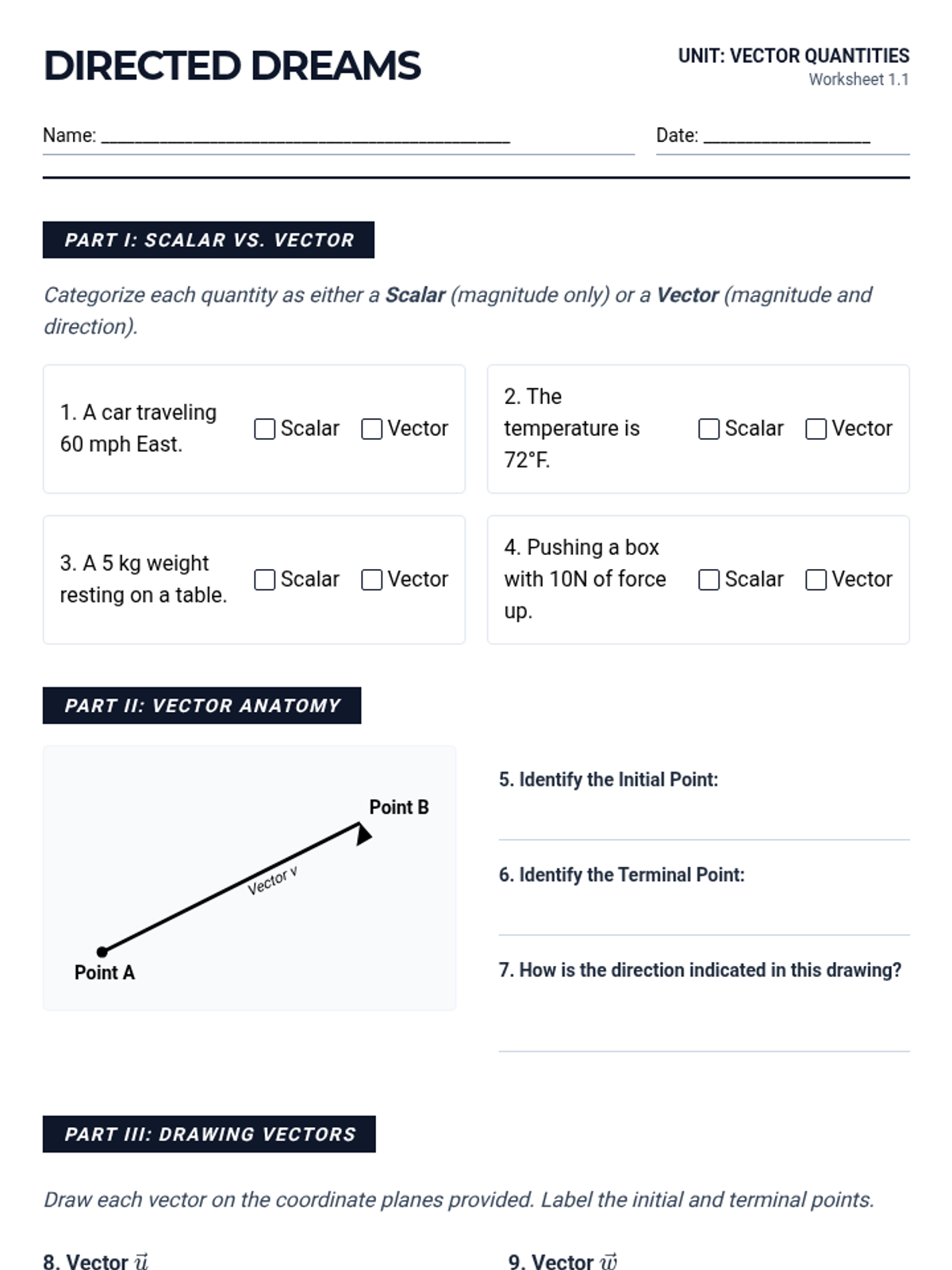
A comprehensive introduction to vectors through geometric representation, focusing on the distinction between scalars and vectors, visual addition/subtraction, scalar multiplication, and the transition to component form and magnitude calculation.
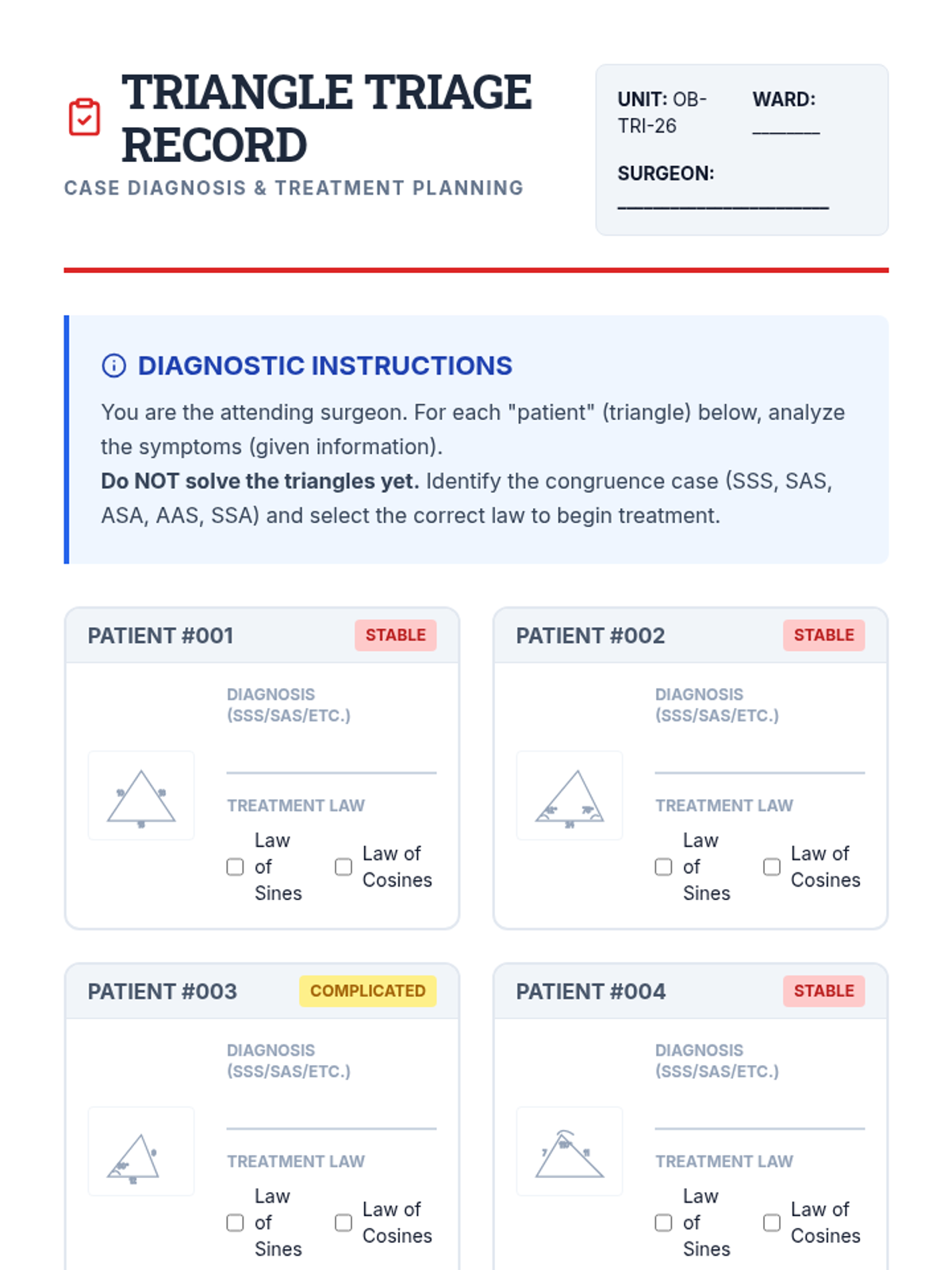
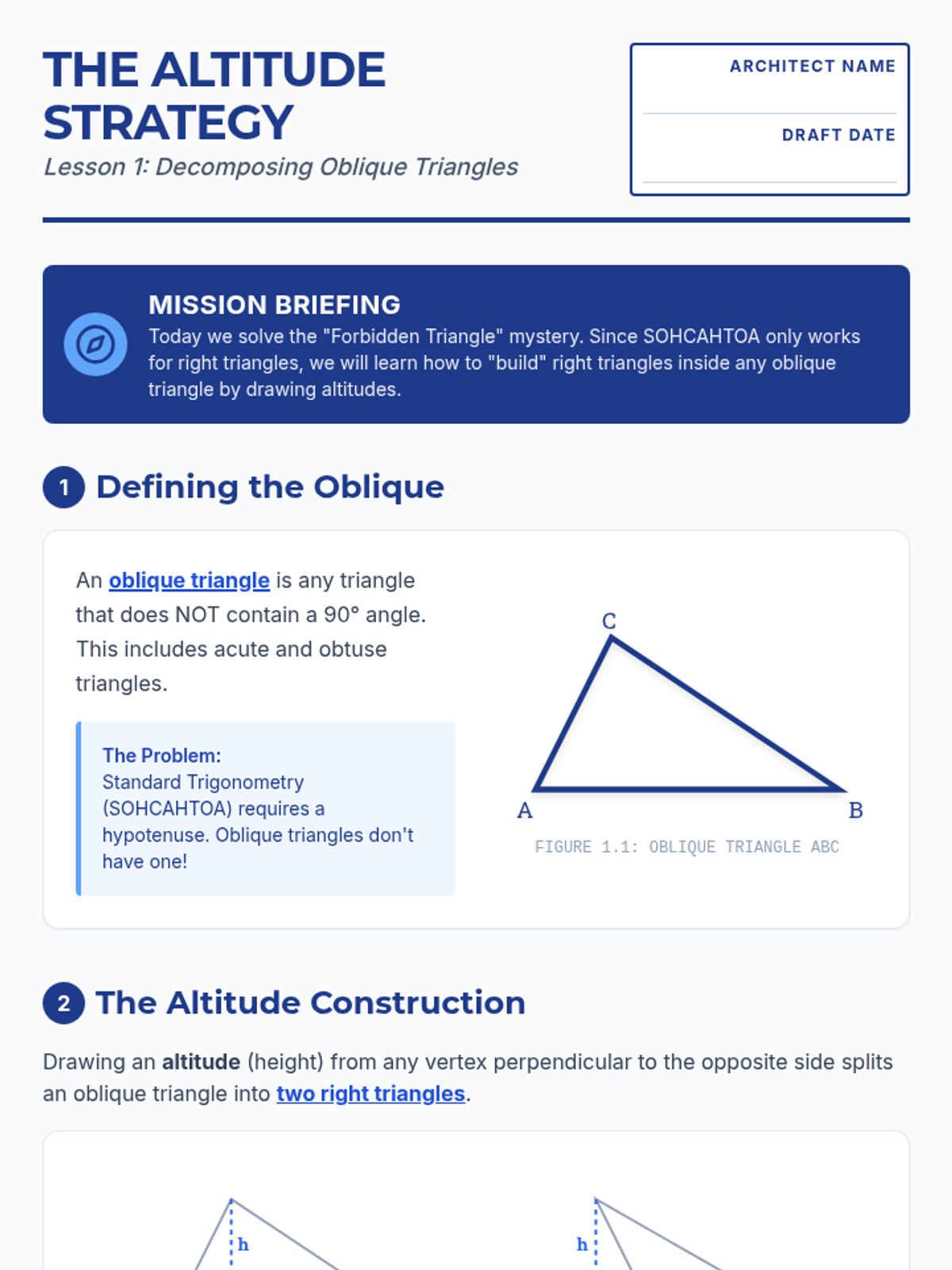
A high-level geometry sequence focused on diagnosing oblique triangles. Students use a medical 'triage' theme to master Law of Sines and Law of Cosines through pattern recognition, algebraic mastery, and mixed practice.
A comprehensive geometry sequence focused on finding the area of oblique triangles using trigonometric ratios and Heron's Formula, culminating in a real-world land surveying project.
A 5-lesson geometry project where students apply the Law of Sines and Law of Cosines to solve real-world navigation and surveying problems, culminating in a search-and-rescue triangulation task.
A 5-lesson geometry sequence where students move from right-triangle trigonometry to general triangles. They derive the Law of Sines and Law of Cosines through inquiry and verify their accuracy via a hands-on measurement lab.
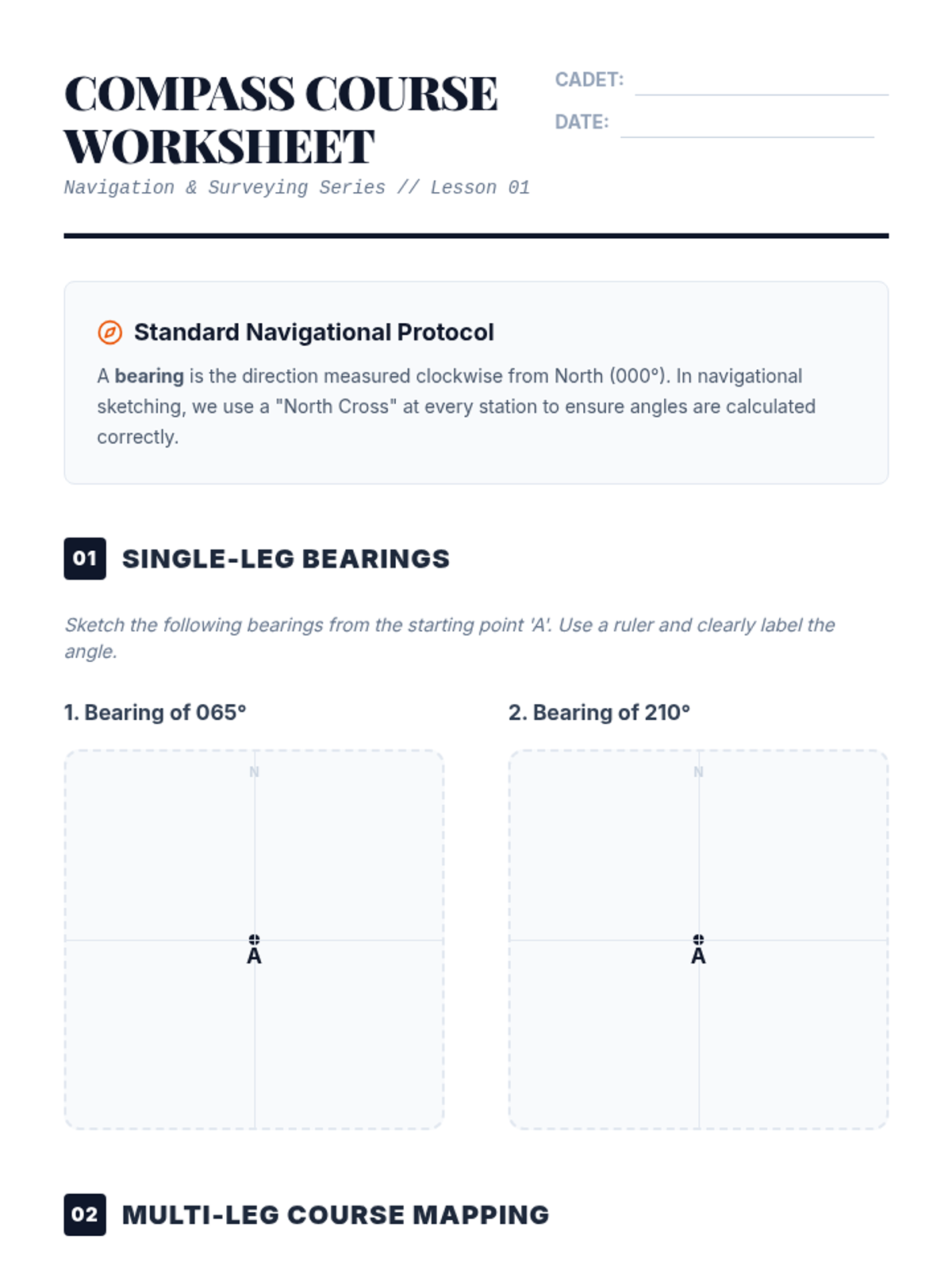
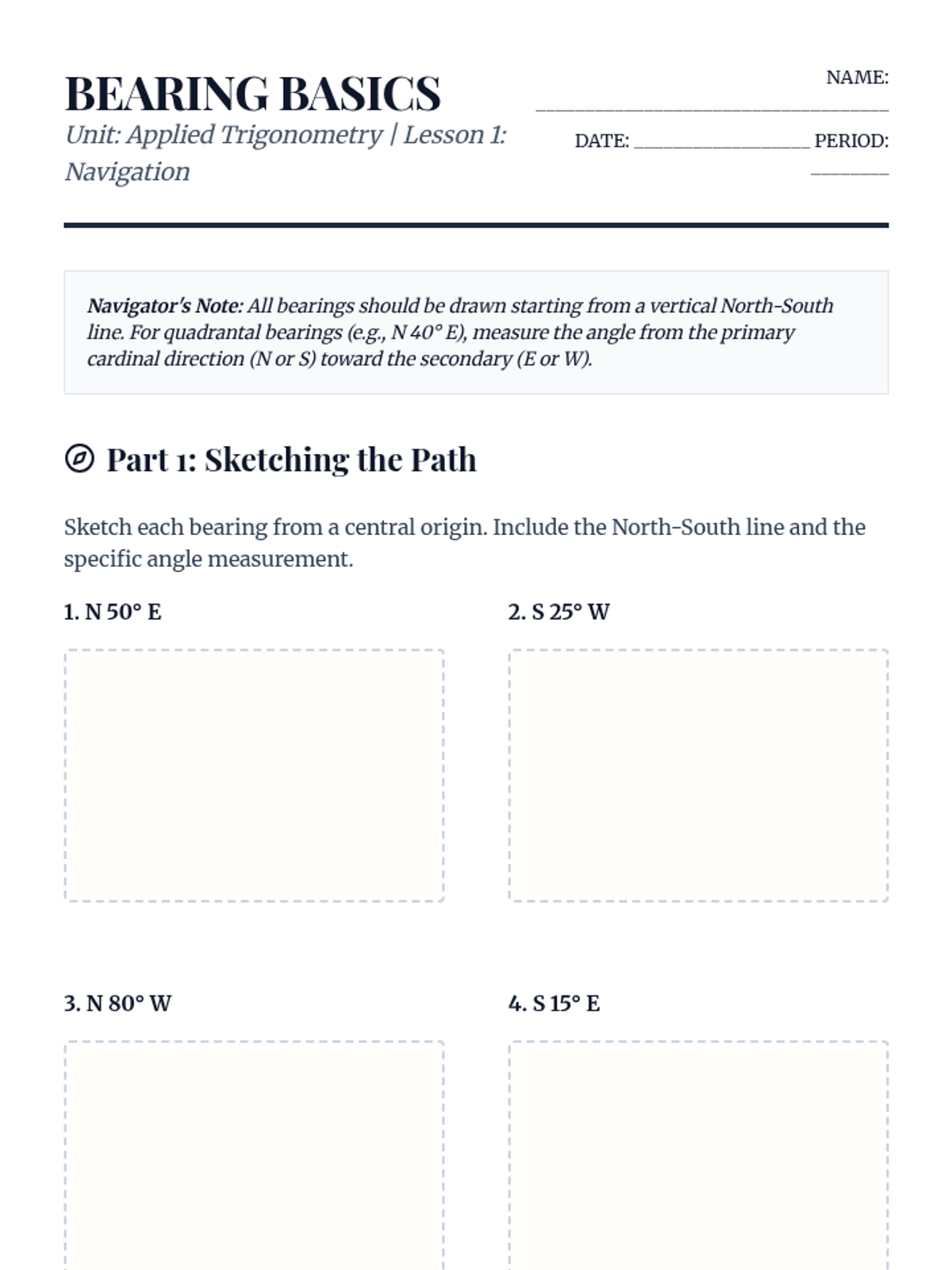
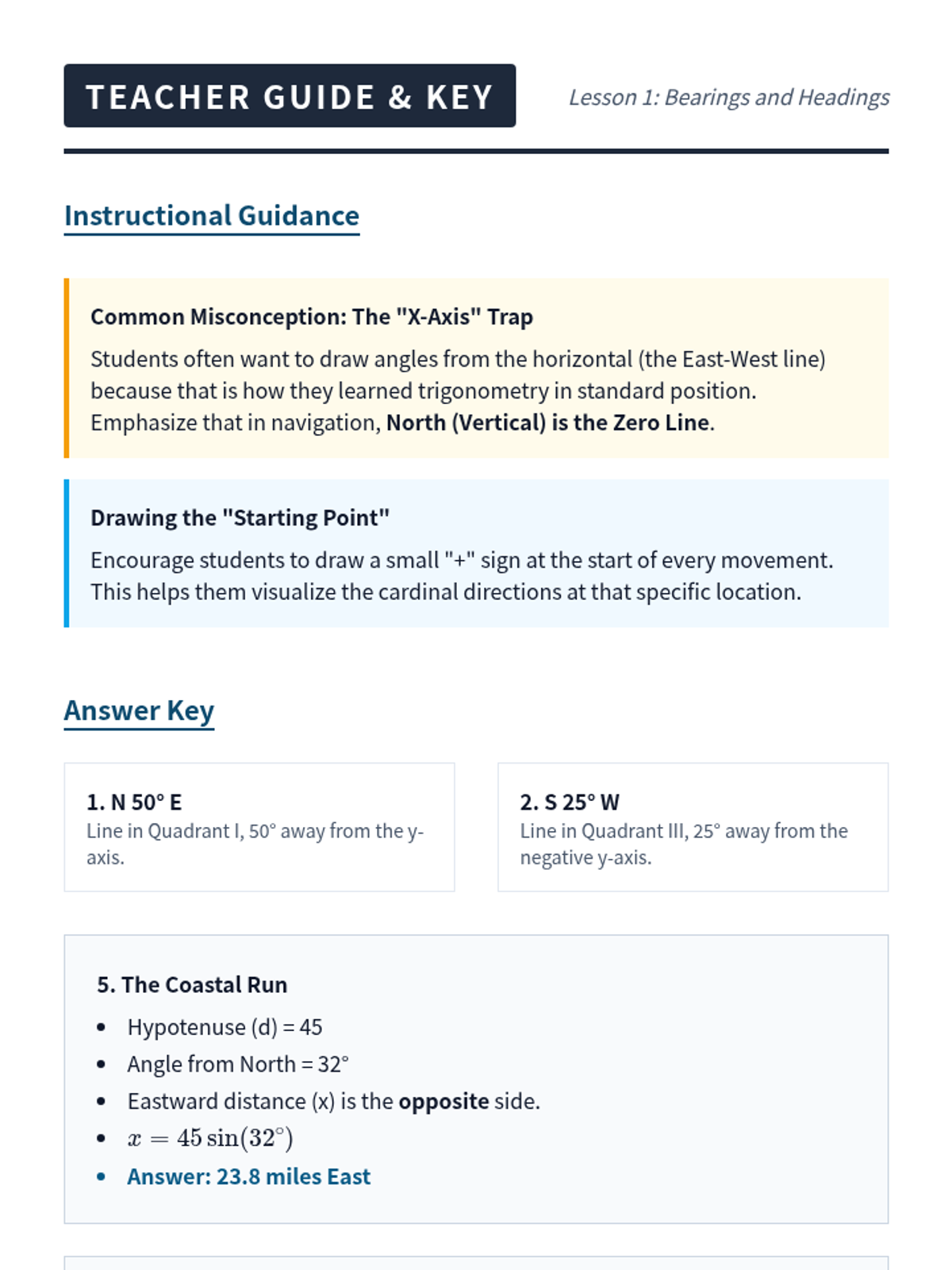
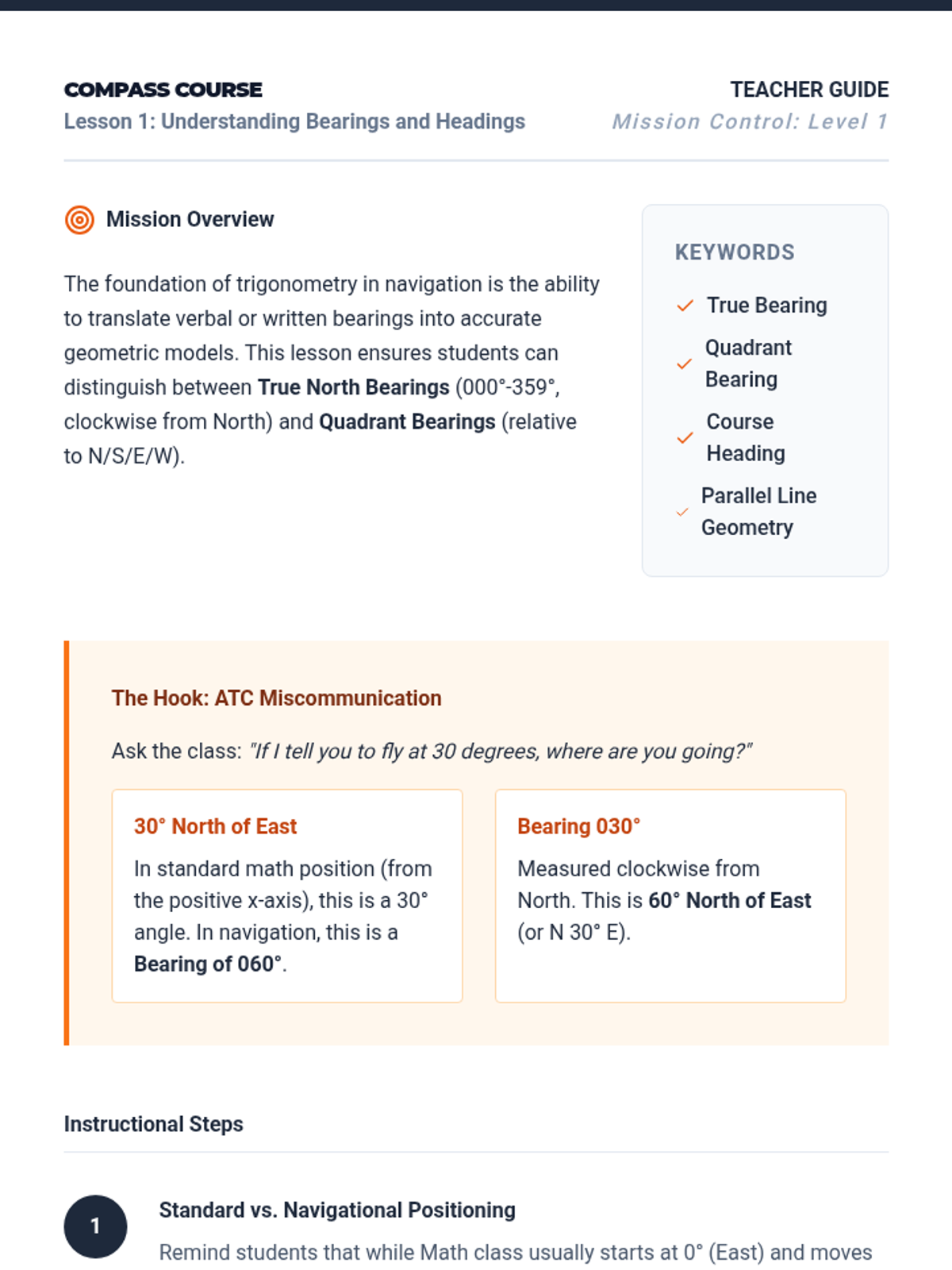
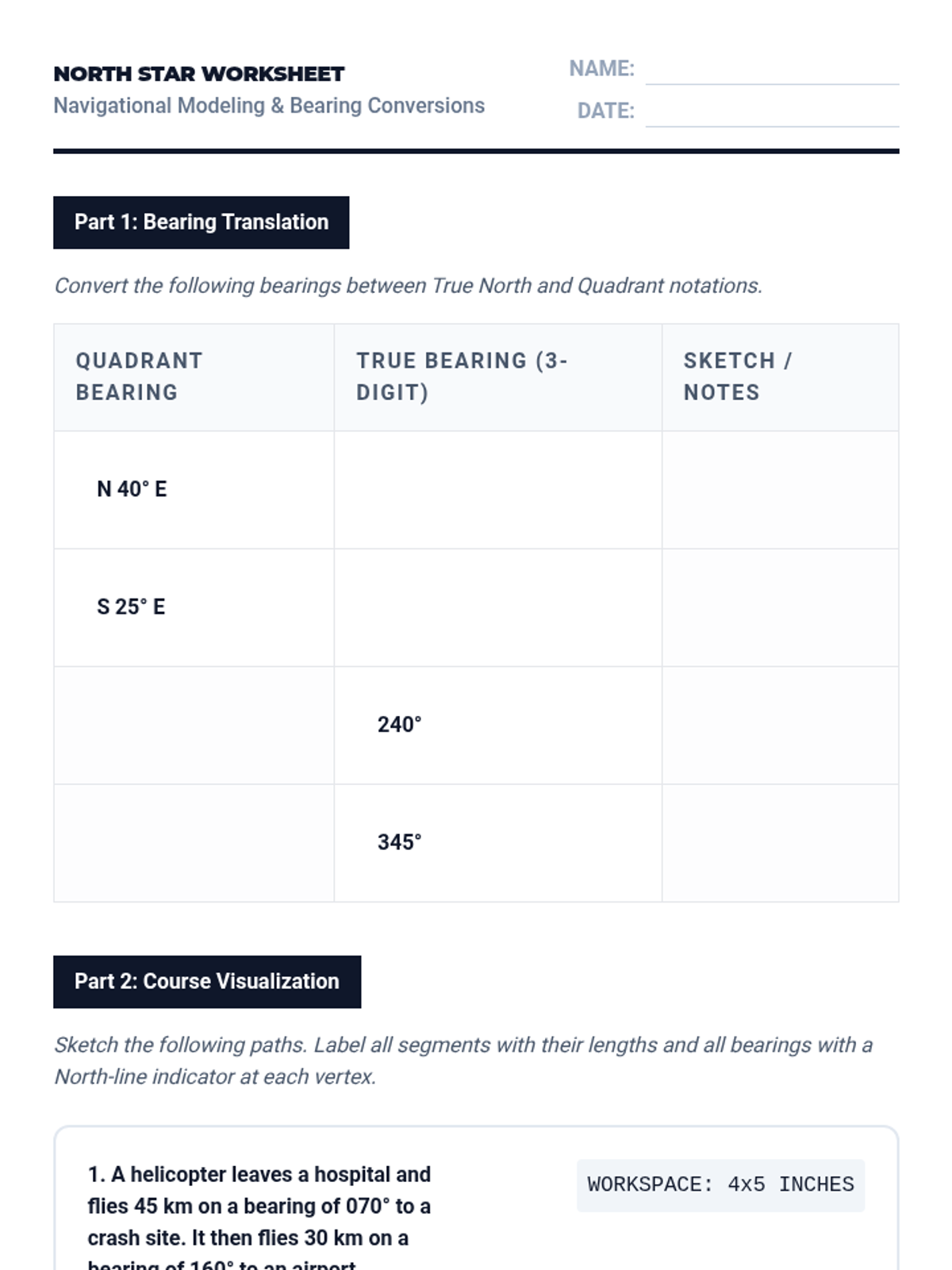
This sequence explores trigonometry through navigation and surveying. Students learn to use bearings, the Law of Sines, and the Law of Cosines to solve real-world problems involving triangulation, course correction, and indirect measurement.
This project-based sequence applies general triangle trigonometry to real-world scenarios in navigation, surveying, and aviation. Students move from abstract geometric figures to interpreting word problems involving bearings, headings, and elevation angles, culminating in a simulated search-and-rescue operation.
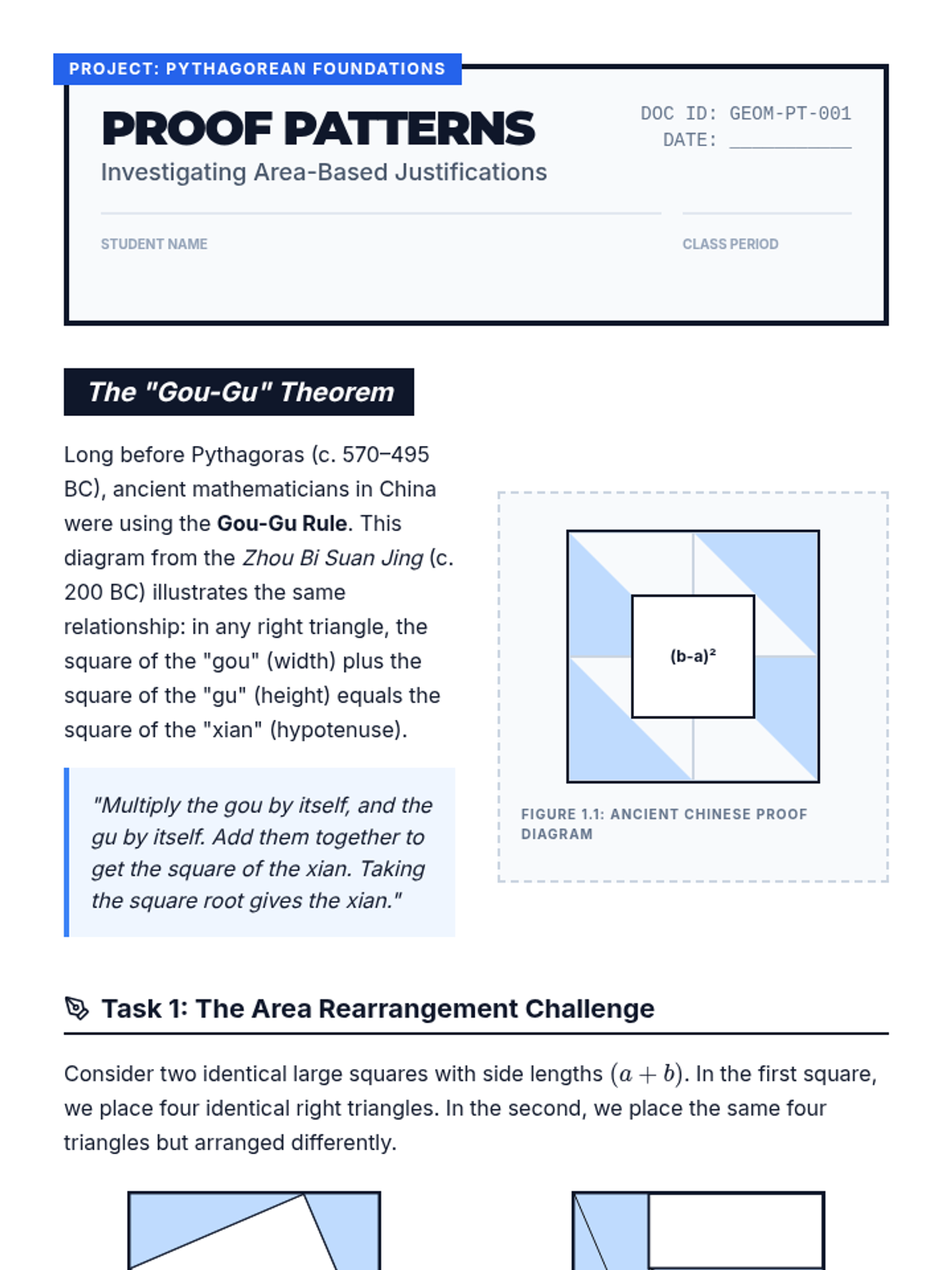
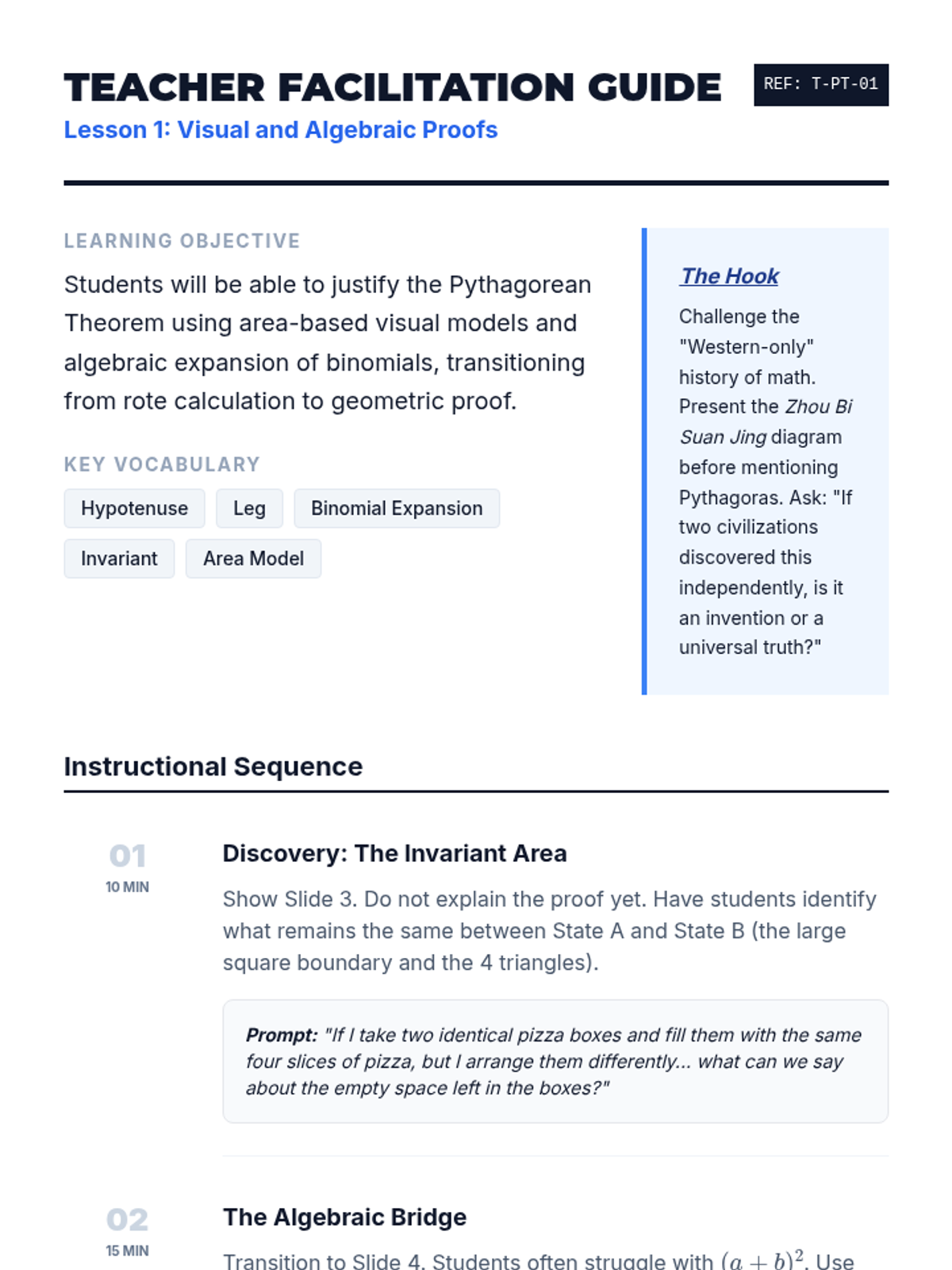
A high school geometry sequence that moves students from the fundamental proofs of the Pythagorean Theorem to advanced applications in coordinate geometry, similarity, and the equation of a circle. Students will explore visual proofs, classify triangles using the converse, and derive the distance and circle formulas.
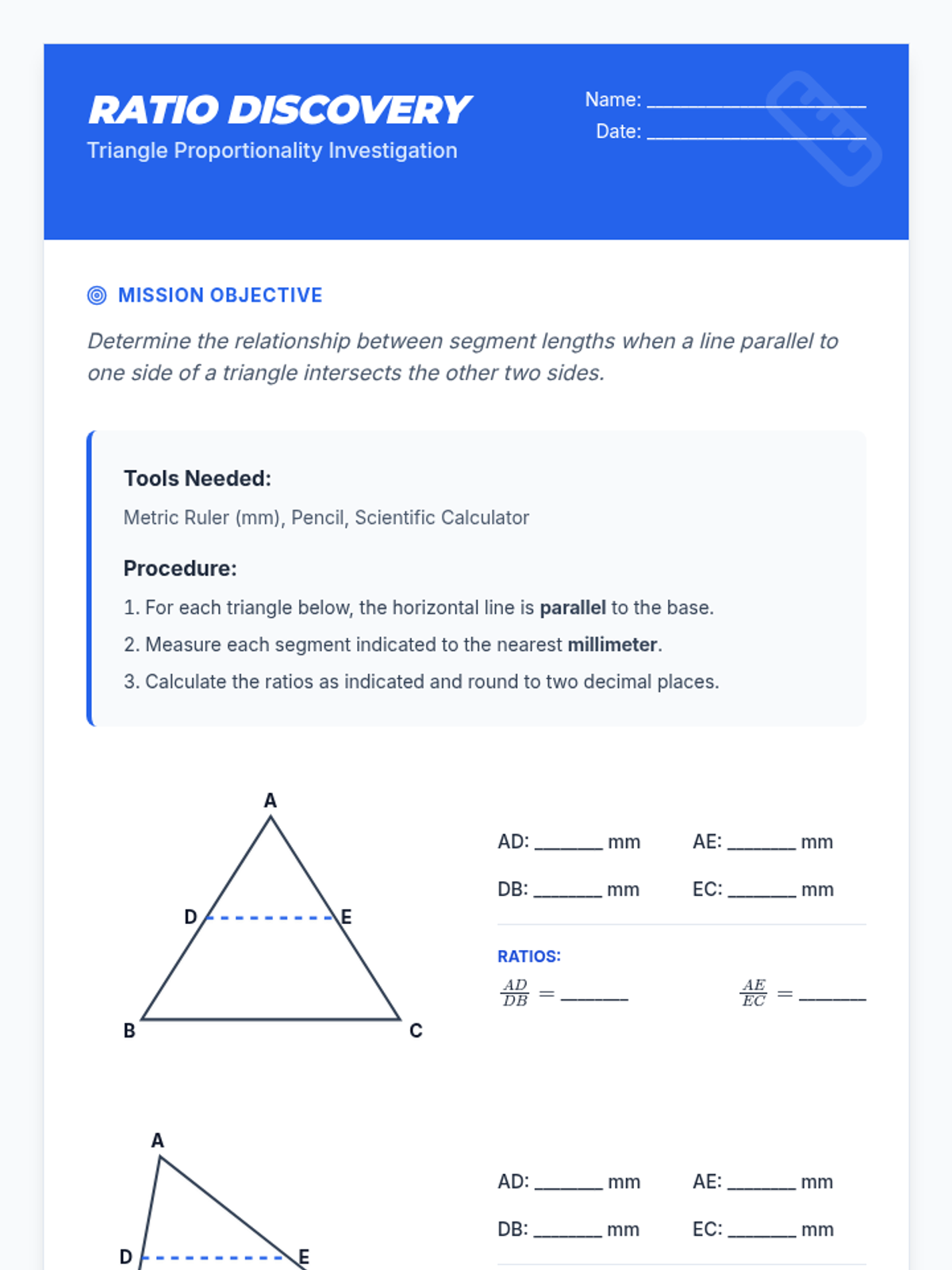
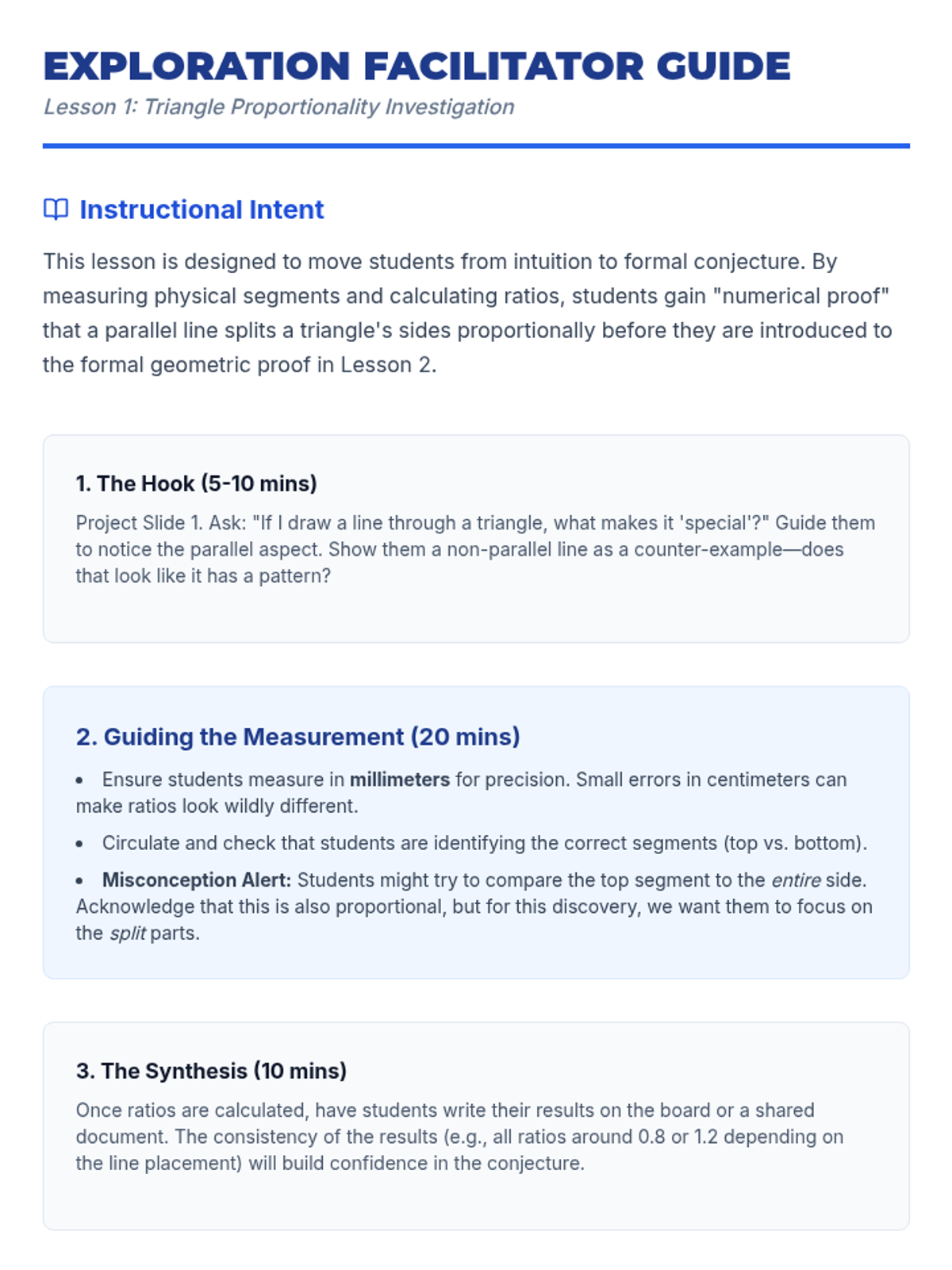
This geometry sequence for 9th-grade students explores proportionality theorems involving triangles and parallel lines. Starting with inquiry-based exploration and moving through formal proofs of the Side-Splitter Theorem, its converse, and the Midsegment Theorem, the unit concludes with real-world applications of parallel lines in urban planning and perspective.
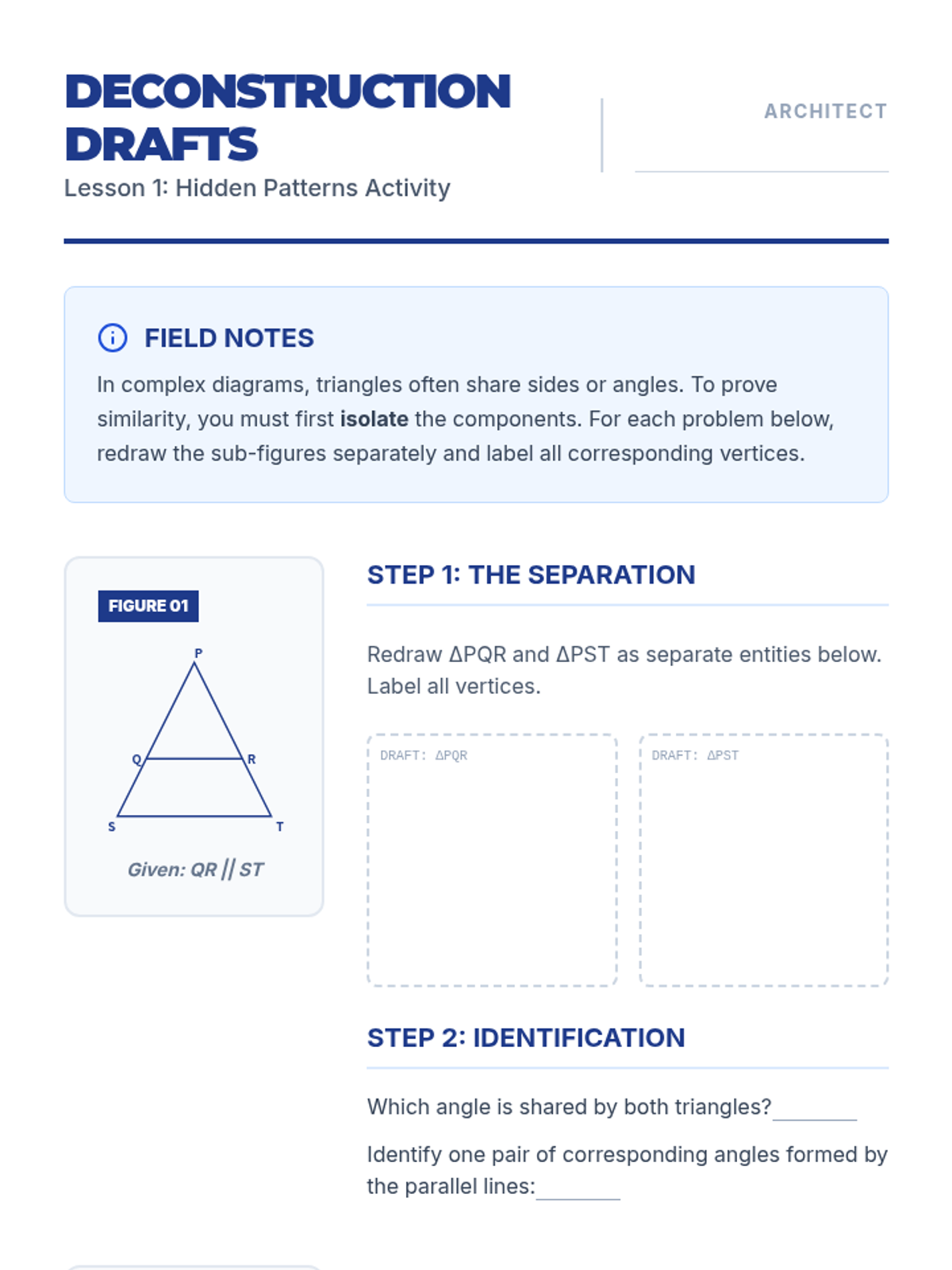
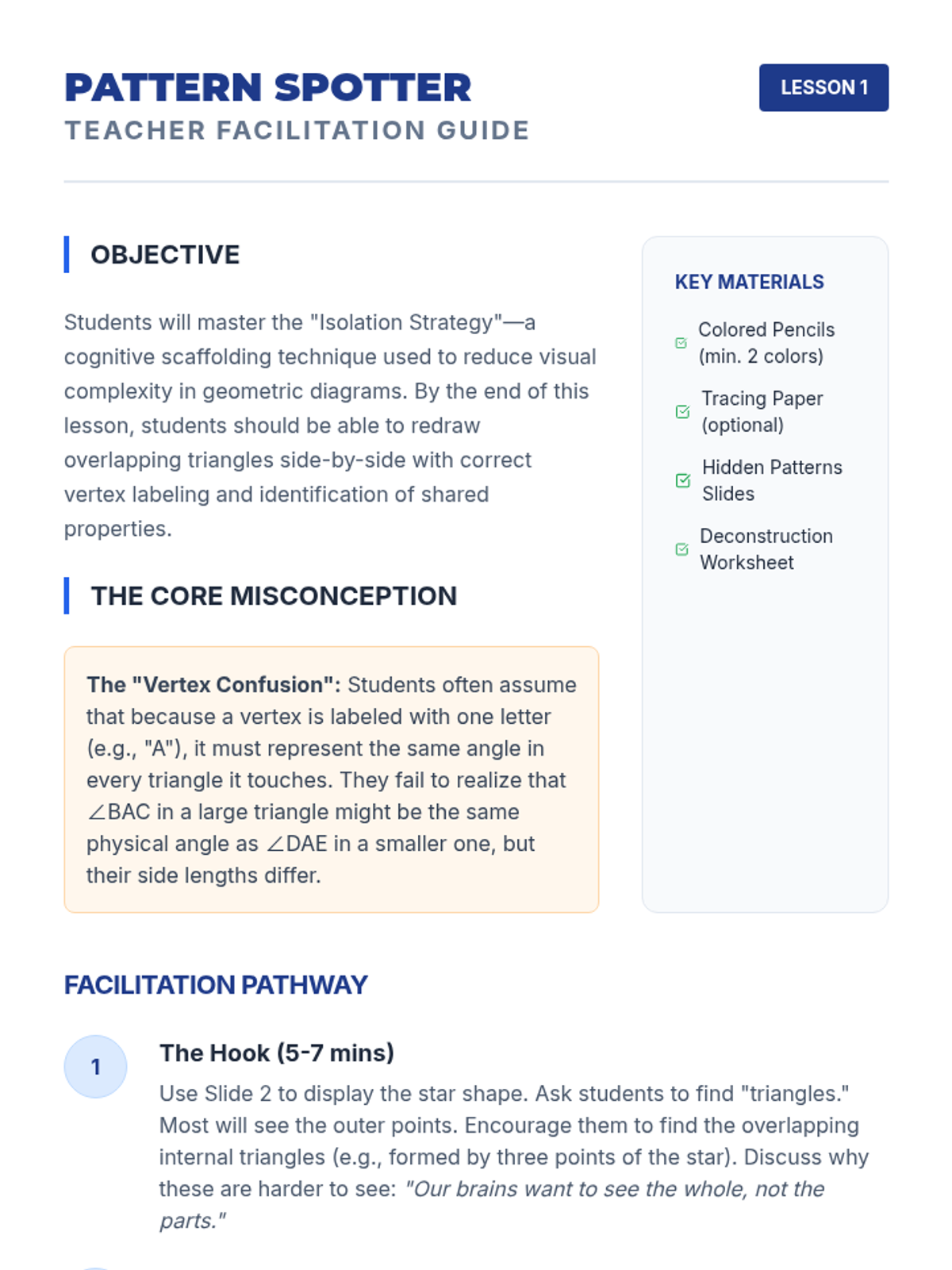
This 9th-grade geometry sequence focuses on mastering similarity proofs in complex, overlapping, and non-standard geometric configurations. Students transition from identifying basic similarity to analyzing, critiquing, and constructing multi-step logical arguments, culminating in a Socratic seminar on proof efficiency.
A comprehensive 5-lesson geometry sequence exploring the unique similarity relationships in right triangles, culminating in a formal similarity-based proof of the Pythagorean Theorem. Students move from hands-on discovery to algebraic derivation and multi-step mastery.
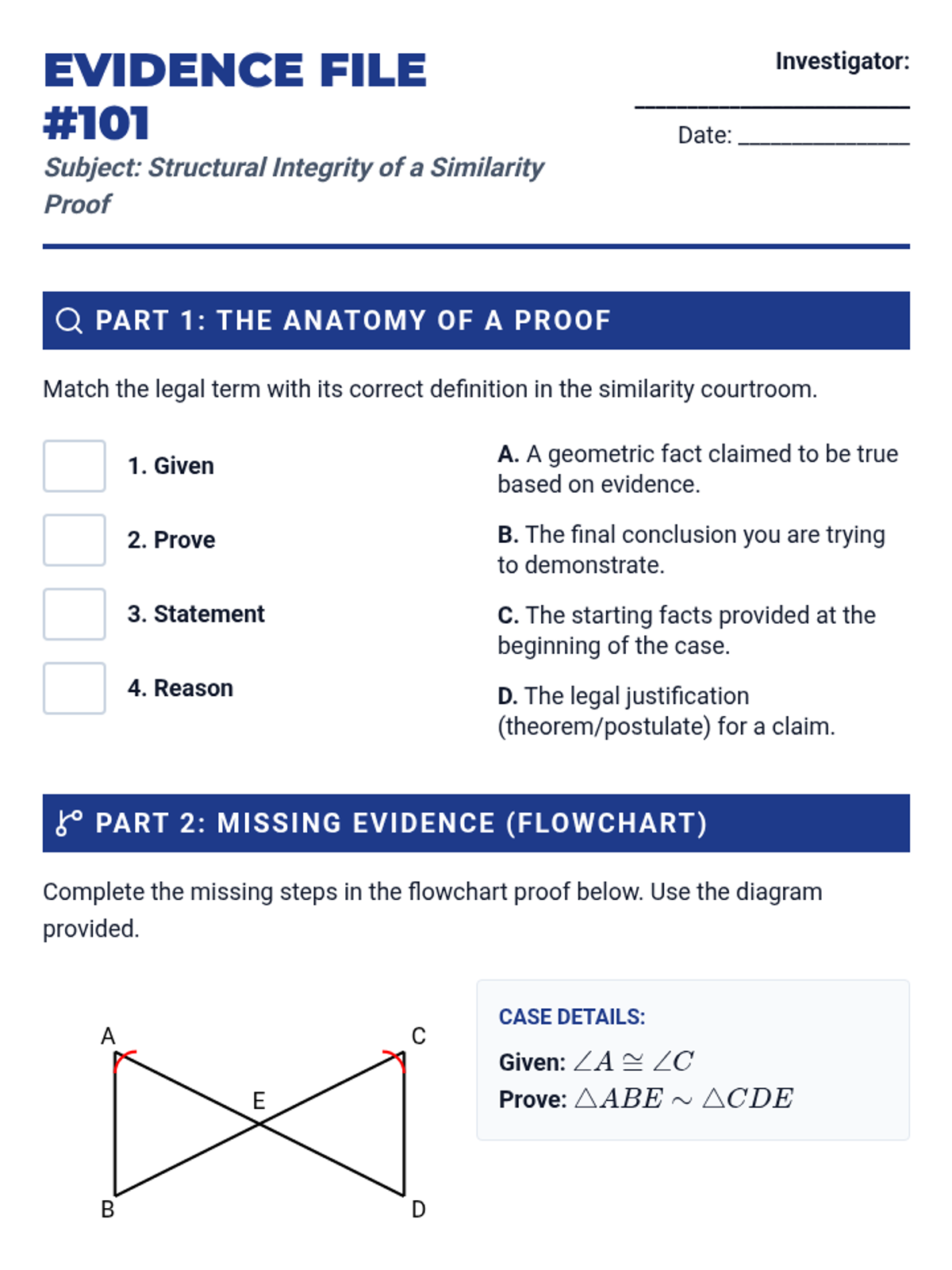
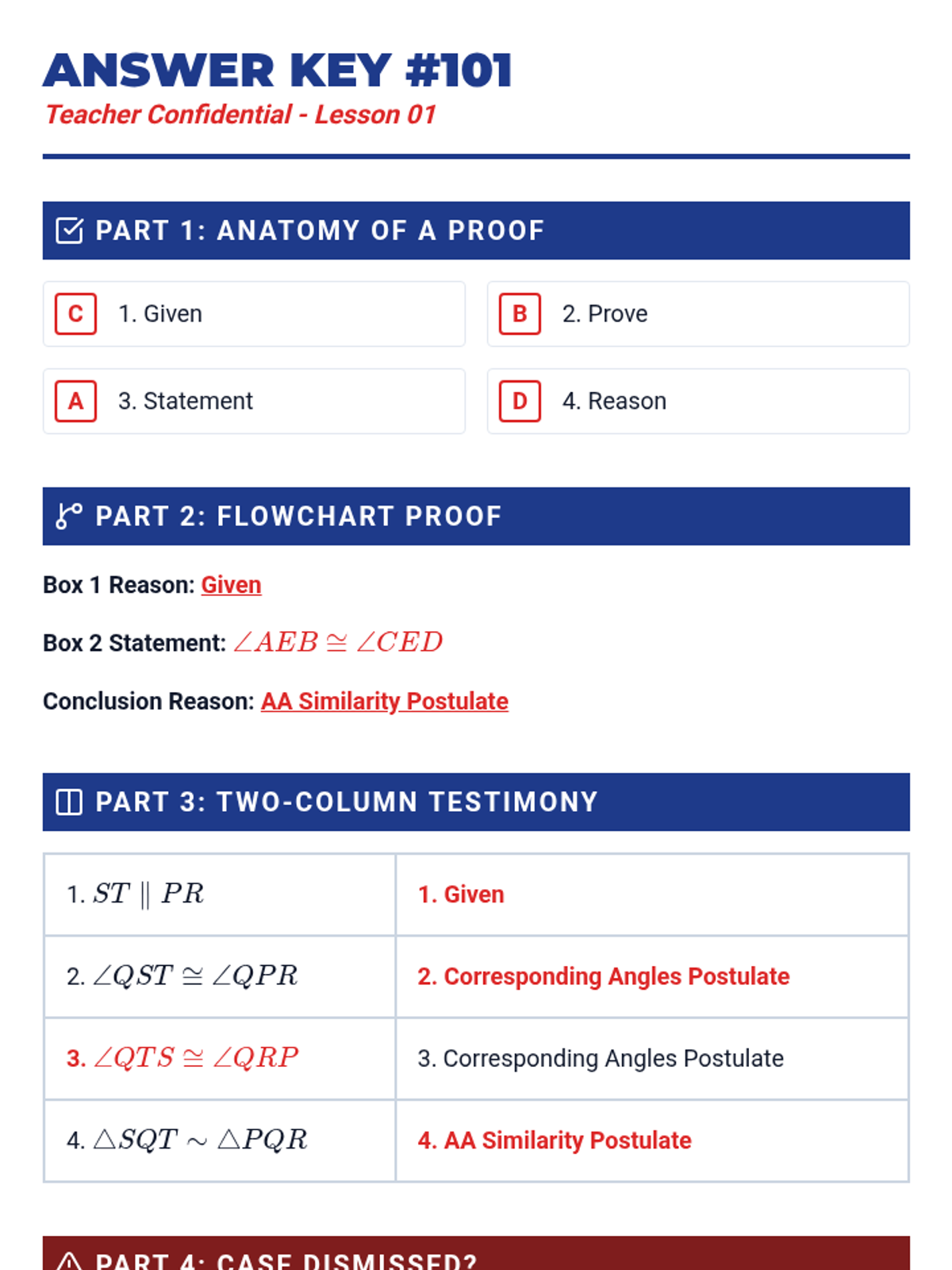
This skill-building sequence focuses on the rigorous development of formal geometric proofs using similarity. Students progress from filling in missing steps in flowcharts to writing complete two-column proofs from scratch, emphasizing logical progression and justification.
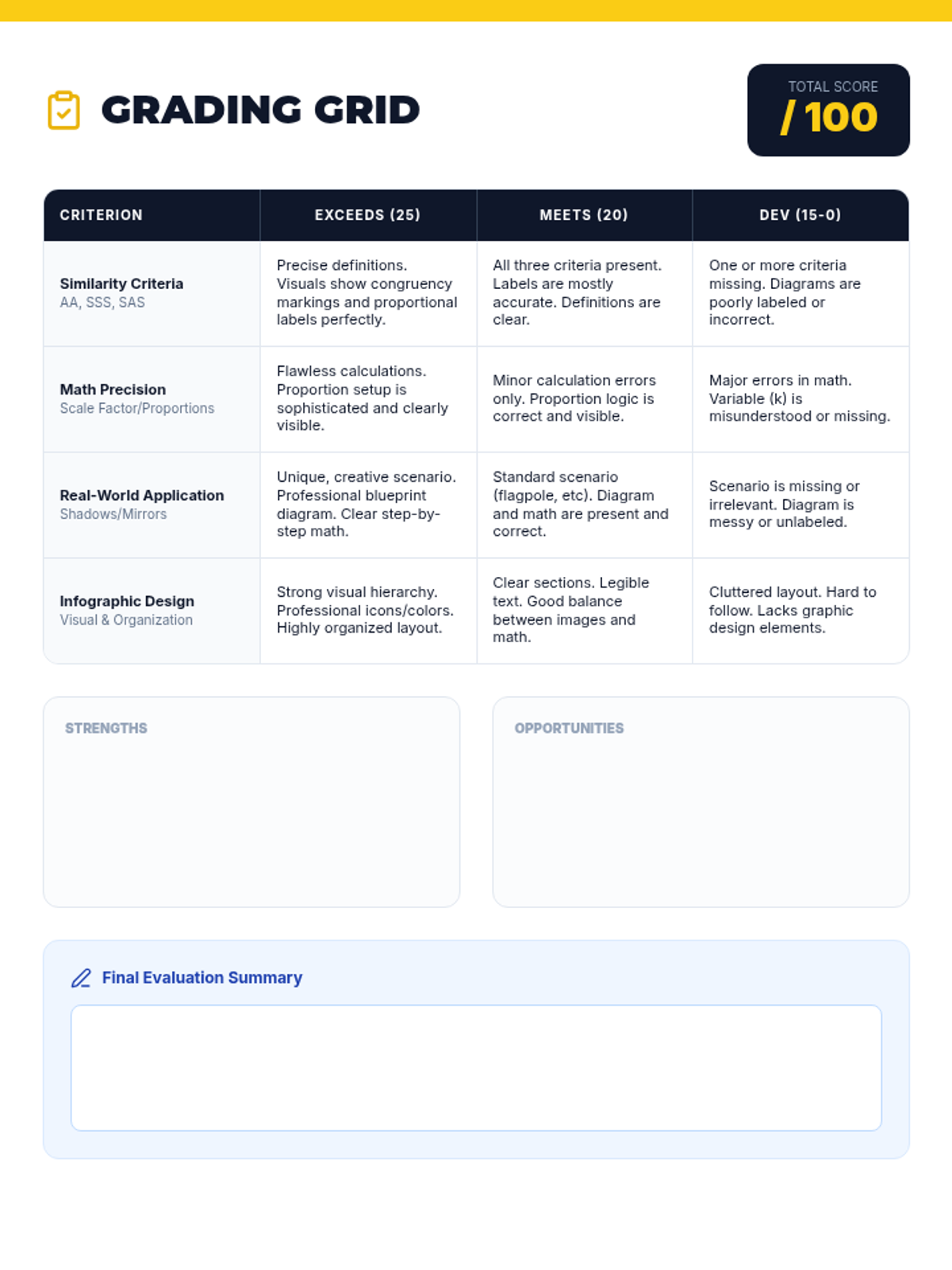
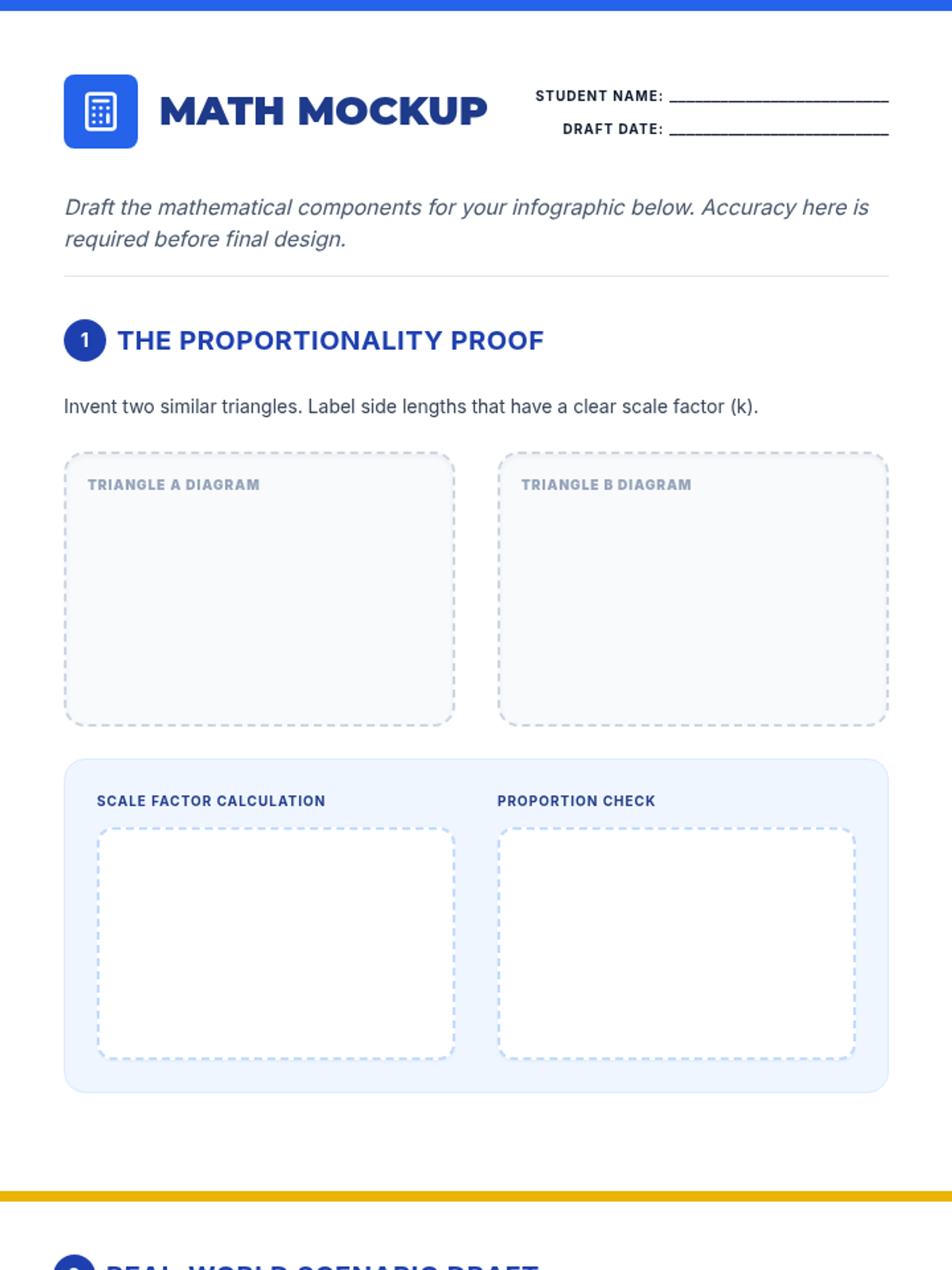
This sequence applies similarity theorems (AA, SAS, SSS) and proportional reasoning to solve complex geometric and real-world problems. Students explore triangle proportionality, geometric means in right triangles, and indirect measurement techniques, culminating in a design-focused scale modeling project.
This sequence bridges algebra and geometry by applying proportional reasoning to architectural design and structural analysis. Students master scale factors, the square-cube law, indirect measurement, and unit rate optimization through a series of engineering-themed challenges.
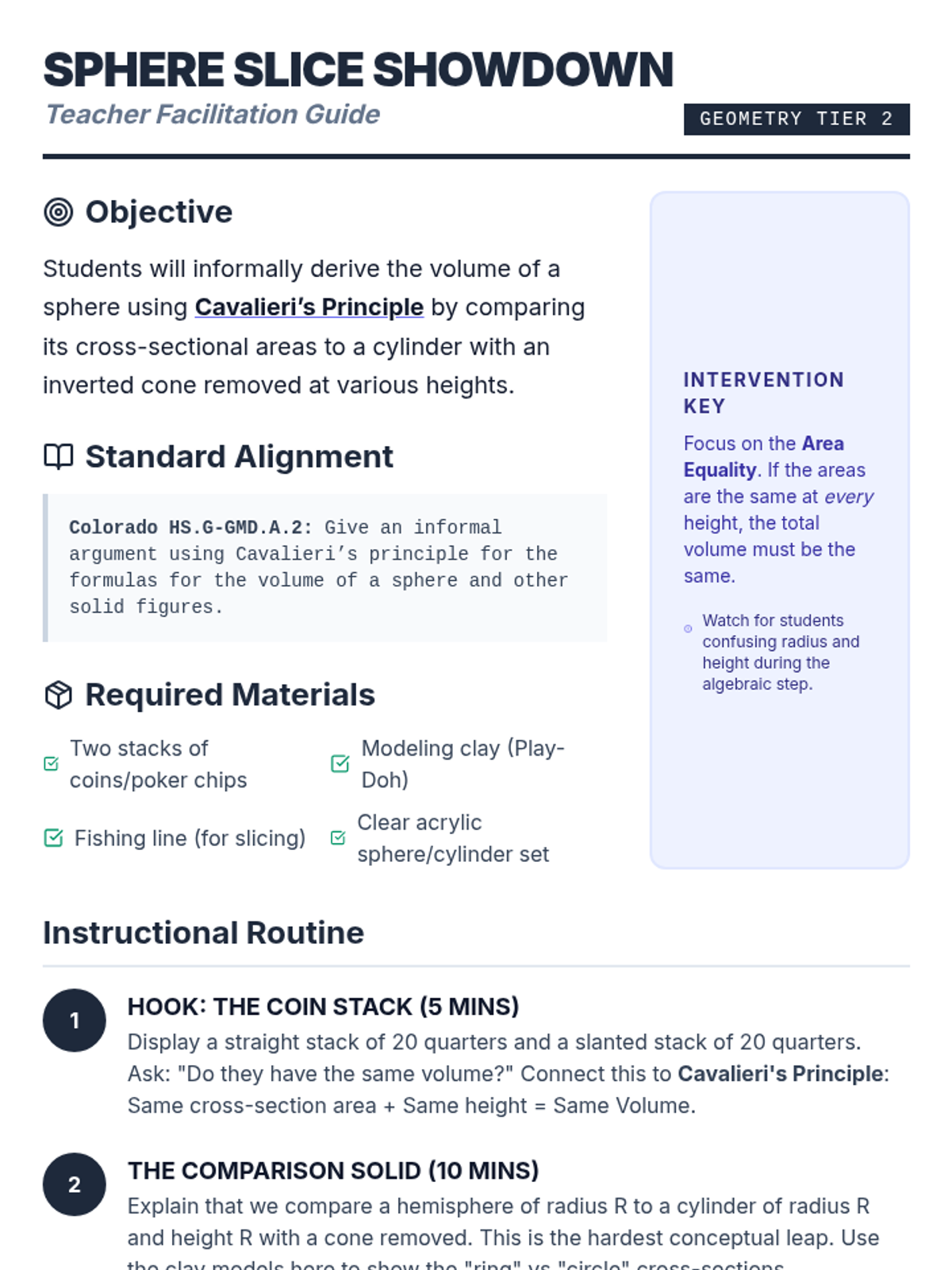
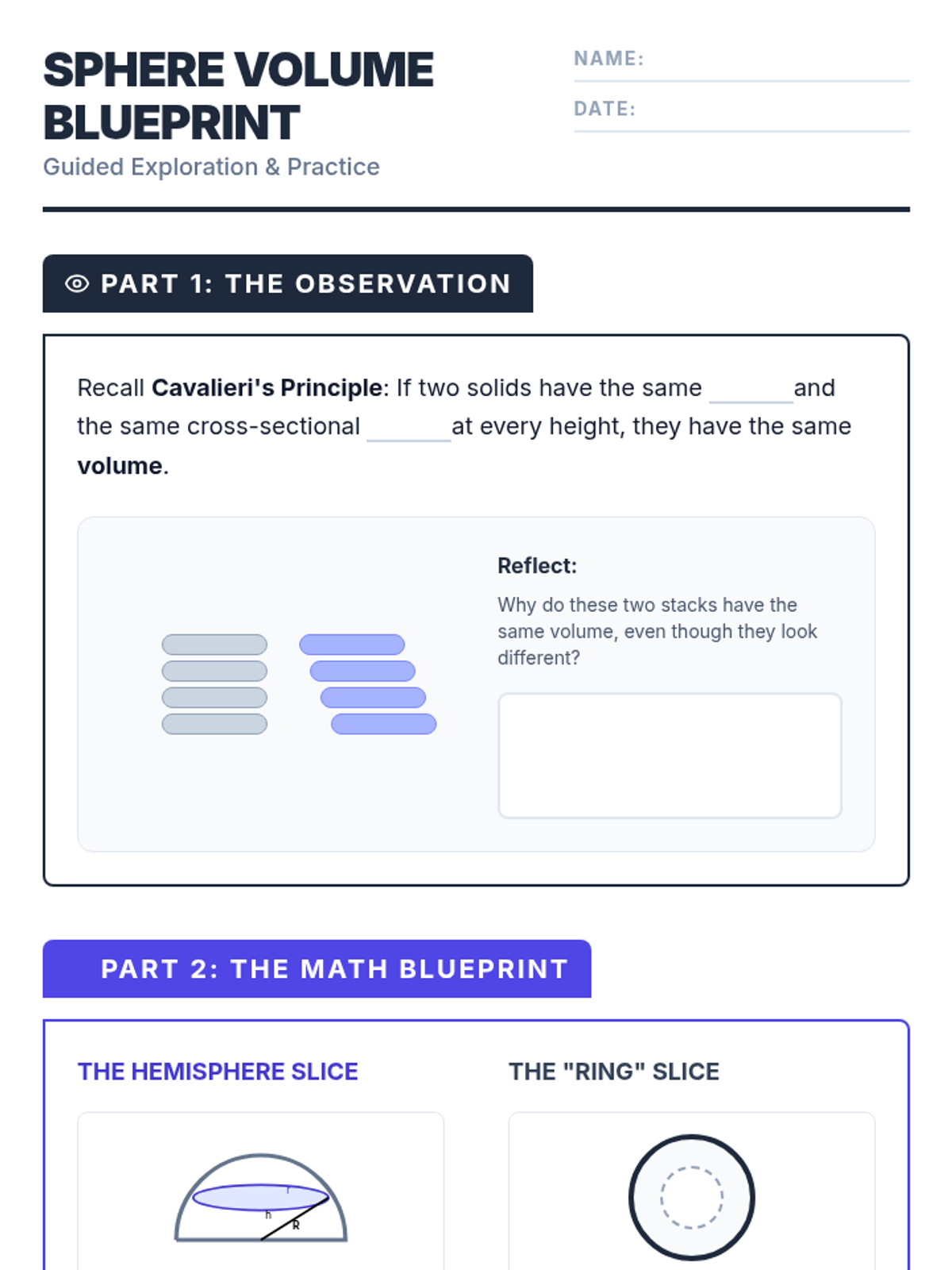
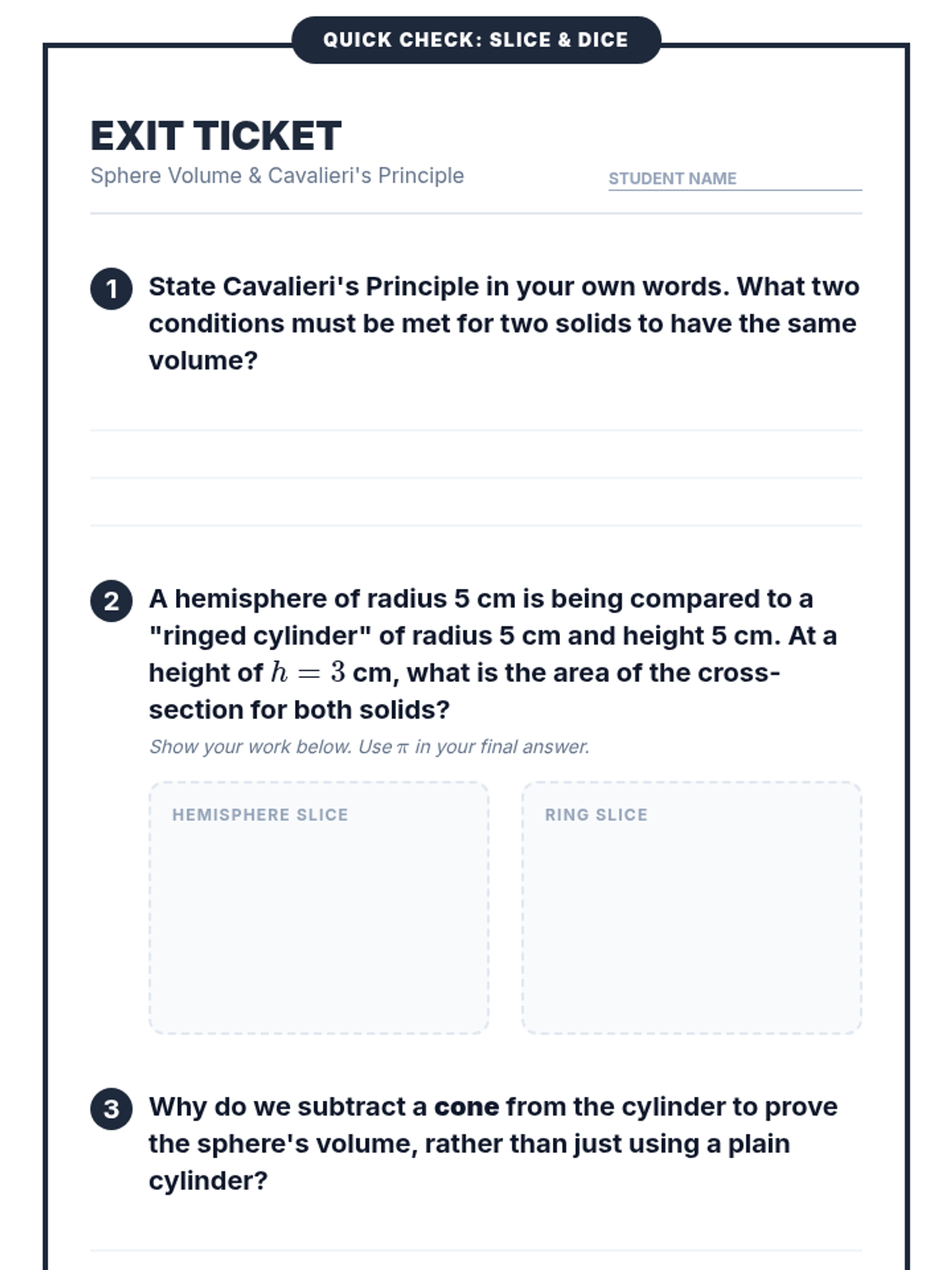
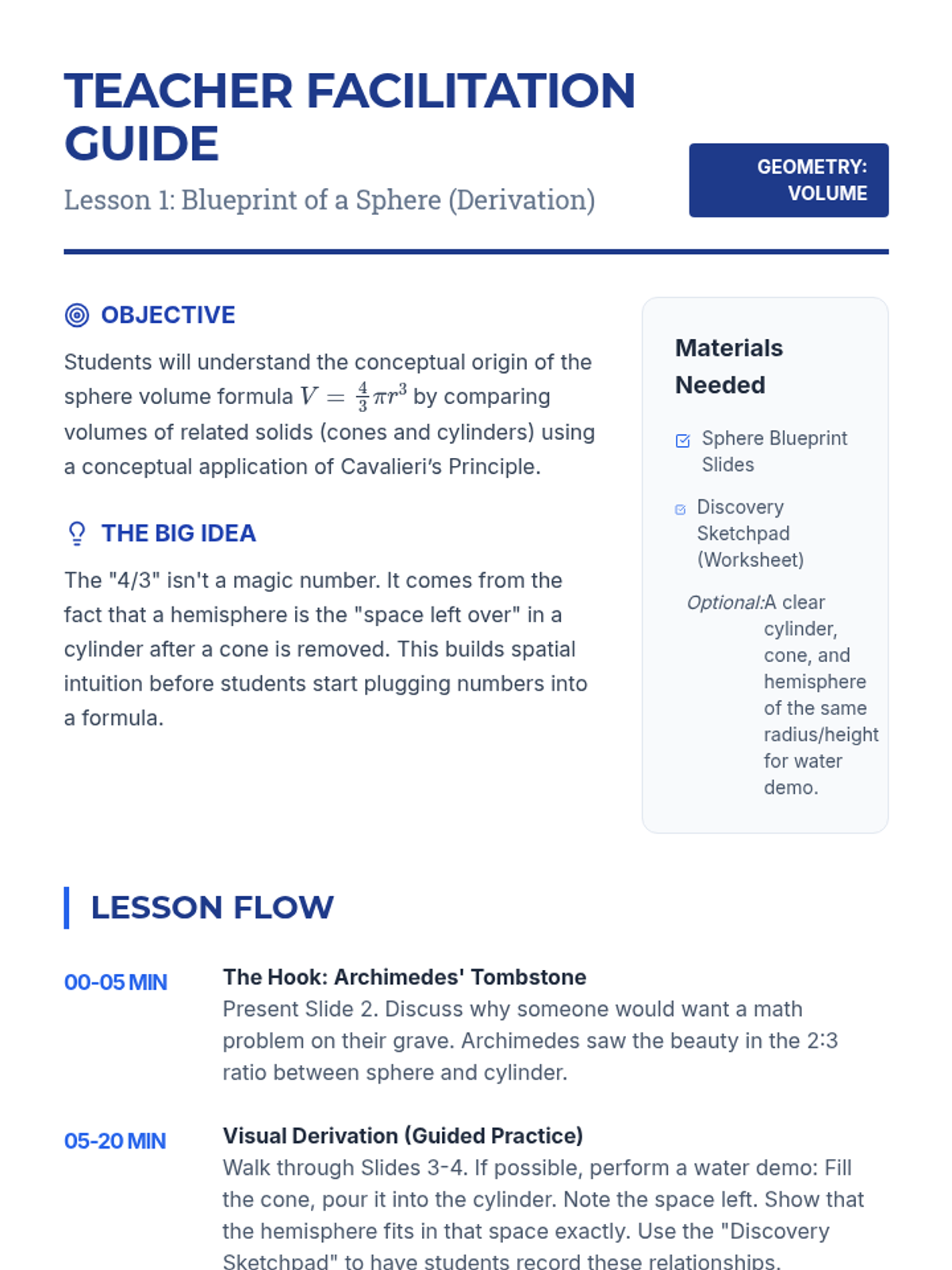
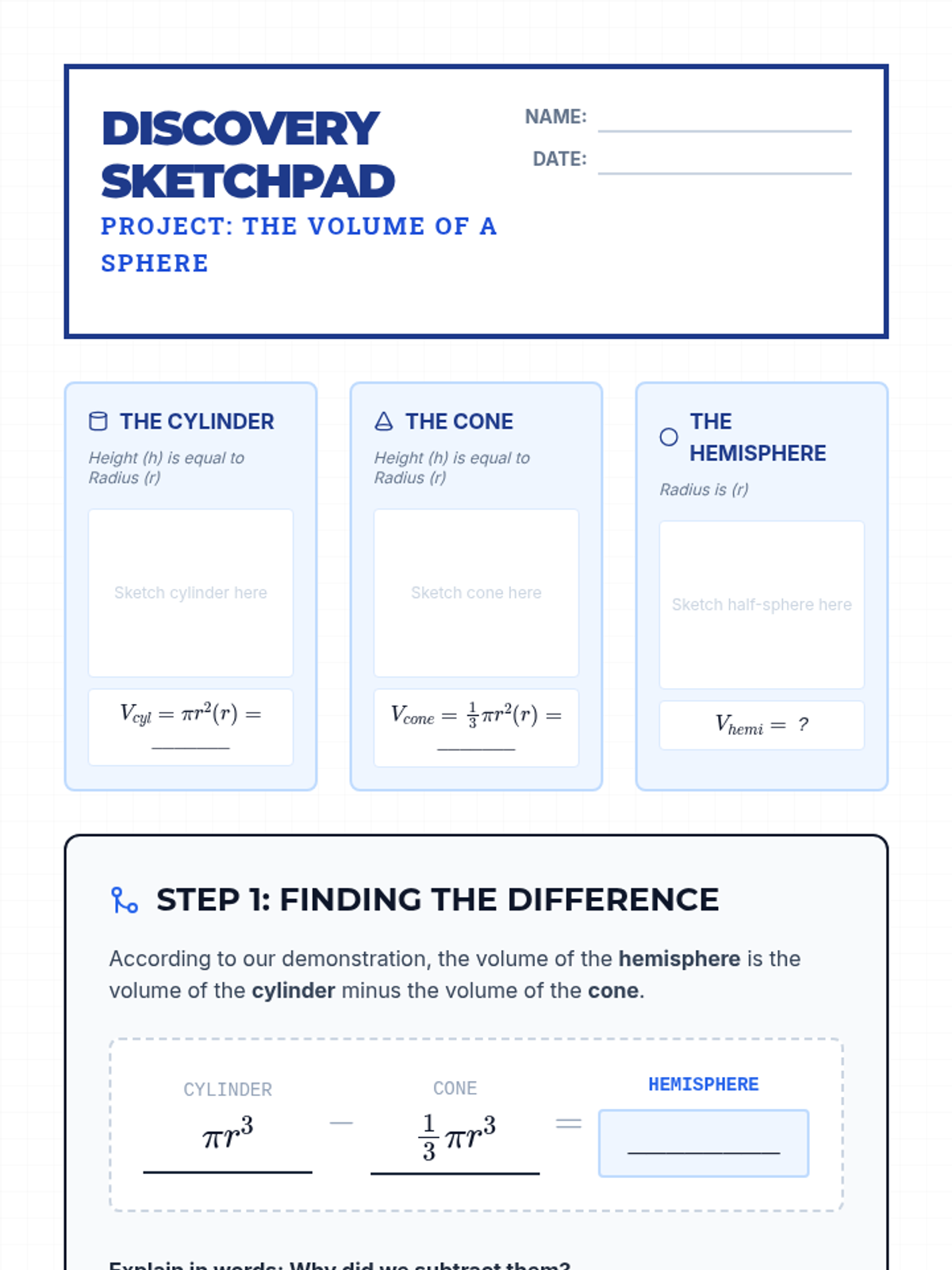
A targeted intervention sequence for high school geometry students to master the volume of spheres using Cavalieri's Principle through hands-on comparisons and visual proofs.
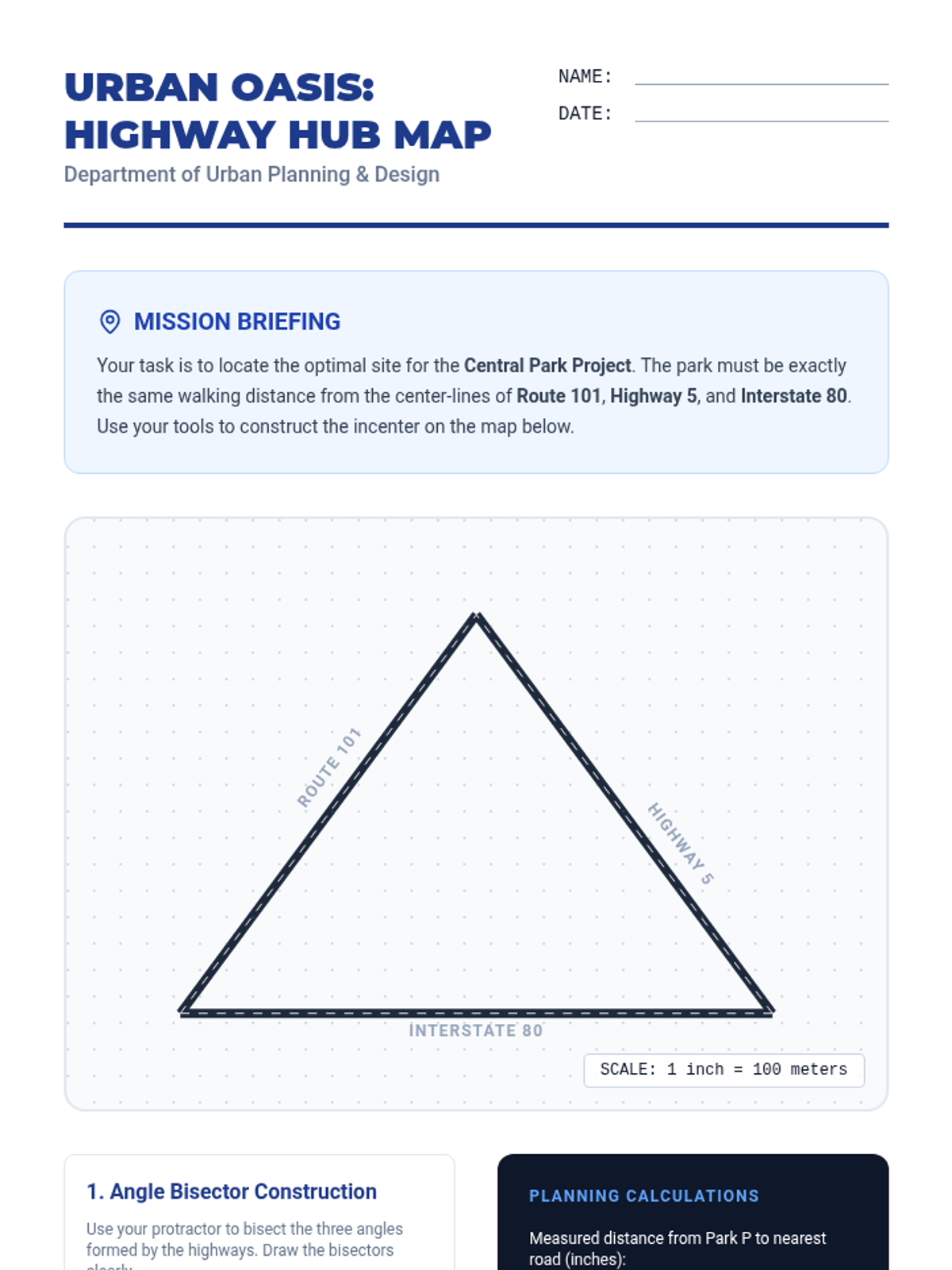
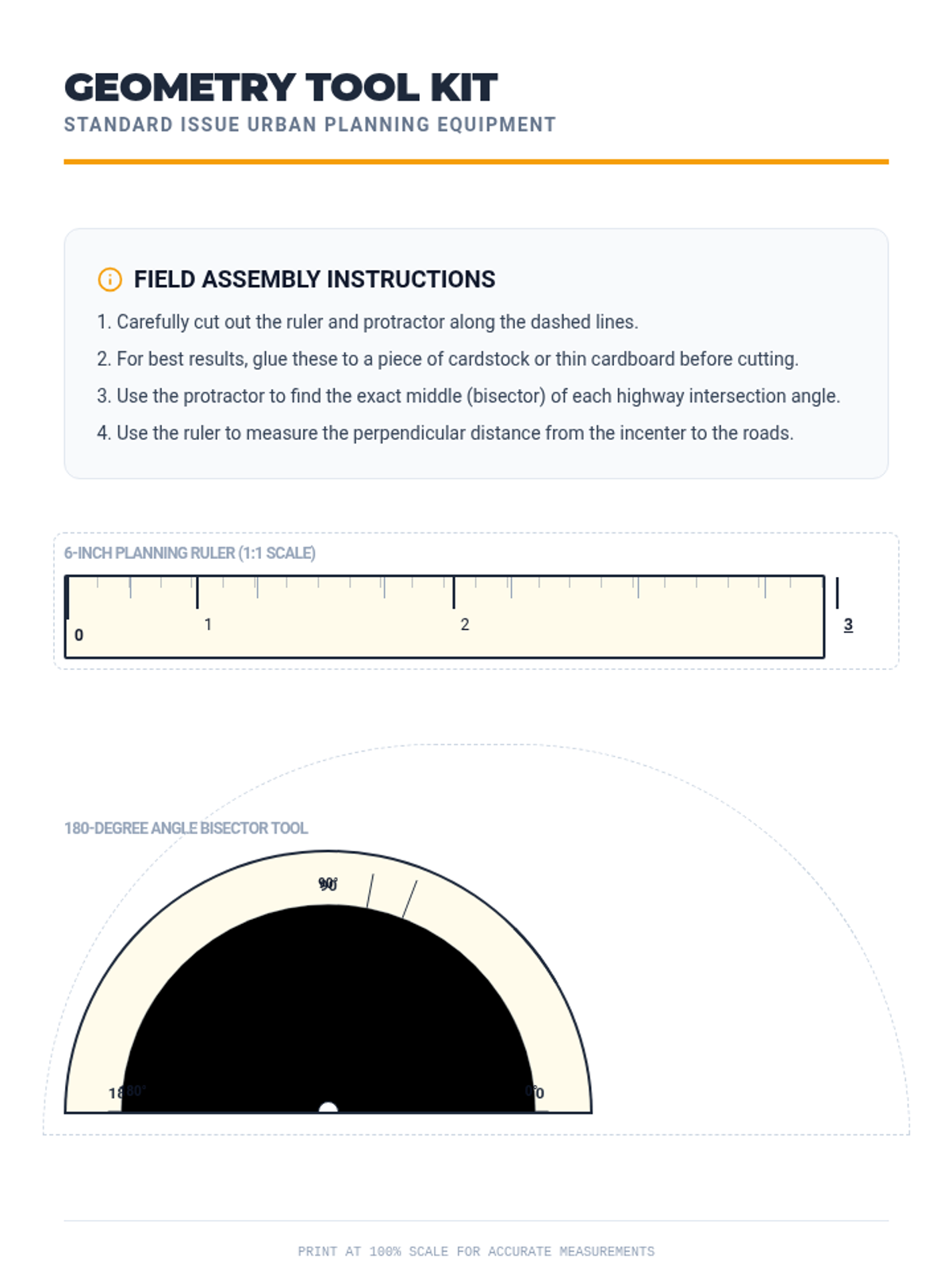
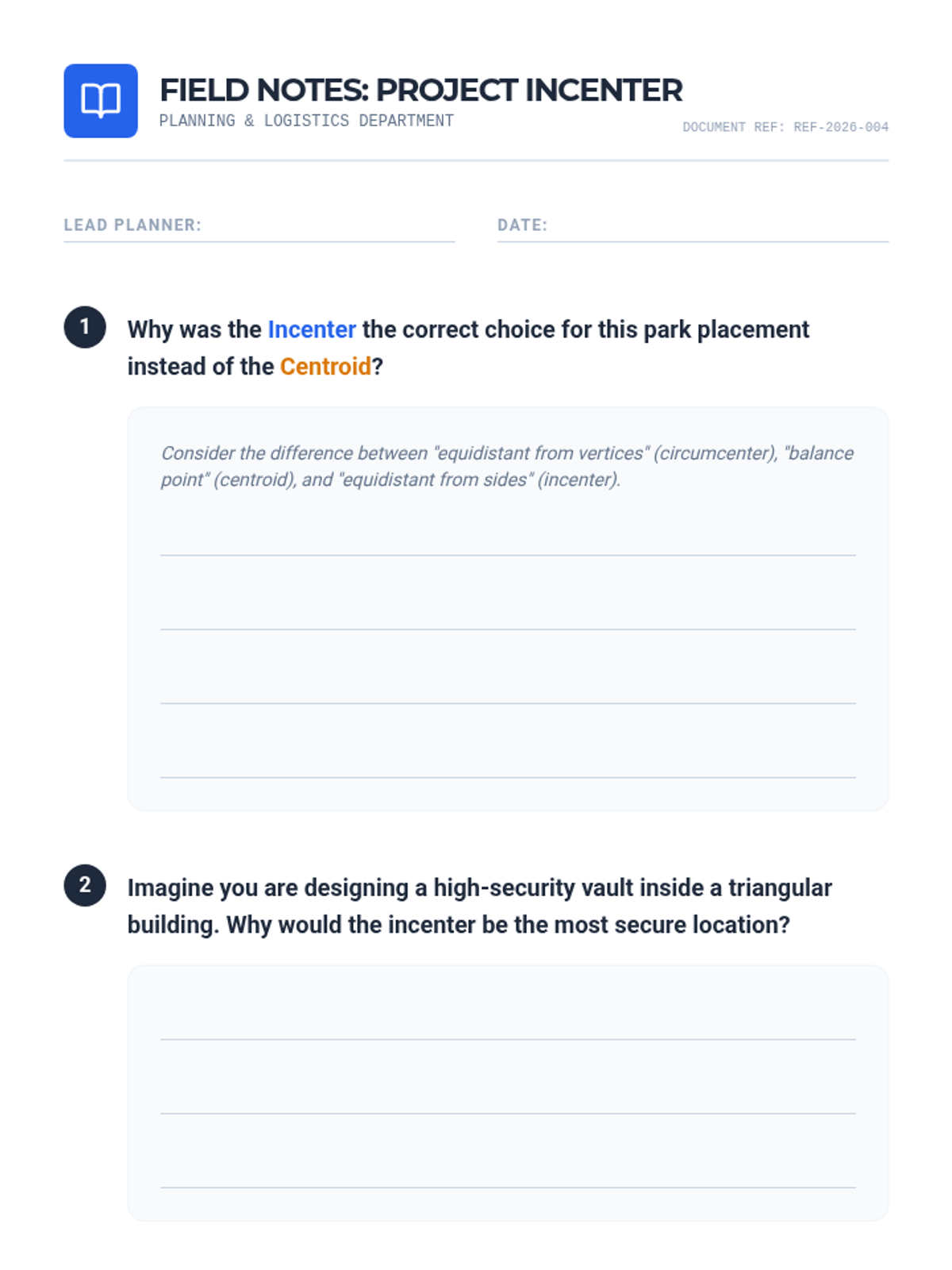
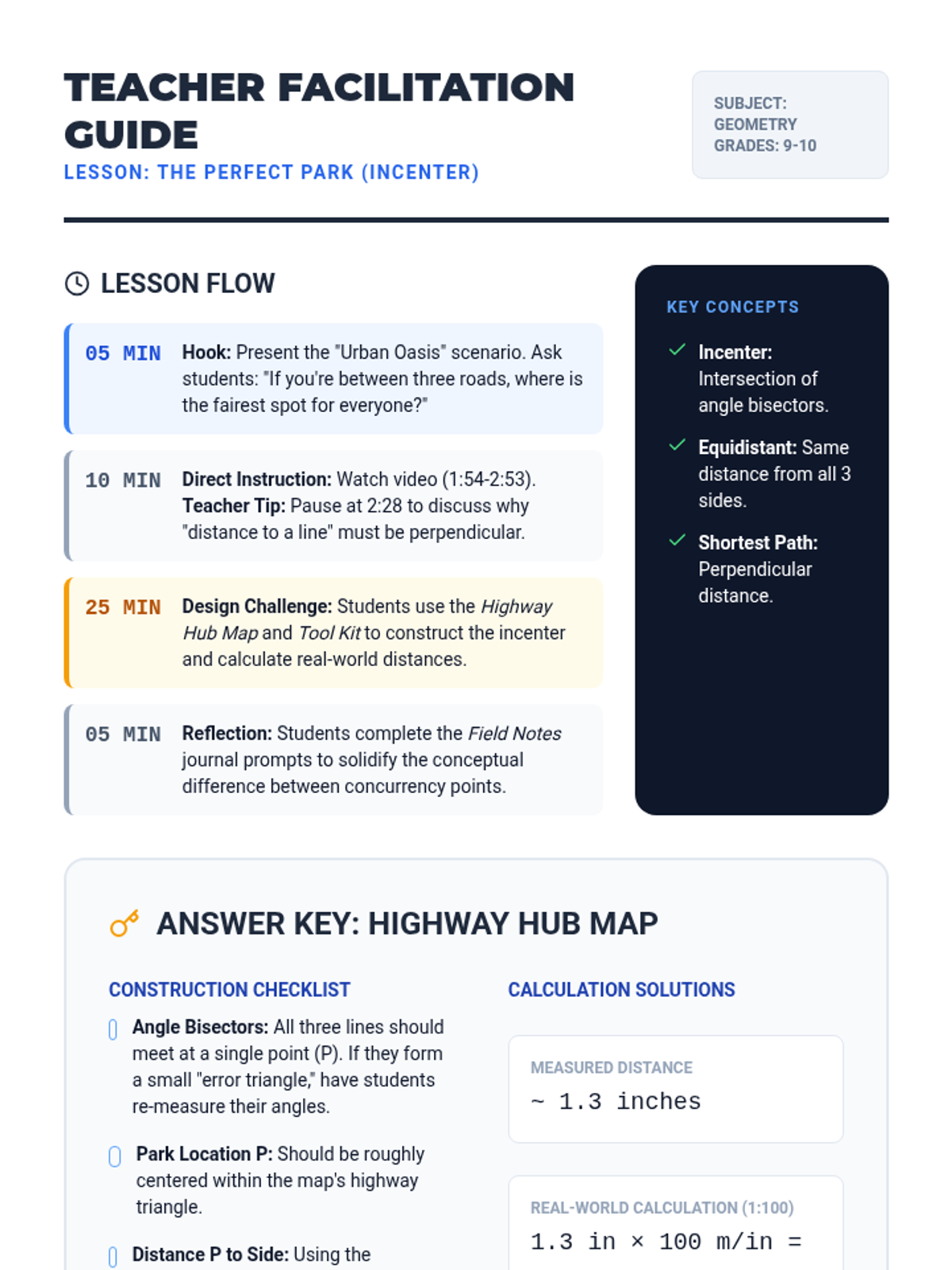
A series of geometry lessons focused on points of concurrency and their real-world applications in urban planning and design.
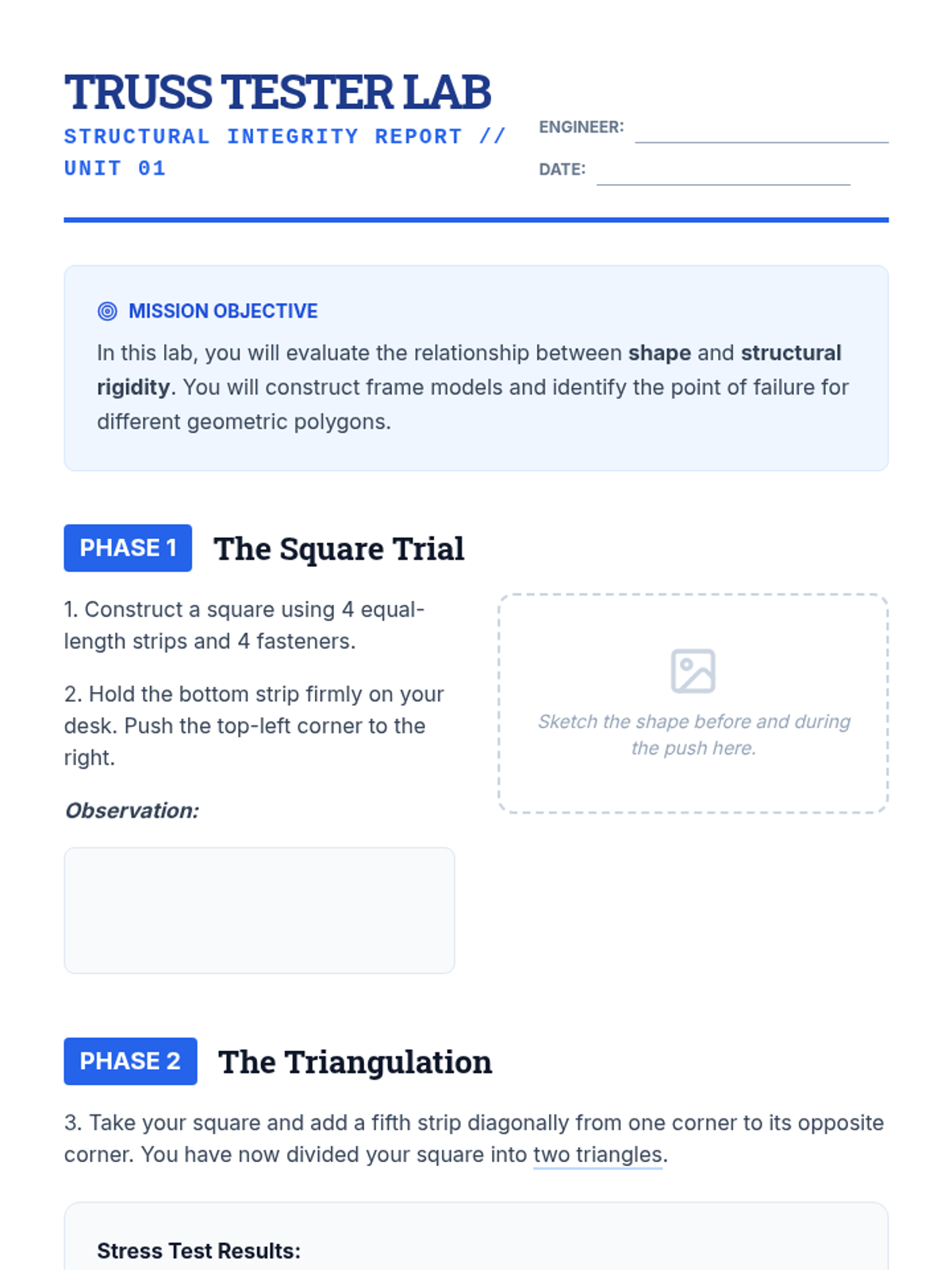
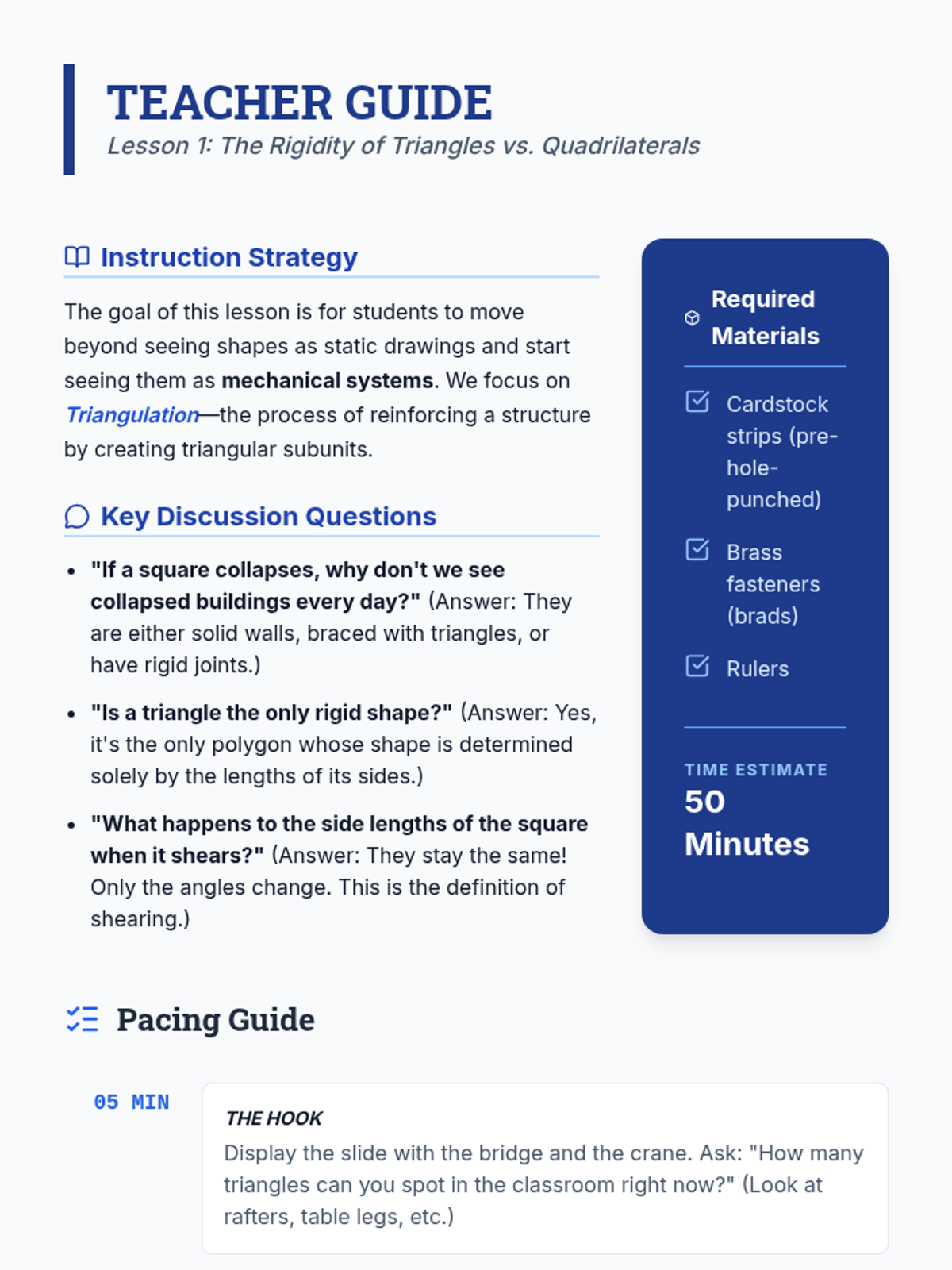
This sequence investigates the mathematical properties of polygons and their structural applications in engineering and architecture. Students explore interior and exterior angles, the unique attributes of regular polygons, and the fundamental reasons why triangles provide structural rigidity where other polygons fail.
An inquiry-driven 8th-grade geometry sequence where students discover the logical foundations of angle relationships through data collection, deductive puzzles, and argumentative proof-building.
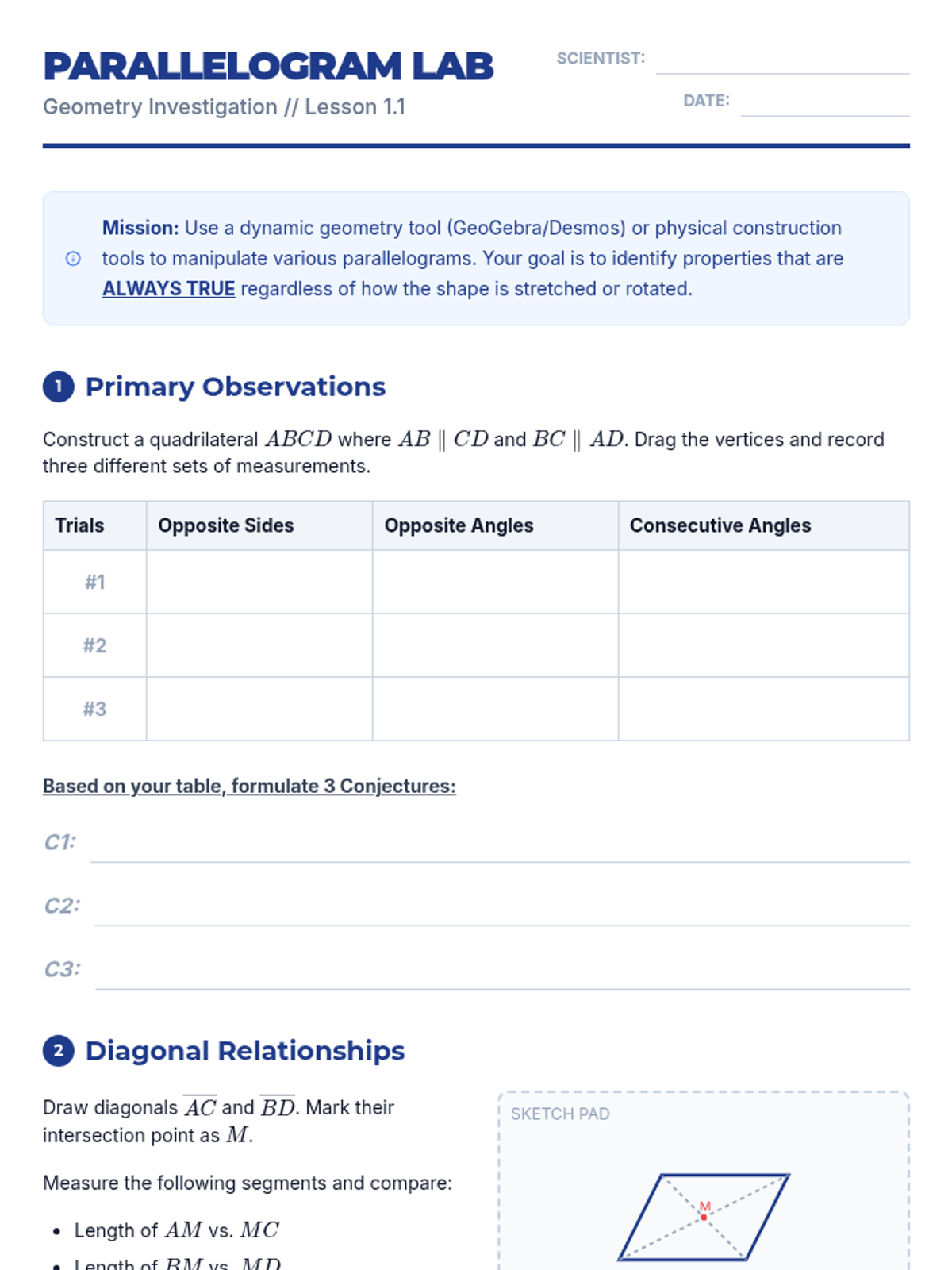
This inquiry-driven sequence guides students from intuitive shape recognition to formal deductive reasoning about quadrilaterals. Students investigate properties of parallelograms, special quadrilaterals, and trapezoids, culminating in the construction of a logical hierarchy based on geometric attributes.
A high school geometry sequence that bridges the gap between concrete angle measurement and abstract algebraic reasoning. Students move from measuring physical angles to modeling relationships with equations and justifying their logic through formal geometric theorems.
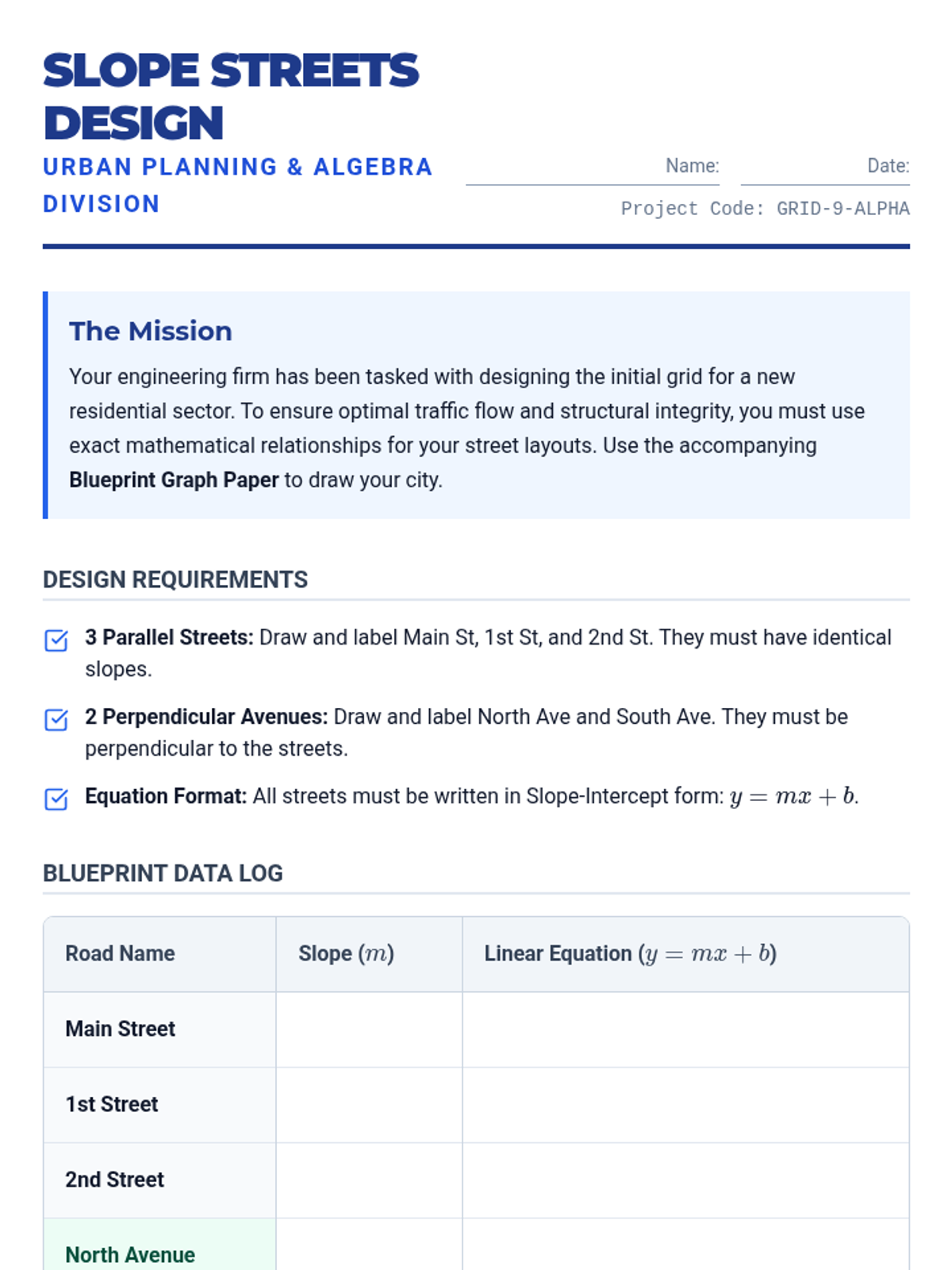
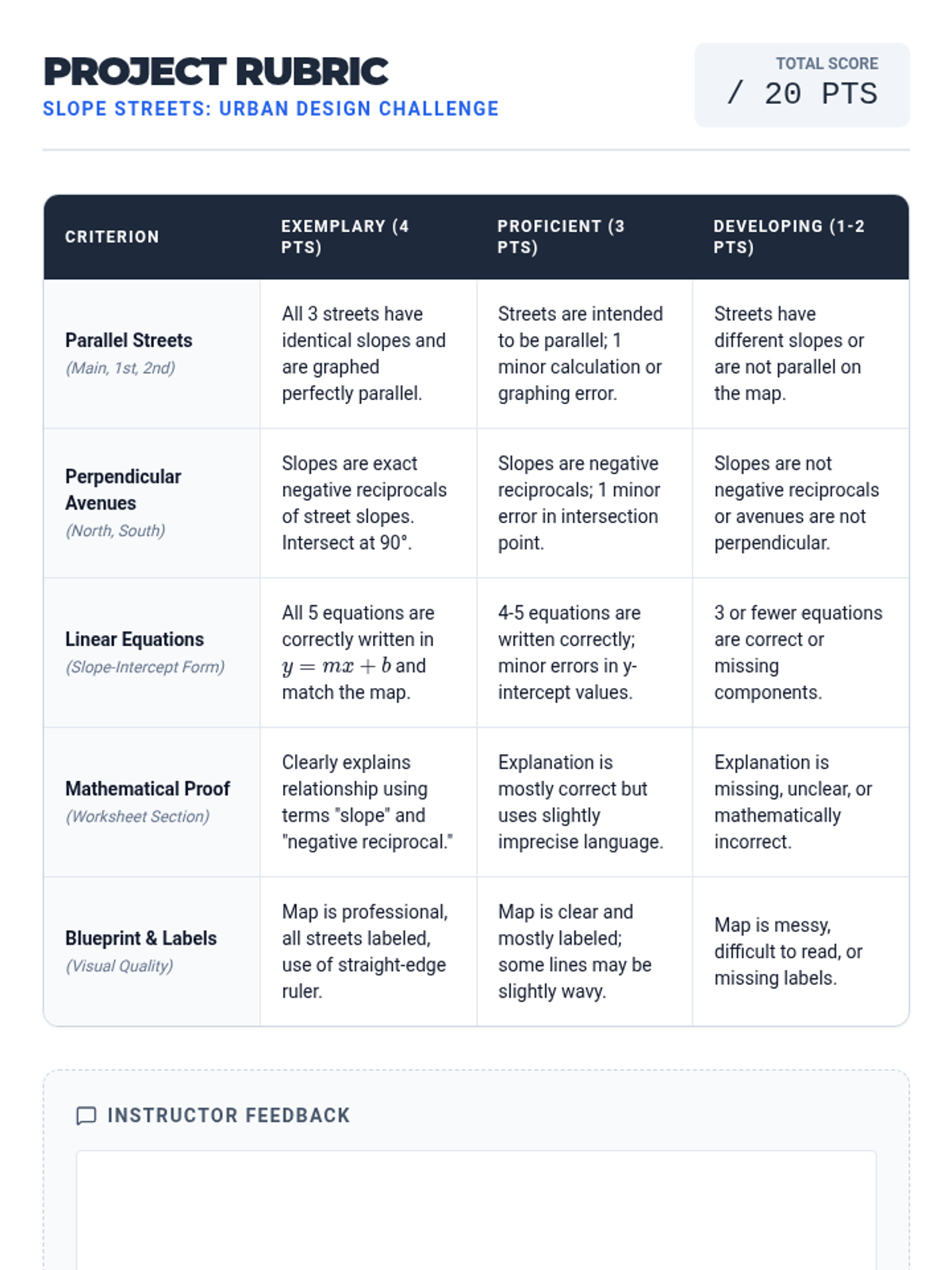
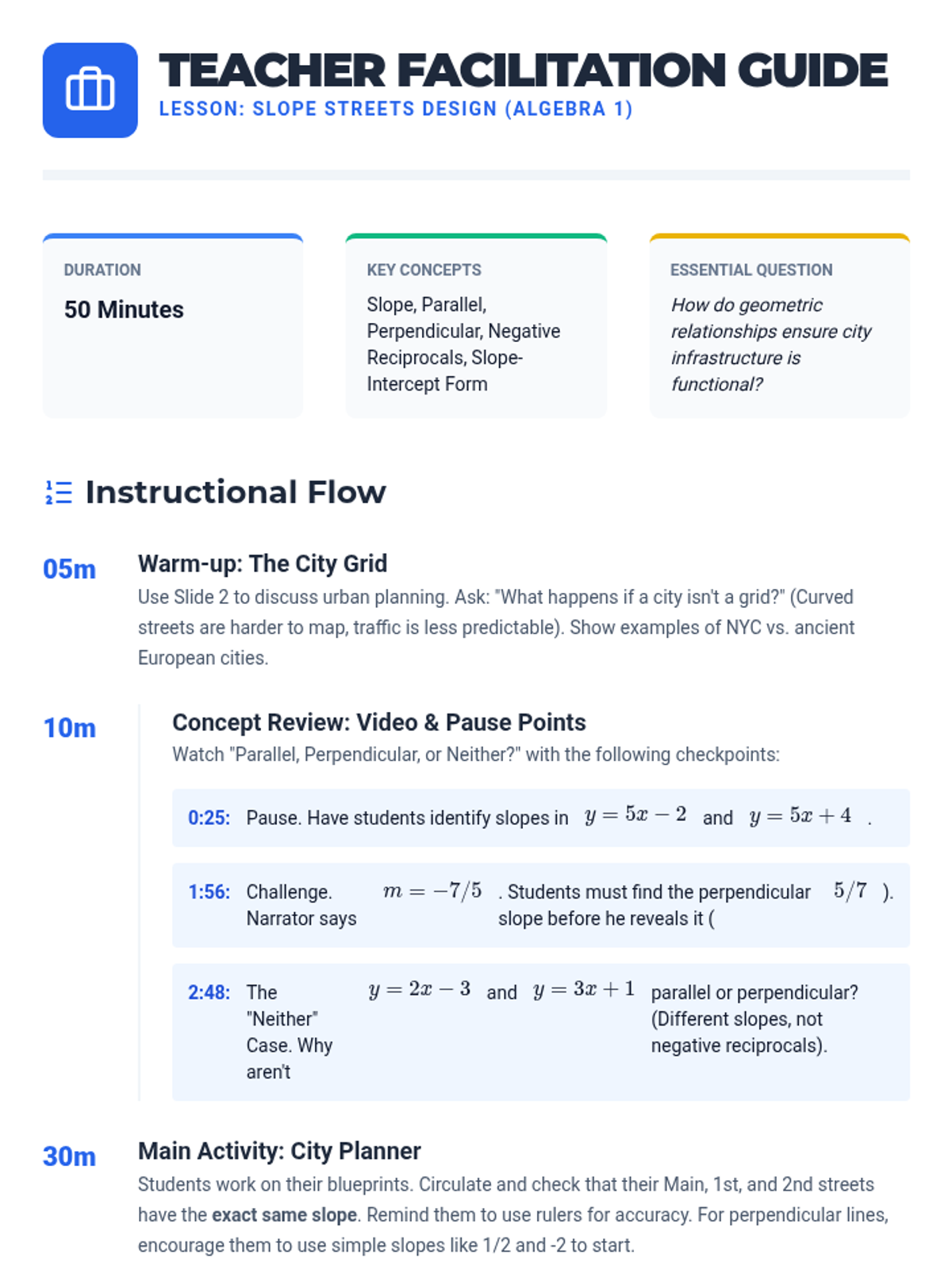
A series of lessons focused on the practical applications of linear equations, slope, and geometric relationships in real-world contexts like urban planning and engineering.
A 9th-grade geometry unit where students use algebraic tools—distance, slope, and midpoint formulas—to rigorously prove and classify the properties of polygons on a coordinate plane.
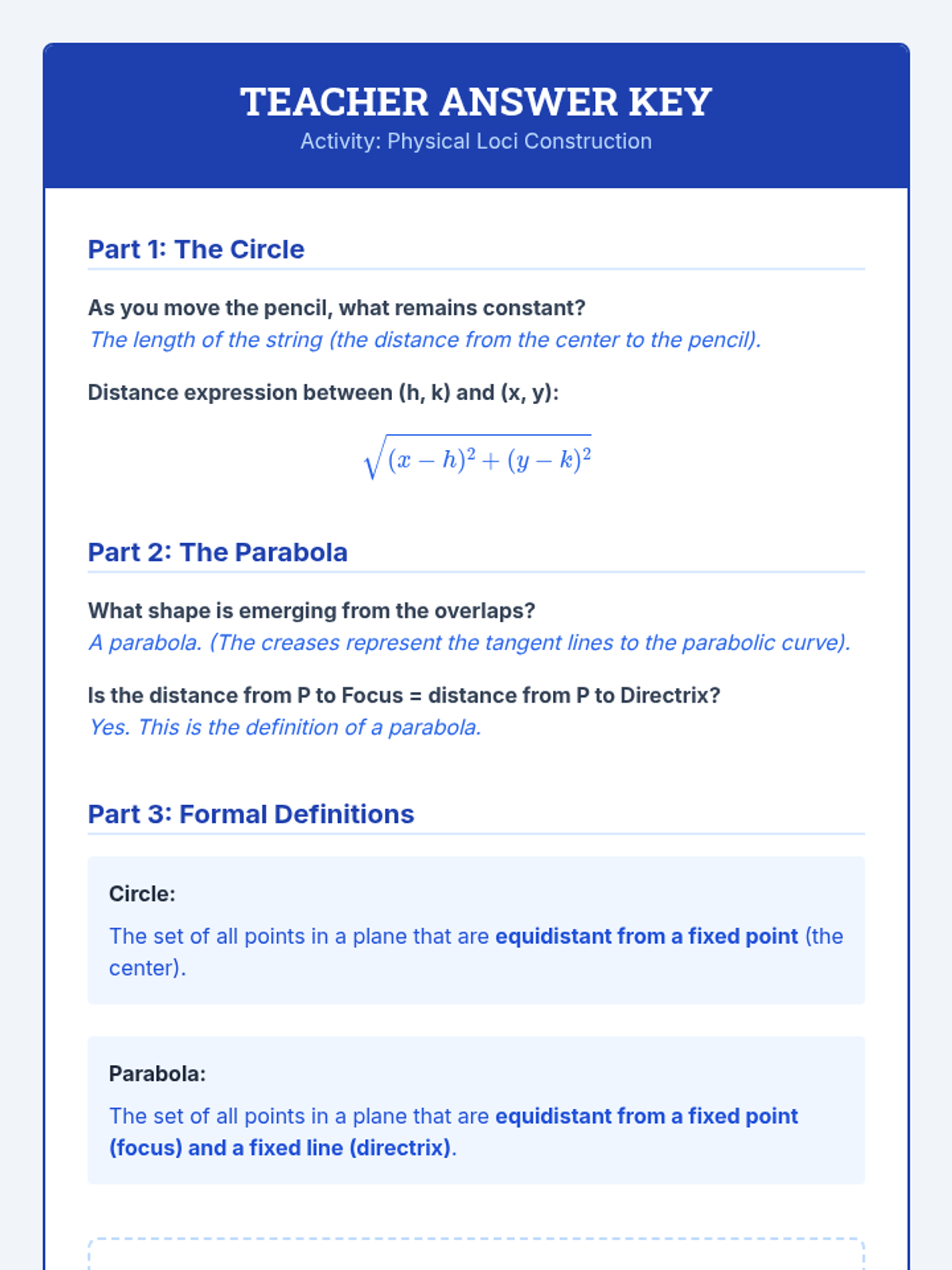
Students explore conic sections as geometric loci, deriving standard equations from distance-based definitions through inquiry, physical construction, and algebraic proof.
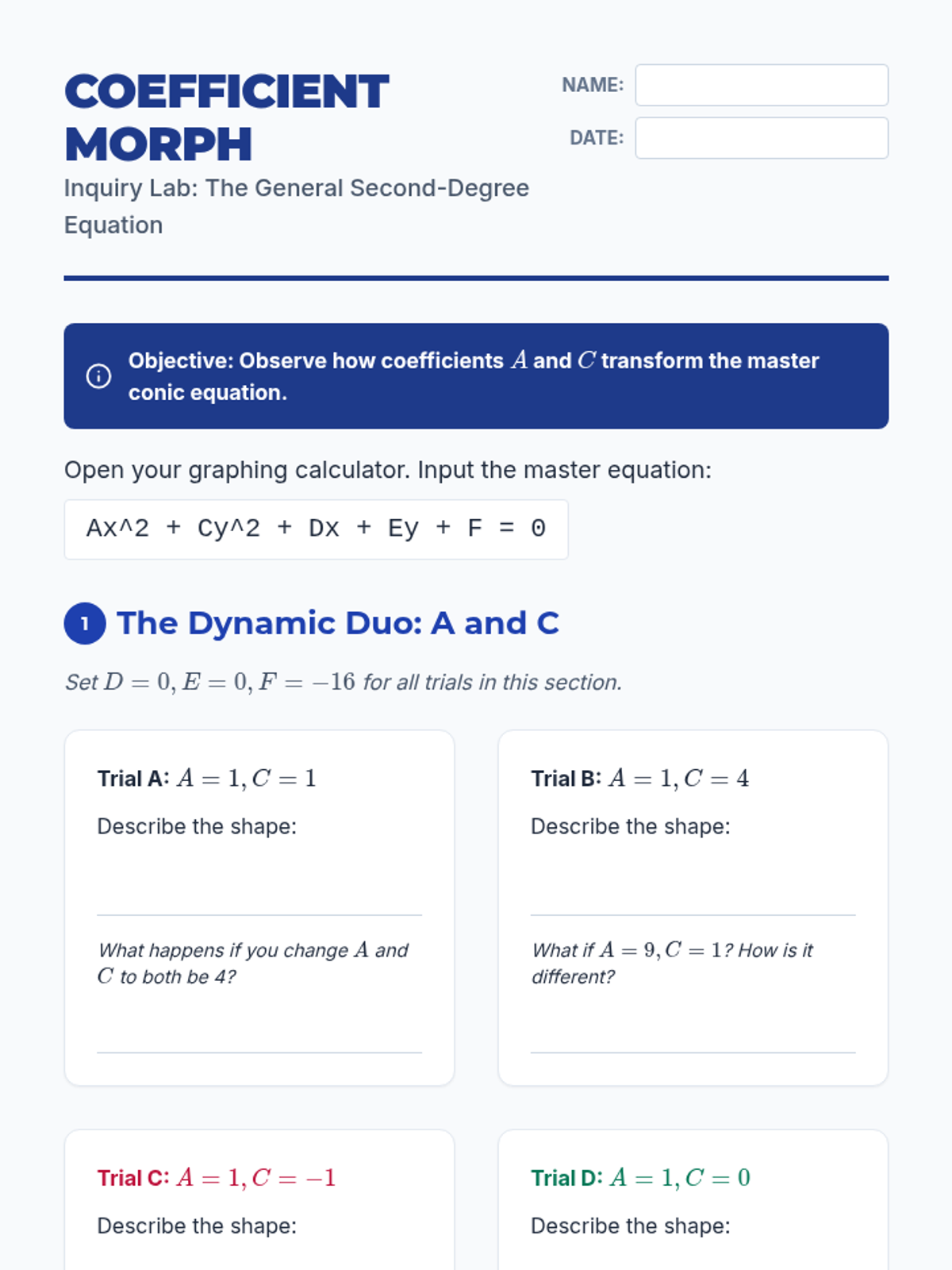
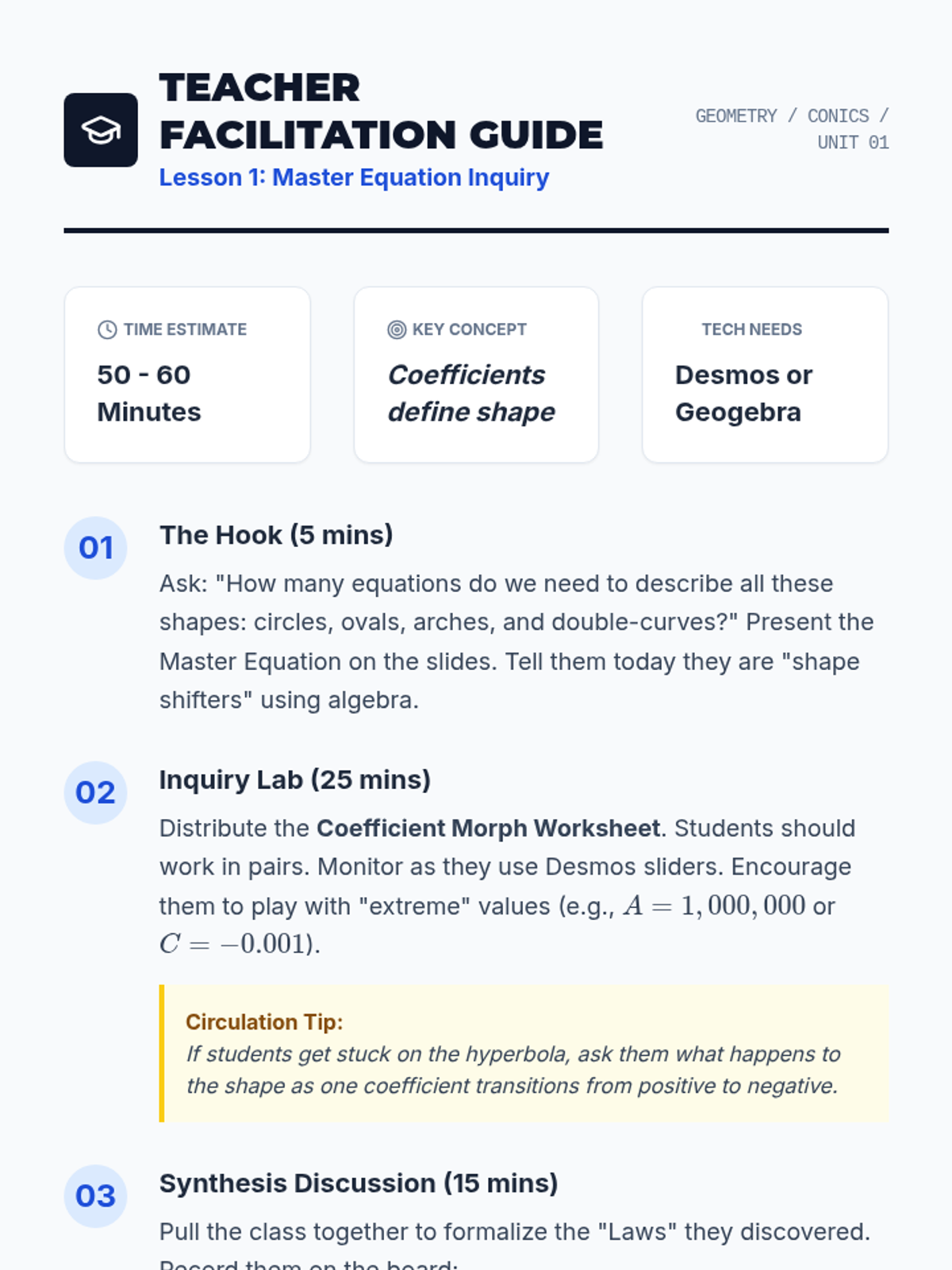
This mastery-based sequence focuses on the synthesis of all conic sections. Students learn to manipulate the General Second-Degree Equation to classify curves and transform them into standard forms.
This advanced geometry sequence guides students through proving the properties of quadrilaterals and using coordinate geometry to verify shape classifications. Students will master formal deductive proofs, explore hierarchical relationships, and apply algebraic methods to geometric reasoning.
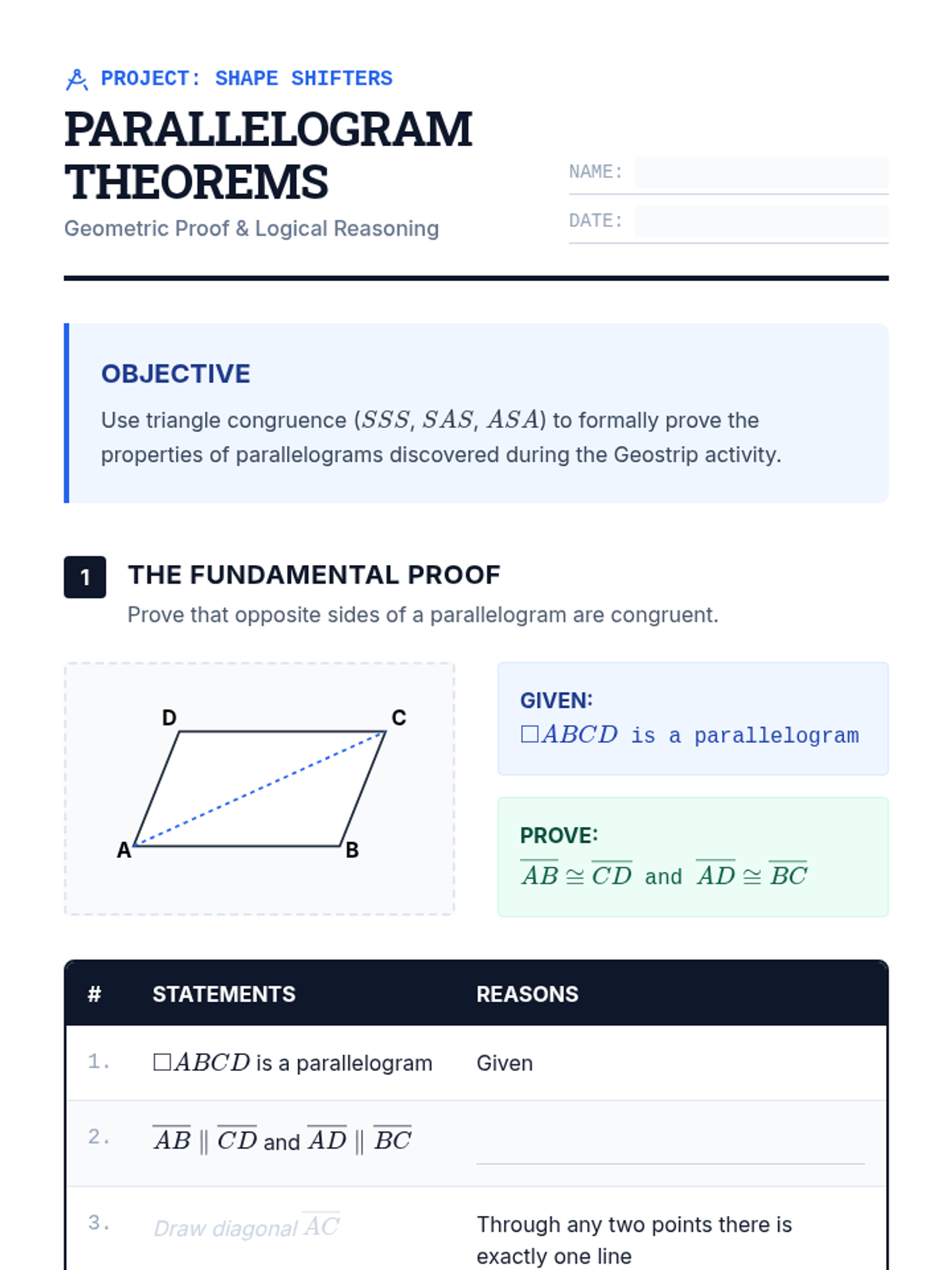
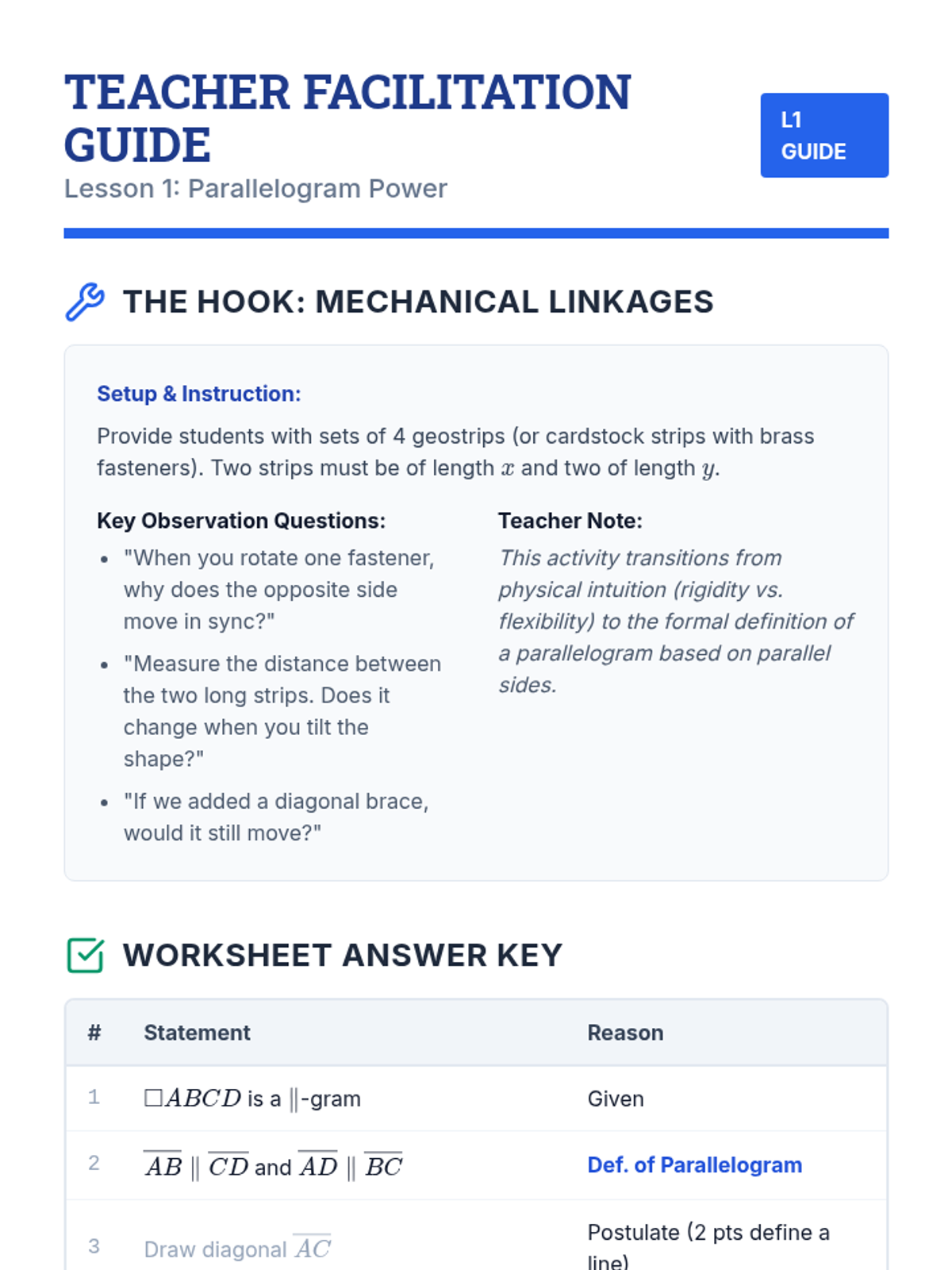
This sequence explores the geometric properties of quadrilaterals through formal proofs and coordinate geometry. Students progress from basic parallelogram properties to complex hierarchical classifications and algebraic verifications.
This workshop-style sequence bridges algebra and geometry by verifying geometric classifications through coordinate proofs. Students apply the distance formula to verify congruency and the slope formula to verify parallel and perpendicular relationships to classify triangles and quadrilaterals.
A rigorous undergraduate-level sequence exploring the algebraic classification of quadrilaterals using coordinate geometry. Students apply slope, distance, and midpoint formulas to prove properties of parallelograms, rectangles, rhombi, and squares.
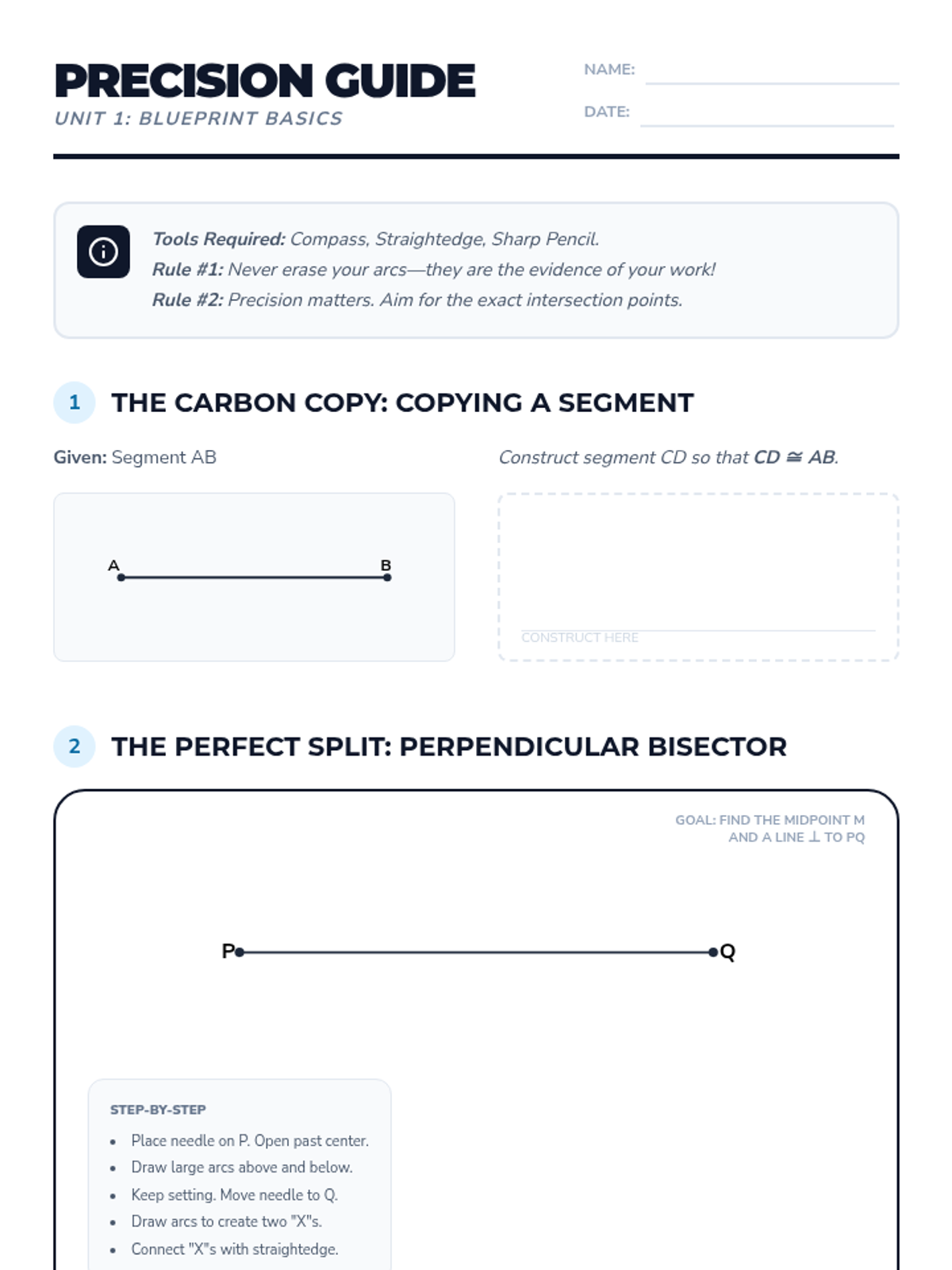
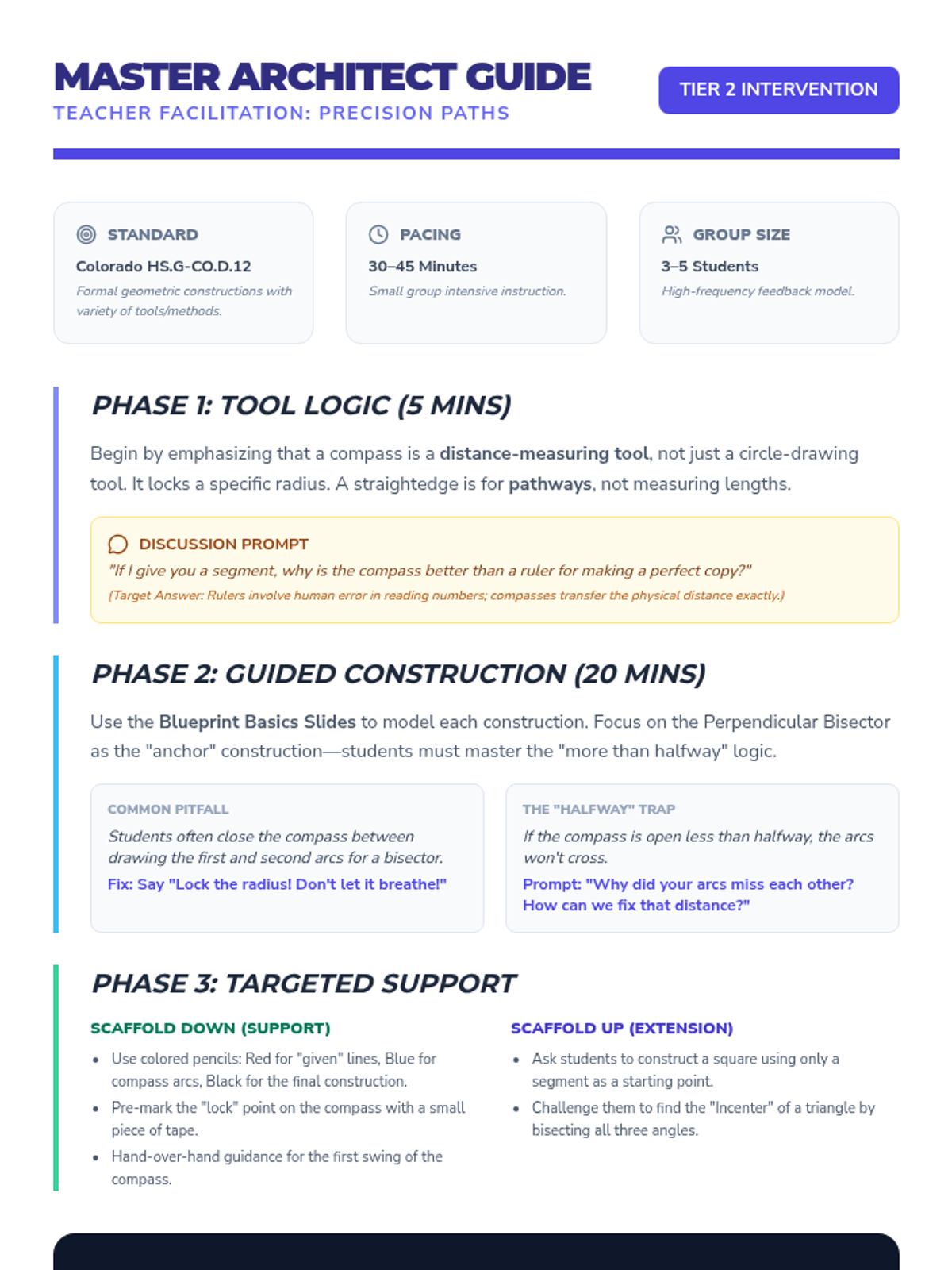
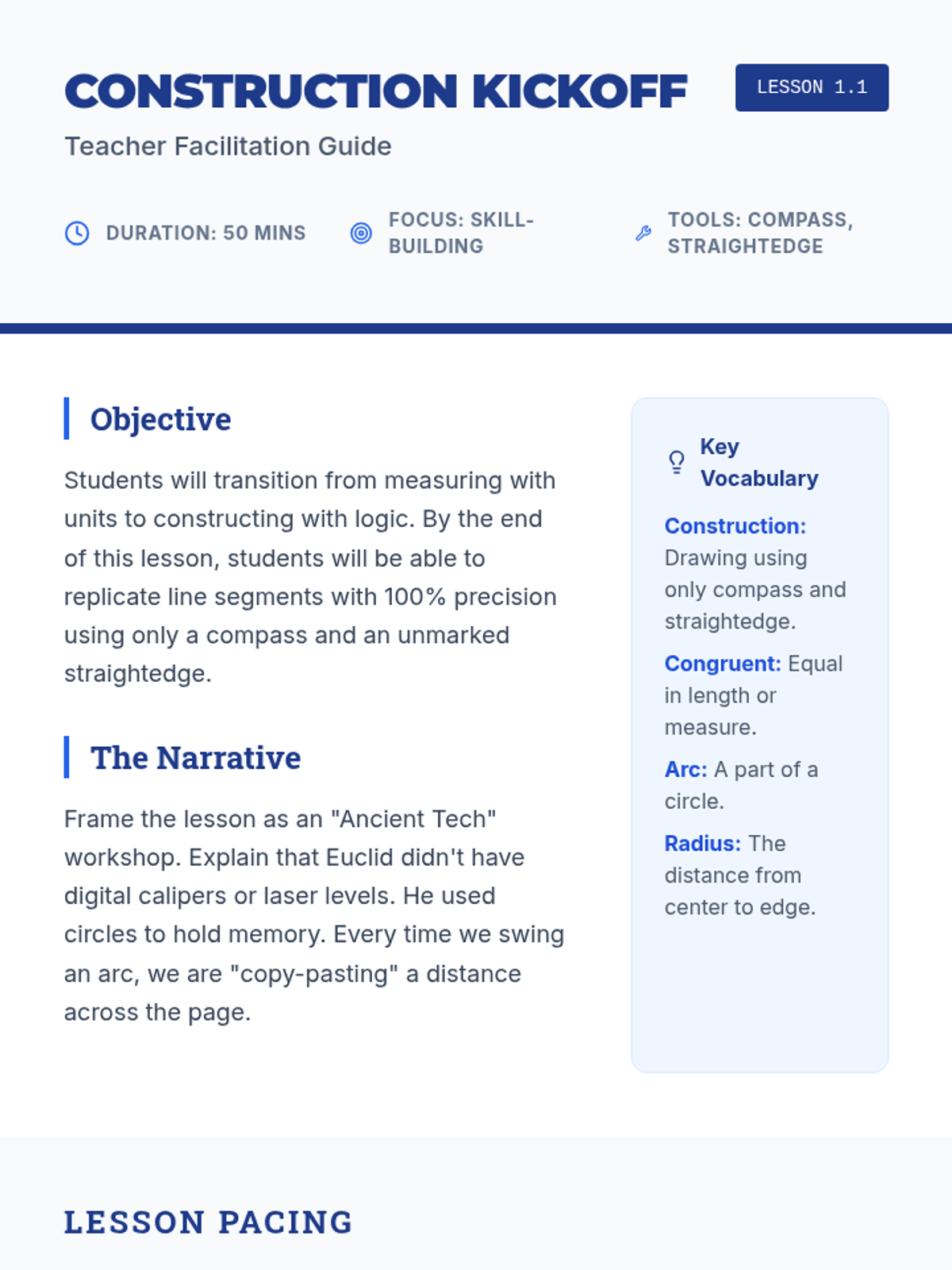
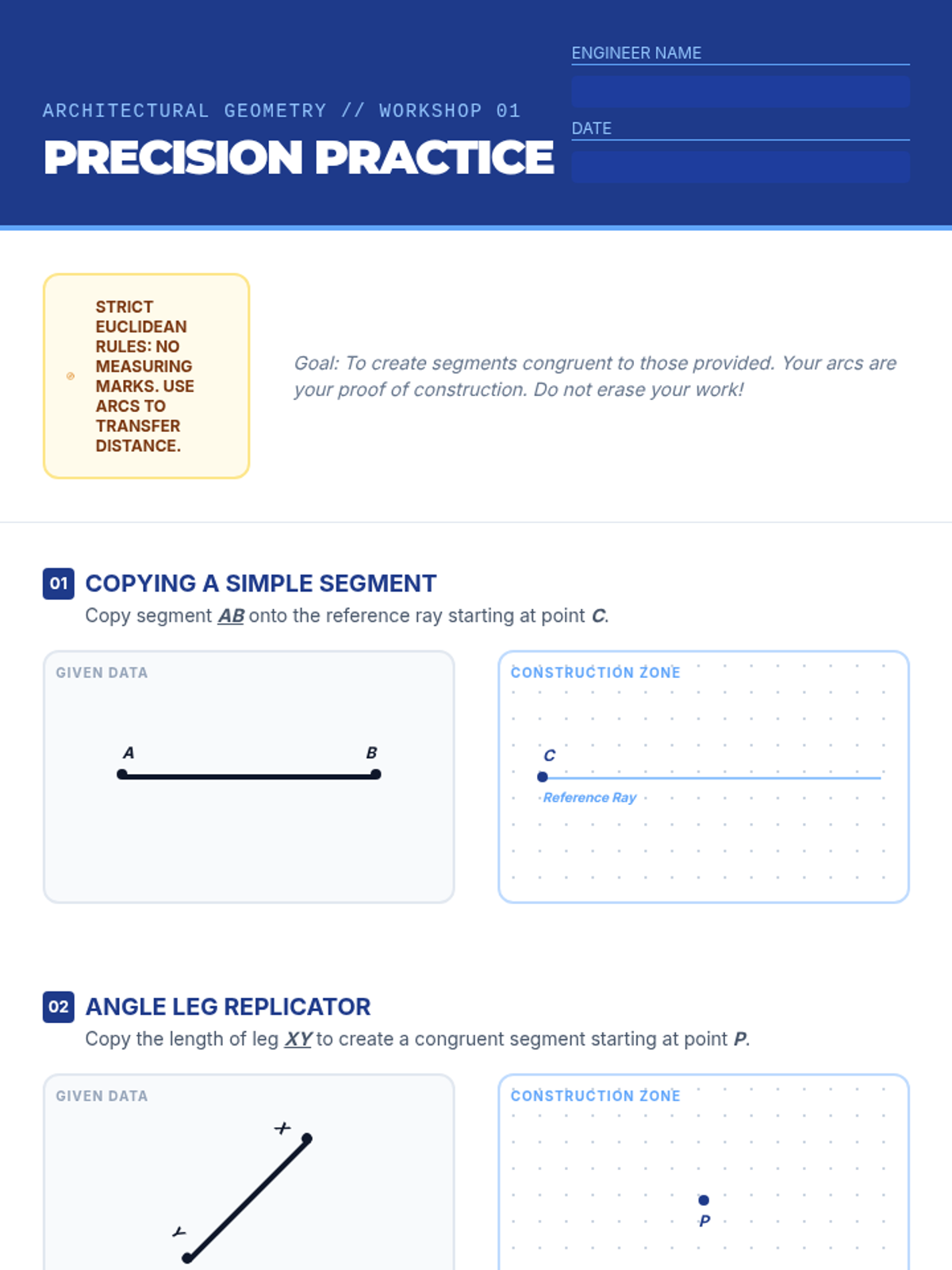
A specialized intervention sequence for High School Geometry focusing on the logic and execution of formal geometric constructions using compass and straightedge. Designed for Tier 2 small group support with scaffolded steps and targeted practice.
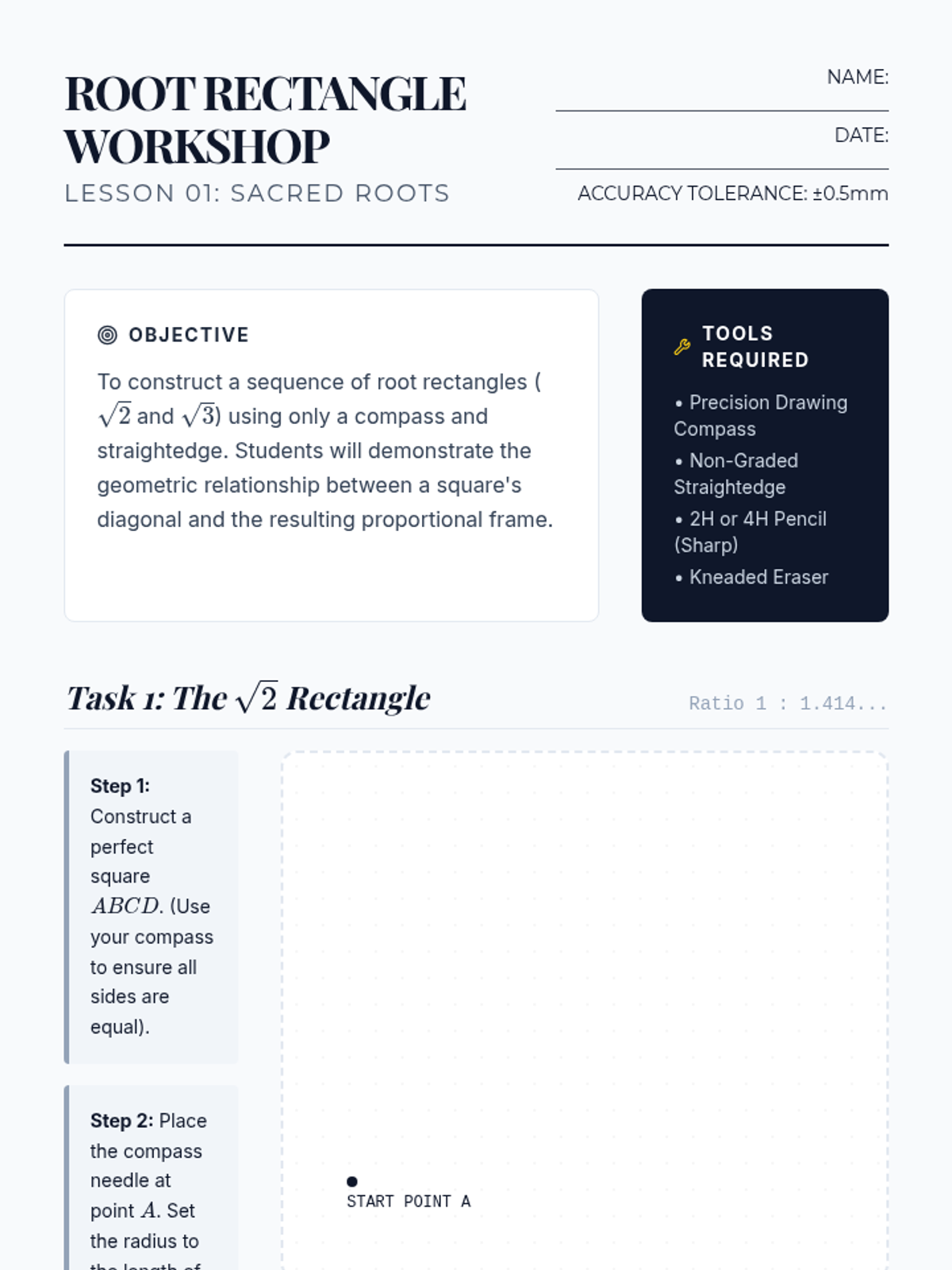
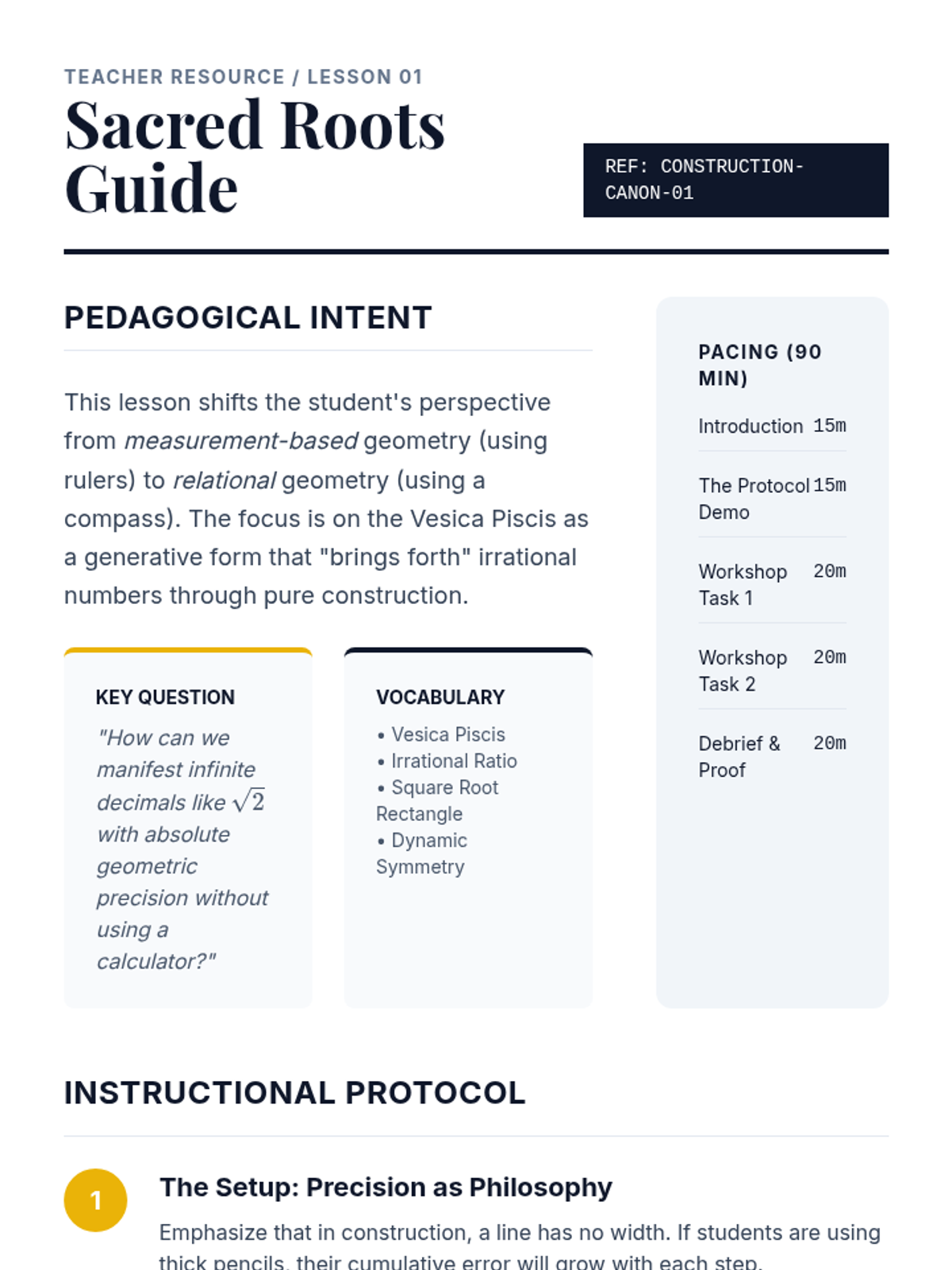
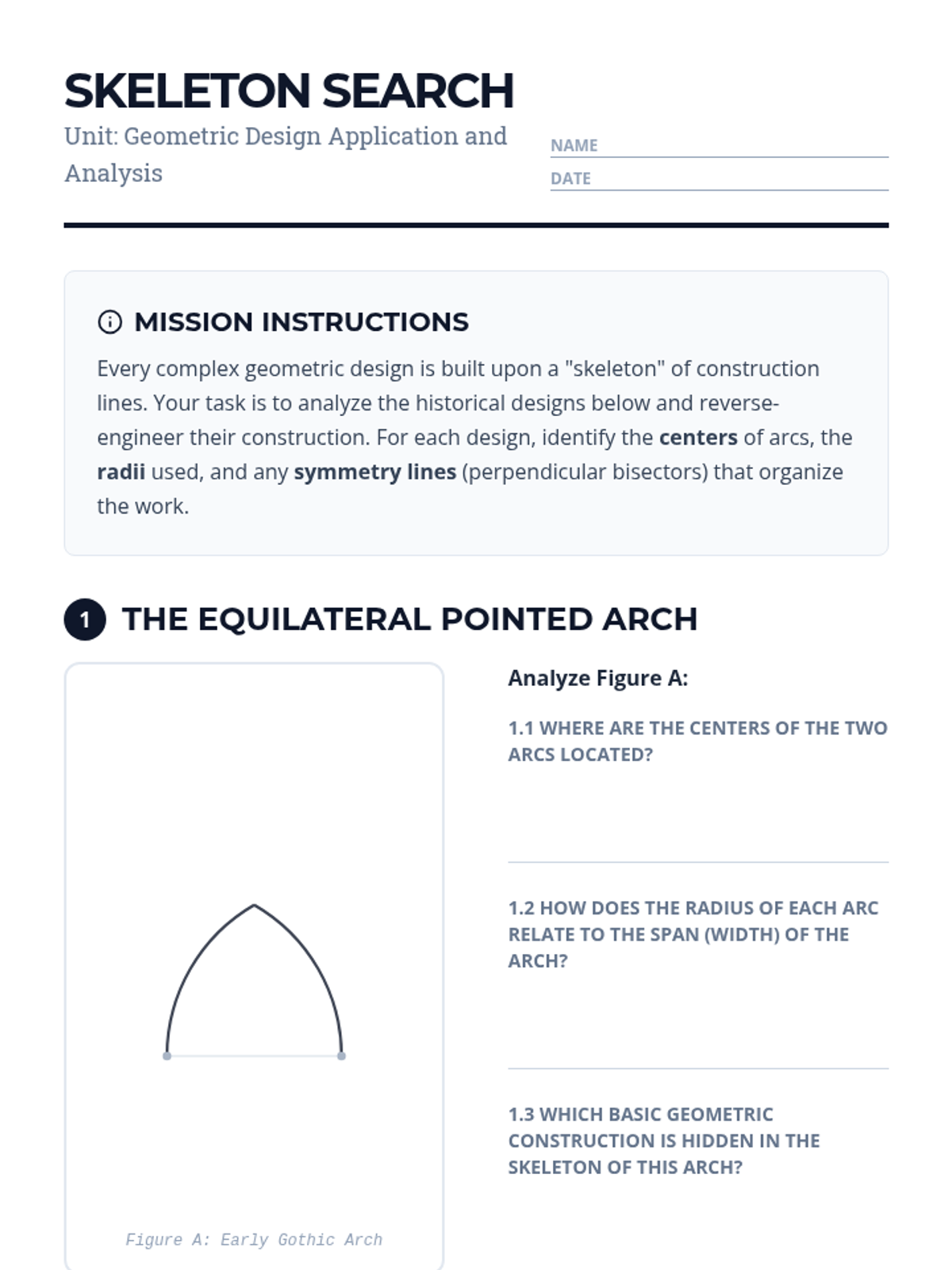
This sequence explores the intersection of geometry, art, and architecture. Students master compass and straightedge constructions to recreate historical designs from Gothic cathedrals and Islamic tilings while understanding the underlying mathematical principles of root rectangles and aperiodic tilings.
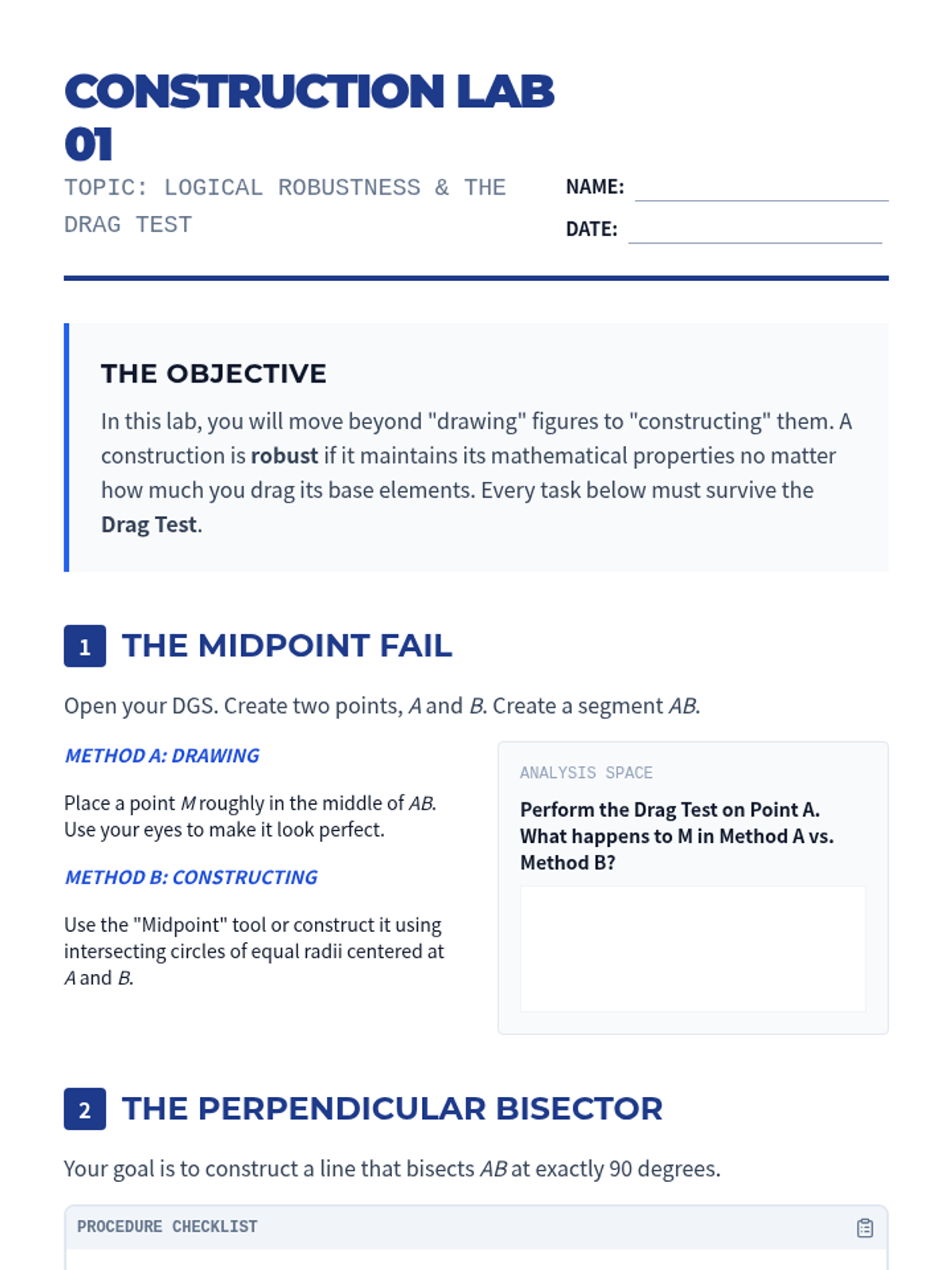
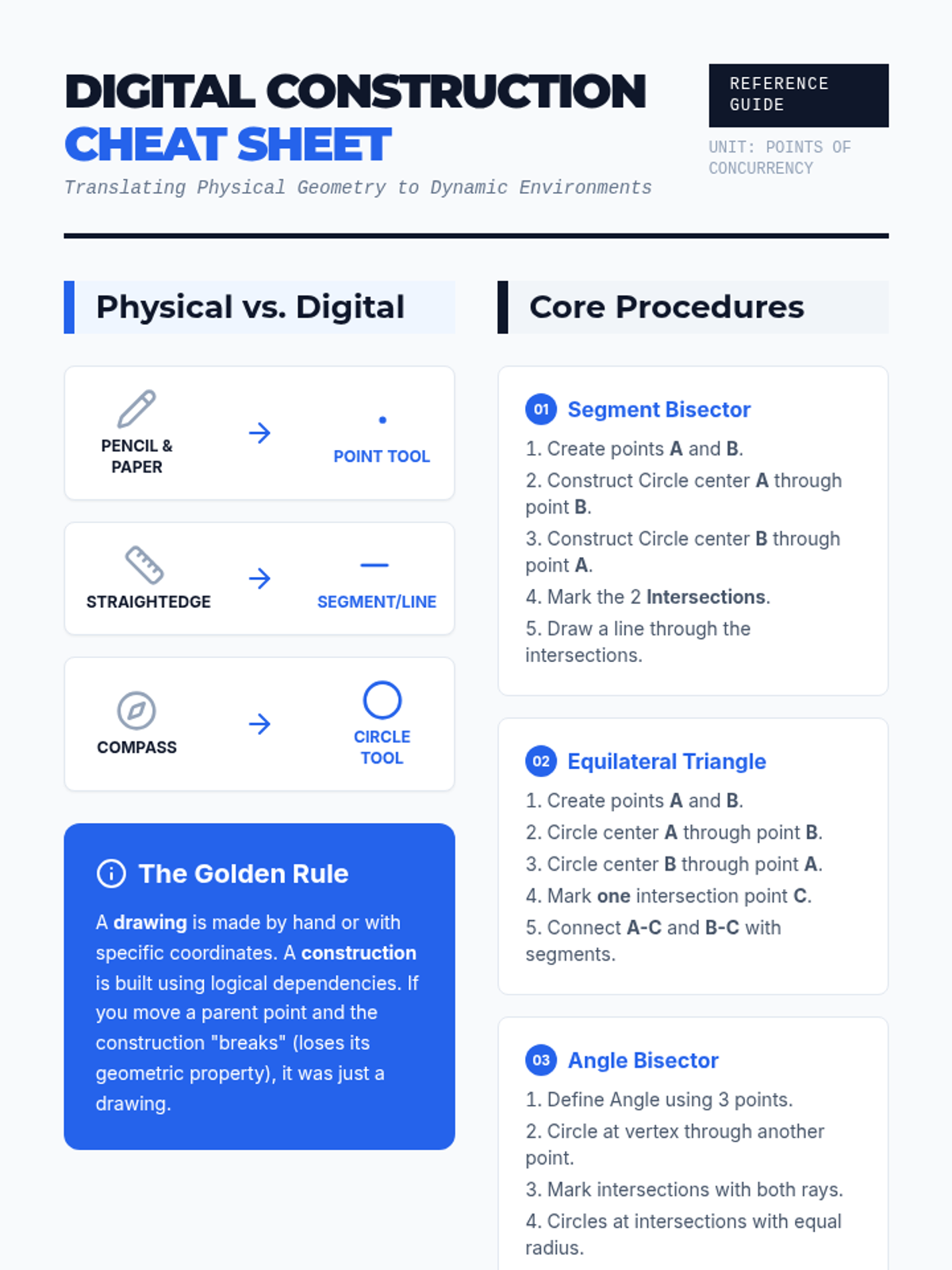
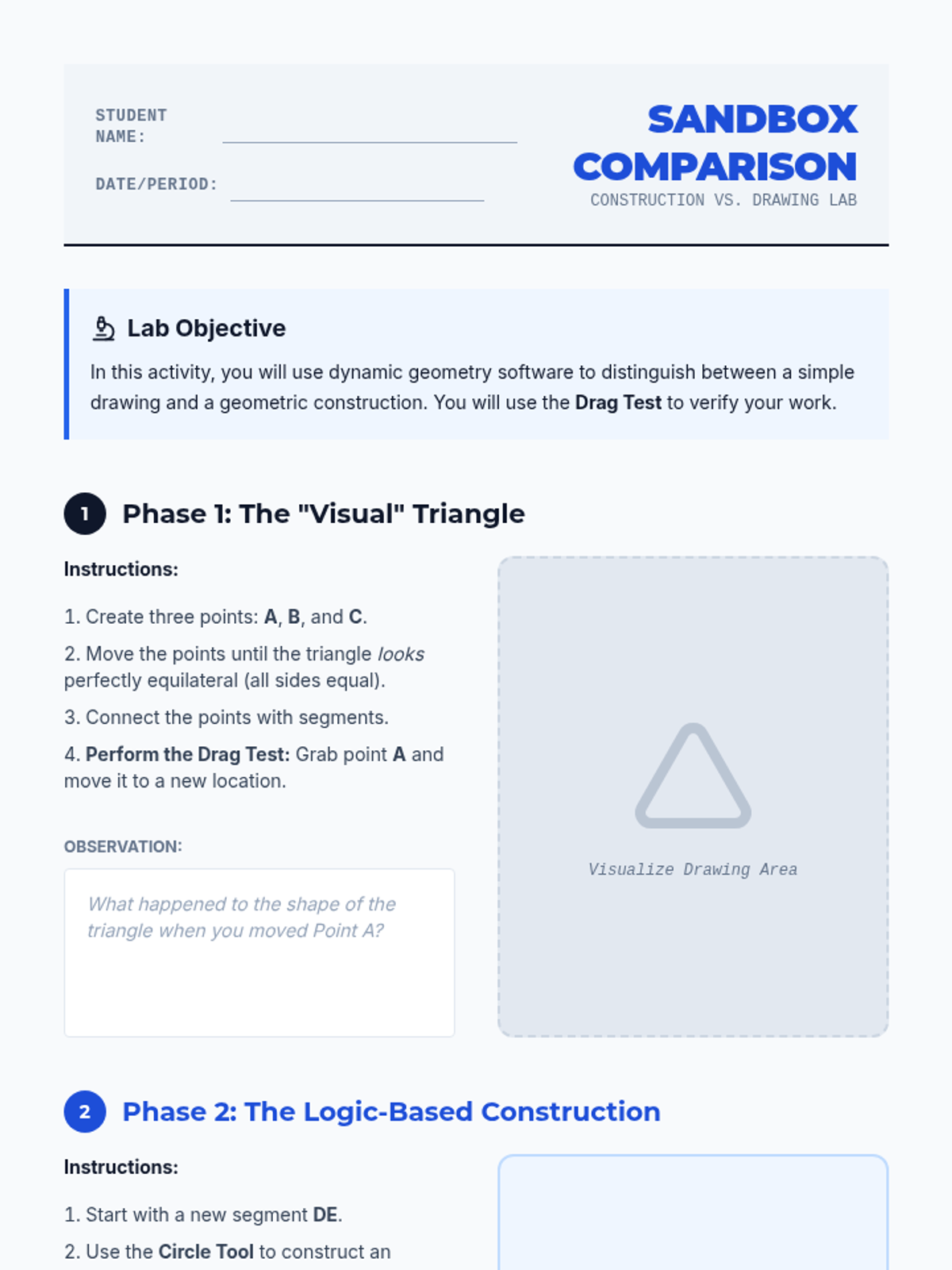
This sequence utilizes Dynamic Geometry Systems (DGS) to modernize the study of constructions, shifting focus from physical precision to logical robustness. Students explore dependencies, loci, transformations, and complex mechanical linkages through the 'drag test' methodology.
This advanced geometry sequence explores the points of concurrency in triangles through geometric constructions. Students use physical and digital tools to construct and analyze the circumcenter, incenter, centroid, and orthocenter, culminating in the discovery of the Euler Line.
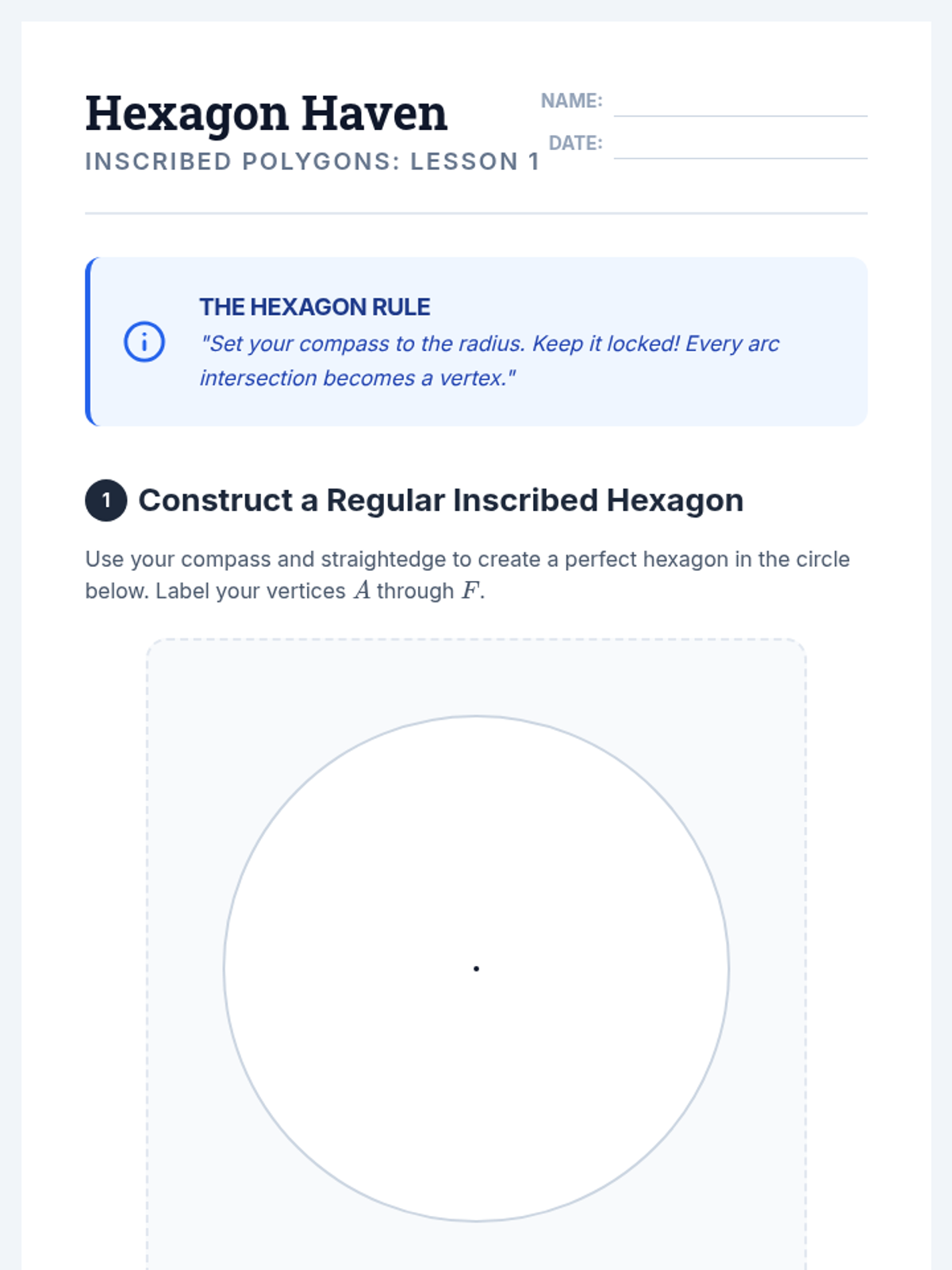
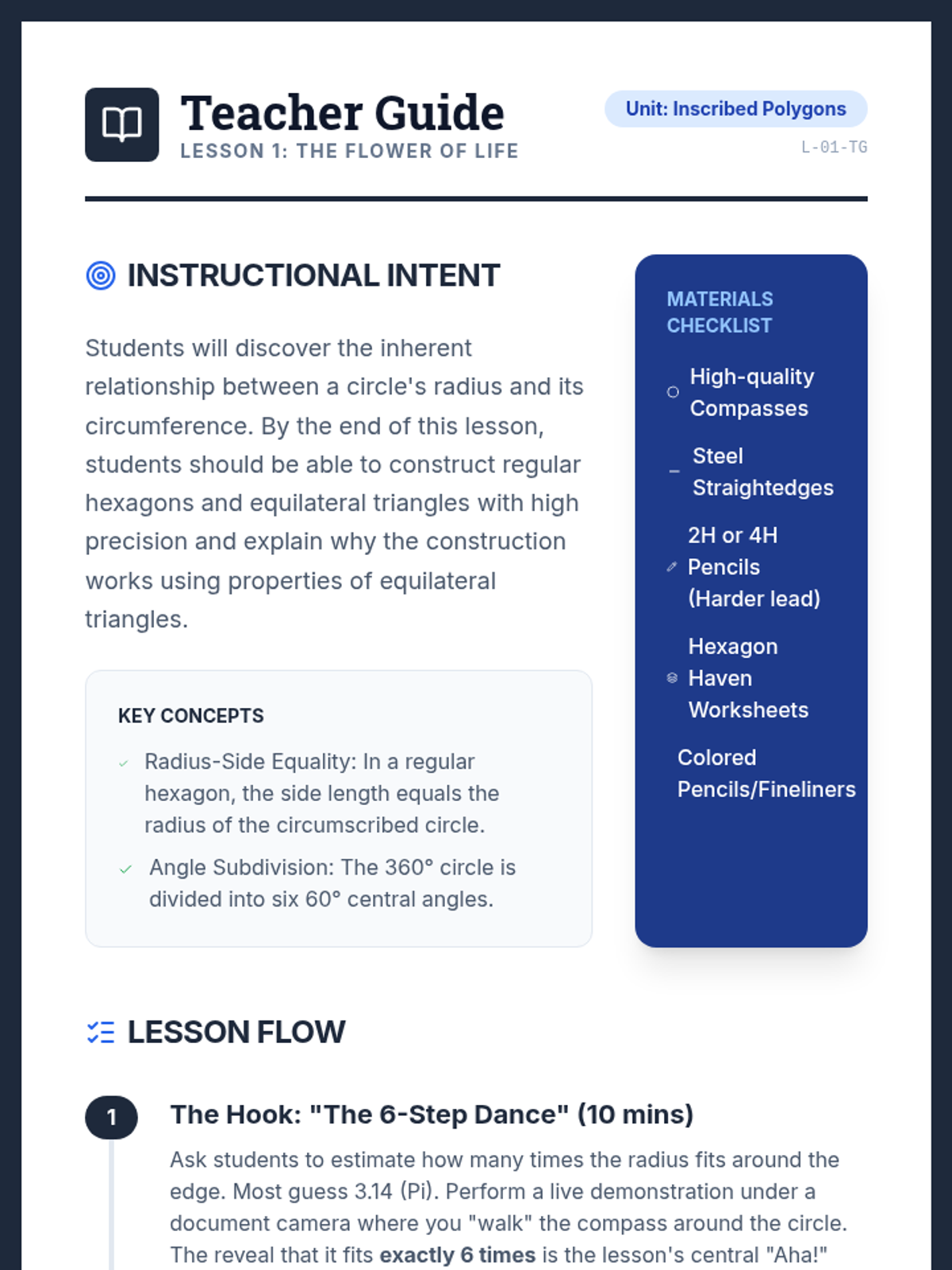
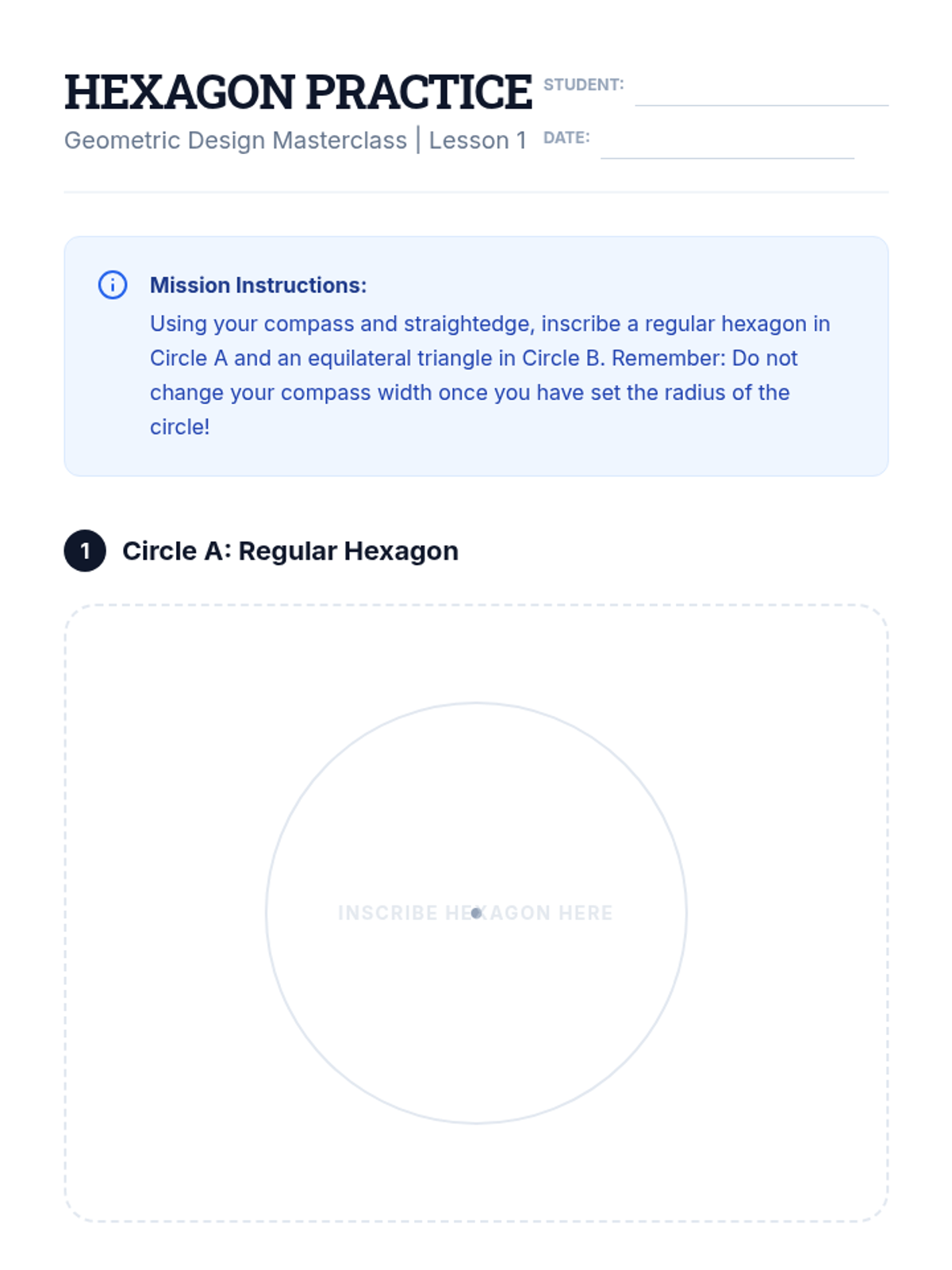
This sequence explores the intersection of art and geometry through inscribed regular polygons. Students use compass and straightedge techniques to construct triangles, hexagons, squares, and pentagons, culminating in a geometric mandala project.
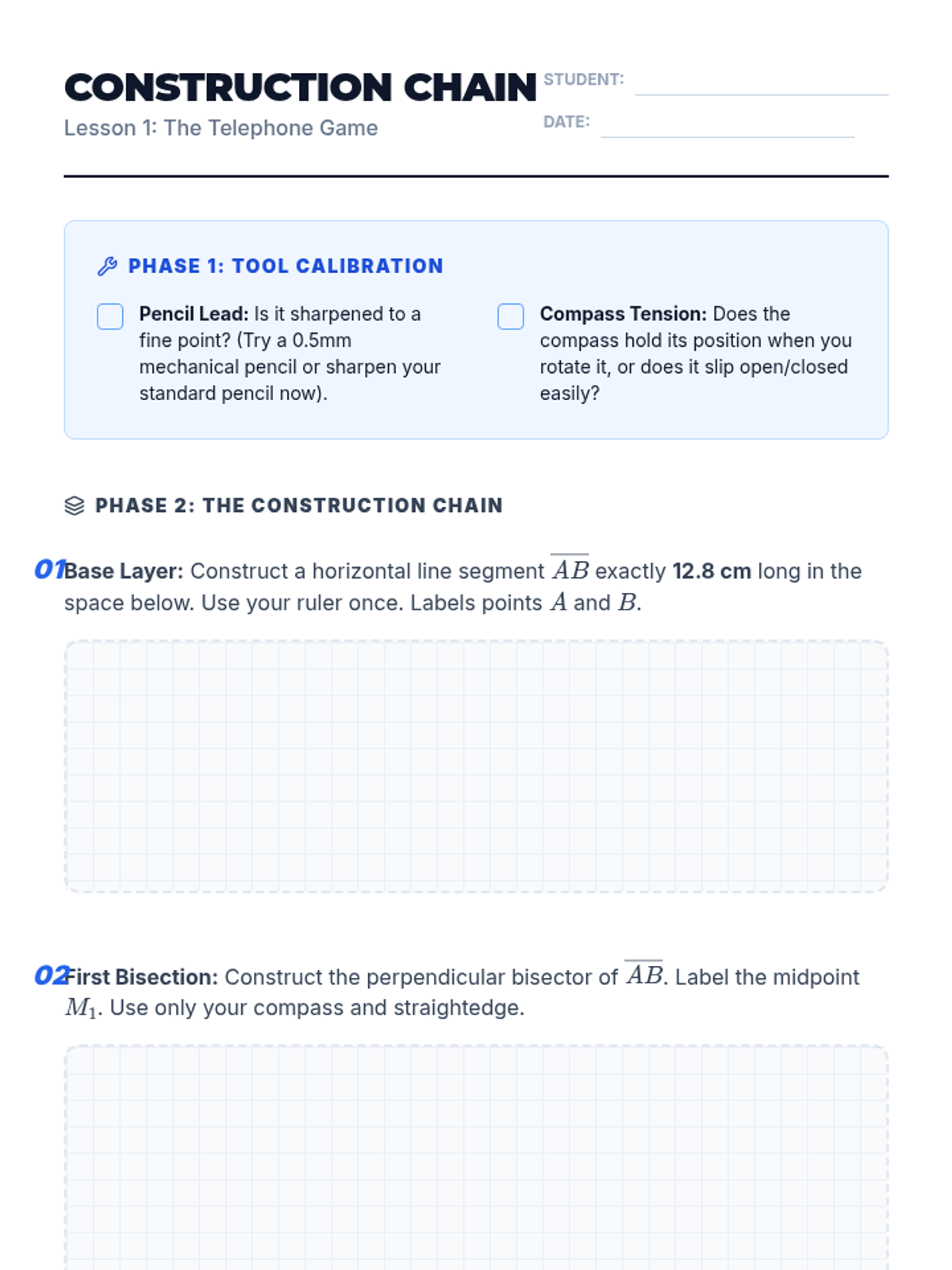
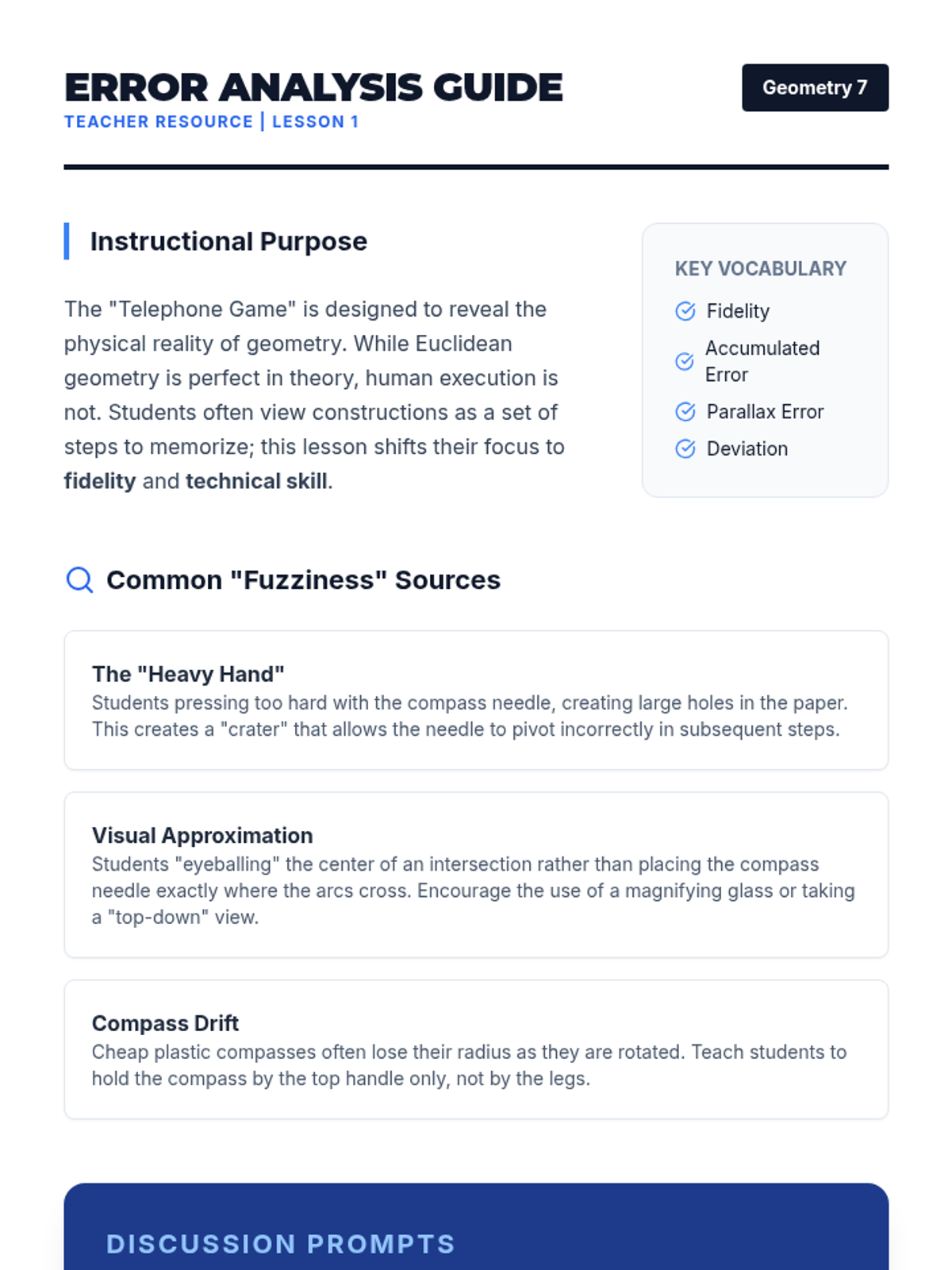
A 7th-grade geometry sequence focusing on the precision, logic, and limitations of geometric constructions through gamified challenges and error analysis. Students explore the 'why' behind compass and straightedge techniques while honing their technical skills.
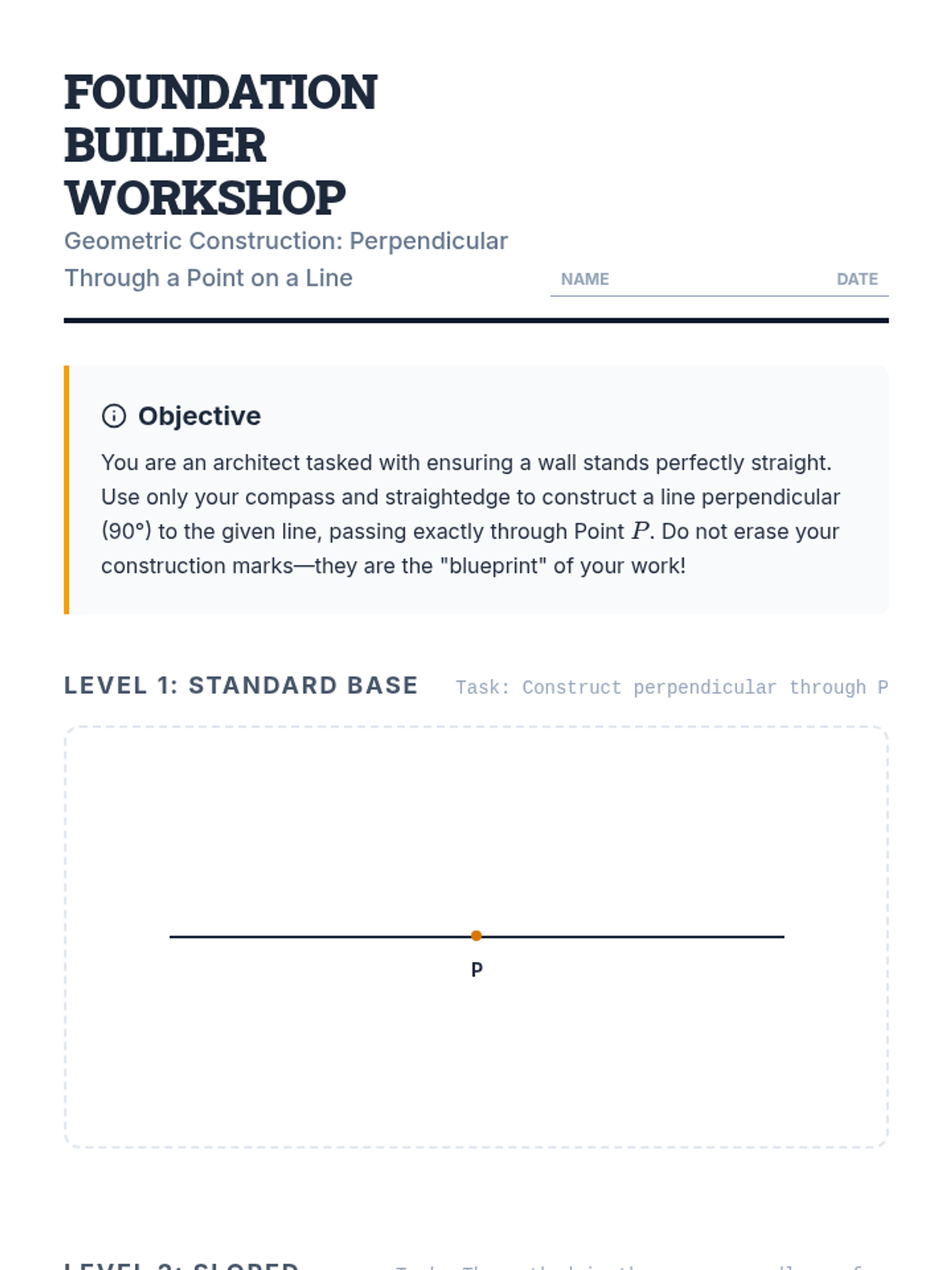
A comprehensive geometry sequence for 7th graders focusing on the construction of parallel and perpendicular lines using only a compass and straightedge. Students progress from basic perpendiculars to complex grid systems using inquiry-based and skill-building techniques.
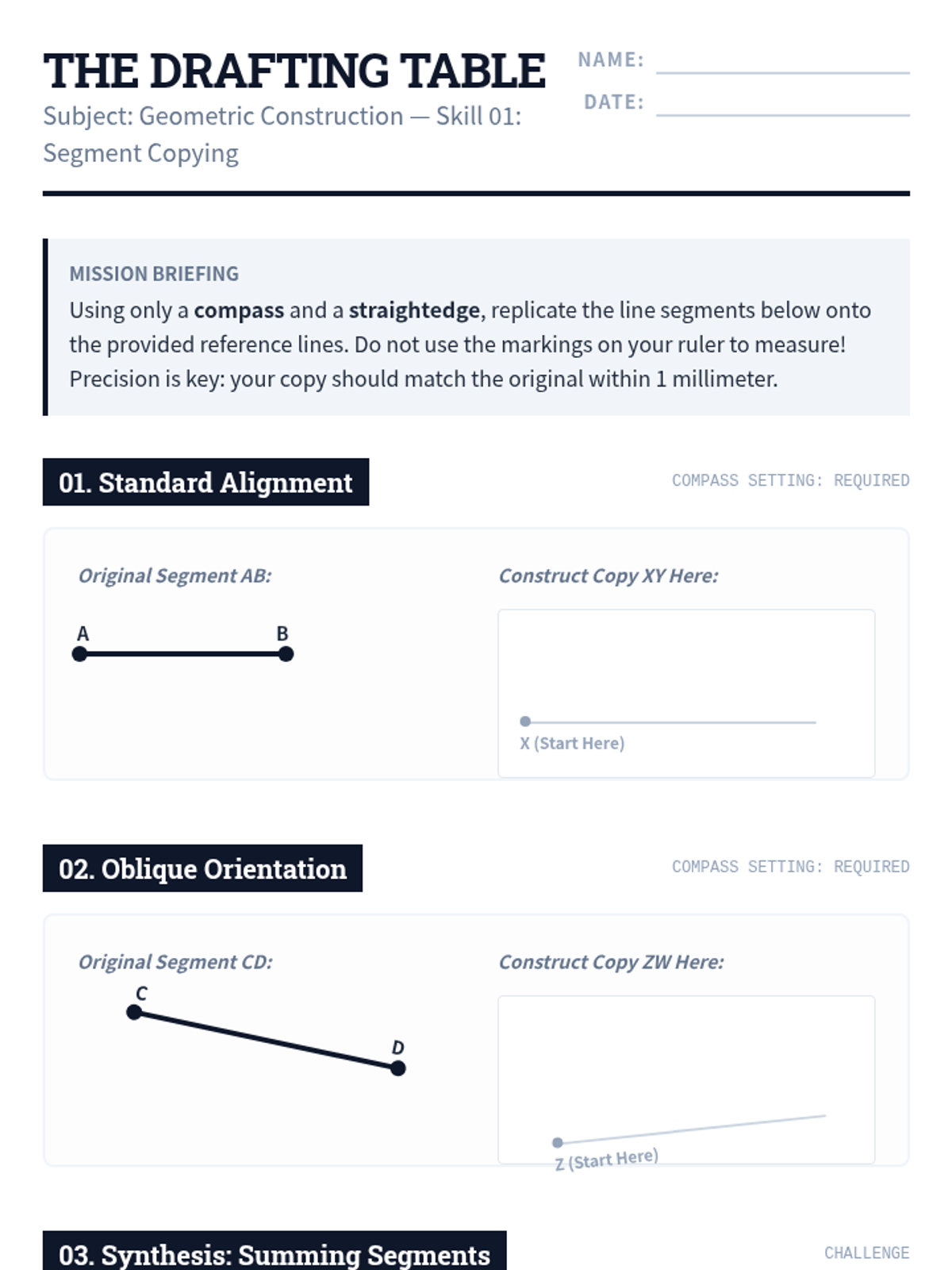
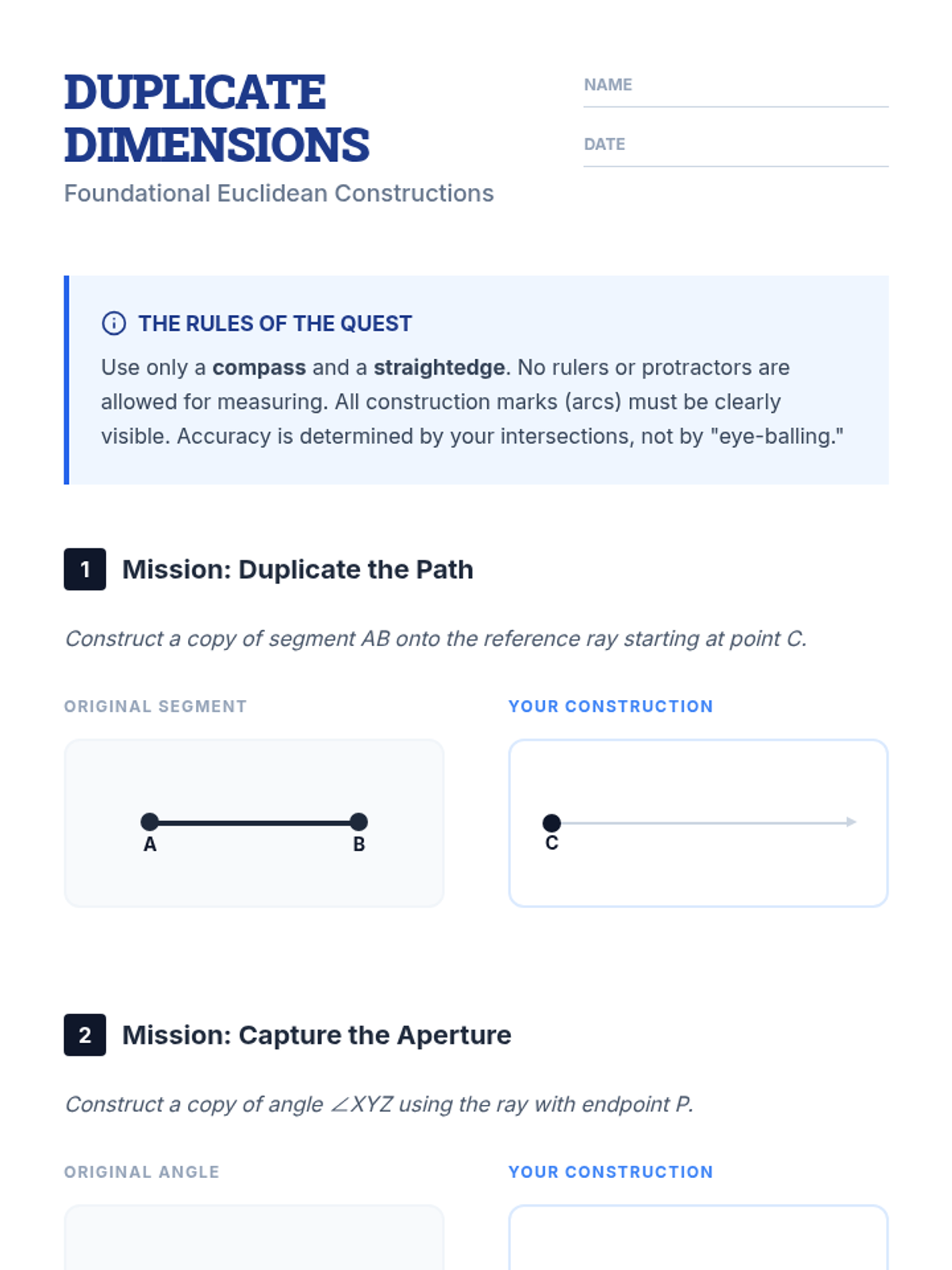
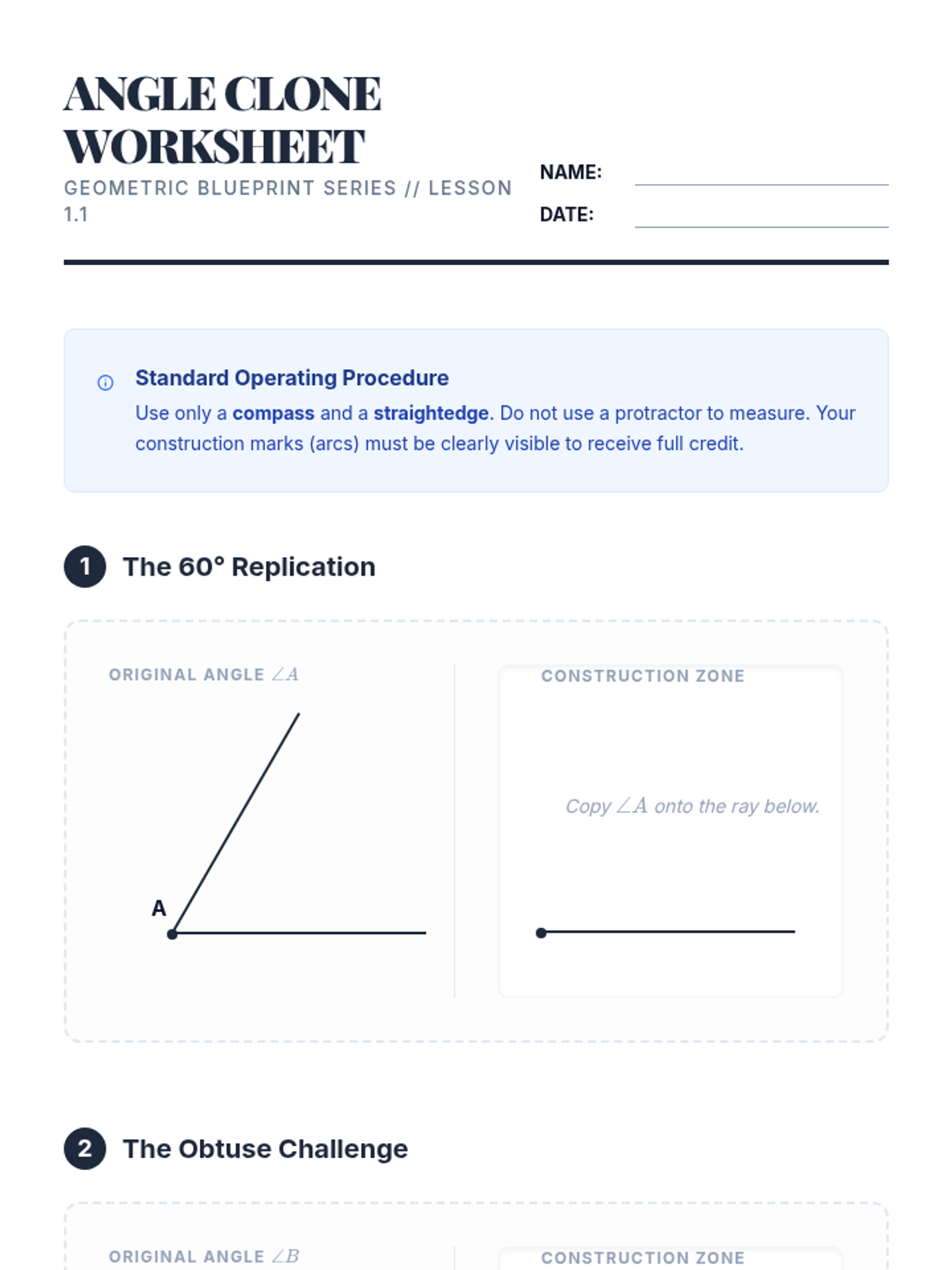
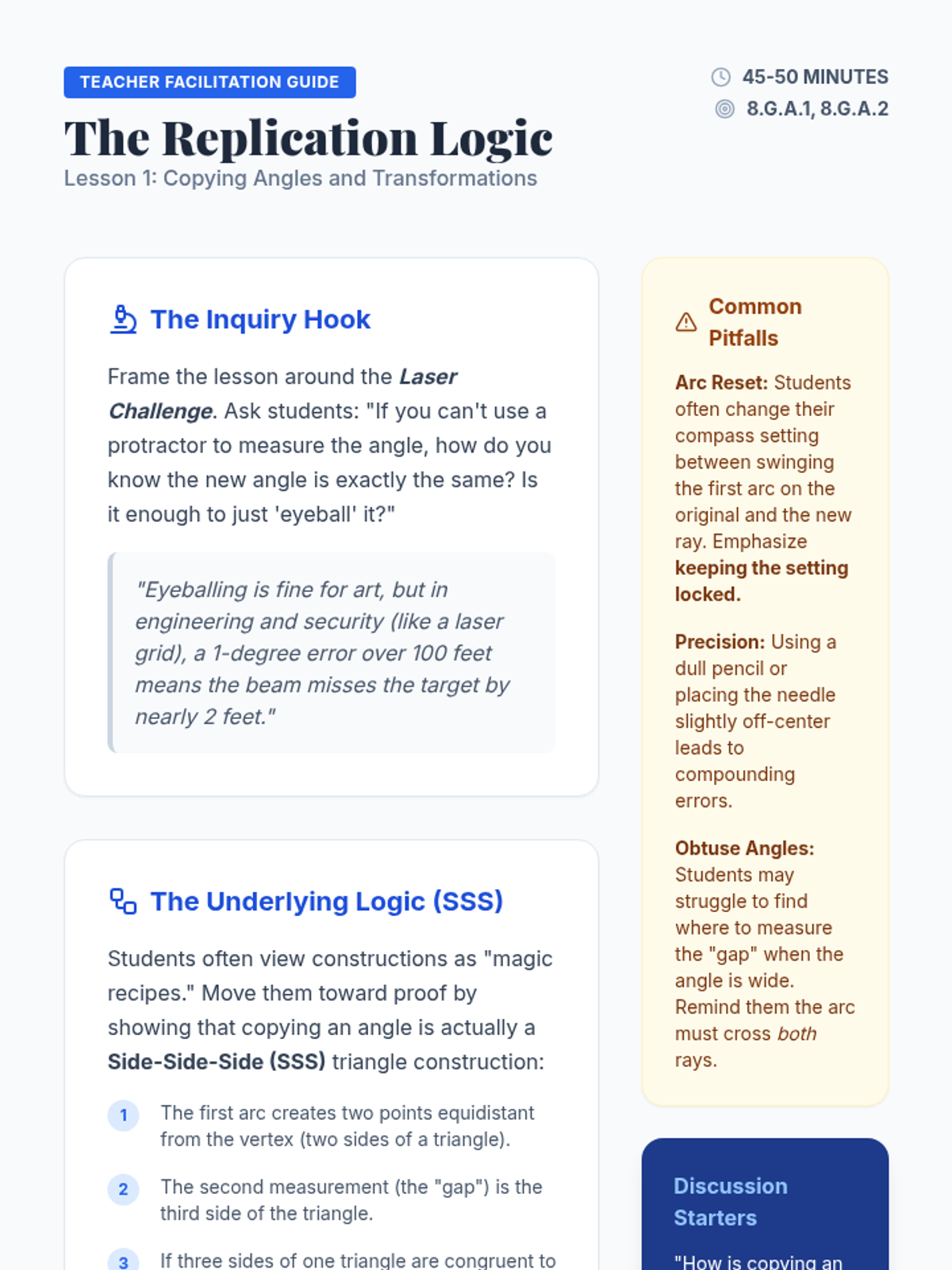
A foundational geometry sequence for 7th-grade students focusing on the art and logic of compass and straightedge constructions. Students master the skills of copying segments and angles, and constructing perpendicular and angle bisectors to solve geometric puzzles.
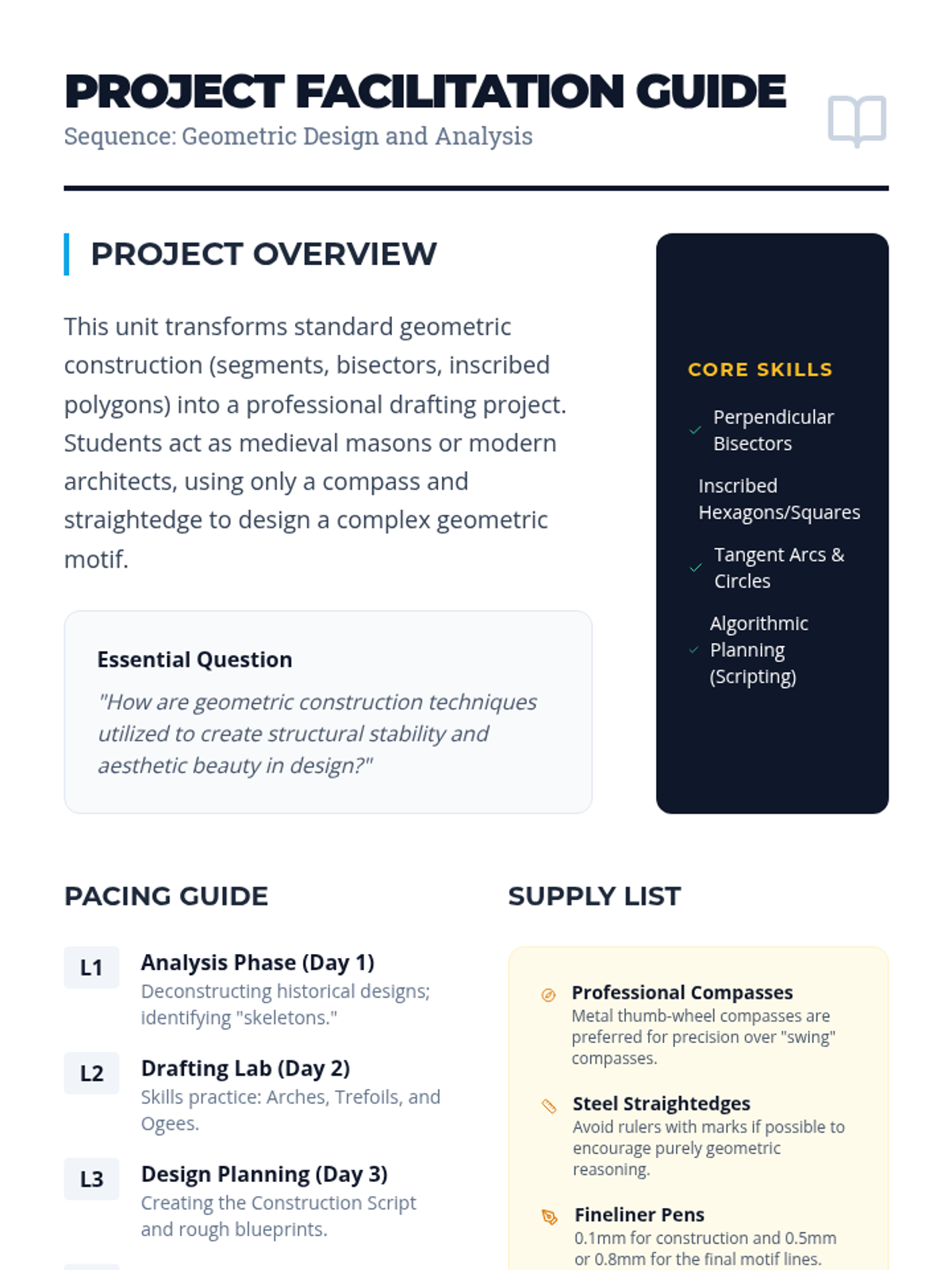
A project-based geometry unit where students apply construction techniques to architectural and artistic design, culminating in the creation and analysis of a complex geometric motif.
This sequence guides students through the precision art of geometric constructions, moving from linear parallel relationships to complex inscribed polygons using only a compass and straightedge. Students will master the properties of transversals and circle symmetries to create perfectly regular figures.
A 9th-grade geometry unit focused on Euclidean constructions using a compass and straightedge. Students progress from basic copying of segments and angles to complex perpendicular constructions and logical justifications of their methods.
A project-based journey through geometry and art, focusing on inscribing regular polygons within circles to create complex patterns and architectural motifs. Students move from basic constructions to analyzing historical art and designing their own geometric logos.
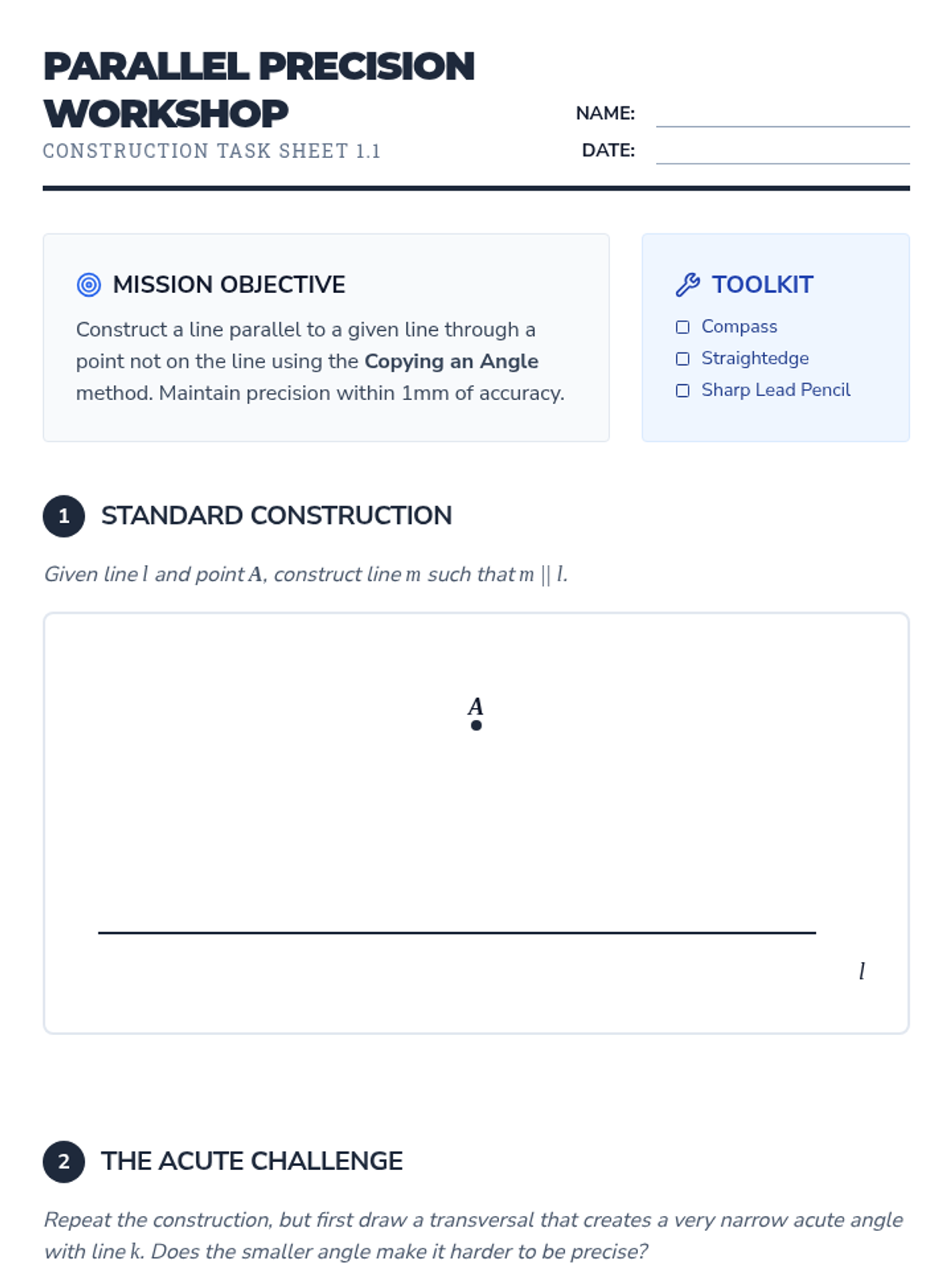
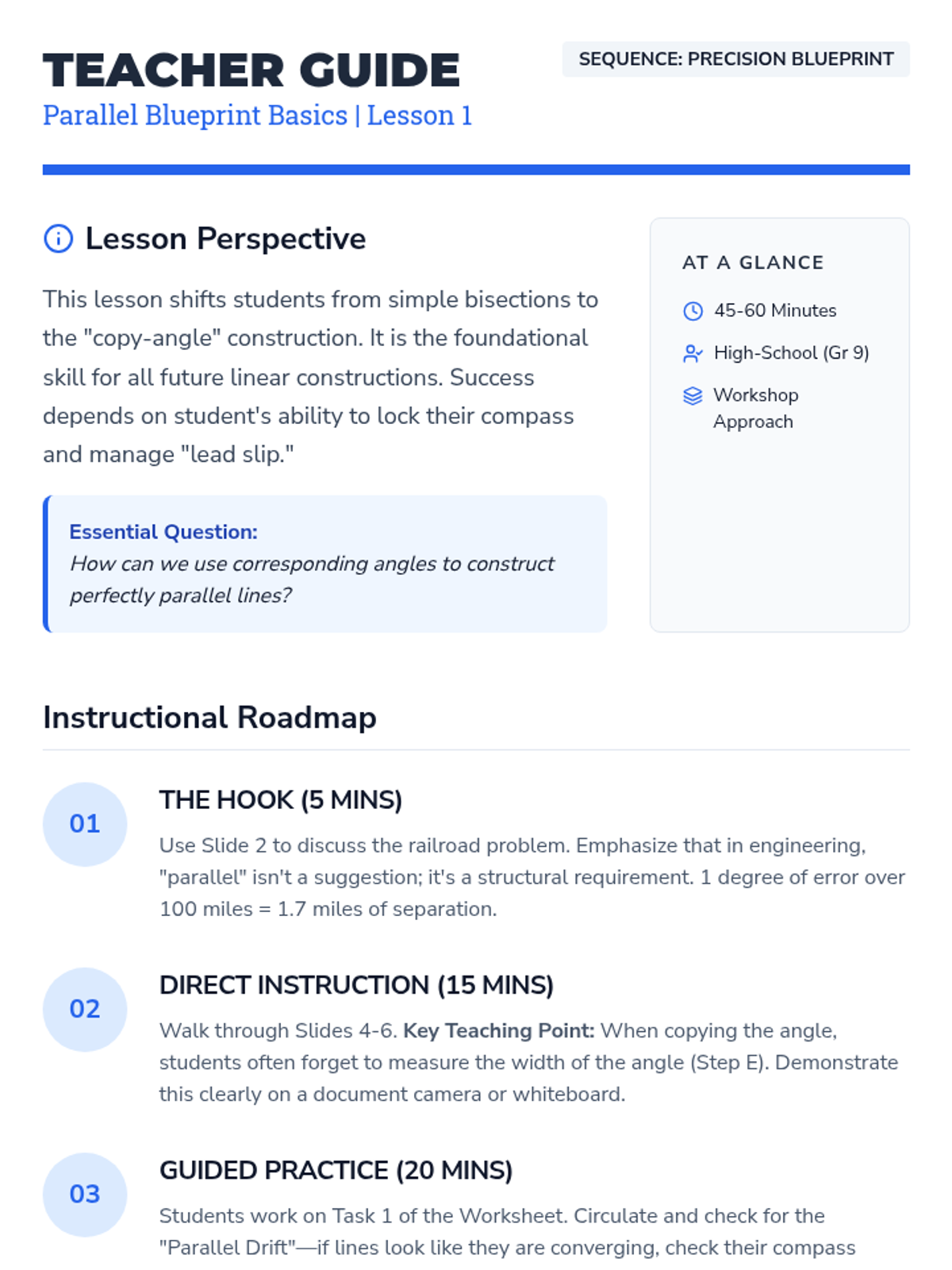
This inquiry-based sequence focuses on the geometric properties surrounding parallel lines and the logic required to construct them. Students move beyond simple bisections to understanding how copying angles is the key to creating parallel lines, effectively applying the Converse of the Corresponding Angles Postulate.
A foundational sequence for 8th Grade students focusing on the precision of geometric constructions using compass and straightedge. Students progress from copying basic segments to mastering perpendicular and angle bisectors, culminating in a complex construction challenge.
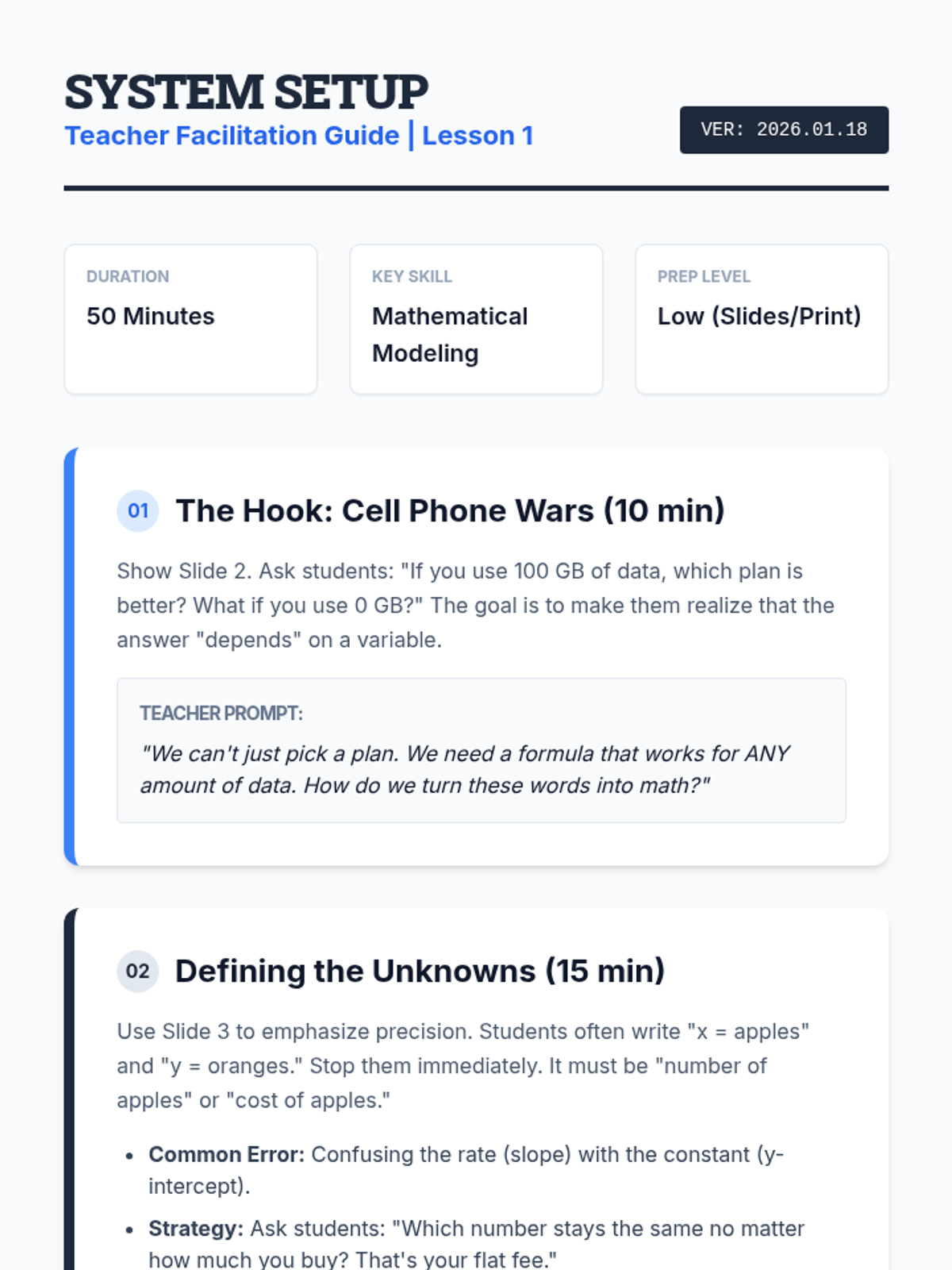
An 8th-grade Algebra sequence focusing on translating real-world scenarios into systems of linear equations. Students act as business analysts to solve break-even, mixture, and motion problems, culminating in a business comparison project.
A project-based unit exploring the relationship between 2D shapes and 3D solids through cross-sections, rotations, volume principles, and real-world modeling. Students move from visualization to optimization, culminating in a container design challenge.
A focused intervention sequence designed to help students master the relationship between 2D shapes and 3D solids through cross-sections and rotations. This module uses a technical drafting aesthetic to engage students in high-school level geometric visualization.
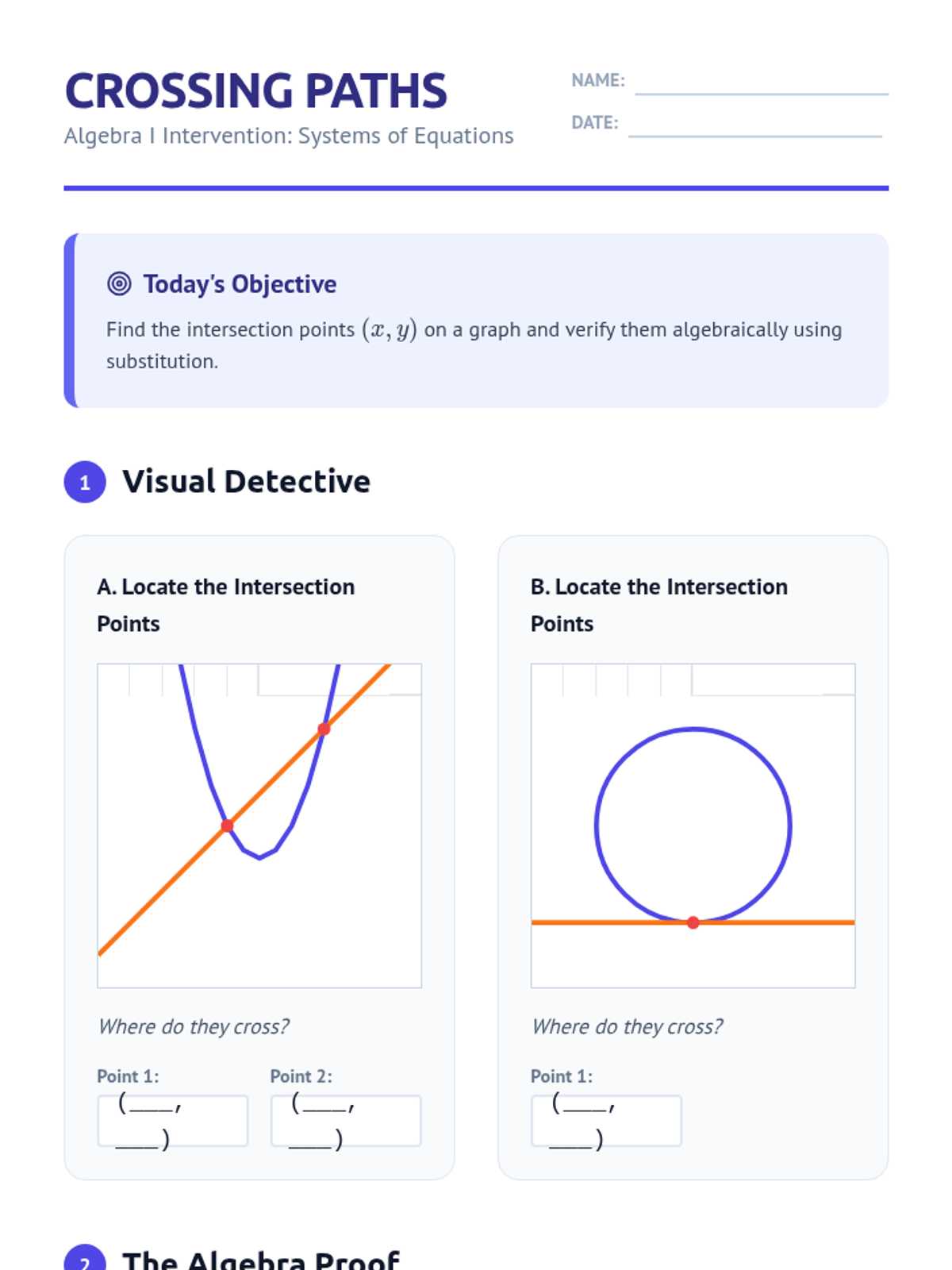
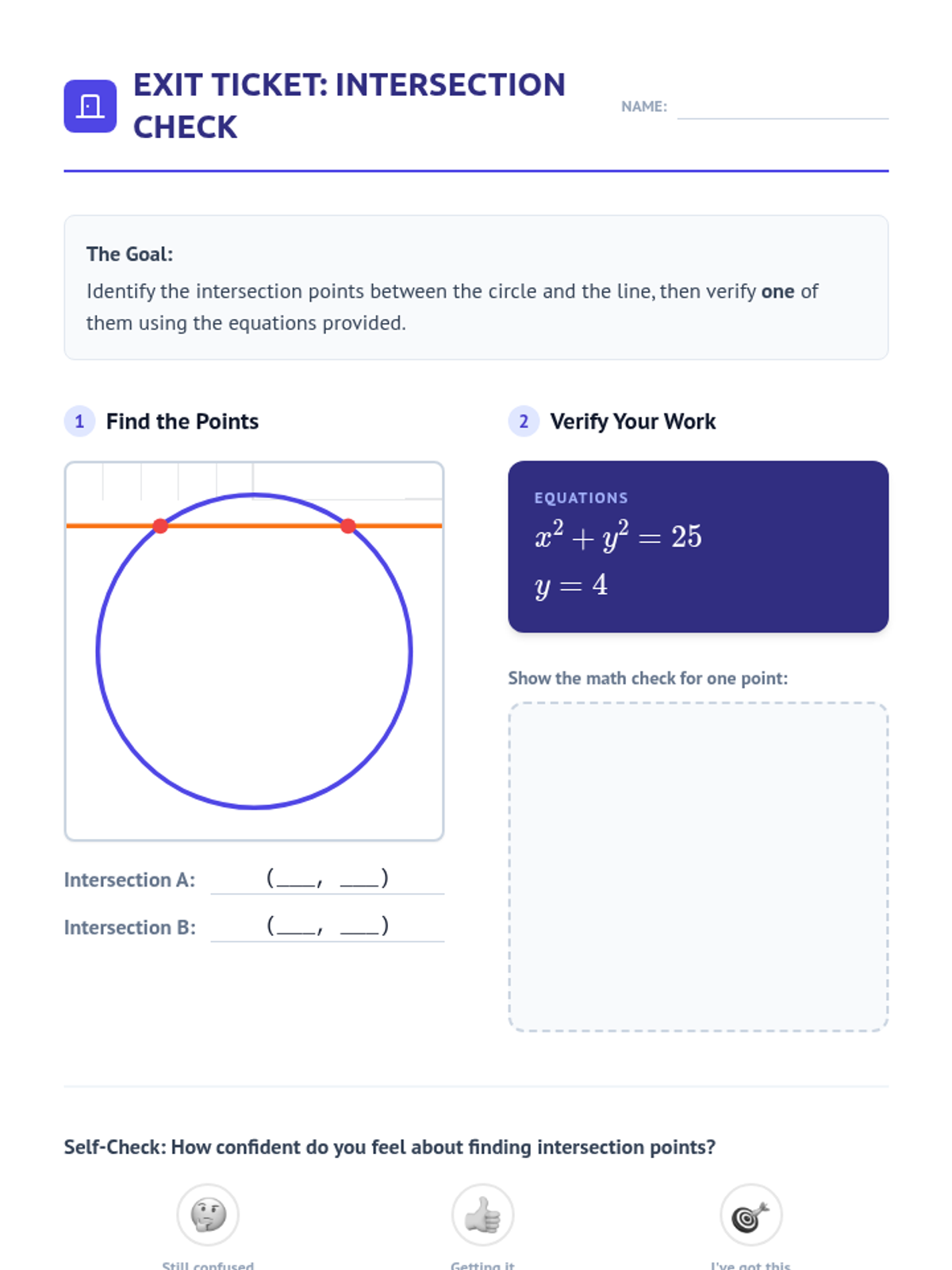
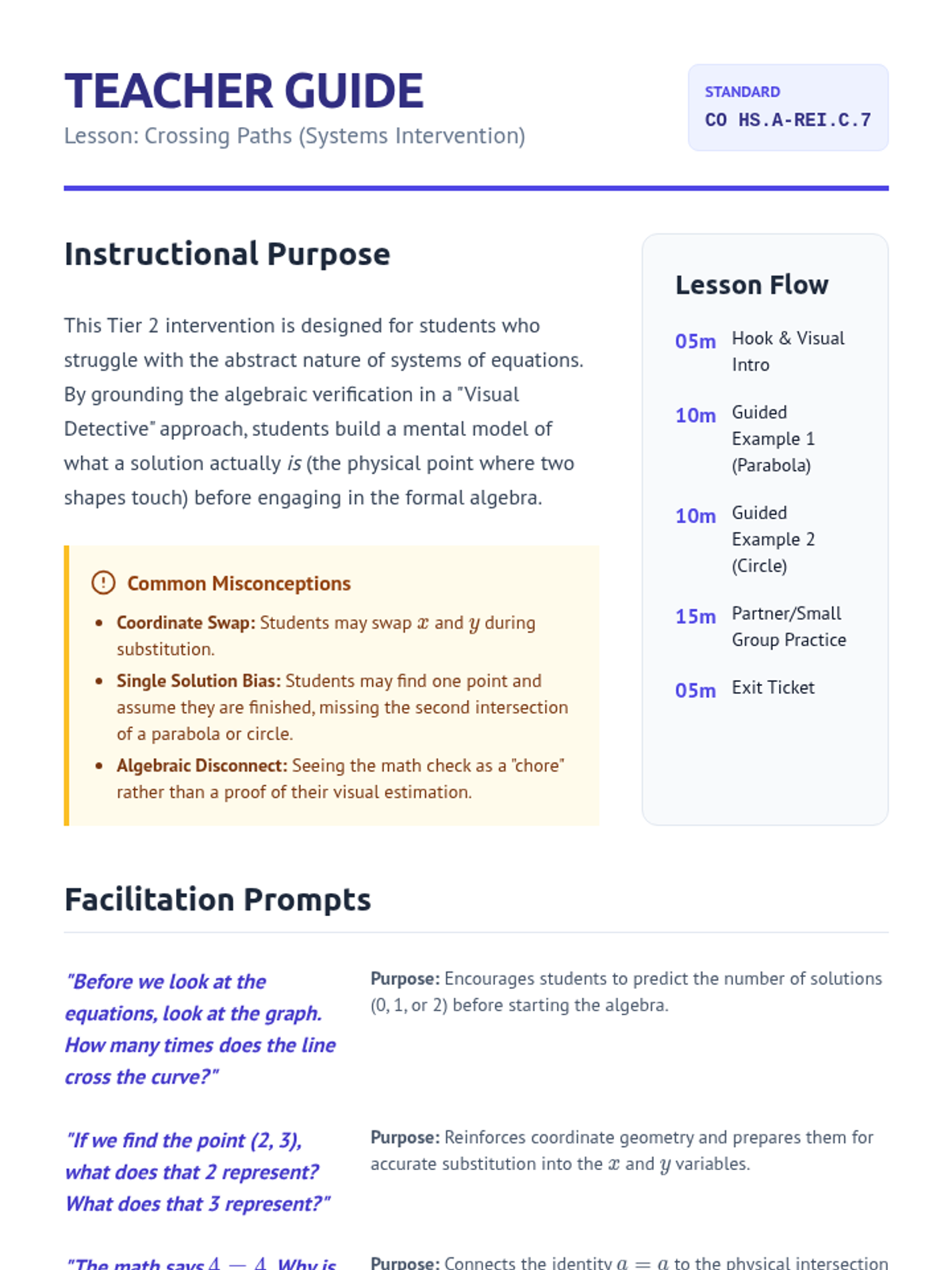
A small-group algebra intervention sequence focused on solving systems of linear and nonlinear equations. Students learn to identify intersection points graphically and verify them algebraically through substitution.
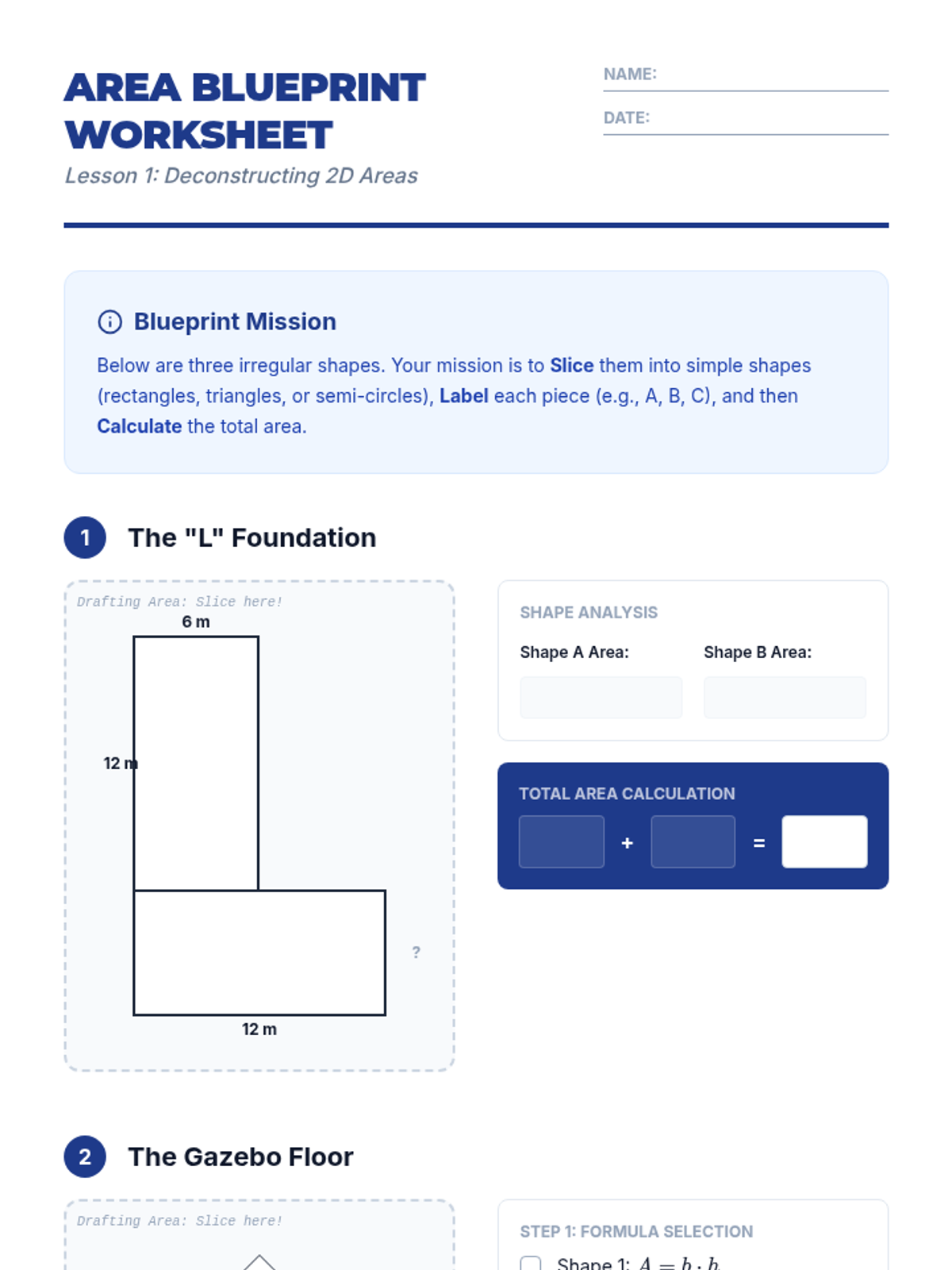
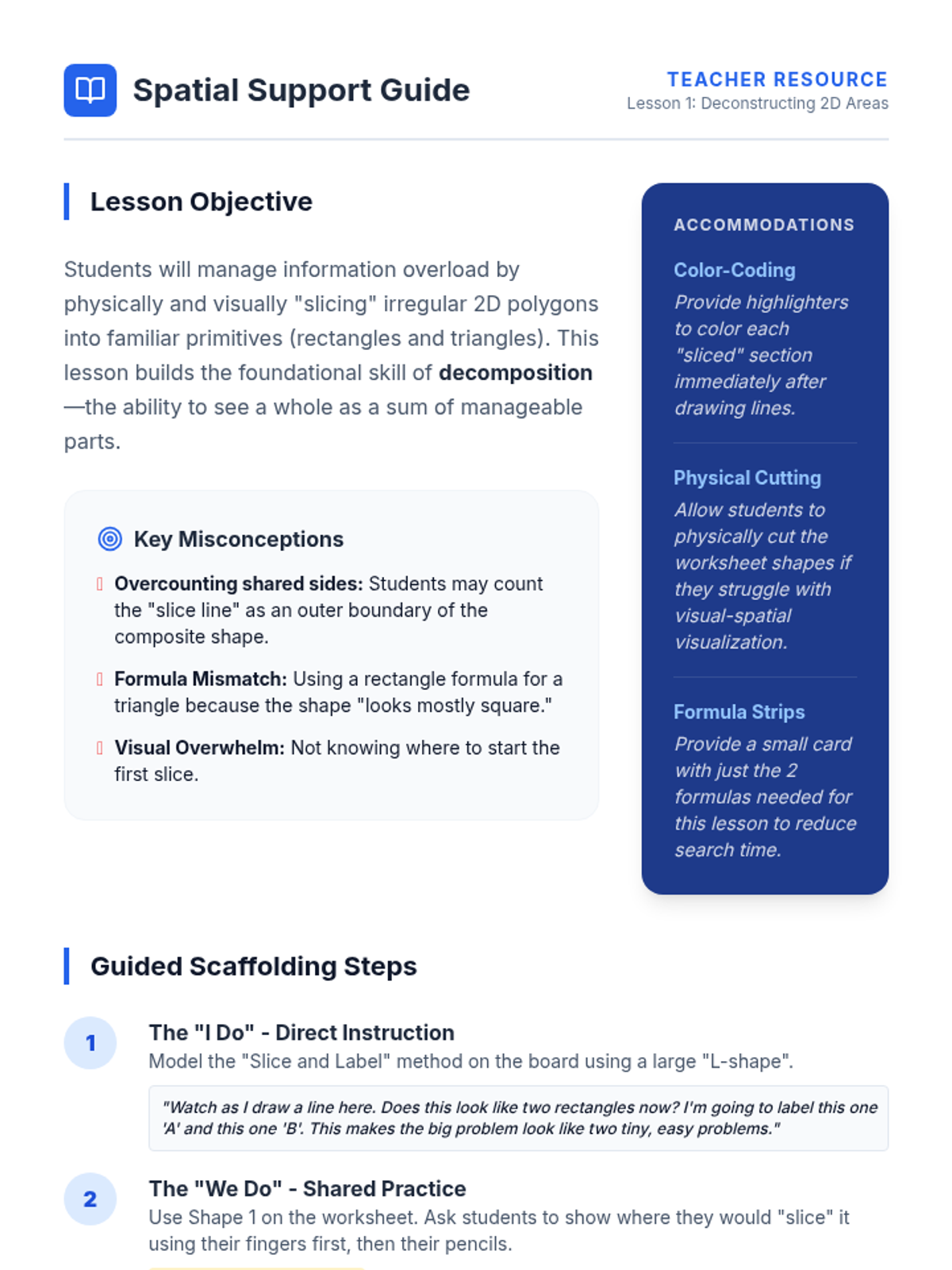
A sequence focused on breaking down complex geometric shapes into manageable parts. Students use color-coding, physical manipulation, and organized calculations to solve 2D area and 3D volume problems, culminating in a design challenge.
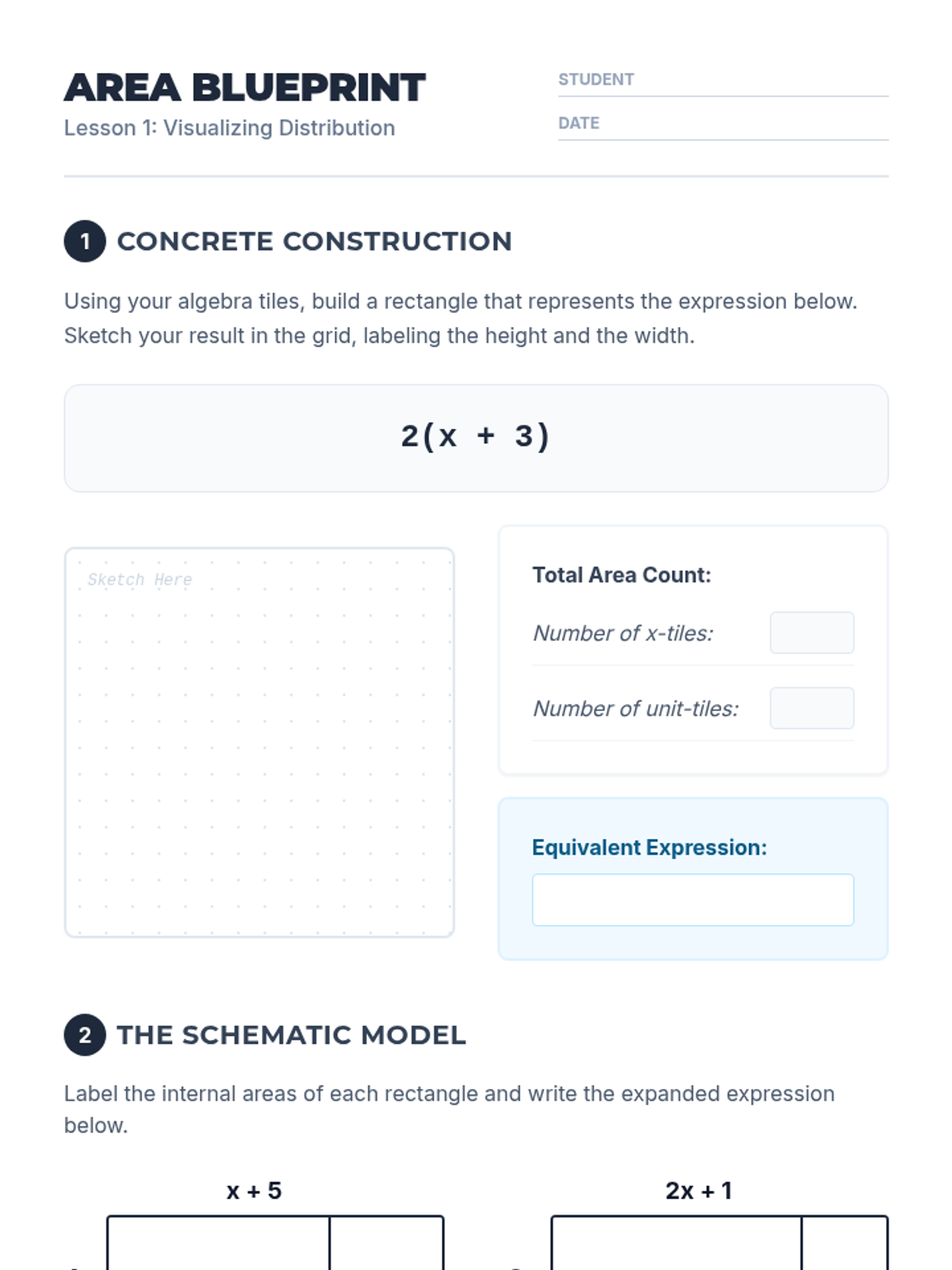
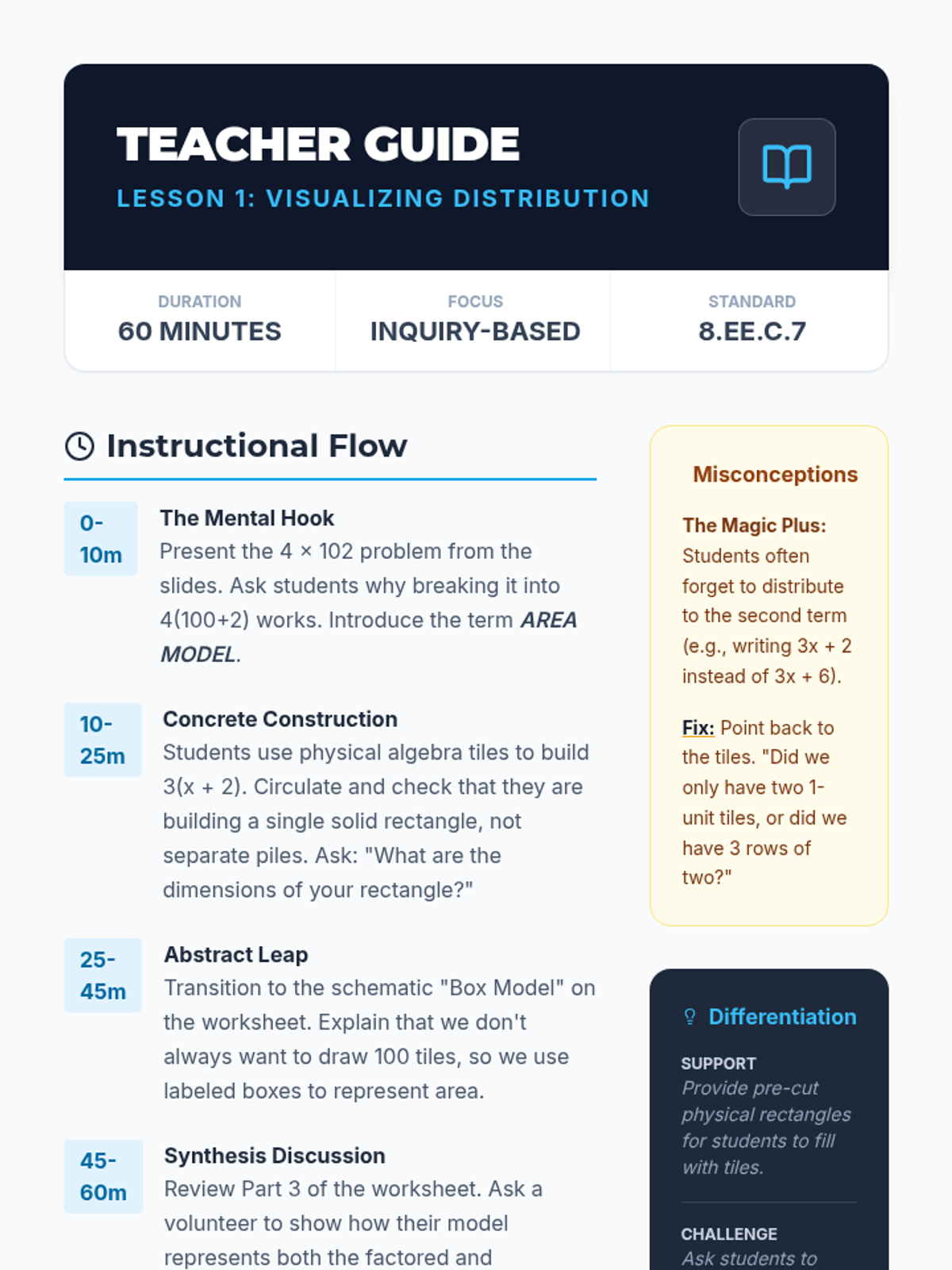
A 5-lesson sequence for 8th-grade algebra that uses geometric area models to teach equivalent expressions, distributive property, and factoring. Students move from concrete algebra tiles to abstract symbolic manipulation, culminating in an architectural design project.
A comprehensive 9th Grade Geometry unit focusing on the volume of spheres, hemispheres, and composite solids. Students move from conceptual derivation using Archimedes' principles to complex real-world applications involving planetary scales and industrial design.
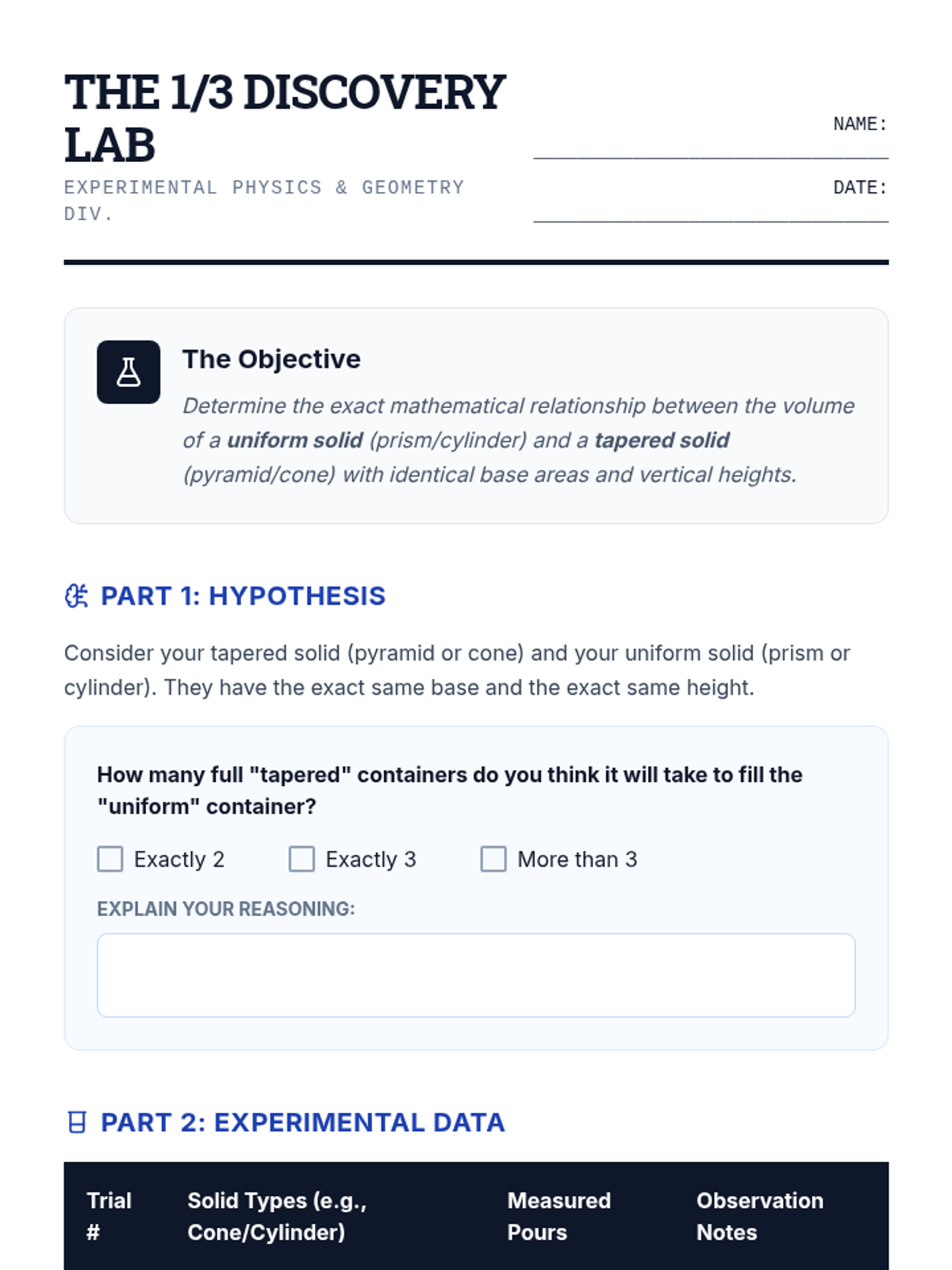
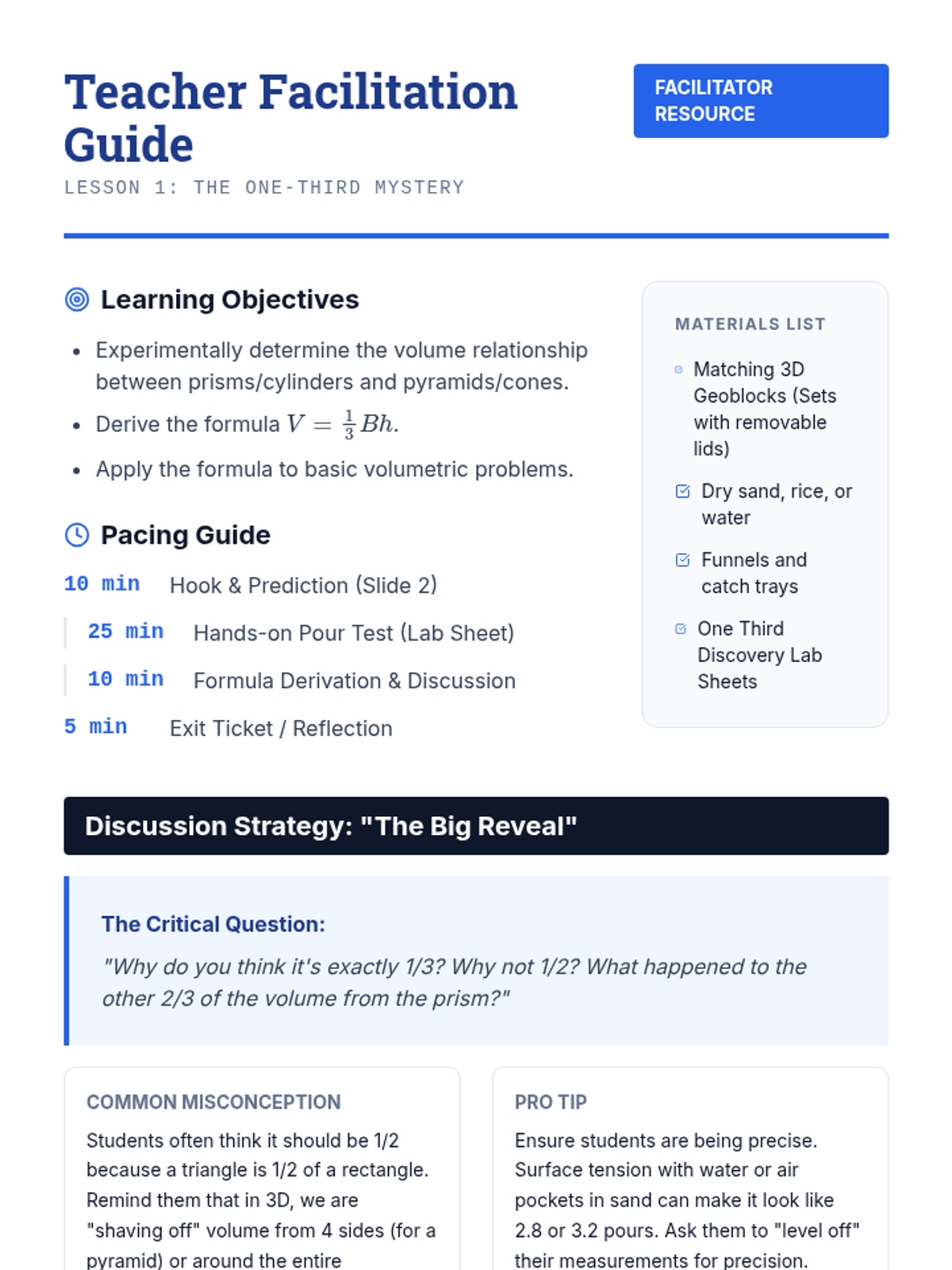
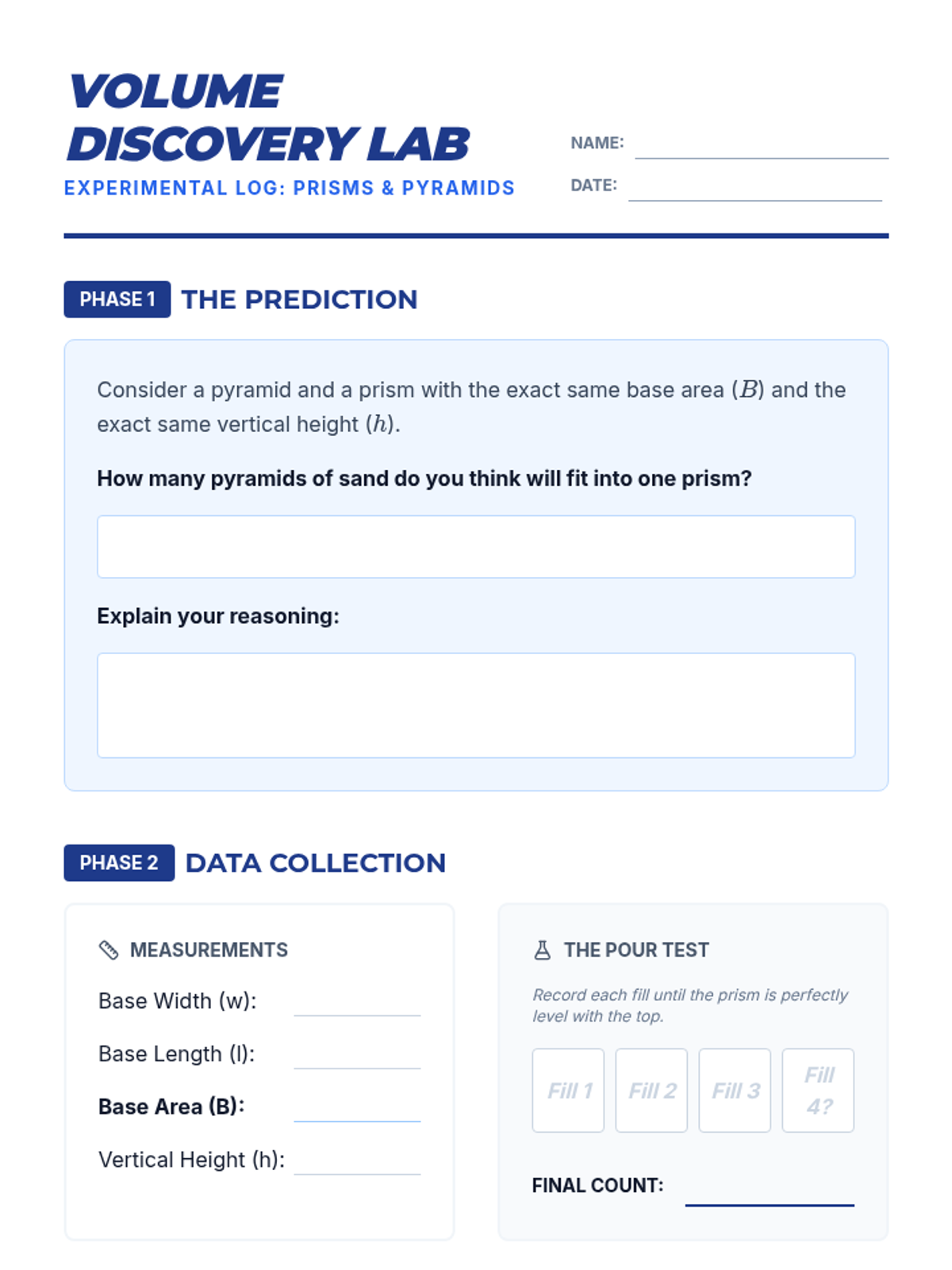
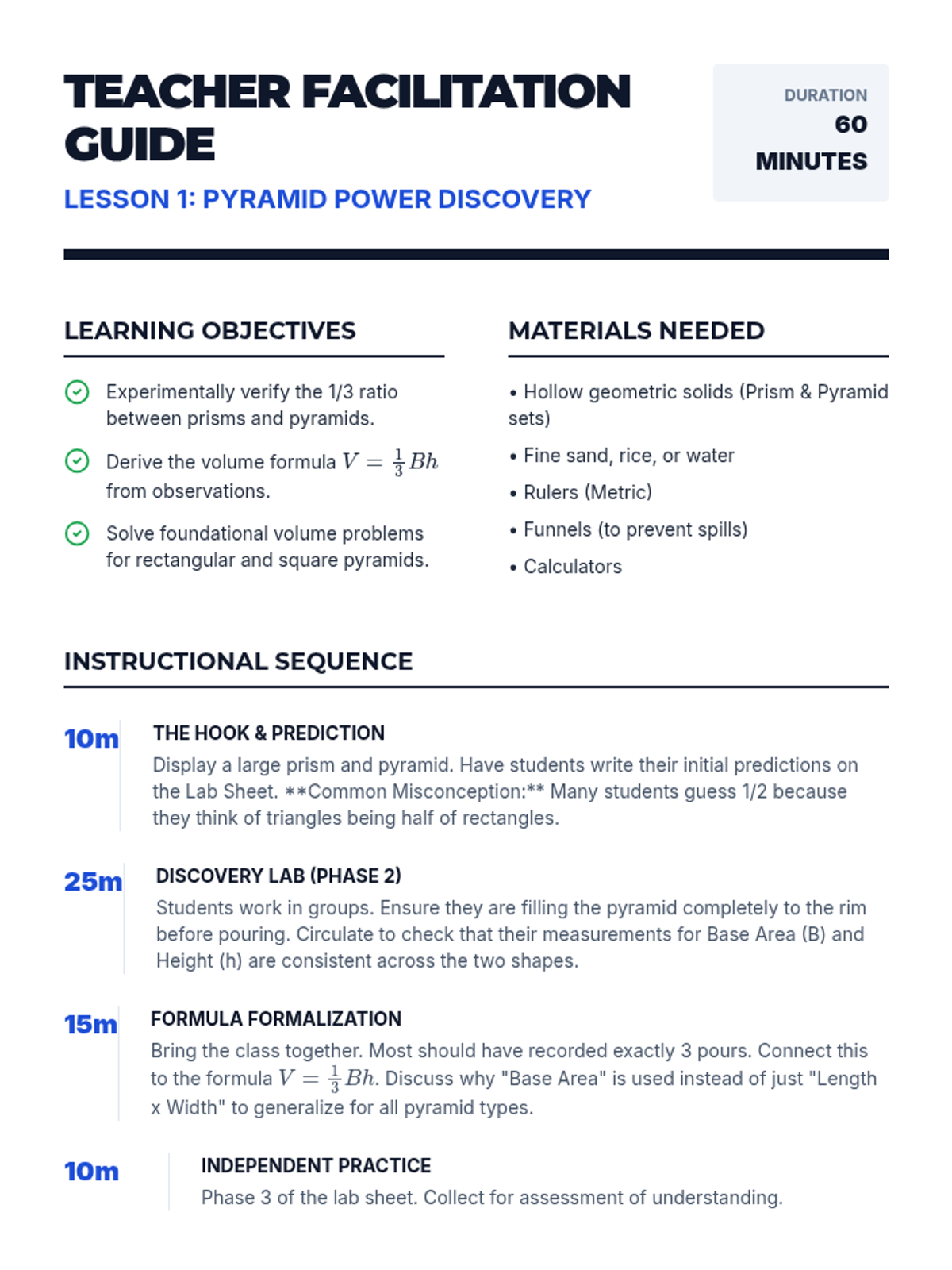
This inquiry-driven sequence connects the volume of prisms and cylinders to their tapered counterparts: pyramids and cones. Students discover the 1/3 ratio relationship through experimentation and master the algebraic manipulation required to solve for volume using the Pythagorean theorem.
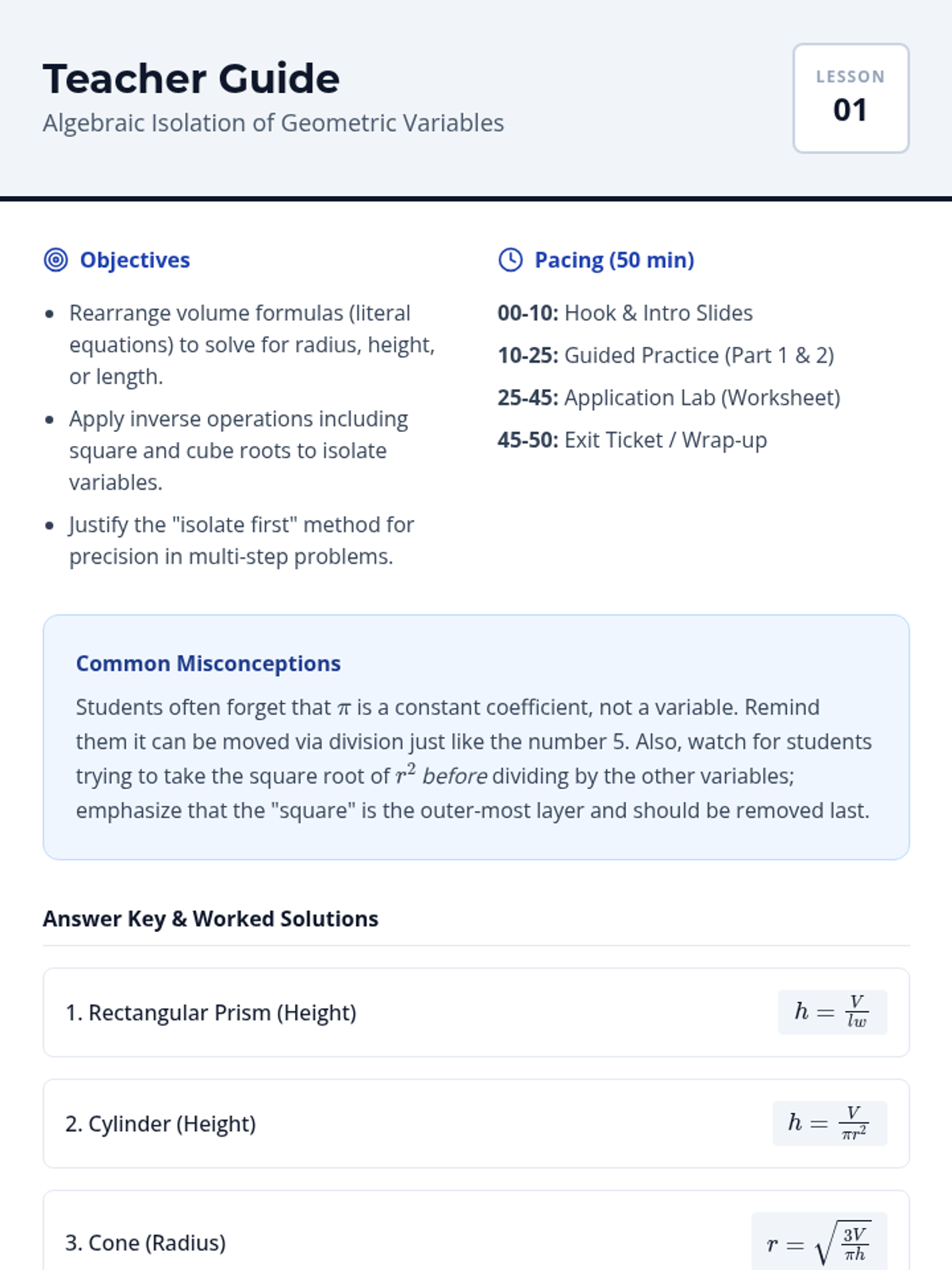
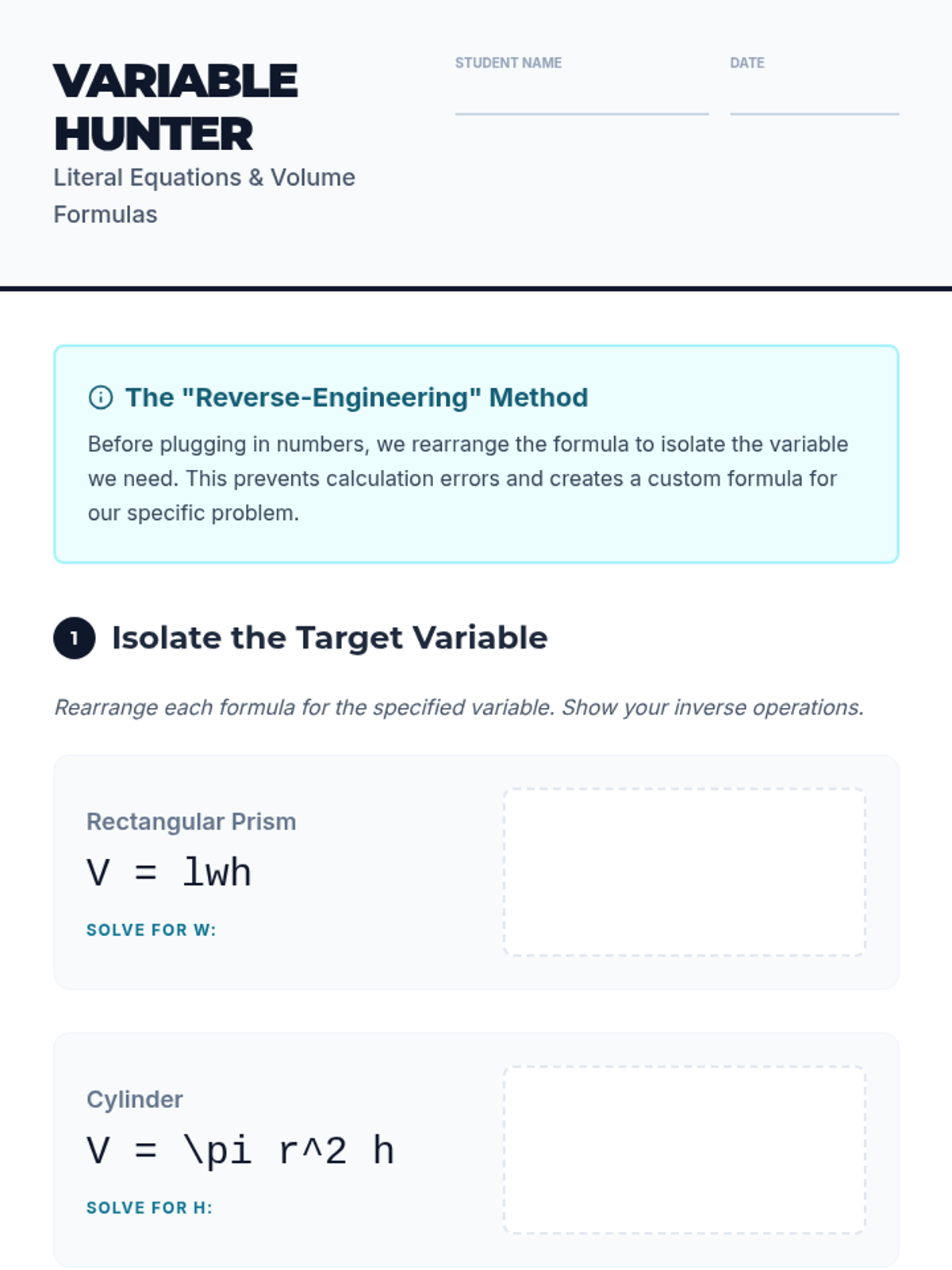
This geometry sequence focuses on the algebraic manipulation of volume formulas to solve for missing dimensions. Students move from basic literal equation rearrangement to solving for radius and height in complex solids and comparative volume scenarios.
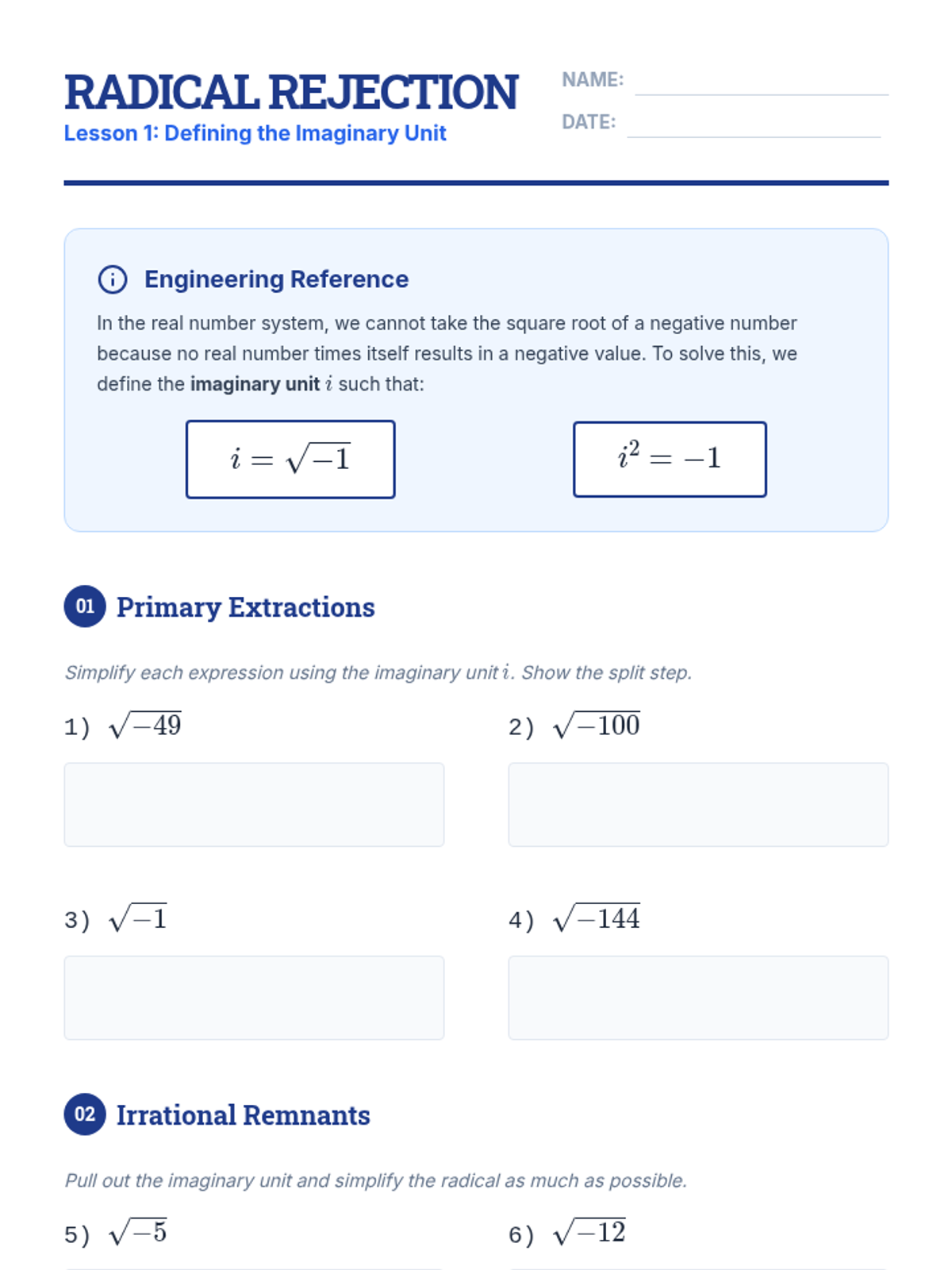
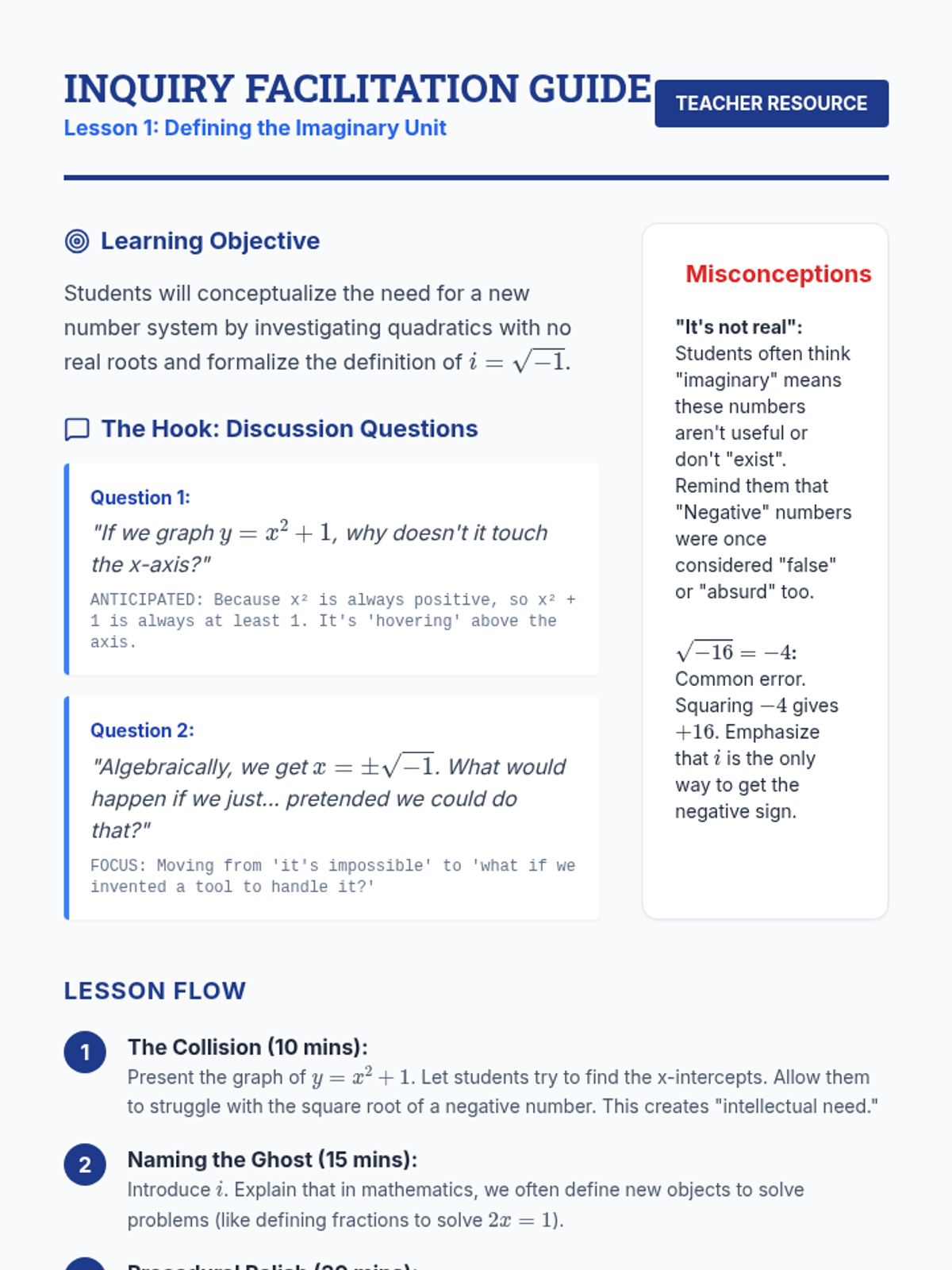
This sequence introduces students to the imaginary unit i through an inquiry-based approach, moving from the limitations of the real number system to the visualization of the complex plane and calculation of the modulus. Students transition from solving unsolvable quadratics to representing numbers in a 2D coordinate system.
A comprehensive geometry sequence for 9th grade students exploring the volume of pyramids, cones, and spheres. Students use inquiry, experimentation, and mathematical modeling to understand fractional relationships and solve complex real-world problems involving composite solids.