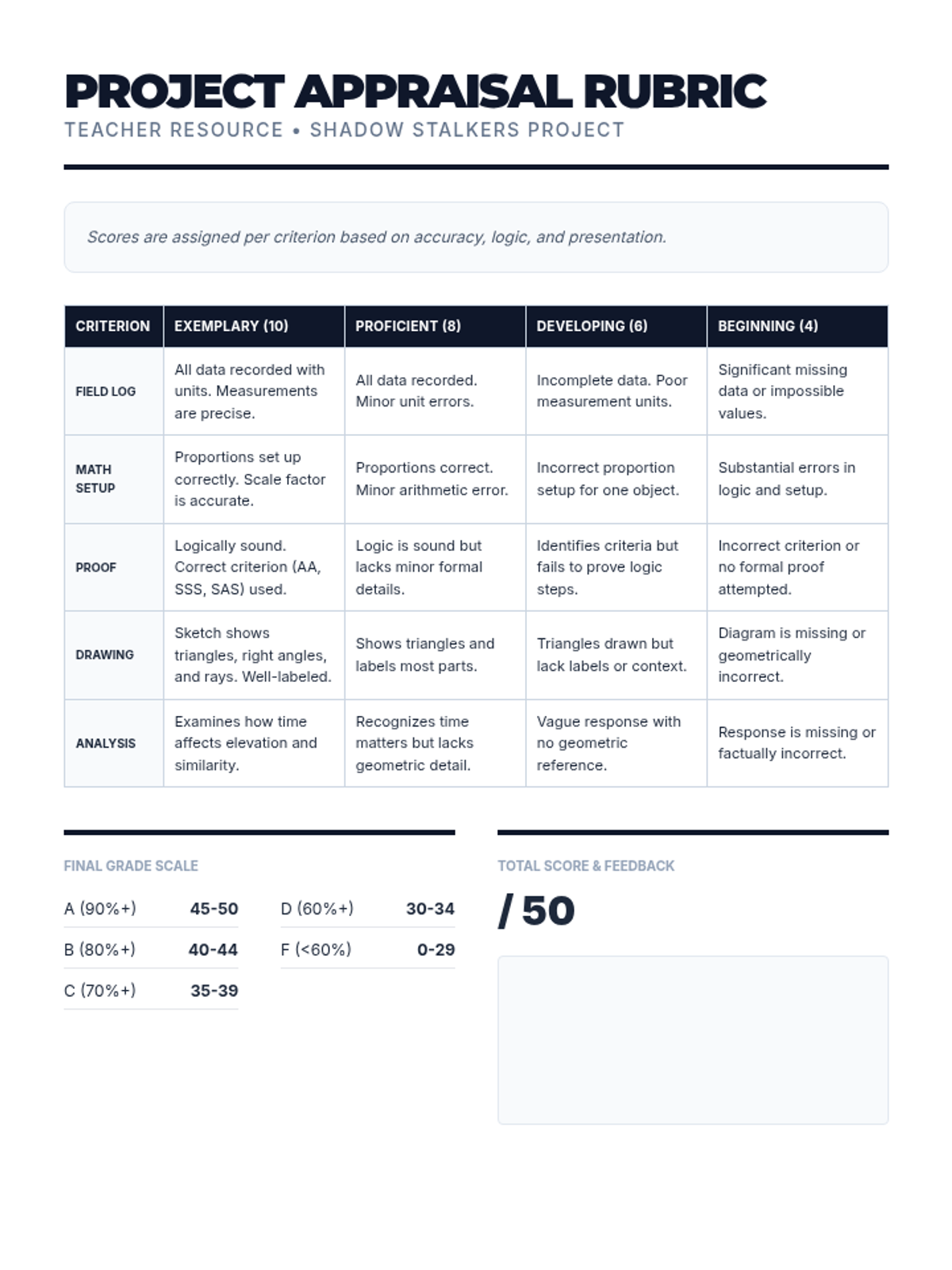
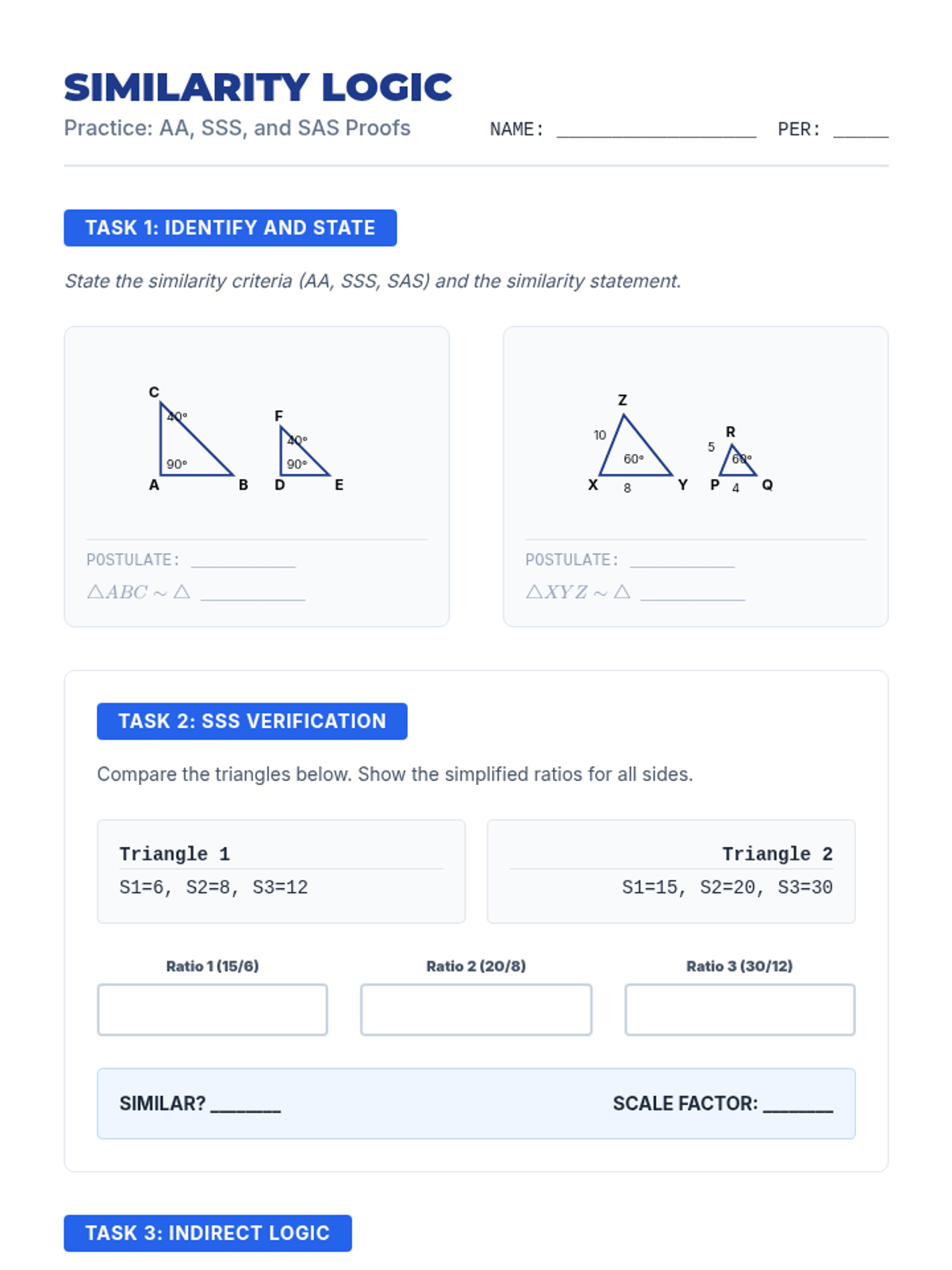
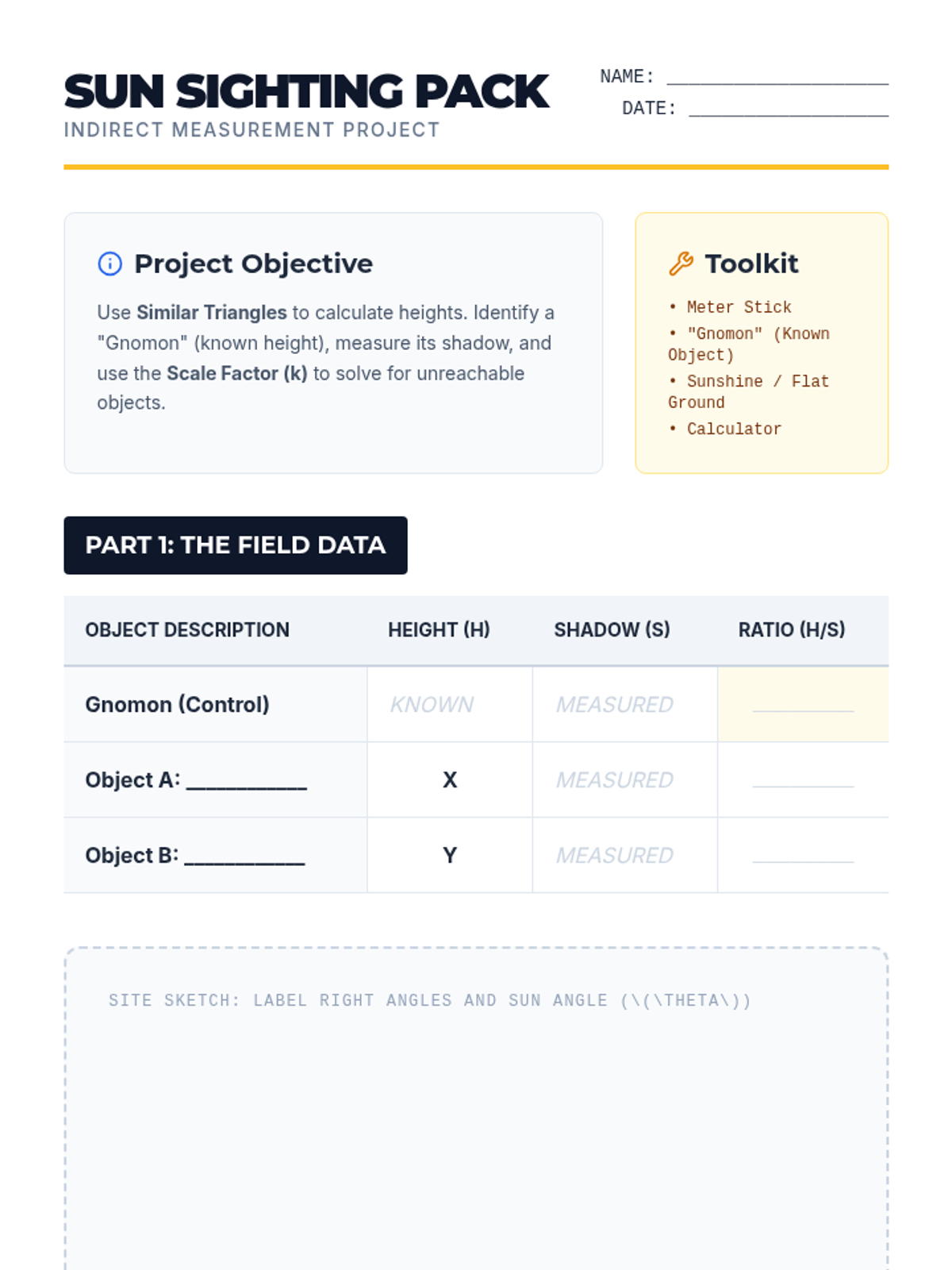
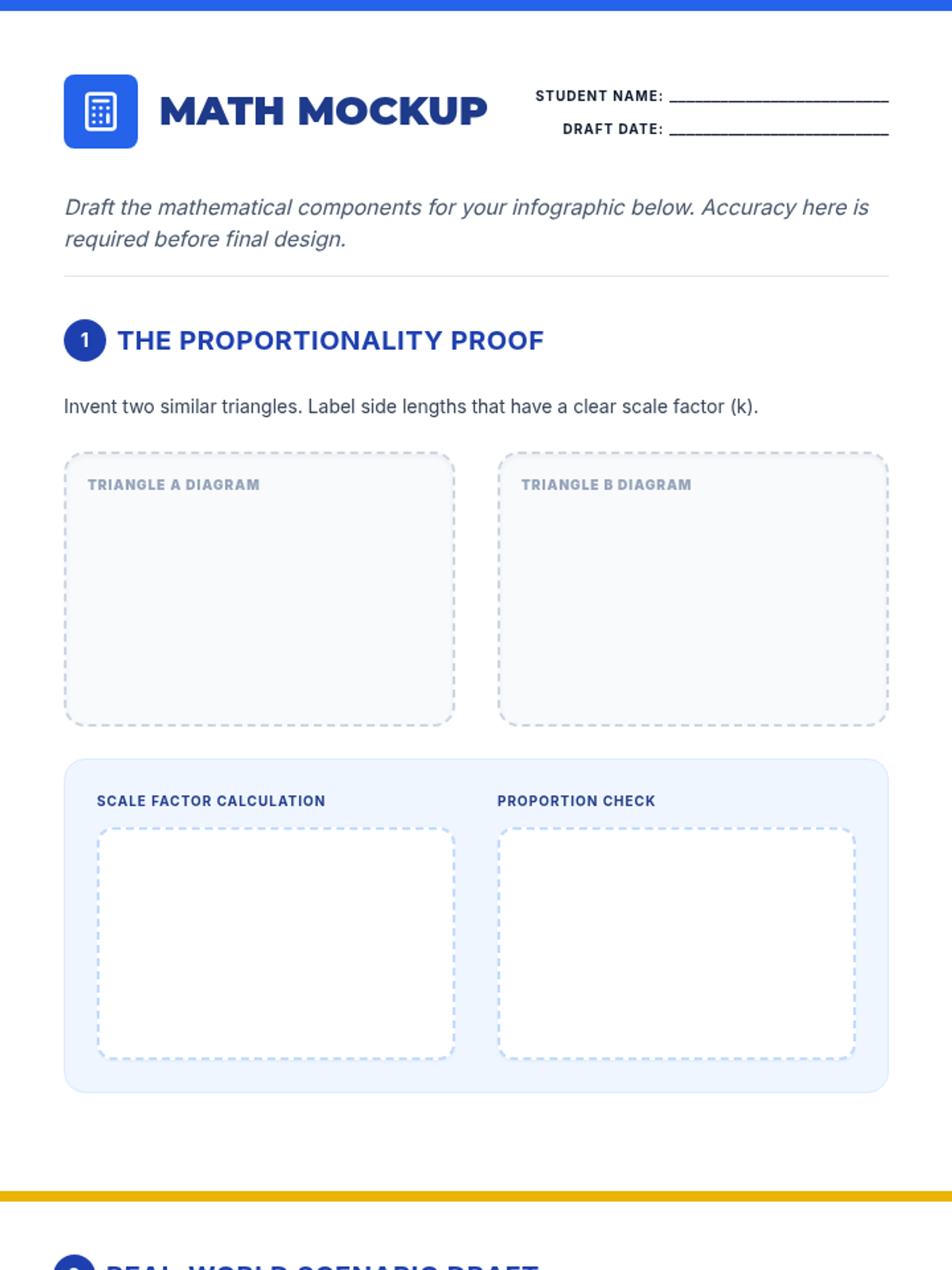
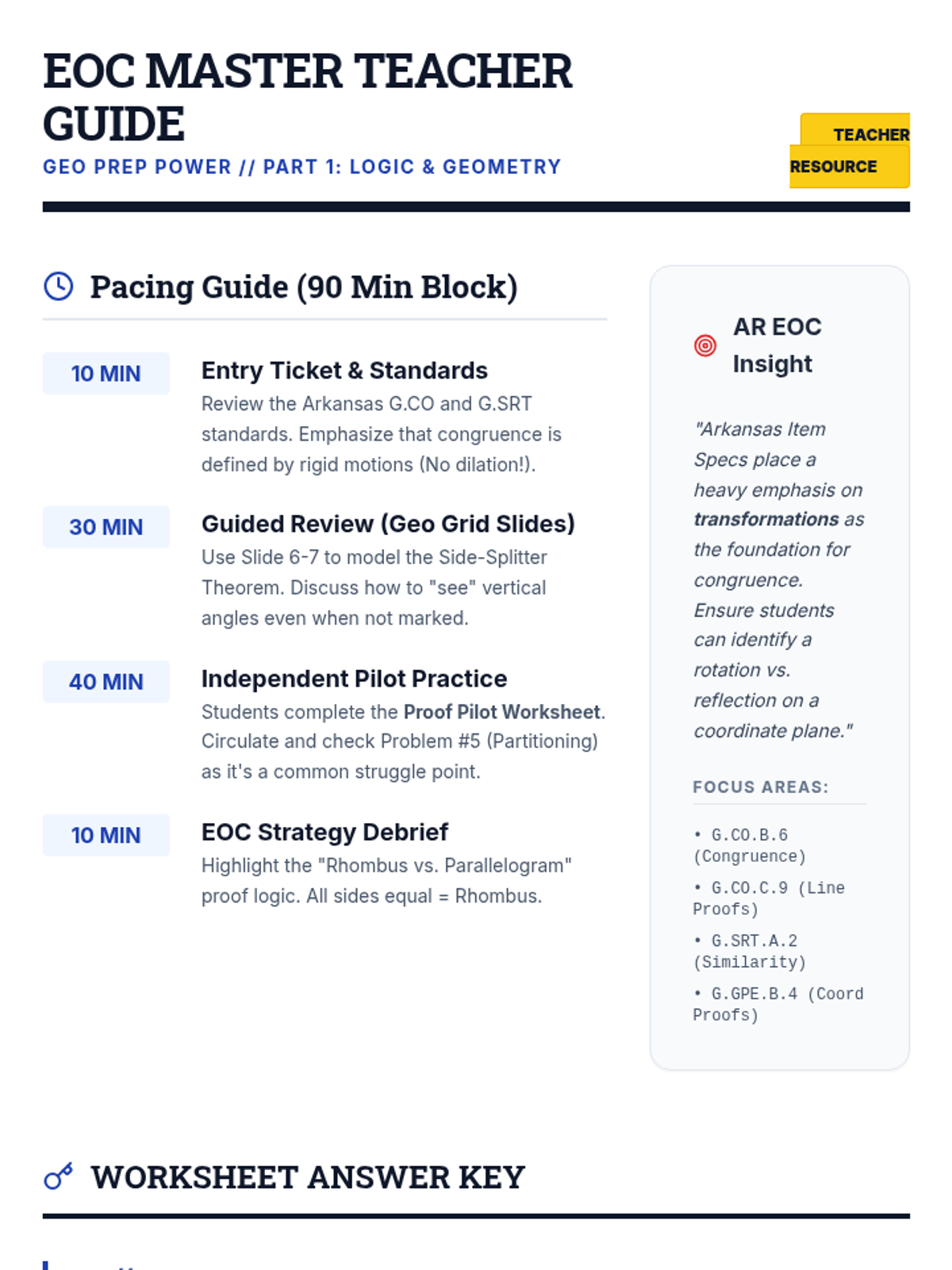
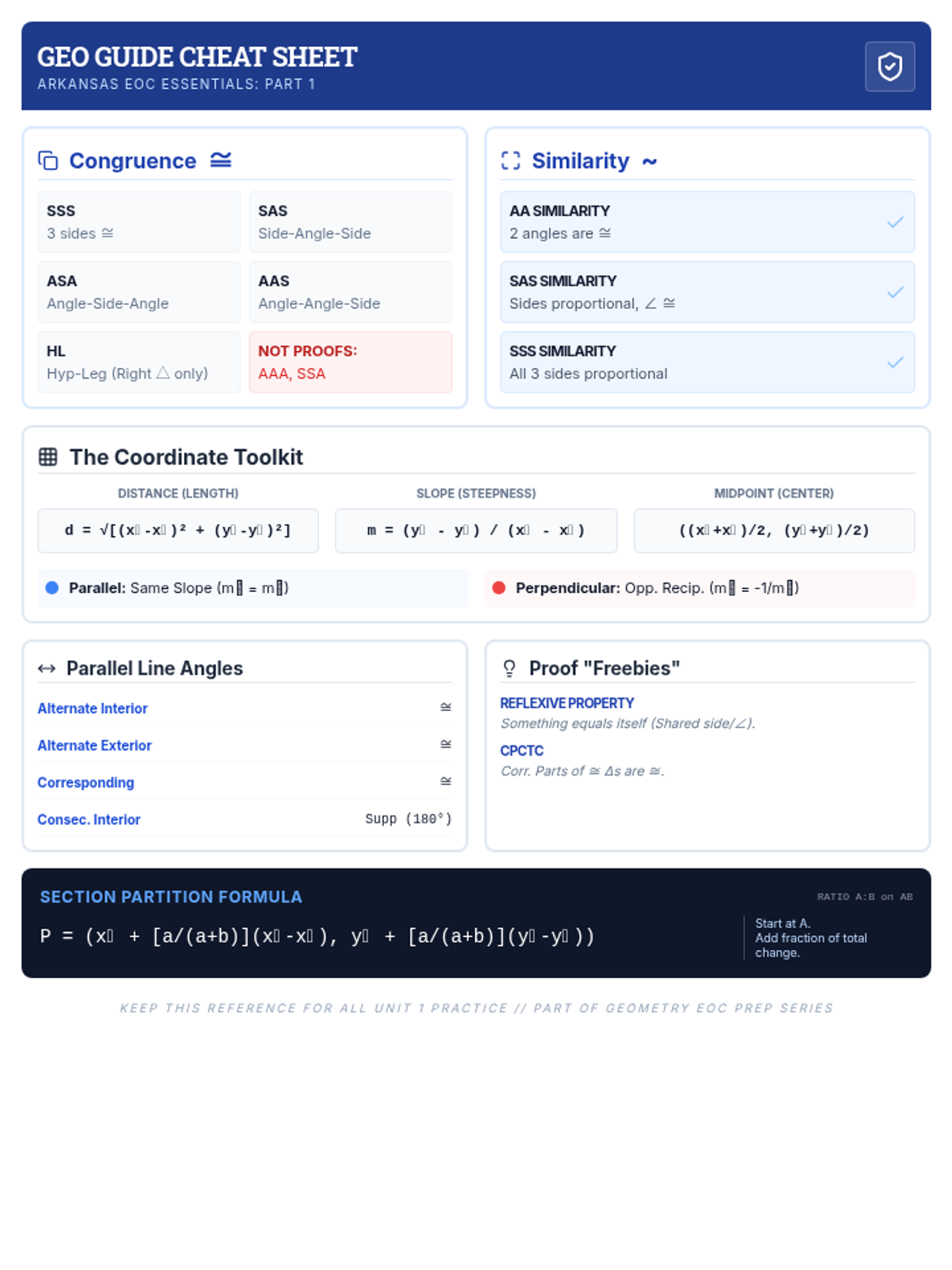
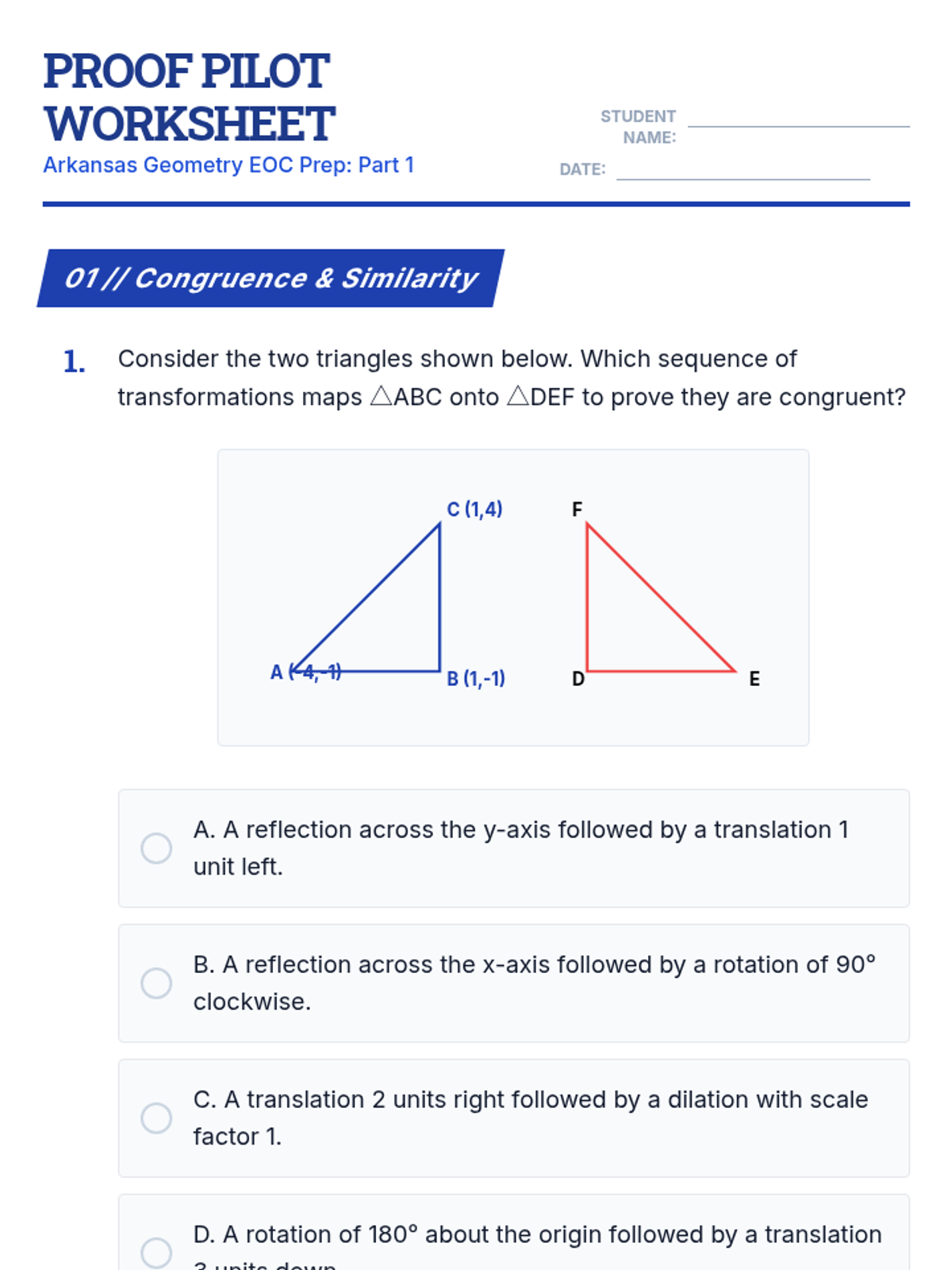
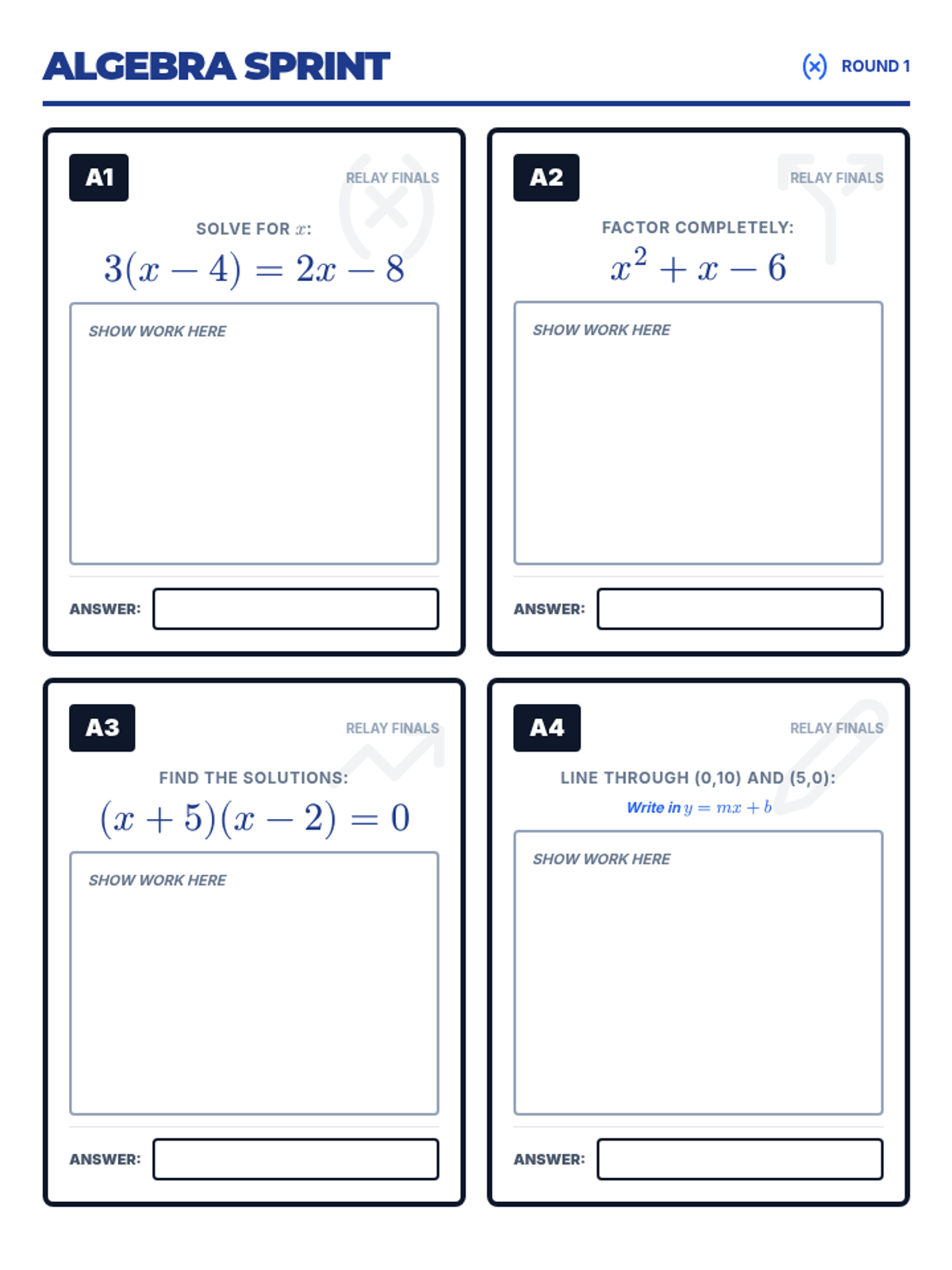
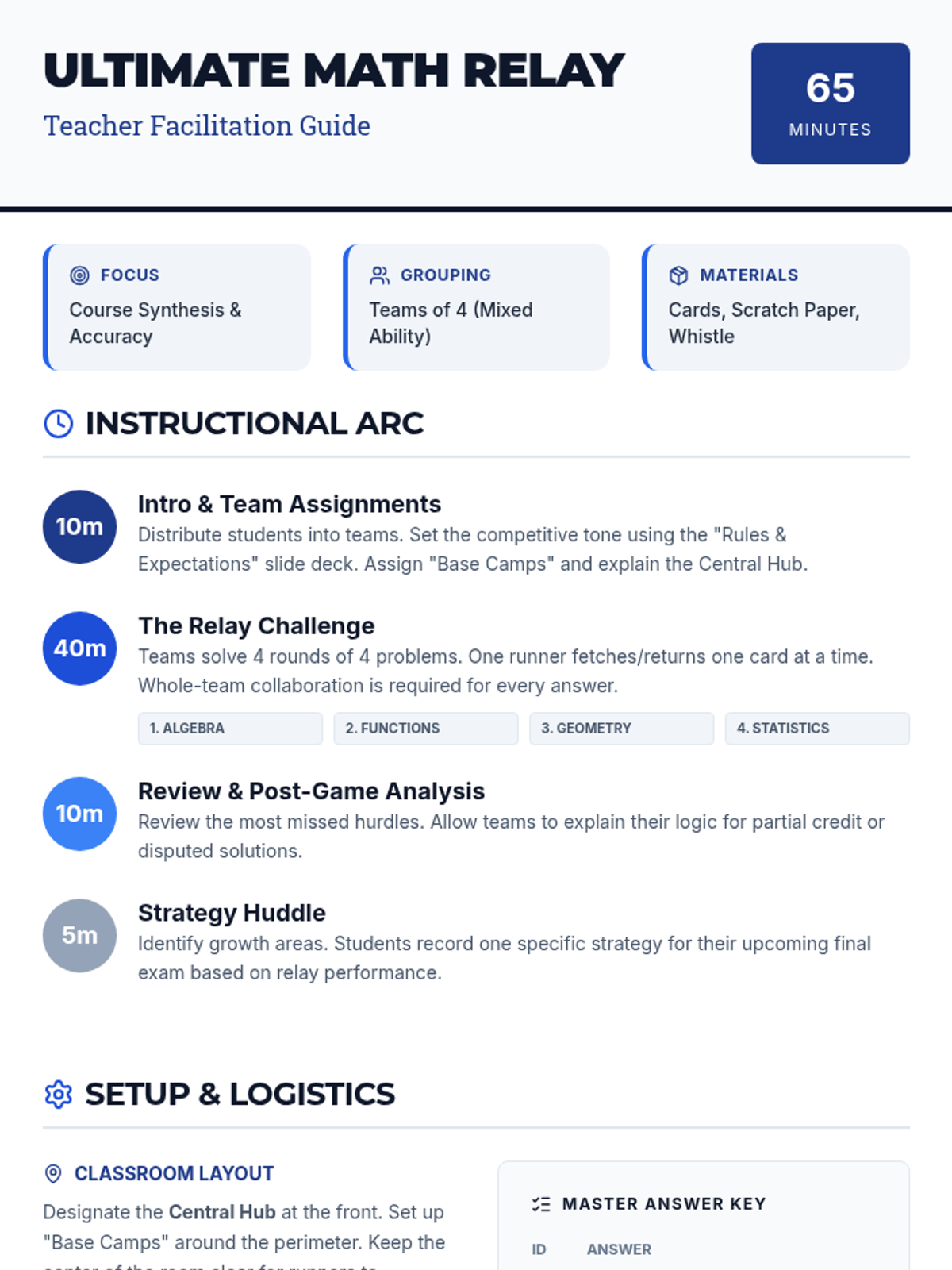
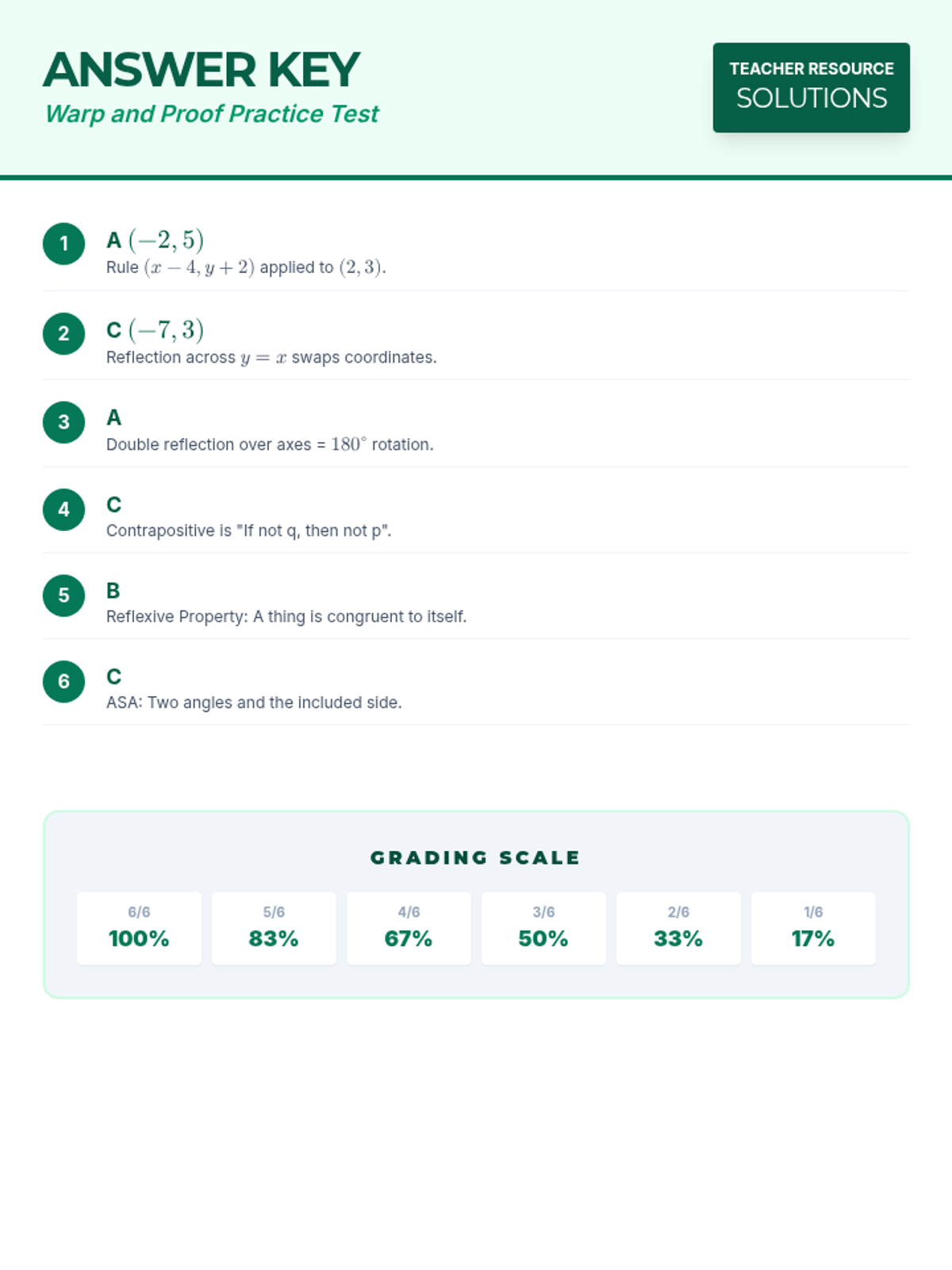
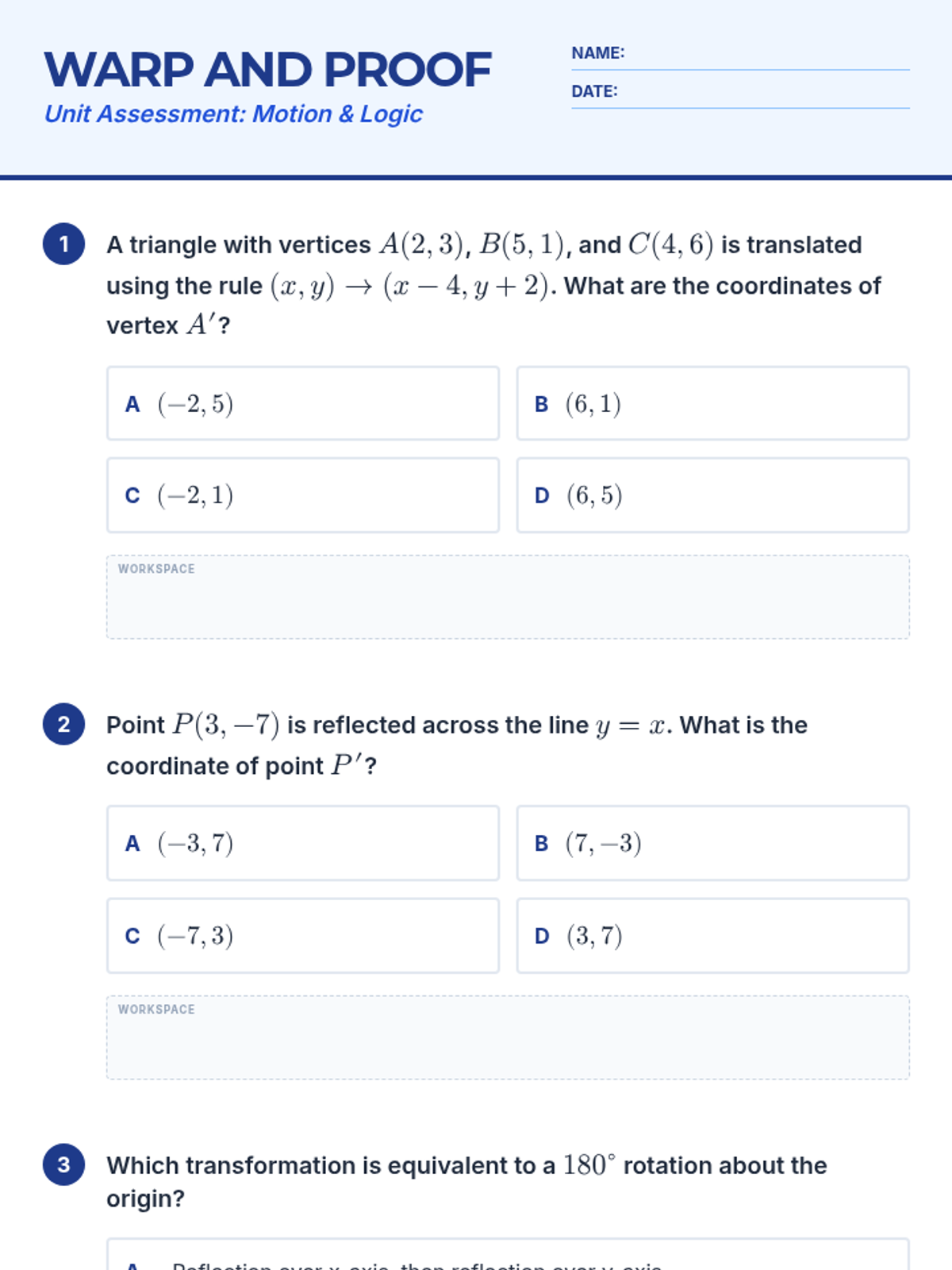
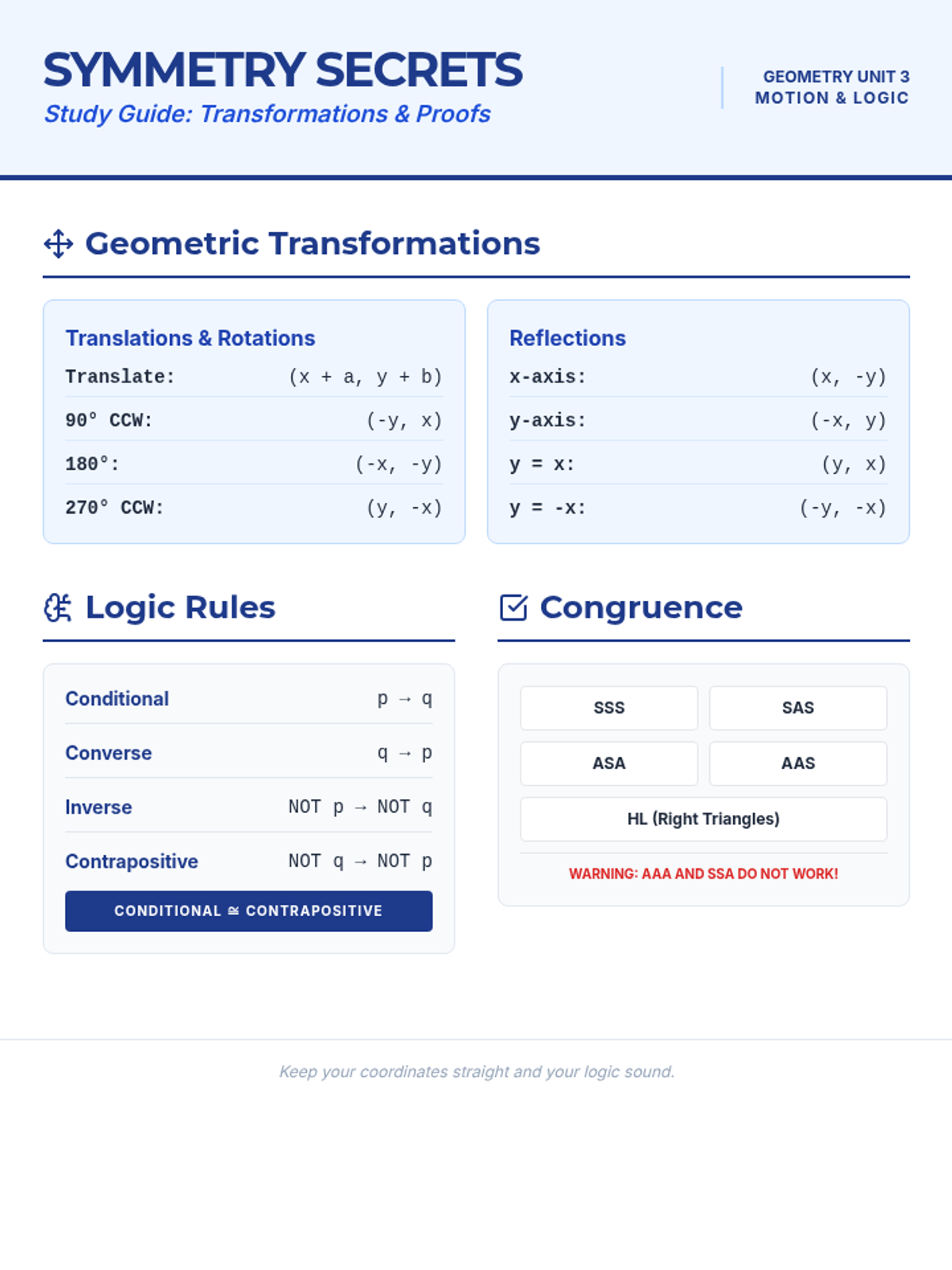
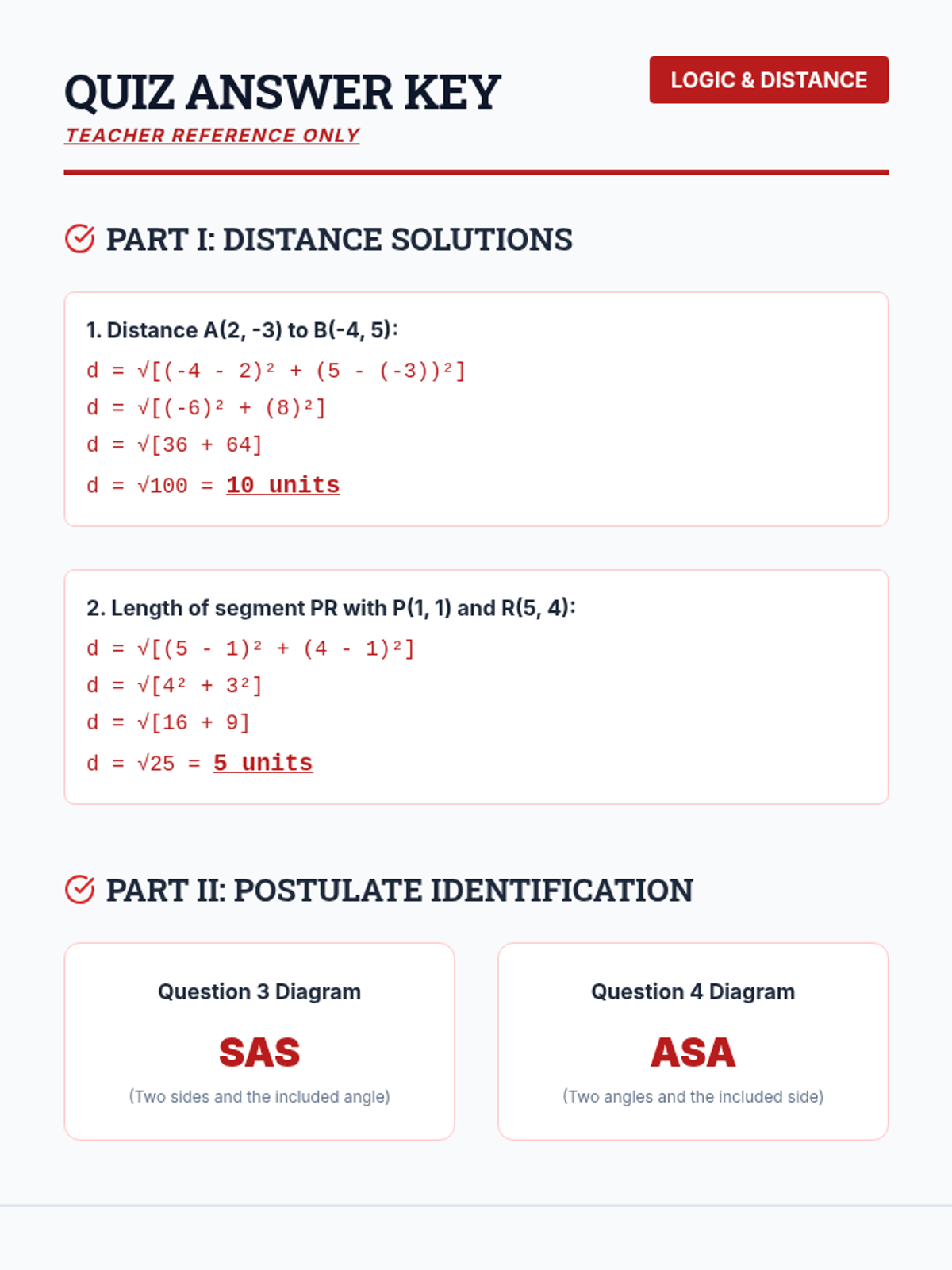
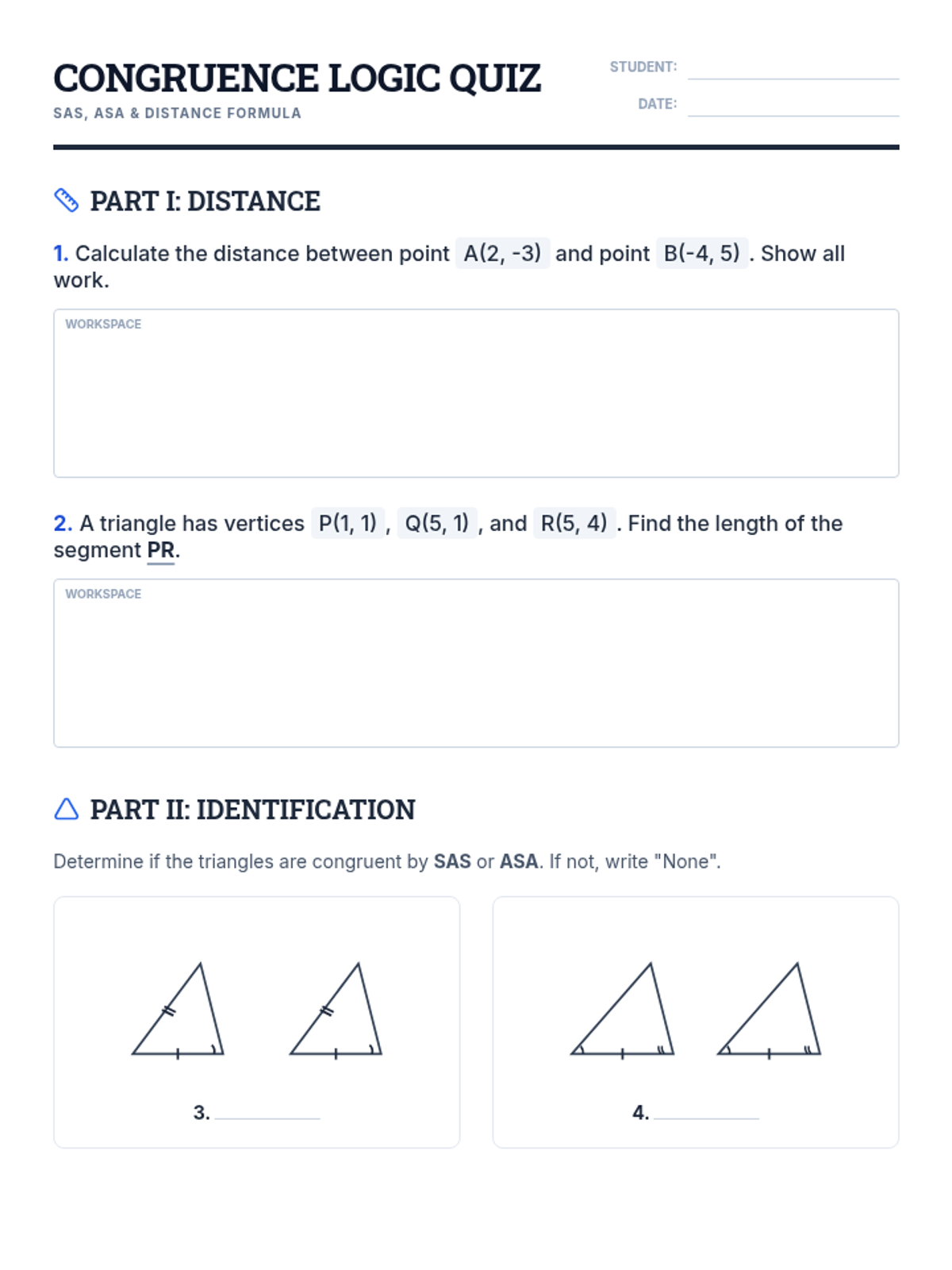
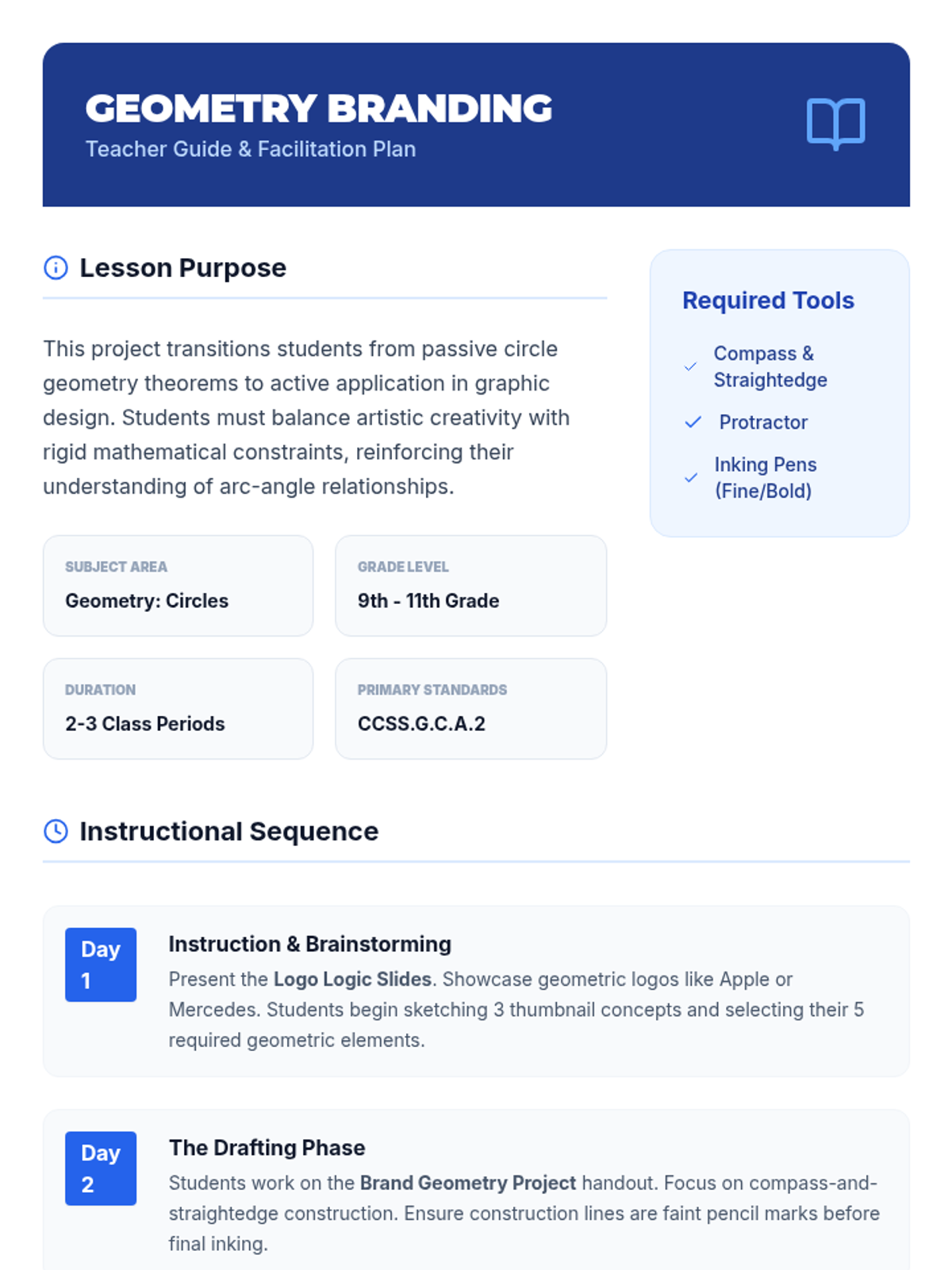
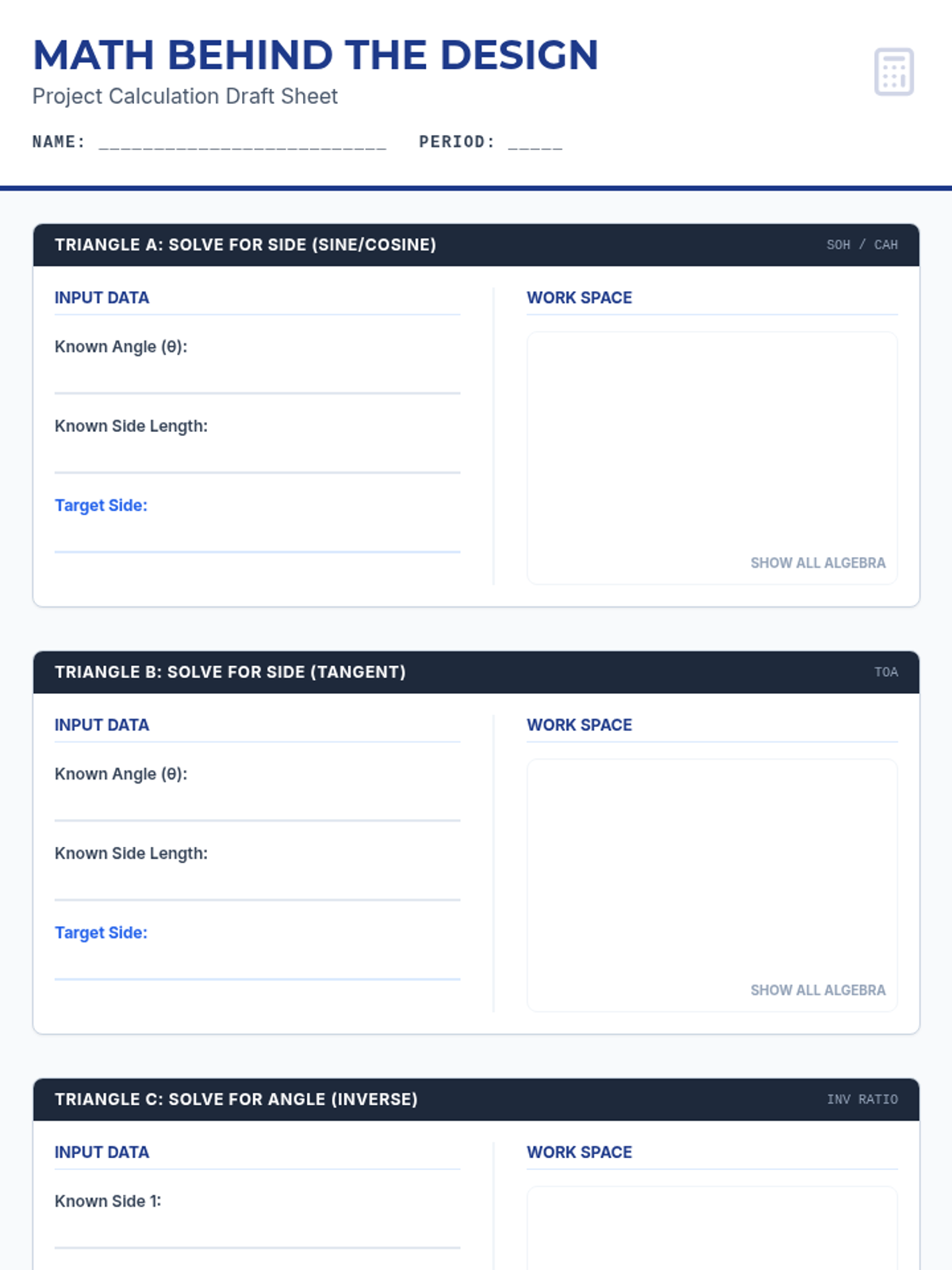
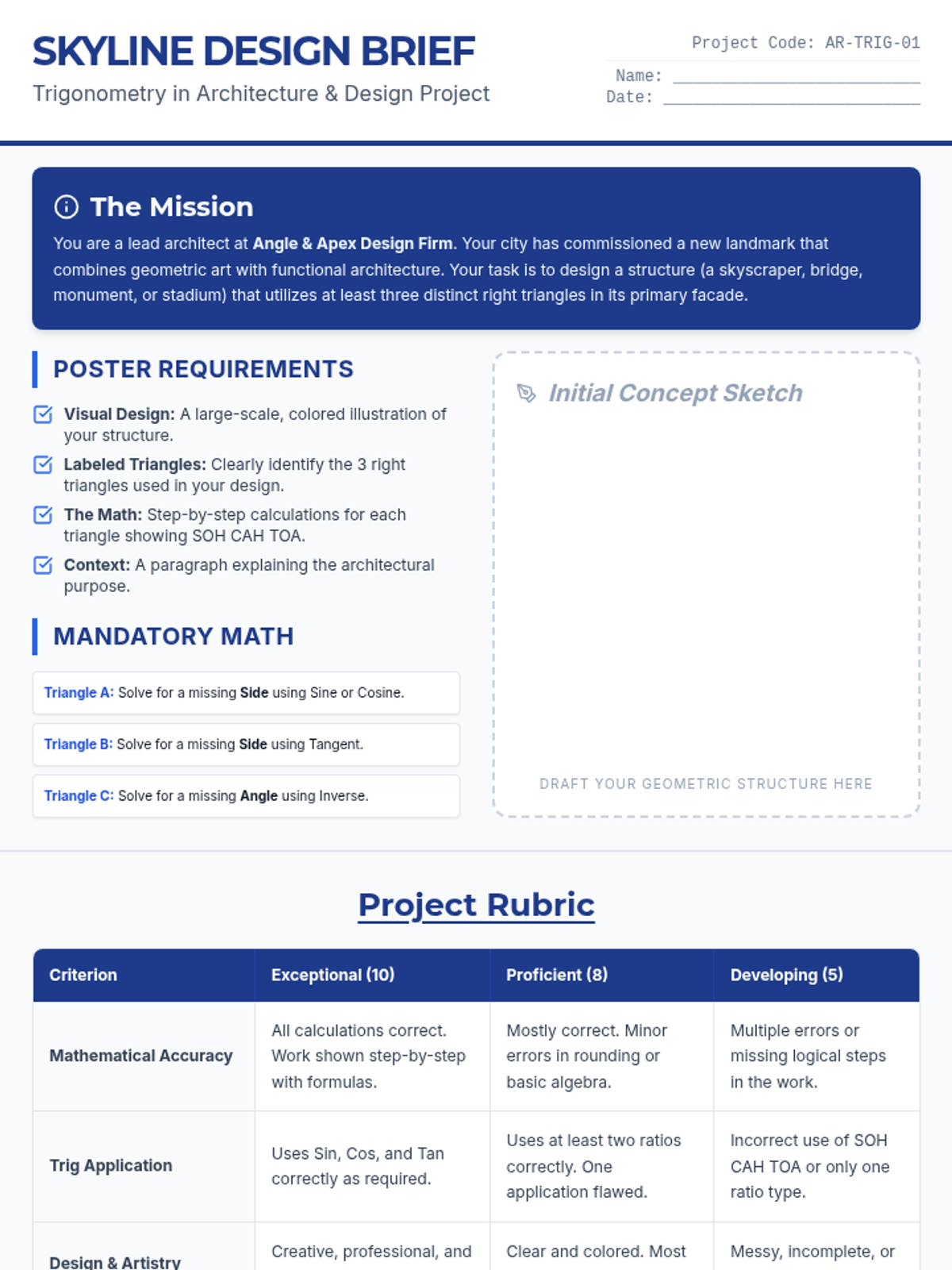
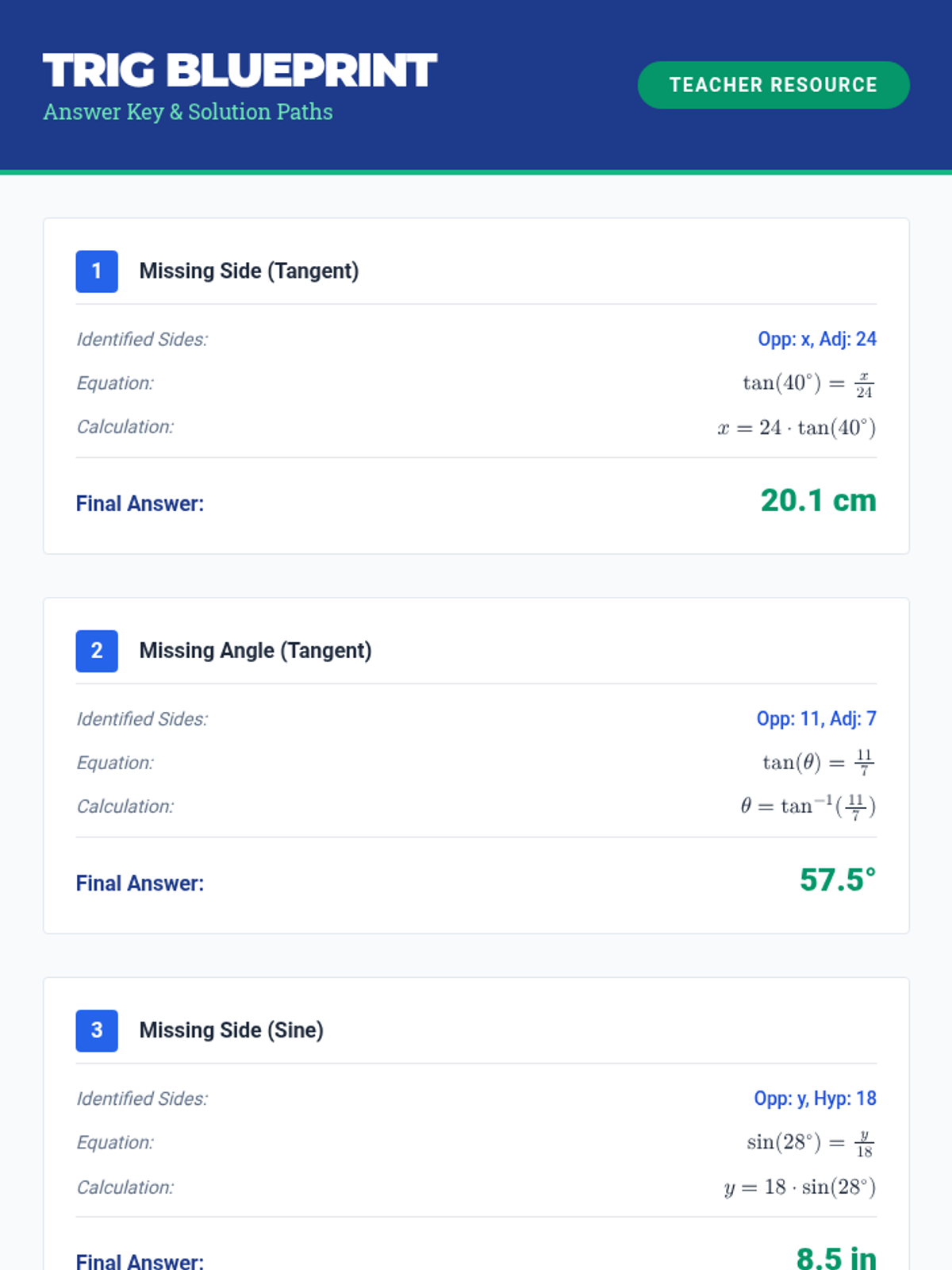
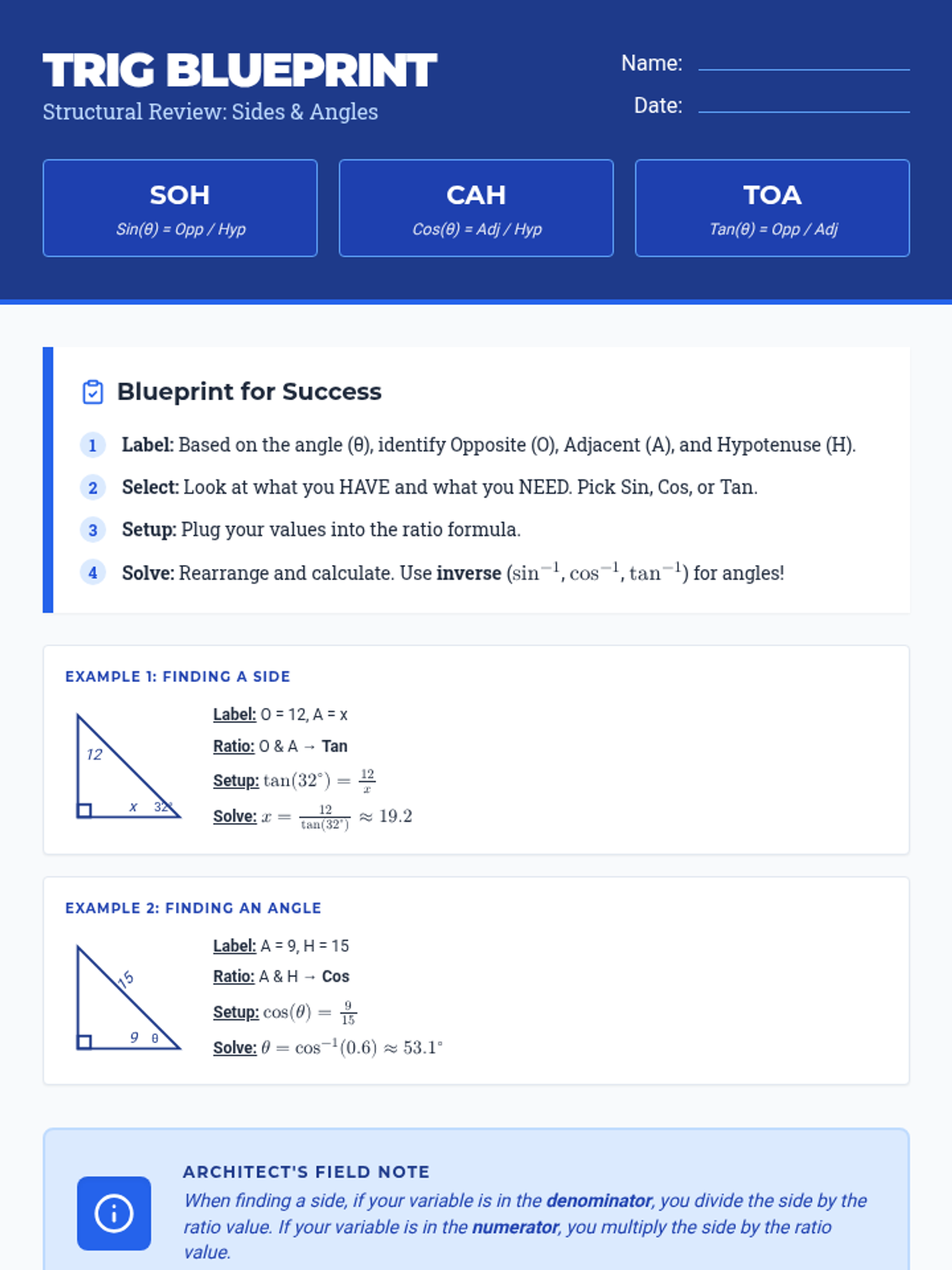
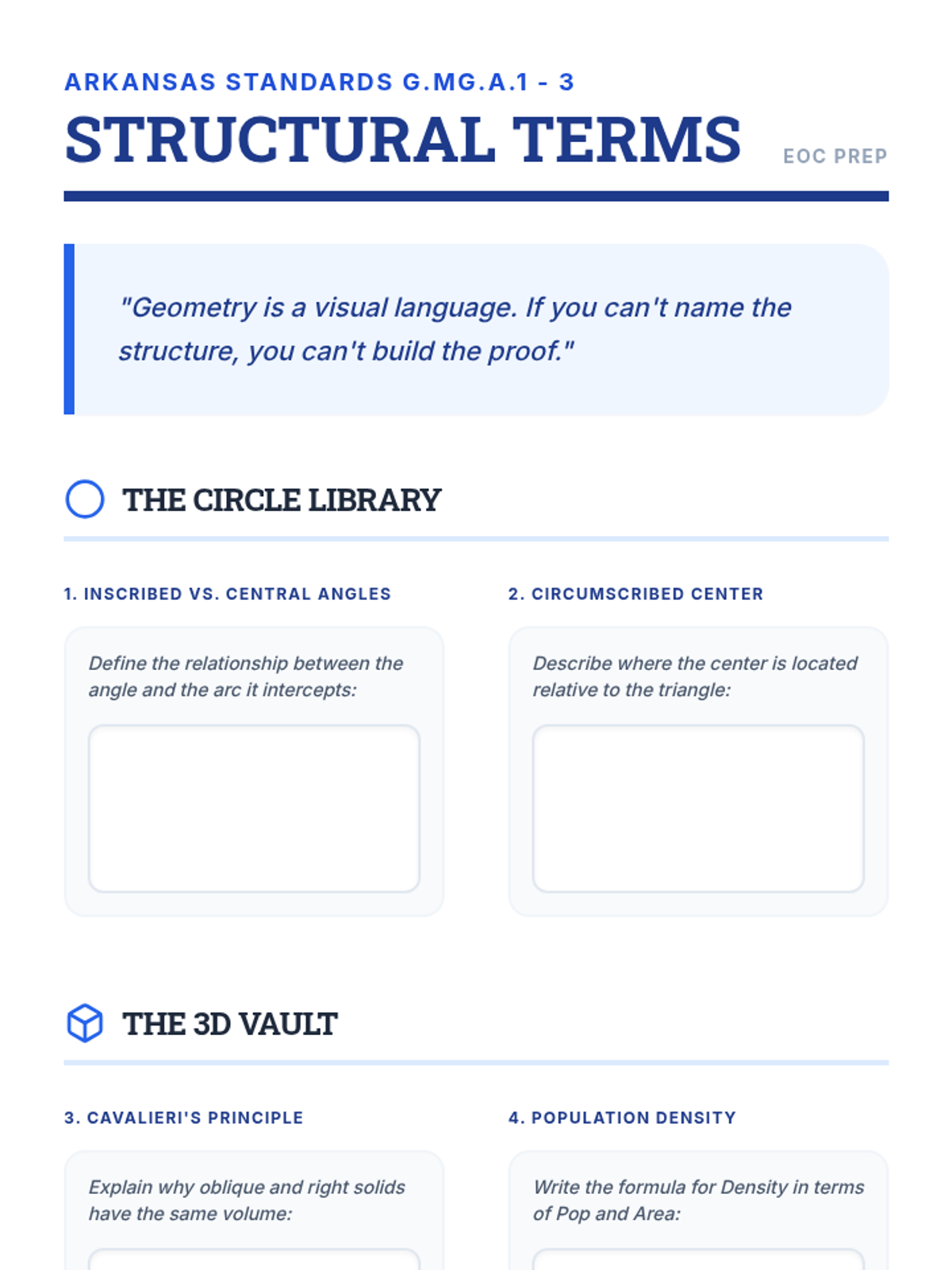
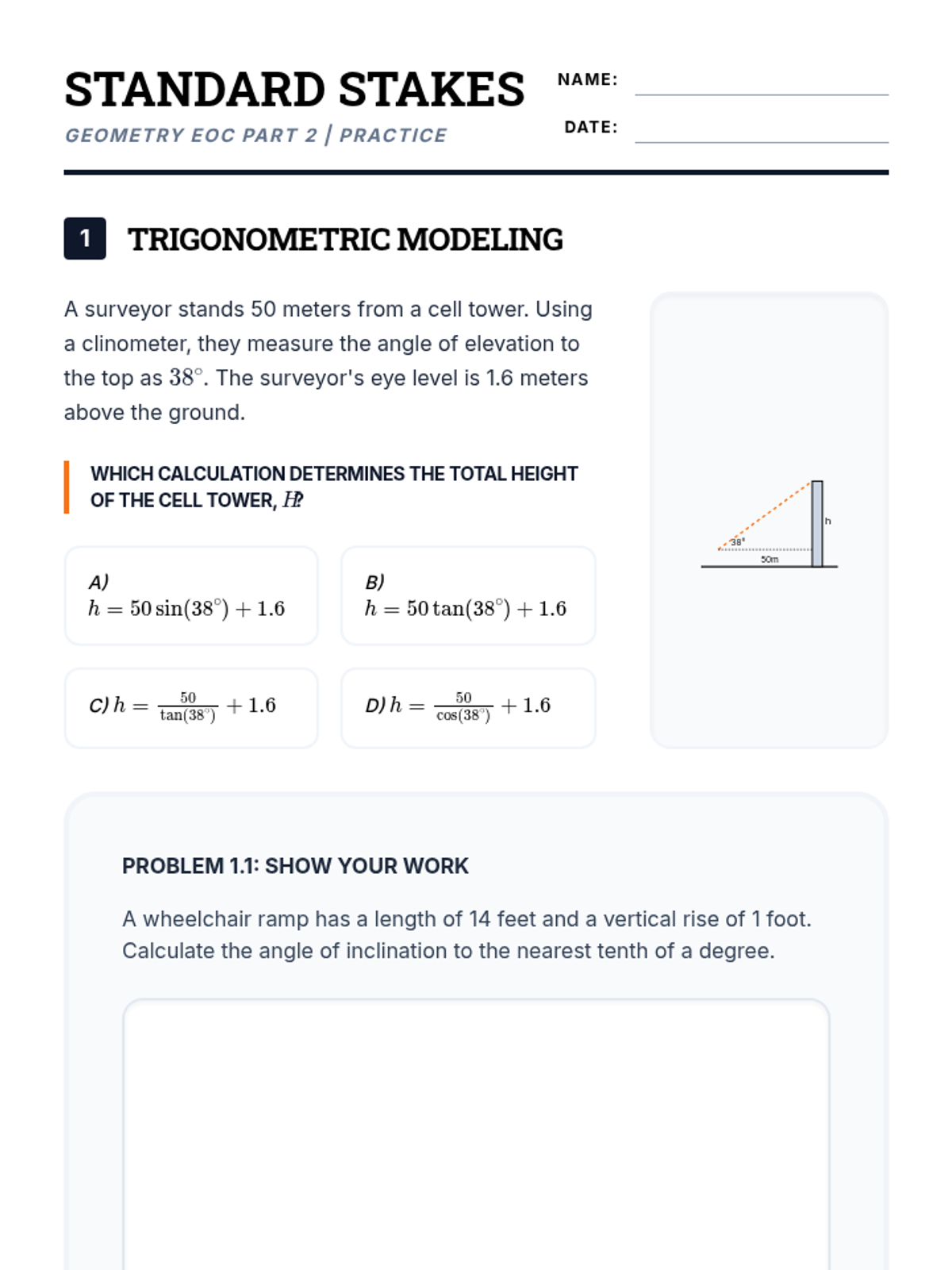
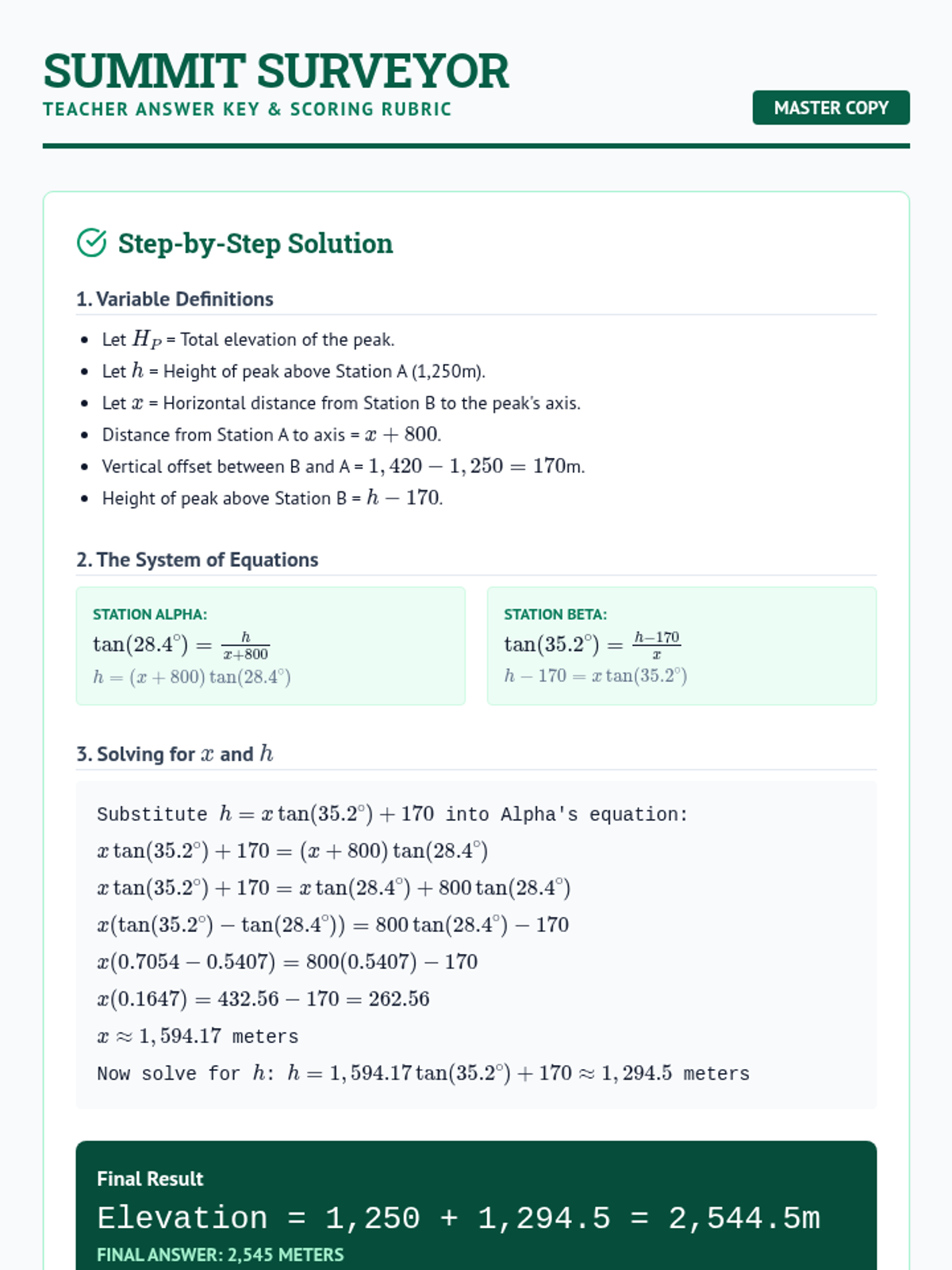
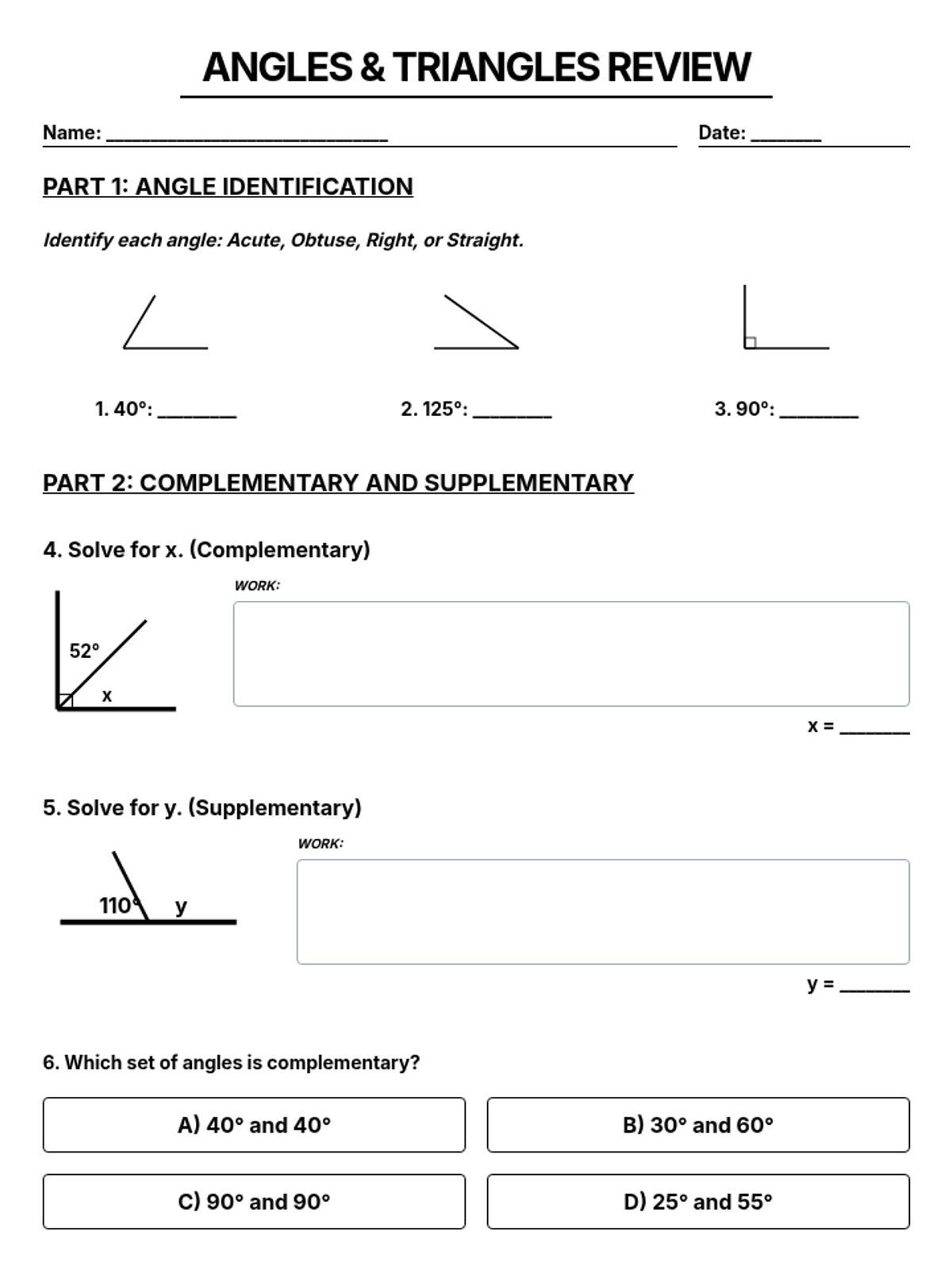
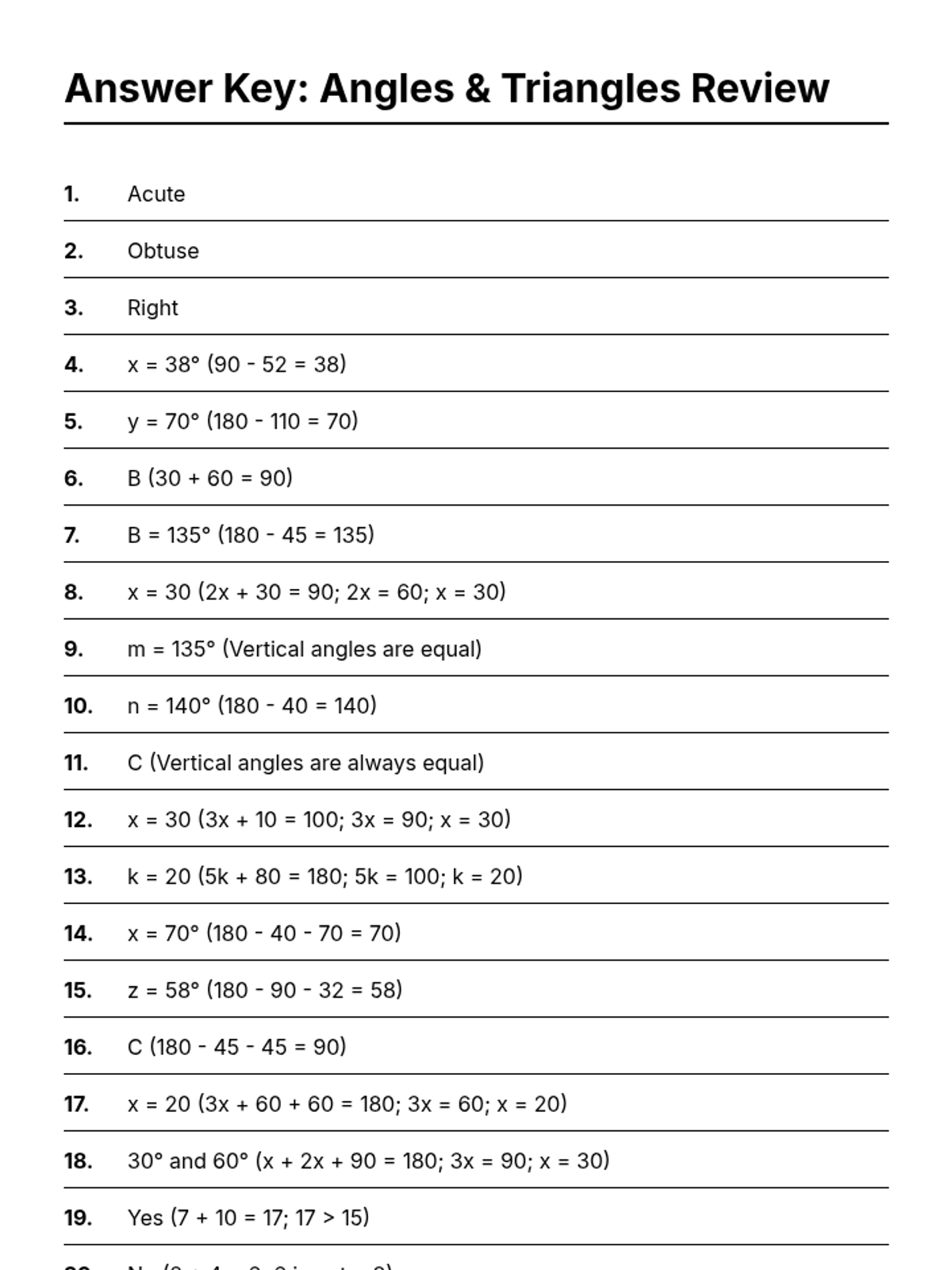
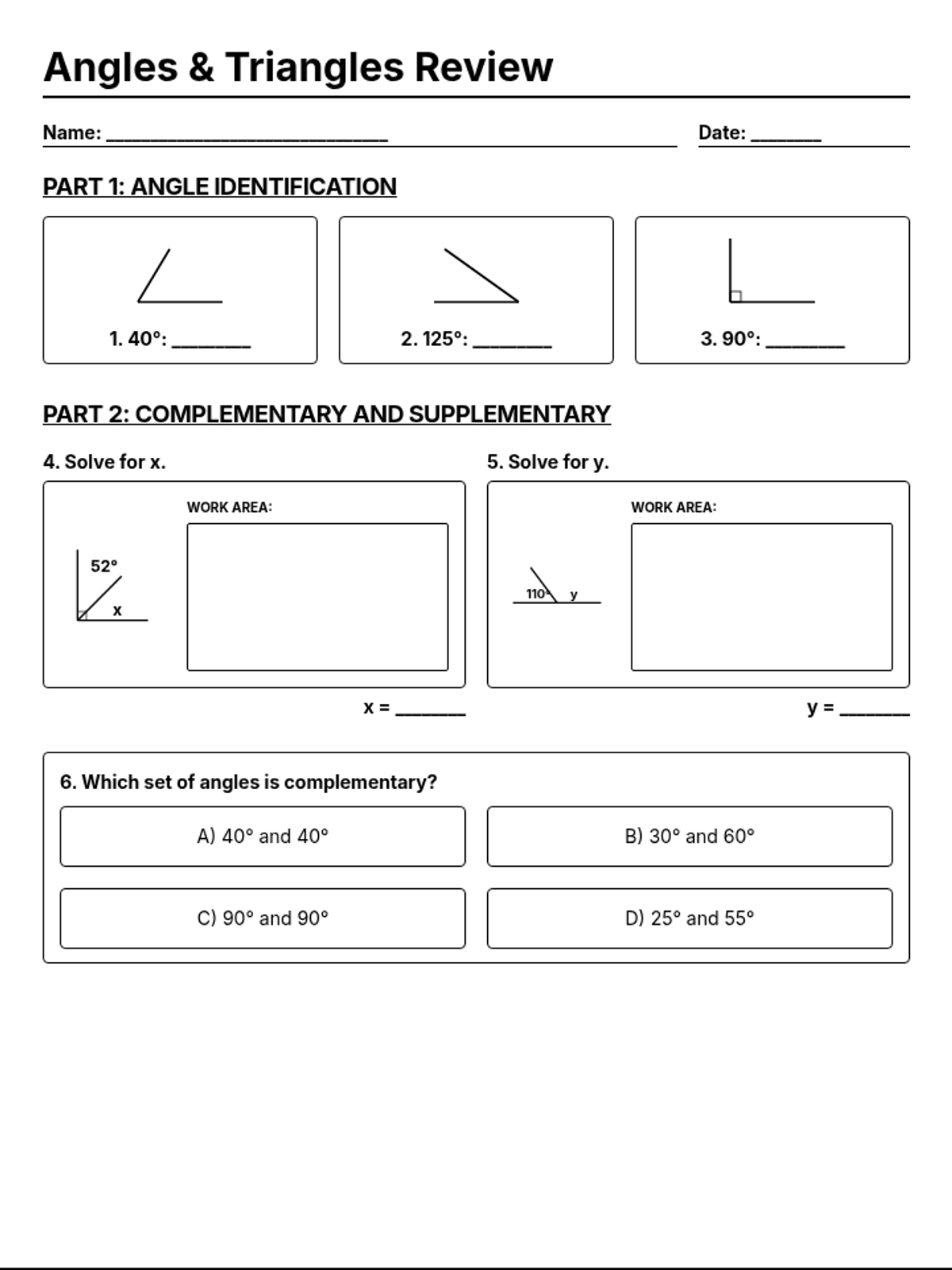
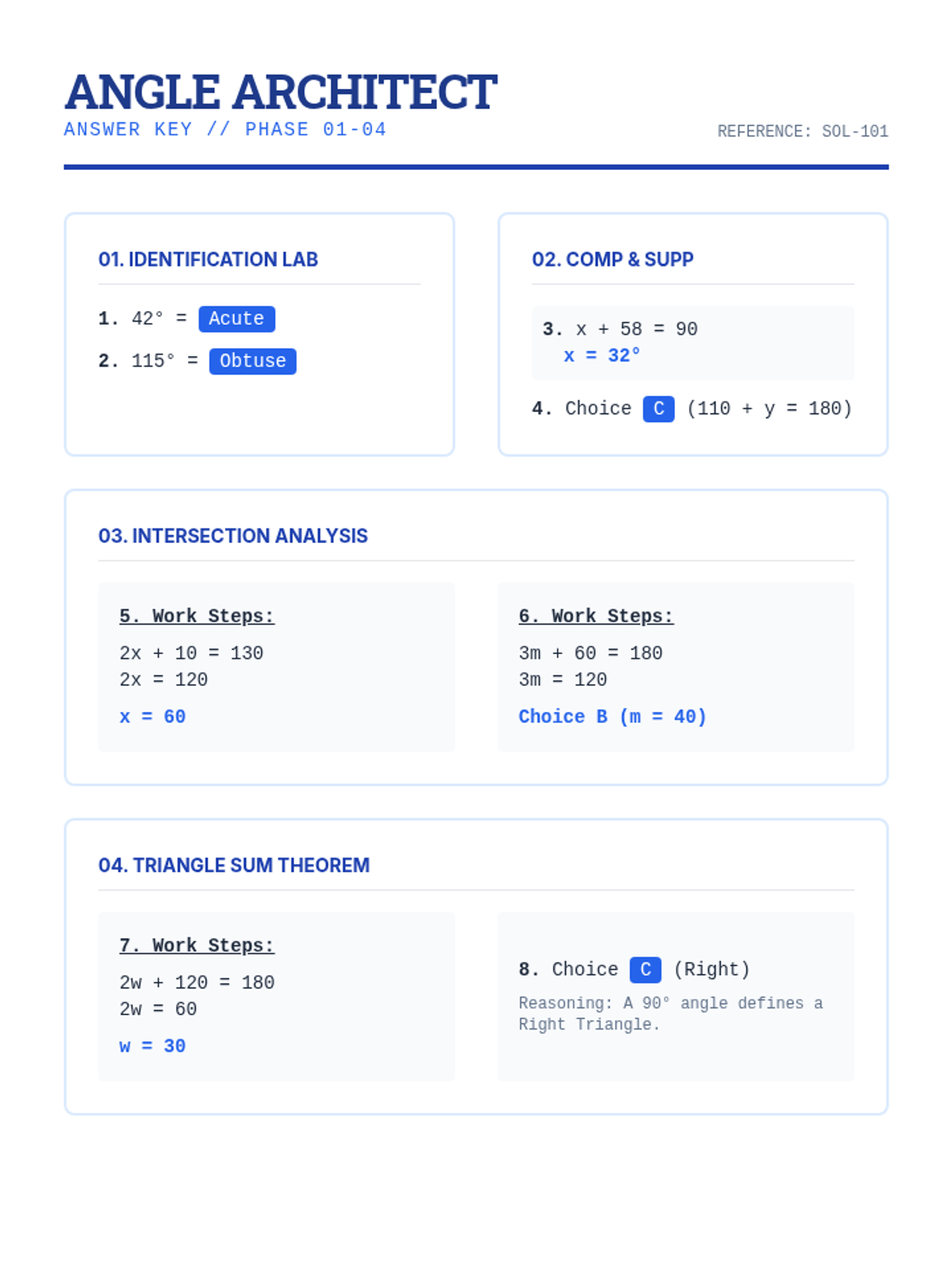
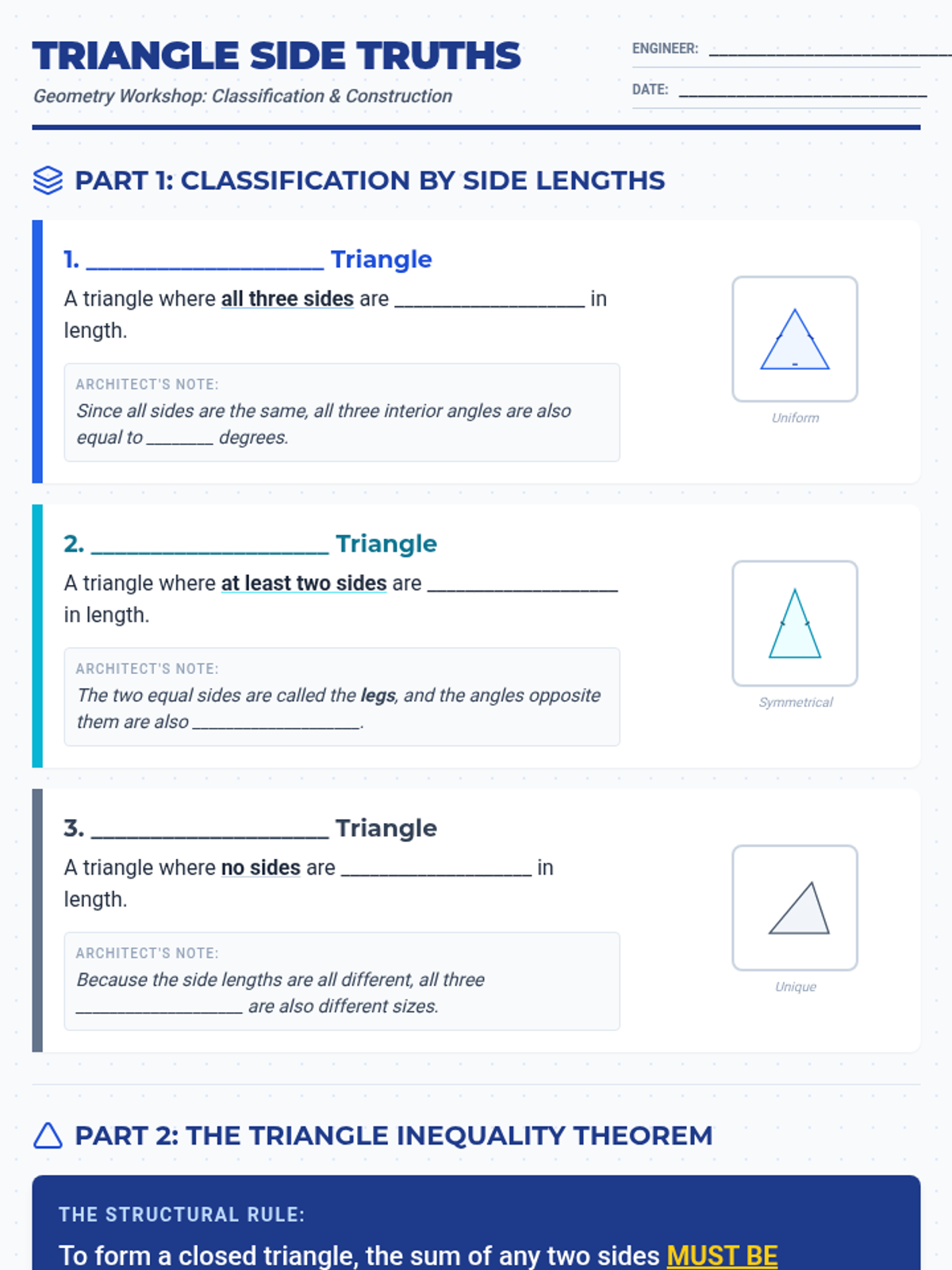
Geometric classification, measurement of area and volume, and the study of transformations and rigid motions. Builds toward complex proofs, trigonometry for general triangles, and the algebraic representation of conic sections.
A set of four hands-on field missions for students to experiment with daylight estimation, historical nautical timekeeping, fractal scaling, and sun-based coordinate mapping. All missions now feature consistent, professional layouts with scientific sidebars.
A comprehensive quiz covering fixed-point navigation, coordinate axes, microcosms vs macrocosms, and different types of symmetry. Refactored for standard portrait format.
A reference page explaining Longitude as the X-axis of navigation, along with advanced symmetry concepts like Rotational and Logarithmic Spirals. Updated for scientific accuracy regarding the difficulty of longitude and spiral patterns. Standard portrait format.
A conceptual worksheet for students to identify patterns of symmetry and scale in nature. Updated with 'Mission Break' callouts after Section 1 and Section 2 to guide students to specific field activities.
A two-page reference sheet covering the North Star (Polaris) as a navigation tool on page one, and the concepts of symmetry and scale (Microcosm/Macrocosm) in nature on page two. Updated for scientific accuracy and refactored for standard portrait format with small, professional font sizes.
A teacher guide providing a 15-minute pacing plan, discussion script, and answer key for the Cosmic Symmetry lesson. Updated for scientific accuracy regarding precession and terminology. Standard portrait format.
A student worksheet focused on identifying microcosm/macrocosm patterns and using coordinate symmetry (reflection) to complete a geometric compass rose design. Refactored for standard portrait format with an added 'Mission Break' callout.
A visual slide deck distinguishing between the North Star (fixed points) and Nature's Symmetry (repeating patterns) as tools for ancient navigation, now updated with integrated 'Mission Break' slides to signal field work timing.
A teacher-facing lesson guide with pacing, hands-on activity instructions, discussion prompts, and key concepts for the 15-30 minute Cosmic Compass lesson. Redesigned with a modern star chart aesthetic.
A three-page student resource featuring 'The Navigator's Codex' (informational text) and a two-part 'Blueprint Analysis' (interactive worksheet). Covers the historical breakthrough of Polaris, rotational symmetry in nature and navigation, Greek root decoding, and mathematical coordinate prediction. Redesigned with a modern star chart aesthetic and updated with the specific 'Why it matters' takeaway requested by the user. Vertical spacing tightened and font sizes adjusted to prevent content overlap.
Instructional slides for the 'Cosmic Compass' lesson, redesigned with a modern star chart aesthetic. Features neon accents, geometric layouts, and high-contrast digital motifs to teach the Greek roots micro/macro/cosmos and rotational symmetry. Updated with the specific 'Why it matters' takeaway requested by the user.
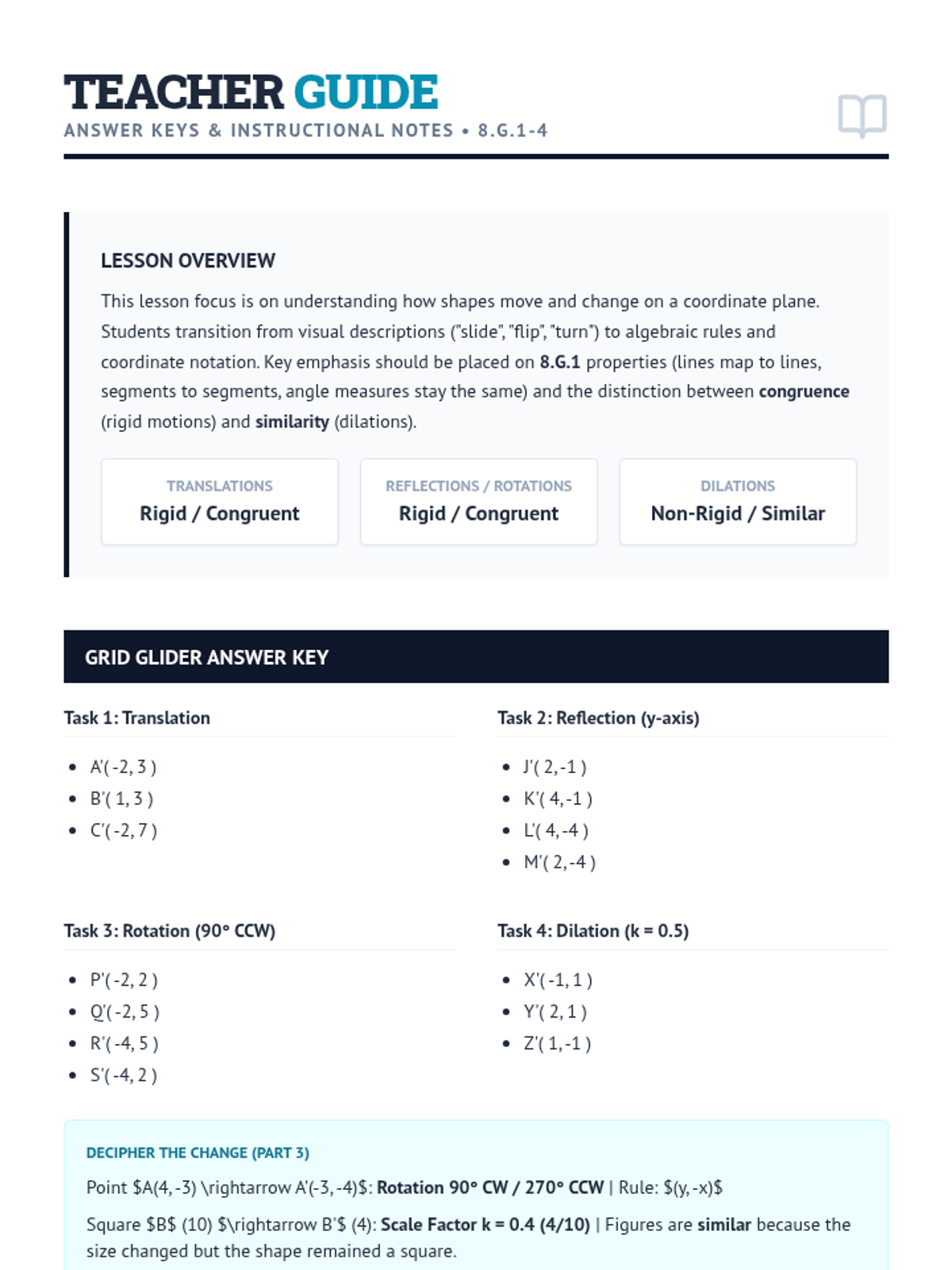
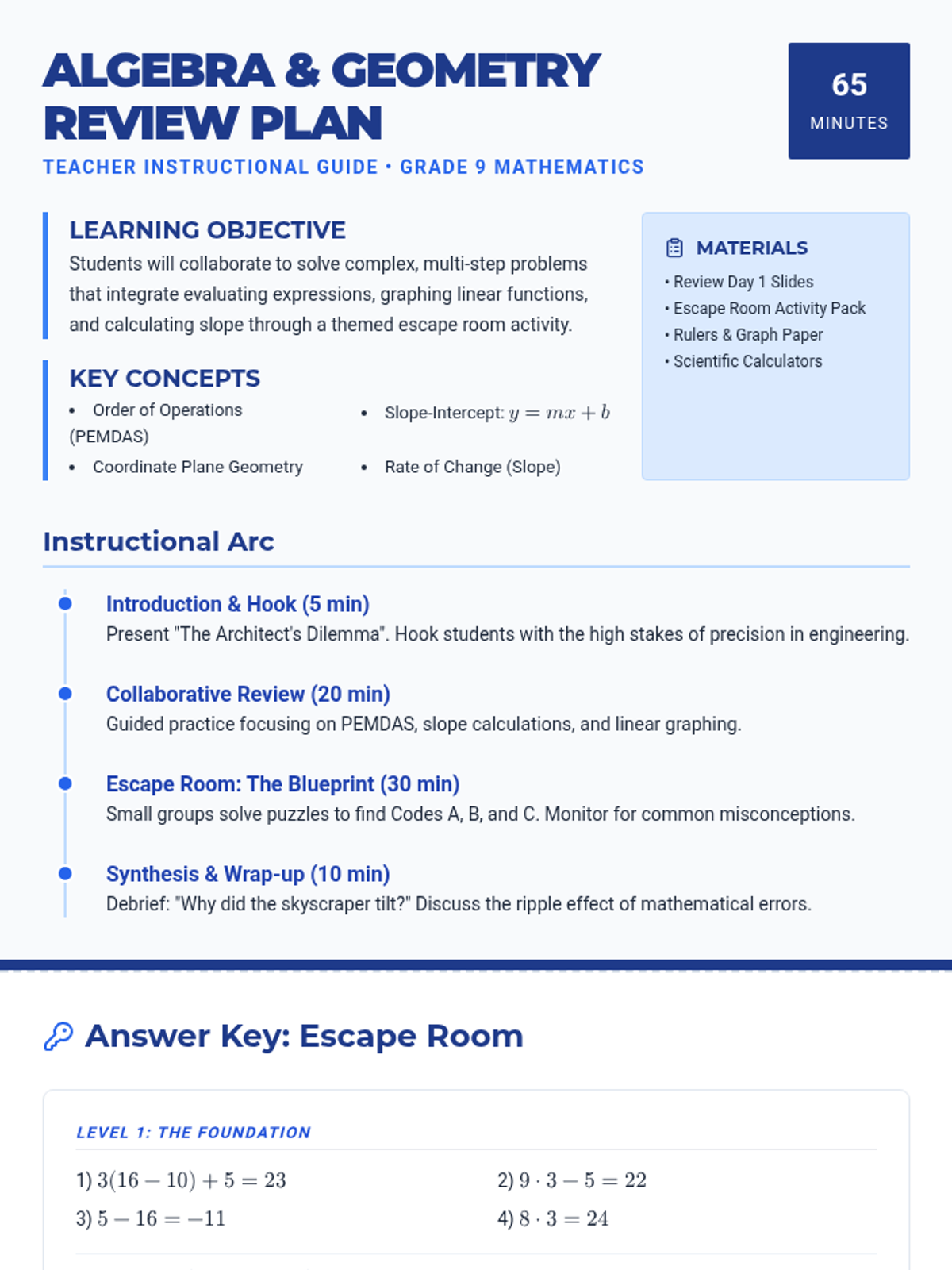
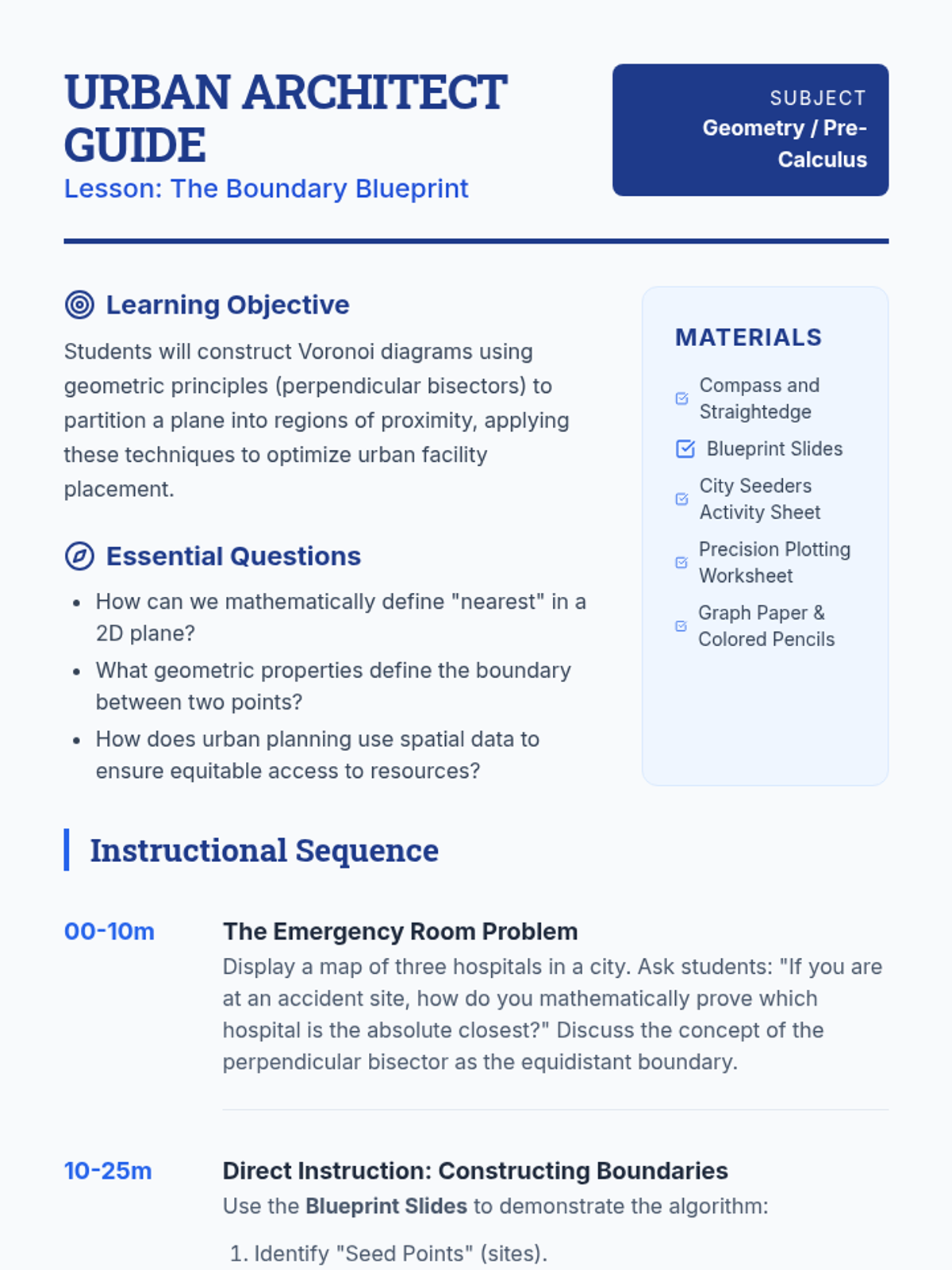
Facilitation guide for teachers, including lesson objectives, timing, common student misconceptions, and a step-by-step instructional flow.
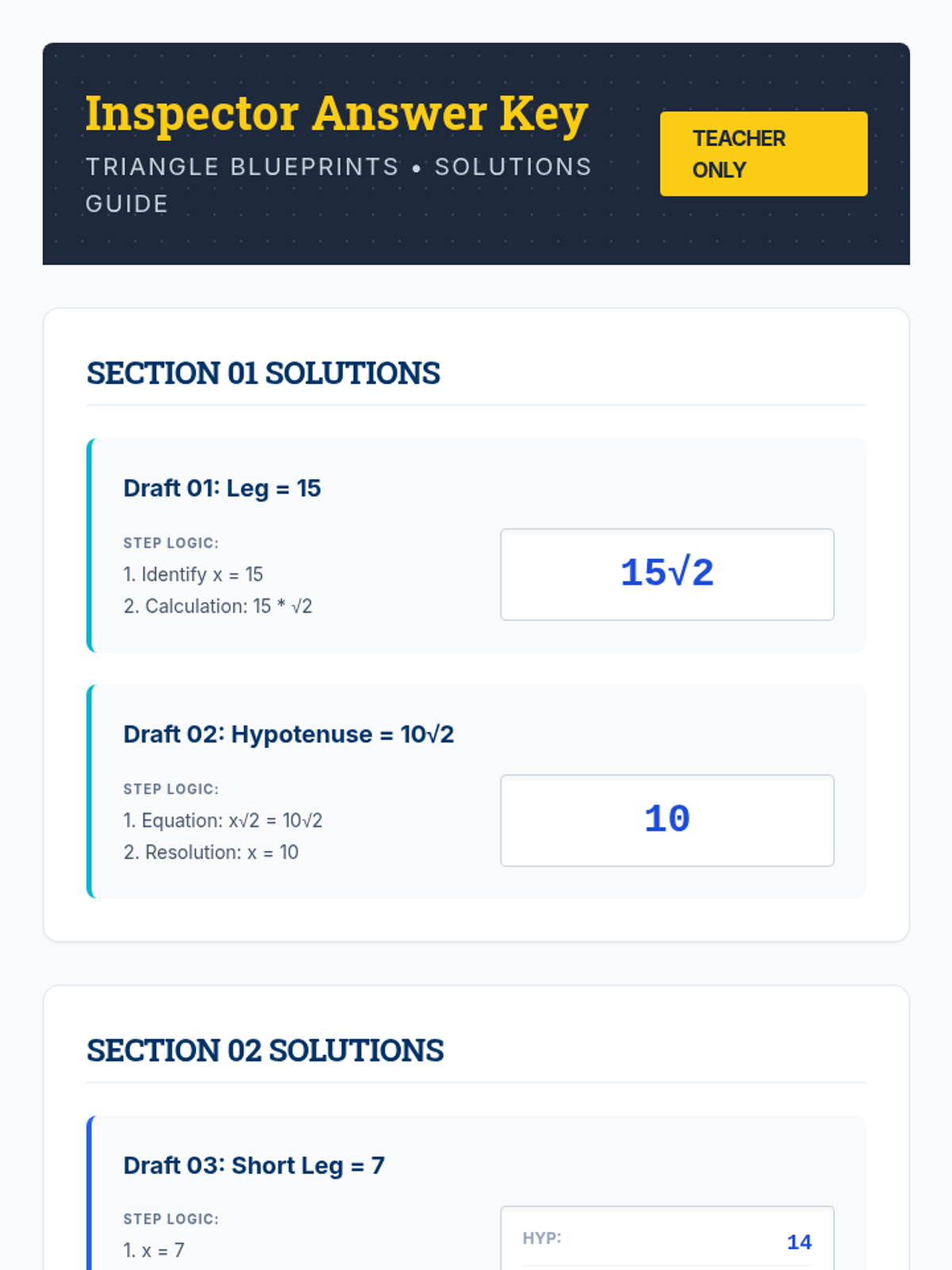
Detailed answer key for the Grid Shifters Worksheet, including step-by-step logic for translations and reflections, final coordinates, and sample explanations.
Engaging classroom presentation slides introducing coordinate transformations. Includes visual rules for translations and reflections over the axes, along with guided practice problems.
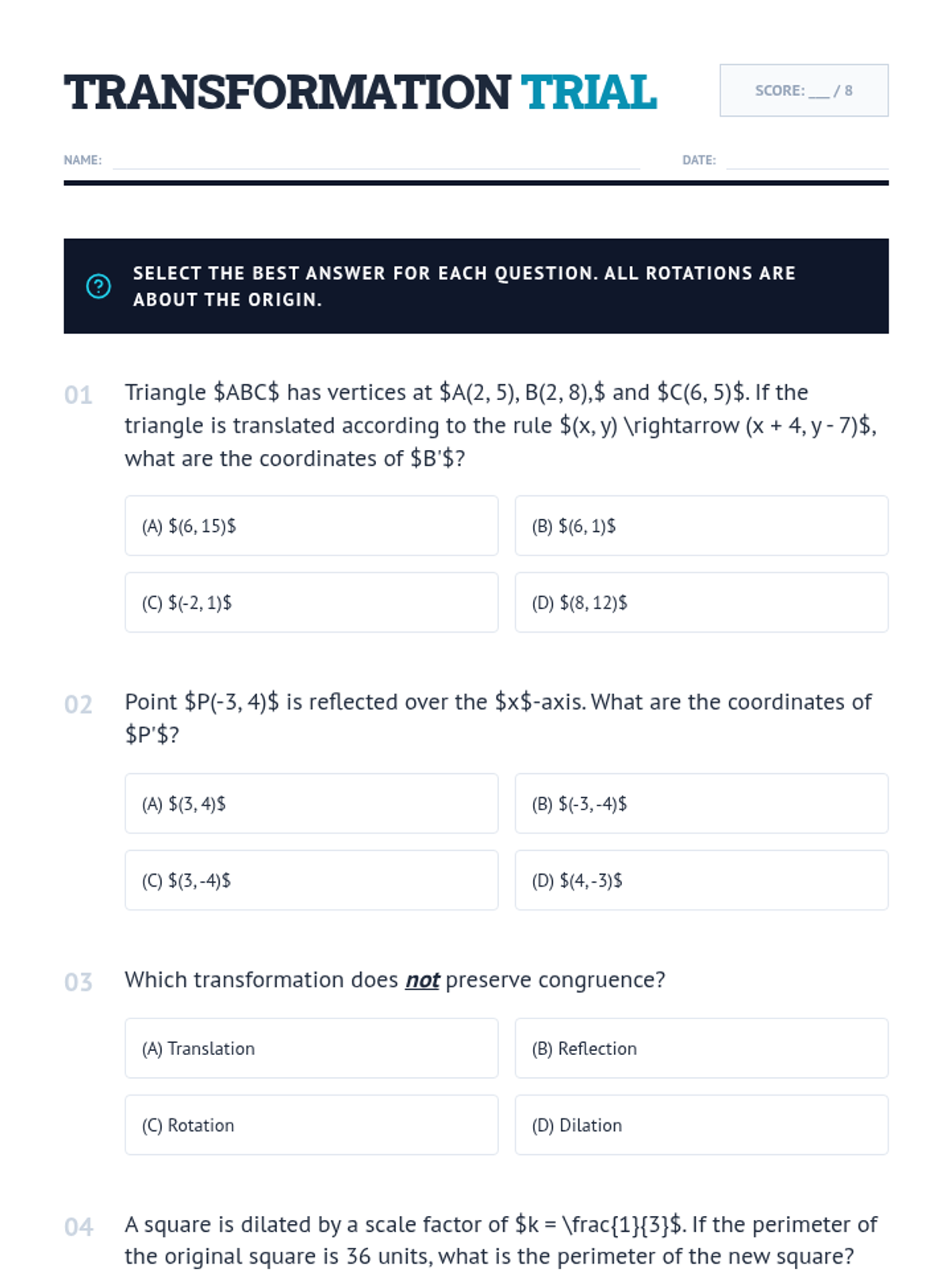
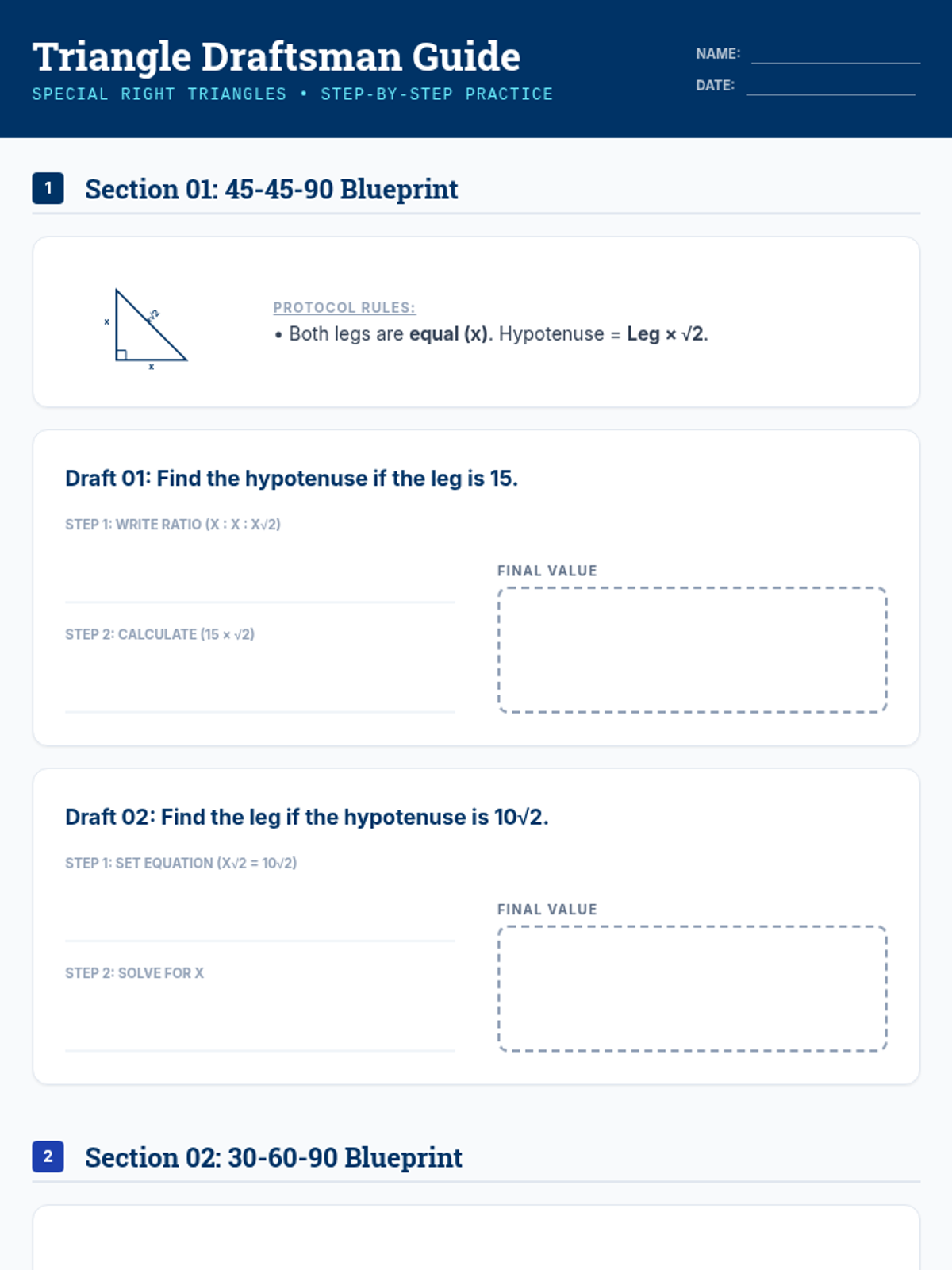
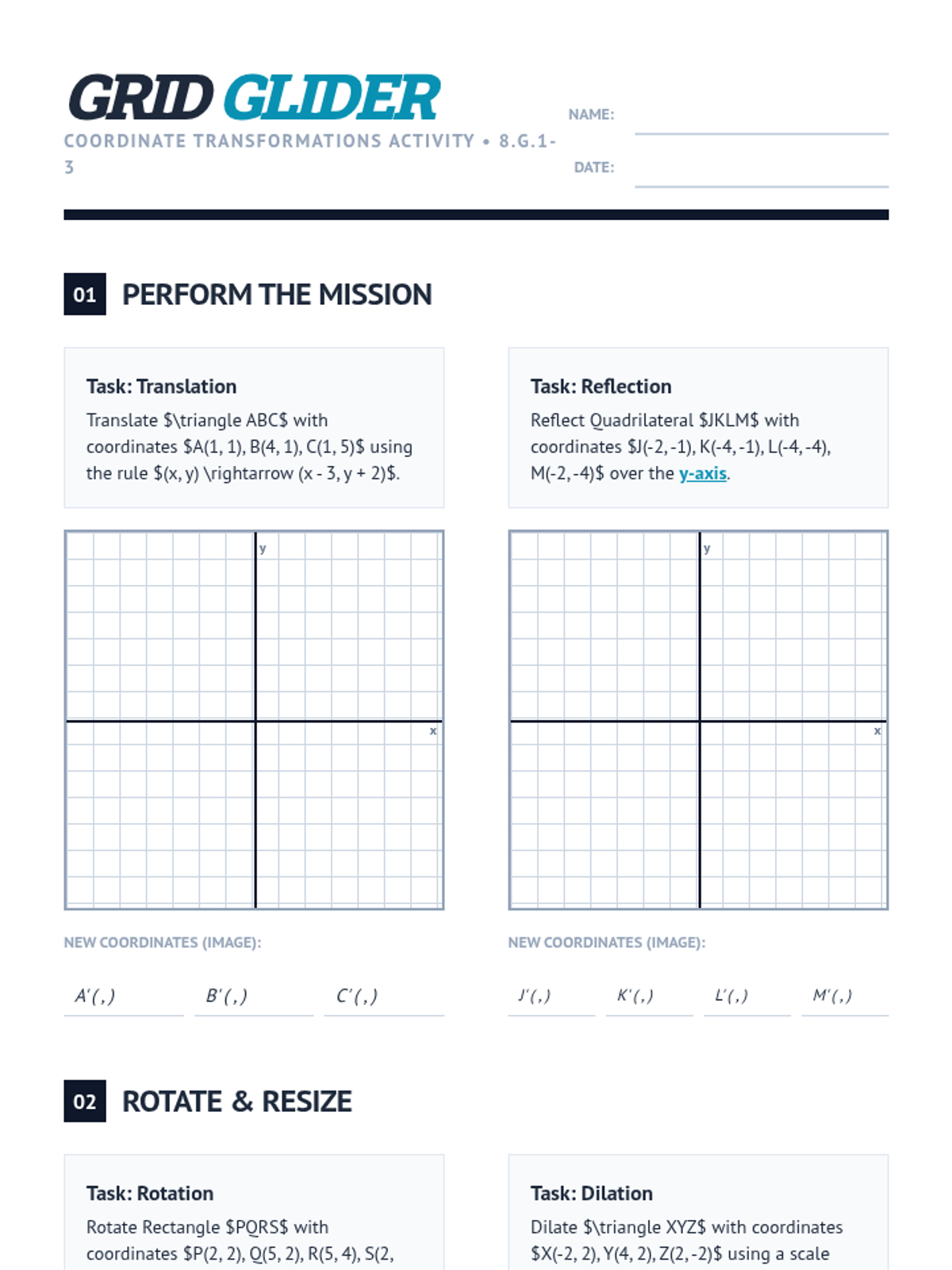
A comprehensive geometry worksheet focusing on coordinate transformations, including translations and reflections over the x and y axes. Each major mission is provided on its own dedicated page for maximum work space.
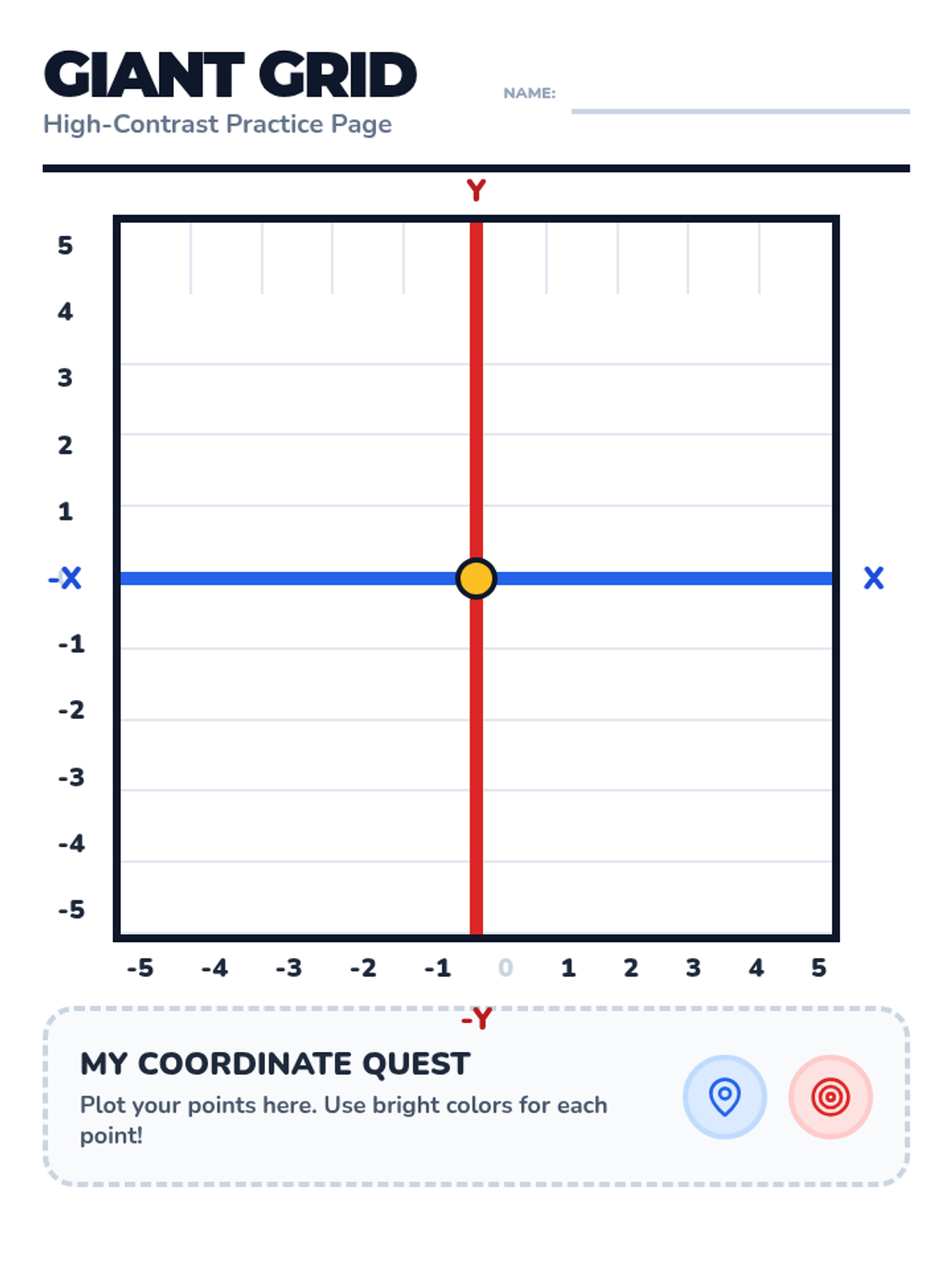
A coordinate practice worksheet for student use, featuring a large coordinate grid (from -10 to 10) with every unit labeled for accessibility and clarity. All content is optimized for a single-page printable format.
Teacher answer key for the Shape Shifter worksheet, featuring the correct transformed coordinates and a visual verification grid matching the student worksheet's layout and scale.
A simplified 10-question review worksheet covering translations and reflections. Features a visually improved matching activity for vocabulary, visual identification with graphs, rule writing, and coordinate point practice. Designed to keep figures and questions together on the same page.
A student self-reflection and tracking handout used to analyze practice results, identify conceptual weaknesses vs. simple errors, and set concrete study goals.
Detailed worked solutions for the 15 practice problems. Includes step-by-step calculations and "Booster Tips" for common test-taking traps.
A student practice worksheet containing 15 ACT/SAT style math problems organized by difficulty. Includes dedicated work areas and covers algebra, geometry, and data interpretation.
A presentation deck for an ACT/SAT math prep lesson. Covers time management, algebra, geometry, and data interpretation strategies for students in the 15-20 score range.
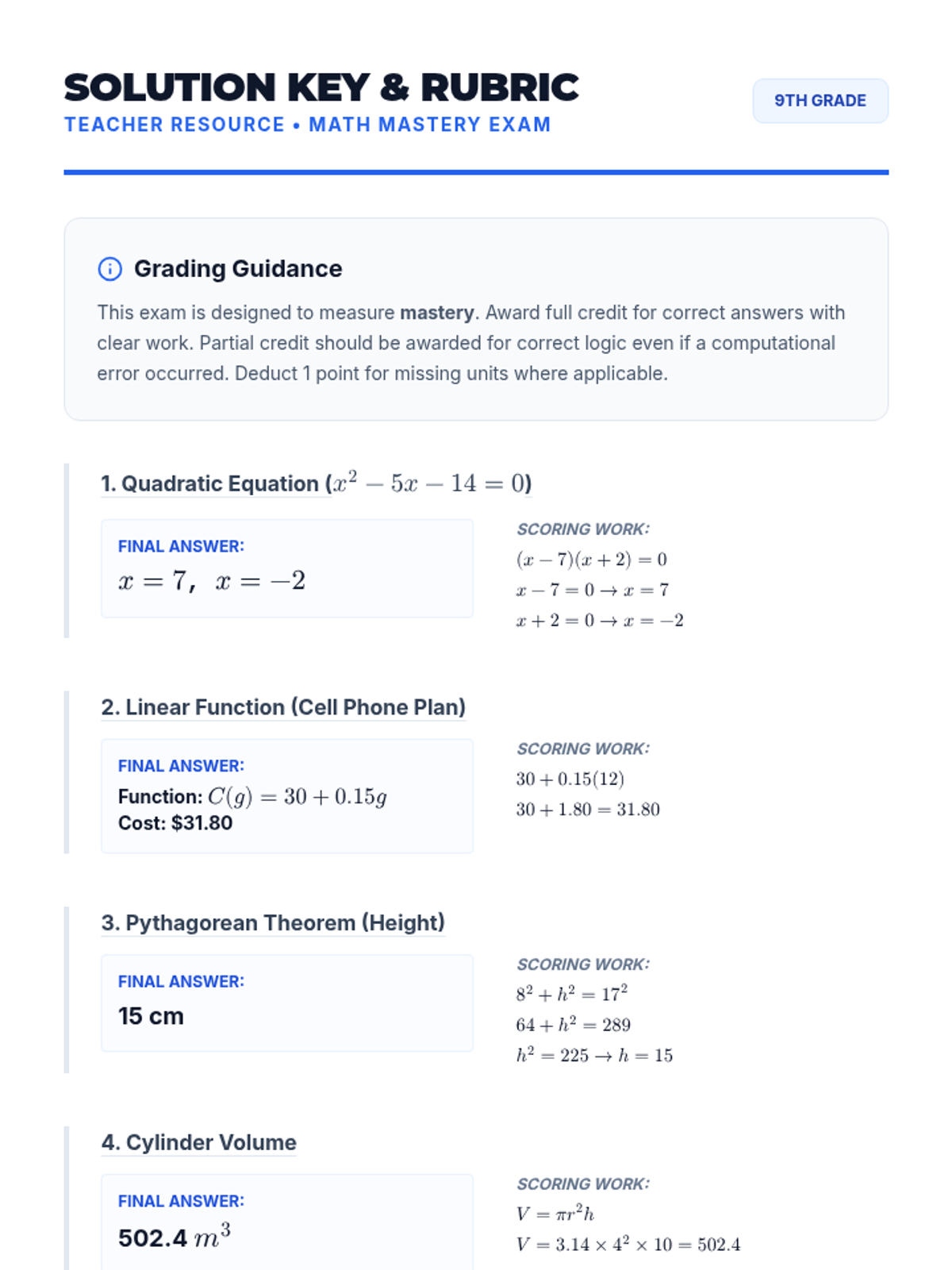
A comprehensive answer key and grading rubric for the Quad Quest unit assessment, providing detailed solutions and scoring guidelines for the teacher.
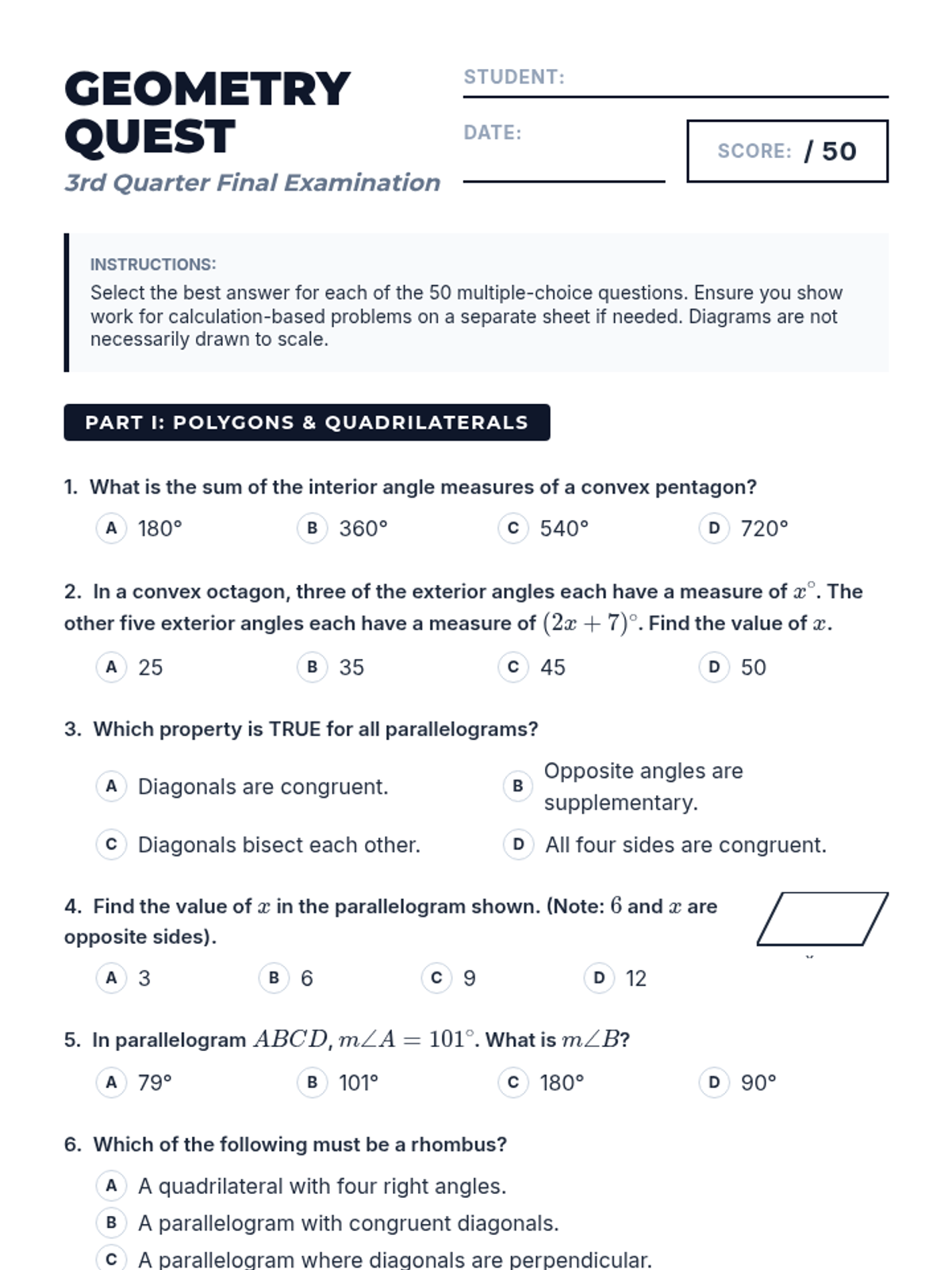
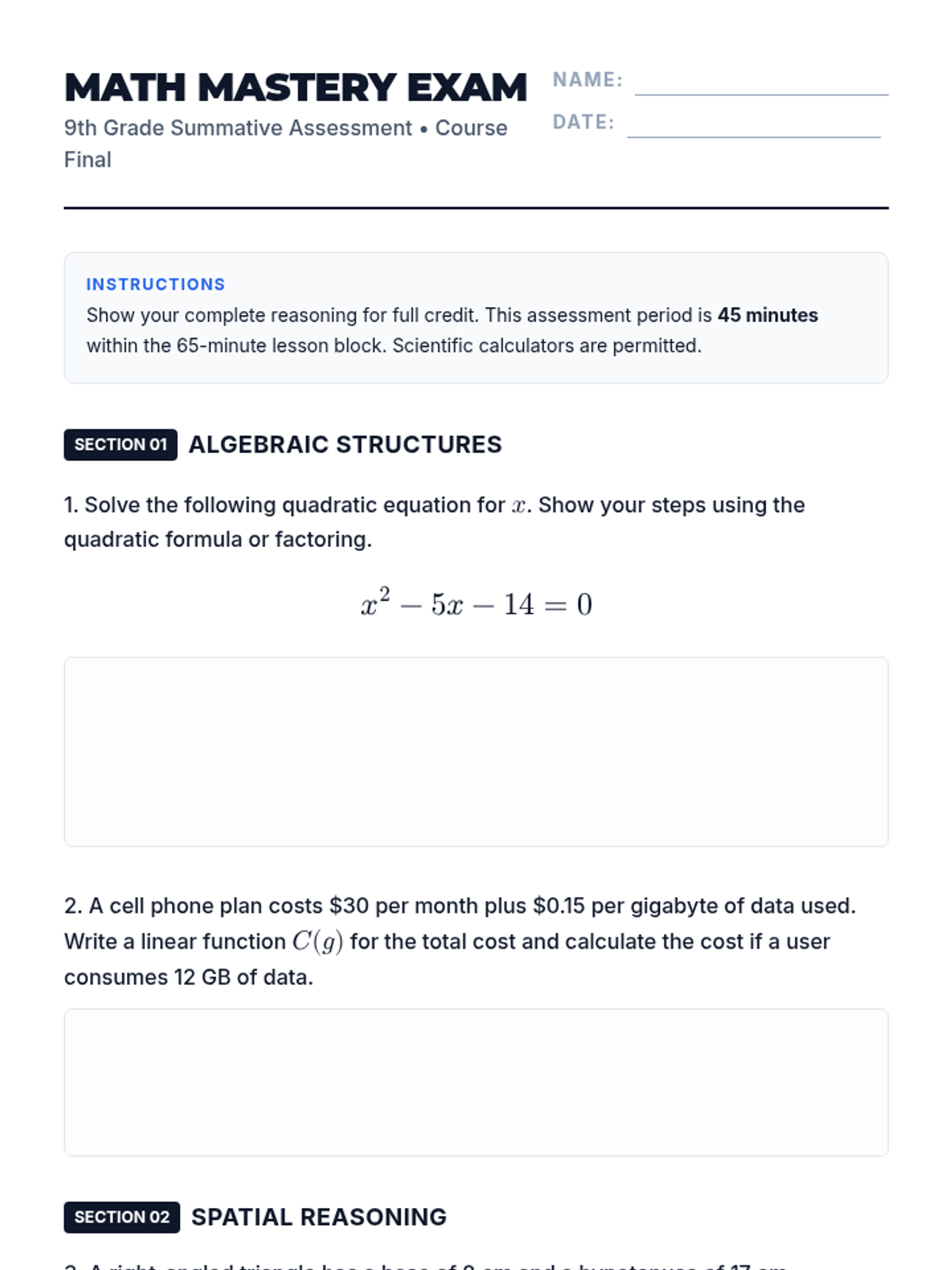
A formal unit assessment covering quadrilateral classification, coordinate geometry proofs, and a two-column proof for an isosceles trapezoid.
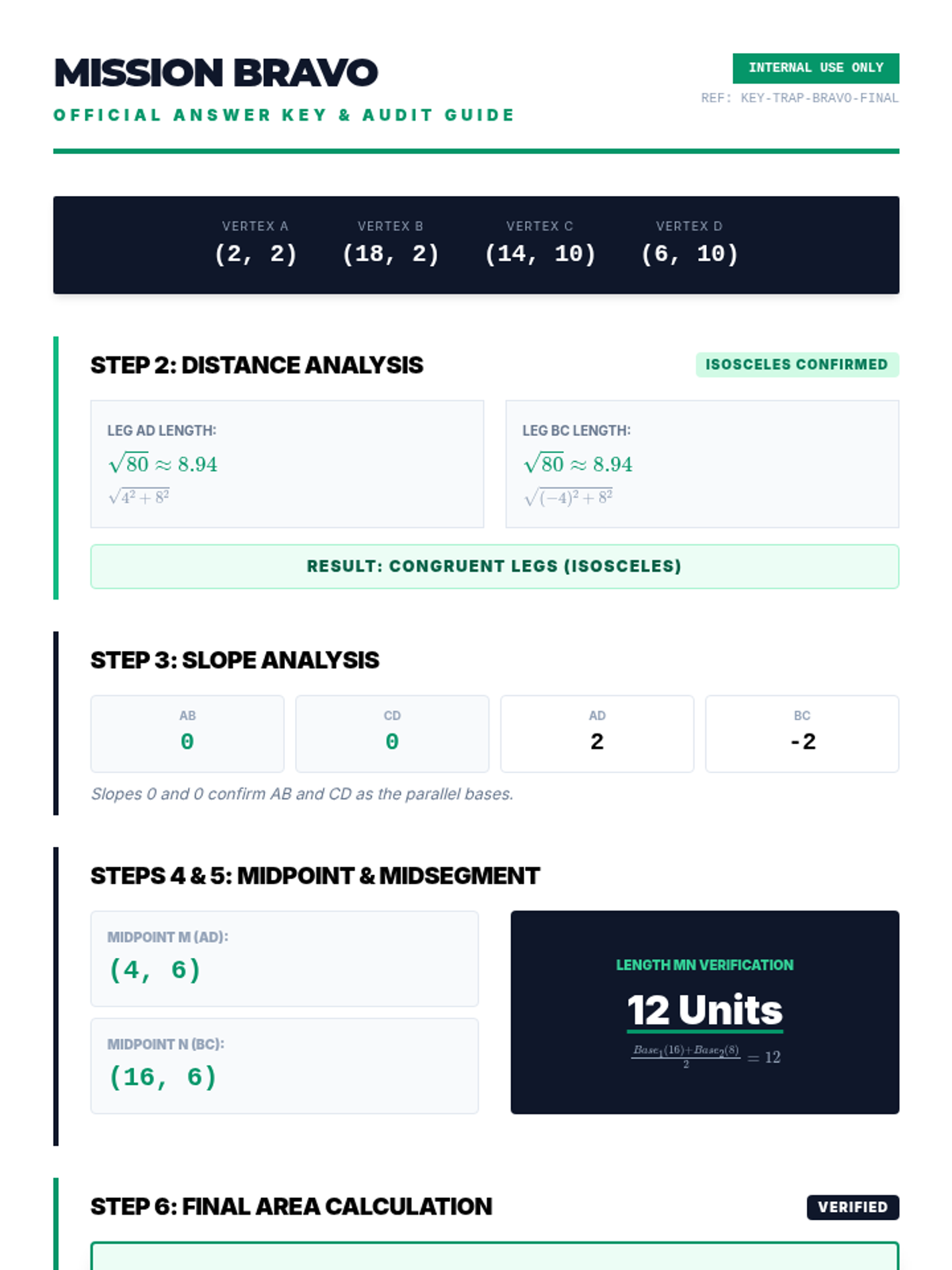
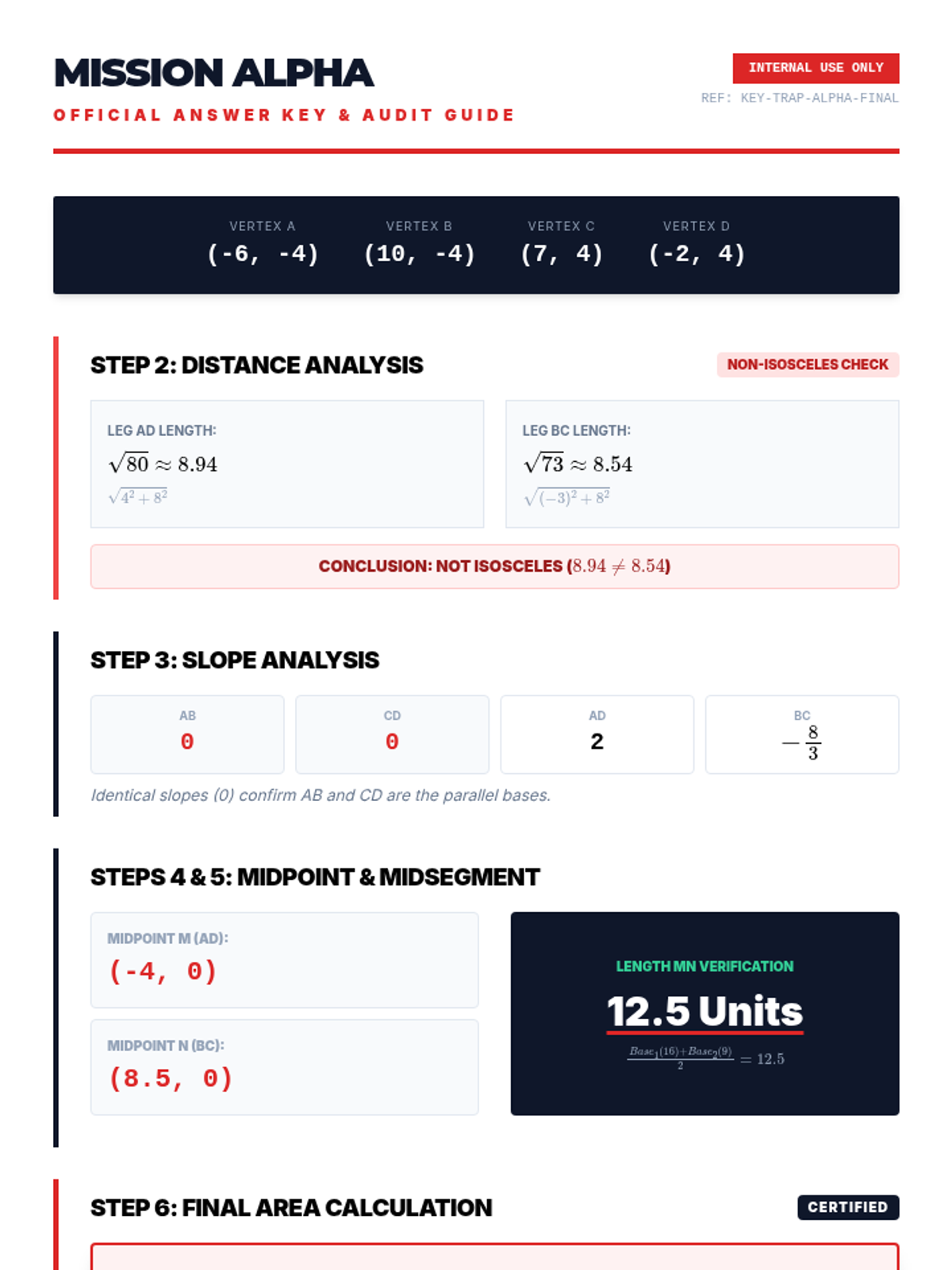
A teacher guide for the Coordinate Blueprints lesson, providing detailed formula applications and complete answer keys for coordinate-based quadrilateral proofs.
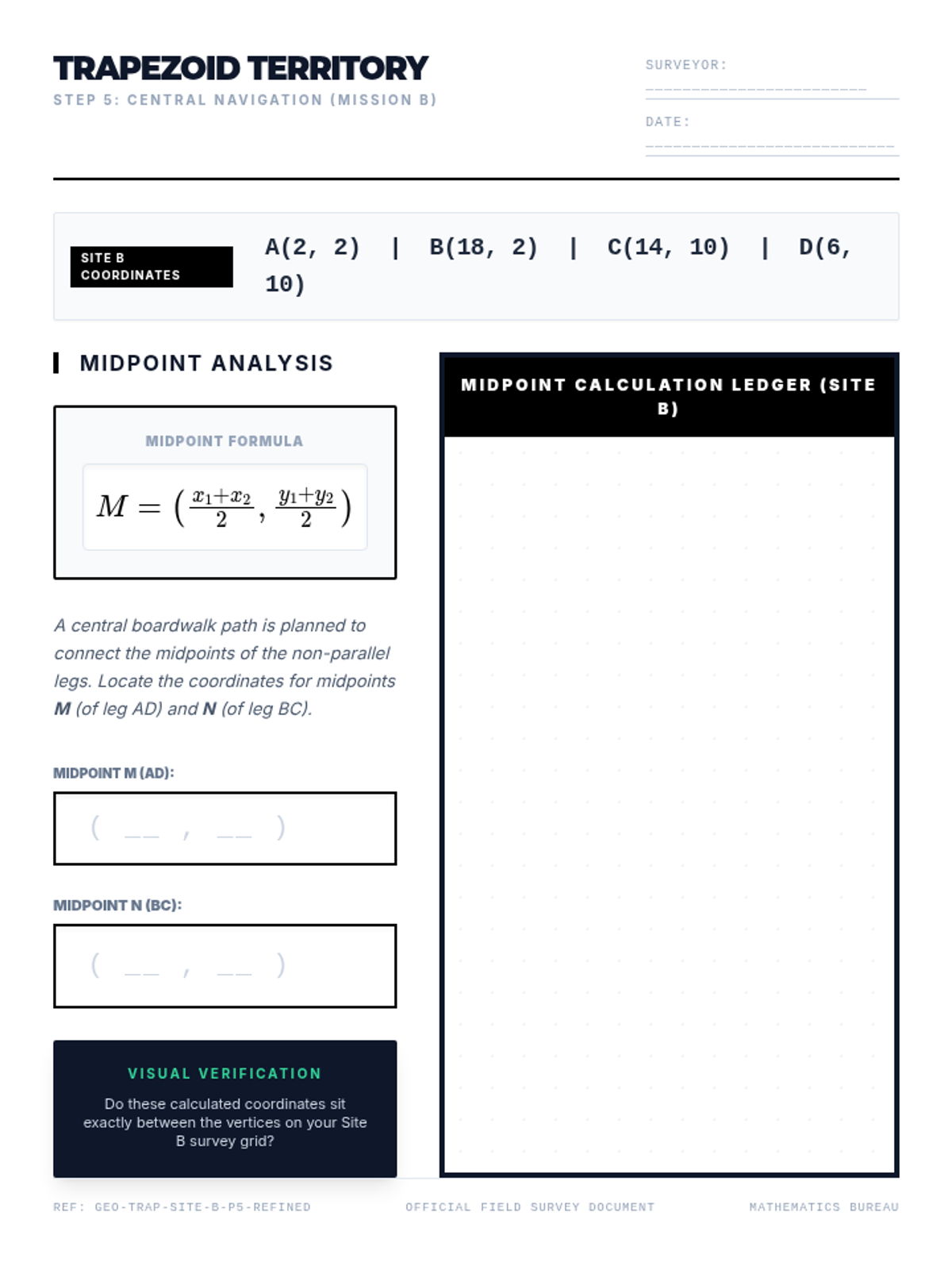
A student worksheet for applying coordinate geometry formulas (distance, midpoint, slope) to classify quadrilaterals on a Cartesian plane.
An instructional slide deck detailing the coordinate geometry methods (distance, slope, and midpoint formulas) used to prove quadrilateral classifications on the Cartesian plane.
A teacher guide for the Trapezoid Kite Climb lesson, providing step-by-step solutions for midsegment and kite angle problems, along with proof justifications and differentiation strategies.
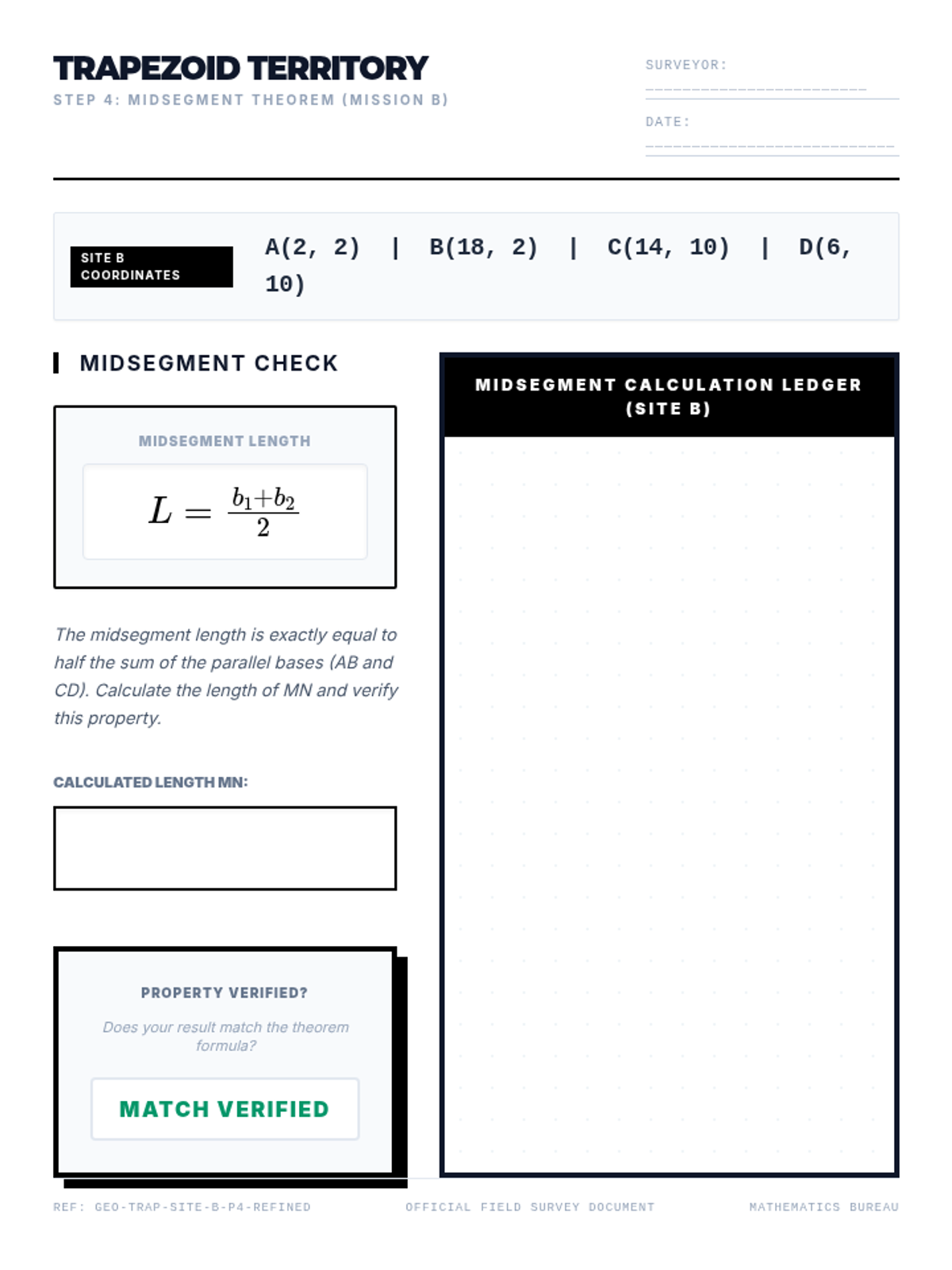
A student worksheet for analyzing the properties of trapezoids and kites, featuring midsegment calculations, an isosceles trapezoid diagonal proof, and kite angle problems.
An instructional slide deck detailing the properties of trapezoids and kites, including isosceles trapezoid characteristics, the midsegment formula, and perpendicular diagonal properties of kites.
A teacher guide for the Special Shape Squad lesson, featuring a breakdown of quadrilateral hierarchies, answer keys for the worksheet, and a group activity extension.
A student worksheet focused on the classification and proofs of special quadrilaterals, featuring an Always/Sometimes/Never section and a detailed rectangle proof.
An instructional presentation covering the unique properties and proof requirements for rectangles, rhombi, and squares, including diagonal characteristics and the 'hierarchy of design'.
A teacher facilitation guide for the Parallelogram Power lesson, including instructional goals, common student misconceptions, and a complete answer key for the worksheet.
A student worksheet for practicing two-column parallelogram proofs, featuring a diagram with perpendicular congruence marks and parallel arrow symbols.
An instructional slide deck introducing the five core properties of parallelograms and the formal requirements for proving a quadrilateral is a parallelogram using two-column proofs.
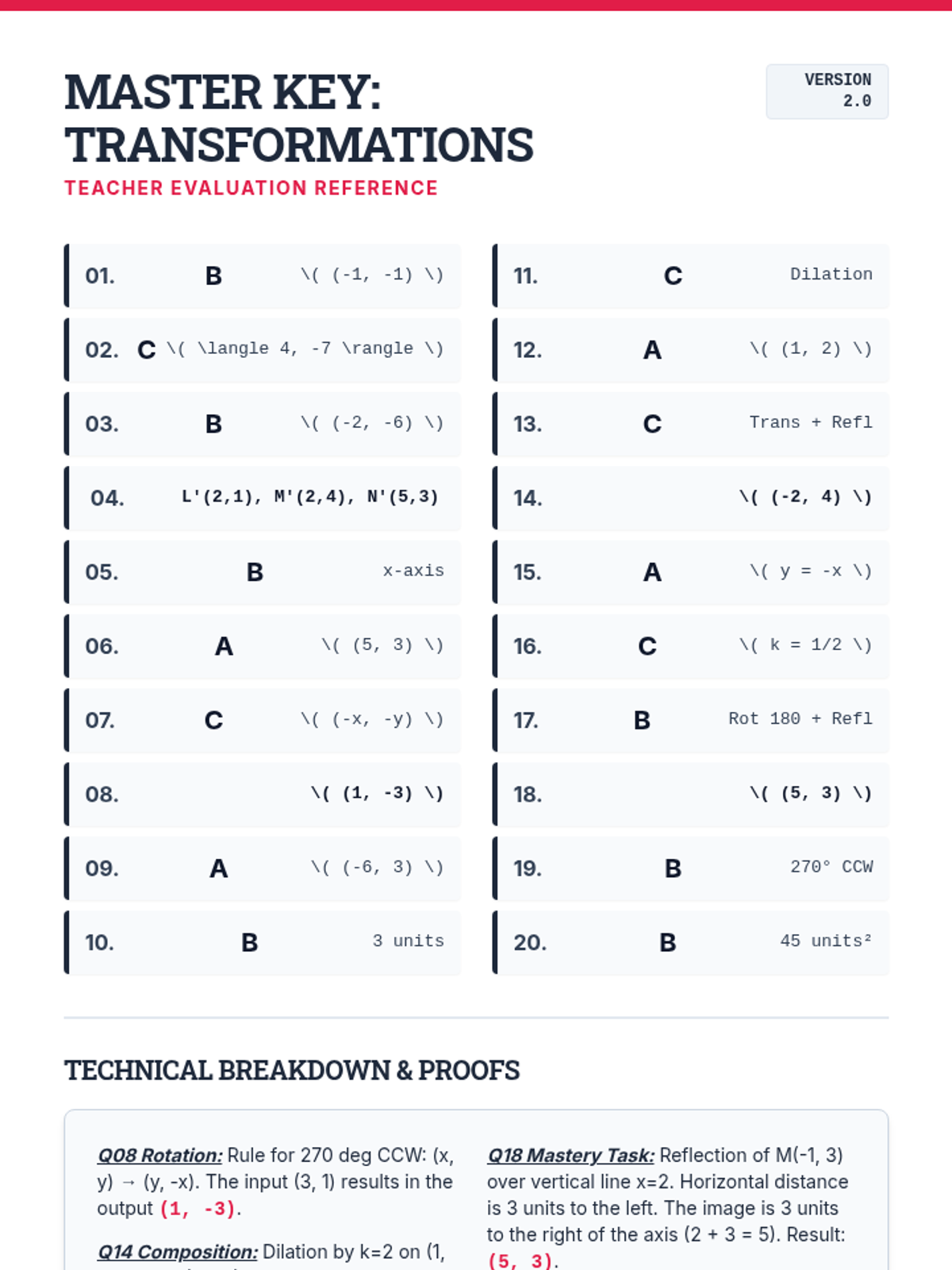
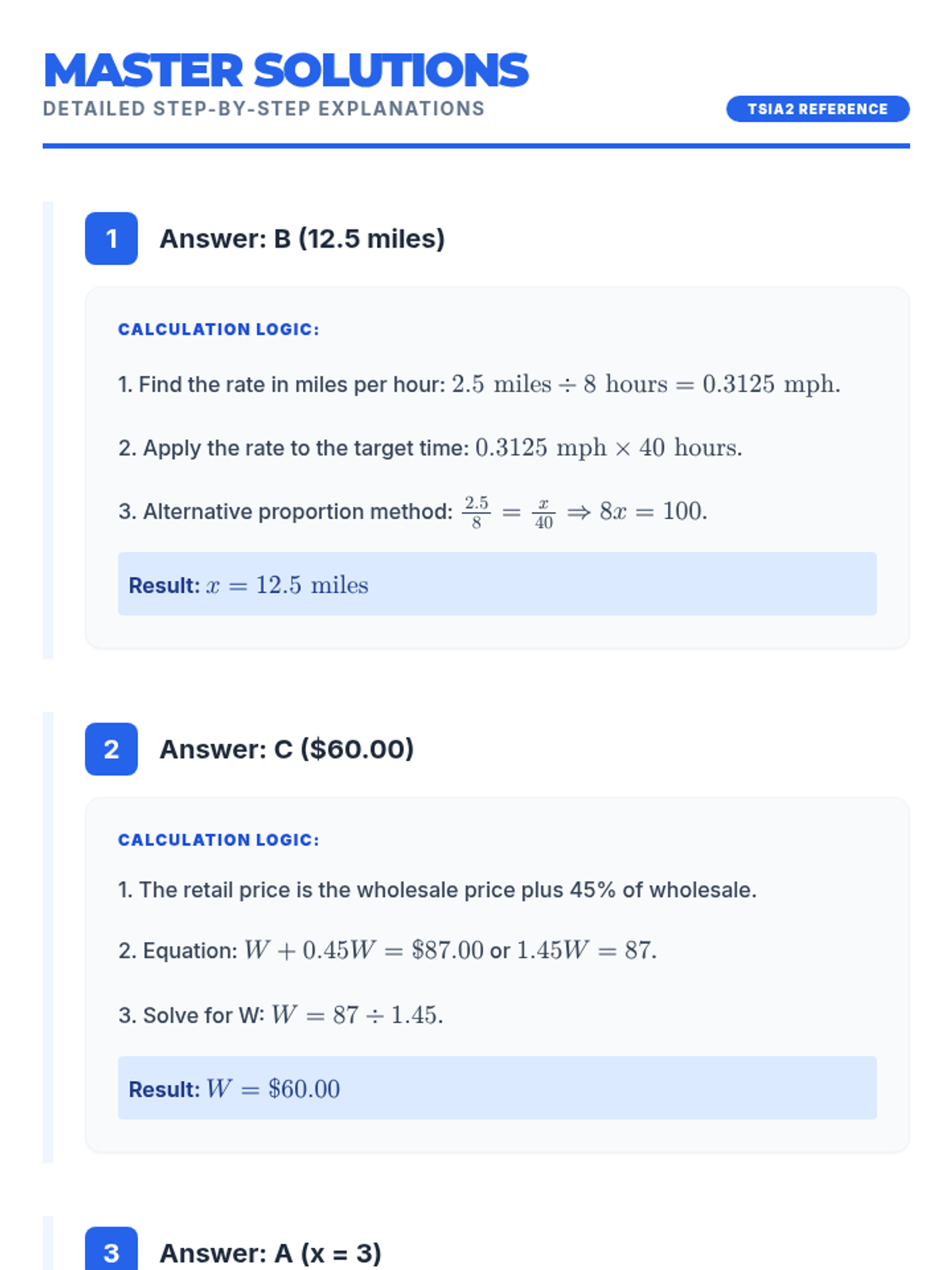
A detailed answer key for the TSIA2 Math Practice Test, including a quick-reference grading table, step-by-step solutions for all 20 questions, and a diagnostic scoring guide. (Updated to reflect changes in questions 3, 10, and 19).
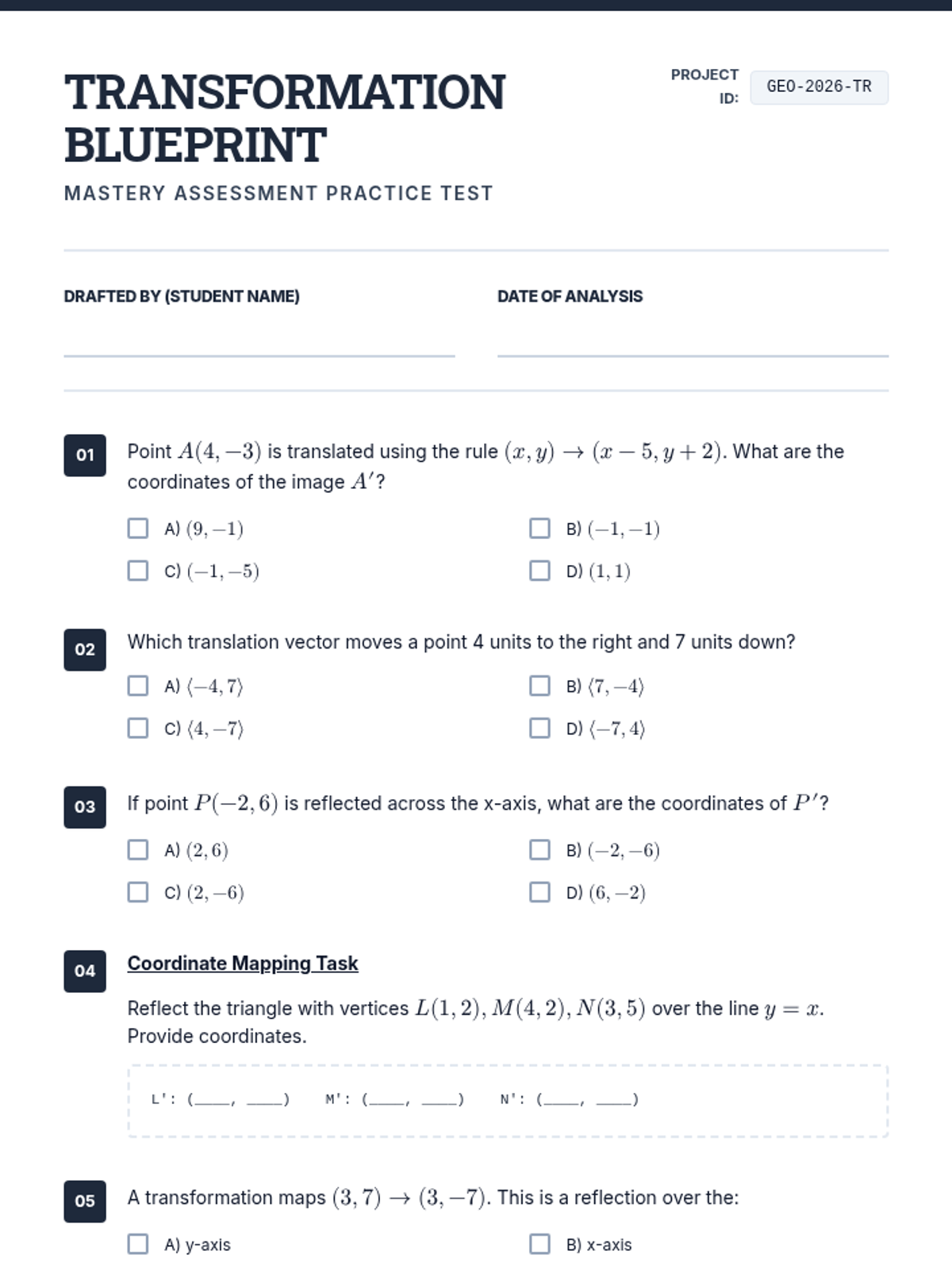
A 20-question multiple choice practice test for the TSIA2 Math exam, broken down by topic area: Quantitative Reasoning, Algebraic Reasoning, Geometry, and Statistics. Includes space for student work. (Updated questions 3, 10, and 19).
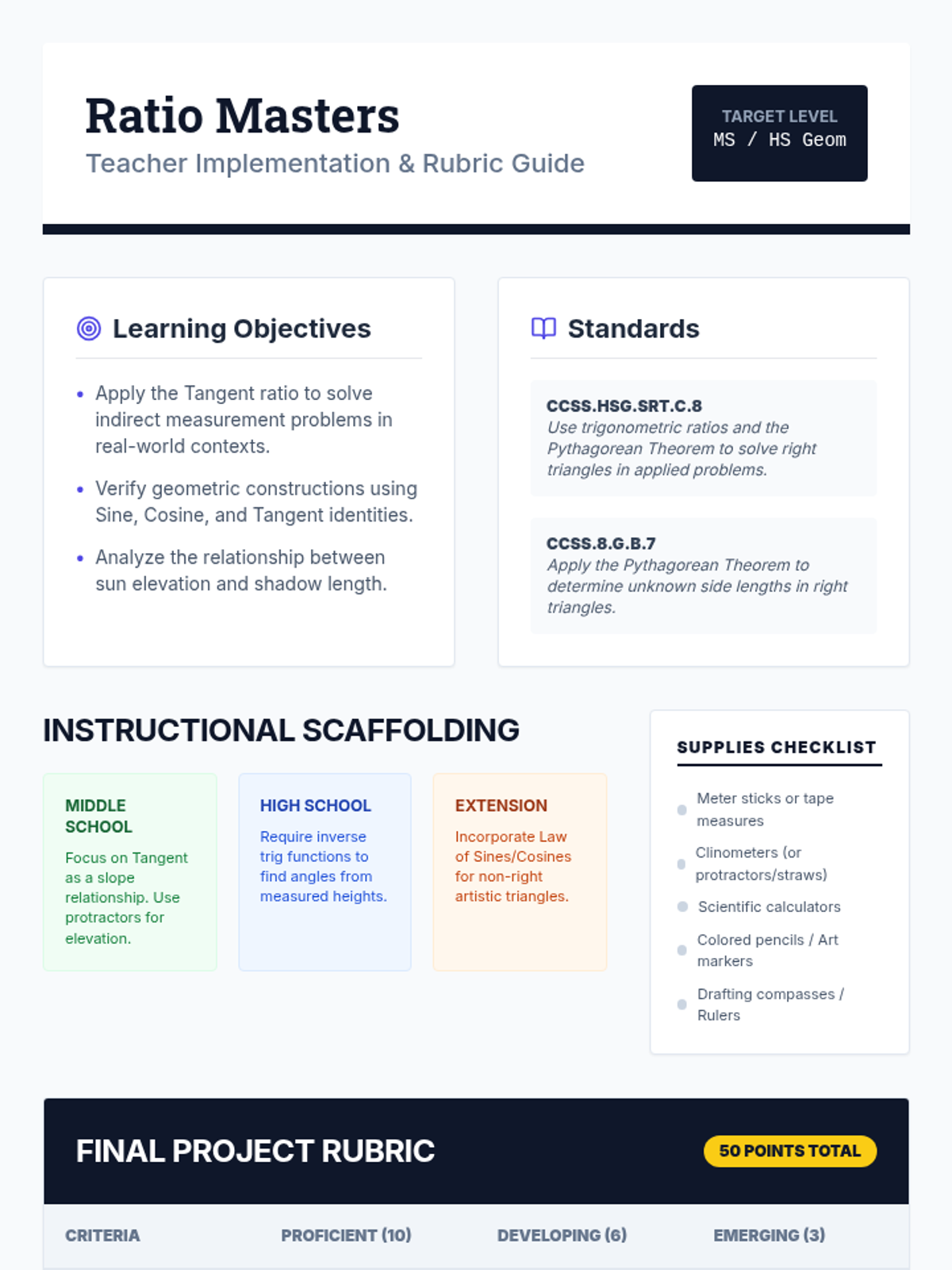
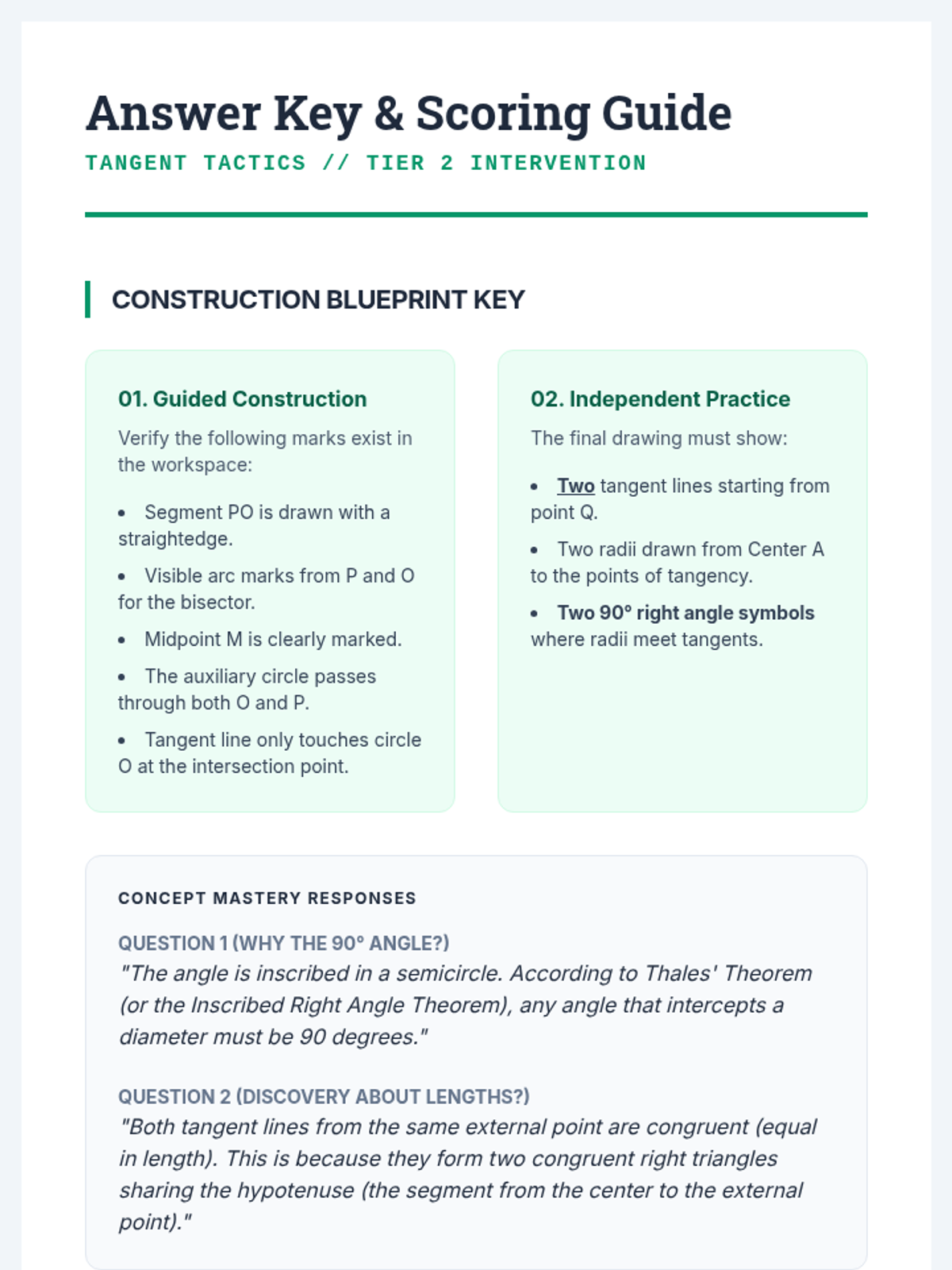
A teacher resource providing the answer key for the Tangent Tactics worksheet and exit ticket. Includes specific look-fors for construction tasks and exemplar responses for reasoning questions.
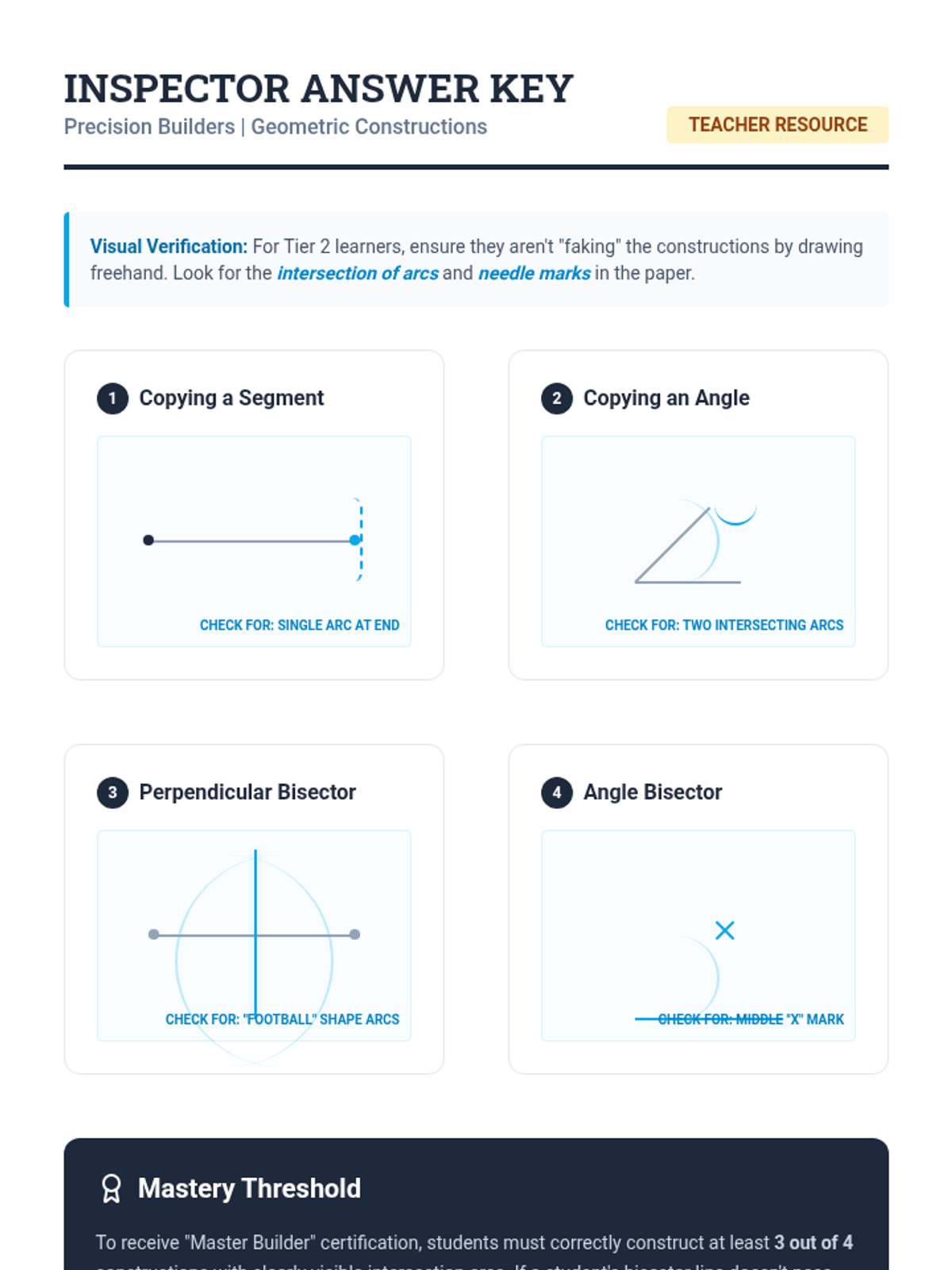
A visual answer key for teachers to quickly verify student geometric constructions. It highlights the specific arc intersections and 'mastery marks' that demonstrate a student has correctly followed the compass-and-straightedge procedures.
A short post-lesson assessment to measure student understanding of tangent line construction and the relationship between radii and right angles. Includes a multiple-choice concept check, a sketching task, and a reasoning question.
A quick assessment tool for students to check their understanding of circle centers and the bisectors required to construct them.
A quick progress monitoring tool for the Tangent Line Mastery lesson, featuring a construction task and conceptual check-in.
A comprehensive teacher facilitation guide for the geometric constructions intervention, featuring pacing, common misconceptions, questioning prompts, and differentiation strategies for Tier 2 small groups.
A comprehensive teacher-facing lesson guide for the Tangent Tactics intervention. Includes instructional scripts, pacing, scaffolding strategies for struggling learners, and a progress monitoring look-for table.
Teacher facilitation guide for the Tier 2 intervention, featuring explicit instructional steps, questioning prompts, error alerts, and a progress monitoring rubric.
A scaffolded practice worksheet for triangle constructions, moving from partial support to independent construction and real-world application.
A scaffolded student workbook for practicing geometric constructions. It includes 'Demonstration Practice' areas for guided instruction and 'Quick Check' areas for independent work, culminating in a Mastery Certification page for progress monitoring.
A concise assessment tool for evaluating student mastery of segment copying and conceptual understanding of dynamic constructions. Designed as a 'Quality Control' ticket.
A comprehensive teacher resource for facilitating the Circle Secrets intervention lesson. It includes a student progress monitoring mastery checklist, a tiered support strategy guide, recommended pacing, and a complete answer key for all student materials.
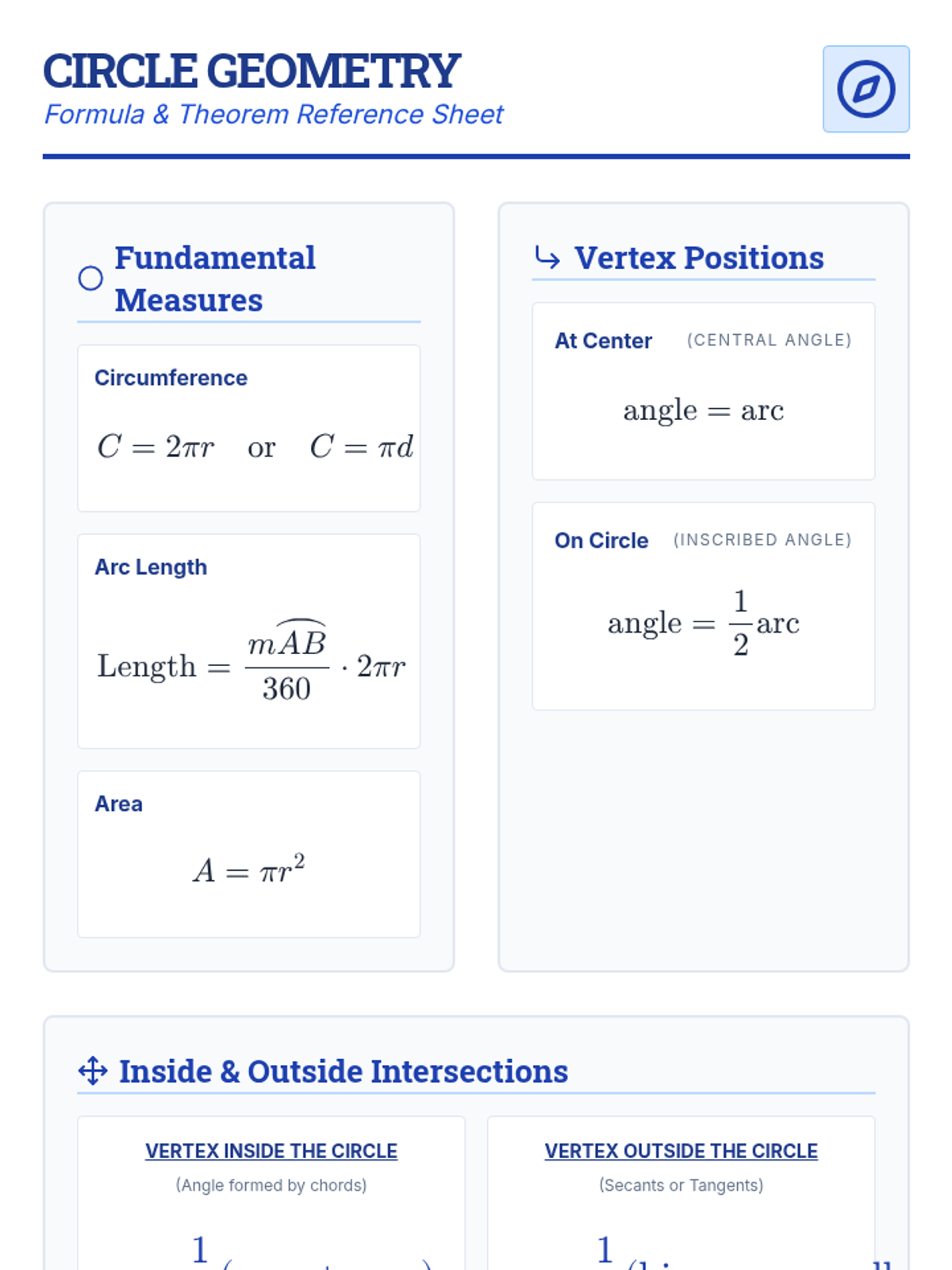
A visual reference sheet for circle theorems and step-by-step construction procedures, designed to support students during small group intervention.
Teacher-facing facilitation guide and progress monitoring tool for geometric constructions. Includes scaffolding strategies, a mastery rubric, and discussion prompts.
A visual reference sheet for students that breaks down the steps for constructing both inscribed and circumscribed circles with clear diagrams and tips.
A scaffolded student worksheet for geometric constructions including copying segments, perpendicular bisectors, angle bisectors, and parallel lines. Features a clean blueprint aesthetic with specific workspace areas and step-by-step guidance.
Scaffolded construction worksheet for regular polygons, featuring pre-drawn circles, step-by-step drafting instructions, and a professional blueprint aesthetic for student engagement.
A scaffolded practice worksheet for students to perform geometric constructions of tangent lines, featuring a blue-print theme, guided steps, and ample work space.
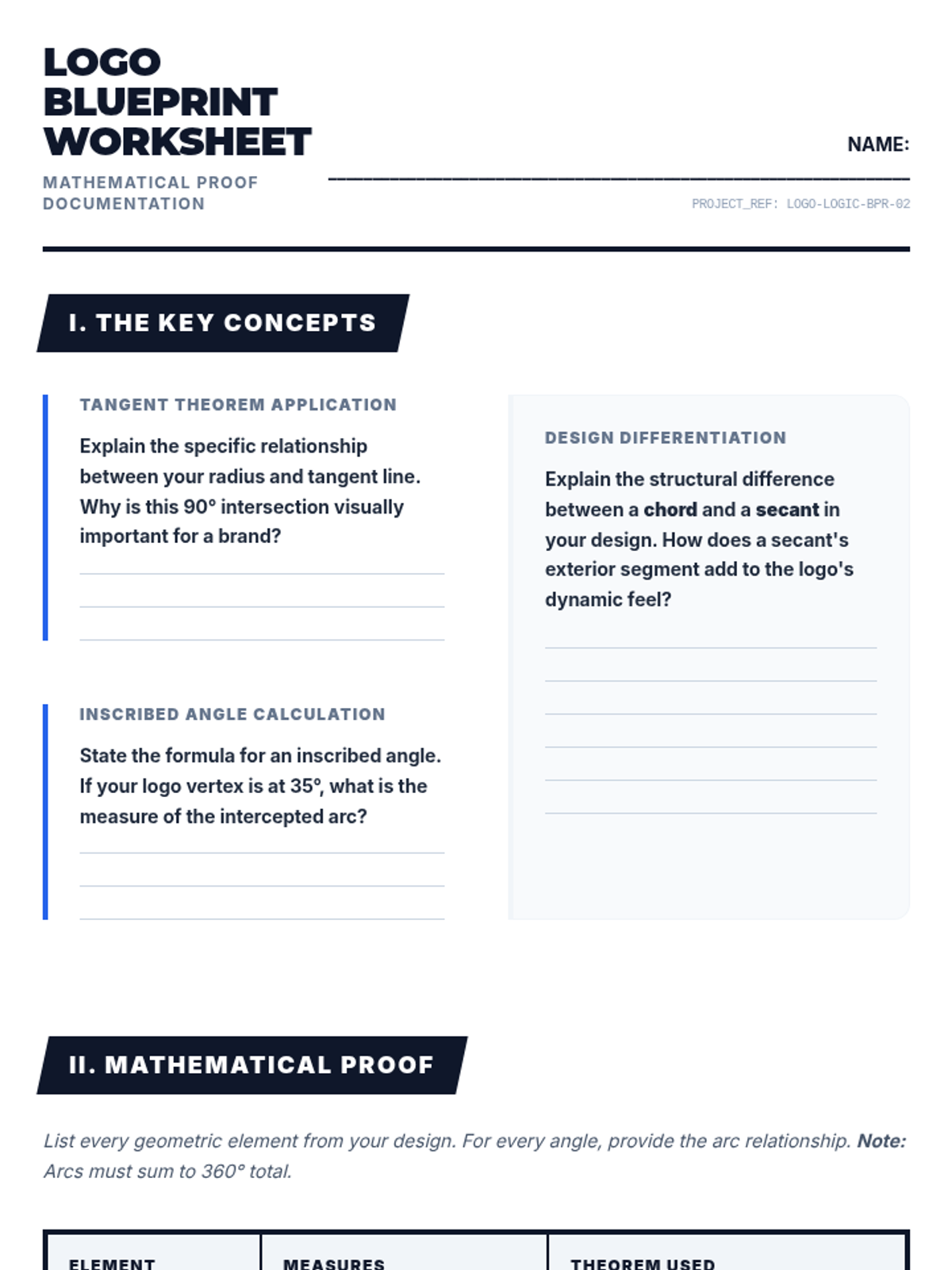
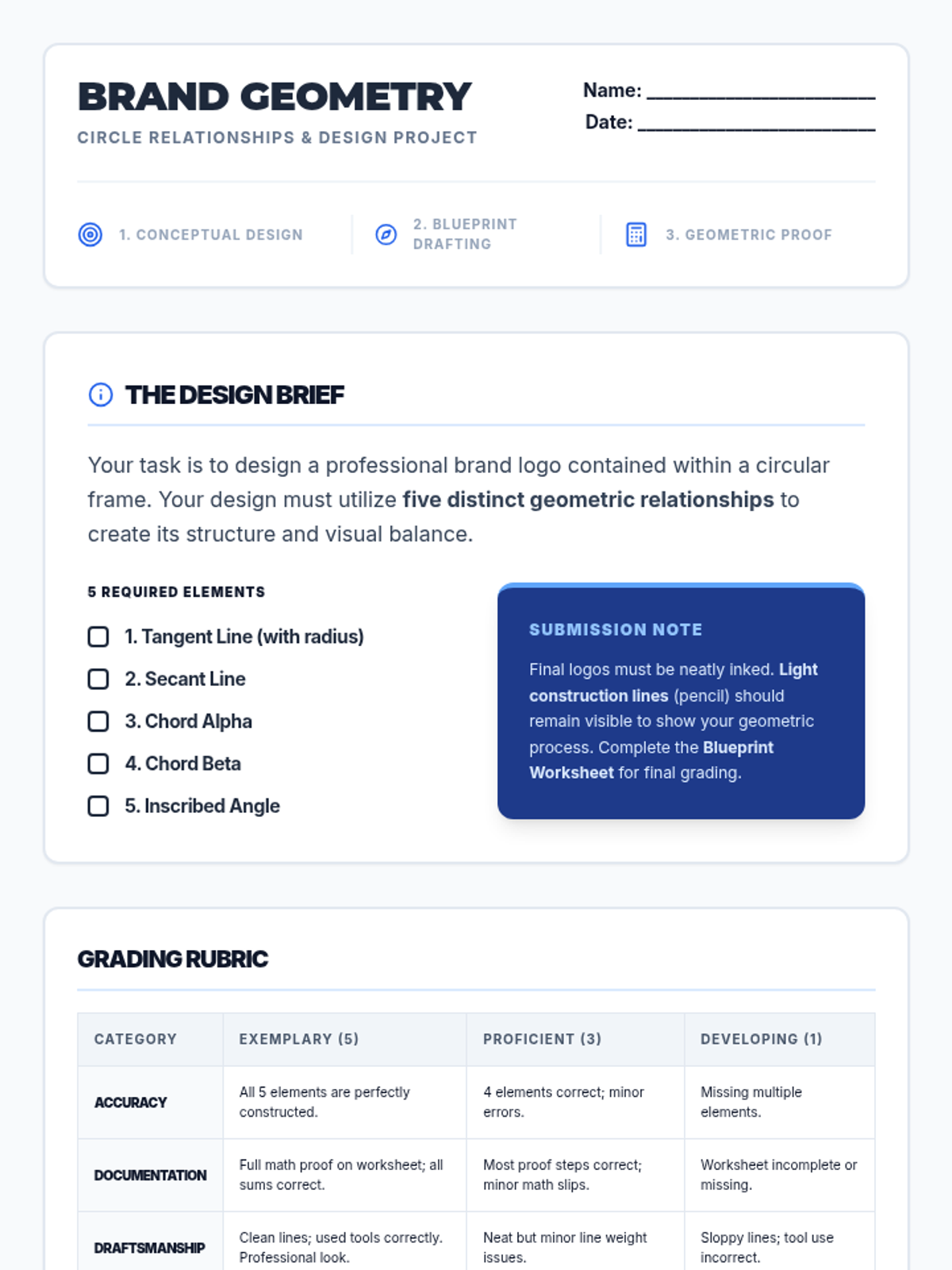
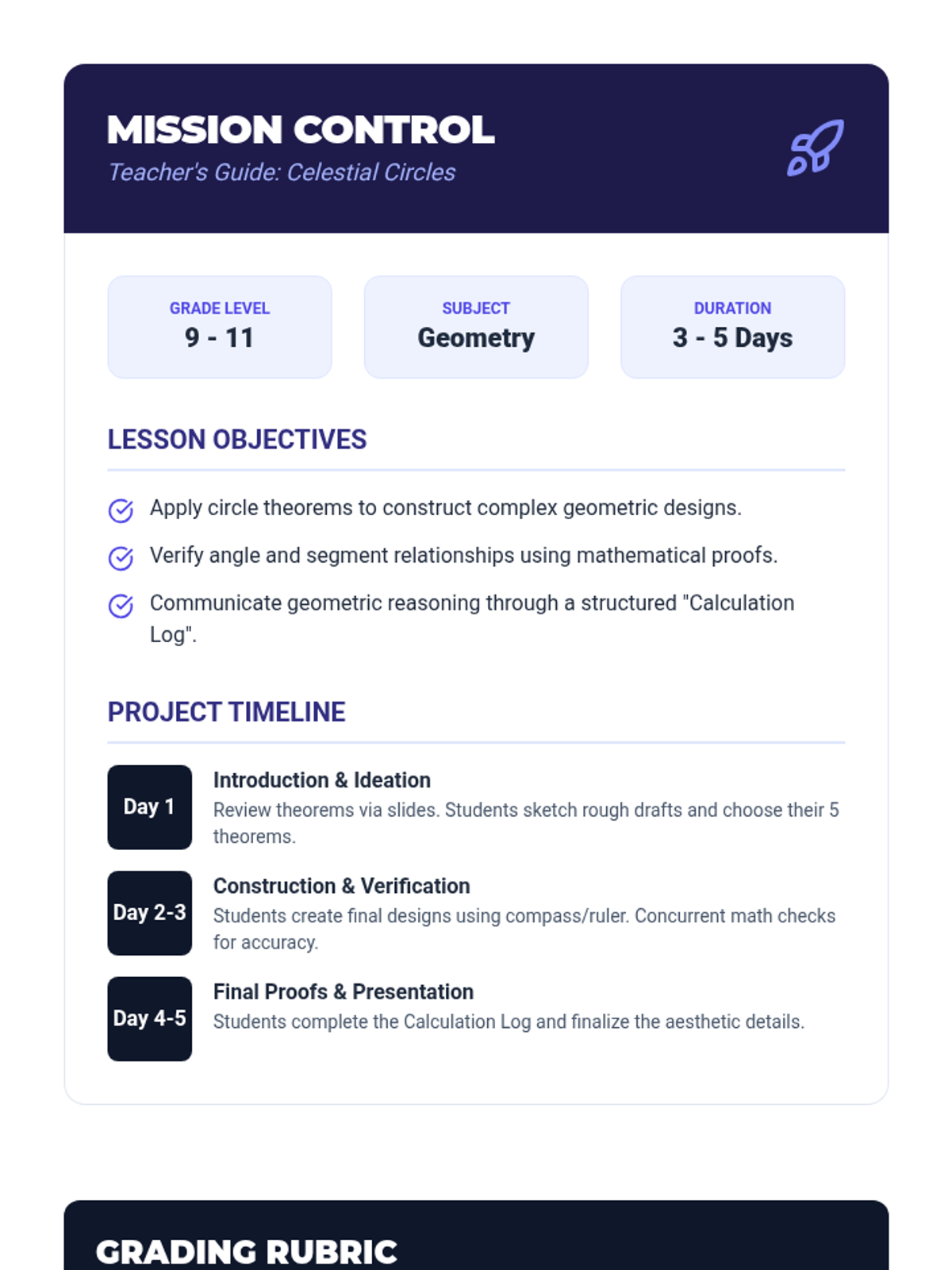
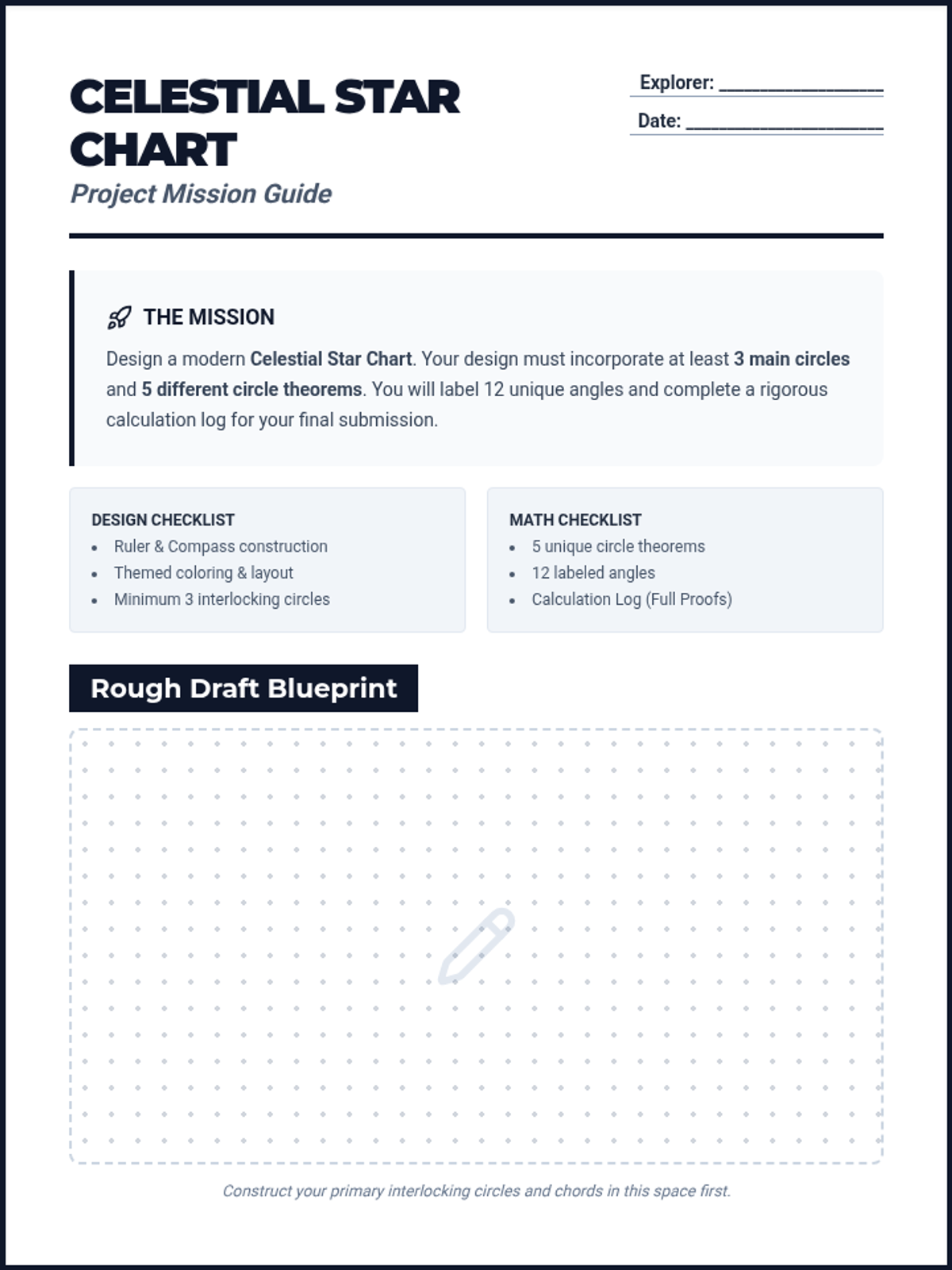
A scaffolded proof guide for the inscribed quadrilateral supplementary angles theorem. It breaks the logic down into four manageable 'blueprint' steps with fill-in-the-blank sections to support Tier 2 learners in understanding the arc-to-angle relationship.
A short assessment or exit ticket for the geometric blueprints lesson. It tasks students with constructing a regular hexagon and an equilateral triangle from scratch, including a self-reflection checklist to promote metacognition.
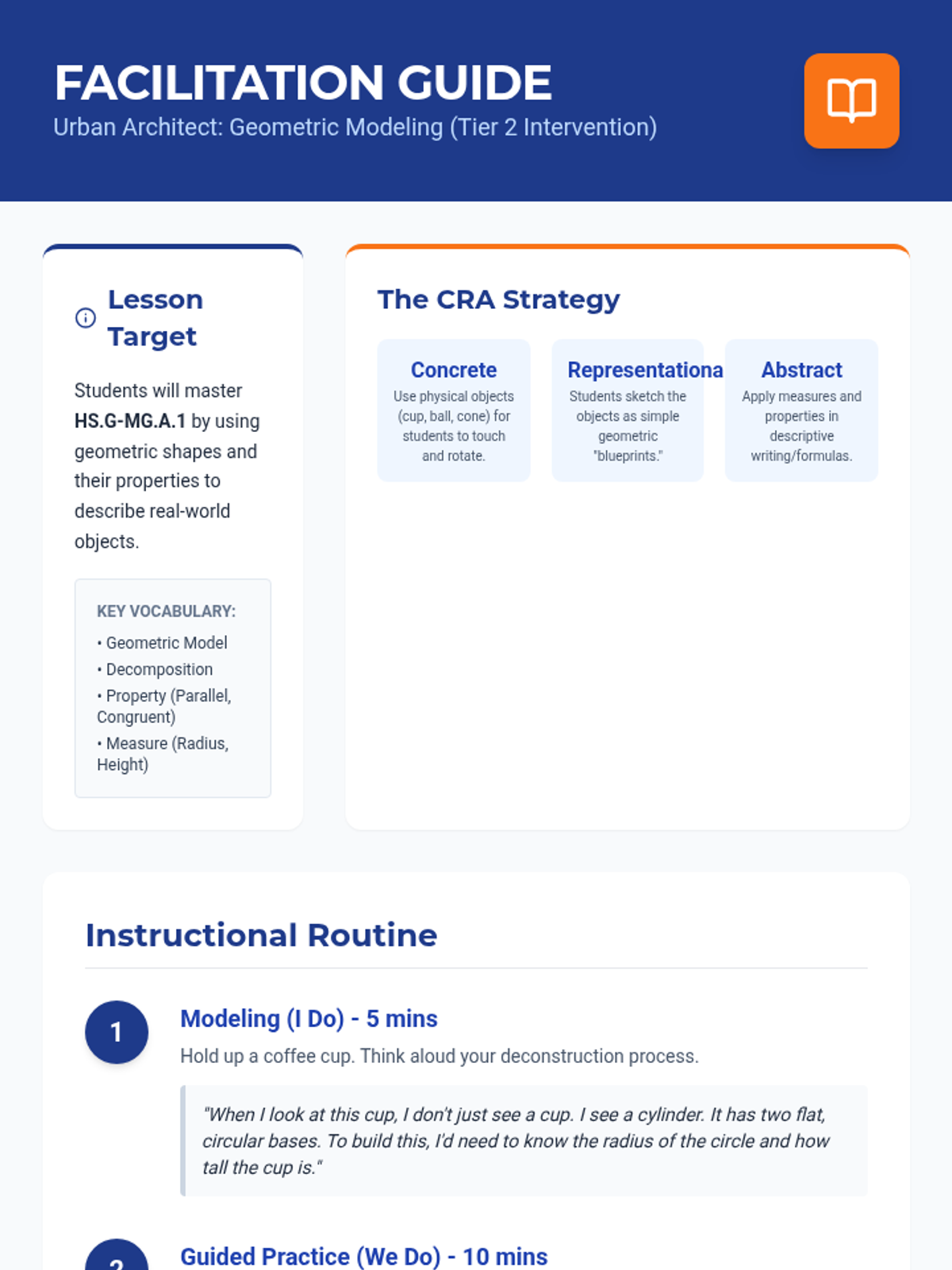
Facilitation guide for teachers delivering the geometry intervention, including instructional routines, CRA strategies, error correction tips, and progress monitoring scoring.
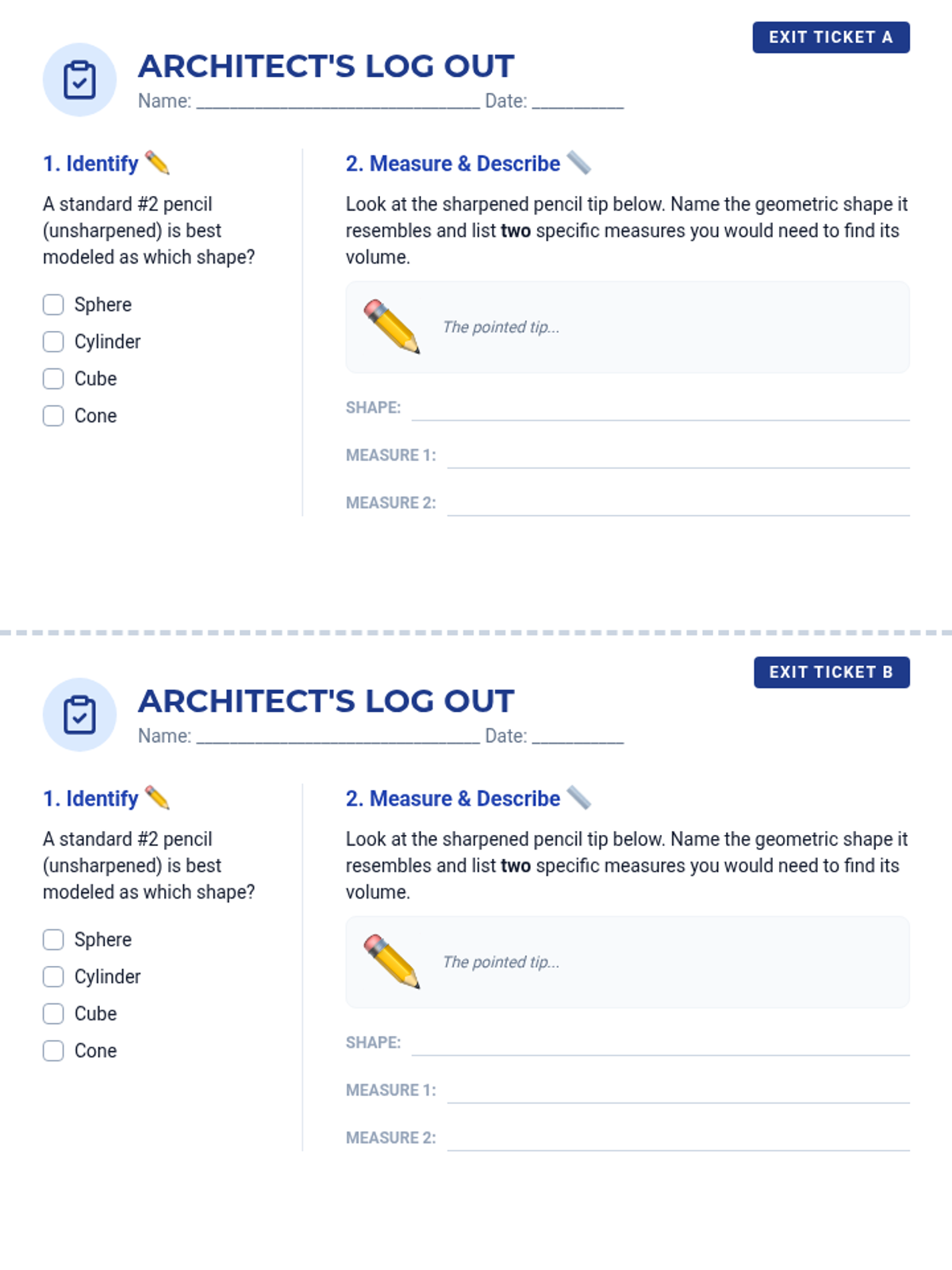
A quick exit ticket for progress monitoring, asking students to identify shapes in common objects and describe required geometric measures.
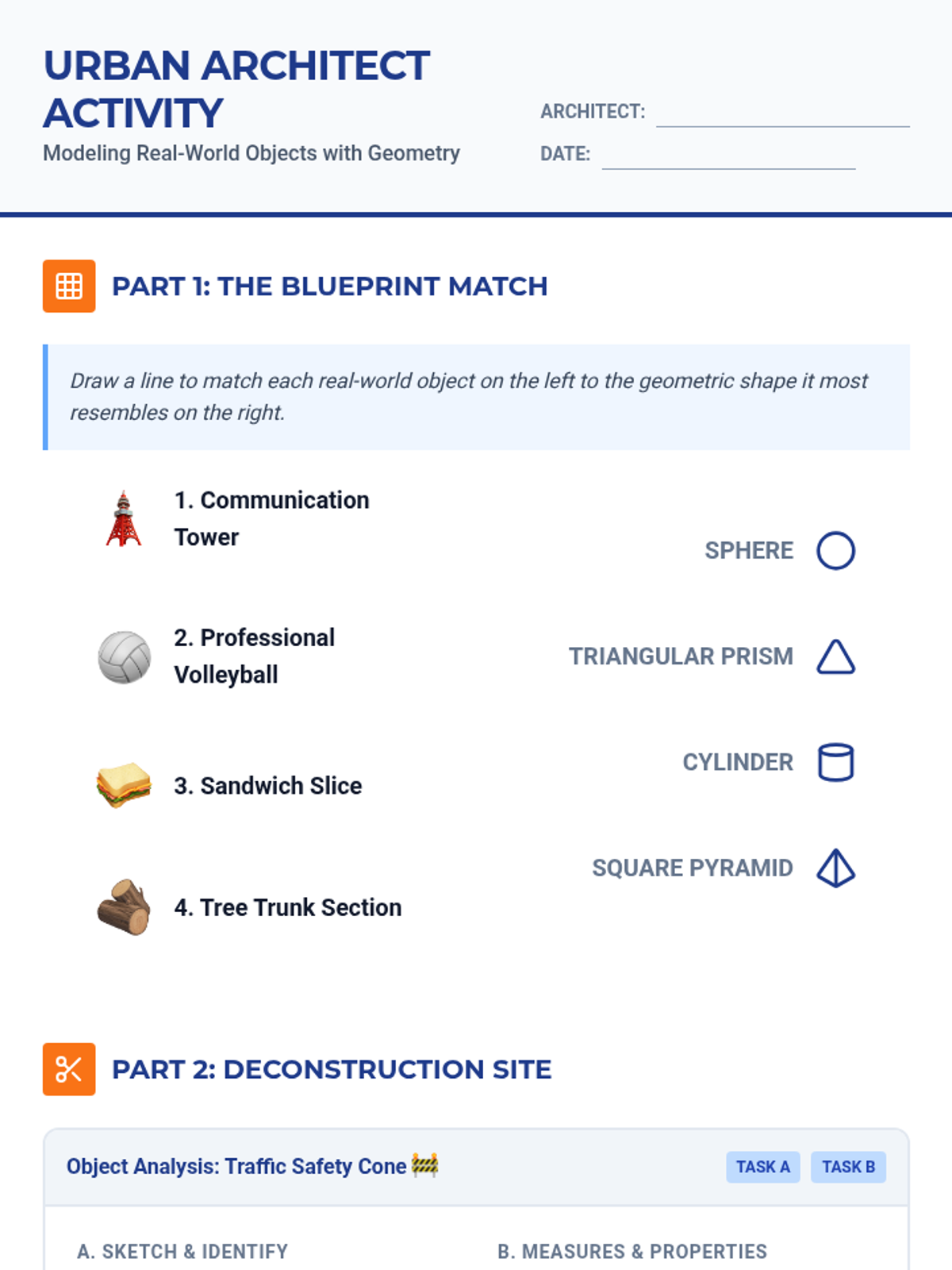
Student worksheet for identifying shapes in real-world objects, decomposing complex structures, and using geometric vocabulary to describe properties and measures.
Visual presentation for the geometry intervention lesson, featuring modeling of real-world objects (coffee cup, water tower) as geometric shapes with specific measures and properties.
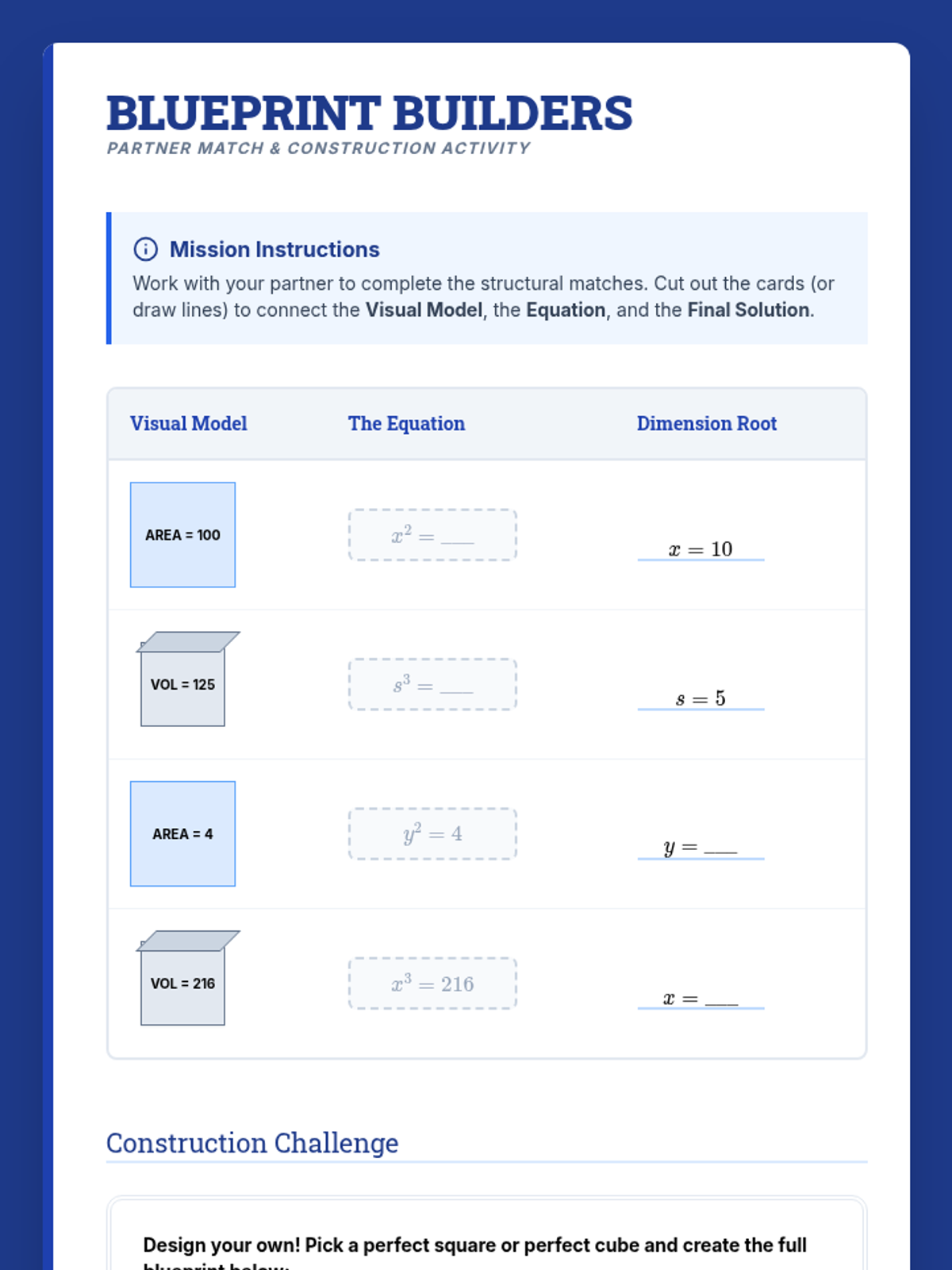
A partner-based matching activity where students connect geometric visual models with their corresponding algebraic equations and root solutions.
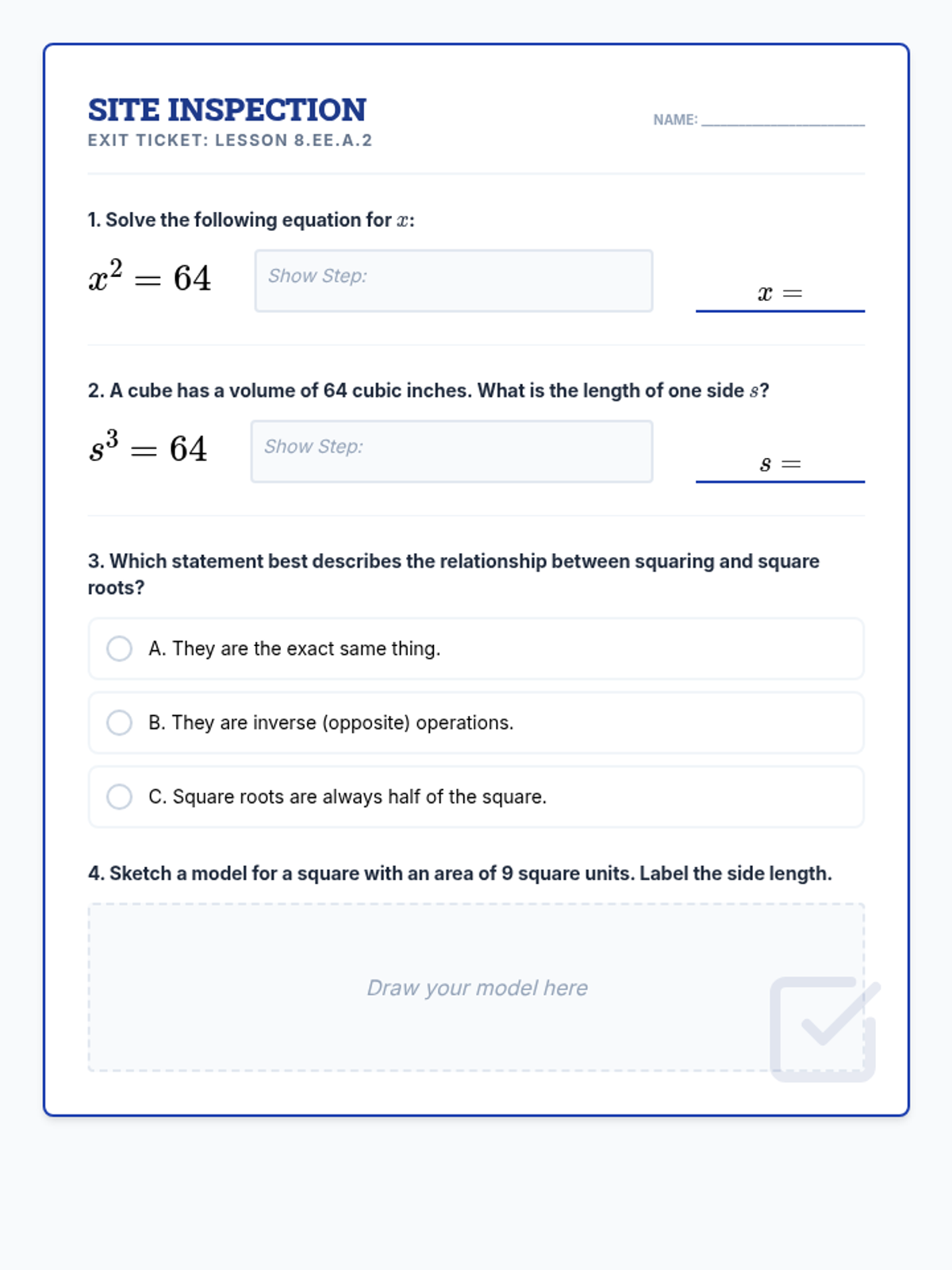
A formal assessment tool (exit ticket) to check student understanding of solving square and cube root equations using geometric contexts.
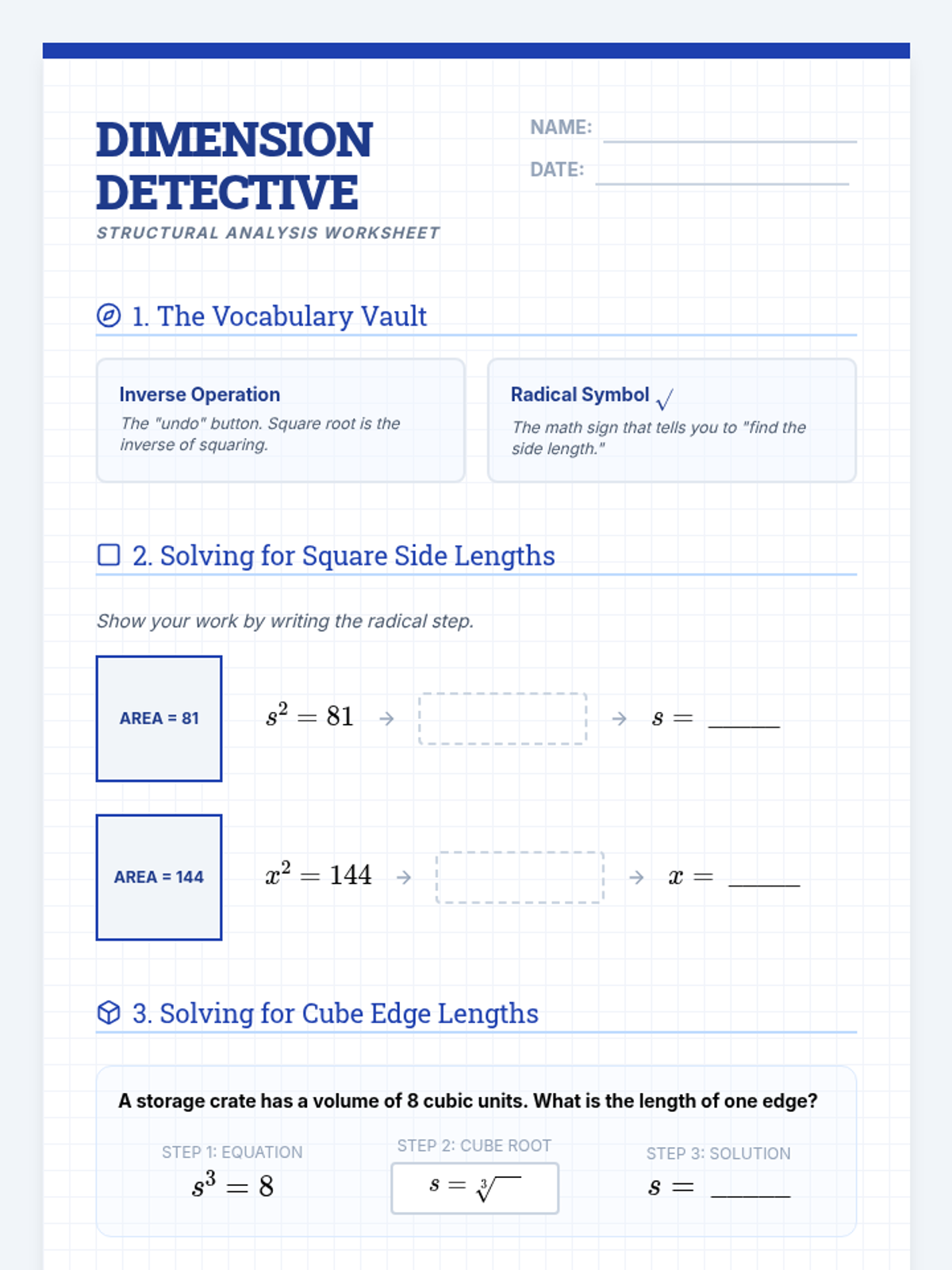
A scaffolded practice worksheet for students to calculate side lengths of squares and cubes from area and volume models, including space for showing inverse operations.
A visually engaging slide deck with blueprint-themed graphics that guide students through the connection between geometric shapes (squares/cubes) and root operations.
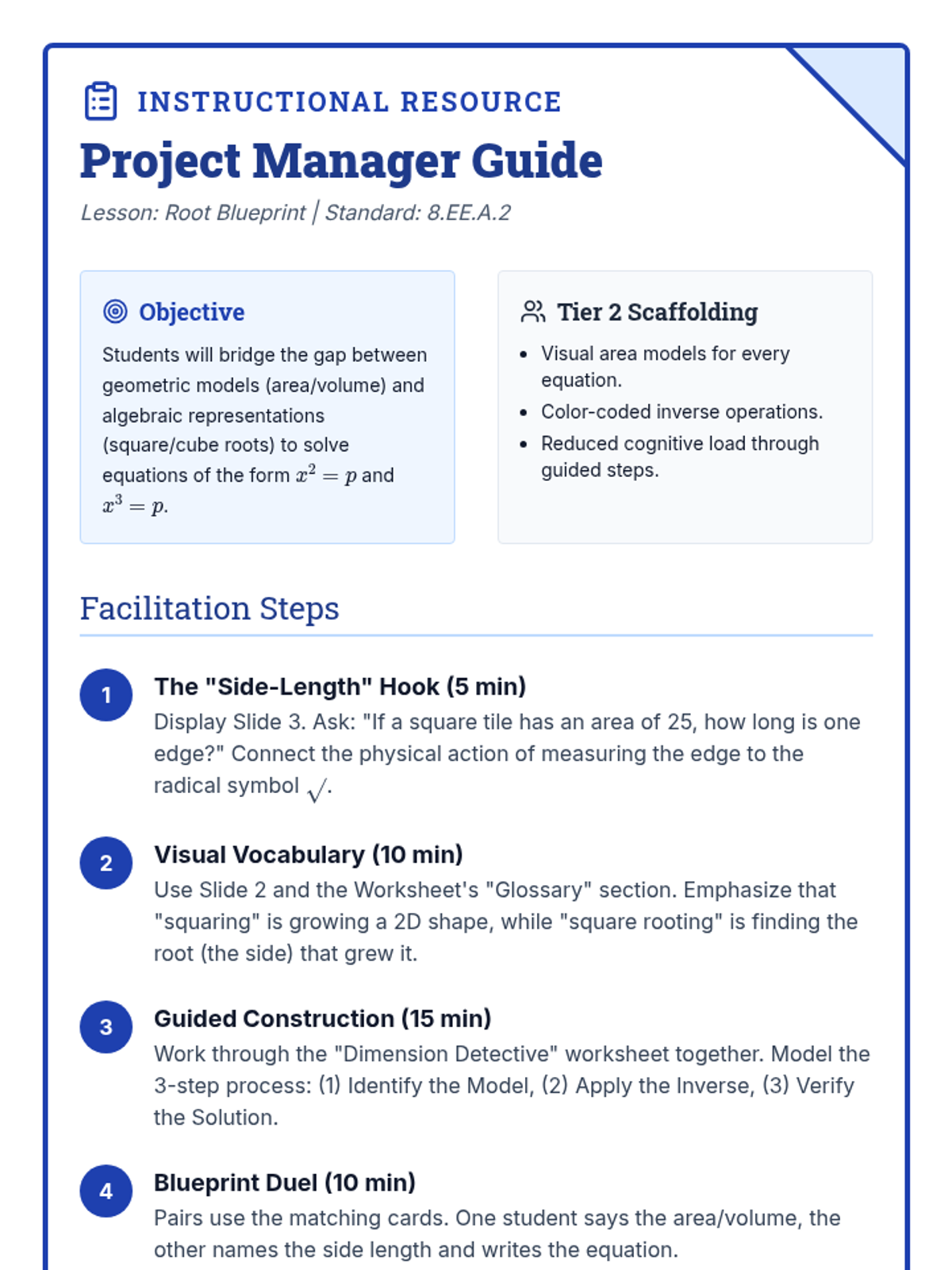
A comprehensive teacher facilitation guide containing lesson objectives, step-by-step instructions, common misconceptions, and answer keys for the Root Blueprint lesson.
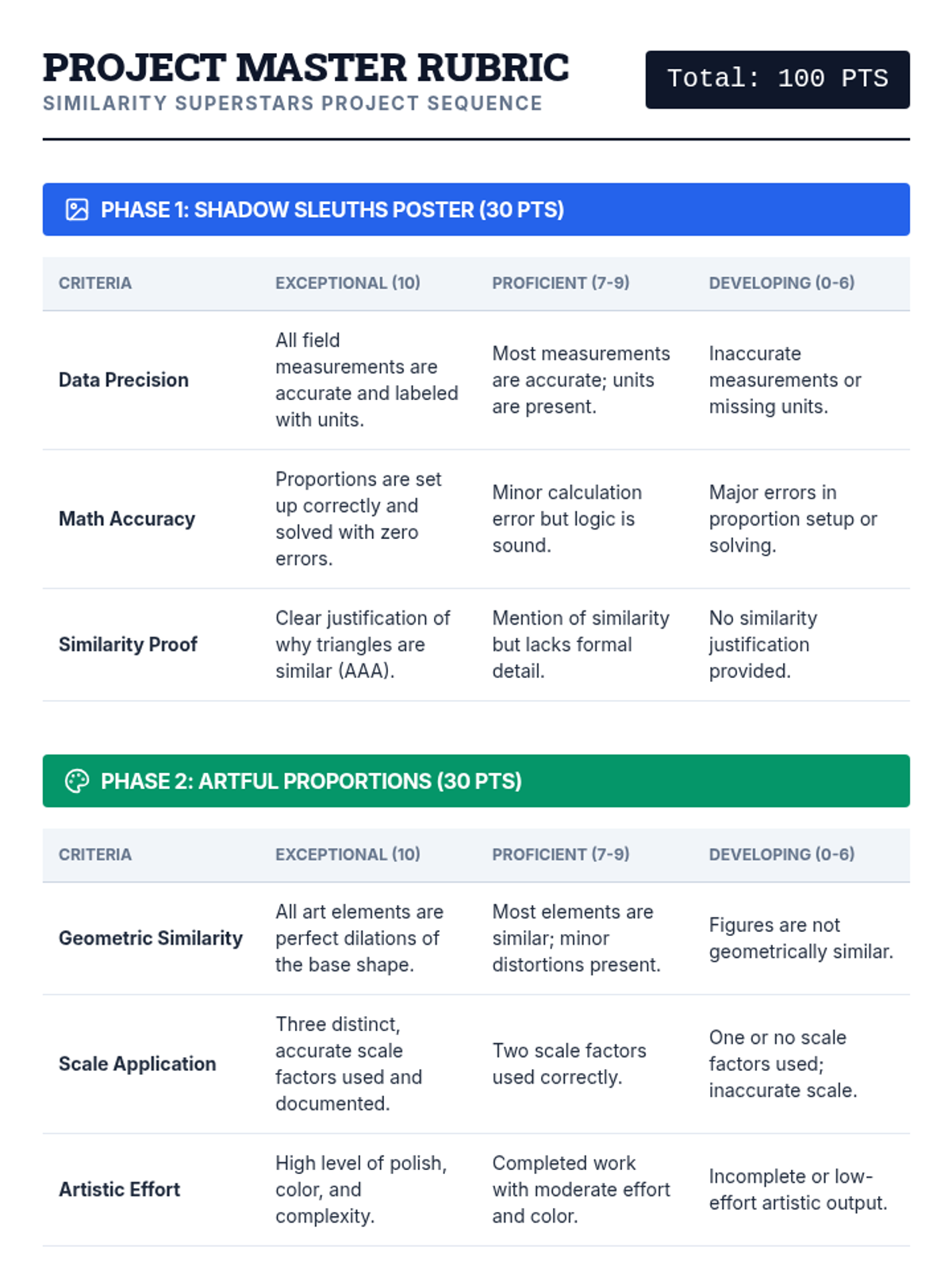
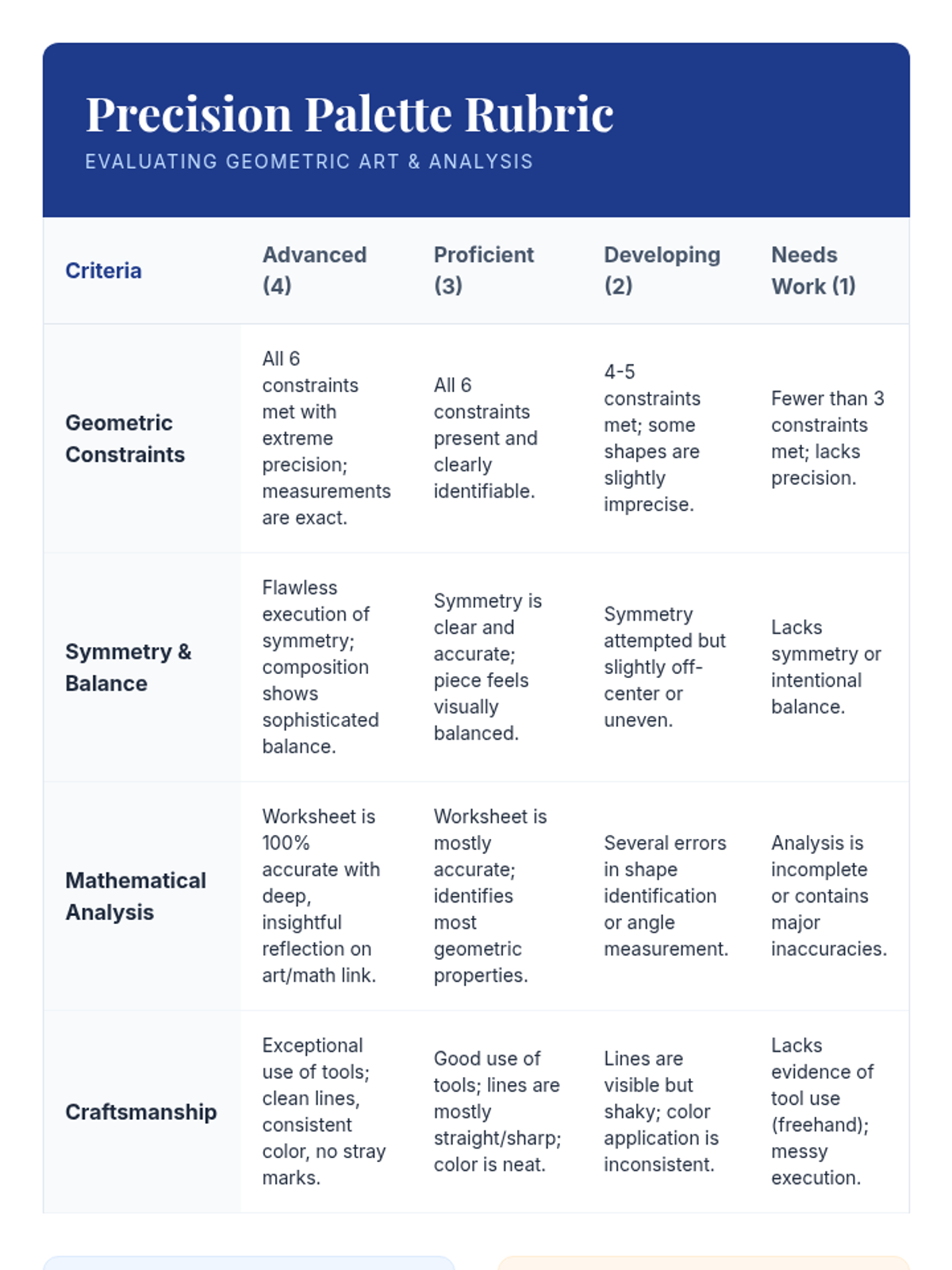
A comprehensive rubric for grading the Masterpiece Math lesson, assessing geometric constraints, symmetry, mathematical analysis, and craftsmanship.
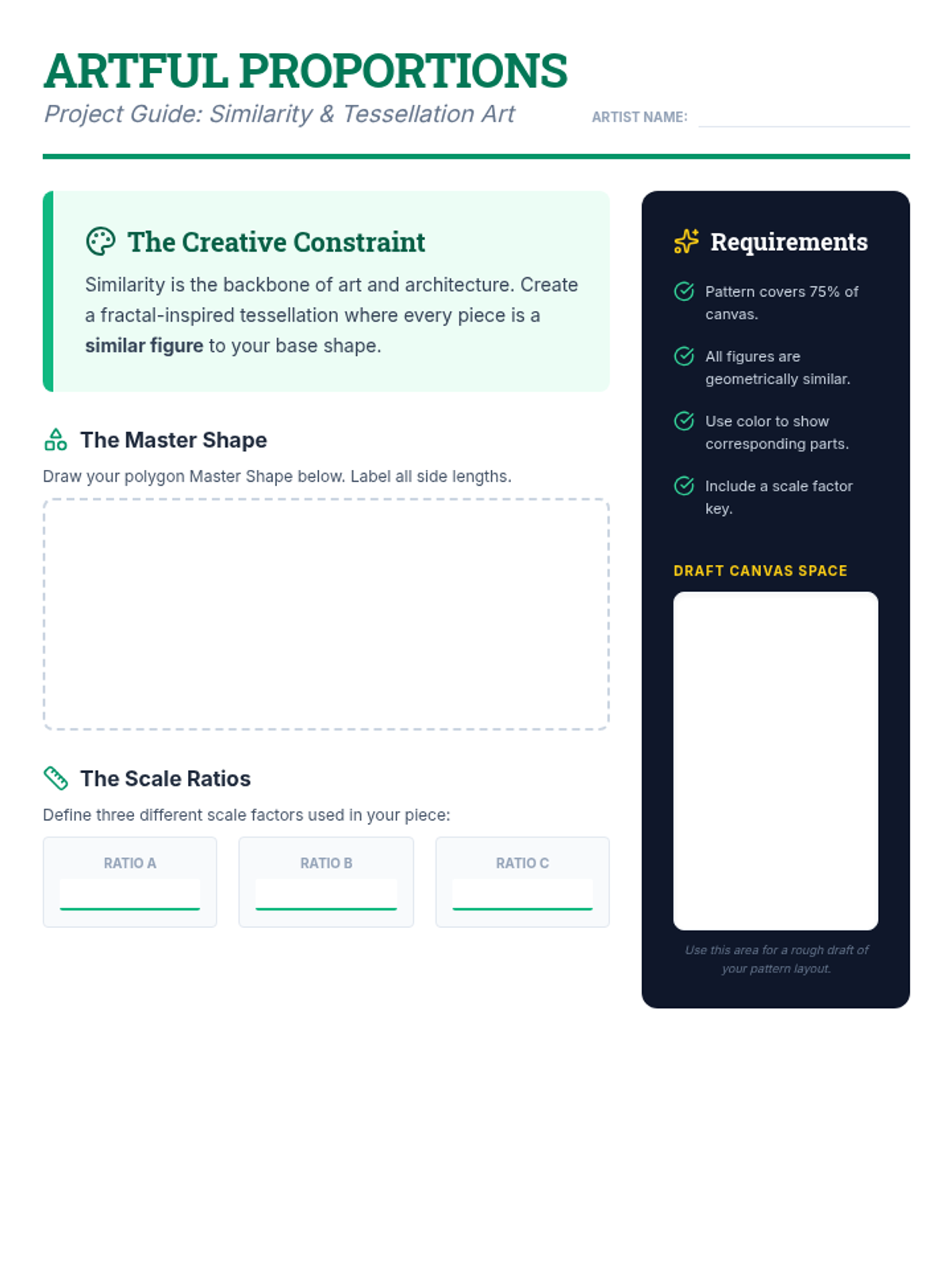
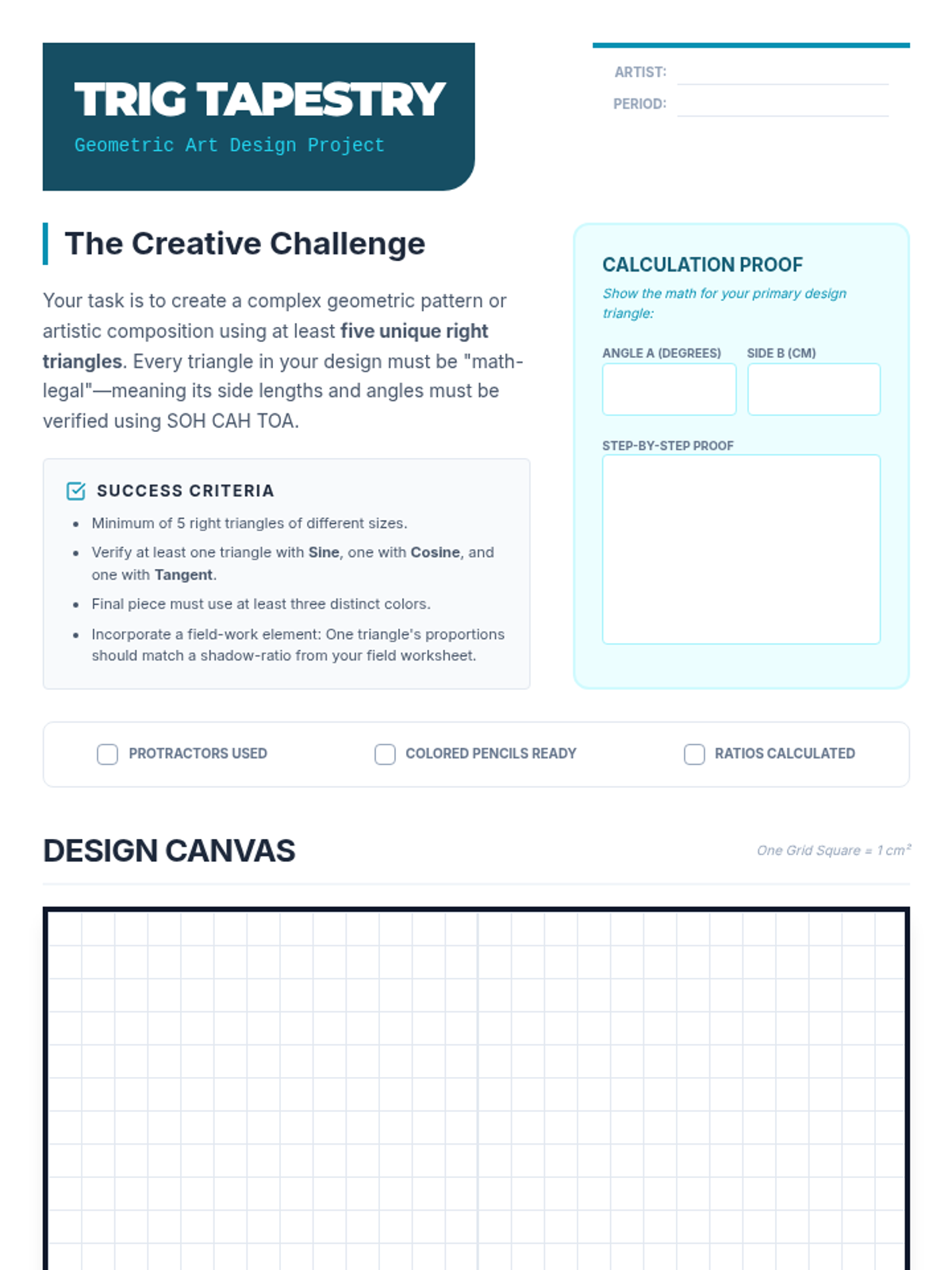
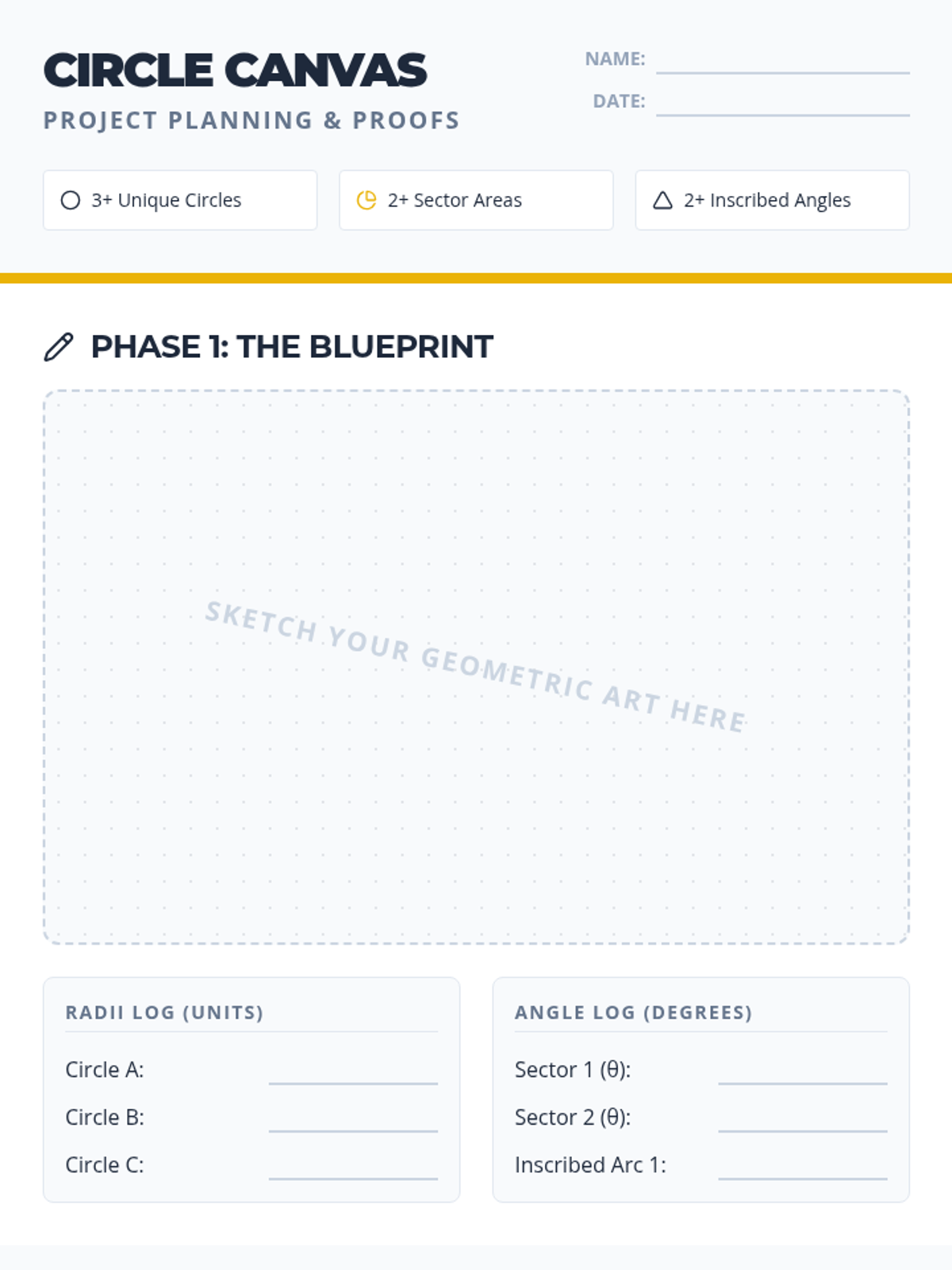
A project guide and activity sheet for students to create their own geometric art piece, including specific mathematical constraints and planning sections.
A student worksheet for analyzing geometric properties in famous artworks, including sections on the Parthenon, symmetry in the Taj Mahal, and abstract art analysis.
A visual presentation for the Masterpiece Math lesson, featuring slides on structural geometry, symmetry, and abstract art, designed with a sophisticated blueprint aesthetic.
A comprehensive teacher guide for the Masterpiece Math lesson, including learning objectives, a detailed 90-minute instructional sequence, and differentiation strategies.
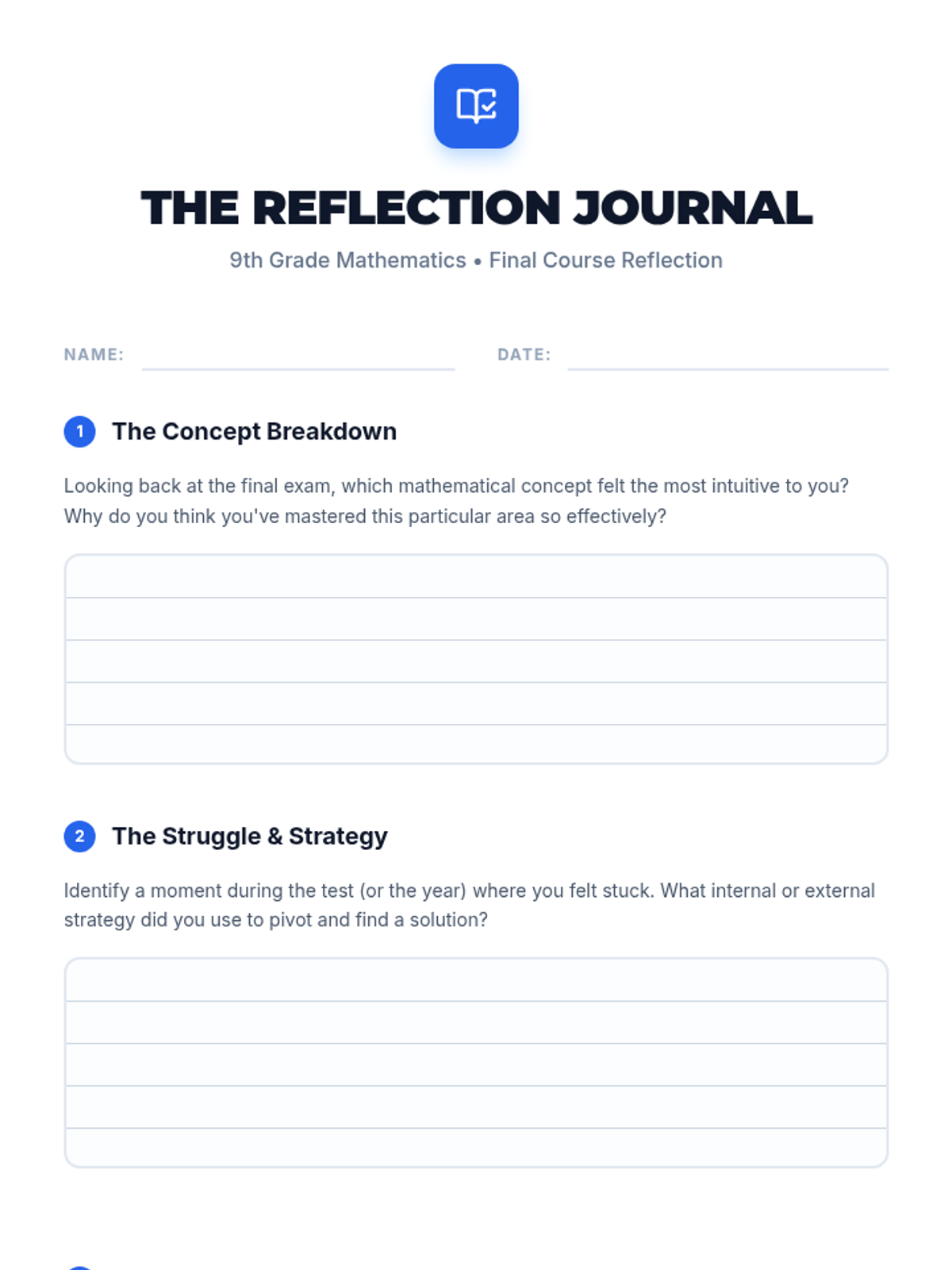
A student reflection journal page with a deep-thinking prompt about the real-world importance of the Order of Operations in geometry and a synthesis checklist.
A student response sheet for the Gallery Walk activity, providing designated spaces for error identification and corrected mathematical work.
Large-format gallery walk posters featuring common mathematical errors in surface area calculations for students to analyze and correct.
Visual presentation slides for the Cube Calculation Challenge, featuring the hook question, embedded YouTube video, formula derivation, and activity instructions.
A comprehensive teacher guide for the Cube Calculation Challenge lesson, including timing, discussion prompts, and an answer key for the gallery walk.
A comprehensive teacher guide for the 'Area Architects' lesson. Includes a detailed lesson timeline, video discussion anchors with key takeaways, a full answer key, and notes on common student misconceptions.
Teacher answer key for the Angle Hunter Exit Ticket, providing reference angles, quadrant sign identification, and final trigonometric value calculations.
Teacher answer key for the Trig Blueprint Worksheet, providing exact values, reference angles, and quadrant identification for all student exercises.
A comprehensive teacher resource providing a lesson delivery framework for the Triangle Blueprint intervention. Includes learning objectives, scaffolded questioning prompts, a pacing guide, differentiation strategies, and a detailed answer key for all worksheet problems.
A scaffolded practice worksheet for the Triangle Navigator lesson, featuring identification, setup, and solving levels to support tiered instruction.
A teacher-facing progress monitoring tool designed for small group Tier 2 instruction. It includes a sub-skill rubric, student tracking table, and a misconception watchlist to help educators identify and address specific gaps in right triangle problem-solving.
A short, focused exit ticket for progress monitoring. Asks students to identify matching ratios, solve a complementary angle problem, and explain the conceptual reasoning behind the relationship.
A quick exit ticket for progress monitoring, featuring one computation problem, one conceptual explanation, and a student self-reflection scale.
A quick 3-question progress monitoring tool for the end of the lesson, covering side labeling, ratio setup, and a conceptual check on ratio consistency.
A quick progress monitoring tool to assess student mastery of Pythagorean Theorem and trigonometric ratios in applied contexts, featuring a self-reflection section.
A concise exit ticket for progress monitoring, assessing conceptual understanding of the Law of Cosines as a generalization and procedural application.
Facilitation guide for teachers delivering the triangle area intervention. Includes instructional scripts, common student pitfalls, and a progress monitoring framework.
A short progress monitoring assessment to check student understanding of law selection and calculation accuracy for oblique triangles.
A visual vocabulary map for students defining the three primary trigonometric ratios (sine, cosine, tangent) and illustrating how to label the sides of a right triangle relative to a reference angle.
A concise progress monitoring tool (exit ticket) for evaluating student understanding of the trigonometric area formula derivation and application. Focuses on auxiliary line sketching and basic calculation.
A comprehensive teacher facilitation guide for the Identity Blueprints intervention. Includes pacing recommendations, common student misconceptions, a quadrant-sign quick reference map, and answer keys for all student-facing materials.
A short assessment for students to demonstrate their understanding of drawing an auxiliary altitude and deriving the trigonometric triangle area formula.
A comprehensive teacher facilitation guide for the Angle Alchemy lesson. Includes learning objectives, pacing, specific Tier 2 scaffolding strategies, common misconceptions, and a progress monitoring tracking grid.
Progress monitoring exit ticket for the Law of Sines lesson. Focuses on identifying correct side-angle pairs and performing a final calculation to find a missing side.
A scaffolded practice worksheet for applying the Law of Cosines, featuring tool-selection tasks, fill-in-the-blank worked examples, and independent practice with dedicated work space.
A comprehensive teacher facilitation guide for the Triangle Architects lesson, including pacing, discussion prompts, and strategies for addressing common student misconceptions.
The official answer key for the Equation Architect Worksheet. Provides step-by-step solutions for coordinate plane problems, matching exercises, and the completing the square conversion process.
A quick assessment for students to demonstrate their understanding of circle similarity through scale factor calculation and conceptual reasoning.
A short assessment to monitor student progress on identifying circle components and completing the square for circle equations.
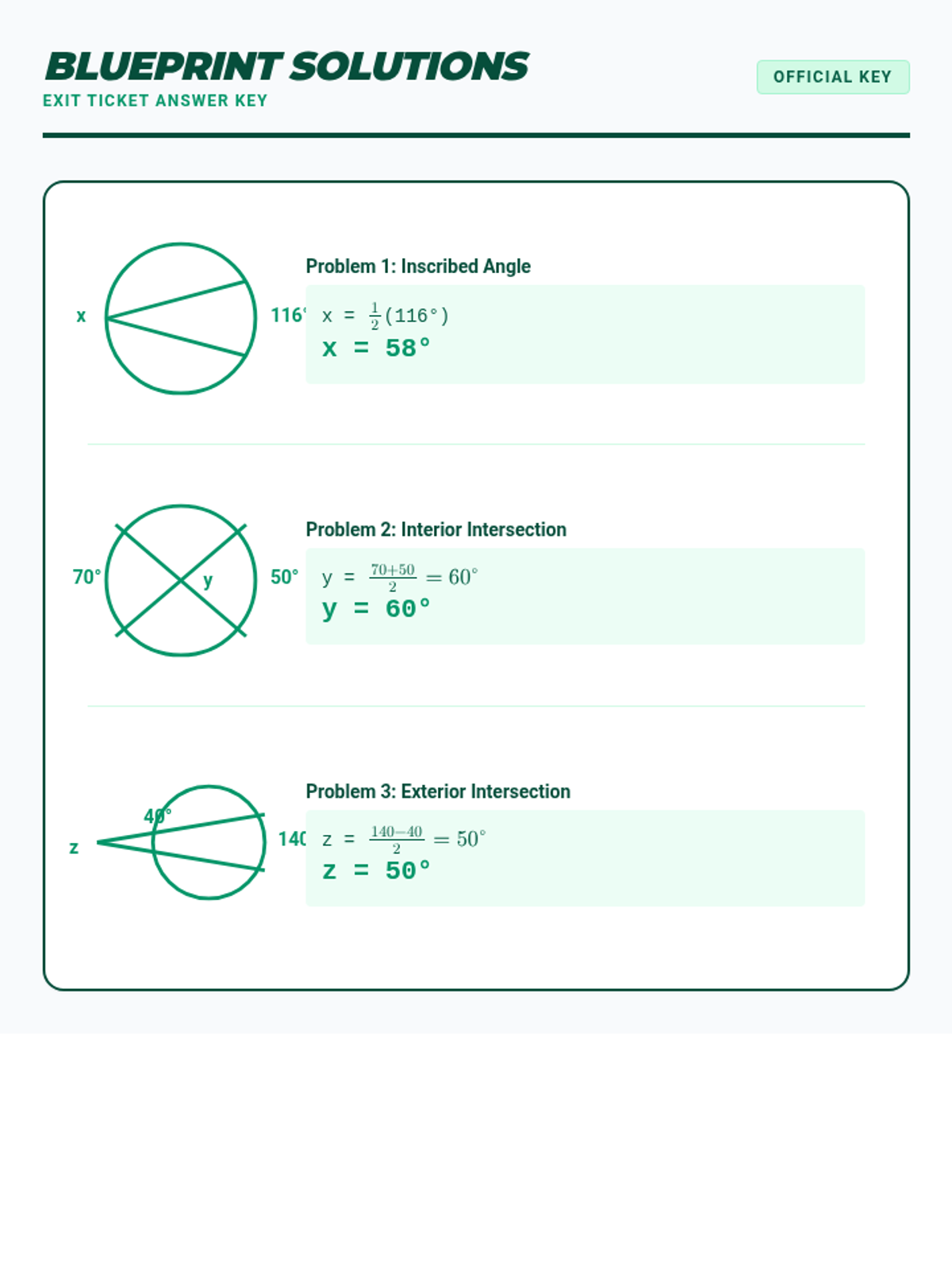
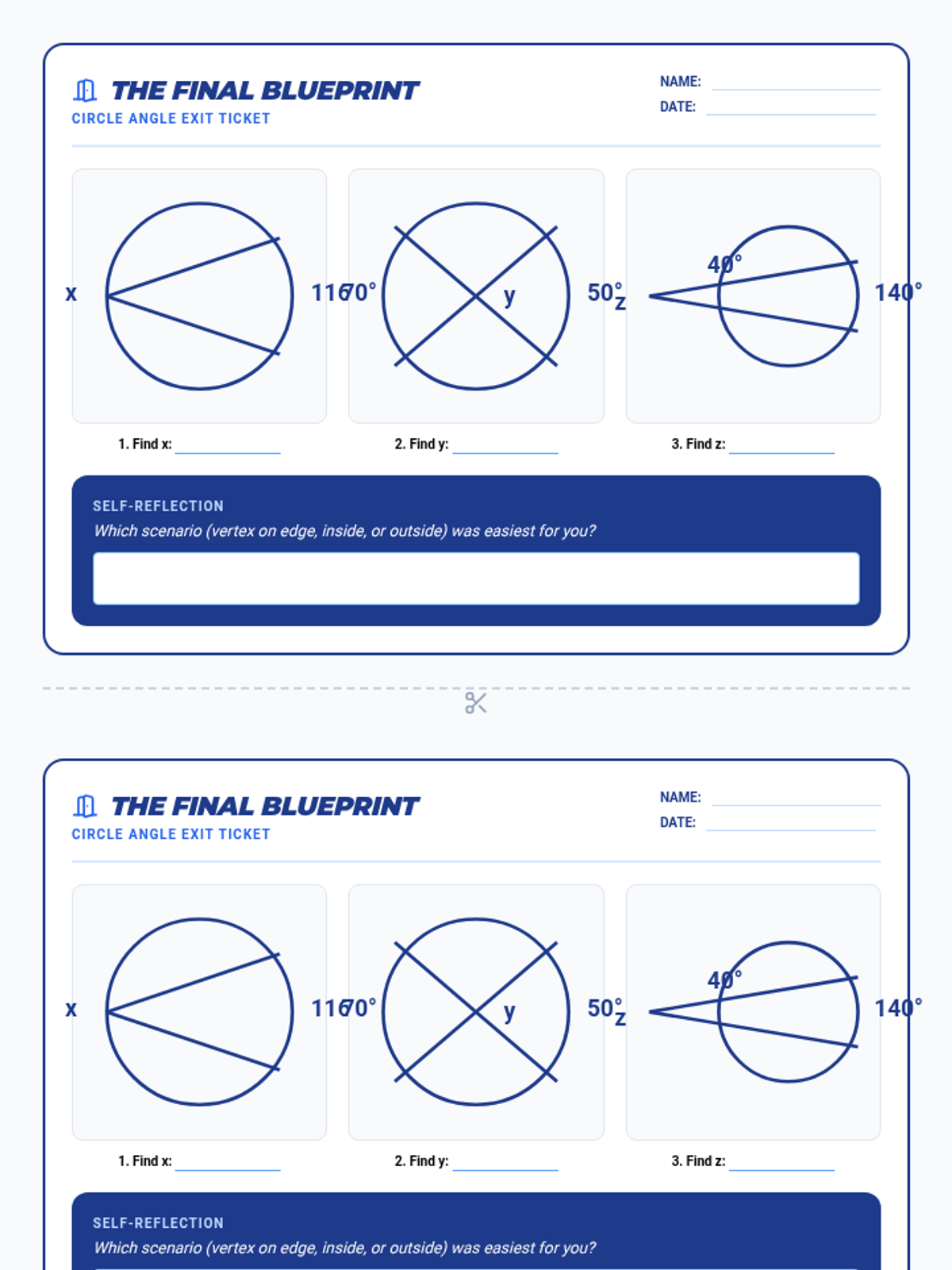
A short post-lesson assessment covering inscribed angles, angles in semi-circles, and chord bisection. Features blueprint-style diagrams matching the lesson theme.
A scaffolded practice worksheet for students exploring circle theorems. It includes a quick-reference guide, visual diagrams for central, inscribed, and circumscribed angles, and dedicated workspaces for multi-step problems. The blueprint aesthetic provides a structured, technical feel suitable for Tier 2 intervention.
A concise exit ticket for progress monitoring, asking students to identify circle properties and perform one conversion via completing the square.
A teacher facilitation guide for the Tier 2 intervention, providing instructional flow, misconception alerts, and targeted questioning strategies.
A teacher facilitation guide for the circle secrets intervention lesson, including pacing, Tier 2 differentiation strategies, misconception alerts, and a full answer key.
A teacher guide for the circle similarity intervention, featuring a facilitation script, common misconceptions, and a progress monitoring tracker.
A complete answer key for the Circle Secrets student worksheet and exit ticket, providing step-by-step algebraic solutions and final circle properties.
A comprehensive teacher facilitation guide for the Tier 2 circle intervention lesson, including pacing, discussion prompts, and strategies for addressing common misconceptions.
A comprehensive teacher guide for the Circle Secrets lesson, including instructional pacing, discussion prompts, scaffolded supports, and progress monitoring look-fors.
Guide enseignant révisé pour accompagner la phase de découverte du coefficient. Il propose des méthodes pédagogiques pour amener les élèves à déduire le rapport de proportionnalité par l'expérimentation ou le calcul.
Exercice de transfert révisé pour inclure une étape d'investigation où les élèves doivent déterminer eux-mêmes le coefficient de proportionnalité avant d'effectuer les calculs d'agrandissement.
Une fiche outil révisée pour encourager la découverte autonome du coefficient de proportionnalité. Elle propose deux méthodes (mesure ou pavage) pour aider les élèves à comprendre le rapport entre le format A4 et le format Raisin.
Diapositives révisées pour introduire le défi de "découverte du coefficient". La présentation pose la question du rapport de taille entre les formats A4 et Raisin comme une enquête à résoudre.
Un guide complet pour l'enseignant incluant le corrigé type pour les mathématiques, des points de vigilance pour le français et le design, ainsi que des stratégies de différenciation CUA pour les élèves à besoins particuliers.
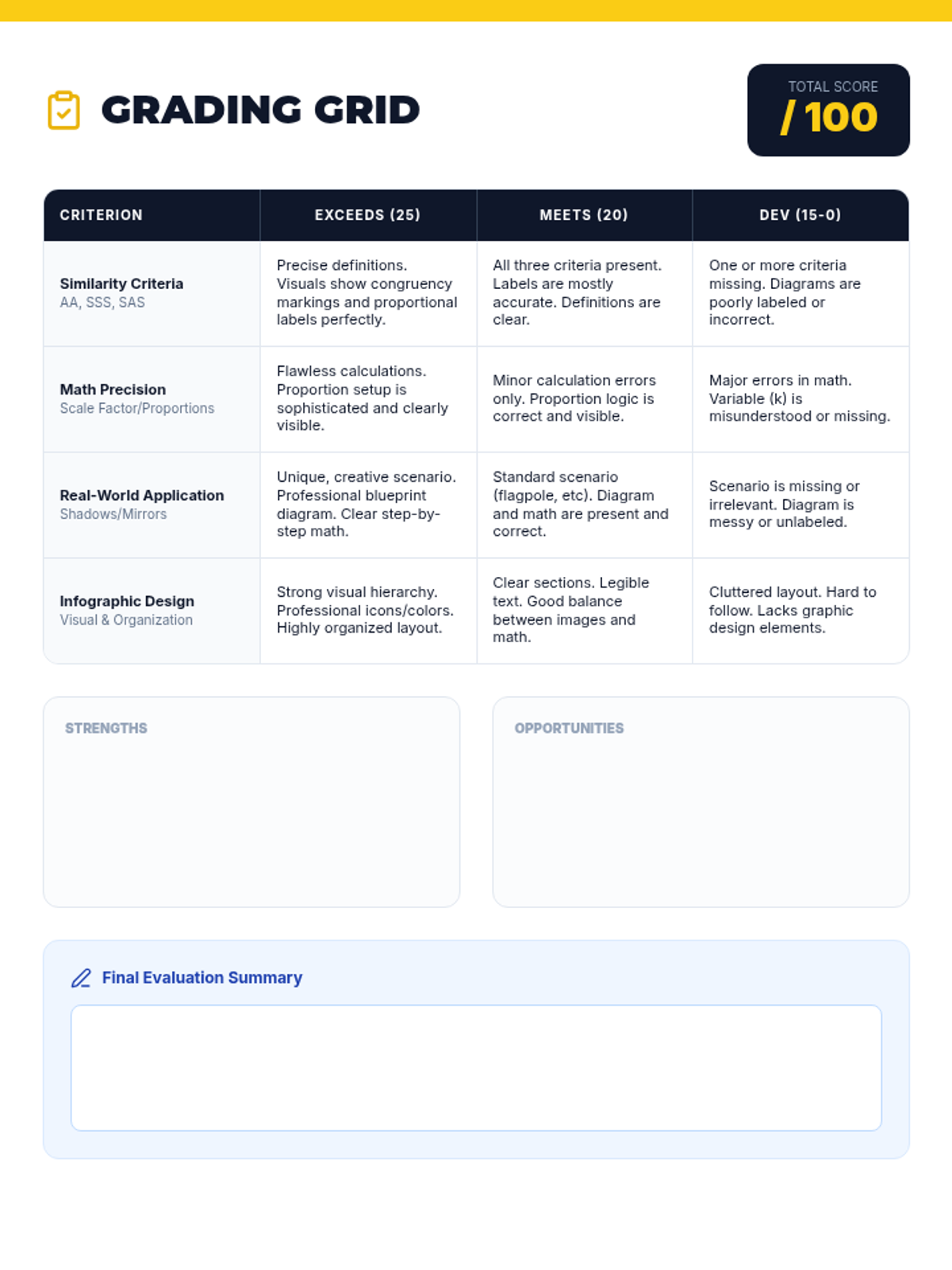
Une grille d'évaluation détaillée pour l'enseignant, couvrant les compétences en français, mathématiques (proportionnalité) et design. Adaptée aux profils SEGPA/IME avec des critères clairs et un système de points équilibré.
Un support d'exercice pour les élèves permettant de tester le passage du format A4 au format Raisin. Il comprend une vérification de contenu (Français), un tableau de calcul de proportionnalité (Maths) et un espace de croquis pour la mise en page.
Une fiche outil conçue selon les principes de la Conception Universelle de l'Apprentissage (CUA) pour expliquer la proportionnalité lors de l'agrandissement d'une affiche. Elle utilise des aides visuelles, des codes couleurs et un langage simple.
Une présentation dynamique de 4 diapositives pour lancer le défi de création d'affiche. Elle définit les termes du contrat (A4 vers Raisin) et le contenu requis (titre, 6 photos avec encarts) dans un style professionnel immersif.
Guide pédagogique pour l'enseignant. Contient les principes de la micro-méthode (10 min), les corrigés des fiches et des conseils pour l'engagement des élèves en difficulté.
Une fiche d'activité finale combinant toutes les notions : mise à l'échelle de photos, calcul de grille, gestion des marges pour encarts et optimisation papier.
Réaliser la mise à l'échelle complète d'un projet client : 6 photos, encarts de texte et calcul des dimensions finales sur format Raisin. Présentation finale.
Une fiche d'activité pour calculer la surface de papier utilisée et la surface de "perte" (chutes). Sensibilisation à l'optimisation.
Présentation sur la surface de papier utilisée et la surface de "perte" (chutes). Sensibilisation à l'optimisation et au coût écologique du gâchis.
Une fiche d'activité pour calculer le facteur d'agrandissement maximal d'un modèle A4 vers le format Raisin. Focus sur la comparaison des limites.
Présentation sur le passage d'un modèle A4 au format Raisin. Apprendre à trouver le facteur d'agrandissement maximal en comparant les dimensions.
Une fiche d'activité pour calculer les dimensions d'une grille de 6 photos sur A4 en tenant compte des marges. Travail sur la division et la soustraction.
Présentation sur l'organisation de 6 photos sur une page A4. Introduction à la division de l'espace et à la gestion des marges pour les encarts explicatifs.
Une fiche d'activité pour introduire le concept de ratio et d'agrandissement sans déformation. Contextualisée par l'affiche format Raisin.
Présentation pour introduire le concept de ratio et d'aspect pour agrandir une image sans la déformer. Adapté au contexte d'un studio photo.
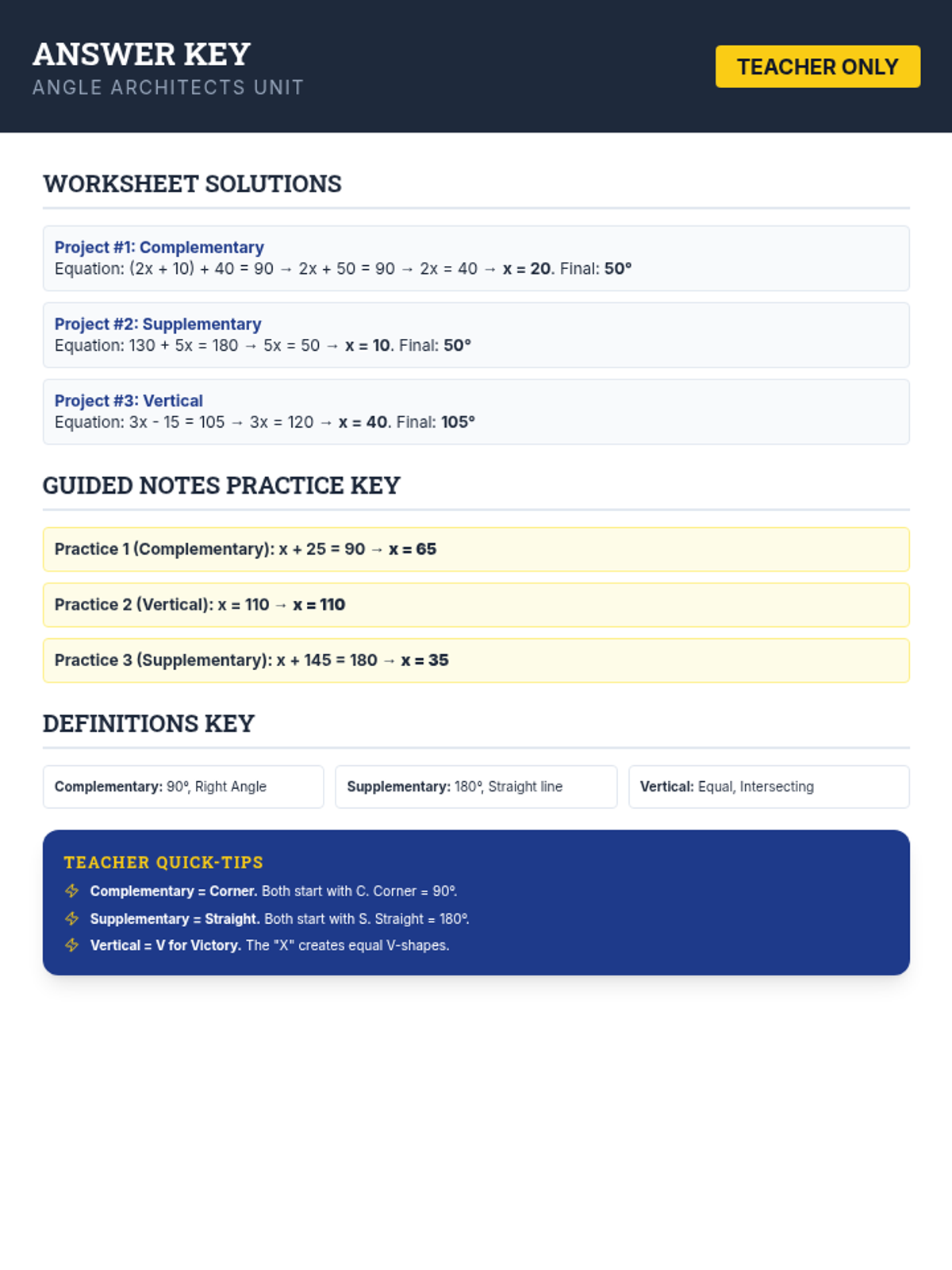
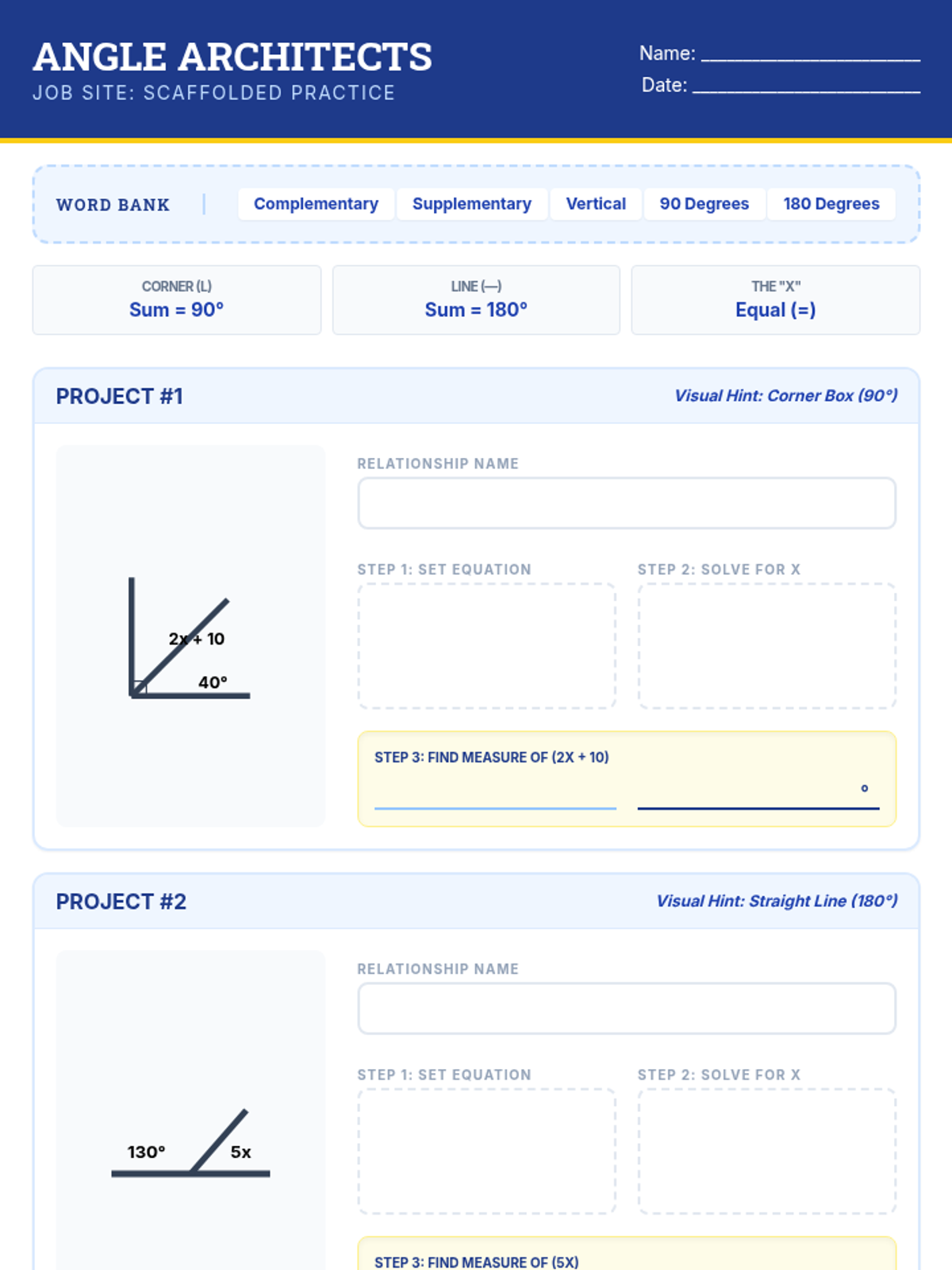
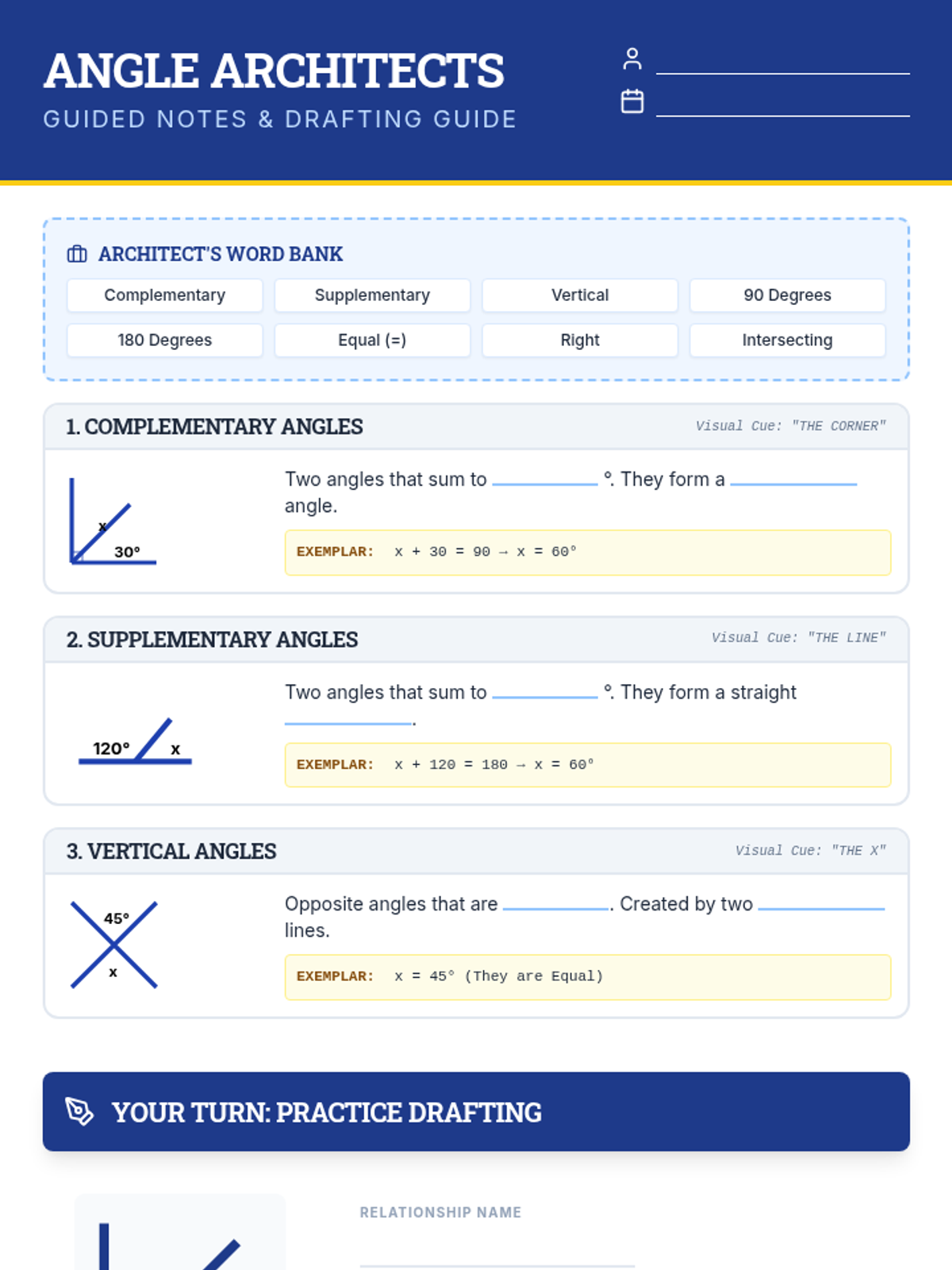
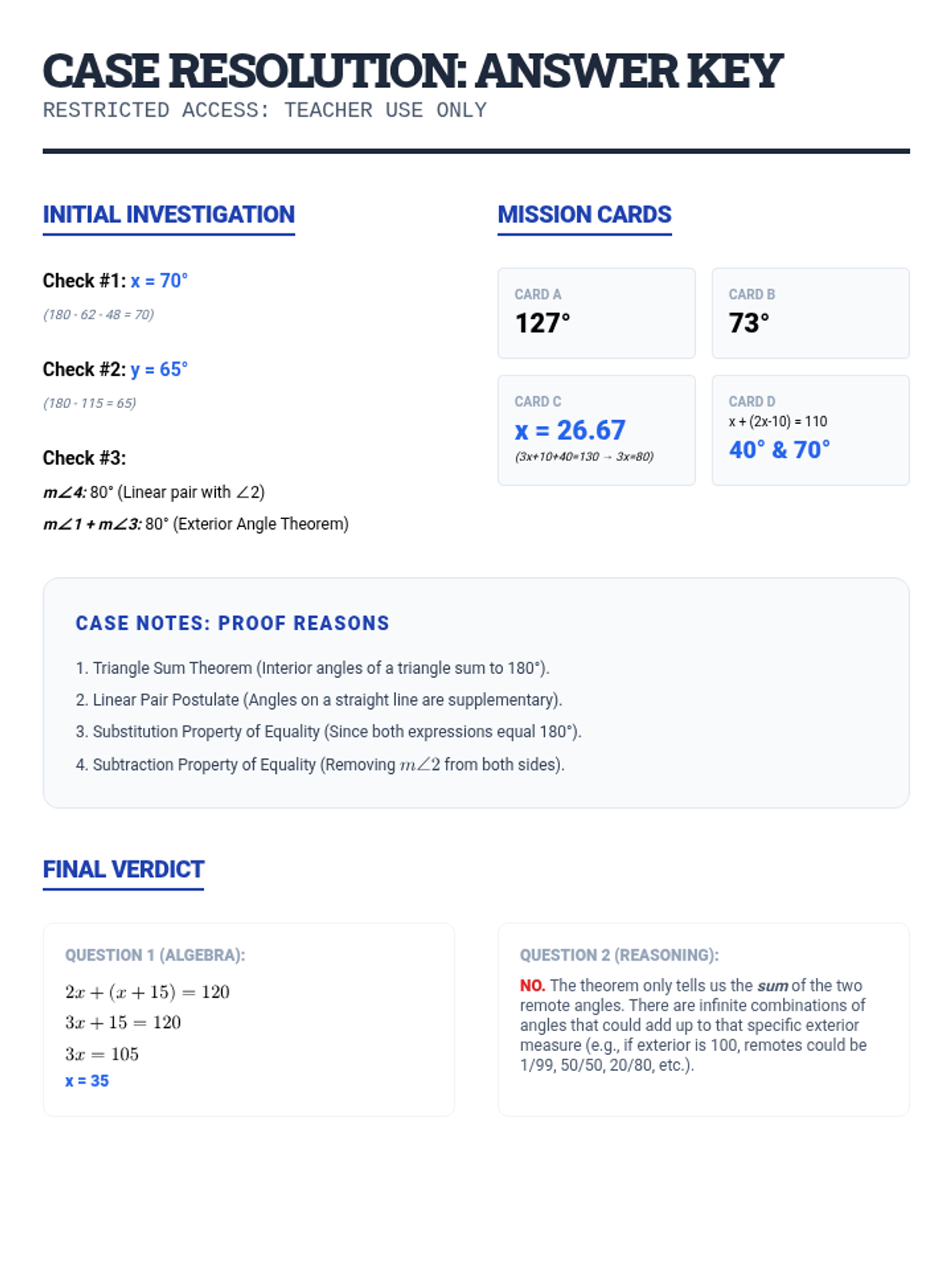
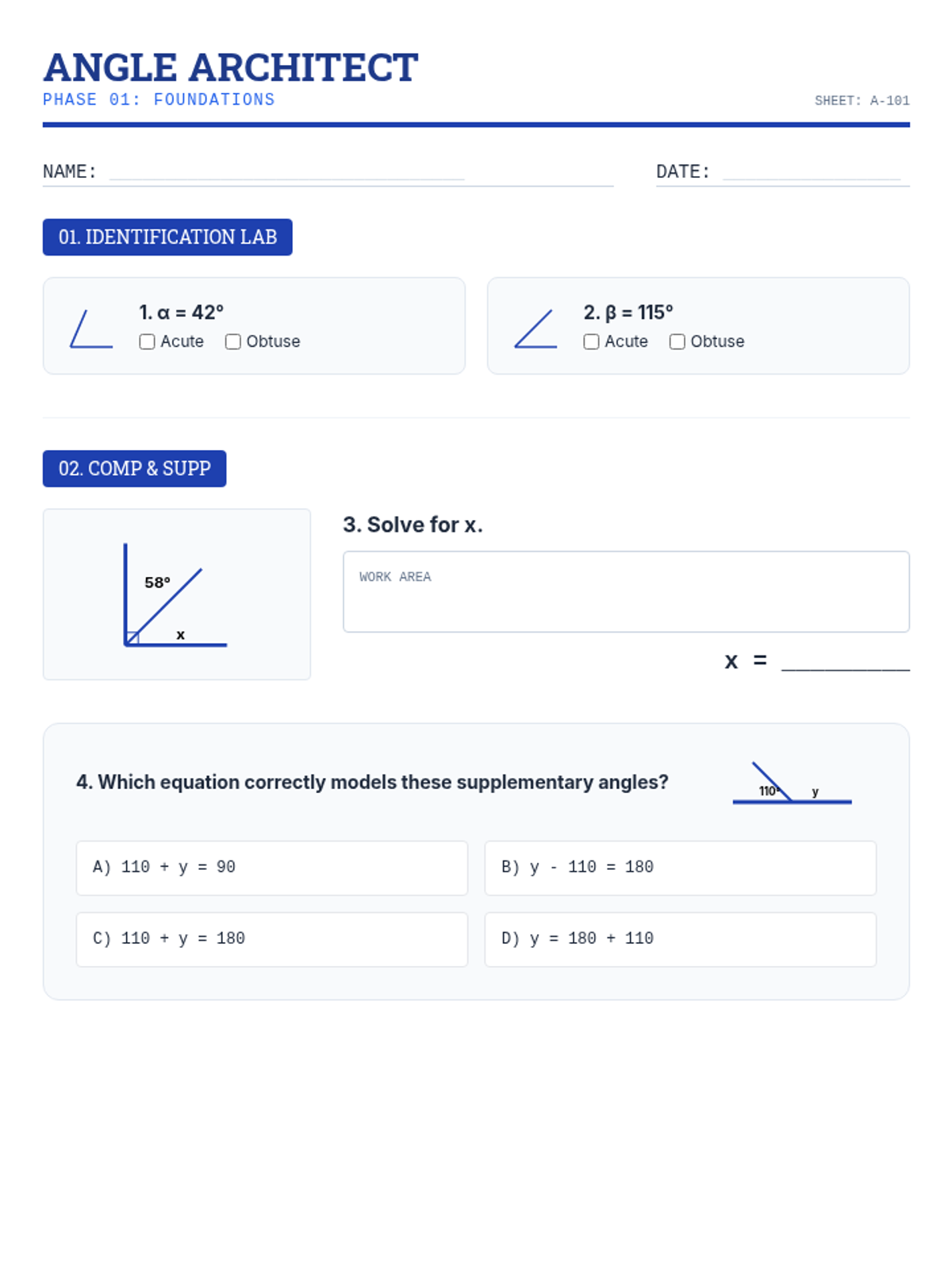
An answer key for the Angle Architects worksheet and exit ticket, providing correct measures, vocabulary identification, and sample justifications for teacher use.
A quick assessment tool for students to demonstrate their understanding of alternate exterior angle relationships and justify their reasoning.
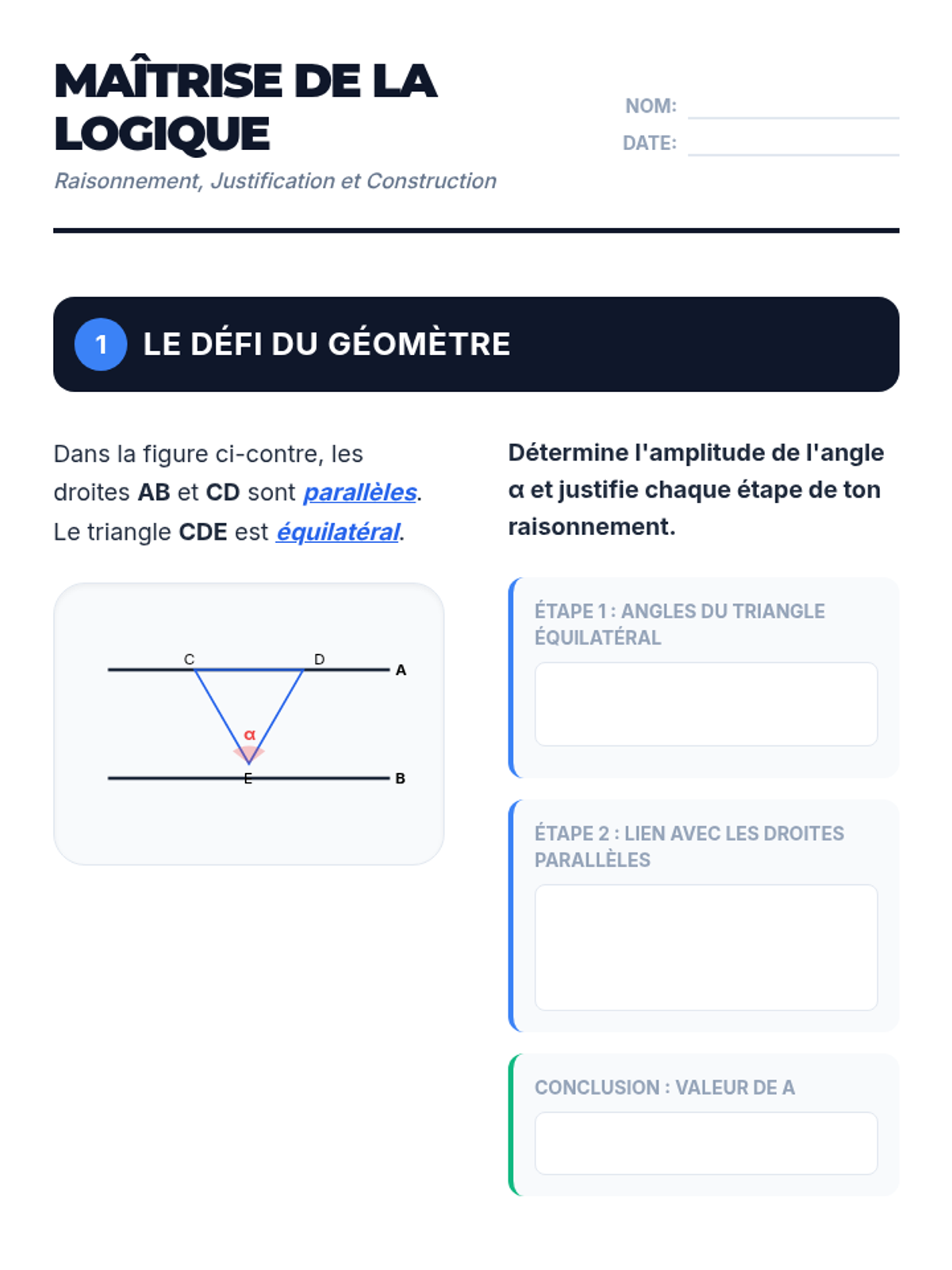
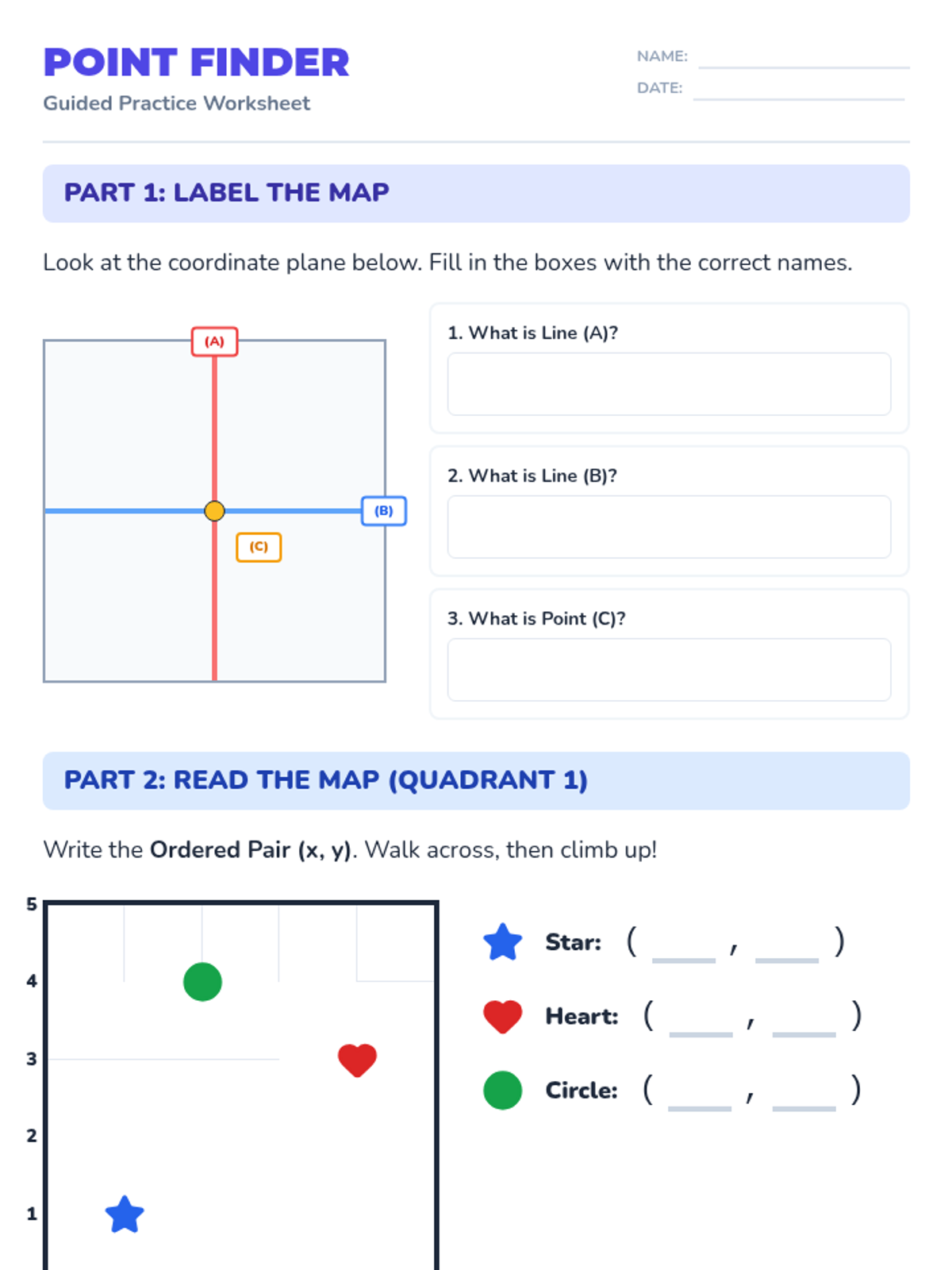
A student activity sheet where they act as urban planners to solve for missing angles on a city map using transversal and parallel line relationships.
A visual presentation for teaching angle relationships, using an urban planning theme to introduce transversals, interior/exterior zones, and parallel line patterns.
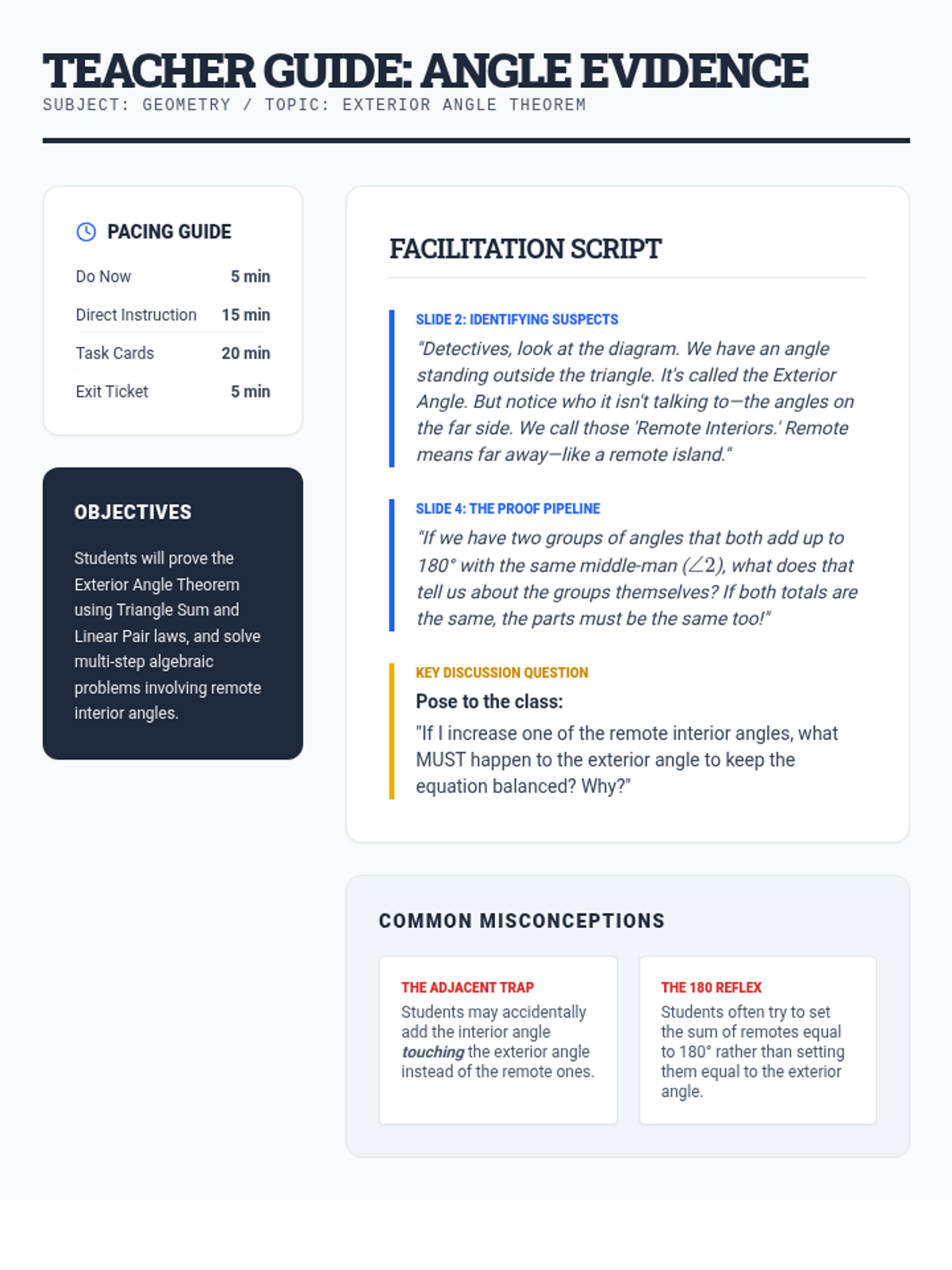
A comprehensive 46-minute lesson plan for teaching angle relationships, featuring a detailed pacing guide, teaching tips, and alignment to Standards for Mathematical Practice.
A comprehensive answer key and teacher reference guide for the Transversal Crossroads activities and worksheets.
An engaging project-based activity where students design a city grid based on specific geometric angle relationships between buildings.
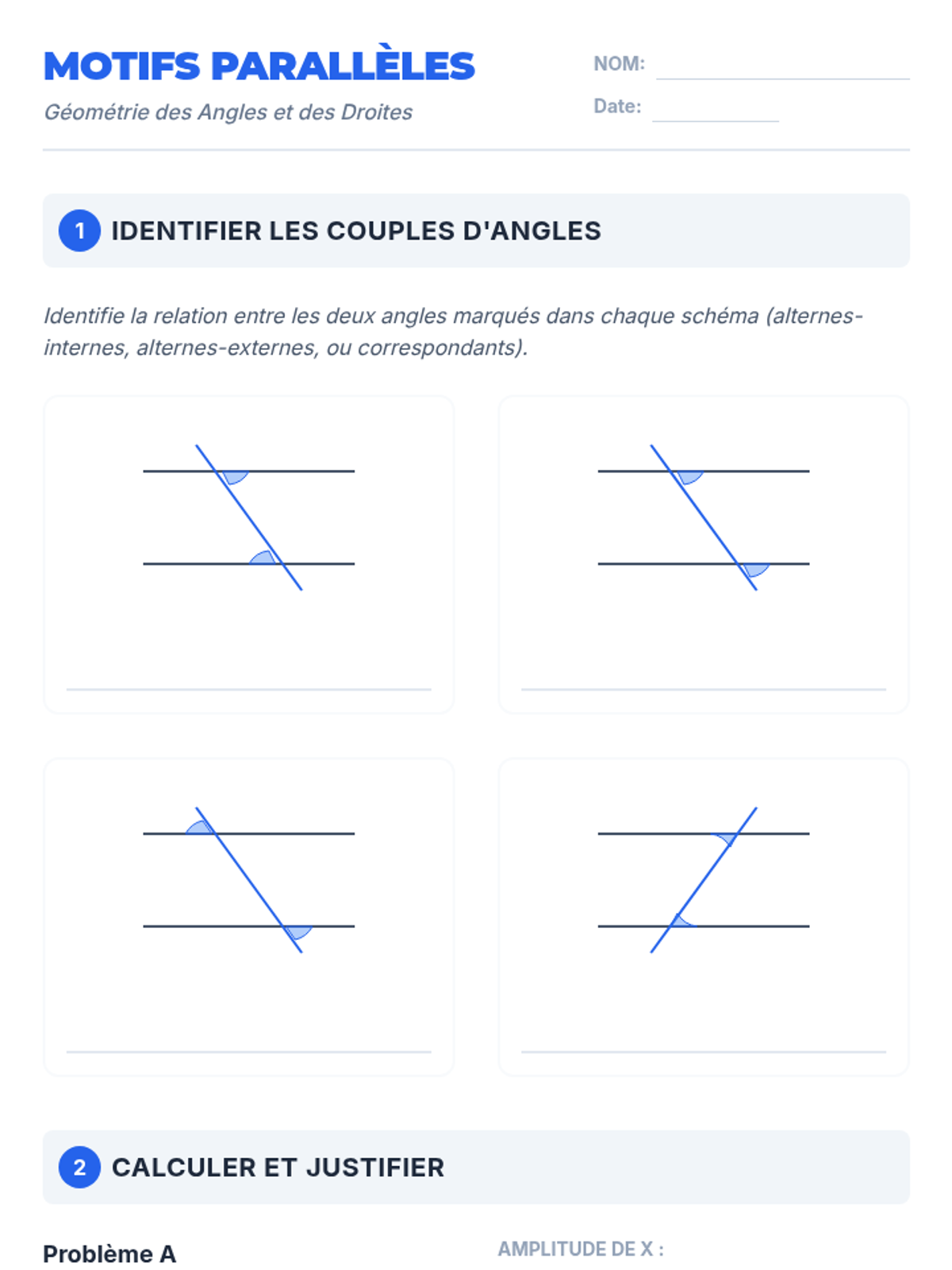
A student worksheet for identifying and calculating angle pairs formed by transversals, including a challenge problem involving algebraic expressions.
A visual presentation for teaching transversal and parallel line angle relationships, featuring clear diagrams and interactive check questions.
A detailed lesson plan for teaching angle pairs formed by parallel lines and transversals, including instructional flow, timing, and differentiation strategies.
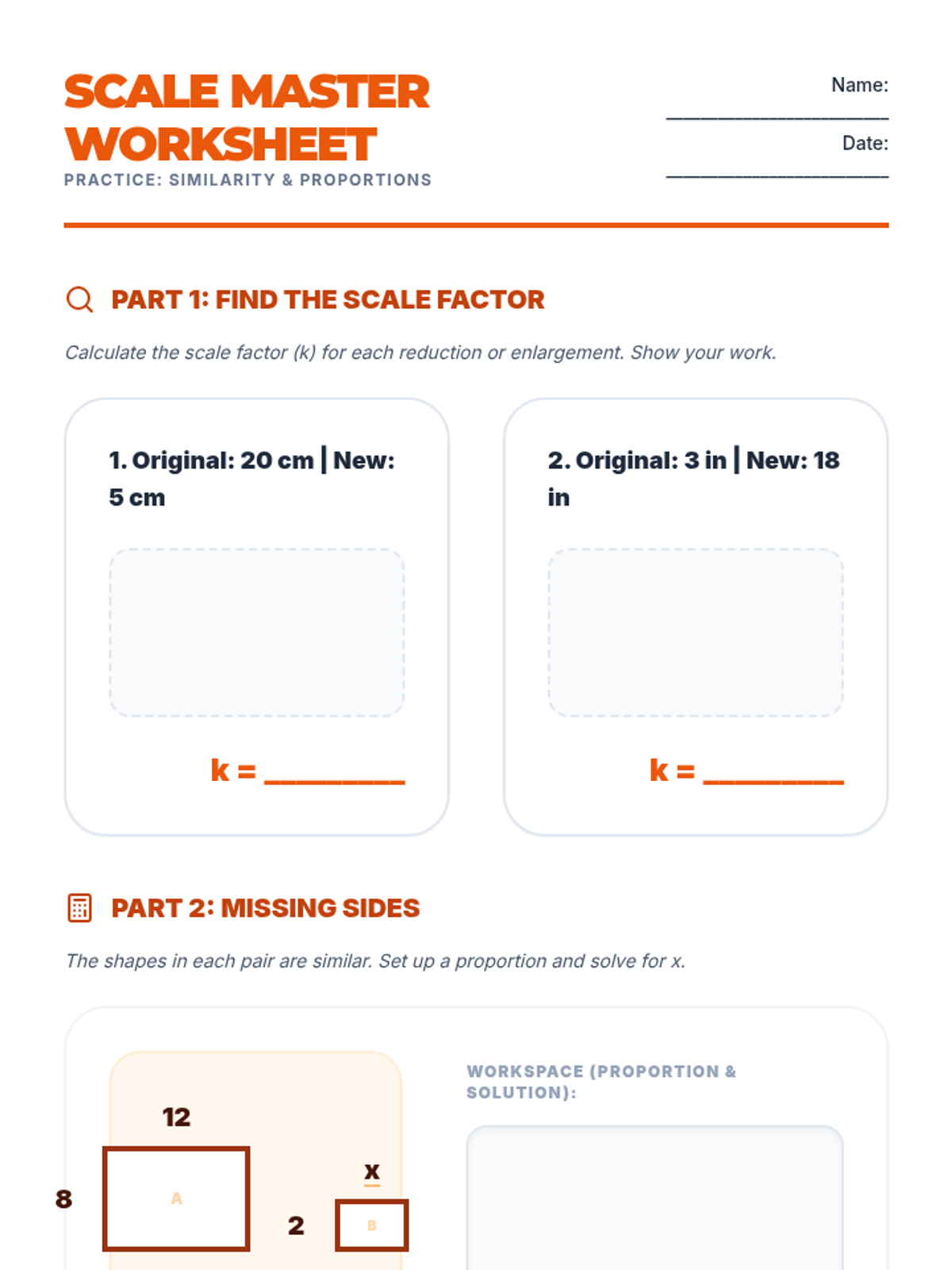
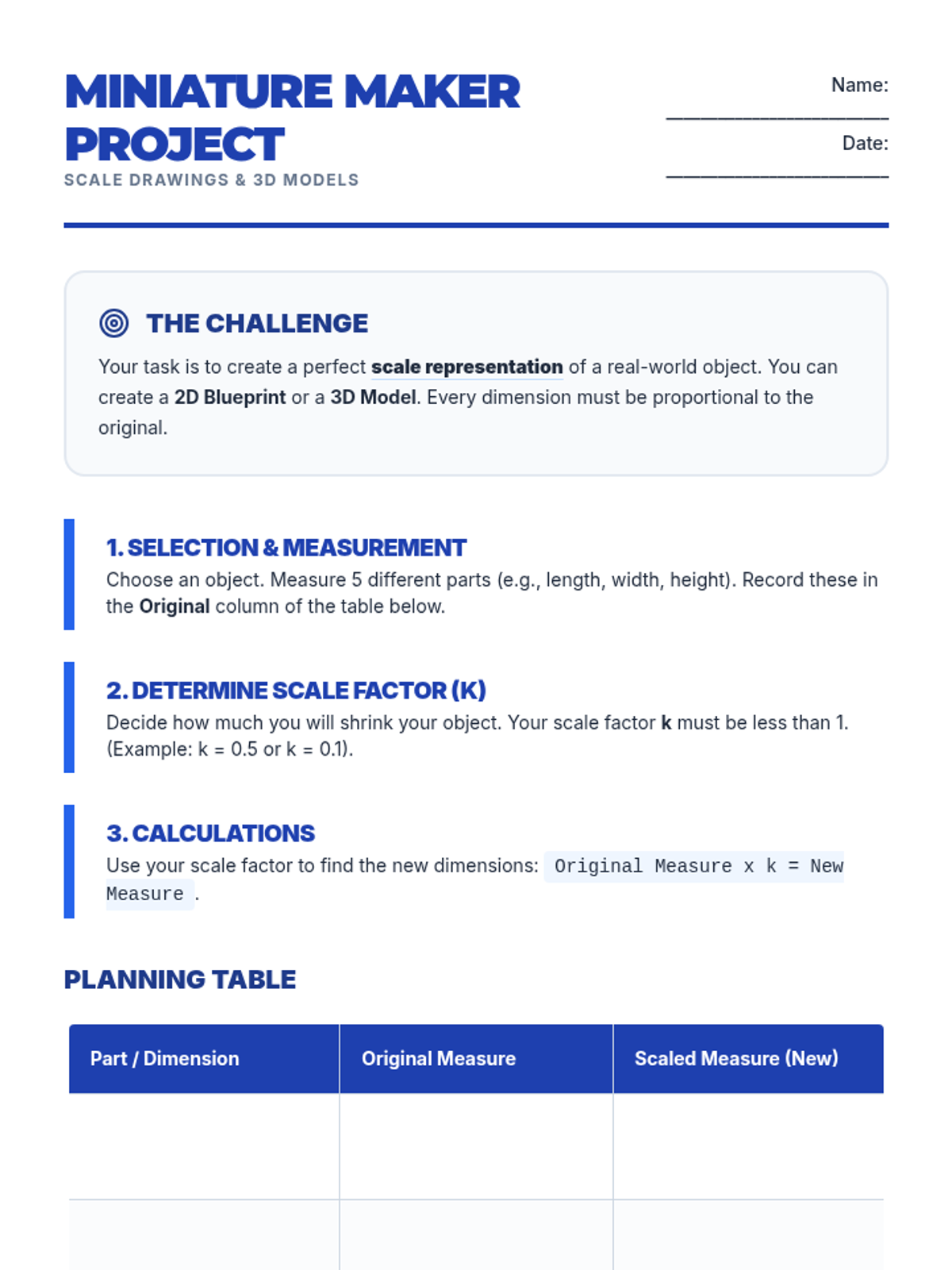
Final 10-chart geometric similarity set fixed to exactly 4 pages. Uses absolute heights and overflow control to prevent content cutting or extra pages during export. Features high-contrast labels and refined geometric diagrams.
Teacher answer key for the Similarity Dossier Field Report, including step-by-step calculations for proportions, similarity criteria, and geometric theorems.
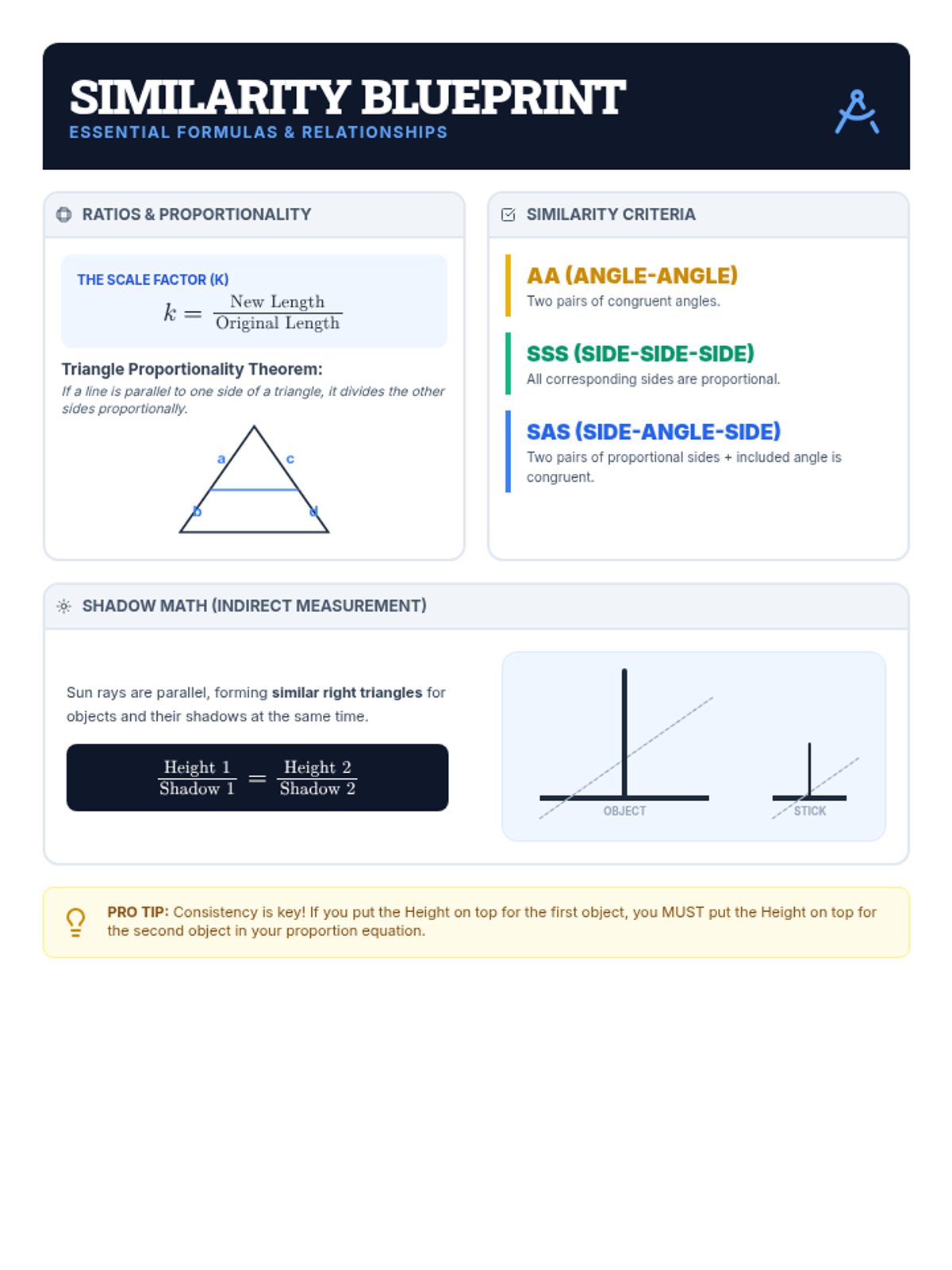
A concise one-page summary sheet (cheat sheet) for geometric similarity, covering foundations, scale factor, criteria (AA, SSS, SAS), proportionality theorems, and scaling laws.
A high-contrast black and white practice worksheet designed to complement the Similarity Dossier anchor charts. Includes sections on solving proportions, identifying triangle similarity criteria, indirect measurement word problems, the triangle proportionality theorem, and area scaling laws.
Updated 10-chart geometric similarity set expanded to 4 pages. Features a high-contrast black and white "Noir Detective" theme with enhanced geometric figures, clearer circular labels for vertices and segments, and improved layout to ensure charts remain intact when exported.
Final 10-chart geometric similarity set in a high-contrast black and white "Noir Detective" theme. Includes key theorems (AA, SSS, SAS, Proportionality) and conditions for similarity across 3 comprehensive pages. All charts feature geometric figures with improved circular labels for segments and transversals.
Updated 10-chart geometric similarity set in a high-contrast black and white "Noir Detective" theme. Includes key theorems (AA, SSS, SAS, Proportionality) and conditions for similarity across 3 comprehensive pages. All charts now feature geometric figures to support visual learning.
Updated 10-chart geometric similarity set in a high-contrast black and white "Noir Detective" theme. Includes key theorems (AA, SSS, SAS, Proportionality) and conditions for similarity across 3 comprehensive pages.
Expanded 3-page similarity anchor chart set with 8 charts, including new sections on Applying Properties (finding missing lengths) and Proportional Relationships (Triangle Proportionality Theorem). Maintains the polished detective theme.
Teacher answer key for the Angle Anchor Worksheet, providing correct calculations, similarity identifications, and completed similarity statements.
A teacher-facing facilitation guide for the Angle Anchor lesson. Includes pacing, Tier 2 intervention strategies, common misconceptions, and differentiation prompts.
A detailed facilitation guide for teachers leading a Tier 2 intervention. It outlines the instructional flow, highlights common student misconceptions (like SSA and confusing similarity with congruence), and provides specific questioning prompts to guide students through the decision-making process for geometric proofs.
A comprehensive answer key for both the Proportional Parts Worksheet and the Similarity Checkpoint Exit Ticket, including worked-out solutions and scoring guidance for teachers.
The complete answer key and teacher facilitation guide for the 5-day Graphing Navigator packet. Optimized for PDF printing with 0.5in margins.
Day 5 of the Graphing Navigator packet, providing a comprehensive review and final challenge covering all skills from the 5-day unit. Optimized for PDF printing with 0.5in margins and dense, aligned grids.
Day 4 of the Graphing Navigator packet, focusing on identifying and calculating slope as "rise over run" from linear graphs. Optimized for PDF printing with 0.5in margins. Grids corrected for 1:1 point alignment.
Day 3 of the Graphing Navigator packet, focusing on drawing straight lines when provided with only two specific coordinate points. Optimized for PDF printing with 0.5in margins and light handwriting areas.
Day 2 of the Graphing Navigator packet, focusing on converting data tables to ordered pairs and graphing linear paths. Optimized for PDF printing with 0.5in margins.
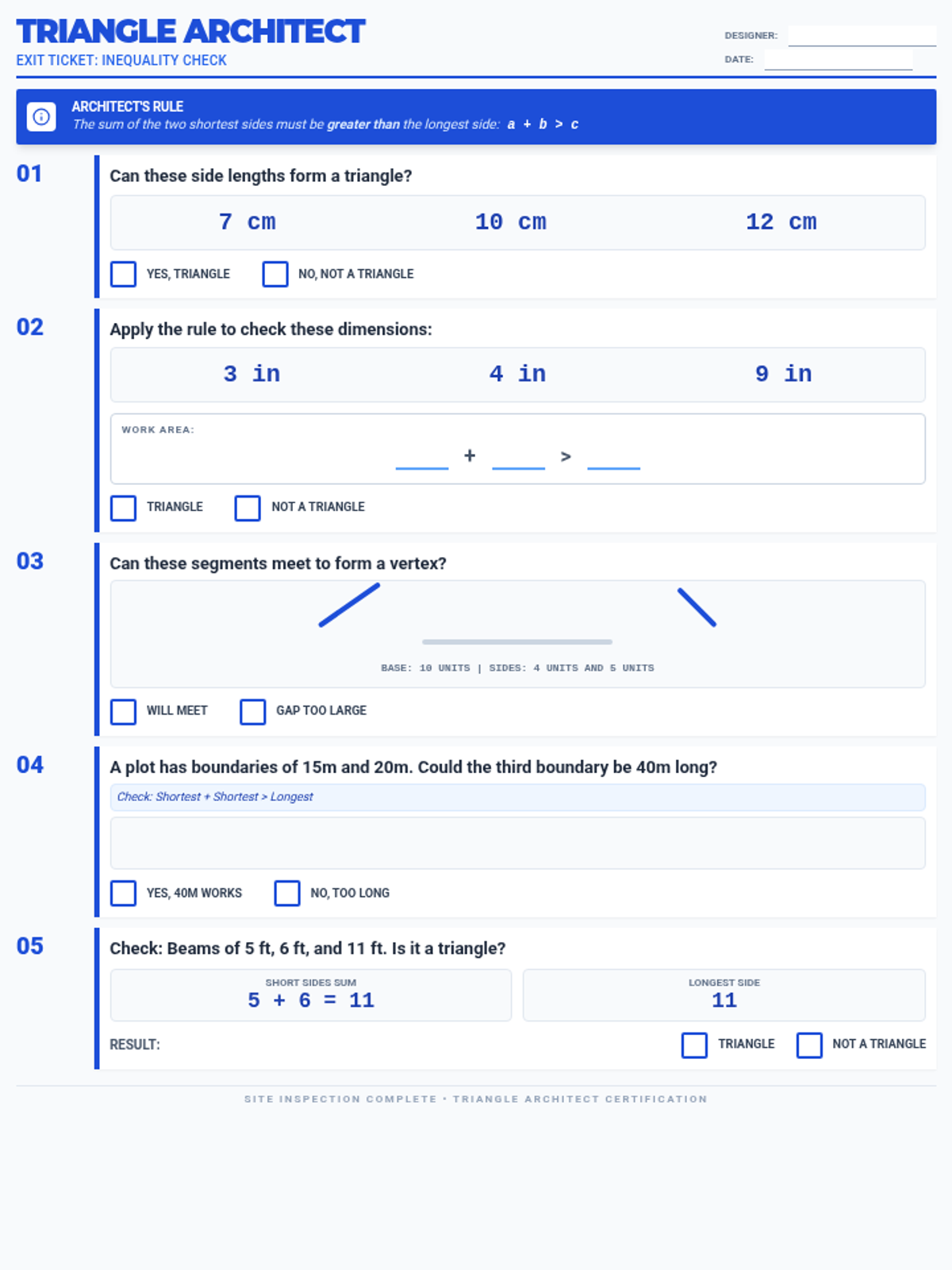
A concise exit ticket for students to demonstrate their ability to identify triangle sides after the lesson. Features a self-assessment scale and a single clear problem.
An answer key for the Evidence Practice Worksheet, providing clear identifications for the hypotenuse, opposite, and adjacent sides of each triangle problem.
A scaffolded practice worksheet for identifying the hypotenuse, opposite, and adjacent sides of right triangles. Includes multiple orientations and clear, labeled diagrams to support student learning.
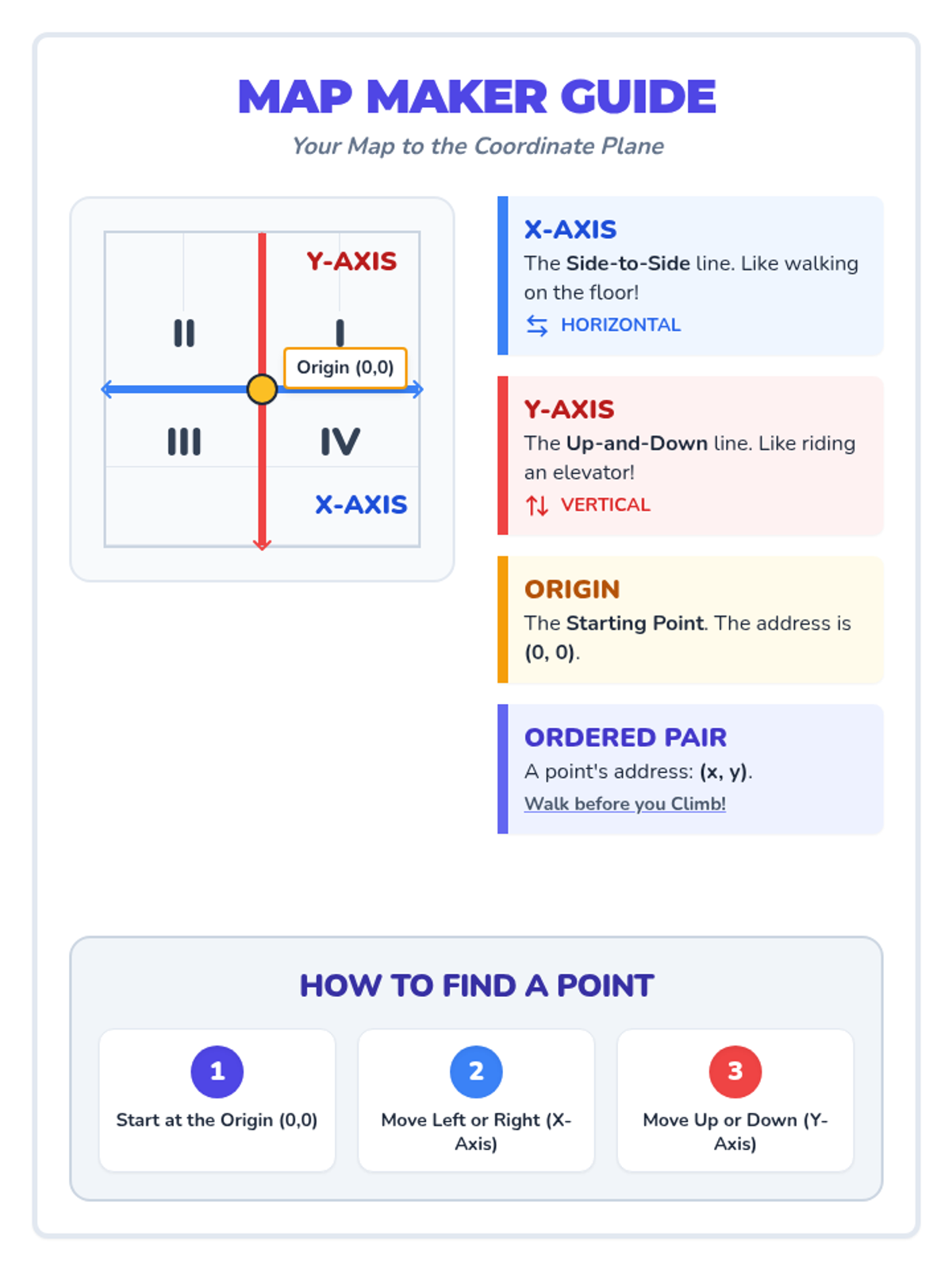
A high-support reference sheet (anchor chart) for identifying the hypotenuse, opposite, and adjacent sides of a right triangle. Uses color coding, large fonts, and simplified visual mnemonic aids.
A comprehensive teacher resource providing lesson objectives, a 45-minute pacing guide, an answer key for the worksheet, and tips for addressing common cross-curricular misconceptions between math and geography.
A cross-curricular student worksheet where students identify the domain and range of stylized geographic regions on a coordinate grid, translate real-world latitude and longitude into mathematical notation, and design a landmass within specified boundaries.
A visually engaging slide deck that introduces the concepts of domain and range by comparing them to geographic width (longitude) and height (latitude). It includes clear visual aids, mathematical notation, and real-world connections to topography.
Day 1 of the Graphing Navigator packet, covering coordinate plane anatomy and point plotting with clear examples and practice. Optimized for PDF printing with 0.5in margins and refined spacing to prevent overlapping.
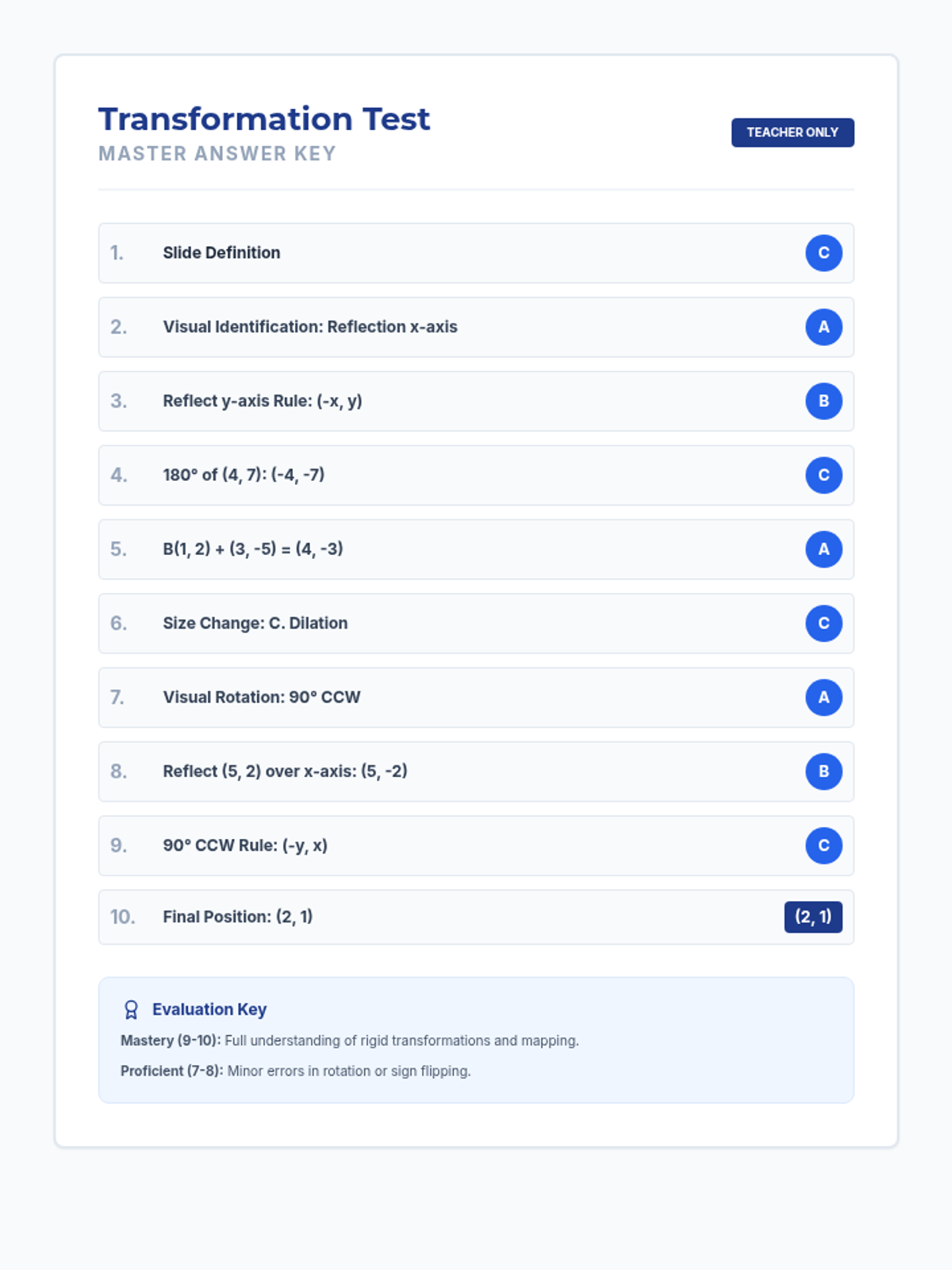
An answer key for the Mirror Slide Review Worksheet, providing solutions for all 10 review problems including vocabulary matching, visual identification, and coordinate calculations. Layout matches the review structure to ensure clarity for teachers.
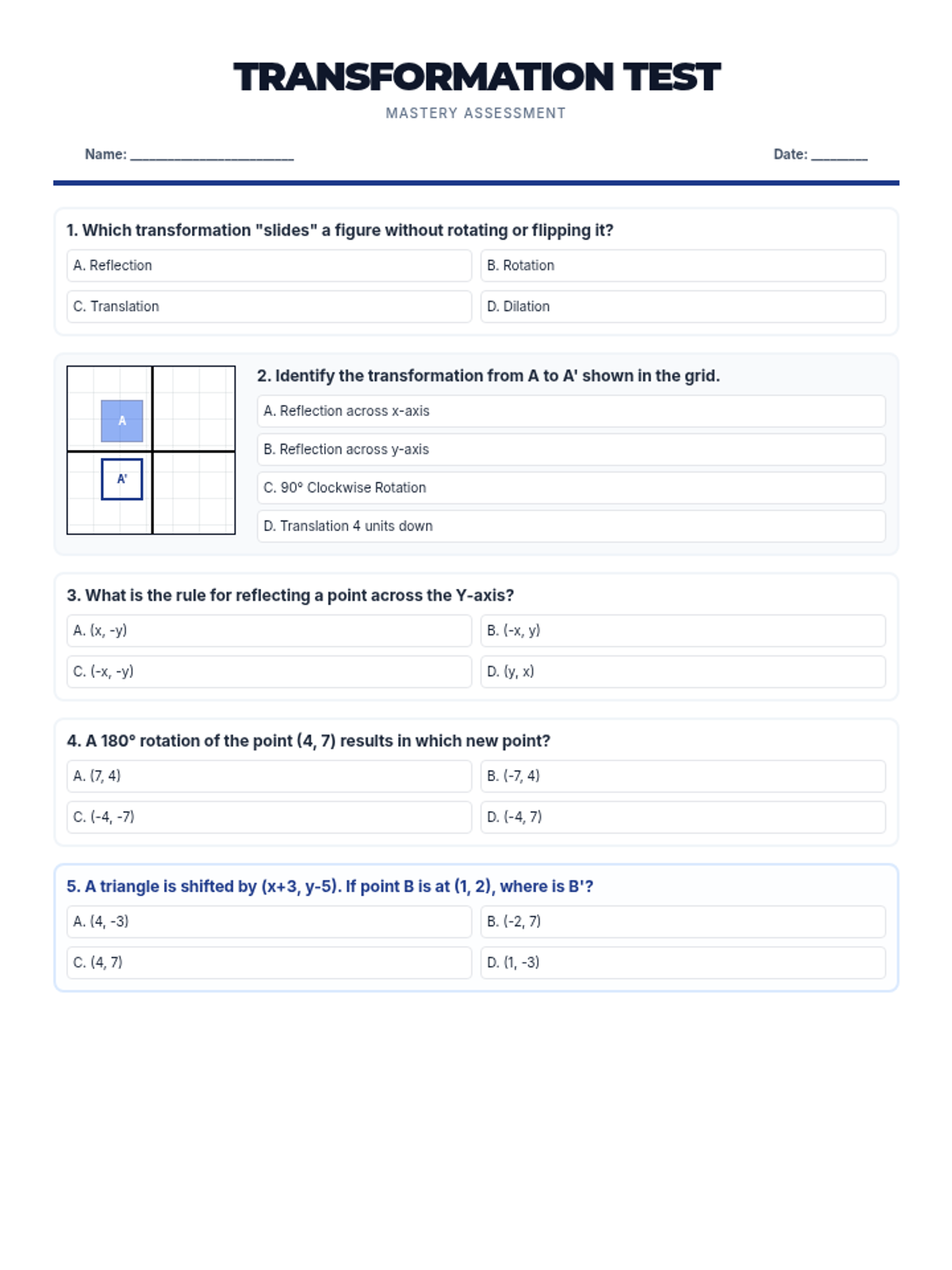
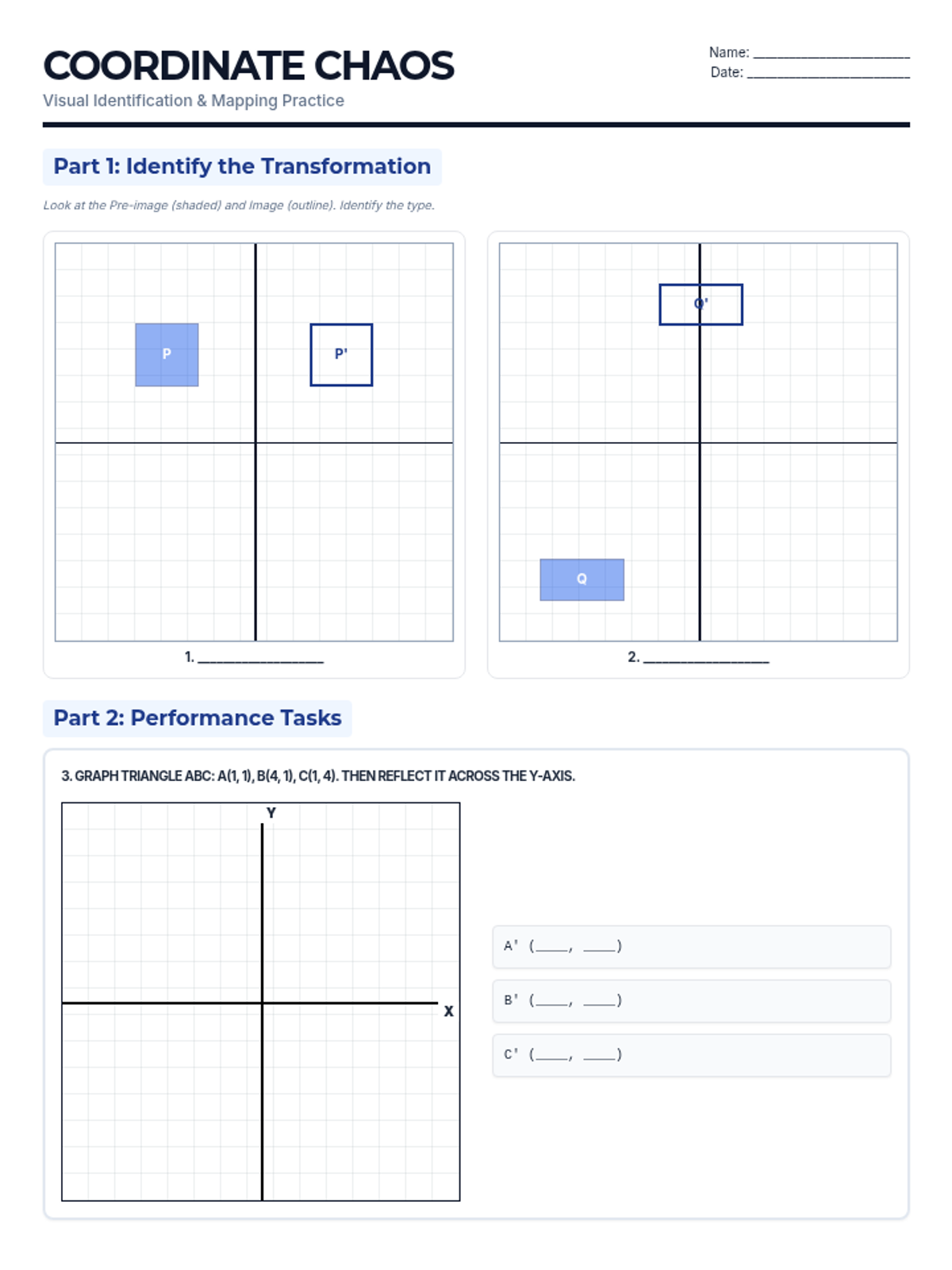
A simplified 10-question review worksheet covering translations and reflections. Features a matching activity for vocabulary with scrambled definitions, visual identification, and basic coordinate practice. Designed to keep figures and questions together on the same page.
A quick check for understanding to be completed at the end of the lesson. Includes two questions on identifying a reflection/translation and writing coordinate rules. Double-up layout for efficient printing.
Visual presentation slides for teaching translations and reflections. Covers key vocabulary, rigid motion properties, and algebraic rules for coordinate plane transformations with high-contrast, large-font layouts.
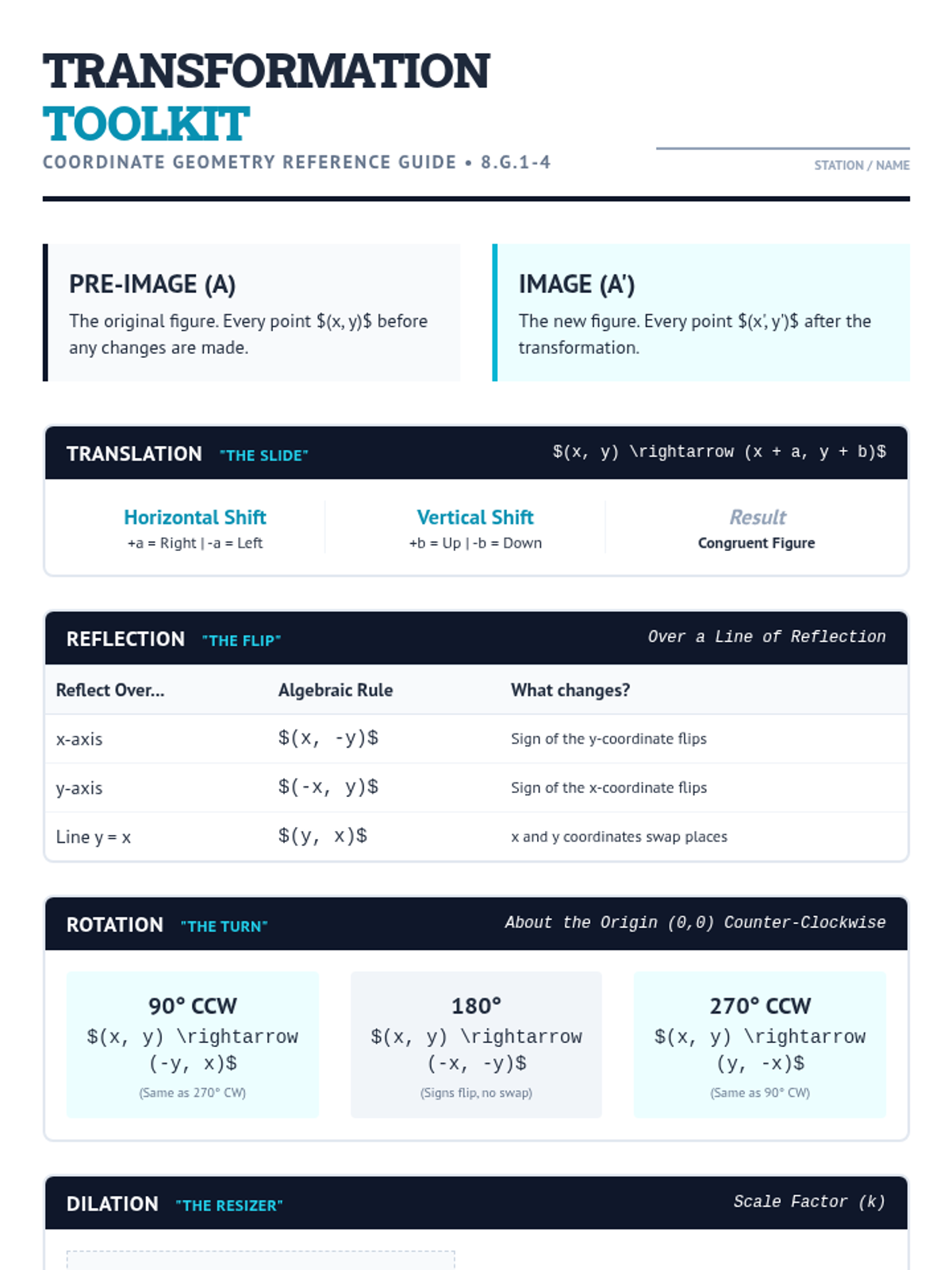
A visually striking single-page anchor chart summarizing the algebraic rules and key properties for translations and reflections. Features clear side-by-side comparisons of the "Slide" and the "Flip" with a print-friendly light background.
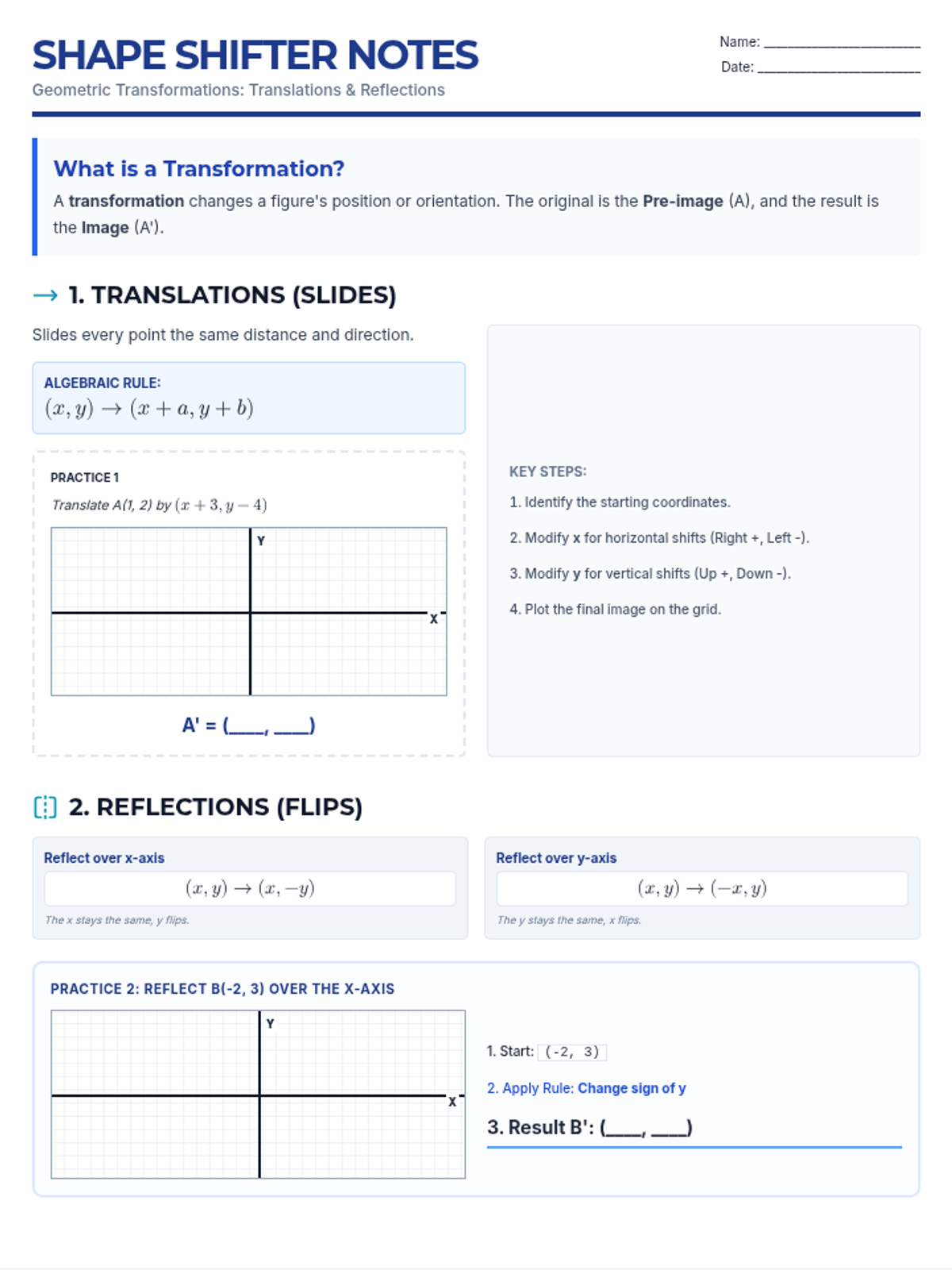
Guided notes and practice problems for transformations, focusing on translations and reflections. Includes core vocabulary, algebraic rules, and step-by-step coordinate graphing practice. Fixed figure containment for printing.
An answer key for the Line Logic Worksheet, providing full solutions and step-by-step reasoning for parallel and perpendicular slope problems.
A highly scaffolded student worksheet for the Slope Connections lesson, featuring "Mission" frames to guide students through identifying slopes, setting up point-slope equations, and verifying their perpendicular lines on a coordinate plane.
An exit ticket assessment for coordinate geometry. Features a guided distance calculation and a self-reflection checklist for students to monitor their own learning progress.
An answer key for the Navigator Log Worksheet, providing complete step-by-step solutions for ratio-to-fraction conversions and 1D/2D coordinate partitioning problems.
Visual presentation slides to guide a Tier 2 intervention small group through the properties of parallelograms and the coordinate geometry methods used to prove them.
Progress monitoring exit ticket for the Coordinate Cartography lesson. Includes problems on triangle perimeter, rectangle area, and a conceptual check on horizontal/vertical segments.
A step-by-step answer key for the updated Polygon Precision worksheet, featuring calculations for a pentagon (side 8), hexagon (perimeter 72), and septagon (radius 4).
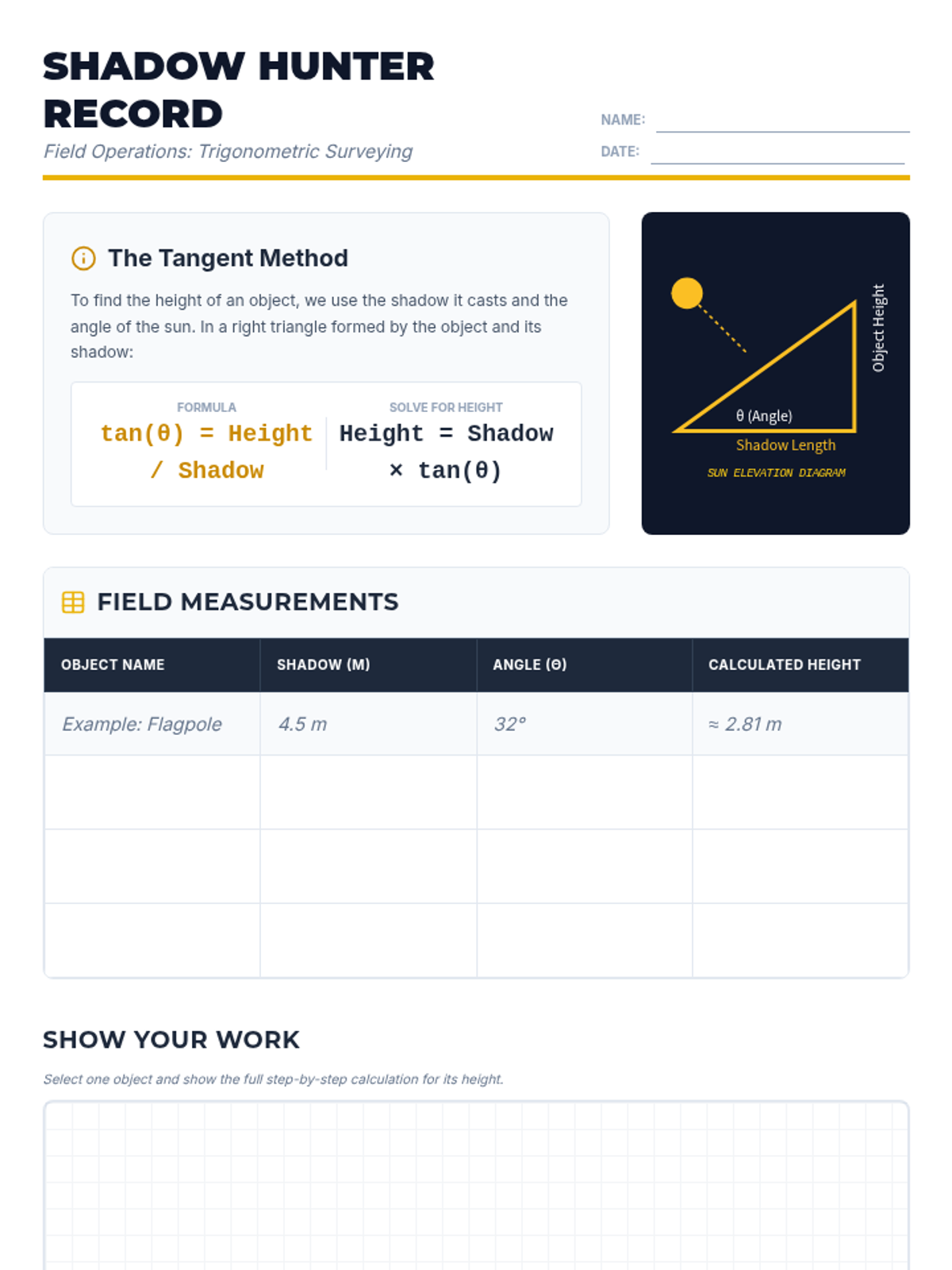
A student worksheet for calculating the area of a regular pentagon (side 8in), hexagon (perimeter 72cm), and septagon (radius 4ft) using trigonometry.
A presentation slide deck introducing the concept of regular polygon area calculation using decomposition and trigonometric ratios.
A comprehensive teacher facilitation guide for the Root Hunters lesson, featuring instructional tips, common student misconceptions for factoring by grouping and completing the square, and formative assessment prompts.
A 2-page answer key for the Root Hunters worksheet, providing step-by-step solutions for both factoring by grouping and completing the square problems.
A 2-page blueprint-themed worksheet featuring practice problems for quadratic equations using factoring by grouping and completing the square, with generous grid-patterned work spaces.
A 9-slide instructional presentation on factoring by grouping and completing the square, using an architectural 'blueprint' theme with clear step-by-step guides and visual aids.
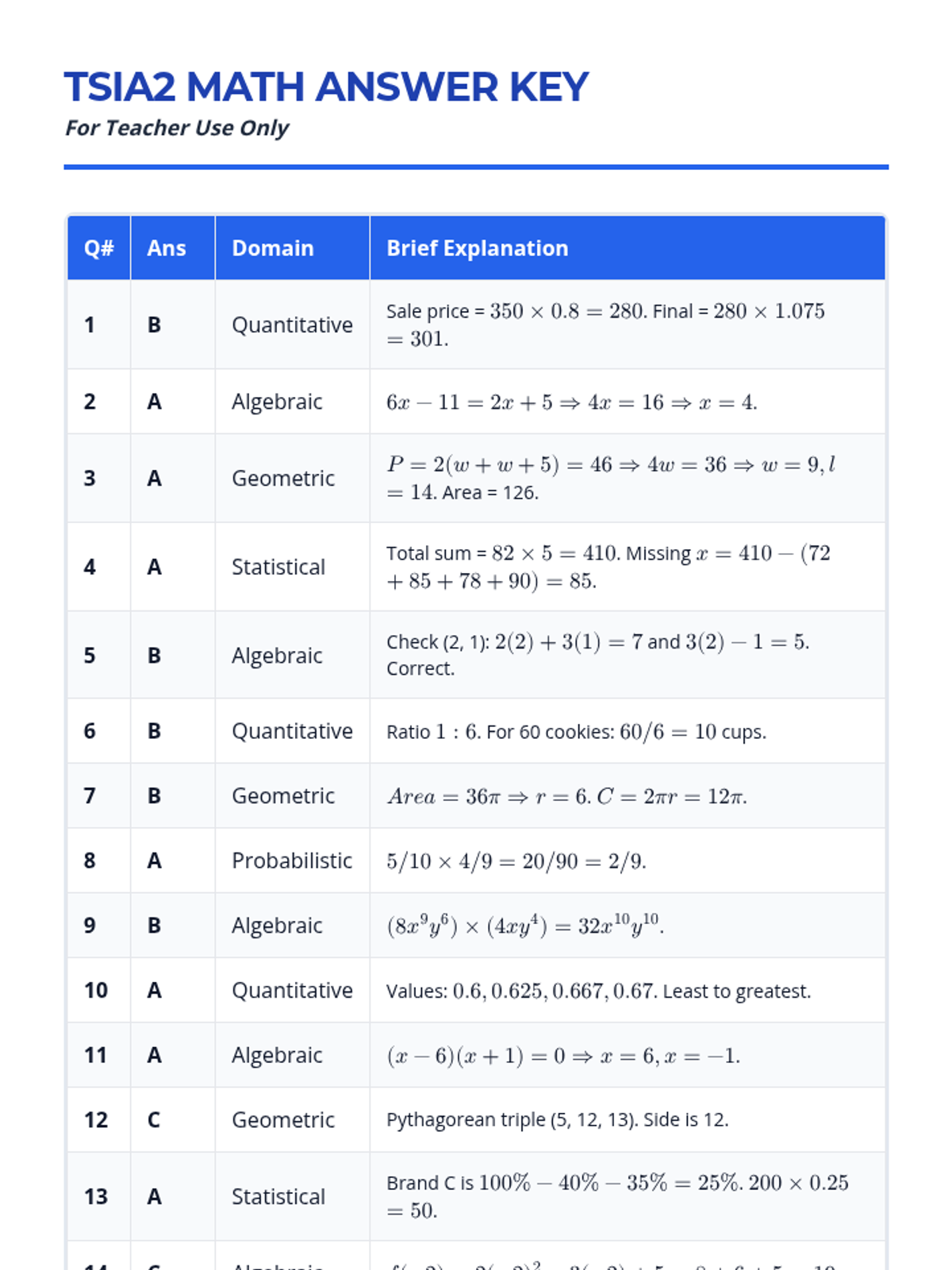
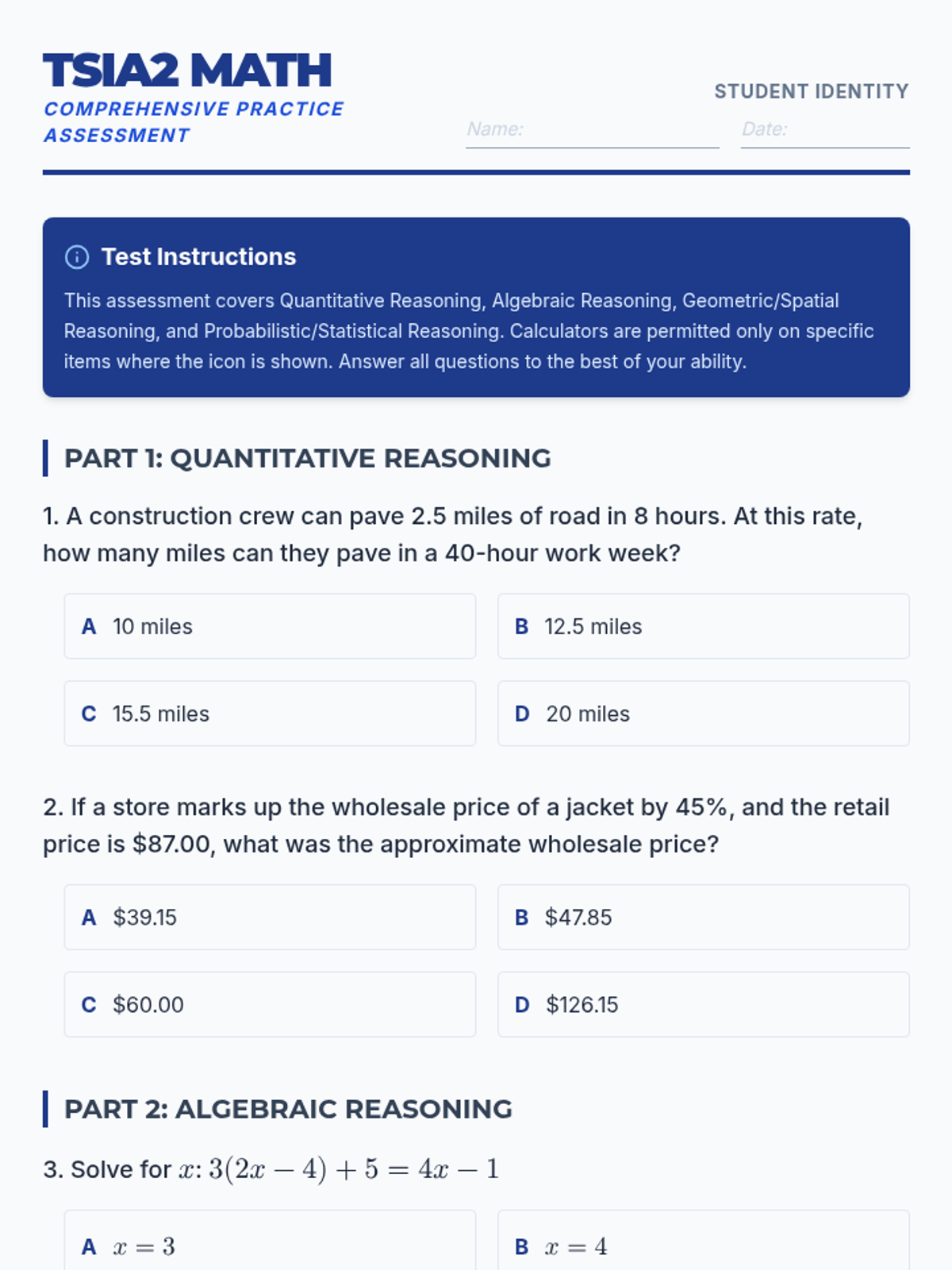
An answer key for the TSIA2 Math practice test, including correct answers, brief explanations, and a domain distribution breakdown.
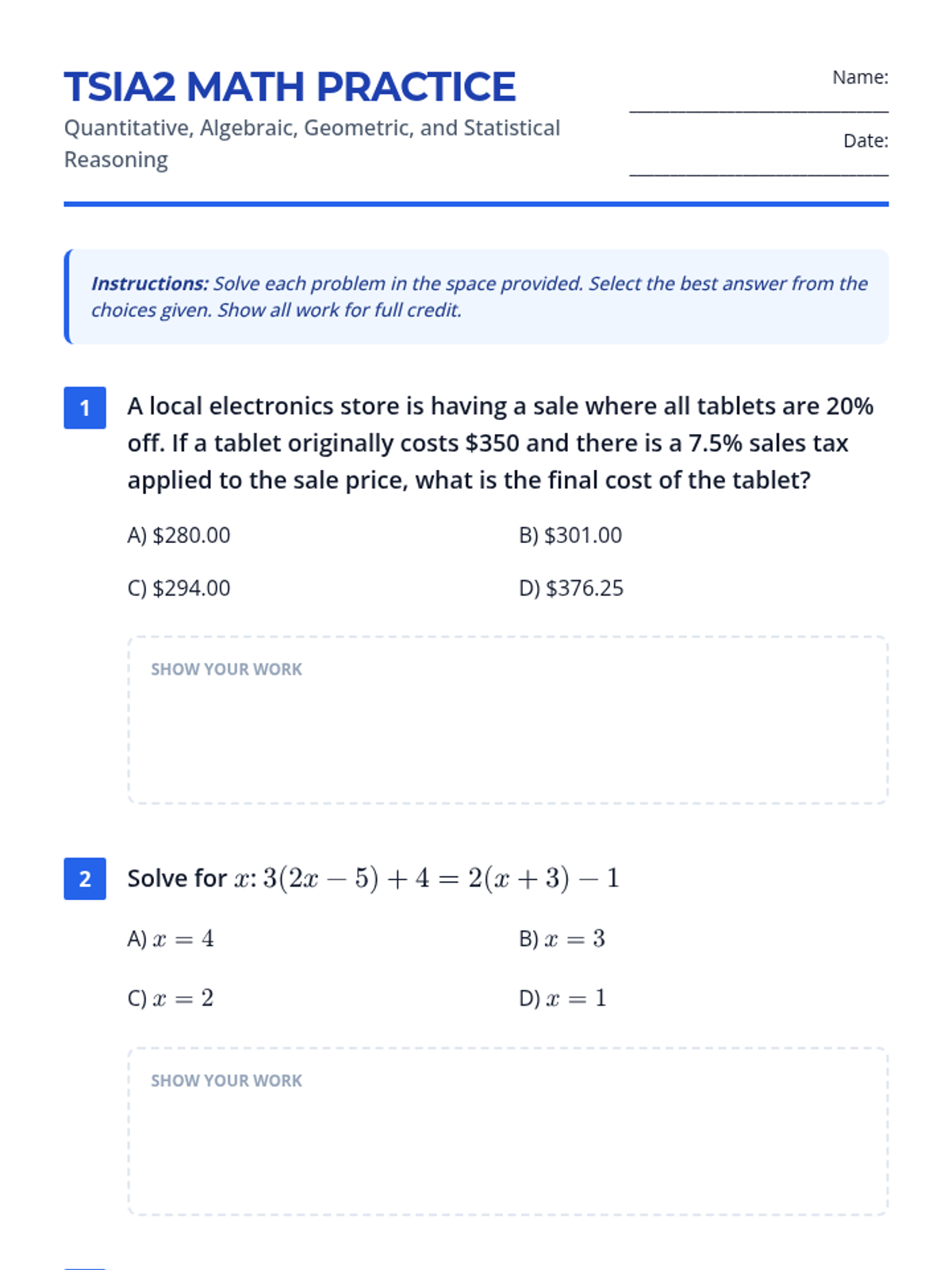
A 20-question TSIA2 Math practice test with questions across four domains: Quantitative Reasoning, Algebraic Reasoning, Geometry, and Probability and Statistics.
Updated instructional slide deck that teaches surface area using the specific formula SA = 2B + Ph. Features step-by-step examples for rectangular and triangular prisms, plus the composite "Hidden Face" rule.
A comprehensive answer key for teachers, providing full step-by-step solutions for the word problems, guided practice worksheet, and multiple-choice quiz within the Master Builders Surface Area lesson.
A 5-question multiple-choice quiz assessment for 7th-grade students on composite surface area. Features identical styling for all answer choices and a professional certification-themed layout.
A guided practice worksheet that breaks down the process of calculating surface area into three clear steps: individual area calculation, identification of hidden faces, and final summation. Features a cube-on-cube composite and a triangular prism, now with mixed number dimensions.
A redesigned project-based learning activity focused exclusively on 3D surface area. Students design a composite monument made of multiple prisms with mixed number dimensions, requiring them to calculate individual surface areas using 2B+Ph and subtract overlapping "hidden" areas.
A set of 5 word problems for 7th-grade students focused on calculating the surface area of composite 3D objects using the formula SA = 2B + Ph, now featuring mixed number dimensions.
A quick summative assessment exit ticket for the geometric modeling lesson, designed to check for shape selection, basic volume calculation, and conceptual understanding.
An answer key for the Field Draftsman Worksheet, providing step-by-step solutions for geometric modeling and volume/surface area calculations of real-world objects.
The official answer key for the Design Challenge Worksheet. Includes step-by-step algebraic solutions for height, surface area calculations for both designs, and the final cost-benefit analysis.
An answer key for the Shape Simulators lesson materials, including the Dimension Detective Worksheet and the Skill Check Exit Ticket, with a scoring rubric.
A concise, half-page exit ticket designed to assess student understanding of surface area optimization, structural rigidity of triangles, and the concept of geometric modeling. Ideal for Tier 2 progress monitoring.
A quick assessment for students to demonstrate their ability to select formulas, identify radius from diameter, and describe the strategy for calculating composite volume.
A comprehensive teacher guide for the Volume Lab intervention lesson. Includes time allocations, instructional strategies for the 1/3 rule, scaffolding tips, common misconception tables, and assessment guidance.
A short, two-per-page exit ticket for progress monitoring, assessing student understanding of Cavalieri's Principle and the sphere volume formula.
A comprehensive teacher guide with instructional phases, pacing, common misconceptions, and progress monitoring tools for the geometric modeling intervention.
A short exit ticket for progress monitoring after the geometric modeling lesson. Includes model identification, friendly number selection, and a guided volume estimation for a beach ball.
A comprehensive teacher facilitation guide with pacing, scripts, hands-on activity instructions, and a common misconceptions cheat sheet for the volume intervention lesson.
A comprehensive teacher guide for the Design Optimization intervention lesson. Includes scripted prompts, scaffolding strategies for Tier 2 students, common misconceptions, and a progress monitoring rubric.
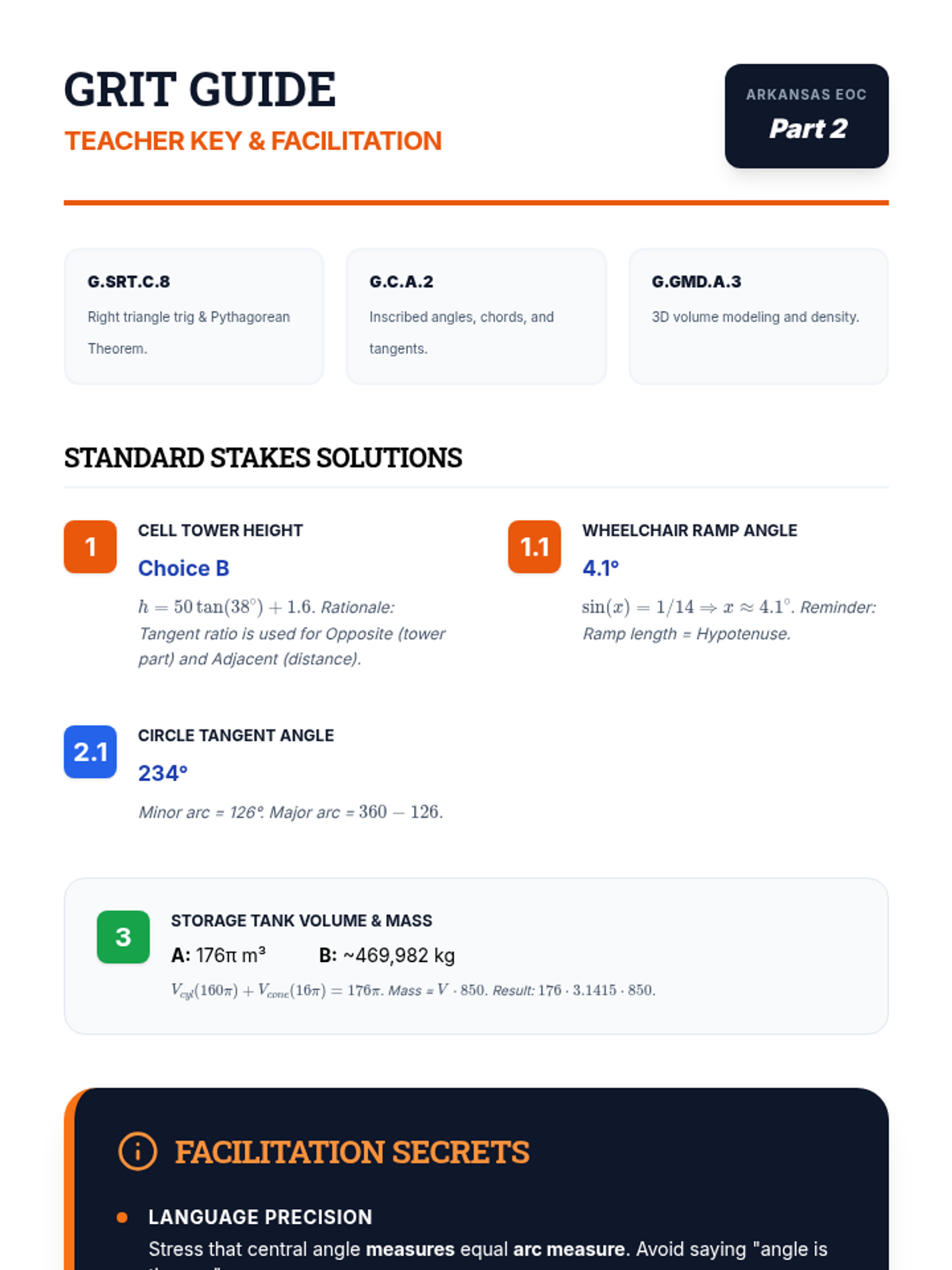
A comprehensive teacher guide for the Design Mastery lesson, containing pedagogical advice, Socratic questioning prompts, and full answer keys for all materials.
A quick formative assessment exit ticket for students to demonstrate their understanding of population and material density calculations after the intervention lesson.