Right triangle ratios, unit circle definitions, and fundamental identities applied to angles and geometric relationships. Models periodic phenomena using trigonometric functions to analyze real-world cycles and waveforms.
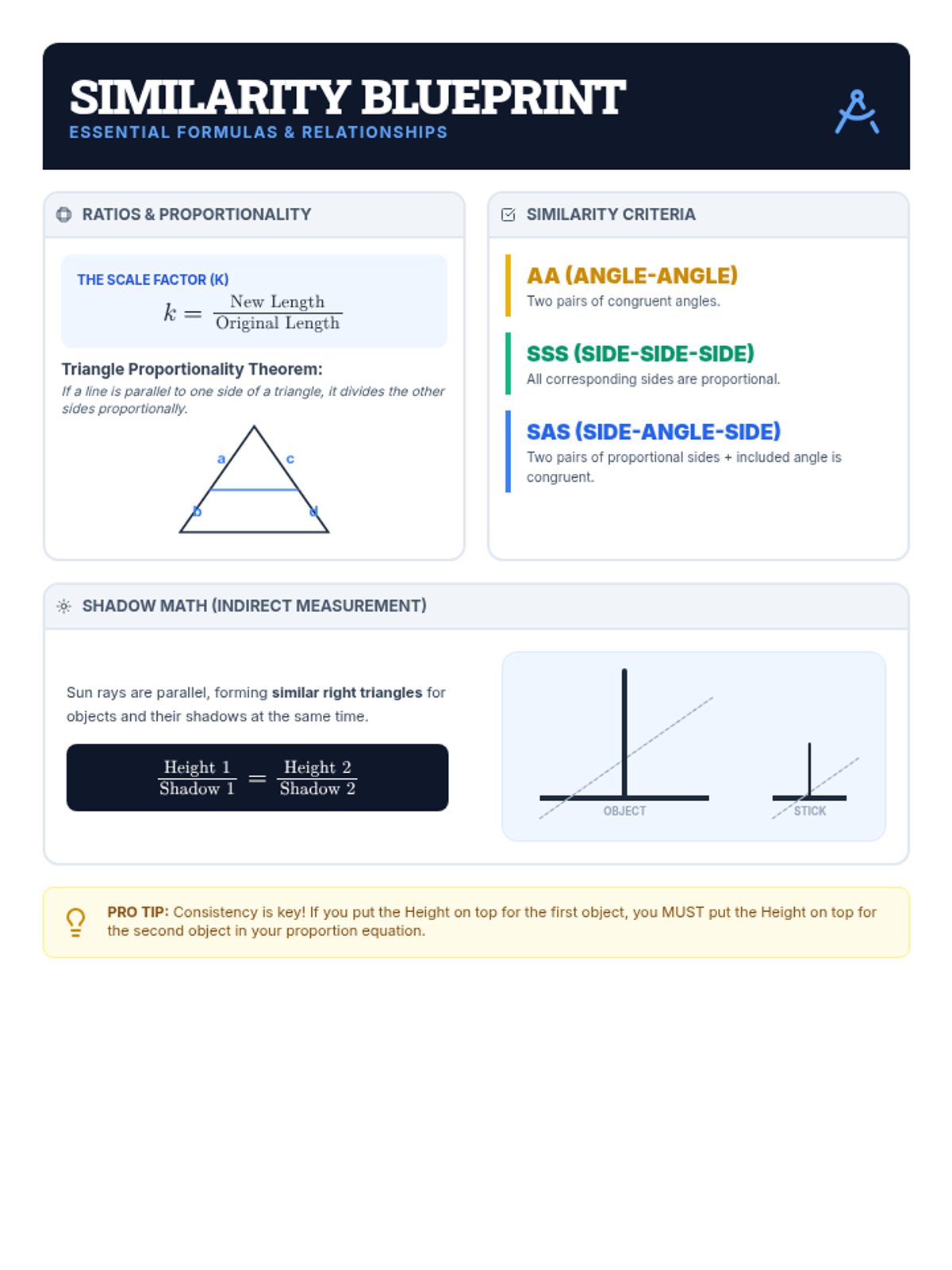
A student-friendly reference sheet for similarity concepts. Includes formulas for scale factor, similarity criteria (AAA, SSS, SAS), and a visual guide for shadow trigonometry.
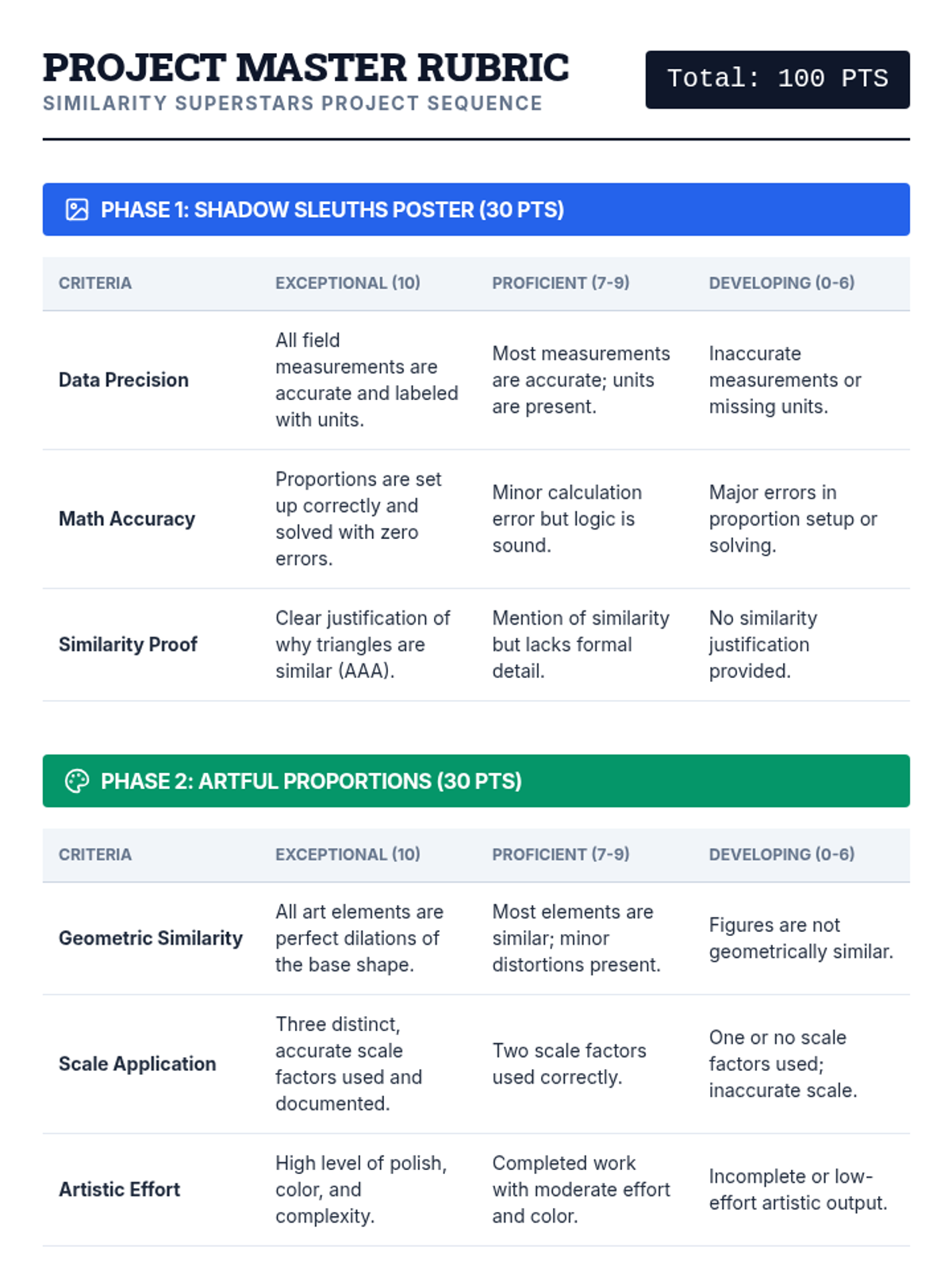
A comprehensive teacher's rubric for the Similarity Superstars project. Covers poster, art, and presentation components with specific grading criteria for data, logic, and polish.
A digital slide presentation template and guide for students. Covers similarity criteria (AAA, SAS, SSS), presentation requirements, and slide layout templates.
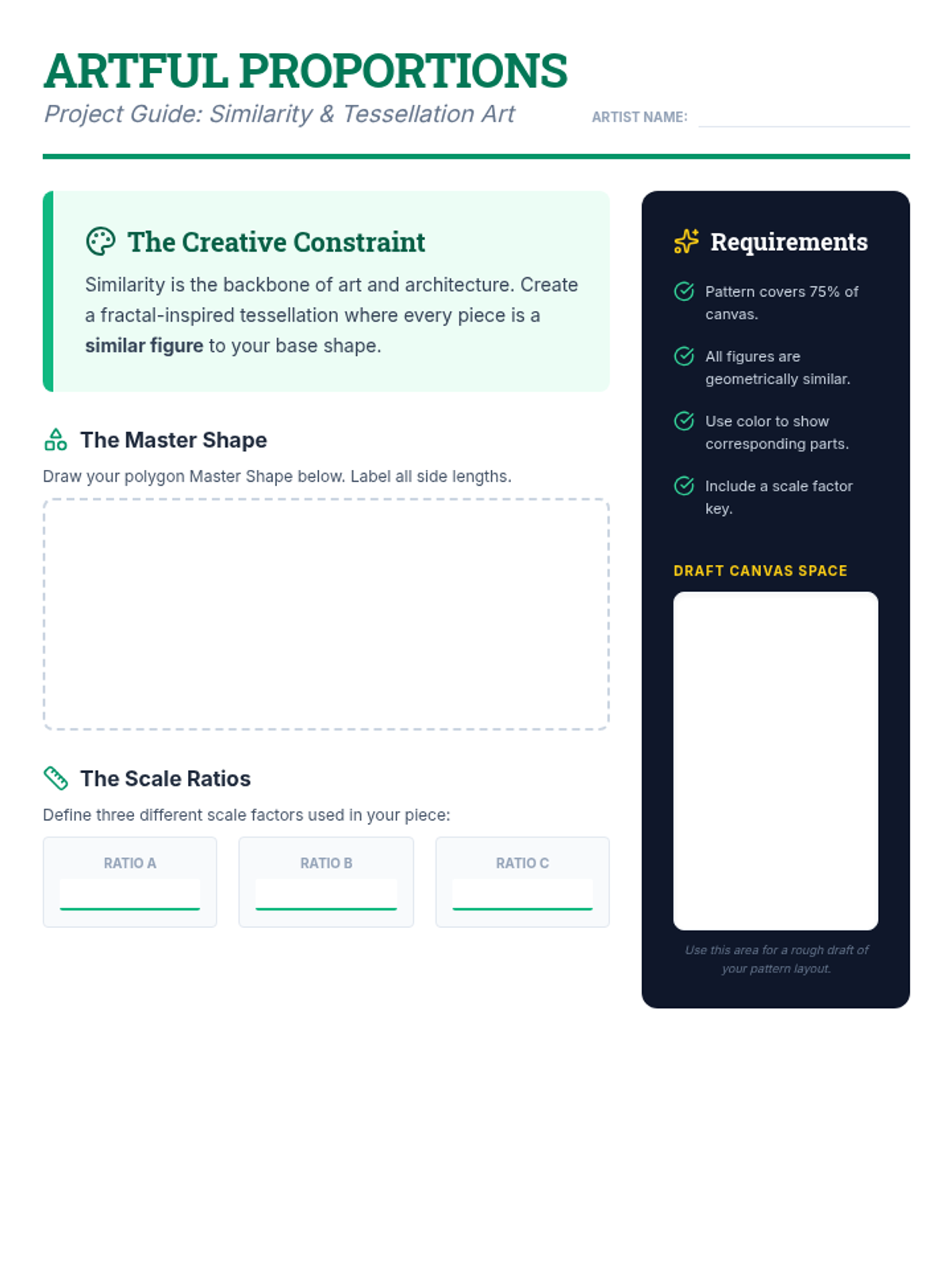
A guide for students to create similarity-based art and tessellations. Includes sections for base shape design, scale factor definitions, and artistic requirements.
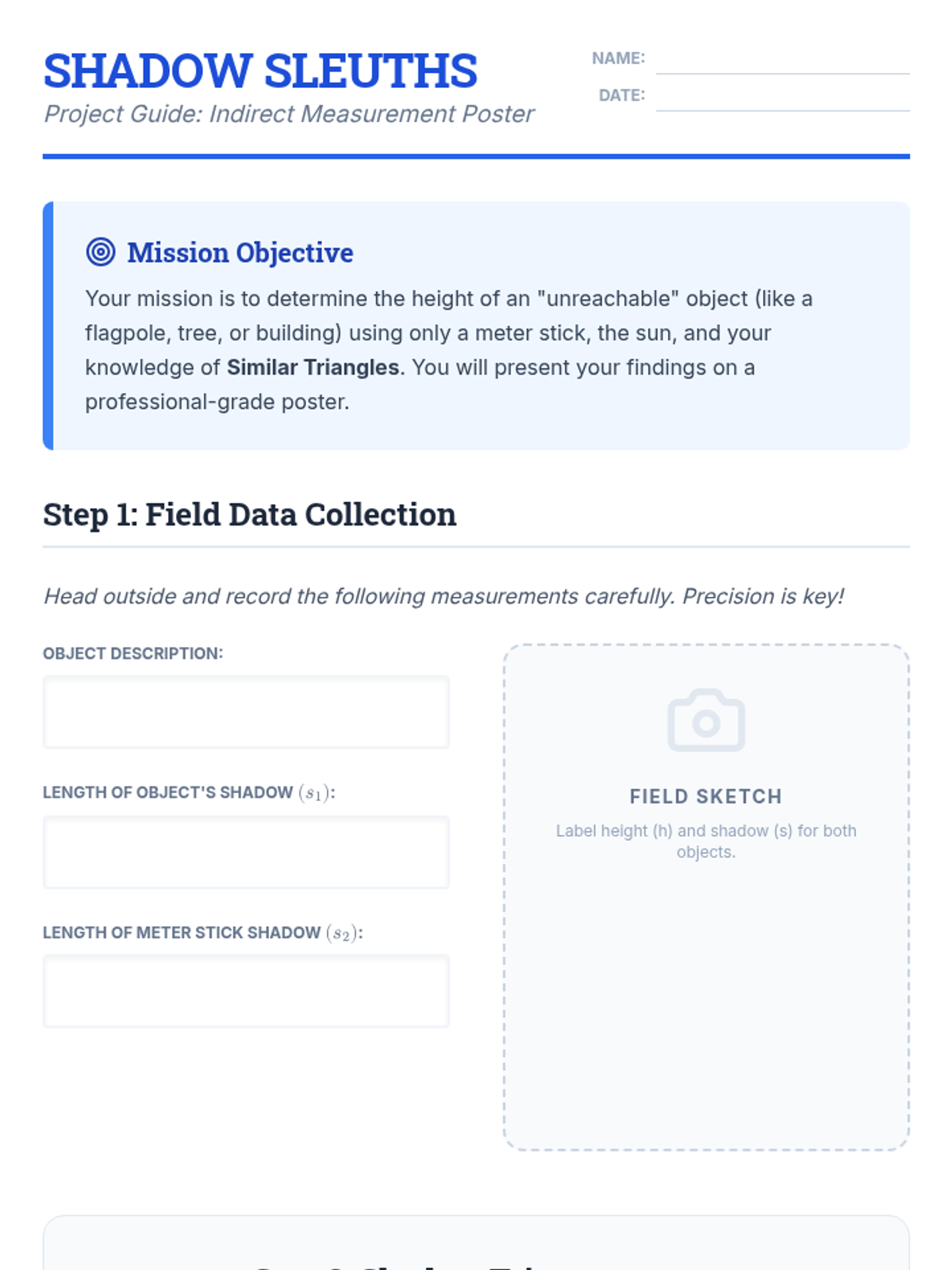
A project guide for students to conduct indirect measurement using shadows. Includes data collection tables, a ratio setup guide, and poster requirements.
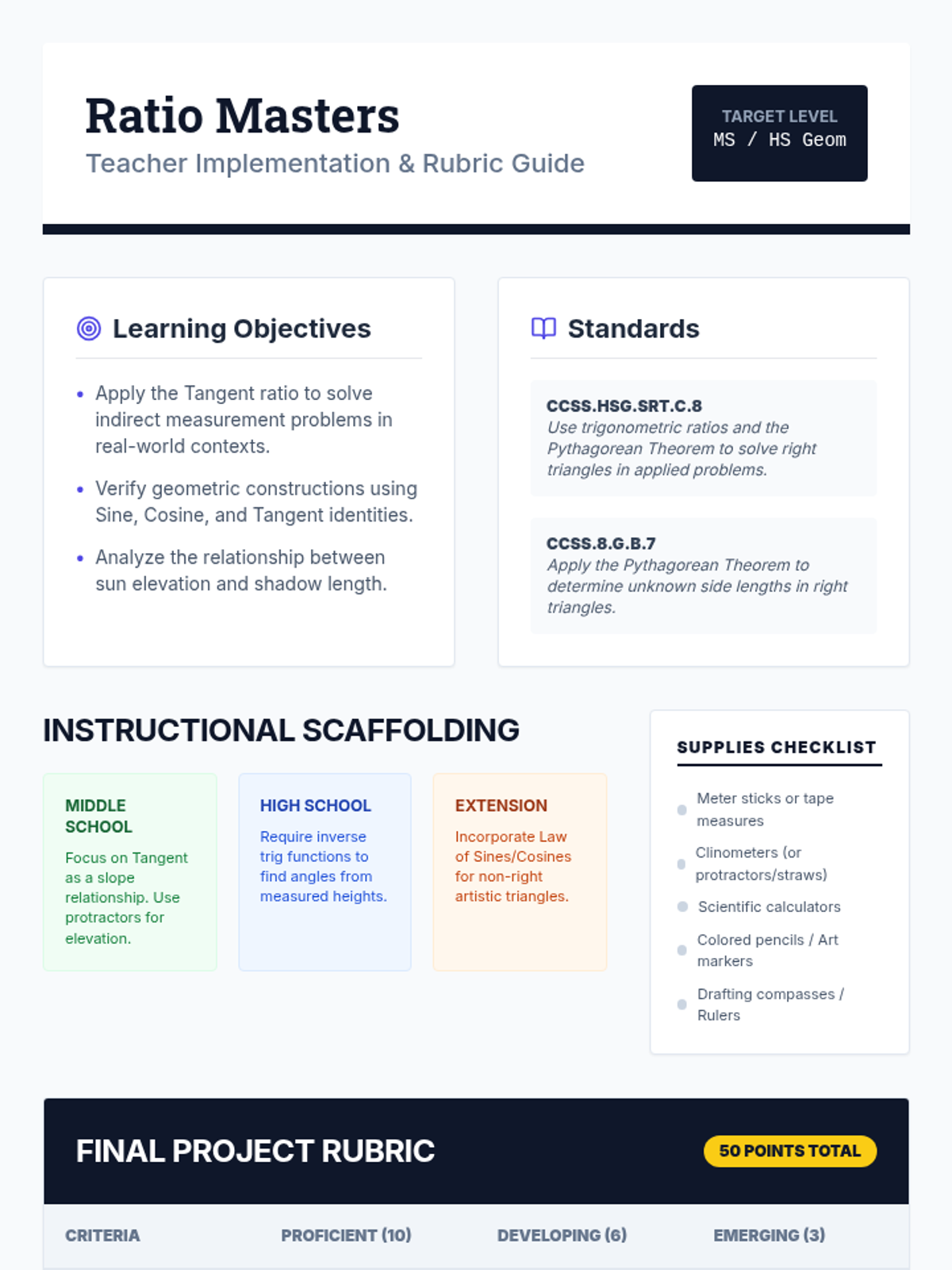
A teacher guide containing learning objectives, standards alignment, differentiation strategies for middle and high school, and a comprehensive grading rubric.
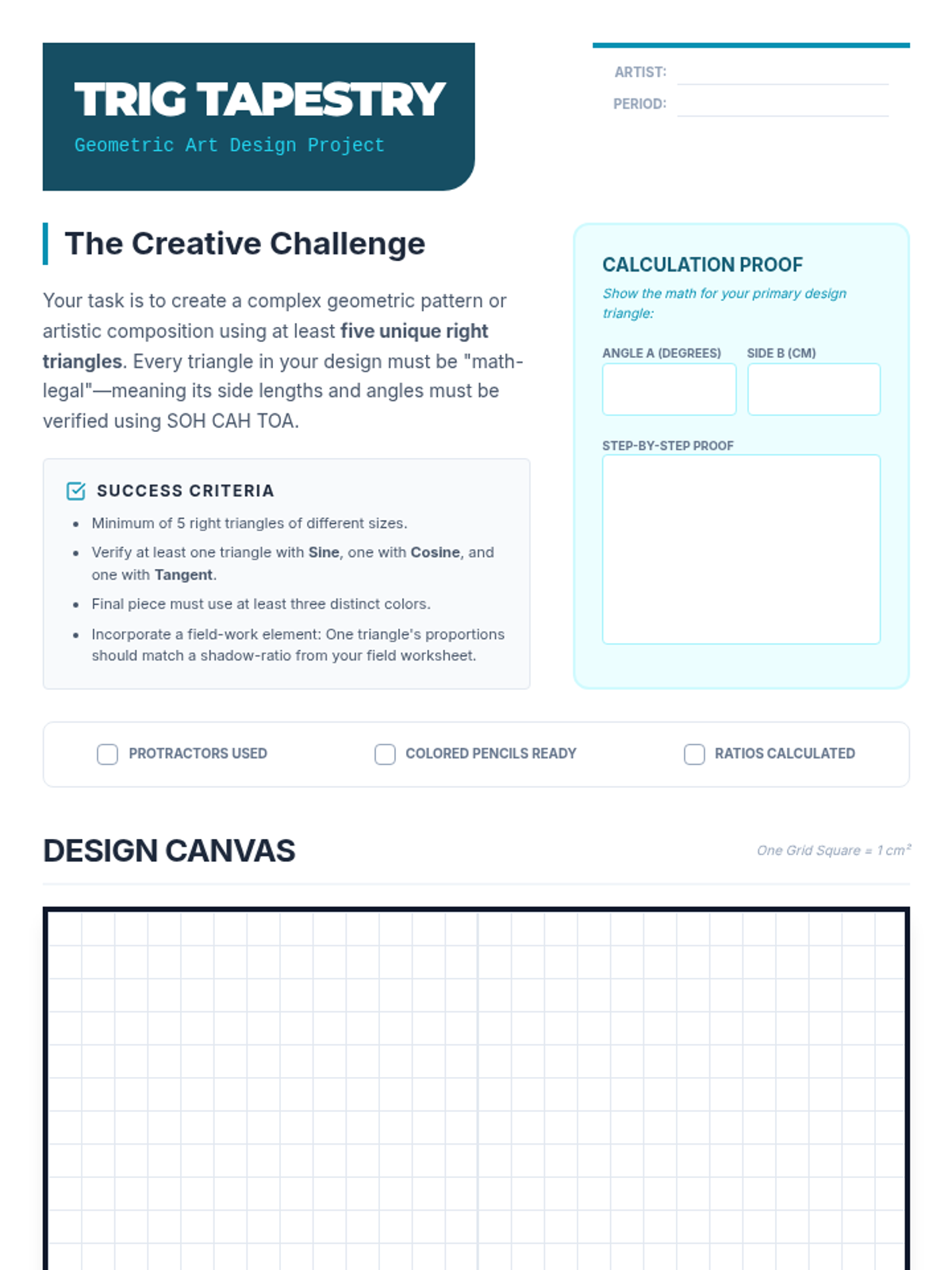
A project guide for the geometric art portion of the lesson. Students design a pattern using right triangles and prove their proportions using trigonometric ratios.
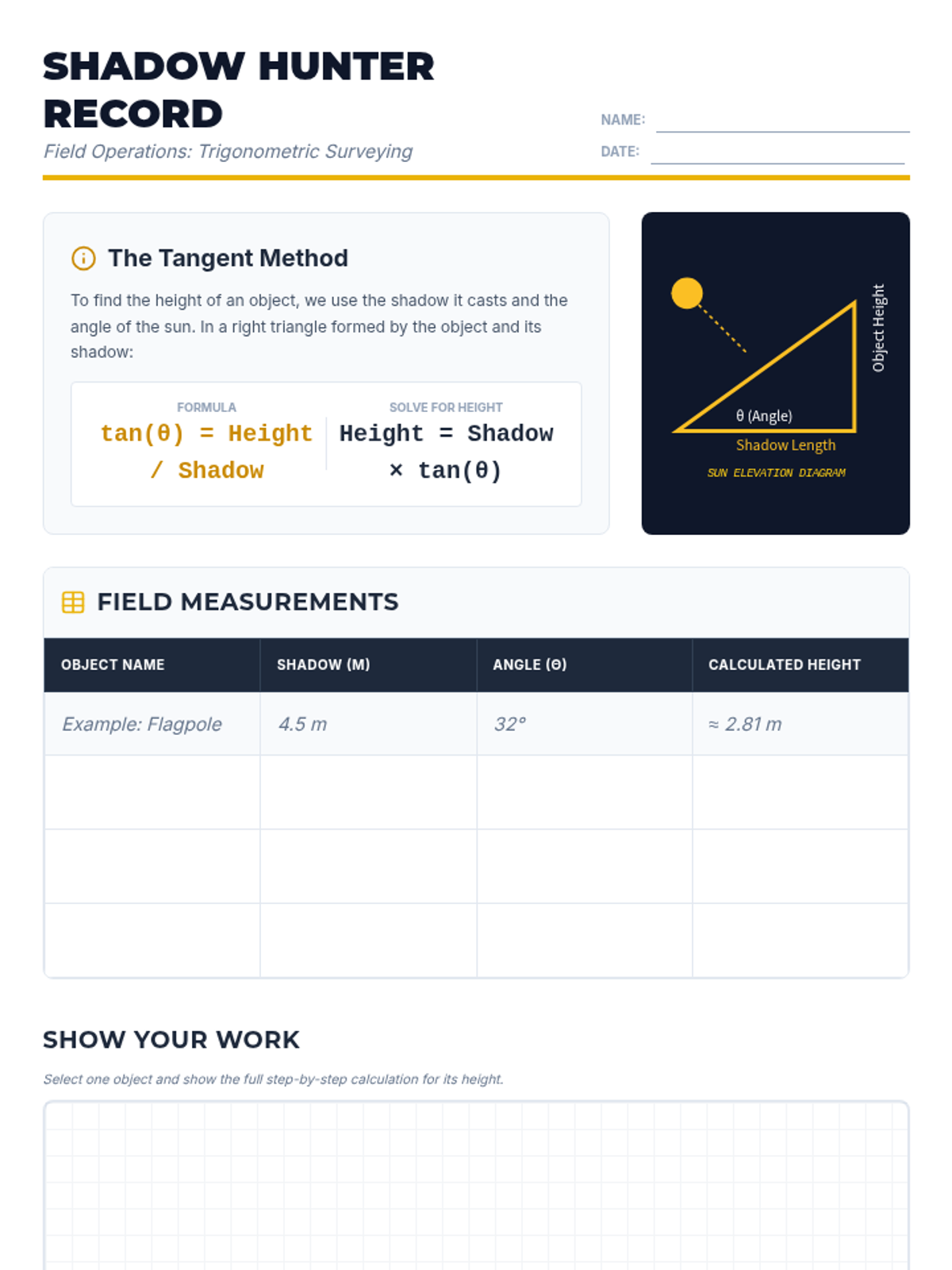
A field data collection sheet for students to record shadow lengths and calculate object heights using the tangent ratio. Includes space for work and reflection questions.
An introductory slide deck for the Shadows and Shapes project, covering trigonometric ratios, the two main project components (Shadow Hunters and Trig Tapestry), and the project timeline.
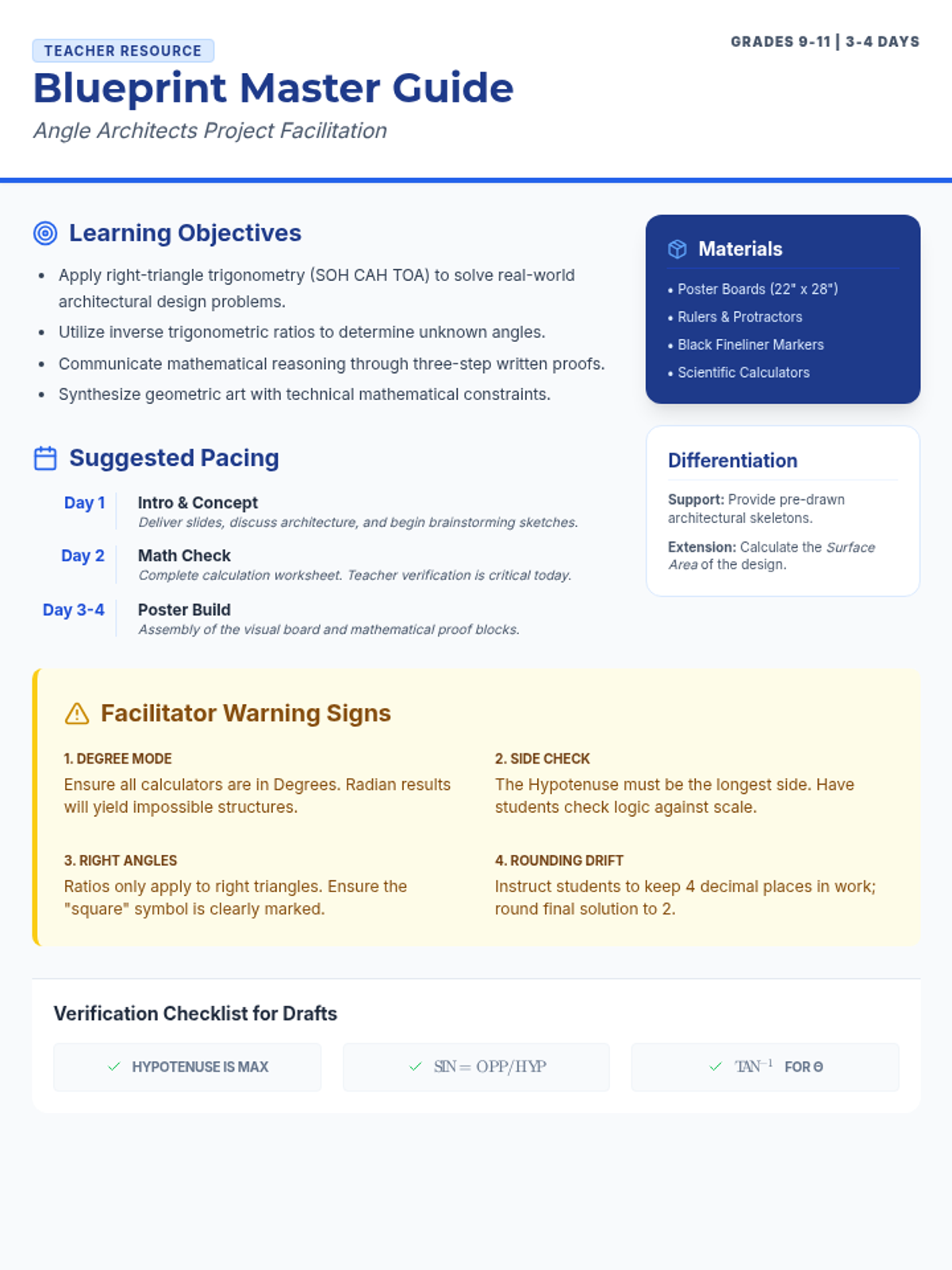
A comprehensive teacher's guide for the Angle Architects project, including pacing, materials, differentiation strategies, and common student misconceptions.
An introductory presentation for the Angle Architects project, covering real-world trig applications, SOH CAH TOA review, and project expectations.
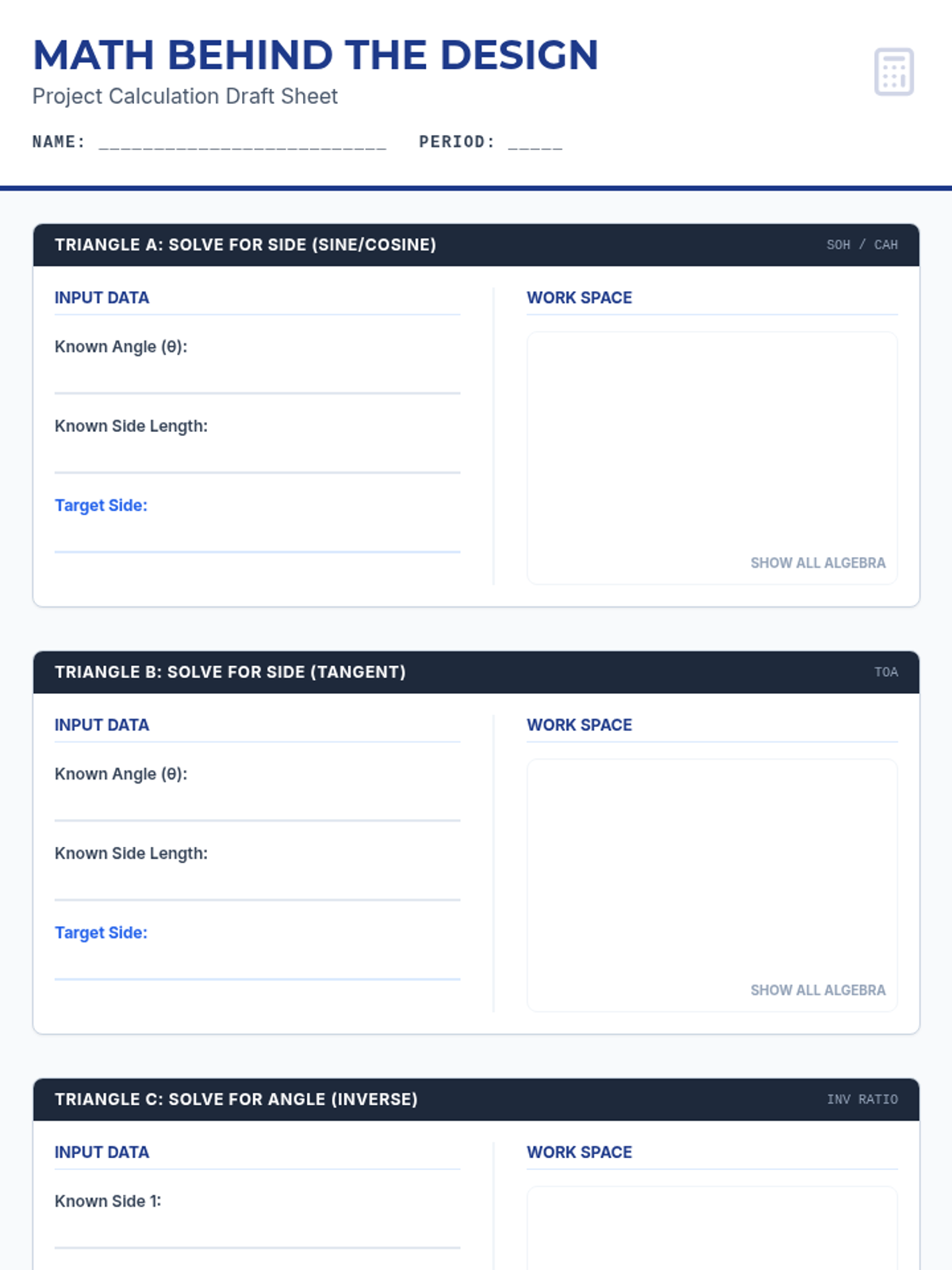
A structured worksheet for students to perform and check their step-by-step trigonometry calculations before transferring them to their final project poster.
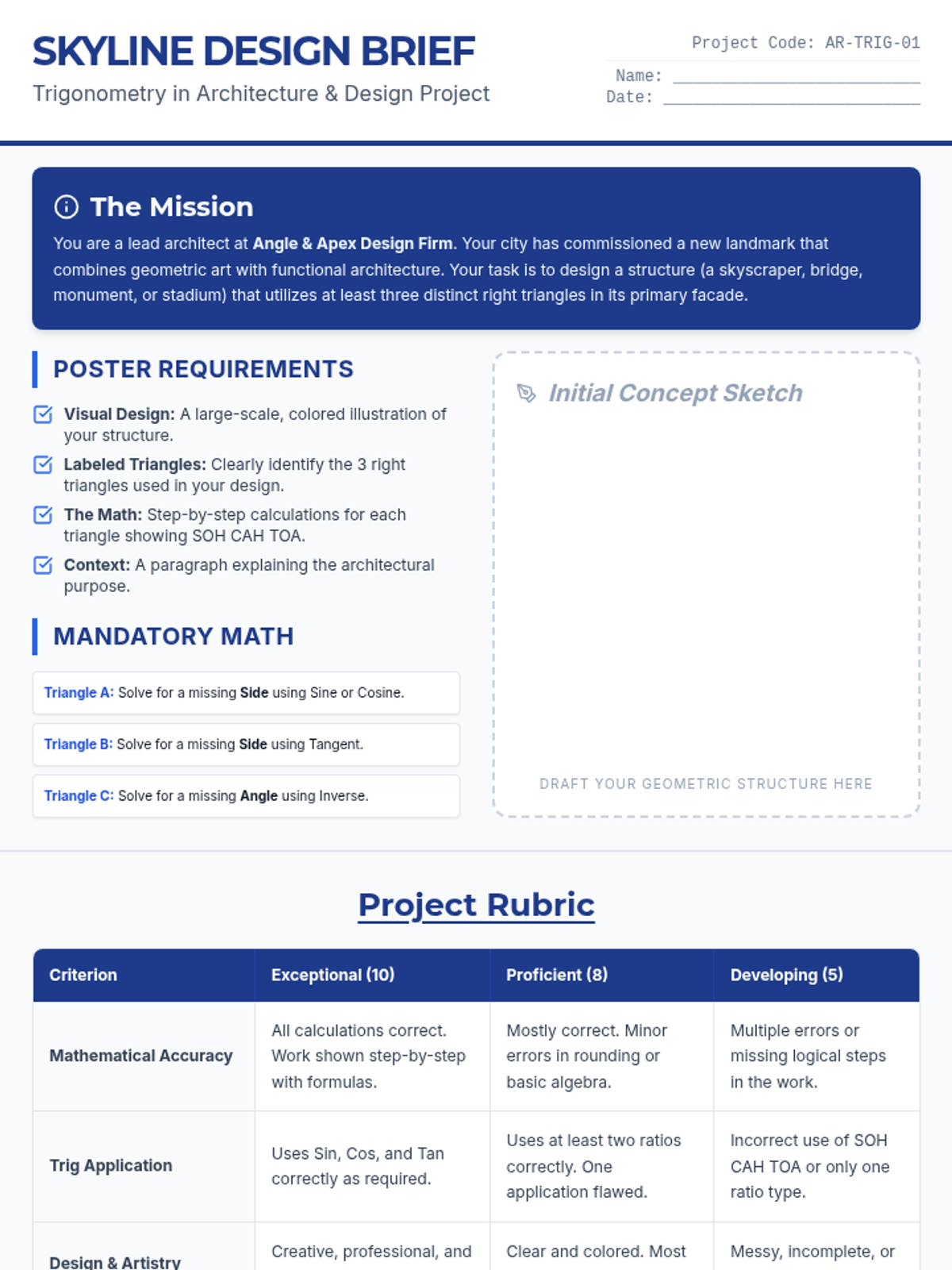
A student project brief for designing an architectural structure using trigonometry, including requirements, a sketch area, and a detailed grading rubric.
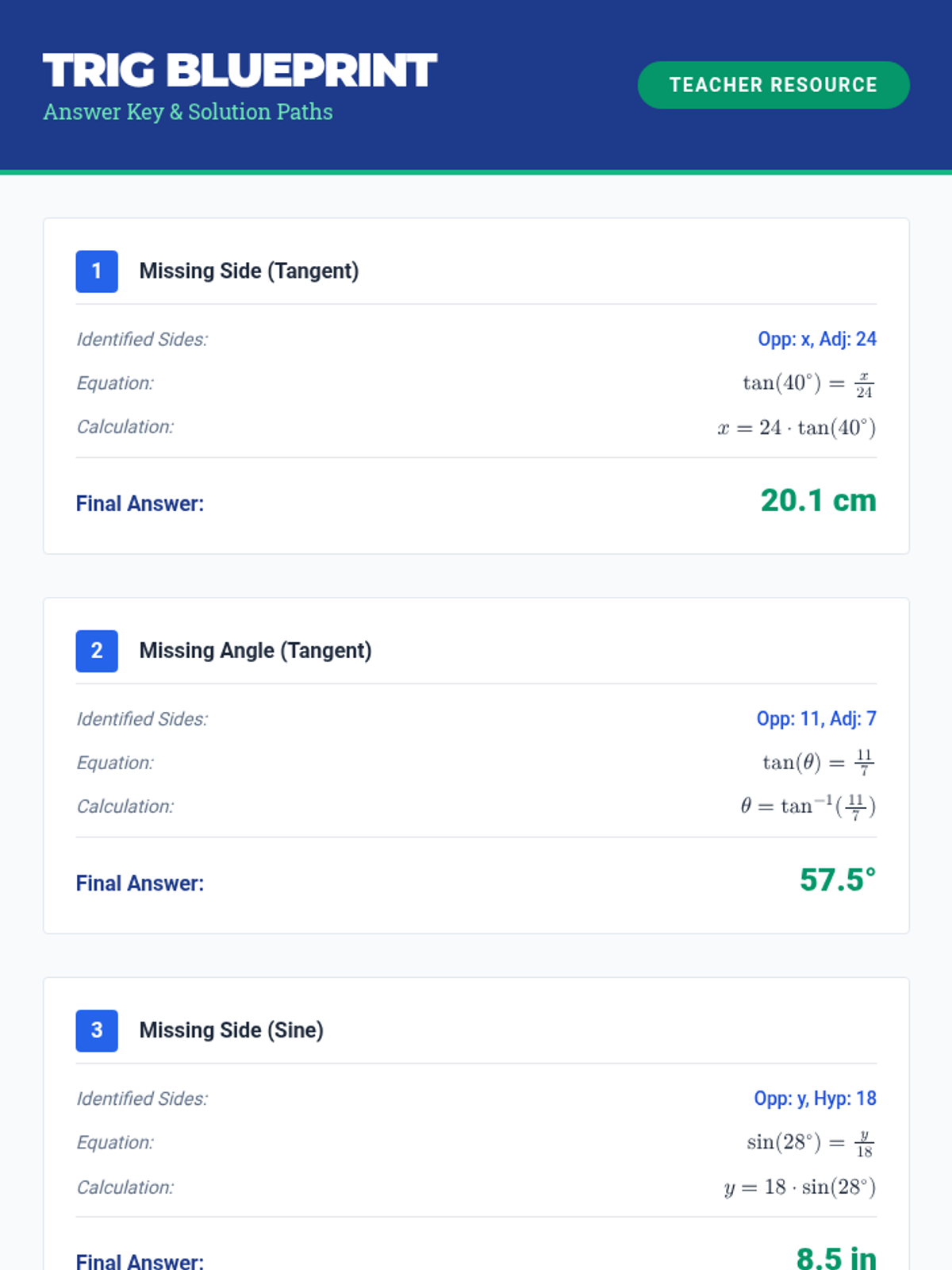
A teacher's answer key for the Trig Blueprint Worksheet, providing full step-by-step solution paths and teaching tips for each problem. Updated to include Cosine and corrected for page-flow issues.
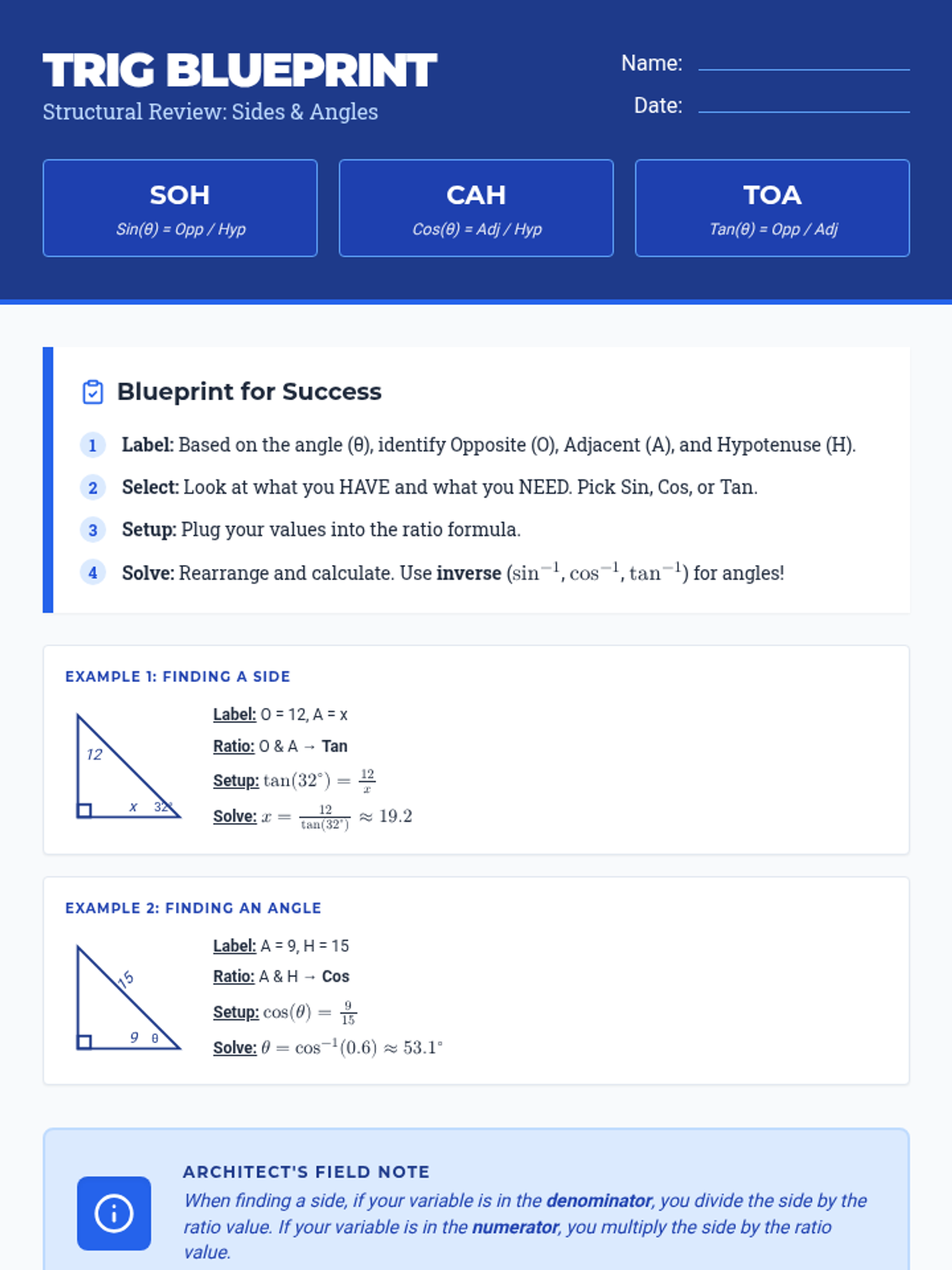
A student-facing trigonometry review sheet styled as an architectural blueprint, featuring a step-by-step checklist, worked examples for sides and angles, and four practice problems with dedicated workspace. Updated for better page flow and to include all three trig ratios.
An introductory presentation slide deck defining the angles of elevation and depression with visual diagrams and a step-by-step problem-solving strategy.
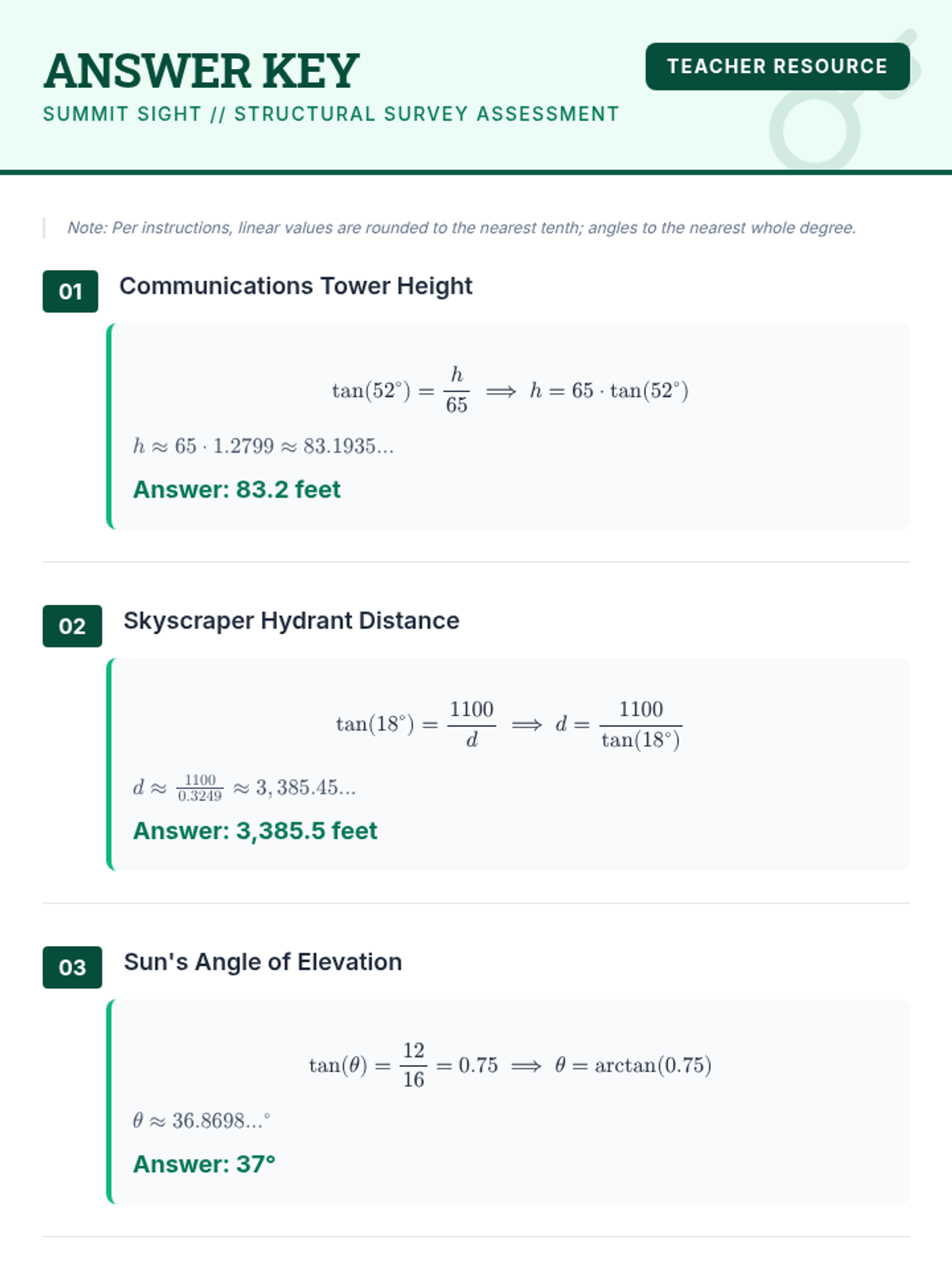
A detailed teacher answer key for the Summit Sight Quiz, including full trigonometric step-by-step solutions and final answers rounded to specified precision.
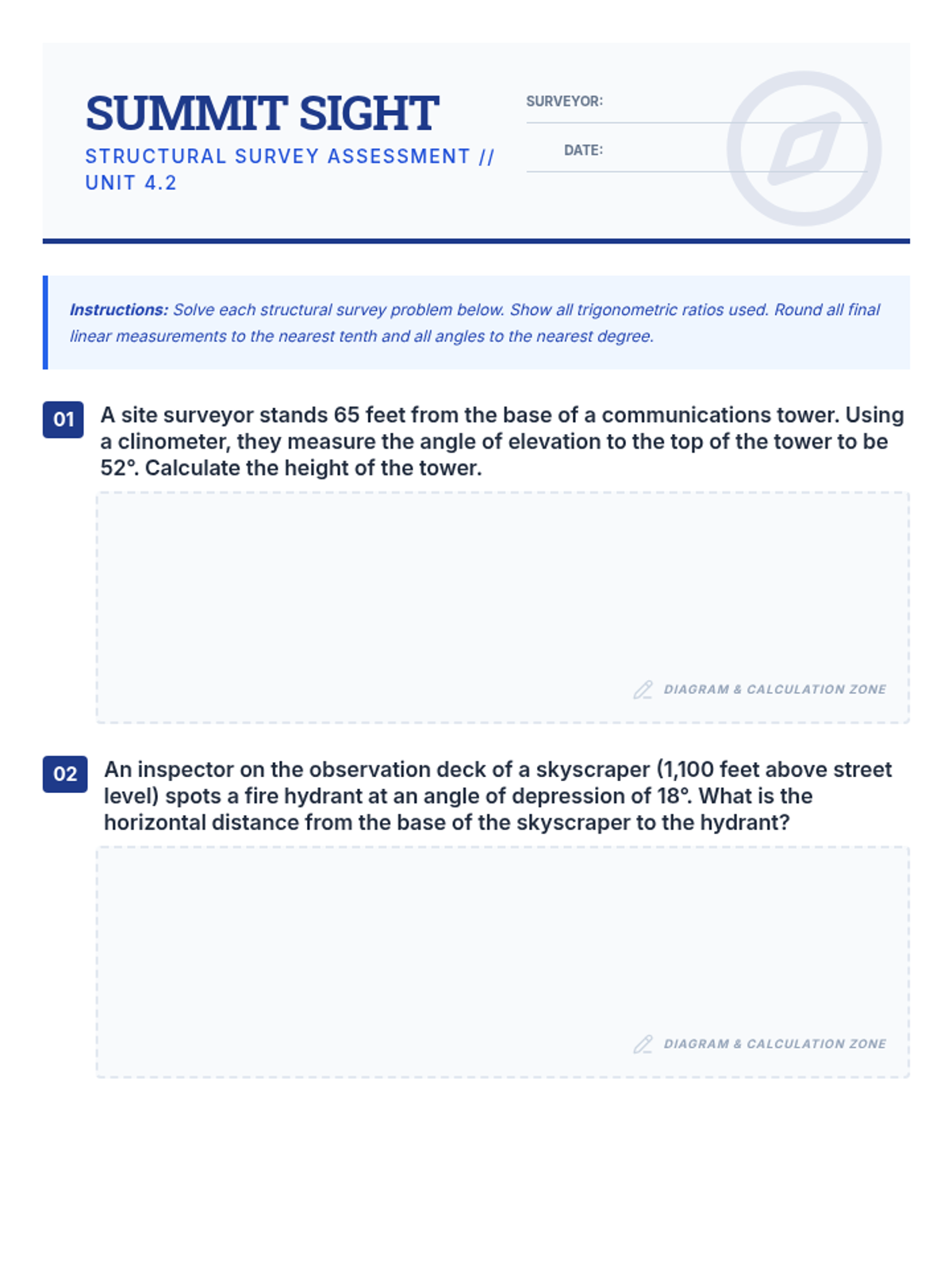
A 5-question printable assessment on the angle of elevation and depression, featuring a technical architectural drafting theme and ample workspace for calculations.
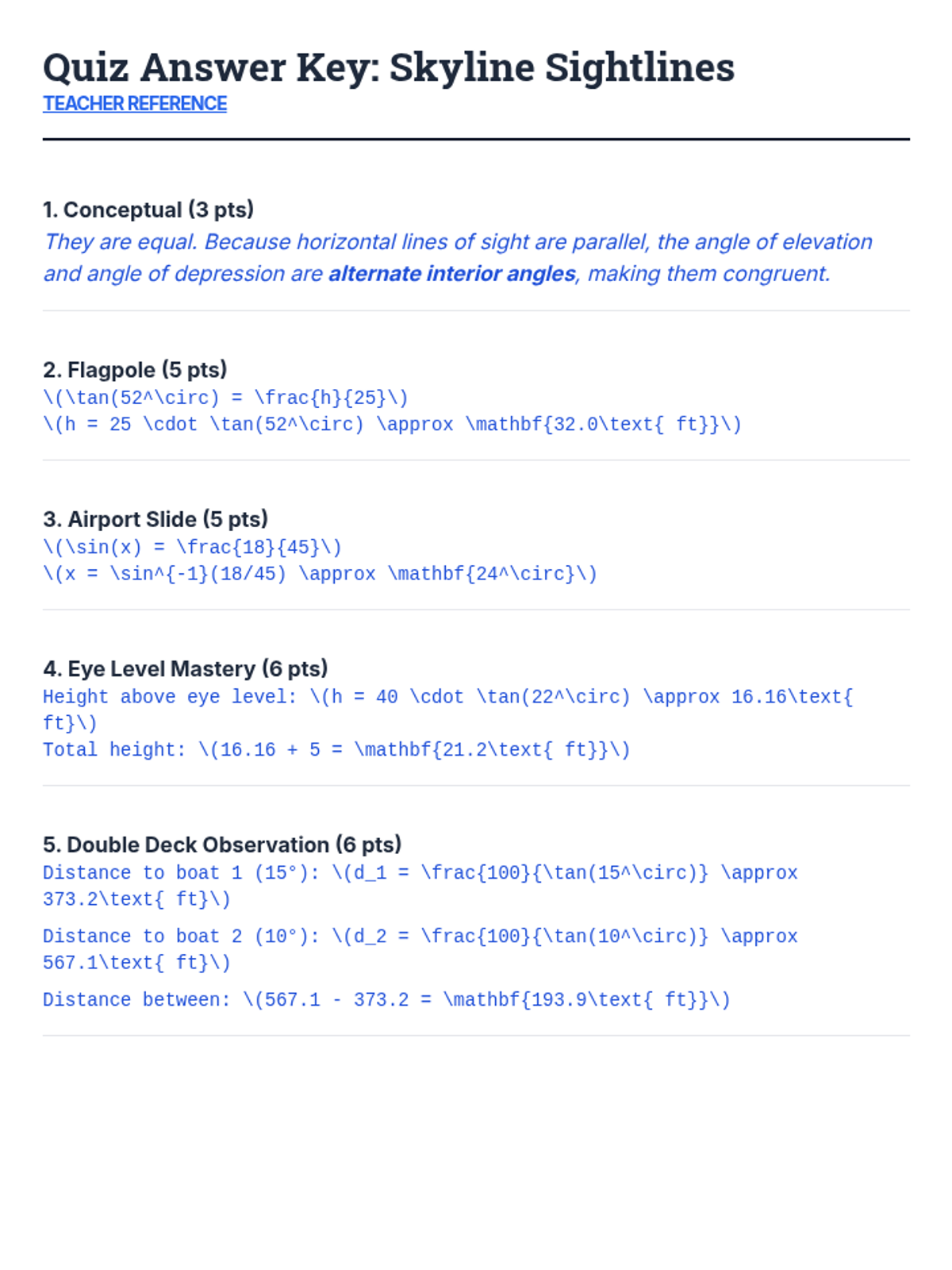
A teacher's answer key for the Skyline Sightlines Quiz, providing final numerical answers and step-by-step trigonometric solutions.
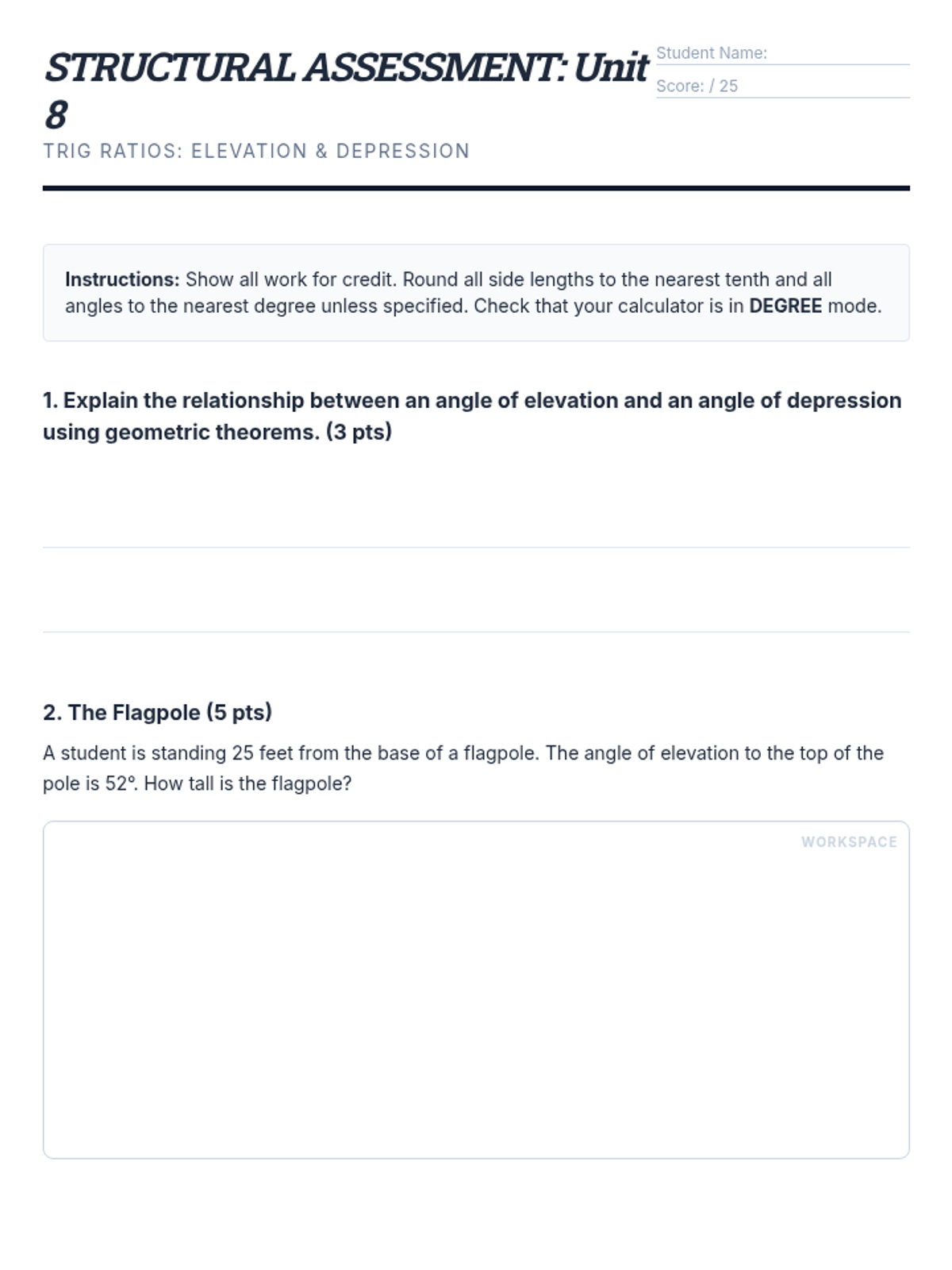
A summative assessment covering angle of elevation and depression, including conceptual explanations, basic trig ratios, and multi-step word problems.