Right triangle ratios, unit circle definitions, and fundamental identities applied to angles and geometric relationships. Models periodic phenomena using trigonometric functions to analyze real-world cycles and waveforms.
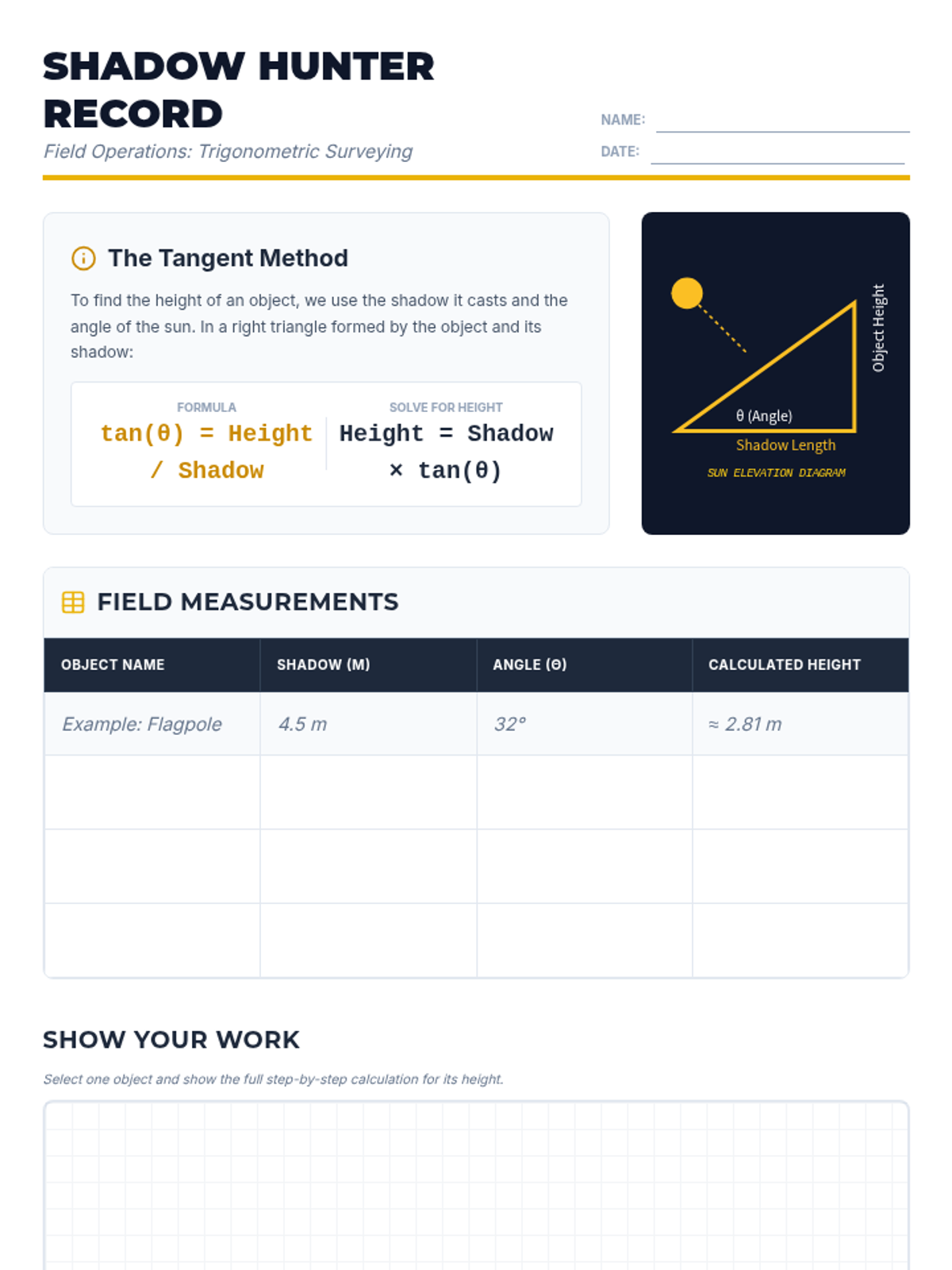
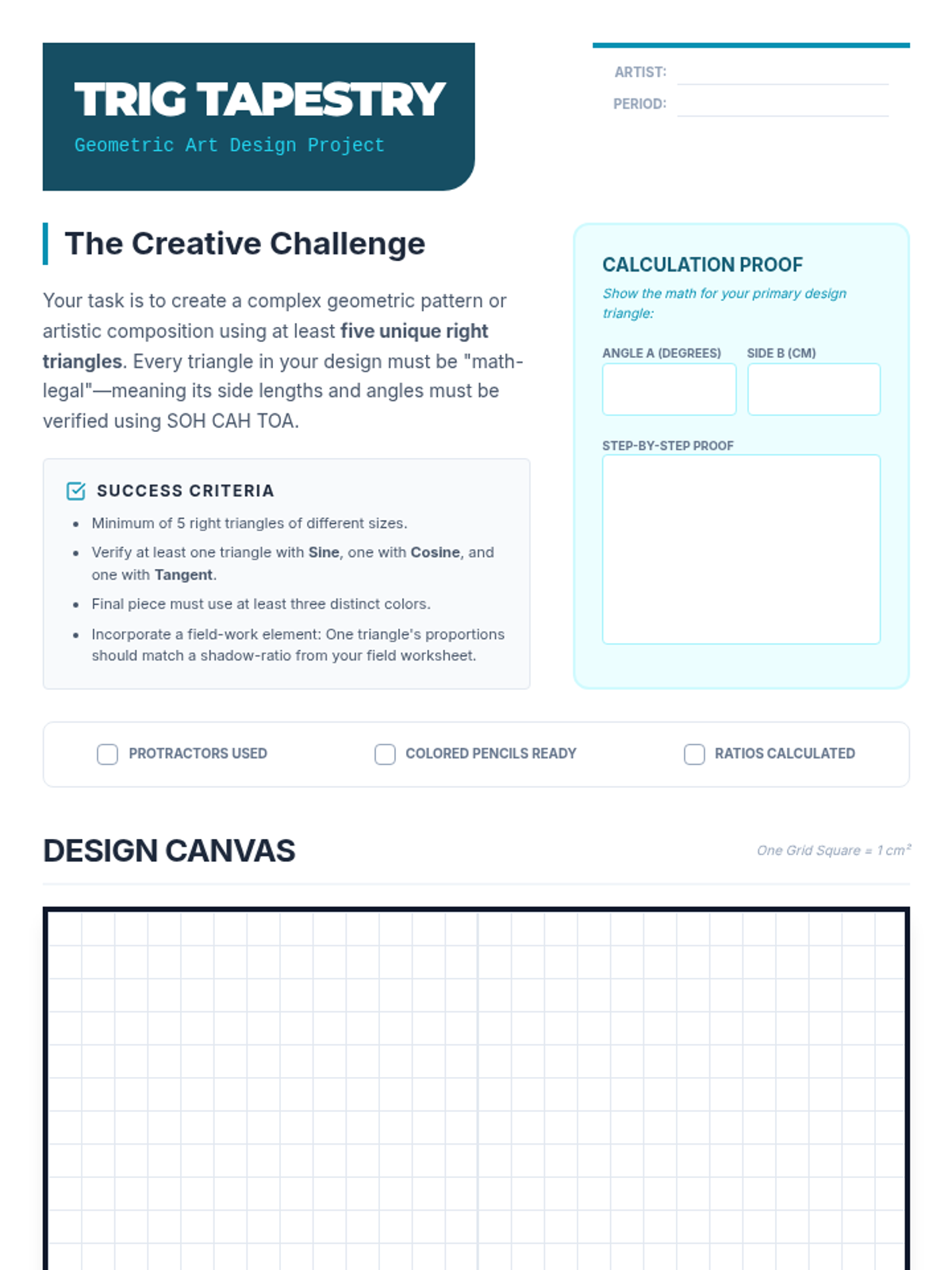
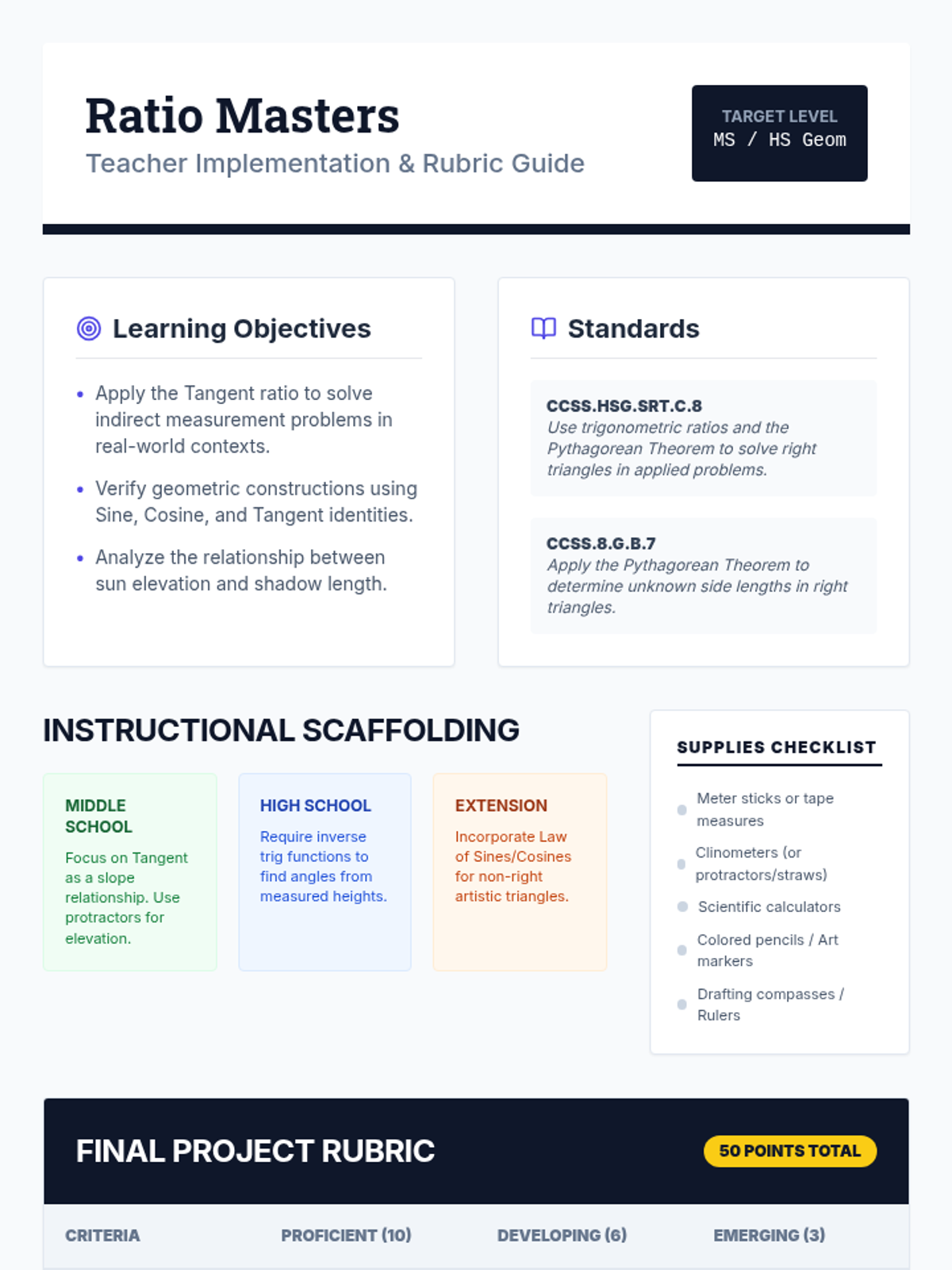
A comprehensive project-based learning unit where students apply trigonometric ratios to measure the heights of local landmarks and create intricate geometric art based on mathematical proportions.
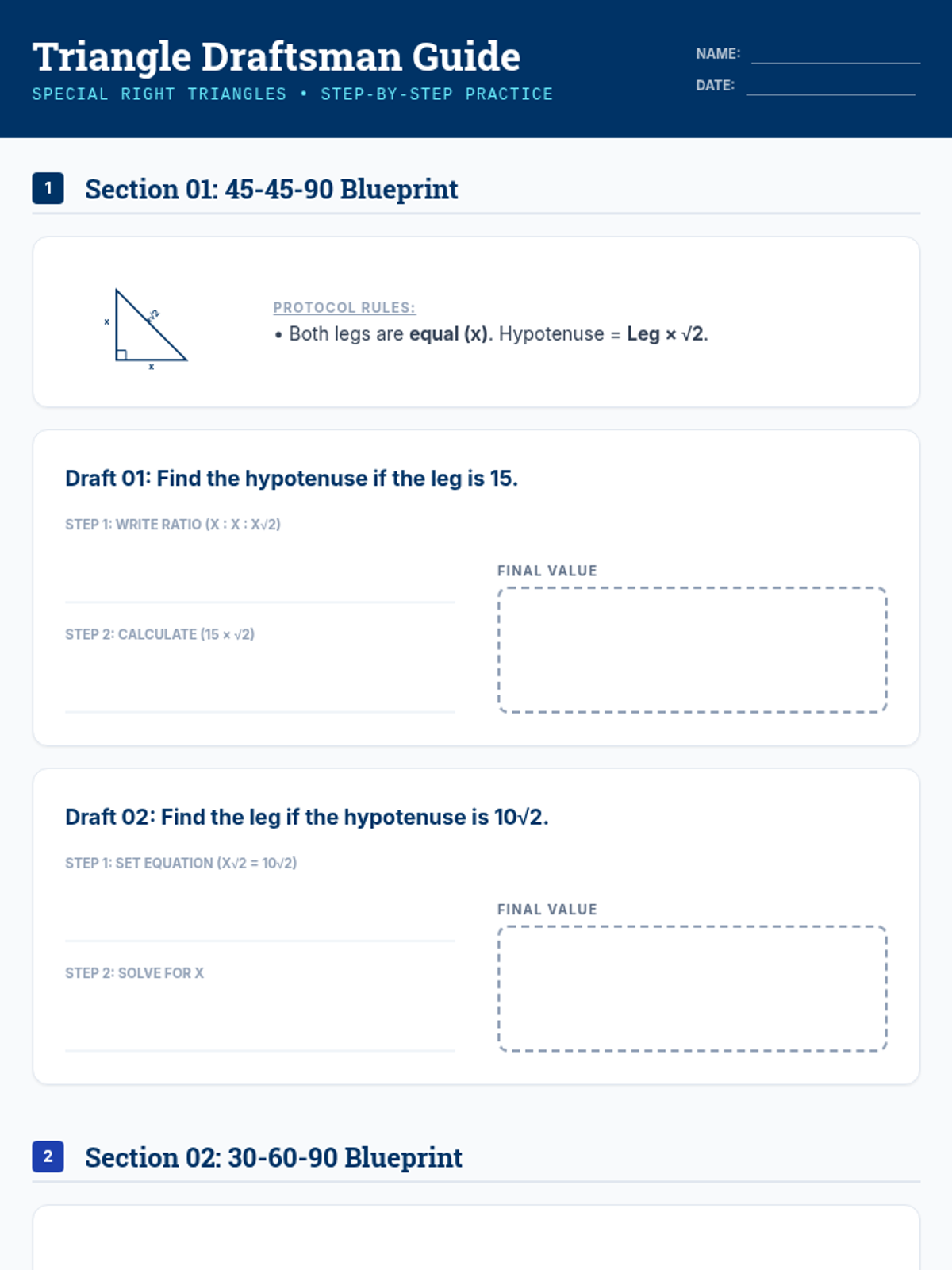
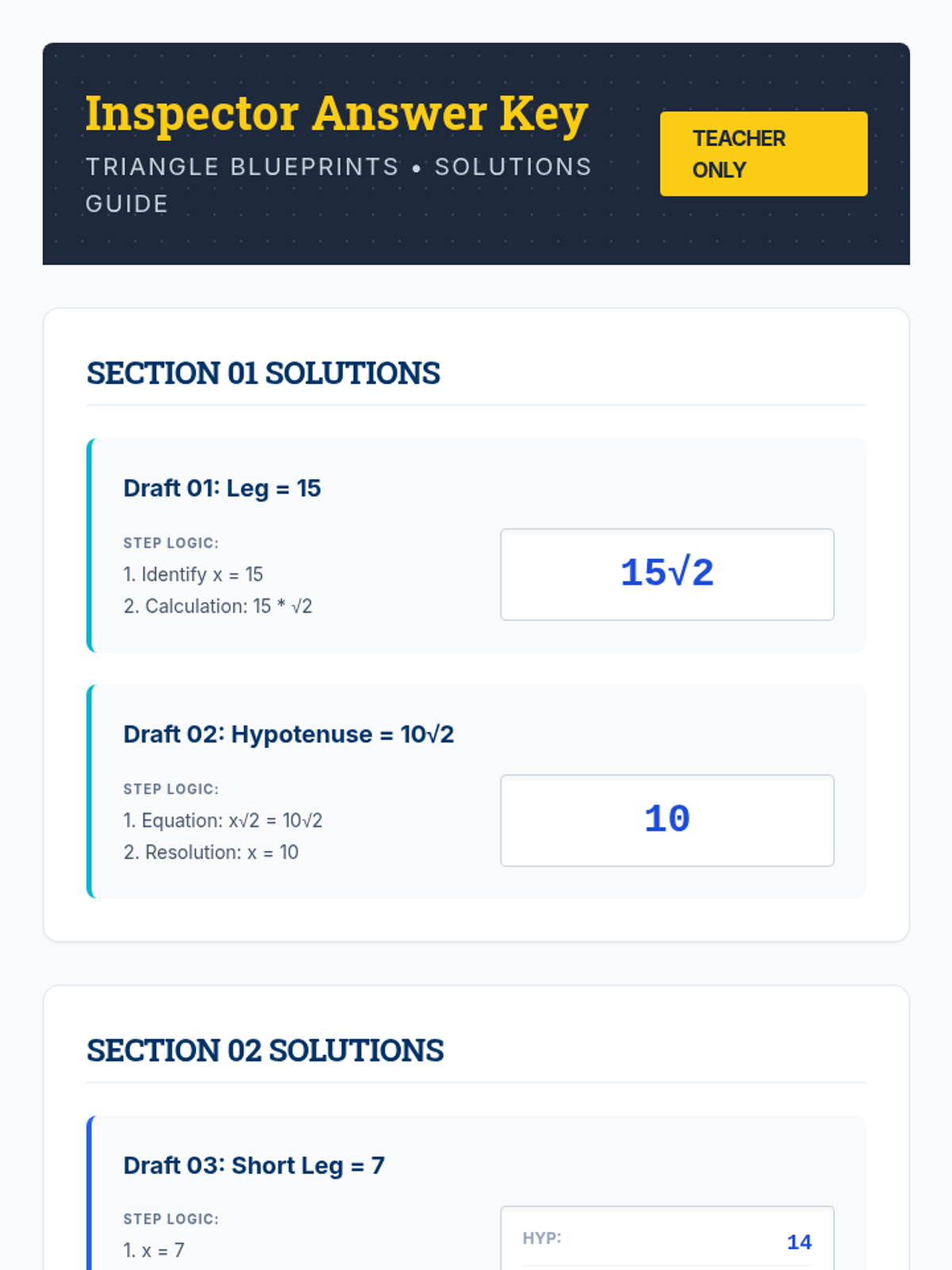
A series of geometry lessons focusing on right triangle relationships and trigonometry, starting with special right triangles.
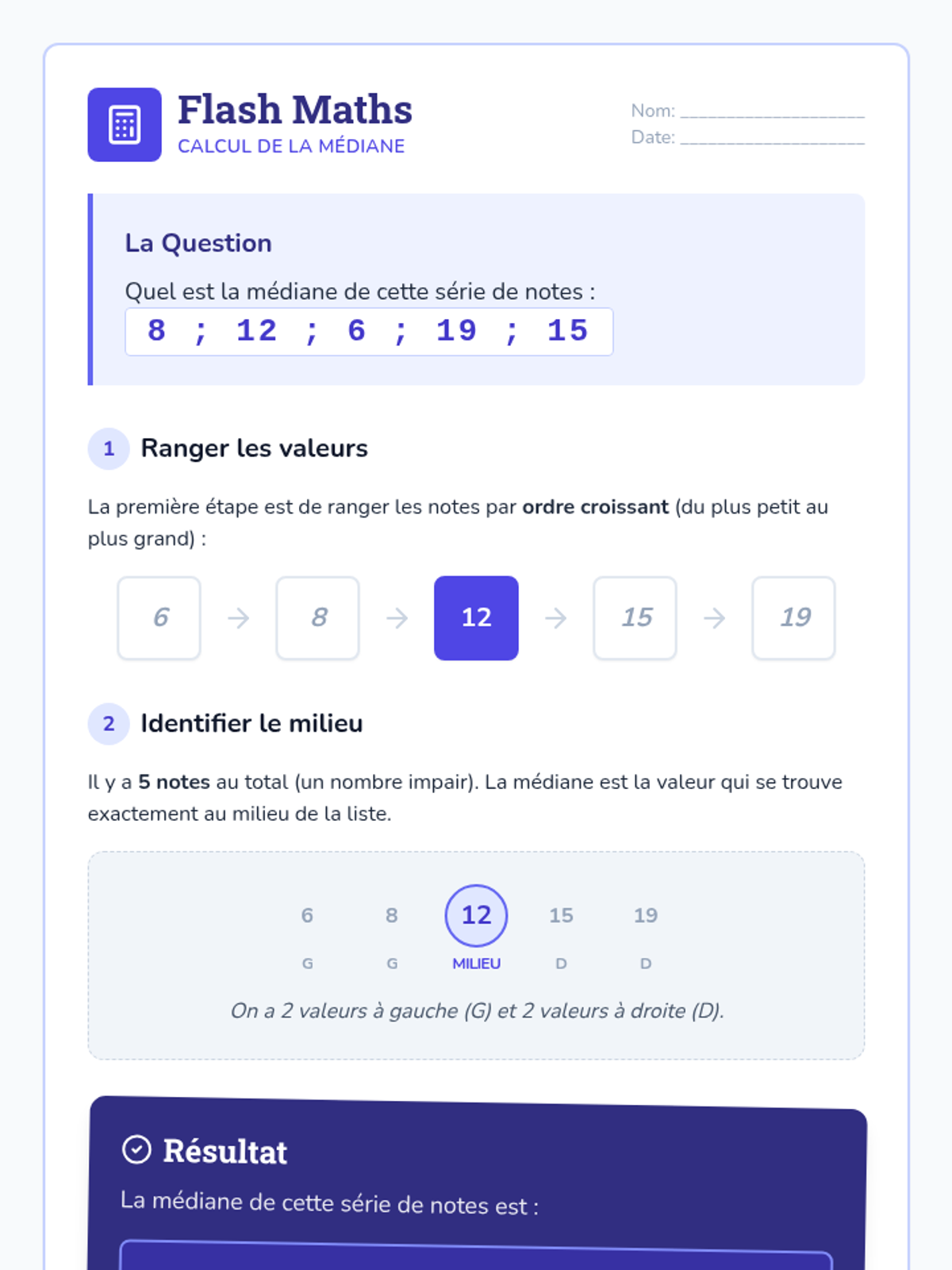
Une série de ressources éducatives couvrant divers concepts mathématiques essentiels comme les statistiques et la trigonométrie.
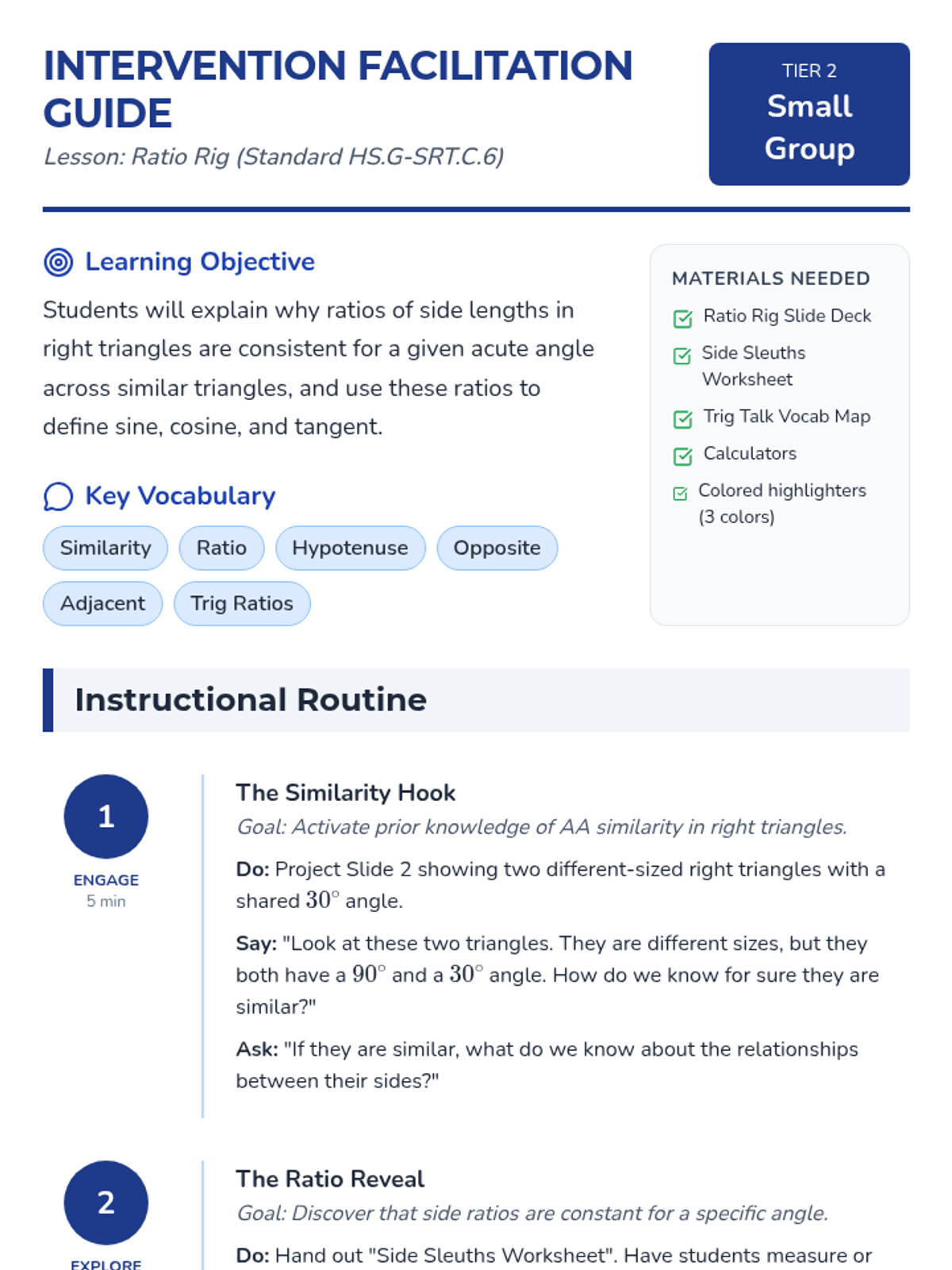
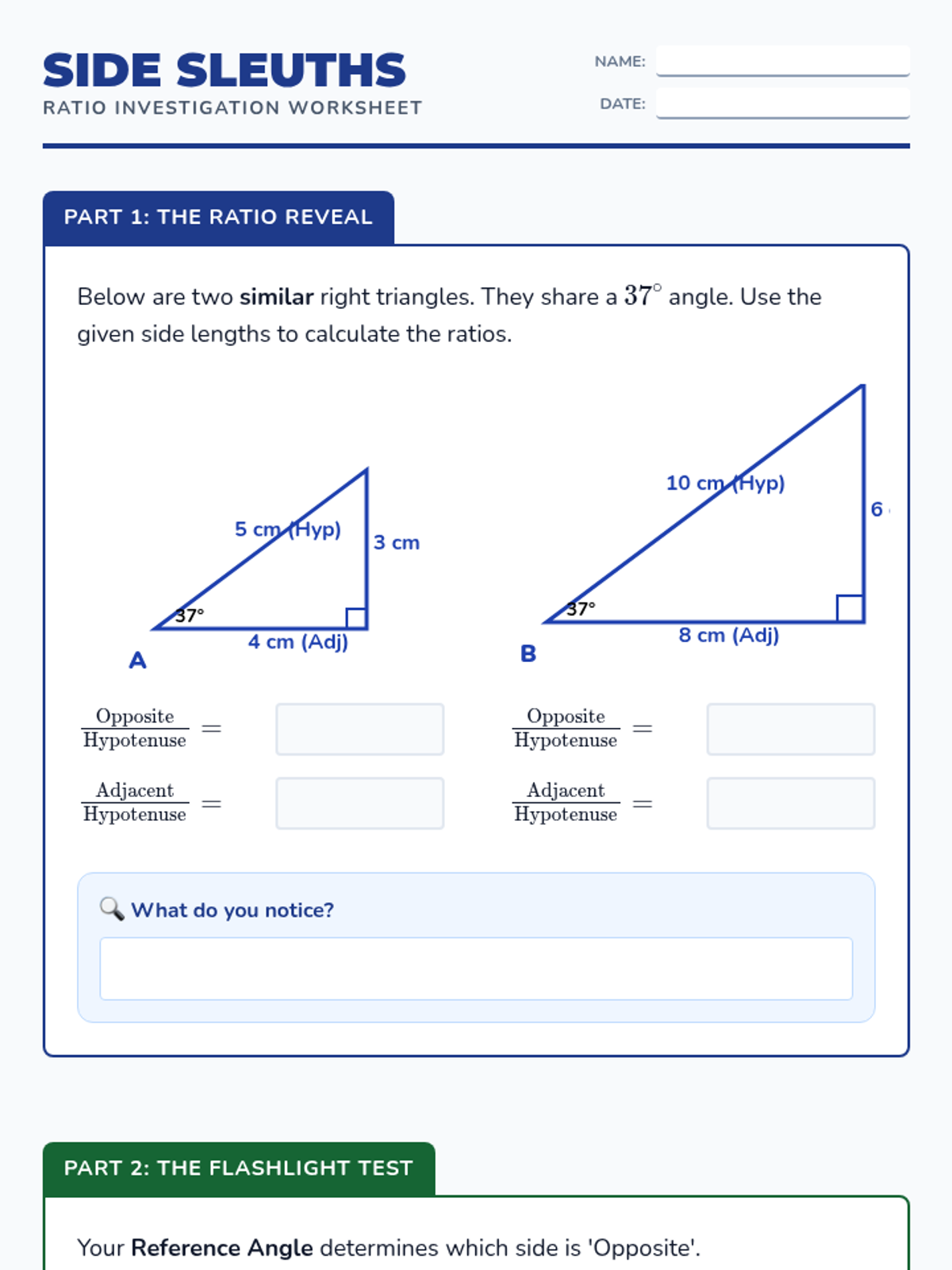
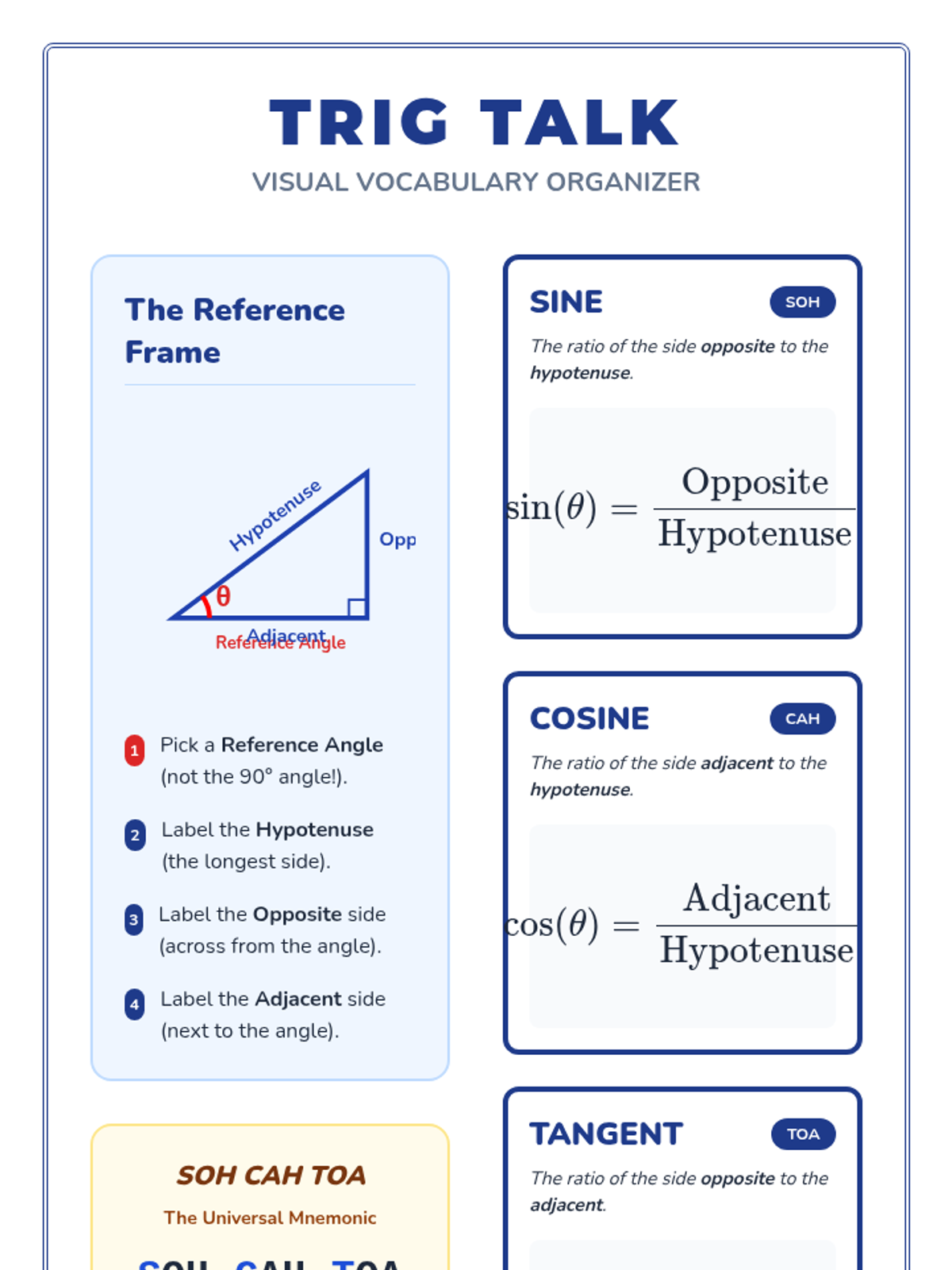
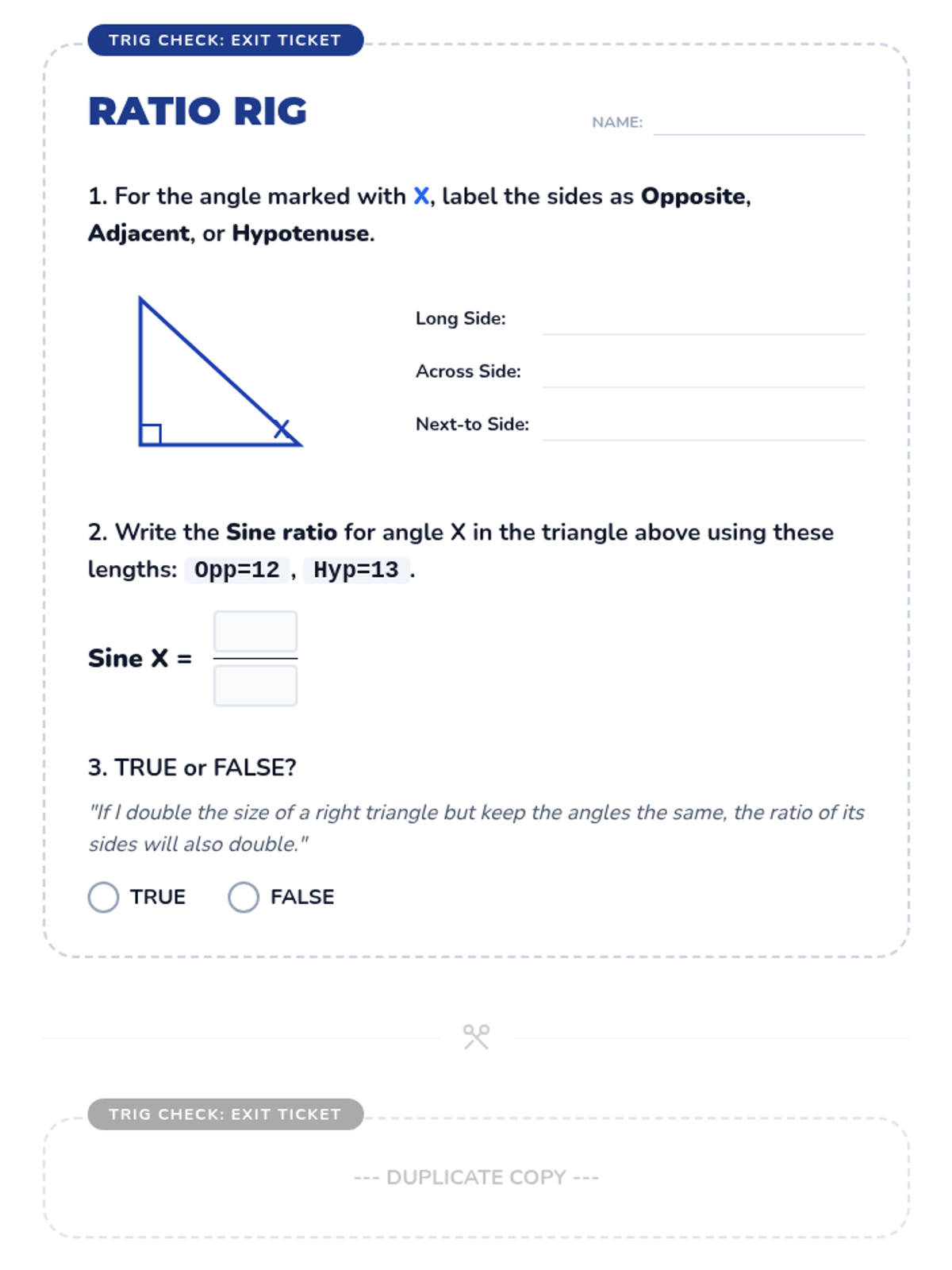
A series of targeted intervention lessons designed to bridge the gap between triangle similarity and basic trigonometry, focusing on conceptual understanding and ratio consistency.
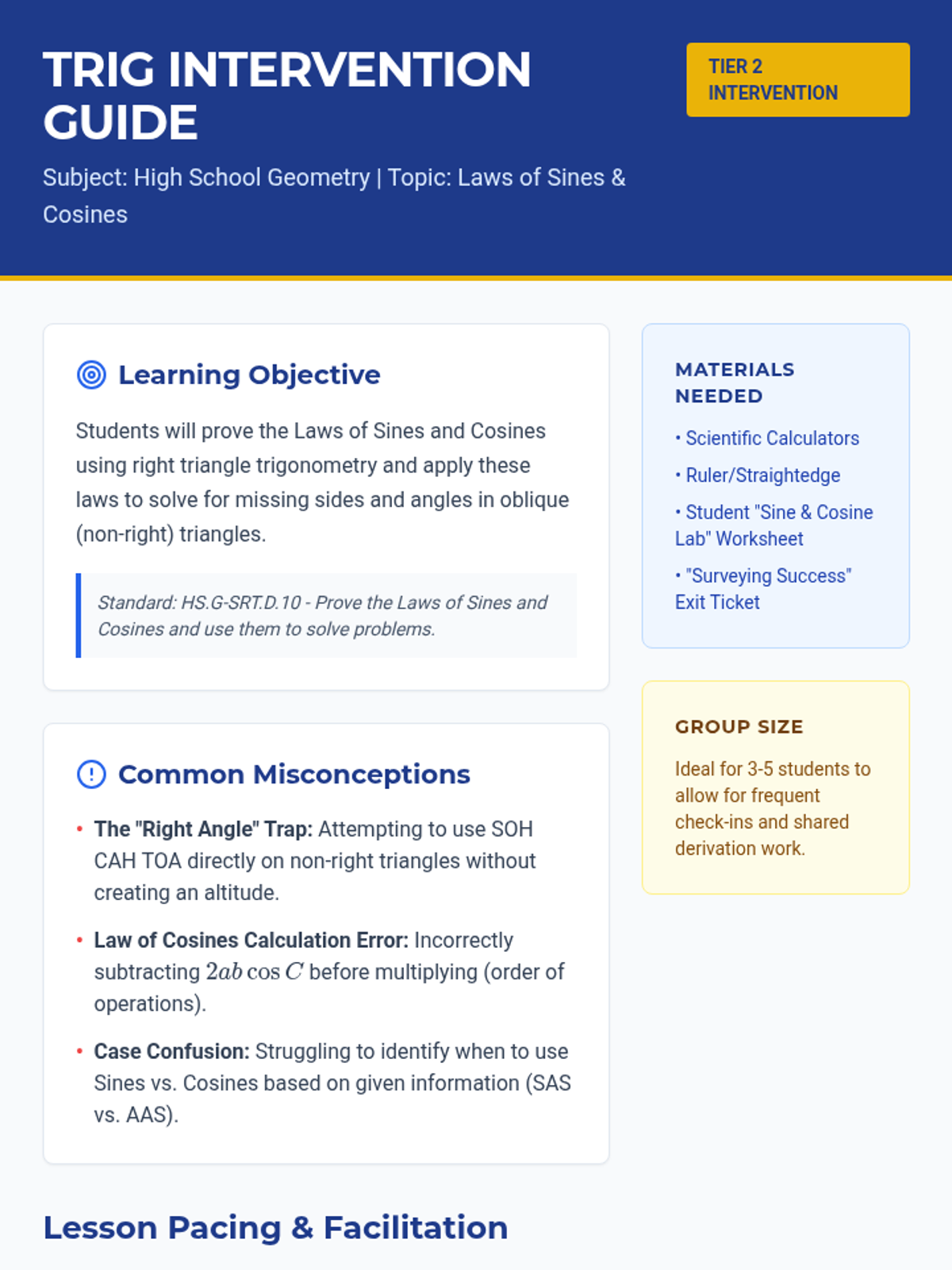
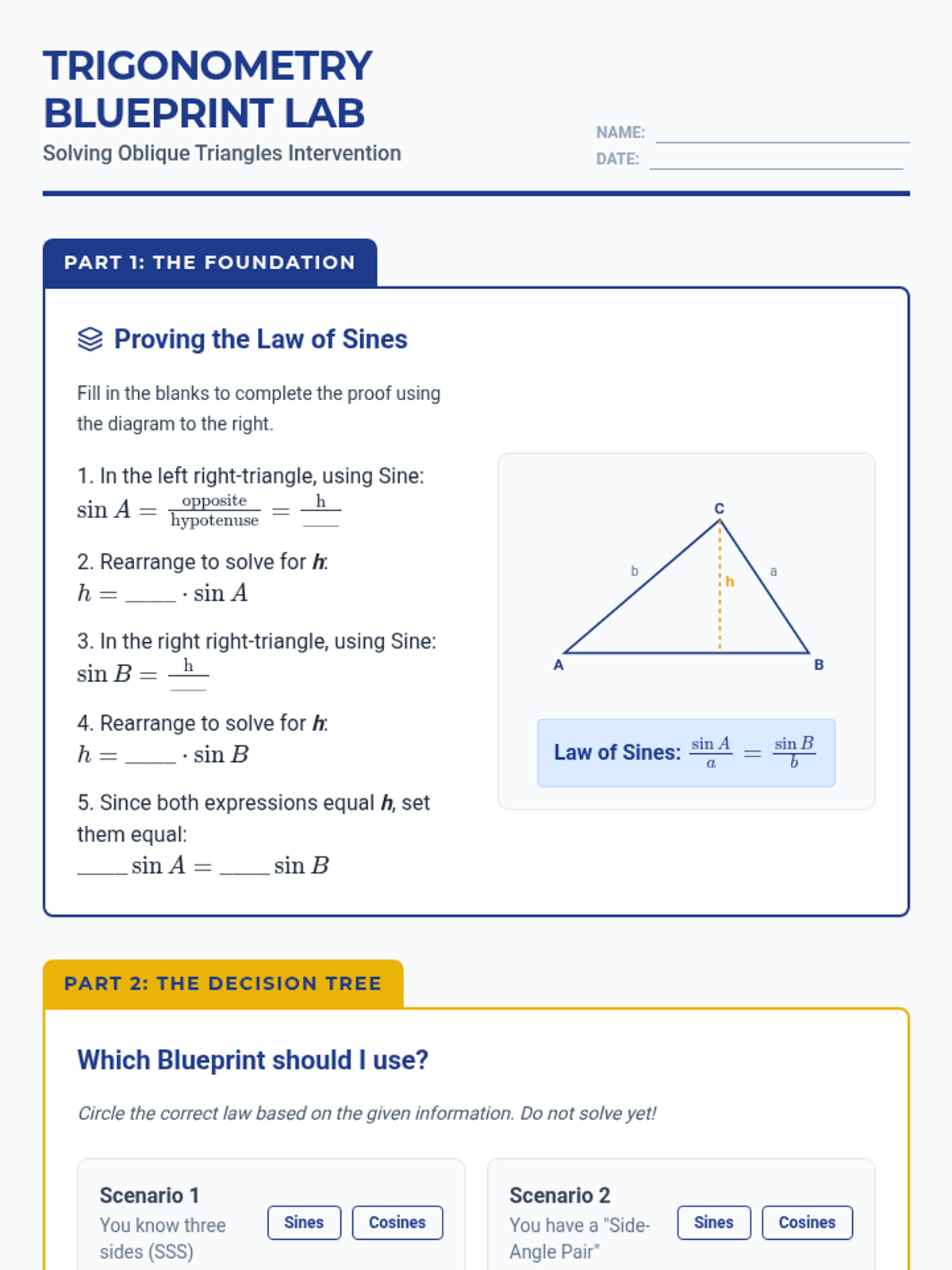
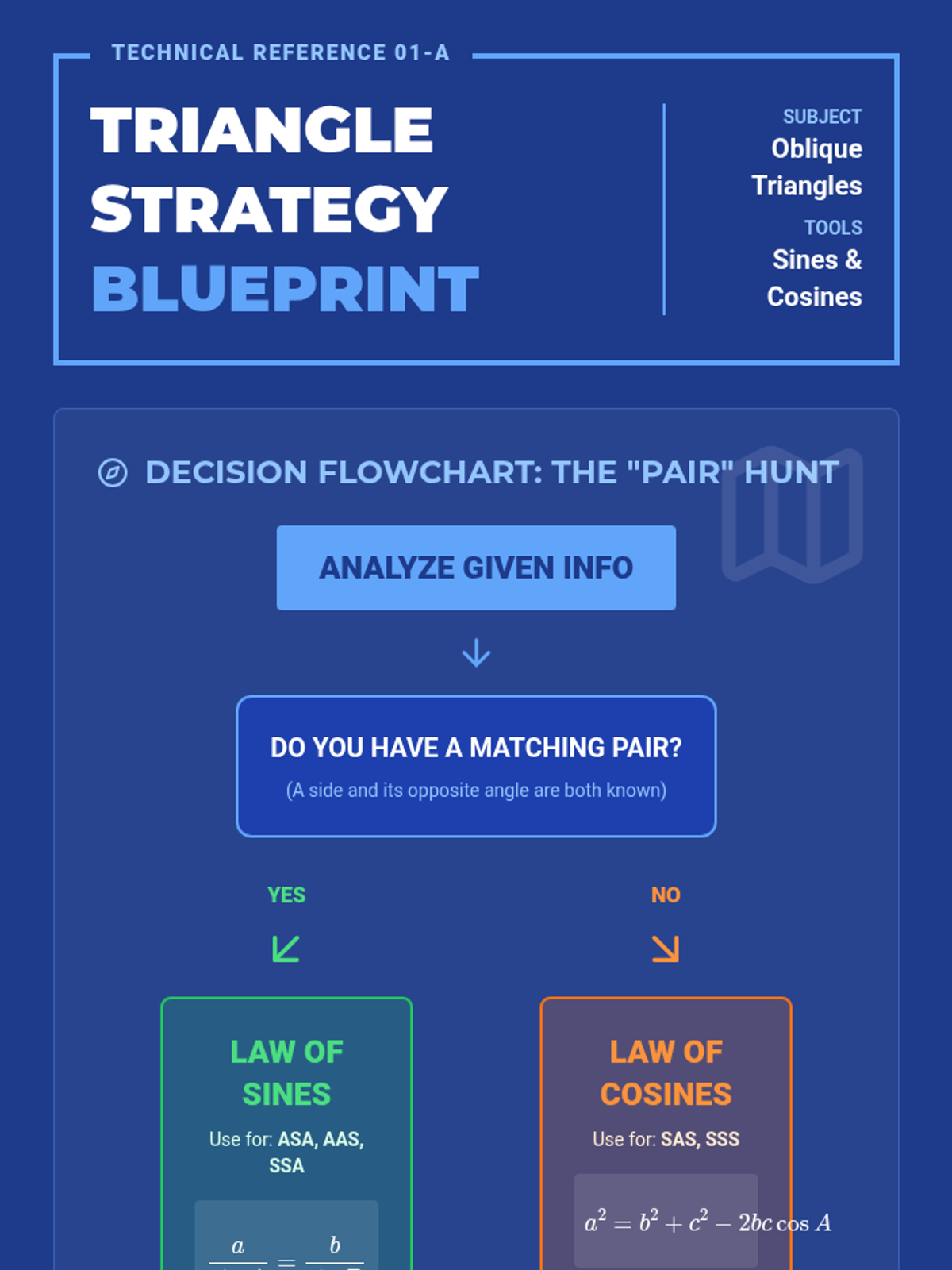
A targeted intervention sequence for High School Geometry students to master the Laws of Sines and Cosines through scaffolded proofs and practical application. The materials use a blueprint-inspired visual theme to emphasize the structural nature of trigonometry.
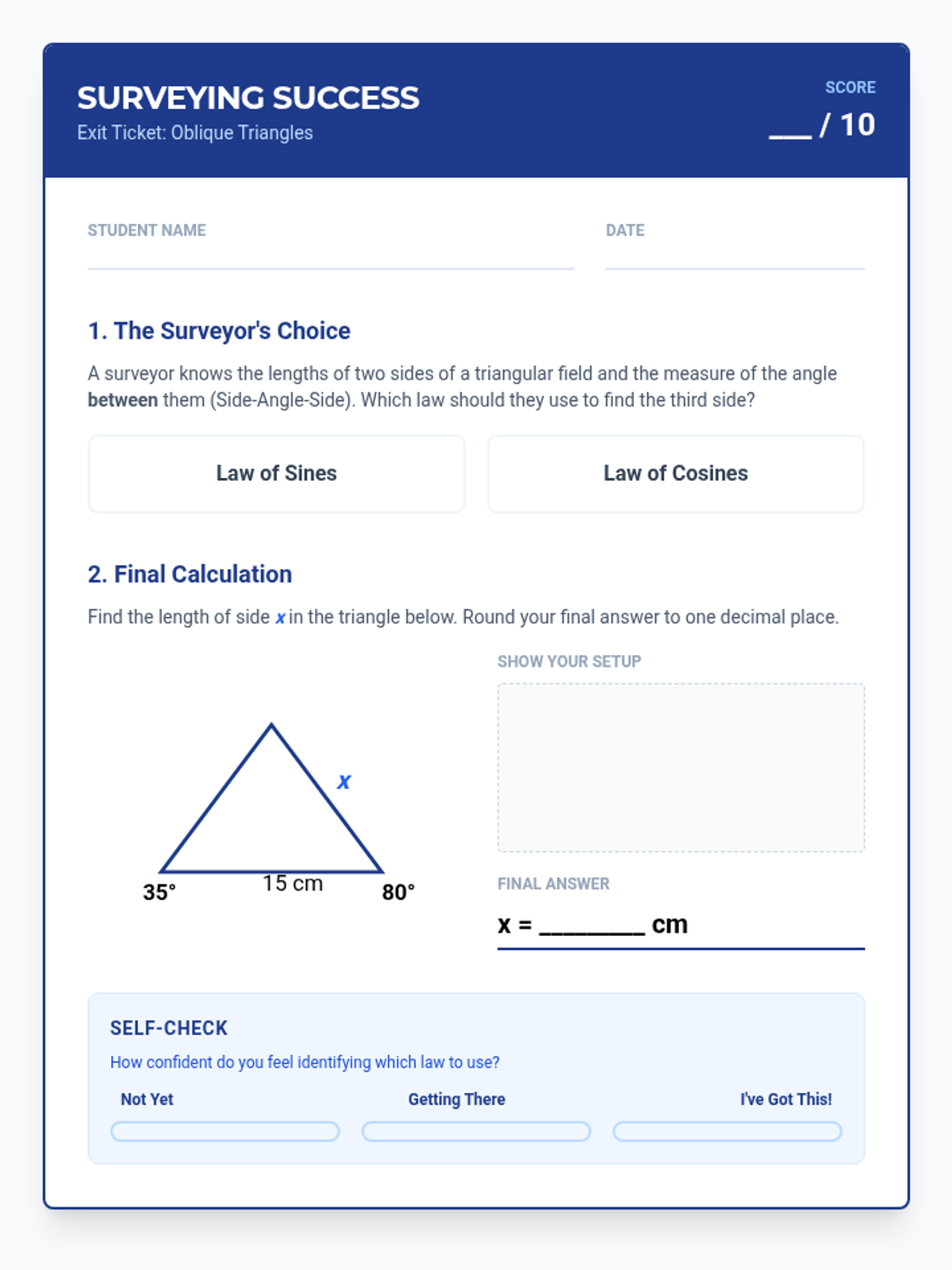
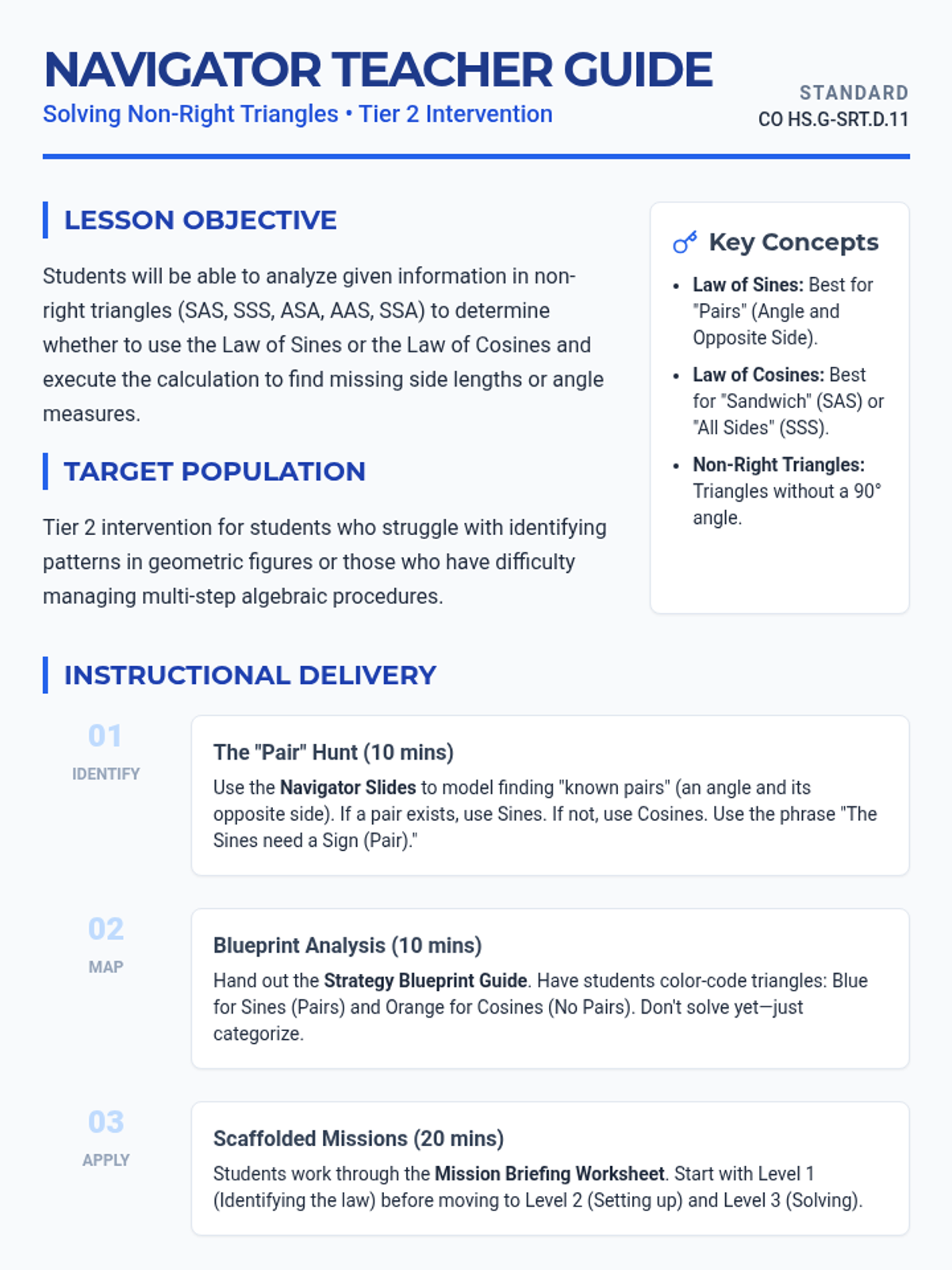
A specialized intervention sequence designed for high school geometry students to master solving non-right triangles using the Law of Sines and Law of Cosines, with a focus on decision-making and scaffolded practice.
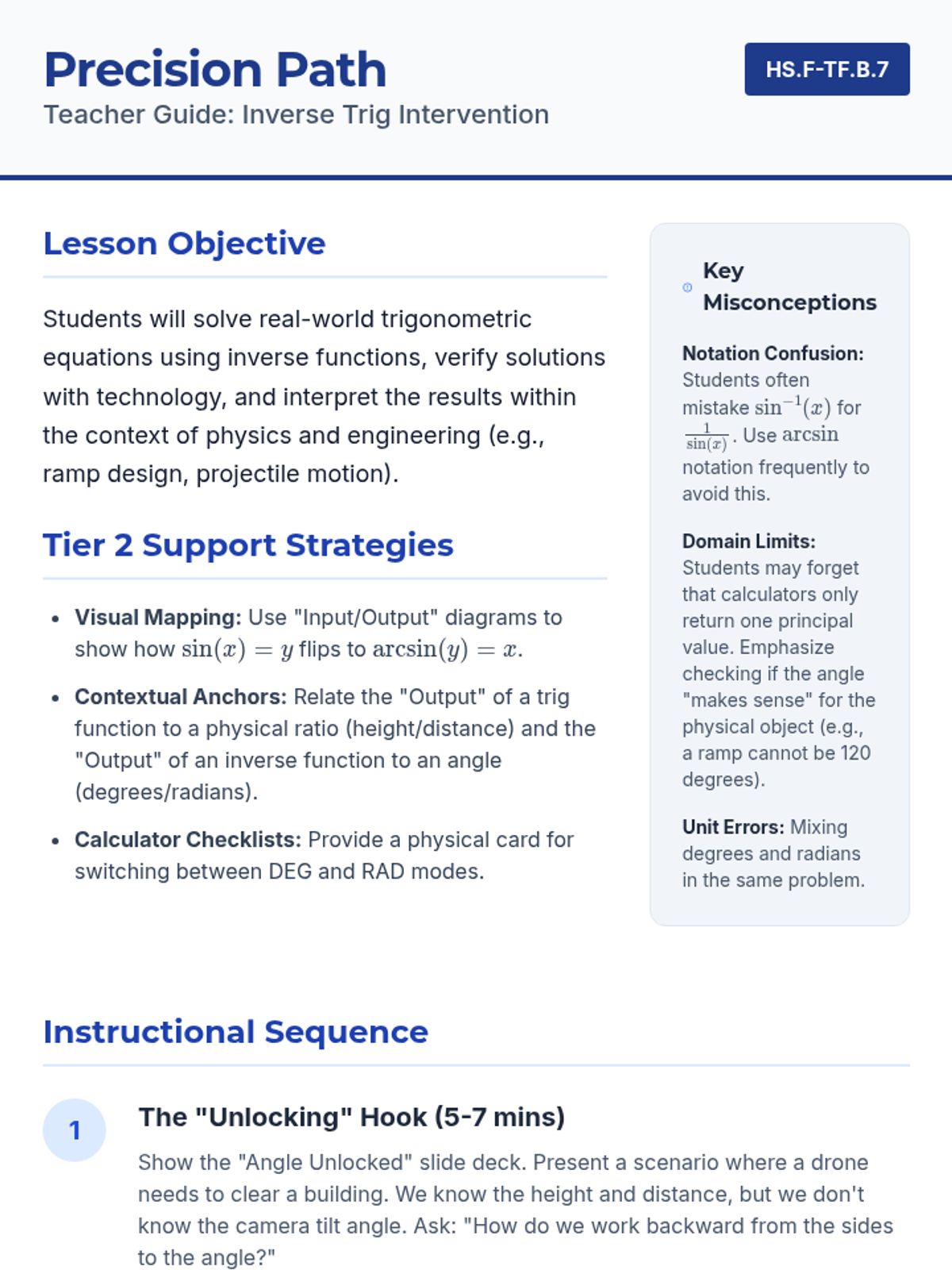
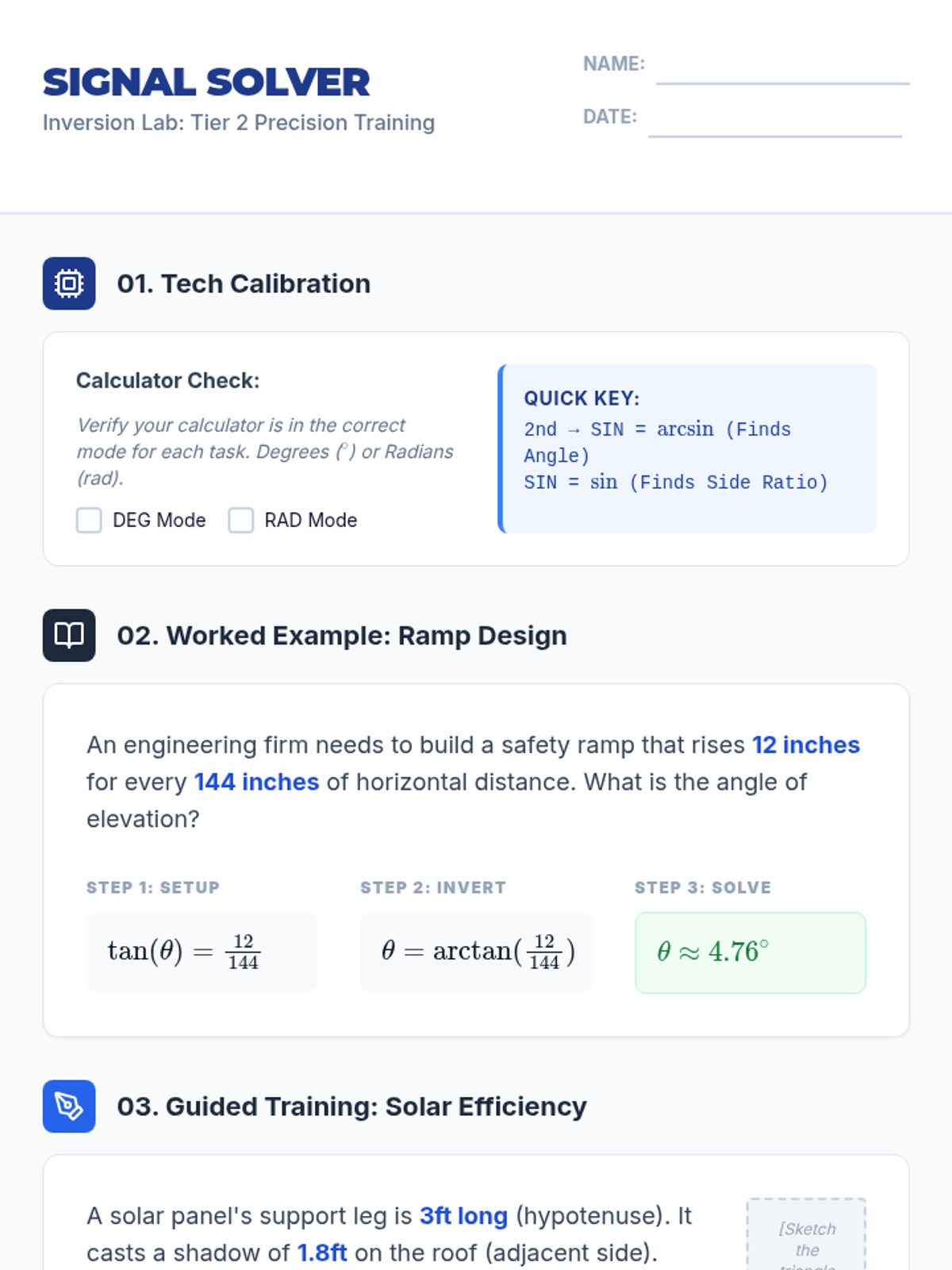
A series of targeted interventions for high school students to master trigonometric functions and their applications in real-world modeling.
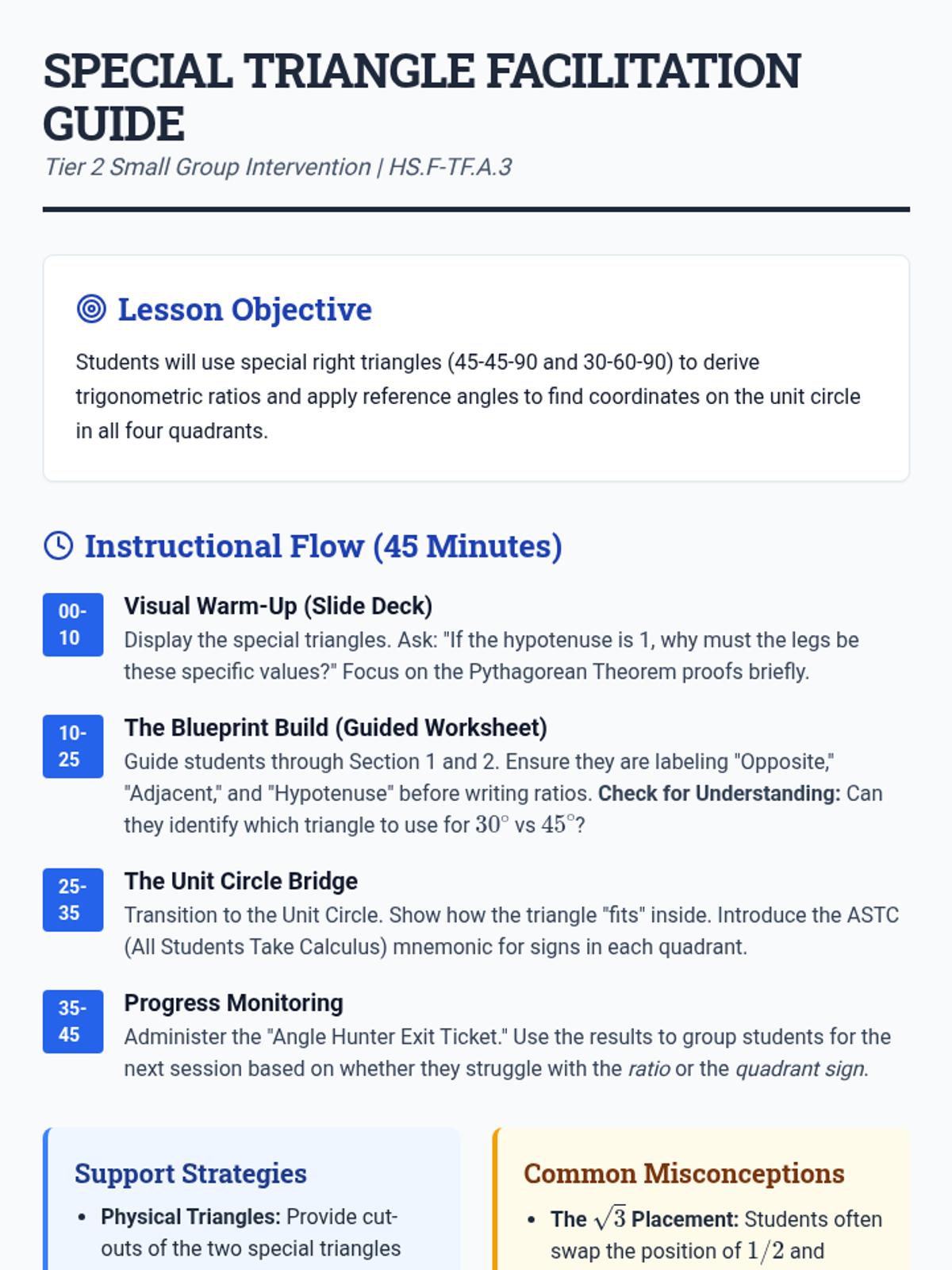
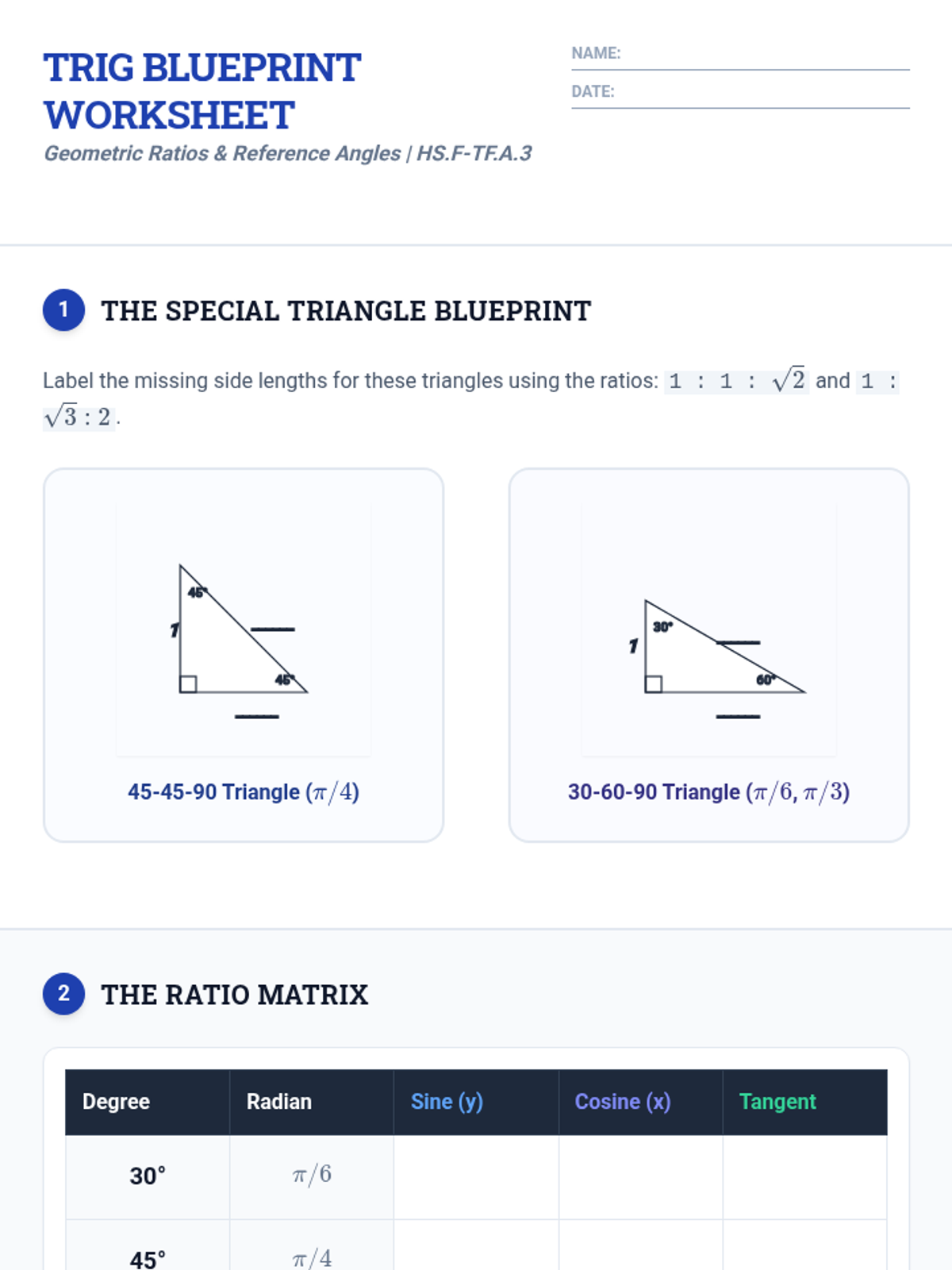
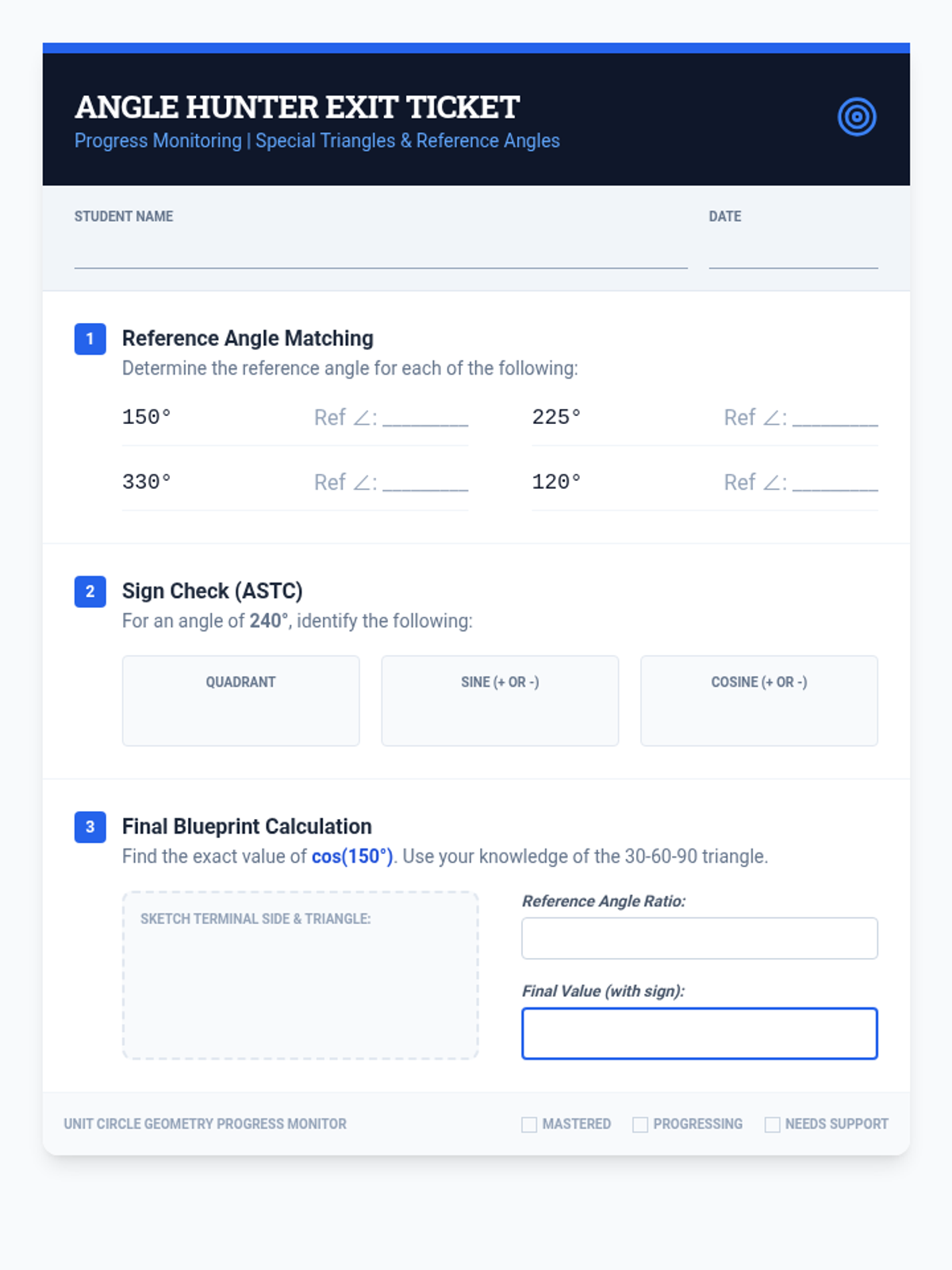
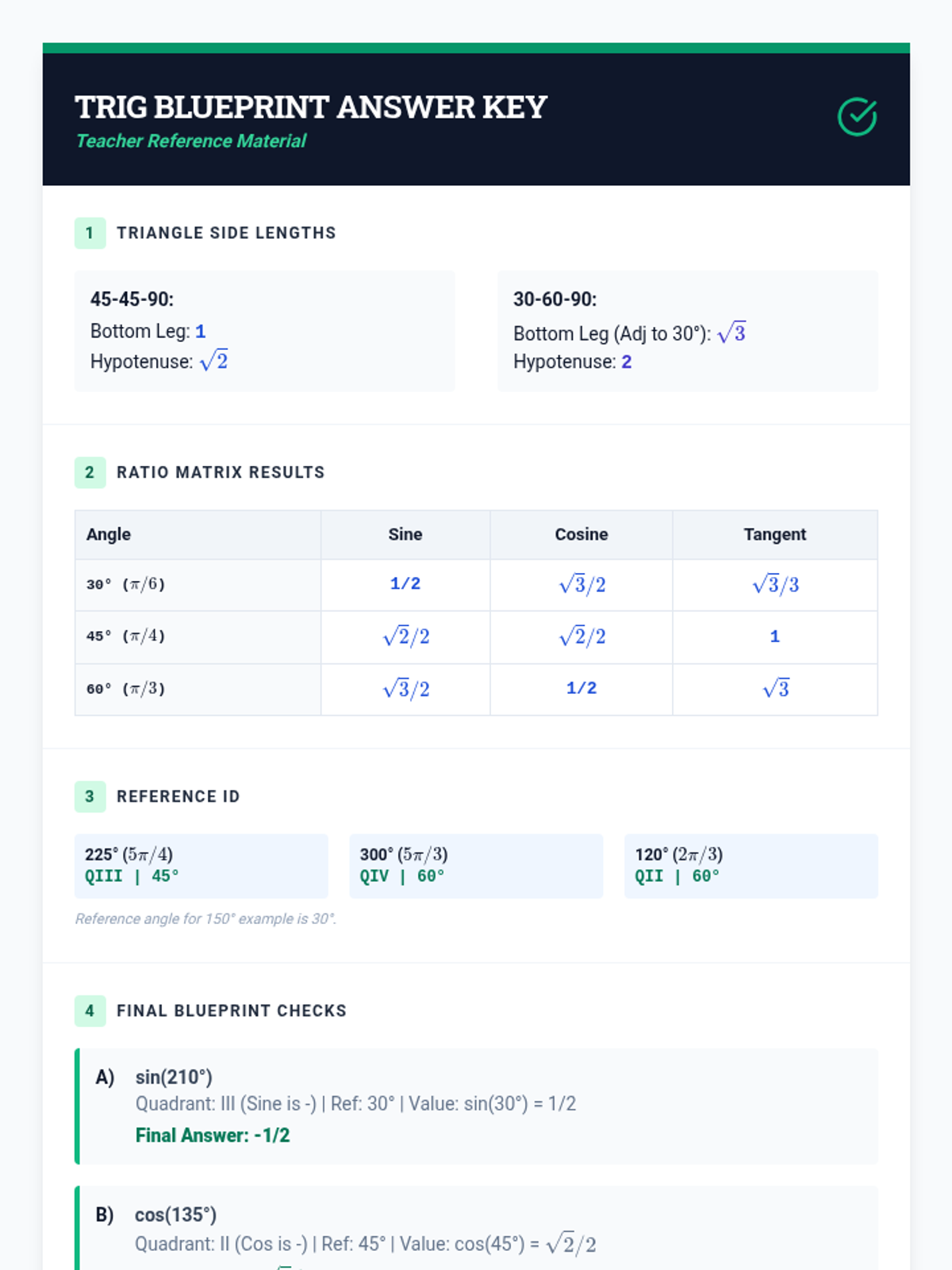
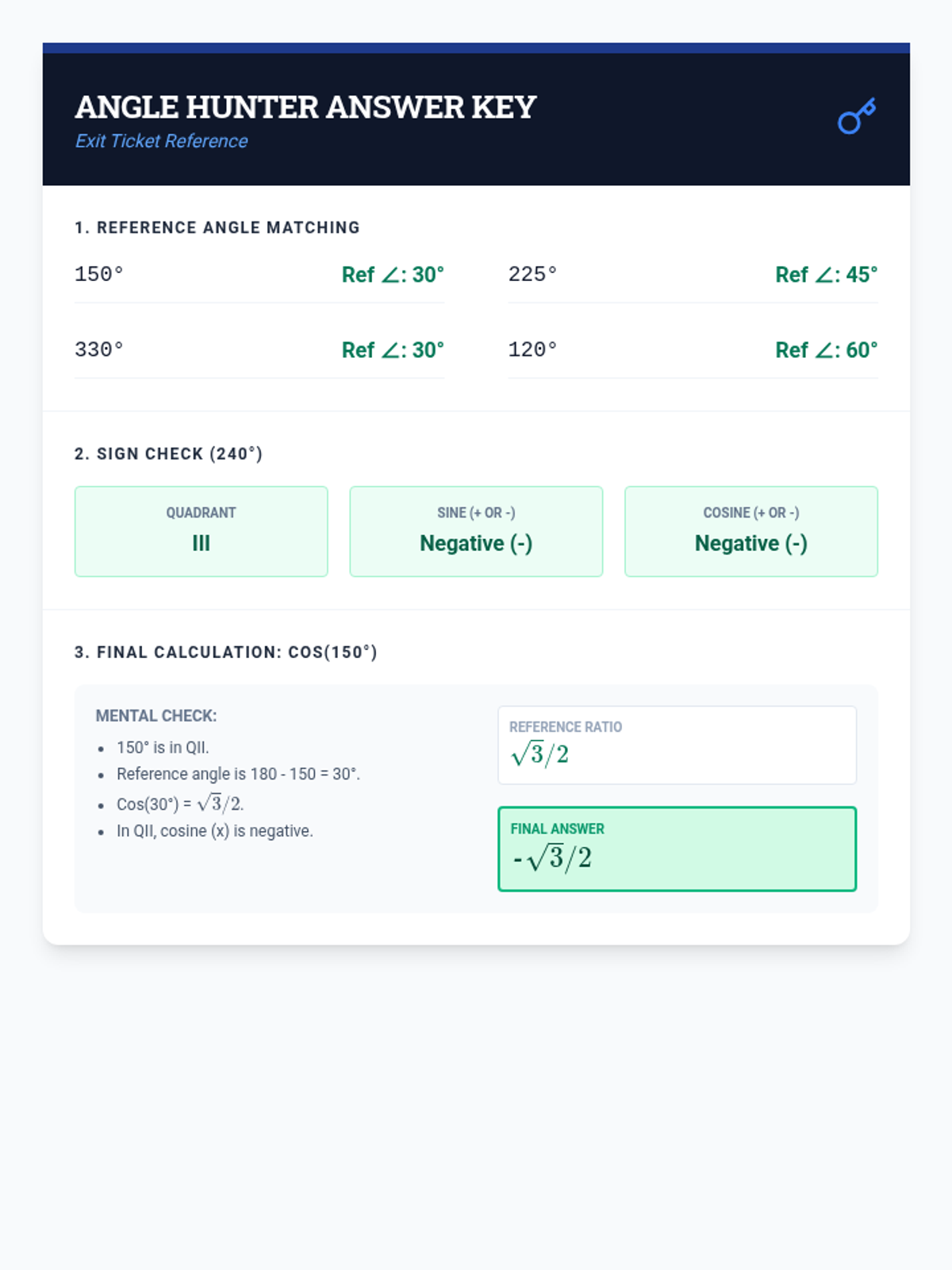
A Tier 2 intervention sequence focused on foundational trigonometry, moving from special right triangles to reference angles on the unit circle. This sequence provides scaffolded support for students struggling with geometric interpretations of sine, cosine, and tangent.
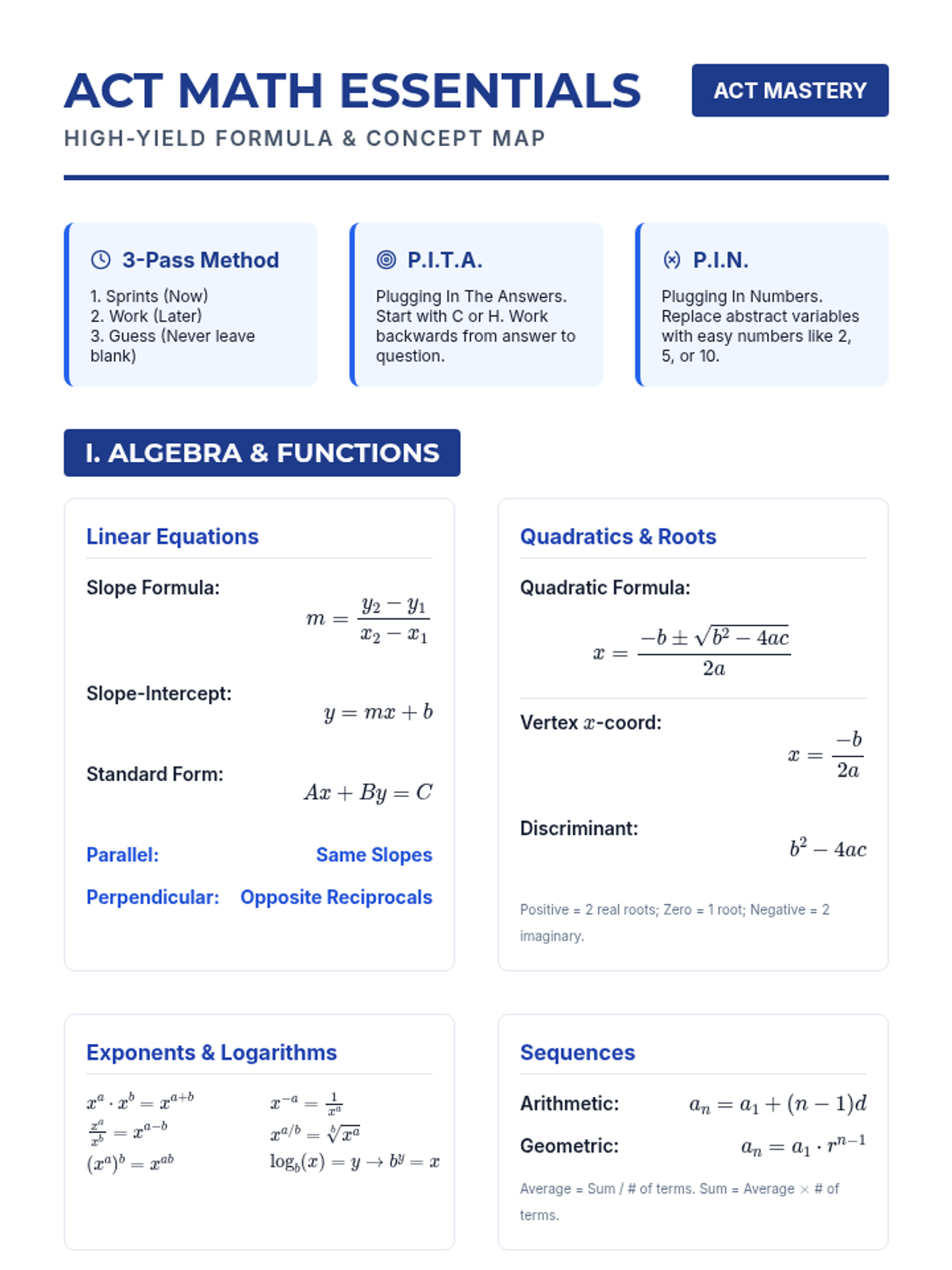
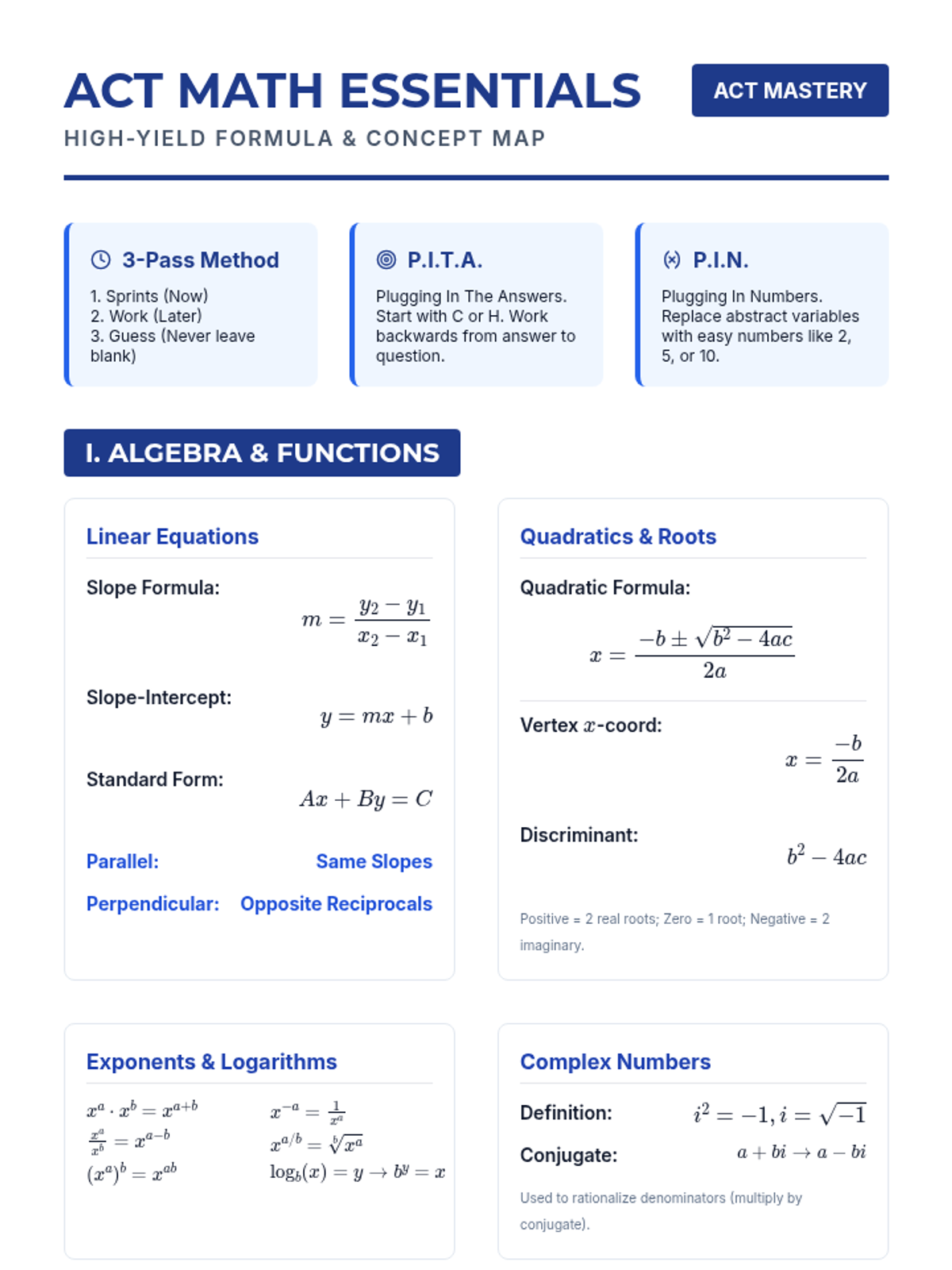
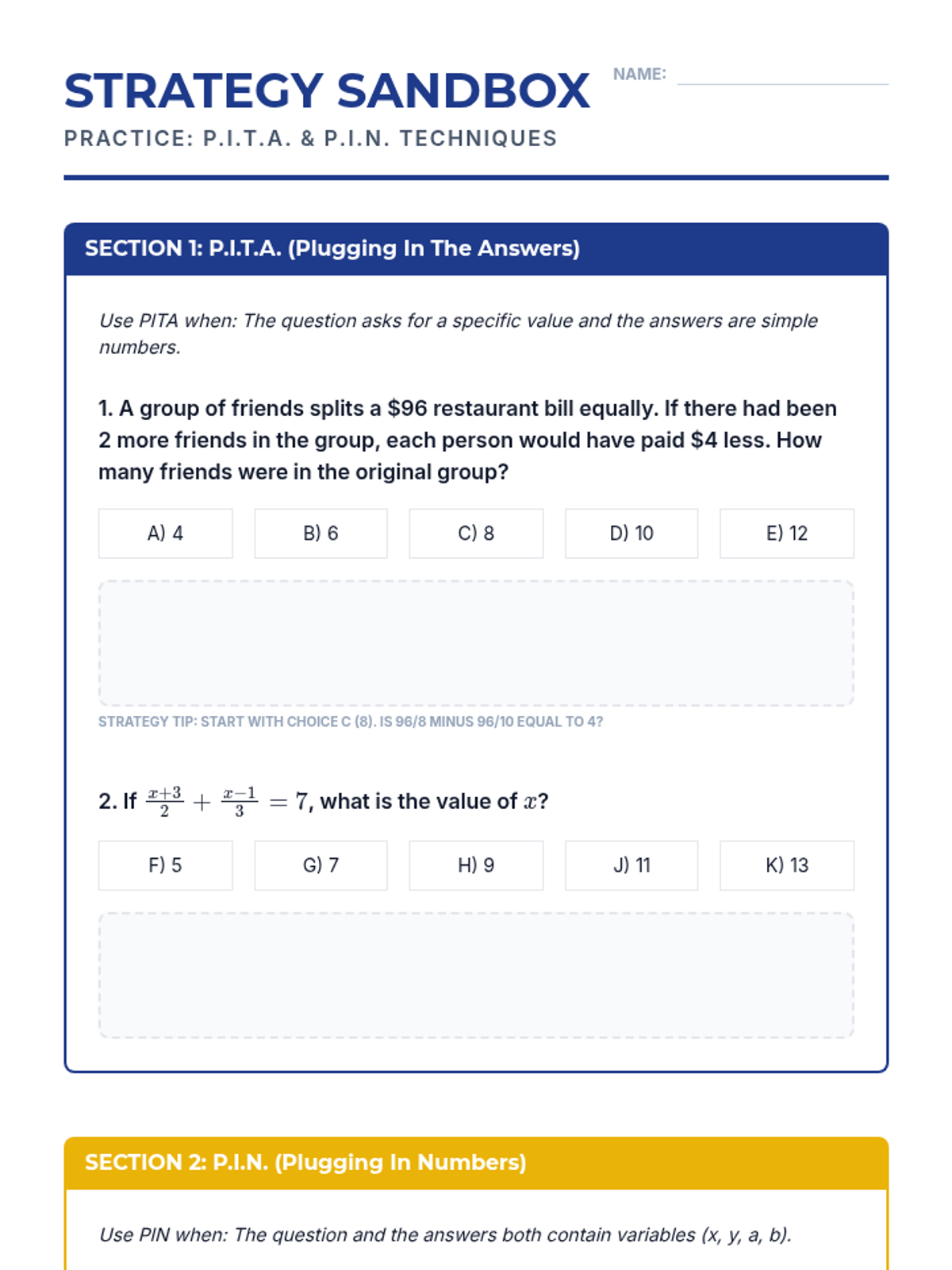
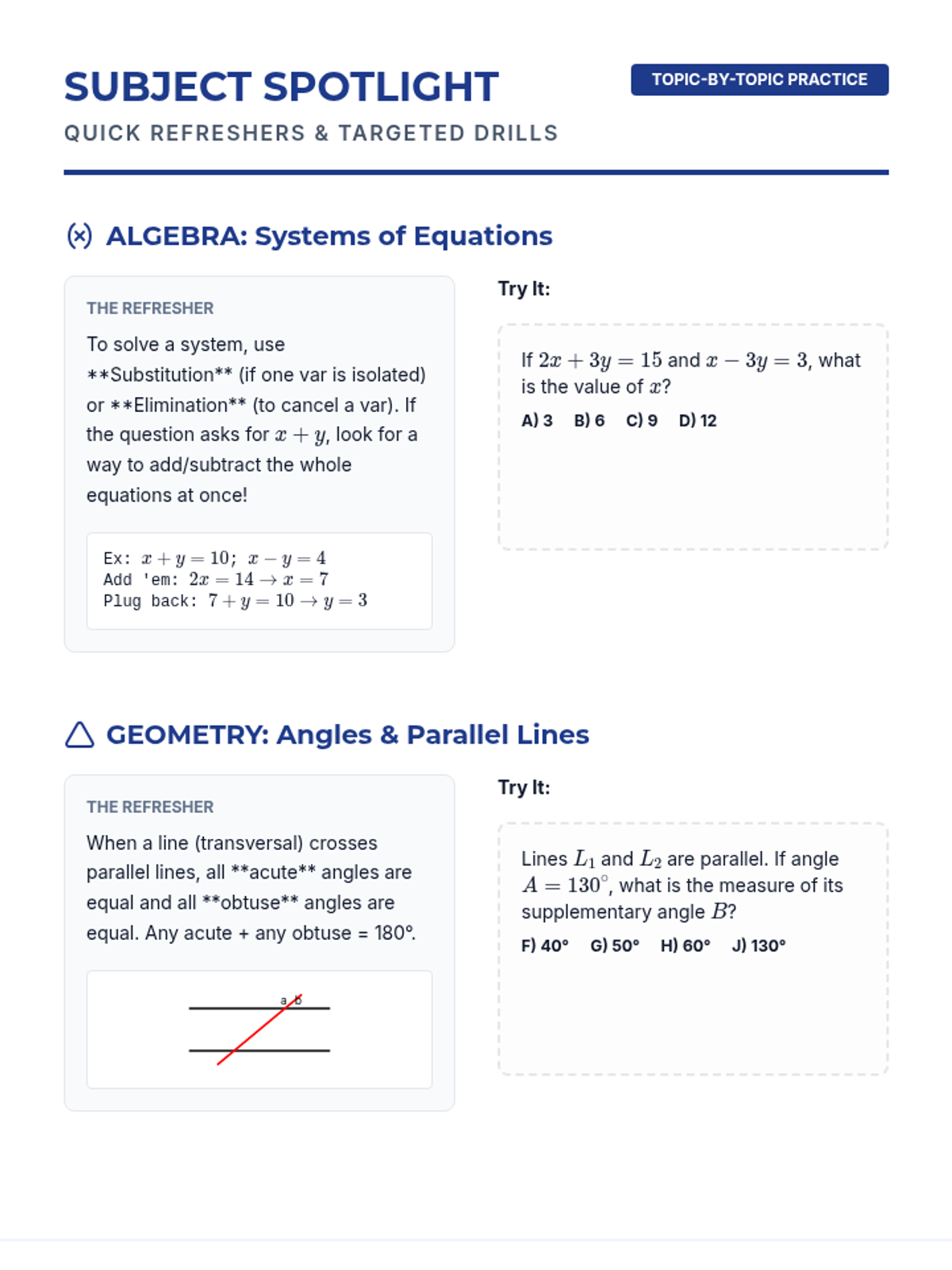
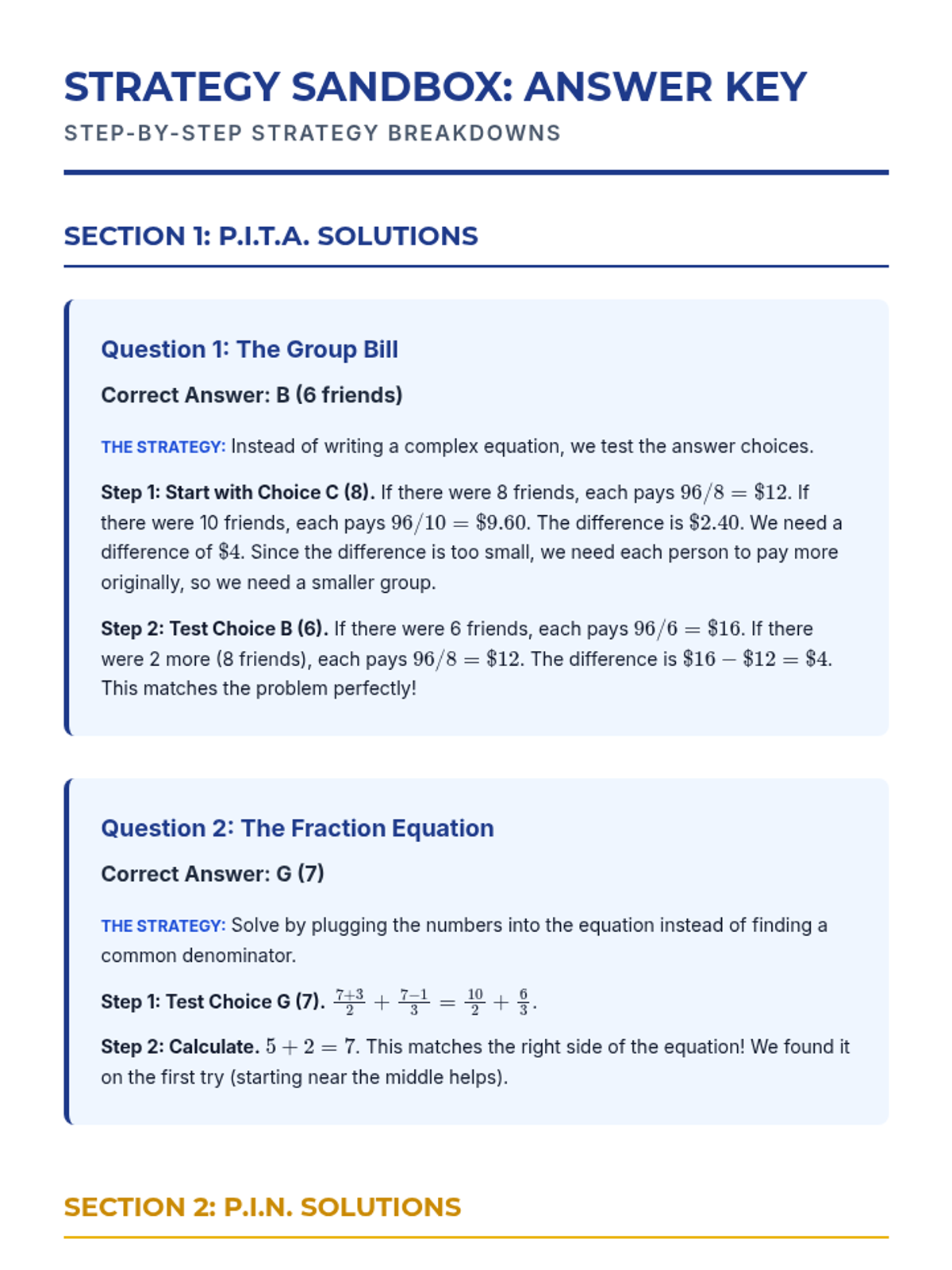
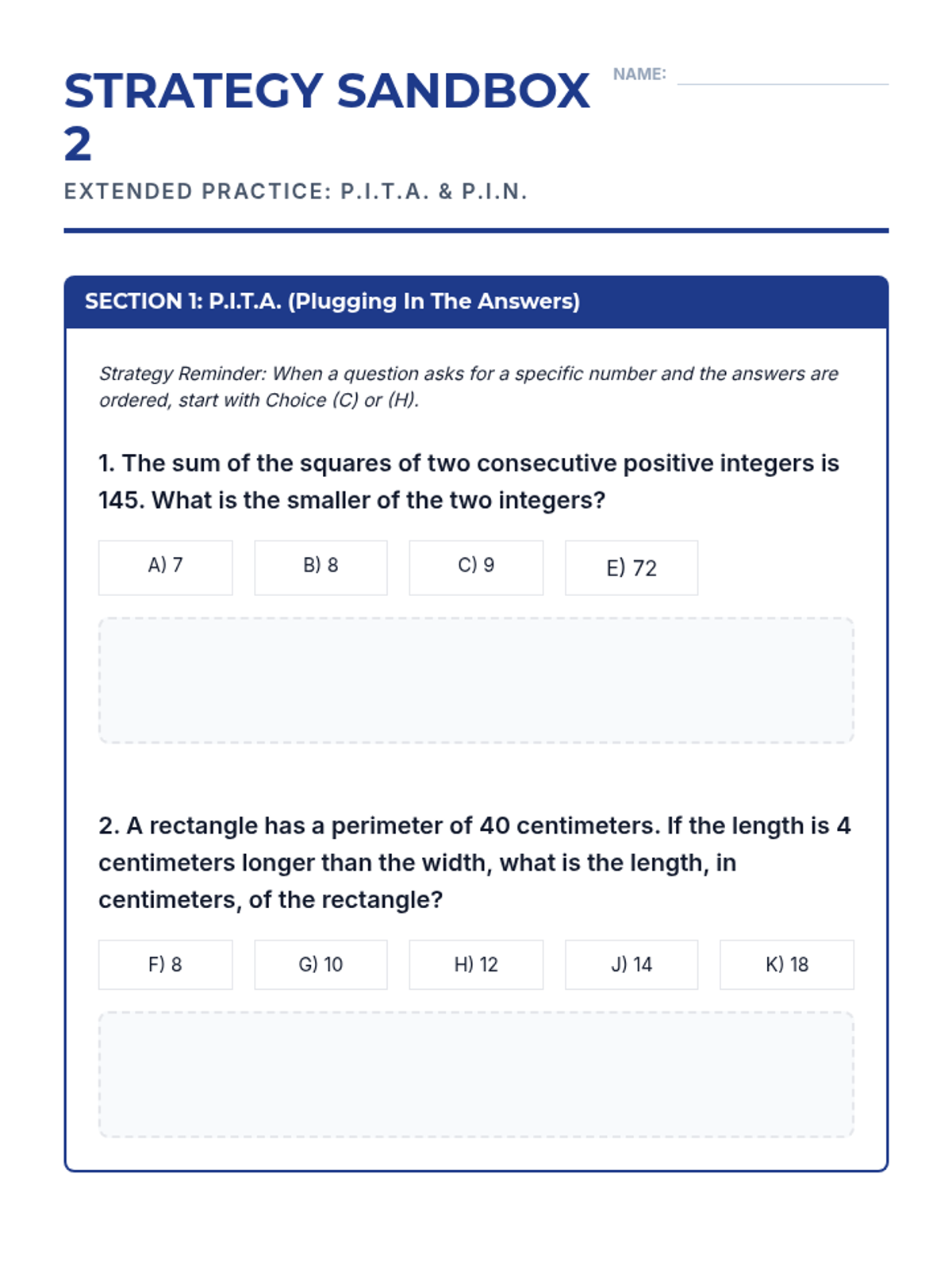
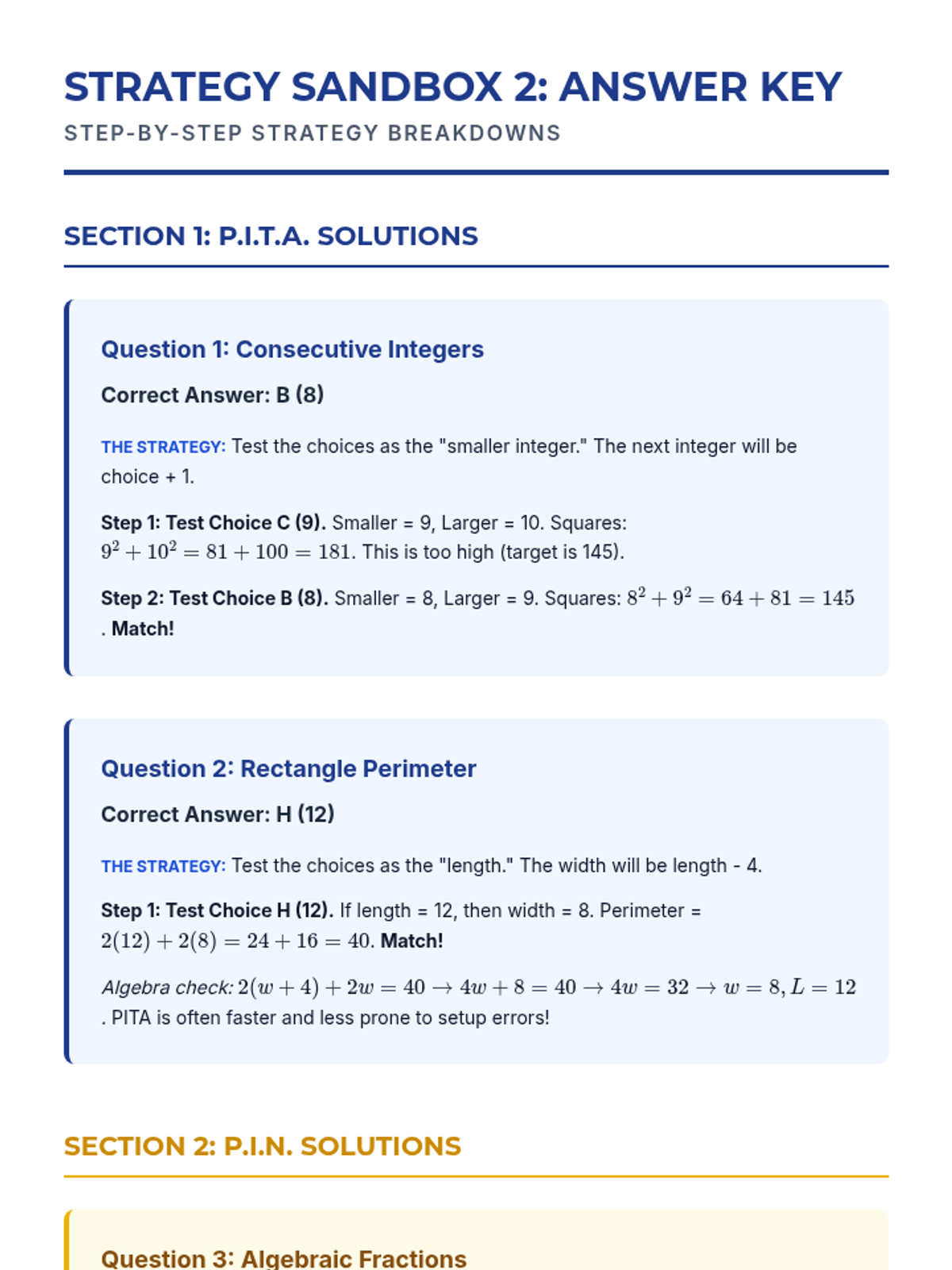
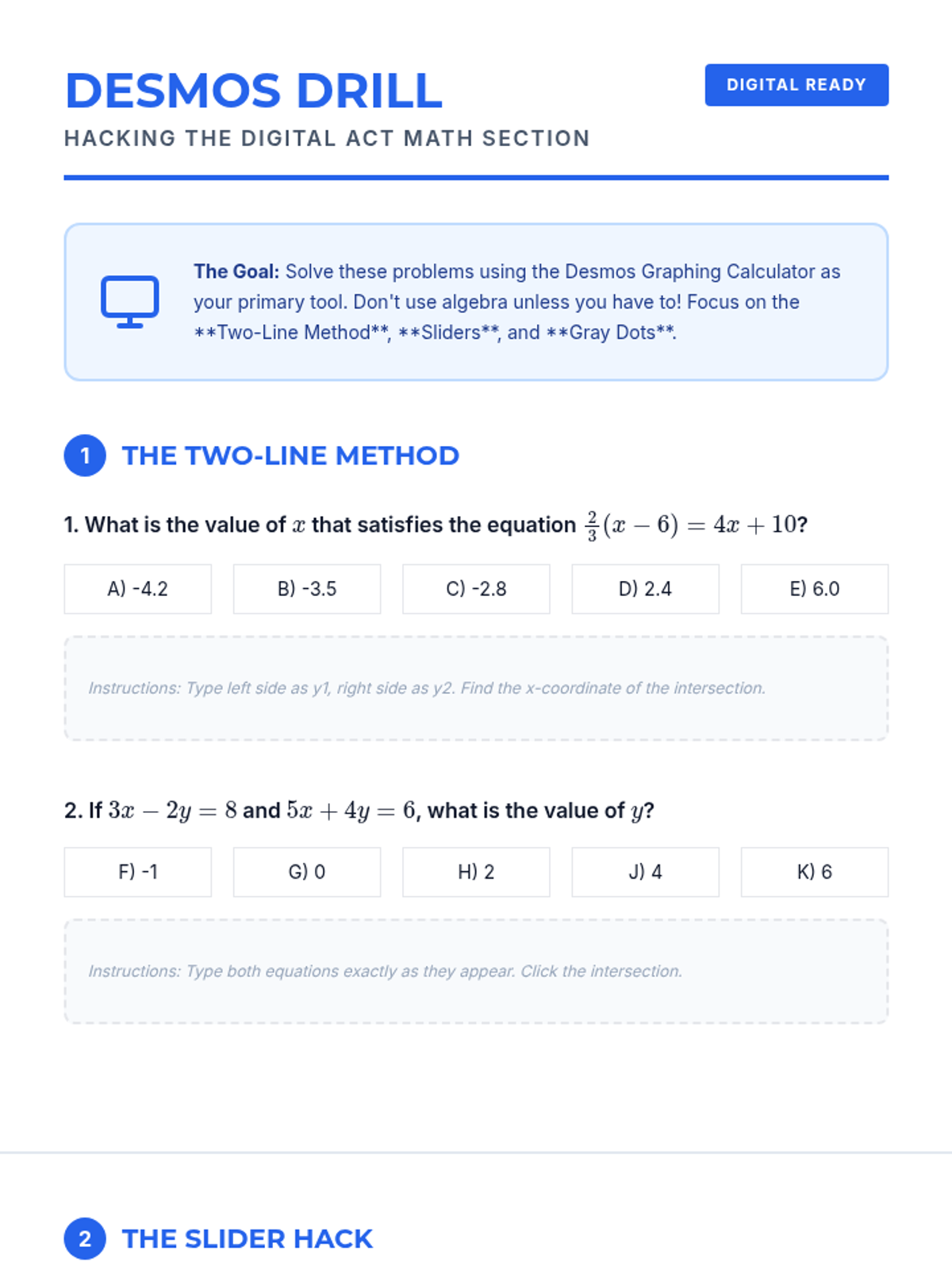
A comprehensive ACT Math preparation program focusing on essential strategies, high-yield Algebra and Geometry concepts, and realistic practice to boost scores.
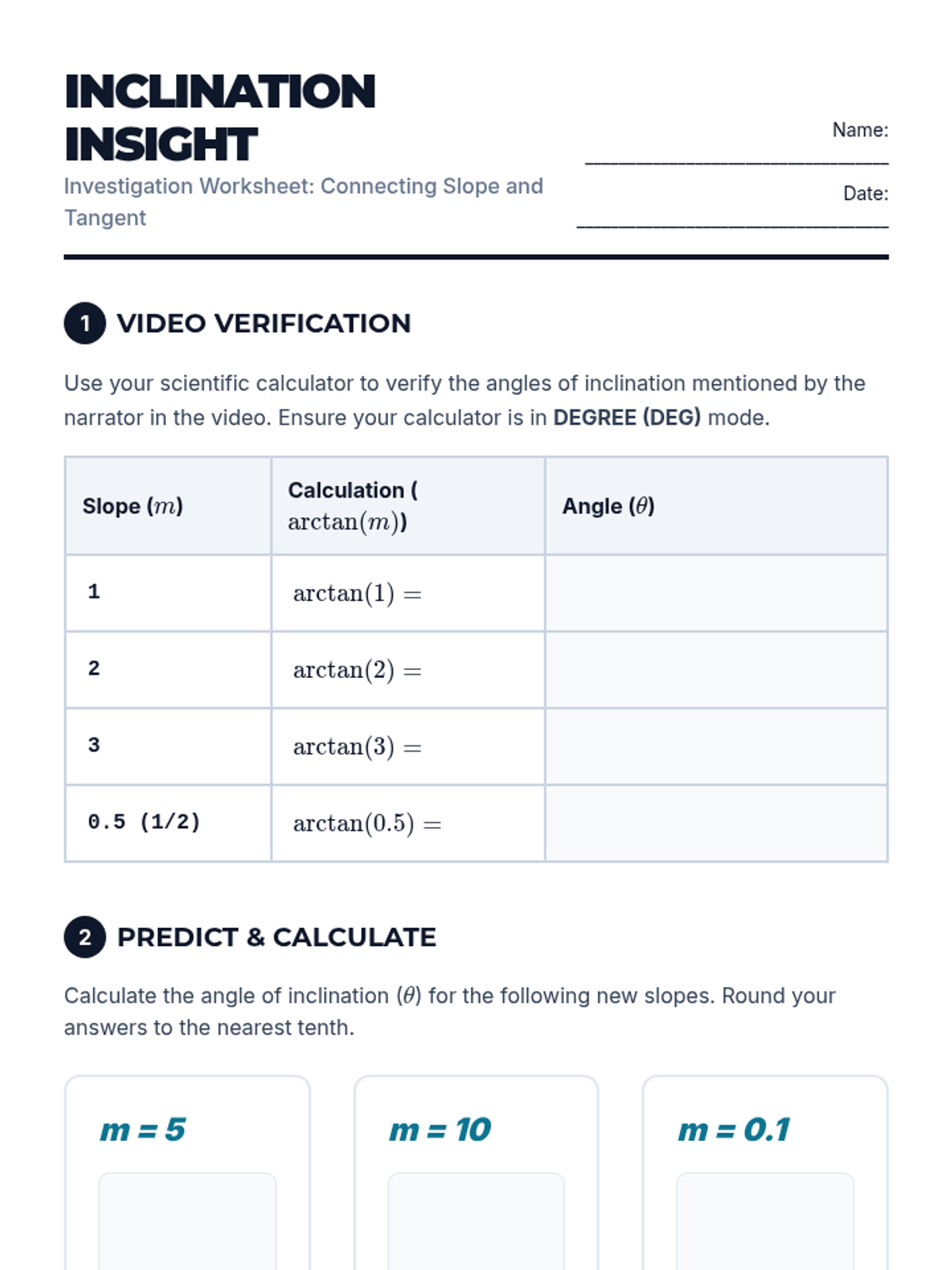
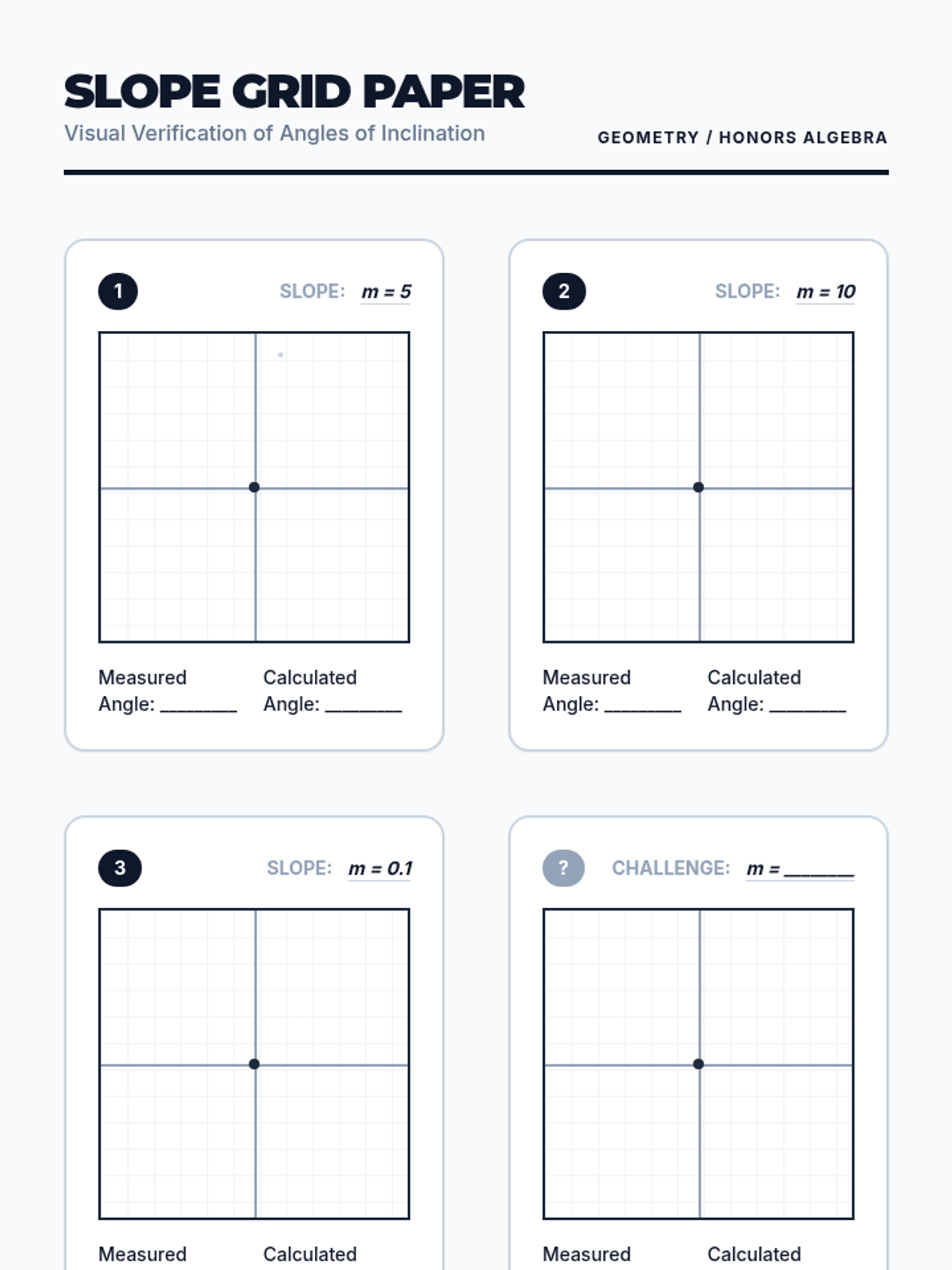
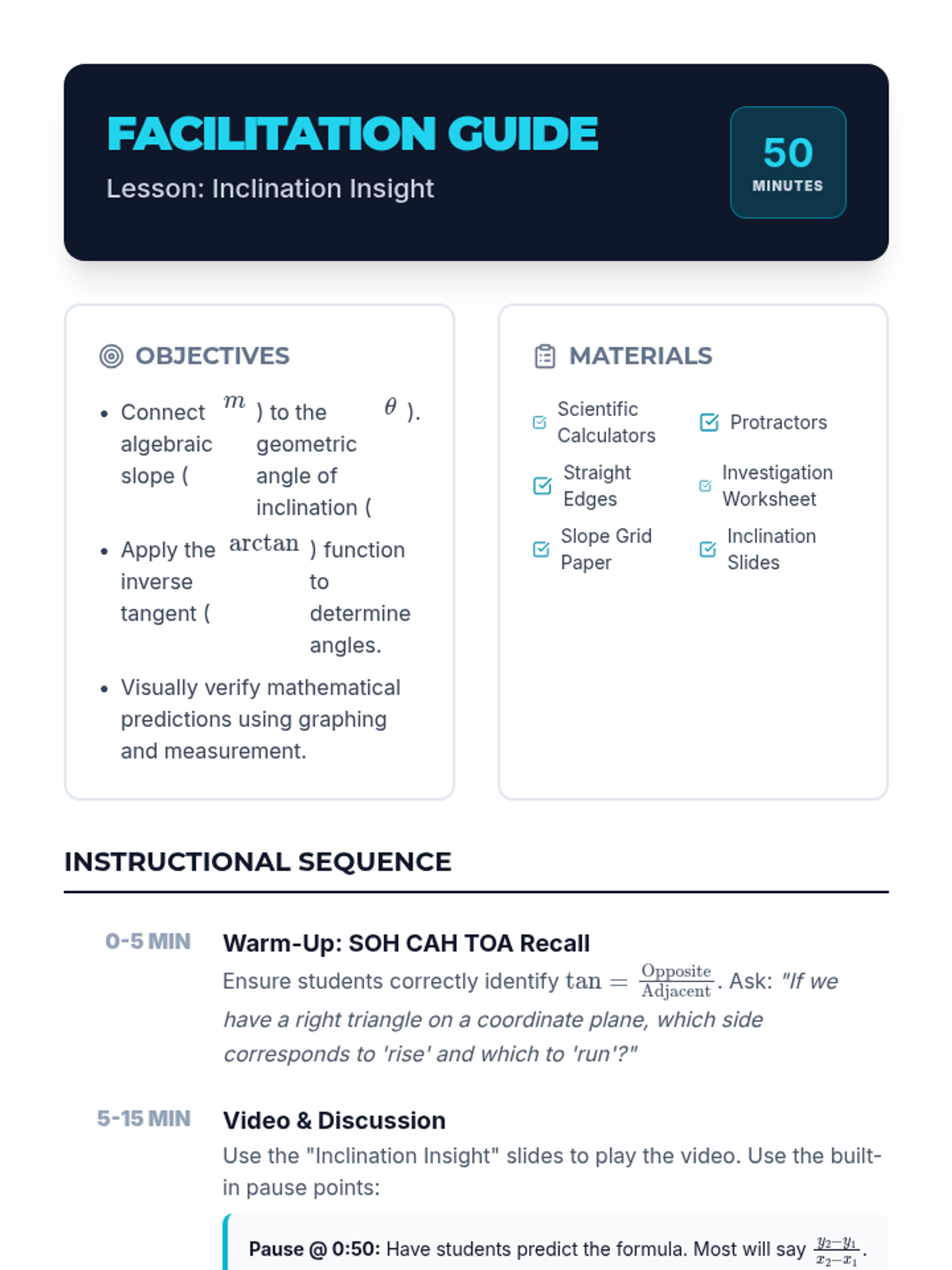
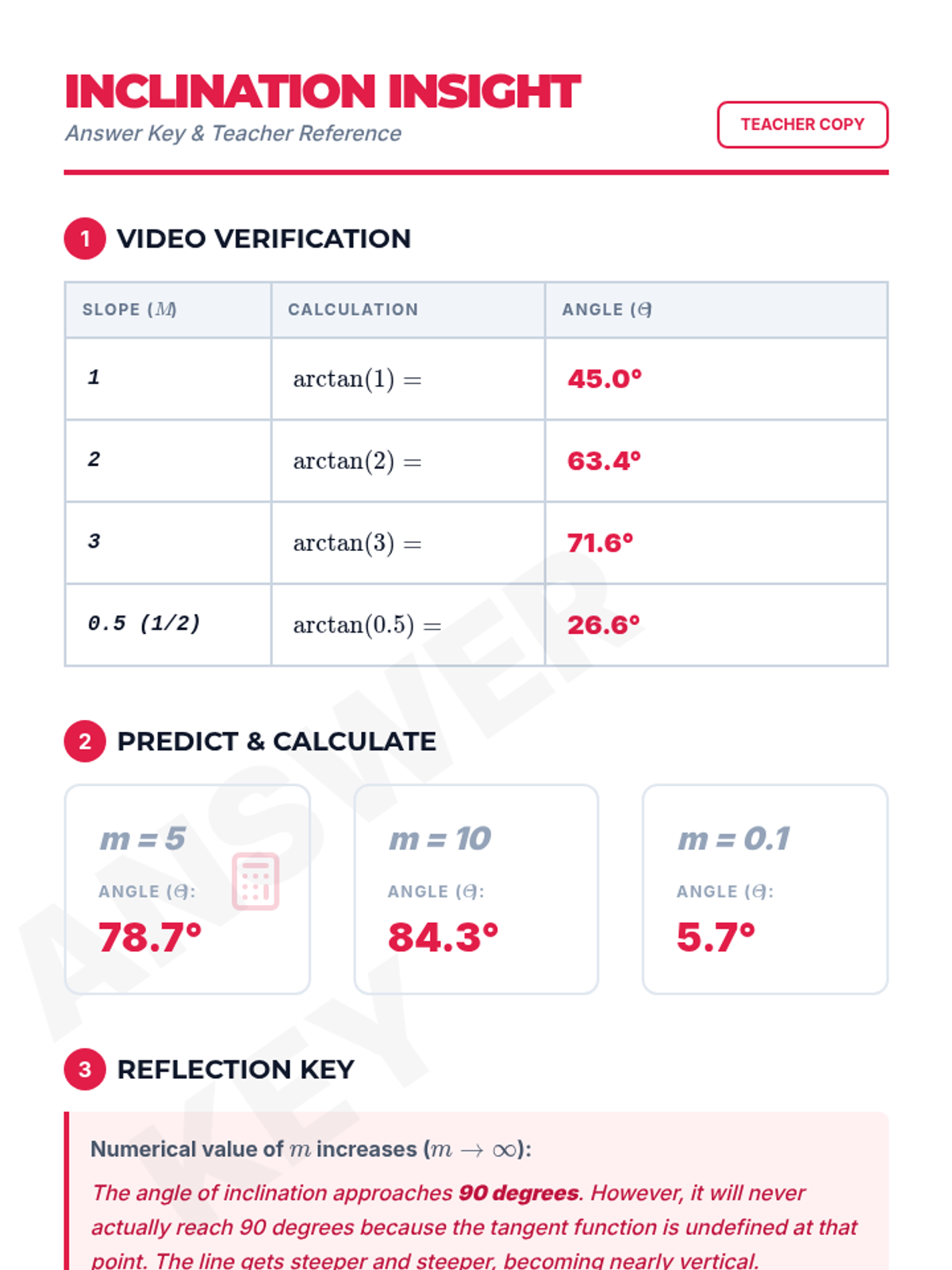
A specialized unit exploring the geometric properties of slope, connecting algebraic rates of change to trigonometric functions and the geometry of inclination.
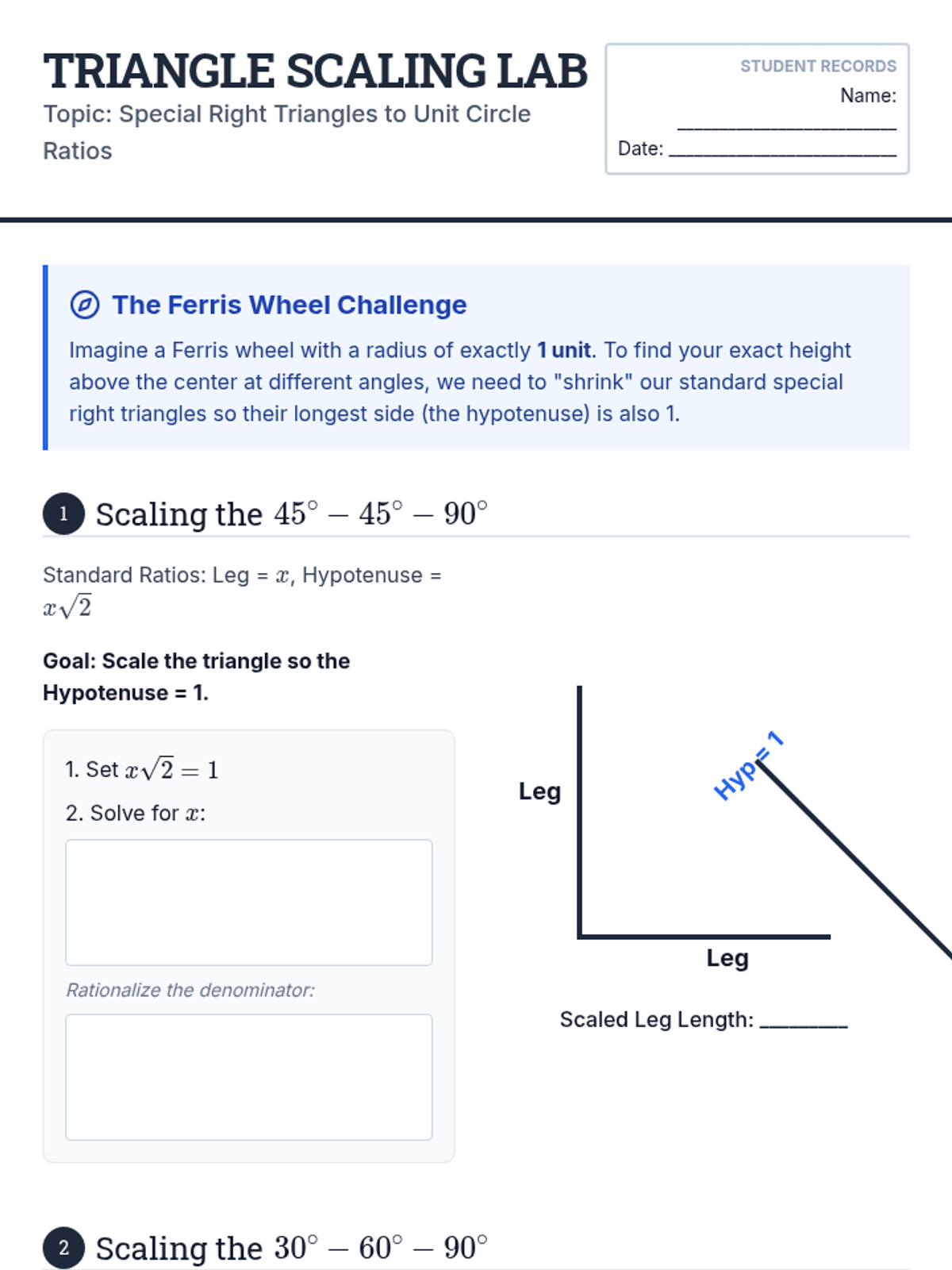
A comprehensive exploration of the unit circle, bridging geometry and trigonometry by scaling triangles, defining radians, and utilizing symmetry to evaluate trigonometric functions.
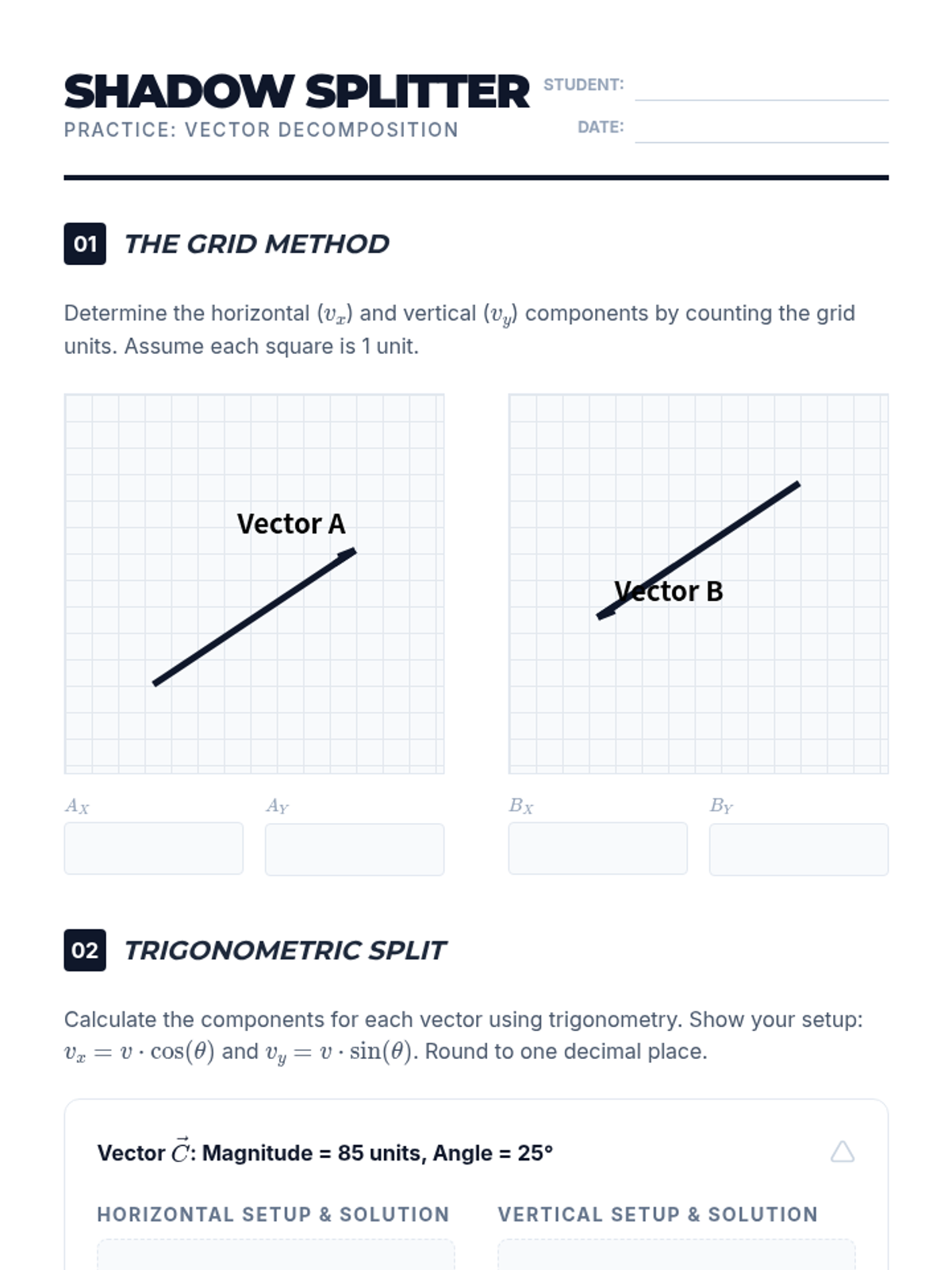
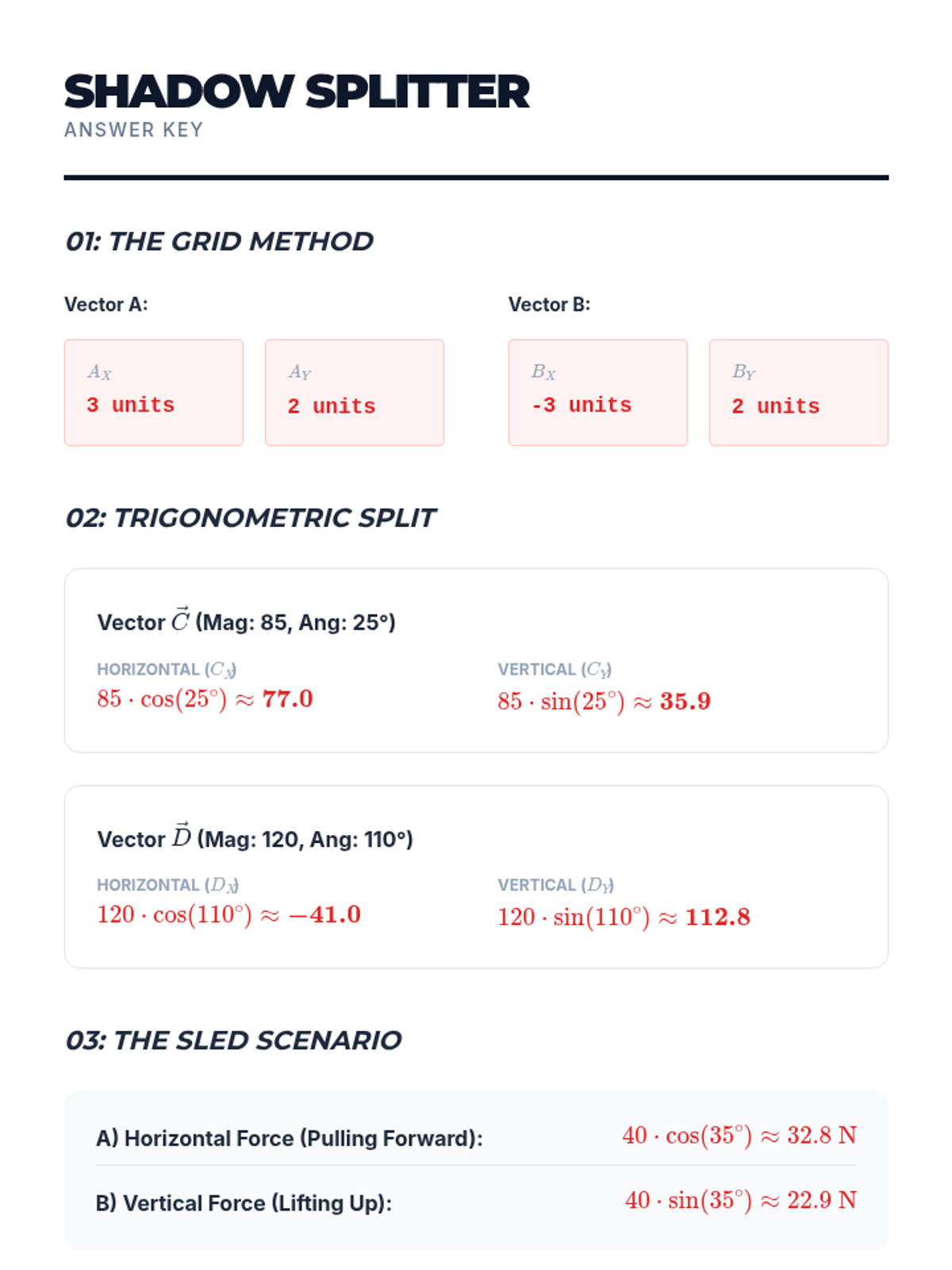
This sequence guides 9th-grade students through the algebraic representation of vectors. Moving from geometric drawings to coordinate components, students use trigonometry and the Pythagorean theorem to decompose, reconstruct, and add vectors with precision.
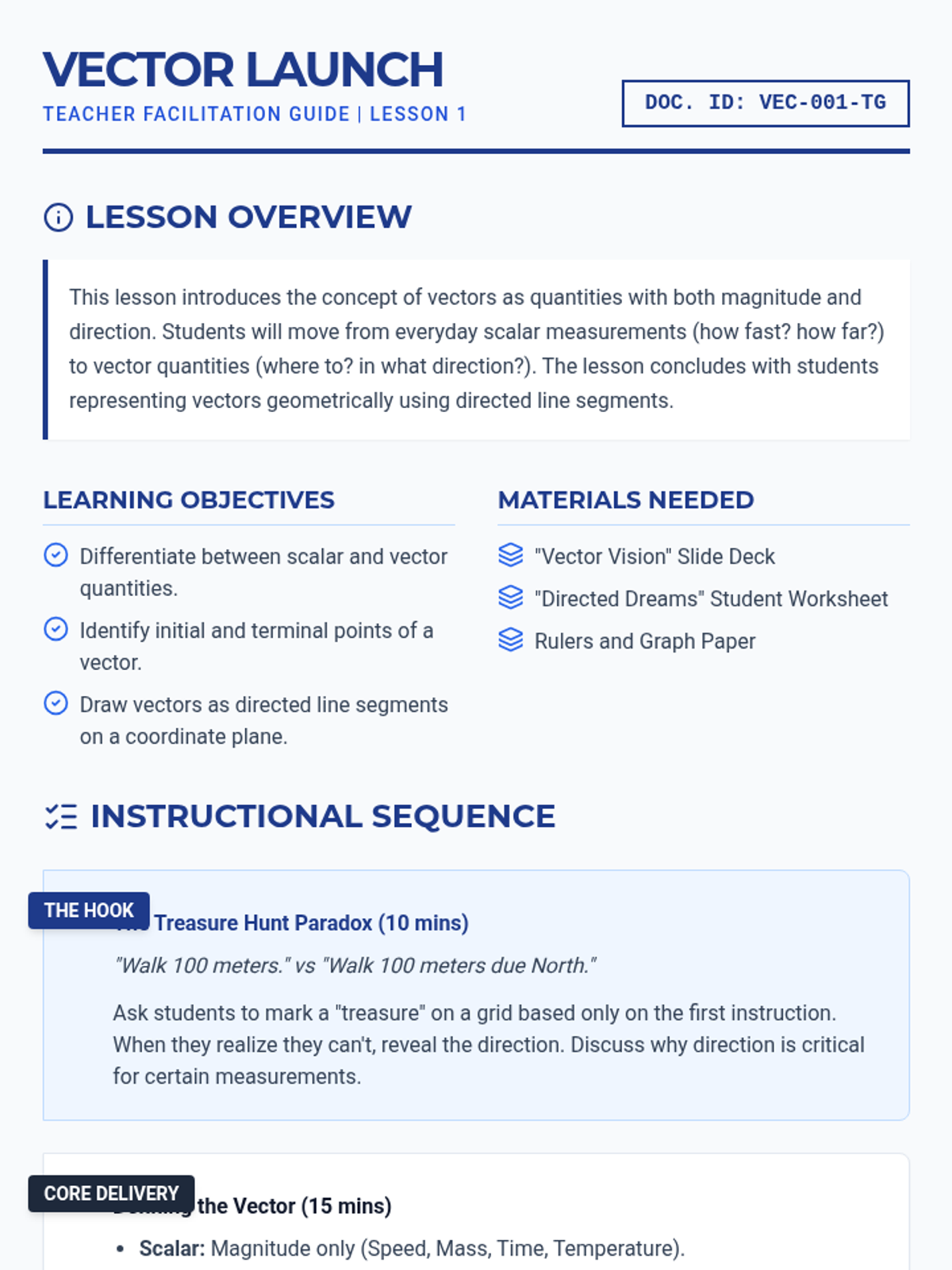
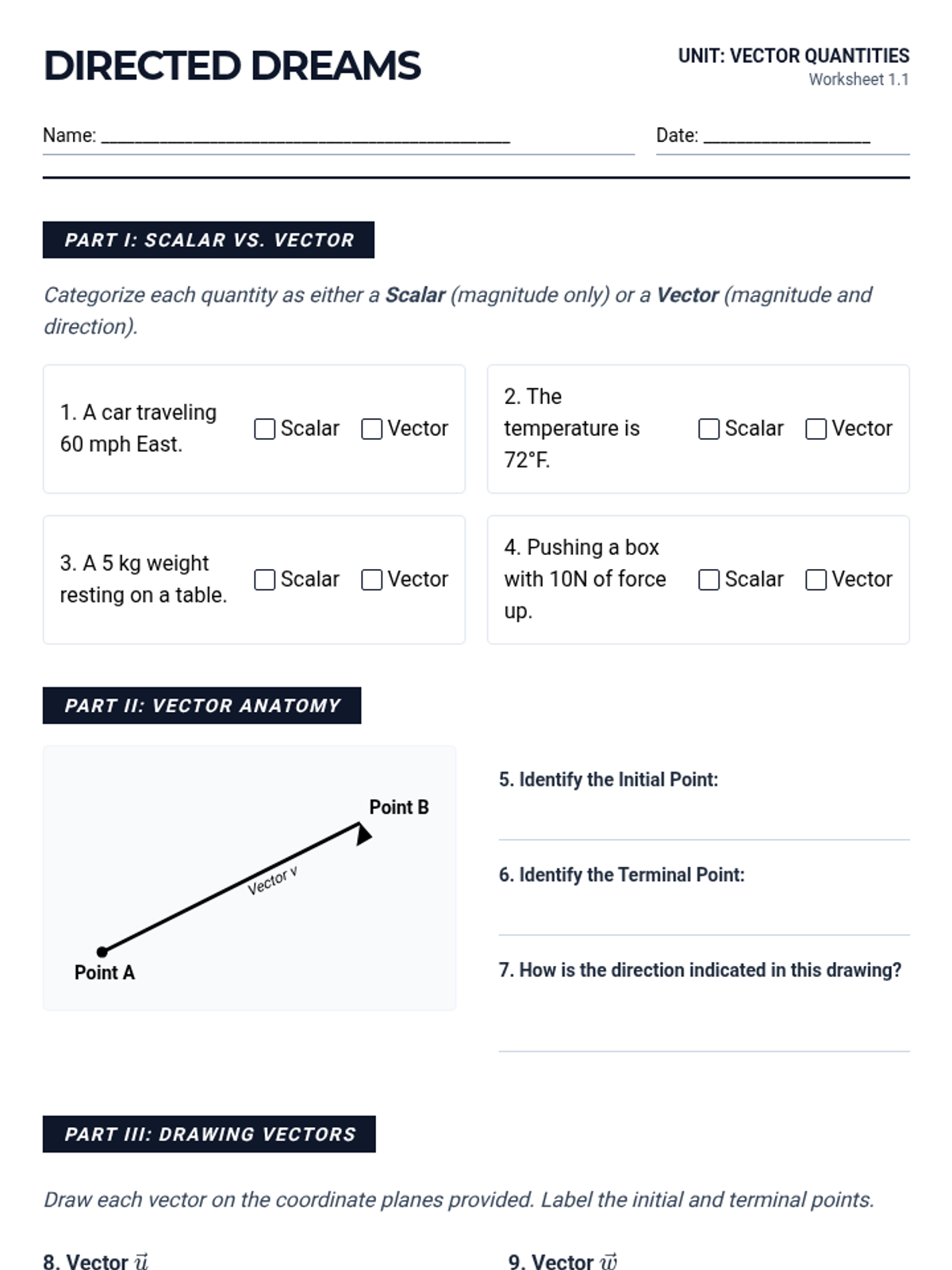
A comprehensive introduction to vectors through geometric representation, focusing on the distinction between scalars and vectors, visual addition/subtraction, scalar multiplication, and the transition to component form and magnitude calculation.
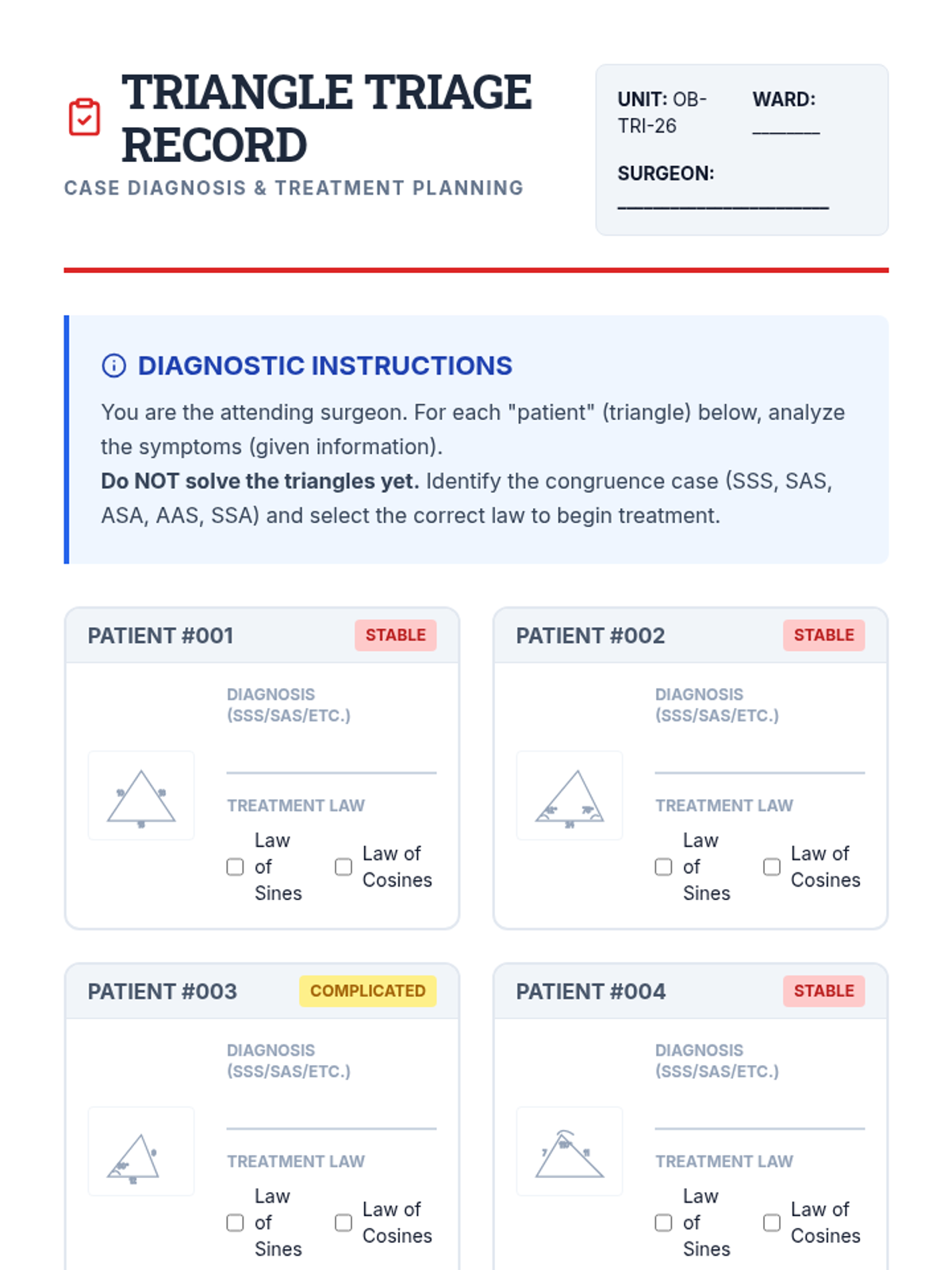
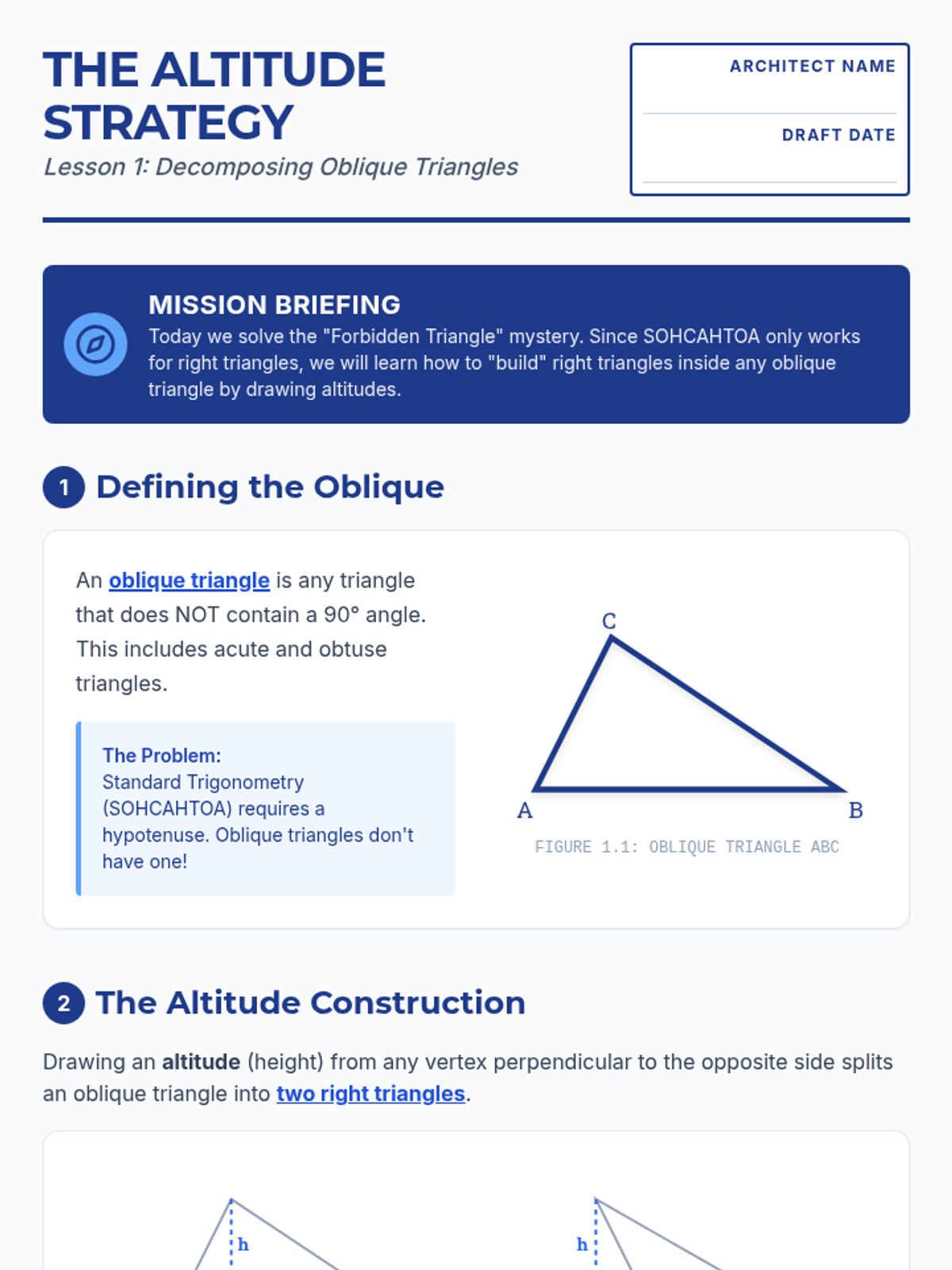
A high-level geometry sequence focused on diagnosing oblique triangles. Students use a medical 'triage' theme to master Law of Sines and Law of Cosines through pattern recognition, algebraic mastery, and mixed practice.
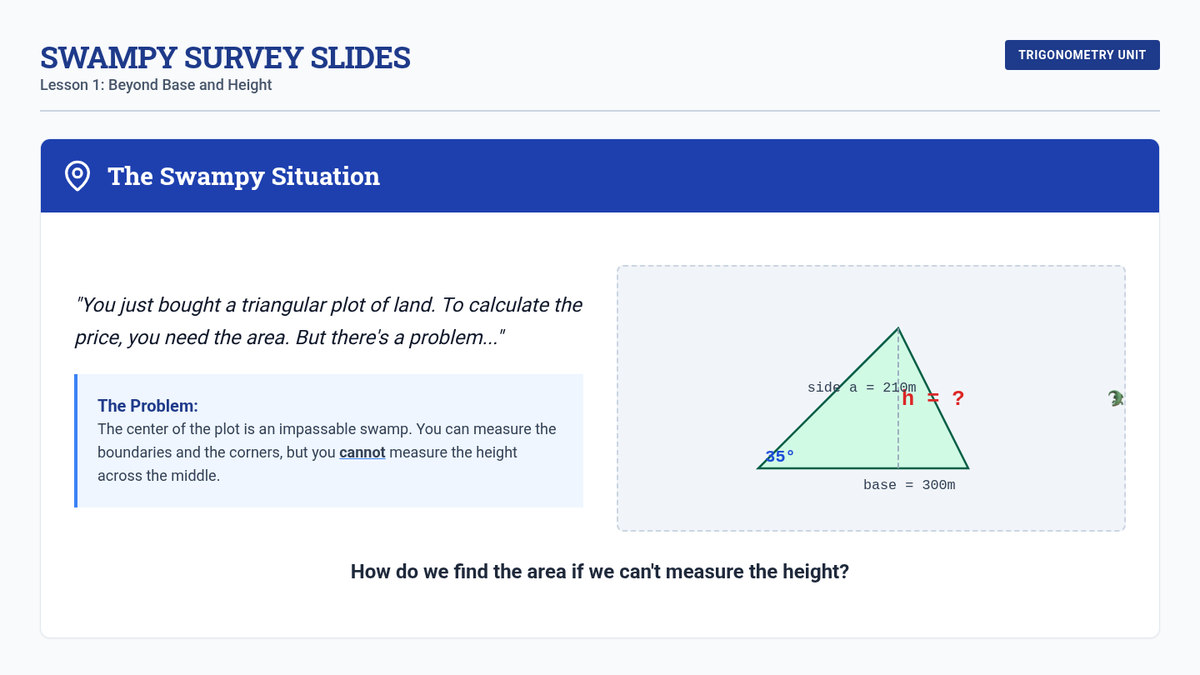
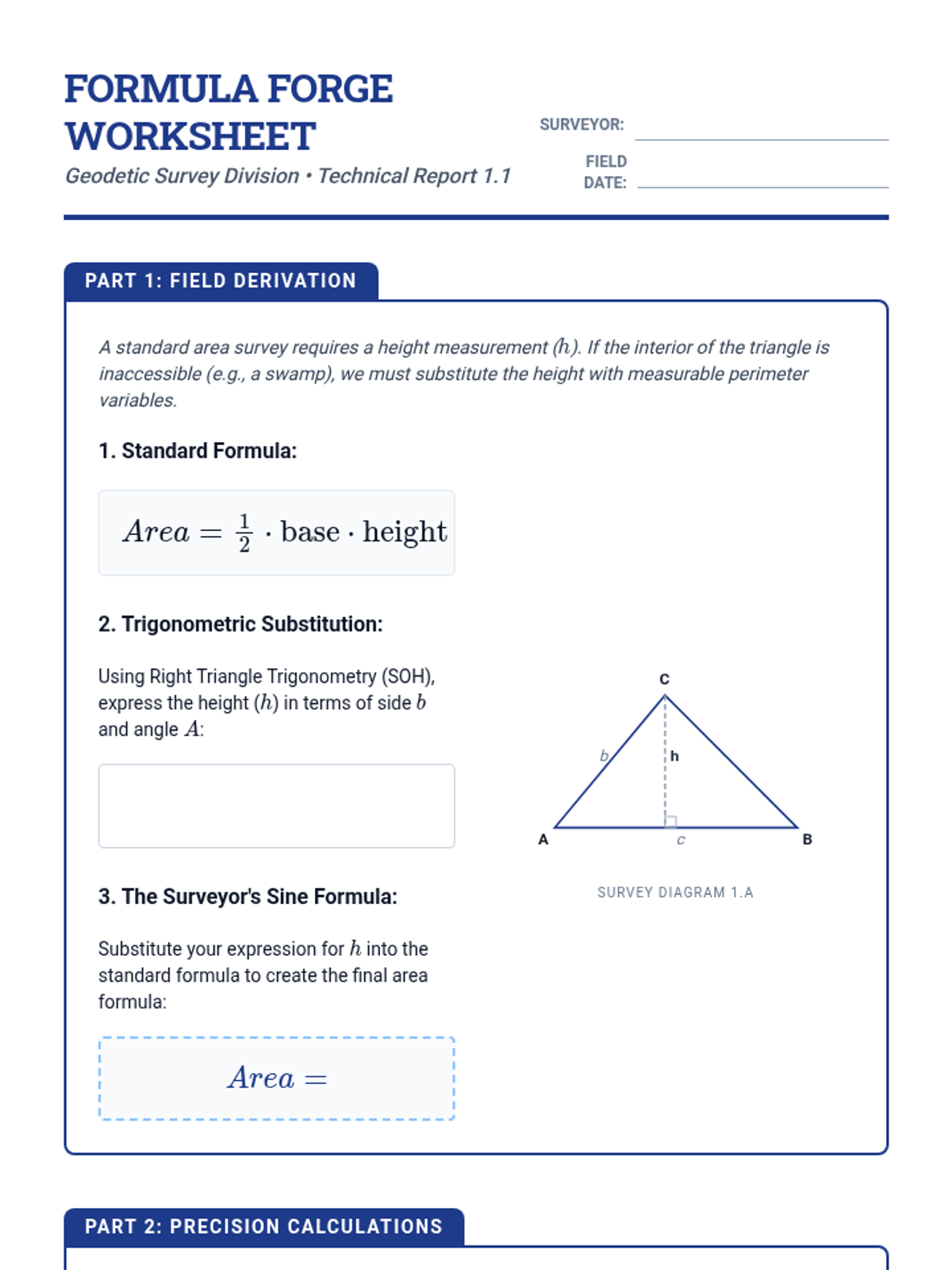
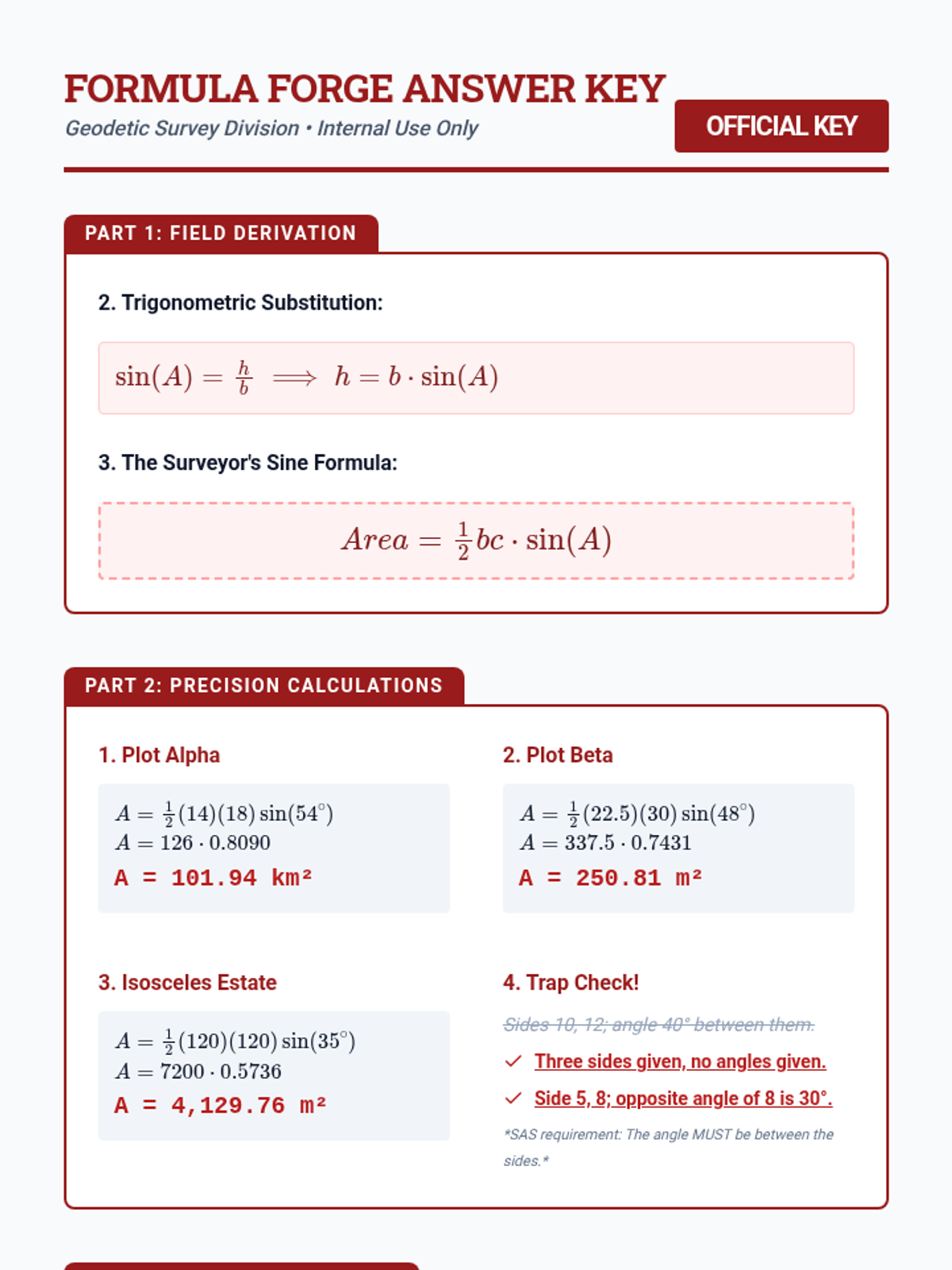
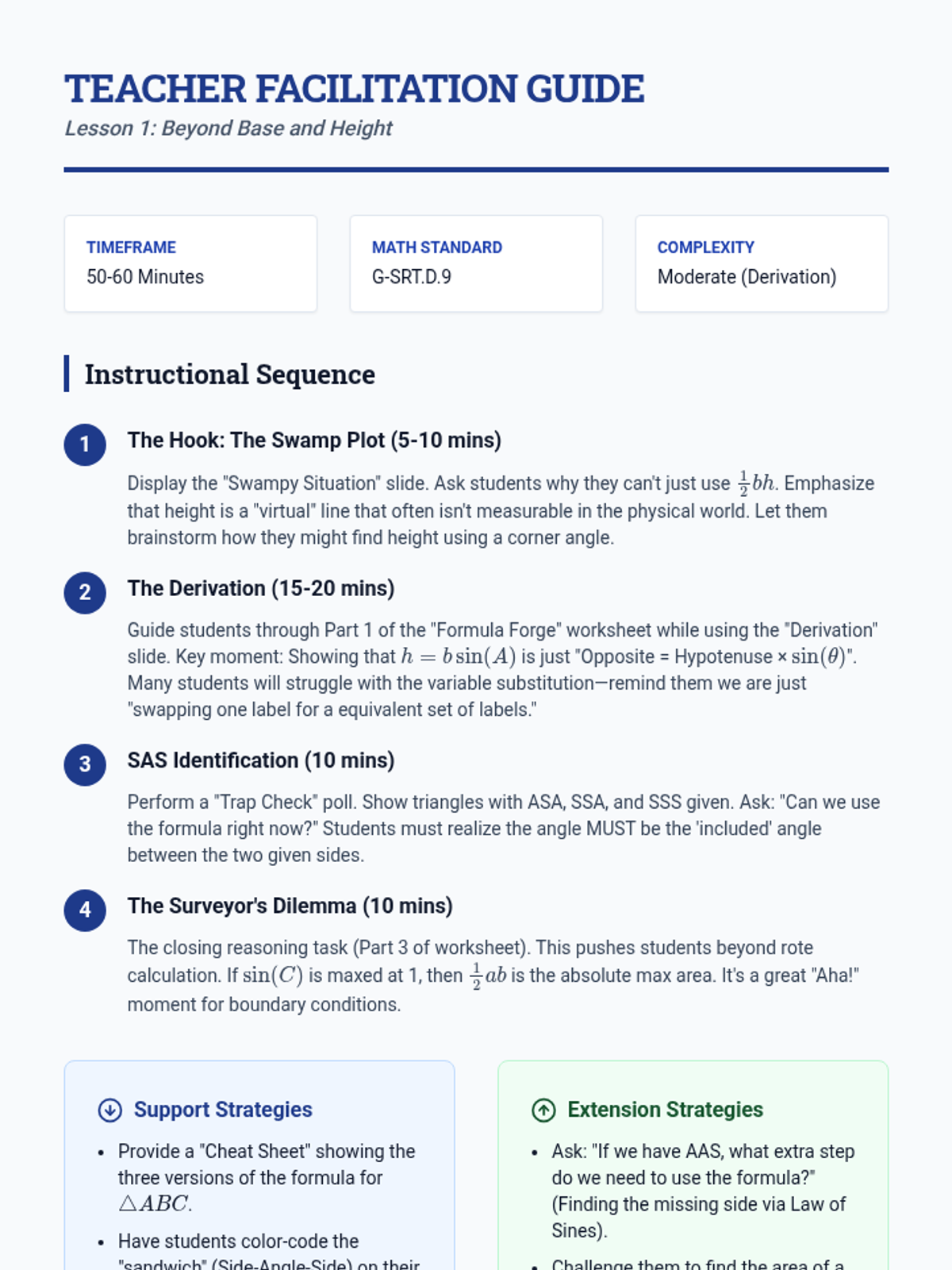
A comprehensive geometry sequence focused on finding the area of oblique triangles using trigonometric ratios and Heron's Formula, culminating in a real-world land surveying project.
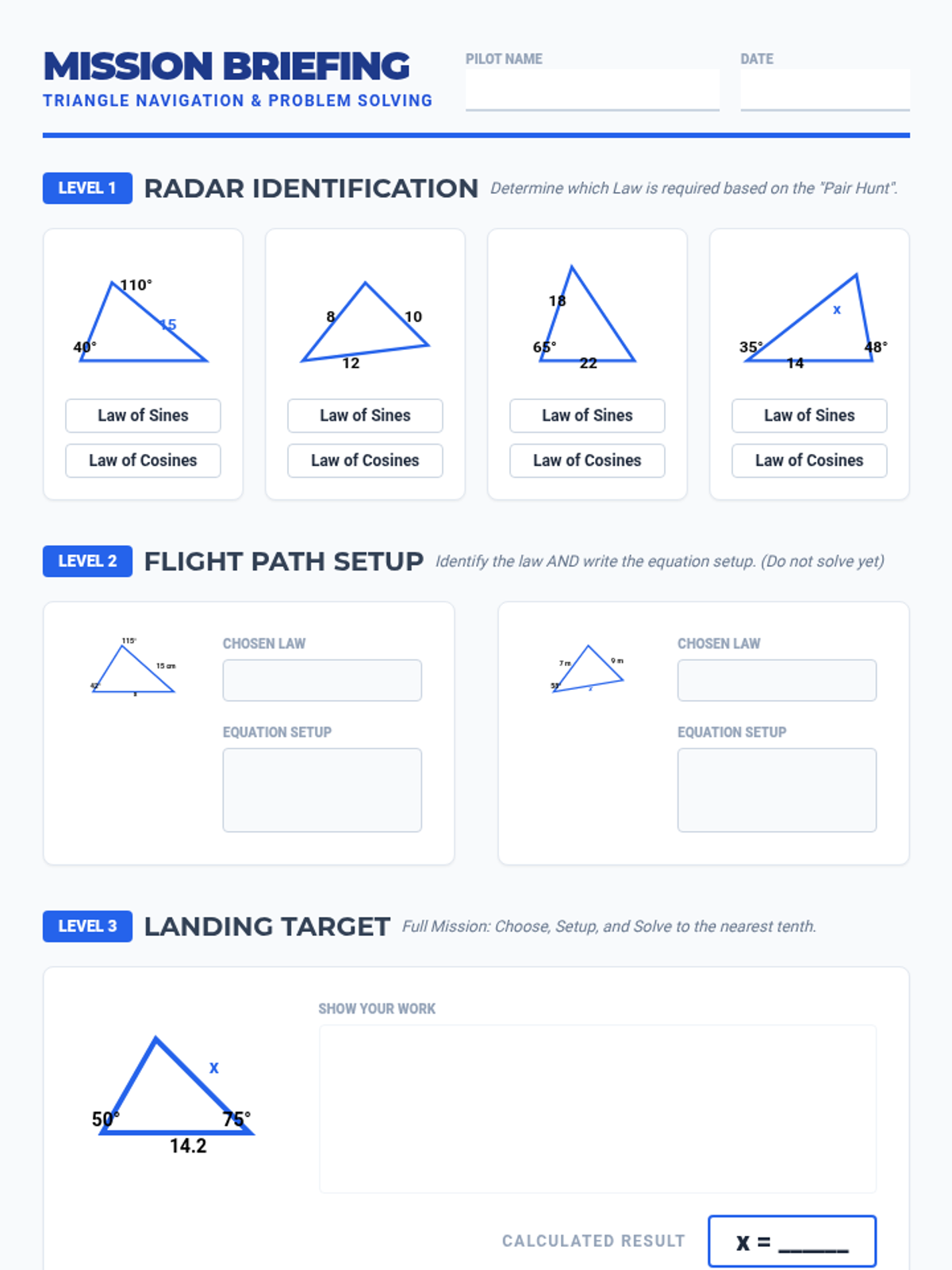
A 5-lesson geometry project where students apply the Law of Sines and Law of Cosines to solve real-world navigation and surveying problems, culminating in a search-and-rescue triangulation task.
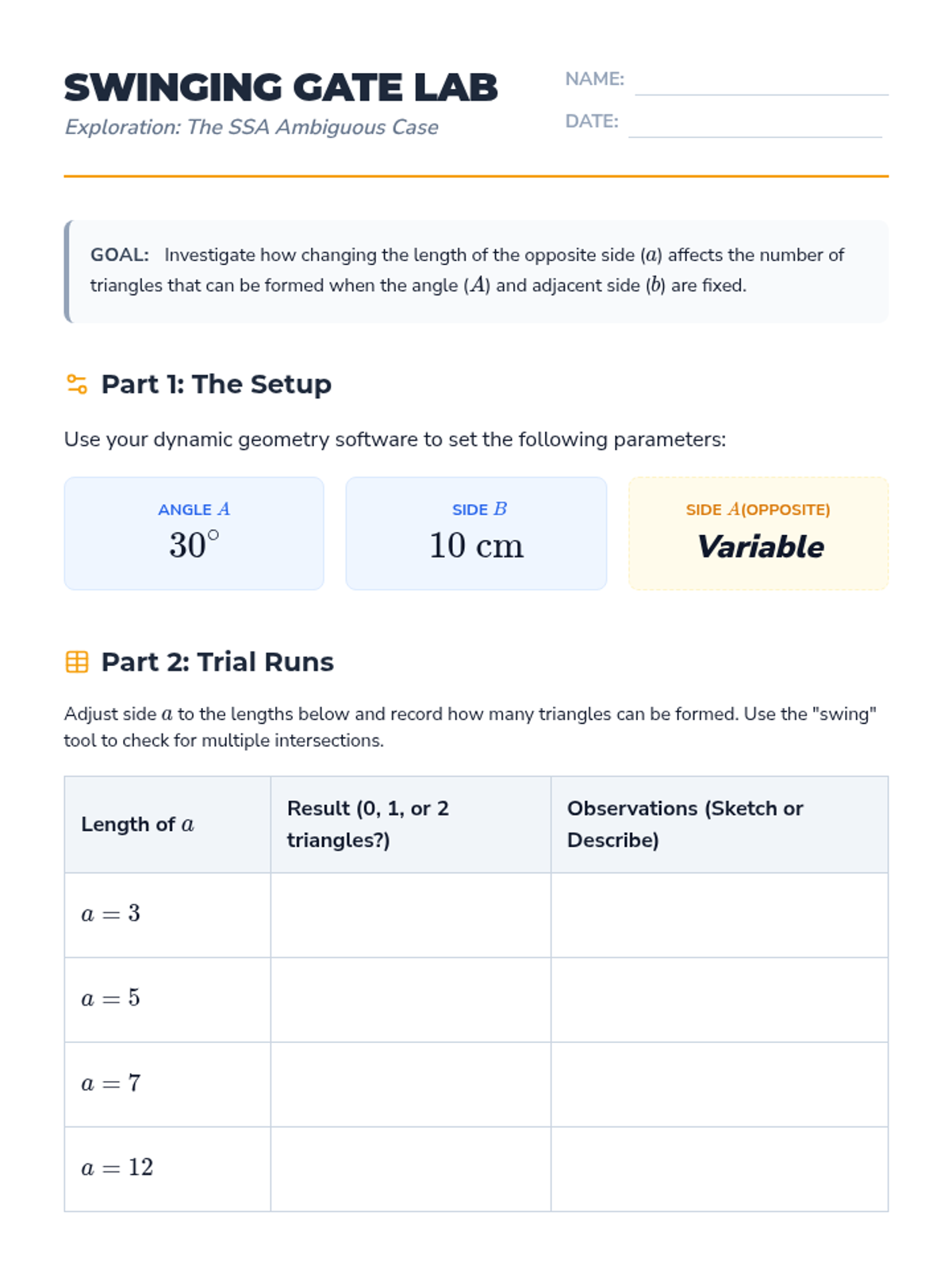
A comprehensive geometry sequence for 9th-grade students exploring the SSA ambiguous case in trigonometry. Through a mix of visual simulation, algebraic calculation of altitudes, and real-world context, students master why certain geometric constraints lead to zero, one, or two possible triangles.
A 5-lesson geometry sequence where students move from right-triangle trigonometry to general triangles. They derive the Law of Sines and Law of Cosines through inquiry and verify their accuracy via a hands-on measurement lab.
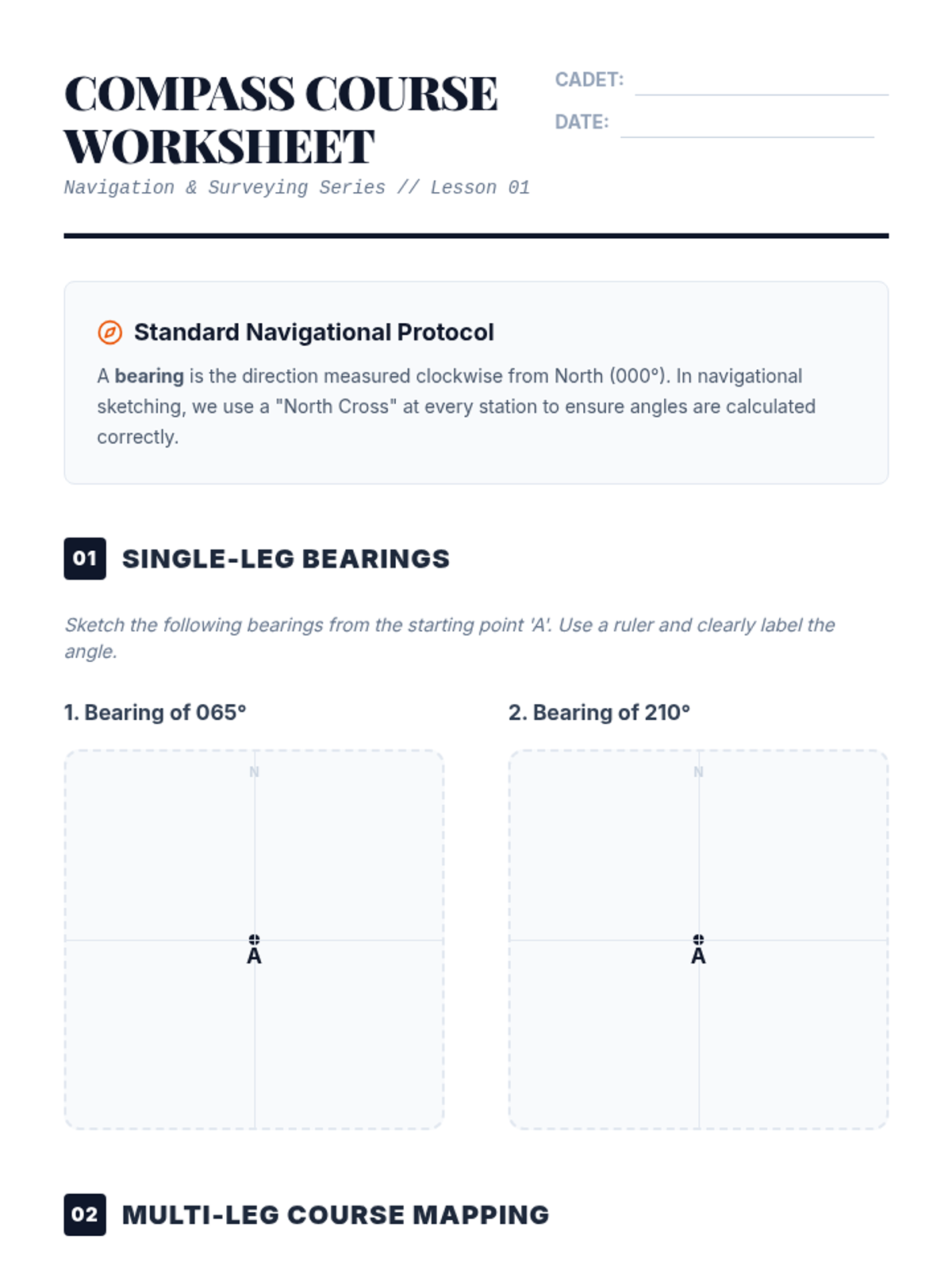
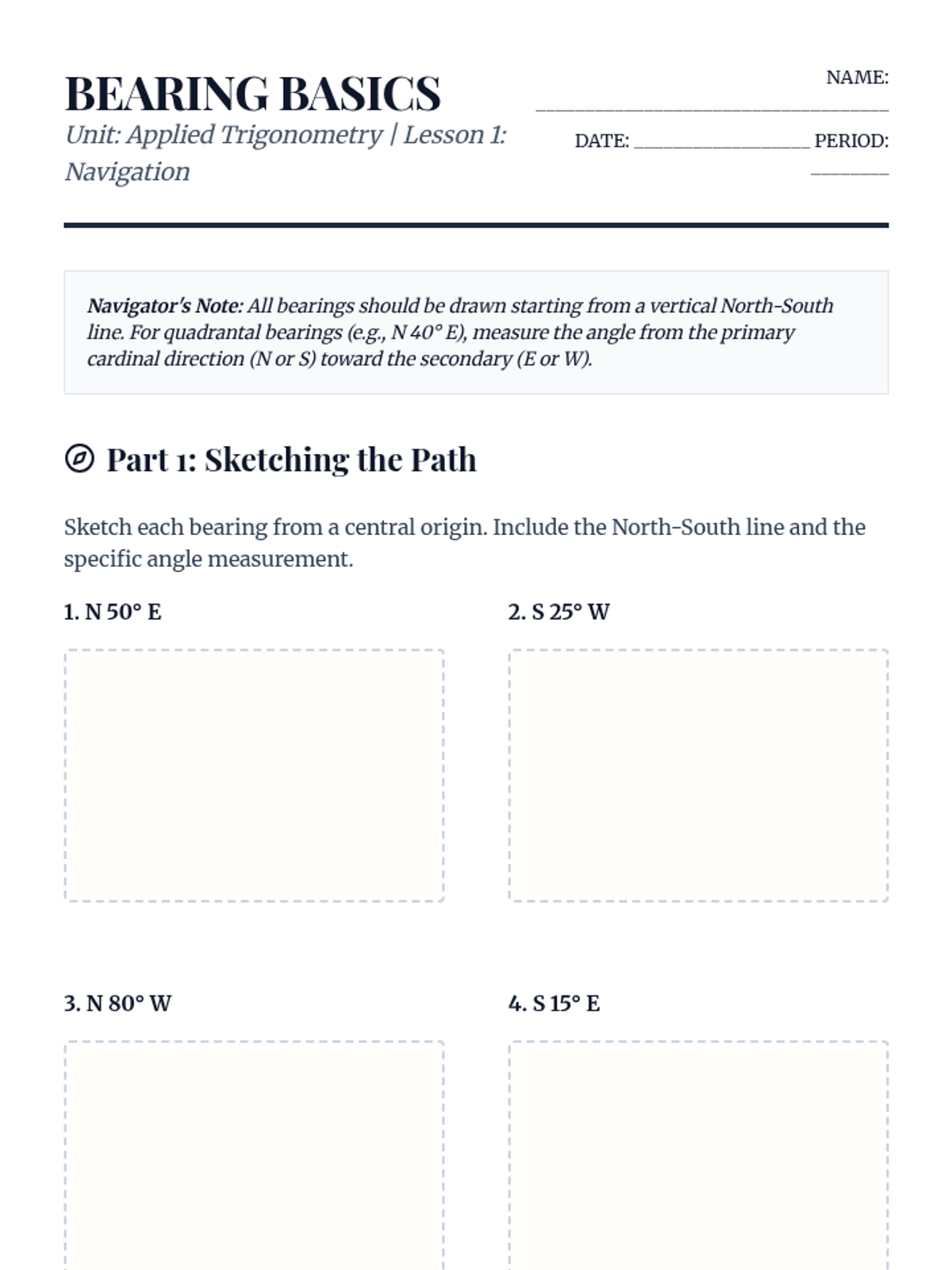
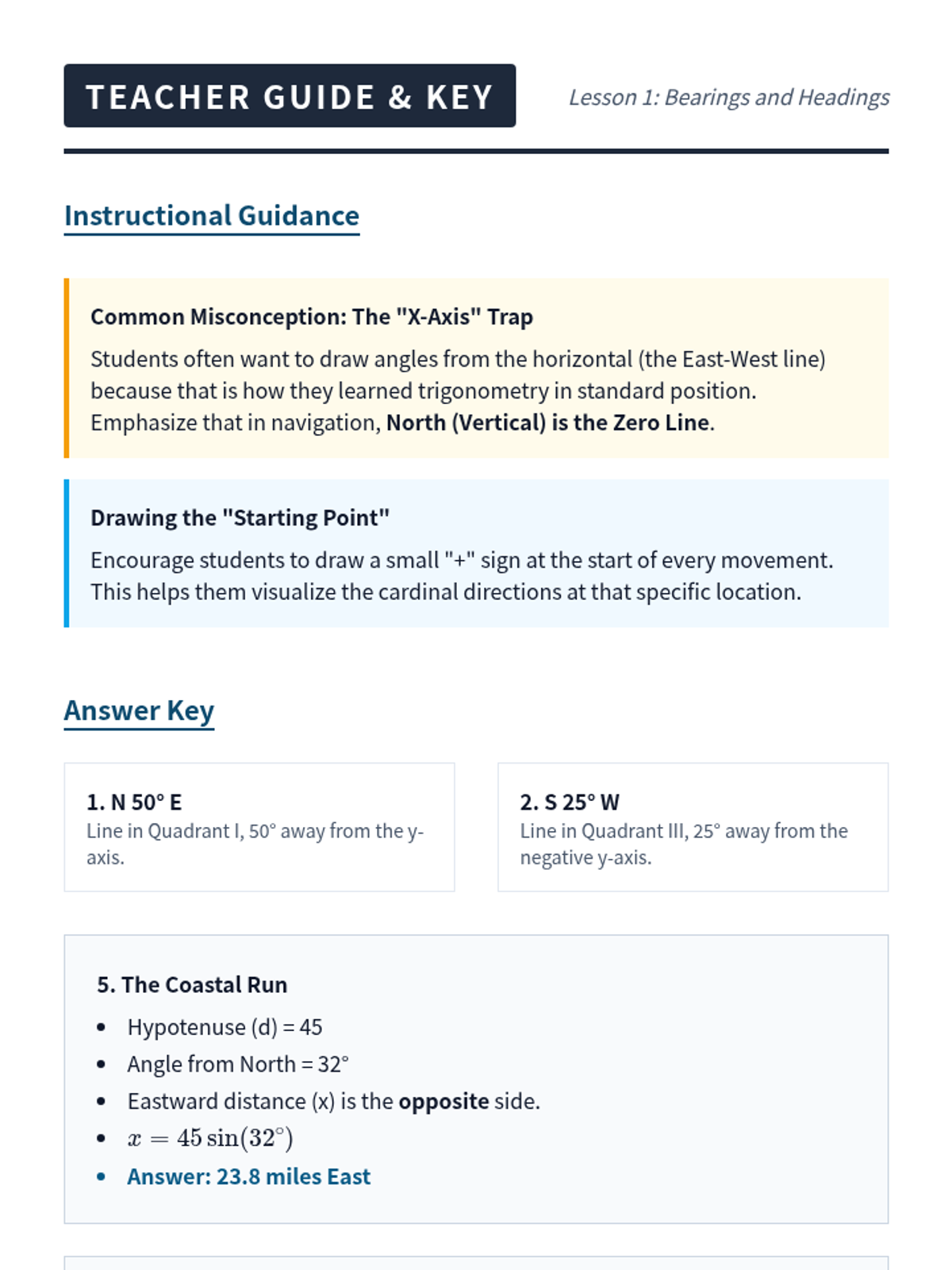
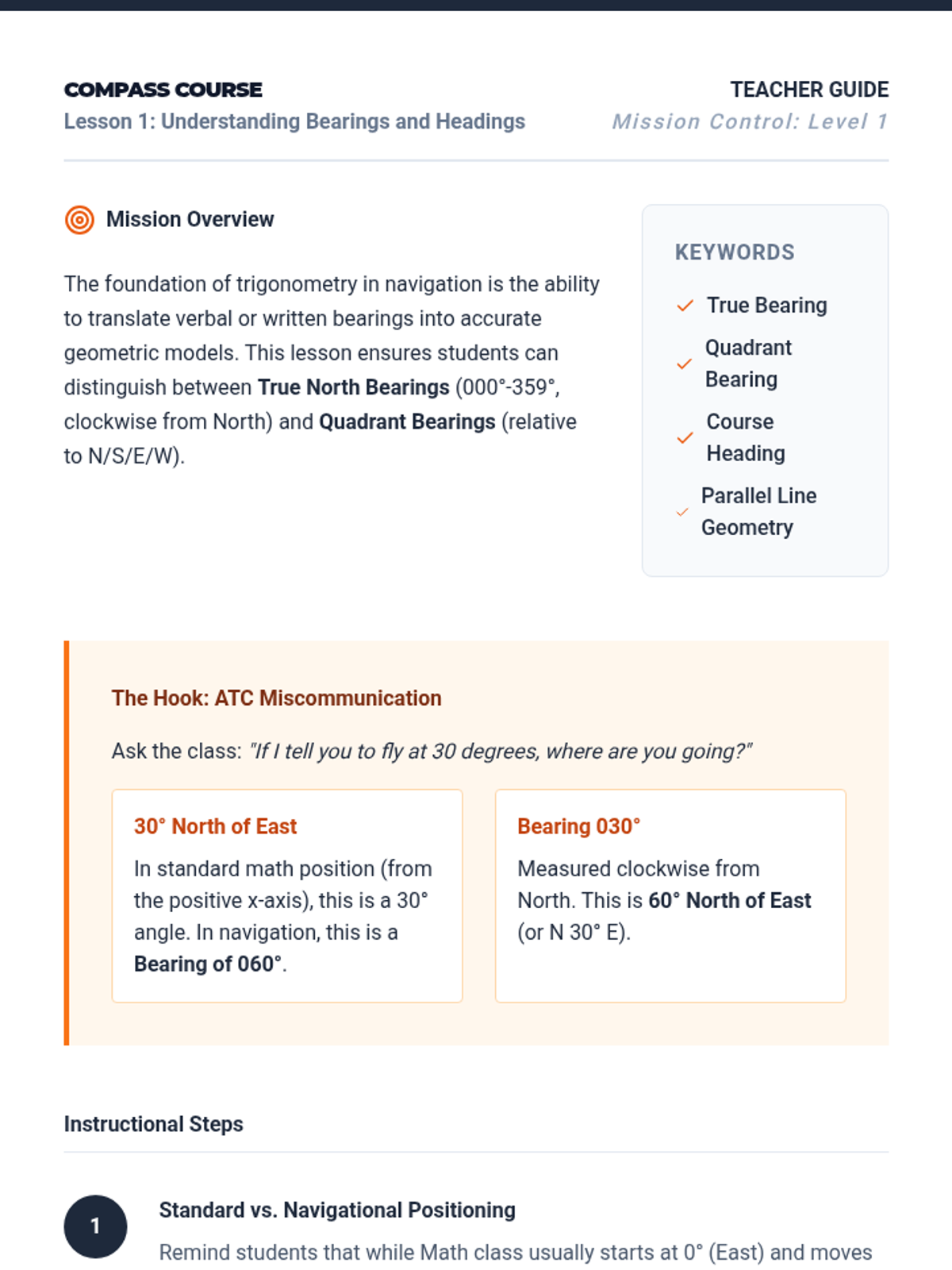
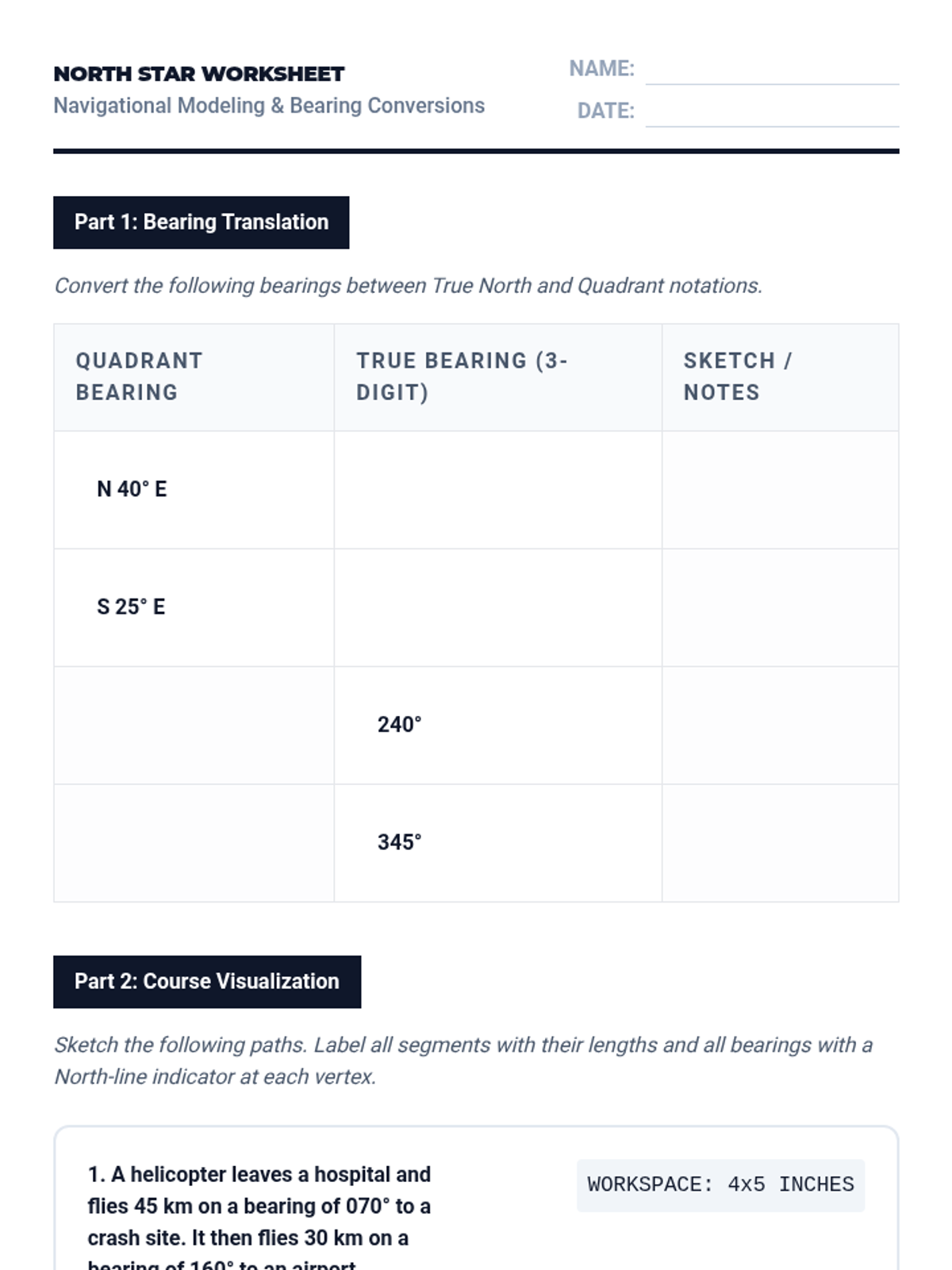
This sequence explores trigonometry through navigation and surveying. Students learn to use bearings, the Law of Sines, and the Law of Cosines to solve real-world problems involving triangulation, course correction, and indirect measurement.
This project-based sequence applies general triangle trigonometry to real-world scenarios in navigation, surveying, and aviation. Students move from abstract geometric figures to interpreting word problems involving bearings, headings, and elevation angles, culminating in a simulated search-and-rescue operation.