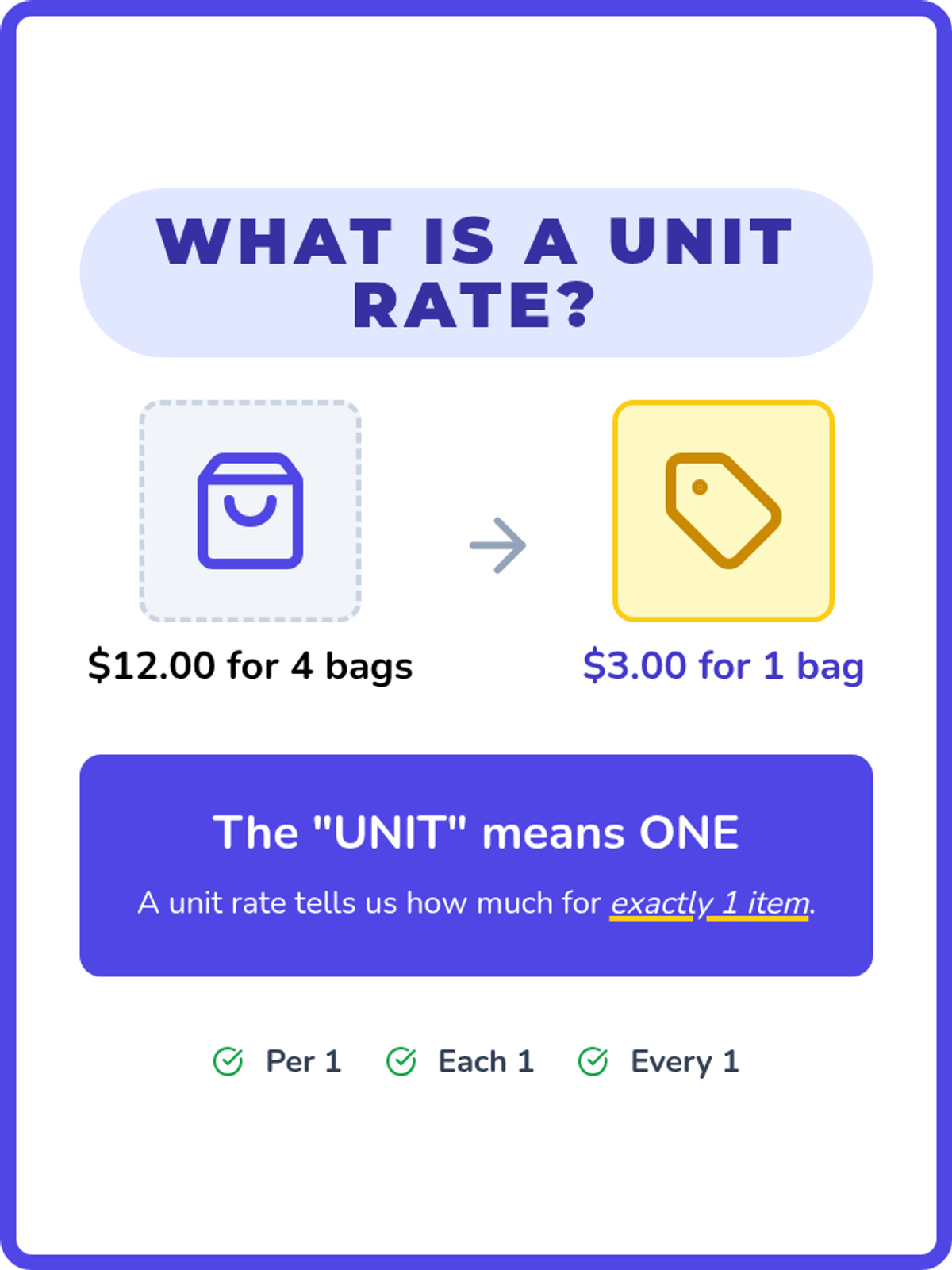
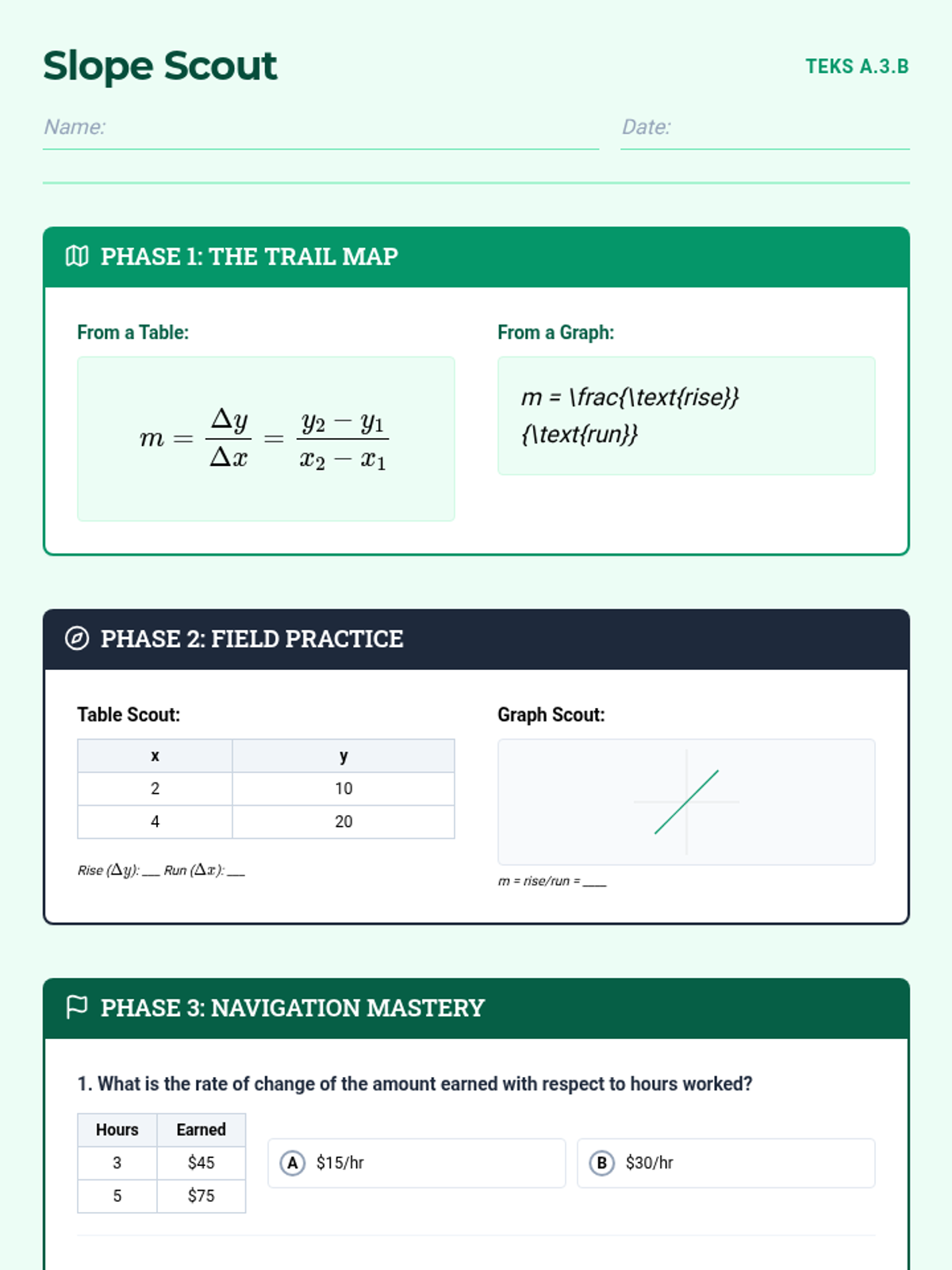
Comparisons of quantities using unit rates and proportional reasoning. Connects tables, graphs, and equations to represent constant rates of change.
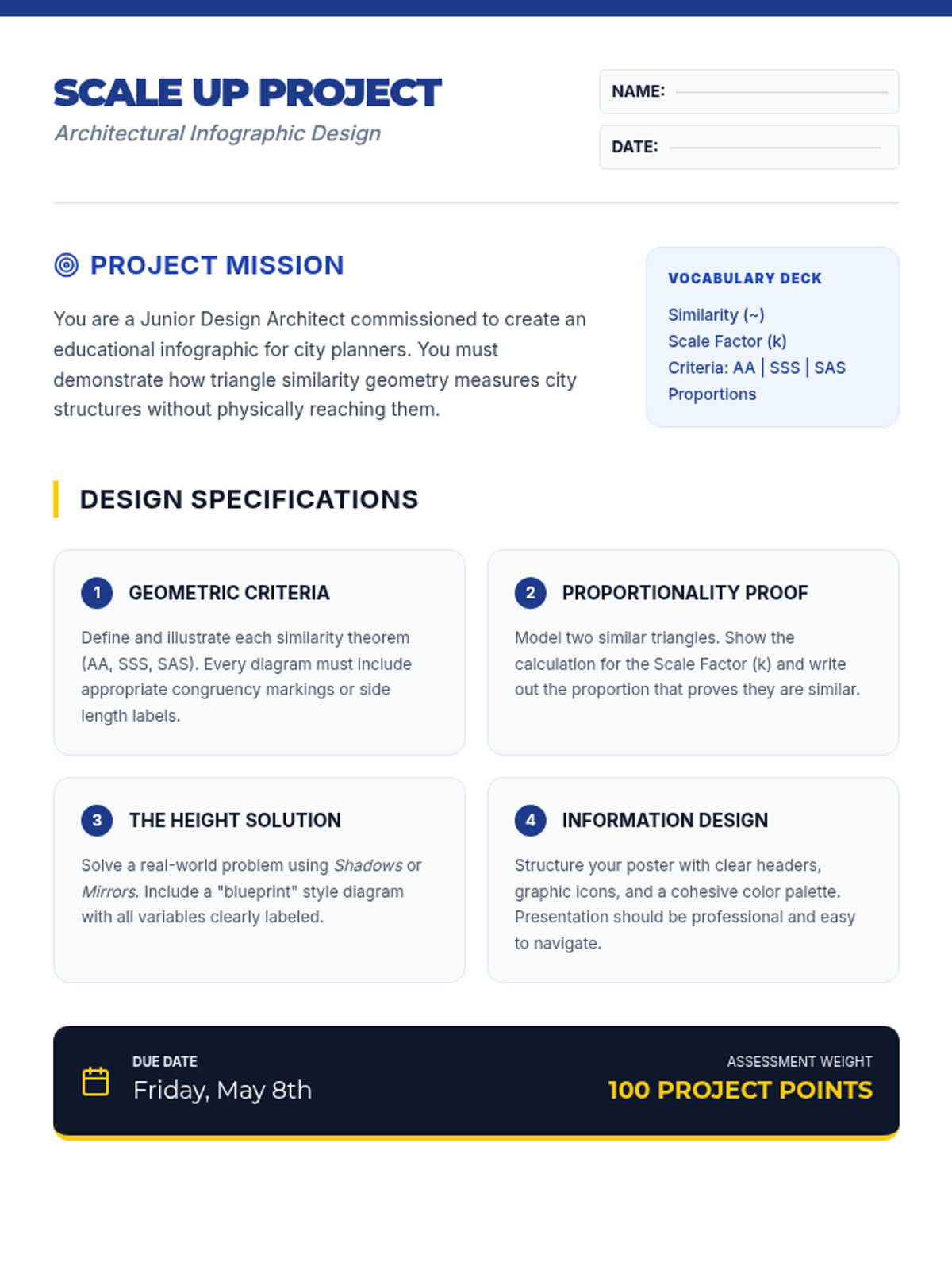
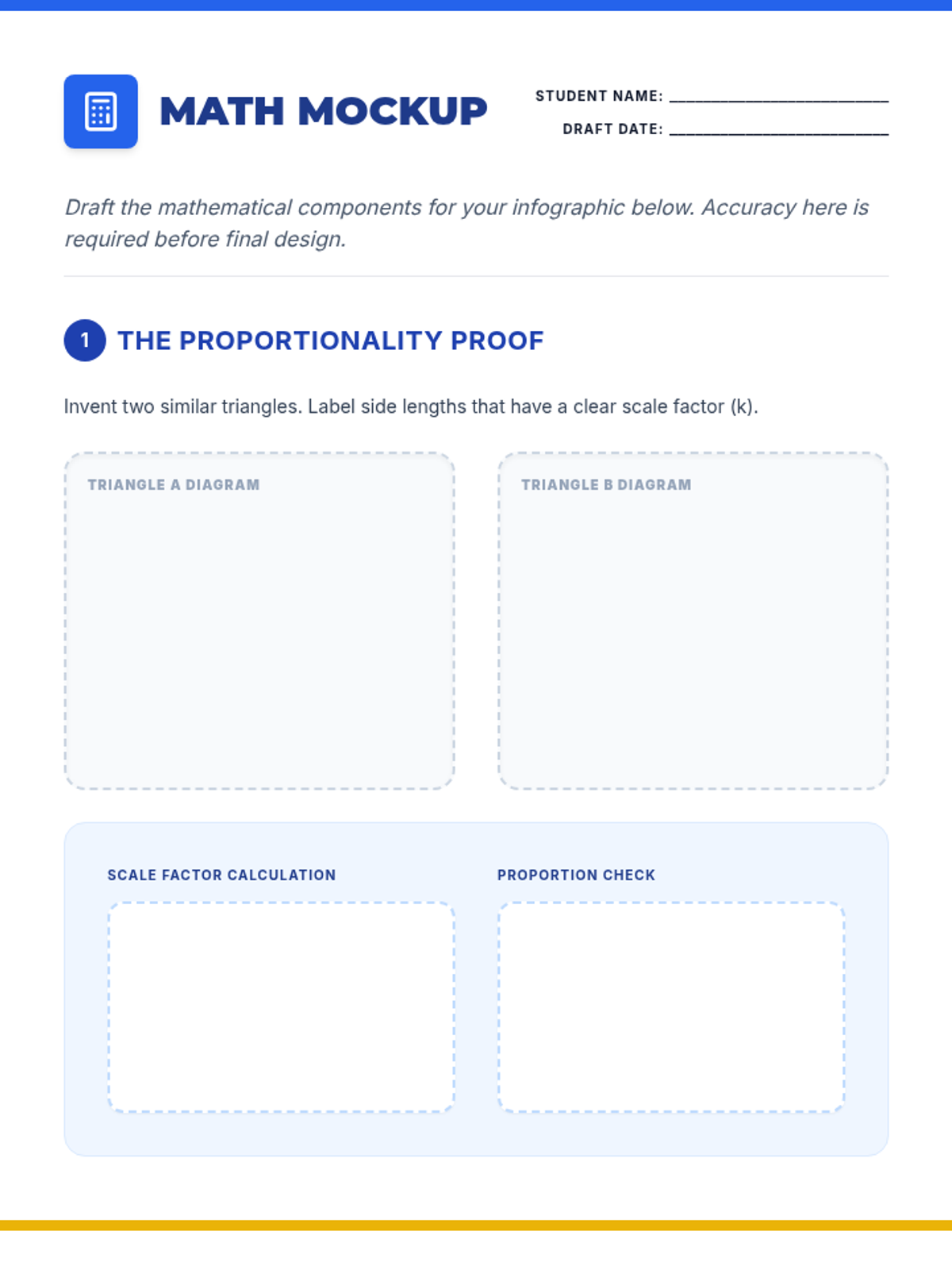
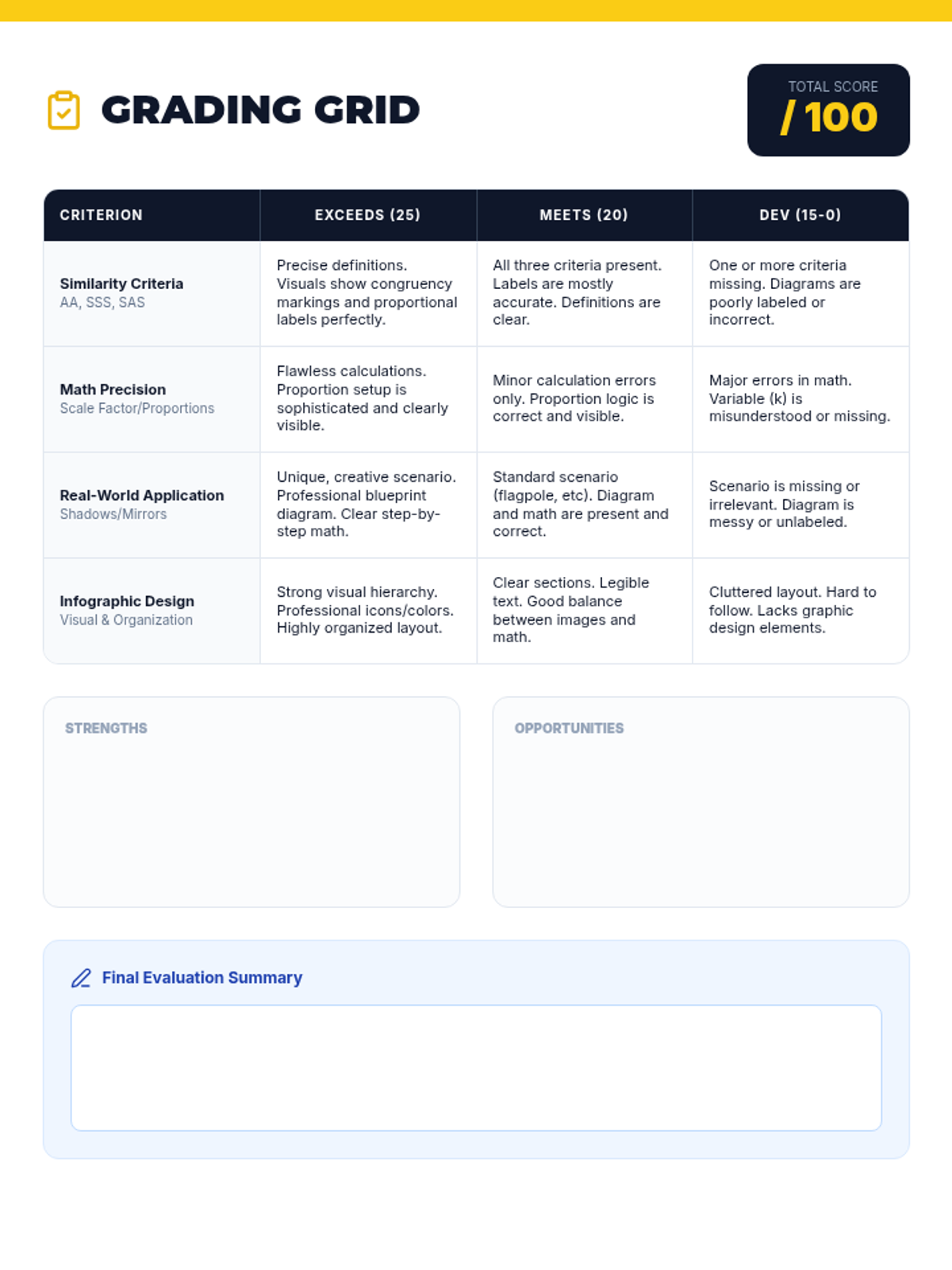
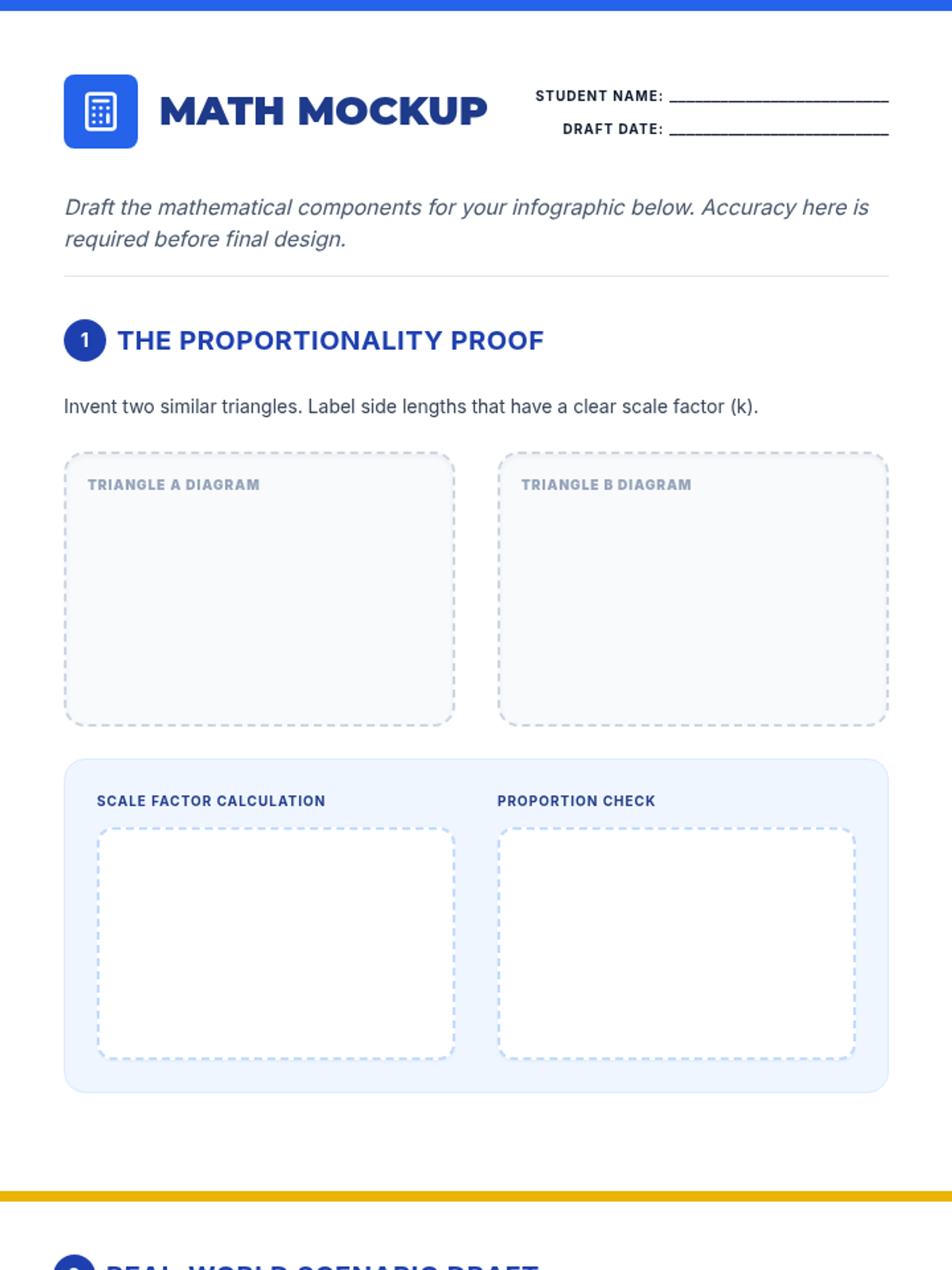
A geometric exploration of similar triangles, focusing on identification criteria and real-world applications of scale factors and proportions.
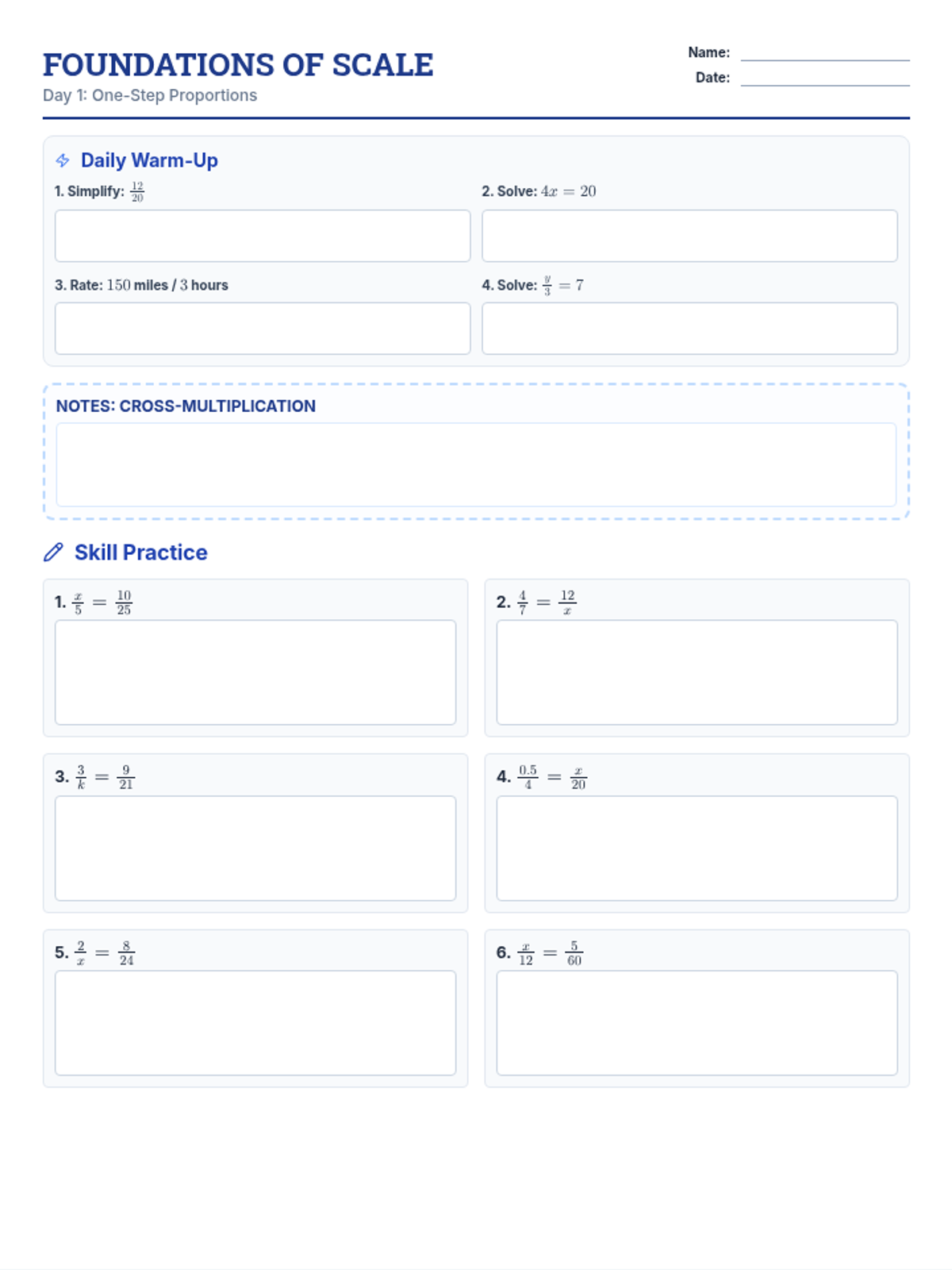
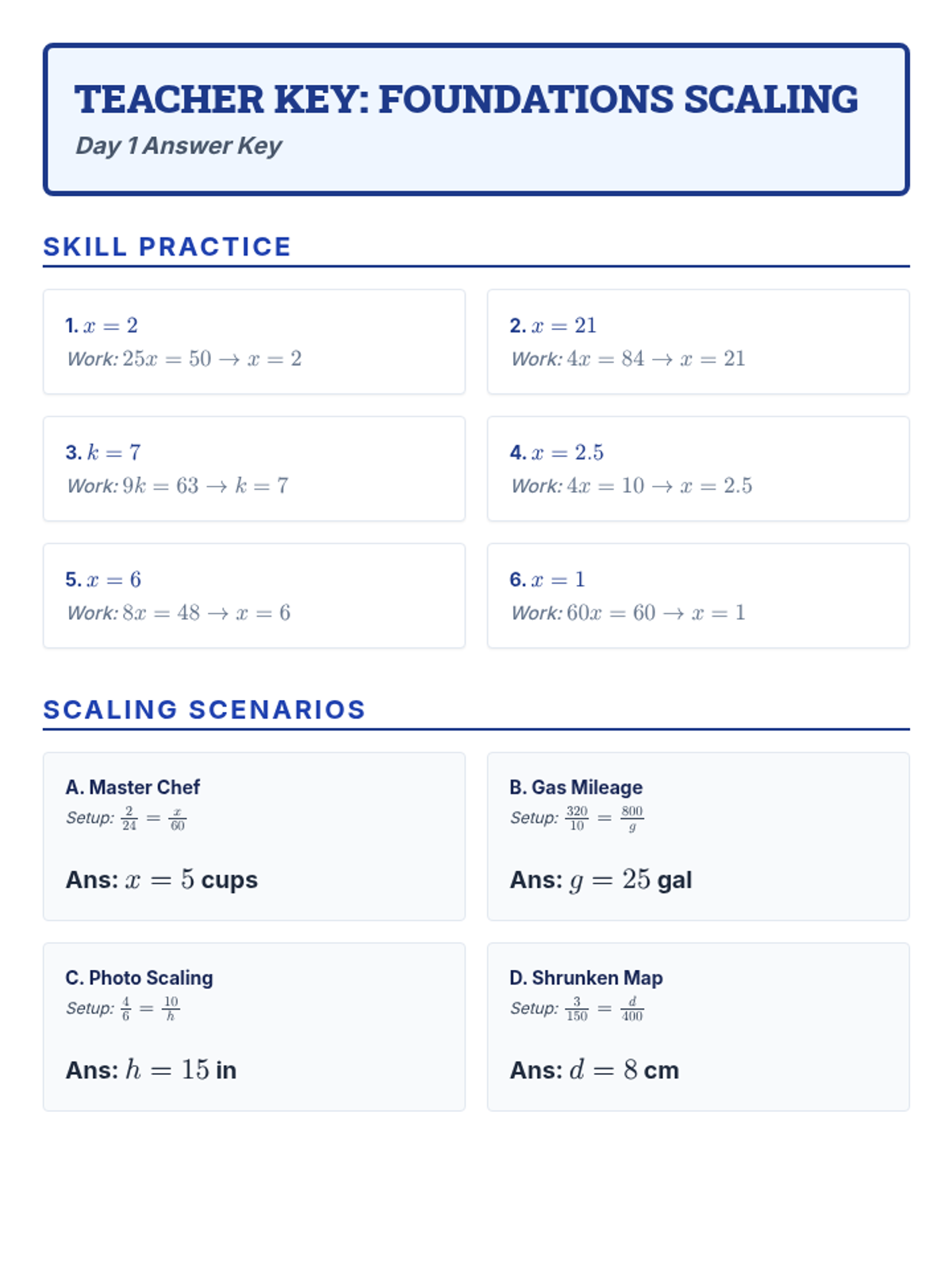
A 4-day unit on Ratios and Proportions integrating one-step, two-step, and multi-step algebraic equations with real-world applications. Students progress from simple cross-multiplication to complex proportional reasoning with variables on both sides.
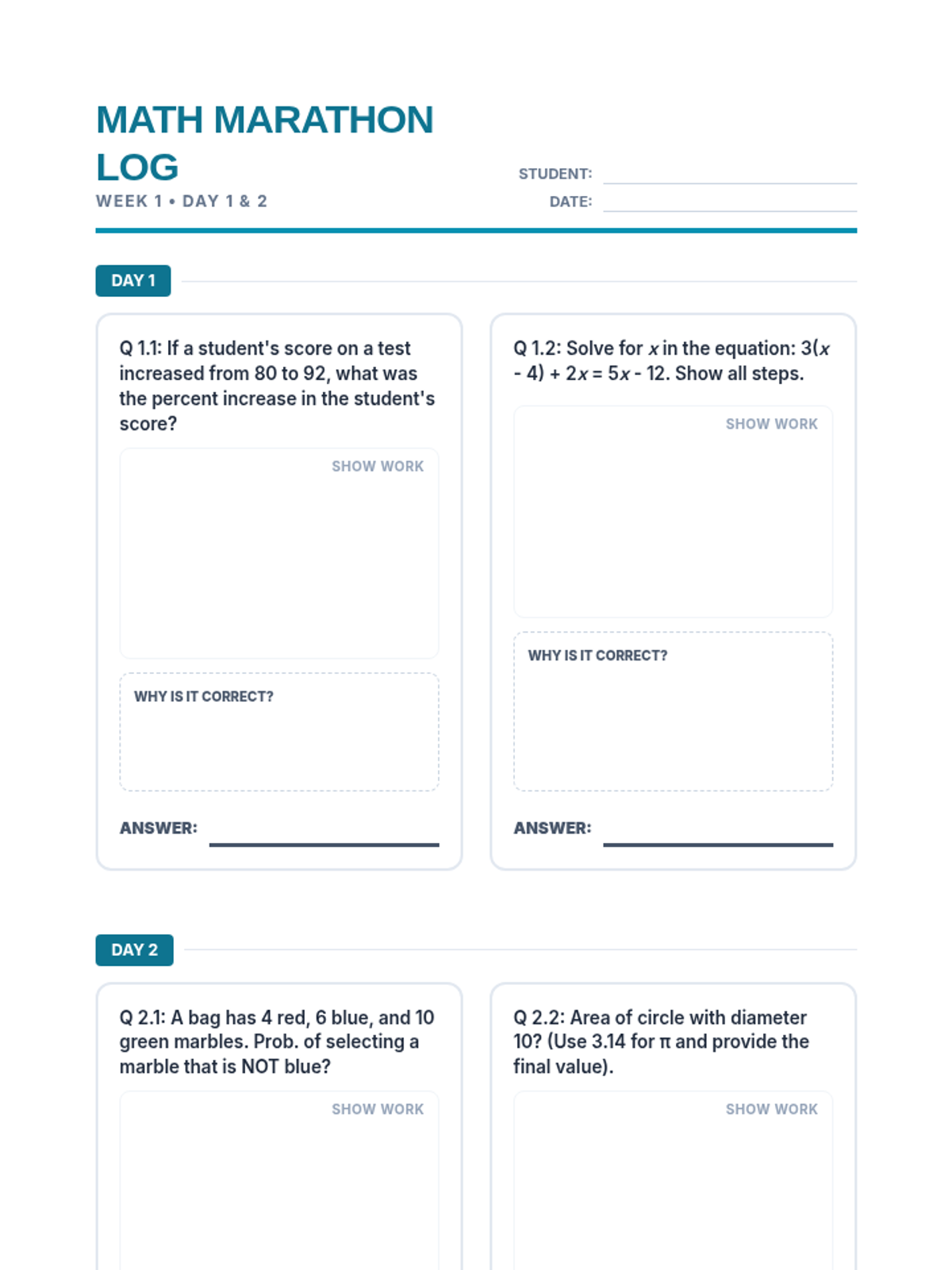
A comprehensive 15-day TSIA2 math review sequence featuring daily warm-up questions and weekly progress logs for students. The program covers all four TSIA2 domains through a "Math Marathon" theme.
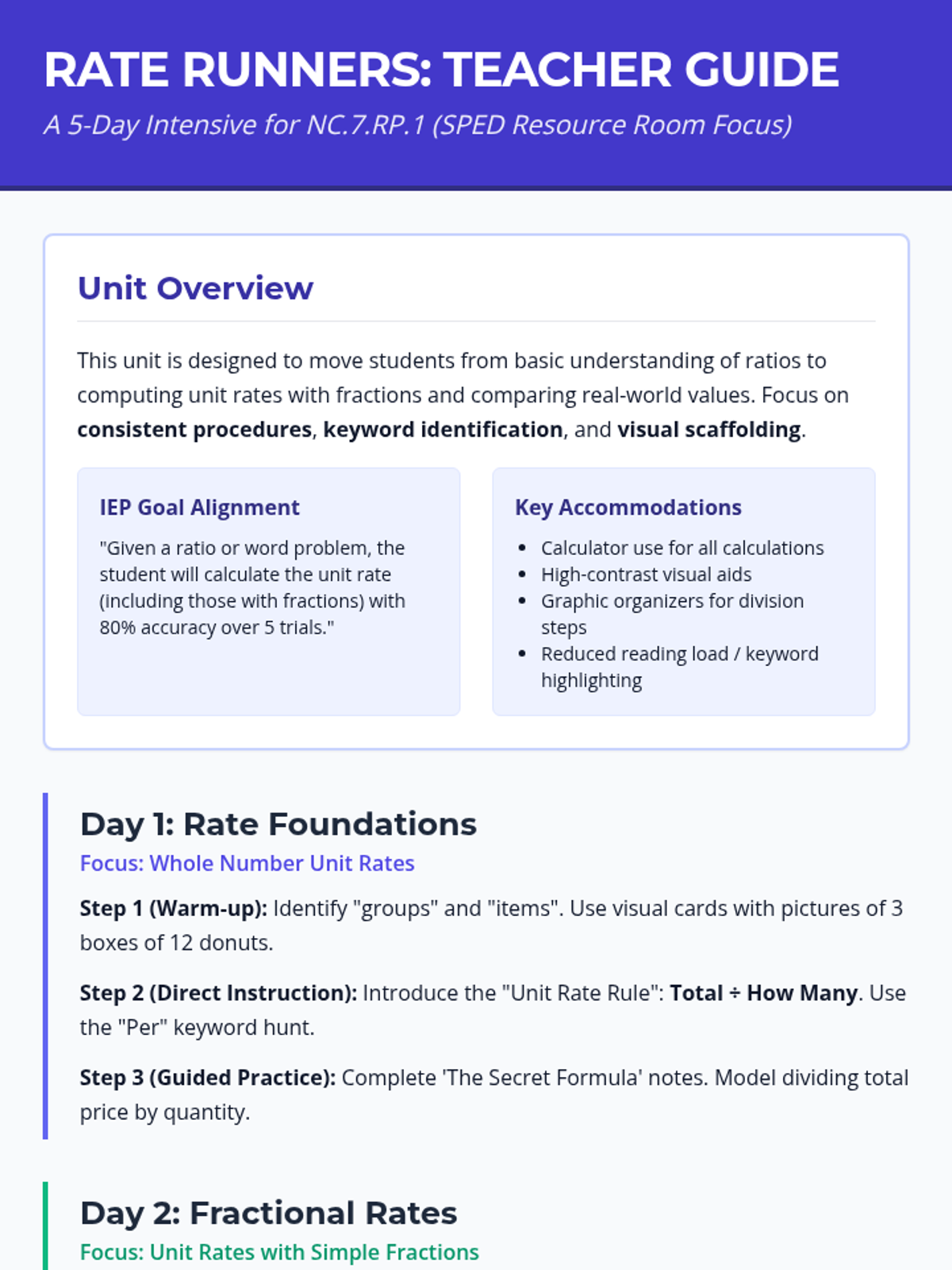
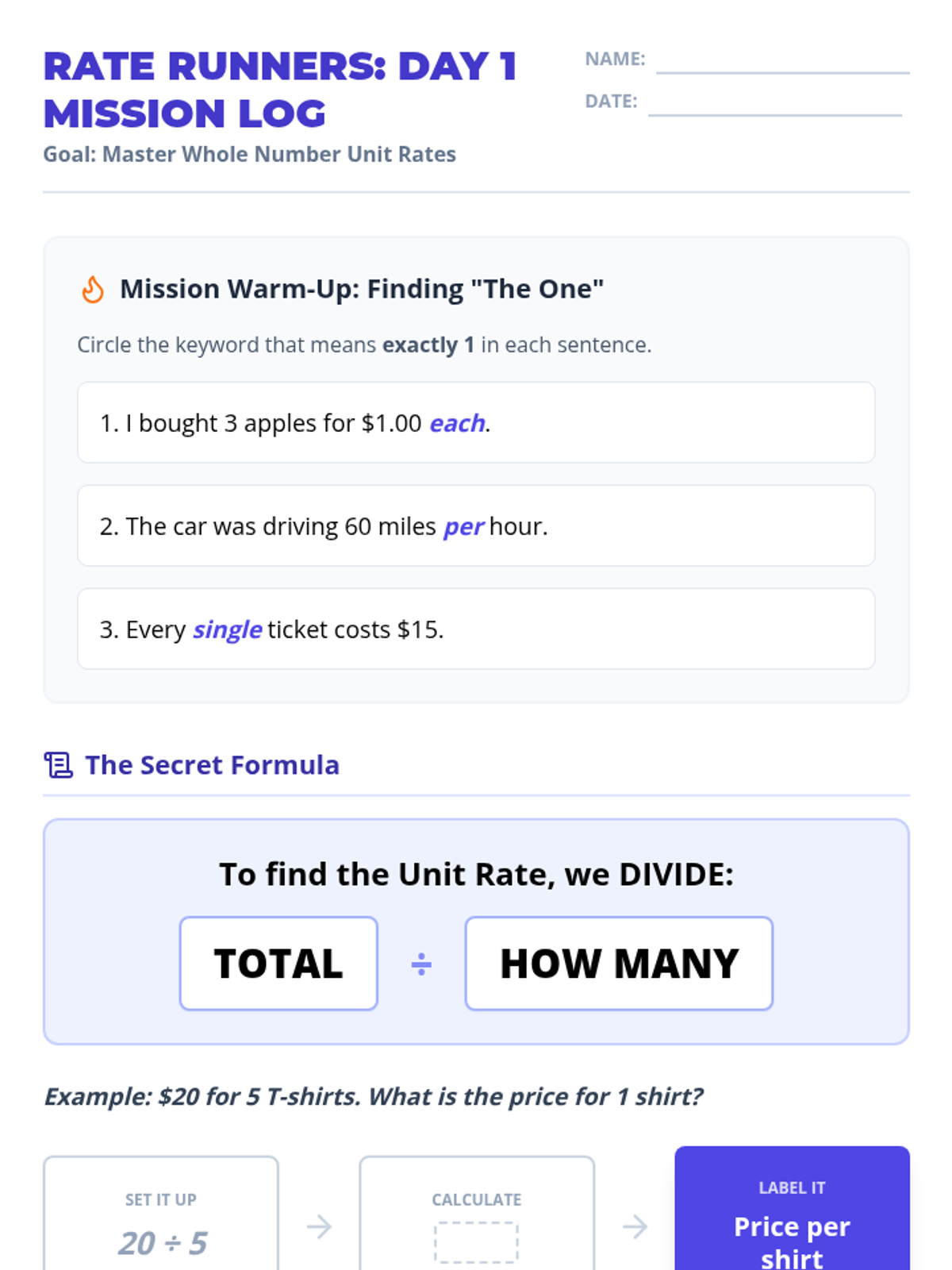
A 6-day intensive test prep unit for NC.7.RP.1 focused on unit rates. Designed specifically for special education resource rooms with heavy scaffolding, visual aids, and real-world shopping and measurement applications. Includes 4 days of instruction, a collaborative review relay, and a final assessment.
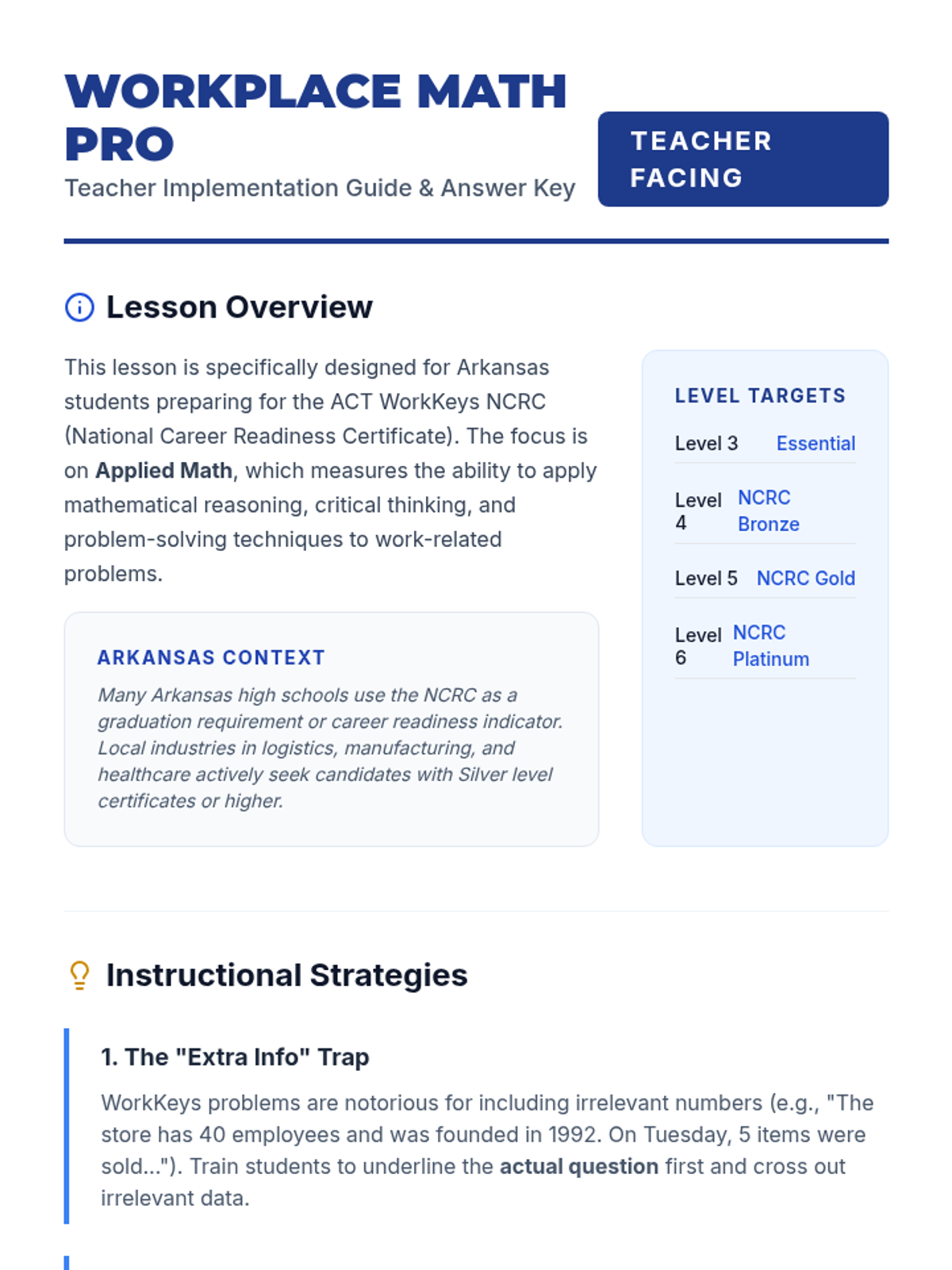
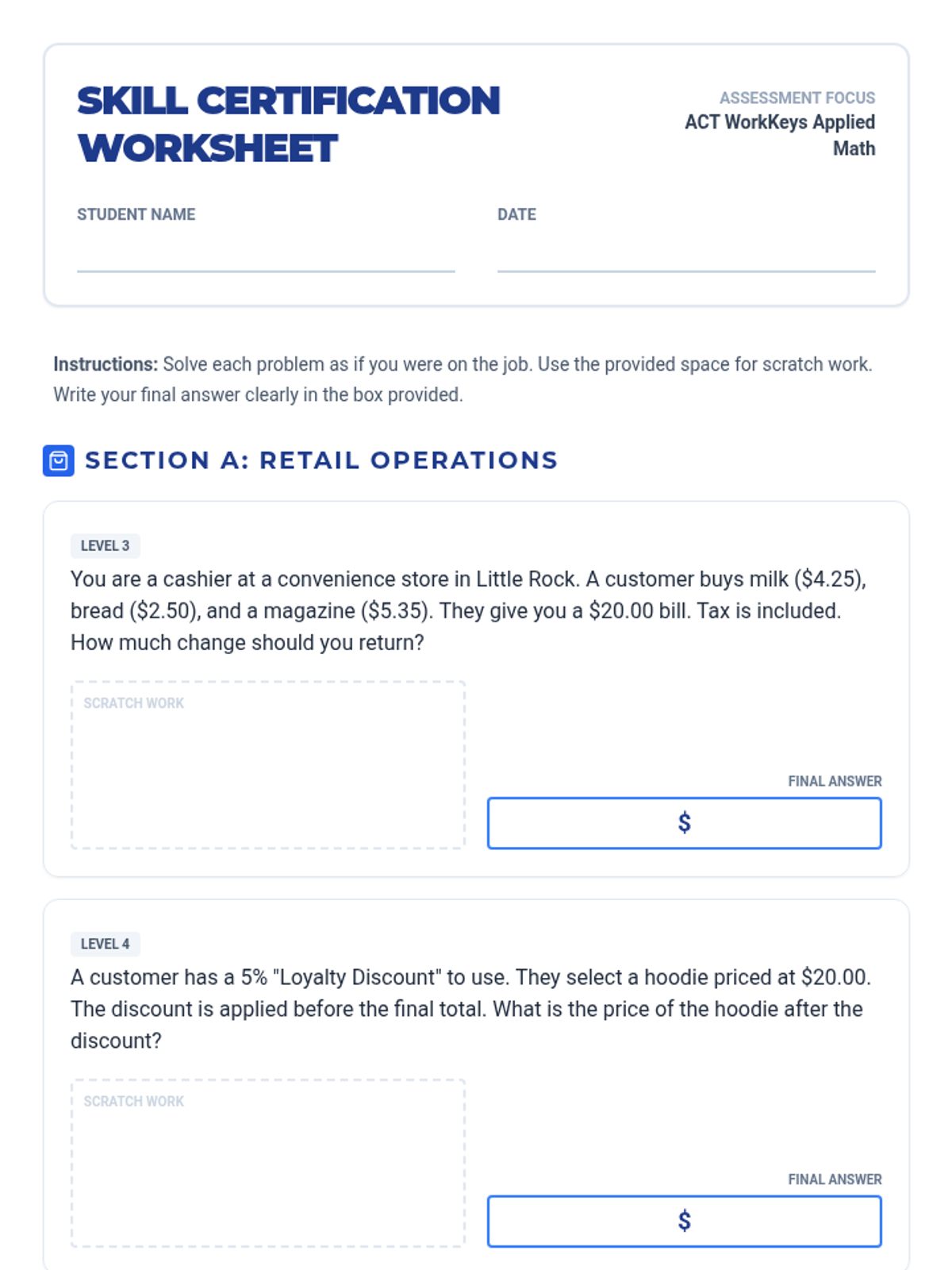
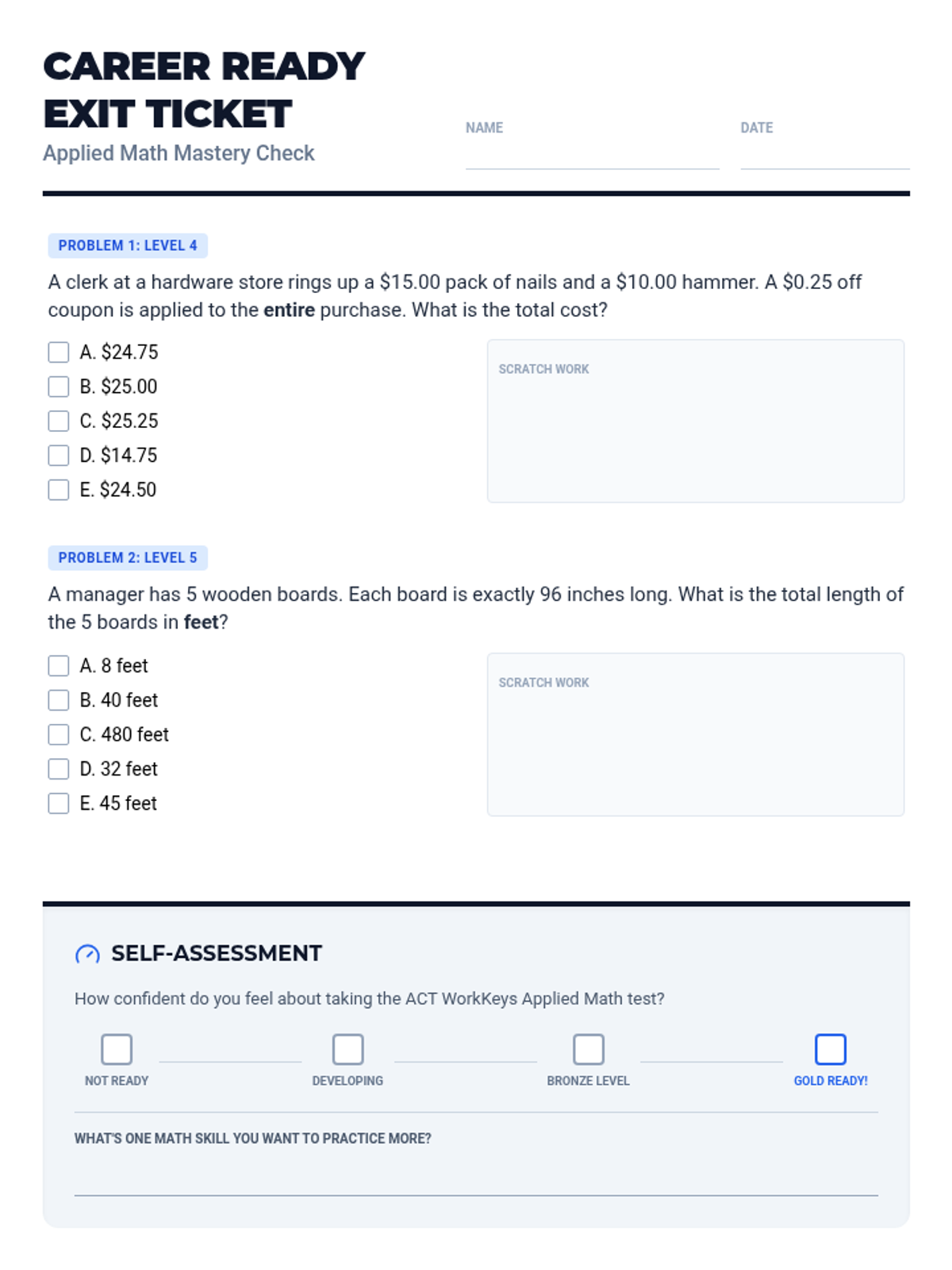
A comprehensive series focused on preparing students for the ACT WorkKeys Applied Math assessment, focusing on real-world vocational scenarios in retail, healthcare, and construction.
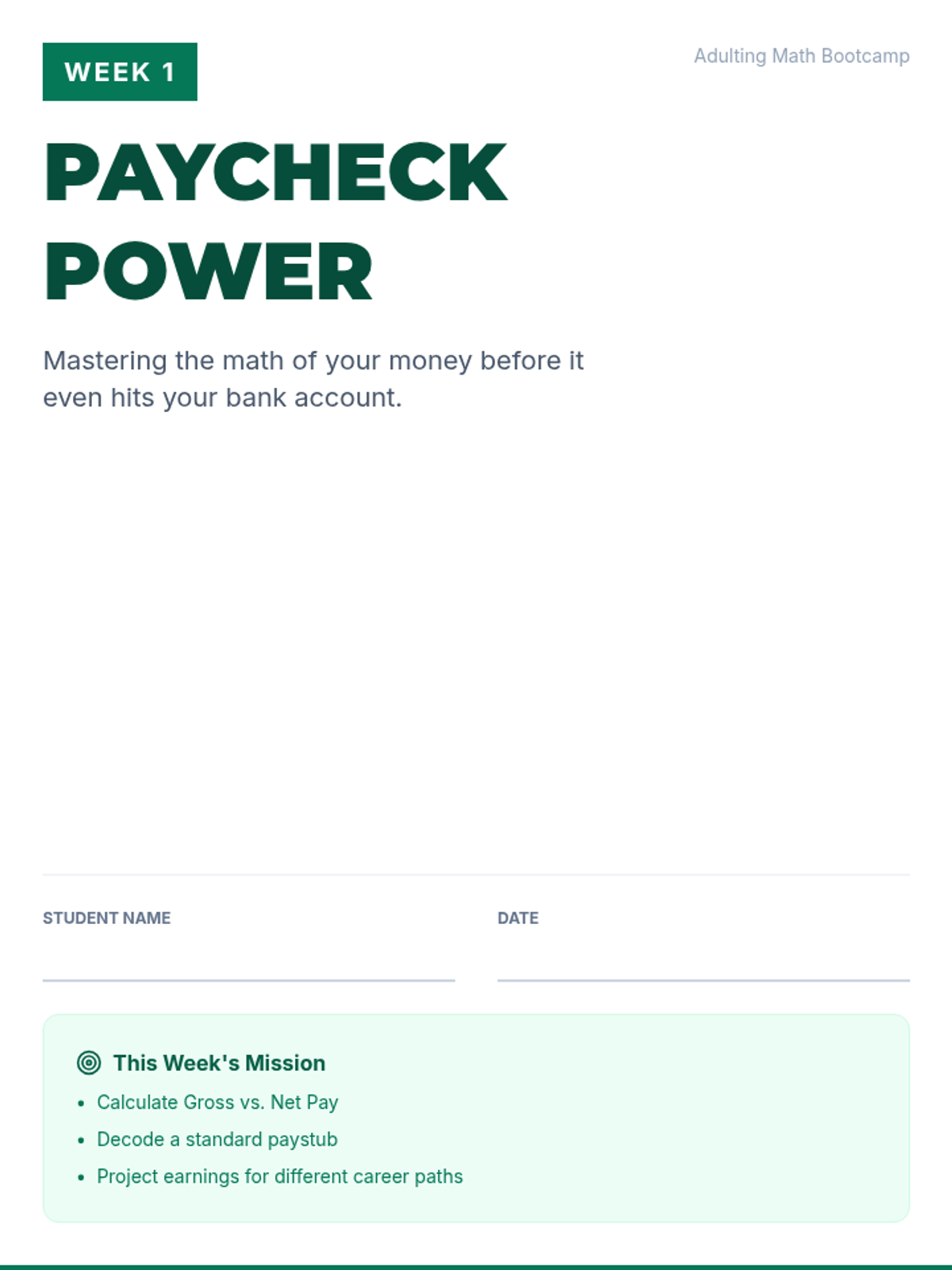
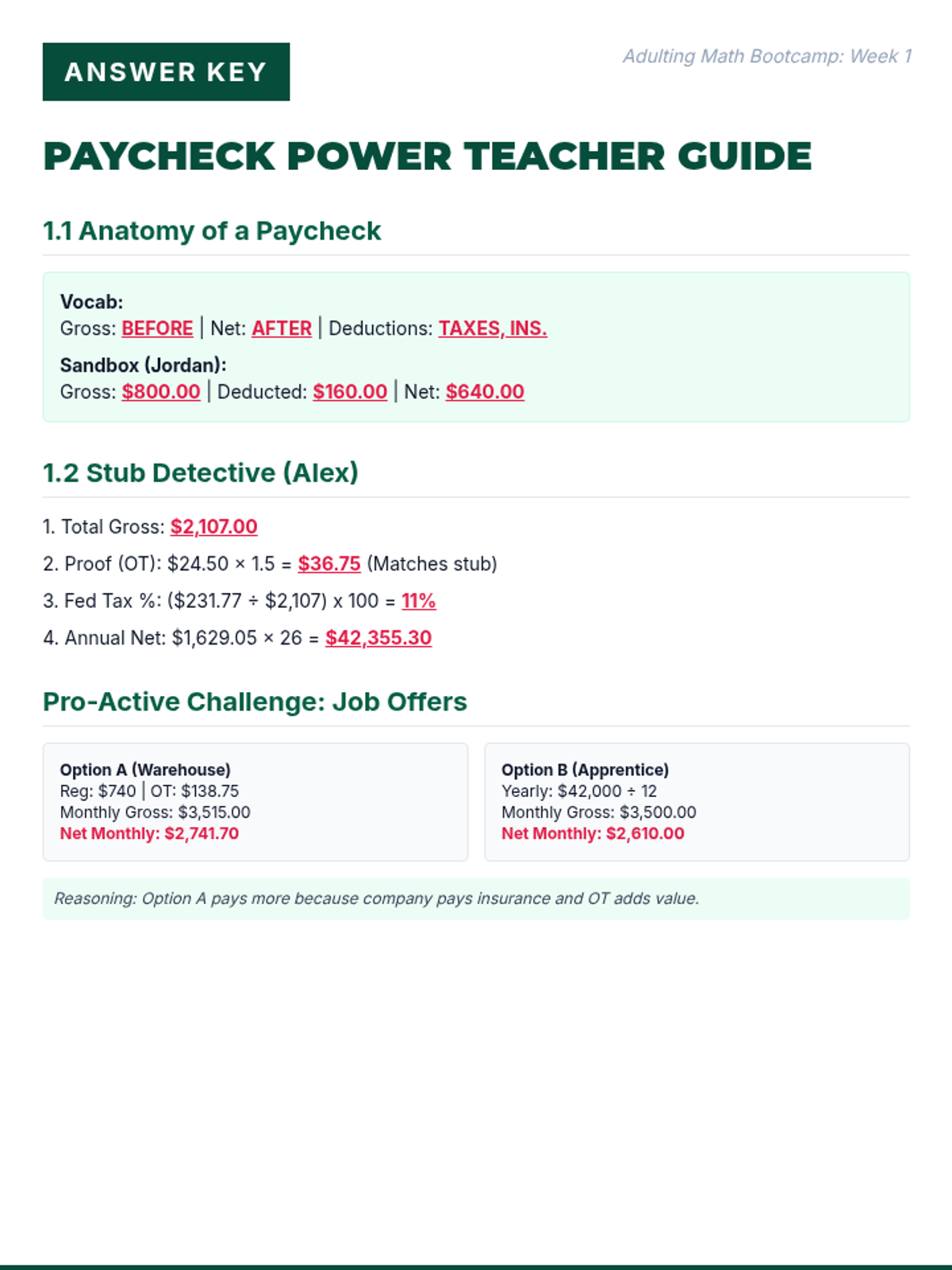
A 6-week curriculum designed to bridge the gap between high school math and real-world financial and practical independence, covering paychecks, budgeting, credit, shopping, housing, and measurement.
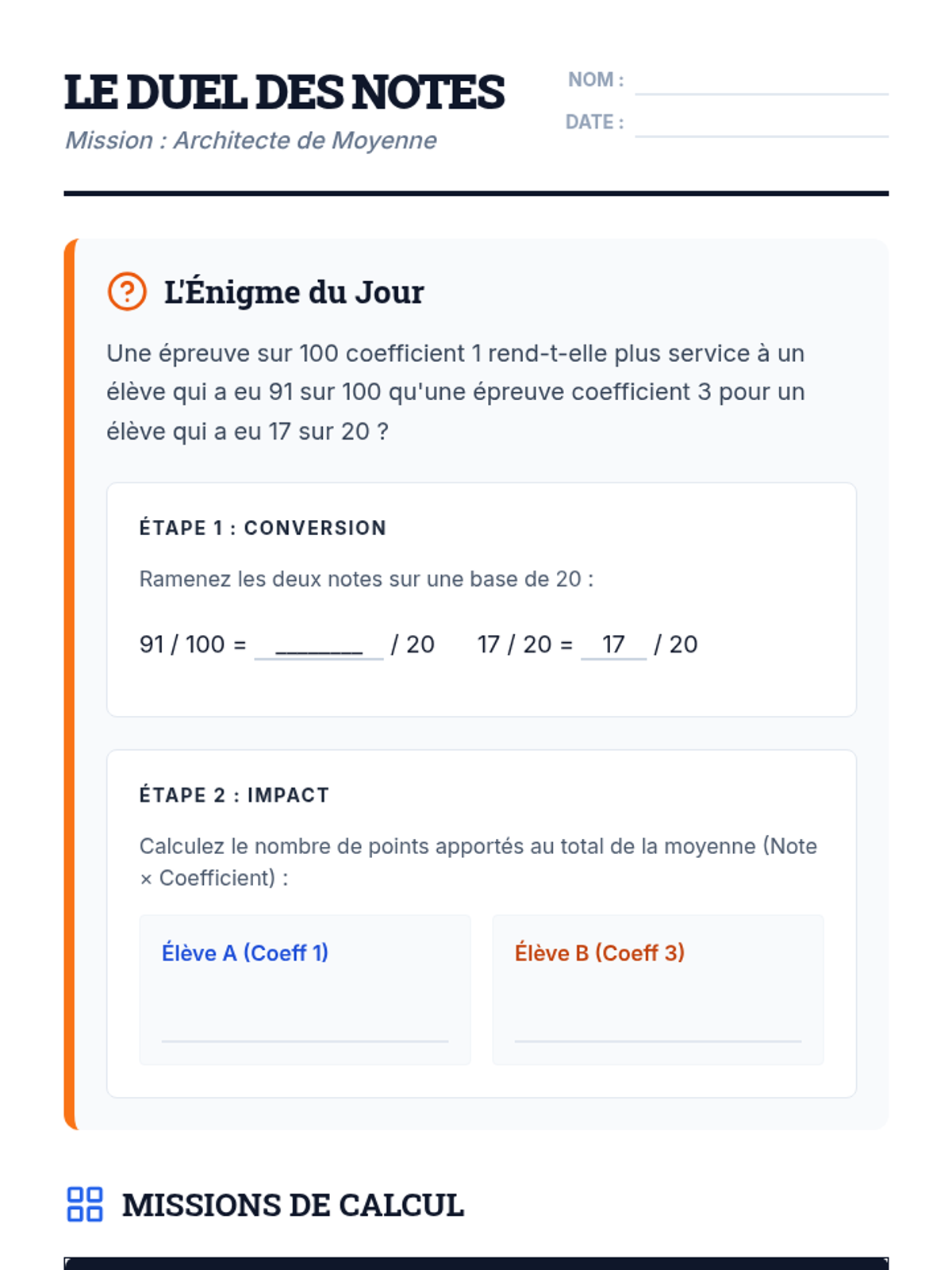
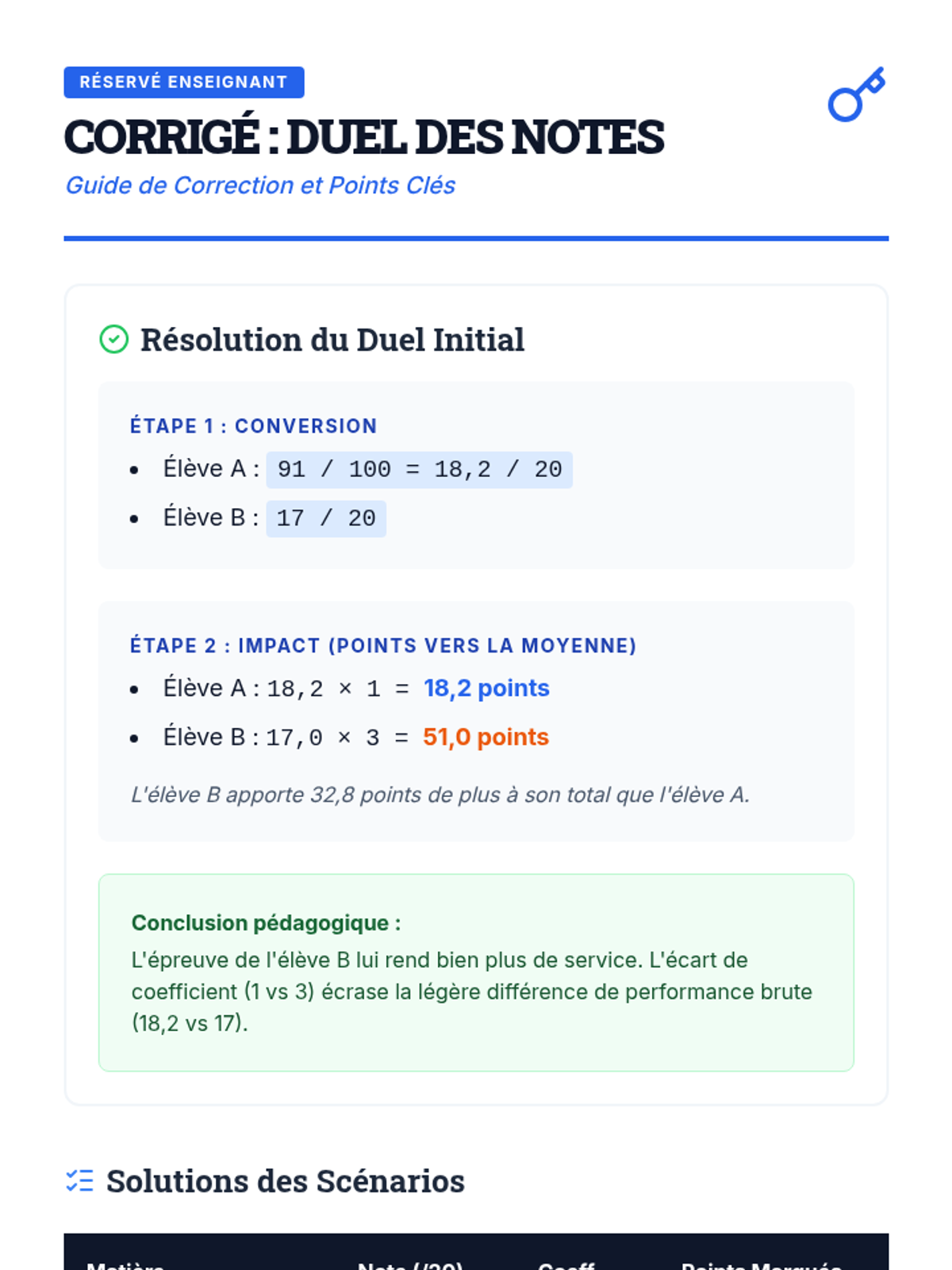
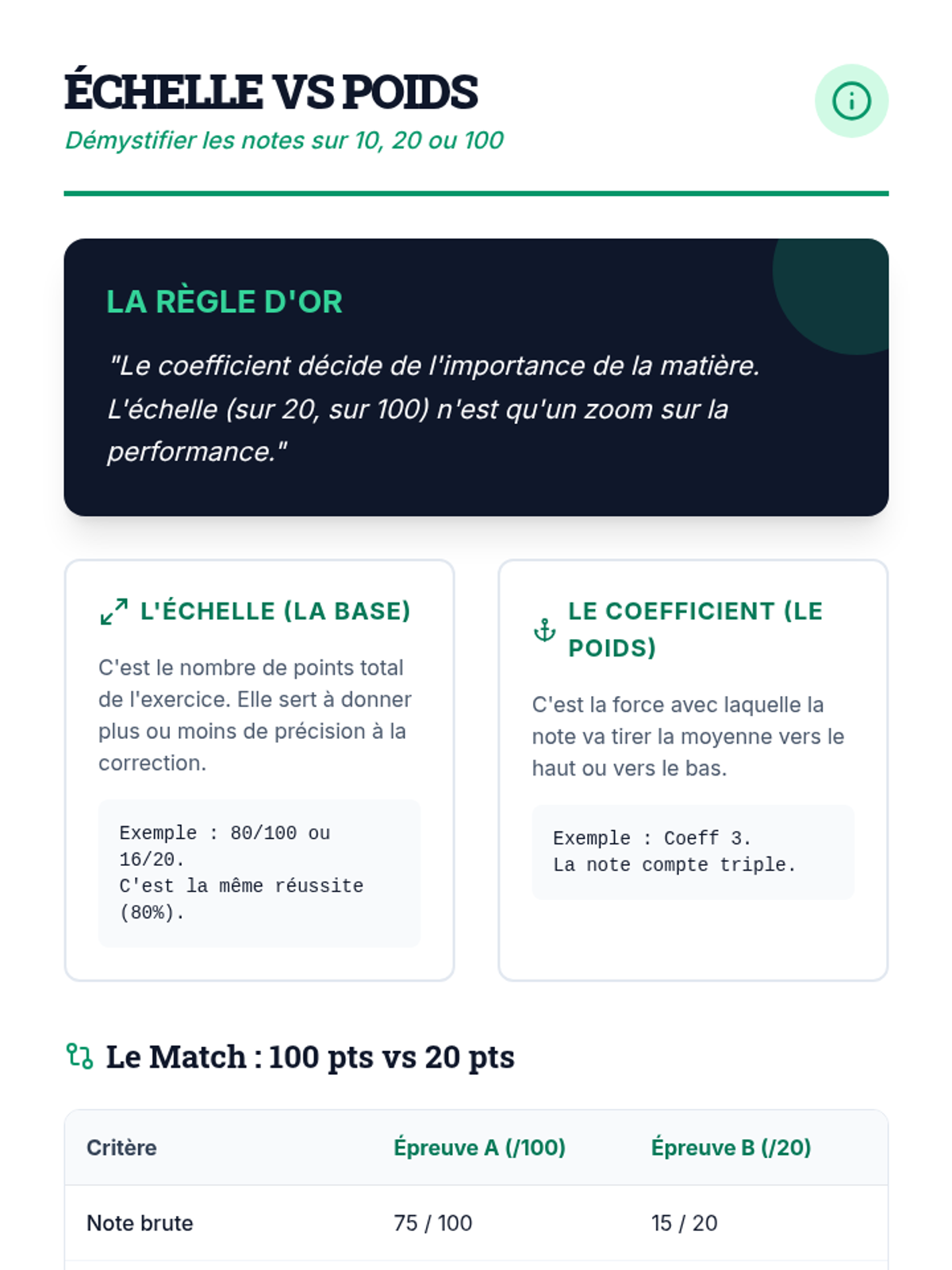
Une exploration mathématique de l'impact des coefficients sur les moyennes, utilisant des cas pratiques concrets pour comprendre la pondération et les moyennes pondérées.
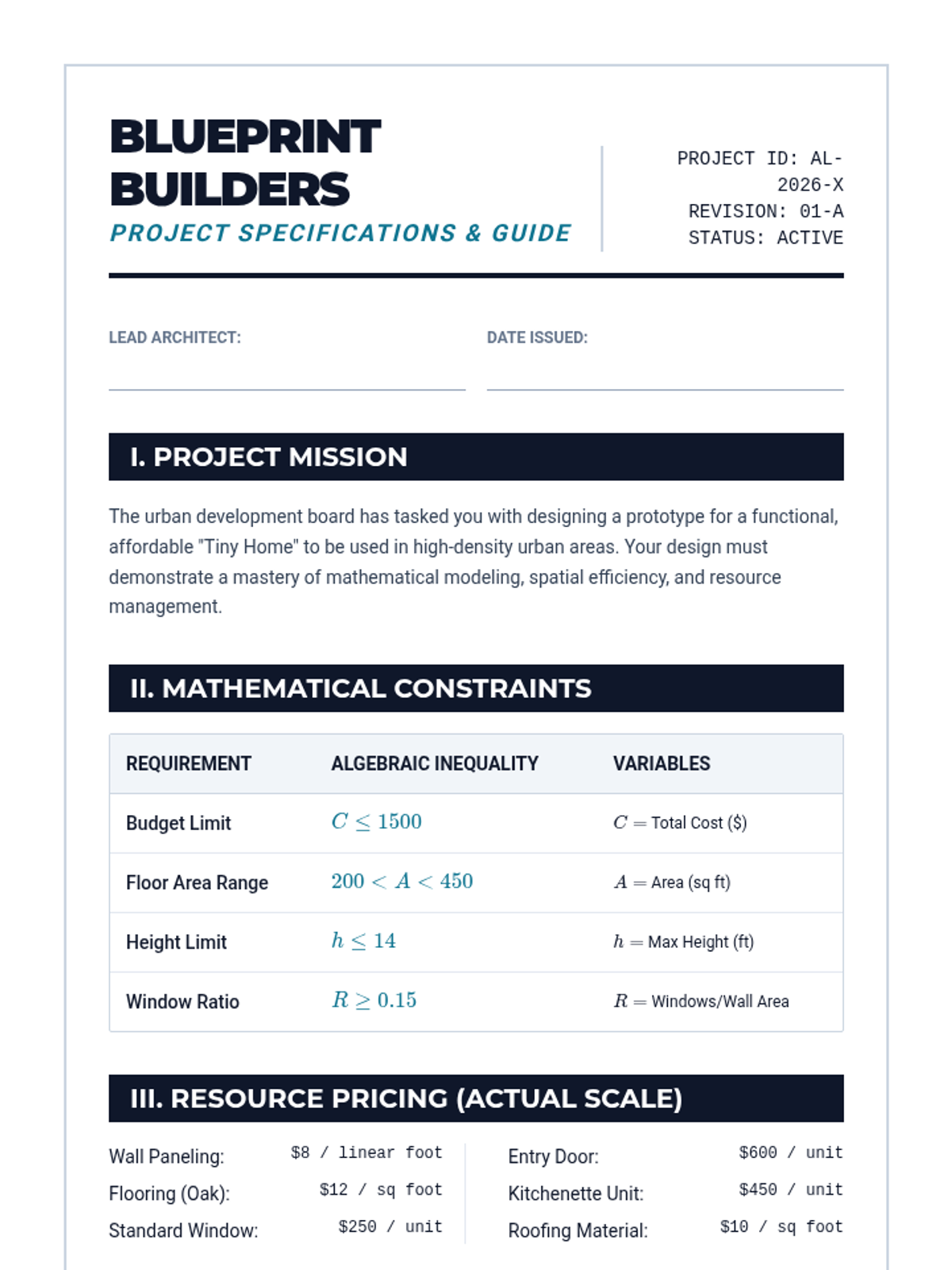
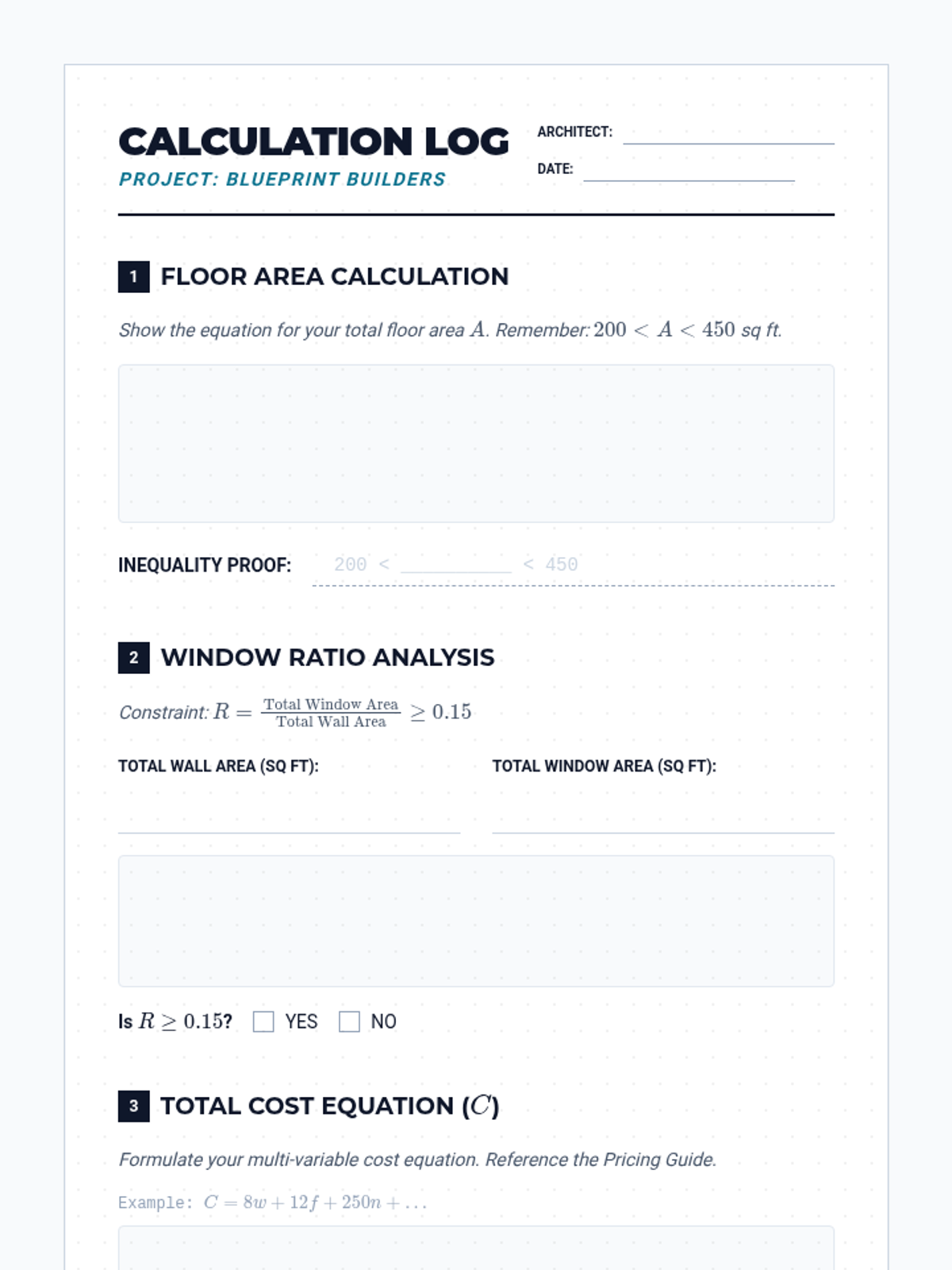
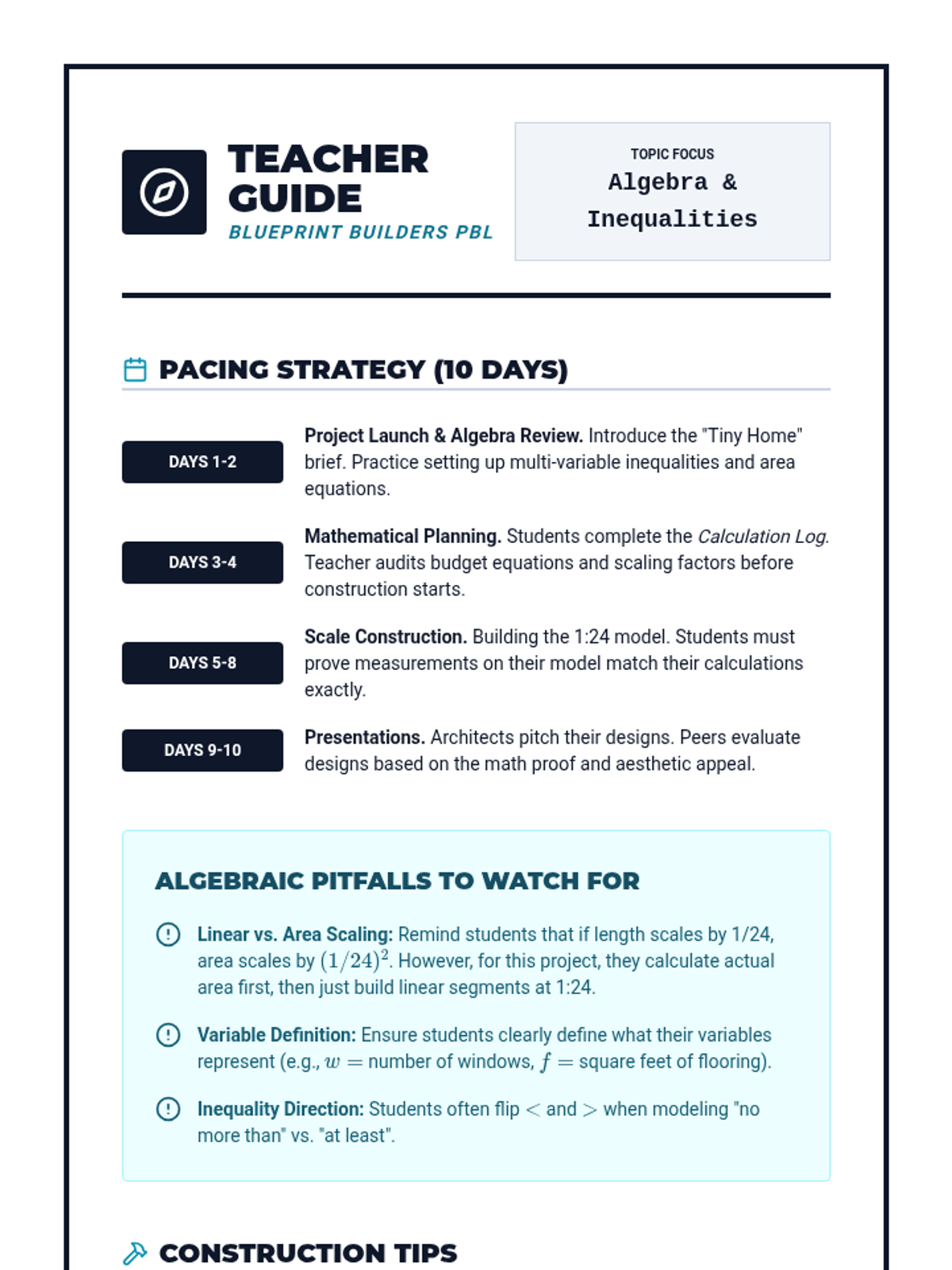
A project-based learning unit where students apply algebraic equations and inequalities to design and build a scale model of a functional living space. Students must manage budgets, spatial constraints, and material requirements using mathematical modeling.
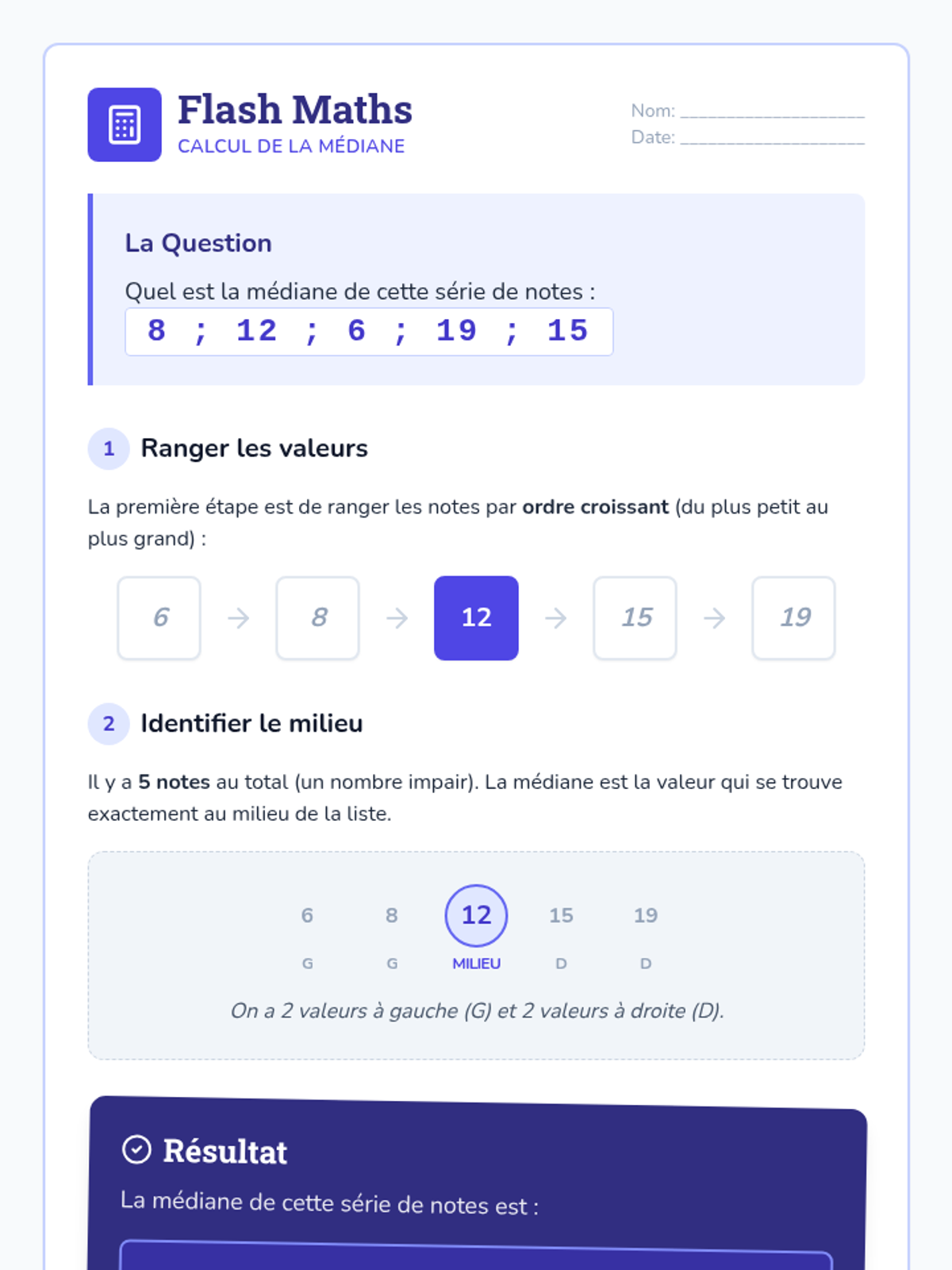
Une série de ressources éducatives couvrant divers concepts mathématiques essentiels comme les statistiques et la trigonométrie.
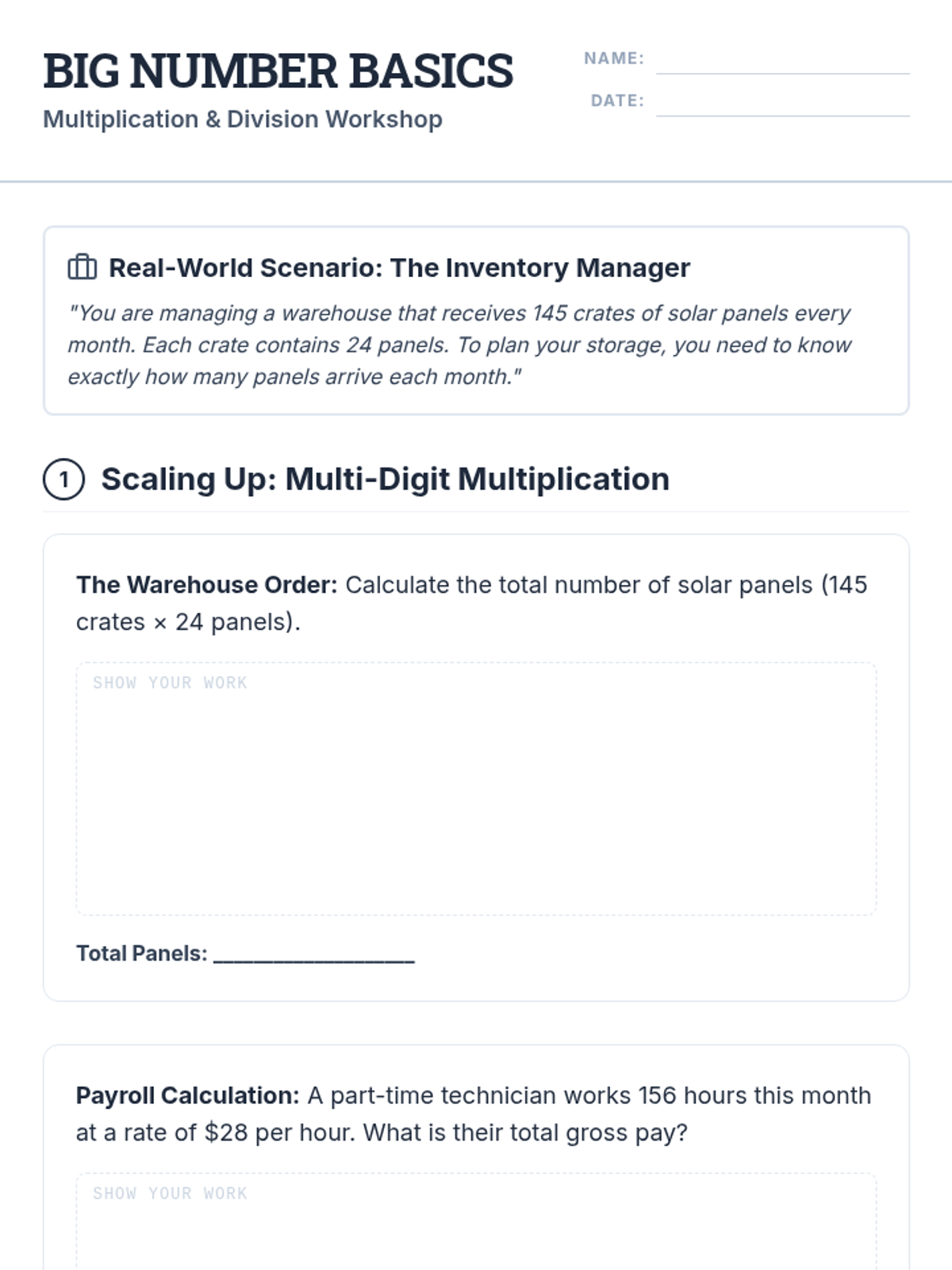
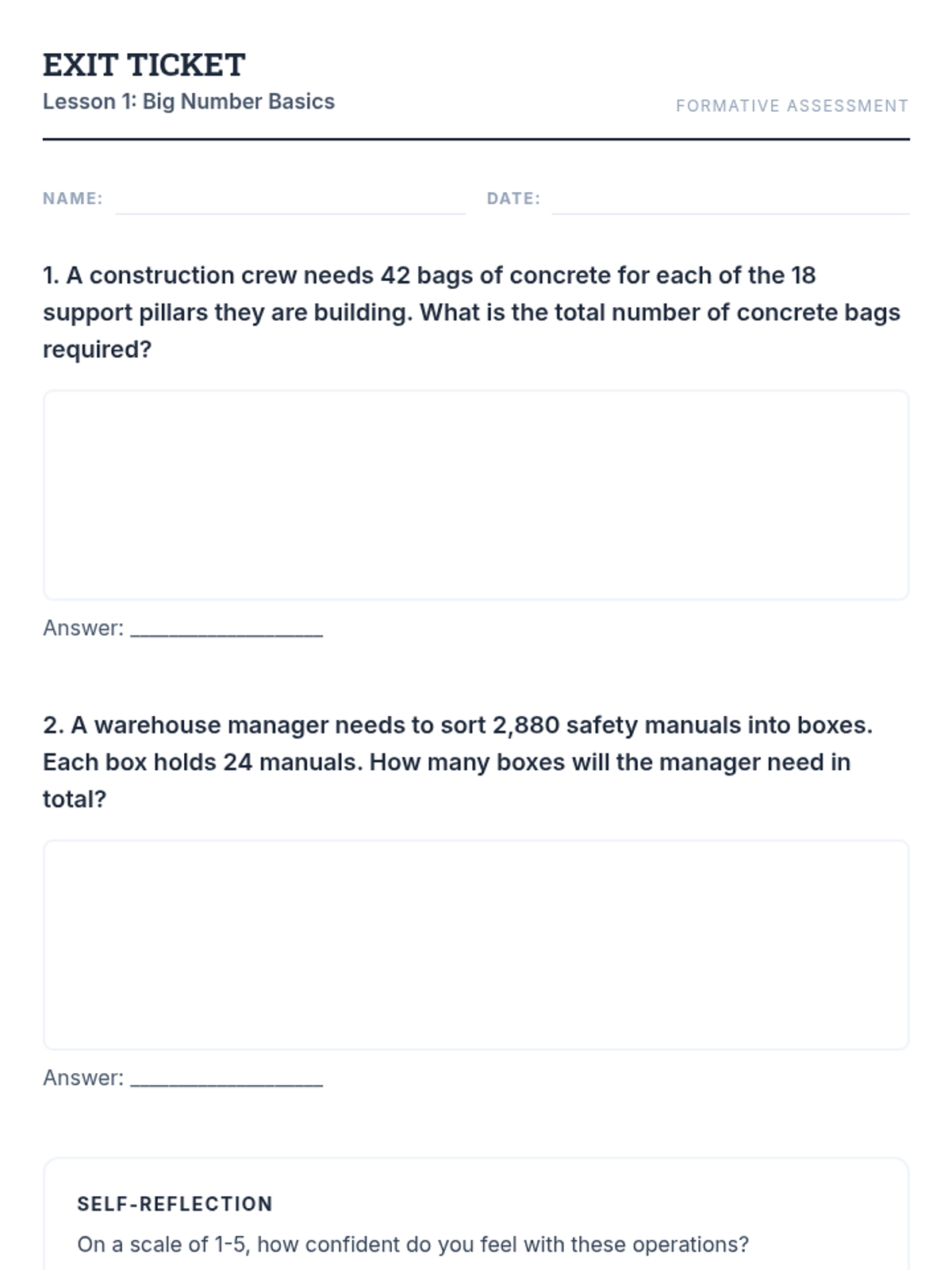
A comprehensive math series designed to prepare students for HSED exams by focusing on essential arithmetic skills applied to real-world workplace and adult life scenarios. Topics include multi-digit operations, decimals, fractions, and percentages.
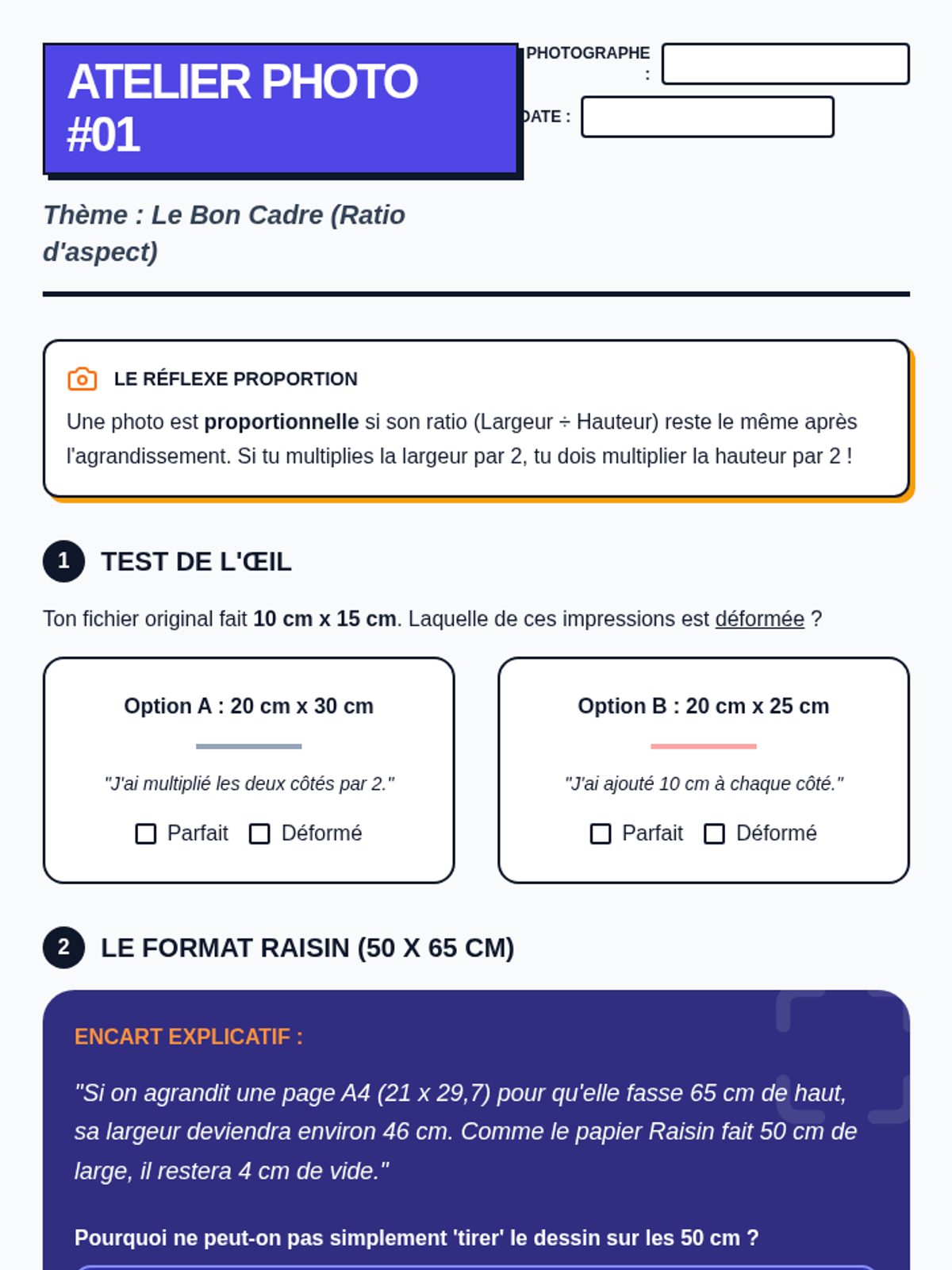
Une série de micro-leçons de 10 minutes centrée sur l'optimisation de l'espace papier. Les élèves apprennent à mettre à l'échelle une mise en page de 6 photos (format A4) vers le format Raisin (50x65 cm) en minimisant les chutes.
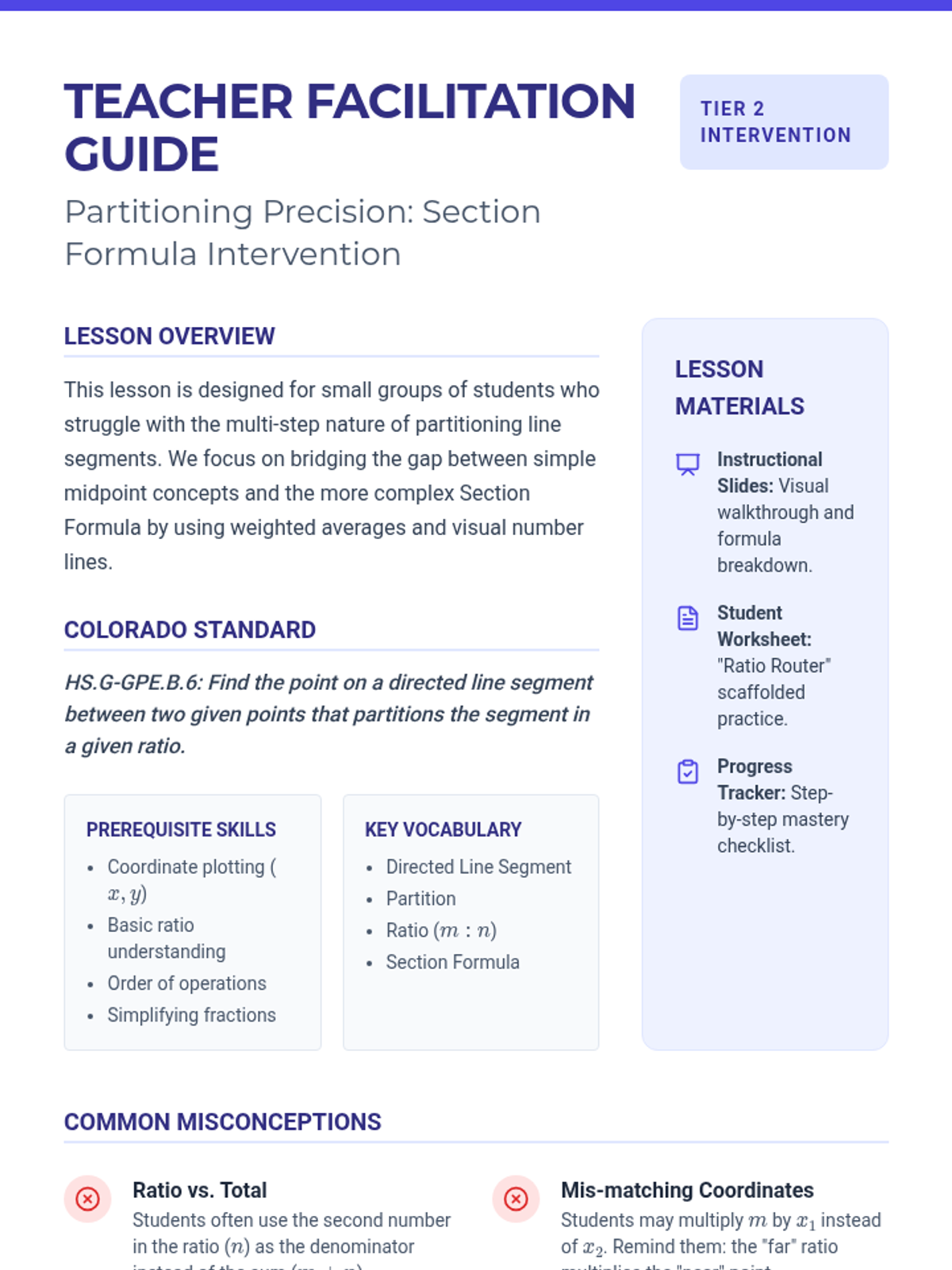
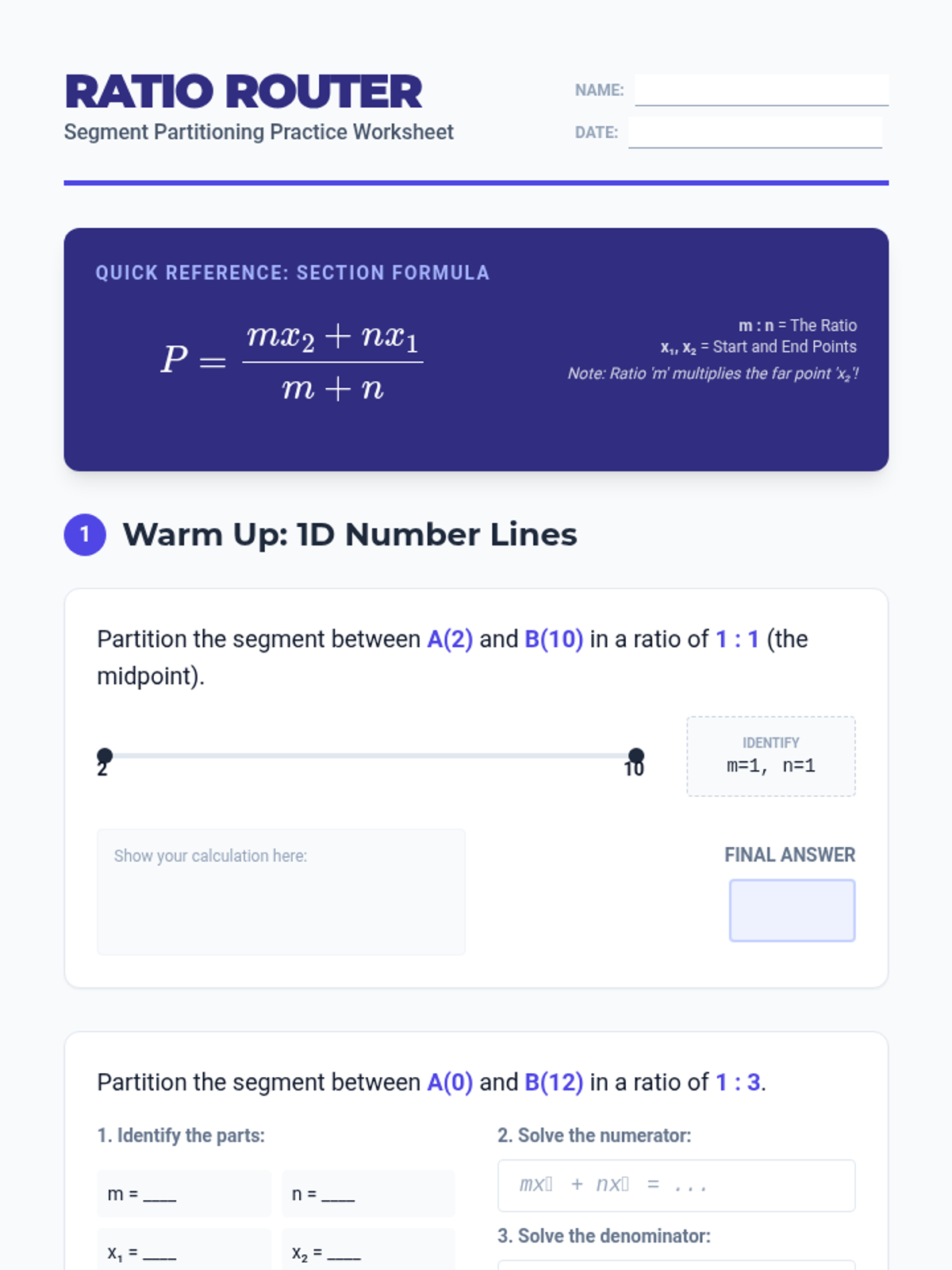
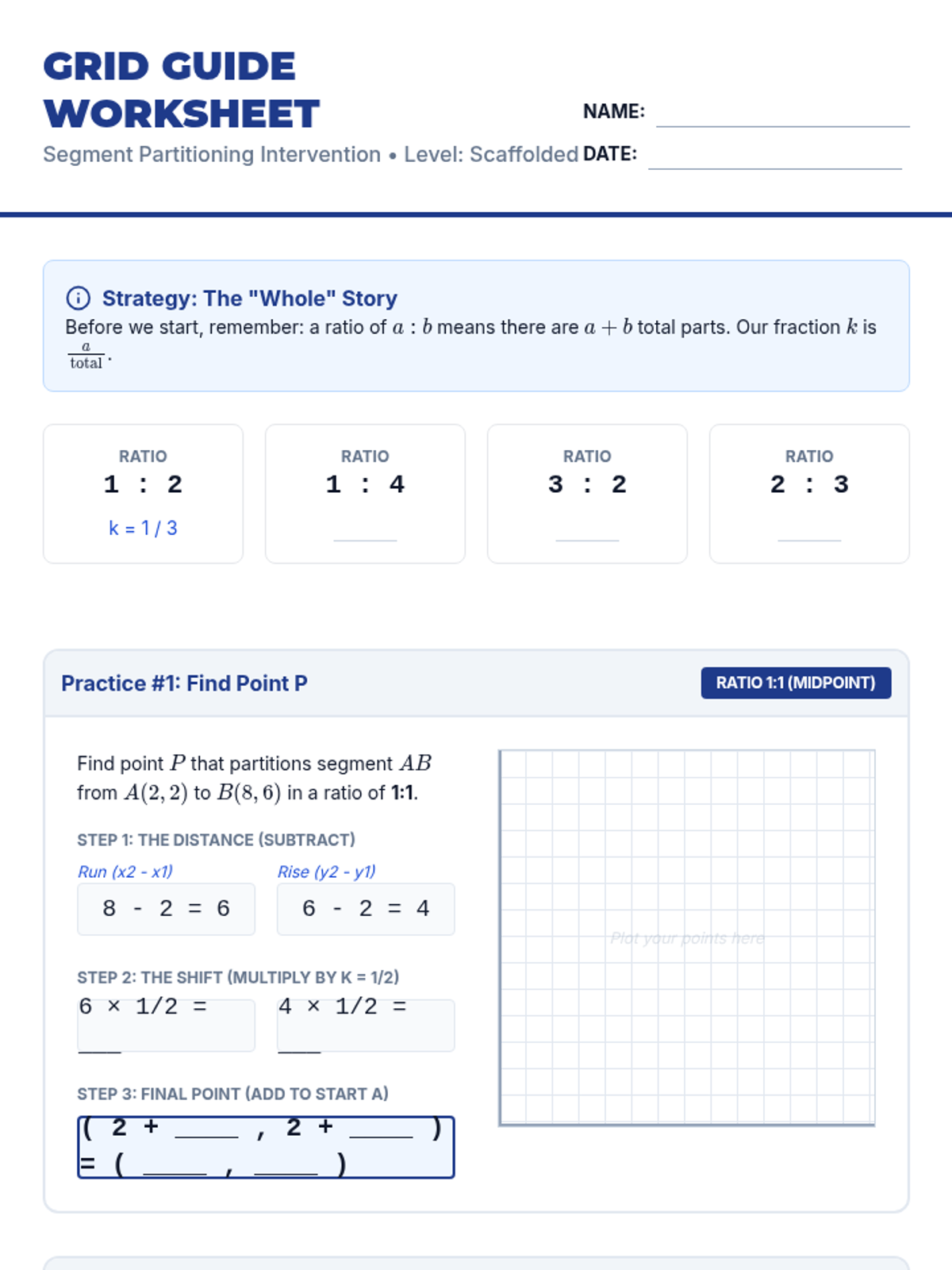
A targeted intervention sequence for high school geometry students focusing on partitioning line segments in given ratios. This unit breaks down the section formula through visual supports, number line bridging, and scaffolded coordinate plane practice.
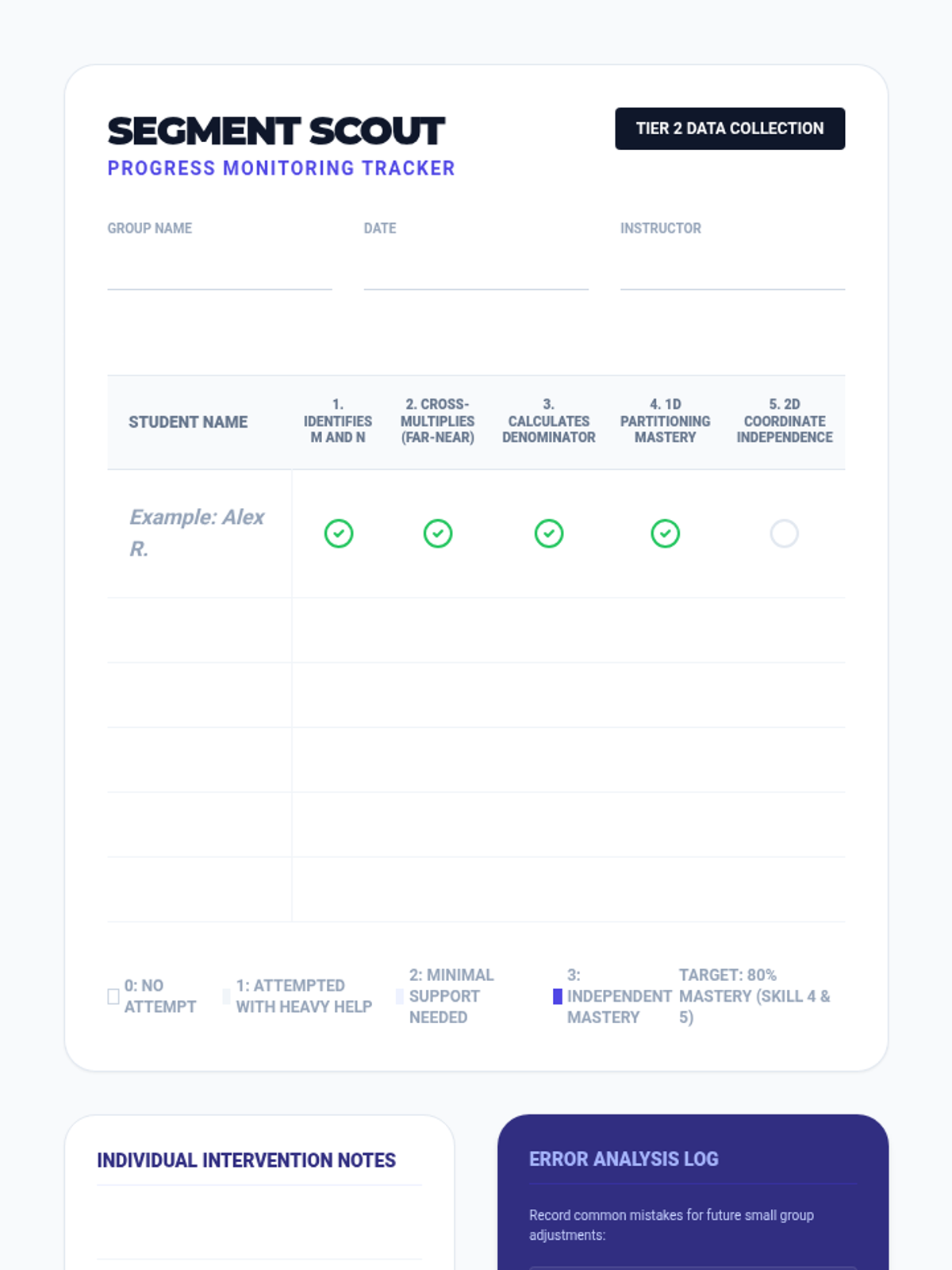
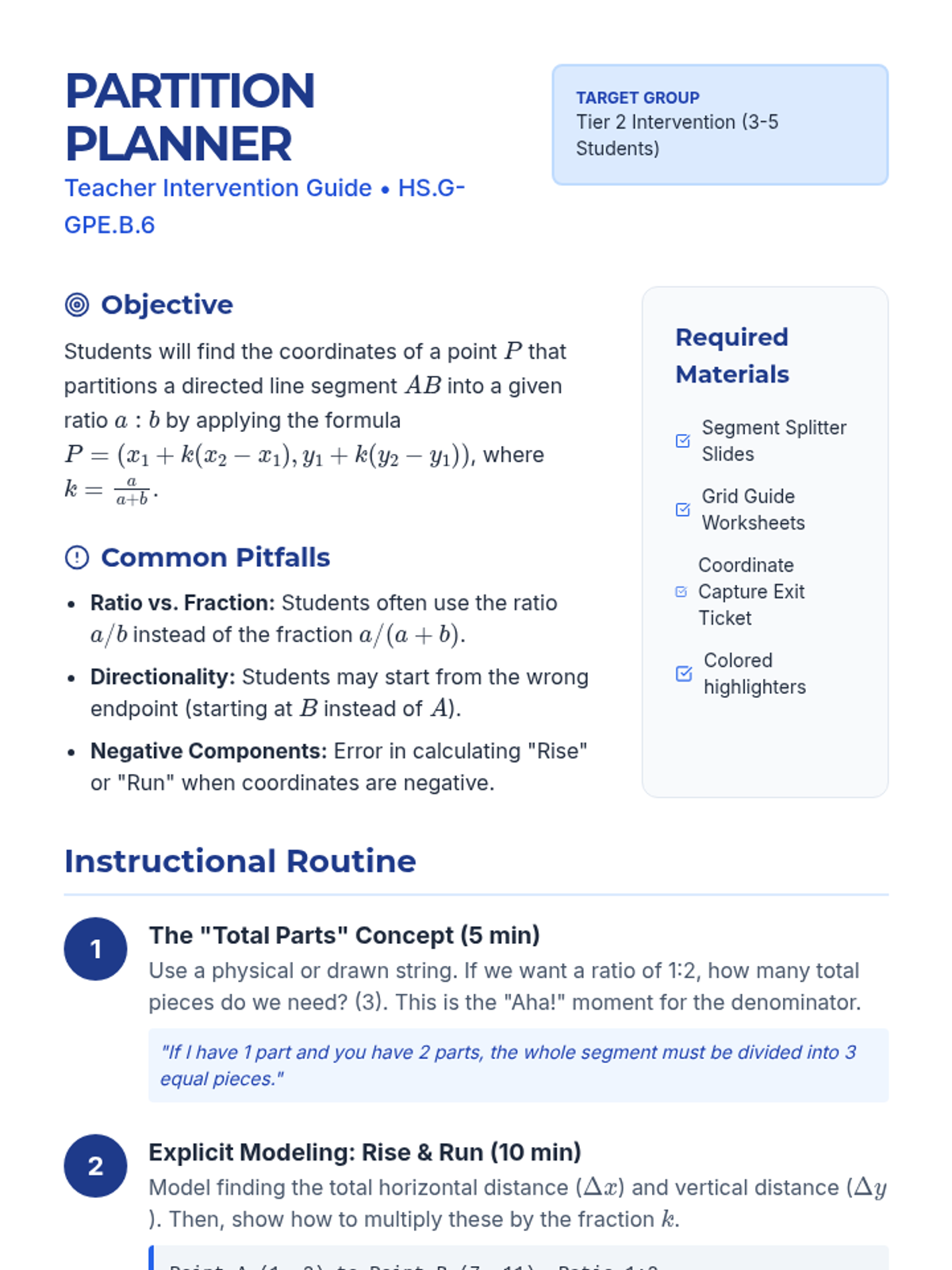
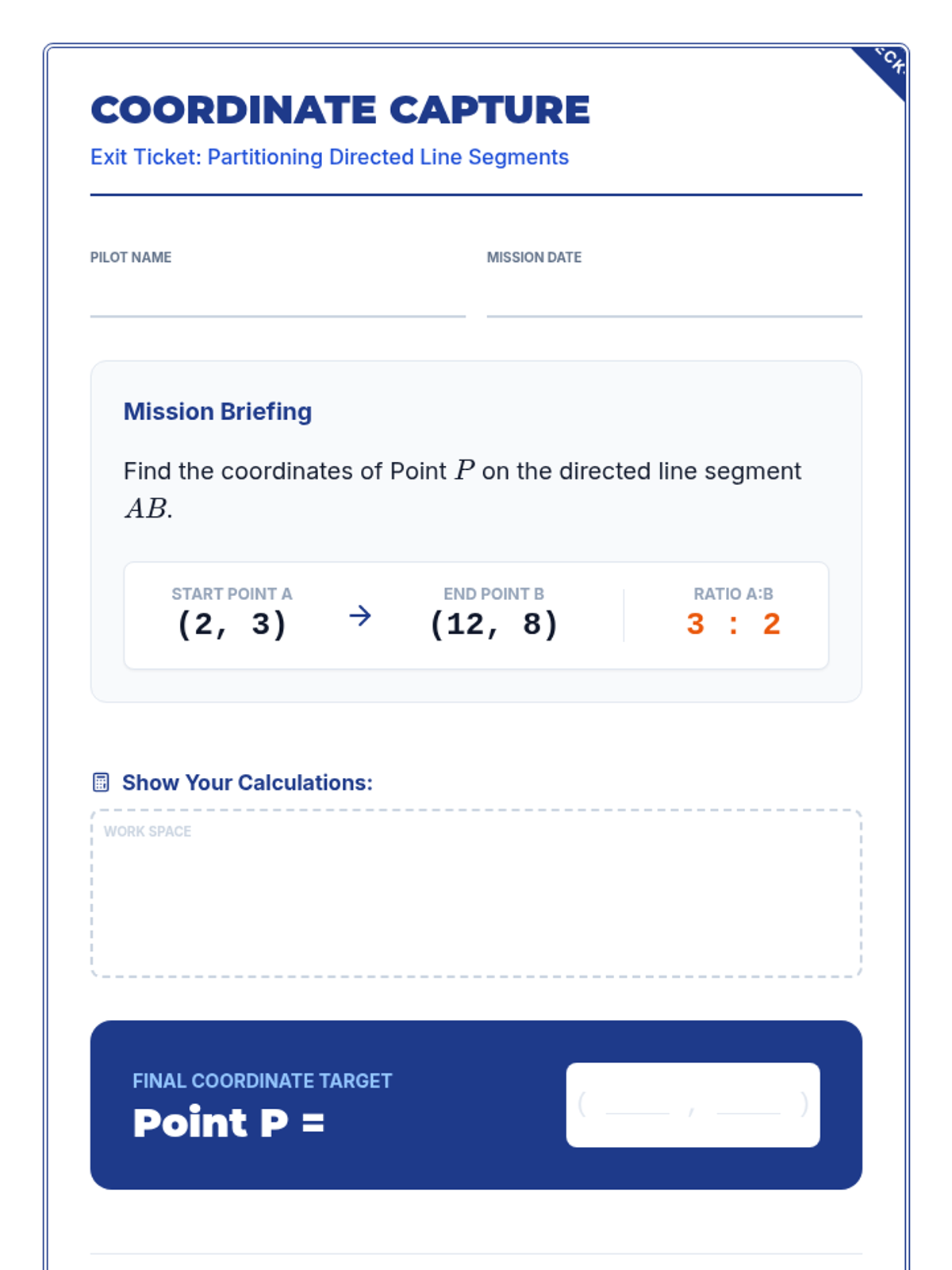
A targeted intervention sequence focused on helping students master the process of partitioning directed line segments in specific ratios. This sequence provides high-scaffold support, visual aids, and step-by-step procedures to ensure student success.
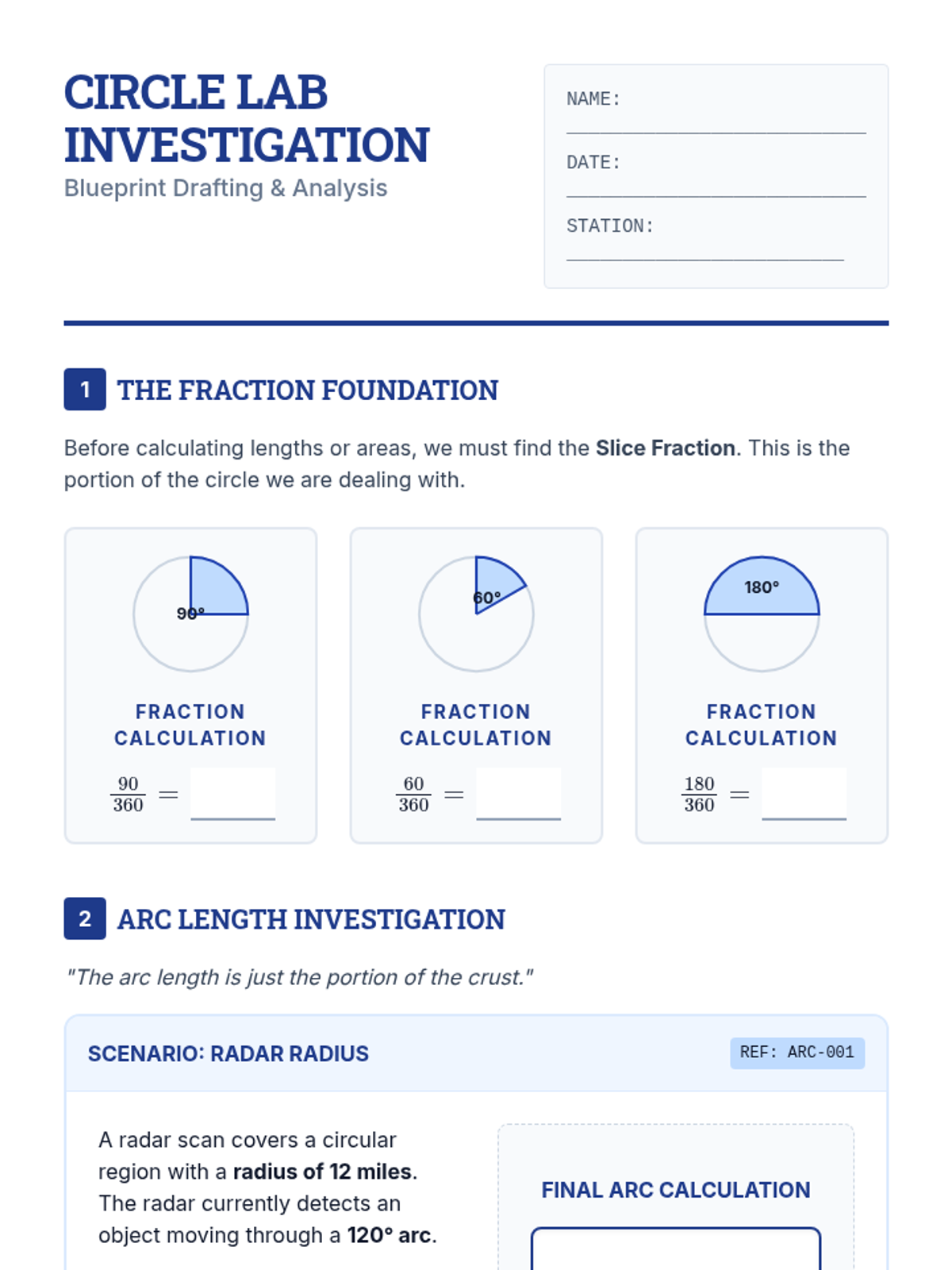
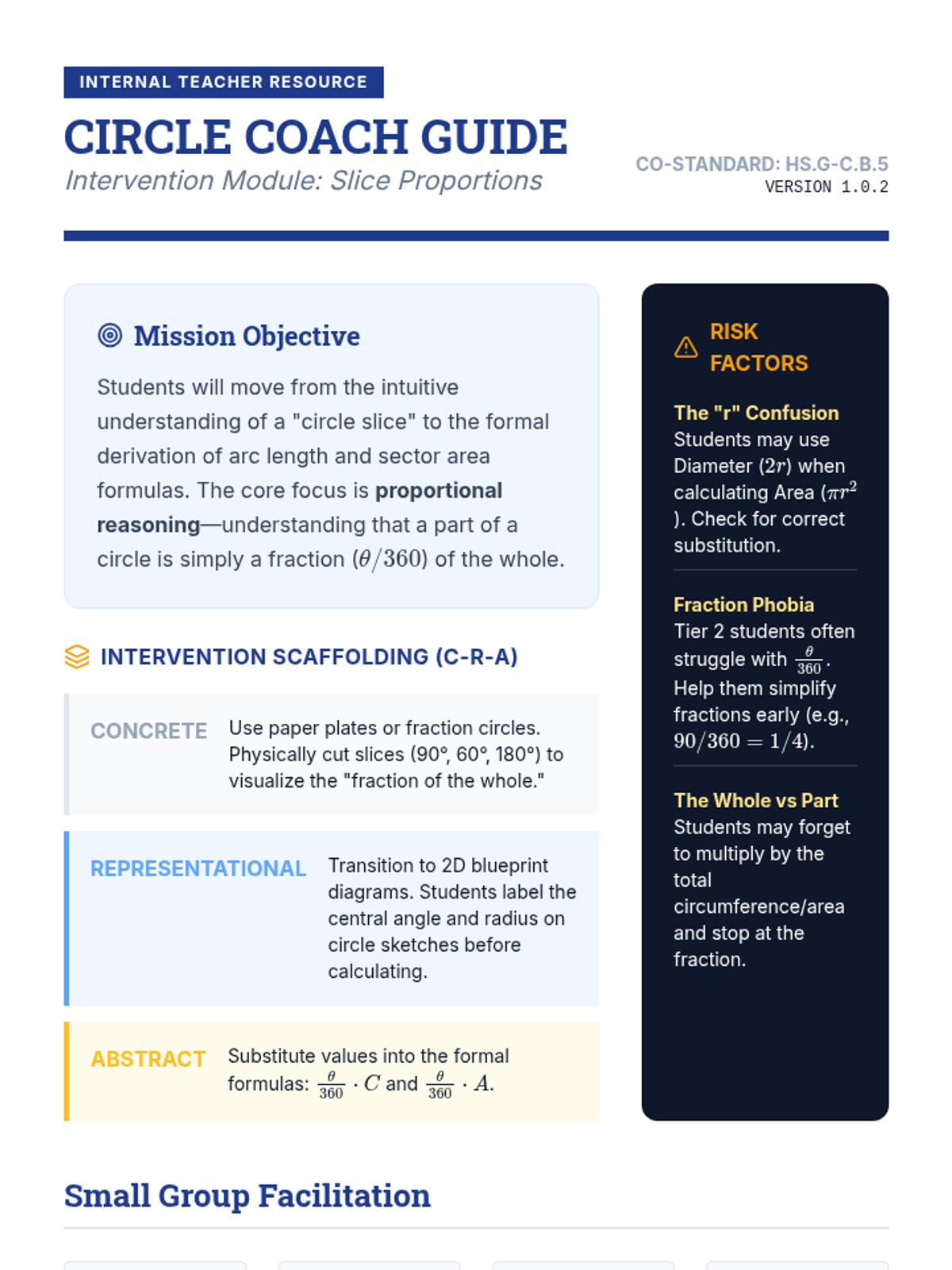
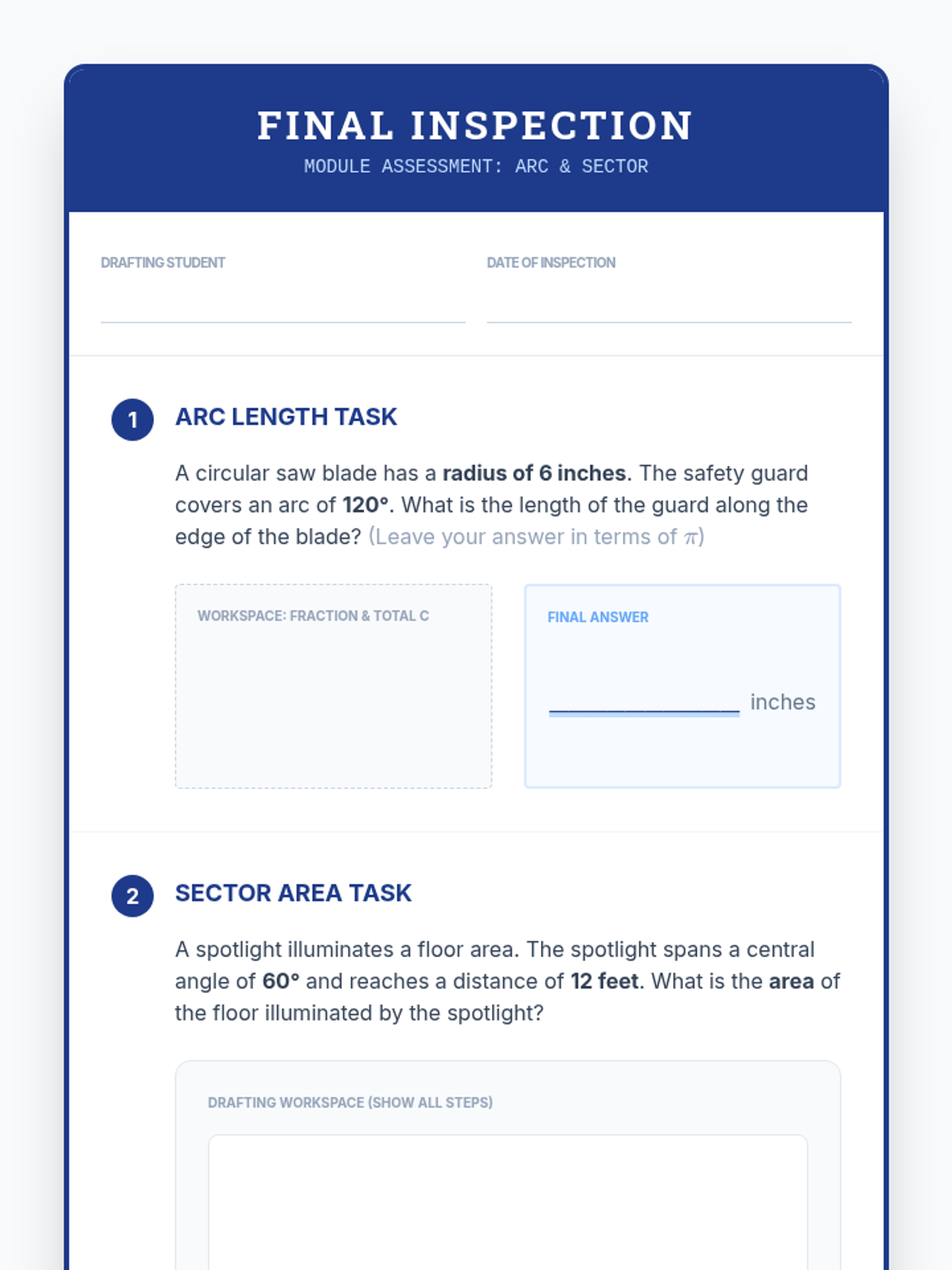
A Tier 2 intervention sequence focused on foundational circle geometry concepts, specifically arc length proportionality and sector area using similarity reasoning. Students move from concrete measurement to abstract formula derivation.
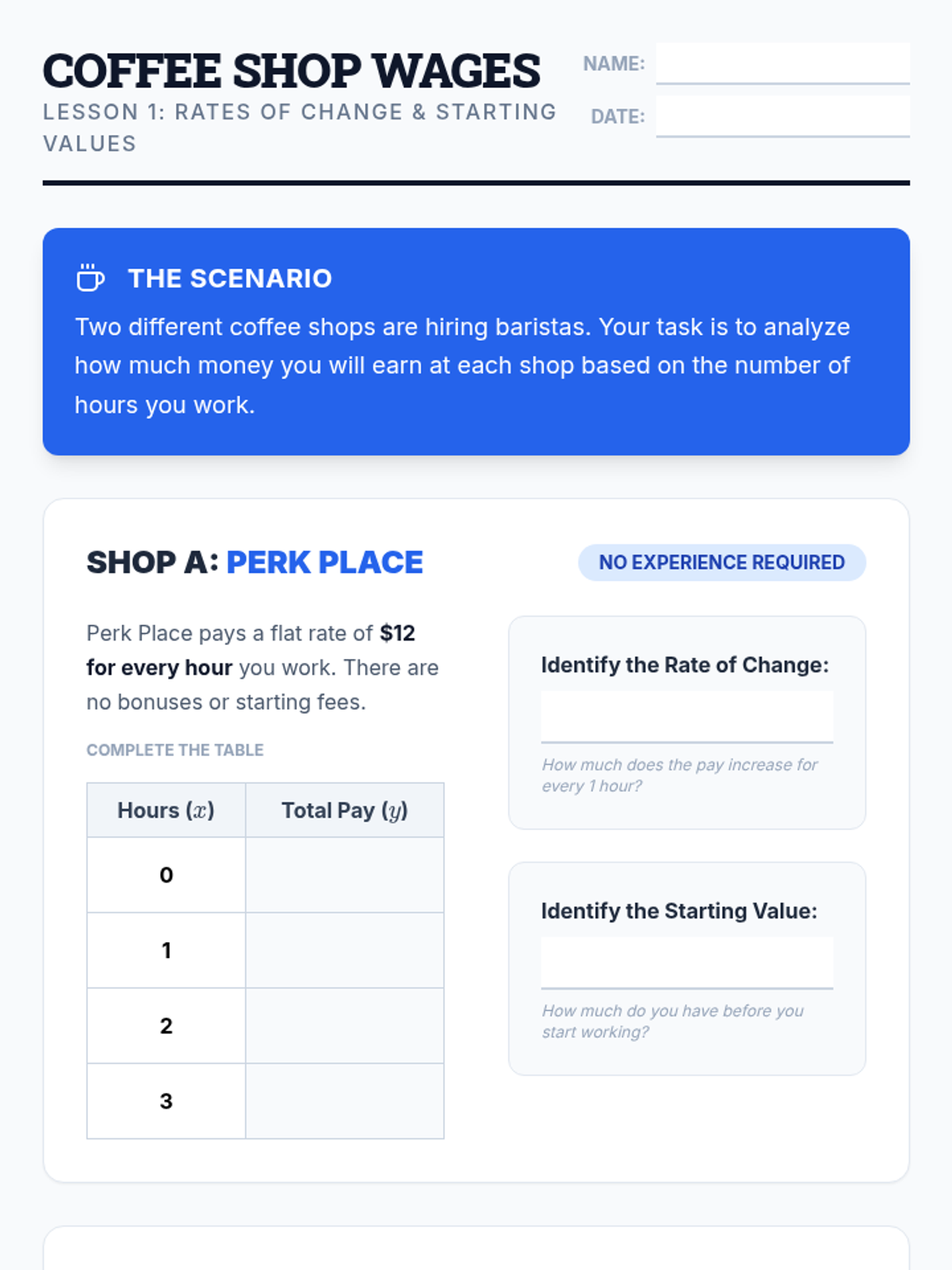
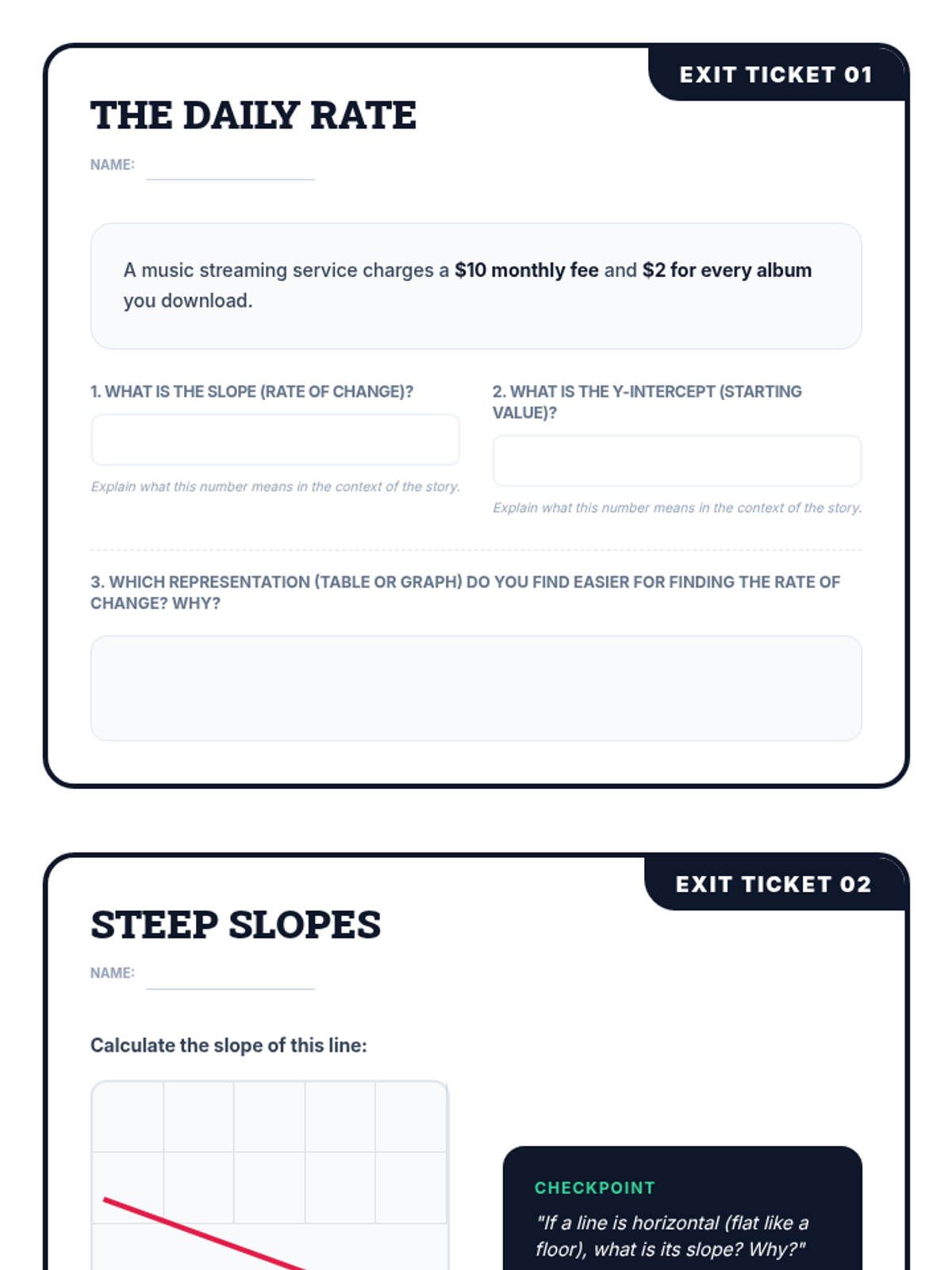
A comprehensive 5-lesson unit on linear relationships, focusing on conceptual understanding of slope as a rate of change through real-world scenarios, multiple representations, and error analysis.
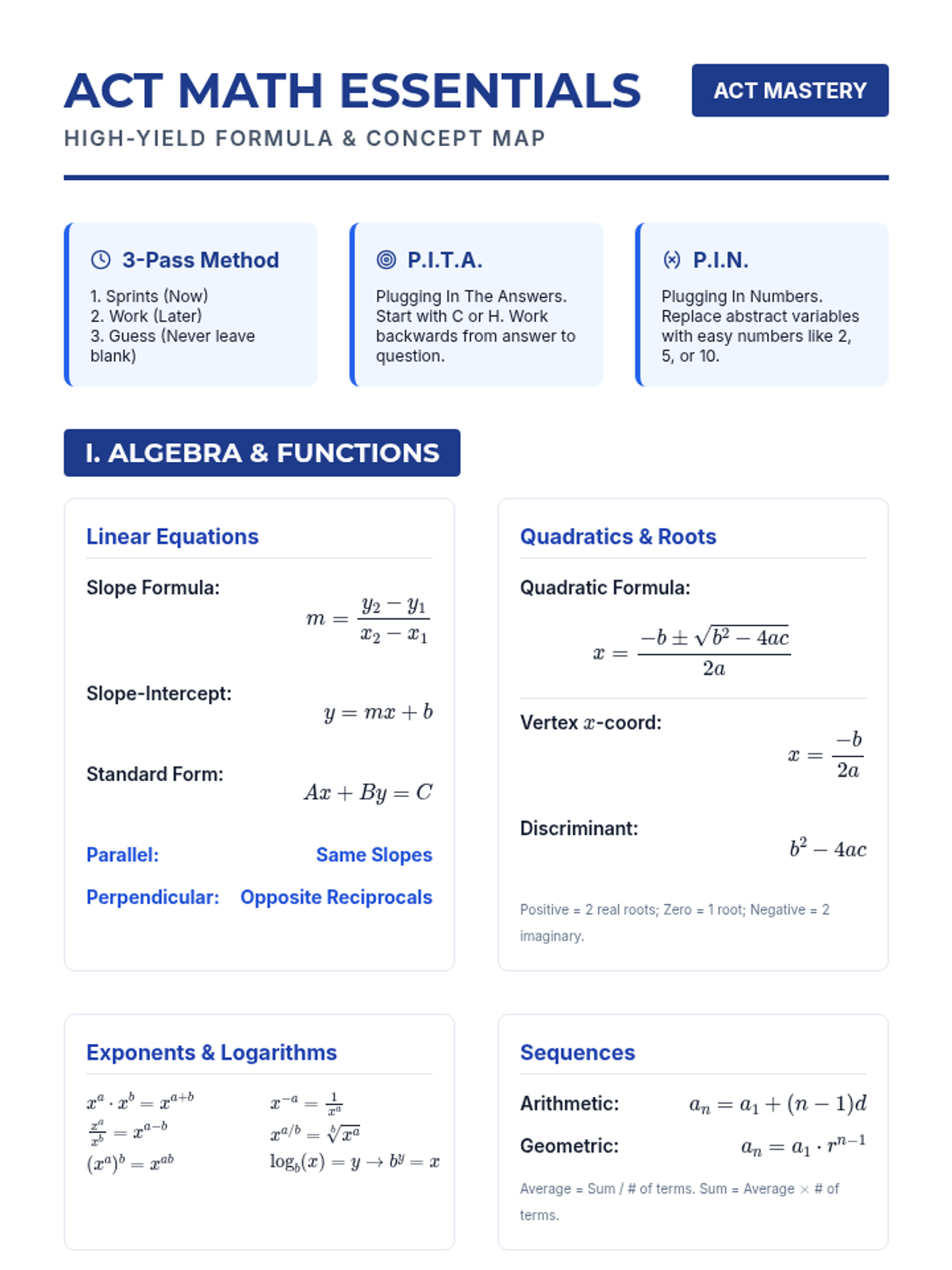
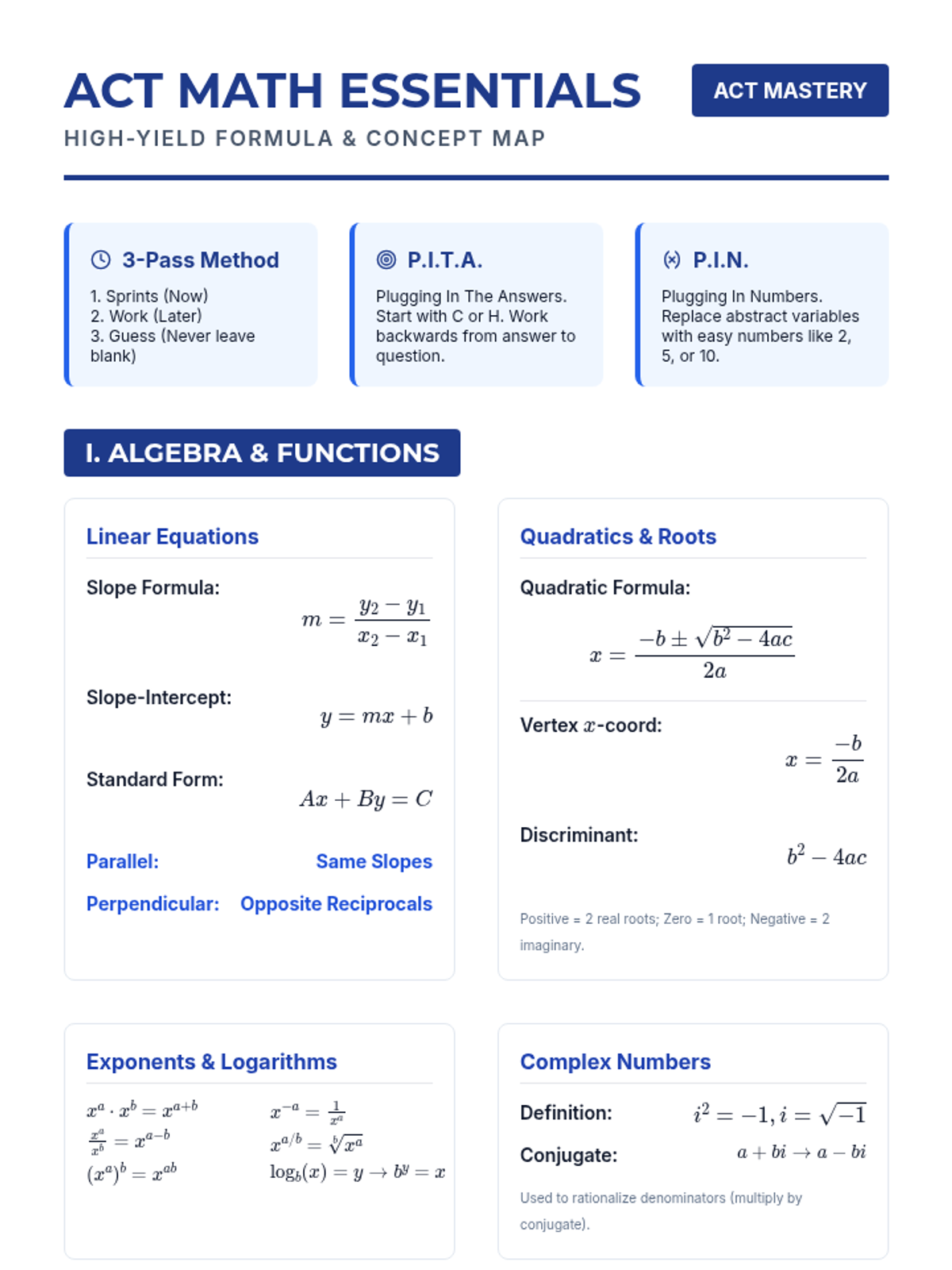
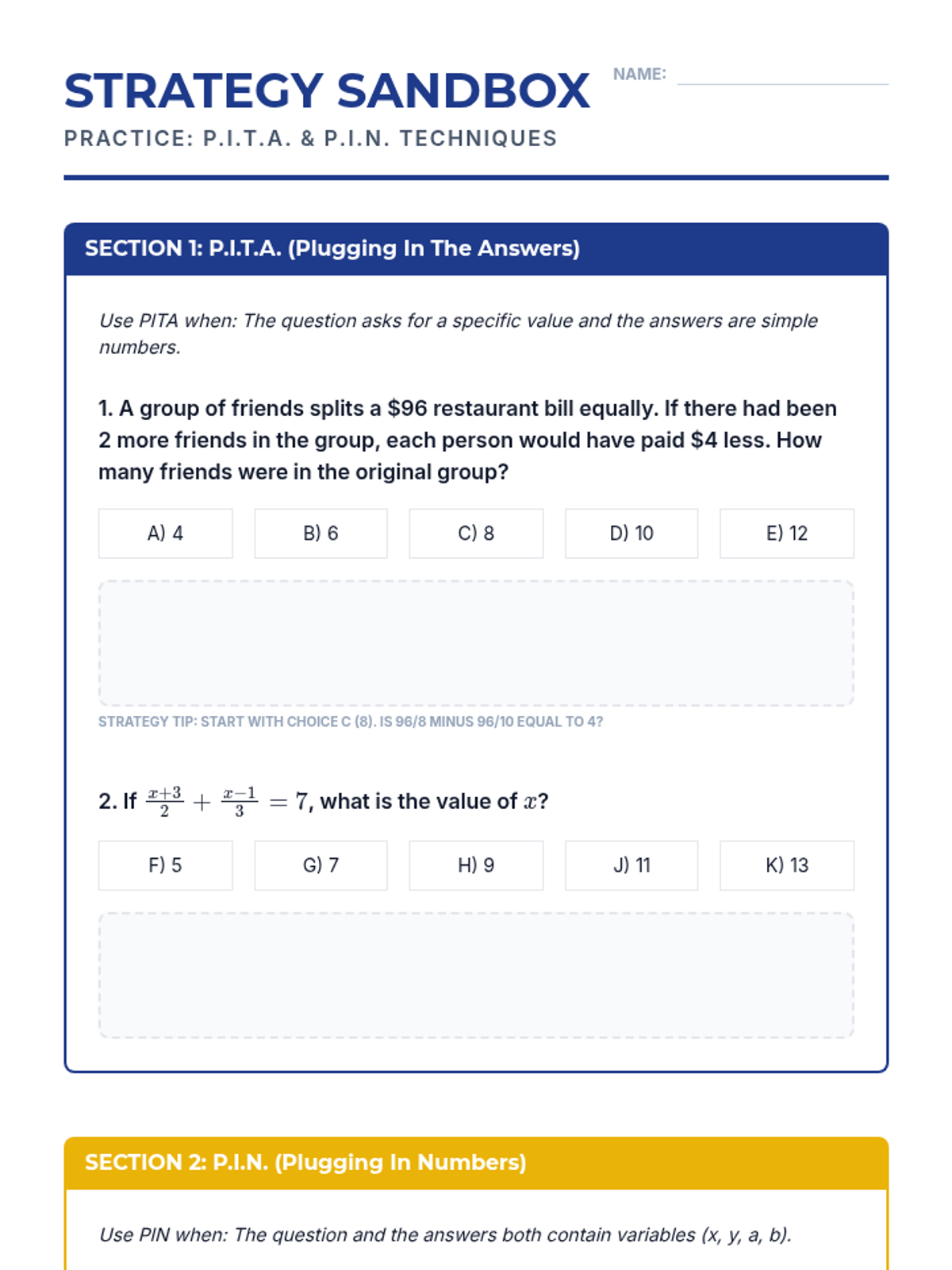
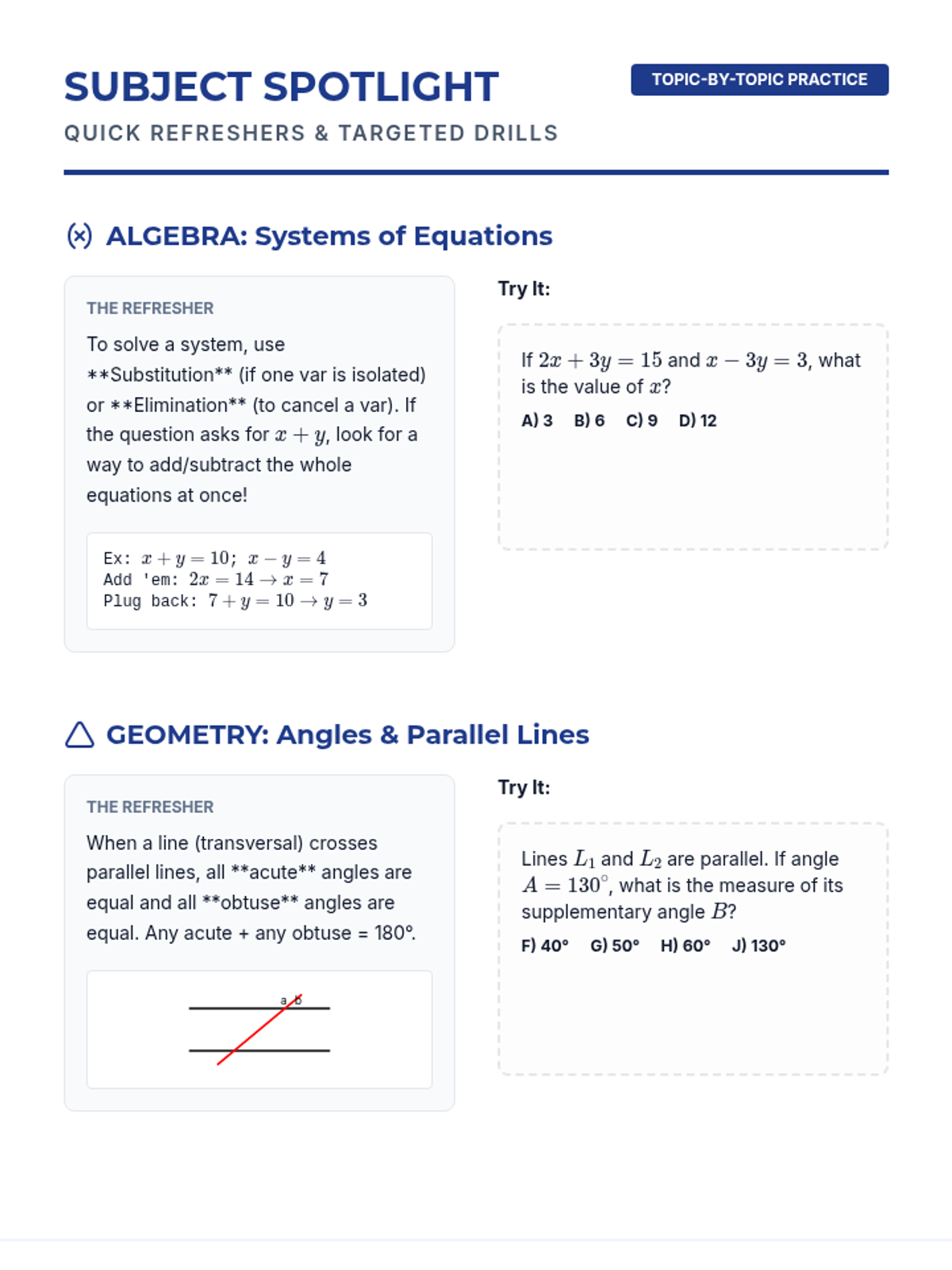
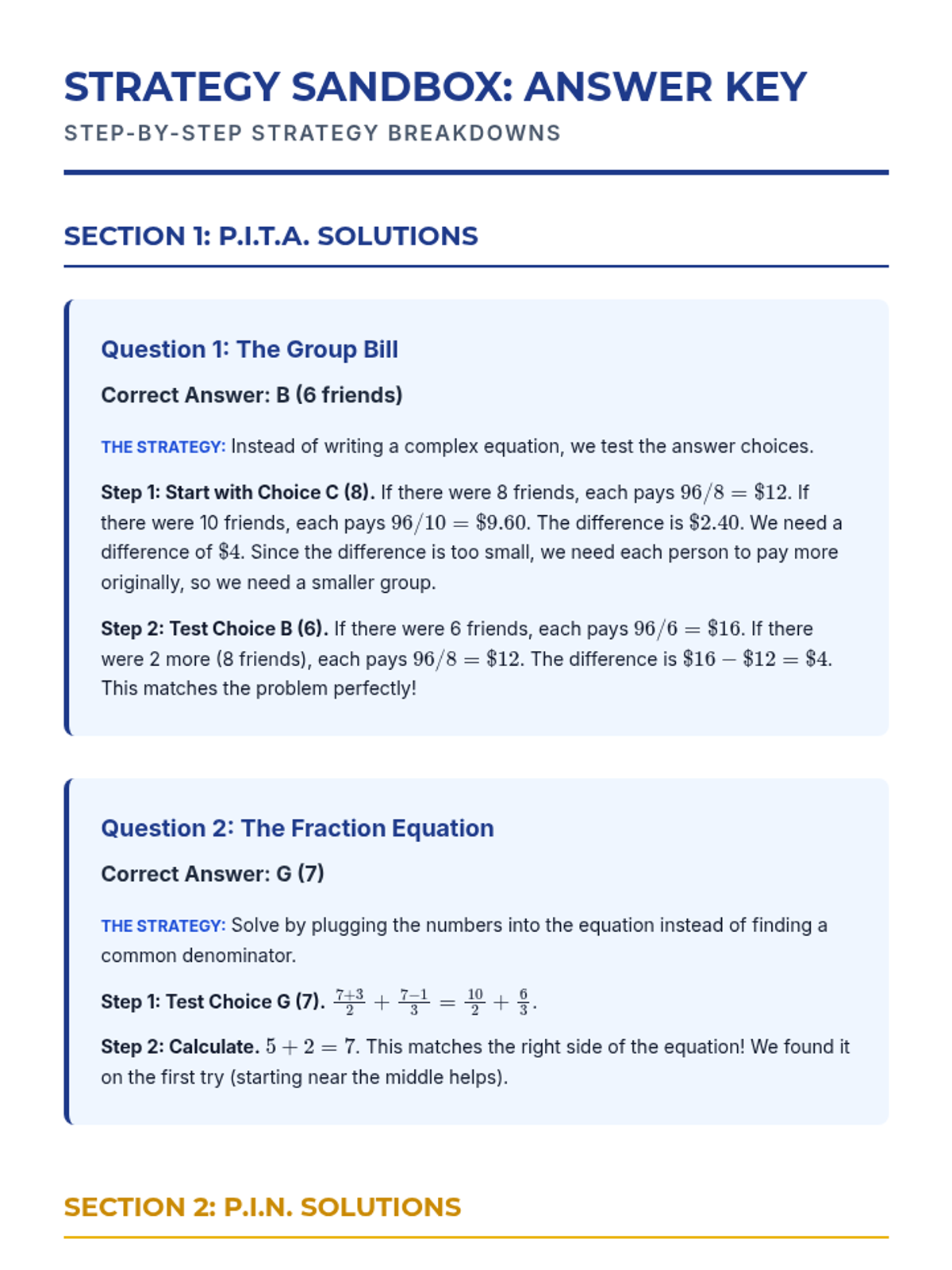
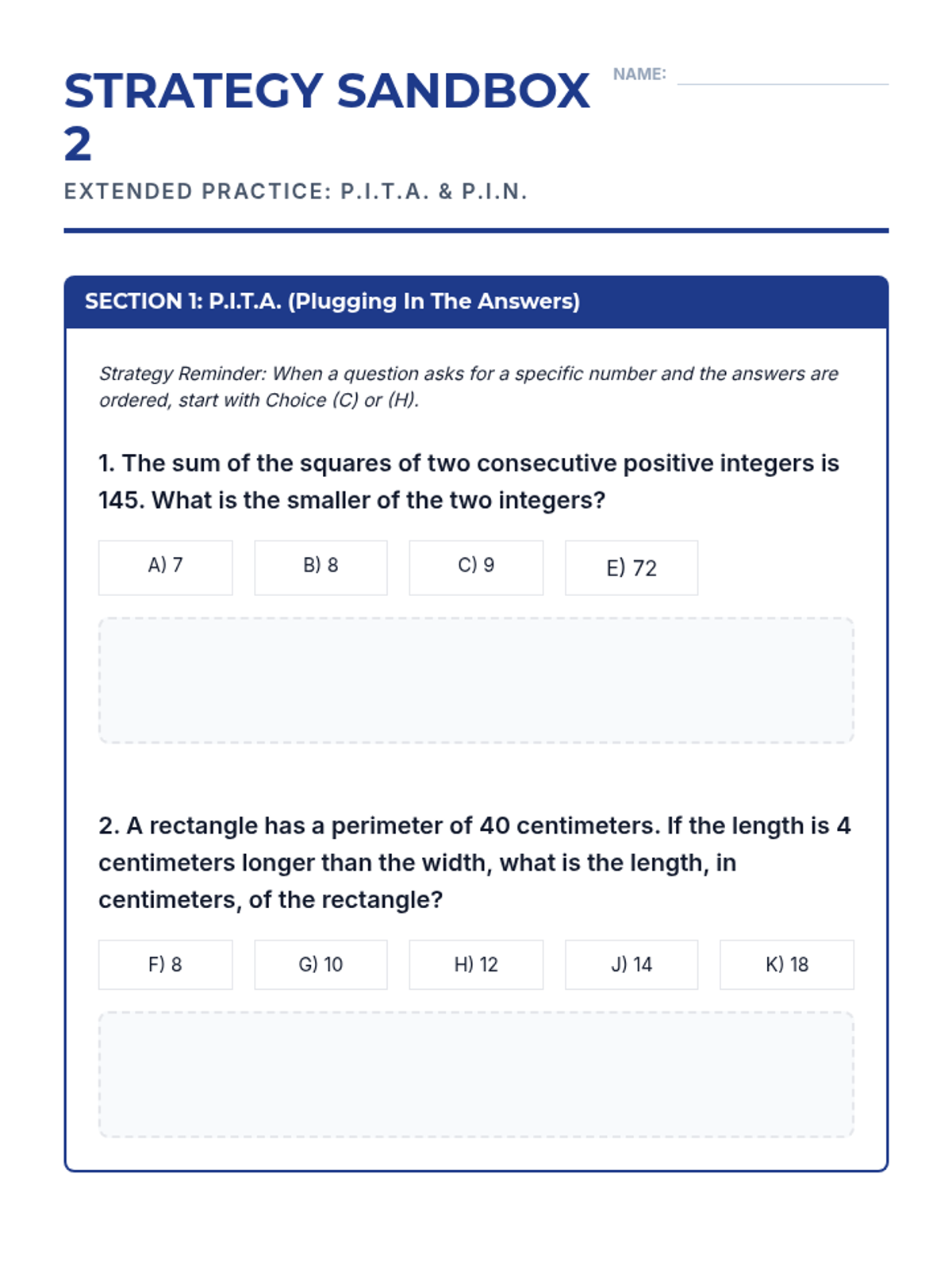
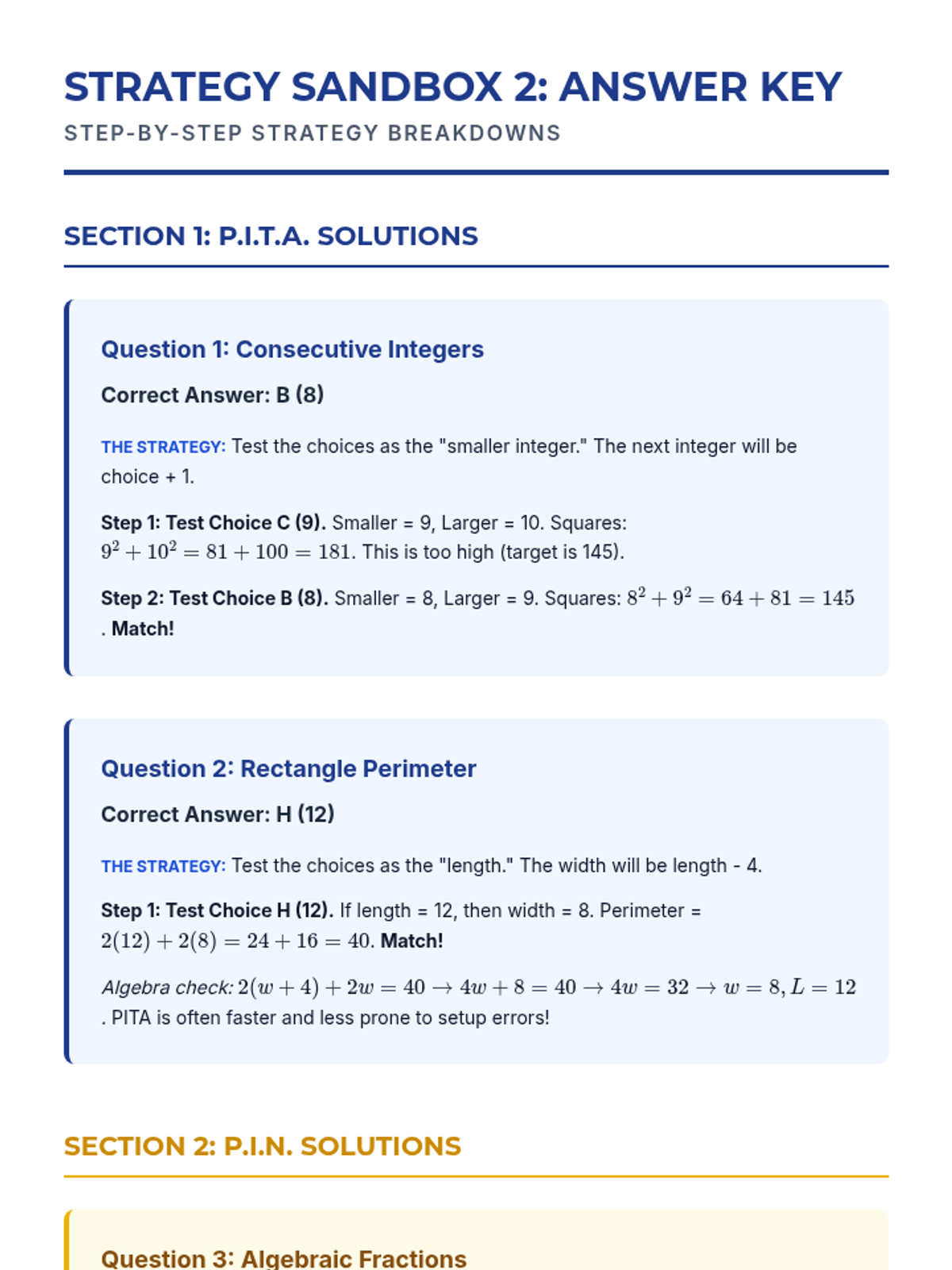
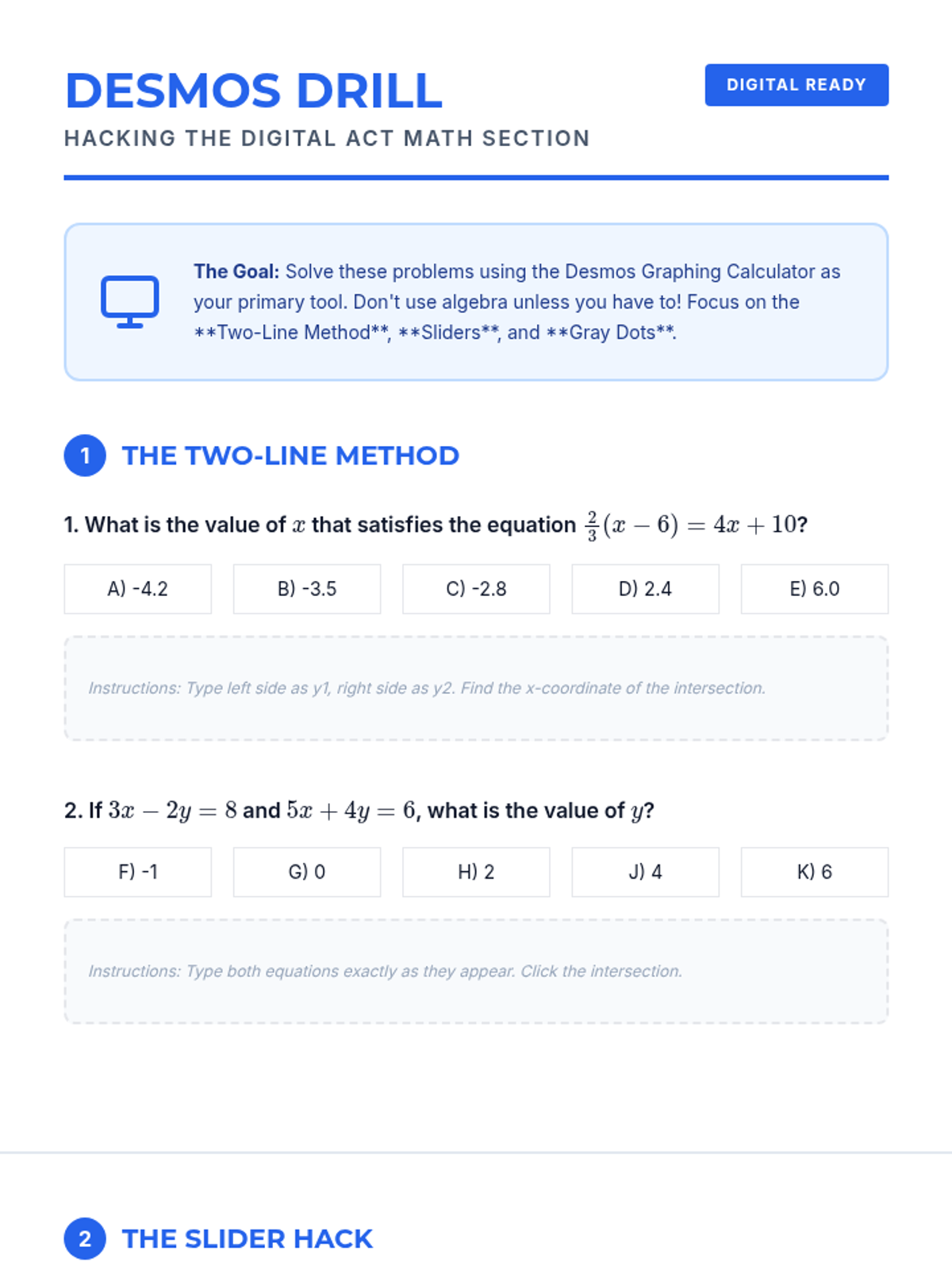
A comprehensive ACT Math preparation program focusing on essential strategies, high-yield Algebra and Geometry concepts, and realistic practice to boost scores.
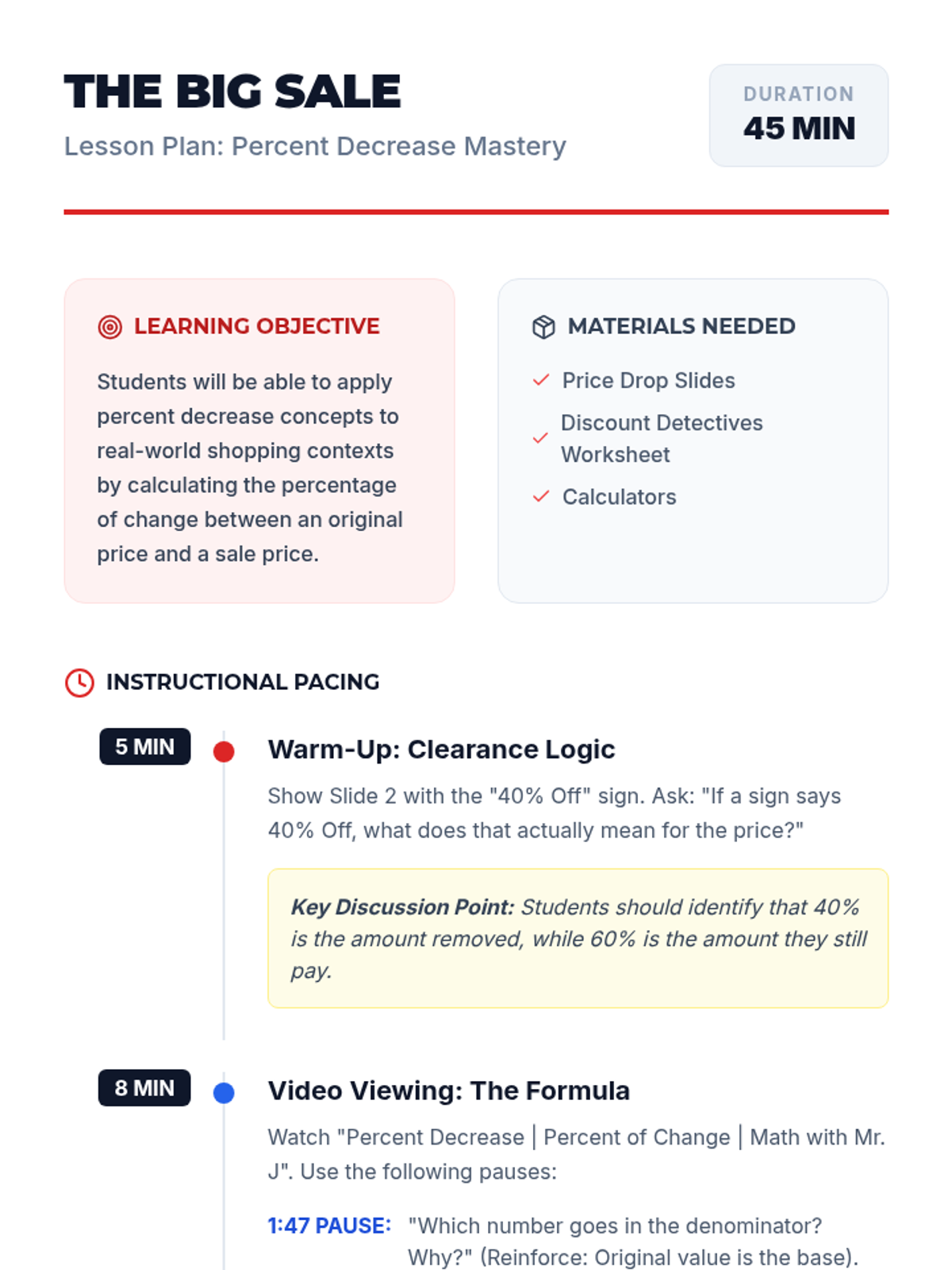
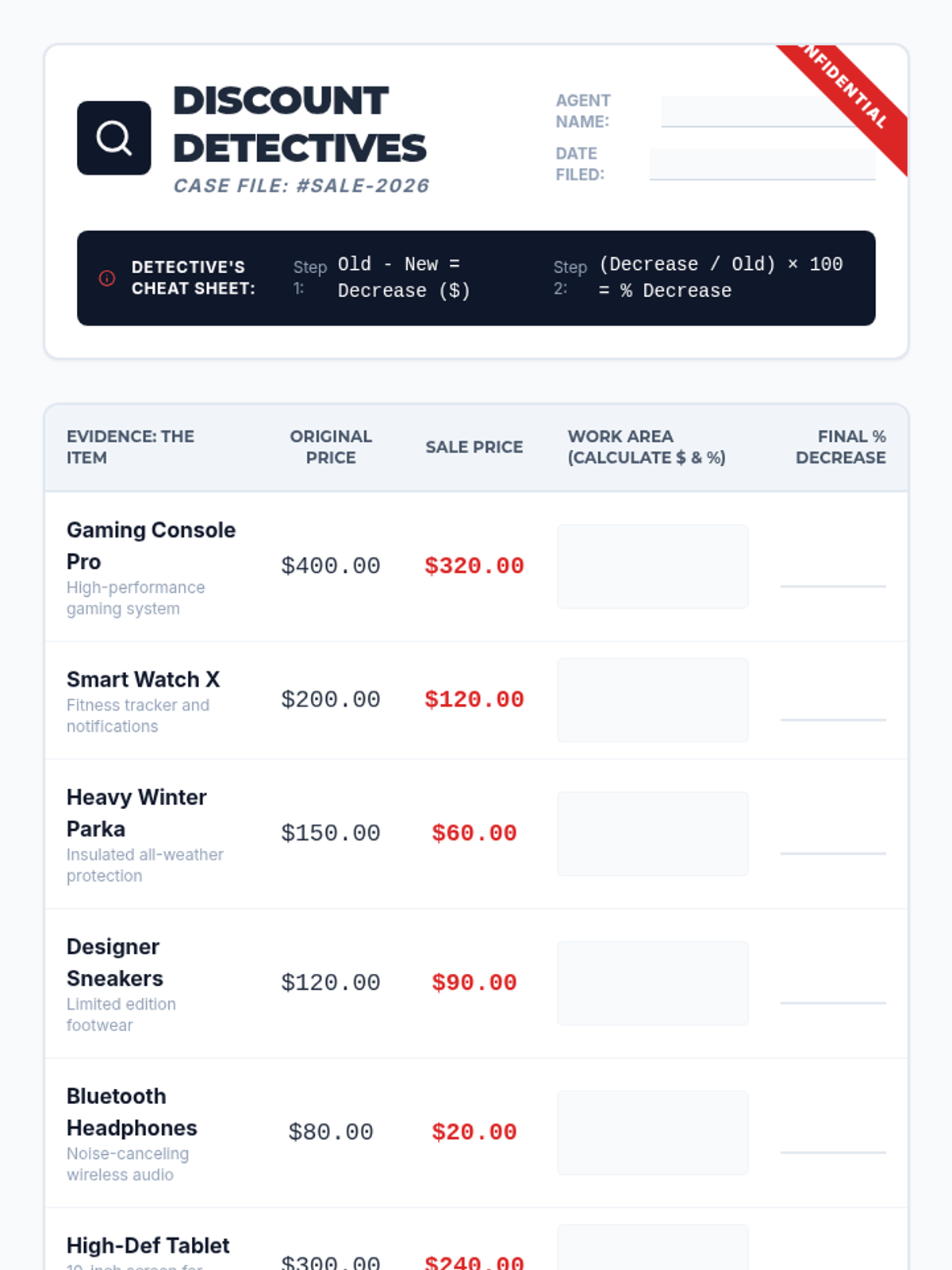
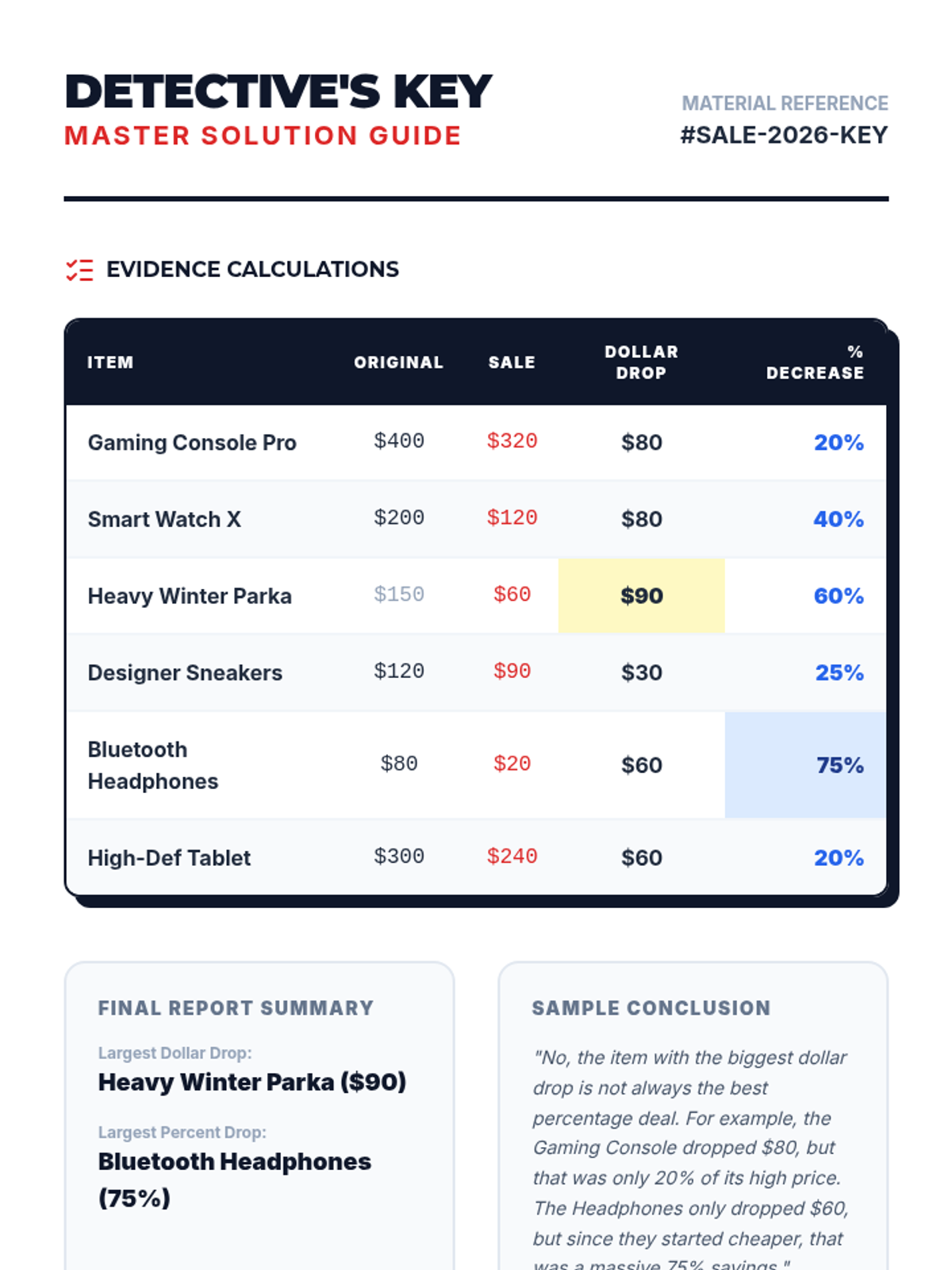
A unit focused on applying percentages to real-world financial contexts, including discounts, markups, and interest.
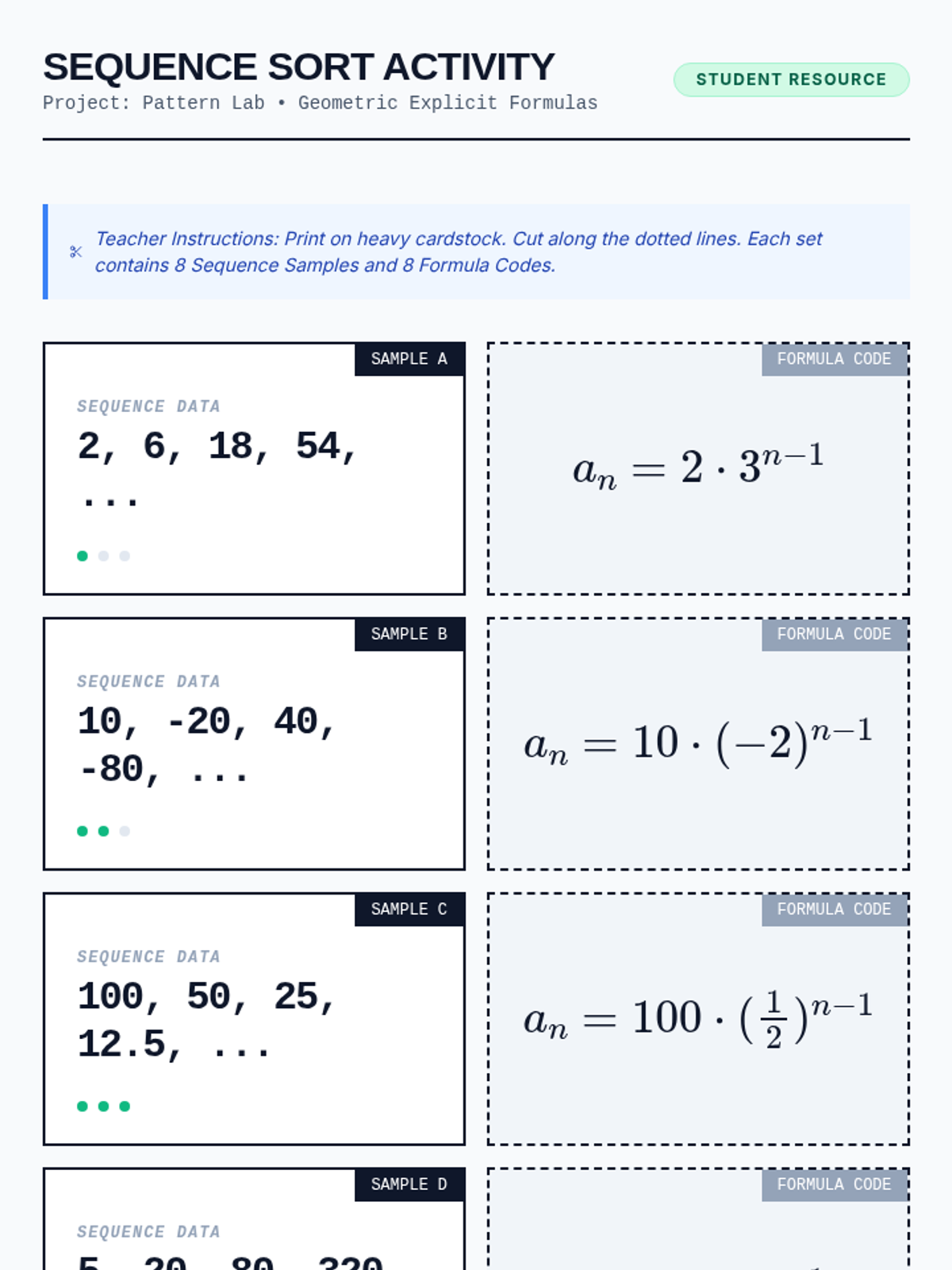
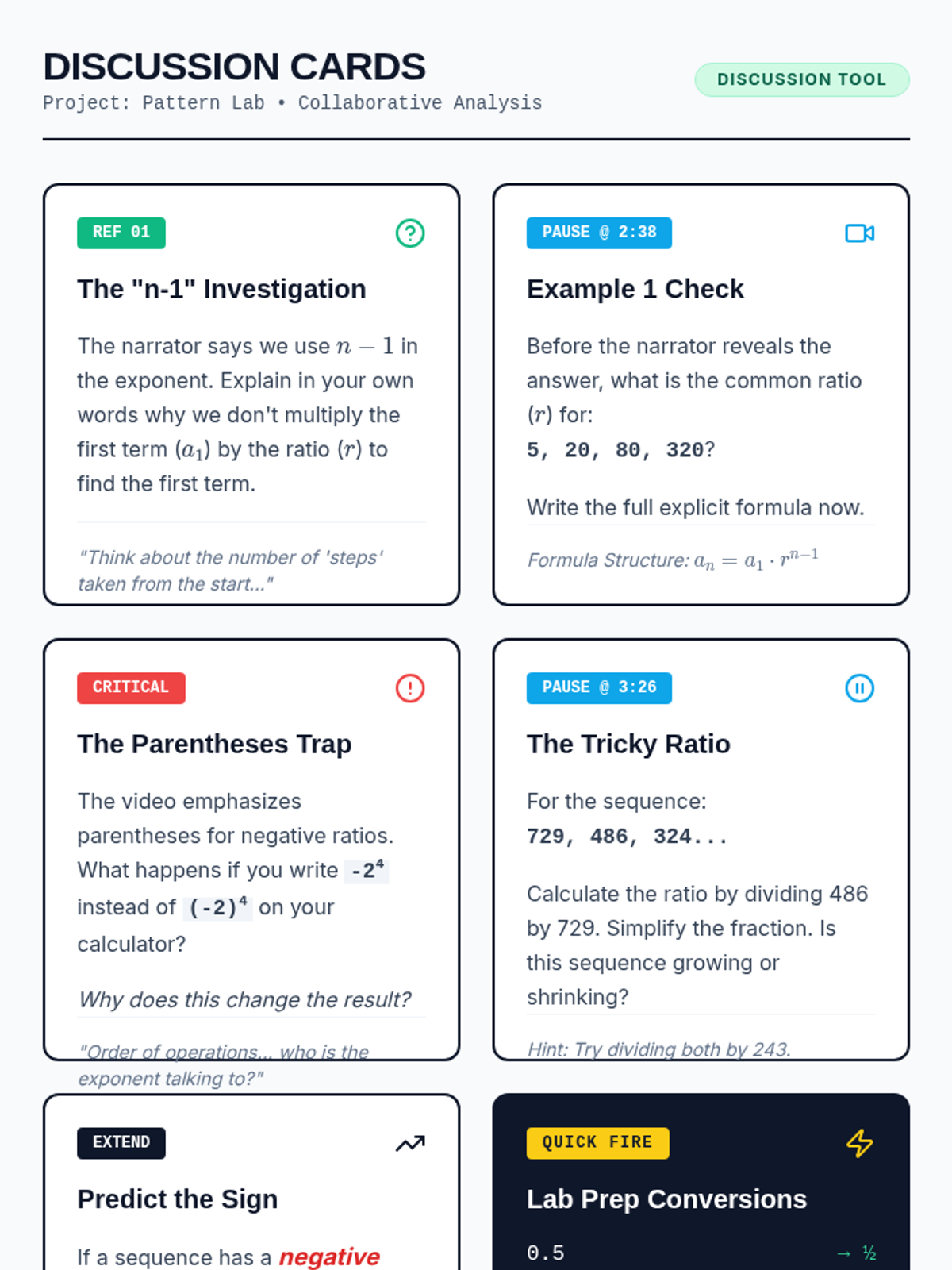
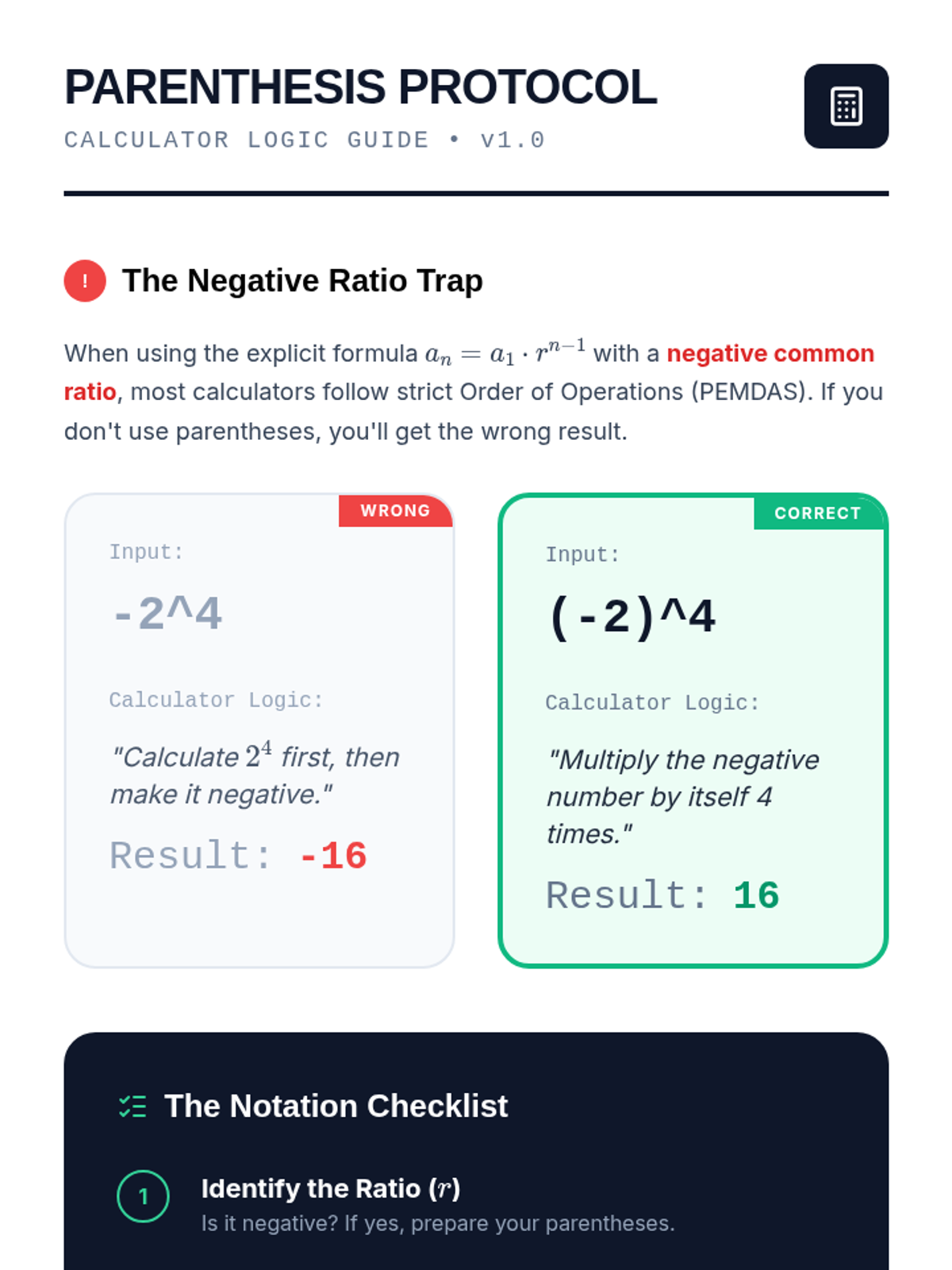
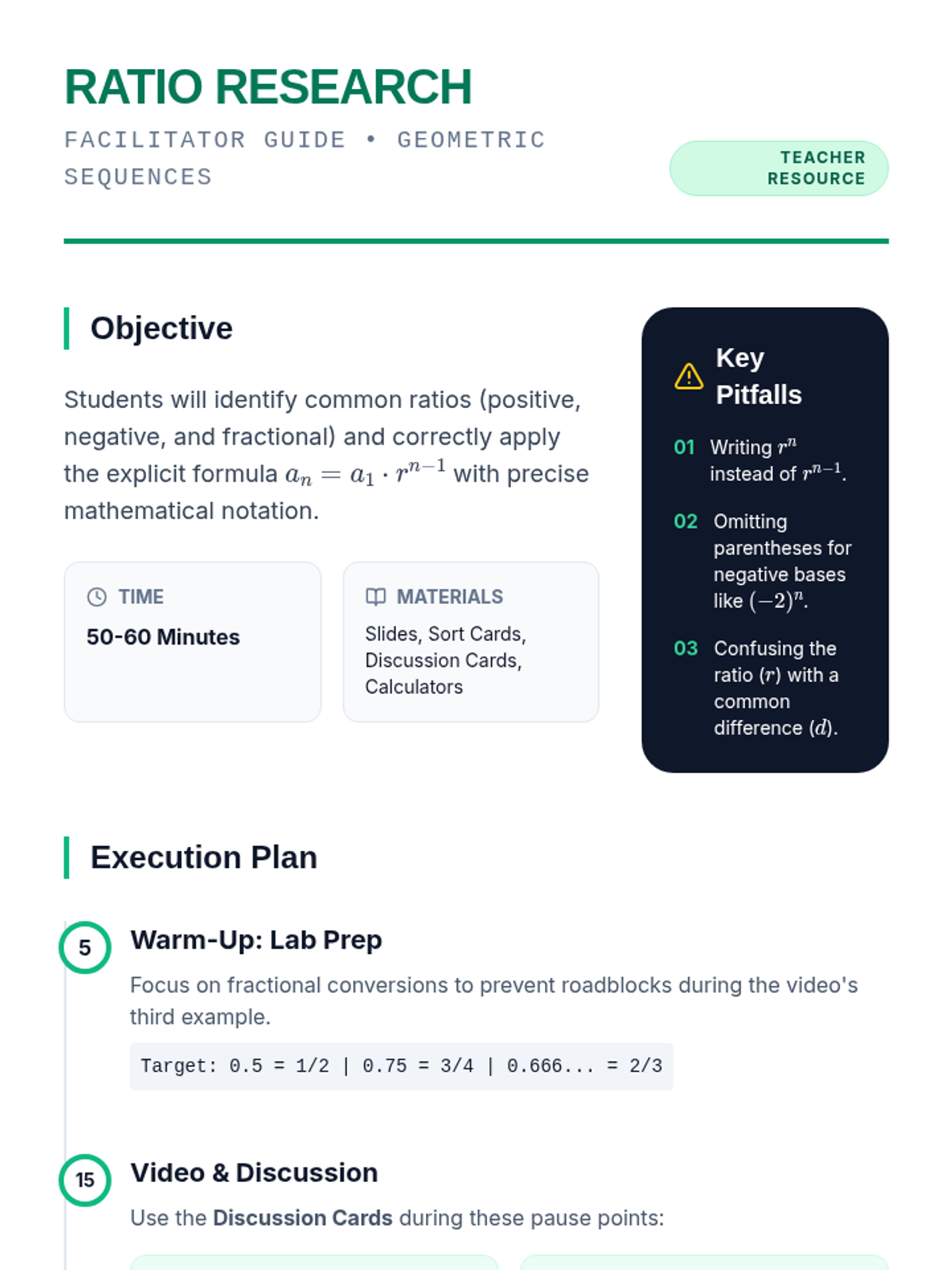
A comprehensive 9th-grade algebra unit exploring the patterns, formulas, and real-world applications of arithmetic and geometric sequences. Students progress from recursive logic to explicit modeling.
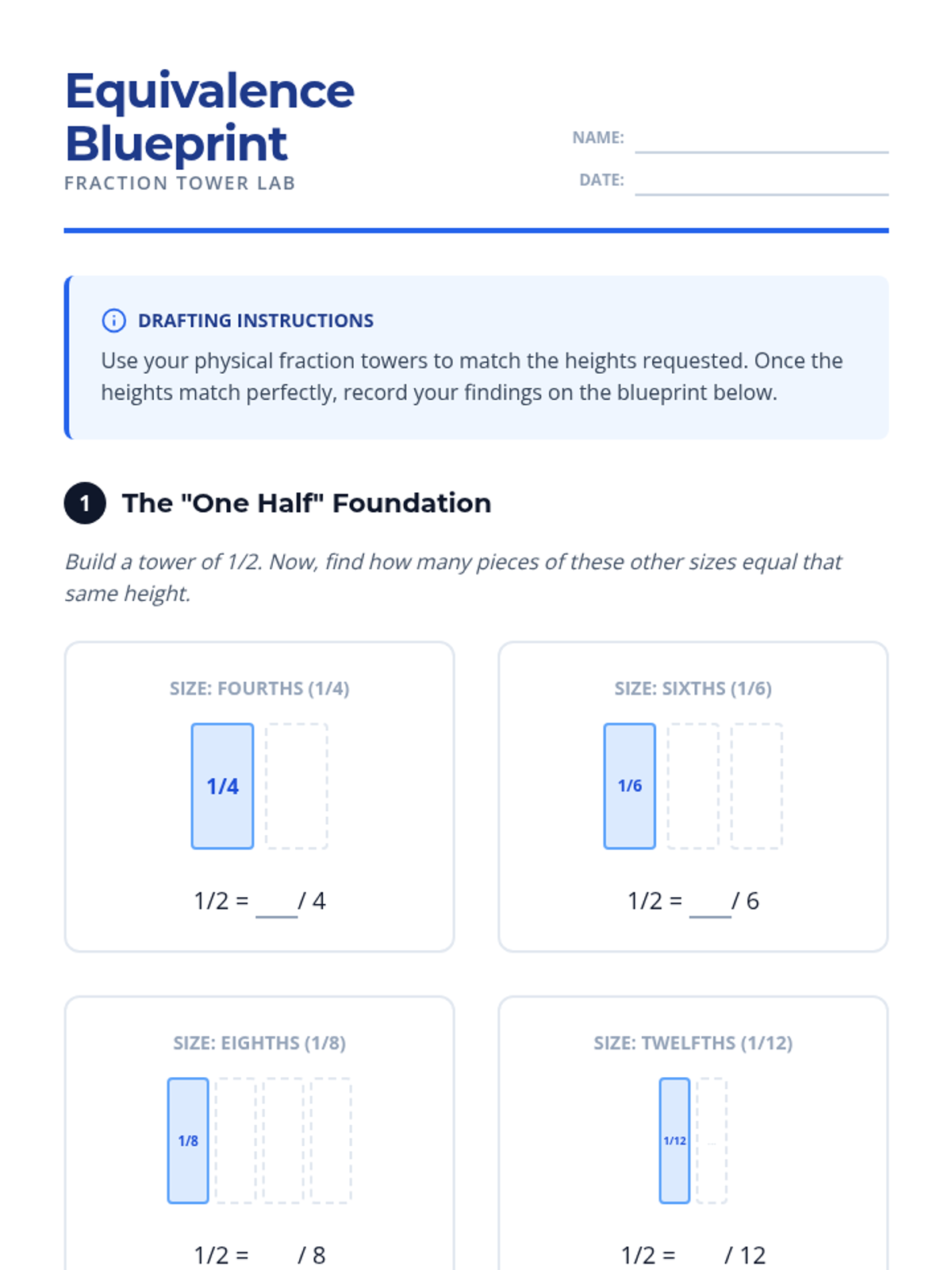
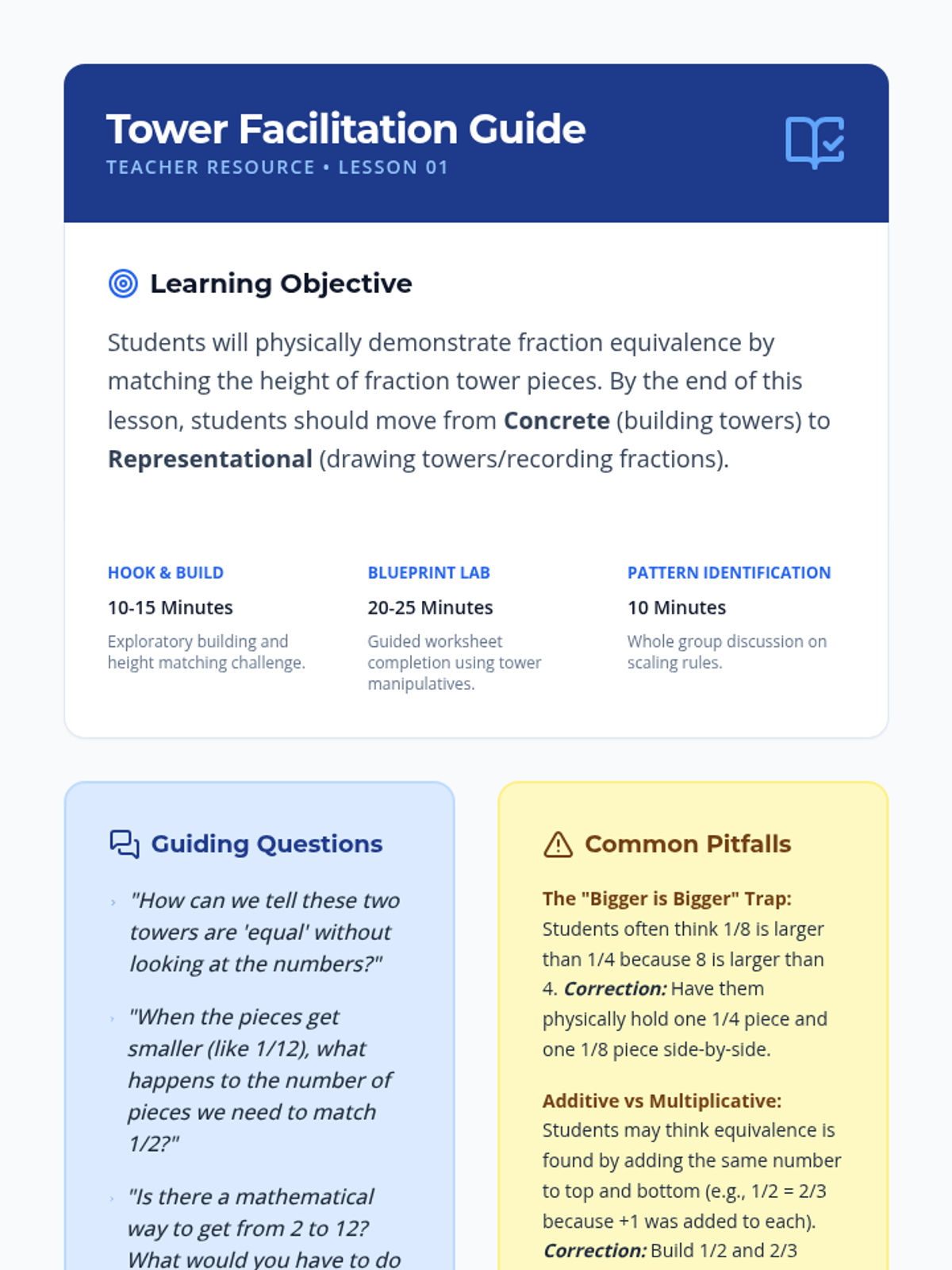
A specialized math sequence for 9th-grade academic support, focusing on fraction mastery through concrete manipulatives and visual models. It follows the CRA framework to bridge gaps in foundational understanding for high school success.
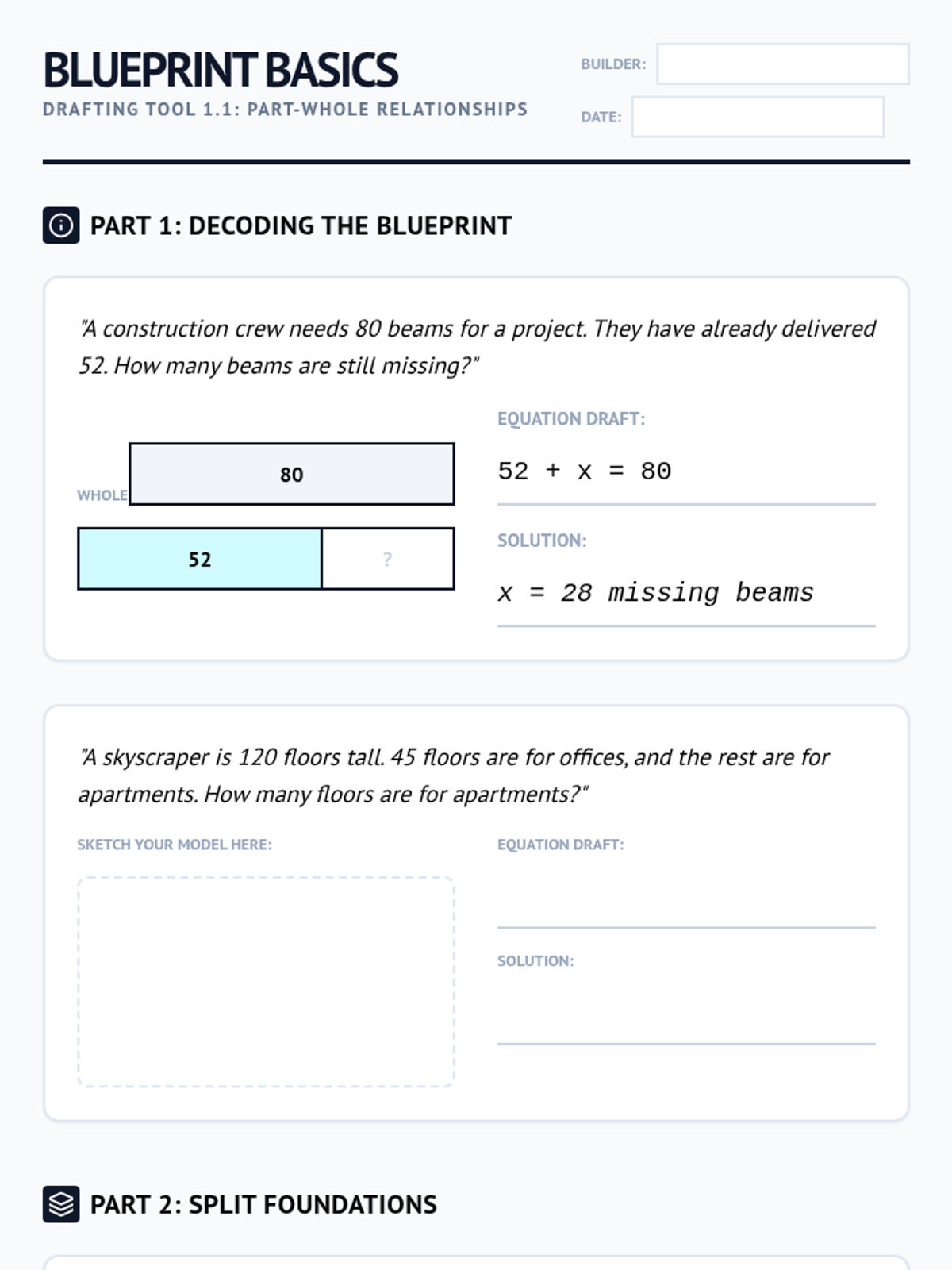
A comprehensive sequence focused on using bar models (tape diagrams) to bridge the gap between arithmetic reasoning and algebraic abstraction. Students progress from simple part-whole relationships to complex equations with variables on both sides and the distributive property.
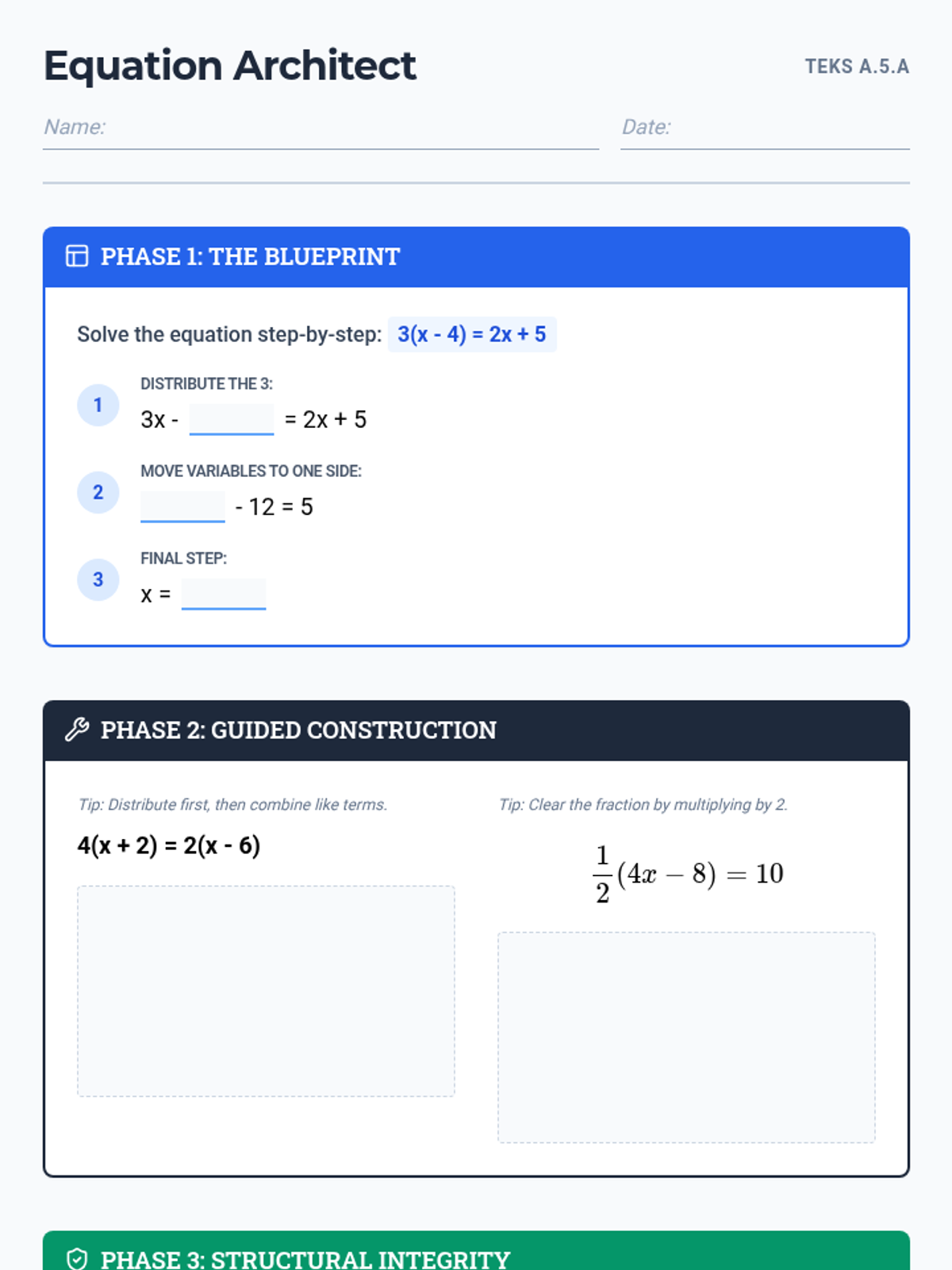
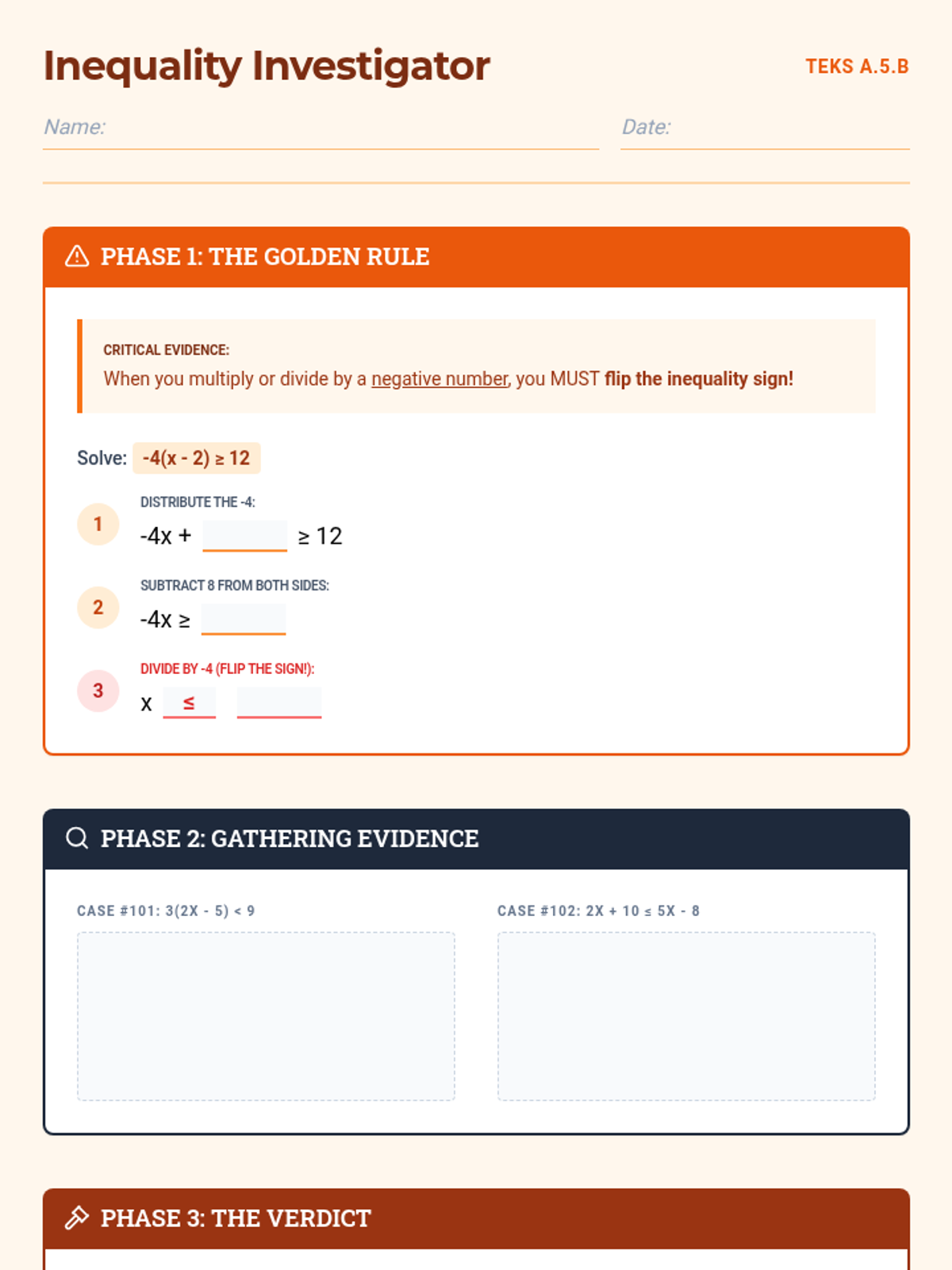
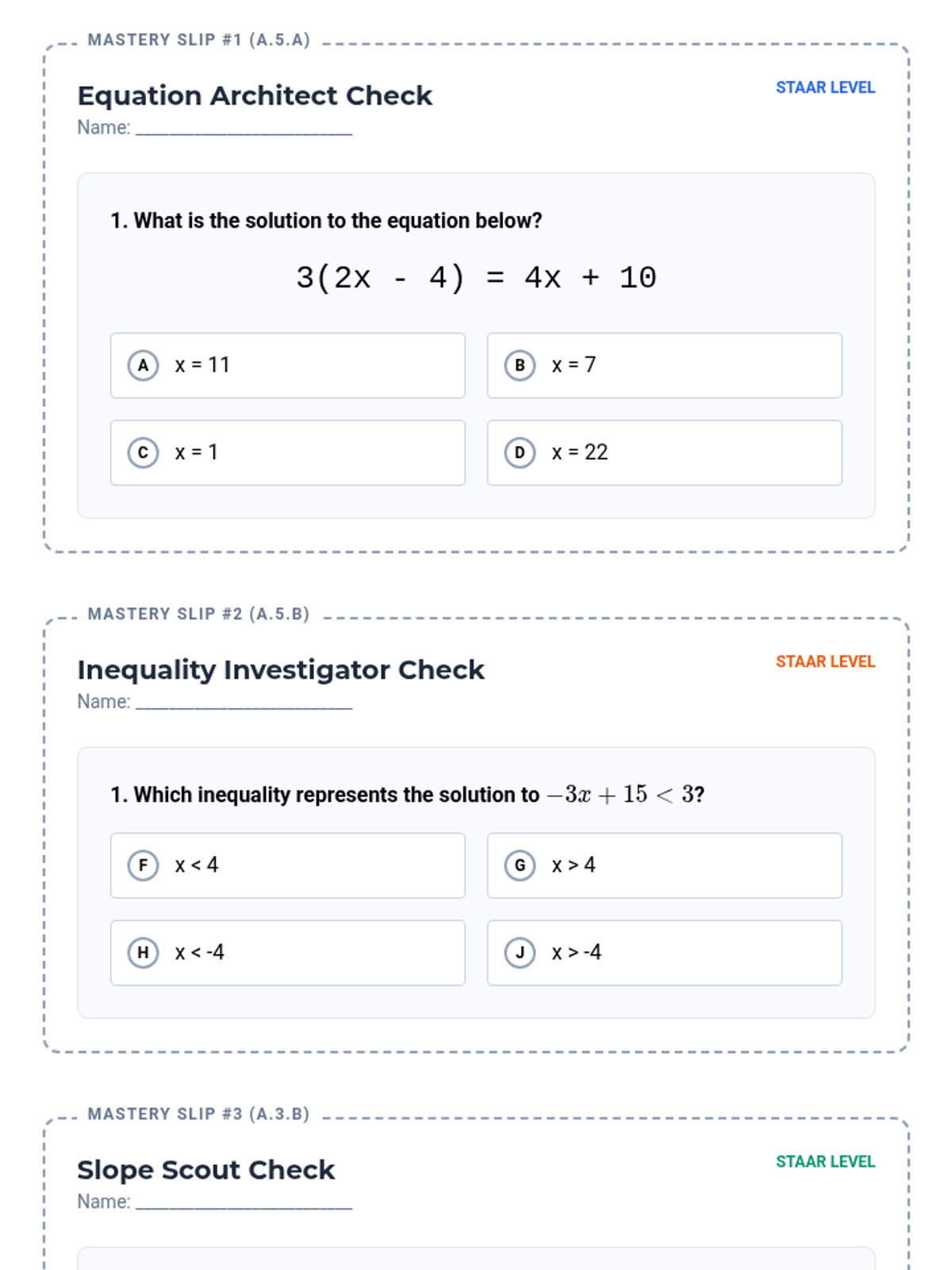
A series of targeted Algebra 1 lessons focusing on foundational linear skills: solving equations, inequalities, and calculating rate of change, all aligned to STAAR standards.
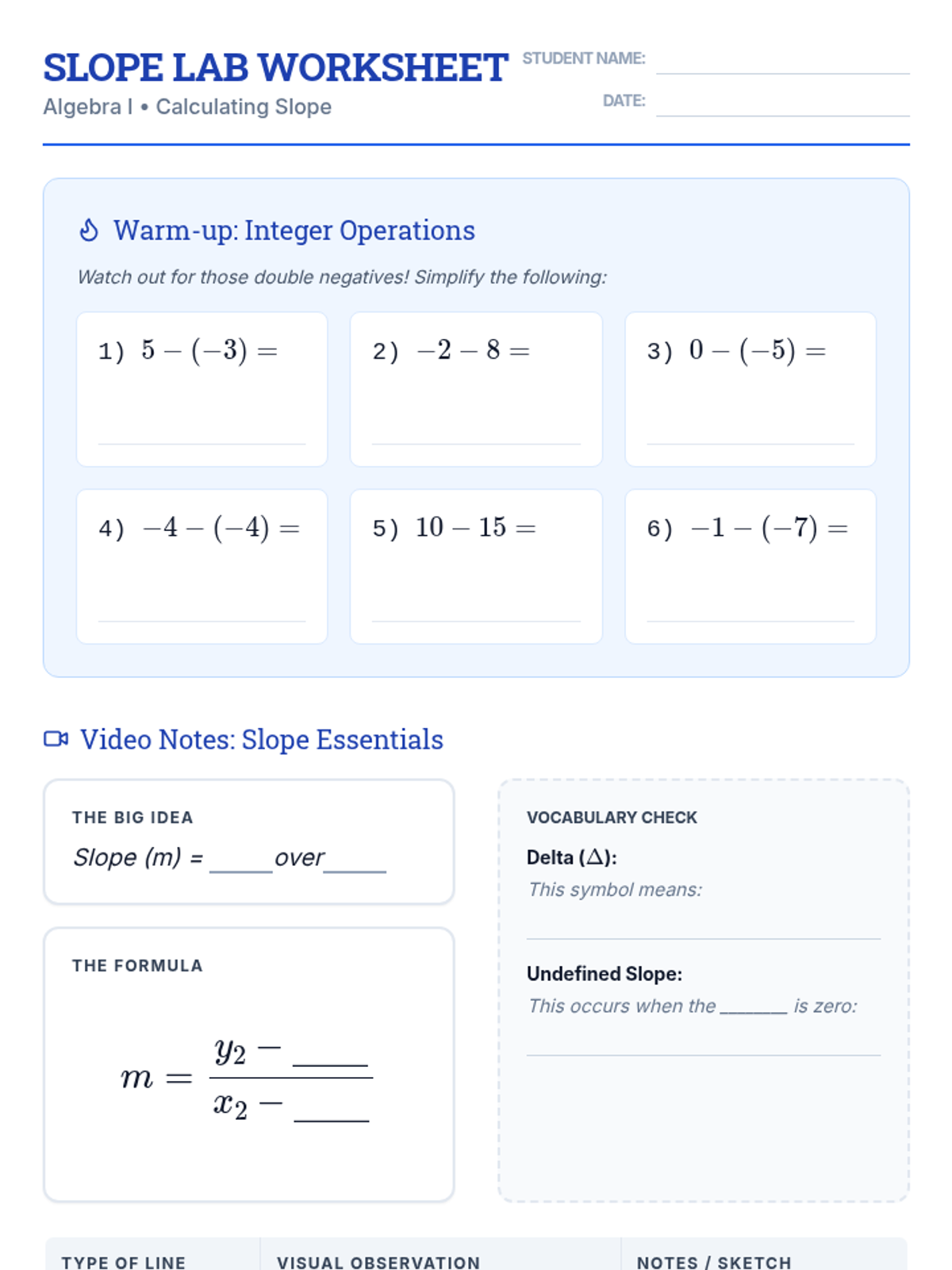
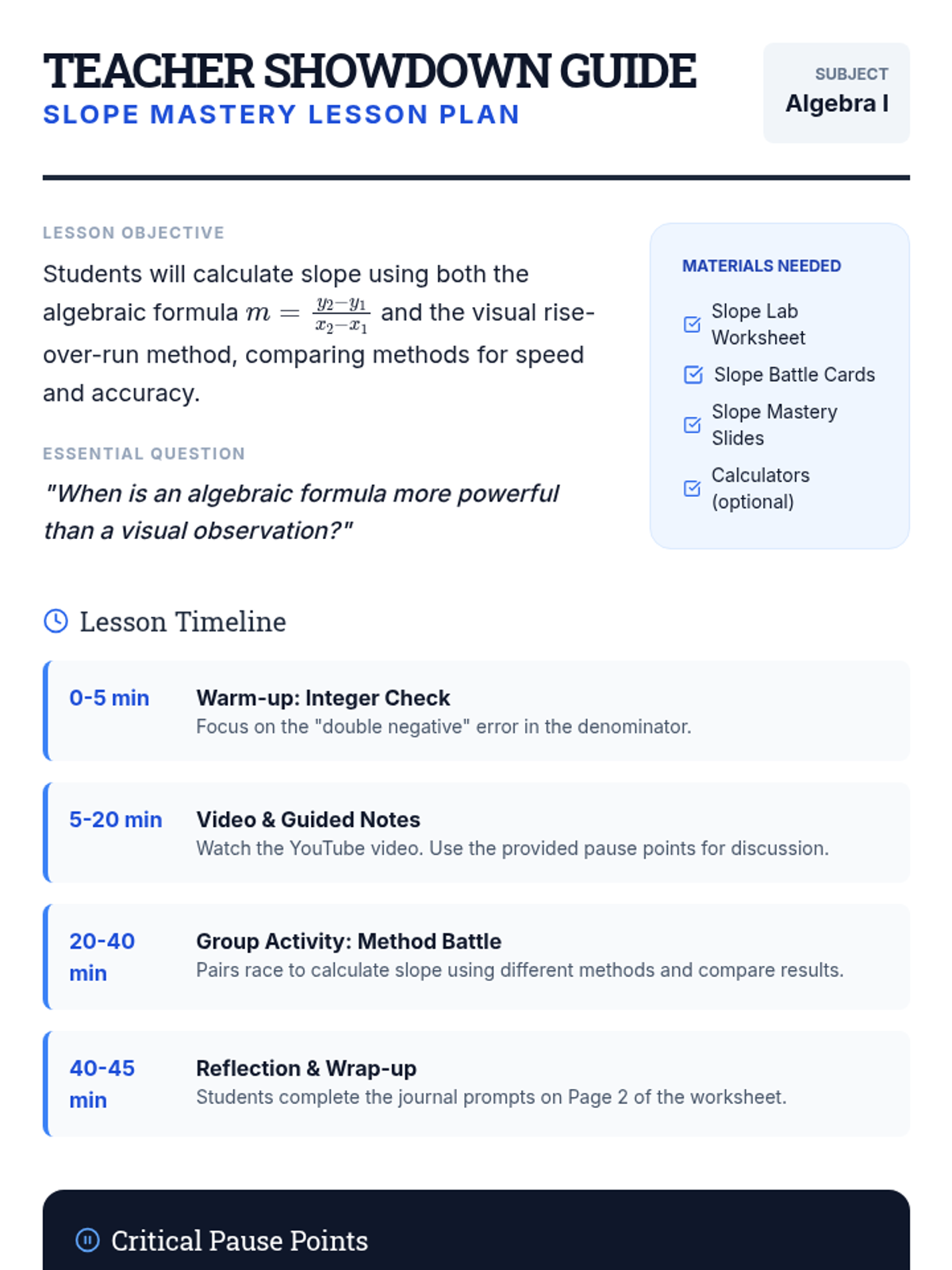
A comprehensive lesson on calculating slope using both the algebraic formula and the visual rise-over-run method, featuring guided video notes and a competitive group activity.
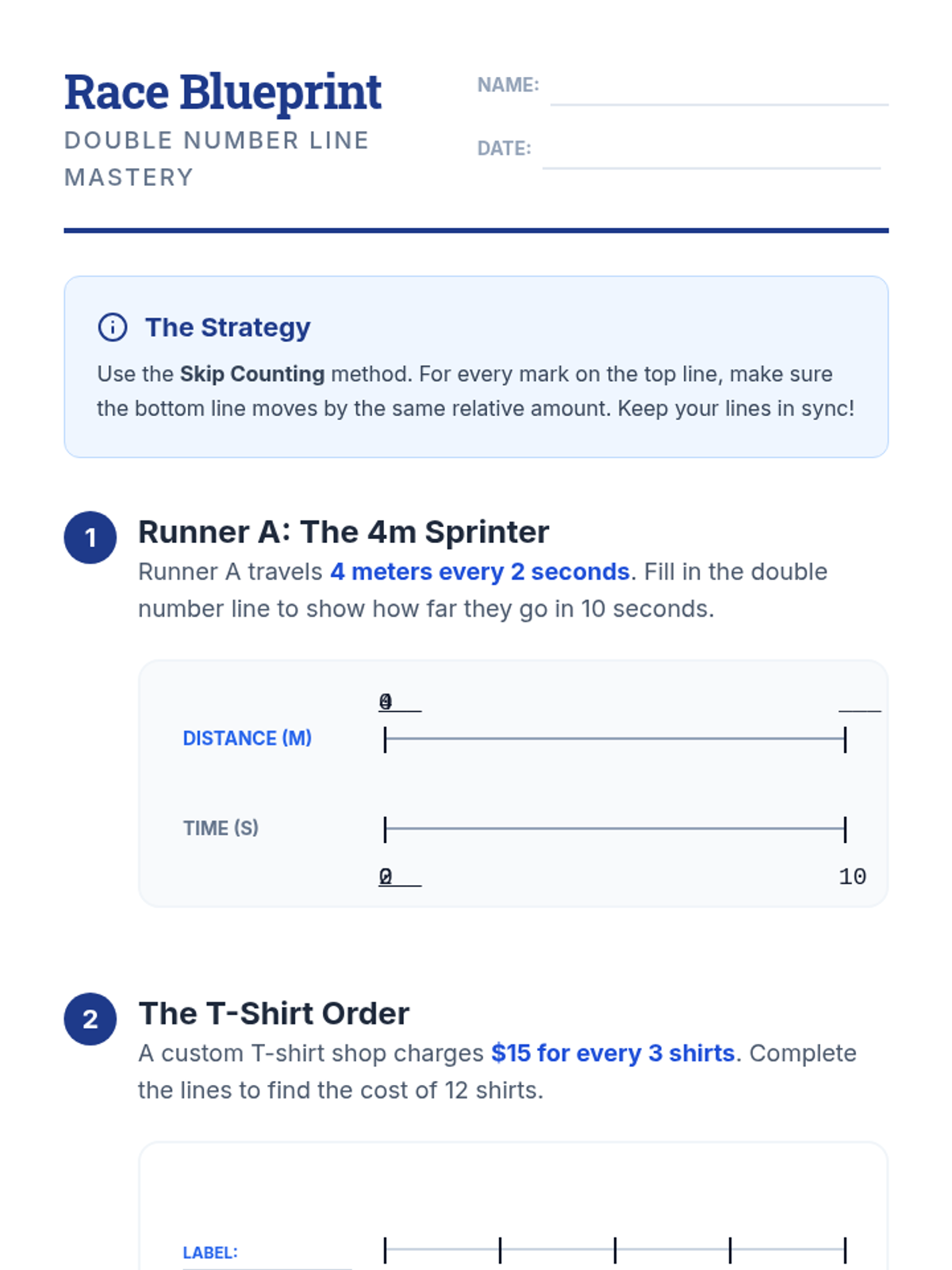
A 9th-grade math sequence focusing on visual strategies for understanding proportions, slope, systems of equations, and inequalities. This unit supports students in academic support settings by moving from concrete double number lines to abstract coordinate graphing and region shading.
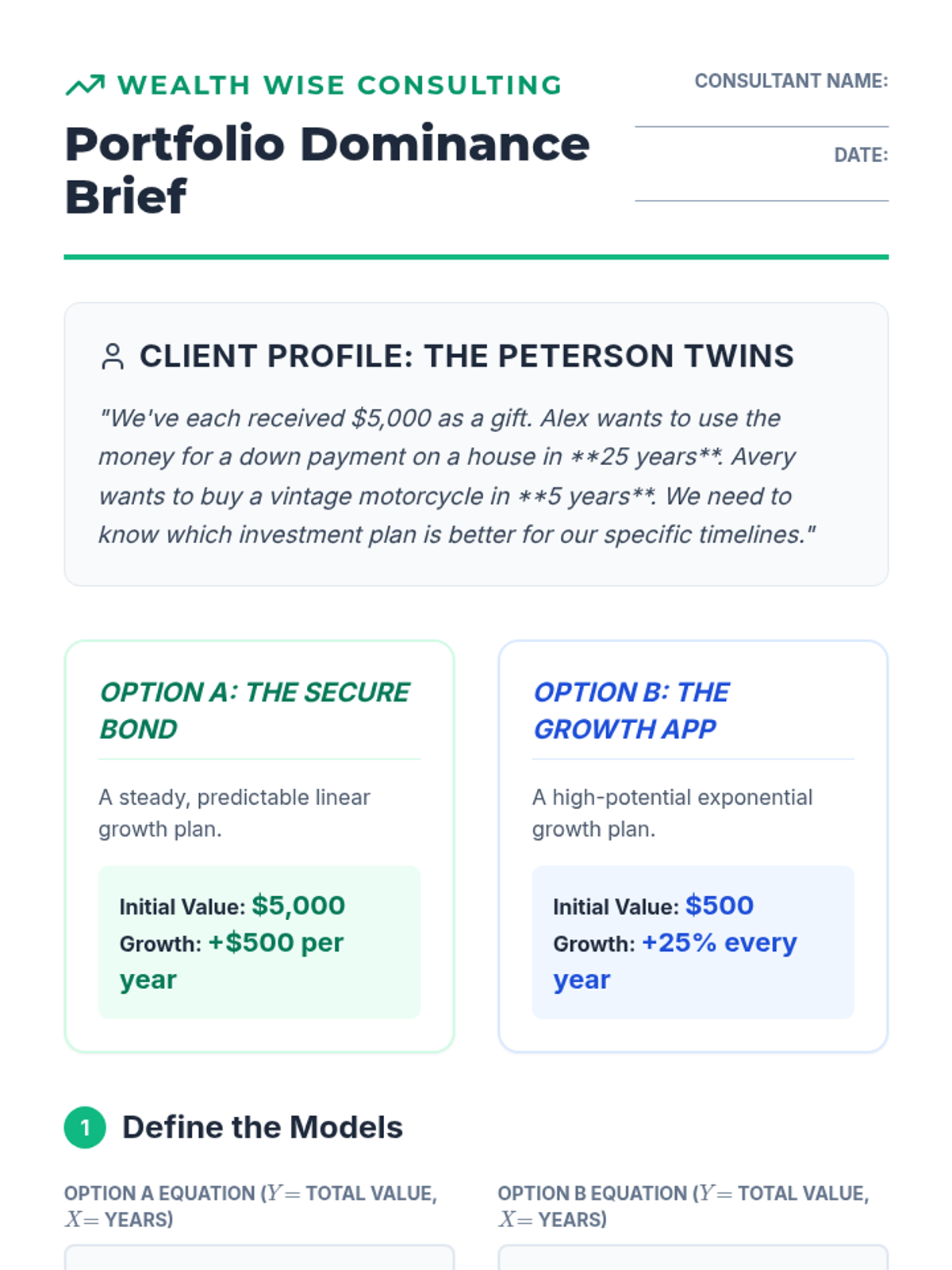
This financial literacy-themed sequence teaches 8th-grade students to compare linear and exponential growth rates. Students act as financial consultants, analyzing investment, debt, and depreciation scenarios to understand function dominance and long-term behavior.
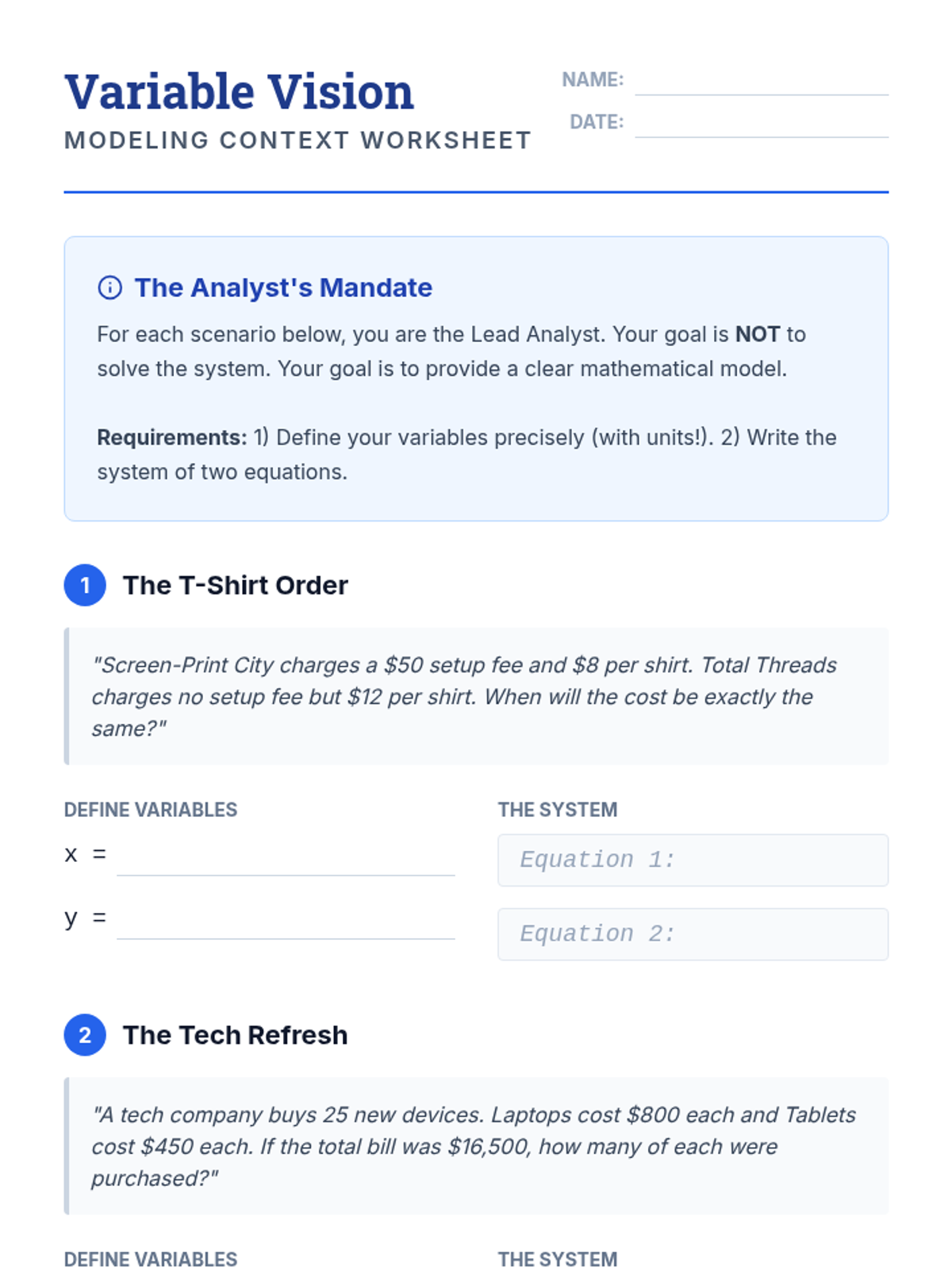
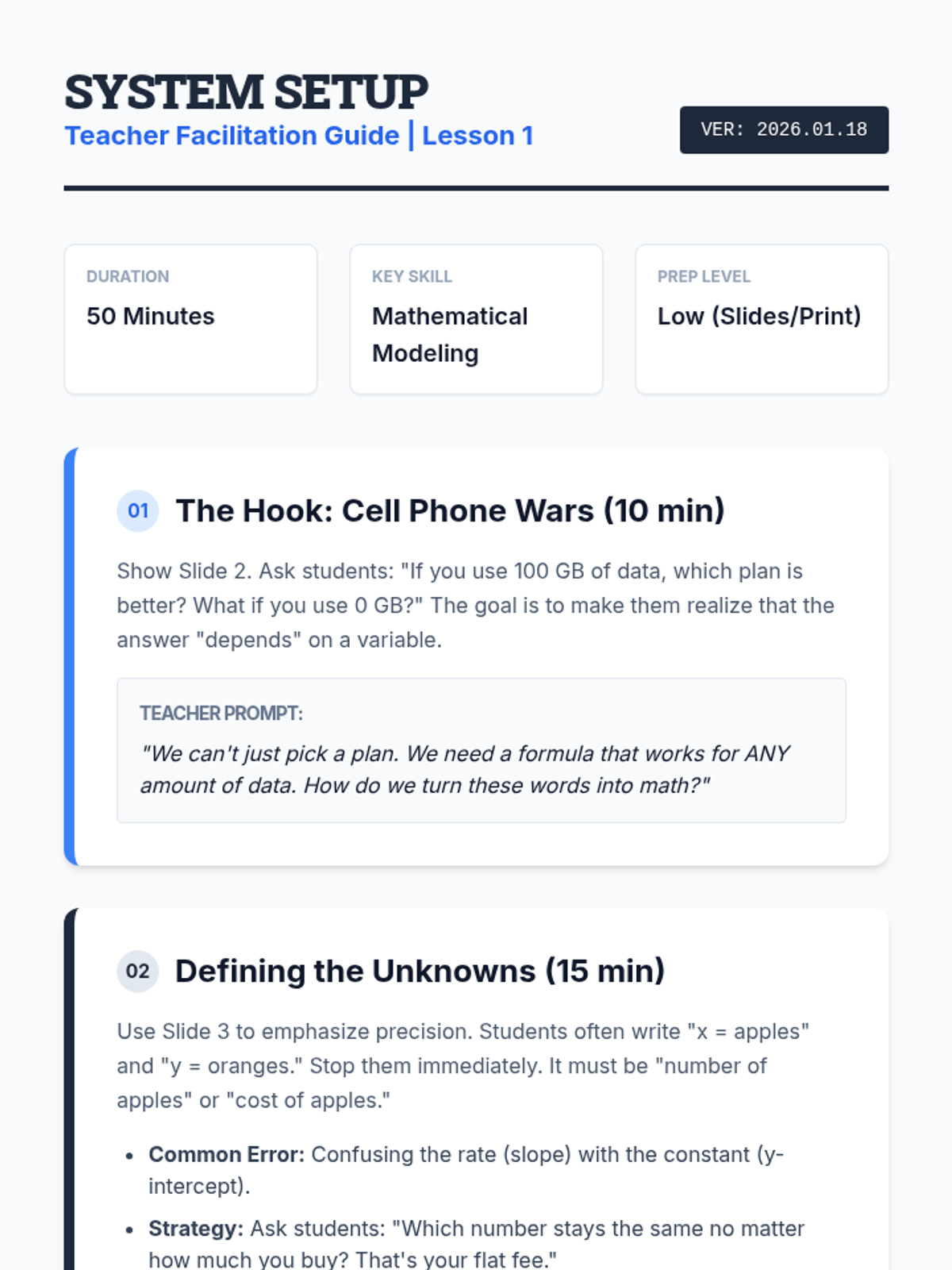
An 8th-grade Algebra sequence focusing on translating real-world scenarios into systems of linear equations. Students act as business analysts to solve break-even, mixture, and motion problems, culminating in a business comparison project.
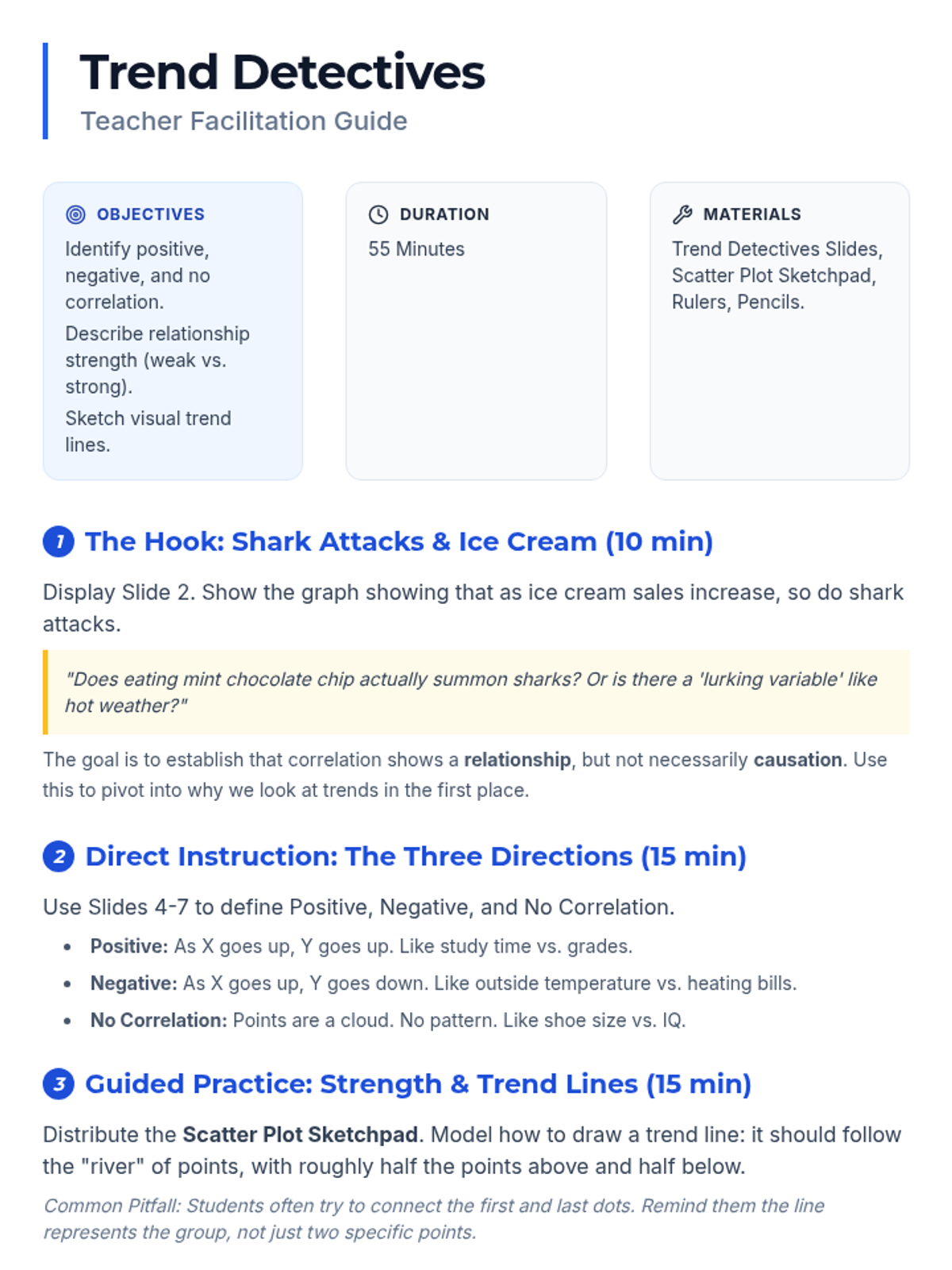
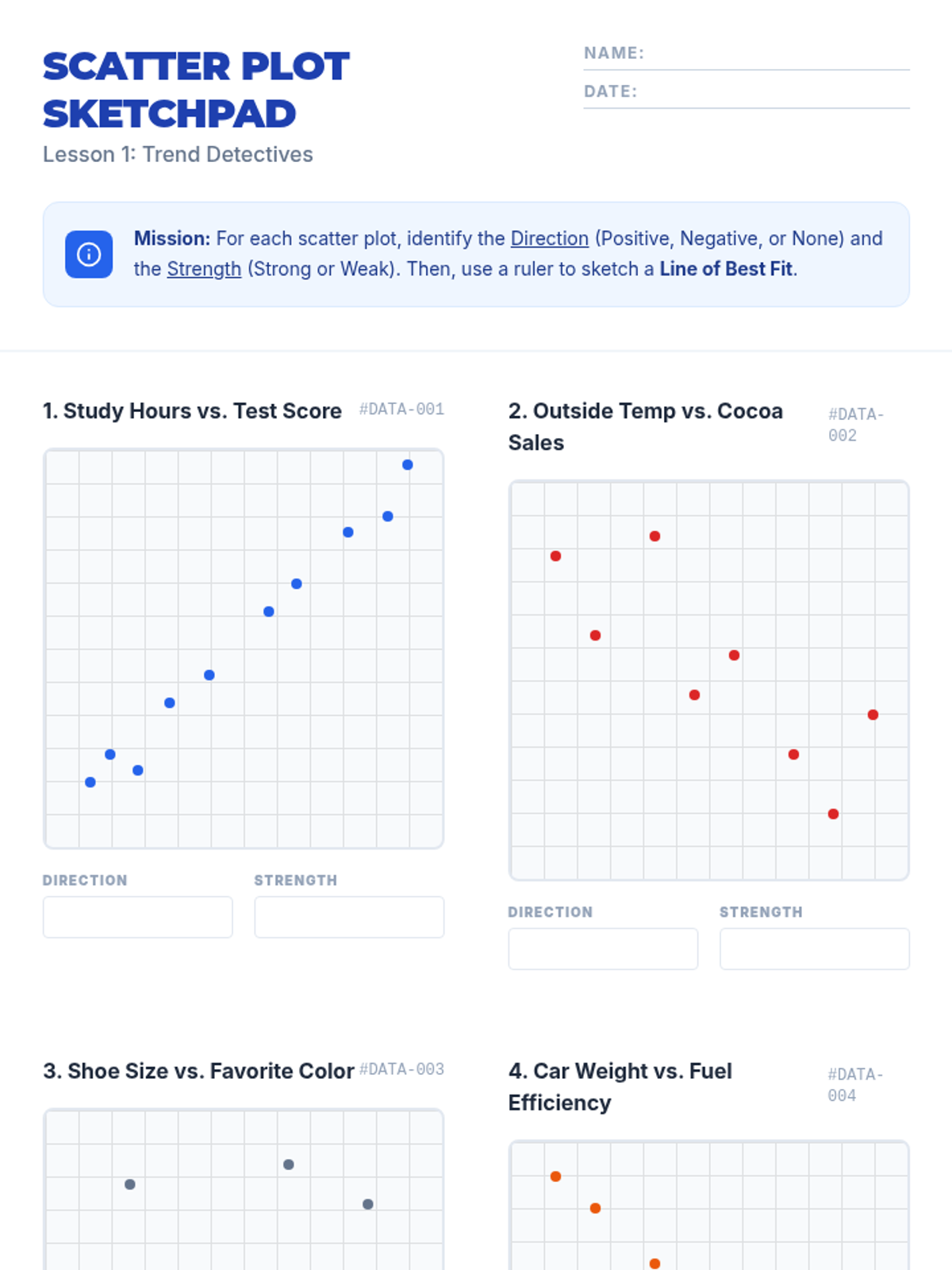
This sequence guides 9th-grade students through the process of interpreting linear models, moving from qualitative observations of scatter plots to quantitative interpretations of slope and y-intercept in real-world contexts. Students will learn to construct trend lines, write equations, and use those models to make informed predictions.
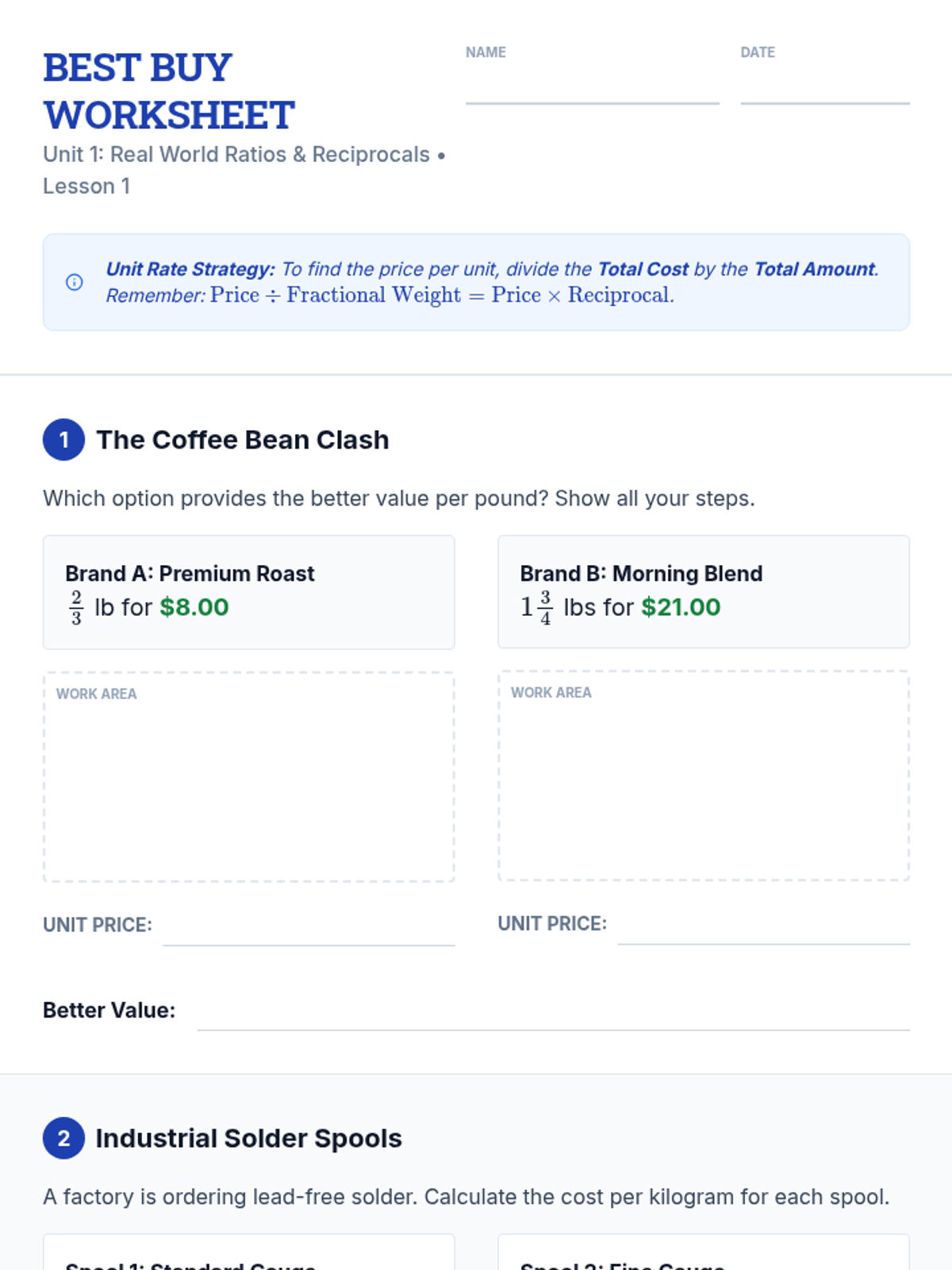
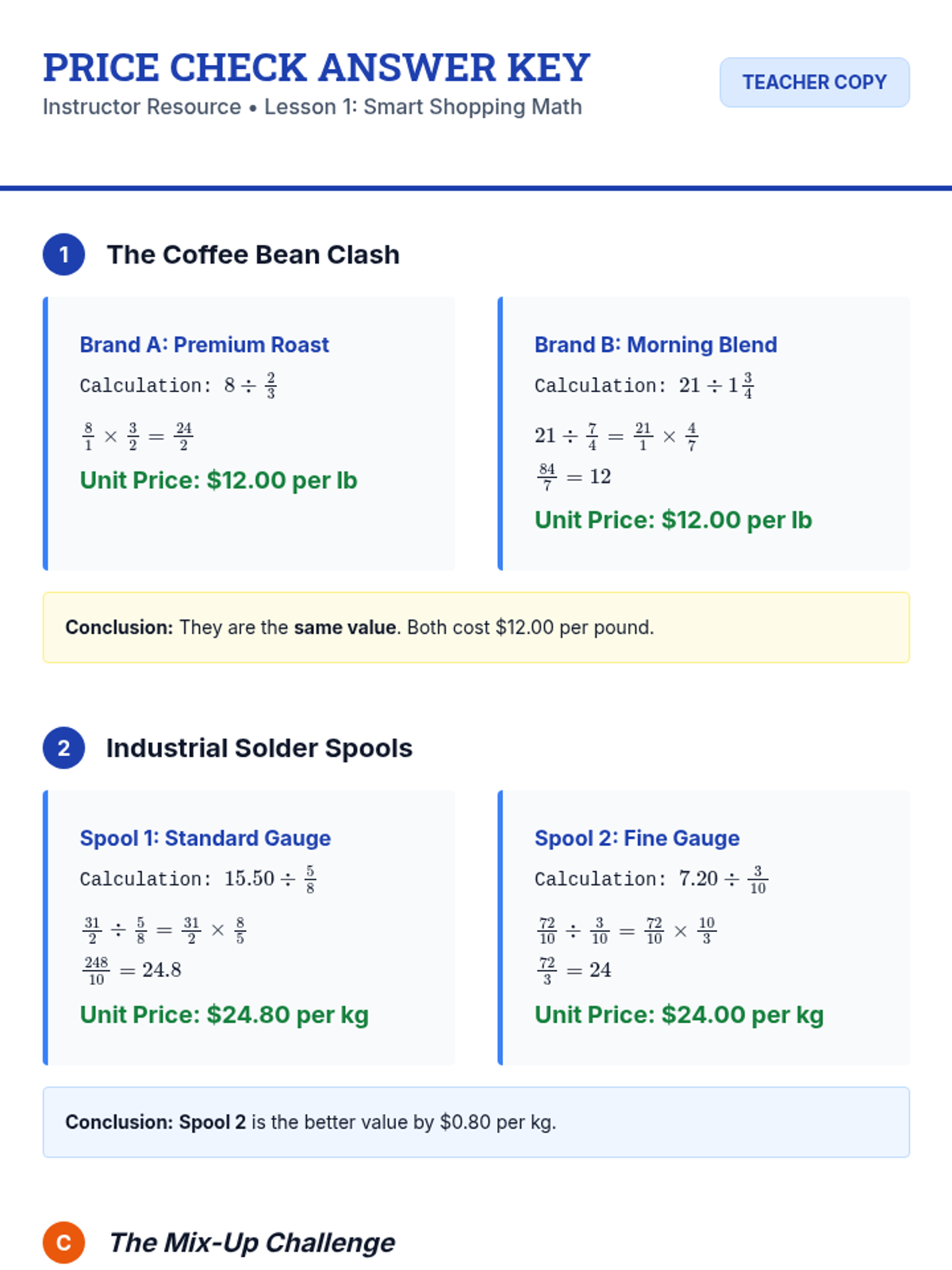
A project-based unit for 9th-grade students that contextualizes fraction division in construction, culinary arts, and manufacturing careers. Students learn to apply division to unit rates, recipe scaling, material yields, and dimensional analysis.