Lenny LearningLenny
Create
Explore
Workspace
LoginSign up
MathEnglish Language ArtsScience & EngineeringSocial StudiesGlobal LanguagesHealth & Physical EducationSpecial EducationCounseling & Life SkillsArts & CreativityESL
Lenny LearningLenny
Lenny Learning
About
Training
Pricing
Support
Contact
© 2026 Lenny Learning Inc.

Ratios

SequencesLessonsMaterialsVideos
  1. Math

Ratios

SequencesLessonsMaterialsVideos

Comparisons of quantities using unit rates and proportional reasoning. Connects tables, graphs, and equations to represent constant rates of change.

Ratios and ProportionsProportional relationships, unit rates, and constant of proportionality. Develops strategies for solving multi-step problems involving scale, percentages, and equivalent ratios.
Proportional RelationshipsAnalysis of equivalent ratios and the constant of proportionality across tables, graphs, and equations. Connects unit rates to linear relationships and real-world scaling applications.
MathNumbers & CountingCounting ObjectsNumber NamesComparing NumbersNumber OperationsCounting SequenceNumbers 0-10Place Value Understanding and SystemAdd and Subtract Within 20Addition and Subtraction ConceptsAddition and Subtraction EquationsAddition and Subtraction ProblemsFoundations for MultiplicationMultiplication and Division PropertiesMultiply and Divide Within 100Multiplication and Division ProblemsFactors and MultiplesProperties of OperationsPatterns and RelationshipsGenerate and Analyze PatternsMulti-Digit ArithmeticPlace Value OperationsMulti-Digit and Decimal OperationsNumerical ExpressionsFour Operations and PatternsFour Operations Problem SolvingMeasurement & DataMeasurable AttributesMeasuring LengthsMeasure and Estimate Lengths in Standard UnitsRelate Addition and Subtraction to LengthClassifying and Counting ObjectsTime and MoneyArea Concepts and MeasurementPerimeter and Area MeasuresAngle Concepts and MeasurementTime, Volume, and MassMeasurement Unit ConversionsGeometryIdentifying ShapesShapes and AttributesShape Attributes and ReasoningShapes and CompositionClassifying 2D FiguresGeometric Figures and RelationshipsLines, Angles, and ShapesAngle, Area, and VolumeGeometric MeasurementVolume of 3D ShapesCoordinate Plane ApplicationsTransformations in the PlaneCongruence and SimilarityUnderstand congruence in terms of rigid motionsSimilarity and TransformationsProve Theorems Involving SimilarityPythagorean TheoremTrigonometry for General TrianglesMake Geometric ConstructionsProve Geometric TheoremsTheorems About CirclesFind Arc Lengths And Areas of Sectors of CirclesVolume FormulasRelationships Between Two-Dimensional and Three-Dimensional ObjectsProve Simple Geometric Theorems AlgebraicallyTranslate Between Geometric Description and Equation for Conic SectionApply Geometric Concepts in Modeling SituationsFractions & DecimalsFractions as NumbersBuilding FractionsFraction Equivalence and OrderingAdding and Subtracting FractionsMultiplying and Dividing FractionsDividing FractionsDecimal FractionsMulti-Digit Computation and FactorsAdd, Subtract, Multiply, and Divide Rational NumbersRational Number SystemIrrational Numbers and ApproximationsRatiosRatios and ProportionsProportional RelationshipsUnit RateAlgebraAlgebraic ExpressionsGenerate Equivalent ExpressionsQuantitative RelationshipsProportional Relationships and Linear EquationsEquations and InequalitiesEquation Solving and ReasoningLinear Equations and SystemsGraph Equations and InequalitiesSystems of EquationsReal-World Algebraic ProblemsQuantitative Reasoning with UnitsExpression StructureEquivalent Expression FormsRadicals and Integer ExponentsRational ExponentsRational and Irrational NumbersPolynomial OperationsPolynomial IdentitiesPolynomial Zeros and FactorsRational ExpressionsComplex Number OperationsComplex Numbers in PolynomialsComplex Numbers on PlaneStatistics & ProbabilityRepresent and Interpret DataData DistributionsStatistical VariabilityProbability ModelsCompound Event ProbabilitiesStatistical SamplingInterpret Categorical and Quantitative DataBivariate Data PatternsInterpret Linear ModelsComparing Two PopulationsRandom Processes in StatisticsIndependence and Conditional ProbabilityExpected ValuesProbability-Based Decision MakingStatistical Inference and ConclusionsFunctionsFunction Concepts and NotationDefine and Compare FunctionsInterpret Functions in ContextAnalyze Function RepresentationsModel Relationships with FunctionsIdentify Linear vs Exponential GrowthDistinguish Between Function TypesCompare Growth RatesInterpret Function ExpressionsBuild Functions from RelationshipsConstruct and Model FunctionsTransform and Combine FunctionsModel Comparison and SelectionSolve Exponential EquationsTrigonometryTrigonometric Ratios Involving Right TrianglesTrigonometric Functions and Unit CircleModel with Trigonometric FunctionsTrigonometric IdentitiesVectors & MatricesIntroduction to Vectors and MatricesVector QuantitiesVector OperationsMatrix OperationsCalculusLimits and ContinuityDerivative Concepts and NotationDerivative Rules and TechniquesApplications of DerivativesOptimization ProblemsRelated RatesCurve Sketching and AnalysisIntegration Concepts and NotationAntiderivatives and Indefinite IntegralsDefinite Integrals and AreaFundamental Theorem of CalculusIntegration TechniquesApplications of IntegrationDifferential EquationsSequences and SeriesParametric and Polar FunctionsVector-Valued Functions
Video
Using Linear Graphs to Solve Real-World Problems

Using Linear Graphs to Solve Real-World Problems

This instructional math video bridges the gap between theoretical graphing concepts and real-world problem solving. It demonstrates how to interpret key features of linear graphs—specifically slope, x-intercepts, and y-intercepts—to answer practical questions about distance, profit, and physical measurements. The video uses three distinct scenarios to illustrate these concepts: a hiker walking home, an ice cream vendor seeking a profit, and a river's water level decreasing over time. The video focuses on three primary mathematical themes: (1) Understanding slope as a unit rate and using it for unit conversion (dimensional analysis), (2) Identifying the x-intercept as a "break-even point" where a value reaches zero, and (3) Recognizing the y-intercept as an initial value or starting condition (when x=0). It emphasizes distinguishing between mathematical values (like a negative slope) and their physical interpretations (speed is positive). For educators, this video is an excellent resource for Applied Algebra or Pre-Algebra classes. It moves beyond rote calculation to conceptual understanding, helping students see *why* we calculate slope or intercepts. The visual overlays showing dimensional analysis provide a strong cross-curricular link to science, while the business application offers a practical financial literacy moment. It effectively models how to extract hidden information from a visual representation.

Miacademy & MiaPrep Learning ChannelMiacademy & MiaPrep Learning Channel

4mins 42s

Video
Understanding Slope-Intercept Form and How to Use It

Understanding Slope-Intercept Form and How to Use It

This video serves as a comprehensive introduction to the slope-intercept form of linear equations, a fundamental concept in algebra. Hosted by a narrator named Justin and accompanied by animated robot graphics, the lesson breaks down the equation y = mx + b. It defines the specific roles of 'm' as the slope and 'b' as the y-intercept, explaining that linear equations always produce straight lines due to their constant slope. The content explores several key themes, including identifying slope and y-intercepts from standard equations, handling tricky variations like equations with "invisible coefficients" (e.g., y = -x) or zero constants, and reordering terms (e.g., y = -4 + 3x). The video also demonstrates the reverse process: constructing an equation when given a specific slope and y-intercept or a point on the y-axis. For educators, this video is an excellent tool for tackling common student misconceptions in algebra. It explicitly addresses the confusion surrounding variables with no visible coefficient (understanding the implied '1') and helps students identify the slope as the coefficient of x regardless of the equation's term order. It is valuable for introducing the topic or reviewing it before graphing linear functions.

Miacademy & MiaPrep Learning ChannelMiacademy & MiaPrep Learning Channel

5mins 26s

Video
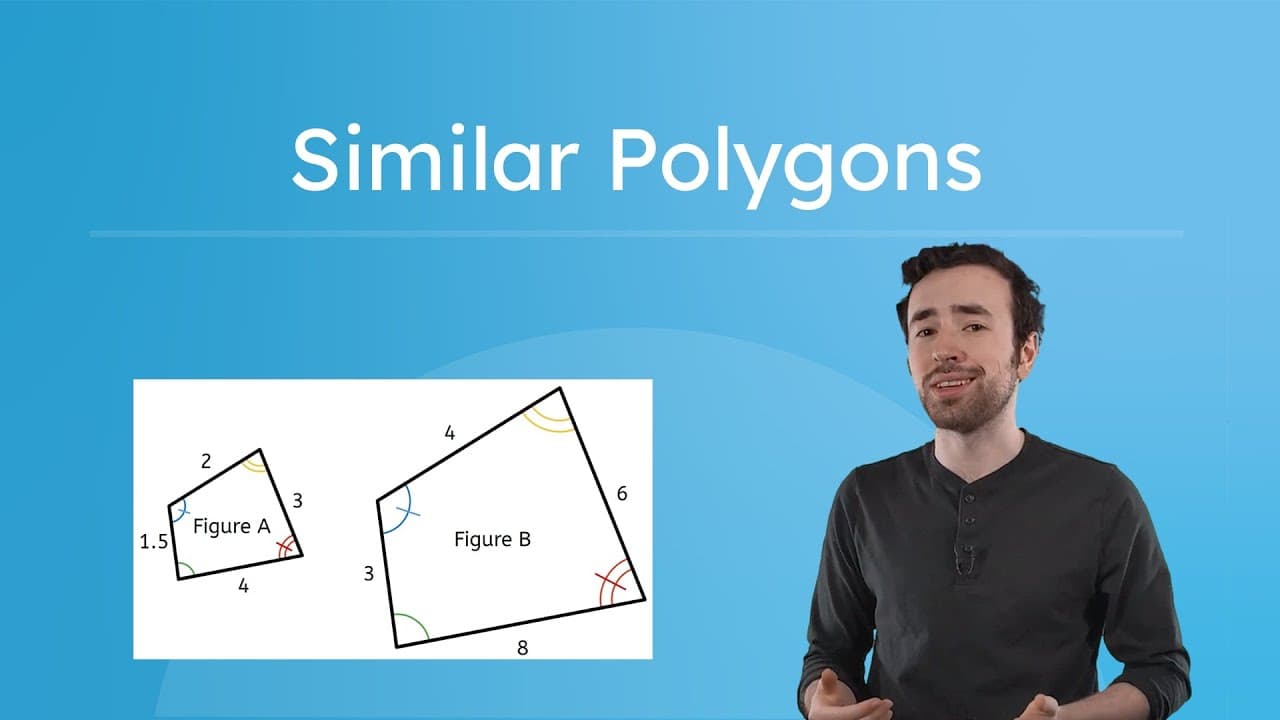
Understanding Similar Polygons and Finding Unknown Values

Understanding Similar Polygons and Finding Unknown Values

This educational video provides a comprehensive introduction to the concept of similar polygons in geometry. It breaks down the two fundamental requirements for similarity: corresponding angles must be congruent, and corresponding sides must be proportional. The instructor, Justin, guides viewers through visual examples using quadrilaterals, pentagons, and triangles to demonstrate how to identify these attributes and verify similarity using both scale factors and ratios. The video covers essential skills such as writing similarity statements, identifying corresponding parts even when figures are rotated or re-oriented, and calculating scale factors between figures. It emphasizes the importance of consistency when setting up ratios (e.g., always going from Figure A to Figure B) and offers practical tips like redrawing figures to share the same orientation to avoid errors. For classroom application, this video serves as an excellent instructional tool for connecting geometric concepts with algebraic problem-solving. It concludes with step-by-step walkthroughs of two practice problems: one focusing on finding missing angles and calculating ratios, and another that requires setting up a proportion to solve for an unknown variable (x) in a side length expression. This dual focus makes it valuable for reinforcing both geometry standards and algebraic manipulation skills.

Miacademy & MiaPrep Learning ChannelMiacademy & MiaPrep Learning Channel

9mins 53s

Video
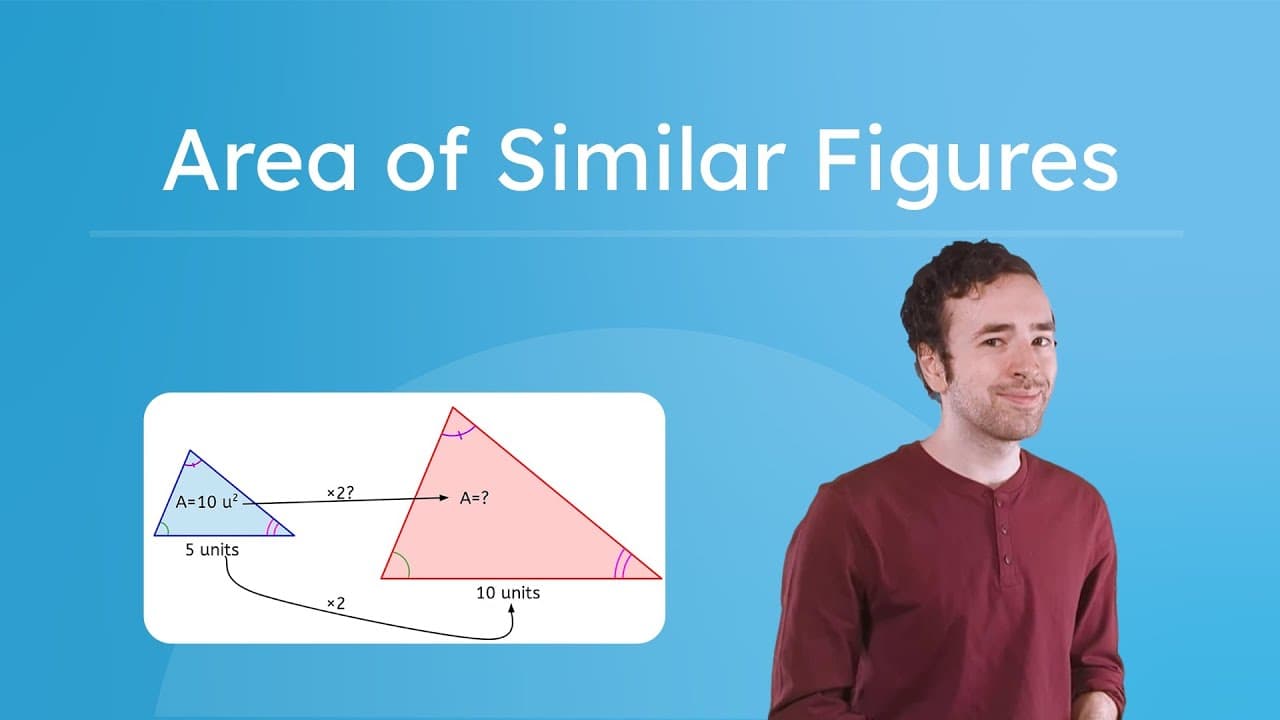
How Scale Factors Affect the Area of Similar Figures

How Scale Factors Affect the Area of Similar Figures

This instructional video explores the mathematical relationship between the side lengths and areas of similar geometric figures. Narrated by Justin, the lesson guides students from a review of basic similarity concepts—like congruent angles and proportional sides—to a deeper understanding of how changing dimensions in two directions affects the total area. Through a series of data experiments and visual proofs using squares, the video derives the rule that the ratio of the areas is the square of the ratio of the corresponding side lengths. The video covers key themes such as scale factors, proportional reasoning, and the difference between linear (1D) and square (2D) measurements. It systematically tests hypotheses (addition, multiplication) before confirming that squaring is the correct operation. The lesson creates a bridge between arithmetic operations and geometric properties, reinforcing why units of area are always "squared." For educators, this video serves as an excellent core lesson for a Geometry unit on similarity. It moves beyond rote memorization by providing a conceptual derivation of the formula, making it easier for students to retain. The included practice problems model step-by-step algebraic thinking, showing students how to set up equations to solve for missing areas or side lengths. It effectively addresses the common misconception that area scales linearly with side length.

Miacademy & MiaPrep Learning ChannelMiacademy & MiaPrep Learning Channel

11mins 51s

Video
ACT Math Practice Test: Review of Algebra, Geometry, and Trig Concepts

ACT Math Practice Test: Review of Algebra, Geometry, and Trig Concepts

This comprehensive video tutorial serves as an intensive review for the ACT Math section, covering a wide array of topics crucial for high school students preparing for college entrance exams. The content is structured as a series of 31 practice problems that mimic the style and difficulty of actual ACT questions. It progresses through various mathematical domains including pre-algebra, elementary algebra, intermediate algebra, coordinate geometry, plane geometry, and trigonometry. The video adopts a pause-and-practice format, encouraging active participation where viewers attempt each problem before watching the detailed step-by-step solution. Key themes explored in this review include solving linear and quadratic equations, working with functions, understanding geometric properties of polygons and circles, applying trigonometric ratios (SOH CAH TOA) and identities, and analyzing statistical data. The video also places a strong emphasis on real-world application problems involving percentages, sales tax, discounts, and unit conversions. Particular attention is given to algebraic manipulation strategies, such as solving systems of equations and simplifying complex expressions, as well as test-taking tactics like identifying key information in word problems. For educators and students, this video is a valuable resource for standardized test preparation. It allows teachers to identify specific areas of weakness in student understanding by isolating problem types (e.g., if a student struggles with problem 10, they need more support with circle geometry). The step-by-step explanations model clear mathematical reasoning, demonstrating not just *how* to get the right answer, but *why* specific methods work. This makes it an excellent tool for flipped classrooms, homework support, or intensive boot-camp style review sessions prior to test dates.
The Organic Chemistry TutorThe Organic Chemistry Tutor

20mins 33s

Video
Writing Linear Equations for Word Problems

Writing Linear Equations for Word Problems

This instructional math video features Justin guiding viewers through the process of constructing linear equations from real-world word problems. Rather than solving given equations, the focus is on the critical skill of translating a text narrative into a mathematical model using the slope-intercept form ($y = mx + b$). The video uses three distinct examples—painting a fence, training for a marathon, and climbing a mountain—to demonstrate how to extract the necessary components from a story. Key themes include identifying the y-intercept as the "initial or starting value" and calculating the slope as the "rate of change." The video explicitly covers both negative slope (decreasing values, like painting a fence) and positive slope (increasing values, like running distance or climbing height). It breaks down the formula for slope ($change in y / change in x$) within the context of the word problems, helping students see the connection between abstract formulas and concrete situations. For educators, this video is an excellent resource for bridging the gap between arithmetic reasoning and algebraic modeling. It directly addresses the common student struggle of "where do I start?" when facing word problems by providing a consistent two-step framework: find the start (y-intercept) and find the rate (slope). This systematic approach helps demystify algebraic modeling and is highly applicable for 8th-grade math standards regarding functions and high school Algebra I curricula.

Miacademy & MiaPrep Learning ChannelMiacademy & MiaPrep Learning Channel

3mins 48s

Video
Solving Complex Proportions and Rational Equations

Solving Complex Proportions and Rational Equations

This video serves as an engaging and comprehensive guide to solving advanced proportions and rational equations, specifically those where variables appear in the denominator. Using a relatable hook about baking bread and scaling recipes, the narrator introduces the concept of a proportion as two equal ratios. The video transitions from a simple conceptual problem into increasingly complex algebraic equations, guiding viewers through the logic of "clearing the denominator" by treating algebraic expressions as single units to be multiplied across the equation.

Miacademy & MiaPrep Learning ChannelMiacademy & MiaPrep Learning Channel

10mins 2s

Video
Finding and Identifying Equivalent Ratios

Finding and Identifying Equivalent Ratios

This instructional math video provides a clear and methodical introduction to understanding, finding, and verifying equivalent ratios. Hosted by Mr. J, the lesson uses a blackboard style format to walk students through four distinct examples. The first half of the video focuses on generating new equivalent ratios using both multiplication and division, while the second half challenges students to identify correct equivalent ratios from a multiple-choice list, encouraging critical thinking and verification skills. The content covers key mathematical concepts including the relationship between ratios and fractions, the necessity of applying operations to both terms in a ratio, and the concept of simplest form. A significant portion of the instruction is dedicated to avoiding common pitfalls, specifically emphasizing that "order matters" when working with ratios—a frequent point of confusion for middle school students. For educators, this video serves as an excellent direct instruction tool or review resource for a 6th or 7th-grade math unit on ratios and proportional relationships. The step-by-step nature of the problem-solving allows teachers to pause the video before solutions are revealed, turning the viewing experience into an interactive practice session. The clear visual layout and Mr. J's calm, articulate explanation make it accessible for students who may be struggling with the transition from fractions to ratios.

Math with Mr. JMath with Mr. J

8mins 15s

Video
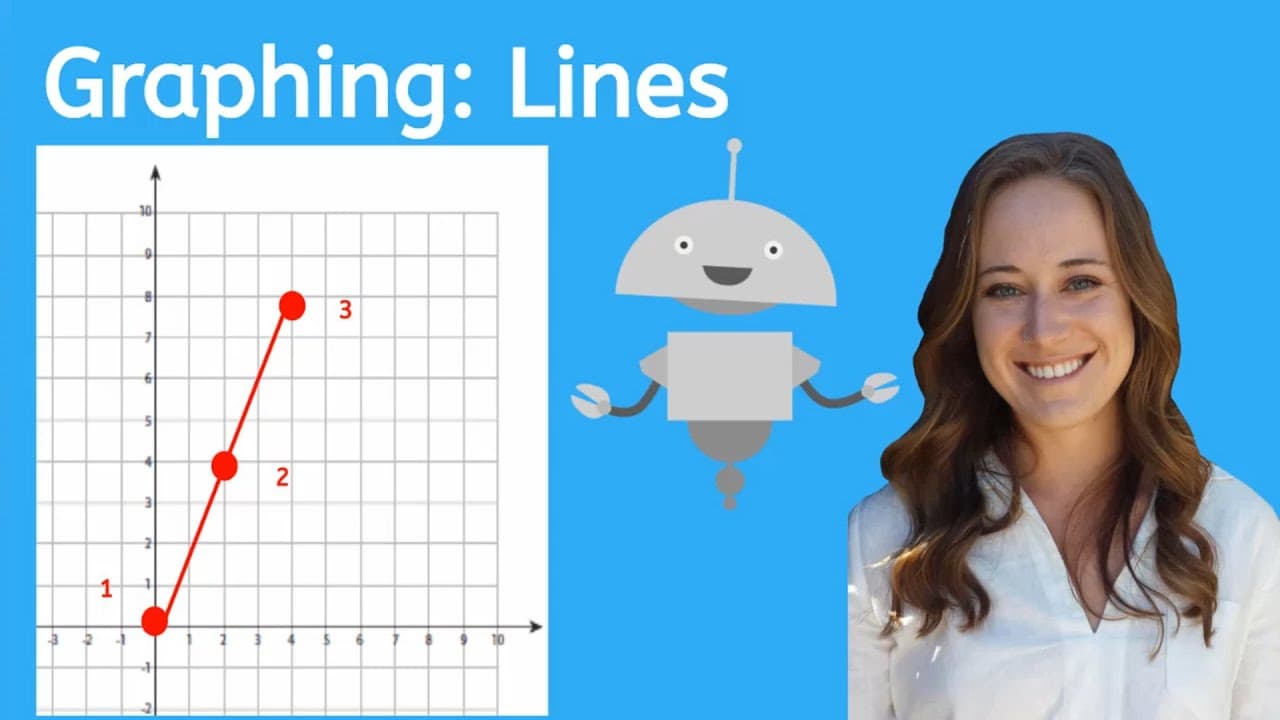
Graphing Lines Using Slope and a Point

Graphing Lines Using Slope and a Point

This instructional math video guides students through the process of graphing linear equations using only the slope and a specific point. The narrator, Justin, builds upon previous knowledge of what slope is (rise over run) to demonstrate how to visualize and draw lines on a coordinate plane. The video progresses from straightforward examples to more complex scenarios involving negative integers and whole numbers, ensuring students understand how to convert these values into graphable fractions.

Miacademy & MiaPrep Learning ChannelMiacademy & MiaPrep Learning Channel

4mins 22s

Video
Finding the Slope and Y-Intercept from Linear Equations

Finding the Slope and Y-Intercept from Linear Equations

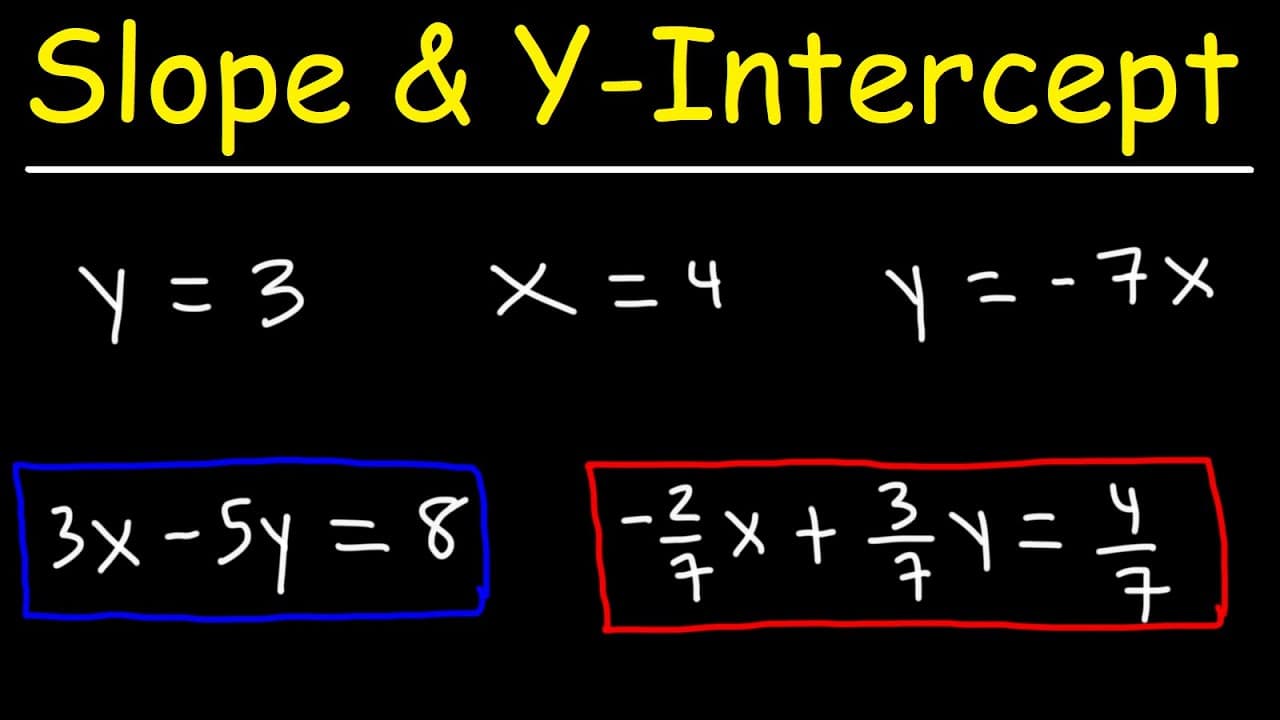
This comprehensive algebra tutorial guides students through the process of identifying the slope and y-intercept from various forms of linear equations. Starting with the standard slope-intercept form, the video progressively introduces more complex scenarios, including equations that require rearranging, implicit coefficients, and the unique cases of vertical and horizontal lines. The instructor uses clear, step-by-step algebraic manipulation to demonstrate how to isolate variables and identify key components.

The Organic Chemistry TutorThe Organic Chemistry Tutor

15mins 16s

Video
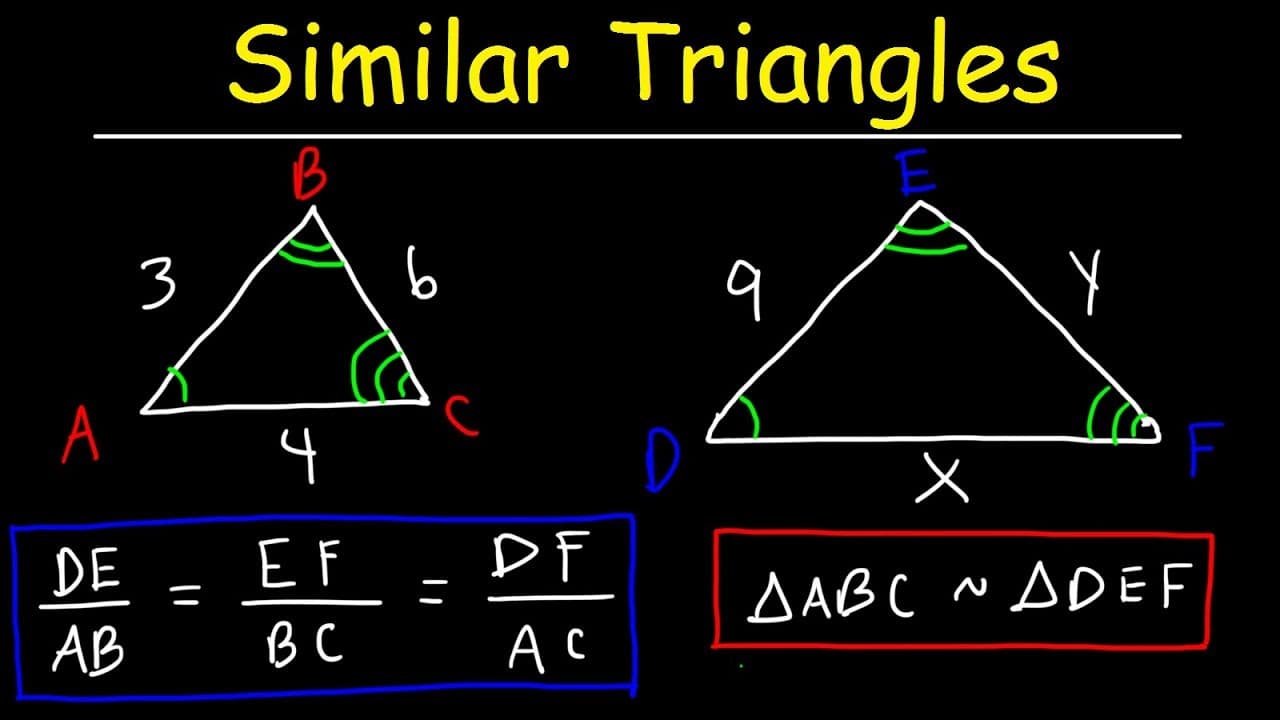
How to Find Missing Sides of Similar Triangles

How to Find Missing Sides of Similar Triangles

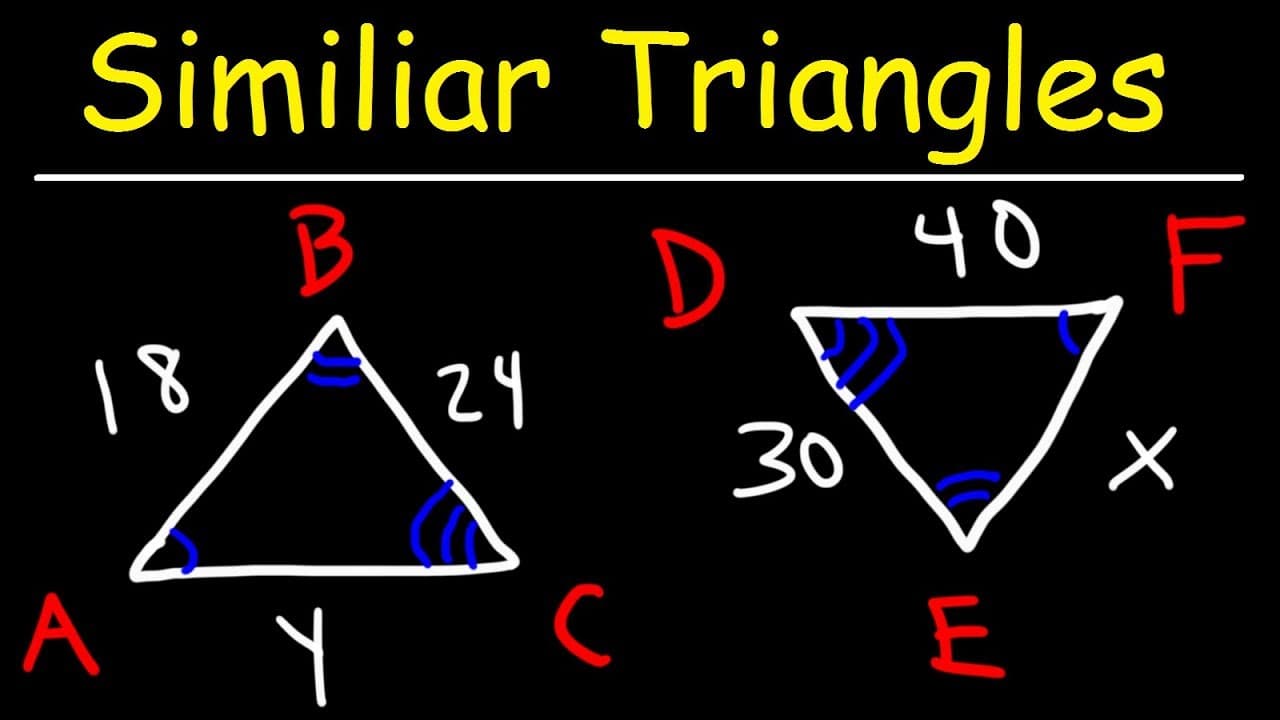
This educational video provides a comprehensive tutorial on finding missing side lengths in similar triangles using proportions. The instructor systematically guides viewers through four distinct examples that increase in complexity, demonstrating how to identify corresponding sides based on congruent angles and how to set up algebraic equations to solve for unknown variables. The content covers key geometric concepts including triangle similarity, corresponding parts, and ratio/proportion. It progresses from basic right triangles with integer sides to more complex scenarios involving scalene triangles, algebraic expressions (binomials) as side lengths, and vertical angle configurations (hourglass figures). The video emphasizes the importance of using angle markings to correctly match sides rather than relying on visual orientation. For educators, this video serves as an excellent instructional tool for Geometry and Algebra students. It explicitly models the procedural thinking required to solve geometry problems, including setting up proportions, cross-multiplying, using the distributive property, and simplifying fractions to make mental math easier. The step-by-step approach makes it ideal for introducing the topic or reviewing for assessments.

The Organic Chemistry TutorThe Organic Chemistry Tutor

11mins 40s

Video
Identifying and Solving with Congruent and Similar Figures

Identifying and Solving with Congruent and Similar Figures

This comprehensive math video explores the core geometric concepts of congruent and similar figures. Narrator Kaylee guides students from basic visual identification of shapes to the more complex application of ratios and proportions. The video begins by defining congruence as figures with the exact same shape and size, regardless of orientation, before contrasting this with similar figures, which share the same shape but differ in size.

Miacademy & MiaPrep Learning ChannelMiacademy & MiaPrep Learning Channel

12mins 46s

Video
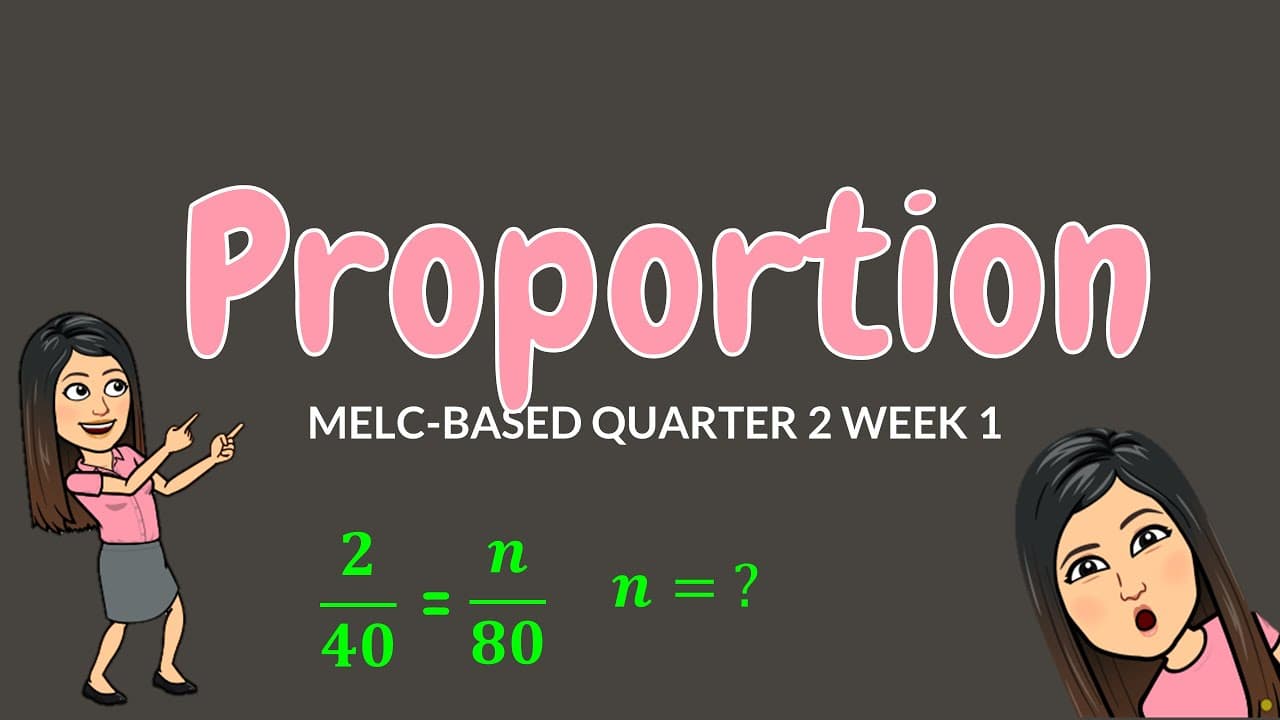
Understanding Proportions and How to Solve Them

Understanding Proportions and How to Solve Them

This comprehensive mathematics tutorial introduces students to the fundamental concepts of proportions, building upon prior knowledge of ratios and equivalent ratios. The video utilizes clear animations and real-world analogies, such as snacks and baking ingredients, to demystify abstract algebraic concepts. It systematically guides viewers through defining a proportion, identifying its components (means and extremes), and verifying whether two ratios form a true proportion.

Sheena DoriaSheena Doria

9mins 30s

Video
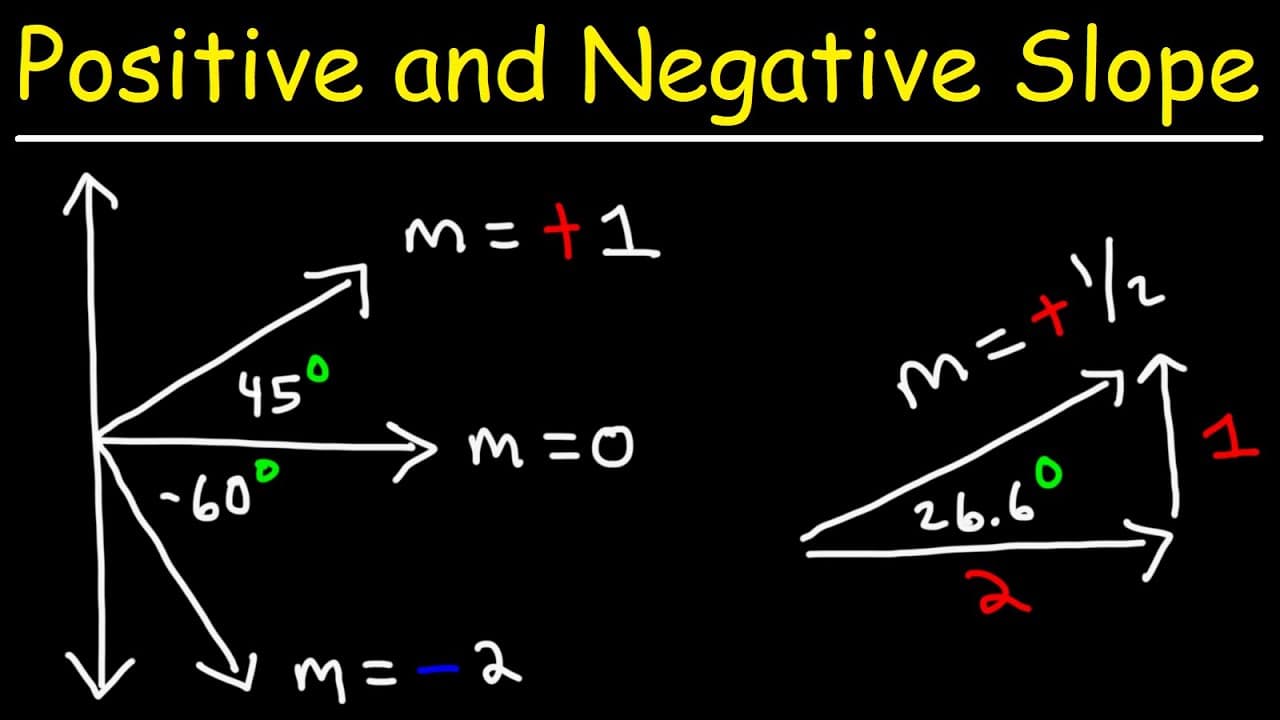
Understanding Positive and Negative Slope: A Visual Guide

Understanding Positive and Negative Slope: A Visual Guide

This clear, high-contrast instructional video provides a visual and algebraic explanation of slope, specifically focusing on the difference between positive, negative, zero, and undefined slopes. The narrator breaks down the fundamental definition of slope as "rise over run" (change in y divided by change in x) and uses dynamic visual diagrams to demonstrate how changes in rise and run affect the steepness of a line. A key feature of this video is its use of trigonometry (tangent/arctangent) to connect slope values to specific angles in degrees, offering a deeper conceptual understanding than standard Algebra 1 tutorials. The video culminates in a comprehensive "starburst" diagram that simultaneously displays lines with slopes of 0, 1, 2, 3, undefined, -1, -2, and -3, allowing students to visually compare steepness and direction relative to the origin. For educators, this resource serves as an excellent bridge between basic graphing concepts and more advanced trigonometric applications. It is particularly useful for visual learners who need to see how numerical slope values correspond to the physical "steepness" of a line. The clean blackboard style makes it easy to replicate the diagrams in class, and the inclusion of the angle calculations provides a natural extension for advanced students or geometry classes.

The Organic Chemistry TutorThe Organic Chemistry Tutor

5mins 9s

Video
Mastering Distance, Rate, and Time Word Problems

Mastering Distance, Rate, and Time Word Problems

This instructional math video provides a structured approach to solving distance, rate, and time word problems using rational equations. The narrator, Justin, introduces the fundamental relationship between these variables ($t = d/r$) and outlines a clear four-step process for tackling these often-confusing problems: filling in a data table, setting up the appropriate equation, solving for the unknown, and interpreting the answer in the context of the original question. The video explores key algebraic themes including modeling real-world scenarios, manipulating rational expressions, and solving both linear and quadratic equations that arise from these models. It specifically addresses common scenarios like traveling "with the wind" versus "against the wind," teaching students how to mathematically represent these external forces by adding to or subtracting from a base rate. For educators, this video is an excellent resource for Algebra 1 or Algebra 2 classrooms. It scaffolds complex word problems into manageable visual components, helping students organize their thinking. The step-by-step walkthroughs of two distinct examples—one resulting in a linear equation solved via cross-multiplication and another resulting in a quadratic solved via the LCM method—provide a comprehensive model for students to follow in their own practice.

Miacademy & MiaPrep Learning ChannelMiacademy & MiaPrep Learning Channel

12mins 37s

Video
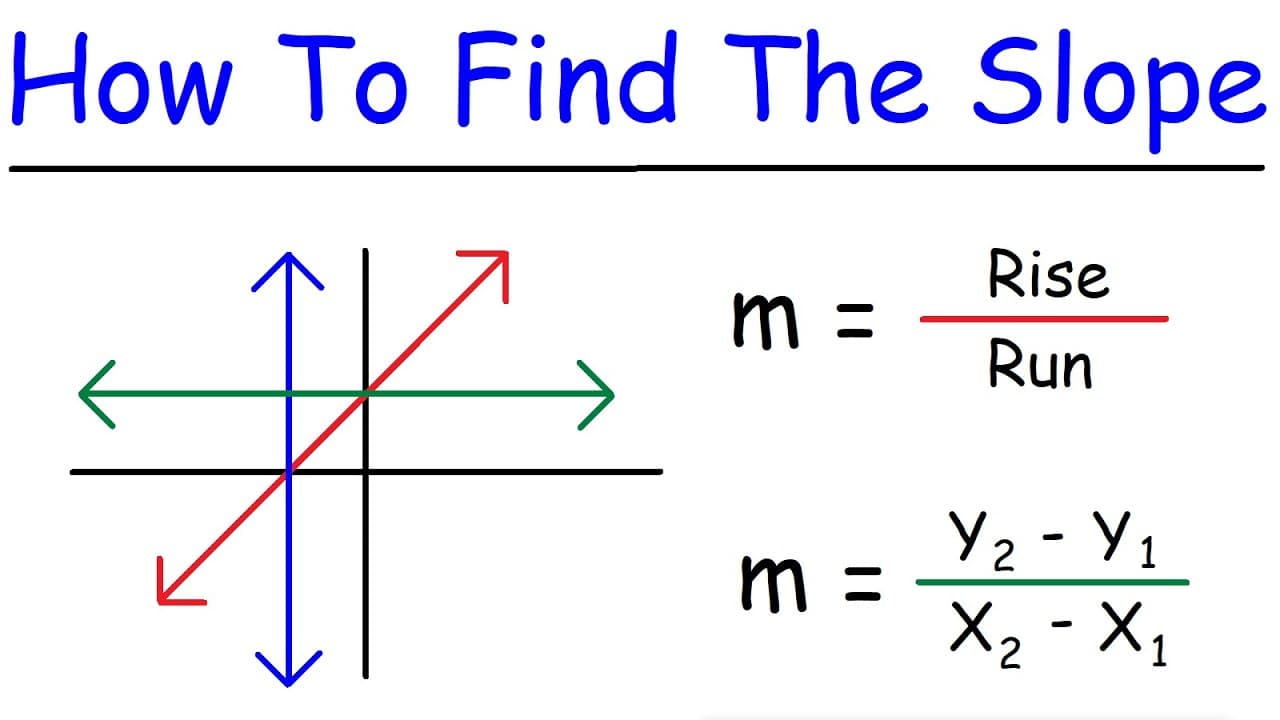
How to Calculate the Slope of a Line from a Graph

How to Calculate the Slope of a Line from a Graph

This educational math video provides a comprehensive tutorial on how to calculate the slope of a line given its graph. The narrator introduces two primary methods for finding slope: the visual "Rise over Run" method and the algebraic Slope Formula ($m = \frac{y_2 - y_1}{x_2 - x_1}$). The video uses a digital whiteboard format with a coordinate plane to clearly demonstrate each step of the calculation process.

The Organic Chemistry TutorThe Organic Chemistry Tutor

10mins 11s

Video
How to Find Slope from a Graph Using Rise Over Run

How to Find Slope from a Graph Using Rise Over Run

This video provides a clear, step-by-step guide to understanding and calculating the slope of a line directly from a graph. It begins by introducing slope intuitively as a measure of steepness and direction, distinguishing between positive (uphill) and negative (downhill) slopes. The video transitions from the formal mathematical definition of slope (change in y over change in x) to the practical and memorable "rise over run" method used in most algebra classrooms. Through three distinct examples, the narrator demonstrates how to identify two points on a line, count the vertical change (rise) and horizontal change (run), and set up the ratio to determine the slope. It covers integer slopes, fractional slopes, and negative slopes, ensuring students encounter various scenarios. The visuals clearly highlight the grid counting method with animated arrows, making the abstract concept concrete. This resource is highly valuable for introducing linear functions in Algebra I or Pre-Algebra. It directly addresses common student anxieties about picking the "right" points by proving that any two points on a line yield the same result. Teachers can use this video to scaffold instruction, moving from visual identification of slope to calculation, or as a remediation tool for students struggling with the slope formula.

Miacademy & MiaPrep Learning ChannelMiacademy & MiaPrep Learning Channel

4mins 17s

Video
Finding X and Y Intercepts from Tables

Finding X and Y Intercepts from Tables

This educational video provides a comprehensive tutorial on how to find x and y intercepts from a table of values representing a linear function. Starting with the basic definition of intercepts (where x or y equals zero), the video progresses from simple tables where the intercepts are clearly visible to more complex scenarios where the pattern must be extended or calculated to find the zero values. The content covers calculating slope (rate of change) from a table and using that ratio to extrapolate missing values forward or backward. It demonstrates three distinct methods: simple observation, extending the pattern row-by-row, and performing calculation 'jumps' to find distant intercepts without writing out every intermediate step. Ideal for Algebra I students, this resource helps bridge the gap between arithmetic patterns and linear equations. It emphasizes logical reasoning and proportional thinking, moving students away from rote memorization and toward a deeper understanding of linear relationships and function behavior.

Miacademy & MiaPrep Learning ChannelMiacademy & MiaPrep Learning Channel

6mins 12s

Video
Solving for Sides, Perimeter, and Area in Similar Figures

Solving for Sides, Perimeter, and Area in Similar Figures

This comprehensive math tutorial guides students through the principles of solving problems involving similar figures, specifically focusing on triangles and quadrilaterals. The video breaks down complex geometric concepts into manageable steps, demonstrating how to identify corresponding sides, calculate enlargement ratios (scale factors), and set up proportions to solve for missing variables. It moves from basic side length calculations to more advanced applications involving perimeter and area relationships.

The Organic Chemistry TutorThe Organic Chemistry Tutor

18mins 4s

Video
Mastering Direct, Inverse, and Joint Variation Word Problems

Mastering Direct, Inverse, and Joint Variation Word Problems

This comprehensive algebra tutorial provides a deep dive into direct, inverse, and joint variation word problems. The video begins by systematically teaching students how to translate written sentences into algebraic equations using the constant of variation (k). It covers simple variations as well as more complex scenarios involving squares, square roots, and cubes. The instructional approach is notable for teaching two distinct methods for every problem: a conceptual method using proportional reasoning (e.g., "if x doubles, y must quadruple") and a standard algebraic method (solving for k, then substitution). This dual approach helps students verify their answers and develop a stronger intuitive understanding of how variables relate to one another. Ideal for Algebra 1 and Algebra 2 curriculums, this video serves as an excellent resource for teaching students how to model real-world relationships mathematically. It progresses from basic direct variation to complex mixed variation problems, offering clear, step-by-step mental math strategies for simplifying calculations along the way.

The Organic Chemistry TutorThe Organic Chemistry Tutor

20mins 45s

Video
Identifying Independent and Dependent Variables When Graphing

Identifying Independent and Dependent Variables When Graphing

This educational video provides a clear, step-by-step guide to understanding linear graphs, slope, and the critical distinction between dependent and independent variables. Narrated by Kaylee, the lesson begins by reviewing how to calculate slope using "rise over run" on a coordinate grid, demonstrating how a constant slope allows points to form a straight line. It then transitions into real-world applications, using examples like running speed and dog walking wages to show how linear relationships appear in everyday life.

Miacademy & MiaPrep Learning ChannelMiacademy & MiaPrep Learning Channel

13mins 41s

Video
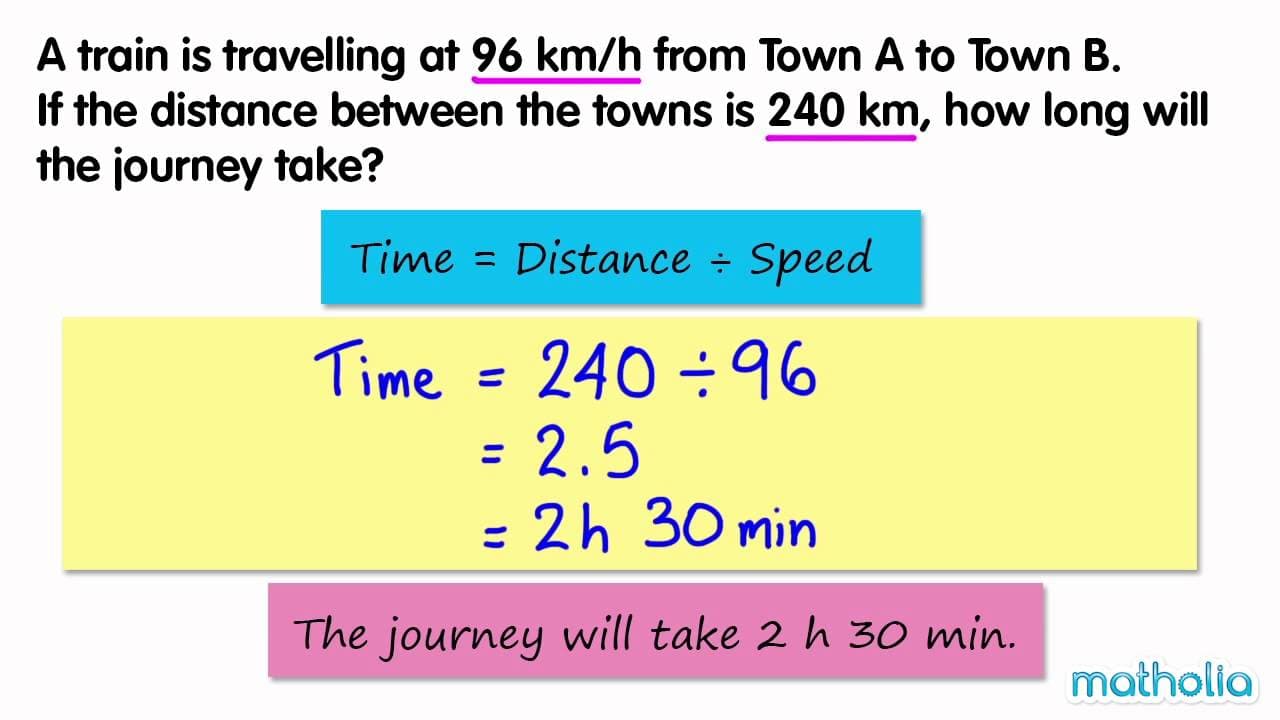
Calculating Travel Time Using Speed and Distance

Calculating Travel Time Using Speed and Distance

A clear, step-by-step instructional video demonstrating how to calculate time when given speed and distance values. Through three distinct word problems featuring a train, a skier, and a ladybug, the video applies the formula Time = Distance ÷ Speed to solve real-world travel scenarios. The tutorial progresses in difficulty, starting with straightforward calculations and advancing to problems requiring unit conversions before solving. The video explores key mathematical themes including rate, ratios, and measurement. It places significant emphasis on the critical step of verifying unit consistency (e.g., ensuring distance is measured in the same unit for both speed and total distance) before performing division. It also demonstrates how to interpret decimal results in the context of time, such as converting 2.5 hours into 2 hours and 30 minutes. For educators, this resource serves as an excellent model for teaching multi-step word problems involving rates. It helps students move beyond rote calculation by modeling the metacognitive strategy of "checking units first." The visual breakdown of the division process and the explicit conversion of units make it a valuable tool for reinforcing pre-algebra skills and measurement concepts in upper elementary and middle school classrooms.

MatholiaChannelMatholiaChannel

2mins 37s

Video
Translating Math Words: Multiplication and Division Vocabulary

Translating Math Words: Multiplication and Division Vocabulary

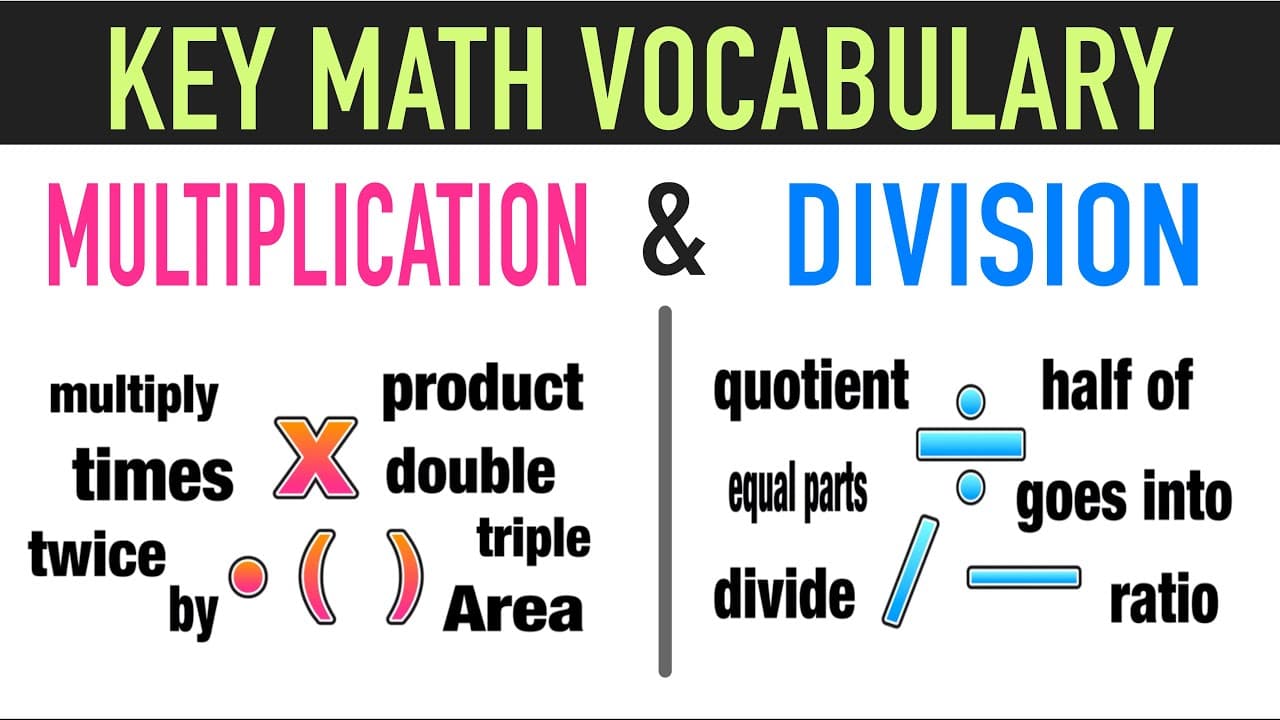
This educational video serves as a clear guide to understanding the vocabulary associated with multiplication and division, positioning them as inverse operations. Using relatable analogies like "day and night" or "sweet and sour," the video simplifies the concept that multiplication and division are mathematical opposites that undo each other. It demonstrates this relationship visually using gummy bears to show how multiplying by a number and then dividing by that same number returns you to the original value. The core focus is on translating English words into mathematical symbols, a crucial skill for solving word problems and beginning algebra. The video explicitly lists key terms associated with multiplication (product, times, area, twice, double) and division (quotient, ratio, split, equal parts). It provides specific examples, such as translating "11 x 2" and "20 ÷ 4" into various verbal phrases. For educators, this resource is an excellent tool for literacy-in-math lessons, helping students build a "math dictionary." It directly addresses the struggle students often face when trying to determine which operation to use in word problems. The video includes built-in pause points that challenge students to brainstorm additional synonyms for math operations, making it interactive and perfect for classroom discussion.

Mashup MathMashup Math

4mins 15s

Video
ACT Math Practice Test: Review of Algebra, Geometry, and Trig Concepts

ACT Math Practice Test: Review of Algebra, Geometry, and Trig Concepts

This comprehensive video tutorial serves as an intensive review for the ACT Math section, covering a wide array of topics crucial for high school students preparing for college entrance exams. The content is structured as a series of 31 practice problems that mimic the style and difficulty of actual ACT questions. It progresses through various mathematical domains including pre-algebra, elementary algebra, intermediate algebra, coordinate geometry, plane geometry, and trigonometry. The video adopts a pause-and-practice format, encouraging active participation where viewers attempt each problem before watching the detailed step-by-step solution. Key themes explored in this review include solving linear and quadratic equations, working with functions, understanding geometric properties of polygons and circles, applying trigonometric ratios (SOH CAH TOA) and identities, and analyzing statistical data. The video also places a strong emphasis on real-world application problems involving percentages, sales tax, discounts, and unit conversions. Particular attention is given to algebraic manipulation strategies, such as solving systems of equations and simplifying complex expressions, as well as test-taking tactics like identifying key information in word problems. For educators and students, this video is a valuable resource for standardized test preparation. It allows teachers to identify specific areas of weakness in student understanding by isolating problem types (e.g., if a student struggles with problem 10, they need more support with circle geometry). The step-by-step explanations model clear mathematical reasoning, demonstrating not just *how* to get the right answer, but *why* specific methods work. This makes it an excellent tool for flipped classrooms, homework support, or intensive boot-camp style review sessions prior to test dates.
The Organic Chemistry TutorThe Organic Chemistry Tutor

20mins 33s

Video
Mastering Similar Triangles: Postulates and Proofs

Mastering Similar Triangles: Postulates and Proofs

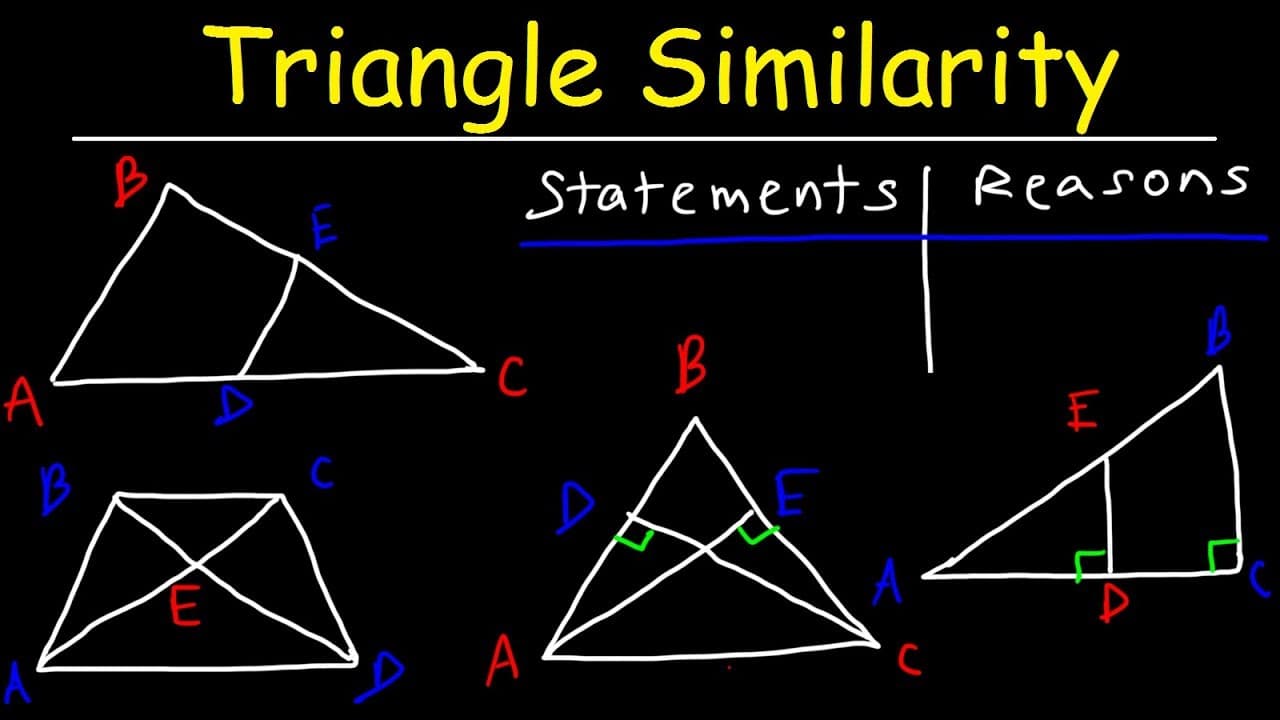
This comprehensive geometry tutorial provides a deep dive into proving triangle similarity, a fundamental concept in high school mathematics. The video begins by systematically explaining the four main methods for proving similarity: Angle-Angle-Angle (AAA), Angle-Angle (AA), Side-Side-Side (SSS), and Side-Angle-Side (SAS). It clearly distinguishes between these postulates and demonstrates how to identify them visually, explaining that while AAA exists, AA is the more commonly used and efficient method. The content transitions from theoretical definitions to practical application through numerical examples. Students are guided through problems where they must calculate ratios of corresponding sides to determine if triangles are similar using SSS and SAS. The video then advances to rigorous two-column geometric proofs. It walks viewers through complex scenarios involving isosceles trapezoids, parallel lines, alternate interior angles, and the reflexive property, modeling the logical step-by-step thinking required for formal geometric proofs. This resource is highly valuable for the classroom as it bridges the gap between basic computation and formal logic. It specifically addresses the challenging "Means-Extremes Product Theorem" (cross-multiplication in proofs), showing students how to work backwards from a product of segments to a similarity statement. The clear, slow-paced narration and visual markup of diagrams make it an excellent tool for introducing proofs or for remediation with struggling students.

The Organic Chemistry TutorThe Organic Chemistry Tutor

29mins 23s

Video
How to Convert Units Using Dimensional Analysis

How to Convert Units Using Dimensional Analysis

This educational video provides a clear and practical introduction to dimensional analysis, a mathematical method used to convert units of measurement. The narrator, Justin, breaks down the process of using known conversion rates to manipulate units, ensuring that unwanted units cancel out to reveal the desired result. Through step-by-step examples, viewers learn how to set up conversion chains for rates, such as changing miles per hour into feet per second. The video explores key themes of unit conversion, ratios, and algebraic thinking. It specifically covers two distinct types of problems: a standard rate conversion involving distance and time, and a more complex multi-variable problem involving currency exchange and mass. The visual presentation emphasizes the importance of placing units correctly in the numerator or denominator to achieve cancellation, a foundational skill for advanced math and science courses. For educators, this video serves as an excellent resource for bridging the gap between basic math skills and applied sciences like chemistry and physics. It demonstrates the "train track" or "fence post" method often used in stoichiometry. Teachers can use this video to introduce the concept of dimensional analysis, reinforce the importance of tracking units during calculation, or as a remediation tool for students struggling with multi-step word problems involving rates.
Miacademy & MiaPrep Learning ChannelMiacademy & MiaPrep Learning Channel

4mins 25s

Video
Understanding Proportions and How to Solve Them

Understanding Proportions and How to Solve Them

This comprehensive mathematics tutorial introduces students to the fundamental concepts of proportions, building upon prior knowledge of ratios and equivalent ratios. The video utilizes clear animations and real-world analogies, such as snacks and baking ingredients, to demystify abstract algebraic concepts. It systematically guides viewers through defining a proportion, identifying its components (means and extremes), and verifying whether two ratios form a true proportion.

Sheena DoriaSheena Doria

9mins 30s

Video
Mastering Ratios and Proportions with Word Problems

Mastering Ratios and Proportions with Word Problems

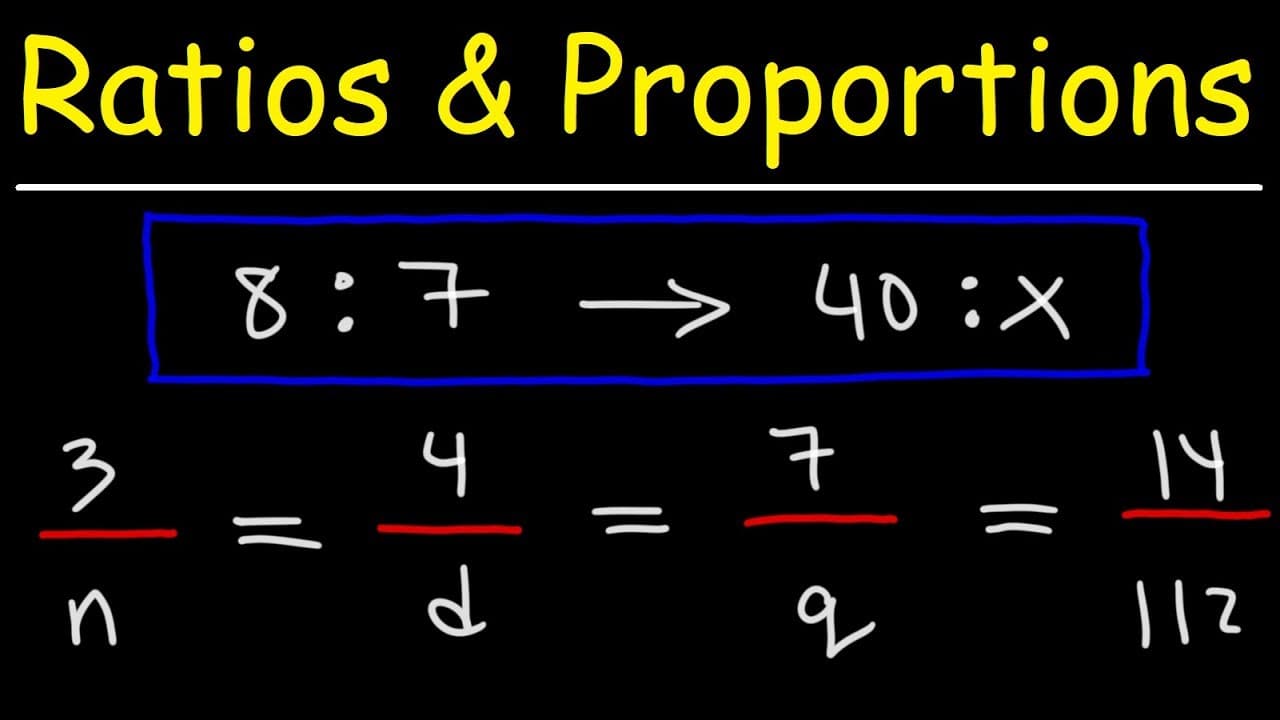
This educational video provides a comprehensive tutorial on solving word problems involving ratios and proportions. Through five distinct examples, the narrator demonstrates various techniques for setting up and solving these mathematical problems, ranging from basic ratio simplification to more complex multi-step scenarios involving three distinct variables. The video uses a black background with clear, handwritten steps to illustrate the thought process behind each solution. The content explores key mathematical themes including converting between ratios and fractions, simplifying large numbers, using cross-multiplication to solve for unknown variables, and applying proportional reasoning to geometry and real-world scenarios. It specifically covers how to handle two-part ratios (like cats to dogs) and extends to three-part ratios (nickels to dimes to quarters), showing students how to relate parts to a total sum. For educators, this video serves as an excellent modeling tool for middle school math classes. It offers clear, step-by-step procedures that can help students transition from concrete understanding to abstract application of proportional reasoning. The variety of problems—ranging from population statistics to baking rates and geometric dimensions—allows teachers to show the versatile application of these concepts across different contexts, making it useful for introducing new topics or reviewing before assessments.
The Organic Chemistry TutorThe Organic Chemistry Tutor

13mins 27s

Video
How to Calculate Percentage Increase Using Word Problems

How to Calculate Percentage Increase Using Word Problems

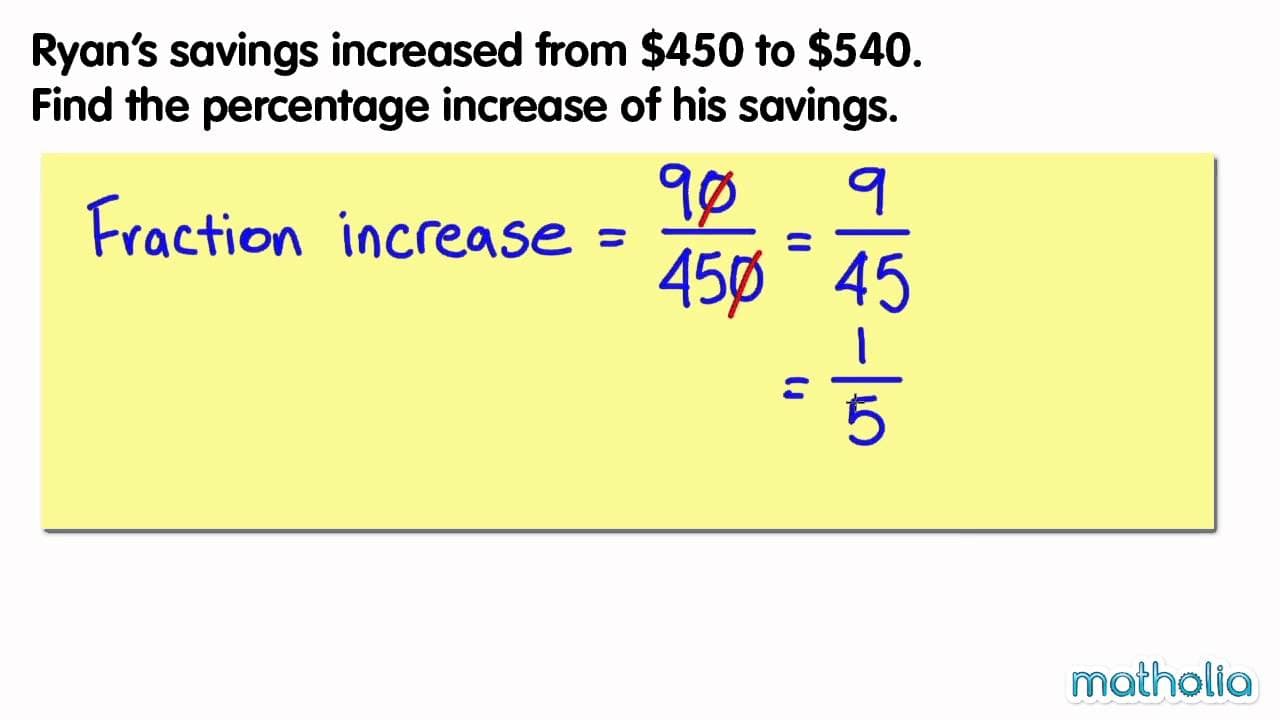
This educational video provides a clear, step-by-step tutorial on calculating percentage increase through three distinct word problems. It utilizes a consistent and pedagogical methodology: finding the numerical difference between the new and old values, expressing that difference as a fraction of the original value, and then converting that fraction into a percentage. The video employs visual bar models in the initial examples to help students conceptually understand the relationship between the original amount and the increase before moving into abstract numerical calculations. The key themes explored include interpreting word problems, subtraction to find differences, simplifying fractions, and converting fractions to percentages using equivalent fractions with a denominator of 100. The progression of examples—from a bakery scenario to personal savings and finally athletic performance—demonstrates the versatility of this mathematical concept across different real-world contexts. For the classroom, this video is an excellent resource for introducing or reinforcing the concept of percentage change. It models a specific strategy (finding a denominator of 100) that reinforces fraction fluency and number sense, rather than just teaching a formulaic algorithm like "multiply by 100." Teachers can use this to bridge the gap between fractions and percentages and to show students how to structure their working out for multi-step word problems.

MatholiaChannelMatholiaChannel

3mins 9s

Video
Finding and Identifying Equivalent Ratios

Finding and Identifying Equivalent Ratios

This instructional math video provides a clear and methodical introduction to understanding, finding, and verifying equivalent ratios. Hosted by Mr. J, the lesson uses a blackboard style format to walk students through four distinct examples. The first half of the video focuses on generating new equivalent ratios using both multiplication and division, while the second half challenges students to identify correct equivalent ratios from a multiple-choice list, encouraging critical thinking and verification skills. The content covers key mathematical concepts including the relationship between ratios and fractions, the necessity of applying operations to both terms in a ratio, and the concept of simplest form. A significant portion of the instruction is dedicated to avoiding common pitfalls, specifically emphasizing that "order matters" when working with ratios—a frequent point of confusion for middle school students. For educators, this video serves as an excellent direct instruction tool or review resource for a 6th or 7th-grade math unit on ratios and proportional relationships. The step-by-step nature of the problem-solving allows teachers to pause the video before solutions are revealed, turning the viewing experience into an interactive practice session. The clear visual layout and Mr. J's calm, articulate explanation make it accessible for students who may be struggling with the transition from fractions to ratios.

Math with Mr. JMath with Mr. J

8mins 15s

Video
How to Calculate Percent Increase and Decrease

How to Calculate Percent Increase and Decrease

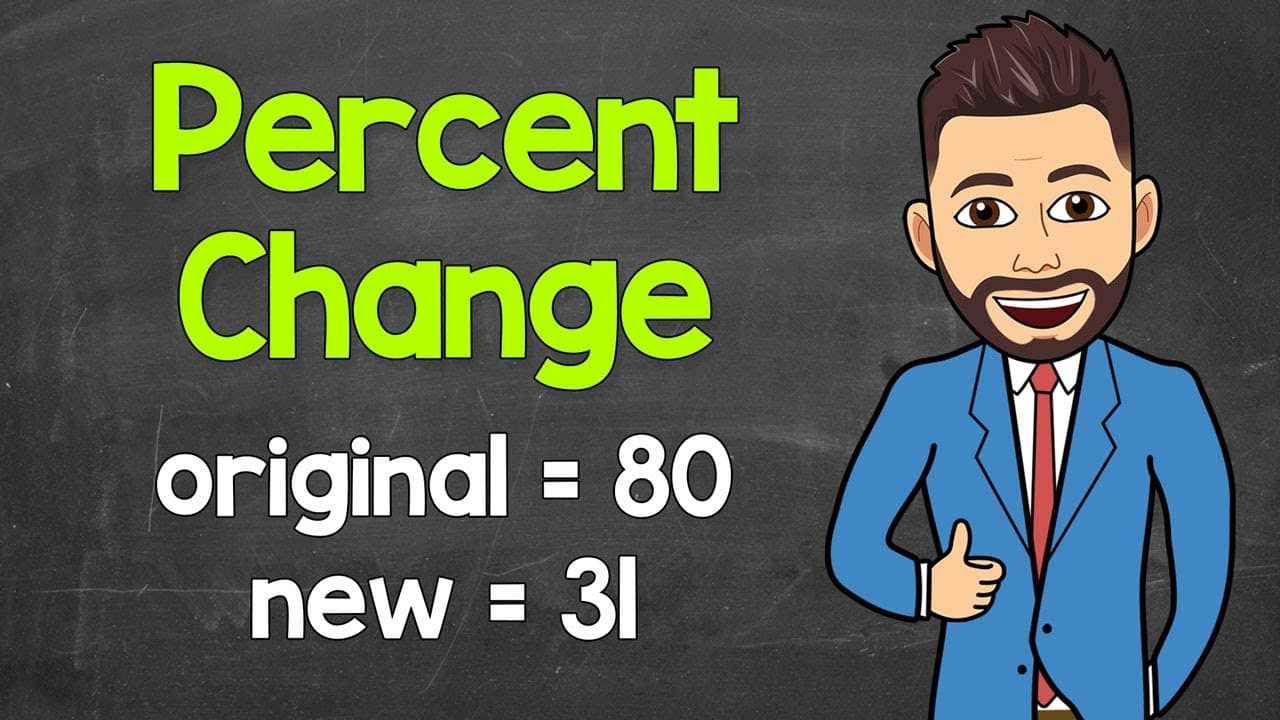
This instructional math video guides viewers through the step-by-step process of calculating percent change, covering both percent increases and decreases. The narrator, Mr. J, utilizes a clear formula—subtracting the original value from the new value, dividing by the original value, and multiplying by 100—to determine the percentage of change. The video systematically works through four distinct examples, ranging from simple integer changes to more complex problems involving decimals and rounding. Key themes include the importance of order of operations when setting up the formula, interpreting positive and negative results as increases or decreases respectively, and the technical skill of converting decimals to percentages. The video also addresses special cases, such as percent increases exceeding 100% and scenarios requiring rounding of long decimal answers. The visual aid of a digital blackboard helps students follow the handwritten calculations in real-time. For educators, this resource serves as an excellent tool for introducing or reinforcing the concept of percent change in middle school math curriculums. It provides a reliable procedural model that students can mimic. Teachers can use this video to support lessons on ratios and proportional relationships, specifically standard 7.RP.A.3, by having students pause after each problem setup to perform the calculation themselves before watching the solution.

Math with Mr. JMath with Mr. J

10mins 55s

Video
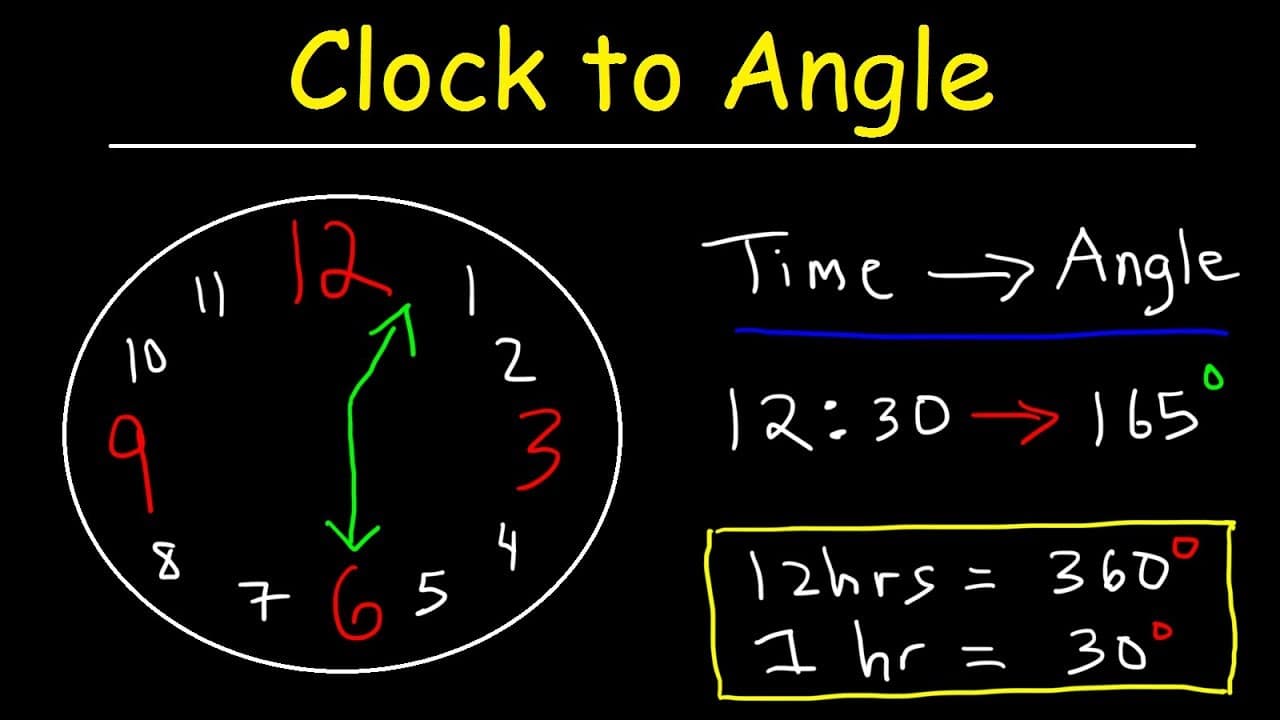
Calculating Angles on a Clock Face

Calculating Angles on a Clock Face

This math tutorial provides a step-by-step guide on how to calculate the precise angle between the hour and minute hands of an analog clock at specific times. The instructor uses clear visual diagrams and algebraic logic to demonstrate how to convert time into geometric degrees, breaking down the clock face into 30-degree sectors corresponding to each hour. The video covers four distinct examples—12:30, 1:20, 11:15, and 10:25—progressing from simpler half-hour calculations to more complex minute intervals involving fractions and decimals. Key themes include the geometry of circles (360 degrees), ratios and proportions (converting minutes to fractions of an hour), and critical thinking in determining determining angles based on relative positions. The video emphasizes that the hour hand is not static but moves proportionally as minutes pass, a common misconception that students often overlook when solving these types of problems. For educators, this video serves as an excellent resource for middle and high school geometry or algebra lessons. It bridges the gap between abstract concepts of degrees and fractions with a tangible, real-world object. Teachers can use the "Your Turn" segment to facilitate active learning and check for understanding before revealing the solution, making it a versatile tool for direct instruction, review, or enrichment activities.

The Organic Chemistry TutorThe Organic Chemistry Tutor

12mins 19s

Video
Solving Complex Proportions and Rational Equations

Solving Complex Proportions and Rational Equations

This video serves as an engaging and comprehensive guide to solving advanced proportions and rational equations, specifically those where variables appear in the denominator. Using a relatable hook about baking bread and scaling recipes, the narrator introduces the concept of a proportion as two equal ratios. The video transitions from a simple conceptual problem into increasingly complex algebraic equations, guiding viewers through the logic of "clearing the denominator" by treating algebraic expressions as single units to be multiplied across the equation.

Miacademy & MiaPrep Learning ChannelMiacademy & MiaPrep Learning Channel

10mins 2s

Video
Calculating Markup, Rate, and Selling Price

Calculating Markup, Rate, and Selling Price

This educational mathematics video provides a step-by-step tutorial on solving percent problems related to retail and business contexts. Specifically, it covers three core concepts: calculating Markup Price, determining Selling Price, and finding the Markup Rate. The video uses an animated teacher avatar and clear on-screen text to guide students through the formulas and arithmetic required for each type of problem.

Sheena DoriaSheena Doria

7mins 1s

Video
Mastering the Percent Equation Step-by-Step

Mastering the Percent Equation Step-by-Step

A comprehensive, step-by-step mathematics tutorial that teaches students how to solve various types of percent problems using the percent equation (Percent w Whole = Part). The video is methodically structured into three distinct sections, covering how to find the 'whole' when given a part and percent, how to find the 'part' given a whole and percent, and how to calculate the 'percent' when given the part and whole. Each section includes two detailed examples that demonstrate the procedural math involved, including long division and decimal multiplication.

Math with Mr. JMath with Mr. J

27mins 36s

Video
Understanding Ratios, Proportions, and Cross-Multiplication

Understanding Ratios, Proportions, and Cross-Multiplication

This educational math video provides a comprehensive introduction to the concepts of ratios and proportions, specifically tailored for upper elementary and middle school students. It begins by defining a ratio as a comparison of two quantities and demonstrates three different ways to write them: word form (is to), colon form (:), and fraction form. Using clear visual aids like fruits and bakery items, the video explains how to simplify ratios to their lowest terms and identify equivalent ratios. The second half of the video transitions into proportions, defining them as statements of equality between two ratios. It introduces specific vocabulary such as "means" and "extremes" and teaches students how to verify if two ratios form a proportion using cross-multiplication. The video concludes by demonstrating how to solve for a missing term (variable) within a proportion using algebra-lite steps, providing both real-world word problems and abstract numerical examples. This resource is highly valuable for teachers introducing pre-algebraic thinking. The step-by-step visual demonstrations make abstract concepts concrete, while the clear procedures for cross-multiplication provide students with a reliable tool for checking their work. The video effectively scaffolds learning from basic identification to solving for unknown variables, making it excellent for direct instruction or review stations.

Sheena DoriaSheena Doria

13mins 21s

Video
How Scale Factors Affect the Area of Similar Figures

How Scale Factors Affect the Area of Similar Figures

This instructional video explores the mathematical relationship between the side lengths and areas of similar geometric figures. Narrated by Justin, the lesson guides students from a review of basic similarity concepts—like congruent angles and proportional sides—to a deeper understanding of how changing dimensions in two directions affects the total area. Through a series of data experiments and visual proofs using squares, the video derives the rule that the ratio of the areas is the square of the ratio of the corresponding side lengths. The video covers key themes such as scale factors, proportional reasoning, and the difference between linear (1D) and square (2D) measurements. It systematically tests hypotheses (addition, multiplication) before confirming that squaring is the correct operation. The lesson creates a bridge between arithmetic operations and geometric properties, reinforcing why units of area are always "squared." For educators, this video serves as an excellent core lesson for a Geometry unit on similarity. It moves beyond rote memorization by providing a conceptual derivation of the formula, making it easier for students to retain. The included practice problems model step-by-step algebraic thinking, showing students how to set up equations to solve for missing areas or side lengths. It effectively addresses the common misconception that area scales linearly with side length.

Miacademy & MiaPrep Learning ChannelMiacademy & MiaPrep Learning Channel

11mins 51s

Video
How to Calculate Percent Error with a Real-World Example

How to Calculate Percent Error with a Real-World Example

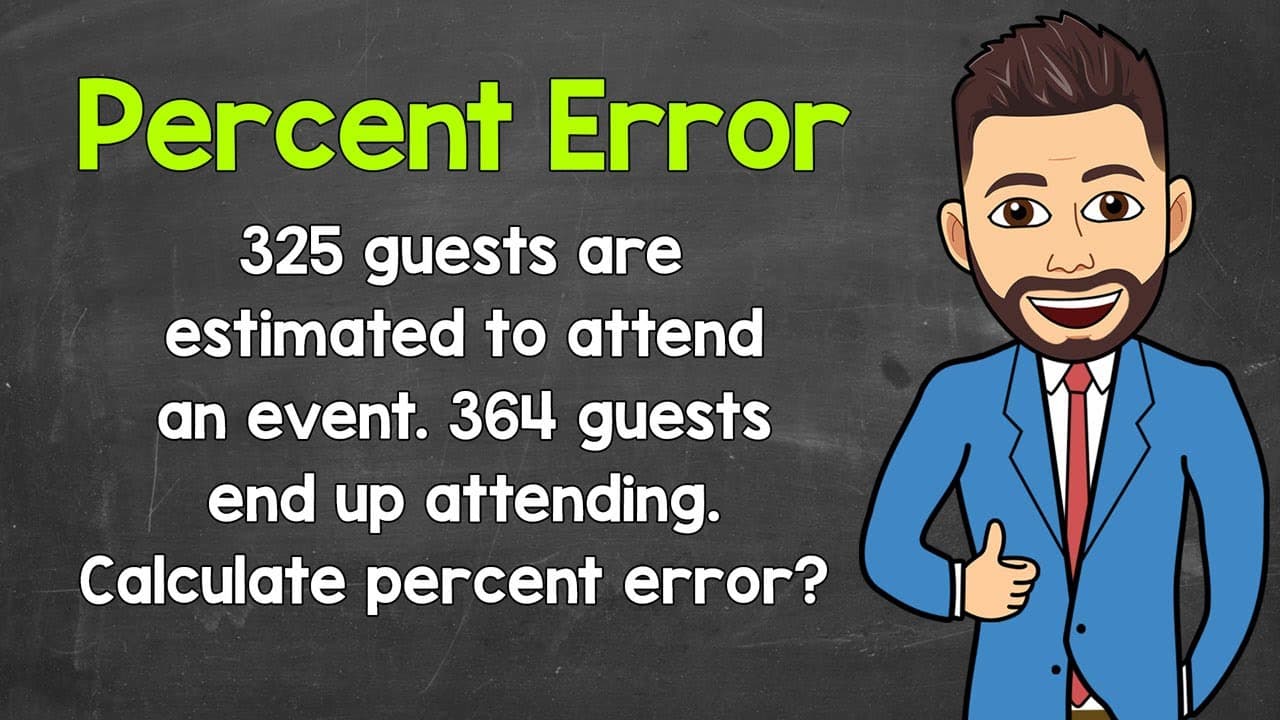
This instructional math video guides students through the process of calculating percent error, a critical concept for understanding accuracy in measurements and estimations. The video begins by defining percent error and presenting the standard formula involving absolute value. It then walks through a practical, real-world word problem involving an event planner who estimated 325 guests but had 364 actual attendees, demonstrating how to apply the formula to find the percentage of error in the estimation. The video covers several key mathematical themes, including the difference between estimated and actual values, the function of absolute value in determining error magnitude, and the procedural steps of converting decimals to percentages. It also explicitly demonstrates how to round the final result to the nearest whole percent, reinforcing rules of rounding in a practical context. The step-by-step breakdown ensures that viewers understand not just the calculation, but the logic behind comparing an estimate against reality. For educators, this resource serves as an excellent direct instruction tool or review aid for middle school math curriculums. It simplifies a multi-step process—subtraction, division, and multiplication—into manageable chunks. The use of a relatable scenario helps ground abstract statistics concepts in reality, making it useful for lessons on data analysis, scientific measurement, or financial literacy where prediction versus reality is a key metric.

Math with Mr. JMath with Mr. J

4mins 25s

Video
Identifying and Solving with Congruent and Similar Figures

Identifying and Solving with Congruent and Similar Figures

This comprehensive math video explores the core geometric concepts of congruent and similar figures. Narrator Kaylee guides students from basic visual identification of shapes to the more complex application of ratios and proportions. The video begins by defining congruence as figures with the exact same shape and size, regardless of orientation, before contrasting this with similar figures, which share the same shape but differ in size.

Miacademy & MiaPrep Learning ChannelMiacademy & MiaPrep Learning Channel

12mins 46s

Video
How to Calculate Percent Increase and Decrease

How to Calculate Percent Increase and Decrease

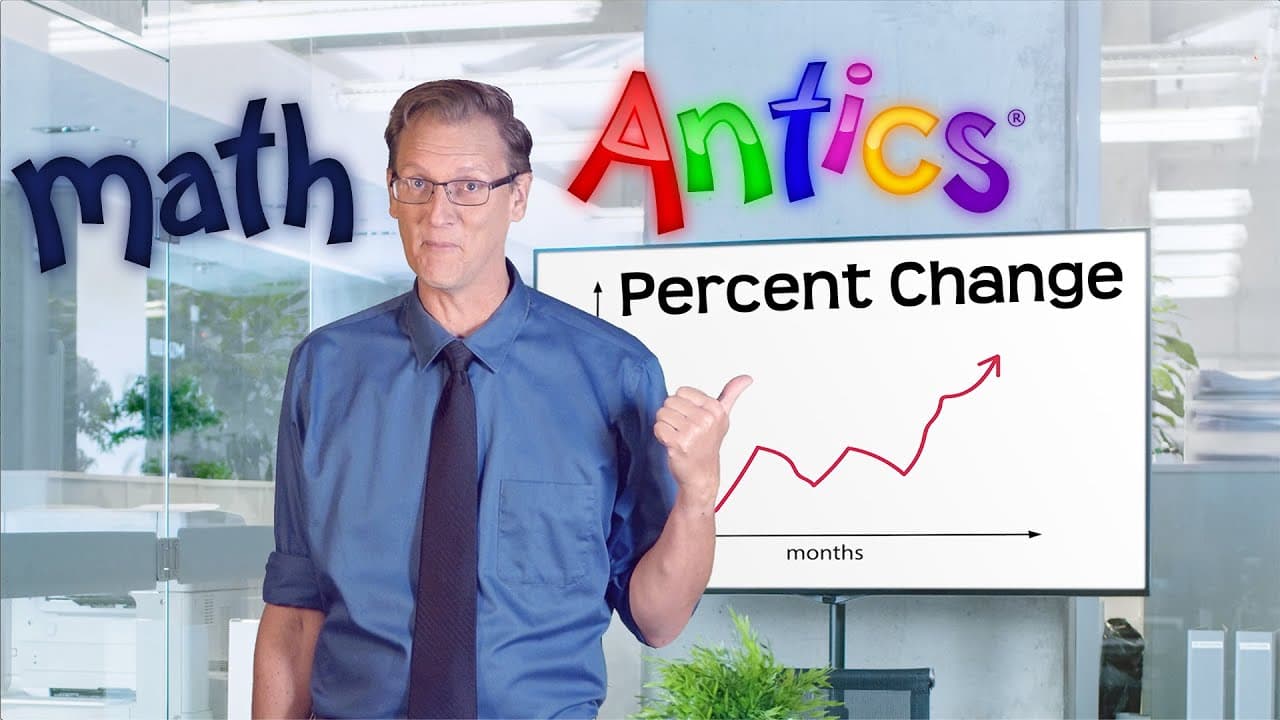
This educational video from Math Antics provides a clear and comprehensive guide to calculating percent change, covering both percent increase and percent decrease. Host Rob simplifies the transition from absolute change (actual value difference) to relative change (percentage), using visual models and equivalent fractions to build conceptual understanding before introducing the standard formula. The video addresses real-world scenarios like sales discounts, population growth, and business metrics to demonstrate practical applications. Key themes include the relationship between fractions and percentages, the importance of order in subtraction to determine positive (increase) or negative (decrease) values, and the concept of equivalent fractions. The video also explores special cases that often confuse students, such as why doubling an amount is a 100% increase while halving it is only a 50% decrease, and how percent increases can exceed 100%. For educators, this resource is invaluable for bridging the gap between basic percentage skills and algebraic application. The dual approach of showing visual bar models alongside the algebraic method `(Change / Original) * 100` helps differentiate instruction for visual learners and abstract thinkers. The built-in "intuition checks" encourage students to validate their answers logically rather than blindly following algorithms.

mathanticsmathantics

12mins 51s